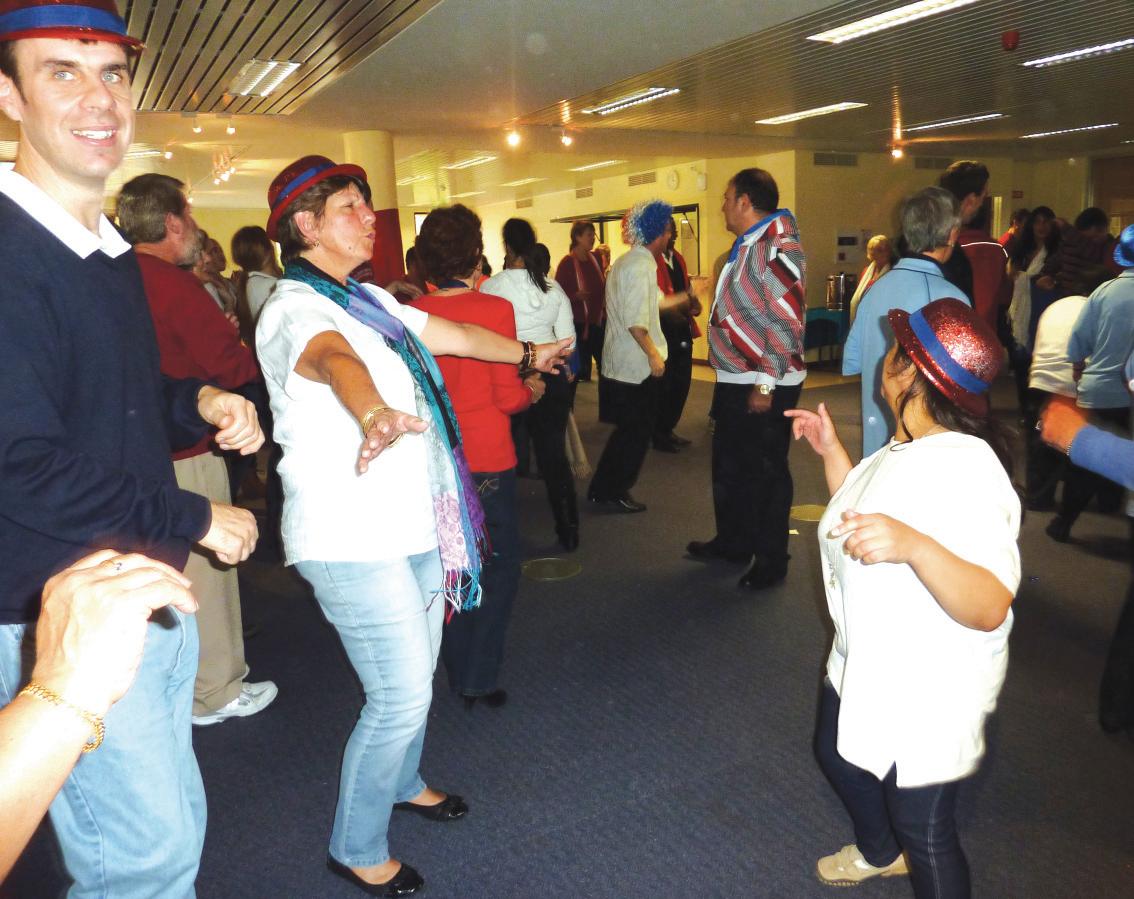
Personal Advocacy is an Archdiocesan ministry working to enable people with intellectual disabilities to live full and valued lives. Community members eagerly await their annual community celebration each year, when all members have an opportunity to meet in a funfilled atmosphere. This year’s celebration was no exception.
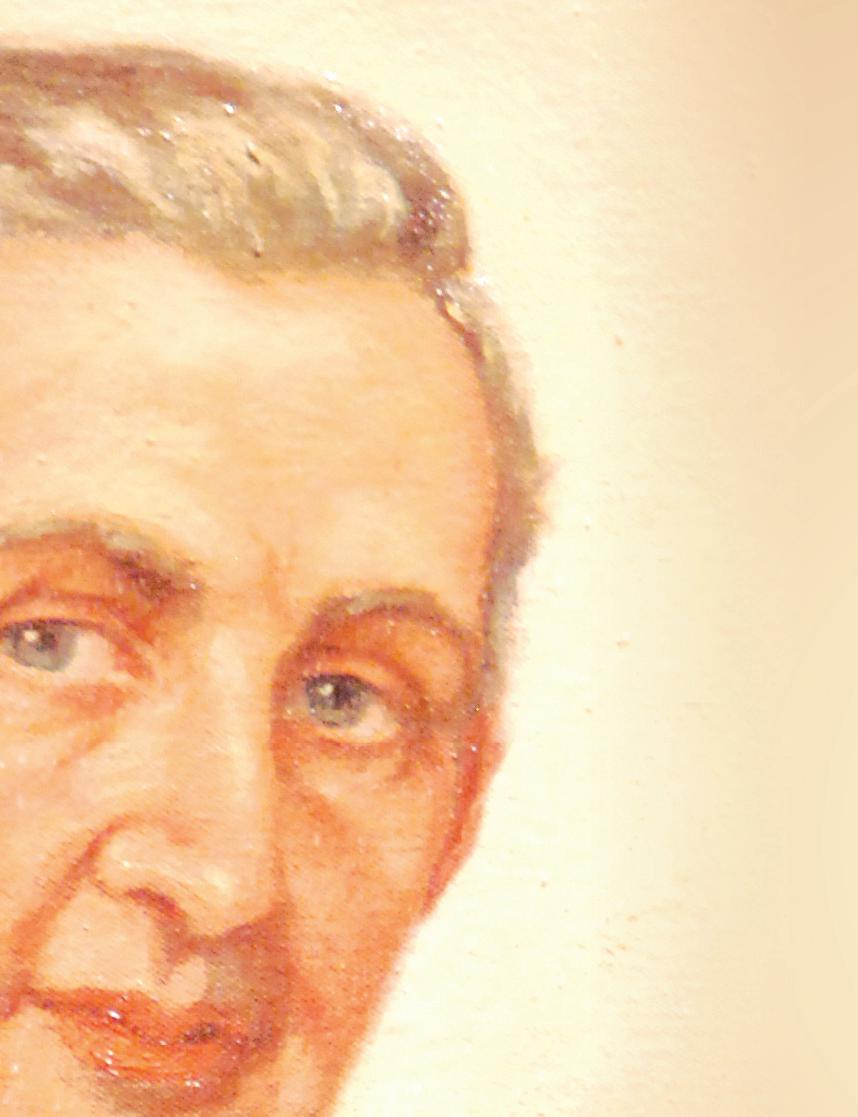
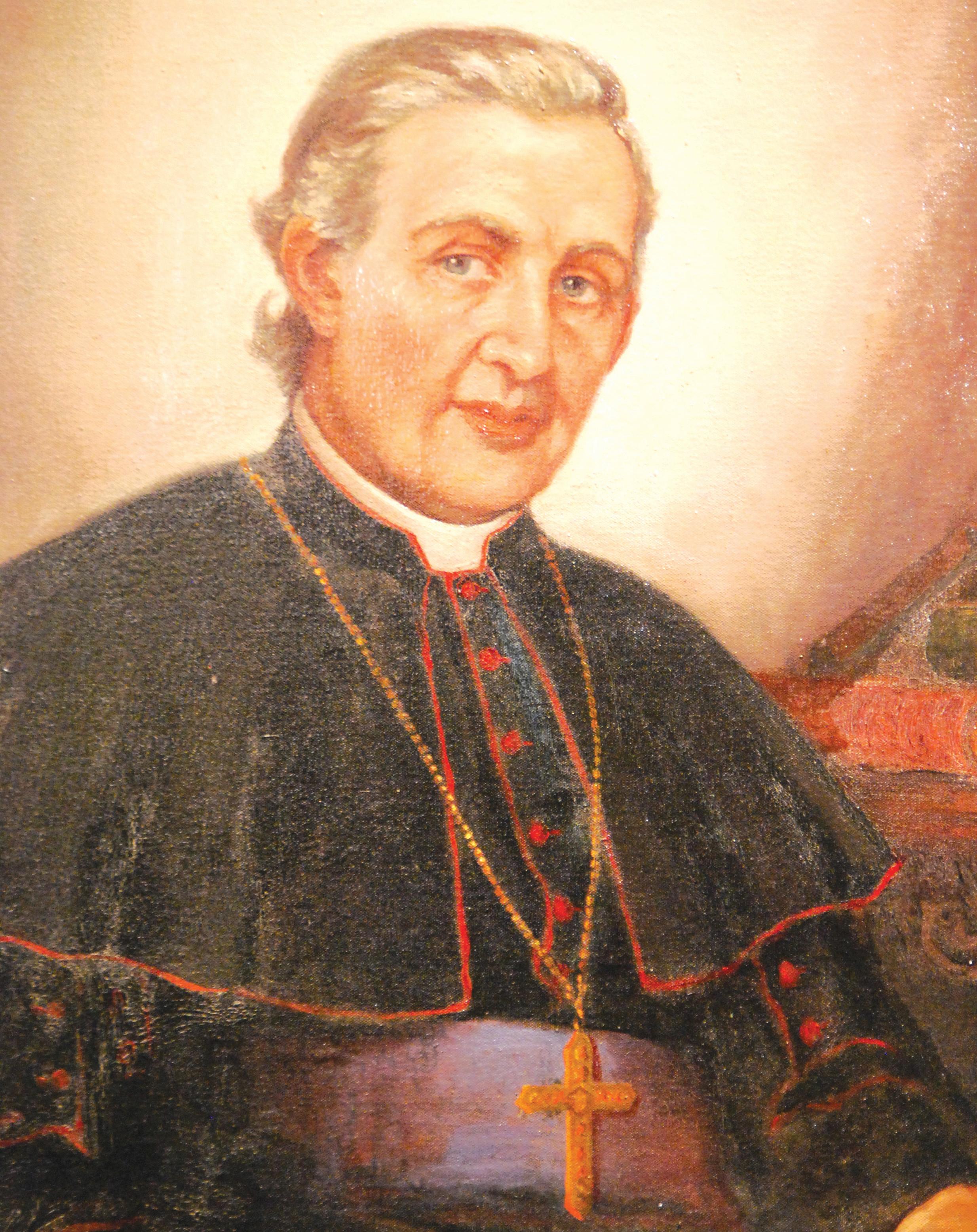
In an historic moment, the remains of Perth’s first Catholic Bishop, John Brady, will be laid to rest in St Mary’s Cathedral Crypt on 2 August. The ceremony will bring to an end one chapter in a saga that began in 1842 when then-Fr Brady arrived, leading the first missionaries to Perth and concluded when, as a Bishop, he was spectacularly banished in 1852 from the diocese he created. Although often judged negatively for his governance of the diocese during his time here, historians and researchers are developing their assessment of a figure who still remains largely an enigma as The Record’s BRIDGET SPINKS reports.
Pages 9-12
Archbishop invites all to Brady Ceremony - Page 4

THROUGH the assistance of many parish and community volunteers, 18 groups operate across metropolitan Perth to help over 100 “friends” with intellectual disabilities live full and valued lives. Our friends with intellectual disabilities have a fabulous way of building community.
This year’s PAS celebration was held on Sunday, 10 July 2011 at John XXIII College Exhibition Centre with the theme - Who are You: Red, White or Blue?
Preparation for the event began in each group, a couple of weeks before the event. Costumes Please turn to Page 3



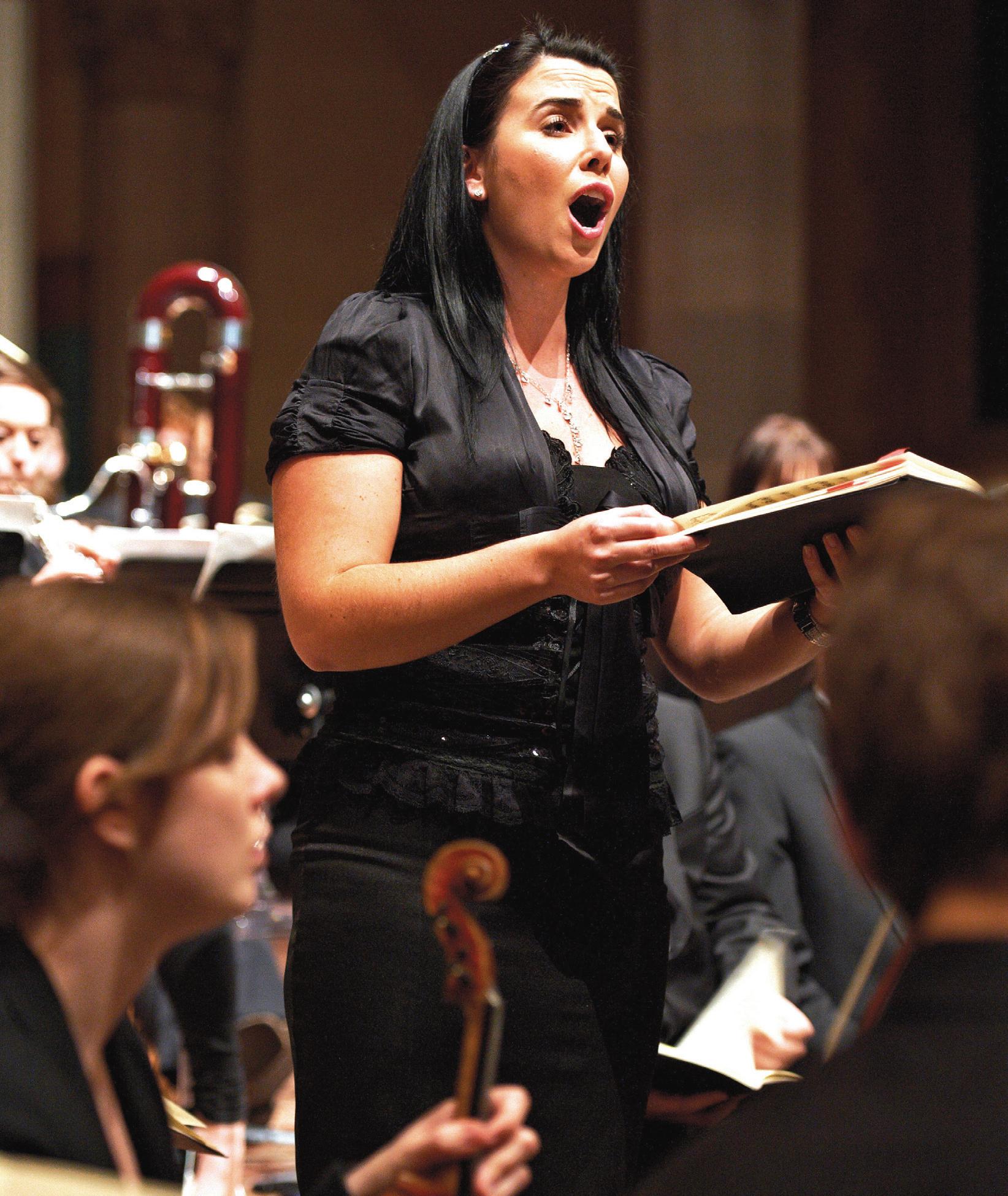
Transcendent: Students from the West Australian Acacdemy of Performing Arts in full flight. WAAPA, renowned for the quality of its performances, will be performing Rossini’s Stabat Mater, the Sorrows of Mary, in early August.
AFTER composing
39 operas during a spectacularly successful two-decade run, Rossini retired from the field at 38, the wealthiest composer of his time, finally free to hobnob in artistic circles and indulge his passion for fine cuisine. From such evi-
dence, it would not seem that he was predisposed to composing sacred works. Yet he wrote several remarkable sacred scores, the most important being his elegant Stabat Mater, an emotionally translucent score that stands alongside the Verdi Requiem as one of the great operas of the liturgical repertoire.
WAAPA is proud to present Rossini’s luminous and uplifting Stabat Mater at St Joseph’s Church in Subiaco on Thursday, 4 and Friday, 5
August as the combined talents of the Faith Court Orchestra and classical vocal department come together to perform this masterpiece.
The Western Australian Academy of Performing Arts has consistently produced some of the country’s finest operatic talent for the last 30 years. Graduates such as Emma Mathews, Rachelle Durkin, Deborah Rodgers, Fiona Campbell, Duncan Rock, Paul O’Neil, Alexander Lewis and Aldo Di Toro have all forged
successful careers at a national and international level. Given its unusual genesis, it is surprising that the Stabat Mater comes across as such an integrated score. In 1832, the year after he retired from opera, on a trip to Madrid, Rossini was asked by the archdeacon of that city to make a musical setting of the Stabat Mater, the Latin poem about the grieving Virgin Mary at the cross of Jesus.
Though reluctant, Rossini accepted the commission and composed the grave and stirring opening movement which anticipates the most exalted moments of the Verdi Requiem, and set the 5th through 9th sections of the text, which has 10 in all.
The piece was not ready for a performance that year, and Rossini asked a fellow composer, Giovanni Tadolini, to finish it. When the archdeacon died a few years later, Rossini returned to the work, composing the four missing sections. The whole score was performed with great success in 1842 in Paris.
His music is consistently inspired, from the great opening chorus to the terrifying “Inflammatus,” which invokes the Day of Judgement, to the concluding double-fugue chorus. When the curtain came down on this debut performance, the composer’s name “was shouted out amid the applause. The entire work transported the audience: the triumph was complete. Three numbers had to be repeated ... and the audience left the theatre moved and seized by an admiration that won all Paris.”
Also: Cathedral concert - Page 3
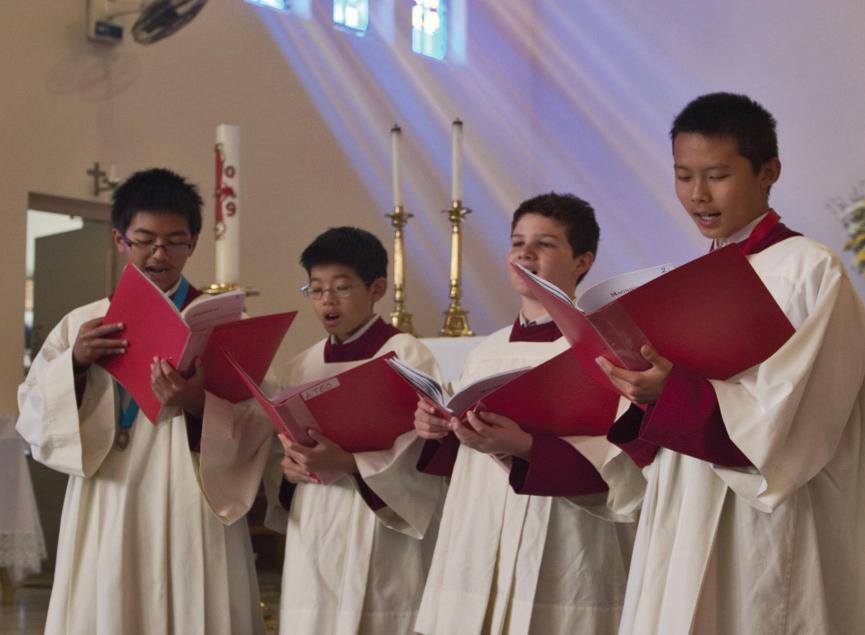
The treble choristers of St Mary’s Cathedral Choir ‘went solo’ and sang their first ‘treble Mass’ of 2011 at the 11am Solemn Sung Mass on Sunday, 3 July at St Mary’s Cathedral.
Treble Masses are always special occasions during which only the trebles (sopranos and altos) of the Choir lead the singing with their youthful energy and prayerfulness.


The Mass featured Fauré’s Messe Basse, a piece written specifically for treble voices by Gabriel Fauré (1845-1924). It involves intricate harmonic movement and singing in three-part harmony which is quite difficult - especially considering our Cathedral trebles are aged primarily between 9 and 12 years of age.
They also sang Mendelssohn’s famous unaccompanied motet Lift thine eyes and Poulenc’s sublime yet difficult motet Ave Verum Corpus. Treble Masses give the opportunity for our future cantors to lead the Responsorial Psalms and antiphons.
Joshua Adams, 14, led the Responsorial Psalm for the first time.
Editor
Journalists


Peter Rosengren office@therecord.com.au
Mark Reidy mreidy@therecord.com.au
Advertising/Production
Mat De Sousa production@therecord.com.au
Accounts
June Cowley accounts@therecord.com.au
Classifieds/Panoramas/Subscriptions
Bibiana Kwaramba office@therecord.com.au
Record Bookshop
Bibiana Kwaramba bookshop@therecord.com.au
Proofreaders
Chris Jaques Eugen Mattes
Contributors
Debbie Warrier John Heard
Karen and Derek Boylen Anthony Paganoni CS
Christopher West Catherine Parish
Bronia Karniewicz Fr John Flader
Guy Crouchback
The Record PO Box 3075
Adelaide Terrace
PERTH WA 6832
21 Victoria Square, Perth 6000
Tel: (08) 9220 5900 Fax: (08) 9325 4580
Website: www.therecord.com.au
The Record is a weekly publication distributed throughout the parishes of the dioceses of Western Australia and by subscription.
The Record is printed by Rural Press Printing Mandurah and distributed via Australia Post and CTI Couriers.
The Catholic Bishops of Australia have said they support the recommendations from the Productivity Commission’s draft report for the National Disability Insurance Scheme (NDIS), which aims to present a new paradigm of service delivery for people with disability and their families.
The Bishops said they believe people with disability should be able to participate fully in Australian society and therefore support the recommendations for a NDIS, a scheme that is hoped will create more opportunities and effective services.
In a short statement, the Bishops said that the current national approach to disability services is crisisdriven, welfare-based and lacks dignity.
The new scheme intends to ensure better accessibility, choice and control over service delivery.
Chairman of the Bishops’ Commission for Pastoral Life, Bishop Eugene Hurley, said it is critical that social justice is taken into consideration and the proposed scheme could deliver this to families.
“The proposed scheme will ensure that there is funding for essential care for people with disabilities including respite, therapy, aids, equipment, home modification and access to community care and education”, he said.
with disability as a marginalised group”, said Bishop Hurley.
Michele Castagna, Chair of the Australian Catholic Disability Council, said the Council fully supports the Bishops’ statement. ‘‘The time for change is now.
People with disability need to be seen as truly equal citizens”, she said. One of the hoped-for outcomes of the new scheme will be to promote respect for the inherent dignity of people living with disability and their families.
In a 13 July article, it was stated that Su and David Goh were married in 1991 in Singapore and celebrated their Pearl Anniversary in 2004. This should have read Su and David were married in 1974 in Singapore and celebrated their Pearl Anniversary in 2004. The Record apologises for the error.
Djarindjin Lombadina Catholic School is situated 180kms north of Broome on the Dampier Peninsula. The Kindergarten to Year 10 school caters for the two Aboriginal communities of Djarindjin and Lombadina as well as several outstations. The school has five classes and an enrolment of 90 students of which 92% are Indigenous students. Reading Recovery and the PATHS program have been adopted and implemented in the school. In 2009 the school joined the Leading Aligned Numeracy Development (LAND) project.
A strong culture and arts program is evident in the school and local Aboriginal Teaching Assistants provide both invaluable support within the school and a strong link to the communities. Applications for this position close on Wednesday 24 August 2011.
Padbury Catholic Primary School is a double stream, co-educational K-6 primary school with an enrolment of 509 students. The school has a close and collaborative relationship with the Our Lady of the Mission Parish in Craigie. The school has always had a proud tradition of both support and challenge within its broad educational program. Speech and Occupational Therapy assessments are conducted at kindergarten and for the past 11 years a parent run Early Literacy program has been an integral part of Pre-primary, Year 1 and 2 programs. This program addresses specific literacy needs within a small group setting and a strong emphasis is placed on learning support programs.
The school community values education of the whole child. As well as Religious Education and the eight major learning areas, music, physical education and dance are offered throughout the classes. The well established extension program for students identified as gifted or talented has now been extended to cater for students with mathematical abilities through Robotics.
There is a vibrant community atmosphere in the school and parents are welcomed into a wide range of activities as an essential part of the school. The school is well supported by the Parents and Friends’ Association and has a strong and committed School Board. Applications for this position close on Thursday 11 August 2011.
St Joseph’s is a Catholic co-educational school catering for 191 students from Kindergarten – Year 7 and serves the parish community of St Vincent Pallotti. The school is situated in the east Kimberley region of Western Australia and was established by the Sisters of St Joseph in 1967.
The school provides a caring environment in which the dignity of each person is nurtured through knowledge and understanding of self, respect of cultural heritage and the love of God. A variety of assessment procedures aim to direct the learning programs and meet the needs of each child.
The school provides a wide range of programs, including Reading Recovery, Literacy and Numeracy support, Music, the LAND (Leading Aligned Numeracy Development) project and Primary Connections in Science with an Aboriginal perspective. Applications for this position close on 24 August 2011.
The successful applicants will be required to take up these positions on 1 January 2012.
“Government is required to uphold the rights of all its citizens, including persons with disability by acting on existing policies, particularly those relating to discrimination and exclusion of persons
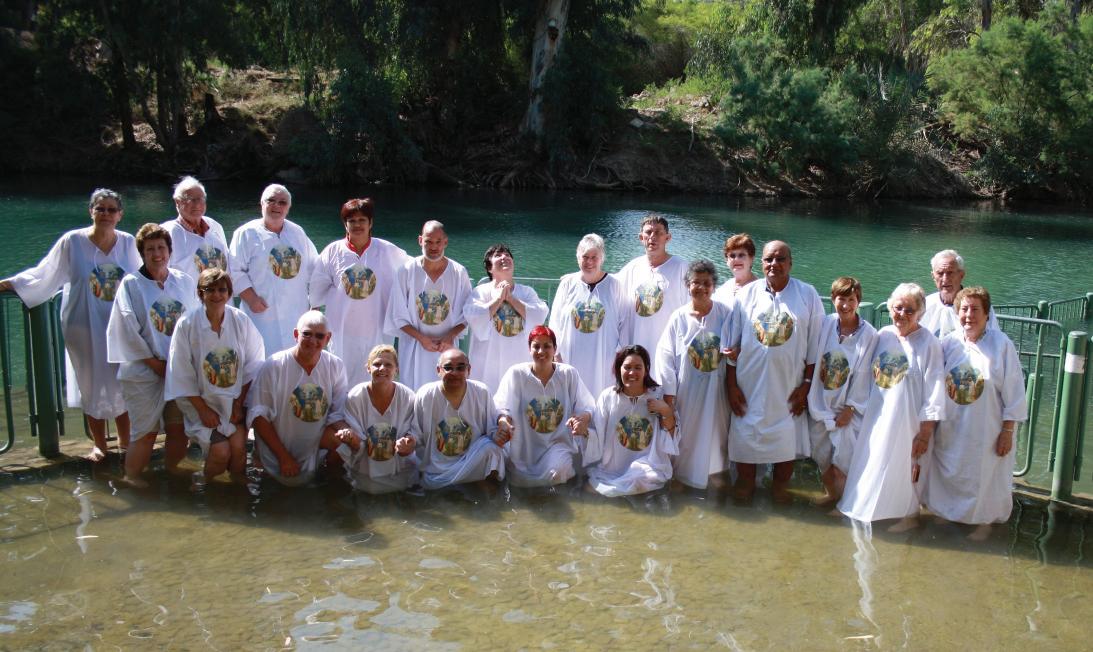
Continued from Page 1 were organised, masks were decorated, coloured hats chosen to make an individual or group statement.
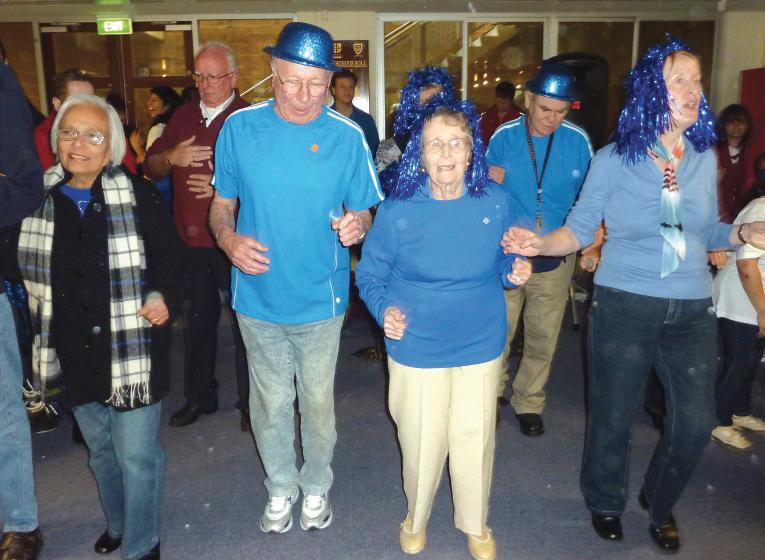
On the day itself, the hall began filling up with excited folk dressed in an array of accessories in all the possible hues of red and blue, with a few making their own statement in crisp white.
Within minutes of the 2pm commencement time, there was a general buzz heralding that it was time to start in earnest!
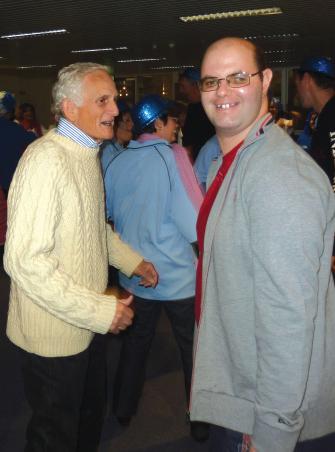
Executive Director Leonie Reid welcomed around 250 advocates and friends to the event with much joy and, without much further ado, invited DJ Jon Lewis from 6PR to take over, having sensed the exuberance of our friends waiting to take to the dance floor.
Once the music started many friends and advocates got off their seats and began moving around on the dance floor. It was an electric atmosphere within minutes.
Jon Lewis, our Disc Jockey in his friendly style and red shoes to boot, showed us all a few new dance moves and kept us swaying along all afternoon. The Hokey Pokey, the Conga, you name it, we did it! For the older volunteer advo-
cates it was really a physical workout trying to keep up with the pace or reign in the enthusiasm of their friends. Some of our friends often needed to be encouraged to sit and have a breather or catch their breath, not wanting to miss the next song, while others requested an opportunity to take the microphone to share their talents singing their favourite song.
Volunteer advocates from our newest group in Floreat said they might never have been brave enough to get on to the floor without the encouragement of their friends.
“I certainly had to leave my inhibitions behind” said one of them, and learn to truly enjoy myself.”
It was not only the dancing and singing, but the catching up with old friends and acquaintances from Whitford in the north to Rockingham way down south that made the day.
Many folk moved around the tables during and after afternoon tea to greet groups they may not have seen since last year’s celebration.
The day would not have been such a success for so many without the assistance of students from Mercedes College who were ever present to help serve afternoon tea and make sure all was well.
Not only were they a great help, but added to the fun when they joined in the activities on the dance floor.
A special word of thanks to the City of Bayswater who provided much needed funds to make the day such a success and also staff at John XXIII College for providing us with a fabulous venue and assistance with the set up.
All would agree it sure added to the spirit of the day. Roll on 2012!
If you would like to know more about the Personal Advocacy ministry, please phone Anabelle on 9275 5388.
As we approach the first feastday of St Mary of the Cross MacKillop, the Cathedral is hosting a very special event in her honour on Sunday, 7 August at 2pm, the eve of her first feast-day as saint.
Titled a ‘MacKillop Tribute Concert,’ this is a celebration of Australian music and musicians including music of Peter Sculthorpe - an iconic Australian composer who bases much of his music on indigenous themes and seeks to evoke the vast Australian landscape through use of individualistic textures and harmonies.
The programme also includes vocal music of Dom Stephen Moreno (1889-1953) – a Spanish Benedictine monk who came to Australia in 1908 to join the Benedictine community of New Norcia; he became a prolific composer of sacred music.
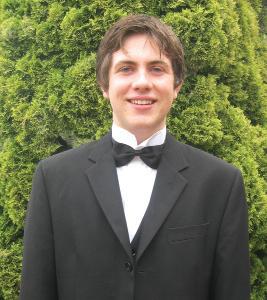
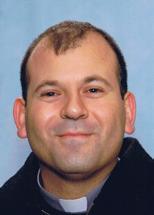
The featured soloist is 19 year old Daniel Mullaney, the Cathedral’s Principal Cantor (pictured). Dom Moreno wrote many pieces of music especially for the Sisters of St Joseph of the Sacred
Heart – it is only fitting that on the eve of St Mary MacKillop’s first feast day as saint some of these pieces be performed in the Cathedral.
The event will also include Australian organ music played by the Cathedral’s Director of Music, Jacinta Jakovcevic, on the Cathedral’s (Australian) Dodd pipe organ. Louise Devenish and Paul Tanner of the ‘Tetrified’ ensemble will also perform Australian percussion music - their performance of Marimba pieces by Ross Edwards will, in fact, be the West Australian premiere of this piece.
The afternoon includes the now traditional complimentary Miss Maud afternoon tea served in the Parish Centre and courtyard. Miss Maud (Pier St, Perth) are also offering a special $10 off lunch/dinner on the day of the concert when you present your concert tickets. Bookings essential.
Tickets $45 and $35 concession available through BOCS 9484 1133 (www.bocsticketing. com.au).
RUMBEK, South Sudan (CNS) - Italian-born Bishop Cesare Mazzolari, known for rebuilding Church structures and communities in the Diocese of Rumbek, died on 16 July while concelebrating Mass. The Bishop, 74, fell at the beginning of the consecration. He was pronounced dead at a local hospital, reported Father Don Bosco Ochieng, director of the diocesan Radio Good News. Catholics from the diocese recalled Bishop Mazzolari as a zealous worker who reopened missions and negotiated humanitarian assistance for the Diocese which, in 2004, was home to tens of thousands of refugees from the Sudanese region of Darfur.
 BY CINDY WOODEN
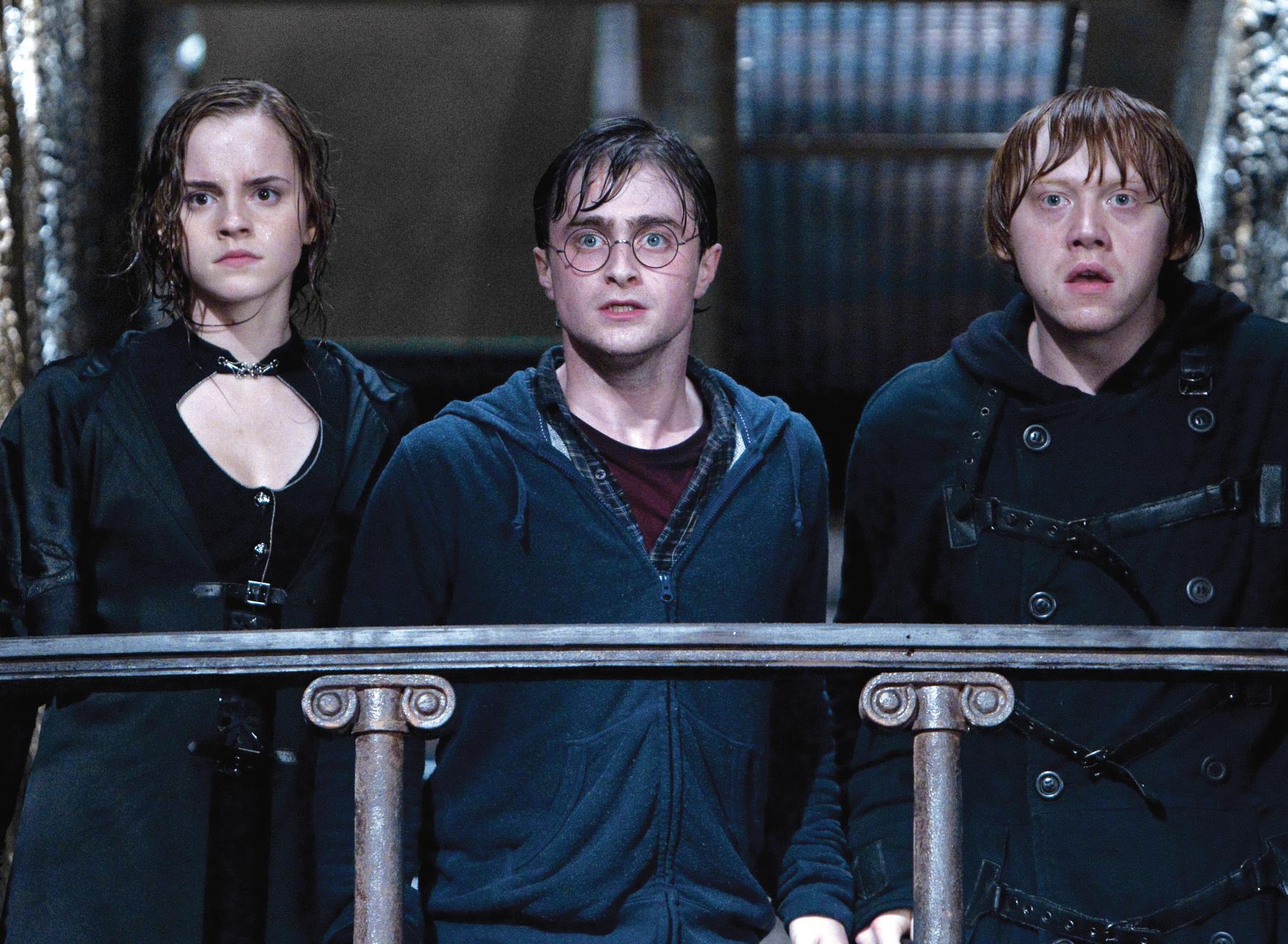
VATICAN CITY (CNS) - The last battle of the almost-grownup Harry Potter may be too scary for young viewers, but it champions the values of friendship and sacrifice, the Vatican newspaper said.
“The atmosphere of the last few episodes, which had become increasingly dark and ominous, reaches its pinnacle,” said one of two reviews of Harry Potter and the Deathly Hallows Part 2 printed on 12 July in the Vatican newspaper, L’Osservatore Romano
The darkness “may disturb younger audiences,” said reviewer Gaetano Vallini. “Death, which was a rare occurrence (in the previous Harry Potter films) is the protagonist here,” which is another reason the film may not be appropriate for everyone, he said.
“As for the content, evil is never presented as fascinating or attractive in the saga, but the values of friendship and of sacrifice are highlighted. In a unique and long story of formation, through painful passages of dealing with death and loss, the hero and his companions mature from the lightheartedness of infancy to the complex reality of adulthood,” he said.
Young people introduced to Harry Potter through the seven books by JK Rowling and the films based on them have grown with Potter and his friends, Vallini said, “and they certainly have under-
stood that magic is only a narrative pretext useful in the battle against an unrealistic search for immortality.” In the second review, Antonio Carriero reaffirmed one point Vatican reviewers have made since the Harry Potter books first appeared in Italian: The story captured the imagination of millions of children around the world and got them reading books.
And, he said, the saga championed values that Christians and nonChristians share and provided opportunities for Christian parents to talk to their children about how those values are presented in a special way in the Bible.
Potter’s archenemy, Lord Voldemort, “does not represent Satan, as it would be easy to think, but is a man who has made bad choices in his life,” Carriero said.
Voldemort has chosen not to love others and sees himself as the centre of the universe, he said.
Carriero said Voldemort is like many modern men and women who think they can do without God and without others, they don’t believe in heaven, and yet they are the most frightened of dying.
“Eternal life is reached through death, not without it. And Harry Potter, although he never declared himself a Christian, calls on the dark magician to mend his ways, repent for what he has done and recognise the primacy of love over everything so he will not be damned for eternity,” he wrote.

OSHKOSH, Wis (CNS) - A five-day Christian music festival called Lifest drew 85,000 people to Oshkosh for food, fellowship and opportunities for spiritual fitness.
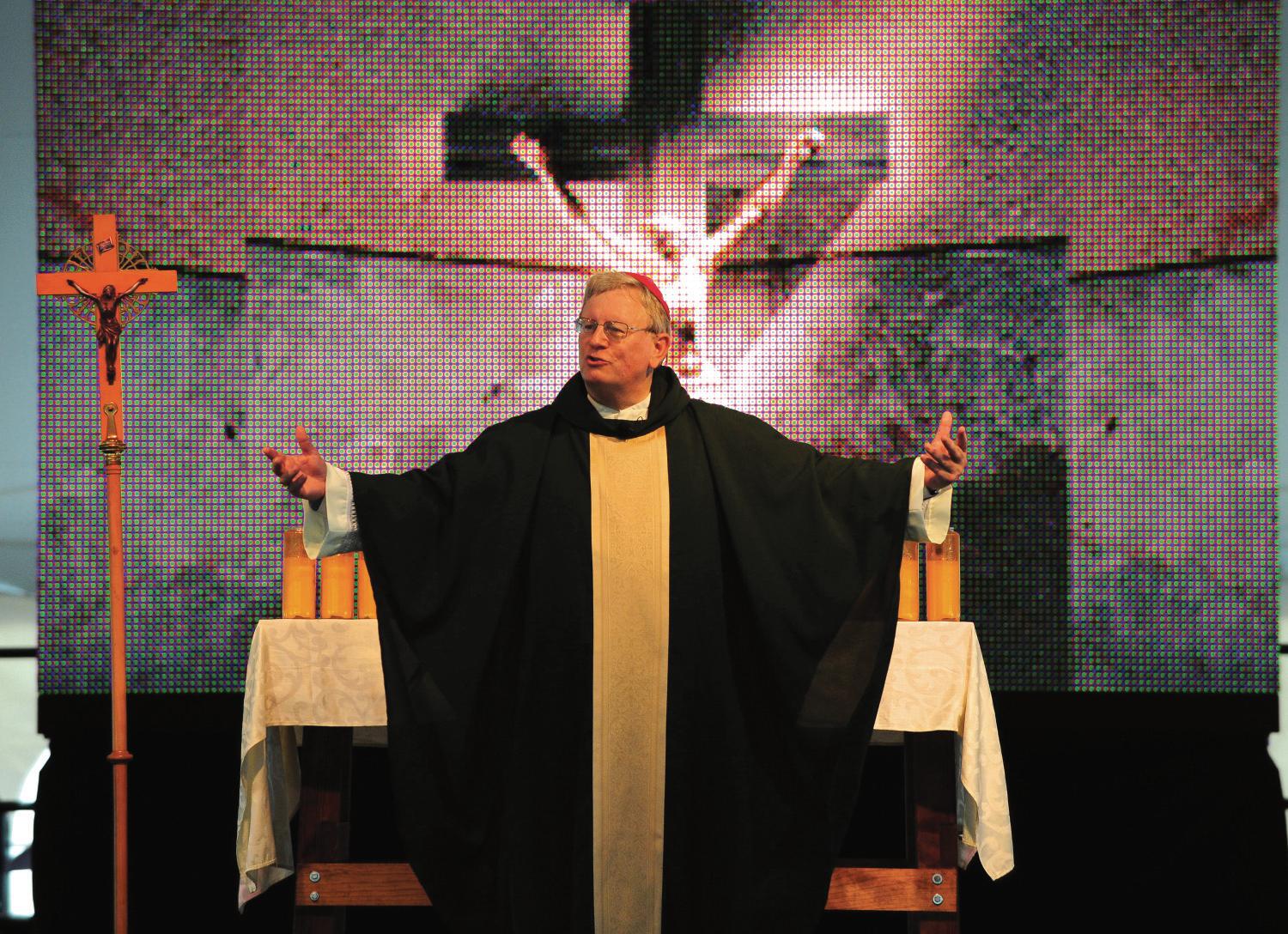
The crowd size was an increase of more than 15 per cent over last year according to Lifest’s marketing director, and a Mass celebrated on 10 July, the final day of the festival, set its own record with 800 worshippers. It was the largest gathering of Catholics in the 13-year history of Lifest.
It also marked the first time a Bishop was in attendance to celebrate Mass at the festival. Bishop David L Ricken of Green Bay told the large assembly, made up of people from throughout the Midwest and beyond, that he was thrilled to finally make an appearance at Lifest.
“I thought it was a beautiful celebration, a beautiful witness of all these young people,” Bishop Ricken told The Compass, Green Bay’s diocesan newspaper, following Mass. “It’s incredible. I was really glad I could be here this year to participate in it and to catch part of the spirit.”
The Lifest spirit was evident throughout the festival grounds, including the diocese’s camp headquarters dubbed Q-Ville Cathedral. With diocesan vocation director Father Daniel Schuster and volunteers from the diocesan offices, Camp Tekawitha and Catholic
Archbishop Hickey would like to extend an invitation to any members of the Archdiocese who may wish to attend the Reinterment Mass of Bishop John Brady on 2 August 2011 at 6.30pm in St Mary’s Cathedral. Bishop Brady was the first Catholic Bishop of Perth. He died in France in 1871 and his remains were brought back to Perth earlier this year to be placed in the new crypt of the Cathedral.
Youth Expedition staffing the campsite, visitors were welcomed each day for free lunches that featured “holy hot dogs” and “blessed brats.” At night, around the campfire, guests enjoyed “sacred s’mores.”
Recitation of the Rosary and Mass took place daily at the campsite, as well as opportunities for the Sacrament of Reconciliation.
Fr Schuster, also a Lifest speaker, presented a talk on 8 July on “COD v God: Do video games rot the brain? Healing brains that put COD (Call of Duty video game) before God.”
In his talk, Fr Schuster discussed how violent video games have stunted the development of young people, especially boys. “The longterm effects of video gaming are daunting,” he said.
The Diocese of Green Bay has been an official sponsor of Lifest
VATICAN CITY (CNS) - The ordinations of 20 new priests for the traditionalist Society of St Pius X are “illegitimate, period,” said the Vatican spokesman, Jesuit Father Federico Lombardi. Although Pope

for the past five years, according to Deacon Ray DuBois, diocesan director of communications and Lifest volunteer.
The diocese operated an exhibit table in the expo centre’s main exhibit hall, where a variety of informational pamphlets about the Catholic faith were available.
Volunteers from the diocese and the Sisters of St Francis of the Holy Cross sat at the table to greet visitors. They handed out “United in the Eucharist” t-shirts, applied removable tattoos on children’s hands and arms and made free necklaces and bracelets for young guests. Visitors to the diocesan exhibit table frequently noted how pleased they were that the Catholic Church had a visible presence at Lifest, which attracts thousands of young families and children each year to Oshkosh.
Benedict XVI lifted the excommunication of the society’s four Bishops in 2009, Fr Lombardi said, he made it clear that until the society had reconciled fully with the Vatican - particularly regarding its position on doctrinal questions - its members have no official standing in the Church.
Agreement also important given prominent role and influence of Islam in nation’s culture, politicsBY CATHOLIC NEWS SERVICE
CASTEL GANDOLFO, Italy (CNS) - After a meeting between Pope Benedict XVI and Malaysian Prime Minister Najib Razak, the Vatican and Malaysia reached an agreement to establish diplomatic relations for the first time.
The agreement appeared to signal an effort by the Malaysian government to improve ties with the country’s Christian minority, which in recent years has warned of Islamisation in the Southeast Asian nation.
The 18 July meeting between Razak and the Pope took place at the papal residence outside Rome, where the prime minister later met separately with the Vatican secretary of state, Cardinal Tarcisio Bertone, and other top Vatican diplomatic officials.
A Vatican statement announcing the agreement to establish diplomatic relations noted the “cordial” tone of the talks and the “positive developments in bilateral relations.”
“In addition, the political and social situation in the world and on the Asian continent was reviewed, with particular reference to the importance of intercultural and interreligious dialogue for the promotion of peace, justice and greater understanding between peoples,” the Vatican statement said.
Islam, practised by about 60 per cent of Malaysians, is the state religion in the country. Christians represent about 9 per-
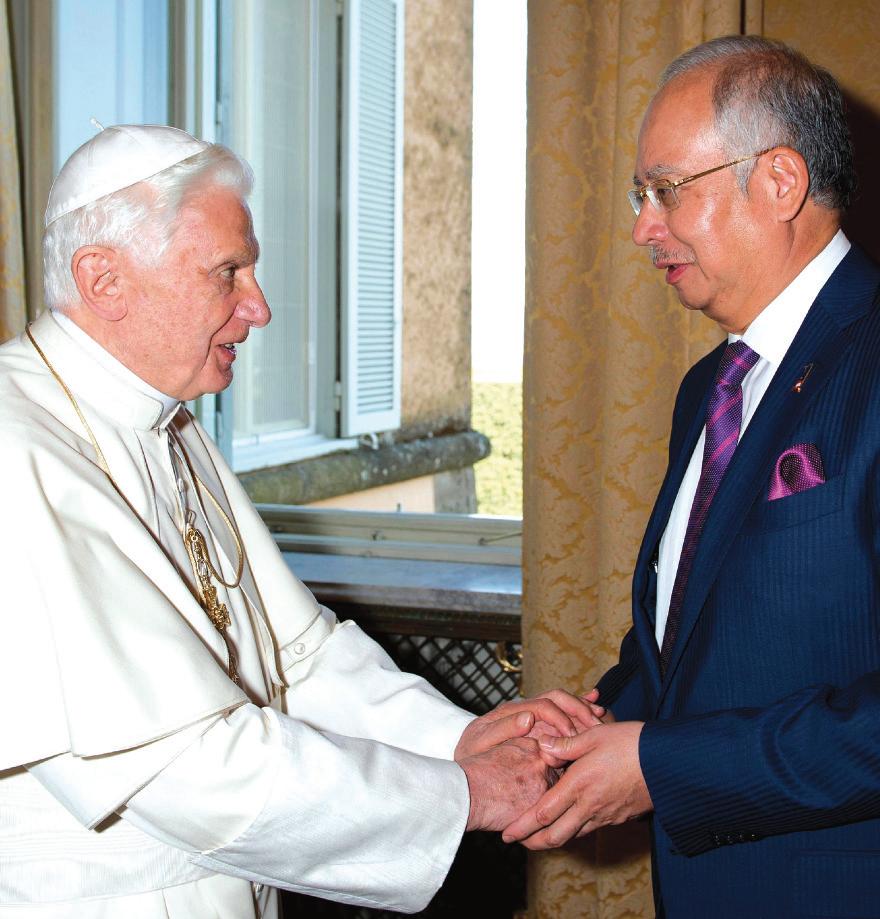
Pope Benedict XVI greets Malaysia’s Prime Minister Najib Razak during a meeting at the Pope’s summer residence in Castel Gandolfo, Italy, on 18 July.
PHOTO: CNS/L’OSSERVATORE ROMANO VIA REUTERScent of the population, including nearly one million Catholics. In 2010, tensions increased between the Muslim and Christian populations after a Malaysian court ruled that a national Catholic newspaper could use the word “Allah” to refer to God and that a Home Ministry order banning certain uses of the word was illegal. The court also said the word “Allah” is not exclusive to Islam.
In reaction to the court decision, extremists carried out reprisals against Catholic and other Christian churches, including firebombings and acts of vandalism.
Malaysian Catholic Bishops held a series of meetings with Malaysian civil authorities to help restore calm in the country.
A remarkable vote in Poland gives hope here in WABY BRIAN PEACHEY Chairman, Pregnancy Assistance
The parliament of Poland has voted 254-151 to end abortion in their country.
On 4 July, over 40 parliamentarians rose to speak in favour of the bill that would end the mass murder of the unborn in their country.
The bill was put before parliament after a massive movement of its citizens, along with a petition of 600,000 signatures in two weeks.
The Member, Wojciech Kossakowski called abortion the “modern day slaughter of the innocents.” He said, “How monstrously egotistical, devoid of the smallest drop of humanity, you have to be to agree to murder under the auspices of law.”
Failure to pass the total ban would be “a tragedy for the nation,” member, Jerzy Rębek said. “Let us do something beautiful in our lives, let us vote for this bill. Maybe this will be the last good thing that we ever do. I am asking you to do it.”
Member Ewa Malik of the Law and Justice Party said the bill could be “a catalyst for moral revolution in our country … and in the future can be transferred to the European ground, to all the countries which have so far presented positions on this issue known as the civilisation of death.”
The decision of the Polish
Parliament in July 2011 follows the decision of the Hungarian Parliament in April to enact a new Constitution in which Article 2 stated “Human dignity shall be inviolable. Every human being shall have the right to life and dignity; embryonic and foetal life shall be subject to protection from the moment of conception.”
The people and the Parliaments of Poland and Hungary have now taken their stand for morality and life. This is a challenge to the other European nations to stop the killing of their youngest children.
It is also a challenge to the citizens of Western Australia to demand Parliament to repeal the Acts Amendment (Abortion) Bill 1998 that was passed by the Western Australian Parliament on 28 May 1998.
Without doubt it was the worst legislation passed by the Parliament because it was the first and only time that it legalised the killing of an innocent human being. Since then, an unborn child has been killed every hour of every day.
Modern genetic scientists have shown, without dissent of their peers, that the human foetus is a being, at the moment of conception, with all the genes that it will have when it is an adult.
I know that such evidence was not presented to the Parliament when the bill to make it legal to kill an unborn child was debated.
Like the Parliamentarians of Poland and Hungary, the Western Australian Members of Parliament will agree to stop the killing of innocent human beings if the people request the change.
With Fr. Mariusz Adamczyk
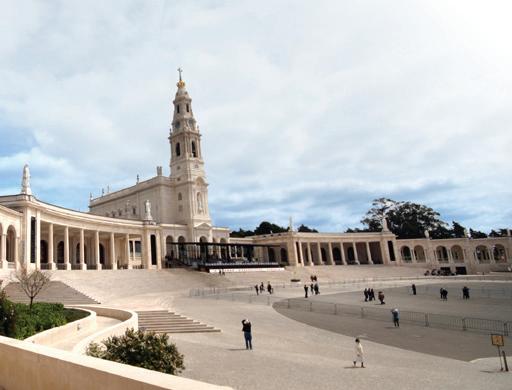
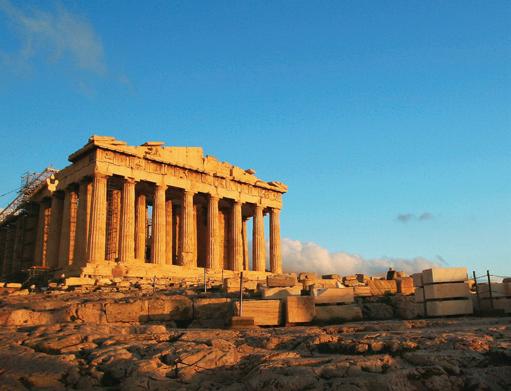
A 21 day pilgrimage journey
Departing 28 September 2011
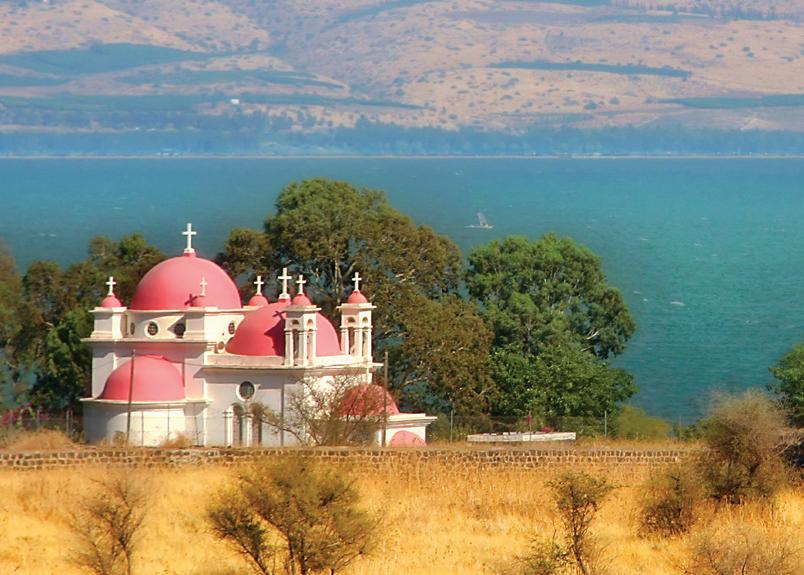
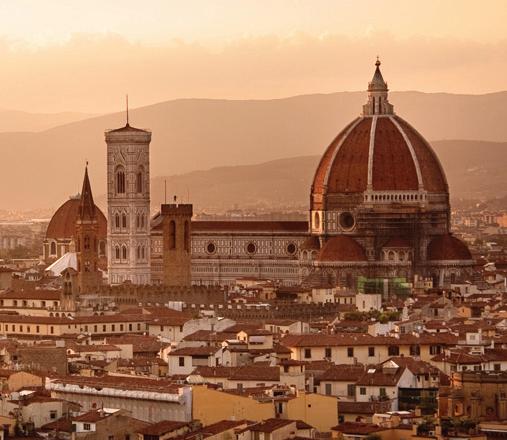
Egypt • Mt Sinai • Red Sea • Petra • Dead Sea • Sea of Galilee • Bethlehem • Jerusalem Also available as Holy Land only • A 14 day pilgrimage journey Departing: 5 Oct 2011 from $6295 *incl. all Taxes /Levies


Agreement also important given prominent role and influence of Islam in nation’s culture, politicsBY CATHOLIC NEWS SERVICE
CASTEL GANDOLFO, Italy (CNS) - After a meeting between Pope Benedict XVI and Malaysian Prime Minister Najib Razak, the Vatican and Malaysia reached an agreement to establish diplomatic relations for the first time.
The agreement appeared to signal an effort by the Malaysian government to improve ties with the country’s Christian minority, which in recent years has warned of Islamisation in the Southeast Asian nation.
The 18 July meeting between Razak and the Pope took place at the papal residence outside Rome, where the prime minister later met separately with the Vatican secretary of state, Cardinal Tarcisio Bertone, and other top Vatican diplomatic officials.
A Vatican statement announcing the agreement to establish diplomatic relations noted the “cordial” tone of the talks and the “positive developments in bilateral relations.”
“In addition, the political and social situation in the world and on the Asian continent was reviewed, with particular reference to the importance of intercultural and interreligious dialogue for the promotion of peace, justice and greater understanding between peoples,” the Vatican statement said.
Islam, practised by about 60 per cent of Malaysians, is the state religion in the country. Christians represent about 9 per-
Pope Benedict XVI greets Malaysia’s Prime Minister Najib Razak during a meeting at the Pope’s summer residence in Castel Gandolfo, Italy, on 18 July.
PHOTO: CNS/L’OSSERVATORE ROMANO VIA REUTERScent of the population, including nearly one million Catholics. In 2010, tensions increased between the Muslim and Christian populations after a Malaysian court ruled that a national Catholic newspaper could use the word “Allah” to refer to God and that a Home Ministry order banning certain uses of the word was illegal. The court also said the word “Allah” is not exclusive to Islam.
In reaction to the court decision, extremists carried out reprisals against Catholic and other Christian churches, including firebombings and acts of vandalism.
Malaysian Catholic Bishops held a series of meetings with Malaysian civil authorities to help restore calm in the country.
A remarkable vote in Poland gives hope here in WABY BRIAN PEACHEY Chairman, Pregnancy Assistance
The parliament of Poland has voted 254-151 to end abortion in their country.
On 4 July, over 40 parliamentarians rose to speak in favour of the bill that would end the mass murder of the unborn in their country.
The bill was put before parliament after a massive movement of its citizens, along with a petition of 600,000 signatures in two weeks.
The Member, Wojciech Kossakowski called abortion the “modern day slaughter of the innocents.” He said, “How monstrously egotistical, devoid of the smallest drop of humanity, you have to be to agree to murder under the auspices of law.”
Failure to pass the total ban would be “a tragedy for the nation,” member, Jerzy Rębek said. “Let us do something beautiful in our lives, let us vote for this bill. Maybe this will be the last good thing that we ever do. I am asking you to do it.”
Member Ewa Malik of the Law and Justice Party said the bill could be “a catalyst for moral revolution in our country … and in the future can be transferred to the European ground, to all the countries which have so far presented positions on this issue known as the civilisation of death.”
The decision of the Polish
Parliament in July 2011 follows the decision of the Hungarian Parliament in April to enact a new Constitution in which Article 2 stated “Human dignity shall be inviolable. Every human being shall have the right to life and dignity; embryonic and foetal life shall be subject to protection from the moment of conception.”
The people and the Parliaments of Poland and Hungary have now taken their stand for morality and life. This is a challenge to the other European nations to stop the killing of their youngest children.
It is also a challenge to the citizens of Western Australia to demand Parliament to repeal the Acts Amendment (Abortion) Bill 1998 that was passed by the Western Australian Parliament on 28 May 1998.
Without doubt it was the worst legislation passed by the Parliament because it was the first and only time that it legalised the killing of an innocent human being. Since then, an unborn child has been killed every hour of every day.
Modern genetic scientists have shown, without dissent of their peers, that the human foetus is a being, at the moment of conception, with all the genes that it will have when it is an adult.
I know that such evidence was not presented to the Parliament when the bill to make it legal to kill an unborn child was debated.
Like the Parliamentarians of Poland and Hungary, the Western Australian Members of Parliament will agree to stop the killing of innocent human beings if the people request the change.
With Fr. Mariusz Adamczyk
A 21 day pilgrimage journey
Departing 28 September 2011
Egypt • Mt Sinai • Red Sea • Petra • Dead Sea • Sea of Galilee • Bethlehem • Jerusalem Also available as Holy Land only • A 14 day pilgrimage journey Departing: 5 Oct 2011 from $6295 *incl. all Taxes /Levies
Your parish story could go here
Your parish story could go here
Your parish story could go here
Your parish story could go here
Your parish story could go here
Your parish story could go here
Your parish story could go here
Your parish story could go here
Your parish story could go here
Your parish story could go here
Your parish story could go here
Your parish story could go here
Your parish story could go here
Your parish story could go here
Your parish story could go here
Your parish story could go here
Your parish story could go here
Your parish story could go here
Your parish story could go here
Your parish story could go here
Your parish story could go here
Your parish story could go here
Your parish story could go here
Your parish story could go here
Your parish story could go here
Your parish story could go here
Your parish story could go here
Your parish story could go here
Your parish story could go here
Your parish story could go here
Your parish story could go here
Your parish story could go here
Your parish story could go here
Your parish story could go here
Your parish story could go here
Your parish story could go here
Your parish story could go here
Your parish story could go here
Your parish story could go here
Your parish story could go here
Your parish story could go here
Your parish story could go here
Your parish story could go here
Your parish story could go here
Photos must be Hi-Res (300dpi or more)
Your parish story could go here
Your parish story could go here
Your parish story could go here
Your parish story could go here
Your parish story could go here
Your parish story could go here
Your parish story could go here
Your parish story could go here
Your parish story could go here
Your parish story could go here
Your parish story could go here
Your parish story could go here
Your parish story could go here
Your parish story could go here
Your parish story could go here
Your parish story could go here
Your parish story could go here
Your parish story could go here
Your parish story could go here
Your parish story could go here
Your parish story could go here
Your parish story could go here
Your parish story could go here
Your parish story could go here
Your parish story could go here
Your parish story could go here
Your parish story could go here
Your parish story could go here
Your parish story could go here
Your parish story could go here
Your parish story could go here
Your parish story could go here
Your parish story could go here
Your parish story could go here
Your parish story could go here
Your parish story could go here
Your parish story could go here
Your parish story could go here
Your parish story could go here
Your parish story could go here
Your parish story could go here
Your parish story could go here
Your parish story could go here
Your parish story could go here
Your parish story could go here
Your parish story could go here
Your parish story could go here
Your parish story could go here
Your parish story could go here
Your parish story could go here
Your parish story could go here
could go here Your parish story could go here Your parish story could go here
Your parish story could go here Your parish story could go here Your parish story could go here Your parish story could go here
Your parish story could go here Your parish story could go here Your parish story could go here Your parish story could go here Your parish story could go
Your parish story could go here
Your parish story could go here
Your parish story could go here
Your parish story could go here
Your parish story could go here
Your parish story could go here
Your parish story could go here
Your parish story could go here
Your parish story could go here
Your parish story could go here
Your parish story could go here
Your parish story could go here
Your parish story could go here
Your parish story could go here
Your parish story could go here
Your parish story could go here
Your parish story could go here
Your parish story could go here
Your parish story could go here
Your parish story could go here
Your parish story could go here
Your parish story could go here
Your parish story could go here
Your parish story could go here
Your parish story could go here
Your parish story could go here
Your parish story could go here
Your parish story could go here
Your parish story could go here
Your parish story could go here
Your parish story could go here
Your parish story could go here
Your parish story could go here
Your parish story could go here
Your parish story could go here
Your parish story could go here
Your parish story could go here
Your parish story could go here
Your parish story could go here
Your parish story could go here
Your parish story could go here
Your parish story could go here
Your parish story could go here
Your parish story could go here
Your parish story could go here
Your parish story could go here
Your parish story could go here
Your parish story could go here
Your parish story could go here
Your parish story could go here
Your parish story could go here
Your parish story could go here
Your parish story could go here
Your parish story could go here
Your parish story could go here
Your parish story could go here
Your parish story could go here
Your parish story could go here
Your parish story could go here
Your parish story could go here
Your parish story could go here
Your parish story could go here
Your parish story could go here
Your parish story could go here
Your parish story could go here
Your parish story could go here
Your parish story could go here
Your parish story could go here
Your parish story could go here
Your parish story could go here
Your parish story could go here
Your parish story could go here
Your parish story could go here
Your parish story could go here
Your parish story could go here
parishes@therecord.com.au
Your parish story could go here
Your parish story could go here
Your parish story could go here
Your parish story could go here
Your parish story could go here
Your parish story could go here
Your parish story could go here
Your parish story could go here
Your parish story could go here
Your parish story could go here
Your parish story could go here
Your parish story could go here
Your parish story could go here
Your parish story could go here
Your school story could go here
Your school story could go here
Your school story could go here
Your school story could go here
Your school story could go here
Your school story could go here
Your school story could go here
Your school story could go here
Your school story could go here
Your school story could go here
Your school story could go here
Your school story could go here
Your school story could go here
Your school story could go here
Your school story could go here
Your school story could go here
Your school story could go here
Your school story could go here
Your school story could go here
Your school story could go here
Your school story could go here
Your school story could go here
Your school story could go here
Your school story could go here
Your school story could go here
Your school story could go here
Your school story could go here
Your school story could go here
Your school story could go here
Your school story could go here
Your school story could go here
Your school story could go here
Your school story could go here
Your school story could go here
Your school story could go here
Your school story could go here
Your school story could go here
Your school story could go here
Your school story could go here
Your school story could go here
Your school story could go here
Your school story could go here
Your school story could go here
Your school story could go here
Your school story could go here
Your school story could go here
Your school story could go here
Your school story could go here
Your school story could go here
Your school story could go here
Your school story could go here
Your school story could go here
Your school story could go here
Your school story could go here
Your school story could go here
Your school story could go here Your school story could go here
Your school story could go here
Your school story could go here
Your school story could go here
Your school story could go here
Your school story could go here
Your school story could go here
Your school story could go here
Your school story could go here
Your school story could go here
Your school story could go here
Your school story could go here
Your school story could go here
Your school story could go here
Your school story could go here
Your school story could go here
Your school story could go here
Your school story could go here
Your school story could go here
Your school story could go here
Your school story could go here
Your school story could go here
Your school story could go here
Your school story could go here
Your school story could go here
Your school story could go here
Your school story could go here
Your school story could go here
Your school story could go here
Your school story could go here
Your school story could go here
Your school story could go here
Your Photo could go here.
Photos must be Hi-Res (300dpi or more)
Your school caption could go here
Your school caption could go here
Your school caption could go here
Your school caption could go here
Your school story could go here
Your school story could go here
Your school story could go here
Your school story could go here
Your school story could go here
Your school story could go here
Your school story could go here
Your school story could go here
Your Photo could go here.
Photos must be Hi-Res (300dpi or more)
Your school caption could go here
Your school caption could go here
Your school caption could go here
Your school caption could go here
Your school caption could go here
Your school caption could go here
Your school caption could go here
Your school caption could go here
Your school story could go here
Your school story could go here
Your school story could go here
Your school story could go here
Your school story could go here
Your school story could go here
Your school story could go here
Your school story could go here
Your school story could go here
Your school story could go here
Your school story could go here
Your school story could go here
Your school story could go here
Your school story could go here
Your school story could go here
Your school story could go here
Your school story could go here
Your school story could go here
Your school story could go here
Your school story could go here
Your school story could go here
Your school story could go here
Your school story could go here
Your school story could go here
Your school story could go here
Your school story could go here
Your school story could go here
Your school story could go here
Your school story could go here
Your school story could go here
Your school story could go here
Your school story could go here
Your school story could go here
Your school story could go here
Your school story could go here
Your school story could go here
Your school story could go here
Your school story could go here
Your school story could go here
Your school story could go here
Your school story could go here
Your school story could go here
Your school story could go here
Your school story could go here
Your school story could go here
Your school story could go here
Your school story could go here
Your school story could go here
Your school story could go here
Your school story could go here
Your school story could go here
Your school story could go here
Your school story could go here
Your school story could go here
Your school story could go here
Your school story could go here
Your school story could go here
Your school story could go here
Your school story could go here
Your school story could go here
Your school story could go here
Your school story could go here
Your school story could go here
Your school story could go here
Your school story could go here
Your school story could go here
Your school story could go here
Your school story could go here
Your school story could go here
Your school story could go here
Your school story could go here
Your school story could go here
Your school story could go here
Your school story could go here
Your school story could go here
Your school story could go here
Your school story could go here
Your school story could go here
Your school story could go here
Your school story could go here
Your school story could go here
Your school story could go here
Your school story could go here
Your school story could go here
Your school story could go here
Your school story could go here
Your school story could go here
Your school story could go here
Your school story could go here
Your school story could go here
Your school story could go here
Your school story could go here
Your school story could go here
Your school story could go here
Your school story could go here
Your school story could go here
Your school story could go here
Your school story could go here
Your school story could go here
Your school story could go here
Your school story could go here
Your school story could go here
Your school story could go here
Your school story could go here
schools@therecord.com.au
Your Photo could go here.
Photos must be Hi-Res (300dpi or more)
Your school caption could go here
Your school caption could go here
Your school caption could go here
Your school caption could go here
Your school story could go here
Your school story could go here
Your school story could go here
Your school story could go here
Your school story could go here
Your school story could go here
Your school story could go here
Your school story could go here
Your school story could go here
Your school story could go here
Your school story could go here
Your school story could go here
Your school story could go here
Your school story could go here
Your school story could go here
Your school story could go here
Your school story could go here
Your school story could go here
Your school story could go here
Your school story could go here
Your school story could go here
Your school story could go here
Your school story could go here
Your school story could go here
Your school story could go here
Your school story could go here
Your school story could go here
Your school story could go here
Your school story could go here
Your school story could go here
It has been something like a fable from Aesop over the last week as media around the globe have gone into yet another feeding frenzy - only this time on themselves. The ever-widening ripples from the story of News of the World and its collapse have been, in some ways, interesting to watch - in some ways. Yet, while one feels deeply that there are numerous moral lessons to be drawn from the whole shabby story, part of the nightmarish quality of the ongoing soap opera that is the real nature of the issue is that it is highly doubtful anyone in the media is capable of absorbing them.
What is particularly remarkable is the way in which Rupert Murdoch, other Murdoch family members and the entity known as News Limited have been universally painted as a Potteresque conspiracy, with Mr Murdoch at the head as some kind of Lord Voldemort of global media operations. No possibility seems too bizarre for the world’s media who are - only now - all universally chorusing their sudden, unanimous dismay and disapproval of practices at the recently deceased tabloid that, as people commonly say, Blind Freddy could have told you were immoral.
What is blackly funny to watch is not the panicked high moral ground responses and carefully formulated statements of everyone involved, but the Salemesque witch-hunting response of massive media companies who smell blood in the water at the wounding of a bitter rival despite the fact that it is hard to see any moral difference between the whole lot of them. What The News of the World did in hacking into private mobile phone message banks was clearly, obviously, wrong. The ex-neswpaper and its parent company have paid the price, although it is possible, probably likely, the cost may rise. But the essential problem of the world’s media is that almost all of it is run on exactly the same principles that News Limited has used over decades to make itself the most successful media company in the world.
PO Box 3075
Adelaide Terrace PERTH WA 6832
office@therecord.com.au
Tel: (08) 9220 5900
Fax: (08) 9325 4580
To understand the media, including the numerous organisations all suddenly analysing and denouncing News Limited, one only needs to comprehend one thing: money. Media organisations are merely companies formed to make as much money as possible from the business of selling news and entertainment. The only thing that matters in the life of the media is the annual report to shareholders. Rupert Murdoch has been very good at delivering those annual reports; that’s why he’s so successful.
But the essential problem of the media in the modern age is that, as News of the World demonstrated, it has become near universally incapable of controlling itself and has increasingly, for decades, suborned its traditional standards of honesty, fairness and objectivity to the absolute shibboleth of profit and unrestrained laissez-faire capitalism of the sort so spectacularly practised by News Limited. But it is not News Limited that is significantly responsible for the degradation of the media and of culture, it is the media itself - all of it. The truth is that the mediaall of it - has become one of the most malignant forces in our culture and in our era. We wonder about deeply disturbing tendencies such as the sexualisation of children but it is global media organisations that, having metastasised into largely standards-free, profit-driven entities, relentlessly sell anything they can get away with, including precisely this. This is a highly dangerous situation, inherently unstable, threatening not only children and family life but democracy and society. One may ask who is the enemy - News Limited? Actually, it’s the media - all of it. THE RECORD
News of Father John Corapi’s suspension due to allegations by a former employee and his subsequent decision to leave his public priestly ministry shot through Catholic media circles, leaving an ugly trail of wounds and sin in its wake.
Fr Corapi’s enormous popularity comes from his many appearances on the Eternal Word Television Network, his compelling conversion story, his conspicuous fidelity to magisterial Church teaching, his booming voice and his direct, even blunt, speaking style. Without question, God has used his ministry to reach many souls and do great good.
This great good is what makes the fall so terrible. We withhold judgement on the veracity of the allegations. We recognise how damaging a false accusation can be, especially when someone’s reputation is so essential. We acknowledge how painful it must be to be suspended without a finding of guilt. But with all that said, we cannot condone as a fitting response his leaving the priesthood, lashing out at unnamed Bishops allegedly out to get him, and making disparaging personal remarks about an accuser who has yet to say a word in public or even be publicly identified.
We propose two lessons the faithful can draw from this sad situation. First, while it is a great blessing to have holy clergy, one must always clearly remember that our faith is in God and his Church, not in a particular priest, Bishop or even Pope. Hero worship is a danger for all involved, and it creates a burden too heavy for any of us poor sinners to bear. Good priests need our support, respect and encouragement but not flattery or blind loyalty. They need our prayers more than anything.
Second, we must be vigilant in how we approach the media culture. Many of the facts are still unknown, and some may stay unknown. Despite that, much of the early coverage and commentary jumped to unjustified conclusions about Fr Corapi, his accuser, his superiors or his Bishop. Media coverage routinely tempts us to draw conclusions beyond the known facts. We should also examine our motives in consuming the coverage. Is some news story useful to truly understanding the situation, or are we just rubbernecking at a car accident? That latter does no good to the many people suffering, not least of them Fr Corapi’s admirers, who are grappling with these things. Let’s keep all involved in our prayers.

Iread with interest the article in
The West Australian on 18 July and fully support Archbishop Hickey’s call to amend our current Good Samaritan legislation to include obligation to render assistance.
This isn’t just a matter of interest to the Catholic community but to all West Australians. We are all vulnerable to life-threatening situations and would all hope that someone would come to our aid if it didn’t endanger his or her own life. If a situation were too dangerous, it should be mandatory to notify an emergency service with legal penalties for failure to do so.
If it saves one life, it’s worthwhile making the effort to amend the legislation.
We do not have to re-invent the wheel to make amendments. Duty to rescue is enshrined in at least ten jurisdictions in the US, and over twenty European countries. This is the law the French paparazzi were prosecuted under for failing to render assistance at the car accident of Princess Diana. They took their photos and sped away. The golden rule is treat others as you would wish to be treated which is the moral of the parable that Jesus told regarding the man from Samaria. It’s actually not that difficult to legislate to ensure that we do the right thing.
I’m preparing a submission for the Attorney-General to make amendments to current legislation and would be happy to hear from anyone who would like to contribute.
Melissa Kelly Redemptoris Mater Seminary, MorleyReligion works well for the greater good of society despite some doubters. It benefits millions by moral improvements due to the Church, schools, hospitals and institutions it runs.
Sadly, religion has been abused at time, like colour, race and greed, to incite people to violence. But this abuse does not detract from its proper use for the benefit of millions more.
Three of the greatest commandments of our Judeo-Christian heritage form the very bulwark of our civilisation – the sacredness of human life, the purity of marriage and the right to private property. Without these laws, many unwanted or allegedly useless lives are killed for convenience – the unborn, the defective, and the aged. Just like on an animal farm, these people are treated as no longer useful commodities and so are put down, resulting in the untold misery of the
broken homes, broken lives and the broken hearts of anguished fathers, mothers and children.
And without these laws, increasing numbers cannot be trusted to be honest in their dealings regarding property and the fair time, money and effort needed to work and social affairs. Fewer to care anymore and the trend is tragic.
Even 4,00 years ago, Hammurabi of Babylon had the wisdom to discern six of ten commandments for the peace and prosperity of his people, recognising the natural laws of good behaviour and morality. But unique to our Judeo-Christian heritage are the commandments against polytheism, idolatry and evil thoughts. These are ennobling rules and are hard to account for without a revelation of God as a loving Creator, Lawgiver (nature) and Saviour, giving us the necessary reason and strength to be selfsacrificing, when necessary, for the sake of others and the truth – like Socrates (from reason alone)
Churches preach, teach and practise persuasively against hate in thought, speech and deed whereas mere civil laws on such are easily used to suppress free speech and religion by those who claim to be offended ‘victims’ of other beliefs. Why kill the goose that lays the golden eggs?
Democracy works best when most people, most of the time, are virtuous and can be trusted. Few laws are needed. “He governs best who governs least.” A South-Sea Islander once reproved a soldier for using the thin pages of a Bible to roll his cigarettes. “If it weren’t for the Bible, you’d be in my cooking pot!” he said.
What will stop the present mad rush into lawlessness and the slaughter of the innocents?
What the gods (devil) wish to destroy, they first make mad. How mad when evil becomes free choice? God help us all.
Fr Bernard McGrath BENDIGO, VicThe Eucharist is the Sacramental re-presentation of the Lord’s last meal with His Apostles – a memorial of His death; it is not a vehicle for the exercise of linguistic snobbery.
Tracey Rowland, a convert Anglican theologian (Record 22 June) at an Anglican Ordinariate Festival on 11 June is quoted: “Many of my Anglican friends have long held that, for them, the major barrier to their returning to full communion with the Catholic Church is precisely the banality of parish liturgies” She is further credited with this patronising gem: “The new ordinariate, due in Australia next year, will likely enhance the liturgical culture of the post-conciliar Catholic Church”
‘Banal’ may be the favoured derogatory epithet of those who would rather engage in semantic debate than in entering into the mystery that is Eucharist. However, our post-conciliar Catholics have not been troubled by the liturgical language to which they have grown accustomed and which they have cherished.
Relevant to this comment on the liturgy and language of the liturgy is the John Thavis article in the 25 May Record (Pope’s ‘reform of the reform’ in the liturgy to continue) The Pope in his apostolic letter S ummorum Pontificum offered
wider latitude for the use of the Tridentine Rite.
Cardinal Kurt Koch, President of the Pontifical Council for promoting Christian Unity, commented that ‘this is just the first step in the ‘reform of the reform’ in liturgy”. Are the introduction of the new Mass translations and the further promotion of the Tridentine rite two more steps in this new reform?
In the same papal letter is expressed the Pope’s long term aim to develop a common rite incorporating elements of the two Roman rites. This is an alarming proposition given the Pope’s apparent penchant for the Latin rite. How can it be possible to reconcile these two rites? Language is not the only problem beyond resolution. There are many not-so-soluble theological differences and any resulting liturgical hybrid would be roundly rejected by both communities, albeit from different theological and cultural perspectives.
There are appearing disturbing signs that the Vatican, aided by some elements among the clergy, is gradually edging the Church forward into the past.
Are we to return to a rite of the Eucharist, which has persisted, in spite of the Council’s work of renewal, through the schismatic turmoil instigated by a renegade Bishop who made Tridentine Mass the flagship of his overarching condemnation of the whole Vatican Council?
Neil Smith BULLCREEKThe photograph accompanying the “Burning Question” in the The West Australian of 15 July bears no resemblance to the gas in question.
It shows cooling towers with water vapour being emitted from them, as well as a chimney stack emitting a whitish-greyish “smoke”looking matter.
Since Carbon Dioxide is colourless, then obviously the photo does not show it.
Carbon Dioxide is odourless too, by the way - basic school science.
It is not a “pollutant” in any way. It is essential for life on earth. If it is to be called a “pollutant”, then so should Oxygen.
Why does “the media” keep showing these completely unscientific pictures? Surely someone there went to school?
MJ Gonzalez WILLETTONThe WA mother who miscarried recently, at 17 weeks, was treated appallingly by the hospital staff who disposed of her “foetus” the same way other “foetuses” were “disposed of”.
This is the natural consequence, however, of a medical and justice system which denies human personhood to an unborn child.
Unless we call the unborn child a “foetus” or an “embryo” or any other “product of conception” we can’t rationalise having the child killed. This poor, grieving mother is yet another in a long line of victims of our abortion culture.
That is the real tragedy here.
Mrs CV Phillips Southern River
Brady’s upbringing: unknown
HISTORIANS and researchers have been on the trail of Perth’s first Bishop, John Brady, for years, often with frustratingly little success. Even efforts to ascertain basic details of his life such as when he was born have been rewarded with little more than hints or clues.
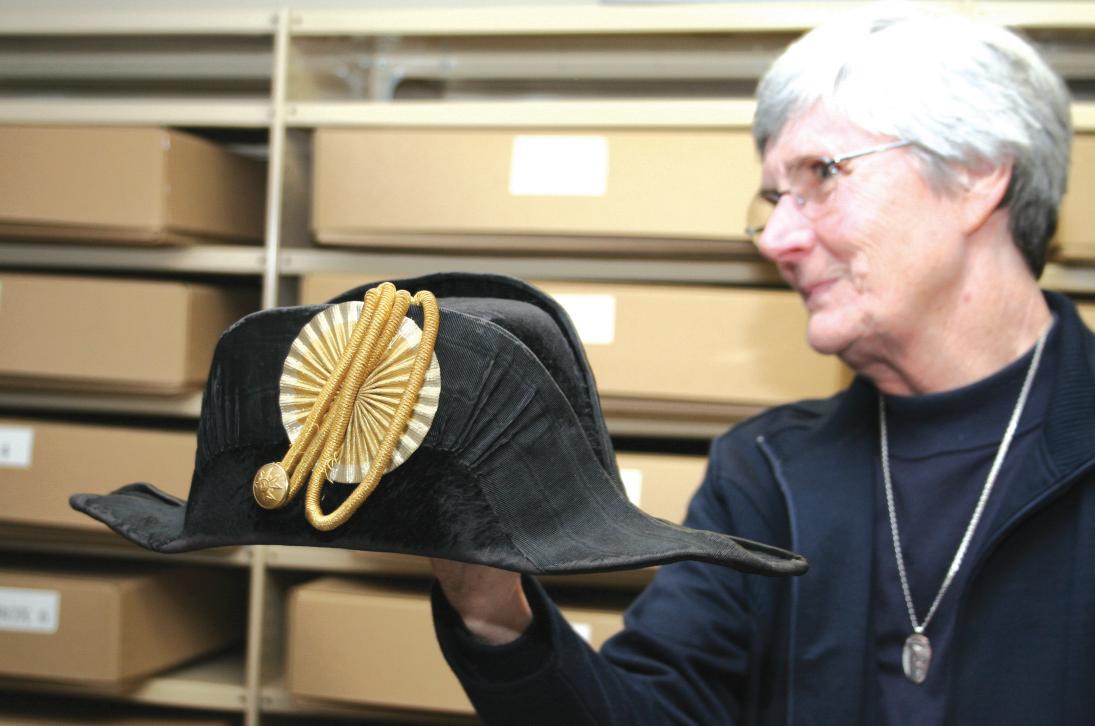
Presentation Sister Frances Stibi PBVM, who has served as Perth Archdiocesan archivist since 1992, is one such figure. She’s been on the Brady trail for nearly 20 years.
Her inquiries to trace a birth certificate have, so far, hit a dead end.
But the records from County Cavan where John Brady was reputedly born no longer exist. “Their records for that particular period are now lost and gone,” Sr Frances said.
Where did Bishop Brady undertake seminary training and formation?
Some sources have said that he undertook studies at the “Seminaire des Colonies” (Seminary of the Colonies) in Paris. Could this be the Seminary of the Holy Ghost, founded in 1703 in Paris? After the upheavals of the French Revolution (1789-1799), it reopened to train priests for the work in Frenchspeaking colonies. Before coming to Australia, the future Bishop Brady spent 12 years on French-speaking Reunion Island, situated deep in the Indian Ocean about 600km east of Madagascar.
Where was he ordained to the priesthood?
“We don’t know for certain either the date or place of his ordination,” Mgr Brian O’Loughlin, Chairman of the Perth Archdiocesan Historical Commission, told The Record
Sr Frances has ascertained that the Seminary of the Holy Ghost has a record of John Brady being there for two months but the reference does not convince her he completed seminary training there.
“It persists that he was trained in France - but that’s a family story,” she said. “My guess is that he was calling in there to get advice on how to be a missionary in Mauritius.”
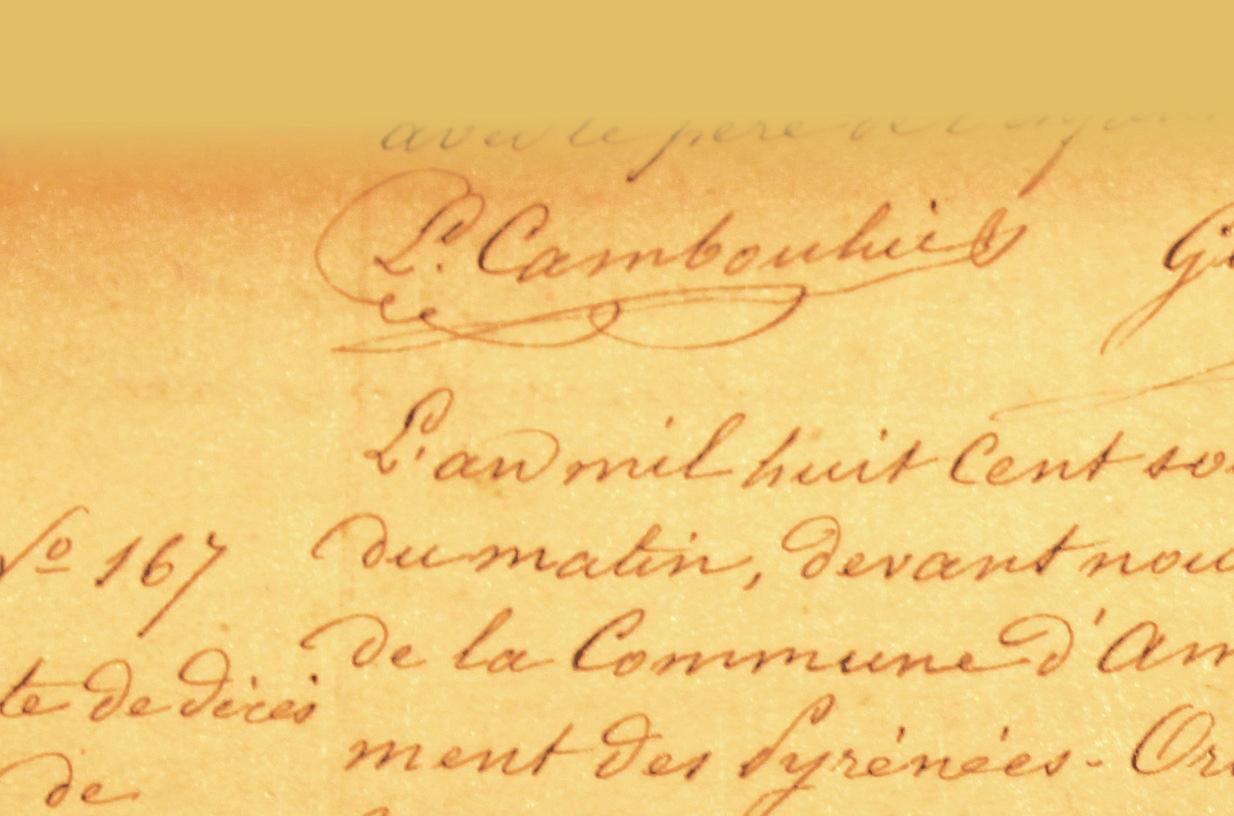
But while the history books – one written by Monsignor DF Bourke, a former Perth Archdiocesan archivist, and another by Adelaidebased historian Dominican Fr Christopher Dowd - make no mention of John Brady’s time in Mauritius, a letter from Australia’s first Vicar General Fr Ullathorne to Australia’s first Archbishop, Bede Polding, mentions Fr Brady as probably suitable for the mission in New South Wales.
The frustration at not being able to obtain such basic documentation verifying some facts of Brady’s life before Perth make it harder for local researchers interested in the beginnings of the Church in early 19th century Western Australia to make a call as to his character.
Brady’s modern-day return to Perth
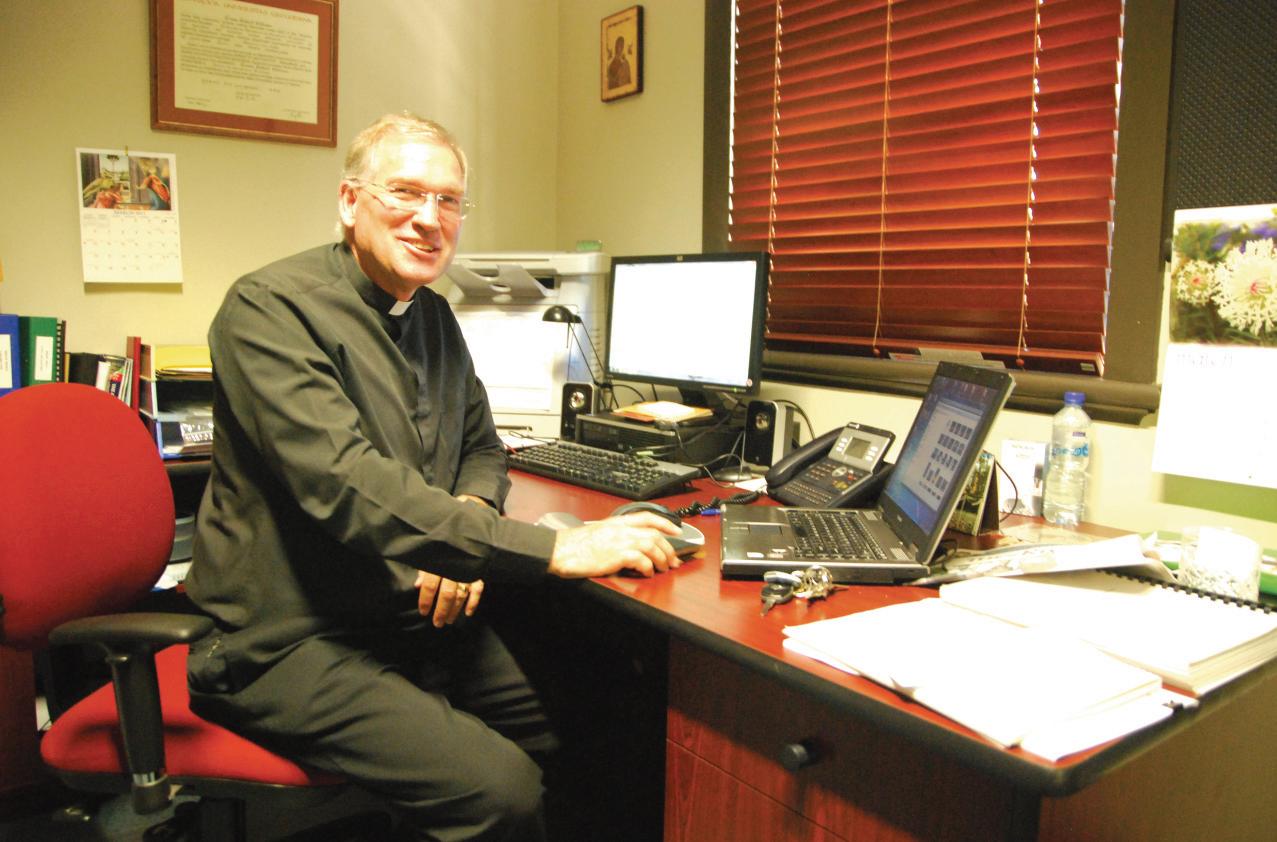
Perth archeologist priest Fr Robert Cross has been keen to exhume Bishop Brady from his resting place in France since 2006.
The idea came to him, he revealed on the blog divulging details of the exhumation process (bishopbrady. com), when he was exhuming the remains of Bishop Brady’s successors, Bishops Martin Griver and Matthew Gibney, from their final resting places beneath the 1865 section of St Mary’s Cathedral in Perth. When he exhumed three more successors of Bishop Brady from Karrakatta cemetery, the idea to bring all Perth’s Bishops together grew stronger.
“The hope of Archbishop Hickey, a hope I fully share, is that one day all the former Bishops and Archbishops of Perth will rest in

based in Windsor, New South Wales, John Brady seems to have what could be called a good track record.
“I like what he was when he was in New South Wales; maybe that was a truer picture of him,” she says.
In 1837, Brady met Australia’s first Vicar General, Fr William Ullathorne OSB, in Rome and the encounter led Brady to Australia.
While historian Mgr DF Bourke asserts that “Brady volunteered for service in New South Wales”, Fr Dowd writes in his 2008 history (Rome in Australia: The Papacy and conflict in the Australian Catholic missions in 1834-84) that Brady was “recruited” by Ullathorne who “was impressed by his excellent missionary record”.
“I like what he was when he was in New South Wales; maybe that was a truer picture of him.”
- Sr Frances Stibi PBVM Archivist, Archdiocese of Perth
John Brady arrived in Sydney in 1838 and was appointed to Windsor with a parish that extended from Penrith to the Hawkesbury and Broken Bay, a massive area the size of a rural diocese, which he would have had to traverse on horseback or on foot.
Here, according to Sr Frances, he befriended Marist missionaries from New Zealand and helped them to acquire cows and sheep; he also built churches.
“He seemed quite a logical person, based on his actions,” Sr Frances says.
“He was responsible for the repatriation of a large number of Canadians who were shipped out as political prisoners to NSW; because they all spoke French, he befriended them,” she said.
With Archbishop Polding of Sydney and now-Bishop Ullathorne of Birmingham and a Bishop from Canada, they were able to repatriate “the whole lot of them within a short space of time,” she said.
“That doesn’t sound like someone who was ‘mad’,” she says, referring to some of the imputations regarding Brady’s character that still remain conjecture.
The biography of Australia’s first Archbishop, Bede Polding, by Frances O’Donoghue reveals that Brady went with Polding to meet 58 French Canadians who had been “dispatched as political felons to New South Wales”.
Polding heard their confessions and a journal entry by one of the men, Léon Ducharme, reveals that they were all “most gratified and affected to see these respectable gentlemen extend their zeal for religion and their charity so far”.
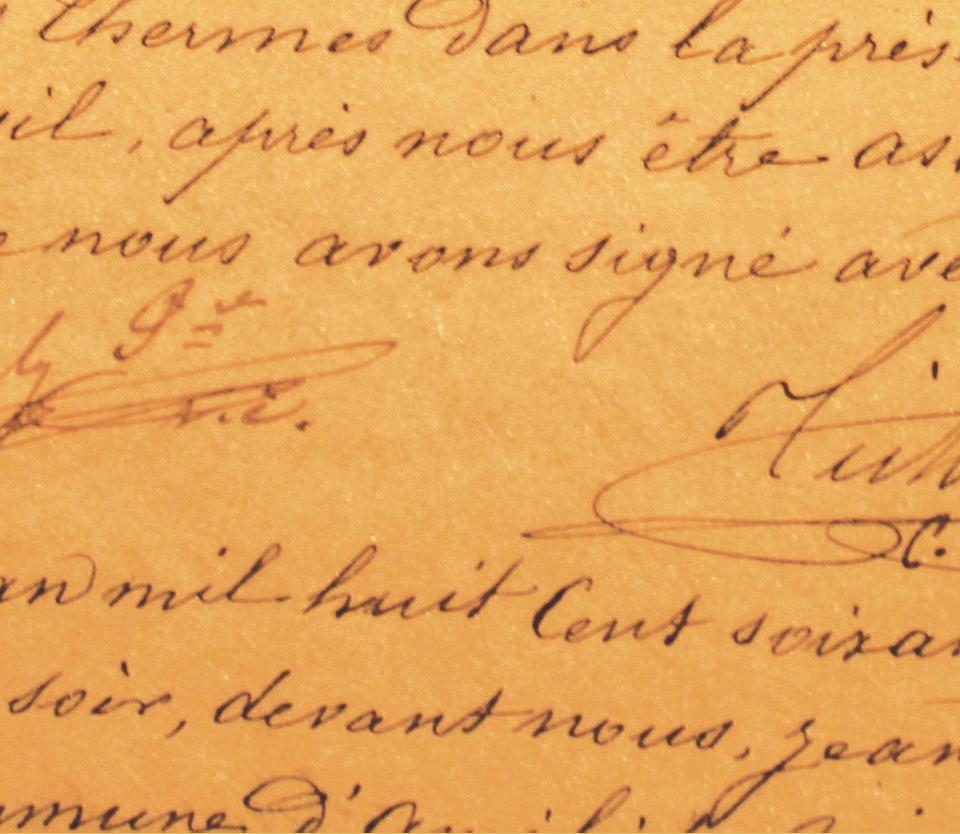
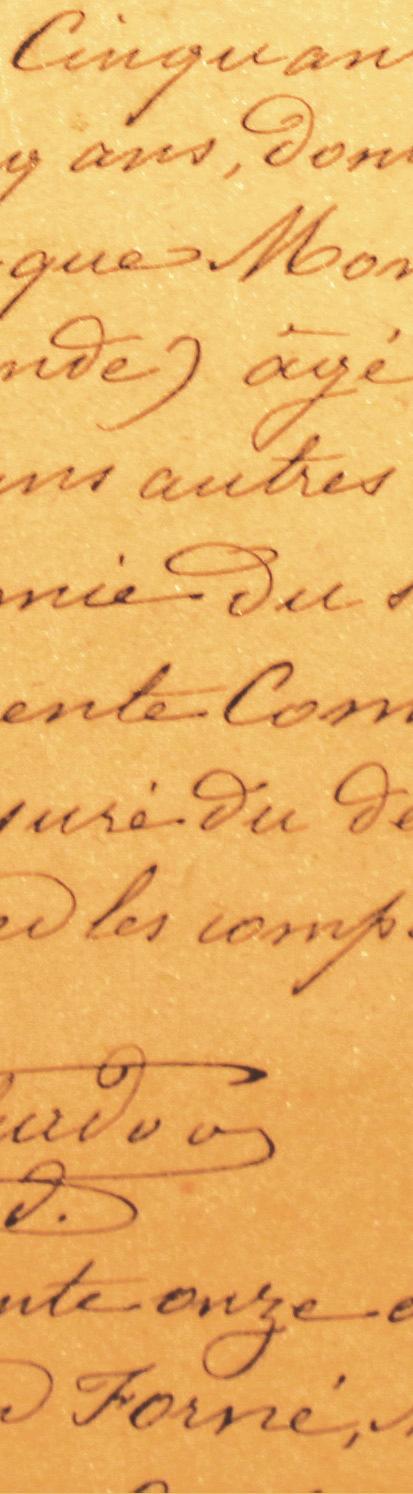
THE RECOVERY of the remains of Perth’s first Catholic Bishop, John Brady, earlier this year from a graveyard in southern France raised more questions than answers about a man who is an enigma. Aside from his time here, almost nothing is known about his life; his time in Perth was beset by financial difficulties and controversy. Brady, who held the title Bishop of Perth from 1845 until his death in 1871, was eventually banished under papal order and left Perth in 1852 never to return again - until now. The circumstances of his departure have often led to him being regarded as a failure, but was he? Or was he merely the victim of another case of history being written by the victors? Those who research the beginnings of the Church in Western Australia are perhaps beginning to question history’s treatment of Perth’s mysterious first Bishop, as BRIDGET SPINKS reports.
their rightful place in the purpose-designed crypt of St Mary’s Cathedral,” Fr Cross reported on the blog.
“The exhumation of Bishop John Brady brings the realisation of this hope one step closer.” Fr Cross
believes that, up to this point, historians have usually written a “less than flattering portrayal” of Perth’s Catholic founding father but much of this is reliant on the writings of those he describes as “triumphing” over Brady in the disputes over the
administration and finances of the fledgling diocese.
Brady’s early days of mission Sr Frances prefers to think of Brady as a helpful missioner.
In his earliest Australian work
But did Brady’s expertise in French always work in his favour?
Irish by birth, it is believed that his first language was Gaelic but his educated language was French, thus Brady was not fluent in English. This caused some problems, according to the DF Bourke’s History of the Catholic Church in Western Australia
“Unfortunately, his educational background, almost exclusively French, meant that he was unable to express himself well in English, and the solecisms which he perpetrated in public controversy damaged the cause he was advocating,” wrote Bourke.
“But this did not prevent him from suing two Sydney newspapers for libel, and their defeat in court led to the demise of the Sydney Standard and the Sydney Gazette,” Bourke wrote.
Brady’s call to Perth
Robert D’Arcy, a Catholic schoolteacher in Western Australia, wrote a letter dated 12 December Please turn to Page
Continued from Page 9
1841 to Archbishop Polding on the other side of the country. At that time, the Sydney Archdiocese spanned the entire country excluding the Dioceses of Hobart and of Adelaide. D’Arcy told Polding that the Catholics of the Swan River Colony were without a priest and, for want of one, Protestant ministers were endeavouring to convert the natives and to “bring about the perversion of the Catholics by getting them to give up their religion”.
In 1842, Polding was in Rome discussing the establishment of a Catholic Church hierarchy in Australia and was undecided on whether the Swan River Colony should be included. The Propaganda Fide Congregation (PFC) - the branch of the Roman curia overseeing the Church’s global missionary effort - decided against including the Colony and established the jurisdiction of these three other dioceses: Sydney, Adelaide and Hobart.
Polding subsequently appointed Brady as his Vicar General in Western Australia and, in 1843, accompanied by Belgian priest Fr John Joostens and a catechist, Patrick O’Reilly, Brady arrived in Albany in November. The following month he arrived in Fremantle.
Brady’s Perth-Rome trip in 1844 and Petitions for a Diocese
Fr Brady remained in Perth for all of four months, according to Fr Dowd’s Rome in Australia, before he sailed for Europe without the permission or knowledge of Polding.
Another source says he was here just two months.
Brady made a beeline for Rome. There, on 22 February 1845, he presented the PFC with a “major report on the state of the Catholic Church in the Swan River Colony.”
In his report, Brady estimated the Aboriginal population at approximately 2 million, with 8,000 whites, of whom 3,000 lived in Perth. Half of these, he told the Congregation’s clerics, were Catholics. The information was discovered by Fr Dowd in a document in the Vatican’s archives entitled Relation de la Partie Occidental de la Nouvelle Holland (A Report on the Western Part of New Holland) and written in French.
Brady’s figures are problematic, to say the least, because who would know?
“He arrived in Rome with what I can only describe as fanciful figures,” Mgr O’Loughlin says, adding, “That is another part of the nub of the problem.”
Since obtaining a copy in May this year from the Vatican archives of the major report about the state of the Colony that Brady presented in 1845, Fr Cross has come to believe that Brady’s figures need to be investigated further.
“Brady gives detailed figures of the settlement areas by name including Perth, York and Sond - which refers to King George’s Sound, Albany,” Fr Cross told The Record
“I can see he has written it with quite a lot of care,” Fr Cross said. “It’s well prepared, based on his own observations. He appears to be rounding off by a few hundredgive or take,” he said.
But as to whether there was any exaggeration, Fr Cross maintains that even today no one can say how many Aborigines were in Australia at the time of European settlement; the area of Geraldton had not even been explored then.
“When it was in the process of being settled in 1849, it would have had the highest Aboriginal density of population,” he says, basing this
assertion on his previous research into Aboriginal tribes of the midwest.
While it is possible Perth’s popu-
that Polding “be excluded from the deliberations on the appointments to the diocese and its vicariates apostolic in Western Australia ... because it would cause delay”.
So why did he advocate for the establishment of a diocese in Perth using “fanciful figures” and without advising Polding?
Mgr O’Loughlin refuses to comment.
“I’d rather not speculate; that’s what he did,” he says, referring to Brady’s advocacy for the establishment of a diocese in Perth.
Were time delays the only reason Brady wanted to exclude Polding?
Fr Cross’ theory is that prior to Bishop Brady’s trip to Rome in 1845, Polding was in Rome in 1842 advancing the concept of the establishment of other dioceses in Australia and Brady would have known that.
“I think Brady was working on the understanding that this was Polding’s long term vision,” Fr Cross said.
However, Brady was obviously aware of the geographical distance between Sydney and Perth and between Perth and Rome and was possibly just “following through on this vision that Polding had,” Fr Cross says.
Odhran O’Brien, a research student at the University of Notre Dame’s Fremantle campus, who was present at the exhumations of Bishops Martin Griver, Launcelot Goody and John Brady, agrees with Fr Cross that Brady campaigned for the diocese in good faith. Brady had spent time working for Polding and knew his overall vision for the Australian diocese.
Mr O’Brien, who was commissioned by the Perth Archdiocese to write the biography of Perth’s second official Bishop, Martin Griver, describes Brady as a “visionary”, a “big pictures man”.
“Brady was concerned that with Polding so far away, he would not be an effective Bishop,” he says.
“Yes, he made a hasty decision to leave for Rome. However, in doing that, he was aware Polding had a policy throughout the early 1840s that more needed to be done for the Aborigines. He was aware Polding wanted to create a diocese in Perth and he knew of instances where Polding had struggled - due to distance - to properly support the clergy,” he says.
lation was larger in the early 1840s (primitive conditions drove many away), its first census establishing that there were 3,500 people in the Colony was not taken until 1848three years after Brady’s so-called wild estimates to the PFC.
In March 1846, Cardinal Castracane presented Brady’s proposal to the PFC to create a new diocese in Western Australia.
He included the figures Brady had presented and that Sydney’s Archbishop Polding thought well of Brady, given his appointments as Vicar General to the Perth mission.
In his 1845 report, Brady recommended Fr Ullathorne lead the diocese as Bishop but, when Ullathorne was asked, he refused the appointment.
Referring to an unpublished thesis on Bishop Brady by Martin Newbold, Fr Dowd points out it is possible Brady’s recommendation was a ploy: Ullathorne had already refused two Australian dioceses and was unlikely to accept a third.
That Polding was not consulted as Brady’s referee in the establishment of the diocese is also a telling point - Brady argued in the report
Mr O’Brien is convinced there was no “malicious intent” on Brady’s part to exclude Polding from discussions in Rome.
“I think he was just inconsiderate because he was so focused on his own missionary work,” he said.
But Fr Dowd, who spent an entire sabbatical immersed in the correspondence from Brady in the Roman archives, leans towards seeing Brady as ambitious.
“I think he was an ambitious man, and I think he wanted to be a Bishop. He exaggerated the actual situation of Perth to push Rome towards establishing the new diocese and making him the Bishop,” he says.
“When he made the proposal for the diocese, he told Rome and recommended someone else for the diocese, knowing that this person had already said no to Australia.
“It was obvious they would think about whom to appoint and Brady would be the obvious choice,” he says.
Ambition or Zeal?
But Fr Cross does not see Brady as a man driven by ambition for appointment to high office in the
Church. “I would not agree that he was ambitious, but my research is far less extensive than Fr Dowd’s,” he says.
“From what I can judge, he was a very dedicated missionary. His strength was that he was a frugal person, who perhaps survived on very little.”
“Brady’s ‘palace’ was a bell tower with an umbrella,” he says referring to the privation Brady endured while in Perth. “So why would he be ambitious to be a Bishop?”
He adds that from further reading - the biography of Bishop Polding - he has learnt that many of the priests who were offered Bishoprics could see the missionary territory was a ‘poisoned chalice’.
“It reflects positively on Brady that he was prepared to accept the position knowing it would entail hard work,” he said.
Although Bishop of Perth until the end of his life in 1871, Brady did not leave until 1852. Bishop Serra was then able to carry out his appointment as Apostolic Administrator from 1852-62.
Bishop Serra never assumed the title Bishop of Perth while Bishop Brady was alive.
So while Bishop Brady was in Perth as Bishop of Perth, what was he like?
The letters of Sr Ursula Frayne, one of the first group of Sisters of Mercy to come to Perth at Brady’s request, are primary evidence and reveal something of Brady’s character and also some of his (possibly cultural) idiosyncrasies.
An anthology of letters written by Sr Ursula and other Sisters of Mercy to the motherhouse in Ireland from 1845-1849, and compiled by Geraldine Byrne, offer glimpses of the controversial prelate. Bishop
Brady was the Sisters’ Confessor and, as Sr Ursula narrates, was “kind and attentive” in helping them get their convent built.
In a letter written in April 1846, she wrote that Bishop Brady was “all indulgence” to them; in a letter dated November 1846, she related that that he visited them frequently.
After a few months of this, however, he announced that he would be making a pastoral visit which - unbeknownst to the Sisters of Mercy - was to be an official visit with a protocol they were expected to follow as well.
“About one o’clock, a procession was seen approaching the hall: first two students in soutane and surplice, one holding the Bishop’s Crozier, the other a cross; next Fr Powell, also in soutane and surplice; then the Bishop in soutane, rachet, cape and an immense threecornered black beaver hat with a black feather and a bunch of green satin ribbons at one side; lastly three or four little boys holding up the Bishop’s train,” Sr Ursula wrote in confidence to her Mother Superior.
“Unaccustomed as we were to such visits, we did not know how to act,” she wrote.
The Community gathered, knelt for his blessing, joined in prayer, then sat up, listened to what he said and answered his questions, then when he left, they “indulged in a hearty laugh”.
But the Bishop subsequently reproved them for not “receiving him in due form”.
“Such visits were not usual in Ireland though quite common in France and Italy,” Sr Ursula wrote.
Sr Ursula wrote that Bishop Brady misconstrued their ignorance as “disrespect, self-will and other motives unworthy of your poor
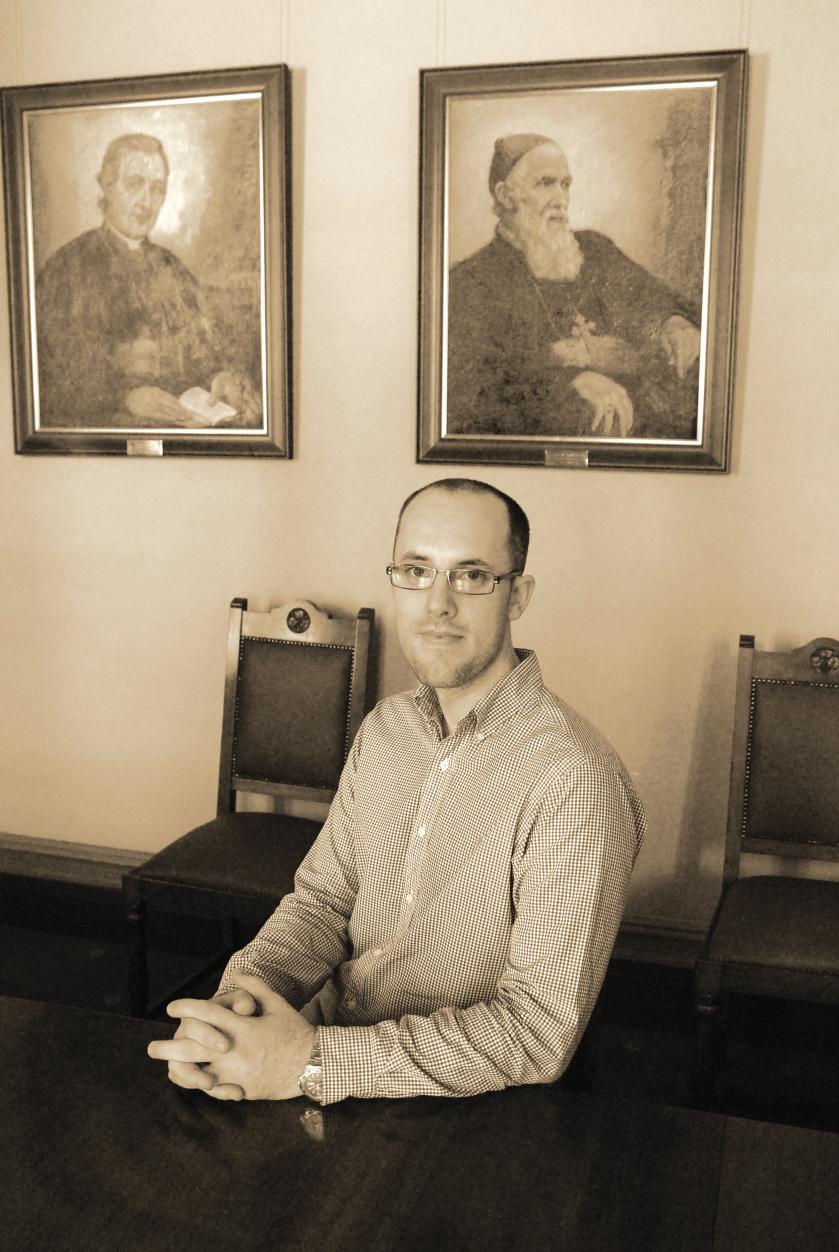
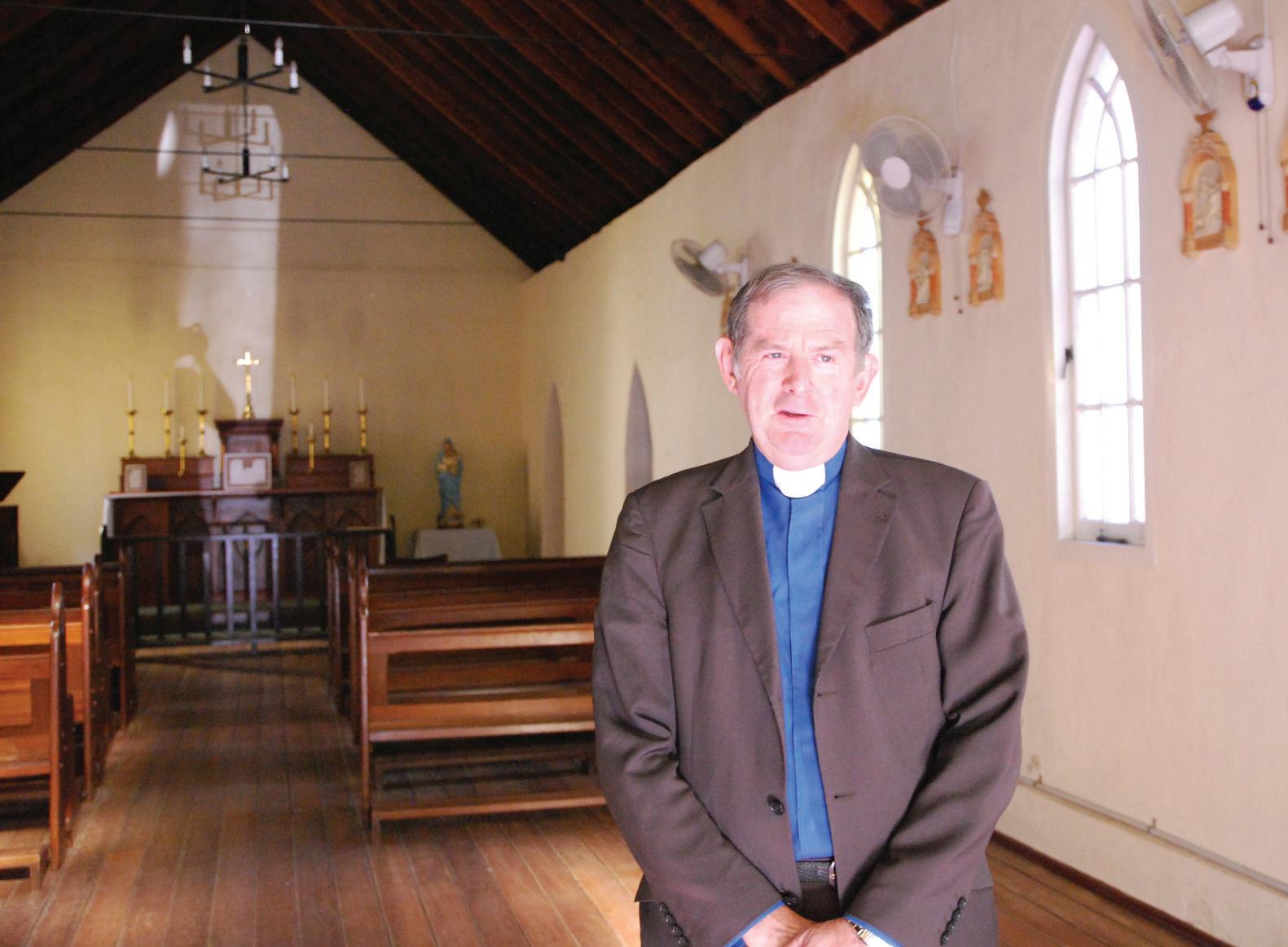
children and unthought of by them”. For three months, Sr Ursula wrote that she was obliged to spend five to six hours every day with the Bishop.
“He thought his visits gave us pleasure and that it was even necessary that he should be a good deal with us at first, but he knew little of how independent the Sisters of Mercy are and that they have no needs outside their own Community for amusement or society,” she wrote.
Later, in July 1849, another incident involving Sr Aloysius upset the Bishop who thought the Sisters of Mercy had wilfully and formally disobeyed his “episcopal authority”.
But Sr Ursula also wrote in August 1847 that Bishop Brady was - as Fr Cross asserts - a man of frugality, living in his belfry and in “extreme poverty”.
“The poor Bishop is in a miserable state for want of a residence,” she wrote.
“For several months after our arrival in this country, he lived in a little room adjoining the Church; it had no window nor any means of ventilation; he next occupied a larger room at the other side, but this latter he gave up for a school room at the time we came to reside in our present Convent.
“His third habitation was the belfry - a little wooden building, just like those boxes you may have seen at the bathing place, except the boards of which it was made are much fewer and farther apart; in fact, there is free access to the weather on all sides,” she wrote.
“Indeed, he is generally obliged to have an umbrella spread to keep off the rain and, notwithstanding this precaution, he’s often forced to abandon this room and take refuge in the church,” she wrote.
Brady remained in his wellventilated quarters until the winter rains compelled him to move into better lodgings.
Fr Dowd and Mgr O’Loughlin agree Bishop Brady was, on a spiritual and pastoral level, a fine man, especially given the huge size of the Colony and diocese.
“Under conditions of great difficulty and privation, at the pastoral, priestly level, he did very well,” Fr
Dowd says, adding that there was “a lot of anti-Catholic feeling from the Protestant part that would have made life difficult too.”
But, as an administrator, Brady appears “imprudent and incompetent,” Fr Dowd says.
In an 1847 letter, Sr Ursula wrote that the Bishop revealed that funds of the Mission were exclusively derived from the Propagation of the Faith (PFC) which explained why he was living in a belfry: the funds were “too small to admit of his allowing himself any other mode of living at present”.
By 1849, Brady had run up a debt that, for the times, was enormous. Somewhere in the vicinity of 10,000 pounds, it had accumulated as Brady bought land for farming and agriculture “to raise money to support this exaggerated, over-inflated number of pastors and teachers,” Fr Dowd says.
It seems likely that it was John Brady’s inability to handle the temporal affairs of his diocese that ultimately led to his exile.
His character since has been called into question but the facts are that Bishop Brady, through 1846 and 1847, “deluged” the Congregation of the Propagation of the Faith with “contradictory” letters that combined descriptions of the marvels being achieved with “bitter complaints about practically everybody engaged in the mission”, according to Fr Dowd.
Brady sent the Spanish Benedictine Dom Serra overseas to raise funds for the diocese but once Serra got to Rome he was consecrated Bishop of Port Victoria (near Darwin) on 15 August 1848 and proceeded to collect funds from wealthy contacts in Spain and Italy.
When Brady heard of this, he “assumed” the funds would be diverted to the new See, Fr Dowd says, and sent Dom Salvado to Rome applying for a coadjutor (assistant) Bishop and asking that Salvado be appointed.
Meanwhile, the Vatican curia were in disarray. An insurrection in Rome tied to the political strug-
PHOTO: BRIDGET SPINKSgle to unify Italy led to the Pope escaping the city to Gaeta while Cardinals sought refuge in other parts of Italy.
Members of Propaganda were separated and, despite Brady’s two letters appealing for the appointment of Salvado, the Pope decided Serra would be Brady’s Coadjutor and Salvado would be consecrated Bishop for the diocese of Port Victoria.
The Urqhart Factor: friend or foe?
The Pope wrote to Brady, personally informing him of Serra’s appointment and sent the papal briefs to Brady for him to pass on to Serra.
It might not have been the best strategy for maintaining peace in the growing diocese.
Fr Dowd says that Bishops Serra and Salvado were to return to Perth together but when the would-be colony in Salvado’s new diocese was abandoned, Salvado chose to stay behind in Europe and await further instructions from the Vatican.
Serra sailed on, taking with him a native English speaker for a secretary, five Spanish priests, seven Neapolitan Brothers and 25 Spanish brothers.
Since Serra was after a native, English-speaking secretary, Dominic Urquhart, an Irish Cistercian, was recommended to him.
When Urquhart’s superior heard the request, he consented immediately, Fr Dowd writes.
Little did Serra know that Urquhart had been a Dominican before he became a Cistercian and had resided in four other Cistercian houses before his most recent one.
“In all of them, Urquhart had been involved in rancorous disagreements,” Fr Dowd writes in Rome in Australia.
Cardinal Fransoni did write to warn him but the ship had already set sail.
Monsignor Bourke’s history adds that, while on the ship, Urquhart formed an alliance with the ship’s captain, Quesada, a Spaniard “of the anti-clerical persuasion”.
There was a quarrel between
Continued from Page 11
Serra and either Quesada or Urquhart.
Either way, Urquhart wrote a calumnious letter dated 17 November 1849 against Serra and sent it to the entire College of Cardinals.
In the first month of Serra’s arrival, Brady wrote to Cardinal Fransoni to accept Serra’s appointment in January 1850 but, once the debts were paid, Brady appointed Urquhart as his Vicar General and then wrote to Rome seeking to have Serra removed for being “disobedient to the Holy See” and for being the principal cause of the diocesan debt.
Brady then sailed for Rome to follow up on his request, leaving Urquhart behind in control and Serra powerless, since he had not yet received the papal brief announcing his appointment.
Fr Dowd - relying on letters and documents in the Vatican Archives, including letters from Prefect of Propaganda Fide, Cardinal Fransoni to various personages, and the diaries of Bishop Salvado OSB and Dom Venancio Garrido OSB - relates precise details of Brady’s movements in Europe, just when his control of the Perth Diocese was in jeopardy.
Meanwhile, back in Perth, the Pope’s manoeuvre to gently break the news of the co-adjutor appointment backfired when Urquhart found a package addressed to Brady in the post office.
Suspecting what it contained, he sent it back to Brady in Rome, Fr Dowd says.
And so it was that the papal brief appointing Serra as Co-Adjutor Bishop went ‘missing’ and, by April 1850, Serra could not officially perform any duties as Temporal Administrator of the diocese such as obtain the deeds to any diocesan property.
In Rome, Brady had two papal audiences with Pope Pius IX, during one of which he offered to resign the Bishopric and asked for permission to go to the British Isles. The Pope declined the offer since Propaganda Fide’s handling of the matter was still in motion.
Meanwhile, Propaganda Fide’s Cardinals had sought the opinion of Salvado who was then residing in Naples. On 6 June 1850, they decreed a formal transference of the entire government of the Church of Western Australia from Brady to Serra.
Cardinal Fransoni sent the decree directly to Serra along with a cover letter cancelling Urquhart’s office and ordering him to leave Australia. This package arrived in October and, by Christmas Eve, Serra could announce to the congregation that he was relieved to have “unfettered control of the finances and property of the Diocese”.
For Brady, it must have been a crushing blow. Still in Rome, he was asked to renounce the diocese but, Fr Dowd says, “resolutely declined.”
Brady goes missing, then comes back to Australia
In late 1850, Brady - still in Rome - asked permission to go to England but the Pontifical Passport Office was instructed to refuse any request by him. In early 1851, he asked the Pope for leave to go on a health trip to Malta, but was refused. He was allowed to go to up into the Roman hills to take the air.
Instead, he headed for Naples, sailed up to Civitavechhia, then to Toulon and made his way through France to England.
Brady was Missing In Actionas far as the Congregation knew. “It activated the English and Irish hierarchies and the papal dip-
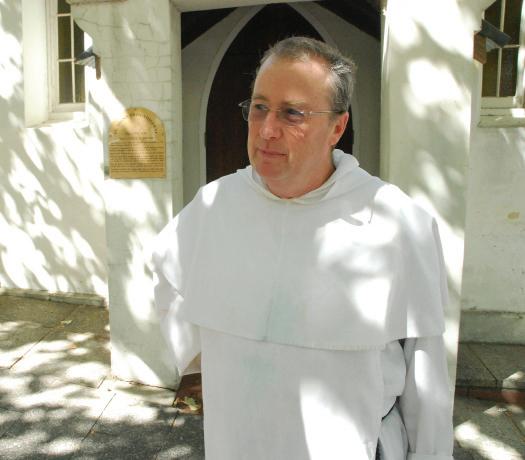
lomatic service in Italy, France and Spain in a frantic attempt to locate him,” Fr Dowd writes. In the second half of 1851, Brady wrote letters to the Pope, Cardinals Fransoni, Barnabo and Vespasiani justifying his departure.
In September 1851, he informed the Congregation that he had obtained a free passage from the British government on a convict ship, destined for Fremantle.
What was the Pope to do?
A congregation of three Cardinals met on 23 September 1851 ‘under pontifical secrecy’ to discuss the Brady case.
In his history of the affair, Fr Dowd writes that Cardinal Patrizi argued that Brady should be deposed, but the majority urged that he be ordered to renounce Perth and in the meantime be suspended to avoid the complicated, lengthy canonical process that deposition would entail.
Under this plan, Serra would be constituted Apostolic Administrator of Perth with right of succession and Brady would be provided a suitable pension and asked to send an exact account of the financial state of the mission.
Salvado was to remain Bishop of Port Victoria but to reside at New Norcia under Serra’s jurisdiction and with responsibility for conversion of the Aborigines.
The Pope confirmed these decisions and Cardinal Fransoni wrote to Brady to notify him that he had been relieved of all authority of the diocese, which now rested with Serra. He was ordered by the Pope to depart Australia and was informed he would be suspended as long as he stayed.
Brady v Serra
In mid-December 1851, Brady disregarded the Papal decisions and, according to Fr Dowd’s account, was “claiming he had not received any correspondence from Propaganda Fide and clinging to his story that the Pope told him to return to his diocese”.
Serra informed Brady of the decree which was in force unless Brady had any more recent documentation. Brady said he did, but would not let Serra see it.
Serra then banned Brady from using his Priestly and Episcopal authority, including celebrating the Liturgy. At this point, as Fr Dowd writes, “violent brawling” broke out in the streets of Perth between Brady-ites and Serra-ites for possession of the Cathedralnow St John’s Pro-Cathedral. The
leave us wondering as to the character of the first Bishop of Perth.
Do his decisions in these years affect historians’ judgement of his overall character? Fr Dowd posits that Brady “suffered some kind of mental breakdown”.
“We don’t have any clinical proof of this, but he was under colossal mental strain. For a Bishop to refuse a personal papal command, that’s very serious,” he told The Record
“I’m wondering whether he hadn’t suffered some kind of mental collapse or breakdown,” he says.
But the issue modern historians can’t quite work out is why Brady was so disobedient to the supreme power in the Church, Papal authority?
Polding told Cardinal Fransoni that he had heard of a mental disturbance in the Brady family but there is no evidence of this, Fr Dowd says.
Perth; it was too hard - that’s my opinion - they weren’t into comforts but they missed the civilising places in Europe. It was too primitive here,” she says. “The living conditions were abysmal.”
Odhran O’Brien, meanwhile, maintains that Bishop Serra was equally to blame for what occurred in the Colony.
“I’ve seen several letters between him and Serra during the whole debacle and there is no doubt that Brady is very vicious during that time; and he very much tries to regain control over Serra and let him know that he is Bishop of Perth.
PHOTO: PETER ROSENGRENpolice had to be summoned. It was ecclesiastical civil war. In February 1852, Serra wrote to Propaganda Fide asking to leave the colony. Brady’s supporters had mounted a violent attack on his Episcopal residence.
Two months later, a Pontifical brief dated 3 October 1851 arrived, making Serra Apostolic Administrator. Brady refused to accept it - arguing that “since the brief suspending him from the government of the diocese of Perth addressed him as Bishop of Perth, he still held jurisdiction to the office from which nobody could dismiss him,” Fr Dowd narrates.
Polding saves the day
From Rome, Cardinal Fransoni wrote to Polding, asking him to do all in his power - as Fr Dowd narrates, citing a letter dated 11 October 1851 – to “obviate the grave threat posed to the Church in Perth by the return of Brady”. Serra also wrote to Polding in December and January 1852.
In March, Polding made what was by the standards of the day a momentous journey, sailing from Sydney to Adelaide; then on to Albany and finally, by horseback, from Albany to Perth. He arrived in June.
Polding issued a Pastoral Letter to the people of the Swan River Colony calling for an end of the party spirit and submission to the Papal decrees.
On 4 July 1852, Brady submitted to the Papal sentence of suspension, promised to observe it until canonically absolved, unreservedly handed over to Polding all financial and property claims, expressed regret for disruption and scandal and undertook to follow Polding’s instructions.
In late August 1852, Brady left Fremantle for Melbourne never to return alive to Perth. Not long after that, Cardinal Fransoni wrote to Bishop Serra, enclosing a personal letter from the Pope addressed to Brady. It commanded him to leave Australia but arrived too late as Brady had already departed.
In Ireland, Archbishop Cullen was given special faculties to absolve Brady, perhaps in order to minimise further embarrassment for Brady in Rome. Cullen was advised by Fransoni to forbid Brady from returning to Australia and to keep him in Ireland.
Brady: Still a Mystery?
These fine details of hasty trips in 1849-52 and the Episcopal correspondence of all parties involved,
“But if that is true, it could explain why Brady acted so bizarrely,” he said. Brady was clearly resorting to pretty desperate measures, Fr Dowd says, when he accused Serra of forging his letter of appointment.
“That’s a very serious, a very silly thing to say, but he had to find some way of blocking Serra and regaining money,” he says.
As for the way the Pope attempted to tread lightly with Brady when appointing Serra as Apostolic Administrator - an approach that backfired when Urquhart redirected the mail - was this a question of caring for his health and wellbeing or was it because of his character?
Fr Dowd said that “if we speculate that he was proud, he would have felt badly treated, exposed, humiliated, put down and incompetent” to have control of the finances taken away with Serra’s appointment.
“Brady probably felt embarrassed and refused to accept it,” he said.
Mgr O’Loughlin said that he “admires” Bishop Brady for coming here as the leader of the first missionaries. But he remains an “enigma,” as far as Perth’s present Vicar General is concerned.
“I do not think you can be conclusive about a man about whom we know so little. We know a lot of what he did, but we do not know much about the man himself,” Monsignor O’Loughlin says.
Mgr O’Loughlin, also a canon lawyer who acts as a judge on the Western Australian and national appeal tribunals, is uncomfortable about making a character assessment of Perth’s first Bishop.
He knows what happened and he is embarrassed by it, but why it happened, he says, he does not know. “The fact that we have not got those elementary documents makes me unwilling to speculate,” he says, referring to Brady’s birth and ordination certificates.
“When things fall apart, they fall apart most dramatically; the fights and squabbles, the schism of the early Church in Perth. It is unseemly, it is unChristian, but as to why - I do not think we know and so that is the reason I am not prepared to speculate,” he says.
Sr Stibi believes that the living conditions of Perth in its early days were a big factor in the Brady incident.
“As far as I can see, he was an ordinary priest, and an ordinary Bishop doing an ordinary job under very extraordinary circumstances,” she says.
The fact that the Swan River Colony had only been established 14 years prior to the arrival of Catholic clergy is an important factor in discovering the true nature of Bishop Brady in context, she asserts. “Nobody was settled in
“But equally so, Serra sends letters to him; basically telling him that he has no authority any more. So in terms of the correspondence I have seen, Serra and Brady are equally to blame for the tension that mounts within the Catholic community during those few years,” he says.
He also agrees with Sr Frances that the privations of the colony were a factor and suggests this was possibly a factor in Brady’s possible mental breakdown, describing this as “very possible.”
“Was he a saint? I don’t know about that. Does he need to be a saint? Does he need to be a saint to do amazing things?”
- Odhran O’Brien
“He was probably suffering from exposure; he was living in the belfry. It’s a medical term ... he was literally open to all the elements ... sleep deprivation, stress, malnutrition, the whole lot. So was he in his right mind when he was making decisions? Probably not,” he says.
But as to whether it was a mental illness, nobody can judge, Mr O’Brien says, because “you’ve got to take into consideration all the environmental factors he was experiencing at the time”.
“People who haven’t had sleep, who haven’t eaten, who are living in a space where they’re exposed to the elements are not going to make logical, well-considered decisions,” he points out.
Mr O’Brien also prefers to see Brady as a zealous visionary who, unfortunately, was not good at handling money.
“The 10,000 pound debt that Brady accumulated is a fact - no one is disputing that,” he says, noting that such a result indicates carelessness on Brady’s part.
But he thought there were all these “souls to be saved,” Mr O’Brien says, referring to Brady’s letters to the Vatican. Brady’s primary aim, he says, was to evangelise the natives.
“He wasn’t like Bishops Griver or Serra who meticulously planned what they were going to do,” he says.
So what is the O’Brien assessment of Brady, the controversial first Bishop of Perth?
“I think he was a good man, a holy man with good intentions,” he says, before asking a few questions of his own.
“Was he a saint? I don’t know about that. Does he need to be a saint? Does he need to be a saint to do amazing things?”
We will probably never know the answers. But whatever the truth about why Brady did the things he did, one thing remains true: the Catholic Church has flourished in Perth and across Western Australia since 1845 and now comprises hundreds of parishes and Catholic schools as well as major institutions such as a healthcare system.
In a very real sense, they all began with Bishop John Brady.
Adelaide-based historian Fr Christopher Dowd OP, outside the church that Brady built. He sees Brady as, in-part, ambitious. Some of his actions are hard to explain. The “collossal” mental strain of dealing with so many problems simultaneously may have produced a breakdown, he suggests.

WASHINGTON (CNS) - The Illinois Department of Children and Family Services has informed four Catholic dioceses that it will not renew their contracts to provide foster care and adoption services because there has been “no meeting of the minds” about providing services to same-sex couples.
Erwin McEwen, the department’s director, told Catholic agencies for the dioceses of Peoria, Springfield, Joliet and Belleville in separate 8 July letters that their contracts would not be renewed “because your agency has made it clear that it does not intend to comply with the Illinois Religious Freedom Protection and Civil Union Act.”
The law, which took effect on 1 July, permits civil unions for samesex couples and stipulates that they would have the same rights and benefits as married couples in the state, such as parental and adoption rights. The beginning of the 2012 fiscal year began on 1 July, when the new contracts would have begun.
State officials have said the law would not allow the agencies to refer same-sex couples to other agencies, as they have done for decades. Sangamon County Circuit Judge John Schmidt was expected to rule on 12 July in Springfield, the Illinois capital, on a request from the four dioceses for a temporary injunction blocking the termination of their contracts with the department.
The decision will affect 1,997 children in foster care - including some in the process of being adopted - under the supervision of the four Catholic Charities agencies, said Kendall Marlowe, spokesman for the Illinois Department of Children and Family Services. But the change will only be in the agency supervising their care, not the home in which they are placed, he added.
He said approximately 15,000 children are presently in foster care in Illinois. “We cannot enter into a contract with anyone who has publicly, affirmatively stated that they will not follow the law in performing services under the contract,” Marlowe told CNS on 12 July. “These agencies have made their choice, and we must now plan to transition these cases with the least disruption possible for the kids.” Marlowe said the process of transitioning the children to supervision by other agencies will take “a couple of months,” and in the meantime the four dioceses will continue to have responsibility for the children in their care.
VATICAN CITY CNS - When tourists visit a Catholic church or shrine to view the art or architecture, they also should get a sense of the faith that inspired the work, the Vatican said.
Catholics must welcome tourist visits as an opportunity for “the clear and explicit announcement of Jesus Christ,” said a message from the Pontifical Council for Migrants and Travellers.
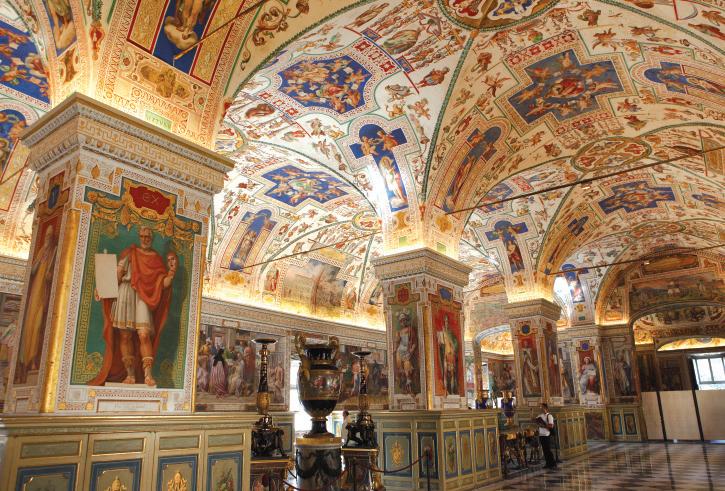 PHOTO: CNS/PAUL HARING
The message was released on 6 July in anticipation of World Tourism Day on 27 September. The World Tourism Organisation, sponsor of the annual observance, has chosen “Tourism Linking Cultures” to be the theme in 2011. Archbishop Antonio Veglio, president of the pontifical council, said the cultures drawn together by tourism have not only an historical and artistic heritage, but also customs, values and beliefs. When accepting tourists at Catholic churches and shrines, church members must “show the true meaning of this cultural heritage born from faith and for the glory of God,” the message said.
Archbishop Veglio encouraged Catholic tourist destinations to ensure that their guidebooks highlight “the soul, inspiration and message” of the works displayed, and he floated the idea of forming a Catholic tour guide association that would help guides learn how to introduce people gently to the faith while providing the historical and technical information they expect from a tourist destination.
To help those who visit churches and gaze at the religious art understand their true meaning, he said, it is important to explain their religious nature and to place them “in the liturgical context” for which they were made. Archbishop Veglio also used the message to announce the seventh World Congress on the Pastoral Care of Tourism, to be held 23-27 April 2012 in Cancun, Mexico.
VATICAN CITY (CNS) -
Sometimes the need for delicacy in handling politically sensitive situations conflicts with the need of the faithful to have clear guidance. That’s what seems to be going on with the Vatican’s China policy, particularly surrounding the ordination in June of a Bishop without papal approval.
The delicacy came in a Vatican statement on 4 July that left some room for interpretation, particularly regarding the status of the Bishops who acted as co-consecrators at the ordination of Father Paul Lei Shiyin on 29 June in Leshan.
The Vatican’s official statement said he was ordained illegitimately, “has no authority to govern the diocesan Catholic community,” and he incurred sanctions “through violation of the norm of canon 1382 of the Code of Canon Law.”
The statement did not explicitly say that the sanction referred to is automatic excommunication for the one being ordained and for the Bishops ordaining him.
The faithful in China were left with questions which were answered in a rather blunt pastoral response posted 12 July in a new blog, “Being Catholic in China.”
The blog is operated by the Fides news agency of the Congregation for the Evangelisation of Peoples, but there is no link to it on the Vatican website, the congregation’s web page or the Fides news site.
The debut of the blog, which is written in Chinese and English, came just about six months after Pope Benedict XVI appointed as secretary of the evangelisation congregation Archbishop Savio Hon Tai-Fai, a Salesian who was born in Hong Kong and who had translated the Catechism of the Catholic Church into Chinese.
The blog’s launch also came two days before the ordination of another Bishop without Vatican approval: Fr Joseph Huang Bingzhang was ordained Bishop of Shantou on 14 July. Jesuit Fr Federico Lombardi, Vatican spokesman, said the Shantou ordination is “an event that’s being followed here with much sorrow and much concern, for reasons that the Holy See has already expressed.”
The ordination of a Bishop without papal approval is an act that is “contrary to the unity of the universal Church,” the spokesman told reporters on 14 July.
Fr Bernardo Cervellera, editor of the Rome-based Asia News and a former missionary in China, said the Vatican’s formal response to the Leshan ordination “was confusing, a Western explanation translated into Chinese.”
But the blog piece “is closer to the Chinese mentality with its question-and-answer format and its practical focus,” he said.
The day after it was launched,
Fides published a story saying the blog would be “a means of information and training for Chinese Catholics” at a time that “requires a careful reading of the situation,” and it hoped the blog would promote unity within the Chinese Catholic community and between Chinese Catholics and the universal Church.
Fr Lombardi said the new China blog is an initiative of Fides but does not have the official status that statements of the congregation or the Fides news bulletins have. The blog said the staff of Fides consulted canon lawyers in formulating their response to questions about the situation of the Bishop ordained for Leshan without papal approval.
The first question was if he was excommunicated. “Yes!” was the response. “Excommunication is a very severe form of penalty in the Church that excludes the excommunicated person from the visible communion of the faithful,” it explained. By invoking excommunication, the Church is calling on the cleric “to repent at once” and is notifying the Catholic faithful that they should pray for him, but not receive the Sacraments from him since he is no longer authorised to celebrate them in the name of the Church, the blog said.
“The excommunicated person is forbidden to celebrate the holy Mass, to administer/receive Sacraments or to hold any ecclesial office. He, though ordained Bishop, has no power to govern the diocese,” it said. While acknowledging that the ordination was valid, but illicit, the blog insisted on referring to the cleric as “Fr Lei.” But it also said that he can be forgiven if he approaches the Pope with true repentance. Even then, though, he
would not automatically become Bishop of Leshan, the blog said. “The removal of excommunication is one thing; and the episcopal appointment is another.”
The Vatican said that even before the ordination, it had made clear there were serious reasons why it did not approve his nomination as a Bishop, the blog said. “In other words, even if his excommunication is removed, he is not entitled to act like a Bishop, wearing a Bishop’s insignia and being addressed as Bishop,” it said.
Canon law also foresees excommunication for Bishops who participate in the ordination of a Bishop without papal approval, but in the case of China, the Vatican always has said that the penalty would not apply if the Bishops were forced or coerced to attend.
However, the Fides blog said the Bishops are presumed to be excommunicated until such time that they can prove to the Vatican that they were acting under duress.
“First and foremost, it is their duty to immediately approach the Holy See for forgiveness and to explain reasons for which they have participated in the illegitimate episcopal ordination and wait for the reply from the Holy See,” it said.
The blog told Chinese priests and faithful that while they have no right to judge the conscience of the participating Bishops, they should “avoid receiving Sacraments administered by them” until their status is clarified by the Vatican.
The primary duty of the faithful in China, the blog said, is to pray that their Bishops would be strong in the faith and to give thanks to God that so many Chinese Bishops and faithful have heroically endured suffering for the sake of their faith.
The Sistine Hall, slated to be part of the Vatican Library, is seen during the unveiling of the renovated Vatican Library on 13 September. After three years of major renovations, the library reopened its doors to scholars in 2010. The Sistine Hall had been used by the Vatican Museums and was not renovated.THE group that represents Ireland’s Catholic priests says the secrecy of Confession must be protected, despite government indications that Confessions would not be exempt from rules on mandatory reporting of child abuse.
“The point is, if there is a law in the land, it has to be followed by everybody. There are no exceptions, there are no exemptions,” said Irish Children’s Minister Frances Fitzgerald.
Father PJ Madden, spokesman for the Association of Catholic Priests, insisted that the sacramental seal of Confession is “above and beyond all else” and should not be broken even if a penitent confesses to a crime.
Fr Madden said he would strongly urge and appeal to the penitentwhether a priest or anyone else - to confess a crime to the police and have the civil aspect dealt with, but that he did not approve of the idea of reporting what was said. “If I’m breaking the law, then somebody has to find a way to address that for me ... but, in my own right as a priest, what I understand is the seal of Confession is above and beyond all else,” he said. “The seal of Confession is a very sacred seal for lots of different reasons way beyond this one single issue, however serious this one single issue is,” Fr Madden insisted.
The Irish government said it
would introduce legislation that makes it mandatory for priests to reveal details of child abuse, even if they become known in the confessional. The offenCe is punishable with up to five years in prison.
The announcement came after a judicial commission investigating the Diocese of Cloyne revealed on 13 July that allegations of abuse were being mishandled and withheld from the police as recently as 2008. Irish Prime Minister Enda Kenny said on 14 July that canon law would not be allowed to supersede state law. Fitzgerald said the government was not concerned about “the rules governing any body.”
“This is about the law of the land. It’s about child protection. Are we saying ... if a child is at risk of child sexual abuse, that should not be reported? We cannot say that. The law of the land is clear and unambiguous,” she said.
Bishop John McAreavey of Dromore told Catholic News Service that the Bishops would await the publication of the legislation before assessing it. However, he said, he felt it was “unreal to suggest that the seal of Confession has prevented the reporting of the abuse of children.”
The new legislation is not expected to be published this fall, and sources close to the Irish Bishops’ conference expected that a heavy lobbying campaign will get under way to ensure that a suitable exemption is considered.
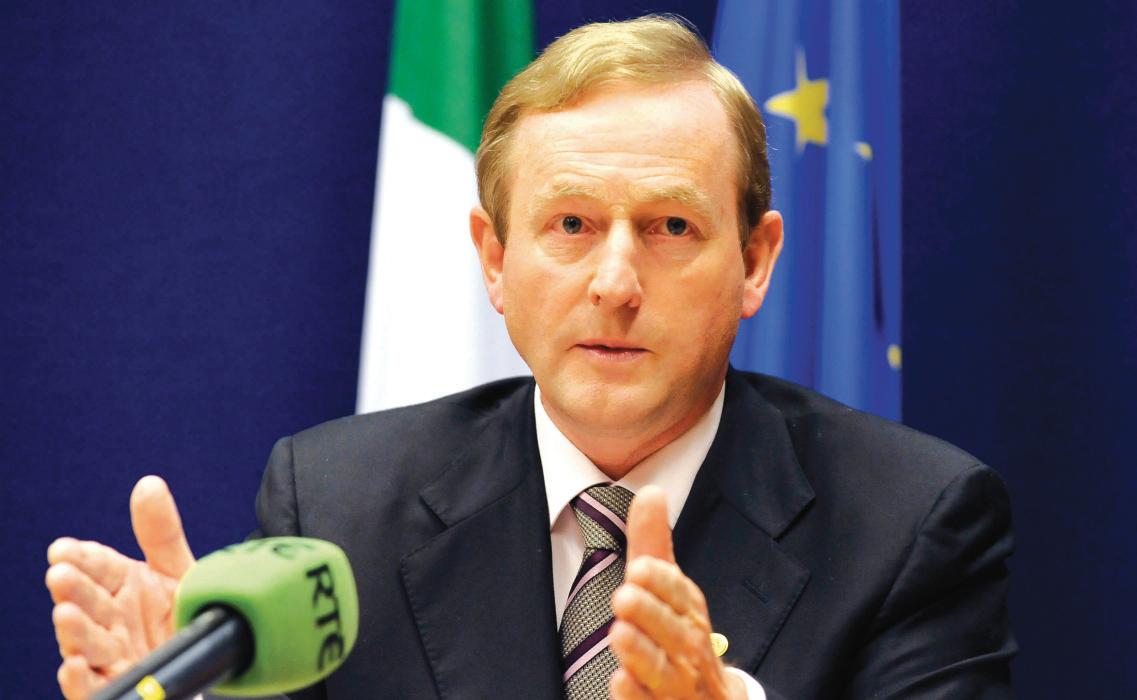
David Quinn, director of the think-tank the Iona Institute, called the proposal “unprecedented.”
“This would make us the one and only country in the Western world to have such a law. Even revolutionary France in the days of its worst violence against the Church did not pass a law requiring the breaking
of the seal of Confession,” Quinn told Catholic News Service. He said the government “is clearly missing something that every other government can see, which is that, at a minimum, such a law is very unlikely to lead to a single conviction and, at a maximum, will be counterproductive and will make
society less safe, rather than more safe.” “No child abuser will go to a priest in Confession knowing the priest is required to inform the police. But cutting off the avenue of confession to a child abuser makes it less likely that he will talk to someone who can persuade him to take the next step,” he added.
Women Religious, hotels, tour operators work together to combat, raise awareness of, traffickingBY JENNIFER BRINKER Catholic News Service
AT 18 years old, Katie Rhoades found herself homeless. On top of that, she was dealing with alcohol addiction and the effects of posttraumatic stress disorder from rape and sexual trauma. A friend suggested exotic dancing as a way to make some “quick cash” with the hope it would get her on her feet. That didn’t happen.
Instead, she fell deeper into a hole, surrounded by a life of sex for money, drugs and alcohol. By the time she was 19, she was picked up by a pimp and taken from her home in Oregon to California where she was groomed as a prostitute.
Now 30 and studying for a master’s degree at the Brown School of Social Work at Washington University in St Louis, Rhoades says she knows all too well the realities of the sex-trafficking industry which she escaped in 2002.
The US Department of Justice notes that approximately 300,000 young girls in the United States are at risk for commercial exploitation each year. The average age of entry for child-trafficking victims is 12 years old.
That’s why Rhoades joined nearly 900 Sisters of St Joseph in St Louis during the 9-13 July meeting of the community’s US federation at the Millennium Hotel to witness as the hotel publicly called for greater awareness of the child sextrafficking industry.
After months of planning for the federation meeting, the Sisters of St Joseph and others worked with the Millennium Hotel to sign a “Code of Conduct for the Protection of Children from Sexual Exploitation in Travel and Tourism.” The code, which was signed at a public ceremony at the hotel on 12 July, was
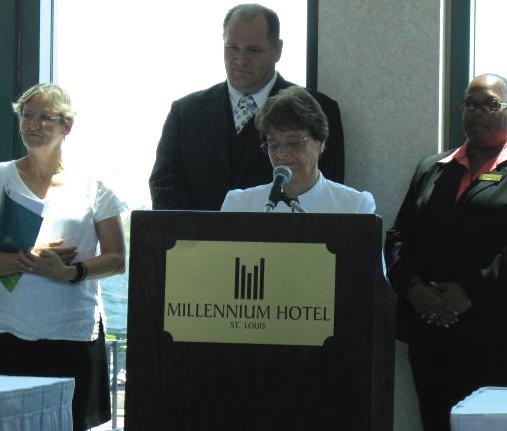
developed by an international nongovernment organisation called End Child Prostitution, Child Pornography and Trafficking Children for Sexual Purposes, or ECPAT.
The six-point code of conduct has been implemented by more than 240 tour operators, hotels, travel agents and others worldwide.
Known as “The Code,” it calls participating companies to commit to establish an ethics policy regarding commercial exploitation of children, training personnel, introducing clauses in contracts with suppliers stating repudiation of commercial sexploitation and providing information to travellers and local “key persons” at destinations. The
code has received the support of many, including the US Conference of Catholic Bishops. ECPAT “seeks to encourage the world community to ensure that children everywhere enjoy their fundamental rights, free and secure from all forms of sexual exploitation,” said Sr Kathy McCluskey, executive director of the US
Federation of Sisters of St Joseph. By signing the Code, she said, the hotel “declares itself as a place where the trafficking of persons is not tolerated.” Her statement was met with an overwhelming round of applause by those who attended the signing.
Millennium Hotel general manager Dominic Smart, who signed the document, said the move was a “proactive step” in drawing greater awareness and putting a stop to human sex trafficking. He noted that the St Louis hotel is serving as a sort of “pilot effort,” with the hope that the hotel chain, which includes 100 properties worldwide and 14 in North America, will implement the Code in other cities.
Smart added that several dozen managers in St Louis already have attended awareness training, which he said included a list of signs to look for that someone visiting the hotel may be a victim of sex trafficking.
Partnering with the Sisters of St Joseph and the hotel were Nix Conference and Meeting Management, which assisted in planning the Sisters’ federation meeting; and the Covering House, a new, St Louis-based nonprofit organisation that seeks to assist girls under 18 who are victims of sex trafficking.
During the federation meeting, more than $7,000 was raised for the organisation.
Dee Dee Lhamon, founder and president, said her organisation is raising money to open two homes for girls in the St Louis area. One would serve as a temporary “safe house,” with a second serving as a more long-term facility to help young women acclimate themselves back into society.
Services will include education, development of life skills, counselling and more.
Ireland’s Prime Minister Enda Kenny is pictured at a news conference following a meeting of European leaders in Brussels in June. Kenny said on 14 July that Catholic clerics would be prosecuted if they failed to tell the authorities about crimes disclosed during Confession. His statement came following the release of the Cloyne Report, a judicial report into the handling of allegations of child sexual abuse against clerics in the Diocese of Cloyne. CNS PHOTO/REUTERS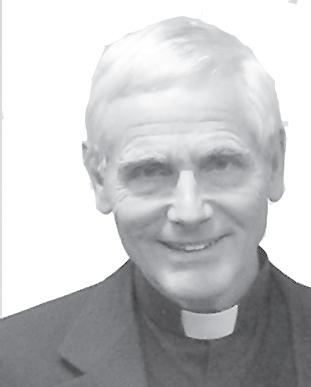 By Fr John Flader
Do pets go to heaven?
Recently, our pet cat died and my daughter asked me whether it would go to heaven so that she can be reunited with it one day. I didn’t know what to tell her.
This is indeed a frequently asked question, especially by children. In a way it reveals a somewhat naïve approach to the whole question of eternal life.
The answer must begin by distinguishing two phases of life after death: the phase before the end of the world, and the phase of the “new heaven and new earth” following the final judgement at the end of the world.
In the first phase, the souls of those who die in the state of grace and are perfectly purified enter heaven (cf Catechism of the Catholic Church, 1023). Only a being with an immortal, spiritual soul can go to heaven. This includes both angels and human beings.
In this phase, the body does not go to heaven along with the soul, but rather remains on earth. Of course, Our Lord and Our Lady are in heaven in both body and soul, and perhaps a few others, possibly including the prophet Elijah.
In view of this, it is clear that there are no other material bodies in heaven, including animals.
But do animals not have an immortal soul so that they might therefore be in heaven in their souls? No, they do not. They have a soul, a principle of life, along with all other living things, including plants. But this soul is not spiritual.




It is simply what is called the “form” of the matter of the body, making the body function as a single living organism.
When the animal, or the plant for that matter, dies, the soul ceases to exist. There is no longer any principle of life, any form, and the matter disintegrates.
In humans, on the other hand,
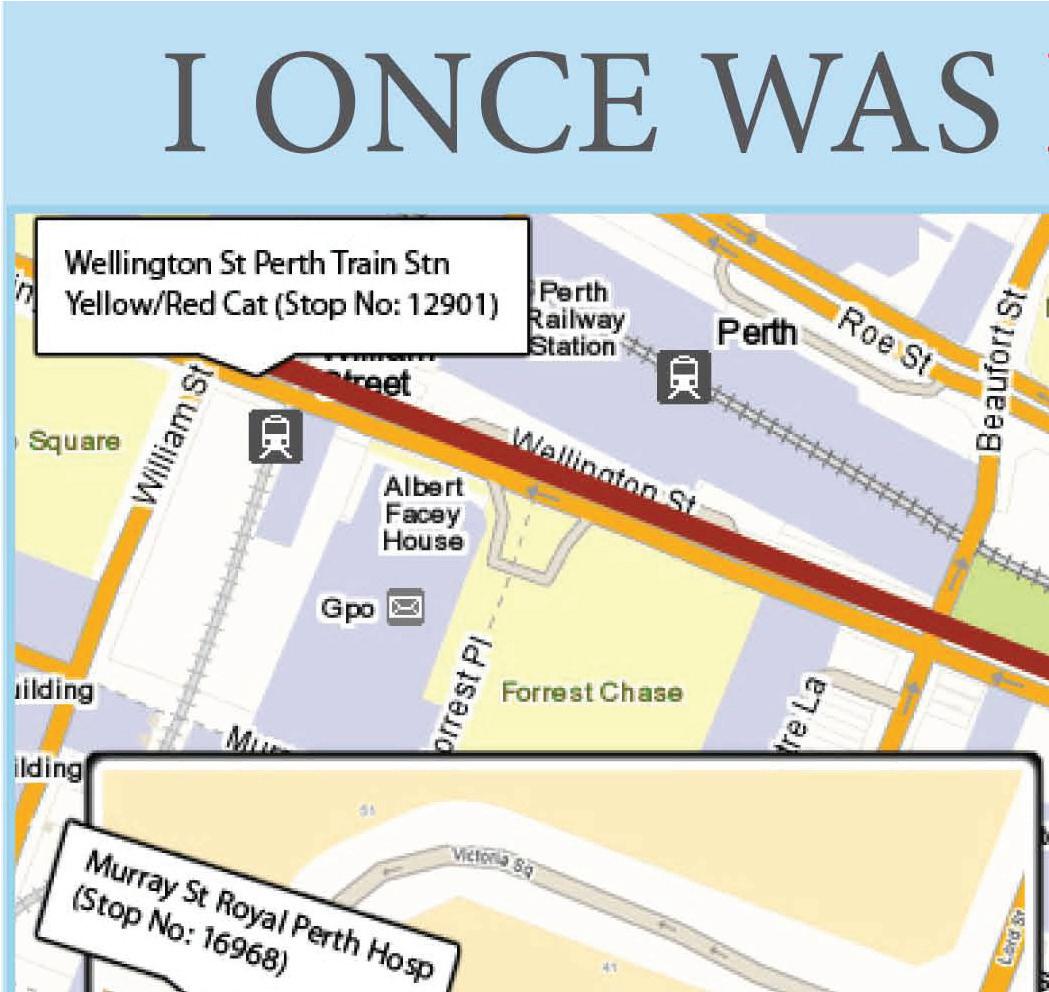
the soul is spiritual and has existence in its own right. By our spiritual soul humans are able to think, to reason, to know immaterial concepts such as goodness or immortality, to plan for the future, etc, something even the highest animals cannot do.
This spiritual soul, because it has no matter, is immortal or inde-
structible. When humans die, the soul lives on and goes either to purgatory, heaven or hell. But will our happiness in heaven not be somewhat lessened if our pets are not there with us? Not at all. The very question reveals a lack of understanding of the overwhelming joy of seeing the Blessed Trinity, Our Lady and all the angels
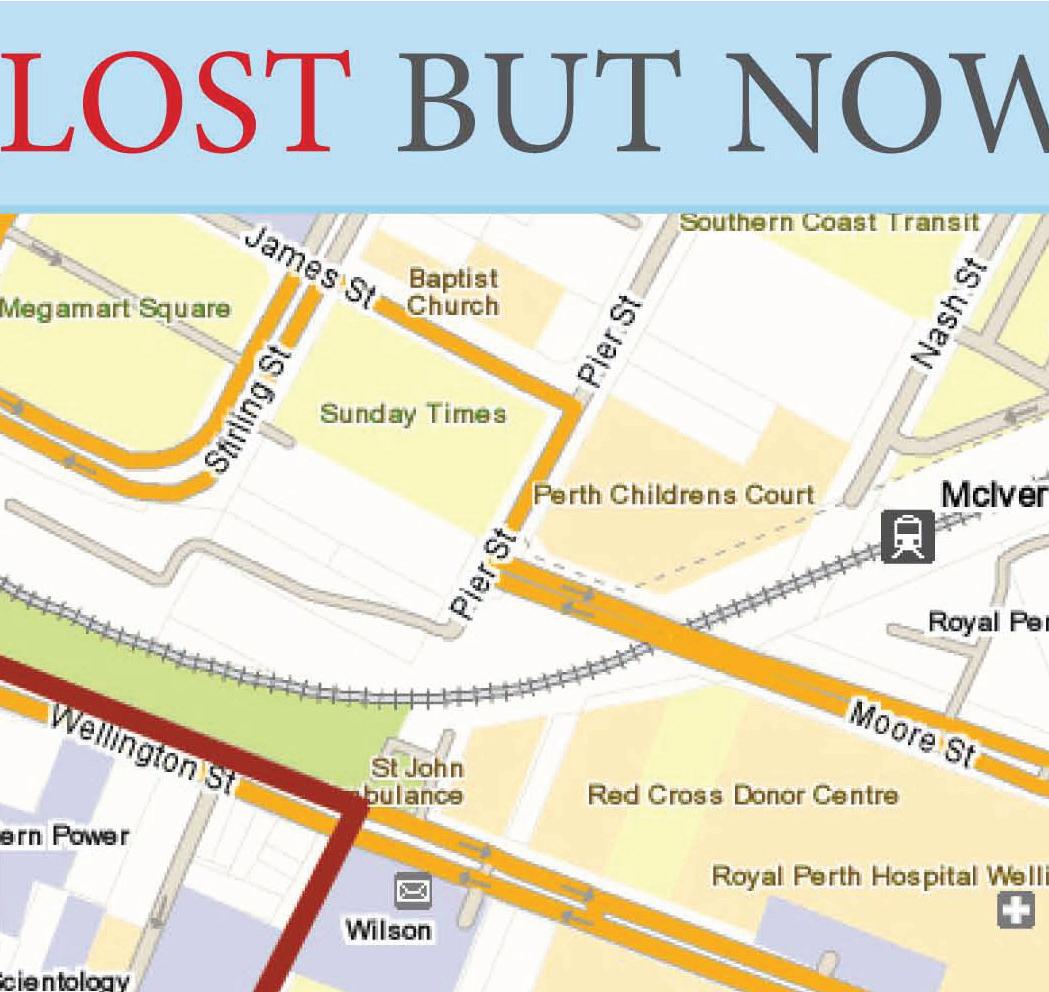
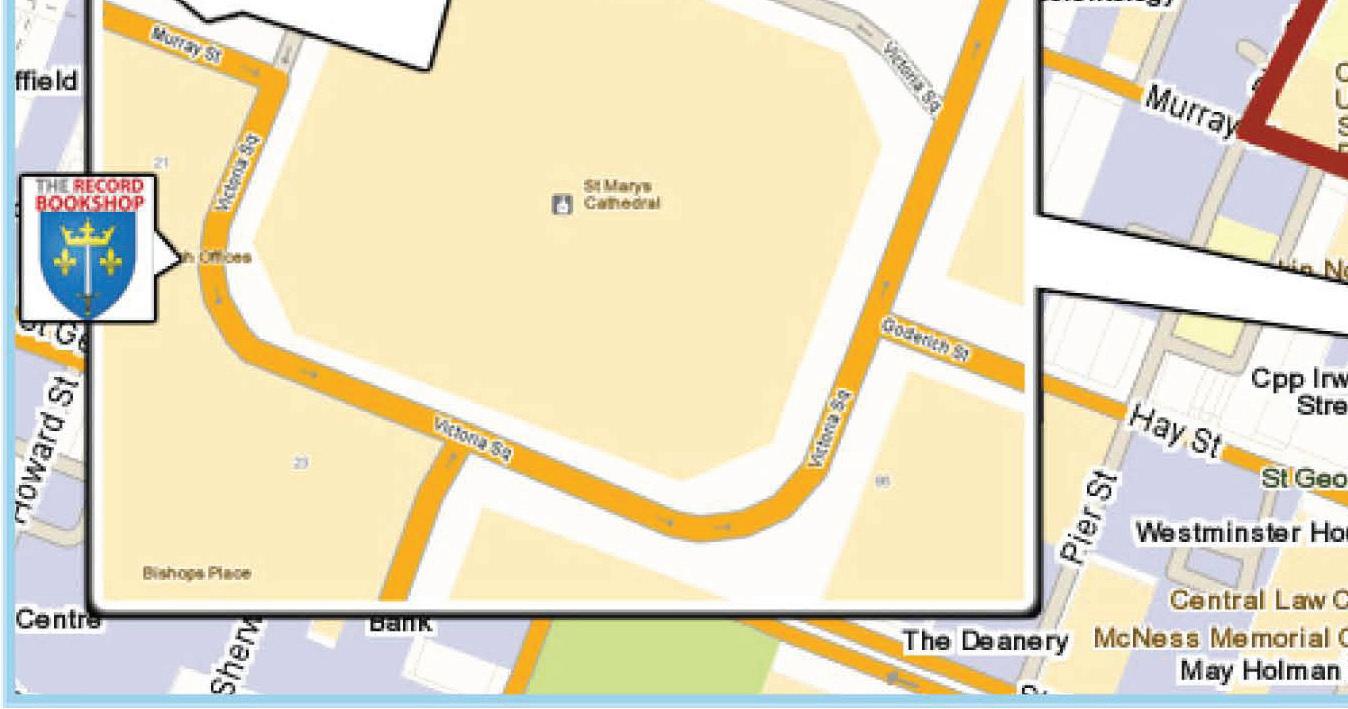
and saints. Pope Benedict describes heaven as “like plunging into the ocean of infinite love … in which we are simply overwhelmed with joy” (Enc, Spe salvi, n 12). And the Catechism says that heaven is the “fulfillment of the deepest human longings, the state of supreme, definitive happiness” (CCC 1024).
In heaven, we will be so caught up in the love of God that we will not miss anyone or anything. Even if a close relative like a son or daughter, a parent or a brother or sister of ours did not go to heaven, our own happiness would not be lessened.
When we turn to the second phase of existence, that of the “new heaven and new earth” following the general judgement (cf J Flader, Question Time, Connor Court 2008, n 30), there may very well be animals and plants, including our pets.
St Thomas Aquinas argues that there will be no animals and plants in the renewal of heaven and earth because they are corruptible (cf STh, Suppl, q 91, art 5). While St Thomas is always to be taken seriously, this statement is not equivalent to a dogma of faith or an official teaching of the Church.
Professor Peter Kreeft, on the contrary, argues that since God can do anything, he can raise up animals for the “new earth” in heaven: “We were meant from the beginning to have stewardship over the animals; we have not fulfilled that divine plan yet on earth; therefore it seems likely that the right relationship with animals will be part of heaven: proper ‘pet-ship’” ( Everything you ever wanted to know about Heaven, Ignatius 1990, pp 45-46).
In all this, it is important to help our children – and ourselves! –not to be “pet-centred”, but rather Christ-centred: to love our pets, yes, but to love Jesus Christ much more.
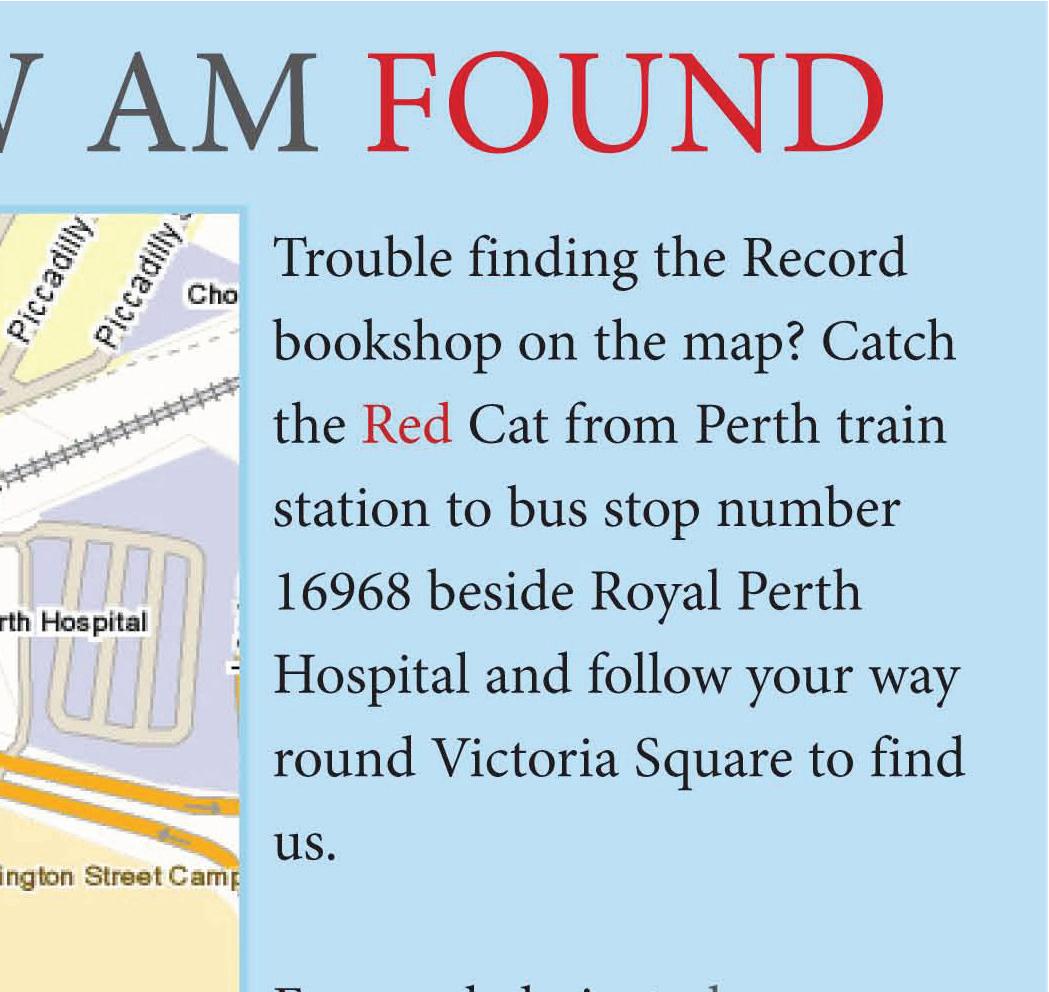
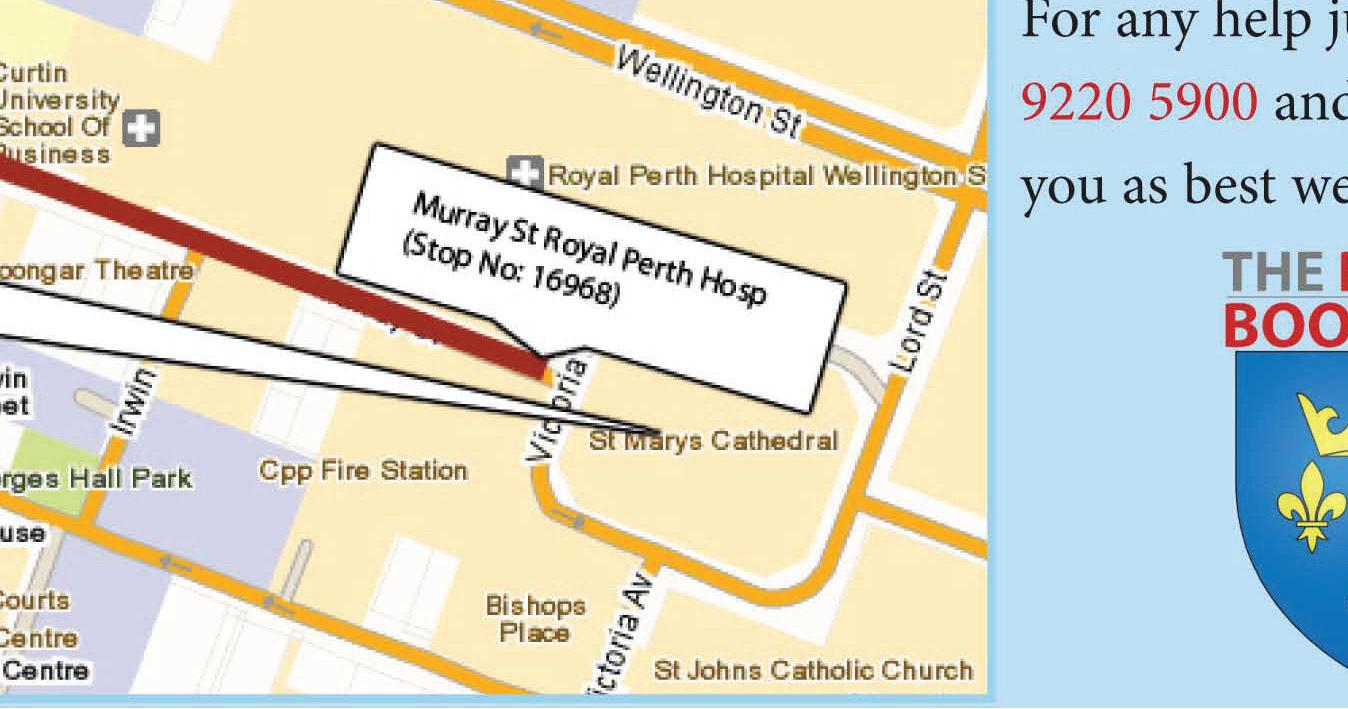
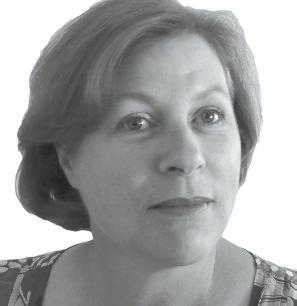
The Monogamy Trap in The Australian Magazine of 16-17 July made both very sad and very revealing reading. Basically, it outlines the ideas of Seattle-based sex advice columnist Dan Savage that monogamy is too hard for most people and that infidelity, fetishism and pornography with mutual consent (!) can sometimes be good for a marriage.
“We can’t help our urges” he blithely states, so best be honest about them. Yes, we need to acknowledge our urges; but one of the major functions of marriage is to provide an outlet for healthy urges and a corrective for unhealthy ones.
It was sad that this gay man obviously wants and values the love and security of marriage and family life; but revealing in that he didn’t want to necessarily undertake the lifelong sacrifices that go with it. One feels the strong desire to snap “grow up” at times when reading.
There were so many inconsistencies, errors and misunderstandings about heterosexual marriage in the piece. But there was also a kernel of very perceptive truth. This gay man understands something very important about marriage that a lot of heterosexual married people don’t. The final paragraph is worth reproducing.
“Given the rates of infidelity, people who get married should have to swear a blood oath that if it’s violated, as traumatic as that would be, the greater good is the relationship … The greater good is the home created for children. If there are children present, they’ll get past it. The cultural expectation should be if there’s infidelity, the marriage is more important than fidelity.”
It is very telling that he omits
to mention – either through ignorance or with intent - that anyone who uses the traditional vows in their first valid marriage does this already; they vow publicly before God – the equivalent of a blood oath - that they will keep those vows until death no matter what the future brings.
I have sometimes wondered why infidelity is not automatic grounds for annulment; but it really comes under the vow ‘for better or worse’ – there are no guarantees. That is why clear understanding of what the marriage vows mean, mutual trust and clear sense of mutual obligation are so important before embarking on marriage. I would say on balance that this serious premarital education would be more constructive in helping marriages to last the distance happily than further trivialisation of marriage by removal of the obligation of mutual monogamy.
When you put your marriage relationship and your children before everything else including yourself, then infidelity shouldn’t happen (or be felt necessary), should it? The condoned use of pornography or confiding of fetishist fantasies and the ‘permission’ to fulfil them seems to me quite odd within marriage. All pornography and most sexual fantasies seem to be completely selfish, revolving around your own desires exclusively, needing a partner only as an object necessary to fulfil those fantasies. This, within marriage, is exploitation and objectification of a particularly pernicious nature. At its worst, it can involve physical violence and cruelty. At the very least, it involves a power play and a betrayal of trust within an equal trust relationship, an implication that the person you married is not as good as a fantasy substitute and can’t make you truly happy. It is, in fact, infidelity even when performed with a marriage partner.
When you have to make them publicly on your wedding day, those vows really hit you – it is a tremendous undertaking, ridiculously

audacious and arrogant without the humble trust in the promised grace of God and an utter commitment to your spouse and the marriage to get you through the more difficult times, which is why Catholic marriage is a sacrament. God is fully cognisant of the difficulty of the task and the weakness of human beings. He knows that marriage is about learning what God means by love, and it involves not only lovely feelings, joy and great fulfilment but a narrow path, shared burdens and a cross.
Savage’s strong feelings about the importance of the relationship and children over all else negates a lot of what he says in the rest
Why I became Catholic
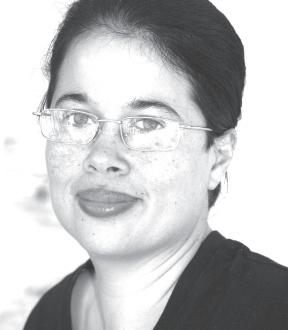 with Debbie Warrier
I was baptised Church of England. As a family, we went to Church only at Easter and Christmas. My mother was a Presbyterian and a God-fearing woman but only went to Church regularly later in life. My dad was Church of England but never went to church until he got a lot older too. The main reason that I became Catholic is that I married one.
Prior to the wedding, I had some talks with a parish priest. He asked me if I had ever thought of becoming Catholic and I said, “No.” He told me that it would be good for my married life and our future children to have the same beliefs.
Through those talks he convinced me that Catholicism was the one true faith. What he said that particularly struck me was the Church can trace the Popes back to St
Peter and from St Peter to Jesus. I became Catholic one week before we married.
My mother expressed a disappointment in my conversion. She told me not to have too many children because she believed Catholics didn’t use birth control. (Note: The Billings method is a form of natural family planning sanctioned by the Church. It doesn’t rely on any drugs or devices, and there are no side effects. A couple can either avoid or achieve a pregnancy once they understand how to identify fertile and infertile times during the woman’s menstrual cycle.) Denominations didn’t mean anything to her and she told my wife Fay, “We are all on different ships going to the same place.” But early in our marriage she became supportive of Fay and me.
We went to Mass every Sunday. I thought, “Well, I have put in that hour and now the rest of the time is mine.” That was it, as far as I was concerned. It was like that for about 20 years. Being a convert, I had no knowledge of the sacraments and at the time the RCIA didn’t exist.
I worked in the air force in a
very confidential area. By then we had five children. This was a hard time for Fay because when I went out I couldn’t just have a couple of drinks. I had to get drunk. It got to the point where I realised that I was dependent on alcohol. I think that it was by God’s influence that I recovered from my alcoholism years later.
I remember when it happened. After I left the air force, I got a mini van. One day I had to take it in for a service. They said it would take a couple of hours. I told them I’d come back. I walked aimlessly for a long time and I ended up in Holyoake (a drug and alcohol counselling and rehabilitation service). I went in and talked to a man there about the service they provided. I don’t know how I got there. I think I was taken care of and guided by the Holy Spirit. Fay and I attended a course at Holyoake and later I was rehabilitated.
Looking back over my life, I can see God leading me. I am still learning about the Catholic faith but I know I am loved by Him.
If you have a story to tell please contact Debbie via dwarrier75@gmail.com
of the piece about the supposed benefits of mutually agreed, nonmonogamous relationships and how guilt and hurt-free they are. He admits awareness of this inconsistency but has no answer to it. Why would you agree to put your children at risk of being hurt by infidelity in a marriage so they had to ‘get past it’? What if the parents don’t mind but the children do? What if one partner really does mind but is too afraid to say so? What if other children are the result of this infidelity? What if a fling turns into love and the unfaithful one then wants out?
Believing two utterly inconsistent things at once is a common
human failing, but not one on which to base serious law reform. All of which brings us to a clear fact of which we all need to be aware. In Australia, same sex relationships currently enjoy the same rights as de facto heterosexual relationships. That the gay lobby is working towards is a redefinition of legal marriage not just to include same sex partnerships, but to remove the requirement of mutual monogamy from the definition of marriage altogether. In effect, to make any form of sexual partnership a person may feel appropriate into a valid, legal marriage. An open door followed by a very slippery slope.
THURSDAY, 21 TO SUNDAY, 24 JULY
Encounter Youth Convention
6pm at Advent Park campgrounds. For young people ages 17-30. Each day is packed full of fun, friendship, music, learning and exploration of a life lived to fullness. Enq: Mario 9202 6868 or mario.borg@disciplesofjesus.org.
FRIDAY, 22 TO SUNDAY, 24 JULY
“Finding the Rhythm” - A Reflective Weekend for women in the health profession
4pm at St John of God Retreat Centre, 47 Gloucester Cr, Shoalwater. How can one manage the endless changes in life and keep a balance? Assists women in finding the rhythm of good discernment in life and ministry. Concludes Sunday at 1pm. Enq: Sr Ann 0409 602 927, ann_cull@y7mail.com or Sr Kathy 0418 926 590, kkettle@mercy.org.au.
TUESDAY, 26 JULY
“How do we find the ‘Pearl of great price’ in our daily lives?” Seminar
7-8pm at St Benedict’s School Hall, Alness St, Applecross. Spirituality and The Sunday Gospels. Presenter: Norma Woodcock. Cost: collection to cover costs. Enq: 94871772 or www.normawoodcock.com.
THURSDAY, 28 JULY
Taize at St Mary’s Cathedral
7.30pm at St Mary’s Cathedral, Victoria Sq, Perth. Encounter God’s voice in silence. Join us for time in gentle prayer and reflection. Enq: Geraldine 9207 3350.
FRIDAY, 29 JULY
‘An Evening of Prayer with Our Lady Queen of Peace’ - Medjugorje prayer group
7-9pm at St Vincent’s Parish, 114 Parmelia Ave, Kwinana. Includes Eucharistic Adoration, Rosary, Benediction, Holy Mass. Free DVD of Don Calloway’s testimony and conversion from drugs, alcohol and crime to priesthood and DVD of Ivan’s talk at St Mary’s Cathedral. Enq. Eileen 9402 2480, 0407 471 256 or medjugorje@y7mail.com.
MONDAY, 1 TO FRIDAY, 5 AUGUST
Fr John Rea Healing Mass - Charismatic Healing Mission
7.30pm at the Gosnells Catholic parish, 175 Corfield St, Gosnells. Fr Rea, renowned internationally for his healing ministry, will be conducting Prayer and Praise, Mass and Healing Service. Cost: collection. Enq: Dan 9398 4973 or dhewitt@aapt.net.au.
TUESDAY, 2 AUGUST
‘Being Church in the 21st century in the light of Vatican II’ Course - Mater Christi Community
7.30-9.30pm at Mater Christi Parish Centre, Yangebup Rd, Yangebup. Follows for 8 consecutive Tuesday evenings. Learn about faith communities in the past and present and envision new ways to be a faith community. Enq: 9241 5221 or www.maranathacentre.org.au.
SATURDAY, 6 AUGUST
Day With Mary
9am-5pm at Sacred Heart parish, cnr Ovens Rd and Discovery Dr, Thornlie. Day of prayer and instruction based on Fatima message. 9am video; 10.10am Holy Mass; Reconciliation, Procession of Blessed Sacrament, Eucharistic Adoration, Sermons on Eucharist and our Lady, Rosaries and Stations of the Cross. BYO lunch. Enq: Franciscan Friars of the Immaculate 9250 8286.
SATURDAY, 13 AUGUST
Divine Mercy –Healing Mass
2.30pm at St Francis Xavier Parish, 25 Windsor St, East Perth. Main celebrant: Fr Marcellinus. Reconciliation in English, Maltese and Italian. Divine Mercy prayers followed by Veneration of First Class Relic of Sr Faustina Kowalska. Refreshments afterwards. Enq: John 9457 7771.
St Padre Pio day of prayer
9am at Holy Spirit Parish, 2 Keaney Pl, City Beach. Begins with DVD. 10.30am – Exposition of Blessed Sacrament, Rosary, Divine Mercy, Silent Adoration and Benediction. 11.30am – Holy Mass, St Padre Pio Liturgy, Confession available; 12.30pm – bring plate to share. Enq: Res 6278 1540.
SATURDAY, 20 AUGUST
“Youths and Peer Pressure”
2 Hour Youth Workshop
3.30-5.30pm at Lesmurdie Parish Centre, cnr Lesmurdie and Glyde Rds, Lesmurdie. Young people aged 13-17. Concludes with Rock Mass at 6pm. Speaker: Fr James Fanning. Coffee and tea available. Enq and RSPV: Gina Price on lesmurdieyouthgroup@hotmail.com or to the parish office on lesmurdie@perthcatholic.org.au.
“Meditation as Liberation” Community Day
10am-3.30pm at St Mary’s Parish, Yule Ave, Middle Swan. Led by Rev Stuart Fenner. Cost: $10. BYO Lunch. Enq: Secretary 9444 5810 or christianmeditation@iinet. net.au.
SATURDAY, 27 AUGUST
Healing retreats for couples
9.30am-5pm at Holy Family Parish, Lot 375 Alcock St, Maddington. Inner healing prayers for couples: a day for couples to understand themselves in the light of God’s Word by Vincentian Fathers. BYO lunch. Enq and registration: Fr Varghese 0400 605 743.
St Jude’s Parish, Langford is organising a 13-day pilgrimage departing 1 October. It will include visits to the Shrines of Divine Mercy, Infant Jesus, the Black Madonna, St Faustina, the birthplace of Pope John Paul II and the Museum at Auschwitz. Total cost per person
$5,800. Spiritual Director, Fr Terry Raj. Enq: Co-ordinator John Murphy 9457 7771, Matt 6460 6877, mattpicc1@ gmail.com.
WEDNESDAY, 5 TO THURSDAY, 20 OCTOBER
Pilgrimage to Rome, San Giovanni Rotondo and Medjugorje
Includes 3 nights in Rome, 2 nights in San Giovanni Rotondo (Padre Pio); visit to Monte Gargano and Lanciano (Eucharistic Miracle); 7 nights in Medjugorje (alleged daily appearance of Our Lady). Spiritual leader: Fr Ronan Murphy. Cost: $3,990, includes Emirates flight, bed, breakfast and evening meals, transfers, guide, taxes and tipping. Enq: Eileen 9402 2480 or 0407 471 256 or medjugorje@y7mail.com.
FRIDAY, 11 TO TUESDAY, 22 NOVEMBER
Pilgrim Tour To The Holy Land Jordan, Israel and Egypt. Spiritual Director: Fr Sebastian Kalapurackal VC from St Aloysius Church, Shenton Park. Enq: Francis – Coordinator, 9459 3873 or 0404 893 877 or Skype ID: perthfamily.
SATURDAY, 25 FEBRUARY 2012
A reunion for Holy Cross Primary School, Kensington
Any ex-students or family members please contact Julie Bowles (nee O’Hara) on 9397 0638 or email jules7@iinet. net.au.
EVERY SUNDAY
Gate of Heaven Catholic Radio
Join the Franciscans of the Immaculate from 7.30-9pm on Radio Fremantle 107.9FM for Catholic radio broadcast of EWTN and our own live shows. Enq: radio@ausmaria. com.
Pilgrim Mass - Shrine of the Virgin of the Revelation
2pm at Shrine, 36 Chittering Rd, Bullsbrook. Commencing with Rosary followed by Benediction. Reconciliation is available before every celebration. Anointing of the Sick administered during Mass every second Sunday of the month. Pilgrimage in honour of the Virgin of the Revelation, last Sunday of the month. Side entrance to the church and shrine open daily between 9am-5pm. Enq Sacri 9447 3292.
EVERY FIRST SUNDAY
Divine Mercy Chaplet and Healing Prayer
3pm at Santa Clara Church, 72 Palmerston St, Bentley. Includes Adoration and individual prayer for healing. Spiritual leader: Fr Francisco. All welcome. Enq: Fr Francisco 9458 2944.
St Mary’s Cathedral Youth group – fellowship with supper
5pm at Mary’s Cathedral, 17 Victoria Sq, Perth. Begins with Youth Mass followed by fellowship downstairs in parish centre. Bring a plate to share. Enq: Bradley 0430 653 857 or smc@gmail.com.
Divine Mercy
1.30pm at St Francis Xavier Parish, 25 Windsor St, East Perth. Main celebrant: Fr Alphonsus. Homily on St Maximilian Kolbe. Includes Exposition of the Blessed Sacrament and Reconciliation, Holy Rosary, Chaplet of Divine Mercy and Divine Mercy prayers. Followed by Benediction and Veneration of First Class Relics of St Faustina Kowalska. Upcoming date: 7 August. Refreshments afterwards. Enq: John 9457 7771.
EVERY SECOND SUNDAY
Healing Hour for the Sick
6pm at St Lawrence Parish, 392 Albert St, Balcatta. Begins with Mass, Exposition of the Blessed Sacrament and prayers. Enq: Fr Irek 9344 7066 or ww.stlawrence. org.au.
EVERY THIRD SUNDAY OF THE MONTH
Oblates of St Benedict Meet
2pm at St Joseph’s Convent, York St, South Perth. For all interested in studying the rule of St Benedict and its relevance to the everyday life of today for laypeople. Afternoon tea provided. Enq: Secretary 9457 5758.
EVERY FOURTH SUNDAY OF THE MONTH
Holy Hour for Vocations to the Priesthood, Religious Life
2-3pm at Infant Jesus Parish, Wellington St, Morley. The hour includes Exposition of the Blessed Eucharist, silent prayer, Scripture and prayers of intercession. Come and pray that those discerning vocations to the priesthood or Religious life hear clearly God’s loving call to them.
EVERY MONDAY
Evening Adoration and Mass
7pm at St Thomas Parish, Claremont, cnr Melville St and College Rd. Begins with Adoration, Reconciliation, Evening Prayer and Benediction, followed by Mass and Night Prayer at 8pm. Enq: Kim 9384 0598, claremont@ perthcatholic.org.au.
EVERY TUESDAY
Bible Teaching with a difference
7.30pm at St Joachim’s parish hall, Shepparton Rd, Victoria Park. Exciting revelations with meaningful applications that will change your life. Novena to God the Father, followed by refreshments. Bring Bible, a notebook and a friend. Enq: Jan 9284 1662.
Novena to Our Lady of the Miraculous Medal
6pm at the Pater Noster Church, Marmion and Evershed Sts, Myaree. Mass at 5.30pm followed by Benediction. Enq: John 0408 952 194.
EVERY WEDNESDAY
Holy Spirit of Freedom Community
7.30pm at The Church of Christ, 111 Stirling St, Perth. We are delighted to welcome everyone to attend our Holy Spirit of Freedom Praise Meeting. Enq: 0423 907 869 or hsofperth@gmail.com.
Holy Hour at Catholic Youth Ministry
6pm at 40A Mary St, Highgate, Catholic Pastoral Centre. 5.30pm Mass followed by $5 fellowship supper. Enq: Stefania 9422 7912 or www.cym.com.au.
Bible Study at Cathedral
6.15pm at Mary’s Cathedral, 17 Victoria Sq, Perth. Deepen your Faith through reading and reflecting on Holy Scripture by Fr Jean-Noel. Meeting room beneath Cathedral. Enq: Marie 9223 1372.
EVERY FIRST WEDNESDAY
Holy Hour prayer for Priests
7.30-8.30pm at Holy Spirit Parish, 2 Keaney Pl, City Beach. All welcome. Enq: Linda 9341 3079.
SECOND WEDNESDAY OF THE MONTH
Chaplets of the Divine Mercy
7.30pm at St Thomas More Catholic Parish, Dean Rd,
Bateman. A beautiful, prayerful, sung devotion accompanied by Exposition and followed by Benediction. Enq: George 9310 9493 or 9325 2010 (w).
EVERY THURSDAY
Divine Mercy
11am at Sts John and Paul Church, Pinetree Gully Rd, Willetton. Pray the Rosary and Chaplet of Divine Mercy, and for the consecrated life, especially here in John Paul Parish. Conclude with veneration of the First Class Relic of St Faustina. Please do come and join us in prayer. Enq: John 9457 7771.
St Mary’s Cathedral Praise Meeting
Due to renovations at 450 Hay St, Perth, CPM now meets at 7.45pm every Thursday at the Legion of Mary’s Edel Quinn Centre, 36 Windsor St, East Perth. Includes Praise song and healing ministry. Enq: Kay 9382 3668 or fmi@ flameministries.org.
FIRST THURSDAY OF THE MONTH
Taize Prayer and Meditation
7.30-8.30pm at Our Lady of Grace Parish, 3 Kitchener St, North Beach. Prayer, song and silence in candlelight – symbol of Christ, light of the world. Taize info: www. taize.fr. Enq: Beth 9448 4457 or 9448 4888.
FIRST FRIDAY OF THE MONTH
Holy Hour for Vocations to the Priesthood and Religious Life
7pm at Little Sisters of the Poor Chapel, 2 Rawlins St, Glendalough. Mass, followed by Adoration with Fr Doug Harris. All welcome. Refreshments provided.
Catholic Faith Renewal Evening
7.30pm at Sts John and Paul Parish, Pinetree Gully Rd, Willetton. Songs of Praise, sharing by a priest followed by Thanksgiving Mass and light refreshments after Mass. All welcome to attend and bring your family and friends. Enq: Kathy 9295 0913, Ann: 0412 166 164 or catholicfaithrenewal@gmail.com.
Communion of Reparation All Night Vigils
7pm-1.30am at Corpus Christi Church, Lochee St, Mosman Park. Enq: Vicky 0400 282 357 and at St Gerard Majella Church, Ravenswood Dr and Majella Rd, Mirrabooka. Enq: Fr Giosue 9349 2315, John or Joy 9344 2609. The Vigils consist of two Masses, Adoration, Benediction, Prayers and Confession in reparation for the outrages committed against the United Hearts of Jesus and Mary. All welcome.
Healing Mass
7pm at St Peter’s Parish, Wood St, Inglewood. Reconciliation, praise and worship, Eucharistic Adoration, Benediction, Anointing of the Sick, special blessings and fellowship after the Mass. Celebrants, Fr Dat (parish priest) and specially invited priests. All welcome. Enq: Priscilla 0433 457 352, Catherine 0433 923 083 and Mary-Ann 0409 672 304.
Healing and Anointing Mass
8.45am Pater Noster Church, Evershed St, Myaree. Begins with Reconciliation followed by 9am Mass of the Sacred Heart of Jesus, Anointing of the Sick and Prayers to St Peregrine. Enq: Joy 9337 7189.
EVERY FIRST SATURDAY
Healing Mass
12.35pm at St Thomas Parish, cnr Melville St and College Rd, Claremont. Spiritual leader: Fr Waddell. Enq: Kim 9384 0598, claremont@perthcatholic.org.au.
EVERY THIRD SATURDAY
Voice of the Voiceless Healing Mass
12pm at St Bridgid’s Parish, 211 Aberdeen St, Northbridge. Upcoming date: Saturday, 23 July. Bring a plate to share after Mass. Enq: Frank 9296 7591 or 0408 183 325.
FREE DIVINE MERCY IMAGE FOR PARISHES
High quality oil painting and glossy print – Divine Mercy promotions
Images are of very high quality. For any parish willing to accept and place inside the Church. Oil paintings - 160 x 90cm and glossy print -100 x 60cm. Enq: Irene 922 11247 or 9417 3267 (w).
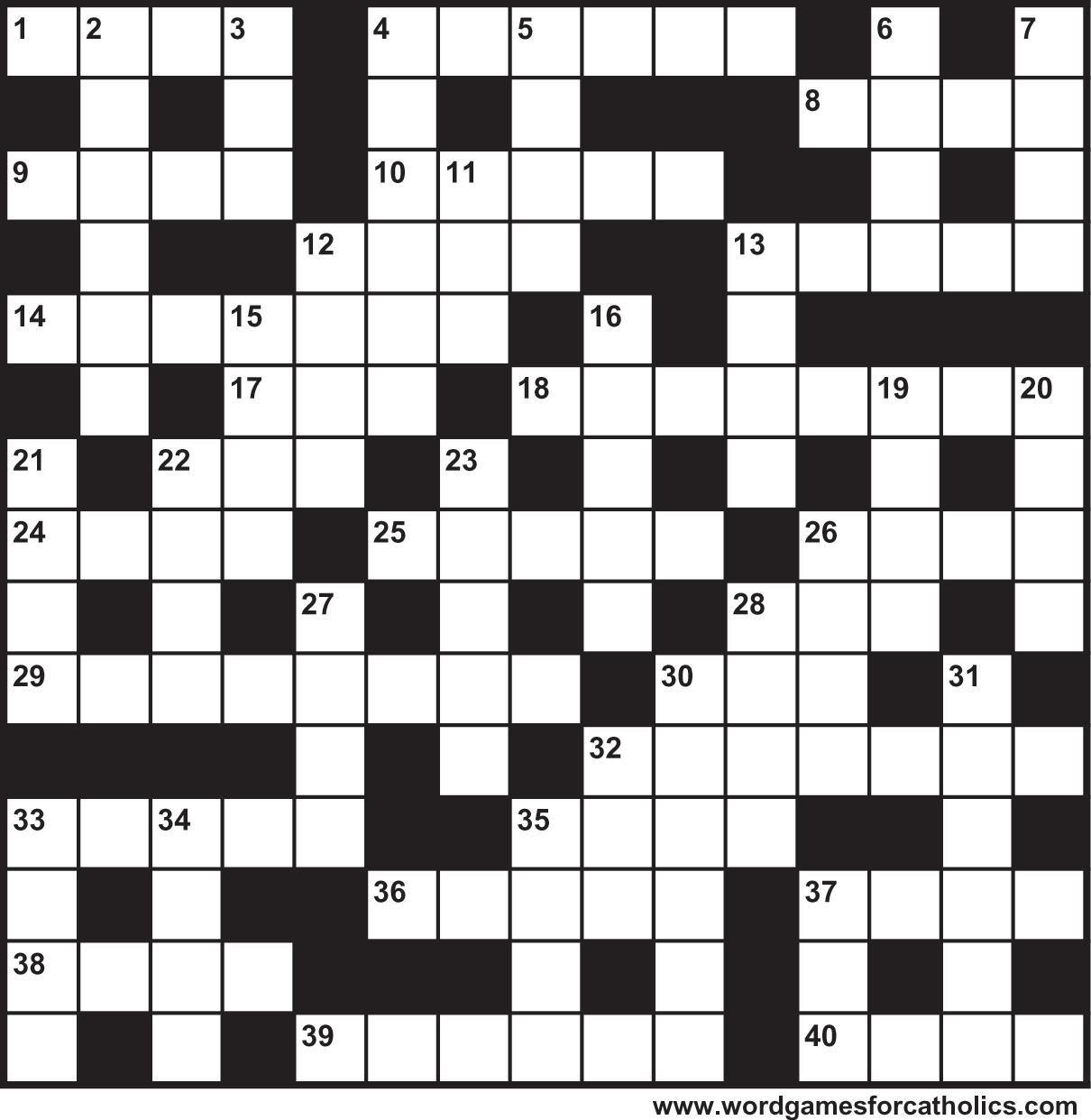
ACROSS
1
4
8 NT book that follows John
10 Pope before Benedict III
12 Sacrament of the ___
13 “Dying you destroyed our ___…”
14 Patron saint of Ireland
17 A mark of the Church
18 What Jesus did on a certain Thursday
22 Jesus entered Jerusalem this type of animal
24 River Moses turned to blood
25 “… the day of the Lord will come like a ___ in the night” (2 Thess 5:2)
26 Sacred Roman ___ (tribunal)
28 “…and ___ our salvation, He came down from heaven.”
29 Granted forgiveness of sin
30 Padre ___
32 Archdiocese in Wales
33 The Hebrews had to get this to make bricks
35 Leader of the Church
36 Home of St Teresa
37 The Diocese of Youngstown is found here
38 Veronicaʼs ___
39 Catholic singer, Bing ___
40 Breaks the eighth commandment
DOWN
2 The Lord said to him, “Come now, let us argue it out”
3 “When we ___ this bread…”
4 Saint Michael the Archangel is patron of this group
5 “We ___ for the resurrection of
the dead…”
6 Religious instruction for converts (abbr)
7 OT hist book
11 Johann ___, 16th century defender of Catholicism
12 Omission and commission
13 God, in Paris
15 “On the third day he ___ again”
16 Son of Jacob
19 Jubilee ___
20 “Angel of God, my guardian ___…”
21 Prophet in Luke (Lk 2:36)
22 Charity
23 Parable of the Lost ___
26 Large crucifix
27 “…and ___ into his nostrils the breath of life…” (Gn 2:7)
28 Symbol of the Holy Spirit
30 Office of the Pope
31 Divine ___
32 NT epistle
33 “Lord, ___ us!” (Mt 8:25)
34 Altar ___
35 There were 3 Popes with this name in the 20th century
37 Liquid used in some sacraments
LAST WEEK’S SOLUTION
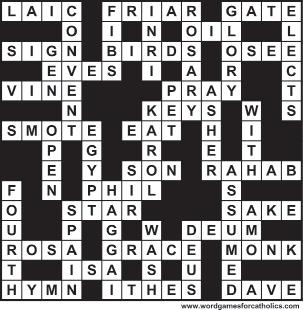
WRR LAWN MOWING & WEED
SPRAYING Garden clean ups and rubbish removal. Get rid of bindii, jojo and other unsightly weeds. Based in Tuart Hill. Enq 9443 9243 or 0402 326 637.
BUSINESS OPPORTUNITY
Work from Home - P/T or F/T, 02 8230 0290 or visit www.dreamlife1.com.
ALL AREAS. Competitive Rates. Mike Murphy Ph 0416 226 434.
ACCOMMODATION
HOLIDAY ACCOMMODATION
ESPERANCE 3 bedroom house f/furnished Ph 08 9076 5083.
BUSINESS FOR SALE
DONGARA PIZZA BAR
Ph 08 9927 1389 after 3.30pm or MOB 0400 579 117.
Cheap; Various Catholic/ Protestant Books New/2nd Hand/DVDs/CDs 9440 4358.
ARE YOU BUYING OR SELLING real estate or a business? Why not ask Excel Settlements for a quote for your settlement. We offer reasonable fees, excellent service and no hidden costs. Ring Excel on 9481 4499 for a quote. Check our web site on www.excelsettlements.com.au.
THE LIFE AND STORY OF ST FRANCIS OF ASSISI will be put to music by Peter Kearney and Catherine Mahony in a presentation titled “Good Morning Good People” at Infant Jesus Church, Morley on Sunday, 31 July commencing 2pm. Admission $10 per person plus an afternoon Devonshire Tea will be available during intermission for $5. Expected to finish by 4.30pm. Described as “a prayerful and moving journey”. Enquiries: Infant Jesus Parish Office 9276 8500.
Deadline: 11am Monday
IMMACULATE HEART
COLLEGE Maryville Downs, Lower Chittering, WA is seeking applications for the position of ACTING PRINCIPAL for Term
4, 2011 and the whole of 2012. This is a an Independent School teaching the Catholic Faith. It will open in February 2012 with classes K to Year 3, expanding to Year 6 over the next 3 years.
The school will be situated next to the new Divine Mercy Church in Lower Chittering.
The successful applicant will be a practising and committed Catholic with the ability to lead the school in its foundation years.
Salary and terms will be negotiated. Secondment from another school may be possible. Closing date for applications 29/7/11.
For more information, please contact Fr Paul Fox (08 9571 1839) or Doris Anastasiades (08 9317 4019).
Address applications to Fr Paul Fox PP, Immaculate Heart College, PO Box 8, Bullsbrook WA 6084.
IMMACULATE HEART
COLLEGE Maryville Downs, Lower Chittering, WA Is seeking applications for the position of EARLY CHILDHOOD TEACHER for January start 2012. This is an Independent School teaching the Catholic Faith. It will open in February 2012 with classes K to Year 3, expanding to Year 6 over the next 3 years. The school will be situated next to the new Divine Mercy Church in Lower Chittering.
The successful applicant will be a practising and committed Catholic with early childhood teaching qualifications. Salary and terms will be negotiated. Closing date for applications 29/7/11.
For more information, please contact Fr Paul Fox (08 9571 1839) or Doris Anastasiades (08 9317 4019).
Address applications to Fr
Paul Fox PP, Immaculate Heart College, PO Box 8, Bullsbrook WA 6084.
NEW BOOK BINDING, General Book Repairs; Rebinding; New Ribbons; Old Leather Bindings Restored.Tydewi Bindery 0422 968 572.
BRENDAN HANDYMAN
SERVICES Home, building main-
tenance, repairs and renovations. NOR. Ph 0427 539 588.
PROPERTY MAINTENANCE.
Your handyperson. No job too small. SOR. Jim 0413 309 821.
BRICK RE-POINTING Ph Nigel 9242 2952.
PERROTT PAINTING Pty Ltd
For all your residential, commercial painting requirements. Ph Tom Perrott 9444 1200.
PICASSO PAINTING Top service. Ph 0419 915 836, fax 9345 0505.
CATHOLICS CORNER Retailer of Catholic products specialising in gifts, cards and apparel for Baptism, Communion and Confirmation. Ph 9456 1777. Shop 12, 64-66 Bannister Rd, Canning Vale. Open Mon-Sat.
RICH HARVEST YOUR CHRISTIAN SHOP Looking for Bibles, CDs, books, cards, gifts, statues, Baptism/Communion apparel, religious vestments, etc? Visit us at 39 Hulme Ct (off McCoy St), Myaree. Ph 9329 9889 (after 10.30am Mon to Sat). We are here to serve.
KINLAR VESTMENTS
Quality hand-made and decorated vestments: Albs, Stoles, Chasubles, Altar linen, banners, etc. 12 Favenc Way, Padbury. By appointment only. Ph Vickii on 9402 1318, 0409 114 093 or kinlar.vestments@gmail.com.
OTTIMO Convenient location for Bibles, books, cards CD/DVDs, candles, medals, statues and gifts at Shop 41, Station St Market, Subiaco. Fri-Sun, 9-5pm.
THANKS TO JESUS, MOTHER MARY, SAINTS JOSEPH, JUDE, ANTHONY, PADRE PIO, ST MICHAEL AND CHRISTOPHER for protecting us always.
THANKS TO PADRE PIO, ST JUDE for obtaining my urgent requests, which was impossible. TO JESUS AND MOTHER MARY for making my son’s wedding a great success for which I thank my dear Lord and my Mother with all my heart.
THANKS TO ST JOSEPH AND ST JUDE AND ST ANTHONY for helping my sons and husband.
27
28
29
Ps
30
Gr Lev 25:1, 8-17 Fiftieth year sacred Ps 66:2-3, 5, 7-8 Rule with justice Mt 14:1-12 Miraculous powers



Rev Fr Jude Winkler, OFM Conv
RRP $3
An introduction to the Roman Catholic Church’s liturgical year for children.

Maite Roche RRP $11
The life of jesus told in simple words and illustrated with beautiful pictures.


Rev Fr Lawrence G Lovasik, SVD
RRP $3
A series of prayers to our Guardian Angels for children to learn and use at different times of their day.
Rev Fr Lawrence G Lovasik, SVD
RRP $3
A beautiful children’s picture book written by Rev Fr Lawrence Lovasik SVD, this St Joseph picture book teaches children the basics about God and the Holy Trinity, the Father, the Son and the Holy Spirit. Stories about God’s Love for us, including basic information about the Catholic Church and the Sacraments, are presented in colourful pictures and simple words.

















Standard