


15 September 2010

15 September 2010

An anti-establishment doctor is changing the lives of many Perth couples.
An anti-establishment doctor is the lives of many Perth PAGES 12-13
The AMA is flatly opposed to euthanasia, its national president has told The Record. One reason why: doctors should never have anything to do with situations where the express intention is to end a person’s life.
BY ANTHONY BARICHThe Australian Medical Association is against euthanasia and its President believes doctors should not be expected to decide whether a person requesting euthanasia is under duress.
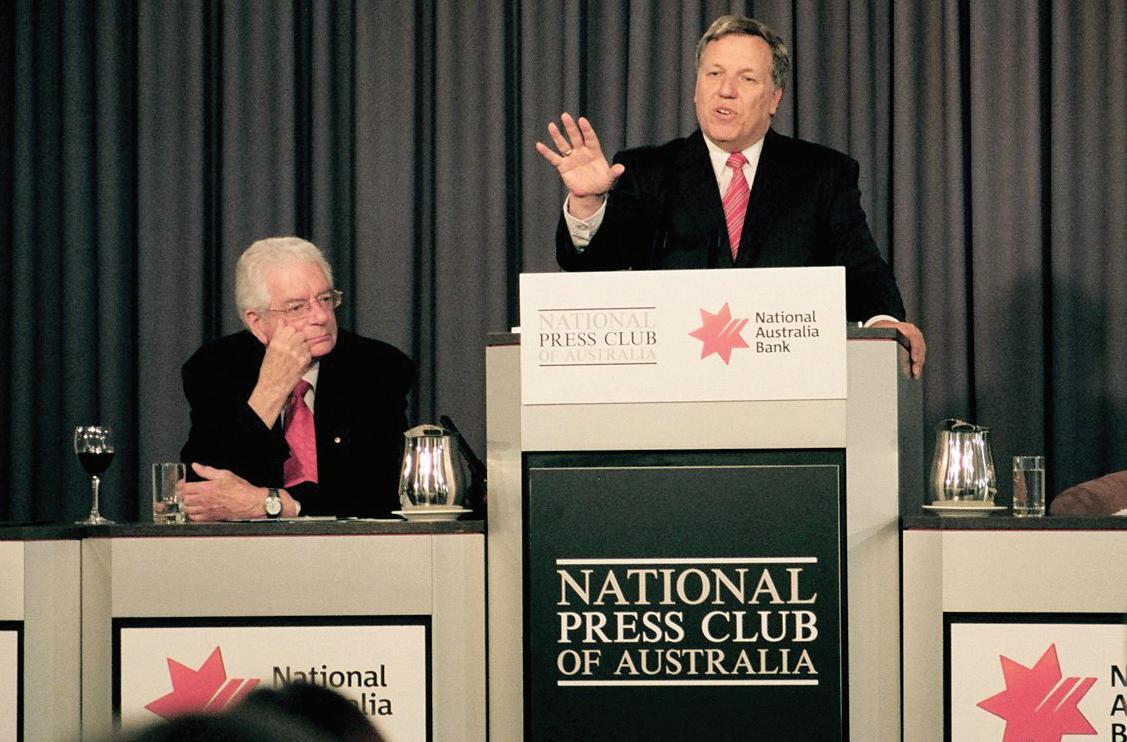
Dr Andrew Pesce, AMA national president, responded to The Record’s enquiry regarding the Voluntary Euthanasia Bill 2009 to be debated in WA Parliament from 21 September which stipulates that two doctors unrelated to the patient must assess the eligibility of the applicant for the administration of euthanasia.
This includes judging whether the patient is under duress or undue influence, which Liberal MLC Nick Goiran, a lawyer, told The Record are contract law concepts that doctors are ill-equipped and likely unwilling to make judgments on.
Dr Pesce, an obstetrician and gynecologist, told The Record last week that doctors are “not in a position to assess a person’s social circumstances”.
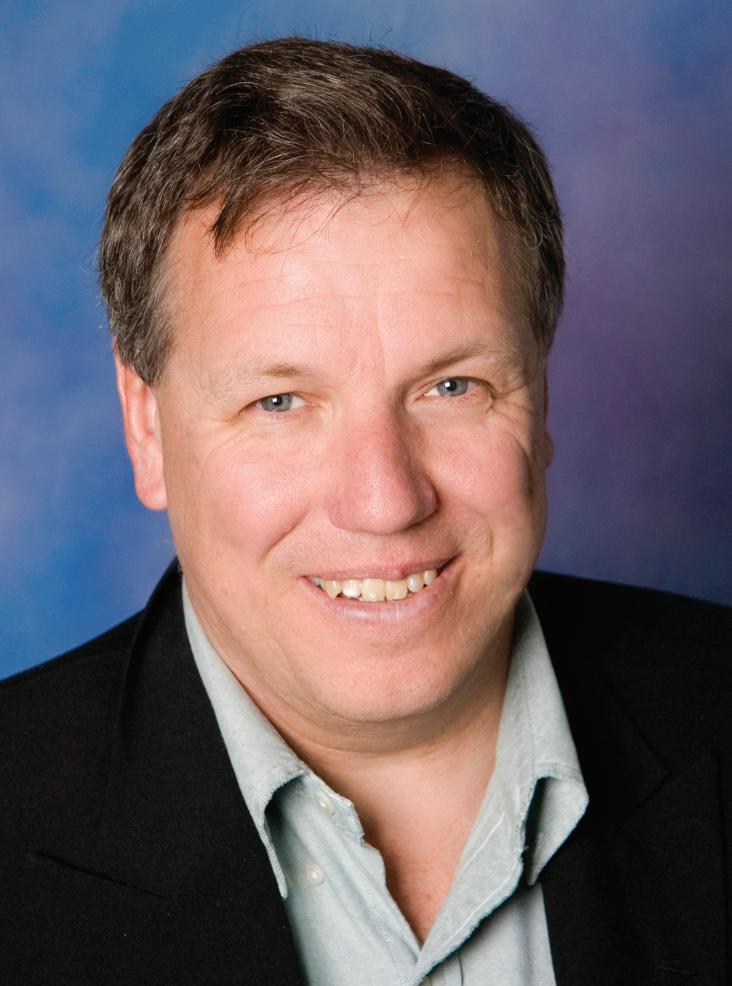
The doctor’s position is especially difficult if the doctor is the family GP, knows them well and is likely to be the one administering the euthanasia, he said.
We need a society that cares, not kills, says Wanneroo author
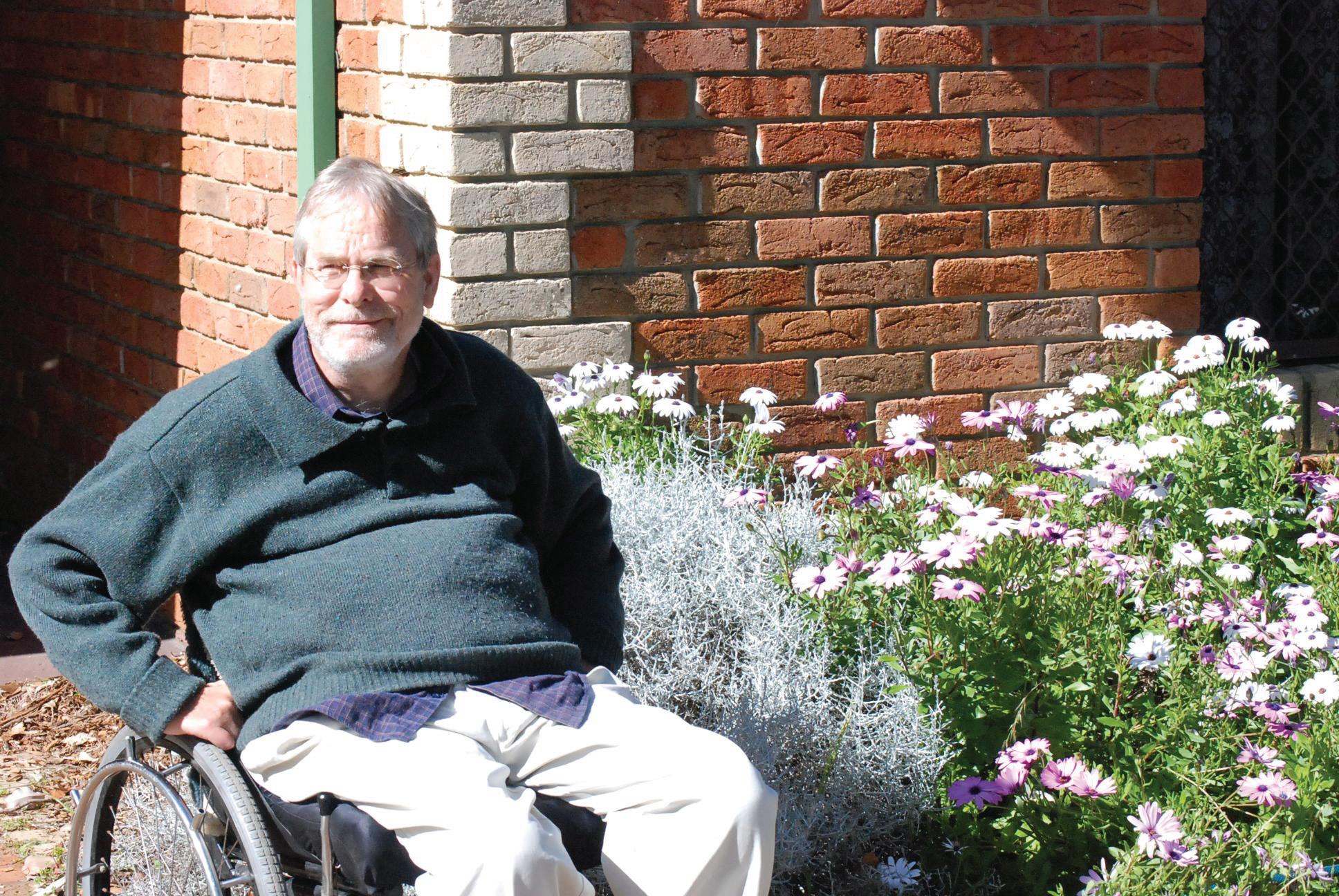
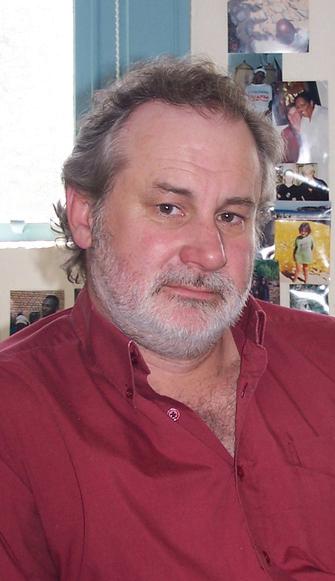
Wanneroo author Dr Erik Leipoldt, a man with quadraplegia and advocate for those living
disability,
his Wanneroo home this week. Dr Leipoldt is the author of a book of 28 in-depth interviews with people
in the Netherlands and Australia and leaders in the disability movement published this year. PHOTO: ANTHONY BARICH AMA National President Dr Andrew Pesce
“If they’re the GP for the family members that makes it a more complex decision on behalf of the doctor,” Dr Pesce said.
“Doctors are placed to make medical assessments of the nature of the illness; maybe whether it’s an illness which would be one whether you’d consider euthanasia an option, and make medical assessments.
“But they’re not in a position to make such a significant assessment of the patient’s social circumstances. Perhaps as the family doctor they have insights and can provide, but if that will be used as a yardstick (as to the patient’s eligibility for euthanasia), it should be made by someone apart from the medical dynamics of the patient.”
He said England’s current proposal to appoint a tribunal to judge whether a patient is under duress is preferable to treating physician.
However, he said the AMA is flatly against euthanasia.
“We believe that doctors should not have to do anything where the only intention is to end life. Our obligation is to relieve suffering, and while doctors must do things which sometimes end up hastening death in pain relief, sedation etc, euthanasia is a treatment whose express purposes is to end life,” he said.
Mr Goiran said that if the Voluntary Euthanasia Bill Please turn to Page 2
“...Government-mandated euthanasia is too dangerous for vulnerable people, in an uncaring society that already devalues them, for example because it abhors dependence, fragility and vulnerability. Instead we would be more constructively engaged by working towards excellent care in everything we do for others - ie, a caring society.”
- Dr Erik Leipoldt, author of Euthanasia and Disability Perspective
Dr Erik Leipoldt acquired quadriplegia in 1978 after a diving accident. He has just published a book on attitudes of Dutch and Australian people with quadriplegia towards euthanasia. Here he asks whether we really need to legalise euthanasia.
In Australia and other Western countries, suffering is a subjective and private experience leading to the invocation of individual rights to do away with one’s life should it become unbearable. The life of a person who suffers is of no consequence to others.
When we look closer, however, we see that this private domain is an illusion. Suffering is not an individual, isolated experience. No one is an autonomous entity. Suffering, and its amelioration, is largely a dynamic process involving others.
(2010)
Here in Australia, as elsewhere, some press for legislation to provide euthanasia to persons of sound mind in response to “pain, suffering or debilitation” that is judged “considerable” in the presence of a terminal illness. Vague and broad as this description is, it invites anyone with a heart to say “yes, of course we should help”.
But what is suffering? And what is the difference between killing the sufferer and attending to the sufferer’s needs?
It is in interactions between people, in injurious events, and in our values and practices that suffering is created and experienced. Pain is experienced differently by people who have good care and by people who feel abandoned. Mental anguish can arise from unresolved conflicts in close relationships, even relationships which are far in the past.
Described

Specialist physicians across all fields need to learn to prepare people for death and “think palliatively” with the projected dramatic rise in people over 65, Palliative Care Australia vice president Dr Scott Blackwell said.
Perth-based Dr Blackwell, who will take over as PCA president next month, told The Record that physicians have become so good at curing and helping people live longer that they are often unwilling to admit they can do no more for patients and help them live the rest of their lives in dignity and comfort.
This would placate the perceived need for euthanasia in a country that sees up to 80 per cent of those being surveyed saying they accept euthanasia being legalised, yet case studies in countries where it is legalised show less than two per cent of people who have died actually used it.
“What people are ‘voting’ for is peaceful death,” Dr Blackwell said. “It’s one of those times in life where I tell people often, you’ve given so much of yourself to others for so long, maybe it’s time to receive (help across all aspects of their lives that palliative care can facilitate), and it takes them a while to cotton on to that concept.”
A White Paper released on 12 July by The Economist Intelligence Unit said that for the first time in the history of humanity, people over the age of 65 will soon outnumber children under the age of five.
rates, particularly in the developed world.
“It’s this argument that makes me certain of the importance of all health professionals becoming aware of palliative care and to be able to recognise when it’s time to think palliatively,” said Dr Blackwell, a Perth GP who worked for Silver Chain
for 15 years. “If we don’t take that attitude we’ll never have enough palliative care services to look after all the people who’ll die over the next 50 years. It’s got to become a mainstream service.
“They’ve got to understand that part of their job is about living and part of their job is about dying.”
Palliative care was forced to emerge as a specialist service in the post-World War II era as it coincided with rapid advances in medical science, and “people providing those very high-level specialist services have actually lost touch with the person they’re dealing with”, he said.
“The next 20 to 30 years is about getting back the concept that palliative care advanced – the holistic view that treatment is about body, mind and spirit –across the whole breadth of medical services, so the patient is not just what illness they have.”
If all medical professionals are able to “think palliatively” and are willing to admit at a certain stage that further treatments may be unnecessarily burdensome, may actually make things worse and incur exorbitant costs, the patient can be helped to tie up loose ends, mend relationships and die a dignified death, he said.


Editor
Peter Rosengren editor@therecord.com.au
Journalists
Bridget Spinks baspinks@therecord.com.au
Bronia
Guy
The
The
“This will happen some time during the next few years,” the EIU said. By 2030, the number of people aged 65 and older is projected to reach 1 billion, or one in eight of the global population, rising even more sharply by 140 per cent in developing countries.
Compounding the effects of an ageing population, the EIU said, are falling birth
Continued from Page 1
2009 were to become law, people will make these decisions under duress or undue influence, and they can’t be protected, because “if you want to remedy it after the event you can’t go to court”.
“It’s a legal impossibility to protect people from involuntary euthanasia once you allow voluntary euthanasia,” Mr Goiran said.
He said that Greens MLC Robin Chapple, who introduced the Bill, attempted to address these issues in the Bill by saying the doctor who has to make the decision must take into consideration whether the person is under duress, “but that’s just a cheap one liner, because what if the doctor doesn’t address that; how do you remedy that situation after the event?”
Mr Goiran added.
“Is that doctor qualified to determine if the person is under duress? It’s a legal concept; and I don’t know that doctors want to be making those kinds of decisions.”
bill, he confirms the point that it’s impossible to protect such people,” Mr Goiran said.
“The person is the only other witness apart from the doctor when the decision is being made, and what if after the event the family is upset and believes the grandmother was under duress?”
In a letter sent to Mr Goiran on 11 September, 2009 advising him of the Bill he intended to introduce into Parliament, the Greens MLC said the Bill will provide immunity from criminal and civil liability to a medical practitioner who administers euthanasia to a terminally ill person in accordance with that person’s wishes, provided that euthanasia is administered strictly in accordance with the requirements of the Bill.
Mr Goiran said the very fact that Mr Chapple includes these clauses in the Bill shows he accepts it’s a concern and a problem that people enter into the situation under duress.
“By trying to draft laws like that into the
One of the six “safeguards” Mr Chapple says the Bill has in place is that two medical practitioners must, independently of each other, assess the eligibility of the applicant for the administration of euthanasia If the two medical practitioners determine that the applicant is eligible for euthanasia, the applicant may sign a second notice of consent indicating that euthanasia should be administered.
A nine-year veteran volunteer at St John of God Community Hospice in Murdoch says the benefits of Palliative Care, seen and unseen, are extensive.
BY ANTHONY BARICHPatients develop an enhanced sense of self-worth through the experience of palliative care, contrary to claims from euthanasia advocates that palliative care is the end of the road and undignified, long-term hospice volunteer Dale Henshaw said.
Mr Henshaw, who has seen over 1800 admissions during the past nine years at St John of God Murdoch’s Hospice centre, said many patients enter determined not to be kept alive any more than necessary, but after experiencing palliative care they become determined to “live until they die”.
Addressing the 18 July Right to Life Association annual dinner at the Esplanade Hotel in Como, Mr Henshaw also dispelled several
SEEK2010, the Archdiocesan conference on Scripture and Prayer for Everyday Life from 7-9 October is seeking volunteers to help at the event.
Areas requiring helpers include the crèche (Working with Children Certificate required) the car park and hospitality. This is a wonderful opportunity for Catholics to use your time, talent and treasure to serve the community of the Perth Archdiocese.
Entitled SEEK2010 – Seeking the God who is seeking you – the conference will be held at Queen of Apostles Parish, 57 Tudor Ave, Riverton.
It gives everyone – adults, youth and children – the chance to learn, experience and grow in a warm, supportive and enjoyable environment.
Even the little ones are not forgotten as there will be a crèche for the 0-2 year olds.
Topics which will be covered at the conference include Experiencing Lectio Divina, Mary in the Scriptures, Importance of Scripture in Life, Prayer in the Family, Worship with Music, Getting online with God and Imaginative Meditation
There will also be a special programme for youths, entitled Connecting with God Daily and displays by many of the organisations and agencies in the Archdiocese of Perth.
Mass will be celebrated on Saturday morning by Bishop Don Sproxton, Chairman of the Committee For Family and For Life, the conference organisers.
The conference will culminate on Saturday afternoon in an Enthronement Ceremony when families are invited to bring forward their Bibles for a special blessing and to “enthrone” them in a place of honour in their homes.
Brochures containing the full conference programme and registration forms are available from your parish office or on the con-
myths pushed by euthanasia advocates about palliative and hospice care, including:
● Being referred to palliative care means the doctors have given up on you. This is untrue, he said, as the doctor cares enough
ference website www.seek2010.org, or call Barbara Harris/Su Goh on 9328 8113.
Registration is $20 for individuals and $25 for families and entitles entry to all conference events. Facilities for people with vision, hearing or other special needs will be made available if requested in advance on registration.
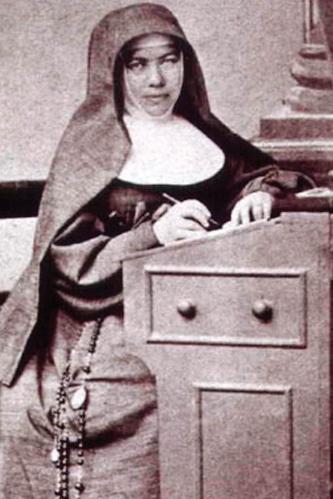
Sisters from the Religious Order that Blessed Mary MacKillop founded will give a series of weekly
about the person he or she is treating to want them to receive “the very best care aimed at improving quality of life”.
● You lose your dignity when you have to depend on others to do everything for you. While
Sisters of St Joseph of the Sacred Heart, will be on: The Road to Sainthood: What does canonisation entail? (14 Sept) The life of Irene McCormack (21 Sept), What’s the place of saints in the Church today? (28 Sept), Praying with the saints (5 Oct) and Virtues of Mary MacKillop (12 Oct).
The ABC’s weekly all-Australian programme Travel Oz will feature Mary MacKillop’s early work in its episode scheduled for screening on ABC1 at 6pm on 11 October.
The programme shows Mary’s work at Penola South Australia where she began and taught in her first school, the sisters of Saint Joseph.
The Woods MacKillop
it is “traumatic to lose control of your personal hygiene”, Mr Henshaw said, most patients “get an enhanced sense of their worth when so much is done by so many to make the quality of their living as good as possible”.
● Dying usually involves unbearable pain so they dope you up like a zombie. In his experience patients seem “very normally alert and active” he told those attending the dinner. Even euthanasia advocate Dr Philip Nitschke, who used to include “unendurable pain when dying” as one of the major reasons to support legal euthanasia, now acknowledges that medical progress in pain treatment has eliminated this as a significant factor.
● Going into a hospice is the final step. Over 60 per cent of the 1800 admissions he’s seen have been discharged home. Many, he said, are “completely independent, often on the phone and their computer conducting their affairs.
“Even if they have a long-term, life-threatening condition and they were probably there for symptom control, they are often back to their everyday activities, including work, before very long,” he said.
Mr Henshaw has volunteered at Murdoch Community Hospice since euthanasia was being debat-
Schoolhouse still stands proudly in Penola, more than 140 years since Mary MacKillop founded the uniquely Australian Sisters of St Joseph, along with Julian Woods, a priest and brilliant scientist.
By all accounts, she was an outstanding young teacher, who provided a free Catholic education, initially for the isolated bush children of Penola. Travel Oz producer Greg Grainger visits with historian Margaret Muller the Penola centre she founded.
At the Mary Mackillop interpretive Centre, there are ample reminders of Mary’s early work in Penola, including a replica of the bark hut in which she first began teaching.
On the outskirts of Penola, there’s a series of wooden statues dedicated to Mary Mackillop, a memorial on the property of local farmer Michael Gartner. The feature concludes with a vocal tribute to Mary Mackillop.
ed in WA nine years ago when Perth doctor Daryl Stephens was charged with the murder of Frieda Hayes in a hospital in February 2000.
He said given that receiving palliative care is generally the first time most have experienced it, anxiety and concern about knowing what is happening and what can be done is a “very real factor, both for the patient and the family”.
“A very significant feature of palliative care is the ready involvement of family and friends. At Murdoch, family and friends have access to the patient at all times, including boarding arrangements,” he said.
The Murdoch Community Hospice has 20 beds, and makes approximately 450 admissions each year. Patients are referred to the Hospice by their doctor or specialist. Reasons for their admissions include:
● to address the symptoms and return home;
● re-admission to revise the symptom control;
● to enable respite for the carers, (often they are family members);
● for terminal care.
A typical stay for the majority of admissions would be around seven to 14 days, he said.
Oxford College Masters graduate Andrew Cichy is performing an organ recital of French repertoire from the 18th and 19th centuries in an event that will see the St Mary’s Cathedral organ “at its best”.
Mr Cichy - who completed a Masters of Studies in Musicology at Oxford in July and studied previously with Anne Goerke, St Mary’s Cathedral organist for 40 years –will give the performance at the Cathedral on 26 September at 3pm.
“Though the organ is English, it has a much wider repertoire than its origins, and this recital, with pieces from Felix Alexandre Guilmant and Jacques Boyvin, should show the instrument at its best,” said Mr Cichy. For more information contact Mr Cichy on 0439 922 446.
Is it true our company philosophy is “We are a friendly and efficient company trading with integrity and determined to give our customers the very best of service?”
Is it true I regularly publish testimonial letters from satisfied customers because of my tremendous reputation for outstanding service?
Is it true that most of my sales are not from direct advertising, but from personal recommendation, repeat business and reputation?.
Is it true I believe that before anyone buys a pre-owned vehicle they should choose their dealer before they choose their car and that dealer should be me?
Is it true that in 2008 I was Australia’s top selling Mitsubishi, Hyundai and Kia dealer?.
workshops on the first Australian saint at the University of Notre Dame Australia in Fremantle on Tuesdays.
The sessions, from 12.35pm1.05pm, which started on 14 September, will run until 12 October, five days before Pope Benedict XVI canonises Blessed MacKillop in Rome.
The sessions, to be held at the university’s Holy Spirit Chapel on Mouat Street and presented by
Is it true that Park Ford have just been awarded dealer of the year?
Is it true that from January to December 2008 we sold 16,881 vehicles, which was an all-time record?.
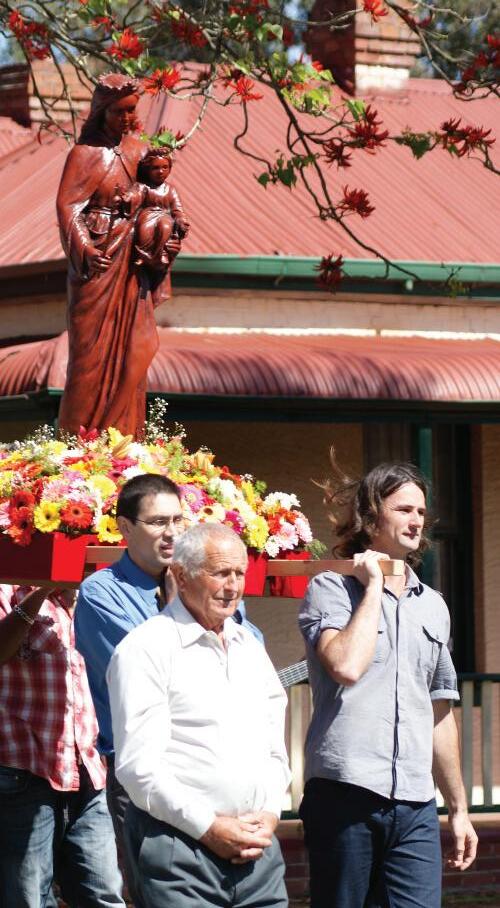
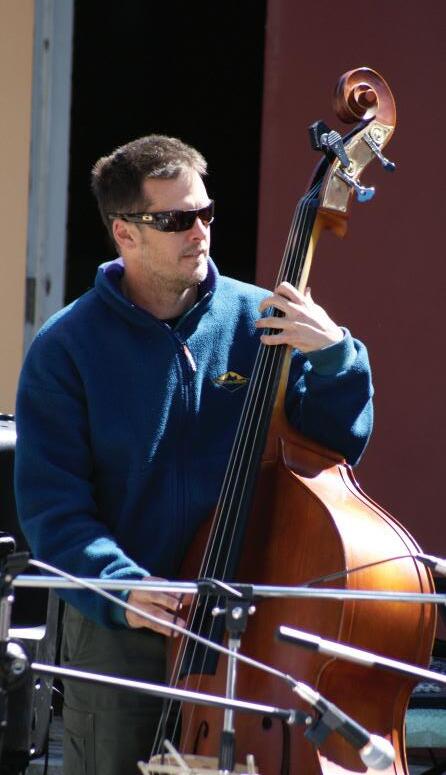
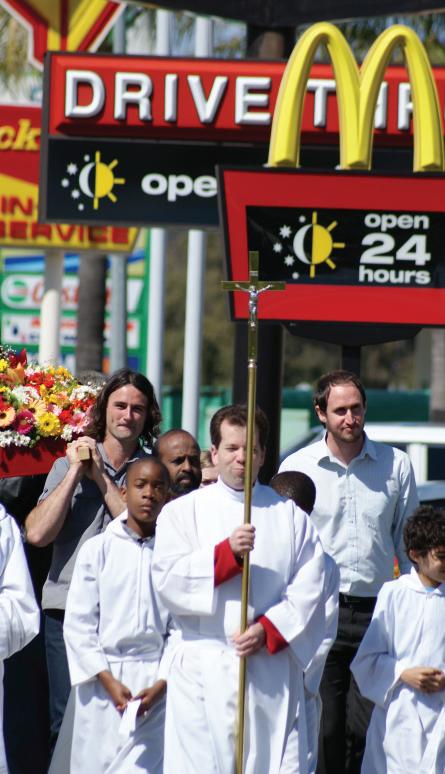
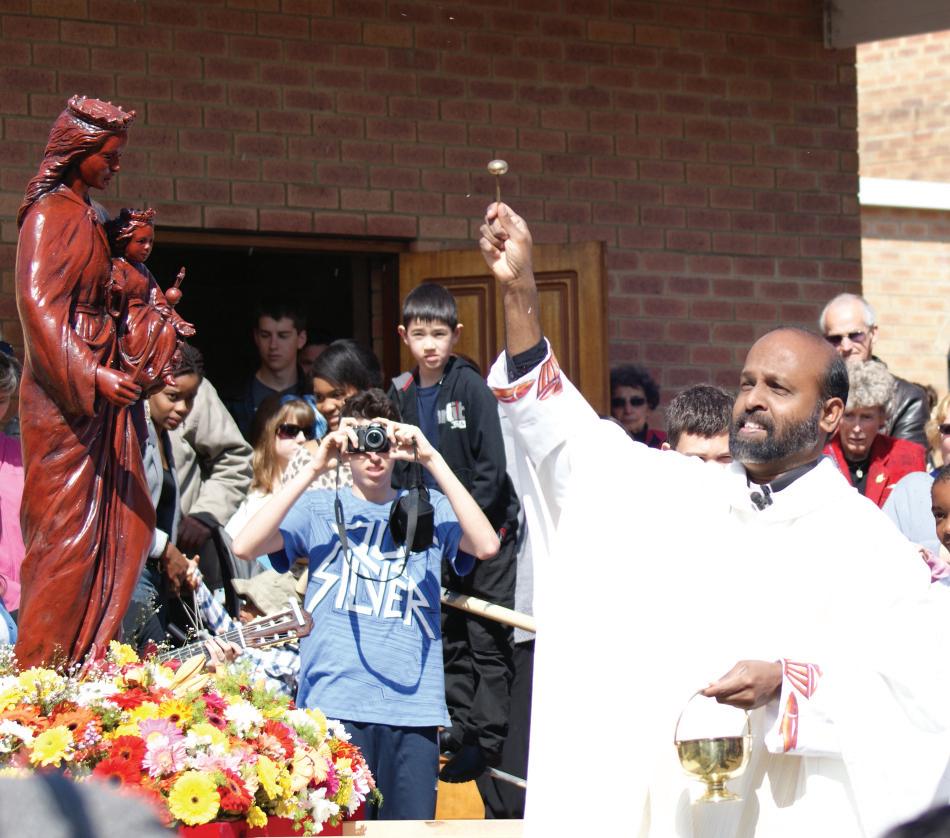
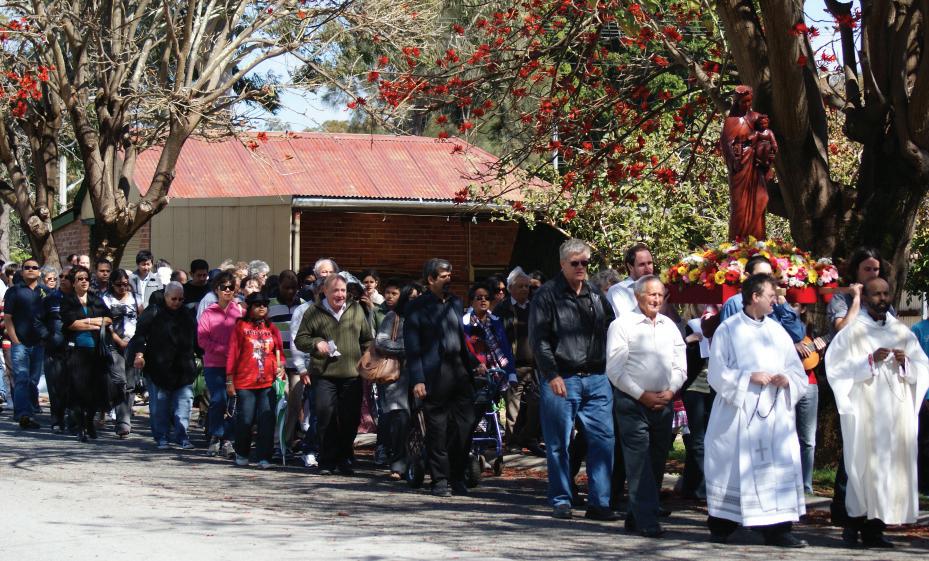
Kelmscott Parish marked the Feast of Our Lady’s Birthday last Sunday with a special Mass, a procession along Albany Highway and a Parish social day.
All normal Sunday Masses were cancelled and replaced with a 9.30am Mass to so that everyone could come together for the event.
After Mass, parishioners gathered outside the Church as outgoing parish priest Fr Francis Sundararajan, who will take up a missionary role in New Guinea in October, blessed the statue of Our Lady and led a procession through the streets of Kelmscott together with Assistant Priest Fr Andrew Loton, acolyte Gerard Voysey and altar servers.
As the procession wound its way through Kelmscott parishioners prayed the Rosary in honour of Mary. Singers also led the procession in singing Marian hymns between decades of the Rosary.
Police were on hand to escort the procession, especially where there were no footpaths.
After returning to the Church grounds parishioners and all those present were treated to a barbecue and social activities including line dancing, colourful and eye-catching Bollywood dancing, folk music, rock music and even some impromptu singing performances from audience members.
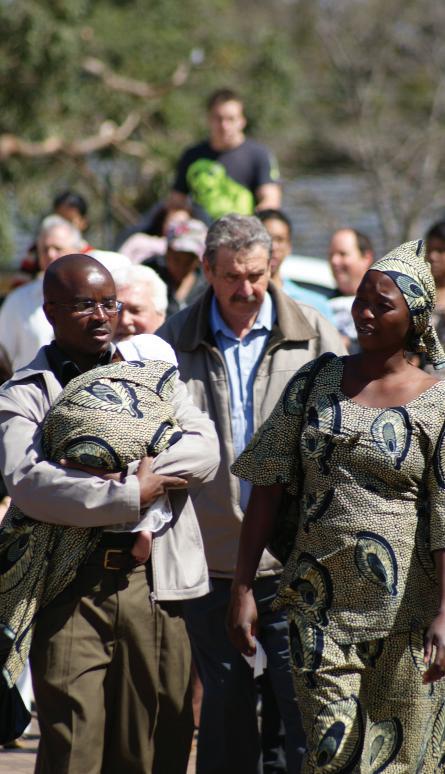
The event has been held for several years under the leadership of Fr Francis and fellow clergy and has proved a popular social and meeting point for the Parish every September. A highlight of the day was the colourful presence of many parishioners who have come to Australia from all over the world, some choosing to wear national costume for the special occasion.

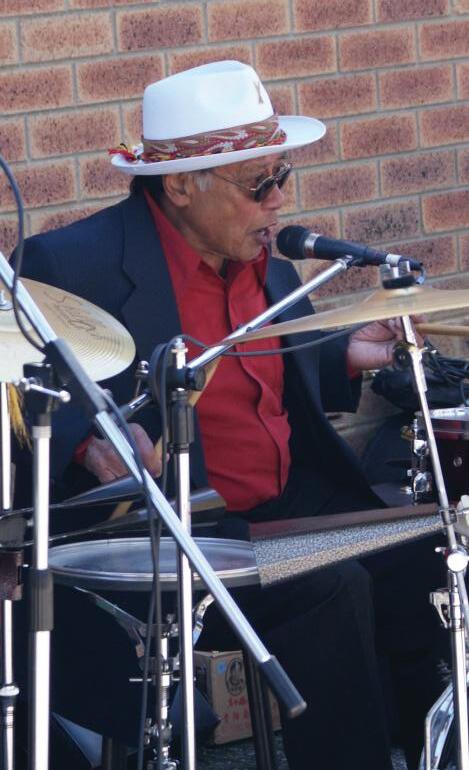
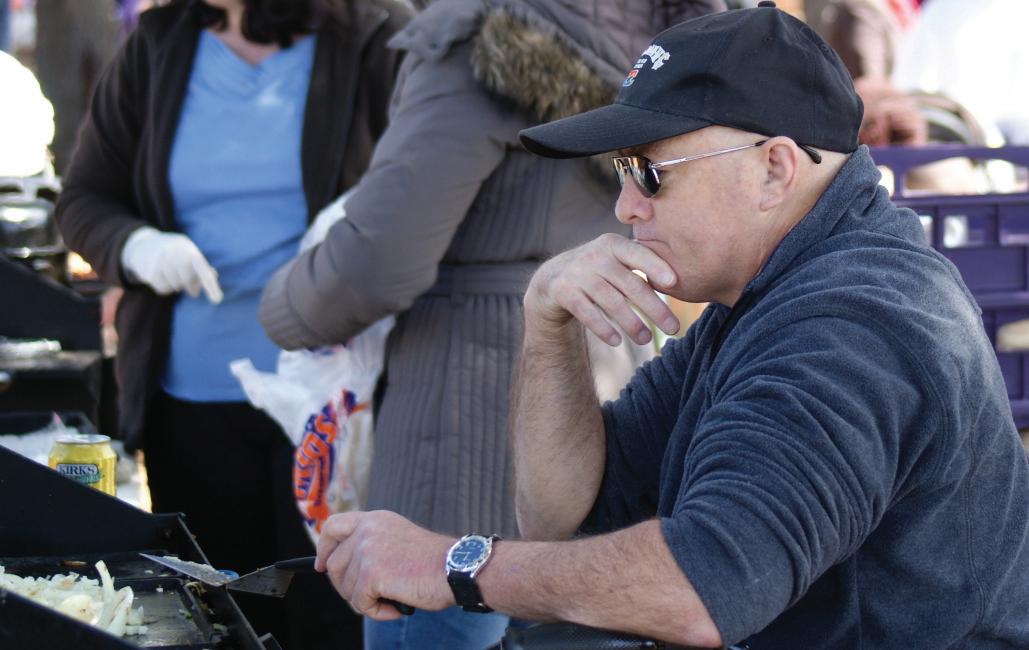
Canning Vale Parish has achieved yet another milestone in the history of their church. Besides having the new church of St Emilie’s blessed and inaugurated by Archbishop Barry Hickey in May, they now have a children’s choir.
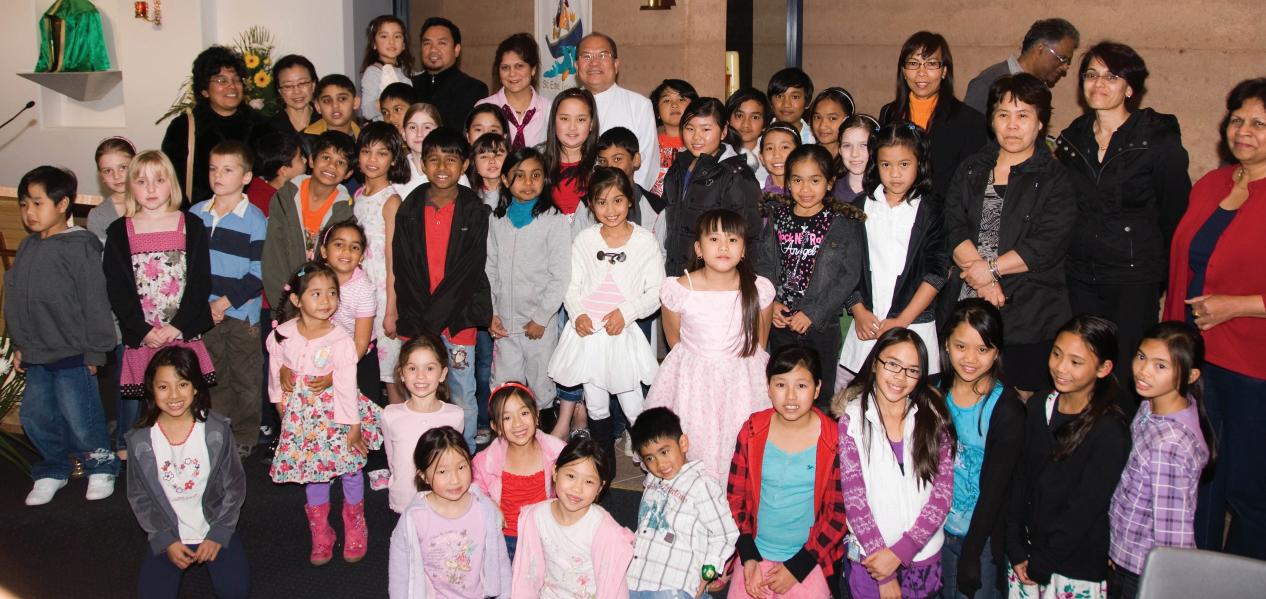
The five month old church celebrated the birthday of The Blessed Virgin Mary with splendour.
A concelebrated Mass was offered by Parish priest Fr Robert Carrillo and assistant priest Fr Dennis Sudla who inaugurated the newly formed children’s choir.
The atmosphere was filled with harmonious angelic voices. The celebration was joyful and spiritual with various hymns sung to Our Lady, much to the delight of the parents and the congregation.
Some parents along with the choir co-ordinator assist with the smooth running of this group.
The choir is made up of around 45
children who come from diverse backgrounds. They range from Pre-Primary to upper school. The children meet every Friday night at the church for choir practice. They are delighted to praise and serve God through song, on behalf of their parish Community.
The choir is scheduled to sing this year for the feast of the Holy Rosary (7 October), All Saints Day (1 November) and for the children’s Christmas Eve Mass (24 December).
They look forward to sing on a regular basis for the Sunday evening Mass commencing in the near future. It’s a real pleasure to be part of this vibrant and enthusiastic group of singers.
Children to me “are like flowersboth bring fragrance to our lives”.
Praise in song: The children’s choir at St Emilie’s Parish in Canning Vale has won enthusiastic members, who range from pre-Primary to upper school in age. The choir meets every Friday night at the Church for practice.
What started out as a fundraising idea to collect loose change developed into an opportunity to involve male prisoners.
St John the Baptist Parish, Toodyay made the most of a five-cent fundraising idea from St Bernadette’s, Port Kennedy after reading about it in The Record two years ago.
her fellow parishioners embraced the fundraising idea of encouraging families to take home small cartons and jars to collect their loose change for the parish.

The money raised was used to beautify part of the parish with the help of men from a low security prison; an area previously thought unsightly which is a space for private reflection and parish social activities.
Veronica Dymond and several of
“Our numbers are considerably smaller than Port Kennedy but our enthusiasm is no less and in the two years we’ve been collecting we have just reached the fine figure of $449.20,” Ms Dymond said.
“Overall, it has been an extremely rewarding and painless method of fundraising. Thank you Port Kennedy for the idea,” Ms Dymond said. She said the prisoners also benefited from the opportunity to enjoy some typical country hospitality.
Archbishop Hickey has announced a number of clergy appointments. They include: Fr Philip Fleay has been appointed Parish Priest of Sacred Heart, Mundaring, Fr Arulraj has been appointed Parish Priest of Our Lady Help of Christians, East Victoria Park, Fr Elver Delicano has been appointed Parish Priest of St Francis of Assisi, Maida Vale, Fr Nelson Po has been appointed Parish Priest of Notre Dame, Cloverdale, Fr Blasco Fonseca has been appointed Parish Priest of St Mary’s, Guildford, Fr Lionel Henry SDS is to retire soon, but will be available for supply work, even live-in supply.
Fr Stephen Astill SJ has been appointed Parish Priest of Immaculate Conception, East Fremantle. Fr Andrew Lotton has been
appointed Parish Priest of Good Shepherd, Kelmscott,
Fr Francis Sundararajan will leave on October 3 for New Guinea, Fr Benny Calanza has been appointed Assistant Priest at Our Lady of Lourdes, Rockingham, Fr Rodrigo Tomala has been appointed Assistant Priest at St Mary Star of the Sea, Cottesloe,
Fr George James has been appointed Assistant Priest at St Mary’s Cathedral, Fr Dominic Savio CSsR has been appointed Assistant Priest at Our Lady of the Mission, Whitford,
Fr Jeronimo Flamenco Castillo has been appointed Chaplain to Royal Perth Hospital, Fr Joseph Kum Htoi has been appointed Chaplain at Little Sisters of the Poor Nursing Home, Glendalough, Fr Greg Donovan is preparing for a sabbatical after some health procedures, Fr Paul Baczynski is overseas on study leave.
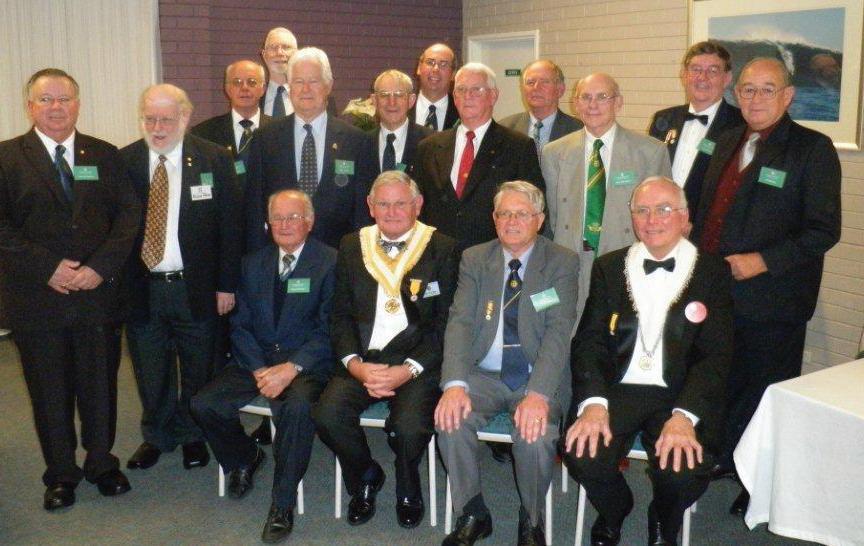
A Catholic men’s association has bucked the general decline of Catholic groups, beginning a new chapter in Busselton Parish.
The Catenian Association inaugurated the new group at a gathering on 30 August at The Esplanade Hotel with nearly one hundred existing ‘brothers’, their wives and several guests in attendance.
The new group is part of a global association begun in Manchester, England in 1908 encouraging Catholic men to develop strong social bonds, supporting one another in the practise of their shared faith. Brother Director Gerry Barton officiated, presenting the
group’s charter granted to them by the Catenian’s Grand Council.
Group President Tony Smurthwaite thanked everyone for coming to the group’s celebratory gathering, welcomed the brothers’ wives and thanking them for their abiding patience. He paid tribute to Brother John Monkhouse whose endurance, he said, had transformed the idea into reality while also expressing appreciation for the support given by parish priest Fr Wally Kevis. The new group will hold meetings at 6.00pm on the last Monday of the month at The Esplanade Hotel in Busselton.
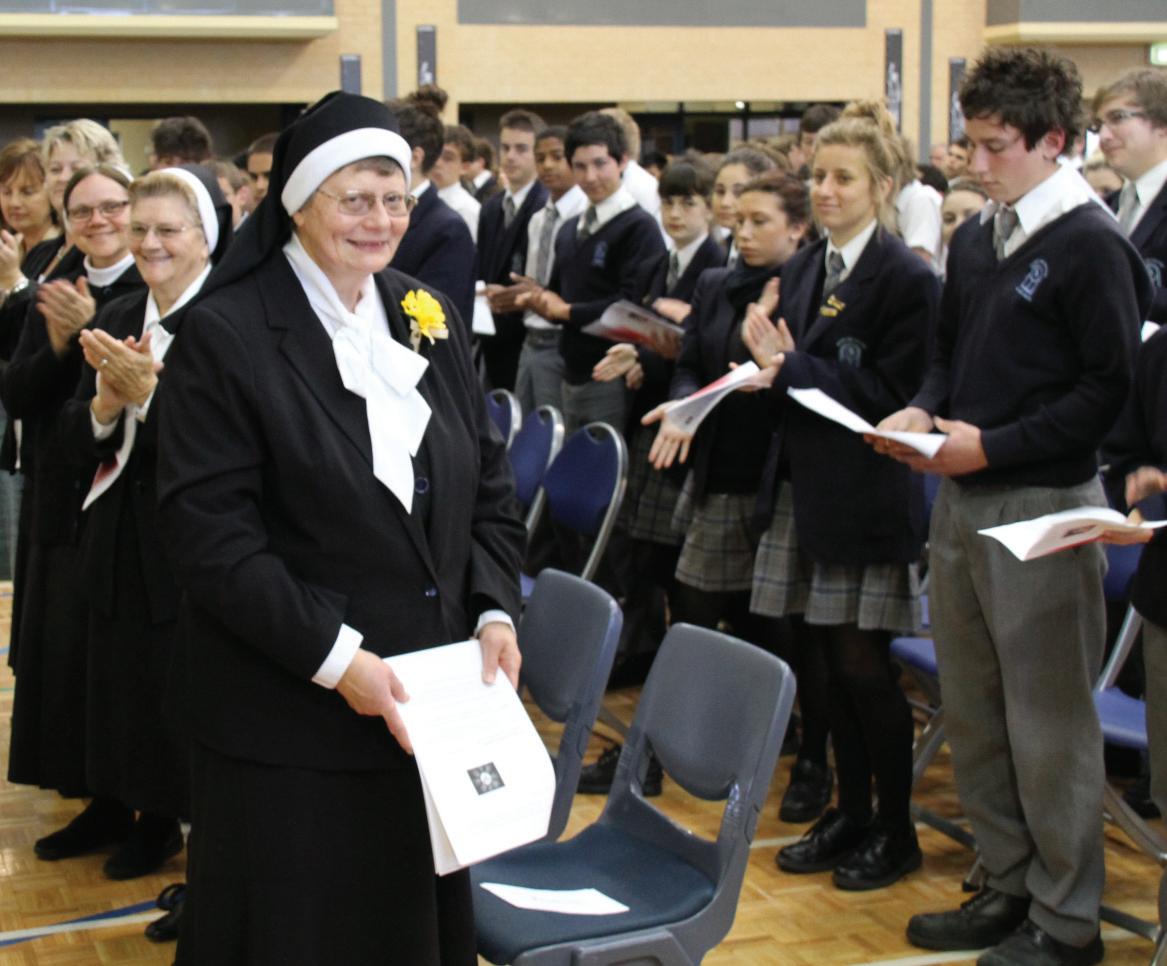
Sister Jean Wojcik, a member of the Sisters of the Holy Family of Nazareth, renewed the vows she took after entering Religious life 50 years ago at Masses celebrated at Mater Dei College in Edgewater and Our Lady of Grace Parish in North Beach.
Each celebration was a catechetical act showing that for Catholics, career is only part of a vocation, she said. This past week has prompted her to reflect that while secularists would define a career as “one’s entire life until death”, “a Christian lives a vocation, our baptism through our lifestyle, be it Religious, married or single”, she said.
The Golden Jubilee Mass on 8 September had a dual purpose: “To thank God for what He did for me, and as a catechetical moment for students, as they1d never see a profession of a Religious making vows of chastity, poverty and obedience.
Sr Jean was born in Pittsburg, Pennsylvania in June, 1944, joining the Congregation after her 16th birthday. Today, she advises people considering marriage or Religious life to wait until they’ve travelled and get a job, where they learn to deal with people.
“Today people bring those skills to the community, where as when I was 16 we developed those skills in the community,” she said.
“Jesus calls us to discipleship, sharing our gifts. That’s why, in discussing career options with students, we discuss where their gifts and interests lie, so they can best serve the community and live out the plan God has for them,” she said.
“The greatest thing of being a professed Religious is that God calls you to live out that plan He has for you, so it’s not so much what you’re doing for God, but what He’s doing for you in what you1re being and doing.
“As a professed Religious, it1s God helping you fulfil His plan for the world, and for you in the creation He’s making you.”
Sr Jean has travelled the world since joining the Congregation in 1960.
She first spent 18 months in Rome for her novitiate, returned to Michigan to do a Bachelor of Arts. She worked in primary schools in Michigan and worked for a year in the Order’s school for emotionally disturbed children in Pittsburgh before arriving in Sydney in 1972.
This is Sr Jean’s third posting in North Beach. She taught Grade 5 at Our Lady of Grace School in North Beach in 1979.
She started Our Lady of Grace Catholic Primary School1s music programme during her second stay here. In 2005 she returned to work at Mater Dei College as the school’s Career Development Officer.
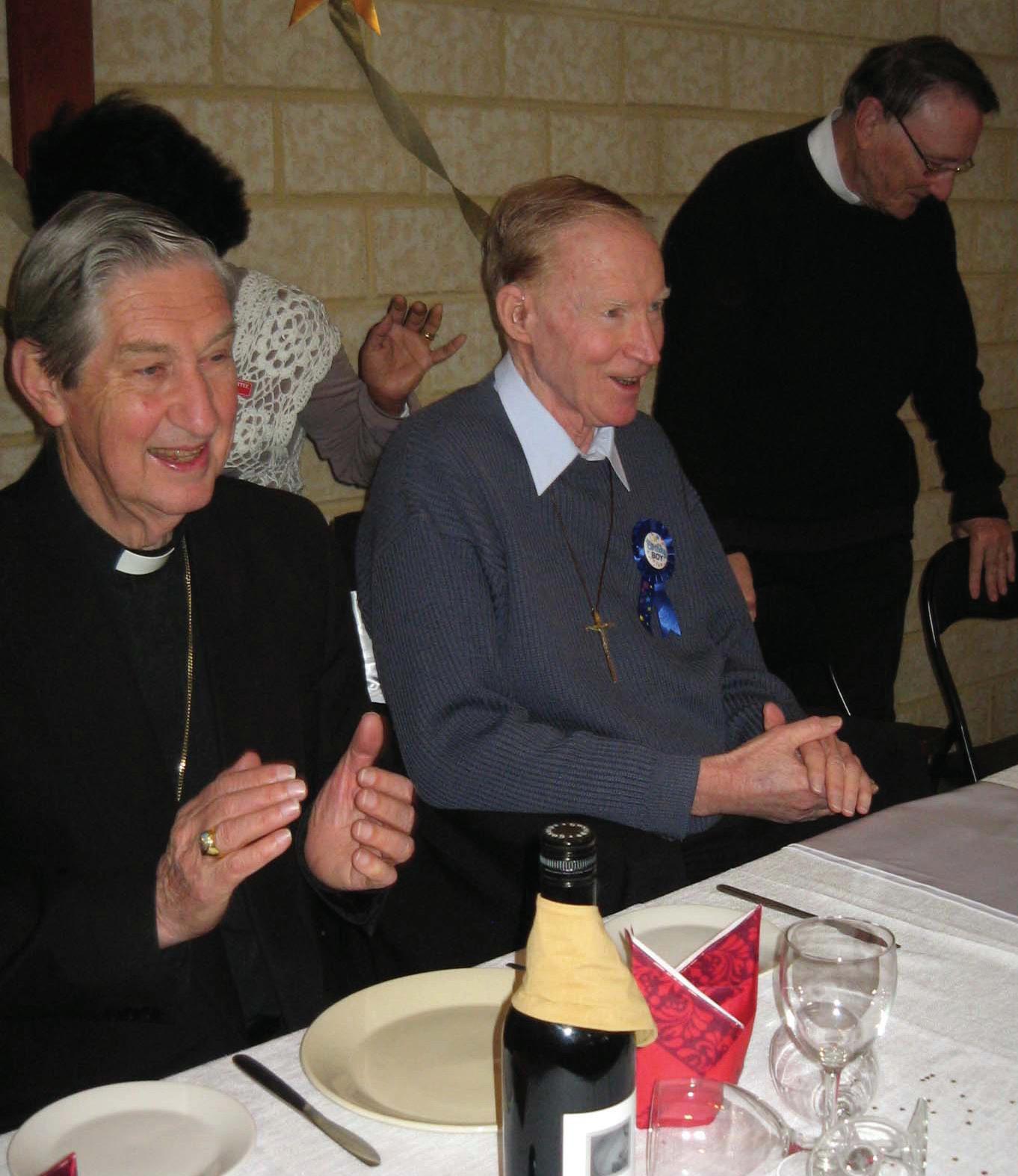
Fr Daniel Foley’s greatest joy in his 80 years of life and 55 of priesthood is the formation of people – and many who grew out of the Young Christian Workers movement still practicing their faith today have him to thank.
Fr Foley - the second cousin of the late Perth Archbishop William Foley - who celebrated his 80th birthday at Lockridge on 26 August, clearly remembers legendary YCW founder Cardinal Joseph Cardijn of Belgium standing on the dais at Leederville and declaring himself “80 years young”.
Back then, the YCW and NCGM (National Catholic Girls Movement) were a powerhouse of apostolic work, bringing their lapsed Catholic friends back into the faith and defending Christian values.
“Many of the young people who took up leadership in the diocese were schooled in the ‘See, Judge, Act’ ethos of the YCW movement, and a great many young people came through,” Fr Foley aid.
Some of his eager young men of the YCW took action when they tore down all the provocative posters of a young lady called Sabrina from His Majesty’s Theatre who was performing there and brought them back to him.
“I put them on top of the wardrobe at Leederville and they’re probably still sitting there – I didn’t know what to do with them,” he said. This was but a microcosm of the “very apostolic sort of work” the YCW was involved in.
“There were many young men and women who are practicing Catholics around the place who owe their Catholicity to the YCW,” he said.
Like Cardinal Cardijn, Fr Foley, who just moved into the Little Sisters of the Poor retirement home, also saw forming youth in
the Gospel as a priority. To this end, continuing the evangelistic legacy of Lockridge founding priest Fr Terry Cahill was his top responsibility.
“I would say from my point of view I’ve found tremendous satisfaction in the formation of people, and I saw that as my first job going to Lockridge, to carry on the work done in that field,” said Fr Foley, one of the first students of St Charles Seminary who entered within five years of its inaugural Rector, Archbishop Launcelot Goody, founding it.
“There was a tremendous
amount of good will and talent there that needed to be tapped into, and I saw my task as tapping into it. “My part was to harness something of that talent, and they were harnessed very willingly.”
When Lockridge started it was under the auspices of Morley, and Fr Foley said that Fr Cahill “spent a tremendous amount of time and effort in schooling people of Lockridge in Vatican II documents and developing their spirituality”, as did his successor Fr Charles Tory.
Fr Foley built on this, moving
the parish into a bigger church.
“There was a stigma attached to Lockridge at one stage about the demographics, unemployment etc, but I think it’s grown out of that now,” he said.
Leederville was Fr Foley’s first posting after being ordained by Archbishop Goody with Fr Anton Hesse and Fr Michael Brown OFM, who concelebrated Fr Foley’s 80th birthday Mass with current Lockridge parish priest Fr Francis Ly, his predecessor Fr Vinh Dong and Redemptorist Father Hugh Thomas, who was giving a parish retreat. Archbishop Barry Hickey attended the festivities after.
After assisting Mgr John Moloney at Leederville, “who was very particular about the way the bell was rung in the church”, he assisted Mgr Edward Kennedy at Subiaco, where he was flat out with weddings and hospital ministry to Princess Margaret, Charles Gairdner and King Edward.
After a short stint with the well-known Fr Edward Power at Kensington he spent time with Mgr John Wallace at Nedlands, who retired due to ill health, before taking on the new parish at Kambalda.
There, he enjoyed a few “very happy” years of fraternity among the Goldfield priests of Frs Maurice Toop (Boulder), Frank Dillon and Tim Corcoran (Kalgoorlie).
From there he came down to Attadale for the best part of 10 years, then did a short stint filling in at St Kieran’s Osborne Park before arriving at Lockridge, where he spent over 10 years, “enjoying every moment”.
At Lockridge he succeeded Fr Hesse, who was ordained with him and, like Cardinal Cardijn - who he described as a “sprightly man who left his mark on the world” - many Catholics today arguably owe their Catholicity to the Perth priest.
Australia has topped the list of the world’s most generous donor countries as compiled by the British-based Charities Aid Foundation (CAF).
The survey, conducted in 153 countries and covering 95 percent of the world’s population, found 70 per cent of Australians had given money to a charity. Thirty-eight per cent had donated their time in the month before they were surveyed with almost twothirds saying they had given assistance to a stranger.
Released on 8 September, the World Giving Index placed Australia and New Zealand as equal first in giving with Canada and Ireland tying for third, the US coming fifth and the United Kingdom, eighth.
Jack de Groot, Chief Executive of Caritas Australia told The Record that Australians give close to or over AUS$800 million a year to all international aid agencies. “I’m always moved both by the level of generosity of contributions people make year in year out”, Mr de Groot said. “[Australians] see the fundamental need of people in poverty throughout the world. Even through the time of global financial crisis Australians were still generous. I felt the overwhelming nature of the response, and was humbled in the face of it.”
The World Giving Index also revealed a few surprises with poverty-stricken Sierra Leone coming in at number 11, far above wealthier nations such as Denmark and Germany, which tied at 18. Australians have a history of giving in difficult times.
Politicians including Catholic NSW Premier Kristina Keneally who voted to pass the controversial Same Sex Adoption Bill on 9 September, giving gay couples the legal right to adopt children, claim the best interest of children was their primary concern.
Chris Meney, Director of the Archdiocese of Sydney’s Life, Marriage and Family Centre, said that much of the debate in Parliament prior to the Bill becoming law professed to be along the lines of what was in the best interest of children, “but there is much to suggest the pursuit of rights for same sex adults is a significant part of the agenda”.
Many now fear the Bill, which enables homosexual and lesbian couples to legally adopt children, is a precursor to the legalisation of same sex marriages by NSW Parliament.
But whether same sex marriage eventually becomes law or not, there is concern children will suffer as a result of this new legislation and will be denied the right of ever knowing what it is to have a father and a mother.
“Essentially what the passage of this Bill has done is to give the message to the wider community that having both a mother and a father is unnecessary, given in terms of the intrinsic differences of what they can offer children in their care, women cannot father nor can men be mothers. Even single parents raising a child acknowledge this,” Mr Meney said.
Cardinal George Pell has described it as “bad social engineering” and that, beyond inner Sydney, was not only unpopular but should have been soundly defeated by the Legislative Council as well as the Legislative Assembly.
Described by many as little more than a stunt to seek votes from minority groups by a government facing an election in less than six months with its popularity at an all time low, the passage of the Bill came as a surprise, particularly after the first vote the previous week which only narrowly passed it, with a vote of 45 to 43. Had two absent MPs been present it may well have been a different story.
“My opposition to the Bill is not an attack on homosexual persons or on the ability of a homosexual person to love and care for a child. That is not in question. The Commonwealth and State laws that have enabled same-sex parenting acknowledge that.”
Instead Cardinal Pell said his criticism of the legislation was that it denied the right of every child to know, and where possible, be raised by his or her natural parents, which comprised a mother and a father. This right for children, he said, was not only recognised by major religious traditions but is affirmed by the United Nations Conventions on the Rights of the Child.
Chris Meney agrees and says he finds it a great shame that by passing this Bill, the wants and desires of adults have been placed above the importance of the rights of children, robbing them of the experience of having both a mother and a father.
“There are those people who will argue there is no difference in terms of parenting between heterosexual and same sex couples. But these arguments fail to appreciate
that to date, there are no long term studies that demonstrate the effectiveness of same sex parenting.”
But what we do know, he says, is that mother and father arrangements have done “a very good job across all societies for a very long time.”
“What we also know is the damage experienced by children as a result of divorce or marriage breakdown and how this often is not manifested until the child is well into his or her 20s or even older.”
The Same Sex Adoption Bill, which is now law, was introduced by independent MP Clover Moore, whose inner Sydney electorate includes Oxford Street and where the annual Gay Mardi Gras is held. MPs were permitted a conscience vote on the issue with both Premier Keneally and NSW Opposition Leader Barry O’Farrell voting for the Bill and Nationals leader, Andrew Stoner voting against.
Last minute amendments to the Bill were made by Environment Minister Frank Sartor so the wishes of birth parents of a child up for adoption could be taken into account without them breaching the anti discrimination act by refusing to have their children adopted by same sex couples.
This followed an earlier amendment from Clover Moore to exempt faith-based adoption agencies such as two of the State’s largest, Anglicare and CatholicCare, from breaching the same anti-discrimination laws and being sued for refusing to provide services to homosexual or lesbian couples.
This makes it very difficult and somewhat confusing to understand remarks from the Attorney General, John Hatzistergos who said: “First, it is not correct that the faith-based agencies have not been consulted about the proposed narrowing of the amendment.
“I specifically had my office consult both Anglicare and CatholicCare. Anglicare did not have an issue and CatholicCare expressed no position. In fact it specifically said that that was its position and indicated no opposition to the legislation. The text of the amendment was brought to their attention. Indeed, if I had been aware that either organisation opposed any aspect of my proposal I would have considered that and modified it accordingly.”
Those not in favour of same-sex adoption said support of any modification would have given tacit support to the Bill and this was probably known by those in support. Catherine Cusack MLC, who described herself as a community leader, used her time to launch an attack on the Catholic Church, or rather the “two Catholic Churches in Australia”.
Another politician said: “Hansard can make for some very difficult to understand reading at times, especially if you don’t know the subject being debated.”
“Before the passage of the Bill, the law as it stood, already enabled the same sex partner of a biological mother to take out a parentage order and take on the full responsibilities if necessary until the child was 18, when they could make up their own mind,” Mr Meney said.
“The fact same sex couples nevertheless went ahead and demanded full adoption rights, shows there is a wider agenda.”
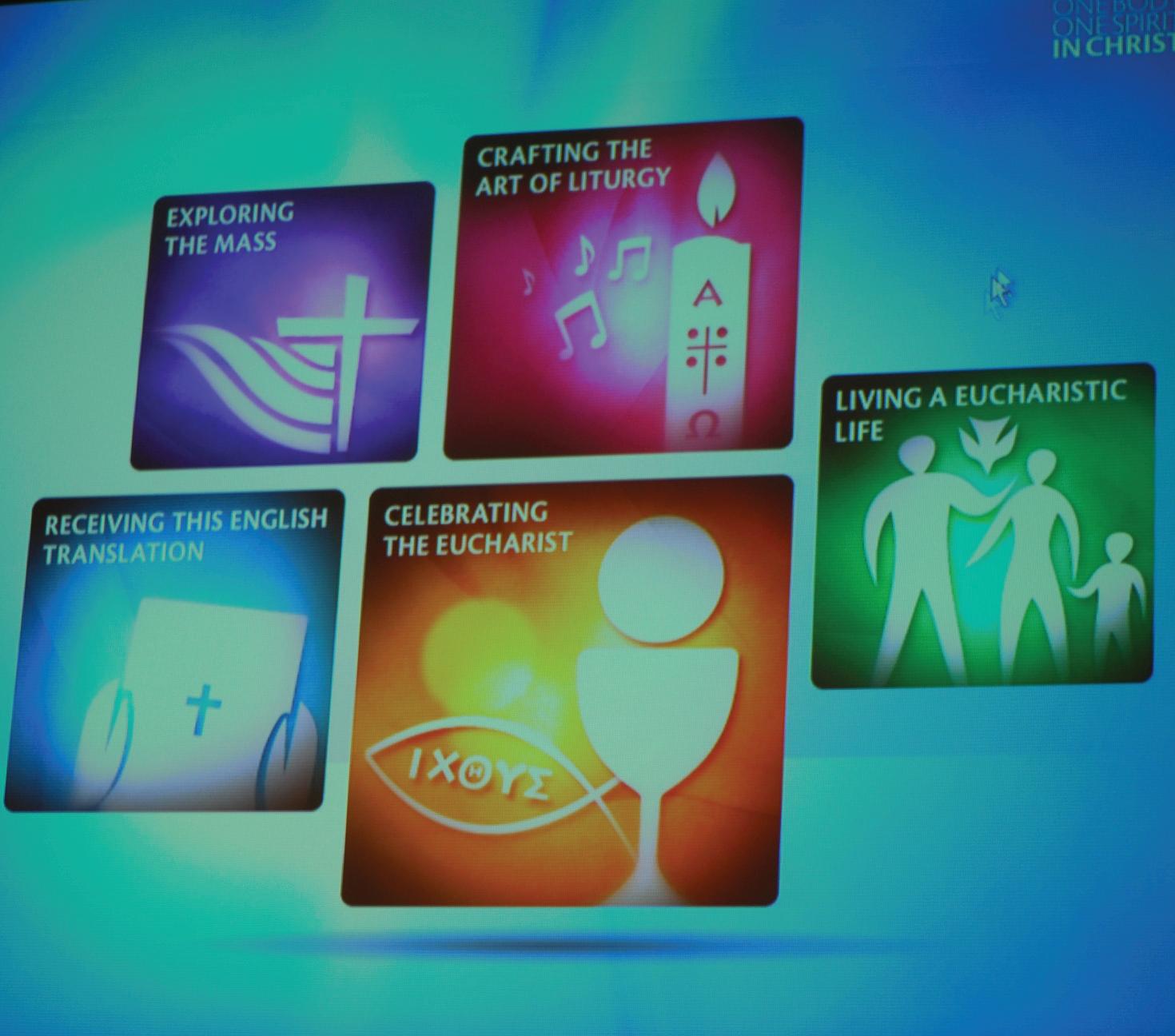
The new catechetical resource Become One Body, One Spirit in Christ will be launched by Archbishop Philip Wilson of Adelaide, President of the Australian Catholic Bishops Conference, in Melbourne on Thursday 30 September at the Academy of Mary Immaculate in Fitzroy.
The resource, which includes an interactive DVD was developed and produced by Fraynework Multimedia (a ministry of the Sisters of Mercy) at the request of the International Commission for English in the Liturgy (ICEL).
Director of Liturgy for the Australian Catholic Bishops Conference Fr Peter Williams said that the new wording may take some time to implement at a parish level, but will ultimately raise the quality of liturgy.
“The new texts will take some getting used to, but contain beautiful language that allows for reverent praise of God”, said Fr Williams, who was in Perth recently to brief local liturgists on the resource. The project was commenced several years ago
at the request of Bishop Arthur Roche of Leeds in the United Kingdom who brought together a small group of international liturgists to formulate the foundational material. The resource is now available in all eleven member conferences of ICEL.
Archbishop Denis Hart of Melbourne who is the Australian Catholic Bishops Conference
representative on the ICEL will also speak at the launch.
At the same time Archbishop Wilson and Archbishop Hart will outline the implementation process for the Church in Australia of the new Missal.
Results of the recommended new musical settings to the Mass by Australian composers will also be announced.



Politicians including Catholic NSW Premier Kristina Keneally who voted to pass the controversial Same Sex Adoption Bill on 9 September, giving gay couples the legal right to adopt children, claim the best interest of children was their primary concern.
Chris Meney, Director of the Archdiocese of Sydney’s Life, Marriage and Family Centre, said that much of the debate in Parliament prior to the Bill becoming law professed to be along the lines of what was in the best interest of children, “but there is much to suggest the pursuit of rights for same sex adults is a significant part of the agenda”.
Many now fear the Bill, which enables homosexual and lesbian couples to legally adopt children, is a precursor to the legalisation of same sex marriages by NSW Parliament.
But whether same sex marriage eventually becomes law or not, there is concern children will suffer as a result of this new legislation and will be denied the right of ever knowing what it is to have a father and a mother.
“Essentially what the passage of this Bill has done is to give the message to the wider community that having both a mother and a father is unnecessary, given in terms of the intrinsic differences of what they can offer children in their care, women cannot father nor can men be mothers. Even single parents raising a child acknowledge this,” Mr Meney said.
Cardinal George Pell has described it as “bad social engineering” and that, beyond inner Sydney, was not only unpopular but should have been soundly defeated by the Legislative Council as well as the Legislative Assembly.
Described by many as little more than a stunt to seek votes from minority groups by a government facing an election in less than six months with its popularity at an all time low, the passage of the Bill came as a surprise, particularly after the first vote the previous week which only narrowly passed it, with a vote of 45 to 43. Had two absent MPs been present it may well have been a different story.
“My opposition to the Bill is not an attack on homosexual persons or on the ability of a homosexual person to love and care for a child. That is not in question. The Commonwealth and State laws that have enabled same-sex parenting acknowledge that.”
Instead Cardinal Pell said his criticism of the legislation was that it denied the right of every child to know, and where possible, be raised by his or her natural parents, which comprised a mother and a father. This right for children, he said, was not only recognised by major religious traditions but is affirmed by the United Nations Conventions on the Rights of the Child.
Chris Meney agrees and says he finds it a great shame that by passing this Bill, the wants and desires of adults have been placed above the importance of the rights of children, robbing them of the experience of having both a mother and a father.
“There are those people who will argue there is no difference in terms of parenting between heterosexual and same sex couples. But these arguments fail to appreciate
that to date, there are no long term studies that demonstrate the effectiveness of same sex parenting.”
But what we do know, he says, is that mother and father arrangements have done “a very good job across all societies for a very long time.”
“What we also know is the damage experienced by children as a result of divorce or marriage breakdown and how this often is not manifested until the child is well into his or her 20s or even older.”
The Same Sex Adoption Bill, which is now law, was introduced by independent MP Clover Moore, whose inner Sydney electorate includes Oxford Street and where the annual Gay Mardi Gras is held. MPs were permitted a conscience vote on the issue with both Premier Keneally and NSW Opposition Leader Barry O’Farrell voting for the Bill and Nationals leader, Andrew Stoner voting against.
Last minute amendments to the Bill were made by Environment Minister Frank Sartor so the wishes of birth parents of a child up for adoption could be taken into account without them breaching the anti discrimination act by refusing to have their children adopted by same sex couples.
This followed an earlier amendment from Clover Moore to exempt faith-based adoption agencies such as two of the State’s largest, Anglicare and CatholicCare, from breaching the same anti-discrimination laws and being sued for refusing to provide services to homosexual or lesbian couples.
This makes it very difficult and somewhat confusing to understand remarks from the Attorney General, John Hatzistergos who said: “First, it is not correct that the faith-based agencies have not been consulted about the proposed narrowing of the amendment.
“I specifically had my office consult both Anglicare and CatholicCare. Anglicare did not have an issue and CatholicCare expressed no position. In fact it specifically said that that was its position and indicated no opposition to the legislation. The text of the amendment was brought to their attention. Indeed, if I had been aware that either organisation opposed any aspect of my proposal I would have considered that and modified it accordingly.”
Those not in favour of same-sex adoption said support of any modification would have given tacit support to the Bill and this was probably known by those in support. Catherine Cusack MLC, who described herself as a community leader, used her time to launch an attack on the Catholic Church, or rather the “two Catholic Churches in Australia”.
Another politician said: “Hansard can make for some very difficult to understand reading at times, especially if you don’t know the subject being debated.”
“Before the passage of the Bill, the law as it stood, already enabled the same sex partner of a biological mother to take out a parentage order and take on the full responsibilities if necessary until the child was 18, when they could make up their own mind,” Mr Meney said.
“The fact same sex couples nevertheless went ahead and demanded full adoption rights, shows there is a wider agenda.”
The new catechetical resource Become One Body, One Spirit in Christ will be launched by Archbishop Philip Wilson of Adelaide, President of the Australian Catholic Bishops Conference, in Melbourne on Thursday 30 September at the Academy of Mary Immaculate in Fitzroy.
The resource, which includes an interactive DVD was developed and produced by Fraynework Multimedia (a ministry of the Sisters of Mercy) at the request of the International Commission for English in the Liturgy (ICEL).
Director of Liturgy for the Australian Catholic Bishops Conference Fr Peter Williams said that the new wording may take some time to implement at a parish level, but will ultimately raise the quality of liturgy.
“The new texts will take some getting used to, but contain beautiful language that allows for reverent praise of God”, said Fr Williams, who was in Perth recently to brief local liturgists on the resource. The project was commenced several years ago
at the request of Bishop Arthur Roche of Leeds in the United Kingdom who brought together a small group of international liturgists to formulate the foundational material. The resource is now available in all eleven member conferences of ICEL.
Archbishop Denis Hart of Melbourne who is the Australian Catholic Bishops Conference
representative on the ICEL will also speak at the launch.
At the same time Archbishop Wilson and Archbishop Hart will outline the implementation process for the Church in Australia of the new Missal.
Results of the recommended new musical settings to the Mass by Australian composers will also be announced.
Afortnight ago this editorial argued that the highest priorities for the Greens and associated environmental activists following the recent federal election would not be the environment but completely different issues such as the redefinition of marriage. That column could well have added the words ‘and euthanasia’ as well. The following weekend, while the country was still waiting to see who would form the next federal government, The Weekend Australian newspaper’s front page headline was ‘Greens push same-sex laws.’ It took no particular prescience to know what kinds of issues the Greens would move on first, only a clear understanding that children can swing in a moment from sweetness to viciousness.
In political terms the Greens are the childish nightmare of Australian life, literally. Although they loudly proclaim themselves as the only defenders of the environment, as a political party they have rapidly become the foremost foe of human life. Their philosophy begins with a good intention: the awareness that we can’t treat the earth as we do, hence their growing political success and influence. But it arrives at a subsequent embarrassment about human beings who they regard (and portray) as sucking creation dry. This simplistic and unscientific premise (human beings cause environmental damage, therefore human beings must be bad) has become a hallmark of their whole political approach and it is this, not their position on environmental issues, that is the real and sinister problem of the Greens. While they ceaselessly proclaim their own importance and their own solutions as the only ones that are acceptable they consistently campaign primarily for the ending of human life in an ever-widening definition of categories of people who can be done away with, presumably in order to make our lives a little easier and to make us less taxing as a species on the environment. Nowhere is this more apparent than in the looming State parliamentary debate, moved by Greens Upper House member Robin Chapple in an attempt to have euthanasia legalised in WA.
PO Box 3075
Adelaide Tce PERTH WA 6832
editor@therecord.com.au
Tel: (08) 9220 5900
Fax: (08) 9325 4580
If Mr Chapple is to succeed in having the killing of the elderly, the sick, the very young and the disabled legalised, which is what euthanasia has become wherever it is legalised (inquirers, please check the Netherlands) he will only be able to do so by obscuring for the community, for journalists seeking to dissect the issues and state legislators the one distinction that makes his legislation redundant: that between palliative care and its associated pain control on the one hand, and euthanasia on the other.
What is the distinction? Palliative Care is the medical approach to caring for the terminally ill which is devoted to giving every individual the best possible quality of life up until and including the moment of death. When pain relief is provided to someone suffering a terminal illness and an unintended consequence of this is that death is hastened, no euthanasia has occurred. Most critically for the euthanasia debate palliative care is able to guarantee that no individual with a terminal illness needs to die in any pain at any time and this assertion is confidently backed by oncologists and palliative care specialists the world over.
Euthanasia is completely different. It is the decision, taken with or without the consent of an individual suffering from depression or illness, terminal or otherwise, to end that person’s life. In WA the euthanasia proposed by Mr Chapple is the form which depends (but only for the time being) on consent of the person who is to die.
The danger is obvious. The moment such a law is passed, euthanasia becomes immediately prone to manipulation by any one or more of the numerous parties connected to the process of dying. It also reveals how fraught with danger is the position of the individual who is dying, already in a weakened state and prone to pressure from any of those surrounding them. Legalisation of euthanasia creates a legal and moral nightmare for patients, the terminally ill, medical practitioners, hospital administrators and the legal system. It is, in a real sense, exactly the human and moral mess that the Greens are so predictable at creating.
It is also exactly the sort of mess which easily morphs into situations where others begin to decide when the vulnerable will die.
The distinction between palliative care and euthanasia is the crux of the issue which those in WA’s Parliament who oppose euthanasia must communicate with limpid clarity to their colleagues. When the all-important difference (that hastened death as an unintended consequence of pain relief is not euthanasia and is morally acceptable) is made clear, support for euthanasia becomes redundant.
In fact, because the euthanasia lobby, including the Greens, has confused the issue by Disneyfying and sentimentalising the debate an additional obstacle that now needs to be overcome by euthanasia’s opponents is that many people now confuse the two things. If those opposed to Mr Chapple’s Bill can clarify what the fundamental difference between the two is, Mr Chapple’s Bill will rightly collapse.
On every occasion that has arisen in Australian state and federal politics, Greens have voted to widen the legal definition of who can be done away with. In this regard their record is consistently anti-human and appallingly ignorant. The gaping weakness in their outlook is that while the environment is sacrosanct they are prepared to facilitate at every turn the process of doing away with people. Their philosophy and policies in relations to human beings make them the intellectual lightweights of Australian politics, but it would not be the first time in history that such uninformed children have gone on to do such awful, thoroughly terrible collateral damage to those around them.
host of others instead of the clap hands hum drum that we often get these days.
Noel Bourke HeathridgeHooray and hallelujah for Tracey Rowland and her splendid article on Sacro Pop, regarding the soppy music that we often have to sing in the alleged praise and glory of our God (The Record, 8 September).
Some of the greatest music ever composed was written as songs of praise, ranging from the Hallelujah Chorus to simple songs like Silent Night. Unfortunately many modern “hymns” are really dumbing us down instead of lifting us up.
Many hymns now being sung sound like “Merry go round music” or “Cowboy music” at the end of which I have to strenuously resist the urge to yell “Yee har, odee odle lay ee too” in my best Roy Rogers impression.
Then there are the other hymns that must have been written by a marketing agency for soap suds. They all have very mushy words and nondescript tunes that make elevator music sound like Beethoven’s Ninth Symphony.
I do appreciate the steps taken recently by the Archbishop of Melbourne to put a stop to pop music being played at funerals. I remember a few years ago attending a Requiem Mass that concluded with the coffin being carried out of the church to the tune of Roll out the barrel; apparently a favourite song of the deceased.
I greatly appreciate the huge amount of time and effort that members of church choirs devote to learning and singing hymns that will enhance the liturgy of the Mass. What I would really appreciate, however, is some balance between the Sacro Pop and some more traditional hymns. How I long to belt out Faith of our Fathers, Sweet Sacrament Divine, Hail Redeemer, King Divine, Hail Queen of Heaven, Mother of Mercy Day by Day and a
am just an ordinary baby boomer Catholic with no theological knowledge. I love my God, my faith and my Church. Being a baby boomer I was brought up in the pre-Vatican II Church with all the solemn organ music and the ceremonies, celebrations and usual liturgical life that was practiced in the 50s and 60s. We accepted it all because there was nothing else available.
Then came the late 60s and the ‘renewal’ that swept through the Church. Guitars and ‘rock’ masses were the in-thing. Yes, it was appealing to me as a teenager. It didn’t change my perception of God as my heavenly Father but it certainly made Mass more inviting, understandable and friendly.
The years passed and I became involved in parish music.
Sometimes things didn’t turn out quite the way they were supposed to but the aim of my music planning was always to complement the Mass theme or season and also bring a positive feeling – joy, peace, comfort – to the congregation. I would aim to help them leave Mass feeling uplifted and possibly happier than when they arrived.
Trite though the words may be to many ‘sacred’ songs (and I agree there are some shockers), I personally feel that I have received far more comfort at times that I would from the old hymns with often lugubrious words and ponderous music. I am not trying to trivialise God but show there can be another way of praising Him in today’s world without being disrespectful.
Music lifts my soul and soothes my spirit. I doubt I am alone in this. There will always be a place for the liturgical standards in certain celebrations but I question whether regularly returning to music that may be three centuries old will revitalise parish congregations.
Maybe the aim should be to compose better modern sacred music. In the world of today there is enough gloom, uncertainty, sadness etc. We should be able to look forward to Mass with joy and anticipation. Music can certainly help raise our hearts and spirits and
give glory to God without being dirge-like with ancient lyrics. Above all things, I believe God wants us to be happy – not the ‘happiness’ that the world expects but joy in his love, excitement and anticipation at attending Mass and the peace that comes with following His will. For me that can be expressed with appropriate music.
I respect the years of study that theologians have undertaken but surely ordinary people should be able to voice and have acknowledged their simple part in Church life without being made to feel we are not worshipping God in a correct manner because we prefer a more modern form of music.
Pat Sousa ByfordIwould like to see the title of the Archbishop’s residence in Victoria Square changed to something more meaningful for today’s society.
When I saw the images of the Bishop’s “Palace” recently on the front page of The Record I felt decidedly uncomfortable. To me it smacks of a bygone era of wealth and political power and gives a very mixed message indeed.
We try to present ourselves as a caring and compassionate Church towards the homeless, the marginalised and the poor, in the image of the poor Jesus who by choice became a homeless, wandering preacher.
This is juxtaposed with a Cathedral that cost over $35 million and a “palace” opposite it.
While I am proud of our beautiful new Cathedral and acknowledge our Church leads the way in many areas of care for those who suffer in our society, by using such outmoded language we distance ourselves from the very people we are trying to minister to.
It makes our preaching of the Good News of the humble and poor Jesus sound a little hollow and gives the cynics of the Church a little more leverage
Even though the building is heritage listed, I see no reason why the name cannot be changed so that it better resonates in our time. Otherwise we run the risk of further alienating ourselves in a society that already sees us as a fossilised symbol of the past.
Fran Ellyard
North Perth
Australian human rights activist Phil Glendenning is imparting insights on how to become a more effective advocate for social justice causes at a 24 September workshop.
Advocacy and Media Skills for Social Justice will be held at the Edmund Rice Institute for Social Justice in Fremantle from 10am until 5pm.
Director of the Edmund Rice Centre, Sydney, Mr Glendenning is immediate past President of Australians for Native Title and Reconciliation.
Mr Glendenning has also been the recipient of an Honorary
PhD for his international human rights work from the Australian Catholic University.
This interactive workshop provides participants with skills on successful advocacy and media techniques for social justice work via extensive case studies and group discussions.
Dynamics of the media cycle will be covered, along with important differences between radio, TV and print media.
Participants will learn how to prepare strong advocacy messages and give effective interviews in all mediums.
Tickets are available from $25 for unwaged/students, up to $150 for government and corporate.
To book call the Edmund Rice Institute for Social Justice on 9432 2400, or email admin@ erisj.org.au. To download the event flyer or register online go to: www.erisj.org.au. You can also follow @erisj_au on Twitter.
Despite boasting onefifth of the world’s population, the Catholic Church is by no means a “popular” institution. Classical teachings on abortion, premarital sex, divorce, and especially contraception are thought by many - both outside the Church and within - to reek of old-fashioned ideas of sex at best and, at worst, patriarchal views of women. The reservation of the priesthood to men, for its part, is often simply regarded as male chauvinism. These Church teachings lead many to wonder how any self-respecting woman (or woman-loving man) can stay and pray within the Catholic Church.
One could assume that many ordinary Catholics dispensed with the teachings on sex and marriage during the turbulent 1960s for the simple reason that these teachings are difficult to live - that they require, for some of us, a degree of self-control and selflessness that is beyond ordinary means.
But history reveals another force at work as well.
For just as the world was coming to believe that there was more intrinsic value to sex than procreation, and that there is more to being a woman than birthing and nurturing children, the Church, too, was articulating a more nuanced understanding of human sexuality and the nature of women.
A substantial number of vocal theologians believed that such development of doctrine was a sure sign that, at long last, the Church would “modernise” its teachings on abortion, sex, and marriage - and on the priesthood as well.
This hoped-for view prevailed among progressive-minded academics and activists to such an extent that the Church was illprepared to handle their immediate protest of Humanae Vitae, the 1968 encyclical reaffirming the

Church’s prohibition of contraception. Almost overnight, Catholics, whether in the pews or in the seminaries, received the strong impression from dissident theologians (through the mouthpiece of the media and the lecterns of the Catholic colleges at which they taught) that the Church was wrong
about its teaching on contraception - and perhaps about much else when it came to human sexuality. The only responsible thing for a thoughtful Catholic to do, according to these academics, was to ignore Church teachings and “follow one’s conscience.”
To be fair, the Church did give
these theologians a foothold for their views in the Vatican’s modern reconsideration of sex and women.
While the Church had always prioritised the procreative, or “baby-making,” aspect of conjugal sex, buttressed by theological treatises that derided sexual pleasure even within marriage, she began to draw much more attention to the unitive, or lovemaking, aspect of marriage in the modern period.
Similarly, the Church’s views on the nature of women also shifted. Increased papal attention just prior to the Second Vatican Council to the dignity and equality of women was ratified in the Council’s denunciation of sexual discrimination and support for greater recognition of the rights of women.
In the wake of these changes, many waited with bated breath for the Church to dismantle restrictions on abortion, contraception, divorce, and sex outside of marriage, and to clear the way for a married priesthood open to women.
But no change came - or has come in the decades since. Indeed, Pope John Paul II and Pope Benedict XVI have taken every opportunity to reaffirm the Church’s constant teaching on abortion, sex outside of marriage, divorce, contraception, and the priesthood.
They have done this even as they continue to articulate, and rearticulate in new ways, the Church’s modern recognition of the dual purposes of sexuality and of women’s fundamental equality with men.
John Paul II has been called John Paul the Great in part because he began the difficult task of reexamining and rearticulating biblical truths and Church teaching in light of modern philosophical insights into the human person and human experience, foremost among them freedom and equality.
John Paul’s Theology of the Body, and the “new feminism” he championed, have afforded many intellectually curious Catholics a
strong theoretical explanation for many truths of the faith that have been challenged in recent decades, especially those concerning sexuality and the role of women in the Church and in the world.
And yet, despite the rich theological explanation of these controversial topics in recent years, as well as a vibrant orthodox faith practiced by many John Paul II-inspired young Catholics, the Church continues to be perceived as anti-woman and anti-sex, sometimes virulently so. It’s as though some inside (and outside) the Church cannot fathom how the Catholic Church can so appreciate the dignity of women and the beauty of sex, and yet still stand firm in her views on abortion, sex, marriage, and the priesthood.
For many, a deep disconnect remains between the Church’s new, modern emphasis on equality and freedom and her continued adherence to traditional teachings.
A practical, pro-woman defense of these controversial teachings is required to bridge the gap. As the late and beloved Elizabeth FoxGenovese wrote: “A viable new feminism must directly confront the realm of practice ... the real terrain of struggle ... for most women understand their lives within [that] context” (Women in Christ). Ordinary Catholics (and non-Catholics alike) need to understand, in non-theological terms, why selfrespecting women and womenloving men can faithfully live these controversial Church teachings in the modern world.
Abundant empirical evidence now exists that corroborates Church teaching on sex and marriage: straying from such teaching harms women, while embracing it helps women to flourish. John Paul II supplied the theology. Secular researchers substantiated it in practice. It’s now up to us to boldly proclaim it.
This essay is an excerpt from Women, Sex & the Church: A Case for Catholic Teaching, now available from Pauline Books & Media.
We need a society that cares, not one that kills the vulnerable
Continued from Page 1
Feelings of unbearable dependence or loss of dignity can be provoked by the attitudes of others as well as our own.
Being inherently social, human beings feel best under conditions of positive, caring relationships.
For example, in a study that I conducted involving people with quadriplegia in the Netherlands and Australia, it was only those who lacked supportive relationships who wanted euthanasia for themselves.
This idea of suffering as a social, rather than a purely private, experience can help us decide what we will do about it. The palliative care journey is to address the person’s suffering by caring for them. The euthanasia option is to do away with the suffering by killing the sufferer.
A bill presented recently in the parliament of Western Australia, where I live, attempts to accommodate both options. It tries to respect “consumer” rights to choose assisted death while acknowledging the value of palliative care. It attempts to address concerns often raised against state-sanctioned euthanasia by including provisions against profiting from a euthanasia death.
It attempts to address concerns about exploitation by ruling out euthanasia for those who feel burdensome and those who are under 21. It attempts to ban euthanasia “tourism”. It involves a multi-tiered application and compliance process.
But experience shows that no safeguards are strong enough to hold out against an inevitable call from the public for a relaxation of the law to cover the “considerable suffering and debilitation” of people in these excluded categories.
In any case, is a doctor really able to assess whether someone wants euthanasia to stop being a burden to others? In the Netherlands safeguards have not stood in the way of, for example, 12-year-olds applying for euthanasia. People who are not terminally ill have ended their lives under euthanasia provisions.
At the same time, people fear slow deaths on machines or after exhausting treatment. And anomalies under the present regime do exist where medical staff actively hasten death illegally. Does that mean we should simply make this legal?
We should really ask, is it responsible to hurry to the legal
euthanasia option, before, as a society, we have done everything possible to practice all the care and support that we are capable of. Patently, we are a long way off this point.
We do not live in caring societies. We live in societies where social bonds are fraying. Individual autonomy, contractual relations between rational consumers, and consumerism get in the way of us acting as social, caring, human beings.
Legalising euthanasia fails to address the suffering that underlies patients’ requests for it. Often cited are: dependence on others, pain, and loss of dignity. All of these can be ameliorated through good care. Dependence on others is only undignified in the absence of caring support. Of course there may always be pain that cannot be treated other than by sedation, but extreme cases make bad law. In the end, there are no perfect solutions.
For some euthanasia is compassionate because it avoids situations where people end their own lives. But this is misreading the nature of compassion, as well as being unrealistic. Compassion requires personal engagement with the suffering of another - the “cares”
of care – in an imperfect world, something which euthanasia practice does not do. Euthanasia is basically a contractual arrangement between detached individuals, within certain rules, to end a life. It is a technical procedure, not an act of compassion.
An ethics of care pays attention first of all to the need underlying the request. it accepts responsibility for meeting that need and attends to it competently (Tronto, 1993). It is a participative two-way relationship with, in this case, a terminally ill patient. This care is not paternalistic and involves being with the suffering person, using thoughtful communication, trust, love, respect, and even humour. These help to preserve meaning and purpose in the end stage of life which is often seen as meaningless in our rationalistic world.
Another response is to encourage both options: palliative care and euthanasia. But before we consider giving State sanction to euthanasia let us first become a caring society. We might then find that the question no longer arises. There is a lot of work to be done. At the present, most of us continue to devalue aged, frail,
and highly dependent people who embody those parts of the human condition that we do not like. In a utilitarian consumer society, statesanctioned euthanasia carries risks of serious misuse.
Legislatures should reject legalised euthanasia as an inappropriate route to relief of suffering. But they should also ask questions about their own health care policies and practices as potential contributors to requests for euthanasia. How to treat every life as valuable and deliver excellent care? How to strengthen palliative care?
If we paid attention to human needs at every turn; if we took responsibility for them; if we did so competently and in participation with patients, what would that look like?
The character of a nation is revealed in the way it treats its most vulnerable people. Terminally ill people are highly vulnerable. Rejecting state-sanctioned euthanasia is not insensitive. On the contrary, it should affirm our determination to work towards a caring society.
Dr Leipoldt, who holds a PhD from Edith Cowan University, published Euthanasia and disability perspective in 2010. His blog can be found online at: www.ndisonline.blogspot.com
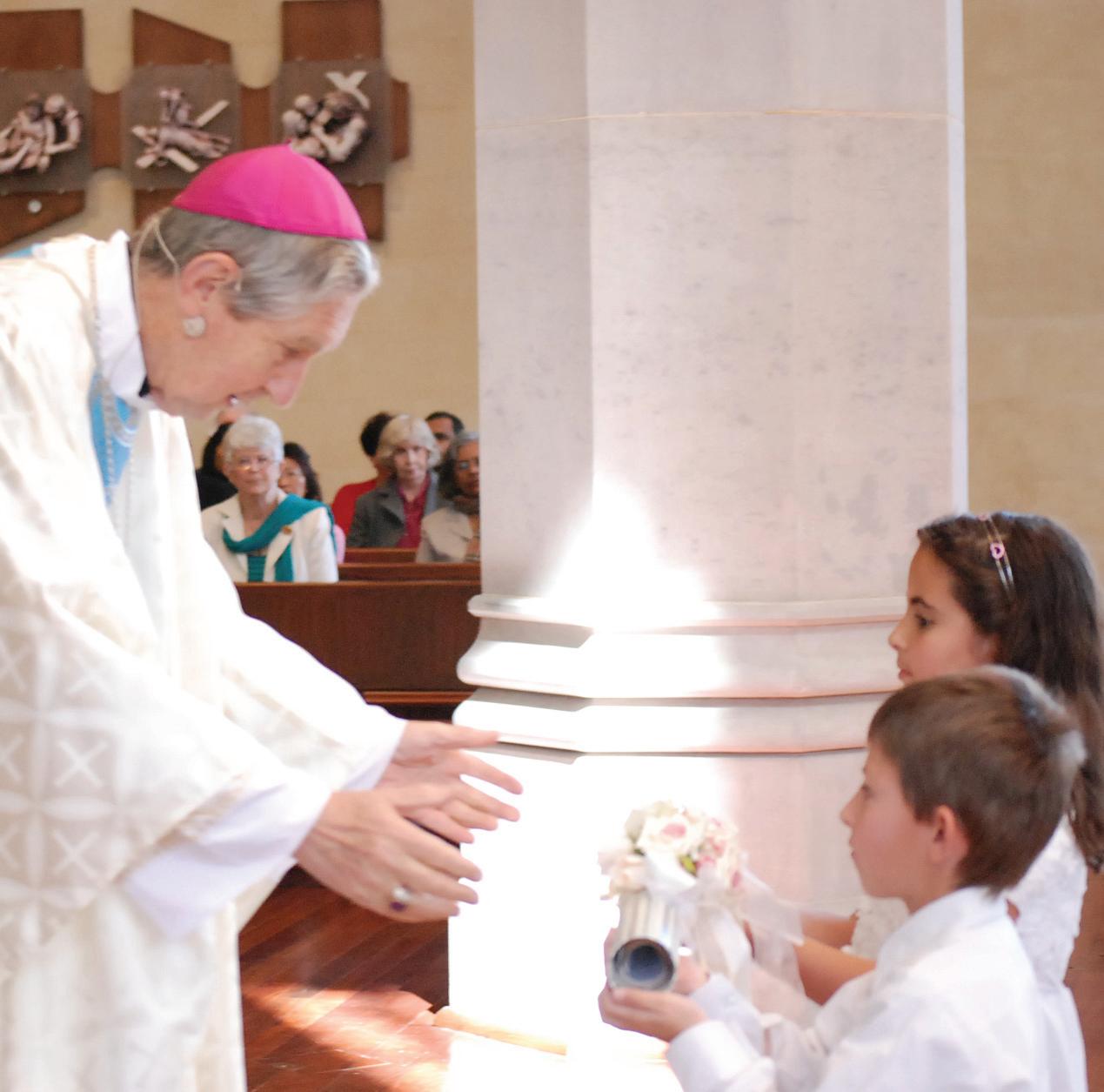
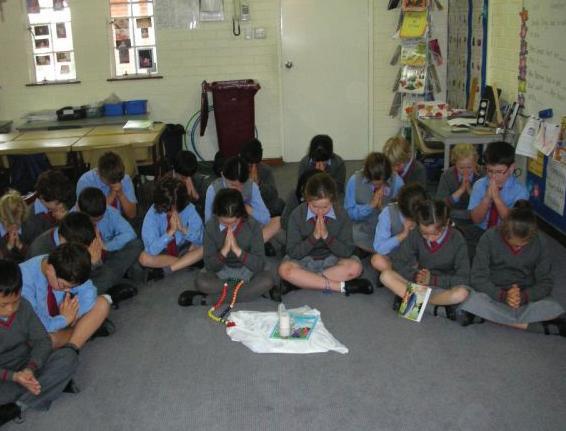
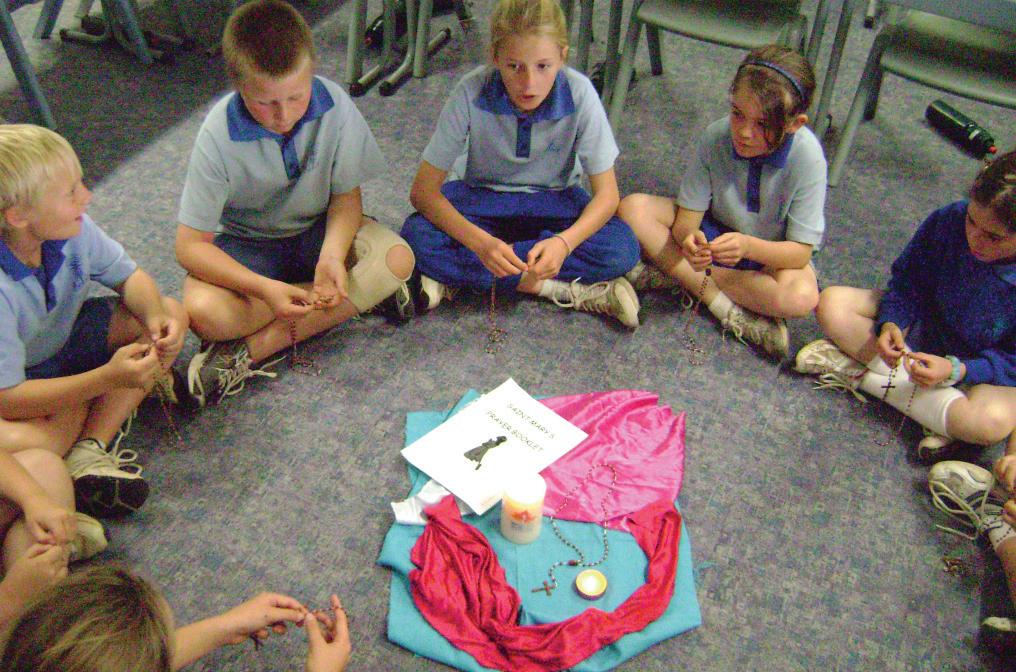
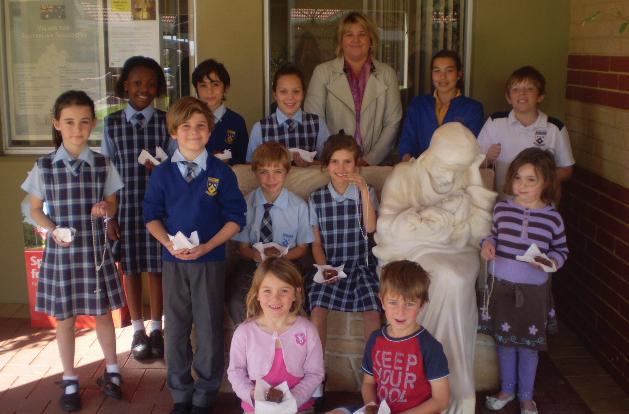
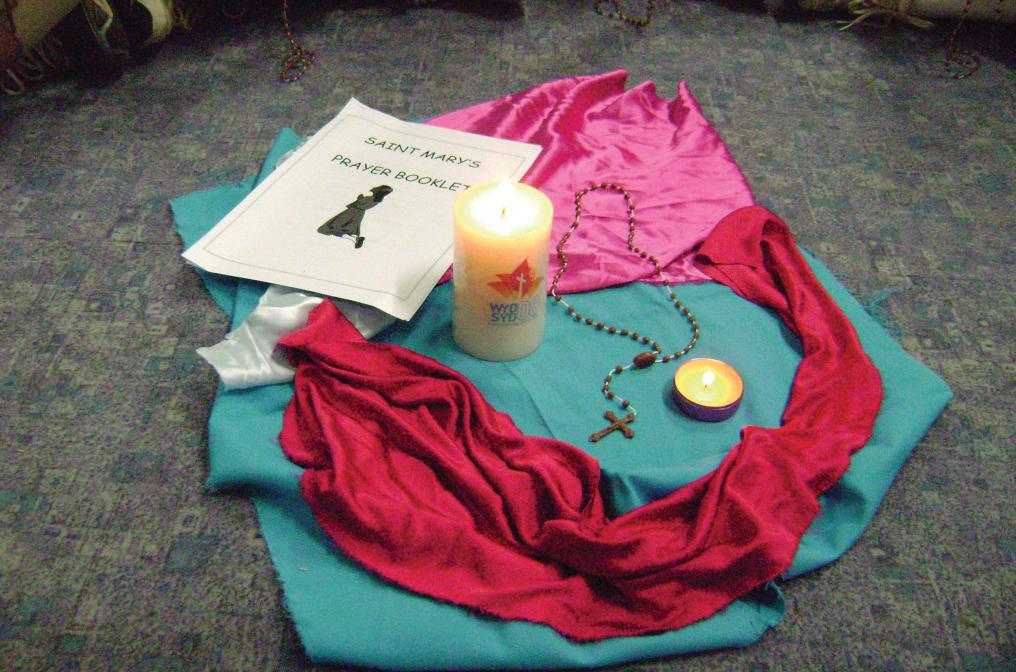
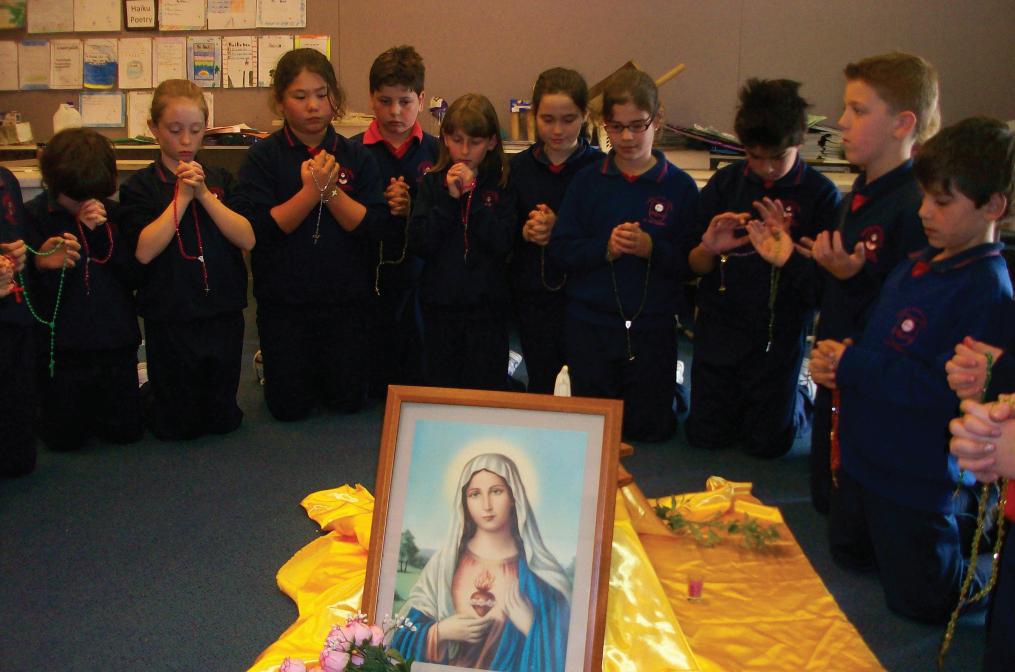
rchbishop Barry Hickey declared devotion to Our Lady is “essential” for priests and laity alike as a record number of schools and participated in the annual 48 Hour Rosary Bouquet.
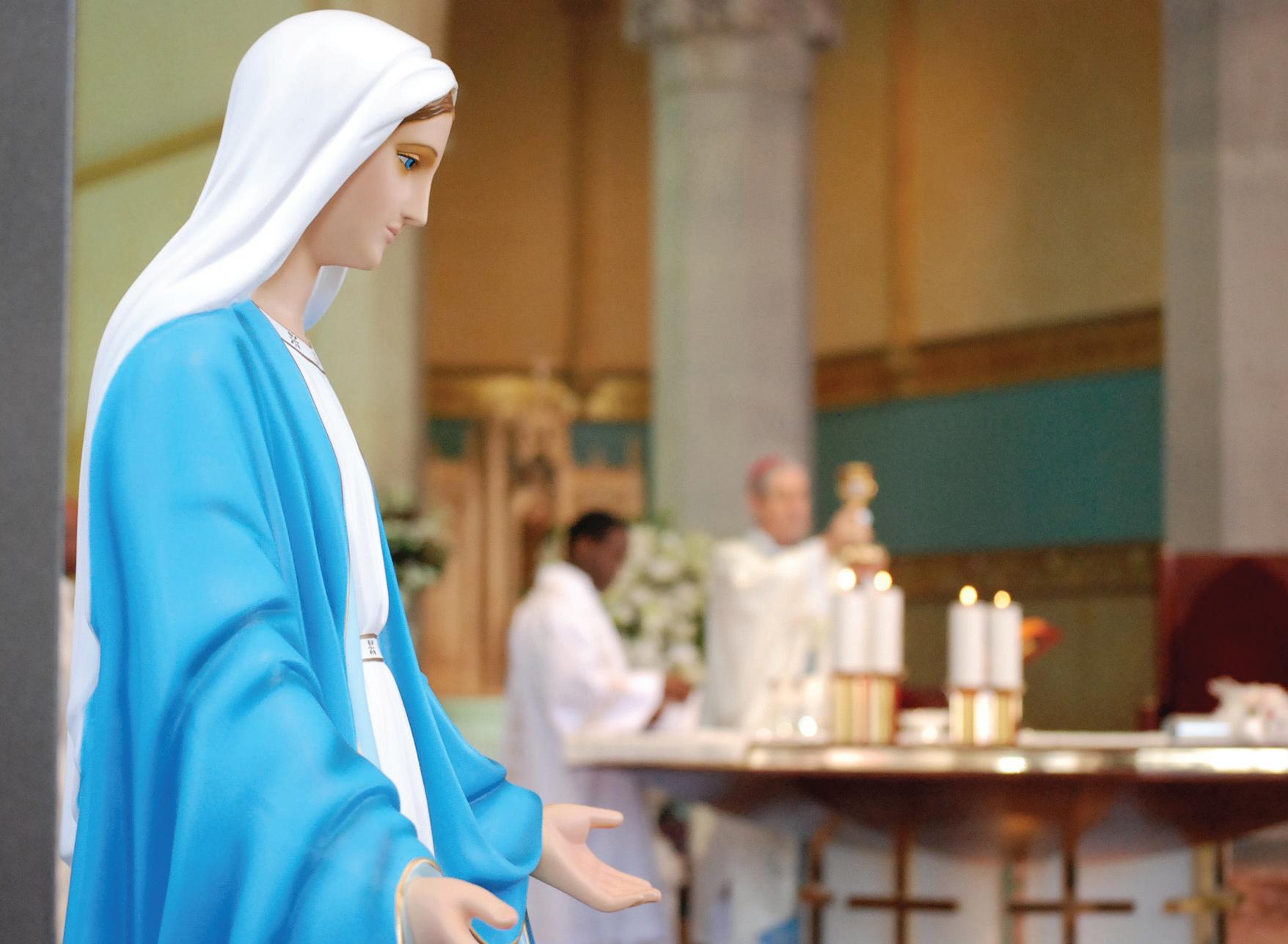
“Our devotion to Mary must be very strong, as she was chosen by God to be the mother of our Saviour and was prepared by God as the greatest among us,” Archbishop Hickey told participants at Mass at the Cathedral of the Immaculate Conception of the Blessed Virgin Mary in honour of her birthday on 8 September.
During the Mass, Gabriella McGinnity and Luke Ratajczak presented Archbishop Hickey with the scroll of the names of all who participated in the Rosary Bouquet for Mary this year, with the Ratatczak family presenting the Offertory gifts.
Those participating in the Rosary Bouquet included 14 schools – a record in the WA-organised event’s 21st year.
Marian Movement of Priests member Fr Paul Carey, who concelebrated the Mass with the Archbishop and Cathedral assistant priest Fr Jean-Noel Marie, told The Record that devotion to Mary is “essential”, as “the mother holds the family together – and the family is under attack today”.
The Marian Movement of Priests consists of dozens of priests who meet on the first Thursday of each month at the Edel Quinn Centre, East Perth, the Legion of Mary headquarters.
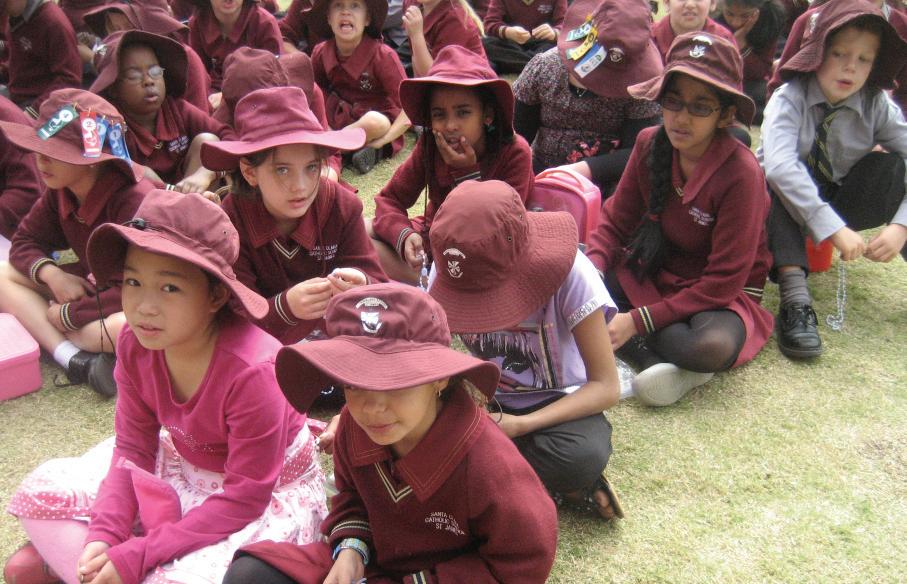
Fifteen schools and seven parishes covered the 48 hour Bouquet this year; for St Anthony’s parish in Greenmount it was the tenth year the parish has participated. Parishioner Jan Mackin said the early hours of the morning were “so fulfilling” because she knew others throughout the State were praying as well.
“It was like small lights throughout the State uniting as one for Our Lady,” Mrs Bowen said.
Small country parishes such as Mukinbudin, Bolgart, Brookton, Southern Cross among others committed between one and four hours, linking the Rosary chain with the universal Church.
Bouquet organiser Margaret Bowen told The Record that families and individuals felt it was important to have their names on the Roster to be part of the State’s birthday gift to Mary.
The participating schools were La Salle College, Midland, Santa Clara in St James, Ursula Frayne College in Victoria Park, St Maria Goretti Primary School in Redcliffe, Our Lady of Mount Carmel in Hilton, Sacred Heart in Mundaring, St Paul’s in Karratha, St Paul’s Primary in Mt Lawley, St Mary’s in Northampton, St Kierans in Tuart Hill, Leschenault Primary in Australind, Holy Spirit Primary in City Beach, St Bernadette’s in Port Kennedy and St Anthony’s in Greenmount, Birlirr Ngawiyiwu Catholic School near the Northern Territory border.
All expressed pleasure to have their students involved in praying the Rosary for Our Lady, Mrs Bowen said.
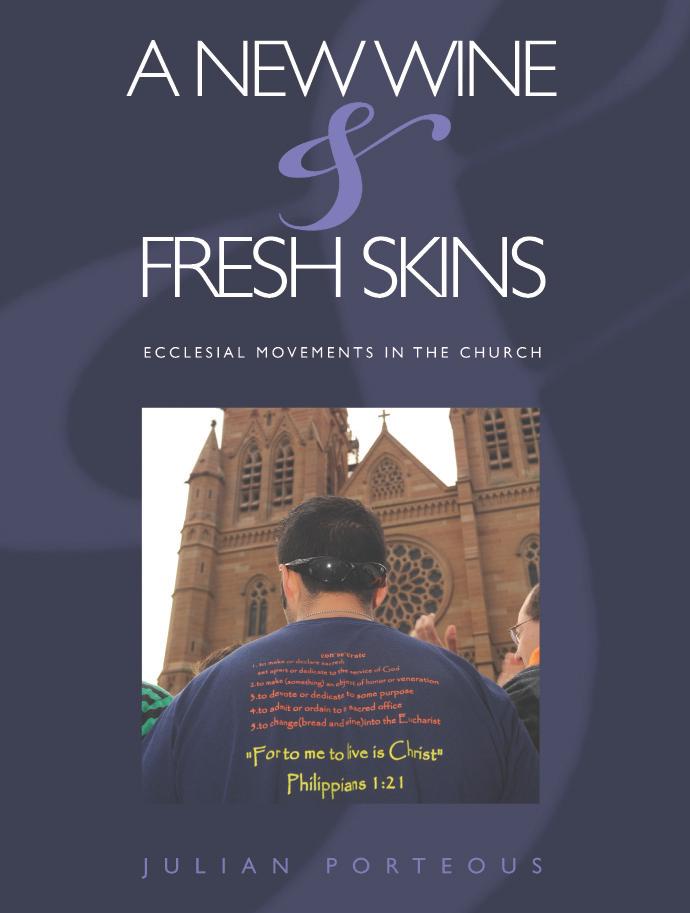
Readers of The Record are invited to the launch of A New Wine & Fresh Skins
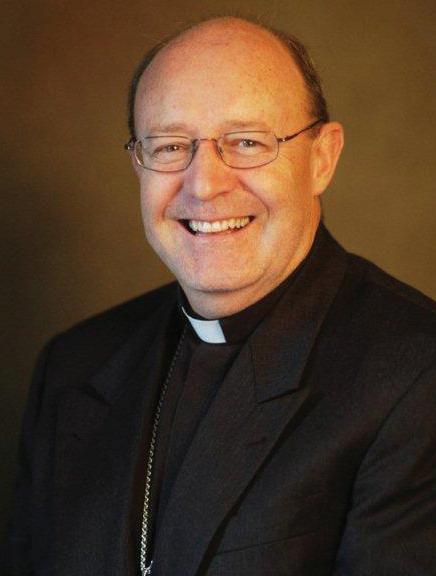
by Auxiliary Bishop Julian Porteous of Sydney hosted by The Record newspaper & officially launched in Western Australia by Auxiliary Bishop Donald Sproxton
Wednesday 6 October, 6.30pm-8pm
St Mary’s Cathedral Parish Centre (downstairs in the newly completed Cathedral)



Parking
at ground level from Murray Street.
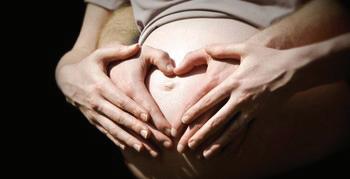
Earlier this month, fertility specialists gathered at a conference in Omaha, USA. Observing was Perth’s own DR AMANDA LAMONT writes exclusively for The Record about how the radical work by a self-described ‘antiestablishment Med student’ is changing the lives of many Perth couples
In September 2010 Omaha celebrated 25 years since the opening of the Pope Paul VI Institute by Dr Thomas Hilgers, an obstetrician gynaecologist who has dedicated his life’s work to fulfilling the mandate of Humanae Vitae released by Pope Paul VI in 1968. His work so far has resulted in the development of the Creighton model FertilityCare system (in Australia and increasingly in the US, it is simply known as ‘FertilityCare’, with his approval), a charting system designed to provide a daily accurate record of a woman’s reproductive health, and subsequently NaProTechnology, a new reproductive medical science which is now in use all over the world to help women and couples experiencing subfertility and womens’ health problems.
NaProTechnology evolved from the standardisation of the FertilityCare system, which for the first time allowed the accurate comparision of womens’ charts, so that reliable indicators for normal and abnormal reproductive function could be determined.
Dr Hilgers is often quoted as describing the FertilityCare charting system as ‘a gynaecologist’s dream’. In trained medical hands it is an outstanding tool in the diagnosis, treatment and monitoring of reproductive health problems.
Partnered with FertilityCare,
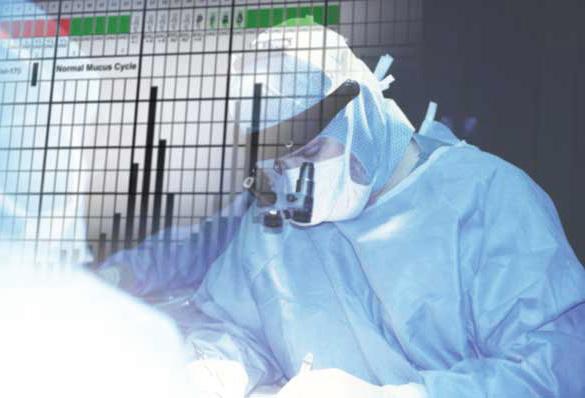
NaProTechnology provides a treatment programme which is both natural and medical, minimally invasive, highly effective, ethically sound, and enriching for marriages.
It truly represents medicine at the service of the human person, at the service of nature, at the service of marriage and at the service of Life.
At an education programme in Omaha many years ago I was one of many who had the opportunity to publicly honour Dr Hilgers for his work during the recording of a segment for local TV.
I hadn’t realised until that moment how much this man and his faithfulness to God’ call on his life had impacted on my life.
Little did I know then that this impact would spread all the way to Perth, Australia and Australasia. I could honestly testify then that he was the only reason I was still practicing medicine.
I first heard about FertilityCare at Craig Lodge, in Dalmally, Scotland. I was doing some admin work at the Catholic retreat house, having left Australia on a one-way ticket with a deep disenchantment
with medicine in general, after working in hospitals and as a GP in Perth for several years.
I had started GP training parttime in Scotland but resigned before the end of the year, convinced that this type of medicine was ‘not for me’. I felt I could have been more useful to my patients in any other role than being their doctor, as most of my prescriptions and advice seemed simply to be facilitating a way of life which was causing them such pain.
I wrote in my journal: ‘it is a medicine for Life that I am seeking’, not believing that it actually existed. In FertilityCare and NaProTechnology I have found this and more.
Actually, I say that ‘FertilityCare found me’, the answer to my prayer, as I had given up on medicine completely. I am deeply grateful to Dr Thomas Hilgers for giving me the opportunity to practice a true ‘medicine for Life’.
In our work at the Magnificat FertilityCare centre in Yokine I am reminded of this phrase ‘a medicine for Life’ on a regular basis.
Everything that we offer, from the decor of the practice to the
administrative care, to the work of the charting teachers to the extended length of medical appointments, all are geared towards caring for each person in their own unique set of circumstances.
NaProTechnology is a fantastic medical tool, leading us through a logical pathway of diagnosis, treatment and monitoring, using standard medical techniques and medications including some natural hormones, and surgery when required.
Each couple experiencing subfertility are offered specific treatments for their own individual reproductive issues, aiming to diagnose and fix the subfertility problem, so that they can conceive naturally and maintain their pregnancy to full term. Similarly, women’s health problems are treated with the aim of restoring full gynaceological health without suppressing the natural procreative cycles.
Long appointments and frequent contact with caregivers offers the opportunity for a strong therapeutic relationship between the couple and their doctor and team.
This relationship in itself is often part of the healing process.
The response of our couples is overwhelming: ‘Why didn’t someone tell me this before?’ (on learning how to chart cycles using the FertilityCare system), ‘Why didn’t someone do these tests before?’ (on being investigated for hormonal causes of miscarriage) and ‘We feel like you actually care about us’ (on the nature of the FertilityCare treatment program in comparision with previous IVF treatment).
We hear from couples that their marriages become stronger through their use of the system (to quote one couple ‘even if we never conceive a baby, we are glad we have used this system because it has taught us so much about each other and ourselves that we could otherwise not have learned’).
This is truly a medicine for Life in the gospel sense of ‘Life to the full’ cf John 10:10. FertilityCare and NaProTechnology are not only statistically highly effective in helping couples to hold their own beautiful baby in their arms, they also innately serve to magnify the beauty of the human dignity of each person involved.
It is estimated that approximately 40 to 50 per cent of couples will conceive a baby and maintain their pregnancy using FertilityCare and NaProTechnology. This is an approximation because each treatment programme is specific to the reproductive health problems of each couple, so the exact pregnancy rate will vary from situation to situation.
Since the opening of the first FertilityCare and NaProTechnology centre at St John of God Subiaco in Perth in 2002, similar centres have now opened in Melbourne, regional Victoria, Sydney, regional NSW, Adelaide, Brisbane, the Gold Coast, Canberra, Singapore, Taiwan and Malaysia.
There will be three doctors offering NaProTechnology at the Magnificat FertilityCare centre from October this year, when Dr Catherine Hurworth will be joining the team. Three FertilityCare Practitioners (teachers of the charting system) and two administrative managers complete the team at the centre, with a specialist surgeon and team of counsellors and dieticians located off-site.
For more information call Ella at the centre on 9440 4530.
Church has greater insight on sexuality than it’s given credit for: expert
OMAHA, Nebraska (Zenit. org) - Why would an antiestablishment medical student of the 1960s, who once seriously questioned the Church’s teaching on pre-marital sex and divorce, take up the challenges posed by Humanae Vitae to men of science and make it his life’s work?
Dr Thomas Hilgers posed this question about himself on the 25th anniversary of the institute he founded as a direct response to that appeal, spoke on the pastoral directives of Humanae Vitae, which kicked off the fourday Celebration of Love and Life seminar. On 4 September, Hilgers’ book titled The NaProTechnology Revolution: Unleashing the Power
in a Woman’s Cycle was launched at the conference. The Paul VI Institute aims to build a culture of life in women’s health care. Among other accomplishments, it has developed a method of natural family planning called the Creighton Model FertilityCare System and NaProTechnology.
In a personal account of his journey in responding to the encyclical’s appeal to scientists, an area that he believes “has been greatly ignored”, Dr Hilgers explained that responding to Paul VI’s challenge to men of science has been his life’s work since he was 25, but characterised himself as “the last person in the world that you would think would respond to this.”
Hilgers recounted that in his college days, he went through “a process for a couple of years asking questions” about pre-marital intercourse and divorce. He noted
that his intention wasn’t that of disagreeing with the Church or “rebellion,” but that he just “wanted to think these through” so as to understand the issues.
“Eventually,” he continued, “when I was done with that, I came out at where the Church was.” Hilgers reflected that this experience, which led him to not think of the Church as “scary” or “dictatorial,” may have prepared him for what was to come with the publication of Humanae Vitae
After relating how he almost got kicked out of medical school, the doctor affirmed that he was “the epitome of the anti-establishment guy of the mid 60s.”
The difference, he conceded, was that “instead of protesting the Vietnam War, I was out protesting abortion.”
When Humanae Vitae was published in 1968, Hilgers said he was convinced that the Church
would change its mind regarding its position on contraception.
While admitting he was more shocked by the reaction to the encyclical than by the document itself, he did acknowledge that “he may have missed something” in his thinking about contraception.
“I only had to read it once before it expressed basic truths that were magnetically compelling,” he noted, adding later that he “realised the Church had greater insight than it was being given credit.”
“After reading [Humanae Vitae], and more importantly after believing it, and that is where faith comes into play, the ultimate conclusions of Humanae Vitae were inescapable, and I wasn’t even at the paragraph yet where it said you couldn’t use contraception,” Hilgers said.
When reading the pastoral directives, he said he was struck
by the appeal to men of science: “[Paul VI] seemed to recognise that scientific work was still necessary to show that as the Church teaches, no true contradiction exists between the divine laws for transmitting life and those for fostering true conjugal love.
“Once one begins to understand the importance of the teachings of Humanae Vitae, the challenge to the public authorities, to men of science, Christian spouses, apostolate of spouses, priests and bishops, becomes inevitable.
“I am deeply grateful for having responded to the appeal of Pope Paul VI to men of science; it has enriched my life in ways that, in spite of lots of struggles and difficulties [...] it has been meaningful, it has been joyful, it has been incredibly enriching.
“It has paid itself back in ways that you absolutely cannot imagine.”
OMAHA, Nebraska, (Zenit. org) - Couples suffering from infertility might think their only option for having children of their own is to seek artificial fertilisation treatments such as in vitro fertilization (IVF). The Pope Paul VI Institute, however, wants them to know that there is an alternative, and it’s coming to a city near them.
The increasing availability of Natural Procreative Technology (NaProTechnology) was one topic addressed at the international medical conference as part of the Celebration of Love and Life seminar organised by the Omaha-based Pope Paul VI Institute to mark its 25th anniversary.
NaProTechnology, developed by Dr Thomas Hilgers, provides medical and surgical treatments that seek to work with the reproductive system, as well as remaining consistent with Catholic teaching. Since its development, NaProTechnology methods have become available in several cities in the United States, as well as in Europe, Australia and Asia.
Dr Phil Boyle, founder and director of the Galway NaProTechnology Clinic in Galway, Ireland, said that in Ireland, NaProTechnology methods have resulted in some 240 conceptions in six years, but noted that the couples he treats are often older - the average age of the woman is 36.7 years old - and they are couples who have been trying to conceive for an average of more than five years.
According to the European Society for Human Reproduction and Embryology, in vitro fertilisation treatments in Europe have a 30 per cent success rate for in vitro fertilisation, Boyle cited. That success rate doesn’t into account a 14-24 per cent miscarriage rate.
He reported a 43.6 per cent live birth rate using NaProTechnology for women between the 35-37 age group, the highest of any age group he treated.
For women over 43, he reported a live birth rate of 21 per cent. Boyle said that when he started practicing NaProTechnology 12 years ago, women normally didn’t worry about being too old to get pregnant until they were in their 40s. “Now,” he said, “there is panic at 35.”
He attributed this new perception to the IVF mindset, and lamented that women are often pushed into IVF treatments “much too quickly.”
He encouraged couples to be “patient, and to wait” in order to be able to “optimise fertility” so as to be able to get pregnant naturally. “Our whole goal with NaProTechnology is to optimise physiological conditions for preconception, to restore normal function,” he said.
“Slow down, establish your diagnosis, get a relaxed, calm environment, and allow 12 full cycles; and remember that conception is a fruit of love, and not your labor.” Sr Arlene Te, of the Sisters of the Society Devoted to the Sacred Heart and a family doctor at the Cardinal Tien Hospital in Taipei, Taiwan, noted that those who approach her for treatment are normally women from 35-45 who are seeking help to get pregnant, and have normally already undergone an IVF treatment.
Given that only about 1.2 per cent of the population of Taiwan is Catholic, she stated that couples
don’t seek out NaProTechnology due to its consistency with Catholic teaching, but rather because they are looking for an alternative to failed IVF treatments.
She noted her success for achieving pregnancy for couples who undergo treatment up to 24 months is 48.6 per cent, with a 3.9 per cent miscarriage rate.
She spoke of several success cases she has had with NaProTechnology, including a woman, 34, who had been trying to get pregnant for seven years. After observing her cycle for three months, Sr Te prescribed her to take vitamin B and a month later she got pregnant and carried the baby to term.
A second woman, 36, had been married for 10 years, undergoing six unsuccessful artificial insemination treatments and eight unsuccessful IVF treatments. She diagnosed the woman with polycystic ovary syndrome. After undergoing a laparoscopic surgery, the woman was able to get pregnant three cycles later. Sr Te said that one of her greatest challenges is that women in Taiwan opt very quickly to seek IVF treatments because “they have no patience. They want an instant result.”
“Doing the NaProTEchnology has helped them to understand and appreciate their own fertility.
“Many couples found that the Creighton Model system helped them to have better communication, respect for each other, and promote marital bonding.”
Sr Te said they also like the system as it promotes a “natural way of achieving pregnancy,” as opposed to IVF, which is “very hard on their bodies.”
The physician underlined that she always emphasises to her patients that they are at a Catholic hospital, and that as they undergo fertility treatment, she says a prayer for them.
“They realise that when they get pregnant, it is a gift from God,” she said.
Dr Bogdan Chazan, director of Holy Family Obstetrics and Gynecology Hospital in Warsaw, Poland, sent a paper to the conference on establishing NaProTechnology in Warsaw, noting that since the introduction of NaProTechnology in his country it has been growing steadily. Conferences on NaProTechnology have been held all over Poland, including one in Warsaw that drew some 600 attendees.
There are now 12 trained medical consultants, including eight doctors of obstetrics and gynecology, who are trained in NaProTechnology, as well as 30 practitioners of the Creighton Model FertilityCare System, and several medical centres in Poland offering natural infertility treatments, including the John Paul II Institute for Marital Infertility Treatment in Lublin.
NaProTechnology gives Polish doctors a chance to practice gynecologic medicine in peace with their consciences, he said.
Although noting that NaProTechnology enjoys a “friendly atmosphere” in Poland in general, the doctor noted that there is a threat coming from IVF practitioners who are currently seeking to discredit NaProTechnology, comparing it to homeopathy, and asserting that is ideologically driven. “It is important,” he emphasised, “that we continue to present the opportunities and limitations of NaProTechnology with honesty and accuracy.”
On the Net - Paul VI Institute:
FertilityCare and NaProTechnology Medical Consultant DR JAMES KHO writes about how an emerging technology not only reflects the beauty of Catholic teaching on sexuality, it actually works
The
Magnificat FertilityCare Centre is a clinic dedicated to helping couples conceive naturally and women wanting to have a deeper understanding of their reproductive health.
In 2002, Amanda Lamont, with the support of St John of God Health Care Subiaco, established the first FertilityCare Centre in Australia, to provide a life-giving and ethical approach to fertility and reproductive health.
The Creighton Model FertilityCare System (CrMS) teaches couples to track the biological markers of their fertility, allowing for the interpretation of various aspects of the woman’s fertility and reproductive health.
It was developed by obstetrician and gynaecologist, Prof Thomas Hilgers at Creighton University School of Medicine, Omaha, USA.
Naprotechnology is the new medical and surgical women’s health science that developed from research in the CrMS and is designed to cooperate with the body’s natural cycle.
It was Professor Hilger’s response to the appeal of Pope Paul VI when he stated in Humanae Vitae:
“We hold those physicians and medical personnel in the highest esteem who, in the exercise of their profession, value above every human interest the superior demands of their Christian vocation.
“Let them persevere, therefore, in promoting on every occasion, the discovery of solutions inspired by faith and right reason. Let them strive to arouse this conviction and this respect in their associates. Let them also consider as their proper professional duty the task of acquiring all of the knowledge needed in this delicate sector, so as to be able to give to those married persons who consult them wise counsel and healthy direction, such as they have a right to expect.”
Woven into the very fabric of the CrMS, is a Catholic understanding of the personal nature of our human sexuality and the challenge to respect one’s spouse, to respect the workings’ of one’s body. In doing so this allows for further understanding and nourishment of the relationship between the couple.
In the CrMS fertility is observed as part of health and provides information dealing with the complete dimensions of procreative ability. By empowering the couples with knowledge and understanding of their naturally occurring phases and fertility and infertility, they are able to make decisions regarding the achievement and avoidance
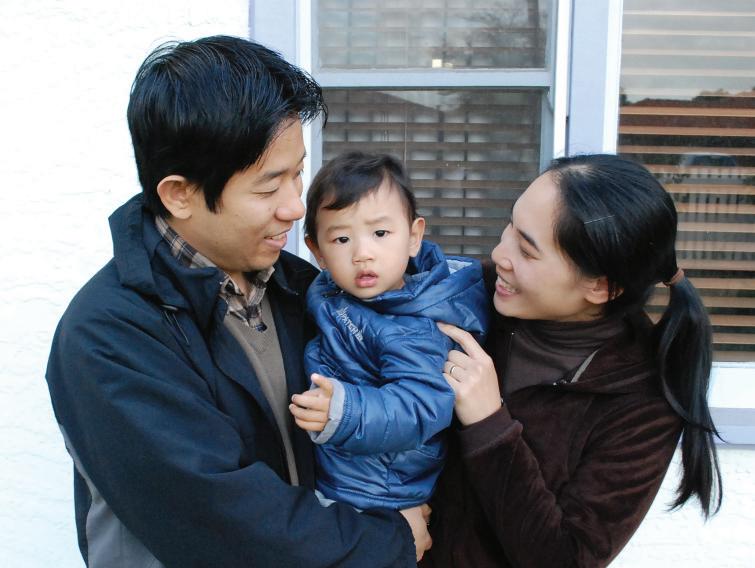
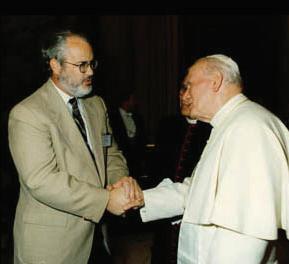
of pregnancy, and in addition, women are able to monitor and maintain their procreative and gynaecological health over a lifetime.
NaProTechnology involves a complex of medical and surgical interventions promoting gynaecological health that obviates the need for either reproductive techniques that exclude marital intercourse or the prescription of oral contraceptives for therapeutic or contraceptive purposes. It is a reproductive health care that assists and optimises, rather than obviates and/or suppresses, the natural procreative system.
● It allows a woman to maintain her obstetric and gynaecological health and helps couples to understand and respect the full psychosomatic truth of their fertility.
● It is obstetric and gynaecological medicine that accurately evaluates and effectively treats a host of abnormalities which could be causes of infertility, miscarriage or general women’s health problems.
● It promotes fertility awareness that enables couples to avoid or achieve pregnancy in a way consonant with the comprehensive meaning of their conjugal union.
NaProTechnology is an example of where cooperation exists between science and faith. The Catholicism behind NaProTechnology has confidence in reason, and its human intellectual component is open to Catholic theology. The vision of its faith puts reason and faith at the service of the human family.
As Catholic doctors we are called to use science for the good of mankind and for the glory of God. In Fides et Ratio (“Faith and Reason”), John Paul II states: “I cannot fail to address a word to scientists, whose research offers an ever greater knowledge of the universe as a whole and of the incredibly rich array of its component parts…so far has science come… that its achievements never cease to amaze us.
“In expressing my admiration
and offering encouragement to those brave pioneers of scientific research, to whom humanity owes so much of its current development, I would urge them to continue their efforts without ever abandoning the sapiential horizon within which scientific and technological achievements are wedded to the philosophical and ethical values which are distinctive and indelible mark of the human person.
“Scientists are well aware that the search for truth, even when it concerns the finite reality of the world or of man, is never-ending, but always points beyond to something higher in the immediate object of study, to the questions which give access to mystery.”
Staff at the Magnificat Fertility Centre offer educational and medical appointments to couples and women.
In the words of Dr Lamont, “FertilityCare is one tangible service which hopefully brings life to people, in a physical sense in helping them restore their health and receive the gift of a child if that is their aim, but also assisting them to be fully alive in the psychological, emotional, and spiritual senses, which may have been wounded by their experience of subfertility or illness.”
I myself was drawn to the work at FertilityCare when I observed the holistic approach and its correspondence with the Catholic ethos.
Not only does it cooperate with the body physically, it also strives to optimise and be in harmony with a person’s psychological, emotional and spiritual health. I believe that physical health is very much tied into the person’s spiritual and emotional health and to heal we need to encompass the whole person.
Most importantly, anything we do as doctors should be to uphold the dignity of each and every person involved, the woman, the couple and the unborn child, and this is the principle on which FertilityCare is based.
This article was first published in the Catholic Doctors Association Newsletter. Used with permission.
OMAHA, Nebraska, (Zenit. org) - Couples suffering from infertility might think their only option for having children of their own is to seek artificial fertilisation treatments such as in vitro fertilization (IVF). The Pope Paul VI Institute, however, wants them to know that there is an alternative, and it’s coming to a city near them.
The increasing availability of Natural Procreative Technology (NaProTechnology) was one topic addressed at the international medical conference as part of the Celebration of Love and Life seminar organised by the Omaha-based Pope Paul VI Institute to mark its 25th anniversary.
NaProTechnology, developed by Dr Thomas Hilgers, provides medical and surgical treatments that seek to work with the reproductive system, as well as remaining consistent with Catholic teaching. Since its development, NaProTechnology methods have become available in several cities in the United States, as well as in Europe, Australia and Asia.
Dr Phil Boyle, founder and director of the Galway NaProTechnology Clinic in Galway, Ireland, said that in Ireland, NaProTechnology methods have resulted in some 240 conceptions in six years, but noted that the couples he treats are often older - the average age of the woman is 36.7 years old - and they are couples who have been trying to conceive for an average of more than five years.
According to the European Society for Human Reproduction and Embryology, in vitro fertilisation treatments in Europe have a 30 per cent success rate for in vitro fertilisation, Boyle cited. That success rate doesn’t into account a 14-24 per cent miscarriage rate.
He reported a 43.6 per cent live birth rate using NaProTechnology for women between the 35-37 age group, the highest of any age group he treated.
For women over 43, he reported a live birth rate of 21 per cent. Boyle said that when he started practicing NaProTechnology 12 years ago, women normally didn’t worry about being too old to get pregnant until they were in their 40s. “Now,” he said, “there is panic at 35.”
He attributed this new perception to the IVF mindset, and lamented that women are often pushed into IVF treatments “much too quickly.”
He encouraged couples to be “patient, and to wait” in order to be able to “optimise fertility” so as to be able to get pregnant naturally. “Our whole goal with NaProTechnology is to optimise physiological conditions for preconception, to restore normal function,” he said.
“Slow down, establish your diagnosis, get a relaxed, calm environment, and allow 12 full cycles; and remember that conception is a fruit of love, and not your labor.” Sr Arlene Te, of the Sisters of the Society Devoted to the Sacred Heart and a family doctor at the Cardinal Tien Hospital in Taipei, Taiwan, noted that those who approach her for treatment are normally women from 35-45 who are seeking help to get pregnant, and have normally already undergone an IVF treatment.
Given that only about 1.2 per cent of the population of Taiwan is Catholic, she stated that couples
don’t seek out NaProTechnology due to its consistency with Catholic teaching, but rather because they are looking for an alternative to failed IVF treatments.
She noted her success for achieving pregnancy for couples who undergo treatment up to 24 months is 48.6 per cent, with a 3.9 per cent miscarriage rate.
She spoke of several success cases she has had with NaProTechnology, including a woman, 34, who had been trying to get pregnant for seven years. After observing her cycle for three months, Sr Te prescribed her to take vitamin B and a month later she got pregnant and carried the baby to term.
A second woman, 36, had been married for 10 years, undergoing six unsuccessful artificial insemination treatments and eight unsuccessful IVF treatments. She diagnosed the woman with polycystic ovary syndrome. After undergoing a laparoscopic surgery, the woman was able to get pregnant three cycles later. Sr Te said that one of her greatest challenges is that women in Taiwan opt very quickly to seek IVF treatments because “they have no patience. They want an instant result.”
“Doing the NaProTEchnology has helped them to understand and appreciate their own fertility.
“Many couples found that the Creighton Model system helped them to have better communication, respect for each other, and promote marital bonding.”
Sr Te said they also like the system as it promotes a “natural way of achieving pregnancy,” as opposed to IVF, which is “very hard on their bodies.”
The physician underlined that she always emphasises to her patients that they are at a Catholic hospital, and that as they undergo fertility treatment, she says a prayer for them.
“They realise that when they get pregnant, it is a gift from God,” she said.
Dr Bogdan Chazan, director of Holy Family Obstetrics and Gynecology Hospital in Warsaw, Poland, sent a paper to the conference on establishing NaProTechnology in Warsaw, noting that since the introduction of NaProTechnology in his country it has been growing steadily. Conferences on NaProTechnology have been held all over Poland, including one in Warsaw that drew some 600 attendees.
There are now 12 trained medical consultants, including eight doctors of obstetrics and gynecology, who are trained in NaProTechnology, as well as 30 practitioners of the Creighton Model FertilityCare System, and several medical centres in Poland offering natural infertility treatments, including the John Paul II Institute for Marital Infertility Treatment in Lublin.
NaProTechnology gives Polish doctors a chance to practice gynecologic medicine in peace with their consciences, he said.
Although noting that NaProTechnology enjoys a “friendly atmosphere” in Poland in general, the doctor noted that there is a threat coming from IVF practitioners who are currently seeking to discredit NaProTechnology, comparing it to homeopathy, and asserting that is ideologically driven. “It is important,” he emphasised, “that we continue to present the opportunities and limitations of NaProTechnology with honesty and accuracy.”
On the Net - Paul VI Institute:
FertilityCare and NaProTechnology Medical Consultant DR JAMES KHO writes about how an emerging technology not only reflects the beauty of Catholic teaching on sexuality, it actually works
The
Magnificat FertilityCare Centre is a clinic dedicated to helping couples conceive naturally and women wanting to have a deeper understanding of their reproductive health.
In 2002, Amanda Lamont, with the support of St John of God Health Care Subiaco, established the first FertilityCare Centre in Australia, to provide a life-giving and ethical approach to fertility and reproductive health.
The Creighton Model FertilityCare System (CrMS) teaches couples to track the biological markers of their fertility, allowing for the interpretation of various aspects of the woman’s fertility and reproductive health.
It was developed by obstetrician and gynaecologist, Prof Thomas Hilgers at Creighton University School of Medicine, Omaha, USA.
Naprotechnology is the new medical and surgical women’s health science that developed from research in the CrMS and is designed to cooperate with the body’s natural cycle.
It was Professor Hilger’s response to the appeal of Pope Paul VI when he stated in Humanae Vitae:
“We hold those physicians and medical personnel in the highest esteem who, in the exercise of their profession, value above every human interest the superior demands of their Christian vocation.
“Let them persevere, therefore, in promoting on every occasion, the discovery of solutions inspired by faith and right reason. Let them strive to arouse this conviction and this respect in their associates. Let them also consider as their proper professional duty the task of acquiring all of the knowledge needed in this delicate sector, so as to be able to give to those married persons who consult them wise counsel and healthy direction, such as they have a right to expect.”
Woven into the very fabric of the CrMS, is a Catholic understanding of the personal nature of our human sexuality and the challenge to respect one’s spouse, to respect the workings’ of one’s body. In doing so this allows for further understanding and nourishment of the relationship between the couple.
In the CrMS fertility is observed as part of health and provides information dealing with the complete dimensions of procreative ability. By empowering the couples with knowledge and understanding of their naturally occurring phases and fertility and infertility, they are able to make decisions regarding the achievement and avoidance
of pregnancy, and in addition, women are able to monitor and maintain their procreative and gynaecological health over a lifetime.
NaProTechnology involves a complex of medical and surgical interventions promoting gynaecological health that obviates the need for either reproductive techniques that exclude marital intercourse or the prescription of oral contraceptives for therapeutic or contraceptive purposes. It is a reproductive health care that assists and optimises, rather than obviates and/or suppresses, the natural procreative system.
● It allows a woman to maintain her obstetric and gynaecological health and helps couples to understand and respect the full psychosomatic truth of their fertility.
● It is obstetric and gynaecological medicine that accurately evaluates and effectively treats a host of abnormalities which could be causes of infertility, miscarriage or general women’s health problems.
● It promotes fertility awareness that enables couples to avoid or achieve pregnancy in a way consonant with the comprehensive meaning of their conjugal union.
NaProTechnology is an example of where cooperation exists between science and faith. The Catholicism behind NaProTechnology has confidence in reason, and its human intellectual component is open to Catholic theology. The vision of its faith puts reason and faith at the service of the human family.
As Catholic doctors we are called to use science for the good of mankind and for the glory of God. In Fides et Ratio (“Faith and Reason”), John Paul II states: “I cannot fail to address a word to scientists, whose research offers an ever greater knowledge of the universe as a whole and of the incredibly rich array of its component parts…so far has science come… that its achievements never cease to amaze us.
“In expressing my admiration
and offering encouragement to those brave pioneers of scientific research, to whom humanity owes so much of its current development, I would urge them to continue their efforts without ever abandoning the sapiential horizon within which scientific and technological achievements are wedded to the philosophical and ethical values which are distinctive and indelible mark of the human person.
“Scientists are well aware that the search for truth, even when it concerns the finite reality of the world or of man, is never-ending, but always points beyond to something higher in the immediate object of study, to the questions which give access to mystery.”
Staff at the Magnificat Fertility Centre offer educational and medical appointments to couples and women.
In the words of Dr Lamont, “FertilityCare is one tangible service which hopefully brings life to people, in a physical sense in helping them restore their health and receive the gift of a child if that is their aim, but also assisting them to be fully alive in the psychological, emotional, and spiritual senses, which may have been wounded by their experience of subfertility or illness.”
I myself was drawn to the work at FertilityCare when I observed the holistic approach and its correspondence with the Catholic ethos.
Not only does it cooperate with the body physically, it also strives to optimise and be in harmony with a person’s psychological, emotional and spiritual health. I believe that physical health is very much tied into the person’s spiritual and emotional health and to heal we need to encompass the whole person.
Most importantly, anything we do as doctors should be to uphold the dignity of each and every person involved, the woman, the couple and the unborn child, and this is the principle on which FertilityCare is based.
This article was first published in the Catholic Doctors Association Newsletter. Used with permission.
Italy - Every Pope and pastor of the Catholic Church is called to give his flock a concrete message, not abstract truths, that can help people put their faith into action, Pope Benedict XVI said.
The Pope spoke during a brief 5 September visit to Carpineto Romano, the birthplace of Pope Leo XIII. As part of celebrations marking the 200th anniversary of Pope Leo’s birth, the Pope celebrated Mass in the town about 35 miles southeast of Rome.
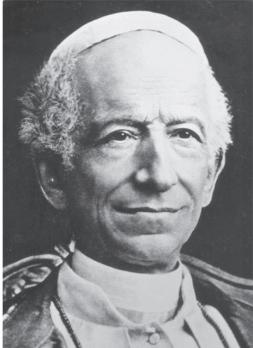
Pope Leo, like many pastors, sought to address the burning questions and problems of his day in a way that was faithful to Catholic tradition and teachings, Pope Benedict said in his homily.
Pope Leo’s 1891 encyclical, Rerum Novarum (on capital and labour), marked the start of modern Catholic social teaching; the document emphasised workers’ rights and the responsibility of employers to promote the common good.
During Pope Leo’s pontificate from 1878 to 1903, poverty and slavery existed hand in hand with a nascent industrial revolution while political movements were often strongly anticlerical, the Pope said.
Yet, Pope Leo approached social justice issues in a way that was “positive and effective, with dialogue and mediation,” said Pope Benedict. Pope Leo showed Catholics how they could constructively participate in society by being firm in their Christian principles, yet also “capable of openness,” he added.
“Every pastor is called to give the people of God not abstract truths, but ‘knowledge,’ that is, a message that joins faith and life, truth and concrete reality,” Pope Benedict said.
The Gospel message of love and charity has “revolutionary power,” the Pope said.
Christianity, with its concept of brotherhood and everyone being a child of God, overcomes all social and economic castes while it promotes social change and development through individual renewal, he said.
“Charity - Christ’s loverenews humanity and the world,” he said.
The Pope returned to the papal summer residence in Castel Gandolfo for the midday recitation of the Angelus.
Addressing pilgrims gathered for the prayer in the courtyard of the papal residence, he said he hoped Pope Leo’s social teachings would “continue to inspire the efforts of the faithful to build a just society rooted in the teachings of Christ.”
WASHINGTON - College campus ministry leaders hope the 19 September beatification of Cardinal John Henry Newman will make the British scholar, philosopher and writer more familiar to today’s college students.
Cardinal Newman, who died in 1890, always held universities close to his heart. He spent much of his life at Oxford University as both a student and a fellow. As an Anglican priest, he was the vicar at a university church and after his conversion to Catholicism, he founded the Oratory of St Philip Neri in Birmingham and a Catholic university in Dublin.
Many of his ideas on higher education are in his book The Idea of a University based on lectures he gave in the 1850s.
The Cardinal is often associated with campus ministry because of his emphasis on students developing and integrating their faith and intellect.
He also advocated that Catholic students who attend public universities be given a place to gather to support and encourage one another in their faith.
In 1893, three years after Cardinal Newman’s death, the University of Pennsylvania formed the first campus Newman Club as a tribute to his ideas.
Today, Newman centres - where Catholic college students meet for liturgies, prayer, service work, discussion groups, social events and often food - are located on the campuses of many public universities.
In recent years, several Catholic student groups no longer call themselves Newman Centers but instead go by Catholic associations, Catholic student organizations or campus Catholic communities, possibly because students lack knowledge about Cardinal Newman.
Fr Eric Nielsen, director of St Paul’s University Catholic Center at the University of Wisconsin in Madison, said Cardinal Newman has had more of an influence on those who lead campus ministry today than the students themselves.
In part, that’s simply because “it’s a rare student who would pick up Grammar of Assent (one of the Cardinal’s books) and get excited about Cardinal Newman,” he said.
The priest hopes sainthood is not far off for the Cardinal as that would raise his profile even more and likely promote his writings to college students. But in the meantime, campus ministry leaders continue to take up the Cardinal’s challenge to help students integrate faith and intellectual study and ultimately “bring Christ to the world.”
Katherine Tillman, Professor Emeritus for the liberal studies program at the University of Notre Dame and co-editor of Newman Studies Journal, said college students don’t necessarily have to know about Cardinal Newman but they should know his ideas about higher education which emphasized knowledge of “all the disciplines in a well-rounded way.”
This well-rounded intellect,
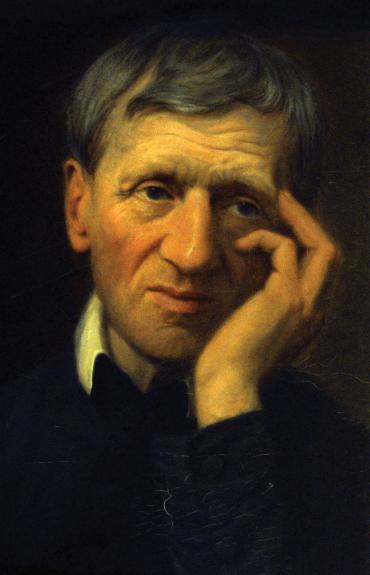
Cardinal John Henry Newman, one of the great intellectual minds of the Church in the 19th century, is seen in a portrait provided by the Catholic Church in England and Wales. Pope Benedict XVI is to preside at his beatification in Britain on 19 September. Cardinal Newman was an Anglican cleric who founded the Oxford Movement to bring the Anglican Church back to its Catholic roots. He became Catholic at the age of 44 after a succession of clashes with Anglican bishops and was made a cardinal by Pope Leo XIII. H e died in Birmingham in 1890.
PHOTO: CNS/COURTESY OF THE CATHOLIC CHURCH OF ENGLAND AND WALESin Cardinal Newman’s view, was meant to be formed by faith and also to influence one’s faith. Tillman noted that this can be a difficult balance for today’s students who may be oriented to social justice work without theological understanding or emphasise theological study without reaching out to those in need.
Barbara McCrabb, assistant director for higher education at the Secretariat of Catholic Education of the US Conference of Catholic Bishops, described Cardinal Newman’s beatification as a great opportunity for Catholic colleges and Catholic campus ministry programmes to gain a deeper understanding of Cardinal Newman.
This summer she surveyed campus ministry programmes around the country and found that many of them were linking campus programmes to the beatification with special lectures, liturgies, courses and events.
Mgr Gregory Ketcham, director of St John’s Catholic Newman Centre at the University of Illinois at Champaign-Urbana, said the campus centre plans to mark the beatification with a noncredit course on the life and teachings of Cardinal Newman, a campus presentation and by the singing of hymns composed by the Cardinal at the 18-19 September weekend Masses.
He said the statue of Cardinal Newman also was moved into the chapel sanctuary for private prayer and devotion.
The St John’s Catholic Newman Centre is one of the largest in the country and is one of the few to also include student housing.
The priest said Cardinal Newman’s message - particularly about active laity - is important for today’s Catholic college students as they help each other in their faith and “progress outward to the larger society in evangelisation.”
Newman University in Wichita, Kan., the only US university named
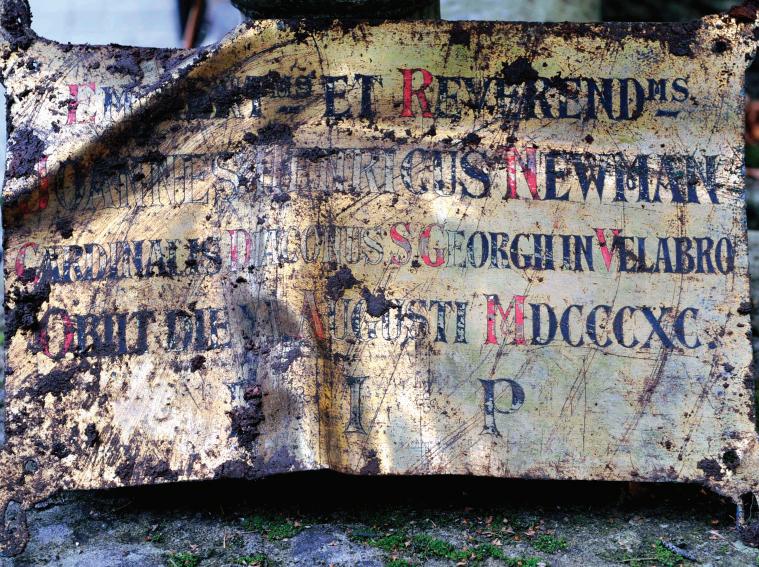
SERVICE
VATICAN CITY - When Pope Benedict XVI celebrates his public Masses in Great Britain from 16-19 September, he will recite the Eucharistic Prayer - the heart of the Massin Latin.
During the last week of August, the Bishops of Scotland, England and Wales distributed 1 million copies of a special papalvisit edition of Magnificat, a widely used prayer booklet containing complete Mass texts.
The special edition included the songs and all prayers for the Pope’s Mass on 16 September in Glasgow, 18 September in London and 19 September in Birmingham. The bookletsavailable online at www.thepapalvisit.co.uk - showed that the Pope will recite the Eucharistic Prayer in Latin at each Mass.
Mgr Guido Marini, the master of papal liturgical ceremonies, told the Glasgow newspaper The Herald, “What the Holy Father intends by using Latin is to emphasise the universality of the faith and the continuity of the Church.”
Mgr Peter Smith, chancellor of the Archdiocese of Glasgow,
after Cardinal Newman, plans to mark the beatification by sending a delegation to the event and to visit places where the Cardinal lived.
The trip was coordinated by Sister Charlotte Rohrbach, a member of the Adorers of the Blood of Christ, the order that sponsors the university.
Those in the delegation include administrators, alumni and school trustees.
The nun, who is the university’s director of mission and archives and professor emeritus of history, said students will be invited to watch a videotape of the beatifica-
told the newspaper, “The Vatican made it clear they wanted the Pope to say some of the Glasgow Mass in Latin because there will be a live TV and internet feed from Bellahouston (Park) beamed to a global audience of 1 billion, and they wanted the people of the world to be able to join in. The universal language of the Church is Latin.”
Pope Benedict almost always uses Latin for the main parts of the Mass when he is celebrating with a congregation of Catholics from many parts of the world, including when he is on a foreign trip. But increasingly, he also is using Latin for the eucharistic prayer at any Mass in public.
When he visited the United States in 2008, the Pope recited the Eucharistic Prayer in English at the two major public Massesin New York and Washington.
But by the time he visited Portugal in May and Malta in June, he was using Latin consistently. Mgr Marini told CNS that the Masses in Great Britain also would mark the public debut of two of the Mass prayers recently translated into English.
At the three public Masses during the trip, the congregations will be invited to sing new settings of the Gloria and the Holy, Holy.
Catholics in the United States are to begin using the new English translation of the Mass, including the two prayers, in 2011. The Bishops’ conferences of Scotland and of England and Wales have not announced when they will begin using the new translation.
tion on campus. Those making the trip also will be doing some videotaping and sending up-to-date messages through the online social networking tool Twitter.
Sr Charlotte said the university’s students understand the significance of this event because they are familiar with how the Cardinal viewed the role of a university.
According to a recent survey the Kansas school conducted about its mission, most students knew that it was “something about empowering students to transform society” - one of Cardinal Newman’s major points.
VATICAN CITY - The problem of abuse by clergy is solved more by a spirit of penitence and conversion by its members than by a radical change of church structures, Pope Benedict XVI said. He made his comments on 8 September during his weekly general audience at the Vatican’s Paul VI hall.
The Pope briefly left the papal summer residence at Castel Gandolfo to give his audience talk to about 7,000 pilgrims from all over the world.
He continued his talk from last week on the life of St Hildegard of Bingen, a 12th-century German mystic. He called her a “great nun” who used her gifts to “work for the renewal of the Church,” which was experiencing troubles similar to those of today.
In St Hildegard’s time, there were calls for radical reform of the Church to fight the problem of abuses made by the clergy, the Pope said.
However, she “bitterly reproached demands to subvert the very nature of the Church” and reminded people that “a true renewal of the ecclesial community is not achieved so much with a change in the structures as much as with a sincere spirit of penitence” and conversion, the Pope said.
He said she urged the faithful, especially the clergy and monastic communities, to live holy and virtuous lives.
“This is a message we must never forget,” he said. He called on the Holy Spirit to help “raise up wise, holy and courageous women whose God-given gifts will enrich the life of the Church in our own time.”
Pope Benedict praised St Hildegard, who “brought a woman’s insight to the mysteries of the faith”.
Her work shows how “even theology can receive the distinctive contribution of women, because they are able to speak of God and the mystery of faith with their distinctive intelligence and insight,” he said.
The Pope encouraged female theologians to continue their special contribution to the church in a spirit of fidelity and by enriching their reflections with prayer. He called for greater study into the works of St Hildegard and other medieval Christian mystics, which he said remain partly unexplored.
The Pope also remarked on his upcoming trip to Great Britain, saying he was “very much looking forward” to what will be “truly joyful celebrations.”
He thanked everyone involved in preparing for his 16-19 September trip to London, Birmingham and the Scottish cities of Edinburgh and Glasgow.
Beatifying Cardinal John Henry Newman “will be a particular joy for me,” the Pope said, because “this truly great Englishman lived an exemplary priestly life.”
Through his life and extensive writings, the 19th-century theologian “made a lasting contribution to Church and society,” the Pope said.
He added it was his hope that more people learn about Cardinal Newman and “benefit from his gentle wisdom and be inspired by his example of integrity and holiness of life.”
Catholic Bishops said they would learn from their errors after an independent report highlighted hundreds of cases of sexual abuse by clergy.
The Bishops said the Church would work with Belgium’s Justice and Interior ministries in devising ways of preventing abuse and bringing past cases to light. They said church officials would honor victims’ demands to be personally involved in new “healing initiatives.”
They pledged to set up a “centre for recognition, healing and reconciliation,” staffed by four experts who would work with church and state institutions and draw up plans for financial compensation.
They also pledged to establish guidelines for all church personnel working with children and young people.
The initiatives were presented at a 13 September news conference, three days after the report from a commission headed by Peter Adriaenssens recounted sexual abuse in most Catholic dioceses and all church-run boarding schools and religious orders. The commission said 475 cases of abuse had been reported to it between January and June, including more than 300 cases that involved boys younger than 15 at the time the abuse occurred.
EXTON, Pennsylvania (CNA/ EWTN News) - Author and speaker Christopher West has ended his six-month sabbatical, saying he has come to see “a need for greater balance in my life.” He reported that he will address critics of his interpretation of John Paul II’s theology of the body, adding that some have been helpful while others continue to “misunderstand or misrepresent” his work.
“I would like to offer my sincere thanks to all those who made sacrifices to afford my family and me this time, and to all who lifted me up in prayer and offered written letters of encouragement and support,” West said in a statement on his website.
According to West, taking time for “deep, prayerful examination” and giving attention to his professional, personal and family needs have helped him understand “that we must never boast of anything except the cross of Christ.”
“Among other things, I have come to see a need for greater balance in my life. All who have been impacted by my lack of balance have been beautiful witnesses to me of God’s tender patience and mercy,” West continued. “I cannot thank you enough.”
He said that after time with his family, spiritual direction and spiritual study, he is returning with “insights” he will share in an extended series of articles.
“These articles will also address the criticisms my work has received,” West explained. “My critics have helped me a great deal to refine my work over the years, and prayerful reflection during my sabbatical has shown me even more ways in which they have offered constructive feedback and advice.”
However, he said some critics “continue either to misunderstand or misrepresent my work in substantial and serious ways.” He pledged to do his best to address these criticisms “with love and gratitude.”
His statement concluded with a request for prayers.
Controversy over West’s approach to the theology of the body intensified after a May 2009 interview with ABC News in
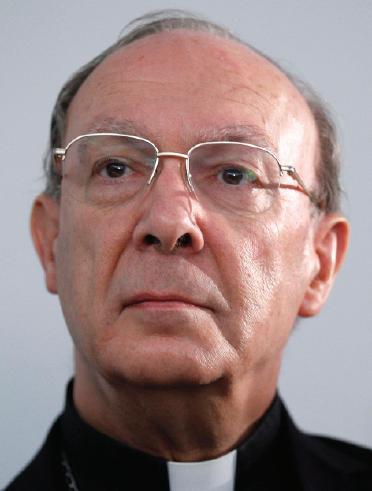
Archbishop Andre-Joseph Leonard of Mechelen-Brussels holds a press conference in Brussels on 13 September, three days after a report from a commission headed by Peter Adriaenssens recounted sexual abuse in most Catholic dioceses and all church-run boarding schools and Religious Orders. PHOTO:
Two-thirds of victims had been male, the report said, while 13 had killed themselves and six more attempted suicide.
The commission reported clergy assaulted more than 160 girls, many of whom had faced abuse into adulthood. The problem was worst in the 1960s and declined in the 1980s, when there were fewer Catholic priests in Belgium and the Church was less involved in education.
Although prosecutors had yet to bring charges against those accused, half of whom are now dead, the commission recommended punishing those who failed to come forward and setting up a solidarity fund for victims. “These accounts and the
suffering they contain make us shudder - they confront us with something which should never have happened and deserve our deepest and greatest attention for the human drama played out in them,” the Bishops said in a statement.
“This series of upsetting events touches us grievously, like all those who, in one way or another, are active continuously or voluntarily in the Church. A feeling of anger and powerlessness predominates among the faithful, notably among priests and pastoral workers. It is hard to find any way out of such a complex crisis,” the statement said.
“We wish to learn the necessary lessons from these past errors,” the church statement said. “We now need to find a new structure for cooperation between the different actors - the Church and justice system, the justice system and social services, and between the victims on one side, and the Church, justice system and social services on the other.”
The Bishops said every account in the report was unique and merited “competent and specially tailored assistance.”
“Sexual abuse fundamentally undermines everything one can say about God, the Gospel or a Christian life,” the Bishops said.
“The words evil, sin, confession, reparation, healing, asking and giving forgiveness form the core of the Christian language. These words are tragically, terribly polluted and deformed by the many accounts of sexual abuse. However regrettable the confrontation may be, these accounts and the faces of their victims cannot be hidden from our community,” they said.
which West said he thought both John Paul II and Playboy Magazine founder Hugh Hefner had rescued sex from prudish Victorian morality.
Critics of West include philosopher Alice von Hildebrand, who claimed his approach ignores the “tremendous dangers” of concupiscence, and theologian David Schindler, who said West’s views can encourage a “dangerous imprudence.”
Chastity speaker Dawn Eden also critiqued West in a master’s thesis which argued that West risks sexualising Christianity rather than Christianising sexuality. Despite his stated opposition to puritanism, she claimed, he advocates a virtue of “perfect chastity” which can discourage Catholics from dating.
West’s defenders include philosopher Janet Smith, who said his approach is a response to “the sexually wounded and confused” and has helped encourage repentance among those who view pornography, live together before marriage or practice contraception within marriage. In her view some critics of West are not fair to him.
Ave Maria University theology professor Michael Waldstein, who helped translate Pope John Paul II’s work, has claimed that critics have made “sweeping accusations” against a position West does not in fact advocate.
FAISALABAD, Pakistan (CNA)
- Christians in Pakistan were relieved to hear that a Florida pastor cancelled his plans to burn a Quran.
Such an incident could have major consequences for Christians in the predominantly Muslim country, a Catholic Bishop in the region said.
In an interview with ACN News, Bishop of Faisalabad Joseph Coutts reacted to reports that the pastor of a small Florida Protestant church canceled the Quran burning.
“It is a relief to hear what has now happened,” he said after learning of the decision not to burn the book. “We need to remember the difference between talking about burning the Quran and actually carrying it out.”
He said the burning of the Quran would light a match, “potentially causing a lot of damage.”
“If he were to burn the Quran, we would have to pay the price,” he added, warning it would have severe consequences for local Christians.
“Muslims have huge respect for the Quran and there is always the risk that the emotional reaction of people here would be to hit out
at the nearest Christian,” he told ACN News.
Because of concerns about possible retribution, the bishop held a series of meetings late into the night with police chiefs and Muslim leaders to stave off the threat of possible anti-Christian violence. He also met with Christian leaders of Faisalabad.
He reported that they agreed to reach out to disgruntled Muslims by advancing plans to greet Islamic leaders and to mark the Islamic festival of Eid with banners and gifts.
Bishop Coutts noted widespread anti-US feeling in Pakistan when speaking to ACN News.
He compared the planned burning to a Protestant walking into a Catholic church at the height of conflict in Northern Ireland and desecrating the Blessed Sacrament.
His concerns have been heightened by increased Muslim sensitivity and religiosity coinciding with the beginning of Eid, ACN News reported.
There was widespread outrage in the region in 2005 and 2006 over the media controversy about cartoon depictions of the Prophet Mohammed.
In February 2006 arsonists attacked a number of churches. St Mary’s Catholic Church in the city of Sukkur was reduced to a blackened shell.
VATICAN CITY - The problem of abuse by clergy is solved more by a spirit of penitence and conversion by its members than by a radical change of church structures, Pope Benedict XVI said. He made his comments on 8 September during his weekly general audience at the Vatican’s Paul VI hall.
The Pope briefly left the papal summer residence at Castel Gandolfo to give his audience talk to about 7,000 pilgrims from all over the world.
He continued his talk from last week on the life of St Hildegard of Bingen, a 12th-century German mystic. He called her a “great nun” who used her gifts to “work for the renewal of the Church,” which was experiencing troubles similar to those of today.
In St Hildegard’s time, there were calls for radical reform of the Church to fight the problem of abuses made by the clergy, the Pope said.
However, she “bitterly reproached demands to subvert the very nature of the Church” and reminded people that “a true renewal of the ecclesial community is not achieved so much with a change in the structures as much as with a sincere spirit of penitence” and conversion, the Pope said.
He said she urged the faithful, especially the clergy and monastic communities, to live holy and virtuous lives.
“This is a message we must never forget,” he said. He called on the Holy Spirit to help “raise up wise, holy and courageous women whose God-given gifts will enrich the life of the Church in our own time.”
Pope Benedict praised St Hildegard, who “brought a woman’s insight to the mysteries of the faith”.
Her work shows how “even theology can receive the distinctive contribution of women, because they are able to speak of God and the mystery of faith with their distinctive intelligence and insight,” he said.
The Pope encouraged female theologians to continue their special contribution to the church in a spirit of fidelity and by enriching their reflections with prayer. He called for greater study into the works of St Hildegard and other medieval Christian mystics, which he said remain partly unexplored.
The Pope also remarked on his upcoming trip to Great Britain, saying he was “very much looking forward” to what will be “truly joyful celebrations.”
He thanked everyone involved in preparing for his 16-19 September trip to London, Birmingham and the Scottish cities of Edinburgh and Glasgow.
Beatifying Cardinal John Henry Newman “will be a particular joy for me,” the Pope said, because “this truly great Englishman lived an exemplary priestly life.”
Through his life and extensive writings, the 19th-century theologian “made a lasting contribution to Church and society,” the Pope said.
He added it was his hope that more people learn about Cardinal Newman and “benefit from his gentle wisdom and be inspired by his example of integrity and holiness of life.”
Catholic Bishops said they would learn from their errors after an independent report highlighted hundreds of cases of sexual abuse by clergy.
The Bishops said the Church would work with Belgium’s Justice and Interior ministries in devising ways of preventing abuse and bringing past cases to light. They said church officials would honor victims’ demands to be personally involved in new “healing initiatives.”
They pledged to set up a “centre for recognition, healing and reconciliation,” staffed by four experts who would work with church and state institutions and draw up plans for financial compensation.
They also pledged to establish guidelines for all church personnel working with children and young people.
The initiatives were presented at a 13 September news conference, three days after the report from a commission headed by Peter Adriaenssens recounted sexual abuse in most Catholic dioceses and all church-run boarding schools and religious orders. The commission said 475 cases of abuse had been reported to it between January and June, including more than 300 cases that involved boys younger than 15 at the time the abuse occurred.
EXTON, Pennsylvania (CNA/ EWTN News) - Author and speaker Christopher West has ended his six-month sabbatical, saying he has come to see “a need for greater balance in my life.” He reported that he will address critics of his interpretation of John Paul II’s theology of the body, adding that some have been helpful while others continue to “misunderstand or misrepresent” his work.
“I would like to offer my sincere thanks to all those who made sacrifices to afford my family and me this time, and to all who lifted me up in prayer and offered written letters of encouragement and support,” West said in a statement on his website.
According to West, taking time for “deep, prayerful examination” and giving attention to his professional, personal and family needs have helped him understand “that we must never boast of anything except the cross of Christ.”
“Among other things, I have come to see a need for greater balance in my life. All who have been impacted by my lack of balance have been beautiful witnesses to me of God’s tender patience and mercy,” West continued. “I cannot thank you enough.”
He said that after time with his family, spiritual direction and spiritual study, he is returning with “insights” he will share in an extended series of articles.
“These articles will also address the criticisms my work has received,” West explained. “My critics have helped me a great deal to refine my work over the years, and prayerful reflection during my sabbatical has shown me even more ways in which they have offered constructive feedback and advice.”
However, he said some critics “continue either to misunderstand or misrepresent my work in substantial and serious ways.” He pledged to do his best to address these criticisms “with love and gratitude.”
His statement concluded with a request for prayers.
Controversy over West’s approach to the theology of the body intensified after a May 2009 interview with ABC News in
Archbishop Andre-Joseph Leonard of Mechelen-Brussels holds a press conference in Brussels on 13 September, three days after a report from a commission headed by Peter Adriaenssens recounted sexual abuse in most Catholic dioceses and all church-run boarding schools and Religious Orders. PHOTO:
Two-thirds of victims had been male, the report said, while 13 had killed themselves and six more attempted suicide.
The commission reported clergy assaulted more than 160 girls, many of whom had faced abuse into adulthood. The problem was worst in the 1960s and declined in the 1980s, when there were fewer Catholic priests in Belgium and the Church was less involved in education.
Although prosecutors had yet to bring charges against those accused, half of whom are now dead, the commission recommended punishing those who failed to come forward and setting up a solidarity fund for victims. “These accounts and the
suffering they contain make us shudder - they confront us with something which should never have happened and deserve our deepest and greatest attention for the human drama played out in them,” the Bishops said in a statement.
“This series of upsetting events touches us grievously, like all those who, in one way or another, are active continuously or voluntarily in the Church. A feeling of anger and powerlessness predominates among the faithful, notably among priests and pastoral workers. It is hard to find any way out of such a complex crisis,” the statement said.
“We wish to learn the necessary lessons from these past errors,” the church statement said. “We now need to find a new structure for cooperation between the different actors - the Church and justice system, the justice system and social services, and between the victims on one side, and the Church, justice system and social services on the other.”
The Bishops said every account in the report was unique and merited “competent and specially tailored assistance.”
“Sexual abuse fundamentally undermines everything one can say about God, the Gospel or a Christian life,” the Bishops said.
“The words evil, sin, confession, reparation, healing, asking and giving forgiveness form the core of the Christian language. These words are tragically, terribly polluted and deformed by the many accounts of sexual abuse. However regrettable the confrontation may be, these accounts and the faces of their victims cannot be hidden from our community,” they said.
which West said he thought both John Paul II and Playboy Magazine founder Hugh Hefner had rescued sex from prudish Victorian morality.
Critics of West include philosopher Alice von Hildebrand, who claimed his approach ignores the “tremendous dangers” of concupiscence, and theologian David Schindler, who said West’s views can encourage a “dangerous imprudence.”
Chastity speaker Dawn Eden also critiqued West in a master’s thesis which argued that West risks sexualising Christianity rather than Christianising sexuality. Despite his stated opposition to puritanism, she claimed, he advocates a virtue of “perfect chastity” which can discourage Catholics from dating.
West’s defenders include philosopher Janet Smith, who said his approach is a response to “the sexually wounded and confused” and has helped encourage repentance among those who view pornography, live together before marriage or practice contraception within marriage. In her view some critics of West are not fair to him.
Ave Maria University theology professor Michael Waldstein, who helped translate Pope John Paul II’s work, has claimed that critics have made “sweeping accusations” against a position West does not in fact advocate.
FAISALABAD, Pakistan (CNA)
- Christians in Pakistan were relieved to hear that a Florida pastor cancelled his plans to burn a Quran.
Such an incident could have major consequences for Christians in the predominantly Muslim country, a Catholic Bishop in the region said.
In an interview with ACN News, Bishop of Faisalabad Joseph Coutts reacted to reports that the pastor of a small Florida Protestant church canceled the Quran burning.
“It is a relief to hear what has now happened,” he said after learning of the decision not to burn the book. “We need to remember the difference between talking about burning the Quran and actually carrying it out.”
He said the burning of the Quran would light a match, “potentially causing a lot of damage.”
“If he were to burn the Quran, we would have to pay the price,” he added, warning it would have severe consequences for local Christians.
“Muslims have huge respect for the Quran and there is always the risk that the emotional reaction of people here would be to hit out
at the nearest Christian,” he told ACN News.
Because of concerns about possible retribution, the bishop held a series of meetings late into the night with police chiefs and Muslim leaders to stave off the threat of possible anti-Christian violence. He also met with Christian leaders of Faisalabad.
He reported that they agreed to reach out to disgruntled Muslims by advancing plans to greet Islamic leaders and to mark the Islamic festival of Eid with banners and gifts.
Bishop Coutts noted widespread anti-US feeling in Pakistan when speaking to ACN News.
He compared the planned burning to a Protestant walking into a Catholic church at the height of conflict in Northern Ireland and desecrating the Blessed Sacrament.
His concerns have been heightened by increased Muslim sensitivity and religiosity coinciding with the beginning of Eid, ACN News reported.
There was widespread outrage in the region in 2005 and 2006 over the media controversy about cartoon depictions of the Prophet Mohammed.
In February 2006 arsonists attacked a number of churches. St Mary’s Catholic Church in the city of Sukkur was reduced to a blackened shell.
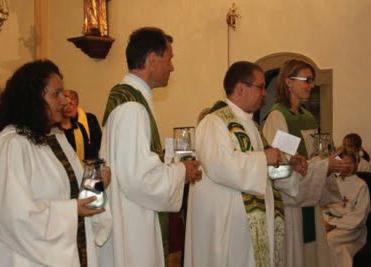
 Fr James Valladares
Fr James Valladares, resident priest at Adelaide’s St Francis Xavier Cathedral, concludes his exclusive for The Record on the radical call of the priesthood
A crucial and radical difference
On 17 September, 2009, Pope Benedict XVI met a group of Bishops from Brazil who had just completed their ad limina visit and highlighted the distinctive role of priests in the Church.
He said “the particular identity of priests and laity must be seen in the light of the essential difference between priestly ministry and the ‘common priesthood’ of the baptised.
“Hence it is important to avoid the secularisation of the clergy and the ‘clericalisation’ of the laity.”
Lay people certainly need to give expression to “the Christian view of anthropology and the social doctrine of the Church.”
Priests, on the other hand, “must distance themselves from politics in order to favour the unity and communion of all the faithful, thus becoming a point of reference to everyone.”
A shortage of priests does not “justify a more active and abundant participation of the laity” since “the greater the faithful’s awareness of their own responsibilities within the Church, the clearer becomes the specific identity and inimitable role of the priest as pastor of the entire community, witness to the authenticity of the faith, and dispenser of the mysteries of salvation in the name of Christ the Head.
So, “the function of the clergy is essential and irreplaceable in
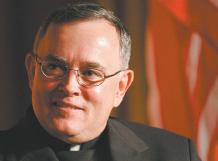
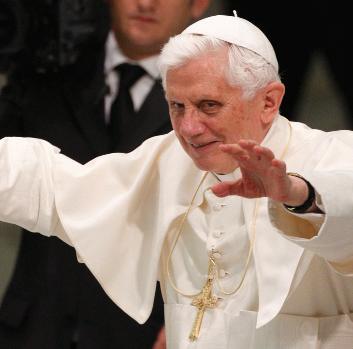
announcing the Word and celebrating the Sacraments, especially the Eucharist.
“For this reason it is vital to ask the Lord to send workers for his harvest; and it is necessary that priests express joy in their faithfulness to their priestly identity.”
Indeed, it has been rightly said that a happy priest is the best advertisement for the sacred priesthood.
Stated differently, actions always speak louder than words; and people are always more influenced by what they see than what they hear.
“The best possible way of attracting men to the priesthood is the witness of life given by priests themselves.”
So if priests show themselves to be happy and fulfilled in their ministry other men will more easily hear the Lord’s call and respond generously.
This certainly is one positive dividend we all can expect from the Year for Priests.
In his homily at the Chrism Mass, Holy Thursday, 13 April, 2006, this is what Pope Benedict XVI said: “The world needs God – not any god but the God of Jesus Christ, the God who made Himself flesh and blood, who loved us to the point of dying for us, who rose and created within himself room for man.
This God must live in us and we in Him.
This is our priestly call; only in this way can our actions as priests bear fruit.”
St John Vianney once said, “When people want to destroy religion, they begin by attacking the priest; for when there is no priest, there is no sacrifice; and when there is no sacrifice, there is no religion.”
Charles Chaput, Catholic Archbishop of Denver, addressed the 15th symposium for the Canon Law Association of Slovakia on 14 August, calling on Catholics in the West to resist the world’s intolerance of Christianity. The Record presents Part 2 of his crucial speech.
Cardinal Henri de Lubac once wrote that “It is not true … that man cannot organise the world without God. What is true, is that without God, [man] can ultimately only organise it against man. Exclusive humanism is inhuman humanism.” The West is now steadily moving in the direction of that new “inhuman humanism.”
And if the Church is to respond faithfully, we need to draw upon the lessons that your Churches learned under totalitarianism.
A Catholicism of resistance must be based on trust in Christ’s words:
“The truth will make you free.”
This trust gave you insight into the nature of totalitarian regimes.
It helped you articulate new ways of discipleship. Rereading the words of the Czech leader Václav Havel to prepare for this talk, I was struck by the profound Christian humanism of his idea of “living within the truth.” Catholics today need to see their discipleship and mission as precisely that: “living within the truth.”
Living within the truth means living according to Jesus Christ and God’s Word in Sacred Scripture. It means proclaiming the truth of the Christian Gospel, not only by our words but by our example. It means living every day and every moment from the unshakeable conviction that God lives, and that His love is the motive force of human history and the engine of every authentic human life. It means believing that the truths of the Creed are worth suffering and dying for.
Living within the truth also means telling the truth and calling things by their right names. And that means exposing the lies by which some men try to force others to live.
Two of the biggest lies in the world today are these: first, that Christianity was of relatively minor importance in the development of the West; and second, that Western values and institutions can be sustained without a grounding in Christian moral principles.
Before I talk about these two falsehoods, we should pause a moment to think about the meaning of history.
History is not simply about learning facts. History is a form of memory, and memory is a founda-

tion stone of self-identity. Facts are useless without a context of meaning. The unique genius and meaning of Western civilisation cannot be understood without the 20 centuries of Christian context in which they developed.
A people who do not know their history, do not know themselves. They are a people doomed to repeat the mistakes of their past because they cannot see what the present – which always flowers out of the past - requires of them.
People who forget who they are can be much more easily manipulated. This was dramatised famously in Orwell’s image of the “memory hole” in his novel 1984
Today, the history of the Church and the legacy of Western Christianity are being pushed down the memory hole. This is the first lie that we need to face.
Downplaying the West’s Christian past is sometimes done with the best intentions, from a desire to promote peaceful coexistence in a pluralistic society. But more frequently it’s done to marginalise Christians and to neutralise the Church’s public witness.
The Church needs to name and fight this lie. To be a European or an American is to be heir to a profound Christian synthesis of Greek philosophy and art, Roman law, and biblical truth. This synthesis gave rise to the Christian humanism that undergirds all of Western civilisation.
On this point, we might remember the German Lutheran scholar and pastor, Dietrich Bonhoeffer. He wrote these words in the months leading up to his arrest by the Gestapo in 1943: “The unity of the West is not an idea but a historical reality, of which the sole foundation is Christ.”
Our societies in the West are Christian by birth, and their survival depends on the endurance of Christian values. Our core principles and political institutions are based, in large measure, on the morality of the Gospel and the Christian vision of man and government. We are talking here not only about Christian theology or religious ideas. We are talking about the moorings of our societies - representative government and the separation of powers; freedom of religion and conscience; and most importantly, the dignity
of the human person. This truth about the essential unity of the West has a corollary, as Bonhoeffer also observed: Take away Christ and you remove the only reliable foundation for our values, institutions and way of life.
That means we cannot dispense with our history out of some superficial concern over offending our non-Christian neighbours. Notwithstanding the chatter of the “new atheists,” there is no risk that Christianity will ever be forced upon people anywhere in the West.
The only “confessional states” in the world today are those ruled by Islamist or atheist dictatorships - regimes that have rejected the Christian West’s belief in individual rights and the balance of powers.
I would argue that the defence of Western ideals is the only protection that we and our neighbours have against a descent into new forms of repression - whether it might be at the hands of extremist Islam or secularist technocrats.
But indifference to our Christian past contributes to indifference about defending our values and institutions in the present. And this brings me to the second big lie by which we live today - the lie that there is no unchanging truth.
Relativism is now the civil religion and public philosophy of the West. Again, the arguments made for this viewpoint can seem persuasive. Given the pluralism of the modern world, it might seem to make sense that society should want to affirm that no one individual or group has a monopoly on truth; that what one person considers to be good and desirable another may not; and that all cultures and religions should be respected as equally valid.
In practice, however, we see that without a belief in fixed moral principles and transcendent truths, our political institutions and language become instruments in the service of a new barbarism. In the name of tolerance we come to tolerate the cruelest intolerance; respect for other cultures comes to dictate disparagement of our own; the teaching of “live and let live” justifies the strong living at the expense of the weak. This diagnosis helps us understand one of the foundational injustices in the West today - the crime of abortion.
- To be continued in next week’s The Record
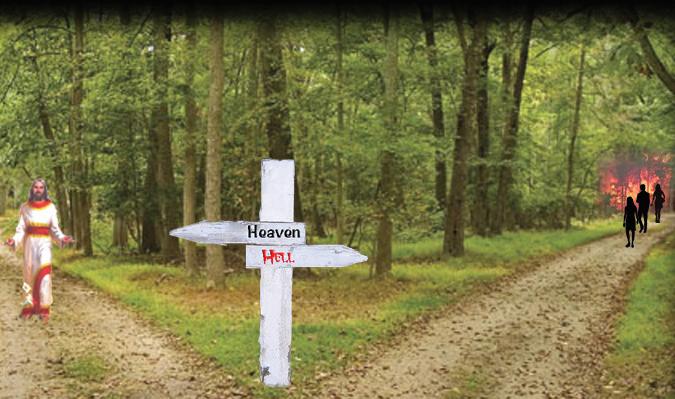
 By Fr John Flader
Q: I have a born-again Christian friend who says she is certain she is going to heaven simply because she “has been saved” as a Christian, and over the years I have met others with the same conviction. I am not so certain of my own salvation. Should I be?
The short answer is that we can never be absolutely certain of our eternal salvation as long as we are on earth. Even though we are living well now, we may one day go off the track, as did the Prodigal Son (cf Lk 15:11-32) or Judas.
We probably know people who were living exemplary lives at one stage but who later seemed to lose their way.
Nonetheless, many born-again Christians say they are certain of their eternal salvation.
Some even say that if a Christian is not one hundred per cent certain, they are not saved at all.
Many follow the “once saved, always saved” creed, by which they mean that once they have been justified or saved by God, they always remain saved and are certain of going to heaven. We admire their confidence, but we have to admit that it is not backed up by Scripture nor by the Magisterium of the Church.
And it flies in the face of common sense and the experience of our human frailty.
For example, if anyone was “saved” it was St Paul, who was converted by Our Lord himself and was led to a radical change of his life. Yet not even St Paul is certain of his salvation.
He writes to the Christians of Philippi, “Not that I have already obtained this [resurrection from the dead] or am already perfect; but I press on to make it my own, because Christ Jesus has made me his own. Brethren, I do not consider that I have made it my own; but one thing I do, forgetting what lies behind and straining forward to
what lies ahead, I press on towards the goal for the prize of the upward call of God in Christ Jesus” (Phil 3:12-14).
Likewise, he writes to the Corinthians of the need to struggle in order to win the prize: “Every athlete exercises self-control in all things. They do it to receive a perishable wreath, but we an imperishable. Well, I do not run aimlessly, I do not box as one beating the air; but I pommel my body and subdue it, lest after preaching to others I myself should be disqualified” (1 Cor 9:25-27). If even the great Apostle of the Gentiles considers that he could still be disqualified, all the more should we.
Only at the end of his life, in his second imprisonment in Rome, is St Paul confident of his eternal salvation: “For I am already on the point of being sacrificed; the time of my departure has come. I have fought the good fight, I have finished the race, I have kept the faith. From now on there is laid up for me the crown of righteousness, which the Lord, the righteous judge, will award to me on that Day, and not only to me but also to all who have loved His appearing” (2 Tim 4:6-8).
Aware of his own frailty, St Paul warns the early Christians to be on guard: “Therefore, let any one who thinks that he stands take heed lest he fall” (1 Cor 10:12). Likewise, he cautions them not to take it for granted that they are saved, but rather “work out your own salva-
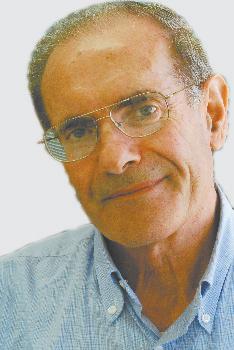 By Anthony Paganoni CS
This title, above, is the title of chapter 3 in Henri Daniel Rops’ volume The Protestant Reformation. He begins by stating something extremely important:
The call is out for the Church to modernise its methods and mindset.
But on what basis?
If the empirical evidence shows that in the world, in the USA, Canada and Australia, sexual abuse is not a uniquely and strikingly Catholic problem, then why has such a campaign been mounted to make the Catholic Church appear as almost the sole perpetrator?
In Bernard of Clairvaux,
tion with fear and trembling” (Phil 2:12). In answer to the Protestant belief that a person can be certain of his eternal salvation, the Council of Trent teaches:
“No one, moreover, so long as he lives this mortal life, ought in regard to the sacred mystery of divine predestination, so far presume as to state with absolute certainty that he is among the number of the predestined, as if it were true that the one justified either cannot sin any more, or, if he does sin, that he ought to promise himself an assured repentance. For except by special revelation, it cannot be known whom God has chosen to Himself” (Sess. 6, Ch. 12).
It is for this reason that we are always advised to pray with hope and trust in God for the gift of final perseverance. In the words of the Council of Trent, “Similarly with regard to the gift of perseverance, of which it is written, ‘He that shall persevere to the end, he shall be saved’ (Mt 10:22), which cannot be obtained from anyone except from him who is able to make him stand who stands (Rom 14:4), that he may stand perseveringly, and to raise him who falls, let no one promise himself herein something as certain with an absolute certainty, though all ought to place and repose the firmest hope in God’s help” (Sess. 6, Ch.13).
If we continue to struggle, with humble trust in God, we can be confident, if not absolutely certain, of our salvation.
“The crises which shake human societies are always, first and foremost, spiritual crises: political events and social unrest merely translate into deeds a disequilibrium whose real cause is something far more fundamental.
“The destiny of the world is shaped in the secret recesses of the mind, through the hidden dialectic of ideals and passions, and the new forces which make old empires crumble are the selfsame forces which each individual confronts in the depths of his own soul, making him the abettor of destruction…
“Everything points to the fact that a crisis of the soul explained and directed them; and this spiritual crisis provides the true explanation of their tragic history.” (p 106).
No one, not even in Church circles, ever mentions the crisis that has been looming over the whole of Western civilisation.
Ironically, in some quarters, this disequilibrium may be regarded as an enlightenment, as a substantial progress over and against the often repeated statements that Europe in particular is losing its Christian heritage and roots.
The very fact that the global plague of abuses committed on young people affecting many nations in the world of today has been sidestepped is a sure sign that something is wrong.
Daniel Rops reports that in one of the poorest Cistercian monasteries in the world, above the door of the central building, a little stone Virgin welcomes the visitor.
She bears a mysterious name: “Our Lady of the Peril”. Is there another of that name in all Christendom?
A mysterious name, but also full of significance. Does it refer to the great risks each one of us confronts in that long and uncertain struggle which is waged in the very depth of our souls?
Is it a question of the risks our sinful humanity runs, that horde of wanderers on the face of the earth, fascinated by the abyss and ready to roll into it?
“The handful of monks gathered in a monastery to lead a heroic life of asceticism and prayer assumed all of those risks; they take them on their shoulders, according to the reversibility of merits, in the order of the Communion of Saints.” (p 223).
Panorama entries must be in by 12pm Monday.
Contributions may be emailed to office@therecord.com.au, faxed to 9325 4580, or mailed to PO Box 3075, Adelaide Terrace, Perth WA 6832.
THURSDAY, 16 SEPTEMBER
National E Conference Jesus the Christ
8.30am–1.05pm at St Thomas More, Bateman. Fr Gerald O’Collins will share his understanding of Jesus Christ. This faith formation experience is designed for the ‘hungry and thirsty’ in our parishes, schools, colleges and hospitals. Enq: Marianne 9310 1747 or adultfaith@batemancatholic.org.
FRIDAY, 17 SEPTEMBER TO SUNDAY,
19 SEPTEMBER
Annual Secular Franciscan Retreat - The Spirit of St Francis for Today
6.30pm at the Redemptorist Retreat House, North Perth. All those interested in learning more of Franciscan spirituality are invited. Fr John Spiteri OFM Cap will conduct the retreat.
SATURDAY, 18 SEPTEMBER
St Padre Pio Pilgrimage
8am buses depart. 10.15am DVD. 11.30am Mass, Confession available. 2.30pm Eucharistic procession, Rosary, Adoration, Divine Mercy and Benediction. 4pm depart for Perth. Times approximate. Bus transport $15 per person. Lunch BYO, tea and coffee provided. Enq: Midland, Catrina 9255 1938; Bassendean, Ivana 9279 7261; Morley, Joan 9276 9439; Leederville, Leena 9444 3617; Balcatta, Rosa 9276 1952; Glendalough, Fr Doug 9444 6131; Victoria Park and Girawheen, Nita 9367 1366.
Feast of the Stigmata of St Francis of Assisi
2.30pm at Redemptorist Retreat House, North Perth. All are invited to join the Secular Franciscan Order in celebrating the Feast with the readings of the Stigmata of St Francis. Tea provided. Enq: Angela 9275 2066.
SUNDAY 19 SEPTEMBER
School and Parish Fete
9am–2 pm at St Jerome, Rockingham Rd and Troode St, Munster. A variety of stalls including cakes, books, white elephant, rides, hot food and Devonshire Teas, refreshments, raffles, and much more.
The Largest Youth Night in September
6pm - 7.15pm at Infant Jesus Parish, 47 Wellington Road, Morley. Open for youth of all ages 15-35. Fr Tim Deeter will present, Let’s get liturgical, a catechesis on the Mass, with music, prayer time and group discussions. Enq: www.cym.com.au Enq: 9422 7912.
Tazie Style Prayer
7pm - 8pm at St Joseph’s Convent chapel, 16 York Street, South Perth. Everyone welcome to join with others praying in a candlelit Chapel. Bring a friend and a torch and be still and at peace with God. Enq: Sr Maree 0414 683 296.
FRIDAY, 24 SEPTEMBER TO SUNDAY, 26 SEPTEMBER
Inner Healing Retreat
7.30am at the Redemptorist Retreat House, North Perth. A live in retreat for a closer encounter with Jesus and experience spiritual, physical and emotional healing. Enq: Holy Family Church Maddington 9493 1703.
Medjugorje – Evening of Prayer
7 – 9pm at St. Columba’s Parish, 20 Almondbury and Roberts Street, Bayswater. In thanksgiving for Our Blessed Mothers reported daily apparitions at Medjugorje with Adoration, Rosary, Benediction and Holy Mass. Free inspirational DVD on Fr Donald Calloway’s conversion from drugs to the priesthood available on night. Enq: Eileen 9402 2480 or 0407 471 256.
SATURDAY, 25 SEPTEMBER
Healing Mass for Voice of the Voiceless 12 noon at St Brigid, 69 Fitzgerald Street, Northbridge. Church open 11.30 onwards. There is plenty of parking available behind the Church. Bring a plate to share.
SUNDAY, 26 SEPTEMBER
The Sudanese Gospel Concert
2-4pm at the Redemptorist Monastery Church, 190 Vincent St, North Perth. Presented by the Sudanese Catholic Community and hosted by the North Perth Social Justice Group. Tea included. Cost: $12, children half price. Everyone welcome.
FRIDAY, 1 OCTOBER
Pro - Life Witness
9.30am at St Brigid’s Midland. Mass followed by Rosary procession and prayer vigil at nearby abortion clinic, led by the Franciscan Friars of the Immaculate. All welcome to come and pray for the conversion of hearts. Enq: Helen 9402 0349.
The Alliance, Triumph and Reign of the United Sacred Hearts of Jesus and Mary 9pm at St Bernadette’s Church, Glendalough. Exposition of the Blessed Sacrament, reflections, Rosary, hymns and alternating with healing sessions. Midnight Mass for the Lord’s second coming and His Reign on earth. Participate in the Lord’s mighty work in building a people of power. Enq: Father Doug 9444 6131 or Dorothy 9342 5845.
FRIDAY, 1 OCTOBER TO SUNDAY, 3 OCTOBER
Brother Andrew’s 10th Anniversary
7pm Friday – 2pm Sunday. God’s Farm warmly welcomes Marist Father Dr Paul Glynn who will talk on Praying in the Spirituality of St Francis, Brother Andrew and Immaculee Illibagiza. Celebrating Holy Mass daily, Prayers of the Church and Reconciliation. Enq: Betty or Mary Tel/Fax 9755 6212. Hired bus bookings Cheryl A/H 9409 8747 or Yvonne 93431897. Map available. God’s Farm, P O Box 24, Cowaramup 6284.
SATURDAY, 2 OCTOBER
Anglo-Indian Reunion 2010
9.30 to 10.30am at St. Mary’s Cathedral. An Ecumenical Service of Praise, Petition and Thanksgiving for AngloIndians all over the world. Main celebrants for the Service will be Monsignor Michael Keating and Bishop Brian Kyme. All are most welcome.
WITNESS FOR LIFE
8.30am at St Augustine’s, Gladstone Road, Rivervale. Mass celebrated by Fr Paul Carey, followed by Rosary procession and prayer vigil at nearby abortion clinic. All welcome to come and pray for the conversion of hearts. Enq: Helen 9402 0349.
Day with Mary
9am to 5pm at St Anne Church, 6549 Great Northern Highway, Bindoon. Day of prayer and instruction based on the Fatima message. 9am Video. 10:10am Holy Mass. Reconciliation, Procession of the Blessed Sacrament, Eucharistic Adoration, Sermons on Eucharist and Our Lady, Rosaries and Stations of the Cross. BYO lunch. Enq: Franciscan Sisters of the Immaculate 9250 8286. Bus Enq: Nita 9367 1366.
SUNDAY, 3 OCTOBER
Divine Mercy
1.30pm at St Francis Xavier Church, 25 Windsor St, Perth. An afternoon with Jesus and Mary, Fr Slawek Plonka will give Homily on St Faustina Kowalska. A ‘Divine Mercy Chaplet for Children’ will also be shown. Refreshments afterwards. Enq: John 9457 7771.
THURSDAY, 7 OCTOBER TO SATURDAY, 9 OCTOBER
Seek 2010 – A Conference on Scripture and Prayer for Everyday Life
7.30pm at Queen of Apostles Parish, 57 Tudor Ave South, Riverton. Opportunity for the family to learn, experience and grow. Programmes for youth and adults on new ways to explore Scripture and prayer, plus activities for children and crèche. Brochures and registration forms available
from your parish. Enq: Barbara or Su Goh 9328 8113 or email familylife@perthcatholic.org.au.
SATURDAY, 9 OCTOBER SUNDAY, 10 OCTOBER
Retreat by Fr. Paul Glynn SM from Sydney 9am - 5pm at Bioethics Centre, 39 Jugan Street, Mt. Hawthorn. Theme; With the Help of the Holy Spirit, to pray to Jesus and the Father. Saturday, BYO lunch to share, Sunday lunch provided. Enq: John 0412 798 932, Annie 0422 083 716 or Bessie 0433 795 539 after 10th Sept.
MONDAY, 11 OCTOBER
Prevention of Assisted Suicide- Euthanasia 7pm at the Bioethics Centre, 39 Jugan Street, Glendalough. Talk on Suicide prevention Euthanasia by Director/ Founder Alex Schadenberg of Euthanasia Prevention Coalition. All welcome. Enq: 9277 1644 or email afawa@msn.com
TUESDAY, 12 OCTOBER
Alan Ames Healing Service
7pm at St Joseph’s Church, 19 Hamilton St, Bassendean. Mass followed by talk and healing service. Enq: George 9275 6608.
THURSDAY, 14 OCTOBER
Mother’s Prayers Mass
10am at Our Lady Queen of Apostles Catholic Church, Tribute Street, Riverton. For all Mothers, Fathers and Grandmothers, Grandfathers coming together to pray for their children and Grandchildren. An opportunity for God to hear and act upon the hearts and minds of parents and grandparents joining together as one here on earth. All welcome. Please bring a plate. Enq: Veronica 9447 0671.
SATURDAY, 16 OCTOBER
2010 Disciples of Jesus Annual Ball
7.30pm at Rendezvous Hotel. A night of celebration, great music, food and dancing. Theme: Black and White. Enq: Janny 0420 635 919.
SATURDAY, 16 OCTOBER
St Joseph’s School Wagin Reunion
11am at the old school grounds. For all past students. Enq: Ronnie 9861 1422.
MONDAY, 25 OCTOBER
CYM World Youth Day 2011 Pilgrimage Meeting
7.30pm at Perth Catholic Pastoral Centre, 40A Mary Street, Highgate. Catholic Youth Ministry is organising the official Archdiocese of Perth pilgrimage to World Youth Day in Madrid next year. If you have already been saving or still unsure and want to know more, come along to our information night. Go to www.cym.com. au and fill out our expression of interest form. Enq: 9422 7912.
EVERY SUNDAY
Pilgrim Mass - Shrine of the Virgin of the Revelation 2pm at Shrine, 36 Chittering Rd, Bullsbrook. Commencing with Rosary followed by Benediction. Reconciliation is available before every celebration. Anointing of the Sick administered during Mass every second Sunday of the month. Pilgrimage in honour of the Virgin of the Revelation, last Sunday of the month. Side entrance to the church and shrine open daily between 9am-5pm. Enq Sacri 9447 3292.
EVERY SUNDAY AND MONDAY
Extraordinary Form of Latin Holy Mass 11am Sunday and 7.30pm Monday except 3rd Monday of the month, at St Joseph’s Parish, 20 Hamilton St, Bassendean.
THIRD SUNDAY OF THE MONTH
Oblates of St Benedict 2pm at St Joseph’s Convent, York Street, South Perth.
Oblates are affiliated with the Benedictine Abbey of New Norcia. All welcome to study the rule of St Benedict and its relevance to the everyday life of today for lay people. Vespers and tea later. Enq: Secretary 9457 5758.
EVERY FOURTH SUNDAY OF THE MONTH
Holy Hour for Vocations to the Priesthood, Religious Life
2-3pm at Infant Jesus Parish, Wellington St, Morley. The hour includes Exposition of the Blessed Eucharist, silent prayer, Scripture and prayers of intercession. Come and pray that those discerning vocations to the priesthood or Religious life hear clearly God’s loving call to them.
LAST MONDAY OF EVERY MONTH
Christian Spirituality Presentation
7.30-9.15pm at the Church hall behind St Swithan’s Anglican Church, 195 Lesmurdie Rd, Lesmurdie. Stephanie Woods will present The Desert Period of Christianity, 260 to 600AD. From this time period came the understanding of the monastic lifestyle and contemplative prayer. No cost. Enq Lynne 9293 3848.
EVERY TUESDAY NIGHT
Novena and Benediction to Our Lady of the Miraculous Medal
6pm at the Pater Noster Church, Marmion and Evershed Sts, Myaree. Mass at 5.30pm. Enq: John 0408 952 194.
EVERY WEDNESDAY
Holy Spirit of Freedom Community
7.30pm at The Church of Christ, 111 Stirling St, Perth. We are delighted to welcome everyone to attend our Holy Spirit of Freedom Praise Meeting. Enq 9475 0155 or hsofperth@gmail.com.
EVERY THURSDAY
Cathedral Praise Meeting
7.45pm at 450 Hay St, Perth. Branches of the Watching Tree: A journey of Intercessory Prayer, Revelation and Healing presented by Kaye Rollings FMI. Bring your Bible. Enq: 9382 3668 or 0439 981 515.
Catholic Questions and Answers
7-7.30pm at St Joseph’s Parish Centre, 20 Hamilton St, Bassendean. Catechesis learned easily with questions and answers. The Catechism of the Catholic Church. Adult learning and deepening of the Catholic Faith, with Fr John Corapi DVD series, 7.30-9pm.
Divine Mercy
11am at St John and Paul Church, Pine Tree Gully Rd, Willetton. Pray the Rosary and Chaplet of Divine Mercy, and for the consecrated life especially here in John Paul parish, conclude with veneration of the First Class Relic of Saint Faustina. Please do come and join us in prayer. Enq: John 9457 7771.
EVERY FIRST THURSDAY OF THE MONTH
Taize Prayer and Meditation
7.30-8.30pm at Our Lady of Grace Church, 3 Kitchener St, North Beach. All are warmly invited to prayer and meditation using songs from the Taize phenomenon. In Peace and Candlelight we make our pilgrimage. Enq: Joan 9448 4457.
FIRST FRIDAY OF THE MONTH
Catholic Faith Renewal Evening
7.30pm at St John and Paul’s Parish, Pinetree Gully Rd, Willetton. Songs of Praise, sharing by a Priest followed by Thanksgiving Mass and light refreshments after Mass. All welcome to attend and bring your family and friends. Enq: Kathy 9295 0913, Ann 0412 166 164 or catholicfaithrenewal@gmail.com.
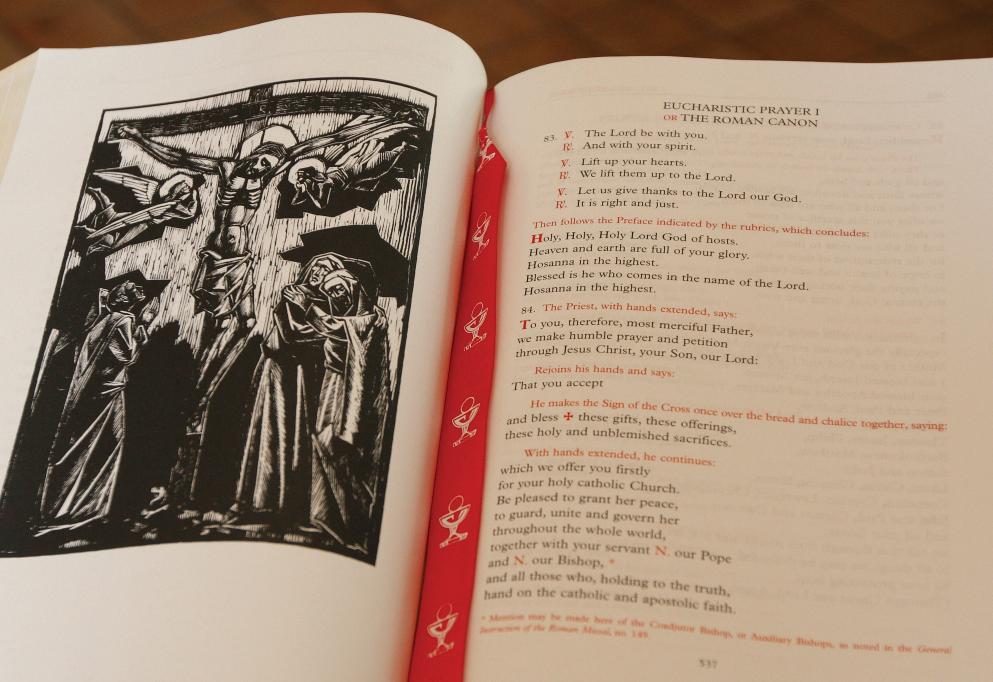
WASHINGTON - Priests, parish groups and individual Catholics wanting to become more familiar with the Roman Missal set to go into use in Australia at Easter 2011 and 27 November, 2011 in the US, will be able to choose from a wealth of resources.
The US Bishops’ Secretariat of Divine Worship and the Australian Catholic Bishops’ Conference’s National Liturgical Committee and some bishops and liturgists in both countries are rolling out a wide variety of audio, visual and print materials designed to ease the transition from second to the third “typical edition” of the Roman Missal.
Perhaps the most ambitious project is the 80-hour video resource called Become One Body One Spirit in Christ, produced by Fraynework Multimedia, a nonprofit venture of the Sisters of Mercy of Australia, for the International Commission on English in the Liturgy.
Filmed in churches in Ireland, England, Scotland, Australia, New Zealand, Canada, South Africa and the US cities of New York, Washington and Los Angeles, the video series is organized around five themes - exploring the Mass through the ages, receiving the English translation, crafting the art of liturgy, celebrating the Eucharist and living the eucharistic life.
Mercy Sister Julia A Upton, provost and liturgy professor at St John’s University in New York and a key con-
tributor to Become One Body, said the series is “so versatile.”
“It can be used in a variety of ways - in parish groups, as an adult education course or using just part of it to focus on one thing,” she said. “And it is designed not just to focus on the missal, but to go back and look at the entire liturgy and why we do this, as more of a theological reflection on what we do when we gather for liturgy.” Sr Julia also said “the value of having all this technology we have today is that you can actually see excellent liturgical celebrations, see how things could be done.”
The main resource offered by the US Conference of Catholic Bishops for parishes is the Parish Guide for the Implementation of the Roman Missal, Third Edition
The parish guide “is meant to be a roadmap” leading pastors and other parish leaders from the 20 August announcement to the implementation date, said Fr Richard Hilgartner, associate director of the USCCB divine worship secretariat.
“The key time for catechesis in the parishes will be next September, October and November,” he said.
But by next Spring in the US, parishioners should be seeing frequent bulletin announcements and should have been offered various educational opportunities related to the new missal, he added.
The Federation of Diocesan Liturgical Commissions is offering for sale prepackaged parish workshop kits or manuals, brochures highlighting various aspects of the new Missal and study guides for different groups. In the works are audio guides to help priests learn the new prayers for Mass.
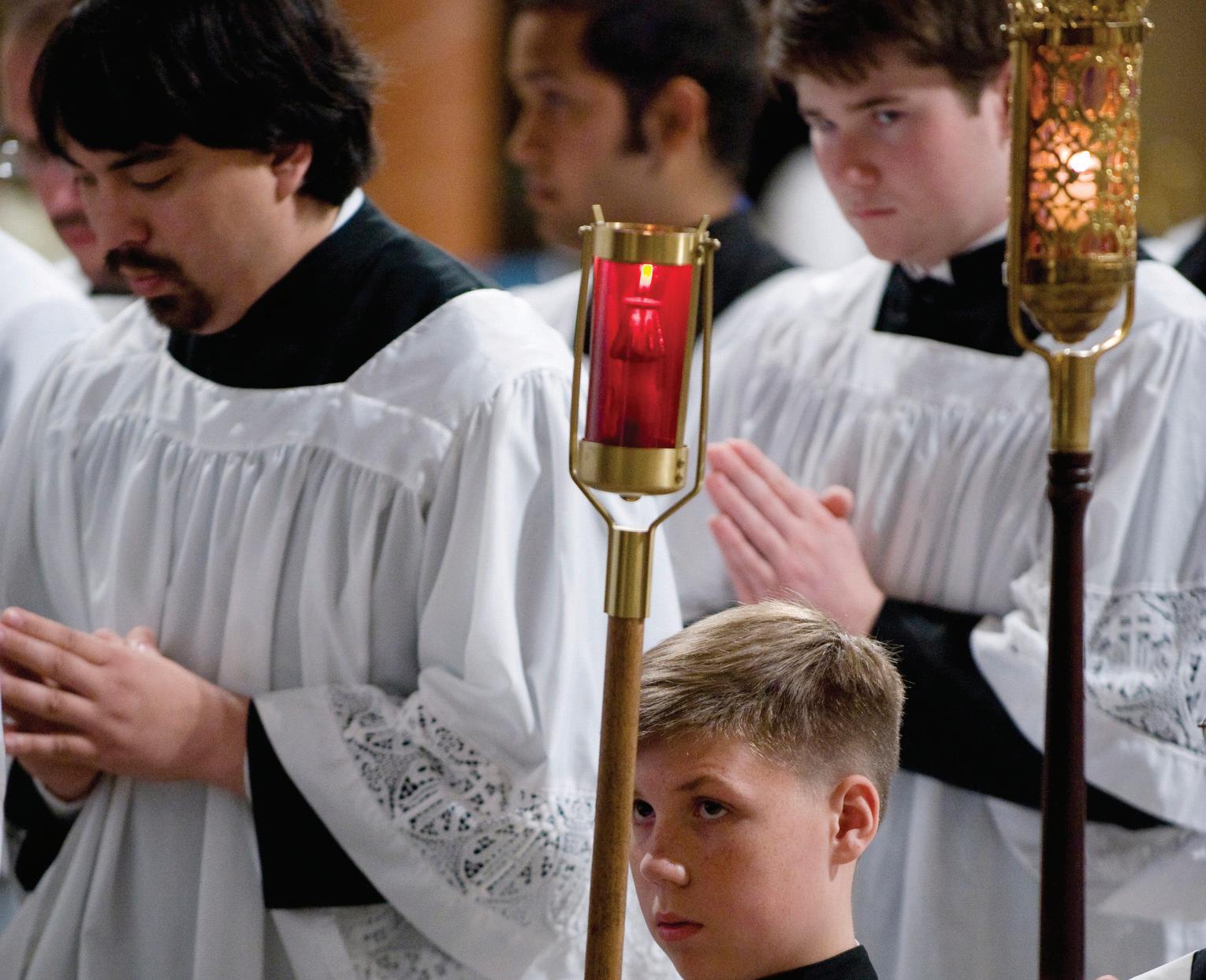
service.
Ph 0419 915 836, fax 9345 0505.
WRR LAWN MOWING & WEED SPRAYING Garden clean ups and rubbish removal. Get rid of bindii, jojo and other unsightly weeds. Based in Tuart Hill. Enq 9443 9243 or 0402 326 637.
CATHOLICS CORNER Retailer of Catholic products specialising in gifts, cards and apparel for Baptism, Communion and Confirmation. Ph 9456 1777. Shop 12, 64-66 Bannister Rd, Canning Vale. Open Mon-Sat.
OTTIMO Convenient city location for books, CDs/DVDs, cards, candles, statues, Bibles, medals and much more. Shop 108, Trinity Arcade (Terrace level), 671 Hay St, Perth. Ph 9322 4520. Mon-Fri 9am-6pm.
RICH HARVEST YOUR CHRISTIAN SHOP Looking for Bibles, CDs, books, cards, gifts, statues, Baptism/Communion apparel, religious vestments, etc? Visit us at 39 Hulme Ct (off McCoy St), Myaree, Ph 9329 9889 (after 10.30am Mon to Sat). We are here to serve.
KINLAR VESTMENTS Quality hand-made and decorated vestments: Albs, Stoles, Chasubles, altar linen, banners etc. 12 Favenc Way, Padbury. By appointment only. Ph Vicki 9402 1318 or 0409 114 093.
ARE YOU BUYING OR SELL-
ING real estate or a business?
Why not ask Excel Settlements for a quote for your settlement. We offer reasonable fees, excellent service and no hidden costs. Ring Excel on 9481 4499 for a quote. Check our website on www.excelsettlements.com.
ALL AREAS. Competitive Rates. Mike Murphy Ph 0416 226 434.
PEEK-A-BOO CORNER
Good quality & affordable branded kids’ clothing. For boys & girls 0 to 6 years. Don’t miss out 20% discount for first 20 customers. Errina: 0401 454 933. Email: peekaboo.corner@gmail.com or visit www.peekaboo-corner.blogspot.com.
ART FOR THE CATHEDRAL www.margaretfane.com.au.
“The Woman Shall Conquer” by Don Sharkey. Photograph of Pope John Paul celebrating Mass in WA. Contact: email rodway@ iinet.net.au.
Have no fear.
The Crossword will be back next week.
“What
Benedict Society is losing religion, Pope Benedict XVI says; defends marriage in address to German Envoy
CASTEL GANDOLFO, Italy (Zenit.org) - Religion is losing favor in society, which is a threat to the basic foundations of marriage and respect for the person from conception to natural death, says Benedict XVI.
The Pope said this on 13 September upon receiving the letters of credence of Walter Jürgen Schmid, the new German ambassador to the Holy See.
In his address, the Pope lamented that “there is no strong attachment to religion” in society in general, and that faith in the “personal God” of Christianity is being left to the side in favor of a notion of a “god” who is “a supreme, mysterious and indeterminate being, who has only a vague relationship” with mankind.
“If one abandons faith in a personal God, the alternative arises of a ‘god’ who does not know, does not listen and does not speak,” the Pontiff warned. “And, more than ever before, does not have a will.
“If God does not have his own will, in the end good and evil are not distinguished, good and evil are no longer in contradiction to one another, but are in an opposition in which one is complementary of the other.
“Thus man loses his moral and spiritual strength, necessary for the complete development of the person. Social action is dominated increasingly by private interest or by the calculation of power, at the expense of society.
“Instead, if God is a Personand the order of creation as well as the presence of Christians of conviction in society is a sign of this - it follows that an order of values is legitimized.”
Benedict XVI also reflected on the concept of marriage, stating that it is “manifested as a lasting union of love between a man and a woman, which is also directed to the transmission of human life.”
He said the Church “cannot approve legislative initiatives that imply a reappraisal of alternative models of the life of a couple and of the family,” which would “contribute to the weakening of the principles of the Natural Law and thus to relativising the whole of legislation and also to confusion on the values in society.”
The Pope also spoke of the need to be “diligent” with regard to the advances in biotechnology and medicine, asserting that the “human person be protected precisely in a situation of weakness,” and that the person “always has priority in regard to other objectives.”
“We have the duty to study diligently to what point these methods can be of help to man and where, instead, it is a question of the manipulation of man, of violation of his integrity and dignity,” the Pontiff noted. “We cannot reject this progress, but we must be very diligent.”
“Once one begins to distinguish - and this now happens often in the maternal wombbetween a worthy life and a life
unworthy of living, no other phase of life will be safe, and even less so old age and infirmity,” the Holy Father added.
At the end of his address, Benedict XVI encouraged the government of Germany to offer a “pondered and pacifying” contribution to the current media culture.
“The construction of a
human society requires fidelity to truth,” he affirmed, lamenting that at times the news cycle is driven by competition instead of facts.
“The subject becomes particularly problematic,” he noted, “when authoritative persons take a public position in this respect, without being able to confirm the aspects adequately.”