Battlefield FAITH
Religion’s presence on America’s hallowed ground - Page 15


Religion’s presence on America’s hallowed ground - Page 15
UPCOMING retreats to be held on July 20 and August 25 in the idyllic surrounds of the Schoenstatt shrine just outside Armadale will offer women aged 17-30 a unique opportunity to seek life’s purpose.
The most recent Grace and Silence retreat day was held at the Shrine for single young women on Sunday June 30.
So far, 19 women have participated in the event since it began in May. The days offer single young women the relatively rare opportunity to immerse themselves in prayerful silence to contemplate their life’s vocation; the retreats are proving to be a positive experience for those who attend.
Grace and Silence organisers are delighted with the echoes which the participants have shared with them.
“I didn’t realise how much I needed it until I was there. It really helped me clarify a few things in my mind and to make a few decisions regarding my vocation and what I need to do to fulfil it,” wrote one participant.
Two final retreat days are scheduled for 9.30am-4.30pm on July 20 and August 25. The retreats cost $20 including lunch and refreshments. Registration is essential and places are limited.
For more information, contact Hanna on 0415 306 090 or visit www.schoenstattwa.org.au to download a registration form.
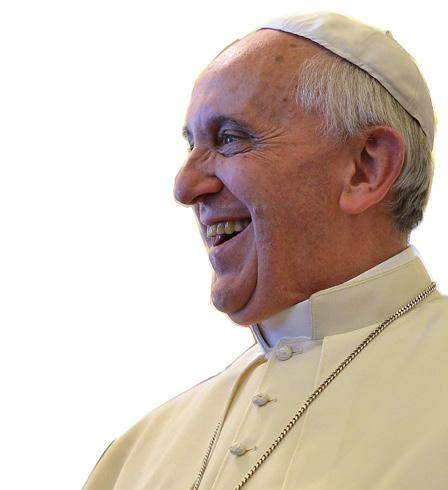
POPE FRANCIS’ first encyclical, Lumen Fidei (“The Light of Faith”), is a celebration of Christian faith as the guiding light of a “successful and fruitful life”, inspiring social action as well as devotion to God, and illuminating “every aspect of human existence”, including philosophy and the natural sciences.
The document, released on July 5, completes a papal trilogy on the three “theological virtues” following Pope Benedict XVI’s encyclicals Deus Caritas Est (2005) on charity and Spe Salvi (2007) on hope. Publication of the encyclical was one of the most awaited events of the Year of Faith which began in October 2012.
Pope Benedict “had almost completed a first draft of an encyclical on faith” before his retirement in
February 2013, Pope Francis writes, adding that “I have taken up his fine work and added a few contributions of my own”. Commentators will likely differ in attributing specific passages, but the document clearly recalls the writings of Pope Benedict in its extensive treatment of the dialogue between faith and reason and its
many citations of St Augustine, not to mention references to Friedrich Nietzsche and Fyodor Dostoyevsky.
On the other hand, warnings of the dangers of idolatry, Gnosticism and Pharisaism, a closing prayer to Mary as the “perfect icon of faith”, and an entire section on the relevance of faith to earthly justice and peace echo themes that Pope
Francis has already made signatures of his young pontificate.
Lumen Fidei begins with a brief survey of the biblical history of faith, starting with God’s call to Abraham to leave his land – “the beginning of an exodus which points him to an uncertain future” – and God’s promise that Abraham will be “father of a great nation”.
The Bible also illustrates how men and women break faith with God by worshipping substitutes for him.
“Idols exist, we begin to see, as a pretext for setting ourselves at the centre of reality and worshipping the work of our own hands,” the Pope writes. “Once man has lost the fundamental orientation which unifies his existence, he breaks down into the multiplicity of his desires ... Idolatry, then, is
QUOTABLE
“Our culture has lost its sense of God’s tangible presence and activity in our world. We think that God is to be found in the beyond, on another level of reality, far removed from our everyday relationships. But if this were the case, if God could not act in the world, his love would not be truly powerful, truly real, and thus not even true, a love capable of delivering the bliss that it promises. ... Christians, on the contrary, profess their faith in God’s tangible and powerful love, which really does act in history and determines its final destiny: a love that can be encountered, a love fully revealed in Christ’s passion, death and resurrection.”
- from Fidei, Ch 2 We have believed in Love

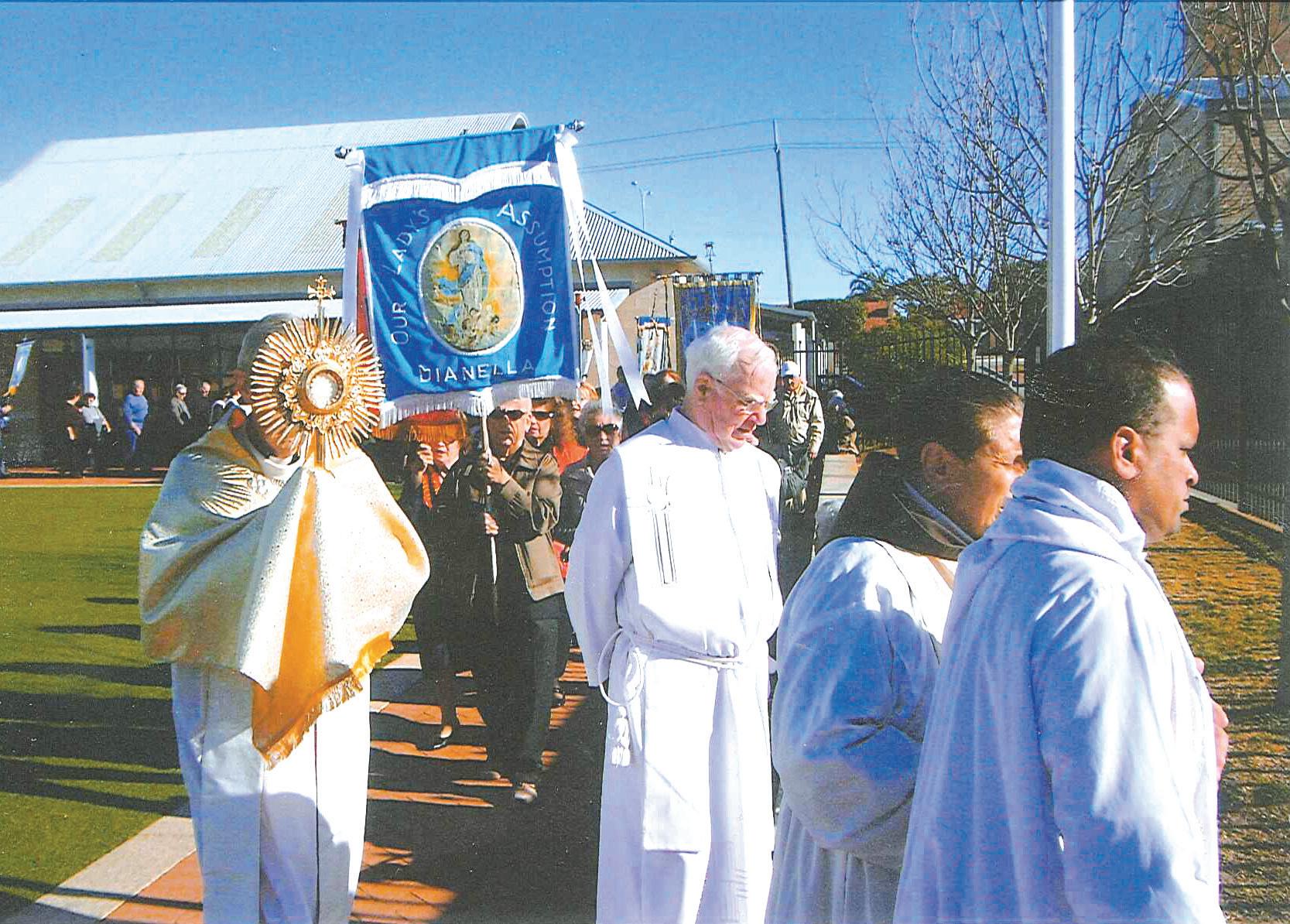
A large crowd took part in the annual procession in honour of the Sacred Heart of Jesus on June 30 at Our Lady’s Assumption Catholic Church in Dianella. Led by Archbishop Emeritus Barry Hickey who processed with the Blessed Sacrament, the crowd travelled around the church before returning for Mass. The Sacred Heart Association, established by local Catholic Franco Miranda, also celebrated its 10-year anniversary. Mr Miranda established the association and yearly procession after he received two visions of Our Lord.
A discussion on suicide awareness will be held at St Bernadette’s Port Kennedy parish hall on Saturday, August 3 from 1-5pm. The SafeTalk program aims to alert community members to signs that a person may be considering suicide. It acknowledges that while most people at risk of suicide signal their distress and invite help, these intervention opportunities are often overlooked. Participants of the SafeTalk program learn to recognise when someone may have suicidal thoughts and how to respond. The program is for those 16 years and older and is priced at $30 to cover material costs. For more information, contact Mauz Kay on 0419 928 110 or email mauzk@bigpond.com.
More than 200 people gathered at the Italian Club in Midland on July 7 for a fundraising lunch hosted by Guildford Parish. The event was held to help the parish pay off its debt for repair work that has been done on the church building over the past year. In 2012, tiles on the church roof were replaced and large cracks in the walls of the building were repaired.

Earlier this year, work was completed to drain rainwater away from the back of the church. “The aim was to maintain and keep the charm of our church, built in 1936,” parish priest Fr Blasco Fonseca said.
Established in 1988, the Fullness of Life Centre is a not-for-profit organisation which endeavours to help people gain services such as counselling, spiritual direction
and personal and spiritual growth programs. The centre derives its name from John 10:10 - I came that they may have life and have it to the full. During the month of August on Thursdays 8, 15, 22 and 29, the Fullness of Life Centre is hosting a course which examines contemporary Christian spirituality as both a lived experience and academic discipline from 7pm to 9pm. The Introduction to the Study of Contemporary Christian Spirituality costs $165 and is presented by Stephen Truscott SM. The course combines reading, discussion, and reflective exercises.
Father Tim Deeter and Father Michael Rowe are leading a pilgrimage to the Holy Land and Italy next year. The group will leave Perth on January 6, 2014, arriving in Amman, the capital city of Jordan and the place where Jesus preached to the Gentiles. Other holy places on the pilgrimage include Nazareth, Bethlehem and Israel. The pilgrims will also visit Italy, and tour Rome the Eternal City, as well as Subiaco, Norcia, Genazzano, and Cascia. They are scheduled to return to Perth on January 31. The price of $7,850 from Perth is all-inclusive. For more information, email casapgf@iinet. net.au or call 9271 5253.
The Emmanuel Centre is holding an open forum on disability, the Church and the wider community on Tuesday, July 30 from 7pm to 9pm. The discussion is aimed at anyone with a disability and parents and carers who aid the disabled. The purpose of the event is to talk and network with others who are in a similar situation as well as discussing issues such as managing education, employment, recreation, participation in the Church and preparation for the Sacraments. To RSVP or for more information, call 9328 8113 or email emmanuecentre@westnet.com.au.
Monday 15th - White ST BONAVENTURE, BISHOP, DOCTOR OF THE CHURCH (M)
1st Reading: Ex 1:8-14, 22 A new king rules
Responsorial Ps 123
Psalm: The Lord is our help
Gospel Reading: Mt 10:34-11:1 Not peace, but sword
Tuesday 16th - Green
OUR LADY OF MOUNT CARMEL (O)
1st Reading: Ex 2:1-15
Birth of Moses
Responsorial Ps 68:3,14,30-31,33-34
Psalm: Answer me, God
Gospel Reading: Mt 11:20-24 Lack of repentance
Wednesday 17th - Green
1st Reading: Ex 3:1-6,9-12 This is holy ground
Responsorial Ps 102:1-4,6-7
Psalm: The Lord is kind
Gospel Reading: Mt 11:25-27 I bless you, Father
Thursday 18th - Green
1st Reading: Ex 3:13-20 I Am sends me
Responsorial Ps 104:1,5,8-9,24-27
Psalm: Covenant remembered
Gospel Reading: Mt 11:28-30
My yoke is easy
Friday 19th - Green
1st Reading: Ex 11:10-12:14
Blood of the lamb
Responsorial Ps 115:12-13,
Psalm: 15-18
Cup of salvation
Gospel Reading: Mt 12:1-8
Mercy, not sacrifice
Saturday 20th - Green
ST APOLLINARIS, BISHOP, MARTYR (O)
1st Reading: Ex 12:37-42
Exodus from Egypt
Responsorial Isa 135:1,10-15,23-24
Psalm: Everlasting love
Gospel Reading: Mt 12:14-21
Chosen servant
Sunday 21st - Green
16TH SUNDAY IN ORDINARY TIME
1st Reading: Gen 18:1-10
Oak of Mamre
Responsorial Ps 14:2-5
Psalm: Truthful heart
2nd Reading: Col 1:24-28
Perfect in Christ
Gospel Reading: Lk 10:38-42
One thing only
Senator John Madigan has called for a referendum to be held on whether the definition of marriage should be changed to include same-sex couples.
Senator Madigan told the Senate on June 20 that he would introduce legislation that, if passed, would result in a public vote on the issue.
On the same day, legislation moved by the Greens to recognise overseas same-sex unions in Australia was rejected, with parliamentarians voting 44-28 against the bill.
Senator Madigan said it was important for the Australian people to have their say on the divisive issue.
“The will of parliamentarians does not necessarily reflect the will of the people,” he said.
“Quite frankly, the definition of marriage is something that cannot be left to the will of the parliament.
“It is for this reason that I have notified that I will be introducing
a bill calling for a referendum to alter the Constitution and confirm that marriage is the union of a man and a woman, to the exclusion of all others, voluntarily entered into for life.”
The Victorian politician said the Australian public deserved to
“The definition of marriage is something that cannot be left to the will of the parliament ... It does not necessarily reflect the will of the people.”
influence the definition of such an important institution.
“Marriage is a cornerstone of human society, predating any religious or political system,” he said.
“If we can have a referendum on things like local government, we deserve to have a referendum on
officially defining this institution in our Constitution.
“I believe that this is an issue that every Australian should have a vote on. That is why I am calling for a referendum.”
Liberal Senator and Applecross parishioner Chris Back told the parliament why he opposed the recognition of foreign same-sex marriages in Australia.
“The coalition made an undertaking to the Australian people in the 2010 election that we would support the existing definition of marriage,” he said.
“Having made that undertaking, we are not going to vary it.
“The people of Australia can be very clear about where the coalition stands.”
Prime Minister Kevin Rudd recently added further weight to the call for a referendum.
He challenged Tony Abbott to allow Liberal Party members a conscience vote on the issue, and said if Mr Abbott refused he would look at other options such as a referendum.

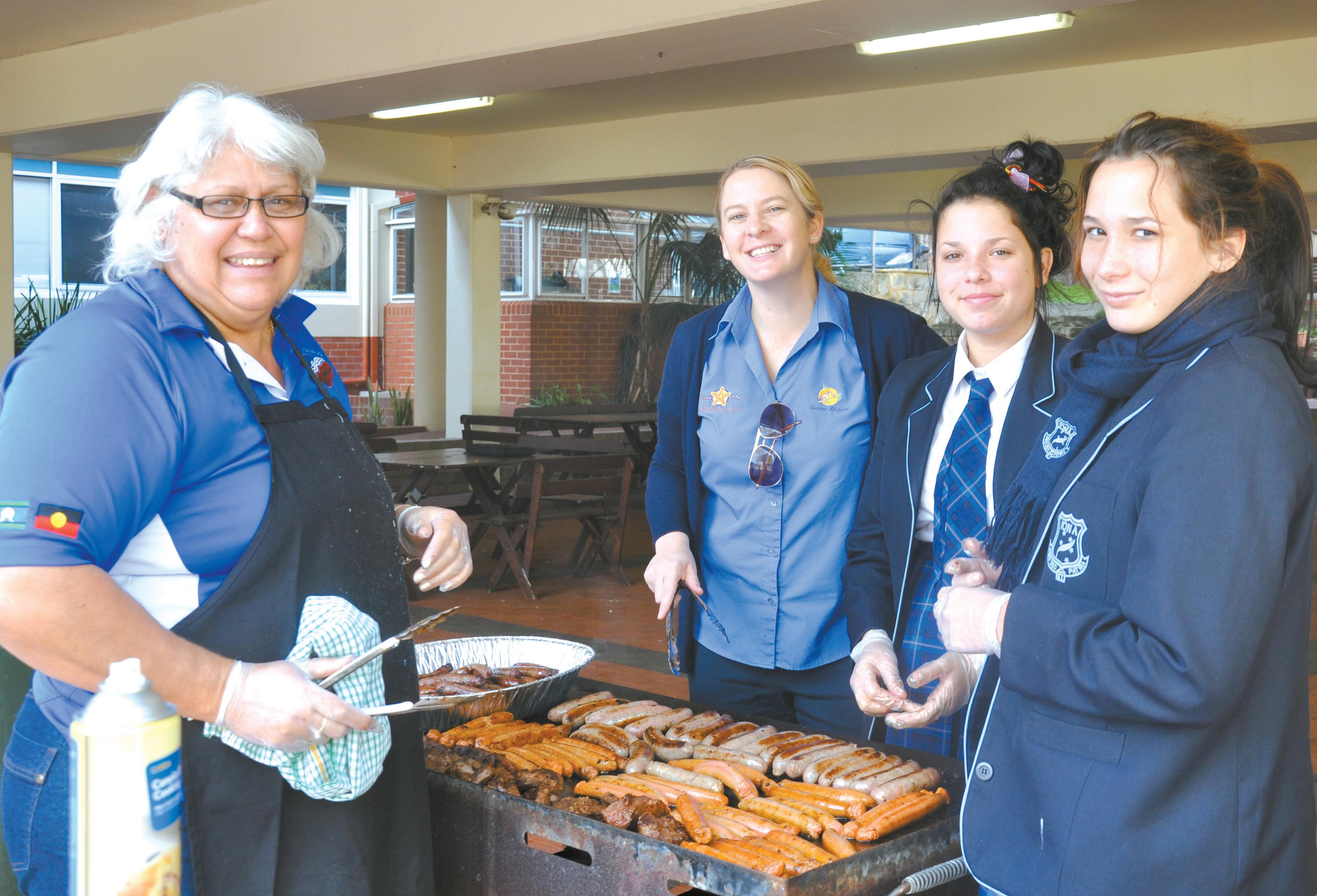
IONA Presentation College recognised the culture and traditions of its Indigenous students last week with lunchtime celebrations to recognise NAIDOC Week.
Deputy Principal Pastoral Care Debra Powell said Iona has 18 Indigenous students, the vast majority of whom are boarders.
“These girls have come to us from various locations, including Kununurra, Broome and Beagle Bay in the Kimberley, to Carnarvon in the Gascoyne, Boulder in the Goldfields and Goomalling in the Wheatbelt.
“We recognise that the transition for them to school in the metropolitan area can be challenging.
“By celebrating NAIDOC Week, we [were] helping the girls showcase snippets of their culture to our other 900 or so students.”
Ms Powell said the girls were very excited and worked hard to ensure the series of events went ahead smoothly.
The college hosted a number of lunchtime events during the week beginning July 1.
These included friendship bracelet making and storytelling; Indigenous dancers from Wesley College and bush tucker cooking, including samples of damper, kangaroo sausages, and dugong; short movies from Black Screen, an initiative of the National Film and Sound Archive promoting Indigenous film culture; and an address from Miss NAIDOC 2013 at the college Assembly. Staff and
THE ORDER OF MALTA will send two ambulances to its medical clinics in Timor-Leste thanks to the generous donation from St John Ambulances in Perth.
After making a national appeal in December for funds to purchase an ambulance for its work in TimorLeste, the Order got more than it bargained for when it was offered two Mercedes-Benz ambulances for no cost.
The emergency vehicles were acquired from St John Ambulance’s Lancelin and Boddington sub-stations.
With funds from the public covering the cost to fit-out and re-label the vehicles, they will be shipped to Dili via Darwin later this month.
In a further act of generosity, Jebsens Shipping have offered to send vehicles to Timor-Leste at no charge.
The ambulances will be used at the medical clinics in Maubara and Bebonuk, two small towns in Timor-Leste in urgent need of medical facilities.
The two clinics are both staffed by Carmelite nuns and provide primary heath care for more than 1,200 families.
Member of the Order of Malta David Scarf said the ambulances would be of great assistance to the medical clinics in Timor-Leste.
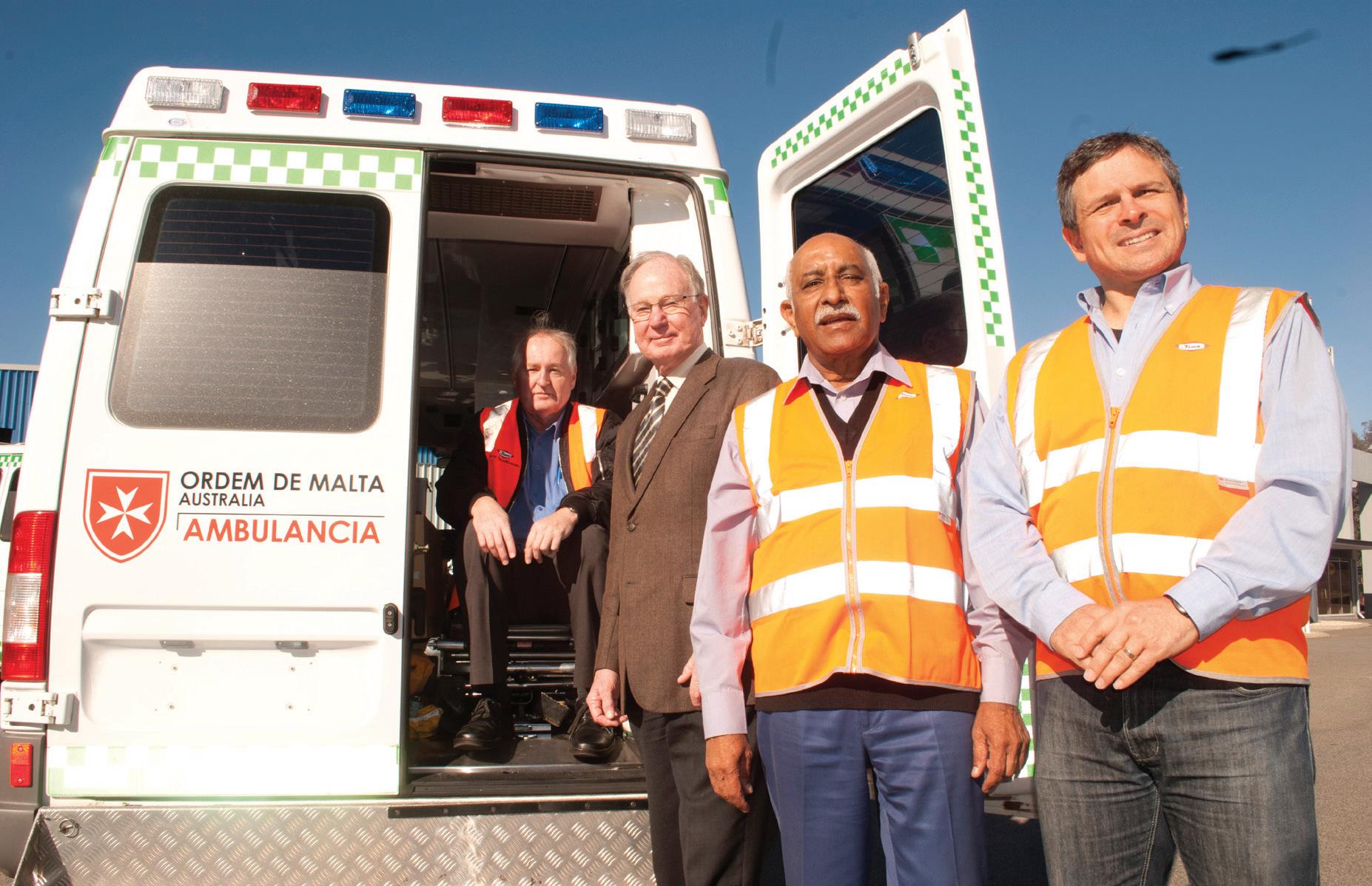
“An ambulance will be stationed at each of these clinics, bringing patients to the clinics for attention and taking those who need it to hospitals,” he said. “The ambulances will be of great
benefit to the people of TimorLeste and, as well, give the Order a greater presence and visibility in the country.”
The Order of Malta’s Australian branch has been assisting with
the rehabilitation of Timor-Leste’s National Ambulance Service (TLNAS) for the past four years.
It is expected the ambulances will be operating in Timor-Leste by August.
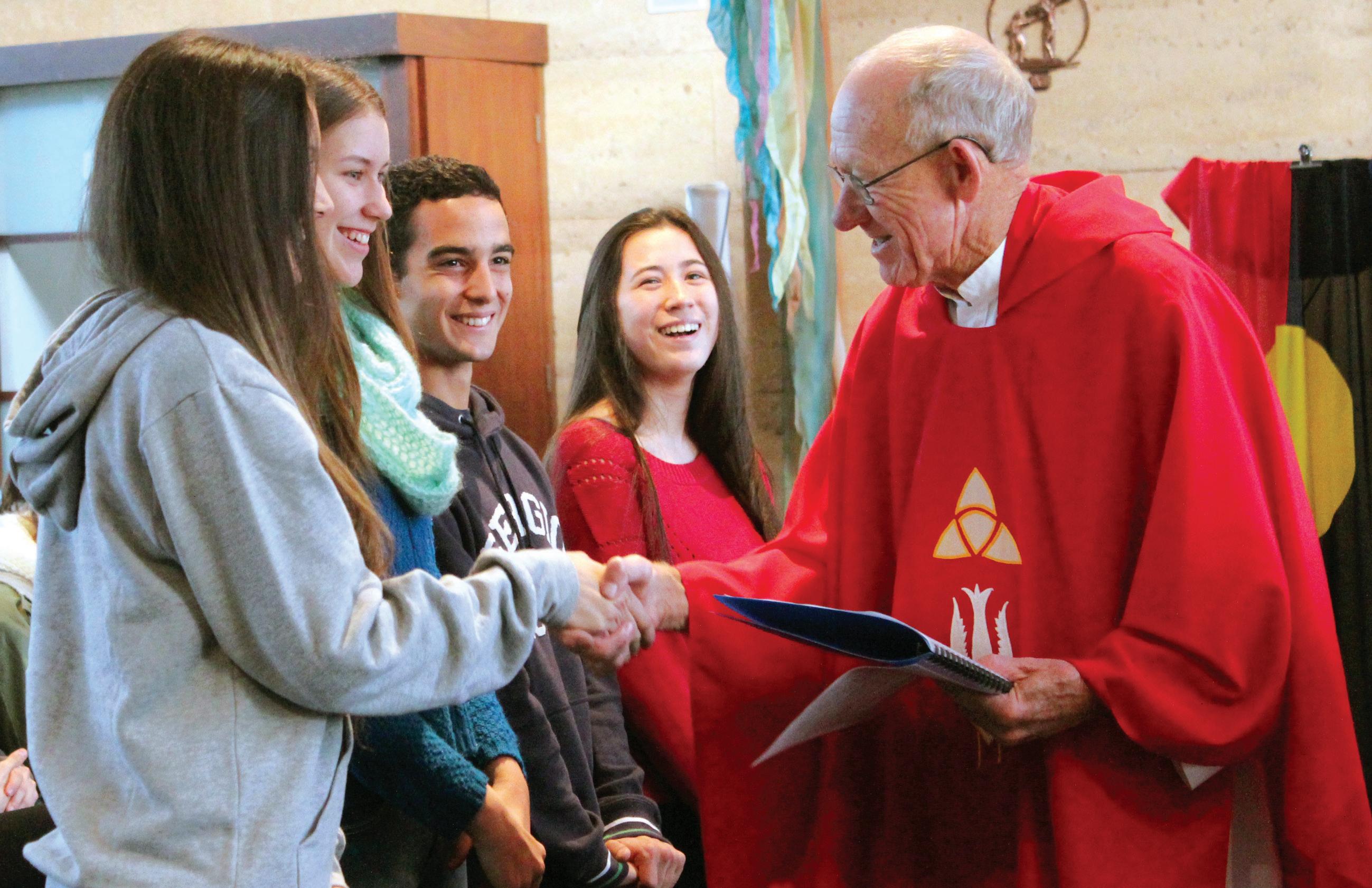
KOLBE Catholic College celebrated a NAIDOC Mass on Wednesday, July 3.
Mass commenced with a ‘Welcome to Country’ by Marie Taylor and set the scene for Year 11 students who joined the Indigenous students of the College to celebrate this special occasion. As part of the Mass symbols were processed and placed in front of the altar:
A copy of the Yirrkala Bark Petitions - In their efforts to seek justice, the indigenous peoples of Australia and the Torres Strait Islands petitioned Australian parliaments, beginning with Batman’s Treaty of Melbourne in 1835.
The Yirrkala Bark Petitions of 1963 are considered to be “found-
ing documents” that led to the recognition of the rights of Indigenous Australians.
Message Stick – Over tens of thousands of years, message sticks were commonly used by Indigenous ancestors as one means of communicating between different Aboriginal tribes and nations. Messages were painted and inscribed on a stick, which was then transported by hand.
One who carried the message stick was traditionally granted safe and protected entry to another nation’s territory – and travelled in peace and with respect. One Kolbe staff member said the message stick used in the Mass “grants us protection and favour as we pass through
this land of the Noongar people”. A lighted candle – Lighted candles have been used for two mil-
The principal presented him with a plaque...
“As you take your next step remember the Aboriginal people.”
lennia to symbolise the presence of Christ in communities gathered in his name.
The candle featured with the other symbols, The Record was told,
UNIVERSITY OF NOTRE DAME
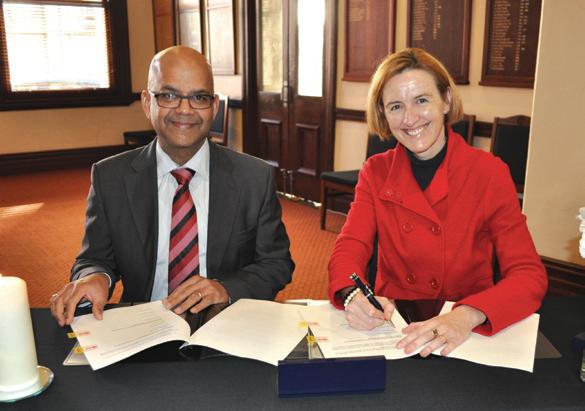
A strong commitment to support greater cooperation and opportunity across educational sectors is behind the signing of a Memorandum of Understanding between The University of Notre Dame Australia and Central Institute of Technology. The purpose of the MOU is to develop clear, accessible and flexible educational pathways for CIT graduates to apply for admission into further courses of study at UNDA. Notre Dame’s Vice Chancellor, Professor Celia Hammond, and CIT Managing Director, Neil Fernandes, signed the MOU on behalf of both institutions on Thursday, June 27. Mr Fernandes said he was delighted that the working relationship with Notre Dame had resulted in the signing of the MOU which will broaden the opportunities available for graduates. “The MOU strengthens the relationship between Central Institute of Technology and The University of Notre Dame Australia and demonstrates the intention of both education institutions to further develop pathways for Central graduates to university,” Mr Fernandes said. Professor Hammond said that the University was delighted to be entering into this MOU with CIT. “This collaboration will see a new pathway open to students who complete relevant qualifications in the areas of Business, Health and Science at Central Institute of Technology to transition these into higher education courses at Notre Dame,” Professor Hammond said. “CIT delivers high quality Diploma and Advanced Diploma courses of study in these areas and we are confident that the skills and knowledge students acquire through these courses will be a great foundation to our Bachelor degree programs.”
The Schoenstatt Sisters will be drawing a raffle at 2pm on November 3 at their Spring Fair to raise funds for building a fence around the Armadale Shrine. First prize will be two return tickets to any destination in Europe or $5,000 dollars cash; second prize will be $2,000 cash and there are 10 consolation prizes of gift vouchers valued at $100 each. For more information, contact the Schoenstatt Sisters on 08 9399 2349 or email wamovement@schoenstatt.org.au.
RESPECT LIFE OFFICE
because we believe that Christ is present in our struggles for justice and peace in our communities and in the world.
During the Mass, four Year 11 Students were commissioned to the Rite for Special Ministers of Holy Communion. Kolbe commended Celeste Chalk, Courtney Pink, Georgia Cole and Stefano Spissu “for assuming this very important leadership role”.
After Mass, Rhys Collard on behalf of the Indigenous students presented College Principal Robyn Miller, with an engraved plaque saying, “as you take your next step remember the Aboriginal people who walked here first”.
KOLBE CATHOLIC COLLEGEThe Respect Life Office will be holding a 10 year anniversary dinner supporting ‘Embrace the Grace,’ the largest Catholic conference for youth and young adults in WA. The dinner will raise funds for the conference and keep costs down for those attending. It will be held on August 10 at the City Beach Holy Spirit parish hall at 7pm. Costs are $25 per person or $180 for a table of eight. Cost also includes beer, wine and nibbles.
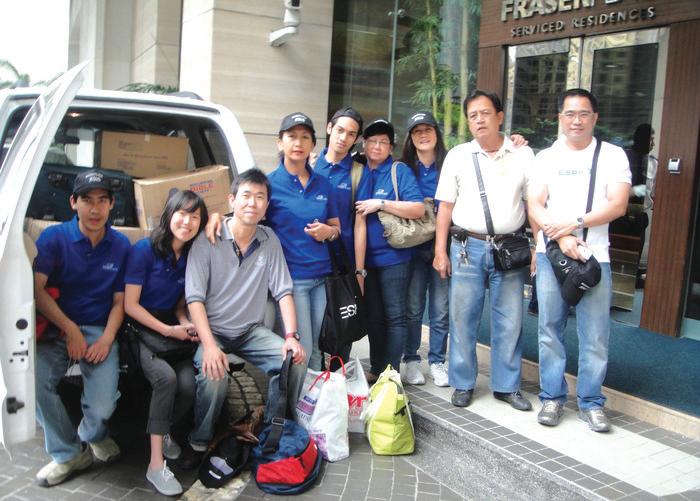
A PERTH family has been moving heaven and earth to help provide much-needed resources to street children in the Philippines - all consigned in shoeboxes.
The Soh family recently presented a talk in Perth about their mission work in the Philippines in January providing for the less fortunate.
Mike and Ruby Soh, together with their children Michael and Kamila, visited the Philippines in January to establish orphanages and feeding programs for street children in Manila, Damaguete and Cebu.
The family has helped locals, including 350 orphans, by fundraising in Australia to provide Bibles, daily meals, thongs, clothing, toys, pots, pans, notebooks, pens – and plenty of hugs for the children.
The family, along with a small group of parishioners, is working together for ‘Shoeboxes for Jesus’ which provide necessary items for an orphanage of 70 for Christmas.
They have also worked towards providing 100 boxes of books and created a community library replete with encyclopaedias, comics and Bibles. They also raised $1,000 towards building a facility to provide proper sanitation and electricity. A shelter was also provided for ‘unwanted’ children with physical and mental disabilities.
Any unwanted or unused items suitable to the project can be dropped off to 369 Roberts Road, Subiaco. The
 By matthew Biddle
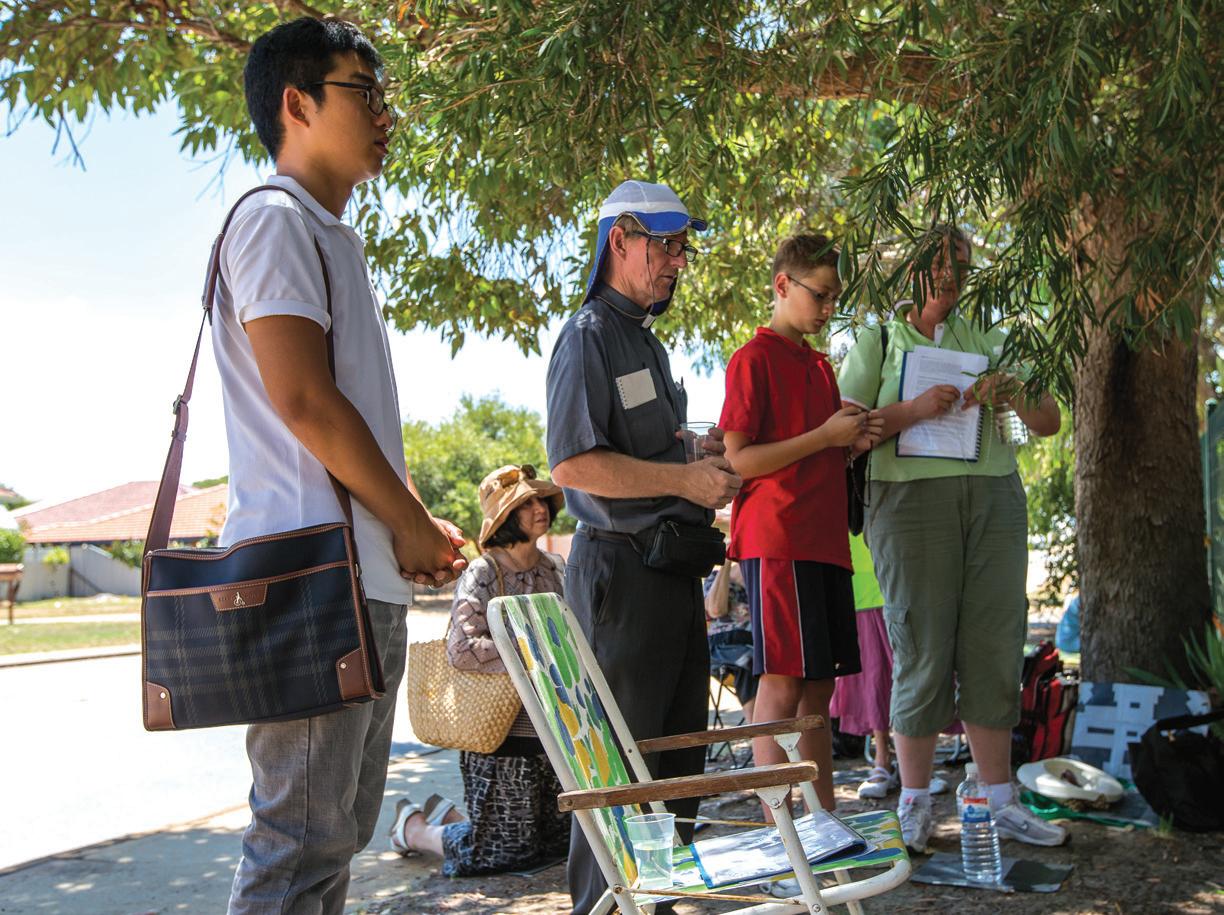
THE Helpers of God’s Precious Infants in Perth will no longer hold prayer vigils outside the Balcatta Women’s Clinic after it closed its doors as of July 1.
A clinic spokesperson said it closed for “personal reasons” and said they would not be relocating nor reopening again.
The clinic’s telephone service and website is referring patients requiring a termination of pregnancy to King Edward Memorial Hospital.
Helene Sawyer from the Helpers said although the reasons why the clinic has ceased operation are not being disclosed, it was a positive outcome for the pro-life cause.
“We believe that this closure is an answer to the prayers of many Christians who have remained faithful in praying for this to happen,” she said.
“It is a positive outcome for pro-lifers to have one less abortion clinic in business and gives them tremendous encouragement to continue their prayers and witnessing.”
There are still two major clinics operating in Midland and Rivervale.
The Helpers had been praying outside the Balcatta clinic every Friday since 2003, and Mrs Sawyer said it was possible the doctor had been slowly converted.
“[She] may be finding it difficult to continue to justify abortions in the name of helping women,” she said.
“This doctor has, over the years, shown concern for her patients and counselled some against abortion, even assisting them in finding appropriate pro-life help.”
On average, about 8,000 abortions are performed in WA each year.

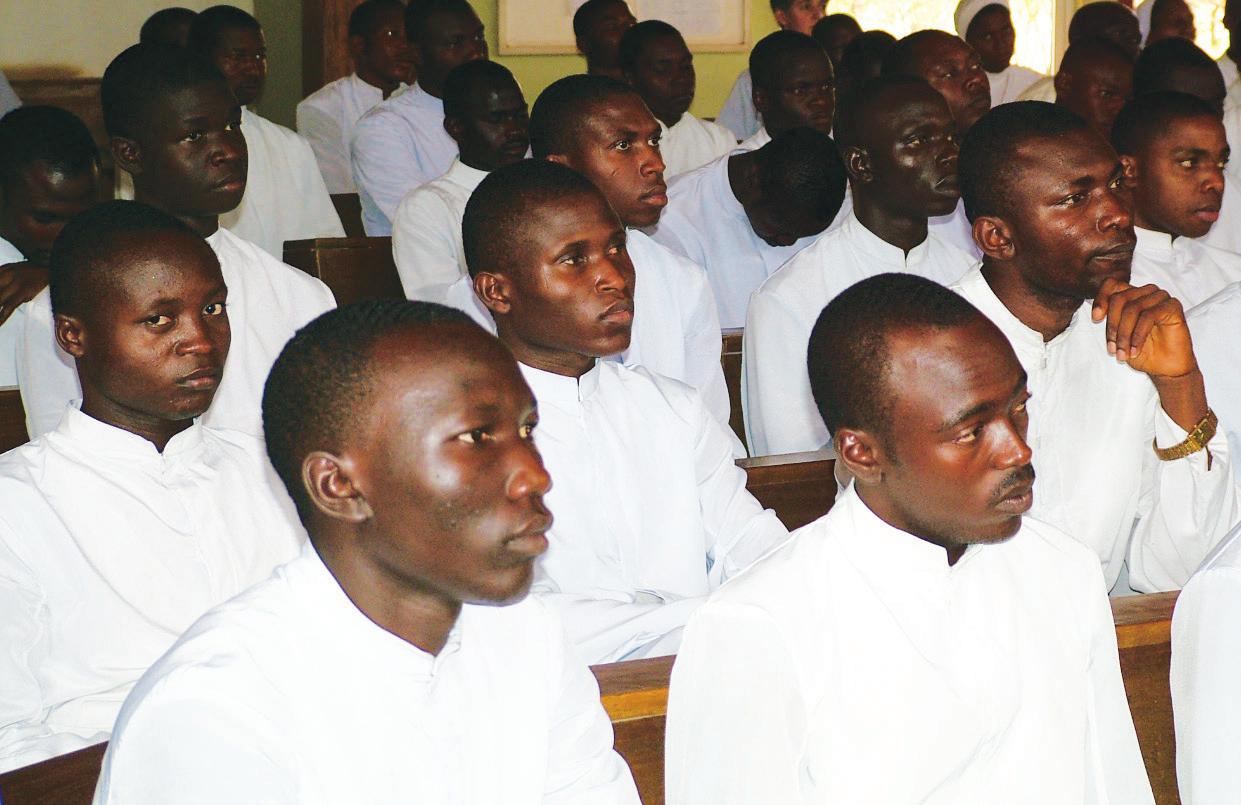
The parish of Santa Clara in Bentley recently held a unique triple celebration of its past, present and future, as Mark Reidy explains...
ARICH TAPESTRY of history was woven together on June 2 when past and present representatives from Santa Clara parish in Bentley gathered to celebrate the church’s Golden Jubilee.
The joyous event was made more auspicious occurring on the Feast of Corpus Christi and incorporating the Sacrament of Holy Communion for many of the school’s and parish’s Year 4 students.
Bishop Don Sproxton presided over Mass, concelebrating with parish priest Fr Dennis Sudla, and Fr Edward (Ted) Hewitt.
Fr Hewitt was one of the first children to receive Holy Communion at the parish as a young boy and later became parish priest in the mid-1980s.
Attending the celebrations were five Dominican Sisters, linking the day with the parish’s start in 1954 when the Order was invited to Bentley to operate the school.
Parish secretary Muriel Gallagher told The Record the Sisters had formed an integral part of the parish’s foundation.
“In the early years, three Dominican Sisters travelled daily from Bedford to teach until 1957, when a decision was made to build a convent here, which was completed in 1958,” she said.
Miss Gallagher said the Sisters’ influence spread beyond their teaching capacity as they minis -
tered to the sick and elderly and shared the joys and sorrows of the parish community.
“When they left the school in 1992, we were sorry to see them go,” she added.
Also participating in the Anniversary Mass were Sisters from the Missionaries of Charity, who resided in the parish during their first 12 months in Perth.
Miss Gallagher said the Sisters were still deeply involved with the
The event drew together the people and events of the last half century and highlighted the parish’s communal bond.
community, reaching out to the most vulnerable members, transporting those who have difficulty in attending Mass and holding Catechism classes for children preparing for the Sacraments.
“Several of the children receiving Holy Communion on the Feast of Corpus Christi had been prepared by the Sisters,” Miss Gallagher said.
During his homily to the crowded congregation, Bishop Sproxton expressed his congratulations to the parish and his appreciation at being able to attend such an event.
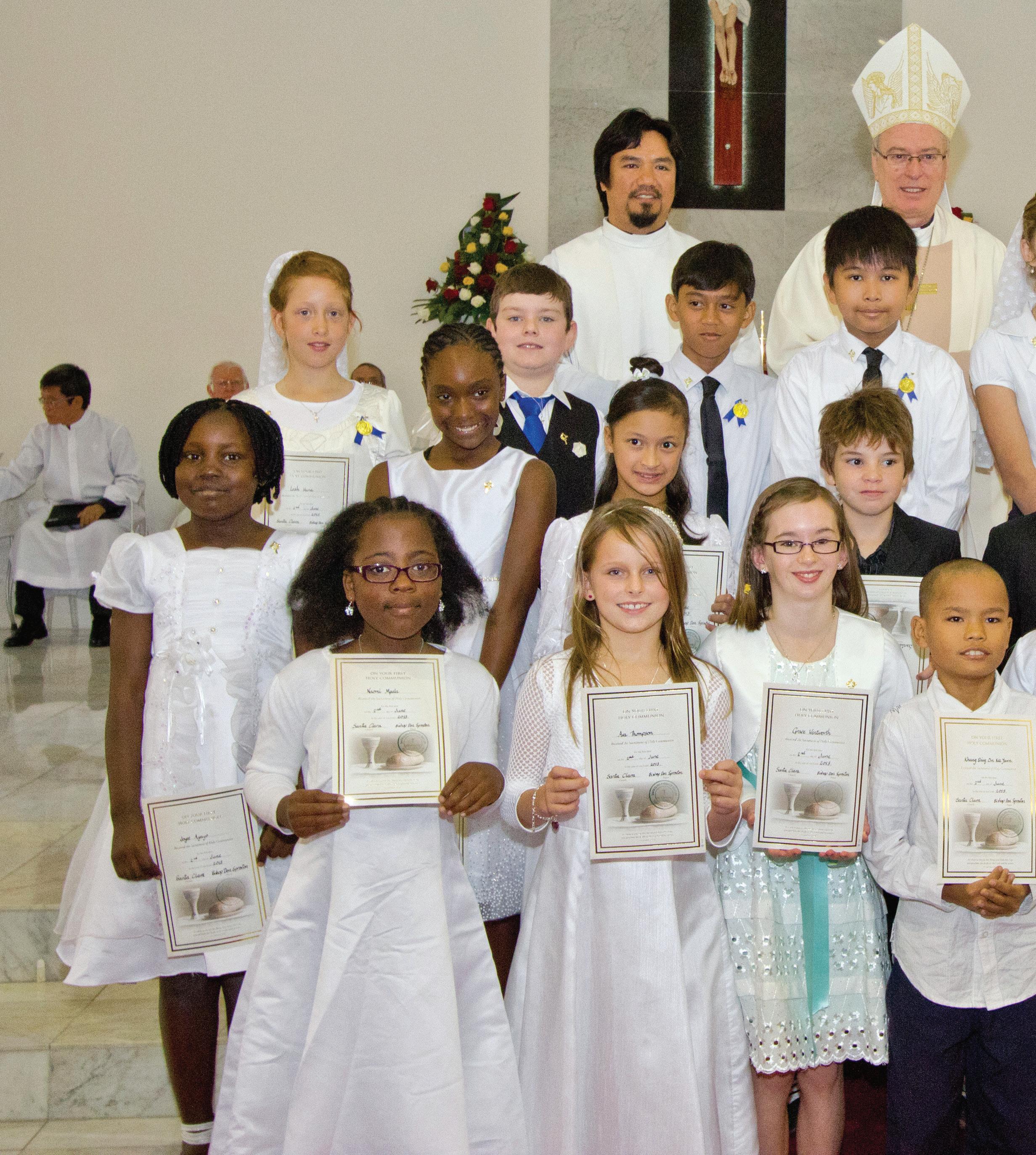
He also underlined the importance of receiving Holy Communion for the first time, linking the Sacrament with the Spirit the children received in Baptism and would have confirmed in the years to come.
It was a message that resonated with the 20 communicants as they intently followed proceedings during the Mass, according to Miss
Gallagher. “They all looked so prayerful and lovely as they prepared to receive Jesus for the first time,” she said. “It was an occasion that would remain with them forever. How proud their parents, guardians and teachers must have felt, knowing their work was now bearing fruit.”
The talents of the community’s many gifted musicians were also
on display with the parish’s three choirs contributing to both the Mass and post-celebrations.
“Santa Clara’s choirs would, I am sure, give any other choir a run for its money,” Miss Gallagher stated proudly.
“The singing at Mass was tuneful and blended in well with Fr Dennis’ powerful voice, it was a pleasure to join in, or just listen.”
Luigi Della-Vedova
Born: July 3,1935
Entered eternal life: June 11, 2013
IT IS MY HONOUR to share some insights into the life of my neighbour, Luigi DellaVedova, better known to the Smith family as Louie Della.
Louie was born in Narembeen on July 3, 1935 to Batista and Giovanna Della-Vedova. He was the second of what was to be five children. His parents were wheat farmers at Narembeen, some 300km east of Perth.
Louie was baptised at Our Lady of the Blessed Sacrament Church in Narembeen on July 12. He made his First Confession and First Holy Communion at Sacred Heart church, Goomalling on February 2, 1944.
Life, though hectic, was good on the farm with neighbours like the Coopers, Ronchis and Menegolas with families to visit (the Menegolas had 11 children), the big draft horses and countless snakes, emus, roos too which, I suspect, terrified young Louie. With speaking Italian at home, it became
Luigi Della-Vedova was a lively, energetic youth who grew into a man who was devoted to his family
Giovanna’s obsession to teach the boys English, firstly teaching herself, then requesting help from Mrs Cooper, the lovely English lady who was aghast when Giovanna, on days in town, demanded to know why only men could frequent the local bar. By custom, women had to wait outside. Giovanna, of course, took no notice and demanded to be served as an equal and trailing her boys along.
In 1941, at the tender age of 6, Louie and older brother John (7) were enrolled at St Joseph’s Boarding School in Goomalling staffed by the “Brown Joeys”. This was to be traumatic for John, Louie and, most of all, Giovanna. She stayed over a week in a hotel in Goomalling, secretly going up to the school to see how her boys coped. John was mixing reasonably well. But much to her anguish and dismay, Giovanna discovered that Louie was troubled and would go at playtime to a particular seat under a particular tree and virtually devour his shirt sleeve in emotional homesickness.
So she hotfooted it to the convent and asked the sisters for help. Together, they came up with a plan: Louie would help and be helped in the kitchen during the breaks. He blossomed with the attention and
became both a good student and a dab hand at scone and cake making. Big brother John became a dab hand at boxing. Little brother Peter followed to school at Goomalling.
As high school loomed, first John went to Clontarf, then Louie went to CBC Terrace (located on the site of the Perth Concert Hall). Louie had interesting stories of the discipline of the Brothers, especially the time when the whole site was under
Louie was troubled and would... virtually devour his shirt sleeve in emotional homesickness.
water. Overall, he enjoyed his high school days.
While Batista and Giovanna were still farming at Narembeen, the family purchased a small property in Queens Park. The boys, John and Louie, together with their Aunt Piera and cousins Lucy and Ronnie lived there. At this time the boys’ sister, Lucy, was born.
Louie’s time at Queens Park was full of pranks; bird egg hunting, climbing up and falling out of
trees, cubby house building and bareback riding on a little pony that was agisted on the property and belonged to the nearby Kersley stables. Giovanna, however, was not happy as she yearned for her family to be all together at home.
Consequently, she spent years on a bicycle checking out the southern metropolitan suburbs for a suitable property that could be a business as well as a home for her family. In 1948, she found the Gosnells property and spent a year convincing the owner to sell.
They bought the 1,760 acre Gosnells property and, on a hot 37 degree day, the family moved to Gosnells. As they arrived, they found the front paddock to be on fire. The family’s first job was to put out the fire before they could move in. This was a portent of things to come for Louie. He finished high school the same year and together with his parents set about learning about dairy farming. This was a big change: from wheat farmer to dairy farmer.
The property and livestock were in a rundown condition. It took careful evaluation first to find out that the cattle were suffering from Zamia Palm poisoning which presents as a form of rickets. The whole farm had to be revegetated
and any Zamia Palms cleared. The Agriculture Department suggested that they dig them out. The family decided that poisoning them would be enough. Through a hit and miss system, this worked but left a huge crater. It was, very often, two metres across and two metres deep covered in dried Zamia Palm. Lucy recalls being driven home by her mother in the horse and cart (no 4WD, then) with Louie sitting at the back of the cart with his legs dangling over the edge facing backwards.
All of a sudden, they hit a huge bump. After they recovered, Louie was nowhere to be seen. Lucy and her mother backtracked some 150 metres only to hear this almighty swearing, but still no Louie. Eventually, they saw a head followed by the rest of Louie scrambling out of this huge hole. Standing himself up, Louie pronounced, “It’s one bloody thing to get rid of these @*#% palms. It’s a bloody nother thing altogether to plant your kids in the bloody hole.”
As the family business grew, so did Louie’s confidence. He assumed more and more of the running of the dairy. And he was only 15!
In 1950, along came the final family member, Frank. The DellaVedova family was now complete
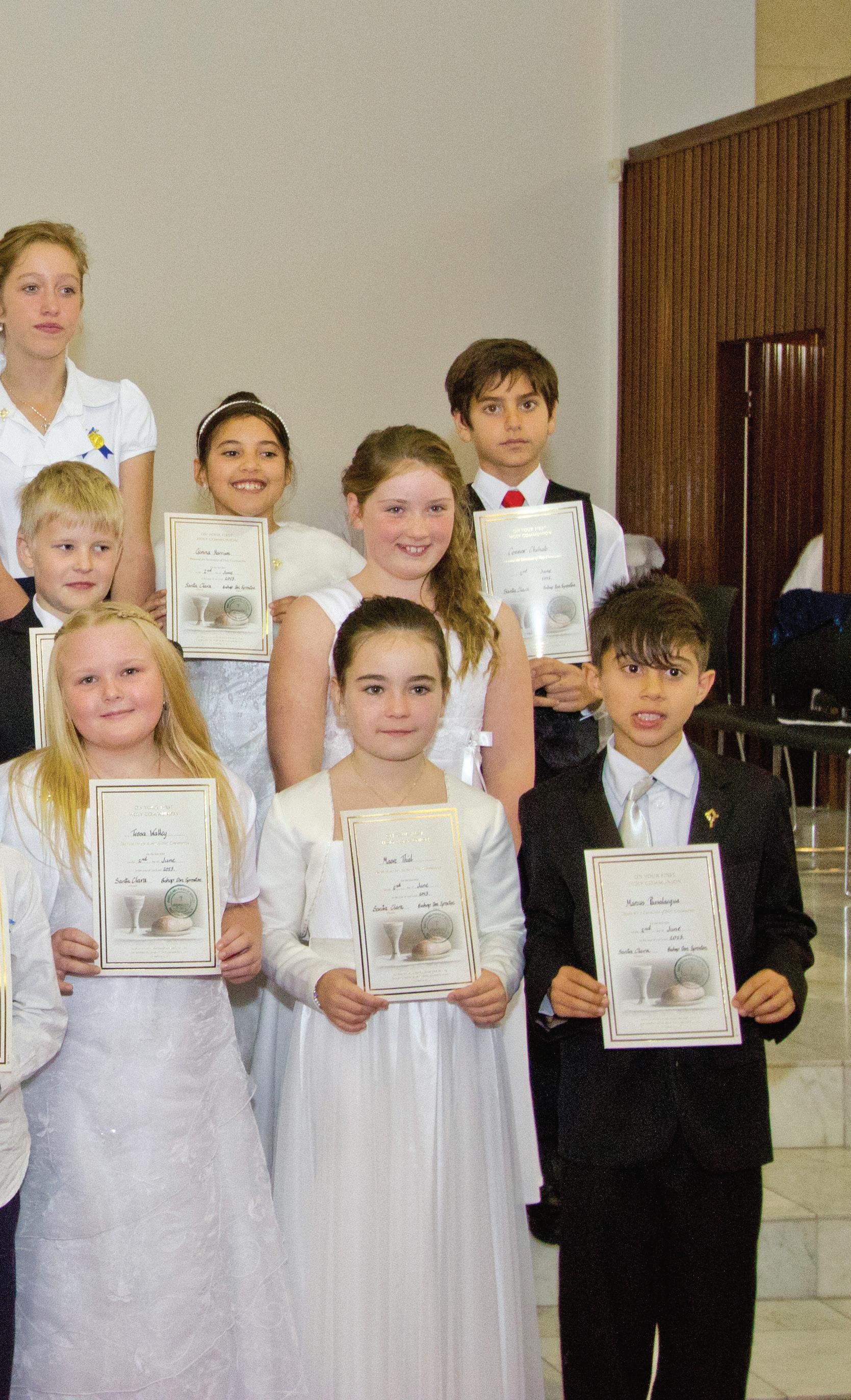
A large white cake was presented to mark the occasion and the atmosphere of celebration escalated as champagne glasses were raised and 50 years of parish and community life was toasted.
The celebrations continued after lunch as children entertained themselves with a bouncy castle while youth and adults enjoyed the lively tunes of Two Left Feet and the
Santa Clara youth group line dancers. Youth leader Sebastian Michael was impressed with the day’s celebrations and the involvement of so many parishioners.
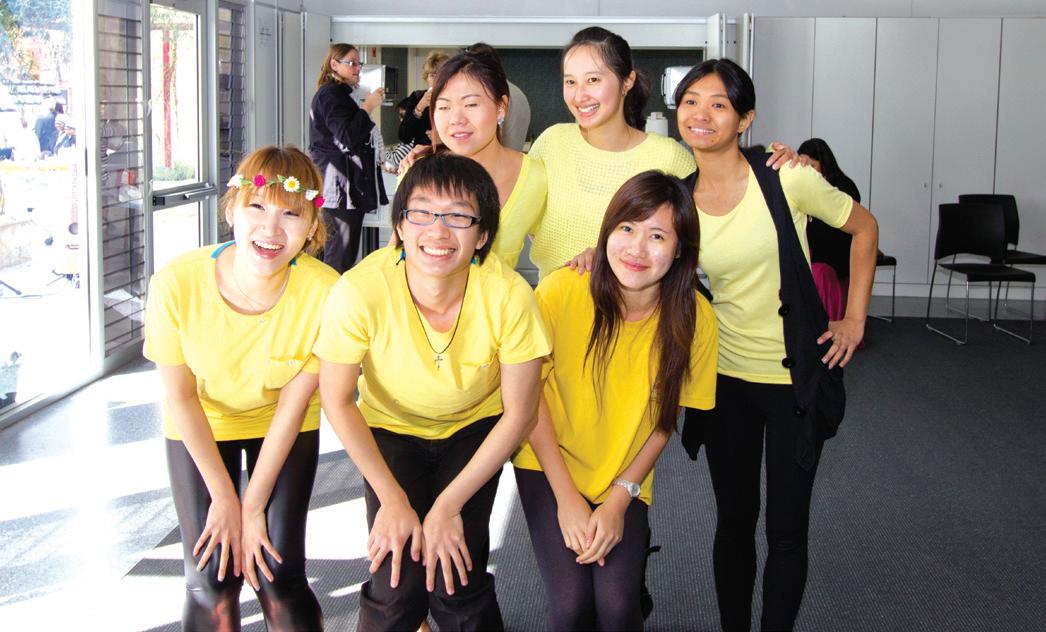
Mr Michael said all ages seemed to appreciate the energetic routines choreographed by youth leader Philemon Kho and led by Ms Rita Chong. “The whole crowd, adults and kids alike, joined in the danc-
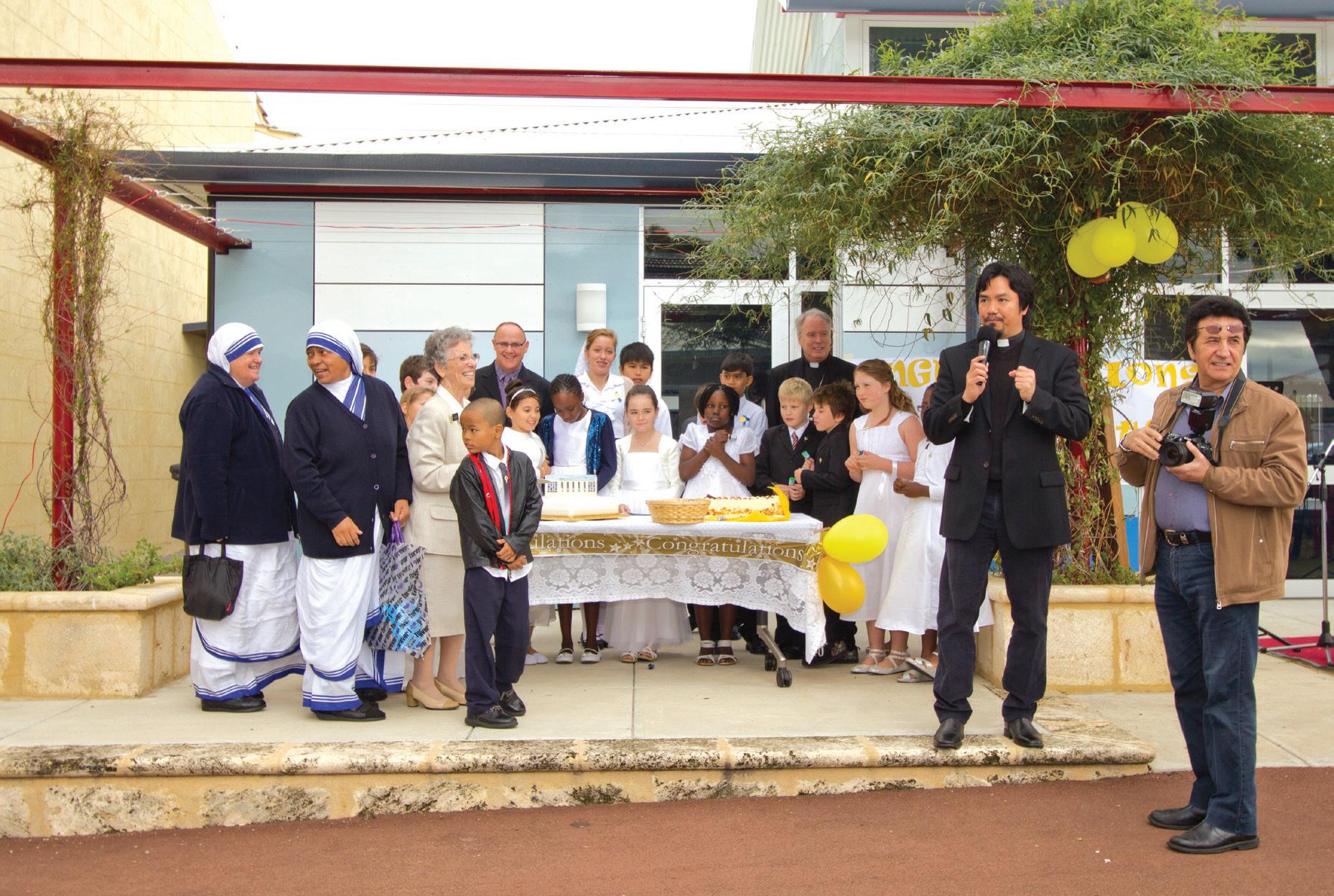
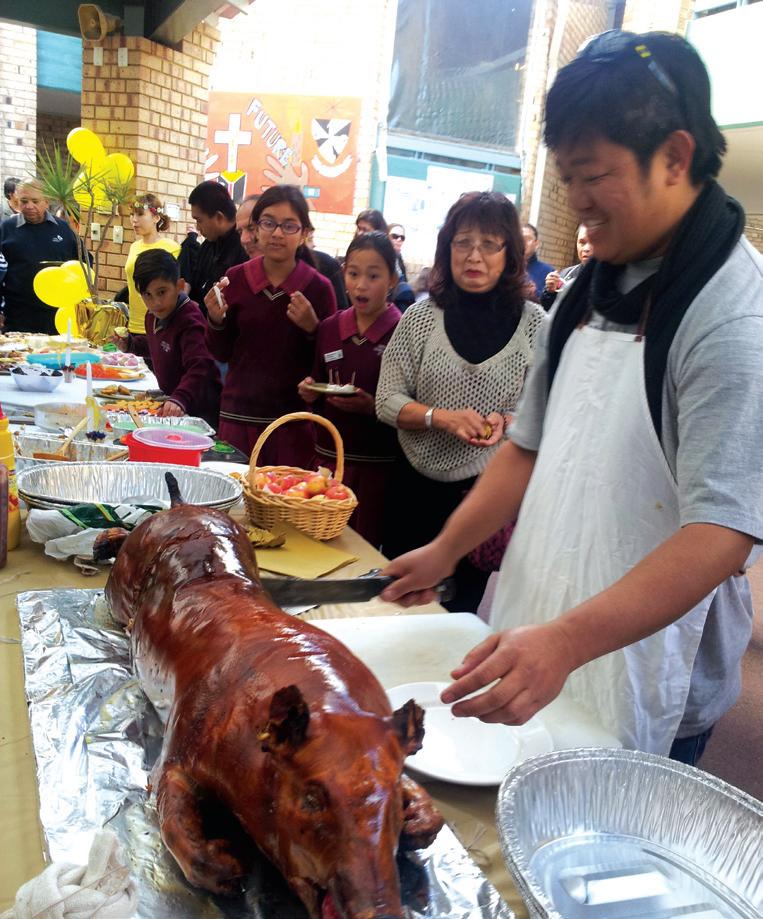
ing and festivities continued well into the day,” he said.
Miss Gallagher said all those involved were delighted with the occasion which had been full of reminiscing and sharing of wonderful memories.
She was disappointed that former parish priests Mgr Thomas McDonald, Fr Francis Ly and Fr Francisco Mascarenhas were
unable to attend due to First Holy Communion commitments at their current parishes.
“This was most unfortunate,” she said. “We were sorry we could not meet up with them on this special day.”
It was an occasion that drew together the people and events of the last half century, and highlighted the parish’s communal bond.
“It was a day full of life and laughter,” Mr Michael said.
“It was attended by a close knit parish who all wished to be a part of the blessed day and wanted to say to the Santa Clara church: a happy birthday to you!”
The church was renovated in 2012 and remains in excellent condition 50 years after it’s foundation stone was laid.
and the wider community. He passed away in June after a long battle with a rare motor neurone disease.
and all together.
All the family were heavily involved in the Catholic and wider communities. Louie and the family were always members of the Local Progress Association, the Ratepayers Association and the Volunteer Bushfire Brigade. The Progress Association provided a voice for ratepayers’ grievances. The Seaforth train station and the maintenance of the Manning River Bridge are good examples of how the Progress Association helped build the community. It provided many community get-togethers under Louie’s presidency.
The Fire Brigade had its own way of careful community mop ups after fires. They had snagger roasting and “refreshments” as they tended many fires. Though the Brigade consisted of 100 gallon tanks on trailers, there was never a house or building lost on Louie’s watch as Captain. For his community contributions, Louie was recognised with an Honour Certificate from the City of Gosnells in 1979.
In 1973, Louie almost lost his life to meningitis, spending three weeks in Royal Perth, gravely ill.
During this time, the family was blessed with their association with Peter Gravenar who grew to be a deft butcher and man about the
farm. Similarly, Lionel, who also became an integral part of the farm and family, first at school holidays and then full time. Lucy remembers Lionel calf swimming and Louie as anchorman ferrying calves across the swollen Wungong River.
In 1982, a very special person called Karrie became the light of Louie’s and the family’s existence. Louie took great joy in seeing Karrie grow into a beautiful and capable young lady.
As the family’s business grew, so did Louie’s confidence. He virtually ran the dairy when he was only 15 years old.
In 1988, the dairy quota was sold. Louie and the family concentrated on beef cattle raising. Though there were many setbacks and tussles, there were also many ribbons won at shows for excellence in cattle. Through it all, Louie was a rock.
The passing of Batista, in 1990, affected Louie greatly. But the true Louie became even stronger whilst taking care, together with Lucy, of his mother from 1996 to 2002.
Just days after Giovanna’s passing, Louie was stricken with a malady that would test his very being. It first manifested itself as a simple tremor and lack of fine motor control in his left arm and hand. The initial diagnosis was a stroke followed by Parkinson’s disease. Both these were later found to be incorrect. It took a further seven months and a diagnosis by Prof Peter Panegyres as the very rare Corticobasal Syndrome, a motor neurone disease. There was no cure or treatment available. Expected longevity after this diagnosis is confirmed is five years. Research is still ongoing in this area.
Louie fought his for the best part of 10 years. Initially, he was only slightly affected, but as the syndrome tightened its grip, Louie progressively lost the ability to walk, and in later months to talk.
Louie has been described as a softie. He was also determined. He was determined to help the research of Prof Panegyres and Prof Peter Martin. His bequests furthered this. His family are proud of his achievements and in this one especially.
Louie is survived by his sister and all his three brothers.
Rest in Peace, Louie.
The above article is taken ffrom the eulogy delivered by Jeffrey Smith
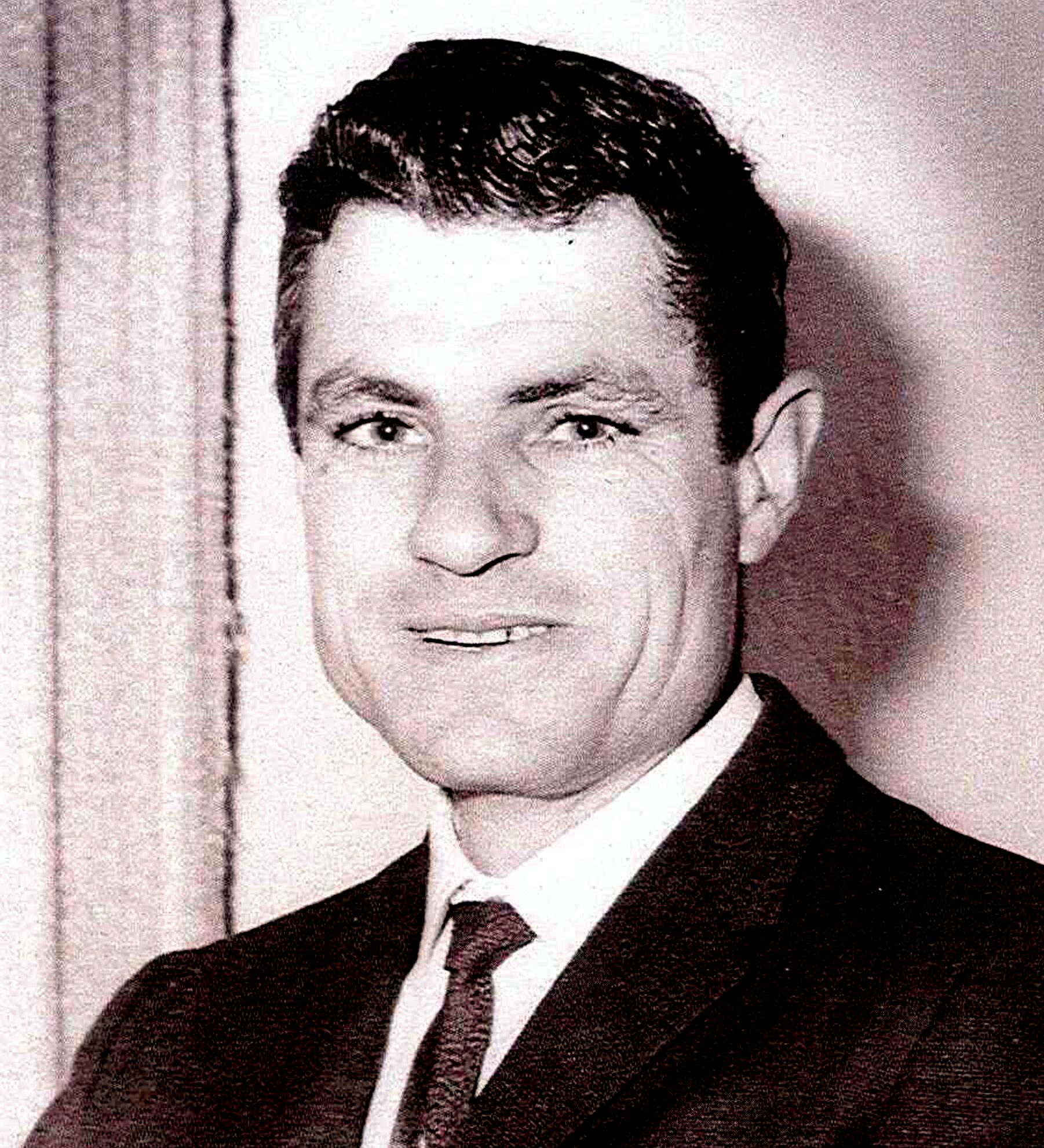
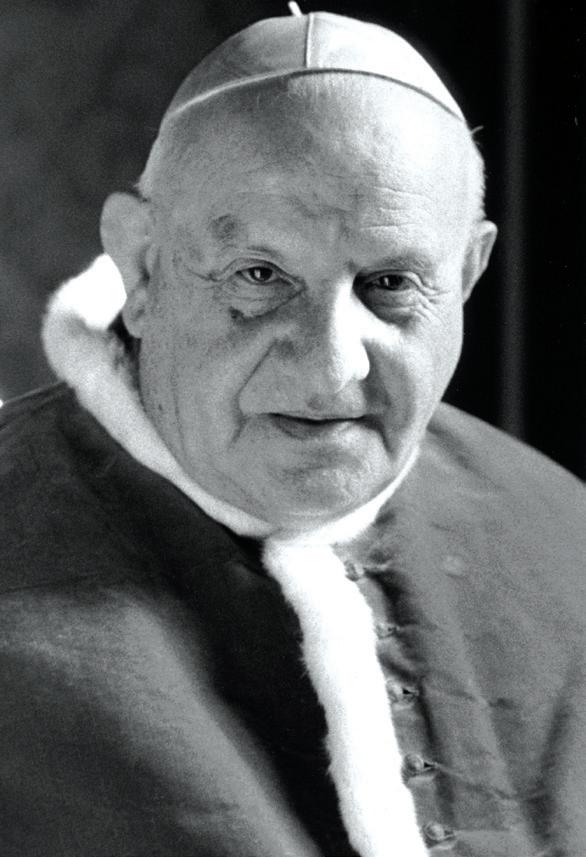
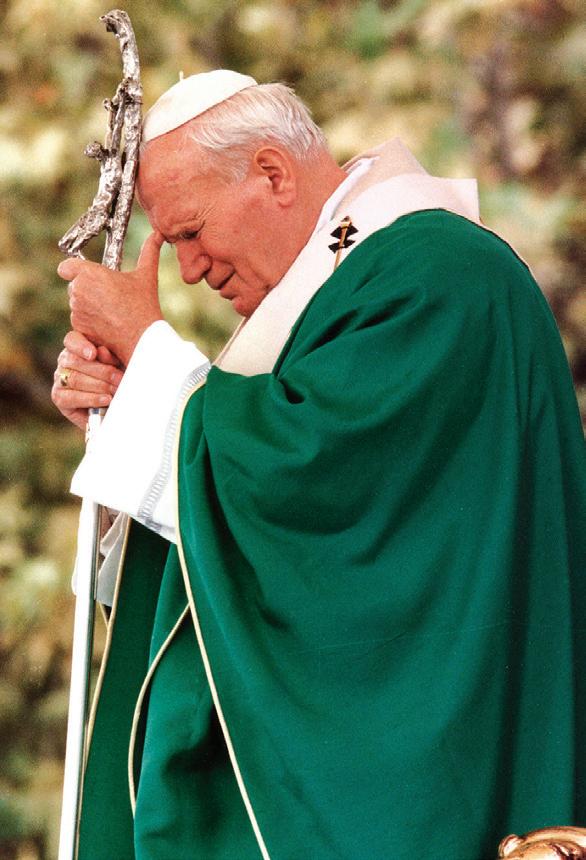
POPE FRANCIS signed a decree clearing the way for the canonisation of Blessed John Paul II and has decided also to ask the world’s cardinals to vote on the canonisation of Blessed John XXIII, even in the absence of a miracle.
After Pope Francis met on July 5 with Cardinal Angelo Amato, prefect of the Congregation for Saints’ Causes, the Vatican published a list of decrees the Pope approved related to Blessed John Paul’s canonisation and 11 other sainthood causes.
Publishing the decrees, the Vatican also said, “The supreme Pontiff approved the favourable votes of the ordinary session of the cardinal- and bishop-fathers regarding the canonisation of Blessed John XXIII (Angelo Giuseppe Roncalli) and has decided to convoke a consistory that will also involve the canonisation of Blessed John Paul II.”
Normally, after a pope signs a decree recognising the miracle needed for a canonisation, the pope consults with cardinals around the world and calls a consistory – a gathering attended by any cardinal who wants and is able to attend – where those present voice their
support for the pope’s decision to proclaim a new saint.
A date for a canonisation ceremony is announced formally only during or immediately after the consistory.
The cardinals and archbishops who are members of the saints’ congregation met at the Vatican on July 2 and voted in favour of the Pope
recognising as a miracle the healing of Floribeth Mora Diaz, a Costa Rican who was suffering from a brain aneurysm and recovered after prayers through the intercession of Blessed John Paul.
The congregation members, according to news reports, also looked at the cause of Blessed John and voted to ask Pope Francis to
canonise him without requiring a miracle.
According to Church rules –established by the Pope and subject to changes by him – a miracle is needed after beatification to make a candidate eligible for canonisation.
Jesuit Father Paolo Molinari, the longtime head of the College of Postulators – or promoters of sainthood causes – has explained that in the sainthood process, miracles are “the confirmation by God of a judgement made by human beings” that the candidate really is in heaven.
But Fr Molinari also has said that for decades theologians have explored the possibility that such a confirmation could come by means other than someone experiencing a physical healing. For instance, Blessed John Paul beatified Victoire Rasoamanarivo in Madagascar in 1989 after accepting as a miracle the case of a windswept brush fire stopping at the edge of a village whose inhabitants invoked her intercession.
Announcing the decision about Blessed John’s cause, Jesuit Fr Federico Lombardi, Vatican spokesman, said the discussions about the need for miracles and what can be defined as an accept-
able miracle continue. However, he said, the movement in the late Pope’s cause does not indicate a general change in Church policy. The members of the Congregation for Saints’ Causes “have expressed their hope, and the Holy Father has accepted it,” Fr Lombardi said. If Pope Francis “had any doubts, we wouldn’t be here” announcing the consistory to approve Blessed John’s canonisation.
“As we all know very well, John XXIII is a person beloved in the Church. We are in the 50th anniversary year of the opening of the Second Vatican Council, which he convoked. And I think none of us has any doubts about John XXIII’s virtues,” the spokesman said. “So, the Holy Father is looking toward his canonisation.”
Fr Lombardi also noted no date for a canonisation ceremony was announced, but it is likely the two popes will be canonised together, possibly “by the end of the year”.
Among the other decrees approved by Pope Francis on July 5 was the miracle needed for beatification of Spanish Bishop Alvaro del Portillo, who in 1975 succeeded St Jose Maria Escriva as head of Opus Dei. Bishop del Portillo died in 1994. - CNS
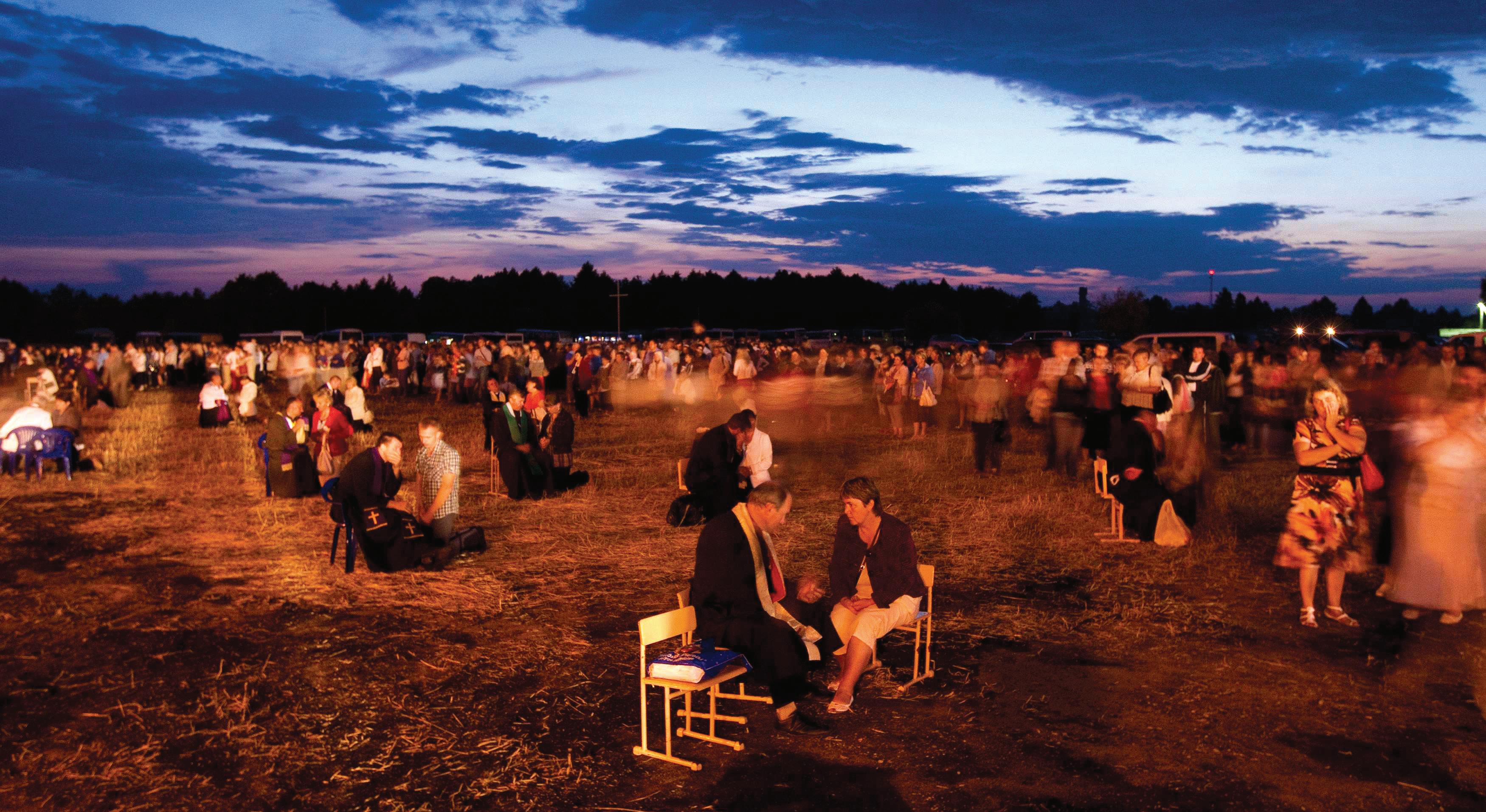
Priests hear confessions as people gather outside a Catholic church for services marking the feast of the icon of the Mother of God in the village of Budslav, Belarus, on July 5. Catholics from Belarus and neighbouring countries marked the 400th anniversary of the revered Marian icon during celebrations that spanned three days.
‘He spoke to me, telling me to get up...’
AFTER DOCTORS told Floribeth
Diaz that a brain aneurysm left her with days to live, she retreated to her Costa Rican home and prayed to Blessed Pope John Paul II. From her bedroom in a small town in Costa Rica’s Cartago province, Mora said she heard his voice. “Rise! ... Don’t be afraid.”
She got up from her bed, prompting her husband to ask her, “My love, what are you doing here?” As a teary-eyed Mora recalled at a July 5 news conference, she responded to her husband, “I feel better”.
That was in May 2011. Doctors could not explain the rapid improvement, and Mora became the second miracle attributed to Blessed John Paul, who died in 2005. The first
miracle was a French nun cured of Parkinson’s disease the same year.
On July 5, Mora addressed the media from the Costa Rican capital, San Jose. With a portrait of Blessed John Paul hanging behind her, Mora told reporters she had faced imminent death. She began suffering from intense headaches in April 2011 and was diagnosed with an aneurysm. Her life was in danger, her physician, Dr Alejandro Vargas, told reporters after the news conference.
“It was very sad,” Mora said, “seeing my children looking at me, standing next to my bed, seeing my husband making himself strong.”
Mora’s family had built an altar to Blessed John Paul, and she was given a gift of a magazine with his
photograph on the cover. Mora said that as she stared at the photograph, Blessed John Paul began to speak to her.
“I was surprised. I kept looking at the magazine. I said, ‘Yes, Lord’ and I got up,” she told a Mexican television station in an interview. She held the magazine at the news conference as tears rolled down her cheeks.
Vargas told a local television that there was no medical explanation for her improvement. “It surprised me. ... I said, ‘It really is a miracle because I can’t explain it,’” he said. She said her illness left her afraid.
“But I always kept my faith. I have always been a firm believer. I have a deep love of God,” she said. - CNS
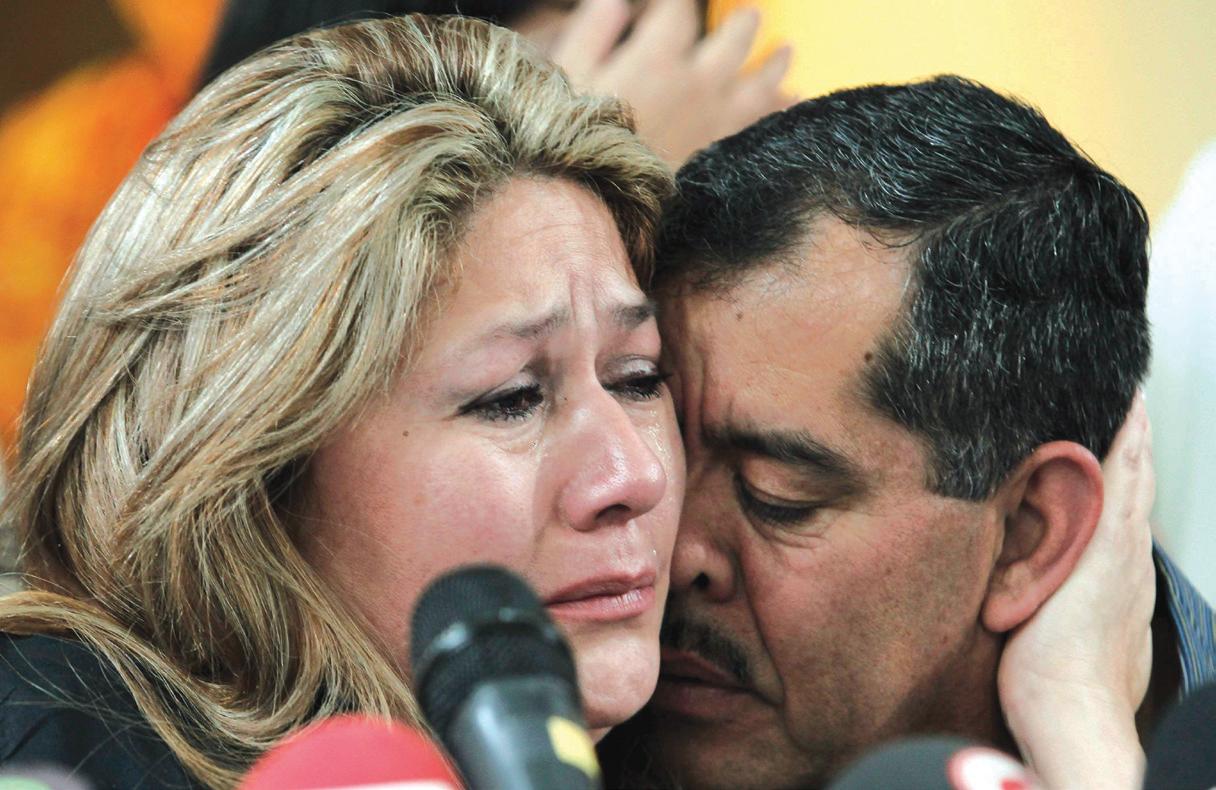
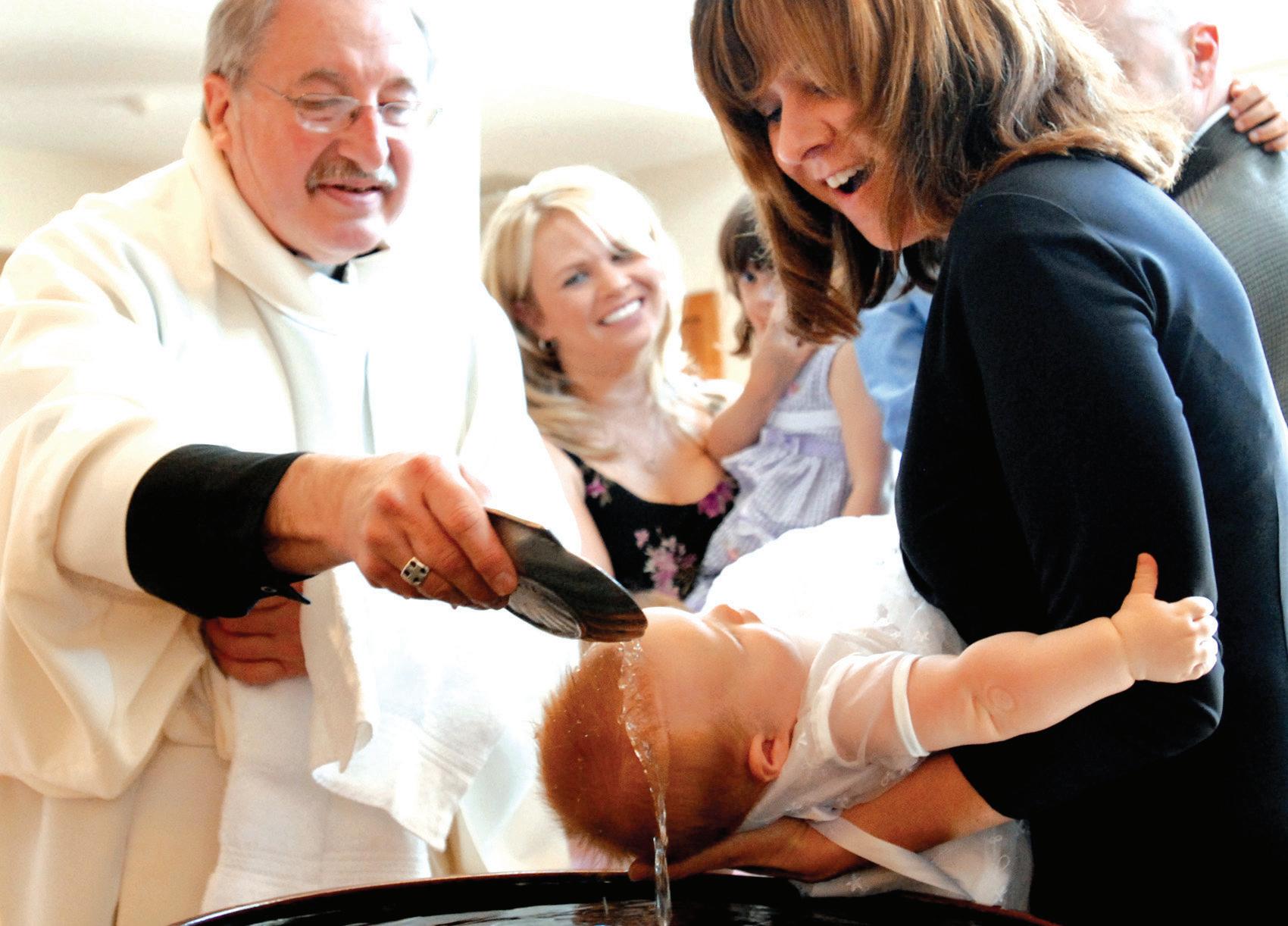 PHOTO: MIKE CRUPI, CATHOLIC COURIER
Begun by Benedict XVI, completed by Francis, new encyclical has a double-barrelled...
PRESENTING Pope Francis’ new encyclical and acknowledging how much of it was prepared by retired Pope Benedict XVI, top Vatican officials hailed it as a unique expression of the development of papal teaching and unity in faith.
“It is a fortunate coincidence that this text was written, so to speak, by the hands of two popes,” said Archbishop Gerhard Muller, prefect of the Congregation for the Doctrine of the Faith, at a news conference on July 5 mark-
ing the release of Lumen Fidei (“The Light of Faith”).
“Notwithstanding the differences of style, sensibility and accent, anyone who reads this encyclical will immediately note the substantial continuity of the message of Pope Francis with the teaching of Pope Benedict XVI,” the Archbishop said.
Archbishop Muller, along with Cardinal Marc Ouellet, prefect of the Congregation for Bishops, and Archbishop Rino Fisichella, president of the Pontifical Commission for Promoting New Evangelisation, emphasised not only the collaboration of the two
popes, but their shared view of faith as a “common good”, a gift that is transmitted and nourished by the Church, but is meant to be shared with all humanity.
Christians have an obligation, they said, to help others by proclaiming the Gospel, but also by living their faith in order to transform the world into a place of authentic brotherhood and care for the weakest.
Cardinal Ouellet told reporters, “A pillar was lacking in Benedict XVI’s trilogy on the theological virtues” begun with his encyclicals on love and on hope. “Providence willed that this
missing pillar should be both a gift from the pope emeritus to his successor and a symbol of unity.”
Pope Francis’ decision to take up the work begun by Pope Benedict and add some of his own reflections, which he states explicitly in the encyclical, witnesses to their unity in faith, the Canadian cardinal said. “The light of faith is passed from one pontiff to another like a baton in a relay, thanks to ‘the gift of the apostolic succession’”.
For Cardinal Ouellet, the encyclical’s “shared mode of transmission illustrates in an extraordinary way the most fun-
damental and original aspect of the encyclical: its development of the dimension of communion in faith” of the importance of believing in and with the Church and of living one’s faith in solidarity with others.
The text of the finished encyclical, he said, reflects “much of Pope Benedict and all of Pope Francis”.
Archbishop Muller added, “This is not a patchwork encyclical”.
The encyclical bears the signature only of Pope Francis, he said, because “we have only one Continued overleaf
Offering access to truth via the path of love
Here at a glance are the main points of Pope Francis’ encyclical Lumen Fidei (“The Light of Faith”), released on July 5:
l Christian faith is the guiding light of a “successful and fruitful life”, illuminating “every aspect of human existence”.
l The opposite of faith is idolatry, according to which man worships the “multiplicity of his desires”. l Salvation is impossible through our own good works but requires faith, as acknowledgement of the “primacy of God’s gift”.
l By virtue of his humanity, Jesus Christ is not only the object of faith but the ultimate model and mediator for all believers, and faith is a “participation in (Jesus’) way of seeing”.
l Faith is not individualistic but by its very nature takes place within the communion of the Church.
l The unity and continuity of the faith are ensured by the apostolic succession, hence the Pope and the bishops in communion with him stand as its authoritative teachers.
l The fullness of faith is transmitted above all through the sacraments, which “communicate an incarnate memory, linked to the times and places of our lives, linked to all our senses; in them the whole person is engaged as a member of a living subject and part of a network of communitarian relationships”.
l Faith offers access to truth through love, since love is a “form of shared knowledge, vision through the eyes of another and a shared vision of all that exists”.
l Faith dispels philosophical relativism and encourages scientific research by affirming the “inherent order” and harmony of the material world, and “stimulating wonder before the profound mystery of creation”.
l Faith is essential to the promotion of “justice, law and peace” because it reveals the true basis of men’s brotherhood as children of God. - CNS
Here are some excerpts from Lumen Fidei :
"Faith, tied as it is to conversion, is the opposite of idolatry; it breaks with idols to turn to the living God in a personal encounter. Believing means entrusting oneself to a merciful love which always accepts and pardons, which sustains and directs our lives, and which shows its power by its ability to make straight the crooked lines of our history. Faith consists in the willingness to let ourselves be constantly transformed and renewed by God's call.
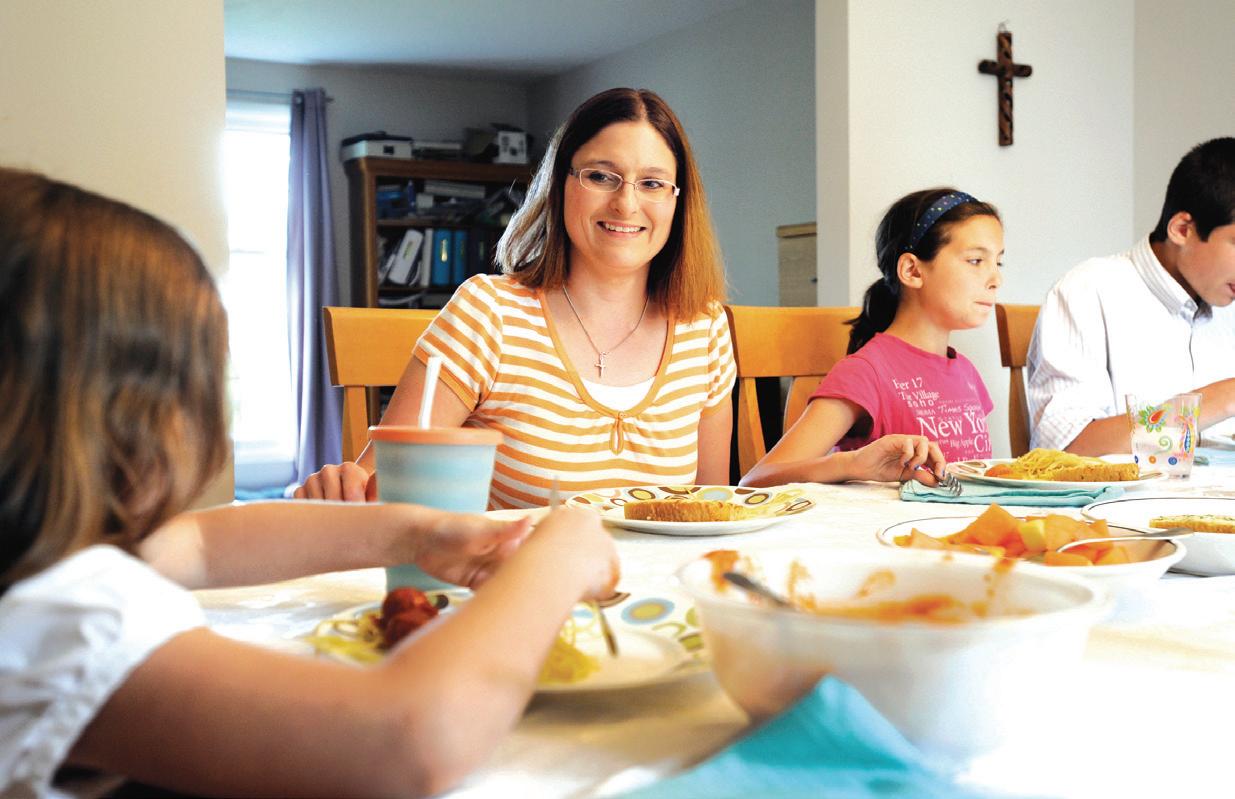
The first setting in which faith enlightens the human city is the family. I think first and foremost of the stable union of man and woman in marriage. This union is born of their love, as a sign and presence of God's own love, and of the acknowledgement and acceptance of the goodness of sexual differentiation, whereby spouses can become one flesh (cf Gn 2:24) and are enabled to give birth to a new life, a manifestation of the Creator's goodness, wisdom and loving plan.
Those who believe, see; they see with a light that illumines their entire journey, for it comes from the risen Christ, the morning star which never sets.
In the absence of light everything becomes confused; it is impossible to tell good from evil, or the road to our destination from other roads which take us in endless circles, going nowhere. - CNS
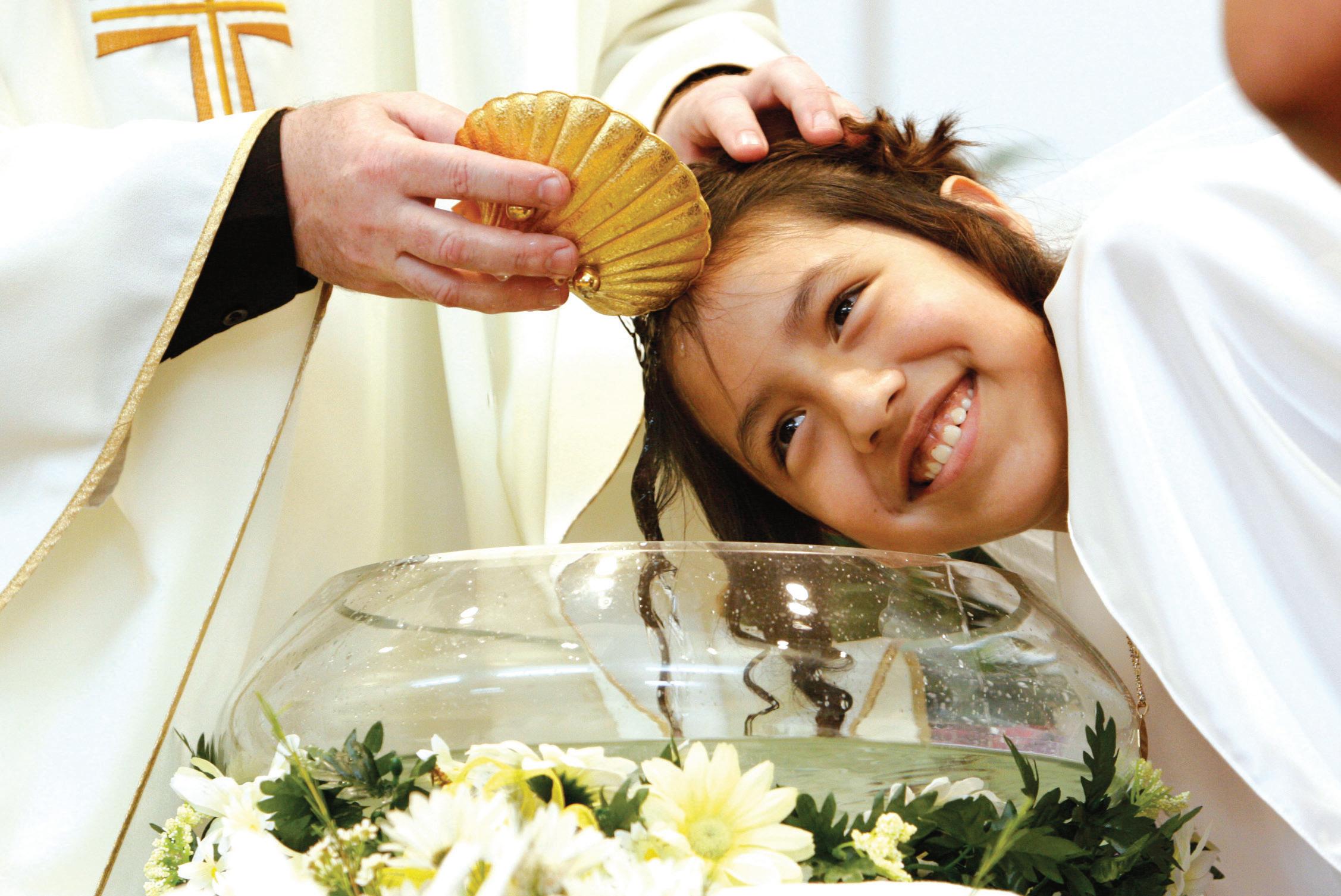
Continued from Page 1 always polytheism, an aimless passing from one lord to another.”
Pope Francis sees another way of turning from God in the Pharisees’ belief that salvation is possible through good works alone.
“Those who live this way, who want to be the source of their own righteousness, find that the latter is soon depleted and that they are unable even to keep the law,” the Pope writes. “Salvation by faith means recogniSing the primacy of God’s gift.”
Faith finds its fulfilment in the life, death and resurrection of Jesus Christ, the Pope writes. By virtue of
his humanity, Jesus is both the object of faith and the ultimate model and mediator for all believers.
“Christ is not simply the one
Faith in its fullness is more than just doctrine, says Pope Francis. It is born of an encounter with God.
in whom we believe, the supreme manifestation of God’s love,” Pope Francis writes. “He is also the one
with whom we are united precisely in order to believe. Faith does not merely gaze at Jesus, but sees things as Jesus himself sees them, with his own eyes: it is a participation in his way of seeing.”
This participation means that faith inevitably makes a Christian part of Christ’s mystical body, the Church.
“It is impossible to believe on our own,” the Pope writes. “By its very nature, faith is open to the ‘we’ of the Church; it always takes place within her communion.”
The Church transmits the faith across time “through an unbroken chain of witnesses”, allowing us to
Seven
that shook the world
POPE FRANCIS’ first encyclical, Lumen Fidei (“The Light of Faith”), released July 5, is the latest instalment in a centuries’ old papal tradition. An encyclical is considered the most authoritative form of papal writing, and though many examples are now remembered only by scholars, the messages of others have continued to resonate within the Church and beyond.
Here are seven whose impact has proven especially memorable:
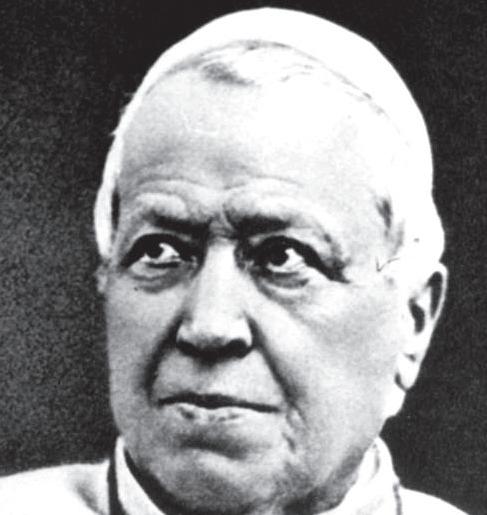
the separation of Church and state.
St Pius later required all priests, religious superiors and seminary teachers to take an oath against the modernist heresy – a requirement that Pope Paul VI abolished in 1967.
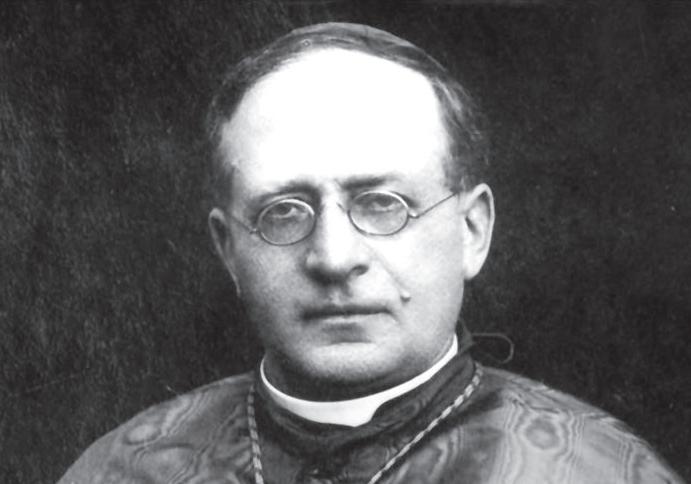
l Mit Brennender Sorge (1937): Pope Pius XI’s encyclical, whose German title means “with burning concern”, was smuggled into Nazi Germany and read from the pulpits of Catholic Churches on Palm Sunday. Although it does not explicitly mention Adolf Hitler or the Nazi party, it criticises the regime’s “myth of race and blood” and cult of the state and defends the value of the Old Testament and the rights of ethnically Jewish Catholics, though not of Jews in general. A significant contributor to the document was Cardinal Eugenio Pacelli, then Vatican secretary of state and later Pope Pius XII, whose record of wartime opposition to the Holocaust remains a subject of controversy.
“see the face of Jesus”, Pope Francis writes. “As a service to the unity of faith and its integral transmission, the Lord gave his Church the gift of apostolic succession. Through this means, the continuity of the Church’s memory is ensured and
certain access can be had to the wellspring from which faith flows.”
Accordingly, members of the hierarchy stand as the authoritative teachers of the contents of Christian faith.
Every man and woman is a blessing, the light of God's face shining on me through my brothers and sisters...
The “magisterium of the Pope and the bishops in communion with him”, the Pope writes, “ensures our contact with the primordial source and thus provides the certainty of attaining to the word of Christ in all its integrity”.
Yet faith in its fullness is more than doctrine, Pope Francis writes; it is “the new light born of an encounter with the true God, a light which touches us at the core of our
Two authors, but undoubtedly Francis' encyclical
Continued from Page 9
Pope. An encyclical is a papal document and it is Pope Francis’ encyclical.”
Archbishop Fisichella told reporters that Pope Benedict “was not convinced he had to undertake the effort” of writing an encyclical on faith, but so many people insisted that he decided to write it and offer it to the Church at the end of the Year of Faith, which concludes in November.
“History had another idea,” the Archbishop said.
Archbishop Fisichella said that while there are obvious echoes of Pope Benedict’s teaching in the document, “it is fully the text of Pope Francis” as seen in “the immediacy of the expressions used, the richness of the images to which he refers and the particularity of some of the
citations of ancient and modern authors.”
He said that, like the first encyclical of any Pope, one can get from the text an idea of what will be the main emphases of Pope Francis’ pontificate.
In fact, he said, the encyclical repeatedly uses the three verbs the Pope used in his homily at Mass with cardinals the morning after his election: “Walk, build, confess.”
Archbishop Muller said that in the encyclical, and particularly “in the meditations that he offers us by way of his daily homilies, Pope Francis often reminds us that ‘all is grace.’
"This affirmation, which in the face of all the complexities and contradictions of life might seem naive or abstract, is in fact an invitation to recognise the ultimate goodness
of reality... This is the purpose of the encyclical letter Lumen Fidei," he said. “The light that comes from faith, from the revelation of God in Jesus Christ and in his Spirit, illuminates the depths of reality and helps us to recognise that reality bears within itself the indelible signs that the work of God is good.”
Cardinal Ouellet told reporters, “The encyclical presents the Christian faith as a light that comes from listening to the Word of God in history. It is a light that allows us to see the love of God at work, establishing his covenant with humankind.”
Pope Francis teaches that the light of faith “offers us human beings a hope that gives us the courage to journey together toward a future of full communion,” he said. - CNS
"We
being and engages our minds, wills and emotions, opening us to relationships lived in communion”.
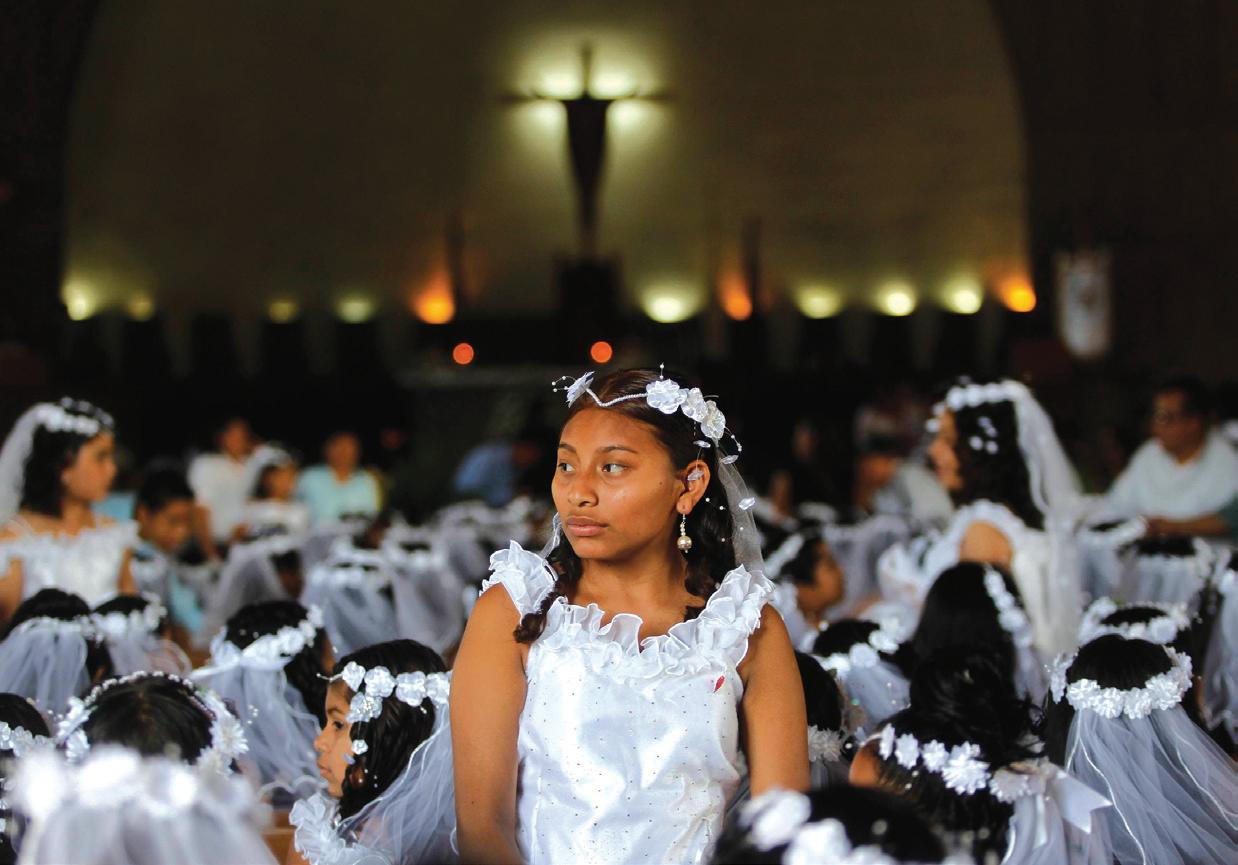
Thus the primary means of transmitting faith is not a book or a homily, but the Sacraments, especially Baptism and the Eucharist, which “communicate an incarnate memory, linked to the times and places of our lives, linked to all our senses; in them the whole person is engaged as a member of a living subject and part of a network of communitarian relationships”.
The belief that the “Son of God took on our flesh” and “entered our human history” also leads Christians “to live our lives in this world with ever greater commitment and intensity”, the Pope writes, arguing that faith inspires both the use of human reason and pursuit of the common good. For faith, Pope Francis writes, truth is not attainable through autonomous reason alone but requires love, a “relational way of viewing the world, which then becomes a form of shared knowledge, vision through the eyes of another and a shared vision of all that exists”.
By affirming the “inherent order” and harmony of the material world,
and “by stimulating wonder before the profound mystery of creation”, Christian faith encourages scientific research, while dispelling the philosophical relativism that has produced a “crisis of truth in our age”.
Faith also inspires respect for the natural environment, by allowing believers to “discern in it a grammar written by the hand of God and a dwelling place entrusted to our protection and care”.
According to Pope Francis, faith has proven itself essential to the promotion of “justice, law and peace” by contrast with failed modern ideologies that also claimed those goals.
“Modernity sought to build a universal brotherhood based on equality,” he writes, “yet we gradually came to realise that this brotherhood, lacking a common reference to a common father as its ultimate foundation, cannot endure.
“We need to return to the true basis of brotherhood,” the Pope writes. “Faith teaches us to see that every man and woman represents a blessing for me, that the light of God’s face shines on me through the faces of my brothers and sisters.” - CNS
l Quanta Cura (1864): One of 38 encyclicals issued by Pope Pius IX, whose almost 32-year pontificate was the longest in history after St Peter’s, this document is best known for an annex called the “Syllabus of Errors”, a list of “condemned propositions” associated with contemporary religious, philosophical and political movements, including communism, socialism and liberalism. Although the document drew heavily on the teachings of earlier popes, historians have placed it in the context of the European revolutions of 1848. For many Catholics and non-Catholics, it established the Church’s image as resolutely opposed to modernity, an image widely accepted until the Second Vatican Council a century later.
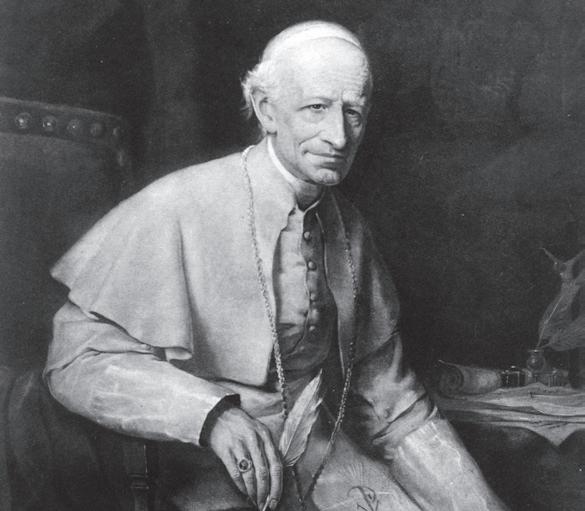
l Rerum Novarum (1891): Responding to the predicament of the working class in the wake of the industrial revolution, Pope Leo XIII wrote this document laying out the “rights and duties of capital and labour”. The encyclical, which rejected both communism and extreme laissez-faire capitalism, affirmed the right of workers to organise in unions and was crucial to the emergence of a Catholic labour movement. With its strong basis in the theology of St Thomas Aquinas, it also provided the foundation for the Church’s modern social teaching.
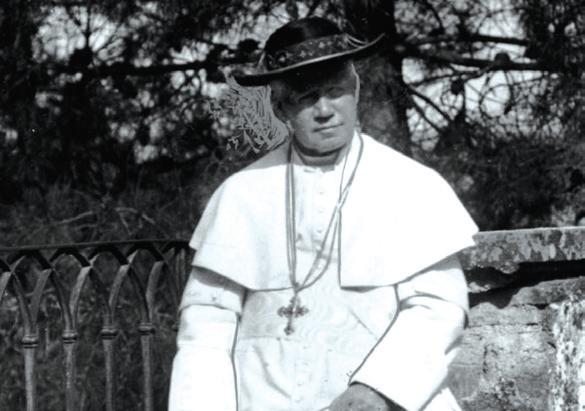
l Pascendi Dominici Gregis (1907): St Pius X’s encyclical was a condemnation of modernism, a European Catholic movement influenced by currents in 19th-century Protestantism which held that even solemnly defined Church teachings could evolve over time, and sympathised with secularist conceptions of
l Pacem in Terris (1963): Blessed John XXIII’s last encyclical was the first such document addressed not just to fellow Catholics but to “all men of good will”. Writing at the height of the Cold War, Blessed John called for international and interreligious cooperation for the promotion of world peace. Emphasising the importance of human rights and dignity, the encyclical also recognised the rights of all people to food, water, safety, housing, health care, involvement in public life and affiliation in organisations that promote their well-being, from labour unions to civic groups.
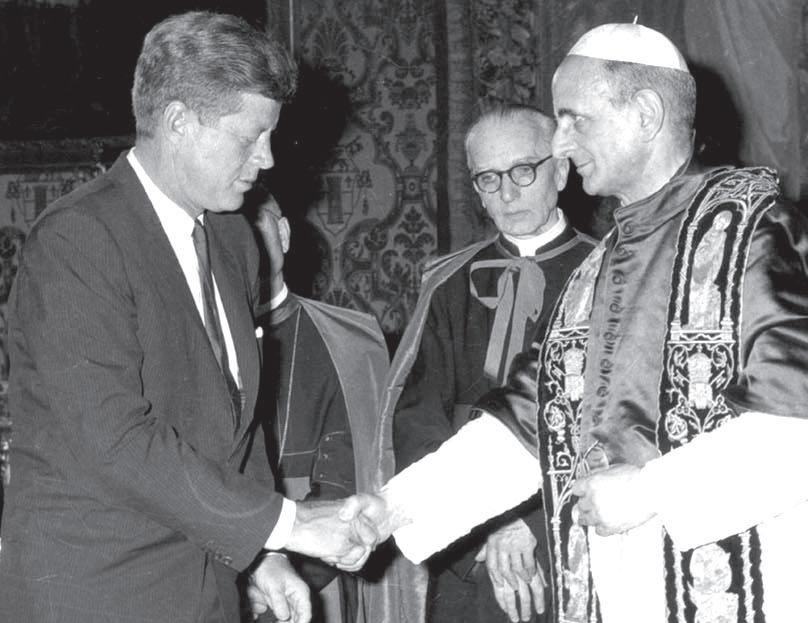
l Humanae Vitae (1968): Pope Paul VI’s decision to affirm the Church’s traditional prohibition against artificial contraception was met by dissent from a number of prominent theologians and, as demographic evidence suggests, widespread disobedience by ordinary Catholics. Pope Paul never issued another encyclical in the remaining 10 years of his pontificate.
On the document’s 40th anniversary, Pope Benedict XVI called it “so controversial, yet so crucial for humanity’s future ... a sign of contradiction ... (and) of courage in reasserting the continuity of the Church’s doctrine and tradition”.
l Centesimus Annus (1991): Issued on the hundredth anniversary of Rerum Novarum Blessed John Paul II’s encyclical reaffirmed Pope Leo’s expressions of solidarity with the poor and organised labour and insisted that the end of the Cold War did not leave “capitalism as the only model of economic organisation”. The document was innovative in the annals of papal social teaching by virtue of its qualified praise for the free market as the “most efficient instrument for utilising resources and effectively responding to needs.”
- STORY, PHOTOS: CNS
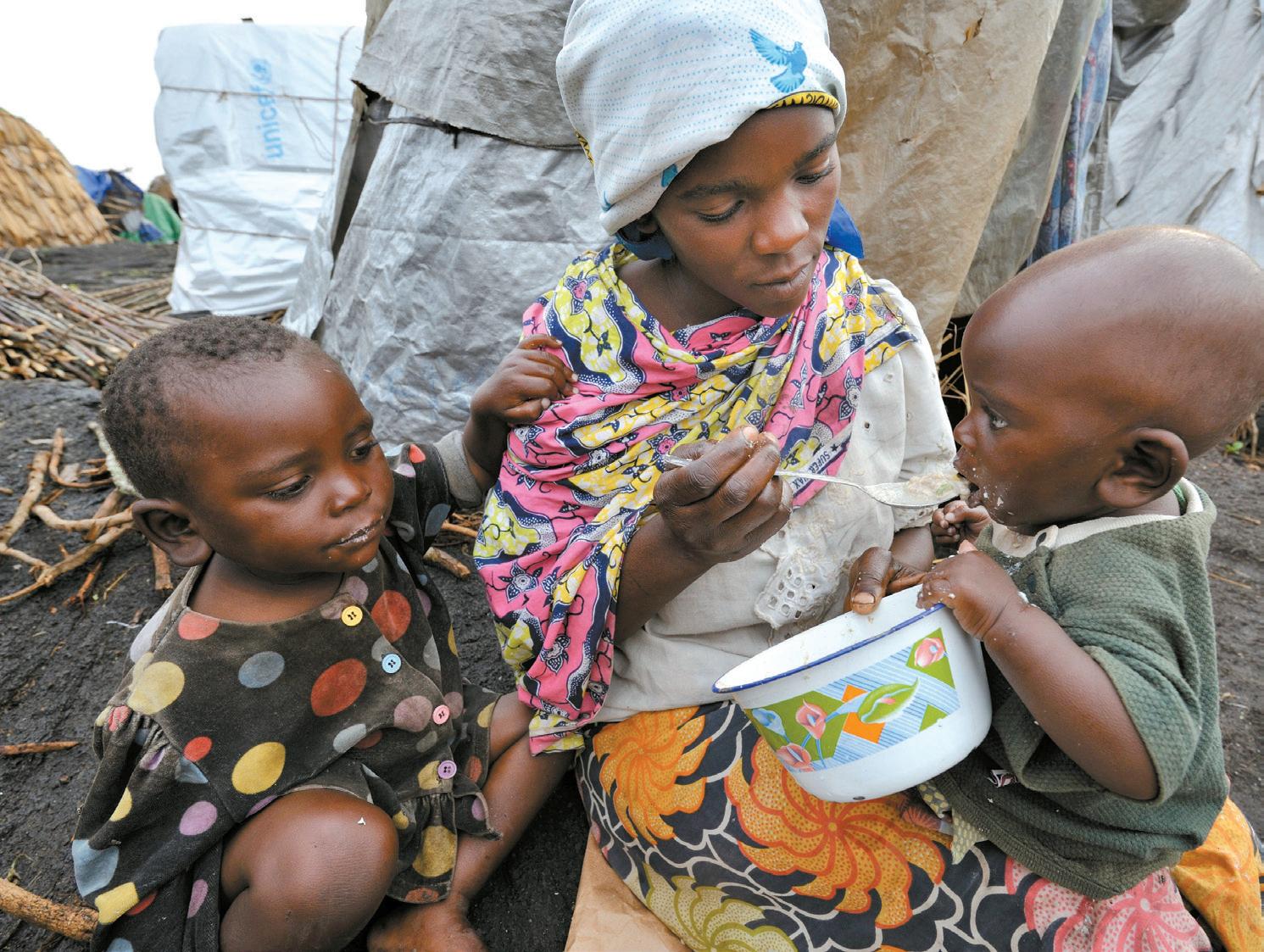
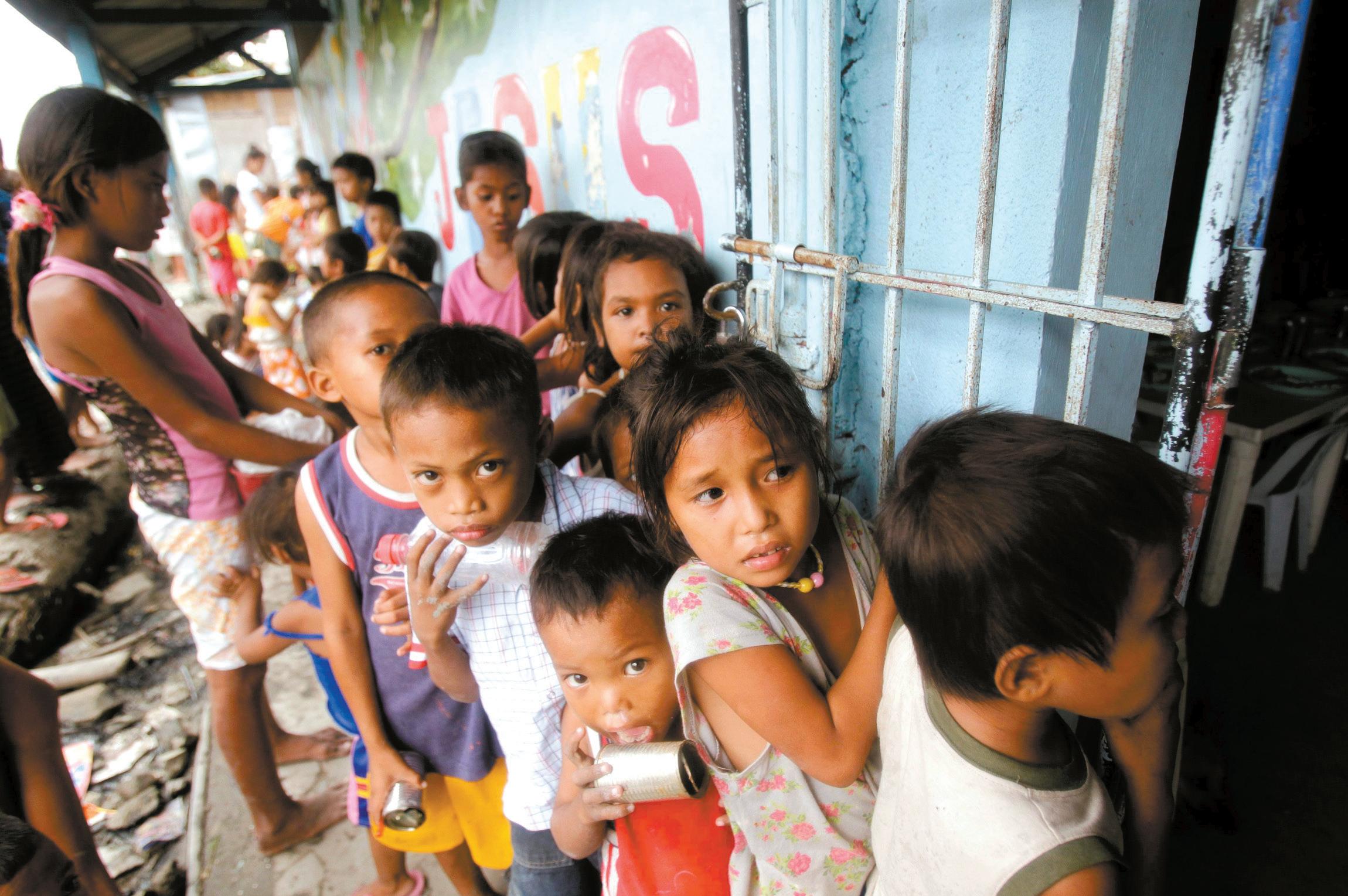
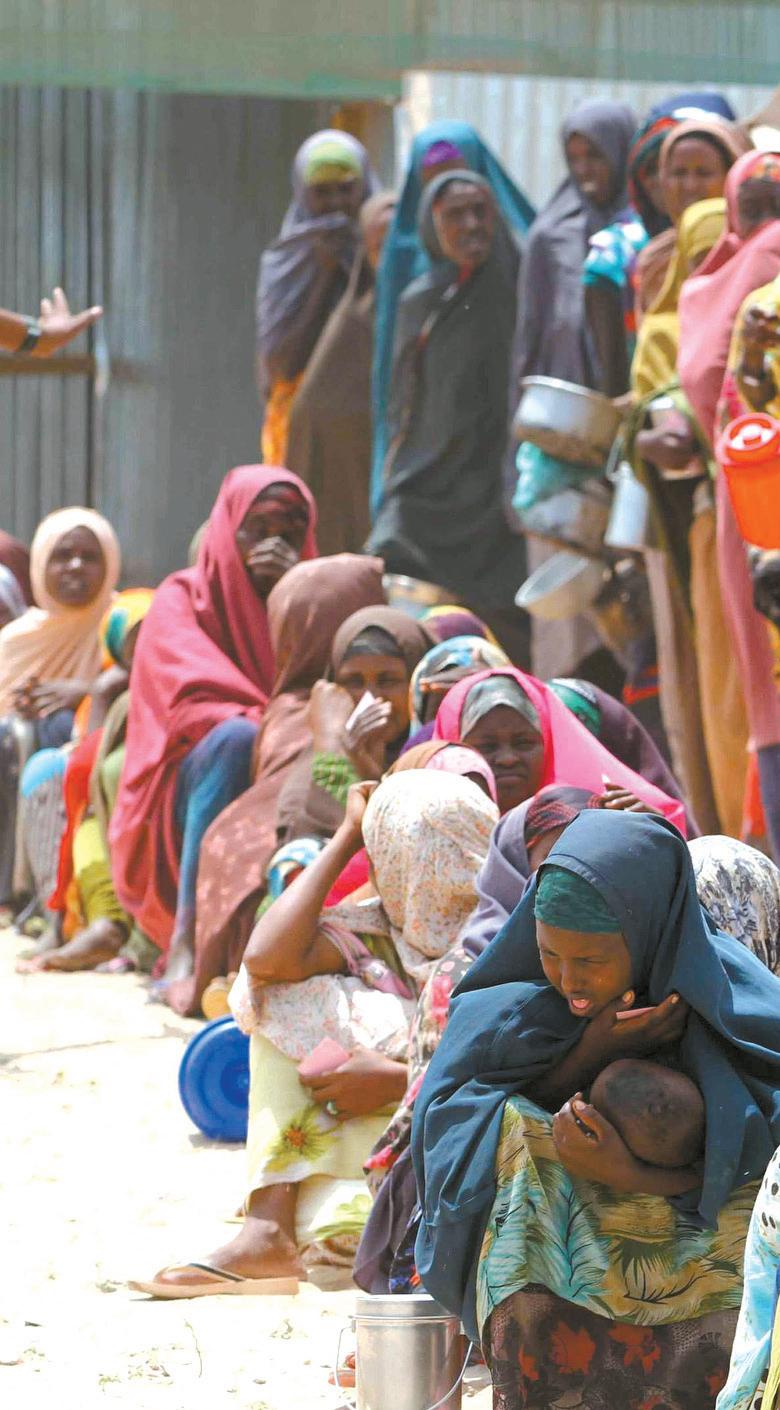
TONIGHT, 800 million people around the world will go to bed hungry.
Developing countries are plagued by starvation, in a problem that Pope Francis recently described as “scandalous”.
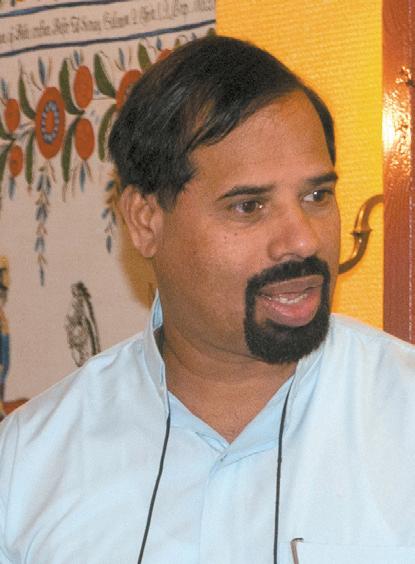
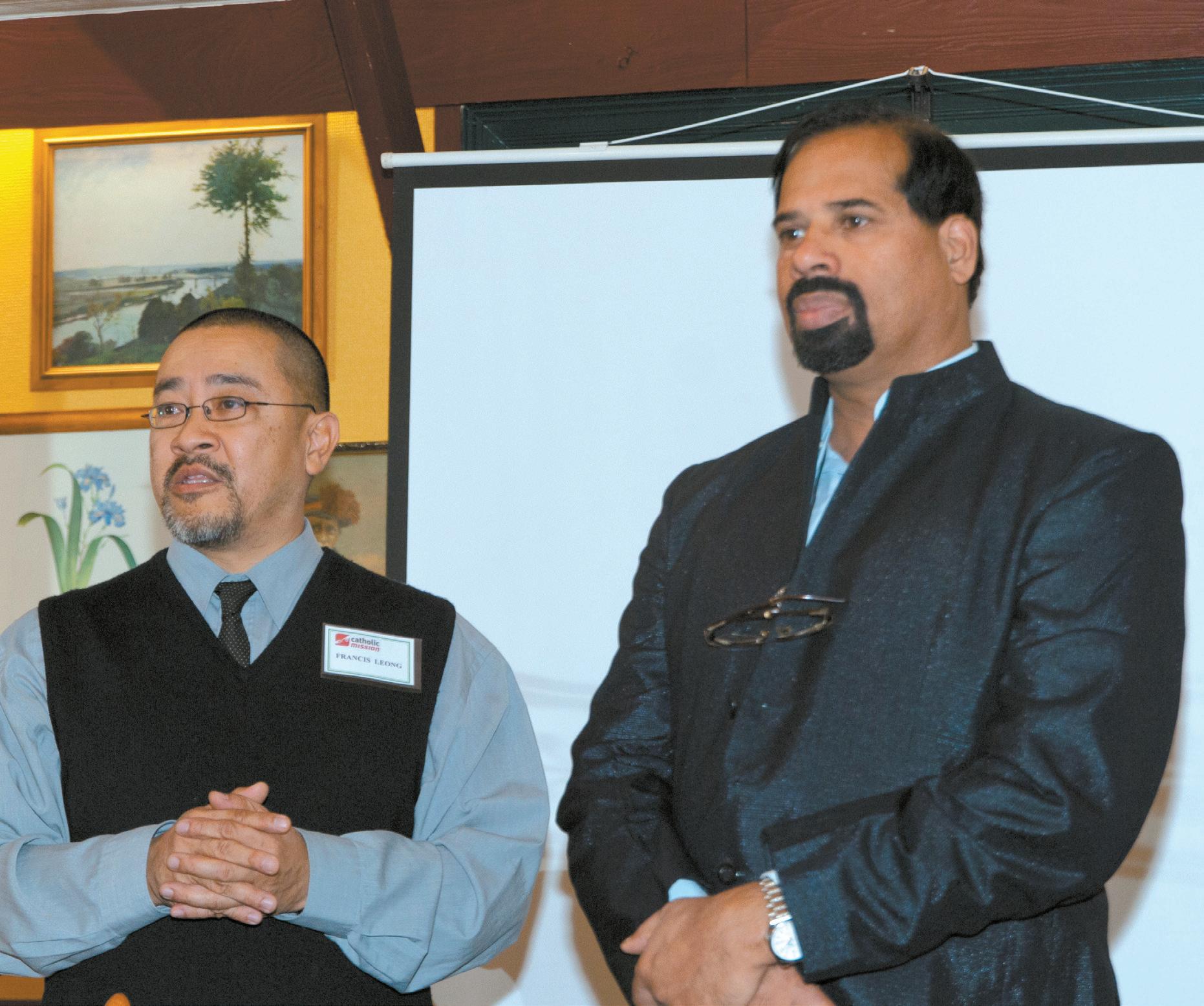
It’s a problem that the director of Pontifical Mission Societies in India, Fr Faustine Lobo, has devoted his life to solving.
The 50-year-old priest from Mangalore, India spent five days in Perth in June, and he told The Record Christians needed to respond to the challenge of loving their neighbour.
“Loving your neighbour is loving the person who is in difficulty,” he says. “We have millions of people who are suffering, who are in need, who are in difficulty. We have to realise that we have a responsibility towards [them]. They have lost hope for their lives. These millions of people are looking for support.”
Fr Faustine says the number of people in the world dying of starvation is “staggering”.
“The situation is horrible,” he says. “It is said that for every 3.6 seconds, a person dies of starvation.
“Out of the 800 million who go to bed hungry, approximately onethird are children. This is a terrible situation.”
Ironically, Fr Faustine points out that while an estimated 15 per cent of the population of developing countries is malnourished, an equal
Fr Faustine Lobo, the man who guarantees mission donations reach their destination in India, says
percentage of the world’s population is obese.
“There are people who have more than they need,” he says. “They eat too much, and they waste too much.”
He quotes Mahatma Ghandi, who once remarked: “The world has enough for everyone’s need, but not enough for everyone’s greed.”
“The world today is suffering because there are people who are greedy,” Fr Faustine says. “God has provided sufficiently for all, we only have to share. If we are ready to share, there is enough and more.”
we are ready to reduce the wastage, I think so much of the problem could be reduced,” he says.
But Fr Faustine says those who waste needlessly are often unaware of the lack of food and water in other parts of the world.
He says that as the world has become a “global village”, an individual’s choice to waste natural
We have millions of people who are suffering, who are in need, who are in difficulty. We have to realise that we have a responsibility towards [them]."
Problems of greed and wastage abound in most developed countries, including Australia. Advocacy group Do Something! released statistics in December claiming Australians waste $8 billion worth of edible foods each year.
Fr Faustine says people urgently need to eradicate the mindset that wasting natural resources is perfectly acceptable. “There is a need to somehow reduce the wastage. If
difficult to have whatever he needs.”
Despite the problems of malnutrition present in India, the Catholic Church is growing steadily in a predominantly Hindu country.
With more than 17 million Catholics, 223 bishops, and five cardinals, Catholicism is alive and well in India, according to Fr Faustine.
“There is a very good future for the Church in India,” he says. “People are thirsting for the Word of God.
resources can affect those struggling to survive in another part of the world.
“When you are using the natural resources, because of you, the price of that food will go higher,” he asserts.
“For the poor person, already not in a position to buy, now you are making the world increase the price, and it makes it all the more
“We are well respected. The majority of the population of India believes that Christians are peace-loving people.”
One of the strengths of the Church in India is the continuous formation of Catholics throughout their lives.
“Children from the age of five to the age of 18 are compulsorily catechised, and between the ages of 18 and 21 there are Bible study sessions so the youth are also catechised,” Fr Faustine explains.
Additionally, each Catholic in India is automatically registered with his or her local parish upon
arrival in a suburb. “Every Catholic in that particular locality is attached to the parish and there is a kind of belonging among the people; people really feel that this is my church, this is my parish,” Fr Faustine says.
As part of his work in India, Fr Faustine has also helped to establish the ‘Women Empowerment Program’ aimed at eradicating the patriarchal system that exists in the country.
“In India, the status of women is always considered as lower than men,” he explains. “Both women and men must…come to understand that they have equal rights, equal dignity, equal status.
“There is a complementarity, one needs the other. When both of them are able to realise that they need each other, then they will start respecting each other.”
While the task is enormous, Fr Faustine is optimistic for the future and says changes are slowly taking place.
Being a Catholic priest in a Hindu country also has its challenges. The number of Catholics in India represents just 2.4 per cent of the population, but Fr Faustine says there is virtually no animosity between Hindus and Catholics.
“Hindus, by their beliefs, are tolerant,” he says. “They believe in several gods, so the God of Christianity is just one more god for them.”
However, Fr Faustine says a minority fringe group of Hindus has unfairly altered the perception
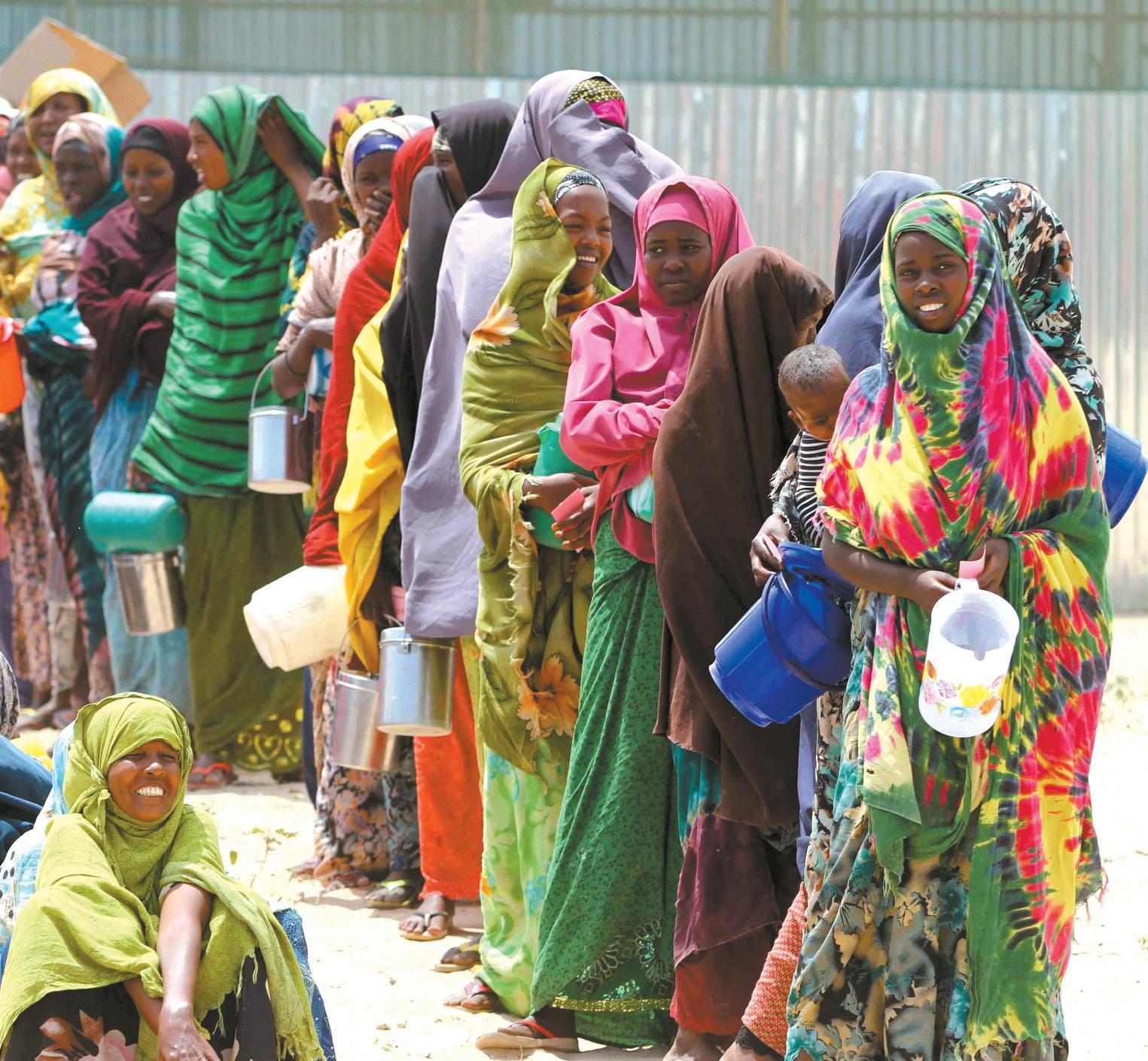
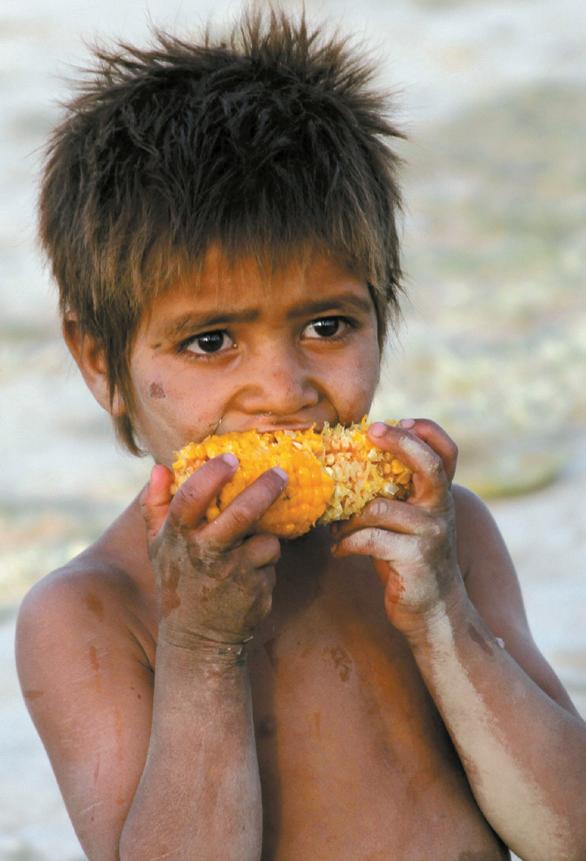
in the fight against poverty, we could be doing so much better writes Matthew Biddle.
of interfaith relations.
“They are creating problems for Christians as well as Muslims, so it has given a perception that all Hindus are bad, but actually in reality that is not the case,” he says. “Only 2 per cent among the Hindus are creating this problem and the majority are very good.”
Indian Hindus have even taken to Pope Francis, says Fr Faustine, who himself met the Holy Father recently.
“He is a pope for the times,” he says. “He is simple, he is Christlike, he is down to earth, approachable, very straightforward, and he’s ready to work for the people who are poor.”
The Pontiff’s care for the poor is inspiring for Fr Faustine, who says his first and foremost concern is to see that everyone has food and water.
But allocating funds for the missions has its challenges. One of those is ensuring that donations reach their desired destination.
As the person responsible for coordinating the missionary funding in 166 dioceses in India, representing more than 10,000 parishes, Fr Faustine recognises these challenges.
He says it is important for those who donate to the missions to do some research into where their money is going.
“When you are donating funds, you have to check the credibility of that particular organisation,” he
says. “We should have a monitoring mechanism by which we observe and oversee the growth or progress that is made in regard to that particular project.
“It is not enough to see that the project is completed, we also have to see that the purpose for which this particular project was conceived is achieved.”
One element required to help solve the problems of malnutrition and starvation is a spirit of universal cooperation.
“For example, in Australia, there is a lack of priests and religious persons, so Australia, which is financially supporting India, can be supported as regards to personnel, by India,” Fr Faustine says.
“There should be mutual give and take… everyone has something to give.”
With one of the goals of the Catholic Bishops Social Justice statement for 2013 the eradication of extreme poverty and hunger, and charities struggling to meet the needs of the poor, Fr Faustine says now is a good time to do our bit.
“Let us be people for the world,” he says.
“Let me see what is happening all over the world, not limit myself only to my neighbourhood, to my parish, to my state, to my country.
“Let us collectively try to alleviate the suffering that is there in the world; that is my appeal to Australians and also to the world at large.”
JULY 14, 2013 • LUKE 10: 25-37 • 15TH SUNDAY OF

Across
2. “ ... Now a ____ passed by but walked on the other side of the road ...”
4. The lawyer replied, ‘You must love the Lord your God with all your heart, with all your ____, with all your strength, and with all your mind ...’
5. But the lawyer said to Jesus, ‘And who is my ____?’
Down
1. Jesus said to him, ‘You have answered right, do this and ____ is yours.’
3. “ ... a ____ traveller who after seeing the man went up to him and bandaged his wounds ...”
4. The lawyer replied, ‘The one who ____ pity towards him.’ Jesus said to him, ‘Go, and do the same yourself.’
HOW MANY WORDS FROM THE CROSSWORD CAN YOU FIND?

SEND YOUR COLOURED IN PICTURE TO THE RECORD AT PO BOX 3075, ADELAIDE TERRACE, PERTH WA 6832 TO BE IN THE RUNNNG TO WIN THIS WEEK’S PRIZE.
Luke: 10: 25-37
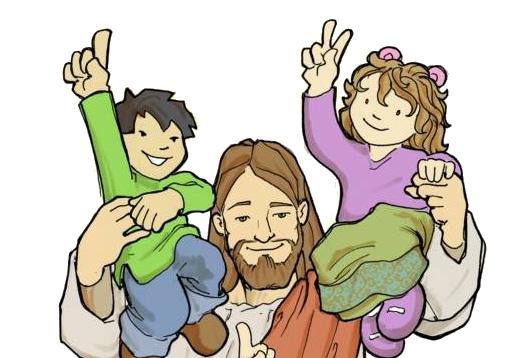
A lawyer asked Jesus, ‘Master, what must I do to inherit eternal life?’ Jesus said to him, ‘What is written in the Law? What is your reading of it?’ The lawyer replied, ‘You must love the Lord your God with all your heart, with all your soul, with all your strength, and with all your mind, and your neighbour as yourself.’ Jesus said to him, ‘You have answered right, do this and life is yours.’ But the lawyer said to Jesus, ‘And who is my neighbour?’ In answer, Jesus said, ‘A man was on his way to Jericho when he was beaten by some bad men who left him for dead. Now a priest passed by but walked on the other side of the road. The next man to walk by was a Levite who also walked on the other side of the road. The next man to walk by was a Samaritan traveller who after seeing the man went up to him and bandaged his wounds and took him to an inn and looked after him. Which of these three, do you think, proved himself a neighbour to the man who was left for dead?’ The lawyer replied, ‘The one who showed pity towards him.’ Jesus said to him, ‘Go, and do the same yourself.’
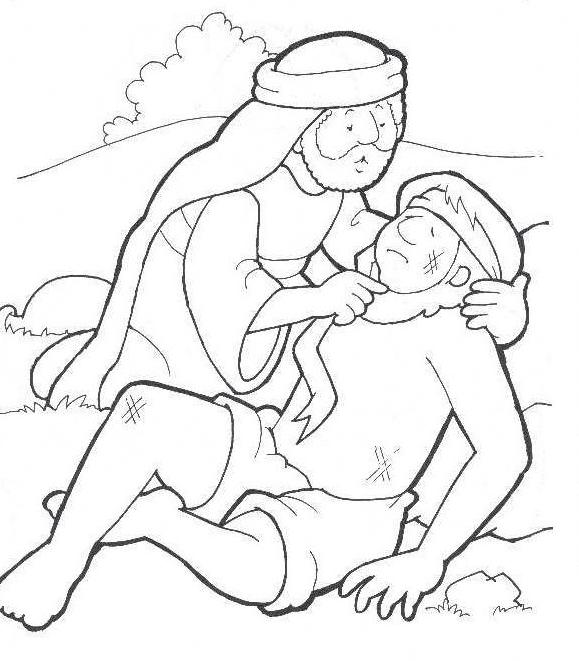
The next man to walk by was a Samaritan traveller who after seeing the man went up to him and bandaged his wounds.
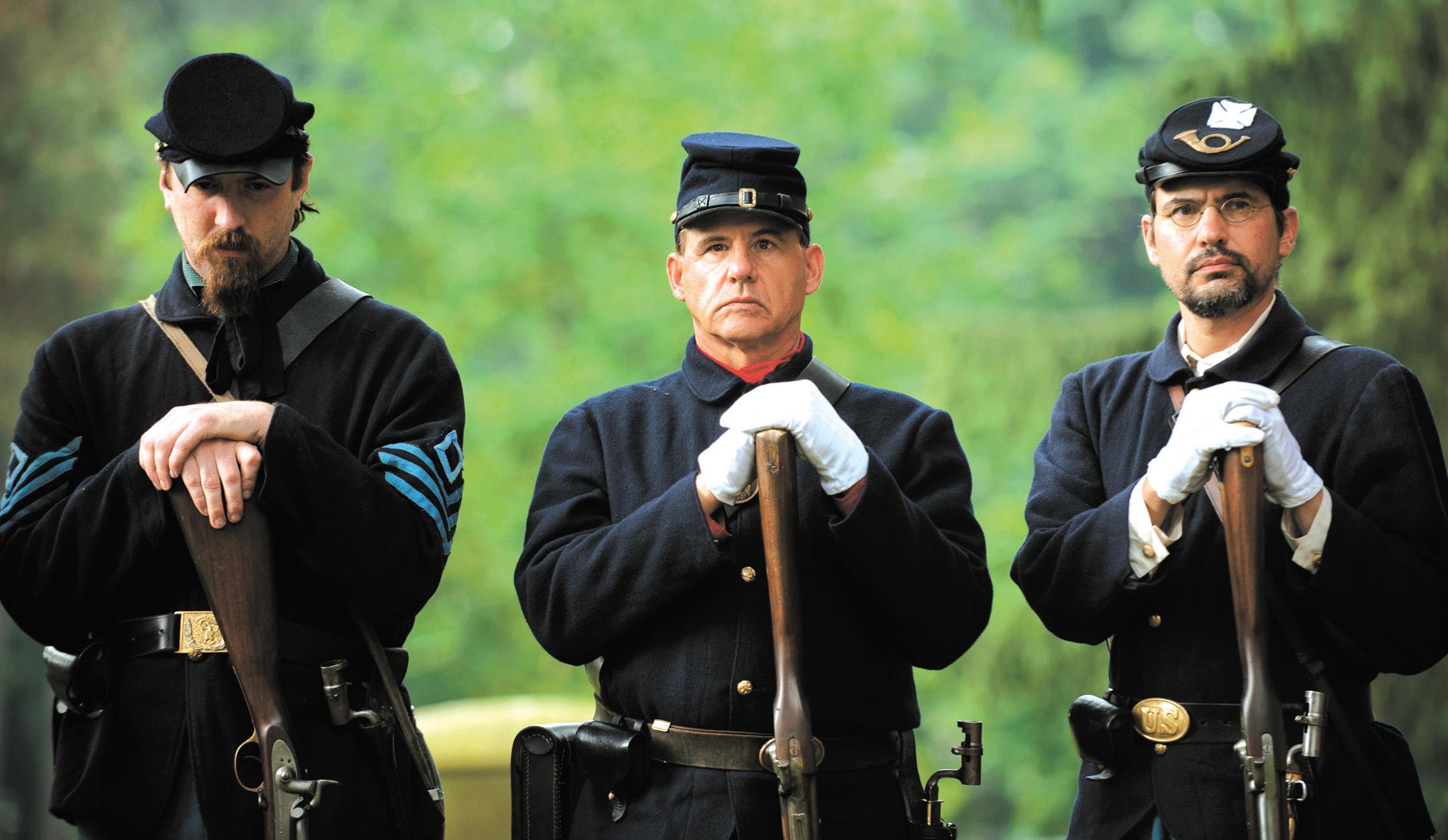
In the darkest depths of war, Catholic chaplains and nuns were beacons of light for those torn apart by unceasing conflict.
They were Poles, Austrians, Germans, Czechs, Italians, Irish - especially Irish - and they had one thing in common. They were Catholics, many of them new immigrants but loyal Americans.
Seven score and 10 years ago, as President Abraham Lincoln might say, many of them participated in the crucial Battle of Gettysburg from July 1-3, 1863 and some of them are among the honoured dead Lincoln memorialised in his famous address of November 19, 1863 which he delivered at the dedication of the Soldiers’ National Cemetery in Gettysburg.
Certainly, Catholicism was still a minority religion in 19th-century America, but Catholics were there. Just exactly how many of them fought at Gettysburg is impossible to say, according to Anthony Waskie, a Temple University professor and member of St Laurentius Parish in Philadelphia, who is the principal author of Philadelphia and the Civil War: Arsenal of the Union published in 2011.
Religion was not a statistic kept by the military, and one of the best determinants is the nationality of the soldiers who comprised a unit. One of the most famous such units was the Irish Brigade which, in 1862, participated in several battles including Antietam, Md and Fredericksburg, Virginia.
By 1863, at the time of Gettysburg, the brigade was commanded by Brigadier General Patrick Kelly, a New Yorker who later was killed at the siege of Petersburg, Virginia.
“Three of the regiments were from New York, one was from Boston and one was from Pennsylvania,” Waskie explained.
“The Pennsylvania regiment was the 116th led by Colonel St Clair Mulholland. He was an Irish immigrant and quite well educated. He was the recipient of the Medal of Honour for the Battle
of Chancellorsville (in Virginia).” Eventually, he would rise to the rank of major general in the volunteer service. After the war he became active in Philadelphia politics and was Philadelphia’s chief of police, and is buried in Old Cathedral Cemetery.
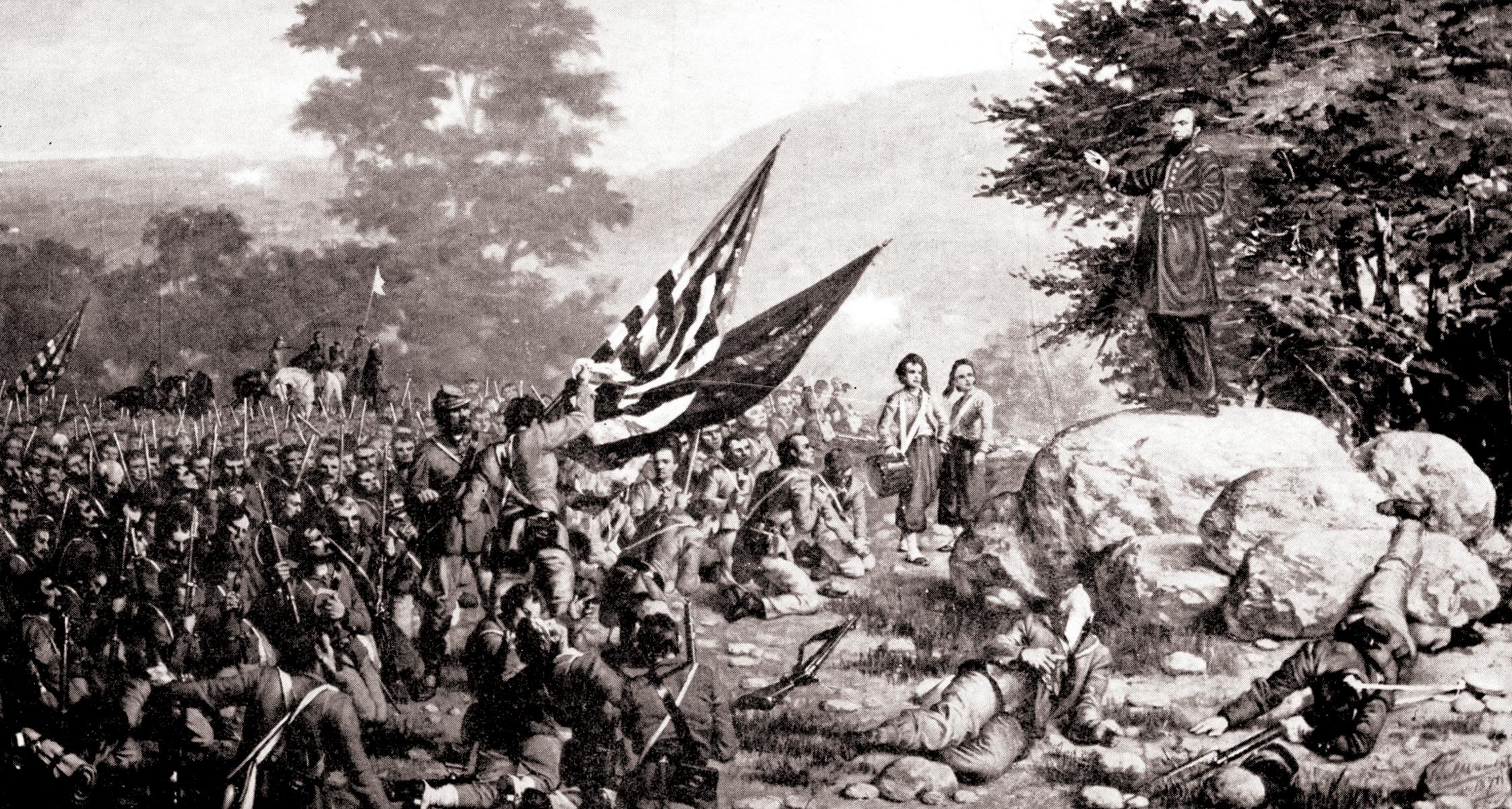
The Boston regiment brought a chaplain with them to Gettysburg, Holy Cross Father William Corby. A memorable event of the battle was Fr Corby standing on a rock giving his Irish troops general absolution. Years later, through the efforts of Mulholland, a statue showing Fr Corby giving absolution was erected on the rock where he stood.
A little while after the war the priest was named president of what was then Notre Dame College, in South Bend, Ind. A duplicate statue was later erected on the campus.
“The 69th Pennsylvania was not in the Irish Brigade, but they were overwhelmingly Irish and they suffered very heavily at Gettysburg,” Waskie said in an interview with CatholicPhilly.com, the news website of the Philadelphia Archdiocese.
More than 10,000 Union and Confederate soldiers died in the battle, considered the turning point in the war, leading to the South’s eventual surrender two years later.
Another Catholic presence at Gettysburg was about a dozen Daughters of Charity, there to nurse the wounded. “They had a priest with them, Fr Francis Burlando, a Vincentian,” Waskie said. In Gettysburg, St Francis Xavier Church became a battlefield hospital. Today, Gettysburg is part of the Harrisburg Diocese, which was established in 1868.
Stained-glass windows in the church depict scenes of wounded soldiers being cared for by nuns. The celebration of an outdoor field Mass commemorating the dead and wounded has long been a tradition for the parish. New York Cardinal
Timothy Dolan, who is a history buff, was to celebrate an evening Mass there on July 6 to mark the 150th anniversary of the battle. For the most part, the Catholic
both were larger than the four largest hospitals combined in today’s Philadelphia. Shortly after the Satterlee opened, Sister Mary Gonzaga Grace, assigned by her
He ascended the rock and gave them absolution. They went to their deaths in their thousands.
sisters did not nurse the wounded on the battlefield but in the huge military hospitals that sprang up both in the North and the South. While many congregations supplied sister-nurses during the conflict, the Daughters of Charity were the most active, even to the point of temporarily closing schools for lack of remaining teaching sisters.
In Philadelphia, there was the Satterlee Military Hospital (186265) in West Philadelphia and in Chestnut Hill the Mower Military Hospital (1863-65). The Satterlee had 4,500 beds and the Mower had 3,600 beds. By comparison,
order to St Joseph’s Orphan Asylum in Philadelphia, was asked to take charge of the Daughters of Charity who would serve as nurses at the hospital. “The men really loved her, she was legendary, and afterward the men would write to her,” Waskie said.
Initially, there were 42 sisters; over the next three years the total number of sisters who served at the hospital at various times was 91.
When the sisters arrived, the newly constructed hospital had about 900 patients. Within a couple of months that rose to 1,500, especially after the Battle of Second
Bull Run in Virginia. Soldiers, after being stabilised at field hospitals, were brought up from Virginia by train. Some were wounded, others were suffering from swamp fever, chronic dysentery, typhoid fever and even smallpox, Sr Mary Gonzaga wrote.
The real trial came after Gettysburg, when the hospital population rose to more than 5,000 with the overflow housed in tents. One sister, Sr Margaret Hamilton, wrote, “When they arrived at the hospital many wounds were full of vermin and in many cases gangrene had set in. The odour was almost unbearable. The demand on our time and labour was so increased that the number of nurses seemed utterly inadequate and the hospital presented a pure picture of the horrors of war.”
Most amazing of the more than 6,000 wounded and sick that passed through Satterlee Hospital in the month or so after Gettysburg, only 110 died.
There are few words that arouse more suspicion among a properly sceptical public than, “Trust us; we’re doing what is best for you”. But these have been the insufficient assurances offered by the Obama administration and members of Congress about the activities of the National Security Agency, even as more questions are raised about the breadth of the NSA’s Internet spying and the Orwellian infrastructure it has been constructing since at least 2006.
It may be fair to say that most Americans, as habitual users of the Internet, are already thoughtlessly surrendering more private information to service providers and social networks – and their many corporate clients – than anything the NSA has so far attempted. In fact, Big Brother is already watching but he’s leaning over a cash register, not leering through a television screen; sales of data gathered about customers by cell providers alone are expected to reach nearly $10 billion by 2016.
And scary headlines in The Washington Post and Britain’s The Guardian newspaper notwithstanding, the NSA may be operating completely within existing law in collecting phone records and tracking overseas targets through US-based Internet service providers. Unfortunately, those laws are the most recent revisions of the deficient Foreign Intelligence Surveillance Act and the Patriot Act. It is unclear what else the NSA may be up to.
The public may today shrug off NSA data gathering as a necessary evil, but it is a mistake not to be concerned about the slow encroachment of a surveillance society. While the threat from terrorism is real, the spectacle of a secretive federal agency, operating under limited legislative and judicial oversight while maintaining a vast capability to intrude on the privacy of US citizens, is also a threat to a healthy democracy.
This is an agency that, with the turn of an administration and the issue of an executive order, could begin scanning the habits, connections, opinions and more of all Americans.
How can the public contribute to debate when it is consistently cut off from information?
PO Box 3075
Adelaide Terrace PERTH WA 6832
office@therecord.com.au
Tel: (08) 9220 5900
Fax: (08) 9325 4580
In 2003, Congress rejected the notion of a governmental Total Information Awareness Program; now the nation is drifting into casual acceptance of its de facto implementation. In fact, we have been adrift with respect to civil liberties – and more – far too long. Since that day of ash and horror on September 11, 2001, the United States has launched two expensive wars and endured the scandals of Abu Ghraib, extraordinary rendition, and torture and detention without trial. In defence of freedom, American citizens have been vaporised in drone strikes and hundreds of others liquidated in long-distance executions that answer to no court and admit of no appeal. Against such grave events, the NSA digital eavesdropping seems a slight matter, but in truth it is a small part of a great historical drama too many Americans watch as bystanders.
In response to grinding terrorism by the Irish Republican Army in the 1970s, Britain institutionalised torture and began a shameful interment program that reached its awful conclusion at the Long Kesh Detention Centre’s H-block. Confronting terror, the state of Israel likewise embraced innovative “interrogations” and began a strategy of “targeted assassinations” that require the glib acceptance of “collateral damage” among Palestinian noncombatants.
These make poor historical models for a mature democracy confronting its own threat to public safety. Surely the United States, in deference to its traditions, the rule of law and a historical esteem for civil liberties, can do better than replicate these dreary strategies? Yet US drone attacks continue apace, and now the United States maintains its own H-block at Guantanamo Bay, complete with hunger strikers, force-feeding and “dirty protests.” What state model of social tracking and control does the NSA e-listening suggest?
Speaking about national security on May 23 at the National Defence University in Washington, President Barack Obama called for a debate on how to balance trade-offs of civil liberties and public safety. But how is the American public to contribute to a debate when it is consistently cut off from the information it needs to participate intelligently? The president said that Americans “know a price must be paid for freedom”. In this instance, however, Americans do not fully understand the price they are paying.
Legislation has been proposed in Congress that would declassify some Foreign Intelligence Surveillance Act opinions, and Internet service providers are asking to be allowed to disclose their responses to NSA requests for metadata. These two steps make a modest beginning to the robust debate the administration claims to be eager to join. No one wants to deprive federal authorities of the legitimate tools they need to protect the public and keep the peace. Surely that goal and the goal of protecting what is left of individual privacy in this digitally intrusive age need not be mutually exclusive.
From time to time The Record samples editorial opinion from around the Catholic press. The above editorial appeared in the July 1 issue of America magazine, a national Catholic weekly magazine in the US run by the Jesuits.
THE situation in Egypt is endangering the freedom of religion so far enjoyed by all its citizens. It is up to us Christians to pray to the Virgin Mary who sought refuge in Egypt, to intercede with her Son, so that it may remain a centre of stability and safe haven in the Middle East.
We also know it is highly probable that the Virgin Mary appeared from 1968 to 1970 over the dome of the Coptic Orthodox Church dedicated to the Virgin Mary in Zeitoun, Cairo, which is on the way taken by the Holy Family when fleeing to Egypt.
The apparitions, which lasted for long periods of time – on one occasion up to 2 hours and 15 minutes – were witnessed by members of the Orthodox, Catholic, Protestant, Muslim and Jewish faiths, as well as non-religious people from all walks of life.
Numerous miracles of healing of sick and blind people were verified by physicians and caused many conversions.
After thorough investigation of the reports presented to His Holiness Pope Kyrillos VI, the declaration from the Papal Residence in Cairo was as follows: May God make this miracle a symbol of peace for the whole world, and a blessing for our nation as it has been prophesied: “Blessed be Egypt my people.”
G Aquilina Lynwood WA
THANK YOU, thank you, for your ‘hit-the-nail-on-the-head’ article recently in The Record (June 26), regarding the removal of the crucifix from many churches. It moves me too. Like you, I just wince when it is replaced with some ‘art’, a floating – perhaps – resurrection, or whatever. Or worse still, a blank cross (Protestant). It is so important that we have a Crucifix above the altar – also in our homes. God Bless and thanks again.
Mrs Kostelic RICHMOND, WA
DEAR Mariette Ulrich, I liked your article in The Record ( June 26) on crucifixes. Could the church you describe be my former parish? Many of us there were concerned at the ‘Flapping Jesus’ in our parish. Or perhaps there are many such churches.
I am also trying to get together some Catholic laity to form a group to work out a few simple arguments to use against the current habit of slandering the Church in the media. Would you have any ideas? Thanks for your article.
JFA Sutherland KELMSCOTT, WA
I have often heard about a shrine of Our Lady of Walsingham in England and would like to know more about it. Is it associated with an apparition of Our Lady?
THE SHRINE of Our Lady of Walsingham is in Norfolk and has a very long history, going back to the time of Edward the Confessor in 1061. In that year, according to the Pynson Ballad written around 1485, a devout, widowed, English noble woman named Richeldis de Faverches prayed that she might undertake some special work in honour of Our Lady. In answer to her prayer, the Blessed Virgin appeared to her three times in a vision and showed her the house in Nazareth where the Annunciation occurred, asking her to build a replica in Walsingham as a perpetual reminder of the Annunciation.
Richeldis then had a Holy House built, a simple wooden structure in imitation of the house in Nazareth where the Annunciation occurred. She entrusted the care of the house to her son Geoffrey, who arranged for the building of a priory in Walsingham so that the monks could care for it on a more permanent basis.
Although historical records from the period are scant, it is known that with papal approval the Augustinian Canons Regular built a priory there some time between 1146 and 1174. Walsingham soon became one of the most popular shrines in Europe, especially when war and political upheaval made travel to Rome and Santiago de Compostella difficult.
Over the years royal patronage helped the shrine grow in wealth and popularity, and it was visited by numerous kings, from Henry III in
1241 through Edward I and Edward II to Henry VIII in 1513. Henry VIII’s Spanish wife Catherine of Aragon was a regular pilgrim.
The Reformation in England was to see the suppression of the monastery and the shrine. On the pretext of discovering any irregularities, Thomas Cromwell organised a series of visitations which led in 1536 to the suppression of some smaller monasteries, although not of Walsingham.
Even though the prior of Walsingham, Richard Vowell, signed the acceptance of the King’s supremacy over the Church, the sub-prior Nicholas Milcham was charged with high treason for conspiring to rebel against the suppres-
Over 100,000 pilgrims go to Walsingham each year, visiting both the Catholic and the Anglican shrines...
sion of the monasteries and was hanged outside the priory walls.
The priory was finally suppressed in 1538 and the buildings and shrine were looted and largely destroyed. The image of Our Lady was taken to London and burned, along with other images. A Chronicle of England of the time reported: “It was the month of July, the images of Our Lady of Walsingham and Ipswich were brought up to London with all the jewels that hung around them, at the King’s commandment, and divers other images, both in England and Wales, that were used for common pilgrimage ... and they were burnt at Chelsea by my Lord Privy Seal.”
In 1897, more than four hun-

dred years after the destruction of the priory and shrine, Pope Leo XIII re-established the restored 14th century Slipper Chapel as a Roman Catholic shrine of Our Lady of Walsingham. The Slipper Chapel received its name from the fact that it was located about a mile from the original shrine of Walsingham and pilgrims used to take off their shoes or slippers there and walk barefoot the rest of the distance. The first postReformation pilgrimage was led to the shrine by the Guild of Our Lady of Ransom on August 20, 1897.
A new statue of Our Lady of Walsingham was made, modelled on the mediaeval statue, and it is now venerated in the Chapel. Our Lady is seated on a simple chair of state with the Child Jesus on her knee. She wears a Saxon crown as a reminder of her ancient queenship and holds the lily of purity in her hand. The Holy House, too, has been rebuilt as the Lady Chapel in the Church of the Annunciation at King’s Lynn.
In 1922, the Anglican Church took an interest in reviving devotion to Our Lady of Walsingham and had a new statue made, based on the image depicted on the seal of the mediaeval priory. Devotion soon followed and pilgrimages once again became popular. In 1931, a new Holy House was built in a small pilgrimage church and the statue of Our Lady was placed there. In 1938, the church was enlarged to form the Anglican Shrine of Our Lady of Walsingham.
Over 100,000 pilgrims go to Walsingham each year, many of them visiting both the Anglican and the Catholic shrines. The feast of Our Lady of Walsingham is celebrated each year on September 24, the feast of Our Lady of Ransom. frjflader@gmail.com

Mariette Ulrich is still learning what works when it comes to life, and regrets she has a better grasp of what definitively does not.
WITHOUT sounding too defeatist, I must admit that middle age has altered my list of earthly goals, some of which have been (in no particular order): study art, earn my MA, travel the world, learn to cook as well as my mother-in-law (yes, I really was once that naïve), write a best-seller (or even a mediocre-seller), climb Mount Everest. Just kidding on that last one—I have never desired to climb that (or any) mountain. The only mountains I’ve ever conquered were composed of dirty laundry, and that’s fine by me.
If I ever dreamed of being Superwoman, those days are gone. I would be content to be a good wife and mother. I should like to be, in the words of Jane Austen (via Lady Catherine de Burgh, via Mar Collins), “an active, useful sort of person”. To this end, I could peruse some self-help books, but for starters I might try overcoming bad habits rather than just reading
about good ones. I am still learning what works but frankly, I have a lot more experience with what doesn’t. Thus I present Seven Habits of Highly Ineffective People. Not only have I known, taught, and worked with highly ineffective people, I have spent many years being one myself. (My apologies to the fellow who wrote that book about Highly Effective People—needless to say… I haven’t read it.)
1) Don’t count your blessings. Say to yourself: “Why can’t I have more/ bigger/better/newer? The shampoo ad says I’m worth it.” You’ll end up feeling irritable, covetous, and exasperated with everything and everyone around you.
2) Foster a disordered attitude towards your bodily needs. In fact, go one further and confuse legiti-
mate needs and desires. Don’t eat properly or get adequate sleep. Poor nutrition is always effective for slowing you down and keeping your energy levels in a constant state of flux. Don’t exercise: there’s nothing like feeling lethargic and physically lousy in addition to feeling that way mentally and spiritually.
2) Always make excuses for yourself, but be impatient and unpitying with others around you.
sometime this afternoon!”)
5) Practise poor time management (see #3) and be chronically tardy. Arrive late not only for appointments, classes and meetings, but also for coffee/dinner with friends, and of course, Sunday Mass. Waste time. Your days will be chaotic, and you will accomplish very little.
6) Make sure always to put yourself first; you only live once.
Be lazy and procrastinate. Be disorganised and untidy. Definitely don’t pray with any regularity.
3) Be lazy and procrastinate.
4) Be disorganised and untidy too, if you can manage it. Your stuff will always be lost or misplaced when you need it most: keys, receipts, bank statements, bills, wedding invitations (“Hey honey, there are only five Catholic churches in this city—your niece’s wedding has to be at one of them…
7) Don’t pray, at least not with any regularity. This will help cultivate an attitude of self-absorption and general misery. Of course, the sad part is that this list is far from definitive. There are many, perhaps even hundreds, more bad habits that render one’s life ineffective. So thanks for humouring me, but go ahead and
buy (and read!) the self-help books in order to get the straight goods on becoming an active, useful person. Or, you could read things like the following, which I have dubbed “Three Habits of the Most Highly Effective People” (saints). There are three things, my brethren, by which faith stands firm, devotion remains constant, and virtue endures. They are prayer, fasting and mercy. Prayer knocks at the door, fasting obtains, mercy receives. […] Fasting is the soul of prayer, mercy is the lifeblood of fasting. Let no one try to separate them; they cannot be separated. If you have only one of them or not all together, you have nothing. So if you pray, fast; if you fast, show mercy; if you want your petition to be heard, hear the petition of others. If you do not close your ear to others you open God’s ear to yourself. – Saint Peter Chrysologus. If we begin with just these three, we might be surprised at how other good habits follow, and how quickly our daily life improves.
Somebody asked him, “Have you ever thought of being a priest?” Baldivis priest Fr Geoff Aldous’ life has been the better for it.
My Vocation
IAM PARISH
PRIEST at Baldivis Parish and that has been the greatest thing ever. The parish was established in 2010. At present, there is neither presbytery nor church. Masses are held at Tranby College Chapel, off Arpenteur Drive, Settlers. To be part of a pioneering parish at this stage of my life is really exciting and very fulfilling. Our parish is under the patronage of Blessed Mother Teresa and the primary school, opening next year, is “Mother Teresa Catholic School”. The high school is planned for later on but has not been officially named yet.
The neighbourhood of my childhood was very Catholic and being Catholic was something you absorb by osmosis, as it were. My decision to become a priest was really just a natural part of growing up and being taught in a Catholic school in those days. After World War II in Australia, during the 50s, it was sort of the golden years of Catholicism and vocations were at a high. The nuns and the priests would come around to the schools and you would write your name on a piece of paper to get an interview with them. Just as I was due to do my leaving certificate I went to see a man I knew who was a government engineer. I wanted to ask him about his profession as I was thinking of pursuing it at university. Before I could ask him anything he said, “Have you ever thought about being a priest?” It was extraordinary. I thought my father would have been against it as he wanted me to go to university to do all the things that he hadn’t been able to do. So I asked my mum and after that everything was fine. I went into the seminary the next year. I have been blessed with a lot of variety in my priesthood. I have served in the city parishes of Victoria Park, Mirrabooka, Whitfords and Innaloo. It was mixed up with other diocesan work including YCS and YCW and Catholic Social Apostolate. For some years I was chaplain at WAIT (now called Curtin University). I’ve been a prison chaplain and a
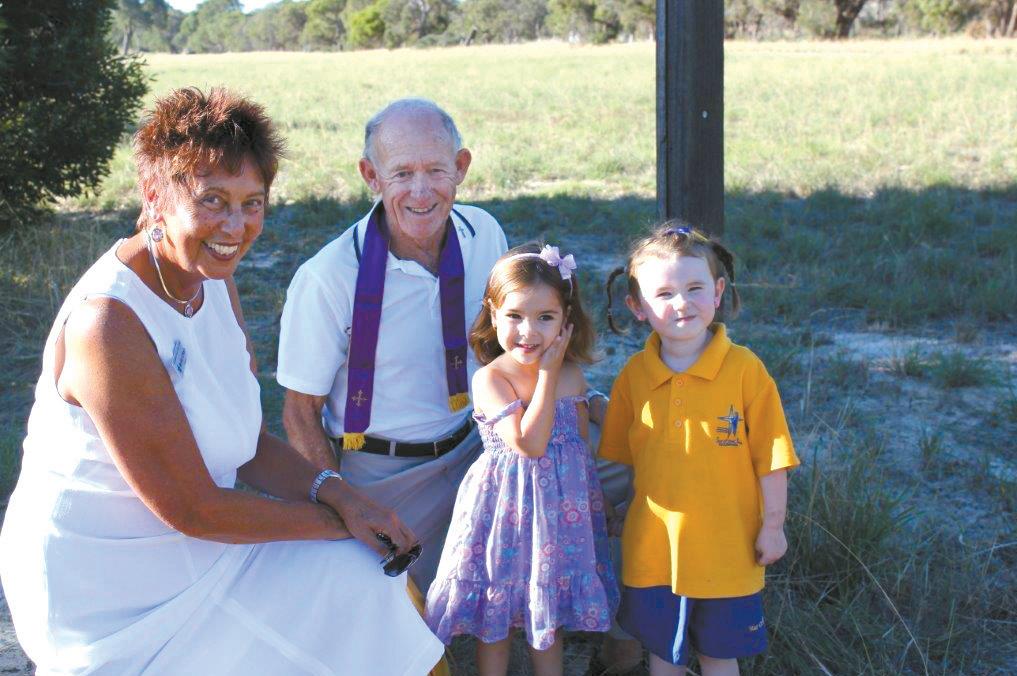
hospital chaplain too and involved in such ministries as Engaged Encounter. I’ve also enjoyed my time ‘in the bush’, in Kellerberrin, Northam and many other towns in the Central Wheatbelt. In my time in the Geraldton Diocese I loved
to involve other people in the mission of the Church, for example as sponsors or part of the RCIA team. RCIA assists in the integration of people into the parish. To be a Catholic you have to grow in the community. Through the Rites this
I was a very shy person and I suppose I still am. Ministry calls you to be more of an extrovert.
going ‘outback’ to the towns and station country of the Murchison. One of my great loves has always been small faith groups and to see people growing in faith. RCIA is one of those special groups. It is very encouraging from a priest’s point of view. The priest doesn’t run it himself but he is an important part of the team. It is so important
happens over a period of time. It is a real blessing for the parish when someone becomes Catholic. My greatest joy has been the people whom I have met over the years. Visiting parishioners is very important to me. That’s been and is my main ministry. I was very much inspired by my first parish priest Monsignor Lenihan who was
my mentor in this regard. Despite being a very sick man he would go out two or three times a day, every day, like clockwork, knocking on doors. As his assistant priest, he encouraged me to do the same. I was a very shy person and I suppose I still am. Ministry calls you to be more of an extrovert. I have learnt to “switch it on” in a sense. Entering the seminary meant giving up my social life because life for a seminarian was more closed in those days. The beach and sport had been an important part of my life. So I sort of feared that I was going to lose a lot of those things. Since becoming a priest I had a small support group that I treasured for many years but that petered out a few years ago. Some died and some moved away. I still enjoy priest retreats as well as other meet-
ings and have some close friends, priest and lay, I keep in touch with. Today, I played golf with a couple of them. I come from a close family and they are a great support. I had earlier thoughts when I was about 13 or 14 about being a Brother or a missionary but that was discouraged by my father at that time and in hindsight that was a good thing. That life wouldn’t have suited me. There have not been any ‘St Paul moments’, like the blinding light that struck him on the road to Damascus, but there have been several times that the call to be a priest has been confirmed for me. I try and think of some blessings every day to thank God for. There have been joys along with sacrifices of course but overall I am happy and can’t imagine doing anything else.
SATURDAY, JULY 13
St Padre Pio Prayer Day
8.30am-1pm at St Joseph Church, 20 Hamilton St, Bassendean. 8.30am - St Padre Pio DVD in parish centre; 10am - Exposition of the Blessed Sacrament, Rosary, Divine Mercy, Silent Adoration and Benediction; 11am - Holy Mass, St Padre Pio Liturgy, Confessions available; 12pm - bring a plate for a shared lunch, tea/coffee supplied. Search YouTube.com - type “Hello from San Giovanni Rotondo” . Enq: Des 6278 1540.
Divine Mercy Healing Mass
2.30pm at St Francis Xavier Church, Windsor St, East Perth. Main celebrant Fr M Meilak, OFM. Reconciliation in English and Italian will be offered.
Divine Mercy prayers followed by Veneration of First Class Relic of St Faustina. Refreshments later. Enq: John 9457 7771.
SUNDAY, JULY 14
Eucharistic Reparation
3pm at St Jerome Parish, Troode St, Munster. The World Apostolate of Fatima invites you to attend a Eucharistic Holy Hour. Enq: 9339 2614.
Alliance of the Two Hearts - Annual Fundraising Lunch
12 noon-3pm at Bali Modern Cuisine Restaurant, U4/1163 Albany Hwy, Victoria Park. Smorgasboard, door prizes and raffles. Bookings
Enq: Vicky 0400 282 357, Nick 0428 953 471 or John/Joy 9344 2609.
SUNDAY, JULY 14 AND 28
Latin Mass
2pm at the Good Shepherd Church, Streich Ave, Kelmscott. Enq: John 9390 6646
TUESDAY, JULY 16
Solemnity of Our Lady of Mt Carmel
11am Concelebrated Mass at the Carmelite Monastery, 100 Adelma Rd, Nedlands. Emeritus Archbishop Barry Hickey will be the principal celebrant. All are most welcome to the Mass and refreshments afterwards.
FRIDAY, JULY 19 TO SUNDAY, JULY 21
Reflection Weekend - The Life-giving
Fountain of Faith
5pm at St John of God Retreat Centre, 47 Gloucester Cr, Shoalwater. For women who provide spiritual nourishment and care to people overwhelmed by suffering in hospital or parish. To experience quiet space away in order to recognise the gift of faith that sustains you. Enq: Sr Ann 0418 130 200 or Sr Kathy 0418 926 590.
SATURDAY JULY 20
Grace and Silence Retreat Day
9.30am-4.30pm at 9 Talus Dr, Mt Richon. Young women 17-30 years are invited to silent prayer and reflection on their vocation to marriage, single or consecrated life. Day includes Input, Eucharistic Adoration, and silent personal prayer concluding with Rosary. Cost $20 includes lunch, refreshments and materials. Limited numbers; registration essential before July 14. Enq: Hanna 0415 306 090 or download form on www. schoenstattwa.org.au.
SUNDAY, JULY 21
Auslan Cafe
10.30am-12 noon, Emmanuel Centre hall next to St Francis Xavier. Ever thought about learning how to communicate with profoundly deaf people through Auslan (Australian Sign Language)? Now you can and it’s FREE. Come and learn in a relaxed and fun way. There is always an interpreter at St Francis Xavier Church, corner Windsor and Lord Sts, Perth for the 9.30am Sunday Mass. Light lunch provided. Enq: Emma or Barbara by email emmanuelcentre@westnet.com.au or 9328 8113.
TUESDAY, JULY 23
Spirituality and the Sunday Gospels 7-9pm at St Benedict’s school hall, Alness St, Applecross. (No meeting - school holidays July 16). Everyone is welcome. Cost, collection. Accreditation recognition by the CEO. Enq: 9487 1772 or www.normawoodcock.com.
FRIDAY, JULY 26
Medjugorje Evening of Prayer Group 7-9pm at St Simon Peter Parish, corner Prendiville Ave and Constellation Dr, Ocean Reef. It is reported Our Blessed Mother has been appearing daily in Medjugorje since 1981 with messages for all her children. In thanksgiving, The Medjugorje evening of prayer group meets monthly in a different parish to spread Our Blessed Mother’s messages. Free DVDs on Medjugorje. NEWSFLASH! Pilgrimage to Rome, Italy, Medjugorje $3,999, Oct 8-24. Enq. 9402 2480, 0407 471 256 or medjugorje@y7mail.com.
SATURDAY, JULY 27
Love Ministry Healing CCR Team
After 6.30pm Mass at St Emilie Parish, 151 Amhurst Rd, Canning Vale. Come all, including clergy, and be prayed over, healed from the past or present issues or stand in for a loved one who may be ill or facing problems at this time. Reconciliation available. Enq: Gilbert 0431 570 322 or Fr David Watt 9376 1734.
TUESDAY, JULY 30
Day of Reflection - Marian Movement of Priests 10.30am at St Paul’s, 106 Rookwood St, Mt Lawley. Rosary, Holy Mass and talks (including Holy Hour of prayer for priests). Confession available. Celebrant and speaker Rev Fr Andre, Friars of the
Immaculate. Bring lunch to share. Tea and coffee provided Enq: 9341 8082
Open Forum on Disability, the Church and the Wider Community 7-9pm at Emmanuel Centre, 25 Windsor St, Perth. If you are a parent/carer of or a person with a disability, come and network with others and discuss any issues which are important to you; managing education, employment, recreation, participation in the Church and preparation for the Sacraments etc. Enq: Barbara 9328 8113 or emmanuelcentre@westnet.com.au.
SATURDAY, AUGUST 3
Alan Ames Healing Mass and Talk
6pm at Our Lady of Mount Carmel, 82 Collick St, Hilton. Begins with Holy Mass followed by talk by Alan Ames and Healing Service. Enq: 9314 7733.
Day with Mary
9am-5pm at Sacred Heart Church, 50 Mary St, Highgate. Day of prayer and instruction based on the Fatima message. 9am Video;10.10am Holy Mass; Reconciliation, Procession of the Blessed Sacrament, Eucharistic Adoration, Sermons on Eucharist and on Our Lady, Rosary, Divine Mercy Chaplet and Stations of the Cross. Finish approx 5pm. BYO lunch. Enq: Franciscan Sisters of the Immaculate 9250 8286.
SUNDAY, AUGUST 18
Meditative Prayer in the Style of Taizé 7-8 pm at St Joseph’s Convent Chapel, 16 York St, South Perth. Includes scripture, prayer, song (mantra) and silence in candlelight. Chapel door open 6.30pm. Bring a friend and a torch. Enq: Sr Maree Riddler 0414 683 926.
EVERY SUNDAY
Gate of Heaven Catholic Radio
Join the Franciscans of the Immaculate from 7.309pm on Radio Fremantle 107.9FM for Catholic radio broadcast of EWTN and our own live shows. Enq: radio@ausmaria.com.
Cathedral Cafe
Cathedral Cafe is now open every Sunday 9.30am1pm at St Mary’s Cathedral parish centre, downstairs after Mass. Coffee, tea, cakes, sweets, friendship with Cathedral parishioners. Further info: Tammy on smcperthwyd@yahoo.com.au or 0415 370 357.
Pilgrim Mass - Shrine of the Virgin of the Revelation 2pm at Shrine, 36 Chittering Rd, Bullsbrook. Commencing with Rosary followed by Benediction. Reconciliation available before every celebration. Anointing of the sick administered during Mass every second Sunday of the month. Pilgrimage in honour of the Virgin of the Revelation last Sunday of the month. Side entrance to church and shrine open daily between 9am-5pm. Enq Sacri 9447 3292.
Praise and Worship
5.30pm at St Denis Parish, corner Osborne St and Roberts Rd, Joondanna. Followed by 6pm Mass. Enq: Admin on admin@stdenis.com.au.
EVERY FIRST SUNDAY
Singles Prayer and Social Group
7pm at All Saints Chapel, Allendale Sq, 77 St Georges Tce, Perth. Begins with holy hour (Eucharistic Adoration, Rosary and teaching) followed by dinner at local restaurant. Meet new people, pray and socialise with other single men and women. Enq: Veronica 0403 841 202.
EVERY SECOND SUNDAY
Healing Hour 7-8pm at St Lawrence Parish, Balcatta. Songs of praise and worship, Exposition of Blessed Sacrament and prayers for sick. Enq: Fr Irek Czech SDS or office Tue-Thu, 9am-2.30pm on 9344 7066.
EVERY THIRD SUNDAY
Oblates of St Benedict’s
2pm at St Joseph’s Convent, York St, South Perth. We welcome all who are interested in studying the Rule of St Benedict and its relevance to the everyday life of today for laypeople. Vespers and afternoon tea conclude our meetings. Enq: Secretary 9457 5758.
Divine Mercy Hour
3pm at St Pius X Church, 23 Paterson St, Manning. There will be Exposition of the Most Blessed Sacrament, Divine Mercy Prayers, Rosary and Benediction. Please join us in prayer. Enq: Mrs K Henderson 9450 4195.
EVERY FOURTH SUNDAY
Shrine Time for Young Adults 18-35 Years
7.30-8.30pm at Schoenstatt Shrine, 9 Talus Dr, Mt Richon; Holy Hour with prayer, reflection, meditation, praise and worship; followed by a social gathering. Come and pray at a place of grace. Enq: shrinetimemtrichon@gmail.com.
Holy Hour for Vocations to the Priesthood, Religious Life 2-3pm at Infant Jesus Parish, Wellington St, Morley. Includes Exposition of Blessed Sacrament, silent prayer, scripture, prayers of intercession. Come and pray that those discerning vocations can hear clearly God’s call.
EVERY LAST SUNDAY
Filipino Mass 3pm at Notre Dame Church, cnr Daley and Wright
Sts, Cloverdale. Please bring a plate to share for socialisation after Mass. Enq: Fr Nelson Po 0410 843 412, Elsa 0404 038 483.
EVERY MONDAY
For You My Soul is Thirsting (Psalm 62:1)
7pm at St Thomas Parish, 2 College Rd, Claremont. Tend to your thirst for God. Begins with Adoration, then 7.45pm - Evening Prayer; 8pm - Communion Service and Night Prayer. Come to the whole thing, or just to a part! Enq: Michelle: 0404 564 890.
LAST MONDAY
Be Still in His Presence –Ecumenical Christian Program
7.30-8.45pm at St Swithun Anglican Church, 195 Lesmurdie St, Lesmurdie (hall behind church). Begins with songs of praise and worship, silent time, lectio divina, small group sharing and cuppa. Enq: Lynne 9293 3848 or 0435 252 941.
EVERY TUESDAY
Novena to Our Lady of the Miraculous Medal
6pm at Pater Noster Church, Marmion and Evershed Sts, Myaree. Mass at 5.30pm followed by Benediction. Enq: John 0408 952 194.
Novena to God the Father
7.30pm at St Joachim’s parish hall, Vic Park. Novena followed by reflection and discussions on forthcoming Sunday Gospel. Enq: Jan 9284 1662.
EVERY FIRST TUESDAY
Short MMP Cenacle for Priests
2pm at Edel Quinn Centre, 36 Windsor St, East Perth. Enq: Fr Watt 9376 1734.
EVERY WEDNESDAY
Holy Spirit of Freedom Community
7.30pm at Church of Christ, 111 Stirling St, Perth. We welcome everyone to attend our praise meeting. Enq: 0423 907 869 or hsofperth@gmail.com.
Bible Study at Cathedral
6.15pm at St Mary’s Cathedral, Victoria Sq, Perth. Deepen your faith through reading and reflecting on holy Scripture with Fr Jean-Noel Marie. Meeting room beneath Cathedral. Enq: 9223 1372.
Holy Hour - Catholic Youth Ministry Mass at 5.30pm and Holy Hour (Adoration) at 6.30pm at Catholic Pastoral Centre, 40A Mary St, Highgate. Enq: www.cym.com or 9422 7912.
EVERY FIRST WEDNESDAY
Novena to St Mary of the Cross MacKillop
7-7.45pm at Blessed Mary MacKillop Parish, corner Cassowary Dr and Pelican Pde, Ballajura. Begins with Mass, novena prayers and Benediction. Followed by healing prayers and anointing of the sick. Enq: Madi 9249 9093 or Gerry 0417 187 240.
EVERY SECOND WEDNESDAY
Chaplets of Divine Mercy
7.30pm at St Thomas More Parish, Dean Rd, Bateman. Accompanied by Exposition, then Benediction. Enq: George 9310 9493 or 6242 0702 (w).
EVERY THURSDAY
Divine Mercy
11am at Sts John and Paul Church, Pinetree Gully Rd, Willetton. Pray the Rosary and Chaplet of Divine Mercy and for consecrated life, especially in our parish. Concludes with veneration of the first class relic of St Faustina. Enq: John 9457 7771.
St Mary’s Cathedral Praise Meeting
7.45pm at the Legion of Mary’s Edel Quinn Centre, 36 Windsor St, East Perth. Includes praise, song and healing ministry. Enq: Kay 9382 3668 or fmi@ flameministries.org.
Group Fifty - Charismatic Renewal Group
7.30pm at Redemptorist Monastery, 150 Vincent St, North Perth. Includes prayer, praise and Mass. Enq: Elaine 9440 3661.
EVERY FIRST THURSDAY
Holy Hour Prayer for Priests
7-8pm at Holy Spirit Parish, 2 Keaney Pl, City Beach. All welcome. Enq: Linda 9341 3079.
Prayer in Style of Taizé
7.30-8.30pm at Our Lady of Grace Parish, 3 Kitchener St, North Beach. Includes prayer, song and silence in candlelight – symbol of Christ the light of the world. Taizé info: www.taize.fr. Enq: secretary 9448 4888 or 9448 4457.
EVERY SECOND THURSDAY
Life in the Spirit Seminar 6pm at 2 King St, Coogee. The Resource Centre for Personal Development and Catholic Charismatic Renewal will hold seven sessions every second Thursday until October. Enq: Eva 0409 405 585.
FIRST AND THIRD THURSDAY
Social Dinner (Young Adults aged up to 35) and Rosary Cenacle
6.30pm at St Bernadette’s Church, 49 Jugan St, Mt Hawthorn. Begins at 6.30pm with dinner at a local restaurant, followed at 8pm by a Rosary Cenacle, short talk and refreshments at the church. Great way to meet new people, pray and socialise! Enq: 9444 6131 or st.bernadettesyouth@gmail.com.
EVERY FRIDAY
Eucharistic Adoration at Schoenstatt Shrine
10am at Schoenstatt Shrine, 9 Talus Dr, Mt Richon. Includes holy Mass, Exposition of Blessed Sacrament, silent adoration till 8.15pm. Join us
in prayer at a place of grace. Enq: Sisters of Schoenstatt 9399 2349.
Healing Mass 6pm at Holy Family Parish, Lot 375, Alcock St, Maddington. Begins with Exposition of the Blessed Sacrament, Rosary, Stations of the Cross, Healing Mass followed by Adoration of the Blessed Sacrament. Enq: admin 9493 1703 or www.vpcp. org.au.
EVERY FIRST FRIDAY
Mass and Exposition of the Blessed Sacrament 11am-4pm at Little Sisters of the Poor Chapel, 2 Rawlins St, Glendalough. Exposition of Blessed Sacrament after Mass until 4pm, finishing with Rosary. Enq: Sr Marie MS.Perth@lsp.org.au.
Healing and Anointing Mass
8.45am Pater Noster Church, Evershed St, Myaree. Begins with Reconciliation, then 9am Mass of the Sacred Heart of Jesus, anointing of the sick and prayers to St Peregrine. Enq: Joy 9337 7189.
Pro-life Witness – Mass and Procession
9.30am at St Brigid’s Parish, corner Great Northern Hwy and Morrison Rd, Midland. Begins with Mass followed by Rosary procession and prayer vigil at nearby abortion clinic, led by the Franciscan Friars of the Immaculate. Please join us to pray for an end to abortion and the conversion of hearts. Enq: Helen 9402 0349.
Combined All Night Communion of Reparation Vigil with Fr Bing
9pm-4am Saturday at St Anne Church, Hehir St, Belmont. August will be a combined Vigil with Fr Bing. There will be no vigils at Corpus Christi Church and St Gerard Church for August only. Mass, Adoration, Benediction, confession in reparation for outrages committed against the United Hearts of Jesus and Mary. Enq: Vicky 0400 282 357, John/Joy 9344 2609.
Catholic Faith Renewal Evening
7.30pm at Sts John Paul Parish, Pinetree Gully Rd, Willetton. There will be songs of praise, prayer, sharing by a priest, then thanksgiving Mass and light refreshments. Enq: Ivan 0428 898 833 or Ann 0412 166 164 or catholicfaithrenewal@gmail. com.
EVERY SECOND FRIDAY
Discover Spirituality of St Francis of Assisi 12pm at St Brigid’s parish centre. The Secular Franciscans of Midland Fraternity have lunch, then 1-3pm meeting. Enq: Antoinette 9297 2314.
EVERY FIRST SATURDAY
Vigil for Life – Mass and Procession
8.30am at St Augustine Parish, Gladstone St, Rivervale. Begins with Mass celebrated by Fr Carey, followed by Rosary procession and prayer vigil at nearby abortion clinic. Please join us to pray for the conversion of hearts and an end to abortion. Enq. Helen 9402 0349.
Mission Rosary making at the Legion of Mary
9.30am-2pm at 36 Windsor St, East Perth. All materials are supplied. The Rosaries made are distributed to the schools, missions and those who ask for a Rosary. Please join us and learn the art of Rosary making on rope and chain. Enq: 0478 598 860.
EVERY SECOND SATURDAY
Novena to Our Lady of Perpetual Help (Succour) and Divine Mercy Chaplet (Chant)
8.30am at Our Lady of the Mission Parish, Whitford, 270 Camberwarra Dr, Craigie. Holy Mass at 8.30am followed by Novena. Enq: Margaret 9307 7276.
EVERY FOURTH SATURDAY
Voice of the Voiceless Healing Mass
11.30am at St Brigid’s Parish, 211 Aberdeen St, Northbridge. Bring a plate to share after Mass. Enq. Frank 9296 7591 or 0408 183 325.
EVERY LAST SATURDAY
Novena Devotions – Our Lady Vailankanni of Good Health 5pm at Holy Trinity Parish, 8 Burnett St, Embleton. Followed by Mass at 6pm. Enq: George 9272 1379.
Free Divine Mercy Image for Parishes
High quality oil painting and glossy print – Divine Mercy Promotions. Images of very high quality. For any parish willing to accept and place inside the church. Oil paintings: 160 x 90cm; glossy print - 100 x 60cm. Enq: Irene 9417 3267 (w).
Sacred Heart Pioneers
Would anyone like to know about the Sacred Heart pioneers? If so, please contact Spiritual Director Fr Doug Harris 9444 6131 or John 9457 7771.
St Philomena’s Chapel 3/24 Juna Dr, Malaga. Mass of the day: Mon 6.45am. Vigil Masses: Mon-Fri 4.45pm. Enq: Fr David 9376 1734.
Mary MacKillop Merchandise
Available for sale from Mary MacKillop Centre. Enq: Sr Maree 041 4683 926 or 08 9334 0933.
Financially Disadvantaged People Requiring
Low Care Aged Care Placement
The Little Sisters of the Poor community is set in beautiful gardens in the suburb of Glendalough.
“Making the elderly happy, that is everything!” St Jeanne Jugan (foundress). Registration and enq: Sr Marie 9443 3155.
Is your son or daughter unsure of what to do this year?
Suggest a Cert IV course to discern God’s purpose. They will also learn more about the Catholic faith and develop skills in communication and leadership. Acts 2 College of Mission and Evangelisation (National Code 51452).Enq: Jane 9202 6859.
AA Alcoholics Anonymous Is alcohol costing you more than just money? Enq: AA 9325 3566.
Saints and Sacred Relics Apostolate Invite
SSRA Perth invites interested parties, parish priests, leaders of religious communities, lay associations to organise relic visitations to parishes, communities, etc. We have available authenticated relics, mostly first-class, of Catholic saints and blesseds including Sts Mary MacKillop, Padre Pio, Anthony of Padua, Therese of Lisieux, Maximilian Kolbe, Simon Stock and Blessed Pope John Paul II. Free of charge and all welcome. Enq: Giovanny 0478 201 092 or ssra-perth@catholic.org.
Enrolments, Year 7, 2014
La Salle College now accepting enrolments for Year 7, 2014. For prospectus and enrolment please contact college reception 9274 6266 or email lasalle@lasalle.wa.edu.au.
Acts 2 College, Perth’s Catholic Bible College Is now pleased to be able to offer tax deductibility for donations to the college. If you are looking for an opportunity to help grow the faith of young people and evangelise the next generation of apostles, please contact Jane Borg, Principal at Acts 2 College on 0401 692 690 or principal@ acts2come.wa.edu.au.
Divine Mercy Church Pews
Would you like to assist, at the same time becoming part of the history of the new Divine Mercy Church in Lower Chittering, by donating a beautifully handcrafted jarrah pew currently under construction, costing only $1,000 each. A beautiful brass plaque with your inscription will be placed at the end of the pew. Please make cheques payable to Divine Mercy Church Building fund and send with inscription to PO Box 8, Bullsbrook WA 6084.
Enq: Fr Paul 0427 085 093.
Abortion Grief Association Inc
A not-for-profit association is looking for premises to establish a Trauma Recovery Centre (pref SOR) in response to increasing demand for our services (ref.www.abortiongrief.asn.au). Enq: Julie (08) 9313 1784.
RESOURCE CENTRE FOR PERSONAL DEVELOPMENT - 2013 COURSES
Holistic Health Seminar The Instinct to Heal (begins July 25) Thursday 11am-1pm; RCPD2 Internalise Principles of Successful Relationships, and Use Emotional Intelligence and Communication Skills, now on Thursdays 11am-1pm. 197 High St, Fremantle. Bookings essential. Enq: Eva 0409 405 585 or www.rcpd.net.au. Drop-In Centre and Op Shop - Volunteers urgently needed at RCPD, 197 High St, Fremantle.
1) RCPD6 ‘The Cost of Discipleship’
This course combines theology with relationship education and personal/spiritual awareness by teaching self-analysis.
2) ‘The Wounded Heart’
Healing for emotional and sexual abuse promotes healing and understanding for the victim and the offender. Holistic counselling available - http:// members.dodo.com.au/~evalenz/.
Would You Not Watch One Hour with Me? Adoration - St Jerome’s Spearwood We have been able to add Sunday night/Monday morning to our Adoration Roster. It is now continuous from Wednesday, 6am through to Monday, 10pm. Please pray for new Adorers to keep Jesus company on the two nights (Monday and Tuesday) which still finish at 10pm. Adorers needed urgently: Thursday, 10am, 11am and 12 noon. Please see the roster for other times Adorers are needed. Enq. Mary 0402 289 418.
Pilgrimage: Following Christ and His Saints Fr Tim Deeter and Fr Michael Rowe will lead a pilgrimage to the Holy Land and Italy, 6-31 Jan 2014. Israel and Jordan, Rome, Subiaco, Genazzano, Norcia and Cascia in Italy. $7850 from Perth is all-inclusive except your drinks and souvenirs. Enq: casapgf@iinet.net.au or 9271 5253. Please book by 15 July.
Panorama: The deadline for Panorama is Friday at 5pm on the week before the edition.
RESTORATION BOOKBINDING and Conservation; General Book Repairs, Bibles, Breviaries and Liturgical. Tel: 0401 941 577. Now servicing the South-West @ Myalup.
ARE YOU BUYING OR SELLING real estate or a business? Why not ask Excel Settlements for a quote for your settlement. We offer reasonable fees, excellent service, no hidden costs. Ring 9481 4499 for a quote. Check our website on www. excelsettlements.com.au.
CATHOLICS CORNER Retailer of Catholic products specialising in gifts, cards and apparel for Baptism, Communion and Confirmation. Ph 9456 1777. Shop 12, 64-66 Bannister Rd, Canning Vale. Open Mon-Sat.
RICH HARVEST - YOUR CHRISTIAN SHOP Looking for Bibles, CDs, books, cards, gifts, statues, Baptism and Wedding candles, etc. Visit us at 39 Hulme Ct (off McCoy St), Myaree. Ph 9329 9889 (after 10.30am Mon to Sat). We are here to serve.
KINLAR VESTMENTS
www.kinlarvestments.com.au
Due to health issues I will not be operating for a few weeks.
QUALITY TAX RETURNS PREPARED by registered tax agent with over 35 years’ experience. Call Tony Marchei 0412 055 184 for appt. AXXO Accounting & Management, Unit 20/222 Walter Rd, Morley. Trade services.
Deadline: 11am Monday
LOOK YOUNGER. The Younger You Mobile Clinic for facial rejuvenation. We come to you. Visit: www.youngeryouclinic.com.au or call 0478616781.
RURI STUDIO FOR HAIR
Vincent and Miki welcome you to their newly opened, international, award-winning salon. Shop 2, 401 Oxford St, Leederville. 9444 3113. Ruri-studio-for-hair@ hotmail.com.
BRENDAN HANDYMAN SERVICES
Home, building maintenance, repairs and renovations. NOR. Ph 0427 539 588.
WRR WEEDS AND PESTS
CONTROL Based in Tuart Hill. All aspects of weeds and pests control. Fully licensed, insured and guaranteed. Please call Billy 0402 326 637 or 6161 3264 or william.rao@optusnet.com.au.
PAINTERS IN PERTH since 1933. A.J.Cochrane & Sons 08 9248 8211.
BRICK RE-POINTING Ph Nigel 9242 2952.
PERROTT PAINTING Pty Ltd
For all your residential, commercial painting requirements. Ph Tom Perrott 9444 1200.
BOB’S PAINTING Registered and insured. Free quotes 0422 485 433 www.bobthepainter.com. au.
HOME-BASED BUSINESS. Wellness industry. Call 02 8230 0290 or www.dreamlife1.com
RETIREMENT VILLAGE OPPORTUNITIES in Albany. 5 New, 2 Bedroom Independent Living Units with Garage. Close proximity to Church and all City amenities. Contact Board of Management (08) 98474303 email: manager@stjosephslodge.com.au.
Oct.8-24th. Rome/Italy/Assisi/ Loretto/Eucharistic Miracle (Lanciano)/Cave of St. Michael the Archangel/San Giovanni Rotondo (Padre Pio) plus 6 nights Medjugorje. Overnight Dubrovnik. Spiritual Director Fr. Joseph Asnabun. Cost $3999 includes flights, transfers, tipping, guides, bed, breakfast, & evening meals in Italy, and Medjugorje. Enq: 9402 2480, 0407 471 256 or email medjugorje@y7mail.com.
TREASURES OF THE
PROMISED LAND (Jordan and Israel) from December 7-22, 2013. Email Sheila at info@ alternative-events.net or call 0433 771 979 or 6461 6183 (leave voice message) to receive details on pilgrimages to Holy Land, Turkey and Greece, West, East and the New Europe, South America and Asia.
ALL AREAS. Competitive rates. Mike Murphy Ph 0416 226 434.
Short, Cheap, Effective

ACROSS
3 A non-coveting commandment
9 Ishmael, to Jacob
10 Eastern Rite Churches in union with Rome
11 In the ___ of the Lord
12 Catholic Brazilian soccer great
13 Priest who offered his life for another’s in a Nazi prison camp, St Maximilian
15 Administer extreme unction
16 First word of a Latin hymn
17 Parable of the of great price
20 Number of beatitudes
22 Catholic Academy Awardwinning actress Hayward
23 He heads 26A
25 Early landing place
26 See 23A
29 One of the seven deadly sins
31 The Archdioceses of Tokyo and Mandalay are here
32 Hosea, in the Douay
35 Cardinal in charge of a congregation in the Curia
36 Worship
37 Cardinal Dulles
DOWN
1 Easter ___
2 Eight days of a holy season
3 Tool of trade for Peter and Andrew
4 The Archdiocese of Abuja is in this African country
5 Certain veil
6 Land of ___ and honey
7 Sebastian is their patron saint
8 Palms are burned to make these
14 Birth month of Mary (abbr)
15 Brother of Cain
18 Adam donation
19 One of the seven deadly sins
21 Mary Magdalene mistook the Risen Jesus for this (Jn 20:15)
22 ___ of David
23 Georgia diocese
24 “I ____ in God, the Father Almighty…”
27 Head of a diocese
28 The Hebrews fled from here
30 “…and darkness was upon the face of the ___” (Gen 1:2)
33 First place
34 ___ Minister
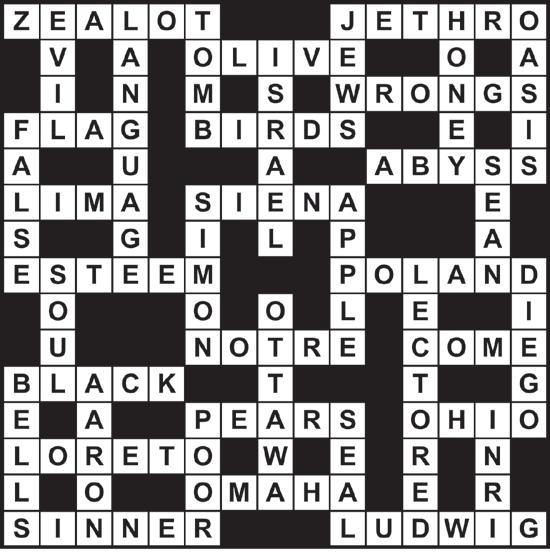
For the first time, in breathtaking, high-definition cinematography, the beauty, goodness and truth of the Catholic Faith are illustrated in a rich, multimedia experience. Journey with acclaimed author, speaker and theologian Fr Robert Barron to more than 50 locations throughout 15 countries. Be illuminated by the spiritual and artistic treasures of this global culture that claims more than one billion of the earth’s people. The box set includes five DVDs, each containing two episodes. Each episode runs 50-60 minutes.
Now at for only $217
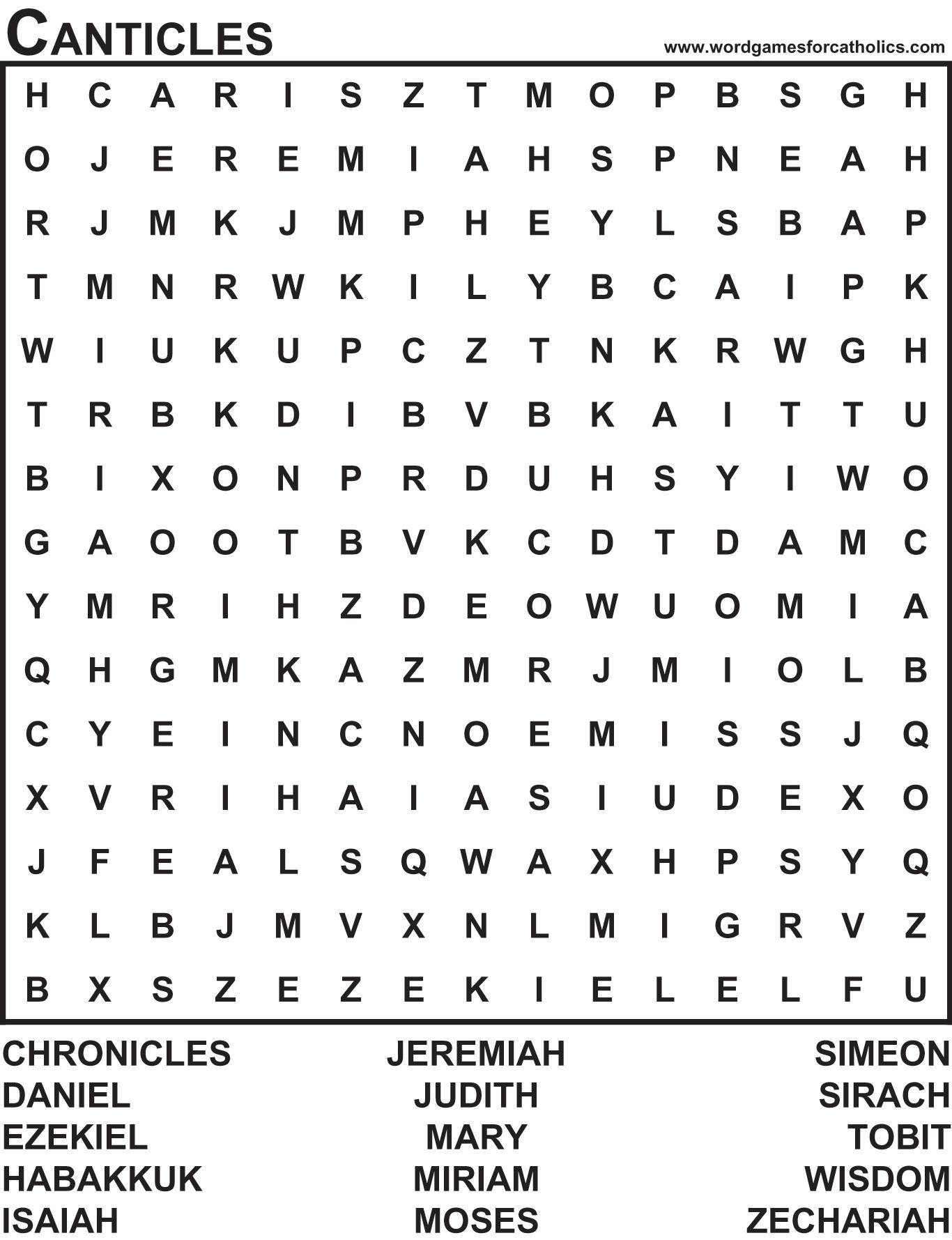
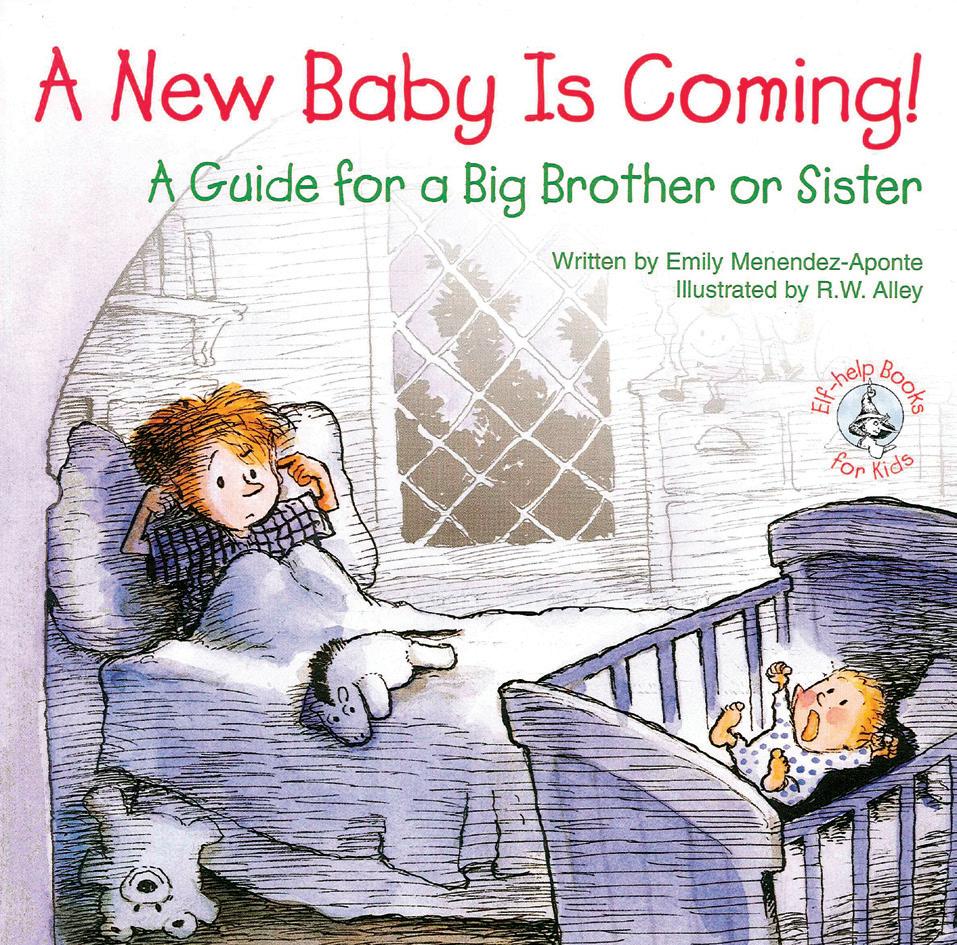

How
Some kids are naturally exuberant and outgoing, while others find it more difficult to interact in social settings. The transition from shyness to comfort and confidence around others can be slow and exasperating - but there are techniques to ease the process. Let the elves guide you and your child through this complicated situation. Filled with both useful tips to draw your child out and reminders to nurture the thoughtful, creative qualities he or she possesses, this book will help you see that Shyness Isn’t a Minus.