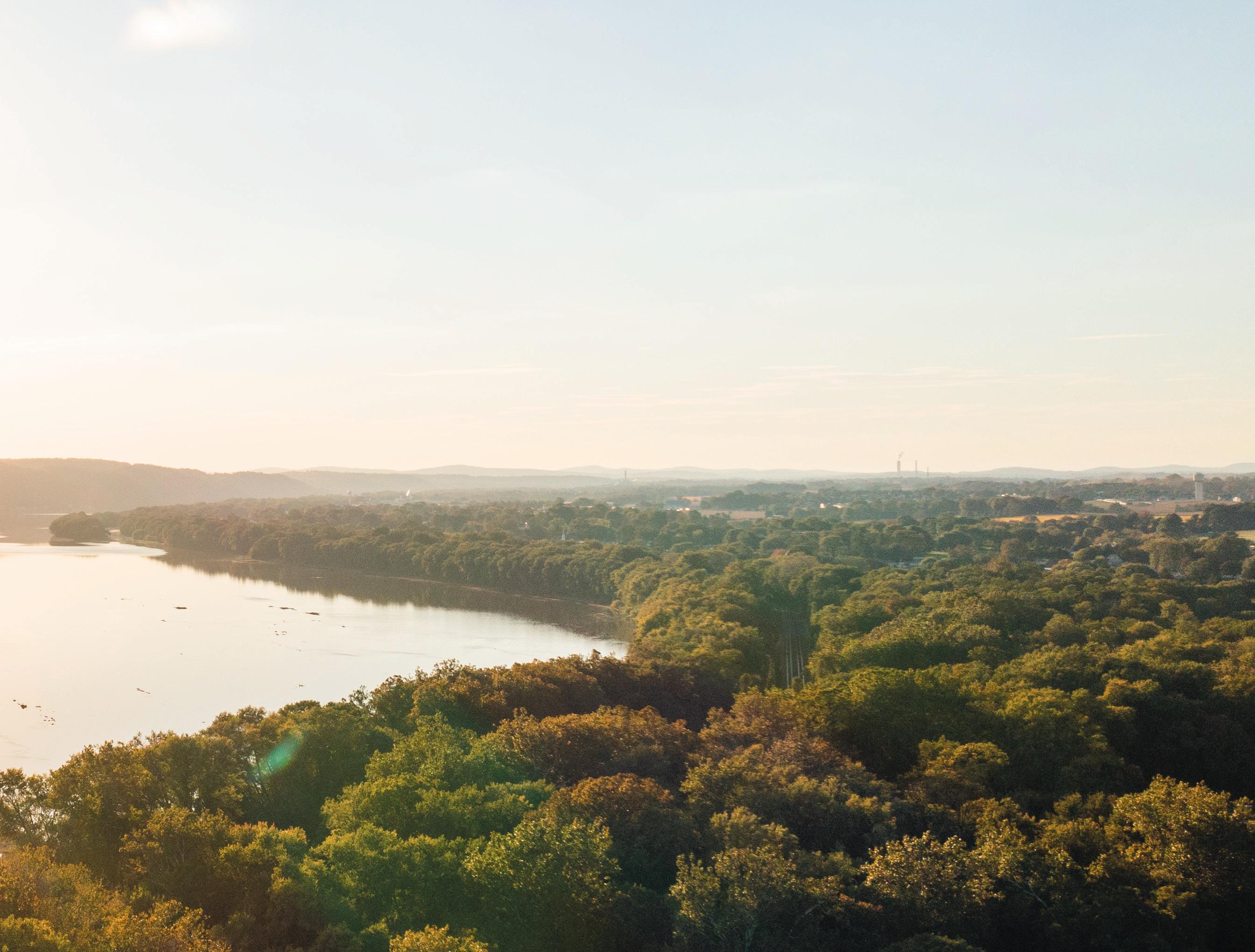
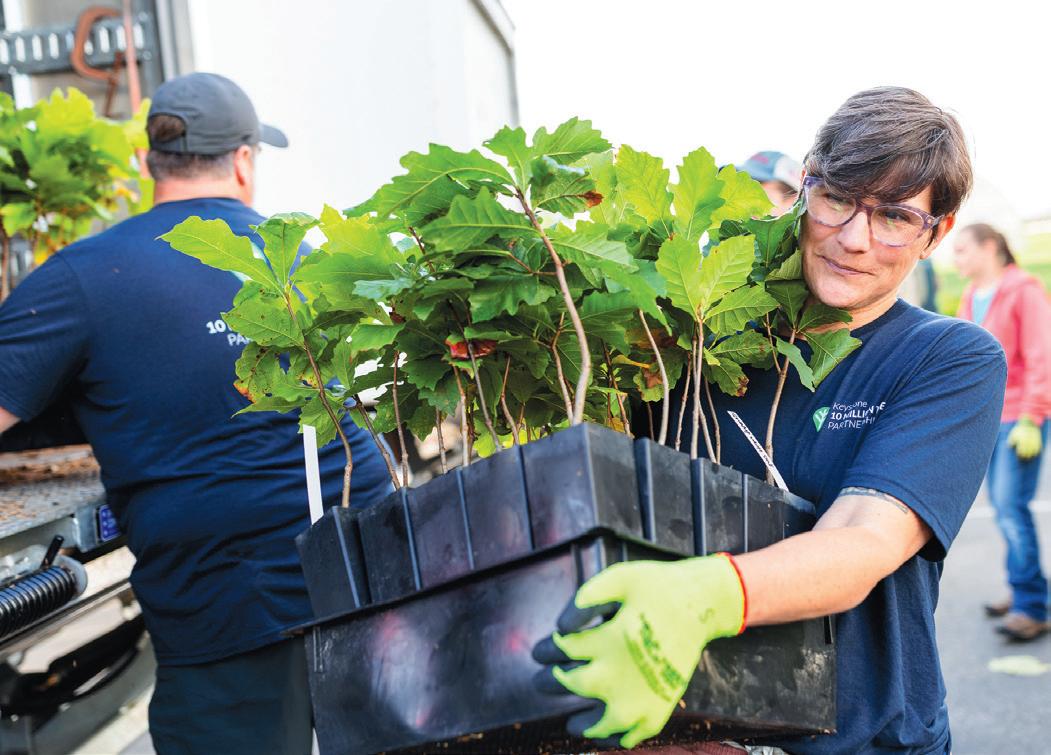
For about 180 million Americans, the answer is forests. In fact, for about 75% of the global population, the answer is forests. Known as watersheds, these forested regions catch rain and snowmelt like a sponge. Then they filter the water — cleaning it of dirt and pollution — before it’s funneled into the waterways that support everyday life.
Trees also stand guard along those vital streams and rivers, creating what’s known as riparian buffers, keeping water cool and clean through its journey.
Clean, accessible water is vital to life on Earth, and trees play a crucial part in safeguarding that resource.
A key part of maximizing the water benefits of trees is planting the right trees in the right places. As you’ll see in this issue, we work alongside the most knowledgeable partners to help guide our focus. Your support also helps us be intentional in not only where we plant, but how we plant. Because we know planting with purpose will help shape a better future for us all.
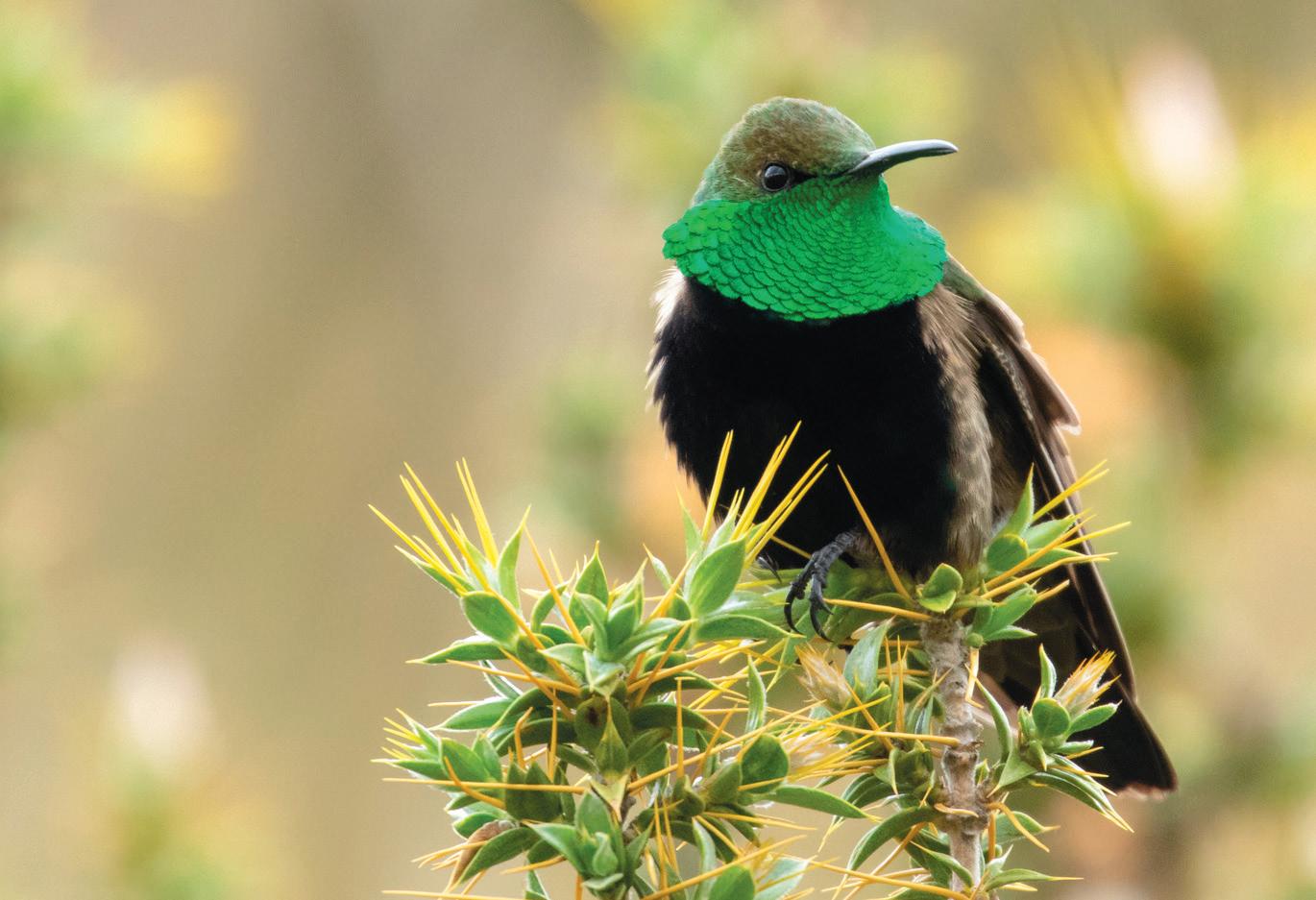
Black-breasted hillstar
PROTECTING WATER AND WILDLIFE IN PERU’S
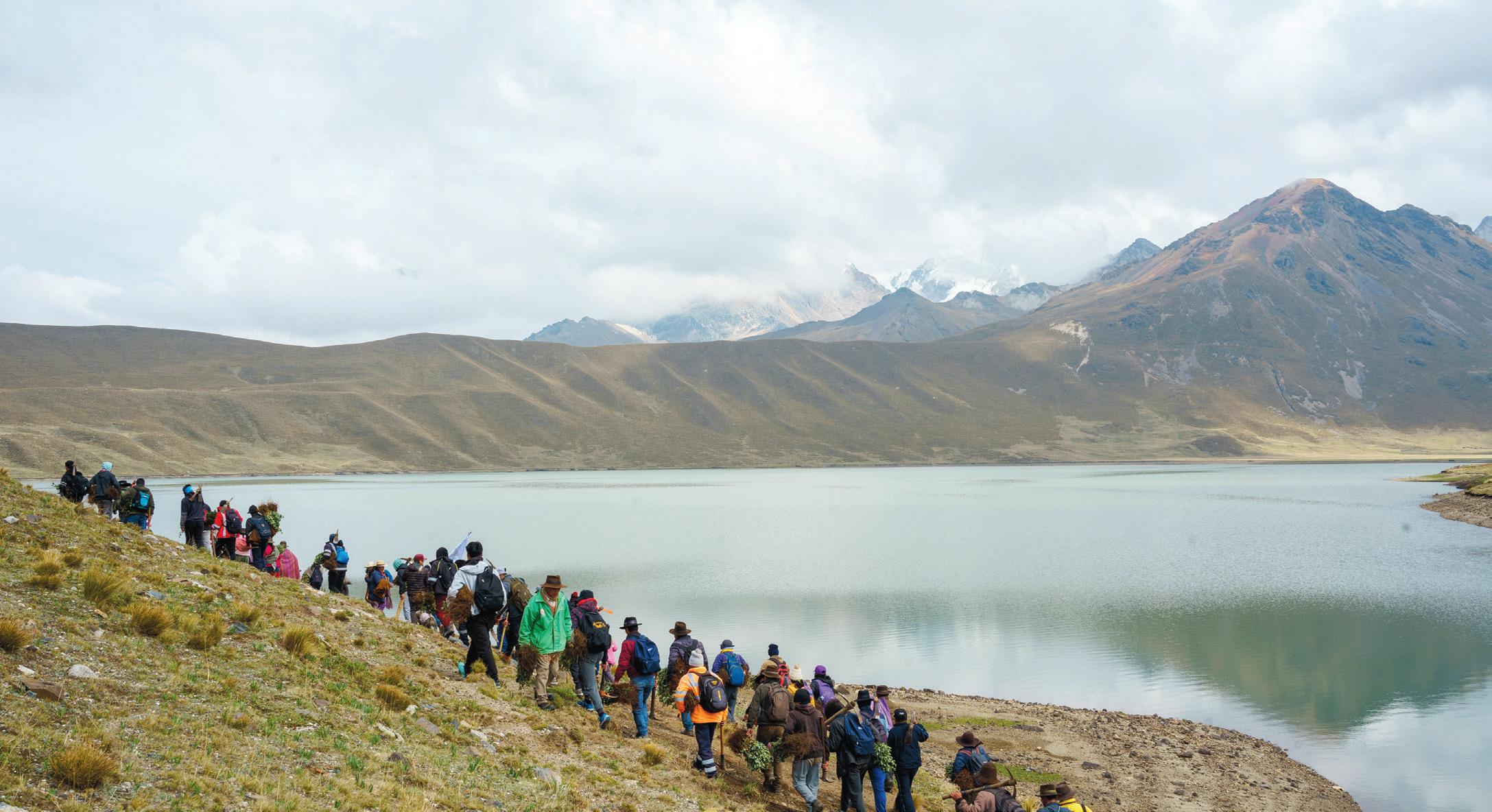
High above Peru’s valleys grows the Polylepis forest — one of the world’s most unique and threatened ecosystems. These rugged trees thrive where few others can, helping capture and store water that feeds streams, wetlands, and watersheds stretching across the Andes and even into the
Today, less than 10% of the Polylepis forest’s natural range remains. That’s why restoration work here matters so deeply.
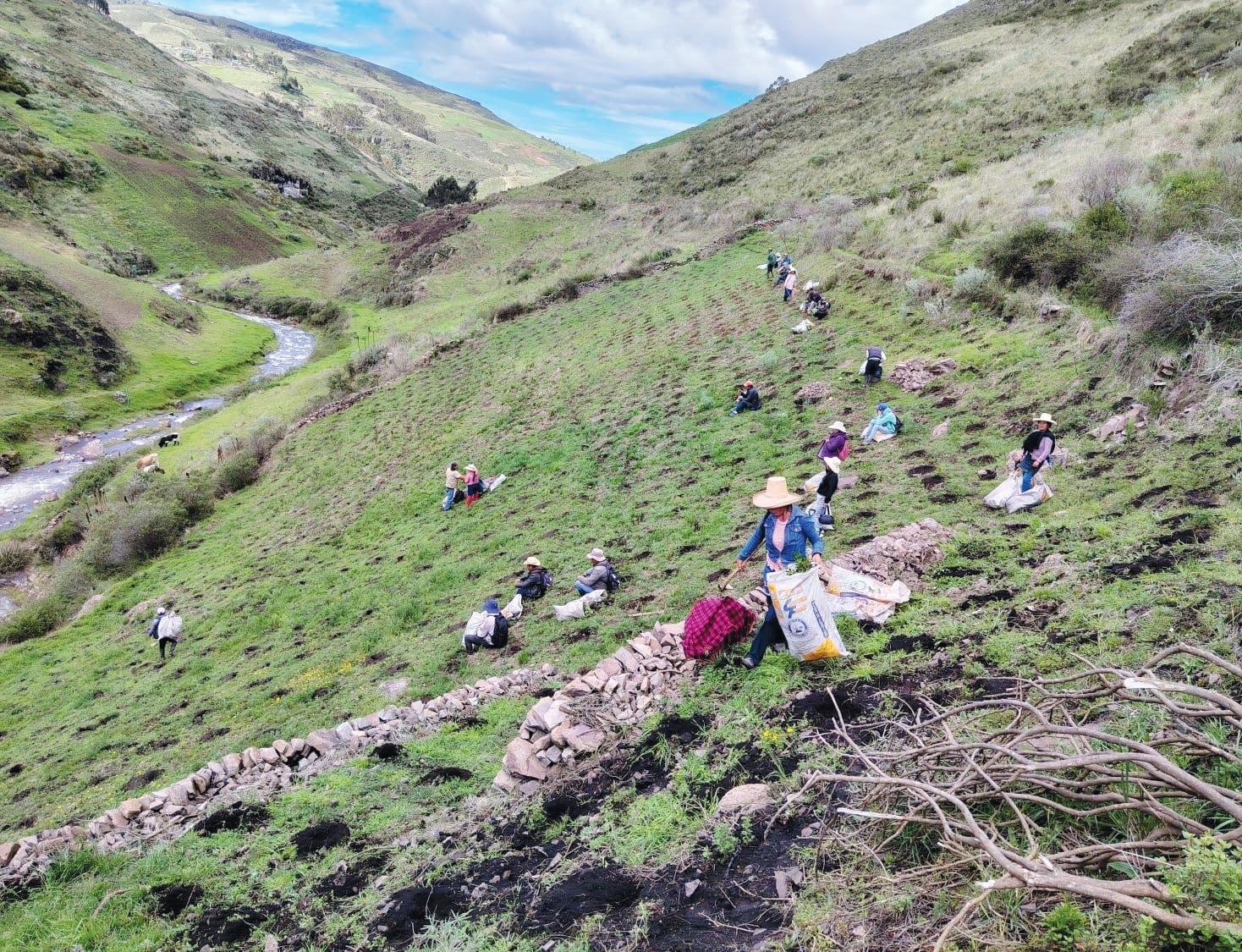
The Arbor Day Foundation has supported the planting of approximately 29,750 trees through its partnership with Global Forest Generation. Now in its third year, the effort focuses on restoring forests in two key areas: Aquia and the Santuario Nacional de Calipuy.
COMMUNITY-LED RESTORATION
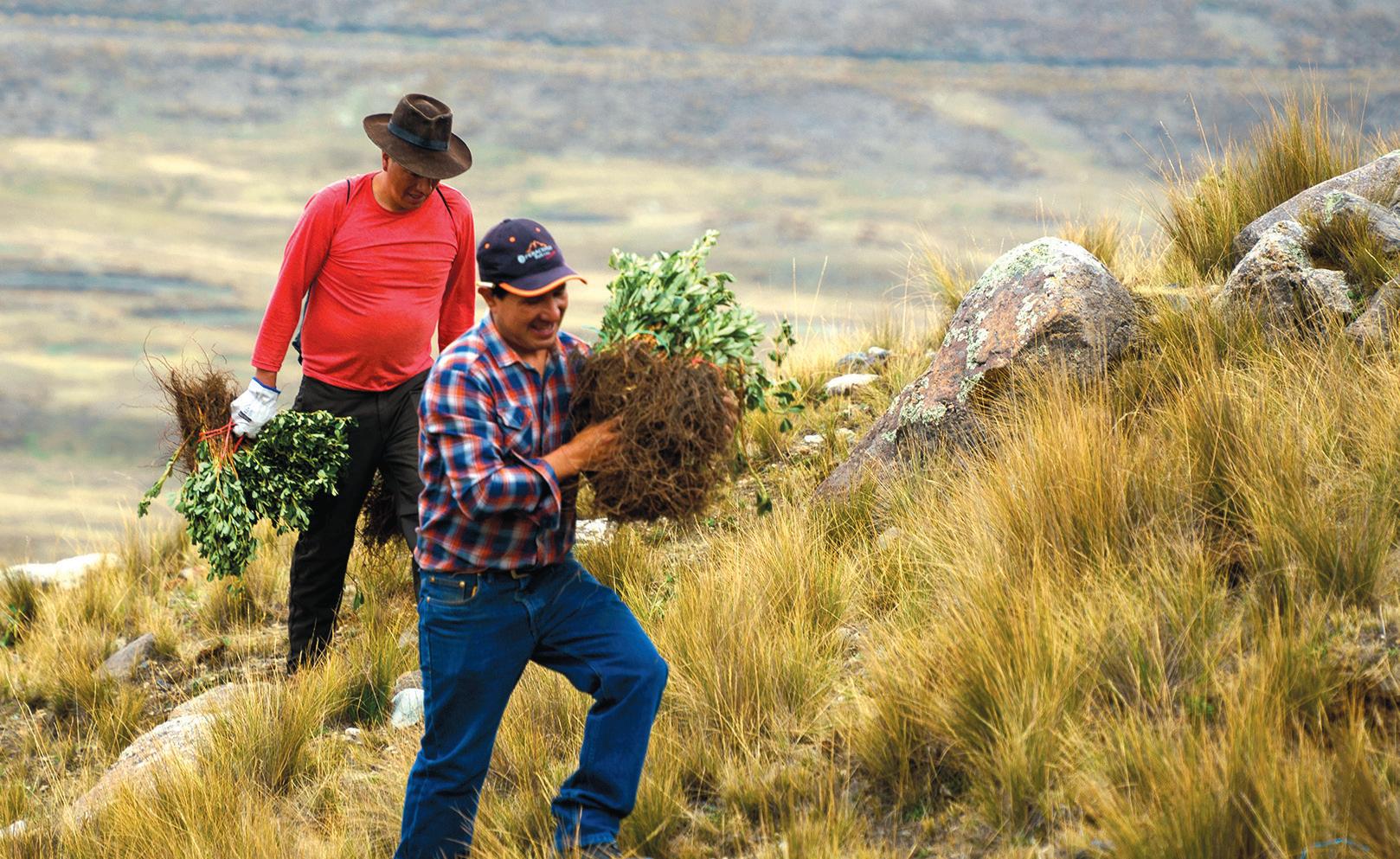
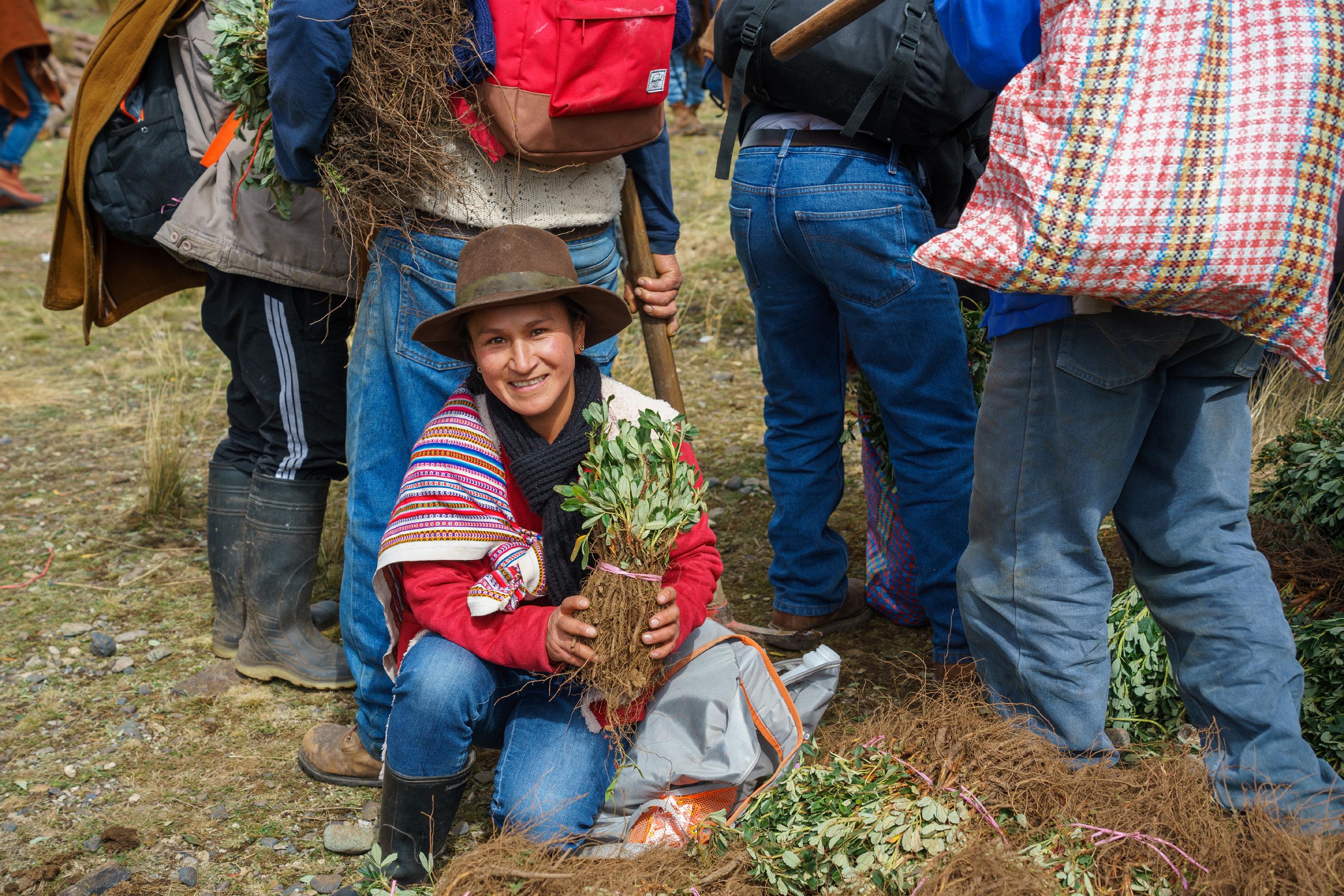
This work is rooted in partnership with local Indigenous communities. In Aquia, restoration efforts helped establish a legally-recognized protected area while replanting native Polylepis trees. In Calipuy, community members are restoring degraded forests while protecting the remaining canopy.
The project is guided by the Andean tradition of Ayni and Minka, where neighbors work together for the collective good. Through restoration workshops and training, local residents are becoming long-term guardians of these forests.
WATER TOWERS FOR PEOPLE AND WILDLIFE
Healthy Polylepis forests act like natural “water towers,” helping secure reliable water sources for communities living in the high Andes. With a healthy forest ecosystem comes greater long-term water security, especially for vulnerable populations that depend on these headwaters.
These forests are also vital habitats. More than 50 species of hummingbirds depend on Polylepis forests, including rare birds found nowhere else on Earth — like the black metaltail, black-breasted hillstar, and the bronze-tailed comet.
This work has grown from a localized planting effort into a resilient ecological stronghold in the Santuario Nacional de Calipuy, protecting water, wildlife, and communities for generations to come.
RESTORING THE CHESAPEAKE BAY, ONE STREAM AT A TIME
WHEN WATERWAYS STRUGGLE
Across Pennsylvania, thousands of miles of streams are considered impaired due to erosion, sediment runoff, and nutrient pollution. For farmers and landowners, that can mean lost soil, unstable streambanks, and reduced productivity. For communities downstream, it means declining water quality.
For more than a decade, the Arbor Day Foundation has partnered with the Chesapeake Bay Foundation to help restore these waterways by working directly with farmers and landowners. Together, they’ve invested more than $1 million to improve stream health across the state.
TREES ALONG THE WATER’S EDGE
One of the most effective tools is also one of the simplest: planting trees.
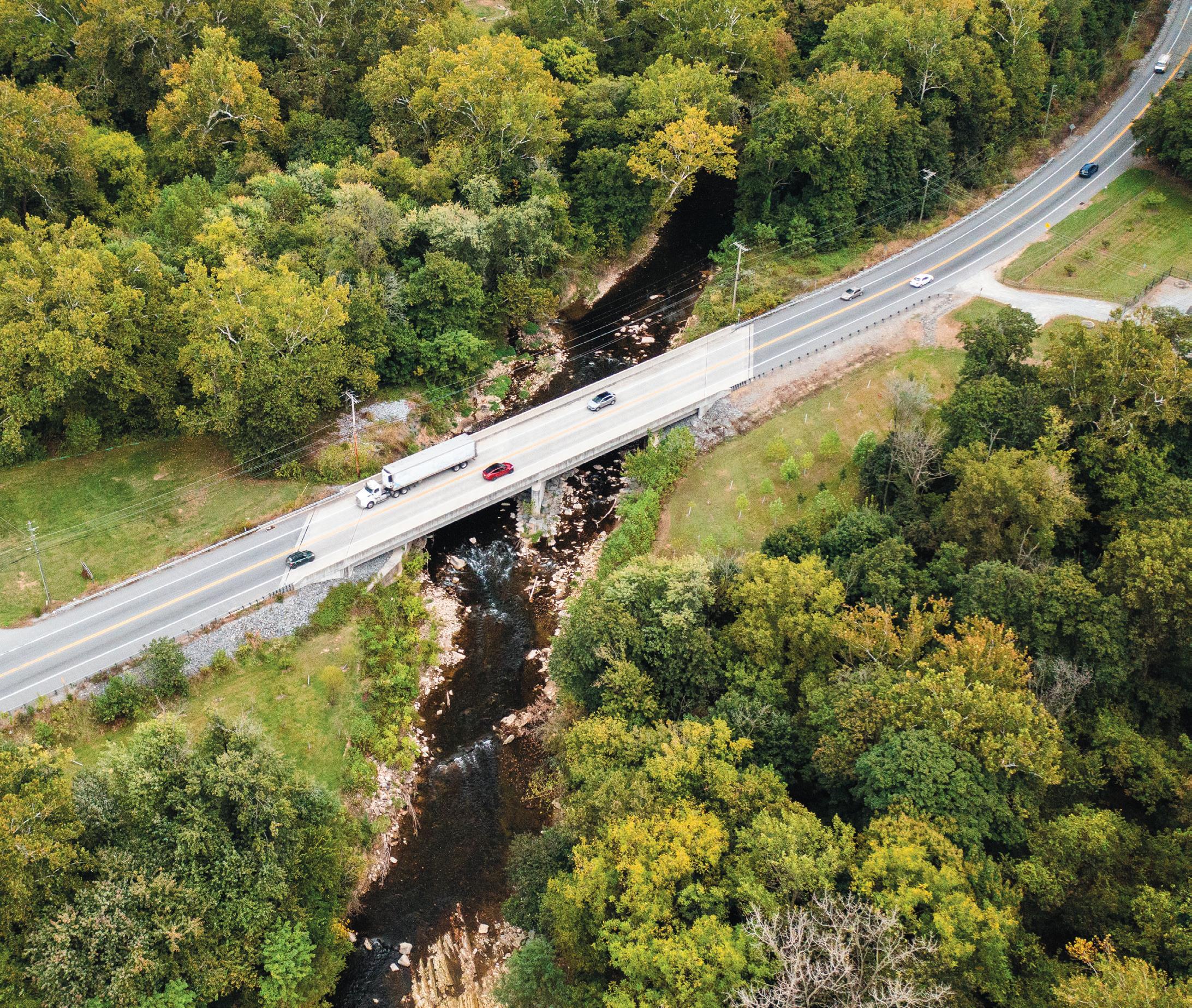
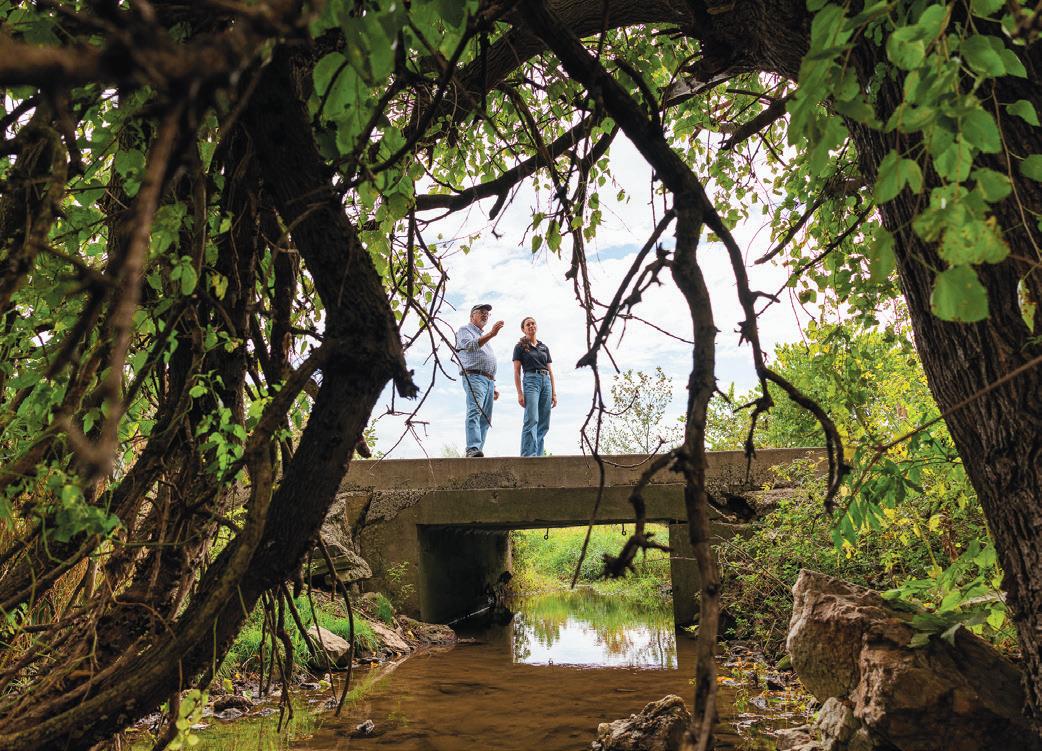
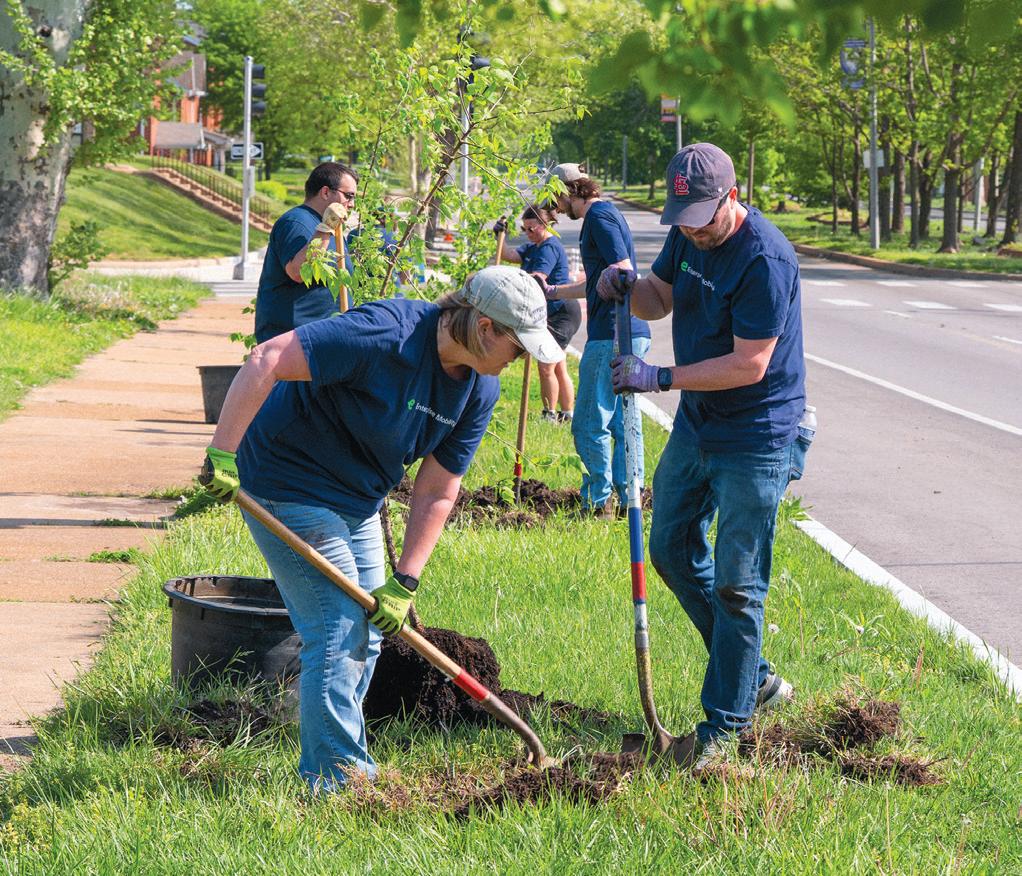
Through this partnership, landowners establish riparian buffers, or rows of native trees and vegetation planted along streambanks. These buffers, often 30 to 50 feet wide, act as natural filters, stabilizing soil and keeping excess nutrients and runoff out of nearby waterways. In areas where buffers were planted years ago, the difference is clear: cleaner water, more stable streambanks, and healthier land.
When trees take root along Pennsylvania’s streams, they do more than stabilize soil — they help protect one of the most important ecosystems in the country.
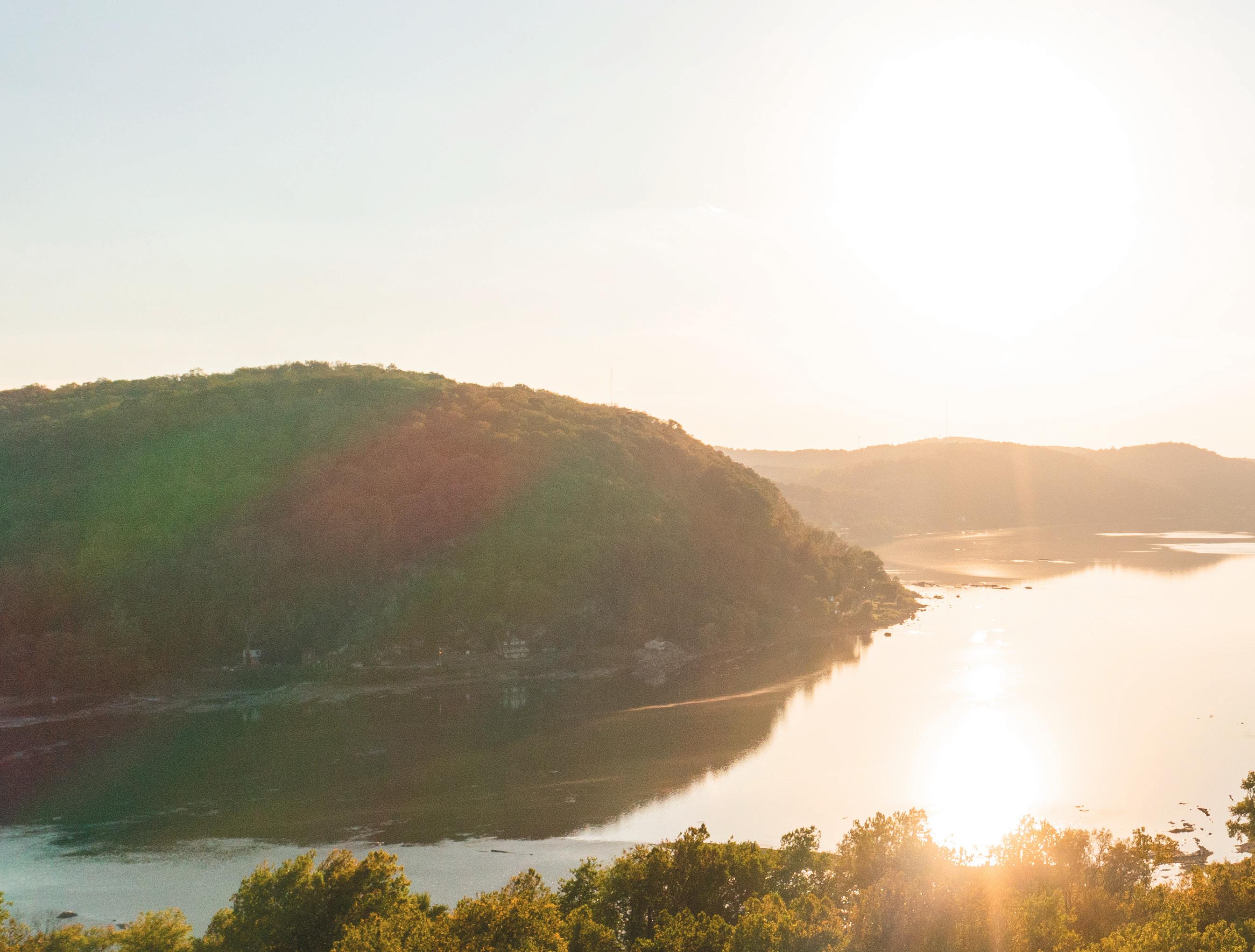
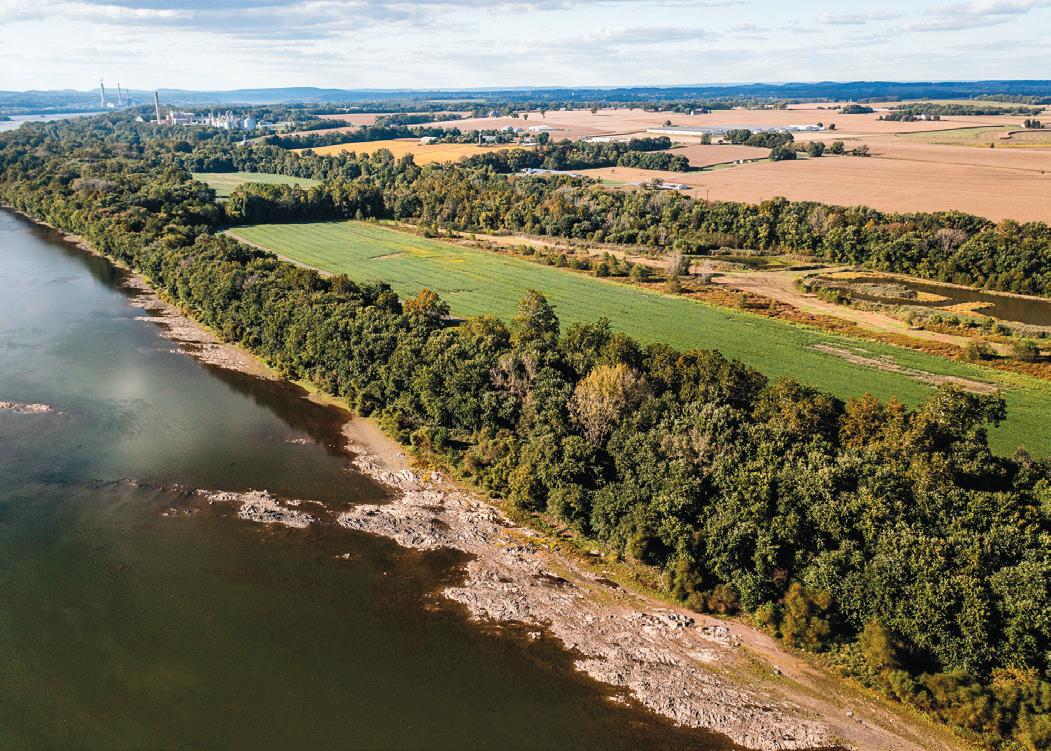
More than half of the freshwater flowing into the Chesapeake Bay begins in Pennsylvania. Every stream and tributary carries water downstream, along with sediment, nutrients, and pollutants picked up along
A RIPPLE EFFECT DOWNSTREAM
Healthier streams in Pennsylvania support the entire Chesapeake Bay watershed. Cleaner water strengthens wildlife habitats, supports fisheries, and sustains coastal economies. It also contributes to one of the most closely studied restoration efforts in the world — work that is helping guide conservation strategies in other regions.
Each restored stream becomes part of something bigger: a model for how local action can drive large-scale environmental change.
the way. What happens upstream doesn’t stay there; it shapes water quality, wildlife habitat, and livelihoods hundreds of miles away.
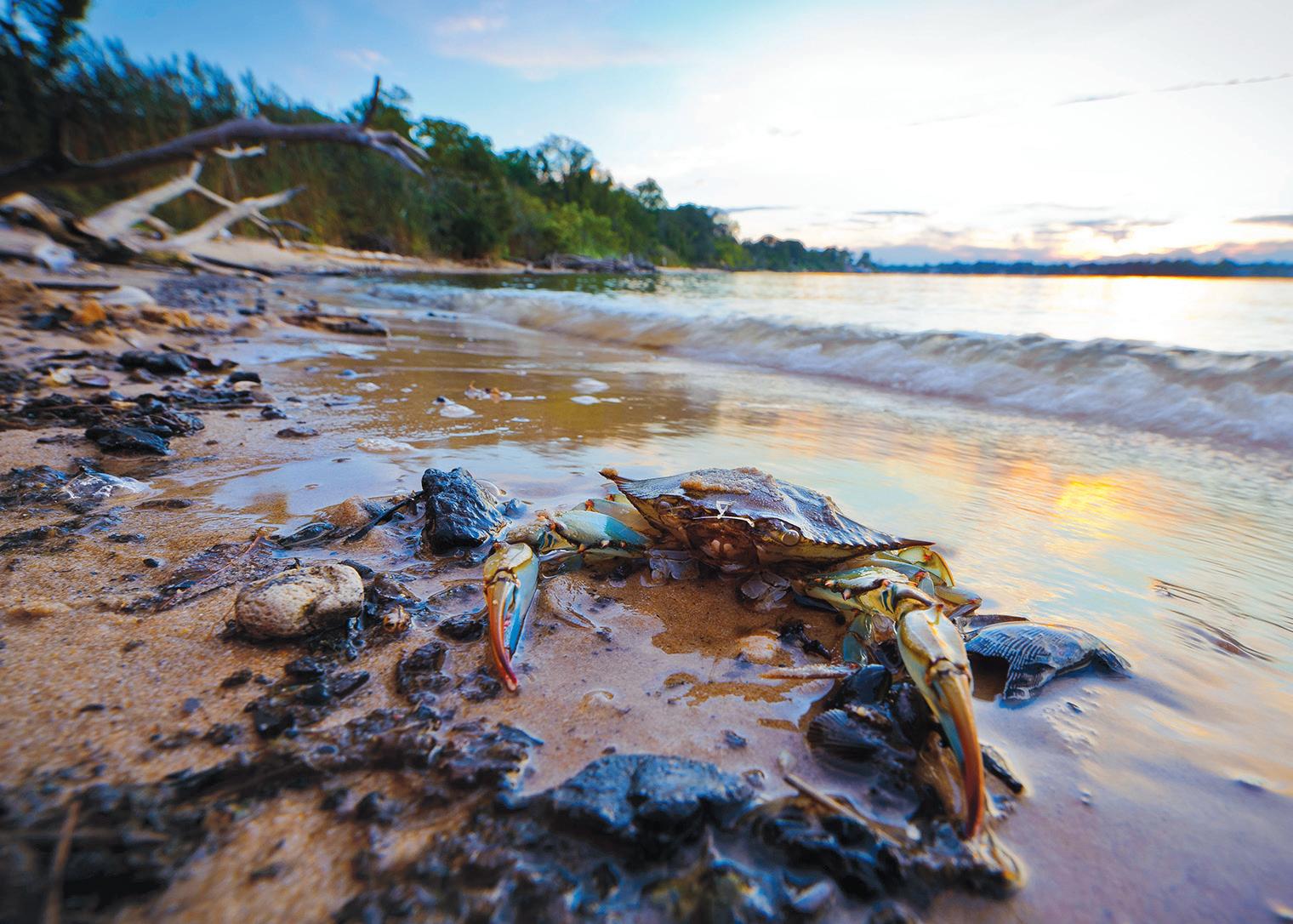
The Chesapeake Bay is the largest estuary in the United States, supporting more than 3,600 species of plants and animals, and sustaining critical fisheries known for blue crabs, oysters, and more. Its health depends on the condition of the waterways that feed it.
GROWING A LARGER MOVEMENT
This work is only possible through partnership, bringing together conservation organizations, landowners, and communities around a shared goal.
While trees alone aren’t a singular solution, they are part of many effective strategies. And when they’re planted along streams, their impact extends far beyond the water’s edge — improving ecosystems, protecting livelihoods, and safeguarding clean water for generations to come.
Read the full story and explore how this work is growing across the Chesapeake Bay watershed at arborday.org/downstream.
COMMUNITY RECOVERY IS IN OUR ROOTS
When disaster strikes, trees are often among the losses communities feel most deeply.
Whether the damage comes from wildfires, hurricanes, or tornadoes, restoring those trees has become more than a response for the Arbor Day Foundation. It’s part of who we are.
Some of the earliest lessons came from the forests surrounding Yellowstone, where replanting after historic fires revealed how trees help landscapes recover. Years later, after Hurricane Katrina, that work expanded into neighborhoods, where newly planted trees became symbols of hope for families rebuilding their lives.
Over time, those experiences shaped a thoughtful approach to recovery — listening first, working alongside communities, and planting the right trees in the right places at the right time.
Today, recovery means more than planting new trees. Sometimes it means nurturing the ones that survived, restoring soil, or supporting locally driven solutions that help landscapes and communities recover together.
WORK IN ACTION: ST. LOUIS, MISSOURI
In May 2025, a powerful tornado tore through St. Louis, destroying or severely damaging thousands of mature trees across parks, streets, and neighborhoods. North St. Louis City — already impacted by decades of disinvestment — was among the hardest hit.
Sherman Park sat directly in the storm’s path. Many of its large canopy trees were uprooted or snapped, leaving entire sections of the park without shade.
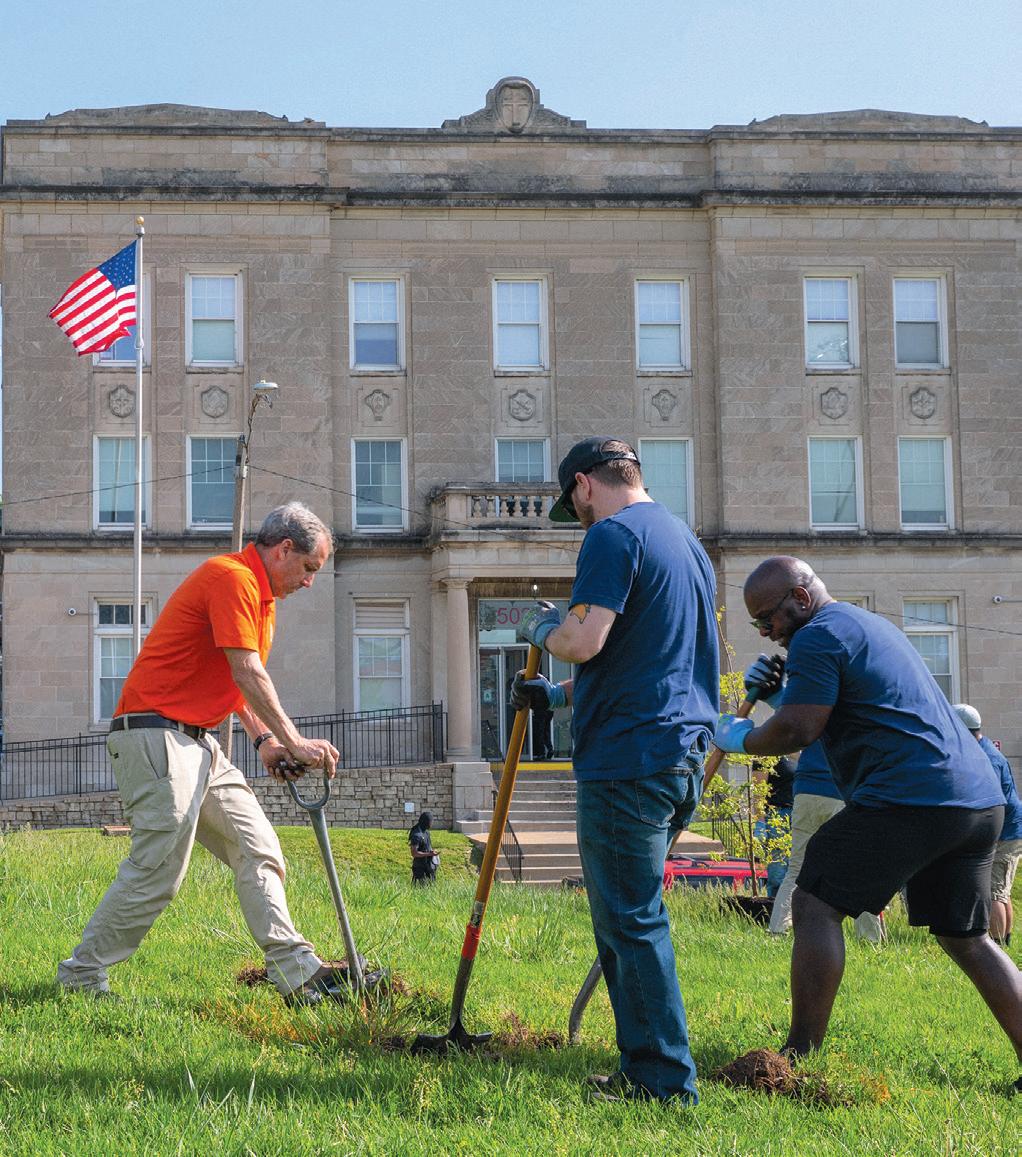
With support from the Arbor Day Foundation, 36 new trees were planted in Sherman Park in fall 2025, followed by 60 additional trees in spring 2026, helping begin the park’s recovery and restore its growing canopy.
In partnership with local organizations, 300 trees were also distributed to residents, helping strengthen tree cover across surrounding neighborhoods and supporting long-term recovery in the community.
To learn more about the Arbor Day Foundation’s approach to this work, visit arborday.org/replanting-hope.
HELP TREES RECOVER AFTER A STORM
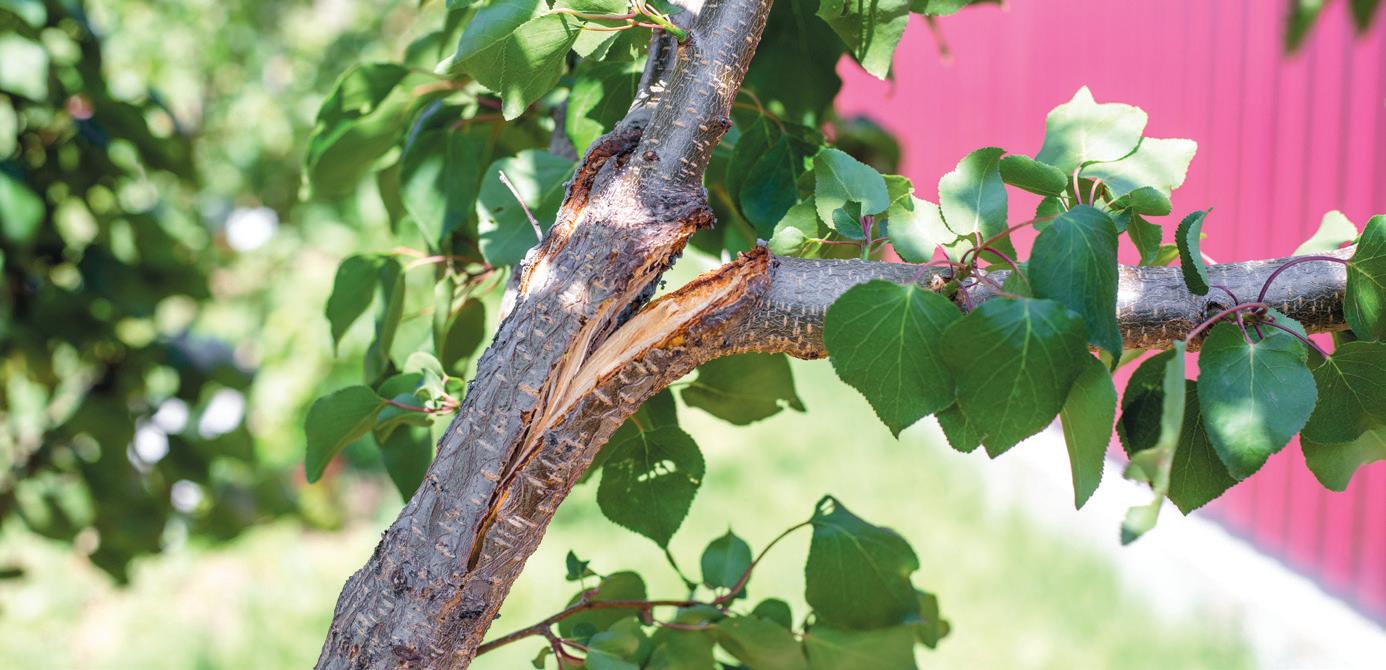
Storms can leave trees looking rough, but not every damaged tree needs to come down. The first step is a careful assessment.
For trees near homes or structures, it’s best to work with an ISA Certified Arborist®. Storm-damaged trees can behave unpredictably, and every year, people are injured attempting dangerous cleanup.
Homeowners can often manage smaller trees and shrubs safely. Many shrubs — like dogwoods, willows, and lilacs — can even be cut back to the ground and will resprout vigorously.
For small trees, start by pruning broken branches using the three-cut method. Then give the tree time. Leaves are the tree’s food factories, so preserving as many as possible helps it recover. After a season or two, you can reassess and prune to improve shape.
Some trees will need removal for safety reasons. A trained arborist can help determine when a tree has become too unstable to keep.
Storm recovery also means restoring the soil. Improve drainage in waterlogged areas, remove excess soil piled against trunks, and replace washed-away mulch with fresh organic material to help roots recover.
With patience and the right care, many trees can bounce back stronger.
Learn more about tree care and maintenance at arborday.org/help-trees-recover.
THE FUTURE IS COUNTING ON YOU
We all have a role to play in shaping a greener tomorrow. One with thriving neighborhood tree canopy, vibrant forest ecosystems, and a healthier planet for future generations. This is a future that’s going to take all of us doing everything we can.
Here’s your moment to make an impact that will last well beyond your lifetime. With help from the Arbor Day Foundation, you can leave a legacy through trees.
To learn more about gift planning, go to arborday.org/planning or scan the QR code.
We are here to help: Lisa Kelly, Development Director lkelly@arborday.org
You may also fill out and mail the form below.
I WOULD LIKE MORE INFORMATION ON:
l Including the Arbor Day Foundation in my will
l Charitable gift annuities
l Tax-free IRA distributions
l Gifting stock
l Other gifting options
Name Address
City/State/Zip
Phone Number
Best time to call
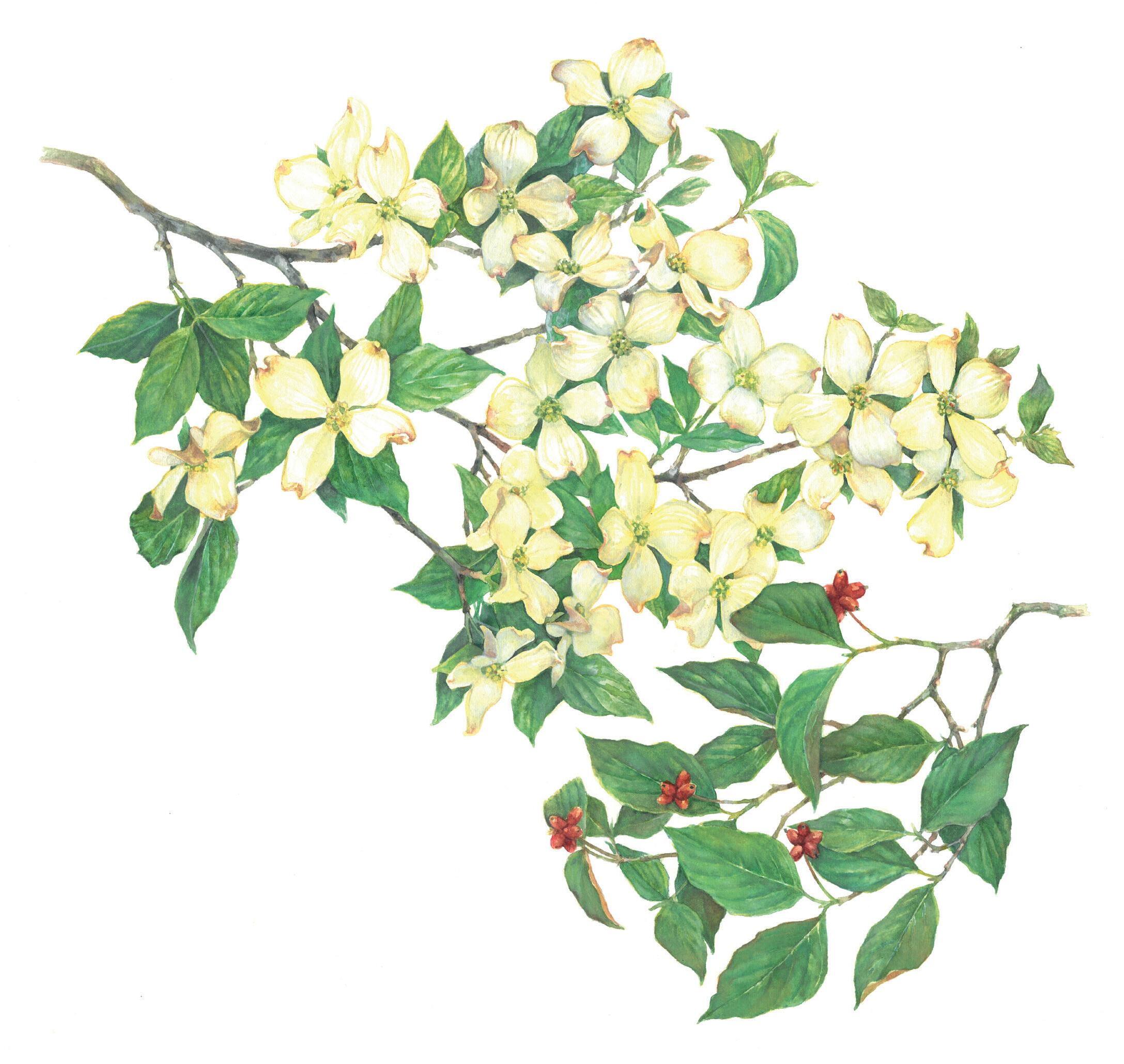
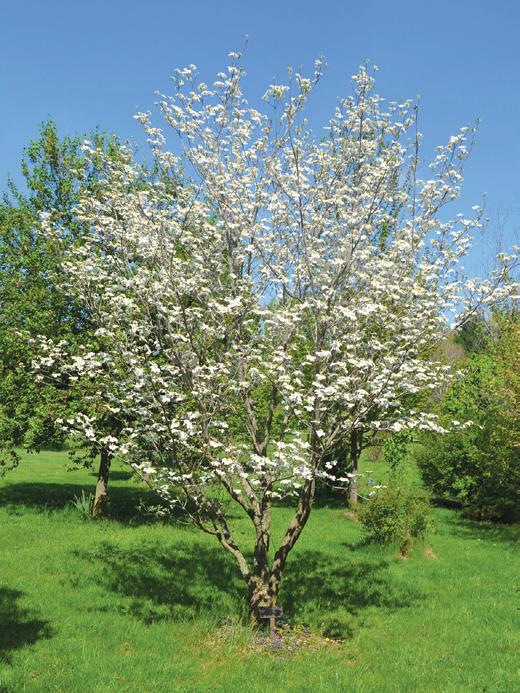
WHITE DOGWOOD
Cornus florida
Few trees match the quiet elegance of the white dogwood. With its airy branches and soft white blooms in early spring, this native favorite adds beauty and structure to landscapes large and small.
White dogwoods typically grow 15–30 feet tall, making them a natural fit for smaller yards, gardens, and woodland edges. Their layered branches create a soft, elegant shape, while fall brings rich red foliage and bright berries that attract birds and other wildlife. Beyond its seasonal beauty, the white dogwood supports pollinators and adds year-round interest to the landscape.
Best grown in partial shade with well-drained, slightly acidic soil. White dogwoods thrive in zones 5–9. With the right care, this native tree offers a timeless display in every season.
Learn more about dogwoods and other species at arborday.org/ white-dogwood or scan the QR code.