ARBOR DAY FOUNDATION OAK SOCIETY
SEPTEMBER/OCTOBER 2026
STRANGE AND SPOOKY WILDLIFE THAT NEED TREES When people think about protecting wildlife, the spotlight often falls on the cutest animals like fluffy mammals or colorful birds. But forests are home to creatures of every shape and reputation, including some that might make your skin crawl. In fact, forests are the epicenter of life on land. Roughly 80% of terrestrial species rely on trees for shelter, food, or habitat. From the forest floor to the canopy, trees create the conditions that allow entire ecosystems — creepy critters included — to survive.
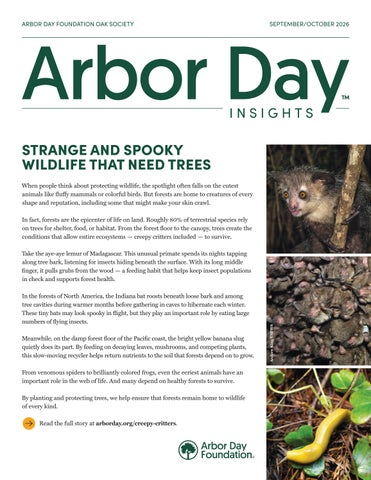
In the forests of North America, the Indiana bat roosts beneath loose bark and among tree cavities during warmer months before gathering in caves to hibernate each winter. These tiny bats may look spooky in flight, but they play an important role by eating large numbers of flying insects. Meanwhile, on the damp forest floor of the Pacific coast, the bright yellow banana slug quietly does its part. By feeding on decaying leaves, mushrooms, and competing plants, this slow-moving recycler helps return nutrients to the soil that forests depend on to grow. From venomous spiders to brilliantly colored frogs, even the eeriest animals have an important role in the web of life. And many depend on healthy forests to survive. By planting and protecting trees, we help ensure that forests remain home to wildlife of every kind. Read the full story at arborday.org/creepy-critters.
Andrew King/USFWS
Take the aye-aye lemur of Madagascar. This unusual primate spends its nights tapping along tree bark, listening for insects hiding beneath the surface. With its long middle finger, it pulls grubs from the wood — a feeding habit that helps keep insect populations in check and supports forest health.