Dear Friends and Fellow Members of the Arkansas Asphalt Pavement Association,
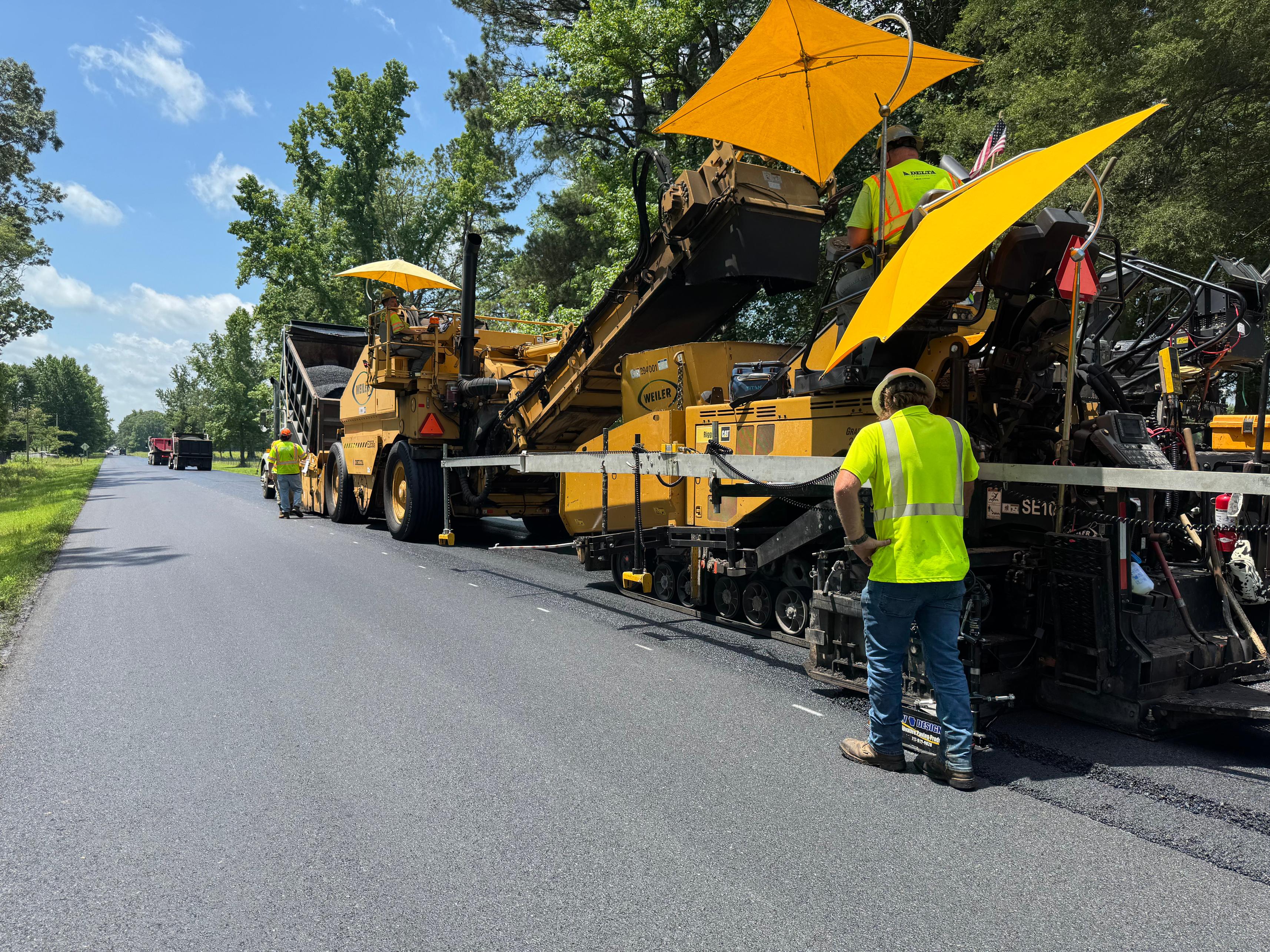
As your Chairman, I want to thank every contractor, every crew, and every supplier who keeps our roads safe, smooth, and moving. This year we’ve laid down miles of pavement, weathered storms, and still delivered on time. That’s not luck — that’s us.
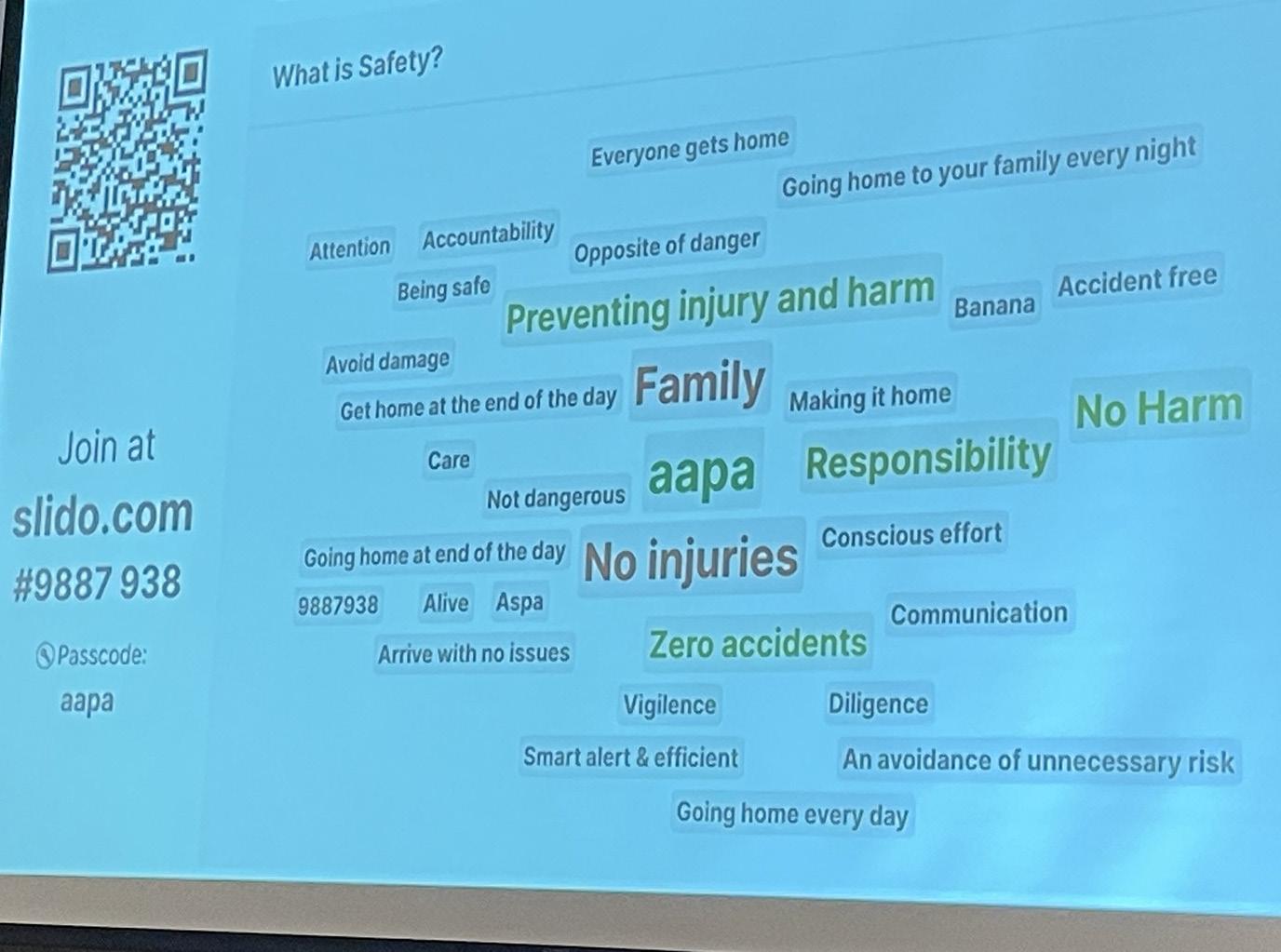
And let’s not forget the real measure of success: zero lost-time incidents on our projects. Our crews — and yours — put safety first every day. Hard hats, vests, training, and that quiet habit of looking twice before you step. It’s not flashy, but it’s why we go home to our families.
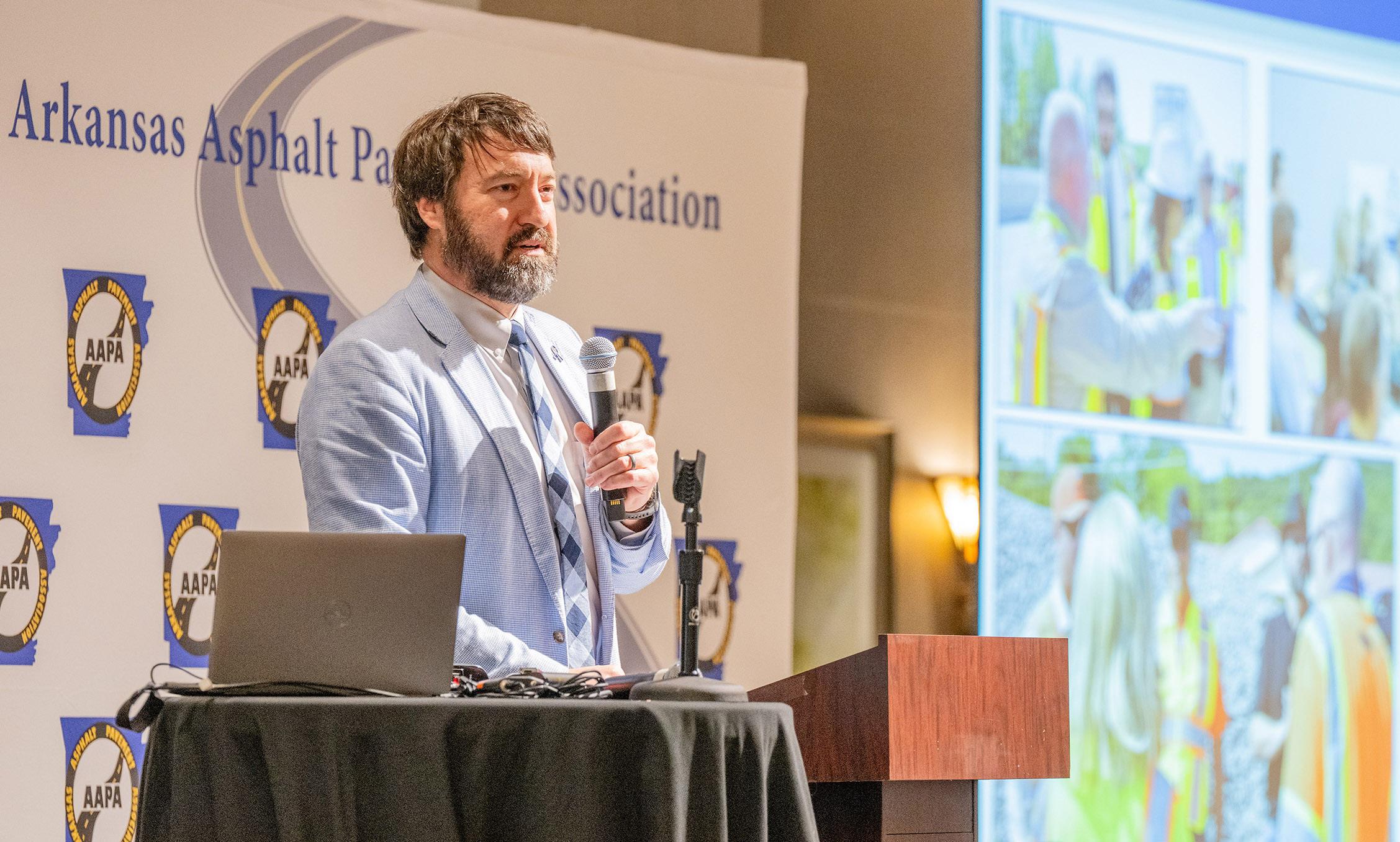
We also had some of the best minds in the business right here in Little Rock at the Quality Conference in January. Speakers included Jared Wiley, ARDOT Director; Dr. Sarah Hernandez on Truck Driver Safety; Buzz Powell on
“And let’s not forget the real measure of success: zero lost-time incidents on our projects. Our crews — and yours — put safety first every day. Hard hats, vests, training, and that quiet habit of looking twice before you step. It’s not flashy, but it’s why we go home to our families.”
High Mod Asphalt; and a special thanks to Dr. Andrew Braham of U of A for serving as emcee.
As we celebrate our successes, please also say a special prayer for the Park Estes family in their recent loss of his mother. Our association is more than an industry — it’s a community, and we lift up our own in times of need.
We are grateful for all of you. Let’s keep building together.
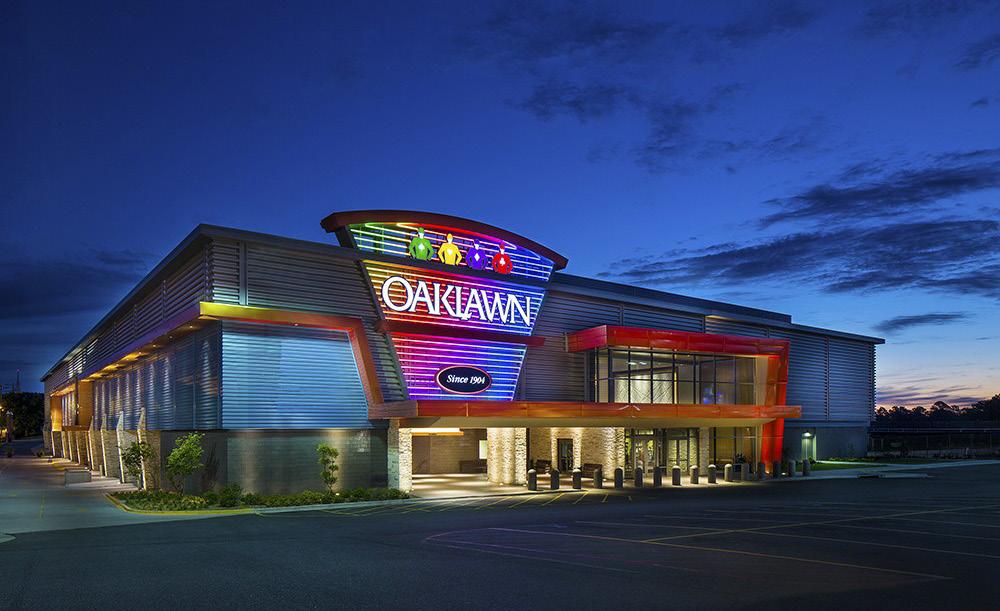
We look forward to seeing you at the Annual Convention on April 28–30 at Oaklawn in Hot Springs. Registration information coming soon.
Warmest regards, Bobby Kennedy AAPA Chairman President, CK Asphalt
Bobby Kennedy
1st Quarter 2026 Contents
Cindy Williams Time Striping
Lane Loper Asphalt & Fuel Supply
Brandon Finn Past Chairman Emery Sapp & Sons
D.B. Hill, III AGC Representative
Max Mathis Sec/Treas & NAPA Rep Blackstone Construction
Murry Cline APAC-Central, Inc.
Vince Tate Martin Marietta
Brad Marotti Delta Asphalt of Arkansas
Denis Guillette Vice Chairman Redstone Construction Group
Nick Haynes SN Contractors
Bobby Kennedy Chairman CK Asphalt
Mason Cline Emerging Leaders Chair APAC-Central, Inc.
Guy Washburn Cranford Construction
AAPA Hosts
2026 Quality Conference
by Deborah Horn
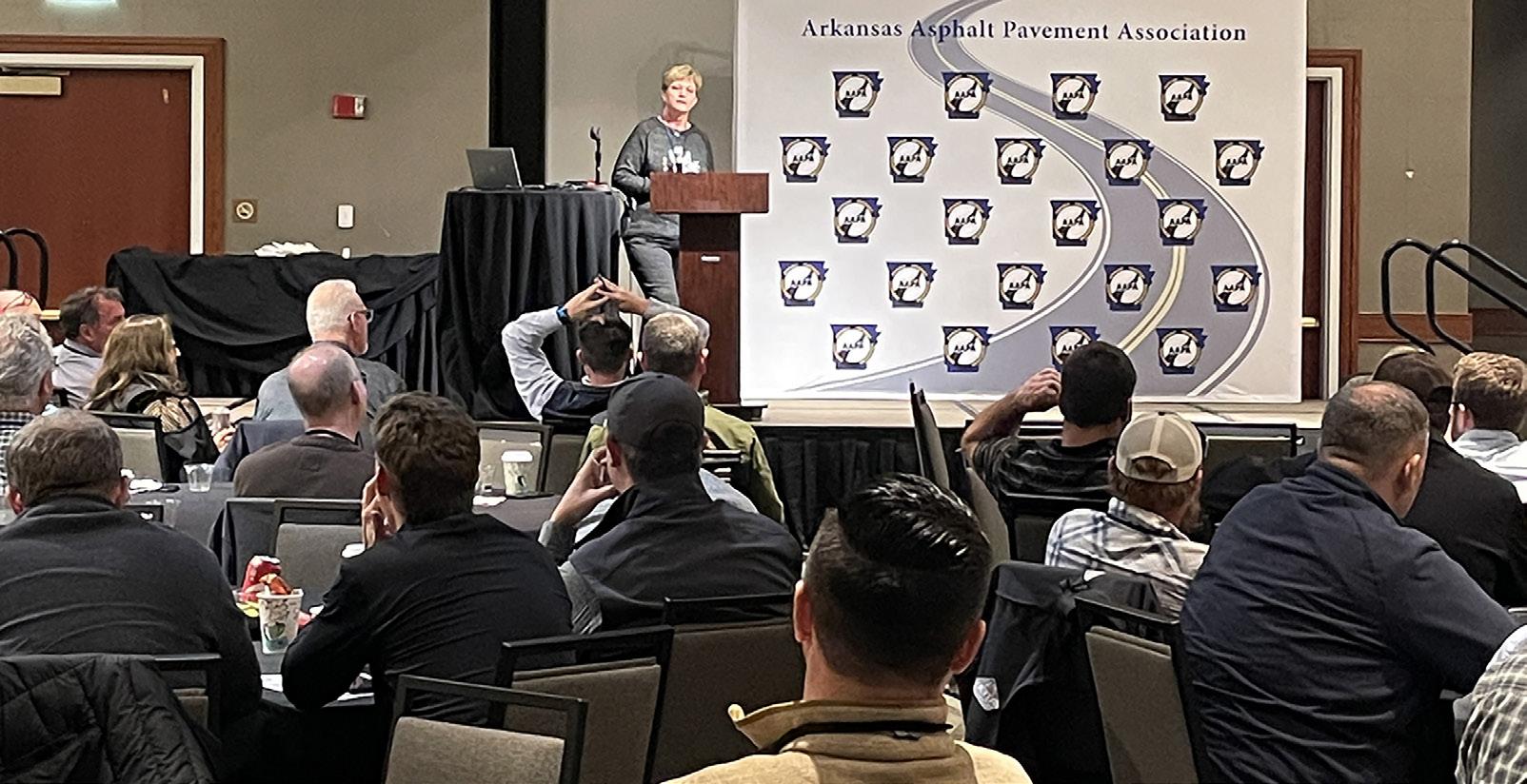
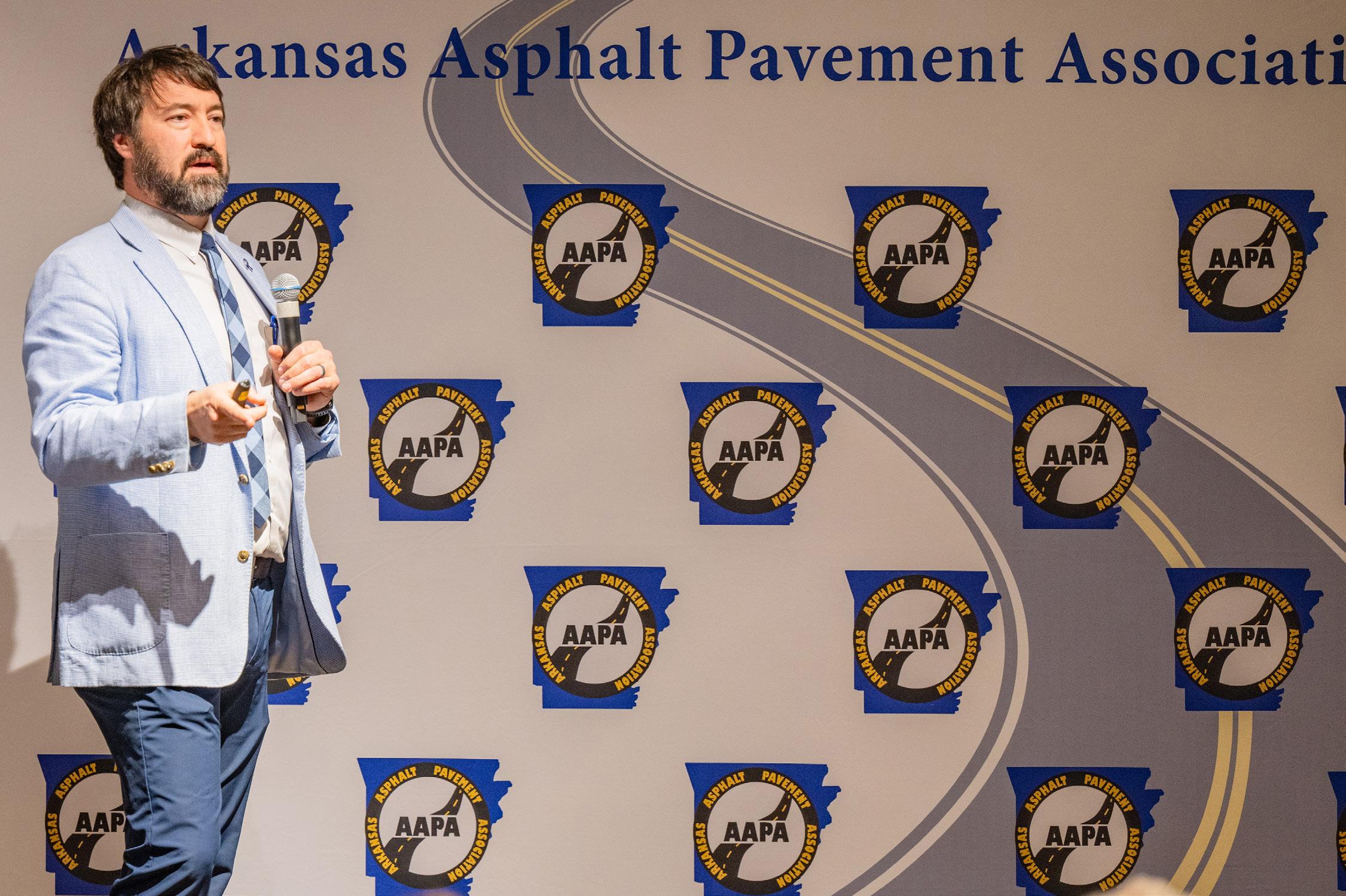
From the latest technologies and plant efficiency to test track research and a Spec Book rewrite, the Arkansas Asphalt Pavement Association (AAPA) covered a wide variety of topics at its 2026 Quality Asphalt Paving Conference on January 8-9.
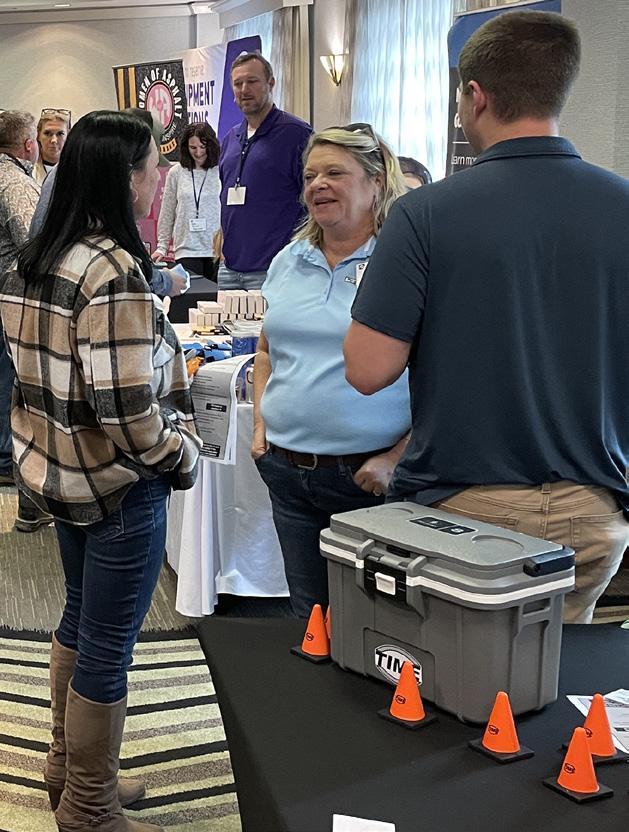
This year, more than 325 attended AAPA’s Quality Conference, which offered 11 educational or informational sessions and 11 onsite vendors.
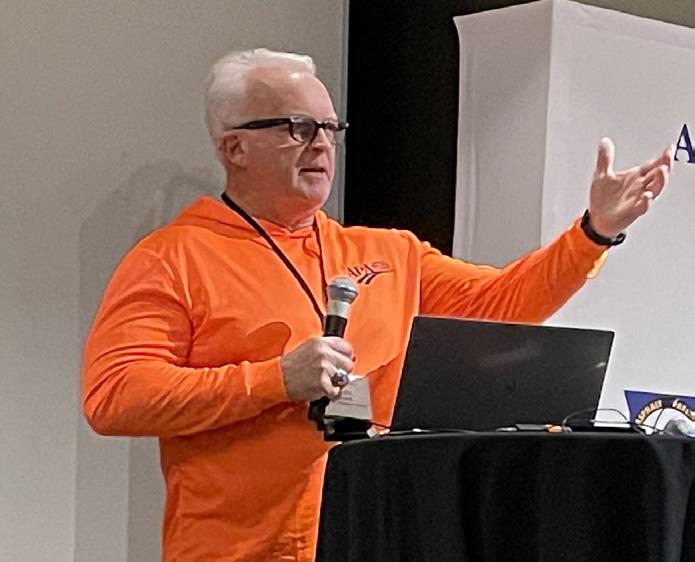
Bobby Kennedy, AAPA Chairman, opened by saying, “It’s wonderful to see you all. We appreciate you all coming out.”
The conference gave a nod to the asphalt industry’s new top leadership: Philip Taldo of Springdale was elected Arkansas Highway Commission (AHC) Chair; Jerry L. Halsey of Jonesboro was named to the Commission by Gov. Sarah Sanders; and Jared Wiley was unanimously named Arkansas Department of Transportation (ARDOT) Director by the AHC.
During his opening as the Quality Conference’s guest speaker, Wiley said, “It was a year of change… It was about introducing fresh ideas and building renewed momentum.”
Another leadership change was noted on the Conference’s first morning: a longtime moderator of the Quality Conference, Dr. Kevin Hall, was replaced by Andrew Braham, Ph.D., Professor in the University of Arkansas at Fayetteville Civil Engineering Department.
Braham opened by saying, “So, for those of you who have been attending the Quality Asphalt Conference for multiple years, you are used to seeing Dr. Kevin Hall up here. Dr. Hall has been promoted within the University of Arkansas’s College of Engineering to the position of Associate Dean of Academics.”
Park Estes, AAPA Executive Director and event organizer, was pleased with the participation, saying, “For AAPA organizers and members, the annual AAPA Quality Conference brings ARDOT
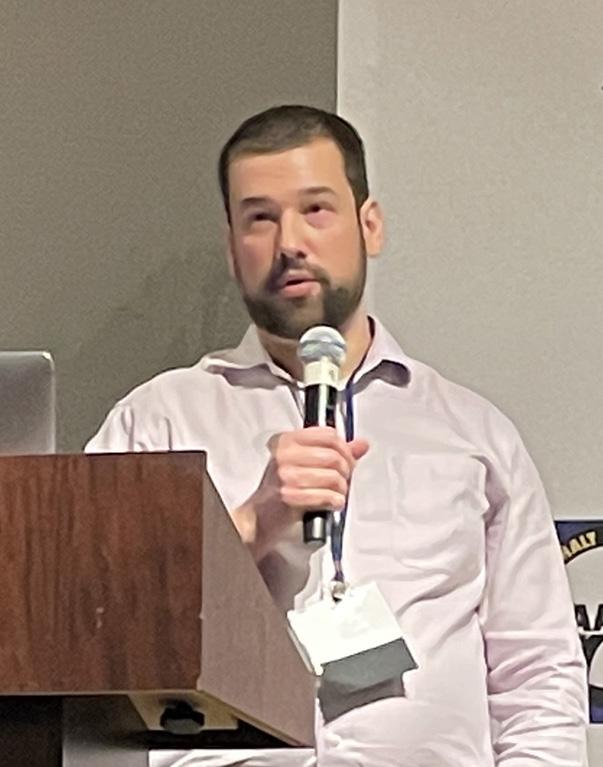
staff together with asphalt industry leaders and professionals who are operating at all levels. It also offers them the opportunity to meet their peers and form relationships and to hear about the latest research and talk with vendors in person.”
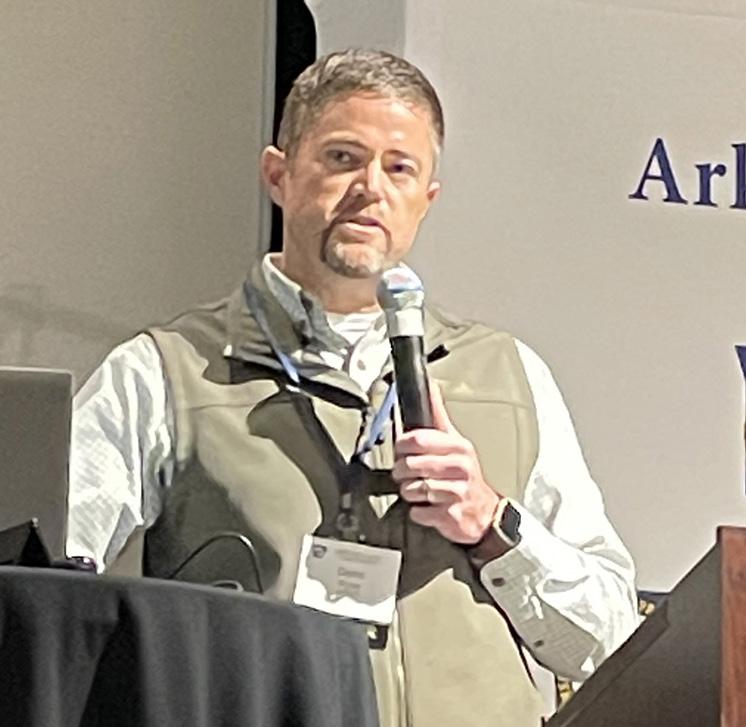
Kennedy added, “Communication is key. Through partnership, shared learning, and effective leadership, the entire asphalt paving industry benefits and operates more effectively, paving the way for a brighter future for all Arkansans.”
Driving Truck Safety
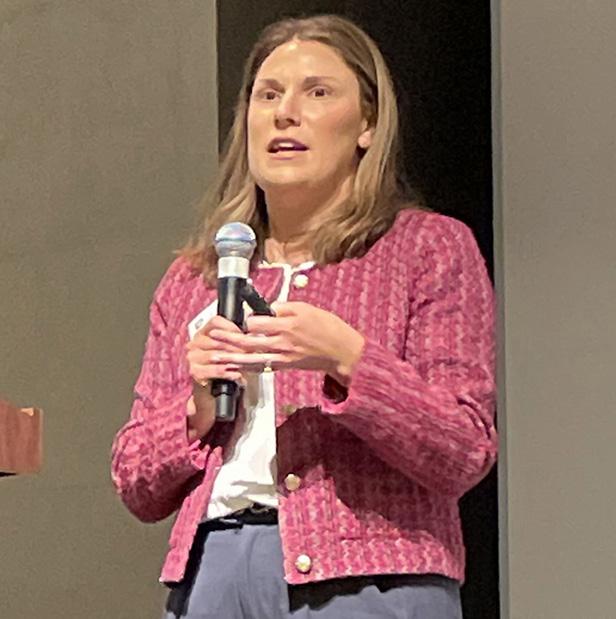
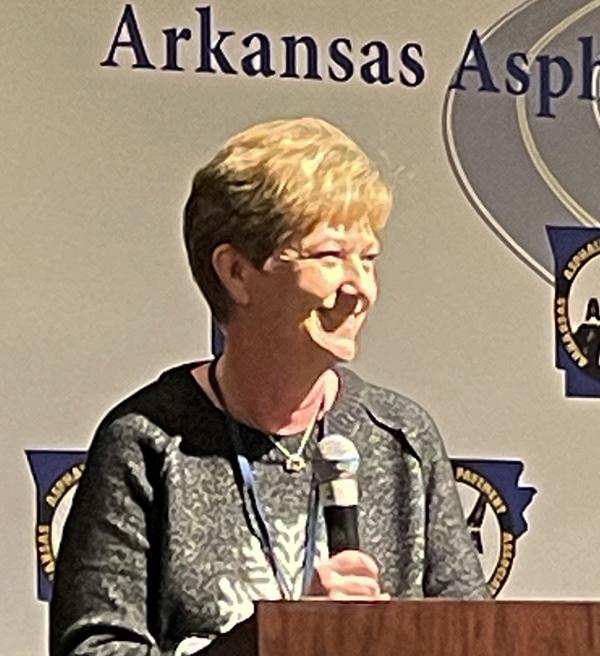
Dr. Braham introduced Dr. Sarah Hernandez as “my distinguished, esteemed colleague…She is in traffic systems, more on the planning side, and she specializes in freight planning.”
Hernandez’s Thursday afternoon session was titled “A Review of Truck Driver Safety Research.” She said, “Today I’ve been invited to talk to you all about truck drivers, safety factors, and monitoring technologies. I’ve approached this as kind of a review, a big picture idea.”
Trucking, she continued, is one of the deadliest professions. While the numbers dropped in the past decade or so, over the last five years, the number of crash-related deaths has risen by nearly 20 percent.
“Although we are making lots of gains, this still remains a big issue for commercial truck drivers. In Arkansas, the fatality rate for drivers is two to three times higher than the national average. We have some of the busiest truck corridors in the country passing through Arkansas. I’m going to talk to you about where these crash risks come from,” Hernandez said.
The biggest causes are speeding, careless driving, distraction, and impairment.
Also, contributing factors in crashes could include individual drivers’ attitudes, expertise, emotional state, risk tolerance, and how these factors may be affected by fatigue and stress.
She said, “These are all things into elevated crash numbers.” Additionally, while most think of commercial truck crashes occurring on the interstate, most are happening in rural areas.
Hernandez works with other groups, including ARDOT, the Arkansas State Police, and the National Science Foundation. For example, her research students have worked with the ASP to examine seatbelt use.
Monitoring drivers’ mental and fatigue states through new technologies is one avenue to help reduce crash numbers, as are other safety features, such as tailgating and lane-assist alerts and webcams, which are included in most new vehicles.
While there are many privacy concerns about the use of video or biometric data, technology can be used alongside tailored training programs, supervisory coaching, and safety-oriented work schedules.
Sarah Hernandez, Ph.D., is an Associate Professor at the University of Arkansas-Fayetteville and the Walter E. Hicks and Blossom Russell Hicks Endowed Chair for Infrastructure Engineering. She earned an M.S. and Ph.D. in Civil Engineering from the University of California at Irvine. She teaches courses in transportation planning, traffic engineering, and data analysis, and her research focuses on transportation systems for long-term planning.
Compacting the New Way
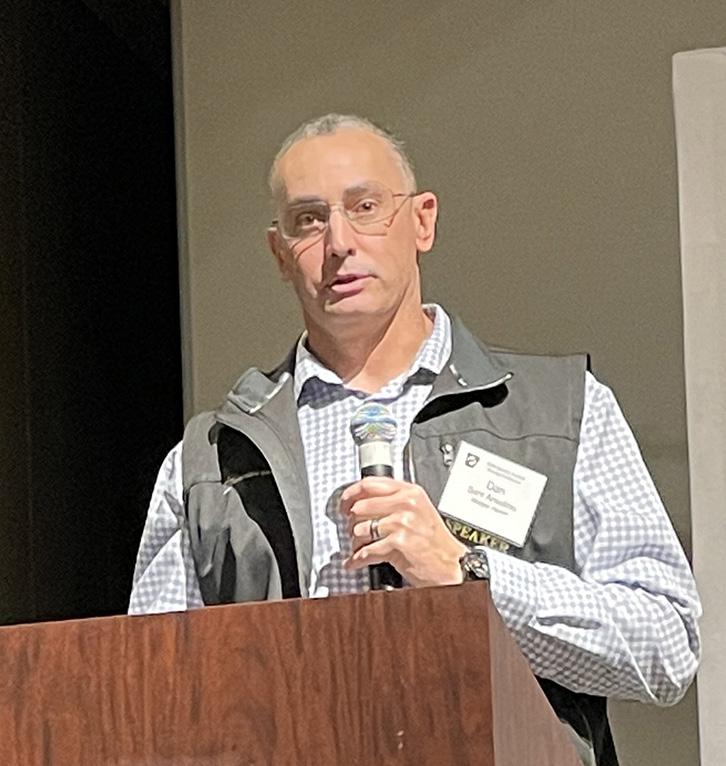
Dan Sant Anselmo of Wirtgen Hamm, parent of John Deere Tractor, when opening his presentation titled “The Future of Automation,” said, “I want to tell you about some of the (compaction) systems that we’re working with.”
Anselmo said, “We have a new version of Smart Impact Basic, and we have Smart Impact Pro.” These systems integrate multiple sensor inputs from the machine, including a screening cellometer to measure asphalt temperature and material thickness, GPS, density mapping, weather
QUALITY
data, whether the operation is on a surface course, a binder course, or a base course, and more.
A free Smart Doc Track Assist app informs the operator of key parameters, such as the number of double passes, temperature limits, and compaction degree.
Highlights of the Smart Compact Pro include simultaneous control of both drums, integration of weather data to account for asphalt cooling behavior, and real-time density readings.
In a trial involving a driver with 35 years of experience, the system outperformed the human driver, Anselmo said.
The Wirtgen Group Performance Tracker (WPT) Compacting Track Assist offers several benefits, including a free app for self-monitoring during compaction, a simple and accurate GPS display, fewer passes required, and utility for inexperienced operators.
Smart Compact actively supports drivers in selecting the right drum and the right type of compaction (vibration, oscillation, or static), and when operating the roller, drivers simply specify whether a base, binder, or asphalt surface course is to be compacted.
The system does this by assessing various physical properties of asphalt, such as temperature and rigidity. It also considers the complex cooling behavior of a specific asphalt.
Additionally, there is an option to incorporate a weather station to provide local weather data. Smart Compact uses this information to select the most appropriate compaction settings for each drum. They also have a Smart Doc system that allows all job information to be viewed. It also offers fuel savings and is easy for the driver to operate.
For more information about these systems, go to: https://www.wirtgen-group.com/en-us/news/hamm/ track-assist-and-wpt-compacting/
Dan Sant Anselmo is an Application Support Manager for the Wirtgen Group’s Hamm Product Line. He joined the company in 2017 as a Field Service Engineer, traveling and working with customers nationwide. He was promoted to Applications Support about five years ago. Sant Anselmo has certifications in Road Construction Technology from Middle Tennessee State University and has taught courses on Compaction Principles at Wirtgen America’s Center for Training and Technology.
NCAT Track Testing
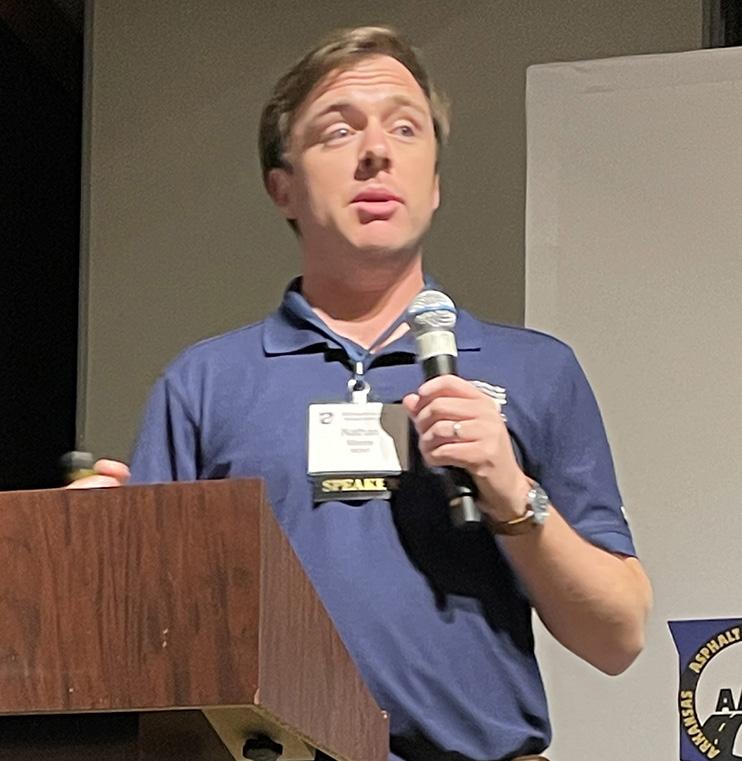
During Nathan Moore’s “NCAT Pavement Test Track Research Update,” he invited all interested in touring Auburn University’s National Center for Asphalt Technology (NCAT) to stop by. “It’s an open invitation to anybody who happens to be through the area, you all just let me know.”
NCAT’s 1.7-mile
Pavement Test Track is located on a 309-acre site about 15 miles east of AU’s main campus. It consists of 46 sections, each 200 feet long. It was originally constructed in 2000 under Dr. Buzz Powell, designed and built to predict the performance of roadway surfaces and increase cost savings, safety, and comfort on the highway.
This real-world laboratory allows for cutting-edge experimentation while avoiding the risk of failure on actual roadways.
Since its construction, Moore said, “We’ve had over 35 unique sponsoring agencies, whether they’re from state DOTs, the Federal Highway Administration, or other government organizations like USDA, as well as private companies or material suppliers who want to try out their products. So, we like to think of the track as a kind of asphalt proving ground.”
ARDOT’s first research project is currently underway, he said. Its long-term test site goal was to design a long-lasting rubberized asphalt that could be added to a thin overlay mix.
There were two options when mixing in recycled, rubblized rubber: a wet or a dry process. The dry process mix combines the rubber aggregate with the binder before it is added. The rubber fills the air voids and partially melts. The dry mix is more likely to be used in Arkansas, Moore said.
Rubber adds flexibility to a mix, and ARDOT is confident it will create crack-resistant blends and extend pavement longevity. It’s also about making roadways safer for commercial and passenger drivers.
So far, it appears rubber could improve the quality of Arkansas’s roads, and Moore said, “It’s an excellent mix.”
The three-year research project began in late October 2024, with a $500,000 price tag. This includes all costs associated with the project, from hauling
materials to the site, constructing the test section, a portion of fleet traffic, data collection and analysis, and a report publication.
Nathan Moore, Assistant Director for the NACT Test Track Research Center at Auburn University, oversees all Test Track research programs, including experimental design; construction planning and logistics; asphalt plant setup and operation; paving; sampling and testing; and contract administration. He has worked as an NCAT lab engineer specializing in Balanced Mix Design and pavement friction. He holds a Master’s Degree in Civil Engineering from Auburn University.
New Division 400 Specs
During “Spec Rewrite Update”, Tisha Reynolds updated AAPA members and guests on the new Division 400 Model of the ARDOT’s “The Standard Specifications for Highway Construction” rewrite that is nearly completed.
ARDOT hopes to have the spec book fully reviewed and ready for print by the end of April, but Reynolds said, “I feel like implementation will be at the end of 2026. (The) Division 400 has been fully restructured to follow the process of work.”
As well, she said, “I anticipate that some time will be required for training and implementation; however, a date for that has not yet been established.”
Reynolds said, “We restructured the entire 400 Division”: Section 401 covers Asphalt Mixture Design, Quality Control, and Acceptance; Section 402 covers Equipment; Section 403 covers Prime, Tack, and Emulsified Asphalt; Section 404 covers Construction of Asphalt Mixtures; Sections 405 and 406 cover Surface Treatments and Specialized Courses; and Section 407 through 409 cover Cold Mix, Milling, and Patching.
Tisha Reynolds is ARDOT’s Materials Specification Coordinator and is leading a statewide effort to modernize construction materials specifications, implement performance-based testing, and advance Balanced Mix Design practices. She works closely with FHWA, industry partners, and ARDOT Districts to improve mix performance, durability, and cost efficiency through data-driven specification development and quality assurance programs.
Slippery Pavement When Wet
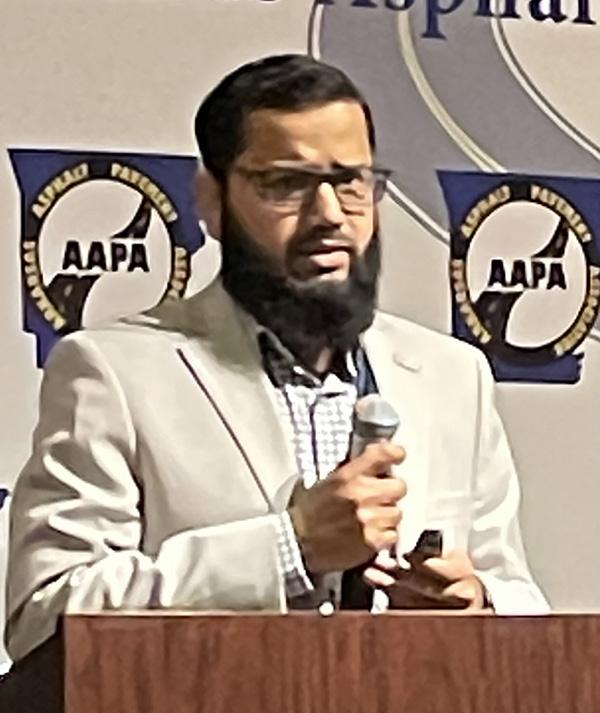
During “Advances in Friction Testing”, ARDOT Engineer Sarfaraz Uddin opened by saying, “Improving the safety on our roads is one of the main targets of our project.”
Pavement friction is the crucial grip between a vehicle’s tires and the road surface, providing the force needed for safe steering, braking, and acceleration, and it’s measured by skid resistance, influenced by surface texture (macro/micro) and conditions (dry/wet).
Maintaining adequate friction, especially on curves and intersections, is vital for preventing hydroplaning, skids, and loss of control, Uddin stressed.
Micro and macro textures refer to the road surface’s aggregate size, shape, and distribution, and greatly reduce or enhance friction. With microtexture being the fine, small-scale roughness of individual aggregate particles in the pavement, and macrotexture being the coarser, visible surface finish, which helps water drain away from under tires. Uddin said, “It greatly influences the friction on the road.”
“Our research is based on field results. So, what is actually our favorite? As I say, it’s all about aggregate,” Uddin said. “When the macrotexture is high, the water can drain quickly from the surface, and there will be a lesser layer of water on the surface.”
Microtexture is initially skid-resistant, especially in wet, low-speed conditions, and is influenced by mineral composition, with hard, angular types like quartzite and sandstone being most effective. While macrotexture is hydroplane-resistant, it’s determined by shape, size, gradation, and mix type. Microtextures improve early pavement life friction and aggregates like limestone polish quickly, while higher macrotextures with dense-graded mixes yield a smoother surface and polish.
Polishing is the gradual wearing down of a road’s rough aggregate by repeated tire friction, making the surface smooth and shiny. This significantly reduces skid resistance and traction, especially when wet, increasing the risk of hydroplaning and creating slippery surfaces in high-traffic areas and on curves.
Sarfaraz Uddin is ARDOT’s Lead Project Engineer with more than 13 years of experience in managing major construction projects, from design to execution, delivered by international, national and local contractors. His expertise includes infrastructure design and construction, with a focus on civil and structural engineering, temporary works, MEP systems, and project management, including a specialization in rail projects. Currently, he works as a Supervising Research Engineer in ARDOT’s Research Section.
Don’t Let Profits Go Up in Smoke
Day two of AAPA’s Quality Conference opened with a look at how to “Operate Your Asphalt Plant for Efficiency & Profitability,” presented by Greg Renegar. In his opening, he said, “Efficiency is a word that is used a lot. It’s overused, it’s misused.”
First, is plant maintenance connected to efficiency? He answered by saying, “I think it is. There’s nothing more inefficient than a broken-down asphalt plant. You guys have trucks backed up, crews waiting on you.”
Is the quality of the mix related to efficiency? Again, he answered, “There’s nothing more inefficient than having to go take up and replace a brand-new road.”
Now, think about the efficiency of an asphalt plant—it’s about the burner, dryer, and system efficiency. “While it takes air to produce heat for the burner, it also takes fuel, and do we get 100 percent of the heat out of the fuel? “No,” he said. Some goes into the aggregate, but heat escapes in different places, such as at connections and where aggregate enters the burner.
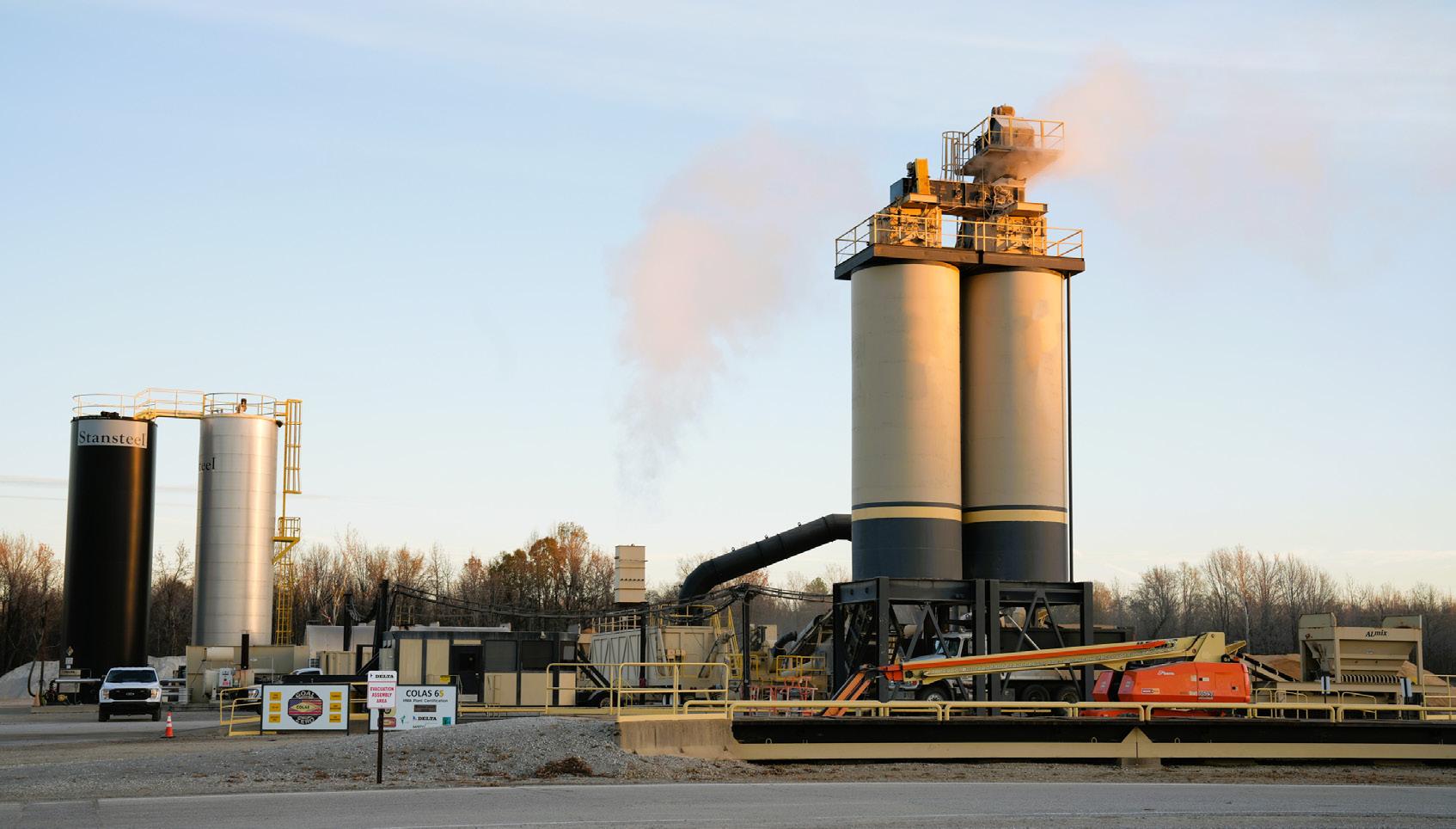
High CO (carbon monoxide) levels escaping your stack can indicate a serious problem, and depending on the number, such as more than 1,000 parts per million, it’s worth getting it checked out by an expert.
“Does the condition of your drum impact your efficiency? It sure does matter.” Again, if it runs poorly or breaks down, that’s inefficiency. A good one has variable drives and speeds to handle different aggregates.
Renegar suggests learning the 60, 10, 4 Rule. This
QUALITY
is a radio number used in asphalt plant operations to remember key operational guidelines or rules of thumb related to temperature adjustments and production changes.
Sixty degrees Fahrenheit on the stack: This refers to a target or maximum temperature for emissions control or plant efficiency, specifically for the exhaust stack. A 10 percent production change: This is a guideline for managing production rates. A 4 percent fuel change: This is a corresponding guideline for adjusting fuel usage in response to other changes, likely to maintain proper mix temperature and consistency.
“Here’s a fun fact. A little over half of the fuel that you burn to dry your aggregate is just to get rid of the water. One percent upward change in moisture content can impact production and your fuel consumption,” he said. Aggregate moisture content significantly impacts asphalt production, and approximately half the fuel used in production is spent removing water.
The industry often uses the “1-11-11 Moisture Rule” to measure efficiency. A 1 percent increase in aggregate moisture content can increase the drying energy/fuel consumption by approximately 11 percent, while a 1 percent moisture reduction can also increase the plant’s production rate by approximately 11.
Renegar suggested adequately covering your aggregate to protect it from rain, snow, and ice.
Greg Renegar joined Astec, Inc. in 1983 and earned a BS in Mechanical Engineering two years later. Since then, he has worked around the world as a field and project engineer and as a speaker. His past positions include Chief Engineer and Vice President of Engineering. In 2019, he became President of Astec, Inc., and is currently the Vice President of Customer Success.
Updates from the Field and Lab
“It’s a long project but an exciting project,” said Dr. Andrew Braham at the start of his sessions, “TRC2201
at this point, we’re comparing lab mix samples to plant mix ones. This includes aggregate, binder, and compaction. The plant mixes were reheated in the lab and compacted. Every sample we make in the lab leads to additional data, and compaction metrics provide us with information on how asphalt mixtures compact, and this “gives us clues to field contraction.”
Conclusions include the Cracking (IDEAL-CT) tolerance index, with bigger numbers being better in these tests, with the “lab mixes “ being more crack resistant. But with stronger mixes, we should get similar results in the field.
Braham said the Asphalt Pavement Analyzer looks at rutting, for example, rut depth, and he added, “We were not disappointed. Our mixes are excellent against rutting.”
The primary goal of TRC2201 was to enhance the durability of asphalt pavements in Arkansas. This would be accomplished through two steps: exploring extreme scenarios with lab mixtures and comparing these to eight field sites. Further analysis was conducted using Pavement ME and a life-cycle cost analysis.
For more information about TRC2201 testing, go to: //ardot.gov/wp-content/uploads/TRC2201_Final_ Report.pdf.
Braham also talked about moving lab compaction techniques into the field. “It has long been universally acknowledged that proper compaction of asphalt mixtures plays a critical, significant role in building a flexible pavement. Improperly compacted asphalt concrete in the field can lead to premature pavement surface deterioration, increasing construction, maintenance, and rehabilitation costs.”
Update: Balanced Mix Design in Arkansas” and “Linking Lab Compaction to the Field.”
He was referring to Balanced Mix Design and said, “Basically,
Compaction issues may be compounded when additives such as RAP, RAS, and various Warm-Mix technologies are included in the mixture. Therefore, understanding how asphalt concrete compacts is vital to the proper design and performance of flexible pavements, he said.
There have been significant advances in characterizing compaction in the laboratory using the Superpave gyratory compactor and in the field using Intelligent Compaction, among other technologies. Research is needed to fully characterize both the laboratory and field compaction characteristics of Arkansas asphalt mixtures – and to relate lab and field compaction metrics.
“It would be highly advantageous to evaluate the compactability and workability of mixes during
the mixture design process, and subsequently monitor field compaction metrics through Intelligent Compaction and/or other techniques. Such a systems approach may be used to customize or optimize mixtures and processes to ensure proper compaction of the finished pavement,” he said.
The research objective is to improve both the level and consistency of compaction for asphalt pavements in Arkansas, with specific objectives including the establishment of laboratory compaction characteristics for a variety of mixes; verify and evaluate field compaction characteristics of mix rolling patterns, density development; validate and evaluate information; and draft a compaction-related Special Provision specification regarding mixture compactability and workability, Braham said.
For more information about this subject, go to: www.ardot.gov/wp-content/uploads/2020/12/PS7Compaction-of-Asphalt-Mixtures_Hall-and-Braham. pdf.
Andrew Braham, Ph.D., UA-Fayetteville Civil Engineering Department Professor, was the 2026 AAPA Quality Asphalt Paving Conference guest moderator. Prior to his position, he worked at Koch Materials Company and completed a postdoctoral appointment at Southeast University in Nanjing, China. Currently, his UA research focus is on flexible pavement materials, pavement maintenance and rehabilitation, and sustainability. He teaches and is the TRB Committee AKT30 Chair, is an Associate Director of Southern Plains Transportation Center, and is the developer of the Pavinar Webinar Series.
Going Hi-Mod
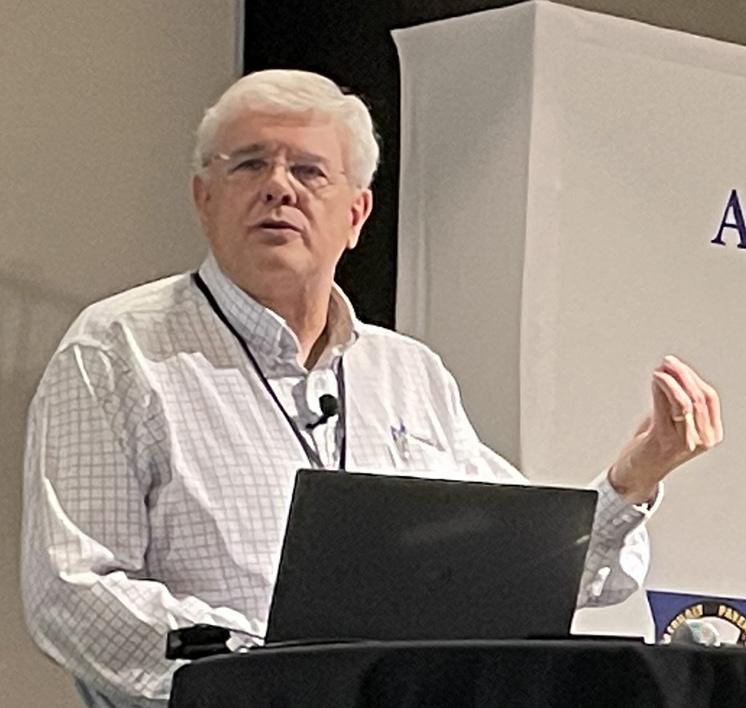
During Buzz Powell’s session titled “Hi-Mod Asphalt”, he talked about HiMod (Highly Modified Asphalt). It is an advanced, polymer-rich asphalt mix with more than double the polymer content of traditional types, making it extremely durable, rut-resistant, and crack-resistant, allowing for thicker single lifts, faster application, and longer pavement life, he said.
Utah DOT is leading the way in efforts to use
QUALITY
HiMod to build high-performance roads.
The state is using it on major projects such as interstates 80 and 15, and on local roads, with plans to expand its use. It was applied over old concrete on I-15 and proved successful in thick single lifts on I-80 ramps.
Powell said, “I’m here today to let you know that I’m fully supportive of Dave Johnson with the Asphalt Institute Alliance and also the Asphalt Pavement Alliance to take what we’ve learned in Utah to the rest of the country. We’ve learned that we can get better density with our high-water mixture. With 46 projects, we’re averaging close to 97 percent compaction. And we’re also using a better binder, using a BG 7634 binder with 15 percent RAP in the mixture. They were also using about 20 percent more binder. You get a better density, and these are very, very healthy, very rich mixes.”
Some of its key features and benefits include a high polymer content, which makes the binder act like rubber, thereby enhancing its strength and flexibility. It seems to resist rutting, fatigue, and reflective cracking, and thicker lifts can be laid, for example, three to six inches instead of multiple thin layers.
This saves time and improves density, reducing air voids and preventing water penetration, thereby reducing freeze-thaw damage and potholes. Thinner initial pavements or longer lifespans reduce material and maintenance costs, and can be used in thin overlays, and even for constructing Perpetual Pavements.
HiMod is changing paving by creating stronger, longer-lasting roads with fewer potholes, reducing disruptions from repairs, and offering environmental benefits through less material use over time. Powell said, “This is not theoretical; this is real. It truly is a game-changer.”
Buzz Powell earned a Ph.D. in Civil Engineering from Auburn University with an emphasis on pavements and geomaterials. He worked for the Alabama Department of Transportation for 12 years and two years in the private sector before becoming NCAT’s first Test Track Manager in 1999. He oversaw the construction of hundreds of test sections. In 2023, he joined the Asphalt Pavement Alliance, serving as their first Technical Director.
Safety Innovation Update
While most only talk about safety on Arkansas’s roadways, Deric Wyatt, ARDOT State Engineer,
is behind most of ARDOT’s recent safetyrelated innovations and installations. He updated the Quality Conference on recent safety measures during his session, “Safety & Green Lights in the Work Zone.”
While most Arkansans recognize the bright orange vest worn by ARDOT maintenance crews, they added green to the mix. “Employees with less than six months on the job are given green vests so more seasoned employees can keep an eye on them. They’re called Green Vesters,” he said.
One of ARDOT’s most hazardous jobs is retrieving debris, from tires called gators to other large materials, from state roadways, and it happens every day in every county of the state, Wyatt said. To make the job safer and keep personnel out of traffic, ARDOT has invested in Lane Blades and the Gator Getter to safely clear debris.
In addition to citations and speeding tickets in Road Construction Work Zones, law enforcement officers will now be allowed to issue tickets to drivers using their phones as they pass through designated zones.
Arkansas Act 209 of 2025 authorizes the use of green lights on roadway construction and maintenance vehicles. More specifically, it allows the use of amber, white, green, or combinations of these colors in oscillating, flashing, or rotating emergency or warning lights on vehicles owned by a state, county, or municipal agency, or operating under contract with such an agency, that are used for hazardous service on a roadway.
Utilizing green lights aims to enhance the visibility and safety of road workers and their vehicles, and to encourage the public to exercise caution when encountering green lights.
ARDOT is reviewing its overhead electrical line safety policy procedures, and staff are putting together a new safety manual. One thing they plan to include is a required job-site assessment by a supervisor to determine whether any hazards could come into contact with a truck bed, backhouse, or other equipment.
The Department is also changing its stripes. The
low-cost safety measure alternates black and white stripes instead of using only white lines on Arkansas’s roadways.
ARDOT’s wrong-way detection system is another example of how safety and AI intersect. When the wrong-way detection system detects a driver going the wrong way on a ramp, LED lights immediately flash a warning. Also, a floodlight turns on, allowing cameras to capture the nighttime event in color. The system records the event and sends an alarm to ARDOT’s Traffic Management Center (TMC).
Eventually, ARDOT will have about 150 WrongWay Detection Systems installed between Little Rock and West Memphis on Interstate 40, and in Central Arkansas on interstates 30, 430, 440, and 630, and on U.S. Highway 167 south of Jacksonville.
To date, the program is proving successful.
Deric Wyatt is ARDOT’s State Maintenance Engineer and graduated from Arkansas State University at Jonesboro in 2003. Prior to graduation, he began as an Engineering Intern in the department’s Resident Engineer Office in Osceola, and later worked full-time as a Civil Engineer at the Resident Office in Osceola. He was promoted to District Maintenance Engineer for District Seven in 2013 and was named District Engineer for District Two two years later. In 2021, he became District Engineer for District Six and currently serves as State Maintenance Engineer.
An Artificial-Human Partnership
During Sean Miller’s session, “HaulHub’s E-DOT Platform,” he talked about the advantages of using technological solutions for the ease of “managing public works construction projects.”
The Boston, Mass., company is “a bit unique” and works with material suppliers, contractors, and agencies across the United States. HaulHub Technologies offers new integrated solutions for public works construction technology and has just announced the launch of the E-DOT platform (https://www.e-dot. com).
“E-DOT streamlines construction progress and inspection by automating manual methods through real-time supply chain data integration. It incorporates live construction activities with mapping services like WAZE and updates state maps via ArcGIS integrations, enhancing efficiency across agency groups,” Miller said.
AI-powered Digital Agents are engineered and designed to work alongside human DOT professionals, seamlessly integrating their capabilities into daily operations. By handling routine tasks autonomously and alerting humans to critical issues, these agents extend the workforce’s capabilities. This allows DOT professionals to focus on higher-value, strategic tasks, Miller said.
The HaulHub system facilitates “collaboration between infrastructure firms and agencies, streamlining project planning, enabling agencies to meet current reporting requirements, and facilitating the creation of digital as-builts, simplifying data
collection and reporting to help agencies align with compliance standards,” Miller said.
The E-DOT As-Built Creator is the first module to automatically generate spatially referenced as-built records directly from machine sensor data inside the Engineering Services / Consultant Portal. Built on our ABER framework and aligned with USDOT/FHWA modernization efforts, it replaces manual sketches and after-the-fact reconciliation with continuous, verified activity data. Miller said, “This gives DOTs and engineering firms a faster, more accurate path to true digital delivery at scale.”
Sean Miller is Senior Government Solution Manager at HaulHub Technologies. He partners with SASHTO state agencies, including producers and contractors, to streamline the flow of materials and construction information, improving operational efficiency and jobsite safety. He has a Bachelor’s degree in Supply Chain Management from the University of Tennessee. He has been with HaulHub for five years.
2026 Quality Asphalt Conference Sponsors
Silver Sponsors
Bronze Sponsors
Gold Sponsors
D.B. Hill, III
ARDOT Director Recaps His First Year: From Bridges and New Roads to Safety
by Deborah Horn
It’s been almost a year since Jared Wiley transitioned from his position as Chief Engineer for Pre-construction to Arkansas Department of Transportation (ARDOT) Director, said the guest speaker as he opened the 2026 AAPA Quality Asphalt Paving Conference.
Wiley said, “Thank you for inviting me to be here today. It’s always great to come and address this group. We appreciate your partnership, your leadership, and I want to start off with a thank you for that. I’m glad to see you guys.”
Instead of the usual speech, Wiley opened his address with a video highlighting ARDOT’s defining moments in 2025.
“It was a year of change, marked by the retirement of ARDOT Director Lorie Tudor and the Arkansas
Highway Commission (AHC) Chairman Alec Farmer. This set the stage for new leadership on both fronts,” he said.
Wiley was unanimously named ARDOT Director by the AHC members, and Philip Taldo of Springdale was elected AHC Chair in December 2025. Last year, Jerry L. Halsey of Jonesboro was named to the Commission by Gov. Sarah Sanders.
In part because of the leadership change, Wiley said last year was about introducing fresh ideas and building renewed momentum. He continued, “We have a lot of good work coming in 2026.”
The department has several large projects on the books for 2026, including phase 3 of the Ark. Hwy. 612, known as the Springdale Bypass, in Benton County. It will construct three miles of roadway
on Hwy. 612 from Interstate-49 to Ark. Hwy. 265 at an estimated cost between $200 to $250 million. It’s scheduled for late 2026. Wiley said, “We built phase one, and the second is getting close to completion. We should wrap it up in about a year or so.”
“Our
resilience was put to the test because of a winter storm in midJanuary. Just as soon as Arkansas dug out of that storm, another call for help came from our neighbors to the south, in Louisiana. We are slightly more versed in winter weather. ARDOT’s personnel packed up and headed down to help.”
Another large project is slated to construct six structures and a roadbed for I-49, including ramp and frontage road improvements, near the intersection of I-40 and Clear Creek Road, at an estimated cost of $100 to $150 million. The Crawford County project is also scheduled for late 2026.
The third project is designed to improve the I-57 at Ark. Hwy. 5 interchange in Cabot and is estimated to cost between $50 and $75 million. The letting date was Jan. 21.
Early in 2026, Wiley said, “Our resilience was put to the test because of a winter storm in mid-January. Just as soon as Arkansas dug out of that storm, another call for help came from our neighbors to the south, in Louisiana.” ARDOT sent trucks to help out their southern neighbors. Wiley explained, “We are slightly more versed in winter weather. ARDOT’s personnel packed up and headed down to help.”
The Arkansas Highway Police (AHP), which operates under and is funded by ARDOT, had a recordbreaking year. Officers seized more than 15,000 pounds of illegal drugs, and in March, they held their first clean-up day, removing about 6,500 bags of litter from the state’s roads.
In the same vein, Wiley discussed a new
— Jared Wiley
visual signage program designed to encourage people to stop littering. “We’re the natural state, so we thought what better than to use the word natural with the question mark?” The sign, made of letters filled with trash, can be moved to different areas of the state, helping people understand that litter is neither natural nor becoming.
Two new AHP canine officers, Drake and Ace, were added, doubling their K-9 unit. Wiley said, “The dogs have already proven their worth.”
Wiley said, “2025 was a milestone year for our interstate system. Construction continued on the I-57 corridor, and Ark. Hwy. 440 was officially renamed I-440, adding to Arkansas’s growing interstate network. In western Arkansas, ARDOT broke ground on an I-49 extension.
The new I-55 bridge, a partnership between Arkansas and Tennessee planned near Memphis, received its official name: King’s Crossing. The name is a nod to Elvis Presley, “King of Rock ‘n’ Roll”, B.B. King, “King of the Blues”, and Dr. Martin Luther King, Jr., “Civil rights leader”. Further down the Mississippi River, ARDOT is partnering with the Mississippi DOT on a rehabilitation project for the Highway 49 Bridge. Wiley said at this point, “We’re working through some complex maintenance of traffic issues.”
While ARDOT crews were hard at work in the fields, Wiley said, “Our leadership was hard at work at the (Arkansas State) Capital. The
regular session of the 95th General Assembly brought several major wins for safety.”
They doubled traffic stop fines in all work zones, including mobile work zones; installed green lights on ARDOT work vehicles for increased visibility; and added work zone safety information to the state’s driver’s license requirement test, needed to legally operate a vehicle.
ARDOT continued the safety-first trend with the launch of Street Smart last August, a statewide education program for sixth through eighth-grade students. It is currently being expanded for students in grades nine through 12.
ARDOT held 29 public meetings, hosted seven project celebrations, and contracted 191 projects, worth more than $580 million, last year.
“In October, we had the honor of dedicating a brand-new Fallen Worker Memorial on the grounds of the Central office in Little Rock. It was a beautiful yet somber event in which we remembered the 92 employees we have lost in the line of duty,” Wiley said. In November, ARDOT’s workforce surpassed 4,000 employees for the first time in decades.
Wiley said, “We have reduced turnover. We’re able to give about a 4 percent on average pay raise this year, which is big for our agency.”
With an increased pay rate, ARDOT has been able to grow its Arkansas Highway Police force, and Wiley said, “We’re now at 150 officers statewide.” That’s been a departmental goal for years, and the additional police force enables us to do more of this to improve safety.
“We’re also working to allow our contractors to hire off-duty law enforcement on certain projects to help provide an additional layer of detection.”
Wiley finished by saying, “I think it’s going to be another great year for us.”
Jared Wiley, ARDOT Director, graduated from Arkansas State University with a BS in Engineering in 2005, the same year he began working for ARDOT. He has held various roles and was appointed ARDOT Director in 2025. He has served on multiple national and state engineering and transportation boards, including his most recent appointment to the Arkansas State Board of Licensure for Professional Engineers and Surveyors. Arkansas Business named him one of the state’s most influential leaders.
THE RISE OF THE ROUNDABOUT
BY KAITLIN WORLEY
AS POPULATIONS GROW AND COMMUNITIES
CHANGE, ROADS MUST ALSO EVOLVE TO KEEP UP WITH THE NEEDS OF THE PUBLIC. Over time, we’re able to get a better sense of how to meet evolving safety and mobility needs. When intersections need improvement, a proven method is through construction of a roundabout.
A roundabout is a circular intersection where traffic moves in a counterclockwise direction around a central island. Entering traffic yields to traffic that is already present in the roundabout, so traffic generally travels at a slow, even pace, avoiding lengthy stops.
“There are over 170 roundabouts on public roads in Arkansas, and more are being built all the time,” Andrew Warren, ARDOT Staff Traffic Safety Engineer in the Planning & Research Division, explained. Twelve roundabouts were constructed in Arkansas in 2023, and six were constructed in 2024, according to the Roundabouts Database maintained by Kittelson & Associates, Inc., a transportation engineering and planning firm. The first recorded roundabout in Arkansas, according to the database, was built in Little Rock at the intersection of Brodie Creek Trail and Woodsgate Drive in 2000.
One of the primary benefits to using a roundabout as opposed to a more traditional intersection, such as a stop sign or traffic signal, is
increased safety. Roundabouts reduce the number of “conflict points” at an intersection. A conflict point is a point in a traffic intersection in which two or more vehicles have intersecting movement paths. A conventional intersection has a total of 32 conflict points, while a roundabout intersection typically only contains eight. Because each of these points has potential for collision, reducing the number of conflict points also reduces the chances of a crash occurring.
In addition to the reduction in conflict points, travel speeds are also decreased in a roundabout. “When drivers slow down, crashes are less severe. Slower speeds also give drivers more time to react if something goes wrong,” Warren said. Due to the combination of reduced speed and fewer conflict points, roundabouts experience 76 percent fewer injuries and 90 percent fewer fatalities than a comparable traffic signal.
Not only do roundabouts increase safety, but they can also decrease traffic delays. Even though the speed
of travel is reduced in this type of intersection, traffic can maintain a steady pace of movement rather than idling at a red light. Because vehicles spend less time idling, this design also leads to a reduction in overall fuel consumption.
Although roundabouts are growing in popularity around the state, they do not always have an enthusiastic reception from the public. “Residents are sometimes hesitant when the first roundabout is built in a community. Many people come around when they discover they don’t have to wait on the light to turn green or when the intersection, where traffic used to back up, now operates more efficiently,” Warren said.
Even though roundabouts often improve the flow of traffic in many areas, “Roundabouts are not the solution everywhere.” Warren explained. While roundabouts may not be able to replace every stop sign or traffic signal, their increased prevalence is improving safety and traffic flow across the state.
Roundabout in Marmaduke (2023)
Women of Asphalt
1st Quarter Update
By Hannah Garison
First of all, welcome to two new members for 2026: Anna Grace Foreman with Blackstone Construction and Jennifer Wolfe, WIP Analyst with Riggs CAT. We are so happy to have you join our organization!
The AAPA Quality Conference in January provided significant insights, and we were glad to be a part of it. Much appreciation to our volunteers who showed up and worked our booth.
If you didn’t know, March 1st – 7th is Women in Construction Week. Our W of A chapter is sponsoring the Women’s Leadership Breakfast on Wednesday, March 4th from 7:30 AM - 9:30 AM at ABC’s Construction Trades Academy in North Little Rock. Reserve your spot today by emailing megan@abcark. com. They will be offering free headshots after the breakfast!
CONEXPO, North America’s largest construction trade show representing asphalt, earthmoving, lifting, mining, etc., is the same week in Las Vegas, NV. If you plan to go, be sure to swing by the Women of Asphalt booth and introduce yourself.
On Tuesday, April 21st, Cindy Williams of Time Striping in Van Buren, AR is hosting a Lunch & Learn for our members from 11:00 AM – 1:00 PM. We’ll get hands-on and learn some pro tips of the striping process. It will be a fun-filled learning experience, and they will feed us too! We hope you will plan to join us, so mark your calendar. If you have any ideas or would be interested in hosting a Lunch & Learn this year, please contact Courtney Quinn, Hannah Garison, or Katie Russell.
Help us congratulate Brenda Powell on her 40 years of service with McGeorge Contracting. She has been a huge contributor to Women of Asphalt as well as the NAWIC Greater Little Rock Chapter. We are truly grateful for her dedication to the industry, and she inspires us all. We are happy to celebrate this achievement with you!
Martin Marietta Hatton Quarry 323 Polk Road 15, Cove, AR 71937
diately After the Race at The Ouachitas
Martin Marietta Hatton Quarry
APAC-Central
Asphalt & Fuel Supply
Atlas Asphalt, Inc.
Blackstone Construction
Cranford Construction
Ergon
Forsgren, Inc.
Highway Graphics
Jet Asphalt & Rock Co.
Oilstone
Rogers Group, Inc.
Smackover Paving
Stribling Equipment
Time Striping
Visit www.hotsprings.org for a list of offsite activities/events.
On Tuesday, check into Oaklawn Racing Casino Resort (2705 Central Ave.) and stop by the registration desk for your gift!
Join us for the Chairman’s Reception Tuesday evening at Mainline Sports Bar!
On Wednesday night, we will have a grand reception with buffet dinner and open bar, live and silent auction, and the always popular heads-or-tails game. Don’t forget to bring your auction items!
Wednesday morning presentations will be given by Jared Wiley, Reed Ryan, and more, followed by activity options that include golf at the Hot Springs Country Club or a glass-blowing class at Hammer & Stain.
Thursday will close out the Convention with more guest presentations, followed by the installation of the 2026-2027 AAPA Board of Directors and the presentation of the Statewide Paving Awards.
2026 Awards Presentations
by Deborah Horn
APA Perpetual Pavement Awards
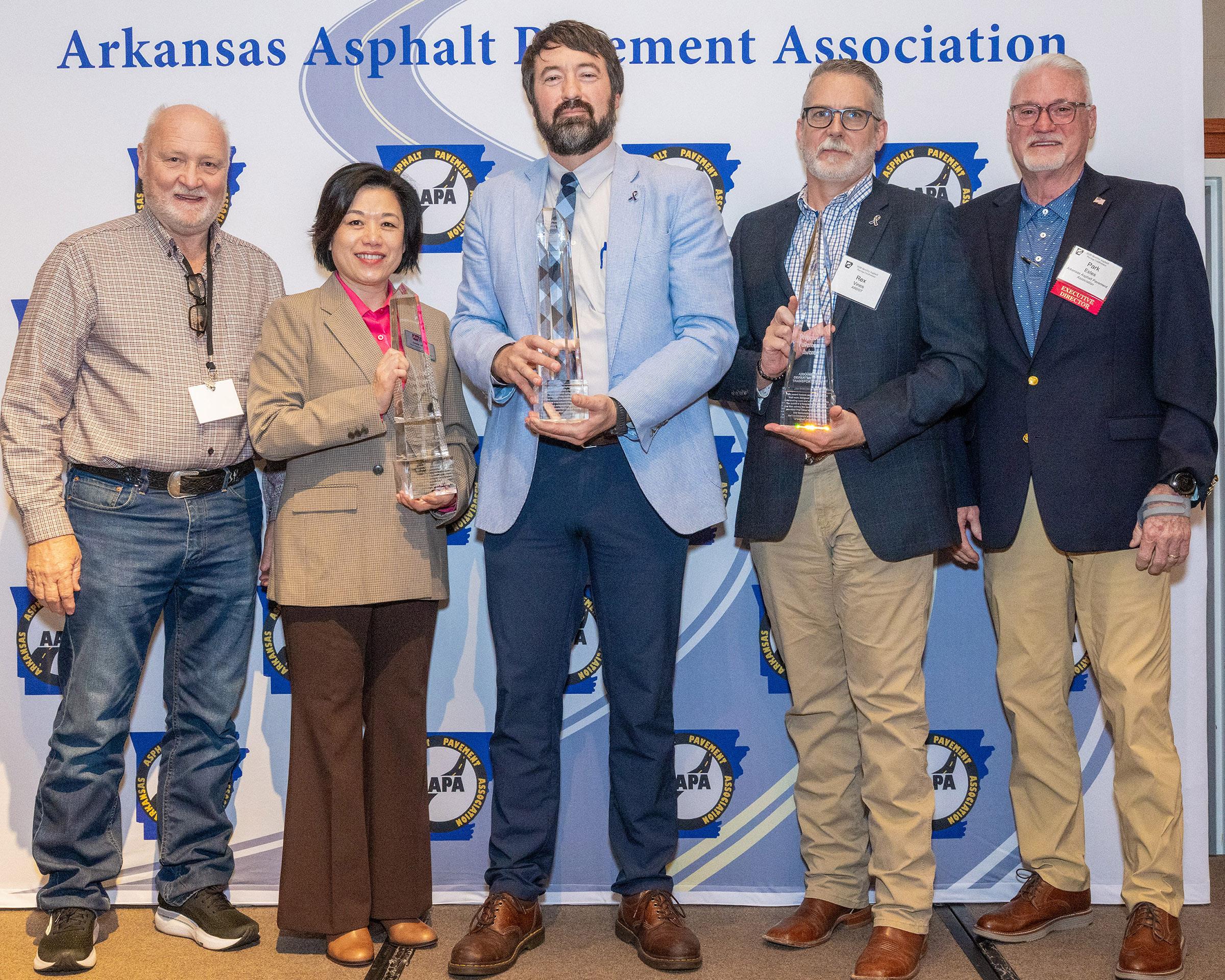
At the 2026 Quality Conference, AAPA Executive Director Park Estes announced and presented the Asphalt Pavement Alliance (APA) Safety Awards of Excellence that ARDOT earned in 2024 but were only recently announced. ARDOT once again took all three Perpetual categories—By Performance, By Design, and By Conversion.
The APA considers various aspects of the project, including excellence in design, construction quality,
durability, and value to taxpayers when evaluating a candidate.
ARDOT won the By Performance Award for Ark. Hwy. 7, Section 1 (LM 6.83- LM 9.19) located in Union County. ARDOT won the By Design Award for a section of Ark. Hwy. 170 that was constructed in 2009 by APAC-Central. ARDOT won the By Conversion Award for work on I-530 in Jefferson County. The project covered nearly six miles of a four-lane divided highway, which was converted from Portland mid-
concrete pavement to a perpetual pavement.
AAPA Safety Awards
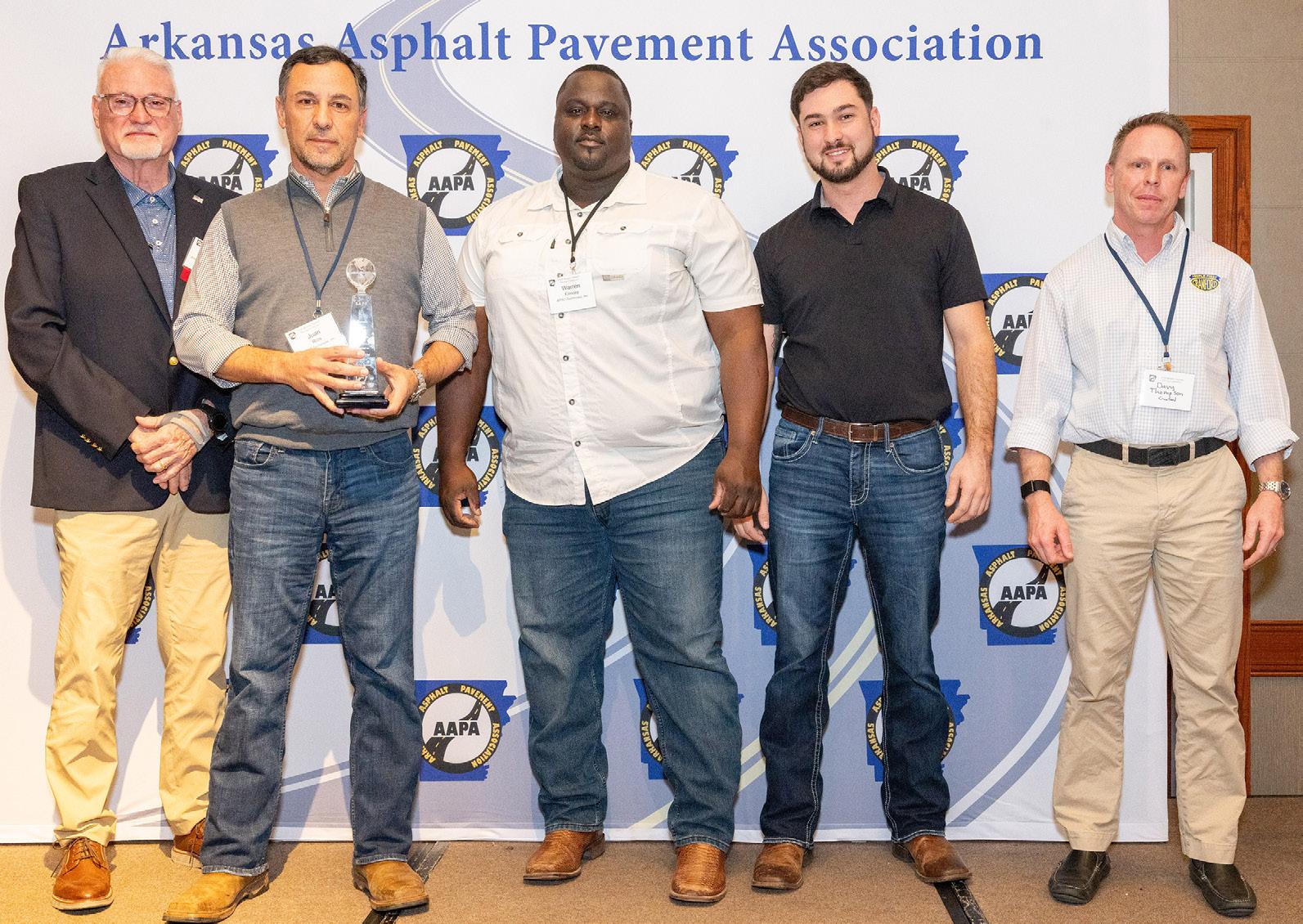
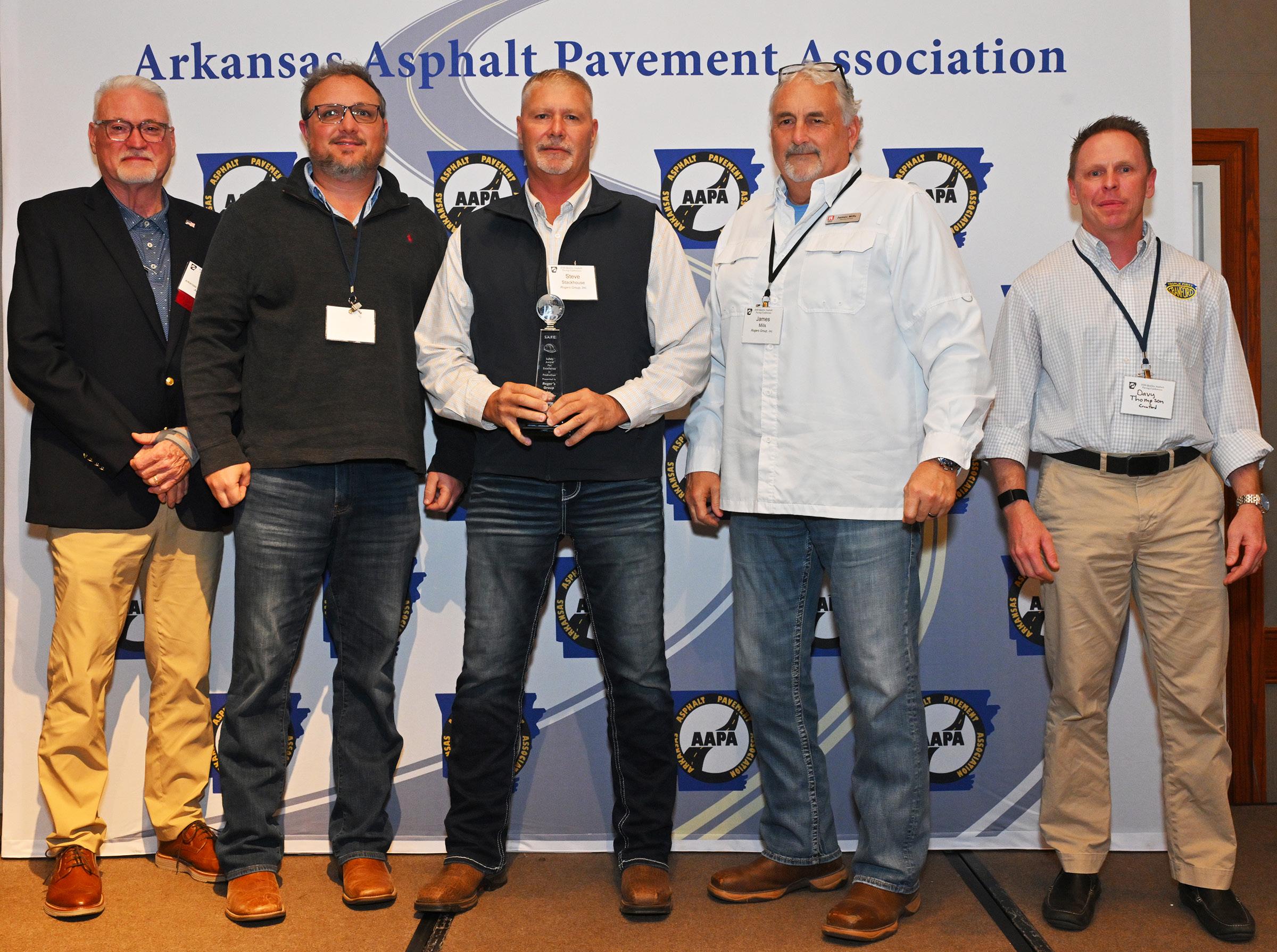
Davy Thompson, CSP, Safety & HR Director for Cranford Construction, said, “We’re celebrating safety. Today, it is my pleasure to announce the winners of the 2025 AAPA Safety Awards.”
This distinguished award is designed to be given to the very best safety leaders in the industry, and to be eligible, contractors must have zero work-related fatalities, a transfer rate below that of current industry standards, and more.
APAC-Tennessee was named the Work Zone Safety winner, and Rogers Group was named the Producer Safety winner. Thompson added, “Congratulations, great work.”
Thompson invited anyone interested to join the AAPA Safety Committee, adding, “We have seats available for safety professionals, and we would love
for every member to attend our safety committee meetings. We share best practices and talk about ways to keep people working safely every day, and the hurdles we face.”
Thompson closed with, “Again, we wish everybody a safe 2026.”
Arkansas Asphalt News Quarterly Magazine
Keep up to date with the latest asphalt pavement industry news in Arkansas with the Arkansas Asphalt Pavement Association’s Quarterly digital Publication. Circulation for the AAPA quarterly magazine includes AAPA members, Arkansas Dept. of Transportation Officials, County Judges, City Officials, State Legislators, Consulting Engineers and other industry allies.
Advertising Rates
Ad space is available in the sizes listed below in full color. Placement of less than full page ads varies by quarter.
Full Page: $650 per issue
(7.50” wide X 10” tall)
Half Page: $550 per issue
(7.50” wide X 5” tall)
Third Page: $450 per issue
(2.75” wide X 10” tall)
Quarter Page: $350 per issue (3.75” wide X 5” tall)
Sixth Page: $275 per issue (5” wide X 2.5” tall)
Material Specifications
Completed ads must be press ready, 300 dpi, 150 line screen, 100% actual size, and include all embedded images and fonts. Submit ads electronically to: office@arasphalt.com
If you do not have a completed ad, we will set your ad for you for $25. Please submit your ad copy in one of the following formats: PDF, TIFF, EPS, JPG, along with any photos/logos to be included in the ad. You will receive an emailed ad proof to approve.
P.O. Box 24304
Little Rock, Arkansas 72221 (501) 219-1100
www.arasphalt.com office@arasphalt.com
Cranford Construction Company is Central Arkansas’ leading producer of quality asphalt and preferred asphalt contractor. Call today and put our team to work for you.
Greg Day, Sales: 501-416-4565 or greg.day@cranfordasphalt.com
ROADS LEAD TO WEEKEND ESCAPES.
Roads are literal and metaphorical connectors. They provide essential delivery of our daily needs – they also lead us to the things that matter most. As Americans, we depend on them for our safety and for our livelihoods. At Ergon, we are proud to work in communities across America helping build and maintain vital infrastructure that connects us all to what matters most.