UNIT1 INTRODUCTION TO THE ENVIRONMENT
Structure
1 1 Introduction
Objectives
1.2 Concept of the Environment
1.3 Types of Environments
1.4 Concept of Biosphere and Ecosystem
1.5 Whyshould Webe Concerned about the Environment
1.6 Summary
1.7 Terminal Questions
1.1 INTRODUCTION
The Earth is the only planet known to support life as we know it. It supplies us with all the resources, the materials we use and the food that we eat or drink. All living organisms have a specific surrounding or medium with which they continuously interact, from which they derive sustenance and to which they are fully adapted. This surrounding is their environment.
An understanding of the environment requires that we know what makes up the environment, and what its limits areand why is a scientific study of the environment important. In the natural world where we all live on theplanet Earth, life is confined to a very thin sphere around the globe where conditions for sustenance are favourable. Anywhere below or above this layer conditions become limiting. In introducing the environment we familiarize you with the various components of the environment and their interaction that make the functional units. You will come to appreciate the interdependence of various components of the environment as you proceed along this course.
Objectives
After studying this unit, you will be able to:
• define environment;
• describe the various components that make the environment;
• distinguish between natural and man-made environment;
• recognize the significance of the environment for life’s proper functioning; and
• understand the concept of biosphere and its functional unit the ecosystems
1.2 CONCEPT OF THE ENVIRONMENT
Prior to1950s, for most people the term environment meant the set of conditions at home or in their work places. In the years that followed, with the publication of Rachel Carson’s landmark book “Silent Springs” (1960) as well as the occurrence of major environmental events such as the spilling of oil along the picturesquenorthern coast of France,the death of fish and other organisms in thousands in Swedish lakes due to long range air pollution and the much publicized threats of extinction of many species, the concept of the environment gained widespread acceptance.
Today the environment is widely accepted as a major issue for the very survival of humans and other life forms theworld over with serious social and political ramifications. It is realised that a concern for the environment is an integral part of the overall process of development and economic growth. This issue is particularly
5 Introduction to the Environment
The term ecology was coined in 1868. It has been derived from two Greek words Oikos meaning home orestateand Logos meaning study.
important for developing nations, which need to keep promoting economic activities in order to improve the living standards of their people.
At present there are three points on which there is general agreementwith regards to the environment:
• The environment is a common concern for both industrial and developing countries although problems resulting from poverty and affluence are different.
• The solution of environmental problems can only be achieved through internationalcooperation.
• Integration of economic growth and environmental protection must be done according to the sustainable development approach.
Although the importance of certain environmental issues may change with time, the principles governing the underlying biological and physical systems do not change. Hence, the basic ecological concepts need to be understood too, for Ecology deals with the interactions between the organisms and their environment.
Let us now examine whatwe mean by the environment in scientific terms. You are aware that no organism can exist in isolation, without interacting with other organisms and its physical influences like light, moisture, temperature soil etc., in very broad terms we can say its environment or surroundings. Thus we can define environment as the sum total of living and non-living components, influences and events surrounding an organism. The living components are called the bioticcomponents while the non-living are called abiotic or physical components (Table 1.1). However, it is important to understand that the living and physical components are intimately interwoven and interdependent, they cannot be looked upon in isolation and we classify them in separate categories only for convenience.
For example, theEarth as a planet has been profoundly altered by the life that inhabits it. The Earth’s air, oceans, soils and sedimentary rocks are very different from what they were before the evolution of life. In many ways, life helps control the makeup of air, oceans and sediments.
Table 1.1: Components of the environment
Abiotic Biotic
Light (Energy, Radiation)
Atmospheric gases and wind Temperature and heat flow Water Gravity
Topography
Geological Substratum Soil
Microbes Plants Animals (including
human beings)
The physical components set the condition for the survival of the biotic components which in turn take care of the maintenance of the environment. Thus linkages among components of the environment are pathways for the flow of energy and cycling of materials For example, green plants obtain essential resources from the physical realm water and minerals from the soil, carbon dioxide from the atmosphere and light energy from the sun, and manufacture their food. Animals depend on plants and other animals for their source of food. We in turn harvest the land and the seas for our food; obtain minerals, fuel from the Earth’s crust. We will learn more about these later in thiscourse.
6
Our Environment and its Components
TYPES OF ENVIRONMENTS
Recall the definition of the environment, and consider a fish living in a natural pond. Its external environment will be the water in the pond which it primarily inhabits. The water would contain nutrients, oxygen and other organisms that the fish requires to sustain its life. As opposed to the external environment, the body cavity within the fish provides an internal environmentquite separate from the outside environment. The body surface acts as an exchange barrier between the internal and the external environment of the fish. The internal environment is relatively stable as compared to the external environment. However, illness and injury or even environmental stress can upset it. But when the cause of the upset is removed, the internal environment comes back to its original condition.
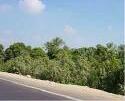
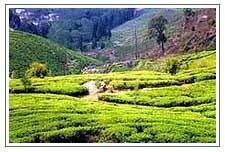
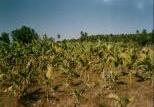
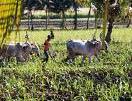
The pond which the fish inhabits is a natural environment. The abiotic factors of the pond, like light, temperature, depth, nutrients, and dissolved gases will provide the life supporting chemical and physical factors for the fish. The other living organisms inhabiting the pond, like bacteria, insects, worms, molluscs, tadpoles, frogs, submerged vegetation etc. could be food for the fish. Examples of such natural environments on land include forests, grasslands, savannah, deserts, etc. In any of these natural environments the climate, physiological, edaphic (soil-related) and biotic factors interact with each other and influence the life forms. So far we have discussed only the natural environment but there are several components of environment which arecreated by humans, like crops fields, cities, industrial spaces etc. (Fig.1.1and Table 1.2). These are places made artificially by humans through planned manipulation. For example, let us consider a city. The city environment is totally created by human beings. One of the most important components waterisnottaken from streams directly but is first filtered, purified and used for drinking and other municipal purposes. The metabolic waste and garbage are not disposed off locally but are carried for treatment or dumping to a remote place, away from the city. Food for the people in cities often comes from rural areas.
Natural Environment Ocean, lakes/ponds, rivers, forest, grasslands, deserts etc.
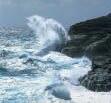
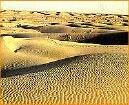
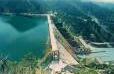
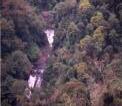
Man-modified Environment Orchards, plantations, sanctuaries, parks, Man-made Environment Industries, cities, towns, crop fields,artificial lakes, dams

7
Introduction to the Environment 1.3
Fig.1.1: Examples of different types of environment
An environment made by humans results in the consumption of excessive amounts of materials and energy necessitating care, supervision and management, and often interferes with the natural environment.
Significance of the environment for life
Whatever type of environment organisms inhabit, they all need life supporting elements for their survival. These include air that they breathe, food and water they take in, and shelter either as natural enclosures (like caves and tree holes) or as artificial dwellings (like houses). Environment is the only source that provides these life supporting elements.
We make use of the land for cultivating crops. Soils provide nutrients needed for the growth of plants. The land form determines the soil types found in any one area and soil itself varies from place to place. Some soils are rich in nutrients and others are lacking in them. The soils lacking nutrients need the addition of fertilizers
Climate and short term weather changes are characterized mainly by wind, temperature, pressure and rainfall and are determined by the properties of the atmosphere. Air in the atmosphere provides living organisms with oxygen, without which survival of most of the living organisms will be threatened.
From the above description you have learnt about the concept of the environment, the different types of environments and about the significance of the environment for life. Next we will find out where these environments exist on planetEarth
SAQ 1
Define the environment and explain the difference between external and internal environment.
1.4 CONCEPT OF BIOSPHERE AND ECOSYSTEM
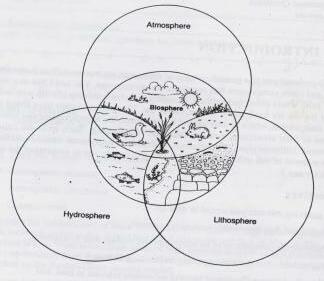
The relatively thin zone of air, soil and water where life exists is known as the biosphere. It extends from the depths of the oceans to about 10km high up in the atmosphere and includes all the rivers, lakes, ponds as well as the solid sediments that exchange material with living beings. Life in this zone depends on the Sun’senergy and on the circulation of heat and essential nutrients. The only exceptions are the life forms found in the deep-sea hydrothermal vents that depend on the energy from the Earth. This energy is used and given off as materials are recycled. Since living organisms need essential elements for survival like air, water and land, the biosphere includes parts of the atmosphere, hydrosphere and lithosphere (Fig.1.2).
When the concept of the biosphere was first proposed it was considered to be the Earth’s integrated living and non-living life supporting system. Although it was proposed as early as 1920, by the Russian scientist Valdimir Ivanovich Vernadsky (1868-1945) it was only in the recent times that it has been widely adopted and used.
The integration of living organisms and the non-living life supporting system mentioned in the concept of the biosphere has occurred in many ways. For instance, the biosphere
• contributes to the global energy system;
• affects rates and patterns of weathering within the lithosphere;
• plays an important role in the water cycle;
• links the lower atmosphere (troposphere) with the lithosphere;
• provides a vehicle for the transfer of chemicals via the bio-geochemical cycles.
8
Our Environment and its Components
Fig.1.2: Idealized scheme of the biosphere in relation to atmosphere, hydrosphere and lithosphere. The area of contact and interaction between these components is important for life, for it is here that the basic processes of life like photosynthesis and respiration occur
You will come to know more about the above processes in later units.
Originally the concept of the biosphere was applied to theEarth’s surface where plants and animals made their home. In recent times the biosphere has been extended by Gaia hypothesis to include parts of the atmosphere and subsurface geology that were previously thought of as non-living.
For centuries scientists have viewed the Earth and its environmental systems as a sort of mechanical machine, driven by physical forces like volcanoes, rock weathering and the water cycle. It was clear that organic activities played an important role in some environmental systems, such as the biogeochemical cycles. However, until quite recently biological factors were seen as secondary to physical and chemical ones.
A revolutionary new theory was put forward by James Lovelock in 1970s. He called it the Gaia hypothesis, after the Greek Earthgoddess. The theory was revolutionary because it treated the Earth as a single living organism, in which thebiological, chemical and physical factors played important roles. Lovelock argued that theEarth’s living and nonliving systems form an inseparable whole, regulated and kept adapted for life by living organisms themselves. He sees Gaia as a complex entity involving theEarth’s biosphere, atmosphere, oceans and soil and constituting a feedback system which seeks an optimal physical and chemical environment for life on this planet. However, Lovelock regarded the biosphere as a “single organism”(called a super organism by some scientists).
Looking closely at plants and animals in the biosphere, naturalists observed groups of plants and animals in the biosphere arranged in an orderly manner. Two concepts emerged from their observations which led to the use of the term “ecosystem” to describe the complex interactions between living organisms and their non-living surroundings.
The first concept was that plants and animals formed a natural association, each with distinctive members. Just like morphological data allowed systematists to assign species to a hierarchy of taxonomic groups, detailed studies of the ecological distributions of plants led to the classification of biological communities.
The second concept was the realization that organisms are linked, both directly and indirectly by means of their feeding relationships. Arising from these, the concept of
The term ecosystem was coined by the British plant ecologist Sir Arthur George Tansley to stress the concept of each locale or habitat as an integrated whole.
9
the Environment
Introduction to
Environment
its Components the ecosystem was formulated. A system is a collection of interdependent parts that function as a unit and involve inputs and outputs. An ecosystem representsthe sum of all natural organisms and the non-living life supporting substances within an area. It was considered as an open system with a series of major inputs and outputs and these effectively “drive” the internal dynamics of the system.
The ability to recognize distinctive ecosystems in the biosphere gave ecologists a convenient scale with which to consider plants and animals and their interaction. This is because it is more localized and thus more specific than the whole biosphere. A variety of natural ecosystems are found in the biosphere and you will come to know about them, their components and their functioning in later units.
SAQ 2
What is the Gaia Hypothesis?
1.5 WHY SHOULD WE BE CONCERNED ABOUT THE ENVIRONMENT
Why is there so much concern about the environmenttoday? The answer is simple; our very existence depends on the conservation or well being of the environment. The unprecedentedpopulation growth and economic progress of the 19th and 20th centuries have expanded our demands on the environment. However, today the whole world particularly the developing countries are facing a near-crises situation regarding the environment.
Perception of environmental concerns differs with different societies. What some people may consider to be a serious problem may be the solution for a different problem. For example, if a factory is set up in a village, the villagers might be happy because as it provides more jobs for the local population’s economicgrowth.While some others may feel that the setting up of the factory would pollute the environment, generate more waste and decrease the standard of living.
However, broadly there are three prevailing viewpoints regarding the environmental concerns:
1 The environmental concern is a conspiracy of the developed First World against progress in the Third World and that environment will become an issue of importance only when the underdeveloped countries reach the levels of production and consumption of the industrialised nations.
2 The second viewpoint argues strongly that the emphasis on preserving for instance, the tiger and the aesthetic beauty of green belts is diverting the attention from the problems of the poor and that environment has nothing to do with providing a better deal to the large and ever-growing population.
3 The third, in a paradoxical turn, holds this very same, large and ever-growing population responsible for the environmental crisis, maintaining that there is too little of everything except people.
The three different views illustrate how little we know of ecosystems and ecobalance. Let us examine each of these views briefly.
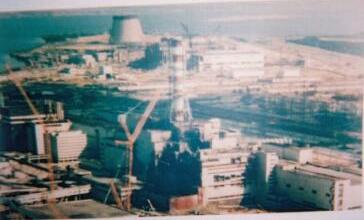
The first view is that environmental concerns are the business of rich countries which cause most of the pollution. But environment and development are not necessarily incompatible. The mistake made by developed countries can be avoided if proper developmental strategies are worked out. Further, there is no division such as the environment of developed countries and that of developing countries. Degradation of the environment is going to affect each of us irrespective of the country, region or area. An example is the Chernobyl disaster which has the potential to affect a total of
10
Our
and
thousands of human and animal lives and devastate large areas of land within and outside the former Soviet Union.
Fig.1.3: Chernobyl and its effect onhuman beings

(Source: ohamill.netfirms.com/chernobyl.htmand http://www.cems.alfred.edu/students/wirkuscp)
Proponents of the second viewpoint would prefer development to improve the lot of the poor at the cost of environmental conservation. But in this model the poor will get the worst of everything, including the effects of pollution resulting from industrialization and urbanization. We had a burning example of this in Bhopal tragedy in which thousands of the poorest of poor people died. The poor are worst affected by impure drinking water, unsanitary living conditions, disease and so on.
The point raised in the third viewpoint that population pressure leads to environmental degradation is an old one. The problem is not so much of the poor destroying the environment by their sheer numbers as that they are deprived of their share in the distribution of resources. It should, therefore, be clear that there are factors other than poverty and population which are responsible for the pollution on the Earth
You must understand that environment is not just pretty trees, threatened plants, animals and ecosystem. It is literally the entity on which we all subsist, and on which the entire agricultural and industrial development depends. Development without concern for the environment can only be short term development often causing enormous environmental degradation apart from human suffering, increased poverty and oppression. With these few words of caution, we summarise the contents of this unit.
1.6 SUMMARY
• The concept of environment isthe surrounding of an organism, including its life supporting physical and biological factors.
• The different types of environments include external environment, internal environment of an organism and the natural and man made environment in which the species survive.
• Biosphere is the region on the Earth where all living organisms survive. An ecosystem is the basic functional unit in nature, defined by ecologists. Ecologists help to understand the complex relationships between living organisms and their surrounding.
• Human beings in search of food shelter and material comfort affect the environment either advertently or inadvertently. The impact of the human society has multiplied over last several hundred years.
11
Introduction to the Environment
1.7 TERMINAL QUESTIONS
1. Define the terms environment, biosphere and ecosystems.
2. Describe the concept of biosphere.
3. Discuss the significance of the environment to living organisms.
REFERENCES
1. The Environment Principles and Applications by Chris Park.
2 Human Environment Block 1 IGNOU publication
12 Our Environment and its Components
UNIT 2 THE LITHOSPHERE
Structure
2.1 Introduction
Objectives
2.2 Structure and Composition of the Earth
2.3 Components of the Lithosphere Rocks Sediments Soils
2.4 Formation of Soil Weathering of Rocks Mineralisation and Humification Soil Profile
2.5 Properties of Soil Physical Properties Chemical Properties
2.6 Soil Biota and Soil Fertility Micro-organisms in Soil Macro-organisms in Soil
2.7 Beneficial Effect of Organic Matter on Soil
Role of Organic Matter in Soil Sources of Soil Organic Matter
Chemical and Biological Functions of Organic Matter in Soils
2.8 Summary
2.9 Terminal Questions
2.1 INTRODUCTION
In the previous unit you have learnt that the environment is made up of living and non-living components. The living components include flora, fauna and micro biota whereas the non-living components are the lithosphere, the hydrosphere, and the atmosphere.
You know that air, water, land and soil provide the essential support systems for life to survive on our planet. Therefore, it is important to develop an in depth understanding of each of these components of the environment. We begin our discussion with the lithosphere, i.e., the Earth’s surface. You will learn about the structure and composition of the Earth, components of the lithosphere, soil formation, properties of soil, types of soils (classification of soil), soil biota and their importance in soil fertility and productivity of the soil. The next unit is about the hydrosphere.
Objectives
After studying this unit, you should be able to:
• describe the structure and composition of the Earth;
• list and describe the different components of the lithosphere;
• describe the characteristics of soil in relation to plant growth;
• explain how micro-organisms and organic matter help to improve soil fertility; and
• discuss the importance of soil and explain why we need to preserve it.
The Lithosphere
13
2.2 STRUCTURE AND COMPOSITION OF THE EARTH
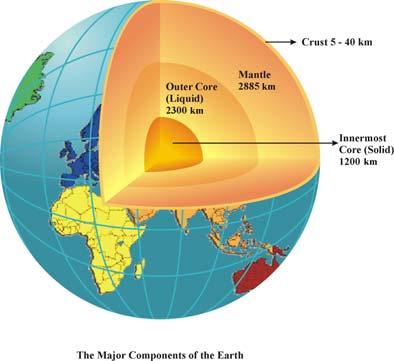
The Earth may be divided into three zones; the crust, mantle and the core (see Fig.2.1). The crust is the part of the Earth we live on; it represents less than 1% of the Earth’s total mass and only about 0.5% of its radius. It does not however, have a uniform thickness, which varies from an average of about 35 km in the continental regions to about 5 10 km under the oceans. All of the Earth’s landforms (mountains, plains, and plateaus) are contained within it, along with the oceans, seas, lakes and rivers. While the crust appears to be solid, it is subjected to repeated movements including bending, folding, and breaking associated with the movement of material in the mantle below. This is the part of the planet we all know most about and also the part which is most affected by human activities.
The processes of weathering and erosion are continually wearing the high points of crust away. The low points are being filled in with the debris generated by these destructive processes.
Fig.2.1: The major components of the Earth
Mantle is the thick, dense rocky matter that surrounds the core with a radius of about 2885 km. The mantle covers the majority of the Earth’s volume. This is basically composed of silicate rock rich in iron and magnesium. The mantle is less dense than the core but denser than the outer crust layer.
The inner region of the Earth is referred to as its core and is divided into a liquid outer and a solid inner most core of a radius about 1200 km. The outer core is made up of iron and nickel alloy, while the inner core is almost entirely made up of solid iron. The Earth’s magnetic field is believed to be controlled by the liquid outer core.
The crust and the upper part of the mantle form a coherent solid layer known as the lithosphere which is about 75 km thick.
By mass the Earth is made up of mostly 35% iron, 30% oxygen, 15% silicon, 13%magnesium and 7% other elements.
2.3 COMPONENTS OF THE LITHOSPHERE
The basic components of the lithosphere are rocks, sediments and soils. We now describe each of them in brief.
2.3.1 Rocks
Rocks are made up of minerals and constitute the parent material from which sediments and soils are developed.
Our Environment and its Components
14
Rocks are classified according to the way they were formed. Various rock forming processes such as igneous activity, high temperature, pressure, weathering and erosion give rise to basically three types of rocks.
i) Igneous rocks
ii) Sedimentary rocks
iii) Metamorphic rocks
Igneous rocks are formed by the solidification of molten rock material called magma that has its origin in the mantle or in the lower part of the crust. Such rocks are made up of interlocking crystalline minerals with few voids. As a result, they are generally impervious and show considerable mechanical strength, for example granite or precious gem stones.
Sedimentary rocks are formed by the hardening of sediments obtained in one or more of the following ways;

• from the fragments produced during weathering by accumulation and consolidation of minerals and organic fragments that have been deposited by water, ice or wind;
• as a result of dissolved material deposited by water; and
• as a consequence of biological activities.
Examples of sedimentary rocks are limestone, peat, and sandstone, (a) Pumice Granite (b) Rock Salt Sandstone
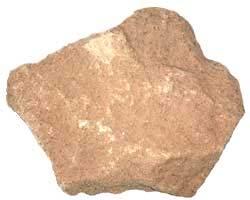
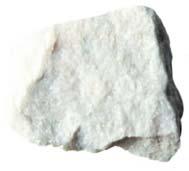
(c) Slate Marble
Fig.2.2: Different types of rocks (a) igneous, (b) sedimentary, and (c) metamorphic
Metamorphic rocks are formed by the alteration of existing rocks by the action of extreme heat and/or pressure and/or permeating hot gases or liquids. The action of heat alone causes thermal metamorphism.
Metamorphic rocks are called tertiary rocks because they are formed from primary (igneous) and secondary (sedimentary) rock types. Slate and marble are examples of metamorphic rocks.
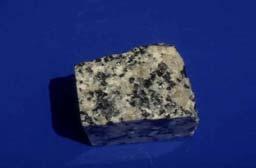
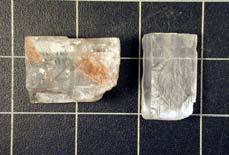
The rocks undergo weathering continuously. Weathering occurs by the interaction of physical processes, chemical processes and the biological processes. During physical weathering, large rock fragments are broken into smaller pieces by a solely mechanical process. These physical processes are usually accompanied by chemical
Sedimentary rocks that form the solid debris of erosion and weathering are said to be clastic rocks; sandstone is the common clastic rock. Other sedimentary rocks are nonclastic. For example, limestone, peat.
The Lithosphere
15
processes, which produce changes in the nature and the composition of rocks. The chemical processes take place mainly on the surface of the rock essentially in the presence of water. Therefore, the intensity of chemical weathering is more in tropics than in temperate countries. The living organisms largely contribute in further decomposition of rocks. All these biological processes require water and activities of living organisms are totally dependent on the availability of water.
2.3.2 Sediments
Sediments are the substances that are deposited after transportation which may or may not be altered by weathering. When sediments are hardened into rock like formations such as limestone, sandstone, they are called sedimentary rocks (as explained earlier). When they are not hardened, they remain as sediments.
Four agents are responsible for transporting material from one place to another. These agents are wind, water, ice and gravity.
Wind can shift material such as grains or sand of variable sizes. These could collect in low swell or steep slopes, forming sand dunes. Wind can also shift volcanic ash and soils may be formed from the breakdown of those materials.
Sediments that have been transported by flowing water can be deposited at the bottom of streams, lakes, rivers and oceans. With the flow of water, the sediments also carry a lot of nutrients and, therefore, these sediments are rich in nutrients.
In the polar region of the Earth during summer, the ice melts and the water flowing from the melting ice carries the sediments. These sediments finally build up and form natural parent material from which soil may develop.
Fragments of rock debris detached from heights above and carried down the slopes to be deposited at the base of hill due to gravity may also be the parent material for the development of soils. These deposits are not of great agricultural importance because of their unfavourable physical and chemical characteristics.
2.3.3 Soils
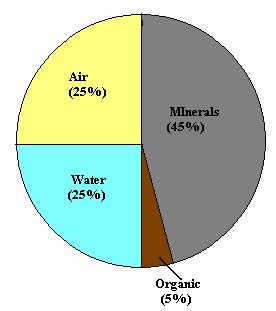
The thin layer of disintegrated rock particles, organic matter, water and air that covers most of the land surface is known as soil. Even though it is a thin layer its significance is enormous. Soil is essential for life and it is one of the most precious material resources on the Earth. It supports life but requires living organisms for its formation as well. All soils are formed of four main ingredients given in Fig.2.3. These are present in different proportions and that determines what the particular soil is like and for what purpose it would be suitable.
Fig.2.3: The normal distribution of four major components in mineral soil
Mineral matter is the core ingredient of soils. It is formed by weathering of rocks and minerals. There is a great variation in the type of minerals within the soil which determine the properties of soil. You will study more about this in Section 2.4. These mineral particles also fulfil some nutritional requirements of plants.
Our Environment and its Components
16
Soil water is held within soil pores or empty spaces between the soil particles. The water is used by plants for various metabolic activities and to maintain rigidity. It also acts as a solvent in soil to make soil solution which facilitates plants in taking their nutrition from soil.
Soil air helps to have good soil structure and provides necessary air for respiration of soil organisms and roots. Its content and composition differ from the air in the atmosphere. Soil air is present in soil pores and is not continuous. Soil air is generally more humid, its carbon dioxide content is higher and its oxygen content is lower than the normal air.
Soil organic matter is an accumulation of partially decayed and partially synthesized plant and animal residues. The organic matter is very important as a source of nutrients for plants and soil organisms, as a soil structural manipulator and as a storehouse for water. This is concentrated mainly on the soil surface and in the uppermost layers of the soil. In brief, soil organic matter controls chemical, physical and biological properties of soil and thereby, helps in better plant growth.
Soil is considered as a biological laboratory with a multitude of living organisms. Every type of natural soil has a varied population of living organisms both plants and animals. They vary in size ranging from large rodents, worms and insects to minute bacteria. The activities of soil organisms range from largely physical disintegration of plant residues by insects and worms to the complete decomposition of these residues by smaller organisms such as bacteria and fungi. These are the processes, which release several of the essential elements from organic combinations to the soil. The soil organisms are therefore involved in a continuous turnover of organic material.
Soil is a precious natural resource as it takes hundreds of years for one centimetre layer of soil of form. You will be able to better appreciate the need to conserve soil, if you understand how it is formed. But before learning about that, you should try an exercise to revise the ideas given so far.
SAQ 1
(a) Why are water and air important in soil?
(b) Give one example each of primary, secondary and tertiary rocks.
2.4 FORMATION OF SOIL
Natural soil is not a simple substance. You have learnt that soil is a complex component derived from rocks and minerals and comprising rock fragments, mineral matter, organic debris, water, air and living organisms in different proportions.
Soil formation depends on the characteristics of the parent rock, the climate, time, topography and the vegetation. Due to the changes of these factors, different soils are formed in different environments.
We now briefly explain the processes, which are involved in the formation of soils.
2.4.1 Weathering of Rocks
The processes involved in the formation of soil are slow, gradual and continuous. The sum total of natural processes resulting in the disintegration of parent rocks is collectively known as ‘weathering’, and it involves physical, chemical and biological agencies.
Physical Weathering
Mechanical forces acting upon the rocks cause their disintegration. Temperature fluctuations cause expansion and contraction of rock surface and result in the formation of cracks and fissures. During cold weather, the water present in rock crevices gets frozen and the formation of ice results in its expansion. This causes
Soils with high organic content are more fertile than those without. This promotes more plant growth and thus more litter and humus. It shows a positive feedback association between fertility and organic content.
The Lithosphere
17
Another very important process of chemical weathering is through hydrolysis in which water dissociates (particularly in the presence of carbon dioxide and organic acids) into H+ and OH ions which act on silicates like orthoclase to produce silicate clays. Oxidation and reduction reactions and carbonation are other important means of chemical weathering.
breaking up of rock. The rock fragments break further into smaller pieces under the action of natural agents such as wind, hail, rainfall and fast flowing streams. You might have seen rounded stone pieces of varying sizes on the beds of rivers and streams, and near other water bodies. The sand particles carried by wind cause brasion of rock surface, due to friction. In the hilly regions, tree roots often penetrate through the rock crevices and in course of time, with the radial growth of roots, the rocks disintegrate.
Chemical Weathering
While getting disintegrated the rocks may also undergo chemical change. Water is an important agent in bringing about chemical changes. It can dissolve or react with one or more components of rock materials. The presence of dissolved materials and warm temperature favour chemical weathering. Some materials like feldspar and mica readily combine with water through the process of hydration and become soft and easily weatherable.
It is important to realise that weathering of rocks is a continuous phenomenon that helps in soil formation. It is, however, a very slow process, and may take hundreds or thousands of years to make a few centimetres of soil, depending on the nature of the parent rock material. Physical weathering of rocks is but the first step in soil formation.
As a result of physical weathering, the rocks are broken down into smaller particles. But this is not the true soil, and plants cannot grow well in the disintegrated rock material alone. The weathered material, however, undergoes further changes, in which the main agents are biological. These changes are described below.
2.4.2 Mineralisation and Humification
During the early stages of soil formation, organic matter in the soil is not very high, as the vegetation and the soil fauna are not much developed. In such soils, algae, lichens, mosses, and other small form of plants grow and contribute organic matter through their death and decay. In due course of time, various types of plants, animals and micro-organisms colonise such soils. They also contribute organic matter to the soil, in the form of wastes or their dead remains. The plant debris that falls on the ground as litter protects new plants and provides shelter to ground dwelling insects and other small animals. This organic debris then breaks down into simpler products. This breakdown process, also known as decomposition is brought about by different kinds of micro-organisms such as bacteria, fungi, and Actinomycetes. They break the organic substances into various compounds such as polysaccharides, proteins, fats, lignin, waxes, resins and their derivatives. These compounds are further broken down into simple products such as carbon dioxide, water and minerals. This latter process is called mineralisation. The residual incompletely decomposed organic matter left after mineralisation is called humus and the process of its formation is termed humification.
Humus is an amorphous, colloidal and dark substance that is the source of energy and nutrients for most soil micro-organisms. Humus is important for good soils, as it gives the soil a loose texture ensuring better aeration. Being colloidal in nature, it has a great capacity for imbibing and retaining water and nutrients. Humus greatly improves the soil fertility.
To understand the complex nature of soil, let us examine the features of a soil profile.
2.4.3 Soil Profile
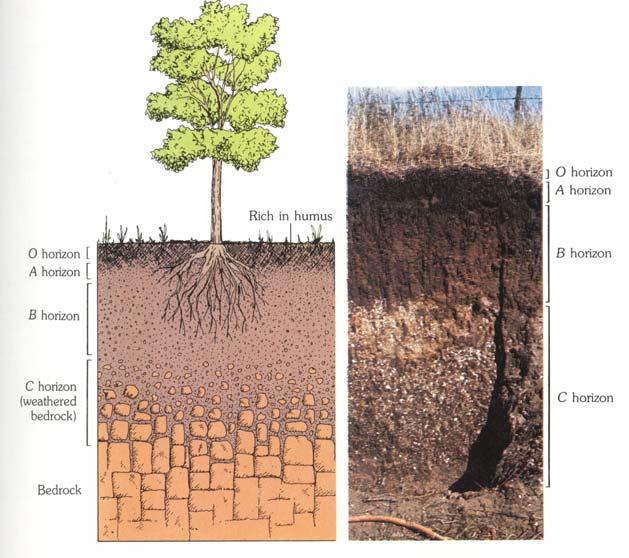
If we were to dig deep (up to a few metres) into soil, we would be able to see many layers in a vertical section of the soil (Fig. 2.4). These horizontal layers (horizons) are of varying thickness. However, these can be reasonably differentiated on the basis of colour, texture, structure and chemical characteristics. Such a vertical section of soil from top mature soil to the underlying bedrock is called a soil profile.
Our Environment and its Components
18
Fig.2.4: A typical soil profile
As you can see in Fig. 2.4, in a soil profile, the horizontal layers are named from top to bottom as A, B and C. The top soil is called A-horizon and the sub-soil is called B-horizon. The region of semi-broken parent rock beneath it is called C-horizon
The top fertile soil is very rich in organic matter representing different stages of disintegration and decomposition. There is a layer of organic matter comprising loose fallen leaves, twigs and organic debris still intact or largely undecomposed, accumulated above the soil surface. It is referred to as the O layer. Below it is the layer comprised of partly decomposed organic matter, where the identity of the organic matter cannot be made out. Fully decomposed organic matter, i.e., humus enriches the soil by mixing with the mineral components to form soil aggregates or crumbs. It is dark in colour and plant roots thrive in this layer of soil. Horizon C represents weathered parent material, which has not become true soil. The bottom layer is the bedrock that provides the parent material.
2.5 PROPERTIES OF SOIL
So far you have learnt how soil is formed and what it is made up of. You know that soil supports all plant life on the land and maintaining soil fertility is an important concern today.
Soil fertility or soil quality in relation to crop growth is determined mainly by its physical, chemical and biological properties. Some properties may influence soil quality to a greater extent than others. Therefore, you should have some idea of soil properties and their effect on productivity.
In this section we discuss some important physical and chemical properties of soil.
2.5.1 Physical Properties
The colour, size of soil particle, texture, structure, temperature, porosity, aeration and consistency are the physical soil properties that characterize soil quality. We shall explain these briefly.
a) Soil colour
It is the most obvious physical property of soil. It varies widely depending on the nature of parent material, organic matter content, climate, drainage conditions and aeration.
Soil erosion has the opposite effect to formation on profile by removing much if not all of the soil (A horizon). The B, C and D horizons are often not seriously affected, but topsoil takes a long time to get established and while erosion continues it is difficult to re-establish the A horizon. Long-term severe erosion can cause the loss of B and C horizon too, ultimately exposing the bedrock.
The Lithosphere
19
The red colour of a soil is due to the presence of iron compounds or manganese dioxides. Since unhydrated iron oxides are relatively unstable under moist conditions and cannot exist in poorly drained soil, red colour usually indicates good drainage and aeration. Well-developed red coloured soil has good drainage and aeration. Such soils are relatively old or at least that the soil material has been subjected to relatively intense weathering for a long period. Well drained yellow soils have small amounts of organic matter and other colouring material such as iron oxides, are mixed up with large amounts of whitish sand. Other factors being the same, yellow colour is more common than red colour in regions of high humidity. Gray or whitish soils have several substances such as, quartz, kaolin and other clay minerals, CaCO3, gypsum, various salt and compounds of ferrous ions but a very low content of organic matter and iron in the soils. In arid and semi-arid areas, soil may be white or nearly white because of the very high content of CaCO3, gypsum or other salts.
The size of particles and their proportions in soil influence soil characteristics indirectly, by affecting the porosity, drainage, aeration, water infiltration consistence, etc. Usually soil is separated into at least three size fractions, namely: sand, silt and clay
In Table 2.1 we give the international system of classification of soil particles size. Table 2.1: Size limits of soil separates according to International scheme of analysis (Adapted from U.S. Department of Agriculture Handbook No. 18 Soil Manual 1952)
Name of separate Diameter (mm) Coarse sand (I) Fine sand (II) Silt (III) Clay (IV)
2.0 - 0.2 0.2 - 0.02 0.02 - 0.002 Below 0.002
The word soil separates is preferred to soil particles at this stage to accommodate the fact that some of the separations are not of particle nature.
The mechanical composition of a soil is the “weight percentage of the mineral matter that occurs in each of two or more specified size fractions”.
b) Soil texture
The proportion in which sand, silt and clay occur together in any soil determines the ‘feel’ of the soil, or more correctly, the texture of the soil. Based on the texture, three broad groups of soils are recognized: sands, loams and clays. In the field, the texture is determined by the feel of the moist soil by rubbing it between the thumb and forefinger. The sand particles are gritty. The silt has a floury or talcum-powder feel when dry, and is only moderately plastic and sticky when wet. Persistent cloudiness and stickiness is generally imparted by clay.
Sands include all soils in which the sand separates make up 70% or more of material by weight. Loams are mixtures of sand, silt and clay in about equal proportions. Clays have at least 35-40% of the clay particles.
Our Environment and its Components
20
Within each of these three main groups, a number of additional classes have been recognized (Fig. 2.5).
One point has to be clearly understood in assigning soils to different classes. The soils are designated to soil classes and named according to the separate or separates which contribute most to their characteristics. This does not mean that a class is necessarily named after the separate which is present in the largest quantity. It takes a very large quantity of the coarser particles to exert as much influence on soil properties as a comparatively small quantity of the finest particle, clay. Clay is the most potent separate in imparting its properties to a mixture of separates, and hence the adjective clay is added to the class names of many soils which contain a higher percentage of the other separates than they do of clay.
Fig.2.5: Percentages of sand, silt and clay in the principle textural classes of soil
SAQ 2
c) Soil structure
The term texture refers to the relative proportion of individual particles in a soil mass, but when the arrangement of the particle is being considered, the term soil structure is used. In other words, soil structure describes the aggregation of primary soil particles (sand, silt and clay) into compound particles, or clusters of primary particles.
If each particle in a soil functions as an individual without attachment to any other particle, then this condition is called single-grained. Loose sand is a good example of this type. The binding influence of organic matter helps in building up weak aggregations. If the colloidal material (such as clay) in the soil is considerable, it makes the soil denser and upon drying, it forms very large, irregular and featureless clods. This condition is called massive. When this soil is too moist, the cementing material of the aggregation is so soft that the aggregates are destroyed. The particles readily slide over one another, smaller ones slipping
The Lithosphere
Fill in the
the following statements: i) Red
of ______________. ii) Yellow
1. ______________________ 2. ______________________ iii) Light
low _____________________
blanks in
colour of soil indicates presence
soils indicate
coloured soils indicate that the soils have
content.
21
in between larger ones to create a compact mass dominated by a massive condition. The soil is then said to be puddled.
Soil structure influences moisture and air relationships, water movement in soil aeration, bulk density, porosity, availability of plant nutrients, action of microorganisms and plant growth. In fact, by ploughing, cultivating, draining, liming and manuring a field, a farmer manipulates the soil structure for better crop growth.
SAQ 3
Define the term soil structure. How is it different from soil texture?
d) Soil consistence and porosity
An important physical property of soil is soil consistence. Terms commonly used to describe soil consistence are loose, friable, firm, soft, harsh, plastic and sticky.
The portion of soil not filled with solid matter but which may contain air or water, is termed pore space. As you have just read, it depends on both the texture and structure of the soil and also on the shape of the particles. A high content of organic matter increases pore space. Pore space exists not only between soil grains, but also between aggregates. Therefore, medium-textured soils high in organic matter and porous aggregates of particles.
The size of pores is as important as pore space. The total pore space in a sandy soil may be low, but a large proportion of it is composed of large pores which are very efficient in the movement of water and air. This also accounts for their low water-holding capacity. In contrast, the fine-textured silty and clayey loam soils have more total pore space and a relatively large proportion of small pores. This increases their high water-holding capacity as water and air move through such soils with difficulty.
e) Aeration
A soil with satisfactory aeration should have:
• Sufficient space devoid of solids, and
• Ample opportunity for the easy and ready movement of essential gases into and out of these spaces.
Under actual field conditions, two situations can give rise to poor aeration in soil:
• When the moisture content is excessively high, with little or no room left for gases, and
• When the exchange of gases with the atmosphere is not sufficiently rapid where the concentrations of the major soil gases, O2, in particular may not be kept at desirable levels.
The latter may often occur even when sufficient total air space is available.
Excess moisture very often leads to waterlogged conditions. This may be temporary, but nevertheless, often seriously affects plant growth. Low areas in a field of even, flat ground with depressions, in which water tends to stand for a short while, are good examples of this condition. Such complete saturation of the soil with water can be disastrous for certain plants even for a short time.
Compared to the atmosphere, soil air is usually much higher in water vapour content, being essentially saturated except at or very near the surface of the soil. The concentration of gases such as methane (CH4) and hydrogen sulphide (H2S) which are formed by organic matter decomposition is somewhat higher in soil air.
Our Environment and its Components
22
f) Soil temperature
Plant growth as well as chemical and biological activities in the soil is greatly influenced by soil temperature. Plant growth usually becomes slow at about 15 18°C. Nitrification does not begin until the soil temperature reaches about 18°C and reaches a maximum between 45 50°C.
The optimum temperature for seed germination, as might be expected, varies widely, being low for certain crops and high for others. The chemical processes and activities of micro-organisms which convert plant nutrients into available forms are also influenced by temperature.
The amount of heat absorbed by soils is determined primarily by the quantity of effective solar radiation reaching the Earth (Fig. 2.6). The latter in any particular locality depends fundamentally upon its climate. In addition, the amount of energy entering the soil is affected by other factors such as colour of soil, slope and the vegetative cover of the site under consideration.
Dark soils are well known to absorb more energy than light coloured ones. Red and yellow soils are also known to show a more rapid temperature rise than those that are white. In the Northern Hemisphere soils which are located on southern and south-eastern slopes warm up more rapidly in the morning, than those on flat land or on the northern slopes. The reason here is that they are more nearly perpendicular to the Sun’s rays and hence, a maximum amount of radiant energy strikes a given area. The farmers of the Northern Hemisphere therefore select soils with a southern or south-eastern exposure for the growing of early season (after winter) vegetables and fruits. Whether the soil is bare or covered with vegetation is a factor that markedly influences the amount of insulation received. Bare soils warm up quickly and cool off more rapidly than those covered with vegetation or with artificial mulches. The cooling effect of forests is universally recognized.
absorption reflection refraction
radiant energy
atmosphere
radiation conduction
reflection absorption soil surface conduction convection heat of vapourization
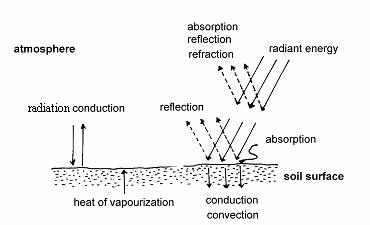
Fig.2.6: A diagram showing the acquisition, loss and movement of heat in soils
SAQ 4
What is the relationship between soil temperature and biological activities in the soil?
Having acquainted you with some important physical properties, we turn our attention to some important chemical properties of soil.
2.5.2 Chemical Properties
The study of chemical properties of soil is very important from the point of view of crop production as it gives the basic idea about how chemical nature of soil helps to have good fertile soil.
The Lithosphere
23
pH value of a solution is the logarithm of the reciprocal of the hydrogen ion (H+) concentration. It may be written as pH = log [H+]
The presence of micro-organisms and development of plants depend on the chemical environment of soil and its capacity for reaction. There are three types of soil reactions: acidic, alkaline and neutral.
Acidity or alkalinity for soil can be expressed on the pH scale. The units of this scale are called
pH values
A soil is acidic if the pH is below 7 to 1 and alkaline if it is above 7 to 14. A soil with pH 7.0 is neutral. The soil pH influences nutrient absorption and plant growth. The nutrient availability to plants is affected by the presence of toxic ions in soil. You will learn about this aspect in some detail in this course and other courses.
Box 2.1: Effect of pH on soil
The elements required in large amounts from soil are nitrogen and potassium. High pH tends in particular to affect the plant adversely by reducing the availability (solubility) of manganese and iron to the root system. Phosphorus availability is also reduced due to formation of calcium phosphates and low pH. High soil acidification tends to affect the plant adversely through increased availability of aluminium and also manganese.
The pH is also affected by the microbial communication of the soil. The most acidtolerant S-oxidising bacteria can grow at pH 1 even while the most alkali-tolerant Streptomycetes can grow at pH 10. In general, most of bacteria thrive at a pH of 7 and most of fungi prefer the pH range of 2 to 7. Some Actinomycetes can grow at pH values lyimg from 7 to 10.
Electrical conductivity (EC) of a soil suspension is used to estimate the concentration of soluble salts in the soil. The soluble salts consist predominantly of cations Na+, Mg++ and Ca++ and the anions Cl , SO4 and HCO3 . Soluble fertilizers may also contribute other ions such as K+, NH4+ and NO3 . High electrical conductivities correspond to high concentration of soluble salt in the soil and are undesirable for the growth of most plants.
SAQ 5
a) Why do you think soil pH is very important?
b) What do you understand by the term electrical conductivity of soil?
Colloidal soil particles such as humus and clay colloids are normally negatively charged and they attract positively charged ions cations or bases which are also replaceable. Therefore, they are called exchangeable bases or exchangeable cations and the phenomenon is known as cation exchange. Cation exchange reactions are reversible.
Therefore in general the cation exchange is the interchange between a cation in solution and other cation on the surface of any active material such as clay or organic matter.
The composition of cations exerts a powerful influence upon both the chemical and physical attributes of a soil. Cation exchange plays an important part in making nutrients available to plants and micro-organisms. By cation exchange, hydrogen ion ( H+) from the root hairs and micro-organisms exchange with the adsorbed nutrient cations on the colloidal micelles directly or the nutrient cations are forced into the soil solution where they can be assimilated by the adsorptive surface of roots and soil micro-organisms. In the top 10 cm, soil usually contains about 1-3% carbon in organic compounds; there is often more in soil under grass or trees, forests and up to about 30% in peat.
Plant residues, as litter, branches, root detritus and exudates, comprise by far the largest fraction of the carbon entering the soil. Microbes and animals also contribute
Our Environment and its Components
24
to soil carbon supply under natural conditions. The tops and roots of the trees, shrubs, grass and other native plants annually supply large quantities of organic residues. Even with harvested crops, one tenth to one third of the plant tops commonly fall to the soil surface and remain there or are incorporated into the soil. Naturally, all of the roots remain in the soil.
These organic materials are decomposed and digested by soil organisms, and become part of the underlying soil by infiltration or by actual physical incorporation. Accordingly, the residues of higher plants provide food for soil organisms, which in turn create stable compounds that help maintain the soil organic levels. Animals usually are considered secondary sources of organic matter. As they attack the original plant tissues, they contribute waste products and leave their own bodies as their life cycles are consummated. The soil animals such as Earthworms, termites and ants also play an important role in the translocation of soil and plant residues.
Box 2.2: Soils of India
A wide range of soils is present in India, each type being particular of a specific locality. The major soil types recognizable in the Indian subcontinent are given in Fig. 2.7. Soil-types in India, however, can be classified into three groups. The first group comprises of the alluvial, black and red soils, which are basically fertile and are arable and cultivatable. The second group consists of the peaty and marshy, the saline and alkaline soils which are potentially arable. The third group is the laterite and forest and hill soils, which are not at all suitable for cultivation.
Black soil
Fig.2.7: Types of soils found in the Indian sub-continent
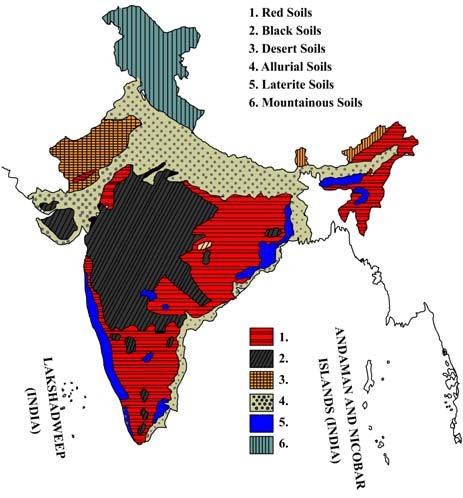
The main alluvial area is found in the Indo-Gangetic plain and the Peninsular regions and covers about 78 mha (about 24% of the total land area). Black soil is found in the north-western regions and in the Deccan lava areas and Tamil Nadu. Black soil covers approximately 51.8 mha. Red soils are particularly rich in potash and are found in an area of about 51.8 mha in northern and central India. The peaty and marshy soils are found in the Bengal deltas, Saline and alkaline soils in the semi-arid regions of Bihar, U.P, Gujarat, Punjab and Rajasthan and cover about 37 mha. Desert soils are found in the minimum rain receiving areas of Gujarat, Punjab and Rajasthan. Laterite soil is common in the low hills of Andhra, Karnataka, Kerala, Madhya Pradesh, Orissa and Assam and covers about 12.6 mha.
2.6 SOIL BIOTA AND SOIL FERTILITY
Soil fertility is defined as the ability of a soil to supply essential elements for plant growth. In addition to air and water, plants require 16 elements as nutrients. These are supplied by the soil. Soil organisms play a key role in making these nutrients available for plant growth through decomposition of organic matter. Therefore, a study of soil organisms is essential to understand their role in maintaining soil fertility. A large number of soil organisms exist in the soil and are categorized as shown in Fig. 2.8.
The Lithosphere
SOIL ORGANISMS Animals Plants 1.
2.
3.
4.
5.
6.
Red soil
Desert soil
Alluvial soil
Laterite soil
Mountainous soil
25
Fig.2.8: Categories of soil organisms
The micro-organisms isolated from soil can also be placed in two broad divisions: the indigenous (or autochthonous) species that are true residents of the soil and the invaders (or allochthonous) organisms. Indigenous populations may have resistant stages and endure for long periods without being active metabolically. During favourable conditions they participate in the bio-chemical functions of the community. Invader organisms, by contrast, enter the soil with precipitation, diseased tissues, animal manure or sewage sludge. They may persist for sometime in a resting form but do not participate in a significant way in ecologically significant transformations or interactions. Soils may harbour pathogenic micro-organisms depending on the nature of animal and plant tissues and waste it contains. These micro-organisms may also cause infections in man.
We now discuss the various micro and macro-organisms present in soil.
2.6.1 Micro-organisms in Soil
Soil is the home of a greater variety of micro-organisms than any other environment. One of the most striking features of the soil microflora is its diversity. Almost any soil sample will consist of a variety of fungi, bacteria, cyanobacteria, algae and viruses. The average relative proportions of various kinds of micro-organisms in soils are shown in Fig. 2.9.
Fig.2.9: The average relative proportions of various kinds of micro-organisms found in soil
Our Environment and its Components
26
Micro-organisms colonise only a part of the available surface area of the soil as shown in Fig. 2.10.
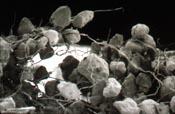
Fig.2.10: Diagrammatic representation of microbial colonisation on soil particles
We now briefly describe each category of soil micro-organisms.
Bacteria are the most abundant group of organisms in soils. One gram of fertile soil may contain more than 109 bacteria. Bacteria tend to grow as individuals or microcolonies (often less than 10 cells) on the surfaces of soil particles and roots. On the roots, bacteria are concentrated along the epidermal cell boundaries possibly where exudation is greatest. They are of great importance in various soil processes such as cycling and transformation of carbon, nitrogen, sulphur and other minerals. They are also responsible for much of the decomposition of cellulose, protein, pectin etc. Some of them are harmful either competing with plants for nutrients or causing diseases of plants and other soil organisms. Many bacteria are rod shaped.
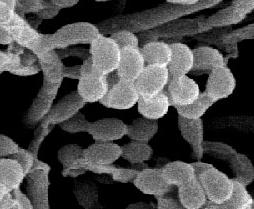
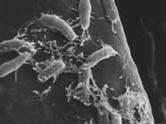
Most bacteria are heterotrophs including those which can use many organic compounds such as sugars, cellulose, chitin, organic acids, alcohols and hydrocarbons. Some are autotrophs which include nitrifiers, sulphur oxidisers and iron bacteria. Many are aerobes and some are anaerobes. Depending on the soil temperature they can be mesophilic or thermophilic.
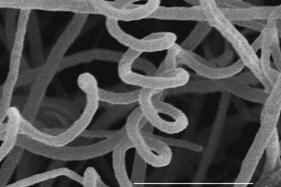
Cyanobacteria (Fig. 2.11) are often primary colonisers and play a key role in the transformation of bare rocks to soil. Some species form continuous mats on the soil surface under damp conditions to an extent that distinctive visible blooms appear at the surface. Extensive blooms bind soil particles together into large aggregates. Some of these are more common inhabitants in water logged areas. This group is of special interest because many of them are nitrogen fixers and thereby contribute to soil fertility.
Most common species of bacteria are those of Bacillus, Clostridium, Arthrobacter, Pseudomonas, Rhizobium, Azotobacter, Nitrobacter
The Lithosphere
(a) (b) (c) (d)
27
Fig.2.11: Some common Actimomycetes (a) Nocardia (b) Streptocyces sp and (c) soil particles held by cynobacteria (d) Rhizobium in soil.
Actinomycetes are present in surface soil and also in the lower horizons to considerable depths. In abundance, they are second only to bacteria (Fig. 2.11).
Actinomycetes are abundant in neutral or alkaline soils but they cannot tolerate acid conditions. Water logging and anaerobic conditions limit the development and spread in soils. Actinomycetes include species of Nocardia, Streptomyces and Micromonospora
Fungi are equal in importance to bacteria in contributing to soil processes and plant nutrition in neutral and alkaline soils. They usually tolerate acid conditions better than bacteria and for this reason are more important than bacteria in acid soils.
Some of the more common species of micro fungi are Penicillium, Mucor, Rhizopus, Cladosporium, Fusarium, Aspergillus, Trichoderma, Cephalosporium, and Curvularia
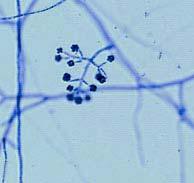
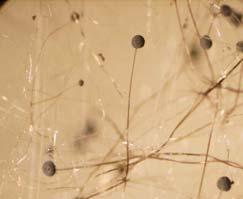
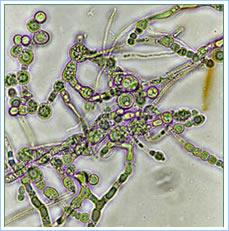
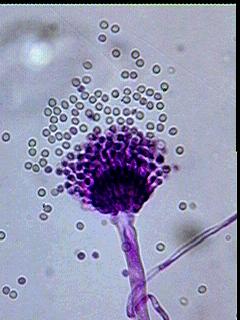
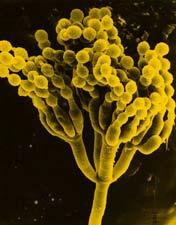
Hundreds of different types of fungi inhabit the soil. Most soil fungi contribute to the essential processes of decomposing complex organic constituents of plant tissue in soil such as cellulose, lignin and pectin. Fungal mycelia form extensive networks around soil particles and improve the physical structure of soil. They are most abundant near the soil surface where oxygen is readily available. They are present as both mycelia and as spores. Fungi follow the distribution of organic matter and thus are more numerous in the litter zone.
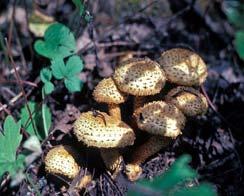
They range from microscopic kinds to the toadstools with their large and complex fruit bodies (Fig. 2.12).
Soil also generally possesses a distinct yeast flora consisting of species not common in other environments. Species of yeasts characteristic of leaf surfaces may also be washed down by rain into the upper layers of soils. Best known macrofungi are the basidiomycetes which include mushrooms, toadstools, puff balls, stinkhorns, birdsnest fungi and others. Most of them are saprophytes playing an important role in litter and wood decay. Soil also contains mycorrhizal fungi.
Species include Hormidium, Pleurococcus, Chlorella, Chlamydomonas and diatoms such as Pinnularia, Navicula
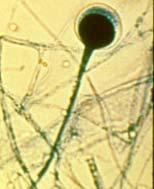
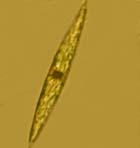
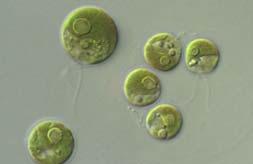
Fig.2.12: Some common soil fungi. (a)Penicillium sp (b) Aspergillus sp (c)Mucor sp (d) Rhizopus sp (e)Tricoderma sp (f) Toad stool fruiting bodies .
Algae are found most abundantly either on the soil surface or just below the surface, provided that the soil is sufficiently moist. In desert, denuded and other barren soils algae contribute to the accumulation of organic matter in the soil. They also have the ability to corrode and weather rocks. Green algae are the group most commonly present in soils.
Unicellular algae occur singly in water films. Filamentous algae may occur in almost single species as discrete colonies which can be seen with the naked eye (Fig. 2.13).
Our Environment and its Components
(a) (b) (c) (d) (e) (f) 28
Chlorella sp
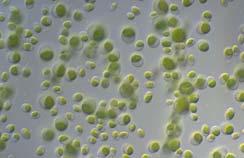
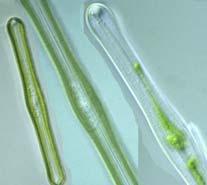
Fig.2.13: Some common soil algae
In general sense, the algae cannot be considered as contributing appreciably for soil fertility. One of the major algal functions is the generation of organic matter from inorganic substances. Algae also contribute to soil structure and erosion control. They bind together soil particles and by forming surface bloom reduce erosion losses.
Viruses do not ‘live’ or multiply in soils. They only survive by some means in the soil. Some of the more stable plant viruses, e.g., tobacco mosaic virus may remain infective in the soil for several months or longer. Root-infecting plant viruses are actively transmitted through the soil by vectors organisms such as nematodes and fungi (e.g., tobacco rattle virus by nematodes and tobacco necrosis by fungi). These viruses persist for varying periods of time in the soils.
Very little information is available on the occurrence or survival of animal viruses in soils. There are a number of types of bacteriophages or bacterial viruses which can infect the bacterial species living in soils. Whenever a bacterial species is present in soil, its phage also can usually be found. There are also viruses which infect and cause lysis of cyanobacteria, soil fungi, algae and protozoa.
Protozoa do not constitute a large portion of the biomass of the microbial community. They are found in greatest abundance near the surface of the soil particularly in the upper 15 cm. Generally the population is most dense where bacteria are especially numerous in the soil profile. The vast majority of these protozoa are phagotrophic i.e., they directly feed upon microbial cells or other particulate matter. Some protozoa are illustrated in Fig. 2.14.
Soil protozoa are classified on the basis of their means of locomotion. Some move about by virtue of flagella (e.g., Tetramitus) others by means of short cilia (e.g., Colpoda), and a third group by temporary organelles known as pseudopodia (e.g., Biomyxa, Euglypha).
Fig.2.14: Some common soil protozoa (× 400)
To what major groups do the following soil micro-organisms belong? i) Mucor
The Lithosphere
Chlamydomonas sp
Pinnularia sp
Euglypha Colpoda Biomyxa Tetramitus
SAQ 6
29
ii) Chlorella
iii) Penicillium
iv) Rhizopus
v) Streptomyces
vi) Nostoc
So far, you have learnt that micro-organisms are very important and useful in the decomposition process and also the end product of the decomposition process is the organic matter. For many centuries, it had been observed that the productivity of a soil was more or less directly related to the amount of organic matter in that soil. It is common knowledge that farmers all over the world, in designating soils which they consider highly fertile, usually select the dark coloured ones. They make this choice because experience has taught them that such soils are usually more productive than the light coloured ones. Hence in selecting dark coloured soils, farmers are involuntarily acknowledging the value of organic matter in soil.
In general, we can begin with the statement that organic matter exerts a controlling influence on soil properties, including productivity, and without it, the surface layers of the Earth’s crust could hardly be correctly designated as soil. The organic matter content of soil is one of the most important and also most easily exhausted resources. Soil organic matter from living or dead plant and animal residue is a very active and important portion of the soil. It is the nitrogen reservoir, it furnishes large portion of soil phosphorus and soil sulphur; and protects soil against erosion; and it loosens up the soil to provide better aeration and water movement.
As a source of organic matter, the roots of higher plants are of extreme importance since they supply much more original tissue than all of the other organisms combined. In fact, the organisms of the soil might be divided into two distinct and, in some respects, opposing groups (1) those that supply organic residues, and (2) those that are engaged primarily in decomposing such residues. Plant roots are important representative of the first group, while millipedes, springtails, Earthworms, bacteria, fungi, and actinomycetes are main organisms in the second type of activity.
2.6.2 Macro-organisms in Soil
The larger animals resident in the soil are: 1) insects; 2) millipedes and centipedes; 3) woodlice; 4) mites and spiders; 5) slugs and snails; 6) Earthworms; 7) rodents and insectivora.
The activity of rodents results in the pulverization, granulation, and transfer of very considerable quantities of soil. Insect-eating animals, especially moles, are equally important in many cases. While the activities of various animals are usually unfavourable to agricultural operations, the effect on the soil is often beneficial and analogous to that of tillage. Not only do these animals incorporate much organic matter into soils but also their burrows serve to aerate and drain the land.
A great variety of insects is found in soils. Some of them have very little influence on the organic matter, while others, such as Earthworms, ants, beetles, springtails, etc., appreciably affect the humic constituents, either by translocation or by digestion. In some regions, the work of ants is often especially noticeable. In association with these insects are millipedes, sowbugs, mites, slugs, and snails, organisms that use more or less undecomposed plant tissue as food. They thus serve to initiate the decomposition processes that are continued by bacteria and fungi.
One of the most important acroanimals of the soil is the ordinary Earthworm. The amount of soils that these creatures pass through their bodies annually may amount to as much as 15 tons of dry Earth per acre. During the passage through the worms, not only the organic matter, which serves the Earthworm as food, but also the mineral constituents are subjected to digestive enzymes and to a grinding action within the animals.
Earthworms are important in other ways. The holes left in the soils serve to increase aeration and drainage, an important consideration in soil development. Moreover, the
Our Environment and its Components
30
worms bring about a notable transportation of the lower soil to the surface. They also mix and granulate the soil by dragging into their burrows quantities of undecomposed organic matter, such as leaves and grass, which they use as food. In some cases, the accumulation is surprisingly large. In uncultivated soils, this is more important than in ploughed land where organic matter is normally turned under in quantity. Without a doubt, Earthworms have definitely increased both the size and stability of the soil aggregates, especially in virgin soils.
2.7 BENEFICIAL EFFECT OF ORGANIC MATTER ON SOIL
There is no doubt that highly decomposed forms of organic matter, if present in appreciable quantities have a marked influence on the chemical, physical and biological properties of mineral soils. However, a liberal quantity of humus aids in maintaining a desirable structural condition in all classes of soils.
2.7.1 Role of Organic Matter in Soil
Many of the useful effects of organic matter on soil are purely physical. Organic matter increases water-retaining power of soils, decreases water runoff losses, improves aeration especially on the finer-textured soils, and produces a better soil structure (tilth) by encouraging granulation. All these effects will undoubtedly reduce the damage that might be done by water or wind erosion, to a particular soil type. Organic matter serves to bind sandy soils which are easily taken away by wind, thus reducing wind erosion.
Humus as a part of organic matter has a very high adsorptive capacity and acts like a sponge. Soil water is also retained in the small pores or air spaces in between the well granulated soil particles. Humus also tends to pull the sand particles together, thereby increasing water retention. In clay soils, the pore spaces between the mineral particles are frequently too small to permit sufficient aeration and movement of water storage. Organic matter improves this condition by forcing soil particles apart, thus increasing the ability of clay soils to retain water. Thus, you will realize that humus increases the water-holding capacity of mineral soils.
You may recall that ‘tilth’ refers to the physical condition of a soil. A soil in good tilth is easily cultivated, loose and mellow, and is characterized by being well granulated. Sandy soils are not well granulated because they lack sufficient binding material to hold the particles together. Organic matter added to sandy soils promotes granulation greatly by binding soil particles together into clusters, thereby improving soil tilth. Organic matter makes clay soils less sticky, enables them easier for roots to penetrate. The degree of soil aeration, which is so vital for root growth and which is determined to a large extent by the structure or tilth of the soil, is greatly improved by the presence of organic matter.
The dark colour of soils is largely due to organic matter. It is known that darkcoloured surfaces absorb radiant energy more than lighter coloured surfaces. Thus, dark-coloured soils could warm up faster than lighter-coloured soils, which may be similar in all other respects, including the moisture content. In crop-sown fields, this would hasten seed germination and a more rapid early growth of plants, which may be highly desirable.
SAQ 7
How do you explain the high adsorptive capacity for water of humus?
The Lithosphere
31
Many plants are nowadays grown for cover and green manuring purposes. They aid in conserving soil organic matter by virtue of the fact that they decrease soil erosion losses: they conserve plant food-nutrient elements by reducing leaching losses; when turned under, they increase the supply of soil organic matter and with leguminous green manure crops, the total supply of nitrogen is increased, provided that the legumes have been inoculated with N-fixing bacteria.
2.7.2 Sources of Soil Organic Matter
In addition to plant-litter and dead plants, dead animals and soil organisms, the moulds, fungi and bacteria contribute to the organic matter of most soils in appreciable quantities.
Human beings influence the amount of organic matter in soils a great deal by adding it to the soil in many forms. Crop residues are important sources of organic matter added back to soil. The leaves, stems, roots and mature plant material such as straw, stalks of cereals, stems of crops etc. are ploughed back into farmlands purposely. They decompose slowly and nitrogen or other plant nutrient elements are released within a long period. Green manure plants are also important sources of organic matter in soils.
Composts of plant residues are also excellent sources of organic matter, if they have been well prepared and if sufficient nitrogen, phosphorous and lime have been used to bring about rapid decomposition. When compost material is added to soil, they leave considerable amount of organic matter in the soil and some of the nutrients they contain are readily liberated in unavailable form.
Another source of organic matter in soil comes from the use of organic manures. Dried blood, faecal matter, cotton seed meal, sewage sludge, etc. are widely used for improving soil fertility.
SAQ 8
2.7.3 Chemical and Biological Functions of Organic Matter in Soils
Organic matter serves as a ‘storehouse’ of plant nutrients. As the organic materials are decomposed, the plant nutrients are gradually released. Most of the soil nitrogen is held in organic form. Decomposition of organic matter favours the release of plantfood elements from the soil minerals. In this process various organic and inorganic acids are produced having pronounced dissolving effect on soil minerals thus organic matter in soil increases its productivity.
Organic matter in soil promotes the growth of micro-organisms. It serves as a source of food and energy for the majority of the soil micro-organisms. There is some evidence that certain organic -N compounds can be directly absorbed by micro-organisms as well as higher plants. For example, some amino acids such as alanine and glycine can be absorbed directly. The beneficial effects of even exceedingly small amounts of organic compounds added to soil might be explained by the presence of growth-promoting substances. It is more than likely that vitamin-like compounds are formed as organic decay proceeds and that these may at times stimulate both higher plants and micro-organisms.
Humus is usually concentrated in the uppermost soil layers and diminishes rapidly in the sub soil. This is readily explained by the fact that most of the organic residues in both cultivated and uncultivated soils are incorporated in or deposited on the surface. This increases the possibility of organic matter accumulation in the upper layers.
Since most of the organic matter is found in the topsoil, any erosion that occurs will result in significant organic matter losses. Furthermore, it is the topsoil that is disturbed by various tillage operations, which greatly increase the loss in organic matter and nitrogen.
With this discussion, we end this unit and summarise its contents.
2.8 SUMMARY
• The lithosphere is an important component of the environment. It is composed of rocks, sediments and soils.
Our Environment and its Components
Why is green manure a very important source of organic matter in soil?
32
• Soil is a thin layer of disintegrated rocks particles, organic matter, water and air that covers most of the land surface.
• Soils are formed by weathering of rocks by several natural, physical and chemical processes and over a long period of time these process coupled with decomposition and mineralisation by a variety of organisms. Soil organisms turn the inert mineral material into living soil. The vertical section of soil from top mature soil to the underlying bedrock is called a soil profile.
• Soils have different physical and chemical properties such as texture (sandy clay) structure (arrangement of soil particles), colour, and consistence with varying soil porosity and water holding capacity. Soil pH and cation exchange capacity affect the nutrient availability from soil to plants.
• Soil is the home of a wide variety of flora and fauna as well as plant roots and other small animals. These organisms are very important and useful in decomposition and mineralisation processes of soil organic water.
• The presence of organic matter and humus is beneficial for the physical and chemical structure of soil and increases its productivity.
2.9 TERMINAL QUESTIONS
1. List the conditions that help to develop good and bad aeration in the soil.
2. List the characteristic features of the major groups of soil micro-organisms.
3. How does the size of soil particles affect the quality of soil?
4. How do organic matter and humus affect the soil quality?
5. Determine the texture of your home garden soil and compare it with that of your neighbour’s soil. Comment on the differences.
6. How can you improve the productivity of soil.
REFERENCE
1. Ecology (LSE-02), IGNOU Publication.
The Lithosphere
33
UNIT 3 THE ATMOSPHERE
Structure
3.1 Introduction Objectives
3.2 An Introduction to the Atmosphere Composition of the Atmosphere Stratification in the Atmosphere Atmospheric Pressure
3.3 Radiative Processes in the Atmosphere
Solar Radiation and Energy Balance Absorption in the Atmosphere Natural Global Warming Scattering Albedo
3.4 Mediatory Effects of Atmosphere
Weather and Climate
Seasonal Variations Global Circulation Climate Zones El-Niño Phenomena Climate in South Asia
3.5 Summary 3.6 Terminal Questions
3.1 INTRODUCTION
In Unit 2 you have learnt about the components and features of the lithosphere. We now turn our attention to the atmosphere, which can be described as the envelope of air surrounding the Earth. Life exists on the Earth mainly because of the presence of this envelope of gases around it. The atmosphere helps us in many ways. It maintains the temperature on the Earth’s surface within limits tolerable to plant and animal life. It filters out high-energy harmful radiations coming from the Sun, provides lifegiving oxygen to animals and human beings, and carbon dioxide to plants and trees. It supports the formation of clouds and rain maintaining the hydrological cycle, which provides water to plants and animals. The presence of the atmosphere also makes the earth a place surrounded with sound, and makes flying, both by animals and machines, possible. As such, the atmosphere plays a key role in life on Earth. The atmosphere is a dynamic entity. Its physical parameters such as the pressure, temperature, and relative humidity vary from day to day at a given place and also from place to place at a given time. Such changes are brought about by the ‘chaotic’ nature of the atmosphere, as a result of the uneven heating of the globe by solar radiation, due to the inclination of the Earth’s axis to the plane of its orbit around the Sun. The changes in pressure cause winds to develop, which carry air masses from one place to another. The upward movement of air parcels results in their expansion, which in turn causes the temperature to drop. Similarly, downward movement of air causes temperature to rise. These temperature fluctuations also cause the rainfall patterns to change. An understanding of the atmosphere therefore would require knowledge of not only the radiative, dynamical, chemical and physical processes that take place within it, but also its interactions with land, vegetation and the oceans.
Objectives
After studying this unit, you should be able to:
• describe the composition of the atmosphere;
• describe the stratification in the atmosphere because of variation in temperature, density and pressure;
• describe the seasonal and diurnal variations in solar radiation incident on the Earth’s surface;
• explain the various radiative processes that take place in the atmosphere;
Our Environment and its Components
34
• explain the natural greenhouse effect and the protective role of stratospheric ozone layer;
• explain how winds are generated on a global scale, and the main features of the wind system; and
• describe the climate zones in the world and their main features.
3.2 AN INTRODUCTION TO THE ATMOSPHERE
Our planet is wrapped in a thin envelope of gases forming the atmosphere. In fact, 99% of the atmospheric mass is confined to a layer which in thickness is only 0.5% of the earth’s radius. Nonetheless conditions within this thin layer make life possible on Earth. In this section you will learn that the atmosphere is a mixture of gases, liquids and solids but its composition and conditions can vary from place to place with altitude and through time. We will also discuss the stratification of the atmosphere into different regions based on the variations of temperature.
3.2.1 Composition of the Atmosphere
The atmosphere is primarily composed of two gases, nitrogen and oxygen, which contribute 99% to its composition. The balance 1% comprises a large number of gases, some inert, and some chemically active. Atmospheric gases are often divided in to the major constant components and the highly variable components (Table 3.1). The major and the inert constituents have long lifetimes, while the chemically active gases have short lifetimes. Among the inert gases present are Argon, Helium, Neon, Krypton and Xenon.
The turbulence and chaotic nature of the atmosphere, particularly in the lower atmosphere, keeps the long-lived gases well mixed. As such, their composition or the mixing ratios remains the same as at ground level, up to about 100 km. Although both nitrogen and oxygen are essential to human life on the planet, they have little effect on weather and other atmospheric processes.
Table 3.1: Constituent gases of the atmosphere
Constant Components (Proportions remain the same over time and space)
Percentage
Nitrogen (N2) 78.08
Oxygen (O2) 20.95 Argon (Ar) 0.93 Neon, Helium, Krypton 0.0001
Variable Components (amounts vary over time and space)
Carbon dioxide (CO2) 0.03
Water vapour (H2O) 0-4 Methane (CH4) trace
Sulphur dioxide (SO2) trace Ozone (O3) trace
Nitrogen oxide (NO2) trace
The photo-dissociation or photo-ionisation of the major constituents such as nitrogen, oxygen, carbon dioxide and water vapour produces atomic constituents such as O, N, and H. The chemical reactions between the atomic species O, N and H, and the other constituents produce a large number of compounds such as NO, OH, CO, O3, NO2, NO3, H2, HO2, H2O2, etc. Their concentrations are not more than a few parts per
By the early 1800s, scientists like John Dalton recognized that the atmosphere was composed of chemically distinct gases, which he was able to separate and determine the relative amounts in the lower atmosphere. He found out that the major components were oxygen, nitrogen and a small amount of something that was incombustible (argon) By 1920s the development of the spectrometer led to the gases present in much smaller concentrations such as ozone and carbon dioxide.
The Atmosphere
he
in the matter ged 35
ation
million; yet they play an important role in controlling the energy balance and climate as well as creating a safe environment for people to live in.
One such important minor constituent is ozone (O3) as it absorbs harmful UV-B radiation preventing it from reaching ground level. We will read more on this later. Some others, such as OH, act as scavengers in the atmosphere, removing polluting gases. Most of these constituents are chemically active, and hence have short lifetime. As such, their concentrations are highly variable, determined by local chemistry and dynamics, rather than by a fixed mixing ratio. Their concentrations in the upper atmosphere are highly variable with the hour of the day, seasons and the latitudes. Though the major components of the atmosphere vary little today, they have changed dramatically over the last 4.6 billion years. There was no free oxygen till about 2 million years ago, when photosynthesising bacteria evolved and began utilising the atmospheric CO2 and releasing O2. The amount of oxygen has steadily increased in the atmosphere from 0% then to about 21% today.
The atmospheric loading of particulate matter is mainly natural but air pollution is adding to it. A high loading of atmospheric solids close to the ground can decrease visibility, increase haze, decrease temperature, make buildings look dirty and cause breathing difficulties in people.
The variable components that make up less than 1% of the atmosphere have a far greater influence on both short-term weather as well as long-term climate. For example variations in water vapour in the atmosphere are familiar to us as relative humidity. Water vapour, CO2, CH4, N2O, and SO2 all, have an important property: they absorb heat emitted by the Earth and thus warm the atmosphere, creating what we call the “greenhouse effect” (you will learn more about this in section 3.3). Without these gases the temperature of the Earth would be about 30 degree Celsius cooler! Trace amounts of gases like CO2 make the Earth warm enough to sustain life, global warming on the other hand, is a separate process that can be caused by increased amounts of greenhouse gases in the atmosphere and we will deal with the issue in Block 4 of this course.
The atmosphere also contains minute liquid or solid particles, which are collectively called aerosols. Aerosols are particulates of terrestrial origin that remain suspended in air. Some are emitted direct into the atmosphere, while others are formed within the atmosphere from gaseous precursors. The former includes soil dust particles, dust from industries, fly-ash from power plants, carbonaceous particles from fossil fuel and biomass combustion, sea spray and volcanic eruptions. Among the latter are sulphates, nitrates, and carbonates, derived from respective precursor gases such as SO2, ammonia, oxides of nitrogen and organic compounds.
Aerosols alter the cloud formation process by increasing droplet and ice particle concentrations. They also decrease the precipitation efficiency of warm clouds. Aerosols have rather short lifetime in the atmosphere, and their effectiveness in the above processes depends on their size and composition.
The atmosphere contains moisture to varying degrees depending on the location and time of the day and season. The amount of moisture present in air determines whether a location is habitable or not. The amount of moisture in air at ground level in the tropics where the temperature is high could be as much as 4-5%. Moisture also acts as a carrier of heat energy from the oceans to higher altitudes.
The moisture content in air is generally expressed as a ratio of the actual moisture content and the moisture content required to saturate the air at the same temperature, and this ratio is called the relative humidity. Within a geographical region, the relative humidity can vary from place to place and between daytime and night time. Relative humidity suitable for comfortable living is in the range 60% - 70%. You would have noticed that air-conditioning of a room reduces both the temperature and the relative humidity to a comfortable level.
The atmosphere receives water vapour through the process of evaporation from oceans and other water bodies. This water vapour diffuses upwards, becomes cooler and ultimately reaches the saturation point. Cooling beyond this stage leads to condensation around dust particles known as aerosols acting as nuclei. The latent heat of evaporation is then released to the atmosphere, which has a value of 2,510 J/g at 0oC and 2,259 at 100oC. This is one of the main sources of energy that drives the dynamics of the lower atmosphere.
Precipitation appears either as rainfall or snow, depending on the temperature of the location. Any variation of the rainfall, particularly long spells of droughts induced by various factors such as global warming or El-Niño phenomenon have a direct bearing
Our Environment and its Components
36
on the lives of people. The world is classified into various climatic zones depending on the annual rainfall and its distribution, humidity and temperature. More on this topic will be discussed under Climate Zones later in the unit.
SAQ 1
a) What are the primary chemical constituents of the Earth’s atmosphere? b) What is unusual about its constituents?
3.2.2 Stratification in the Atmosphere
The temperature of the atmosphere is an important factor that determines the climate of the Earth. In this section we will discuss stratification of the atmosphere into different regions based on temperature; factors that control the temperature and its variation with height.
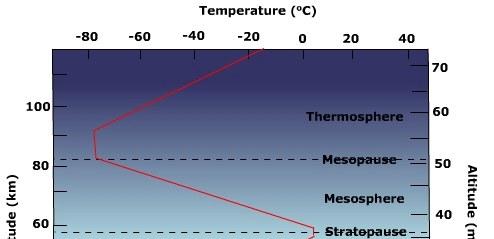
Temperature profile
If we go up a mountain we realise that the air up there is much cooler than the air at the base of the mountain. It wasn’t till the early 1900s that a layer about 18 km above the surface of the Earth was revealed where the temperature changed abruptly and began to increase with altitude. This discovery of the reversal of the temperature led to the division of the atmosphere into four layers with distinct physical properties particularly temperature and pressure (Fig. 3.1).
Troposphere
The lowermost 12 18 km of the atmosphere is called the troposphere. This is where all weather occurs, clouds form and precipitation falls, winds blow, humidity changes from place to place and the atmosphere interacts with the Earth below. Within the troposphere the temperature decreases with altitude at a rate of 6.5°C per kilometre. At the top of the troposphere the temperature decreases to about 60°C. Ozone occurs locally in the troposphere, some of it comes from natural sources but most due to pollution. About 75% of the weight of the atmosphere is confined to this layer and as a result air pressure is the greatest closest to the ground and decreases exponentially with altitude. The troposphere also contains 90% of the moisture and dust within the atmosphere.
The upper boundary of the troposphere is the tropopause, the point up to 18 km from the ground from where the temperature stops to fall and stabilises instead.
Stratosphere
The region above the troposphere is known as the stratosphere and extends up to the stratopause about 60 km above ground level. The temperature begins to increase in this region. The temperature rise in this region is due to the heating through the absorption of 200 – 300 nm solar UV radiation by ozone The temperature profile however, reaches a peak around 55 km, because the loss of heat at greater heights is smaller than that at lower heights. This peak temperature is around 0°C, which is slightly less than that near the surface.
In the troposphere, there are a large number of polluting gases present, emitted when fossil fuels and biomass are burnt for energy generation in industries, power plants and vehicles. The reactive organic compounds present in a polluted atmosphere enhance the conversion of NO to NO2 Solar radiation at ground level photo-dissociates NO2 producing O, which will combine with O2 to form ozone. This results in formation of atmospheric smog.
The Atmosphere
37
Fig.3.1: Sratification in the atmosphere
The stratosphere is characterized by extreme low moisture and the presence of the ozone layer. It was mentioned earlier that the ozone layer is responsible for the absorption of harmful UV-B radiation in the range. Ozone is found in the atmosphere as a minor constituent extending from ground level up to about 100 km, concentrated into a layer between about 15 – 50 km with a peak around 20 – 25 km, depending on the latitude.
The distribution of ozone concentration with height has a latitudinal dependence, the profile being thin at low latitudes and thick at high latitudes. The thickness of the ozone layer is generally expressed by its column density, which is the height of a hypothetical ozone column, expressed in millicm, formed when the ozone layer is compressed to a uniform pressure of one atmosphere. It is sometimes referred to as the Total Density or Total Ozone, using a unit known as the Dobson Unit (DU). The global average thickness of the ozone layer is 300 DU.
The ozone column density is measured from ground level using special spectrometers developed for that purpose. A large number of observatories have been established around the world to monitor ozone level using these instruments. The ozone layer thickness is also measured from the top of the atmosphere using satellites. These measurements show that the average thickness of the ozone layer around the tropics is in the range 240 – 260 DU, while it is in excess of 350 DU in mid-latitudes, where the thickness has a seasonal variation also, being highest in the spring around 450 DU, and minimum in the autumn.
It is important to recognize the difference between the ozone layer in the stratosphere and the ozone present in the troposphere. Stratospheric ozone is produced when the energy from the Sun breaks down the oxygen molecule into O atoms; these O atoms then bond with other O2 molecules to form O3 that is , ozone. The tropospheric ozone on the other hand is a product of pollution when emissions from the burning of fossil fuels interact with Sunlight. You will read further about the effect of pollution on the ozone layer and the creation of the ozone hole as a consequence in Unit 14 of this course.
Mesosphere
Above the stratosphere the temperature again begins to fall up to about 80 – 85 km, and this region is known as the mesosphere. The minimum temperature attained here is around 90°C. The temperature decreases due to the rapidly decreasing density of air at this altitude. The absence of a suitable medium to absorb UV and EUV radiation filtering to these heights results in the declination of the temperature in the mesosphere. The mesosphere is characterized by the presence of negative ions along with free electrons and hydrated positive ions. The ionisation in this region is caused mainly by solar Lyman alpha line at 121.6 nm ionising NO, resulting in the formation of the D-region of the ionosphere (see Box 3.1). The height range about 80 km, where the temperature reverses again is called the mesopause.
Our Environment and its Components
38
Thermosphere
Above the mesopause is the thermosphere, which extends up to 350 km above the ground. In this region the temperature has a positive gradient with temperatures reaching values in excess of 1100°C at heights above 120 km. The absorption of solar extreme UV radiation and X-rays by oxygen and nitrogen at these heights causes the temperature to increase. These ionizing radiations are responsible for the formation of E and F regions of the ionosphere, through the ionisation of O2 and N2 (Box 3.1).
Box 3.1: The Ionosphere
The atmosphere between 60 and 1000 km was earlier referred to as the ionosphere, because of the high concentration of free electrons formed as a result of ionising radiations entering from space. Three regions were identified in the ionosphere:
• D region- from 60-90 km contains a low concentration of free electrons and reflects low frequency radio waves.
• E region- from 90 to about 150 km, which reflect radio waves of medium wavelength.
• F region- from150 to about 1000 km contains the highest proportion of free electrons and is the most useful for long wave radio transmission.
Spectacular lights and colours called the auroras can be seen in this part of the atmosphere, particularly in the Polar Regions (in the northern hemisphere the aurora borealis and in the southern hemisphere the aurora australis). These are created when charged particles from the Sun collide with the molecules of air in the upper atmosphere and are deflected towards the poles. The charged particles change their charge due to the collisions and glow
Beyond the thermosphere in the exosphere, the air is extremely thin, but there are some traces of gases (halogens) as far out as 8000 km. The exosphere has no defined limits but fades out in to the vacuum of space.
3.2.3 Atmospheric Pressure
The gravitational pull of the Earth keeps the atmosphere bound to it without allowing it to escape into outer space. The weight of the atmosphere is therefore felt at the surface as a force. The force per unit area exerted against a surface by the weight of the air above that surface is called the atmospheric pressure. It is equivalent to the weight of a vertical column of air extending above a surface of unit area to the outer limit of the atmosphere. Humans and animals do not feel this pressure as it is counterbalanced by a pressure developed internally. In this sub-section, we will discuss the variation of the atmospheric pressure with height, and its distribution on the surface.
The pressure at a point depends on the weight of air above it. Hence, the variation of the pressure is directly proportional to the variation of the atmospheric density.
The surface air pressure varies both spatially and temporally. The average sea level atmospheric pressure is 1.01325 bar, but it may vary between 1000 and 1040 mbar, depending on the location and time. The standard sea-level pressure is taken as 1013 mbar. This is also equivalent approximately to a force of 1 kilogram per square centimetre. The pressure decreases with height, at the top of Mt Everest, pressure is as low as 300 mbar. Because gas pressure is related to density, this low pressure means that there are 1/3rd as many gas molecules as at sea level.
Box 3.2: Measuring the atmospheric pressure
The atmospheric pressure is measured using a barometer. It is basically a manometer filled with mercury. The height of the column of mercury with a vacuum above it, which balances the weight of air, indicates the pressure At sea level, the global mean pressure is 760 mm of mercury, or one atmosphere. It is also measured in terms of another unit called “bar”, defined as 105 Pascal (Pa) or Newton per sq. metre (N/m2). The unit often used in weather forecasting is the millibar, which is equivalent to 100 Pa or 1 hPa.
The Atmosphere
39
The continents and oceans significantly influence the major pressure belts that develop from the circulation patterns of the atmosphere. Land gains and loses heat much more quickly than seawater. Consequently, the large landmasses of the Americas and Asia become much warmer in summer and much colder in winter. The extra surface heat in summer generates a continental region of low pressure, whilst in winter, the colder descending air gives rise to dominant high pressure anticyclones. In summer the development of continental low pressure significantly influences the pattern of monsoons that affect the weather of India and southern Asia.
Generally, high pressure predominates at about 30o N and S, and low pressure predominates at high latitudes and in the tropics. Also, the winter hemisphere pressure is higher over land than over oceans and the summer hemisphere pressure is higher over the oceans than over land. The low pressure area found near the equator is known as the ‘equatorial trough’, and sometimes called the ‘doldrums’. These pressure differences give rise to winds, both vertically and horizontally.
SAQ 2
a) What are the four layers of the atmosphere? On what basis are they distinguished from each other?
b) Why does pressure decrease with increasing altitude in the atmosphere?
You are aware that all life on Earth is ultimately dependent on energy from the Sun, and solar energy is the basic source of power for all the process in the environment. The quality and quantity of energy from the Sun are vitally important for all species including humans.
In the next section, you will learn about the nature of solar radiation, its interaction with the atmosphere including the energy balance and the radiative processes in the atmosphere such as absorption and scattering.
3.3 RADIATIVE PROCESSES IN THE ATMOSPHERE
The Sun emits different types of radiations including gamma rays, X-rays, ultra-violet rays, visible rays or what we call light, infrared radiation and radio waves. All these radiation are electromagnetic waves having the common property of travelling in free space with the speed of light. The electromagnetic spectrum is shown in Fig.3.2.
All these are electromagnetic waves having the common property of travelling in free space with the speed of light in the form of oscillating waves that are usually described in terms of wavelength (Fig. 3.3) or frequency.
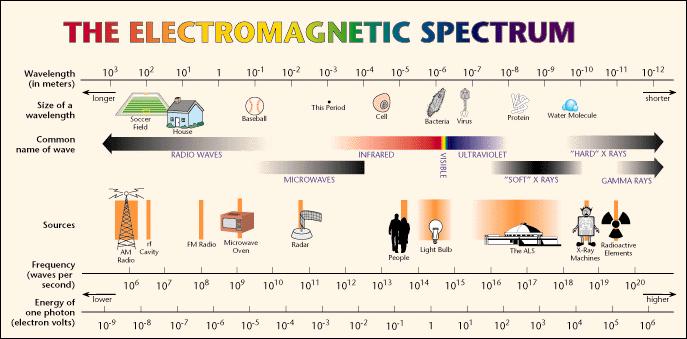
Our Environment and its Components
40
Fig.3.2: Electromagnetic spectrum showing frequency, wavelength and energy
Source: www.lbl.gov/MicroWorlds/ALSTool/Emspec/Emspec.html
Box 3.3: Wave frequency
Wave frequency is defined as the number of troughs that pass a given point in a specified period of time, usually one second. The passage of one complete wave is called a cycle and a frequency of one cycle per second is defined as 1 hertz (Hz). Wave frequency is inversely proportional to wavelength; that is, the higher the frequency the shorter the wavelength. For example radio waves have frequencies of millions of hertz and wavelengths up to hundreds of kilometres while gamma rays have frequencies as high as 1024 Hz and wave length as short as 10 14 metre.
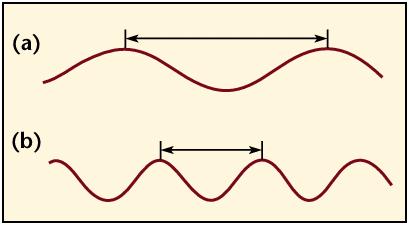
Fig.3.3: The wavelength of an electromagnetic wave is the distance between two successive crests. (a) Longer wavelength; (b) shorter wavelength Wavelength of electromagnetic radiation is measured in Angstrom ( ) units, A=10 o A 10 m. Scientist now prefer to express wavelengths in micrometres (μm), and there are 10,000A in 1μm. Very long wavelengths are generally expressed in terms of frequency using the SI unit Hz. A gigahertz (GHz) is 1,000 million Hz.
The energy of the radiation is proportional to the frequency, which means that shorter wavelength radiation will have higher frequency and more energy than radiation with longer wavelengths.
Thus gamma rays, X-rays and extreme UV radiation are highly energetic and are lethal to humans. Fortunately, these radiations get totally absorbed high in the atmosphere by oxygen and nitrogen gases and therefore do not reach ground level.
3.3.1 Solar Radiation and Energy Balance
When solar radiation is incident on the atmosphere, part of it is transmitted and the balance is reflected. The component traversing through the atmosphere gets partly absorbed and partly scattered. Only the balance reaches the ground. Fig. 3.4 shows the global dissipation of solar radiation based on 100 units of incident solar radiation. Except for visible radiation and near infrared, other radiations get absorbed in the atmosphere and only a fraction is filtered to the ground. As a result, the total radiation energy received at ground level with over-head Sun in the tropics is about 1000 Watt/m2 However, the incident value averaged over day and night is much less. The total radiation intercepted by the Earth is equal to the Solar Constant (S) multiplied by the cross sectional area. This amount of energy is radiated out from the total surface so as to balance the average energy received. Since the Earth’s surface has an area equal to 4 times the cross sectional area, the average energy received or radiated out by the Earth is given by S/4 or 342 W/m2.
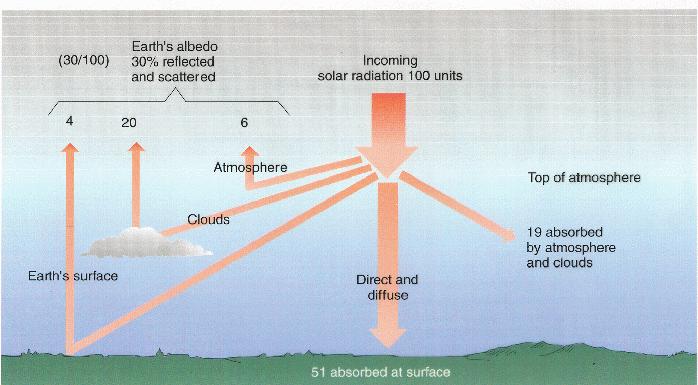
The Atmosphere
41
Fig.3.4: Global disposition of solar radiation
The total energy content in solar radiation per unit area is known as the ‘Solar Constant’ and has a value of 1370 Watt/m2 at the outer edge of the atmosphere.
The atmosphere does not allow the entire radiation incident on it to reach the Earth’s surface. Nearly 16% of the total energy received by the uppermost layer of the atmosphere is absorbed by the atmospheric gases, dust particles water vapour etc. On an average 205 of the energy is reflected by the clouds while they absorb about 3%. Nearly 6% is back scattered by the air molecules. The remaining 55% energy reaches the Earths surface. Of this 4% is reflected back and the rest is redistributed in the atmosphere.
Aerosols play an important role in the energy balance in the atmosphere, through absorption and scattering of radiation. The carbonaceous aerosol belongs to two types; those with organic carbon and those with black carbon. These two types have different optical and radiation absorbing properties, with black carbon particles having higher absorbing properties than the other. Combustion of fossil fuels and biomass are the sources of both organic and black carbon aerosols, with the former emissions being 5-6 times that of the latter.
3.3.2 Absorption in the Atmosphere
The absorption of energetic radiation by atmospheric gases gives rise to several phenomena: heating of the atmosphere, breaking down of the gases into new substances, electrifying certain parts of the atmosphere etc. Each of these processes depend on the energy content of radiation and the absorption properties of the constituent gases in the atmosphere.
Effect of X-Rays and UV Radiation
X-rays and Extreme UV radiations are the most energetic radiations. Molecular nitrogen and oxygen totally absorb them above about 60 km. Because of their high energy content, they knock off an electron from the molecules, leaving the remaining portion positively charged. These are called ‘ions’. Hence the region of the atmosphere above about 60 km up to about 500 km where such positively charged ions are present is known as the ‘ionosphere’ (see Box 3.1 also). This region plays an important role in long-distance short-wave radio communication. The ionosphere has the ability to reflect to Earth any short-wave radio signal incident on it. This makes it possible for a radio signal to travel round the Earth through multiple reflections between the Earth and the ionosphere.
The UV spectrum is divided into three bands, UV-A, UV-B and UV-C based on their degree of penetration into the atmosphere. The UV-A band is the least energetic band. This radiation is relatively harmless and reaches the ground level. The UV-B band is more energetic and is damaging to both plant and animal life. It gets absorbed by ozone and partly reaches the ground. The most energetic band, UV-C, which is lethal, gets totally absorbed by nitrogen and oxygen before reaching the ground level.
Major Absorbing Gases
Oxygen gas is a good absorber of UV radiation up to about 180 nm and absorbs all of it by the time the radiation reaches a depth of about 35 km. Between 180 and 200 nm, the absorption efficiency of oxygen drops by a factor of more than 5,000 and oxygen becomes ineffective in absorbing any radiation beyond 200 nm. The absorption of UV radiation by oxygen causes its photo-dissociation yielding highly reactive atomic species, some of which are in the excited states. These excited atoms subsequently return to the ground state through the emission of radiation, which can be detected from ground level. These emissions are called airglow and provide much useful information about the upper atmosphere.
Our Environment and its Components
42
In the range from 200 to 320 nm, the absorption efficiency of ozone is about a million times more than that of oxygen. Therefore, despite being a trace gas, ozone becomes the major absorber of radiation in this wavelength range. Wavelengths up to about 280 nm are totally absorbed by ozone before reaching a depth of about 15 – 20 km. The UV-B band between 280 315 nm is absorbed partially by the ozone layer depending on the total ozone density. Beyond 315 nm, ozone also becomes a poor absorber. Visible radiation above 400 nm could therefore reach ground level without much attenuation.
3.3.3 Natural Global Warming
The gases that we had previously referred to as greenhouse gases, which are naturally occurring in the atmosphere, have the ability to absorb radiation selectively, and cause warming of the Earth. This enables the Earth to maintain its global mean surface temperature at the present value of 15°C. This is referred to as the natural global warming. The atmospheric gases, which take part in the global warming process, are called radiative gases, and their contribution to global warming is called radiative forcing
Greenhouse Gases
The gases naturally present in the atmosphere that have this radiative forcing property are primarily water vapour, CO2, CH4, N2O, and O3. These radiative gases have the capability to permit most of the solar radiation which are of shorter wavelengths to penetrate the atmosphere and heat the ground, while absorbing the radiation of longer wavelengths (between 4μm and 100μm) emitted by the Earth’s surface thus disallowing such radiation to escape and cool the atmosphere.
In addition to these naturally occurring gases, there are many gases introduced through human activities, causing enhanced global warming. This topic will be discussed later.
The above radiative process taking place in the atmosphere is similar to what takes place inside a greenhouse used in temperate countries to grow crops in the cold seasons. In a greenhouse, the transparent roofing, either glass or plastic, permits short wave solar radiation to penetrate it but does not allow the outgoing terrestrial long wave radiation to leave, which gets absorbed by the roofing sheet. This results in the chamber maintaining a temperature several degrees above the cold ambient temperature, helping plant growth. Therefore, the radiative gases in the atmosphere playing the role of the chamber roof are also called greenhouse gases.
Greenhouse Effect
The enhancement of the temperature of a greenhouse chamber due to the absorption of out-going terrestrial radiation by the chamber roof is the origin of the greenhouse effect. The Earth’s surface temperature is much cooler than that of the Sun. Hence, as mentioned before, the energy radiated out from the Earth is in the form of long wave infra-red (IR) radiation with wavelengths 5 100 μm. The greenhouse gases present in the troposphere absorb this radiation. The percentage of infrared radiation that these gases absorb varies with the wavelength: It is very low in the wavelength bands around 8 and 11 micrometers (which includes the peak IR intensity emitted by the Earth). Much of the planet’s heat escapes out through these “atmospheric windows”. Part of the absorbed radiation is emitted back to the Earth, and part to outer space, as shown in Fig. 3.4. This process reduces cooling of the Earth, and gives rise to additional warming, causing surface temperature to increase. This results in higher outgoing radiation, which then would match the incoming radiation.
This phenomenon of increasing the surface temperature caused by the presence of certain gases naturally in the atmosphere with selective absorption properties is referred to as the greenhouse effect as applicable to the atmosphere. If there had been no greenhouse effect occurring in nature, it is estimated that the global average temperature would have been 18°C or 33°C below the present mean
The Atmosphere
43
temperature. Such a low global mean temperature would not have sustained life on Earth.
It has been observed that during the last century, the concentrations of these greenhouse gases have increased significantly, causing an enhancement of the global warming and a corresponding increase in the global mean surface temperature by about 0.6°C. Scientists have expressed fear that if the emissions of these gases continue to increase without any control, the Earth’s global mean temperature will also increase correspondingly by about 2.5°C by the year 2050. You will learn more about the causes and possible consequences of global warming in Unit14 of this course.
3.3.4 Scattering
Much of the radiation received on the Earth’s surface is scattered radiation rather than direct. Though radiation comes from the Sun, the entire sky appears visible because of the scattered light. Particles of all types including gas molecules, dust, aerosols, water droplets and ice particles of size from sub-micron to several hundred microns cause scattering.
The direction of scattering depends on the ratio of particle size to wavelength of the incident radiation. Very small particles such as gas molecules scatter radiation in all directions while large particles tend to scatter radiation more in the forward direction. These two cases are described as Rayleigh scattering and Mie scattering, respectively. In Rayleigh scattering, the intensity of the scattered radiation in a particular direction is inversely proportional to the 4th power of the incident radiation.
If we consider the visible radiation, the wavelengths that get scattered away from the Sun are the shorter wavelengths or blue light. This makes the sky appear blue during daytime while during dawn and dusk, when the direction of scattering is more in the direction of the Sun, the sky appears red. In the case of Mie scattering where the particle size is comparable to or larger than the wavelength, the scattering is not wavelength dependent. Such scattering takes place in clouds and fog, resulting in their colour appearing as white or grey.
Aerosols also scatter incoming radiation. Particles with diameters below 1 μm scatter more light per unit mass and have a longer lifetime than the larger particles. Aerosols smaller than 1 μm containing sulphates, nitrates or organic carbon scatter radiation efficiently, while those containing black carbon absorb radiation efficiently. Scattering aerosols lower the surface temperature during daytime by decreasing the solar radiation incident on the ground. The scattering of the incoming solar radiation by aerosol particles, particularly the sulphates, plays an important role in climate change by reducing the intensity of radiation reaching the Earth’s surface resulting in off-setting the global warming process partly.
3.3.5 Albedo
When we look at objects we see them in different colours. These colours are determined by the wavelength of the light they reflect. Some of them appear dull while some appear bright, this brightness depends on the amount of light they reflect. For example, fresh snow reflects 90% of the light that falls on it and thus appears brighter than grass that reflects only 20% of the light that falls on it. The proportion of the light reflected by a surface is its albedo or reflection coefficient, and this is usually expressed as a percentage. Albedo values are important for determining the amount of radiant energy that a surface absorbs or reflects, which in turn reflects how much a body is heated. The Earth has an albedo value of 31 because most of its surface is covered by water and partly because of the cloud cover that it has, both of which are highly reflective.
Human the albed the char surfaces affect th motion a which al The two albedos and land
Our Environment and its Components
SAQ 3
44
i) Name the various radiative processes that contribute to the energy balance on earth.
ii) Explain why does the inside of a car get warm compared to the outside air, when parked in the Sunshine.
3.4 MEDIATORY EFFECTS OF ATMOSPHERE
So far, you have studied the composition of the atmosphere and the various radiative processes in the atmosphere. The end result of this process is seen through the weather and climate. It is important to distinguish between weather and climate as they are controlled by different set of factors and affect the environment around us.
3.4.1 Weather and Climate
The fluctuating state of the atmosphere characterized by atmospheric parameters such as temperature, pressure, humidity and precipitation that occur from hour-to-hour or from day-to-day is generally known as ‘weather’. It can be defined simply as the state of the atmosphere at any given time and place. As such, weather itself is a dynamic entity, and changes with time. The weather may be hot dry and Sunny today it may have been wet, much cooler and overcast yesterday. These variations cannot be predicted with any certainty beyond a few days into the future. The Meteorology Departments or National Weather Bureaus in a country give forecasts on possible rainfall and temperature and their values expected during the day are referred to as weather bulletins. Such bulletins may cover specific geographic areas, large or small.
The weather, averaged over a period of time and over a specific geographical region, is referred to as the ‘climate’ of that region. Thus, climate is a more static entity, but changes from place to place, depending on latitude, distance from the sea, vegetation, presence of mountains and other geographical factors. Climate also varies with time; from season to season, year to year, decade to decade or on much longer time-scale. It is sometimes defined as the average weather. A travel brochure describing a country’s geography may include a write up on the country’s climate, giving information on the average temperature for each season and average rainfall data. The climate is essentially a long-term averaging process. The Climate System, according to IPCC 1995 Report on the Science of Climate Change is defined as “the totality of atmosphere, hydrosphere, biosphere, and geosphere and their interactions”. In this sense it is the most direct way in which we become aware of environmental stability and change.
Climate and weather, which depend on the heating of the atmosphere, in turn, depend on the amount of solar radiation received at any given instant, and this varies with the season and hour of the day.
3.4.2 Seasonal Variations
Seasons manifest in the Earth’s environment because of its elliptic orbit around the Sun with its axis inclined to the plane of its orbit or the ecliptic plane. The Earth’s equator is tilted 23.45 degrees with respect to the ecliptic.
The Seasons
The exposure of one hemisphere to the Sun more than the other for several months of the year gives rise to the seasons. The hemisphere tilting towards the Sun receives more radiation with longer daylight hours and the corresponding season is called the summer. When it is summer for one hemisphere, it is winter for the other with less radiation received and short daylight hours. On June 21, the northern hemisphere is tilted the maximum of 23.45 degrees towards the Sun. It is also called the summer solstice for the northern hemisphere. On the same day, the southern hemisphere is tilted 23.45 degrees away from the Sun, when it is winter solstice for the southern hemisphere. Similarly, on December 21st, it is the winter solstice for the northern
The Atmosphere
45
hemisphere and summer solstice for the southern hemisphere. The portion of the earth illuminated in different seasons is illustrated in Fig. 3.5.
March June September
December
Fig.3.5: The position of the Earth in its orbital path


On March 21 and September 21, the Sun’s rays are in line with the equatorial plane and the solar declination is zero. These are called the autumn (or fall) and spring equinoxes and the Sun passes directly over the equator. The latitudes corresponding to the maximum declination of the Sun in the northern and southern hemispheres are called the Tropics of Cancer and Capricorn, respectively.
The seasonal variation with longer daylight hours during the summer has significant implications on the growth of crops, particularly the annual crops. A given crop has a better yield in temperate countries as opposed to tropical countries, because of the longer exposure to solar radiation and corresponding photosynthesis. Seasons also influence the flowering of crops.
It was mentioned at the beginning of this unit that the atmosphere is a dynamic entity. The uneven heating, fluctuations in the pressure and temperature cause movements of wind and air in the atmosphere. We have already discussed one method of transporting heat from one place to another, that is, the flow of solar radiation which is all important in determining the net heat input from the Sun into the Earth’s climate system. However the heating and cooling due to infrared radiation emission is not uniform everywhere within the Earth-atmosphere system. This is the basic reason why atmosphere circulates and why weather is variable on Earth. Now we will describe some of the transport mechanisms that help to redistribute the heat on our planet.

3.4.3 Global Circulation
Generally, movements of air parcels vertically in the atmosphere are due to convection. This explains why warm air rises and transfers heat vertically within the atmosphere. Convectional uplifts are very powerful and play an important role in the formation of clouds and development of strong winds. Convection currents are strong particularly in the equatorial regions, where the hot ground heats up the air which rises and is redistributed north and south to drive important thermal cells within the global wind system.
The lateral transfer of heat in a moving stream of air is known as advection. It redistributes heat across the earth’s surface in air mass movements and wind systems that blow across from warmer or cooler areas. Air that comes in contact with warmer or cooler surface or surrounding air of different temperature will exchange heat with it. Convection and advection are responsible for the prevailing winds that blow most frequently across the surface of the Earth.
Prevailing Winds
A prevailing wind is the wind that blows most frequently across a particular region. Different regions on Earth have different prevailing wind directions, which are dependent upon the nature of the general circulation of the atmosphere and the

Our Environment and its Components
46
latitudinal wind zones. The direction of wind is measured in terms of where it is coming from. A northerly wind blows air from north to south. A south-westerly wind blows air from the southwest to the northeast.
In general, the prevailing winds across the Earth may be identified as shown in Table 3.2, although variations arise due to the positions and differential heating rates of the continents and oceans.
Table 3.2: Prevailing wind zones
Latitude Direction (from)
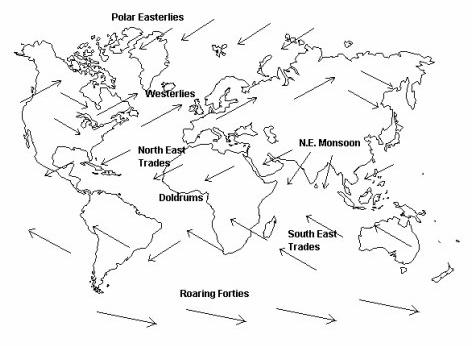
Common Name
90-60°N NE Polar Easterlies
60-30°N SW Southwest Antitrades 30-0°N NE Northeast Trades 0-30°S SE Southeast Trades 30-60°S NW Roaring Forties 90-60°S SE Polar Easterlies
Source: http://www.doc.mmu.ac.uk/aric/eae/Climate/
The rotation of the Earth about an axis, which is inclined to the direction of radiation, makes the heating of the Earth asymmetric with respect to the Equatorial plane. This uneven heating gives rise to convective currents travelling from west to east or westerlies near the tropopause. In addition, convective currents in the meridional plane transport excess heat from the tropics to the deficit areas in mid and higher latitudes.
The convective air rises from the equatorial belt, and travels towards the poles where there is subsidence of air. However, because of the rotation of the earth, due to what is called Coriolis force, air moving towards the north pole in the northern hemisphere deflects to the right, and air moving towards the south pole in the southern hemisphere deflects towards the left. Due to frictional forces, winds turn only by about 45°, and give rise to N-E winds in the northern hemisphere and S-W winds in the southern atmosphere. These winds, which flow near 20°-30° latitudes, were given the name of ‘trade winds’ or ‘traders’ as they helped traders to sail across oceans centuries ago.
The pressure differences in air close to the surface give rise to regional winds. With a definite variation in the latitudinal as well as longitudinal differences in pressure, except for disturbed days, the wind regime too adopts a corresponding pattern flowing in both equatorial or polewards and northern eastward or southern westward. These wind patterns are shown in Fig. 3.6 for the months of January and July.
January
The Atmosphere
47 July
Fig.3.6: Prevailing wind patterns in January and July (Source: www.doc.mmu.ac.uk/aric/eae/climate/)
Monsoon Winds
Monsoon is caused by land-sea temperature differences due to heating by the Sun’s radiation. In winter, the continental landmass cools rapidly resulting in extremely low temperatures over central Asia. As temperature drops, atmospheric pressure rises and an intense high pressure system (anticyclone) develops over Siberia. Cold air flows out of Siberia as north-westerlies and turns into north-easterlies on reaching the coastal waters of China before heading towards Southeast Asia. During the summer months however, the large landmasses of Asia and the Indian subcontinent heat up, generating a seasonal continental region of low pressure. Airflow reverses and wind blows south-westerly across the Indian Ocean, accumulating considerable moisture, which is deposited as heavy rainfall during the wet season from May to September. Monsoon in South and South-East Asia is characterized by the SW winds flowing from May to September, and NE winds flowing from December and February, each year.
Tropical Cyclones
Low-pressure areas originating in the tropics, little away from the equator, which travel westwards with the prevailing winds often give rise to strong winds. They are called cyclones in the Asian region, hurricanes in Central America, and typhoons in the Far-East. High moist air is lighter than low moist air, as a heavier air molecule is replaced with a lighter water molecule. Therefore, when low-pressure areas are created for some reason or other, air with high moisture content could get into these areas first. In the process, the moist air gets cooler and the moisture gets condensed, releasing the latent heat and providing energy to build up a vortex. With the prevailing winds, this vortex of air, with diameter of several hundred kilometres, moves westwards gathering momentum and speed as it does so.
Generally, such storms originate over the oceans, and once the storm reaches the land, it results in much damage to property and even lives. There is also a tendency of cyclone storms to turn northwards as it approaches land, as evident in many events that took place in the past over the Bay of Bengal. Fortunately, the movement of cyclones can be closely monitored using satellite images, and precautionary measure taken in time.
SAQ 4
Our Environment and its Components
How are winds formed? What is their role in the distribution of heat in the atmosphere?
48
3.4.4 Climate Zones
We had said earlier in the unit that climate is a primary regulator for the existence of organisms. Climate varies from place to place and has a profound effect on the environment and thus on humankind. This allows the surface of the Earth to be divided into a number of climate zones or belts, characterized by different temperatures and rainfall distributions, between the equator and the pole in each hemisphere. A brief description of these zones is given below.
Tropical Climates
Centred roughly on the equator is the tropical or equatorial zone. Much of the equatorial belt within the tropical climate zone experiences hot and humid weather, with temperatures in the twenties and thirties of degrees, with the coldest month above 18oC, and relative humidity percent in the nineties. There is abundant rainfall, with annual values in the range 5,000 – 10,000 mm, due to the active vertical uplift or convection of air that takes place there, and during certain periods, thunderstorms can occur every day. Nevertheless, this belt still receives considerable sunshine, and with the excessive rainfall, provides ideal growing conditions for luxuriant vegetation. The principal regions with a tropical climate are the Amazon Basin in Brazil, the Congo Basin in West Africa and SE Asia.
Desert Climates
At about 30° north and south of the equator is a subtropical climate belt of generally dry descending air, associated with high atmospheric pressure and clear skies leading to desert conditions. Deserts are areas where the rainfall is too low to sustain any vegetation, except very scanty scrub. The annual rainfall is less than 250 mm, and some years may experience no rainfall at all. The hot deserts are situated in the subtropical climate zone where there is unbroken Sunshine for the whole year due to the stable descending air and high pressure. The intense heat and lack of rainfall is typical of the desert climate, which is commonly found in the subtropical zone. Here, maximum temperatures of 40 to 45°C are common, although during colder periods of the year, night-time temperatures can drop to freezing or below due to the exceptional radiation loss under the clear skies.
Savannas
Between the subtropical and equatorial zones trade winds blow, north-easterly in the Northern Hemisphere and south-easterly in the Southern Hemisphere. These regions are much drier than the equatorial zone, but receive more rainfall than the desert climates. They have a single short rainy season when the Sun is nearly overhead, whilst the rest of the year is dry. These regions are often characterized by savannas, scrub and grassland, which blossoms during the rainy season and die off during the prolonged dry season.
Temperate Climates
In the mid-latitudes around 50° to 60° north and south there is a belt of cyclonic low pressure, where the climate is usually temperate. The low-pressure areas arise from the convergence of cold polar easterly winds and warm subtropical westerly antitrades. The precipitation tends to develop along warm and cold fronts, where cold air from the polar easterlies forces the warm, moist air of the westerlies to rise, which, on cooling, releases the moisture as clouds and ultimately rain and snow. Temperate climates are those without extremes of temperature and precipitation (rain and snow). The changes between summer and winter are generally invigorating without being extreme.
Polar Climates
The polar-regions are perpetually covered by snow and ice throughout the year. In these regions, the temperature rarely rises above freezing. During the long polar nights which last six months at the poles, temperatures can fall to extremely low values, as low as –80°C. Polar climates tend to be dry because the descending air is cold and lacks significant moisture, precluding the formation of clouds and snowfall.
The Atmosphere
49
Some polar regions receive less than 250 mm of precipitation each year At the highest latitudes in the polar-regions, the cold air sinks producing high atmospheric pressure producing dry, icy winds that tend to radiate outward from the poles.
3.4.5 El- Niño Phenomena
El Niño, the Spanish name for “Christ Child”, is the name given to the occasional development of warm surface waters in the Pacific Ocean along the coast of equatorial South America. El Niño occurs roughly every 2 to 7 years, usually around Christmas, and lasts usually for a few weeks or months. Sometimes an extremely warm event can develop that lasts much longer.
The formation of El Niño is linked with the cycling of a Pacific Ocean circulation pattern known as the El Niño Southern Oscillation or ENSO. In a normal year, low atmospheric pressure develops over northern Australia and Indonesia, with high pressure over the Pacific. Consequently, winds over the Pacific move from east to west. The easterly flow of the trade winds carry warm surface waters westward bringing rainstorms to Indonesia and northern Australia. Along the coast of Peru and Ecuador, cold deep water wells up to the surface to replace the warm water that is pulled to the west.
El Niño has the capacity to influences atmospheric wind patterns worldwide as well as flooding in Peru and Ecuador, and drought in Indonesia and Australia. The possible impacts include a shifting of the jet stream, storm tracks and monsoons, producing unseasonable weather over many regions of the globe. During the El Niño event of 1982-1983, some of the abnormal weather patterns which were observed included drought in Southern Africa, Southern India, Sri Lanka, Philippines, Indonesia and Australia; heavy rain and flooding in Bolivia, Ecuador, Northern Peru and Cuba; and hurricanes in Tahiti and Hawaii.
Because El Niño may influence the mid-latitude Northern Hemisphere jet stream, even the weather in Europe and North America can be influenced. The most recent El Niño episode in 1997 and 1998 brought record high winter temperatures to many areas in Europe including the UK. Globally, 1998 became the warmest year on record.
3.4.6 Climate in South Asia
The South Asian region is characterized by a tropical monsoon climate. Differences in rainfall are of primary significance in defining the climate of the region. The most important feature is the seasonal alteration of atmosphere flow patterns associated with the monsoon, which is due to the seasonally modulated excess heating of the Asian landmass in summer and the excess cooling in winter compared to the adjacent oceans. Two monsoon systems operate in the region: the southwest or summer monsoon (June-September) and the northeast or winter monsoon (December-April). The rainfall during the summer monsoon largely accounts for the total annual rainfall over most of South Asia (except over Sri Lanka where rainfall of the winter (Northeast) monsoon is dominant) and forms a chief source of water for agriculture and other activities. Some com storms are Hurricanes hemispher Asia and p Indian oce willies in S
The monsoon rainfall in South Asia is characterized by large spatial and temporal variability. The arid, semi-arid region encompassing Pakistan and Northwest India receive monsoon rainfall as low as 50 mm while parts of Northeast India and the west coast receive over 1000 mm. This region also features large year-to-year variations in the rainfall frequently causing severe floods/droughts over large areas.
Extreme Events
There are two major anomalous regions: the arid and semi-arid parts comprising of large areas of Pakistan and north-western Indian states of Rajasthan, Punjab, Haryana and Gujarat which experience frequent droughts, and the eastern Himalayan sub-
Our Environment and its Components
50
region, fed by the Ganga-Brahmaputra-Meghna river system, which are subjected to frequent floods. In India, during the period 1871-2000 there were 22 drought years and 19 flood years. There had been three cases of prolonged drought condition, viz., 1904-05, 1965-66 and 1985-87. Such cases cause great calamity.
Similarly, there had been two cases of prolonged flood conditions, viz., 1892-94 and 1916-17. Studies indicate a clear relationship between the occurrences of droughts (floods) in South Asia with the El Niño (La Niña) events in the east Pacific Ocean. It has been observed that, during the period 1856-1997 there were 30 El Niño years in which the averaged monsoon rainfall over India was 7% below normal; in 10 out of these 30 cases, drought conditions prevailed over India. Two years featured flood conditions (1878 and 1983). During the same period there were 16 La Niña years, 9 of which featured flood conditions over India.
The cyclonic storms originating in the Bay of Bengal and blowing towards India and Sri Lanka has been a frequent occurrence. Around 16 cyclonic disturbances occur each year, of which about 6 develop into cyclonic storms. During 1965 – 1990, on an average 2.3 severe cyclones with hurricane force winds have taken place.
Activity
Collect data on the climate changes in the Indian subcontinent over the last 150 years. Try to find out what could be the possible reasons for it.
3.5 SUMMARY
You have studied in this unit that
• The atmosphere is essential for the survival of life on Earth. It is composed of a mixture of gases, water vapour and suspended aerosols. The environmental significance of a constituent gas or aerosol is not related to its relative concentration.
• The atmosphere is subdivided into four layers on the basis of the vertical temperature profile. Troposphere is the site of all weather and along with the stratosphere is the site of air pollution related problems.
• Air pressure is the weight of air per unit area. It drops rapidly with altitude. Fluctuations in the pressure over time and space are significant for global air circulation.
• The energy that drives the atmospheric processes originates in the Sun and travels through the atmosphere in the form of electromagnetic radiation. Solar radiation that is not absorbed or scattered by the atmosphere is reflected back or absorbed by the Earth’s surface depending on the albedo.
• The earth-atmosphere system emits infrared radiation. Carbon dioxide water and other gases in the atmosphere absorb this radiation keeping the Earth warm enough to maintain life on it through the greenhouse effect. Ozone formation in the stratosphere protects life on Earth and filters the harmful UV radiation Moisture and aerosols are important players in the energy balancing process, through absorption and scattering of solar and terrestrial radiation.
• Differences in the rates of radiational heating and cooling cause a heat imbalance between the tropical and higher latitudes. Excess heat is transported pole ward from the tropics via atmospheric circulation and vertical distribution heat from the Earth’s surface into the troposphere takes place through convection currents and phase changes of water.
• We perceive the atmosphere and its processes as weather and climate of a region. Weather is defined as the state of the atmosphere at a specific place and time, while the climate refers to the average and extreme weather conditions. The
The Atmosphere
51
climate of a region is shaped by the latitude, proximity to large water bodies and prevailing patterns of atmospheric circulation. The surface of the Earth is characterized by a number of climatic zones or belts according to the different temperature and rainfall patterns.
• Certain human activities over the past several decades have caused a threat to the future of the Earth’s ability to sustain life on it. One is the enhanced global warming, arisen as a result of changing the composition of the atmosphere through emissions from uncontrolled combustion of fossil fuel and biomass. The other is the depletion of the ozone layer caused by the emission of chemical substances that could convert ozone into oxygen in the stratosphere.
3.6 TERMINAL QUESTIONS
1. Explain with examples how minor atmospheric gases and aerosols play important roles in the environment.
2. Why must there be a balance between the incoming solar radiation and outgoing infrared radiation? What would happen if this equilibrium does not prevail?
3. Describe the greenhouse effect. All factors being equal why is a clear starry night cooler than a cloudy night? What human activities are contributing to the increase of the greenhouse effect on Earth?
4. Why is the stratospheric ozone layer known as a shield?
5. How does El Niño affect the climate of Asia?
REFERENCES
1. Campbell, I.M. (1979) Energy and the Atmosphere, John Wiley & Sons Ltd.
2. IPCC (2001) Climate Change, Houghton JT et. al. Cambridge University Press.
3. Jacobson, Mark Z. (1999) Fundamentals of Atmospheric Modelling, Cambridge Press.
4. Patel, D.C., Sharma, C., and Mitra, A.P. (Eds.) (1998) Global Environment Chemistry, Narosha Publishing House, New Delhi.
5. Ratcliffe, J.A. (Ed.) (1960) Physics of the Upper Atmosphere, Academic Press.
6. Tyson, P., Fuchs, R., Fu, C., Lebel, L., Mitra, A.P., Odada, E., Perry, J., Steffan, W., and Viji, H. (Eds.) (2002) Global-Regional Linkages in the Earth System, Springer.
7. WHO (1994) Ultraviolet Radiation, Environmental Health Criteria 160, World Health Organization, Geneva.
8. WMO (1985) Atmospheric Ozone 1985 Vol. 1, Global Ozone Research and Monitoring Project – Report No.16, World Meteorology Organization, Geneva. www.aero.usyd.edu.au/aero/aerodyn.html www.doc.mmu.ac.uk/aric/eae/climate
Our Environment and its Components
52
UNIT 4 THE HYDROSPHERE
Structure
4.1 Introduction Objectives
4.2 Structure and Properties of the Water Molecule
Structure of Water Thermal Properties Cohesive Property and Surface Tension Adhesive Property and Capillary Action Density and Freezing Property
4.3 The Hydrologic Cycle Evaporation and Evapo-transpiration Precipitation Surface Run-off
4.4 Composition of Hydrosphere
4.5 Freshwater Environment Ground Water Surface Waters Characteristics of Lentic Habitats Characteristics of Lotic Habitats
4.6 Estuaries
Types of Estuaries
Classification of Estuaries Based on Salinity Important Abiotic Characteristics of Estuaries
4.7 The Oceans
Properties of Ocean Water Features of the Ocean Basin Oceanic Depth Zones Movement of Water in the Ocean Sea Ice
4.8 Summary
4.9 Terminal Questions
4.1 INTRODUCTION
In Unit 3 you have learnt about the atmosphere and the various processes that take place in it, which make life possible on our planet. In this unit we will discuss the hydrosphere, which is the discontinuous layer of water at or near the Earth’s surface. It includes all liquid and frozen surface waters, groundwater held in soil and rock, and atmospheric water vapour
We focus on various aspects of the components of the hydrosphere, and begin with an overview of the properties of water. The structure of the water molecule and its specific properties has created surprising physical and chemical conditions, which have made it essential for the existence of life.
When you learn about the composition of the hydrosphere, you will find that our Earth contains an immense amount of water, covering 71% of its surface up to about an average depth of 3800 metres. Out of this large amount of water, only about 0.25% could be used for human consumption. Over 97% of this water is deposited in the oceans.
All water on the planet is constantly recycled, by a system known as the hydrologic cycle driven by solar energy. It involves the movement of water through the environment in its three phases – as liquid, as vapour and as solid snow and ice. These movements integrate the environmental systems of atmosphere, lithosphere and biosphere and strongly influence the rates, patterns and processes within them. Understanding the processes and reservoirs of the hydrological cycle is fundamental
54 Our Environment and its Components
to dealing with a number of issues related to the use of water, pollution and global climate change.
We will describe the various aquatic habitats. You will learn that the habitats in the freshwater environment frequently integrate with one another, and they are divided into two categories: the standing water bodies which comprise lakes and ponds etc. and the running water bodies that include streams and rivers.
The physical structure of the above water bodies is determined by the distribution of factors such as light, heat and currents, which vary by day and season. The chemical structure results from the uneven distribution of chemicals.
Where freshwater and seawater meet and mix, partially enclosed coastal embayment –estuaries form. Most of the characteristics of the estuaries result from the flow of freshwater and seawater. Tides add additional complexity to the circulation pattern and salinity gradients, within the estuaries.
The estuaries discharge their contents into the Oceans, which are large interconnected bodies of water that are constantly in motion, mixed and moved by winds, waves and currents.
Objectives
After studying this unit you should be able to:
• relate the special properties of water to its molecular structure;
• give an account of the composition of the hydrosphere;
• describe the main processes, that drive the hydrologic cycle;
• list the major types of freshwater habitats in the world;
• describe the zonation because of light and stratification due to temperature in tropical and temperate lakes;
• describe the physical and chemical characteristics of lentic habitats;
• explain the nature of the different zones of a river that originates from a high mountain;
• give a concise account on the type of estuaries classified according to the geology, geomorphology and salinity gradient;
• describe the features of the ocean basin; and
• describe the formation of waves and the patterns of current in the world oceans.
4.2 STRUCTURE AND PROPERTIES OF THE WATER MOLECULE
Water is probably the most important natural resource on the earth. It is a vital chemical constituent of living cells and a habitat for large number of organisms. In fact, 60% of our body is made up of water. It is worthwhile then, to look at its structure and some of its resultant physical and chemical properties.
4.2.1 Structure of Water
Water has the chemical formula H2O, and it exists as a liquid, solid and as vapour. This simple molecule has many surprising properties, which are biologically important, and many of them result from its molecular structure.
A molecule of water results, from the formation of two single covalent bonds between an oxygen atom and two hydrogen atoms (Fig. 4.1a). The oxygen atom has a greater power in attracting electrons than that of the hydrogen atoms. As a result, the oxygen atom acquires a partial negative charge, and each hydrogen atom a partial positive charge. Molecules such as water, that exhibit charge separation are termed polar molecules and they have a marked affinity for each other. This molecular polarity
A covalent bond is formed by sharing a pair of electrons between two atoms
55
The Hydrosphere
Our Environment and its Components causes water to be a powerful solvent with the ability to dissolve more substances than any other liquid.
The charge separation has resulted in an arrangement of a tetrahedron for the water molecule and a bond angle of 104.5 degrees. It also allows the oxygen molecule to form weak hydrogen bonds with the oppositely charged hydrogen atom of another molecule. This allows water molecules to combine together in an uninterrupted net work (Fig. 4.1b), which is responsible for its cohesive nature and many of its unusual properties such as high surface tension, specific heat and heat of vaporization.
Specific heat of water is the amount of heat (4.2 KJ) required to raise the temperature of 1 kg water by 1°C.
Latent heat of fusion is the amount of heat gained or lost per unit mass of a substance, changing from a solid to a liquid, or liquid to a solid phase, without an accompanying rise or fall in the temperature. For 1 Kg of water at 0oC to freeze, a large amount of heat (3.34 × 10⁵ J) must be released. Conversely when ice at 0°C melts to water at 0oC, an equal amount of heat must be absorbed.
Water absorbs harmful infrared radiation of the sun. Large amount of the incoming solar radiation is dissipated in the evaporation of water from the ecosystems of the world. It is this dissipation of energy that moderates the climate and makes it pleasant for life to exist on the Earth.
(a)
(b)
Fig.4.1: a) The unique arrangement of H and O atoms in a molecule of water causes one side of the molecule to have a positive charge and the opposite side to have a negative charge. The resulting polarity causes molecules of water to be attracted to each other forming strong molecular bonds, b) Lattice of Hydrogen bonds
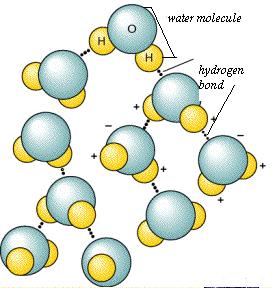
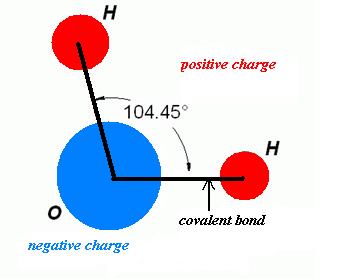
4.2.2 Thermal Properties
Water has a high heat capacity. It can absorb large amounts of heat with only a small increase in temperature. This is because much of the energy is used in breaking the hydrogen bonds. High specific heat capacity of water enables aquatic organisms to survive even the intense solar radiation at the equator as water provides a very constant environment therefore, biochemical processes that operate only over a small temperature range and proceed at more constant rates are less likely to be inhibited by extremes of temperature in aquatic environments. Water also stores a lot of heat per unit volume and large volumes of water can therefore alter climate.
High latent heat of fusion of water helps to maintain the temperature at a critical point (at 0°C), before freezing. This prevents sudden freezing of water and melting of ice in temperate lakes, which make the transition between seasons less abrupt, enabling organisms to adjust gradually to the changing climate. In addition, it prevents the formation of ice in the tissues of organisms when the body is freezing (ice crystals are particularly damaging if they develop inside cells). Also this property inhibits large scale freezing of oceans.
Water has a high latent heat of evaporation. Latent heat of evaporation is the amount of energy that is required when liquid water changes into vapour, or vapour into liquid water, at 100oC. As a large amount of energy is required to break the hydrogen bonds between the molecules (so that they can escape as a gas), water has an unusually high boiling point. This character of water causes most of it to exist in liquid form at atmospheric temperature.
The energy needed by water molecules to vaporize, results in the loss of energy from their surroundings. This results in a cooling effect. Sweating and panting by mammals brings down their body temperatures. The evaporation of sweat and saliva allows loss of large amounts of body heat with a minimal loss of water from the body. For instance, every gram of water that evaporates from the human body removes 586 calories of heat from the body
56
This high latent heat of evaporation of water is also important in reducing the evaporation of water from lakes and seas and moderating sea surface temperatures by transferring large quantities of heat to the atmosphere through evaporation.
Water conducts heat more easily than any liquid except mercury. This fact causes large bodies of liquid water like lakes and oceans to have essentially a uniform vertical temperature profile
4.2.3 Cohesive Property and Surface Tension
Water molecules being very polar themselves, are attracted to each other and also to other polar molecules. When this attraction is between each other, it is referred to as cohesion.
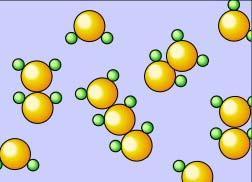
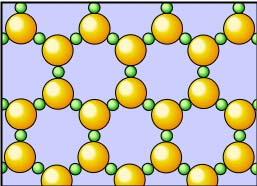
It is because of this cohesive property, that water can form a lattice of hydrogen bonds, which allows it to remain as a liquid, at normal atmospheric temperatures. At the air/water boundary they stick together so thoroughly, resulting in high surface tension that will support lightweight substances if they are spread out over a larger area. For example, a floating leaf with a large surface area, or an insect like a water strider, that distributes its weight over a larger area (by spreading its long legs), can float on water. The surface tension decreases with increasing temperature, salinity and addition of organic surfactants produced by plants and animals.
4.2.4 Adhesive Property and Capillary Action
The attraction between a water molecule and a polar molecule of a different substance is called adhesion. Water is adhesive to any substance with which it can form hydrogen bonds. This is why certain things get “wet” when they are dipped in water, and why waxy substances composed of non polar molecules do not get wet.
The adhesion of water to substances with surface electrical charges is responsible for capillary action (rising of water and watery substances in narrow tubes). This ability helps to pull water up through conducting tissues, in trees as tall as 100m, and water to creep up through minute spaces in soil making it available to the roots of plants. It is also responsible for the uptake of water (imbibition) by seeds of plants, to permit germination.
4.2.5 Density and Freezing Property
The density or specific gravity of pure ice at 0oC is 0.9168. It is about 8.5 % lighter than liquid water at 0oC (0.99987) and that is why ice floats on water. Solid ice has a regular molecular structure with slight gaps between the molecules (Fig. 4.2a). As ice melts, the regular structure breaks up and the gaps fill up (Fig. 4.2b). The density therefore increases. This effect continues until 3.98°C (~ 4°C), so water at this temperature has the highest density. Above 4°C, the density decreases, as molecular expansion takes place.
(a)
(b)
Fig.4.2: a) Lattice structure of solid water, b) Liquid water
Source: http://www.physicalgeography.net/fundamentals
The difference in density of hot and cold water is responsible for the great resistance to mixing of water masses. The rate of change of water density is not constant with
57
The Hydrosphere
change in temperature: the density decreases more rapidly at high temperatures. Density of water increases with increasing concentrations of dissolved salts in a linear fashion. These variations may be small, but they cannot be ignored.
Now let us consider how these density differences enable animals in water to survive during ordinary winters.
We just said that fresh water is most dense at 4oC, and will sink by convection as it cools to that temperature, and if it becomes colder it will rise instead. This reversal will cause deep water to remain warmer than shallower freezing water, so that ice in a body of water will form first at the surface and progress downward, while the majority of the water underneath will hold a constant 4°C. This effectively insulates a lake floor from the cold and prevents the total freezing of the water body and animals can live under the ice cover until winter is over.
The density of water is 775 times greater than that of air at standard temperatures and pressure (0oC, 760 mm Hg). Due to this high density, water makes aquatic organisms buoyant against gravitational pull and reduces the energy required for an organism to maintain its position. In most fresh water animals the supporting tissues are reduced (e.g. most of the plankton, benefit by just floating passively in the water column, as buoyancy supports their weight). These adaptations are conspicuous even among aquatic vascular plants.
SAQ 1
State the physical properties of water that are important, in the biological processes given below. 1. Prevent formation of ice in the vascular tissues of plants and in animal tissues. ------------------------------------2. Help in cooling the bodies of animals. -----------------------------------3. Moderate daily and seasonal temperature variations and stable body temperature of organisms. ---------------------------------------4. Causes ice to float and inhibits complete freezing of large bodies of water. ------------------------------------5. Enhance a variety of chemical reactions.---------------------------------6. Allow aquatic animals to survive in ordinary winters.-----------------7. Allow water striders to skate on the surface water.---------------------------
4.3 THE HYDROLOGIC CYCLE
The total amount of water in the world remains constant. What changes is its state and availability. Water is constantly being recycled in all its forms, (ice, liquid and vapour), by a system known as the hydrologic cycle which is driven by solar energy (Fig. 4.3). It involves the continuous recycling of water between the atmosphere, land and oceans by several processes. In this cycle, water is lost to the atmosphere as vapour from the earth, and in turn is precipitated back in the form of rain, snow, frost etc. This precipitation and evaporation continues forever and there by maintains the amount of water in the air, land and ocean. Within the atmosphere vertical and horizontal air movements including winds transfer moisture from place to place. The streams, rivers and glaciers transfer water from land to the ocean where large-scale currents transfer water within the oceans.
58
Our Environment and its Components
Fig.4.3: The hydrologic cycle
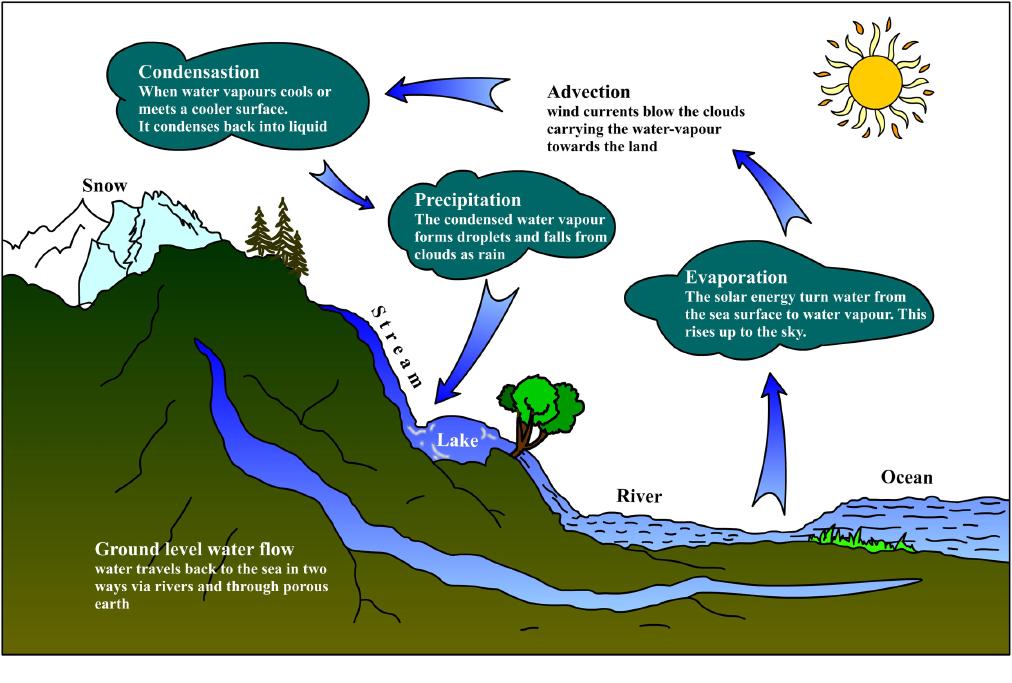
The three major processes involved in the hydrologic cycle are: evaporation and evapo-transpiration, precipitation and surface run off.
Atmospheric water, surface water and ground water are all part of the hydrologic cycle. Let us consider how water re-cycles within and between these realms by the above-mentioned processes.
4.3.1 Evaporation and Evapo-transpiration
The hydrologic cycle can be crudely visualized as starting with the evaporation of water from the oceans, seas, lakes and rivers. A significant quantity of water that reaches the earth (soil) is lost into the atmosphere by evaporation. Some of it is lost through plants by transpiration from their leaves. During the above process, water is transferred through the soil by capillary action, then from the soil through the roots of plants by osmosis and then to their leaves. Due to the fact that the process of evaporation and transpiration are difficult to separate, evapo-transpiration is generally used to describe the combined process. This water that undergoes evaporation and evapo-transpiration becomes a part of the atmospheric store of water vapour, which condenses and creates clouds.
4.3.2 Precipitation
Precipitation is process by which water returns to land. There are four major types of precipitation, namely drizzle, rain, snow and hail. With the exception of high latitude and high altitude regions, rain tends to be the most important form of precipitation. During winter in some temperate latitudes, however, snow can be more important than rain, and when it melts suddenly it releases large volumes of water.
The rate at which, groundwater resources (aquifers) are replenished, is basically dependent upon the quantity of precipitation.
4.3.3 Surface Run-off
Water falling on land, as precipitation will either accumulate on the surface soil and eventually returns to the atmosphere by evaporation, or will infiltrate the surface layer. Subsequently this water percolates to deep levels and reaches the water table to form ground water. These waters are discharged either directly or indirectly to rivers and seas by way of seepage and springs (Fig. 4.3).
59 The Hydrosphere
If the rainfall intensity is much greater than the infiltration capacity of the soil, excess water moves in surface channels as surface runoff into streams, rivers and lakes and later empties into the ocean.
We will read more about the various reservoirs and components of the water cycle in later sections in this unit and in Block III of this course.
4.4 COMPOSITION OF HYDROSPHERE
The total volume of water in the global water cycle is estimated at about 1.384 million km2. Depending on the salt concentration or salinity, this water could be categorized into fresh water, and salt or saline water. [Salinity is a measure of the total concentration of all salts (principally sodium and chloride). The salt concentration is usually given the symbol %o (parts per thousand)]. In the seawater, the salinity varies from, 33%o 37%o. The mean salinity of seawater is 35%o. For freshwater the salinity is always less than 0.5%o.
At any point in time, around 97.6% of the world’s water is saline or in other words, saltwater. Most of the water is found in the oceans, which clearly play an important role in the global water cycle. The remainder of the saltwater makes up the salt lakes. This means that only 2.5% of the volume of water in the world is actually fresh water. Some 75% of this fresh water is locked up as polar ice caps and glaciers with a further 24% located underground as groundwater. This means that less than 1% of the total freshwater is found in lakes, rivers and the soil.
Nearly 0.01% of the world water budget is present in lakes and rivers, another 0.01% is present as soil moisture, which is unavailable to human supply. So while there appears to be lots of water in the world, there is in reality very little, which is readily available for the maintenance of terrestrial life on Earth (Table. 4.1).
Table 4.1: Major global reservoirs of water
Storage component Volume (km3 × 103) Total percentage of water
Oceans 1 350 400 97.6 Saline lakes and inland seas 105 0.008
Ice caps and glaciers 26000 1.9 Groundwater 7000 0.5 Soil moisture 150 0.01 Lakes 125 0.009 Freshwater rivers 2 0.0001 Atmosphere 13 0.0009
Total 1384000
All figures are approximate estimates and rounded off
60
Our Environment and its Components
Box 4.1: Fresh water resources
You would realize that all human settlements are near rivers, lakes or other freshwater bodies, demonstrating the dependency of civilization on an adequate supply of fresh water. We are already familiar with the personal uses of water. It is also essential for agriculture, transportation, power generation and the manufacture of many consumer goods. Our concerns about water focus on the availability and distribution of water resources. The global supply of fresh water is essentially fixed. As the population is increasing, per capita availability of fresh water is decreasing Already water scarcity is looming large in the urban centres and even as the demand for fresh water continues to rise we are degrading the quality of many freshwater sources, thereby, creating even greater problems of supply and demand. Whatever resources we have are rapidly becoming polluted and unfit for human consumption and water scarcity is often becoming the cause of conflict among nations and states sharing this essential resource. The per capita availability of freshwater is fast declining all over the world If the present consumption pattern continued, two out of every three persons on earth will live in water stressed conditions moderate or severe water shortages by the year 2025 A.D.
In India, the per capita average annual freshwater availability has reduced from 5177 cubic metres from 1951 to about 1869 cubic metres in 2001 and is estimated to further come down to 1341 cubic metres in 2025 and 1140 cubic metres in 2050.
SAQ 2
1. The percentages of water in different natural reservoirs in the hydrologic cycle are given in Fig. 4.4. Identify the storage basin with the help of Table 4.1. The largest storage basin is already identified. 2.5 %
Oceans 97.6 %
0.5 % + 0.01 % 0.0009 % 0.009 % + 0.0001 % 1.9 %
Fig.4.4: Distribution of water on Earth
2. Take a map of India and identify the largest lake in the country. Also find out the where saline lakes are located.
Now you are aware of the various types of reservoirs in the world that store global water. In the next section you will learn about the different fresh waters reservoirs on Earth. After that we shall briefly review the estuaries, which are the brackish water reservoirs. Finally you will learn about the oceans that contain saline water, which comprise the largest portion of the global water.
4.5 FRESHWATER ENVIRONMENT
One part of the hydrologic cycle that is essential to all life on Earth is the large amounts of freshwater stored in the ground and the freshwater existing on the land surface. It is important to be acquainted with the terms associated with ground water
61 The Hydrosphere
Our Environment and its Components and surface waters for understanding many environmental issues, problems and their solutions. See Box 4.1 also.
4.5.1 Ground Water
Water that falls as precipitation can percolate into and through rocks that are porous, where it accumulates as ground water. The layer of rock through which it percolates is known as aquifer and the water can be extracted for use by drilling wells. Ground water can be found in two layers of the soil, the zone of aeration, where gaps in the soil are filled both with air and water and further down, the zone of saturation where the gaps are filled completely with water (Fig. 4.5). The water table is the boundary between the saturated zone and the unsaturated zone in the rock and rises and falls as the amount of ground water increases or decreases. Wherever the aquifer outcrops at the ground level, springs appear. You should remember that though ground water accounts for a small percentage of all the Earth’s water it represents a significant percentage of the world’s fresh water and is fairly well distributed throughout the world. It provides a reasonably constant supply, which is not likely to dry up under natural conditions, as surface sources may do.
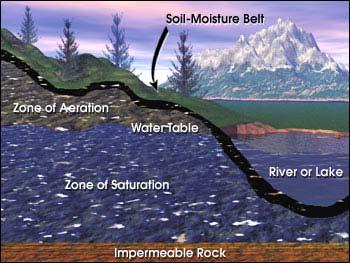
Lake Baikal
You will be surprised to learn that Lake Baikal in Siberia contains one fifth of the world’s freshwater. It is the largest lake in the world.
Fig.4.5: The water table is the top of the zone of saturation and intersects the land surface at streams and lakes. The zone of aeration lies on top of the water table.
Source: http://earthobservatory.nasa.gov
4.5.2 Surface Waters
The surface waters include the streams, ponds lakes reservoirs and canals (man-made lakes and streams) and freshwater wetlands. As part of the water cycle the surface water bodies are generally considered renewable resources though they are very dependent on other parts of the water cycle. Surface waters are categorized into lentic habitats or standing water bodies of various sizes and types, and lotic habitats or running water bodies including streams waterfalls and rivers.
SAQ 3
Give examples of:
a) A temporary lentic habitat that lasts only for a few days.------------------
b) An artificial lentic habitat.----------------------------
c) A torrential habitat ------------------------------
d) Horizontal lotic habitat with a laminar flow --------------------------
62
Let us first consider a natural lake, in order to study the characteristics of lentic habitats.
4.5.3 Characteristics of Lentic Habitats
If you look at Table 4.1 again, you will find that the lakes store more water than rivers. About two thirds of all the fresh surface water on earth is stored in about 250 large lakes which are not distributed evenly over the world.
The various types of lakes on Earth have originated mainly from:
• Rock basins formed by the depression of the landscape as a result of volcanic eruptions; melting of glaciers; movement of the earth’s crust; solution of bedrock and meteoric impacts.
• Barrier basins by imposition of a barrier across a previously open channel and
• Organic basins created by the action of living organisms. For example, animals like beavers construct dams across the main streams and cut out a pond from it, or humans also build dams and submerging once exposed areas.
Lakes and other standing water bodies can be described using their physical and chemical characteristics.
Physical Characteristics
When light strikes the surface of water, a certain amount is reflected. The portion that enters the water column is subjected to further reduction by absorption and scattering due to various suspended particles in the water.
You know from Unit 3 that sunlight is composed of radiation, which include all the visible colours ranging from very short ultraviolet to very long infrared (wavelengths from about 400 to 700 nm). As these wavelengths enter clear water, the violet and red light is absorbed within the first few metres (Fig. 4.6). The green and blue components are absorbed less rapidly, and a fraction of blue light penetrates to more than 100 m in transparent water. Hence waters appear blue in colour, as the smallest particles present in the water scatter blue light. In less transparent lakes, dissolved and particulate matter normally obscure back scattering of blue light. These lakes will appear green in colour. If there is a large quantity of dissolved material, especially organic matter the lake appears yellow or brown.
The Hydrosphere
Dept h (m)
050100150200-
Fig.4.6: Penetration of different wavelengths through the water
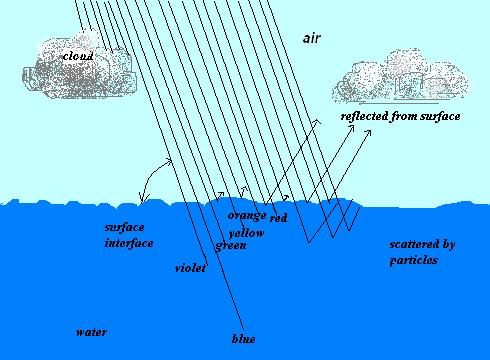
63
From the transmitted light that passes through the water column 53% is absorbed (on cloudless days) and converted to heat, and the temperature of the water body rises. The rest of the light is available for photosynthesis and used by algae.
Lentic habitats contain regions of different light intensity. The well-lit surface waters comprise the euphotic zone. In this region there is enough light for the net growth of plankton. The lower limit of this zone is the compensation level. This is the region where only 1% of the light at the surface remains. At this level the energy harnessed by photosynthesis will only equal to the respiratory requirements of plants. Below this level is called the profundal zone, where the plants cannot photosynthesize and grow (Fig. 4.7).
Fig.4.7: The zonation of a lake according to light penetration
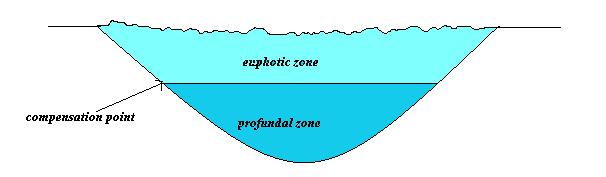
The precise depth of the compensation level varies with seasons and changes in watercolour and cloudiness (turbidity). In a clear water lake the euphotic zone may extend down to 20 m or more but in tropical lakes it is often about 3-5 m or even as little as 0.5 m deep as there are suspending particles.
• The temperature of a water body changes with time and with depth.
• Temperature in lakes can vary daily as well as seasonally
40
W ater temper a tur e 5cm below sur fa ce
35
Air temper atur e
30
25
In tropical countries the daily variation of temperature in surface waters is very prominent. It fluctuates between 1°C 6°C and the highest temperature can be recorded between 1-3 pm. However, the bottom strata of the lake remain cooler than the surface layer and do not show much change (Fig. 4.8). 20
Time of day (hours) 06.00 12.00 18.00 24.00
Fig.4.8: Daily temperature change in air and water in a small tropical lake
The water temperature in temperate water bodies follows the air temperature closely as in tropical countries but the variation is small.
64
Our Environment and its Components
As you know, a water body gets heated due to sunlight and this heat penetrates to deeper layers by conduction and mixing. Conduction is a very slow process and if there is no wind (calm day) water does not mix and it will take a long time for heat to penetrate down. In shallow waters, sediments can absorb significant quantities of solar radiation.
Globally, a situation is developed where there is a marked difference in temperature between the waters of upper layers and deep layers. This type of thermal discontinuity is known as the thermal stratification. In such a situation there is also a density difference along the water column between the upper and deep layers. The warm upper layers of a thermally stratified lake are called the epilimnion. The cool deeper layer of a lake that is not heated by the sun and is too deep to be circulated directly by the wind is termed the hypolimnion. The transitional zone between the epilimnion and the hypolimnion is termed as the metalimnion. In this there is a region where a sharp temperature gradient is present. This region is called the thermocline (Fig. 4.9a and b). The direction of the current may be different in the epilimnion and the hypolimnion, as the density of water in these two regions differs very much.
Temperature (°C) 0 5 10 15
Fig.4.9: a) Temperature variation with depth during summer in a temperate lake; b) Different zones of a stratified lake. Epilimnion contains less dense water, which is usually well oxygenated. Thermocline is the layer that shows rapid temperature changes and may change its position accordingly during day/night. Hypocline is the colder layer of water usually low in oxygen and density
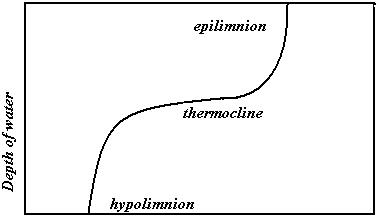
Thermal stratification is the most important physical event in a lake’s annual cycle and dominates most aspects of the lake’s structure. In shallow ponds and tanks the typical thermal stratification may not be seen. Although there is some form of temperature discontinuity. In such water bodies temporary thermocline may be present between two to three metres during the daytime that disappears in the night.
In tropical deep-water bodies, thermal stratification is present throughout the year and in temperate water bodies thermal stratification is seen only during summer.
Lakes around the world can be classified according to the types of thermal stratification patterns, mixing and the formation of the hypolimnion. Several types of such lakes are given in Table 4.2.
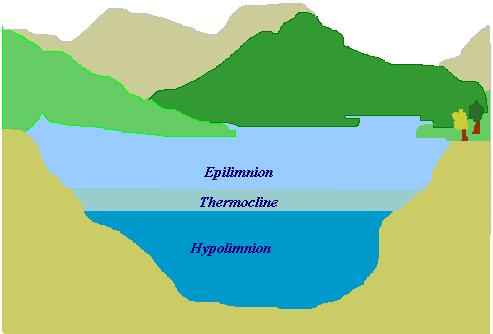
The seasonal temperature variation of a shallow body of water in a tropical country is not prominent. However, the water bodies of temperate countries show clear seasonal variations.
The beginning of the annual stratification cycle in temperate lakes is considered to be in mid winter. As the temperature continues to drop, water at the top of the lake freezes and seals the water body. The presence of a layer of ice on the surface can result in the development of an inverse stratification between 0oC water at the surface and 4oC water at the hypolimnion (Fig. 4.10).
The Hydrosphere
65
Table 4.2: Thermal classification of lakes
Type of lake Description
Holomictic lakes In these lakes, circulation occurs throughout the entire water column
Meromictic lakes These lakes do not undergo complete circulation, and the primary water mass does not mix with the lower portion The deeper stratum of these lakes are separated from the upper stratum by a steep salinity gradient called the chemocline.
Dimictic lakes These lakes mix twice a year, once in the autumn and once in the spring. They are covered with ice in winter and may show inverse stratification.
Monomictic lakes These lakes do not freeze as the temperature does not fall below 4°C. They are stratified in summer.
Polymictic lakes These lakes are shallow. They mix every few days or even daily all year round.
Amictic lakes These lakes have year round ice cover and never mix and limited to Antarctica.
Fig.4.10: a) Temperature variation during the four seasons in a temperate lake, b) Graphs showing the variation of temperature with depth
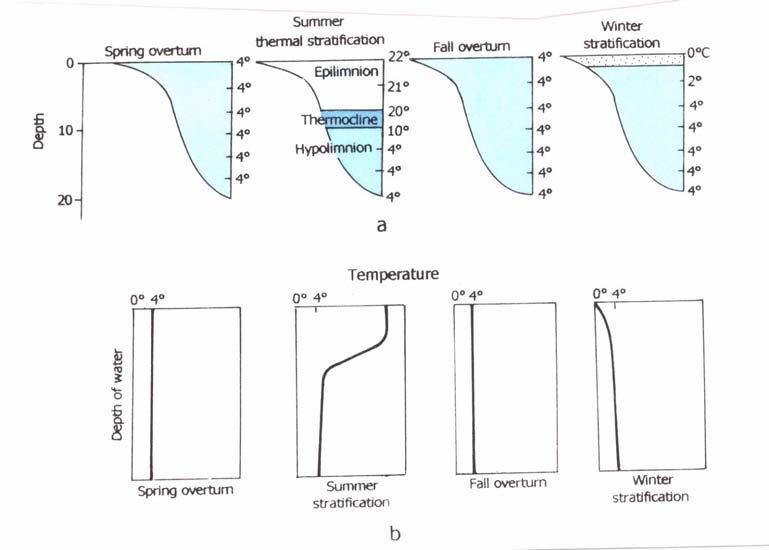
As spring approaches, the upper layers receive more heat than can be returned, resulting in an increase of the surface temperature. When the surface temperature reaches 4oC and becomes same as that of the hypolimnion the thermal and density distribution becomes more uniform. At this stage the resistance to vertical mixing is at its lowest level and even a small wind can achieve partial or complete vertical mixing and circulation. This type of wide circulation is called the overturn.
During late spring and early summer, the temperature of the surface waters increases, while colder heavier water remains near the hypolimnion. This leads to direct thermal stratification.
In late summer, and during autumn (fall) the surface temperature begins to decrease. Due to continuous heat loss, during late fall and early winter, the surface temperature
66 Our Environment
its
and
Components
drops again and reaches a point where it is essentially the same as the hypolimnion. This results in another overturn and the cycle begins again.
In this way, the complete annual cycle consists of two stratification periods (in winter and in summer) and two turnovers (in spring and in fall). You have to remember that this does not occur in tropical countries.
The flow of the water can be laminar or turbulent depending on the bottom topography of the water body
Laminar flow is the smooth slipping of water molecules, past each other or an obstruction and has little drag on moving objects.
In contrast, turbulent current is the random, chaotic tumbling of the water molecules around each other, or any object passing through the water. There is no strong continual unidirectional current in lentic habitats as in lotic habitats. Wind is the primary force moving the water at all depths of a water body. Temperature, density differences and gravity are also important factors that cause water movements.
In lentic habitats the stillness of the waters results in a heterogeneous stable bottom. The substratum is widely composed of sand, clay, mud and detritus that will tend to increase the nutrient content, thus supporting aquatic plant and animal life.
At the bottom region, due to the action of aerobic bacteria on detritus, low oxygen concentration is present.
Due to anaerobic conditions in the bottom anaerobic bacteria come into function thus forming gases such as hydrogen sulphide, ammonia and carbon dioxide.
Now that you have studied the physical characteristics of freshwater bodies, let us discuss the chemical characteristics.
Chemical Characteristics
The amount of dissolved oxygen in water is one of the most important factors of lakes and other water bodies aside from water itself. The main sources of dissolved oxygen are from the atmosphere and the photosynthetic processes of the green plants. The turbulence and mixing of water, increase in pressure and cold temperatures increase the amount of oxygen dissolving in water.
Oxygen levels often show marked daily cycles as plants release oxygen during daylight, sometimes supersaturating (i.e. greater than 100 per cent saturation) the euphotic zone, then respire at night causing a deficit.
Oxygen is transferred to deeper waters by either diffusion or circulation of surface waters. If circulation in a water body is less, and diffusion is the only means to get oxygen to deep levels, anoxic conditions may prevail at the bottom layers of lakes. In addition, bacteria present at the bottom layers, involved in the decay of organic matter use oxygen for respiration resulting anoxic conditions.
The pH of most natural waters falls in the range of 4.0-9.0, many being in the range of 6.0-8.0. The majority of natural waters have a somewhat alkaline pH, because of the presence of carbonate and bicarbonate ions.
In stratified lakes pH may drop with depth, and the bottom, pH remains very low or acidic. This condition is common in deep-water bodies in tropics. In temperate water bodies this condition is experienced in summer, but during the overturn the pH is constant from surface to bottom
pH in the epilimnetic region of lakes fluctuates daily due to the fluctuations of CO2 concentration, resulting from the dissolved atmospheric CO2, photosynthesis and respiration by plants. In the hypolimnion, CO2 is formed due to the decomposition of organic matter.
The Hydrosphere
Acidity, the ability of water to neutralize alkalinity is normally determined by pH, a measure of the concentration of hydrogen ions in solution (H+). Water is said to be alkaline when the concentration of the hydroxyl ions exceeds the hydrogen ions
67
Both temporary and permanent hardness make lathering with ordinary soap difficult. The result is the formation of scum that, float on the surface of washing water.
Surface waters become acidic towards the later part of the night and early morning due to the accumulation of CO2, resulting from respiration coupled with inhibition of photosynthesis.
Carbon dioxide combines chemically with water to form undissociated carbonic acid (H2CO3), which dissociates partly to produce hydrogen and bicarbonate ions. The latter decompose further forming more hydrogen and carbonate ions.
All these reactions are reversible and the whole system reaches equilibrium, so that natural waters will contain various proportions of CO2, HCO3 and CO3
In acidic waters where pH is low the above reaction will move backwards, while under alkaline conditions it will move forward and HCO3 and CO3 become more common (Fig. 4.11).
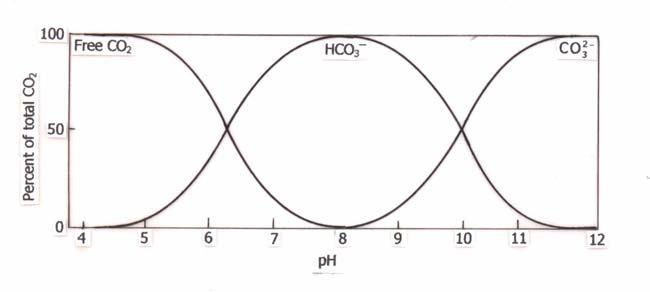
Fig.4.11: Variation of pH with different forms of carbon dioxide in water
The presence of metal ions like calcium magnesium and iron determines whether the water in a freshwater lake is hard or soft. When water with bicarbonate salts of calcium, magnesium and iron [e.g., (Ca (HCO3)2)] is boiled above 70oC, carbonate salts of the metals are precipitated in kettles. Such water is known to exhibit temporary or carbonate hardness, because the carbonate salts (e.g. calcium carbonate) are largely insoluble and on heating are removed from the water and deposited as scales.
When calcium, magnesium and iron, are present as chloride or sulphate salts (e.g. CaCl2) the hardness is called permanent or non carbonate hardness. Although this type of hardness also contributes to scaling, in this case the precipitate is due to the decreased solubility of these metal salts at higher temperatures and not due to the formation of new insoluble compounds.
Dissolved solids include mainly nitrogen salts, phosphorus salts, magnesium and calcium salts and trace elements such as manganese, copper, zinc cobalt etc.
Nitrogen and phosphorus are very important for the growth of aquatic plants and phytoplankton. You will learn more about nutrient cycling in the third block of this course.
The terms oligotrophic and eutrophic are widely used to describe lakes with respect to their nutrient conditions. An oligotrophic lake is one with low nutrient levels. Phytoplankton production in these lakes is low and therefore water clarity is high. Decomposition in the hypolimnion uses up oxygen more slowly than it can be replaced by mixing from the surface, so the water remains well oxygenated.
A eutrophic lake has high nutrient levels and therefore has high rates of phytoplankton production. High densities of algal cells reduce water clarity. Decomposition of detritus in the hypolimnion uses up oxygen more rapidly than it can be replaced. This may lead to anoxic conditions at the bottom
68
Our Environment and its Components
Fill in the blanks:
a) A lake where water mixes continuously all year around is called --------------------
b) The materials that are brought into a lake from outside are referred to as ------------
c) The upper layer of a stratified water body above the thermocline is the--------------
d) The trophic condition of a water body with high nutrient content is called ----------
e) The region of a lake where a rapid change of temperature takes place is referred to as ------------------------------.
f) The depth of a water body at which the processes of photosynthesis and respiration are equal is called --------------------------------------.
g) Typical oxygen distribution curve that could be expected in a productive lake is termed as ------------------------------------------.
h) The visible colour of the spectrum that penetrates deep into the water is -----------.
i) Scales form at the bottom of kettles when boiling ------------------------------ water.
So far you have studied various characteristics of lentic water habitats. Let us now study the nature of lotic water habitats.
4.5.4 Characteristics of Lotic Habitats
Lotic habitats are best described by flow, erosion, deposition and channel form. They vary form raging torrents and waterfalls to rivers, whose flow is so smooth as to be almost unnoticeable. The characteristics of any river vary greatly along its length, as it changes from a tiny trickle present at the head waters, to its full size at the lower reaches (Fig. 4.12).
(a)
Fig.4.12: a) Pathway of a river along its length; b) fast flowing Ganga river in the lower reaches
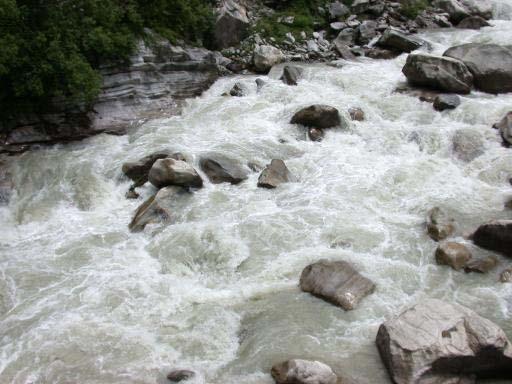
Now let us consider various regions along a river, in order to study the characteristics of a lotic system. To make our study convenient, we will consider an idealized river system, which can be divided into three zones (Fig. 4.12).
• Erosion zone
• Sediment transfer zone
• Sediment deposition zone
(b)
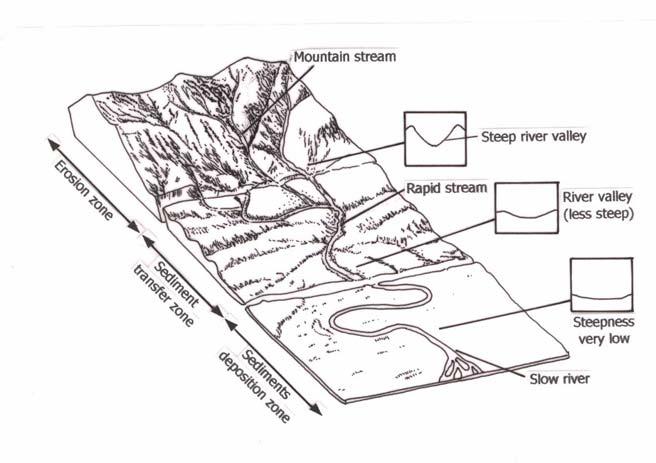
69 The Hydrosphere SAQ 4
Fig.4.13: Drainage basins
Erosion zone
This zone comprises of drainage basins (Fig.4.13) and headwater streams. The most important component governing the physical, chemical and biological structure of this zone is the flow rate. Rivers with current velocities >0.3 ms 1 are classified as erosive, while rivers with velocities < 0.3 ms 1are classified as depositing.
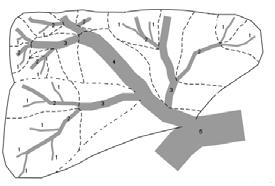
The environments from which water drains into a lake or river is the drainage basin or the catchment. The term ‘watershed’ may also be used in Europe though this tends to mean the dividing line between neighbouring catchments rather than the catchment’s drainage area itself. Drainage basins are open systems through which water and sediments are transported. The head water streams, found in this zone are low order streams (mainly first order).
Stream orders are numbers assigned to each river stretch, which indicate the relative size of the river in the drainage basin. First order streams have no tributaries; they are fed by springs ground water and run-off. When two first order streams join they form the second order and so on.
Natural river channels are never homogenous in form, but contain a variety of structural features. Among these, torrential habitats such as water falls, cascades, and alternating patterns of riffles and pools may be found. A major feature of the riffle is that it is wider and shallower and water flows through or over stones or gravel beds (Fig. 4.14a &b). Stones with sunlit riffles are often covered with algae and mosses. In contrast, the pools are narrow deep sections, which usually cover several times the area of the riffles, contain different less dense biota living among a mixture of stones and fine grain sediments. A characteristic feature of pools is the accumulation of decaying terrestrial debris.
Fig.4.14: Riffle pool sequence. a) Longitudinal profile, b) Plan view
The streams in the erosion zone are small and often have steep gradients. Since trees shade most of them, which considerably reduce solar heating, the water tends to be cool. The most distinctive feature of this zone is the shear force exerted by the fast flowing water, which has a great erosive power. Due to this eroding nature of water, the sediments, detritus and mud do not accumulate in a flowing stream, except in sheltered areas. Instead the substratum is often composed of cobbles and boulders, which are rounded and smoothed by water. Occasionally the stream may be eroded to the bedrock.
The shear force and rate of water movement tend to be quite different on top of a rock fragment, between rock fragment and beneath rock fragments. Different species can exploit these differences in microhabitats. For instance the regions near rocks where no movement of water is present are called dead zones. These are important microhabitats for benthic organisms.
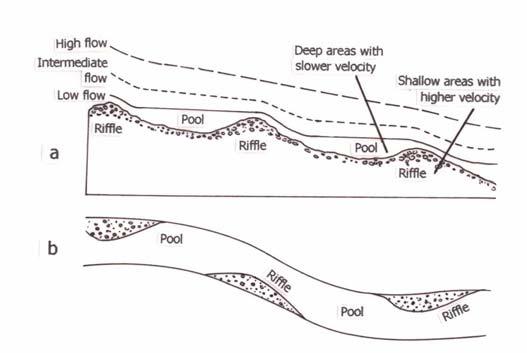
Due to turbulence, and the aeration caused by splashing of water on rocks, the amount of oxygen incorporated into water is very high. Also it prevents thermal stratification.
Plankton if present, are found in the sheltered areas. There are fewer micro-organisms accompanying detritus. Aquatic plants usually do not grow in the erosion zone of a stream, except few species which are often confined to the banks, as everything that is
70
Our Environment and its Components
not attached or weighted is swept away by the current, including organisms and sediment particles.
Sediment transfer zone
This zone is the region in which the river gradient is reduced so that water and sediment are transported without net loss or gain. The rivers are much wider. Flood plain may be present. A flood plain is a flat valley bottom of loose sediments which are deposited during river flooding (Fig. 4.15a).
(a)
(b)
Fig.4.15: a) Formation of flood plains in a meandering stream; b) Erosion and depositing areas of a meander. Erosion occurs by undercutting on the outsides of the bend as flow velocity is greatest there and deposition occurs to compensate this on the inside of the bend, as velocity is the least here
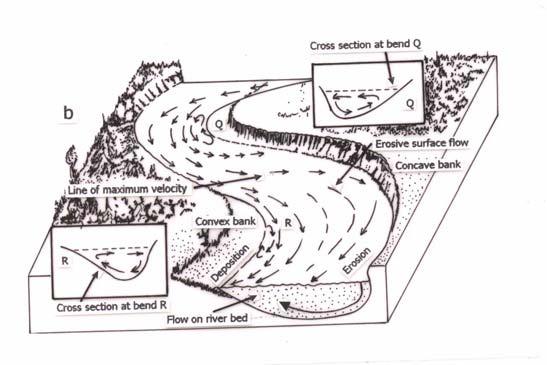
Deep rivers generally have a small gradient and the shear stress on the bed is low. This condition produces muddy debris laden sediments and riffles are absent. The average current, as well as discharge becomes greater as the overall size increases so that river waters move faster than streams, despite their lesser slope.
When the river flows further down it normally follows a sinuous course. A meander is a winding sinuous course. The gentle flow of the river normally erodes the valley from side to side nibbling away its banks, so flattening and boarding the valley floor. Highest turbulence occurs on the concave side of the stream (Fig. 4.14b) thus eroding into the outer banks of bends. Deposition starts at the slower and less turbulent waters on the concave side. This side becomes partially sedimented.
Although stratification is unusual in rivers, given their turbulence, movement and relative shallowness thermal conditions do vary
Seasonal and diurnal changes occur, and thermal regimes vary along the length of a river with topography and volume.
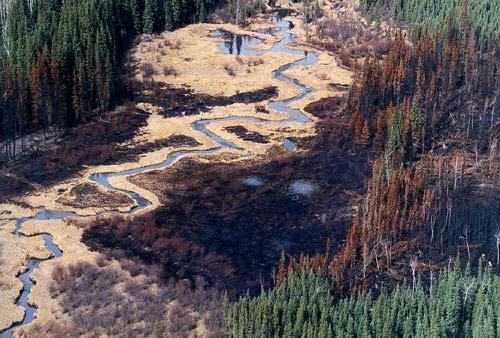
Sediment deposition zone
The deposition zone is where the river deposits its sediments load, typically as it approaches the sea and develops a delta (Fig. 4.16) or an estuary. The flow tends to be laminar. The substrate is dominated by fine silt. This part of the river is usually found
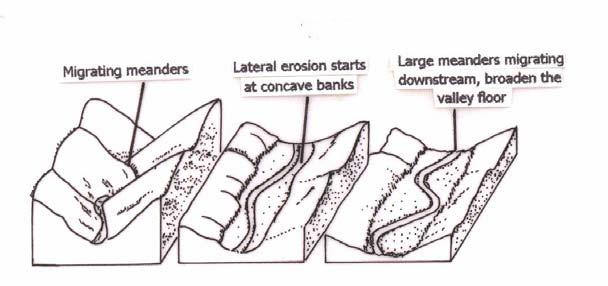
Godavari delta (Source: NASA)
71
The Hydrosphere
Fig.4.16:
Our Environment and its Components on flat land and has a low gradient. Flood plains are generally present, especially in rivers, which flood regularly.
The debris moved by the river, its load plus suspended algae make the water in this region of the river turbid. Other nutrients, dissolved ions and pH influences rivers and streams as much as they do in lakes and ponds. Since various ions are accumulated along the path of the river the conductivity shows higher values than the other regions. This zone of the river is subjected to more pollution than upstream.
SAQ 5
Fill in the table by giving the nature of the physical and chemical characteristics in each of the habitats given below:
Habitat Type of current Nature of substrate Temperature Oxygen at the bottom Turbidity
Water fall
First order mountain stream Flood plain Riffle Concave side of a meandering river
4.6 ESTUARIES
Estuaries are semi enclosed coastal embayment where freshwater rivers meet the sea. Here fresh water and sea water mix, creating a unique and complex ecosystem where there are various types of habitats namely, mangrove habitat (Fig. 4.17) sea grass beds and salt marshes.
Fig.4.17: Mangroves in the estuary in South India
Estuaries are found along the coastlines of the world, but most are evident in wetter climates of temperate and tropical latitudes. In such areas, land drainage (river water) provides the necessary freshwater input at the head of the estuary, which water. The salinity of brackish water is below those of adjacent open ocean waters and range between 0.5%o to 35%o.
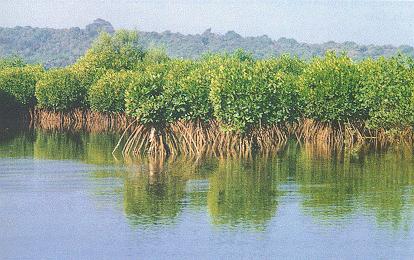
72
In this section, we outline the characteristics of estuaries without studying the habitats mentioned above. However, when you study the biotic component of the aquatic systems in unit 7, of Block 2, you will come to know most of the characteristics of these habitats.
4.6.1 Types of Estuaries
Depending on the geomorphology of an estuary, the geological history of the area, and the prevailing climatic conditions, there may be different estuarine types, each displaying somewhat different physical and chemical conditions. These may be grouped as follows (Fig. 4.18).
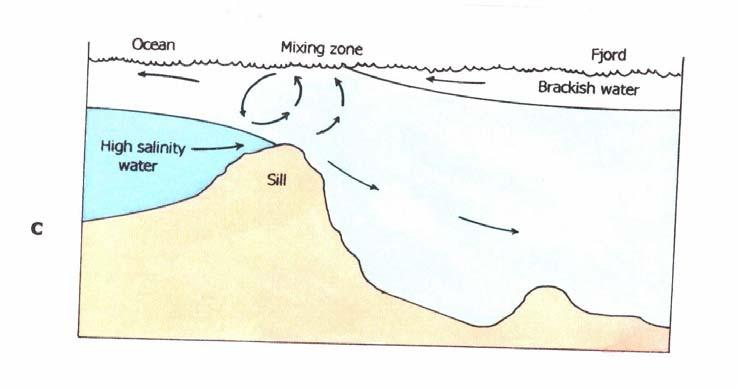
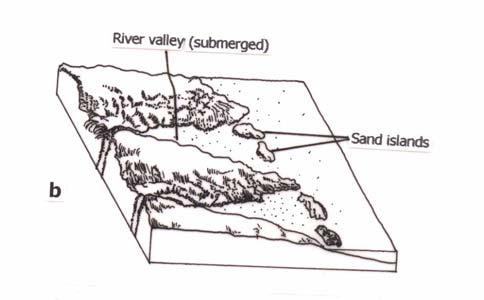
• Coastal plain estuary
• Tectonic estuary
• Bar built estuary or lagoon
• Fjord
Fig.4.18: Types of estuaries. a) Coastal plain estuary, b) Bar built estuary, c) Fjord
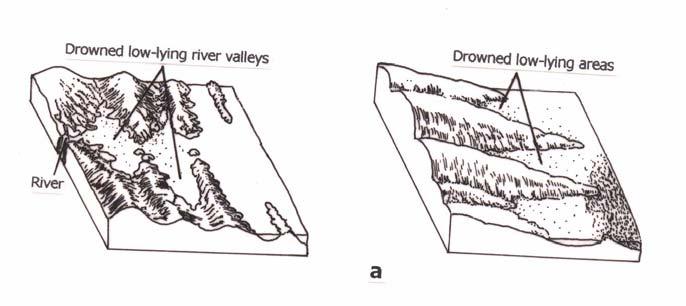
Coastal Plain Estuary
At the end of the last ice age, the earth became warmer and the ice melted and water was released. As a result of this water, sea level rose as much as 400 m relative to the level of the land. The rising sea level invaded low lying coastal river valleys thus forming coastal plain estuaries which are the most common type (Fig. 4.18a).
73
The Hydrosphere
Since estuaries are energy rich, nutrient rich ecosystems they are the most biologically productive ecosystems on earth. The tidal action concentrates the nutrients that are brought to the estuary from the riverside and the seaside. It takes much longer, for a nutrient particle to traverse an estuary than to pass through a similar length of even the most slowly flowing river. Thus the estuary acts as a nutrient trap.
Tectonic Estuary
In this type of estuary, the sea reinvades the land due to subsidence (large earth movements may cause a depression in the earth crust), of the land.
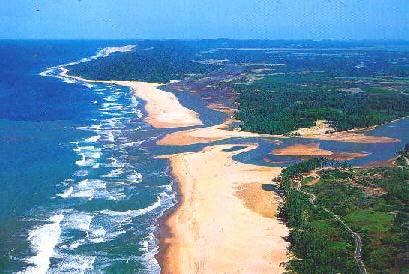
Bar Built Estuary or Lagoon
The off-shore barriers such as sand pits form parallel to the coastline and partially cut off the waters behind them from the sea forming bar built estuaries. Some of these estuaries merge with coastal water bodies and form lagoons behind the sand bars which collect the freshwater discharge from the land. The water in such lagoons varies in salinity depending on the climatic conditions (Fig. 4.18b).
Fjord
These are valleys that have been deepened by glacial action and are then invaded by the sea. They are characterized by a shallow sill at the mouth that greatly restricts water interchange between the deeper waters of the fjord and the sea. Often, these deeper waters are stagnant because of lack of circulation (Fig. 4.18c).
4.6.2 Classification of Estuaries Based on Salinity
Estuaries may also be classified on the basis of the relative distribution of salt water and fresh water and the degree to which they mix. In most estuaries there is a gradient in salinity from being fully saline (33%o-37 %o – parts per thousand) at the mouth to fresh water (0.5%o-3%o) at the landward end. The position of the gradient also moves up and down the estuary with the tidal cycle.
Three fundamental types of estuaries can be identified based on salinity.
• Positive estuary or salt wedge estuary
• Negative estuary
• Neutral estuary
Positive Estuary or Salt Wedge Estuary
In these estuaries, salt water enters from the bottom. A substantial amount of out going fresh water tends to float on the seawater because of its low density. There is a salinity gradient from surface to bottom as well as from head to mouth. Mixing occurs where the two waters come in contact, but this does not take place completely. Along any vertical line in the estuary, salinity will be highest at the bottom and lowest on the surface. This type of estuaries is found in temperate countries where there is little evaporation from the surface waters (Fig. 4.19).
Negative Estuary
A negative estuary results in tropical climate, where the amount of fresh water input to the estuary is small and the rate of evaporation is high. In this estuary, the incoming salt water enters at the surface and is somewhat diluted by partial mixing with the small amount of fresh water. The high evaporation rate however, causes this surface water to become hyper saline. Hyper saline water is denser than seawater, sinks to the bottom, and moves out of the estuary as a bottom current. A salinity profile of such an estuary is the reverse of the positive estuary, with highest values at the bottom and lowest at the top.
The isohalines in this estuary extend in the direction of the sea.
Neutral Estuary
In these estuaries the river flows are small but tides and tidal currents are large. The water may be mixed almost completely from top to bottom. Salinity remains constant from surface to the bottom of the estuary
74 Our Environment and its Components
Fig.4.19: A positive estuary in temperate zone
Important Abiotic Characteristics of Estuaries
Tide and salinity are the two important factors that have a major effect on the estuarine systems.
In a freshwater aquatic system the change in the water level is due to rain and evaporation. But in the seas and estuaries, it is mainly due to the tidal action, which is actually the periodic rise and fall of the water level, due to the attraction of the sun and moon. Tides are ocean surface phenomena, familiar to anyone who has spent time on seashore. When the water level rises it is called the high tide and when it lowers it is called the low tide. During high tide, seawater flows into the estuary and the salinity increases. During low tide, fresh water flows into it and the salinity decreases correspondingly. Due to these fluctuations the habitat along the margin of the estuaries is covered at high tide and exposed at low tide. This is a prominent feature in estuaries.
Tidal changes are less noticeable in the estuaries located close to the equator. But in countries like Australia there are estuaries with a tidal fluctuation of about 8m.We shall discuss the causes and types of tides in the next section.
The dominant feature of the estuarine environment is the fluctuation in salinity Normally a salinity gradient exists at sometime in an estuary. We have already discussed the pattern of salinity distribution in different types of estuaries. There are, however other factors that alter salinity patterns. They are the tides, Coriolis effect and the seasonal changes.
Since estuaries are shallow water bodies, the light penetrates to the bottom This increases the decaying process of detritus by numerous bacteria found in estuaries. This activity increases the organic food in the estuaries.
Water temperatures in estuaries are more variable than in the nearby coastal waters. Rivers in the temperate regions are colder in winter and warmer in summer than adjacent seawater. When this fresh water enters the estuary and mix with the seawater they alter the temperature.
The regular flux of fresh and saltwater into the estuary, coupled with the shallowness, turbulence, and wind mixing, usually means there is an ample supply of oxygen in the water column. However, oxygen is severely depleted in the substrate, as the high organic content and high bacterial populations of the sediments exert a large oxygen demand on the interstitial water.
SAQ 6
a) Among the four basic types of estuaries, what is the most common type?
b) Name the estuary, which is formed due to subsidence of land. ________________ c) Name the estuary that is formed due to the action of glaciers._________________ d) Name the estuaries, (categorized according to the salinity gradient) that have isohalines of the following types:
i) extend up stream at the bottom ii) extend down stream at the bottom iii) straight from top to bottom e) Oxygen concentration in the substrate of the estuaries is low due to ___________.
4.7 THE OCEANS
The oceans are the vast expanse of saline water that cover more than 70% of the Earth’s surface. However, they are not equally distributed over the earth. Oceans cover more than 80% of the Southern hemisphere but only 61% of the Northern Hemisphere, where most of the Earth’s land mass occurs (Fig. 4.20).
Oceans are critically important components of the environmental systems They influence strongly the climate; play a significant role in biogeochemical cycles, global water cycle; are important repositories of the sediments washed down by rivers and are important habitats for wildlife.
75 The Hydrosphere
4.6.3
________________________________________________
The oceans have been separated for convenience into three major divisions: Pacific, Atlantic and Indian. They are connected to each other, on their southern end by Antarctic Ocean. There is the Arctic Ocean too, which is usually considered to be a marginal sea, connected to the Atlantic.
The Pacific Ocean is the deepest and largest basin, occupying more than one-third of Earth’s surface. The Atlantic is a relatively narrow basin connecting the Arctic and Antarctic Oceans. It is also relatively shallow, and has wide continental margins.
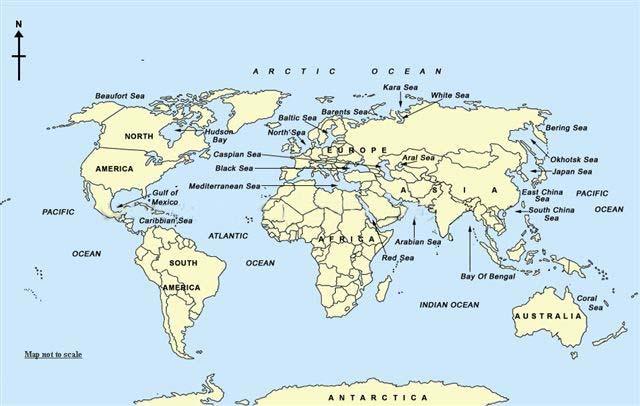
The Indian Ocean lies primarily in the Southern Hemisphere. It is the smallest of the three major ocean basins. Three of the world’s largest rivers (Ganges, Brahmaputra, and Indus) discharge into the northern Indian Ocean. This region has an abundance of both fresh water and sediment from the discharge of these rivers. Thus, the northern Indian Ocean is the most affected by nearby lands.
The northern Indian Ocean also has two major sources of warm saline water. They are the red sea and the Arabian Gulf, which produce warm saline subsurface waters that can be traced for hundreds of kilometres below the surface of the Indian Ocean.
Projecting from, or partially cut off from, these larger oceans are smaller marginal seas, such as the Mediterranean, Caribbean, Baltic, Bering, China Sea and Okhotsk (Fig. 4.20).
Fig.4.20: Major oceans and the seas of the world
4.7.1 Properties of Ocean Water
Salinity and temperature are the two most important properties of ocean water that determine its suitability for the kinds of organisms present in the ocean ecosystem and for human use.
Seawater is saline because of the dissolved salts that enter it due to the weathering and erosion of continental rocks as well as materials from natural fires volcanic eruptions and air pollution. Recall from section 4.4 that salinity is expressed as dissolved salts in parts per thousand parts of water or as parts per million (ppm) and salinity in open seas varies from 33 %o-37%o (35,000 ppm 37,000 ppm).
The bulk of the dissolved salts is sodium chloride and to a lesser amount salts containing magnesium, calcium and trace amounts of potassium (see Table 4.3).
76
Our Environment and its Components
Table 4.3: Composition of salts within sea water
Elements Percent
Sodium chloride 77.8
Magnesium chloride 9.7
Magnesium sulphate 5.7
Calcium sulphate 3.7
Potassium chloride 1.7 Calcium carbonate .3
Other 1.1
The temperature of seawater varies with depth, season and from place to place. Surface temperature decreases with increasing latitude, from an average of 26 °C in the tropics to 1.4°C, which is the freezing point of seawater at the poles. Temperature of seawater varies much less according to seasons in comparison to land.
4.7.2 Features of the Ocean Basin
The average depth of the ocean floor is more than 3,650 m below sea level and the topography of the ocean floor is far from uniform. Two boundaries can be recognized, in the ocean basin.
• Continental margin
• Deep ocean basin
Continental margin
The principal boundary between any continent and ocean basin is the submerged area called the continental margin, which consists of a continental shelf, a continental slope and a continental rise (Fig. 4.21).
Continental shelf is the gently sloping seabed that extends beyond the shore. It is mostly shallow and is generally 200 m deep at its outer edge. It ranges in width from less than 1 km to more than 1300 km off the North shore of Alaska and Siberia. Continental shelf is the basic source of nutrients for ocean plants. Most biologically productive waters in the ocean overlie the continental shelf.
Continental slopes are the edges of continental shelf. It is the zone of steeply sloped sea floor, leading from the continental shelf towards the ocean bottom. It extends down to depths of 2-3 km. at the base of the continental slope, the steepness disappears and the bottom begins to slope gently again.
Continental rise separates the continental slope from the ocean bottom. This area is usually divided into an upper and lower part, with the slope being different in the two. It marks the real boundary between the continents and the oceans. Sediment washed down from the shelf and the slope accumulates in the rise.
Deep Ocean Basin
The main feature of the deep ocean basin is the abyssal plain. It is among the flattest parts of earth’s surface (Fig. 4.21). Most abyssal plains appear to be covered with thick deposits of sediments that are likely to have come from nearby lands. These deposits include lithogenous particles (rock origins) carried from the continental shelf by ocean currents and winds and biogenous particles (of biological origin).
There are some characteristics features in the abyssal plain. These include,
Mid ocean ridges, Rift valley, Sea mounts, Trenches, and Volcanoes.
77 The Hydrosphere
Environment and its Components
The long underwater mountain ranges are called mid-ocean ridges. They are the most distinctive world wide oceanic features. One ridge stretches the entire length of the Atlantic Ocean. It continues through the Indian Ocean along the east side of the Pacific Ocean. Small earthquakes occur frequently on the crest of mid ocean ridges and most points on the ridges are far below the sea level. Most prominent feature of this ridge is, its steep sided central valley called rift valley
The deepest ocean trench is the Marianas Trench in the Pacific Ocean, which is 11,033m below sea level. This is 2000 m deeper than Mt Everest is high!
A rift valley is 1 km to 2 km deep and 25-50 km wide. It is bordered by rugged mountains whose tallest peaks come to within 2 km of the sea surface.
Thousands of mountains are scattered across the ocean basin called seamounts. Many seamounts were formed as volcanoes or volcanic peaks, which are especially common along the mid-ocean ridges. Volcanic peaks that have been flattened because of wave erosion before subsiding beneath the ocean surface are called table mounts or guyots. Their flattened tops are more than 200 m below sea level. As you see each guyot is an old seamount whose top was once close to sea level.
The deepest places in the oceans are called trenches (Fig. 4.21). They are relatively narrow cannels and 3 to 4 km deeper than the surrounding floor. Most trenches occur in the Pacific, especially the western Pacific. There are also trenches in the South Atlantic (south sandwich trench) and in the Indian Ocean (Java trenches). Trenches are associated with active volcanoes and earthquakes.
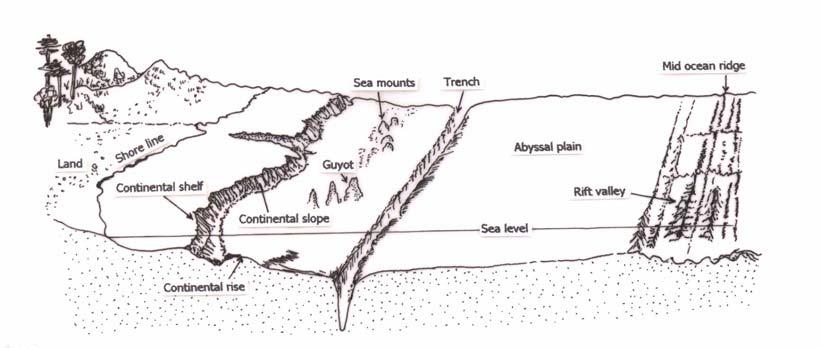
Volcanoes and volcanic islands are common in the ocean. They usually stand 1 km or more above the surrounding Ocean floor. Most volcanic eruptions occur quietly and usually go unnoticed on mid ocean ridges. Oceanic eruption that occurs in shallow waters can be quite violent.
Fig.4.21: Diagrammatic cross section of the ocean basin
4.7.3 Oceanic Depth Zones
Now we consider the ocean’s vertical structure. There are three principal depth zones: surface zone, pycnocline, and deep zone (Fig. 4.22).
The surface zone is 100 to 500 metres thick and contains about 2 percent of the ocean volume. It is intimately linked with the overlying atmosphere. For instance, water temperatures and salinities in the surface zone change seasonally because of variation in precipitation, evaporation, cooling and heating. This zone contains the warmest and least dense waters in the oceans. Average surface-water temperature is 17.5oC (Fig 4.22a).
78
Our
Fig.4.22: a) Oceanic depth zones, b) Marked variation in temperature, salinity and density with depth
Near-surface waters are well mixed by winds, waves and cooling or heating of the surface. For this reason, the surface zone is also called the mixed layer, because the waters there move vertically very easily. These vertical motions are mainly winddriven.
The pycnocline is where water density changes markedly with depth. The exact depth of the pycnocline is controlled by those factors, which influences the density of seawater, namely temperature and salinity.
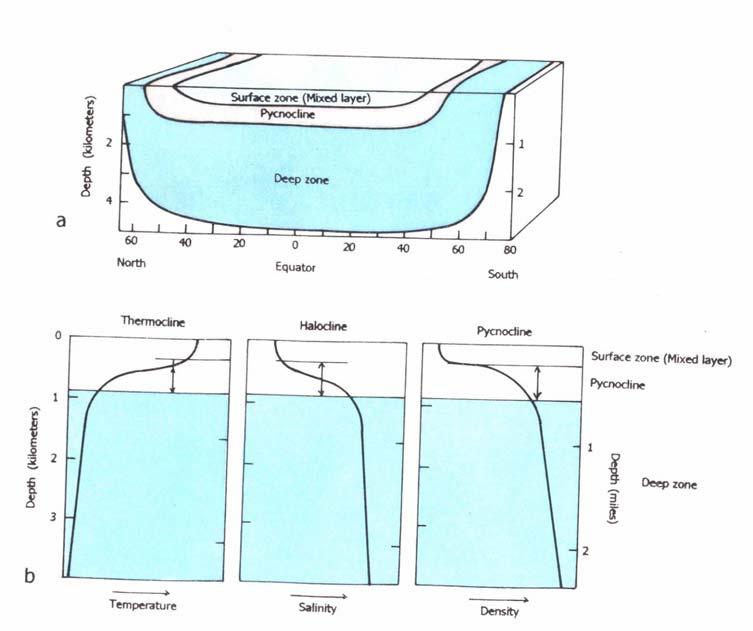
Where the seawater density is controlled primarily by changes in temperature, the pycnocline coincides with a zone of marked temperature change; called a thermocline (Fig. 4.22b). The zone where seawater density is controlled by marked changes in salinity is referred to as a halocline. Because temperature changes are more important in the open ocean, where salinity changes little, the depth of the pycnocline, is controlled by a thermocline. In coastal ocean areas where salinity changes dominate and temperature changes are less important, halocline controls the depth of pycnocline.
Below the pycnocline is the deep zone, which contains about 80 percent of the ocean’s volume. Except in the high latitudes the deep zone is separated from the atmosphere. This isolation of the deep zone prevents interactions with the atmosphere and warming of the deep ocean water by solar heating. Thus, deep zone retains its low water temperature 3.5oC – characteristic of the surface waters in the Polar Regions. Since the temperature and salinity of deep-ocean waters are unaffected by surface processes, temperature and salinity are conservative properties.
Oceans are also divided into vertical zones according to the availability of light (Fig. 4.23).
79 The Hydrosphere
Fig.4.23: Photic zones in the ocean SAQ 7
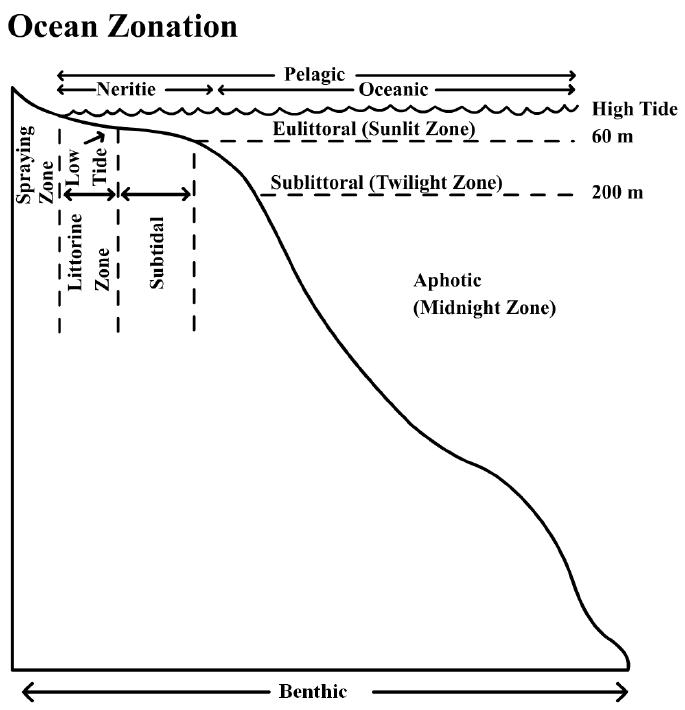
Select the correct word from the list and fill in the blanks.
[Continental shelf, Abyssal plain, trenches, Pycnocline, Halocline]
a) The zone where seawater density is controlled by marked changes in salinity is referred to as _______________________.
b) The vertical movements of waters in the surface zone and seasonal changes in their temperature or salinity do not penetrate the ____________________ as this zone has a great stability.
c) A large portion of the deep ocean consists of flat, sediment covered areas called ______________________.
d) The deepest areas of the ocean are called ____________________.
e) The relatively smooth underwater extension of the edge of the continental shelf and the deep ocean basin.
4.7.4 Movement of Water in the Ocean
Ocean waves and currents and tides are large-scale water movements, which occur everywhere in the ocean. They are formed due to various causes, mainly the prevailing wind system (waves and currents) and the gravitational pull of the moon and the sun (tides).
Waves
Waves are rhythmic movements generated by winds blowing across the ocean surface. They may also be generated by earthquakes, volcanic explosions and underwater landslides. Ocean waves are mechanical because they transmit energy through the water without moving the water itself. Waves don’t move sideways, only up and down. Wave direction in the open seas depends on the wind direction, while ocean topography significantly affects the wave direction in shallower waters. Waves range in size from ripples only a few centimetres in height to storm waves, which may tower as high as 30m. Tsunamis, huge waves caused due to volcanic activity or earthquakes under the sea have been recorded to be more than 100 m high (see Box 4.2). Ripples
80 Our Environment and its Components
form first and then grow into larger waves as winds continue to put energy into the water surface. Longer waves travel faster than short ones. Most ocean waves are less than 6 metres high. Waves are altered when they enter shallow water. They change direction by refraction, moving most slowly in shallow water and fastest in deep water. As the waters get shallower, waves eventually become unstable and break, forming breakers.
Box 4.2: Tsunamis
Tsunamis are giant waves generated by submarine volcanic eruptions or earthquakes and move across the ocean at speeds of more than 700 km per hour and cause wide spread damage when they reach the coast. The word tsunami is Japanese for “harbour wave”. In open sea the waves have long wavelength and short height but on reaching shallow waters near the coast the wave gathers energy as it slows down and a powerful high wave is formed that can cause widespread destruction with great loss of life as was seen in the tsunami generated by the 26th December 2004 earthquake in the Indian Ocean north of Simeulue Island off the coast of Northern Sumatra Islands. The resulting tsunami wave devastated the shores of Indonesia, Thailand Sri Lanka and South India, and reached as far as Port Elizabeth 8000 km away in South Africa.
Currents
A current is a distinctive flow of a body of water that moves in a definite direction in the ocean. Like atmospheric currents, oceanic currents also flow at different depths in the water and can vary in speed and direction. Major current systems flow through all the oceans redistributing ocean water and transferring heat from low latitudes to high latitudes and modifying regional climates (see Box 4.3).
Surface ocean currents are mainly caused by pressure differences in the atmosphere and winds or by density differences. The direction of a current is determined not only by the wind system but also by the landmasses. There is another force that affects the direction and that is the Coriolis force. This force causes the ocean current to deflect into roughly circular gyres that move clockwise in the northern hemisphere and counter clockwise in the southern hemisphere.
There are two entirely different ocean current systems. They are the horizontal and vertical currents. We are more familiar with the horizontal currents or surface currents. Vertical currents, referred to as subsurface currents, are driven by chilled waters sinking in the polar and subpolar oceans and upwelling processes.
Sinking
Seawater sinks when the density increases. The physical processes that increase seawater density are strictly surface features. This dense seawater, which is from the surface and is usually highly oxygenated, transports dissolved oxygen to deep areas of the ocean basins. The chief areas of sinking are located in the colder latitudes where sea surface temperatures are low.
Upwelling
Subsurface water is carried to the photic zone by several processes, which are collectively termed upwelling. These waters are rich in nutrients.
Upwelling is especially conspicuous on the eastern margin of ocean basins, for example, the wind driven surface currents along the continental margins flow toward the equator. At the same time, the Coriolis Effect tends to push these surface waters offshore. This water is then replaced by deeper water transported vertically along sloping surfaces to the surface (Fig. 4.24a). Similarly along the equator the two equatorial currents flowing east are deflected away to the right north of the equator and left to the south of the equator. To replace this water, subsurface water upwells to the surface (Fig.4.24b). Such wind-induced upwelling is limited to the upper 200 m of
The Hydrosphere
Gyres play an important role in redistributing heat across the Earth’s surface. This affects the surface temperature across the continents and patterns of precipitation.
81
the water column near coasts (near capes or other irregularities in the coastline) and equator (e.g., Peru and Chile).
Fig.4.24: a) Coastal upwelling in the Northern Hemisphere, b) Equatorial upwelling Box 4.3: Types of currents in the ocean
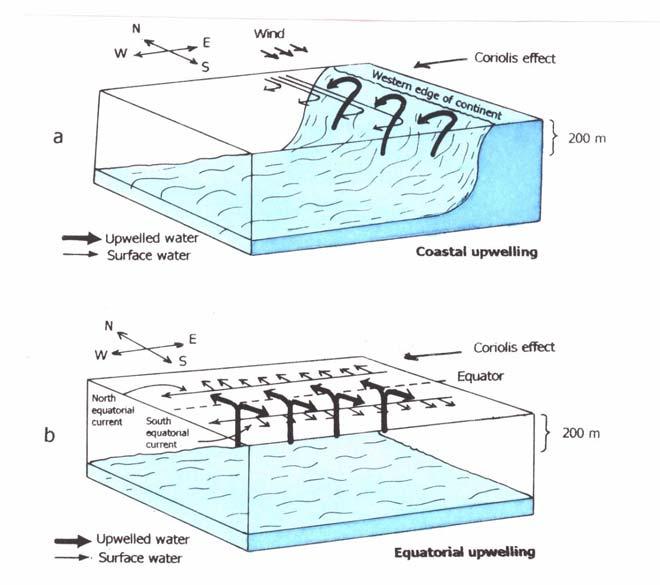
Basically there are three types of ocean currents
• Drift currents that are broad and slow.
• Stream currents that are narrow and fast moving.
• Upwelling currents that bring cold nutrient rich waters from the ocean bottoms.
Ocean currents can be
• warm currents that bring in waters from warmer to cooler latitudes that is from the equator to the poles, and
• cold currents that flow from higher to lower latitudes that is, from the poles to the equator.
Tides
The surface of all oceans, gulfs and estuary waters rises and falls periodically due to the effect of the gravitational pull of the Moon and the Sun on the Earth and its waters. The result of this gravitational attraction is the formation of lunar and solar tides respectively Lunar tides are stronger than solar tides as the Moon is much closer to the Earth than the Sun. There are usually two high tides and two low tides a day with successive high and low tide of roughly the same height. Tidal cycles affect many coastal, estuarine and near shore ecosystems, which are alternately flooded during high tide and exposed during low tide.
82
Our Environment and its Components
Sea Ice
Sea ice forms where sea water cools below its initial freezing point. Each winter, sea ice covers the entire Arctic Ocean and completely surrounds Antarctica. It also forms in bays and along the coast of Alaska, the western coast of Canada, and the Atlantic coast of North America as far south as Virginia. In spring much of the ice melts but large areas in the polar oceans remain ice-covered throughout the year. The annual expansion of ice-covered ocean areas and the retreat of the ice in local summer affect climate worldwide. In this section, we discuss how and why sea ice forms.
When seawater chills to its temperature of initial freezing, clouds of tiny needle like particles form, making the water surface slightly turbid. The ocean surface dulls and no longer reflects the sky. As ice particles grow, they form hexagonal spicules 1 to 2 centimetres long. The needles and spicules of newly formed ice are called frazil ice. When the surface is stirred by winds and waves, the ice forms a soupy-looking layer known as grease ice.
As sea ice continues to form, ice crystals eventually form a blanket over the water surface. When the surface is calm, an elastic layer of ice forms. It is only a few centimetres thick. Waves and especially winds break these ice sheets into large pieces called floes.
Since salt is excluded from ice, the remaining water becomes more saline and its freezing point is lowered. Some brine pockets remain trapped in the ice. Salinities of newly formed ice are typically 7 to 14, but this value depends on temperature. The more slowly the ice forms, the easier it is for brines to escape, resulting in lower ice salinities. Conversely, at very low temperatures, ice forms rapidly, and the salty brines cannot easily escape. This quick freeze results in higher ice salinities. Salinity of sea ice is always lower than that of the surrounding waters. As sea ice ages the brines are expelled. Thus, multiyear ice typically has salinities around zero at the top and around four at the bottom.
Snow accumulates on top of, and freezes to, the ice surface. Thus, sea ice grows from both top and bottom. First year ice is flat and usually snow-covered. During a single winter, new sea ice can reach a thickness of two metres. Where sea ice never completely melts, multiyear ice continues to grow, and older ice has a rough hilly surface. In the central Arctic, multiyear ice reaches thickness of three to four metres. Ice melts during the summer, down to about two metres in the central Arctic. The fresh water released by melting ice forms a thin layer of low-salinity surface water.
Currents and winds move large pieces of sea ice together, forming mounds called hummocks or pressure ridges that are the ice pack’s most conspicuous features. At these pressure ridges, the ice is deformed and thickened, up to 20 metres thick. These ridges can extend many tens of metres below the ice and are hazards to submarines moving under the ice.
When floes move apart, they expose open waters in areas called leads. Leads range from few centimetres to many hundreds of metres wide and can extend for many kilometres. Ships moving through sea ice utilize leads where possible to avoid having to break ice. Mammals stay near the leads and near holes in the ice. This permits them to catch fish and other food in the underlying waters.
Oceans are the world’s most important resources that are common to all nations. And as is the case with all common resources they are over exploited and subjected to unsustainable use. Many of its uses such as fishing and oil exploration conflict with one another and ocean waters near industrial countries are polluted and suffer from over use. It is therefore, important to realize that rational management and allocation of the ocean resources are important for its use in sustainable ways.
83 The Hydrosphere 4.7.5
Select the correct statement and mark them with a tick (√):
a) As waves enter shallow water and begin to encounter the bottom effects, they slow their forward motion and the wave length decreases.
b) The Coriolis effect is the result of the rotation of the Earth on its axis.
c) The western boundary currents are very slow.
d) The direction of the ocean currents is not affected by the continents.
e) Due to vertical currents, nutrients at the bottom layers are brought to the surface.
f) Sea ice contains a high percentage of salt.
4.8 SUMMARY
In this unit you have studied that
• Water is a common, yet very remarkable, substance on the earth’s surface. While abundant in its liquid form, large quantities of water also exist as a gas in the atmosphere and as a solid in the form of ice and snow. The asymmetrical shape of a water molecule creates an electrical charge separation that initiates hydrogen bonding which in turn, affects water’s thermal properties such as, heat capacity, latent heat of fusion and vaporization, and other basic properties such as surface tension, density-temperature relationships, solvent capability, etc.
• All water on the planet is constantly recycled, by a system known as the hydrological cycle driven by the solar energy. In this cycle, water is lost to the atmosphere as vapour from the earth, which is in turn precipitated back in the form of rain, snow, frost, etc. This precipitation and evaporation continues forever and thereby maintain a balance between the two.
• There is an immense amount of water on the earth’s surface. Out of this, large quantity, only a little percentage; (about 0.25) could be used for human consumption. Over 97% of water is deposited in the ocean depression.
• Freshwater habitats are categorized as lentic or standing water and lotic or running water. In lentic habitats or lakes there is no unidirectional current and the water movement is mainly due to wind. The surface waters are clearly lit throughout the day and temperatures fluctuate widely, daily and annually. Thermal stratification is present and a sharp temperature gradient zone or thermocline may be formed in deep lakes.
• Different zones can be identified in a river. The upper region or the head waters of a stream consist of clear cool water flowing over a substrate composed of cobbles and gravel. The most distinctive feature of this zone is the shear force exerted by the fast flowing current, which affects most of the physical and chemical characteristics of the zone. The next region is the sediment-transferring zone, which is comparatively wider and has an average flow rate. The lowest region is the sediment-depositing zone, which is larger, deeper and muddier with a laminar flow, which encourages deposition of sediments.
• Estuaries are partially enclosed coastal embayment where fresh water and seawater meet. Based on geology and geomorphology, there are four basic estuarine types: coastal plain, tectonic, bar build estuary and fjord. Based on salinity gradients, there are three groups of estuaries. They are the positive, negative and neutral estuaries.
84 Our Environment and its Components SAQ 8
• The dominant feature of the estuarine environment is the fluctuation in salinity, which is mainly affected by, tidal regime, Coriolis effect, and seasonal changes in evaporation, freshwater flow or both. Most estuaries have soft, muddy substrates, with large amounts of particulate organic matter, which serve as food for estuarine organisms. Oxygen is usually in ample supply in the water column but is severely depleted in the substrate.
• There are three major oceans in the world and they are connected to each other. These oceans are connected to the continents by shallow extensions of the continents called continental shelves. Most of the ocean basins are flat abyssal plains, but these plains are cut by deep trenches in some places, and have volcanoes, sea mounts etc. in the other areas.
• The open ocean has a three-layer structure: surface zone, pycnocline and deep zone. The surface zone responds quickly to changes in the overlying atmosphere. The pycnocline inhibits exchanges between atmosphere and deep zone. The deep zone is exposed to the atmosphere only in high latitudes, which causes its waters to be cold.
• The oceanic water is constantly in motion. It is mixed and moved by winds, waves and currents, sinking water masses, and upwelling.
• Sea ice is a major feature of the ocean. Its freezing in winter and melting in summer dominates surface waters in the polar oceans. Sea ice also influences the deep- ocean circulation. The coldest and densest water masses form in the polar oceans. Freezing sea ice expels salt, and this excess salt in the remaining liquid water increases the density of water masses, which is especially important near Antarctica.
4.9 TERMINAL QUESTIONS
1. The diagram given below shows the stratification cycle of a temperate lake, showing zones of mixing and temperature profile with depth during different times of the year. Answer the questions given below, which are based on the diagrams a to d. Temp eratu re D e p t h 0 Therm oc li ne Ic e
a b c d
a) Which one of the diagrams shows an inverse stratification? __________________ b) Complete circulation is shown in ________________. c) The situation in autumn (fall) is shown in _________________. d) Give one difference between the temperature variation between spring and autumn e) According to thermal stratification of lakes to which category does this lake belong? _______________________
85
The Hydrosphere
2. The major processes of the hydrologic cycle are given below. Briefly explain the involvement of each process in the hydrological cycle.
Precipitation -----------------------------------------------------------------------------
Evapo-transpiration ---------------------------------------------------------------------
Surface run off ---------------------------------------------------------------------------
3. Vertical distribution of some of the chemical and physical characteristics in a lake is shown in the diagram.
i) Answer the questions given below, which are based on the diagram
ii) Explain the changes in the vertical distribution of temperature.
iii) Explain why Oxygen concentration at the bottom is lower than that of carbon dioxide?
iv) Explain the processes that influence absorption of oxygen at the epilimnion.
v) State whether this lake is stratified or not. Give reasons for your answer.
4. Explain the formation of the different estuaries. Collect information about the different types of estuaries present in India.
86 Our Environment and its Components
D e p t h Organ i c matter Carb on d i oxid e O x yg e n T emperature Li g ht
UNIT 5 ORGANISMS AND THEIR CHARACTERISTICS
Structure
5.1 Introduction
Objectives
5.2 Characteristics of Living Organisms
5.3 Types of Living Organisms
5.4 Origin and Distribution of Life
Origin of Life
Distribution of Organisms
5.5 Nutrition in Organisms
Autotrophic Nutrition
Heterotrophic Nutrition
5.6 Summary
5.7 Terminal Questions
5.1 INTRODUCTION
Imagine yourself on a nature exploration trip to a place with pristine beauty. To preserve the memory of your trip, while taking the photographs you may also like to note down the names of the organisms familiar to you, and make sketches of the unfamiliar ones. While undertaking this exercise you would consciously or subconsciously be making a distinction between the living and the non-living things utilising some sort of criteria. Would you now like to pause for a moment and think about the features based on which it immediately clicks to you that this buzzing insect is a bee, and that energetic small bird hovering on the flowers is the humming bird? You may like to match your answer with the one given in the first section of this unit.
From your observations about several kinds of living organisms you would agree that a life-time is not enough to even know about, what to say of studying, a fraction of the diverse kinds of organisms inhabiting the biosphere. A modern classification scheme that has found wider acceptance in recent times is briefly dealt with in Sec. 5.3 of this unit. It would give you a glimpse of the magnificent diversity of life. The extraordinary diversity has an intriguing history of its origin and evolution, and its existence is governed by certain ecological principles. All these aspects are discussed in the last two sections of the unit. We hope that you will enjoy your journey into the world of the living.
Objectives
After studying this unit, you should be able to:
• outline the characteristics of living organisms;
• describe the salient features of the major groups of organisms, giving examples of each;
• justify that the distribution and evolution of organisms has been profoundly influenced by the geological events; and
• classify organisms based on their characteristics and mode of nutrition, and discuss their ecological role.
5.2 CHARACTERISTICS OF LIVING ORGANISMS
The focus of this section is unity of life, i.e., the characteristics shared by all organisms. The following description on this topic of common awareness would help you to carry your thoughts to deeper and organized levels of understanding.
Organisms and their Characteristics
5
Wherever in the text the living and the non-living things are referred to, try relating them to specific examples or situations to make your study meaningful.
• Molecular origin and distinctive organization
All living and non-living things are made up of atoms, and atoms are themselves composed of protons, electrons and neutrons. These sub-atomic particles become organized according to certain physical laws into atoms and molecules of different elements such as carbon, oxygen, hydrogen, nitrogen, iron, aluminium, copper, silicon, etc. Some atoms and molecules such as hydrogen, carbon, oxygen, water, etc. constitute both living beings and nonliving things. Therefore, it is obvious that some fundamental properties of matter are shared by both living and nonliving components of the environment.
However, some molecules such as carbohydrates, lipids, proteins, and nucleic acids are found only in living organisms. They are the building blocks of life. At a higher level of organization, these molecules participate in the formation of a living cell, which is the basic unit of life. Different kinds of cells organize into tissues, organs, organ systems and organisms, which manifest life.
• Ways of capturing and systematically using energy and materials
Living organisms have the ability to acquire energy and materials and use them in a regular fashion. Energy is the key to the various levels of organization (shown in Fig. 5.1). The question then is: Where do they acquire the energy from? And how do they use it? All forms of life extract and transform energy from their surroundings, and use it to build, break-down, store, and eliminate materials in ways that assure their maintenance, growth and reproduction. This capacity is called metabolism
• Programme of growth, development and reproduction
Through the metabolic events, living things come into the world, grow and develop, and reproduce. Ultimately they move on through decline and death according to a timetable for their kind. Even as individual organisms die, reproduction assures that the form and function of the living state are perpetuated. You may thus appreciate that an organism is much more than a single organized form, having a set of functions during its life time.
• Homeostasis
Any organism cannot exist insulated from its surroundings. The living state is invariably maintained within certain limits of the surrounding factors. For some organisms, concentration of substances such as carbon dioxide and oxygen must not rise above or fall below certain levels. Toxic substances must be eliminated from their bodies. Foods of certain kind and in requisite amount must be available. Environmental factors like water, oxygen, light, temperature and others, dictate the terms of survival. They are not always present at the optimum level commensurate to the requirements of different organisms. So how do the organisms respond to any changes in their environment?
They respond in two ways: First, all organisms have in-built means of making internal adjustments to the outside changes. The adjustments help maintain operating conditions within some tolerable range. This capacity of maintaining the internal environment is known as homeostasis. Organisms also respond in another way to the changing conditions. They adjust to certain directional, irreversible changes in the internal and external environment. For example, in human beings, irreversible chemical changes trigger puberty during the adolescence. Despite these chemical changes, the internal state is maintained. Thus homeostasis implies constancy, a sort of perpetual bouncing back to the limited set of operating conditions.
Living Components of the Environment
6
Biosphere
Those regions of the Earth and the Atmosphere in which life exists
Ecosystem
A community and its physical and chemical environment
Community
The populations of all species occurring in a habitat
Population
Group of individuals of the same species occurring in a given area
Multicellular Organism
An individual composed of specialised independent cells organised in tissues, organs, and often, organ systems
Organ System
Two or more organs, whose separate functions are integrated in the performance of a specific task, e.g., the digestive system
Organ
One or more types of tissues organised into a structural and functional unit
Tissue
A group of cells of a kind and intercellular substances functioning together in a specialised activity
Cell
The smallest living unit; may live independently or may be part of a multi-cellular organism
Organelle
Any of the several membranous sacs or compartments inside the cell associated with specific metabolic reaction(s) within the cellular space and in time
Molecule
A unit of two or more atoms of the same or different elements bonded together
Atom
Smallest unit of an element that still retains the properties of that element
Subatomic Particles
Electrons, protons, neutrons that constitute atoms
Fig.5.1: Different levels of organization in nature (adapted from Starr & Taggart, 1987)
their Characteristics
Organisms and
• DNA – the information
7
storehouse
Considering the previous example of development, you may like to know: How is it that an organism follows a specific and predicted path of development that is true to its type? For example, how is it that corn seeds can germinate and develop into fairly exact replicas of parent corn plants? Within each individual, there is a storehouse of hereditary information. DNA (deoxyribonucleic acid) is the storehouse in most organisms, whereas in some it is in the form of RNA (ribonucleic acid). This storehouse of hereditary information thus imparts the unique ability to the living organisms to perpetuate into forms like themselves.
So far, you have learnt about the characteristics of living beings. You may like to fix these ideas in your mind before studying further. Attempt the following exercise.
SAQ 1
Study Fig. 5.1. Would you like to rearrange and redefine the levels of biological organization? What key concept ties this organization to the history of life from the time of origin to the present? Why is it difficult to give a simple definition of life?
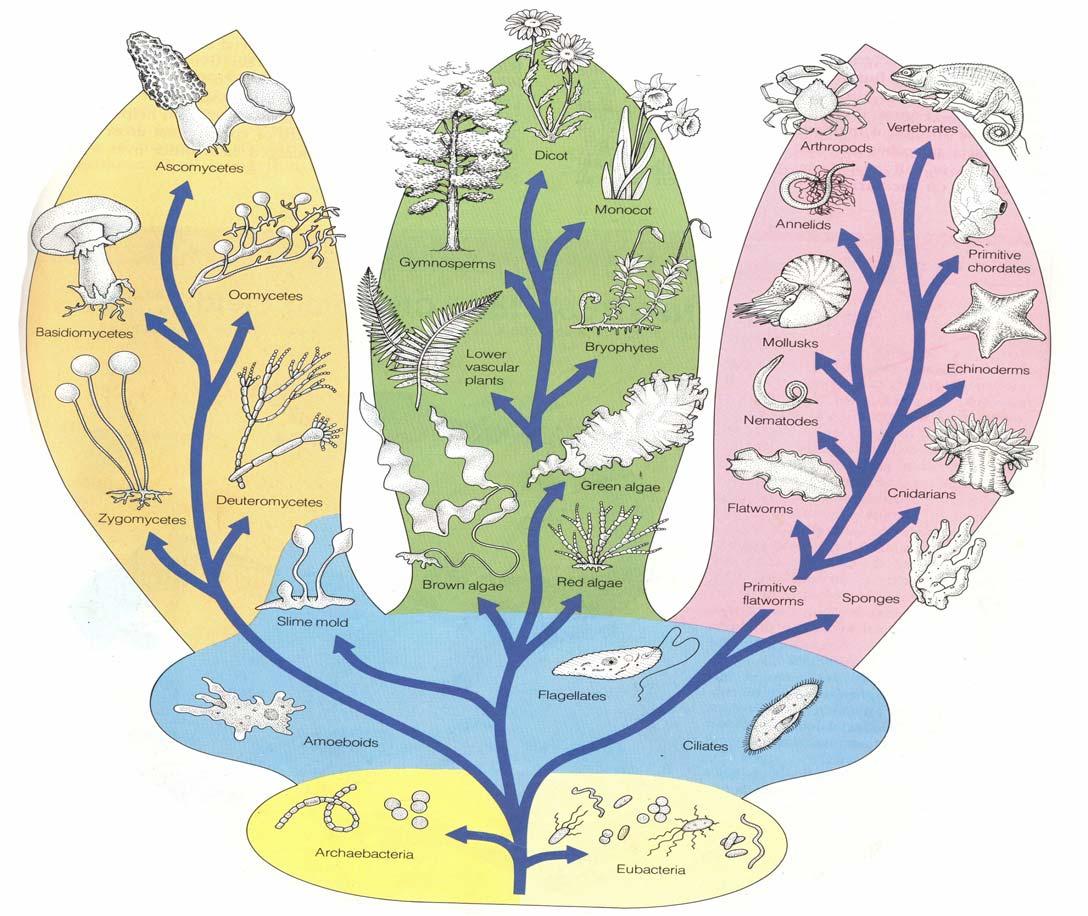
5.3 TYPES OF LIVING ORGANISMS
A large number of diverse living beings inhabit the Earth (see Fig. 5.2).
Fig. 5.2: Diversity in life’s kingdoms (adopted from Postlethwait and Hopson, 1989)
Living Components of the Environment
8
There are six groups of organisms such as viruses, bacteria, fungi, protoctists, plants and animals. Except viruses, all the other organisms are grouped into five kingdoms: Kingdom Bacteria, Fungi, Protoctista, Plantae and Animalia, respectively. Of these types, viruses and bacteria are not visible to the naked eye and a microscope is essential to observe them. Therefore, they are considered as microorganisms. The rest are called macro-organisms.
Viruses
Viruses are much smaller than the cells, say, those of our body. They distinctly lack a cellular type of organization. A virus consists of a protein coat (capsid) and nucleic acid core, made up of either DNA or RNA. All viruses are not similar in shape (Fig. 5.3). For example, some complex ones such as bacteriophages (e.g., the bacteria-infecting T4 virus) consist of a tail and six leg-like fibres. Some of them are also polyhedral or rod shaped.
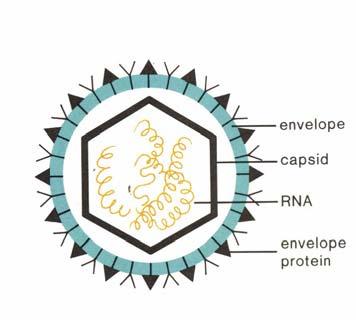
(a)
(b)
Fig.5.3: Different types of viruses. a) A bacteriophage. b) An RNA virus (after Mader, 1988)
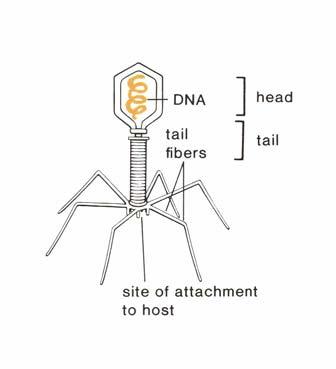
The most interesting thing is that the viruses exhibit some features of the living organisms and in some respects they resemble the non-living things. As living organisms, viruses can reproduce, but they can do so only by entering a living cell and using its machinery. Outside the cell, viruses are unable to feed or grow. Some viruses can even be crystallized like minerals. In this state, viruses can survive for years remaining unchanged until they come in contact with the specific living cells or tissues that they require for their multiplication. Viruses infect a wide variety of organisms, often at remarkably high rates. Typically, viruses have a specific host range. Human beings too are their hosts. Many human diseases are caused by viruses. The commons ones are chickenpox, mumps, measles, smallpox, yellow fever, rabies, influenza, viral pneumonia, poliomyelitis, infectious hepatitis and AIDS.
Bacteria
Bacteria are amongst the most ancient organisms and often they are smaller than eukaryotic cells. They are categorized into two sub-kingdoms as Archaebacteria and Eubacteria. Archaebacteria, also known as ancient bacteria, still exist in many settings, are strictly anaerobic, and include the methane-producing bacteria. The Eubacteria commonly referred to as the true bacteria, are among the most successful groups of organisms. They also include photosynthesizers such as Cyanobacteria. It is noteworthy that both the groups are primitive and lack a nuclear membrane, and organelles like mitochondria, endoplasmic reticulum, golgi apparatus, and lysosomes.
Depending on their shape, bacteria can be categorized into three fundamental groups. Cocci are spherical to ovoid (Fig.5.4a) while the cylindrical or rod-shaped ones are known as bacilli (Fig. 5.4b). The cocci and bacilli may form chains. The third group is known as spirilla since they are helically coiled (Fig. 5.4c).
Eukaryotes are organisms whose cells have membraneenclosed organelles, notably the nucleus.
Organisms and their Characteristics
9
(a) (b) (c)
Fig.5.4: Three fundamental types of bacterial groups. a) Cocci (singular Coccus); b) Bacilli (singular Bacillus); c) Spirilla (singular Spirillum)
Most eubacterial cells are enclosed in cell walls. They are composed of peptidoglycan also called murein. It is a polymer of polysaccharide chains covalently cross-linked by short chains of amino acids.
Bacteria can also be categorized as gram positive or negative based on the staining pattern of the cell wall. In gram-positive bacteria, the wall is thick and exposed and that of gram-negative group is thin and enclosed by an outer membrane of lipopolysaccharides. Some eubacterial cells secrete mucoid materials to form an additional outer covering called the capsule. The capsule makes the cell more resistant to the defence of host organisms.
The motile bacteria use flagella as their locomotory organelle and reproduce by binary fission. The method of gaining energy varies in different groups. Some are producers and may be either photoautotrophs or chemoautotrophs (see Table 5.5). The first group, i.e., photoautotrophs are photosynthesizers and produce organic materials in the presence of sunlight.
The second group, known as chemosynthesizers, use inorganic chemicals as their energy source. Some are saprotrophs as they live on dead organic material, while some fulfil their energy requirements from a living host thus being parasites. You will learn more about bacterial nutrition in Section 5.5.
Some bacteria are beneficial to us and some are harmful. The beneficial ones fix atmospheric nitrogen and likewise there are several of them. The harmful bacteria cause diseases in humans, animals (particularly the domestic ones), and the cultivated plants. Several kinds of Eubacteria affect humans causing diseases like cholera, diphtheria, syphilis, gonorrhoea, tetanus and many others, and, therefore, are medically important.
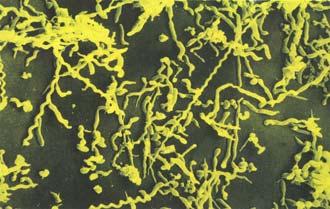
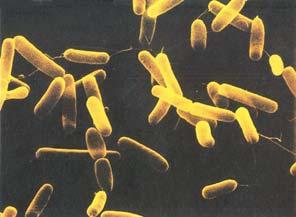
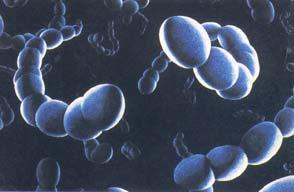
Protoctists
Kingdom protoctista comprises the eukaryotic micro-organisms and their immediate descendents. They have all the organelles with which you may be familiar: a nucleus, mitochondria, endoplasmic reticulum, Golgi apparatus, and so on.
No one knows the exact number of protoctist species, and so far more than 10,000 live protoctists are described in the biological literature. However, about 30 phyla have been identified up to now. Major groups include dinoflagellates (Glenodinium), zooflagellates (Trypanosoma), euglenoids (Euglena), sarcodines (Amoeba), ciliates (Paramecium), sporozoans (Plasmodium) and slime moulds (fungus-like protoctists). Also according to this novel classification, all algae including the seaweeds are considered as protoctists.
Locomotor organelles of protoctists include pseudopodia, cilia or flagella. However, some groups do not possess locomotor organelles. They show remarkable variation in cell organization, pattern of cell division and life history.
Living Components of the Environment
10
Some protoctists such as dinoflagellates and euglenoids are photoautotrophs. They produce their own food via photosynthesis and eliminate oxygen in the presence of sunlight. Others ingest or absorb nutrients heterotrophically.
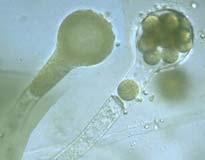
Ecological niches are most diverse for the protoctists. Some are aquatic and may be either marine or fresh water inhabitants. Some are terrestrial, thriving in moist soil. Others are parasitic (Trypanosoma and Plasmodium) or symbiotic (Trichonympha) and are associated with the tissues of organisms. Therefore, they are abundant in number and occur widespread in a variety of ecosystems.
Fungi
Moulds, mushrooms, yeasts and other spore-producing forms constitute fungi. About 1,500,000 species of fungi have been estimated to exist up to now, out of which about 60,000 have been described. The characteristics and significance of the various classes of fungi are given in Table 5.1 along with examples.
Table 5.1: Diversity of Fungi (after Postlethwait & Hopson, 1989)
Ecological niches refer to the full range of abiotic and biotic conditions under which a particular species can live and reproduce.
Class Examples Characteristics and significance Image
Oomycetes (400 species)
Phytophthora infestans, Saprolegnia
Zygomycetes (600 species) Rhizopus (common black bread mould)
Ascomycetes (30,000 species) Pink bread mould (Neurospora crassa), Saccharomyces cerevisiae (Brewer’s yeast), morels, truffles
Basidiomycetes (25,000 species)
Deuteromycetes (25,000 species)
Common field mushrooms, giant puffballs, bracket fungi, toadstools, smuts
Penicillum, Aspergillus species
These so-called water moulds, or egg fungi, thrive where it is damp and cause major mould damage to potatoes, grapes and other crops; their motile zoospores disperse by swimming in moist conditions
These fungi produce diploid zygospores and a cottony mat of hyphae on breads, grains or other foods and organic materials
Spores are produced in an ascus, or sac, and are borne in a cup-shaped body or ascocarp; the Ascomycetes (sac fungi) include the yeasts, and are the most economically useful fungal group; powdery mildews harm fruit trees and grain crops.
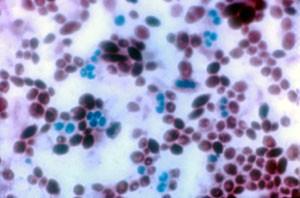
The club fungi produce spores in club-shaped basidia; the fruiting body or basidiocarp is the familiar mushroom or toadstool, some of their types are extremely poisonous
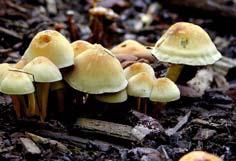
These imperfect fungi lack sexual reproduction and instead reproduce by asexual spores called conidia; various species are used in making drugs, cheese and soy sauce
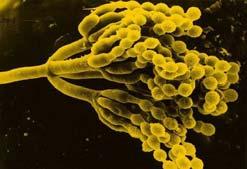
The growing form of most fungi is a large mass of multicellular hyphae (thread like tubular filaments) called mycelia. Their cell wall is made of nitrogenous polysaccharide, a chitin. Reproductive structures are made of hyphae developing in response to seasonal changes in weather. Fungi are heterotrophs and secrete such enzymes that can break down both live and dead materials. Sugars, proteins and other molecules that result from their decomposition activities are transported into the fungi through their cell walls. Therefore, they play a major role as decomposers in ecosystems. Moreover, the Earth’s major decomposers are the 100,000 or more species of fungi. They are again categorized into five classes as Oomycetes, Zygomycetes, Ascomycetes, Basidiomycetes and Deuteromycetes (see Table 5.1).
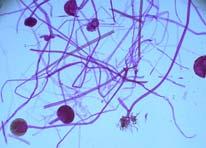
Organisms and their Characteristics
Saprolegnia
Rhizopus Brewer’s yeast
Mushrooms
Penicillum
11
Many fungi yield products that are useful to humans. Some are the sources of pharmaceuticals that include vitamins, interferons which prevent viral infections and steroid hormones. These are basically produced from moulds. For example, fungal moulds such as Rhizopus nigricans and Curvularia lunata are utilized in the production of steroids. Another mould known as Penicillum chrysogenum naturally secretes the well-known antibiotic penicillin.
Fungi enhance flavour, colour, protein content and preservation qualities when used in the production of beverages and food. Moulds and yeasts have an important role in cheese, beer, wine and soy sauce production. Several kinds of fermentation reactions on commercial scale are carried out by Saccharomyces species. However, many fungi are disease-causing to animals, humans and plants.
Plants
All plant species are eukaryotic, multicellular autotrophs that generate their organic nutrients through photosynthesis (see Section 5.5). Most plants have
• leaves (or equivalents) as solar energy collectors,
• stems (or equivalents) to support the above energy collectors, and
• roots (or equivalents) to anchor the plant and absorb water and nutrients from the soil.
Cell walls of plants are made up of cellulose. Plant cells usually have green plastids or chloroplasts the pigmented organelles for photosynthesis.
The main reproductive mode in plant life cycle is sexual; haploid cells are formed by meiosis, then a diploid zygote forms after fertilization. The main variations in the life cycles are in the length of time spent in the haploid and diploid stages and how the large and complex plant body develops during each stage.
The multicelled haploid body is the gametophyte and it produces haploid male/female gametes. The multicelled diploid body is the sporophyte it produces haploid spores, which after germination develop into gametophytes.
Plants can be subdivided as Bryophytes (mosses, liverworts, and hornworts) and Tracheophytes (all vascular plants). Table 5.2 depicts major divisions, examples and evolutionary trends and significance of these groups.
Animals
Animals are quite distinct from the members of other kingdoms. They are eukaryotic, multicellular and diploid organisms that develop from two different gametes, which are known as sperm and egg.
Animals are subdivided into two large groups:
• The invertebrates (animals lacking backbone), and
• The vertebrates (animals with backbone).
Table 5.3 shows invertebrate phyla with their notable features. Fishes, amphibians, reptiles, birds and mammals belong to the group vertebrates
Living Components of the Environment
12
Table 5.2: Characteristics of the major plant divisions (after Postlethwait & Hopson, 1989)
Division Examples Characteristics and significance
Bryophyta (20,000 species) Mosses, liverworts, hornworts
Tracheophyta (300,000 species)
Sub divisions: Ferns and allies (1200 species)
All vascular plants Ferns, horsetails, club mosses
Water proof coatings on plant surface, rigid tissues for upright growth on land, rhizoids present; haploid generation (gametophyte) is dominant; diploid generation (sporophyte) depends on gametophyte; often the first plants to colonize a barren area.
Vascular tissues for transport of water, nutrients, and vertical support on land; most have true roots, stems, and leaves; diploid sporophyte is usually the dominant generation; most successful and diverse group of plants.
Have system of vascular pipelines; rhizomes, stems and fronds; spores produced in sori; gametophyte is often tiny, independent plant or can grow from sporophyte; usually grow on shady forest floors in low-lying damp areas
Seed plants
Classes: Gymnosperms (600 species)
Conifers, cycads, ginkgos
All the members produce seeds (embryo encased in seed coat with nutritive tissue); gametophyte reduced to a few cells, dependent on sporophyte; do not always depend on water for reproduction.
Their seeds are uncovered and are produced in cones; usually have needle like leaves or scales; produce pollen and pollen tubes; have well-developed vascular system; also have true roots, stems and leaves; sporophyte is the dominant generation and supports the gametophyte; conifers are harvested in great numbers for making various wood products.
Angiosperms
Sub classes: Monocots (50,000 species) Dicots (225,000 species)
Lily, corn, onion, palm Rose, apple, bean, daisy
Produce flowers, seeds and fruits; economically useful for food, drugs, and landscaping purposes.
Leaves usually have parallel veins; seedlings from newly germinated seeds have just one ‘seed leaf’ or cotyledon; flower parts usually occur in multiples of three; seed contains a prominent endosperm.
Leaves usually have net-like veins; seedlings have two cotyledons; flower parts usually occur in multiples of four or five; seeds store little endoplasm
Organisms and their Characteristics
13
Table 5.3: Characteristics of the major phyla of the invertebrate animals (after Postlethwait & Hopson, 1989)
Phylum (Approx no. of species) Examples Characteristics
Porifera (5000)
Cnidaria (10, 000)
Platyhelminthes (10,000)
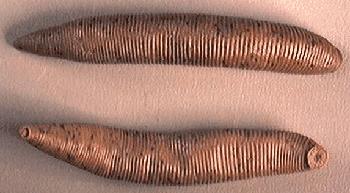
Sponges
Sac-like bodies asymmetrical; osculum, incurrent pores, choanocytes, spongin and spicules; no cephalization, coelom, gut tube, tissues, organs or segmentation; no evolutionary descendents known
Jellyfish, hydras, corals, sea anemones
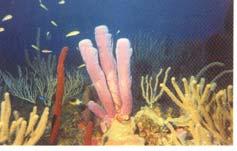
Flatworms, tapeworms, flukes
Radial symmetry; grow as polyps or medusae; three-layered body wall gastrovascular cavity; no gut tube, segmentation, cephalization or coelom; nematocysts, nerve cells, planula larva
Cephalized and bilaterally symmetrical; no gut tube, coelom or true segments; three body layers, true organs and organ systems; can have flame cells, eyespots; life cycles often complex and include two or more hosts
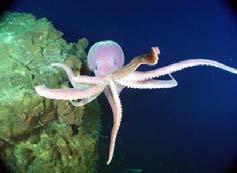
Nematoda (12,000)
Round worms
Cephalized; bilaterally symmetrical; gut tube, pseudocoelom; hydroskeleton; no segmentation; common in soils and as parasites on other animals and plants
Mollusca (120,000)
Snails, clams, octopuses, squids, slugs
Annelida (5000)
Earthworms, polychaete worms, leeches
Bilaterally symmetrical; cephalized; gut tube; true coelom; no segmentation; gills, open circulatory system, radula, trocophore larvae, are common marine and freshwater organisms
Bilaterally symmetrical; cephalized; gut tube, true coelom, segmentation, hydroskeleton; segments separated by septae and contain nephridia; move with setae pushing against ground; crop, gizzard, close circulatory system; Earthworms occur widely and help to aerate soil
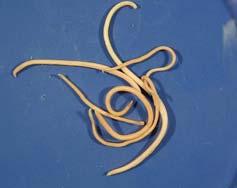
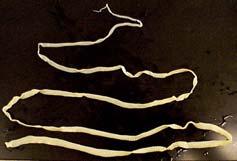
Arthropoda (1 million)
Spiders, mites, ticks, scorpi ons, millipedes, centipedes, insects, lobsters, shrimps
Echinodermata (6000)
Sea stars, sea urchins, sea cucumbers
Bilaterally symmetrical; cephalized; gut tube, coelom, segmentation; exoskeleton for support and protection; specialized segments and appendages; jointed legs, trachea, book lungs and gills; acute senses; the most diverse phylum in the living world
Gut tube and coelom; not cephalized; no segmentation; deuterostomes (all the exemplified animals are protostomes); first endoskeleton, unique water vascular system for locomotion
Living Components of the Environment
Sponges
Sea anemone
Tapeworm
Roundworm
Octopus
Leeches
Lobster
14
Sea stars
Animal habitats are diverse. They can inhabit air, fresh water, salty water, deserts, hot springs and even tissues of the other animals and plants. They are essentially heterotrophic organisms and cannot manufacture their own food. Moreover, animals can move about; at some point in the life cycle they reproduce sexually and pass through various stages of development.
From the above description, we believe that you have a general idea about different types of organisms. You can gather more information about them through further reading. Some of the references are cited at the end of the unit. You may now like to stop and test your understanding.
SAQ 2
a) “Viruses are neither living nor non-living”. Justify the statement.
b) What is the main structural difference between the gram-positive and gramnegative bacteria?
c) List some advantages and disadvantages of fungi to the human beings.
d) Differentiate between bryophytes and tracheophytes.
e) List the general differences between plants and animals.
5.4 ORIGIN AND DISTRIBUTION OF LIFE
You now know how to differentiate the non-living from the living and about the types of living organisms. One of the basic questions frequently asked is: How and where did life begin? Did the earliest forms of life resemble the types we see in nature today? The following discussion would provide an answer to many such questions.
5.4.1 Origin of Life
There is no direct evidence concerning the origin of life. The earlier beliefs about the spontaneous origin of life from the non-living things have been refuted by the fact that ‘life comes only from life’. But one question that remains with us is: How did life arise in the first place? Most researches agree on a general outline of what may probably have happened. The Earth is believed to have formed about 4.6 billion years ago from aggregates of dust particles and debris. With time, it started to condense and the stratification of its components began to occur. The heavier metals such as iron and nickel moved towards the centre and light substances such as hydrogen, helium and the noble gases rose to the surface forming the early atmosphere
The early atmosphere, also referred to as the primitive atmosphere, was markedly different from the present atmosphere and it was composed of mostly carbon dioxide (CO2), methane (CH4), ammonia (NH3), and hydrogen gas (H2). An abundance of hydrogen atoms would have caused the first atmosphere to be a highly reducing atmosphere. There was no free oxygen.
With the further cooling of Earth, water vapours condensed to form oceans and the gases trapped within the oceans underwent a chemical evolution, an increase in complexity that eventually produced the first life molecules and then cells. It is believed that the diverse kinds of plants, animals and other organisms evolved from the primitive cells over millions of years under the influence of several geological events. You would study about them in subsection 5.4.2. The geological time scale (Table 5.4) based mainly on fossil evidences, depicts the evolution of major groups of organisms with time. The geological time period has been subdivided into different eras, such as Palaeozoic, Mesozoic and Cenozoic. The appearance of major groups of organisms in different periods of each era is depicted in this time scale. It is evident that life began with the simplest of organisms and progressed with ever increasing complexity. A reasonable explanation is that the primitive forms gave rise to a large number of complex forms.
Organisms and their Characteristics
15
Table 5.4: Depiction of the rise of various groups of organisms over the geological time scale
ERA PERIOD EPOCH MILLIONS OF YEARS FROM START OF PERIOD TO PRESENT
Cenozoic
Quaternary Tertiary
Recent Pleistocene Pliocene Miocene Oligocene Eocene Palaeocene
0.01 2 5 25 40 55 65
PLANT LIFE ANIMAL LIFE
Increase in number of herbs
Dominance of land by angiosperms
Rise of civilizations First humans
First hominines
Dominance of land by mammals, birds and insects
BUILDING OF ANCESTRAL ROCKY MOUNTAINS
Mesozoic
Cretaceous Jurassic Triassic
140 210 250
Permian
Palaeozoic
Carboniferous Devonian Silurian
Ordovician Cambrian
Angiosperms expand as gymnosperms decline
Angiosperms arise; gymnosperms still dominant
Dominance of land by gymnosperms
Last of the dinosaurs; Second great radiation of insects
Dinosaurs abundant; First birds First mammals First dinosaurs
BUILDING OF ANCESTRAL APPALACHIAN MOUNTAINS
280 360 410 440 500 550
Precipitous decline of primitive vascular plants
Great coal forests, dominated at first by large but primitive vascular plants, and later also by ferns and gymnosperms
Expansion of primitive vascular plants; origin of first seed plants towards the end of period
Invasion of land by the first vascular plants towards the end of period
Marine algae abundant
Great expansion of reptiles; decline of amphibians; last of the trilobites
Age of amphibians; first reptiles; first great radiation of insects
Age of fishes; first amphibians and insects
Fish radiate
First vertebrates; invasion of land by a few arthropods
Marine algae and photosynthetic bacteria (especially cyanobacteria)
INTERVAL OF GREAT EROSION
5.4.2 Distribution of Organisms
Marine invertebrates abundant (including representatives of most phyla)
Primitive marine life
The occurrence and distribution of plants and animals over the geological history of Earth has been influenced by many factors. They include the change in land masses,
Living Components of the Environment
Precambrian
16
climatic changes due to glaciations and mass extinctions that have occurred about five times from 439 million years ago.
a) Changes in Land Masses and Climate
As you have studied in Block 1, the Earth′ s crust is made up of plates and they have undergone changes in their positions throughout history (Fig. 5.5). These changes have led to some climatic changes as well. Therefore, we now discuss these two issues.
Fig.5.5: A series depicting geological evolution of Earth (after Starr & Taggart, 1981)
Palaeozoic era
The Palaeozoic era denotes the period from 550 280 million years. The era consisted of the following six geological periods: Cambrian, Ordovician, Silurian, Devonian, Carboniferous and Permian (see Table 5.4).
The plate arrangement of the Earth in Cambrian era was entirely different from what is seen today (see Fig.5.5). In the late Cambrian period, the polar regions of the Earth’s crust became completely submerged. Two major continents, Gondwana and Laurentia, were positioned at low tropical latitudes. Shallow seas covered the low-lying platforms of the continents and of small land masses. Layers of mud and sand appeared closer to the water surface. This was the golden age of mud-crawling and mud-burrowing crustaceans.
During the Ordovician period, the crustal plate bearing Gondwana crunched and moved southwards until the super continent was formed in the Southern pole. As vast marine habitats were opened up, diverse marine invertebrates such as corals became common. Moreover, Gondwana drifted northward during the Silurian times. This allowed reef building. As the Silurian period gave way to the Devonian, Laurentia gradually collided with the landmass to the east, forming the supercontinent, Laurasia. As a result, the land area increased dramatically. Plants that were adapted to surviving near the land’s edge started expanding over
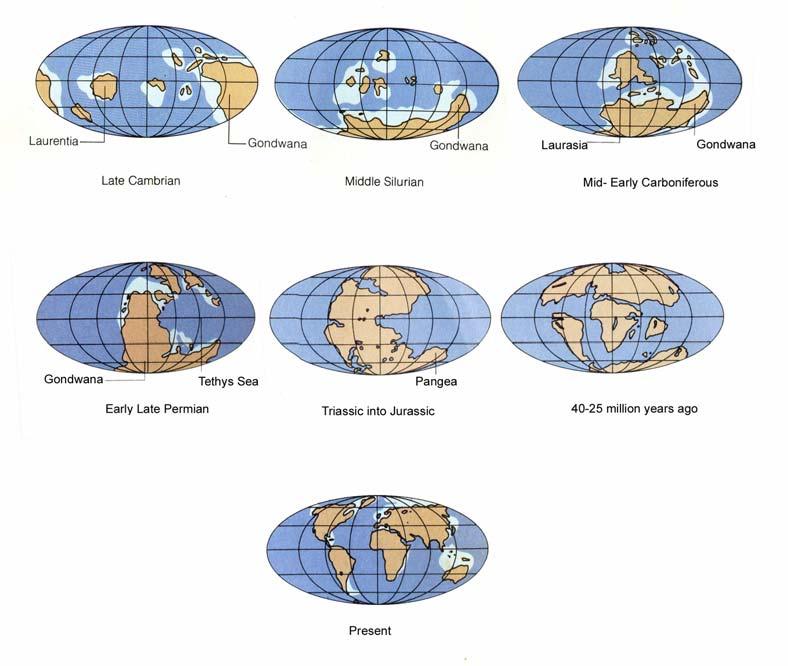
Organisms and their Characteristics
Present
40 25 million years ago
Triassic into Jurassic
Early Late Permian
Mid-Early Carboniferous
Middle Silurian
Late Cambrian
17
the land. From the beginning to the end of the Carboniferous period, landmasses were submerged and drained about fifty times. As a result, swamp forests with large, scaly barked trees became established. Over time, the seas moved in and buried them in sediments and debris. As the process was repeated several times, trees were submerged again and again. The organic mass left behind became world’s coal deposits.
As the environment changed, the Carboniferous gave way to the Permian. Collisions of crustal plates began to crush all land masses together into one vast, unstable super continent called Pangaea. The ocean lapped both sides of Pangaea and changes in the distribution of water, land area and land elevation brought about temperature and climatic changes. To the north, arid lowlands and humid uplands emerged. To the south, glaciers built up and ice sheets spread over the land. As shallow areas were drained, some forms of life radiated into the vacant land.
Mesozoic era
The Mesozoic era consisted of three periods: Triassic, Jurassic and Cretaceous, respectively and existed from 250 140 million years ago.
By Jurassic times, the climate was warm and humid over widespread regions. Mountains had emerged, along with plants and vast lagoons. In these new settings, gymnosperms such as cycads, conifers and reptiles had the competitive edge. By the start of Cretaceous period, Pangaea broke up to form Laurasia (composed of the land that later become North America, Greenland, Eurasia minus India) and Gondwanaland (composed of future South America, Africa, Madagascar, India, Antarctica and Australia).
Cenozoic era
The Cenozoic era consisted of two periods – Tertiary and Quaternary.
By about 65 million years ago in the Tertiary period, South America had split from Africa and starting drifting westwards. India had moved northwards and Australia had split from Antarctica and began drifting apart. This was the time of formation of great mountain ranges such as the Alps, the Andes and the Himalayas. The shift in the climate led to the emergence of vast semi-arid, cooler grasslands in mid Cenozoic time. As the climatic changes proceeded further, vast tropical forests began to be fragmented into small patches. Inhabitants of the above environment then adapted to new life conditions in mountains, in deserts and in plains. However, movements of the Earth plates restricted some organisms to some specific places. For example, some regions such as Australia became unusual and biota became unique to the area due to such movements.
b) Mass Extinctions
As we have highlighted earlier, the diversity of life on this planet was affected by five mass extinctions. We now describe these briefly.
•
Ordovician-Silurian extinction
This occurred about 439 million years ago. It was caused by a drop in sea levels as glaciers formed, then by rising sea levels as glaciers melted. As a result, about 25% marine families and 60% marine genera were affected.
•
Late Devonian extinction
This occurred around 364 million years ago, due to certain unknown reasons. It killed about 22% of marine families and as many as 57% of marine genera.
• Permian-Triassic extinction
Living Components of the Environment
18
This is believed to have taken place about 251 million years ago. Many scientists suspect a comet or asteroid impact caused this, although any direct evidence has not been found regarding this. Some believe the cause was flood volcanism from the Siberian traps and related loss of oxygen in the seas. This was the Earth’s worst mass extinction, killing 95% of all species, 53% of marine families, 84% of marine genera and estimated 70% of land species such as plants, insects and vertebrate animals.
• End Triassic extinction
This happened between 199 million to 214 million years ago. It was mostly due to massive floods of lava emanating from the central Atlantic magnetic province an event that triggered the opening of Atlantic Ocean. The volcanic activity may have led to deadly global warming resulting in extinction of about 22% of marine families, and 52% of marine genera. However, the magnitude of loss for the vertebrate species is unclear.
• Cretaceous-Tertiary extinction
This occurred about 65 million years ago. It was probably caused by an asteroid. However, some argue for other causes, including gradual climatic change or flood like volcanic eruptions. The extinction killed 16% of marine families, 47% of marine genera and 18% land vertebrate families, including the dinosaurs.
SAQ 3
a) Describe the major events that occurred in the formation of the Earth.
b) Compare and contrast the primitive and present atmosphere.
c) Discuss the advantages and disadvantages of plate movements.
5.5 NUTRITION IN ORGANISMS
All activities pertaining to life are fuelled by energy, which is required to carry out a variety of vital processes in living organisms. These processes include
• chemical synthesis of substances for growth and repair of tissues,
• active transport of substances across cell membranes,
• electrical transmission of nerve impulses,
• mechanical contraction of muscles,
• maintenance of constant body temperature in organisms like birds and mammals,
• bioluminescence or the production of light by living organisms such as fireflies and some deep sea animals, and
• electric discharges as in electric eels.
Organisms require a carbon source, known as food to obtain energy. The process of acquiring energy is known as nutrition. Depending on the mode of nutrition, organisms can be divided into two groups: The autotrophs and the heterotrophs.
Autotrophs (autos, self) have the ability to synthesize organic molecules from inorganic raw materials, such as carbon dioxide (CO2). Therefore, they are known as self-nourishing organisms or the producers Heterotrophs (heteros, other) take in preformed organic molecules as food. Therefore, autotrophs produce food in organic form, while heterotrophs consume it, and they are called consumers
Now you know about the carbon source. Can you tell: What are the sources of energy available to the autotrophs for the synthesis of food? There are two energy sources suitable for the purpose. These are light or solar energy, and chemical energy.
Organisms that use light energy for the production of organic molecules are called photoautotrophs or photoautotrophic (see Table 5.5).
Organisms and their Characteristics
19
Photoautotrophs are characterized by the presence of pigments, including some forms of chlorophyll. Though of course, other pigments are also useful. They absorb light energy and then convert it into chemical energy. This process is called photosynthesis; we shall elaborate on it a little later. Photosynthetic autotrophs include all green plants and some protoctists and some bacteria. Organisms that use chemical energy for the same purpose are known as chemotrophs or chemotrophic. The chemosynthetic autotrophs are limited to a few kinds of bacteria.
Table 5.5: Grouping of organisms according to principal sources of carbon and energy
C A R B O N S O U R C E
AUTOTROPHIC Use carbon dioxide (Inorganic)
E N E R G Y
S O U R C E
PHOTOTROPHIC (PHOTOSYNTHETIC)
Use light energy
PHOTOAUTOTROPHIC
HETEROTROPHIC Use organic source of carbon
PHOTOHETEROTROPHIC
All green plants, bluegreen bacteria and green and purple sulphur bacteria
CHEMOTROPHIC
Use chemical energy
CHEMOAUTOTROPHIC
Few organisms, e.g., some purple non-sulphur bacteria
CHEMOHETEROTROPHIC
A few bacteria, e.g., Nitrosomonas and other nitrogen cycle bacteria
5.5.1 Autotrophic Nutrition
All animals and fungi, most bacteria, some parasitic flowering plants, e.g., Dodder (Cuscuta)
The photoautotrophs through the process of photosynthesis generate organic matter for the use of the entire world. Let us understand how it happens.
a) Photosynthesis
Photosynthesis is a metabolic process by which solar energy is trapped, converted into chemical energy and stored in the bonds of organic molecules such as glucose and other carbohydrates in autotrophs. Chloroplasts are the organelles found in plant cells in which photosynthesis takes place. This process is essential for the continuance of life on Earth because it supplies food, energy and oxygen for all aerobic forms of life. Additionally, humans benefit from photosynthesis since they can obtain energy contained in fossil fuels, which developed over millions of years.
Of the total amount of the solar radiation intercepted by our planet, about half reaches its surface after absorption, reflection and scattering in the atmosphere. Of this, only about 50% are of the right wavelengths for photosynthesis and only about 0.2% is used in net plant production (nearly 0.5% energy actually reaching plants). The annual fixation of carbon by photosynthesis is about 75 × 1012 Kg year 1. About 40% of this is contributed by phytoplankton. They are microscopic free floating photosynthetic organisms in the ocean ecosystems.
In photosynthesis reactions, sunlight is the source of energy that drives the formation of energy rich organic molecules from carbon dioxide and water. Though the process can be summarized in a single equation (given below), it is actually quite complex, and multi-stepped.
Living Components of the Environment
20
Sunlight
CO2 + H2O
(CH2O)n + O2
Carbon Water Carbohydrate Oxygen dioxide Chlorophyll
Photosynthesis involves two kinds of reactions – the ‘light-dependent reactions’, which require that light be present and ‘light-independent or the dark reactions’, which do not require light. Products of the light-dependent reactions are essential to trigger the dark reactions, which ultimately produce energy rich organic molecules.
Photosynthetic bacteria
Like the green plants, these bacteria are capable of producing organic molecules in the presence of solar energy. The energy is trapped by bacterio-chlorophyll. This pigment comes in two closely related forms, green and purple. Therefore, there are two bacterial groups as green and purple sulphur bacteria, respectively. They use hydrogen sulphide (H2S) as the source of hydrogen for reducing the carbon dioxide (compare the following equation with the one given above). Therefore, they are called sulphur bacteria. They inhabit the bottom of lakes, ponds and rock pools where H2S is abundant.
Light
CO2 + 2 H2S
CH2O + 2 S + H2O
Bacteriochlorophyll
But the cyanobacteria produce molecular oxygen as a by-product of photosynthesis.
b) Chemosynthesis
Chemosynthetic bacteria synthesize organic molecules from inorganic materials using chemical energy. They obtain energy by oxidation of inorganic substances such as sulphur compounds, ammonium ions and iron.
For example, sulphur-oxidizing bacteria can convert sulphur compounds to sulphuric acid. They are important in agriculture, since the soil pH is reduced by them.
Some nitrifying bacteria present in soil are another example. Their activity is tightly bound with the nitrogen cycle. Some nitrifying bacteria such as Nitrosomonas and Nitrococcus obtain energy by oxidizing ammonia to nitrites. Another nitrifying bacterium, Nitrobactor, oxidizes nitrites to nitrates.
Additionally, iron bacteria living in streams oxidize divalent iron salts to obtain energy.
In this section you have learnt about autotrophic nutrition. You may like to refresh your memory by answering the following questions.
SAQ 4
a) Write the differences between autotrophs and heterotrophs.
b) Describe the importance of photosynthesis.
c) Give examples for chemosynthetic autotrophs.
Organisms and their Characteristics
21
5.5.2 Heterotrophic Nutrition
In the previous section, you have learnt about autotrophic nutrition. In this subsection, we will deal with heterotrophic nutrition.
Heterotrophs feed on the organic materials already prepared by the autotrophs. Such organisms include all animals and fungi, most bacteria and protoctists, and even a few plants.
Three modes of heterotrophic nutrition are recognized: holozoic nutrition, saprotrophic nutrition and symbiosis
1. Holozoic nutrition
This involves feeding on solid organic material obtained from other organisms. This is an exclusive method of feeding in animals. However, some protoctists and certain plants too practise this method.
All the animals take their food into their bodies, where it is digested into smaller soluble molecules, which are then absorbed and assimilated. The holozoic animals (Fig. 5.6) have a specialized digestive tract (alimentary canal) to carry on the digestion of the food taken in, with the help of a number of processes.
The characteristic processes involved in digestion in the holozoic organisms are defined as follows.
Ingestion: Taking in of large, complex, insoluble organic molecules as food.
Digestion: Breakdown of large complex insoluble organic molecules into small, simple soluble diffusible molecules. The process is aided by a combination of mechanical and chemical processes. In mechanical digestion, food is broken down into small particles due to the action of teeth. However, hydrolyzing enzymes play a major role in chemical digestion. Digestion may be either extraor intra-cellular.
Absorption: Uptake of small, simple, soluble molecules from the digestive region, across membranes and into the body tissues.
Assimilation: Utilisation of the absorbed molecules by the body to provide either energy or materials to be incorporated into the body.
Egestion: Elimination from the body of undigested waste food materials.
The animals practising the holozoic nutrition methods have extremely varied feeding habits. These can be classified in a number of ways.
Depending on the nature of the food or diet, the holozoic animals can be categorized into three groups, such as herbivores, carnivores and omnivores and they are morphologically, physiologically as well as behaviourally adapted to their particular food habits.
Herbivores such as deer, elephants, and horses depend on plant matter. Since plant matter consists of cellulose, chewing is very important for them. Therefore, their teeth, premolars and molars, are large, broad and flat. Their intestines are more elongated, and caecum is large with many micro-organisms that aid in cellulose digestion. Rabbits are adapted behaviourally for efficient digestion of plant matter. A peculiar behaviour of rabbits may not be much known. After elimination of the digestive wastes for the first time, the rabbits take them in once again for the second cycle of digestion and absorption.
Carnivores such as lions, leopards, wolves and hyenas feed on other animals. They are active hunters who pursue their prey. They must capture and kill their prey and for this purpose, sharp teeth capable of piercing, cutting and tearing are essential. Therefore, with regular use, their canines become sharp and pointed for piercing. Premolars and molars (carnassials) are adapted for cutting and
Living Components of the Environment
Fig.5.6: Holozoic animals
22
shearing. Compared to the herbivores, the digestive tract of a carnivore is relatively shorter.
Some animals including humans eat both plant and animal matter. Therefore, they are known as omnivores. Their teeth are functionally and structurally somewhere between the carnivores and herbivores.
2. Saprotrophic nutrition
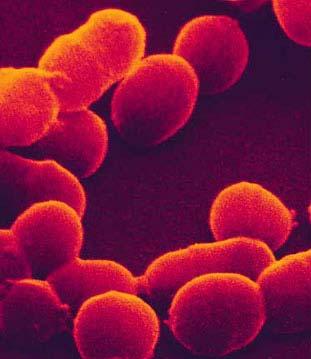
It is also known as saprophytic nutrition. Some organisms feed on dead or decaying organic matter and they are called saprotrophs or saprophytes. Many fungi and bacteria are examples of saprophytes (Fig. 5.7). Since they were considered as plants once, they are called ‘phytes’ and the word saprophytes has been developed. However, a more recent term (saprotrophs) avoids this problem altogether.
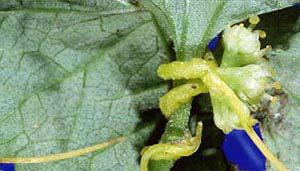
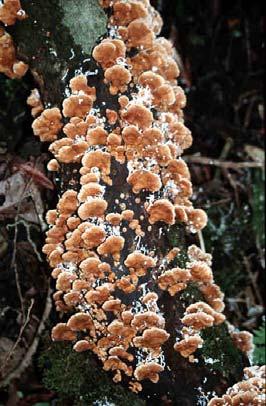
In the beginning we have discussed different types of organisms and you have learnt that some bacteria and fungi secrete enzymes to decay organic matter. The soluble end products of this extra cellular chemical decomposition are then absorbed and assimilated by the saprotrophs like fungi and bacteria. Many simple substances formed during the above process are also absorbed by the plants. Therefore, saprotrophs play major role in nutrient cycling by returning vital chemical elements from the dead bodies of organisms to the soil, from where they are picked up by the living ones.
3. Symbiosis
The relationship between two or more species of organisms that live close together and depend on each other in various ways is called symbiosis. This can be categorized into three groups: mutualism, commensalism and parasitism.
Mutualism
Mutualism is a close association between two species, which is beneficial to both organisms. This means that the association eventually increases the fitness for survival of both the species. Such relationships are common in nature. For example, herbivorous ruminants harbour a vast fauna of cellulose digesting ciliates. The ciliates depend on cellulose contained in the host’s diet. They convert cellulose into simple compounds, which the ruminant is then able to digest further, absorb and assimilate.
Another example is Lichen (see Fig. 5.8a). This association involves an alga or a cyanobacterium and a fungus living in close proximity. Externally, they appear as a single entity. The fungus benefits by the photosynthetic activity of the alga or the ‘guest’. It obtains from it the carbohydrates as its food. The alga or bacterium benefits from the water retaining properties of the fungal walls.
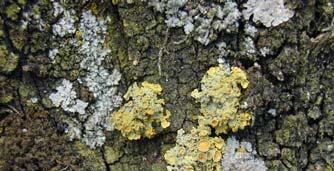
Commensalism
This is another form of closer association between two species, which is beneficial to one (the commensal) and does not affect the other (the host). This is literally known as ‘eating at the same table’.
For example, epiphytes such as orchids and bromeliads (Fig. 5.8b) grow on branches of large trees and are abundant in tropical forests. They use the host trees as a base of attachment and do not obtain nourishment from them. And they also do not harm the host in any way. However, there is no specific benefit to the host (the tree) due to their association.
Organisms and their Characteristics
Fig.5.7: Saprotrophs
Bacteria
Fungi
(a) 23
Fig.5.8: Examples of mutualism, commensalism and parasitism. a) Lichen; b) bromeliad; c) dodder
Parasitism
This is a close association between two living organisms of different species, which is beneficial to one (the parasite) and harmful to the other (the host) e.g., dodder (Fig. 5.8c). The parasite obtains food and shelter from the host. A successful parasite is capable of living with the host without causing it a greater damage.
Parasites that live on the outer surface of the host are called ectoparasites. Ticks, mites, fleas, lice and leeches belong to this group. They inhabit the skin, hair, feathers or scales of the host and feed basically on the host blood.
Parasites that inhabit the host internally, in their various tubes, ducts and tissues or individual cells are called endoparasites. This group is represented by a vast number of members such as the malarial parasite, flukes, tapeworms and nematodes such as filarial worms.
The internal environment of living organisms is completely unlike that of the outside. Therefore, these animals are highly specialized to live there, by bearing apparatus for attachment (hooks, suckers), protective mechanisms (thick cuticle) to avoid getting chemically digested.
Further, parasites can be categorized into two groups. If the organisms have to live parasitically all the time, they are called obligate parasites.
Facultative parasites are not parasitic all the time. For example, some fungi that feed internally as parasites kill their host and later, they feed on the host saprotrophically on the dead body.
SAQ 5
a) Name the different modes of heterotrophic nutrition.
b) What is holozoic nutrition? Categorize animals considering the nature of food item.
c) Make a table to depict some examples for mutualism. Here, you have to identify the host, symbiont (small partner); and mention the benefits for the host and for the symbiont.
5.6 SUMMARY
• The two fundamental aspects of life are: its unity and diversity. All organisms are alike in sharing their common origins, in adhering to the same rules that govern the organization of matter and energy, and in having a set of metabolic
Living Components of the Environment
24
processes, mechanisms for homeostasis, and specific molecular basis for inheritance.
• There are many millions of diverse organisms. They have been categorized into six groups – viruses, bacteria, protoctists, fungi, plants, and animals, in order to make their comprehensive study.
• So far, there is no direct evidence concerning the origin of life. It is believed that after the formation of the Earth and the atmosphere, the organic molecules and polymers were formed. The final result was the appearance of primitive cells.
• All living organisms have evolved from these primitive cells in different eras of the geological time scale. Moreover, the occurrence and distribution of plants and animals over the history has been influenced by changes in landmasses and climate as well as by mass extinctions.
• All activities of living organisms are dependent on energy; Carbon is the main source of energy for them. Autotrophs synthesize their own food via photosynthesis or chemosynthesis and heterotrophs take readymade organic matter as the energy source.
5.7 TERMINAL QUESTIONS
1. If the structure and organization of all living things arise from the basic nature of matter and energy, then what is the essential difference between the living and the nonliving things?
2. Describe the main characteristics that distinguish viruses from bacteria, bacteria from protoctists and protoctists from animals.
3. Write examples of some bacteria and protoctista that are beneficial to us and some that are harmful or lethal.
4. Name the five main divisions of fungi and describe one representative of each.
5. If both gymnosperms and flowering plants are seed bearing, then how do they differ in reproductive modes?
6. Choose a garden plant, a crop plant or a weed that grows in the area where you live. Make its diagrams in different environmental conditions like seasonal variations in temperature, moisture and so on. Label its constituent parts and correlate the various plant parts with the environmental conditions.
7. Classify the animals found in your area into vertebrates and invertebrates.
8. Describe the chemical and physical characteristics of the Earth about 4 billion years ago.
9. When did plants, insects and vertebrates invade land?
10. Considerable evidence suggests that the Atlantic Ocean is widening, and the Pacific and Indian Oceans are closing. What may be the biological consequences of the forthcoming formation of a second Pangaea, and why?
11. Distinguish between autotrophic and heterotrophic modes of nutrition, citing appropriate examples.
12. What are the main biological and environmental consequences of photosynthesis?
13. Define a living organism in your own words. Cite the name of the organism(s) that you kept in mind while phrasing your definition.
14. Suggest additional criteria not mentioned in this unit that would enhance clarity in differentiating the living beings from the nonliving things.
Organisms and their Characteristics
25
REFERENCES
1. Gould, J.L., Keeton, W.T. and Gould, C.G. (1996) Biological Science, 6th Edition, W.W. Norton and Company, New York, USA.
2. Green, N.P.O., Stout, G.W. and Taylor, D.J. (1990) Biological Science, 2nd Edition, Cambridge University Press, U.K.
3. Hopse, J.L. and Wessells, N.K. (1990) Essentials of biology, McGraw-Hill publishing company, New York, USA.
4. Mader, S.S. (1988) Inquiry in to life, 5th edition, Wm. C. Brown publishers, Dubuque.
5. Margulis, L. and Schwartz, K.V. (1998) Five Kingdoms - An illustrated guide to the phyla of life on Earth, 3rd Edition, W. H. Freeman and company, New York, USA.
6. Margulis, L., Schwartz, K.V. and Dolan, M. (1999) Diversity of Life, The illustrated guide to the five kingdoms, Second edition, John and Bartlett publishers, Boston, USA.
7. Moore, J.A., Olsen, I.D., Mayer, W.V., Stewart, W.N., Glass, B., Kennedy, M., Degenhardf, E.F., Hallenbeck, L., Mayor, T.G., Davis, J.M., Bucklin, D.H., Schwartz, G. and Drexler, H.E. (1973) Biological Science - An Inquiry into life.
8. Postlethwait, J.H. and Hopson, J.L. (1989) The nature of life, McGraw-Hill publishing company, New York, USA.
9. Roberts, M.B.V. (1986) Biology A fundamental approach, 4th Edition, Thomas Nelson and sons limited, UK.
10. Starr, C. and Taggart, R. (1981) Biology The Unity and Diversity of Life, Third edition, Wadsworth publishing company, Belmont, California, USA.
Living Components of the Environment
26
UNIT6 THE TERRESTRIAL LIFE
Structure
6.1 Introduction
Objectives
6.2 Climatic Patterns and Biomes
Latitudinal Patterns of Temperature Seasonal Patterns of Temperature
Uneven Heating, the Earth′s Rotation, and Air Currents
Air Currents, Climatic Zones and Life Zones
Biomes
6.3 Tropical Terrain
Tropical Rain Forests Savannas
WarmDeserts
6.4
Temperate Terrain
Temperate Deciduous Forests
Temperate Grasslands Chaparral
Temperate Deserts
6.5
Sub-arcticTerrain
Coniferous Forests
Temperate Rain Forests
6.6 Polar Terrain
Tundra
Polar Deserts
6.7 Summary
6.8 Terminal Questions Appendix Biogeographical Regions of India
6.1 INTRODUCTION
If you undertake a transcontinental journey from, say, Sri Lanka to Greenland, you would come across unbelievably changing sequences of nature. In the beginning, you would feel the warmth of the damp and dark environment beneath the evergreen canopy of rain forests of Sri Lanka, followed by the beautiful and dry golden savanna grasses growing beneath the flat topped trees in western India. Gradually you would be sensing the searing heat of the blistering sunlight of warm deserts of Afghanistan, and next you would begin to experience the cool hot scent of the seas of grasses in temperate ‘steppes’ of Russia.
As you move further over the deciduous forests of Russia, you would come across trees covered with snowflakes. Next you would begin to feel the fragrance of the deep green coniferous zone of Finland, and a little later you would begin to shiver because of the cold of the boggy treeless flat plains of tundra. As you move further, the chilling cold in the snowy and icy terrain signals that you have indeed reached your destination Greenland. As one undertakes such a journey, one often wonders: What creates this amazing array of life zones over the Earth?
Did it occur to you that the light shining on this tilted Earth is actually the creator of those life zones? The sunlight falling on the spherical planet, which spins on its tilted axis, causes the Earth to heat unevenly. As a result, global climate patterns are developed and the different climatic pressures lead to the formation of different associations of plants and animals on the surface of the Earth. The various life zones thus formed are known as biomes and these are arranged in a definite pattern from the equator to the poles. The first section of this unit examines how the rotation of the Earth produces different climatic patterns and life zones or biomes on it.
Based on the distinct global climatic patterns, the Earth can be divided into the following broad zones the tropical zone, the temperate zone and the polar regions.
27 The Terrestrial Life
This unit goes on to describe the biomes found in these zones under the categories, the Sunny and rainy tropical terrain, the terrain which is not very hot and not too cold, the in-between temperate and icy terrain, and the snowy and icy polar terrain
Until the middle of the 20th century, human influence on the major biomes was slight. With the increase in density of the human population and the spread of technology, the different biomes are no longer secure from disturbance. Without a major effort to preserve these areas, it is likely that many of these fascinating communities on the Earth will disappear even before we know about them. Therefore, a brief description of the impact of human activities on the various biomes is incorporated in the description of the biome types.
While in this unit, you will get acquainted with the living organisms and their habitats on land, in the next unit, we shall introduce you to the inhabitants of the water-world. You will realise what an amazing variety of life-forms populate the Earth and what a vast array of mechanisms they use to adapt to the environment they live in.
We hope that the journey into the world of living beings would leave you with a sense of wonderment, humility and responsibility to protect these diverse life-forms from the human onslaught.
Objectives
After studying this unit, you should be able to:
• describe the causes of the climatic variation over the Earth′s surface;
• explain the role of climatic factors that govern the distribution of biomes on the Earth;
• list the common plants and animals of each biome and mention some of their special adaptations; and
• discuss the major threats to biomes.
6.2 CLIMATIC PATTERNS AND BIOMES
The latitude and time of the year governs the amount of sunlight falling on different parts of the Earth. The Earth’s tilted axis and uneven heating, in turn, influence the formation of wind and rain. The rotation of the Earth sets up coils of thermally driven air masses that establish its climatic zones. The different climates in turn, establish the Earth’s major life zones, harbouring different associations of plants and animals. We now explain how all these factors are interrelated.
6.2.1 Latitudinal Patterns of Temperature
The Sun’s rays strike the Earth at an angle. This angle varies from place to place due to the spherical shape of the Earth and the inclination of 23.5 degrees of its axis.
The rays of light emanating fromthe Sun are more or less parallel to one another due to the size of the Sun’s radiating surface. They fall almost nearly in a vertical fashion near the Equator but more and more obliquely towards the poles (Fig.6.1a). Sunlight hitting the Earth directly is more intense than sunlight striking at an angle, where the same amount of light fans out over a larger area.
Also, the rays of light entering the atmosphere obliquely near the poles traverse more air distance than those falling near the Equator, allowingmore of their energy to be reflected. It has been estimated that about five times more light and heat energy fall at the Earth’s equator than at higher latitudes. Thus, the amount of energy decreases as one gets closer to the poles.
28
Living Components of the Environment
6.2.2 Seasonal Patterns of Temperature
Temperatures change from warm to cold and vice-versa with the changing seasons. The inclination of the Earth’s axis remains the same (23.5 degrees) as it moves around the Sun. During half of the year, the northern hemisphere is inclined towards the Sun and during the other half it remains away from the Sun (Fig. 6.1b). The orientation of the southern hemisphere is just the opposite at these times and therefore different areas of the Earth experience different seasons throughout the year. Accordingly,the temperate and polar zones have pronounced cool and warm seasons, opposite from one another in the northern and southern hemispheres. However, the angle of the Sun’s rays at the equator is nearly the same in all the seasons. Therefore, the seasons are not pronounced close to the equator. The seasons in equatorial regions are produced by variations in precipitation and therefore, seasons here are distinguished by wet and dry conditions rather than warm and cold temperatures.
Lower angle = greater area
Incident sunlight Sun
Higher angle = smaller area Equator
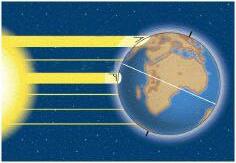

Tipped axis
North Pole Spring Earth′s orbit


South Pole
Winter
(a) (b)
Summer Autumn
Fig.6.1: a) Light falling at an oblique angle is less intense than light falling directly; b) Seasonal variation in the Earth′s temperature occurs due to the tilt in its axis of rotation
6.2.3 Uneven Heating, the Earth’s Rotation and Air Currents

The uneven heating of different areas of the Earth and the Earth’s rotation create a definite pattern of air circulation. Air flows from areas of higher pressure to areas of lower pressure. Differences in air pressure are caused by the unevenheatingofthe Earth's surface. Therefore, the sun (solar energy) is the ultimate cause of wind.
Much of the solar energy received by the Earth causes intense heating in the equatorial regions. This intense heat produces powerful convection in these areas. As the warm, moist air rises, it creates a zone of low pressure, clouds, and precipitation
29 The Terrestrial Life
Living Components of the Environment
along the equator. As the warm air rises, it eventually reaches the troposphere and can rise no higher. It spreads outwards towards the poles. As it spreads, it cools and sinks back down to the surface at about 30 degrees north and south of the equator. This sinking air produces areas of higher pressure with drier conditions. Some of this air, as it sinks, moves back towards the equator. This air flowingback towards the equator produces what are known as the trade winds
The trade winds obtained their name from the sailing ships used in foreign trade, which were called traders. These winds propelledtheships from Europe to the New World.
The area near the equator where these winds die out is referred to as the doldrums. Although most of the air that sinks at 30 degrees north and south latitude returns to the equator, some of it continues to move pole ward. At approximately 60 degrees north and south, this air meets cold polar air. The areas where these air masses meet form polar fronts. The air moving in from the lower latitudes is generally warmer and will rise. It then moves back towards the equator, sinking at about 30 degrees north and south. This sinking air contributes to the high pressure systems located there.
As the air that sinks at these locations flows back along the surface of the Earth, it does not flow in a straight north-south path. This flow of air is affected by the Coriolis effect: Due to the Earth′s rotation, any freely moving object or fluid will:
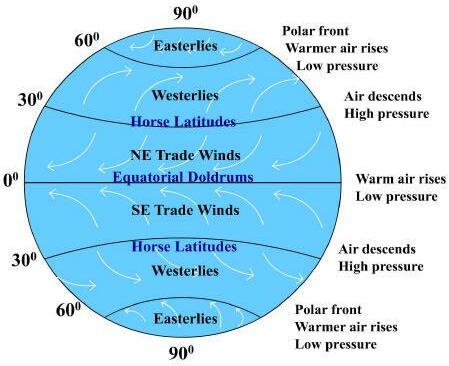
• Turn to the right of its direction of motion in the Northern Hemisphere, and • Turn to the left of its direction of motion in the Southern Hemisphere.
This causes winds to travel clockwise around high-pressure systems in the Northern Hemisphere, and counter-clockwise in the Southern Hemisphere (see Fig. 6.2). Low-pressure winds travel in the opposite direction (counter-clockwiseinthe Northern Hemisphere and clockwise in the Southern Hemisphere). Due to the Coriolis Effect, winds that travel along the surface of the Earth from 30 60 degrees north and south of the equator, flow from the west to the east. These winds are referred to as the westerlies. The air currents moving along the surface of the Earth from the poles (90 degrees) to 60 degrees north and south of the equator, flow from east to west and are referred to as the polar easterlies
Fig.6.2: Idealized global circulation
30
60° 90° 60° 30° 0° 30° 60° 90°
6.2.4 Air Currents, Climatic Zones and Life Zones
The direction of airflow and the ascent and descent of air masses determine the Earth’s climatic zones and life zones from the equator to the poles. The 6-coilmodel is used to explain the formation of climatic zones on the Earth. You have just learnt about the circulation of air from the equator to the poles and back. The areas where air rises at the equator, sinks at 30 degrees north and south latitude, and then flows back to the equator are known as Hadley cells. Air is circulated in 6 coils from pole to pole and this establishes the patterns of climate over the planet (see Fig.6.3). The wind flow pattern as you now know is influenced by the Coriolis force. We now explain this model briefly.
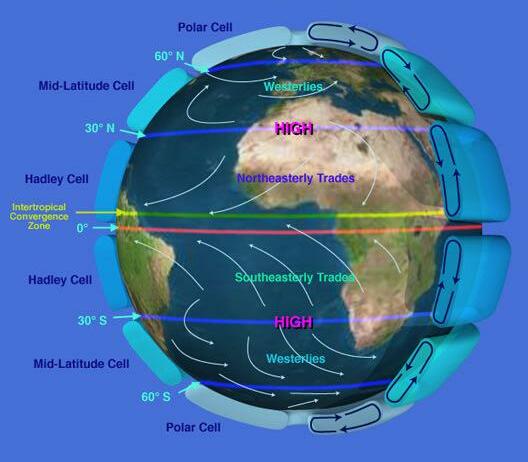
Fig.6.3: A model for explaining air movement in different climatic zones on the Earth(adapted from sealevel.jpl.nasa.gov/.../ 6-cell-model.jpg)
Study Fig. 6.3. In the first coil north and south of the equator, the warm, moist air rises at the equator. As it cools, it releases its moisture as heavy tropical rain. These conditions develop tropical rain forests around the equator (see Fig. 6.4). The cooler, drier air now travels at high altitudes and descends at latitude 30 degrees (north and south). The descending dry air leads to the development of great deserts of Australia, North and South Africa, and North America. At the ground level, the dry air moves towards the equator, causing as you know, the ‘trade winds’.
In mid latitudes (coil 2), the dry air descends on the deserts at latitude 30 degrees, moves towards the poles along the Earth’s surface, and ascends at latitude 60 degrees. In the process, it produces winds from west to east.
Moist air moving towards the poles in coil 2 meets cold air flowing from the poles in coil 3. This convergence causes the air to rise again at about 60 degrees latitude north and south, cooling and giving up the moisture it picked up as it moved across land and ocean surface. This moisture supports the great temperate forests of America, Europe and Asia. Once aloft, most of this air moves at high altitude to the poles. There, the
31 The Terrestrial Life
Moist air rises, cools, and releases moisture as rain Coil1 North Coil 2 North Coil 3 North Cold dry air falls Moist air rises rain Cool dry air falls Coil 3 South Coil 2 South Coil 1 South Cool dry air falls Moist air rises rain
Polar cell Polar cell
Mid-Latitude cell
Mid-Latitude cell
Hadley cell
Hadley cell
dry, frigid air again descends, moves over Canada and occasionally dips deep into the United States, bringing along polar weather conditions, which creates tundra vegetation.
This orderly pattern of tropical forests, deserts, deciduous forests, coniferous forests and tundra lie roughly in bands stacked south to north from the equator that correspond to patterns of atmospheric circulation and climate. You may like to study Fig. 6.4 to understand how the type of vegetation growing in a region is related to the airflow patterns and the consequent climatic conditions.
Fig. 6.4: The movement of air and the vegetation types in different zones of the Earth
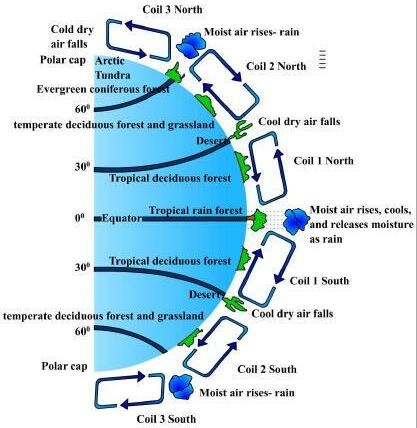
6.2.5 Biomes
These are climatically determined major life zones (see Fig. 6.5). Wherever similar climatic conditions exist in the world, similar forms of plants and animal life have evolved to cope with the climate’s benefits and drawbacks. These geographically limited, large, relatively distinct community units are characterized by the kinds of plants and animals whose life styles fit their environment. They are the major terrestrial life zones on the Earth, which are referred to as biomes
A biome may be defined as a major regional community of plants and animals with similar life forms and environmental conditions. The plants and animals living in a particular biome are unique to it. Biomes are named after the dominant type of life forms. The dominant life forms are usually conspicuous plants such as trees, grasses, shrubs or herbs and hence biomes are named as forests, grasslands and so on. Several other communities may be found in patches within a biome due to local climatic variations; for example, snowfall may break branches and small trees and cause openings in coniferous forests allowing deciduous tree species to grow there. Under undisturbed conditions, biomes do not have sharp distinct boundaries and they grade into one another.
32
Living Components of the Environment
Fig.6.5: Distribution of major biomes(Source:www.agen.ufl.edu/~chyn/age2062/lect/lect_28/lect_28.htm)
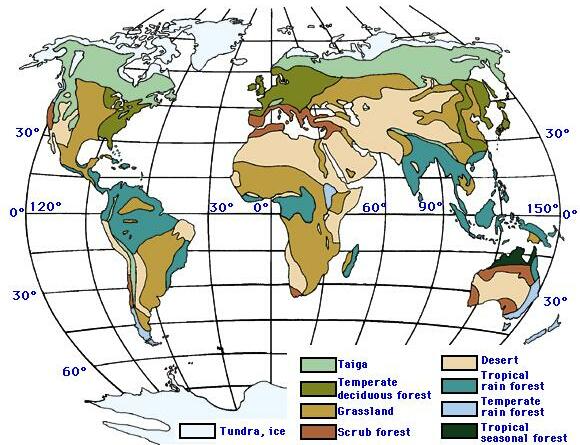
We now describe briefly certain features of biomes.
Located distantly but similar architecture A particular biome will look quite similar from one biogeographic region to another, in terms of architecture (physical structure) of the organisms.
This similarity arises due to the similar pressures of natural selection. Species in different parts may converge in their appearance and behaviours, even when they do not share the same ancestors. This phenomenon is referred to as the “convergent evolution”, i.e., “the independent development of similarity between organisms as a result of having similar ecological roles and selection pressures”.
For example, some plants do resemble one another superficially, although they belong to different families; as seen in the cacti of the New World deserts and cactus like Euphorbiacea plants of the Old World deserts. Sometimes, different species of the same family may be found, e.g., in coniferous forests of North America, red spruce is common but it is not found in the other areas; instead, black spruce and white spruce are abundant.
Diversity and productivity of biomes Species richness and the abundance of individuals differ from one biome to the next, depending on the nearness to the equator (and thus high levels of sunlight, and the availability of moisture). Species richness and complexity increases towards the equator. This gradient also coincides with the gradients in the mass of living material (biomass), and the amount of new living material produced per year (production).
Tropical rain forests towards the equator support the greatest biomass of living material per unit land area of any biome. Extremely dry or cold areas, such as deserts and tundra support the lowest biomass per unit land area. The reasons are that the
33 The Terrestrial Life
tropical rain forest regions with year round growing seasons are capable of producing more living matter than temperate forest regions where climate is seasonally limiting to plant growth. Temperate forests, however, with adequate rainfall produce more plant material per acre than grasslands where seasonal drought restricts plant growth.
Biomes do not form continuous belts around the equator. They are discontinuous, broken up by differences in precipitation and other climatic variations. Fig. 6.6 shows the relationship of rainfall (dry to wet), temperature (hot to cold), and also the latitude (tropics to Polar Regions) in defining the distribution of the terrestrial biomes. It also shows that the biome distribution in low latitudinal, mid latitudinal and high latitudinal climates coincides with the tropical, temperate and arctic (polar) zones, respectively.
Fig.6.6: Distribution of biomes according to temperature, precipitation and latitude
You may like to fix these ideas in your mind before studying further. Attempt the following exercise.
SAQ1
a) How are climatic variations caused over the various regions of the Earth?
b) What governs the distribution of different biomes on the surface of the Earth?
c) Define a biome. Prepare a table comparing the climate, plants, and animals of each of the major biomes.
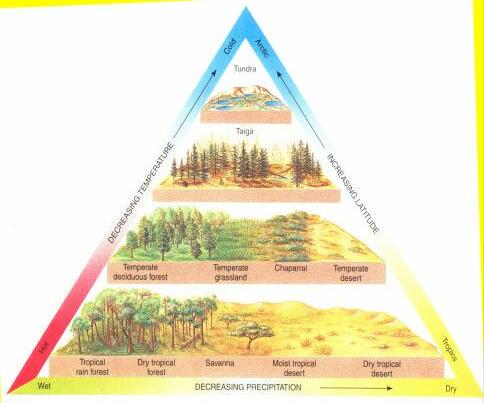
d) Discuss the role of evolution in shaping biomes.
6.3 TROPICAL TERRAIN
The tropical terrain includes the low latitudes at either side of the equator. The geographical areas of this zone include Central and South America, Caribbean
34
Living Components of the Environment
Islands, equatorial South America¸ Western Africa, Southeast Asia, from India to Malaysia, northern Australia and many Pacific Islands. Temperatures are higher at tropical latitudes resulting in higher rates of evaporation.
Therefore, biome types of this region are determined by the available rainfall. Where rainfall is abundant throughout the year, tropical rain forests develop (see Fig. 6.7); in areas with less rainfall, the tropical equivalents of grasslands (savanna) occur; towards the sub-tropical areas which receive descending dry air currents, warm deserts occur.
6.3.1 Tropical Rain Forests
Fig.6.7: Tropical rain forest (Source:www.agen.ufl.edu/.../ lect/lect_28/40_35A.GIF). Tropical rain forests are termed as the beauty of the warm and damp terrain
a) Climate
Tropical rain forests (or tropical broad leaf forests) occur near the equator between latitudes 10° N and 10° S and below 1000 m altitude. These are the areas where hot air masses rise and then dump their moisture (Fig. 6.3 and 6.4). Rainfall varies from 200 400 cm per year and temperature average is about 25° C. These areas receive year round rainfall although there is a brief period of reduced precipitation. Generally, humidity is between 75% and 88%. High surface heat and humidity cause cumulus clouds to form early in the afternoons almost everyday.
b) Distribution
Tropical rain forests fall into three main groups. The largest and most continuous is in the Amazon basin of South America. The second is in the Indo-Malaysian area from the west coast of India and south west China through Malaysia and Java to New Guinea. These forests have the greatest diversity of plant species. The third group is in West Africa around the Gulf of Guinea, into the Congo basin. Smaller rain forests occur on the eastern coast of Australia, the South Sea Islands and the east coast of Madagascar.
It is reported that much of the tropical rain forests are in place over last few million years although there extent was variable due to changes in sea level.
c) Vegetation
Because rain forest soils are not conducive to fossil formation, little is known of the inhabitants of rain forests of the geologic past. However, tropical rain forests
The Terrestrial Life
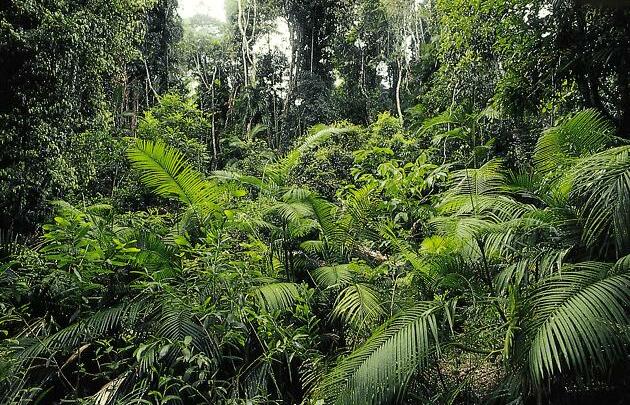
35
are the most diverse and highly complex of the present day biomes. Throughout the world, the tropical rain forest biomes share some common characteristics.
i) Structural complexity
The popular image of an impenetrably tangled jungle of rain forests is accurate only at the edges of cleared forest, along riverbanks, or where a large tree has fallen. This is because the sunlight reaches the ground only in these areas and permits dense vegetation to develop down to ground level. In contrast, the forests support several-layered canopy that allows little light to reach the ground. The true interior of a rain forest is gloomy and ground vegetation is sparse so that a person can often walk unimpeded through the humid twilight of the floor.
The struggle for light has led to four main levels of plant height above the forest floor. Within the upper storey, or “emergent layer”, trees up to 50 m rise above the surrounding vegetation where they capture direct sunlight. These are widely spaced. Since they have to struggle with winds they tend to have small leaves and umbrella shaped canopies.
Beneath the emergent layer lies the “canopy”, the overlapping tops of shorter (40 45m) forest trees. The canopy is so dense with leaves and branches that only dim light penetrates; less than 2% of the light that strikes the top reaches the forest floor. Below the canopy, one or more “subcanopy” layers develop. The sparse “understorey” consists of plants specialized for the dim light. Many plants that dwell in the understorey’s pale light produce huge, dark green leaves capable of capturing the maximum amount of available light, e.g., Philodendrons.
ii) Growth form and morphological diversity
To combat the twilight of the understorey, many tropical rain forest plants have evolved specializations for light gathering. For this purpose evolution of growth forms such as lianas, epiphytes, climbers and stranglers is a character unique to rain forests. Woody vines, also called “lianas”, have roots in the soil and long spindly stems that bring their leaves into the canopy to capture light. They flower and fruit in the treetops of the canopy and the sub-canopy layers.
“Epiphytes” (air plants, with no connection with the ground) such as orchids, many ferns and Bromeliads (epiphytes) cling to the trunks and branches of canopy trees to compete for light. They obtain moisture from the air and/or trap the leaf fall and wind blown dust to produce pseudo soil.
Climbers (green stemmed plants such as Philodendrons) remain in the understorey. Stranglers begin life as epiphytes and send their roots downwards to the forest floor, e.g., the fig family.
Several morphological features of plants are characteristic to the rain forests. Some of these are mentioned below:
• Exceptionally thin bark, often only 1 2 mm thick; usually very smooth.
• Large smooth or hairy leaves with drip points to prevent abundant rainwater from accumulating on the blades.
• Cauliflory, the development of flowers (and hence fruits) from the trunk, rather than at the tips of branches.
• Large fleshy fruits that attract birds and mammals.
iii) Niche specialization
Some species of both plants and animals often have very restricted distribution areas within a forest. Ecological relationships within tropical
36
Living Components of the Environment
forests are extremely complex and often quite specialized. Therefore, the inhabitants are not limited by water supply or cold temperatures, but light and mineral nutrients can be in short supply.
The luxuriant growth of the forest implies significant fertility, but most of the nutrients are contained within the forest trees, not in the soil. Because of the poor soil, roots tend to be shallow forming a mat 2 to 3 feet thick on the surface of the soil. Despite their poor anchorage, swollen bases or flying buttresses hold the trees upright in shallow wet soil and aid in the extensive distribution of the shallow roots. Fallen trees, leaves and dead animals quickly decay in the warm, damp environment and their nutrients rapidly recycle. Heavy rain tends to leach nutrients from the soils. Therefore, highly efficient absorptive mechanisms exist here. Most of the nutrients are extracted from decomposing materials by highly developed mycorrhizae of plant roots. They are then transferred to the roots of living plants beforethey have a chance to enter the soil. Therefore most of the minerals remain tied up in dead and living matter, and not in the soil.
Parasitic plants and saprophytes are also characteristic to rain forests. Nonphotosynthetic plants derive nutrients by tapping into the roots or stems of photosynthetic species. Some orchids employ saprophyte strategy (common to fungi and bacteria) and derive their nutrients from decaying organic matter.
Because the overhanging canopy is so dense, air in the forest is quitestill. Therefore, plants that relied on wind pollination and wind dispersion might have difficulty in reproducing. Many plants have evolved beautiful and elaborate flowers, which attract insects and birds. The Sumatran rain forest is home to the largest flower on the Earth: a 1m blossom that weighs about 7 kg and smells like rotten meat to attract insects. This plant, Rafflesia arnoldi (Fig. 6.8) is a root parasite of a liana. On the other hand, many flowering plants such as orchids may have a single species of insects as their pollinator. This specialization means that the loss of a few critical taxa due to extinction can have a drastic effect throughout the forest. Similarly, for dispersal, plants tend to produce large, succulent showy fruits that attract animals.
Ants are especially prominent in rain forests. The most fascinating ants are those that have developed a symbiotic association with certain species of Acacia plants. These trees bear extremely large thorns with spongy interiors where the ants nest. The trees even bear extrafloral nectaries and protein rich bodies that provide nourishment for their ant guests. The ants repay the favour by enthusiastically attacking any creatures that attack, feed upon or even touch their tree home.
iv) Very high biological diversity
The rate of speciation of rain forests is high with limited selection pressure so that numerous, distinct but hardly distinguishable species exist, to increase diversity.
Even today, much remains unknown about the wonderfully varied and intricately interrelated life of the rain forests. Sometimes, the total biological diversity of only a few square kilometres of rich tropical rain forest might exceed that of entire regions in the temperate zone.
Tree species number in the thousands. A 10 square kilometre area of tropical rain forest may contain 1500 species of flowering plants (up to 750 species of trees). The richest area is the lowland tropical forest of peninsular Malaysia, which contains some 7900 plant species. The major family of trees is Dipterocarpaceae, and contains 9 genera and 155 species, of which 27 are endemic.
The Terrestrial Life
Fig.6.8: Rafflesia arnoldi
Endemic species: Species confined to a particular region.
37
d) Animal life
The enormous diversity but low species population density of animal life in these forests mirrors the great diversity of microhabitats and niches.Insect fauna number in the millions.
The animal life is also highly diverse. Common characteristics found among mammals, birds and amphibians (reptiles too) include adaptations to an arboreal life, e.g., the prehensile tails of monkeys, bright colours and sharp patterns, loud vocalizations, and diets heavy on fruits. The most active region for animals in the forest is the canopy, not the ground.
Tropical rain forests also account for 20 to 25 percent of all known Arthropods. Nearly 90% of all primates (including orang-utan, arboreal ape, gibbons, langurs, macaques, gorillas, chimpanzees and lemurs) live in tropical rain forests.
e) Major sub-communities of the rain forest
Several sub-communities develop at higher elevations of the mountainous regions and also in the areas, which are subjected to droughts. At higher elevations, the multi-layered rain forests grade into montane forests, with abundant undergrowth, tree ferns and small palms. Here, the temperatures are cooler and humidity is high and fog and clouds are common. Trees are shorter, mostly less than 20 m, forming only two strata.
At highest altitudes, the montane forests (Fig. 6.9) give way to cloud forests with understorey thickets and trees burdened with epiphytes. The cloud forests are continually wrapped in clouds and mist.
The rain forests occur as “tropical seasonal (or tropical semi-evergreen/semideciduous) forests”, in low altitudinal areas, which are subjected to droughts of two or three months. Some 30 percent of the trees of the upper canopy lose their leaves during the dry period, but the lower canopy trees and understorey retains their leaves throughout the year. In these forests lianas and epiphytes are rare.
f) Consequences of human activities
Despite the timeless beauty and incredible species richness of tropical rain forests, people are rapidly destroying them at an alarming rate. Explosive human population growth in tropical countries may spell the end of most or all rain forests by the end of the century. It is believed that many rain forest organisms will be rendered extinct in this way before they have even been scientifically described.
Activities like lumbering and slash and burn clearing of rain forests for agricultural usage in the tropics, remove much of their mineral resources.Even those minerals returned to the soil as ash get leached away due to the high rainfall occurring in these areas. Also in the process of forest clearing once the protective mat of roots gets removed from the soil, erosion is likely to become an even more severe problem than in temperate climates. The result is that the cleared land is productive for only a few years at best and with the decline in its fertility, it is abandoned. Successional recovery is very slow as nutrients are accumulated slowly.Moreover, the recovered forest may never reach comparable levels of diversity or productivity, as a result of the extinctions that occurred among specialized species when the land was initially cleared.
A surprisingly large number of useful drugs, such as quinine have been discovered among the exotic chemical compounds used by tropical plants as chemical defences against grazers and parasites. One wonders how many other potentially useful species of plant and animal life have already vanished. The total ecological impact of rain forest destruction is unknown at present.
38
Living Components of the Environment
Fig.6.9: Montane forest in India
Tropical forests are the Earth’s biggest repositories of carbon. Thus, burning the great jungles into carbon dioxide (these are greenhouse gases) and ashes could alter the distribution patterns all over the globe.
6.3.2 Savannas
About 4 million years ago, during the Pleistocene the savanna grassland expanded and it was here that humans and baboons experienced their evolutionary origin. The savanna is the tropical grassland or very open woodland, which contain stunted, widely spaced trees with tall grasses growing in between (see Fig. 6.10). The word “savanna” stems from an Amerind term for “plains”.
The Terrestrial Life
a) Climate
At some point in the semi arid tropics, available rainfall no longer supports true forest vegetation, leading to the development of savannas. These areas experience year long warmth with an extended dry season and very low rainfall. Savannas are always found in warm or hot tropical climates, where the annual rainfall is from about 85 to 150 cm per year. The rain is concentrated in six or eight months of the year, which is followed by a long period (5 months) of drought. Natural fires occur during this drought period.
b) Distribution
In the general pattern Savannas occupy areas between rain forests and deserts. They lie in Africa, South America, Australia and parts of Southeast Asia.
Savannas cover almost half the land of Africa (generally central Africa) covering about five million square miles. There are large areas of savanna in Australia, South America and India.
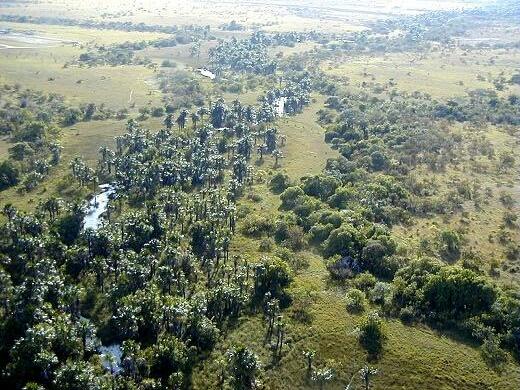
39
Fig.6.10: Savannas may be thought of as golden grasses beneath flat-topped trees (Source:www.terrygajraj.com)
c) Types of savannas
Savannas are not generally considered to be a climatic climax. Instead, they develop in regions where the climax community should be a seasonal forest or woodland, but disturbances or edaphic conditions prevent the establishment of tree species associated with the climax community. Fires, which have both natural and human origin, are frequent and periodic in savannas. The savannas, which result under these climatic conditions, are called “climatic savannas”.
Another type, known as “derived savanna”, results from the clearing of forested lands for agriculture. The infertile soil supports luxuriant growth of grasses. Some savannas of Africa are “grazing subclimaxes”. A heavy concentration of elephants in open woodlands destroys trees by debarking the trees and knocking them over. This opens up the woodland to grass invasion. Elephants the grazers both eat and trample tree seedlings, inhibiting the regrowth of the woodland. Only wellarmed drought resistant species (such as Acacia shown in Fig. 6.11) establish in the clearings. Annual fires maintain the area as a savanna by killing the seedlings and keeping the trees and shrub density low. The savannas of Southeast Asia are generally considered to be man-made.
Some savannas are maintained by soil conditions (not entirely by fire) and these are called edaphic savannas. They occur onhills or ridges where the soil is shallow or on droughty low nutrient substrates such as quartz or volcanic sands or in valleys where clay soils become waterlogged. All these conditions prevent a forest to establish. They are known as edaphic subclimaxes.
d) Vegetation
Savanna may also be distinguished by the dominant tree species; for example, palm savannas, pine savannas and Acacia savannas. East African savannas are dominatedby Acacia (which do not exceed 10 m) and occur in the famous game parks of Kenya and Tanzania, Zimbabwe, Botswana, South Africa and Namibia. The famous Serengeti plains in Tanzania (Fig. 6.12) and Illanos of the Orinoco basin of Venezuela and Columbia are grass savannas with very low density of trees. Brazil’s “Cerrado”savanna is actually an open woodland of short stature, twisted trees. The pine savannas of Central America occur on sandy soils. One type of savanna known as grouped tree grassland (in Kenya, Tanzania and Uganda) has trees growing only on termite mounds (the intervening soil being too thin to support the growth of tall trees.)
The predominant savanna vegetation consists of grasses and forbs (small broad leaved plants that grow with grasses). Different savannas support different grasses due to disparities in rainfall and soil conditions. The most common species include lemon grass, star grass, red-oat grass and rhodes grass. These grasses often are 3 to 6 feet tall at maturity. These perennial grasses have deep roots and underground stems (or rhizomes); therefore, their nodes are protected from fire. Their deep roots with all their starch reserves are ready to send up new growth when the soil becomes moister. Trees in the African savanna have peculiar looking flat tops (see Fig. 6.12). This shape is apparently an adaptive compromise, offering enough height to limit browsing but little height to reduce the energy costs of remaining tall in the dry heat.
The scattered shrubs or trees are drought resistant, browse resistant and fire resistant. The trees survive a fire by retaining some moisture in all their above ground parts throughout the dry season. Palms have the advantage of being monocots; their vascular bundles are scattered throughout the stem so that scorching of the outermost layer of the trunk will not kill the plant. Dicot trees have their vascular bundles arranged around the outer living part of their stems where they may be easily destroyed by fire, so they have a corky bark or semisucculent trunk covered with smooth resinous bark, both being fire resistant.
40
Living Components of the Environment
Fig.6.11: Acacia
When the rains come, bunches of grasses grow vigorously. Some of the grasses grow an inch or more in 24 hours.
e) Animal life
The world’s greatest diversity of ungulates is found in African savannas (some are shown in Fig 6.12). There are over 40 different species. The antelopes are especially diverse and include eland, impalas, gazelles, oryx, gerenuk and kudu. Rhinoceros, giraffe, elephants, zebra and warthogs are among the other herbivores. Up to sixteen grazing and browsing species may coexist in the same area. They divide the resources spatially and temporally, each having its own food preferences, grazing browsing height, time of day or year to use a given area and different dry season refugia. Most of these animals are herd animals, often organized into groups of females and their young with a single dominant male and groups of bachelor males.
The predators involve lions, leopards, cheetahs, jackals, wild dogs and hyenas.


Termites are especially abundant in the savannas of the world, and their tall termitaries are conspicuous elements of the landscape. They provide shelter for other animals and food for anteaters and aardvarks and pangolins.
A fire is a feast for some animals such as birds that come to eat grasshoppers, beetles,lizards that are killed or driven out by the fire. Underground holes and crevices provide a safe refuge for small creatures.
f) Consequences of human activities
Throughout the tropics, this biome is under pressure. The best examples of savannas are now confinedto protected park reserves (see Fig. 6.11). This is mainly because of the rising human populations. Many savanna species, including the rhinoceros and the elephants are threatened with extinction because people kill them for their coats, ivory tusks or spectacular horns. In some areas savannas are being rapidly converted to grazing areas for cattle and other animals. Severe overgrazing in some places has converted marginal savanna to actual desert.
41
The Terrestrial Life
Fig.6.12: Serengeti plains in Tanzania (Source: home.wanadoo.nl/~schoelink/) and some animals found there
Warm deserts are typical of the blistering sunlight conditions.
6.3.3 Warm Deserts
You may think that deserts are very hot and consist of vast expanses of sand dunes dotted with a few oases. Although such deserts do exist, others contain rich desert flora.
a) Climate
Geographers define deserts as lands where evaporation exceeds rainfall.
All deserts have in common low rainfall and high evaporation (from 7 to 50 times as much as precipitation). The main form of precipitation in warm deserts is rain, which is only about 25 cm or less per year. Low humidity allows up to 90% of solar radiation to penetrate the atmosphere and heat the ground.
The temperatures exhibit daily extremes. Desert surfaces receive a little more than twice the solar radiation received by humid regions and lose almost twice as much as heat at night. During the day, on cloudless afternoons, the relentless, blistering sunlight can send temperatures soaring to 48 degrees. On cloudless nights, heat radiates from the desert back to space and leaves a biting chill in the air as temperatures drop to 18 degrees Celsius.
Rainfall is usually very low and /or concentrated in short bursts between long rainless periods. Evaporation rates exceed rainfall rates. Sometimes rain starts falling and evaporates before reaching the ground. The Sahara desert receives less than 1.5 cm rain a year. But, rainfall in American deserts is higher almost 28 cm in a year. Rain, when it falls, is often heavy and unable to soak into the dry Earth, rushes off in torrents to basins below.
Soils are coarse-textured, shallow, rocky or gravelly with good drainage and have no subsurface water. They are coarse because there is less chemical weathering.
b) Distribution
The subtropical warm deserts occur in the coasts of Peru and Chile (Atacama) and the coast of south western Africa (Namib), the Arabian peninsula (Arabian Desert), Australia (Great Sandy and Victoria), South-western Africa (Kalahari), Northern Africa (much of Sahara), Thar (India and Pakistan, Fig. 6.13), Southwestern United States (Sonoran, Mujave, Chihuahuan) and Argentina (Monte).
The deserts, like those of Mexico, Australia and North and South Africa lie directly below the zones where dehydrated air (that rained in the tropics) descends back towards the Earth (Figs. 6.3 and 6.4). The Atacama and Namib deserts are the driest of the tropical deserts. They lie in the west coastsofSouthAmericaand southwestern Africa, where the prevailing winds are easterly and prevent moist air from coming on to the west coasts. Cold ocean currents also occur at these localities and moisture in the sea air condenses as fog. Therefore thesedeserts receive almost no rainfall.
c) Vegetation
Numerous unusual plants and animals make the desert their home; many of them are endemic to a particular desert.
The desert plants are mainly ground-hugging shrubs and short woody trees with “replete” (fully supported with nutrients) leaves. The dominant shrub in American deserts is creosote bush (Larrea divaricata). In a matrix of shrubs grows a wide assortment of other plants, the yucca (Fig. 6.14, top picture), cacti (Fig. 6.14, lower picture), small trees and ephemerals.
Low, sclerophyllous hardwoods more common in America are cacti including prickly pear. There are some arborescent plants including palms and yucca
42
Living Components of the Environment
Fig.6.13: The Thar Desert
Fig.6.14: Some desert plants
species. The oddest plant is the bojum tree (Fouquieria columnaris) which has a columnar trunk with leaves and a few branches at the very top some 15 20 m above the ground. Contorted Joshua trees are also common.
The giant saguaro, the most massive of all cacti, grows in the Sonorandesert. Cacti (Family Cactaceae), which are confinedto the New World, have evolved an adaptive strategy having mechanical (spines or thorns) and /or chemical (alkaloids) defences that inhibit predation. These defensive mechanisms resist the heavy grazing pressure in this environment short of food and water. However, in the Old World, convergent evolution has produced several cactus-like plants that actually belong to a completely different family the Euphorbiaceae. The desertplants are also noted for allelopathy, an adaptation in which toxic substances secreted by roots or the leaves shed by the plants inhibit the establishment of competing plants nearby. There are basically three survival strategies for plants under warm desert conditions:
i) Remain active
To cope with searing heat and the potential loss of moisture, many desert plants have numerous adaptations, including thick, waxy cuticles, fleshy or absent leaves, sunken stomata and protective spines. The roots of desert plants may penetrate the sandy soils to a depth of several meters to obtain water or they may remain shallow and widely spread out to quickly soak up any rain that falls.
In the cacti, the leaves are much reduced to spines and photosynthetic activity is restricted to the stems. Plants with thick stems can take in large quantities of water when it is available and store it for future use. In some plants, the surfaces are corrugated with longitudinal ridges and grooves. When water is available, the stem swells so that the groves are shallow and the ridges far apart. As the water is used, the stem shrinks so that the groves are deep and ridges close together.
Woody shrubs such as mesquite (Proposis spp) and Tamarix, have taproots that reach the water table, rendering them independent of water supplied by rainfall. Some, such as Larrea and Atriplex are deep-rooted perennials with superficial laterals that extend as far as 15 to 30 m from stems to collect rainwater.
ii) Seasonal dormancy
Many of the shrubs in deserts produce leaves during the short wet period following rains and then lose their leaves and enter a dormant state. The perennial forbs with underground bulbs, store water and nutrients in underground tissues and also remain dormant most of the year. They sprout rapidly after sufficient rain and replenish their underground stores.
iii) Annual life cycle
Most of the plants that occur in deserts normally appear to be absent, because, during most of the year they are present in the form of seeds in the soil. Most have evolved elaborate mechanisms, including water-soluble germination inhibitors in the seed coat or thick seed coats that require time or abrasion if water is to soak in and start germination. These adaptations appear to function so that the plants will only begin to grow after “significant” rains to assure that the plants can complete their short life cycles. This sets some desert blooms with dazzling red, gold and purple flowers for a few brief weeks, before the completion of the life cycle of these plants (see Fig. 6.15).
The Namib and Atacama deserts consist mostly of extensive stretches of sand dunes. They support a few scrubby drought-tolerant trees and a hand full of
43
The Terrestrial Life
Fig.6.16: Welwitschia
Fig.6.15: Some desert blooms
odd, dry-adaptedspecieslike Welwitschi (see Fig. 6.16). This is one of the most unusual vascular plant on the Earth, which is a low growing, cone producing Gymnosperm. When dug up, it looks like an overgrown tulip. It has a disk-shaped woody stem, long, twisting leaves that stretch across the ground for more than a metre, and a deep taproot that allows the plant to survive without water for up to five years.
d) Animal life
There are only a few large mammals in deserts because most are not capable of storing sufficient water and withstanding heat. The dominant animals of warm deserts are non-mammalian vertebrates. Many of the animals of warm deserts have life history strategies other than functional analogues of the plant adaptations. For example, some animals are active throughout the year, but mainly at night and often with metabolic and morphological adaptations that minimize the need for water. Others (like the desert shrubs) “aestivate,” a warm weather equivalent of hibernation during the long dry intervals. Most desert insects parallel the annual plants of the desert, existing as dormant eggs in the soil, with rapid completion of their reproductive cycle immediately following a rain interval.

Many desert animals tend to be small and of cryptic habits, remaining under cover or returning to shelter periodically during the heat of the day. They stay inactive in protected places during the hot day and come out to forage at dusk, dawn or at night, when the desert is cooler. Most of these animals are burrowers.
The dominant mammals include such rodents as the American kangaroo rat. It does not have to drink water but can subsist solely on the water content of its food plus metabolically generated water and excrete urea in practically crystalline form. By convergent evolution, the jerboa (Fig. 6.17) of Sahara has many similar adaptations. In American deserts there are jackrabbits and in Australian deserts, ecologically equivalent kangaroos. A few larger herbivores, such as Antelopes, and carnivores like the African fennec fox (Fig. 6.17) may also be found.
There are many ground-dwelling birds such as quails and the roadrunners and raptorial birds, especially owls, which live on the rodents and rabbits. Some insects of the desert are highly specialized. The small crustaceans such as fairy shrimp have evolved the ability to survive for years as dry embryos that hatch quickly when temporary water pools form. Several endemic species and even genera of fish and reptiles live in isolated small ponds of American deserts.
The desert reptiles are highly specialized. The lizards include the large chuckwalla and horn lizard or “horny toads”. Snakes include especially venomous snakes of America, e.g., sidewinder (a rattlesnake that moves with only a small portion of its body actually touching the ground) and similarly adapted Old World vipers and tortoises.
Amphibians that pass through larval stages have accelerated life cycles, which improve their chances of reaching maturity before the waters evaporate. Some toads (spade-foottoad Scapbiopus) seal themselves in burrows with gelatinous secretions and remain inactive for eight or nine months until a heavy rain occurs.
e) Consequences of human activities
The North American deserts are reported to be forming over the last 12,000 years. The Chihuahuan desert of North America was rich grassland until about 12,000 years ago and then gradually became a desert. Ancient human intrusions to deserts were limited to food gathering and hunting by aborigines or to grazing by nomadic pastoralists. In recent times most aborigines have vanished and many of the pastoralists have settled into agricultural communities.
44
Living Components of the Environment
Fig.6.17: The jerboa (top) and the African fennec fox (bottom two pictures)
At present, deserts are suffering massive degradation by unrestricted recreational use of vehicles. Deserts are slow to recover from habitat damage. Widespread collection of cacti of many species and sizes for the world plant trade in the deserts of US, Mexico, Peru and Brazil is destroying the integrity and threatening some species with extinction in the wild. Particularly in the Middle East, desert regions have been invaded by the oil industry radically changing and polluting the desert environment.
However, today, the extensive human activities cause desert biomes to expand while the areas of tropical rain forests are decreasing. Formation of new deserts has doubled over the past 100 years. Deserts enlarge because overgrazing and poor irrigation practices remove grass from the grasslands that surround the deserts. The loss of ground cover allows fine, nutrient-bearing soil particles to blow or wash away, and this leaves only sand, gravel and other coarse materials behind that can no longer hold water. The process is called ‘desertification’. Desertification claims extensive areas of precious grazing lands south of the Sahara. The satellite photograph in Figure 6.18 provides this sobering view of desertification in the Sahel region. It shows a strip of green grassland traversing central part. This green zone now lies 200 miles south of its former position, and the intervening grazing land has become desert.
Fig.6.18: Desertification in the Sahel region
6.4 TEMPERATE TERRAIN
The regions with a temperate climate are usually characterized by having roughly equally long winters and summers. Temperature extremes are uncommon, but may occur in regions affected by continental climates.
As shown in coil 2 of Fig. 6.4, the dry air that descends on the deserts and moves toward the poles along the Earth’s surface meets cold air flowing from the poles in coil 3. This air rises again at 60 degrees latitude, cooling and giving up the moisture as rain. This rain supports the great temperate forests, i.e., deciduous and coniferous forests around 60 ° latitudes. Temperate grasslands, chaparral and temperate deserts tend to develop with the decreasing amounts of rainfall.
6.4.1 Temperate Deciduous Forests
a) Climate
Seasonality (hot summers and cold winters) is characteristic of deciduous forest areas (Fig. 6.19). These areas have an approximately six months growing season. There is 72 150 cm of precipitation that is distributed evenly throughout the year. The non-growing season is due to temperature-induced drought during the cold winters.
Temperate zone represents the terrain, which is not very hot and not too cold.
These are also known as Broad leaf forests.
45
The Terrestrial Life
b) Distribution
These forests are found in the eastern portion of North America (this is where the forest remains most intact), Europe, eastern China, Japan, Taiwan, New Zealand, Australia and the tip of South America. The deciduous forests once covered large areas of Europe and China, parts of South Africa and the Middle American highlands and even North America. These forests of Asia and Europe have largely disappeared, cleared over centuries for agriculture.
c) Vegetation
Many of the same genera previously part of an Arcto-tertiary-geofloraare common to all northern forests. Because of glacial history, the species diversity of the European deciduous forests does not compare with that of North America or China. The Asiatic broadleaf forest, found in eastern China, Japan, Taiwan and Korea, is similar to the North American deciduous forest and contains a number of plant species of the same genera as those found in North America and Western Europe.
The trees that serve as dominants of these forests include species of maple (Acer), beech (Fagus), Oak (Querus), hickory (Carya), elm (Ulmus) and American chestnut (Castanea dentata). Different species of these genera occur on each continent. In eastern North America, the deciduous forest consists of a number of associations, including the beech-maple forests, maple-basswood forests, oakchestnut forests, magnolia-oak forests and oak-hickory forests. Here the number of tree species is unsurpassed by any other area in the world.
The highly developed, deciduous forests usually have four strata. The upper canopy consists of dominant and codominant trees, below which is the lower tree canopy and then the shrub and ground layers. In American forests, a subcanopy of eastern dogwood (Cornus florida) is often present with a shrub layer dominated by blueberry and mountain laurel. The ground layer has herbs, ferns and mosses. Lianas such as wild grape, poison ivy and virginia creeper climb the trees and flower and fruit abundantly in the forest canopy.
The physical stratification of the forest influences the microclimate within the forest. The highest temperatures are in the upper canopy, because this stratum intercepts solar radiation. Temperatures tend to decrease through the lower strata. The most rapid decline takes place from the leaf litter down through the soil. Humidity in the forest interior is high in summer because of plant transpiration and poor air circulation.
Seasonal temperature changes have strongly shaped the evolution of temperateforest organisms. Although these forests are dominated by broad-leaved deciduous trees, broad-leaved evergreen trees also make up a considerable proportion of these forests. The dominant trees, including oak, maple, birch and hickory are deciduous, dropping their leaves and becoming dormant until spring (see Fig. 6.19).
These forests are known for the turning of the colours of its leaves to brilliant red, orange and gold in autumn. The shortening days of fall stimulate the plants to withdraw chlorophyll from their leaves, allowing a deep but beautiful display of other pigments, before the leaves are shed completely and plants enter an extended period of dormancy. The fallen leaves that accumulate on the forest floor allow for the recycling of nutrients and produce excellent topsoil. In early spring, the leafless trees permit sunlight to fall unobstructed to the forest floor, and spring wildflowers like wood sorrel, bluebells and violets bloom. These fast growing exploitative taxa are the so-called “spring wildflowers”. Later, when the canopy leaves enlarge and shade the forest floor, only the shade-tolerant plants such as ivy and honeysuckle, thrive. When the canopy begins to thin in autumn, there is a burst of activity.
46
Living Components of the Environment
Fig.6.19: Temperate deciduous forests(Source: www.agen.ufl.edu/.../ lect/lect_28/40_34.GIF and www.life.uiuc.edu/.../ 04Ecosystems/Deciduous.gif)
d) Animal life
Some animals of temperate forests must also cope with the changing seasons. Many, like the bears and the snakes hibernate in winter, while. The others, like robins migrate to warmer regions. The principal large herbivore is the white tail deer. The historic large predators include wolves and mountain lions, but these have been virtually eliminated as a result of human activity. Small mammalian, reptilian and amphibian diversity is moderate to high. Characteristic members of the fauna are nut and corn feeders or omnivores. Resident bird species also tend to be seedeaters or the omnivores (woodpeckers, blue jay).
e) Consequences of human activities
Although humans originally evolved in grassland and savanna ecosystems, heavy cultural and economic development was achieved in temperate broadleaf deciduous forest regions.
These forests once covered large areas of Europe and China, parts of South America and the Middle American highlands and even North America. The deciduous forests of Europe and Asia have largely disappeared, cleared over the centuries for agriculture. What remains is semi-natural, except for pockets in the more mountainous regions of central Europe.
However, in North America, great expanses of natural deciduous forests still exist in spite of mismanagement, logging, fires and land clearing. Most of the eastern forest was cleared for agriculture so intensely that NewEngland had a wood shortage in colonial days. Much of these abandoned lands now appear to be heavily forested, although this appearance is illusionary.
Many of the second and third growth forests bear little resemblance in species to the original forests. The nature of the incoming forests depends on the effects and type of logging, the amount of disturbance to the residual stand and the forest floor, availability of seeds, and environmental conditions at the time of disturbance. As available forests dwindle, there are efforts to improve the situation.
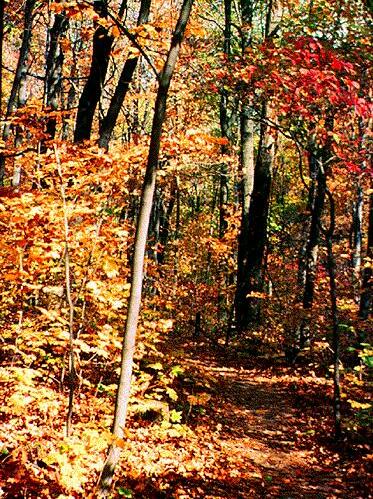
47 The Terrestrial Life
These appear as treeless seas of grass.
6.4.2 Temperate Grasslands
Bordering many of the world’s deserts are grasslands, treeless regions dominated by grass species (Fig. 6.20). These regions are wetter than deserts but drier than forests.
a) Climate
The climate is semi-arid and has seasonal extremes of hot and cold, rather than wet and dry conditions. Temperature here is the main determining factor. Temperate grasslands have hot summers and cold winters. Rainfall is moderate, much of this falls as snow. The annual average is about 25 – 75 cm. Summer temperatures can be well over 30°C, while winter temperatures can be as low as 40°C.
b) Distribution
Extensive grasslands are distributed in North America, Columbia Plateau and the interior of Europe. The flat expanses of Kansas and the gently rolling hills of Nebraska are typical grassland terrains.
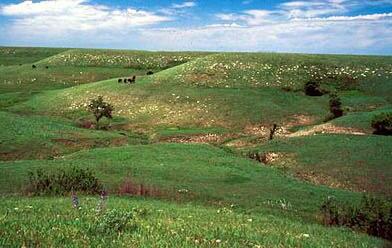
c) Vegetation
The temperate grasslands are known as “prairies” in North America, the “pampas” of Argentina and Uruguay, “steppes” of the former Soviet Union and the “Veldt” in South Africa.
Fig.6.20: Temperate grasslands (Source: www.geog.ouc.bc.ca/.../ images/prairie)
The amount of annual rainfall influences the height of grassland vegetation, with taller grasses in wetter regions. Prairies consist of tall grasses, while steppes consist of short grasses. The most visible feature of grasslands is the tall, green, ephemeral herbaceous growth that develops in spring and dies back in autumn. The herbaceous layer, consisting of both grasses(members of the grass family Poaceae) and forbs, has three or more sub-layers, more or less variable in height, according to the grassland type. Low -growing and ground-hugging plants such as dandelion, strawberry, and mosses make up the first layer. As thegrowing season progresses, these plants become hidden beneath the middle and upper layers. The middle layer consists of shorter grasses and such forbs as wild mustard and daisy. The upper layer consists of leaves and flowering stems of tall grasses and the leafy stalks and flowers of forbs.
The root layer is more highly developed in grassland than in any other community. Half or more of the plant is hidden beneath the soil. Grasses have pervasive roots and underground stems, often penetrating to 2 m and weighing several times more than the aerial parts.
48
Living Components of the Environment
The wind swept plains of grasslands tend to dry out in the summer and fall, so fires are a recurrent feature in such areas. As a result, grassland species have evolved the ability to grow again rapidly after a fire. The natural devastation, often touched off by lightning, prevents grasslands from turning into forests. Seasonal drought, occasional fires and grazing by large mammals all prevent woody trees from being established.
Grasslands that are unburned and ungrazed accumulate a thick layer of mulch. As the mat increases in depth, it retains more moisture, creating favourable conditions for microbial activity. Three or four years must pass, before natural grassland mulch decomposes completely. The accumulated debris from generations makes grassland soils thick and fertile.
d) Animal life
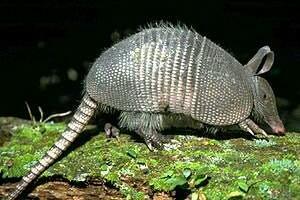
All of the world’s native grasslands support similar forms of animals. Vast herds of bison numbering in the millions once graced the extensive grasslands of Central and Western North America. Today just a few protected, remnant herds remain. The other dominant mammal is the forb-consuming prong-horned antelope. These large grazing ungulates and burrowing mammals are the most conspicuous vertebrates.
The most common burrowing rodent was the prairie dog (Cynomys spp). Other animals include anteaters, armadillos (Fig. 6.21), coyotes, snakes and hawks. The ground and mulch layers harbour carabid beetles and predaceous spiders, of which the majority are hunters rather than web builders. Life in the herbaceous layer includes invertebrates belonging to Homopterans, Coleopterans, Dipterans, and Hymenopterans. They exhibit two peaks, major peak in summer and a less defined one in the fall.
Three of the world’s grasslands evolved unique unrelated birds with a poor ability to fly, large size, and high running speed. Australia has the emu (Fig. 6.21), the pampas the rhea and Africa the ostrich. Although the grasslands of the Northern hemisphere lack such large birds, the European steppes do have the large great bustard (Otis tarda), weighing up to 16 kg.
Fig.6.21: The emu and the armadillo
The Australian marsupial mammals evolved many forms that are the ecological equivalents of placental grassland mammals. The dominant grazing animals are a number of species of kangaroos, especially the red kangaroo and grey kangaroo. The wombats (Vombatus) are found in the pampas and the prairies. The steppes and Argentine pampas lack large ungulates.
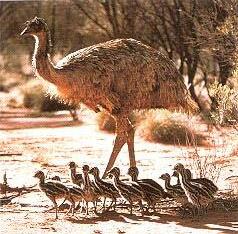
49
The Terrestrial Life
Chaparrals denote temperate shrub lands.
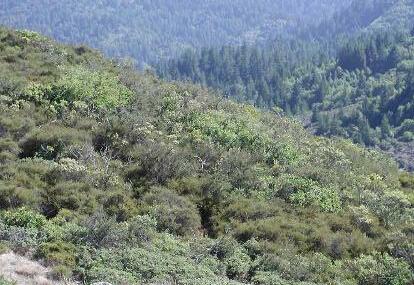
e) Consequences of human activities
Humans have broken up grasslands with the plough and converted the most productive of them into the bread-baskets of the world, dominated by monoculture of cereal grains. Conversion of the short grass plains of North America to wheat resulted in the Dust Bowl, when a seven year drought hit the region in the 1930s.
While grasslands make rich agricultural fields and pastures, ploughing breaks up the complex soil structure and leaves it vulnerable to erosion. With proper farming techniques, former grasslands can probably support agriculture indefinitely.
6.4.3 Chaparral
Chaparral (Fig. 6.22) is a word of Spanish origin, meaning a thicket of shrubby evergreen oaks. A shrub is a plant with multiple woody, persistent stems but no central trunk and has a height less than 8 m. Chaparral moved to its present position during Pliocene and Pleistocene times, becoming less expansive. These have been forming as a result of drying trends over the last 10 million years. Frequent fires help to maintain this biome.
Fig.6.22: The chaparral (Source: www.anselm.edu/homepage/jpitocch/genbios/ecologybi04.html)
a) Climate
The Mediterranean climate has hot, dry summers with at least one month of prolonged drought and cool moist winters. About 65% of the annualprecipitation falls during the winter months as 35 to 75 cm of rain. For at least one month the temperature remains below 15°C. Hot winds and fire frequently occur in late fall at the end of dry seasons.
b) Distribution
This type of vegetation borders grasslands and deserts along the shores of Mediterranean Sea and along the south west coasts of other regions. In five regions of the world, lying for the most part between 32° and 40° north and south of the equator are areas with a Mediterranean climate. These are semi-arid regions of western North America, the regions bordering the Mediterranean Sea, central Chile, the cape region of South Africa, and South-western and southern Australia.
50
Living Components of the Environment
c) Vegetation
All five areas support similar-looking communities of xeric broad-leafevergreen shrubs, and dwarf trees known as sclerophyll (scleros hard;phyll leaf) vegetation with an herbaceous understorey. The evergreen shrubs are microphyllous (small), sclerophyllous (leathery) and xerophytic (dry). There is also a mixture of low conifers and hardwood trees. Dominant shrubs are chamise (Adenostoma fasculatum), california buck wheat (Eriogonum fasciculatum), and various species of manzonita (Arctostaphylons). Dominant trees are oaks and pines. Many species have volatile oils in the leaves meaning that they burn rapidly.
Many chaparral plants, like sage and manzanita, have spicy, aromatic odours; the natural alkaloids probably help deter insect herbivores. Because this biome experiences frequent fires, the below ground portions of perennial plants have evolved fire resistance, e.g., root crowns (lignotubers) from which new shrubs can grow. The seeds of some chaparral annuals must be seared by fire before they germinate.
d) Animal life
The characteristic animals include ground birds, deer and small mammals.
e) Consequences of human activities
The extensive grazing of this biome has resulted in some extinction. Urban expansion is fragmenting this vegetation to a large extent.
6.4.4 Temperate Deserts
The temperatedeserts are similar to other deserts, except for the fact that the major form of precipitation they receive is snowfall, which is less than 25 cm per year. They may have prolonged periods of temperatures below freezing point. The major temperate deserts include Gobi (northern China and southern Mongolia, Great Basin (western United States), Turkistan (south western Russia), and the Iranian desert (Afghanistan and Iran).
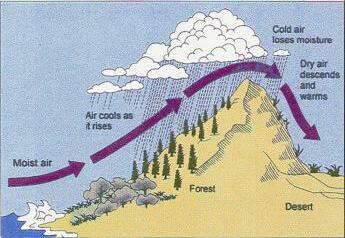
The North American desert Great Basin becomes dry due to a rain shadow. Here, the moisture bearing winds from the Pacific to the west encounter the Cascade Mountains which are oriented North-South. This is a barrier to wind-flow, forcing the air up and over the mountains. This cools the air, and moisture is lost as precipitation along the western flanks of the mountains. By the time the winds have reached the intermountain region, between the Cascades and Rocky, they have very little moisture content, a phenomenon known as a rain shadow (Fig.6.23).
Fig.6.23: Area in a rain shadow becomes a desert
51 The Terrestrial Life
The coniferous forests having a characteristic fragrance and an overall deep green appearance are also referred to as taiga.
China’s cold desert Gobi is dry because it lies at the centre of huge continents far from the moist sea air.
a) Vegetation
The vegetation of the temperate deserts is typically dominated by dry-adapted shrubs, such as the sagebrush (Artemisia) and rabbit-bush (Chrysanthamnus) along with arid grasses and seasonal herbaceous dicots
b) Animal life
Dominant herbivores include prong-horn antelope and mule deer with mountain lions and wolves as the historic predators. Small mammals and reptiles are common and bird diversity is moderate.
So far, you have learnt about the climates, distribution, vegetation and animal life of the tropical and temperate zones. Why don′t you stop for a while and try an exercise?
SAQ 2
a) Give reasons for the occurrence of tremendous biological diversity in some tropical terrains as compared to the temperate zone
b) Why is it important to prioritise conservation of the tropical terrains?
c) Discuss the nutrient availability in tropical vs. temperate zones.
d) How do the plants tide over the hostile conditions of warm deserts?
e) What are the causes of the expansion trend seen in the desert biomes?
f) Mention the crucial factor that determines the characteristics of grassland vegetation.
g) Compare the warm andtemperate deserts.
h) State why the maintenance of grassland biome is essential for human beings.
6.5 SUB-ARCTIC TERRAIN
In between the temperate zone and polar arctic ice cap, a more or less continuous belt of cone-shaped trees occurs. This area is characterized by prolonged winters and short summers. The growing season is somewhat longer than that of the tundra, but it is short compared to that of temperate zone occupying for the most part glaciated land. This intermediate region supports coniferous forests with a few of its minor climatic expressions.
6.5.1 Coniferous Forests
The coniferous forest is an endless sweep of sameness –a blanket of spire-shaped evergreens (with a characteristic pleasant smell) over the landscape. These forests are also knownas taiga (the Russian name for this forest, which covered so much of that country) or boreal (meaning Northern) forest (see Fig. 6.24). This is the largest vegetation formation on the Earth; occupying about 17 percent of the circumpolar belt of the Earth’s land surface. The taiga is also a region of cold lakes, bogs, rivers and older thickets. Often, as a result of the activity of beavers in damming streams, ponds are a common feature here.
a) Climate
These sub-arctic regions with cold continental climate have strong seasonal variations. These have long severe winters with a long lasting snowfall up to six
52
Living Components of the Environment
months with mean temperatures below freezing and short summers (up to about 100 frost-free days). There is a wide range of temperature fluctuations. The driest winters and the most extreme seasonal fluctuations are in interior Alaska and Central Siberia. It receives little precipitation, perhaps 50 cm per year, but low evaporation rates make this a humid climate. The deep perma-frost impedes soil drainage and maintains high soil moisture. When present, perma-frost impedes soil drainage, chills the soil, reduces its depth, slows decomposition and reduces the availability of nutrients.
These forests have an acid, mineral poor soil characterized by a great depth of partly decomposed pine and spruce needles.
b) Distribution
The location of coniferous forests is circumpolar and restricted to the northern hemisphere. This transcontinental band stretches across much of Alaska and Canada of North America, Scotland and Scandinavia, Siberia and Northern Japan of Eurasia. The southern border of the coniferous forests tends to fall at the southern limit of the polar front, where cold air sweeping down from the pole meets warm air pushing up from the south (review Figs. 6.3 and 6. 4). The southern hemisphere has little coniferous forests because ocean rather than land occupies appropriate latitudes.
c) Vegetation
The landscape of this biome tends to be flat as a consequence of earlier glacial activity. Most of the biome was covered by repeated series of continental ice sheets; the most recent being the Wisconsin Ice sheets, which declined over the period 10,000 –7000 years. The “Nunataks” or isolated mountaintops or ridges that were unglaciated resulted in many endemic and disjunct populations.
The dominant coniferous gymnosperms of these forests include spruce (Picea), fir (Abies), Hemlock (Tsuga), Pine (Pines) and larch (Larix). Deciduous angiosperms such as aspen, willows and birches survive around streams and lakes. In areas disrupted by burning or logging, aspen or birch form striking assemblages.
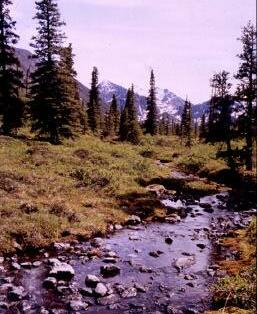
The Terrestrial Life
53
Fig.6.24: The taiga(Source:www.cs.rice.eduand wwww.alaskageography.com)
Three structural arrangements can be seen in these forests:
(i) the spire-shaped spruces and fir, with an open narrow, upper canopy and a dense lower canopy that casts a deep shade on the forest floor;
(ii) the open, thin, light penetrating upper canopy of pines; and (iii) the deciduous larch.
Only a thick carpet of mosses grows in the dense shade of spruce, whereas under pine, light-tolerant lichens replace the shade-loving mosses.
Bogs occur in poorly drained glacial depressions. Sphagnum moss forms a spongy mat on the surface. Tundra species such as cotton grass and shrubs of the heath family grows on this mat.
The conical or spire-shaped needle leaf trees common to the taiga are adapted to the cold and the physiological drought of winter and to the short-growing season. Their conical shape promotes shedding of snow since their sloping branches shed snow easily and tend not to break under the weight. The narrow needle-like leaves with minimal surface area reduce the area through which water may be lost (transpired), especially during winter when the frozen ground prevents plants from replenishing their water supply. The needles of boreal conifers also have thick waxy coatings –a waterproof cuticle –in which stomata are sunken and protected from drying winds. The retention of foliage throughout the year (evergreen habit) allows plants to photosynthesize as soon as temperatures permit in spring rather than having to waste time merely growing leaves in the short growing season. The dark green colour of spruce and fir needles helps the foliage to absorb maximum heat from the Sun and begin photosynthesis as early as possible.
Fires are recurring events in the taiga. During periods of drought, fires can sweep over hundreds of thousands of hectares. All of the boreal species, both broadleaf trees and conifers are well adapted to fire. Unless too severe, fire provides a seedbed for regeneration of trees.
d) Animal life
Fur bearing predators like the lynx (Felis Lynx) and various members of the weasel family (e.g., wolverine, fisher, pine martin, mink, and sable) are characteristic of the boreal forests.
Caribou are the major herbivores of this biome. Inhabiting open spruce- lichen areas, caribou are wide ranging and feed on grasses, sedges and especially lichens. The moose, the largest of all deer (which is called elk in Eurasia, Fig. 6.25) and snow-shoe hare feed on aquatic vegetation as well as the alder and willow. The arboreal red squirrels feed on young pollen-bearing cones and seeds of spruce and fir and the quill-bearing porcupine (Eretbizon dorsatum, Fig. 6.25) feeds on leaves, twigs and inner bark of trees.
There are numerous species of avian predators such as great grey owl (Strix nebulosa) and goshawks (Accipiter spp). Of greatest ecological andeconomical importance are the herbivorous insects and bark beetles such as larch sawfly. (Pristiphora erichsomi), pine sawfly (Neodiprion sertifer) and the spruce budworm (Choristoneura fumiferana). Although they are major food items for summer birds, these insects experience periodic outbreaks which cause defoliation and killing of large expanses of forest.
However, amphibians and reptiles are sparsely represented except in the southern extensions.

54
Living Components of the Environment
Fig.6.25: The elk (top) and the porcupine
6.5.2 Temperate Rain Forests
This is a relatively minor biome, which grows along the West coast of the United States from Canada to Northern California. These forests are cool, damp and tangled with life. Very large hemlock trees, douglas firs, and giant red woods are found in these areas and these are festooned with ferns mosses and lichens. Velvety layers of mosses, lichens, and ferns draping tree branches and downed wood (or nurse logs) are the characteristic features of these forests. The trees depend on frequent rains and the summer fog that rolls in off the Pacific, collects on the feathery leaves and needles, and drops to the ground. This forest contains many fascinating ecologically equivalent species whose adaptations parallel those of the tropical rain forests.
a) Krummholze or “Crooked Wood”
At high altitudes where the winds are too steady and strong for all but low ground-hugging plants, the boreal forest is reduced to pockets of stunted trees, shaped by fierce winds. Usually it is located just below a tundra area. Here a stunted, miniature forest, the krummholze may occur. It is usually composed of intricately entangled dwarfed conifers resembling bonsai trees. Below the krummholze, large trees may occur but very often distorted into a characteristic “flagged” shape in which the branches are mostly confined to the downwind side of the trunk. This shape results from the accumulation of ice on the upwind side which kills the branches.
b) Consequences of human activities
Exploration and exploitation of taiga began in the late 1600s with the fur trade, over which wars were fought. Exploitation of their wildlife resources was followed by logging on a large-scale.
The taiga is the world’s richest source of softwood timber and pulpwood. In Russia up to 3 million hectares are cut annually and only 35 percent is restored. Much of the forest has a slow rate of regeneration and in many areas removal results in the formation of bogs. Removal of trees for firewood and excessive grazing by reindeer along the taiga-tundra ecotone is causing a south-ward expansion of the tundra at the expense of the taiga a situation analogous to the spread of deserts into the African Savanna.
The taiga is rich in metal ores, supplying a large portion of the world’s minerals, including iron ore and gold, as well as coal, gas and oil. The extraction of these products began in the late nineteenth century with marked effects on the biome. Further damage is caused by mining peat for fuel and moss litter and organic soils for the horticultural trade.
6.6 POLAR TERRAIN
Extremely high latitudes are characterized by very short summers and long winters. The soil in this region is permanently frozen and the extreme north and south poles are covered only with ice. The lower latitudes of this region support treeless vegetation of tundra. The highest latitudes contain an extremely cold desert, which lacks any native vegetation or animal life.
6.6.1 Tundra
At the northern boundary of the coniferous forest, the polar high-pressure centre blows cold, dry air down from the poles, even in summers (review Fig. 6.3). Here, the fragrant giant conifers give way to the low vegetation of the tundra that is cold and treeless. This landscape tends to be very flat as the result of the weight and scouring action of massive ice sheets during the Pleistocene period. The word “tundra” comes from the Finnish Word “tunturia”, meaning barren or treeless plain.
These are also known as moist coniferous forests.
The reference of polar terrain brings to mind a picture of huge snowy and icy expanse.
These are the cold boggy, tree-less plains of the far north part of the Earth.
55 The Terrestrial Life
The arctic Tundra falls into two broad types: tundra with 100% cover with wet to moist soil and polar desert with less than 5% cover and dry soil.
a) Climate
The annual temperature in this frosty biome averages –5 °C, and temperatures rarely exceed 15 °C even during the warmest of months. The atmosphere is thin, so, light intensity especially, ultraviolet, is high on clear days. Above the Arctic Circle, the Sun does not set at all for a considerable number of days in mid summer. The amount of light at mid night is only one-tenth that at noon. There is littleprecipitation,10 25 cm, with most of it falling during summers. The tundra soil is geologically young, since most of it was formed only after the last ice age.
The subsurface soil is permanently frozen, which may be hundreds of metres deep. The permanently frozen soil is called “permafrost”. Frozen mammals, especially extinct mammoths, have been unearthed from the permafrost (with the meat still edible at least by dogs) after tens of thousands of years indicating how long a frozen layer of soil persisted unmelted. The upper layers of soil thaw in summers (but only about 1 m) and refreeze in winter. Even though precipitation is low, the soil that does thaw in summers stays soggy due to three factors:
(a) the land is largely flat and run off is slow, (b) evaporation rate is low (as a result of cold annual temperatures), and (c) the permafrost is impervious to water forcing all water to remain above it. Therefore, the landscape is swampy, with broad shallow lakes, sluggish streams and bogs. The permafrost chills the soil, retarding or preventing the growth of both above ground and below ground parts of plants, limiting the activity of soil micro-organisms and diminishing the aeration and nutrient content of the soil. On high, drier areas and places exposed to the wind, vegetation is scant and scattered, and the ground is bare and covered by rocks. These regions are the fell-fields or “rock deserts”.
b) Distribution
This biome is restricted to the highest latitudes of the northern hemisphere, in a belt around the Arctic Ocean. The Southern hemisphere does not have its equivalent because it has no land in the appropriate latitudes. Tundra encircles the top of the northern hemisphere, including northern Alaska, Canada and all of Hudson Bay in East.
c) Vegetation
The great natural stress to which this community is subjected results in low species diversity. This is the simplest biome in terms of species composition. Frigid weather and a short growing season have heavily influenced the evolution of tundra organisms. Plants grow low where they can absorb warmth reradiated fromthe solar heated ground. These warmth-preserving short growth forms include tussock-forming graminoids, mats or cushion plants (often evergreen members of the heath family) and rosettes and dwarfs shrubs, (some of them are deciduous in habit).
The low groundis covered with cotton grass, sedge, dwarf heath, sphagnum moss and liverwort complex. Well-drained patches support heath shrubs, dwarf willows and birches, sedges, herbs, mosses and lichens (Fig. 6.26). Reindeer moss (actually lichen) is common in tundra. The most exposed sites are usually covered with coarse, rocky material with sparse vegetation, consisting of scattered heaths, mats of dryads, as well as crustose and foliose lichens growing on the rocks. The need to complete an entire life cycle in aspan of weeks produces
56
Living Components of the Environment
frantic rates of growth and development in annuals. As the Sun does not set at all for several days in mid summer, many arctic flowering plants have parabolic flowers. These are designed like solar collectors to focus the Sun’s heatin developing ovules, thus providing a warm heaven for pollinating insects.
d) Animal life
Fig.6.26: The arctic tundra, its vegetation and animal life (Source: www.biosbcc.net/.../ 04benthon/arcimg)
The tundra world holds fascinating animal life even though the diversity of species is low. Invertebrate fauna are concentrated near the surface where there are abundant populations of segmented white worms (Enchytraeidae), collembolan (Fig. 6.26) and flies. During summers, clouds of mosquitoes and flies fill the air, reproducing in the temporary pools. Many birds migrate to the tundra in the summer to feast on these insects and breed during the summer days. These include sandpipers, plovers, long spurs and waterfowl. Feeding on lemmings are snowy owls. Dominant vertebrates are herbivores including rat like lemmings, arctic hare, caribou and musk oxen. Evidences indicate that woolly mammoth and rhinoceros were common in the prehistoric tundra of Europe, Asia and North America. There are no reptiles or amphibians in tundra.

These tundra animals may be residential or migratory. The species that reside year round show morphological, physiological and behavioural adaptationsto withstand the harsh conditions. The morphological adaptations include large compact bodies, a thick insulating cover of feathers or fur, and pelage and plumage that turn white in winter and brown in summer.
The physiological adaptations include the ability to accumulate thick deposits of fat during the short growing season (fat acts as insulation and as a store of energy for use during the winter when the animals are active). The main behavioural adaptation is the cyclic fluctuation in population size (best seen in lemmings). Predator and plant populations respond to the peaks and crashes of the herbivore populations.
Migratory species (such as waterfowl, shorebirds and caribou) adapt by avoiding the most severe conditions of winters. At the end of the short growing season,
The Terrestrial Life
Plumage
57
Pelage the fur hair or wool of a mammal.
a bird′ s feathers collectively.
Moss, lichen and liverwort
Arcticfox
Collembolan
Puffins
These represent regions with extreme coldness and dryness. It is common to hear cracking sounds in these areas.
they move southward into the boreal forest or beyond, but return to the tundra to breed. A periodic emigration from the tundra is exhibited by the snowy owl during those years that the lemming populations crash. Those winters see snowy owl eruptions as far as Virginia in the USA. Most owls are with empty stomachs and do not survive to return to the Arctic.
e) Consequences of human activities
From the description so far, you might have formed the impression that the arctic tundra is a remote, cold, and largely empty world that is immune to serious disturbances. Eskimos have lived here for long along the coast in close ecological harmony with the environment. But the arrival of western culture has broken down that culture and weakened that strong ecological relationship. Winter igloos and summer tents have given way to permanent settlements with wooden houses, disturbing the environment.
Because of the cold environment, tundra vegetation recovers slowly. It was observed that the track of a single vehicle can remain in the terrain for decades, indicating their extremely slow recovery.
The discovery of oil has opened up the tundra for exploitation. Solid wastes and sewage in the frozen landscape pollute streams and surface waters, and toxic chemicals and heavy metals drain into arctic wetlands.
6.6.2 PolarDeserts
The icy north and south poles of the Earth span over millions of square kilometres of land and oceans. The North Polar Region or Arctic biome is a vast frozen ocean, while the South Polar Region or Antarctica is a continental landmass lying beneath a great raft of ice and surrounded by frigid seas.
a) Climate
Cold air does not hold much water vapour. Some places in Antarctica haven’t received any rain for 4 million years, and these are the driest deserts on the Earth. Parts of this icy Earth are in motion. Glaciers slowly float downhill towards the oceans, carving out the landscape as they move. Often these moving ice masses crack and cracking sounds are common in glacial areas. A few nutrients may be blown into this icy environment as fine dust.
b) Vegetation
These icy regions are not considered true biomes, because they lack major plants. However, there are some native life forms such as bacteria, nematodes, worms and microscopic algae. Although the permanent ice eliminates the possibility of the development of any terrestrial plants, the microscopic algae known as “cryovegetation” may develop temporarily during summer forming pinkish patches on the ice. When the cold is at its worst, all these organisms go into a sort of cryodeath, living in a frozen state of suspended animation.
c) Animal life
Fig.6.27: Polar bear and penguin
(Source:www.nwf.org/wildlife/ images and www.uscg.mil/)
The large animals living in this environment are generally just visitors, who depend on the oceans. The characteristic animals of this region are polar bears, seals and penguins (see Fig. 6.27). This environment provides a relatively safe place for penguins to raise their chicks. Some of the fish in these cold waters even have anti-freeze properties of their cells, which protect them from being frozen solid. The only true terrestrial animals of Antarctica are a few insects, the largest of which is a “wingless mosquito”.
You may like to attempt an exercise now to consolidate this information.
58
Living Components of the Environment
a) Describe the structural arrangements and recurring events seen in the coniferous forests.
b) Discuss the economic importance of the sub arctic biomes.
c) What is the ecological significance of permafrost?
d) Describe the cryo-vegetation indicating the biomes characterised by it.
e) The altitudinal plant-life variations often mimic the latitudinal variations. Explain.
Before we end this discussion about various biomes, we would like to take another look at the high mountains.
Another Look at High Mountains
Just as ice and snow covers both poles at extremely high latitudes, the summits of high mountains even near the equator are covered with ice or snow. As one goes down in elevation from a high peak, one can experience a series of biomes just reviewed from the equator to the poles. Leaving the snow fields at the top of the mountain one descends through alpine tundra, a boreal forest followed by a deciduous forest and finally enters a tropical rain forest at the mountain foot. These zones occur because precipitation and temperature vary with altitude, just as they do with latitude.
With this we would like to end this unit. We now summarise its contents.
6.7 SUMMARY
• The uneven way of heating of the Earth, the rotation of the Earth and the behaviour of water and air at different temperatures determine the climatic variations on the Earth.
• Different climates promote different associations of plants and animals who are adapted to live under particular climatic conditions. These regional life zones are known as biomes.
• The warm and moist tropical climate in the equatorial region favours the formation of tropical rain forest biome. This is the most diverse, highly complex, and the most productive biome.
• Tropicalsavannas occur in areas which experience a long dry season. This biome with grasses and widely spaced trees support large grazing and burrowing animals.
• The subtropical drier areas support tropical deserts where plants and animals are strongly adapted to conserving moisture. The temperate region supports broadleaved deciduous forests, chaparral, grasslands, and temperate deserts.
• In the broad-leaved deciduous forest areas, temperature and rainfall are moderate and seasons are pronounced.Temperate grasslands are found in areas which experience seasonal extremes of hot and cold. In the chaparral, summers are hot and dry, winters cool and moist and the vegetation is drought-tolerant bushes.
• Coniferous forestsare found in northern climates with cold, snowy winters and short summers.
• The tundra is a cold, treeless plain with soils which are permanently frozen and containing short, warm preserving growth forms.
59 The Terrestrial Life SAQ 3
• At the highest latitudes, extremely cold and the driest desertsoccur which do not have any large plants. The animals are just visitors.
• The Indian subcontinent has a lot of variation in climate, soil type and therefore, in vegetation. This is the reason why the major biome types of the world find representation here.
6.8 TERMINAL QUESTIONS
1. Distinguish between savannas and grasslands.
2 Describe four climatic forces that lead to the formation of deserts.
3 In what general ways do plants and animals of the deserts adapt to aridity?
4. How does structural stratification of a forest affect its environmental stratification? Discuss.
5 If tropical forest soils are nutrient poor, how can they support such a high plant biomass and diversity?
6 Distinguish between temperate deciduous forests and coniferous forests.
7. Describe the factors that limit the growth of trees in tundra.
8 Explain the role of climate on the distribution of biomes.
REFERENCES
1 Postlethwait, J.H. and Hopson J. (1989) The Nature of Life. McGraw -Hill,Inc.
2. Smith, L.R and Smith, M.T. (1998) Elements of Ecology. Fourth edition, The Benjamin/Cummings Publishing Company, Inc.
3 Champion, H.G. and Seth, S.K. (1958) Forest Types of India. Government of India Press, New Delhi.
4 Mani, M.S. (Ed.) (1974) Ecology and Biogeography of India, W.Junk, The Hague.
5 Meher Homji, V.M. (1984) A new classification of the Phytogeographic Zones of India. Indian J. Bot. Seminar Supplement.
6. Puri, G.S., Meher-Homji, V.M., Gupta, R.K. and Puri, V. (1984) Forest Ecology. Oxford Publishing House. Calcutta.
7 Tiwari, S.K. (1985) Zoogeography of India and South East Asia. CBS Publishers, Delhi.
8 Udvardy, M.D.F. (1975) A classification of the Bio geographical Provinces of the World. IUCN. Gland, Switzerland (revised Ed. 1984)
9. Rodger, W.A. and Panwar, H.S. (1988) Planning a Wildlife Protected Area Network in India. Volume I & II. Wildlife Institute of India, Dehradun, India.
INTERNET
http:// curriculum. Calstatela.edu/courses/ builders/ lessons/less/ biomes/desert/ colddes. Html
60
Living Components of the Environment
Appendix Biogeographical Regions of India
Although the Indian subcontinent comes under the tropical category, there are several distinct regions that possess subtropical and even temperate conditions. Asone travels from north to south in India, one can see great difference in the soil conditions, the amount of rainfall, maximum and minimum temperature, and such other climatic factors. The Western Ghats receive considerable rainfall whereas towards the east of this region is an area of rain shadow. Moreover, the southern portion of India receives monsoon rains twice a year and a good many hilly areas are cool throughout the summer. The north-eastern parts of the country, especially parts of Assam, receive tremendous amount of rains. Most coastal areas also receive good rainfall. In Rajasthan, however, rains are scanty. The Himalayas are the coldest, inhospitable mountains over most of its range in the north, and the southern-tip of the mainland is warm throughout the year.
Depending on the amount of rainfall, temperature, soil, one can find alpine forests, grasslands, tropic thorn forests, tropical moist deciduous forests also known as monsoon forests, tropical moist evergreen forests and deserts. There is a rich and diverse plant and animal life in the country. India is the home of some very large mammals, e.g., the Asiatic elephant and rhino. A crocodile (‘gharial’) is found only in India and one or two neighbouring countries. Indian lion and Bengal tigerare magnificent and majestic predators. In addition, numerous species of insects, molluscs, fishes, amphibians, e.g., frogs and toads, reptiles such as lizards and turtles are also found in India. Plants both native and exotic are equally diverse. Many species of bamboo, rhododendrons, acacias, agaves, orchids and pines are present. Important commercial plants like deodar and teak also grow in Indian forests. More than 13,000 different species of plants are known from India and the Himalayan region and the Western Ghats have many plant species that do not occur anywhere else in the world. This in the Indian region represents a variety of biomes.
While the above description presents a general picture of the biogeographic regions of the country, an idea of the percentage area covered by various biogeographic zones can be had from the following Table (6.1)
Table 6.1: Percentage area of the biogeographical zones of India (Source: Rodger and Panwar, 1988).
Zone Name of the biogeographic zone % of India′ s area 1. Trans-Himalayas 3.1
61
Life
The Terrestrial
5.
6.
7.
8.
2. Himalayas 7.8 3. Desert 6.8 4. Semi-arid 15.5
Western Ghats 4.8
Deccan Peninsula 43.2
Gangetic Plain 10.9
North-east India 5.2 9. Islands 0.3 10. Coasts 2.4
UNIT 7 THE AQUATIC LIFE
Structure
7.1 Introduction Objectives
7.2 Life Zones in Lakes and Oceans Lakes Oceans
7.3 Ecological Classification
Neuston
PelagicOrganisms BenthicOrganisms
7.4 Adaptations of Organisms in Fresh Water
Lentic Habitats
Lotic Habitats
7.5 Adaptations of Organisms in Oceans
Epipelagic Zone Benthic Zone
7.6 Adaptation of Organisms in Estuarine Systems
SaltMarshes
Mangrove Forests
7.7 Coral Reefs
7.8 Summary
7.9 Terminal Questions
7.1 INTRODUCTION
In the previous unit, you have studied about the various living organisms that inhabit land. In this unit, we turn our attention to aquatic organisms, i.e., living organisms inhabiting the variety of water bodies on the Earth. We shall specifically take up the examples of lakes (fresh-water bodies) and oceans (salt-water bodies). Different regions of lakes and oceans have different characteristics which are a function of many abiotic factors. These regions, which are identified as life zones, have different communities of plantsand animals. The terminology of the distribution of life zones of lakes and oceans is similar to each other. However, due to the complex structure and the greater depth, each life zone in the ocean is difficult to deal as a whole and therefore is divided into manageable units that can be studied separately.
Ecological classification of aquatic organisms gives us a clear picture of how organisms within an ecosystem can be categorized, based on their life styles, such as where they live and how they move and so on.
One of the main requirements of fresh water organisms is to stay in the water column without sinking. The other requirement is to obtain oxygen from the environment in which they live. To fulfil these requirements, different fresh water animals have developed different adaptations. These include development of modified structures and various other mechanisms.
The physical environmental conditions as well aslife in different zones of the ocean differ markedly from one another. The communities of each zone exhibit adaptations to numerous aspects of their physical environment for their survival. The adaptations exhibited by the communities of one zone are different from those of another depending on the environmental conditions. For instance, the adaptations shown by the communities of the open ocean are different from those exhibited by organisms that live in deeper waters. Similarly, the organisms inhabiting the near shore waters exhibit many different adaptations to overcome the limiting conditions for their survival.
62
Components of
Environment
Living
the
Over a vast region of the tropics, the shallow inshore waters are dominated by the formation of coral reefs. These are unique among marine associations or communities in that they are built up entirely by biological activity. The coralreefs harbour many more species of invertebrates and diverse fish communities than any environment on the earth as they provide a variety of habitats and the other basic requirements for the organisms.
All living organisms exhibit varying capabilities due to both ecological and evolutionary adaptations to changing conditions. The marine organisms exhibit adaptations to overcome salinity and temperature fluctuations. Although it constitutes the smallest area of all in the world’s oceans, the intertidal zone is well known. It is an extremely narrow fringe area of a few metres in extent between the high and low water levels. Because it is the most accessible to humans it has been studied more intensively than any other marine habitat.
Having acquired an insight into the living world, you will be able to appreciate the interrelationships of the various living and nonliving components of the environment, which form the subject matter of the next block.
Objectives
After studying this unit, you should be able to:
• describe how aquatic organisms are classified ecologically based on their life styles in relation to their habitat;
• discuss the characteristics of various life zones in lakes and oceans including the deep sea and rocky shores and the adaptations of aquatic organisms inhabiting them;
• explain the zonation pattern of rocky shores and the factors responsible for it;
• spell out the fauna of brackish waters;
• outline the characteristics of salt marshes and their plant and animal communities;
• define the mangrove ecosystems in relation to their communities; and
• describe the various types of corals in coral reefs and their inhabitants.
7.2 LIFE ZONES IN LAKES AND OCEANS
Despite the varied characteristics of lakes and oceans and the variety of plants and animals inhabiting them, they have one feature in common: they are all basins filled with water. We can, therefore, treat them all in the same way by subdividing the whole watery habitat available to aquatic plants and animals into several regions, whose features however may not be similar. These regions are called life zones (Fig. 7.1 and 7.2). We firstfocus on the life zones in fresh water lakes.
7.2.1 Lakes
Three different life zones have been identified based on the abiotic environmental variables and they arenamed as:
i) littoral zone, ii) pelagic zone, and iii) benthic zone.
We now briefly describe each one of these.
i) Littoral Zone
The littoral zone is the shallow region of a water body, where water meets land (see Fig. 7.1). It has the greatest diversity in the lake, both habitat wise and community wise. A high diversity of macrophytes or plants is present in this zone. Based on the position and the distribution of these macrophytes in relation to the
The Aquatic Life
63
height of the water table, three sub zones of vegetation can be recognizedinthe littoral zone.
These are the:
a) zone of emergent vegetation, b) zone of rooted plants with floating leaves, and c) zone of submerging vegetation.
a) Zone of emergent vegetation
The zone of emergent vegetation contains rooted plants with photosynthetic surfaces or the leaves projecting above the water. These grow usually in shallow waters and most of them are reeds. Those at the lake edge normally grow tall and stick out of the water (e.g., Typha, Sagittaria and Scirpus). Most macrophytes in this region are flowering plants (angiosperms). These plants may have stout rhizomes and can survive even when completely submerged.
b) Zone of rooted plants with floating leaves
The plants found in this region have some of their leaves floating on the water surface, attached by stems to the substrate. Many of these plants have submerged leaves too (e.g., Nelumbium, Nymphea as shown in Figs. 7.1 and 7.2).
c) Zone of submerged vegetation
Plants that grow primarily under water are found in this zone. Some of these submerged plants are rooted at the bottom. Their leaves tend to be thin and freely divided and adapted for exchange of nutrients with the water (e.g., Hydrilla, Vallisnaria). In sheltered places, there are plants which float on the surfacewith roots trailing down into the water. The smallest are the duck weeds (e.g., Lemna); the largest include the water hyacinth (e.g., Eichornia) and floating ferns (e.g., Salvinia).
Animal component in the littoral zone
The aquatic plants in the littoral zone provide shelter and places for attachment for great variety of animals which are as diverse as the plants. Many are found attached to the stems or leaves of the rooted vegetation. These include forms such as protozoans, rotifers, insect larvae, and hydras. Other animals such as snails, flatworms, and various types of insect larvae and nymphs spend their lives on the plants.
The microscopic animals called zooplankton of the littoral zone include many of the forms found in the lighted zone known as the limnetic zone, as well as some that are not limited to the limnetic zone. The latter include larger forms such as water fleas, amphipods, ostracods, copepods and rotifers.
The most striking increase in animal life in the littoral zone is found in the insect community. Many of them are young stages of insects including dragonflies (Odonata), mayflies (Ephemeroptera), stoneflies (Plecoptera) and caddisflies (Trichoptera), as well as the midges (Diptera). The first three groups have young ones callednymphs.
Some fish spend their whole life in the littoral zone and many of them favour the weedy areas. Their feeding activities contribute to the break down of plants, helping to form detritus which forms the food of many invertebrate animals, particularly those living at the bottom. Many pelagic fish come inshore to breed in the littoral zone. When the young hatch, they feed first on zooplankton found among the plants but soon graduate to feeding on insects and when they are big enough, they eat other fish also. At this stage they move offshore into the pelagic zone.
64
Living Components of the Environment
In tropical waters cichlids make nets in the littoral substrate as part of their courtship ritual. This sort of breeding behaviour needs shallow water and a suitable substrate. Therefore even if the fish feed in deeper waters for most of the year, they come to the littoral zone during the breeding season.
ii) Pelagic zone
The open water or pelagic zone is the area where the bottom is too deep to be inhabited by rooted plants. It can be subdivided by the light compensation level into a lighted zone called the limnetic zone and the dark zone called the profundal zone (Fig. 7.1).
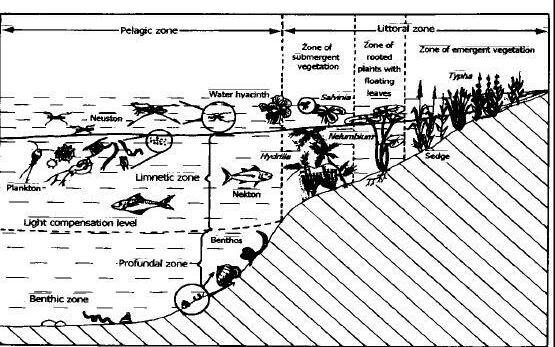
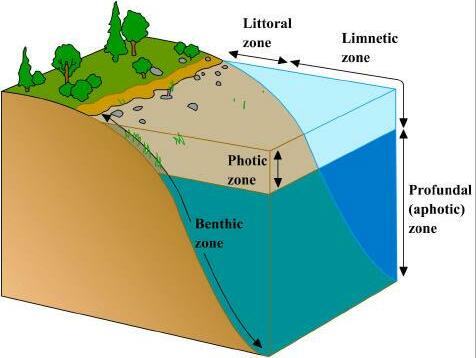
The Aquatic Life
Fig.7.1: Diagrammatic representations of a deep lake to show the life zones and different communities in them
65
Limnetic zone is the well-lighted zone where autotrophs can produce food through photosynthesis. The single celled planktonic algae inhabiting it are the main source of primary production in the region. The diversity within the limnetic zone is less than in the littoral zone. However it also includes diatoms, dinoflagellates, green and blue green algae, several forms of crustaceans, protozoans, rotifers and also some fish.

The profundal zone cannot support photosynthesis, because the effective light penetration does not take place in this region. Note that this zone is absent in very shallow water bodies, as the light penetrates to the bottom in them. The main source of energy for organisms in this zone is detritus that comes down from the limnetic zone. All organisms present in this zone are chemosynthetic autotrophs or heterotrophs.
iii) Benthic zone

This is the bottom region of a lake. Usually layers of fine mud cover the lake bottom. However the action of water, plant growth, drift materials, and recent organic deposits may modify the bottom materials. In deep lakes the dominant organisms are anaerobic bacteria. Due to their activity, hydrogen sulphide and methane may be formed as by products. However in shallow lakes, due to increased oxygen, light and food, the animal component may vary.
66
Living Components of the Environment
Fig.7.2: Some plants and animals inhabiting fresh water life zones
Lemna
Nelumbium
Typha
Sagittaria
Salvinia
Nymphea
Hydrilla
Eichornia
Zooplankton
Cichlids
Blue-green algae
marine worms, tiny crustaceans, clams, and snails
Each of the above zones in lakes offers different opportunities to the species that live in them and many organisms have evolved appropriate structures or behavioural patterns which are characteristic of that particular life zone, no matter where the lake is sited. None of these zones or their communities is sharply defined; they just provide a useful way of subdividing and understanding what would otherwise be an even more complex situation.
Now that you have studied about the fresh water life zones let us discuss about the marine life zones as well, before considering the adaptations of the organisms that inhabit them.
7.2.2 Oceans
The size and complexity of the oceanic or marine environment makes it a difficult system to classify conveniently. Many systems of classification have been proposed, each reflecting the interest and bias of the classifier. The system presented here is a slightly modified version of a widely accepted scheme proposed by Hedgpeth in 1957.
Beginning with the waters of the open ocean, subdivisions can be made both vertically and horizontally. The entire area of the open water is the pelagic zone, whichcanbe divided into two zones as neritic zoneand oceanic zone. The former encompasses the water mass that overlies the continental shelves. The latter includes all the other open waters (Fig. 7.3).
The Aquatic Life
Fig.7.3: The marine life zones
Vertically the pelagic realm can be further subdivided into two major zones, based on the degree of light penetration. These are the photic(euphotic or epipelagic) zone and the aphotic zone. The boundaries of these zones are defined on the basis of physical characteristics such as water temperature, water depth, and available light.
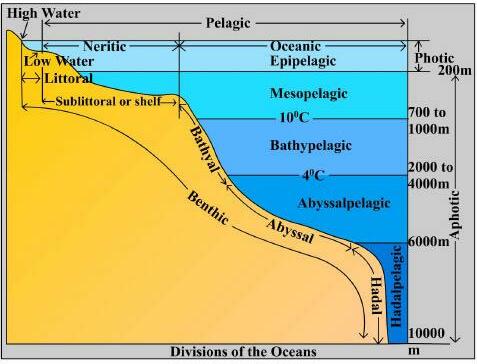
The pelagic part of the aphotic zone can be subdivided into mesopelagic, bathypelagic, abyssalpelagic and hadal pelagic zones.
The bottom of the ocean is referred to as the benthic zone. This is further subdivided as bathyal zone, abyssal zone and hadal zone corresponding to the last three pelagic zones (Fig. 7.3).
67
Many areas of the shallow sea bottom are covered with a lush growth of aquatic “grasses” collectively called sea grasses. They are flowering plants adapted to live submerged in sea water. Since sea grass beds exist in sheltered areas they are subjected to differing amounts of water motion. When the water motion is slow, sediment tends to accumulate in these beds, therefore they are considered as depositional environments. These beds harbour many animal communities and they become feeding groun d for dugong and turtles.
The benthic zone underlying the neritic pelagic zone on the continental shelf is termed thesublittoral zone. It is illuminated and is highly populated with several communities including sea grass beds and coral reefs about which you will learn in Section 7.6. Next to the sublittoral zone towards land side is the intertidal zone or littoral zone which is subjected to the effect of tidal fluctuations. This zone represents the transitional area from marine to terrestrial conditions. The estuaries are located in this zone.
Each of these regions of the ocean environment and of the fresh water environment described in this section is inhabited by characteristic assemblages of marine and fresh water organisms, respectively. You will learn about these organisms and their interactions with their immediate surroundings in the sections after attempting the following SAQ.
SAQ 1
Choose the correct statements from the following.
a) The bottom of the pelagic zone in a lake is too deep to be inhabited by rooted plants.
b) Photosynthetic algae are highly abundant in the profundal zone of a lake.
c) Certain organisms are found both in the limnetic and littoral zones of lakes.
d) Detrital component in the littoral zone is lower than in the benthic zone of a lake.
e) Littoral zone has the greatest diversity in a lake.
f) Neritic zone includes the water over the continental shelves.
g) Epipelagic zone does not extend up to the neritic zone.
h) Aphotic zone is the well-lighted zone in the ocean.
i) Effect of tidal fluctuations is experienced by organisms in the intertidal zone.
j) Deepest part of the ocean is the hadal zone.
7.3 ECOLOGICAL CLASSIFICATION
The inhabitants of marine and fresh water environments are very different. Ecologically, however, there are clear similarities between them. Hence, ecological classification is adopted to group these organisms, with respect to their common functions in the environment.
According to the ecological classification based on their life habitsor life styles (refers to where they live and how they move) in relation to the habitat, the organisms can be categorized into three major groups. They are:
• neuston nekton
• pelagic organisms
phytoplankton plankton
zooplankton
• benthic organisms or benthos.
We now discuss these organisms briefly.
7.3.1 Neuston
The organisms that live in the water-air interface are collectively called the neuston (pronounced “noo-stun”). You may be familiar with several of the larger neuston, like water striders or duckweed. There are also many microscopic species that live at the surface They require certain adaptations, to be on the water surface. Mainly they have to spread weight out toprevent sinking and be water repellent to prevent wetting. In fresh waters, the pond skaters (Gerridae: hemiptera) and water measurers (Hydrometridae: hemiptera) have achieved this by widely placed legs which make
68
Living Components of the Environment
The Aquatic Life them able to increase the surface area to volume ratio. Their legs are provided with water repellent hairs to prevent wetting. Normally they are confined to quieter areas of the lakes. The whirligig beetle is well adapted to water surface with its streamlined body and paddle like legs, which are heavily fringed with hair. The divided compound eye enables them to see both above and below water simultaneously (Fig. 7.4).
(a)
(b) (c) (d)
Fig.7.4: Various types of neuston: a) water strider; b) pond skater; c) Whirligig beetle; and d) Physalia
Neuston of the ocean is adapted to survive high intensities of ultra-violet light. These organisms are frequently coloured in various shades of blue. Only part of their bodies comes in contact with the air. They are not capable of directional locomotion and have some sort of floating devices (e.g., pneumatophores of Physalia, Vellela)
7.3.2 Pelagic Organisms
Pelagic organisms are those, which live within the water column, and can be further subdivided into nekton and plankton

i) Nekton
The true nekton organisms differ from the plankton only in size and mobility. These animals are relatively large. They are powerful swimmers and this can make them virtually independent of water movements. Therefore, they are able to undertake large scale migrations. Fresh water nekton includes aquatic insects (e.g., Notonecta –back swimmer, Dytiscus – water beetle), fish, water snakes, and some amphibians, while oceanic nekton include, cephalopod molluscs (e.g., squid), turtles and marine mammals such as whales and dolphins besidesseveral kinds of fish (Fig. 7.5).
ii) Plankton
The open water of both lakes and sea is colonized by a rich assemblage of algae and tiny animals that cannot swim fast enough and are drifted passively by the movement of currents. These organisms are called plankton. They can be divided into phytoplankton (drifting plants) and zooplankton (drifting animals).
Depending on the size plankton are grouped into several categories (see Table 7.1).
(b)
(a) (c)
Fig.7.5: Various types of nekton. a) Water beetle; b) back swimmer; c) water boatman. (Source:www.njscuba.net/ biology/fw_insects.html)
69
1
Table 7.1: Different size categories of plankton
Size range Category Type of plankton
Ultrananoplankton <2µm Entirely bacteria
Nanoplankton 2-20 µm Entirely algae
Microplankton 20-200 µm Both animals and plants
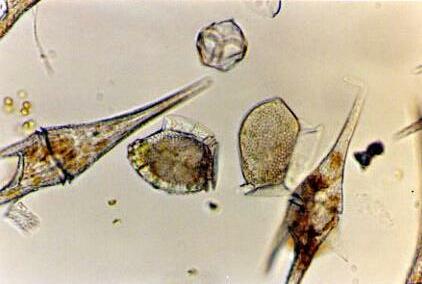
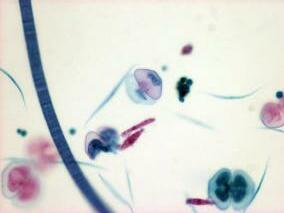
Macroplankton 200-2000 µm Entirely animals - zooplankton
Megaplankton >2000 µm Entirely animals - zooplankton
The plankton can also be divided into holoplankton andmeroplankton The holoplankton consist of all bacteria, animals and plants that are permanent members of the plankton. Meroplanktonconsist of the reproductive stages of benthic animals and plants.
Let us now consider the most common plankton types.
a) Phytoplankton
The phytoplankton consist of ten main taxonomic groups. These are: viruses, bacteria, blue green algae (Cyanophyta), green algae (Chlorophyta), goldenbrown algae (Chrysophyceae), diatoms (Bacillariophyceae), cryptomonads, dinoflagellates, Xanthophyceae and fungi.
As their power of locomotion is too weak to swim against horizontal currents, the phytoplankton populations tend to be swept awayby running water in rivers and streams. In the relatively still waters of the pelagic zones of lakes they can build up in large numbers and become the main source of primary production for the lake as a whole.
Phytoplankton communities in fresh waters consist of algae ranging in size from single cells (less than 10 µm in diameter) such as Chlorella, to clusters of cells like Volvox, which are large enough to be seen with the unaided eye. The smaller algae impart a greenish tinge to the lake water but only become obvious when they proliferate to form blooms at the surface. Some algae (e.g., Spirogyraand Cladophora) form thin filamentous strings of cells, up to 1m in length(Fig. 7.6). These are among the largest algae found in lakes. Several species of algae can live in the same lake without much competition as they live at different depths, reproduce at different times of the year, need different amounts and types of nutrients and grow at different rates.
Fig.7.6: Various types of a) fresh water and b) marine phytoplankton (Source: www.acadweb.wwu.edu/.../ 5_phytoplankton and hjs.geol.uib.no/marinemicro/)
70
Living Components of the Environment
µm = 10 6 m (a) (b)
In the oceans, plankton communities are the base of most marine food chains. Worldwide, diatoms are the most important primary producers. The second most abundant phytoplankton are dinoflagellates. These form blooms when the nutrient conditions are favourable. These blooms are referred to as red tide as they appear red.
b) Zooplankton
The most important zooplankton in fresh waters arecrustaceans of two major groups; the Cladocera of which the water flea (Daphnia) is a common example, and the Copepoda which includes cyclopoids and calanoids. A few rotifers (wheel animalcules) are also planktonic inhabitants of the pelagic zone but most creep and swim among the vegetation near the shore. We will deal with the marine plankton when we discuss life in the epipelagic region of the ocean.
7.3.3 Benthic Organisms
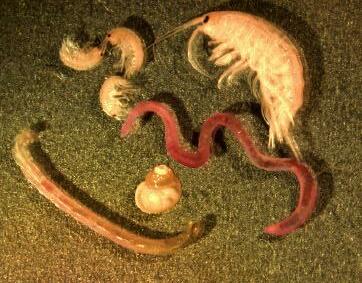
These are commonly known as Benthos and include the animals that live in and on mud(see Fig. 7.7). The organisms in benthic communities differ depending on the materials from which the ocean-bed is composed. In general, the organisms living above the sediment-water interface are termed benthic epifauna, and those living in the sediment itself are termed the infauna, e.g., Tubifex (blood worm) and other worms, molluscs (clams and gastropods), nematodes, ostracods, Chironomid larvae. Most of these animals are detritus feeders but some are carnivorous.
The Aquatic Life
Fig.7.7: Some typical Benthic animals (Source: www.glerl.noaa.gov/.../Waterlife/)
The benthic community includes organisms called periphyton or aufwuchs (Fig.7.8). They are attached to or move on a submerged substrate, but do not penetrate it. Periphytons are algae, which get attached to any submerged surface. They are slippery in nature. They provide nutritious food for snails, some fish and aquatic vertebrate larvae. They grow on rocks, mud, vegetation, boat hulls and other substrates.
Aufwuch communities colonize the leaves of submerged aquatics, sticks, rocks, and other debris. The inhabitants include mostly worms, ostracods and molluscs, coelenterates such as Hydra.
Oceanic benthos is not dealt with here, as we will discuss it later on when we consider life in the benthic zone.
Fig.7.8: Periphyton
71
7.4 ADAPTATIONS OF ORGANISMS IN FRESH WATER
All living organisms exhibit varying capabilities for adaptations to changing conditions of the environment. Those who live in the body of water should possess mechanisms to stay in the water without sinking. They also they have to adopt various techniques to obtain oxygen from the environment in which they live, and to escape from predators. We now focus on the adaptations of some fresh water organisms.
7.4.1 Lentic Habitats
Lentic habitats are characterised by standing water, e.g., swamp, pond, lakes and so on. We have selected the lake as an example to discuss the adaptations seen in its communities.
i) Adaptations to stay in the water column
a) Swimming adaptations
All living organisms, even the smallest tend to sink in fresh water. To maintain a position in the open water of a lake both plants and animals must therefore have floatation devices, or swim or be held up by water turbulence.
Most of the fast swimming aquatic insects have nearly streamlined bodies by becoming dorso-ventrally flattened and having a smooth ellipsoidal shape to lower the water resistance (e.g., water beetle). In many aquatic hemipterans (bugs) and coleopterans (beetles), the tibiae and tarsi are flattened and the ventral side is edged with hairs so that they can act as the blade of oars. Their thorax is also elongated in order to push the legs backwards, so that they can help to manoeuvre with great facility when swimming, e.g., Notonecta (Back swimmer), Corixa (Water boatman)and Dytiscus (Water beetle) (Fig. 7.9).
b) Buoyancy adaptations
Pneumatic buoyancy is found in some creatures using hydrostatic vacuoles of varying complexity. The phantom midges (Chaoborid larvae) have adjustable gas vacuoles and can rise or sink without swimming (Fig.7.9)
Some protozoans (e.g., Difflugia) and algae (blue green algae) also contain vacuoles used primarily for buoyancy.
Reducing sinking rate by size and shape is a passive adaptation. The shape of many types of plankton (the colonial forms), development of spines (e.g., Desmids) and glutinous sheaths all reduce sinking rate. They all rely on turbulence and upwelling current to some extent. Submerged plants benefit from the buoyancy of air-filled lacunae in their stems.
Fish are powerful swimmers and can move regardless of water currents but many also have a swim bladder to keep them buoyant and reduce the energy needed to counteract the effects of gravity.
ii) Adaptations to obtain oxygen
Respiration has inspired many remarkable adaptations. In small plankton (e.g., cladocerans) each cell or animal with a large surface area relative to body volume, is able to exchange gases by diffusion. Some larger animals still rely on such diffusion, notably many worms, e.g., flatworms (Turbellaria), and earthworms (Oligochaeta). Many of the worms found in bottom region of fresh waters (e.g. Tubifex ) and some insect larvae (e.g. Chironomus larvae) have red haemoglobin in their blood which helps to trap available oxygen which is often scarce (Fig. 7.9).
72
Environment
Living Components of the
Using the atmospheric air is quite common especially among the insects. They rely on a system of tubes called the tracheal system which open to the exterior through openings called spiracles. Many of the aquatic insects have lost the open spiracles except for those with specialized tubes or siphons which enable them to pierce the surface film to obtain atmospheric oxygen, e.g., mosquito larvae and pupae, Ranatra (stick insect), Nepa (water scorpion), and Eristalsis (rat tailed maggot) (Fig. 7.9).
Fig.7.9: Adaptations of fresh water organisms. To reduce sinking: a) Streamlined body in water beetle; b) Posterioly attached legs with flattened tibia and tarsi of water boatman; c) Chaoborid larva; d) Desmid. For respiration: e) Ranatra; f) Nepa; g) mosquito larva; h) rat tailed maggot; i) damsal fly nymph; j) may fly nymph
Note:The above depiction of organisms is not to the same scale.
Some of the aquatic insect nymphs and larvae have projections from the body, which are tracheal gills. These may be in the form of blood gills (e.g., caddis fly larvae), caudal gills (e.g, damsal fly nymphs and may fly nymphs) plate like
The Aquatic Life
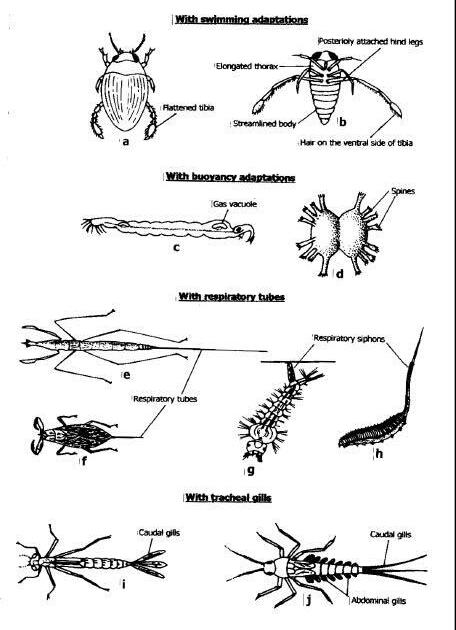
73
abdominal gills (e.g., may fly nymphs), or rectal gills (e.g., dragon fly nymphs). These projections have fine trachea into which oxygen diffuses from water (Fig. 7.9).
A number of species, such as beetles and water bugs come to the surface periodically to obtain a new supply of atmospheric air. The air may be carried as bubbles located close to the openings of the tracheal system to which the air diffuses. Some beetles trap a layer of air between the cuticle and elytra and this functions as a physical gill. This is known as plastron respiration.
iii) Adaptations to escape predation
Almost all fresh water fish feed on zooplanktons at some stage of their life cycle. To escape from these predators zooplanktons show various adaptations. Some of these include:
1 Vertical migration (moving upwards during late afternoon to avoid detection by predators and descending to bottom layers before dawn).
2. Reducing the body pigments so that they look more transparent.
3. Changing the body shape or developing spines so that the predators find difficult to swallow them.
7.4.2 LoticHabitats
Many commonalities are shared by lotic and lentic animals especially for respiration. However the peculiar adaptations for living in fast-flowing rivers and streams (the lotic habitat) are to resist or avoid the strong currents. Most animals and plants actively avoid the open water. Physical adaptations are manifold.
Lotic animals commonly have flattened bodies and limbs (e.g., stone fly nymph). They cling instinctively to any hard substrate. Some caddis larvae build cases to which twigs and debris are attached (Fig. 7.10).These act as vanes, turning the animal into the current as it clings on with its front legs to present the least resistance to the flow.
A good grip from claws, hooks and bristles is common to many taxa (e.g., Limnophora). Several aquatic larvae have suckers, which allow them to stick on to the exposed surfaces (Fig. 7.10).
Fig.7.10: Adaptations to live in flowing water. a) Caddis larva; b) Limnophora ; c) Simulium ; d) Stone fly nymph on a rock. Note: The above drawings are not on the same scale.
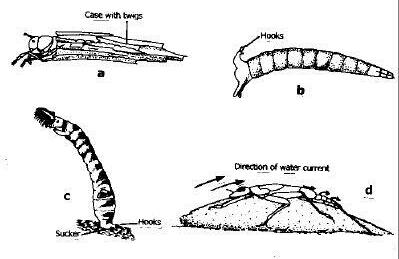
74
Living Components of the Environment
The black-fly larva (Diptera, family Simulidae) showsa remarkable adaptation to cope with the moving current. It spins silk pads on to the substrate and anchors itself to this with circlets of hooks on their back side (Fig. 7.10). An emergency line is kept attached to the anchor point from the head silk glands. If swept away the larva reels itself in using jaws and stumpy prolegs to grip the thread. Many live under rocks and stones or burrow deep into the substrate to avoid facing the water current directly.
In this section, you have learnt about how living organisms in various freshwater zones adapt to their surroundings. In the next section, we shall take up adaptations in oceans. But before that, you may like to do the following exercise.
SAQ 2
Give suitable examples of aquatic insects or their young stages that show the following adaptations.
Adaptation Example
Respiratory tube to obtain atmospheric air
Posterior legs flattened to act as oars
Presence of a physical gill
Use abdominal gills for respiration
Build cases around the body to which sand or twigs are attached
Use suckers to stick onto the substratum to prevent from being washed away
7.5 ADAPTATIONS OF ORGANISMS IN OCEANS
We now focus on the basic adaptations of the organisms living in various zones of the ocean, namely, organisms of the epipelagic zone, benthic organisms in the deep ocean and organisms of the intertidal and subtidal areas.
7.5.1 Epipelagic Zone
The pelagic plankton are exceedingly diverse. Phytoplanktons mainly include diatoms and dinoflagellates, which together produce most of the organic carbon in the sea. The zooplankton include, representatives of every major phylum and most minor phyla either as permanent members of the plankton community or as transients during their larval stages. Common among permanent planktonic forms are the very complex and beautiful protozoa known as foraminiferans and radiolarians, arrow worms (Sagitta), certain annelid worms, swimming snails, jellyfish, and most abundant of all, the crustaceans such as shrimps, copepods and cladocerans. Among the temporary zooplankton are the larvae of larger animals from all marine environments and even some fresh water environments.
As you know the nekton include all organisms capable of sustained locomotion against the water current. The oceanic nekton are composed of a wide variety of bony fishes, sharks, and rays, as well as lesser numbers of marine mammals and reptiles. The only invertebrates that can be considered are the cephalopods.
Several different groups of fishes may be recognized in the nekton. These are termed as:holoepipelagic and meropelagic.
The holoepipelagic are fish that spend their entire lives in the epipelagic zone. These include mackerels, blue shark, flying fish, tunas, sword fish and so on. These fish often lay floating eggs and have epipelagic larvae, and are more abundant in the
The Aquatic Life
75
surface waters of the tropics and subtropics. The meropelagic are the fishes that spend their adult life in the epipelagic zone but spawn in inshore waters. These include herring, whale, shark and salmon (spawn in fresh water).
The marine mammals include whales, seals, and seal lions and marine reptiles are represented only by turtles and sea snakes.
i) Adaptations of plankton and nekton
Like the fresh water organisms, the organisms in the epipelagic zone show adaptations mainly to keep themselves suspended in the water and to propel swiftly through the water. Both plankton and nekton exhibit adaptations for the following:
• to stay afloat,
• for rapid movement, and
• for defence against predators.
We now discuss briefly some fascinating details of each of the above.
a) To stay afloat – buoyancy adaptations
Pelagic organisms must have floating or neutral buoyancy mechanisms or else adaptations to swim, otherwise they would sink.
The rate of sinking of an organism depends on three main factors: size, the difference in density between the organism and the surrounding water, andthe viscosity of the water.
Phytoplankton have minimized sinking by having smaller bodies which make the area to volume ratio higher. Both zooplankton and phytoplankton have developed elaborate spines that extend from the body, in order to increase the frictional drag of the body and decrease the rate of sinking.
The density is lowered by many diatoms by replacing the heavy Mg++ and Ca++ ions in the intercellular vacuoles of the body, with lighter Na+ and K+ ions. Another mechanism of reducing density is the accumulation of oils and fats. These lipids have a specific gravity of less than water. The density of plankton may also be reduced by air or other gas bubbles.
Buoyancy aiding devices such as gas floats and vacuoles are developed by nektonic animals as well. Most species of fish have a swim bladder that gives them a neutral buoyancy while resting and swimming. Air sacs and blubber are present in marine mammals (porpoises, whales), and lipid filled livers in sharks.
b) For rapid movement – locomotory adaptations
The problem of maintaining themselves in the photic zone is lessened for most zooplankton organisms by the possession offairly effective locomotory powers. Many can move in a vertical plane within a moving body of water and can thereby maintain themselves in the photic zone.
Many mesoplankton larvae have tracts of long cilia; these beat together moving water across the surface of the larva and then propelling it in the opposite direction. They have body shapes adapted to move rapidly through the water, i.e., front end pointed.
The adaptations of nekton can be divided into two groups– those necessary to create the propulsive force and those that reduce the resistance of the body to passage through the water. Squids and other cephalopods take water into their
76
Living Components of the Environment
mantle cavities and expel it at high speeds through a siphon. This pressure pushes the animal in the opposite direction.
Let us now discuss these interesting adaptations in some detail.
The force necessary to propel is created by some part or parts of the body. The most common way is the undulatory mechanism, which moves the animal forward by sweeping the posterior part of the body and fins from side to side (e.g., eel in Fig. 7.11). Another mode of propulsion is to employ undulatory movements of fins which move in several ways to cause forward motion, while the body remains stationary, e.g., Sun fish (Mola mola and rays (Fig. 7.11).
In general stubby fishes such as tuna are faster than narrow fishes like eel. In fast swimming fishes (e.g., tuna) the characteristic lunate tail (shaped like a crescent moon) and the caudal peduncle increase the swimming efficiency (Fig. 7.11).
The Aquatic Life
Fig.7.11: Various methods employed by fish to increase the mode of propulsion. a) Swim bladder of a fish; b) undulating movement of an eel; c) lunate tail of tuna; d) Sun fish using fins to move
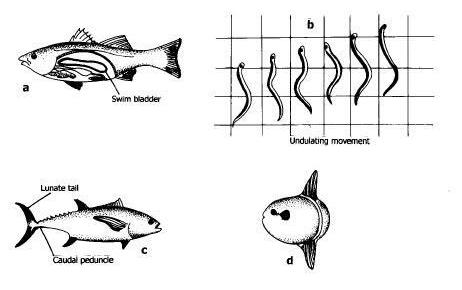
Note:The above diagrams are not on the same scale.
To reduce the form of resistance and the drag of the body, the animals have become thin and long and possess stream lined bodies (e.g., whales, tunas).They do not have protruding body structures. For instance, their eyes do not protrude, the pelvic and pectoral fins fit into grooves and the body scales are also reduced.
c) Defence against predators
Marine organisms exhibit a variety of defence mechanisms to escape predators. We briefly discuss these.
Camouflage mechanisms:Since we are dealing with an environment that has no physical hiding places, organisms are visible in all three dimensions and easily captured by predators. To escape from them they show camouflage mechanisms, which include transparency, cryptic colouring and alteration of bodyshape.
Planktonic organisms exhibit several defensive adaptations and strategies. Small size is perhaps the most common adaptation, which confers many obvious advantages to plankton. The second is transparency, which makes it
77
difficult for predators to see them. This adaptation is especially common among gelatinous plankton.
Cryptic colouration is also characteristic of most nektonic animals. Zooplankton of the epipelagic zone are for the most part transparent. This transparency reduces the visibility of the animal and reduces the chance of being discovered by a predator. Many fishes in the epipelagic zone exhibit counter shading. They have dark blue or green coloured dorsal surfaces so that predators from above will not see them against the blue green water of the background. When viewed from below, again the animal will not be seen as the ventral side of these fish is white or silver in colour to maximize light reflectance. Next time when you go to the fish market observe the difference of the colour of dorsal and ventral sides of fish.
Vertical migration: Vertical migration is a unique and important characteristic of life in the pelagic zone. Many plankton, who are weak swimmers, can move hundreds of metres vertically during a twenty four hour cycle. During day light hours, the animals stay in the dark waters of the deep zone, and migrate to the surface waters, where they feed. As the day brightens they return to the safety of the dark, where predators who hunt by sight cannot find them readily.
Other defensive adaptations: Schooling is a common defensive strategy among open ocean fishes (mackerel) and some zooplankton. Usually the fish in a school are of a single species and of similar size (e.g., herrings). Fish in a school constantly change position but keep a nearly constant distance from those around them. This behaviour provides protection to individuals by confusing their predators.
Finally, the open ocean organisms use toxins which they make or accumulate for defence. Few fish are truly venomous, but many have toxic substances on their skin, e.g., Parrot fish. When threatened, squids eject clouds of ink that can blind their attackers. These ink cloud resembles the squid fooling the attacker into attacking the cloud of ink and letting the animal escape
7.5.2 Benthic Zone
In this section we will deal with the various life communities and conditions for life in the deep ocean and shallow waters in the continental shelf region. The coral reefs (fascinating biological associations) are found in the shallow waters extending towards the sublittoral zone. We shall discuss these in Section 7.6.
i) Nektonic animals in the deep sea
Before considering the life in the deep ocean it is necessary to remember the physical and chemical conditions which are mentioned below.
• The entire area is without sunlight, except at the upper part of the mesopelagic, where some light penetrates.
• The pressure varies over a vast range from 20 to more than 1000 atmospheres.
• Salinity is remarkably constant.
• Very low temperatures. Below 3000 to 4000 m, there are no seasonal or annual temperature changes and the temperature is constant.
• Sufficient oxygen is present to support life.
• There is no primary production; therefore no food is produced. Few food particles available are the ones that sink from the surface waters.
Mesopelagic fishes are either silver grey or deep black. They are not counter shaded as the epipelagic fishes. The mesopelagic invertebrates on the other hand are usually coloured red. Their red pigmentation protects these animals from the
78
Living Components of the Environment
revealing rays and flashes used by predators. The organisms living in the abyssal and bathyal zones are often colourless or are dirty white in colour.
Now we shall briefly survey some of the adaptations shown by deep sea animals. Main adaptations are to find food and mates and to maintain various interspecific and intraspecific associations.
a) Adaptations to find food
Food scarcity in the deep sea seems to be the reason for another series of adaptations. Two basic ways in which nekton in the deep sea cope with the problem of food scarcity are:
i) to cut down on requirements for food and energy, and ii) to ensure capture of whatever food is available, almost regardless of its size.
Most deep sea predators are small (less than 15 cm long) and light (even a larger fish some 1.5 m long may weigh 1/8 kg). They have poorly ossified skeletons and thin gelatinous muscles. Their basic metabolic requirements have been highly reduced.
Swallowing mechanisms: Some deep sea fish can catch prey broader than themselves, and over twice their own length. To consume such large items, they possess large mouths. Their jaws can open very wide. Furthermore, the mouth is often filled with long teeth curved towards the throat; an adaptation to ensure that whatever prey or food is caught does not escape. Some have the ability to move the skull and upper jaw upwards and backwards as well as the lower jaw downwards. This enables them to swallow prey larger than themselves (Fig 7.12). Once engulfed, the prey is packed into a grossly distensible stomach, causing the equally distensible abdomen to hang below the fish (Fig. 7.12).To permit this distension, it must be possible for the internal organs to be rearranged without damaging the gills and various blood vessels.
Adaptations to produce light:Bioluminescence is the term used for the production of light by living organisms. Since the deep sea is either dark at all times or has extremely low light levels, many species of deep sea fishes have photophores, i.e., lightproducing organs on their bodies. The biochemical reaction producing the light is carried out by symbiotic bacteria and not by the nektonic animals themselves. The ‘living light’ may help a predator to catch food either by being a luminous lure which attracts prey to the predator’s mouth as in most deep-sea angler fish or by acting as ‘head lamps’ which enable potential prey to be seen (Fig. 7.12a).
b) Development of sense organs
Fish that live in the mesopelagic and upper bathypelagic zones possess large eyes which are correlated with the presence of light organs. The large eyes give them maximum light collecting abilities in low light areas.
Fishes dwelling in the permanently dark, deepest parts of the ocean (abyssal pelagic, hadalpelagic) have reduced eyes. Bottom dwellers have no eyes. However their other senses are well developed.
c) Adaptations to find a mate
Because food is scarce and the density of organisms is very low, there is a potential problem of finding a mate in this vast dark area.
One method of ensuring that a mate is available is to live in male/female pairs, although such an arrangement results in competition for food between
The Aquatic Life
79
the two individuals. In deep sea angler fish, the male is reduced and is attached as a parasite to the female which is fairly large in size (Fig. 7.12).
Fig.7.12: Various adaptations of deep sea fishes. a) Fish with light organs; b) Photophores in an eel with reduced eye; c) Swallowing mechanism of the deep sea fish (showing the skull and jaw bones when the mouth is open); d) Distensible stomach of deep sea fish; e) Large female angler fish with attached parasitic male.
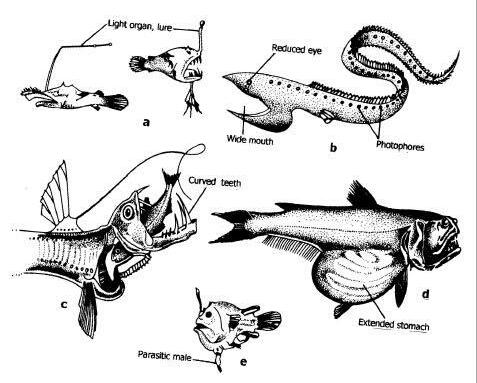
Note: All the above illustrations are not on the same scale.
ii) Shallow water subtidal benthic associations
This section covers the area of the oceans that lies in between the lowest water level on the shore to the edge of the continental shelf at a depth of about 200 m. As you have studied in Section 7.2.2, this area is known as the sublittoral zone. Overlying it are the waters of the neritic zone. Most of the zone is composed of soft sediments, sand, and mud and a lush growth of sea grasses. Much lesser area of this zone is covered by hard rocky substrate.
The bottom of this region is dominated by epifauna and infauna. Epifaunal organismsinclude those species, which live on or roam over the sea floor and these are best adapted to life on rocky substrata. They are most abundant and diverse in the intertidal zone. Infaunal organisms include organisms that live in or burrow through the bottom sediments and they are mostly abundant below the tidal level. They are usually divided into three categories based on their size.
• Macrofauna (organisms greater than 0.5 mm in size)
• Meiofauna (organisms within the size range of 0.5 to 0.062 mm)
• Microfauna(organisms below 0.062 mm in size)
80
Living Components of the Environment
Based on their feeding pattern they are categorized as:
1. Deposit feeders which feed on the sediments that forms the substratum ( e.g., polychaetes).
2 Suspension feeders, some of which are completely fixed and some formsare mobile (mostly detritus) (e.g., Barnacles, crinoids and some polychaetes).
3 Detritus feeders as their name suggests, feed principally on detritus, and in consequence they include most deposit feeders, but also some suspension feeders.
Before we talk about the above organisms we would briefly discuss some of the characteristics of the continental shelf waters. In these shallower waters, the interaction of waves, currents, and upwelling creates turbulence. This is an important physical factor as it prevents thermal stratification, which locks up the nutrients at the bottom. Wave action is also an important factor, which has a profound effect on the bottom fauna as it affects the stability of the substrate. Productivity is generally higher than in similar waters offshore because of nutrient abundance from both runoff from land and recycling. Salinity and temperature in this region are more variable especially in the inshore areas.
Now that you have some idea of this zone, let us consider the animal community living in it.
a) Macrofauna
Macrofauna in this region comprise mainly polychaetes, crustaceans, echinoderms and molluscs. Polychaete worms are the most dominant and are represented by numerous tube building and burrowing species. The dominant crustaceans are represented by larger ostracods, amphipods, isopods, tanids, mysids and a few of the smaller decapods. They mainly inhabit the surface of the sand and mud. Molluscs are represented primarily by various burrowing bivalve species and some scaphopods with a few gastropods at the surface. Echinoderms are particularly common in the subtidal benthos and include brittle stars, heart urchins, sand dollars, sea cucumbers and a few predatory sea stars.
b) Meiofauna
In addition to the large macrofaunal organisms, there are other organisms that occupy the micro spaces between the particles. These are the meiofaunal or interstitial organisms. These organisms are found in the intertidal and subtidal sedimentary substrates throughout the world in both fresh water and saline water. The types of organisms that constitute the meiofauna include a broad range of invertebrate phyla.
The most obvious adaptation of meiofaunal organisms is that they are very small in size. Also they tend to be elongated or vermiform in shape and are flattened (Fig. 7.13).
Perhaps the most important factor influencing the presence, absence, and types of interstitial organisms is the grain size. It determines the amount of interstitial space available for habitation. The coarser the grain size, the greater the volume of interstitial space and the larger the interstitial organisms that can inhabit the area. In addition to the grain size, the temperature, salinity and the wave action determine the presence or absence and distribution of meiofaunal organisms.
Most animals in the interstitial space are free-moving and have various adaptations to cling to the sediment grains. The presence of skeletons that
The Aquatic Life
81
Living
offer some protection against crushing is an adaptation to the dynamics of sedimentmovement.
Temporary meiofauna consists of newly settled juveniles of macrofaunal organisms, whereas permanent meiofauna consists of organisms that spend all their lives in the interstices of the sediment.
Fig.7.13: Interstitial fauna
c) Microfauna
Microfauna include benthic bacteria and various forms of ciliate protozoans. Benthic bacteria are numerous and are a little studied group that includes chemosynthetic and heterotrophic species. The latter is of great importance in making utilizable food available to the benthic animals from the otherwise indigestible detrital materials.
iii) Benthos in the intertidal zone
Next to the sublittoral zone towards the landside, lies the intertidal zone, which is found between the high-tide water level and the low-tide level. This zone comprises rocky shores, sandy shores and estuarine shorelines where muddy shores are present. We shall now focus on the various types of benthic communities in the intertidal zone.
a) Life in the intertidal zone
The intertidal zone, which is alsocalled the littoral zone, is an extremely narrow fringe area located between high tide and low-tide water level. Because it is the most accessible zone of the ocean, it has been studied more intensively than any other marine habitat.
Since the intertidalzone is a transitional zone between the terrestrial and the marine environment, sometimes exposed to the atmosphere (during low tide) and sometimes covered by seawater, we might expect to find a mixture of marine and fresh water organisms. To some extent we do find them.
82
Components of the Environment
b) The environmental condition in the intertidal region
The biological communities of the intertidal zone are very important. Animals in the intertidal zone are exposed to a much wider range of environmental conditions than are generally found in the ocean. Therefore, they show many adaptations. These environmental conditions include tidal fluctuations, temperature variations, wave action and salinity conditions.
Different zones have been identified in the intertidal region with respect to the tidal fluctuations. During the high tide most of the shore organisms are submerged but during the low tide they are exposed. At the lower limit of the intertidal zone the period of exposure may be only few minutes while at the upper limit, exposure is virtually continuous. This has made the biological organisms that inhabit the upper limit area cope with several difficulties.
Just like tides, temperature variation is also strongly felt at the shore than in the ocean. Extreme low or high temperatures can be lethal to organisms in the intertidal region.
As waves approach the shore they break and splash on the upper point of the intertidal zone. In the rocky shores it provides a spray of sea water to the animals living in the upper regions or the spray zone. In sandy shores the waves can move the substrate. Since the wave action can dislodge organisms, they show many adaptations in this regard.
Salinity variations are also strongly felt at the intertidal region. Fresh water run offs and rainfall can increase the salinity in shallow areas. These variations in salinity have an effect on the physiology of the organisms.
On the basis of the substrate three types of habitats are identified in this region. They are the: rocky shores,sandy shoresand muddyshores
Rocky shores
These shores are characterized by a solid substrate, which is capable of withstanding wave action. The rocky shores offer diverse habitats such as creeks, crevices and rock pools where numerous species live. In isolated rock pools and creeks the temperature of water can rise rapidly.
Most animal and plant species live attached to the substrate and show a definite pattern of distribution or in other words zonation.
Zonation
This is one of the characteristic features of the rocky intertidal region. It means the banded distribution of organisms parallel to the shore, based on the elevation of the shore.
A team of marine biologists T.A. Stephenson and Anne Stephenson have described a common pattern of zonation after studying the rocky shores world wide. According to their proposal 3 main zones are classified based on the tidal levels. Supra littoral zone is the uppermost region.Mid littoral zone is the middle region and the infra littoral zone is the lowermost region (Fig. 7.14). Each of the three zones corresponds to a general tidal elevation.
The supra littoral zone
This is the uppermost part of the intertidal zone and it is generally found above the height covered by the tides each day. Therefore this is a highly exposed habitat. The animals that live here are subjected to desiccation and show various adaptations. The common animals found here are littorines.
The Aquatic Life
83
Supra littoral zone
Supra littoral fringe
Approx. + 2 m to 0.75 m Approx. 0.75 m to 0m
Mid littoral zone Infra littoral fringe
Infra littoral zone
Approx. 0.03 m to 0.5 m
Fig.7.14: Rocky shore zonation
The mid littoral zone
This zone corresponds roughly to the part of the intertidal zone that is covered and exposed by the tides each day (24 hour period). The animal diversity is much greater here than the supra littoral fringe and the competition is very high for the space. But they have to face the threat of wave action, and dessication (when exposed during low tide). The common animals found are barnacles (Balanus), limpets (Patella), oysters and mussels (Mytilus), sea urchins, Chitons and polychaetes (Nereis).Many kinds of seaweeds belong to Chlorophyta – e.g., Ulva (green algae), Phaeophyta, e.g., Fucus (brown algae) and Rhodophyta, e.g., Jania (red algae), kelps ( Laminaria) are present in this zone. They are adapted to tolerate extreme wave action.
The infra littoral zone
This area is exposed to the atmosphere only during the low tide of the springtime. Here the diversity and the abundance of species are much greater than the other two zones and the organisms do not show many adaptations. Large numbers of seaweeds are present in this zone too. The boundaries separating these zones are artificial. They are frequently violated by their residents. You are likely to see species that dominate the mid littoral zone scattered throughout the infra littoral fringe as well.
Causes for zonation
Zonation can be due to: physical and biological factors and more often due to the combination of these two factors. Physical factors such as desiccation and temperature changesstrongly influence the distribution of organisms at the upper limit of the intertidal region. Tidal action and wave action are also strong causes for zonation. The major biological factors that control zonation are grazing(algae), competition (forspace)and predation
Adaptations of rocky shore organisms
Adaptations to avoid dessication
These may be morphological, physiological or behavioural. Littorina shows many adaptations. Littorina has a lightly coloured shell to reduce heat absorption. Some species have ridges on the shell to increase reflection of sunrays. It has a habit of retracting completely into the shell when exposed and cover the shell aperture with a hard flap called operculum. While inside the shell, it prevents dehydration by holding
84
Components of the Environment
Living
considerable amount of seawater in the mantle cavity. On direct exposure to sunlight it moves onto shaded areas of the rock.
Production of insoluble uric acid as excretory product when it is exposed for a long period is a physiological adaptation.
When exposed, the barnacles, mussels and oysters close their shells tightly to minimize the water loss from the body. The sea anemones too retract their tentacles and contract. They attach tiny bits of light coloured stones and shells to themselves presumably to reflect light and heat.
Adaptations to avoid wave action
Barnacles and oysters are firmly attached to the rock by cement like substance. The mussels are attached by byssus threads that originate in a gland in their foot. Limpets and chitons cling to the substrate by a strong foot, which acts like a suction disc (Fig. 7.15)
Small epifauna live among the seaweeds. These include young stages of most rocky animals, small crabs, amphipods, isopods, polychaetes. The rock crabs move into crevices just as the wave approaches. Sea urchins live in cup like burrows excavated bythem Nereis is confined to its tube to escape from waves.
The seaweeds that live in these zones show various adaptations for desiccation and wave action. A flexible stem-like organ is present in most weeds, which serves as a shock absorber. The holdfasts arewell adapted for getting a grip on the substrate and overcoming wave shock. Trochus and Cowris, which live in the littoral fringe where the wave action is less, have comparatively heavier shells.
The Aquatic Life
Fig.7.15: Some organisms present on a rocky shore a) mussel; b) limpet; c) Chiton; d) Nereis; e) Balanus; f. Littorina; g) Trocus; h) Cowris; i) oyster
Note: The above organisms have not been drawn to the same scale.
85
Predation on rocky shores
Sea stars and predatory snails continually remove small areas of barnacles and mussels and create patches of open space which are replaced by other organisms such as algae. However, gradually the mussels or barnacles or both regain their ascendancy. In this way diversity of species is maintained.
Sandy shores
In the Intertidal region, exposed sand beaches and well protected sand flats are common throughout the world and are known to most of us, because they are used for various recreational activities.
In contrast to the crowded life on the rocky shores, the sandy beaches appear devoid of macroscopic life as the environmental factors acting on the shores create conditions where virtually all organisms bury themselves in the substrate. Perhaps the most important physical factor governing life on exposed sand beaches is wave action.
Beaches are defined by three factors: particle size, wave action, andslope. All three are interrelated. The importance of the particle size to organism distribution and abundance rests with its effect on water retention and its suitability for burrowing. Fine sand holds much water in its interstices than the coarse sand. Therefore, the organisms that inhabit the fine sand are well protected against desiccation. Fine sand is also more amenable to burrowing than coarse gravel. Fine sand occurs only where wave action is light and coarse sand where it is heavy.
The slope of a beach is the result of the interaction between the particle size, wave action and the relative importance of swash and backwash water. Swash is the water running up a beach after a wave breaks; this action carries particles with it. Backwash is the water flowing back down the beach; this action removes particles from the beach. Due to the ceaseless movement of surface layers of the sediment due to swash andbackwash, few large organisms can permanently occupy the surface of open sand or gravel beaches. This is the reason for the barren appearance of such beaches.
Adaptations of sandy shore organisms
The dominant environmental factor acting on open sand beaches is wave action, which creates the unstable, constantly moving substrate. To inhabit the area, organisms must first be adapted to tolerate these features. Two routes may be taken by organisms in adapting. The first is for the organism to burrow deeply enough into the substrate. This strategy is employed by many large clams. Such animals are usually aided by developing a heavy shell, which helps to keep the animal situated in the substrate. They often have long siphons and this enables them to burrow deeply (Fig. 7.16).
The second route of adaptation is for the organism to burrow as soon as the passing wave has dislodged the animal from the substrate. This is the more common mechanism and is employed by many annelid worms, small clams (e.g., Donax), and crustaceans (mole crab of family Hippidae). Other adaptations include having a smooth shell that reduces the resistance to burrowing in the sand (e.g., Oliva). Similarly echinoderms such as sand dollars have much reduced spines to burrow into the sand. The lower portion of the beach is highly populated with amphipods, clams and cockles.
Muddy shores
Sharp boundaries exist between rocky shore and sandy shore, making them easily defined and recognizable. Boundaries between sand flats and muddy shores are not as easily defined. Since sharp boundaries do not exist and one blends into the other along a gradient of increasing protection from wave action, the fauna and flora of muddy shores also show a change.
86
Living Components of the Environment
Fig.7.16: Organisms present in sandy shores
Note: The various organisms in the above illustration are not drawn on the same scale.
Typical muddy shores are those of the opposite end of the continuum from the open sand beaches. Muddy substrates are also characteristic of estuaries and salt marshes. Since most ofthe muddy shores are associated with estuaries and similar embayments, many of the organisms and their adaptations are similar to both the areas. To avoid the problem of overlap in discussing these two areas, let us consider the life in estuaries and the various factors that affect them. The same will apply to the mud flats.
7.6 ADAPTATIONS OF ORGANISMS IN ESTUARINE SYSTEMS
The characteristics of estuaries include: fluctuations of salinity, softmuddy substrate derived from sediments carried into the estuary by both saline water and fresh water, presence of large amount of particulate matter, and two-way current created by tidal action.There are different habitats in the estuarine system. Salt marshes and mangrove forests are two of them. We now describe some features of estuarine systems and the organisms inhabiting them.
i) The faunal composition
There are three types of fauna in estuaries:marine, freshwater and brackish water or estuarine. The marine fauna is the largest group in terms of numbers of species and includes two subgroups. The stenohaline marine organisms are marine forms that are either unstable, or barely able to tolerate salinity changes. These organisms are usually restricted to the mouths of estuaries, where salinity is generally 25% or above.
The second subgroup is the euryhaline marine organisms. These marine animals are capable of tolerating varying amounts of salinity reduction below 30 %. Such species can penetrate varying distances up the estuary. Most tolerate salinity down to15 18%, with a few hardy species tolerating levels down to 5%.
The brackish water organisms are the true estuarine species and are found in the middle reaches of the estuary in salinity between 5 % and 18 %. Examples of these animals include polychaete Nereis diversicolor, oysters, Cassostrea, and Ostrea.
87 The Aquatic Life
The component derived from fresh water animals usually cannot tolerate salinity much above 5% and are restricted to upper reaches of the estuary. Finally there is also a transitional component that includes those organisms, such as migratory fishes, that pass through the estuary on their way to breeding grounds, either in fresh water or salt water. Common examples are salmon and eels. Also included are forms that spend only part of their lives in the estuary. Usually it is the juvenile stage, and the adults are found at sea. Examples of the latter group are the various shrimps of the family Penaeidae (Penaeus). The young occur in estuaries. The transitional fauna also contains forms that enter the estuary only to feed and includes many birds and fishes.
The number of species of organisms inhabiting estuarine systems is significantly lower than the number inhabiting nearby marine or fresh water habitats. This is probably because fresh water organisms cannot tolerate the increased salinity of the estuary.
ii) Estuarine vegetation
Deeper layers of the estuary are often barren. The upper layers of water and the intertidal zone have a limited number of plants in the lower reaches of the estuary and below mean low water there may be beds of sea grasses (e.g., Halophyla, Zostera). Estuarine mud flats are also inhabited by diatoms, filamentous cyanobacteria, and bacteria. Both the water and the mud of estuaries are rich in bacteria because of the abundance of organic matter. Densities of bacteria in estuarine mud of 100 to 400 million per gram have been reported.
iii) Estuarine plankton
The estuarine plankton species are also low in number. They follow the same trend as the macro fauna and macro vegetation. Diatoms frequently dominate the phytoplankton, but dinoflagellates may achieve dominance during the warm months.
Characteristic estuarine zooplanktons include species of the copepods, certain mysids and certain amphipods.
iv) Adaptations of estuarine organisms
The variable nature of the estuarine habitat especially the fluctuating salinity and temperature conditions makes this a particularly stressful and rigorous habitat. For organisms to survive and successfully colonize this area, they must possess certain adaptations, which are discussed below.
a) Morphological adaptations
Morphological adaptations are mainly to overcome the conditions of fluctuating temperature and salinity. Most are adaptations for burrowing into mud. Mud dwelling organisms often have fine fringes of hair or setae, which guard the entrances to respiratory chambers to prevent clogging by silt particles. Such a situation is seen in estuarine crabs and many bivalve molluscs.
Other morphological adaptations include a smaller body size than the relatives living in saline water and a reduced number of vertebrae among fishes. The morphological adaptations among vascular plants living in estuaries and salt marshes are listed below:
• A special tissue, aerenchyma to supply oxygen to the roots, which remain embedded in anoxic mud.
• Salt glands for eliminating excess salt.
88
Living Components of the Environment
• Extensive stores of carbohydrates in the roots to provide a sugar source to cope with salinity fluctuations.
• High lignin content to add strength to the plant to cope with high internal salinity.
• High tissue water concentrations to buffer against water loss by osmosis.
b) Physiological Adaptations
The adaptations required for estuarine life are those that maintain the ionic balance of body fluids under fluctuating external salinities. The ability to control the concentration of salts in internal fluids is called osmo-regulation and only some animals are capable of this physiological mechanism. Most marine organisms cannot control their internal salt content and are referred to as osmo-conformers.
Their ability to penetrate estuaries is limited by their tolerance for changes in the concentration of internal fluids. Most estuarine animals (e. g., polychaete worms, molluscs, and crustaceans) are osmo-regulators and are able to function with fluctuating internal salt concentrations.
Many estuarine species have a lowered reproductive rate and lowered fecundity.
Vascular plants growing under estuarine conditions also display a set of physiological adaptations to osmotic stress.
Generally,when the osmotic potential (increase in the ion concentration) of water in the soil around the roots increases, the plants respond by increasing the ion concentration of their tissues.
c) Behavioural adaptations
Behavioural adaptations are common in many estuarine organisms. Among the invertebrates, one such adaptation is burrowing into the mud. This prevents them from being exposed to variations of salinity and temperature of the overlying water. Also this makes them less likely to be consumed by the predators
Since the young of most of the estuarine animals have not developed their osmo-regulatory abilities many adult forms exhibit a specific migratory pattern to the adjacent sea for the breeding season (e.g., the crab Eriocheir).
On the other hand, young forms of many fish species enter the estuary to feed and leave it once they get matured (e.g., Mugil sp.).
Now we focus on two different types of habitats in estuarine environments. They are the salt marshes and the mangroves
7.6.1 Salt Marshes
Salt marshes are communities of emergent herbs, grasses or low shrubs rooted in soils alternately inundated and drained by tidal action (Fig. 7.17). They occur mainly at the higher tidal levels in areas of protected water and most often in association with estuaries. Since the dominant plants are emergent flowering plants, they invade only the shallowest intertidal areas. They are halophytes, and grow in soils with a high salt content. The dominant plants are herbaceous angiosperms.
The salt marsh is a rigorous environment with wide variations in salinity and temperature. Salt marshes are species poor areas.
The Aquatic Life
89
Salt marshes have very productive biological communities. Most of the energy captured by the salt marsh through photosynthesis is slowly released to the adjacent water and sediments by the decay vegetation. The animals found in salt marsh are a mix of terrestrial and marine forms. Of the marine invertebrates found, bivalve molluscs, gastropod snails and crustacean crabs are the most important.
7.6.2 Mangrove Forests
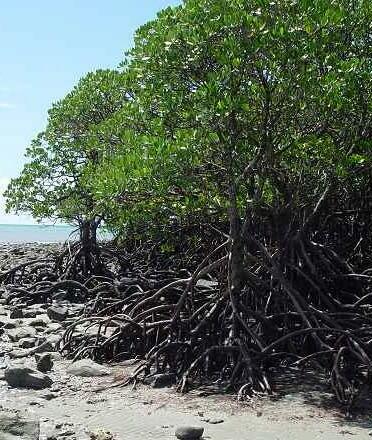
Mangroves are flowering plants that have invaded the coastline of the tropical and subtropical regions (Fig. 7.18). They are restricted to shores protected from wave action. The mangrove forests comprise trees and shrubs belonging to some 12 genera, and the dominant genera are Rhizophora, Avicennia, Bruguiera, and Sonneratia.
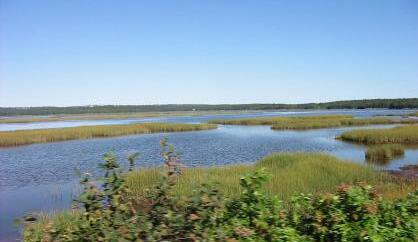
90
Living Components of the Environment
Fig.7.17: Salt marsh (Source: www.istop.com)
Fig.7.18: Mangrove forests (Source: www.minresco.com)
The Aquatic Life Mangroves show the following adaptations to live on the water’s edge and on saline and poorly aerated soils, which are fine grained and high in organic content:
• Prop roots and stilt roots – to anchor the plant and to filter salt (e.g., Rhizophora).
• Pneumatophores – specialized roots that grow upwards from the soil and have numerous apertures which exchange gases(see Fig. 7.19), e.g., Avicennia, Sonneratia.
• Knee roots – to exchange gases (Bruguiera).
• Vivipary –the seedling grows while attached to the parent tree. When it is released, it either gets stuck in the mud or floats upright until it touches the bottom and settles down, e.g., Rhizophora, Bruguiera.
• Cutinized epidermis –the epidermis is highly cutinized and the water storage tissue is extensive. In most species, there are salt secreting glands which help to get rid of excess salt.
Fig.7.19: Adaptations of mangrove plants
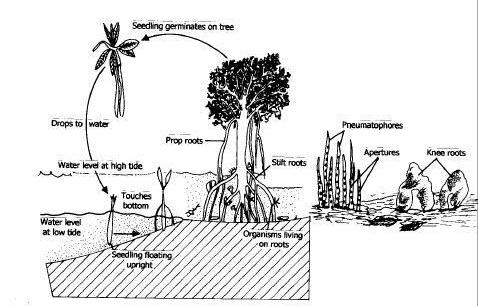
Animal communities
The fauna of mangrove forests is a mixture of terrestrial and marine organisms. Numerous birds (king fisher, cormorants, and herons) use the upper parts of the trees as their habitats. Other terrestrial animals include insects, lizards, littorines found on the trees and roots. Detritus feeding molluscs are also found.
Marine animals of the mangrove forests are for the most part similar to those of the adjacent mud flats. Some animals are found among the roots. Crabs, polychaetes and clams are some of these animals. Fiddler crabs and sesarmid crabs are very common among mangrove forests.
Perhaps the most interesting is the mud skipper (Periopthalmus) which is partly amphibious and uses the pectoral fins to climb on the mangrove roots or hop across the mud flats.
91
(a)
7.7 CORAL REEFS
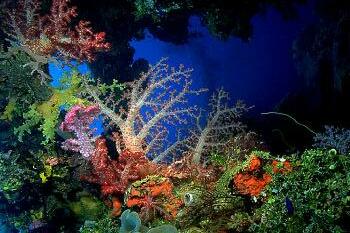
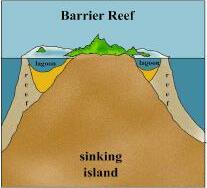
i) Life in coral reefs
Coral reefs are found in shallow waters surrounding land masses in tropical waters (see Fig. 7.20). They are restricted to waters warmer than 18 °C, generally in a band that lies between the Tropic of Cancer and the Tropic of Capricorn. In addition to warm water, corals require high-salinity and silt-free water.
Fig.7.20: Coral reefs (Source: www.fisheyeview.com/)
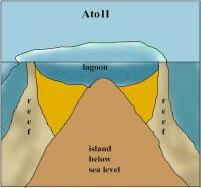
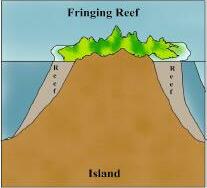
There are three main types of coral reefs. They are the atoll reefs, barrier reefs and fringing reefs (Fig 7.21).Atoll and barrier reefs are fully developed and are considered mature corals. Both are characterized by a lagoon that is protected on the seaward side by the reef. Fringing reefs are considered immature because they have not yet produced a lagoon between the reef and its associated land mass.
(b)
Fig.7.21: a) Types of coral reefs – Fringing reef showing island and reef growing right next to the island; Barrier reef showing sinking island, separated from reef by a lagoon; Atoll showing the island below sea level and a lagoon in the centre of the reef; b) Aerial view of the three types of coral reefs (fringing, barrier, atoll)
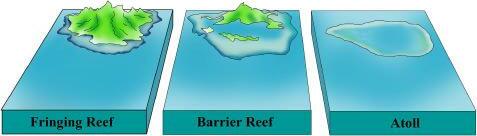
92
Living Components of the Environment
Coral reefs are the most productive systems in the marine environment. They harbour a large number of marine species.
ii) Groups of corals found on reefs
Two groups of corals are found on a reef. They arethe hermatypic corals and ahermatypic corals. Hermatypic corals or stony corals
Hermatypic corals are those that build coral reefs (stony corals). They are found in the tropics. Typically stony corals are colonial. They contribute to the production of reef limestone, and form calcium carbonate skeletons. The stone corals are of two types: Frame builders and rapidly growing branched forms
The frame builders include the genus Montastrea and Astrea (star corals) Meandrina, (brain corals). These are usually slow growing massive corals which form bulk of the reef. The branched corals are represented by the genus Acropora and Tubipora.
Ahermatypic corals or soft corals
Ahermatypic corals are distributed worldwide and do not form reefs as they do not secrete calcium carbonate. Instead of a hard calcareous skeleton they have a flexible protein-like skeleton at the core of the coral.
The soft corals include sea pens, sea fans, whip corals and pipe corals.
iii) The structure of a coral reef
Coral reef morphology is complex, and those studying particular reefs are able to recognize many of their specialized aspects. The degree of exposure and the amount of wave action is of particular importance in determining reef structure. Most reefs have a number of general features including the reef terrace or reef flat, the algae ridge, the buttress zone and reef face (Fig. 7.22). The surface of the reef is the terrace, or reef flat. Its elevation is at an average low water so the coral reef community is periodically exposed during the period of low tides.
The Aquatic Life
Fig.7.22: Structure of a reef
The seaward edge of the coral reef generally has an algal ridge that is at a slightly higher elevation than the reef flat. Algal ridge takes the force of the breaking waves and is constantly awash from the movements of surf and surge.
Towards the sea and below is the buttress zone, which reduces the force of the breaking waves on the algal ridge. The buttress zone deflects and channels waves so that they tend to be directed upward over the algal ridge. In this way the destructive energy of waves is dissipated over the seaward edge of the reef.
Below the buttress zone is the fore reef, or reef face, which extends to the bottom.
93
Reef
Sea
Depth in metres 0 15
Beach Reef flat Algal ridge Buttress zone
face
bed
Reef Front
Growth of the coral reef is greatest on the algal ridge, the buttress zone and the seaward portion of the reef terrace. The farther from the outer reef edge, the lesser the favourable conditions for reef growth.
iv) Reef Formation
Coral reefs are named after those species of cnidarians that secrete an external skeleton of calcium carbonate, which becomes part of the reef. The production of a calcium carbonate reef is not restricted to corals. In fact, the majority of the limestone of many coral reefs is produced by both red (red coralline) and green algae, which also secrete calcium carbonate skeletons. The most important green algae found on coral reefs are members of the genus Halimeda, whichlooks somewhat like an under water cactus. Its photosynthetic filament consists of calcified segments arranged in a branching pattern.
Algae not only secrete limestone but also cement loose sand into the reef. Hence both algae and corals are essential to reef formation. Any threat to either component is a threat to the total reef. In addition to the above, pieces of coral, and other shells from sea urchins, bivalves, snails, and foraminiferans contribute to the sand found in and near the reef.
There is another component that is involved in reef formation, and that is the small rounded dinoflagellate known as Zooxanthellae, which lives in the gut tissues of corals in concentrations of up to 30,000 cells per cubic centimetre of coral tissue. Although corals feed at night, experiments have shown that they grow more during the day than the night. The explanation for this pattern may lie in the presence of the Zooxanthellae, which supply much of their nutrition and promote the rate of growth of the calcium carbonate exoskeleton of the coral.
v) Zonation on reefs
Environmental conditions that favour some coral reef inhabitantsover others in a particular habitat depend a great deal on wave force, wave depth, temperature, salinity, and a host of biological factors. These conditions vary greatly across a reef and provide for both horizontal and vertical zonation of coral and algal species that form the reef.
The living base of a coral reef begins as deep as 150 m below sea level where little sunlight penetrates. Between 150 and 50 m on outer reef face, (sea ward slope) where water movement is minimal, few small fragile species especially soft corals and calcareous green algae such as Halimeda exist.
Above 50 m, and extending up to the base of vigorous wave action (approximately 20 m), the corals and algae receive adequate sunlight. Delicately branched species are found in this zone. The region from a depth of about 20 m to just below the low tide (buttress zone) is dominated by the massive coral growths such asAcropora, and by several species of encrusting coralline algae. The massive robust corals thrive in this zone of breakingwaves, intense sunlight, and abundant oxygen. Small fish seem to be in every hole and crevice on the reef. These include butterfly fish, trigger fish, parrot fish that feed on corals and damsel fish, file fish, groupers, and sting rays that feed on invertebrates. Apart from these, there are carnivorous fish that represent 50 to 70% of the reef fish population and these include many of the larger fish (sharks, jacks, tunas) that patrol the buttress zone in search of food. There are large numbers of herbivorous and planktivorous fish species too. Most of these reef fishes are colourful and laterally flattened.
The algal ridge bears the fury of incoming waves. In this severe habitat, few species of calcareous red algae (Porolithon) and a few snails, limpets and sea urchins can be found. Extending behind the algal ridge is the very shallow reef terrace or reef flat, where immense variety of coral species and burrowing sea
94
Living Components of the Environment
urchins, calcareous green algae, sea cucumbers, molluscs, burrowing worms and other growthforms are found.
The reef flat, which is barely covered by water at low tide, consists of several varieties of coral species, especially Acropora. In this protected environment crustaceans, echinoderms, molluscs, anemones and representatives of many other phyla are present.
SAQ 3
List the adaptations that permit following organisms to live successfully in their habitat.
1. Zooplanktons, whales, Tuna and rays in the epipelagic zone
2. Angler fish in the deep sea
3. Littorina in rocky shores
4 meiofauna in sub tidal region
5 Sea weeds in the littoral of the intertidal region
6 Clams in sandy shores
7. Estuarinecrabs
8. Coral fish
vi) Forces that destroy the reefs
Although the reefs appear to be large and very stable systems, they do suffer large scale destruction due to various physical and biological forces. Let us consider these forces one by one.
1. The major physical source of massive reef mortality is mechanical destruction by severe tropical storms, especially typhoons, hurricanes and tsunamis that destroy large areas of thereefs as they pass over them.
2. The second major factor is the population explosion of the sea star Acanthaster planci. This starfish’s ability to destroy large areas of reef is tremendous. Endean and Cameron (1990) reported that about one third of the reefs of the Great Barrier Reef have been destroyed by the sea star.
3. The third cause of catastrophic mortality of the corals is due to a naturally occurring phenomenon known as El Niño. The resulting prolonged elevation of temperature causes the Zooxanthellae, (that supplies the organic food it produces to the corals and that create a somewhat alkaline pH which increases the deposition of limestone) to leave the coral tissues. As Zooxanthellae, gives colour to the corals, once it leaves the corals appear white, and this phenomenon is called coral bleaching.
4 The activities of humans can directly cause immense damage on reefs through dredging, pollution, and overfishing.
5. Two diseases that affect corals may cause local die-offs but as yet has not caused greater loss. They are the black band disease and white band disease. Large brain corals are more susceptible to the former while the latter seems more prevalent in branching corals.
6. Many other organisms also contribute to reef erosion. Some fungi, sponges, bivalves, snails, polychaetes, barnacles are capable of boring into the limestone of coral reefs. Some borers are even able to penetrate the outer living tissue layer of stony corals and invade their skeletons. Fungi also erode coral reefs. Coral is also eroded by attacks at the surface. Parrotfish, whose strong jaws are capable of breaking off pieces of coral, feed directly on the polyps.
The Aquatic Life
95
In this unit, we have acquainted you with the aquatic life. The purpose of giving all these details is to help you appreciate the diversity of life in water bodies and their amazing ability to adapt to their environment. We hope that going through this experience would have motivated you to help preserve aquatic habitats and living organisms populating them. We now present a summary of what has been presented here.
7.8 SUMMARY
• Several life zones can be identified in freshwater lakes. The area where light penetrates to the bottom of a lake is the zone called the littoral zone, which is occupied by rooted plants. Beyond this zone is the open water orlimnetic zone, inhabited by zooplankton, phytoplankton, some invertebrates and many fish types. Below the depth of effective light penetration is the profundal zone,wherethe diversity of life varies with temperature and oxygen supply. The bottom or benthic zoneis a place of intense biological activity, where decomposition of organic matter takes place. Anaerobic bacteria are dominant in the bottom sediments. Benthic zone of the littoral region is rich in organisms involved in decomposition.
• The marine environment can be separated into two broad units: the benthicand the pelagic division. These in turn may be subdivided into smaller, more convenient categories based on water depth, light availability and tidal exposure.
• Aquatic organisms can be classified into ecological groups, according to their habits. These categories include neuston, which live on the surface film,nekton and plankton, which live in the body of water and the benthos found on or in the bottom sediments. Plankton however, always drifts with the current as they do not have any powers of locomotion, while nekton can move against the current.
• The aquatic organisms exhibit a variety of adaptations. Locomotory adaptations include streamlined body, flattened and elongatedposterior legs, which act as oars, while respiratory adaptations include specialized tube like structures, which can be extended through the water surface to obtain oxygen. Some have developed modified gills through which gas diffuses into the tracheal system.
• The oceanicnekton comprises a wide range of fishes and a lesser number of mammals, reptiles and cephalopods. Most of these animals show buoyancy and locomotory adaptations.
• The deep seais part of the marine environment that lies below the level of light penetration and beyond the continental shelf. The major environmental factors that affect the animals in the deep sea are temperature, pressure, absence of light and scarcity of food and oxygen content.
• To overcome these problems the deep sea organisms have undergone several structural modifications such as production of light to attract and to locate live food, mouths with large gaps to swallow large food, and distendable stomachs.
• The shallow waters of the continental shelf show more variability in environmental conditions than the open sea or deep sea. Temperature and salinity are more variable, light penetration is reduced and food supply is abundant. The bottom community structure in this area comprisesmicrofauna, meiofauna and macrofauna.
• The intertidal region has the greatest variation in environmental factors of any marine region. It is also inhabited by marine organisms. The tidal fluctuation is the most important factor influencing life in this zone. There are three different
96
Living Components of the Environment
The Aquatic Life types of shores found in the intertidal zone and they are the rockyshores,sandy shores and muddy shores.
• Estuarine systems are environments with fluctuating salinity and varying temperatures. They harbour both marine and freshwater species in addition to the brackish water species, which show physiological, morphological and behavioural adaptations. The number of species inhabiting estuaries is significantly lower than the number inhabiting fresh water and marine habitats. However, the biomass is high.
• Saltmarshes arecommunities of herbs, grasses and shrubs rooted in soils that are alternatively inundated and drained by tidal action. These are all halophytes which can tolerate high salinities.
• Mangroves are tropical inshore communities dominated by species of trees or shrubs that grow in salt water. As they grow in muddy substrates with low oxygen and high salt content they show several adaptations, especially to obtain oxygen and secrete excess salt, and also to conserve water. Mangroves provide habitats for both terrestrial and marine forms and are nursery grounds for many shrimps andfish.
• Coral reefs are unique among the marine communities. They are of three types: fringing, barrier and atolls. There are two main groups of corals and they are the reefbuildinghard corals called hermatypic corals and the non reef building soft corals called the ahermatypic corals. There is a high diversity of organisms in a coral reef. This diversity increases from the surface to a maximum at above 20 m and then declines in the more stable but increasingly light limited conditions. There are several natural causes of mass mortality of reefs: hurricanes, storms, tsunamis, attacks by the star fish (Acanthaster) and El Niño, which cause high temperatures resulting in coral bleaching. Human activities also cause large-scale mortality of reefs.
7.9 TERMINAL QUESTIONS
1 Mention the names and extent of various life zones of lakes and oceans from the surface downwards.
2 Discuss the ecological similarities between the freshwater and marine organisms.
3. Describe the salient adaptations that enable organisms to cope with the environmental peculiarities of lentic and lotic habitats.
4 In what manner do the adaptations in organisms in marine environment differ from those of their freshwater counterparts? Discuss citing appropriate examples.
5 What physical parameters are considered for categorising aquatic habitats as freshwater, estuarine or oceanic?
6. Why should we preserve coral reefs and mangroves? Mention the regions of the world that are well-known for their coral reefs.
REFERENCES
1 Barnes, R.S.K. and Hughes, R.N. (1988) An Introduction to Marine Ecology, Blackwell Scientific Publications, U.K.
2 Boaden P.J.S. and Seed, R.(1985) An Introduction to Coastal Ecology, Blackie & Son Limited, U.S.A.
3. Long, S.P. and Mason, C.F. (1983) Salt marsh Ecology. Blackie & Son Limited, U.S.A.
97
4. Longhurst, A.R. and Pauly, D. (1987) Ecology of Tropical Oceans. Academic Press, U.S.A.
5 Nybakken, J.W. (1988) Marine Biology – An Ecological Approach. Harper Collins Publications, U.S.A.
6 Ormond, R.F.G.; Gage, J.D. and Angel, M.V. 1997. Marine Biodiversity –Patterns and Process. Cambridge University Press. U.K.
98
Living Components of the Environment
UNIT 8 AN INTRODUCTION TO ECOSYSTEMS
Structure
8.1 Introduction
Objectives
8.2 Concept of Ecosystem Nature of Ecosystems
Inputs and Outputs of an Ecosystem
8.3 Components of the Ecosystem
Abiotic Components Biotic Components
8.4 Characteristics of Ecosystems
Links with Other Ecosystems
Structural Complexity Resilience
Dynamic Stability
8.5 Food and Feeding Relationships of Organisms
Food Chains
Types of Food Chains
Food Webs
Food Webs and Stability of Ecosystems
8.6 Trophic Levels and Ecological Pyramids
Trophic Levels
Ecological Pyramids
8.7 Bio accumulation and Bio magnification
8.8 Summary
8.9 Terminal Questions
8.1 INTRODUCTION
In the earlier block you have learnt about the major pattern of vegetation on earth –the Biomes. Each biome can be subdivided into smaller units the ecosystem. These are functional units of the biosphere. They provide an optimum framework for understanding and examining the complex interactions in the living world, with its myriads of species, and the physical environment, for it is easier to understand and interpret these relationships in a smaller component of the biosphere. This unit will introduce the concept and definition of an ecosystem and describe the nature of ecosystems with respect to their boundaries, inputs and outputs and their components. The unit will also explain the functioning of ecosystems in relation to food and feeding relationships and their trophic structure. Finally, the unit explains bio-accumulation and bio-magnification and outlines how non-degradable poisonous substances persist in ecosystems by these processes. In the next unit you will learn about energy flow and concept of productivity in an ecosystem.
Objectives
Having studied this unit, you should be able to:
• define the terms “ecosystem” and its boundary, components, inputs and outputs;
• describe the characteristic features of an ecosystem;
• define the terms food chain and food web;
• list the types of food chains found in nature;
• explain why food chains in most occasions form food webs;
• describe the relationship between the complexity of food webs and stability of an ecosystem;
• explain ‘key link concept’;
• explain the trophic levels of an ecosystem and outline ecological pyramids; and
• describe the terms ‘bio accumulation’ and ‘bio magnification’.
An Introduction to Ecosystems
5
8.2 CONCEPT OF ECOSYSTEM
Recall from Block 1, Unit 1 that it was the observations of the biological world by naturalists in the late 19th century that led to the conceptualisation of ecosystems. The word ecosystem is made up of “eco” and “system”. Eco means the habitat and “system” means a complex set of interconnected components or processes forming a whole. The word system also indicates a functional property and hence an ecosystem is considered as a functional unit of nature.
Sir Arthur Tansely in 1935 was the first ecologist who used the term ecosystem to explain the tangible relationships that exist between organisms in the biological world. The concept of an ecosystem introduced by him viewed each locale or habitat as an integrated whole. Ecosystems are found throughout the biosphere, which is the zone where life exists. Within the biosphere, ecosystems exist, on a spatial scale from a crack in a rock to rainforest or oceanic systems covering areas of thousands of kilometres on the surface of the earth.
Ecosystems can be broadly divided into two main categories as terrestrial and aquatic ecosystems. The biosphere’s major terrestrial or land ecosystems such as grasslands, forests and deserts are called biomes (Refer to Unit 7). Major ecosystems that are associated with water such as ponds, lakes, rivers, estuaries, oceans, coastal and inland wetlands etc., are collectively termed aquatic ecosystems (Refer Unit 8). Some of the aquatic ecosystems contain freshwater, but others may be saline. Examples of natural ecosystems can be found easily if you look around carefully. Your home garden itself is an ecosystem. On the other hand, you must remember that all ecosystems are not natural. An aquarium for an example is a man–made system. In fact, most of us live in highly modified ecosystems such as large metropolis, farms, and villages.
8.2.1 Nature of Ecosystems
Ecosystems are conceptual models and these models can be applied at any scale, from a bowl of water to the whole earth and represent enormous contrast in size and complexity. For the purpose of study, an ecosystem can be delineated in almost any way convenient to the interest of the investigator. In the case of some ecosystems such as lake, river or pond, distinct boundaries can be recognised but in the case of other ecosystems, such as a grassland, forest, village or town, boundaries are not so sharp however, they can be delineated according to the object of study or any other practical consideration.
8.2.2 Inputs and Outputs of an Ecosystem
Individual ecosystems such as lakes, forests etc., do not exist in isolation. They continuously exchange both living organisms and non-living matter such as nutrients with their neighbouring ecosystems. A stream ecosystem, for example, is strongly influenced by the terrestrial ecosystems through which the stream flows.
The exchange of materials between ecosystems can take two pathways.
a) Exchanges from the surrounding environment into the ecosystem, which are termed as inputs.
b) Exchanges from inside the ecosystem to the surrounding environment, which are termed as outputs.
Radiant energy of the sun, gaseous substances like carbon dioxide, oxygen, water and nutrients are the inputs into ecosystems. In addition there will also be living organisms moving into ecosystems form neighbouring ecosystems even dead and decaying organic material may come from neighbouring ecosystems. The outputs from ecosystems include nutrients, gaseous substances, water and living organisms and release of heat in cellular respiration, or heat of respiration (Fig. 8.1).
Ecosystem and its Functioning
6
Fig 8.1: Schematic diagram of an ecosystem
Source:http://www.physicalgeography.net
On the basis of inputs and outputs, ecosystems can be classified as open and closed ecosystems. An ecosystem that receives inputs from the surrounding is called an open ecosystem whereas the one without inputs is called a closed ecosystem. For example, our Earth can be considered a closed system with regards to exchange of nutrients and minerals but is considered an open system with regards to exchange of gases with the atmosphere. All ecosystems are open systems as there is continuous input of solar radiation and atmospheric gases.
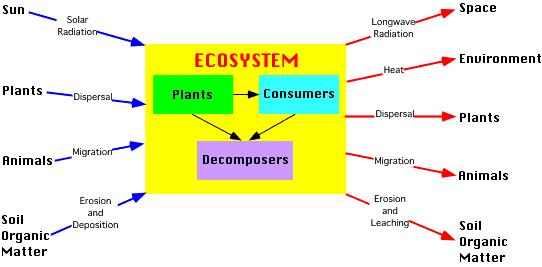
SAQ 1
a) What is an ecosystem?
b) List the inputs and outputs in relation to a stream ecosystem that flows across a forest.
An Introduction to Ecosystems
… …………………………………………………………………………………… …
Inputs…………………………………………………………………………….… . …………………………………………………………………………………… … 7
8.3 COMPONENTS OF THE ECOSYSTEM
The components of any ecosystem can be categorised into two main types. They are:
• abiotic components, which consist of chemical substances and physical conditions that support life in the ecosystem, and
• biotic components, which include all living organisms.
8.3.1 Abiotic Components
The abiotic components that form the physical environment of an ecosystem include factors such as energy, elements, inorganic compounds, dead organic matter and climate.
As you are aware natural ecosystems are fuelled by the energy of the sun, which includes both heat and light. The energy of the sun is the driving force for all the processes within the ecosystem.
The inorganic elements and compounds found in the ecosystem consist of all nutrients such as nitrates, phosphates and sulphates, water, carbon dioxide and oxygen etc. These inorganic substances affect all biological activities i.e. growth, reproduction etc. of organisms. There are about forty elements that are required in various processes of living organisms. Some of these are macronutrients, which the plants need, in relatively large amounts and others are micronutrients that are required in trace amounts. There are nine macronutrients: carbon, hydrogen and oxygen (the three elements found in all organic compounds), and nitrogen, potassium, calcium, phosphorus, magnesium, and sulphur. Some examples of micronutrients are: iron, chlorine, copper, manganese, zinc, molybdenum and boron.
The organic compounds that form a part of the abiotic components are largely the by products resulting from the different activities of organisms or their death and decay. All inactive or dead organic matter and dissolved organic matter are derived either from plants or animals. Such dead organic matter is critical to the internal cycling of nutrients in an ecosystem. Decomposing organic matter releases nutrients along with the formation of humus, which is important for the fertility of soil (also see Unit 2, Block 1). New humus is added as old humus gets converted into mineral elements. Now it should be clear to you that it is in this abiotic background that organisms interact in, forming a single interactive system.
8.3.2 Biotic Components
The biotic components of ecosystems include the plants, animals and microbes i.e., total living community. They can be classified into two main groups of organisms the autotrophs (producers) and the heterotrophs (consumers).
1) The autotrophs are mainly the green plants. In addition, certain bacteria and algae are also included in autotrophs. They all have the ability to synthesize their own food from simple inorganic compounds like CO2 and H2O in the presence of
Ecosystem and its Functioning Outputs:……………………………………………………………….…………… . …………………………………………………………………………………… …
8
sunlight, through the process of photosynthesis and oxygen is given off as a by product (see the given equation). During photosynthesis radiant energy of sunlight is converted into chemical energy and is stored in the chemical bonds of the compounds made by the plants. Hence the autotrophs are also called producers and they form the energy-capturing base of the ecosystem.
6CO2 + 12H2O + energy from sunlight → C6 H12 O6 + 6O2 + 6H2O
2) The heterotrophs do not produce their own food. They depend on the producers directly or indirectly to obtain their energy requirements. The heterotrophs include two groups of organisms, namely consumers and decomposers
The consumers are those that feed on the living tissues of plants or animals or both. Based on this there are three types of consumers.
• Herbivores, or primary consumers. In terrestrial ecosystem typical herbivores are insects, birds and mammals. Two important groups of herbivorous mammals are rodents and ungulates. Primary consumers also include parasites (fungi, plants or animals) of plants (see Fig. 8.2). In aquatic ecosystems (freshwater and marine) the typical examples of herbivores are: small crustaceans and mollusks and some fish. Most of these organisms such as water fleas, copepods, crab larvae, mussels and clams are filter feeders and extract the minute, primary producers from water.
• Carnivores, are the meat eaters and form the secondary consumers and tertiary consumers.
• Omnivores, are animals that have flexible food habits as they eat plants, (therefore are herbivores or primary consumers) and animals (therefore are carnivores or secondary and tertiary consumers). Humans are good examples of omnivores.
3) Decomposers are also known as saprotrophs. Mostly, these are microscopic and are heterotrophic in nature. Decomposer organisms obtain their energy and nutrients by degrading dead organic matter. When plants and animals die, their bodies are still a source of energy and nutrients, as are their waste products such as urine and faeces, which they discard throughout their life times. These organic remains are decomposed by micro-organisms, namely fungi and bacteria which grow sparophytically on these remains. They secrete digestive enzymes from their bodies on the dead organic materials, subsequently absorbing the products of digestion. The rate of digestion is variable. The organic matter of animal wastes such as urine, faeces and corpses is consumed within a matter of weeks whereas fallen leaves and branches may take years to decompose. During the decomposition of wood, fungi produce an enzyme cellulase that softens the wood. This enables the small animals to penetrate and ingest the material. Fragments of decomposing organic material are called detritus, and many small animals feed on these, contributing to the process of breakdown. They are called detritivores. Some typical terrestrial detritivores are: earthworm (see Fig. 8.3a), woodlice, millipedes (see Fig.8.3b) and other smaller (<0.5 mm) animals such as mites, springtail and nematodes.
SAQ 2
Distinguish between herbivores, carnivores and omnivores giving two examples of each
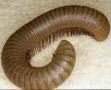
Fig.8.2: Dodder, a parasite of plants

(a) (b)

An Introduction to Ecosystems
…………………………………………………………………………………………. .
Fig.8.3: Detritivores a) Earthworm b) Millipede 9
8.4 CHARACTERISTICS OF ECOSYSTEMS
As you know now an ecosystem is a unit resulting from an integration of all its living and non-living components. These components have evolved together over a long period of time. Therefore, these components all fit together and as a result organisms are able to survive under the physical conditions determined by the non-living components of the ecosystem.
From Unit 6 you would have realised that ecosystems such as grasslands, forests, rivers, oceans etc., exhibit different physical conditions or environments. The organisms that live in each of these ecosystems are well adapted to the environment they inhabit.
Although there are variations of the physical environment among different ecosystems, as we mentioned, ecologists have been able to recognize four basic characteristics that are common to any ecosystem. They are:
• Links to other ecosystems
• Structural complexity
• Resilience and
• Dynamic stability
We shall describe them briefly, in the next few paragraphs.
8.4.1 Links with Other Ecosystems
As we have mentioned earlier, no ecosystem exists alone. They are interconnected via inputs and outputs that act as links. The outputs of one ecosystem such as nutrients, gases, water etc., may be inputs of another ecosystem in the same landscape. For example a river receives many inputs from the terrestrial ecosystem through which it flows.
8.4.2 Structural Complexity
The structural complexity of an ecosystem is a combination of many factors. They include the following:
a) Species composition of plants, animals and microbes of the ecosystem
b) Variations in the environmental factors such as seasonal changes, tidal changes, nutrient levels, sediments, rainfall etc.
c) Presence of distinctive interacting habitats within the ecosystem like mangroves, sea, and grass beds etc.
8.4.3 Resilience
Resilience of an ecosystem is its ability to return to its original state after being exposed to a stressful situation. Resilience is a common feature in all ecosystems, but the degree of resilience depends on the intensity of the stress to which the ecosystem is exposed.
8.4.4 Dynamic Stability
Ecosystems are not static. They always undergo changes and are termed as dynamic systems. Although changes take place very often both in living and non-living factors, the natural ecosystems are dynamically stable if their future states are determined by their current state that is their internal characteristics with very few external influences affecting their equilibrium.
Ecosystem and its Functioning
.
10
A diverse biological system is more likely to be dynamically stable than a one that is not so diverse because a system with diverse species biotic interactions tends to play a larger role in the species success than its interactions with the physical environment.
Now in the next section we shall focus our attention on the interactions between components, in order to understand how the ecosystem operates in nature.
An Introduction to Ecosystems
11
8.5
FOOD AND FEEDING RELATIONSHIPS OF ORGANISMS
In the previous sections you have learnt about the concept of an ecosystem and about its living and non-living components. The sum total of interactions between these components makes an ecosystem a functional unit in nature.
In this section, we will identify the major functional relationships that exist among organisms in an ecosystem, the relationships based on food resources.
As you are aware, food performs basically two main functions in an organism’s body. Firstly, the nutrients contained in the food are utilized for the synthesis of new tissues and also for repairing the worn-out tissues. Secondly, food is used as a source of energy to run the life processes of an organism.
Energy is originally supplied to an ecosystem as solar energy which is captured by the autotrophs, mainly green plants. The rest of the biotic community or the heterotrophs depend on plants for their energy requirements. All the organisms in an ecosystem are therefore interconnected to each other through their food and feeding relationships, which are termed as food chains and food webs
8.5.1 Food Chains
A food chain describes the route by which energy and nutrients are transferred from the autotrophs through a series of organism that consume and are consumed. Plants are the main energy capturing units of an ecosystem. Energy stored by plants moves through the ecosystem in a series of steps of eating and being eaten. Such a sequence is referred to as a food chain.
Food chains are usually shown by diagrams, where arrows indicate the direction of transfer of food from one species to another. An example of a simple, linear food chain is shown below. (Fig 8.4)
Grass Grasshopper Toad Snake
Fig.8.4: A simple food chain. The arrows denote “is consumed by”
In the above example, the food stored in the grass (producer) is consumed by the grasshopper (primary consumer) and the grasshopper in turn becomes food for the toad (secondary consumer). Finally, the toad becomes prey for the snake (tertiary consumer).
However, these kind of simple, isolated feeding relationships are rarely found. The number of links in a food chain is also an important factor in determining the efficiency of energy flow between different feeding levels of an ecosystem. Generally a food chain will have three but not more than five links in nature.
8.5.2 Types of Food Chains
Within any ecosystem, either terrestrial or aquatic, two major types of food chains can be identified. They are
• Grazing food chains and
• Detritus food chains
Grazing food chains
Ecosystem and its Functioning
Producer Primary Consumer Secondary Consumer Tertiary Consumer
12
als that imal hey can or he the es of on dead Beetles, t feed on ome of
The grazing food chain begins with green plants at its base as producers. Therefore, plants act as the source of energy for the primary consumers. In this case, the primary consumer is essentially a herbivore. Cattle grazing on pastureland, deer browsing in the forest, insects feeding on green plants etc. present the basic consumer groups of grazing food chains.
Similarly eating of phytoplankton algae by zooplankton and fish is another example of grazing food chain in the aquatic ecosystem.
In terrestrial ecosystems, the above ground herbivores are the prominent grazers. A study carried out by on the energy flow through a short grass prairie ecosystem, has shown that below ground herbivores can also have a pronounced effect on the consumption of primary production of grass.
They have found that the below ground, herbivores consist mainly of nematodes, scarabid beetles and adult ground beetles feeding on roots of plants.
The grazing food chains in forests and oceans represent two extreme types. Ocean food chains are among the longest, up to five links, in contrast to food chains in the forest, which mostly consist of three or rarely four links.
One of the reasons for the longer length of grazing food chains in aquatic ecosystems is the small size of the phytoplankton at the producer level and zooplankton that chiefly comprise the second levels. If there are many small herbivores at level two, this means that the carnivores at level three also can be relatively small and numerous, and an additional carnivore level can be accommodated before the last level, represented by a relatively small number of large carnivores.
Detritus food chains
The detritus food chains start from dead and decaying organic matter of animal and plant bodies known as detritus. Here, the detritus act as the source of energy for the primary consumers termed as detritus consumers.
Such food chains are present in all ecosystems but dominate in forest ecosystems and shallow water communities (Fig. 8.5).
There are two major classes of detritus consumers, namely, detritus feeders and decomposers. Detritus feeders directly feed on dead plant and animal matter and the examples include invertebrates such as termites, earthworms, millipedes, ants etc. The detritus that is not consumed undergoes decay, rot or decomposition. As a result, the nutrients in them are returned back to the soil and water and are reused by producers.
Detritus food chains are located mainly in the soil or in the sediments of aquatic ecosystems. They form an essential component of natural ecosystems and are necessary for self-sustenance and for maintaining ecological balance plant ngers. ishment animal ormer. f
Sun producers herbivores carnivores detritus (energy) decomposers carnivores
Grazing food chain
Detritus food chain
Fig.8.5: Grazing and detritus food chains of an ecosystem
In addition to these two major types, there are feeding chains that involve parasites and scavengers, which collectively form supplementary food chains in an ecosystem
An Introduction to Ecosystems
13
Supplementary food chains
Supplementary food chains in an ecosystem are formed by parasites and scavengers. Parasites can be primary, secondary or higher consumers that feed on a plant or an animal known as a host, over an extended period of time. They usually feed on their host without killing it, at least not immediately as the other consumers do; but cause harm to the host.
Parasites that are found inside the body of the host are known as endoparasites. In contrast, those such as lice and ticks that are attached to the outside of the body of their host are called ectoparasites
Usually parasitic food chains are highly complicated because of their life cycle patterns. The food chains also exist among parasites themselves. For example, a parasitic protozoan Leptomonas in turn parasitizes fleas that parasitize mammals and birds.
You have now learnt about the different types of food chains that exist in nature. Several types of food chains operating simultaneously in an ecosystem, We will learn more about them in the next section
SAQ 3
a) What are the roles of bacteria, phytoplankton and zooplankton in the decomposition process in the aquatic environment?
b) Predict what would happen if all the decomposer of an ecosystem died due to a sudden environment change.
8.5.3 Food Webs
Simple food chains like the ones shown in Fig 8.4 rarely exists in nature. Very few herbivores or primary consumers feed on just one kind of plant nor in turn are they eaten by only one type of carnivore or secondary consumer. Animals that depend on
Ecosystem and its Functioning
…………………………………………………………………………………… … …………………………………………………………………………………… …
…………………………………………………………………………………… …………………………………………………………………………………… … …
14
only one source of food are rare in nature. In contrast, those that feed on more than one source of food are common in nature.
The sharing of food by consumers in natural ecosystems leads to food chains being interconnected with one another forming a network. The resulting complex network of interlinked food chains is referred to as a food web
Fig. 8.6 gives you an example representation of a food web found in a prairie grassland community. It indicates that the plants are eaten by a variety of invertebrates, and mammals etc., and that several predators consume the same animal. As a result, they become the members of different food chains and also occupy different positions in different food chains. Consumption of various food sources by a particular species is an important feature that ensures its survival.
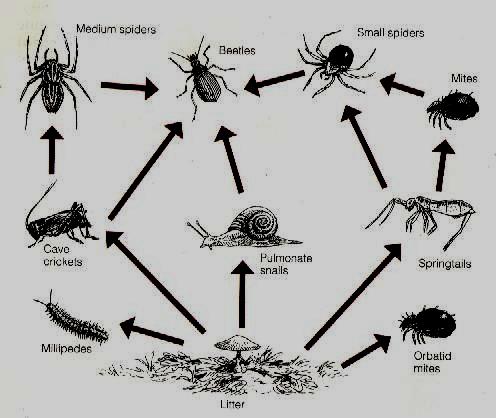
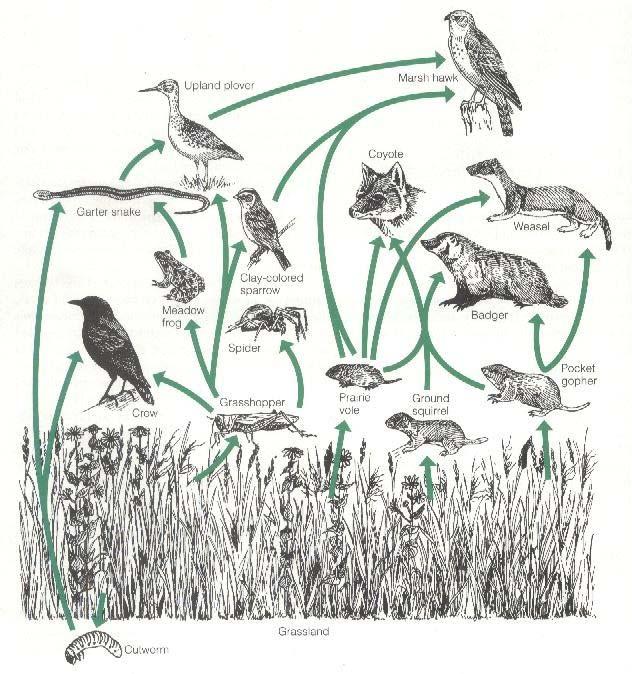
Fig.8.6: A food web of a prairie grassland community
The complexity of food webs depends on the number of cross connections that the food webs possess and that varies within and among ecosystems. It is believed that the organization and the structure of a food web is not only a factor of number of cross connections, it is also influenced largely by environmental factors, such as number of species, invasions and loss of species and the relationship between different feeding levels.
An Introduction to Ecosystems
15
Fig.8.7: Detrital food chains occurring in a forest involving forest litter-dwelling invertebrates
Fig. 8.7 shows a food web that occurs in a forest ecosystem that consists of several detrital food chains. This example involves five groups of detritus feeders or “herbivorous litter feeders”, such as millipedes, springtails, crickets, snails and mites.
By now you have learnt about food chains and food webs. We will now consider the importance of food webs for the stability of ecosystems.
8.5.3 Food Webs and Stability of Ecosystems
The stability of a food web depends on certain features or characteristics of the web. These features include the complexity or the number of cross-links and the key links, which play a crucial role in the food web. The relationship between these features and the ecosystem stability is expressed in two concepts. They are as follows:
• The first concept indicates that the complex food webs are more stable than the simple food webs. As a result, they also make the ecosystem more stable. This can be explained easily by taking the example of a monoculture (one crop) such as paddy or any other cultivated crop managed by humans. In such situations since the primary producer is a single plant species the food chains or webs are found to be very simple. Therefore, a loss of the plant component will lead to a complete breakdown of the entire system.
In contrast, natural ecosystems have several plant species as the primary producers. This condition gives rise to a complex food web with numerous cross connections. Even in this case, the removal of any plant species from the ecosystem will no doubt cause disruptions in the stability; but it will not result in adverse changes in the system as a whole. For example, the tropical rain forests and coral reefs etc. are considered as the most stable ecosystems in the biosphere. Key lin are spec to the in web. Th necessa abunda domina
• The second concept is termed as key link concept. This concept suggests that the stability of the food web and in turn the ecosystem is based mainly on the key links of the web. Removal or a loss of a key link from the food web causes a large scale change in the normal functioning of the system or sometimes it may even cause a complete disruption.
In general, constructions of food chains and food webs can be done by studying the food habits or by analyzing gut contents of animals. Determination of dietary habits of animals however may not be feasible in the field due to many practical difficulties.
Analysis of gut contents is a better method of identifying food items of animals. This method also has its own limitations.
Since you have learnt about the importance of food webs and how they are constructed, we will now focus our attention on how these complex food webs could be divided into what are known as trophic levels.
SAQ 4
a) What is the difference between a food chain and food web?
b) From Figure 8.6 name 2 producers, 2 primary consumers and 2 secondary consumers.
8.6 TROPHIC LEVELS AND ECOLOGICAL PYRAMIDS
Ecosystem and its Functioning
16
We are now aware that a food web indicates a picture of a very complex network of cross connections between different feeding levels of organisms. This complex organization of the food web undoubtedly makes it difficult for us to study the feeding relationships among living organisms. The problem is simplified by grouping the organisms into different feeding levels based on their energy source. These feeding levels are called trophic levels of an ecosystem.
8.6.1 Trophic Levels
The trophic levels are usually named as first, second and third etc., depending on the feeding level. Accordingly the first trophic level belongs to the plants or the producers. Their source of energy is the sun and their nutrients come from soil, water and atmosphere.
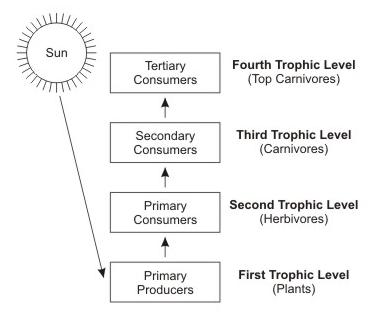
The second trophic level belongs to plant eaters or herbivores. Their source of energy or food is plants and is capable of converting energy –stored plant tissues into animal tissues.
Similarly, the third trophic level belongs to carnivores. They obtain their energy from herbivores. Carnivores can be further subdivided as first –level-carnivores, second-level-carnivores etc., and top-level-carnivores. First level carnivores are those that directly feed on grazing herbivores. They are the energy source for the second level carnivores. These trophic levels together form the trophic structure of an ecosystem.
The trophic levels can be summarized in Fig. 8.8.
Fig.8.8: Diagrammatic representation of trophic levels in an ecosystem
All organisms do not always occupy a single trophic level as in the case of herbivores and first level carnivores etc. In most cases many others, occupy more than one trophic level because they feed on both plant matter and animal matter as food sources. Fig. 8.9 depicts three different food chains to show how humans can occupy three different trophic levels.
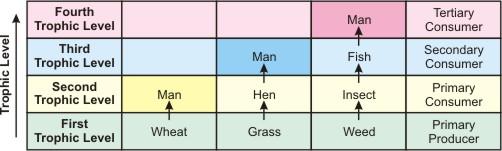
An Introduction to Ecosystems
17
Fig.8.9: Three food chains drawn separately to show that an organism can occupy different trophic levels. In this diagram, the position of man in different food chains illustrates this point. The arrows indicate the direction of food chain.
In addition, the picture of trophic structure becomes more complicated as the food habits of organisms tend to vary with the season, stages in the life cycle and also with the size and growth. In the next sub-section we will try to identify the different types of ecological pyramids and their importance in relation to the functions of an ecosystem.
8.6.2 Ecological Pyramids
You all are familiar with the shape of a pyramid. The base of the pyramid is broad and supports the upper levels of the structure and narrows to a point at the top. A similar situation is seen when we study and depict the trophic relationship in an ecosystem. The trophic levels of an ecosystem can be expressed in a diagrammatic way in the form of ecological pyramids. The ecological pyramid basically consists of three parts; the base, body and the apex.
The producers form the base; the body consists of successive trophic levels and the top carnivores form the apex. Ecological pyramids could be worked out and represented in three different ways, based on the number of organisms or the total living matter or the energy content of trophic levels. They can be named as,
• Pyramid of numbers
• Pyramid of biomass, and
• Pyramid of energy or productivity
Pyramid of numbers
The pyramid of numbers shows the relationship between producers, herbivores and carnivores at successive trophic levels in terms of their numbers. Ecologists noted that the consumers at the lower trophic levels or in the food chain are the most abundant. In successive levels, organisms decrease rapidly in number and increase in size. This gives rise to an upright pyramid as shown in Fig. 8.10.
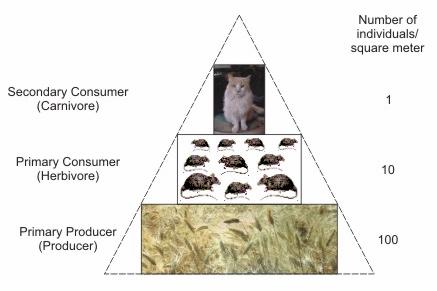
A typical example of this type of ecological pyramid is found in a grassland with grass as producers, herbivores and different levels of carnivores in successive feeding levels. However, trophic levels based on numbers are misleading. A major failure of a pyramid of numbers is that the variations of the sizes of organisms in each trophic level are not taken into account.
Fig.8.10: Pyramid of numbers
The other problem that may arise is that the pyramid is not always upright. For example, in a parasitic food chain the pyramid of numbers is always inverted. This is due to the fact that a single plant may support the survival of many parasites and each parasite in turn may provide nourishment for several other hyperparasites that parasitize on them Fig. 8.11. Therefore it is difficult to express the whole community
Ecosystem and its Functioning
18
of an ecosystem on a numerical scale. Anyhow pyramid of numbers vary with different ecosystems having various types of food chains.
Fig 8.11: Inverted pyramid of numbers
Pyramid of biomass
The pyramid of biomass is comparatively more realistic than the pyramid of numbers. If the numbers of consumers at each trophic level are multiplied by their weight, then, what we obtain is the pyramid of biomass. It indicates by weight or other measurement the total living material in each feeding level at any one time.
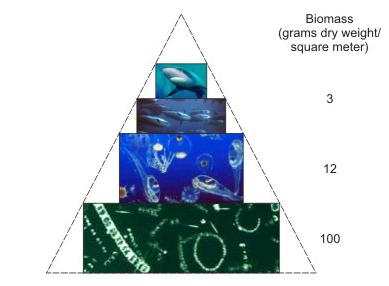
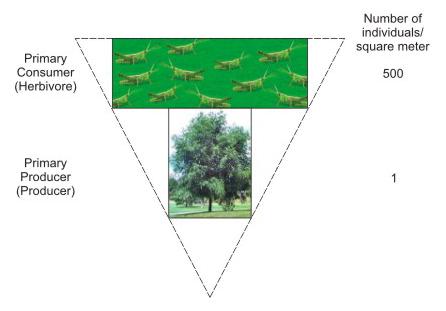
In terrestrial and shallow water ecosystems, there is a gradual decrease in biomass of organisms at successive trophic levels from the producers to the top carnivores (Fig. 8.12). Thus the pyramid is upright. However, in some ecosystems, the pyramid of biomass is inverted. This can be shown in aquatic ecosystems such as lakes and open seas. In them phytoplankton are the producers. Phytoplanktons have a short life cycle and they multiply rapidly. As a result, only a small amount of biomass is available at any given time; in turn they are heavily fed upon by herbivorous zooplankton. Therefore the total biomass of producers or phytoplankton is the least compared to the rest of the trophic levels at any one time; resulting in the pyramid being inverted in shape.
Fig.8.12: Pyramid of biomass
Pyramids of numbers and biomass tell us about the trophic structure of the ecosystem; but because of the limitations we have discussed, only a little can be
An Introduction to Ecosystems
19
known about the energy flow of the ecosystem. When the amount of biomass is given in terms of energy, then the pyramid expresses the amount of energy available at each trophic level.
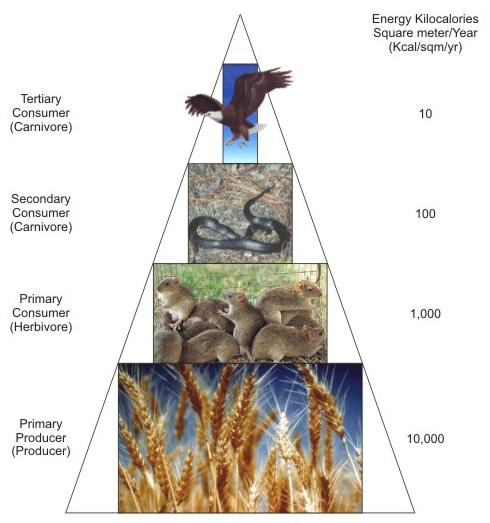
Pyramid of energy
Of the ecological pyramids, the energy pyramid gives the best picture of the overall nature of an ecosystem. The pyramid of energy is based on the total energy content of each trophic level. The total energy content of each trophic level depends on the following factors.
They are the amount of energy that
a) individuals take in (or quantity of energy fixed) b) burn up during metabolism(or quantity of energy used) c) remains in their waste product(or quantity of energy passed) and d) individuals store in bodies (or quantity of energy stored)
The approach of a pyramid of energy eliminates the drawbacks that we come across in pyramids of numbers and biomass. Therefore, the pyramid of energy is always upright Fig. 8.13. Basically the concept of ecological pyramids account only for the grazing food chains of an ecosystem in which energy is transferred from plants to other higher trophic levels and it is considered as a main weakness in the concept of ecological pyramids. Other food chains such as detrital food chains having decomposers and saprophytes are not included.
Fig.8.13: Pyramid of energy
So far, we have considered how the food resources link the organisms in an ecosystem via food chains or webs. In the next section we will focus our attention on how materials other than food, such as non-degradable substances will lead to bio magnification when they travel along food chains.
Functioning
Ecosystem and its
20
a) Sketch a pyramid of number with the following data.
1000 fleas feed on a single ox that feeds on 200 rabbits. The rabbits feed on 3,000 grass plants.
b) What are the advantages of a pyramid of numbers on a food chain? c) What are the problems with such a pyramid?
8.7 BIO ACCUMULATION AND BIO MAGNIFICATION
If the input of a toxic substance to an organism is greater than the rate at which the substance is lost, the organism is said to be bioaccumulating that substance. Thus, the longer the biological half-life of the substance the greater the risk of chronic poisoning, even if environmental levels of the toxin are very low.
Many substances that are present in the environment enter the food chains via the producers of the ecosystem and as they move through the various trophic levels in a food web their concentration increases in the living tissue of the organisms. The process of accumulation of such substances within living tissues of organisms of the ecosystem is termed bio accumulation
Bio accumulation is a normal and essential process for the growth and nurturing of organisms. All animals including human beings accumulate many vital nutrients such as vitamins A, D and K, trace elements and essential fats and amino acids. However, some compounds may stay in a system for a much longer period of time. For example, calcium in the human body is laid down in bones and teeth, and even when bone cells die, their calcium is used again in the building of bones. This is a sensible and efficient re-use of scarce resources.
The problem arises when substances that are toxic, stay in the body for a long period of time and are accumulated in the tissues of the body in concentrations higher than those found in the environment. This process is then known as bio magnification and occurs when a chemical becomes more and more concentrated as it moves through the food chain. Examples of toxic substances include trace metals and toxic metals such as mercury, copper, lead, and chlorinated hydrocarbons.
Chlorinated hydrocarbons like DDT (Dichloro-diphenyl-trichloroethane) and other synthetic compounds are widely used as pesticides. These compounds are called nondegradable pollutants as they either do not degrade or disintegrate very slowly. Therefore unlike the biodegradable pollutants, they accumulate in the environment. On the other hand, the organisms cannot metabolize these toxic substances when they enter into their tissues. As a result, these compounds accumulate within the tissues of organisms.
The effects of DDT on organisms have been well documented because of its long and widespread use. DDT is a persistent pesticide. It is nearly insoluble in water but quite soluble in lipids.
Non-degradable pollutants like DDT, as they travel along food chains increase in concentration in the fatty tissues of the organisms at successively higher trophic levels of the food chain or web through biomagnificaation.
Bio magnification of potentially harmful chemicals is especially pronounced in aquatic food chains as they consist of more trophic levels than the terrestrial food chains.
An Introduction to Ecosystems SAQ 5
21
Fig.8.14: The phenomenon of bio magnification (the concentration of DDT in the fatty tissues of organisms was biologically amplified about 10 million times in this food chain of an estuary adjacent to long Island Sound near New York City.)
Fig. 8.14 illustrates the biological application of DDT in a five-step food chain of an estuary ecosystem. According to the Fig each phytoplankton concentrates one unit of DDT from the water. A small fish eating thousands of phytoplanktons will store thousands of units of DDT in its fatty tissue. Then a large fish eats ten of the smaller fish will receive and store tens of thousands of units of DDT. A bird or person that feeds on several large fish can ingest hundreds of thousands of units of DDT.
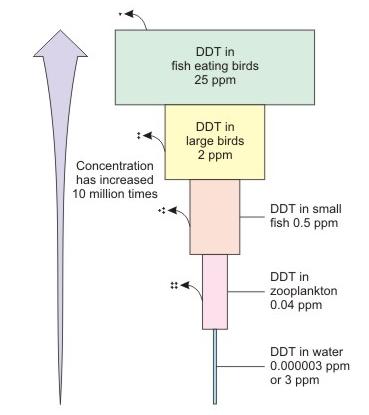
The higher concentration of DDT or any other non-degradable pollutant can reduce the population by directly killing the organisms by poisoning. The other effects may include the reduction of the reproductive potential of species or the weakening of the individuals causing them to be more susceptible to diseases, parasites and predators.
SAQ 6
What characteristics must a chemical substance have for it to be biologically amplified in a food chain or food web?
8.8 SUMMARY
In this unit you have learnt that:
Ecosystem and its Functioning
………………………………………………………………………………………… ………………………………………………………………………………………… ………………………………………………………………………………………… …………………………………………………………………………………………
22
• The biological community and the abiotic environment unite to form a single interactive system termed as the ecosystem.
• This system exchanges energy and matter with the surrounding environment as inputs and outputs.
• All ecosystems consist of biotic and abiotic components. Biotic and abiotic components can further be subdivided as autotrophs, heterotrophs and abiotic matter.
• The stability of an ecosystem is most likely to depend on the number of cross connections and the key links of the food web.
• The concept of trophic levels is useful in understanding the energy flow through the food web.
• The trophic structure of an ecosystem could be graphically represented as ecological pyramids.
• Pyramid of energy provides more accurate picture of the energy transfer between trophic levels compared to pyramid of numbers and pyramid of biomass.
• Non-degradable pollutants like DDT, gets concentrated at the successively higher trophic level as they travel though the food chain. This is known as bio magnification. The impact of this phenomenon is related to early death, reduction in reproductive potential and the weakening of the individuals of the populations.
8.9 TERMINAL QUESTIONS
1. Predict what may happen if a population of producers is removed from a community of organisms.
2. What factors would influence the length of food chains and the pattern of food webs.
An Introduction to Ecosystems
…………………………………………………………………………………… … …………………………………………………………………………………… …
… …………………………………………………………………………………… … 23
Ecosystem and its Functioning … 24
3. Explain how food webs present in a cultured crop might be affected by the use of pesticides. “Are natural food webs free of the influence of humans”?
4. a) Draw of food web at least two food chains with 4 trophic levels. Label the producer and primary, secondary and tertiary consumers.
b) Explain what could happen if a chemical substance poisonous to animals but not to plants leaks into the ground in the forest.
Activity 1
Choosing an ecosystem you are familiar with such as a stream, garden plot or decaying tree trunk identify the types of organisms found there.
Make a list of all the types of organisms you can see in the ecosystem.
An Introduction to Ecosystems
…………………………………………………………………………………… …
…………………………………………………………………………………………. . …………………………………………………………………………………………. . …………………………………………………………………………………………. . …………………………………………………………………………………………. . …………………………………………………………………………………………. . 25
Ecosystem and its Functioning ………………………………………………………………………………….. . 26
UNIT 9 ENERGY IN ECOSYSTEMS
Structure
9.1 Introduction Objectives
9.2 What is Energy? Flow of Energy in Ecosystems
9.3 Productivity of Ecosystems
9.4 Energy Efficiency in Ecosystems
9.5 Ecosystem Control and Self Regulation
9.6 Summary
9.7 TerminalQuestions
9.1 INTRODUCTION
In Unit 8, you have studied the concept of an ecosystem, its nature and characteristics. You know that none of the organisms in an ecosystem, be it a forest, grassland, a pond or a desert, live in isolation. Each organism exists in a number of relationships with other organisms and the non-living environment. These interrelationships have two consequences: Flow of energyand cycling of nutrient materials. Ecosystemsare typically open systems. They are driven by the continuous input of energy and nutrients from outside the system’s boundary.
In order to understand the functioning of an ecosystem, we need to understand both the flow of energy and cycling of nutrients in it. In this unit we will discuss the input of energy and its flow through the ecosystem. You will learn about the concept of energy, its flow through the ecosystem, the productivity of ecosystems, energy efficiency of ecosystems, and ecosystem control and homeostasis. In the next unit, we take up the cycling of nutrients in ecosystems.
Objectives
After studying this unit, you should be able to:
• list various forms of energy in nature and outline their uses for life processes of organisms;
• explain the process of energy flow through ecosystems and state its important features;
• describe various types of productivity and their relationships;
• define ecological efficiency and explain its importance for ecosystems; and
• outline the basic principles involved in ecosystem control and homeostasis.
9.2 WHAT IS ENERGY?
You are intuitively familiar with the concept of energy. When you feel tired, don’t you say, “I have no energy to do any more work”? Put simply,energy is the capacity to do work. Energy is needed to make things move. For example, the engine in a vehicle supplies the “energy” or the “power” for it to move. Similarly, the chemical energy provided by food to our muscles helps us move our body parts. We use heat to cook food and electrical energy to light our homes. In nature, energy is needed to move air masses over continents, for mountains to erupt and hot molten lava to be spurted out during volcanic activity, for the cheetah to pursue prey and bring down an antelope to the ground, and for nerve impulses to travel from cell to cell.
Energy exists in many formsin nature: Mechanical energy, chemical energy, light, sound, heat, electrical energy, etc. (see Fig. 9.1). For example, water flowing in a
24
its Functioning
Ecosystem and
stream; a cyclist uses mechanical energy while riding a cycle. Mechanical energy is of two types: Potential energy(by virtue of an object's position) and kinetic energy(by virtue of the object’s motion).
A rock perched on the top of a cliff has potential energy (because of the height), which changes into kinetic energywhen the rock falls from the cliff. The kinetic energy of the falling water is converted to electrical energy in hydroelectric plants. The food we eat provides us with chemical energy, some of which is converted into mechanical energy and heat energyas we move around. Light energy helps us see the world in all its colourful glory and sound energy helps us hear. You can think of many more examples involving various forms of energy.
Energy in Ecosystems
Solar energy

Electrical energy
Forms of energy
Heat energy


Chemical energy
Nuclear energy
Mechanical energy
Fig.9.1: Various forms of energy
The energy used for all life processes whether mechanical, chemical, light or heat is derived from solar energy. Let us learn how this energy is used up in an ecosystem.
9.2.1 Flow of Energy in Ecosystems
You have learnt in the previous unit that green plants absorb solar energy during photosynthesis. Observations made from artificial satellites indicate that nearly 30% of the total solar radiation entering our atmosphere is reflected by the earth-atmosphere system. The remaining 70% of the radiation is absorbed by the earth’s atmosphere. Of this 19% is absorbed directly by the atmosphere and the rest by the earth’s surface. It is the blue and red components (400-500) nm and 600-700 nm band, respectively) of solar radiation that are strongly absorbed by chlorophyll, the green pigment, present in vegetation. That is how energy for the ecosystem is trapped through photosynthesis.
During photosynthesis, plants convert solar energy into chemical energy and produce carbohydrates and a host of other nutrients. In the process of eating and being eaten, this
25
Ecosystem and its Functioning




chemical energy flows from producers to consumers. Part of this chemical energy is utilised in respiration and for the growth and development of living beings. A large part of it, however, is lost as heat at several steps, and cannot be reutilised. This continuous input of energy from the sun, its conversion to other forms of energy by various organisms and its flow back to the environment maintain life on the earth. The flow of energy in ecosystems occurs via food chains and food webs. Figs. 9.2a and 9.2b show energy transfer and energy losses in an ecosystem.


26
Flow of energy in an ecosystem. Producers trap a small amount (about 1 %) of solar energy and make it available for primary, secondary and tertiary consumers Reflected Energy lost in Respiration Unutilised Energy Energy lost in Respiration Unutilised Energy Energy lost in Respiration Unutilised Energy Decomposition Decomposition Decomposition Herbivores Autotrophs Incoming Solar Energy producers (plants) tertiary consumers (top carnivores) secondary consumers (carnivores) primary consumers (herbivores) First trophic level Second trophic level Third trophic level Fourth trophiclevel heat heat heat heat heat heat heat Detritivores (decomposers and detritus feeders) heat heat (a) (b) Carnivores Solar energy
Fig.9.2:
Food provides energy and nutrients like carbohydrates, fats, proteins and other essential elements for organisms. Hence the flow of energy in the ecosystem is linked closely to the nutrient flow in it. This means that not only chemical energy (in the form of carbohydrates, fats and protein) but a host of other nutrients are also transferred to the consumers. This process continues up to the decomposer level. Unlike energy, nutrients are recycled through the ecosystem and it is the energy within the ecosystems that does the work involved in the re-cycling of nutrients.
Energy flow in an ecosystem has the following important features:
• Flow of energy in an ecosystem is unidirectional, i.e., the initial solar energy trapped by the autotrophs or producers does not revert back to the sun. Its immediate implication is that an ecosystem would collapse if the sun stops giving out energy.
Moreover, energy that flows from producers (autotrophs) to herbivores and from herbivores to carnivores does not flow back to the autotrophs from the herbivores or from carnivores to the herbivores. As a consequence of this unidirectional and continuous energy flow, the ecosystem maintains its entity and prevents collapse of the system.
• At each trophic level, the energy content decreases progressively. This factor is easily explained by noting that the trapped solar energy is used up in metabolic activity and respiration. It is observed that as much as 80-90% of energy is lost at every link in a food chain.
• The net energy inflow to an ecosystem balances with the net energy outflow from the ecosystem and this maintains a dynamic equilibrium state in the ecosystem.
In an ecosystem, energy is transferred in an orderly sequence. We have explained above that the energy flow is always unidirectional. In a chain of events solar energy may be converted into chemical energy or lost as heat. Two physical laws govern these processes. These are the first and the second laws of thermodynamics.
Laws Governing the Flow of Energy
The first law of thermodynamics deals with the conservation of energy. It states that energy cannot be created or destroyed but can only change from one form to another.
For example, the energy of visible light is absorbed by green plants through photosynthesis; it is changed into chemicalenergy stored in the glucose molecules. Almost all living organisms including plants consume glucose in respiration and use the stored chemical energy for their metabolic activity. Some of the energy is dissipated as heat, which is another form of energy.
The second law of thermodynamics states that in every energy transformation, some energy is always lost in the form of heat that is thereafter unavailable to do further useful work.
This heat energy escapes into the surrounding environment. Another way of saying the same thing would be that some useful energy is converted into unusable waste heat in every energy transformation. For example, when coal is burnt in a boiler to produce steam, some of the energy creates steam and a part is dispersed as heat to the surrounding air. In the same way when the energy stored in the body is used in doing some work, some of the useful energy is lost as body heat. Thus, energy transformation in the physical as well as biological worlds is less than one hundred percent efficient. In order to continue to function, organisms must continue to receive new input of energy in the ecosystem.
Moreover, in nature what you observe is not a single channel model of energy flow like the one shown in Fig. 9.2. It is a more complex flow of energy that involves grazing and detritus food chains. In all ecosystems the grazing and the detritus food chains are
Energy in Ecosystems
Much of the modern civilisation is built around the internal combustion engine and the incandescent light, which, respectively, waste 90% and 95% of their initial energy input. As oil and other non-renewable energy sources are becoming scarce and expensive, it is imperative to reduce such unnecessary energy losses.
27
Ecosystem and its Functioning
interconnected so that shifts in the flow of energy can occur quickly in response to any changes. These can be depicted by a Y shaped or two channel energy flow diagram (Fig. 9.3).
This model is more realistic than the single channel model because
• it conforms to the basic stratified structure of ecosystem;
• the direct consumption of living plants and utilization of dead organic matter is usually separated in both time and space; and
• the macro-consumers (phagotrophic animals) and the micro-consumers (saprotrophic bacteria and fungi) differ greatly in size, metabolism relations and techniques of study.
One calorie (cal) is the amount of heat needed to raise the temperature of one cubic centimetre of water through one degree centigrade. One kilo calorie (1 kcal = 1000 cal)
Fig.9.3: The Y-shaped energyflow model showing linkages between the grazing and detritus food chains
The portion of net energy production that flows down the two pathways varies in different kinds of ecosystems. It often varies seasonally and annually in the same ecosystem. In some shallow waters and in a heavily grazed pasture or grassland, 50% or more of the net production may pass down the grazing path. In contrast, marshes, oceans and forests and indeed most natural ecosystems operate as detrital systems. Ninety percent or more of autotrophic production is not consumed by heterotrophs until leaves, stems, and other plant parts die and become “processed” as it were into particulate and dissolved organic matter in water, sediments and soil. The delayed consumption in this manner increases the structural complexity as well as the storage and buffering capacity of ecosystems.
The flow of energy through the ecosystem is a fundamental process which can be easily quantified if the energy input to the ecosystem and its subsequent transformation from one trophic level to another can be expressed in terms of calories. The study of ecosystem energetics gives a sound basis forenergy budget at individual, population and ecosystem level. We can get a scientific basis for evaluating efficiency of different trophic levels in an ecosystem and comparing diverse ecosystems by quantifying the energy flow.
The first step of energy flow is the easiest to measure at the producer’s level. The incoming solar energy can be monitored with instruments such as a net radiometer, which measures the total radiant energy; or a pyranometer/solarimeter, which only measures the visible light energy. In aquatic ecosystems the primary production can be measured by following the changing oxygen or carbon dioxide levels in water.
At higher trophic levels, measurement of energy flow involves determination of energy quantity for every species population in each trophic level, and then addition of these specific figures to give the overall energy flow for the trophic level. Because of the enormity of this job, investigation is often limited to studying the energy budget of a single species of animal in a community. The weight, food intake, faecal output and respiration of a few individuals are measured and their assimilation and production rates are calculated.
Let us understand this further with the help of the energy flow studies through an ecosystem conducted in Silver Spring Florida in 1957 by Odum, a noted ecologist
28
Herbivores Predators
Predators
Plants Detritus Consumers
GRAZING FOOD CHAIN
DETRITUS FOOD CHAIN
Sunlight
(see Fig. 9.4). Most of the energy input is in the form of solar radiation. Waste heat dissipated from the system represents energy output.

Energy in Ecosystems
Import 486 460 Carnivores
production 20,810

389,910 Decomposers Herbivores Top Carnivores
heat
Fig 9.4: Energy flow diagram for Silver Florida. All figures are expressed as kilocalories of energy per square metre per year (After Odum, 1957)
It is observed that the total energy input amounts to 410486 kcal/m2/yr, (410,000 kcal/m2/yr of solar energy and 486 kcal/m2/yr in the form of organic matter imported into the system). It exactly matches the output of energy: 407986 kcal/m2/yr is lost as waste heat and 2500 kcal/m 2/yr is exported from the system in the form of organic matter.


Silver Florida represents a balanced ecosystem in terms of ecological energetics. Thus, energy enters the ecosystem as free solar energy and leaves it as heat, having undergone changes from a concentrated to a dispersed state. Such studies of energy flow are very important in understanding ecosystem functioning and its rational management.
We should always remember one factor: Human intervention in natural ecosystems is growing significantly. Human impact on the pattern and quantum of energy flow has changed significantly because of the considerable amount of fossil fuel used by urban, industrial and rural communities.
29
383
Total
407,986 21 Gross
Photosynthesis Absorbed
Net Production 8,833
3,
11,977
4600 13
You may try the following exercise to fix these concepts in your mind. 5,060
light 410,000
Respiration
368
1890 316
Export 2,500
SAQ 1
a) Fill the blank spaces in the following sentences using the most suitable words:

1. Energy flow in the ecosystem is ………………………. directional.
2 A progressive ……………………is energy occurs as energy travels from one trophic level to another.
3 At any trophic level the net …………………….. . of energy balances the net ………………………… of energy.
4. In a natural ecosystem, energy flow will occur through …………………… food chains and the ………………………. food chain.
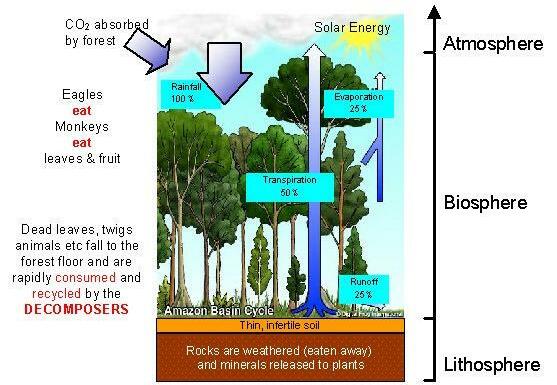
5 When farmers rear livestock for meat they ………………………………. the energy flow through the …………………….. food chain.
b) Study the figure given below and answer the question following it.
Identify and explain the inputs and outputs of this ecosystem and show the flow of energy in it.
9.3 PRODUCTIVITY OF ECOSYSTEMS
You are aware that as energy is transferred from one organism to another, a part of it is stored in living tissue. This contributes to the production of organisms. It is usually expressed as the energy or the biomass accumulation over a period of time and designated as kilocalories per square metre (kcal/m2). It is also expressed as dry organic matter in grams per square metre (g/m2).
The rate of production over time is called productivity and its units are g/m2/year or kcal/m2/year. In studies related to ecosystem energetics, both the terms, production and productivity are frequently used.
30
Ecosystem and its Functioning
Atmosphere Biosphere Lithosphere Rainfall 100% Evaporation 25% Transpiration 50% Runoff 25% Solar energy
CO2 absorbed by forest
The term productivity may mean the productivity of any one trophic level of the ecosystem or the productivity of the ecosystem as a whole. The productivity of an ecosystem is one of its most important characteristics. It reveals a great deal of information about the conditions of a particular ecosystem. Different systems can be directly compared on the basis of their productivity. You know that the production of organic matter in an ecosystem depends on the availability and movement of energy through the ecosystem. Two main factors determine the productivity of ecosystems:
• The amount of solar radiation that is available to the primary producers for photosynthesis; and
• The efficiency with which the autotrophs convert the solar energy into usable form through photosynthesis.
The productivity of ecosystems can be expressed through many different parameters, viz. Gross Primary Productivity (GPP),Net Primary Productivity(NPP), Net Community Productivity (NCP) and Secondary Productivity(SP). Let us explain what these terms mean.
You know that the flow of energy through an ecosystem on the earth starts with the harnessing of sunlightby green plants. During photosynthesis plants lock the solar energy in sugars as chemical energy. Therefore the amount of sugar produced in plants should provide an index of their energy uptake and thus a measure of their productivity.
Since photosynthesis is the first and the basic form of energy storage, it is referred to as primary production. The rate at which this occurs over time is referred to as primary productivity.
The total energy accumulated in the plant during primary productivity is known as Gross Primary Productivity.
Like all other organisms, plants must expend energy in maintenance and in reproduction. In the process of respiration, the organic compounds formed during photosynthesis are oxidized to derive the energy needed for maintenance and reproduction in plants.
The energy remaining after respiration is stored as organic matter and is called Net Primary Productivity (NPP).
Net primary productivity can be expressed as NPP = GPP R
where R is the energy used up in respiration
Net primary production accumulates over time as plant biomass. The amount of accumulated organic matter found in an area at a given time is referred to as the standing crop biomass. Biomass is usually expressed as grams of organic matter per square metre (g/m2) or as calories per square metre (cal / m2). Remember that biomass is different from productivity. It is the amount of organic matter present at any given time. Productivity is the rate at which organic matter is created by photosynthesis. In Table 9.1, we present estimates of the net primary production and biomass for a variety of terrestrial ecosystems. The productivity of terrestrial ecosystems is influenced by the climate. Thus, the production would vary in different global ecosystems having different climates.
Energy in Ecosystems
31
Ecosystem and its Functioning
Table 9.1: Net primary production and plant biomass of world ecosystems
Ecosystems (In order of productivity)
Area (106 Km2)
Mean net primary production per unit area (G/M2/Yr)
World net primary production (109 Mtn/Yr)
Mean biomass per unit area (Kg/M2)
Continental Tropical seasonal forest 7.5 1500.0 11.30 36.00
Temperate evergreen forest 5.0 1300.0 6.40 36.00
Temperate deciduous forest 7.0 1200.0 8.40 30.00
Boreal forest 12.0 800.0 9.50 20.00 Savanna 15.0 700.0 10.40 4.00
Cultivated land 14.0 644.0 9.10 1.10 Woodland and shrubland 8.0 600.0 4.90 6.80
Temperate grassland 9.0 500.0 4.40 1.60 Tundra and alpine meadow 8.0 144.0 1.10 0.67
Desert shrub 18.0 71.0 1.30 0.67
Rock, ice, sand 24.0 3.3 0.09 0.02
Swamp and marsh 2.0 2500.0 4.90 15.00
Lake and stream 2.5 500.0 1.30 0.02
Total continental 149.0 720.0 107.09 12.30
Marine
Algal beds and reefs 0.6 2000.0 1.10 2.00 Estuaries 1.4 1800.0 2.40 1.00
Upwelling zones 0.4 500.0 0.22 0.02 Continental shelf 26.6 360.0 9.60 0.01
Open ocean 332.0 127.0 42.00 0.003 Total marine 361.0 153.0 55.32 0.01 World total 510.0 320.0 162.41 3.62
Fig.9.5 shows the variations in productivity as a function of annual precipitation and mean daily temperature. You may note from the figures that the net primary productivity increases with increasing temperature and rainfall. The reason is that temperature and precipitation influence the rate of photosynthesis, the amount of leaf area that can be supported and the duration of the growing season.
Fig.9.5: Productivity as a function of mean annual temperature and mean annual precipitation (Source: www.globalchange.umich.edu/.../precipb2)
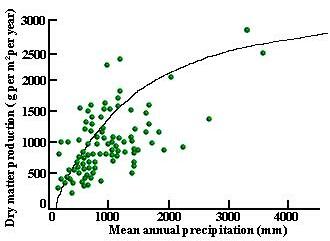
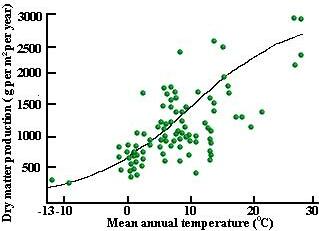
32
In contrast to terrestrial ecosystems, in aquatic ecosystems, mainly in oceans, the primary productivity is limited by nutrient availability. In most ecosystems there is a degree of vertical separation between the zone where primary productivity occurs and the zone in which decomposition and release of nutrients occur.
For terrestrial plants this vertical separation does not present a problem because the plants have heights allowing them to extend into both zones with their canopy and root system. In aquatic environments, particularly in the oceans, phytoplanktons are near the surface. Nutrients in the deeper waters must be transported to the surface waters where light is available to drive photosynthesis. As a result, nutrients particularly nitrogen, phosphorus and iron, are a major limitation on primary productivity in the oceans. The most productive waters of the oceans are coastal environments and coral reefs .This is because in these environments the water depth is low. Moreover, less vertical separation causes greater transport of nutrients to surface waters through changing tides. Estuaries receive a large input of nutrients carried from terrestrial ecosystems by rivers and streams.
The net primary productivity does not remain stable over a period of time in ecosystems. Heterotrophs, especially herbivores, feed upon plant biomass. Asa result, there is a need to define another term the Net Community Production (NCP): It is the rate of production of organic matter not used by heterotrophs. Thus, it is the net primary production minus heterotrophic consumption for the period under consideration(which could be the growing season or a year). In Table 9.2we list selected ecosystems in sequence from crop type, rapid growth systems to mature steady state systems. The table illustrates several important points about the relationships between GPP, NPP and NCP.
Table 9.2: Annual production and respiration as Kcal/m2/year in growth type and steady state ecosystems
Alfalfa field (USA) Young pine plantation (England)
Medium aged oak pine forest (New York)
Large flowing spring (Silver springs, florida)
Mature rain forest (Puerto Rico)
Energy in Ecosystems
Coastal sand (long Island N.Y.)
24400 12200 11500 20800 45000 5700 Autotrophic respiration 9200 4700 6400 12000 32000 3200 Net Primary Production (NPP)
Gross Primary Production (GPP)
15200 7500 5000 8800 13000 2500 Heterotrophic Respiration 800 4600 3000 6800 13000 2500 Net Community Production (NCP)
Ratio NPP/GPP (Percent)
Ratio NCP/GPP (Percent)
14400 2900 2000 2000 Very little ornone Very little or none
62.3 61.5 43.5 42.3 28.9 43.8
59.0 23.8 17.4 9.6 0 0
Notice from Table 9.2 that rapid growth or bloom type systems (rapid production for short periods) such as the alfalfa field tend to have a high net primary production. If protected from consumers, the bloom type systems also have a high net community production. Remember that alfalfa fields are human managed ecosystems where consumers like the herbivores are not encouraged. Hence the energy loss by heterotrophic respiration in such systems is reduced. This can result either from self evolved protection mechanisms (natural toxins that deter herbivores or cellulose production) or from outside energy subsidies (pest control methods).
33
Ecosystem and its Functioning
In steady state communities like the rain forests the gross primary production tends to be dissipated by the combined autotrophic respiration (RA) and heterotrophic respiration (RH). Thus little or no net community production is left at the end of the annual cycle. Further, such communities with their large biomass or standing vegetation require so much autotrophic respiration for maintenance that there tends to be a low NPP / GPP ratio. You could try the following exercise to check whether you have grasped these concepts.
SAQ 2
Distinguish between GPP, NPP and NCP. Explain why a young pine plantation has a high NPP / GPP ratio as compared to the mature rain forest.
Secondary Productivity
Similar to primary production at the first trophic level, the rate of storage at the consumer trophic levels (1st, 2nd and 3rd) is referred to as secondary production. You know that consumers feed on organic food already prepared in the first trophic level, and there are losses of energy due to respiration, removal of faecal matter etc (see Fig. 9.6). The organic matter building up in the consumers over and above the losses contributes to secondary production.
Energy removed from lower trophic levels (M)
Energy not used Gross energy intake (C)
Faecal energy (F) Digestibleenergy (D)
Urinarywaste (U) Metabolizableenergy (A)
Restingenergy Activity Growth Reproduction “Maintenance” (or respiration) (R)
“Production” (P)
Fig.9.6: The fate of energy captured in consumers
Let us explain the information given in Fig. 9.6. Many a times, a part of the energy of the lower trophic level is not used at higher trophic levels. For instance, some of the energy of plants will not be used by herbivores since all parts of the plant are not eaten by them. Moreover, the material not digested by the animal will be lost as faecal material. Wastes such as urine are also sent out of the system.
The total metabolised energy or the energy of assimilation is used for production and maintenance (respiration). The production that occurs in animals over and above respiration is used for growth and reproduction. This growth and reproduction in animals at the secondary consumer level is termed as secondary production.Therefore,the secondary production is greatest when the birth rate of the population and the growth rate of the individuals in a population are at their highest.
Secondary production depends on primary production for energy. Hence any environmental constraint on primary productivity, such as climate, will constrain secondary productivity within the ecosystem (see Fig. 9.7).
Observe the increase in large herbivore production with the increasing rainfall shown in Fig. 9.7. It is a direct result of the corresponding increase in net primary productivity, which provided the food source for the herbivore population.
34
Herbivores are the source of energy for carnivores. Like herbivores, carnivores cannot use all of the energy in their food for production. Metabolic losses for heat production, maintenance and respiration occur.
3.5
Large herbivore production (log kg/km 2 /yr)
3.0
2.5
2.0
2.0 2.25 2.5 2.75 3.0
Rainfall(logmm/yr)
Increasing primary production
Fig.9.7: The relationship between rainfall (which affects primary productivity) and secondary productivity of large mammalian herbivores in Africa
With this understanding of primary and secondary productivity, you can appreciate that a significant amount of energy is lost in various life processes in an ecosystem at different levels. This brings us to the concept of energy efficiency in an ecosystem.
9.4
ENERGY EFFICIENCY IN ECOSYSTEMS
Ecosystems are generally very inefficient in their use of available energy, for three main reasons.
• Green plants make use of only about 5% of the solar radiation available to them.
• Only a small but variable fraction of the energy available at any particular trophic level is passed on to the next one, the rest is lost during respiration.
• Since the animals at trophic level 2 and above are mobile, they use up proportionately more energy during respiration, than the plants at trophic level 1. As a result, the relative loss of energy increases at successively higher trophic levels.
Inefficiency in the use of energy within ecosystems explains why there are rarely more than about four vertical links in a normal food web. This is because so little energy would be available above trophic level 4 to support and sustain omnivorous species. For example, the study of energy flow through Silver Springs Florida (Fig.9.8) shows that just over 5 % of energy producedby the primary producers becomes available to the top carnivore.
The efficiency with which different parts of an ecosystem use available energy is termed as ecological efficiency. It is the ratio between energy flow at different points along the food chain and is expressed as a percentage. Ecological efficiencies are of considerable importance in comparing ecosystems and are of practical significance to many ecologists / environmentalists who try to influence the energy flow of ecosystems to get maximum benefit with least cost to the environment.
The ecological efficiencies can be worked out with respect to component populations or for trophic levels and are expressed in many different ways. Notations used in expressing ecological efficiency are universal.
Energy in Ecosystems
35
Fungi & bacteria
5.4 % 24.2%
11.3 %
16.1 %
100%
TopCarnivores
Primary carnivores
Herbivores
Producers
Fig.9.8: Energy flow through Silver Springs, Florida
The energy flow diagram in Fig. 9.9indicates the standard notations used to represent the types of energy generated in the flow of energy through ecosystems.
trophic levels green plants
totallight I and LA
P I A R heat 3000 1500 15 1.5 0.3 L LA PN P2 P3 Kcal / m2 / day
producers 1 consumers carnivores 2 herbivores NU NA PG or A PN I A P R R
Fig.9.9: A simplifiedenergy diagram depicting three trophic levels (boxes numbered 1, 2, 3) in a linear food chain. Standard notations for successive energy flows are as follows: I = total energy input; LA = light absorbed by plant cover; P G =gross primary production; A = total assimilation; PN = net primary production; P = secondary (consumer production; NU = energy not used (stored or exported); NA =energy not assimilated by consumers (ejected); R= respiration. Bottom line in the diagram shows the order of magnitude of energy losses expected at major transfer points, starting with a solar input of 3000 kcal per square metre per day. (After E.P. Odum, 1963.)
There are two main types of ecological efficiencies:Efficiencies betweentrophic levels andwithin trophic levels.
Those between trophic levels include
• trophic level energy intake efficiency,
• trophic level energy assimilation efficiency, and
• trophic level production efficiency.
Those within trophic levels include
• tissue growth or production efficiency,
• ecological growth efficiency, and
• assimilationefficiency.
In nature, transfer efficiencies between trophic levels are 1- 5 % PG / I, 2-10%PG / LA and 10 to 20 % production efficiency between secondary trophic level (see Table 9.3).
36
Ecosystem and its Functioning
Table 9.3: Various types of ecological efficiencies
RATIO DESIGNATION AND EXPLANATION
A. Ratios Between Trophic Levels
t I I
1 t
G G L P or L P 1 t
Trophic level energy intake (or Lindeman’s) efficiency. For the primary level this is A
Trophic level assimilation efficiency
t P P
t A A 1 t
B.
For the primary level P and A may be in terms of either L or LA as above:
At/At 1 = It/It 1 for the primary level, but not for secondary levels.
t P I or 1 t
Trophiclevel production efficiency 1 t
t P A
Utilisationefficiencies
t A P t
t I P t
t I A
Trophic Levels t
Ratios Within
Tissue growth or production efficiency
Ecological growth efficiency Assimilation effficiency
Symbols are as follows: L-light (total); LA=absorbed light; PG=total photosynthesis (gross production); P= production of biomass; I=energy intake; R=Respiration; A=Assimilation; NA =ingested but not assimilated; NU= Not used by trophic level shown; t=trophic level; t-1= preceding trophic level
Recent studies of oceanic food chain have indicated that trophic efficiencies higher than 20% are achieved when concentrators are present such as pelagic tunicates (salps) that filter small organisms and particles and produce faecal pellets, which are ingested and reingested by larger organisms.
The proportion of assimilated energy that must go for respiration is at least ten times higher in warm blooded animals, which maintain a high body temperature at all times than cold blooded animals. Hence the production efficiency P / A is lower in warmblooded species. It has been observed that the efficiency of trophic level transfer is higher in invertebrates than in mammalian food chains. For example, the transfer of energy from moose to wolf on the isle of Royce is about 1% compared with 10% transfer in Daphnia and Hydra food chain.
In animals at the consumer level, an inverse relationship tends to exist between efficiency of tissue growth and efficiency of assimilation. Herbivores tend to have higher P/A but
37
Energy in Ecosystems
Ecosystem and its Functioning
lower A/I efficiencies than carnivores. Even when the consumers feed on the same tissues (either plant or animal) as a source of energy not all consumer organisms have the same efficiency of transforming energy consumed into secondary production. The ability of a consumer to convert the energy it ingests varies with species and the types of consumer as revealed in Table 9.4
Table 9.4: Secondary production of selected consumers (kcal/m2/yr)
Species Ingestion (I) Assimilation (A) Respiration (R) Production (P) A/I P/I
Harvester ant (h) 34.50 31.00 30.90 0.10 0.90 0.003
Plant hopper (h) 41.30 27.50 20.50 7.00 0.67 0.169
Salt marsh grasshopper (h) 3.71 1.37 0.86 0.51 0.37 0.137
Spider, small < 1 mg (c) 12.60 11.90 10.00 0.91 0.94 0.072
Spider, large > 10 mg (c) 7.40 7.00 7.30 3.00 0.95 –
Savannah sparrow (o) 4.00 3.60 3.60 0.00 0.90 0.000
Old-field mouse (h) 7.40 6.70 6.60 0.10 0.91 0.014
Ground squirrel (h) 5.60 3.80 3.69 0.11 0.68 0.020
Meadow mouse (h) 21.29 17.50 17.00 – 0.82 –
African elephant (h) 71.60 32.00 32.00 8.00 0.45 0.112
Weasel (c) 5.80 5.50 – – 0.95 –
Note: herbivore h; omnivore o; carnivore c
Ecosystems as you now know are functional units in the biosphere. Since their components and inputs, both biotic and abiotic, change with time, ecosystems are dynamic systems. Usually, they do not remain static for long periods. However, some ecosystems in nature, e.g., rainforests or tundra, if left undisturbed, remain the same for years. This is because ecosystems that have evolved over long periods of time reach steady state equilibrium through ecosystem control and self-regulation. In the following section we briefly describe the process involved in self-regulation of ecosystems. This process is termed homeostasisin some instances.
9.5 ECOSYSTEM CONTROL AND SELF REGULATION
You have learnt in the previous section that the components, inputs and outputs of an ecosystem are linked by flows of energy and nutrients. Hence, a change in any one of them will trigger changes at least to some ofthe others linked by the flow of energy and nutrients. This, in turn, will cause the response or output of the ecosystem to change. For example, the removal of a section of trees from a forest ecosystem will upset the natural balance. This will not only remove trees but let in more sunlight which would allow shrubs and bushes to grow in the clearing.
Any disturbance to either the inputs or components of an ecosystem causes adjustments to its prevailing equilibrium level. Adjustments usually occur through feedback links. A feedback occurs when a change in one element in the ecosystem produces a sequence of changes in other elements, and this ultimately leads back to the element whose initial change set off the sequence (Fig. 9.10). There are two different types of feedback links: positive and negative. These have radically different impact on the environment.
38
Fig.9.10: Feedback in ecosystems. Internal adjustment within a system is usually promoted by feedback, involving a sequence of changes between system components. Positive feedback (a) promotes further change, whereas negative feedback (b) dampens down change. Negative feedback tends to dominate most ecosystems, which is why stability can exist in the absence of triggers to change
Positivefeedback amplifies or reinforces the initial change within the system which was triggered by external factors. As such the change gets bigger and bigger. It tends to destroy any stability that existed previously in the system. Thankfully positive feedback which enhances change is relatively rare in nature.
Negative feedback promotes the opposite change to positive feedback. It dampens down or suppresses changes in an ecosystem promoted by external factors. Such feedback serves to maintain the stability of the ecosystem by self regulation. Most ecosystems are dominated by negative feedback, which opposes change. This is why such ecosystems appear stable in the absence of external change. They can usually adjust to external change.
Let us consider situations where ecosystem control and self regulation occur in nature. In this context, you should know about ecosystem resistance and ecosystem resilience.
Ecosystem resistanceis the ability of a system to withstand or resist variation. It is measured by the degree to which the system is changed from an equilibrium level as a result of disturbances. Resilience is the speed with which a disturbed system returns to equilibrium or the same general state after being changed.
Resilience is the ability of an ecosystem to recover after disturbance.
Resistance is the ability of an ecosystem to remain stable in the face of disturbance.
An ecosystem disturbance can be natural or human induced. An example of a natural disturbance is a hurricane or a tornado. An example ofa human-induced or anthropogenic disturbance is tillage or pesticide application.
Ecosystems like tropical rainforests having a large biotic structure are most resistant to change. This is because they have nutrients stored mainly in the standing biomass,the trees. Forest trees can withstand environmental disturbances, sharp temperature changes, drought and insect outbreaks because the forest ecosystem is able to draw on stored reserves of nutrients and energy. In this situation, the very complex feedback mechanisms stemming the complex food webs and the high diversity of the community can restore equilibrium fairly rapidly. On the other hand, simple ecosystems are comparatively less resistant. Simple ecosystems like the tundra or a human managed monoculture system, e.g., cotton fields, paddy fields with a simple biotic community have a few inter-specific interactions or simple food webs. They may be drastically changed during sharp temperature changes, drought and insect attack.
However, the response of rainforests to large disturbances as opposed to small ones may be very different. For example, if large areas within the forest were to be cleared by felling trees or if they were exposed to fire, the initial disturbance would be much greater
39 Energy in Ecosystems
+ + + + + a. Positive Feedback B C E + + + + b. Negative Feedback A B C D E A D
Ecosystem and its Functioning
than temperature change, insect outbreak, drought etc. Loss of trees would prevent rapid nutrient cycling mechanisms within the forest and the soil would rapidly become exhausted through leaching of the nutrient materials. The surface of the soil would be dried out by the direct radiation from the sun and in some instances harden irreversibly to a pavement like surface. In such situations the re-establishment of the rainforest vegetation would be very slow. In other words the return to the original steady state conditions would be slow. Under such large disturbances the rainforests are found to have low resilience.
Unlike the rainforests, aquatic ecosystems, which lack any long term storage of energy and nutrients in biomass, exhibit little resistance. However aquatic ecosystems are more resilient. Frequent flooding dislodges stream invertebrates, creating mosaics of empty patches. These patches are re-colonized by different subsets of stream invertebrates available for recruitment. Although the recovered patches may hold a different set of organisms, the stream is returned to its original conditions. Thus, aquatic ecosystem exhibits high resilience but low resistance.
For example, a lake that is used as a basin for sewage disposal receives a large input of organic nutrients, such as phosphorus. Such inputs result in eutrophication and change the structure of the lake ecosystem. However, once the sewage inputs are diverted from the lake, organic nutrient levels in the lake decline, and the lake can return to its clear condition. Similarly, over fishing and runoff have decimated reefs at both local and regional scales (see Fig.9.11). Bio eroding fishes can help these dead corals to be removed or replaced in a few years.
Fig.9.11: Aquatic systems such as coral reefs have lower resistance but greater resilience (Source: www.jcu.edu.au/school/mbiolaq/ ccrbio/Research/ecosystem)
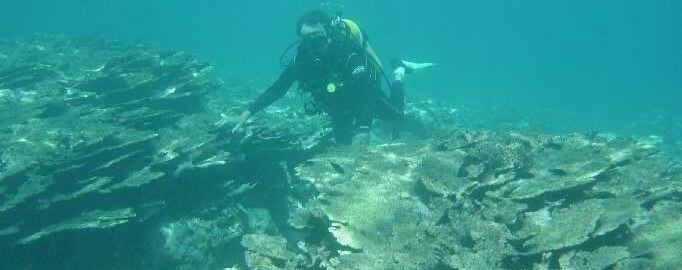
In this unit, you have studied about how solar energy is converted to various other forms by living organisms in an ecosystem. You have also studied related concepts such as the efficiency of energy use, feedback, control and self regulation in ecosystems. We now summarise the contents of the Unit.
9.6 SUMMARY
• There are differentforms of energyin nature. Energy is neither created nor destroyed. One form of energy is converted to another form.
• The use of energy to cycle nutrients in the ecosystem is governed by two laws of thermodynamics.
• The flow of energythrough ecosystems is unidirectional. There is a loss of energy as it transfers from one trophic level to another. However, the net energy flow into the ecosystem balances the net outflow of energy.
40
• The energy stored in the living tissues at different trophic levels within a particular time is known as productivity. The productivity of the ecosystem is expressed in different forms, namely, GPP, NPP, NCP and secondary production
• The loss of energy that occurs as energy travels from one trophic level to another makes energy transfer in ecosystems inefficient. The ecological efficiency denotes the ratio between energy at two different trophic levels or within one trophic level. These energy ratios allow us to compare the energy relations of known ecosystems.
• Ecosystems due to their dynamic stability revert back to equilibrium state when disturbed through negative feed back links. However, such ecosystem control will be disrupted irreversibly if the disturbance is great.
9.7 TERMINAL QUESTIONS
1. Select an ecosystem and explain the process of energy flow in it. Describe various types of productivity in it and analyse the energy efficiency of the system qualitatively.
2. What do you understand by ecosystem resistance and resilience? Explain, giving examples.
3. Explain ecosystem self regulation for an aquatic ecosystem.
Energy in Ecosystems
41
UNIT 10 CYCLING OF MATERIALS IN THE ECOSYSTEM
Structure
10.1 Introduction
Objectives
10.2 Geochemical Cycles
10.3 Nutrient Cycles and their General Features
10.4 Hydrological Cycle
10.5 Carbon Cycle
10.6 GaseousCycles
Oxygen Cycle Nitrogen Cycle
10.7 Sedimentary Cycles Sulphur Cycle Phosphorus Cycle
10.8 Nutrient Budget and Nutrient Cycling of a Forest 10.9 Summary
10.10 Terminal Questions
10.1 INTRODUCTION
In Unit 9, you have studied the energy flow in an ecosystem. You have learnt how solar energy is trapped by plants and converted into chemical energy in the form of food. You know that food provides energy and nutrients for organisms to carry out their life processes such as respiration, metabolization, and waste elimination.
In this unit, we shall deal with the cycling of different kinds of nutrients through the ecosystem. The flow of energy and nutrients in an ecosystem differ in one important respect. Whereas energy flow is unidirectional (and energy flows out of ecosystem), nutrients are recycled. In the next unit, you will study the relationship among living organisms in ecosystem.
Objectives
After studying this unit, you should be able to:
• list the basic features of nutrient cycles in nature;
• outline the difference between a geochemical cycle and a nutrient cycle;
• explain the hydrological cycle, carbon cycle, oxygen cycle, nitrogen cycle, sulphur and phosphorus cycles;
• describe the ways in which human activities influence these cycles; and
• explain how the nutrient budget of a tropical forest is maintained.
10.2 GEOCHEMICALCYCLES
The majority of chemical elements found in the environment are derived from parent material of rocks and soil, namely igneous rocks or sedimentary deposits. Rocks containing these chemical elements are broken down to finer particles by the process of weathering caused by environmental factors such as temperature, rain, wind etc. and also by certain activities of living organisms.
The weathered material contributes to the formation of soil containing chemical elements both soluble and insoluble. They are held in the soil for short periods and soluble chemical elements then enter the streams, rivers, and lakes through leaching and erosion. These elements are finally deposited at the bottom sediment of oceans probably forming salt beds such as limestone.
42
and its Functioning Lithosphere
Ecosystem
After a long period of time has elapsed, they become the parent materials from which new rocks are formed again and the cycle continues. Weathering of rocks, erosion, deposition and formation of new rock occurs at a geological time scale. Cycling of chemical elements is referred to as a geochemical cycle
Cycling of Materials in the Ecosystem
Fig.10.1: Geochemical cycle
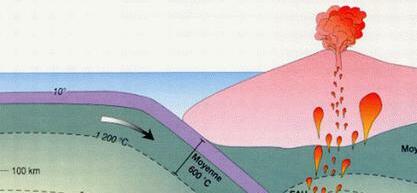
Most chemical elements follow this pathway. But there are certain chemical elements that do not take the route described above. Such chemical elements channel themselves through the living organisms of the ecosystem. These elements that find their way into the biotic community of ecosystems are called nutrients. The nutrient cycles are also called biogeochemical cycles. We now describe them.
10.3 NUTRIENT CYCLES AND THEIR GENERAL FEATURES
Not all chemical elements found on earth are nutrients of living organisms involved in constructing biological material. The majority of biological material, (at least about 90% of the total biomass) is composed of three elements: carbon, hydrogen and oxygen. These major nutrients are derived from the intake of water and carbon dioxide either directly from the atmosphere or from air dissolved in water. The remainder, the macronutrients and micronutrients are taken in from nature by plants either in solution or in their gaseous form.
Typical nutrient cycles of nature have a flow of nutrients that is channelled through the living organisms in the ecosystem. In addition, they have a geologicalpathway through the lithosphere, hydrosphere and atmosphere. That is why these cycles are also called biogeochemical cycles.
Before you study the individual nutrient cycles in detail, it would be useful for you understand the basic features of a nutrient cycle. We describe them briefly.
43
Clouds
Rain
Spray
Land
Sediment
Ocean
Weathering and formation of rocks
Earth's crust
Atmosphere
Volcanic activity
Leaching and erosion
Ecosystem and its Functioning
• All nutrient cycles operate as closed systems. The movement of nutrients within the biosphere occurs in a cyclic manner, from environment to organisms and back to the environment. Therefore the system as a whole does not lose nutrients.
• Cycles are driven by solar energy and since most nutrients are soluble in water, their cycling in nature is closely linked with the water cycle.
• Each nutrient cycle basically consists ofreservoirs and pathways. The reservoirs are of two types: non-biologicaland biological reservoirs. The non-biological reservoirs include air (atmosphere), water (hydrosphere) and soil (lithosphere).
The biological reservoirs are the living organisms.Fig.10.2 shows a generalized biogeochemical cycle indicating the interchanges amongst various reservoirs.
• The pathways of the nutrient cycles are processes which include biological processes like absorption of nutrients by roots of plants or by aquatic organisms and physical processes like removal of nutrients from land to aquatic bodies by erosion and expulsion of gases during volcanic eruptions. These pathways connect reservoirs to each other and facilitate the exchange of nutrients from one reservoir to another.
The rate of movement of nutrients betweentwo reservoirs along these pathways is called the flow rate or flux rate. The speed of movement depends on the physical and chemical properties of each nutrient.
• The nutrients show different residence times in different reservoirs. While cycling through the ecosystem, nutrients may remain in one or more reservoirs for shorter or longer periods of time. The period of time for which a nutrient stays within a reservoir is called the residence time
The residence time of a nutrient in a particular reservoir provides information about the dynamics of nutrient cycling. It gives an idea about the availability of nutrients in the ecosystem to support life. For example, a nutrient having a longer residence time in a reservoir implies that its annual out-flow is smaller.
A shorter residence time, in contrast, means that the inflow and the outflow of the nutrients can cause a significant change in the size of the nutrient reservoir. Table 10.1 gives the approximate residence times for some of the important nutrients in their reservoirs.
Fig.10.2: A generalised representation of biogeochemical cycles
The features of nutrient cycling mentioned above are common to most of the nutrient cycles. However, there may be certain other features, which might not be common to all, but may be specific to a particular nutrient depending on its physical and chemical properties. For example, phosphorous tends to move over short distances within the
44
Land
Rain
Atmosphere
Water Soil
Sun light Element cycling
ecosystem primarily because its compounds are insoluble in water. In contrast, nitrogen is far more mobile because its salts are highly soluble in water and are rapidly taken up by plants or leached into ground water.
Table 10.1: Residence times of some important nutrients in reservoirs
Nutrient pool Residencetime(yr)
Nitrogen in atmosphere
Oxygen in atmosphere
Inorganic nitrogen in soil
Carbon in dead terrestrial organic matter
Carbon in living terrestrial organic matter
Carbon dioxide in atmosphere
Carbon in living oceanic organic matter
Sulphur compounds in atmosphere
Note: uncertainties are at least ± 20 percent.
64,000,000 7,500 100 27 17 5 0.10 0.02
Before studying further, you may like to attempt an exercise to check your understanding of these concepts.
SAQ 1
a) Distinguish between a geo-chemical and a biogeochemical cycle. Give examples.
b) Study Fig. 10.2. Identify the reservoirs and pathways. Classify various pathways shown in the figure into biological and physical processes.
We shall now look at the cycling of some of the more important nutrients in nature. Here we will focus our attention on the carbon cycle and a few gaseous cycles such as oxygen, carbon and nitrogen. We will also deal with two sedimentary cycles, namely, sulphur and phosphorous. Before describing these cycles we shall first look at the hydrological cycle briefly, mainly because water plays a key role in the operation of all nutrient cycles.
10.4 HYDROLOGICAL CYCLE
Water is clearly the most competent medium in the transportation of nutrients from one place to another. As you are aware, water covers about 75% of the earth’s surface, occurring in lakes, rivers, and seas etc. The oceans alone contain 97% of all the water on earth. About 2% of water is frozen in polar ice and glaciers. Less than 1% of water is present in the form of ice-free fresh water in rivers, lakes and aquifers. Yet, this relatively negligible portion of the planet’s water is crucially important to all forms of terrestrial and aquatic life.
The earth’s supply of water is stable and used over and over again. Solar energy is the driving force behind the water cycle, which is maintained by the balance between precipitation and evaporation. Solar energy causes water from oceans, lakes, streams, the moist surfaces and from bodies of living organisms to evaporate.
The water vapour that enters the atmosphere becomes a part of the general circulation of the atmosphere. Water vapour gathers in the form of clouds which move with the winds over the earth’s surface. On reaching the higher altitudes and latitudes, this moist air becomes cool and its water vapour condenses. After cooling and condensation, water precipitates as rain or snow. This constant movement of water from the earth into the atmosphere and back to the earth is known as the watercycle. Fig. 10.3shows the basic steps of the water cycle.
Cycling of Materials in the Ecosystem
45
Ecosystem and its Functioning
The pattern of precipitation at any place depends on its distance from the sea and the topography or the form of land. The continental interiors, which are found at a distance from any large masses of water, are typically deprived of rainfall
Some of the water, which falls on the land, percolates through the soil until it reaches a solid rock through which water cannot percolate. The upper surface of the soil profile where water is retained is known as the water table. The extra water runs offin the form of streams, which converge and join to form rivers. Finally water is returned to the ocean.
Evaporation
Surface runoff
Ground
Precipitation
water
Fig.10.3: The hydrological cycle
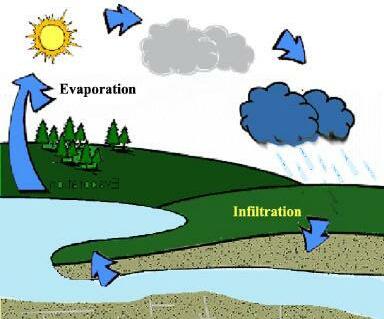
Let us take a quick look at the human impact on the hydrological cycle.
Human impact on the hydrological cycle
Human beings intervene in the water cycle in several ways. Large quantities of fresh water are withdrawn from rivers and lakes and supplied for irrigation, industrial and domestic uses. In heavily populated or heavily irrigated areas withdrawals haveledto ground water depletion. In many coastal areas over-withdrawal of ground water has resulted in the intrusion of ocean saltwater into ground water supplies.
The clearing of land for agriculture, mining, roads, construction and other activities can increase the rate at which water returns from the land to bodies of water. This can, in turn, increase soil erosion, reduce seepage and increase the risk of flooding.
You could attempt the following SAQ before studying about the carbon cycle.
SAQ 2
List the main events of the hydrological cycle. How do the human activities described above disrupt each of these events?
10.5 CARBONCYCLE
The carbon cycle is probably the most important biogeochemical cycle as far as humanity is concerned. Carbon is a basic constituent of all organic compounds and is involved in the fixation of energy via photosynthesis. Therefore cycling of carbon is also closely tied to the energy flow and these two processes are inseparable.
46
Reservoirs holding carbon
The carbon cycle is characterised by a very small atmospheric pool which makes up only 0.03% of the atmosphere. Though it accounts for a very small quantity of carbon, the atmospheric pool of carbon is very active both in terrestrial and aquatic ecosystems.
The other reservoirs of carbon include living and dead organisms, oceans and other storages of carbon in the earth’s crustorin sediments. Carbon stored in sediments may be found in three forms –as elemental carbon (e.g., coal), as refractory organic material (e.g., the dark coloured humic material in soils) or as carbonates (e.g., limestone).
The world’s biota, both plants and animals, is estimated to contain 600 – 1000 billion metric tons of organic carbon at any one time. In addition 1000– 3000 billion metric tons are estimated to be held in the remains of plants and animals in the soil.
Before decomposition can occur, some of these remains are subjected to physical processes that transform them into coal, oil and natural gases. We call these materials the fossil fuels. Most of the fossil fuels were formed during the carboniferous period which was about 286 –360 million years ago. During this period an exceptionally large amount of organic matter was buried before decomposing and got converted to fossil fuels.
In addition, approximately 1000 billion metric tons of carbon is dissolved in the oceans; more than half of this quantity is in the upper layers of the oceans where photosynthesis takes place. Another reservoir is the inorganic carbonates that accumulate in limestone and in calcium carbonate shells. Certain oceanic organisms have calcium carbonate shells that accumulate in ocean bottom sediments. Limestone is formed from these sediments by geological transformation.
Cycling of carbon
The carbon cycle consists of two phases, the organic and the inorganic phase. These two phases are closely linked and the element moves rapidly from one phase to another.
The cycling of carbon involves the following steps.
• Assimilation of carbon by plants through photosynthesis.
• Consumption of plant and animal matter by animals.
• Release of carbon, as CO2during respiration of organisms.
• Conversion of organic carbon in decaying matter into inorganic forms by mineralization.
• Temporary removal of carbon from circulation due to incomplete oxidation of organic carbon and the calcium carbonate (CaCO3) found in oceanic sediments.
We shall now look at these steps in detail. Fig.10.4 shows the main steps of the cycling of carbon in the biosphere. Let us explain these steps one by one.
Assimilation of carbon
Carbon enters the plants in the form of carbon dioxide through the stomata of leaves or any other photosynthetic parts of autotrophs. This carbon dioxide is converted to sugars by photosynthesis within the plant tissues. This process, by which the atoms of carbon, oxygen and hydrogen form sugars or larger organic molecules by photosynthesis is called the assimilation or the fixation of carbon.
Cycling of Materials in the Ecosystem
The chemical reaction for the assimilation of carbon is 6CO2 +6 H2O + E ‡ C6H12O6 +6O2
47
Ecosystem and its Functioning
Release of CO2 by combustion of coal, oil, gas or natural release of oil or gas
Reservoir for CO2
Atmosphere
CO2 absorption in photosynthesis
Organic molecules from wastes, dead organisms
CO2 release in respiration, fire
Diffusion of CO2 across air-water interface in both directions
Living organisms
CO2 absorption in aquatic photosynthesis
CO2 released by respiration in aquatic organisms, dissolved organic molecules from dead organisms, wastes
Earth Water
Reservoir for limestone: CaCO3
Formation of limestone
Solution of limestone, Erosion of carbonaceous sediments
Reservoir for dissolved CO2
Auto and factory emissions Plant respiration Animal respiration Root respiration Dead organisms and waste products Fossils and fossil fuels Ocean uptake
Fig.10.4: The carbon cycle
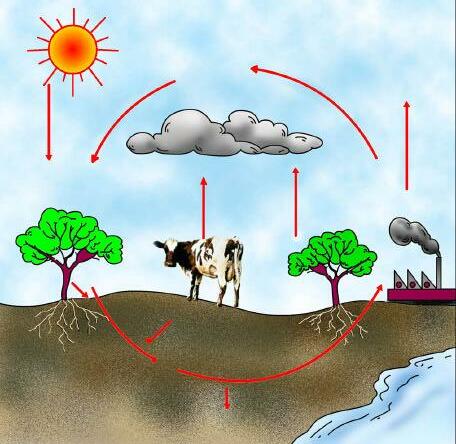
48
Sunlight CO2 cycle Photosynthesis Organic carbon Decay organisms
Consumption of fixed carbon
The fixed carbon passes towards higher trophic levels via the food chains of the terrestrial and aquatic ecosystems. In this process, herbivores feed on plants and, in turn, are eaten by carnivores. Thus, the carbon assimilated by plants becomes a part of the animal tissues on consumption by herbivores. This is how carbon flows from the atmosphere into the organic phase of the cycle.
The carbon dioxide is released back to the atmosphere mainly through the respiration of organisms and by the activity of decomposers. All organisms in terrestrial and aquatic ecosystems obtain their energy requirements by unlocking the energy stored by photosynthesis mainly through aerobic respiration.
During aerobic respiration, oxygen is used and carbon dioxide and energy is released.
Conversion of organic carbon to CO2
The action of decomposers also returns CO2 to the atmosphere. The carbon contained in animal wastes and the dead organisms is eventually released by decomposers. In this process, the organic matter contained in the decaying material is oxidised by a series of processes called mineralisation that occurs in the soils and in the sea. As a result carbon dioxide is released back to the atmosphere.
The rate of release of carbon dioxide from the organic matter depends on certain environmental conditions such as soil moisture, temperature and precipitation. Volcanic eruptions may also release carbon as carbon dioxide when the lava heatsup the underground limestone.
Temporary removal of carbon from circulation
Carbon is withdrawn from circulation under certain conditions. In swamps and in marshes organic carbon in the dead matter is not completely broken down. The dead matter is stored as raw humus or peat. Finally they are converted into coal and thereby the carbon is temporarily withdrawn from circulation. Calcium carbonate deposits in the oceans are another example of carbon that is not involved in the cycling process. Here, carbon dioxide reacts with water to form carbonates.
A significant portion of carbon is found in the oceans in its sedimentary form. Carbonates are used by clams, oysters, some protozoans and algae in the oceans for the construction of their shells. These shells become buried in the bottom mud when the organisms die. This carbon is removed from cycling and gets incorporated into bottom sediments. On the geological timescale they may appear as limestone rocks or coral reefs.
Let us now consider the current trends in relation to the increasing CO2 levels in the atmosphere and its impact on the humans.
Carbon dioxide and the rising world temperatures
The current increase in carbon dioxide concentration is mainly due to the burning of coal, oil and other fuels. The deforestation and changes in land-use patterns over the last century have also made a major contribution to rising carbon dioxide levels. It is estimated that the concentration of carbon dioxide in the atmosphere would pass 600 ppm, roughly double the current level, by the third quarter of the twenty-first century. It would lead to a global surface-air warming of between 1.5oC and 4.5oC.
Carbon dioxide causes the temperature of the air to rise primarily because it traps the longer wavelengths of infraredlight or heat and prevents them from radiating into space. By doing so it creates what is known as a greenhouse effect.
A global warming of 3oC to 4oC over the next 75 years would cause the worldwide sea level to rise about 70 centimetres. At a certain point, the ice sheets and ice masses in the Arctic Ocean will start to melt often with serious consequences for all coastal areas. The increasing temperatures would create major regional and global climatic
Cycling of Materials in the Ecosystem
The chemical reaction that occurs in the processes of aerobic respirationis:
C6H12O6 + 6O2‡ 6CO2 + 6 H2O + Energy
The chemical reaction for carbonate formation is
CO2 + H2O ‡ H2CO3‡ H+ + HCO3H+ +HCO3 - ‡ 2H+ + CO3 2-
49
problems. The changes in the regional climatic patterns would create adverse effects on agriculture in the world. Therefore the problem of increasing carbon dioxide levels should be monitored with great care so that it can be minimized as much as possible. You will read about this aspect in detail in Unit 14 of this course.
SAQ 3
a) What factors influence the carbon dioxide concentration of the atmosphere?
b) List four natural ways by which carbon returns to the atmosphere.
We now consider the two gaseous cycles, namely, the oxygen cycle and the nitrogen cycle.
10.6 GASEOUS CYCLES
As we have mentioned earlier gaseous cycles are closely linked to the atmosphere and the oceans and are characterized by a prominent atmospheric phase. The most important gaseous cycles for living organisms are considered as those of oxygen and nitrogen. These two gases account for 21% and 78% of the atmosphere, respectively, and are the dominant components of the earth’s atmosphere.
10.6.1 Oxygen Cycle
We depend on oxygen for our survival. It supports life as it is involved in aerobic respiration and the release of energy in all organisms.
Reservoirs holding oxygen
The major reservoir of free oxygen that supports life is the atmosphere. In addition, waterand carbon dioxide are also two main reservoirs of oxygen. Ozoneis another molecular form of oxygen which is present in a very small quantity in one of the atmospheric layers called the stratosphere. Oxygen is found as a component in organic molecules ofanimalsand plants. Further in rocks of the lithosphere, oxygen is bound into chemical compounds such as oxidesand carbonates.Undecomposed organic matter in the form of fossil fuels and carbon in sedimentary rocksalso represent some of the reservoirs holding oxygen.
Cycling of oxygen
Atmospheric oxygen originates basically in two ways:
• Firstly, in the atmosphere through a process driven by solar radiation, water molecules in the atmosphere are dissociated to produce hydrogen and oxygen. As a result oxygen is released to the atmosphere. Most of the hydrogen formed in this reaction also escapes into space. If the hydrogen did not escape, it would recombine with oxygen to form water vapour again.
• Secondly, oxygen is produced in photosynthesis that occurs mainly in plants in the presence of sunlight. In the process of photosynthesis water molecules are broken down using solar energy to produce oxygen.
The oxygen that enters the atmosphere is removed from it for different purposes. Most of the atmospheric oxygen is basically utilized for the respiration of organisms including the decomposers that decay organic matter. Oxygen is also used up in geological processes such as oxidation of sedimentary rocks. Since oxygen is chemically very reactive, it reacts in the oxidation of elements to form oxides and various other compounds like nitrates and sulphates. Oxygen is also removed from the atmosphere during burning of fuel, etc.
50
Ecosystem and its Functioning
that take atmospheric
Human impact on oxygen cycle
Human activities such as the burning of fossil fuel, the increased use of pesticides and their release into the atmosphere, removal of vegetation cover, mining of ground water, etc. affect the oxygen cycle.
10.6.2 Nitrogen Cycle
Nitrogen is essential for protein synthesis in all living organisms. It constitutes nearly 16% by weight of all the proteins. It is present as molecular nitrogen in the atmosphere. Nitrogen is chemically inert and can be utilized by only a few organisms. Nitrogen fixation is a complex process that is crucial to the existence of life on earth.
Reservoirs holding nitrogen
Nitrogen is tied up in four different types of reservoirs at any time of its cycling. These are the atmosphere,soil, waterand living organisms. Gaseous nitrogen makes up nearly 80% of the earth’s atmosphere by volume, which is the largest reservoir of nitrogen. The total amount of fixed nitrogen in the soil, oceans and the bodies of organisms is only about 0.03% of that figure.
The atmospheric nitrogen reservoir of molecular nitrogen is chemically inactive. The aqueous reservoir of nitrogen is biologically more important to living organisms and it comprises soil-water and the other aquatic ecosystems such as oceans.
Nitrogen is present in these aquatic reservoirs in the form of nitrates (NO3 -) or ammonia (NH3 or NH4 +) which can be absorbed by plants and then be incorporated into plant tissues in a variety of forms such as proteins, pigments, nucleic acids and vitamins. These nitrogen containing compounds are then transferred to animals via food chains. Therefore organisms are also one of the main reservoirs of nitrogen.
Cycling of nitrogen
The cycling process of nitrogen, from the atmospheric reservoir, through organisms and then back to the atmosphere, involves five processes.
• Nitrogen fixation
• Assimilation and biosynthesis
• Decomposition and ammonification
• Nitrification
• Denitrification
Fig.10.5shows the main steps involved in the cycling of nitrogen in the biosphere. We now explain these steps, in brief.
Nitrogen fixation
There is a very large supply of nitrogen in the atmosphere, but only very few organisms can directly use this molecular nitrogen. Nitrogen needs to be fixed before it can be taken up by many organisms. Nitrogen fixation is the conversion of gaseous nitrogen into ammonium ions, nitrites or nitrates. It is accomplished in three main ways: atmospheric fixation, biological fixation and industrial fixation. We shall now look at these processes in detail.
Atmospheric fixation of nitrogen is a phenomenon that occurs by photo and electrochemical fixation during thunder and lightning. In this process, nitrogen combines with oxygen and water. As aresult, nitrate ions are formed. The energy needed for this process is provided by lightning or by cosmic radiation. The resulting ammonia and nitrates are carried to earth’s surface in rainwater.
Cycling of Materials in the Ecosystem
51
+
Ecosystem and its Functioning
Reservoir for N2
Atmosphere
Uptake of Nitrogen by Nitrogen-fixing bacteria
Industrial fixation Atmospheric fixation
Release of NO3 , NO2 , NH3 + into soil by detritivores
Release of N2 or NO2 by denitrifyers
Industrial fixation
Living organisms
Atmospheric fixation
Uptake of fixed N by aquatic organisms
Uptake of fixed N by rooted plants
Earth Water
Reservoir for dissolved fixed Nitrogen in interstitialwater
Release of NO3 , NO2 , NH3 by detritivores
Leaching of soils and sediments by ground water
Reservoir of nitrogen in atmosphere
Reservoir for dissolved Nitrogen
Fig.10.5: The nitrogen cycle
Atmospheric fixation
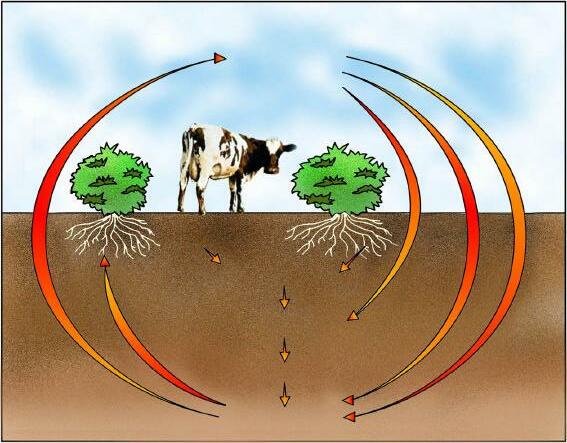
52
Fertilisers Fixation by nitrogenfixing bacteria Plant matter Animal waste Denitrifying bacteria Decomposers Ammonia Nitrites Nitrates
Another method of nitrogen fixation is biological fixation. In biological fixation, molecular nitrogen is broken into two atoms of free nitrogen. The free nitrogen atoms then combine with hydrogen to form ammonia molecules. This process is accomplished by several groups of organisms including symbiotic bacteria living in association with leguminous plants, free living bacteria, cyanobacteria (blue-green algae) and fungi.
The symbiotic bacteria (e.g., Rhizobium) capable of fixing atmospheric nitrogen live in the root nodules of leguminous plants like peas, beans, alfalfa, clover etc. The bacteria provide the plants with nitrogen and the plants, in turn, supply nutrients and organic substances needed by thebacteria. Legume crops play an important role in enriching the soil with nitrogen in the usable form. In addition, the aerobic Azotobacter and anaerobic Clostridium are free living nitrogen fixing bacteria found in many soils. They are the chief suppliers of fixed nitrogen in grasslands and other ecosystems where symbiotic nitrogen fixing bacteria are absent.
Certain species of cyanobacteria are another important group of largely non-symbiotic nitrogen fixers. Of some 40 known species, the most common belong to the genera Nostoc and Calothrix. Several species of soil fungi and certain lichens like Collema tunaeforme and Peltigera rufescens also play an important role in nitrogen fixation. Lichens with nitrogen fixing ability possess nitrogen–fixingcyanobacteria as their algal component.
Nitrogen can be fixed artificially, using industrial processes as in the production of fertilizers. In this case the process of nitrogen fixation is called industrial fixation. At present, the amount of nitrogen fixed by man industrially far exceeds the amount fixed by atmospheric and biological fixation.
Assimilation and biosynthesis
So far you have learnt that during periodic thunderstorms the gaseous nitrogen in the atmosphere is converted into nitrates. These nitrate ions eventually reach the earth’s surface through precipitation. In addition, all the other groups of organisms including symbiotic and free-living bacteria, cyanobacteria and fungi species also produce either ammonium or nitrate ions in the process of biological fixation.
The nitrate ions and ammonium ions supplied to the soil by the above mentioned processes are absorbed by plants through their root system and are incorporated in the plant tissues in various forms. The plant materials are thus rich in nitrogen-containing compounds. These nitrogen–rich compounds present in the plant material are then given to the higher trophic levels via food chains. Animals and all heterotrophs receive their nitrogen requirements either directly or indirectly from plants for the synthesis of amino acids, proteins, nucleic acids etc.
Decomposition and ammonification
Excretion and the death of all organisms return nitrogen to the soil through the action of detritus food chain. In this decomposition process organic nitrogen present in the dead plant and animal material and the excretory products is broken down into simpler substances like amino acids by the detritus organisms like bacteria and fungi. The amino acids then undergo a process called deamination. Amino group (-NH2) ofthe amino acids is liberated from the decomposing nitrogenous wastes to form ammonia. The removal of –NH2 group from the amino acids is termed as deamination.
The process of conversion of organic nitrogen into ammonia and ammonium salts is called ammonification. The resulting ammonia may enter into the atmosphere and the ammonium salts released to the soil are mostly absorbed by the plants.
Nitrification
Nitrification is a biological process in which ammonia is oxidized into nitrite and nitrate ions.
Cycling of Materials in the Ecosystem
The reactions involved in nitrificationare.
2NH3 + 3O2 ‡ 2NO2 - + 2H2O +2H+
2NO2 - + O2 ‡ 2NO3 -
53
Ecosystem and its Functioning
Two groups of chemosynthetic autotrophic bacteria, namely, Nitrosomonas and Nitrobacter are involved in the transformation of ammonia into nitrate ions. These are collectively called nitrifyingbacteria and derive energy for their metabolism from these reactions. Nitrosomonas utilize the ammonia in the soil as their source of energy and the ammonia is converted to nitrite ions. The nitrite ions are then further transformed into nitrate ions, by the other group of bacteria, Nitrobacter
The roles of nitrifying bacteria in the cycling of nitrogen can be listed as follows:
• They prevent the loss of ammonia from soil into the atmosphere as a gas.
• They transform ammonia into a usable form, which can be directly absorbed by plants.
A part of the nitrate ions formed during nitrification may be absorbed by plants. A certain part of soil nitrates are lost to the system and are transported away by the surface run-off or ground water due to its high solubility in water. The leached nitrate ions then run off to streams,lakes and eventually accumulate in the sea where it is available for aquatic organisms. Ultimately, they may be lost to deep ocean sediments or brought back to the surface waters by upwelling of cold water from the depths. The nitrogen compounds that reach the deep sediments return to the surface layers very slowly. Generally, they are brought back to the land by birds that feed on fish.
Denitrification
Nitrate ions present in the soil are degraded to form gaseous nitrogen under the action of a particulargroup of bacteria. This transformation is called denitrification.The bacteria that carry out this process are termed denitrifying bacteria,particularly Pseudomonas. The denitrification process takes place under certain conditions. It needs a low oxygen concentration, a pH range of 6 to 7, an optimum temperature of 60oC and also a sufficient supply of organic matter.
The role of denitrifiying bacteria is very important. Without them, the nitrogen taken from the atmosphere would not be released from plant and animal tissues and also ocean sediments.
So far we have been discussing the atmospheric phase of the nitrogen cycle. The sedimentary phase of the nitrogen cycle is fairly simple. Nitrogen that is not reused by living organisms can be permanently incorporated into sediments by normal sedimentary processes. However, sedimentary nitrogen is either in the form of nitrate or ammonia. Since they do not become bound onto soil particles they are more likely to dissolve in water percolating through the soil and be carried into groundwater system.
Human impact on the nitrogen cycle
The human intrusion into the nitrogen cycle upsets its natural equilibrium either by reducing nitrogen availability or by overloading the system. For example, conversion of forests intocroplands results in a steady decline in the nitrogen content of soil. Harvesting of timber also results in a heavy outflow of nitrogen from the forest ecosystem. When nitrates are washed out into aquatic bodies they cause eutrophication leading to a collapse of the entire ecosystem.
On the other hand, heavy applications of commercial fertilizers disturb the natural balance between fixation and denitrification. A considerable amount of the added nitrogen may be leached into the ground water. Excessive amounts of nitrates in ground water cause health problems in humans.
Automobiles and power plants are the major source of nitrogenous pollutants of the atmosphere, particularly nitrogen oxides. These nitrogen oxides react with molecular oxygen, ozone and hydrocarbons to form several other toxic pollutants. You may now like to stop and assimilate what you have studied so far. Try an exercise.
54
In the following statements place a tick for the correct statements and a cross for the wrong statements.
1. Despite its immense value and indispensable nature, nitrogen is never taken up directly by animals and higher plants. This is because,
I. nitrogen is inert and does not participate in any reaction ( ) II. animals and plants have no mechanism to make use of atmospheric nitrogen( )
2. Rhizobium is a symbiotic bacterium found in the root nodules of leguminous plants. This means that,
I. they obtain nutrition from the other organisms. ( )
II. they obtain nutrition from dead and decomposed organisms. ( ) III. they are autotrophs. ( ) IV. they live in partnership with other organisms. ( )
So far we have described the different types of gaseous cycles that operate in the biosphere. We now discuss the sedimentary cycles, namely, the sulphur cycle andthe phosphorus cycle.
10.7 SEDIMENTARYCYCLES
There are many different kinds of sedimentary cycles in nature. But we will restrict ourselves to the two cycles (sulphur and phosphorus) important to us. In sedimentary cycles, the main reservoirs are soil, rocks and minerals. The sulphur cycle, for example, has both sedimentary and gaseous phases within the cycle. The phosphorus cycle is wholly sedimentary.
Though there are variations in the sedimentary cycles of different elements, each one has two abiotic phases: the salt solution phaseandthe rock phase.Thesaltsolution phase is when the nutrient occurs in a water-soluble form. Rock phase is when the nutrient is a constituent of rock. In the sedimentary cycles both these phases can be seen prominently. These two phases of the cycle of any element are very closely linked to each other.
Mineral elements found in the rocks come directly from the Earth’s crust and are released slowly by weathering. In the solution phase, the elements enter the water cycle as soluble salts and may be absorbed by plants. The elements that enter the plants then fulfil the micro and macro mineral requirements of both plants and animals. If the elements in the solution phase are not absorbed by plants they move through the soilto streams and lakes and finally reach the oceans where some of them remain in this phase indefinitely. Other minerals go through sedimentation and become incorporated into salt beds, silts and limestones. After weathering, they return to the earth’s crust and again enter the cycle.
Let us understand how the sulphur and phosphorus cycles operate in the biosphere.
10.7.1 SulphurCycle
The sulphur cycle has both sedimentary and gaseous phases. It provides nutrients for the plants in the form of sulphates that are important constituents of organic matter.
Reservoirs holding sulphur
In the sedimentary phase, sulphur is tied up in organic and inorganic deposits and is released by decomposition and weathering, respectively. The pyrite rocksareone such example of a sulphur deposit. As a result, sulphur is made available for the use of
55
SAQ 4
Cycling of Materials in the Ecosystem
plants. The gaseous phase of the cycle allows the circulation of sulphur in the atmosphere.
Absorption and incorporation into organisms
Sulphur appears in nature in several different forms; Sulphates (SO4 2-), Hydrogen sulphide (H2S), Sulphur dioxide (SO2), elemental Sulphur and Sulphydril group (-SH). Sulphur is mostly found in soil water and in aquatic bodies in the form of sulphates or its soluble form.
Generally, plants absorb sulphur as sulphates. It is then incorporated into certain organic molecules such as amino acids, vitamins etc., through a series of metabolic processes. The form in which sulphur is most commonly found in living tissues is the sulphydril group (-SH). Sulphur, which is incorporated into plant tissues, is then passed through the grazing food chain and is given to the heterotrophs of the community.
Cycling of sulphur
Sulphur is not abundant in the atmosphere compared to the aqueous and sedimentary reservoirs. But in highly urbanized and industrialized areas where there is heavy atmospheric pollution, the atmospheric phase is more prominent than the sedimentary phase of the sulphur cycle. The opposite is found in the uncontaminated areas.
The cycling of sulphur consists of the following steps:
• Absorption and assimilation of sulphates by plants.
• Incorporation of sulphur compounds into animal tissues via food chains.
• Decomposition of organic matter into inorganic sulphur compounds by microbes under anaerobic and aerobic conditions.
• Formation of sedimentary rocks from inorganic sulphur compounds.
• Gaseous phase of the sulphur cycle.
Fig10.6 shows how sulphur is cycled through the biosphere. We now explain the steps in the sulphur cycle.
The decomposition by microbes
Excretion and death of organisms carry sulphur containing material back to the soil in terrestrial ecosystems and to the bottoms of ponds, lakes, and oceans in the aquatic ecosystems.
Several types of chemosynthetic bacteria act on the sulphydril group indecaying matter and convert it into various forms such as sulphates, sulphides or elemental sulphur under different conditions.
The degradation process of organic matter and the release of inorganic sulphur take place in the following manner.
• The bacterial decomposition of organic material involves the degradation of proteins, vitamins, etc., and the sulphydril group is released as hydrogen sulphide. Inan aerobic environment, hydrogen sulphide formed in this manner, is oxidized into sulphates by chemosynthetic or photosynthetic bacteria.
Thiobacillusis a chemosynthetic bacterium found in terrestrial ecosystems whereas Chromatium and Chlorobium are photosynthetic bacteria present in aquatic environments.
Thesulphates that are produced in this reaction are then absorbed by plants through their root systems.
56
Ecosystem and its Functioning
Release of SO2 from combustion of fossil fuels, volcanism
Rain
Release of sulphate from detritivores
Reservoir for H2S, SO2
Atmosphere
Released H2S from anoxic decomposition
Living organisms
Rain
Cycling of Materials in the Ecosystem
Uptake of sulphate by rooted plants
Uptake of sulphate by aquatic organisms Release of sulphates by detritivores
Earth Water
Reservoirfor most forms of sulphur
Erosion
Precipitation as insoluble form
Fig.10.6: The sulphur cycle
57
Precipitation Fuel combustion SO2 River runoff Absorption by sea surface H2S gas Absorption by vegetation SO4 Fertilisers Plant uptake Decomposition H2S Ironsulphides Organic S InorganicS SO4
Ecosystem and its Functioning
• Inan anaerobic environment such as the bottom of lakes, sulphides cannot be oxidized since there is no free oxygen. However, there are photosynthetic bacteria, which often inhabit such environments that can use infrared radiation to manufacture carbohydrates. In this process, sulphidesare oxidized either to sulphatesorelementalsulphur by the actionof bacteria.
Elemental sulphuris oxidized into sulphates, under both aerobic and anaerobic conditions through bacterial action. In an aerobic environment the conversion of elemental sulphur into sulphates is quite rapid.
In an anaerobic situation,whennitrate ions are present the elemental sulphur is transformed into sulphates.
Formation of sedimentary rocks
When sulphur is changed from its organic form into inorganic forms such as sulphates or elemental sulphur, these compounds enter the sedimentary phase of the sulphur cycle in various ways.
Elemental sulphur is not soluble and therefore accumulates in sediments. In other instances it combines with certain other elements like iron and calcium to form other compounds. Sulphur combines with iron in the sediments to form ferrous sulphide, which is highly insoluble. These sedimentary rocks containing ferrous sulphide are called pyritic rocks.
Sulphates when present in soil may also combine with calcium to form calcium sulphate.
The exposure of sulphate rich rocks such as pyrite rocks to air may lead to the formation of sulphates. In this process, the ferrous sulphide in the pyrite rocks combine with free oxygen and water to form ferrous sulphate (FeSO4) and sulfuric acid.
Pyrite rocks when exposed to weathering, discharge heavy slugs of sulfuric acid and ferrous sulphates. In this reaction, sulfuric acid causes the pH value of the water to drop. As a result the aquatic life is adversely affected. The oxidation of pyrite to sulphate can be completely inorganic. This process can also take place due to the action of bacteria. In most instances about 80% of the sulphate produced by the oxidation of pyrites is bacterial and the remaining 20% is inorganic.
Gaseous phase of the sulphur cycle
The gaseous phase of the sulphur cycle permits the circulation of sulphur on a global scale. The atmospheric phase of the cycle is very significant especially in industrial countries. The gaseous forms of sulphur includes sulphur dioxide, hydrogen sulphide and sulphur particles.
The sources of sulphur dioxide fall into two categories: natural and humanmade. Natural sources include volcanoes, sea spray, weathering and microbial activity. These sources are responsible for about 60% of sulphur emissions to the atmosphere. Anthropogenic emissions comprise the remaining 40%. Of the anthropogenic emissions, 60% comes from the burning of fossil fuels and 40% of that from the burning of coal. The sulphur dioxide in the atmosphere can react with oxygen to form sulphur trioxide, which in turn combines with water to form sulphuric acid. In areas of heavy contamination sulphuric acid falls out in precipitation and is termed as “acid rain”. Acid rain is harmful to both terrestrial and aquatic life on earth.
Human impact on the sulphur cycle
Annually, we pour about 147 million tons of sulphur dioxide into the atmosphere. Most of it comes from burning of coal. Sulphur dioxide produces acute toxicity and major damage to vegetation in areas surrounding the sources of emissions. The
58
Fe2+ Ca2+
exposure of plants to sulphur dioxide may harm or even kill them. Acidic aerosols do maximum injury to plants. The external surfaces of leaves absorb the aerosols. Symptoms of sulphur damage in plants are shown by a bleached appearance of leaves, partial defoliation and reduced growth.
Once in the atmosphere gaseous sulphur dioxide reacts with water vapour to form sulphuric acid. Sulphuric acid in the atmosphere has a number of effects on humans. It causes irritation in the respiratory tract and lungs and may even lead tothe development of bronchial asthmatic condition in some people. A significant portion of the sulphuric acid falls on the land and water bodies as acid rain and acts as a threat to life in both terrestrial and aquatic ecosystems.
You may now like to attempt an exercise to check your understanding of the sulphur cycle.
SAQ 5
Choose the correct answer and indicate in the box provided.
a) The principal form of sulphur that is reduced and incorporated into proteins by plants is,
I. elemental sulphur II. sulphur dioxide III. sulphate IV hydrogen sulphide [ ]
b) A large quantity of sulphur is thrown into the atmosphere at present from,
I Volcanic activities II Burning of fossil fuels III Burning of vegetation IV. Activity of microoganisms [ ]
10.7.2 Phosphorus Cycle
The phosphorus cycle is a sedimentary cycle. It is based on the interactions between the biotic components and the soil and water of the ecosystem. The cycle is simpler than the other nutrient cycles.
Phosphorus is relatively scarce in most environments and many organisms have mechanisms by which phosphorous can be stored internally. Phosphorous deficiency is often a limiting factor in terrestrial environments and is the most common limiting factor in aquatic environments too.
Phosphorous has a wide variety of biological functions including roles in nucleic acids, cell membranes and skeletal systems. It plays a central role in the energy transfer process of photosynthesis and respiration in cells, via molecules such as adenosine triphosphate (ATP).
Reservoirs holding phosphorous
The main reservoirs of phosphorous are rocksand natural phosphate deposits. During the geological era, phosphorous gradually accumulated in the ocean sediments. These sediments, over tens of millions of years of geological time periods were converted into sedimentary rocks. These rocks are attacked by weathering, leaching and erosion and phosphorus is released and made available to other organisms.
The phosphorous found in the oceanic sink is transported to the land as guano depositswhen marine organisms are consumed by birds. The guano deposits have
Cycling of Materials in the Ecosystem
59
been exploited by humans as a source of phosphate rich material which is used as a fertilizer.
Cycling of phosphorus
The phosphorus cycle could be considered as occurring in two phases: an organic phase anda sedimentary phase
The main steps in the cycling of phosphorus are:
• Absorption, assimilation and incorporation of phosphates in organisms.
• Decomposition of organic phosphates by microbes.
• Sedimentation of inorganic phosphate in terrestrial and aquatic ecosystems.
Fig. 10.7shows how these steps operate in the cycling process of phosphorus through the biosphere.
Absorption, assimilation and incorporation
In the organic phase, phosphorous is made available to living organisms, generally as ionic phosphate. These ionic phosphates are then absorbed by plants through their root systems. From the plants, phosphorus is passed to the rest of the community along the grazing food chains.
Decomposition of organic phosphates
The phosphorous that is incorporated into plant and animal tissues is returned to the ecosystem by excretion and the death of organisms. The organic phosphates in dead plant and animal matter are transformed into inorganic phosphates by the action of bacteria. The inorganic phosphates may take different routes. They can be immediately taken up by plants; some of them are transformed into various other compounds by chemical processes and some are immobilized in the bodies of microbes. Some of the phosphorous of terrestrial ecosystems may escape into the lakes and seas. In the aquatic systems phosphorous is rapidly recycled through planktons.
Sedimentation of inorganic phosphates
The phosphorous cycle is quite complex in its sedimentary phase. Inorganic phosphates in terrestrial ecosystems, which are not immediately used by the living plants, are bound into sediments. They may also react chemically with certain other elements in the soil or sediments. Some of these reactions produce insoluble compounds, which cannot be utilized by plants. For instance, chemical reactions in an aluminium rich acidic soil produce an insoluble end product.
Similar reactions take place with elements such as calcium, iron, and manganese. These reactions depend on many environmental factors like soil pH, the concentration of ions, and the amount of organic matter.
Each year large quantities of phosphorous are washed into the oceans, where a part of it is deposited in shallow sediments. These shallow sediments may release some of the phosphates for aquatic organisms. The rest of it is lost into the deep sediments, and hence is taken out of circulation.
The cycling of phosphorous not only involves the movement of phosphorous from land to sea but also from sea to land. Sea birds have played an important role in returning phosphorous from sea to land. The guano deposits or faecal phosphate especially found in the deserts of the west coast of South America have been built up by sea birds. These deposits are considered as a major supply of phosphates of the world.
60
Ecosystem and its Functioning
Cycling of Materials in the Ecosystem
Dust from blowing soil
Rain
Rain
Release of phosphate by detritivores excretion
mining
Atmosphere Phosphate uptake by rooted plants Animal wastes, decomposition Erosion Excretion and decomposition
Living organisms
Earth Water
Phosphate uptake by aquatic organisms Phosphate release by excretion, detritivores Precipitation as insoluble phosphate
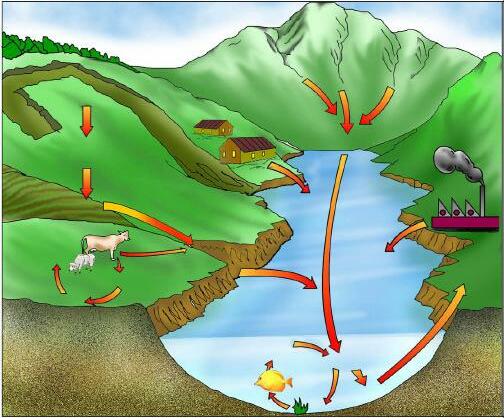
Fig.10.7:
rocks Industrial effluents
rocks Domestic wastes, Sewage Dissolved phosphates Marine sediments Algae Animals
The phosphorous cycle
The amount of phosphates available for an organism depends primarily on the rate at which this element moves through the organic phase of the cycle. The release of phosphate from the sediments is a very slow process. Therefore, in most instances, this results in a deficiency in the amount of available phosphates for the biological community of ecosystems.
61
Phosphate
Erosion Phosphate
Phosphate
Erosion Fertiliser containing phosphate Animals Plants Soil phosphates
Ecosystem and its Functioning
Human impact on the phosphorus cycle
Human activities have altered the phosphorous cycle through the disposal of waste products and the application of phosphates to crop lands. In addition, concentrated phosphorous in the wastes of food-processing plants, sewage plants and detergents add excessive phosphates to natural waters. Therefore, in aquatic ecosystems, since phosphorous is a limiting factor, the vegetation takes up phosphorous rapidly, causing a sudden increase in algal blooms. This phenomenon is called eutrophication which causes a disruption in the aquatic community by changing its equilibrium.
SAQ 6
a) What are the sources of phosphorus?
b) What processes are involved in making phosphorus available to organisms?
c) Under what conditions does phosphorus become a pollutant?
So far you have studied about various important nutrient cycles. We now examine in an integrated manner how various nutrients are recycled in an integrated manner in an ecosystem. We take up the specific example of forest ecosystems.
10.8 NUTRIENT BUDGET AND NUTRIENT CYCLING OF A FOREST
You have learnt that ecosystems receive nutrients in several ways and at the same time they lose nutrients due to other factors. The measure of the input and outflow of nutrients through the various components of an ecosystem form its nutrient budget. Nutrients are a crucial factor in maintaining the productivity of forest ecosystems. Nutrients in a forest ecosystem are found mainly in the soil, water and also in the biotic components. Therefore, the nutrient budget of an undisturbed forest ecosystem depends on several factors:
• the amount of nutrients that the ecosystem receives from different sources,
• the amount of nutrients retained in the different components of the ecosystem, and
• the amount that is lost from the ecosystem due to leaching, erosion etc.
The nutrient budget is maintained through the cycling of nutrients in the forest. In tropical forests, nutrient cycling is a speedy process and it promotes high productivity. In the temperate forests, the cycling of nutrients takes place very slowly leaving a very rich nutritive soil.
In this section we will first look at how the nutrient budget of a forest is maintained. Then we will focus our attention on cycling of nutrients and try to understand how this process helps in maintaining the nutrient budget of a forest ecosystem.
Nutrient budget of a forest ecosystem
The nutrient budget of a forest depends on ways and means through which the system exchanges nutrients with its environment. The ecosystem receives nutrient inputs mainly by the weathering of parent material or the bedrock, the decomposition of detritus by microbial activity, precipitationand nitrogen fixation. We shall now look at these processes providing nutrient inputs into the forest ecosystem in detail.
Weathering of parent material
The parent material or the rocks are the main source of nutrients of the soil. Often the bedrock beneath a soil profile forms the parent material. The nutrient richness of the soil will vary according to the concentration of inorganic elements that are released as thebedrockdecays. The amount of nutrients released to the soil per unit time depends on mainly two factors: the rate of decay of the parent material and theinitial concentration of nutrients in the parent material. Other important factors include
62
the physical properties of the rock such as hardness or solubility of mineral nutrients in water.
Rocks that are weakly cemented or are soluble in water are likely to release nutrients relatively quickly resulting in a nutrient rich fertile soil. In contrast, a very hard rock that decays very slowly and releases a very poor supply of nutrients will yield an infertile soil. The parent material is transformed into its inorganic mineral constituents by weathering. As you know, weathering is the natural breakdown of parent material into fragments. It is facilitated by physical, chemical or biological agents and it ultimately leads to the formation of soil.
As the process of weathering proceeds, it produces partially decomposed mineral matter such as clay. Clay minerals are small flat particles that stack together. These clay particles have a relatively large surface area with a negative electric charge on their surfaces, which attract positively charged cations such as Ca2+, K+, Mg2+, NH4 + etc. present in the soil. Therefore the clay particles play an important role in holding cations that are released from the parent rock.
Decomposition of detritus by soil organisms
The dead organic matter formed from the death and decay of plants and animals releases nutrients by the activity of a wide variety of organisms including worms, snails, insects, bacteria and fungi that consume detritus as their primary source of carbon and energy. In a forest, the decaying organic matter is basically leaf litter and the branches of trees. The breakdown ofleaf litteroccurs in three ways:
a) Leaching of soluble mineral and simple organic compounds by water.
b) Consumption by large detritus-feeding organisms like millipedes, earthworms and other invertebrates.
c) Action of fungi and mineralization carried out by bacteria.
The leaves of different species of trees decompose at different rates, depending on their composition. The difference of the composition of the leaves vary between species depending on the lignin content of the leaves. Lignins are a heterogeneous class of phenolic polymers and are difficult to digest compared to cellulose. Only certain species of fungi can break down lignin. Fungi differ from bacteria in this case, because fungi are able to digest cellulose, especially lignin.
In addition to their role in decomposing detritus, certain species of fungi increase the uptake by plants of minerals from soil and increase the total surface area for nutrient assimilation. These fungal species grow on the surface of or inside the roots of many types of woody plant species. This association of fungi with the plant is said to be a symbiotic relationship and is termed as mycorrhiza. There are two types of mycorrhiza namely the ectomycorrhiza and the endomycorrhiza. When the fungus forms a sheath over the root surface it is called ectomycorrhiza and when the fungus penetrates the root tissue it is called endomycorrhiza.
Other than these two methods, mentioned above,atmospheric and biological nitrification provides the soil with nitrogen containing compounds.Precipitation also adds inorganic mineral substances to the soil in a small scale.
Having looked at the ways in which the ecosystem receives its nutrient inputs, we now turn our attention to the ways in which the system loses its nutrients.
Nutrient loss from forest ecosystem
There are several ways by which the forest ecosystem loses nutrients. They are the absorption of nutrients by the vegetation and also through the leaching and erosion due to surface-runoff.
Cycling of Materials in the Ecosystem
63
Ecosystem and its Functioning


If the nutrient budget is in equilibrium as it is in an undisturbed ecosystem, the net loss must be made up by the weathering of the parent material, nitrogen fixation, precipitation and decaying of organic matter. Table 10.2shows some results of a study whichwas carried out in estimating the nutrient budget of a temperate forest. This study was done in the Hubbard Brook forest at Hubbard Brook, New Hampshire. In this study detailed nutrient budgets for the main cations were obtained for several small watersheds within the forest ecosystem (Likens et al., 1977)
Several experimental sites were chosen and each experimental site formed a catchment or an area in which all the surface water drained into a single stream with
64
Fig.10.8: Nutrient budget in forest ecosystems. Input of nutrients is through precipitation, dust, litter-fall, weathering and root decomposition. Outflow is through harvesting of forest produce, hunting, runoff, erosion and leaching
Release of nutrients by weathering
root decomposition Nutrient loss through runoff and erosion
Nutrients
Nutrients
Litter fall and leaching of nutrients
Nutrients in forest produce
and
Nutrients in windblown dust
in precipitation
in wood harvest
an underlying rock which is impermeable to water. Because of this impermeable rock layer any nutrients leaching form the system cannot be lost downward. The only loss of dissolved nutrients from the ecosystem should be in the stream water. Measurements were made on the concentrations of main nutrients and suspended particles in the water. The nutrients that enter into the ecosystem through precipitation were also measured. The nutrient uptake by the plants was also estimated along with the net loss of the nutrients from the ecosystem.
Table 10.2: Cation budgets for representative temperate forest ecosystems
Precipitation input Stream outflow Net loss Uptake by vegetation
Cycling of Materials in the Ecosystem
Calcium Potassium Magnesium Sodium
2-8 1-8 1-11 1-58
8-26 2-13 3-13 6-62
3-18 1-5 2-4 4-21
25-201 5-99 2-24 -
Values are reported as ranges, in Kg ha-1; 1 hectare (ha) equals 10,000 square metres, or 2.47 acres.
Source: Carlisle et al 1966; Likens et al.1967, Duvingneaud and Denayer-de-Smith 1970.
Such studies on nutrient budgets reveal the amount of nutrient inputs as well as losses from the ecosystem and also its impact on the productivity of the ecosystem.
Having looked at the nutrient budget we now focus our attention on the cycling of nutrients in a forest ecosystem.
Nutrient cycling in forests
Most tropical forests have virtually closed nutrient cycles. In humid tropical forests, the soils are deeply weatheredandthe nutrient regeneration by decomposition of detritus is quite a rapid process. Therefore, the nutrients are released and made available to the organisms very quickly. Once the nutrients are released to the soil they are absorbed by the vegetation before they can be washed away. When there is virtually no loss of nutrients or the leakage of nutrients is closed off, the system is called a closed system. In contrast, if the nutrients are washed out rapidly as in high erosive environments; the system is termed an open system
A number of factors promote rapid cycling of nutrients in tropical forests ensuing very high productivity. They are
• the warm climate with no winter season to retard the decomposition process, • the presence of a variety of decomposers, • the large root biomass which is concentrated near the soil, and • the nutrient retention in the leaves which are long lived
These features also help to conserve nutrients within the vegetation of the forest ecosystem. Because of the rapid cycling of nutrients in tropical forests, the soils are usually poor in nutrients. This poor nutrient status of the forest soil makes it unsuitable for the cultivation of agricultural crops. The nutrient cycling in temperate forests differs from that of the tropics because of the differences in the process of weathering and also the regeneration of nutrients from detritus. Table 10.3shows the data obtained from comparative studies of temperate and tropical forests (Ovington, 1965; Duvigneaud and Denayer-de-Smet, 1970; Greenland and Kowal, 1960). In these studies the distribution of mineral nutrients in the soil and living biomass of two temperate and one tropical ecosystem were compared.
65
Ecosystem and its Functioning
Table 10.3: Distribution of mineral nutrients in the soil and living biomass of two temperate and one tropical ecosystem
Nutrients (Kg ha 1)
Forest (and locality) Biomass (tons ha-1) Potassium Phosphorus Nitrogen
Ash and oak (Belgium) Living Soil Soil/living Oak and beech(Belgium) Living Soil Soil/living Tropical deciduous (Ghana) Living Soil(30cm) Soil/living
380 156 333
624 767 1.2 342 257 0.5 808 649 0.8
95 2200 23.1 44 900 20.5 124 13 0.1
1260 14,000 11.1 533 4500 8.4 1794 4587 2.0
Source: Ovington, 1965; Duvigneaud and Denayer-de-Smet, 1970; Greenland and Kowal, 1960
The following inferences have been made from this comparative study.
1. The accumulation of nutrients in vegetation is greater than it is in the soil of the tropical forest.
2 The ratio of each element in soil to its level in the biomass is much lower in the tropics.
Northern coniferous forest
Tropical rain forest
Soil Leaf Wood Litter
Soil Leaf Wood Litter
Fig.10.9: Distribution of organic carbon accumulated in abiotic (soil and litter) and biotic (wood and leaf) components of a tropical and temperate forest. Note that the tropical forest has a much larger percentage of organic carbon in plant biomass
The work on nutrient cycling in forests has shown the need for guidelines in the management procedures in forestry. The conservation of nutrients in the forest ecosystem can be done effectively only if we understand how nutrient cycles operate in these systems.
With this study of nutrient cycling in the forest ecosystem,we end the discussion on cycling of materials in ecosystems. We now summarise the contents of the Unit.
10.9 SUMMARY
• Nutrient cyclesare responsible for the circulation of nutrients through the biosphere between the organisms and the environment.
66
• Thecycling of all elements is tied to the water cycle which operates basically through the condensation and precipitation of atmospheric water vapour.
• All organisms require organic carbon as their primary substance of life. It is the major source of energy for most animals and microbes.Carbon reservoirsare maintained through photosynthesis and respiration of organisms.
• Atmospheric oxygen percentage is maintained mainly through the balance between photosynthesis and respiration.
• Fixation of atmospheric nitrogen occurs in several ways and as a result nitrogen is made available for the organisms as surface nitrate ions. The denitrification process is important in maintaining the atmospheric reservoir of nitrogen.
• Sulphur cycle has a prominent sedimentary phase. Formation of sulphate ions largely depends on the bacterial activity under aerobic and anaerobic conditions.
• Phosphorus cycle has only a sedimentary phase. Phosphorus is assimilated by plants in the form of phosphate ions. Inorganic phosphates form sediments in both terrestrial and aquatic ecosystems.
• The nutrient budget andthe nutrient cycling of tropical forests depend on the regeneration and assimilation of nutrients by the ecosystem. In humid tropics regeneration of nutrients by decomposition and also the weathering of parent materials takes place quite rapidly.
• The assimilation of nutrients by the forests in the tropics is also quite rapid causing high productivity of the forest ecosystem and leaving an infertile soil with very poor nutrient levels.
10.10 TERMINAL QUESTIONS
1. List the factors that affect the maintenance of oxygen cycle in nature.
2 Explain how the diurnal fluctuations of CO2 concentrations occur in the atmosphere.
3 Describe the effects of the increasing CO2 levels in the atmosphere on the globe.
4. Briefly explain the basic processes involved in the maintenance of atmospheric reservoir of nitrogen in the biosphere.
5 Give reason/s for phosphorous being a limiting factor in terrestrial and aquatic ecosystems.
6 Explain how the excess amounts of phosphates in aquatic bodies lead to eutrophication.
7. “The soils of tropical forests are very low in their nutrient content”. Explain this statement.
Cycling of Materials in the Ecosystem
67
UNIT 11 BIOTIC RELATIONS IN THE ECOSYSTEM
Structure
11.1 Introduction
Objectives
11.2 Populations of Organisms Population Size and Density PopulationDynamics Patterns of Dispersion Age Structure Sex Ratio
11.3 Population Growth Exponential Growth Population Growth Limited by the Environment Population Fluctuations and Cycles
11.4 Communities of Organisms
Physical Structure Biological Structure Spatial Variation in Community Structure Temporal Variations in Community Structure
11.5 Community Interactions Intra-Specific Interactions Inter-Specific Interaction
11.6 Summary
11.7 Terminal Questions
11.1 INTRODUCTION
In the earlier unit you have learnt that the major nutrient elements in the biosphere are circulated and recycled in a delicately balanced cycle of events where each step is critical for their normal functioning. In this unit we will discuss the interrelationships amongst the biotic components of ecosystems. We begin with the definition and properties of a population. You will also learn how biotic communities are organized and change over time. Different organisms like species of plants, animals or microorganisms live closely associated with each other in ecosystems and make up the communities in an ecosystem. The biotic relationship between thememberswithin one species and among different species can be studied in two ways. Firstly, by looking at populations of organisms and secondly by looking at communities that arise from several populations associating together.
Such associations of species lead to community interactionsand influence the organization of species within the community and make communities recognizable units in nature. Some of these interactions are beneficial to one or both participants while some are harmful. We will explain these interactions in the unit too. This will make the base for exploring the various parameters that affect populations in the next block.
Objectives
After studying this unit, you should be able to:
• define the term population and describe the properties of a population;
• state what a community of organisms means;
• describe both the physical and biological structure of a community;
• identify the differences between community change with respect to space and time;
• describe zonation within the community and succession; and
68
Ecosystem and its Functioning
• list the types of community interactions and briefly describe each type of interaction giving examples.
11.2 POPULATIONS OF ORGANISMS
A population consists of individuals of a given species that occur together at one place at any one time. This flexible definition of the term population allows the use of this term in many contexts. As examples we can take human population, populations of protozoans within the gut of a termite, or the population of blood sucking swallow bugs living in thefeathers of a cliff swallow.
However, for those studying about populations, that is, population ecologists needed a more precise definition. Hence a population is defined to be a group of interbreeding, or potentially interbreeding organisms of the same species occupying a particular space at the same time.
Since populations are aggregations of organisms they have group properties that are unique to the group and represent the sum total characteristics of all individuals defined within the population. We will consider the following characteristics of a population:
• Population size and density
• Population dynamics
• Patterns of dispersion of populations
• Agestructure
• Sex ratio
11.2.1 Population Size and Density
The population size indicates the number of individual organisms within a population. In nature either carrying out a census or an estimate count could determine the size of the population.
A census is an individual count of the organisms belonging to a particular species present in a defined area of study during a specified time period. A census is made either by identifying every single individual separately, as done in a human census, or by herding all organisms together and counting them. The latter is a difficult task, since we cannot be sure that all individuals could be seen or collected for the count. Hence a census is rarely attempted in the wild.
An estimate does not require counting of all individuals of a population. Sample counts or assessments based on indirect methods (index counts) are employed in making an estimate of the population size. This method requires less time than a census. This method gives a value close to that of the census if the necessary precautions for accuracy, precision and fineness of the methodology are adhered to.
The counts taken could be expressed as numbers. However, since they have been considered over a fixed area it is usually expressed as individuals per land area or in terms of densities. Every ten years the Census Bureau counts the number of people living in India and expresses numbers of individuals per square km. Wildlife biologists estimate the number of game animals in a particular area. A forester determines the number and volume of tree in a timber stand. This measure of the number or biomass (when the size of individuals is quite variable) of individuals per unit area is called crude density
However, a population's habitat will not be equally habitable by its members because of micro-differences in light, moisture, temperature etc. Individual organisms will occupy only areas that can adequately meet its requirements. This results in a patchy distribution of organisms utilizing only part of the habitat. When densities are calculated considering utilized area we obtain the ecological densityof a population.
The study of group characteristics of the population, their changes over time and the prediction of future changes is known as demography.
69
Biotic Relations in the Ecosystem
and its Functioning
The ecological density is a more realistic measure. However its estimation is hindered by the absence of biological and ecological data for many of the species of organisms. From a practical point of view, density is one of the more important parameters of populations.
The density of organisms in any one area varies with the seasons, weather conditions, food supply etc. It is also observed that there is an upper limit to density, imposed by the size of the organisms and their trophic level. Generally, the smaller the organism is, the greater is its abundance per unit area. For example, a 40-hectare forest will support more woodland mice than deer and more trees 5.1 7.6 cm dbh (diameter at breast height) than trees 30 to 35 cm inches dbh.
Density of the population determines the energy flow, resource availability and utilization, physiological stress, and also dispersal and productivity of a population. The density of human populations for example, relates to economic growth and expansion and management of towns, cities, regions, states and nations. The distribution of humans in a given region affects land use and causes pollution problems.
11.2.2 Population Dynamics
The size of a population of any organism does not remain static in nature. Population numbers may change from hour to hour, day to day, season to season, year to year. In some years certain organisms are abundant. In other years they are scarce. Local populations appear, expand, decline or become extinct. Eventually individuals moving in from other populations may recolonize the area. Such changes come about as the interaction of organisms and their environment affects birth-rates, death rates and the movement of individuals.
Four main factors affect population size (Fig.11.1). They are
• Birth or natality
• Death or mortality
• Movement into the population or immigration and
• Movement out of the population or emigration
Fig.11.1: Major factors that influence the change in population densities
In studying populations, ecologists consider mortality and natality to influence population changes much more than immigration and emigration. However, in nature especially in animal populations, immigration and emigrations also play a role in causing variations in the size of the populations. A positive change in the density is referred to as population growth and the negative change in the density causes population decline. These are the main factors that govern the dynamics of the populations. Ecologists have considered population growth in detail and proposed mathematical models to describe the patterns of growth.
70
Ecosystem
Emigration Immigration Density Mortality Natality + + ––
11.2.3 Patterns of Dispersion
The crude density does not tell us how evenly individuals in a population will be distributed over space and time. Determining the patterns of dispersion isa major field problem. It is of importance in determining density of populations and determining the factors causing such distributions and their affects on the environment.
It has been observed that animals have three patterns of dispersions Fig.11.2.
a) Random b) Clumped or aggregated
c) Uniform
Fig.11.2: Patterns of distribution
Random distribution is rare in nature. This is because it can only occur in situations where the environment is uniform, resources are equally available throughout the year, and when interaction among members of the population produces no patterns of attraction or avoidance. Some invertebrates of the forest floor like the spiders and canopy trees of the tropical forests are examples of such random dispersions.
Uniform or regular distributions occur when individuals in a population occur at more or less equal distances from each other. Such a regular pattern of distribution of individuals results from intra-specific competition (you will read more about competition in Sec. 11.5) among members of the population. For example, the territoriality of golden eagle under uniform environmental conditions produces a uniform distribution. In plants it has been observed that uniform dispersion could occur among forest trees in arid zones due to competition for crown and root spacing, due to moisture and due to auto toxicity, which is the production of exudates toxic to seedlings of the same species.
The clumped dispersion often called, contagious or aggregated dispersion is the most common type found among organisms. This pattern of dispersion results from responses by plants and animals to habitat differences, daily and seasonal weather and environmental changes, reproductive patterns, and social behaviour. For example, the distribution of human being is clumped because of social behaviour.
There are various degrees and types of aggregated distributions.
Aggregations may be small or large. Population clusters concentrate around a geographical feature that provides nutrients and shelter. Aggregations among plants are often influenced by the nature of propagation and specific environmental requirements. Poorly dispersed seeds, such as those of oaks and cedar are clumped near the parent plant or where animals place them. Aggregations on a higher social level occur in animals and reflect some degree of interactions. Elephants band together in herds with some social organization usually with a females as the head.
Aggregations of the highest social structure are found among insect societies such as ants and termites. Here individual members are organized into social castes according to the work they perform.
71 Biotic Relations in the
Ecosystem
Ecosystem and its Functioning
11.2.4 Age Structure
Individuals within a population have varying ages. This age structure can be characterized by specific age categories. For example, years or months in any organism; life history stages, such as pre-reproductives, reproductives and post reproductives in birds; eggs, pupae, larvae in insects; size classes in plants, heights of plants, seedlings and diameter of trees. When the number of individuals belonging to these categories at any one time is represented graphically we obtain an age structure or an age pyramid. An age pyramid is a vertical bar graph in which the number or proportion of individuals in various agegroups at any given time is shown from the youngest at the bottom of the graph to the oldest at the top. Figure 11.3 shows three types of hypothetical age pyramids.
Male Female
Year of birth 0-4 5-9 10-14 15-19 20-24 25-29 30-34 35-39 40-44 45-49 50-54 55-59 60-64 65-69 70-74 75+ Age
0 2 2 4 4 6 6 8 8 10 10 0 2 2 4 4 0 2 2 4 4 1985-89 1980-84 1975-79 1970-74 1965-69 1960-64 1955-59 1950-54 1945-49 1940-44 1935-39 1930-34 1925-29 1920-24 1915-19 before 1915
Fig.
11.3:
Percent of population
Three patterns of population change
The differences in the numbers or the proportions of individuals are represented by the relative widths of successive horizontal bars of the pyramid. The bar at the base represents the age class zero and those above it represent succeeding age classes. As the population changes with time, the number of individuals and thus the ratio of each age class changes.
Basically the age pyramid represents the current reproductive status of a population and predicts the future trends. A pyramid with a larger proportion of individuals at its base (a) represents a rapidly expanding population. (b) shows a stable population and (c) The pyramid with relatively more numbers in the higher age classes, is a declining or a senile population.
SAQ 1
(i) Using Fig.11.3 calculate the percentage population in A, B and C
A) above 60 years of age and B) below 15 years of age.
(ii) Give reasons for your answers in A and B above.
(iii) What is the influence of B on the growth of the populations in the three different countries?
72
The history ofa population can be detected in a series of age distributions. Box 11.1 gives the age distributions of cactus ground finches in 1983 and 1984 and indicates the changes in the populations due to climatic features. As such loss of an age class can have a profound influence on a population's future. Similarly in a fish population where the older reproductive age classes are removed, there will not be young fish to move into the reproductive age class to replace the removed fish hence the population can collapse.
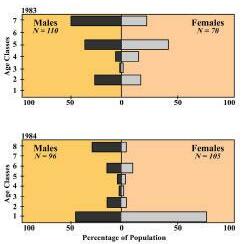
Box 11.1: Effect of climate on population changes
The distribution of cactus ground finch on Island Daphne Major of Galapagos in 1983 and 1984 is given above. In 1982 rainfall was negligible and reproduction failed and no young entered year class 1 in 1983. There was heavy rainfall in 1983, the year of E1 Nino so reproduction was highly successful and this was marked by the presence of year class 1 in 1984. But no young were able to enter the year class 2 in 1984. The very small age class 3 in 1983 results in a very small age class 4 in 1984. The other age classes in 1984 were found to shrink in size.
11.2.5 Sex Ratio
Sex ratio represents the numbers of males: females in a population. The sex of an organism is a genetic trait, which distinctly separates the males and the females. Hence the sex ratio is an important determinant of the longevity of the population. Usually the sex ratio is not always unity. In most organisms at conception primary sex ratio is 1:1. The secondary sex ratio of mammals at birth is weighted towards males.But the population shifts towards females in older age groups. Among humans too, males exceed females at birth but as the age increases the ratio swings in favour of females.
It is not easy to explain why the sex ratio should shift from an equal ratio at birth to an unequal one later in life. It is thought that the answer may be found in the factors related to the genetic determination of sex and the physiology and behaviour of the two sexes. Physiological and behavioural patterns affect mortality of the sexes differently. For example, Male elk battles other rival males for dominance of a harem, and the winner mates with the female. These activities not only consume considerable energy but also leave little time for feeding and the males often end the breeding season in poor physical condition.
73
Biotic Relations in the Ecosystem
Ecosystem and its Functioning
11.3 POPULATION GROWTH
Population growth as mentioned previously is the positive change towards an increase in the population size or density. The growth rate of a population depends on the net difference between additions to it and subtractions from it. Additions are made by natality or births (b) and immigrations (i). Subtractions occur as a result of mortality or deaths (d) and emigrations (e).
When
b>d populations grow b=d populations remain the same b<d populations decline
The rate of increase or decrease = (b + i) (d + e)
Natality varies from one species to another. For example, a single female cod fish produces more than a million eggs in a season while a salmon female lays less than a 1000 eggs per season. Birds lay fewer eggs than fishes and most lay only one clutch per season. Small mammals like mice give birth to several offspring in one litter while larger mammals give birth to seldom more than one or two offspring in one year. Generally number of offspring is less in those animals whose young require parental care.
Mortality rates or chances for survival also vary among species. In most species of fish fewer than 5% of the eggs survive to develop into young ones and survive for a year. In birds less than 25% of the eggs hatch into young ones that survive through the first season.
11.3.1 Exponential Growth
Let us understand this by using a familiar example, suppose your bank account receives interest at the rate of 6% per annum. The total amount of interest you will receive in the first year will be initial amount +6%. The next year you will get interest on initial amount +6%. In this way each year the amount, which will earn interest, will grow initially slowly as the amount is less but later the amount accruing interest increases and if we plot a graph for this it would be J shaped.
When the environment remains constant and resources are in plenty, the population grows slowly at first but eventually is much more rapid leading to exponential growth. In such situations the populations add individuals to the population continuously over a period of time. All populations have the potential for explosive growth under optimal growth conditions. Let us consider a situation where we allow a single bacterium to multiply without any restrictions. In a month this bacterial colony would become larger than the visible universe and it would be expanding outwards at the speed of light.
You are aware that when births exceed the number of deaths in a population it increases. For example, suppose a population (N) has 1000 individuals, a birth rate (b) of 40 per year and a death rate (d) of 10 per year, the annual rate of natural increase (r) in that population would be 3% .03 1000 10 40 N d b r = = = =
the rate of natural increase does not include any changes in the population size from either immigration or emigration which at this time is assumed to be equal. Populations with a positive rate of natural increase grow large each year. The expected increase (I) can be calculated by multiplying the rate of natural increase (r) by the current population size (N) I = r N
This formula shows that the population is growing exponentially. If N is large at the end of each year I will also be large, this means that the population size increases by an ever larger number each year under favourable conditions. When a graph is plotted for the population size over time the resulting growth curve is J shaped as shown in
74
Fig.11.4. You must remember that this type of exponential growth can occur only under conditions of unlimited resources
Relations in the Ecosystem
Fig.11.4: The J shaped curve for exponential growth. The rate of increase remains constant, but the number of individuals increases even more rapidly as the size of population increases
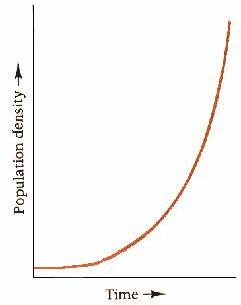
Except under a laboratory setup, no population can expect to find such unlimited resource conditions. A population may increase at an exponential rate until it overshoots the ability of environmental support. Then the population declines sharply from starvation, diseases and emigration. Exponential growth curves are characteristic of some invertebrates and vertebrate populations introduced in a new or unfilled environment.
With unlimited resources and ideal environmental conditions, a species can produce offspring at the maximum rate. This is called its biotic potential. Species such as bacteria, insects, mice and other small organisms that can produce a large number of offspring in a short time have a high biotic potential while larger species like elephants, tigers and humans that produce only a few offspring at a time have a low biotic potential.
The exponential growth of human populations we have witnessed in certain countries including India does not mean that they have unlimited resources, buttheremarkable advances made in medicine and food production and technology have brought down the death rates and alleviated to some extent the adverse conditions associated with crowding, allowing exponential growth, albeit temporarily. You will read more about human populations in Block 3 of this course.
11.3.2 Population Growth Limited by the Environment
In the real world the environment is not constant and resources are limited. As the density of a population increases, competition among its membersfor available resources also increases. With the shrinking resources and with an unequal distribution of those resources, mortality increases, and fecundity (number of live births) decreases, or both, occur together. As a result, population growth declineswith increasing density, and eventually reaches a level at which population growth ceases. This level is called the carrying capacity or K.
For example Charles Darwin estimated a single elephant to have 19 million descendants in 750 years. Yet elephants do not overrun us. This seems to tell us that some factor in their habitat or an inherent population characteristic may be limiting their population growth.
Theoretically at K the population is in equilibrium neither increasing nor decreasing with respect to its resources or environment (Fig.11.5). In other wordspopulation growth is density dependent. This is in contrast to exponential growth, which is independent of population density.
In nature, it is not as though the adverse effects of increasing numbers or crowding will manifest only when the carrying capacity is reached or exceeded; on the contrary,
75
Biotic
Ecosystem and its Functioning
at any stage each extra individual added to the existing population reduces the per capita availability of resources by a certain percentage. For instance assume that a population having an r-value of 0.25 is expanding in a habitat that has a carrying capacity of 100. In this habitat the total space, which is a vital resource for population growth, available is 100m2. The initial population of 20 individuals has 5m2 of space /individual. After one year the population size increases to 25 and the space available becomes 4m2 per individual. Thus progressively the resources get less with time, right from the beginning, affecting both birth rates and death rates.
Inhibition on the growth of a population by density dependent competition among its members for available resources can be described mathematically. This is expressed by adding the variable K to account for the effect of density that slows population growth as follows:
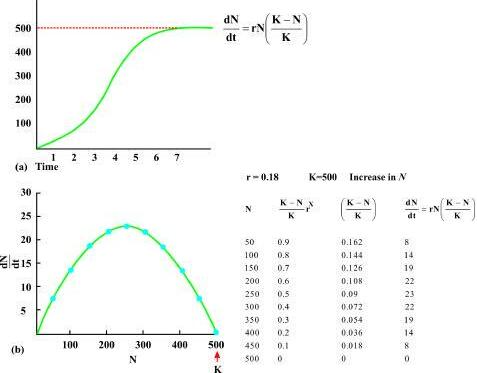
I = r (K N) /K
The equation represents the pattern of growth of a population under resource limitations and when population size is plotted against time in Fig.11.5 it gives"S" shaped sigmoid curve or a logistic growth curve . What it suggests is that the population rises smoothly in the early stages when resources are abundant, the death rate is minimal and reproduction can take place as fast as possible allowing the individuals to attain their intrinsic rate of increase.
Fig.11.5: Model of a population in a limited environment. a) The J shaped curve is changed into a S-shaped curve. In this case we model overlapping generations, with the carrying capacity (K) set to 500. The rate of increase per individual in the population (r) is 0.18. Population growth is reduced by the increasing effect of environmental resistance as the carrying capacity is reached. b) We can show the effect of environmental resistance by calculating the size of increase at particular population sizes. For each N, the environmental resistance is calculated as the proportion of capacity still available, using the equation ( K N ) / K. For 50, this is (500 50) ⁄ 500=0,9. Multiplying this by 0.18(r) gives the actual rate of increase (0.18×0.9=0.162). Finally, multiplying the result by N gives the net increase at that population size (0.162×50=8).
The population increases geometrically until an upper limit is reached, which is its carrying capacity as further opportunity for population growth declines. In the real
76
Relations in the Ecosystem world time lags and a variety of other factors cause populations to overshoot their K or oscillate around it.
All limiting factors that reduce the growth rate of a population constitute environmental resistance. These factors include predation, competition for resources, food shortages, disease, adverse climatic conditions and unsuitable habitat. As the population faces environmental resistance the J shaped curve changes to the sigmoid curve (Fig.11.5).
11.3.3 Population Fluctuations and Cycles
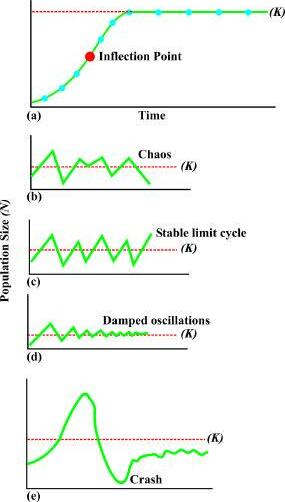
Innature abundance of some species of insects, birds and mammals remains about the same from year to year. Other species may be noticeably abundant some years and noticeably remain the same in yet other years. What causes this?
This is mainly because of population fluctuations that occur above and below the carrying capacity (Fig.11.6). As the logistic equation suggests populations function as a system regulated by positive and negative feedback. Positive feedback promotes growth (illustrated by the exponential curve) and negative feedback of competition or resource availability slows it. As the population approaches carrying capacity it theoretically responds instantaneously as density dependent reactions set in.
Fig.11.6: Logistic growth curve and examples of fluctuations
The feedback mechanisms rarely work smoothly in practice as the equation suggests. A Population never rise smoothly and rest perfectly at its carrying capacity. Often,
77
Biotic
Ecosystem and its Functioning
adjustments and time lag and available resources will allow populations to overshoot the equilibrium level. Unable to sustain itself the populations then drop to some point below carrying capacity but not before it has altered availability of resource for future generations. The density of the previous generation and the depletion of resources especially food build a time lag into population recovery to equilibrium level.
Time lag sometimes makes a population fluctuate widely. The nature of the fluctuations reflects resilience of the population. Resilience is the rate at which a population returns to equilibrium after disturbance takes it away from equilibrium. The resilience is strongly influenced by reproductive rate. Size of the animal provides a clue for this. Small bodied organisms like mice fluctuate widely than large bodied organisms such as deer. They reproduce faster and recover from their losses quickly. Hence they have a high resilience. Large bodied animals possess more stability about an equilibrium level and live long less subjected to environmental vagaries. They reproduce slowly and have low resilience.
The return to equilibrium value will be influenced by interactions with other species as well. They may be due to competition, predation, parasitism etc, (see Community interactions). For instance, species A cannot reach its equilibrium population density until species B, on which it feeds becomes sufficiently high in number.
Population fluctuations that are more regular than we would expect by chance are called oscillations or cycles.
SAQ 2
Provide brief answers to the following questions
i) What happens to a population when its b > d ________________________ b < d ________________________ b = d ________________________
ii) The exponential growth of a population does not depend on the density of the population. Why? …………………………………………………………………………………
iii) In the logistic growth curve at which point is the a) instantaneous change in the population highest
b) population’s birth rate = death rate
c) further opportunity for growth lowest and highest
COMMUNITIES OF ORGANISMS
78
11.4
............................................................................................................................
………………………………………………………………………………….
Populations of organisms, whether they are plants, animals and micro-organisms, do not live apart from one another as separate entities in the ecosystem but form an assemblage of populations belonging to different species living in the environment sharing their habitat and resources and interacting in many ways.. These interdependent populations of plants and animals make up the community, which encompasses the biotic portion of the ecosystem. However, a community is not a haphazard collection of species of organisms. It is a well-organized group of plants,animal and microorganisms closely knit together by community interactions. They share resources and each species of the community affect the well being of others in the community. They exist in nature; adapted to the physical environmental conditions likeclimate, edaphic factors on land, circulation of water, light penetration, depth in water etc. The adaptations and the interactions are reflected in the physical and biological structure of the community.
11.4.1 Physical Structure
The spatial arrangement of its component plant, animal and other micro-organism populations form the physical structure of a community that is its appearance in nature. Physical structure of a terrestrial community is mainly dependent on its plant component. For example, in a forest, the size and the height of the trees and the density and dispersion of their populations determine it physical structure.
The plants that determine the form and structure of the terrestrial communities can be tall or short, evergreen or deciduous, herbaceous or woody. These characteristics describe the growth forms of plants i.e. mainly trees, shrubs and herbs. These may be further subdivided to needle leaf evergreens, broad leaf evergreens, broad leaf deciduous trees, thorn trees and shrubs, dwarf shrubs, ferns, grasses, forbs, mosses and lichens. Thus, the species within the terrestrial community could be categorised into growth forms mentioned above and each growth form expressed as a percentage. The growth form spectrum that arises will reflect the plant's adaptations to the environment, particularly, the climate.
A distinctive feature of any community is its vertical stratification. On land the growth forms of the plants determine vertical structure. The most important feature is their size, branching and leaves. This influences the vertical gradient of life. Light penetration within the community will be affected by this vertical stratification. All in all vertical structure of the plants in a community provides the physical structure of terrestrial communities in which many forms of animal life are adapted to live. For example a well developed forest ecosystem from top to bottom will have several layers of vegetation. They include the canopy, under storey, shrub layer and herb layer and the forestfloor (Fig.11.7).
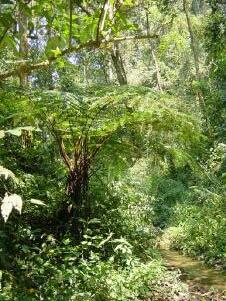
79
Biotic Relations in the Ecosystem
Fig.11.7: Vegetation profile of a rain forest
Each of these layers provides a habitat for animal life. In a tropical rainforest there is an additional layer just above the canopy, the emergent trees. They rise above the canopy trees and are random in distribution.
In case of aquatic communities, the depth and the flow of water mainly define the physical structure. In certain aquatic habitats where the depth is considerably highwe could observe different strata like in terrestrial communities. These are influenced by vertical gradients of light, temperature and oxygen. In temperate regions in the summer months, deep lakes have been found to have three prominent layers of water. These are the epilimnion, metalimnion characterized by the themocline and the hypolimnion, a deeper colder layer having a temperature of 4°C (refer to unit 4 of block1 of this course).
Vertical structure of both the terrestrial and aquatic communities has a similar arrangement of organisms in different strata. They possess an autotrophic layer, which fixes the energy of the sun and manufactures food from inorganic substances. It consists of the area where the light is most available, namely the canopy ofthe forest, the herbaceous layer of the grassland and the upper layers of water of lakes and seas. Communities also possess a heterotrophic layer that utilizes the food stored by the autotrophs, transfers energy and circulates nutrients by predation and decomposition.
Characteristic organisms inhabit the vertical strata especially of tropical forests. During breeding season certain animals may confine themselves to a few layers. However, the occupants of the vertical strata may change during the day or season. Such changes reflect daily and seasonal variations in humidity, temperature, light, oxygen content of water etc., or the requirements of organisms for the completion of their life cycle. In general, the greater the vertical stratification of the community is, the more diverse is the animal community. For instance, grasslands with a few strata are poorer in species than highly stratified forest ecosystems.
11.4.2 Biological Structure
The biological structure of the community is made up of a mixture of species including their abundance, diversity and interactions.
In nature a community can be composed of a few common species or it can have a wide variety of species. Some common species will have a high population density and the rarest will have a low population density. Arising from this there are three important features that characterize the biological structure of the community. These include the species dominance, species diversity and species abundance
Species dominance
When a single or a few species predominate in the community, these organisms are dominants. The dominants may be the most numerous, possess the highest biomass, pre-empt the most space, and make the largest contribution to energy flow or mineral cycling. By any of the above means the dominants influence the rest of the community.
The phenomenon of dominance within a community arises from interactions among individuals within the community. Such interactions may be intra-specific interactions or inters-specific interactions (see community interactions).
It is not easy to determine the dominant species. Dominance is usually considered as the numerically superior organisms, but numerical abundance alone is not sufficient. For example, the understorey trees may be numerically superior, but the nature of the
80
Ecosystem and its Functioning
Biotic Relations in the Ecosystem community as a whole may be controlled by a few larger trees that overshadow them. Another example where dominant organisms are scarce but influence the community to a greater extent is where the predatory starfish, Pisaster, preys on a number of species similar in habit. As a consequence, the starfish reduces the competitive interactions among them and allows them to co-exist. It has been observed that when the starfish is removed a number of prey species disappear and one of the species that survive becomes dominant. Here the predator controls the structure of the community, whose presence is critical for the integrity of the community. In such instances the dominant form is referred to as the keystone species
Species Diversity
Two important terms that go to describe species diversity are species richness and evenness
Species richness refers to the number of species in the community. Evenness indicates the relative abundance of individuals among the species that is, when the species is more equitably distributed greater is the evenness. You will understand these terms better after answering the questions based on the data given below.
SAQ 3
Structure of mature deciduous forest A
Common name Number Percentage
Yellow poplar
White oak Black oak Sugar maple Red maple American Beech Sassafras Red oak
Mockernut hickory Black cherry Slipperyelm
Shagbark hickory Bitternut hickory Pignut hickory
Flowering dogwood White ash Hornbeam Cucumber magnolia Sourwood American elm Black walnut Black locust
Black maple Sour wood Black locust
Structure of a deciduous forest B
Yellow poplar
Sassafras Black cherry Cucumber magnolia Red maple Red oak Butternut Shagbark hickory American beech Sugar maple
76 36 17 14 14 13 12 12 11 11 10 07 05 03 03 02 02 02 01 01 01 01
01 01 01
29.7 14.1 6.6 5.4 5.4 5.1 4.7 4.7 4.3 4.3 3.9 2.7 2.0 1.2 1.2 0.8 0.8 0.8 0.39 0.39 0.39 0.39
0.39 0.39 0.39
122 107 12 11 10 08 01 01 01 01
1. What is the species richness in A and B?
44.5 39.0 4.4 4.0 3.6 2.9 0.4 0.4 0.4 0.4
81
2. Which species contributes 10% or more to the community?
3. Which of the two communities have a greater evenness?
Species diversity of communities considers both species richness and evenness and the Shannon Index (also called the Shannon – Weiner index is one of the indexes of species diversity).
The Shannon Index measure the diversity by the formula
H = ∑ (pi) log2 pi H index of diversity pi proportion of individuals of the total sample belonging to the ith species
When you obtain a higher value of H it means there is greater probability that the next individual chosen at random from a collection of species containing N individuals will not belong to the same species as the previous one. Lower H indicates that there is a greater probability that the next individual encountered will be the same species as the previous one. In the example given in the above activity, H of community A was 3.58 and in community B, the H value was 1.87.
The evenness (J) could be calculated using Shannon Index by J= H/Hmax Hmax value of H when all species in the community are equally abundant.
For the example in the previous activity, J for community A will be 0.78 and B - 0.56. This indicates that community A has a higher evenness than community B.
Species Abundance
Within a community a few species are common and most species are rare. To determine species abundance we need to plot the proportion of species present in abundance classes. To do this you could count all individuals of each species in a number of sample plots within the community. Then express them as a proportion of the total number of all and determine the abundance classes, i.e., the proportion of species A in the community = number of individuals of species A/total number of individuals of all species.
The physical and biological structures described in the preceding paragraphs are not static features. Both these change spatially and temporally. Seeds of plants germinate, grow to great heights in the case of trees, and then die causing the vertical structure of the community change. The birth rates and death rates of certain species in the community change in response to environmental conditions shifting the patterns of species dominance and diversity.
11.4.3 Spatial Variation in Community Structure
As you move across the landscape, the physical and biological structures of the community change. Often these changes are small and not noticeable in the species composition or heights of the vegetation. However if the landscape changes dramatically like for example from the hill top to the bottom of the hill or from shoreline towards land, the changes that occur are quite prominent. Such changes in the physical and biological structure that occur as you move across the landscape are referred to as zonation. The example in Fig.11.8 will explain to you the changes that occur as you move from the shore line towards land. Such a zonation reflects the variety of environmental conditions, like the slope of the land, soil type, nutrient and water availability, wind flow, flooding salinity etc. As you will see from the figure, changes are reflected markedly in plants. The dominant plants change in structural features such as height, density and dispersion.
The discussion on spatial variations in community structure will not be complete if we do not consider what happens with two adjoining communities. It is not an easy task to define boundaries of communities because most communities merge into one
82
Ecosystem and its Functioning
another. However, if the transition in the landscape is abrupt, like the edge of a cliff we could identify two plant community types.
Fig.11.8: Zonation in a salt marsh community. The location of the communities is strongly influencedby the differences in the elevation above the mean high water level
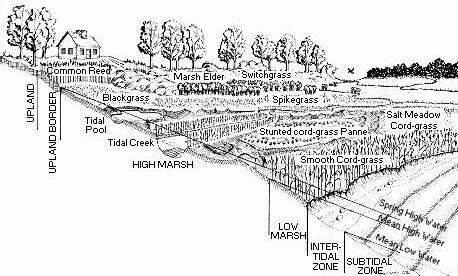
In considering transitional zones and their communities, ecologists define two terms. First is the edge and the second is the ecotone. Edge is where two or more vegetation communities meet. For example, it may be between a housing development and the forestfrom which it was derived or it may be between a pond and a field. An ecotone is where two or more communities not only meet but also integrate Fig.11.9. Some edges have ecotones and yet others do not have ecotones. Edges could be inherent edges or induced edges. The inherent edges arise from abrupt changes in soil type, topography, geometric features (rocky outcrops) and micro-climate. Under such conditions adjoining vegetation types are determined by long term natural features and such edges are usually stable and permanent. Induced edges are maintained by periodic disturbances. They may arise due to natural disasters of communities, like fire, storms and floods or by human influences such as livestock grazing, timber harvesting and land clearing for agriculture.
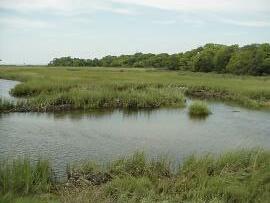
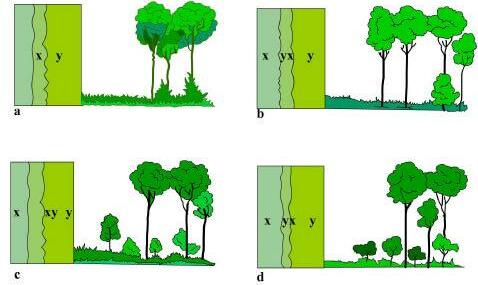
Fig.11.9: Edge between two adjacent communities and types of ecotones that might develop.
a) Abrupt, narrow edge with no development of an ecotone. b) Narrow ecotone developed by the advance of community Y into community X. c) Community X advances into community Y to produce ecotone XY. d) Ideal ecotone development. Plants from
83
Biotic Relations in the Ecosystem
Ecosystem and its Functioning
both communities invade each other to create a wide ecotone, X2Y2. This type of ecotone will support the most edge species.
Ecotones contain a mix of species of the two adjacent communities. They may also be characterized by a unique species or group of species not occurring in either community. Highly adapted species colonize the edge. Plant species are often intolerant of shade and tolerant of dry environments, which have a high rate of evapotranspiration, reduced soil moisture, and fluctuating temperatures. Animal species of the edge are usually those that require two or more vegetation communities. But there may be species of animals only found in edges as well.
The variety and density of life is often greatest in and about edges and ecotones. This phenomenon has been called the edge effect. Edge effect is influenced by the amount of edge available, its length and width and the degree of contrast between adjoining vegetation communities. As a result an edge between a forest and grassland has more species than an edge between a young and mature forest stand.
11.4.4 Temporal Variations in Community Structure
Temporal variations in community structure can be observed by selecting one location. For instance, in an open field, the community changes that occur at intervals could be observed consistently over a long period of time. At first you may see grasses and other herbaceous vegetation in the open field and ifyou return again to the same spot again you will observe the arrival of woody plants, shrubs and small trees. On a subsequent visit you will observe that the density of woody vegetation to have increased and that the field has now become a forest.
The process that you have observed is a gradual and a directional change in the structure of the community through time and is termed succession. Succession could be defined as the gradual change in the community and unlike in zonation refers to a change at a given single location. Succession is common to both aquatic and terrestrial environments. It occurs in bare areas stripped of vegetation and animals either by fire, flood, glaciation and cultivation. Organisms then colonize such areas.
The first species to colonize the harsh conditions of an area is called the pioneer species. The pioneer species are usually characterized by
• high growth rate
• small size
• wind dispersal and
• fast population growth
These pioneer species after establishment modify one or more environmental factors, which allow additional species to establish. The species that replace the pioneer species are known as successionalspecies. In contrast to pioneer species, the successional species have lower rates of dispersal and colonization, slower growth rates, larger size and longer lives. Succession is usually a process of species replacement. This replacement is not random. It is dependent on the species that colonized the site earlier.
Succession is termed primary orsecondary depending on the site on which it occurs. Primary succession occurs on a site previously unoccupied by a community. For example primary succession will occur on newly exposed surface such as cement blocks in the rocky inter-tidal environment, open newly exposed land surfaces created by volcano lava cooling off like in islands of Hawaii. Here the previous plant communities have been destroyed by fire and heat and existing soil have been covered by new layers of igneous rock.
Secondary succession occurs on previously occupies sites following disturbances.A disturbance is any process that results in either partial or complete removal of vegetation.
84
Succession of the vegetation changes the distribution and abundance of animals. As plant succession advances animal life changes. Each successional stage has its own distinctive fauna. Since animal life is often influenced more by structural characteristics than by species composition, successional stages of animal life may not correspond to the stages identified by plant ecologists. For example in a forest, the early successional species may form two distinct stages with respect to its biological structure during succession. However if the stages do not differ in vertical and horizontal structure they may have little effect for example, on the bird species inhabiting the canopy.
SAQ 4
a) Mention briefly the characteristics of an ecotone community.
b) Describe the process of succession. Why are pioneer species important in the process?
11.5 COMMUNITY INTERACTIONS
In the earlier section you had read that groups of interacting populations form the biotic communities in an ecosystem. The individuals of the population interact with each other for food, shelter and for reproduction. These interactions include competition, both within species and among species; predation including parasitism; coevolution and adaptations. Such interactions between individuals of the same species are termed intra-specific interactions, while interactions between species are termed inter-specific interactions.
Even though both these types of interactions have been studied separately to understand the nature of interactions, they all occur within communities of organisms and help maintain the community's structure.
11.5.1 Intra-Specific Interactions
Intra-specific interactions mainly occur when a population grows in number. As you know populations do not continue to grow indefinitely, even those growing in an exponential manner will face limited resources. As the density of a population increases, interactions among the members of the population increase and these interactions tend to regulate its size.
The most prominent type of intra-specific interactions among members of a population is competition. To distinguish this competition from the competition that occurs between populations it is referred to asintra-specificcompetition
Intra-specific competition occurs when two or more individuals belonging to the same species strive to obtain the same limited resources. As long as resources enable each individual to survive and reproduce no competition exists. However, in the absence of sufficient resources for all, the way the resources are allocated among the members has a marked influence on the population.
Intra-specific competition is found to occur in two different ways in nature. Scramble competition and contest competition.
During scramble competition no individual receives enough of the resources for growth and reproduction as long as the population remains dense.
During contest competition, some individuals have access to enough resources while denying others their share.
Some species exhibit scramble competition while others show contest competition. Yet other species show both types of competition during different life stages. For example, larval stage ofsome insects undergoes scramble competition until
85
Biotic Relations in the Ecosystem
Ecosystem and its Functioning
populations decline and the adult stages face contest competition. It is obvious that intra-specific competition increases in populations as their density increases. At the initial stages of intra-specific competition the quality of life is affected and later it affects the individual’s survival and reproduction. As such tadpoles reared experimentally at high densities experience slow growth and require longer time to transform to frogs and have a lower probability of becoming frogs. Similarly overstocked or under harvested farm ponds contain smaller fish and they may not be able to reproduce.
11.5.2 Inter-Specific Interactions
Though there is a close relationship among individuals of a species they also share close associations with individuals of other species. Living in close association, different species interact or share resources such as food, light, space or moisture. One species may depend on the other for food, or they may provide mutual aid or they may have no direct effect on each other.
Such interactions that occur between species could be grouped to three categories.
• Competition Organisms of different species that live near one another strive to obtain the same limited resources.
• Predation An organism of one species kills or eats another.
• Symbiosis Two or more organisms of different species live together in close association over prolonged time.
Competition
This is an association where two or more species seek a resource, is in short supply and the species are affected adversely. Usually in such competition we consider the association to be between two species and the response to such interactions is symbolized as ( ).
In plant species, the process of competing by production of toxins is termed alleopathy. An example is the production of a toxin by the black walnut which does not allow other plants to grow within 25 meters fromthetrunk
Like in intra-specific interactions, inter-specific competition takes two forms: Interference competition Like in contest competition it is direct and aggressive. One competitor interferes with the access to a resource, e.g., Alleopathy in plants.
Exploitative competition This is similar to scramble competition. It reducesthe abundance of shared resources. Each species indirectly reduces the abundance of the other species. The outcome depends on how effectively each of the competitors uses the resources.
There are two important principles with regard to competition.
1) Competition among different species is greatest between organisms that obtain food in a similar way. For example, green plants compete with other green plants, meat eating animals with other meat eating animals.
2) Competitive exclusion - this states that when two species are competing with one another for the same limited resource in a specific location, the species able to use that resource most efficiently will eventually eliminate the other species in that location. G.F. Gause, a Russian scientist more than 50 years ago, proposed this theory.
We shall consider two examples to illustrate these principles.
Plants not only compete for sunlight but also for soil nutrients. For example, roots of one species will out-compete another species. Species may secrete poisonous substances that depress the growth of other plants e.g., sage plants in California create
86
bare zones by secreting chemicals known to suppress growth of other plants (alleopathy).
The other e.g. is the competition between two species of barnacles, Balanus and Chthalamus inhabiting the inter-tidal zone of rocky shores (Fig.11.10). During high tide the barnacles are submerged and they extend their appendages from the shell and sweep the water to collect food particles, which are later consumed. Of these two species Chthamalus could survive without being submerged in water for nearly 3 yearswhile Balamus could only survive out of water for 6 weeks. Although both organisms have adaptations that make them well suited to the inter-tidal environment, their differences play an important role in determining where each genus lives. Of the two, Chthamalus barnacles live in shallower water where they are often exposed to air as the tide rolls in and out. Balanus barnacles live deep in the inter-tidal zone and are covered by water most of the time.
In studying these two barnacles it has been found that Balanus barnacles could outcompete Chthamalus barnacles. Balanus would crowd Chthamalus barnacles off the rocks, replacing it even where it had begun to grow. When Balanus was removed Chthamalus organisms were easily able to occupy the deeper zone indicating that no physiological or other general obstacles prevented it from becoming established there. Balanus barnacles must use the resources of the deeper zone more efficiently than Chthamalus organisms do, even though the latter species are able to survive there in the absence of its competitor.
Fig.11.10: Competition can limit niche use. The distribution of Chthamalus and Balanus barnacles with respect to different water levels is shown
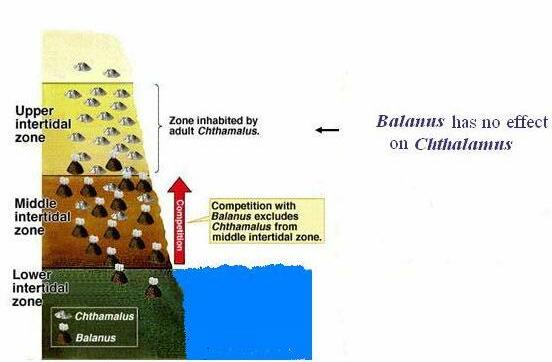
In contrast, Balanus barnacles cannot survive in the shallow water where Chthamalus organisms normally occur. Balanus does not have the special physiological and morphological adaptations that allow Chthamalus barnacles to occupy this zone.
This example also shows that to survive two competing species must have separate niches. A species niche is its unique functional role in an ecosystem. It is a description of all the biological physical and chemical factors required by the species to survive remain healthy and reproduce. Both barnacle species have separate niches and thus avoid competition.
Predation
87
Biotic Relations in the Ecosystem
Ecosystem and its Functioning
One of the fundamental interactions is predation or the consumption of one living organism, plant or animal, by another. The organism that kills and eats is the predator while the other organism that gets killed is the called the prey. In this interaction one species is adversely affected and the other species gains. Hence the outcome of the interaction is symbolized as (+-). Predation between species could take two forms: Carnivory – animals feeding on other animals e.g., hawk feeding on mouse.
Herbivory animals feeding on vegetation such as grasses, weed, herbaceous plants, flowers fruits, seeds etc.
Predation is more than a transfer of energy. It is a direct and often complex interaction of two or more species, the eater and the eaten. The number of predators depends upon the abundance of their prey. In other words the population of prey could be controlled by its predator. Each can influence the population of the other and favour new adaptations.
To illustrate the complex interactions between the prey population and the predator population Gause considered three laboratory experiments (Fig.11.11).
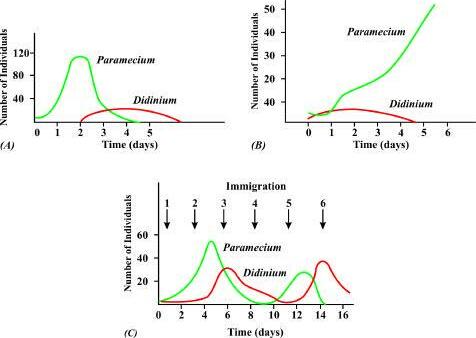
Fig.11.11: Outcome of Gause's experiments with Paramecium and Didinium
Didinium and Paramecium are two protozoans and the former prey on Paramecium When Didinium is introduced into a growing population of Paramecium, Paramecium instantly beginto decline and quickly die out (Fig11.11A). Didinium will live for a short while and die out as well. This experiment shows that the predator tries to exterminate the prey and die out as well.
In the second experiment, Gause provided a refuge for Paramecium to hide from Didinium by providing sediment at the bottom of the test tube where both the species were growing. During the experiment only Paramecium in the clear fluid gets killed and those taking refuge increased in number and Didinium declined (11.11B).
In the 3rd experiment, Gause introduced new prey at successive intervals. There was a decline and a rise in the numbers of predators and prey. The rise and decline of prey
88
and predator populations followed cyclical oscillation and the predator oscillation followed the prey oscillation very closely (11.11C).
Predators are often important in maintaining community structure. This intricate interaction between predator and prey often affect the populations of other organisms in a community. By controlling the levels of some species, for example the predators help species survival that may compete with their prey. In other words predators sometimes prevent or greatly reduce competitive exclusion by limiting the population of one of the competing species. Such interactions among organisms involving predator prey relationships are key factors in determining the balance among populations of organisms in natural communities.
Yet another important interaction that occurs within communities and is important for the maintenance of the community is the plant -herbivore co-evolution. Herbivores change and adapt to plants on which they feed all the time. Natural selection favours plants that have developed some means of protection against herbivores. However in this dynamic equation of co-evolution, natural selection also favours adaptations that enable animals to prey on plants in spite of their protective mechanisms. To avoid being eaten certain plants have hard parts or are unpalatable for herbivores. For example, plants contain silica that makes them too tough to be eaten. However, certain herbivores have developed strong grinding teeth and powerful jaws to feed on such plants.
Symbiosis
Symbiotic relationships are those in which two different species of organismslive together in close association. All symbiotic relationships provide the potential for coevolution between organisms. The major types of symbiotic relationships include the following:
Commensalism One species benefits and the other species neither benefits nor is harmed.
Mutualism Both participating species benefit.
Parasitism One species benefits but the other (the host) is harmed.
Commensalism
Many examples of the one sided relationship of commensalisms exist in nature. Often the individuals deriving benefit are physically attached to the other species in the relationship. For example, plants called epiphytes grow on the branches of other plants. The epiphytes derive their nourishment from the air and rain not from the plants to which they attach for support. Yet another example is the relationship between certain small tropical fish, the clown fish and the sea anemone, marine animals that have stinging tentacles (11.12). The fish have developed an adaptation that allows them to live among the deadly tentacles of the anemones. These tentacles quickly paralyze other species of fish, protecting the clown fish against predators.
Mutualism
Mutualism occurs when both species benefit from the close relationship between two organisms. A striking example of mutualism is found in the association between the stinging ants and the Latin American plant genus Acacia (Fig.11.13). The modified leaves of Acacia plant appear as paired hollowed thorns. These thorns provide a home for the ants, protecting them and their larvae. In addition the ants eat the nectar which the plants produce. In turn, the ants attack any herbivore that lands on the branches or leaves of the acacia and clear away vegetation that comes in contact with their host shrub, increasing the plant’s ability to survive.
Parasitism
Biotic Relations in the Ecosystem
Fig.11.12: Clown fish and sea anemone coexist for mutual benefit
Fig.11.13: Mutualistic relationship between ants and Acacia
89
Ecosystem and its Functioning
Parasitism is sometimes considered a form of predation. However, unlike a true predator, the successful parasite does not kill its host but evolves a mutual tolerance, although parasites may regulate some host populations, lower their reproductive success and modify their behaviour.
Parasites include viruses, many bacteria, fungi and an array of invertebrates. A different species of organism, larger than the parasite itself, is home for a parasite. During the intimate relationship between the parasite and the host, the parasite derives nourishment and the host is harmed.
A well-known parasitic example is the intestinal hookworm of man. A person is infected when walking barefoot in soil containing hookworm larvae. These larvae are able to penetrate the skin entering the blood stream. The blood carries the larvae to the lungs. From there they are able to migrate up the windpipe into the oesophagus. The larvae are then swallowed and reach the intestines. After growing into adult worms, they attach to the inner lining of the intestines. They remain attached here, feeding on the blood of the host.
An example of plant parasitism is that of the dodder plant. It has lost its chlorophyll and leaves in the course of its evolution and is unable to manufacture food. Instead, it obtains food from the host plants on which it grows.
SAQ 5
Fill in the following table with respect to inter-specific interactions: Type of interaction Outcome of the interaction (+ benefited, - harmed, 0 no effect)
Example
11.6 SUMMARY
In this unit you have read that:
• A population of organisms is a group of interbreeding organisms of a species found within a defined space at a defined time.
• The population size, population dynamics, its dispersion in space and time age structure and sex ratio are few of the major properties of the populations. These properties predict the population's future trends with respect to population density, distribution, growth and dynamics and reproduction.
• A community of organisms is a closely associated group of species adapted to coexist in a defined habitat. Its adaptations and interactions determine its physical and biological structure.
• In terrestrial communities, growth forms of plants determine the physical structure. The stratification is influenced by light penetration. Forests have many strata whereas grass lands do not have a distinct stratification. In aquatic communities the depth and the flow of water mainly define the physical structure.
90
• Thebiological structure of the community arises from the mixture of species. Species dominance, species diversity and species abundance are measures of this biological structure of the community.
• The physical structure and the biological structure do not remain static in nature. They change with respect to space and time.
• The spatial variations lead to a zonation pattern, which is influenced by the landscape of the habitat and climatic conditions. Plants contribute significantly to the zonation pattern observed in communities. Structure of plant growth form and the species of plants vary along the landscape gradient such as from the shoreline to inland or from a hilltop to the bottom of the hill.
• Succession is the change in the community structure with respect to time. In succession changes in the growth form, from grasses to herbaceous plants then to shrubs, and next to small woody trees to large trees take place. This will be accompanied by a change in the mixture of species.
• There are two types of succession, primary succession and secondary succession. Primary succession occurs in sites that are not previously occupied by a community. For example, newly exposed surface such as cement block in intertidal environment. Newly exposed land surface created by magma cooling off and containing igneous rock. Secondary succession occurs when previously occupied sites are disturbed, mainly when vegetation is removed partially or completely due to fire, deforestation etc.
• Community interactions maintain the community structure. In nature there are intra-specific interactions as well as inter-specific interactions. Intra-specific interactions occur within individuals within a species. This is mainly competition for limited resources.
• Inter-specific interactions occur among different species of a community and include competition, predation and symbiosis.
11.7 TERMINAL QUESTIONS
1) Define a population. Discuss the various factors that regulate population growth. 2) Explain the following: i) Age pyramids ii) Species diversityiii) Stratification iv) Biological potential 3) Define a community. Describe the characteristic features of a terrestrial community.
4) How do species interactions shape a community? Explain with the help of suitable examples.
REFERENCES
Koromondy, E.J. Concepts of Ecology. Prentice hall Odum, E.P. Fundamentals of Ecology. W. B. Saunders
91
Biotic Relations in the Ecosystem
UNIT 13 ENVIRONMENTAL DEGRADATION AND CONSERVATION
Structure
13.1 Introduction
Objectives
13.2 Types and Causes of Environmental Degradation
Types of Environmental Degradation
Causes of Environmental Degradation
13.3 Conservation and Management of the Environment
13.4 Summary
13.5 Terminal Questions
13.1 INTRODUCTION
During the last few decades, there has been an increasing consciousness and concern that the environment in which we live has deteriorated very fast. We are witnessing a steady decline in the quality and/or quantity of basic life supporting resources like air, water, soil and living organisms.
The air we breathe and the water we drink is getting polluted, rains are becoming erratic, forests are getting depleted, a large number of plant and animal species are becoming extinct, the top soil is being eroded and even the ozone layer is getting damaged. There is also a danger of global warming. Environmental degradation threatens the very existence of human beings. That is why we need to understand its causes and take suitable steps to prevent it.
In Unit 12 you have studied about the impact of population growth and human activities on resource use. You must have realised that environmental degradation is one of the outcomes of excessive resource use. In this unit, we discuss the causes and types of environmental degradation. We shall also discuss some important measures for preventing resource degradation and environmental conservation. In the next Unit, we take up the issue of environmental pollution in greater detail.
Objectives
After studying this unit, you should be able to:
• describe major types of human induced environmental degradation;
• analyse the causes of environmental degradation; and
• discuss the options available for better management and conservation of the environment.
13.2 TYPES AND CAUSES OF ENVIRONMENTAL DEGRADATION
The reduction or deterioration in the quality of the environment and resources around us is referred to as environmental degradation. Some examples are land degradation, poor air quality, depleted and polluted drinking water sources, loss of biodiversity and wildlife.
Environmental degradation may be driven by many factors such as intensification of agriculture, population growth, indiscriminate urbanization, poverty, unplanned industrialization, rising energy use and transportation, etc.
Environmental Degradation and Conservation
23
We need to prevent the current massive degradation of habitat and extinction of species that is taking place on a catastrophically short time scale. Otherwise their effects will fundamentally reset the future evolution of the planet.
Therefore, you must understand the various types of environmental degradation such as degradation of land and water resources, depletion of flora and fauna, deterioration of air quality and their causes such as deforestation, overgrazing, agricultural mismanagement, industrialization, mining, and urbanization. You must also understand that each of these could be the cause of the other since there is a complex interaction between organisms and the environment. We now briefly discuss the types and causes of environmental degradation.
13.2.1 Types of Environmental Degradation
You have learnt in Unit 12 that natural resources like land, water, air, flora and fauna are under severe stress due to the growing population as well as unsustainable levels of consumption. We now discuss various types of environmental degradation caused by human activities.
♦ Land Degradation
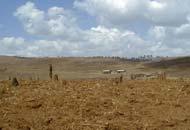
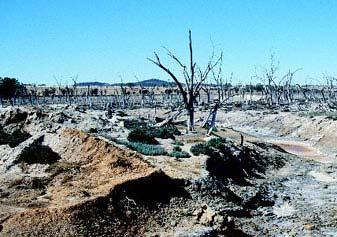
Land degradation refers to the process of deterioration in the quality of land (Fig.13.1). It leads to a significant reduction of the productive capacity of land and the land character is changed for the worse. In a more general way, it has also been defined as a reduction in the capacity of the soil to produce in terms of quality, quantity, goods and services. Human activities which result in land degradation include deforestation, farming, damming of rivers, industrialisation, mining, developmental works such as human settlements, roads and highways, and networks for transport and communication.
Natural disasters, such as droughts, floods, landslides and earthquakes also contribute to land degradation. You have learnt in Unit 12 that land use has undergone tremendous change as human societies evolved through the ages. However, in the pre-industrial era, nature′ s restorative ability could take care of these changes. In recent times, the overexploitative use of land and soil degradation have assumed alarming proportions. Irreversible degradation in land has occurred because the degradation processes have significantly exceeded nature′ s capacity to restore. Table 13.1 gives the extent and causes of major land degradation in the world.
As you can notice from Table 13.1, deforestation, overgrazing and agricultural mismanagement are the major causes of land degradation in the world. We will discuss these in detail in Sec.13.2.2.
What you need to understand is that land performs critically important purification functions for the environment. Land degradation due to inappropriate land use, or overexploitation that transgresses capacity thresholds tends to disrupt these functions. For example, when wetlands are dredged and drained, or mangroves are harvested for wood and aquaculture, the environment also loses the water filtering system provided by wetland ecosystems. As far as possible such changes should be minimized.
People and the Environment
Fig.13.1: Land degradation due to agricultural mismanagement and deforestation. Excessive irrigation leads to soil salinity and loss of productive land
24
Table 13.1: Extent and causes of land degradation of the world
Extent of Degradation Causes of land degradation
580 million ha
Deforestation Vast reserves of forests have been degraded by large scale logging and clearance for farm and urban use. More than 200 million ha of tropical forests were destroyed during 1975-1990, mainly for food production.
680 million ha
Overgrazing – About 20 percent of the world’s pasture and rangelands have been damaged. Recent losses have been most severe in Africa and Asia.
137 million ha
Fuel wood consumption – About 1730 million m3 of fuel wood are harvested annually from forests and plantations. Wood fuel is the primary source of energy in many developing regions.
550 million ha
Agricultural mismanagement – Loss of soil due to water erosion is estimated at 25,000 million tonnes annually. Soil salinization, water logging, chemical degradation and desertification affect about 40 million ha of land globally.
19.5 million ha
Industrialization and urbanization – Urban growth, road construction, mining and industry are major factors in land degradation in different regions. Valuable agricultural land is often lost.
(Source: FAO, 1996)
♦ Degradation of Water Sources
The depletion of water resources and their contamination making them unfit as a source of water for human consumption, is a major problem today. Rapidly growing water needs have led to the extraction of water supplies faster than the rate of replenishment. Most of our water bodies like rivers, lakes, seas, oceans, estuaries and ground water bodies are facing severe pollution due to intensive agriculture, unplanned urbanisation, industrialisation and deforestation. Siltation of rivers and lakes due to soil erosion progressively reduces their water holding capacity resulting in ravaging floods year after year. Today we are faced with the paradoxical situation of lack of safe drinking water in above-average rainfall areas and regions having abundant water bodies. Many factors are responsible for degradation of water resources (Fig.13.2). These include:
• Run offs from farms carrying soil and excess chemicals and fertilizers,
• Discharge of sewage and industrial effluents into water bodies.
These not only pollute water but often lead to an increase in the growth of aquatic plants and algal blooms in water bodies, ultimately causing them to disappear. This may also cause the decay and destruction of various organisms in water, e.g., fish. Pesticides and chemical fertilisers seep into ground water and are added to surface water sources through runoffs, decreasing the availability of safe drinking water. Indeed, today we are faced with an acute shortage of drinking water due to all these factors.
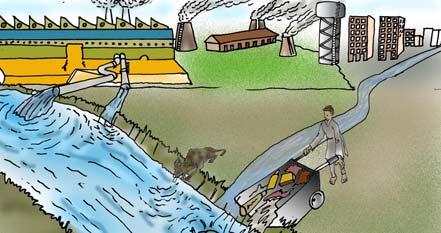
Environmental Degradation
Conservation
and
25
Fig.13.2: Degradation of water bodies due to discharge of sewage, garbage and industrial effluents

♦ Loss of Flora and Fauna
Increasing human population with its increasing food requirements has resulted in reduction of land under forest cover, because large tracts of forest area have been cleared for intensive agriculture. Projects like taming of rivers for irrigation projects, draining of marshes for agriculture and urbanisation, have thoroughly altered and in some cases even destroyed the natural habitats of plants and wild animals. This has caused a great reduction in their population size which could result in their extinction.
Besides natural enemies like parasites and predators, various climatic and accidental hazards like droughts, floods, earthquake and fire, human greed has contributed greatly in decimating the population of wild animals. Excessive hunting of animals for game or skin has endangered the very survival of a large number of wild fauna. It is estimated that over the past 2000 years, 600 species of animals have become extinct or may become extinct from the Earth. Similarly, about 3,000 species of plants need to be conserved. The shrinkage of forest cover has had adverse effects on the stability of the ecosystems. India has nearly 45,000 species of plants and 75,000 species of animals. Unfortunately, deforestation coupled with desertification has destroyed this natural treasure of the earth to a large extent. Several species of plants and animals are on the verge of extinction.
Wildlife, which is important, has been wantonly destroyed. It is evident from the fast diminishing populations of elephant, lion and tiger in the country; the cheetah is already extinct. Elephants once found all over India have now disappeared from Andhra Pradesh, Madhya Pradesh and Maharashtra. The Asiatic lion, which was very common in Asian continent, has practically vanished from Asia except for a few hundred square kilometres of Gir forest in the state of Gujarat in India. Tigers prefer thick forests and prey on herbivorous animals. The overexploitation of forest resources has forced them to live in a shrunken habitat. Thoughtless shooting and indiscriminate killing for game and skin trade has also decelerated the population growth of tigers.
In the last 100 years or so, the Indian sub-continent has suffered extinction of some four species of mammals, and three species of birds (see Fig.13.3). Another 40 species of mammals, twenty species of birds and twelve species of reptiles are considered as highly endangered species due to overexploitation, habitat alteration and destruction by humans. We need to take all possible measures to prevent this onslaught of human beings on nature. In Sec. 13.3 you will study about some efforts in this direction.
People and the Environment
26
Fig.13.3: Some endangered animal species in India
♦ Deterioration of Air Quality
The quality of air in urban areas has been compromised severely due to pollution from thermal power plants, industries, automobiles, etc. The discharge of sulphur dioxide, oxides of nitrogen, hydrogen sulphide, smoke and fly ash into the air causes considerable damage to plants, animals and human beings (Fig.13.4). Photochemical smog, acid rain, ozone layer depletion, global warming and climate change are some of the harmful effects of air quality degradation. Indoor air pollution due to the use of chemicals, such as room fresheners, insect repellents, deodorants, insecticides, etc. is assuming alarming proportions. You need to be aware of these factors so that you can combat them. We will take these issues up in detail in the next unit.
Fig.13.4: Some examples of deterioration of air quality
So far, we have introduced you to the nature and extent of degradation of the natural resources most crucial for our survival and well being. We will now discuss in some detail, the human activities and phenomena that have brought about this degradation. But before you study further, we would like you to reflect on the ideas presented so far.
SAQ 1
What types of environmental degradation exist in your own surroundings? How do these affect the people, flora and fauna around you?
13.2.2 Causes of Environmental Degradation
While studying the types of environmental degradation, you may have got some idea of the factors that cause it, viz. deforestation, desertification, agricultural mismanagement, overgrazing, urbanisation, industrialization etc. We now discuss each one of them in brief.
♦ Deforestation
The most damaging effect on environmental resources that can be seen on our planet from burgeoning population growth and urbanisation is deforestation. This includes the removal of sections or whole forest areas and their replacement by agricultural lands, human settlements, and development works such as dams, roads, power plants,
Environmental Degradation and Conservation
27
and industries. Forests are also cleared to provide fuel for domestic purposes, or to provide charcoal or wood for construction.
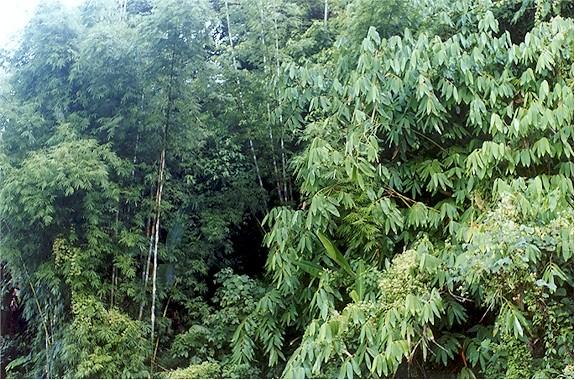
Deforestation leads to accelerated soil erosion and desertification, nutrient loss and loss of habitat for flora and fauna. It also results in the disruption of the delicate equilibrium amongst soil, plants and atmosphere.
Deforestation is as old as Homo sapiens. However, over the past 50 years, the pace of deforestation has accelerated manifold with nearly half of the world’s original forest cover having been lost. A few thousand years ago, the rain forests covered almost 14 percent of the land surface. Today they cover a mere 7 percent. Much of this has been lost over the last 200 years, mostly following the Second World War. Each year another 16 million hectares are lost. Tropical rainforests are vanishing at a rate of 250 acres per minute. An estimated 23 to 43 percent of the increase in atmospheric carbon dioxide comes from the burning of forests in developing countries; rapid population growth in these regions is also expected to contribute to global climatic change. Tropical countries with high population growth rates usually have deforestation rates well above the average annual rate of 0.6 percent for tropical areas.
Deforestation is the result of ineffective environmental policies, fuel wood collection, subsistence farming, overpopulation and overstocking, overburdened debt obligations, and poverty. We need to take immediate steps to prevent deforestation. We need to realize how important forests are for our well being. Forests may be regarded as the lungs of our planet that use carbon dioxide and release oxygen (Fig. 13.5). They provide numerous beneficial socio-economic and ecological goods and services. Forests
• provide wood and raw materials;
• increase ground water supply and regulate the quantity and quality of rainwater discharged into rivers;
• prevent floods, soil erosion and the spread of deserts;
• check air pollution;
• absorb air pollution, particularly carbon from air, thus reducing greenhouse gas emissions;
• increase humidity in the air.
Fig.13.5: Forests are essential for our survival
Forests serve as the home of some of the world’s most precious and endangered wildlife. Indeed, forests are indispensable to human beings. In Sec. 13.3, we shall outline some measures required to conserve and enhance forest cover.
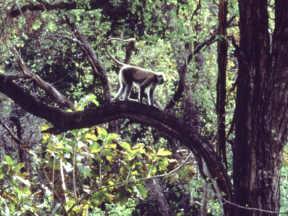
♦ Agriculture Mismanagement
Agriculture in its multiple dimensions has been a major human activity that causes soil erosion, water pollution and loss of bio-diversity. Modern agriculture is characterised by the use of high yielding varieties, chemical fertilizers and pesticides, and intensive irrigation to increase agricultural productivity. It has increased the carrying capacity for humans by using vast amounts of fossil fuels to
People and the Environment
28
make fertilizers, insecticides and herbicides. Fuels are also used to raise seeds and to run the machinery that works the soil and disperses seeds and chemicals. For each calorie of food produced, close to three calories of fossil fuel energy are consumed. In addition, water is pumped from the ground for irrigation. Some of this water comes from aquifers that are drained faster than they are filled.
Continuous cropping of the same land or enlargement of cultivation over marginal and sub-marginal lands to increase food production leaves little time for the natural ecosystem to revive the land. Uncontrolled cultivation of mountain slopes without appropriate land treatment measures such as bunding, terracing, trenching, etc., leads to loss of nutrients. In the areas subject to shifting cultivation, the population pressure shortens the fallow cycle and thus prevents natural regeneration of the multiple plant species as present in a multi-tiered forest cover.
Some effects of deforestation and intensive cultivation are summarised in Table 13.2.
Table 13.2: Alterations in soil and micro-climate by deforestation and intensive cultivation of tropical soils
Hydrologic Cycle
Decrease in interception by vegetation
Decrease in the water transmission and retention characteristics of the soil
Decrease in water uptake from subsoil below 50 cm depth
Increase in evaporation
Increase in surface runoff
Increase in the interflow component
Micro-Climate
Increase in temperature
Decrease in the mean relative humidity
Increase in the incoming radiation reaching soil surface Energy Balance
Increase in the fluctuations in soil temperature
Change in the heat capacity of the soil
Change in the phase angle, periodicity, and damping depth Soil Flora and Fauna
Decrease in biological activity of macro and micro-organisms, notably earthworms
Shift in the vegetation type from broad leaves to grasses and from perennials to annuals
Shift in climatic patterns.
Indiscriminate and excessive irrigation leads to water logging and soil salinization that diminish the productivity of agricultural land. Moreover, it contaminates both soil and water sources as chemical fertilizers and pesticides are added to them through irrigation water.
The apparent success of agriculture has led people to believe that the earth’s longterm human carrying capacity is far greater than it really is. This is a mirage. In the long run this kind of agriculture reduces the carrying capacity of ecosystems, as it has already done in many areas around the world, primarily in ecosystems which are less resilient. We need to modify the technology and practices to bring in sustainability for preserving the environment and improving productivity.
♦ Desertification
The spread of desert-like conditions in arid and semi-arid areas is an after effect of deforestation and a big problem today. Pressures from human and animal populations translate into deforestation, over cultivation, and overgrazing, which often lead to desertification. It has been suggested that desertification should be regarded as an extreme form of land degradation occurring where total vegetation cover falls between 35 percent on a long term basis. Once the forest cover has been removed, and the land becomes barren, there are no roots to hold soil in place or protect soil from the wind. This in turn allows the wind to take away soil particles as it blows
Environmental
Degradation and Conservation
29
Under normal grazing conditions one ha of pasture or grazing land can support on an average 3 livestock heads in rain fed areas and 6 livestock heads in extensively irrigated areas. As against this, the actual number of animals which depend on each ha of such lands in much higher anything from 2.4 to 4.5 times their carrying capacity. In Jammu and Kashmir, for example, 16.8 animals are supported by each ha of grazing and foraging land.
over the deforested area. Within a matter of time, the once fertile soil is blown away to leave desert-like conditions with little or no productivity (Fig.13.6).
Fig.13.6: Did you know that the Thar Desert in Rajasthan was covered by lush forests many thousand years ago?
Desertification is also a result of the “slash-and-burn” method of clearing forests. People who want to clear forest area in order to do subsistence farming use the “slash-and burn” method by axing down forest areas and then setting fire to clear the plot of organic material and debris. Much of the topsoil is destroyed by this practice, and leaves only a thin layer of fertile soil that is stripped of its nutrients after only a few years of being cultivated. Once the soil becomes infertile, desert-like conditions develop.
There is a debate as to whether desertification is reversible. Many attempts have been made to reverse desertification by practices such as irrigating and revegetating desert margins. Although many have proven at least partially successful, it is not known how long an area can sustain itself once such maintenance is discontinued.
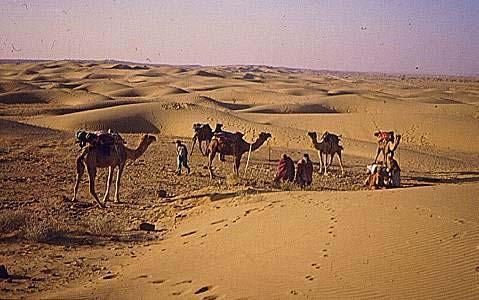
♦ Overgrazing
Overgrazing is a problem that affects rangelands all over the world. The fundamental cause for overgrazing is the large livestock population pressure. Overgrazing is a by-product of efforts to exploit the land resources for maximum livestock production regardless of the ability of ecosystem to withstand external interventions. Increased numbers of livestock, particularly goats and sheep, besides stray cattle, have been grazing the decreasing community lands and other grazing grounds.
The plant species most palatable to grazers are consumed preferentially. As plant tissue is consumed faster than it is replaced by new growth, the vegetation cover decreases leading to disappearance of juicy, fodder plant species. These are gradually replaced by unpalatable thorny weeds and shrubs. If such species are major components of the plant community, continued grazing results in the appearance and spread of un-vegetated areas, and loss of habitat variety. Loss of biomass and species diminishes the resource value of an overgrazed area.
Overgrazing damages the ecosystem balance, and is not simply confined to primary consumer species. Change in the plant community affects higher trophic levels, decomposers, the soil system and the physical environment of the whole ecosystem. Though some ecosystems exploited for grazing have a high degree of resilience to grazing pressure, others are inherently fragile. Grassland ecosystems in semi-arid and arid environments are especially vulnerable. Under heavy grazing pressure, the quality of land deteriorates because overgrazing leads to compaction of soil, reducing the operative soil depth and the capacity to hold
People and the Environment
30
water in the soil is severely reduced As a result of overgrazing, the microclimate becomes drier, mulch cover or humus decreases, and is heavily trampled producing puddling of surface layer, which in turn, reduces the infiltration of water into the soil and accelerates its run off. This exposes the land to soil erosion by rain torrents and surface runoff causing heavy soil losses.
Prompt action needs to be undertaken to prevent overgrazing. This must include lessening of grazing pressure, and protection for threatened plant and animal species. If left unchecked, overgrazing promotes ecosystem degradation and soil erosion.
♦ Soil Erosion
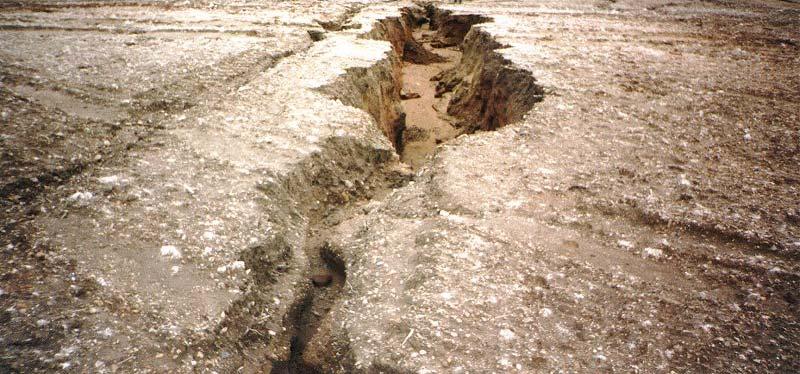
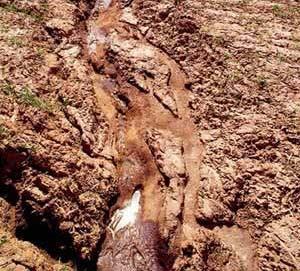
Soil erosion or the loss of top soil from land causes the greatest adverse impact on the environment. The farming methods used today have led to a massive loss of topsoil through water, wind and splash erosion. Over the past 50 years India has lost 50 percent of its fertile topsoil to erosion, while the current rate of loss is 30 tons per hectare per year. Compare this to a formation rate of 1 ton per hectare per year. Some other factors that cause soil erosion are deforestation, overgrazing, salinization and laterisation, compaction and fires. Many of these factors are interlinked and should not be considered in isolation. They are also accelerated by urbanization, construction schemes, mining, wars and fires. Increased soil erosion leads to greater suspended loads in rivers and lakes, which in turn can cause the silting up of rivers, reservoirs and estuaries (Fig. 13.7).
Fig.13.7: Soil erosion
Soil erosion on farmlands takes place due to surface run-off of irrigation water or rainwater. It is slow and not so spectacular. If unchecked, this is followed by formation of rills due to water flow and subsequent formation of gullies and ravines. On the arid and semi-arid areas, soil erosion is caused by wind. Consequently, a creeping effect of desertification sets in and steadily destroys land productivity and its supporting capacity.
♦ Mining
Mining for minerals, such as iron and gold ores, coal, lime, precious stones etc. leads to severe land degradation. In surface mining, deep un-weathered rock strata are broken and brought to the surface, where the material is subject to rapid weathering, releasing manganese, sulphate, iron, zinc, nickel and other elements in toxic quantities. These elements reduce water quality down stream for both aquatic life and humans. Surface mining also alters the ground water characteristics and stream hydrology. This altered hydrology reduces species richness, species diversity and population densities of surviving species. Reclamation efforts greatly help but can rarely restore the original vegetation. Deep mining too disturbs the landscape.
♦ Urbanisation and Industrialization
Urbanisation is the process by which large numbers of people become permanently concentrated in small areas forming cities and towns. Industrial development goes almost hand in hand with urbanisation. The proportion of the world’s population
Environmental Degradation
and Conservation
31
Delhi requires around 1,100 million bricks annually. Kilns in Delhi can make only 140 million bricks a year. The remaining comes from the adjoining areas comprising fertile land thus causing further damage to good agricultural land.
living in urban areas was 42 percent in 1985 and is projected to reach 60 percent by 2020.
Urban growth is a result of natural increase in urban population and migration from rural areas induced by rural poverty. It has resulted in environmental degradation in a number of ways as explained below.
Change in land use: The expansion of urban areas for housing, industries, construction of roads and dams, etc. has led to the encroachment of agricultural and fertile land and deforestation. As towns grow, they invade the productive croplands and rich forests and convert them into built-up areas. Thus, the land with all its biological resources is irreversibly lost. Construction of houses and other structures need large quantities of building materials such as bricks, and their production process further degrades land.
Further, cities in most developing nations are circled by squatter settlements and slums that lack adequate living space, safe water, sanitation, waste collection, lighting, adequate housing, and other essentials for decent living. About 18.75% of India′ s population lives in slums. Rural poverty resulting from inequitable land distribution, poor income prospects, and inadequate government investment in agriculture makes even urban slums seem more appealing than rural life. With Third World unemployment rates ranging at 30 to 50 percent the search for jobs is a major incentive for migration.
Depletion of water resources: The water requirement increases in extensive built-up areas; the local ground water recharges decline and the cities have to draw water from far off sources outside. Since water is drawn from long distances, it follows paths different than the natural hydrologic routes and, therefore, affects the ecosystems.
Pollution: Pollution of fresh water through urbanisation and industrialisation is colossal. About 90% of the drinking water in the country comes from rivers polluted by waste from urban areas and industries. Further, cities are either not fully sewered or have very inadequate facilities. Thus, sewage either seeps into the soil polluting ground water or it flows through streams and rivers.
Most of the air pollution in urban locations results from the discharge of sulphur dioxide, oxides of nitrogen, hydrogen sulphide and suspended particles, such as fly ash etc. Population growth and consumption patterns also increase nitrogen in the atmosphere. Nitrogen (already in excess) may double over the next 25 years due to fertilizers, human sewage, and the burning of fossil fuels. The doubling of nitrogen will lead to the reduction in soil fertility and eutrophication in lakes, rivers, and estuaries.
Fig.13.8: Urbanisation, industrialisation and environmental degradation go hand in hand


So far we have briefly discussed various factors that cause environmental degradation (see Fig. 13.8). We will now address the issue of conserving the environment and preventing its degradation. But before moving on, you may like to solve an exercise to check your understanding.

People and the Environment
32
Which of the factors discussed above, cause the environmental damage you have described in SAQ 1? Describe the specific cause and extent of degradation due to each factor.
13.3 CONSERVATION AND MANAGEMENT OF THE ENVIRONMENT
So far you have studied about the types and causes of environmental degradation. You should now be able to answer the question: Why is there an urgent need for conserving the environment? We summarise the reasons once again.
• World resources are being used up at an increasing rate due to increase in population; there is a decline in both the quantity and quality of resources;
• Environmental pollution is increasing with the passage of time, and
• Damage caused by human activities is many a time irreversible.
The rapid decline in the quantity and quality of natural resources has led to a concern for their management and conservation. If we expect to have a future on the earth, we must learn to conserve natural resources and use them in the most prudent manner possible. We first explain briefly the concept of conservation.
Concept of Conservation
Conservation means planned management of our environment to prevent its overexploitation, destruction or neglect. This includes rational utilisation of the environment, protection of nature, and the control or elimination of environmental pollution in its many manifestations. Conservation advocates practices that will perpetuate the resources of the earth on which we depend. It involves continuous renewal of a resource and recovering, recycling or reusing the products. For example, harvesting of forest produce, grazing, catching fish, etc. should be carried out in such a way that the resource is perpetuated and not endangered.
Environment conservation can be achieved through various measures such as:
• Rational use of resources,
• Sustained yield, and
• Continuous ecological restoration and regeneration of ecosystems.
Ecological restoration is the process of bringing a degraded ecosystem as close as possible back to its original state. It involves re-colonization of native plant and animal species and the gradual reestablishment of ecosystem processes. We now briefly discuss how these measures can be used to check various types of environmental degradation.
Land and Soil Conservation
Prevention and control of land degradation, especially deforestation, desertification and soil erosion requires initiatives at the levels of individuals and the community as well as at the government level. The eco-restoration of degraded land would require
• improved agricultural practices incorporating soil and water conservation techniques to enhance soil fertility and promote optimal use of water resources;
• afforestation of denuded areas and sound forest management;
• practices to check soil erosion such as bunding, mulching, soil moisture conservation, green cover, etc.
• institutional and policy reforms for better land use policies;
• regeneration of wasteland through appropriate soil and water management, and growing appropriate plant species;
Environmental Degradation and Conservation SAQ 2
33
In large areas of India, Pakistan and Bangladesh, the over exploitation of water through tube wells and shallow wells is giving rise to many problems. It is not only causing shortages of drinking water, but also leading to pollution when aquifers are re-charged with irrigation water contaminated with chemicals.
• reclamation of problem soils (alkaline, saline and sodic) by applying appropriate amendments like gypsum and growing suitable (salt tolerant) plants;
• appropriate waste (municipal, chemical and radioactive) disposal practices.
Most of these measures can be adopted at the individual and community level by village people, farmers and urban dwellers.
Conservation of Water Resources
In terms of human needs, water is most important, next only to air. Although almost three quarters of earth’s surface is covered with water, only 3% of all water is fresh water, which sustains life on this planet.
As we all know, water is increasingly becoming a scarce commodity. Its scarcity threatens us all menacing our well-being, jeopardizing our livelihoods, and sometimes endangering our lives as conflicts break out for sharing of water resources. For many millions of people, freshwater scarcity is defined as much by poor quality as by insufficient quantity.
How can we balance the many conflicting interests involved in water resource allocation and management? How can we replenish water resources? How do we prevent waste and encourage behaviour that supports sustainable use of our water resources? How can we provide an equitable distribution system? These are some of the questions that make water one of the major concerns today.
Compared with other crops, rice production is less efficient in terms of water use. To produce 1 kg of rice, we require about 5000 litres of water. The wheat crop consumes 4000 m³/ha, while the rice crop consumes almost 7650 m³/ha of water.
Agriculture is by far the biggest consumer of water. Almost 70% of available water is consumed every year in agricultural production worldwide. In Asia, it accounts for 86% of total annual water withdrawal, compared with 49% in North and Central America and 38% in Europe.
Water is a critical input to modern agriculture, and it has contributed most to the growth in wheat and rice production in India for the past 30 years. But this increase in agricultural production has been bought at a heavy cost to the environment: a proportion of the chemicals applied as fertilizer, and for pest and weed control, pollutes rivers and lakes through runoff, or groundwater through leaching.
Implications for future agricultural production are to develop water-efficient measures giving more productivity per unit of water input. This would require efficient operation of irrigation systems; technologies that reduce water consumption, appropriate soil and water conservation measures, changes in cropping patterns and the ways in which crops are grown, so as to use water more efficiently. Economic incentives would need to be given to farmers to reduce water losses and prevent water pollution through better soil, water and crop management practices.
Similar standards would need to be set and enforced for industries to cut down on water use and prevent them for dumping polluting effluent discharges into water bodies. Moreover, degraded water bodies (lakes, ponds and rivers, etc.) would need to be restored and regenerated.
This calls for a comprehensive policy framework at the national level to ensure an integrated approach to water resource development, with rational and equitable allocation of water resources to agriculture, industry and domestic use. Priority must be given to the resource poor and unserved.
At the local level, several water management strategies are in use today, which offer practical and sometimes superior alternatives to the large-scale centralized, capitalintensive approaches to water management. They can also complement wider reaching water management approaches. One of these is rainwater harvesting practised in India since antiquity. In this respect, we have a lot to learn from our ancestors who had perfected the art of water management.
Several methods are being used in the traditional system of water harvesting in different regions of the country. For example, johads, talaabs as surface water bodies
People and the Environment
34
and kunds (underground tanks) are in vogue in many parts of the country. A very useful rainwater harvesting practice involves making ground water dams. These are structures that intercept or obstruct the natural flow of groundwater and provide storage for water underground.
Several methods are being followed by individuals and communities in urban as well as rural areas to harvest rain water. One such scheme is operational in the Rashtrapati Bhavan in India, in which an underground tank of 1 lakh litre capacity has been constructed to store water for low quality use.
You can visit the site: http://www.rainwaterharvesting.org/methods/modern/rbhavan.htm for more details.
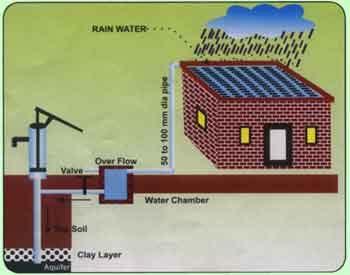
In houses, Ferro-cement tanks can provide a low-cost and easy-to-build solution to store rainwater. The technology is extremely simple to implement, and even semiskilled persons can learn it with ease.
If you face water shortage in your locality, you can initiate corrective practices at individual as well as community level. The Central Ground Water Board, Ministry of Water Resources, Government of India provides technical information on how to set up rainwater harvesting systems. In addition, several other governmental and nongovernmental organisations are now willing to help in various water saving initiatives of the people. (See Fig. 13.9 on the next page).
SAQ 3
a) What do you understand by the concept of conservation and ecological restoration?
b) Outline a scheme for the conservation of land, soil and water resources in your vicinity. Your proposal should contain all aspects of environmental conservation described above, viz. rational use of resources, sustained yield, and continuous ecological restoration and regeneration of ecosystems.
c) What steps do you take to save water in your own life?
Environmental Degradation and Conservation
35
Fig.13.9: Some schemes for rainwater harvesting from roof tops (Source: www.delhijalboard.com/)
Regeneration of Forests
The conservation and regeneration of forests is one of our prime concerns. Several initiatives for afforestation are currently under way. Initiated in 1976, the social forestry programme of the Indian government aims at planting trees on unused and fallow land, degraded government land close to human settlements, in and around agricultural fields, along railway lines and roadsides, river and canal banks, village common land, wasteland and Panchayat land. The plantations are raised with the involvement of people living in those areas to meet the growing demand for timber, fuel wood, fodder, etc. The traditional forest areas are protected through special measures.
Individual farmers are encouraged to plant trees on their own farmland to meet the domestic and agricultural needs of the family, such as fuel wood, providing shade for the agricultural crops, as wind shelters, for soil conservation or to use wasteland. In community forestry programmes, the government provides seedlings and fertilizers to the community to raise and maintain trees on community land. Programmes for afforesting degraded government forests that are close to villages are being carried out all over the country.
The JFM (joint forest management) programme is one such programme being implemented by the Ministry of Environment and Forests, Government of India since June 1990. It seeks to involve village communities and voluntary agencies in the regeneration of degraded forestlands. JFM is a concept of developing partnerships between fringe forest user groups and the forest department on the basis of mutual
People and the Environment
36
trust and jointly defined roles and responsibilities with regard to forest protection and development.
Under the JFM programme, the user (local communities) and the owner (government) manage the resource and share the cost equally. The programme has made promising impacts on the biophysical and socio-economic environment of the JFM areas. Currently, it is estimated that 10.24 million ha of forest lands are being managed under the JFM programme through 36,075 committees in 22 states.
The conservation of natural resources such as water and forests is closely linked to the conservation of energy resources and their effective management. We now briefly discuss this issue.
Conservation and Management of Energy Resources
India consumes roughly three percent of the world’s total energy. Despite continuous increase in energy use, per capita consumption in India is low compared with other countries. However, we must still prevent the misuse and wanton waste of energy resources, especially in urban areas. Energy needs in India are met by harnessing three categories of energy sources:
• Non renewable energy sources such as coal, petroleum products and gas,
• Renewable energy sources such as hydro-energy, solar energy, biomass energy, wind energy, etc., and
• Nuclear energy.
We know that the reserves of coal, petroleum and gas are finite. Moreover, production of energy from these resources causes severe environmental pollution. Although nuclear energy is clean, it has several other hazards associated with it. For example, continuous exposure to radioactivity materials in a nuclear reactor without adequate safety measures can lead to cancer. The risk of nuclear accidents is always present, and requires the highest degree of alertness and control.
These are some of the reasons why we are witnessing a shift towards renewable energy resources. We describe some of these in Table 13.4.
Environmental Degradation
Conservation
and
37
Table 13.4: Some renewable energy resources
Sources of Energy Description
Biomass

It is a renewable energy source derived from plant resources, animal waste and the waste of various human activities, by-products of the timber industry, agricultural crops, raw materials from the forests, major parts of household wastes and wood.
Solar energy
It is the most readily available abundant and free source of energy. It is also non-polluting. Solar energy is being used in many parts of India for cooking, lighting, cooling, heating water for both industrial and domestic purposes. It is also being used to meet the electricity requirements in areas not connected to national electricity grid. Solar energy based back up systems when electric supply fails are also in use in urban areas.
Hydel energy
This is the cheapest, and cleanest and, hence, the best source of energy. However, obtaining electricity from mega dams has given rise to many controversies in recent times and small hydro power plants are emerging as viable alternatives. These plants serve the energy needs of remote and rural areas where the grid supply is not available.
Tidal energy

Energy can also be obtained from waves and tides. In India, the first wave energy project with a capacity of 150 MW, has been set up at Vizhinjam near Trivandrum. A major tidal wave power project costing Rs. 5000 crores, is proposed to be set up in the Hanthal Creek in the Gulf of Kutch in Gujarat.
Geothermal energy
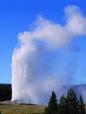
Volcanoes, hot springs, and geysers, and methane under the water in the oceans and seas are sources of geothermal energy. (Geothermal means heat from the earth.)
Wind energy
Wind energy has been used for hundreds of years for sailing, grinding grain, and for irrigation. Wind energy systems convert the energy of the wind into mechanical power, which can then be used directly for grinding etc. or to generate electricity. Wind turbines can be used singly or in clusters called ‘wind farms’. Small wind turbines called aero-generators can be used to charge large batteries. Windmills for water pumping have been installed in many countries particularly in the rural areas.
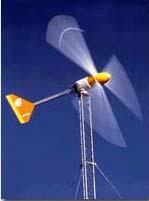
People and the Environment
38
Biodiversity conservation
As you have studied in the previous section, serious efforts are needed for conservation of biodiversity. One of the important benefits of conservation of biodiversity is the preservation of gene pool of wild plants. This pool can be used to augment the narrow genetic base of the established food crops, providing disease resistance, improving productivity and different environmental tolerances. The conservation of diversity is also essential for finding effective biological control organisms and for breeding disease resistant varieties. Several measures are being adopted for preserving biodiversity. One of these is the setting up of wildlife sanctuaries and national parks. Today there are about 1200 national parks and reserves in the world. The list of wildlife sanctuaries and parks in India is given in Table 13.5.
Table 13.5: Wildlife sanctuaries and national parks in India as on 1st August 2000
State/UT No. National Parks Area (ha) No. Sanctuary Area (ha)
A&N Islands 9 1153.951 96 481.66
Andhra Pradesh 4 373.2332 21 12488.19 Arunachal Pradesh 2 2468.23 11 7606.365 Assam 5 1977.788 12 528.406 Bihar 2 567.22 21 4861.47
Chandigarh 2 26.009 Daman & Diu 1 2.18 Delhi 2 17.76 Goa 1 107.00 6 647.96 Gujarat 4 479.67 21 16584.39 Haryana 1 1.43 9 287.32
Himachal Pradesh 2 1329.4 32 5665.92
Jammu and Kashmir 4 3810.07 16 10163.67 Karnataka 5 2472.18 21 4231.439 Kerala 3 536.52 12 1788.2 Madhya Pradesh 11 35 10618.98 Maharashtra 5 955.93 33 14707.485 Manipur 1 40.00 5 706.50 Meghalaya 2 267.48 3 34.1207 Mizoram 2 250.00 3 771.00 Nagaland 1 202.02 3 20.35 Orissa 2 1212.7 17 6175.49 Punjab 10 316.71
Rajasthan 4 3859.37 24 5301.84 Sikkim 1 1784.00 5 265.10 Tamilnadu 5 307.84 20 2541.70 Tripura 4 603.08 Uttar Pradesh 7 4573.31 29 8095.90 West Bengal 5 1693.25 16 1223.47
Total (India) 88 37009.45 400 116752.751
The world famous ‘Hangul’, a reindeer species found only in Kashmir, is endangered. Chiru, the Tibetan antelope, is also facing the threat of extinction due to extensive hunting for the fleece, which is required for weaving the famous Kashmiri Shahtoosh shawls.
Environmental Degradation and Conservation
39
Recycling: Some Benefits
• Conserves resources;
• Saves energy;
• Prevents emissions of many greenhouse gases and water pollutants;
• Supplies valuable raw materials to industry;
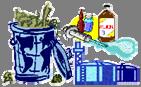
• Stimulates the development of greener technologies;
• Reduces the need for new landfills and incinerators;
• Creates jobs.
Various ways of reusing things:
• Turn empty jars into containers for leftover food or pots for growing plants.
• Use cloth napkins or towels.
• Refill bottles.
• Use durable ceramic mugs.
• Donate old magazines or surplus equipment.
• Reuse boxes.
• Purchase refillable pens and pencils.
Practising the 3Rs of Waste Management
1. Reuse: Do not throw away soft drink cans or bottles, cover them with homemade paper or paint on them and use them as pencil stands or small vases.
2. Recycle: Use shopping bags made of cloth or jute, which can be used over and over again. Segregate your waste to make sure that it is collected and taken for recycling.
3. Reduce: Reduce the generation of unnecessary waste, e.g. carry your own shopping bag when you go to the market and put all your purchases directly into it.
The World Wild Life Fund (WWF) was set up in 1962 to provide funds for the conservation and preservation of wildlife. India has taken the lead in rescuing a vital predator, the snow leopard. Under the Project Tiger, launched in 1973, about 27 Tiger Reserves have been created in 14 States of India covering an area of about 37761 sq. km. Crocodile Project was launched in 1976 to save endangered crocodile species. Project Elephant was launched in 1992 to ensure long term survival of elephants in their natural habitats. It is being implemented in 12 states. Several other projects at a smaller scale have been undertaken in India to protect tortoises, musk deer and other endangered animal species.
Waste Management: Reduce, Recycle, Reuse
Every day millions of tonnes of municipal solid waste, industrial waste and biomedical waste are generated in our country. This is a valuable material and energy resource if recycled and reused (Fig.13.10).
Fig. 13.10: Estimates (for 2000) and projections (for 2025) of the composition of waste in India (Source: www.indiatogether.org/ environment/articles/wastefact.htm)
At the level of individual households the 3Rs (reduce, reuse and recycle) of waste management can contribute effectively in this respect. Organic matter constitutes 35% 40% of the municipal solid waste generated in India. It can be segregated and recycled by the method of composting, one of the oldest forms of disposal. It is the natural process of decomposition of organic waste that yields manure or compost, which is very rich in nutrients. Composting is not only clean, cheap, and safe; it also significantly reduces the amount of disposable garbage.
Vermi-composting or composting with earthworms, is an excellent technique for recycling food waste in homes as well as wastes in the backyard. It has become very popular in the last few years. In this method, earthworms are added to the kitchen and other biological waste to turn it into black, earthy-smelling, nutrient-rich humus. These help to break the waste and the added excreta of the worms makes the compost very rich in nutrients.
Recycling involves the collection of used and discarded materials, processing these materials and creating new products from them. In the process the amount of waste that is thrown into the community dustbins is reduced resulting in a cleaner environment and fresher air.
The importance of recycling wastes is recognized by everyone in our country. In fact, ours is a traditionally recycling society. The ‘use and throw’ culture is not a part of our traditional values. Rather reuse, recycle and waste retrieval is a part of our psyche. You may like to note the practices of reusing materials followed in most Indian homes. A common example is reusing old clothes as dusters, napkins, etc. Recycling of tyres and tubes is quite common. A most creative manifestation of reusing waste is seen in the famous rock garden created by Shri Nek Chand in Chandigarh. Some suggestions for reusing and reducing waste are given in the
People and the Environment
Waste composition of garbage in India 40 60 4 6 1 4 2 3 5 15 48 12 0 10 20 30 40 50 60 70 12 Estimates and projections Percentages Organic waste Plastic Metal Glass Paper Others(ash, sand,grit,etc.) 2000 2025
40
margin on the previous page. Even you can follow them and contribute your bit to the conservation and better management of environment.
Fig.13.11: Rock garden, Chandigarh

In this unit you have studied about how various human activities have led to different types of environmental degradation. You have also learnt about the measures required and the options available to us to conserve the environment and manage precious resources more effectively. In the next unit, you will study about environmental pollution and the efforts being made to check it. We now summarise the contents of this unit.
13.4 SUMMARY
• Environmental degradation is one of the outcomes of excessive resource use. The decline in the quality and/or quantity may result from alteration of the entire structure of the resources as in land degradation, deforestation, agricultural practices etc. It may also occur due to the alteration of the composition of the resource by changes to its constituents as in air pollution, soil pollution etc.
• Various types of environmental degradation such as land degradation, degradation of water sources, depletion of flora and fauna may be caused by factors such as deforestation, overgrazing, agricultural mismanagement, industrialization, mining, and urbanization. Each of these could be the cause of the other since there is a complex interaction between organisms and the environment.
• Conservation means planned management of our environment to prevent its over-exploitation, destruction or neglect. This includes rational utilisation of the environment, protection of nature, and the control or elimination of environmental pollution in its many manifestations.
• Environment conservation can be achieved through various measures such as rational use of land, water, energy, mineral, plant and animal resources, and continuous ecological restoration and regeneration of ecosystems.
13.5 TERMINAL QUESTIONS
1. Write an essay in about 500 words on Issues in Environment Management in Individual and Community Life, sharing the experiences and problems in your own vicinity.
2. Outline the interventions (policy level, individual or community oriented) required to prevent environmental degradation and the options available for land, water, energy and waste management in your home/residential area/workplace community.
3. Develop a plan of action for improving the status of environment in your surroundings and try to implement it.

Environmental Degradation
Conservation
and
41
UNIT 12 HUMAN EVOLUTION AND POPULATION GROWTH
Structure
12.1 Introduction
Objectives
12.2 An Overview of Human Evolution
12.3 Trends in the Use of Natural Resources
Hunting and Gathering Societies
Agricultural Societies
Environmental Impact of Agriculture-based Societies Industrial Societies: The Industrial Revolution
12.4 Population Growth Human Population Growth
Population Growth Trends Globally and in India
12.5 Resource Use vis-à-vis Population Growth
Types of Resources
Influence of Population Growth on Resource Use
12.6 Summary
12.7 Terminal Questions
12.1 INTRODUCTION
From the discussion so far, you would have realised that the root cause for environmental degradation may be traced to human activities. You must also understand that environmental degradation has not occurred overnight, but has grown with this growing population and the progress of civilization. In this unit you will study about the impact of the growing population and the resource-intensive mode of development on the environment.
We begin this unit with an overview of human evolution and explain the changing patterns of the use of natural resources by human beings. We also discuss the trend of population growth in the world and India and the problems of resource use in relation to population growth.
In the next unit you will learn about the nature and causes of environmental degradation, and measures of environmental conservation.
Objectives
After studying this unit, you should be able to:
• discuss the impact of human societies on the environment through the ages;
• explain the ways in which the present day industrialized societies affect the environment; and
• outline the problems of resource use related to population growth.
12.2 AN OVERVIEW OF HUMAN EVOLUTION
It is now well established scientifically that human beings evolved from ape-like ancestors about 2 to 3 million years ago. Table 12.1 shows the periods of existence of various hominids (based on dated fossil remains).
The earliest form of humans, known as Homo habilis, lived in southern Africa about 1.6 to 2.2 million years ago. They probably survived mostly by scavenging meat from the bodies of dead animals and gathering and eating wild plants. They may have done some hunting for food.
5
Human Evolution and PopulationGrowth
Table 12.1: The time period ofexistence of various hominids
Species Time Period
Ardipithicus ramidus
Australopithecus anamensis
Australopithecus afarensis
Australopithecus africanus
Australopithecus robustus
Homo habilis
Homo erectus
Homo sapiens archaic Homo sapiens neanderthalensis Homo sapiens sapiens
5 to 4 million years ago 4.2 to 3.9 million years ago 4 to 2.7 million years ago 3 to 2 million years ago 2.2 to 1.6 million years ago 2.2 to 1.6 million years ago 2.0 to 0.4 million years ago 400 to 200 thousand years ago 200 to 300 thousandyearsago 200 thousand years ago to present
They were followed by two other species, Homo erectus and Homo sapiens. Homo erectus lived between 2 to 0.4 million years ago. They developed tools, weapons and fire and learned to cook their food. Evidence indicates that these early humanoids were hunter-gatherers who got food by gathering edible wild plants and hunting wild game from the nearby environment. They travelled out of Africa into China and Southeast Asia and developed clothing for northern climates. Homo sapiens archaic areabridgebetween Homo erectus and Homo sapiens sapiens.
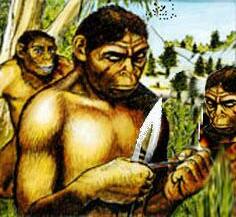
Homo sapiens neanderthalensis lived in Europe and the Middle-east between 150,000 and 35,000 years ago. Neanderthals coexisted with Homo sapiens archaic and early Homo sapiens sapiens. It was not known whether they were of the same species and disappeared into the Homo sapiens sapiens gene pool or Homo sapiens sapiens may have killed them off Recent DNAstudies have indicated that the Homo sapiens neanderthalensis was an entirely different species and did not merge into the Homo sapiens sapiens gene pool.
Fig.12.1: Reconstruction of the habitat of early human beings
Themodern Homo sapiens sapiens evolved 200 thousand years ago and live to date. During most of this time we, like the human species that came before us, have been hunter-gatherers who have developed more sophisticated tools and weapons (Fig. 2.1).
About 10,000 years ago, human species began the cultivation of wild plants and breeding of plants and animals. This marked the beginning of the cultural change from hunters and gatherers of wild plants and animals to farmers and herders of domesticated plants and animals. About 288 years ago, the invention of the steam engine and spinning jenny (see Fig.12.6) led to a new cultural change called the Industrial Revolution.
The Industrial Revolution brought a drastic change in the livelihood and lifestyles of people. As humans evolved from hunter-gatherers to agricultural societies and then to
6
the Environment
People and
industrial societies, the use and exploitation of natural resources increased. In the following section we will consider the trends in the use of natural resources by human beings as they evolved from the primitive hunting-gathering societies to the present day industrial societies.
12.3 TRENDS IN THE USE OF NATURAL RESOURCES
To see where we might be headed and how we can influence our future, it would be useful to learn about how we have used and abused natural resources right from the days of food gathering and hunting.
12.3.1 Hunting and Gathering Societies
In the food gathering and hunting phase of societal evolution, two distinct stages may be identified: The early hunter-gatherers and the advanced hunter-gatherers.
Early hunter-gatherers
Archaeological findings and anthropological studies indicate that most huntergatherers lived in small groups of rarely more than 50 people. They worked together to get enough food to survive. Usually, men did the hunting. Women probably dominated most groups in tropical areas because they typically gathered 80% of the food and raised the children. In polar areas, where vegetation was scarce, men supplied most of the food by hunting and catching fish.
Sometimes a group became so large that its members could not find enough food within reasonable walking distance. Then either the entire group moved to another area or they split up and moved to different areas. They moved with the seasons and migrations of game animals to get enough food and to minimize the effort of acquiring food.
These hunter-gatherers were experts in survival. Their knowledge of nature enabled them to predict the weather and find water anywhere around them. They discovered a variety of plants and animals that could be eaten and used as medicines. By using stones theychipped sticks, other stones and animal bones. These were the primitive weapons and tools they used for killing animals, catching fish, cutting plants and scraping hides for clothing and shelter (Fig.12.2).
Although women typically gave birth to four or five children in their life span, usually only one or two survived to childhood. Infant deaths from infectious diseases and infanticide (killing the new born) led to an average life expectancy of about 30 years. This helped keep the population size in balance with food supplies.
Fig.12.2: Some common stone tools and their use by the hunters and gatherers
7
Human Evolution and PopulationGrowth
Early hunter-gatherers exploited their environment for food and other resources as do all forms of life. But their numbers were small; most ofthem wandered from place to place when their food supplies were exhausted, and they used only their own muscle energy to modify the environment. There were no surpluses and the regenerative capacity of nature took care of the food supplies year after year. Thus their environmental impact was small and localized.
Advanced hunter-gatherers
Archaeological evidence indicates that hunter-gatherers gradually developed improved tools and hunting weapons. Examples are spears with sharp-edged stone pointsmounted on wooden shafts and later the bow and arrow (about 12,000 years ago). Some learned to hunt herds of reindeer, woolly mammoths, European bison, and other big game. They used fire to flush game from thickets towards hunters. Some also learned to burn vegetation to promote the growth of food plants and plants favoured by the animals they hunted.
Advanced hunter-gatherers had a relatively greater impact on their environment than early hunter-gatherers, especially in using fire to convert forests into grasslands. But because of their small numbers, nomadic behaviour, and dependence on their own muscle power, their environmental impact was still fairly small.
Conflicting ideas about hunting-gathering societies
The environmental impact of hunting and gathering is the subject of considerable debate today, with implications for the understanding of hunter-gatherers as environmental managers. Some argue that hunter-gatherers had struck the right balance between exploitation and conservation, and may be seen as the “original” sustainable environmental managers. Those who argue that hunter-gatherers often failed to practice sustainable environmental management have criticized this view. Contrary to the traditional perspective, recent research has shown that huntergatherers with low population numbers could have had significant adverse impact on the environment.
Present day Australian Aborigines are often considered to be a prime example of sustainable environmental managers. The survival of the hunter-gatherer lifestyle for over 50,000 years in harsh Australian environment suggests that the activities of these environmental managers resulted in sustainable environmental management. The argument here is “Were there such self-conscious environmental management practicesembedded in Aboriginal culture?” It is suggested that these hunter-gatherers may have skilfully manipulated their forest environments, in such a way that it would not deplete future supplies.
Other research has suggested that these environmental managers mayhave also been capable of degrading their environment. Pollen and charcoal analyses point to the destruction of forests by fire. Burning of forests by Aborigines is held responsible for this destruction, particularly in areas where natural fires were rare. There is also a belief that Aborigines may have played a role in the extinction of large mammals, birds and reptiles. Indeed, evidence from New Zealand and Europe corroborates these claims of a “prehistoric overkill” by hunter-gatherers.
You may like to stop for a while and fix these ideas in your mind.
SAQ 1
How did early and advanced hunter-gatherer societies affect the environment?
12.3.2 Agricultural Societies
One of the most significant changes in human history is believed to have begun about 10,000 years ago. Groups of people in several parts of the world began domesticating herding, taming and breeding – wild game for food, clothing and carrying loads.
8
the Environment
People and
They also began domesticating selected wild food plants, planting and growing them close to home instead of gathering them from over a large area.
Archaeological evidence indicates that the first type of plant cultivation, which is now known as horticulture (art or science of gardening), probably began in tropical forest areas. It is believed that people discovered that they could grow yam, arrowroot, and other wild food plants by digging holes with a stick and placing roots or tubers of these plants in the holes. To prepare for planting, they cleared small patches of forests by cutting down trees and other vegetation leaving the cut vegetation on the ground to dry, and then burning it. This practice known as slash and burn or 'jhoom' cultivation is still used by certain tribes in North-east India (Fig.12.3).
Human Evolution and PopulationGrowth
Fig.12.3: The slash and burn or 'jhoom' cultivation is a process where existing vegetation is cut, stacked, and burned to provide space and nutrients for cropping
The ashes that remained added nutrients to the nutrient-poor soils found in most tropical forest areas. The early growers also used shifting cultivation as a part of this horticultural system. After a plot had been planted and harvested for two to five years, few crops could be grown. By then either the soil was depleted of nutrients or the patch had been invaded by a dense growth of vegetation from the surrounding forest. When yields dropped, the horticulturists shifted to a new area of forest. A new plot was then cleared to begin a new cycle of cutting, burning, planting, and harvesting for several years. The growers learned that each abandoned patch had to be left fallow (unplanted) for ten to thirty years before the soil was fertile enough to grow crops again.
These societies practiced subsistence agriculture, growing only enough food to feed their families. Their dependence on human muscle power and crude stone or stick tools meant that they could cultivate only small plots; thus they had relatively little impact on their environment.
True agriculture (as opposed to horticulture) began about 7,000 years ago with the invention of the metal plough, pulled by domesticated animals and steered by the farmer. Animal pulled plough greatly increased crop productivity. They allowed farmers to cultivate larger plots of land and to break up fertile grassland soils, which previously could not be cultivated because of their thick and widespread root system. In some arid regions early farmers further increased crop output by diverting nearby water into hand-dug ditches and canals to irrigate crops. With this animal and irrigation assisted agriculture, families usually grew enough food to survive. Sometimes they had enough food left over for barter or exchange. The excess was also stored to provide food during flooding, prolonged dry spells, insect infestation or when other natural disasters reduced crop productivity.
Emergence of agriculture-based urban societies
The gradual shift from hunting and gathering to farming had four major effects.
• Populations began to increase because of a larger, more constant supply of food.
• People cleared increasingly larger areas of land and began to control and shape the surface of the earth to suit their needs.
• Urbanization the formation of cities began because a small number of farmers could produce enough food to feed their families with a surplus that could be
9
traded with other people. Many former farmers moved intopermanent villages. Some villages gradually grew into towns and cities, which served as centres for trade, government and religion.
• Specialized occupations and long-distance trade developed as former farmers in villages and towns learned crafts such as weaving, tool making, and pottery to produce hand made goods that could be exchanged for food.

About 5,500 years ago, this trade interdependence between rural farmers and urban dwellers led to the gradual development of a number of agriculture- based urban societies. Until this point, the kind of agriculture practised was such that the requirements could be fulfilled within the frontiers of agrarian society. For the sake of convenience we will call this type of agriculture as traditional agriculture.
By this time it was possible to produce enough to meet the food requirement of a much larger number of people than those directly involved in agriculture. With the passage of time, the non-essential consumption needs, i.e., ornaments, clothes, agricultural implements, and accessories, multiplied. These could only be met with by import of raw materials from areas beyond the frontiers of agrarian societies. As a result, the size of commodity-producing sector increased. The offsite demand for agricultural produce continued to rise because people not directly involved in agriculture, continued to multiply and lean more and more heavily upon agrarian or agro-pastoral system for food production.
These agrarian sectors depended heavily upon agriculture for their sustenance. They had surplus crops, which were used for trade or commerce. They herded animals and managed pasture ranges nearby their houses for their consumption. With the onset of small fiefdoms, alongside commodity production and ruler system, the agrarian sectors also started bartering their produce with craftsmen for various commodities. This process played a major role in providing agricultural produce to the urban societies. The trade in food and manufactured goods created wealth and the need for a managerial class to regulate the distribution of goods, services, and land (Fig.12.4).
10
People and the Environment
(d) (c) (a) (e) (b)
Fig.12.4: Remains of the Indus Valley Civilisation:
(a)
the granary of Mohen jo daro; (b) the head of the Harappan priest; (c) toy boat; (d) pottery and e) seal from Harappa
The rise of agriculture-based urban societies created a much greater environmental impact than that of hunting and gathering societiesand early subsistence farmers, which we now discuss.
12.3.3 Environmental Impact of Agriculture-based Societies
The growing populations of the emerging civilizations needed more food and more wood for fuel and buildings. To meet these needs, vast areas of forest were cut down and grasslands were ploughed. Such massive land clearing destroyed and degraded the habitats of many forms of plant and animal wildlife, causing or hastening their extinction.
Poor management of many of the cleared areas led to greatly increased deforestation and soil erosion. Overgrazing of grasslands by huge herds of sheep, goats, and cattle led to the desertification of the once-fertile land. The topsoil that washed off these barren areas polluted streams, rivers, lakes and irrigation canals, making them useless.
The concentration of large numbers of people and their wastes in cities helpedspread infectious human diseases and parasites. The gradual degradation of the vital resource base of soil, water, forests, grazing land, and wildlife was a major factor in the downfall of many great civilizations.
The gradual spread of agriculture meant that most of the earth’s population shifted fromhunter-gatherers who gathered food from nature to shepherds, farmers, and urban dwellers who exploited nature in various ways (Fig.12.5).
Human Evolution and PopulationGrowth
• Food, shelter and survival
• Small group size
• Food, shelter and surplus
• Little deliberate change in land use
• Food, shelter, clothing, etc.
• Settlements and surplus produce
Fig.12.5: Evolution to agricultural-urban societies
You may like to concretise these ideas before studying further.

SAQ 2
What major impact did early agricultural societies and non-industrializedurban societies have on the environment?
12.3.4 Industrial Societies: The Industrial Revolution
The next major cultural change, the Industrial Revolution began in England in the mid 1700s and spread to the United States in the 1800s. It involved a shift from smallscale production of goods by hand to large-scale production of goods by machines. Horse-drawn wagons, ploughs, grain reapers, and wind-powered ships were replaced by fossil fuel powered locomotives, cars, trucks, tractors, grain reapers, and ships.
• Food, shelter, clothing, leisure
• Economy based on exchange of goods
11
HUNTING AND GATHERING PRIMITIVE AGRICULTURE AGRO HORTICULTURAL SOCIETIES AGRARIAN SOCIETIES
(a) (b)
Fig.12.6: The a) steam engine and b) spinning jenny that powered the Industrial Revolution
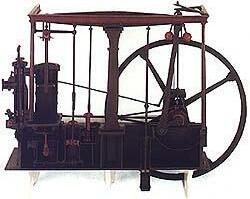
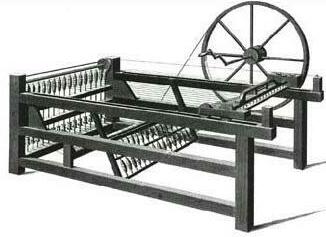
Within a few decades, these innovations changed agriculture based societies in Western Europe and North America into even more urbanized early industrial societies. These societies and the more advanced ones that followed were based on using human ingenuity to increase the average amount of energy used per person. Farm, manufacturing, and transportation machines fuelled by coal and oil took over jobs once done by people and draft animals. This led to greatly increased production, trade and distribution of goods.
The growth in industries increased the flow of mineral raw materials, fuel,timber,and food into the cities that served as industrial centres. As a result, environmental degradation increased in non-urban areas supplying these resources. Industrialization also produced greater outputs of smoke, ash, garbage and other wastes in urban areas.
Fossil fuel powered farm machines, commercial fertilizers, and new plant breeding techniques greatly increased the yield of crops per acre of cultivated land. Greater agricultural activity reduced the number of people needed to produce food and increased the number of former farmers migrating from rural to urban areas. Many found jobs in the growing number of mechanized factories. There they worked long hours for low pay. Most factories were noisy, dirty, and dangerous places to work in.
Advanced industrial societies
After the First World War (1914 19), more efficient machines and mass production techniques were developed, forming the basis of present day advanced industrial societies in the United States, Japan, and other more developed countries. These societies arecharacterized by:
• Greatly increased production and consumption of goods, stimulated by mass advertising to induce people to buy things.
• Greatly increased dependence on non-renewable resources such as oil, natural gas, coal, and various metals.
• A shift from dependence on natural materials, which are degradable, to synthetic materials, many of which break down slowly in the environment.
• A sharp rise in the amount of energy used per person for transportation, manufacturing, agriculture, lighting, heating and cooling.
Advanced industrial societies benefit most people living in them. These benefits include
• Creation and mass production of many useful and economically affordable products.
12 People and the Environment
• Significant increase in the average Gross NaturalProduction per person.
• A sharp increase in average agricultural productivity per person because of advanced industrialized agriculture, in which a small number of farmers produce large amounts of food.
• A sharp rise in average life expectancy from improvements in sanitation, hygiene, nutrition, medicine and birth control.
• A gradual decline in the rate of population growth because of improvements in health, birth control, education, average income and old-age security.
In some ways people in present day advanced industrial societies behave like their hunter-gatherer ancestors. Most women have one or two children that survive to adulthood. Most people do not grow their own food. Instead, they hunt and gather food in grocery stores or in fast food and other restaurants. Our food gatherer ancestors also ate “fast foods” nuts, berries, fruits, greens and roots that could be gathered and eaten immediately. But these early forms of fast food were much more nutritious than what people eat today. Like hunter-gatherers, many people in more developed countries move from place to place during their lifetimes.
Environmental impact of industrialized societies
Along with their many benefits, advanced industrialized societies have intensified many existing problems related to resource use and the environment, and created new ones. These problems now threaten human well being at all levels:
Local level: Contamination of soil, ground water and air with toxic pollutants. Regional level:Damage to forests and degradation of lakes and rivers caused by pollutants.
Global level:Possible climate change from the atmospheric build-up of carbon dioxide and other gases and depletion of the ozone layer.
The combination of industrialized agriculture, increased mining and urbanization has increased the degradation of potentially renewable topsoil, forests and grasslands, and wildlife populations. These same problems contributed to the downfall of earlier civilisations.
Industrialization has given people much greater control over nature and has decreased the number of people caring for the land. As a result, people, especially in more developed countries and in urban areas, have intensified the view that their role is to take control of nature. Many analysts believe that as long as we have this view, we will continue to abuse the earth’s life support systems. Would you like to reflect further on these issues? If so, think about the following question.
SAQ 3
How do various activities in an urban industrialized society affect the environment?
So far, we have briefly outlined the pattern of development of human societies and its impact on the environment. The modern societal evolution has been accompanied by rapid growth in human population, which has also impacted the environment in various ways. You will now study this aspect in some detail.
12.4 POPULATION GROWTH
Changes in the population size and structure are influenced by four components, namely, fertility, mortality, immigration and emigration (migration).
The pace at which births, deaths and migration occurs determines the rate of growth of a population. The population continuously increases by the birth of infants and the arrival of immigrants of different ages. On the other hand, population is being depleted, simultaneously by the death of persons and by emigrants of all ages. Thus
13
Human Evolution and PopulationGrowth
the pace at which these events occur determines the growth and structure of the population. The difference between births and deaths is called “natural increase”. The balance of immigration and emigration istermed “net migration”. Thus in a given area, the size of population can change only in two ways through natural increase and through net migration.
Most populations exhibit growth forms that result from the populations ′ genetic makeup and interactions with their habitat. Within the habitat, populations interact in a variety of ways. The presence of some populations limits the growth of others, but sometimes the presence of a population accelerates the growth of another. Some interactions cause the members of one population to move; other interactions alter the habitat. Let us understand how human population has grown through the ages.
12.4.1 Human Population Growth
During the first several million years of human history, when people lived in small groups and survived by hunting wild game and gathering wild plants, the Earth’s population grew exponentially at an extremely slow average rate of about 0.002% per year. This slow, or lag phase of exponential growth is represented by the almost horizontal portionof Fig. 12.7. Since then, the average annual exponential growth rate has increased.
Today
Fig 12.7: J-shaped curve of exponential world population growth
Advances in sanitation and modern medicine, particularly from the 17th century onward have practically wiped out the major killer diseases at least in the more developed countries. One has only to think of the role of immunisations and antibiotics like penicillin in preserving life. As a result, life expectancy in most countries has risen remarkably, and death rates have dropped sharply. These advances in modern times have more than outweighed the natural checks and are to a great extent responsible for the population explosion, especially in the less developed countries. Let us look at this issue in depth.
12.4.2 Population Growth Trends Globally and in India
In present day world, thanks to improved nutrition and better health care, more babies survive their first few years of life and people live longer. While this is good news, it is a major cause of our rapidly growing population.
From the beginning of recorded history until about 1800, world population grew slowly to about 1 billion people, and it took about 125 years to add the second billion. The third billion was added in about 35 years, by 1960, and the fourth billion was reached 14 years later, in 1974. The fifth billion was added only 13 years later, in
14
the Environment
People and
World population growth since 8000 BC to present times
1987. It was predicted in 1990 that the population will exceed 6 billion before the year 2000 (Global Ecology Handbook). The world population today (2005) is more than 6 billion.
Throughout most of human history, the population remained small, so that births and deaths were roughly equal. Many died due to disease, famine and war. It is estimated that people in the Stone Age had an average life expectancy of only 17 years, while ancient Romans and Egyptians attained 30 years on the average. (In contrast, the average life expectancy in many countries of the world today is over 70 years.) Many died as a result of large scale epidemics whichswept across continents from time to time. For example, in 14th century in Europe, it is estimated that a quarter of the population died from bubonic plague. Other killer diseases were cholera, yellow fever, typhus, malaria and small pox.
Wars are also responsible for killing large numbers of people, including civilians. Wars create famine and cause disease. For example, the Second World War is estimated to have cost nearly 100 million lives, and the Afghan war about a million lives. The Bengal famine from 1942 to 1945 led to the death of 35 lakh people.
Yet, the overall trends in population growth show clearly that the world population is now increasing at an annual rate of 1.8 percent. If this rate continues, the number of people on the Earth will double in 39 years. According to the United Nations, the seven billion mark will be crossed in 2013; 8 billion in 2028; and 10 billion around 2200. According to a report by the United Nations Population Fund, the Earth's total population is likely to reach 10 billion by 2025.
So far we have considered the overall population growth in the world. However, population growth rates vary from nation to nation. On one hand, some nations show very high growth rates (above 3%, i.e., they double about every 23 years); on the other hand, some are not growing at all, and a few even have declining populations. It is known that 75% of the world’s population is in the developing countries of Asia, Africa and Latin America. In these countries the growth rate is around 2.5 percent as compared to 1 percent in the developed countries. These differences are important in terms of the population added per year. Currently, 65 million people are being added every year to the world population; 54 million in the developing countries as compared to 11 million in the developed countries. India’s contribution alone amounts to 15 million every year.
Changes in population size and growth rates in India
The total population of India at independence was around 350 million (35 crores). The total size of population has increased nearly three fold and reached 1000 million by the middle of the year 2000. Table 12.2 shows the population of India since 1901.
Table 12.2: Population growth in India since 1901
Census year Total Population (In millions)
Annual average exponential growth (percent)
1901 238.4 1911 252.1 0.56 1921 251.3 ( ) 0.03 1931 279.0 1.04 1941 318.7 1.33 1951 361.1 1.25 1961 439.2 1.96 1971 548.2 2.20 1981 685.2 2.25 1991 846.3 2.15 2001 1028.6
15
Human Evolution and PopulationGrowth
Requirementofresources differs according to the needs and wants of the people. The resource needs of the poor are minimal but represent absolute needs, not merely wants. The affluent use much larger quantities of resources to satisfy a range of wants far beyond basic survival needs.
You can see how rapidly the population of India has grown during the postindependence period. The rapid growth of Indian population during the
post-independence period was due to dramatic decline in mortality without a corresponding decline in fertility. In the last few decades, the rate of growth of population in India has declined due to various measures like better education, emancipation of women as well as sustained family planning and welfare measures taken by the Government.
The concern for limiting the world population has grown in the recent years and occupies the centre stage today for various reasons. You may like to dwell upon these briefly.
Why is it important to limit our numbers?
Rapid population growth affects both the overall quality of life and the degree of human suffering in a nation or a region. Of the more than six billion people alive today, too many lack adequate food, water, shelter, education and employment.
Rich and poor countries alike are affected by population growth, though the populations of industrial countries are growing very slowly than those of developing ones. At present growth rates, the population of economically developed countries would double in 120 years, whereas the Third World, with over three quarters of the world’s people, would double its numbers in about 33 years. This rapid doubling time reflects the fact that 37 percent of the developing world’s population is under the age of 15 and entering their most productive childbearing years. In the Third World countries (excluding China), 40 percent of the people are under 15; in some African countries, nearly half are in this age group. The world’s projected population growth will call for a proportionate increase in efforts to meet needs for good quality food, water, shelter, jobs and education for all.
Rapid population growth can push a region beyond its economic and natural resource limits its ‘carrying capacity’ or long-term ability to support the people who live there without degrading the region's resources. The number of people, the nature and quantity of production and consumption, and the cumulative impact on resources and environment are all factors that determine a given area’s carrying capacity. The carrying capacity of developing and industrial countries generally involves different factors. In developing countries, widespread malnutrition, especially if accompanied by environmental deterioration such as rapid soil loss or desertification, may be one indication that a country is exceeding its carrying capacity.
SAQ 4
What factors have led to the rapid growth of population in India? Why is it important to contain our population growth?
We now discuss how the rapid growth of population has impacted the use of natural resources and the various problems that have arisen in the process.
12.5 RESOURCE USE VIS-À-VIS POPULATION GROWTH
We begin with the question: What is a resource?
A resource is anything obtained from the environment, which is useful to humans.
There are many types of resources in nature, which we shall discuss briefly.
12.5.1 Types of Resources
16
the Environment
People and
Resources can be classified as perpetual, non-renewable and renewable. A perpetual resource, such as solar energy, is virtually inexhaustible on the human time scale. Non-renewable or exhaustible resources exist in a fixed amount in various places on the earth’s crust. Examples are copper, aluminium, coal and oil. They can be exhausted either because they are not replaced by any natural process (copper, aluminium) or they are replaced more slowly than they are used (oil and coal).The world’s supply of oil took millions of years to form. However, affordable supplies of oil will probably be gone by 2059, two hundred years after the first oil well was drilled in Titusville, Pennsylvania.
Some non-renewable resources can be recycled or reused to extend supplies.


A potentially renewable resource is one that can be depleted in the short run if used or polluted too rapidly but ultimately is replaced through natural processes (Fig. 12.8). Examples are trees in forests, grasses in grasslands, wild animals, fresh surface water in lakes and rivers, most deposits of ground water, fresh air and fertile soil.
Fig.12.8: Major types of resources. In this scheme, potentially renewable resources can be converted to non-renewable resources if used faster than they are renewed
Classifying something as a renewable resource, however, does not mean that it cannot be depleted and that it will always stay renewable. The highest rate at which a














17
Human Evolution and PopulationGrowth
Non-
Perpetual Non
Direct solar energy
Metallic minerals Fossil fuel Potentially renewable Fresh air Fresh water Fertile soil Plants and animals
metallic minerals
-renewable
Winds, tides, flowing water
RESOURCES
renewable resource can be used without decreasing its potential for renewal throughout the world or in a particular area is called its sustained yield.
If this yield is exceeded, the base supply of a renewable resource begins to shrink. If such unsustainable use continues, the resource can becomenon-renewable on a human time scale or sometimes nonexistent a process known as environmental degradation. You will study about this process in detail in the next unit.
SAQ 5
Make a list of the resources you truly need. Then make another list of the resources that you use each day only because you want them. Then make a third list of resources you want and hope to use in the future. Classify them as renewable and nonrenewable.
12.5.2 Influence of Population Growth on ResourceUse
With the growing population, the need for various resources has grown. Today, science and technology along with human ingenuity is being used to exploit natural resources. The over-exploitation and improper utilisation of natural resources lead to serious environmental imbalances and a decline in the diversity and productivity of flora and fauna. All of us use a variety of resources and through our activities end up polluting and degrading them. Of course, some of us pollute and degrade resources more than others.
We do it directly when we consume resources and indirectly when these resources are extracted and transformed to products we need or want. According to one model, the total environmental degradation and pollution (the environmental impacts of population) depends on three factors:
• The number of people;
• The average number of units of resources each person uses; and
• How these resources are used, i.e., the environmental degradation and pollution caused when each unit of resource is used.
Overpopulation occurs when the people in a country, a region, or the world use resources to such an extent that the resulting degradation or depletion of the resource base and pollution of the air, water and soil begin damaging their life support systems. Overpopulation can occur from growing numbers of people or growing affluence (resource consumption), or both.
Differences in the importance of these factors have been used to identify two types of overpopulation: people overpopulation and consumption overpopulation
People overpopulation exists where there are more people than the available supplies of food, water, and other important resources. It can also happen when the rate of population growth exceeds the rate of economic growth so that an increasing number of people are too poor to grow or buy enough food, fuel and other resources. In the world’s poorest less developed countries, people overpopulation causes premature death of at least 12 million and perhaps 40 million people each year.
In this type of overpopulation, population size and the resulting environmental degradation of potentially renewable soil, grasslands, forests, and wildlife tend to be the key factors determining total environmental impact.
Developed countries such as the United States of America, Great Britain, West Germany, the Soviet Union, and Japan have consumption overpopulation. It exists when a small number of people use resources at such a high rate that significant pollution and environmental degradation occurs. With this type of overpopulation, high rates of resource use per person and the resulting high levels of pollution per person tend to be the key factors determining overall environmental impact.
18
Environment
People and the
Apart from these factors, you must bear in mind that pollution and environmental degradation are increased not only by population size but also by population distribution the number of people within an area.
The most severe air and water pollution problems generally occur when large numbers of people are concentrated in urban areas. These urban dwellers can also have harmful effects on potentially renewable soil, forest, and grassland, aquatic and recreational resources. War also has a disastrous environmental impact.
Some scientific and technological developments create new environmental problems or aggravate existing ones. For example, burning coal, oil, and natural gas to provide energy for heating, cooling, and transportation is the cause of most air pollution problems. Other forms of pollution are caused by the increased use of science and technology to manufacture, use, and discard plastics, DDT, chlorofluorocarbons, radioactive wastes, and other materials that take a long time to break down in the environment. But science and technology can also help solve environmental and resource problems. Substitutes have been developed for many scarce resources. Measures for solving various environmental problems have also been researched and implemented.
Impact of human population growth on the environment
Having reached 6 billion in 1999, human population continues to grow. UN population projections for the year 2050 range from 7.3 billion to 10.7 billion. More people and higher incomes worldwide are multiplying humanity ′s impact on the environment and on the natural resources that are essential to life. The planet′s fresh water, fisheries, forests and atmosphere are already under tremendous strain. Pressure on natural resources is increasing. Current population growth trends offer hope, however. Over the past 40 years the average number of children born to each woman has fallen from five to less than three.
However, humankind must conserve resources and protect the environment in order to survive. Without conservation practices, long-term environmental degradation sets in, and threatens human survival.
There are two impinging issues of current debates about population growth. First, there is the question of whether increasing human numbers necessarily results in environmental degradation, or whether increases may even form a prerequisite for sustainable environmental management. Second issue is whether human consumption levels, as opposed to human numbers, are ultimately to blame for environmental degradation It is important to understand the patterns of resource use to gauge the impact of population growth on the environment. We discuss each resource one by one.
Land
The land surface of the earth is our principal resource base. The biological productivity that results from the interaction of plants, soil and solar energy provides the supplies of wood and most ofthe food that humankind demands.
In recent centuries human use of the Earth’s surface has been characterized by two major trends. These are:
• Intensification of food production on long occupied areas.
• Extension of production into new parts of the world in which the signs of human activity were previously faint.
Over the last three centuries, the cropland area in the world has increased approximately five fold. At the same time, the forest area has declined by nearly 20%. In absolute terms, the expansion of cropland and decline of forest are similar, each amounting to about 1.2 billion ha, while the extent of grassland seems relatively
19
Human Evolution and PopulationGrowth
steady. It does not follow that all the growth in cropland has been directly at the expense of the forest, or that the area of grassland has been constant; much cropland has come from grassland and much of the cleared forest area has become grassland.
Although the increase in cropland has been high, its extent is still small in relation to the total land area. Even after three centuries of expansion it is still a little more than 10 percent of the total land area. Nevertheless, this area is of crucial importance for humankind: it is estimated that around 92 percent of our food, on a dry matter basis, comes from arable land compared with 7 percent in the form of livestock products from non-arable land and 1 percent in the form of fish.
To give you some idea of the statistics, we present in Table 12.3, some demographic characteristics and natural resource availability in the South Asian countries.
Table 12.3: Some demographic characteristics and natural resource availability in some South Asian countries
Country Population Size (millions) Population growth rate (1990-1995)
Pakistan India Nepal Bhutan Bangladesh Sri Lanka
140.5 935.7 21.9 1.6 120.4 18.4
2.8 1.9 2.6 1.2 2.2 1.3
(Source: GLASOD)
SAQ 6
Percentage urban 1995
34.7 26.8 13.7 6.4 18.3 22.4
Urban Population growth rate (1990-95)
4.4 2.9 7.1 4.8 5.3 2.2
Cropland per capita 1993(ha)
0.16 0.19 0.11 0.08 0.08 0.11
Forest/ woodland per capita 1993(ha)
0.03 0.08 0.28 1.63 0.02 0.12
Renewable water per capita (m3 /day)
9.1 6.1 21.2 158.8 53.6 6.4
Compare the data given in Table 12.3 for India, Pakistan and Bangladesh. What conclusions can you draw about the impact of population growth on resource availability in these regions?
Cropland
The number of people living in countries where cultivated land is critically scarce is projected to increase to between 557 million and 1.04 billion in 2025. Despite the technological advances, agricultural experts continue to debate how long crop yields will keep up with population growth. The food for the future generations will have to be raised mostly on today′s cropland. Therefore, the soil on this land must remain fertile to keep food production secure.
The minimum amount of land needed to supply a vegetarian diet for one person without any use of artificial chemical inputs or loss of soil and soil nutrients is 0.07 hectare, or slightly less than a quarter of an acre. An estimated 420 million people already live today in countries that have less than that per person. Easing world hunger could become difficult if population continues to grow at current rates.
Water
Currently, 505 million people in the world face water scarcity. Dependingonfuture rates of population growth, between 2.4 billion and 3.2 billion people may be living in either water-scarce or water-stressed conditions by 2025. For tens of millions of people in India today, the lack of available fresh water is a chronic concern that is growing more acute and more widespread. The problem is worse than it often appears on the ground, because much of the fresh water now used in water-scarce regions comes from deep aquifers that are not being refreshed by the natural water cycle.In most of the regions of India where water shortage is severe and worsening, high rates of population growth exacerbate the declining availability of renewable fresh water.
20
People and the Environment
Fig.12.9: Women bear the brunt of environmental problems
Forests
Today about 1.8 billion people live in 40 countries with less than 0.1 hectare of forested land per capita, an indicator of critically low levels of forest cover. Based on the medium population projection and current deforestation trends, by 2025 the number of people living in forest-scarce countries could nearly triple to 4.6 billion. Most of the world′s original forests have been lost to the expansion of human activities. In many parts of the developing world, the future availability of forest resources for food, fuel and shelter looks quite discouraging. Future declines in the per capita availability of forests, especially in developing countries, are likely to pose major challenges for both conservation and human well-being.
Climate
Per capita emissions of CO2 show an upward trend from mid 1990s. When combined with growing world population, these increased per capita emissions accelerated the accumulation of greenhouse gases in the global atmosphere and, thus, future global warming. The United States accounted for 22 percent of all emissions from fossil fuel combustion and cement manufacture, by far the largest CO2 contributor among nations. Emissions remained grossly inequitable, with one fifth of the world′ s population accounting for 62 percent of all emissions in 1996 while another and much poorer fifth accounted for less than 2 percent.
Biodiversity
More than 1.1 billion people live in areas that conservationists consider the richest in non-human species and the most threatened by human activities. While these areas comprise about 12 percent of the planet′s land surface, they hold nearly 20 percent of its human population. The population in these biodiversity hotspots is growing at a collective rate of 1.8 percent annually, compared to the world ′s population′s annual growth rate of 1.3 percent.
Fisheries
Most of the world′s ocean fisheries are already being fished to their maximum capacities or are in decline. Most fisheries worldwide are fully exploited or in decline. While the number of individual fishers continues to increase, the amount of fish each one catches is falling steadily. The poor have long depended on fish for complete protein, but population growth is helping to push this important food source out of their reach.
Poverty
Poverty is both a contributor to and a result of population growth and environmental degradation. In this cyclical relationship, the poor often have few alternatives but to exploit resources in an unsustainable fashion. Hungry families attempt to grow food on any land available, regardless of the fragility of the soil or the suitability of the crops. When a family is hungry and cold, it will burn wood for cooking and heat, and when the wood supply is exhausted, it will burn dung and crop stems that could otherwise have been used as fertilizer. Often the poor do not have the ability to let the land lie fallow, or to undertake reforestation.
SAQ 7
List the major concerns vis-à-vis the judicious use of each one of the resources listed above.
What could be done?
Population is a critical variable influencing the availability of each of the natural resources considered here. Clearly the environmental challenges humanity faces in the 21st century and beyond would be less difficult in a world with slower population
21
Human Evolution and PopulationGrowth
growth or none at all. Access to family planning services is a critical variable influencing population. Use of family planning contributes powerfully to lower fertility, later childbearing, and slower population growth. Yet policymakers, environmentalists and the general public remain largely unaware of the growing interest of young people throughout the world in delaying pregnancies and planning their families. In greater proportions than ever, girls want to go to school and to college, and women want to find fulfilling and well-paid employment.
Helping people in every country to obtain the information and services they need to put these ambitions into effect is all that can be done, and all that needs to be done, to end world population growth in the new century. Comprehensive population policies are an essential element in a world development strategy. There should be improved natural resource technologies, which go hand in hand with population policies. Together these can bring humanity into enduring balance with the environment and the natural resources upon which we will always depend
The greatest challenge that confronts society and governments today, and the generations to come, is the sustainable development and intelligent management of this ‘over populated’ planet. We now summarise the basic ideas of this unit.
12.6 SUMMARY
• The primitive hunter-gatherers skilfully manipulated their environment in a way that it would not deplete future supplies.
• In contrast, agriculture has had a conspicuous impact on the environment. Industrial societies intensively utilized the environment.
• Industrialization surpasses the environmental impacts of permanent agriculture.
• For most of human history, people lived in small groups and population grew exponentially at a slow average rate. As a result of industrialization and medical developments, average growth rate increased rapidly.
• The rapid increase in population size had severe effects on the other species, and on the air, water and soil upon which we and other forms of life depend.
• As a result of population growth, our environment is being overused and degraded. Population growth effects have damaged our forests, land reserves, farmland, water quality, and air quality.
• The population growth and environmental destruction that go hand-in-handare prevalent in most developing countries and measures need to be taken to remedy the situation.
12.7 TERMINAL QUESTIONS
1 What evidence is there that the human population has approached or perhaps exceeded the carrying capacity of the Earth?
2. Discuss the problems of resource use in relation to human population growth.
3 Comment on the statement We would be better off if agriculture had never been discovered and we were still hunters and gatherers today.
References
1 Mather, A.S., and Chapman, K. (1995) Environmental Resources, Longman Scientific & Technical, Longman Group Limited, England.
22
the Environment
People and
2. Miller T.G. (1990) Resource Conservation and Management, Wordsworth Publishing Company, Belmont, California.
3 The State of India′s Environment, Fifth Citizen ′s Report, Centre for Science and Environment, Delhi.
Human Evolution and PopulationGrowth
23
UNIT 14 ENVIRONMENTAL POLLUTION
Structure
14.1 Introduction Objectives
14.2 What is Pollution?
14.3 AirPollution
Types of Air Pollutants and their Sources Effects of Air Pollutants on Human Health
14.4 Water Pollution
Sources of Water Pollution Effects of Water Pollution on the Environment and Human Health Water Quality Parameters
14.5 Land and Soil Pollution
14.6 Noise Pollution and Radiation Pollution
14.7 Controlling EnvironmentalPollution
14.8 Summary
14.9 Terminal Questions
14.1 INTRODUCTION
In the previous unit you have studied about environmental degradation caused by over exploitation of natural resources and certain measures that can be taken to prevent it. You have learnt that the decline in the quality and/or quantity of environment may result from the alteration of the entire structure of the resources as in land degradation, deforestation, agricultural practices, etc. We have discussed these aspects in detail in Unit 13.
Environment degradation also occurs from the alteration of the resources due to pollution. Pollutants accumulate in air, water and land causing air pollution, water pollution and land pollution. In addition, sound waves at higher amplitude andrays emitted by radioactive materials cause noise pollution and radiation pollution, respectively. In this unit we discuss, in some detail, environmental pollution caused by the addition of various harmful substances in the environment due to human activities. If not checked, environmental pollution will be potentially dangerous to the very survival of human beings on the planet Earth. Therefore, we also acquaint you with some measures that can help prevent environmental pollution.
Objectives
After studying this unit, you should be able to:
• describe the causes of environmental pollution;
• list the air, water and land pollutants and state their sources;
• outline the consequences of air pollution, water pollution and land pollution;
• describe noise pollution and radiation pollution; and
• discuss the options available for pollution control.
14.2 WHAT IS POLLUTION?
Pollution occurs when a substance present in the environment prevents the functioning of natural processes and produces harmful environmental and health effects. In the natural world, many substances accumulating in the environment are processed through the intricate network of bio-geochemical cycles.
42 People and the Environment
Within the organic phase of the bio-geochemical cycles, the substances could be broken down by living organisms (mainly bacteria and fungi) making them harmless. Further, the cycling of materials in any one of the bio-geochemical cycles stops the accumulation of substances. Pollution occurs when the environment becomes overloaded beyond the natural capacity of these normal processing systems.
Since the bio-geochemical cycles are interrelated with the other global environmental systems, particularly geological cycle, water cycle and energy system, any disturbances in the processing of substances will trigger changes in the other environmental systems. Feedback loops within and between systems can amplify initial changes, and quickly produce major problems with significant costs and risks. For example, burning of fossil fuels can cause accumulation of carbon dioxide resulting in the disturbance in the atmospheric energy system and a rise in the temperature. This can lead to global warming, which can induce further changes among populations of living organisms.
Pollution is defined as any undesirable change in the physical, chemical or biological characteristics of environmental components, i.e., air, water and soil that adversely affects the life forms and life support systems of the biosphere directly or indirectly. Broadly speaking, the term pollution refers to any change in the natural quality of the environment brought about by physical, chemical or biological factors. Pollution may be natural or due to human activities, local or global. The agent that contaminates the environmental component is called the pollutant.
A normal constituent of the environment becomes a pollutant if its concentration increases beyond the acceptable limits, destroying its usefulness. A pollutant is also a new substance (biotic or abiotic) or energy (heat, sound, radioactivity etc.) that is added to or formed in any component of the environment and builds up to a level where usefulness of that component is damaged.
Depending on its state (solid, liquid or gas), pollutants accumulate in air, water and land. The gaseous forms like carbon monoxide pollute air. The water-soluble nitrates and phosphates in larger quantities pollute water. On land there are solid and liquid pollutants, e.g., plastics, polythene, DDT, heavy metals, etc. Accumulation of these pollutants leads to decline in the quality of air, water and land. In addition, noise at a higher amplitude and radiation at different wavelengths, e.g., X-rays, gamma rays etc. are not conducive for life.
Pollutants can be grouped into two broad categories:
i) Non-biodegradable Pollutants: Such substances are not broken down or decomposed by bacteria. Examples are pesticides, heavy metals, rubber, nuclear wastes etc. Plastics also fall in the same category. These pollutants persist for a very long time in nature, get accumulated and often biomagnify to a dangerous level when they move in material cycles in the nature and along with the food chain.
ii) Biodegradable Pollutants: Pollutants such as garden waste, domestic sewage, agro-based residues, etc. break down into simple products by bacterial decomposition process. These simple products are raw materials of nature that are reutilised in the ecosystem. Decomposition of these non-persistent pollutants occurs naturally as well as through engineered systems such as sewage treatment plants. Such man made systems enhance nature′s capacity to decompose. These biodegradable pollutants pose a threat when their input in the environment exceeds the decomposition capacity.
Environmental Pollution
43
Depending on the mode of input of chemicals to the environment there are two types of sources, i.e., Point sources and Nonpoint sources.
Point sources are distinct and confined sources that discharge the pollutants/effluents through a chimney or through a discharge channel such as pipes or tunnels from industries or municipal areas. These include direct discharges from factories, energy plants, effluent treatment plants, etc. In the case of point sources of pollutants, the location is easy to find and therefore, easy to control.
Non-point sourcesor area sources are diffused sources that discharge pollutants over a large area. The non- point sources are less discrete and mainly includes agricultural runoff, storm water runoff, which includes oils, atmosphericprecipitationetc. Due to the way they spread, these are difficult to control.
Build up of Pollution in the Environment
Pollutants can enter the environment through many sources (Fig.14.1). Some examples are run-offs from construction sites and agricultural fields. Pollutants emanating from some sources (called point sources) can be controlled through on-site treatment. It is difficult to treat pollution arising from non-point sources because these are widely dispersed over a large area.
SOURCES OF POLLUTION
Fig.14.1: Some sources of pollution around us
Pollutants are not only present outdoors. There are many potential indoor sources of pollution as well. People in urban areas spend considerable time remaining indoors; therefore, it is important to understand the indoor environmental pollution too.
Pollutants may have different kinds of effects on human beings as well as on other components of biosphere. The reasons for this are the differences in the chemistry and concentration of the pollutants. In some cases the combined effect of substances may be greater than the sum of the effects of individual substances. For example, the air pollutants sulphur dioxide and particulates, when inhaled separately may cause adverse health effects. But sulphur dioxide can be absorbed on small particulates and together both may be inhaled deeper and retained longer than sulphur dioxide alone and cause greater damage to the lungs. Also, our body may be more sensitive to a substance if it is simultaneously exposed to other substances and stresses.
44
People and the Environment
In Table 14.1 we list some sources of indoor and outdoor pollution.
Table 14.1: Some sources of indoor and outdoor pollution
SOURCES POLLUTANTS
Predominantly Indoor
• Particleboard, foam insulation, furnishing, ceiling tiles, tobacco smoke.
• Building materials concrete, stone; water and soil
• Fire proofing, thermal and electrical insulation, acoustic
• Adhesives, solvents, paints, varnishes, cooking, cosmetics,tobaccosmoke
• Pesticides in paints, spills in laboratories, sprays
• Consumer products, house dust, animal debris, infected organisms
Predominantly Outdoor
• Coal and oil combustion, smelters, fires
• Photochemical reactions
• Automobiles, smelters
• Soil particulates, industrial emissions
• Petrochemical solvents, vaporization of unburnt fuels
Indoor and Outdoor
• Fuel combustion
• Incomplete fuel combustion
• Fossil fuel combustion, metabolic activity
• Suspension, condensation of vapours, combustion products
• Petroleum products, combustion, paint, metabolic action, pesticides, insecticides, fungicides
• Cleaning products, agriculture, metabolic products
Formaldehyde Radon
Asbestos, mineral wools, synthetic fibres
Organic substances,nicotine aerosol, volatile organics Mercury, Cadmium
Aerosolsofvaryingcomposition, allergens, viable micro organisms
Sulphur oxides Ozone
Lead,Manganese Calcium, Chlorine, Silicon, Cadmium Organic substances
Nitrogenoxides
Carbon monoxide Carbon dioxide Suspended particulate matter
Organic substances, heavy metals Ammonia
We now describe the causes of pollution and pollution control measures for various environmental components such as air, water, land, etc. You may like to find out whichof these pollutants are present in your environment.
SAQ 1
Make a list of the indoor and outdoor pollutants around you. What are their sources?
14.3 AIR POLLUTION
Air is essential for us to live. We can live without food and water for days but only a few minutes without oxygen. An average human adult uses six times more amounts of gases per day as compared to water and food. That is why maintaining air quality is important for us. Any significant change in the normal composition of air is harmful.
45
Environmental Pollution
14.3.1 Types of Air Pollutants and their Sources
When clean air moves in the troposphere, it collects products from natural events as well as human activities. Some of these pollute the air (see Fig. 14.2). We list the common air pollutants resulting from human activities.
Common air pollutants
Suspended Particulate Matter (SPM): Bio particles (organisms, spores, pollen grains), dust particles, smoke, mist, fumes, spray, asbestos, pesticides, metallic dust (arsenic, barium, boron, selenium, beryllium, cadmium, chromium, iron, manganese, nickel, zinc).
Gases: Nitric oxide (NO), nitrogen dioxide (NO2) sulphur dioxide (SO2),carbon monoxide (CO), carbon dioxide (CO2), ozone (O3), peroxyacetylnitrate (PAN), hydrogen fluoride (HF), ammonia (NH3), chlorine (Cl), hydrogen sulphide (H2S), hydrocarbons (methane, ethane, propane, acetylene, ethylene, butane, isopentane), aldehydes, alcohols.
Would you not like to assess which of these are present in your surroundings? If so, stop for a minute and make a list of the common air pollutants around you.
Secondary pollutants
Primary pollutants
Fig. 14.2:
Outdoor and indoor air pollutants due to human activities
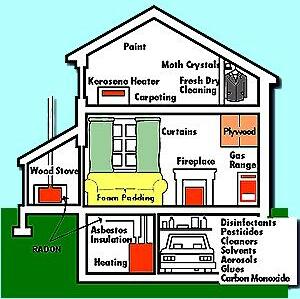
Certain substances are also released from natural sources or as a result of natural activity. Some examples are: pollens and volatile organic compounds from plants; gases like sulphur dioxide, hydrogen sulphide etc. from volcanic eruptions and decay of organic materials; particlesfrom wild fires and sea; natural radioactivity etc. However, natural emissions are low in concentrations and do not tend to cause serious damage.
Air pollutants can be grouped into two categories: Primary pollutantsand secondary pollutants.

46
People and the Environment
Paint Curtains Carpets Fireplace Gas Mothballs Fresh Dry-cleaning Heater Stove Disinfectants Pesticides Cleaners Aerosols Glues Solvents Foam padding Asbestos Radon Plywood
Primary Pollutants are emitted directly into the air as a result of natural or human activity. Examples include particulates, sulphur dioxide, nitrogen oxides, carbon dioxide, carbon monoxide, ozone and hydrocarbonsreleased from fuel burning. We now discuss some of these in brief.
Particulate matter
There are two types of pollutant particles those that can settle down, and those that remain suspended. The particles that can settle down have a size larger than 10µm (1µm= 10 6m). The smaller particles such as dust, soil, sulphate salts, heavy metal salts, fire particles of carbon (soot), silica, asbestos, liquid sprays, mist, etc. remain suspended in the air for long periods and pollute it. These result from activities like fuel combustion, building constructions, mining, thermal power generation, stone crushing, industrial processes, forest fires, refuse incineration, etc.
Sulphur Dioxide
It is one of the major air pollutants. It is emitted from burning fossil fuels like coal and petrol and from processing of sulphide ores like pyrite. It reacts with other atmospheric gases to produce secondary pollutants, as you will shortly learn. At concentrations above 1 ppm, it affects human beings. Its harmful effect on living beings is described in the next section.
Nitrogen oxides
Nitrogen oxide (NO), Nitrogen dioxide (NO2), Nitrous oxide (N2O) and Nitrate (NO3) are generated in the burning of fuels and biomass as by-productsinthe manufacturing of fertilizers, in furnaces and internal combustion engines. These oxides play an important role in the formation of photochemical smog, which we shall describe in a little while.
Oxides of carbon
Incomplete combustion of coal, oil and other fuels for energy production, manufacturing and transport; biomass burning, exhausts from aircrafts and space rocket engines, etc. give rise to carbon dioxide (CO2) and carbon monoxide (CO). Carbon monoxide is deadly poisonous in concentration higher than 100 ppm, which is quite common at the time of traffic jams on the busy roads of a city. Human activities result in the production of nearly 250 million tonnes of CO annually and it accounts for 50 % of the total atmospheric pollutants. An increase in carbon dioxide can result in global warming about which you will learn later in this section.
Some other primary pollutants are listed in Table 14.2 along with their sources and effects on human beings.
Secondary Pollutants are produced as a result of chemical reactions between primary pollutants and normal atmospheric compounds under the influence of solar radiations. Some examples are ozone, smog and acid rain. We now discuss certain significant secondary pollutants.
Ozone
Ozone is formed by the action of sunlight on Nitrogen dioxide (NO2). When it absorbs ultra-violet radiations that reach the earth’s surface, it splits into nitrogen oxide (NO) and oxygen atoms (O). These oxygen atoms combine with oxygen molecules to form ozone (O3). Ozone is considered to be more toxic to vegetation than the primary pollutants involved in its formation.
Smog
The term smog is used for a mixture of smoke and fog or moisture in the air. It is formed by complex reactions between oxides of nitrogen and a wide range of
Parts per million (ppm) is the unit of concentration often used to measure the level of pollutants in air, water, body fluids, etc. One ppm is 1 part in 1, 000, 000. The common unit mg/litre is equal to one ppm for water solutions.
Ozone is both a protector and a problem for us. In the stratosphere, the ozone layer protects us from harmful UVradiations. In the lower atmosphere it acts as a powerful oxidizing agent and causes damage to crops, vegetations, fabricsetc. and harm to human beings. Some people are affected even at a low concentration of 0.001 ppm.
47
Environmental Pollution
hydrocarbons triggered by sunlight (Fig. 14.3). It is formed mostly in urban areas, especially in stagnant airs. Smog is basically of two types: Photochemical smog or brown air smog and the industrial smog or grey air smog.

The hydrocarbons and nitrogen oxides from automobiles and power plants react in the presence of sunlight producing a number of secondary pollutants such as ozone, formaldehyde and Peroxy Acyl Nitrate (PAN). The resulting brown orange shroud is known as photochemical smog. Photochemical smog causes damage to trees, erodes rubber products and is known to cause serious health hazard. PAN can cause injury to plants at concentrations as low as 0.01 to 0.02 ppm. In large urban areas, concentrations of 0.02 to 0.03 are not uncommon.
Mainly sulphur oxides, particulate and droplets (aerosol) combine with atmospheric moisture and form a greyish haze known as grey smog orindustrial smog. It settles on buildings making them filthy and black in colour. When it is deposited on plants, photosynthesis gets hindered.
Fig. 14.3: Air pollution due to smog
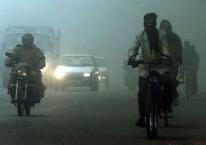
Acid rain
The primary pollutant sulphur dioxide (SO2) reacts with oxygen (O 2) in the atmosphere to form sulphur trioxide (SO3), a secondarypollutant. Sulphur trioxide further reacts with water vapour to form another secondary pollutantsulphuric acid (H2SO4), which is a component of acid rain. Acid rain or acid precipitation (Fig. 14.4) includes wet acidic depositions like rain, snow, fog, mist or dew and deposition of dry acidic particulates from the air. It occurs in and around the areas where major emissions of sulphur dioxide (SO2) and nitrogen oxides (NOx) occur as a result of anthropogenic activities. Hydrochloric acid emitted from coalfired power plants also adds to acid rain problems. Acid depositions have disastrous effects on both the life forms as well as the materials. The pH of aquatic bodies is lowered which may harm or kill their biota. Soil fertility is also affected adversely.
Acid rain forms relatively higher up in the atmosphere and travels long distances. Acid fog forms when water vapour near the ground mixes with pollutants and turns into an acid. When the fog eventually dissipates, nearly pure drops of acid may be left behind and tiny particles containing the acid may be inhaled deeply into peoples’ lungs. Such acid aerosols are a human health hazard. Apart from damaging forests and lakes, acid rain corrodes and harms building materials such as steel, paints, plastics, cement, limestone, sandstone and marble.
48
People and the Environment
Effects


Fig.14.4: Formation of acid rain and its effects

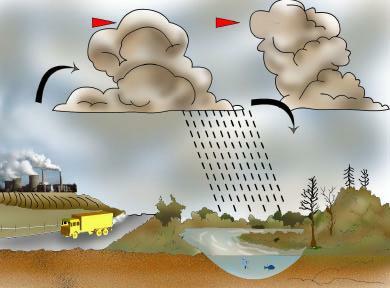
Air pollution can also magnify the greenhouse effect (see Unit 3) in the atmosphere and lead to global warming. An expert body called the Inter-GovernmentalPanel on Climate Change (IPCC) established by the UN has undertaken studies on global climate. According to IPCC, over the past five years the evidence has become stronger that human activities are having a discernible influence on the global climate as the combustion of fossil fuels, changes in land use and agriculture release greenhouse gases into the atmosphere. We now discuss this phenomenon in some detail, as it is an important environmental concern today.
Global Warming
During the post-Industrial Revolution era, the concentrations of greenhouse gases like CO2, N2O, O3, CH4, H2O water vapour and CFCs have increased significantly. The concentration of CO2 has increased by about 31 percent, methane has more than doubled, and nitrous oxide has risen by 17 percent. Analysis of polar ice cores which contain fossilised air bubbles shows that the atmospheric concentration of carbon dioxide was very stable between 10,000 and 250 years ago, remaining between 260 and 280 ppm by volume; this has increased to over 370 ppm, with most of the increase occurring in recent decades (see Fig. 14.5a).
Approximately 7.6 billion tons of carbon is currently released into the atmosphere each year. Six billion tons are given out from fossil fuel combustion, and an estimated 1.6billion from deforestation. Concentration of greenhouse gases is expected to approach 1000 ppm by 2100 under business as usual scenario. There is clear evidence that these increases are mostly due to the combustion of fossil fuels for transportation, heating and electricity and other human activities.
This has resulted in an enhancement of global warming and a corresponding increase in the global mean surface temperature by about 0.6°C. The ambient temperature is expected to increase by 1 to 5.8°C over the next 100 years. Any rise of the level would far exceed natural temperature changes over the last 8000 years, which have been of the order of 1°C. Records show that over the last 100 years the global mean temperature has risen between 0.3°C to 0.6°C. In fact, the global warming is already well under way: Even if all greenhouse gas emissions stopped tomorrow, we would see a rise in planetary temperatures of 1.1°C, twice the warming experienced over the past century. Bad as that is, it is still an unrealistically optimistic scenario. It is projected that greenhouse gas emissions will go on rising for decades; theIPCC
49 Environmental Pollution
1908
n
SO2 NOx Particulates NH3 NH4 Hg NO3 SO4 H
The effect of acid rain on animals, plants andstone
1968 Emissions Deposition
People and the Environment
predicts a global temperature rise of between 1.4°C and 5.8°C by 2100 (see Fig.14.5b).
(ppm)
(a)
dioxide
(b)
500
400
300
200
100
0
600 1 2 3 4 5 6 7 8 Years
Year
Fig. 14.5: a) Trends and projections (2030) in global CO2 concentrations; b) projections in global mean temperature due to global warming(Source: IPCC 2001)
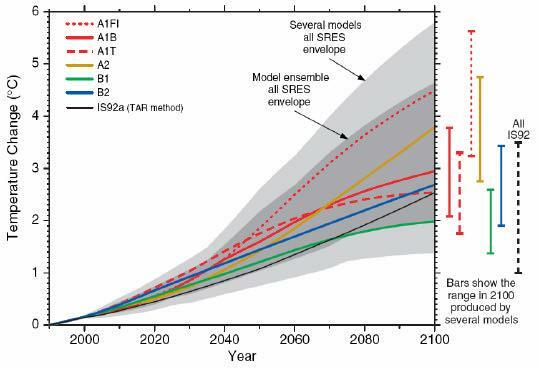
Based on palaeo-data, scientists predict that even a few degrees rise in the global mean temperature could bring about a drastic change in the climate, resulting in adverse impact on both the terrestrial environment and the humans. Sea-level rise is an important consequence of enhanced global warming. Excessive melting of ice caps and glaciers will lead to increase in the ocean water level and ultimately submerge vast areas of land in various parts of the world.
Sea levels are expected to rise between 15 and 94 centimetres over the next century. A 50-centimetre sea level rise could double the global population at risk from storm surges from roughly 45 million to over 90 million, even if coastal populations do not increase. These changes will have obvious implications for food security and
50
Carbon
concentration
1700 1750 1800 1850 1900 1950 2000 2030
livelihood of farming communities. Low-lying areas and island nations are particularly vulnerable. Human lives and livelihoods, as well as the survival of many species of plants and animals, are at risk from these changes. The very future of small island states, some of which are only two metres above sea level, is at stake.
Climatechange and sea level rise would affect all socio-economic sectors including agriculture, forestry, coastal zones, wetlands, water resources, energy generations, human settlements, tourism and also would increase the occurrence of extreme events such as droughts, floods and cyclonic storms. Increased temperatures are expected to speed up the global water cycles. Faster evaporation will lead to drying of soils and in some areas increased drought. Overall, however, due to the faster global cycle of water, there will be an increase in precipitation. The global warming may, therefore, result in climatic changes of unprecedented nature.
At the lower end of this scale, large areas of agriculturally productive land will be destroyed; entire countries will disappear through rapid sea-level rise; and entire regions in the arid, semi-arid and sub-tropics will become uninhabitable. Recent devastating heat wave in Europe, which killed thousands of people, is a strong warning signal of the impact of global warming on humans and other living organisms. It is hard to escape the conclusion that the first visible signs of global warming are becoming clear.
Global warming is often misunderstood to imply that the world will warm uniformly. In fact, an increase in average global temperature will also cause the circulation of the atmosphere to charge, resulting in some areas of the world warming more, while other areas warming less than the average. Some areas can even cool. In general temperature rise will be more at higher latitudes as compared to mid latitudes. Night time temperature will increase more than the day time temperature.
The cost of damages from global warming in monetary terms cannot be assessed precisely, but it is certain that it will run into thousands of billions of dollars. The worst sufferers of global warming and climate change would be the developing countries in terms of loss of life and relative effects on investment and economy. Communities and regions that are vulnerable to climate change are also under pressure from population growth illiteracy and poverty. Countries lacking resources, technology, education, infrastructure and management capabilities will not be able to take the prophylactic or remedial measures. The major responsibility of global warming lies with developed countries. Their affluent life style and ever growing appetite for energy are responsible for most of the greenhouse gas emissions. The average carbon dioxide emission in United States is over 20 tons per person per annum, 9 tons per person per annum in the UK, Germany at 10, and France at 6 (see Fig.14.6). These figures are significantly higher, in comparison with India (1.5 tons) and China (2.5 tons).
51
Environmental Pollution
+ Fig.
Average CO2 emissions per
tons 20 10 9 6 2.5 1.5 0 5 10 15 20 25 USA Germany UK France China India Average emissions per person per annum in tons
14.6:
person per annum in
Our nasal passage is lined with hair, which filter out large particles. Mucous lining in the upper respiratory tract captures smaller particles and dissolves some gaseous pollutants. When the respiratory system gets irritated by pollutants, the contaminated air and mucous get expelled from the body by sneezing and coughing. Further the ciliary action of the system direct pollutants towards the throat where they will get swallowed or expelled.
Developing countries in contrast to their contribution to GHG emissions are most vulnerable as they lack resources and capability to adapt. South Asian countries are largely agrarian with widespread poverty. Their economy and the societal organisation are centred around climate sensitive sectors like agriculture and forestry. Therefore global warming and the concomitant climate change will have far reaching consequences for these societies.
14.3.2 Effects of Air Pollutants on Human Health
Air pollutants mainly act on the respiratory system of humans and their health effects can be basically divided into two categories: Acute health effects and chronic health effects.
Acute Effects
When the level of air pollutants rises suddenly, there are adverse effects on health such as headaches, colds, irritated throats and coughs, irritation to nose and mucous lining, itching, swelling of eyes, tissue fluid accumulation and bronchial spasm. When the air becomes sufficiently clean these acute effects disappear. For example, in Delhi, the use of CNG as fuel in public transport has significantly lowered air pollution and the air has become cleaner in the last few years.
Chronichealtheffects
Long term exposure to air pollutants mainly sulphur dioxide, nitrogen dioxide and ozone and smoking breaks down the natural defences of our body causing respiratory diseases such as lung cancer, shortness of breath, asthma, chronic bronchitis (cells lining the bronchi and bronchioles get inflamed or damaged resulting in mucus build up, coughing and shortness of breath ) and emphysema (irreversible damage to alveoli causing abnormal dilation of air spaces, loss of lung elasticity and shortness of breath). In Table 14.2 we list the major air pollutants, their sources, and an overview of their effects on humans and the environment.
Table 14.2: Major air pollutants, their sources and their effects on human beings and environment
Pollutants Sources Effects
• Oxides of Carbon (COx)
Carbon dioxide (CO2)
Carbonmonoxide (CO)
Combustion of coal, oil and other fuels for energy production, manufacturing and transport; biomass burning.
CO2 has a major role in greenhouse effect, produces weak carbonic acid adding to acid rains; CO affects human health by binding to haemoglobin, which may result in asphyxia; haemoglobin has 250 times more affinity with CO as compared to that of O2.
• Oxides of sulphur (SOx)
Sulphur dioxide (SO2)
Sulphur trioxide (SO3)
Sulphate (SO4)
Combustion of sulphur containingfuel e.g., coal, petroleum extraction and refining;paper manufacturing; municipal incinerating; ore smelting for metal extraction.
SO2 has maximum deleterious effects as it can cause severe damage to human and other animal lungs and is important precursor to acid rain; adverse effects include corrosion of paints, metals and injury or death to animals and plants.
52
the Environment
People and
• Oxides of Nitrogen (NOx)
Nitrogen oxide (NO)
Nitrogendioxide (NO2)
Nitrous oxide (N2O)
• Nitrate (NO3)
• Hydrocarbons (HCs) also called volatile organic compounds (VOCs)
Methane (CH4)
Butane (C4H10)
Ethylene (C2H4)
Benzene (C6H6)
Benzopyrine (C20H12)
Propane (C3H8)
• Other organic compounds
Chlorofluoro carbons (CFCs), Formaldehyde (CH2O)
Methylene chloride (CH2Cl2)
Trichloro ethylene (C2H Cl3)
Vinylchloride (C2H3Cl)
Carbon tetrachloride (CCl4)
Ethyleneoxide (C2H4O)
• Metals and other inorganic compounds
Lead (Pb), mercury (Hg)
Hydrogen sulphide (H2S)
Hydrogen fluoride (HF)
Burningoffuels; biomassburning; by-productinthe manufacturing of fertilizers
Form the secondary pollutants: peroxy acetyl nitrate (PAN) and nitric acid (HNO3); suppression of plant growth and tissue damage; cause irritation to eyes, viral infections like influenza; nitrate form in atmosphere impairs the visibility whereas in soil promotes plant growth.
Evaporation from gasoline tanks; burning of fuels, biomass; municipalland fills; microbial activity of sewage; industrial process involving solvents
Aerosol sprays; foamand plastics for making disposable fast food containers; refrigeration
Can have carcinogenic effect on humans; higher concentrations are toxic to plants and animals; can convert into harmful compounds through complex chemical changes that occur in atmosphere; some are more reactive with sunlight and produce photochemical smog
CFCs cause reduction in stratospheric ozone that allows greater penetration of ultraviolet light at earth’s surface; intensified UV radiations cause skin cancer and can have lethal effects on various life forms
Oil wells and refineries; transport vehicles; municipalland fills; fertilizer, ceramic, paper, chemical and paint industries; pesticides; fungicides; aluminium production; coal gasification.
Cause respiratory problems, toxicity and even death to humans and other animals; damage to crops; prove to be carcinogenic
53 Environmental Pollution
• Liquid droplets
Sulphuric acid (H2SO4) Nitric acid (HNO3) Oil
• Pesticides
• Suspended particulate matter (SPM-solid particles)
Dust, soil, sulphate salts,heavymetal salts, fire particles of carbon (soot), silica, asbestos,liquid sprays, mist etc.
• Photochemical oxidants
Ozone(O3), peroxyacyl nitrates (PANs), Formaldehyde (CH2O) Acetaldehyde (C2H4O) Hydrogen peroxide (H2O2) Hydroxyl radical (HO)
Agricultural pesticides; fumigation; oil refineries; reactions of pollutants in the atmosphere
Fuel combustion; building constructions; mining; thermal powerstations; stone crushing; industrial processes; forest fires; refuse incineration
Photochemical reactionsinthe atmosphere that involve sunlight, oxides of nitrogenand hydrocarbons
Contribute to acid rains; corrosion; damage to various life forms
Have chronic effects on respiratorysystem;depositionon the surface of green leaves thus interfering with absorption of CO2 and release of O2; blocking of sunlight; particles size that range between 0.1 to 10 µmcause greatest lung damage
Produce haze; irritation to eyes, nose and throat; respiratory problems; blocking of sunlight
Accumulation of pollutants in the air causes a decline in its quality. Ambient air quality standards for pollutants harmful to public health and the environment have been set in India (Table 14.3) and should always be maintained. The level of major air pollutants in some Indian cities are now reported everyday in news bulletins on television and daily newspapers. You may like to compare these with the ambient air quality standards given in Table 14.3 on various days.
Table 14.3: Ambient air quality standards in India
Pollutant
Sulphur dioxide (SO2)
Oxides of nitrogen (NO2) Suspended particulate matter (SPM)
#8 #9 #8 #9 #8 #9
Timeaverage Annual average 24 hours average Annual average 24 hours average Annual average 24hours average
Industrial area 80µg/m3 120µg/m3 80µg/m3 120µg/m3 360µg/m3 500µg/m3
Residential, rural and other area
60µg/m3 80µg/m3 60µg/m3 80µg/m3 140µg/m3 200µg/m3
Sensitive area 15µg/m3 30µg/m3 15µg/m3 30µg/m3 70µg/m3 100µg/m3
54 People and the Environment
You may know like to use the information presented so far to get an idea of the air pollution around you.
SAQ 2
List the major sources of air pollution around you. What pollutants do these add to the environment? Describe the effects these pollutants have on the health of people.
14.4 WATER POLLUTION
Any physical, biological or chemical change that degrades the water quality results in water pollution. Water being a universal solvent can dissolve various types of substances in it. Due to this property, contamination of water becomes inevitable. On evaporation water becomes purified, but when it falls back on earth as rainwater, it picks up soluble gases, particulates etc. on its way. Polluted water is a threat to our health and survival of aquatic life and other life forms. The pollution in non-flowing water bodies like ponds, lakes and underground water becomes localized and confined, making it more serious. Generally a water body has the capacity to absorb or breakdown pollutants. But if the influx of substances exceeds the capacity, it becomes polluted. The major human generated sources of water pollution are sewage, garbage and refuse, industrial and agricultural wastes like fertilizers and pesticides.
14.4.1 Sources of Water Pollution
Industrial effluents, agricultural runoffs, municipality (urban) and domestic wastes and substances produced from energy production and warfare are the major land based sources of water pollution due to human activities. Fig. 14.7 shows sources of water pollution. Fig.14.7: Some sources of water pollution
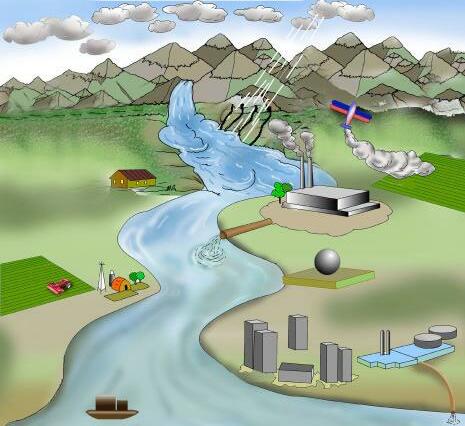
55
Environmental Pollution
pesticide spray landfill dump sediments mining
industrial wastes nuclear plant sewagetreatment plant septictank oil pollution fertiliser runoff urban wastes livestockwastes precipitation
pollutants
A large amount of organic matter is released from some industries, waste treatment plants, animal husbandries etc. This oxidizable organic matter reduces the dissolved oxygen content of the waterways thereby making an unhealthy environment for aquatic life. Such pollutants are called Oxygen Demanding Pollutants.
Maritime sources of pollution derive from the shipping activities, exploration of petroleum and minerals and fishing activities. Atmospheric precipitation includes volatile portion of the chemicals emitted from various human activities, e.g., industrial activities, production of nuclear energy and testing of weapons (pollutants include nuclear residues, chemicals such as lead compounds, organic chemicals, oxides of nitrogen and oxides of sulphur etc.).
In Table 14.4, we list various sources of water pollution.
Table 14.4: Sources of surface water and ground water pollution
Surface water
• Urban runoff –urban settlements, industrial areas
• Agricultural runoff (oil, metals, pesticides etc.) – agricultural areas
• Accidental spills of chemicals–urban, rural, industrial, agricultural
• Leaks from surface storage tanks or pipelines (gasoline, oil etc.) –industrial, agricultural
• Runoff (solvents chemical etc.) –industrial sites like factories, refineries, mines etc.
• Radioactive materials (accident) –industrial
• Sediments from agricultural lands, construction sites etc. – urban, rural, industrial, agricultural.
• Air fallout in rivers, lakes, oceans (particles, pesticides, metals etc.) –urban, rural, industrial, agricultural
Types of Water Pollutants
Groundwater
• Leaks from waste disposal sites (chemicals, radioactive material etc.) –industrial
• Leaks from buried tanks and pipes (gasoline, oil etc.) – industrial, agricultural
• Seepage from agricultural activities (nitrates, heavy metals, pesticides, herbicide etc.) –agricultural
• Seepage from septic systems – rural
• Seepage from acid rich water from mines and mine waste piles - industrial
• Seepage of pesticides, herbicides, nutrients etc. – urban
• Seepage from accidental spills –industrial
• Seepage of solvents, detergents and other chemicals, radioactive material from big industrial and small scale industrial sites etc. – urban, industrial
• Salt water infusion into coastal aquifers – urban, rural, industrial
Water pollutants are divided into three major categories: biological, chemical and physical.
• Biological Agents
Pathogenic organisms like viruses, bacteria and protozoans are serious water pollutants as far as human health is concerned. Cholera, bacterial and amoebic dysentery, gastroenteritis, typhoid, polio, viral hepatitis, worm infections, flu etc. are major waterborne diseases that affect our people. Some insects that have aquatic larvae transmit malaria, dengue, yellow fever and filariasis.
In our country the onset of rainy season is accompanied by such epidemics. Floods, waterlogging, pipe bursting, mixing of sewage water with drinking water are some of the common problems we face during rainy season that cause these epidemics. Overpopulated areas, unplanned industrial and human settlements, lack of proper civic amenities are some of the contributory factors. Water gets contaminated due to human wastes, animal wastes, domestic sewage and wastewater discharges from tanneries and slaughter houses.
56
the Environment
People and
•
Chemical Agents
Chemical pollutants can be water-soluble, water insoluble or oxygen demanding wastes. These can be inorganicin nature like nitrates, phosphates, acids, salts and toxic heavy metals. Organic chemical pollutants include oil, gasoline, pesticides, dyes, paints, plastics, cleaning solvents, detergents and organic wastes like domestic sewage, animal waste etc. Radioactive substances that make the third category of chemical pollutants are released into water bodies as a result of processing of uranium ore, wastes from research laboratories etc.
Organic wastes and inorganic nutrients like phosphates and nitrates enrich the water bodies that may cause eutrophication, which we will discuss briefly in Sec. 14.4.2. Inorganic salts ionise in water, enrich it and also render hardness to it. Chemicals like acids, alkalis, detergents, and bleaching agents are released from various industries. The effects in water bodies include colour changes of water (iron oxide gives red colour and iron sulphate gives yellow colour), foaming by detergents etc. Such changes are harmful to theorganisms dependent on these water bodies.
Physical Agents
Suspended solids, sedimentary solids and temperature are the physical factors that affect the quality of water. These water pollutants adversely affect by silting, clogging the waterways, filling the dams and making the water muddy. Aquatic animals face problems in breathing through gills in such waters. Suspended organic and mineral solids adsorb toxic substances like heavy metals and pass them in food chain. Thermal pollution occurs when heat-laden water enters the water body. You will read about thermal pollution in Sec. 14.4.2. In Table 14.5, we summarise the information about major water pollutants, their sources and their effects.
Table 14.5: Major water pollutants, their sources and their effects
Pollutants Sources Effects
Biological agents
Bacteria, parasitic fungi, and protozoa
Human sewage; animal and plant wastes; decaying organic matter; industrial wastes (oil refineries, paper mill, food processing units); natural land and urban runoffs
Oxygen requiring bacteria feed on these biological wastes and deplete oxygen in the water body; life is destroyed in the absence of oxygen; foul odours, poisoned livestock.
Visible forms of pollution like formation of colour and foam in water discourages the use of water. Therefore, such visible pollutants sometimes tend to become more important issues than many more serious pollutants that solubilize in water and are not visibleto the naked eyes.
Chemical agents Inorganic chemicals and minerals
Acids, salts, metals like lead and mercury, plant nutrients like phosphates and nitrates.
Natural run off from land; urban storm; industrial wastes; acid deposition; leaded gasoline; lead smelting; irrigation; pesticides; agricultural runoffs; mining; oil fields; domestic sewage; inadequate waste water treatment; food processing industries; detergents containing phosphates
Toxic to various life forms and humans through food chain, can cause genetic and birth defects; increased solubility of harmful minerals in water; make water unfit for domestic, agricultural and industrial uses; salinity build up in soil; upsets ecosystem of water bodies and cause eutrophication.
Organic chemicals
Pesticides, herbicides, detergents, chlorine compounds, oil, grease and plastics
Agriculture, forestry; home and industrial wastes; water disinfection processes; paper industry; bleaching process; pipeline wastes; oil spills.
Toxic to aquatic life forms as well as organisms that depend on such water bodies; eutrophication of water bodies.
57 Environmental Pollution •
In nature it takes many thousand years for an oligotrophic lake to become an eutrophic lake. Human activities have speeded up this process greatly.
Radioactive substances
Nuclear wastes from research laboratories and hospitals; processing of uranium ore; nuclear plants
Radio nuclides enter the food chain and cause birth and genetic defects; causative agent for cancer
Physical agents
Particulates and heat
Soil erosion, runoffs from the agriculture; mining, forestry and construction activities; power plants, industrial cooling
Filling of water ways, harbours and reservoirs; increase in temperature lowers the solubility of oxygen in water; reduction in biotic life in the water bodies
The types, sources and effects of water pollutants are often interrelated. However, for discussion we can divide them into two major categories as causative agents of problems of human health as well as ecosystems as a whole as shown in Table 14.6.
Table 14.6: Categories of water pollutants
Pollutant category
I. Human health problems 1. Infectious agents 2. Inorganic chemicals 3. Organic chemicals 4 Radioactive material
II. Ecosystem disruption
1. Oxygen demanding wastes 2. Plant nutrients 3. Sediments 4 Thermal
A eutrophic lake
A lake with high nutrient content is called a eutrophic lake as it has a dense population of producers often visible as green scum on the surface water.
An oligotrophic lake has low nutrient content, low productivity and clear water that could be drinkable.
Examples
Bacteria, viruses, parasites Acids, caustics, salts, metals Pesticides, detergents, oil, gasoline Uranium, thorium, caesium, iodine, radon
Plant and animal residues and manures Nitrates, phosphates Soil,silt Heat
14.4.2 EffectsofWater Pollution on the Environment and Human Health
We now briefly discuss some effects of water pollution on the environment and human health.
Eutrophication
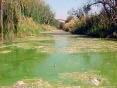
Addition of phosphates, nitrates and organic wastes from industries like tanneries, slaughter houses, starch factories, paper mills, milk plants, run-offs from agricultural lands increase the nutrient concentration in the water bodies.Eutrophication refers to the enrichment of a water body through the addition of organic waste containingnutrients,mainly nitrates and phosphates. In the presence of oxygen, the aerobic bacteria in water bodies release nutrients from the organic wastes. These nutrients act as fertilizers and cause population explosion of water microscopic plants like algae and others like duck weed, water hyacinth etc. The abundant growth of algae is called algal bloom.
Bacterial activity consumes a lot of dissolved oxygen and so do the algae and other green plants for respiration. This leads to decrease in the oxygen available to fishes that ultimately causes their death. The chemical cycle and ecosystem of the water body changes. In due course of time the water body diminishes and eventually disappears. Eutrophication occurs only in stagnant water bodies and not in flowing water because flowing water carries away the wastes and the nutrients and disperses it to larger area.
58 People and the Environment
Infectious Agents, Chemicals and Oil spills
Raw or improperly treated sewage, animal wastes and animal product processing plants and some wildlife species, dumped untreated into water bodies cause water pollution. The problem of water borne diseases due to these organisms was severe before sewage treatment and disinfecting of drinking water became a common practice.
Thousands of synthetic organic and inorganic chemicals are in use in the world today. Many of them are capable of creating water pollution problems in the waterways. Important organic chemicals are pesticides, polycyclic aromatic hydrocarbons, polychlorinated biphenyls and inorganic chemicals include heavy metals, acids and salts.
Some key heavy metals and their sources are given below:
Mercury Natural erosion and industrial discharges,
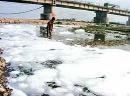
Cadmium Corrosion of alloys and plated surfaces, electroplating wastes, batteries and industrial discharges,

Arsenic Fossils and industrial discharges,
Chromium Corrosion of alloys and plated surfaces, electroplating, paints and stains and industrial discharges,
Copper Corrosion of copper plumbing, anti-fouling paints and electroplating,
Lead Leaded gasoline, batteries and paints and stains.
Certain chemicals can accumulate within the bodies and the phenomenon is referred to as bioconcentration. The main sources include industrial discharges, agricultural runoff and urban wastes. In high concentrations, toxic chemicals cause direct lethal toxicity to organisms and some kill the sensitive organisms and sensitive life stages of organisms. Many of them are non-degradable or are degraded slowly and therefore, remain in the ecosystem for a long time, creating chronic effects.
Some chemicals are magnified in the food chain and the process is known as biomagnification. Some may cause cancers and other chronic effects and some give offensive taste and odour. Chronic toxicity caused by toxic chemicals includes reproductive effects, teratogenic effects, mutagenic effects, carcinogenic effects and organ toxicity.

Oil spills are a major source of pollution of sea water. It is reported that about 3.2 million metric tons of oil enters the world’s seas every year. About half of the oil in the sea comes from natural seepage from offshore deposits. One-fifth comes from well blowouts, leaking pipelines and tanker spills. The rest is from land-basedsourcesand carried to oceans by rivers.
Oil spilled at sea normally breaks up and is dissipated or scattered into the marine environment over time. This dissipation is a result of a number of chemical and physical processes that change the compounds that make up oil, when it is spilled. The
The incident that occurred at Minimata Bay, Japan, in 1952 describes the magnitude of the adverse impacts of metal pollution. The mercury source at Minimata was a plant effluent. Asa result, 397 are known to have been affected, of which 68 died; of those affected, 22 were unborn children. The methyl mercury was absorbed by eating shellfish and fish from contaminated oceanic waters. Levels of mercury in fish flesh in Minimata bay in 1952 were 5-10ppm. The 1965 instance in Niigata, Japan was a similar case to Minimata Bay; 330 persons are known to have been affected, of which 13 died.
59
Environmental Pollution
Industrial discharges
Batteries
Paints
processes are collectively known asweathering. Oils weather in different ways. Some of the processes, like natural dispersion of the oil into the water, cause part of the oil to leave the sea surface. Some tend to sink and deposit on the sea bottom. Yet others form oil emulsions on the surface of the water. The latter become more persistent. The way in which an oil slick breaks up and dissipates depends largely on how persistent the oil is. Light products such as kerosene tend to evaporate and dissipate quickly and naturally and rarely need cleaning-up. These are called non-persistent oils. In contrast, persistent oils, such as many crude oils, break up and dissipate more slowly and usually require a clean-up response. Physical properties such as the density, viscosity and pour point of the oil,all affects its behaviour.
The physical and biological effects of oil in the aquatic environment include reduction of light transmission, reduction of dissolved oxygen, damage to water birds and smothering of intertidal organisms. The toxic effects are exhibited mostly by the light portion (low boiling) of the oil, i.e., polyaromatic hydrocarbon (PAH). The effects include cell damages and death of sensitive organisms and larval stages (Fig.14.8).
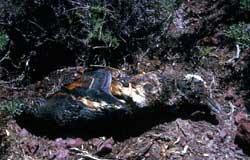
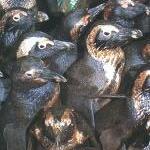
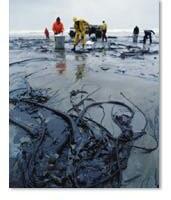
Sediments
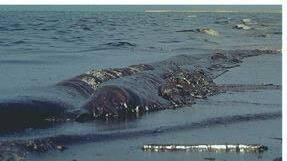
In terms of volume, the sediments can be taken as a significant pollutant. Increasing of sediment load is mainly due to soil erosion caused by improper land use practises. The potential environmental problems are: destroying of spawning and feeding grounds, smothering eggs and fry, filling up of lakes and streams and reduction of light penetration, which reduce the photosynthesis. Some pollutants such as pesticides, nitrates, phosphates can bind to sediment and so the lifetime and impacts of these pollutants are increased. Implementing good land management practices can regulate sediment pollution.
Thermal Pollution
Thermal pollution or the emission of waste heat to the environment takes place due to the disposal of heated water used for cooling purposes in many industries and power plants. This is especially significant when the receiving site is a poorly flushed water body. Rapid or even gradual change of water temperature can disrupt the ecosystem. In this case, the permanent temperature increase reduces the oxygen dissolving capacity and effect on the inhabitants of the system. Displacement of heat intolerant organisms by less desirable heat tolerant species also occurs.
60
Environment
People and the
Fig.14.8: Oil spills can cause severe damage tothe aquatic environment
In this section you have learnt that the accumulation of pollutants in water cause a decline in the quality of water. Several parameters are used to assess the quality of water. Let us now learn about these.
14.4.3 Water Quality Parameters
Water samples are tested for various parameters to ensure that water is fit for consumption. These include dissolved oxygen (DO), biological oxygen demand (BOD), chemical oxygen demand (COD), most probable number (MPN) and total dissolved solids (TDS) are some such parameters. You may like to know what these terms mean.
•
Dissolved Oxygen (DO)
It refers to the amount of oxygen gas (O2) that is dissolved into the water of any water source. Higher amounts of dissolved oxygen indicate that water quality is good. Low concentrations of oxygen content in the water indicate the presence of organic waste pollutant in water.
•
Biological Oxygen Demand (BOD)
BOD is a measure of oxygen used by microorganisms such as bacteria to decompose the organic matter like sewage, dead plant leaves, grass blades and food wastes. If the amountof organic wastes is high in the water source, more bacteria will be present to consume oxygen. Under such polluted conditions demand for oxygen will be high and so the BOD values will be high. With high levels of BOD, levels of DO in the water decrease.
•
Chemical Oxygen Demand (COD)
It is the amount of oxygen required to degrade or breakdown the organic chemical compounds of wastewater. A water body that receives effluents from chemical industries shows high values of COD.
• Most Probable Number (MPN)
The water polluted with organic wastes such as sewage/sludge will have high population of bacteria like E.coli and coliforms. With the help of MPN test both E.coli and coliforms can be detected and enumerated. MPN method statistically predicts the numberof these organisms present in the water body. Coliform is present in human intestines and is not necessarily harmful to us. But its presence indicates the presence of human waste in the water. Polluted water will show high values of MPN.
• Total Dissolved Solids (TDS)
The amount of salts and solids dissolved in water is measured by testing the TDS and salinity contents. Some of the dissolved substances that make the water quality poor are calcium, phosphorus, iron sulphates, carbonates, nitrates, chlorides, and other salts. Heavy metals also fall in this category. Excessive amounts of TDS degrade the quality of water.
Depending on these parameters, standards have been set for potable water, agricultural water supply and industrial water supply. The standards set by our government are given in Table 14.7. You may like to stop here and consolidate the ideas presented so far.
SAQ 3
Taking one example, describe how each of the following pollutants in water affects living beings:
Nitrates and phosphates in higher quantity, bacteria, soil particles, hot water and oil.
61
Environmental Pollution
Table 14.7: Primary water quality criteria for designated-best-use-classes (Source: CPCB, 2002)
Sl. No. Designated-best-use Class of water Criteria
1. Drinking water source without conventional treatment but after disinfection
2. Outdoorbathing (organized)
A 1. Total Coliform Organisms
MPN/100ml shall be 50 or less
2. pH between 6.5 and 8.5
3. Dissolved oxygen 6 mg/l or more
4. Biochemical Oxygen Demand 5 days 20°C 2mg/l or less
B 1. Total Coliform Organisms
MPN/100ml shall be 500 or less
2. pH between 6.5 and 8.5
3. Dissolved oxygen 5mg/l or more
4. Biochemical Oxygen Demand 5 days 20°C 3mg/l or less
3. Drinking water source after conventional treatmentand disinfection
4. Propagation of wildlife and fisheries
5. Irrigation, industrial cooling,controlled waste disposal
C 1. Total Coliforms Organisms
MPN/100ml shall be 5000 or less
2. pH between 6 and 9.
3. Dissolved oxygen 4 mg/l or more
4. Biochemical Oxygen Demand 5 days 20°C 3mg/l or less
D 1. pH between 6.5 and 8.5
2. Dissolved oxygen 4mg/l or more 3. Free Ammonia (as N) 1.2 mg/l or less
E 1. pH between 6.0 and 8.5
2. Electrical conductivity at 25°C micro mhos/cm Max 2250
3. Sodium absorption ratio max. 26 4. Boron max. 2 mg/l
14.5 LANDANDSOILPOLLUTION
In Unit 13, you have learnt how human activities such as poor agricultural practices, the mining of mineral resources, industrial waste dumping, and careless disposal of trash pollute land and soil.
Land pollutants are mainly of three types.
• Domestic wastes,
• Substances that accumulate on land due to agricultural activities, and
• Industrial activities.
We classify the major types of waste that pollute land and soil in Table 14.8.
62 People and the Environment
Table 14.8:Major land and soil pollutants
Urban waste Municipal; sewage; industrial effluents; domestic effluents; hospital waste
Industrial waste Slag; lime sludge; brine mud, scraps of metals, glass, ferrous and nonferrous metals, wool, thread and paper; fly ash; plastics; wastes from tanneries and other small scale industries, waste water effluents
Domestic waste Organic waste from kitchen, crockery, tin cans, plastics cans, bottles and bags; glass bottles, cloth rags, paper pieces; straw, board boxes; ash

Rural waste Pesticides, herbicides; agricultural runoffs
Nuclear plant waste Radioactive and hazardous wastes
Sewage
Some of these are hazardous, particularly hospital waste and some persistent pesticides. So we discuss them in some detail.
Bio-medical waste

Though inadequate for its one billion population, India’s health care system is enormous. It includes tens of thousands of nursing homes, clinics, blood banks, pathology laboratories, and large, state-owned hospitals (some with more than 500 beds), more than 22,000 primary health centers in rural areas and roughly 1,000 district hospitals as well as indigenous health care practitioners and an assortment of unregistered establishments. All produce bio-medical waste. This waste contains escalating quantities of disposable plastic items such as syringes, urine receptacles, intra-venous bags, and catheters. Until recently, the disposal of these biomedical wastes was not regulated.
The lack of proper procedures for handling, transport, treatment, and disposal of biomedical waste has contributed to toxic chemical exposures and to a high incidence of infections such as Hepatitis B. Needle injuries and exposures to discarded body fluids threaten health care workers as well as those engaged in waste collection, scavenging, recycling, and processing. In recent years, cities such as Delhi have been installing small, low-cost burners to dispose of mixed wastes including plastics, batteries, and medical wastes, with inadequate emission controls. This equipment releases dioxins, mercury, and other toxic chemicals that are a hazard to workers and to entire communities.
Pollutants from our activities that have damaged land and soil may enter surface or groundwater. Equally they may affect air quality. Such pollutants may be directly toxic to individual species or may have more subtle longer-term effects on ecosystems. The pollutants that enter any component of the biosphere (ecosphere) can cycle through all the components i.e., air, water and soil. They can enter living organisms and harm them.
Let us take the example of pesticides sprayed by farmers to understand this point. Pesticides are dusted or sprayed on plants or else mixed in the soil of the fields. Spraying and evaporation enable the entry of pesticides in the atmosphere. Rainfalls bring back these chemicals to land area and water bodies. Run-offs from agricultural
Bio-medical waste constitutes an estimated 1.5 to 2 percent of municipal waste in the urban areas of India; the capital city of New Delhi (population 12 million), for example, produces about 60 metric tons of bio-medical waste perday.
Bioaccumulationrefers to the entry of a pollutant in a food chain. It is the increase in the concentration of a pollutant from the environment to the first organism in the food chain. Biomagnificationis the phenomenon of increase in the concentration of a pollutant from one link in a food chain to another.

63 Environmental Pollution
lands bring the pesticides into the water bodies. Irrigation from such water bodies takes back pesticides to the field areas. Pesticides in the soil and water may again evaporate into the air. Persistent chemicals and pollutants (persistent organic pollutants or POPs) follow this pathway for much longer time and enter the food chain.
POPs are chemicals that remain intact in the environment for long periods,become widely distributed geographically, accumulate in the fatty tissue of living organisms and are toxic to humans and wildlife. They circulate globally and can cause damage wherever they travel. If not biodegradable these pollutants can bioaccumulate and biomagnify in the higher levels of food chain. The 12 POPs identified by the UNEP calledthe dirty dozen are given below:
Name Use Status in India
Aldrin To kill termites, grasshoppers, other insect pests. Banned
Chlordane To control agricultural pests. Banned DDT To control mosquitoes Restricted use
Dieldrin To control termites, textile pests, insect-borne diseases and insects living in agricultural soils.
Banned
Endrin To control agricultural pests and rodents such as mice and voles Banned
Heptachlor To kill soil and crop insects, and malaria carrying mosquitoes. Banned
Hexachlorobenzene (HCB)
To treat seeds and kill fungi. Not registered
Mirex To combat fire ants, and as a fire retardant in plastics, rubber, and electrical goods.
Polychlorinated Biphenyls (PCBs)
Toxaphene
Furans
Used as heat exchange fluids, in electrictransformersand capacitors, and as additives in paint, carbonless copy paper, and plastics.
Used on cotton, cereal grains, fruits, nuts, and vegetables and to control ticks and mites in livestock.
These are produced during the production of PCBs and in emissionsfromwaste incinerators and automobiles.
Not registered
Banned
Banned
Unintentional
Dioxins
Theseareproduced unintentionally due to incomplete combustion, as well as during the manufacture of pesticides and other chlorinated substances.
Unintentional
64
People and the Environment
Compared to these, the life of biodegradable polluting agents is much less and they can be broken down before they become dangerous. The pollutants that are solublein water can be excreted by organisms. Fat-soluble pollutants may be retained for a long time and biomagnify. Fatty tissues of organisms such as fishes are tested for the detection and measurement of such pollutants. In mammals often mother’s milk is tested for the pollutants since it has a lot of fat in it. It is important to use pesticides with care to prevent environmental pollution.
Standards and guidelines
Some of the guidelines relevant for the quality of soil/land are listed below. Their details can be accessed from the Ministry of Environment and Forests website –http://envfor.nic.in/
• Siting Guidelines for Industries
• Environmental Guidelines for Industries
• Guidelines for Clearance of Forest based industries/trade
• Hazardous waste management guidelines
To ascertain the quality of soil/land, it is desirable that the main properties of soil be tested monthly, metal levels periodically, and soil texture annually.
14.6 NOISE POLLUTION AND RADIATION POLLUTION
Unlike the types of pollution discussed above, noise pollution and radiation pollution do not arise directly due to the addition of harmful substances to the environment.
Noise Pollution
Noise is any unwanted or exceedingly high levels of sound that can annoy, cause stress or impair the hearing ability. Increased use of technology has led to noise pollution. The main sources of noise are industrial operations, machines, vehicles, railways, aircrafts, military arms and ammunition, construction work and household appliances (Fig. 14.9). In fact, if we look around we will find that noise is the most widespread occupational hazard – when we are on roads, on our duties and also at home.
Environmental Pollution
Fig.14.9: Sources of noise pollution
A number of factors contribute to problems of high noise levels, including
• Increasing populations, particularly where it leads to increasing urbanisation and urban consolidation; activities associated with urban living generally lead to increased noise levels.
• Increasing volumes of road, rail and air traffic.
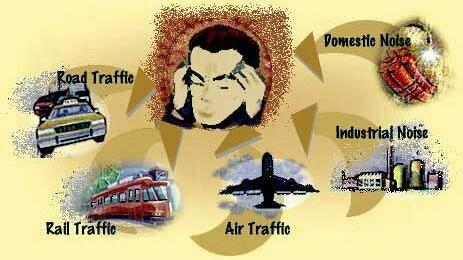
65
Noise can affect human health and well being in a number of ways, including annoyance reaction, sleep disturbance, interference with communication, performance effects, effects on social behaviour and hearing loss. Noise can cause annoyance and frustration as a result of interference, interruption and distraction. Research into the effects of noise on human health indicates a variety of health effects. People experiencing high noise levels (especially around airports or along road / rail corridors) differ from those with less noise exposure in terms of increased number of headaches, greater susceptibility to minor accidents, increased reliance on sedatives and sleeping pills, increased mental hospital admission rates.
Exposure to noise is also associated with a range of possible physical effects including colds, changes in blood pressure, other cardiovascular changes, increased general medical practice, attendance, problems with the digestive system and general fatigue. There is also fairly consistent evidence that prolonged exposure to noise levels at or above 80dB (A) can cause deafness. The amount of deafness depends upon the degree of exposure.
Community awareness of environmental noise has increased and there is a growing expectation from national, state and local authorities to enforce reduction in noise levels. To reduce the impact of noise pollution on human health many countries have regulations which spell out maximum permissible day time and night time noise levels for residential areas, industrial zones etc.
Standards and guidelines
The Central Pollution Control Board’s recommended noise standards for ambient air and for automobiles, domestic appliances and construction equipments were notified in Environment (Protection) Rules, 1986 and are given below in Tables 14.9.
Table 14.9: Noise standards for ambient air
Limits in dB Area Code Category of Area
Day time Night time
A Industrial area 75 70
B Commercial area 65 55
C Residentialarea 55 45
D Silence zone 50 40
Radiation Pollution
Some elements emit some form of radiation (particles or rays) such as radium, uranium, caesium etc. The major sources of radiation pollution are radioactive wastes from medical therapy(X ray treatments for cancer and diagnose), detonation of nuclear weapons(in testing and in second world war), nuclear energy plants, research laboratories, televisions and luminous dials(see Fig. 14.10). The impact of radiation on human beings depends on the level of exposure to it. High-level exposure causes death and low-level exposure causes mutations, cancer and leukaemia. Bioconcentration and biomagnification of radioactive substances cause long-term effects in the environment such as increased birth defects and increased cancer incidence.
Radiation exposure from medical diagnosis and treatment are easier to control. Control on exposures from nuclear testing and possible catastrophic accidents at power plants seem to be in the hands of highly developed nations. The Chernobyl explosion is the world’s worst civilian nuclear reactor disaster. Officials estimate that about 30 people were killed immediately and more than 15,000 people died in the emergency clean up afterwards. Experts reckon that radiation equivalentto 500 times that released by the atom bomb dropped on Hiroshima was measured in the
66
People and the Environment
atmosphere around Chernobyl after the 1986 explosion. Altogether around 3.5 million people, over a third of them children, are believed to have suffered illnesses as a result of radioactive contamination. UN figures show that millions in Ukraine, Belarus and Russia still live on contaminated land.
Fig. 14.10: Some sources of radiation pollution
SAQ 4
What are the sources of noise and radiation pollution in your surroundings? How do they affect the environment and human beings?
So far, you have learnt about the causes and effects of environmental pollution. Increased activities related to production of food, material and energy to sustain the demands of increasing populations have resulted in air, water, land noise and radiation pollution. You have also studied about the risks and impacts of such pollution on our environment and human beings. You must have realised how important it is to control pollution and prevent its harmful effects. This is what we are going to discuss now.
14.7 CONTROLLINGENVIRONMENTALPOLLUTION
First of all, we need to reflect on how we can minimise pollution of our surroundings. From what you have studied so far, you should be able to answer this question.
SAQ 5
List the steps you can take to reduce environmental pollution around you.
In your answer to SAQ 5, you would have listed measures such as proper waste management, decreased use of chemicals such as insecticides, air fresheners, detergents etc., and use of renewable sources of energy such as solar energy and so on. These efforts can have significant effect if entire communities are involved. However, the task of pollution control at the national level is complex due to the large number of heavy, large and small-scale industries involved, the huge areas under cultivation and the magnitude of various kinds of pollution. Coupled with poverty and the large population, these problems put tremendous pollution pressure on air, water and land. A comprehensive approach to pollution control is being undertaken in India based on the following principles:
• Prevention of pollution at source;
• Encouraging, developing and applying the best available practicable technical solution;
• Ensuring that polluter pays for pollution and enforcing control arrangements;

• Focusing on protection of heavily polluted areas and river stretches; and
• Involving people in decision making.
67
Environmental Pollution
Cyclones work like a centrifuge and throw out the dust particles in the dirty gas entering them. Clean air escapes from them.
Electrostaticprecipitators charge the particles and separate them by applying high voltages.
Bag filters filter out the dust from the dirty gas and allow clean air to pass.


Scrubbers contain wet material or spray that absorbs the gaseous pollutants and removes them. a)

We now briefly describe certain options available to us for controlling pollution of air, water, land etc.
Controlling Air Pollution
You have studied in the previous section that the main sources of air pollution are industries like thermal power plants, sugar mills, distilleries, paper mills etc. Vehicular emissions are another source of air pollution. The Environment (Protection) Act, 1986 has classified the industries as red, orange and green depending on the degree of pollution caused by them. It further specifies the various pollution control measures to be adopted by these industries. The following important measures have been taken by the government to control air pollution:
• The ambient air quality of various cities and towns is monitored regularly through a network of 290 monitoring stations under the National Ambient Air Quality Monitoring Programme.
• Ambient air quality standards and emission standards for industrial units have been notified.
• Emissions from highly polluting industrial units and thermal power plants are regularly monitored and action is taken against the defaulting units.
• Unleaded petrol is now being supplied to the entire country with effect from February 2000. Sulphur is being progressively reduced in diesel. Fuel quality standards for petrol and diesel have been notified.
• Gross emission standards for on-road vehicles and mass emission standards for all categories of new vehicles have been notified under the Central Motor Vehicles Rules, 1989.

Charging section Dirty Air In
Collecting section
Clean Air Out
• Fiscal incentives are provided for installation of pollution control equipment. Thus, limiting the emission of pollutants and preventing their generation are the main strategies for air pollution control. The industrial emissions can be limited by the use scrubbers (see Fig. 14.11). Vehicular emissions are being controlled through the use of good quality petrol, better engine technology and pollution control devices. b) c) Fig.14.11: Different types of air pollution control systems.
Water Pollution Prevention and Control
You have learnt how water bodies get polluted due to various human activities. Over the years, the quality of the water has deteriorated due to the uncontrolled release of domestic waste, sewage, agricultural run-offs and effluents by industries intothe water sources. The extent of pollution is such that the self-purification processes occurring in rivers, lakes and reservoirs have been disrupted in most polluted water bodies. The problem of water pollution is so grave that it requires intervention at the national level in addition to initiatives at the individual and community level.
68
People and the Environment
a) Wet scrubber; b) electrostatic precipitator; c) bag filters
A pioneering effort to control the pollution of Indian rivers was launched in 1985 by implementing the Ganga Action PlanPhase I (GAP), which came to an end in March 2000. The schemes implemented under the Plan were interception, river front development and provision of low-cost sanitation etc. The pollution caused by industries was regulated by enforcement of existing acts and regulations. In the first phase of GAP, onlyabout 35 percent of the pollution generated in towns along the Ganga has been tackled.
The success of the GAP has led to the extension of this programme to the other polluted rivers of the countries in two steps, namely the GAP Phase II, covering rivers Yamuna, Gomati, Damodar and the main stem of Ganga. Yamuna Action Plan has already been launched and is likely to be completed in the next few years.
The National River Conservation Authorityhas been set up to review the implementation of the programmes related to cleaning of rivers. ANational River Conservation Plan (NRCP), which includes the second phase of GAP, has been formulated. The main objective of National River Conservation Plan (NRCP) is to control the pollution of grossly polluted rivers of the country and maintain the wholesomeness of water quality of major rivers through the implementation of various pollution abatement schemes. The approved works under NRCP now extend to 157 towns along 31 stretches of polluted rivers in 18 states. Altogether 763 river cleaning projects have been sanctioned under NRCP. This is in addition to 261 projects sanctioned under GAP Phase-I.
Substantial progress has been achieved in controlling industrial pollution in rivers and lakes in the country. In 1997, 851 defaulting industries were identified which were generating BOD load of 100Kg/day or more and discharging their effluents without proper treatment directly or indirectly into the water course. These industries were directed to install their respective Effluent Treatment Plants (ETPs). While 608 industries have installed ETPs, 238 industries have been closed down.
A National Lake Conservation Plan envisaging the conservation of lakes by prevention of pollution by catchment area treatment, desilting, weed control, based on the integrated water shed development approach is also being implemented.
Noise Pollution Control
Noise pollution has become a major problem in the metropolitan cities and in other urban areas. With a view to regulate and control noise producing and generating sources, the Ministry of Environment and Forests has notified the Noise Pollution (Regulation and Control) Rules, 2000 under the Environment (Protection) Act 1986, for prevention and control of noise pollution in the country.
The notification seeks to control noise in public places from various sources such as industrial activity, construction activity, generator sets, loud speakers, public address systems, music systems, vehicular horns and other mechanical devices in order to avoid any adverse affects on human health including physical and psychological impacts.
Control of Hazardous Wastes and POPs
The rules for hazardous waste control make it obligatory for those generating hazardous wastes to take all practical steps to ensure thatsuch wastes are properly handled and disposed off without any adverse effect. They have also been made responsible for proper collection, transportation, treatment, and storage and disposal of these wastes. Import of hazardous waste from any country to India is not permitted for dumping and disposal of such wastes. However, import of such wastes is allowed for processing of or re-use as raw-material, after examining each case on merit by the Pollution Control Boards. A progressive national law on hospitalwaste management and handling, the 1998 Bio-Medical Rules, now makes it mandatory for all institutional health care providers to segregate their waste in specified categories,
Environmental Pollution
69
disinfect the waste, transform discarded products so they cannot be re-used, andsafely dispose of all bio-medical waste. There are provisions for alternate technologies such as autoclaves, microwaves, and chemical disinfection, off-site treatment, and a ban on the combustion of polyvinyl chloride (PVC) plastics.
Non-compliance results in strict penalties. However, India and other developing nations need to ward off technology vendors and development agencies promoting obsolete technologies such as incinerators.
India has also signed the Stockholm Convention on Persistent Organic Pollutants on May 2002. The Stockholm Convention is a global treaty to protect human health and the environment from Persistent Organic Pollutants (POPs).
The gravity of the problem has led to several measures by the government involving a judicious mix of instruments in the form of legislation, fiscal incentives, voluntary agreements, educational programmes and information campaigns. The Central and State Pollution Control Boards in India are entrusted with the task of enforcing measures for pollution control. Environmental Impact Assessment has been made statutory for 30 categories of developmental projects under various sectors like industrial mining, irrigation, power, transport and others.
The government of India has formulated comprehensive legislations to enable the institutions like pollution control boards to effectively protect the environment. While it is not in the scope of this unit to describe all the Acts, we list them below.
Indian Environmental Legislation
1. The Water (Prevention and Control ofPollution) Act, 1974, as amended up to 1988
2. The Water (Prevention and Control of Pollution) Rules, 1975
3 The Water (Prevention and Control of Pollution) (Procedure for Transaction of Business) Rules, 1975
4 The Water (Prevention and Control of Pollution) Cess Act, 1977, as amended by Amendment Act, 1991
5 The Water (Prevention and Control of Pollution) Cess Rules, 1978
6 The Air (Prevention and Control of Pollution) Act, 1981, as amended by Amendment Act, 1987
7. The Environment (Protection) Act, 1986 8. The Environment (Protection) Rules, 1986
9 Hazardous Wastes (Management and Handling) Rules, 1989
10 Manufacture, Storage and Import of Hazardous Chemical Rules, 1989
11 Manufacture, Use, Import, Export and Storage of Hazardous Micro-Organisms Genetically Engineered Organisms or Cells rules, 1989
12. Scheme of Labelling of Environment Friendly Products (ECO-MARKS)
13. Restricting certain activities Range in special Specified area of Aravalli
14 Bio-Medical Waste (Management and Handling) Rules, 1998
15 The National Environment Tribunal Act, 1995
16. The National Environmental Appellat Authority Act, 1997
17. The Environment (Protection) (Second Amendment Rules), 1999 - Emission Standards for New Generator Sets
18. The Public Liability Insurance Act, 1991
19 The Public Liability Insurance Rules, 1991
70
People and the Environment
20. National Forest Policy, 1988 21 Forest (Conservation) Act, 1980 22 Forest (Conservation) Rules, 1981 23. Re-cycled Plastics Manufacture and Usage Rules, 1999 24. 2-T Oil (Regulation of Supply and Distribution) Order, 1998 25 Coastal Regulation Zone - Notifications 26 Environment (Siting for Industrial Projects) Rules, 1999 - Notification 27 Taj Trapezium Zone Pollution (Prevent and Control) Authority - Order 28. Dumping and Disposal of Flyash - Notification 29. Noise Pollution (Regulation and Control) Rules, 2000 30 Municipal Solid Wastes (Management & Handling) Rules, 1999 - Notification
31 Ozone Depleting Substances (Regulation) Rules, 2000 - Draft Notification
However, you would agree that all amount of regulations and efforts of the government cannot succeed without the participation of the people.
People's Participation in Environmental Protection
The success of India ′s environmental programmes depends greatly on the awareness and consciousness of the people. A National Environmental Awareness Campaign has been launched to sensitize people to the environmental problems through audio-visual programmes, seminars, symposia, training programmes etc.
Paryavaran Vahinis have been constituted in 184 districts involving the local people to play an active role in preventing poaching, deforestation and environmental pollution. India has a large network of NGOs which are involved in spreading the message of sustainable development to the grass roots and are very active in creating environmental awareness.
An Environmental InformationSystem (ENVIS) network has been set up to disseminate information on environmental issues. The website of the Ministry of Environment and Forests (http://envfor.nic.in/) provides latest information about the new policy initiatives, legislations and projects that have been given environmental clearance.
India and the Global Environmental Pollution Control Efforts
India has played a significant role in the global environmental campaign. It has participated actively in the various environmental conferences and programmes launched since the UNEP conference held in Stockholm in 1972. India is a signatory to various conventions and agreements like the Ramsar Convention on Wetlands, Convention in International Trade of Endangered Species (CITES), Vienna Convention for the protection of Ozone Layer, Montreal Protocol on Substances that Deplete Ozone Layer, the 1982 United Nations Convention on the Law of the Sea (UNCLOS), Conventions on Biodiversity and Climate Change and the Basel Convention on the Trans-boundary Movement of Hazardous Substances etc. India hosted the first Global Environmental Facility Assembly in the month of April 1998.
In this section, we have given you a bird′s eye view of various efforts being made in our country to prevent the pollution of our environment. We hope that you have now become well aware of the dangers to our environment and some ways to combat them. We expect that, empowered with this understanding, you will be able to contributein whatever way possible to make this world a safer place to live in. We now summarize the contents of this unit.
71 Environmental
Pollution
14.8 SUMMARY
• Accumulation of substances may either disrupt the natural processes in the environment or affect human health. The process is known aspollution andthe substances causing pollution are the pollutants.
• Pollutants can accumulate in air water and land causing air pollution, water pollution and land pollution, respectively and causes air quality, water quality and land quality to decline.
• Pollutants cause considerable damage to the environment and human health and many countries including India have environmental standards to maintain air quality, water quality and land quality.
• Noise pollution and radiation pollution are two forms of pollution that do not arise directly from the accumulation of substances in the environment but develop due to an increase in the amplitude of the sound waves and rays from radioactive elements.
• Various measures are being taken to prevent and control the pollution of environment in India including legislation by the government and efforts at the individual and community levels.
• International cooperation in pollution control has led to many multilateral international conventions being drawn up and signed by many nations.
14.9 TERMINAL QUESTIONS
1 Identify and analyse the major causes of air, water and land pollution in your region. Outline the initiatives being taken at various levels to mitigate these.
2. Prepare an account on the problems of environmental pollution due to any development project that is familiar to you. What steps have been taken to tackle these problems? (Hint: You can prepare a report on any ongoing project like flyover construction, laying/widening of a road, installing underground civic amenities, etc.).
3 Take any three different products or processes whose production to disposal depends on standardization. What problems would result if these standards were removed?
4 Try to get hold of ‘Annual reports’ for two or three consecutive years of any company that are circulated to the shareholders. Study and compare the investments made by them towards the cause of environment.
72 People and the Environment
