UNIT1 WHAT IS SUSTAINABLE DEVELOPMENT
Structure
1 1 Introduction
Objectives
1.2 Meaning of Sustainability, Development and Sustainable Development Critiques of Growth Model
Industrialisation
Urbanisation
Inequities
Resource Utilisation
1 3 Origins of Sustainable Development
1 4 Definitions of Sustainable Development (Dimensions and Concepts)
Sustainable and Non-sustainable Activities
1 5 Summary
1 6 Terminal Questions
1.1 INTRODUCTION
Sustainable development today it is the most politicised catchword of international developmental conferences and programmes. What does it mean? We address this question right in the beginning of the unit. You will discover that it is a multidimensional concept and its interpretation and understanding is often content and context specific. Sustainable development has emerged out of the fears of depleting natural resources and a subsequent slowing or even closing down of much of the economic activities and production systems. It is the result of rapacious misuse of earth’s precious and limited resource base by those few who had a control over production systems. The concept has emerged as a broad framework to debate and decide on desirable direction of change in social and economic systems, policies, programmes and actions at the national, community or individual levels. It developed in the 1960s when people became aware of the detrimental effects of industrialisation on the environment. You need to understand the context in which it came about to appreciate why it has become so important to all of us.
You must also recognise that sustainability offers long term planning for productive techniques, industrial processes and equitable distribution policies for the exploitation of resources, such as, to name a few, coal, oil and water. This planning ensures their longer life span and a broader user base so that the greatest number of people may benefit out of it for the longest possible time frame. The emergence of the idea of sustainability also strikes at the indispensability of technological transformation towards energy saving devices, alternate and non-conventional systems for providing comfort to citizens without bringing down their quality of life. This has led to a total revolution in the way people and governments have started thinking and designing their developmental programmes and projects. A new respect has emerged for the grassroots governance which fuels growth by providing land, water and forests that constitute the three basic inputs to any form of industrialisation. Thus sustainable development is also indicative of ‘planning from below’ in contrast to the ivory tower ‘planning from top’ in which grassroots ecosystems were driven by technological systems. As a result, the grassroots ecosystems started to wither away as they were not able to manage and cleanse the high amount of effluent discharges, pollution and resource overuse. In the next unit, we introduce the various parameters that characterise sustainable development
5 What
Sustainable Development
is
Objectives
After studying this unit, you should be able to:
• explain the meaning and origin of the concept of sustainable development;
• describe the fundamental principles of sustainable development; and
• identify and analyse the indicators of unsustainable growth.
1.2 MEANING OF SUSTAINABILITY, DEVELOPMENT AND SUSTAINABLE DEVELOPMENT
Nature provides human societies and economies with a complex life support system, air, water, food and a suitable climate for survival. It also provides the physical resources that are necessary for the sustenance of economies. Nature has supported and maintained life on earth since times immemorial and should continue to do so in the future. This is known as the sustainability of nature or ecosystems or environment. However, we have been interfering with the sustainability of the natural systems through our avaricious activities and if we continue on the same trajectory, not only the other life forms but also the very existence of mankind is threatened. There are limits to nature’s capacity to absorb impacts. Once alteration of nature’s initial state occurs, it cannot quickly revert back to the initial state. Nature has a limited capacity to withstand rapid change. Thus, today, the challenge before mankind is to determine the state in which we wish to live and to continue living within the limits inherent in nature’s processes, within nature’s carrying capacity.
Sustainability
The term ‘Sustainability’ has been defined variously, such as:
• Sustainability refers to a process or state that can be maintained indefinitely.
• Natural resources must be used in ways that do not create ecological debts by overexploiting the carrying and productive capacity of the earth.
• A minimum necessary condition for sustainability is the maintenance of the total natural capital stock at or above the current level.
The term ‘Sustainability’ is also used to demonstrate the temporal and the livelihood context of development policies. The temporal context refers to the chronological perspective in which communities maintain their cultural and economic integrity. The livelihood context of development policies is the preservation of existing values which are under threat from external economic forces leading to the collapse of a delicate natural resource balance. The Strategy for Sustainable Living (1991) by International Union of Conservation of Nature and Natural Resources (IUCN) says that ‘sustainable use means use of an organism, ecosystem, or other renewable resource at a rate within its capacity for renewal’. The economist Herman Daly has offered specifications for maintaining sustainability. He is of the opinion that:
• Rates of use of renewable resources should not exceed regeneration rates.
• Rates of use of non-renewable resources should not exceed rates of development of renewable substitutes.
• Rates of pollution emission should not exceed assimilative capacities of the environment.
Development
The term ‘Development’ means the social and economic improvement in a broad sense. It is needed to create opportunities, prosperity and choices for all inhabitants of the world and it must proceed in a way that leaves choices available for future generations also. It refers to a holistic growth of the human and natural environment
6
Introduction to Sustainable Development
towards autonomy and freedom. It indicates a growth pattern, which makes nations more decisive in their internal and external environment.
Sustainable development
The concept of Sustainable development was envisaged to bring environmentalist ideas into the central theme of economic development policy. It sought to modify the kind of unsustainable development strategies that were being pursued. Sustainable development combines the two terms of ‘sustainability’ and ‘development’ to indicate a pattern of growth, which strengthens both the national capabilities to care for their people in relation to their total relationship with the resources of the earth. The most widely used definition of Sustainable Development was given by the Brundtland Commission in its report Our Common Future (1987). It defined Sustainable development as ‘development, which meets the needs of the present without compromising the ability of future generations to meet their own needs’. Since then, several interpretations of Sustainable Development have emerged, for example:
• Improving the quality of human life while living within the carrying capacity of supporting ecosystems.
• Economic growth that provides fairness and opportunity for all the people, not just the privileged few, without further destroying the world’s finite natural resources and carrying capacity.
• Sustainable development comprises of economic and social development that protect and enhance the natural environment and social equity.
Thus, sustainable development focuses upon a relationship between humans and their environment and indicates a warning that humans cannot push development, which is against nature as in the end it is always the nature, which is going to win. Sustainable development encourages the conservation and preservation of natural resources and of the environment and the management of energy, waste and transportation. Fig.1.1: Various dimensions of sustainable development
What is Sustainable Development
7
Sustainable development Sustainable development Sustainable development Sustainable development
Sustainable development is development based on patterns of production and consumption that can be pursued into the future without degrading the human or natural environment. It involves the equitable sharing of the benefits of economic activity across all sections of society, to enhance the well being of humans, protect health and alleviate poverty. If sustainable development is to be successful, the attitudes of individuals as well as governments with regard to our current lifestyles and the impact they have on the environment will need to be changed.
Objectives of sustainable development
Sustainable development has some forward looking and broad based objectives, which transcend class, caste, language and regional barriers. These objectives are a charter for liberating one’s economy from the clutches of exploitative mindset, which has depraved nations and defied their biomass wealth. These objectives are:
1. To maintain the standards of living of the largest number of people with equity and justice. The consideration of Trans-boundary and cumulative impacts in decision-making has to be realised.
2. To conserve and protect earth’s natural resources from misuse and wasteful consumption. This demands respect for the land and its diversity as the foundation for healthy communities.
3. To innovate new technology and scientific techniques, which work in unison with laws of nature and are not opposed to it. There needs to be a consideration of sharing the risks and benefits from developmental policies undertaken by different nations.
4. To respect diversity and involve local and indigenous communities for a more grassroots oriented and relevant developmental policies. This would involve consideration of economic viability, culture and environmental values, as policies and programmes are developed.
5. To decentralise governance institutions and make them more resilient, transparent and accountable to people. They should have an open, inclusive and participative decision-making.
6. To plan international institutions, which recognise the requirements of poor nations and support them to achieve their growth targets without destroying their natural wealth and environment.
7. To seek peaceful coexistence of all nations of the world because only peace can allow them space to innovate for the larger interests of humanity. This may demand honouring of treaties and fiduciary obligations and international agreements.
Sustainable development is a value-based concept, which appeals to the universal themes of mutual coexistence and respect for others. It is a continually evolving process bringing together cultural, social, economic, environmental and political concerns. It is a desired direction of change and provides a framework to decide developmental actions by nations, communities and individuals.
SAQ 1
What do you understand by sustainable development? Explain giving examples from your own context.
1.2.1 Critiques of Growth Model
Industrialisation based on quantitative growth of mass production triggered off economic development in developed countries. Non-sustainable development is seen
8
Introduction to Sustainable Development
What is Sustainable Development as the failure of growth-oriented policies, which focus only on quantitative production as against the qualitative and holistic production benefiting people. Traditionally the growth of a nation has been calculated in terms of Gross Domestic Product (GDP) and Gross National Product (GNP), which do not indicate the fact that the nation is actually rich in culture and progressive in human values. These indicators focus mainly on the tangible products and fail to calculate the value of the intangibles such as pollution effect on health, value of the forests, loss in terms of their animal and plant biodiversity and maintaining the ground water recharge shed etc. Studies made since the last phase of the United Nations (UN)-declared first development decade has shown that gross income growth is not always translated into poverty reduction. By the end of the last century there were more than 1.3 billion people living in developing countries who survived on less than US $ 1 a day with increasing malnourishment, homelessness and deprivation. The growth model has not taken care of the distribution of income in the world. As a result the poor have become poorer while the precious wealth has got locked up with the top 20% richest. Various forms of disparities such as inequitable production, distribution and consumption have grown into massive proportions making the poor people vulnerable to the policies framed by the few rich at the top.
1.2.2 Industrialisation
The Industrial Revolution began in England sometime after the middle of the 18th century and transformed Great Britain from a largely rural population making a living almost entirely from agriculture to a town-centred society engaged increasingly in factory manufacture. A series of inventions transformed the manufacture of cotton goods in England and gave rise to a new mode of production - the factory system. During the years from 1750 to 1830, other branches of industry effected comparable advances, and all these together, mutually reinforcing one another, made possible further gains on an ever widening front. The abundance and variety of innovations may be included under three principles:
1. The substitution of machines - rapid, regular, precise, tireless- for human skill and effort.
2. The substitution of inanimate for animate sources of power, in particular, the introduction of engines for converting heat into work, thereby opening to man a new and abundant supply of energy.
3. The use of new and far more abundant raw materials, in particular, the substitution of mineral for vegetable or animal substances.
Other European nations underwent the same process soon thereafter, followed by others during the 19th century, and still others (such as Russia and Japan) in the first half of the 20th century. The Industrial Revolution was no mere sequence of changes in industrial techniques and production, but a social revolution with social causes as well as profound social effects. The Industrial Revolution implied that man now had not only the opportunity and the knowledge but also the physical means to completely subdue nature. But, while it brought its blessings, there was also much misery. If we can thank the Industrial Revolution for giving us internal combustion engines and laser guided radial arm saws, we can also condemn it for the threatening effect it has had on social and ecological relationships.
The Industrial Revolution needed the resources, especially the raw materials, which were concentrated mainly in the now poor nations. While the resources were extracted from the Southern countries (presently the developing countries), the value addition was done mostly in the Northern countries (presently the developed countries), thus creating an economic imbalance. The colonisation process also was responsible for exploiting natural resources of ‘South’ for export, and established large monocultures and opened up a largely unexploited domain. After independence, the newly
9
established governments frequently paid more attention to rapid economic development than to fair and equitable access to natural resources.
From the 1950s onwards, Northern countries sought fast economic growththrough state-managed industrialisation plans that led to excessive resource use and waste. The legacy of these forms of industrial production in the former Soviet Union and Eastern Europe has not only seen economic dislocation but also daunting environmental problems such as the death of the Aral Sea, nuclear contamination, and high levels of air and water pollution. Since 1989, most such regimes have begun to move towards market-based systems of economic organisation and economic liberalisation, often accompanied by democratisation. While market systems have been inherently efficient at economic organisation, environmental costs have traditionally been excluded from the decision-making process. This has allowed unsustainable exploitation of natural resources as well as unsustainable demands on natural pollution sinks, like the tropical rain forests.
In 1991 the annual ‘product’ of the global economy was valued at $29,000 million, which meant it produced, in just 17 days, the equivalent of the entire annualglobal product a hundred years before. This has increased all forms of industrial activities such as energy generation, transportation, mechanical equipments and chemicals in agriculture, waste and effluent discharges and release of harmful and hazardousgases in the air. This has led to high pollution levels and extinction of several species from the earth. The United Nations Environment Programme’s (UNEP) Red Data Book estimates that 25 percent of species are about to face extinction as more than 100 species are becoming extinct everyday. Unmindful industrialisation has also led to fatal accidents as seen in Bhopal, Chernobyl and Exxon Valdez. Sustainable development, therefore, is a reaction to the threatening speed of industrial activity undertaken by states, both rich and poor.
1.2.3 Urbanisation
The relation of urbanisation with industrialisation is very close. The expansion of industrialisation has resulted in the expansion of cities. This has meant expansion into rural lands that grow food and nurture cattle and village forests and provide several forms of sustainable occupations to the communities in these areas. The spread of cities and industrial towns on one hand leads to the loss of agricultural land including forest resources and intense and unmanageable migration towards the cities on the other. The level of urbanisation in India has increased from 25.4 percent in 1970 to 33.6 percent in 1990 and is expected to rise to 57 percent by the year 2025. Uncontrolled and unplanned expansion of towns and cities with large populations has overwhelmed transport, communication, water supply, sanitation and energy systems resulting in a growth of urban poor and unemployed population with precarious health problems.
Fig.1.2: Problems of uncontrolled urbanisation include growth of slums, lack of civic amenities, pollution,etc.
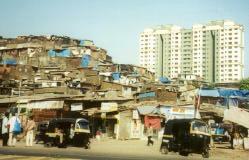
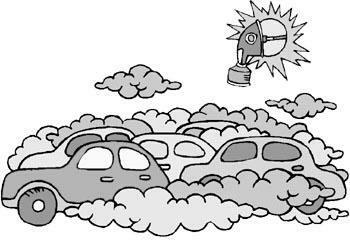
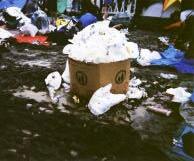
There are three distinct types of poor urban dwellers; the homeless, those living in slums, and squatters occupying illegal shantytowns. The basic services such as water supply and sanitation remain inaccessible to the urban poor. The lack of these services
10
Introduction to Sustainable Development
What is Sustainable Development along with malnourishment and diseases like diarrhoea and tuberculosis etc. keep them in ill health. Cities often have become dump yards of garbage and industrial waste. This has given rise to environmental problems like air and water pollution with fatal consequences sometimes. Today, there are serious social, economic and environmental problems within cities.
The impact of urbanisation is that the cities consume raw materials from surrounding regions and generate waste and pollution. For example, fuel wood consumed in Delhi comes from the forests of Madhya Pradesh. Thus the commercialisation and greater demand of fuel wood in a city leads to deforestation in a far-off area. The untreated dispersal of the wastes generated by the cities into river water sources results in their contamination. This has serious repercussions on the aquatic life as well as downstream human settlements. The vegetation of the surrounding areas is also affected. For example, the acid rains, which are detrimental to the vegetation and aquatic life in Europe, are the result of severe air pollution caused by the industrialisation of the neighbouring countries.
Further, the proximity of rural settlements to urban centres results in spin-offs for the rural economy. The migration of labours and entrepreneurial skills to the city, and industrial towns and commercialisation of the land in these rural areas may have positive outcomes in terms of employment, but it also results in the change of type of productive activities and even expulsion of farmers from their lands.
1.2.4 Inequities
The new indices, e.g., Human Development Index (HDI) developed by the United Nations Development Programme (UNDP) to study the quality of life have brought into focus the widening gap between the countries of the North and the South. On one hand, a wealthy minority of the world’s population is consuming at an unsustainably high level, causing disproportionate damage to global ecosystems, while protecting only their local environment. On the other hand, a poor, larger and rapidly-growing proportion of the world’s population is being forced by poverty to degrade the natural resource base on which it is directly dependent. In addition, a vast global ‘middle class’ is emerging by continued economic growth and globalisation.
The developing countries with 77 percent of world population generate only 15 percent of world income. The average GNP per capita in the North is US$ 12510 which is more than 18 times the average in the South which is US$710.The UNDP estimated in the last decade that the number of poor is going to increase in the coming decades. This increase is largely related to the unfair developmental policies being pursued by international trading institutions. The key issues are how to add value to agriculture and cottage industries produce at the production site itself as also how to provide welfare funding to institutions catering to the poor children, destitute women and dalits who have remained marginalised and reduce the gap between the haves and the have-nots that is increasing in the process of economic globalisation.
1.2.5 Resource Utilisation
The four major resources of this earth, which are taken care of by every nation individually, as well as through international agreements are land, water, air and forests. The industrialised countries such as the G8 (United States [US], Japan, Germany, United Kingdom, France, Italy, Canada and Russia), Organisation for Economic Cooperation and Development (OECD) and European Union (EU) which have less than 23 percent of the world population have been consuming resources that are several times more than that being consumed by the whole of Asia, Latin America and Africa taken together.
11
Percentages
Population Income
Developing countries Developed countries
Fig.1.3: A comparison of the populations and incomes of the developing countries and the developed countries
The energy consumption of one US citizen is equal to more than 160 Tanzanians or 900 Nepalese. This affluence of the North has led to an irresponsible release of chlorofluorocarbon (CFC) gas into the environment to the extent of 28 percent by US alone. On the contrary the poor countries are so laden with debt that to repay the debt are forced to over-extract their resources and sell it to the rich nations.
SAQ 2
Is there a need for advocating sustainable development in developing countries? Justify your answer giving facts and figures.
1.3 ORIGINS OF SUSTAINABLE DEVELOPMENT
The origins of the concept of sustainable development can be traced back to the 1960s when, the writer and scientist Rachel Carson published her book The Silent Spring (1962) This book drew public attention to the destruction of wildlife by the use of pesticide DDT (dichloro diphenyl trichloroethane). This work was a turning point in the understanding of the interconnections among the environment, the economy and social well being. Gradually, in this period, the fear of global environmental limits began to emerge. Soon after, the animal population biologist Paul Ehrlich published the book Population Bomb (1968) on the connection between human population, resource exploitation, and the environment. In 1969, a non-profitorganisation Friends of the Earth was formed which was dedicated to protecting the environment from degradation and empowering citizens to have a voice in decision-making.
The governments of the Northern countries began to recognise that the process of industrial development was damaging the environment. For example, the Swedish government had been concerned about the damage caused to their lakes by acid rain. This rain was a result of excessive pollution caused by the neighbouring industrialised states. In 1971, the OECD council enacted a Polluter Paysprinciple where it said that those (countries) causing pollution should pay the costs. The report, Limits to Growth (1972), published by a group of young scientists (Club of Rome) from Massachusetts Institute of Technology (MIT), immediately took the world by storm gaining enormous media coverage. It predicted dire consequences if growth was not slowed down.
The United Nations Conference on Human Environment (UNCHE) was organised in Stockholm (1972). For the first time, the idea that the environment was a critical development issue was placed on the international agenda. It led to the establishment of United Nations Environment Programme (UNEP). The first director of UNEP, Maurice Strong coined the term ‘eco development’ which integrated development with environment protection. Since then, many milestones have marked the journey towards sustainable development.
12
to Sustainable Development
Introduction
10 20 30 40 50 60 70 80
0
90
The concept of ‘Sustainable Society’ emerged at a study conference on Science and Technology for Human Development, convened by the World Council of Churches (1974). Interestingly, the concept did not deal with environmental conditions but started with the principle of equitable distribution, which subsequently became the cornerstone of the Brundtland Report in 1987. ‘Sustainable Society’ also involved the concept of democratic participation, which became important nearly twenty years later at the Rio Earth Summit (1992).
Yet another term, “Sustainable Development”, emerged in the World Conservation Strategy(WCS) (1980) published by the International Union of Conservation of Nature and Natural Resources (IUCN) by two scholars, Eva Balfour, a soil scientist and Wek Jackson, a geneticist from the International Institute for Environment and Development (IIED). During the UN Conference on Environment and Development (UNCED) in 1992 at Rio de Janeiro, the term broadened up into a full concept of development bringing together government and non-governmental organisations (NGOs), industrialists, scientists, community groups and grassroots organisations. It became one of the most important interdisciplinary concepts that swept through studies on environment, economics, sociology, political science, life sciences and gender.
By 2000, the concept of sustainable development became firmly settled as a guiding document in all international organisations. Since then the UN member states have been publishing reports on the national status of sustainable development programmes and strategies and submitting them to the specially created UN body called UN Commission for Sustainable Development (CSD). The term is modified for different user groups as ‘sustainable human development’, ‘sustainable economic growth’, ‘sustainable socio-economic development’ and ‘sustainable local governance’ and very recently in 2004 ‘Information Communication Technology’ (ICT) for sustainable development.
SAQ 3
Obtain information about the current programmes of UNEP related to environment and sustainable development. Analyse their relevance for your own society.
1.4 DEFINITIONS OF SUSTAINABLE DEVELOPMENT (DIMENSIONS AND CONCEPTS)
Sustainable development was defined in the World Conservation Strategy report as ‘the integration of conservation and development to ensure that modifications to the planet do indeed secure the survival and well being of all people’. Development was defined as ‘the modification of the biosphere and the application of human, financial, living and non-living resources to satisfy human needs and improve the quality of human life’. Development could prove to be a threat unless resources were conserved and so conservation of resources was defined in the report as ‘the management of human use of the biosphere so that it may yield the greatest sustainable benefit to present generations while maintaining the potential to meet the needs and aspirations of future generation’. This phrase attracted attention in the Brundtland Report.
The Brundtland Report: In 1983, the United Nations General Assembly set up the World Commission on Environment and Development (WCED) with the Norwegian Prime Minister Mrs Gro Harlem Brundtland as the Chairperson. The Commission’s report was published as Our Common Future (1987). The definition of sustainable development given in this report contains within itself two key concepts:
1. The concept of ‘needs’, in particular, the essential needs of the world’s poor, to which priority should be given.
2. The idea of limitations imposed by the state of technology and social organisations on the environment’s ability to meet present and future needs.
What is Sustainable Development
13
The report emphasised that sustainable development is a matter of social equity within a generation (intra-generational) and between generations (intergenerational). The Commission stressed the importance of integration of environmental decisions into central economic decision-making. It argued that a healthy environment was not possible in a world marked by extreme poverty which forced people to practice environmentally destructive activities for short term survival. Therefore it broadly stressed on economic growth. The Brundtland Report was widely accepted as it was released at a time when a large ozone hole was discovered over Antarctica (1985) and the Chernobyl nuclear accident occurred in 1986 that spread radioactive nuclear fallout across Europe.
The Earth Summit: The direct consequence of the Brundtland Commission’s Report was the UNCED held in Rio de Janeiro, popularly known as ‘The Earth Summit’. It was declared in this conference that ‘the right to development must be fulfilled so as to equitably meet developmental and environmental needs of present and future generations.’ The results of the Conference were the following documents:
• The Framework Convention on Climate Change
• The Convention on Biological Diversity
• The Statement on Forest Principles
• The Rio Declaration
• Agenda 21
The Framework Convention on Climate Change (FCCC):The framework dealt with the limits on the use of fossil fuels. It was inspired by the success of reaching an agreement of the Montreal Protocol to reduce ozone depleting CFCs. The framework accepted that climate change (due to green house gases) was a serious problem. It said that industrialised countries should take the lead to reduce the carbon dioxide emissions to 1990 levels by 2000, while there was no target for Southern countries.
The Convention on Biological Diversity (CBD): It affirmed that countries have ‘sovereign rights’ over biological resources in their territory which should be shared internationally on mutually agreed terms. The terms included recognition of indigenous knowledge as intellectual property.
The Statement on Forest Principles: Countries with tropical forests regarded the international intervention on their forests as intolerable. So, this document was brought out which emphasised national sovereignty over forests.
The Rio Declaration:This declaration had twentyseven principles. They emphasised development, national sovereignty over natural resources and cooperation between states. Scientific and technological innovations and environmental protection were the other issues that were highlighted.
Agenda 21:It is a document consisting of five hundred pages. It has a bottom-up approach and emphasises the role and participation of citizens, especially women, communities and NGOs instead of large state and governmental institutions and projects. The role of market, trade and business in bringing out sustainable development is emphasised. Agenda 21 also brings out the importance of knowledge creating institutions. The implementation of Agenda 21 is overseen by the CSD, which meets annually for three weeks in New York.
The World Summit on Sustainable Development (WSSD): After ten years of UNCED, the World Summit on Sustainable Development took place in Johannesburg in 2002. This summit is also called Rio +10. Countries were urged to stop over fishing by 2015 and a new commitment to establish marine protected areas by 2012 was made. An agreement to significantly reduce the rate of loss of biodiversity by 2010 was also made.
14
Introduction to Sustainable Development
1.4.1 Sustainable and Non-sustainable Activities
The concept of sustainable development is not just about the environment, but about the economy and our society as well. Sustainability is a concept, which deals with mankind’s impact, through development, on the environment. Today’s environmental problems are largely the consequence of the unsustainableconsumption of natural resources and the mismanagement of waste products. Sustainability is about environmental protection, sustained economic growth and social equity. Sustainable development focuses on improving the quality of life for all. It also offers different things to different persons. From sensitive environmentalists to liberal marketers the concept has been interpreted and used to suit their needs. It is like the concept of democracy and justice, which are never contested but are interpreted, to suit ideologically opposed groups. However, the baseline agreement which is undebated in its meaning can be given in a nutshell as sustainable activities are those which:
• Use materials in continuous cycles.
• Use reliable sources of energy continuously.
• Use the positive and just side of human personality.
• Want growth to last longer without being slower.
Activities are unsustainable when they:
• Overuse natural resources in a wasteful manner.
• Consumption is faster than renewal.
• Overkill life forms leading to the extinction of species.
• Cause cumulative degradation of the environment.
In this unit, we have explained the concept of sustainable development in its historical as well as the current context. Let us now summarise the contents of this unit.
1.5 SUMMARY
• Sustainable development emerged as a concept in the early sixties when the ruthless industrialisation in the developed countries started showing visible signs of natural degradation and problems of pollution and ill health.
• Sustainable development became a wholesome word after the Brundtland Commission Report of 1987. It has three fundamental principles of intergenerational equity and justice, intra-generational equity and justice and that of the respect for the carrying capacity of land.
• The industrialised and the less-industrialised countries have defined the term sustainable development to suit their own requirements since the definition given by the report fails to define the processes underlying the complexities and contradictions within which international decisions are taken. However, there is a basic value inherent in this concept, which everyone agrees to, and that is the respect for human needs only in relation to the environmental capability to support the largest number of people to the longest possible time frame.
1.6 TERMINAL QUESTIONS
1. Outline the various dimensions of sustainable development. What are its fundamental principles?
2. What led to the origin of the concept of sustainable development?
3. What are the indicators of unsustainable activities?
15
What is Sustainable Development
Introduction to Sustainable Development
4. How are the developed countries a hindrance to sustainable development in the less developed countries?
REFERENCES
1. Brundtland Commission Report (1987) World Commission on Environment and Development, Our Common Future, Oxford University Press, Oxford.
2. Dresner, S. (2002) The Principles of Sustainability, Earthscan, London.
3 Hirsch, F. (1976) The Social Limits to Grow, Routledge,London.
4. Redclift, M. (1996) Wasted: Counting the Global Consumption, Earthscan, London.
5 Sustainable Development, Exploring the Contradictions, Methuen, London, 1987.
6 Reid, David (1995) Sustainable Development: An Introductory Guide. EarthScan, London.
7. http://www.grida.no/geo2000/english/0027.htm
16
UNIT2 PARAMETERS OF SUSTAINABLE DEVELOPMENT
Structure
2.1 Introduction
Objectives
2.2 Concept of Carrying Capacity
2.3 Inter-generational Equity and Justice (Global, Regional and Country levels)
2.4 Intra-generational Equity and Justice (Global, Regional and Country levels)
2.5 Gender Disparity
2.6 Diversity (Social, Cultural Knowledge, Bio)
2.7 Summary
2.8 Terminal Questions
2.1 INTRODUCTION
Parameters of sustainable development refer to the guiding principles that i) help in understanding the concept of sustainable development, ii) point out the problems associated with it and iii) help to take active policy measures based on them. The parameters include carrying capacity, inter and intra-generational equity, gender disparity and diversity.
Carrying capacity is defined as ‘the number of individuals of a given species that can be sustained indefinitely in a given space’. Carrying capacity of the earth means the ability of the earth to maintain human beings sustainably and indefinitely. Our way of life is directly affected by the carrying capacity of the earth. The needs of human beings may be divided into basic and optional. The basic human needs are air, water, food, clothing and shelter that are supported by the earth. The optional needs offer the choiceof a modern lifestyle and mainly comprise of material goods, energy etc. The distribution of the resources to meet the basic and optional needs determines the carrying capacity of the earth. This distribution is largely unequal in today’s world. This inequity can be attributed to many things including population, government policies, availability of resources, their processing etc. (This is discussed in detail in unit 7). We influence the carrying capacity by destroying the forests, polluting the rivers, tapping energy sources indiscriminately etc. The access to environmental resources therefore needs to be controlled as suggested by the Brundtland Report which includes the need for ‘social equity’. This means that the access to the resources should be made equal among all. However various issues like the expanding industrialisation, globalisation and privatisation pose back new challenges to the concept. Under this changed scenario, the concept is not just definable within the parameters of equity within generations but between generations. We need to conserve and utilise the resources in such a way that the coming generations are not affected adversely.
The importance of women in sustainable development was brought into the forefront in the Earth Summit. When the environment is disturbed, they are the first to notice, but they are the last to be consulted on this issue. The discrimination against women has been detrimental to the overall developmental process. At the grassroots level, the woman is at the pivot of the family. The responsibility of the wellbeing of the family rests with her. If she is neglected and discriminated, then the whole unit collapses.
The diversity that exists in the societies, in the cultural or indigenous knowledge and in the wildlife is extremely high. Management of this diversity is an enormous task. The useful utilisation of the diversity within their niche would ensure sustainable development of these diverse societies.
17 Parameters of Sustainable Development
These fundamental parameters which are indispensable for designing a sustainable development policy are described and explained in this unit. In Unit 3, we describe the various approaches adopted for sustainable development.
Objectives
After studying this unit, you should be able to:
• explain the concept of carrying capacity of the earth and its relevance to sustainable development;
• define the inter and intra generational equities and their requirement for sustainable development;
• discuss the causes and effects of gender disparity; and
• describe the diversity in social, cultural and wildlife and the need for their conservation for sustainable development.
2.2 CONCEPT OF CARRYING CAPACITY
In ecology, the thumb rule is that of conserving interrelationships. Human activity that threatens the future existence of other species may be an ecological disaster since it would in turn affect other species also. These interrelationships are taken care of within the concept of carrying capacity. Carrying capacity is a concept which limits the potential ability of natural resources and species to withstand human intervention. It may be described as a test of the ability of land, water and air to keep itself usable andtoxin-free despite pollution and effluent discharges and harmful developments over it.
The famous American wildlife conservation ecologist Aldo Leopold described 'carrying capacity'in 1933 as a saturation point at which the numbers of a particular species of grazing animals approached the point where grasslands could support no more individuals without a general and continuing decline in the quality of the pasture land. While chemical fertilizers, insecticides and pesticides increase crop yield, their use beyond the carrying capacity of land may destroy crops. This is equally true for the effluent discharges into rivers,ponds and other wetlands. The wetlands sustain life forms and complete ecosystems which in turn support larger ecosystems.
Earth’s carrying capacity is threatened by monoculture (cultivation of a single crop variety), pollution, overpopulation, overgrazing, deforestation and urbanisation. These activities may not be unsustainable in themselves but the thin line that separates them from being beneficial to mankind and becoming harmful is the environmental recognition of the concept of carrying capacity. If taken beyond carrying capacity, the activities may prove disastrous.
Carrying capacity also refers to the number of individuals who can be supported in a given area within the limits of natural resources, and without degrading the social, cultural and economic environment for the present and future generations. The carrying capacity for any given area is not fixed. It can be extended to a certain level by improved technology, but mostly it is changed for the worse by pressures which accompany a population increase. As the environment is degraded, carrying capacity actually shrinks, leaving the environment with no ability to support even the number of people who could formerly have lived in the area on a sustainable basis. No population can live beyond the environment’s carrying capacity for very long.
The average citizen’s ‘ecological footprint’ is assessed by the demands an individual, endowed with average amounts of resources like land, water, food, fibre, waste assimilation and disposal, puts on the environment. While, for a citizen in a developed country the land requirement ranges from about 10 to 12 acres (which is an area far greater than that taken up by one’s residence and place of school or work and other places where he or she is in those countries), for a citizen in a developing country it is
18
Introduction to Sustainable Development
from less than one acre in a sub Saharan country to around three acres in India. A common fallacy is to believe that a rich country can retain the carrying capacity of its resources in maintaining the standards of their living, by transferring these pressures through trans-national businesses to poorer countries. Since everything is related to everything else, ecological destruction in one country manifests in the form of economic impulsions in other countries. The policy formulators have to think in terms of ‘carrying capacity’ and not land area. For example, effects of unfettered population growth drastically reduce the carrying capacity in the United States (US) as the unregulated businesses do in India.
Fig.2.1: Some features of carrying capacity
The table below enumerates the factors that increase carrying capacity and the ones that decrease it.
Table 2.1: Factors that affect carrying capacity
Factors that increase • Decrease in per capita resource use
• Technology advances
Factors
You may like to reflect on these ideas before studying further.
19
Parameters of Sustainable Development
determines influences
Population
• Decrease in resource demand • Changing environmental factors Population growth pattern Time and space CARRYINGCAPACITY Population equilibrium
Available resources limited by
size limits varies with Regulatingmechanism determined by
that decrease • Environmental degradation • Depletion of non-renewable resources • Extinction of a bio-resource • Introduction of a new competitor
Describe the human activities in your surroundings that affect the carrying capacity of the earth. What measures can you suggest to increase the carrying capacity?
2.3 INTER-GENERATIONAL EQUITY AND JUSTICE (GLOBAL, REGIONAL AND COUNTRY LEVELS)
Intergenerational equity refers to the use of earth’s resources between generations in a manner that the present generation does not consume it completely to its exhaustion.Equity is the foundation of sustainability which means fairness and justice to all. It explores whether all people have similar rights, opportunities and access to all forms of community capital. Inter-generational equity has to do with fairness between current and future members of a community. It does not mean that we neglect our current needs, but that we try to achieve a reasonable balance between satisfying our needs now and setting aside enough to provide for needs of the future. The consumerist world generates unsustainable lifestyles. People andnationsare not careful about the use of natural resources and disposal of waste. Thus our future generations are likely to have a poorer and more polluted world to live in. Aiming for inter-generational equity means that the policies have to give equal consideration to our immediate needs, our future needs, and the needs of those who would inhabit the world after us.
Intergenerational equity has become integral to international law dealing with environmental protection, resource utilisation and socio-economic development. It contains elements which have inter-temporal implications regarding the utilisation of resources. The fairness in the utilisation of resources between human generationspresent and future-also requires that a balance be attained between meeting the consumptive demands of existing societies and ensuring that adequate resources are available for future generations. The inter- temporal aspect of resource distribution and consumption has become an increasingly important issue, especially in view of growing threats of environmental degradation and resource depletion arising out of current consumption patterns and technological advances.
A telling example of neglect of inter-generational equity consideration is that of a small island state in the Pacific, Nauru, which is a close neighbour of big countries like Australia and New Zealand. Nauru had rich phosphates in its soil but could not use it due to lack of knowledge and technology. Australian soil lacked phosphates and due to that its agricultural output was poor. Australian miners signed agreements with the Nauru Government in the decade of seventies, which readily agreed to welcome trade expansion with a rich country. For around a decade the citizens of Nauru got bumper employment and that generation achieved standards of western lifestyles. Once the miners extracted all phosphates out of their soil they left, leaving behind a rich country electronically studded with home equipments but no money and employment for its citizens to move ahead or even maintain their acquired lifestyles. Citizens took to drugs and the mafia ruled.
Intergenerational equity is included in the substantive part of Article 3 of the Climate Change Convention (CCC). It states that ‘Parties should protect the climate system for the benefit of present and future generations of humankind, on the basis of equity and in accordance with their common but differentiated responsibilities’ However, the lacuna is that the statements do not tell how this is to be done. Changes in life-styles and behaviour different from what presently prevails are required to protect the interests of future generations. No legally binding international instruments suggest how the interests of future generations should be considered, or how the interests of future generations may differ from those of present generations with regard to access and utilisation of natural resources.
20 Introduction to Sustainable Development SAQ 1
A framework for addressing protection of interests of future generations through tripartite principles may be that of ‘conservation of options’, ‘conservation of quality’ and ‘conservation of access’. This requires a thorough reorientation of legal structures which currently encourage unsustainable resource conversion. Thus inter-generational equity is an ethical principle that restrains the greed of the present generation and suggests long term assessment of natural resources in framing commercial and trade policies.
OPTIONS CONSERVATION OF
QUALITY ACCESS
Fig.2.2: A framework for protecting the interests of future generations

2.4 INTRA-GENERATIONAL EQUITY ANDJUSTICE (GLOBAL, REGIONAL AND COUNTRY LEVELS)
Another concept of equity in resource use is referred to as ‘intra-generational equity’, which is fairness in utilisation of resources among human members of present generations, both domestically and globally.
Natural resources are now exploited in unprecedented quantities and rates of consumption are continuing to increase. In relation to their population sizes, the ‘Northern’ industrialised countries are responsible for a vastly disproportionate amount of the natural resources being consumed or adversely impacted. Issues concerning the access to and consumption of global resources, and responsibility for the resulting environmental degradation and depletion, have become focal points for muchcurrentthinking on intergenerational equity and have taken on a distinctly ‘North’ versus ‘South’ dimension. A great deal of environmental debate on issues of global scale damage like ozone depletion, global warming, biodiversity, forests and biotechnology has taken on a North-South polarisation.
Some developing countries have coined the term ‘green imperialism’ to refer to the efforts of outside countries to limit the use of their native rain forests, or to ask the countries to forego the advantages of using chlorofluoro carbons (CFCs) when the rest of the world has taken advantage of these for decades. The World Trade Organisation (WTO) backfired at the Seattle Meet in December 1999 and later at the Geneva Conference which indicates that intra generational equity is becoming centre stage in the design of all trade agreements internationally. Globalisation today has to confront the serious challenge of intra-generational equity.
The developing countries have sought to rectify perceived asymmetries in international law regarding resource access, distribution and consumption calling for the creation of a ‘New International Economic Order’ (NIEO).
21
Parameters of Sustainable Development
Within the South, the key environmental problems are poverty and underdevelopment and other issues directly related to these two phenomena. More recently, developing countries have emphasised the link between Third World poverty, environmental degradation and Northern consumption. For developing countries, resource control and unequal distribution through financial and other structural levers by the ‘North’ to maintain industrialised countries’ lifestyles are perceived as the major sources of the widespread poverty and underdevelopment in the ‘South’ as well as major contributors to environmental degradation. The developing and the developed countries are on logger heads on what should be solved first; ozone layer depletion or climate change or biodiversity conservation or the asymmetries of the international financial system which have deep ecological linkages with the environmental problems of the South.
The poorest of the sub Saharan countries in Africa have the least Foreign Direct Investment (FDI) but the highest debt servicing liability. The total external debt of developing countries has multiplied in the last two decades from $100 billion to more than $2000 billion in 1994. Developing countries are paying back a much higher amount than what they receive in the form of aid as interest repayments and unequal access to the market. At the turn of the millennium, out of 155 countries, only 30 had annual per capita income growth rates above 3% which is required to double incomes in a generation at constant inequality levels. In 54 countries average incomes fell, and in 71 countries, the annual income growth was less than 3%. The impact of this is that more than 1.2 billion people are struggling to survive on less than $ 1 a day and twice as many on less than $2 a day.
This has also led to vast rural-urban gaps as well as gender disparities. In these poor societies, every day more than 30,000 children die of preventable diseases with simple cures and more than 5, 00,000 women die in pregnancy and childbirth. The health care spending in high income countries is at least 5% of its Gross Domestic Product (GDP) but in poor countries it is less than 2%. The intra-generational disparity in living standards is visible when one looks at the statistics of energy consumption. Canada and USA have the lowest petrol prices but the highest per capita petrol consumption. In India petrol costs four times as much as in USA.
1
0.8
0.6
0.4
0.2
0
HDI value
High income OECD countries USA 0 5,000 10,000 15,000 20,000 25,000 30,000 35,000 40,000
South Asian Countries
South Asian Countries
High income OECD countries USA
GDP per capita value PPP $ US
Source: HumanDevelopmentReport 2004, UNDP
Fig.2.3: The human development index values and GDP per capita value PPP in US dollars for South Asian countries and high income OECD countries. The human development index (HDI) focuses on three measurable dimensions of human development: living a long and healthy life, being educated and having a decent standard of living. Thus it combines measures of life expectancy, school enrolment, literacy and income to allow a broader view of a country's development than does income alone
The high level of consumption in industrialised countries continues to be a major issue in the international fora and their resulting instruments dealing with socio-economic development and environmental protection. In the Principle 8 of the Rio Declaration it was stated ‘To achieve sustainable development and a higher quality of life for all people, States should reduce and eliminate unsustainable patterns of production and
22
Introduction to Sustainable Development
Parameters of Sustainable Development consumption...’ Agenda 21 devotes an entire chapter to ‘changing consumption patterns’. Section 4.3 of Chapter 4 affirms the perspective of developing countries on the link between environmental degradation, poverty in developing countries and unsustainable consumption in developed countries. It states, ‘Poverty and environmental degradation are closely interrelated. While poverty results in certain kinds of environmental stress, the major cause of the continued deterioration of the global environment is the unsustainable pattern of consumption and production, particularly in industrialised countries, which is a matter of grave concern, aggravating poverty and imbalances’. Despite apparent natural resource wealth, material living standards for the vast majority of people in developing countries continue to be inadequate to meet even the basic human needs. Part of this inadequacy is related to and exacerbated by shifts in resource demand by Northern consumer nations and to international pricing and market controls on refining and distribution inherent in traditional North-South trading relationships.
The legal rights and duties manifest in the international, national and more local aspects of both the two components namely the inter and intra-generational equity. The Brundtland Report recognises that there must be limits on how present needs are met in order to fulfil the parallel objective of leaving sufficient resources for future generations to meet their needs. Article 5 of the International Union of Conservation of Nature and Natural Resources (IUCN) Draft Covenant further articulates the potential conflicts between ‘intra’ and ‘inter’ generational equity. It ‘qualifies’ present generations’ use of the environment with the needs of future generations and provides that ‘The freedom of action of each generation in regard to the environment is qualified by the needs of future generations’. This statement implicitly acknowledges that intra- and inter- generational equity may not be inherently compatible. This is also a serious concern as the present resource consumption and production patterns by certain nations or social strata within nations are prejudicing not only environmental quality and socio-economic development prospects for the present generation, but are also unacceptably narrowing the options that will be available to future generations that will require substantial environmental resources to meet their basic needs.
SAQ 2
Outline the options available to the developing countries to bring about intragenerational equity at the global, regional and national levels.
2.5 GENDER DISPARITY
To achieve environmental sustainability, policies have to reduce gender gaps politically, economically and socially so that their access to resources is protected. The Human Development Report (2003) acknowledges that ‘gender equality is at the core of whether the goals will be achieved- from improving health and fighting disease to reducing poverty and mitigating hunger, to expanding education and lowering child mortality, to increasing access to safe water, to ensuring environmental sustainability’
The mortality rates between men and women reveal the immense disparity that exists between them. Despite their biological advantage women have higher mortality rates especially in South and East Asia. The ‘missing women’ phenomenon refers to females estimated to have died due to discrimination in access to health and nutrition. Gender discrimination is accompanied by biases against other personal characteristics, including location (rural areas), ethnic background (indigenous minorities) and socioeconomic status (poor households). Gender gaps in health and education push them backwards and entrench a patriarchal regime which works against the demands of a sustainable order; although several World Bank studies and research undertaken by independent organisations found that women were perfect agents of change at the grassroots level and are also the carriers of indigenous wisdom.
23
The three main social movements that emerged in the last three decades are feminism, peace and ecology. Feminism raised some fundamental questions about the mode of production and conditions of work. It emphasised the cultural identities and attacked the oppressive forces of patriarchy. The diversity of women’s situations across class, racial and cultural boundaries has not simply enriched these insights but has also contributed to the understanding of the patriarchal system of cash generation policies. Women’s traditional life and work brought them closer to useful tasks in the family such as fuel wood collection, cow rearing, herb collection and fetching water from streams and rivers. When environment is destroyed they are the first ones to be affected but they are the last ones to be consulted in policy formulations. The centralised economic planning of projects on the basis of cost-benefit assessment completely bypasses the assessment of the intangibles such as displacement of women and their homes, which constitute the self–sustaining economies.
In India, Gadhchiroli in Maharashtra has been a striking example of the harm inflicted by the developmental policies upon women. Every development project in that area brought a team of outside contractors, engineers and builders who employed local men into construction and reduced women into underpaid labour. However the same group of outsiders raised liquor shops and enticed women into flesh trade, which destroyed the peace, safety and tranquillity of the area. Women who managed the household economy realised that whatever the men folk earned in cash went back to the same nexus of contractors through liquor or other spurious arrangements while their environment was damaged so that household income which they earned in the form of usufruct (nuts, shrubs, grasses and fuel wood) was lost forever. This led them to a violent protest against the developers by breaking their shops and forcing them to withdraw all their developmental projects from their land.
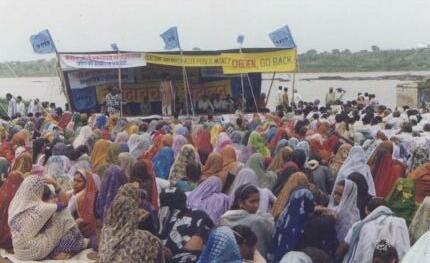

Eco-feminists are emphasising the human development side of new production forces, which restricts the ruthless destruction of forests and wetlands and precious farm animals to slaughterhouses. The eco-feminist movements have been in the forefront of the demand for sustainability. The Green Belt Movement in Africa, Chipko and Appiko (Chipko of the Western Ghats) in India and even the Narmada Bachao Andolan have shown that the requirements of women have not been adequately recognised by the development experts and policy planners.
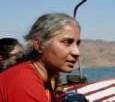
24
Introduction to Sustainable Development
Fig.2.4: Women have been at the forefront of the Narmada Bachao Andolan led by Medha Patkar
Chipko movement

Chipko is a Hindi word meaning "to hug". The Chipko movement was named after its members who hugged trees to prevent them from being felled by foresters. Although the first Chipko workers were men and women, at odds with official forestry policies and mainly concerned with local employment, more and more women joined the movement when they realized that the recurring floods and landslides from which they were suffering were caused by deforestation. When the Forest Department announced an auction of 2500 trees in the Reni Forest overlooking the Alaknanda River, which had already flooded disastrously, one womanGaura Devi- organized the women of her village to protect the trees from the company that won the auction. They physically prevented the tree felling, and thus forced the Uttar Pradesh government to investigate. Two years later, the government placed a 10-year ban on all tree felling in the area. After that, women prevented felling in many other forests all along the Himalayas. They have also set up cooperatives to guard local forests, and to organize fodder production at rates that will not harm the trees. Within the Chipko movement, women have joined in land rotation schemes for fodder collection, helped replant degraded land, and established and run nurseries stocked with species they select.
The loggers in forests, the trawlers in the coastal region and the abattoirs in the village belts have been constantly weaning out the sustainable resource base of women economy of the household, which provides a sustainable shield to the cash economy of the nation. What is required is a balanced coexistence of the two economies and not the uprooting of the soft for the alien mechanised hi-tech development.
SAQ 3
Prepare a case study about the problems of women from the deprived sections in your country/region and movements, if any, to ameliorate them.
2.6 DIVERSITY (SOCIAL, CULTURAL KNOWLEDGE, BIO)
The social and cultural diversity of the world can be judged from the fact that there are around 820 ethnic groups in 160 countries. Around four percent of the indigenous people live in areas that are highly diverse in the composition of their flora and fauna. A community is the custodian of local values in the use of local resources because it knows best the value and the life span of that resource. Once they are displaced, the outsiders bring in their technology for extraction and ruthlessly overuse the precious and limited earth resources. Preserving indigenous territorial rights thus protects biodiversity and the local culture, including knowledge and resourcemanagement skills with potentially wide application
25
of Sustainable Development
Parameters
Introduction to Sustainable Development
The Earth Summit in 1992 recognised the intrinsic relationship between local communities and environment. Agenda 21 specified that the local communities or natives should be treated as custodians of their environment and natural resources. This led to a task force on indigenous people and the declaration of 1993 as the International Year of the Indigenous People. Subsequently, the World Summit on Sustainable Development at Copenhagen in 1995 brought the social growth of people into the central theme of development. This summit recognised that ‘social development is central to the needs and aspirations of people throughout the world and to the responsibilities of governments and all sectors of civil society’. Therefore, a developmental policy needs to be framed in which the livelihoods of local communities are preserved and they in turn start taking interest in the earth’s resources through self regulation. The following combination of factors can help in approaching self-regulation:
• The scale of economy, which would generate organisations harnessing technological potentials, eco-infrastructure, local money, cooperative consumption etc.
• Participatory democracy leading to green municipalism, participatory green city plans, community indicators.
• A green regulatory structure, encouraging bioregionalism, quality and community.
• Green market mechanism for ecological tax system, account money, community currency and green financial infrastructure.
• Knowledge as a regulatory force via resource inventories, eco-accounting, product information and labelling and community indicators.
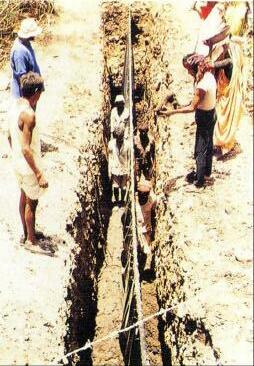
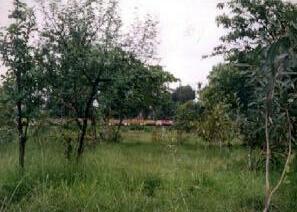
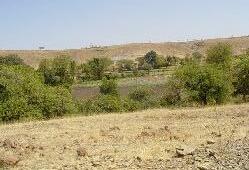
All these factors work within the parameters of culture. Real citizenship and community life cannot be achieved without a degree of bonding, shared vision and values. Working in the direction of sustainable policies would also bring social solidarity amongst diverse ecosystems. This has been done in the villageexperiments of Seed in Udaipur in Rajasthan and of Ralegaon Siddhi in Maharashtra. The local community framed their own regulatory mechanisms to preserve their wetlands, land and forests.
26
Fig.2.5: Community initiatives in many parts of India have helped regenerate resources
We now summarise the contents of the unit.
2.7 SUMMARY
• In this unit, we have discussed the different parameters of sustainable development, i.e., the various indicators that should be taken into account for understanding the concept of sustainable development. We have alsodiscussed the requirements of sustainable development policies. The Limits to Growth had warned that natural resources were not for all times to come and would get depleted if this way of life continued.
• The depletion of resources may lead to a general lowering of the standards of living. The tendency to overkill, overuse and overload resources may prove catastrophic to all mankind. The world seems to be heading towards a period of general scarcity whichmay increase prices of primary commodities, increase poverty and may lead to wars.
• A set of principles forms the basis of sustainable development. These are the principles of carrying capacity, of inter and intra-generational equity, gender disparity and the recognition of diversity. These principles ensure the use of earth’s resources for the largest number of people for the longest period of time.
• The politics of sustainable development is not only the politics of global environmental institutions like the United Nations, but also the politics of regional, national and local commitments. As Gro Harlem Brundtland had observed that ‘commitments can only be fulfilled in time to secure our future if governments are inspired and pressurized by their citizens’, stands nonetheless as a rallying cry for political mobilisation and change.
• The slogan of ‘think globally and act locally’ can be given meaning only if policy makers and citizens are made aware of the intricacies of environmental parameters, developmental relationships and local-global linkages. The parameters refine and objectify the debate on the protection and conservation of environmental resources.
2.8 TERMINAL QUESTIONS
1. What do you understand by carrying capacity? 2. What are the threats to sustainable resource use policies? 3. Can general scarcities be prevented by the principle of carrying capacity? 4. How are the principles of inter-generational equity and intra-generational equity different from each other? Explain. 5. How is equality of women related to sustainable development?
REFERENCES
1. Brundtland Commission Report (1987) World Commission on Environment and Development, Our Common Future, Oxford and New York.
2. Commoner, Barry (1972) The Closing Circle: Nature, Man and Technology, Bantam, New York.
3 Henning, D.H. (1974) Environment Policy and Administration, American Elsevier Public Co. Inc. New York.
27
Parameters of Sustainable Development
Introduction to Sustainable Development
4. Lafferty, William, M, and Langhelle Oluf. (1999) Towards Sustainable Development, St. Martin Press Ltd, New York.
5 Leopold, Aldo. (1949) A Sand County Almanac, Ballantic, New York.
6. Milani, Brian. (2000) Designing the Green Economy, Rowman & Little Field Publishers Inc. New York.
7. NAVF (1990) Sustainable Development, Science and Policy, Conference Report, Bergen8-12, May Oslo, Norwegian ResearchCouncil for Science and Humanities.
8. Sachs, W., (ed) (1993) Global Ecology. A New Arena of Political Conflict, Zed Books,London.
28
UNIT3 APPROACHES TO THE STUDY OF SUSTAINABLE DEVELOPMENT
Structure
3.1 Introduction
Objectives
3.2 Positivist Approach
3.3 Multi-dimensional Approach
3.4 Eco-system Approach
3.5 Indigenous Views
3.6 Summary
3.7 Terminal Questions
3.1 INTRODUCTION
So far you have studied the concept of sustainable development and the various parameters that delineate it. It is an established fact that the world has been advancing in an unsustainable manner and most of our existing problems in society are directly linked tothis approach of wealth accumulation rather than of a comprehensive and integrative development towards economic progress. Historically, economic development of nations was measured in terms of Gross Domestic Product (GDP) and Gross National Product (GNP). However, today, the overall development of a country is measured by Human Development Index (HDI). The HDI is computed from, for example:
• gross domestic production per capita, adjusted for local purchasing power
• life expectancy at birth
• adult literacy
• the number of persons enrolled in educational institutions
Therefore, development has economic, social, environmental and institutional aspects. Accordingly, the focus of sustainable development has also shifted from the purely ecological perspective to include economic and social sustainability. The application of these approaches would require interaction and adjustment with several spatial and temporal levels of society. On the spatial front there are needs and challenges for the individual, a local community like a family or a network and the wider extended community like the national, regional and the global networks. On the temporal front it may require an understanding of issues very close to individuals such as emotional linkages to certain geographical areas, occupational skills based on local resources, material artefacts appropriate to their life styles, patterns of interdependencies between communities and also between generations. These attributes provide conceptual and ethical justifications for survival and therefore of a sustainable development framework. The objectives of developmental policies are expected to combine and balance these different dimensions with the political and administrative capability of the state. Approaches to the study of sustainable development are to be understood in this context. In this unit, we discuss the different approaches taken by the national and international fora towards the problem of achieving sustainable development.
Objectives
After studying this unit, you should be able to:
• discuss the different approaches being taken towards achieving sustainable development; and
• analyse the reasons for the failures of some of the earlier approaches.
Approaches to the Study of Sustainable Development
29
3.2 POSITIVIST APPROACH
Conventional and classic economic development literature grossly ignores the demands of sustainable development. The early founders of quantitative economics argued in favour of the monetary approaches, known as the positivist approach. This approach centres on the physical betterment of society through market calculations or calculating advancement in terms of monetary gains. It leaves aside the issues of distribution and justice; even the environmental assets are valued in purely monetary terms. However, as explained earlier, many environmental assets are intangibles and they go unaccounted for in that approach. Since what is unaccounted for tends to be used irresponsibly, these environmental resources get ruthlessly destroyed by industrialising states.
Positivist approach promotes freedom of accumulation and is based primarily on making the community as a whole as opulent as possible, irrespective of distributional disparities and irrespective of what that wealth does to human lives. It is, of course, true that being affluent can be among the most important contributory factors in generating a feeling of well-being, and this approach to economic progress certainly cannot be criticised as being irrelevant to achieve a better living. However, as it neglects crucial factors such as public care and social organisation for the welfare of deprived and weaker sections, the approach is extremely narrow and defective. Its overall thrust on wealth maximisation irrespective of distribution allows accumulation of wealth and its appropriation by a few (rich becoming richer) and marginalises the not so rich or weak individuals who would have, given the social and institutional support and opportunities to work, done very well.
POSITIVIST APPROACH
•
•
•
Fig.3.1: Some features of the positivist approach and its possible consequences
The preoccupation with commodity production, opulence and financial success can be traced in professional economics through several centuries, involving many leading economists as well as businessmen and bureaucrats, who have preferred to concentrate moreon the characteristics of overall material success than on the deprivation and development of human lives. Indeed, the dominant contemporary concern on such variables as per-capita gross national product or national wealth is a continuation of the old opulence-oriented approach. It is these Gross National Product (GNP) and Gross Domestic Product (GDP) based approaches which have been opposed and argued to be misleading by approaches that shift the focus to human development. Alternate indicators of the real prosperity of the world have been proposed in the Human Development Report (HDR, 1990) of United Nations Development Programme (UNDP).

30
to
Development
Introduction
Sustainable
THE POOR GET POORER
Promotes freedom of accumulation and appropriation by a few
Emphasises wealth maximisation irrespective of distribution
Neglects public care and social organisation for the welfare of deprived people
THE RICH GET RICHER
Human Development Approaches: The two traditions of focusing respectively on (1) human development, and (2) overall wealth and opulence can be seen as differing, directly or indirectly, in two distinct respects. The first concerns divergences in the ultimate objectives, and the second relates to differences in the effectiveness of distinct instruments advocated for achieving the objectives.
Human development approach has conformed broadly to the line of reasoning enunciated by Aristotle more than two millennia ago that ‘wealth is evidently not the good we are seeking, for it is merely useful and for the sake of something else’.
How can we possibly give priority to the means of living, which is what treasures and wealth are, over the ends of good and free human lives? While much of economic and financial writing proceeds as if there is nothing beyond opulence with which we need be concerned, the really interesting debates must relate to the instrumental effectiveness of overall wealth and opulence in promoting those things for which wealth and opulence are sought.
This takes us to the second difference. Some have taken the view that while opulence is not to be valued at all for its own sake, it still is the most important instrument in promoting the more basic objectives, even the Aristotelian objective of rich and fulfilling lives. In other words, opulence is an effective instrument rather than the goal. To take a prominent example, William Arthur Lewis, one of the leading modern development economists, did not much doubt that the appropriate objective to pursue growth is increasing ‘the range of human choice’ and acknowledges the causal role of many factors in advancing the freedom to choose. Nevertheless he concentrated specifically on ‘the growth of output per head’, because it ‘gives man greater control over his environment, and thereby increases his freedom’. Indeed, the assertion in his classic book: ‘Our subject matter is growth and not distribution’ reflects his faith in the instrumental efficacy of total growth.
This approach, however, has proved to be quite disputable in terms of the experiences observed in the actual world. Many countries have grown fast without a commensurate impact on living conditions, and more importantly, some countries have achieved high quality of life despite relatively moderate growth of GNP or GDP per head.
It is certainly true that the higher the average income of a country, the more likely it is, given other things, that it will tend to have a higher average life expectancy, lower infant and child mortality rates, higher literacy, and in fact, a higher value of the HDI proposed in the Human Development Report of UNDP. A number of countries conform to this pattern. However, many countries, such as Sri Lanka, China, Jamaica, Costa Rica, and the state of Kerala in India, have HDIs that are much higher than what would be expected on the basis of their GNP. Therefore, rather than treating GDP per se as an instrument for achieving human development, what is important is to look for the route through which economic growth most effectively contributes to human development and to increased GNP.
Economic growth means not only an increase in private incomes, but also generating resources that can be marshalled to improve social services (such as public health care, epidemiological protection, basic education, safe drinking water, etc.). In some cases such marshalling is effectively done, while in other cases, the fruits of economic growth are put to little use of this kind. This can make a big difference to the outcome in terms of the expansion of basic human capabilities. Similarly, while the expansion of private income certainly is of instrumental importance in enhancing basic capabilities, the effectiveness and sustainability of that impact depends much on the distribution of the newly generated incomes.
In particular, a much larger and more sustainable impact is expected to occur if the rise in average GNP per head is accompanied by a sharp reduction in the poverty of the worst off people, rather than going in other directions. To what extent this will happen depends on a variety of economic and social circumstances related to the
Approaches to the Study of Sustainable Development
31
employment-intensive nature of techniques of production, the sharing of education and skills across the population, the success of land reforms and the sharing of rural resources, and so on. Here again the experiences of different countries and of different policy regimes have been quite divergent.
There is considerable evidence that the statistical correlation between GNP per head and human development tends to work through the impact of GNP expansion on higher public expenditure and lower poverty. The UNDP reports indicate that the connections are seriously contingent, and much depends on how the fruits of economic growth are shared (in particular what the poor get) and how far the additional resources are used to support public services (for example, public health services, which are particularly crucial in influencing life expectancy).
Thus the opulence-oriented view of progress has little intrinsic merit and has a conditionally important instrumental role, and that conditionality relates specifically to the features on which the human development focuses. Thus, there is no basic flaw in regarding economic growth and GNP to be very important, but this is an insufficient indicator of human development. Its biggest impactcomes through the expanded ability to undertake public action to promote human development and resource management in an equitable manner. In recognising the importance of economic growth as a means for human development, policies have to focus upon the multidimensionality of the problem and challenges brought by a resource scarce economy. In brief, the human development approach concentrates on the capability of all humans to lead worthwhile lives as the object of importance that people today and in the future would value.
You may like to reflect on these ideas before studying further.
SAQ 1
What are the indicators of development in the positivist approach and the human development approach?
Let us now turn our attention to the multi-dimensional approach to sustainable development.
3.3 MULTI-DIMENSIONAL APPROACH
Multidimensional approaches deal with the heterogeneous environmental and development issues and means to calculate the intangibles in nature without the common denominator like money. The approach recognises that any development which disturbs a local ecosystem can adversely impact regions across geographical and political boundaries. The policy orientation in multidimensional approach is that of ‘level transfer mechanism’ to check the environmental impact and anticipate measures for preventing any socio-economic crisis. This approach is an attractive operational tool for studying Environmentally Sound and Sustainable Development (ESSD). The level transfer mechanism involves the following basic associated approaches that have to be taken into consideration to assess the impact over society and natural resources.
1. Studying the economic bottom-line: This critically examines the conventional ‘profit’ bottom line approach of enterprise initiatives for example, business (industry and commerce), industrial agriculture (agribusiness) and aquaculture. To avoid unconstrained exploitation of environmental resources calls for example, for ‘green’ development of land cleared for development.
2 Corporate environmental responsibility: This is a demonstration of environmental awareness in corporate partnerships. This is to develop ecoefficiency, environmental management through regulatory mechanism to be
32
Introduction to Sustainable Development
complied by all corporates all over the world such as ISO14000, environmental impact analysis (EIA), studying ecological footprints etc.
3 Producer responsibility: Besides promoting amongst producers environmental monitoring and industrial ecology, this may inspire environmental assessment, bioregionalism, product stewardship and accountability structures.
4 Precautionary principle: This subscribes to clean-up technologies, urban environment renewal, non-polluting technologies, carbon credits and land management.
Producer responsibility
Ecologically sustainable designs Localselfsufficiency
Corporate environmental responsibility
Approaches to the Study of Sustainable Development
Sustainable environment management
MULTIDIMENSIONAL APPROACH
Nonanthropocentric approach
Eco-feminism
Fig.3.2: Various aspects of themulti-dimensional approach
5 Eco-design: This approach initiates ecologically sustainable designs and techniques such as eco-building,bio-machines, green machines, bio-fuels, intermediate technology, eco-preneur, organic agriculture and sustainable lifestyles based upon indigenous knowledge.
6 Gandhian gram swarajya: It is the doctrine of local self-sufficiency propagated by Mahatma Gandhi for economic and cultural awakening of Indian villages. This is the approach towards environmental stewardship and conserving nature by using resources available in the local area.
7 Deep ecology:This approach was initiated by the Norwegian philosopher Arne Naess in 1972. It is anti-anthropocentric that is, it believes that humans are not at the centre of everything in nature but are merely a part of it. It believes in population reduction, ‘no-go’ wilderness reserves, sacred groves, old forest preservation.
8 Eco-feminism: It views the patriarchal structure of society and the miseries of women as fallout of the so called ‘anthropocentric’ approaches to nature such as the positivist GNP led growth pattern, mass production through machines that exclude women and their requirements.
33
3.4 ECO-SYSTEM APPROACH
Ecosystem or ‘an ecological system’ is the microcosmic autonomouslyfunctioning full unit of nature. In the absence of outside interference these units are continuously interacting with other neighbouring units in the same habitat. Due to these interactions they are growing into stable and sturdier functional communities which are finally replaced by or evolve into developed ecosystems called a Climax community. This community nurtures and carries a large number of other communities of plants and animals which grow and evolve in interdependence and diversity. This change is calledsuccession.
It takes millions of years for a stable community to develop but the rapid pace of mechanised development and extensive use of chemicals destroy or wipe off full ecosystems very rapidly. The pace of destruction is much faster than the pace of succession. The result is that the conservation efforts for a particular species without the conservation of the whole ecosystem within which the species survives do not yield desired results. This approach aspires to preserve the whole ecosystemand speaks of the ecosystem viability in policy and development programmes.
Natural systems have wide spatial connections. Activities over land and water and even air, spill over their effects to other regions and as a result of it ecosystem growth in the entire region gets affected. The national and international policies have to encounter these spill-over effects so that the whole system is protected. In 1986-87 the world wide bleaching of corals had been due to the global warming and also due to chlorofluoro carbons (CFCs) production mainly by the rich countries. The preservation of mangroves in the Indus delta at the Indo-Pak boundary, fisheries, river pollution and oil spill in oceans are other examples demanding an ecosystem concern in policies.
In summary, the ecosystem approach is a method of sustaining four basic characteristics of nature:
1. spatialheterogeneity, 2. resilience, 3. dynamic vulnerability, and 4. organised connections between the sources and the sinks.
Fig. 3.3: Some characteristics of the eco-system approach
34
to Sustainable Development
Introduction
Eco-system approach
Aspires to preserve the entire ecosystem
Sustains spatial heterogeneity of nature Reorients the search for alternatives
Incorporates
eco-system viability in all policies
The biggest challenge to this approach is the political constraints to an internationally coordinated action. Nations are so preoccupied with their narrow interests and are so secretive of their measures that they fail to look at the natural system as one comprehensive and complete community. This approach calls for institutions to acquire four basic characteristics called the 4 Ds: diversity, dynamism, decentralisation and decisiveness
Peter Omara Ojunga has mentioned four actions for applying the ecosystem approach:
I. An ecosystem inventory to determine community zones.
II. Identification of natural processes which lead to stability.
III. An analysis of inventory data to evaluate the functional significanceofthe ecosystem components.
IV. Recommendation of the alternative uses based upon their functional significance.
Policies that facilitate action on the above four basic requirements are referred to as sustainable development policies since they protect ecosystems and reorient the search for alternatives.
SAQ 2
What do you understand by the ecosystem approach? How is it different from the human development approach?
So far we have given you a bird's eye view of the dominant perspectives on sustainable development. In the last section of this unit we acquaint you with the views of indigenous communities on this issue.
3.5 INDIGENOUS VIEWS
Traditionally, the rights of communities over their habitat and ecological resources derived from history, cultural traditions and conventions have provided them the means of livelihood. It is important to note that many indigenous communities and aboriginal cultures have long held that any decision taken by the community must be considered in the light of its potentialimpact on seven generations. It is the same sentiment now being expressed in the Brundtland definition of sustainable development.
Dominant development approaches based industrialised growth have, however, weakened and even destroyed the livelihood of several communities since their control over habitats and resources as well as their indigenous wisdom has remained ignored and unrecognised in these approaches. These communities have been removed from their forests and wetlands under the plea of economic advancement. Since the HDR of 1994 has reiterated that ‘protection of all life opportunities of future generations as well as present generations and respecting the natural systems on which all life depends’, the following two approaches serve the concerns of the vulnerable communities:
• The Livelihoods Approach
This approach has been adopted by a number of agencies, Non Governmental Organisations (NGOs) and governments, including UNDP, Cooperative for Assistance and Relief Everywhere (CARE) and Department for International Development (DFID). The livelihoods approach puts people at the centre of development both at the macro and micro levels. This focus on people is equally important at macro policy levels (for example achievement of objectives such as poverty reduction, economic reform or environment protection) as it is at the
Approaches to the Study of Sustainable Development
35
micro or community level (for example eco recognition of community rights, indigenous knowledge etc). In this approach people, rather than the resources they use or the governments that serve them, are given the priority.
Adherence to this principle may well translate into providing support to sustainable resource management or good environmental governance, but it is the underlying motivation of supporting people’s livelihoods that should determine the shape of the support and provide the basis for evaluating its success. In a sustainability paradigm the livelihood options are most favourably available when environmental resources are better managed from the distributional aspect. The livelihoods approach requires identification of the most pressing constraints faced by people as also promising opportunities open to people regardless of where these may occur (i.e. in which sector, geographical space or level, from the local through to the international). It builds upon people’s own definitions and understanding of constraints and opportunities and, where feasible, it supports people to overcome constraints and realise the opportunities.
The livelihoods approach enables various factors which constrain or provide opportunities to be organised and their inter-relationships are brought out. It is not intended to be an exact model of the way the world is, nor does it mean to suggest that people as stakeholders themselves have to necessarily adopt a systemic approach to problem solving. Rather, it aspires to provide a way of thinking about livelihoods that is manageable and that helps improve development effectiveness.
• Poverty Reduction Strategies (PRS)
There is a definite relationship between poverty, environment and sustainable development. Sustainable development aims at reducing and then eradicating poverty completely. Poverty reduction is sometimes (wrongly) placed in a short term context, particularly when there is considerable pressure for a PRS to produce quick results. The short-term attention to poverty reduction, for example, through debt relief should evolve into longer-term poverty reduction strategies that lead to sustainable development. Economic programmes within sectors would then identify trade-offs between poverty and sustainable development. At present issues around sustainable development and the environment are often ignored in PRSs. So in developing future PRSs, and other strategies, it is vital to grasp the opportunity to ensure that sustainable development principles are incorporated, along with appropriate indicators.
The conventional PRS overuses resources to catch up with the industrialised nations in economic progress. The economic targets are fixed and GNP made the only indicator of progress. It had avoided or overlooked the loss of ecosystems, estrangement of biotic and abiotic communities and extinction of species. In the process nations lose some of the most useful genetic element in plants and animal species. This in turn adds to the cost of biotechnology research for which the same genes are imported from developed countries at huge costs with patent restrictions.
It is, therefore, important to take stock of environmental strategies that already exist, for example the action plans produced under the aegis of the desertification convention or national environmental action plans, and to identify gaps. Stakeholder consultation in developing the PRS should include civil society and organisations with environmental interests and should be broadened in scope to identify how environmental activities can assist poverty reduction for example by including environmental indicators in the monitoring of poverty.
The PRS framework focuses on identifying, in a participatory manner, the poverty reduction outcomes a country wishes to achieve and the key public actions or policy changes, institutional reforms and programmes that are required
36
Introduction to Sustainable Development
to achieve these desired outcomes. This framework is based on the experience of manycountries, on cross-country analytical work and on current best practice in development assistance, as well as consultations with other international organisations and NGO representatives.
PRS have emerged out of concern at the global trend of increasing poverty coupled with enhanced debt relief and a desire on the part of donors/NGOs to strengthen the impact of their programmes on reducing poverty. This has also been the basis for International Monetary Fund/World Bank debt relief and concessional assistance. Aframework for action has been developed by these international agencies centred on the preparation of poverty reduction strategies by countries, which would then be a basis for external assistance and debt relief.
The key principles underlying the framework are that poverty reduction strategies should be country-driven and prepared by national governments in a participatory mode with the civil society and not by external international donors or transnational companies. PRSs should have the following features oriented to achieving concrete results in terms of poverty reduction (a) comprehensive inlooking at cross-sectoral determinants of poverty outcomes, (b) informed by a long-term perspective, (c) providing the context for action by various development partners and (d) should be intended to prevent alienation of communities from sustainable modes of life.
3.6 SUMMARY
• ‘Environmentally Sound and Sustainable Development’ has been the outcome of the Earth Summit and has now become an indispensable part of alleconomic and social fora. Different national and international actors have been approaching the problem differently and the search for an approach which achieves the purpose of environmental conservation and social well being without in any way slowing the process of economic progress in terms of GNP and GDP is the major challenge for policy makers. The opulence oriented positivist approaches emphasised the growth in terms of GNP/GDP alone and were criticised for having neglected the human factor. It was revealed in UNDP cross country studies that countries with high GNP may not necessarily have high human development also. Although GNP/GDP orientation helps a nation to fight poverty but its success depends upon how the national policies distribute money and services to people. Good governance of a country implies ability to effectively apply wealth created from higher GDP towards human concerns thereby protecting both the environment and the people in a sustainable manner. In 1990, since the first HDR, the team of UNDP experts has prepared the HDI which clearly exposes the myth of opulence based approaches.
• Since conservation of environment and the long term prosperity of people involve many different agencies and also methodologies, the multi-dimensional approach tries to answer the key principles of sustainable development. The first priority is its people-centredness.
• Sustainability has a comprehensive and integrated paradigm and thus requires a high level of political commitment and an influential lead institution based on national political priorities. The policies designed to achieve this paradigm have to be process and outcome oriented and nationally owned. Its nature has to be participatory incorporating monitoring, learning and improvement. The application of this paradigm has overlapping boundaries of several other established approaches.
• The ecosystem approach treats environmental resource as a full functional unit of economy. Thus the segregated approaches being applied to achieve sustainabilityhas come under attack by this approach. It suggests that objectives
Approaches to the Study of Sustainable Development
37
of sustainability are best and most effectively achieved if the whole system rather than its segregated parts or different species are made policy objects. The whole system is an ecological unit and works as a self sustaining economy at the grassroots level.
3.7 TERMINAL QUESTIONS
1. What are the different approaches for achieving sustainable development?
2. How do GNP/GDP based approaches fail to deliver the required objectives of development policies?
3. Discuss the community-oriented approach to sustainable development with examples from your own context.
REFERENCES
1. Human Development Report (1990) United Nations Development Program, Oxford University Press.
2. Human Development Report (1994) United Nations Development Program, Oxford University Press.
3 Omara, Ojungu P. H., and H. Peter. (1992) Resource Management in Developing Countries, Longman Scientific and Technical Co., USA.
4 Redclift, M. (1987) Sustainable Development: Exploring the Contradictions, Methuen, London, UK.
5. Robins, Nick. (1990) Managing the Environment: The Greening of European Business, Business International, London.
6 Schmidheiny, Stephen. (1998) Changing Course: A Global Business Perspective on Development and the Environment, The Massachusetts Institute of Technology Press, London.
7 Singh, Amita. (2000) The Politics of Environment Administration, Galgotia, NewDelhi.
8 World Commission on Environment and Development (1987) Our Common Future, Oxford University Press, Oxford.
9. Worster, Donald. (1993) The Shaky Ground of Sustainability. In: Sachs and Wolfgang, (ed) Global Ecology, ZED Books, Fernwood Publishing, Nova Scotia.
38
Introduction to Sustainable Development
UNIT4 ISSUES AND CHALLENGES
Structure
4.1 Introduction
Objectives
4.2 Sustainable Economic Growth
4.3 Achieving Sustainable Livelihood
4.4 Living in Harmony with Nature
4.5 Summary
4.6 Terminal Questions
4.1 INTRODUCTION
The challenge of sustainable development is the challenge of achieving environmental conservation and resource management without compromising the targets of growth and development. It is therefore a process of making human and environmental regeneration not only an end of economic growthbut also a means. It redefines wealth and restructures qualitative development in economic growth policies. Sustainable development is in itself revolutionary since it replaces exchange value by intrinsic value, market regulation by self-regulation and capital accumulation with deaccumulation. It is an effort and a design to raise poor countries of the world from social decadence, exploitation, global inequity and waste.
Many questions intrigue the concept of sustainable development: Is economic growth possible without destroying our environment? What supports sustainable economic growth? What are the major contentious issues involved in sustainable economic growth? Does sustainable economic growth affect stock market gains? Can developed countries continue with their consumption patterns without damaging the planet’s ability to sustain life? These are perplexing questions that have become crucial to the international debates and political battles. These form the subject matter of the last unit of this block.
Objectives
After studying this unit, you should be able to:
• identify the various issues that require to be undertaken to pursue sustainable development;
• discuss the challenges that are to be overcome; and
• describe the policies and methods adopted by the international community to achieve sustainable development.
4.2 SUSTAINABLE ECONOMIC GROWTH
You will agree that the major problem faced by the world today is still the intractable problem of poverty and hunger. Achieving food security requires more than just production of food. Overall perspectives of economic development are being increasingly seen as a better promoter of food security than food production alone. But this cannot be achieved without firm knowledge. Action upon land and water is an unavoidable part of any economic policy. Thus economic development and food security require knowledge-based firm action upon land and water and indeed on all natural resources. Accordingly Natural Resource Management (NRM) is one of the biggest issues in sustainable development. For example, phenomena like land degradation, desertification, loss of wetlands and deforestation are the real constraints to the future sustainability of good agriculture everywhere in the world.
39 Issues and Challenges
However, as we enter the 21st century, we have begun to face a new sustainability challenge in business and trade, namely, the growth of Trans National Corporations (TNCs), which have taken control of resource policies in the world. These TNCs have changed the contours of the welfare state and Keynesian economics. Since the TNCs bring Foreign Direct Investment (FDI), the poor countries are making extensive regulatory changes in their economic resources and policies to make themselves appear as attractive investment areas for FDI. Policies that might ensure sustainable use of resources are being changed for better business and FDI. This large company and TNC based development has been so rapid that by mid 1990s we were faced with an alarming and stupefying statistics. In 1995 the United Nations Conference on Trade and Development (UNCTAD) study found that 40,000 corporations, in all, controlled two-thirds of the total world trade in goods and services. According to a report:
• Of the world’s largest economies, 51 are corporations. Only 49 are countries. The budget of Mitsubishi Corporation is larger than that of Indonesia, the world’s fourth most populous country and a land of enormous natural wealth.
• The combined sales of the world’s top 200 corporations are equal to 28 percent of the world’s Gross Domestic Product (GDP).
• These same 200 corporations employ only 18.8 million people, less than one third of 1 percent of the world’s people and the downsizing continues.
• In 1995 the total value of mergers and acquisitions for the world exceeded the preceding year by 25 percent.
Combined sales are 28% of world GDP
MNCs
Fig.4.1: The saga of transnational or multinational corporations
In parallel to the ‘better business & FDI’ narrow view, since the Earth Summit, sustainable development has been faced with many contentious issues, whichare being debated and are still to be resolved. You may like to know about them. We describe them now.
40
Introduction to Sustainable Development
Control two-thirds
world
less than 0.33 % of workforce Have budgets larger than countries Consume major share of resources
of
trade Employ
• While the rich nations consume the largest share of resources the poor countries bear the cost of this consumption in the form of pollution, chlorofluorocarbons (CFCs), deforestation, global warming and loss of fisheries, wilderness and animal resources.
• It has been debated between the rich and the poor nations that forests of the third world countries are sinks for the pollution mostly generated by the developed countries. Thus while the developed countries are trying to restrict the exploitation of forests by the poor countries they are not at the same time willing to restrict their own production and consumption systems to meet the demands of sustainable economic growth.
• Biotechnology and Genetically Modified (GM) foods are a threat to the indigenous agriculture and rural economy of developing countries, besides also disturbing their village institutions and local economy.
• There are different perspectives on Climate Change conventions or the Kyoto Protocol under which the United States, Canada and other developed countries would have to reduce greenhouse gases by 5 % from the 1990 levels. This is presently the hottest debate in international politics since the developed and the developing countries have all been taking different positions on Kyoto obligations.
The following five themes became the centre of concern at the Tenth Session of the United Nations Commission on Sustainable Development (CSD10) in May2002,and the World Summit on Sustainable Development (WSSD) in August 2002:
• Stewardship and Conservation
• Innovation and Partnership
• Sustainable Communities
• Health and the Environment
• International Governance
These themes set up certain priorities for the developed and the developing countries and all future collaboration between the countries would largely depend upon their willingness to explicitly incorporate these priorities in their national policy agenda and actions taken towards them. The following main themes focus upon the agenda of governance for sustainable development:
• experiences of countries implementing sustainable development,
• institutional arrangements for implementing sustainable development,
• the role of governance and public administration in the achievement and implementation of sustainable development, and
• the role of Regional Organisations in promoting good governance for the implementation of WSSD outcomes.
Referring to trade and Sustainable Development in Chapter 2 of Agenda 21, and in Chapters V and X of the Plan of Implementation, it is mentioned that trade liberalisation and globalisation can have both positive and negative effects on sustainable development. There is a continued need to support efforts by the developing countries to integrate themselves into and derive benefits from the multilateral trading system. At the same time, attention is given to enhancing the contribution of the multilateral trading system to sustainable development. Agenda 21 of the Earth Summit calls for a supportive international climate for achieving environment and development goals by (a) promoting sustainable development through trade liberalisation, (b) making trade and environment mutually supportive, (c) providing adequate financial resources to developing countries dealing with international debt and (d) encouraging macroeconomic policies conducive to environment and development. A closer integration of trade and sustainable
Issues and Challenges
41
development can play a major role in achieving sustainable development and poverty eradication.
There are serious challenges to economic growth in present times, which may be described under following points:
1. From quantity to quality: The quantitative aspect of growth had settled upon the simplistic tendency of cost-benefit analysis about the worth of a productive process. However the intangibles in nature are difficult to quantify. Thus new forms of accounting techniques are being developed to quantify the value of flora and fauna in nature so that the material and monetary scarcity can be assessed in real terms. Incentives other than money have been found to be more welcome by communities in a large number of cases.
2. Human self-development is the core of sustainable economic growth: It draws connection between individual and social change. It also encourages symbiosis between humanity and nature. The dominant industrial system survives upon various forms of mental slavery, which leads to material dependence. Under this system unhealthy relationships are tolerated and creativity and simplicity are suppressed.
3. From patriarchal society and male supremacy towards a holistic paradigm of equity: Unsustainable economic growth is based upon male domination, beliefs in racism, subordination of nature, suppression of women and other weaker sections of the society. Excessive and single-minded emphasis on efficiency in the productive processes ignores these factors and encourages accumulation of surplus to very few. A feminist theory of science, on the other hand, deconstructs, lays open and criticises embedded assumptions that result in the domination of nature and aims at developing alternatives towards a more benign relationship within the society and between society and nature.
4. From TINA approach to a Strategy of design: TINA stands for ‘There is no alternative’ approach. It was the suggestive approach to generate conspicuous technology in colonial industrial societies. Though forces of domination still exist and are growing simultaneously, the pool of knowledge in the form of awareness of alternative approaches is also growing and this has a high liberating potential. Sustainable economic growth has reprioritised economic goals to move societies out of the ‘commercialisation trap’ and provide need satisfaction in a more elegant, comprehensive and efficient manner.’
5. Polluter Pays principle: Sustainable economic growth strategies recognise that producers have a genuine responsibility towards people and the labour they employ. Producers who damage conditions of good living and environment must also pay and bear the cost of damage to the society. This is possible in two ways: One, by internalising the cost of damage in the productive process and the cost of the object produced and two, by a regulatory mechanism such as public liability or insurance acts which may prevent obsolete and polluting technology or hazardous systems from being used in a poor region.
6. Appropriate technology and community-owned firms: Appropriate technology refers to technologies that do not necessarily require large capital and resource intensive industrial systems. It is also need based. Community firms or community owned firms or municipally owned enterprises work not only for profit but also to protect and represent community interestssuch as local developmental issues that are often termed as ‘Non-Profit Organisations’. They are also referred to as ‘Community Corporations’ and provide alternatives to large capital and resource intensive industrialsystems.
In terms of appropriate technologies or methods of production that make use of local skills and resources, the developing countries provide a wealth of innovative ideas practiced at grass-roots levels. These innovative ideas and practices also lead to alternative production systems.
42
Introduction to Sustainable Development
You may like to stop for a while and concretise the arguments presented so far.
1
Outline the major issues in relation to sustainable economic growth that confront the developing countries today.
4.3 ACHIEVING SUSTAINABLE LIVELIHOOD
About 900 million people in the world live in absolute poverty. Their livelihoods essentially depend upon the production of natural resources and natural products. People from the least developed countries are the most vulnerable to trade offs in their natural produce. Their livelihood depends upon the export earnings from their primary products such as agricultural and forest products, mineral, fish etc. consumed by others. For increasing consumerism demands rapid exploitation and over exploitation causes depletion of resources. Yet any commodity crash in the international market worsens the terms of trade for them.
At present 80 percent of poor in Latin America, 50 percent poor in Asia and 50 percent poor in Africa live on marginal lands, which are already highly susceptibleto environmental degradation. Desertification and various forms of land degradation affected the livelihoods of more than 135 million people in 1984, which had increased from the 77 million in 1977. This increasing pressure on land and other natural resources prevents sustainable livelihoods of people in both the poor and the developed countries also like the United States and Japan.
The attainment of sustainable livelihoods is related to the sustainable economy of nations. A highly indebted country, which is suddenly made to repay debt, speeds up production of primary commodities pushing the prices further down. Between 1980 and 1999, the weighted index for a group of 33 primary products declined by half from 105 to 57 and the export commodity prices of the Third World fell by 20 percent. Uganda alone suffered a loss of 122 million on exports from just two primary commodities tea and coffee. In Tanzania poor people derive half of their cash incomes from the sale of forest products such as charcoal, honey, firewood and wild fruits. The same is true of other poor countries including the transitional countries like India, Brazil etc.
Fig.4.2: Attaining sustainable livelihoods is a major concern of poor people all over the world.
(Source: www.iucn.org/.../ images/imagebody2.jpg)
An empirical analysis of sustainability shows that Japan and Indonesia accumulate man-made capital stocks at a high rate. An industrially developed country like Japan has small stocks of natural capital and consequently the amount of stock it depletes is
43
Issues and Challenges
SAQ
also very small so that the country is regarded as very sustainable. On the other hand, Indonesia, with large stocks of natural capital, depletes its stocks by a large amount (due to exports), so that the country is regarded as marginally non-sustainable. Sustainability within each country implies that the countries should reinvest natural resources in proportion to their resource consumption.
Sustainable livelihood is a mode of protecting and improving the management of ‘the natural and physical environment’. The 1997 White Paper on International Development commits Department for International Development (DFID) to promoting ‘sustainable livelihoods’. The White Paper defines sustainable livelihood as ‘A livelihood comprises the capabilities, assets (including both material and social resources) and activities required for a means of living. A livelihood is sustainable when it can cope with and recover from stresses and shocks and maintain or enhance its capabilities and assets both now and in the future, while not undermining the natural resource capital asset’.
Transnational business shifts operations from a high cost production area to a low cost production area and introduces production systems that haveno linkages with the local communities and their resource use methods and styles of livelihoods. These communities are alienated from their own land and assets. International agreements reduce possibilities of asserting their claims and access to resources. The framework currently in use classifies five types of capital assets from which the individual draws his/her livelihood:
1. Natural:The natural resource stocks from which resource flows useful for livelihoods are derived (e.g. land, water, wildlife, biodiversity, environmental resources).
2. Social: The social resources (networks, membership of groups, relationships of trust, access to wider institutions of society) upon which people draw in pursuit of livelihoods.
44
Introduction to Sustainable Development
Fig.4.3: Capitalassets for sustainable livelihoods Livelihood Capital Assets Human Natural Financial Physical Social
3. Human: The skills, knowledge, ability to work and good health important to the ability to pursue different livelihood strategies.
4. Physical: The basic infrastructure (transport, shelter, energy and communications) and the production equipment and means, which enable people to pursue their livelihoods.
5. Financial:The financial resources which are available to people (whether savings, supplies of credit or regular remittances or pensions) and which provide them with different livelihood options.
The selection of these capital assets is a subjective exercise but it provides a good starting point to assess as to how and in what combinations assets actually translate into sustainable livelihoods. Livelihoods are ideally sustainable when all stakeholders are empowered and have enhanced access to assets. This calls for a change in the status quo and by implication a shift in the power relations towards equality. To achieve this, therefore, attention to the constitutive side of politics, i.e., governance is required. The key governance issue to change the rules and underlying power structures towards a positive sustainable livelihood outcome may be summarised as:
• People centred
• Responsive and participatory
• Multi level
• Partnership
• Sustainable
• Dynamic
The above issues, inter alia, require attention to the following:
Appropriate Knowledge: Knowledge, in order to be appropriate, has to be rooted in the community resource use pattern and is politically neutral. It has to be ensured that channels are created within institutions to allow for this knowledge to be effectively and clearly communicated to those making decisions. Prevailing systems suggest excessive focus upon formal or codified types of knowledge ignoring the tacit or experiential knowledge embedded in community practices appropriate to capturing local dynamics and locally differentiated patterns of resource use. Therefore assessments of needs and decisions on action are to be based on the views of all, even those that may not be less endowed with formal knowledge organised through formal education systems (usually the poor and marginalized sections of population).
In this respect Participatory Poverty Assessments (PPAs) are a major step towards the poor defining their needs, and having a say in decisions affecting them: PPAs are making national as well as local impacts (national PPAs have been produced for example in Uganda, Zambia, and others). This reorients the ownership and management patterns of natural resourceas well as contributes to enhancing overall effectiveness being rooted in people’s everyday understanding and knowledge of ecological processes.
Equitable: Equity is the basis of sustainable development policies. Questions such as who decides on resource use policies and approaches and who benefits from them suggest the need for an equitable economic base. Institutions can play a key role in redistributing tangible assets (especially land, securing land rights and rights to services, removing restrictions which impoverish and weaken the poor) and in implementing measures to guard against discrimination in all its guises. The principle of equity needs to guide not only how institutions govern access to resources and assets, but also in determining what assets are needed and created (i.e. in terms of technology, infrastructure, etc.). Focus on equitable growth ensures long-term benefits to mankind.
Participatory: Participation is necessary for effective policy and for guarding against arrogance and suspicion when institutions assume the right to make decisions on
45
Issues and Challenges
Introduction to Sustainable Development
behalf of others. Groups engaged in livelihoods often do not have the resources and political influence to represent their interests in national and international fora. It is more realistic to explore ways in which such groups, for example, of farmers and others, can feed their concerns into regional and national decision-making in such a way that the concerns can then go on to be represented at the international level.
Flexible/adaptable: Institutions for sustainable livelihood are opposed to the top down or trickle down approaches. They are flexible enough to accommodate changing political and ecological circumstances- making sure that the adoption of procedures are not bogged down by inertia, routineor agency capture. This is particularly important where institutions have to react and respond quickly to changing resource needs. Flexibility provides security, creativity and drive for innovation.
Enforceable: Policies that propose solutions to particular problems have to be sensitive to the problems of enforcement and implementation, often in very adverse conditions. Policies that fail to be implemented undermine trust and respect in an institution which is critical to its overall success. Enforcement procedures need to be clear and realistic and reporting mechanisms need to be transparent in order to demonstrate effectively whether policy commitments have been met.
SAQ 2
What do you understand by sustainable livelihoods? How can a nation achieve this target?
4.4 LIVING IN HARMONY WITH NATURE
The Stockholm Declaration of 1972 suggested that “Man is both creature and moulder of his environment, which gives him physical sustenance and affords him the opportunity for intellectual, moral, social and spiritual growth. In the long and tortuous evolution of the human race on this planet a stage has been reached when through the rapid acceleration of science and technology, man has acquired the power to transform his environment in countless ways and on an unprecedented scale. Both aspects of man’s environment, the natural and the man made, are essential to his well being and to the enjoyment of basic human right- even the right to life itself.”
Thirty years after the Stockholm Conference, it is still not possible to describe the state of world environment comprehensively or to say with confidence that national governments have the will or the knowledge to harmonise development policies with sound environmental policies. Problems and challenges in this context are:
• Problem of accounting environmental losses: Authoritative studies to reveal the economic costs of damage caused by environmental pollution are not available although. Since the mid eighties many such studies have attempted to reveal the costs. For example costs of damage to health of society, historic monuments and biological systems. The economic cost of pollution and global warming include the cost that nations would have to bear due to the impact of sea level rise such as the cost to deal with the migration of coastal area population as ‘ecological refugees’.
Some studies estimate the cost of pollution abatement and control in the developed countries at 0.8 to 1.5 per cent of annual GDP a figure much lower in developing countries. Following this, in the past two decades some attempts have also been made to adjust national income accounts to register both the direct cost inflicted by environmental degradation and the ‘depreciation’ of natural resources capital to allow for losses in future production potential. Although the national accounts record the income earned from harvesting resource stock such as fish, timber and minerals, the loss of future income through declining resource stocks
46
and deteriorating environmental quality is excluded. When such depreciations are included into natural capital stock, the net contributions of resource degradation to national income are much lower and more accurately reflect the impact on economic reforms.
Take for example Japan, which attempted to correct its GrossNational Product (GNP) for many factors including, environmental. It was found that instead of the GNP growing by a factor of 8.3 percent per year between 1955 and 1985; it grew by an average of only 5.8 percent per year. Similarly if the physical depletionand petroleum price increase, forest, soil and water assets are taken into consideration most of the developed and developing countries face a sharp drop in their GNP ratings. However accounting for the loss of stock resources is complex and remains a contested debate in international politics. The task of adjusting national accounts becomes a political task when no national government likes to reveal the drop in its GNP rise.
• Problem of fixing responsibilities and making them pay: The global balance of environmental use suggests a redistribution of monetary resources to the poor countries to improve their human capital by investing in health, education and nutrition. This presently is a major battle in the economic and the environmental forums. It demands a change in the life styles of the rich nations and a reduction in their consumption patterns. Because the environment has been treated as a free resource, the rich nations have taken advantage of this to emit most of the world’s pollution.
It has been suggested that the environment be correctly priced and tradable permits were issued to all nations (50% on the basis of GDP and 50% on the basis of population). If this was done, then it has been estimated that the rich nations might have to transfer as much as 5% of their combined GDP to the poor nations to ‘buy’ environment ‘permits’ from them. The Human Development Report suggests that the developing countries are a home to the world’s tropical forests and it is in everyone’s interest to preserve themto counter global warming and preserve biodiversity. Similarly protection of the ozone layer demands global restraint in the production of CFCs.
The industrial countries have been responsible for most of its production and the issue of transfer of this polluting technology to the developing countries should be prevented. This would be possible only if the poor countries are duly compensated and helped in investing into alternative technology. A corollary to this principle is that countries which pollute atmosphere should be charged for such irresponsibility or revoking the ‘polluter pays principle’. This could be the basis for an international market for tradable permits for various forms of pollution. This should be treated as a payment for services by the rich nations and not as an aid to the poor countries.
• Efficacy and authority of international legal system in solving environmental conflicts:Like most national societies even the international societies allocate rights of access to and control of resources through certain rules broadly analogous to property rules. In international law these property concepts are treated in terms of national sovereignty, territorial rights or jurisdictions. While international law recognises the right of a nation to exercise jurisdiction within its territory, it may not allow so outside it. Because the concept of sovereignty or jurisdiction over resources involves the right to exclude others from access to its use, it has become a very debatable issue in international law.
The 1973 Oil Embargo by Arab states is one such manifestation of this exclusive right possessed by a nation. In contrast to this is the principle of common access to natural resources such as the freedom of the high seas. This is now severely modified to exclude the exclusive economic zones. The debate raises ‘labyrinthine issues’. The question arises about the fairness of the international
Issues and Challenges
47
rules. How equitable or rational are the basic assumptions upon which the international system currently distributes resources?
It is not only a question of protecting the resources directly being affected but also regulating the international investment system, for example, through FDI made by the trans national companies, in the natural resources sector such as mining, fishing and timber logging etc.
In the past decade at least two important cases have been decided by the International Court of Justice in favour of India and Pakistan who were the petitioners against the United States of America (USA) for the protection of their coastal fisheries. The negotiations on the signing of the Climate Change Convention or Kyoto Protocol and the Biodiversity Convention expose the myth of ‘interdependence’ and reveal the use of the dominance theory by the USA and other developed nations.
• The ever growing population: Paul Ehrlich in his book The Population Bomb (1969) had given a threatening description of the population growth which was reminiscent of Thomas Malthus’s prediction in the late 18thcentury that the growth in human numbers would outstrip the growth in food supply and this would lead to poverty and hunger.The conventional school, which is mainly Western in origin, treats population growth as the main contributor to environmental degradation but another school mainly emerging out of India treats the growth of population as irrelevant to this debate.
The Centre for Science and Environment in its Second Citizen’s Report (1982) has claimed that it is the callous mismanagement of country’s natural resources that is responsible for hunger and poverty in India. The Human Development Report of 1995 has shown that developmental policy of increasing education and employment of women has brought a sharp fall in the population growth of some South East Asian countries. Therefore population growth is a consequence of imbalanced and non-sustainable development rather than its cause.
Source: www.globalpolicy.org/. ../worldpoor
Fig.4.4: Is poverty a cause or consequence of non-sustainable development in South Asia?
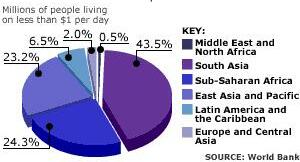
• Appropriate or Alternate Technology: Appropriate technology is designed with the purpose to meet a need and a community objective. The purpose is generally development without destruction. Technology is appropriate when it is in harmony with the objectives and patterns of development. Most existing technologies in industrially advanced countries are capital intensive as well as ‘resource capital’ intensive. Appropriate technology presents an alternative to such technology. It is one of the best manifestations of attempts at living in harmony with nature.
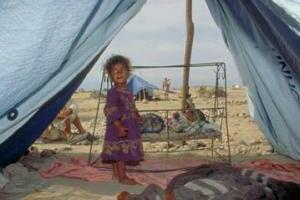
48
Introduction to Sustainable Development
The following conditions are needed for a technology to be appropriate:
1. relevance to the factor endowments of the nation, 2. optimum utilisation of natural and human resources, 3. maximisation of output, of basic consumption goods and services and of the rate of growth, 4. reduction of balance of payments deficits and unemployment, 5. greater equity in the distribution of income, 6. improvement in quality of life, 7. promotion of political development and stability, 8. contribution to regional development, 9. ability to solve or avoid environmental problems, and 10. relevance to cultural environment and social tradition
Optimally utilise natural and human resources
Maximise the output and rateofgrowth
Issues and Challenges
Solve or avoid environmentalproblems
Improve quality of life
Promote equity in income distribution
Reduce unemployment; Contribute to development
Fig.4.5: Some features of appropriate technology
This technological strand of environmental movement strives for a working synthesis of agriculture and industry, big and small units and Western and Eastern (or modern and traditional respectively) technological and production traditions. It is a promising sector for solving the problem of entrepreneurship in rural areas and preventing the marginalisation or elimination of traditional handicraft worker or a cottage industry due to expanding Trans national and capital resource intensive technology. Gandhiji’s Charkha and Khadi Udyog are the prime examples of appropriate technology that also promoted political development namely to fight subservience to a foreign rule.
4.5 SUMMARY
• Problems of sustainable development are rooted in the issues of resource use and their pattern of distribution and ownership. Thus a policy towards sustainable development cannot be framed in isolation to politics and state regulations. The
49
APPROPRIATE TECHNOLOGY SHOULD 1 6 2 3 5 4
to Sustainable Development world community is confronted by a chicken and egg controversy; economic problems aggravate resources crisis and environmental despoliation and this leads to constrained economic revival due to which nations find it more difficult to solve problems of unsustainable use of environment. In a world where progress depends on a complex set of national and international economic ties, any step towards sustainable patterns of growth involves as yet unresolved problems and challenges.
• In the 1970s the debate on development was safely polarised between the issue of environment and development. This decade saw a major revision in the thought of development itself and that has presented a major challenge to the conventional consensus on economic development. New expressions such as ‘sustainable development’ have added new dimension to development debates.
• Theproblemtoday is not primarily one of absolute physical shortage but of economic and social maldistribution and misuse.’ Thus the United Nations Environment Programme (UNEP) 1975 explains ‘environmental management implies sustainable development’. Since then the challenge as expressed in the Brundtland Report, is that ‘the process of economic development (which) must be more soundly based on the stock of capital that sustains it.’
• Issues of sustainable development have become centre stage to economic debates and are now setting the pattern of economic growth and world trade. The conventional agenda of the trans national businesses is found to be inadequate for sustainable development programmes of developing and the transitional countries and international institutions are required to implement inter and intragenerational equity and justice in trade pacts. The challenge of changing lifestyles and mode of production would require a technological change towards a just order.
• Economic growth cannot be translated into economic well being till distribution of costs and benefits of both financial and natural resources in economic policies is accounted for. It has been found that the costs of development are generally borne by the poor and subsistence community but the benefits are always falling into the pockets of the rich. This is also translated into international relations where the poor countries over-extract their resources to meet the requirements of the international market under the pressure of debt and amortisation payments leaving them with no choice but to abuse their environmental resources in an unsustainable manner.
• The primary requirement of sustainable economic prosperity in the world is to make the international economic system more equitable and just so that the developing countries can access it more vibrantly. It would also need a firm action towards debt servicing so that the poor countries may come out of the debt trap and participate in the world economic recovery programmes. Success of sustainable development is dependent upon the capacity development of the developing countries and environmental management. The main purpose of this programme would be to establish better management practices for both the human and the natural resources through innovationsin technology, social policies, political and cultural paradigms.
4.6 TERMINAL QUESTIONS
1. What are the major challenges confronting sustainable development?
2. How can sustainable development be included in economic growth programmes?
3. What is appropriatetechnology?
4. What problems confront a country’s desire to live in harmony with nature?
50
Introduction
REFERENCES
1 Development Report (2003) United Nations Development Programme, Oxford University Press, Oxford.
2 Korten, D C. (2001) The Responsibility of Business to the Whole, in: Richard Starky., Richard Welford’s Business and Sustainable Development, Earthscan Publications, London.
3 Kothari, S. (1993) Incompatibility of Sustainability and Development, Indian Journal of Public Administration, July-September, Vol.39, No.3, pp 315.
4 Pearce, D., et al. (1989) Blueprint for a Green Economy, Earthscan, London.
5. Pearce D, and Atkinson G. (1993) Capital Theory and the Measurement of Sustainable Development: An indicator of “Weak” Sustainability, Ecological Economics, 8:103-8.
6. Raghavan, C. (1995) TNCs Control Two-Thirds of the World Economy, Third WorldResurgence, No.65/66, 31.
7. Singh, A. (2000) The Politics of Environment Administration, Galgotia, New Delhi.
8. World Commission on Environment and Development (1987) Our Common Future, Oxford University Press, Oxford.
9 World Conservation Monitoring Centre (1992) Global Biodiversity: Status of the Earth’s Living Resources, Chapman and Hall, London.
10 Williamson, T. (1999) What an environmentally sustainable economy looks like, Dollars and Sense, July/Aug, Vol. 224, pp24-28.
11 Daly, H.E. (1996) Beyond Growth: The Economics of Sustainable Development, Beacon, Boston.
12 Milani, B. (2000) Designing the Green Economy, Rowman, New York.
13. McMurtry, J. (1999) The Cancer Stage of Capitalism, Pluto, London.
14 Sarwat, M. (1980) Technology, Development & Natural Resources. in: Peter Dorner and Mahmoud El Shafie, Resources and Development, University of Wisconsin Press. London.
15 Bilder R.B. (1980) International Law and Resource Policies, in: Peter Dorner and Mahmoud A. El. Shafie., Resources and Developmen,. University of Wisconsin Press. London.
51 Issues and Challenges
UNIT 5 NATURAL RESOURCE EXPLOITATION
Structure
5.1 Introduction
Objectives
5.2 Historical Perspective and Stages of Development
5.3 Sector-wise Parameters of Sustainable Development
Agriculture Industry Service
5.4 Defence and Armament
5.5 Quest for Comfort Life Style and Consumerism Energy
5.6 Summary
5.7 Terminal Questions
5.1 INTRODUCTION
The socio-economic strength of a society can be determined by the quantum and quality of available natural and human resources and the capabilities for its optimal utilisation. The basic challenge for attaining such strength lies in science and technological innovation and economic determinism on the one hand, and the limitations imposed by our ecological systems on the other. The development process in all its dimensions should expand within the ecosystems, cautiously balancing the environmental constraints and economic activities for its short term as well as long term implications. In this endeavour, an integrated approach projecting inter-sectoral complementarities is required in our development strategy rather than an exclusive sectoral growth approach.
Sustainable development and poverty reduction depend on the protection and sustainable management of our common property resources, including forests, biodiversity, and water resources. Improved management of these natural resources is the key to achieving sustainable development. The poor, especially in rural areas, heavily depend on the productivity and environmental services of these natural resources for the livelihoods and quality of life. While economic development has led to dramatic improvements in the quality of life in developing countries, gains have been unevenly distributed and a large part of the world’s population remains extremely poor. At the same time, environmental degradation and loss of natural assets with resulting health costs and productivity losses have offset the benefits of economic growth and have damaged critical life-support systems.
The need for sustainable development is evident from the following global statistics:
1. There will be 2 billion more people on the planet over the next quarter of a century, nearly two-thirds of the world’s population living in water-scarce or water-stressed areas by 2025.
2. Food production needs to double over the next 40 years at a time when almost 23 percent of the world’s agricultural land has been degraded.
3. Almost 12 million hectares of forest are lost each year; there has been overexploitation and decline of more than 60 percent of the world’s marine fisheries.
4. Small island nations are threatened with annihilation from rising sea levels due to climate change.
Natural Resource Exploitation
5
In both rural and urban areas, the poor and marginalised are often the least able to protect themselves from natural resource degradation, disasters, and environmental health threats, including pollution. One and a half billion people still do not have access to safe drinking water or adequate sanitary facilities. Unsafe drinking water, health damages from air pollution, vector-born diseases, and other environmental factors account for more than 25 percent of the mortality and morbidity among the poor in the developing world.
People in developing countries are increasingly concerned about their environment and especially the impacts of pollution and natural resource degradation on their health and prospects of sustainable livelihoods. Environmental factors impose considerable human, economic, and social costs in many developing countries, threatening the foundation for sustained improvements in living standards. The economic costs of environmental degradation have been estimated at 4 to 8 percent of Gross Domestic Product (GDP) annually in many developing countries.
As the United Nations Environmental Programme’s (UNEP) 2000 report points out, the ‘time for a rational, well-planned transition to a sustainable system is running out fast’, yet we continue to adopt a business-as-usual approach to decision-making, in all the three main sectors of economic development, i.e., in the agriculture, industry and service sectors thereby increasing the chance that our global systems will crack and begin to crumble. The stages of development moving from primarily agriculture to the present combination of agriculture, industry and service sectors enables one to understand the changing pattern of exploitation of natural resources. This unit discusses the natural resources and their exploitation in agriculture, industry etc. in the historic and modern times. The modern lifestyle and consumerism is also discussed in relation to sustainable development.
Objectives
After studying this unit, you should be able to:
• analyse the indicators of sustainable development in all sectors in your own regional/national context; and
• discuss the key factors that lead to stress, in the context of natural resources and sustainable agricultural development
5.2 HISTORICAL PERSPECTIVE AND STAGES OF DEVELOPMENT
Until about 8,000 years ago, people were foragers of wild food. Some specialised in hunting, in fishing along coasts or in lakes or rivers while others depended on seeds and fruits. By about 8000 BC, people had settled to the agricultural mode of life. With the advent of copper, bronze and Iron Age, efficient tools were manufactured and the economy developed. Trade in goods like cotton, spices and others flourished. With the development of the maritime trade, the realm of world commerce expanded. The ushering in of the industrial revolution brought with it tremendous advances in manufacturing process of goods that led to the exploration of markets and procurement of natural resources through colonisation.
The process of industrialisation with increasing emphasis on rapid manufacturing of large quantities of products (mass production) ushered in an era of reckless exploitation of the natural resources. The same industrialisation approach was taken up by the colonies that subsequently became independent developing states. The culture of ‘mass production’ affected even the agriculture sector, increasing perhectare yield becoming the prime objective, irrespective of the short and long-term damage to soil productivity and land degradation. Along with ‘mass-production’, the pattern of exchange of goods changed. Monetary system for exchange of goods evolved and the service sector became a growing and distinct part of economy. This trajectory of development has been rapidly consuming natural resources. If the entire developing world were to adopt this unsustainable model of development and reach
Developmental Issues
6
the production and consumption levels of the developed world, the result would be catastrophic and may even make this planet an inhospitable or uninhabitable place for man and his future generations.
5.3
SECTOR-WISE PARAMETERS OF SUSTAINABLE DEVELOPMENT
The parameters of sustainable development that measure sustainability or sustainable development performance are known as indicators. The indicators include environmental, economic and social factors. These indicators signal: the pressure that society puts on the environment (in the form of pollution and resource depletion).
the resulting state of the environment (especially the incurred changes) compared to the desirable (sustainable) states.
the response by human activity mainly in the form of political and societal decision, measures and policies.
Table 5.1: Sustainable development indicator framework
SOCIAL
Theme Sub-theme Indicator
Equity Poverty Percent of Population Living below Poverty Line
Gini Index of Income Inequality Unemployment Rate
Gender Equality Ratio of Average Female Wage to Male Wage
Health Nutritional Status Nutritional Status of Children Mortality Mortality Rate Under 5 Years Old Life Expectancy at Birth Sanitation Percent of Population with Adequate Sewage Disposal Facilities
Drinking Water Population with Access to Safe Drinking Water Healthcare Delivery Percent of Population with Access to Primary Health Care Facilities Immunisation against Infectious Childhood Diseases Contraceptive Prevalence Rate
Education Education Level Children Reaching Grade 5 of Primary Education Adult Secondary Education Achievement Level Literacy Adult Literacy Rate
Housing Living Conditions Floor Area per Person
Security Crime Number of Recorded Crimes per 100,000 Population
Population Population Change Population Growth Rate Population of Urban Formal and Informal Settlements
Natural Resource Exploitation
7
ENVIRONMENTAL
Theme Sub-theme Indicator
Atmosphere Climate Change Emissions of Greenhouse Gases Ozone Layer Depletion Consumption of Ozone Depleting Substances
Air Quality
Land Agriculture
Ambient Concentration of Air Pollutants in Urban Areas
Arable and Permanent Crop Land Area Use of Fertilizers Use of Agricultural Pesticides Forests Forest Area as a Percent of Land Area Wood Harvesting Intensity Desertification Land Affected by Desertification Urbanisation Area of Urban Formal and Informal Settlements
Oceans, Seas Coastal Zone
Algae Concentration in Coastal Waters and Coasts Percent of Total Population Living in Coastal Areas
Fisheries Annual Catch by Major Species
Fresh Water Water Quantity Annual Withdrawal of Ground and Surface Water as a Percent of Total Available Water
Water Quality BOD in Water Bodies Concentration of Faecal Coliform in Freshwater
Biodiversity Ecosystem
Area of Selected Key Ecosystems Protected Area as a % of Total Area Species Abundance of Selected Key Species
ECONOMIC
Theme Sub-theme Indicator
Economic Economic Performance
GDP per Capita Structure Investment Share in GDP
Trade Balance of Trade in Goods and Services
Financial Status Debt to GNP Ratio Total ODA Given or Received as a Percent of GNP
Consumption Material Consumption Intensity of Material Use and Energy Use
Annual Energy Consumption per Capita Production Share of Consumption of Renewable Patterns Energy Resources Intensity of Energy Use
Waste Generation
Generation of Industrial and Municipal and Management Solid Waste
Generation of Hazardous Waste Management of Radioactive Waste Waste Recycling and Reuse
Transportation Distance travelled per Capita by Mode of Transport
INSTITUTIONAL
Developmental Issues
8
Theme Sub-theme Indicator
Institutional Strategic Implementation National Sustainable Development Framework of SD Strategy
International Cooperation Implementation of Ratified Global Agreements
Institutional Capacity Information Access Number of Internet Subscribers per 1000 Inhabitants
Communication infra- Main Telephone Lines per 1000 structure Science and Inhabitants Technology Expenditure on Research and Development as a Percent of GDP
Disaster Preparedness Economic and Human Loss Due to Natural Disasters and Response
Source: http://www.un.org/esa/sustdev/natlinfo/indicators/isd.htm
SAQ 1
Gather relevant data from various sources (Census, Human Development Report, etc.) for the indicators mentioned above and analyse it to ascertain the sustainable development performance of your country. You can do this exercise over a period of time.
The indicators of sustainability cover stewardship of both natural and human resources. Stewardship of human resources includes consideration of social responsibilities such as working and living conditions of labourers, the needs of rural communities, and consumer health and safety both in the present and the future. Stewardship of natural resources covers maintaining or enhancing land and other vital natural resource base for the long term.
5.3.1 Agriculture
Agricultural practices changed dramatically and went through a major transition as traditional farming methods were largely replaced by modern high-intensity agriculture with new technologies, mechanisation, increased chemical use, specialisation and government policies that favoured maximising production. Advances in crop breeding and new technologies made this possible. This highly mechanised approach to agriculture dramatically increased crop productivity, especially by the introduction of high-yielding varieties of grains, typically accompanied with the use of mechanised equipment, fossil fuel energy, synthetic fertilizers and pesticides and irrigation. The agriculture practices changed; for example, the high-yielding hybrids, first developed in Mexico in the 1940s, characterised an extended planting season and quicker maturation.
The Green Revolution is a prime case of such a change. Often hailed as a miracle for its immediate and remarkable results in increasing crop yields, it spread to Asia, Africa, South America, and elsewhere in the 1960s and 70s and several countries achieved record harvests of wheat, maize, and rice, and many doubled food production in a period of 30 to 40 years. The world food production increased faster than the population from the 1950s through the mid 80s, when it levelled off and the per capita production began to fall. In general, these increases in world food production came not from an increase in the area under cultivation, but from higher yields on existing cropland.
The methods of the Green Revolution often replaced low-impact traditional crop varieties and farming systems that had developed over hundreds of years in consonance with regional soils and climate – without absorbing the accumulated indigenous knowledge. Although these changes have had many positive effects and
Natural Resource Exploitation
9
reduced many risks in farming, there have also been significant losses. Prominent among these are topsoil depletion, groundwater contamination, the decline of family farms, continued neglect of the living and working conditions of farm labourers, increasing costs of production, and the disintegration of economic and social conditions in rural communities.
Although many assume that the environmental effects of agriculture are small compared to the effects of industry, agriculture is now the primary unregulated source of water pollution in the United States (US) and the main source of soil degradation in the world. This modern agriculture causes soil erosion and loss of soil fertility; pollution and eutrophication of freshwater and coastal marine ecosystems; depletion and contamination of groundwater; habitat destruction; intensive energy consumption; release of greenhouse gases; and impacts from production and use of fertilizers and pesticides. Agricultural practices can disrupt natural ecosystems and their processes to the point of altering their ability to provide critical ecosystem services that are necessary not just for agriculture but to sustain life on this planet. For example, soil provides such critical ecosystem functions as regulation of air and water quality and the attenuation of wastes, essential to any terrestrial ecosystem.

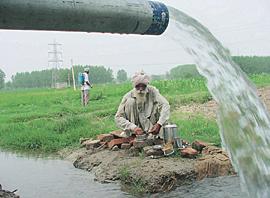
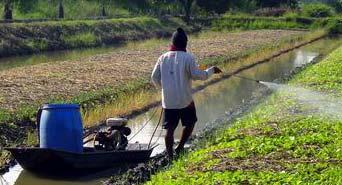
A systems perspective is essential to understand agriculture’s sustainability. The system is envisioned in its broadest sense, from the individual farm, to the local ecosystem, and to communities affected by the farming system both locally and globally. An emphasis on the system allows a larger and more thorough view of the consequences of farming practices on both human communities and the environment. A systems approach gives us the tools to explore the interconnections between farming and other aspects of our environment. A systems approach also implies interdisciplinary efforts in research and education. This requires not only the input of researchers from various disciplines, but also farmers, farm workers, consumers, policymakers and others. Making the transition to sustainable agriculture is a process. For farmers, the transition to sustainable agriculture normally requires a series of small, realistic steps. Family economics and personal goals influence how fast or how far participants can go in the transition. It is important to realise that each small decision can make a difference and contribute to advancing the entire system further on the “sustainable agriculture continuum”. The key to moving forward is the will to take the next step.

Developmental Issues
Fig.5.1: The resource intensive modern agricultural practices have improved productivity but have brought many environmental and health-related problems in their wake
10
Finally, it is important to point out that reaching toward the goal of sustainable agriculture is the responsibility of all participants in the system, including farmers, labourers, policymakers, researchers, retailers, and consumers. Each group has its own part to play, its own unique contribution to make to strengthen a sustainable agriculture community.
A. Plant Production Practices: Sustainable production practices involve a variety of approaches. Specific strategies must take into account topography, soil characteristics, climate, pests, local availability of inputs and the individual grower’s goals. Despite the site-specific and individual nature of sustainable agriculture, several general principles can be applied to help growers select appropriate management practices:
a) Selection of site, species and variety:
1. Factors such as soil type and depth, previous crop history, and location (e.g. climate, topography) should be taken into account before planting.
2. Whenever possible, pest-resistant crops should be selected which are tolerant of existing soil or site conditions.
3. Preventive strategies, adopted early, can reduce inputs and help establish a sustainable production system.
b) Diversity: Diversified farms are usually more economically and ecologically resilient. While monoculture farming has advantages in terms of efficiency and ease of management, the loss of the crop in any one year could put a farm out of business and/or seriously disrupt the stability of a community dependent on that crop. By growing a variety of crops, farmers reduce economic risk and are less susceptible to the radical price fluctuations associated with changes in supply and demand. Properly managed, diversity can also buffer a farm in a biological sense. For example, in annual cropping systems, crop rotation can be used to suppress weeds, pathogens and insect pests. Also, cover crops can have stabilising effects on the agro-ecosystem by holding soil and nutrients in place, conserving soil moisture with mowed or standing dead mulches, and by increasing the water infiltration rate and soil water holding capacity. Cover crops in orchards and vineyards can buffer the system against pest infestations by increasing beneficial insect populations and can therefore reduce the need for chemical inputs.
Optimum diversity may be obtained by integrating both crops and livestock in the same farming operation. This was the common practice for centuries until the mid1900s when technology, government policy and economics compelled farms to become more specialised. Mixed crop and livestock operations have several advantages. First, growing row crops only on more level land and pasture or forages on steeper slopes reduce soil erosion. Second, pasture and forage crops in rotation enhance soil quality and reduce erosion; livestock manure, in turn, contributes to soil fertility. Third, livestock can buffer the negative impacts of low rainfall periods by consuming crop residue that in “plant only” systems would have been considered crop failures.
c) Soil management: Crop management systems that use greater inputs of water, nutrients, pesticides, and/or energy for tillage to maintain yields often impair soil quality. In sustainable systems, the soil is viewed as a fragile and living medium that must be protected and nurtured to ensure its long-term productivity and stability. Methods to protect and enhance the productivity of the soil include using cover crops, compost and/or manures, reducing tillage, avoiding traffic on wet soils, and maintaining soil cover with plants and/or mulches. Regular additions of organic matter or the use of cover crops can increase soil aggregate stability, soil tilth, and diversity of soil microbial life.
d) Efficient use of inputs: Many inputs like pesticides, fertilizers, herbicides etc are used in sustainable agriculture. Sustainable farmers, however, maximise reliance on natural, renewable, and on-farm inputs. Equally important are the environmental,
Fig.5.2: Soil must be nurtured well to get sustained yields
Natural Resource Exploitation
11
social, and economic impacts of a particular strategy. Converting to sustainable practices does not mean simple input substitution. Frequently, it substitutes enhanced management and scientific knowledge for conventional inputs, especially chemical inputs that harm the environment on farms and in rural communities. The goal is to develop efficient, biological systems which do not need high levels of material inputs.
Growers frequently ask if synthetic chemicals are appropriate in a sustainable farming system. Sustainable approaches are those that are the least toxic and least energy intensive, and yet maintain productivity and profitability. Preventive strategies and other alternatives should be employed before using chemical inputs from any source. However, there may be situations where the use of synthetic chemicals would be more “sustainable” than a strictly non-chemical approach.
e) Consideration of social, cultural assets and lifestyle choices: Management decisions should reflect not only environmental and economic considerations, but also cultural and lifestyle choices. For example, adoption of some technologies or practices disturbs the work choices of women or the cultural life of a village traditionally connected with agriculture. Overemphasis on monetary returns from agriculture may adversely impact on lifestyle. Therefore, management decisions that promote sustainability, nourish the environment, enrich the community and the individual socially and culturally are required.
B. Animal Production Practices: The integrated crop and livestock operations are highly complementary both biologically and economically. The integration presently usually takes place not at the farm level or at a higher level- but at business trade levels through intermediaries. This is the result of a trend toward separation and specialisation of crop and animal production systems. It is, however, encouraging to note that despite this trend, there are still many farmers who integrate crop and animal systems. Some of the specific points that livestock producers need to address are listed below.
a) Animal Selection: The animal enterprise must be appropriate for the farm or ranch resources. Farm capabilities and constraints such as feed and forage sources, landscape and climate must be considered in selecting which animals to produce. For example, ruminant animals can be raised on a variety of feed sources including range and pasture, cultivated forage, cover crops, shrubs, weeds, and crop residues. There is a wide range of breeds available in each of the major ruminant species, i.e., cattle, sheep and goats. Hardier breeds that, in general, have lower growth and milk production potential, are better adapted to less favourable environments with sparse or highly seasonal forage growth.
b) Animal nutrition: Feed costs are the largest single variable cost in any livestock operation. Feed costs can be kept to a minimum by monitoring animal condition and performance and understanding seasonal variations in feed and forage quality on the farm.
c) Breeding: Use of quality germplasm to improve herd performance is another key to sustainability. In combination with good genetic stock, adapting the breeding season to fit the climate and sources of feed and forage reduce health problems and feed costs.
d) Herd Health: Animal health greatly influences breeding success and weight gains, two key aspects of successful livestock production. Unhealthy stock wastes feed and require additional labour. A herd health programme is critical to sustainable livestock production.
f) Grazing Management: Most adverse environmental impacts associated with grazing can be prevented or mitigated with proper grazing management. The number of stock per unit area (stocking rate) must be correct for the landscape and the forage sources. Sufficient control should be exercised to reduce overuse in some areas while other areas go unused. Prolonged concentration of stock that results in permanent loss of vegetative cover on uplands or in riparian zones should be avoided. However,
Developmental Issues
12
small scale loss of vegetative cover around water or feed troughs may be tolerated if surrounding vegetative cover is adequate.
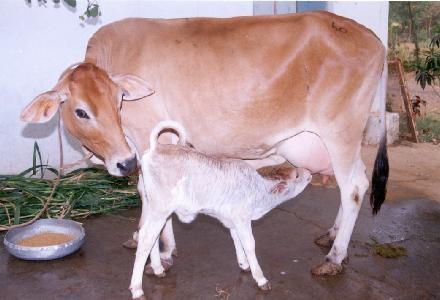
g) Confined Livestock Production: Animal health and waste management are key issues in confined livestock operations. The moral and ethical debate taking place today regarding animal welfare is particularly intense for confined livestock production systems. The issues raised in this debate need to be addressed. Confined livestock production is increasingly a source of surface and ground water pollutants, particularly where there are large numbers of animals per unit area. Expensive waste management facilities are now a necessary cost of confined production systems. Waste is a problem of almost all operations and must be managed with respect to both the environment and the quality of life in nearby communities. Livestock production systems disperse stock in pastures so that the wastes are not concentrated and do not overwhelm natural nutrient cycling processes; these of late, have become a subject of renewed interest.

C. Water: Water is the principal resource that has helped agriculture and society to prosper, and it has been a major limiting factor when mismanaged. An extensive water storage and transfer system allows crop production to expand to very arid regions. In drought years, limited surface water supplies have prompted overdraft of groundwater and consequent intrusion of salt water, or permanent collapse of aquifers. Several steps should be taken to develop drought-resistant farming systems even in “normal” years, including both policy and management actions: 1) improving water conservation and storage measures, 2) providing incentives for selection of drought-tolerant crop species, 3) using reduced-volume irrigation systems, 4) managing crops to reduce water loss, or 5) not planting at all.
The most important issues related to water quality involve salinisation and contamination of ground and surface waters by pesticides, nitrates and selenium. Salinity has become a problem wherever water of even relatively low salt content is used on shallow soils in arid regions and/or where the water table is near the root zone of crops. Tile drainage can remove the water and salts, but the disposal of the salts and other contaminants may negatively affect the environment depending upon where they are deposited. Temporary solutions include the use of salt-tolerant crops, low-volume irrigation, and various management techniques to minimise the effects of salts on crops. In the long-term, some farmland may need to be removed from
Natural Resource Exploitation
Fig.5.3: Livestock management is an important issue in sustainable agriculture
13
production or converted to other uses. Other uses include conversion of row crop land to production of drought-tolerant forages, the restoration of wildlife habitat or the use of agro-forestry to minimise the impacts of salinity and high water tables.
Another way in which agriculture affects water resources is through the destruction of riparian habitats within watersheds. The conversion of wild habitat to agricultural land reduces fish and wildlife through erosion and sedimentation, the effects of pesticides, removal of riparian plants, and the diversion of water. The plant diversity in and around both riparian and agricultural areas should be maintained in order to support a diversity of wildlife. This diversity will enhance natural ecosystems and could aid in agricultural pest management.
D. The Economic, Social & Political Context: Sustainable agriculture requires a commitment to changing public policies, economic institutions, and social values as the “food system” extends far beyond the farm. It involves the interaction of individuals and institutions with contrasting and often competing goals including farmers, researchers, input suppliers, farm workers, unions, farm advisors, processors, retailers, consumers, and policymakers. Therefore strategies and approaches covering a variety of domains are necessary to create a more sustainable food system. The strategies will range from concentrated efforts to alter specific policies or practices, to the longer-term tasks of reforming key institutions and rethinking of economic priorities. Areas of concern where change is most needed include the following:
E. Food and Agricultural Policy: New policies at national, state and local government level are needed to simultaneously promote environmental health, economic profitability, and social and economic equity. For example, commodity and price support programmes could be restructured to allow farmers to realise the full benefits of the productivity gains made possible through alternative practices. Tax and credit policies could be modified to encourage a diverse and decentralised system of family farms rather than corporate concentration and absentee ownership. Research policies could be modified to emphasise the development of sustainable alternatives. Marketing orders and cosmetic standards could be amended to encourage reduced pesticide use. Coalitions must be created to address these policy concerns at the local, regional, and national level.
F. Land use: Conversion of agricultural land to urban uses is of particular concern, as rapid urbanisation and escalating land values threaten farming on prime soils. Existing farmland conversion patterns often discourage farmers from adopting sustainable practices and a long-term perspective on the value of land. Comprehensive new policies are needed to protect prime soils and regulate development. Sustainable agriculture research and education can play a key role in building public support for agricultural land preservation. Educating land use planners and decision-makers about sustainable agriculture is an important priority.
G. Labour: In general, the conditions of agricultural labour are generally far below accepted social standards and legal protections in other forms of employment. Policies and programmes are needed to address this problem, working toward socially just and safe employment that provides adequate wages, working conditions, health benefits, and chances for economic stability. The needs of migrant labour for year-around employment and adequate housing are a particularly crucial problem needing immediate attention. To be more sustainable over the long-term, labour must be acknowledged and supported by government policies, recognised as important constituents, and carefully considered when assessing the impacts of new technologies and practices.
H. Rural Community Development: Sustainable agriculture presents an opportunity to rethink the importance of family farms and rural communities. Economic development policies are needed that encourage more diversified agricultural production on family farms as a foundation for healthy economies in rural communities. In combination with other strategies, sustainable agriculture practices
Developmental Issues
14
and policies can help foster community institutions that meet employment, educational, health and cultural needs.
I. Consumers and the Food System: Consumers can play a critical role in creating a sustainable food system. Through their purchases, they send strong messages to producers, retailers and others in the system about what they think is important. Food cost and nutritional quality have always influenced consumer choices. The challenge now is to find strategies that broaden consumer perspectives, so that environmental quality, resource use, and social equity issues are also considered in shopping decisions. At the same time, new policies and institutions must be created to enable producers using sustainable practices to market their goods to a wider public. Coalitions organised around improving the food system are one specific method of creating a dialogue among consumers, retailers, producers and others. These coalitions or other public forums can be important vehicles for clarifying issues, suggesting new policies, increasing mutual trust, and encouraging a long-term view of food production, distribution and consumption.
J. Sustainable Agriculture Indicators: Agricultural indicators are one of the first major steps taken to establish criteria for sustainable agriculture. Within each broad indicator specific, measurable parameters are defined. Table 5.1 gives the ten indicators and their parameters.
Table 5.2: The indicators and parameters of sustainable agriculture
Sl.No. Indicator Parameters
1. Soil fertility/health
1. Number of beneficial organisms (e.g. earth worms per square meter)
2. Number of predatory mites
3. Number of beneficial micro-organisms
4. Soil organic carbon (measure of healthy soil structure)
2. Soil loss
1. Soil cover index (proportion of time soil is covered with crop; protects against leaching and erosion, promotes water binding)
2. Soil erosion (loss of top soil in percentage per annum or in tonnes/hectare/annum)
3 Nutrients
1. Amount of inorganic Nitrogen (N)/ Phosphates (P)/ Potassium (K) applied (per ha or per tonne of product)
2. Proportion of N fixed on site/imported
3. Balance of N/P/K over crop rotations
4. Emissions of N-compounds to air
4 Pest Management
1. Amount of pesticides (active ingredient) applied (per ha or per tonne of product)
2. Type applied (profiling, positive list, weighting factor)
3. Percentage of crop under Integrated Pest Management (IPM)
5 Biodiversity
1. Level of biodiversity on site: number of species (e.g. birds, butterflies); farm landscape; habitat for natural predator systems (e.g. hedgerows, ponds, non-cropped areas)
2. Level of biodiversity off-site: cross-boundary effects
6 Product Value
1. Total value of produce per hectare
2. Yield of target product in tonnes per hectare
Natural Resource Exploitation
15
7 Energy
8 Water
3. Conforming to quality specifications: nutritional value, including minerals; pesticide residues; foreign bodies, etc. 4. Ratio of solid waste re-used/recycled over solid waste disposed to landfill
1. Balance: total energy input/total energy output, including transport where relevant 2. Ratio renewable over non-renewable energy inputs 3. Emissions to air (greenhouse and pollutant gases)
1. Amount of water used per hectare or tonne of product for irrigation 2. Leaching and runoff of pesticides to surface and ground water 3. Leaching and runoff of N/P/K (nutrients) to surface and ground water
9 Social/Human 1. Group dynamics/organisational density (farmer Capital groups) 2. (Rural) community awareness of relevance and benefits of sustainable practices/connectivity to society at large 3. Rate of innovation
10 Local Economy 1. Amount of money/profit reinvested locally 2. Percentage of goods/labour/services sourced locally 3. Employment level in local community
You will study about these aspects in greater detail in the course Agriculture and Environment (MED 007) of this programme. You may like to attempt an exercise before studying further.
SAQ 2
Describe your perception of the differences in farm life today and a century ago, and give reasons for changes.
5.3.2 Industry
According to the United Nations, ‘Industry has a key role to play in achieving the goals of sustainable development as supplier of goods and services required by the society, as a source of job creation and as an active participant in community life’
Developmental Issues
16
The historical path of industrialisation may be summarised as under:
1. 1880s: The English System: Apply power driven machines to old pre-industrial methods.
2. 1850-1920: The American System: Standardisation of products and interchangeability of parts.
3. 1920-1960: Taylorism: Assembly line, vertical integration and optimisation of individual tasks.
4. 1960-1985: Quality Control: Add to Taylorism, new techniques, quality control, and applications of computers to individual functions.
5. 1990: Flexible and holistic Approach: Functional integration, flexibility, decentralisation, horizontal management, teamwork and networking.
Rapid strides in technology have contributed to the rapid spread of industrialised production, beginning from the industrial revolution in England. Future directions of change in production technology are to move from mass production of uniform goods and services to those tailored to the needs and likings of individuals. Flexible manufacturing systems, connected decentralised production units as new ‘factories’, horizontal management rather than Taylorism are the emerging trends. This trend has the potential to revitalise Craft-like production systems that build upon creativity, imagination, intuition and skills embedded in local cultures. These approaches are emerging as strong candidates for innovative technologies for sustainable and environmentally friendly production systems wide spread adoption of which can move a substantial part of manufacturing activity away from non-sustainable massproduction systems.
With reference to existing industry, Agenda 21 states ‘Business and industry, including trans national corporations, play a crucial role in the social and economic development of the country…..Increasing prosperity, a major goal of the developmental process, is contributed primarily by the activities of business and industry. Business enterprises, large and small, formal and informal, provide major trading, employment and livelihood opportunities’. Since the Earth Summit, business and industry have broadly improved environment performance, while simultaneously creating jobs and improving living standards.
Their commitment to this goal has been apparent through many innovative initiatives by several business groups and individual companies. Some of them are:
1. Responsible Entrepreneurship: This initiative provides the managerial, technical and financial resources to contribute to the resolution of environmental challenges.
2. Corporate Environmental Management Tools: This integrates sustainable development considerations into everyday business. It will contribute to the harmonisation of environmental regulation and enforcement and will further improve corporate policy and practice.
3. Technology Cooperation: The private sector has a crucial role to play in the delivery of effective technology cooperation which involves the transfer of skills and knowledge and just not the hardware. While it is apparent that the free market is the main driving force for the efficient introduction and assimilation of technology, successful long term technology cooperation requires that all parties must gain from the cooperation, while, at the same time, the protection of patents and intellectual property rights of the developer is essential.
4. Industry and Freshwater: Industry is not the main user of freshwater but it has the know how to manage this resource. It has already begun to manage industrial
Natural Resource Exploitation
17
water. It can, in the future, raise awareness within business communities and agricultural sector to take action.
Fig.5.4: Some innovative initiatives of industry
The rapid globalisation, initiated in part by advances in communication technology, has facilitated the integration of national systems of production and finance, resulting in the growth of cross-border flows of goods, services and capital. The United Nations Environment Programme (UNEP), as a contribution to the World Summit on Sustainable Development (WSSD), organised workshops in different continents that facilitated global and regional industry sector reports. These generated some recommendations on the role of industry in sustainable development for the continents as follows:
Africa
1. Promotion of industrial development on a sustainable basis remains a high priority area to alleviate poverty.
2. Increased investment in industry and the resultant increase in employment and wealth are necessary to improve capacity building and the environment.
Asia and Pacific
1. Small and medium enterprises play a decisive role in the region. They need to be involved more directly.
2. Unequal opportunities for men and women, violation of basic labour rights etc. are counteracting sustainable development. Stringent enforcement of relevant legislation and transparency of operating conditions are needed to address these issues.
Europe and North America
1. Industry desires clear and consistent targets in the effort to advance sustainability.

2. New business models are needed for promoting sustainable development, in particular those that introduce cleaner technologies, products and practices, implement new work and employment systems and create effective partnership structures.
Latin America and the Caribbean
1. Innovative financing for sustainable development needs to be done.
Developmental Issues
18
2. Internal markets promoting manufacture of value added products need to be developed.
3. Modernisation and expansion is needed to compete in the international market.
West Asia
1. The region must develop more small scale new industries to counter the dominance of the established large scale industries.
2. With the increase of private sector development and the shrinking of government bureaucracy, the private sector must not form monopolies or cause shortages that deprive people of their essential needs.
5.3.3 Service
The economic and industrial changes that have resulted from technological advances in agriculture and industry have led to the development of a complex, integrated system, which includes:
a) more producers and capital investment;
b) an extensive supply and service sector, which provides inputs to producers and consumers;
c) a major processing, transportation, and distribution sector, which moves an enormous range of products from the site of production to consumers in both national and international markets; and
d) extensive government participation in the form of regulatory activities, taxation and expenditure policies, commercial initiatives, research, market development, and involvement in matters of international trade and commerce.
With the emergence of globalisation, the service sector is growing to cater to the demands of both the producers as well as the consumers.
Institutional reforms are required in national agricultural and industrial research and extension systems in many developing countries, so as to make them demand-driven and responsive. This requires access to databases of best practices for technology generation and dissemination. Application of new information and communication technologies can also help make extension services responsive. Where appropriate, extension services should be decentralised with appropriate combination of economic and social entrepreneurship with government role to assure adequate attention to sustainability concerns.
5.4 DEFENCE AND ARMAMENT
Many corporations were born out of the wars and today a strong relationship between military expansion and companies remains. While globally, military expenditure accounts for 3% of Gross National Product (GNP) compared with social development expenditure of 10% for health and education, in some countries, military expenditure
Natural Resource Exploitation
Fig.5.5: An extensive supply and service sector caters to the demands of producers and consumers today
19
even exceeds social spending. There is particular concern about the sale of arms to oppressive or aggressive regimes, or into areas of potential instability. There is also particular concern about certain types of weapons: landmines and nuclear/chemical/biological weapons.

Approximately 2.5 million new mines are laid each year, and once laid a mine can remain active for over 50 years. The cost of removing all the active mines worldwide is estimated at US$33 billion
(b) (c)
(a) (d)
Fig.5.6: There is a worldwide concern about a) landmines; b) biological (source: www.cdc.gov/ncidod); c) nuclear an weapons (source: www.opcw.org/images) d d) chemical


Developmental Issues
20
Such weapons cause substantial civilian casualties, can linger for many years, and risk escalation and uncontrollable damage. For many groups, companies involved in the manufacture of these types of weapons are particularly unacceptable.
Contemporary war economies are characterised in part by the legal but more often illicit or informal exploitation of abundant valuable natural resources, including but not limited to oil, diamonds, timber, and columbite-tantalite ore (Coltan). Coltan is used in the fabrication of mobile telephones, laptop computers and other high-tech products. Proceeds from these ‘conflict commodities’ have provided significant financing for the parties involved in wars, and are pointed to as one of the contributing factors in the continuation or risk of renewed outbreak of these conflicts
Natural resource endowment alone does not necessarily mean that a country is at risk of civil war. However, when combined with other factors such as poor governance, extreme income inequalities, economic and social exclusion, declining growth rates, ethnic tensions, etc., they are more likely to become a source of tension as competing groups attempt to control access to them. A World Bank study has revealed that the risk of civil war is four times higher for natural resource-dependent states than for countries having no primary resource commodities. Also while resources can prove a boon for economic expansion, in developing countries they have more often been with little or no positive effects on the local economy. For example, it is worth noting that twelve of the world’s 25 most mineral-dependent states and six of the world’s most oil-dependent states are classified by the World Bank as highly indebted poor countries with amongst the world’s worst Human Development Indicators.
Several explanations have been offered for the emergence of new tensions and wars. The most common is that with the abrupt retraction of superpower patronage in the early 1990s, governments and guerrilla groups alike were left to their own devices to finance their military campaigns in what had become extensions of the proxy wars that characterised the Cold War.
Warfare and conflict divert resources away from development. The two World Wars have shown us that war destroys the whole economies of nations. Large armies and armaments industries increase the risk of conflict, and the temptation to use such forces, either directly or as a threat, for example by terrorists results in diversion of expenditure from social spending into unproductive military and arms trade. This is of grave concern to the progress of sustainable development.
SAQ 3
What is the share of defence expenditure in your country's budget compared to other sectors of developmental spending? In your opinion, how should the social priorities be reoriented to accommodate the goals of sustainable development?
5.5 QUEST FOR COMFORT
Quest for comfort manifests itself in many forms. Some examples are:
• The quest for a reliable and plentiful food supply.
• The quest for abundant, clean, safe water.
• The quest for cheap and abundant energy.
• The quest to reach the stars (solid fuel).
• The quest on demand.
• The quest to cure disease.
• The quest for flexible and versatile materials.
Within these quests one can discern micro quests, e.g., the emerging quests for designer molecules, molecular level fabrication, designer genes (lab-on-a-chip, nanotechnology, genomics); and macro quest for a sustainable future (environmental protection, pollution prevention, greenhouse gas reduction, sustainable development).
Natural Resource Exploitation
21
In pursuing these quests we take on a variety of challenging roles – those of the dreamer, visionary, inventor, builder, entrepreneur, manager, policymaker etc. We discharge our roles following a particular life-style that may or may not be compatible with sustainable development.
THE QUEST
Fig.5.7: The quest for comfort manifests in many forms


5.5.1 Life Style and Consumerism


The problems of consumerism and lifestyle in a market economy have long been neglected. The price of consumerism is a core problem in sustainable development, because it concerns the consumption of natural resources converted into products and due to non-biodegradability of waste. In a market economy, consumerism is based merely on the assumption that the market will grow as consumption increases. Consideration of the meaning, value and impact on environment of consumerism, however, is not possible in terms of the market economy. It is only from the perspectives of political and ecological economy that the problems of consumerism will surface. If the practice of consumerism remains unchanged, economic globalisation will simply cause the ecological environment to deteriorate further. High levels of consumption are certainly the first and foremost killers of our natural habitat.
Humanity’s concept of well-being derives from the urge to fulfil desires that are to a considerable extent, determined by the values of society as a whole. In a marketoriented economy, such desires are generated by forces that push the expansion of market leaving little space to reflect upon other desires. People’s confidence in consumerism becomes an important factor in economic expansion. If we wish to transform society by simply changing degree of consumption but not people’s desire for gratification, talk of sustainable development will remain as an empty talk.
Why can we not slow down and ask ourselves whether the present day styles of consumption are really what we want? Because we are being indoctrinated to chasing
Developmental Issues
22
higher and higher levels of consumption, facing the problems of consumerism is far more difficult than we can imagine. Should we not seriously consider a simpler lifestyle? Are we not being brainwashed and misled to believe that economies must grow relentlessly? Does the concept of economic recession not imply some specific, subjective value and a materialistic mode of consumption? Do we have no choice? These are some of the questions connected with ‘life-style’.
Sustainable lifestyle: The answer to the question ‘What is a sustainable lifestyle?’ has to be worked out by different communities or families in their respective cultures. It will be different in detail for everyone - though we could suggest some basic guidelines. What follows is no more than a rough framework for more sustainable and ethical living: it can and should be locally customised, through your own reflection and wherever you are.
1. Eat thoughtfully
Eating fresh produce, less meat and avoiding processed foods is now coming in vogue in the rich countries as a sign of good living. For once it might be worth following fashion, though not for fashion’s sake. When choosing food, try asking yourself these six questions:
1) Does the production of this food cause the unnecessary suffering of animals?
2) Or cause the unnecessary suffering of other humans?
3) Where does the food come from? A farm nearby? The closer to home the better.
4) How was the food produced?
5) Have pesticides and insecticides been used in its production?
6) Is the food likely to contain genetically modified organisms (GMOs) like Monsanto’s Roundup Ready soybeans?
In prioritising the money spent on food, poor people have little option. But the better-off spend large proportion of their income on leisure: tobacco, alcohol, travel. Why do we not spend more on good food?, that is, food produced by sustainable farming systems such as organic growing. Eating good, fresh, uncontaminated, wholesome food is one of the best things we can do to keep healthy and vigorous and support sustainable development.
2. Shop thoughtfully
• Shopping locally - on foot or bike - has health benefits, since few of us take sufficient exercise.
• Check the labels. Insist as proper labelling on packaged food. We need honest labelling (Eco-labels) to help us choose wisely. How can we consumers make ethical and sustainable choices for the products we buy if we cannot find out how they are produced?
• Buy manufactured goods thoughtfully. Ask/find out (e.g. from consumer magazines which now include environmental information in many cases) about a manufactured product before you buy it. Ask yourself if you need it or just want it?
3. Bank thoughtfully
• Invest ethically and use an ethically sound bank for your money: By placing your money with ethical banks or investment groups, you can be sure that your money is used in a way that supports sustainable industry and development. If you actively wish to use your money to help the needy, you can place it with groups who then lend it to small co-operative ventures in impoverished communities. You can choose whether to accept interest on your investment or not.
Natural Resource Exploitation
23
4. Vote thoughtfully
• Use your political power wisely. Press your government, local and national, to a tax system to reward sustainability. Some tax systems are lumbering slowly towards taxing resources, not people. This has the benefit of making it less expensive for companies to employ people, and can mean more employment. But we need big changes and we need them soon - for example, to encourage a sustainable transport system, we need to change taxes on cars to penalise those who use cars exclusively and excessively to encourage carpooling.
5. Use natural resources thoughtfully
• With an eye to the future ponder if anything will be left for your grandchildren or for their children? Does what you consume cause pollution, either directly or indirectly, climate change and depletion of useful?
• Get enthusiastic about renewable energy. Install or build your own solar heating. Many cheap and simple designs are available for this and many other sustainable technologies. With technologies available now, more and more of all our energy needs could be met in a sustainable manner. The problem is that our whole industrial and economic infrastructure is geared to maintaining the status quo of centralised power stations and fossil-fuelled transportation. Yet there is vast potential here for new industry to exploit the power of the sun either directly (solar heating, photovoltaics) or indirectly (wind, waves, tide, bio-gas, fast-growing wood). Encourage your government - national or local - to offer support for schemes that improve energy efficiency. Do not wait for someone else to do it or nothing will happen.
6. Dialogue thoughtfully
• Ease the process forward by listening to others as well as giving your own opinions when talking with friends, neighbours, local groups, politicians, business-people, religious groups - to ease the process forward. We, the people, have to get involved. Getting involved is very empowering.
• Know the issues. Seek to persuade by making practical sense.
• Start a forum for local ideas which also helps to rebuild a sense of community.
5.5.2 Energy
The world’s oil reserves are estimated to be 1 trillion barrels. At the present rate of consumption, it is estimated that these reserves will be exhausted in about 45 years. The recent international efforts assessing the environment, including the 1992 Earth Summit in Rio de Janeiro, the Integrated Pollution Prevention and Control (IPPC), the United Nations Framework Convention on Climate Change (UNFCCC) and the various sessions of the Commission for Sustainable Development (CSD), refer to the massive consumption of oil and other fossil fuels as aggravating global environmental problems, such as acid rain and the ‘green house’ effect. The Kyoto Protocol, recently adopted in the context of the Climate Change Convention, calls for a decrease in carbon dioxide (CO2) emissions and this is possible only when energy efficiency and renewable energy sources are promoted with determination.
Modern agriculture is heavily dependent on non-renewable energy sources, especially petroleum derived fertilisers and irrigation pumps. The continued use of these energy sources cannot be sustained indefinitely; yet to abruptly abandon our reliance on them would not be economically feasible. A sudden cut-off in energy supply would be disruptive. In sustainable agricultural systems, there is reduced reliance on nonrenewable energy sources and a substitution of renewable sources to the extent that is economically feasible.
Developmental Issues
24
From an energy perspective, agriculture has a double role: it is an energy user and an energy producer. All stages of the food chain require one form of energy or another, and renewable energies such as biomass, solar and wind, could make an important contribution to its sustainability and productivity, through technologies useful in irrigation, mechanisation, processing, conservation, transport, etc.
The economic use and promotion of renewable energy sources is vital to ensure food security for future generations, as farmers in the future may increasingly be faced with the difficult task of the need to produce higher quantity and quality of food. In industrialised countries there is already a trend to move towards agriculture with less fossil sources in terms of direct (electricity, fuels) and indirect (fertilisers, pesticides) energy inputs. In developing countries, where agriculture is still largely energystarved, the required increase in energy intensity will depend on the availability of energy resources and on the price and other policies related to their utilisation. In all countries, renewable energies will undoubtedly play an increasing role in agriculture production. Moreover, agriculture could become a major energy producer.
Fig.5.8: Let us save energy and promote the use of renewable energy around us
The conversion of large amounts of agricultural residues into energy, taking into account that a minimum quantity must be left on site to recycle nutrients, can contribute considerably to national energy balances. The potential of combined production of sugar and electricity to be fed to the grid is very significant. Purposely grown biomass for energy has high potential, especially in the context of land setaside, land rehabilitation, and reforestation programmes, always taking care that this form of energy production does not enter in competition for land for food production, which must take precedence. Energy for and from agriculture is a topic which requires increasing attention from policy makers and scientists as a key element of national and global responses to the need for fossil fuel substitution, enhancing environmental awareness, achieving emission targets and, more importantly, eliminating poverty and hunger from the rural areas of many developing countries.
5.6 SUMMARY
• The available natural resources in a country determine its socio-economic strength. Technological know how and economic determinism enhance the resource use capability of the country for development. A balance between environmental constraints and economic policies is required for sustainable development.
• The measure of sustainability of a country is indicated by parameters of sustainable development. Towards achieving this, stewardship of both natural and human resources is of prime importance. A major goal of sustainable agriculture is to provide food and fibre for the world’s growing population while minimising resource inputs, improving land management practices, protecting natural ecosystems, and improving human health and socio-economic equity. Achieving sustainable agriculture may require radical changes in many areas and in the
Natural Resource Exploitation
25
future, may lie at the crossroads of modern, intensive, technological agriculture and more traditional, environmentally benign farming methods.
• Industry is a powerful social institution and thus is a major player in determining the kind of world in which we live. Achieving sustainability will require that sustainable practices become a dominant management theme and an accepted or even expected way of doing business throughout the corporate world, both in industry and agriculture.
• Systemic changes are needed if we are to solve these problems. Some of the other imperatives are as follows:
Promote awareness and build capacity at the community level to manage resources that support the livelihoods of the poor and the rural communities.
Provide incentives for better management and use of natural resources to improve local livelihood and national economy.
Build broad-based constituencies and partnerships at community level for sustainable change and development and promote knowledge networks.
Effective governance structures are needed to monitor and ensure sustainable and equitable management and use of natural resources. Clear roles need to be defined for institutions, communities and individuals.
5.7 TERMINAL QUESTIONS
1. What are the socio-economic, political and ethical issues to be taken into consideration for natural resources conservation and management?
2. Who controls the management of natural resources and under what criteria are they deemed to be a success?
3. How can you support natural resources conservation?
4. What is sustainable agriculture? Summarise the potential advantages of new agriculture technologies and the major concerns. Are new technologies the solution to the world’s food security in the 21st century?
5. Discuss the various parameters to be considered for assessing sustainable development.
REFERENCES
1. Barry, D.C., and Bass S. (2002) Sustainable Development Strategies, A Resource Book, IIED, Earthscan Publications Ltd., London.
2. United Nations Under-Secretary General and the United Nations Environment Programme (UNEP) (1999) “Overview: Outlook and Recommendations”, Global Environment Outlook 2000, Earthscan, London.
3. World Commission on Environment and Development (WCED) (1987) Our Common Future, Oxford University Press, Oxford.
Developmental Issues
26
Websites
http://www.eeexchange.org/sustainability/content/D/3.HTML http://www.fao.org/sd/2001/EN0301a_en.htm http://grid.cr.usgs.gov/geo2000/ov-/0012.htm http://www.ifc.org/enviro/EnvSoc/ESRP/Guidance/GuidanceA/guidancea.htm http://www.ifc.org/enviro/EnvSoc/ESRP/Guidance/GuidanceA/guidancea.htm www.isis-europe.org/isiseu/brieflist/ No.27_Conflict_Commodities.pdf http://www.oneworld.org/guides/ethcons/sustain.html http://www.sarep.ucdavis.edu/concept.htm#Themes http://www.sdgateway.net/introsd/definitions.htm http://www.taipeitimes.com/News/archives/2002/09/21/0000168915 www.unilever.com/environmentsociety/sustainabilityinitiatives/ agriculture/indicators.asp http://www.worldbank.org/wbi/sdnaturalresources/ http://www.worldwatch.org/pubs/paper/162/press.htm
Natural Resource Exploitation
27
UNIT 6 PATTERNS OF INDUSTRIALISATION
Structure
6.1 Introduction
Objectives
6.2 Industrialisation: Historical Perspective
6.3 Industrialisation: Regional Perspective
6.4 Forms of Industrialisation
Artisan, Craft and Cottage Industries
Small Scale Industries Large Scale Industries
6 5 Impact of Globalisation
Foreign Direct Investment Trans National Corporations
6.6 Summary 6 7 Terminal Questions
6.1 INTRODUCTION
The process of Industrialisation began around 17th century in Britain and spread quickly to the other European countries. Coupled with encouraging policy of the governments, the technological innovations brought about by industrialisation facilitated rapid development in the socio-economic conditions of the continent. The effect of Industrial Revolution was feltnot only in the countries where it happened but also in far flung colonies. But, in these colonies it was mostly the story of exploitation of the natural resources to fulfil the demands of the colonial powers and their industries. This persistent and irresponsible exploitation over the centuries has resulted in the depletion of biodiversity and resources. The end result is for all of us to see where the earth is weighed down with rising levels of waste, be it green house gases or other toxic effluents being discharged into the water bodies. Since the existence of the present and future generations of human beings depends upon the health of the earth and its environment, we all must endeavour to take immediate corrective measures to mitigate the problems that we face today.
The pattern of industrialisation, as we realise, has taken a destructive course owing to irresponsible policies. However, with the growing concern for the environment, the trend is shifting towards eco-friendly industrial policies. The cottageandartisan industries, which are predominantly located in the developing countries, need to be rejuvenated in this context. These enterprises are not only environment-friendly, but also make sustainable use of the available natural resources. Besides, their manufactured products are also eco-friendly.
In this unit wediscuss the pattern of industrialisation, its initialisation and spread worldwide. We alsodiscuss different types of industries, their classification and the advantages and disadvantages of industrialisation.
Objectives
After studying this unit you should be able to:
• discuss the effects of globalisation on industrialisation;
• explain the concept and functioning of the Trans National Corporations (TNCs) and the economy of Foreign Direct Investments (FDI); and
• analysethe role of TNCs and FDI in the modernisation and spread of industrialisation
28 Developmental Issues
INDUSTRIALISATION: HISTORICAL PERSPECTIVE
Around 1770, Britain made some remarkable advances in the field of manufacturing industry, mining and transport giving it a position of world economic leadership that she was to retain for well over a century. These achievements were remarkable and they came in the first place in terms of technological innovations in a cluster of industries - the Watt steam engine, the mechanisation of cotton spinning and weaving, the production of coke-smelted pig iron in blast furnaces and of large quantities of iron products by extruding and rolling, the first railway lines and so forth, which reinforced each other. Initially they were of limited importance to the whole country. However soon this became an unbroken chain of inventions and innovations leading to an irreversible improvement in the way of making things.
The rapid advances in science and technology led to development and changes in industrial organisation. The Factory-system became the dominant mode of production andit caught the eyes of contemporary observers. This system meant of course the concentration of the work force, a new discipline within the workplace, which had been unknown of in previous times. Large factories could make full use of the potential of new technologies, for example, steam driven engines; this meant large gains in productivity, on a scale never previously experienced. Factories were designed to turn out cheap mass produced goods, such as cotton and woollen yarn, cotton cloth, cast metal goods etc.
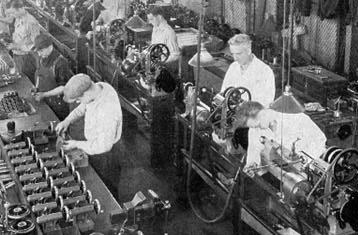
(a)
Fig.6.1: a) Lathe assembly benches circa 1933 (Source:www.lathes.co.uk/ atlas); b) Weaving at an unknown mill, early 1900's. This picture shows the power loom which was used in factories after 1830. Weavers shown in the picture had to look after the looms and renew the yarn in the shuttles. Weavers were mostly women and young girls. A weaving shed was the most dangerous working environment in a cotton factory. The yarn sometimes broke sending the shuttles flying in any direction. Most of the children shown in this picture worked 6 and a half hours a day and went to school for up to 3 hours each day. Children between 8 and 14 worked in the Yard Works until the 1920's. (Source: www.cleo.net.uk/.../ images)
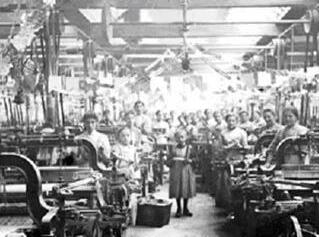
These changes, though far-reaching, did not happen all at once. In fact, recent research has shown that the Industrial Revolution in Britain was much slower than had been previously thought, and that the new technologies lived, for a long time, side by side with older pre-manufacturing technologies. For example, waterpower was still very important and prevailed over steam power in the United Kingdom (UK) well into the 19th century and craftsmen and their workshops remained for a long time far more important in aggregate terms than modern factories.A few points stand out, however. These are:
(b)
29 Patterns of
6.2
Industrialisation
The process of industrialisation in the UK happened in a unique and totally unplanned way; it could not have been planned, since it had never happened before.
It was also slower to take full shape than previously believed and certainly slower than in the Continent later on, when industrialisation could be encouraged, stimulated, copied from Britain at least to some extent.
The fact that industrialisation was slow does not mean that it was less radical and impressive.
Initially dramatic progress took place in various scattered branches of industry and it did not affect the bulk of the country. However, with one development feeding upon another, eventually, the whole country was transformed and the changes began to show up everywhere.
The question arises, why was Britainthe first? A wide range of answers has been given to this question. The unique advantages of Britain were:
A stable, relatively open political system, which allowed for efficient public finances and encouraged the development of a capital market. Also, it made possible for Britain to fight and win wars and to keep a large, powerful navy, thus capturing vital foreign markets.
Advanced and commercial agricultural system that was able to support the growing population by sustained rises in productivity.
A remarkable growth in population since 1750, which provided an enormous workforce as also consumers to the economy.
Spread of the Industrial Revolution to the rest of Europe: There was not much development lag between Britain and the rest of Europe. This probably was because of the geographical proximity of Britain and the north-western corner of the continent. Considering the period between 1750 and 1820 embracing most of France, the Low Countries, part of the German States and Scandinavia, Switzerland and also Northern Italy and the most advanced parts of the Hapsburg Empire – it may be noted that a long process of capital accumulation had taken place, incomes were higher as a result of moderate economic progress throughout many decades. Capital, labour and land markets were fairly developed. The society was open and commercial and it had, largely, broken away from feudalism. Skills were widespread among the population, and there was a record of technological progress. Although the nobility was still very powerful, the influence of the bourgeoisie (merchants, investors, professionals etc) had been growing for sometime and in many towns, the bourgeoisie were the leading class. Agriculture had made important progress and there were important areas of domestic industry organised in far-reaching commercial networks. Finally, international trade was in the hands of not only the British, but also shared by Dutch, French, German and Danish merchant houses.
All this did not prevent Britain from leaping ahead in the process of industrialisation, but the gap was never so wide that the other countries could not expect to fill it in a reasonably short time. The preconditions were certainly there. Infact, the gap between Britain and North West Europe was much less than that between the most advanced areas of Europe and the more backward ones, in the South and East of the continent. When around 1800 to 1820 it was clear that Britain was forging ahead, the other advanced parts of Western Europe sought to first keep in step and then to catch up. The stage was set for a remarkable period of economic development and industrialisation across the continent.
To understand whether there was an Industrial Revolution in the whole of Europe, it is necessary to remember the great variety and variation in the continent as there were
30 Developmental Issues
more advanced and more backward countries in Europe which were significant for tackling industrialisation. On one side were countries like Germany, Belgium and France that were early followers of Britain and successfully industrialised by 1860-70; on the other were countries like Russia that started industrialising at the end of the 19th century while Spain hardly succeeded in industrialising at all before 1914.
Countries in the South-East of Europe were even further behind. Countries like Denmark or the Netherlands had very advanced agricultural sectors while Belgium concentrated on heavy industry.
SAQ 1
What were the advantages of Britain in the initialphase of industrialisation?
Within this great diversity of paths followed and of outcomes achieved, certain common features existed and they were similar to the First Industrial Revolution. These related to:
Technological change in manufacturing.
Introduction of modern factories.
Changes in demographic behaviour leading to a strong, unprecedented growth in population and urbanisation.
Increasing mass production and rise in incomes.
In the light of diverse national and indeed regional experiences in industrialisation across Europe, the problem for economic historians has been to identify models which might help to understand and evaluate the whole process.
Along with industrialisation in the manufacturing sector, industrialisation of the agricultural sector also began and assumed great significance. Without it,advancesin other sectors could not have sustained. Agriculture in itself contributes to industrialisation by:
Providing for labour and capital
Providing food
Providing a market and entrepreneurship
Historically, industrialisation has also provided a rich agenda for fresh insights highlighting on some hitherto neglected factors such as social changes, demographic behaviour connected to economic change, labour skills and trading networks. These have moved the debate away from sheer measurements of industrialisation, to the wider social and institutional changes that made it possible including attention to human capital build-up as a key feature in technological import and adaptation.
The perils of industrialisation have also become apparent. It is being realised that the catastrophic effects of industrialisation, as seen today, have been due to the neglect of several issues at a time when they should have received our attention. Industrialised development has taken place in conjunction with large-scale environmental degradation and consequences of this misguided approach. The related issues are:
1 Patterns of industrialisation with global warming and its effects
2. Rise in the incidence of respiratory diseases in certain region.
3 Emissions from units reduce rain and snow over adjoining regions, also reducing the amount of solar energy that reaches the earth.
4 The massive rise in the populations of poor countries
Patterns of Industrialisation
31
5. The transfer of polluting industries from the developed West to developing countries eager to attract foreign investment.
6 The pattern of lifestyle in the West, which is based on consumerism and has little regard for non-renewable resources.
6.3 INDUSTRIALISATION: REGIONAL PERSPECTIVE
Two of the most important processes of change in South East Asia and South Asia are industrialisation and urbanisation. The Asia–Pacific region has seen unprecedented changes in economic growth and trade in the last couple of decades. This growth involves great increases in the cross–border use of resources, including energy and other materials, and has led to tremendous impacts on the regional as well as the global environment. This has affected the trade and industrialisation too. The impacts of structural transformations and environmental impacts have been felt most in three countries namely, China, Indonesia and Japan. The interdependent nature of economic activities with industrialisation can be easily appreciated as industrialising countries bear the burden of pollution as the developed countries are de–industrialising and expanding their service sectors by shifting their industrial production offshore mainly to the developing countries.
The issues to be addressed are the following:
The interactions between the domestic economy and the environment should be addressed by constructing Systems of Integrated Environmental and Economic Accounts and green Gross Domestic Product (GDP) accounts.
An international input–output economic model should be employed to characterise the interdependence of the economies, the international nature of the relationship between economic activity and environmental pollution within the selected countries, and the environmental consequences of different patterns of industrialisation and trade.
The sources of economic comparative advantage should be studied including how differentials in environmental regulations across countries cause the migration of industries.
Policies based on international economic and technological cooperation need to be evaluated for their ability to contribute towards a moresustainable development in the region.
Some regional economies, especially their industrial sectors, have grown so strongly during recent decades that they have been dubbed as ‘tiger economies’. For decades, the rapid economic growth of the ‘Association of South East Asian Nations’ (ASEAN) economies has been led by industrial growth. Between 1970 and 1993, contribution of the industries to the ASEAN region’s GDP has increased from 25% to 40% and industrial output has increased 25 times during the same period. Manufacturing contributed more than two thirds of the Gross Domestic Product in 1994 having expanded at an annual rate of 19% since 1980. Concomitant with this strong industrial growth has been an increasing concentration in large cities, most of them on or near the coast. Manila, Bangkok and Jakarta are now ‘megacities’ by world standards. Urbanisation and industrialisation have facilitated rapid increases in economic growth, consumption, material wealth and living standards although at national average levels.
South Asia is still in the early stages of industrialisation and urbanisation. Massive investment in industrial development, as part of the globalisation of economies is expected in the next 5-20 years providing an opportunity to seek and pursue industrial transformations that are more sustainable, environmentally and socially. This will
32 Developmental Issues
require a sound understanding of the human driving forces and possible human responses (e.g., regulation, technological and institutional change) to be able to effectively control, reduce and prevent regional marine and atmospheric pollution and the degradation of marine and land-based resources.
The economic successes of industrialisation have not been without environmental consequences. The transition from agro-processing into capital, manufacturingand then skill-intensive industries implies changes in the composition of pollutants Typically, water-borne organic pollutants dominate emissions. Airborne pollution and solid wastes, especially in the newly forming urban centres then replace these.
Patterns of Industrialisation
The impacts of vehicle emissions and industrial activity, for example, are already obvious with poor air quality in many of the capital cities of South Asia. Finally, there is rapid growth in hazardous wastes. Deviations from the overall pattern among individual nations reflect differences in the availability of natural resources, industry and environment policies and institutions. A cross-cutting issue is how more efficient and cleaner technologies and life-styles might reduce energy and material flows and the production of wastes. Mitigation and control of pollution of the coastal zones and continental shelf-seas as a result of industrialisation and urbanisation is a recognised important development issue.
Most countries in the region have taken a regulatory approach to pollution, for example, by setting effluent standards. Lack of technical and financial resources and institutional capacity, coupled with business and government attitudes, however, has often resulted in poor enforcement of the regulations. For this reason some governments are now turning to economic instruments, such as the “Polluter Pays principle”, for environmental management. Businesses are not passive players in the changing constellation of government regulations and national agreements or the growing public concern with environmental impacts and sustainability. In this context, moving first is often good business. New technologies and products mean new business opportunities. Better cooperation between polluters, regulators and researchers is more likely to lead to self-regulation and improvement by industry. SAARC countries have adopted a Plan of Action on Environment.
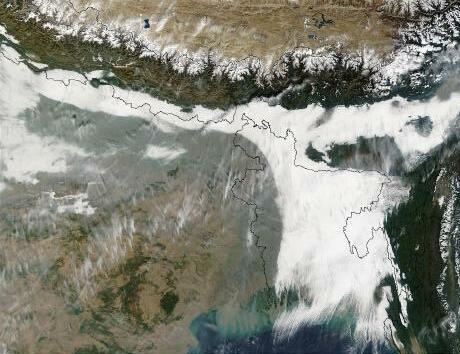
33
Fig.6.2: Environmental pollution due to industrialisation in SAARC countries; a satellite photo of pollution in Bangladesh and Northern India (Source: visibleearth.nasa.gov/ cgi-bin/viewrecord)
At the regional level, preventing pollution of the regional seas is a common feature of a number of agreements and cooperative environmental action plans. For example, APEC’s regional Action Plan for Sustainability of the Marine Environment has, as one of its three key objectives, the prevention, reduction and control of marine pollution. The APEC Cleaner Production Strategy aims to reduce environmental impacts from industrial activity through the promotion of cleaner production technologies, policies and practices.
In addition to the above, atmospheric emissions have increased rapidly with industrialisation. Various forms of air pollution problems in South Asia occur on different scales. Photochemical smog, carbon monoxide, nitrous oxide, ozone and lead are some of the unwelcome by-products of rapid industrial and urban transformation. Episodes of high levels of pollution in the mega-cities are commonplace and their health effect is an issue of major concern to governments in the region. Analysis suggests that reducing carbon dioxide emissions will require adoption of cleaner technologies and switching from fossil and other solid fuels to cleaner fuels.
These kinds of projections depend strongly on assumptions about industrialisation and the patterns of greenhouse gas and sulphur emissions. The possibility that the region could not only use more advanced emission controls, but also undertake pioneer research and development into pollution control mitigation does not seem to have been given adequate consideration. It is the health and economic cost of local airborne pollution, however, rather than concerns with global change, which is likely to act as an incentive for pollution mitigation controls and research.
SAQ 2
Describe the environmental impact of industrialisation visible in your surroundings.
6.4 FORMS OF INDUSTRIALISATION
Industrialisation takes many forms and develops at different stages through time. However, with the mention of industry, people tend to conjure up classic images such as textile mills, shipbuilding or heavy engineering. These were definitely the first areas to be industrialised. With time, the word industry in general, now encompasses many newer areas.
Broadly, industries can be of the following types depending on the raw material used and products made. They are:
1. Manufacturing Industries:Industries which produce goods by utilising or processing raw materials, semi-processed materials, by products or waste products or any other goods.
2. Energy-Based Industries:Industries generating energy from water resources, wind, solar, coal, natural oil, gas, bio-gas or any other sources.
3. Agro and Forest-Based Industries: Business mainly based on agriculture or forest products such as integrated sericulture and silk production, horticulture and fruit processing, animal husbandry, dairy industry, poultry farming, fishery, tea gardening and processing, coffee farming and processing, herbiculture and herb processing, vegetable seed farming, mushroom, vegetable farming or vegetable processing, tissue culture, green house, beekeeping, honey production, rubber farming, floriculture and production, and forestry related businesses such as leasehold forests, agro-forestry, etc.
4 Mineral Industries: Industries that excavate or process minerals.
34 Developmental Issues
5. Tourism Industries: Tourist lodging, motel, hotel, restaurant, resort, travel agency, skiing, gliding, water rafting, cable car complex, pony-trekking, trekking, hot air ballooning, para-sailing, golf-course, polo, horse-riding, etc.

6. Service Industries:Workshop, printing press, consultancy service, ginning and baling business, cinematography, construction business, public transportation business, photography, hospital, nursing home, educational and training institution, laboratory, air services, cold storage, IT, etc.
7. Construction Industries: Road, bridge, ropeway, railway, trolley bus, tunnel, flying bridge and industrial, commercial and residential complex construction and operation.

Service
Minerals

Manufacturing
TYPES OF INDUSTRIES
Agri-based

Tourism
Energy producing
Fig.6.3: Various types of industries
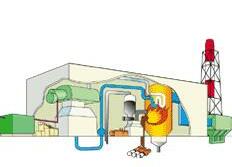
While establishing an industry, its optimum size is of utmost importance to reap the maximum benefits. One of the main advantages of an industry is employment generation. Depending on the size of the industry, capital input, employment generated, technology source, sophistication of technology involved, skill involvement etc. industries are classified. The classification of an industry into types is decided for a country by its government. Different set of rules, policies, tax structure, etc. prevail for each category. One criteria of setting up an industry is the ratio of capital investment and persons employed.
On the basis of capital investment, industry is classified into:



Cottage Industries


Small Scale Industries
Large Scale Industries

35 Patterns of
Industrialisation
Construction
In India, a cottage industry is one which has an investment of upto Rs. 20 lakhs, small scale industries upto Rs. 1 crore and industries with investments above Rs. 1crore fall under large scale industries.
6.4.1 Artisan, Craft and Cottage Industries
This category of industries mainly uses traditional skills and is related with tradition, art and culture. These industries utilise specific skills and locally available raw materials. Examples of cottage industries include units producing agriculture and forest-based goods, nurseries, and tree farms, value-added wood products (carvings and furniture). Cottage industries also include small-scale production of textiles, hand woven carpets, handicrafts (wood and metal), alcohol, household appliances, consumer durables, knitted wear, hosiery, jute products, livestock processing etc. Tourism and recreational agencies, such as outdoor guide services are also included in thiscategory.
Rural cottage industries: Rural cottage industries are small scale industrial (manufacturing), commercial and business units that operate in rural areasand are set up in a dwelling or on the property where the residence is situated. Such units are primarily dependent on local resources and raw materials and cater to regional and local markets.
The development of cottage industries is essential for growthwith equality and economic justice for all citizens. It is an informal sector and the products from homebased production and cottage industries need to achieve high growth with sound policy and institutional support. The contribution of these sectors to any economy cannot be ignored. This is especially true for countries of the SAARC region as they are important sources of employment and income for many families. In India they have 40 percent share in the total industrial output, 35 percent in exports, andover80 percent in employment. These ventures, in spite of being based in rural or small areas, through proper marketing can attract export market tremendously due to their traditional and ethnic nature and use of natural resources which do not degrade the environment.
The employment opportunities in individual units are meagre and are mainly catered to by small groups or within the family. However, clusters of such groups are now linked through government or non-governmental organisations to the market, thus spreading their industrial nature.
6.4.2 Small Scale Industries
Small-scale industries are manufacturing units, mainly making accessories for largescale industries, using mostly indigenous technology. They are usually situated in the vicinity of large-scale industries. However, many small scale industrial units are not doing well in this era of globalisation, and economic liberalisation. In order to avail opportunities of globalisation and economic liberalisation, the associated entrepreneurs need institutional support for technology upgradation, infrastructure support for market penetration, and adequate working capital finance from the banking sector. There is an urgent need to look into policies and programmes to improve their competitive strength with a long-term outlook. There is also a need for small entrepreneurs to keep pace with the structural and technological changes taking place in large industries.
Examples of small scale industries are soap, furniture, shoes, food processing units, textiles, light industries, construction units, vehicle parts, automobile parts etc.
6.4.3 Large Scale Industries
In India, industries with a fixed asset of more than one hundred million rupees are called large scale industries. These could be manufacturing units or others which use both indigenous and imported technologies. They cater to both the local and foreign
36 Developmental Issues
Patterns of Industrialisation markets. Examples of large scale industries include fertiliser, cement, natural gas, coal, metal extraction, metal processing, petroleum, natural gas, mining, electrical, petrochemical, food processing units, tourism, banking, sugar, construction, automobile, communication equipment, cement, chemicals, earth movers, consumer durables (like television, refrigerators, etc), engineering products, vehicle assembly, beverages, gas and water and other fuels, agricultural processing, insurance and finance.
With the opening up of the market and globalisation, the effects on such industries have been mixed; some have gained by attracting foreign customers,foreign trade and technology, tie-ups, while others have lost out due to their inability to cope up with the open market competition.
SAQ 3
What are the disadvantages of unsustainable industrialisation and what steps should be initiated to overcome them?
6.5 IMPACT OF GLOBALISATION
Globalisation refers to the rising levels of economic interconnectivity in the world, increasing interdependence, the emergence of global markets, prices and production, and wider diffusion of technology and ideas. Three main components of globalisation are:
Growth of Foreign Direct Investments (FDI) due to financial liberalisation and relatively cost-less international financial transactions.
Growth of trade due to the emergence of global markets and the reduction of trade barriers
Diffusion of global technology and innovation.
6.5.1 Foreign Direct Investment
Foreign direct investment (FDI) has been one of the defining features of the world economy and globalisation over the past 20 years. It implies the creation of new enterprises abroad, or the acquisition of substantial stakes in existing foreign enterprises. FDIs had grown at an unprecedented pace for the last two decades, with only a slight interruption during the recession in the early 1990s, largely due to increased liberalisation brought about by reduced barriers to trade and investment and discriminatory subsidies.
Today, some 60,000 parent companies of multi national enterprises worldwide have established over 500,000 affiliates in countries other than their own, with the amount of inward FDI stock values at roughly $4,000 billion. These foreign affiliates are estimated to have generated total gross output of $2,600 billion and a total employment of over 35 million in host countries. For 90% of all parent companies located in the Organisation of Economic Cooperation and Development (OECD) countries, a little more than half of all their foreign affiliates are in operation in nonOECD countries. Foreign affiliates are a source of industrial production and employment in anumber of emerging and developing economies.
Although foreign direct investment contributes to growth in the developing countries, the benefits are not equally shared. Although foreign owned companies tend to pay wages in developing countries, higher than and what the domestic companies pay, the skilled workers tend to gain more than un-skilled workers. Thus, while FDI may improve economy in the aggregate, more attention should be focused on the distribution of gains from FDI, particularly effects on wage inequality.
37
6.5.2 Trans National Corporations
Foreign direct investment (FDI) by Trans National Corporations (TNCs), and the transnational system of production and international economic transactions is now the most dominant element of the world economy,with TNCs increasingly influencing the size and nature of cross-border transactions, says a report of the United Nations Conference on Trade and Development (UNCTAD). The world’s TNCs 40,000 parent firms and 250,000 foreign affiliates account for two-thirds of the world trade in goods and services, one-third in intra-firm transactions and the other one-third in inter-firm transactions. This means that in practice only one-third of the world trade in goods and services is ‘free’ under the so called free-market-free-trade theories of arms-length transactions.
With the emergence of TNCs and their involvement in national economies, we are witnessing an unprecedented transfer of power from people and their governments to such global institutions whose primary allegiance in other nations is to their corporate entities and their profitability. The growing role of FDI in changing the pattern of industrialisation and for linking national economies and improving economic forms of national economic development has to be taken into account in any sustainable development framework that provides for stability, predictability and transparency at the multilateral level.
6.6 SUMMARY
• This unit discusses the beginning and patterns of industrialisation, historical significance and mapping since its inception in Britain in 1770. Owing to industrialisation, Britain held the position of world economic leadership for over a century. Changes in industrial organisation brought about growth and far reaching impact. Other countriesof Europe soon followed Britain.
• The process of industrialisation influences a number of other areas like the economy and social condition of a country and of the world at large. With the positive effects of industrialisation, there have been negative effects too as observed by the degradation of the environment. The policy of the developed countries to de-industrialise by shifting their bases to the developing countries is seen as detrimental to the environment in those regions. Although there will be short term economic gains for the poor countries, the long term sustainability of the culture of the local people will be eroded as they will follow the same path as the developed countries had done before.
• Industries are classified based on their technology, level of mechanisation, scale of operation, skill requirement, capital investment etc. These industries are set up based on the availability of the resources and skills. Accordingly, developing countries have a preponderance of cottage industries that use traditional knowledge and skills and the available natural resources. They are non-polluting and the products are eco-friendly. Therefore, the developing countries need to formulate policies based on upgrading their traditional systems and adopt less damaging forms of industrialisation.
• The impact of globalisation and opening up of Trans National Corporations spreading over the world and Foreign Direct Investment has been seen on the economic and social conditions of the developing countries. Although foreign direct investment contributes to growth in the developing countries, the benefits are not equally shared. Skilled workers tend to gain more than un-skilled workers. TNCs and the transnational system of production and international economic transactions are now the most central factor of the world economy. Keeping the growing importance of TNCs and FDI, an agenda needs to be prepared to provide stability, predictability and transparency to the system.
38 Developmental Issues
TERMINAL QUESTIONS
1. Map the progress of industrialisation in the world.
2. How has the Asia Pacific region benefited from industrialisation?
3. What is the effect of Foreign Direct Investment on a country’s economy?
4 What are Trans National Corporations? How do they function? Compare TNCs with a national company.
REFERENCES
1 Ashworth, W. (1987) A Short History of the International Economy, 4th Edition, Longman.
2. Bhagwati, J., and Srinivasan, T.N. (1983) Lectures on International Trade., Cambridge, Massachusetts Institute of Technology Press, Massachusetts.
3. Buffie, E. (1987) Labor Market Distortions: The Structure of Protection and Direct Foreign Investments, Journal of Development Economics, vol. 27, pp149163.
4 Foreman-Peck, J. (1995) A History of the World Economy: International Economic Relations Since 1850, 2nd Edition, Harvester Wheatsheaf.
5 Kemp, T.(1986) Historical Patterns of Industrialization, 2nd Edition, Longman.
6. Lairson, T., and Skidmore, D. (1997) International Political Economy: The Struggle for Power and Wealth (Second Edition)., Fort Worth,HarcourtBrace College Publishers, Texas.
7. Sylla, R., and Toniolo, G. (ed.) (1991) Patterns of European Industrialization: The Nineteenth Century, Routledge, London.
39 Patterns of Industrialisation 6.7
UNIT 7 INEQUITABLE GROWTH
Structure
7.1 Introduction Objectives
7.2 Indicators of Inequality
7.3 Development and Exclusion
7.4 Bridging the Gap Relationship with Sustainability State Initiatives Community led Initiatives
7.5 Summary
7.6 Terminal Questions
7.1 INTRODUCTION
The eminent economist, Simon Kuznets, defined a country’s economic growth as “a long term rise in capacity to supply increasingly diverse economic goods to its population, this growing capacity based on advancing technology and institutional and ideological adjustments that it demands”.
Economic growth essentially involves three components i.e. capital accumulation, growth in population and technological progress. The major foundations of economic growth are the investments that improve the quality of the existing physical and human resources and increase the quantity of resources.A few countries have attained high levels of economic growth (developed countries) while many others are still at fairly low levers of economic growth (developing countries).
At a global level, this inequity is often termed as an economic divide between the countries of industrialised or developed ‘North’ and the developing ‘South’. The developed North is often blamed by the developing South for influencing the international institutions to orient their policies to favour the ‘North’.
The challenge in the era of liberalisation and globalisation is to bridge this divide if sustainable development is to be achieved. This would involve cooperation between thecountries of the North and South (North-South cooperation), amongst the countries of the South (South-South cooperation) and development initiatives within the countries themselves. Several such initiatives have been taken.
The developing countries are mostly rural economies with agriculture as their base and have not been much affected by modern industry and technology. Therefore many of their practices do not suffer from the adverse environmental impacts that arise from polluting practices in industrialised economies. Such ‘indigenous’ practices and experiential knowledge is also being recognised and agriculture has been the major area of focus. At the grassroots level, the peoples groups like the Panchayats and the Non-Governmental Organisations (NGOs) in many parts of India are working towards the upliftment of the socio-economic and environmental conditions of both the rural and urban areas.
In this unit, wediscuss the concept of inequitable growth and its causes in the developed as well as developing countries (North and South respectively) and its implications. We also address the issues of narrowing the existing inequalities between them.
40 Developmental Issues
After studyingthis unit you should be able to:
• explain the concept of inequitable growth;
• identify the indicators of inequitable growth;
• analysethe North-South economic divide and its implications; and
• discussthe measures taken to bridge this divide
7.2 INDICATORS OF INEQUALITY
One of the principal failures of development economics of the developing nations in the 1950s and 1960s was their inability to adapt to their circumstances the valuable experience of economic growth in the West. The reasons why the growth experiences of developed countries could not directly spread into the developing countries was due to the less favourable initial economic, social and political conditions of these countries in the post-war era. The significant differences that led to a divergence in the growth patterns seen in the two types of countries were due to the following factors:
1. Physical and Human Resource Endowments:The developing countries are much more endowed with abundant natural resources than the developed nations, but they often lack the methods or technology for their exploitation. As seen in parts of Latin America and Africa, where the natural resources are abundant, only the powerful developed country joined by multinationals are engaged in largescale utilisation of resource. The difference in skilled human resource endowments is even more pronounced. The ability of a country to convert natural resources into higher value products depends on the skills of the labour force.
The population in the developing countries is less educated, less trained and inexperienced as compared to their counterparts in the developed nations. The technology gap between these nations can be divided into two types: a physical object gap involving factories, roads etc, and an idea gap that includes knowledge about marketing, distribution, inventory control etc.
No such gaps existed for the developed countries on the eve of expansion of their industrialisation. In these countries, industrialisation was brought about by a long process of change. During the change process the population of these countries adjusted to the social and political framework: On the other hand, in the developing countries, the institution of industrialisation was introduced without the population getting adequate time and opportunities to absorb the related social and political change.
2 Relative levels of per capita income and Gross National Product (GNP): The lower per capita income in the developing countries, relative to that in the preindustrialisation phase of the developed countries, was probably due to the lower productivity of agriculture and the lower supply of agricultural land per worker in the developing countries. This implies that in the pre-industrialisation period the ratio of per worker income in the agricultural sector to that of the non-agricultural sector in the new developed countries was not equal as it was not as large as in the late industrialisation developing countries.
At the beginning of the modern growth era, the developed countries were thus in an advantageous position with their relatively better financial position and could accelerate their economic growth to widen the income gaps between themselves and the developing countries. The developing countries began their industrialisation from the lower end of the international per capita income scale. This weak position slowed down their economic growth.
41
InequitableGrowth Objectives
3. Climatic differences: Majority of the developing countries are situated in the tropical or sub-tropical climatic zone by virtue of which they are rich in a variety of natural resources. It has been observed that the developed countries are primarily located in the temperate zone. Industrialisation pattern and connected life styles under those climatic conditions, when imposed in the heat and humidity of developing countries, is likely to have contributed to deteriorating soil quality, rapid deterioration of goods, poor health of animals, weakening of the health of workers etc. This is seen as another reason why economic growth of developed countries has not spread in equal measure in the developing countries.
4. Population size, distribution and growth:Before and during their early growth years, the developed countries experienced a slow rise in the population growth. As industrialisation proceeded, the death rate declined and the birth rate rose slowly, but as simultaneously incomes were rising, these countries did not experience natural population growth rates in excess of 2% per annum. By contrast, the population in the developing countries has been increasing at the rate of 2.2% per annum. (Table.7.1).
This has also worsened the availability of agricultural land per capita in most developing countries notonly compared to what is presently available in most developed countries, but also compared to the pre-industrialisation phase. Basically the developing countries have a much higher person to land ratios than the present developed countries in the early growth years.
5 Economic Policy: Economic policies and measures influence the patterns, directions and rates of growth by affecting investment structure as well as choices of technological progress. Significant differences between the economic policies of the developed and the developing countries need to be recognised. Thus, inward-orientedtrade policies give rise to output market that ultimately determine the total factor productivity of chosen technology. In the Indian context, after independence, the government adopted the ideology of economic nationalism and self-reliance rather than forging connections with the global economy.
A restricted growth of 1.5% per annum in Gross Domestic Product (GDP) was achieved for three decades till 1980s. Apart from this, with incentives generated by the soft-budget constraint in the public sector coupled with policies of industrial licensing resulted in building capabilities in non-competitive market structures, constricted flexibility in adjusting to the market signals and opportunities for rent-seeking behaviour. The higher incremental capital output ratio restricted the overall economic growth rates.
42 Developmental Issues
Fig.7.1: Comparison of some growth indicators of (1) LDCs, (2) EU and (3) USA (see Table 7.1)
1 2 3
1 2 3
Population growth (annual 1%)
Internet users (in millions)
Although technological capability was built, the economic consequences of this policy that has since 1991 changed, were:
i) Focus remained on restricting imports rather than exports.
ii) Insulation from international competition resulted in undermining competitiveness internationally.
iii) The technology gap between what prevailed in internationally competitive economics of the developed countries and what was present in India increased.
Table 7.1: A comparison of some growth indicators between Least Developed Countries (LDC), the European Union (EU) and the United States (US)
Sl.No. Indicators
LDC EU US
1. Total Population 673.9 m* 305.1 m* 285.3 m*
2. Population Growth (annual %) 2.2 0.5 1.1
3. Life Expectancy (Years) 50.7 78.2 77.5
4. GDP (current $) 194.8b** 6.1t*** 10.1 t***
5. Value added in agriculture (% of GDP) 32.6 2.3 1.6a
6. Value added in industry (% of GDP) 23.8 29.2 24.9a
7 Fixed lines and mobile telephones 11.9 1252.3 1,117.9 (per 1,000 people)
8 Internet users 1.5 m* 91.1 m* 142.8 m*
9 High technology exports 32.1 (% of manufacture exports)
10 FDI, net inflows in reporting country 3.9 b** 272.3 b** 130.8 b** (current US $)
Source: www.worldbank.org (Data of Year 2001)
* Million **Billion ***Trillion a= Year 1998 data
The types of resulting inequities areshown in the Table 7.1, which gives a comparative account of some of the important indicators of growth from the perspective of developed countries As can be observed, the Least Developing Counties (LDCs) are characterised by high population density and growth, low life expectancy and GDP. The indicators of growth in the developed countries show high technology use and export and increasing Foreign Direct Investment (FDI).
SAQ 1
What are the indicators of inequitable growth?Try to obtain data similar to that given in Table 7.1 for your country.Comment upon the nature of growth of your country.
7.3
DEVELOPMENT
AND EXCLUSION
The 1950s, after the Second World War, ushered in an era of economic growth in both the developing and the developed countries. However, the developing countries soon lagged behind. The developed countries revived the institutional framework of capitalism and the international economic order became liberal. The policies of low non-agricultural tariffs and few quantitative restrictions on the Organisation for Economic Cooperation and Development (OECD) countries, quickly paved the way for the expansion of international trade.
InequitableGrowth
43
Thefactors firmly established in OECD countries were:
• High productivity
• Innovations through research and development
• Rapid capital accumulation
• Well functioning markets
• Growing demand
• High rates of human resource growth
• Maintaining high employment standards by the governments
On the other hand, the developing countries, most of whom had become independent in the 1950s, adopted a dualistic structure of growth. The earliest phases of development involved a significant rise in the primary exports. Gradually, however, there was a sharp decline in this and the structure was changed to manufacturing instead of exports of primary products and a shift in agricultural labours toindustry adversely affecting the primary production levels. The second impact came from the population growth in these countries. Rising phenomenon of urbanisation with a rise in educated unemployed youth became a persistent feature.
Since agricultural productivity did not rise rapidly, cheap cereals were imported which substituted for the domestic grain production. The incentives to the farmers were kept deliberately low to provide low priced food to consumers in cities and for workers with low wages in manufacturing sector. In manufacturing, technology was imported and there were negligible innovations in indigenous technologies. The adoption of foreign technology that required highly skilled and lesser number of workers resulted in their failure to absorb the ever increasing unskilled labour force.
In summary the chief factors of the prevailing poverty and inequities are:
• Economicdualism;
• Lack of attention to rural development;
• Capital dependent growth;
• Urban bias in provision of education and social services;
• Rapid population growth;
• Weak institutional support to the poor; and
• Inequality of income distribution.
The North South Divide and The General Agreement on Tariffs and Trade (GATT): With the end of the Second World War, when most of the developing countries achieved independence, it was hoped that the world under the General Agreement on Tariffs and Trade (GATT) community would move towards strengthening ties in different fields like trade, investment, science and technology and promote the economic growth and development of all the member countries. However, in the matters of global trade, the developed North continued to dominate the largely underdeveloped South.
The rules and regulations that governed the world trade were manipulated to serve the needs and interests of the developed nations, the disparity that existed between the North and the South in terms of economic growth, resource utilisation and technological development continued. There was enormous pressure on the developing countries to change their economic strategies to facilitate the inflow of capital and affiliates of Trans National Corporations (TNCs) into their economies.
In the 1940s, the United States and Britain felt the need to build an international financial system that would help in creating an open world economy and promote international trade, growth and development. Basically, it was envisioned to rebuild the European nations and Japan after the Second World War. The agreement was signed by forty four countries and resulted in the creation of the International Monetary Fund (IMF) and the World Bank. Subsequentto this, the General Agreement on Tariffs and Trade (GATT) came into being.
44
Developmental Issues
Under the GATT system, these member countries agreed to lower trade barriers and not to resort to unfair or managed trade. The very purpose of GATT was to ensure free and fair trade and open multilateralism and the extension of trade rules to all without any discrimination. The Dillon Round (1947-61) cut tariffs by 73% and the Kennedy Round (1963-67) resulted in approximately 33% reduction of trade barriers and preferential treatment to exports from developing countries. Efforts towards further trade liberalisation were made in the Tokyo Round (1973-79) that had few comprehensive results. It decided on tariff reductions on industrial products, liberalisation of agricultural trade and further concessions to the demands of the developing countries and their exports. The Uruguay Round (1986-94) attempted to reduce or even eliminate many import quotas and subsidies. Accords on agriculture, services, Trade Related Intellectual Property Rights (TRIPS), and Trade Related Investment Measures (TRIMS) followed. A significant development during this trade round was the establishment of the World Trade Organisation (WTO) replacing the GATT system.



GATT and its weaknesses: In spite of achieving moderate success in the reduction of trade barriers, the very purpose of defeating protectionist tendencies could not be accomplished. Institutional weakness handicapped the GATT agenda to take care of diverse and complex national interests. Its original stature as the centre of trade rules for nations interested in market liberalisation was weakened. There was a significant departure from the principles of most favoured nation, elimination of quantitative restrictions and the non-discrimination rules. There were repeated setbacks for ‘free’ and ‘fair’ trade.
In the agricultural sector, a crucial sector for the developing countries, many of the rules became ineffective as one developed nation after another avoided the implementation of the prescribed disciplines on agriculture. The GATT forum became a platform for non-cooperation towards binding agreements. The nations were unwilling to change their traditional political and economic structures. Even amongst the developed countries, competition between the United States, Japan and the European Community made it difficult to arrive at consensus on various issues at the GATT forum.

45 InequitableGrowth
Fig.7.2:Most nations in the world today live in the WorldBank, WTO, IMF regime
The incomplete coverage of all countries led to series of problems. Most of the members of the GATT could not join at its inception and their subsequent incorporation had raised difficulties which they had to confront. There was an increasing pressure to modify the rules according to the needs of developing countries. The developed countries found GATT as a base for pursuing their political and economic interests, thereby overlooking the foundational and often legal aspects associated with the forum. This non-compliance and violation of commitmentshad major implications in weakening the system.
The protectionist tendencies gathered momentum but the interests of the developing countries especially in areas like agriculture, steel and textiles could not be taken care of. The developing countries were on the receiving end of this trend with pressures on opening up of these sectors for free imports without assurances of similar steps being taken by the developed countries. There was a departure from the non-discrimination rule and an increase in the application of the non-tariff barriers like voluntary export restraints.
The developed countries disrespected GATT. Their domestic norms with unilateral trade policies were promoted. The GATT is often criticised for its inability to secure agreement among many countries with diverse interests, its slowness to act, its limited agenda and its inability to enforce established disciplines.
World Trade Organisation:The WTO, which had replaced GATT as the supreme organisation in the trade related matters, has much more authority than GATT and greater compliance mechanisms. The institutional structure is much stronger and also provides greater legal coherence with regard to trade disputes. However, the influence of the developed world in the areas of governing rules and decision-making processes continues as before. The decision of the developed countries to group together the environmental and labour standards in trade issues for negotiations has been an ongoing contentious issue with the developing countries.
While the United States and the European Union have been insisting on incorporating these issues into trade regimes, there is a strong opposition from others especially from developing countries. The advocates of environmental protection are insisting on using trade measures to promote environmental objectives. They perceive trade liberalisation, where the commercial interests overrule environmental concerns, as a threat to international or national environment protection efforts.
The conflict over labour standards is an important issue. It is argued that the proper platform to address this issue is the International Labour Organisation (ILO). This issue was raised by the organised labour and human rights activists to ensure fair practices, prohibition of child labour, human rights and provide basic rights and decent conditions to the labour. There is a growing concern especially amongst developing countries that this could provide a rationale to the developed nations to adopt protectionist measures and unduly complicate trade negotiations.
The developing countries are vehemently opposing the incorporation of these issues. The developed countries’ standards of ‘fair’ practices, it is feared, would reduce the comparative advantage of developing countries based on low-wage labour and provision of only minimum welfare benefits presently affordable by them.
Nevertheless, the unity forged by the developing nations to resist these insensitivities and to pursue their legitimate rights was best reflected in the deliberations of WTO Summit at Cancun in 2003.
SAQ 2
Analyse the impact of the WTO regime on your national economy and the lives of poor people. Give data and evidence to support your arguments.
46 Developmental Issues
BRIDGING THE GAP
The realisation of sustainable development will require the bridging of gap of inequities between the North and the South. The developing countries realised the importance of a unified negotiating strategy to resist the domination of the North. The Generalised System of Trade Preferences (GSTP) and call for a New International Economic Order (NIEO) in various United Nations Conference on Trade and Development (UNCTAD) meetings had strengthened their position but without gain.
The trade rounds, rather than enhancing the potential of the developing countries’ economic growth, resulted in the North gaining a comparative advantage with regard to agricultural issues and service related agreements. The disadvantages suffered by the developing countries provided an impetus to forge an increased South-South cooperation in trade and investment issues.
South–South Cooperation: The developing countries, for the last few decades, have come together to promote their economic and social advancement through different fora such as Non Aligned Movement (NAM), G-77 and through regional alignments.

Fig.7.3: Regional cooperation can help developing countries bridge the North-South gap
Through this, they hoped to bridge the gap between the rich and poor member nations and cope up with the existing structures governing international economic relations. A common platform to voice their concerns is termed as South-South Cooperation. The basic objective is to strengthen not only the economic interdependence in the region but also achieve self-reliant development based on the principles of equality, justice and mutual benefit. The identified areas for cooperation include agriculture and industry, energy, utilisation of human resources, raw materials and technical skills.
While South-South cooperation has been successful in bringing the pertinent issues to the notice of the developed bloc, it needs to formulate strong international policies to:
1 Present factual position of the developed countries to the international community
2. Develop a broad based and equitable system of mutual cooperation between the North and South.
3 Seek technical and institutional support and financial assistance to pursue developmental process.

4 Bring about sustained progress and development by ensuring stability and peace in the region
5. Continue the reform process in agriculture including food security and rural development
6. Form a network of developing countries in the areas of indigenous technology, research and communications.

47
InequitableGrowth 7.4
In addition to the existing inequities at the global level, the inequities at the national level should also be given due importance. Efforts should be made at the regional, district and village levels to bridge the gap.
7.4.1 Relationship with Sustainability
The countries of the world are interconnected through the global environment with the activities of one country affecting the other. The policy of sustainable development is, therefore, applicable to both the developed and developing countries. Numerous examples over the years have shown that the malpractices of one country (especially the industrialised countries) have adversely affected the people, socio-economic conditions and environment of a neighbouring country or even the far-flung countries.
The industrialised countries have just 23% of the world population, but consume about 80% of the world’s resources. They contribute a major share to the global environmental degradation process both through exploitation of natural resources and pollution that transcends boundaries and barriers. The less developed countries have to equally bear the brunt of environmental degradation despite little or no fault of theirs. Therefore, it becomes the moral responsibility of the developed countries to adopt policies and measures that are not detrimental to the global environment. The exploitative policies of the industrial nations towards the natural resources of the developing world, their unfair trade practices by imposing tariffs, trade barriers and inaccessibility to their markets and the interference of the West-controlled international institutions like the International Monetary Fund and the World Bank in the national policies are largely seen as an infringement upon the sovereignty of these states. Under these circumstances, the efforts of sustainable development cannot bear fruit.
Similarly, the developing countries need to look into their own methods and measures to adopt the policy of sustainable development. In the wake of globalisation and liberalisation, these countries need to reorient and reframe their internationaland domestic policies not only to help stabilise their economies, but also to take a unified stand in the international fora against exploitation.
The most important development issue of the developing countries is economic growth. A mere imitation of the Western policy of industrialisation and technologies without due consideration to processes that can be sustained in their own context is not viable for development. If the present trend of unmindful imitation continues in the developing countries, the outcome could be ruinous. Therefore, developing countries have to devise alternative policies and measures of achieving sustained economic development appropriate to their social and economic situations and resource endowment (both human and physical).
These countries should develop strategies to scientifically upgrade indigenous methods that have been proved sustainable over the centuries. Here, it needs to be understood that this alternative process of growth might not be as fast as that could be brought about by copying industrialisation of the west, but it would be sustainable in the long run and may provide new insights and approaches to sustainable development even to the West. The other issues that need to be accorded equal importance are poverty, trade, human resource development and equitable distribution of wealth.
The unequal growth in the urban and rural areas in the developing countries alike is obvious and needs to be addressed on a priority basis. For example, in India around 70% of the area is rural. Therefore, sustainable development initiatives in the rural sector become all the more important if India has to gain the status of a developed country. Several such initiatives taken at the state and community levels are discussed in the following sections.
48 Developmental Issues
7.4.2 State Initiatives
After independence the Indian government set to the task of rebuilding the national economy. The government, under the leadership of Nehru, adopted through a five year planning process the principles of mixed economy, promotion of the private sector and a strong intervention of the state and an industrial base in the public sector. As discussed earlier the policy of import-substitution and self imposed insulation from the global economy resulted, however, in slow growth.
It is clearly understood that restrictive trade and exchange trade policies under centrally initiated and public sector oriented industrialisation were impediments to the fast pace of development till the 1980s. However, the radical shift in the trade policies since 1991 mark a move towards globalisation and liberalisation.
Economic Reforms: The economic reform policies of 1990s were brought in with focus on stabilisation of the economy on one hand and liberalisation on the other. These led to substantive deregulation on private participation in economic activities and withdrawal of several import and export restrictions, besides other changes. These measures were expected to bring in competition leading to better utilisation and allocations for accelerating growth.
The major elements of policy reforms are:
• Private investment freed from industrial license from government
• Reduction in the list of industries for public sector
• Quantitative controls on most intermediate and capital goods abolished and those on consumer goods to be abolished in a phased manner
• Average tariff rates brought down with reduction in dispersion of rates
• Restrictions relaxed on exports of some agricultural commodities
• Restrictions relaxed on foreign private investment
The outcome of these reforms has been encouraging with a per capita real growth of 4.7% of per annum GDP in 1991-97 from 3.4% in 1980-91.
Fig.7.4: The per capita real growth rate has increased due to policy reforms
Environment Policy: The Government of India has formulated legislation, regulations and policy instruments to address matters concerning environmental issues for Sustainable Development at sub-regional, regional and international level.
49
Growth
Inequitable
1 2 3 4
0
5 Per capita real growth rate Percentage of per annum GDP 1991-97 1981-91
Developmental Issues
Some selected policy initiatives taken by the Ministry of Environment and Forests towards sustainable development are:
• National Environmental Action Plan for Control of Pollution
• UrbanPollution
• VehicularPollution
• Environmental Epidemiological Studies
• Environmental Management System (EMS)
• Uniform Consent Procedure
• City Afforestation Programme for Mitigating Pollution
• National Biodiversity Strategy and Action Plan (NBSAP)
• Bio safetyProtocol
• Rules on the Management of Lead acid Batteries
• Regional Development Strategy based on Carrying Capacity Concept
• Development of Management Tools for Preventing Environmental Degradation
• Establishment of Indian Centre for Promotion of Cleaner Technologies (ICPC)
• Water Quality Standards for Sewage
• Technology for Sewage Treatment
• Water Conservation through recycling
• Joint Forest Management
• National Forest Action Programme
• National Forestry Research Plan
DevelopmentofAgro-industries: In the First Five Year Plan, the agriculture development and village industries were taken up as the twin development issues. It was visualised that increased agricultural produce raise farmers’ incomes and opportunities for processing raw materials through village cottage industries. The planning commission covered, among others, these village industries for development: khadi,coir,oil, fisheries, sericulture, forests, dairying, leather, hand-made paper and horticulture.
The subsequent plans also stressed the role of the agriculture-based village industries. The objectives were:
1 To create immediate and long-term employment on a large scale at a relatively small capital cost
2 To meet a substantial part of increased demand for goods by the large-scale industries and its integration with the small-scale industries
3. To facilitate mobilisation of resources of capital and skill
These policies arenow better appreciated as the products of village and craft industries have gradually found markets among the urban elite organised large enterprises within and outside the country.
50
In addition, the relationship between agriculture and industry became close. The industry began to supply inputs to agriculture in terms of machinery, fertilisers etc. Large scale production of food grains, fruits and vegetables and their processing emerged.
The food processing industries (FPI) came up in the eighties simultaneouslywiththe entry of the Trans National Corporations (TNCs) into the Indian market. The earlier official policy on private foreign capital in food industries went through a substantial change in the late eighties. The establishment of the Ministry of Food Processing Industries (MFPI) was a major step towards realising the policy of permitting large TNCs and Indian companies into the FPI sector. The MFPI is obliged to create “increased job opportunities in the rural areas with specific reference to womenand unemployed youth by development of primary produce through a network of units.”
The number of collaborations with foreign FPIs increased two and a half times in a matter of seven years as compared to the previous thirty years. For example, Pepsi entered into collaboration with Punjab Agro Industries Corporation and the Tatas to establish processing facilities for tomato juice and paste along with soft drink concentrates. Marine products, seeds and fruits became prominent areas of FPIs.
Integrated Rural Development Programme: The World Bank defines Rural Development as “improving the living standards of the masses of the low income population residing in rural areas making the process of rural development sustainable”. Mahatma Gandhi had declared that political emancipation had no meaning unless it lifted the people from poverty and ignorance. He enunciated the 13point programme of rural development involving basic education, village industries, Khadi and other minimum requirements of the rural areas to improve the quality of life there.
After independence, the national government adopted these ideas to launch a planned rural development programme. The Integrated Rural Development Programme was initiated in 1977 to generate employment among the rural population as single largest anti-poverty programme for direct assistance by the government to the rural people.
Its aims included:
1 Development of production potential of each area and utilisation and upgrading of available human skills
2. Development of cottage, poultry, fishery, forestry and cottage industries to raise the living standards of the poor villagers.
In addition, several other programmes were initiated in different Five Year Plans to promote rural development. They include industrialisation of the backward areas, intensive development of agriculture, extension of irrigation, development of roads and road transport, provision for universal education, improvements in conditions of living and water supply, planning for tribal development etc. Several developmental programmes were also initiated for drought prone and flood prone areas.
The following developmental initiatives by the government deserve special mention:
1. Area specific programmes: Integrated Area Development Programme (IADP), Whole Villages Development Programme (WVDP), Command Area Development Programme (CAD), Drought Prone Area Programme (DPAP) and Desert Development Programme (DDP).
2. Target group specific Programmes: Small Farmers Development Agency (SFDA), Marginal Farmers and Landless Agency (MFLA), Antyodaya, and Integrated Tribal Development Project (ITDP).
3. Employment Programmes: Crash Scheme for Rural Employment (CSRE), Food For Works Programme (FFWP), Pilot Intensive Rural Employment Programme
InequitableGrowth
51
(PIREP), National Rural Employment Programme (NREP), Rural Landless Employment Guarantee Programme (RLEGP), Jawahar Rojgar Yojana (JRY) and Training for Rural Youth for Self Employment (TRYSEM).
4. Social Welfare Programmes: National Adult Education Programme (NAEP), Minimum Needs Programme (MNP), Applied Nutritional Programme (ANP) and Integrated Child Development Project (ICDP).
7.4.3 Communityled Initiatives
In order to ensure the efficiency and sustainability of the development project, the participation of the local population is a must. It also strengthens self-help capacities and promotes democratisation.
The Indian initiatives for sustainable development through local public participation have been mainly through communities, cooperatives and Panchayats. Together, they have worked towards creating an environment of self-sustained and self–reliant communitydevelopment.
Fig.7.5: Women's self help groups are also contributing to self-reliant community development Panchayati Raj Institutions or Panchayats: These are local self-government groups that have been in existence since a long time in Indian villages, but over the years had become rather powerless remaining at the margins of governance structures. In 1993, the government implemented the local self-help reform under the Panchayati Raj Act. Under this, the Panchayats were given constitutional status, more power, functions and financial resources at the district, block and village level. The specific responsibilities of Panchayats include the development of:
1. Agriculture 2. Land improvement 3. Irrigation and watershed management 4. Animal husbandry, dairy and poultry 5. Minor forest produce 6. Fisheries 7. Social and farm forestry 8. Small scale industries 9. Khadi, village and cottage industries
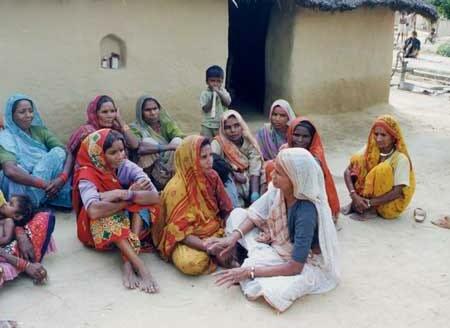
52 Developmental Issues
10. Rural housing
11. Roads, bridges and other means of communication
12. Electrification
13. Poverty alleviation 14. Non-conventional energy 15. Education and training 16. Social and family welfare 17. Public distribution system 18. Maintenance of community assets
Non-Governmental Organisations (NGOs):There are many voluntary and nongovernmental organisations in India which have played a very important role in the developmental process through promoting socio-economic growth in both the rural and urban areas. Quite a few NGOs had come up due to the efforts of individuals who were inspired by the ideology of constructive programme of Mahatma Gandhi. It is reported that the founders of one fourths of the NGOs were inspired by Gandhi. Gandhi himself took the initiative in establishing the Kasturba Gandhi National Memorial Trust (KGNMT).
The programmes undertaken by the NGOs are mainly to improve the social, economic, educational, cultural and environmental status of the tribals, the poor and the oppressed classes. Besides their ownprogrammes, they also act as a bridge between the government and the people with regard to funds and development policies.
Some of the broad programmes undertaken by the NGOs are:
1. Agricultural development and animal husbandry 2. Cottage and small scale industries 3. Educational programmes 4. Health and sanitation 5. Housing 6. Social forestry 7. Organisation of the poor 8. Welfareservices 9. Relief and rehabilitation 10. Culturalprogrammes 11. Environment and sustainable development
A large number of NGOs are also engaged in applying the results of scientific research and innovations to provide alternate and sustainable solutions to the problems of rural development.
7.5 SUMMARY
• For an equitable growth and development, it is necessary to consider three major factors: capital accumulation, population growth and technological progress. The quality and quantity of human resources play a key role in the economic development.
• While the developed countries traditionally remained in the forefront in the economic growth and development, the developing countries lagged behind due to the shortage of many essential resources, stalling their growth as the producers and manufacturers of goods. The western powers wielded considerable influence in the economic matters.
53
InequitableGrowth
• The developing countries, to rid themselves from western domination, forged unity to push forward their development agenda. Substantial efforts are being made by these countries to adopt policies that would strengthen the indigenous know how and eco-friendly technology. For, it is these methods, coupled with the governmental support and initiatives that are crucial for the upliftment of the socio economic, environmental conditions of the developing world at large.
7.6 TERMINAL QUESTIONS
1. What do you understand by inequitable growth?
2. What are the reasons for the inequitable growth between the North and South?
3. Trace the development of WTO and outline its policies concerned with sustainable development.
4 What are the initiatives taken to bridge the North-South Divide?
REFERENCES
1 Ahmad, R. (1996) Cooperatives in Integrated Rural development (A case Study of Aligarh district), Mittal Publications, New Delhi.
2. Chand,M., and Puri, V.K. (1995) Regional Planning in India, Allied Publishers Limited, New Delhi.
3. Gilpin, R. (2000) The Challenge of Global Capitalism: The World Economy in the 21st Century, Princeton Press, Princeton.
4 Kuhn, B. (1998) Participatory Development in Rural India, Radiant Publishers, NewDelhi.
5 Narayana,E.A. (1990) Voluntary Organisations and Rural Development in India, Uppal Publishing House, New Delhi.
6. The South Centre (1996) Enhancing North South Trade, Inprimerie Ideale, Geneva.
Websites
http://chemistry.anu.edu.au/Staff/WG/post_col_india.pdf http://devdata.worldbank.org www.isidev.nic.in/pdf/skgfao.pdf www.indianchild.com/indian_economic_policies.htm
54 Developmental Issues
UNIT8 GLOBAL AND REGIONAL DIMENSIONS
Structure
8.1 Introduction
Objectives
8.2 Regional Issues
Desertification and Droughts
Floods and Soil Erosion Rise in Sea Level Deforestation
8.3 Global Issues
North-South Divide Biodiversity Climate Change Intellectual Property Rights
8 4 Summary
8.5 Terminal Questions
8.1 INTRODUCTION
Sustainable development can be best realised by ‘A Common Future’ or ‘Global Sharing’ concept. This lays emphasis on the link between economic and environmental development. It is recognised that it is not possible to de-link environment from economic development, inequity in the global economy, military expenditure and human rights abuses. Further, structural inequalities in the global economic system are also responsible for the hindrance in realising the issue of sustainable development in totality. To make the process of sustainable development feasible and operational, it is important to establish a common focus that can integrate the outlook and efforts of various participants in development, worldwide, realising the diversity, in terms of geography, society, economics, level of science and technology (S&T) capabilities and capacities, education standards/levels. It can thus be easily appreciated that the issues to be addressed for attaining sustainable development cannot be generalised. Some or rather most of the issues, need to be addressed on a regional basis first. Once this is done, the regional issues, concerns, solutions can be clubbed together and discussed for global perspective, to take care of global requirements and concerns.
Objectives
After studyingthis unit you should be able to:
• discuss the regional issues and concerns that impact national development; and
• analysethe global issues and their implications for sustainable development of nations
8.2 REGIONAL ISSUES
The wide range of environmental challenges faced by different countries, in line with their respective geographical, ecological and climatic features makes country-specific approaches indispensable. Thus, each country must formulate its own approaches, in line with its social and economic priorities, its cultural values, institutions and political structures. Many environmental problems, such as climate change and deforestation, have clear global dimensions. However, as a general rule, the impact of environmental damage is felt at the local, national or regional level. Water shortages and contamination, soil erosion or forest, mangrove or coral reef degradation harm
55
and Regional Dimensions
Global
primarily the local communities who are directly exposed. Even the severity of air pollution is highly variable in different areas of a single city and even more so in an entire country. Accordingly, most indicators of environmental conditions are primarily relevant at the local level. As a result, developing a capacity to monitor environmental conditions, and the impact of degradation on people’s lives within a region, forms an important part in the efforts to define a country’s sustainable development strategies.
Some of the important region specific issues are discussed below.
8.2.1 Desertification and Droughts

‘Desertification’ means land degradation in arid, semi-arid and dry sub-humid areas resulting from various factors, including climatic variations and human activities. It is a gradual process of loss of the vegetative cover and soil productivity. Human activities and climatic variations resulting in droughts and floods are chief causes of this process. Desertification has grave natural consequences; it makes land areas flood prone, prone to salinisation and results in deterioration of the quality of water, silting of rivers, etc. What is alarming is that the land’s topsoil, which takes centuries to build up, if mistreated, can be washed away in a few seasons. Human activities that cause desertification are over-cultivation, overgrazing, deforestation, and poor irrigation practices
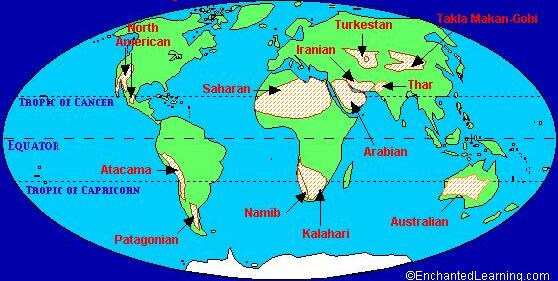
The measures undertaken to preventlanddegradation and restore degraded land are: improved early warning system and water resource management, sustainable livestock management, aero-seeding, agro forestry ecosystems, afforestation and reforestation by new species and varieties with a capacity to tolerate salinity and/or aridity, and planned human settlements. A direct cause of misuse of land is poverty,which forces people who depend on land for their livelihoods. They overexploit it for food, energy, housing and source of income.
Desertification is a worldwide problem affecting 250 million people and over 4 billion hectares of land surface. In addition, the livelihood of some one billion people depends on land for their needs and they are among the world’s poorest. Though desertification affects Africa the most, it is not a problem confined to that region alone. One quarter of Latin America and the Caribbean isdeserts; in Spain, one fifth of the land is at the risk of becoming desert. The growing severity of desertification in the Northern hemisphere is evident from the severe droughts in North America and Southern Europe, China and other countries.
56 Developmental Issues
Fig.8.1: Major deserts on the earth (Source: www.zoomschool.com/ biomes/desert/majordeserts.GIF)
Though a global issue, desertification needs to be addressed and tackled first at the regional level. On a regional basis, the priority in combating desertification should be the implementation of preventive measures for land that is not yet degraded, or slightly degraded. However, the degraded areas should not be neglected. In combating desertification and drought, the local communities, rural organisations, national governments, non-governmentalorganisationsand regional organisations are required to work in collaboration.
Programmes aimed at combating these regional issues, in summary, should include the following:
i) Strengthening the knowledge base and developing information and monitoring systems in regions prone to desertification and drought, including the economic and social aspects of the ecosystem.
ii) Combating land degradation through inter alia intensified soil conservation, afforestation and reforestation activities.
iii) Developing and strengthening integrated developmental programmes for the eradication of poverty and promotion of alternate livelihood systems in areas prone to desertification.
iv) Developing comprehensive anti-desertification programmes and integrating them in the development plans and national environment planning.
v) Developing comprehensive preparedness and drought relief schemes, including self help arrangements for drought and designing programmes to cope with environmental refugees.
vi) Encouraging and promoting popular participation and environmental education, focusing on desertification control and management of the effects of drought.
Governments at regional level should strengthen the regional programmes and international co-operation. They should establish and/or develop a comprehensive desertification, land degradation prevention programme with a database component incorporating both socio-economic and physical parameters. This would be based on existing facilities and additional facilities such as Geographical Information Systems where necessary. In addition, benchmarks should be set up with indicators to mark the progress in the fight for anti-desertification. Also, the regional governments should develop technical and professional skills of people engaged in monitoring and assessing the issue of desertification and drought, promote involvement of local people particularly women and youth through education and awareness building.
On a global plane, the issue of desertification was first discussed at the UN Conference onDesertification held at Nairobi, Kenya in 1977, but due to lack of support both administratively and financially, attempts to tackle the problem were crippled. The United Nations Conference on Environment and Development (UNCED) recommended the United Nations Convention to Combat Desertification (UNCCD), which was adopted in Paris in 1977. It is the first and only internationally and legally binding framework set up to address desertification issues. The convention is based on the principles of participation, decentralisation –the backbone of good governance. The convention has now more than 180 countries participating giving it a truly global reach.
8.2.2 Floods and Soil Erosion
Mountains and highlands are found in every continent; they cover about a quarter of the Earth’s land surface and are home to 10% of the world’s people. Another 40% live in adjacent lower watershed areas; thus more than half the global population is directly or indirectly dependent on mountain resources, the foremost being water for drinking and home use, irrigation, hydro power, industry and transportation. The crops
57
Global and Regional Dimensions
that feed the cities are raised in the valleys and flat river plains, but the fate of the valleys is decided in the hills and mountains where the streams rise. Where the hill slopes and ridges in the upper reaches are covered with trees, the streams flow clearly and steadily and all is well in the valleys below. Where the trees are gone, the soil washes down the slopes to clog the streams and foul the river bottoms thus raising the water level. When it rains in the hills there is no soil left to hold the water resulting in flash floods which in turn sweep down into the valleys resulting in rivers bursting their banks ruining crops and lives, and wash yet more soil away to the sea. The water is wasted and the deserts spread.
The degradation of mountain ecosystems– home and livelihood to millions threatens to seriously worsen global environmental problems including floods, landslides and famine. While several of the world’s mountain areas are in relatively good ecological shape, many face accelerating environmental and cultural decline brought on in part by government and multilateral agency policies too often founded on inadequate research.
People living in the mountain areas worldwide, who are among the poorest of the poor, are extremely rich in environmental understanding. Their opinions and experiences need to be combined with scientific knowledge, together with cultural diversity-a prevailing feature of mountain life, must be considered as complementary to biodiversity if sustainable mountain development is to be achieved. The widespread conflict in mountain regions, including conventional warfare, terrorism, guerrilla insurgency and repression of minority peoples, must be tackled far more vigorously than hitherto.
The management and utilisation of the natural resources of mountains, especially water, must be undertaken in such a way that mountain people share the benefits. Despite the importance of reliable data, hydro-meteorological networks in many countries have declined seriously in the last decades. The development of strategies, techniques and methodologies to acquire these data at local, regional and global scales and the establishment of mechanisms for making these data freely available are vital. Information technology enhances the link between mathematical models and data. In this respect remote sensing based information requires analysis and its translation into hydrological characteristics needs to be carried out.
8.2.3 Rise in Sea Level
Sea levels have fluctuated dramatically in geologic times. It was 2-6 m above the present level during the last interglacial period, 125,000 years ago, but 120 m below present levels during the last Ice Age, 20,000 years ago. In the last 100 years it has increased by 10-25 cm. Sea level could rise 40 to 65 cm by the year 2100, due to predicted greenhouse-gas-induced climate warming. Such a sea level rise would threaten coastal cities, ports, and wetlands with more frequent flooding, enhanced beach erosion, saltwater encroachment into coastal streams and aquifers.
However, future sea level is very difficult to predict, because not enough is known about how the ice sheets in Greenland and Antarctica will react to global warming. Furthermore, local sea level is affected by many regional processes, including tides, ocean currents and geographically varying land movements. These Earth motions are caused by ongoing adjustments ofEarth’s crust to the removal of the former ice sheets, tectonic deformation, subsidence of river deltas under sediment loads, and extraction of underground water, oil, or natural gas near the coast.
A comparison of the tide-gauge records and radiocarbon-dated geologic data from four widely separated regions, spanning a broad range of geologic settings, indicate modern sea-level trends to be consistently 1-1.8 mm/year higher than those derived from long-term geologic data. This result implies a recent acceleration of sea-level rise relative to the last few thousand years.
58 Developmental Issues
The nationwide impacts of sea level rise are:
• BeachErosion
• Saltwater intrusion resulting in increased salinity
• Floods and flood damages
• Threats to coastal wetlands
• Threats to agriculture
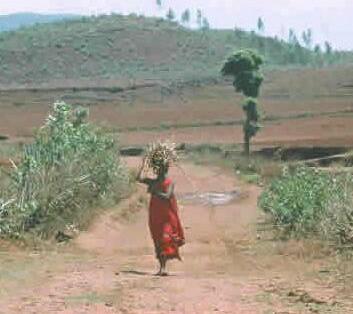
Apart from the above direct effects, there are some indirect effects of sea level rise, which sometimes may be more significant than direct effects in the future.
Though the consequences of sea rise are not alarming presently, the time is ripe for taking adaptive actions as the effects of sea level rise are becoming inevitable because of green house gas emissions, the inertia of the oceans, and the economy’s current dependence on fossil fuels. Any corrective action at this stage would be welcome. This includes decision to rebuild after a coastal disaster. Again, society can save money by preparing for sea level rise, but such preparation is impossible without reasonably reliable projections of how much the sea might rise.
8.2.4 Deforestation
The world’s forest area has been declining for centuries, though its impact has been understood with concern that the process has accelerated to alarming proportions only in the last half of the 20th century. Since the 1960s there has been a major change in the rateat which tropical forests are being cleared. In contrast, the area of temperate forests in developed countries grew by 0.1 per cent in the 1980s. The Food and Agriculture Organisation (FAO) of the United Nations has estimated that the annual rates of deforestation in developing countries were at 15.5 million hectares for the period 1980-1990 and 13.7 million hectares for 1990-1995. The total forest area lost during the 15-year period was approximately 200 million hectares. The tragedy lies in the fact that most of these deforested lands are not suited for long-term farming or grazing and they quickly degrade once the forest has been cut and burnt. In fact, throughout the tropics, very few of the forested lands that are left have any potential for sustainable agriculture.
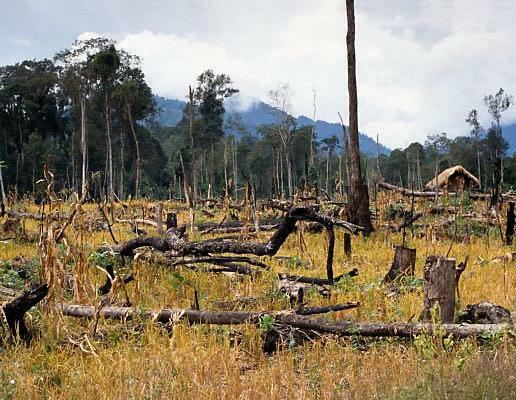
59
Global and Regional Dimensions
Fig.8.2: Deforestation leads to land degradation as well as untold suffering and loss of livelihoods for the poor
It is important to distinguish between the agents of deforestation and its causes. The “agents” are those individuals, corporations, government agencies, or development projects that clear the forests as opposed to the forces that motivate them. There are four aspects of the causes of deforestation:
1. Predisposing conditions: These conditions create an environment where deforestation can occur. They are conditions created by society, at times intentionally and at times as the consequence of human activities. They are some of the systemic, most difficult issues that frustrate human progress and sustainable development. Another predisposing condition of deforestation is poverty, particularly in rural areas. Although poverty is not a “cause” of deforestation, it is a condition of life that the majority of people in this world must endure. While greed and power can be the motivations of some groups in society to deforest, survival and the desire to escape from poverty also drives most people towards deforestation.
2. Direct causes:These are the most visible, easily identified and readily associated with the agents of deforestation. They are driven by the other less visible, socioeconomic forces the indirect causes. The direct causes include Commercial Agriculture, Cattle Ranching/Livestock Grazing and Mining and PetroleumExploration.
3. Indirect causes: These include Fiscal and Development Policies, Land Access, Land Tenure and Market Pressures. Often mentioned as causes of deforestation are the demand for forest products and the demand for other goods (mostly food) that are produced on deforested lands (clearly, without any demand there would be no economic reason for cutting down the trees), undervaluation of natural forests, forest exploitation and plantation development in the loss of natural forests.
4. Social factors: Faced with political decisions about urban migration,food production, reform, employment generation, national security, economic structural adjustment, and all the other issues that demand their attention; unfortunately, many governments have opted to ignore deforestation.
However, it must be remembered that firewood collection and logging are not direct causes of deforestation. These do produce a change in the composition of the natural forest and can increase the risk of a subsequent transition in favour of other land uses. In some circumstances, deforestation can result when harvesting occurs under very sensitive environmental conditions or when it is very intense over a long period. In the case of tree plantations, replacing the natural forest with plantations results in a loss of natural forest area but it does not cause deforestation because there has been no permanent change in land use.
One of the lessons of the last 30 years in trying to contain deforestation is that the people who are meant to benefit from the forests must be full partners in the process of identifying and implementing solutions.
Interestingly, it may be noted that in some cases, deforestation can be beneficial. Given the right mix of social needs, economic opportunities, and environmental conditions, it can be a rational conversion from one type of land use to a more productive one. The tragedy lies in the fact that most lands that have been deforested in recent decades are not suited for long-term farming or ranching and they quickly degrade once the forest has been cut and burnt. Unlike the fertile soils of temperate latitudes, most tropical forest soils cannot sustain annual cropping. The carrying capacity of the land does not support intensive annual cropping without rapid, irreversible degradation. Similarly, intensive cattle grazing cannot be supported because grasses grown on forest soils do not have the same productivity levels as those on arable soils.
60 Developmental Issues
The social consequences of deforestation are many, often with devastating long-term impacts. For “indigenous” communities, the arrival of “civilisation” usually means destruction of their traditional life-style and breakdown of their social institutions. Individual and collective rights to the forest resource have been frequently ignored and indigenous peoples and localcommunities have typically been excluded from the decisions that directly have impact upon their lives. In many cases, political decisionmakers knowingly permit deforestation to continue because it acts as a social and economic safety valve. By giving people free access to forested lands, the pressure is taken off politicians to resolve the more politically sensitive problems that face developing countries, such as land reform, rural development, power-sharing,andso on.
Probably the most serious and most short-sightedconsequence of deforestation is the loss of biodiversity. The phrase “loss of biodiversity” masks the fact that the annual destruction of millions of hectares of tropical forests means the extinction of hundreds of species and varieties of plants and animals, many of which have never been catalogued scientifically. In addition, deforestation is an important contributor to global warming. The rate of deforestation can be slowed down considerably and its negative socio economic and environmental impacts minimised. Towards this, the agriculture sector must be challenged to find appropriate solutions.
Any effort to combat deforestation must be based on a complete understanding of who the agents of deforestation are and what its direct and underlying causes are. The circumstances vary from country to county and from region to region. Through improved protection and management of the remaining forests, well-targeted socio economic development programmes and policy/ institutional reforms, deforestation can be brought under control. While forests will continue to be lost for decades to come, it is critically important that the fight against deforestation be done in the most rational way possible. Only then will the long-term benefits to humankind be favourable and the costs to the environment minimal. It is time for all people to renew their commitment to live in harmony with the tropical forests before they are lost forever.
SAQ 1
Discuss the impact of each of the regional issues highlighted in Sec. 8.2 in the context of your region/country. Outline the extent of the problem and the measures being taken at various levels (community, state, national, regional) in your answer along with suggestions for what more needs to be done.
8.3 GLOBAL ISSUES
You have studied in the previous unit about inequitable growthof national economies. In this context, one ofthe most burning issue is that of the North-South divide
8.3.1 North-South Divide
The ‘North’ consists of the industrialised, developed and rich countries. There is amongst them growing recognition about the rate at which non-renewable resources are being used up as also of advantages of using renewable resources over nonrenewable ones. This ‘North’ world has just over 20% of the world population but consumes 80% of the world’s energy; on the other hand, the ‘South’, comprising of the developing nations of the world is still struggling to provide for the basic needs of food, water, shelter, clothing, basic education and health for its population. In order to meet their basic and daily requirements, people of the South have to depend on whatever is available in their immediate environment to survive.
61
Global and Regional Dimensions
The consequences of these conditions include the following:
i) Use of forest wood for fuel
ii) Landless peasants are pushed into marginal land by land owners or government wanting to increase cash crop production or for some other development or by population pressures, resulting in overuse of marginal land.
iii) Many peasants who are displaced from their land or unable to grow enough food to survive, crowd in congested cities.
iv) Poor people have large families and live in unhealthy conditions.
All the above factors directly or indirectly affect the ecology and environment. In addition, the countries of the ‘South’ owe to the industrialised world huge debtsof the order of $1 trillion, which keep increasing by the day. To meet the debt, these nations due to their inability to purchase and/or adopt new, clean technologies, use manufacturing technologies which adversely affect the environment.
The solution to this problem is easy to formulate but difficult to implement. The countries of the South, especially the poorest among them, urgently need strong and sustained growth to generate and improve their living standards. Apart from having to meet basic needs, more than others, they are facing major environmental problems with fast growing populations and chaotic urban sprawl- with all the consequences of pollution, health problems and development of adapted infrastructure, which are more difficult to manage than for the North countries. They need to adopt ‘clean’ technologies designed specifically to meet their needs for better living standards and quality that do not adversely affect the environment.
Also, the ‘North’ countries, which consume the lion’s share of the fuel and other nonrenewable energy sources due to their higher living standards and life-styles,are responsible for the problems facing the planet. Here the solution would lie in questioning and redefining their needs and lifestyles. These countries bear an enormous responsibility and need to show a commitment to reform. Calling for practices to cater to the requirements of sustainable development require painful sacrifice in terms of competitiveness, conversion and changes in behaviour.
The North-South divide issue is thus a problem, which requires a two-fold approach to arrive at a solution. One is the global sharing approach and the other a Science and Technology (S&T) based approach. The solution to this problem cannot be achieved by adopting one of the above methods in isolation; rather, unison of the two methods would be required for addressing the issue of North-South divide related to sustainable development.
South Percentages
Resource consumption Population
North
0 20 40 60 80 100
Fig.8.3:Someindicators of the North-South divide
62 Developmental Issues
The global sharing method, which encourages the sharing of strategies, responsibilities, experiences and information, related to environment issues would help in attaining the desired results of sustainable development. The sharing needs to be done not only between the governments but also with civil society including private business and NGOs.
The basic role of Science and Technology (S&T) would be manifold, including:
i) Taking real measure of the state and evolution of the environment and report the findings to policy makers and general public.
ii) Formulatingpossible adaptations and remedies as a basis for sustainable development
iii) Creatingclean technologies.
iv) Creatinga general awareness of the need to better integrated research on economic and social science.
The answers, which S&T can bring to environmental problems, are coming increasingly to be judged with reference to the changes they bring in society. They impose choices of governance, the impact on socialand economic groups measured in terms of efficiency, spread of costs and social or regional equity.
It is on the basis of this holistic approach that the North-South divide leading to hindrance in sustainable development can be tackled.
8.3.2 Biodiversity
Biodiversity relates to all biological life in the planet and there is an urgent need for the conservation and sustainable use of biological diversity and the fair and equitable sharing of benefits arising from the utilisation of components of genetic resources. Biological resources constitute a capital asset with great promise for yielding sustainable development. Improper and unthoughtful practice mainly from habitat destruction, over harvesting, pollution and the inappropriate introduction of foreign plants and animals, now pose a threat to the biodiversity. Evolutionary processes of survival of growth critically depend upon the availability of diverse-resources, natural and flora and fauna to tide over natural disasters and by providing inbuilt mechanisms of checks and balances. Despite mounting efforts over the past 20 years, the loss of world’s biodiversity continues. Thus there remains an urgent need for the conservation and sustainable use of biological diversity.
The threat being posed to diversity needs attention of international bodies and all governments.Thiswouldrequire the following concrete steps:
• Taking decisive action to conserve and maintain genes, species and ecosystems with a view to promote sustainable development.
• Ratifying the Convention on Biological Diversity of the United Nations.
• Undertakingconcrete actions for the fair and equitable sharing of the benefits arising from the utilisation of genetic resources.
• Facilitating transfer of technologies including biotechnology for enhancement and proper utilisation of bio-resources to developing countries that are, in any case, the richest reservoirs of bio-resources.
• Respecting, preserving and building upon knowledge, innovations and practices of indigenous and local communities embodying lifestyles that have traditionally been respectful of bio-resources. New systems need to be set up so that the communities get adequate returns, financial and other benefits from the use of their knowledge.
63
Global and Regional Dimensions
• Providing the necessary support to integratethe conservation of biological diversity and sustainable use of biological resources into national development plans.
• Promotingcooperation among countries across North-South to develop and strengthen national capacity-building, including human resources development and institution-building.
Fig.8.4: Conservation of bio diversity is one of the major concerns today (Source: www.bioteach.ubc.ca/.../ Biodiversity.gif)
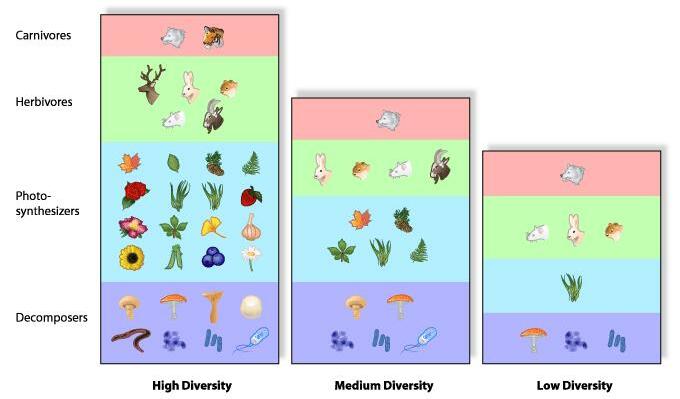
The problem of biodiversity can be addressed globally but initiatives and actions at the regional level need to be formulated and implemented more so keeping in mind the fact that the views and approaches of the North and South countriesontherelated issues would be different. Each region would have its own local knowledge systems and practices to deal with the conservation and sustainable use of biological resources, which have been in practice since several decades. It is required to take stock of the practices region wise and initiate legislative, administrative and policy regime regarding biodiversity in tune with the UN convention, on a national basis. A national action plan on biodiversity needs to be formulated which would consolidate all ongoing efforts at conservation and sustainable use of biological resources including the following:
• Capacity building;
• Bio safety measures;
• Bio safety protocol;
• Biodiversity information network;
• Use of traditional knowledge and benefit sharing; and
• Legislation
Itmay not always be possible for the Southern countries to take up suchactivities individually and there is a need for North-South cooperation and interaction to bridge the gap. This would require working of the governments at the international level with the cooperation of other countries, international bodies like the United Nations,
64 Developmental Issues
Non-Governmental Organisations (NGOs), private sector and institution taking into account people, their communities, practices and economic factors.
Implementation of programmes to conserve biological diversity on a global basis needs the following arrangements to be made for implementation:
• Financing and cost evaluation
• Scientific and technological means
• Human resource development
SAQ 2
What are the issues that need to be addressed to overcome the threat to biodiversity?
8.3.3 Climate Change
Climate change is a serious challenge faced by the international community striving towards sustainable development. It has implications for not only health and well being of the earth’s ecosystem but also for the economic enterprises and social livelihoods. The current models predict a 0.3 degree Celsius increase per decade in global temperatures over the next century. This is attributed to the increase in the amount of carbon dioxide present in the atmosphere, which has risen by about 25 per cent in the last 150 years. As a global problem, climate change requires a global solution, which can be made possible by research, shared knowledge and engagement of people at all levels. Within climate change, particular attention needs to be paid to the unique challenges facing developing countries. The South is likely to be significantly affected by climate change, yet it typically lacks in the resources needed to adapt to the economic, social and environmental changes expected to occur. Partnership between the North and South countries would give a good understanding of the implications of climate change for these countries and examine how approaches such as the Clean Development Mechanism may be used to meet developing countries’ sustainable development objectives.
The negative consequences of global warming are catastrophic. These include:
• Increasing drought and desertification
• Crop failures
• Melting of the polar ice caps
• Coastal flooding
• Displacement of major vegetation regimes
• Coral mortality
• Change in ocean behaviour
• Natural disasters
• Infectious diseases
• Degradation of ecosystems
• Scarcity of food supply
• Rise in sea level
To address the detrimental effects, corrective measures with regard to the following need to be taken:
• Cuttingdown on carbon monoxide emissions.
• Adoptingthe ‘Clean Development Mechanism’ suggested under the Kyoto Protocol.
• Reducing green house effect
• Using cleaner mining technologies that will reduce sulphur dioxide and particulate pollution thereby lowering mining contamination of water and air
Despite knowing the methods, that can stop climate change, differences in national policy hinder their applications. This is because while governments pursue one set of
65
Global and Regional Dimensions
objectives through climate negotiations, their finance and trade armsignore the global environmental implications of their activities. Another area that impedes action is the large amount the governments spend on subsidising energy throughout the world. This subsidy exists for both the North and South countries and discourages economical consumption of energy. Eliminating these subsidies could result in significant reductions in greenhouse gas emission from energy generating and consuming systems.
The framework on which global action on climate change may take place was defined in the United Nations Framework Convention on Climate Change (UNFCCC) in 1992 and later in the Kyoto Protocol. In spite of being a positive step direction it has been made imperfect as some of the world’s largest polluters have stayed out of the convention and some among those who have joined have demanded and received changes that have weakened the protocol considerably, resulting in a systematic marginalisation of the core interests of the developing countries.
Concerns have been raised mainly by the Southern countries regarding the direction in which the global climate regime has evolved; these in general relate to four large categories of concern.
Principle of equity- both inter and intra generational.
Focus of the regime has become skewed towards minimising the burden of implementation on polluter industries and countries, instead of giving priority to the vulnerabilities of the communities and at greater risk and disadvantage.
The regime has now distinctly become a system for managing the global carbon trade and has lost sight of its original mandate of stabilising atmospheric greenhouse gas concentrations.
The most vulnerable communities and countries are those, which are already the poorest and least adapt to these changes.
These concerns can be addressed by:
The creation of a predictable, implementable and equitable architecture of combating global climate change that can stabilise atmospheric concentrations of greenhouse gases within a specified period of time, while giving all nations a clear indication of their current and future obligations based on their current and future emission.
Enhancing the capabilities of communities and countries to combat and respond to global climate change, with particular attention to an adaptive capacity that enhances the resilience of the poorest and most vulnerable communities.
Most environmental issues require a long time arrangement. This is particularly true of climate change. The test of any climate regime is not simply what can be done or achieved in a short span of few years but what it is likely to achieve over the coming decades or even centuries. It is therefore very important that the policy architecture constructed is robust enough to stand the political as well as climate tests of time.
SAQ 3
Describe a few corrective steps to address the ill effects of global warming.
8.3.4 Intellectual Property Rights
Intellectual Property Rights (IPR) is the right to protect innovative ideas to make use of and sell a new product or technology. The protection is granted solely to the inventor or corporation, which files a claim on the investors’ behalf, for a limited
66 Developmental Issues
period of time. This may take the form of patents, trademarks or copyrights. IPRs are legally enforceable but with limited monopoly granted by the state to the inventor. Within the specified time frame for which it is granted, no one else can copy the idea or technology allowing the innovators to commercialise it and recoup any investment on research and its development. Intellectual property has two characteristicsin particular which lend it to special legal protection. The first is that it tends to have a high cost of development and the second is that it has low costs of reproduction. For example, it may cost more than a few crores to bring a new drug to the market, yet after the drug is available any good chemist could, through reverse engineering, reproduce it at a fraction of the cost. Similarly, amongst any other product or process of which computer software or a piece of writing are the most easily copied.
The area where IPR requirements are most pronounced can be categorised as:
Agriculture –Plant varieties including Genetically Modified Organisms (GMOs) Manufacturing Information products
The debate for the desirability of IPRs continues in terms of welfare of the innovator who deserves right/remuneration for his efforts against the welfare of the society at large, which would benefit from the access to the innovation. The argument for IPR protection is that there would be less innovation without protection as no one would be willing to shell out large amounts of money or even innovate to develop new products/technologies/processes, if their innovation could be immediately copied by others; stronger the IPR protection, the more monitory rewards can be recouped by the innovator and thus more innovation tends to occur.
However, it cannot be overlooked that the overriding needs of the welfare for all rich and poor is to have affordable access to the results of innovation that can lead to sustainable development. It is important to note that while on one hand the financial incentive for innovation is a key justification for IPRs, on the other hand, IPR systems can severely hamper the very innovation they are intended to spur as the sharing and spread of innovative knowledge would get restricted in the hands of only a few who can invest in it.
To bring all the countries at par, the Trade Related Intellectual Property Rights (TRIPs) was formulated in January 1995, under which all member countries must bring their national IPR laws in conformity with certain provisions. However, the provisions in it generated so much controversy and debate that the final agreement states that the conditions “shall be reviewed after every four years from the date of entry into force”.
The benefits of IPR protection for the innovator (and country) and lack of it for mankind and sustainable development on a whole needs to be weighed each time the issue crops up and decide accordingly.
8.4 SUMMARY
This unit discusses the impact of regional and global factors on sustainable development.
• The regional issues like desertification and droughts, floods, and soil erosion, rise in sea level and deforestation have assumed significance due to the misuse of the natural resources. The issues, when tackled on a regional basis, would contribute towards achieving sustainable development.
• Among the global factors, in particular, the causes of North-South divide and its effect on efforts at sustainable development are discussed. The detrimental effects are being realised in areas like biodiversity and climate change and steps are being
67
Global and Regional Dimensions
taken to bridge the gap.It is being realised that corrective steps cannot be taken by any nation or a group of nations in isolation without the consent andparticipation of other nations as they adversely affect the efforts towards sustainable development. Even the efforts to protect intellectual property generated in related areas arequestionable when the areas of sustainable development are addressed worldwide.
8.5 TERMINAL QUESTIONS
1. How does afforestation contribute towards sustainable development?
2. What could be the consequences of global warming and a rise in the sea level?
3. Why is it not advisable to protect intellectual property in areas related to sustainable development?
4 The world is divided into the North and South. What are their opposing viewpoints on issues related to sustainable development?
REFERENCES
Websites
http://www.destinet.ewindows.eu.org/aEconomic/2/DECISIONS_OF_THE_GENER AL_ASSEMBLY.doc/
http://www.iisd.org/trade/wto/ctedoc.htm
http://unfccc.int/cop8/latest/1_cpl6rev1.pdf http://www.iied.org/docs/climate/cc&sd_viewsouth.pdf
http://www.twnside.org.sg/title/twr139a http://www.uneptie.org/energy/publ/
68
Issues
Developmental
UNIT9 STATE INITIATIVES
Structure
9.1 Introduction
Objectives
9.2 Legislative Measures
9.3 JudicialInterpretations
9.4 Institutional Mechanisms
9.5 Summary
9.6 Terminal Questions
9.1 INTRODUCTION
The goal of environmental protection should be high on the priority listof the South Asian countries. It is indeed true for India, going both by its participation in international efforts as well as by its efforts within the country. India has participated actively in international environmental conferences andhas signed and duly ratified most of the important conventions relating to environmental protection, thereby taking on international legally binding obligations in this direction. It has enacted a large number of environmental laws within the country, covering almost every sector of the environment. What is more, the Indian judiciary has taken the issue of environmental protection very seriously and through expansive interpretation, has ensured, for all practical purposes, a ‘right to environment’. There is also in place in India an institutional mechanism to take care of environmental issues. In real terms, however, it has not been easy to translate these initiatives effectively into reality. There are numerous problems in implementing this large body of law. Although this unit is an overview of the initiatives taken in India at the national level towards environmental protection, youcan apply this information to your own context
Objectives
After studyingthis unit you should be able to:
• discuss your country's international obligations relating to environmental protection;
• explain the legislation for environmental protection in your own country;
• analyze the role of the judiciary in strengthening the cause of environmental protection;
• describe the institutions that deal with environmental protection in your country; and
• discuss the challenges that need to be overcome in order to ensure effective implementation of environmental law and policy in your context
9.2 LEGISLATIVE MEASURES
An amendment to the Indian Constitution included in 1976 provisions relevant to the environment protection. Article 48A was added in Part IV of the Constitution (Directive Principles of State policy), calling upon the state “to protect and improve the environment and to safeguard the forests and wildlife of the country”. Also, Article 51(A)(g) was inserted, imposing a fundamental duty on every citizen “to protect and improve the natural environment including forests, lakes, rivers and wildlife, and to have compassion for living creatures”.
Along with the constitutional provisions, there are numerous Acts, Rules and Notifications dealing with different aspects of the environment. The Indian Penal Code (IPC), 1860 has a number of provisions that can be invoked in the context of
5 State Initiatives
environmental litigation. Section 268 of IPC defines ‘public nuisance’ as an act that “causes any common injury, danger, or nuisance to the public or to the people in general who dwell or occupy property in the vicinity or which must necessarily cause injury, obstruction, danger or annoyance to persons who may occasion to use any public right”. Various other provisions of the IPC can also be invoked for environmental matters. Besides these provisions, however, there is an entire body of enactments (numbering close to 200) that are directly aimed at environmental protection. Some of these are listed in the Table 9.1, followed by a brief description of some of the important enactments.
Table 9.1: Environmental Legislation in India
Indian Forest Act, 1927
Wildlife (Protection) Act, 1972
Wildlife (Transactions and Taxidermy) Rules,1973
Wildlife (Stock Declaration) Central Rules,1973
Wildlife (Protection) Licensing (Additional Matters for Consideration) Rules, 1983
Water (Prevention and Control of Pollution) Act, 1974 (Amended 1988)
Water (Prevention and Control of Pollution) Rules, 1975
Water (Prevention and Control of Pollution) Cess Act, 1977 (Amended 1992, 2003)
Water (Prevention and Control of Pollution) Cess Rules, 1978
Forest (Conservation) Act, 1980
Air (Prevention and Control of Pollution) Act, 1981 (Amended 1987)
Air (Prevention and Control of Pollution) Rules, 1982
Air (Prevention and Control of Pollution) (Union Territories) Rules, 1983.
Environment (Protection) Act, 1986 (Amended 1991)
Environment (Protection) Rules, 1986
Hazardous Wastes (Management and Handling) Rules, 1989
Manufacture, Storage and Import of Hazardous Chemicals Rules, 1989
Manufacture, Use, Import, Export and Storage of Hazardous Micro-organisms, Genetically Engineered Organisms or Cells Rules, 1989
Public Liability Insurance Act, 1991
Public Liability Insurance Rules, 1991
Coastal Regulation Zone Notification, 1991
Environmental Impact Assessment Notification,1991
Environmental Audit Notification, 1992
Environmental Standards Notification, 1993, 1996
Environmental Clearance Notification, 1994
National Environment Tribunal Act, 1995
Wildlife (Protection) Rules, 1995
Wildlife (Specified Plants – Conditions for Possession by License) Rules,1995
National Environmental Appellate Authority Act, 1997
Biomedical Waste (Management and Handling) Rules, 1998
Ozone Depleting Substances (Regulation) Rules, 2000
Biodiversity Act, 2002
6
Initiatives towards Sustainable Development
Water Pollution: The Water Act of 1974 established an institutional structure to oversee and ensure the prevention and abatement of water pollution. The Act set up the Central Pollution Control Board (CPCB) and State Pollution Control Boards (SPCBs). As per the Act, any person who knowingly causes or permits any poisonous, noxious or polluting matter to enter water bodies in violation of stipulated standards is guilty of an offence, which attracts penalties laid down in the Act.
The Water Rules were enacted in 1975, containing schedules and forms for information to be furnished by industries. The Water Cess Act of 1977 provides for the levy and collection of cess on water consumed by certain industries. These resources are used for prevention and control of water pollution. The standard forms and schedules for the supply of information are prescribed in the Water Cess Rules of 1978.
Air Pollution: The Air Act of 1981 entrusts the power of enforcing its provisions to the CPCB. In fact, the Air Act is, to a large extent, a mirror image of the Water Act. The objective of combating air pollution under the Air Act is undertaken by means of declaration of restricted areas, prohibition of use of polluting fuels and substances, etc. The penalties detailed in the Act are similar to those in the Water Act. The Air Rules were adopted in 1982.
Environmental Protection: The Environmental Protection Act (EPA) of 1986 is an umbrella legislation with wide legislative coverage. It gives wide powers to the central government to take all such measures as it deems necessary or expedient forthe purpose of protecting and improving the quality of the environment. Such measures include laying down standards for environmental quality, restricting areas of industrial operations, laying down procedures for handling hazardous substances etc.
The central government can close down offending industries and restrict the setting up of new industries at environmentally non-compatible sites. The Environment Rules of 1986 lay down procedures for the setting of emission and discharge standards. A host of notifications have been enacted under the EPA, such as those on Environmental Impact Assessment and Coastal Regulation Zones.
Fig.9.1: Prevention of pollution and environment protection are major concerns in India
7
State Initiatives
Fig.9.2: Disposal and handling of hazardous waste is regulated through stringent rules
Hazardous Substances:There are various enactments relating to hazardous substances. The Hazardous Wastes Rules of 1989 make generators of hazardous wastes responsible for proper handling and disposal of such wastes. There are also rules aimed at protecting the environment and human health from potential adverse impacts of gene technology and micro-organisms, which set up a network of committees to regulate animal pathogens, plant pests and genetically modified organisms.
The Hazardous Chemicals Rules of 1989 set up an authority to inspect industrial activity connected with hazardous chemicals. The Public Liability Insurance Act (PLIA) of 1991 deals with accidents involving hazardous substances and insurance coverage. In case of death or injury from an accident, the owner is made liable to provide relief as specified in the Act. The Public Liability Insurance Rules of 1991 lay down the standard administrative procedures for seeking relief.
Forests: The legal regime to govern forest reflects the dual relevance of forests from the ecological and the economic points of view. The Indian Forest Act (IFA) of 1927, which is a product of the colonial times, reflects a revenue-oriented policy. It mainly regulates dealings in forest produce and facilitates the levying of duties on timber. This Act authorises the state government to constitute any forest land or waste land as ‘reserved forests’ by notification, thereby acquiring proprietary rights over the forest and forest produce. Activities in a ‘reserved forest’ are regulated by the government.
The Forest Conservation Act (FCA) of 1980 focuses more on the ecological value of forests. It lays down that no state government or other authority can, without the prior approval of the central government, make any order to de-reserve forests; use any forest land for non-forest purposes; lease out forest land to a private agency or cut naturally grown trees in forest land for the purpose of re-forestation. The state government may seek such permission only after considering all alternatives and finding that no other alternative is feasible and that the required area is the minimum needed for the purpose. FCA therefore brings all forests in the country under the overall guardianship of the central government.


Wildlife: The Wildlife Protection Act of 1972 (WPA) provides for the regulation of hunting or killing of scheduled animals and protection of specified plant species. It confers powers on the state governments as well as the central government to proclaim ‘sanctuaries’ and ‘national parks’ in order to protect wildlife.
The WPA, along with its various amendments, covers various issues such as regulation on hunting of wild animals, possession of animal trophies and other products, setting up of the Central Zoo Authority etc. and sets out a framework for
8
Initiatives towards Sustainable Development
Fig.9.3: All forests in thecountry are under the overallguardianship of the Government of India by virtue of the Conservation of Forests Act, 1980
punitive action in instances of violation. A number of specific rules have been issued under the WPA.
Biodiversity: The recently adopted Biodiversity Act, 2002 aims to “…provide for conservation of biological diversity, sustainable use of its components and fair and equitable sharing of the benefits arising out of the use of biological resources, knowledge….” The Act provides for the constitution of a National Biodiversity Authority at the national level, State Biodiversity Boards at the state levels and Biodiversity Management Committees at the local levels to implement the provisions of this Act.
Fig.9.4:


Policies: Apart from the above-mentioned legislation, numerous policies have been formulated by the government to further the objective of environmental protection. These include the National Conservation Strategy and Policy Statement on Environment and Development, 1992; the Policy Statement for Abatement of Pollution, 1992; the National Forest Policy, 1988; and the Wildlife Conservation Strategy, 2002.
India has a fairly good record of participation in international efforts at environmental protection, having ratified over forty Multilateral Environmental Agreements (MEAs) relating to various components of environmental protection. Some of the major areas of environmental protection that India is active in at the international level are listed in the Table 9.2.
Apart from its signature and ratification of almost all the major MEAs, India has also made its presence felt in all major international conferences relating to environmental protection and sustainable development.
SAQ 1

a) Which of the legislative measures described above is relevantin your immediate context? Explain giving somecase studies.
b) Suggest measures for increasing public awareness about the environmental legislation How will you practice them yourself?










9
State Initiatives
India has put in place various legislative measures for protecting wildlife and bio diversity
About
E.coli Million Species
Five
Fungi Plant Animal
The Earth Help Preserve Them
And Inhabit
Initiatives towards Sustainable Development
Table 9.2: India’s Participation in Multilateral Environmental Agreements
Sl. No. Issue Area International Legal Instrument Date of Signature Date of Ratification
1. Protection of Wetlands
Convention on Wetlands of International Importance Especially as Waterfowl Habitat, 1971 1.10.1981 (a)
2. Protection of Heritage Convention Concerning the Protection of the World Cultural andNatural Heritage, 1972 14.11.1977
3. Protection of Endangered Species
4. Conservationof Migratory Species
5. Protection of the Ozone Layer
6. Protection from Hazardous Wastes
Convention on International Trade in Endangered Species of Wild Fauna and Flora, 1973 9.7.1974 20.7.1976
Convention on the Conservation of Migratory Species of Wild Animals , 1979 23.6.1979 4.5.1982
Vienna Convention for the Protection of the Ozone Layer, 1985
18.3.1991
Montreal Protocol on Ozone Depleting Substances, 1987 19.6.1992
Basel Convent ion on Transboundary Movements of Hazardous Wastes and their Disposal, 1989 15.3.1990 24.6.1992
7. Preventing ClimateChange United Nations Framework Convention on Climate Change, 1992 Kyoto Protocol to the UNFCCC, 1997 10.6.1992 1.11.1993
8. Conserving Biodiversity Convention on Biological Diversity, 1992
Cartagena Protocol on Biosafety, 2000 5.6.1992 18.2.1994
9. Combating Desertification Convention to Combat Desertification, 1994 14.10.1994 17.12.1996
10. Protecting the Antarctic Environment
11. Preventing Marine Pollution
Convention for the Prevention of Marine Pollution by Dumping from Ships and Aircrafts, 1972 (MARPOL) Protocol Relating to the International Convention for the Prevention of Pollution from Ships, 1978
17.6.1985
The Antarctic Treaty, 1959 Convention on the Conservation of Antarctic Marine Living Resources, 1980 Protocol on Environmental Protection to the Antarctica Treaty, 1991 2.7.1991 26.4.1996
United Nations Convention on the Law of the Seas, 1982 10.12.1982 29.6.1995
9.3 JUDICIAL INTERPRETATIONS
A major initiative towards environmental protection and sustainable development in India has originated from the Indian judiciary. The commitment of the judiciary towards social good in general and environmental protection in particular, led to the emergence of the innovative use of ‘public interest litigation’ (PIL) as a tool for social and environmental justice.
10
The judiciary has contributed to environmental protection in India in two ways. It has introducedprocedural innovations to provide much wider access to justice. And it has, by a positive and expansive interpretation of the ‘right to life’ enshrined in Article 21 of the Constitution, included within its ambit a ‘right to a healthy environment’. As pointed above, the Indian constitution does not provide a distinct fundamental ‘right to environment’. Environment finds mention only in the Directive Principles and Fundamental Duties. However, the Indian judiciary, starting from the 1980s, has adopted an increasingly environment-friendly stance and has imparted an interpretative linkage between a clean environment and the ‘right to life’. The judiciary, in various cases has held that the basic requirement of a decent quality of life is to live in a healthy environment. The right to environment was given judicial recognition in the Dehradun Lime Quarries Case (Rural Litigation and Entitlements Kendra v. State of Uttar Pradesh, 1987) and reaffirmed in the Sriram Gas Leak Case (MC Mehta v. Union of India, 1987).
The judiciary has also dealt increasingly with cases involving a reconciling of environmental goals and development imperatives. In most such cases, the Indian courts have held that while the significance of development imperatives cannot be denied, environmental protection is a larger good that is worthy of pursuit, even at the cost of short-term losses such as loss of jobs or revenue. Some of these cases are briefly described in this section.
Dehradun Lime Quarries Case, 1987: This case related to stone quarrying operations in the Doon valley, which, the petitioners claimed, represented ecological havoc for the hills in the region. The Supreme Court ordered the closing of the mining operations in the areas where mining was reported to be dangerous, even in the face of the hardships caused to the miners, considering this “…a price that has to be paid for protecting and safeguarding the right of the people at large to live in a healthy environment”. Of course, the court directed that the workers of the mines were to be rehabilitated through reemployment in reclamation, afforestation and soil conservation programmes in the areas. In this case, the Supreme Court came to its conclusion after having weighed the environmental need to protect the ecology of the hills againstthe need for limestone quarrying for industrial purposes in the country. The Court acknowledged the importance of industrial development but declared that it was not to be achieved at the cost of creating an ecological imbalance. Also, the Supreme Court spoke of a ‘right to environment’ in this case.
Sriram Gas Leak Case, 1987: In the Sriram case, the Court ordered the closing down of a hazardous industry wherein a gas leak had caused the death of a worker and endangered the health of several others. The court held that the State had the power to restrict hazardous industrial activities for the purpose of protecting the rights of the people to live in a healthy environment and laid down conditions under which industries of hazardous products would be allowed to restart. In this case, the Court evolved the principle of ‘absolute liability’ of compensation through interpretation of Article 21. Further, it held that the right to life contains the right to claim compensation for the victims of pollutionhazards.
Ganga Pollution Case, 1988: In the Ganga Pollution case, the Supreme Court issued directions to numerous tanning (and therefore polluting) industries located on the banks of the river Ganga to either set up effluent plants or close down. It alsoordered close to 5,000 industries located in the Ganga basin to install effluent treatment plants and air pollution control devices. The court also issued directions to the Central Government, Uttar Pradesh (UP) Pollution Control Board and the District Magistrate to ensure implementation of its orders. Again, the judgment was written taking into account the fact that the closure of the tanneries might result in unemployment and loss of revenue but the Court held that the life and health of people and the ecology of the Indo-Gangetic plain were more important.
Stone Crushers Case, 1992: The Supreme Court, in this case, ordered the closing down of over 200 stone-crushing units in Delhi and made them shift to ‘stone-
State Initiatives
11
crusher’s zone’ in the state of Haryana, as “…the quality of environment cannot be permitted to be damaged by polluting the air, water and land to such an extent that it becomes a health hazard for the residents of the area”.
Environmental Awareness Case, 1992: The Supreme Court, in this case, issued directions for imparting environmental education and awareness in the country. This would include measures such as making environment a compulsory subject from classes I to XII in schools; introducing environment as a subject in universities; mandating cinema halls, touring cinemas and video parlours to show slides or messages on environment; and ensuring programmes on environment on television and radio.
Delhi Vehicular Pollution Case, 1994: In this case, the Supreme Court laid down farreaching directions for the Union government to counter vehicular pollution. These measures included provision of environment-friendly (lead-free) petrol, compulsory fitting of new vehicles with catalytic converters, conversion of all government vehicles and public transport to compressed natural gas, and ban on plying of all commercial vehicles older than 15 years on Delhi roads.
Bicchri Case, 1996: In this case, remedial action was sought for the harm caused by operations producing a certain acid. The Court fixed responsibility on the errant industry and asked the central government to recover the expenses for remedial action, stating that the right to life of the villagers of Bicchri had been invaded and seriously infringed.
Coastal Areas Case, 1996: Since the coastal areas of India have a unique and fragile ecology and are being threatened by the mushrooming of hazardous industries, there are statutory restrictions on the setting up and expansion of industries, operations or processes in designated CoastalRegulation Zones. The state governments and Union Territories did not formulate coastal management plans as required by law. The Supreme Court, in this case, directed that this statutory requirement be met by all states and Union Territories and that their Coastal Management Plans be prepared within a stipulated deadline.
Taj Mahal Case, 1997: In this case, the Supreme Court ordered that no coal-based industry could operate in the ‘Taj Trapezium’, an area of about 10,400 square kilometers around the Taj Mahal. The polluting industries were directed to switch over to cleaner fuel or to relocate outside the defined area. The central government and the state government were directed to develop a Green Belt around the Taj Mahal and to provide uninterrupted power supply to curb the use of diesel generators.
Prawn Farming Case, 1997: This case concerned the large-scale environmental degradation of coastal areas caused by aquaculture farming. The Supreme Court ruled that no shrimp culture pond can exist within the coastal regulation zone and only traditional and improved traditional shrimp farming can be carried on in this area. Also, the central government was directed to constitute an authority conferred with all powers necessary to protect the fragile coastal areas.
Thus, the Supreme Court has often spoken out in favour of environmental protection initiatives. In Chhetriya Pardushan Mukti Sangarsh Samiti v. State of UP, 1990, the Supreme Court reiterated that every citizen has a fundamental right to enjoy a quality of life. Also, in Subhash Kumar V. State of Bihar, 1991 case, it observed “Right to live … include the right to enjoyment of pollution free water and air for full enjoyment of life.” The above-mentioned are just some of the cases in which the Supreme Court has made a significant contribution to environmental protection efforts. Besides, as is clear from the Table 9.3, various High Courts of India have also supported the cause of environmental protection raised by citizens as PIL declaring it to be an essential ingredient of ‘right to life’.
12
Initiatives towards Sustainable Development
Table 9.3: In the Words of the Indian High Courts
Damodar Rao vs. Municipal Corporation, Hyderabad, 1987
“the enjoyment of life and its attainments and fulfilment guaranteed by Article 21 of the Constitution embraces the protection and reservation of nature’s gifts without which life cannot be enjoyed….The slow poisoning by the polluted atmosphere caused by environmental pollution and spoliation should also be regarded as amounting to violation of Article 21 of the Constitution”
Attakoya Thangal vs Union of India, 1990
“The right to life is much more than the right to animal existence … The right to sweet water and the right to free air, are attributes of the right to life, for, these are the basic elements which sustain life itself”
Fig.9.5: Judicial intervention can make significant contributions to environmental protection
The 1980s and 90s witnessed the increased use of PIL as a tool for environmental protection in India. The ability to invoke the original jurisdiction of the Supreme Court and the High Courts under Articles 32 and 226 of the Constitution is a remarkable step in providing protection to the environment. Moreover, the courts have widened the dimensions of the substantive rights to health and a clean environment. Other issues taken up by the Supreme Court as PILs include solid waste disposal in cities, disposal of hazardous waste, regulation of manufacture and sale of pesticides, depletion of ground water in Delhi, closure of polluting industries along the Hooghly in Calcutta, constitution of Coastal Zone Management Committees, compassion to animals, privileges of tribal people and fishermen, Himalayan and forest ecosystems, ecotourism, land use patterns, development projects etc. TheHigh courts have ruled on several cases relating to ivory trade, legality of lease for mining in reserve forest, sale of birds in Bombay etc.
PILs have enabled the cause of environmental protection to be taken up by a wide spectrum of people in society– lawyers, lawyers associations, environmentalists, welfare forums and even judges. ‘Green lawyers’ like MC Mehta and ‘green judges’

13 State Initiatives
The Supreme Court of India
Prawn farming
like Justice Kuldip Singh and Justice Krishna Iyer have made immense contributions in strengthening the environmental initiatives.
However, we must not ignore the inherent limitations of environmental PIL. Some of these limitations arise out of technical nature of the cases that demand an independent scientific machinery to assist the judges. Also, it may not be wise to over-depend on law and judge’s interpretation, as this law depends on the sensitivity of the individual judge and his/her understanding of the environmental problems. In any case, it should be for the legislature and executive to take a lead in environmental protection efforts in the ordinary course of things. The difficulties of PIL are heightened by the fact that environmental cases involve conflicting interests of different sections of society, often leading to difficulties in implementation. Monitoring of compliance presents a big challenge; only when the environment-favouring judgments of the courts are actually implemented in letter and spirit will there be de facto environmental protection.
SAQ 2
Discuss any one significant judicial intervention relevant to your context from all possible perspectives. Trace the subsequent developments and analyse the efficacy of the intervention.
9.4 INSTITUTIONAL MECHANISMS
The National Committee on Environmental Planning and Coordination (NCEPC), set up in 1972, was earlier the apex advisory board relating to issues of environmental protection. In 1980, a separate Department of Environment was constituted with a mandate to plan, promote and coordinate programmes relating to the environment. A full-fledged Ministry of Environment and Forests (MoEF) was established in 1985 to oversee environmental protection measures at the national level. The MoeEF is the nodal agency at the central level for planning, promoting and coordinating policy formulation of the environmental programmes. The MEF has six regional offices across India to assist in its work. The wide functions dispensed by the MoEF include environmental policy formulation, ensuring implementation of environmental legislation, monitoring and control of pollution, ecodevelopment, environmental research, education, training and awareness, forest conservation and wildlife protection, environmental clearance for industrial and development projects etc. The Ministry is accountable to the Parliament through its minister. In addition, state Departments on Environment and Forests function at the state levels.
The Central Pollution Control Board (CPCB) was constituted in 1974 as an implementing agency of the Water Act. Later, it also took on the implementation of the Air Act of1981. The CPCB is a statutory body attached to the MoEF and is responsible for the prevention and control of industrial pollution. Its functions include technical research, information dissemination, training and awareness, establishing standards for air and water quality, and planning and executing programmes for the prevention, control and abatement of water and air pollution. State Pollution Control Boards (SPCBs) perform similar functions at the state levels. The National Environment Appellate Authority(NEAA) was set up in 1997 to process complaints and appeals made against the decisions of competent authorities established under the EPA.
A new institutional set-up is envisaged for conservation issues under the Biodiversity Act of 2002, comprising a National Biodiversity Authority, State Biodiversity Boards and Biodiversity Management Committees.
Various other autonomous institutions set up by the MEF and other independent government organisations also contribute to environmental protection initiatives. Technical and research bodies such as the Zoological Survey of India (ZSI), Botanical Survey of India (BSI), Indian Institute of Forest Management (IIFM), Indira Gandhi
14
Initiatives towards Sustainable Development
National Forest Academy (IGNFA), Forest Research Institute (FRI), Wildlife Institute of India (WII), Indian Council of Forestry Research and Education (ICFRE), and National Environmental Engineering Research Institute (NEERI) provide background research and inputs to the environmental law and policymaking process.
Pursuant to the 73rdand 74th Constitutional Amendments of 1992, municipalities and panchayats have also been given a larger role to play in environmental management. Panchayats are responsible for land improvement, soil conservation, water management, social and farm forestry etc. Municipalities are responsible for issues such as urban and town planning, solid waste management, urban forestry and ecological aspects of urban development. Apart from the official institutions and agencies dealing with environmental protection, India has witnessed a spurt in the growth of NGOs dedicated to various aspects of environmental protection. These NGOs perform important functions, often acting as a link between the people and the government machinery. The role of NGOs in India is discussed in Unit 12.
Insofar as the socio-economic development is concerned, the issues are region specific and manifest at the regional or community level. The initiatives taken by the Indian government are discussed in detail in the subsequent units.
9.5 SUMMARY
• India’s participation in almost all the significant global treaties for environmental protection as well as its enactment of a comprehensive body of environmental law and policy display the keen interest it has in being a part of environmental protection initiatives.
• India is one of the few countries of the world where ‘environment’ finds an explicit mention in the Constitution itself. Although not guaranteed as a fundamental right, ‘environment’ has acquired the status of a right by being recognised as an integral component of the ‘right to life’ by the higher judiciary in judicial decisions spanning over the last two decades.
• There is also an elaborate network of environmental institutions to deal with various issues. However, there exists a chasm between what is provided for and what finds translation into reality. The Indian initiative is yet to realise its full potential and will require a renewed focus on implementation issues.
9.6 TERMINAL QUESTIONS
1. Trace the growth of environmental legislation in your country.
2 Examine the constitutional provision for environmental protection in the light of the subsequent judicial decisions.
3 What is the contribution of the institutions set up for environmental protection in your country?
4. Discuss the challenges faced in the implementation of environmental laws in your country
5. You have in Unit 8 outlined the extent of various problems related to the environment in the context of your community, region or nation. Analyse whether the environmental legislation in effect in your country is sufficient to deal with those problems or some more issues need to be taken into account. Give specific examples.
6. Describe your experiences, if any, highlighting the issues that arise in the enforcement of these laws and regulations in your region/ country. Discuss what more needs to be done to take into account these issues.
State Initiatives
15
REFERENCES
1 Baxi, Upendra (2002) Environmental Protection Act: An Agenda for Implementation, Bombay: N.M. Tripathi, 1987. Khan, Rahmatullah, “Environment vs. Development Revisited: Contribution of India’s Judiciary to the Conflict Resolution”, Asian Yearbook of International Law, Vol.2, pp.11-48. 1994 Lead India, Rio, Johannesburg and Beyond: India’s Progress in Sustainable Development., Orient Longman Private Limited, New Delhi.
2. Deepak Singh, Rajkumar (1999)“Responses of Indian Judiciary to Environmental Protection: Some Reflections”, Indian Journal of International Law, Vol.39, pp.447-63.
3 Divan, Shyam, and Rosencranz, Armin (2002) Environmental Law & Policy in India: Cases, Materials and Statutes, Oxford University Press, Oxford.
4 Dwivedi, O.P. (1997) India’s Environmental Policies, Programmes and Stewardship., Palgrave Macmillan Ltd, New York.
5. Leelakrishnan, P. (1999) Environmental Law in India, Butterworths India, New Delhi. Websites http://envfor.nic.in
16
Initiatives towards Sustainable Development
UNIT10 REGIONAL INITIATIVES
Structure
10.1 Introduction Objectives
10.2 Initiatives by Regional Organisations
10.3 SAARC Initiatives
10.4 Institutional Mechanisms
10.5 Summary
10.6 Terminal Questions
10.1 INTRODUCTION
Environmental protection entails cooperation at all levels of global society. Many environmental problems transcend national boundaries and require technologies and resources that countries may not individually possess. Also, some problems are, by nature, limited in scope and impact to a particular region and are therefore not best addressed by international law. It is to bridge this gap that the body of regional environmental law has evolved. This unit introduces the relevance of regional cooperation towards environmental protection. It takes a brief look at the regional initiatives in various regional arrangements around the world. Admittedly, the largest initiative at the regional level has been that in the European region. There is a strong case for regional cooperation in the South Asian region as well and this call is directed at the South Asian Association for Regional Cooperation (SAARC) members. Some of the initiatives taken under the SAARC framework, though limited in nature, are discussed in this unit.
Regional mechanisms are effective means for addressing trans-boundary issues such as atmospheric pollution and pollution of shared rivers and water bodies, which nations are unable to solve on their own. Moreover, certain environmental problems are peculiar to certain regions. It isdifficult to evolve a common environmental programme for all countries of the world, which are at different levels of development, have varying levels of responsibility for environmental degradation and have different carrying capacities. Regional agreements involve fewer transactional costs, are less time-taking and have higher chances of success. For instance, when not all countries were satisfied with the negotiation of a global agreement on the transboundary movement of hazardous wastes (Basel Convention of 1989), regional responses to hazardous wastes trade were evolved which were more acceptable and effective.
Even if the environmental problem at issue is not trans-boundary, countries located in geographical proximity are likely to face similar problems and a cooperative arrangement helps member countries to learn from each other’s experiences in combating their national environmental problems. Regional arrangements are also helpful in consolidating a common stand on particular environmental issues at international negotiations. Regional organisations can monitor and support both global and national initiatives. For example, a series of conventions on regional seas has grown from the United Nations (UN) Regional Seas Programme. These regional arrangements support and are consistent with the global UN Convention on the Law of the Seas (UNCLOS). Regional agreements serve as ideal theatres for implementing environmental principles and testing them for potential effective implementation at other levels, being in other words, ‘laboratory for cultivating solutions to international issues’.
This unit focuses on regional initiatives towards cooperation for environmental protection and sustainable development. Whereas, the regional efforts in various parts
17 Regional Initiatives
of the world are mentioned in passing, the central focus remains on the South Asian region.
Objectives
After studying this unit, you should be able to:
• discuss the relevance of regional cooperation for environmental protection and sustainable development;
• articulate the need for SAARC countries to seriously consider the case for regional cooperation for environmental protection; and
• describe the initiatives taken by the SAARC countries in the field of environmental protection
10.2 INITIATIVES BY REGIONAL ORGANISATIONS
The European Union (EU) represents a success story of regional cooperation in the field of environmental protection. The Treaty of Rome, 1957 establishing the European Economic Community (EEC) made no explicit reference to ‘environment’. So the primary aim of EEC (as embodied in Article 2 of the Rome Treaty) was of promoting economic growth. The Single European Act, 1986 (SEA) formally introduced environmental policy within the scope of the Rome Treaty. The development of Community environmental policies began in 1972 and since then, a large body of Directives, Regulations and Decisions has been developed. The environmental principles enforced by the EU include the preventive principle, subsidiarity principle, integrative principle, polluter pays principle etc.
European Union Countries NonEuropean Union Countries
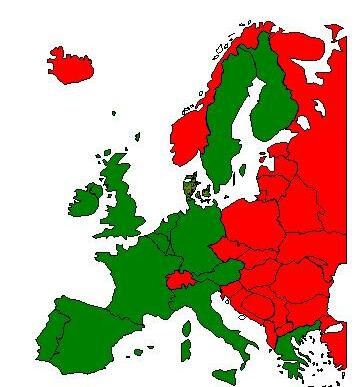
Fig.10.1: The European Union is a pioneer in the environment protection initiatives (Source for the chart: reports.eea.eu.int/ SPE19990625/en/page023.html)
In 1992, the Maastricht Treaty amended Article 2 of the Treaty of Rome placing environmental concerns alongside economic growth. Article 2 of Rome Treaty now provides for ‘sustainable growth respecting the environment’ – there is no hierarchical
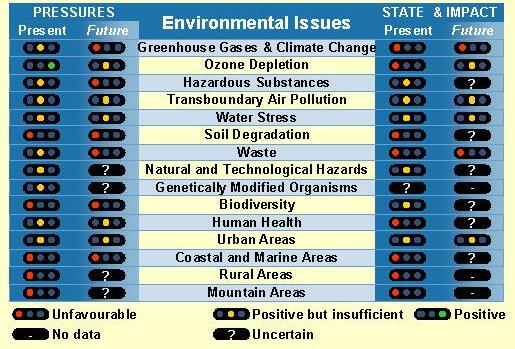
18
Initiatives towards Sustainable Development
Environment in the European Union at the turn of the 20th century
distinction between the two objectives. Community Environmental Policy today comprises over 300 legislative acts relating to all aspects of environment. Directives are the principal legislative instruments, mandating the achievement of a result, but leaving it to the Member state as to how it will do so. The European Court of Justice has also contributed significantly to the creation of the Community environment doctrine by gradually establishing and expanding the Community’s claim over environmental matters. Community jurisdiction now extends to directives on atmospheric pollution, wildlife protection, bathing water quality etc. Thus, EU quite explicitly incorporates environmental concerns.
The North American Free Trade Agreement, 1994 (NAFTA), creating a free trade area encompassing Mexico, Canada and US, has a strong environmental component. NAFTA explicitly addresses certain trade-related aspects of domestic and international environmental regulation. Parties are encouraged to utilise the revenues from trade and economic growth to enforce their substantive environmental standards more effectively. The NAFTA text itself integrates certain environmental considerations into its text. Also, environmental concerns are addressed separately in a side agreement –the North American Agreement on Environmental Cooperation (NAAEC).
Environmental concerns have been central to NAFTA since its inception. The preamble of NAFTA expressly recognises environmental objectives. There is specific provision in the NAFTA extending protection to certain listed MEAs such as the Basel Convention and CITES. NAFTA also prohibits parties from lowering their environmental standards to attract investments. NAAEC commits NAFTA parties to a series of obligations to advance the environmental sustainability of NAFTA-related trade. NAAEC is primarily concerned with effective enforcement of domestic environmental law in each party and creation of new institutional arrangements for cooperation between them.
Within the framework of the Association for South East Asian Nations (ASEAN), numerous environmental legal instruments – agreements and declarations – have been adopted. These include agreements on transboundary haze pollution, conservation of nature and natural resources, environment and development, sustainable development, heritage parks and reserves and the ASEAN environment in general.
Fig.10.2: Pollution due to forest fires is a major trans-boundary environmental problem for the ASEAN members
(Source for picture: www.cnn.com/.../malaysia.haze.lg.jpg)
19
Regional Initiatives
PHILIPPINES
LAOS
THAILAND
VIETNAM
CAMBODIA
BRUNEI
SINGAPORE
MALAYSIA
INDONESIA
Working groups have been set up on MEAs, nature conservation and biodiversity, and coastal and marine environment. A Regional Haze Action Plan was adopted at ASEAN and 2003 has been designated as the Environment Year.
Apart from the above-mentioned initiatives, environmental protection is anitem on the agenda of numerous other regional organisations around the world. As mentioned earlier, these regional initiatives not only deal with regional problems, but also strengthen the efforts at implementation of international and national environmental law and policy.
SAQ 1
Tracethe development of regional initiatives for environmental protection and outline the nature of problems being handled in each case.
10.3 SAARC INITIATIVES
The Indian sub-continent is a distinct geographical unit with well-defined boundaries. The Himalayas in the North is shared by four countries namely India, Pakistan, Nepal and Bhutan with common rivers, watershed areas, mountains and parameters like soil, climate and vegetation. Deforestation of watershed areas in one country can lead to floods and soil erosion in the downstream country. The Indian Ocean in the South is shared by five countries, India, Pakistan, Sri Lanka, Maldives and Bangladesh that form the ‘boundaries’ of the region. These countries share the common marine environment.
Disaster-proneness: A distinguishing feature of the South Asian region is its proclivity to natural disasters. The region is at the mercy of the ‘vagaries of the monsoons’. Bangladesh and India are amongst the most flood-prone areas onearth and are also frequently affected by drought. Landslides affect the Himalayan regions of Pakistan, India, Nepal and Bhutan. Cyclones frequent the region and because of the peculiar geographical factors, cause a high intensity of damage to life and property. Maldives is threatened by rise in sea-level due to global warming. The Indian subcontinent being situated on the boundary of two continental plates is prone to earthquakes. The occurrence of natural disasters is accompanied by human vulnerability resulting from overpopulation, poverty and inequality. Yet, an adequate natural disasters planning or management system is conspicuous by its absence.
History:SAARC countries also share a common history. They share a set of historically determined socio-economic characteristics that resulted from their experiences with colonial rule. Having undergone colonial exploitation, they have more or less similar problems like poverty, depleted natural resources, low levels of technological development and skills etc.
Socio-economic conditions: SAARC countries comprise 20% of the world’s population living on 3.5% of the total land area and generating only 2% of the world’s GNP. These socio-economic conditions create enormous pressures on the natural environment of the region. Environmental protection is doubly important in this region because of the high level of poverty and the fact that a vast majority of the population depends directly on the environment to meet its needs. The resource-topopulation ratio is extremely low, which suggests that exploitation of resources at unsustainable levels is inevitable.
Culture:The SAARC region has a history and tradition of conservation, environment-friendly lifestyles, great respect for plants, animals as well as an attitude of living in harmony with them.
20
Initiatives towards Sustainable Development
Based on the above-mentioned commonalities, the identifiable common environmental concerns of the countries in the South Asian region include land degradation, deforestation, water availability and quality, atmospheric pollution, marine and coastal pollution, loss of biodiversity, population explosion and concentration in a few areas, development-related displacement etc.
Considering how much the SAARC countries share in common, a strong case emerges in favour of regionalcooperation for environmental protection. SAARC countries stand to gain from a regional environmental mechanism – it is necessary to envisage and concretise some coordination and cooperation in the areas of law and policy in the field of environment. They have common and interlinked problems that can be better addressed by the countries together than individually. They have much to learn from each other. Also, SAARC countries need a stronger voice at international fora so that the emerging international environmental law incorporates their interests. With the weight of the regional organisation behind it, even the smaller members of SAARC can have their voice heard at international fora.
Regional Initiatives

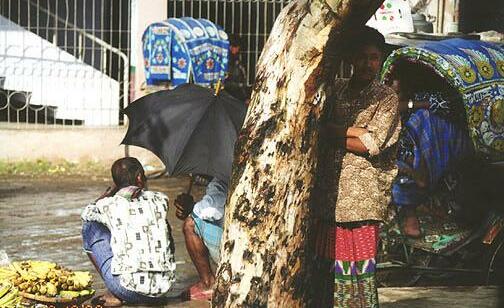
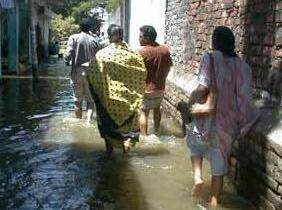
The SAARC Charter takes cognizance of the common problems, interests and aspirations of the peoples of South Asia and the need for joint action and enhanced cooperation. The SAARC Charter, however, includes no specific mention of environmental protection objectives. The only inference that can be drawn of any such intentions is from the objective of promotion of the ‘welfare of the peoples’ of South Asia and improvement of their ‘quality of life’. The Charter talks of promotion of collaboration and mutual assistance in the economic, social, cultural, technical and scientific fields, with no mention of the environmental field.



21
Fig.10.3: The SAARC countries have a share d history and culture, and also have similar socioeconomic and environmental problems
SAARC countries have acknowledged, however, that cooperation in the field of environment under the SAARC framework is crucial, considering that the environmental problems in the area are common and interlinked. But concrete action in this direction is yet to be taken.
A collective effort for protecting the region’s environment was first discussed at the third summit meeting of SAARC in Kathmandu (1987). Deep concern was expressed at the fast and continuing degradation of the environment and the affliction of natural disasters, which gravely undermined the development process and prospects of member countries. It was decided that regional cooperation in this direction should be undertaken and a group of experts was constituted to prepare a draft study in the field of environment. The Group met in July 1988 in Kathmandu and sought to identify areas of national priority requiring further action and of common areas of regional concern. In the fourth summit meeting in 1988 in Islamabad, there was a renewed determination to strengthen disaster management capabilities – it was a fallout of earthquakes in eastern India, floods in Bangladesh and cyclones in Bangladesh and India. Also, the need was felt to study the ‘greenhouse effect’ on South Asia, with five of the seven member states vulnerable to sea-level rise. In the 1990 Male summit, it was declared that 1992 would be observed as SAARC Year of the Environment.
The Regional Study of Greenhouse Effect and its Impact on the Region and the Regional Study on the Causes and Consequences of Natural Disasters and the Protection and Preservation of the Environment were completed in 1992. The first study made various recommendations for regional and global cooperation. The latter forms the basis for concrete programme in the future. Its final recommendations include (i) measures to protect and preserve the environment, (ii) measures to strengthen disaster management capabilities and (iii) implementing mechanisms for recommendations. The study suggested inter alia that scientific capabilities of member states must be shared anddeveloped and that members should cooperate through exchange of experiences, information, technology, expertise etc. It also suggested programmes of joint research and regional action and cooperation on environmental issues in international fora. It recommended measures to strengthen disaster management capabilities including networking of institutions, establishment of a SAARC relief and assistance mechanism for disasters, development of modern disaster warning systems, a regional research programme and regional information exchange system in disaster management.
The Regional Study is the most productive result of the SAARC initiative on environment. But despite comprehensive recommendations, nothing concrete has taken place in the direction of regional approach to environmental management. In the Dhaka meeting in 1992, a Committee on Environment was set up to (i) examine the recommendations of the study, (ii) identify measures for immediate action and (iii) decide on the modalities of implementation. In Summit Meetings thereafter, the need for concerted action has been expressed repeatedly but nothing substantial has come out of it. The recommendations of the study have not been implemented as yet. The SAARC Environment Ministers, who met in Male in October 1997, formulated an EnvironmentActionPlan for the implementation of the recommendations contained in the two studies. Progress on the Action Plan was reviewed in 1998. At the tenth meeting in Colombo (1998), early implementation of the SAARC Environment Action Plan was called for and members committed to prepare National Environmental Action Plans and State of the Environment Reports.
SAARC Environment Ministers have been meeting at regular intervals. When they met in Colombo in 1998 for their fourth Annual Conference, they adopted a common environment programme for the region as a follow-up on the SAARC Action Plan on the Environment. The Sri Lankan president called for a regional approach to “translate good intentions into concrete action to harness the energies and capabilities of the region and to strengthen national efforts.” Several meetings of expert/expert groups were planned on various aspects of the environment to evolve a common approach for
22
Initiatives towards Sustainable Development
access to genetic resources, conservation of biodiversity, transboundary movement of hazardous wastes etc. Networking and disaster preparedness were given high priority. The Technical Committee on Environment set up under the SAARC framework has studied topics such as approaches to environmental legislation, regulations and standards in SAARC countries, rehabilitation of degraded lands. It has also recommended training courses and workshops on environmental issues.
Steps have also been taken towards consolidating a SAARC stand in international environmentalfora. SAARC ministers met at New Delhi in April 1992 to decide their stand at United Nations Conference on Environment and Development (UNCED). The New Delhi conference resulted in the issuance of a communiqué, which outlined the common policy of the SAARC states on issues before the UNCED. This was the first successful exercise in intra-SAARC consultations and coordination for an international conference. The SAARC ministers also met in April 1997 to consolidate a common SAARC position before the United Nations General Assembly Special Session (UNGASS) in 1997. Such meetings have now become a regular feature of SAARC. So a will to cooperate on environmental matters is now visible at the SAARC level.
SAQ 2
Describe the efforts being made by the SAARC countries to bring about regional cooperation on environmental issues.
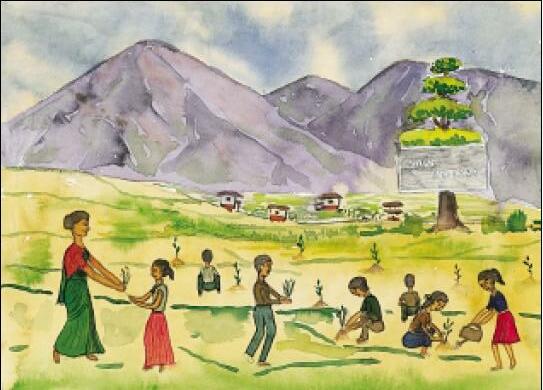
10.4 INSTITUTIONAL MECHANISMS
Towards the enforcement of the process of sustainable development, several institutes were established at the regional level in the Asia-Pacific area.
South Asian Preferential Trade Agreement
(SAPTA)
The South Asian Preferential Trade Agreement was enforced in December 1995 by the members of SAARC. This was an attempt to strengthen regional trade links in the South Asian region and to initiate the developmental process in the countries
23
Regional Initiatives
Fig.10.4: This painting by a child reflects our desire to have a safe environmentto live in (Source: www.saarc-sec.org/old/freepubs/ profile/Pdf%20files/CHAPTER7.PDF)
Initiatives towards Sustainable Development
especially Bangladesh, Bhutan, Nepal and Maldives which are considered the least developed nations. Till date there have been three rounds of trade negotiations and trade concessions were offered on goods and services. Beginning with 226 commodities in the first round, trade concessions increased to 3456 commodities in the third round of negotiations.
Asian Development Bank (ADB)
The Asian Development Bank was established after a resolution was passed on economic cooperation by the United Nations Economic and Social Commission for Asia and the Pacific (ESCAP) in 1965. Its goals include:
• Promoting economic growth
• Reducing poverty
• Improving the status of women
• Development of human resources.
• Bringing out management of natural resources and environment.
The bank provides
• loans and equity investments for the economic and social development for its members,
• technical assistance for developmental projects, and
• promotes public and private capital investment for development
Fig.10.5: Distribution of ADB funds (Source: www.etan.org/lh/ graphics/adb01)
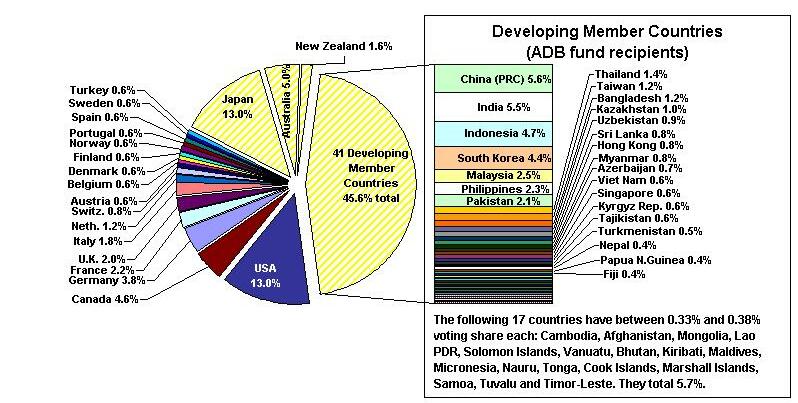
United Nations Economic and Social Commission for Asia and Pacific (ESCAP)
The United Nations Economic and Social Commission for Asia and Pacific (ESCAP) was established in March 1947 and promotes social and economic development in Asia and the Pacific region.
24
Its main goals include:
• Trade policy and promotion
• Industry and technology
• Rural development.
• Environment and natural resource management
• Communications
The commission has set up several institutions for the realisation of these goals like the Asia Pacific Centre for Transfer of Technology (APCTT) and the Regional Coordination Centre for Research Development of Coarse Grains, Pulses, Roots and Tuber Crops in Humid Tropics of Asia and the Pacific (CGPRT).
Asia Pacific Centre for Transfer of Technology (APCTT)
It was established in 1977 for facilitating transfer of technology in the Asia Pacific region. It has two areas of activities:
• Development to strengthen technological capabilities
• Facilitate technology transfer services to business contracts
Its main focus is on the development of environmentally sound technologies (ESTs) for sustainable development and also of the small and medium scale enterprises. It has been successful in implementing several developmental projects, organising several training programmes and bringing about technology transfer agreements between several countries.
Fig.10.6: ESCAP provides a forum for all member Governments of the region to review and discuss economic and social issues in order to strengthen regional cooperation (Source: www.unescap.org/)
25
Regional Initiatives
Regional
Established in April 1981, CGPRT is a subsidiary body of ESCAP. The centre provides the member countries with technical services and facilities for enhancement of production, utilisation and trade of these crops. It strengthens the research and development activities towards solving the problems of food scarcity and unemployment in the Asia Pacific region.
10.5 SUMMARY
• Cooperation at the regional level has a unique value in addressing environmental concerns. There are certain environmental problems that are best tackled through regional cooperation. They cannot be effectively addressed otherwise. Many of the regional arrangements, such as EU, NAFTA and ASEAN, have a prominent component of cooperation for environmental protection.
• In the South Asian region, there is a clear-cut case for regional cooperation, considering the commonality of environmental problems in the region. However, the SAARC initiative, so far, falls short of any meaningful gains as it has been limited to academic exercises. There is an urgent need for SAARC to strengthen cooperation in this field.
• Environmental issues must be recognised as potential security concerns as they have the potential to escalate into political disputes. The material damage and loss of life resulting from natural disasters, the socialdislocation caused by development activities and the ensuing political unrest place the environmental issue in the centre-stage of national politics in the region. So, an attention to environmental protection is central to the well-being of SAARC.
• At the international level, it must be ensured that the special concerns of the SAARC countries are incorporated in the growing body of law. The current trend of meetings among environment ministers to decide a common stand in international fora is a healthy trend and must be encouraged.
• It must be remembered that in many conventions, environmental protection has constituted a common objective and a uniting factor among countries otherwise opposed to each other on political issues. So, cooperation in the field of environment, apart from addressing the environmental problems of the region, may also be a good place to start the process of promoting ‘regionalism’.
10.6 TERMINAL QUESTIONS
1. Discuss the various regional initiatives that have been taken for environmental cooperation.
2 What institutional mechanisms exist in the South Asian region for achieving sustainable development?
3 Assess the strength of the South Asian initiative for environmental protection within the SAARC framework.
26
Initiatives towards Sustainable Development
Coordination Centre for Research Development of Coarse Grains, Pulses, Roots and Tuber Crops in Humid Tropics of Asia and the Pacific (CGPRT)
REFERENCES
1 Desai, Bharat (1991)“Regional Measures for Environment Protection: The SAARC Initiative”, Yearbook of International Environmental Law, Vol.2, pp.46971.
2 Hasan, Shaukat(1991) “Environmental Issues and Security in South Asia”, Adelphi Papers 262,Autumn
3. Macrory, Richard (1992) “The Enforcement of Community Environmental Laws: Some Critical Issues”, Common Market Law Review, Vol.19, pp.347-69.
4. North American Agreement on Environmental Cooperation, 1992, 32 ILM 1480, 1993.
5 “Regional Study of Greenhouse Effect and its Impact onthe Region”, SAARC Secretariat, Kathmandu.1992.
6 “Regional Study on the Causes and Consequences of Natural Disasters and the Protection and Preservation of the Environment”, SAARC Secretariat, Kathmandu,1992.
Websites http://www.aseansec.org/home.htm http://europa.eu.int http://www.nafta-sec-alena.org/DefaultSite/index.html
27 Regional Initiatives
Initiatives towards
UNIT 11 GLOBAL INITIATIVES
Structure
11.1 Introduction Objectives
11.2 Major Conferences on Environment and Development
11.3 International Conventions / Agreements on Sustainable Development
11.4 International Agencies
11.5 Roadblocks to Global Initiatives
11.6 Summary
11.7 Terminal Questions
11.1 INTRODUCTION
In the 1970s, it was realised that there were ‘limits to growth’. If growth continued unbridled at the then existing rates, it was asserted that it would exhaust the limited stock of natural resources of the earth. Although technological innovations have contributed in pushing outwards the ‘limits to growth’, it is now being argued that there may be limits in terms of the ‘carrying capacity’ of the environment. There is a consensus over the fact thatgrowth without commensurate efforts at environmental protection will represent a global threat.
The international community has responded to this perceived threat and environmental protection and sustainable development concerns are a high priority on the international agenda. The last century has seen a proliferation of international legal instruments – declarations and agreements – aimed at environmental protection. Whereas declarations are more general in nature, containing a general commitment to environmental protection without being legally binding, agreements contain binding obligations for member states and deal with specific issues relating to particular environmental problems.
On various occasions, the highest representatives of states and governments have got together in international conferences on environmental protection and development. The basic principles for environmental protection, such as the precautionary principle, the polluter pays principle and the principle of sustainable development etc., have also taken shape. Moreover, an international structure has been put in place, which is devoted to further the objective of environmental protection. There is also talk of setting up a centralised world body –a World Environment Organisation (WEO) –to address the problems of environment. However, despite the intensified efforts at the international level, there are numerous challenges that must be met in order to allow these initiatives to be successful in their endeavour.
Various environmental problems have been identified, some related to the conservation of natural resources and ecosystems, such as forests, wildlife, bio diversity, wetlands, migratory species etc. These issues put a question mark on how much the earth can give. Other issues relate to ensuring that we stay within the limits of the ‘carrying capacity’ of the environment. These issues, mostly relating to ozone depletion, global warming, hazardous wastes, persistent organic pollutants (POPs), hazardous chemicals, genetically modified organisms (GMOs), atmospheric pollution, marine pollution etc., relate to the basic question of how much the earth can take.
Because of the diversity of environmental problems, the legal regime at the international level is necessarily fragmented, with over 200 Multilateral Environmental Agreements (MEAs) each dealing with different environmental problems. In this unit, we provide you an overview of the global initiatives taken towards environmental protection.
28
Sustainable Development
After studyingthis unit you should be able to:
• explain what the international community has done to achieve the goal of environmental protection;
• describe the international legal mechanism in place for environmental protection;
• outlinethe principles that guide the global initiatives for environmental protection;
• discuss the institutional mechanism in place at the international level for environmental protection; and
• analysethe challenges faced by the global initiatives.
11.2 MAJOR CONFERENCES ON ENVIRONMENT AND DEVELOPMENT
Starting with the Stockholm Conference on Human Environment in 1972, the largest gathering ever of heads of state/government took place at Rio de Janeiro in Brazil in 1992, indicating the high priority accorded to the objective of environmental protection by the international community.
Fig.11.1: We do not inherit the earth from our ancestors; we borrow it from our future generations

The Stockholm Conference:The United Nations Conference on the Human Environment (UNCHE) (more popularly known as the Stockholm Conference) held in Stockholm, Sweden, in 1972, was the first step towards putting environmental concerns on the global agenda. Issues such as air and water pollution and chemical toxicity were discussed in a global forum for the first time. It was agreed at Stockholm that environmental protection required a holistic approach spanning the interconnected elements of peace, international cooperation, development and poverty reduction. One hundred and thirteen states participated in the UNCHE, though only two were represented by the Heads of State/government, one of which was India. The Indian Prime Minister, Mrs. Indira Gandhi was a forceful presence at Stockholm, emphasising that ‘poverty is the biggest polluter’.
The Stockholm Conference resulted in the Stockholm Declaration containingtwenty six principles “to inspire and guide the peoples of the world in the preservation and enhancement of the human environment” and an Action Plan containing 106 recommendations for environmental policy. The Stockholm Conference also resulted in the setting up of the United Nations Environment Programme (UNEP), a new UN machinery to serve as a catalyst in developing and coordinating an environmental focus in the programmes of other organisations.
29 Global Initiatives
Objectives
Fig.11.2: Dr. Gro Harlem Brundtland, form er Prime Minister of Norway is the architect of the Brundtland report

Following the success of UNCHE, a number of strategic conferences were convened by the UN on issues relating to the Stockholm issues such as population, water, food, habitat and desertification, resulting in a number of declarations and resolutions.
It is interesting to note that the General Assembly Resolution convening the Stockholm Conference noted that eliminating the impairment of the human environment was necessary for sound economic and social development. Thus the linkage between environment and development has been expressed since the outset of the UNCHE.
In 1987, the Brundtland Commission Report entitled Our Common Future more clearly articulated the now widely accepted definition of sustainable development as “development that meets the needs of the present without compromising the ability of future generations to meet their own needs”. The Brundtland Commission Report also laid the groundwork for holding a global conference on the twentieth anniversary at Stockholm.
Rio Earth Summit: Twenty years after the Stockholm Conference, the UN Conference on Environment and Development (UNCED), popularly known as the Rio Earth Summit, was held in Rio de Janeiro, Brazil in 1992. Rio was attended by over 100 heads of states and government, the highest ever attendancein an international conference. The Earth Summit was marked with a heightened awareness of the negative impact on the environment of human activities. The issues that were centrestage at Rio included climate change, conservation of bio diversityand forests. But the Rio Earth Summit was marked with a clear-cut division of views between the countries of the North and those of the South. Developing countries (‘South’) tended to view environmental concerns as a ‘disease of the rich’.
The Earth Summit produced many legal instruments. The Rio Declaration on Environment and Development, like its predecessor, the Stockholm Declaration, laid out the principles to guide environmental protection and development activities. Agenda 21, a voluminous document of forty chapters, contained the blueprint of action in the 21st century in a number of development-related sectors. It effectively integrates environment and development concerns and stresses the need for bottomup, participatory and community-based approaches.
Two binding legal instruments were adopted on climate change and bio diversity–the UN Framework Convention on Climate Change (UNFCCC) and the Convention on Biological Diversity(CBD). The Forest Principles were also adopted though they were not legally binding and the negotiation process for the Convention to Combat Desertification was also launched. The Rio Summit also laid the foundation of the UN Commission on Sustainable Development (CSD).
Rio +5: Five years after the Rio Earth Summit, a Special Session of the UN General Assembly in 1997, popularly known as Rio +5, devoted itself to evaluating the progress made since the Rio summit. It pointed to the growing problems of poverty, inequality and environmental degradation.
Rio +10: A ten-year assessment of the Rio outcomes (Rio +10) took the shape of the World Summit on Sustainable Development (WSSD) held at Johannesburg in 2002. WSSD aimed to review the progress made towards the aims set out in Agenda 21 and the impediments encountered by countries in implementing them, to accelerate the implementation of commitments and to infuse the process with political momentum. The key issues and concerns discussed at Johannesburg were the controversial and crosscutting issues of finance, technology transfer, capacity building, trade and governance etc. The WSSD produced the Johannesburg Declaration on Sustainable Development and the Johannesburg Plan of Implementation
Apart from these world conferences that directly addressed sustainable development, various other international conferences have had an impact on sustainable
30
Initiatives towards Sustainable Development
development including the Cairo Declaration of the International Conference on Population and Development, 1994.
The World Summit for Social Development (WSSD): The United Nations World Summit for Social Development was held in March 1995 at Copenhagen which brought ‘people’ at the centre of development. Governments of different nations met and discussed three core socio-economic issues that were essential for development.
They are:
• eradication of poverty,
• promotion of full employment, and
• fostering of social integration.
In this summit, the governments agreed on 10 commitments which are as follows:
1. Create an economic, political, social, cultural and legal environment that will enable people to achieve social development
2. Eradicate absolute poverty by a target date to be set by each country
3. Support full employment as a basic policy goal
4. Promote social integration based on the enhancement and protection of all human rights
5. Achieve equality and equity between women and men
6. Attain universal and equitable access to education and primary health care
7. Accelerate the development of Africa and the least developed countries
8. Ensure that structural adjustment programmes include social development goals
9. Increase resources allocated to social development
10. Strengthen cooperation for social development through the UN
WSSD +5: After five years of WSSD, as a follow up to the WSSD, the governments met in June 2000 and assessed ‘progress made in combating poverty, and outline(s)d a common vision for the way forward’.The emerging issues like globalisation and social equity had also been discussed.
Global Initiatives
Local environment protection
R& D in State-ofthe Art environment technologies
Globalenvironment charter
Fig.11.3: The international community has to cooperate politically for the cause of environmental protection. This involves among other things localenvironment protection,R& D in State-of-theArt environment technologies andglobal environment charter
Most international conferences result in the adoption of declarations and guidelines of action. Generally termed as ‘soft law’, these non-legally binding instruments deal with
31
the aims, goals and objectives, stated in broad terms. Though they carry no legal obligations, they carry significant political weight. Some ‘soft law’ instruments of general application include the Stockholm Declaration on the Human Environment, 1972;the World Conservation Strategy, 1980; the World Charter for Nature, 1982; the Hague Declaration, 1989;the Rio Declaration on Environment and Development, 1992; Agenda 21; the Forest Principles;andthe Johannesburg Declaration on Sustainable Development, 2002. These world conferences and soft law instruments demonstrate the resolve of the international community to cooperate politically for the cause of environmental protection.
SAQ 1
Describe the various global initiatives for environmental protection and outline the issues being addressed.
11.3
INTERNATIONAL
CONVENTIONS
/ AGREEMENTS ON SUSTAINABLE DEVELOPMENT
International Environmental Law (IEL) is the principal vehicle for international cooperation and collaboration between members of the international community for the purpose of environmental protection. Apart from the countless ‘soft law’ instruments mentioned above, such as Declarations and Guidelines, IEL comprises over 200 Multilateral Environmental Agreements (MEAs), some of which are discussed below:
Convention on Wetlands of International Importance Especially as Waterfowl Habitat, 1971
Wetlands represent a valuable habitat, providing sustenance to concentrations of birds (especially waterfowl), mammals, reptiles, amphibians, fish and invertebrate species, countless plant species as well as human beings. Wetlands are also extremely valuable as sources of water, fisheries, timber and energy as well as recreation and tourism opportunities. These fragile ecosystems are however, highly endangered from population density, overexploitation, pollution from oil spills, fishing activities and discharges from industries, conversion of natural habitat for development purposes, etc.
This convention (Ramsar Convention), one of the earlier modern global conservation treaties, was adopted in 1971 at Ramsar, Iran and entered into force in 1975. The convention provides the framework for national action and international cooperation for the conservation and wise use of wetlands and their resources. Thereare135 contracting parties to the convention, with 1235 wetland sites, totalling 106.6 million hectares, included in the Ramsar List of Wetlands of International Importance.
Though the original emphasis of the convention was on the conservation and wiseuse of wetlands primarily to provide habitat for water birds, the scope of the convention has broadened over the years to cover all aspects of wetland conservation and wise use.
A Member State of the Ramsar Convention agrees to facilitate the development of national-level policies and actions, including legislation that would ensure the best possible use of its wetland resources. It must designate at least one or more, suitable wetlands within its territory for inclusion in the List of Wetlands of International Importance (the ‘Ramsar List’) and promote its/their conservation or wise use. It must formulate and implement its land use planning, keeping wetland conservation considerations in mind in order to promote the wise use of all wetlands (including those not listed as Ramsar sites) in their territory. It must establish nature reserves in wetlands, whether or not they are included in the Ramsar List, and promote training in
32
Initiatives towards Sustainable Development
wetland research and management. It must consult with other contracting parties about implementation of the convention, especially in case of shared wetlands, water systems or species. It must report on the progress in implementing its commitments under the convention by submitting a National Report to the Conference of Parties once in three years.

Convention Concerning the Protection of the World Cultural and Natural Heritage, 1972
Certain cultural and natural sites are of such ‘outstanding universal value’ that irrespective of the country in which they are located, they constitute acommon heritage, the loss of which would be an irreparable loss to mankind. And yet, most are threatened by the negative impact of overuse, pollution, unregulated tourism, development activities, etc.
This convention (the World Heritage Convention) was adopted on 23 November 1972 and entered into force on 17 December 1975. The convention has a membership of 175. The primary mission of the Heritage Convention is to identify and conserve the world’s cultural and natural heritage. It does this by drawing upa list of ‘heritage sites’, which are cultural, natural or mixed areas of ‘outstanding universal value’ and therefore need to be preserved for all humanity. Their protection is to be ensured through efforts at the international level.

The most significant feature of the convention is that it links together as a single effort conservation of nature and preservation of cultural sites. It views nature and culture as complementary, based on the premise that cultural identity is strongly related to the naturalenvironment in which it develops. Around 730 properties are currently inscribed on the World Heritage List, of which 563 are cultural sites, 144 are natural sites and 23 are mixed sites in 125 different countries. The convention also provides for a List of World Heritage in Danger, containing sites that are entitled to particular attention and emergency action.
A party to the World Heritage Convention must identify and delineate the cultural and natural heritage sites on its territory. It must take all efforts to conserve the sites situated within its territory –the World Heritage sites as well as its national heritage. Such efforts include adopting a general policy to integrate the protection of a heritage into planning programmes; setting up services for the conservation and presentation of heritage; developing scientific and technical studies and research; taking appropriate
33
Global Initiatives
Fig.11.4: World cultural and natural heritage (Source: www.freemedia.ch/unescoart/)
legal, scientific, technical, administrative and financial measures; and fostering the establishment or development of national or regional training centres and encouraging scientific research in this field. It must extend help in the identification, protection, conservation and presentation of heritage sites located in other countries.
It must not take any deliberate measures that might directly or indirectly damage cultural and natural heritage. It must submit to the World Heritage Committee an inventory of the cultural and natural heritage situated in its territory and suitable for inclusion in the World Heritage List. It must also submit reports to the general conference of United Nations Educational, Scientific and Cultural Organisation (UNESCO) containing information on the legislative and administrative provisions which it has adopted and other action which it has taken for the application of this convention. Every two years, it must pay to the World Heritage Fund, contributions in the form of a uniform percentage applicableto all States, not exceeding 1% of its contribution to the regular budget of UNESCO.
Convention on International Trade in Endangered Species of Wild Fauna and Flora, 1973
International trade in wildlife and wildlife products is a thriving business worth billions of dollars. Hundreds of millions of plant and animal specimens are the victims of the demand from international markets. Valuable species of wildlife suffer as a result of this demand for exotic food, leather goods, musical instruments, jewellery, timber, tourist curios and medicines, some even being driven to extinction.
Trade in wildlife is spurred by demand from across borders and efforts to counter it need to be taken at the international level. This convention (CITES) was signed on 3 March1973 and entered into force on 1 July 1975. There are 160 Parties to CITES. The primary aim of this convention is to ensure that international trade in specimens of wild animals and plants does not threaten their survival. Accordingly, it extends varying degrees of protection to roughly 5,000 species of animals and 25,000 species of plants through the regulation of trade in wildlife products.
CITES provides a general framework to be followed by the Parties to the Convention. Each Party must then adopt its own domestic legislation to make sure that CITES is implemented at the national level. The convention subjects international trade in specimens of selected species to certain controls. It requires that all import, export and re-export of species covered by the convention have to be authorised through a licensing system. The species covered by CITES are listed in three Appendices according to the degree of protection they require.
Appendix I includes species threatened with extinction. Trade in specimens of these species is permitted only in exceptional circumstances. Appendix II includes species not necessarily threatened with extinction, but in which trade must be controlled in order to avoid utilisation incompatible with their survival. Appendix III contains species that are protected in at least one such country that has asked other CITES Parties for assistance in controlling the trade.
Under the licensing system set up under the CITES regime, a specimen of a CITESlisted species may be imported into, exported from or re-exported from a state party to the convention only if the appropriate document has been obtained and presented for clearance at the port of entry or exit. Different conditions apply for each Appendix species and these are laid out in the convention.
Certain exceptions from the general requirements are permitted by the convention for inter alia specimen in transit, specimen that are personal or household effects, specimen bred in captivity and those destined for scientific research. Special rules apply to such specimen. Trade with states not party to the convention is permitted only on issuance of comparable documentation by the competent authorities in that State which conforms with the CITES requirements.
34
Initiatives towards Sustainable Development
A party to CITES must fulfilvarious commitments. It must ensure that any trade in specimen of CITES-listed species must be carried out in accordance with the provisions of the convention. It must take appropriate measures to enforce the provisions of the convention and to prohibit trade inspecimen in violation. Also, proper records must be maintained of trade in specimens of CITES-listed species. It must designate one or more management authorities in charge of administering the licensing system and one or more scientific authorities to advise them on the effects of trade on the status of the species. It must submit periodic reports to the CITES Secretariat on the status of implementation of the convention, including the legislative, regulatory and administrative measures taken to enforce the provisions of CITES.
Convention on the Conservation of Migratory Species of Wild Animals, 1979
Migration of wild animals is a global phenomenon. Migratory animals include terrestrial, avian and marine species, some of the more commonly known ones being antelopes, dolphins, turtles, bats and birds. Since migratory animals travel across national jurisdictional boundaries, they are especially vulnerable. They are biologically dependent on the specific sites throughout their journey that may be located across different countries with different conservation priorities and conditions. Migratory species are therefore exposed to a wide range of threats, including habitat shrinkage in breeding areas, excessive hunting along migration routes and degradation of feeding grounds. They thus require targeted efforts for the conservation of their entire range.
This convention (also known as the CMS or the Bonn Convention) was adopted on 23 June 1979 in Bonn and entered into force on 1 November 1983. The convention currently has 80 Parties. The CMS convention is a global effort aimed at conserving terrestrial, marine and avian migratory species throughout their range. The convention seeks to conserve migratory species and their habitats by providing protection to migratory species listed in Appendices as per the level of protection they require.
Appendix I lists endangered migratory species that enjoy strict protection. These include 85 (as of September 2002) endangered species, including the Siberian crane, the White-tailed eagle, the Hawksbill Turtle and the Dama gazelle.
Appendix II lists migratory species that require or would benefit significantly from international cooperative action. Multilateral agreements are to be concluded for the conservation and management ofthese migratory species. Amendment of the Appendices is allowed based on the ‘best scientific evidence available’. The convention also mandates the undertaking by parties of co-operative research activities.
Article V lays out in detail the guidelines for agreements. Several agreements have been concluded under the auspices of the CMS focusing on the conservation of bats in Europe; cetaceans in the Mediterranean and the Black Seas; small cetaceans of the Baltic and the North Seas; seals in the Wadden Sea; African-Eurasian migratory waterbirds; the Siberian crane;the slender-billed curlew and marine turtles of the Indian Ocean and South East Asia.
By becoming a party to the CMS, a member state gives its consent to protect the migratory species of wild animals that live within or pass through its national jurisdiction, and has the following obligations.
It must endeavour to promote, co-operate in and support research relating to migratory species; to provide immediate protection for migratory species included in Appendix I; and to conclude agreements on the conservation and management of migratory species includedin Appendix II. For Appendix I species of which it is a range state, it must prohibit their taking, unless it is for specified exceptional reasons. Also, it must endeavour to conserve and restore habitats of migratory species, minimise obstacles in migration and prevent any factors that are endangering the species. For Appendix II
35
Global Initiatives
(c)
species of which it is a range state, it must endeavour to conclude agreements to benefit the species. It must inform the secretariat, at least six months prior to each ordinary meeting of the conference, on measures that it has taken to implement the provisions of this convention.


(b)
(a)
(d)
The Ozone layer, found in the stratosphere, between 10 to 50 km above the ground, provides protection from the harmful effects of certain wavelengths of ultra-violet (UV) light from the sun, specifically UV-B. Increases in levels of UV-B radiation can result in increased incidences of skin cancers, suppression of the immunity system, eye disorders such as cataracts etc. It also has a damaging effect on plants, animals and plastic materials. Ozone depletion is caused by chlorofluorocarbons (CFCs), which are used in aerosols, foams, refrigeration, air conditioners, solvents, fire extinguishers etc. Ozone depletion was confirmed by the discovery of the ‘Ozone Hole’ over the Antarctic discovered in 1985 and observations, since then, confirm ozone depletion.
36
Initiatives towards Sustainable Development
Fig.11.5: Some endangered species: a)Siberian crane; b) theWhite-tailed eagle; c)the Hawksbill Turtle and d)the Dama gazelle
Vienna Convention for the Protection of the Ozone Layer, 1985 and Montreal Protocol on Substances that Deplete the Ozone Layer, 1987
This Convention (Vienna Convention) was adopted on 22 March 1985 and entered into force on 22 September 1988. As per the Vienna Convention, parties agree to take ‘appropriate measures’ to prevent modification of the ozone layer. But what these ‘appropriate measures’ are, is not unspecified. The main thrust of the convention was to encourage research, cooperation among countries and exchange of information. The Vienna Convention represented the first instance when nations agreed to make to address a global environmental problem even before it was scientifically established.
Obligations under the Vienna Convention include the following. A member must cooperate in the observation, research and information exchange on ozone layer depletion and its impact on human health and the environment. It must also cooperate in the international efforts to formulate and implement the ozone regime. It must initiate and cooperate in the conduct of research and scientific observations. It must also cooperate in legal, scientific and technical fields and transmission of information on the measures adopted by them in the implementation of this convention. It must adopt legislative and administrative measures to control, limit, reduce or prevent human activities that have an adverse effect on the ozone layer.
Montreal Protocol on Substances that Deplete the Ozone Layer
After the fact of ozone depletion was confirmed in a paper published in May 1985 by British scientists followed by observations by American satellites, the Montreal Protocol was signed on 16 September 1987. The Montreal Protocol, which entered into force on 1 January 1989, outlined the specific measures to be taken in order to control the use of Ozone Depleting Substances (ODSs). The protocol aims to reduce and eventually eliminate the emissions of man-made ODSs. Since its adoption, the Montreal Protocol has been modified five times through adjustments and amendments. Its control provisions were strengthened in London (1990), Copenhagen (1992), Vienna (1995), Montreal (1997) and Beijing (1999).
Under the Montreal Protocol, a member agrees to take precautionary measures to control emissions of ODSs, with the ultimate objective of their elimination. The emission reduction obligations are laid out in detail in the protocol. It agrees to ban the import of the controlled substances in Annex A from non-parties.
Protectionof World Heritage Wetland Conservation INTERNATIONAL
Prevention of Ozone Layer Depletion
CONVENTIONS AND AGREEMENTS
Bio diversity Conservation
Trans-Boundary Movementof Hazardous Waste andtheir Disposal Wildlife Protection
Fig.11.6: The international agreements and conventions cover a wide range of environmental matters related to sustainable development
Global Initiatives
37
Basel Convention on the Control of Trans-boundary Movements of Hazardous Wastes and Their Disposal, 1989 and its Liability Protocol
The 1980s saw the manifestation of the NIMBY (‘Not In My Backyard’) syndrome in the form of disposal of large quantities of hazardous wastes on the high seas and in small underdeveloped and developing countries with inadequate facilities or capabilities to dispose off the waste. The unwise disposal of hazardous wastes emerged as a major environmental hazard in the face of increased generation of waste, andespecially hazardous waste, worldwide.
This Convention (Basel Convention) was adopted on 22 March 1989 and entered into force on 5 May 1992. It currently has 130 parties. The Basel Convention addresses the risk to human health and environment caused by hazardous and other wastes and more specifically, their trans-boundary movement. It aims at the reduction of their generation and disposal in an ‘environmentally sound manner’.
A member to the Basel Convention must inform the secretariat of national definitions of hazardous wastes and also make this information available to their exporters. It must also inform other parties of their decision to prohibit the import of hazardous or other wastes for disposal. In case of an accident involving hazardous or other wastes that is likely to cause harm in other states, it must ensure transmission of information. It must take appropriate legal, administrative and other measures to implement and enforce the provisions of this convention.
It must also take appropriate measures to ensure that the generation of hazardous and other wastes within its jurisdiction is reduced to a minimum; adequate disposal facilities are available; persons involved in the management of hazardous or other wastes take steps necessary to prevent pollution due to hazardous and other wastes; if pollution occurs, its consequences for human health and the environment are minimised; trans-boundary movement of hazardous wastes and other wastes is reduced to the minimum and is conducted in a sound manner.
A member must not permit hazardous or other wastes to be exported to a non-party or to be imported from a non-party. It must also ensure that hazardous or other wastes are not exported to any State that has prohibited imports through legislation. Also, it must not allow the export of hazardous or other wastes for disposal within the area south of 60° south latitude. Most importantly, it must ensure that all trade in hazardous and other wastes that it is involved in is carried out in conformity with the provisions of this convention. It must designate a competent authority and focal point to facilitate the implementation of this convention. It must take steps to prevent illegal traffic in hazardous and other wastes. Further, it must cooperate with other parties in improving environmentally sound management of wastes, developing appropriate technical guidelines and codes of practice and promoting public awareness.
Article 12 of the Basel Convention contained an obligation for parties to consult on liability. Pursuant to this provision, the Liability Protocol to the Basel Convention was finally adopted in 1999, a full ten years after the adoption of the Basel convention, indicating the difficulties in negotiating on issues of liability.
Convention on Biological Diversity
‘Bio diversity’, the variability of life on earth, refers to the wide variety of plants, animals and micro-organisms. Though around 1.75 million species have been identified so far, it is estimated that there are actually about 13 million species. The term ‘bio diversity’ also incorporates genetic differences within each species as well as the variety of ecosystems.
Increasing population pressure on the limited available natural resources has led to a severe and alarming loss of bio diversity The 20th century has seen a fourfold increase in population and an eighteen-fold growth in world economic output. This has been accompanied by unsustainable patterns of consumption and the use of
38
Initiatives towards Sustainable Development
environmentally unsound technologies, leading to an accelerating rate of acceleration of loss of bio diversity.
The Convention on Biological Diversity (CBD) was adopted at the Rio Earth Summit on 5 June 1992 and entered into force on 29 December 1993. With 187 Parties, the CBD truly boasts global membership. The CBD sets out commitments for ensuring that the global ecology does not suffer from the business of economic development. The three main goals of the CBD are the conservation of biological diversity, the sustainable use of its components, and the fair and equitable sharing of the benefits from the use of genetic resources.
Pursuant to Article 19.3 of the CBD, the Cartagena Protocol on Biosafety (Cartagena Protocol) was adopted on 29 January 2000. The Protocol entered into force recently, on 11 September 2003. The Cartagena Protocol seeks to protect bio diversityfrom the potential risks posed by living modified organisms (LMOs) resulting from biotechnology. It establishes a procedure – the Advance Informed Agreement (AIA) procedure –for ensuring that export of LMOs takes place only with an advanced and informed consent of the importing State.
A member to the CBD incurs the following obligations. It must cooperate with other Parties and international organisations for the conservation and sustainable use of biological diversity. It must take general measures for conservation and sustainable use such as developing national strategies/programmes for bio diversityconservation and wise use. It must identify components of bio diversityimportant for its conservation and sustainable use and monitor these components. It must also identify processes and activities that are likely to have significant adverse impacts on bio diversityand monitor their effects.
It must take appropriate measures for in situconservation of species. For instance, it must establish a system of protected areas; regulate or manage biological resources; promote the protection of ecosystems; promote environmentally sound and sustainable development in areas adjacent to the protected areas; rehabilitate and restore degraded ecosystems; establish means to regulate the risks associated with the use and release of LMOs resulting from biotechnology; prevent the introduction of alien species and respect the knowledge and practices of indigenous communities. It must also develop necessary legislation and/or other regulatory provisions for the protection of threatened species and cooperate in providing financial and other support for in situ conservation.
A member must also adopt measures for the ex situ conservation of components of bio diversity, such as establishing facilities for ex situ conservation; adopting measures for the recovery and rehabilitation of threatened species; regulating collection of biological resources and cooperating in providing financial and other support for ex situ conservation. Further, it must integrate consideration ofbio diversity conservation and sustainable use into national decision-making and adopt relevant measures accordingly. It must also protect and encourage customary use of biological resources and support local populations to implement remedial action in degraded areas. Cooperation between its governmental authorities and its private sector in developing the methods for sustainable use of biological resources must be encouraged.
It must adopt measures that act as incentives for bio diversity conservation. Also, it must promote appropriate research and training as well as public education and awareness. Procedures requiring Environmental Impact Assessment (EIA) of projects that are likelyto have an impact on bio diversity must be instituted. It must try to create conditions to facilitate access to genetic resources for environmentally sound uses by other Parties. It must facilitate exchange of information relevant to bio diversityconservation and sustainable use. There is also an obligation of scientific and technical cooperation.
39
Global Initiatives
Outline the major features of the various international agreements and conventions for environmental protection presented here.
11.4 INTERNATIONAL AGENCIES
United Nations Environment Programme (UNEP): The United Nations Environment Programme (UNEP), which was set up after the Stockholm Conference in 1972, is the principal body of the UN in the field of environmental protection. The UNEP assesses the state of the global environment, facilitates development of international environmental law and coordinates the activities of the UN.
Fig.11.7: The UNEP is the principal body of the United Nations for environmental awareness and protection

UNEP plays a leading role in facilitating international negotiations on Multilateral Environmental Agreements (MEAs) and also acts as a Secretariat to a number of MEAs. It also hosts an annual Global Ministerial Environment Forum, wherein environmental ministers from around the world meet to discuss the issues of contemporary interest.
Commission on Sustainable Development (CSD):TheUN Commission on Sustainable Development(CSD) was set up in 1992 as a follow-up mechanism to the Earth Summit. It is a functional commission of the Economic and Social Council (ECOSOC) and is composed of 53 members elected for three-year terms by the ECOSOC from amongst the UN Members. The CSD acts as a catalyst for actions that support the objectives of sustainable development. Its mandate is to monitor and report on the implementation of the Earth Summit agreements such as Agenda 21 and the Rio Declaration at the local, national, regional and international levels.
After the World Summit on Sustainable Development in 2002, the CSD now monitors thefollow-up of the Johannesburg Plan of Implementation. It meets annually for a period of two to three weeks in order to address the issues relating to sustainable development. The relationship between UNEP and CSD has not always been clear, although their mandates are clearly different.
40
Sustainable
SAQ 2
Initiatives towards
Development
MEA Secretariats: Apart from these institutions concerned with environmental protection in general, each of the MEAs is serviced by its own secretariat. Thus the institutional structure underlying the international environmental law comprises various MEA Secretariats, each looking after their own sector of the environment.
Global Environment Facility (GEF): The Global Environment Facility (GEF) is an international funding mechanism that was set up in 1991 to facilitate environmental protection in the developing countries by funding projects and programmes in these countries. The GEF addresses six environmental problems that have been identified as critical for the global environment – loss of bio diversity, climate change, ozone layer depletion, degradation of international waters, desertification and persistent organic pollutants (POPs). The GEF is the designated financial mechanism for the Convention on Biological Diversity, 1992 and the UN Framework Convention on Climate Change, 1992
The GEF has given $4 billion in grants and generated $12 billion in co-financing with other sources to support over 1000 projects in over 140 developing countries. In 20022003, a replenishment of $2.9 billion was agreed upon. The United Nations Development Programme (UNDP), the United Nations Environment Programme (UNEP) and the World Bank are the ‘implementing agencies’ of the GEF – i.e. they manage the actual implementation of projects. The GEF secretariat operates from Washington D.C. There are 175 participant countries in the GEF, including India, which joined in 1994. The participating states meet at the GEF Assembly every 3-4 years to assess the progress of GEF projects.
biodiversity climate change international waters ozone depletion land degradation persistent organic pollutants

Fig.11.8: The Global Environment Facility arranges grants and co-financing in six major areas
Other Institutions: Other agencies also play a considerable role in environmental protection. These include the scientific and technical bodies. For instance, the Intergovernmental Panel on Climate Change (IPCC) studies the scientific aspects of climate change. Standard setting bodies such as the International Plant Protection Convention, the Codex Alimentarius andthe Office of Epizootics are involved in standard setting relating to human, animal and plant health.
Also, institutions not directly aimed at environmental protection often have a role to play in the environmental agenda. These include institutions such as the World Bank, the International Monetary Fund and the World Trade Organisation apart from the other specialised agencies of the UN system. International NGOs have also played an increasingly significant role in efforts towards environmental protection. These are discussed in detail in Unit 12.
41 Global
Initiatives
11 2.9 0.36 0.23
5.7
1 0 2 4 6 8 10 12
Major areas In billion US dollars
World Environment Organisation:Proposals for a new World Environment Organisation (WEO) have been floated from time to time. At Rio+5 in 1997, a proposal was put forth for an improved cooperation among various environmental organisations in the short term and in the long term, for establishing an umbrella organisation for the environment with the UNEP at its centre. These proposals stem from the need for environment and sustainable development to have a ‘clear voice’ at the UN. Current discussion regarding a WEO aims to address the fragmentation of the current system and the imbalance between MEAs and the WTO.
There may be a case for the creation of a new global environmental organisation of some kind but many questions remain to be answered. It is not clear what the mandate of such an organisation would be and whether it would represent any value-additionto the existing system. The basic problems underlying global environmental policy –lack of resources, lack of political will and inadequate policy integration – need to be addressed first. The finer points of the debate are far from resolved and much would depend on the level of political support. Most participants in this debate agree that whatever the shape of the institutional structure, the ultimate aim is an enhanced capacity for global environmental management.
SAQ 3
Discuss how you can enhance the capacity for global environmental management with the help of the various international agencies.
11.5 ROADBLOCKS TO GLOBAL INITIATIVES
International initiatives for environmental protection face numerous challenges. The magnitude of the environmental problem and its acceleration at alarming rates means the legal system must respond quickly in order to be effective. For instance, problems such as ozone depletion and bio diversity loss have to be addressed before they spiral out of control and become irremediable. This is in keeping with the dictates of the preventive principle. Thus, International Environmental Law (IEL) must work within time constraints, ideally preventing an environmental problem from arising rather than addressing it later.
However, it is often not possible to forge quick solutions at the international level. The membership of the international community spans nation states at diverse levels of development and with diverse value systems and priorities. Thus an international system which requires consensus of all participating member states often results in ‘lowest common denominator’ solutions. Thus, a major challenge is to reconcile the assertion of ‘sovereignty’, by member states with the growing environmental interdependence and the need for concerted action.
Moreover, arriving at common solutions at the international level becomes even more difficult in the face of the North-South divide that runs through international negotiations. The countries of the South have traditionally held the view that by introducing environmental requirements, the North is trying to “pull up the ladder of development behind them”. They are keen not to allow environmental protectionturn into ‘green protectionism’. Overcoming the North-South divide is one of the major hurdles facing the international environmental protection regime.
Many of the principles of IEL, although broadly acceptable in theory, are very difficult to implement in practice. For instance, it is not an easy task to define the parameters of a principle such as ‘intergenerational equity’ or even ‘sustainable development’ for that matter. Further, principles such as the ‘precautionary principle’ have engendered controversy owing to their potential for misuse as a justification for protectionist actions.
42
Initiatives towards Sustainable Development
The design of technological production systems are themselves roadblocks. These are open questions. Thus, it becomes important to identify the correct ‘science’ underlying the global initiatives for sustainable development. The work of technical bodies and standard setting bodies sometimes comes under question. Moreover, scientific expertise is monopolised by the North, ensuring domination in these international scientific bodies. Ultimately, the provisions of legal instruments are also connected to the underlying ‘scientific’ explanations.
There are also problems relating to the ‘global commons’ (Oceans, Space and Antarctica). How are the global commons to be monitored and regulated? Being nobody’s property may act as a disincentive for protection. Thus special thought needs to be given to the protection of the global commons. Also to be addressed is the ‘free rider’ problem, wherein a state, without taking on any obligations seeks to reap the benefits of global initiatives towards environmental protection.
The most challenging issue, however, is the reconciliation of environmental and development objectives. Any attempt at environmental protection is likely to entail a curb and redirection of activities aimed at economic growth. Whereas the development imperative is central to the interest of all nation states, the real challenge is to design and promote a development trajectory that ensures a right balance between environmental protection and economic development.
11.6 SUMMARY
• The international community today accords a high priority to environmental protection in their agenda. This is evident by the effort at various international conferences where political leaders from all over the world reiterated their concern over and support for any attempt at environmental protection.
• Alarge body of declarations and principles has also developed codifyingthese intentions.
• Nation states have gone further to undertake numerous legal obligations to ensure the protection of various sectors of the environment.
• Alarge body of MEAs have emerged in response to specific problems and the fact that this is the fastest growing branch of international law.
• Various institutions have been set up to ensure continued momentum towards environmental protection initiatives, although there is considerable debate over the strengths and weaknesses of these institutions.
• There has also been felt the need to set up a World EnvironmentOrganisation. As evident from the above discussion, this large legislative and institutional mechanism must overcome many challenges in order to effectively achieve its objectives.
11.7 TERMINAL QUESTIONS
1 Do you think the existing institutional system for environmental protection at the international level is adequate?
2. What is the significance of ‘soft law’ instruments for environmental protection?
3 What are the hurdles in the way of effective implementation of environmental law at the international level?
4 What is the contribution of environmental principles in environmental protection? Does having a large body of law for environmental protection imply that we are adequately equipped to achieve sustainable development?
43
Global Initiatives
Initiatives towards Sustainable Development
REFERENCES
1 Agarwal, Anil., et. al. (eds.) (1999) Green Politics: Global Environmental Negotiations., Vol 1. Centre for Science and Environment, New Delhi.
2. Agarwal, Anil., et. al. (eds.) (2001)Poles Apart: Global Environmental Negotiations., Vol 2., Centre for Science and Environment, New Delhi.
3. Boyle, A, and Freestone, D., (eds.) (2001) International Law and Sustainable Development: Past Achievements and Future Challenges, Oxford University Press, Oxford.
4. Birnie, P, and Boyle, A. (2002) International Law and the Environment, 2nd ed, Oxford University Press, Oxford.
5 Hurrell, Andrew and Kingsbury, Benedict (eds ) (1992) The International Politics of the Environment: Actors, Interests and Institutions. Clarendon Press, Oxford.
6 Najam, Adil (1994) “The South in International Environmental Negotiations”, International Studies, Vol.31, no.4, pp.427-64
Websites
http://www.iisd.org http://www.unep.org http://www.un.org/esa/sustdev/csd/csd12/csd12.htm
44
UNIT12 CIVIL SOCIETIES AND COMMUNITY INITIATIVES
Structure
12.1 Introduction
Objectives
12.2 Rio-Seattle-Geneva
12.3 Civil Society Initiatives in the Regional Context
12.4 Country-based Civil Societies’ Initiatives
12 5 Summary
12 6 Terminal Questions
12.1 INTRODUCTION
In the previous units, we saw the initiatives taken by states nationally, regionally and internationally towards sustainable development. However, there are times when the state is not the best judge of the most effective ways of ensuring sustainable development and initiatives often come from the grass roots level workers engaged directly with the adversely affected people. So, a significant initiative towards sustainable development comes directly from the community level. Not surprisingly, it is seen that some of the initiatives that emanate from the community or Civil Society levels promise to be the most effective.
In the last few decades, the role of civil society has also increased substantially in the field of environmental protection and sustainable development. A number of NonGovernmental Organisations (NGOs) devoted exclusively to the cause of environmental protection and alternate modes of development have sprung up at the local, national, regional and international levels and are contributing in various ways towards environmental friendly development.
Inthis unit, we explore the grassroots initiatives towards environmental protection and examine the efforts of people at the grassroots level and non-governmental organisations towards environmental protection. Wealso examine the role of civil societies towards sustainable development at the regional level.
Objectives
After studyingthis unit, you shouldbe able to:
• outlinethe initiatives that have emanated from communities;
• discuss the role of people’s participation in environmental protection;and
• analysethe role of Non Governmental Organisations (NGOs) at different levels in environmental protection.
12.2 RIO-SEATTLE-GENEVA
The importance of the civil society in the decision making process in the environment and development related matters was first realised in the Rio Earth Summit in 1992.
Rio 1992: This conference emphasised the involvement of the civil society for sustainable development. According to Chapter 23 of Agenda 21:
“Critical to the effective implementation of the objectives, policies and mechanisms agreed to by the governments in all programme areas of Agenda 21 will be the commitment and genuine involvement of all social groups. One of the fundamental prerequisites for the achievement of sustainable development is broad public
45 Civil
Societies and Community Initiatives
participation in decision making. Furthermore, the need for new forms of participation hasemerged”.
Since the Rio summit, the participation of the civil society has been growing increasingly, most notably of the NGOs in the world developmental policy matters. Their stance of opposing policies detrimental to the development of the society is gaining importance. The United Nations and the governments of both the Northern and Southern countries are also recognising the increasing activism of the NGOs, as evident from the failed World Trade Organisation (WTO) Ministerial talks held in Geneva and Seattle.
Though the WTO claims to be a “democratic organisation”, civil societies and many governments consider that it excludes less developed countries from its negotiations and favours the interests of wealthy countries.
Geneva 1998:The second WTO ministerial conference held in Geneva held from 1820 May 1998 was protested strongly by the NGOs. On the eve of the conference, around 10,000 people staged a peaceful demonstration in Geneva’s streets protesting against the WTO, free trade and globalisation. These events brought out the dissatisfaction and anger of the civil societies over the destabilising anddestructive effects of globalisation and liberalisation. Their protest agenda was that the competition of the giant multinational firms over globalisation would further accentuate developmental inequalities in the poor countries of the South and aggravate the already grim scenario of social and job insecurity. They demanded a review of the existing WTO agreements. On the same day, at a parallel NGO conference, many workshops were held highlighting the issues of unemployment, environmental destruction, farmer’s problems and marginalisation of poor countries.
Seattle 1999: The third WTO ministerial meeting, held on 30th November also met with a similar fate as the Geneva meet. Before the meeting, around 350 organisations of the civil society came together and formed a coalition to campaign against any expansion of the powers of the WTO. The organisations issued statements where they said “The Uruguay Round Agreements have functioned principally to reward open markets for the benefits of transnational corporations at the expense of national economies, workers, farmers and other people, and the environment”. The WTO, according to the coalition, has “contributed to the concentration of wealth in the hands of the rich, increasing poverty for the majority of the world’s population and unsustainable patterns of production and consumption”. They proposed that a review of existing agreements should be conducted with the civil society’s full participation.
On 30th November 1999, tens of thousands of people and activists from all over the world took to the streets in Seattle, Washington, disrupting the conference completely. Mass protests were also organised in India, France and Geneva. In India, around 300 representatives of the indigenous people handed an open letter to the Director of the World Development Bank office in New Delhi, protesting against the forestry programme in Madhya Pradesh undertaken by the World Bank under which tribals were driven out of their forests in the name of biodiversity conservation.
Since the acknowledgement of the civil society’s participation in the decision making process on environment and development issues in Rio, the civil society and community initiatives have come a long way actively and constructively participating in protests against the environmental and social injustices.
SAQ 1
Trace the history of global protest movements for sustainable development. Comment on the various dimensions (environmental, economic and social) from the perspective of your own country.
46
Initiatives towards Sustainable Development
(a)
(b)
Fig.12.1: Protestsagainst WTOin Geneva andSeattle (Source: a) news.bbc.co.uk/1/ hi/world/europe/539578 b)www.tgmag.ca/.../summer00_e/images/seattle1)

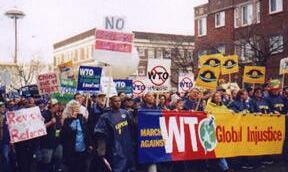
12.3 CIVIL SOCIETY INITIATIVES IN THE REGIONAL CONTEXT
Various prominent environmental movements have emanated at the grass-rootslevel around the world, most relating to competing claims over natural resources, such as forests, water sources etc. Community movements have also resulted from the violation of humanand other rights due to displacement and environmental degradation caused by various development projects. Such movements often face serious resistance from vested interest groups attempting to appropriate gains accruing from development projects. For instance, Chico Mendes of Brazil, who led a protest against Amazon deforestation, was assassinated in 1998. Ken Saro-Wiwa of Nigeria, a writer protesting against the destruction of his tribe’s lands by Western oil companies, was imprisoned and executed by the military dictatorship in 1995. Rodolfo Montiel and Teodoro Cabrera, Mexican farmers were arrested for organising a campaign to halt a commercial logging project, were tortured and sentenced to six years of jail before they were released in November 2001. Aleksandr Nikitin of Russia, who worked to promote the cause of nuclear safety, suffered a five year-long prosecution for state treason before being acquitted in September 2000. Thus, environmental protection has often been taken up as a cause for the people, in defiance of the government machinery or in opposition to the powerful industries working with explicit or implicit support of the government. Such local initiatives have given rise to community organisations like the NGOs.
NGOs have an increasing presence in making and implementing environmental policy and law. NGOs can and do deploy important skills and resources in the process of environmental protection. Contrary to the popular perception that NGOs are always critical of government initiatives, it is now widely recognised that NGOs also contribute positively in enhancing state initiatives towards environmental protection by working in constructive partnerships. States do not necessarily lose and in fact, often gain through the enhancement of NGO access and participation. NGOs create linkages between global and local needs and actors. The active role of the NGOs in the environmental protection is viewed by many as a welcome infusion of civic virtue into governance at all levels.
NGOs have played a role in negotiation, monitoring and implementation of environmental law and policy at all levels. In their efforts to address the increasing complexity and severity of international environmental problems, states have incorporated NGOs because their participation enhances their ability to regulate. NGOs are constructive participants and provide policy advice, help in monitoring commitments, minimise ratification risk and facilitate linkages between governments
47
Societies and
Civil
Community Initiatives
and people. NGOs are thus becoming increasingly pervasive in environmental diplomacy and have been incorporated into what were previously ‘state-only’ governance activities.
There is now a provision for NGOs participation in the UN negotiations through a process of accreditation. While accreditation allows for a limited role for NGOs in the UN cooperative process, many recent environmental treaties have gone much further by formally mandating, or permitting, NGO participation in some of their continuing activities. NGOs were only occasionally acknowledged in multilateral environmental treaties before the 1970s and rarely granted access. The major environmental treaties negotiated in the last decade, however, contain expansive rules for NGO participation and NGOs have become very active and visible participants in many regime activities. Statements stipulating NGO participation have now become standard part of global environmental accords. NGO members are now even part of national delegations to the UN meetings. It cannot be denied that NGO participation remains a privilege granted and mediated by states.
The biggest benefit which the NGO participation provides is the information and grassroots perspectives on policy options. Through them, governments have a chance to gain well grounded, efficacious and creative policy advice from independent NGOs, at the international and national levels. The International Union for Conservation of Nature and Natural resources (IUCN), for instance, has helped draft or has provided a secretariat for several important international conventions. At the national level in India, for example, the recently adopted Biodiversity Act is almost completely built on inputs from a network of NGOs working across the country. NGOs contribute by pointing out logical or procedural inconsistencies in proposals under consideration. They have also brought forward expert independent legal judgments in cases of ambiguous interpretation. Thus, states can maximise policy information and analysis with the help of NGOs.
Nearly every international agreement on environment and sustainable development relies on national self-reporting. Given the fact that States, in order to project a good image, are likely to misrepresent and procrastinate in reporting, NGOs play a role in providing independent assessments of individual states’ compliance records, data and information necessary for effective international cooperation. This is not to say, however, that NGOs are always ideal monitoring agents. Despite limitations, they do provide an additional form of a monitoring mechanism. At the national level, the same monitoring or ‘watchdog’ role is performed by NGOs in relation to the enforcement of national law and policy.
NGOs also play an important role in reporting and information dissemination on national and international initiatives. For instance, the Earth Negotiations Bulletin provides daily bulletins of environmental negotiations. At the national level, NGOs play an effective role in information dissemination and genere awareness of environmental laws and policy. In addition, various NGOs provide short-term educational training in environmental issues and also organise awareness-generation programmes, thereby greatly extending the outreach of environmental initiatives.
International environment regimes must have domestic support to succeed and NGOs, as interest groups, can provide this support. Thus NGOs are powerful domestic actors in many advanced industrial states. For domestic law and policy initiatives too, NGOs can contribute in raising popular support. Therefore, play the role of bridging the distance between governments and the people.
Of course, the weaknesses in the role of NGOs cannot be dismissed lightly. It cannot be denied that NGOs are fragmented groups or single-issue activists, sometimes being guided by the interests of fund givers, lack public accountability or transparency. Increased participation of NGOs may, at times, impair regime effectiveness, create policy gridlock and lead to poor outcomes. But these factors would probably not outweigh the huge contribution of environmental NGOs in the fields of action-
48
Initiatives towards Sustainable Development
research and analysis, education and information dissemination, advocacy and lobbying, legal intervention, inputs to policy-making institutions, and implementation.
Today, international NGOs are working on various aspects of environmental protection. World Wide Fund for Nature – International (WWF-International),a global organisation that was set up in 1961 with its secretariat in Switzerland, is one of the best known international NGOs, with national offices spread across the globe. Although it started out with limited mandate focusing on conservation issues, it has now expanded its focus to almost all issues of environmental protection. It has also been an active participant in lobbying for the acceptance of inputs from NGOs in environmental disputes at the World Trade Organisation. The WWF has played a major role in the evolution of the international conservation movement. Friends of the Earth International(FoEI), founded in 1971, started as a campaign on certain crucial issues such as nuclear energy and whaling.
Greenpeace, an international NGO with an activist mindset,has a presence in 40 countries across the world. Its campaigns include those on climate change, forests, oceans, nuclear threat, toxic chemicals, sustainable trade etc. Greenpeaceuses research, lobbying and diplomacy as well as high-profile, ‘on-the-streets’ events, to draw attention to the environmental problems and to raise the level and quality of public debate.

Civil Societies and Community Initiatives



Fig.12.2: Some campaigns being conducted by the Greenpeace movement


Earthwatch Institute promotes sustainable conservation of natural resources and cultural heritage by creating partnerships among scientists, general public, educators and businesses. The Natural Resources Defence Council also works on a range of issues such as climate change and biodiversity conservation. The International Union for Conservation of Nature and Natural Resources (IUCN), founded in 1948, has a membership of states as well as NGOs. It offers policy advice and technical support to various MEA secretariats. It plays a role in assessing new natural World Heritage sites. It also monitors the state of the world’s species in the ‘IUCN Red List’. IUCN provides technical support for drafting environmental laws and natural resource management strategies.
These are just some of the well-known international NGOs working on a broad canvas for environmental protection. There are numerous others, either working on specific issues such as conservation of particular species, management of hazardous wastes, regulation of genetically modified organisms, etc. or in specific regions of the world.
49
STOP THE NUCLEAR THREAT SAVE OUR SEAS SAY NO TO GENETIC ENGINEERING
PROTECT ANCIENT FORESTS
STOP CLIMATE CHANGE
ELIMINATE TOXIC CHEMICALS
Collect information about the activities of various global, regional and national NGOs. Evaluate their impact on the environment and development scenario in your region.
12.4 COUNTRY-BASED CIVIL SOCIETIES’ INITIATIVES
The Chipko (Hug) Movement is one of the best-known examples of people’s environmental movements in India. This movement emerged in the hills of Uttar Pradesh in the early 1970s, at about the same time that the international community was recognising environmental protection as a high-priority objective in the Stockholm Conference. The instances of devastating floods in the Alaknanda region in the 1970s, wherein many lives were lost and the frequent landslides in the region were recognised as being linked to the large-scale deforestation being caused by commercial logging. The trigger eventofthe Chipko movement was the government decision allotting a plot of forest in the Alaknanda valley to a sports goods company from Allahabad for commercial logging, after having denied to the villagers access to wood for making agricultural implements
The strength of this movement lay in its simplicity. The local population decided that the only way to protect their forest resources from commercial exploitation by big contractors was to simply ‘embrace’ the trees. They would place themselves between the trees and the logger’s saw, making it impossible for felling to proceed. Based on the Gandhian philosophy of satyagraha, this movement had universal appeal and led to many such similar protests against commercial logging throughout the hill region.
A local NGO, Dashauli Gram Swarajya Sangh (DGSS) helped the villagers organise their protest. The movement, led by Sunderlal Bahuguna and Chandi Prasad Bhatt, received wide publicity. In December 1973, there was a non-violent demonstration in Uttarkashi where thousands of people participated. The local hill women, being most directly affected by deforestation, played a prominent role in this movement. A famous incident of the time was the instance of some village women, under the leadership of Goura Devi, successfully saving a large tract of forest from the contractor’s axe in Reni.
By 1975, the government had to abolish the system of issuing private contracts for felling and set up the Uttar Pradesh Forest Corporation in 1975 in order to oversee this function. In the seventies, the Chipkoresistance spread to various parts of the Garhwal Hills, forcing the government to rethink its policy on forest management in the hill areas –a fifteen-year moratorium on felling was recommended for the Himalayan forests in UP. The message of the Chipko movement spread to the other parts of the country as well.
The Chipko movement inspired the Appiko movement in South India in the early 1980s. The Appiko movement in the Uttara Kannada was a response to a commercial forest policy that promoted the raising of monoculture plantations of teak and eucalyptus at the cost of tropical natural forests containing mixed species that were valuable not only for the local people for fodder, fuel etc. but also for ecological ends such as prevention of soil erosion and water retention. Appiko Chaluvali,launchedby the youth of Salkani village on the lines of the Chipko movement, involved the local youth embracing the trees earmarked for felling by contractors, finally forcing the felling orders to be withdrawn. This agitation also spread quickly to other districts, creating awareness among the villagers throughout the Western Ghats.
Movements against commercial felling also emerged in the tribal belts in Central India, such as in Jharkhand and Bastar, where there was widespread agitation against the Government’s policy to convert mixed natural forests into plantations of commercial tree species. The demand of the people was that forest ownership and
50
Sustainable
SAQ 2
Initiatives towards
Development
management must revert from state to community hands and that local communities should be actively involved in the afforestation programmes.The upsurge in people’s movements has resulted, in many instances, in bringing about alterations in policy decisions. For instance, most of the movements opposing indiscriminate logging for commercial purposes came together to oppose the Draft Forest Bill of 1982, forcing the government to reconsider its decision and not bring the Bill to Parliament for ratification. The incorporation of popular demand in policy-making was reflected in the National Forest Policy, 1988, which moved away from focusing on the commercial value of forests towards recognising the conservation value of forests, and the Circular on Joint Forest Management, 1990, which recognised the value of people’s participation in forest management Thus people’s movements have proved successful in asserting people’s rights to manage forests. In this endeavour, environmental movements have been greatly strengthened by the able assistance of environmental NGOs as well.
Similar movements have grown around the use of other natural resources such as fisheries. In the late 1990s, after a long struggle, the displaced people of the Tawa dam on the Narmada river, successfully procured fishing rights, on a five-year lease, in the reservoir on a cooperative basis, displacing in turn the public sector corporation and the private contractor operating in the area earlier. The Tawa Matsya Sangh,a cooperative of tribal fishermen displaced by the dam, was formed after the struggle. Apart from the positive impact on the livelihoods of the fishermen, the Tawa Matsya Sangh also ensured that the fish conservation rules applicable to the reservoir were observed properly. This was a typical example of the good management, use and development of natural resources by the local communities.
Another issue that has witnessed large-scale popular protests is that of large dams, which cause loss of forests and agricultural lands. Many peoples’ movements have emerged against large dams and river valley projects. Though the primary negative impact of large dams is that of population displacement, there are also environmental issues such as deforestation, siltation, water-logging, and salinisation. One of the oldest agitations againstdams is the one against the Tehri Dam on the Bhagirathi River in the Himalayan region. The Tehri Baandh Virodhi Sangarshan Samiti is led by the famous Chipko Andolan leader, Sunderlal Bahuguna. A similar protest was led by Chandi Prasad Bhatt against the Vishnuprayag Dam on the Alaknanda river.
The Koel-Karo hydroelectric power project, initiated in 1973, also witnessed opposition from the tribal populations in the Jharkhand region in Bihar. The Jan Sangharsh Samiti and the Jan Sanyojan Samiti were formed and later united as the Koel-Karo Jan Sangathan. The Sangathan organised a Kam Roko (stop work) campaign in the late 1970s. In July 1984, the government announced that it would proceed with the project even if force had to be used. But armed police personnel faced stiff resistance from the people. The announcement in 1995 to renew the project led to further mobilisation in the area, with thousands of people participating in rallies and satyagrahas, preventing the laying down of the foundation stone of the project.
In the case of the Silent Valley Hydroelectric Project in Kerala, when it became clear that the project would considerably damage the tropical rainforest of the region, the Kerala Sastra Sahitya Parishad (KSSP) organised several mass petition campaigns. The local population and many local organisations were involved in the Save the Silent Valley Movement. The government, in response to this popular protest, abandoned the project in 1984.
A similar success protest against the Bedthi Dam in Karnataka resulted in the government abandoning the project in the early 80’s. The most high-profile movement against big dams in India is the Narmada Bachao Andolan (Save the Narmada Movement) against the Sardar Sarovar Project on the Narmada river. The protest was started in Gujarat in the 1980s under the leadership of Medha Patkar. Though the movement has not been successful in stalling the project completely, it did lead to the revocation of funding by the World Bank and the Japanese Government.
Civil Societies and Community Initiatives
51
Fig.12.3: Located in the Kundali Hills of the Western Ghats, the Silent Valley National Park holds a valuable treasure of rare plants and herbs. The Park is rich in its wildlife, and elephants,lion-tailed macaques and tigers are the most common residents

The National Campaign against Big Damshas brought together around 100 groups from around the country in order to generate policy debate around the issue. The environmental movements have brought together the poor and the marginalised from throughout India in a struggle to protect their interests and survival. Environmental protests now pose a serious challenge to the development ideology in India.
Recent years have also seen a proliferation of environmental NGOs in India. Over 1000 NGOs in India are devoted exclusively to environmental protection. The National Alliance for People’s Movements has brought together several such organisations. The India offices of various international NGOs such as WWF-India, Greenpeace-India, Oxfam-India etc. work on research relating to environmental protection and sustainable development. There are also Indian groups such as the Centre for Science and Environment(CSE), The Energy Resources Institute (TERI), the Consumer Unity and Trust Society (CUTS) contributing to national level policymaking. Besides these larger groups, there are numerous grassroots NGOs such as Tarun Bharat Sangh and Tawa Matsya Sangh spread out across the country that are contributing in strengthening environmental initiatives.
Thus much of the momentum for environmental protection is emerging at the grass roots level. Yet, it must be remembered that people’s movements result in extreme cases and can and must be avoided. There would not arise a need for people’s movements if the government ensures people’s participation in the environmental decision-making process. The best way to strengthen initiatives at sustainable development is to ensure that law and policy initiatives keep pace with the changing social milieu and popular demands. Members of the general public have an important role to play in the decision-making relating to the environmental protection; as pressure groups on government; as vigilance agents, helping to focus attention on potential environmental harm; as public interest groups that take up environmental litigation at different levels; as spokespersons of environmental causes in impact inquiries; and as part of advisory panels and agencies constituted for environmental protection. In sum, public participation generates public confidence in the decisionmaking process and ensures public acceptance of the decision, resulting in an overall strengthening of initiatives towards environmental protection and sustainable development.
12.5 SUMMARY
• The initiatives aimed at environmental protection taken by states at the national, regional and international levels are not sufficient to ensure the achievement of the objective of environmental protection and sustainable development. A

52
Sustainable
Initiatives towards
Development
comprehensive survey of initiatives towards environmental protection must include initiatives that spring directly from the grassroots level. Often, these initiatives are actually in opposition to state policies, indicating the relevance of encouraging enhanced participation in environmental law and policy making. Consulting the affected people from the very beginning enhances the legitimacy of the policy in question.
• NGOs play an increasingly visible and vital role in addressing the problems of environmental degradation. The initiatives taken by various NGOs at the national, regional and international levels cannot be overlooked when assessing the initiatives towards environmental protection. They play a dual role, on the one hand, questioning the wisdom of government policy decisions and keeping a check on government activities and on the other hand, lending support to the government in implementing and strengthening its environmental initiatives.
• Members of the general public have an important role to play in the decisionmaking relating to the environmental protection; as pressure groups on government; as vigilance agents, helping to focus attention on potential environmental harm; as public interest groups that take up environmental litigation at different levels; as spokespersons of environmental causes in impact inquiries; and as part of advisory panels and agencies constituted for environmental protection.
12.6 TERMINAL QUESTIONS
1. Analyse the role of people’s movements in the light of the environment–development interface.
2 Comment on the relevance of participation in environmental decision-making.
3. What role have environmental NGOs played in furthering the cause of environmentalprotection?
REFERENCES
1. Little, Paul E. (2001) Amazonia: Territorial Struggles on Perennial Frontiers., MD: Johns Hopkins University Press, Baltimore.
2. Raustiala, Kal(1997) “States, NGOs and International Environmental Institutions”, International Studies Quarterly, Vol.41, no.4, pp.719-40.
3 Swain, Ashok (1997)“Democratic Consolidation? Environmental Movements in India”, Asian Survey, Vol.37, no.9, pp.818-32.
Websites http://www.cseindia.org http://www.cuts-india.org http://www.greenpeace.org/international_en http://www.iucn.org http://www.panda.org http://www.teriin.org
Civil Societies and Community Initiatives
53
UNIT13 COMMUNITY KNOWLEDGE
Structure
13.1 Introduction Objectives
13.2 Traditional Knowledge
13.3 Modern Scientific Knowledge
Measures to be taken by the Scientific Community
13.4 Integration of Scientific and Traditional Knowledge for Sustainable Development
Agriculture and Forestry
Conservation of Biodiversity Artisanal Technologies Health and Medicine
Partnership between Scientific Community and Indigenous People
13 5 Summary
13.6 Terminal Questions
13.1 INTRODUCTION
Community knowledge refers to the knowledge possessed by the different communities and societies all over the world that is utilised to carry out the day to day activities. Community knowledge includes i) scientific and codified knowledge associated with occupations and life-styles influenced by industrialisation and ii) knowledge associated with traditional occupations, practices in local cultures still engaging a large majority of populations, especially in developing countries. For simplicity, these two types of knowledge are broadly categorised as modern scientific knowledge and traditional experiential knowledge. In general, modern scientific knowledge is codified, systematically classified, is acquired through institutionalised learning and in many ways has a universal character. Traditional knowledge, on the other hand, is empirical, is acquired through practice and experience and is therefore related to cultural and physical resources of the location.
We have seen in the earlier units that many of the sustainable development concerns arise out of the industrialisation trajectory. Traditional knowledge, not being connected to industrialisation, is thus seen as providing alternate and additional approaches to achieving sustainable development. Several indigenous or traditional knowledge and practices developed through the centuries by different indigenous and local communities being sustainable are also receiving attention of sustainable development efforts. Community knowledge includes scientific knowledge that is the basis of industrial development and traditional knowledge and both have separately contributed in their own way towards the process of development of mankind.
Industrialised societies rely mainly on scientific knowledge whereas others are rich in traditional knowledge. In thisunit, we discuss some aspects of traditionaland scientific knowledge of societies, and the need for their integration in relation to sustainable development.
Objectives
After studyingthis unit, you shouldbe able to:
• comprehend and describe theimportance of traditional knowledge in sustainable development of the communities;
• describe the benefits of partnership between scientific and traditional knowledge for sustainable development; and
• suggest ways of innovation in the indigenous techniques of your region using scientificmethodsto meet the aims of sustainable development.
5 Community Knowledge
13.2 TRADITIONAL KNOWLEDGE
Traditional knowledge is the indigenous knowledge possessed by various local communities accumulated through traditional and presentday to day activities. The basis of this knowledge lies in relating community and its social, economic and cultural activities to local environment.
The term “Traditional Knowledge” is described in literature as follows:
“Traditional knowledge is a cumulative body of knowledge, know-how, practices and representations maintained and developed by peoples with extended histories of interaction with the natural environment. These sophisticated sets of understandings, interpretations and meanings are part and parcel of a cultural complex that encompasses language, naming and classification systems, resource use practices, ritual, spirituality and worldview.”
Culture
Practices
Representations
Fig.13.1: The many facets of traditional knowledge
Traditional knowledge develops within certain cultural groups or communities over a given period of time and within specific environmental and social settings. At the same time, these communities have accepted and adopted elements from other
6
Strategy for Sustainable Development
Knowhow
knowledge systems. The practitioners of traditional knowledge tend to view people, animals, plants and other elements of the universe as interconnected by a network of social relations and obligations. Traditional knowledge provides the basis for many aspects of everyday life and occupations.
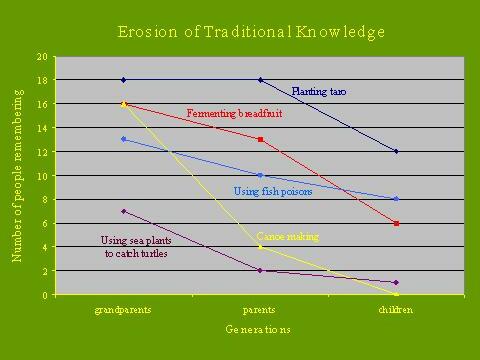
For example:
1 hunting, fishing and gathering, 2 agriculture and animal husbandry, 3. preparation, conservation and distribution of food, 4. location, collection and storage of water, 5. coping with disease and injury, 6 interpretation of meteorological and climatic phenomena, 7 manufacture of clothing and tools, 8 construction and maintenance of shelter, 9. orientation and navigation on land and sea, 10. management of ecological relations of society and nature, 11. adaptation to environmental/social change.
It is not in the scope of this unit to document the storehouse of information on traditional knowledge available in our societies, which is fast disappearing (see Fig. 13.2). Youcould undertake this as a worthwhile pursuit if you are interested.
SAQ 1
Document the relevant aspects of the indigenous knowledge or traditional practices prevalent in your surroundings in any of the above areas of your interest. Use local sources of information.
Community Knowledge
Fig.13.2: The results of a surveyon Pohnpei, an island inthe Federated States of Micronesia about generational knowledge covering various components of traditional knowledge such as planting taro; using plants to stun and capture fish; fermenting breadfruit as a method to preserve it as a famine food; using marine plants as turtle bait; and, constructing outrigger canoes show the loss of information between generations on this island (Source: law.wustl.edu/centeris/ Confpapers/balick1.gif)
7
13.3 MODERN SCIENTIFIC KNOWLEDGE
Science and technology have contributed immensely in the process of development especially in the western countries and in regions industrialising along that trajectory. Mankind has taken tremendous strides in the understanding of nature and in the fields of medicine, agriculture, industry, engineering etc. that were unimaginable without science and technology (S&T).
Information and Communication Technology (ICT) that uses telecommunications and computers have made it possible to connect people across nations with speed and ease as never before. This powerful scientific knowledge needs to be harnessed for generating strategies for sustainable development.
Modern science often builds on traditional knowledge and through methodical testing and experimentation expands and deepens the observed knowledge. For example, several medicinal properties of plants prescribed by local healers and practitioners of indigenous medical systems after scientific research have been developed into drugs. Similarly, in other fields like agriculture, astronomy, chemistry, engineering etc., the perfection of the traditional empirical methods gave rise to scientific technology.
Such mutually beneficial and enriching exchanges between these two distinct knowledge systems requires active involvement of the scientific community to raise awareness about the unique values of traditional knowledge systems and to establish a foundation upon which to build partnerships that can constructively couple modern science and traditional knowledge.
Fig.13.3: Some facets of modern scientific knowledge
8 Strategy
Sustainable
for
Development
13.3.1 Measures to be taken by the Scientific Community
Scientists and scientific institutions should build awareness and understanding within the scientific community about traditional knowledge and its relationship to science.
Specifically, they need to:
1 Recognise that scientists are also influenced by their own cultures in which they learn and work. To broaden their outlook, institutions should encourage research into the history and philosophy of science and promote interaction of scientists with those who although trained in modern science and technology, work with communities at the grass-roots levels.
2. To identify and highlight the contributions of traditional knowledge systems in the development of science.
3 Recognise that traditional knowledge systems and grassroots practices offer unique and valuable approaches to the construction of scientific technologies that can be utilised by the specific cultural milieu within which they are reproduced.
4 Promote and support research into traditional knowledge systems that represent considerable stores of, as yet “undiscovered”, knowledge and potential for mutually beneficial exchanges with science.
5 Actively support and strengthen the systems of acquisition, transmission and maintenance of traditional knowledge in the societies that are keepers and developers of that knowledge, specifically with respect to building appropriate bases to enable exchanges between traditional knowledge and science.
6 Understand that knowledge in traditional societies is also dynamic and constantly evolving.
7. Recognise that traditional processes exist for transmitting and acquiring traditional knowledge, and that these processes deserve to be maintained and supported.
8. Recognise, support and encourage research into the role ofwomen’s traditional knowledge that has often been neglected.
9. Organisations like UNESCO, International Council of Scientific Unions (ICSU) and other scientific bodies should work together to advocate and implement these measures.
13.4
INTEGRATION OF SCIENTIFIC AND TRADITIONAL KNOWLEDGE FOR SUSTAINABLE DEVELOPMENT
Experience has demonstrated that quite often scientific methods and resulting approaches in specific communities or localities do not work. For example, several genetically engineered new varieties of plants have failed to give expected results in different localities. Several biodiversity conservation methods have failed as the strategies adopted were not compatible with the local system. The process of change is not accepted by the people, it cannot be sustained. On the other hand if the people are able to contribute their local resources and practices into the process of change, the development becomes not only sustainable but also gets accelerated.
The attainment of sustainable development calls for balanced interrelated policies aimed at economic growth, poverty reduction, human welfare and social equity amongst all nations and communities. Governments all over the world and other stakeholders have realised that it is not only necessary to respect varied cultures and traditions but also that the enrichment of diversity is in itself the path for overall
9 Community Knowledge
sustainable development. Accordingly the two forms of knowledge should be combined, enhanced and harnessed and greater use of both scientific knowledge and technology and traditional knowledge and practices need attention. Many issues related especially to sustainable natural resources management and biodiversity conservation require the partnership between scientific and traditional knowledge. Thus, moving towards sustainable development in many areas will require a closer cooperation between scientists in formal organised institutions and the holders of traditional knowledge in informal unorganised sector such as communities in nonindustrialised regions.
This new and emerging understanding was also deliberated upon in the World Conference on Science (WCS) organised by the United Nations Educational, Scientific and Cultural Organisation (UNESCO) in 1999 in Budapest, Hungary, to address the issue of knowledge and sustainable development. The conference recommended enhancement and harnessing of both traditional knowledge and scientific capabilities for sustainable development. In this conference, The Declaration on Science and the Use of Scientific Knowledge was adopted which affirms that:
“Scientific knowledge has led to remarkable innovations that have been of great benefit to humankind. Yet at the same time it also notes the challenge remaining to use this knowledge in a responsible manner to address human needs and aspirations. This is a task that needs many partners, and which calls for a broad collaboration between science and society in meeting the challenges of the future.”
In paragraph 1 of the Declaration, it is stated:
“The sciences should be at the service of humanity as a whole, and should contribute to providing everyone with a deeper understanding of nature and society, a better quality of life and a sustainable and healthy environment for present and future generations.”
Scientists need to be aware of the social and cultural settings of their research policies. For finding viable solutions to many sustainable development problems at the local level, proper interaction between science and local and indigenous cultures is important. In this context paragraph 26 of the Declaration (Annex 1) observes:
“ … traditional and local knowledge systems as dynamic expressions of perceiving and understanding the world, can make and historically have made, a valuable contribution to science and technology, and that there is a need to preserve, protect, research and promote this cultural heritage and empirical knowledge.”
The WCS report under the section entitled “Modern science and other systems of knowledge” recommends (Annex 1):
“Governmental and non-governmental organisations should sustain traditional knowledge systems through active support to the societies that are keepers and developers of this knowledge, their ways of life, their languages, their social organisation and the environments in which they live, and fully recognise the contribution of women as repositories of a large part of traditional knowledge.”
“Governments should support cooperation between holders of traditional knowledge and scientists to explore the relationships between different knowledge systems and to foster inter-linkages of mutual benefit.”
In recent years, representatives of the international scientific and technological communities, Non-GovernmentalOrganisation(NGO)community of traditional knowledge and practices and people from business and industry have initiated a
10
Strategy for Sustainable Development
dialogue and have agreed to explore, together with UNESCO, the possibility of developing partnership projects in different parts of the world.
Efforts are being made to harness the traditional practices and knowledge in the local communities along with scientific inputs in various areasto bring about the process of sustainable development faster.
13.4.1 Agriculture and Forestry
Indigenous knowledge in agriculture is vast and diverse. This knowledge has been accumulated and perfected over centuries. The indigenous methods of soil management, cultivation methods, irrigation systems, crop breeding, animal husbandry and other agricultural practices like harvesting and storage have been traditionally used successfully and ina sustainable manner. The significance of indigenous knowledge for sustainable development in agricultural productivity was recognised by the researchers as early as 1980s, and the scientists in CGIAR (Consultative Group on International Agricultural Research) started focusing on traditional practices and indigenous knowledge of local populations in different parts of the world.
In Africa, with the participation of the local people, indigenous soil characterisation and soil management to increase agricultural productivity was carried out successfully. The Centre for Indigenous Knowledge for Agriculture and Rural Development (CIKARD) has promoted indigenous knowledge systems as a critical resource base for development and the design of sustainable agricultural systems. Other agricultural organisations worldwide have also started focusing their research on the locally available plant strains to increase disease resistance and other favourable attributes in the crops.
In India, the agricultural universities have focused their research on indigenously available plant strains for their hardiness, resistance to pests and other desirable attributes in collaboration with the local farmers. The information about the plants is obtained from the farmers. Sustainable crop cultivation and irrigation methods (e.g. drip irrigation) have been promoted by NGOs and further developed by scientists in collaboration with the local communities.
13.4.2 Conservation of Biodiversity
Recently, there has been renewed recognition of indigenous knowledge as a potential source for conservation of biodiversity. Local people are knowledgeable about their indigenous flora and fauna and with their help, scientists have been able to discover new species (e.g. primate species recently discovered in Central and South America, ungulates in Southeast Asia, and plant species throughout the tropics). Since the 1980s and 1990s, this taxonomic knowledge has been attracting the interest of pharmaceutical and agricultural companies for bio prospecting.
In India and Mexico, ethno-botanical research has focused on “sacred groves” occurring throughout these countries that are protected and managed by local communities. These groves are specific pockets of forests occurring in various parts of the country that are considered sacred and common people are prohibited to use these pockets. In these forests, trees are not felled. These prohibitions have ‘managed’ to preserve the ecosystems.
In the Pacific Islands, research was initiated on traditional knowledge and systems in the area of marine resource. These studies focused on traditional knowledge on marine species including their habitat, aggregation behaviour, spawning migration and classification. In addition, elaborate indigenous conservation and management practices relating to marine biodiversity were observed that could be effectively adapted.
Community Knowledge
Fig.13.4: Adivasi with Phyllanthus, traditionally used for jaundice: there is a need for alternative protection regimes for indigenous knowledge (Source: www.hinduonnet.com)
11
13.4.3 Artisanal Technologies

Artisans in villages and non-industrialised settings have been producing and continue to produce a variety of products. Artisanal products like handicrafts, carpet weaving, leather work, metal work, pottery, wood work etc have been used by mankind since the advent of civilisation. The knowledge and skill of their production methodsand processes (technologies) is mostly possessed by particular individuals, families or communities and is acquired through ‘learning by doing’ apprenticeship. These have mainly been family occupations. The knowledge is passed from one generation to the next in the same family. These indigenous technologies have been perfected over hundreds of years using locally available materials and designs appropriate to the culture of the region. Such production units are widespread in rural and tribal areas andhave often been the basis of small-scale industries.



Besides, communities in rural and tribal areas use forest and plant products, to construct houses, boats, clothing, storage and other household goods. The technology used by them has sustainability features like the use of locally available biodegradable and replenishable resources, maximum utilisation of renewable energy and low capital inputs. These technologies are, however, facing extinction under the impact of industrialisation. The artisanal goods face stiff competition from the industrially manufactured goods. The artisanal methods of production have remained static and have not been adopted and improved to meet the requirements of developing economies and changing demographic patterns.
Fig.13.5: Someartisanal productsfrom India
In India, realising the significance of artisanal technology to sustainable development, commendable efforts have been made by NGOs to infuse new life into the dying artisanal crafts. A large number of projects and programmes in the Asian region under the general title of ‘Science and Technology for Rural Development’ provide a rich and useful base to build upon. For example, the laboratories of the Council for Scientific and Industrial Research (CSIR) are working with several rural communities to understand their specific problems and upgrade their traditional skills with inputs of scientific tools and approaches. The approach is to identify prevailing traditional practices, study problems specific to particular regions and provide scientific inputs to arrive at ecologically and culturally acceptable technologies for these regions.

12
Strategy for Sustainable Development
Among the broad areas covered by these efforts are:
1 Post-harvest agro technologies
2 Cultivation and processing of medicinal and aromatic plants
3. Food technologies
4. Drinking water, health and sanitation
5. Low cost housing
6 Leather and animal waste utilisation
7 Upgradation of skills and rural artisans
8 Technologies for other small-scale industries
13.4.4 Health and Medicine
Medicinal practices based on traditional knowledge provide for the primary health care needs of around 80% of the world’s population. In India, traditional systems of medicine and healthcare such as Ayurveda, Siddha and Unani, is actively supported and researched. In China, the Chinese and Tibetan systems of medicine predominate the healthcare scene. These indigenous systems of medicine have now gained recognition and acceptance in the western countries where they are much in demand. Even western medicine, founded on Greek traditions, continues to be strongly influenced by traditional knowledge. In the USA, plant materials continue to be an important component in 25% of prescriptions.
Historically, the scientifically backed allopathic system of medicine also has its roots in the traditional knowledge which continues to this day. The early medical practitioners gained information about the herbs used by the local healers and tested the effects on their patients. Based on these empirical observations, subsequent chemists identified the active components present in the particular herb. The individual active chemical compounds were synthesised in the laboratory by the technique of chemical engineering and were given the form of allopathic medicine. Medicines like aspirin, quinine, reserpine, digoxin etc. are all derived from plants. The method of investigating plants for new drugs is known as bioprospecting. Today, bioprospecting has become an area of tremendous interest to the pharmaceutical and nutraceutical companies that are involved in healthcare and cosmetics. Considerable amount of money is invested in bioprospecting and developing new drugs from plants. Traditional knowledge is available not only in curative medicine but also in the preventive medicines, cosmetics and nutraceuticals that are taken as supplements to diet.
Indigenous knowledge in medicines is therefore extremely valuable for the scientists who are involved in drug discovery. Collaboration and partnership with the local people possessing the knowledge would be beneficial for the scientists, the local people and the entire mankind.
SAQ 2
Describe the importance of indigenous knowledge of agriculture and medicine in today’s context.
13.4.5 Partnership between Scientific Community and Indigenous People
Partnerships between the Scientific and Technological (S&T) communities and indigenous people in many areas are essential to promote sustainable development. The collaboration must be founded upon mutual respect and understanding, transparent and open dialogue, and informed consent and just returns for the holders of traditional knowledge through rewards and benefits. These commitments are important as the fields of traditional and scientific knowledge extend into areas involving business, government and development processes.
Community Knowledge
13
In the first place the S&T community must be ready to collaborate with the holders of traditional knowledge and implement the necessary changes in the conduct of scientific research. A much greater share of research must be problem oriented and interdisciplinary, addressing the social, economic, and environmental issues of sustainable development. Traditional divides between the natural, social, economic, and engineering sciences and other major stakeholders must be bridged. Research policiesshould include broad-based participatory approaches involving the holders of traditional knowledge and those in need of scientific information.
In the formulation of partnerships the issue of ownership of knowledge must be understood and acknowledged. The holders of traditional knowledge must be fully recognised as the rightful owners of their intellectual heritage. Scientific research must pay due attention, and give due credit, to those people who produce and hold that knowledge. The setting up of National Innovation Foundation (NIF) with a corpus fund from the Government of India is an important step in this direction. NIFs approach is to convert the intellectual and innovative knowledge at grassroots level to enterprise and wealth shared between the entrepreneur and the owner of knowledge.
Beyond the building of collaborative partnerships at the local level between members of the scientific community and holders of traditional knowledge, it will be necessary to expand these collaborative partnerships to includenational government agencies, local authorities, business, industry, NGOs and, appropriate intergovernmental organisations.
In this respect, the following principles should be applied:
1. Ensure the full and effective participation of traditional knowledge holders during all stages of sustainable development policies, plans and programmes, alongside the scientific and technological community.
2. Acknowledge and respect the social and cultural bases.
3 Recognise the rights of traditional people to own, regulate access and share benefits of their unique sets of knowledge, resources and products.
4 Ensure that traditional knowledge holders are fully informed of potential partnerships and that these are only entered into with prior informed consent.
5. Promote training to equip young scientists and indigenous people to carry out research on traditional knowledge.
13.5 SUMMARY
• Community knowledge refers to the combined traditional and scientific knowledge. It is known that traditional knowledge is sustainable as it has evolved after thousands of years of observation and experience. This form of knowledge interlinks and establishes a holistic relationship between man and nature. It has supported life in a sustained way and continues to do so today. However, with globalisation, this form of knowledge has been ignored completely and is gradually becoming extinct.
• Scientific knowledge has evolved over a period of a few hundred years and has its roots in traditional knowledge. However, it has adopted a path of separating human beings from their environment. The development process based on science and technology is no doubt faster but it has proved to be detrimental for our environment as is evident from the present dismal scenario of the global environment.
• Today, the greatestchallenges which the world community is facing are the issues of socio-economic growth, poverty reduction, human welfare and development and
14
Strategy for Sustainable Development
the protection of the Earth’s resources, commons and life-support systems. People, governments and the scientific communities all over the world have now realised the importance of sustainable developmental strategies. These groups have stressed the need for harnessing both scientific knowledge and technology on the one hand, and traditional knowledge on the other to solve many issues related to sustainable natural resources management and biodiversity conservation. Thus, formulating policies for sustainable development will require a closer cooperation between scientists and the holders of traditional knowledge which include local people in general and indigenous people in particular.
• Efforts are being made towards this endeavour and in India, already several scientific and technological laboratories are working towards this goal. They are identifying locality specific problems, collating the information about the indigenous knowledge and upgrading this knowledge for local use. This has resulted in the generation of employment and an overall elevation in the socioeconomic status in selected areas.
13.6 TERMINAL QUESTIONS
1 What do you understand by community knowledge?
2 How has the traditional knowledge contributed to the survival of the communities through the ages?
3. How has traditional medicine contributed to modern medicine?
4 Why is the traditional knowledge considered important for sustainable development?
5 What efforts are needed by the scientific community to integrate traditional knowledge into their research policies and how will it help in sustainable development?
REFERENCES
1 Brandt, Dietrich (editor) (2003) Navigating Innovations. Indo-European Cross Cultural Experiences., Vol II. India Research Press, Delhi.
2. Jain, Ashok, Qureshi M.A. and Khan, Subhan (eds.) (1995) CSIR and Rural Development, Deep Publications, New Delhi.
3 Jain, S.K. (ed ) (1997) Contribution to Indian Ethnobotany, 3rd Edition, Scientific Publishers, Jodhpur.
4 Pandey, Deep Narayan(1998) Ethnoforestry, Local Knowledge for Sustainable Forestry and Livelihood Security, Himanshu Publications, Udaipur.
Community Knowledge
15
UNIT 14 HARNESS TECHNOLOGY
Structure
14.1 Introduction Objectives
14.2 Concept of Harness Technology
14.3 Human Resource Development Family Planning Poverty and Sustainable Development Health
14 4 Agriculture Sustainable Agricultural Practices
14.5 Industry
14.6 Natural Resources Energy Water Conservation of Ecosystems
14.7 Harnessing Technology: The Asian Context
14 8 Summary
14.9 Terminal Questions
14.1 INTRODUCTION
Technology is a tool used for increasing production levels. Through increased production, technology has played a pivotal role in the process of development. It has contributed immensely in the economic and social growth of nations. The advances made using science and technology in all the fields that touch our everyday lifestyle have been staggering. The impact can be seen in all spheres including food, housing, medicine, entertainment, information, travel, communication etc. Technology has helped to make our lives easy and comfortable.
During this developmental process, however, there has been an uncontrolled exploitation of the natural resources that has proved detrimental and has caused extensive damage to the environment. Pollution, acid rain, depleting forests and endangered biodiversity have led to a situation where the future of mankindandthe earth is at stake. Therefore, the concept of sustainable development was promoted where the process of development is to be carried on by causing minimum damage to the environment so that the future generations could sustain themselves.
Since technology and development are very closely associated, environment-friendly technologies should be employed. Towards this, an organised effort is needed to develop and diffuse new environmentally sound technologies, such as in agricultural production, manufacturing using renewable energy systems and pollution control. Indigenously available sustainable technologies need to be identified, innovated and incorporated in the main stream. A global exchange of technology is required through trade in improved equipment, technology-transfer agreements, funding, provision of experts and research collaboration.
This unit focuses on the current technological advances that have been made towards providing us with a comfortable lifestyle. The existing technologies notonly provide material comforts but also suggest ways to improve the living conditions of the poor and needy, if properly implemented. In the current scenario, modern technology needs to be harnessed and used as a tool towards achieving sustainable development. In addition, the traditional or indigenously available technology should also be innovated and integrated into the society.
16
Strategy for Sustainable Development
After studying this unit you should be able to:
• explain the evolution of the concept of harness technology for sustainable development;
• describe the available technologies in different sectors like health, agriculture and energy; and
• suggest strategies that use modern and indigenous technologies for sustainable development
14.2 CONCEPT OF HARNESS TECHNOLOGY
The concept of strengthening science and technology programmes towards sustainable development emerged in the 1990s. Most of the earliest contributions for integrating science and technology with sustainable development came from the developing world through the work of individual scholars and institutions. The concept was globally accepted following which guidelines were formulated to implement the process. Chapter 31 of Agenda 21 adopted in the Rio Earth Summit states that interdisciplinary studies (should be) developed between the scientific and technological community and policy makers and with the general public to provide leadership and practical know-how to the concept of sustainable development. The public should be assisted in communicating their sentiments to the scientific and technological community concerning how science and technology might be better managed to affect their lives in a beneficial way.
The international community addressed the issue of relevance of science and technology in social development for the first time in the World Summit for Social Development organised by United Nations Educational Scientific and Cultural Organisation (UNESCO) in Copenhagen in 1995.
In UNESCO’s World Conference on 'Science for the 21st Century' in 1999, a number of academies of science and other advisory bodies- including those of Brazil, Germany, Japan, United Kingdom (UK) and the United States (US) also addressed the links between sustainability and development. The conference declared that modern scientific knowledge and traditional knowledge should be brought closer together in interdisciplinary projects dealing with the links between culture, environment and development in such areas as the conservation of biological diversity, management of natural resources, understanding of natural hazards and mitigation of their impact.
Most importantly, the traditional systems of knowledge found strong favour in the discussions. With the turn of the millennium, discussions on science, technology and sustainability intensified significantly. The World Summit on Sustainable Development in August 2002 provided the impetus to the political, policy makers and the scientific community to rethink the relationship between technology and sustainable development. In response to the increased attention, various organisations from the international scientific and technology community conducted several factfinding studies, which addressed the question –how can science and technology contribute more effectively to achieving goals of sustainable development?
14.3 HUMAN RESOURCE DEVELOPMENT
The population of the world is increasing every year. However, the available natural resources have remained limited. Most of the population growth is in the low-income developing countries and ecologically disadvantaged regions where the access of the people to education, health care and food security is heavily compromised. Today, thereare poorer, hungry and illiterate people in the world than ever before who have no access to safe drinking water, sound homes and fuel wood, and their numbers are on the rise. The gap between the rich and poor countries is widening.
17 Harness Technology Objectives
Strategy for Sustainable Development
Human population is a resource that is knowledge and skill based. It is a reservoir of traditional or indigenous knowledge and experiences that have sustained generations of humankind for centuries and will continue to do so in the future. Human resource is an asset that needs to be developed and managed in the modern industrial world. Human Resource Development (HRD) is largely oriented towards development of skills, motivation for proficiency, excellence, efficient communication, sophistication of technology, higher productivity and commitment to the organisation for goal accomplishment. The broader areas of health and education are also incorporated in the process of human resource development. Improvement in education, health and nutrition will allow them to use the resources in a far better way. Human resource development is a crucial requirement to build up technical knowledge and capabilities to enable people to cope up with the rapidly changing economic, social and environmental scenario.
14.3.1 FamilyPlanning
To manage human resources effectively there is an urgent requirement to limit the growth of population. In the industrial world the fertility rates have dropped and the population has stabilised. In contrast, the developing world has shown a rapid acceleration in population growth where the young future parents predominate. In these nations, the development of long-term populationcontrolpoliciesand motivation for family planning is required. This gives to people the right to choose the size of their families alongwith assuring the basic right of self-determination, especially for women. Also the availability of the methods and techniques of population control like education and contraceptives should be assured especially to the economically poorer sections.
Fig.14.1: a) Used in provider training and client educational materials, this Nepali logo illustrates that couples should wait until the older child is in school before having another birth; b) a poster from Bangladesh; c) A poster from India suggests that couples wait 3 years before having a second child



18
(a) (c) (b)
Contraceptives are an effective means of lowering the fertility rate. Recent advances in medical technology has provided with a wide choice of different contraceptive devices, which are highly efficient and without any major side effects to human health. Several hormonal, chemical and plant-based contraceptives are readily available in the market, which can be injected, taken orally, applied topically and implanted by operation. Other population control methods include tubectomy and vasectomy which are also carried out more efficiently using advanced surgical techniques.
Public medical sector as the source of modern contraception
NHFS-1, 1992-93 NHFS-2, 1998-99
Harness Technology
Fig.14.2: The vast majority of rural users rely on the public medical sector. Improvements in public sector services might enhance family planning acceptance among rural couples. The International Institute for Population Sciences (IIPS, Mumbai) which served as the nodal agency for both the National Family Health Survey 1 and 2 (NFHS-1 and NFHS2).NFHS-2 provides a comprehensive portrait of population and health conditions in India. The NFHS-2 surveyed more than 90,000 women in 1998 and 1999. The first NFHS was conducted in 1992-93 and proved to be a major landmark in the development of a comprehensive demographic and health database for India. The second National Family Health Survey further expands the database, providing information on trends over time and meeting emerging needs in new areas of population and health.
With the rapid advances in communication technology, it has been easier to reach remote areas with an aim to educate the masses about the implications of population explosion. Information technology, combined with telecommunications, has brought the recent developments in the field of population control face to face with the public and has generated awareness.
14.3.2 Poverty and Sustainable Development
One of the greatest challenges of the 21st century is poverty alleviation. Poverty is not just about income. It is about opportunity, capability and security. The key elements of poverty are adequate food, clean water and energy. Towards this, government action in partnership with the private sector, non-governmental organisations (NGOs) and academic institutions at the national and international levels is required.
Energy technologies, information technology and agricultural biotechnology have enormous potential to improve the lives of the poor. According to an estimate, businesses based on these three sectors have the potential to engage three billion people. The problems of the poor could be solved when villages and urban slums are transformed. Connecting villages to the mainstream through telecommunications and information technology will empower people with information, knowledge and skills to increase productivity and to convert their indigenous knowledge into products and services that are marketable. Increased connectivity with larger markets will provide wider opportunities to rural economies.
The Government of India is evolving a master plan to develop herbal and natural products and horticulture that will link the poor farmer to the large global and domestic markets, the right kind of technology input although the value chain will
19
79 0 10 20 30 40 50 60 70 80 90 100
62 87 76 60 83
Total Urban Rural Per cent
create wealth for millions of people. The recent national strategy on Sustainable Agriculture and Rural Development has adopted an approach to manage the use of natural resources in such a way that it serves the objectives of accelerated growth, employment and alleviation of hunger.
Advancements in the Information and Communication Technologies (ICTs) have certainly helped global commerce. The proper design and effective availability of ICT services to those who thus far could not reap its benefits (the term ‘digital divide’ is used for this state of affairs) are critical areas that need attention. This will help business in outsourcing their supplies globally, more efficiently. In brief, technologies need to be harnessed to reduce the gap between the haves and have-nots for sustainable development.
14.3.3 Health
The basis of human productivity is good health and is essential for sustainable development. Many diseases are caused due to polluted water supply, poor sanitation and wastewater mismanagement and air pollution. Health problems also arise from nutritional deficiencies. Malnutrition could be attributed to the lack of calories, protein and elements like iodine and iron. Integrated approaches of sanitation, food production, safe drinking water supply, industrial policy with regard to pollution and health education along with medical intervention through preventive and curative therapeutics are required to manage this issue.
Fats, oils and sweets-Eat sparingly
Milk group 3-4 servings

Vegetables 3-5 servings
Meat group 2-3 servings
Fruits 2-4 servings
Grain group 6-11 servings
Fig.14.3: Malnourishment is linked to both poverty and lack of information.(Source of picture: www.uneue.org) The indicated servings from the food pyramid could help in preventing malnutrition
The tremendous impact of biotechnology in the field of medicine has revolutionised health care. Medical research focuses on the development of vaccines especially with regard to the tropical diseases. Improved vaccines on polio, hepatitis, tuberculosis, diphtheria etc., have been used effectively in tropical countries to combat these diseases. Vaccines for killer diseases like Acquired Immuno-DeficiencySyndrome (AIDS) are undergoing research and development. In the pharmaceutical sector, drugdesigning technology has come up with innovative drugs, which are rapid in action with minimal side effects. New drugs are constantly produced which are effectively combating pollution related diseases like asthma and allergy. There are not only curative but preventive drugs as well. Highly developed invasive and non-invasive surgical technologies have aided in hitherto unimaginable methods of cure. Diseases like cancer are now curable with the techniques of chemotherapy and radiation therapy.
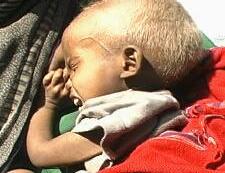
20
Strategy for Sustainable Development
There have been rapid advances in designing diagnostic tools required for effective diagnosing of diseases using the disciplines of computers, biophysics, biochemistry and biotechnology. Endoscopy, Ultrasound, Nuclear Magnetic Resonance, Computer Aided Tomography etc., are some of the commonly used diagnostic tools. Other hitech tools are Enzyme Linked Immunosorbent Assay (ELISA) for detecting diseases like AIDS and Deoxyribo Nucleic Acid (DNA) fingerprinting for determining genetic defects at birth. These tools are extremely sensitive and accurate.
The indigenous systems of medicine like Ayurveda, Siddha, Unani, Chinese and Tibetanhave gained much prominence in the last few years. The drugs have been used traditionally since ages and cater to about 70% of the world population. They are cheap, effective and have no side effects. Therefore, the development and promotion of traditional systems of medicine is gaining momentum.
However, how to harness these technologies in a manner affordable and accessible to economically marginalised and poor people that constitute more than 80% of world population is a key question.
SAQ 1
Outline a scheme for the development of human resources from a sustainable development perspective.
14.4 AGRICULTURE
There are some 1.2 billion people in this world who do not get enough to eat. Many more live on nutritionally deficient diet. About 160 million pre-school children are malnourished. The majority of the poor live in rural areas and depend on agriculture directly or indirectly for their livelihood. Agricultural productivity, technology and labour, as the experienceof the United States (US) shows, are the driving forces that alleviate poverty and improve food security.
Productivity is given primary importance in agricultural development. The concept of sustainable agriculture stems from the fact that there is an upper limit to the productivity of agricultural lands. If this is exceeded, then the ecosystem will degrade and eventually collapse. Therefore, a balance has to be brought in between the productivity levels and the sustainability of the ecosystem. The Food andAgriculture Organisation (FAO) of the United Nations describes sustainable agriculture as the management and conservation of the resource base and the orientation of the technological and institutional changes in such a manner as to ensure attainment and continued satisfaction of human needs for the present and future generations. Such sustainable development is environmentally non-degrading, technically appropriate, economically viable and socially acceptable.
14.4.1 Sustainable Agricultural Practices
There are two types of environmental problems associated with agriculture:
1) The high potential areas: These are the rain fed areas, e.g., South Asia (areas of Green Revolution) where high yielding varieties, high levels of fertilisers, pesticides and herbicides are used. In these areas, during the last few decades, food production was raised with high input agriculture. The use of excessive chemical fertilisers, pesticides, herbicides and pumping out of the ground water resulted in major ecological, economic and socio-political repercussions. For example, in Punjab, agricultural revolution was ushered in with new hybrid varieties of wheat and rice, fertilisers and irrigation. In the process, the increased demand of water required for paddy cultivation led to afall in the water tables, thus forcing the farmers to pump out more ground water. The excessive use of fertilisers led to disturbed nutrient balance. The run off water containing
21
Harness Technology
pesticides and other agrochemicals from the fields polluted other sources ofwater like streams, rivers etc. Elsewhere, like Uttar Pradesh, high salt build up often resulted in abandonment of otherwise good farming lands.
2) Less favoured areas:In rural areas especially in Africa, the land is degraded and deforested in unsustainableand erosive ways of farming. The poor accessibility to fertilisers, agro-chemicals and irrigation facilities have further aggravated the already poor fertility status of the soil. The solution lies in agricultural technology based sustainable farming practices like precision farming, integrated pest management, high yielding varieties and improved water management practices.
i) Soil Fertility: Although the use of chemical fertilisers cannot be stopped, their use can be minimised. The fertility of the soil of the agricultural lands can be maintained by using organic fertilisers like organic compost, manure etc. Biotechnologically enhanced bioinoculants are used routinely to enhance the soil fertility. A large number of micro organisms are found in the soil like bacteria, actinomycetes, protozoa and fungi. These are called bioinoculants. They have great potential for biocontrol of pests, plant growth and bioremediation of metals from the soil. The most commonly used bioinoculants are the bacterium Rhizobium andthe fungi Arbuscular Mycorrhizae (AM). Rhizobia live in the roots of some leguminous plants and fix the atmospheric nitrogen into a form that is readily absorbed by the plant. AM are present in the roots of some plants and grow to a few centimetres in length. Thus they are able to procure water and nutrients from deeper layers of the soil and provide them to their host plant. Bioinoculant production at a commercial scale began as early as 1930s in the US and was mixed with seeds, soil, agar or humus. Now, several developing countries are manufacturing bioinoculants.
ii) Cropping Practices: The techniques of mixed cropping and crop rotation are effective in maximally utilising the nutrients from the soil. Different crops are mixed together and sown in the same field in mixed cropping. In crop rotation the fields are not allowed to lie fallow after a crop season is over but other crops of the season are cultivated. This prevents soil erosion to a large extent. Moreover the application of herbicides is reduced. Leguminous crops containing Rhizobiarender the soil fertile and so the fertiliser requirement of the subsequent crop is reduced to some extent. Certain minute plants like Azolla can also fix atmospheric nitrogen. Paddy fields are inoculated with Azolla that satisfies the nitrogen requirement of the crop.
iii) Novel Plant Varieties: Agricultural biotechnology has generated several high yielding varieties of wheat, rice and maize, which are the basis of the Green Revolution. Research has been going on for other coarse crops like millets, legumes and vegetables to produce high yielding, herbicide, drought, pest, flood and disease resistant varieties. Several varieties of tomatoes are produced which have a high shelf life. The Bt cotton variety is an example of biotechnologically generated transgenic plant. This variety of cotton plant has a gene that is taken from the bacterium Bacillus thuringiensis(Bt). The bacterium produces a chemical that is toxic to insects called toxin. The gene that produces the toxin has been taken out of the bacterium and put in the cotton plant. The new transgenic plant is able to produce the toxin. So, the plant has become immune to insect attacks. Thus the crop requires reduced levels of pesticides. Several new research organisations are focussingon producing vaccines in plants. Some reports say that attempts of developing transgenic tomatoes producing hepatitis vaccine have been successful. This technology will enable us to grow and produce vaccines naturally from plant sources thereby considerably reducing the costs of vaccines.
iv) Integrated Pest Management (IPM):Integrated pest management is the judicious use of pesticides by the farmer. This is proving to be very successful
22
Strategy for Sustainable Development
in some intensively farmed areas, raising crop yields and drasticallyreducing environmental problems. A farmer practising IPM identifies the pests present in his field and checks for signs that the pest is reaching a stage where it can cause significant damage. Only then he applies the pesticides. Thus IPM can reduce pesticide use to 50-70%. IPM also means choosing low toxicity pesticides that do not target human beings and other organisms and apply them in the lowest effective quantities. Some alternative pesticides are also available that are used. Natural pesticides are extracts from plants like Chrysanthemum or neem. Botanical pesticides are ingredients from natural extracts like pyrethrin from Pyrethrum. Biological pesticides could be bacteria like Bt, insects that can kill other harmful insects, birds that can kill insect pests and even fishes kill insects which are cultured with the paddy crop.
v) Livestock:Biotechnology and genetic engineering has played an extremely important role in breeding high yielding varieties of livestock. In India, Operation Flood for milk production resulted in not only self-sufficiency but also surplus production. The genetically engineered animals yield not only high amounts of milk and meat; they are disease resistant and sturdy beasts of burden as well.
The poultry and pisciculture sector has also immensely benefited from genetic engineering and improved methods of breeding. The production of meat, fish and eggs has dramatically improved.
The technology-aided yield of agricultural products has had a positive impact on the society. Ithas generated several new avenues of agricultural produce like mushroom cultivation and vermiculture. It has generated several sources of income for the rural population.
14.5 INDUSTRY
The economic growth of a country is measured by its industrial growth. Today, it has become all the more important for developing countries to meet the growing needs of the population. Many essential human needs are met through goods manufactured by the industry where technology plays an extremely important role. In its simplest form, a production technology is a method of combining the following five Ms:
M1 : Machine/know how
M2 : Materials, including energy
M3 : Money
M4 : Management and Manpower
M5 : Market and Users
Harness Technology
MACHINES
AND KNOW HOW
MONEY THE FIVE Ms OF PRODUCTION TECHNOLOGY
MATERIALS AND ENERGY
MARKET AND USERS MANAGEMENT AND MANPOWER
Fig.14.4: The five Ms of production technology
23
Strategy for Sustainable Development
It is clear that Machine or know how, i.e., M1 in itself does not produce products. Any process of production requires the synchronised use of the above mentioned Ms. The available Westernised industrial mass-production technologies are based on expensive M1 and M2, large quantities of M2 procured from different locations to produce goods for standardised M5 using highly skilled manpower and standardised management practices (M4).
The raw materials used in the industry are extracted from natural resources often using processes that cause pollution to the environment by releasing wastes.
An alternate manufacturing technological paradigm combines the production processes with the process of sustainable development. These technologies provide for flexible production and allow for:
1. Decentralised production.
2. Descaling.
3. Better use of local resources and skills.
4 Reduced affluent discharges
5 Improved energy efficiencies
6 Lower capital/labour ratios
A small-scale industrialisation system, especially relevant to developing countries, based on biotechnology, microelectronics, new materials and information technology is emerging. Use of these manufacturing technologies can help redress the rural-urban imbalance besides providing rural employment opportunities. In order for the industry to be environmentally sustainable, it has to adopt green technologies. Prevention of pollution is preferable over remediation or cleaning up (this is called end of the pipe solution). It is imperative, therefore, that the industry sector incorporates environment friendly technologies at all the steps of the manufacturing process rather than at the end step. Environmental friendly technologies consume less water and energy and produce less waste. Besides, many green processes are operated in a way that the wastes of one become the raw material of the other. This is called Industrial Symbiosis.
Industrial Symbiosis
In nature, living beings depend upon each other and even utilise each other’s wastes. They even degrade the bodies of the creatures when they die. Industries should also follow this process. In fact, this has been adopted in Kalundbore Denmark. It has four industries. They are Asnaes, Gypoc, Novo Nordisk and Stat Oil. Asnaes is a company that generates electric power by burning coal. Steam is produced in this process that is supplied to 5000 houses which provides them with heat. The fly ash and clinker obtained as by products are used in building roads and producing cement. The sulphur produced by burning coal is partly captured by a scrubber and is converted into calcium sulphate, which is supplied to Gypoc. Gypoc prepares wallboards from this calcium sulphate.
The steam from Asnaes is also sent to Novo Nordisk. This is a pharmaceutical company that usesmicro organismsto ferment food grade material into usable product. The residue of the fermentation is sludge. The steam from Asnaes is used to kill the micro organisms, the micro organismsin the sludge and the latter is used as a fertiliser by thousands of farmers. StatOil StatOil is a petroleum refinery that sends the gases methane and ethane obtained from petroleum to Gypoc, which uses them for the ovens required to dry wall board. StatOil also sends gas to Asnaes, which can burn less coal. It also supplies used water to Asnaes that uses it to clean plant equipment and provide feed water to its boiler further reducing water demand and thermal pollution. (Source: Understanding Environmental Pollution by Marguita K.Hill, Cambridge University Press, Cambridge UK, 1997)
24
What,in your opinion, are the contours of sustainable industrial production?
14.6 NATURAL RESOURCES
Natural resources like energy, water and other raw materials like minerals are limited, while some like coal, petroleum and ground water are non-replenishable. Therefore strong efforts are needed to use them in a judicious and sustainable way.
14.6.1 Energy
Energy provides services for human life –heat for cooking, warmth, manufacturing and power for transport and mechanical work. The primary sources of energy are a) fossil fuels like coal and petroleum b) wood and charcoal c) natural sources like water, solar and wind and natural gas and d) nuclear. Coal and petroleum are non-renewable energy sources.
The energy is converted into services by equipments like motors, turbines etc. A lot of primary energy is wasted due to inefficient design or running of the equipments. More energy like electricity is wasted while transportation and still more is wasted in the consumer sector due to appliances that are inefficient in utilising the energy to the optimum levels. The intervention of engineering technology is essential in developing fuel-efficient systems to minimise the gross wastage of valuable energy.
Burning of fossil fuels has caused an increase in the harmful gases called green house gases. These are carbon dioxide, sulphur dioxide, nitrogen oxides and carbon monoxides. These gases trap the solar radiation in the earth’s atmosphere and as a result, the radiation cannot escape. The earth warms up as a result. This phenomenon is called the greenhouse effect, which is leading to global warming. Global warming has many detrimental effects on the earth like melting of ice caps, glaciers and raising the sea levels. This has an adverse effect on the species’ breeding and survival.
Thegreenhouse gases trap the solar radiation in the earth's atmosphere.
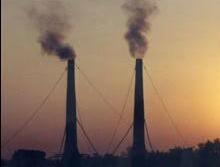


Fig.14.5: The total GHG emissions fromdevelopedcountries account for about 50% of total global emissions due to fossil fuel burning. Too many greenhouse gases in Earth's atmosphere could increase the greenhouse effect, which couldresult in an increase in mean global temperatures as well as changes in precipitation patterns
Besides, these gases combine with the atmospheric water to produce nitric acid and sulphuric acid that come down as acid rain. Acid rain has caused havoc in the aquatic systems in Europe. The pH of the water, which is normally around 7and sustains life,
25 Harness Technology SAQ 2
GHG EMISSIONS
reduces to around 2-3. Aquatic organisms like fishes etc., die due to the acidification of water.
Alternative sources of energy that cause minimal damage to the environment is the requirement of the day. Due to the changes in technology, the US has moved from wood to coal to oil and now to natural gas. With more advances in technology, it would be possible to move on to safer energy sources with low carbon and non-fossil fuels. Non polluting, renewable sources of energy like hydro-electricity, solar power, natural gas and nuclear energy are looked upon as potential sources in the near future. Fuels with higher hydrogen to carbon ratio like methane or ethanol are being investigated and are in use in some of the developed countries. The automobile industry is developing vehicles that have high fuel efficiency and are far less polluting than current automobiles.
In an attempt to switch from environment-degrading chemicalstoenvironmentfriendly chemicals, the industries are taking help from biotechnology. For example, the paper industry used chemicals like chlorine for pulping and bleaching operations. The search for an alternative pulping and bleaching agent led to enzymes called cellulase-free Xylanases. These enzymes are now produced on a commercial scale and are in regular use in developed nations. Some of the other industrial enzymes are those used in wine making, baking, dairy products, fruit juice clarification, starch modification, leather, sugar and confectionery, fructose production, detergent formulation, amino acid synthesis and desizing cotton.
Polymers derived from chemicals are difficult to dispose as they do not degrade. Therefore, biotechnology, polymer science and engineering have come up with a new compound called biopolymers. Biopolymers are synthesised by micro organisms. Some examples are polyhydroxy alkaonates, biocomposites and polymers of lactic acid. They find use in medicine like suture, prosthetic implants and agricultural applications like controlled release of fertilisers, fishing nets and packaging materials. Biopolymers are also used for insulation, conduction and have other industrial uses like tapes and adhesives.
14.6.2 Water
Water is oneof the most crucial natural resources. Life on earth depends upon water. The sources of water may be divided into 1) Surface water and 2) Ground water. Surface water consists of rivers, streams, lakes etc., while underground water consists of wells and springs. Other untapped water resources are snow and ice fields.
The hydrological cycle is responsible for the movement of oceans to the land. Largescale evaporation from the oceans results in rain bearing clouds that travel thousands of kilometres to lands and precipitate. This is the basic source of fresh water on land. Melting of snow and ice glaciers also replenish rivers. The sustainable use of water should require that the hydrological cycle not be disrupted. There is evidence that large-scale deforestation causes serious disruption in rainfall patterns. The removal of vegetative cover in catchment areas causes floods and droughts. Human activities have disrupted the hydrological cycle and contaminated both the surface and ground water sources. Acid rain is the cause of atmospheric pollution and the repercussions are for everyone to see. Vast forest areas in Europe and North America are damaged by acid rain. Large tracts of soil have lost their productivity. Water is also polluted by other activities on the earth. Industrial wastes, untreated sewage and agricultural run off are major causes of water pollution in the rivers, streams and lakes. Such waters become unfit for most human uses. Besides, the aquatic life is also severely compromised in these ecosystems. Polluted water also poses threat to human health. It is estimated that 10,000 children die everyday in India due to water related diseases.
Pre treatment of industrial wastes and sewage before discharging the water into water bodies is important. The industries are strictly instructed to pre-treat their wastes before discharging, for example acids are neutralised with alkali etc. The wastewater
26
Strategy for Sustainable Development
treatment plants are equipped to treat the polluted water through various steps and disinfect the effluents before discharging. In the primary step, physical methods are used to remove solid materials like sticks, trash, small objects and stones. The water is then allowed to stand and the suspended solids are allowed to settle. The water is then allowed to move on to another tank where micro-organisms are utilised to digest soluble substances in the secondary state. After sedimentation, the water moves in to another tank where specialised treatment removes phosphorous, nitrogen and other contaminants through advanced process. The water is then disinfected and recycled.
The recycling of the household greywater (all waste water generated in the house except sewage) is recommended. This water can be used for cooling, ornamental fountains, fire fighting, irrigationof golf courses, roadside plants and parks, creation of artificial wetlands and ground water recharge.


To clean up contaminated ground water the following technique is used. Tons of iron filings are mixed with sand and are installed underground in such a waythatthe contaminated ground water must flow through it. The pollutants react with iron.
Trichloroethylene is a common ground water contaminant that is effectively treated. Once past the barrier, the remediated water continues on its course.
Fig.14.6: Some sources of water
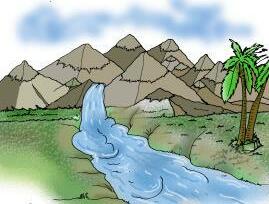
14.6.3 Conservation of Ecosystems
The survival of all species on this earth is directly or indirectly dependent on the other species and also on the non-living components of the environment like air, water and soil. Therefore, if a species becomes extinct, then it affects the survival of all other species. Conservation of natural resources- living and non-living,istherefore extremely important.
1 Species Conservation: Livingbeings may be classified into plants, animals and micro organisms. These myriads of species, with their genetic diversity play an important role in the process of development and contribute immensely to the agriculture, medicine and industry. Survival of the species would ensure new and
27
Harness Technology
improved foods, new drugs and medicines and new raw materials for the industry. However, due to the exploitative human interference, species are disappearing at an alarming rate. Races and varieties within the species are also disappearing. Several efforts have been done to conserve the threatened and endangered species by ex situ methods in repositories. Gene banks have been established with technological expertise like tissue culture, cryopreservation etc. that ensure propagation, maintenance and conservation of rare species.
2. Ecosystem Conservation: Tropical rain forests are the richest in genetic diversity and also the most threatened ecosystems due to the interference of man. Arid and semi-arid regions are rich in adaptable species and due to harsh conditions, produce valuable bio chemicals like liquid wax and natural rubber. Many of the plant species in these regions are threatened. Coral reefs in marine ecosystems harbour a treasure of genetic diversity in their 400,000 square kilometres. The species living in coral reefs generate toxins that are valuable to modern medicine. Depletion of the coral reefs, if allowed to continue at this rate, would mean an irreparable loss. Conservation of ecosystems in situ is a daunting task and requires the cooperation of all nations. Protection of forests and establishment of national parks and sanctuaries are vital. In India, successful attempts have been made to recover the dwindling population of Royal Bengal Tigers in the Sunderbans, the lions of Gir forests and the elephants of the Nilgiris.
The extensive study and mapping of the ecosystems is an extremely important step towards their conservation. The advanced computer technology combined with Geographic Information Systems, Satellite imagery (Remote Sensing) and aerial photography are used to map and collect vital information about land use patterns and natural resources of the area of interest. The data generated are utilised by analysts to predict weather patterns and global climate changes. Information technology and the Internet technology are extensively used by the analysts and experts to exchange data and information worldwide. This information can be translated to specific local areas and necessary steps may be taken based on the data and recommendations of the experts.
SAQ 3
Analyse the various dimensions of sustainable use of natural resources. Give facts and figures to support your argument.
14.7 HARNESSING TECHNOLOGY: THE ASIAN CONTEXT
Biotechnology, Information Technology and Material Sciences are the three technologies that predominate the developmental scenario of Asia today. In the 1960s, the Asian food security was addressed with improved varieties of rice and wheat. Agricultural technology, coupled with better crop management practices, ushered in the Green Revolution where the food grain production increased manifold. With the entry of biotechnology in agriculture, the yield and other attributes of the food grains like resistance to pests and diseases etc., was increased. Countries like China, Japan, India and Bangladesh have attained self-sufficiency in food grain production following the Green Revolution.
The advent of information technology with the development of specific customised software packages and the Internet has brought an “Information Revolution” in Asia. Countries like India, Pakistan, Japan and China have a growing software industry which is the basis of many vital software-based applications that are also widely used in the developed countries. Coupled with telecommunications, information technology has brought the common people in contact with the mainstream policy makers and the experts. As a result, knowledge and information flow in all areas has increased tremendously. With the increase in general awareness, public participation has
28
Strategy for Sustainable Development
increased for the understanding and alleviation of the various problems associated with sustainable development.




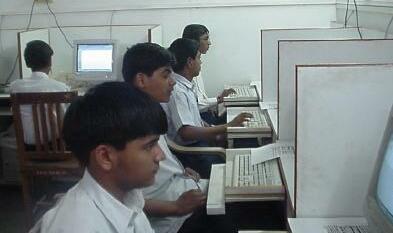
The microelectronics industry of Japan and China has had a tremendous impact in generating employment, besides using the resources sustainably. The products developed are multipurpose, customised and environment friendly.

Traditionaland indigenous technologies have always been predominant in the Asian cultures. Agricultural methods like organic farming, housing made of natural products, sacred groves conserving important medicinal plants, rainwater harvesting and biogas generation from wastes are all examples of indigenous technologies used traditionally( discussed in detail in Unit 15). These technologies have been found to be sustainable in the long run. Efforts, therefore, should be made to innovate these culture-based indigenous technologies and incorporate them into the social milieu.

29
Harness Technology
Fig.14.7: The developing countries are now using various new technologies to meet their developmental goals
SUMMARY
• The experience of the industrialised nations shows that technology has played a very important role in increasing the production levels. This increased level of production has in turn contributed to the socio-economicprosperityofthe developed countries.
• In the process of development, however, there has been a severe onslaught on the environment that has posed a threat to the human survival. Therefore the idea that the technology, which has been detrimental itself, should be modified and used for the developmental process in a sustainable way has been floated.
• The concept of harnessing technology for sustainable development is gaining favourable response all over the world as people are becoming more and more aware of the problems related to the degradation of the environment that we live in. The existing technologies developed by the Western world have helped tremendously in uplifting the human standard of living.
• However, these technologies are not far-reaching and the developing countries e.g. in Asia, especially the rural community, are deprived of the benefits due to bad connectivity, lack of communication, knowledge and information, inefficient transfer and implementation of technologyand non-acceptance of the technology by the local environment.
• The three recently developed technologies in the field of biotechnology, information technology and material sciences have ushered in a new era of development in the developing countries. The Asian countries have developed small industries based on these technologies that promise to generate employment thereby uplifting the socio-economic status of the population and provide them with a better standard of living. Agricultural and industrial biotechnology, together, besides increasing the productivity in a sustainable way, has the potential to generate millions of jobs for the rural poor.
• Information technology, coupled with the Internet, has a major role to play in connecting common people with the mainstream. This increases the exchange of knowledge and information and generates awareness about various pertinent issues.
• Material sciences have generated new forms of biopolymers that are eco-friendly. Together with microelectronics they have boosted the economy of several nations like Japan, Korea and China. The products are customised, eco-friendly and multipurpose in use.
• The indigenous technologies based on traditional knowledge have been proved to be sustainable. Therefore, they should be given due recognition as they conform to the local environment. In fact, new innovations in the Asian and other developing countries should be based on the traditional knowledge and should be implemented in the local environment. Together with othertechnologies,these indigenously developed technologies will then help in boosting the process of sustainable development.
14.9 TERMINAL QUESTIONS
1. What is technology? In relation to industry and production, how can it be used sustainably?
2 What are the sustainable uses of biotechnology?
30
Strategy for Sustainable Development 14.8
3. How can information technology be used sustainably?
4 How can the traditional and indigenous technologies be used for sustainable development?
REFERENCES
1 Clark, et al. (2002) “Science and Technology for Sustainable Development, Consensus report of the Mexico City Synthesis Workshop, 20-23 May 2002”, Cambridge, MA: Initiative on Science and Technology for Sustainability.
2 Our Common Future(1987) The World Commission on Environment and Development, Oxford University Press, Oxford.
3. Pachauri, R K, and Vasudeva, Guneeta., (eds.) (2001) The Role of New Technologies in Poverty Alleviation and Sustainable Development, Proceedings of the conference held on 6th November 2000 in Washington D.C., USA, © Tata Energy Research Institute
4. Rajak, R.C. (ed.) (2002) Microbial Biotechnology for Sustainable Development, Scientific Publishers, Jodhpur.
31
Harness Technology
UNIT 15 INNOVATIVE PRACTICES
Structure
15.1 Introduction Objectives
15.2 Innovation and Industry
15.3 Recycling and Reuse
15.4 Innovative Practices in Agriculture and Forestry
Biotechnology and Agriculture Agro forestry Ethno forestry
15.5 Community Participation Clusters
Village Cooperatives Bio-Villages or Eco-Villages
15.6 Water and Energy Rainwater Harvesting Indigenous Systems of Tapping Water Alternative Sources of Energy
15.7 Information and Communication Technology
15.8 Summary
15.9 Terminal Questions
15.1 INTRODUCTION
Innovation means the development of a new idea and implementing the established ways of doing things for common use. A new technical idea is incorporated into a commercial product or process and is put in the market.
Historically, such technological innovations have occurred in five waves that has changed the society. The first wave was from 1780 to 1840 involving iron and cotton textiles. The second wave, from 1840 to 1890, involved coal, steam engines, machine tools and railways (iron). The third wave in 1890 to 1940 involved steel, electricity, engineering, chemicals and railways (steel). The fourth wave, from 1940 to 1990, used oil, automobiles, petrochemicals, aircraft and roads. With the increasing awareness of the world community towards the deteriorating environment, search has begun for technologies that are sustainable and compatible with development. From 1990s we are experiencing the fifth technology wave that involves microelectronics, information technology, telecommunications, biotechnology and new eco-friendly raw materials.
The aim of innovation is to improve the living conditions or the quality of life especially in the developing countries. Technological innovations, in these countries, stand a good chance if they are generated from within their own environment.
Towards this, many countries have started looking into their traditional practices with the aim to innovate them to suit the modern needs. These innovative practices, besides being environmentally sustainable, generate employment among the rural youth thereby improving their quality of life. In this unit, we deal with the innovations in technology and also in the existing indigenous systems in the society for sustainable development.
Objectives
After studying this unit, you should be able to:
• explain innovation and its role in sustainable development;
• analyse innovation in relation to sustainable industrial technology;
• describe the innovations being carried out in the existing rural environment; and
32
Strategy for Sustainable Development
• evaluate innovative practices in different areas of sustainable development affecting human living.
15.2 INNOVATION AND INDUSTRY
Development in the industrialised countries is based on high productivity, which in turn is based on technology. Production technology is a method of combining five Ms (see Unit 14). The industrial technologies or the elite stream use high inputs in the form of technology (M1), materials and manpower (M2) and capital investment (M3). The management system (M4) is hierarchical where workerparticipationinthe decision-making processes varies. The standardised finished products have markets spread over large (sometimes global) markets (M5).
The developing countries, on the other hand, have chiefly artisanal technologies or subaltern technologies. These technologies use simple tools, locally available raw materials, minimum investments and small local markets. The management is done by the family and the manpower usually comprises of the family members. Conventional indigenous technologies have limited knowledge of the technical know-how (M1), material resources (M2) and money (M3) and therefore remain confined to limited markets (M5). Innovation in the various steps of the production processes in conventional technologies is, therefore, essential.
After the Rio Declaration on enriching biodiversity and Copenhagen Declaration on enriching social and cultural diversity, the trends of industrial manufacturing are shifting from ordered and standardised products and processes towards sustainable, holistic and more flexible processes. This concept is rooted in the cultural diversity of the concerned countries. There is a need for the synergy between the elite and subaltern systems of science and technology that would lead to sustainable development especially in the developing countries.
The Gandhian approach involving the small-scale industries in the village setup is now seen as an important model of rural sustainable development. Gandhi had appealed to the Indian scientists to pursue research and seek solutions to the problems of development of India within the human and material resources of the village.
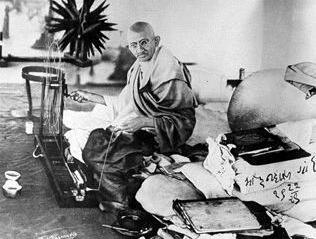
Fig.15.1: The Gandhian approach is now seen as an important model of sustainable development
With the advent of new technologies like biotechnology, Information and Communication Technology (ICT) and new raw materials developed by material science engineering, a new small-scale industrial strategy is envisaged that will provide enhanced opportunities for rural industrialisation. A synergistic approach of the industrialised and artisanal production technologies can give rise to innovative technologies as given in the following table.
33
Innovative Practices
Strategy for Sustainable Development
In India, the new innovative technology based on microprocessor control systems, is used in several areas like leather, fruit processing, pottery and ceramic and metal ware industries. For example, in Himachal Pradesh, the fruit growers have adopted the innovative method of processing fruits/vegetables where they use low cost automated tools that can be handled by unskilled operators, process a range of products instead of a single product, and employ software-operated sensor cards to reduce wastage. The processing plant consumes least power as it uses human labour for cutting and crushing fruits/vegetables. Since the processing plant operates in the area where the fruits and vegetables are grown, the transport of raw material and energy consumption and pollution associated with it is highly reduced. This also reduces the migration of the local population to urban areas.
SAQ 1
Through a case study from your region, discuss the importance of innovation from the sustainable development perspective.
Table 15.1: A Comparison of Industrial, Artisanal and Innovative Technologies Technology components
Industrial Artisanal New/Innovative
M 1 (Machines) High cost machines, knowhow based on physical or chemical processes
Tools,jigsand fixtures, traditional processes (physical and chemical)
Small machines using informatics and flexible manufacturing, bio-chemical and a variety of new physical and chemical processes
M 2 (Materials) Metals, minerals, chemicalsand petroleum products, highenergy requirements
Local/traditionally usednatural materials and human/animal power
Locally available materials, including hitherto unused biomass (producedthrough biotechnology), low energy requirements
M 3 (Money) Large investment withhigh capital/labourratio
M 4 (Management) Factories and hierarchical management structure
M 5 (Markets) Standardised productstransported to spread out markets
Small investments Capital/labour ratios less than those in industrial technologies
Family unit Smallerproduction units, family size units and less hierarchical than industrial technologies
Traditional products and local markets
Standardised and customised products, both small and large markets
Several initiatives have been taken by the governmental and non-governmental organisations (NGOs) towards launching innovative programmes to connect the Science & Technology (S&T) organisations with communities in rural and semi-urban
34
areas. These NGOs work in all fields from education, health, environment and women empowerment, to the design of appropriate technological solutions. The Indian Institute of Science at Bangalore established a centre for Application of Science and Technology to Rural Areas (ASTRA) which has been working on projects in areas like low cost buildings, fuel efficient stoves and crop driers, water purification, renewable energy etc., among which the most notable is the rain water harvesting technology. The scientific organisations of Government of India like the Department of Science and Technology (DST) and Department of Biotechnology (DBT) have also initiated programmes towards funding the agencies/organisations working for rural development.
The Council of Scientific and Industrial Research (CSIR) has developed many technologies which have the potential to generate employment and improving the quality of life. Some technologies developed by CSIR include post harvest technologies, cultivation and processing of medicinal and aromatic plants, food technologies, drinking water, health and sanitation, low cost housing, leather and animal waste utilisation, upgradation of skills of rural artisans and technologies for other small scale industries.

The recognition that there is a need for the merging of the elite and subaltern streams at the higher levels of the government has resulted in the Technology Missions and the recent formation of the National Innovation Foundation (NIF). Technology missions encompass different agencies, public and scientists who work together to cover the entire chain from research and development to delivery. Six technology missions were launched targeting the rural areas. The NIF works with the NGOs and hi-profile laboratories to cover the entire network from Science and Technology to documentation, dissemination and information technology, value addition and product development, business development and microventures to management of intellectual property rights. According to the chairman of NIF, Dr R A Mashelkar, “NIF has been set up to give expression to 94% population which has been neglected so far. They comprise artisans, tribals, farmers, the unemployed, the illiterate and the youth. In order to survive and succeed, they keep on innovating….. The challenge is to connect the 6% that is exposed to modern science and innovates in a formal way to the 94%”
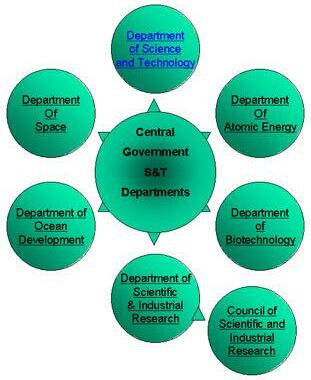
35
Innovative Practices
Fig.15.2: Both governmental agencies and NGOs are involved in promoting innovations
15.3 RECYCLINGANDREUSE
Recycling and reuse of materials are methods by which energy and resources can be saved considerably. Recycling of paper, glass and aluminium and steel cans is well known. Innovative techniques and uses of other materials like wire spools, consumer plastics, waste household paint, waste motor vehicle oil etc., are being implemented. Given below is a table that gives some examples of recycling and reuse of some materials.
Table15.2: Methods of Recycling and Reuse of some materials
Material
Organic wastes
Old clothing and textiles
Food Grease
TV sets and Telephones
Building materials
Toilets
Telephone poles
Recycling and Reuse
Kitchen food wastes are composted in backyards or community land. Sewage or paper mill sludge or animal waste after treatment can be used as a fertiliser orspread on land as soil amendment.
People sell them or donate to charity. Clothing that is not reusable may be reprocessed into rags or mixed into asphalt to make roof shingles.
Fast food restaurants discard food grease that can be processed into poultry and cattle feed ingredients or used as lubricating oil.
Picture tubes are recycled and phones are also recycled.
Wood and other materials from buildings can be reused. Discarded tyres, plastic bottles, metal cans, concrete from incinerator ash and insulation from old newspaper are incorporated into buildings.
Crushed discarded toilets are made into an aggregate that is used in concrete for road building
Poles are chipped into small pieces and composted using microorganisms that degrade creosote and pentachlorophenol present in them. The cleaned wood is then sold to paper mills.
Fluorescent lamps Techniques have been developed to recover and recycle the mercury and aluminium and other compounds.
Radioactive materials
The metal from old radioactive used pumps is recycled to new pumps for use within the industry.
15.4 INNOVATIVE PRACTICES IN AGRICULTURE AND FORESTRY
The economy of the Asian countries is chiefly agrarian. Innovations in the field of agriculture are required for the development of these economies. The Green Revolution, through improved cropping practices, has helped to a large extent in making countries like India self sufficient in food grains. Traditional practices like agro forestry and ethno forestry have been practiced in the Asian, island nations and African communities since ages that have served as sustainable systems to conserve the biodiversity. The local knowledge needs to be tapped and used in today’s environment for sustainable development.
36
Strategy for Sustainable Development
15.4.1 Biotechnology and Agriculture
With good agricultural practices, the South Asian countries like India and Bangladesh have become self-reliant. Cropping practices like crop rotation and mixed farming, integrated pest management that ensures minimum usage of pesticide, increasing use of bio fertilisers, proper irrigation methods and high yielding varieties have ensured that the agricultural land is used in a sustainable manner.
The role of biotechnology in the development of agriculture is immense. The high yielding varieties of wheat, rice, pulses, millets, vegetables and fruits have ensured higher yields and low pressure on the land. The scientific community is experimenting with more innovative varieties with the genetically modified (GM) crops like Bt cotton and tomatoes with high shelf life. Experiments are going on to produce vaccines from plants.
Other parts of agriculture like animal husbandry, poultry and pisciculture have also benefited from improved varieties produced through biotechnology.
15.4.2 Agro forestry
Agro forestry or social forestry is a practice where trees and agricultural crops are grown together. This is not a new concept but has been used traditionally all overthe world through ages. It is an integrated tree based land use system in which wood perennials (trees, shrubs, vines, palms, bamboo etc.) are deliberately mixed with agricultural/horticultural/pastoral crops and/or animal husbandry practices all in the same unit of land. This practice fulfils the needs for food, fuel, fodder and housing material. It is a form of land use that maximises the production capacity of the land.
In India, multipurpose tree species like Palas (Butea monosperma), Babul (Acacia nilotica), Arjun (Terminalia arjuna), Kala siris (Albizzia procera), Safed siris (Albizzia lebbeck), Bamboo (Dendrocalamus strictus), Neem (Azadirachta indica), Coconut (Cocos nucifera) etc. are planted alongside the fences or boundaries of the fields and also along with the crops like rice, millet and lentils in the fields.



37
Practices
Innovative
Fig.15.3: Some multi purpose trees grown in India N
A
R J U
PALAS BAMBOO
The trees are selected for the following advantages:
a) Trees check removal ofthe top soil of the bunds by wind or water, thereby reducing soil erosion. The flow of runoff water containing fertilisers to the rivers etc. is checked, thereby reducing water pollution as well.
b) Trees check the flow of wind and stop the falling of crops like paddy or wheat to the ground, which stops the fall in grain production.
c) The fallen leaves provide green manure to the crops and fodder to the farm animals.
d) In the early stages of the trees, the farmers, on an average, get about 4 quintals ofwood / tree / year, which is utilised as fuel wood or fencing material for crops.
e) In the later stages, beyond 10 years, the timber yield is about 4-5 quintals / tree / year, which may be used for making agricultural implements and other constructions.
f) At the time of complete harvesting the fuel wood yield is 50-200 quintals and 2-4 cmt timber / acre.
Agro forestry has now earned a distinct identity in India. Besides the above mentioned advantages, agro forestry also serves to maintain the tropical forest resources as it ensures sustained use of the land already under cultivation. This reduces the need to clear more forest areas for cultivation. The multipurpose nature of this agricultural practice can take off pressure from the natural forests to a large extent. Agro forestry also helps in reclaiming degraded wastelands and forests.
15.4.3 Ethnoforestry
Ethno forestry is the creation, conservation, management and utilisation of forests by the local/tribal people through traditional practices and folk beliefs. It is area specific and appropriate to that environment. It involves the local knowledge for sustainable forestry and livelihood. The integration of this local knowledge and modern learning has become essential for sustainable development.
Traditionally, in India, indigenous knowledge about the uses of the local plants, animals, habitats, life-history/cycle and availability of the resources was passed on from one generation to the next. Local and tribal communities regulated the use of resources byrestricting access, and enforcing compliance through religious beliefs, rituals and social convention. These restraints definitely contributed towards the conservation of biodiversity. The management of ecosystems was carried out through sacred groves, sacred ponds, sacred forests and sacred rivers. The Aravallis, Satpuras, Himalayas and Shivaliks were widely protected. Individual plant species were conserved and maintained through sacred plants like Peepal, Tulsi, Mango, Bel etc.
i. Sacred trees: In India, people believe that trees are the manifestations of various gods and attach religious significance to them. They are worshipped as they are believed to harbour village gods and goddesses. Local people never harm or destroy these trees. For example, in Alwar, Rajasthan, Johad (sacred ponds) support along their bunds, several Peepal trees that are protected by the village community. Small twigs are taken for fuel wood and leaves are used as fodder. The pond water is used for bathing, drinking and irrigation.
ii. Sacred Groves: These are one of the most important forms of ethnoforestry protection and are found in many parts of Asia and Africa. They are usually located near a temple in villages. The trees of the sacred forests are never cut except when woodis required for the repair of religious buildings or for other special cases. Initially, sacred groves were meant to protect natural forest patches
38
Strategy for Sustainable Development
and supported plants and animals under a specific ecological condition. These groves have tremendous economical importance as they harbour various species of known and candidate medicinal plants and other minor non-timber forest produce (NTFP) like latex, resins, honey etc. Many groves also provide water for irrigation, bathing and drinking. Sacred groves, thus, serve to conserve the genetic resources in situ.
iii. Ethno-silvicultural refugia: In an attempt to conserve the Aravallis, ethnosilvicultural refugia were established. These refugia are comparable to sacred groves and are basically nurseries that grow saplings for transplantation by the local community. The plants grown here are multipurpose in nature like Mahua, Mango, Dates, Tamarind, Neem and Jamun. These refugia serve the following purposes:
a) provide NTFP and subsistence goods to the people.
b) nesting, roosting and foraging sites to pest-controlling birds and wild animals.
c) protecting species that offer sites for beehives.
d) developing seedling orchards for ethno-silvicultural species.
e) sustain essential ecological processes.
15.5 COMMUNITY PARTICIPATION
The discovery of innovative ideas and their implementation at the community level requires strong and voluntary participation of the people involved. Towards this, several small and medium scale industries and entrepreneurs have come up with ingenious ideas like forming networks and cooperation and industrial clusters that are sustainable in the local milieu.
15.5.1 Clusters
A cluster is a network made for information and resource sharing between people. It is mainly a family based unit that employs traditional skills. It is strongly market oriented and uses inherited skills of the domestic workers. The clustering together to form a cooperative society is known to help small business enterprises to compete in regional and global markets. It is known to upgrade local skills and technology and other capabilities necessary for development. This concept was developed in Italy around 1970 and came to India in 1996. Today, there are approximately 2000 rural and artisan based clusters in India, contributing to around 60% of the country’s manufactured exports. In India, there are about 138 major clusters specialised in the industrysub-sector. Some of them are locks at Aligarh, leather footwear at Agra and Kanpur, cotton hosiery at Calcutta and Delhi and diamond cutting and polishing at Surat. To understand the working of the cluster concept, the example of the diamond processing cluster at Surat, Gujarat is taken below. The Gems and Jewellery cluster is an industrial cluster in Gujarat that comprises of a network of a large number of smallscale diamond processing units. It is labour intensive and more than 2.5 million people are employed in this segment. The processing of diamonds is done through indigenously developed machines that are operated manually. The technology and skills required for cutting and polishing diamonds is also indigenously developed. The industry has innovated its products to meet worldwide demands.
15.5.2 Village Cooperatives
The village cooperatives operate through a network of the village producers. The producers form a union of cooperatives and elect their leaders from among themselves. Through the union, they hire professional managers and technologists to run their concerns. The application of modern technology and advanced management in processing and marketing by some of the cooperatives has brought about outstanding changes in the society. This is exemplified by the “Anand Pattern” of dairy development in Gujarat that has now been extended to other sectors like oils, fruits and vegetables, salt and trees. The milk cooperative movement began as a
Innovative Practices
39
Strategy for Sustainable Development
network of cooperative members in two villages in Gujarat four decades ago. The milk producers were poor as they were compelled to sell the perishable milk at throwawaypricesto the private trader. They realised that this exploitation could be checked if they marketed the milk through their own organisation that led to the establishment of Kheda District Co-operative Milk Producers’ Union Ltd. (popularly known as AMUL). The rural producers, with their organised efforts, managed to attain self-reliance and today it is emulated as a model of dairy development. The income from dairying has helped immensely to free the rural people from poverty and migration and have elevated their social status. AMUL’s success had led to the creation of the National Dairy Development Board (NDDB) that brought in Operation Flood through modernisation of India’s dairy industry. Today the country has attained self-reliance in the dairy sector.
15.5.3 Bio-Villages or Eco-Villages
Bio-village or eco-village is defined as a settlement in which human activities are integrated into the natural environment in such a way that it is sustainable. Biovillages are an attempt by the modern community to live in harmonywithnature where people can be close to their livelihoods within non-polluting commuting distance and also where their food is grown. In a bio-village, the skills and knowledge of the indigenous people are used and upgraded. The concept of bio-villages integrates farm and non-farm occupations for sustainable rural development.
The people of bio-villages grow their own food in communities and the consumption of commercial food is considerably reduced. The housing material used is locally available and renewable like straw, wood, bamboo etc. This practice supports small local businesses. The energy is generated from natural renewable sources like wind, hydro or solar power. The houses are installed with composting toilets and the gray water (household wastewater except sewage water) is used for irrigation.
Bio-villages serve to 1) provide low-impact, high quality lifestyles, 2) make the neighbourhood self-reliant thereby decreasing pressure on the government, 3) reverse the negative environmental, social and economic impacts of industrial development, 4) encourage developing communities to bypass the unsustainable patterns followed by the developed nations and 5) support and upgrade the sustainable indigenous knowledge and talents.
SAQ 2
Document examples of community participation in sustainable development from your region. Analyse the reasons for their success or failure, as the case may be.
15.6 WATER AND ENERGY
Water is a renewable resource. However, its distribution is not uniform on the surface of the earth. The sources of fresh water are mainly: 1) Surface water and 2) Ground water. The rainwater is collected in the ponds, a lake etc., some of it seeps down and is stored as groundwater and the rest of it flows as streams and rivers. The judicious management, storage and use of rainwater in areas that have scarce rainfall are necessary for the sustenance of human life in that area.
15.6.1 Rainwater Harvesting
Several agencies in India are working towards methods of rainwater harvesting. The most notable is the work of the organisation ASTRA (Application of Science and Technology in Rural Areas) in peninsular India. Water is the most critical resource in peninsular India and therefore an area was chosen with an average rainfall of about 700 mm per year covering about 1000 households (10 villages). Rainwater is collected in ponds and cleaned by a simple sand filter system. The cleaned water is then
40
returned to underground porous rock aquifers for storage. The stored water can be pumped out and used for irrigation as and when required.
15.6.2 Indigenous Systems of Tapping Water
In the hills of India, tribal farmers use indigenous systems of harnessing water from the streams and springs for drip irrigation. In Meghalaya, (one of the seven North Eastern states of India), such a system is widely prevalent for around 200 years. The method uses bamboo pipes. The system is so perfected that about 18-20 litres of spring water entering the bamboo pipes per minute gets transported over several hundred metres and finally gets reduced to 20-80 drops per minute at the site of the plant. This system is normally used to irrigate betel leaf or black pepper crops planted in areca nut orchards or mixed orchards. The maintenance of the bamboo pipes and supports is done by the farmers who have formed a cooperative. Distribution of water is carried out by diverting water from one field to another at fixed timings.
The Spiti area of Himachal Pradesh is a cold desert but surprisingly, agriculture is its mainstay. Centuries ago, a system was devised to tap distant glaciers for water and the method of irrigation was named kul (diversion channels) This unique irrigation system utilises channels to carry water from glacier to village. Some kuls are 10 km long and have existed for centuries. The head of the kul at the glacier is lined with stones to prevent clogging and seepage. In the village the kul leads to a circular tank from which the flow of water can be regulated for irrigation purposes. The villagers mutually cooperate and sharethe kul system.
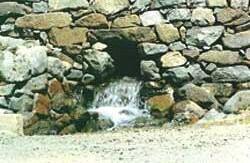
Innovative Practices
15.6.3 Alternative Sources of Energy
The major air pollutants are the emissions from the combustion of petroleum and coal (fossil) based fuels. The sources of these emissions are vehicles, industries and homes where fossil fuels are used for cooking. To reduce air pollution, alternative sources of energy are being investigated. Towards this several renewable natural sources like solar, hydro and wind energy are being increasingly used.
Photovoltaic cells directly generate electricity from sunlight that can be stored as batteries and used for powering a calculator to running home appliances to cars. In thermal-solar system, sunlight is reflected from panels onto collectors where water is stored. The water is thus heated to produce steam that is used to power the turbines

41
Fig.15.4: Kuls in the Spiti area
From the glacier to the tank
through the kul
that are used to produce electricity. Compressed Natural Gas (CNG) is also used for its low carbon and high hydrogen content in the vehicular emissions.CNG is increasingly used in vehicles and is known to reduce atmospheric pollution considerably. Other alternative fuels like hydrogen, propane and alcohols from fermented biomass (grass, wood and molasses) are also being considered for use. In India, biogas is generated from the composting of animal dung. It serves as a cooking fuel and for generating electricity. The electricity is used for pump irrigation, domestic lighting, drinking water and other agro-processing requirements.
In several parts of India, sawdust is used as a fuel in cooking structures called Segadi Saw dust is compacted and filled in it in an “L” shape with openings at both the ends. This burns steadily for three hours. Since sawdust is a by-product from wood mills and is rarely processed into anything worthwhile, it can be used as fuel. Other combustible biomass is also available that can be dried and powdered and used similarly. Some of them can be readily procured from the fields after harvest like leaves of sugarcane, stalks of wheat,rice and millets and husk of grains after threshing, some plants like Lantana, water hyacinth and Congress grass have no use and grow profusely. These can be grown on a large scale and the biomass can be dried, powdered and used as a source of energy either directly as cooking fuel or for generating electricity.
Fig.15.5: Innovations are possible at all levels
SAQ 3
Write an essay exploring the scope for innovations at various levels in society.
15.7 INFORMATION AND COMMUNICATION TECHNOLOGY
A majority of the population in the South Asian countries is left out of consideration by the mainstream because of their extremely low connectivity. As a result, these rural and semi-urban societies lack the latest knowledge and are poor and underdeveloped. In this context Information and Communication technology (ICT) that comprises of telecommunications, computers and the Internet, can help to bring these remote societies into the mainstream. The networks comprising of ICT and the terrestrial and satellite based broadcasting media (television and radio) together can hasten the
42
Strategy for Sustainable Development
I N N O V A T I O N S
State
NGOs
Industry Civil Society
communication process. To succeed, this has to be a two way process where the rural population can interact with the mainstream and share and generate knowledge. Several sustainable initiatives with innovative content have been taken by various states of India to connect the rural farmers and artisans to the administration, agricultural experts and doctors.
In Andhra Pradesh, the Computer aided Administration of Registration Department (CARD) deals with the registration to document changes in ownership and other transactions. The traditional process is tedious and time consuming and mostly incomprehensible to most citizens. With the implementation of the CARD project, the time required for the registration process has been sharply reduced. Land registration takes only a few hours as compared to 7-15 days. It has prompted the public to pressurise the government to adopt such computerised procedures in other forms of administration.
A novel Telemedicine network has been launched in Pune to connect the rural community with the experts in the field of medicine. The network comprises of the Pune district Administration, The Tata Council for Community Initiatives (TCCI) and DoctorAnywhere.com. The communities are adopted and the Tata Group harnesses the know-how of its companies and encourages them to implement programmes that help to improve the health and hygiene of the population. DoctorAnywhere.com is a business e-commerce service that provides the medical practitioners in the rural Primary Health Centre (PHC) with online access to expert opinions through superspecialists around the country. The doctor at a PHC can upload relevant medical reports of his patient and can attach images like X-rays, electrocardiograms etc. The super-specialist is contacted and is expected to respond within 24 hours. Payment to the specialist is made by DoctorAnywhere.com and is subtracted from the deposit amount collected from the doctor/PHC subscribing to the service.
In the absence of efficient transport and communication, the spread of information is difficult. The market options are not clearly or widely known. To enable the villagers to demand these facilities, bring jobs into the villages and bring buyers and sellers together without a middleman, an effort was initiated in the states of Uttar Pradesh and Madhya Pradesh called TARAhaat. The access is provided through a network of franchisees set up by the local entrepreneurs called TARAkendras. The primary interface is both graphic and voice based to ensure every literate or illiterate person can quickly learn. Hindi and English are the current languages but other Indian languages are slowly being added to cater to the needs of each region. TARAgyan, the most important channel, brings formal educational courses and facilities to the users. Other channels provide access to products and services needed by rural households, farmers and industries, provide global exposure, enable the villager to order goods and services on credit and run a store besides other things like connecting members of families by mails posted on the front.
Through these endeavours the farmer benefits from the timely information on weather forecasts, procurement of loans, agricultural requirements like implements, seeds etc., and market information. The younger generation benefits from education, entertainment, career counselling and job opportunities. The family is able to connect to the local and international information, health, matrimonial and mailing services.
15.8 SUMMARY
• Innovation involves the development and incorporation of a new idea in the established ways of doing things. A new technical idea is incorporated into a commercial product or process and is put in the market, or an idea is developed in the indigenous traditional system and implemented.
• In several countries the trends of manufacturing are shifting from standardised products and processes towards sustainable, holistic and more flexible processes. This concept is rooted in the cultural diversity of the concerned countries. Many
43
Innovative Practices
developing countries have started looking into their traditional practices with the aim to innovate them to suit the modern needs. These innovative practices, besides being environmentally sustainable, generate employment among the rural youth thereby improving their quality of life.
• The developing countries have artisanal technologies or subaltern technologies that use simple tools, locally available raw materials, and minimum investments and therefore remain confined to limited markets. Innovation and synergy between the elite and subaltern systems of technology in the various steps of the production processes is, therefore, essential.
• Recycling and reuse of materials are methods by which energy and resources can be saved considerably. Recycling of paper, glass and aluminum and steel cans is well known. Other materials like wire spools, consumer plastics, waste household paint, waste motor vehicle oil etc are also being recycled and reused.
• Innovations in the field of agriculture are required for the development of the Asian agrarian economies. The Green Revolution, through improved cropping practices, has helped to a large extent in making countries like India self sufficient in food grains. Traditional practices like agro forestry and ethno forestry have been practiced in Asian and African communities since ages that have served as sustainable systems to conserve the biodiversity. Agro forestry or social forestry is a practice where trees and agricultural crops are grown together combined with animal husbandry practices. Ethno forestry is the creation, conservation, management and utilisation of forests by the local/tribal people through traditional practices and folk beliefs. These are age old traditional practices that are sustainable and fulfil the needs for food, fuel, fodder and housing material. The combination of this traditional knowledge with modern techniques is required to efficiently use the methods in a sustainable manner.
• The innovative idea of forming networks and cooperation and industrial clusters that are sustainable in the local milieu has brought out the self-sufficiency of many communities and has improved the quality of life. The concept of biovillage is another innovative attempt by the modern community to live in harmony with nature where people can be close to their livelihoods within non-polluting commuting distance and also where their food is grown.
• Information and Communication technology (ICT) that comprises of telecommunications, computers and the Internet combined with the broadcasting media can help to connect the remote and underdeveloped societies into the mainstream. Several projects have shown promising results towards the improvement in the rural lifestyle by providing the farmers the information on weather, availability of loans and implements and broader markets. The doctors of the rural areas with meagre resources are connected to the super-specialists in big cities via the Internet with whom they can consult. The rural families can connect with the local and international information and gain immensely from it and the youth can get better education and job opportunities.
15.9 TERMINAL QUESTIONS
1 Explain the concept of innovation.
2. How can innovations in the manufacturing processes lead to sustainable development?
3 How is innovation relevant to the traditional systems?
4 How do agro forestry and ethno forestry contribute to sustainable development?
44
Strategy for Sustainable Development
5. Community participation is an innovative way towards sustainable development. Explain.
6 Explain the concept of bio-village. Why is it sustainable?
7. What are the alternative sources of energy?
8 Describe the contribution of ICT in sustainable development of the rural community.
REFERENCES
1 Brandt, Dietrich (ed.) (2003) Navigating Innovations. Indo-European Cross Cultural Experiences, vol. I and II, India Research Press, Delhi.
2 Hoff, Marie D. (ed.) (1998) Sustainable Community Development. Studies in Economic, Environmental, and Cultural Revitalization, Lewis Publishers, USA
3. Jain, Ashok (1992) Social Diversity and Technology for Sustainable Development. Paper presented at the VIth International Symposium of the International Research Center for Japanese Studies (IRCJS) Kyoto, Japan, September 28- October 3, under the theme Nature and Humankind in the Age of Environment Crisis.
4 Networks of Science and Technology in India: The Elite and the Subaltern Streams, AI & Society, 2001, vol. 16, pp 4-20, Springer-VerlagLtd.
5. Mukherjee, B.M. (ed.) (1990) Technology for Sustainable Development,Guru Ghasidas University Publication, India.
6 Pandey, Deep Narayan (1998) Ethnoforestry, Local Knowledge for Sustainable Forestry and Livelihood Security, Himanshu Publications, Udaipur.
7 Sharing innovative experiences, Examples of successful initiatives in agriculture and rural development in the South, Vol 5, FAO, Rome, 2001.
45
Innovative Practices
Strategy for Sustainable Development UNIT 16 COOPERATION AND PARTNERSHIP
Structure
16.1 Introduction
Objectives
16.2 Participation of the Government
16.3 Non-Governmental Organisations
16.4 Cooperatives and Sustainable Development
Cooperation in Ancient India Cooperative Movement in India Structure of Cooperative Institutions Function of Cooperatives Role of Cooperatives in Sustainable Development
16.5 Technology Networks Science and Technology
Information and Communication
16 6 Regional Cooperation and Partnership in South Asia
16.7 People’s Participation and Movements
16.8 Summary
16.9 Terminal Questions
16.1 INTRODUCTION
Sustainable development is the basis of a new society that is based on humanistic values, democratic politics, respect for the natural world, human welfare and sociocultural developmental goals. In order to realise this, the cooperation and participation of the individuals and communities are extremely important.
The declaration of the historic Earth Summit at Rio de Janeiro proclaimed that:
‘Human beings are the centre of concerns for sustainable development. They are entitled to a healthy and productive life in harmony with nature. The right to development must be fulfilled so as to equitably meet developmental needs of the present and future generations. States should cooperate in a spirit of global partnership to conserve, protect and restore the health and integrity of the earth ecosystems. They should cooperate to strengthen indigenous capacity building for sustainable development by improving scientific understanding through exchange of scientific and technological knowledge, and by enhancing the development, adaptation, diffusion and transfer of technologies, including new and innovative technologies. States should cooperate to promote a supportive and open international economic system that would lead to economic growth and sustainable development in all countries to better address the problems of environmental degradation. Environmental issues are best handled with the participation of all concerned citizens. At the national level, each individual should have appropriate access to information concerning the environment that is held by the public authorities, including information on hazardous materials and activities in their communities, and the opportunity to participate in decision making processes. States should facilitate and encourage public awareness and participation by making information widely available. Effective access to judicial and administrative proceedings, including redress and remedy shall be provided. Women have a vital role in environmental management and development. Their full participation is therefore essential to achieve sustainable development. The creativity, ideals and courage of the youth of the world should be mobilised to forge a global partnership in order to achieve sustainable development and a better future for all’.
46
Sustainable development involves socio-economic development and the environmental issues linked with it. It is potentially measurable according to the attributes of non decrease of natural resources over time and increase or improvement in measures of human well being such as income, education, health and basic freedoms. The process of sustainable development encompasses many sectors and disciplines including water, energy, agriculture, biodiversity, industry, education, science and technology and others. Realising this developmental process requires an organised and coordinated effort in an institutionalised way that involves all sectors.
In order to achieve all the broad goals of sustainable development, diagnosis of the problems, formulating environmentally sound policies and sustained commitment is required. These institutions need to be linked with their counterparts in other countries through a network of international partnerships that reinforce and strengthen national efforts and permit cooperation with respect to larger issues of global sustainability.
Partnerships of ministries within governments, partnerships within governments, partnerships between governments and civil society and most importantly partnerships among governments, the world of finance and the private sector are required. Partnerships that link business, science, education, professional associations, community and grassroots organisations with each other are also required towards realising this goal. This unit deals with cooperation and partnerships among various organisations towards sustainable development.
Objectives
After studyingthis unit, you shouldbe able to:
• discuss the efforts of the governmental and non governmental organisations towards sustainable development;
• explain the importance of cooperation and partnership by the local people for sustainable development; and
• suggest methods at the grassroots levels to bring about sustainable development.
16.2 PARTICIPATION OF THE GOVERNMENT
The governments have a major role to play in formulating and executing policies related to environmental issues and sustainable development. Therefore, they must prioritise where to begin the process based on their individual environment. Some of the pressing concerns that need to be addressed are:
1. Population control through generation of awareness and active promotion of development opportunities for women.
2 Reduction of unemployment through strategies and indigenous methods adapted to local culture and environment.
3 Protection of clean water and air, arable land and food crops.
4. Reversal of the rapid extinction of species and measures to protect and enhance the biodiversity of local ecosystems.
5 Development of energy and transportation systems that rely on renewable sources and a phase out of the use of fossil fuels.
6 Redesign of the urban areas for sustainability.
7. Sustainable rural development.
Although the governments are already engaged in sustainable development at various stages, the following measures need to be adopted to accelerate the programmes related to environmental protection.
Cooperation and Partnership
47
Strategy for Sustainable Development
1. National level conferences of ministers of different departments, senior officials, cooperative leaders and other prominent leaders and environmentalists should be held periodically to follow up, discuss and formulate a national policy on the subject. The government should encourage and motivate the cooperatives, nongovernmental organisations and representatives of local indigenous communities to participate in such programs.
2 Legal support should be provided by the government, to individuals and organisations engaged in environment related activities.
3 The government should encourage, promote and financially support some of the pilot projects in these sectors and if found successful, replicated in other parts of the country.
4 The government should collaborate extensively with other countries for development of technology that is required for sustainable development and environmental protection.
16.3 NON-GOVERNMENTAL ORGANISATIONS
Non Governmental Organisations (NGOs) are a form of private voluntary organisations. The term NGO was used for the first time in 1953 by the United Nations (UN) and refers to those non-state organisations that interface with the UN agencies and serve as their sounding boards. Today, NGOs mean any voluntary formation not part of the government including those that are a part of social movements. They are composed of volunteers or paid career professionals who serve the poor and influence the public policy. These independent organisations possess expertise, experience and capability in various fields that can be tapped for use in sustainable development programmes. In recent years, they have formed national federations and built international linkages that give them a strong voice in national and international affairs.
There are several international NGOs in Asia that have taken up the issues of environment and sustainable development. Some of them are Oxfam, CARE,Ford Foundation, etc. These NGOs are working towards various developmental projects in the field of health and family welfare, human resource development with special attention to women, education, information, ecology, biodiversity conservation, energy etc with funds from the government and international agencies. They are also working with the people at the grassroots level towards generating awareness regarding environmental issues. Two of the biggest NGOs in Asia are the Sarvodaya Shramdana Movement (SSM) founded in 1950s by AT Ariyaratne of Sri Lanka and Bangladesh Rural Advancement Committee (BRAC) founded by F H Abed. The activities of BRAC cover 15,000 villages of Bangladesh and that of SSM cover 8000 villages in Sri Lanka.
(a) (b)
Fig.16.1: a) The founder of BRAC (Source:www.brac.net); b) the founder of Sarvodaya (Source: www.sarvodaya.org)


48
In India, voluntary work began in the nineteenth century with social reform movements. It became more popular during the British rule as Indians joined the fight for independence. The philosophy of Mahatma Gandhi further strengthened the voluntary movements and inspired thousands of young women and men to work among the rural poor, scheduled castes and those deprived of education, health, employment and income-generation. In 1950s several voluntary organisations were established for relief and rehabilitation of people affected by drought, floods and other disasters. In the 1960s and 70s, the issues of education, health care and drinking water were taken up by these organisations. During the mid 1970s a new kind of voluntary agency arose called the Social Action Groups. These groups comprising of four to five men and women worked with the poor and oppressed to fight against poverty, deprivation and unemployment. They analysed the socio-economic conditions of the poor and helped them in becoming organised besides educating them on their legal rights.
Today there are several thousand voluntary agencies in India performing a wide variety of roles like relief and rehabilitation, providing alternative services in education, health, employment avenues to youth, afforestation and other environmental issues etc. Many of them are involved in training, documentation and networking and have helped in encouraging cooperation and linking of different grassroots activists and organisations on issues of common concern. These organisations play an important role in raising awareness among the poor and the oppressed. They encourage these people to develop the sense of collective empowerment in order to demand their rights for their upliftment.
The Earth Summit emphasisedthe active participation of the NGOs in the process of sustainable development. A network of such organisations is essential with cooperation between NGOs and the people at the grassroots level, NGOs and the government and NGOs with other NGOs. The involvement of these organisations at all levels from policy-making and decision-making to implementation is required.
SAQ 1
Select an area (e.g., health, natural resources, agriculture, etc.) that is relevant for the developmental needs of your region and discuss the kind of partnership that should be fostered between the government agencies and the NGOs to meet the goals of sustainable development in that area.
16.4 COOPERATIVES AND SUSTAINABLE DEVELOPMENT
Cooperatives constitute the core feature of community based economic development. Communities taking the initiative of sustainable development must understand how their economic enterprises (agriculture and industry) that contribute to meeting basic needs (food, health, education, transportation etc.), promote local quality of life while sustaining the ecological base. There have been several cases of collapse of the local economies due to the depletion of the natural resources. Towards this, many local groups have come together as collective communities and are formed as cooperatives to devise and develop new ways to live in a sustainable manner. They undertake projects that work with a participatory approach and aim to restore and revitalise the cultural institutions and practices.
16.4.1 Cooperation in Ancient India
Cooperation has been practiced in India since time immemorial. In ancient India, four predominant forms of cooperatives existed: Kula, Grama, Sreni and Jati.
Cooperation and Partnership
49
Kula was the first form of cooperative activity to emerge at the individual level. It was a political and socio-economic organisation in which kinsmen, friends and relatives worked cooperatively to promote their economic, social and politicalinterests.
After Kula became a stabilised unit, cooperation at the level of community was called Grama emerged. The Grama Sabha was a cooperative organisation which looked after the improvement and maintenance of the village lands, forests, pastures and gardens, roads, highways and was concerned with the economic and social progress of the village. Artisans and cultivators worked jointly for the purpose of cultivation and the manufacture of tools, equipments and other goods required by the community.
The Sreni developed later and was a cooperative and economic organisation of artisans, industrial and handicraft workers, merchants, traders, bankers, agriculturists, construction workers etc. It also functioned as a charitable institution.


The Jati was a cooperative organisation mostly for social purposes such as education, charity and relief work; economic activities were also carried out.



16.4.2 Cooperative Movement in India





After the attainment of Independence in 1947, India adopted the policy of planned economic development, providing individual liberty, equality and economic minimum to its citizens. Cooperation was considered to be an effective instrument for achieving the objectives of economic development of India and emphasis was given to cooperation in all the Five Year Plans. As a result, the cooperative movement has grown in size and has diversified primarily from agriculture to other sectors like milk production, processing and distribution, fertilisers, sugar and oilseed production and distribution. Other important sectors where cooperatives are found are credit, marketing, industries, storage, processing, consumers, farming, housing, transport, irrigation, electricity supply, engineering, cooperatives for weaker sections, cooperative rural banks, poultry, fishery, coir, silk, honey, handloom, labour control, forest labourers, taxi, auto and rickshaw drivers, washermen, barber, printing press and special cooperatives for hill and tribal areas. Some cooperatives have also adopted villages for the all round development. The most illustrious and successful cooperative movement for the sustainable development of rural poor in India is the Operation Flood that has been organised by the cooperatives AMUL and National Dairy Development Board (NDDB).

50
Strategy for Sustainable Development
Fig.16.2: Amul is a very successful cooperative in the milk sector in India
16.4.3 Structure of Cooperative Institutions
The apex body of the cooperative movement is the National Cooperative Union of India (NCUI), and all state and national level cooperatives institutions are affiliated to it. There are approximately 4,00,000 societies and 20 national and 260 state level organisations and federations. There is a national union, national council for cooperative training and a national training institution. There are 90 cooperative training colleges and centres for training and education and 2389 cooperative and land development banks.
The cooperative movement in India is three tiered and comprises of Primary Societies, State-level Cooperatives and National Cooperative Federations.
1. Primary Society: It consists of individuals who constitute the society and is at the grassroots level. In rural areas it consists of farmers and artisans and in urban areas it is formed by consumers, workers and artisans, taxi and auto operators, banks, employees etc.
2. State Level Cooperative Societies/Federations: It is formed from the primary societies that federate into district level societies. It comprises of the cooperative and land development banks, agricultural marketing federations, industrial federations, housing federations, sugar federations etc. There are state cooperative unions that undertake activities like education, publicity and coordination of various activities. They also act as liaison between the governmentand the cooperative movement.
3. National Level Cooperative Federations: These federations have come up in many sectors like agricultural marketing, industry, consumers etc. However, their primary activity is to promote and coordinate various societies and also to provide technical support to them. They also undertake business contracts with other organisations in India and abroad for import and export.
16.4.4 Function of Cooperatives
The cooperatives can be broadly divided into two types based on their functions:
A. Agricultural credit cooperatives
B. Non-Agricultural credit cooperatives
A. Agricultural Credit Cooperatives: The cooperative movement in India originated with the agricultural credit cooperatives with an aim to uplift the poor agriculturists, artisans and other persons of limited means. Agriculturists are economically poor and are exploited by the village moneylender. So they formed cooperatives or credit societies at the village level. The government opened central cooperative banks at district level and state cooperative banks (Apex Banks) at the state level for agricultural credit to the farmers to buy implements, seeds, fertilisers etc. These banks also fund programmes that are ecological development oriented.
The primary cooperative land development banks at sub divisionallevel and state cooperative land development banks at the state level provide the farmers with long term credit for agricultural development.
B. Non-Agricultural Credit Cooperatives: The Non-Agricultural credit cooperatives include cooperative marketing, housing cooperatives, dairy cooperatives, consumer cooperatives etc.
1) Cooperative marketing: A group of producers come together in this system to carry out the processes involved in delivering goods to the consumer. In other words, a cooperative marketing society is a voluntary association of cultivators, organised under the principles of cooperation for profitable
51 Cooperation
and Partnership
marketing of their produce. The cooperative marketing agency promotes economic growth and welfare of the member producers.
Its main functions are to:
1. Market the produce and assure regular trade outlets for the produce.
2. Facilitate storage, pooling and transport of produce.
3. Supply the farm requirements like fertilisers and agricultural implement.
4. Provide credit facilities to members.
5. Act as agents of the government for procurement of food grains and implementation of price support policy.
6. Promote and protect the economic interests of its members by encouraging self help, better production and best possible price.
2) ConsumerCooperative: It is a voluntary organisation of consumers that procures goods in bulk directly from the production centre and distributes them among the members at fair price. These cooperatives undertake not only production but also the wholesale and retail processing of consumer goods. Departmental stores or Super Bazaars are examples of such cooperatives.
Their objectives are:
1. To serve the members and customers by providing good quality household consumer goods at a reasonable price.
2. To stabilise the price line and check the exploitation of consumers by private businessmen.
3. To protect the interests of its members.
3) Industrial Cooperatives: The cottage and small scale industries occupy a significant position in our economy. They generate income and employment with small capital investment. The artisans, craftsmen, skilled workers, industrial labourers and small industrialists have come together to form cooperative organisations known as industrial cooperatives. They have been formed either for undertaking production and marketing or for providing services to the members. The prime objective is to develop or improve the socio-economic position of the members. The main functions of the industrial cooperatives are to:
1. Supply raw materials, tools, equipments, machinery etc. and provide basic and technical training facilities to the members.
2. Market goods produced by the members.
3. Provide loans for production of goods, accept deposits and develop the habit of thrift and savings among the members.
Some of the industrial cooperatives are Weavers Cooperative Society, Spinning Mills, Industrial Cooperative Banks and Industrial Estates.
4) Dairy Cooperatives: The dairy cooperatives are organised into a network of primary, district, state and national level federations involving around six million producers. The tremendous success of the Anand pattern of dairy development in Gujarat has led the NDDB to replicate the pattern across the country. The functions of these cooperatives are to:
1. Create a network of policy makers, farmers, professionals and technologists.
52
Strategy for Sustainable Development
2. Make available the best technology to the rural milk producers.
3. Provide a support system to the milk producers without disturbing their agro-economic systems.
4. Establish marketing and distribution system reaching the farthest corners of the country.
5. Ensure fair profit to the members and quality products to the consumers.
The economic development brought about by the dairy revolution also brought about social and institutional developments. Members of the cooperatives receive a dividend along with the profits and the staff gets a bonus. Out of the profits, funds are given for education, health and family welfare, charity, animal husbandry development, tree plantation and cooperative propaganda.
5) Housing Cooperatives:These cooperatives provide affordable housing with the users’ participation. There are more than 60,000 housing societies in the country. The cooperative provides:
1. A forum for dealing with the technical, financial and practical problems of housing and means to solve them.
2. Coordination in planning, construction, expert advice and services.
3. Financial and organisational guidance.
Fig.16.3: Non-agricultural cooperatives
Cooperation and Partnership
53
16.4.5 Role of Cooperatives in Sustainable Development
Cooperative societies, as we have seen, are organisations that connect the people at the grassroots level to the highest level of the government. Therefore, the cooperatives have an extremelyimportant role to play in the process of sustainable development. They can generate awareness among the people and educate and inform them regarding the environmental issues. They can encourage the people to participate to mitigate the problems and establish a sustainable society. These cooperatives can play an important role in the following ways:
A) Creating awareness among people on:
1. The consequences of increased population and collaborate with the governments to take up population control measures.
2. The consequences of indiscriminate felling of trees, wasteful use of water, indiscriminate mining and digging up soil for brick kilns.
B) Educating and informing people on:
1. Handling of chemical fertilisers, insecticides and pesticides.
2. Use of alternative sources of energy for cooking, heating and lighting like encouraging the use of biogas for cooking.
3. Disposal of garbage and recycling of waste.
C) Encourage people
to:
1. Develop social forestry programmes and management and reclamation of wasteland.
2. Participate in community development programmes like rural sanitation, cleaning of schools and village premises, installation and repair of water taps etc.
3. Developing health, hygiene and family welfare and education programmes.
SAQ 2
Discuss the role of cooperatives in sustainable development. Give examples or case studies in favour of your argument.
16.5 TECHNOLOGY NETWORKS
Science and Technology (S&T) and Information and Communication Technology (ICT) have revolutionised the pace of development of the society. In order to reach the farthest corners of the country and to bring about sustainable development in these areas, a strong network of S&T, ICT and the common people needs to be established.
16.5.1 Science and Technology
A coordinated effort has to be made to harness modern S&T for rural development with the active cooperation and participation of the rural people. New innovative technologies that suit the rural milieu need to be developed with the active participation, knowledge and feedback from the rural people. In order to take these technological inventions to the remote undeveloped rural communities, a strong network and participation of scientists, research and development (R&D) institutions, technology transfer agencies, universities, social scientists, environmentalists and the rural beneficiaries needs to be set up. The Indian Council of Agricultural Research (ICAR) and other agricultural universities have contributed significantly by involving the farmers and helped in achieving self sufficiency in food grains. Similar efforts should be carried out in other sectors like handlooms, leather, pottery, woodwork,
54
Strategy for Sustainable Development
ironwork and other such craft-based occupations. The National Institute of Science, Technology and Development Studies (NISTADS) has evolved a viable technology delivery model by creating a link between the scientists of national laboratories, local administrations and the rural artisans. The experiments on the feasibility of this model were conducted in two states of Haryana and West Bengal. The experiments were extremely successful and this interactive model of technology transfer to rural areas can be adapted effectively in other parts of the country. NISTADS has since worked towards familiarising the rural artisans with the scientific and technological development of their wares with the help of scientists of R&D laboratories. Efforts are underway by the other laboratories of the Council of Scientific and Industrial Research (CSIR) to generate and transfer technologies suitable to upgrade the indigenous practices. The Central Institute of Medicinal and Aromatic Plants (CIMAP) has developed and transferred technologies for cultivation of medicinal plants to the rural farmers with an aim to generate employment among the rural youth.
16.5.2 Information and Communication
Information and Communication Technology (ICT) comprises of telecommunications, computers and the Internet, combined with the broadcasting media that help to connect the remote and underdeveloped societies into the global mainstream. ICT has, at present, the strongest impact on the society worldwide. It affects all of us on four levels: individuals, groups, organisations and networks. Networking on a global scale is leading to strong cooperation of large enterprises and countries. The economies of many countries are becoming dependent on electronic commerce or e-commerce.
ICT is seen as an effective tool to empower and educate communities especially in rural areas in India. The setting up of the telecommunications and Internet facilities in the Indian villages has led to better connectivity of the rural people with the mainstream. This enhanced connectivity will lead to strong participation of these people in several decision making processes related to their welfare. They can share their experiences, ideas and indigenous innovations with the mainstream policy makers, funding agencies, scientists, social scientists and environmentalists. Better connectivity would ensure economic prosperity and strong awareness about issues concerning them and they can voice their opinions on the decisions affecting them. Thus ICT can bring about an increased participation of the rural people in sustainable development.
16.6 REGIONAL COOPERATION AND PARTNERSHIP IN SOUTH ASIA
Asearly as 1987, the South Asian Association for Regional Cooperation (SAARC) conducted a study on the Causes and Consequences of Natural Disasters and the Protection and Preservation of the Environment and in 1988 it conducted a joint study on the effects of greenhouse gases and their impact on the region. It was concluded that cooperation between the countries is required to manage and avert the natural disasters like floods. Theseinvolve providing real-time hydrologic information on floods for disaster prevention or providing other structural means of flood control. It was also concluded that the mountain regions with their forests have a significant role to play in mitigating greenhouse gas effects by acting as carbon sinks. The rivers originating from the mountains can provide cost effective and clean hydro-energy options for the development of the region.
The prospects of regional cooperation in South Asia for the sustainable development of this region are mainly in the broad areas of air and water pollution management, water and energy development, flood prevention, scientific collaboration and transboundary biodiversity conservation.
1. Water Resource Sharing: Many rivers such as Indus, Ganga, Brahmaputra and Meghna originate in the Himalayas and provide sustenance to many millions of
Cooperation and Partnership
55
Strategy for Sustainable Development people in the South Asian countries of Pakistan, India, Nepal and Bangladesh. Over 600 million people depend on these rivers for irrigation, hydroelectricity, fishery, inland navigation and the sustenance of wetlands and their biodiversity. The sustainable development of these large river basins requires consensus building and agreements between the countries for sharing and using of the resources. Several bilateral treaties exist between the SAARC countries regarding sharing of the water resources like the Indus Water Treaty between India and Pakistan, Pancheswar between Nepal and India and the Joint River Commission between India and Bangladesh. As the river systems are of trans-boundary nature, regional cooperation is neededto develop water management projects that will benefit all the countries. Collective efforts are needed to exchange data and information as well as to develop projects such as hydropower and irrigation for the economic development of the whole region.
2. Flood Control: The Ganga-Brahmaputra-Meghna (GBM) basin is prone to recurrent flood disasters. The economically disadvantaged people, living in the flood-prone lowlands lack other options and the resources to quickly respond and recover from flood disasters. Thus, flooding is one of the root causes of poverty. Therefore, reduction in the impact due to floods is an indispensable component of poverty reduction strategy besides saving the lives of the poor in the GBM region. The preparedness of the people to deal with floods is required. For this, forecasting of floods is extremely essential. This can be achieved through the cooperation and exchange of information and hydrometerological data between upstream and downstream countries. At present, there are bilateral agreements between India and Nepal and Bangladesh, as well as a recent agreement between India and China to exchange high flow data and information.
3. Air pollution: With the discovery of the Asian Brown Cloud (a persistent winter haze extending over much of the Northern Indian Ocean, from the Arabian sea to the Bay of Bengal), concerns about the rising air pollution in the South Asian region increased. These short lived pollutants are considered to be a hazard to the global air quality and contribute to climate change. Similarly dependence on the fossil fuels by the poor countries of the region for cooking, heating and transport has contributed immensely to the air pollution in the region. Regional cooperation is required for the exchange of data and information, air pollution monitoring and formulate policies and measures to alleviate it.
4. Energy: Energy resources like hydro-power and natural gas are available in the region, but their development, efficient distribution and utilisation will require cooperation and trade among the region’s countries. Cooperating effectively to develop energy resources for mutual benefit will also attract considerable investment required for economic growth. The South Asia Regional Initiative (SARI) on energy development is a programme initiated by United States Agency for International Development (USAID) to encourage the cooperation and eventual trade in energy resources among the countries of South Asia. This programme will encourage private sector investment and develop market that will be required for trade in electricity and natural gas. By promoting regional cooperation, the programme can help ease political tensions between countries, as well as promote the use of clean energy technologies to reduce greenhouse gas emissions. At the same time, the programme will help stimulate economic development in the region.
5. Science and Technology: The SAARC study group on S&T cooperation had identified a number of priority areas for cooperation among the regional countries. They are: science policy, R & D in non-conventional and renewable sources of energy, technology transfer and adaptation of appropriate technology, survey of natural resources and remote sensing, forestry development and erosion control, mining, micro electronics, instrumentation, solar technology, genetic engineering,
56
environment with special reference to pollution control and informatics. Some of the methodologies to be adopted are:
1. exchange of scientific information, materials, designs, etc. and transfer of technology.
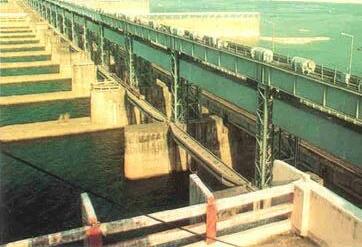
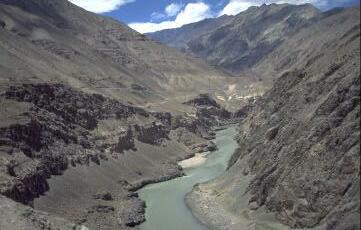

2. exchange visits of scientists/technologists and their training.
3. collaborative/joint research projects on common problems and assistance through experts/consultants.

4. creating a network of cooperating institutions.
The countries of South Asian region have imported technologies for many years and the information on these technologies is available to them. This information could be shared with other countries and appropriate modifications could be made in these technologies to make them suitable for use in the environment of these countries. India has developed considerable expertise in the small scale sector much of which is easily transferable and very appropriate to the needs of other countries of this region especially in leather, textiles, household and consumer goods, agricultural equipments and electronics. In the area of waste product utilisation, a number of techniques developed by the Indian industry could be applied in other countries of the region. Technological know-how in some important sectors like flood control, ground water surveys and oil and natural gas exploration, which have been developed in India, could very easily find application in other countries of the region.
SAQ 3
Explain the need and importance of regional cooperation for the sustainable development of countries in the SAARC region.
57
Cooperation and Partnership
Fig.16.4: Some areas of regional cooperation in South Asia
16.7 PEOPLE’S PARTICIPATION AND MOVEMENTS
The developing countries have adopted an economic development policy that is modelled on the western ideology of industrialisation. These developmental processes include infra-structural projects such as construction of hydroelectric dams or roads, extraction of natural resources such as wood and minerals, and agricultural production for trade on the international market. The methods employed are wasteful and destructive to the local environment. This has led to local resistance and global political pressure by social and environmental activist groups.
Indigenous people, the poor and the minority have led popular movements to protest against a number of environmental injustices in the developing countries. During the last two decades, they have mounted protests against the use of poor communities as dumping grounds for toxic wastes or as sites for location of dangerous industries. These groups found their voice at the 1992 Earth Summit at Rio de Janeiro where an understanding was reached that neither economic development nor environmental protection could be reached without people’s participation at the grassroots level.
In India, the Chipko Andolan to stop the felling of trees in the Himalayas and Narmada Bachao Aandolan to protest against the construction of dams on the Narmada River are two such movements that involved millions of people who participated to protest against the environmental injustices of the vested interests.
People have participated over the years in several protests that involved the protection of the environment and have taken legal help in attaining justice e.g., the Bhopal gas victims. The public interest litigations (PIL) have helped tremendously in hastening the process of getting justice. In India, the Supreme Court, on the basis of a PIL, ordered the closure of several polluting industrial units and tanneries along the Ganga.
After independence, there has been a growing role of the state in India. Authoritarian forces have gained strength that control resources and developmental processes. In effect, voluntary participation of the people has reduced and people have become heavily dependent on the state. This has slowed the process of development considerably. The meaning of voluntarism and peoples’ participation needs to be rediscovered and implemented in order to reduce the dependency on the state. People should be able to exercise their own control on their own environments to adopt the path of sustainable development.
16.8 SUMMARY
• The issues of sustainable development and socio-economicdevelopmentare closely interlinked and require the cooperation and partnerships between the different sectors of agriculture, natural resources, education, S&T, industry etc. Partnerships that link the government, industry, funding agencies and R&D are required. Indigenous people at the grassroots level need to participate to realise the goal of sustainable development.
• Cooperatives and NGOs help considerably in the upliftment of the socioeconomic conditions of the rural poor. These organisations also adopt environment friendly technologies for their functioning and generate awareness among people regarding environmental issues. S&T can be used to further develop the existing rural technologies for their optimum use; therefore, innovations by the indigenous people should be similarly upgraded by collaboration with the scientists. ICT helps to connect the people in remote areas with the mainstream. Thus they can have access to knowledge and information that can be used for their development. Similarly they can share their indigenous knowledge and technologies with the mainstream. This process of exchange of
58
Strategy for Sustainable Development
knowledge and information would lead to the development of technologies that can be used in the local milieu successfully.
• Regional cooperation between the South Asian countries is essentialforthe development of this region. These countries share water resources that have the potential to generate clean source of energy like hydro electricity. Effective management and cooperation is required to develop the energy sources from water and natural gas and to control flood and pollution in this region. India has developed expertise in small scale industry sector and know-how in groundwater and oil exploration that can be transferred to the countries of this region for their development.
16.9 TERMINAL QUESTIONS
1. Explain the role of non-governmental organisations in sustainable development.
2 How can technology contribute to development?
3. Regional cooperation is required for the development of the South Asian countries. Explain.
4. How have the peoples’ movements contributed to the betterment of the environment?
REFERENCES
1 Jain, Ashok; Qureshi, M A , and Khan, Subhan (eds.) (1995) CSIR and Rural Development, Deep Publications, New Delhi.
2 Mathur, BL. (1996) Rural Development and Cooperation, RBSA Publishers, Jaipur.
3. Rana, Kranti(2001) Peoples Participation and Voluntary Action, Dimensions, Roles and Strategies, Kanishka Publishers, New Delhi.
4. Shrotiya, G.C., and Prakash, Daman (1992) Environment and Cooperatives, Environment and Sustainable Cooperative Development- An Asian Regional Study, International Cooperative Alliance, Regional Office for Asia and the Pacific, New Delhi.
Cooperation and Partnership
59
SUGGESTEDREADINGS
1. Agarwal, A., et. al. (eds.) (1999) Green Politics: Global Environmental Negotiations, Vol. 1, Centre for Science and Environment, New Delhi.
2 Agarwal, A , et al. (eds.) (2001) Poles Apart: Global Environmental Negotiations, Vol. 2, Centre for Science and Environment, New Delhi.
3 Ahmad, R. (1996) Cooperatives in Integrated Rural Development (A Case Study of Aligarh District), Mittal Publications, New Delhi.
4 Ashworth, W. (1987) A Short History of the International Economy, 4th Edition, Longman.
5 Barry, D.C , and Bass S.(2002) Sustainable Development Strategies: A Resource Book IIED, Earthscan Publications Ltd., London.
6 Baxi, U. (1987) Environmental Protection Act: An Agenda for Implementation, Bombay:N.M.Tripathi.
7 Khan, Rahmatullah (1994)“Environment vs. Development Revisited: Contribution of India’s Judiciary to the Conflict Resolution”, Asian Yearbook of International Law, Vol.2, pp.11-48
8 India, Rio, Johannesburg and Beyond: India’s Progress in Sustainable Development, Orient Longman Private Limited, New Delhi, 2002.
9 Bhagwati, J, and Srinivasan, T N. (1983) Lectures on International Trade, Cambridge, Massachusetts Institute of Technology Press, Massachusetts.
10 Bilder, R B. (1980) International Law and Resource Policies, in Peter Dorner and Mahmoud A. El. Shafie, Resources and Development. University of Wisconsin Press, London.
11 Birnie, P , and Boyle A. (2002) International Law and the Environment, 2nd Edition, Oxford University Press, Oxford.
12 Boyle, A , and Freestone, D. (eds.) (2001) International Law and Sustainable Development: Past Achievements and Future Challenges, Oxford University Press, Oxford.
13 Brandt, D. (ed.) (2003) Navigating Innovations. Indo-European Cross Cultural Experiences, Vol I, India Research Press, Delhi.
14 Brandt, D. (ed.) (2003) Navigating Innovations. Indo-European Cross Cultural Experiences, Vol II, India Research Press, Delhi.
15 Buffie, E. (1987) Labor Market Distortions: The Structure of Protection and Direct Foreign Investments, Journal of Development Economics, Vol 27, pp149163.
16 Chand, M, and Puri, VK (1995) Regional Planning in India, Allied Publishers Limited, New Delhi.
17 Clark W., et al. (2002) Science and Technology for Sustainable Development: Consensus Report of the Mexico City Synthesis Workshop, 20-23 May 2002, Cambridge, MA: Initiative on Science and Technology for Sustainability.
18 Commoner, B. (1972) The Closing Circle; Nature, Man and Technology, Bantam, New York.
19 Daly, HE. (1996) Beyond Growth: The Economics of Sustainable Development, Beacon, Boston.
20. Deepak, R. (1999)Responses of Indian Judiciary to Environmental Protection: Some Reflections, Indian Journal of International Law,Vol. 39, pp.447-63.
60
Strategy for Sustainable Development
21. Desai, B. (1991) Regional Measures for Environment Protection: The SAARC Initiative, Yearbook of International Environmental Law, Vol.2, pp.469-71.
22. Divan, S., and Rosencranz, A. (2002) Environmental Law & Policy in India: Cases, Materials and Statutes, Oxford University Press, Oxford.
23. Dresner, S.(2002) The Principles of Sustainability, Earthscan, London.
24 Dwivedi, OP. (1997) India’s Environmental Policies, Programmes and Stewardship, Palgrave Macmillan Ltd, New York.
25 Foreman-Peck J.(1995) A History of the World Economy: International Economic Relations Since 1850, 2nd Edition, Harvester Wheatsheaf.
26 Gadgil, M , and Guha R. (1995) Ecology and Equity, Penguin, India.
27. Gilpin, R. (2000) The Challenge of Global Capitalism. The World Economy in the 21st Century. Princeton, Press, Princeton.
28. Hasan, S. (1991)Environmental Issues and Security in South Asia, Adelphi Papers 262, Autumn.
29 Henning, D H. (1974) Environment Policy and Administration, American Elsevier Public Co. Inc, New York.
30 Hirsch, F. (1976) The Social Limits to Growth, Routledge, London.
31 Hoff Marie, D. (ed.) (1998) Sustainable Community Development. Studies in Economic, Environmental, and Cultural Revitalization, Lewis Publishers, USA.
32 Human Development Report (1994) United Nations Development Programme, Oxford University Press, Oxford.
33 Human Development Report (2003) United Nations Development Programme, Oxford University Press, Oxford.
34. Human Development Report (1990) United Nations Development Programme, Oxford University Press.
35. Hurrell, A., and Kingsbury, B. (eds.) (1992) The International Politics of the Environment: Actors, Interests and Institutions, Clarendon Press, Oxford.
36. Jain, A. (2001)Networks of Science and Technology in India: The Elite and the Subaltern Streams. AI & Society, Vol 16, pp 4-20, Springer-Verlag Ltd, 2001.
37. Jain, A. (1992) Social Diversity and Technology for Sustainable Development, Paper presented at the VIth International Symposium of the International Research Centre for Japanese Studies (IRCJS) Kyoto, Japan, September 28October 3, under the theme Nature and Humankind in the Age of Environment Crisis.
38. Jain, S.K. (ed.) (1997) Contribution to Indian Ethnobotany, 3rdEdition, Scientific Publishers, Jodhpur, India.
39. Kemp, T. (1986) Historical Patterns of Industrialization, 2nd Edition, Longman.
40. Korten, D.C. (2001) The Responsibility of Business to the Whole, in Richard Starky, Richard Welford’s Business and Sustainable Development, Earthscan Publications, London.
41. Kothari, S.(1993) Incompatibility of Sustainability and Development, Indian Journal of Public Administration, July-September, Vol. 39, No.3, pp 315.
42. Kuhn, B. (1998) Participatory Development in Rural India, Radiant Publishers, New Delhi.
43. Lafferty, W.M. and Langhelle O. (1999) Towards Sustainable Development, St. Martin Press Ltd, New York.
Cooperation and Partnership
61
44. Lairson, T., and Skidmore, D. (1997) International Political Economy: The Struggle for Power and Wealth, (Second Edition), Fort Worth, Harcourt Brace College Publishers, Texas.
45. Leelakrishnan, P.(1999) Environmental Law in India. Butterworths India, New Delhi.
46. Leopold, A. (1949) A Sand County Almanac, Ballantic, New York.
47 Little Paul, E. (2001) Amazonia: Territorial Struggles on Perennial Frontiers, MD: Johns Hopkins University Press, Baltimore.
48 Macrory, R. (1992) The Enforcement of Community Environmental Laws: Some Critical Issues, Common Market Law Review, Vol.19, pp347-69.
49 Mathur, BL. (1996) Rural Development and Cooperation, RBSA Publishers, Jaipur, India.
50 McMurtry, J. (1999) The Cancer Stage of Capitalism, Pluto, London.
51 Milani, B. (2000) Designing the Green Economy, Rowman & Little Field Publishers Inc, New York.
52. Mukherjee, B.M. (ed.) (1990) Technology for Sustainable Development, Guru Ghasidas University Publication.
53. Najam, A. (1994)The South in International Environmental Negotiations, International Studies Vol. 31, No.4, pp427-64.
54. Narayana, E.A. (1990) Voluntary Organisations and Rural Development in India, Uppal Publishing House, New Delhi.
55. NAVF (1990) Sustainable Development, Science and Policy, Conference Report, Bergen 8-12, May Oslo, Norwegian Research Council for Science and Humanities.
56. North American Agreement on Environmental Cooperation, 1992, 32 ILM 1480, 1993.
57. Pachauri,R.K., and Vasudeva, G. (eds.) (2001) The Role of New Technologiesin Poverty Alleviation and Sustainable Development. Proceedings of the Conference held on 6th November 2000 in Washington D.C., USA, © Tata Energy Research Institute.
58 Pandey, D.N. (1998)Ethnoforestry. Local Knowledge for Sustainable Forestry and Livelihood Security, Himanshu Publications, Udaipur.
59. Pearce, D., and Atkinson, G. (1993) Capital Theory and the Measurement of Sustainable Development: An indicator of Weak Sustainability, Ecological Economics, Vol. 8, 103-8.
60. Pearce, D., et. al. (1989) Blueprint for a Green Economy, Earthscan, London.
61. Raghavan, C. (1995)TNCs Control Two-Thirds of the World Economy, Third World Resurgence, Vol. 65/66, pp31.
62. Rajak, R.C. (ed.) (2002) Microbial Biotechnology for Sustainable Development, Scientific Publishers (India), Jodhpur, India.
63. Rana, K. (2001) Peoples Participation and Voluntary Action. Dimensions, Roles and Strategies, Kanishka Publishers, New Delhi.
64 Raustiala, K. (1997)States, NGOs and International Environmental Institutions, International Studies Quarterly, Vol. 41, No.4, pp719-40.
65 Redclift, M. (1996) Wasted: Counting the Global Consumption. Earthscan, London.
66 Regional Study of Greenhouse Effect and its Impact on the Region, SAARC Secretariat, Kathmandu, 1992.
62
Strategy for Sustainable Development
67. Regional Study on the Causes and Consequences of Natural Disasters and the Protection and Preservation of the Environment, SAARC Secretariat, Kathmandu, 1992.
68. Reid, D. (1995) Sustainable Development: An Introductory Guide, EarthScan, London.
69. Robins, N. (1990) Managing the Environment: The Greening of European Business, Business International, London.
70. Sachs, W. (ed.) (1993) Global Ecology. A New Arena of Political Conflict, Zed Books, London.
71. Sarwat, M. (1980) Technology, Development & Natural Resources, in Peter Dorner and Mahmoud El Shafie, Resources and Development, University of Wisconsin Press, London.
72. Schmidheiny,S. (1998) Changing Course: A Global Business Perspective on Development and the Environment, The Massachusetts Institute of Technology Press,London.
73. Sharing innovative experiences. Examples of successful initiatives in agriculture and rural development in the South, Vol. 5, FAO, Rome, 2001.
74. Shrotiya, G.C., and Prakash D. (1992) Environment and Cooperatives. Environment and Sustainable Cooperative Development- An Asian Regional Study, International Cooperative Alliance, Regional Office for Asia and the Pacific, New Delhi.
75. Singh, A. (2000) The Politics of Environment Administration, Galgotia, New Delhi.
76. Swain, A. (1997)Democratic Consolidation? Environmental Movements in India, Asian Survey, Vol37, no9, pp818-32.
77. Sylla,R., and Toniolo, G. (eds.)(1991) Patterns of European Industrialization: The Nineteenth Century, Routledge, London.
78. The South Centre(1996) Enhancing North South Trade, Inprimerie Ideale, Geneva.
79. United Nations Under-Secretary General and the United Nations Environment Programme (UNEP) (1999) Overview: Outlook and Recommendations, Global Environment Outlook 2000, Earthscan, London.
80. Williamson, T. (1999)What an environmentally sustainable economy looks like, Dollars and Sense, July/Aug, Vol. 224, pp24-28.
81. World Commission on Environment and Development (WCED) (1987) Our Common Future. Oxford University Press, Oxford.
82 World Conservation Monitoring Centre(1992) Global Biodiversity: Status of the Earth’s Living Resources, Chapmanand Hall, London.
83 Worster, D.(1993) The Shaky Ground of Sustainability, in Sachs and Wolfgang., (ed.) Global Ecology, ZED Books, Fernwood Publishing, Nova Scotia.
Websites
http://www.grida.no/geo2000/english/0027.htm http://www.wri.org/wri/biodiv/cult-div.html http://apsaproceedings.cup.org/Site/papers/012/012002FearonJame.pdf http://www.eeexchange.org/sustainability/content/D/3.HTML http://www.fao.org/sd/2001/EN0301a_en.htm
Cooperation and Partnership
63
Strategy for Sustainable Development
http://grid.cr.usgs.gov/geo2000/ov-/0012.htm http://www.ifc.org/enviro/EnvSoc/ESRP/Guidance/GuidanceA/guidancea.htm http://www.ifc.org/enviro/EnvSoc/ESRP/Guidance/GuidanceA/guidancea.htm http://www.isis-europe.org/isiseu/brieflist/ No.27_Conflict_Commodities.pdf http://www.oneworld.org/guides/ethcons/sustain.html http://www.sarep.ucdavis.edu/concept.htm#Themes http://www.sdgateway.net/introsd/definitions.htm http://www.taipeitimes.com/News/archives/2002/09/21/0000168915 http://www.unilever.com/environmentsociety/sustainabilityinitiatives/ agriculture/indicators.asp
http://www.worldbank.org/wbi/sdnaturalresources/ http://www.worldwatch.org/pubs/paper/162/press.htm http://chemistry.anu.edu.au/Staff/WG/post_col_india.pdf http://devdata.worldbank.org http://www.isidev.nic.in/pdf/skgfao.pdf http://www.indianchild.com/indian_economic_policies.htm http://www.destinet.ewindows.eu.org/aEconomic/2DECISIONS_OF_THE_GENERA L_ ASSEMBLY.doc/ http://www.iisd.org/trade/wto/ctedoc.htm http://unfccc.int/cop8/latest/1_cpl6rev1.pdf http://www.iied.org/docs/climate/cc&sd_viewsouth.pdf http://www.twnside.org.sg/title/twr139a http://www.uneptie.org/energy/publ/ http://envfor.nic.in http://www.aseansec.org/home.htm http://europa.eu.int http://www.nafta-sec-alena.org/DefaultSite/index.html http://www.earthsummit2002.org/wssd/10commitments/10commitments.htm http://www.iisd.org http://www.unep.org http://www.un.org/esa/sustdev/csd/csd12/csd12.htm http://www.cseindia.org http://www.cuts-india.org http://www.greenpeace.org/international_en http://www.iucn.org http://www.panda.org http://www.teriin.org http://www.un.org/documents/ecosoc.cn17/1998/background/ecn171998-bp1.htm http://www.johannesburgsummit.org/html/documents/backgrounddocs/unepindustry.pdf
64
