Annual report 2025
We are delighted that you are interested in Aquafin’s results in 2025 and our plans for the next few years. This is the first annual report in a completely new house style, featuring a new logo resulting from refining our brand identity last year. What we stand for, just like all our partners, is pure impact: for clean watercourses and a living environment in harmony with water that our children and grandchildren can build on.
This report takes you through our DNA and the impact of our activities, in words and figures. From 2028, Aquafin will be subject to the Corporate Sustainability Reporting
Directive (CSRD). However, we have decided to report all of our sustainability information already, based on the draft version of the simplified CSRD, which is due to be endorsed in Europe in the course of 2026. We have integrated this information with the other sections of this report as much as possible to avoid repetition. As a result, we have regularly included cross-references and refer both to relevant page numbers and to the classification of the requested data points within the CSRD (e.g. ESRS 2 SBM-1, E1-1, S1-1, etc.).
The report is structured around the following main blocks:
This annual report is also available in Dutch.
A look at Aquafin’s identity and ecosystem, our activities and levers for sustainability.
Composition and functioning of our management bodies and management team.
Reporting based on the draft version of the simplified CSRD.
Financial results, explanations and Green Finance Framework report.
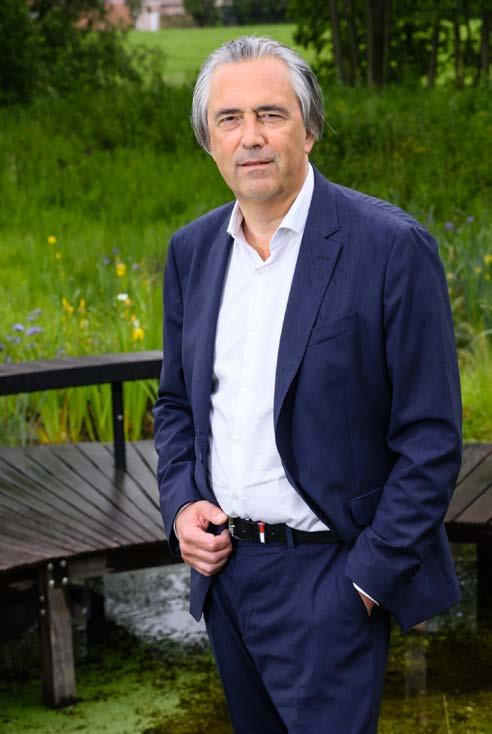
Jan Goossens CEO
Originally set up to eliminate the waste water treatment backlog in Flanders, Aquafin has gradually expanded its impact significantly. Not only through expansion, by adding activities linked to our task, but also through deepening and intensive partnerships. CEO Jan Goossens has seen the opportunities grasped translated into broad potential for the years to come.
What strategic choices made a difference for Aquafin in 2025?
“2025 was a year in which a number of longterm choices from the past tangibly paid off. Today, investments that were still being discussed six years ago are now proving their worth. The construction of two sludge dryers and our own sludge mono-incineration facility for the sustainable processing of biomass from our water treatment plants has strength-
ened our sales security and enabled largescale phosphorus recovery. The sludge processing capacity in Flanders has been under pressure for several years. And in a context of deglobalisation and geopolitical tensions, that choice to increase our own source of raw materials is not a luxury but a necessity.
At the same time, we made a conscious decision to reinvest revenue from municipal activities in innovation. For instance, we are >>
‘We take the lead and bring parties together, based on the conviction that everyone can make an even greater impact on the goal we are all working towards.’
(EIT). It has put us in a privileged position from which we can help shape the future of water.”
What are Aquafin’s priorities for 2026 and beyond?
researching sewage sludge pyrolysis for the purpose of producing biochar: a circular application which avoids CO₂ emissions. The financial support we have received from the Helios Foundation for a pyrolysis and sludge-drying unit is confirmation that this is the right course to take.
Through our rebranding – which was implemented in 2025 – we have positioned ourselves more strongly as a connector with a clear vision of the future. This has strengthened our role in partnerships such as ALLWATERS, where we are helping steer European water innovation through the European Institute of Innovation and Technology
“We have continued to make good progress along the path we have taken by collaborating with municipal sewer operators. Municipalities are showing confidence and increasingly joining one of the partnerships between Aquafin and local sewer operators: proof that this strategic choice from the past was also the right one.
Operationally, we confirmed our role as pioneers: we launched Flanders’ first quaternary treatment plant combining two technologies to remove the widest possible range of micropollutants. And our approach to understanding the impact of overflows is among the best in Europe. We now monitor 1,600 overflow sites and have our own tool for calculating pollutant emissions which enables us to implement targeted measures to improve water quality. We have also continued to work on additional phosphate removal at our WWTPs and kept a lot more phosphorus out of the watercourse as a result of relatively inexpensive investments.”
“To comply with European regulations, Flanders must continue to invest strongly in waste water disposal and treatment infrastructure over the next decade. Thanks to the confidence the Flemish Government has placed in us, not only will our investment budget significantly increase over the next few years, but we were also granted additional investment authorisation via the Local Pact. That is the budget with which the Flemish Region takes over municipal investments and assigns them to Aquafin. We will therefore see our project portfolio grow tremendously over the next few years, with the associated challenges. Integrated collaboration with municipalities, their sewer operators and other stakeholders will therefore become even more important. We are busy preparing for this.
I also hope that we can evolve towards even more digitalisation and data sharing within the sector. We will take the lead in this and bring parties together, based on the conviction that everyone can make even more of an impact on the goal that we are all working towards.”
1,294
7,562
1,316
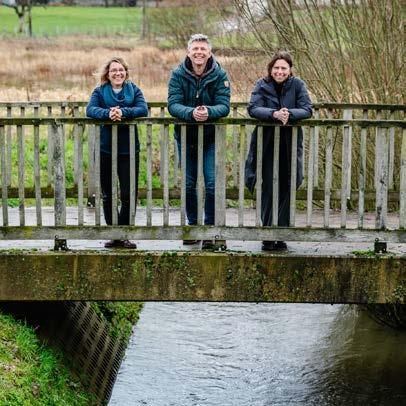
The water that you use at home –in the shower, toilet or washing machine – doesn’t simply disappear: it travels through the municipal sewers and ends up in Aquafin’s collector sewers. These transport the waste water to a waste water treatment plant (WWTP) where it is treated and only returned to nature when it is clean enough. Currently, 88% of all domestic waste water in Flanders is treated at one of Aquafin’s WWTPs.
Aquafin plays a central, connecting role in this. As part of our remit for the Flemish Region, we build, maintain and finance the supra-municipal infrastructure required to collect and treat waste water efficiently and reliably. In doing so, we look beyond our own targets: we actively align plans and investments with municipalities, sewer operators and other partners involved.
Besides this contract set by decree, we focus on collaboration and offer our expertise to local authorities for use in connection with the expansion and management of the municipal waste water and rainwater infrastructure. We do that for more than half of the Flemish cities, towns and municipalities, mostly via structural partnerships with water companies Water-link, Pidpa and De Watergroep (Riopact). We take the initiative
to bring partners together, share knowledge and create economies of scale.
In the future, we want to further strengthen this connective approach and expand it to all sewer operators in Flanders. Because the municipal and supra-municipal sewer infrastructures are so closely interwoven, direction and coordination are called for. Centralised and integrated management can deliver demonstrable efficiency gains at the ecological, economic and organisational levels and make the entire water system more resilient.
Aquafin strictly monitors the separation between the costs and revenues of activities for the Flemish Region and those for local authorities. We do so in full compliance with the agreements set out in our cooperation agreement with the Flemish Region.
To increase our added social value and strengthen the return on the public infrastructure we manage, we are constantly developing new ideas and concepts that respond to the energy transition, climate adaptation and digitalisation.
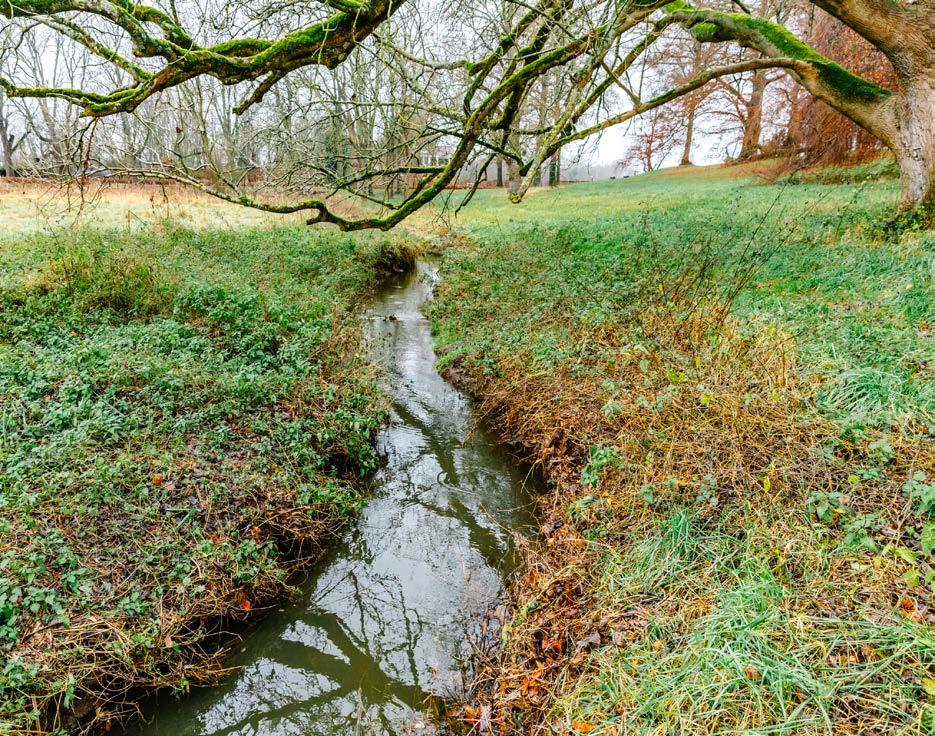
‘Clean watercourses for future generations and a living environment in harmony with water’
By treating domestic waste water and making space for water, we will protect water quality, reduce the impact of climate change and strengthen the resilience of our living environment. In doing so, we will take ownership of our responsibilities across the entire water chain and look beyond today, while using energy and raw materials carefully.
We will close cycles where possible and make our own operations sustainable. That way, step by step, we will help build a future in which, instead of posing a threat, water adds value to a healthy and pleasant living environment.
Aquafin works for the Flemish Region and collaborates with Flemish towns, cities, municipalities and drinking water companies such as Water-link, De Watergroep and Pidpa on municipal sewer management. In this way, we manage the sewer systems for more than half of the towns, cities and municipalities in Flanders. We collaborate with consultancy firms and contractors to carry out our projects. We purchase products and services for the treatment process and the maintenance of our infrastructure.
At the output end, we ensure that rainwater can be used to top up the water table through infiltration or can be reused through buffering. The waste water that we have treated goes into a watercourse or is further upgraded to process water for industry or drinking water. The latter is carried out by business customers themselves or through a partnership with specialised companies.
Energy that we recover via sewer thermal energy from sewer water or from treated waste water is used to cool and heat buildings with the help of a heat pump. We collaborate with parties such as ESCOs, project developers or municipalities on this. Sludge, a byproduct of the treatment process, is also a source for recovering energy in the form of green electricity and green gas, as well as raw materials such as phosphorus and carbon (both still in the research and innovation phase).
Collecting and treating waste water is our core business. It enables us to create tangible added value for people and the environment every day: cleaner watercourses, healthier ecosystems and space for water. At the same time, we take responsibility for the impact of our own operations. Our infrastructure and treatment processes require energy, materials and chemicals and produce greenhouse gas emissions. By using energy more efficiently and reducing our environmental impact across the whole chain, we are making conscious choices for the future. That way, we make Act green a reality every day.
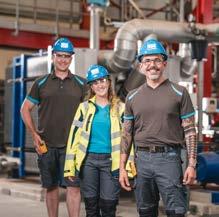
In a world that is constantly changing and technologies are evolving at a rapid pace, caring for people remains a set value. Aquafin wants to be a committed employer and a reliable client to its partners. We will do our utmost to create a safe and ethical working environment where well-being is given close attention. We want to Make people flourish by sharing knowledge, encouraging collaboration and providing scope for development.
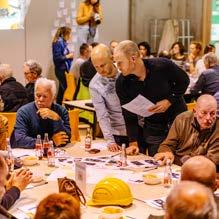
As an organisation, we are at one with our environment: we are part of it and feel closely connected to it. We keep the nuisance caused by our infrastructure works to a minimum and actively seek to align with social transitions that will strengthen our living environment. For instance, we collaborate on sustainable solutions that extend beyond today, enabling us to Connect with our environment
These three levers are woven into our whole strategy and operations. Information on actions and policy is therefore included in this report under ‘What we do’. Because our ‘road to zero carbon’ is the common thread in how we approach climate mitigation, we have provided an overview of this strategy below.
E1-1 ]
With our transition plan for climate mitigation, we are evolving towards climate neutrality in all processes, from raw materials to customers. We use the Greenhouse Gas Protocol (GHG) to calculate our greenhouse gas emissions, where:
Scope 1
= direct emissions by own sources
Scope 2
= indirect emissions by purchased energy
Scope 3
= indirect emissions in the value chain
Reduction of greenhouse gas emissions from scope 1 and 2 by 48% by 2030 compared with the reference year 2013.
For scopes 1 and 2, we have set ambitious yet achievable targets. For scope 3, we will serve as a catalyst in the sector for the development of sustainable materials and implementation methods.
The strategy is based on 3 pillars:
Various levers for decarbonisation have been identified for this. Gas-fired dryers are being replaced with dryers that run on residual heat. In addition, there is a new sludge processing plant under construction in Ghent that will process two thirds of the sludge and recover energy. We are also aiming to increase energy efficiency by at least 1% per annum and to expand the proportion of own renewable energy in our own electricity mix to 40%. Renewable energy projects at our own sites will take preference, but we have also developed a Power Purchase Agreement (PPA) strategy to support local renewable energy initiatives. From 2026, we will be purchasing 21,300 MWh of wind energy per annum from two wind turbines in Oud-Turnhout under an initial PPA. In the meantime, wind energy projects are also being prepared at our WWTPs in Bruges and Aalst.
In 2025, we commissioned three additional biomethane plants in addition to the very first one, which has been producing biomethane since 2021. The plants upgrade the biogas from sludge digestion to natural gas quality. The biogas enters the gas network directly via an injection cabin, which is on site. Once the fifth –and, for now, the last – biomethane unit is put into operation in 2026, we will be able to inject 40 MWh of green gas into the grid per annum. That is the equivalent annual consumption of 2,650 families.
At the WWTPs with biomethane plants, we also immediately adjusted the sludge digestion process. To keep the digestion process at a constant temperature, we use sewer thermal energy rather than fossil fuel. A heat exchanger extracts the residual heat from the treated waste water and a heat pump then brings the residual heat up to the right temperature for digestion. We also use a control system to supply the heat pump that depends on available power, i.e. preferably when our solar panels are producing power or if there is a surplus of energy within the network.
This not only closes the circle in our own process, but it also helps create a better balance within the power network.
We are also working to convert 75% of the biogas produced into biomethane and to explore pilot projects with green concrete and site batteries to reduce infrastructure project emissions. Also, the electrification of the entire vehicle fleet — including lorries — and the transition to fossil-free heating systems in buildings contribute to further reductions.
Working proactively towards climate-neutral products and services in partnerships with our suppliers.
In the past, we built ad hoc sustainability criteria into many purchase dossiers, which also led to more sustainable procurement in practice. In 2025, we took additional initiatives in order to further anchor sustainability in our procurement policy, such as ESG training for our Procurement team and the application of sustainability as an award criterion in procurement procedures.
We also have an impact on emissions from sludge transport by keeping the number of transport operations as low as possible. Sludge is the biomass that accumulates during the treatment process and has to be processed (see p. 25 →). By adapting processes and using new technologies, we aim to extract as much water as possible from the sludge, thereby reducing the volume to be transported. In 2025, we launched the rollout of an automated process at our WWTPs, which has improved sludge thickening and increased the dry matter content.
On an annual basis, this delivers a reduction of 45,000 kilometres travelled during sludge transport operations.
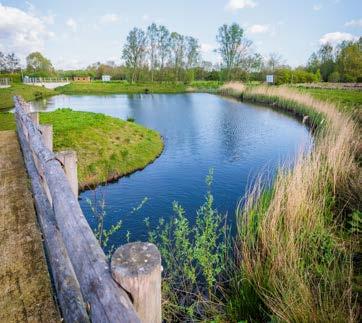
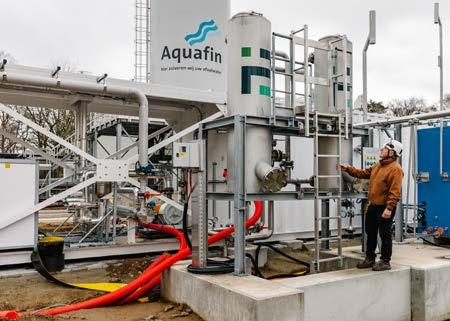
We also took action regarding the design and implementation of major sewer and water treatment infrastructure projects. That included setting up a sustainability board in which we collaborate with consultancy firms to identify measures to significantly reduce Scope 3 emissions through integration into the design. Depending on the type of measure, it is either immediately included in Aquafin’s standard specifications or we select pilot projects to test it in practice. For a ‘Site of the future’ with a focus on sustainability, we put out a tender challenging contractors to propose measures that could make a relevant contribution to climate mitigation during project execution. Last year, we also decided to contract out all major infrastructure works via the CO2 performance ladder over several years. Under ‘Project implementation focusing
on the environment and surroundings’ on page 22, you can learn more about our efforts regarding sustainable construction sites.
We cannot set targets for scope 3 emissions ourselves at the moment because we are dependent on the pace of transition in the sector. However, we are encouraging the sector through various initiatives: we integrate sustainability criteria into our procurement procedures, take sustainability into account when selecting materials during the specification preparation, offer test space for new materials and invite technical partners to submit their own proposals for more sustainable sites. We continuously evaluate how our approach contributes to CO2 reductions in the value chain.
Actively develop opportunities to connect as a function of renewable energy developments.
We look for market-ready solutions that can be applied within our organisation, such as biomethane, wind turbines, flexible controls, batteries, etc. That is the way we want to take on an active key role, such as drying/heating using residual heat, sewer thermal energy and heating grids, etc. By doing so, we aim to make a positive social contribution to achieving climate targets in Flanders. For instance, in 2025, we installed the sewer thermal energy system for cooling and heating a new urban district in Mechelen, the second project after the one for the new swimming pool in Sint-Niklaas. In the meantime, discussions are in full swing regarding new projects and a concrete project has been commissioned for 2027 in Kortrijk.
The progress we make on our Road to zero carbon will be reported annually as part of our sustainability report under ESRS E1Climate change. Detailed information on this can be found on page 52. Every three years, we will revise the strategy in order to adapt to the changing challenges of the energy transition and climate mitigation.
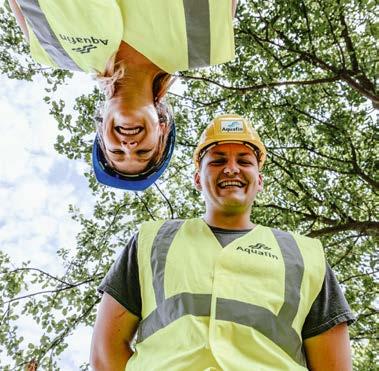
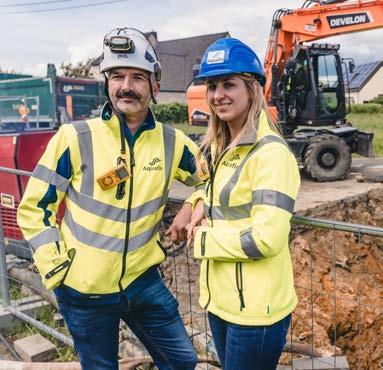
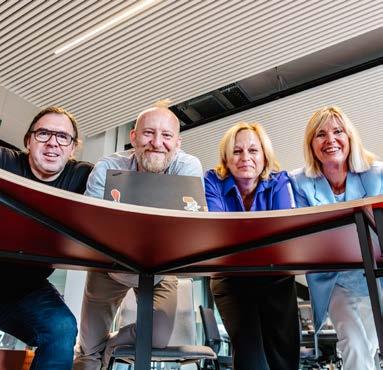
There are 1,300 impact makers working at Aquafin every day: in their jobs, all employees contribute to our vision of the future in one way or another. That is what connects them and makes them proud. With our caring HR policy, we want to make people flourish.

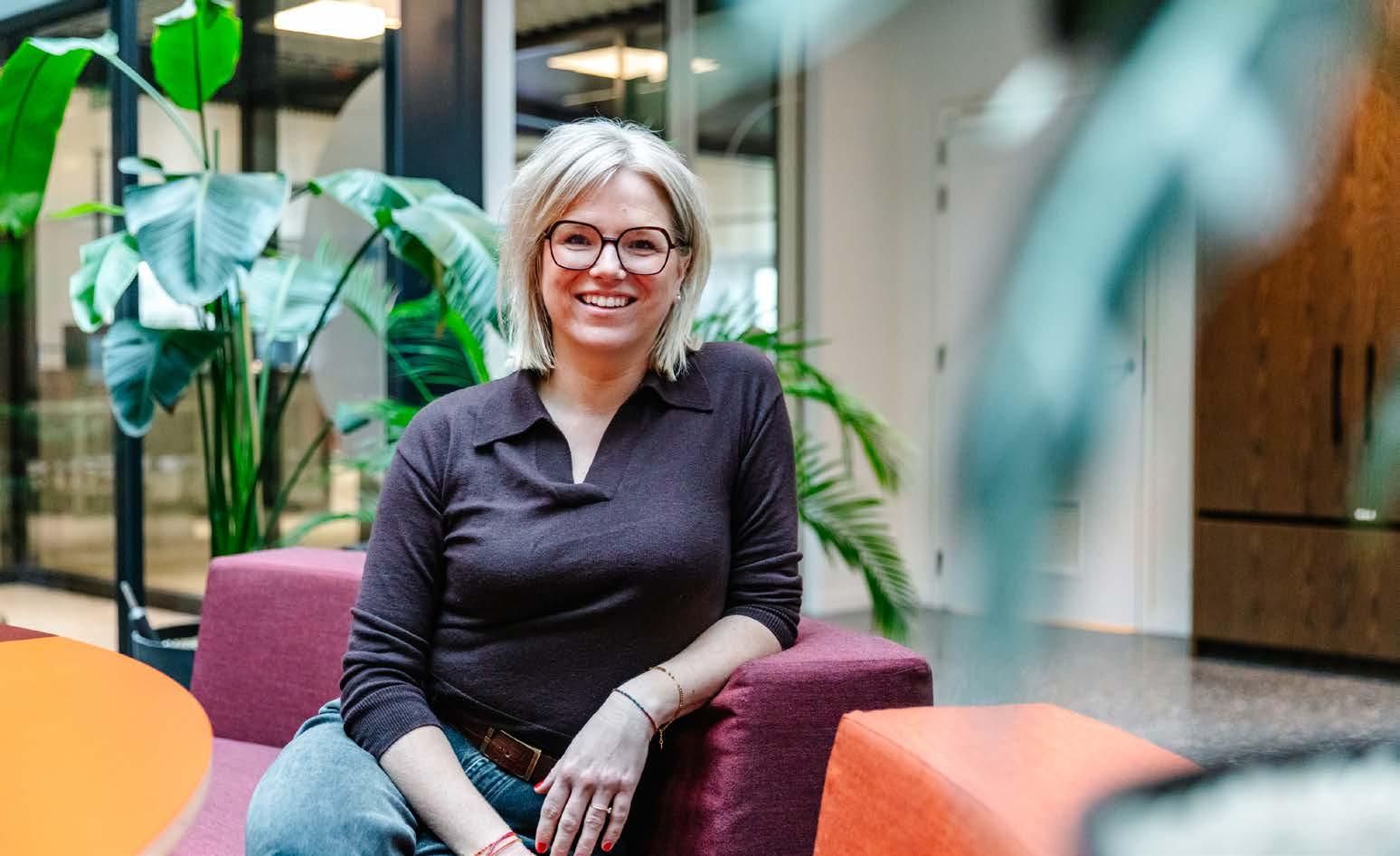
‘Colleagues are genuinely concerned about each other’
MIN HUET Talent and Culture Manager
“Collegiality is what characterises the culture at Aquafin: colleagues are genuinely concerned about each other. Our research has shown that a caring network is an important buffer for work pressure and change. It is also a huge asset in a world of hybrid working and high expectations. What is more, that research showed that the great collegiality along with a high degree of autonomy, strong leadership and working towards a better environment are such powerful sources of energy that they drastically reduce the risk of burnout.”

basis for our HR policy
[ S1-1 ]
Our employees are the foundation on which we build a resilient and agile organisation that is prepared for the future. In a complex, fast-changing world, we consider it our responsibility as an employer to offer the best possible support through a warm, motivating HR policy. Physical, mental and social wellbeing are crucial for performance and growth. That is why our HR policy is based on our well-being vision, which has four pillars:
We encourage the creation of connections beyond the beaten path, both between colleagues and in society, and create a caring and inspiring environment.
We provide high-quality work that is both meaningful and challenging, with sufficient autonomy, variation and opportunities for development. It is important for capacity and workload to be in proportion and discon-
nection and a healthy work-life balance are encouraged.
We invest in a positive learning culture where employees are not afraid to experiment and are allowed to make mistakes. Employees are encouraged to develop their talents and take control of their careers.
We are committed to providing a safe and healthy working environment – both on a physical and psychosocial level – so that everyone returns home safe and sound at the end of their working day.
Well-being is the shared responsibility of employees, teams, management and the organisation. Our HR policy is aligned with the Belgian Well-being Act of 1996 and the Belgian Code on well-being at work. The HR and Prevention Departments ensure the policy is applied.
[ S1-3 ]
At Aquafin, safety is a top priority for which everyone is responsible. There is a broad range of safety training for employees, some of which is mandatory for anyone exposed to specific risks. There are procedures and guidelines that employees must follow regarding the main risks associated with working on our infrastructure. That applies, for example, to working with electricity, working in confined spaces, operating machinery and working with biological agents. There are also strict guidelines on the use of personal protective equipment (PPE) depending on the type and place of work. In addition, the STOP principle is well-established within the organisation: everyone has the power to stop the work in the event of (doubts regarding) unsafe situations or actions. A STOP does not usually lead to work being interrupted for a long period of time; it provides the opportunity to address the unsafe situation so that the work can then be resumed. STOPs are reported via a digital platform to help us learn from them. With that in mind, the Committee for Prevention and
Protection at Work (CPPW) also discusses accidents and incidents.
People can only fully develop and commit in a work environment that is safe in every sense of the word. We place not only physical safety but also mental safety high on the agenda, while focusing on prevention as much as possible. In 2025, for example, we specifically supported employees who are also caregivers and developed a conduct framework for an inclusive workplace. We also often opt for an individual approach, which is possible because teams are closely monitored by the HR Business Partners. For instance, we offer targeted language immersion and coaching for non-native speakers and we are open to services such as autism support in the workplace. All managers attended a training course on neurodiversity in the team.

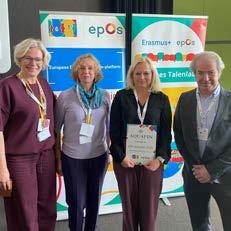
“Because we believe in the power of language as a bridge between people, we invest in language diversity and language development at Aquafin. We do that by providing customised language training and supporting teams in a multilingual environment,” says L&D expert Kerstin Stöcker.
In September, we took part in the European Day of Languages. Kerstin: “We turned it into a whole week, with language tables, workshops, creative word games and poetry and music in different languages, for example. All initiatives aimed at bringing language to life and making colleagues curious about other languages.”
Our actions to promote the learning of foreign languages earned us the European Day of Languages award in November. The prize is awarded by Epos, which is broadly committed to internationalisation to contribute to the European priorities of social inclusion, sustainability, digitalisation and democratic participation. This award confirms that language initiatives are not just “nice extras” but preparation for a labour market in which multilingualism will be a reality.
[ S1-2 | S1-4 ]
The implementation of our HR policy with concrete actions largely stems from dialogue with employees. Besides formal and informal feedback interviews between managers and their team (members), Business Partners from HR also monitor teams and individuals. At an organisational level, this takes the form of social dialogue and well-being surveys.
In 2025, we organised another extensive quantitative and qualitative employee well-being survey, in collaboration with an independent research bureau. At the same time, the same questionnaire was answered by 1,000 employees active on the Flemish labour market, as a benchmark. The survey was designed as a risk analysis to focus on real psychosocial risks. The insights gained form the basis for our HR roadmap. For example, the need for more support with managing one’s own career has been included as an action point. We asked employees returning to work after a long absence about their needs during recovery and reintegration. Based on their valuable feedback, we adapted both the reintegration process and the information on it. A new brochure now guides colleagues
absent for a long period on practical and administrative matters during their absence.
We also take a data-driven approach to other HR domains. Systematically monitoring and analysing data on topics such as absenteeism, staff turnover and accidents enables us to detect trends more quickly and closely monitor the results of actions.
We currently monitor the effectiveness of our HR policy based on these objectives and KPIs:
[ S1-5 ]
In 2025, we defined the following objectives in order to measure the effectiveness of our HR policy. From next year, we will add the results from the previous year for comparison in each case.
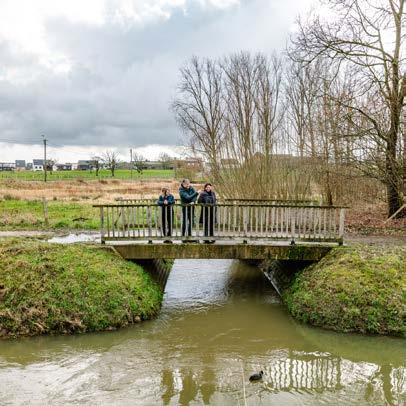
Our collectors or collector sewers collect domestic waste water from the municipal sewers and transport it to one of the 332 waste water treatment plants that Aquafin had in service at the end of 2025. There, the water is treated through a mechanical and biological processed until it complies with Flemish and European standards for discharge into surface water. We treat the waste water based on the 5 parameters listed below.
BOD: biological oxygen demand – the amount of oxygen required to break down the pollution biologically.
COD: chemical oxygen demand – the amount of oxygen required to break down the pollution via a chemical process. Suspended solids: all undissolved substances in a volume of waste water.
Nitrogen & phosphorus: nutrients present in domestic waste water. Excessive quantities of these in the watercourse lead to strong algae growth, which reduces the oxygen content.
The new EU Urban Waste Water Treatment Directive (ERSA) imposes the obligation to remove micropollutants in the future, for example. We are already carrying out the additional so-called quaternary treatment stage at one plant and a further rollout to several WWTPs is to follow in the next few years. To find out more about this, go to ‘Research in relation to water quality’ on p. 36 →.
While waste water treatment remains essential for protecting water quality and ecosystems, waste water is increasingly becoming a valuable resource within a circular water system. Treated waste water can also be upgraded for a wide range of applications, even to drinking water quality. That is already being carried out. After Koksijde, where drinking water company Aquaduin has been using the effluent from our waste water treatment plant as an alternative source to produce drinking water for more than twenty years, the largescale reuse project Deeper Blue was launched in Aalst in 2025 (see ‘Treated waste water as an alternative source’ on p. 33 →).
Interest is growing in industrial applications such as cooling and process water. With several large-scale reuse projects in preparation, reuse of treated waste water is set to play an increasingly important role in creating a climate-resistant and resilient water system in the next few years.
99.4% of the WWTPs comply with all standards
[ E2-3 ]
The performance of the waste water treatment plants is monitored based on three to five parameters, depending on the capacity of the plant (see box). Flemish regulations also impose both concentration standards and removal percentages.
Concentration standards stipulate the maximum quantity of a substance that may still be present in the water after treatment, while removal percentages indicate the percentage of the pollutants that must be removed from the waste water on an annual basis.
Due to the predominantly combined sewer system in Flanders, both waste water and rainwater end up in the sewer. When it rains a lot, sewer water becomes extremely diluted and this dilution increases due to groundwater infiltration into the sewers. In such circumstances, the concentration of certain substances in the incoming water is sometimes lower than the limit that applies to discharging into the watercourse. To achieve the required removal percentage, additional efforts are necessary, such as dosing extra chemicals. By means of agreement with the Flemish Environment Agency, waste water samples which
are exceptionally highly diluted are not included in the evaluation of removal percentages.
In 2025, 329 of the 331 waste water treatment plants evaluated1 or 99.4% complied with all the applicable standards. While the other two plants met all concentration standards, they did not achieve the required suspended solids removal percentage. This strong overall result is down to meticulous monitoring by our operational teams, accurate automatic controls and investments in modern treatment technology. The following graph shows the development of treatment results over the past 5 years, where the influence of the extremely wet years 2021 and 2023 is clearly visible.
On an annual basis, the 331 WWTPs achieved an efficiency of 85.03% for the removal of nitrogen (N) and 87.59% for phosphorus, both well above the target of 80% (60% for N at WWTPs between 2,000 and 4,000 PE).
Phosphorus and nitrogen in a watercourse lead to strong growth of algae, which in turn
1 Only WWTPs that were operational on 30 June have been included in the annual evaluation. Therefore, this figure may differ from the number of WWTPs in operation on 31 December.
reduces the oxygen content and disrupts the ecosystem. At the end of 2025, at 70 WWTPs we were already removing more phosphorus than the standard required to reduce the phosphorus burden on the watercourses we discharge into. By 2033, we will expand the installation of phosphate meters with additional phosphorus removal at 163 WWTPs. The locations have been determined based on our reduction targets (see also p. 20 → Prioritising projects according to their impact).
In addition, there is still potential for further reduction of the nitrogen contents in surface water – besides extra domestic waste water connections – in the treatment process itself. For this purpose, we will be rolling out a new type of automatic control and an increased, but considered, dosing of carbon source. Where this is not sufficient, we will invest in additional treatment technology.
Taking current prices into account, the reinvestment value of the infrastructure that Aquafin manages for the Flemish Region currently stands at around 10 billion euros. This is a huge social asset that must continue to generate returns. As this infrastructure ages, there will be an increasing need for targeted maintenance, timely renovations and replacements to guarantee reliability and performance. Infrastructure failure can lead to ecological damage and – in the case of subsidence, for example – to nuisance for society.
At the same time, new legislation and ambitions for efficiency and sustainability can prompt targeted optimisations. Maintaining high-performing infrastructure is therefore an ongoing task in which forward-looking management and continuous improvement are key.
In recent years, we have mapped the health of our more than 30,000 assets based on condition and age (asset health index). That picture is based partly on inspections, such as camera images of sewers and partly on the theoretical expected lifespan. It forms the basis for a replacement programme intended to maintain the reliability of our infrastructure. We constantly further enhance the theoretical information with findings from visual inspections, which can make the need for renovation or replacement even more urgent.
In the ‘90s, the Flemish Region invested heavily in the expanding treatment infrastructure through Aquafin. Three decades later, those assets are now increasingly in need of renovation or replacement. Consequently, the budget requirements for projects of this type will increase significantly over the next few years, while there is still an investment backlog to address. In 2025, we delivered 61.2 million euros in asset management projects.
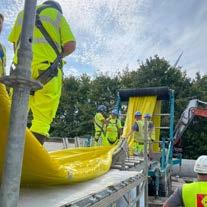
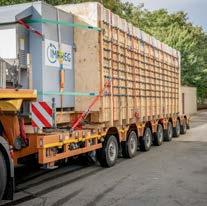
The supply collectors of both Oostende WWTP and Bruges WWTP were found to be heavily affected by the formation of H2S (hydrogen sulphide). This increased the risk of fracture in these large sewer pipes, which meant that renovation was urgently required. At both sites, after consulting our technical partners, we opted to renovate the inside of the collectors. The process involved inserting a liner impregnated with resin into the pipe which was then cured in situ using UV light. This created a new, solid internal wall, making the collector resistant to the aggressive gases in sewer water. The intervention extends the pipe’s service life by 50 years and the impact on the surrounding area is minimal because the road does not need to be dug up.
It was the first time in Belgium that this technique – relining – had been used to renovate deep underground pipes with a diameter of no less than 2 metres. Above-ground pressure pipes were laid to ensure to guarantee the inflow of around 340,000 m³ of sewer water per day (in Bruges) to the WWTP during the works. Two extremely complex and challenging projects with significant financial impact but of vital importance for the environment and surroundings.
Alternative inspection methods save time and budget
By 2027, the Flemish Government aims
to have a clear picture of the condition of the Flemish sewer network. Aquafin worked with the sector to devise standards and minimum requirements for sewer inspections. Our digital platform statustool.aquafin.be provides a dashboard with an overview for each municipality showing the state of the system and the progress of the inspection programme scheduled for completion by 2027.
The inspection requirements for all sewer operators put pressure on both market capacity and budgets simultaneously. It is mainly the cleaning of the sewer before an inspection using a traditional camera vehicle that drives up costs. As a result, after several trial inspections in 2025, Aquafin began using innovative inspection methods on a large scale, employing devices such as drones and small boats, which do not need to be emptied beforehand. This enabled us to inspect a total of 70 km of sewer pipes, more than the year before. We also found that not emptying the sewer first sometimes gives a better picture of its condition, if sand has been washed in, for example. We will continue to monitor the development of new inspection methods on the market. In the meantime, we are also looking to launch
a completely new type of inspection robot in 2026, alongside our subsidiary Aqcelerator.
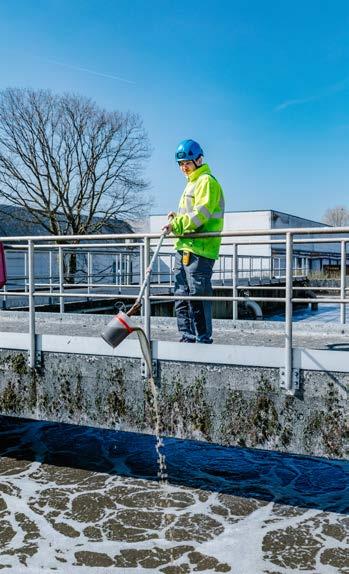
Water treatment is energy-intensive. Pumps help transport the sewer water and aeration makes the biodegradation process possible. Because of that, we continuously focus on the energy efficiency of our plants and closely monitor consumption. We are also continuously developing new controls to reduce the carbon footprint of sewer systems and WWTPs. We focus on energy-efficient designs for renovations, new build projects and infrastructure expansion. In 2025, we implemented our own cloud-based control system to operate the heat pumps that maintain the sludge digestion temperature, preferably during periods of surplus solar energy on site or when there is abundant electricity on the grid. We also commissioned, for the first time at a WWTP, a self-developed Model Predictive Control (MPC) system, based on a digital twin. The aim is to remove nitrogen even more efficiently with lower operational costs (energy and chemicals) and a reduced risk of exceeding the standards for treated waste water.
Projects aimed at improving energy performance are financed with resources from the Energy Fund, which is managed by the Flemish Region. For example, in 2025, we delivered 3.7 million euros worth of new energy projects. The Energy Fund is funded by energy bill savings from previous energy projects and investments in renewable energy. At the start of 2026, the Flemish Government expanded the criteria for financing projects with Energy Fund funds. From now on, this funding can also be used to support investments that contribute to energy neutrality, climate goals and supra-municipal innovation.
More information on our energy and climate policy can be found on p. 12 → under Road to zero carbon and in our sustainability statement for E1 – Climate change (p. 59 →).
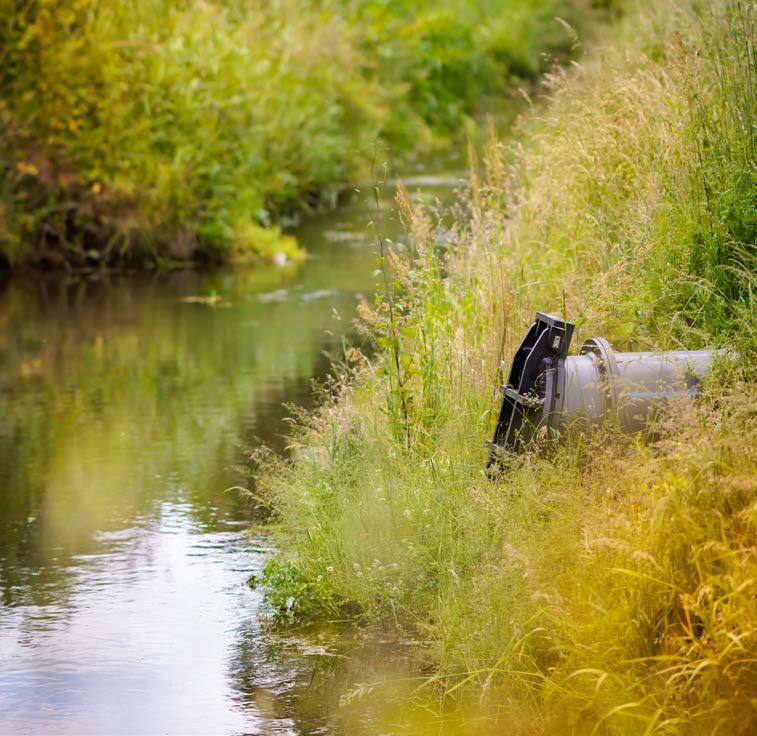
At certain locations within the sewer system, there are emergency outlets, known as overflows. If the sewer system exceeds its capacity, untreated waste water can end up escaping into a watercourse via these overflows, where it can cause damage to the ecosystem.
In Flanders, there are approximately 9,500 overflows spread across municipal and supramunicipal sewers. An overflow comes into operation when the sewer becomes too full. This can happen, for example, during heavy rainfall when large volumes of water need to be handled simultaneously. However, an overflow can also be triggered in dry weather if the flow of water is impeded by a blockage in the system, for example.
Aquafin used hydrodynamic simulations and its in-house-developed calculation tool Cockle® to calculate waste loads from 8,300 overflows. We found significant diversity in overflow behaviour, with a relatively small number of overflows yielding extremely high values. 18% of all the overflows were identified as requiring priority action, while 1 in 4 overflows had never been activated. In a subsequent step, we will also look at topics such as the vulnerability of the watercourse. A small
stream will experience a negative impact from an overflow quicker than a river and therefore overflows in such locations require more urgent attention. Cockle® then enables us to simulate remedial measures and determine which is most effective: disconnecting or buffering rainwater or more end-of-pipe solutions such as after-treatment of overflow water or smart controls to better use the storage capacity in the sewer system.
At 1,600 overflow locations, we measure the frequency and duration of overflow events and calculate the discharge volumes. The overflow meters are connected to Aquafin’s alarm system so we can intervene directly if an overflow is triggered during dry weather. We will use the measurement data to further improve our sewer models. We make the raw data from our overflow meters available via the Flemish Water Data Space so that sewer operators and other water companies can use it. We make the measurement data available to the public via Blue Portal, a digital platform that we developed in-house. (www.blueportal.be/home)
‘Deploy resources where they make the biggest difference for people and nature’
coordinator OUR IMPACT MAKERS
Overflow
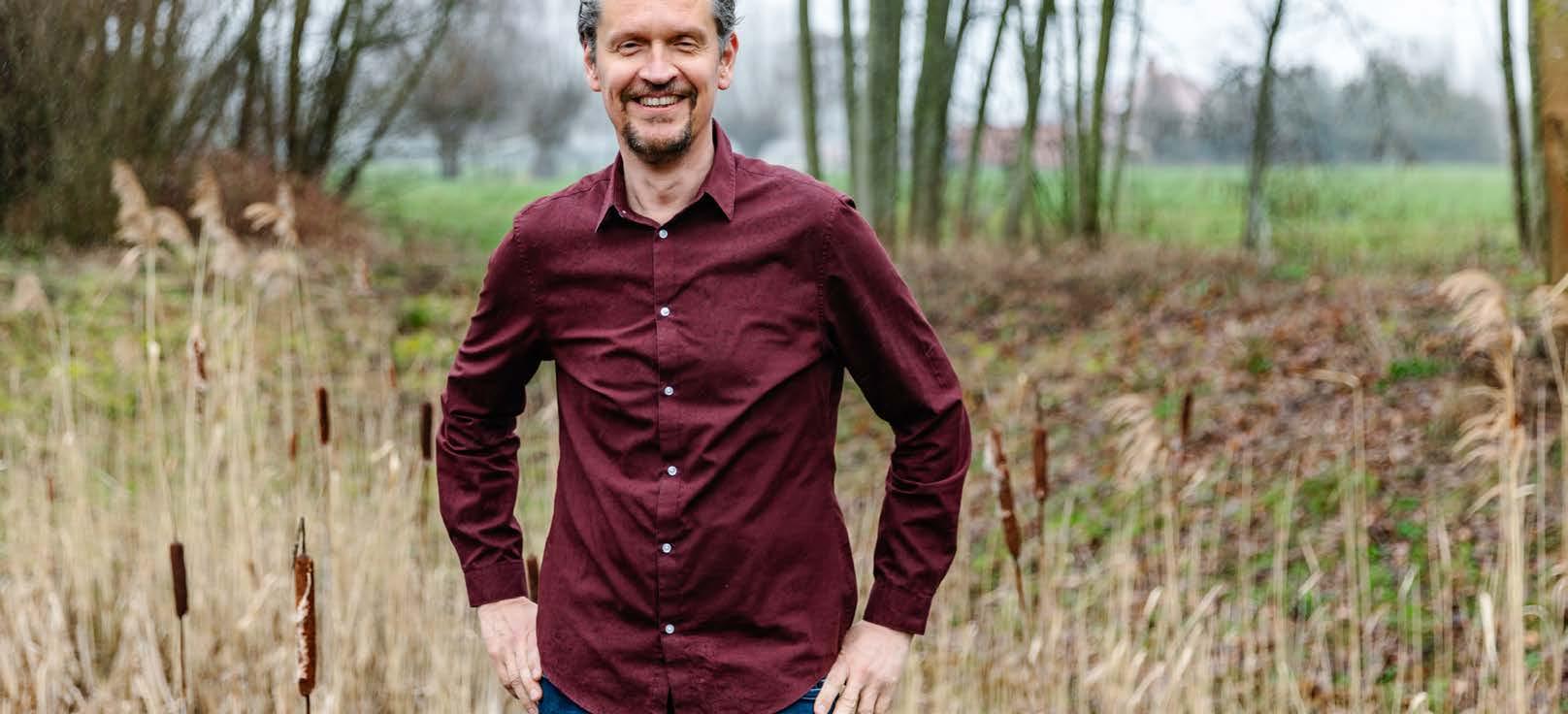
“According to our calculations, in Flanders every year the equivalent of the untreated waste water load of a big city ends up in our watercourses via overflows. But we also know that in terms of numbers, only 18% of all overflows have high emission levels. Taking a targeted approach to these would therefore significantly improve water quality. Aquafin manages infrastructure throughout Flanders. This helicopter view helps us understand how supra-municipal and municipal infrastructure interact so we can deploy available resources where they will make the biggest difference for people and nature. Over the next few years, we will continue to expand our overflow measurement network. We are also going to analyse the 1,200 overflows for which we have not yet calculated the pollutant emissions. The innovative modelling that we use for this is quite unique. We see that from the admiring – and yes, even slightly envious – looks from abroad.”
In the biological treatment stage, microorganisms do the work by absorbing the dissolved impurities from the waste water. As a result, they grow continuously, creating a surplus of sludge – a form of biomass. We digest some of the sludge, producing biogas that we convert into green electricity and now into biomethane at 4 WWTPs (see p. 12 → Towards 40 GWh of green gas into the network per annum). The biomass left over after digestion and the part that is not digested have to be processed further.
In 2025, we commissioned a new thermal hydrolysis plant at our Deurne WWTP for the sludge after digestion. When subjected to high pressure and high temperatures, the sludge ‘cracks’ and releases the easily degradable material in the cells. That material goes back into fermentation for further digestion and consequently also provides more biogas. Hydrolysis also enables more efficient dewatering of sludge, thereby reducing its volume. This is an important benefit because removing as much water as possible from the sludge reduces the number of sludge transport operations by road. In 2025, the total quantity of dewatered sludge for processing amounted to 109,283 tonnes of dry matter.
Currently, two thirds of the sludge is still incinerated, partly at our own incineration plant and partly externally. The remaining third is dried in our three sludge dryers to form pellets, which are used as a source of renewable energy. We are currently constructing two new sludge dryers that will run on industrial residual heat, which will replace the current dryers that run on natural gas to a large extent. With the commissioning of the new dryers in Beringen, with residual heat from Biostoom Beringen, and in Roeselare, where we will connect to Mirom’s heat network, the final processing of our sewage sludge will be completely fossil-free by 2027.
The dried sludge will be used in our new sludge mono-processor to help produce high-pressure steam. This plant is under construction at the Arcelor Mittal site in Ghent. Here, two thirds of all the sludge will be incinerated and energy and steam will be recovered, with the latter being supplied to the steel producer’s steam network for use in the production of ‘green steel’. The sludge mono-processor will guarantee us the sale of two thirds of all the sludge in Flanders. And that is necessary, given the limited final processing capacity in Flanders and even beyond. In the meantime, we have also been investigating how we to recover phosphorus from incineration fly ash in a
subsequent process. Phosphorus ends up in waste water via human urine, which accounts for its presence in sludge. It is used in artificial fertiliser in the form of phosphate.
Good water quality is crucial for healthy surface water ecosystems and biodiversity. Here in Flanders, Aquafin contributes to this directly through the development, financing and management of the supra-municipal infrastructure for the collection, transport and treatment of domestic waste water. Together with local authorities and sewer operators responsible for the municipal sewer networks, we are working towards a maximum level of treatment for the waste water from families. In addition, climate change is also a challenge for water quality. Heavier downpours are putting more pressure on combined sewer systems and resulting in more frequent operation of overflows: emergency outlets via which untreated waste water flows directly into the watercourse.
Flanders imposed reduction targets on both Aquafin and towns, cities and municipalities for the nitrogen and phosphorus emissions into watercourses. Excessive quantities of these nutrients disrupt the ecological balance, cause algae growth and lead to a shortage of oxygen, with negative consequences for flora and fauna. Because municipal and supramunicipal networks are seamlessly connected, coordination is necessary to accelerate environmental gains. Aquafin has therefore explicitly taken on the role of matchmaker between municipal and regional investments. By improving project coordination, resources can be deployed in a targeted manner yielding the quickest, maximum effect in reducing nutrients and, therefore, improving water quality.
It is essential to meet the reduction targets to achieve a good ecological state of surface waters as stipulated in the European Water Framework Directive. But the new EU Urban Waste Water Treatment Directive (ERSA) is also an important reference point for the selection, prioritisation and development of Aquafin projects. This directive focuses on topics such as residual sources of pollution, micropollutants, recovery of raw materials, energy neutrality and greenhouse gas emissions.
The composition of our project portfolio is based on the needs of the watercourse. We drew up a plan of approach for each body of water, outlining supra-municipal projects and their contribution to the reduction of phosphorus and nitrogen. These included both projects for connecting extra waste water to the water treatment system and optimisations in the sewer system to reduce the waste load lost via overflows, as well as expansions at WWTPs to remove more nitrogen and phosphorus in the treatment process (see p. 20 → Removal of extra phosphorus and nitrogen).
A reduction simulator we developed in-house helps us identify combinations of projects needed to achieve the reduction targets. In 2026, we will further optimise this reduction simulator to maximise the achievement of the reduction targets at portfolio level within the limits of available resources. We closely monitor progress toward meeting reduction targets via a dashboard, enabling us to make dynamic adjustments to our project portfolio where necessary.
The graphs above show the reduction contributed by our investment and optimisation projects for nitrogen (N) and phosphorus (P) up to and including 2025, categorised by prioritisation class of the bodies of water and calculated using the methods outlined in our
KPI for the collaboration agreement with the Flemish Region. Our targets are based on what we evaluated in 2023 as being achievable by 2027 with the resources available. The targets take into account limited price indexing but not unforeseen price increases,
such as mandatory treatment of drainage water due to PFAS.
In 2025, we wanted to achieve 90% of our target for nitrogen reduction by 2027. Although the 83.8% we achieved fell short of that goal, we expect to make significant strides in the next few years by rolling out a programme to increase nitrogen removal at our WWTPs. In 2025, we aimed to achieve 94% of our target for phosphorus reduction by 2027. We achieved a result of 119.1%, thereby significantly exceeding the target.
In the graphs, the reduction contributions are expressed in avoided kg of N and P per annum that end up in the watercourse. For nitrogen, we realised an additional reduction of 55,900 kg per annum – equivalent to 11,180 residents – in 2025. For phosphorus, the reduction rose by 57,323 kg per annum – or the equivalent of 81,890 residents – in 2025.
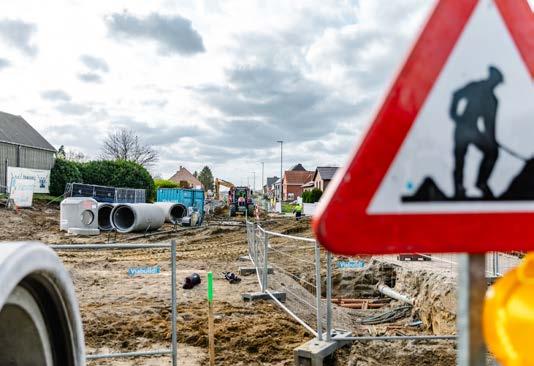
Aquafin carries out projects for the Flemish Region, encompassing both the construction of new infrastructure and the replacement and optimisation of infrastructure (asset management). We prefinance all projects and invoice the drinking water companies for them in instalments after completion. Every year, a delivery budget is set, which we always utilise as much as possible to achieve our objectives on schedule. We succeeded in doing so once again in 2025, delivering a total of 172.4 million euros’ worth of new-build projects. The target was 180 million euros, but, in complete accordance with the permitted transfers between the two budgets, we filled the remaining share with completed asset management projects to meet the additional need.
The pace of investment will increase gradually over the next few years in order to achieve ecological objectives. As a result, investment authorisation will increase by 500 million euros over the next few years. We are busy preparing for this since it also means – for both Aquafin and our technical partners –that the capacity to carry out projects will
need to grow. We are investigating where there is still potential for efficiency gains and how we can optimise resource planning in the chain together with the sector.
In 2026, the target for the delivery of new build projects is 204 million euros.
In addition, last year, the Flemish Region renewed the Local Pact with municipalities. Between 2026 and 2030, Aquafin will launch projects worth 500 million euros within that Local Pact. The Flemish Region is easing the financial pressure on towns, cities and municipalities by taking over some of the investments in the sewer infrastructure from them.
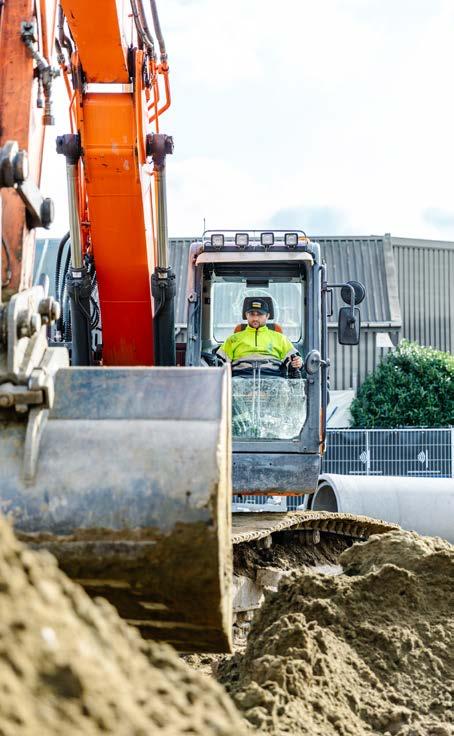
With an average of 100 active sites across Flanders at any given time, Aquafin is a familiar sight on many streets. Although each project ultimately has a positive impact, we keep any nuisance and negative impact during the works to a minimum. The concept of ‘sites of the future’ is to work with the sector to explore new ideas for making sewer projects more efficient, more sustainable and safer. At the start of 2026, the first ‘site of the future’ was launched focussing on order and cleanliness, safety and less nuisance by raising communication to a higher level among other things. This will be followed later by another with the same focus, but that will be a renovation project for a treatment plant. At two other selected sites, we want to push the potential for CO2 reduction through the use of circular and other sustainable materials, among other things. For each of these projects, we will ask our technical partners for input and their creative ideas will also be taken into account when awarding the contract to the contractor. The ‘sites of the future’ are genuine testing grounds aimed at setting new standards for project execution.
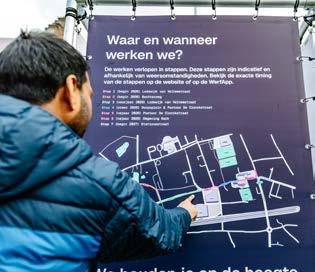
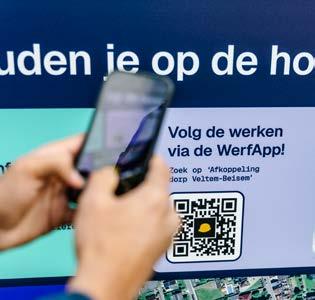
Focusing on sustainability at a site starts with the design. Last year we therefore established a sustainability board comprising representatives from Aquafin and the consultancy firms we work with. The board seeks for ways to reduce the use of steel and cement, the two largest sources of indirect greenhouse gas
emissions at our sites. Solutions include using fewer materials, optimising their use or adopting sustainable alternatives. For example, we are exploring the possibilities of recycled granulates, materials that capture CO2 during production and alternatives to cement.
To reinforce our intentions, Aquafin signed the Flanders Circular Concrete Agreement initiated by Vlaanderen Circulair, the aim of which is to make the construction sector greener.
These initiatives align with our energy and climate policy ‘road to zero carbon’ (p. 12 →).
Less nuisance and a sympathetic ear
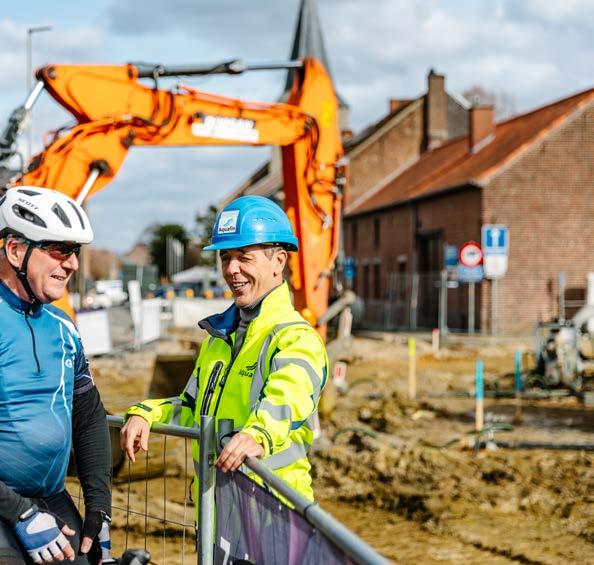
Sewerage works always have an impact on the surrounding area. We try to reduce nuisance and keep people properly informed about the works through clear communication and a less-nuisance policy. Insights relating to these topics and possible communication channels are constantly evolving and therefore, we are continuously making adjustments to them. For instance, in 2025, we introduced a site app for several projects via which smartphone users could keep up-to-date with the latest information regarding the works in their neighbourhood. What we do continue to offer is personal contact for questions by telephone or e-mail. Our contact center and ombudsman service respond quickly and adequately.

OUR IMPACT MAKERS

TANIA DE BIE Project Management Manager
‘By making smart, future-oriented choices, we can get more from the public domain together’
“When carrying out our projects, we take the neighbourhood into account as much as possible by implementing measures to reduce nuisance and maintaining good communication. But we want to go one step further and connect with the surrounding area a lot sooner. By making smart, future-oriented choices, we can get more from the public domain together. By understanding interests, concerns and expectations early on, we can build trust. Environmental management turns dialogue into support, creates engagement, prevents conflicts and speeds up the permit process. Not only does it open doors, but it also opens up whole landscapes full of new possibilities. As a result, complex projects develop into supported solutions, benefiting Aquafin, the surrounding area and everyone involved.”
S2-1 ]
We collaborate with consultancy firms and contractors to design and execute our projects. That collaboration takes the form of partnerships rather than a traditional customer-supplier relationship. We want our technical partners to feel involved in the objectives of our projects and to help us find the best possible way to achieve them.
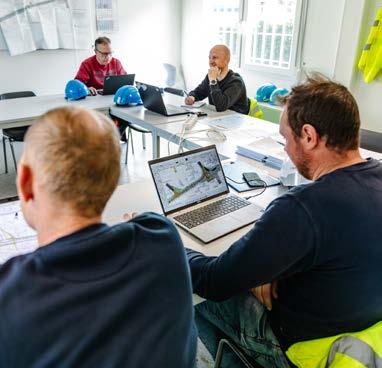
That is why we build sustainable relationships in which we strive for equality in a project. Trust, acknowledgement of everyone’s expertise and communication are central to this. We formulated a charter for Binding Collaboration with the consultancy firms we work with, containing guiding principles. Since 2024, we have established the Partner Academy, a training hub offering both technical and soft skills training for employees of Aquafin and consultancy firms. In 2025, we opened the doors of the Academy to four new consultancy firms with whom we concluded a multilateral agreement (MLA). To quickly familiarise them with the specific world of Aquafin projects, we have set up an onboarding programme. Structural collaboration
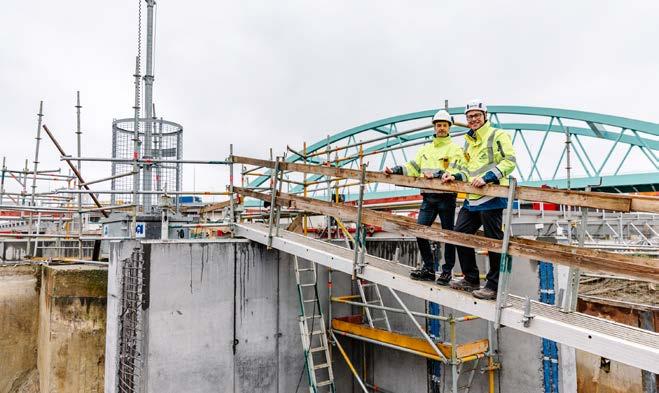
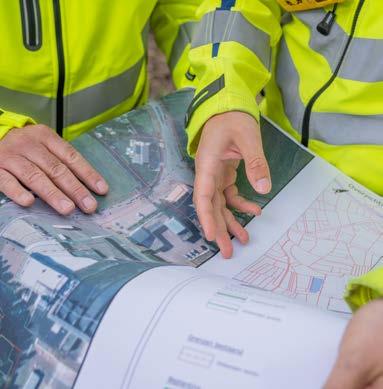
via MLAs gives consultancy firms certainty regarding a specific volume of contracts for a longer period of time. It gives the consultancy firms confidence to invest in capacity and Aquafin the opportunity to involve the consultancy firm earlier in a project.
We are also aiming for a more connected way of collaborating with contractors. This is mainly reflected in a different form of tendering where their expertise in safe and sustainable sites is taken into account when awarding contracts. In addition, we also invest
in knowledge sharing with them during our Knowledge Day.
Whether it is our own employees or third parties, safety is our top priority and one we invest heavily in, as working on Aquafin’s infrastructure involves specific safety risks. Mandatory safety training and certificates are intended to ensure that everyone on site has the right skills. In 2025, we further developed a mobile app for a registration platform to be used upon entering an Aquafin site. Only those who can produce the correct certificates, have
watched the safety introduction film and have answered a number of questions correctly will be able to show a valid QR code when asked to do so. The subject of ‘Safety’ was also placed at the top of the agenda for every site meeting as standard practice.
In our sustainability statement under S2 –Employees in the value chain (p. 86 →), you will find more information on collaboration with our technical partners.
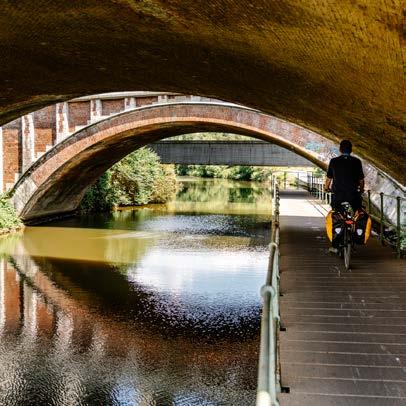
The efficiency gains from the effective alignment of municipal and supra-municipal investments become even greater if those investments are also managed together. That is when coordinated project management and smarter choices regarding timing, resources and approach become possible. Those gains are already evident in our structural partnerships with drinking water companies such as Water-link, De Watergroep (Riopact) and Pidpa. Within these partnerships, each partner takes on the role in which it is the strongest. It is the drinking water company that will make contact with citizens, while Aquafin is responsible for vision development for the network and project management.
We have been working on projects in two cities in East Flanders in a consortium with Farys. Aquafin’s ambition for the future is to build sustainable, structural partnerships with all municipal sewer operators to achieve greater impact.
Municipalities that partner with Aquafin for the asset management of their sewer infrastructure can use our platform Rosi (www.rosi.be) to track the planning and performance of inspections. Here, in addition to the progress of inspections, they can also find proposed measures, including timing and budget.
Rosi is also a useful dashboard for other organisations, enabling them to manage their pipe network and prevent major damage. In 2025, we built an initial regional database on this platform for the Agency for Roads and Traffic (AWV) of their rainwater pipes under motorways and regional roads.
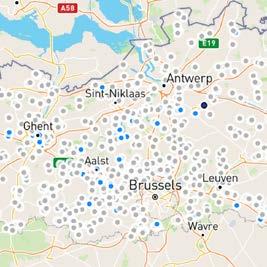
Aquafin shares measurement data from 1,600 overflow meters via the Flemish Water Data Space and the Blue Portal (blueportal.aquafin. be), which it developed in-house. By doing this, we make insight into the operation of overflows widely accessible to anyone interested in using them: local authorities, water authorities, researchers and other partners. By openly sharing data, we increase transparency and collaboration across sectors and organisations. In this way, we support more substantiated analyses, shared learning processes and more targeted measures to improve water quality and the living environment.
[ E3-1 | E3-2 | E3-3 ]
Due to climate change, we are increasingly seeing extreme weather phenomena such as prolonged drought and intense rainfall within a short period. These, combined with the large expanse of paved surfaces in Flanders, can result in soil drying out and local flooding, respectively. Because of that, we consider it important to keep rainwater on site as much as possible, right where it falls. This can be done by disconnecting rainwater from the sewer system, collecting it separately and putting it to good use or by letting it soak into the ground. This can take place above ground or, if space is limited, via underground infiltration systems. If that is not possible, we opt for delayed discharge into a canal or connection to the (separate) sewer system.
We always take this approach in the advice we give to towns, cities and municipalities. We give preference to ‘blue green’ solutions: space for water, softening and natural landscaping. This approach offers many opportunities to link to biodiversity, recreation and physical and mental health, for example.

Avoid run-off
(Re)use of rainwater and treated wastewater
Infiltration (maximum above ground)
Infiltration (maximum above ground) and delayed discharge
Discharge to stream, in last resort to rainwater pipeline
Discharge to mixed sewer
On the Blauwgroenvlaanderen.be website, we inspire both local authorities and private individuals with possible measures and good examples. We also share our expertise via initiatives such as De Zevende Gevel, Green Deals Tuinstraten and Klimaatbestendige Omgeving.
Through concrete services such as our water and environmental advice, the implementation
and maintenance of small-scale blue-green measures and the realisation of a garden street, we are turning that vision into practice for municipalities, companies, healthcare institutions, project developers, etc.
In 2025, we provided 59 water and environmental recommendations.
The primary function of a buffer basin is to temporarily collect stormwater for gradually discharg later. Aquafin developed an automatic control system that ensures the basin remains as full as possible during a dry period, so the water can be put to good use. If heavy rain is forecast, the basin will be partially emptied in advance to fulfil its buffer function. By doing that, precious drinking water can be replaced by rainwater for low-grade applications. At the start of 2025, we commissioned the first control system for a buffer basin in Kraainem. The municipality uses rainwater to maintain its green spaces and keep sports fields green. We also equipped a basin with the control system in Mechelen. The customers here are local farmers who use the rainwater to water their crops via an underground irrigation system.
A collective rainwater buffer is also a smart idea for business parks. As part of the Blue Deal project Flanders Waterproof, we provided a buffer basin capable of holding 600 m³ of rainwater at the Tielt-Noord business park. Thanks to the smart control system, this provides up to 30,000 m³ of reusable rainwater
a year. A carpet and carpet tile manufacturer at the business park gladly uses this facility to meet 10% of its large-scale water requirements.
The treated waste water from our WWTPs (effluent) is of constant quality and always available. That makes it an excellent alternative water source for any application if appropriate further treatment is carried out. Aquafin encourages the reuse of effluent as a circular solution in water stress-susceptible Flanders by presenting the available potential on our digital platform AquaMarkt. Anyone interested in regularly using it at a particular location can submit a request via the website.
We then make that interest widely known via a final call so that any other interested parties can also respond. We then follow an objective and transparent allocation procedure before allocating the effluent to a party.
2025 saw the launch of Deeper Blue at our Aalst WWTP, a large-scale reuse project of drinking water companies De Watergroep and
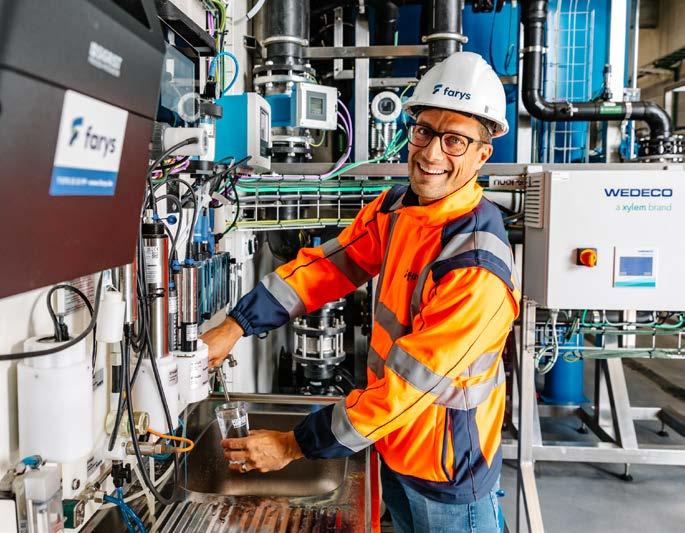
Farys under the name Waterunie. The effluent is further treated to produce water of drinking water quality at the WWTP in Aalst and then stored deep underground so it can be pumped up again for later use. This reserve is intended to help guarantee that there is sufficient drinking water on the coast in summer.
Sewer thermal energy is the technology for recovering energy from waste water either in underground sewers or in the pipes via which the treated waste water is discharged into the watercourse. A heat exchanger in the pipe uses a conductive liquid to transfer the residu-
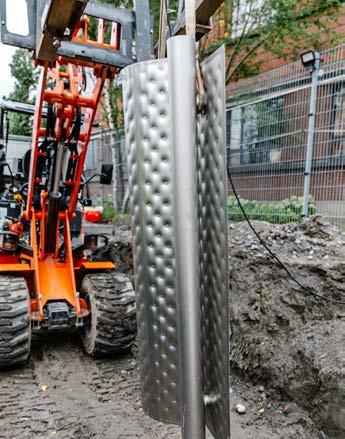
al heat from the water from showers, washing machines, etc. to a heat pump used to heat or cool buildings. It is a constant, reliable source of energy recognised by the Flemish Energy and Climate Agency (VEKA) as a renewable energy source. Interesting for local authorities as it allows them to use sewer thermal energy to shape their heat plan for the Local Energy and Climate Pact (LECP) with the Flemish
government. We also unlock the potential of sewer thermal energy through AquaMarkt and here too, we create a level playing field for all interested parties.
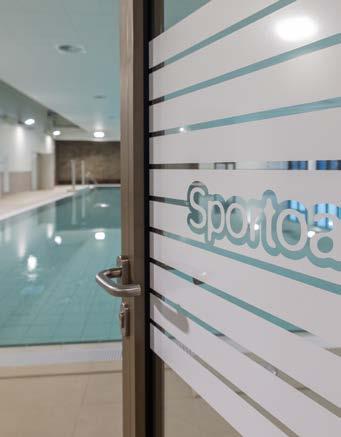
Sewer thermal energy is a relatively new concept in Flanders. After initial implementation at our own offices, we have since developed the necessary infrastructure in two public projects. In Sint-Niklaas, the new swimming pool and a municipal sports pavilion are now heated using thermal energy from the sewer system. In Mechelen, a completely new urban district with residential, office and commercial units will be heated and cooled by sewer thermal energy supplemented by geothermal energy. It is the first time that the two techniques have been combined on this scale in Europe. The next sewer thermal energy project is in Kortrijk, where energy from the sewer water will be used to cool and heat a new residential tower block from 2027.
Since 2025, we have also offered a preliminary measurement campaign for new sewer thermal energy projects. We use sensors in the sewer to measure the flow rate and the temperature of the waste water all year round. This enables us to estimate more accurately whether and to what extent sewer thermal energy can meet the customer’s heat demand.
Aquaplus is a wholly-owned subsidiary of Aquafin that provides advice and support to companies with water-related queries, problems or challenges. This may take the form of concrete services such as the development of a process optimisation or the operation and maintenance of the treatment plant, where everything is taken care of for the client. But the whole process from design to realisation of a water treatment plant is equally possible.
Sewer management for industrial clients is a specialisation which enables Aquaplus to stand out within the market. More companies are recognising the importance of having a properly functioning waste water and rainwater pipe system at their site. And the starting point for that is having a clear picture of its current state since cracks or corrosion can lead to sinkholes, for example. These can then cause unsafe situations and put the operation at risk.
Aquaplus has clients in a wide range of sectors, including food and beverage, chemicals and recreation as well as in the pharmaceutical industry.
Research and innovation help Aquafin formulate answers to the water challenges of today and tomorrow. Sometimes research is part of a concrete innovation process and sometimes it builds targeted knowledge to support policy and practice. In any case, we always start with the same aim: to create demonstrable added value for people and the environment. Thanks to our broad heritage and our thorough practical knowledge, we are a strong and reliable partner for research institutes, authorities and start-ups. For instance, we enable longterm testing of new technologies on a large scale swiftly translate insights into applicable solutions in Flemish water practice.

The European Institute of Innovation and Technology (EIT) promotes innovation to make Europe more sustainable and resilient for example in the areas of climate, health and digitalisation. To do this, it finances communities within these topics, which are led by a consortium of partners in each case. EIT Water is the new community for water. Aquafin is part of the leading consortium ALLWATERS, consisting of 50 prominent national and international companies, universities, research institutions and NGOs. Besides Aquafin, Belgium is also represented by North Sea Port Flanders, Jan De Nul Group and Blauwe Cluster. Over the next 15 years, EIT Water will be able to spend 600 million euros on innovative projects relating to water quantity, water quality and the development of a circular and sustainable blue economy.
Being part of the leading consortium not only gives Aquafin access to a broad network, but it also puts us at the forefront of innovative water management at the European level.
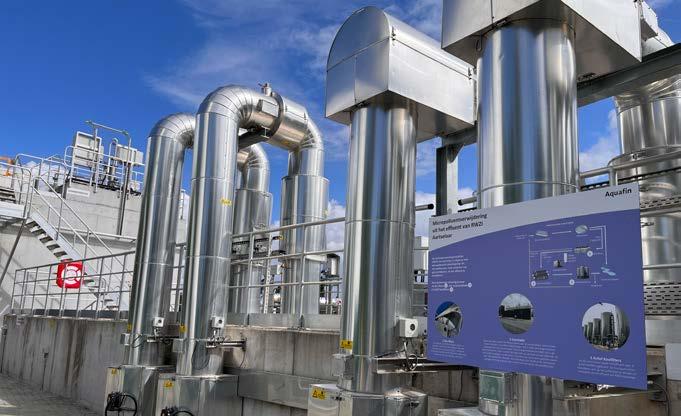
The new EU Urban Waste Water Treatment Directive (ERSA) raises the bar for waste water collection and treatment in member states. This means that in the future, certain WWTPs will have to remove a list of micropollutants they are currently not equipped to handle.
2025 saw Aquafin in Aartselaar put into operation a first quaternary treatment plant that successfully implements this additional stage of treatment using a combination of two technologies: ozonisation and activated carbon filtration. We will use the experience we have gained with this plant for the rollout at the other WWTPs, where it is to become mandatory. That is already the case for the five largest WWTPs in Flanders: the preliminary study for two of them is currently in progress, as the
first must be operational as early as 2033. A risk analysis still has to be carried out for the medium WWTPs. We will be able to share our expertise with other research partners in Flanders and the Netherlands through our participation in the European Interreg project Clean Watercourses through O3G.
In separate sewer systems, the quality of rainwater run-off from car parks and roads is a point for attention. Oil and particles from car tyres, for example, can be washed away and end up in the watercourse. Aquafin carried out measurements as part of the European project STOPUP and we tested treatment technologies for polluted rainwater. We have also developed an in-house tool to calculate the expected pollutant load in rainwater run-off and simulate the impact of potential remedial measures.
Where are the main sources of greenhouse gas emissions in the treatment process?
In 2025, our R&D department launched a new measurement campaign to map this. A drone equipped with a methane sensor
detects increased methane concentrations, enabling actual emissions to be measured at close range. We still use other measurement methods to detect nitrous oxide (N2O) and CO2 emissions. This gives us a good idea of where measures have the most impact in reducing our ecological footprint.
In the production process for turning biogas into biomethane, methane and CO2 are separated and, like the methane, we also want to make the CO2 circular. In the autumn of 2025, we installed a pilot plant of Bio Base Europe Plant at our Antwerpen-Zuid WWTP. This is an investigation into the potential to convert the CO2 from our residual flow into acetic acid via fermentation, an intermediate step in the biofuel production process. The acetic acid can then be turned into building blocks for biodiesel or even reused as a carbon source in our treatment process. This research is being carried out as part of the European Horizon project Fuelphoria.
Our climate adaptation research focuses on water quantity with the modelling of sewer systems, including the use of precipitation data and forecasts, and the impact of overflow operation and possible source measures.
Sewer water also contains other valuable raw materials besides treated waste water. In the future, the new EU Urban Waste Water Treatment Directive (ERSA) will require the recovery of substances such as nitrogen and phosphorus. Aquafin has been conducting research into how these and other substances can be efficiently recovered from the treatment process for some time now. The main challenge this poses is making circular applications economically viable, particularly by finding a stable market for the recovered products.
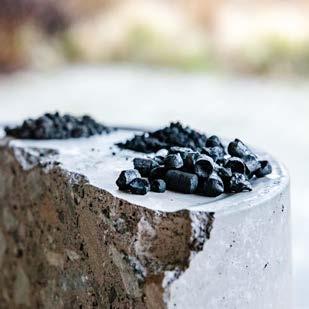
Carbon can also be recovered from sewage sludge. Because of that, we have been exploring pyrolysis, which involves heating sludge to extreme temperatures in an oxygen-deficient environment. As a result, it carbonises to form biochar: charcoal-like granules that capture carbon rather than emitting CO2, making it a carbon capture technology. Biochar is still relatively new and can be used as a circular raw material in various sectors. With the support of VLAIO (Flemish Agency for Innovation and Entrepreneurship) and in collaboration with Hasselt University and Bioterra, we are evaluating the feasibility of using biochar as a replacement for cement in concrete. We are
investigating whether it could also replace activated carbon in our quaternary treatment stage for micropollutant removal. Support from the Helios Foundation has enabled us to build a pyrolysis plant at our Menen WWTP and produce approximately 500 tonnes of biochar per annum. The greenhouse gas emissions from our sludge processing have dropped by more than 2,000 tonnes of CO2 equivalent per annum as a result. On top of that, we capture 640 tonnes of CO2eq biogenic carbon per annum in biochar.
In our search for innovative solutions and new ideas to increase our positive impact, we enjoy connecting with others. In 2025, Aquafin became a partner of BlueChem, the incubator for sustainable chemistry in Flanders. The ecosystem of BlueChem has given us the opportunity to forge connections with start-ups that are a good fit with our value streams. Conversely, they can make use of our scale and a real test environment to validate new technologies in operational conditions. That way, together with them, we are hoping to exploit new opportunities to get even more out of waste water (treatment).
In our first collaboration, we are currently exploring whether syngas, produced from biogenic CO2, biomethane and biogenic carbonised carbon, can serve as a more sustainable alternative to fossil fuels in chemical production processes. That way, we can reduce CO2 emissions, use resources efficiently and support the transition to climate-neutral chemical production. However, it is important for this transition to be economically viable and remain compatible with the current industrial infrastructure.
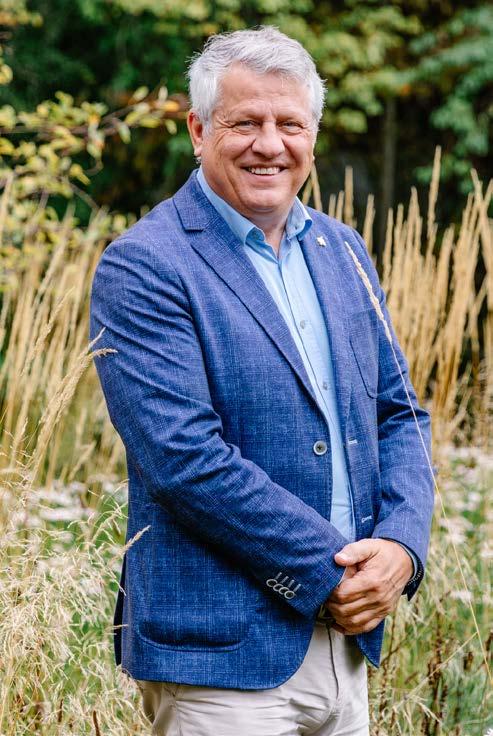
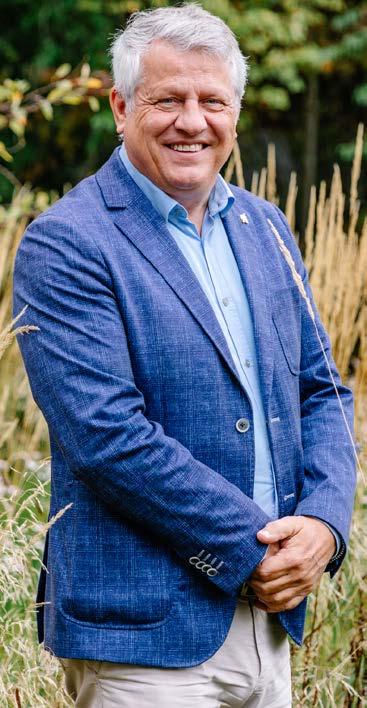
In volatile times, an organisation needs to be agile enough to adapt to external changes while staying on course to achieve its ambitions. Chairman of the Board of Directors Koen Anciaux looks back at the past year.
Looking back at your first whole year as chairman of the Board of Directors, what are your most memorable moments?
How has the board helped steer the organisation?
Koen Anciaux Chairman of the Board of Directors
“On a personal level, I learned a great deal about the specific context in which Aquafin operates, its powers and its management model. What I find particularly positive is the transparency in decision-making. Everything submitted to the Board of Directors is extensively documented and clearly presented. Audits are closely monitored and recommendations taken to heart. To me, that indicates strong management and by extension, an organisation that is solid.”
“Unlike the economy, which is generally rather fragile and stagnant, Aquafin is expanding rapidly. That is due to the extra resources that Flanders is using to restore the health of our watercourses, but also to initiatives and projects launched by the organisation itself. Aquafin and its partners need to organise themselves as efficiently as possible. The board fully supported the impact analysis commissioned by the management. In January 2026, a major internal reorganisation of the organisational structure took place to improve collaboration between disciplines. Our aim is to prepare for the significant increase in investment authorisation and make innovation and digitalisation even more important levers.
What gives you confidence for the future?
“The robustness of the organisation and the way in which it is operationally managed. I have also noticed huge appreciation for Aquafin and its employees both from local partners and the Flemish Region as well as our shareholder. And that is undoubtedly the best indicator for confirming my confidence.”
Aquafin is committed to a transparent and effective corporate governance policy that represents the interests of all stakeholders while helping with sustainable value creation. Aquafin’s Corporate Governance Charter defines the rules and principles that underpincorporate governance within the company. Aquafin follows the Belgian Corporate Governance Code 2020 and has updated its Corporate Governance Charter in line with the latest version of that Code. The Charter explains the main aspects of the corporate governance policy and is publicly available for consultation on Aquafin’s website. The Charter is constantly updated in line with relevant developments.
The most recent version is dated 20 September 2022. Changes in policy and significant events that occured after the start of the previous financial year are further explained in the corporate governance statement. It is recommended to consult this section together with the Charter for a complete overview.
The Corporate Governance Code is based on a ‘comply or explain’ approach. This means that Aquafin complies with the provisions of the Code, but in certain cases, they may be deviated from due to the specific requirements or characteristics inherent to the company. All the Aquafin shares are held by Participatiemaatschappij Vlaanderen (PMV). Because of its shareholder structure, Aquafin falls under the application of certain provisions of the Governance Decree. Consequently, provisions 5.6, 7.6, 7.9, 8.7, 8.8 and 8.9 of the Belgian Corporate Governance Code do not apply to Aquafin.
Aquafin’s governance model promotes the principles of transparency, accountability and effectiveness. The model is designed to ensure effective and balanced governance, which respects the interests of all stakeholders and focuses on sustainable value creation from Aquafin’s mission.
The company chose a monistic structure where governance is exercised by the Board of Directors. The Board of Directors is Aquafin’s highest decision-making body and is authorised to perform all actions required in order to achieve the company’s objectives, with the exception of those actions that are reserved for the General Meeting by law or according to the articles of association.
Two committees were set up to support the Board of Directors: the Audit Committee and the Appointments and Remuneration Committee. These committees advise the Board on specific policy and decision-making matters.
Aquafin’s Board of Directors is responsible for strategic direction, putting together the
leadership team and monitoring performance to ensure sustainable value creation. The Audit Committee serves as the main link between the Board and the internal and external auditors, and ensures transparency and accountability in financial reporting, internal controls and risk management. The management team, led by CEO Jan Goossens, manages the dayto-day operations and strategic initiatives, with weekly meetings to ensure effective risk management and control measures.
Aquafin’s Board of Directors comprises nine members. All directors are non-executive and independent in the sense of Article 7:87 of the Companies and Associations Code (WVV). The Board of Directors hereby complies with the requirements of provision 3.4 of the Corporate Governance Code 2020, which states that at least three members of the
Board should be independent (this relates to the independence criteria as defined in the Companies and Associations Code, not those from the Administrative Decree).
At the end of the reporting period, the composition of the Board of Directors is as follows:
33% of the board are women, which corresponds to a gender diversity ratio of 0.5.
The independence percentage of the directors is 100%.
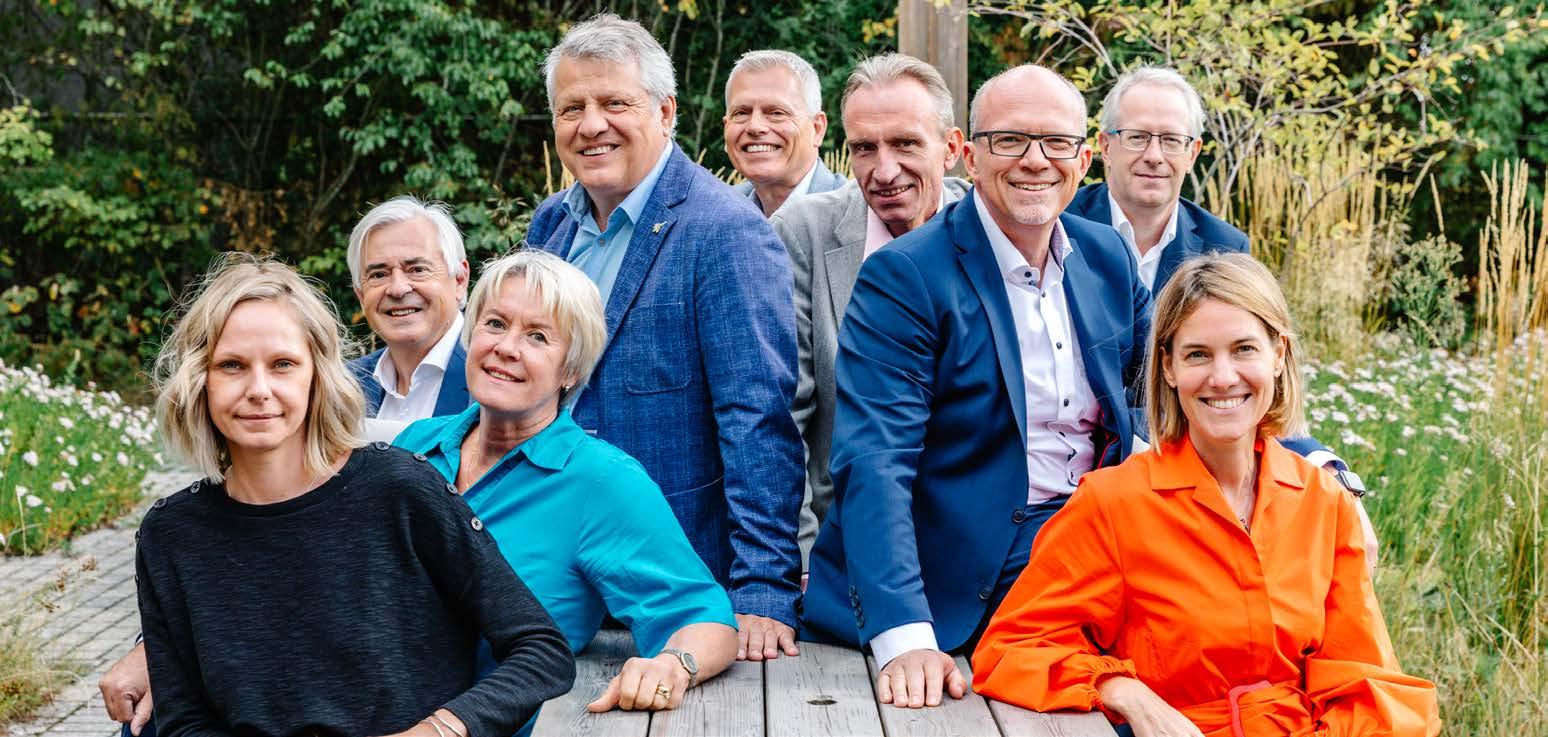
The mandate of Mrs Katrien Desomer ended on 14 March 2025. Mrs Ingrid Vandepitte was appointed as a new director on 15 April 2025.
The Board of Directors defines and oversees the organisation’s strategy and sustainability matters (including risks relating to sustainability as well as other risks), based on proposals from the management team.
The Board approves the financial and nonfinancial reports. The Board has extensive experience and expertise in ESG/sustainability. Sustainability is regarded as a matter for the whole Board of Directors (strategy) and is inherent to the operations of Aquafin and that is why a specific sustainability committee has not been set up within the Board.
The Board of Directors is informed twice a year about the progress on sustainability objectives: in March, during the discussion of the annual results, and in September, during the discussion of the half-yearly results. [ GOV-1 ]
The management team monitors sustainability topics through quarterly assessments of the corporate objectives and reports on them to the Board of Directors.
The Board of Directors has set up two specialised committees: the Audit Committee and the Appointments and Remuneration Committee. The members of these committees are appointed by the Board of Directors. The operation and responsibilities of the committees are described in their internal regulations that are included in the Corporate Governance Charter. Both committees have an advisory role. Strategic decision-making remains the responsibility of the Board of Directors as a whole.
The Audit Committee consists of four independent, non-executive directors. On the reporting date, the Audit Committee comprises Mr Jochen Bultinck (Chairman), Mrs Nathalie Heremans, Mr Kris Peeters and Mrs Ingrid Vandepitte.
The committee has a balanced composition as a whole and possesses the necessary independence, competencies, knowledge and experience to perform its tasks effectively.
During the 2025 financial year, the Audit Committee met four times. The average attendance was 88%. The individual attendances of the members of the Audit Committee are shown under the section ‘attendances at the meetings of the Board of Directors and committees’.
The Audit Committee is the main link between the Board of Directors, the internal and external auditors and the statutory auditor and provides regular updates on financial reporting, internal controls, risk management and audit processes. The Audit Committee plays a crucial role supervising the internal control system and the financial reporting process and evaluates the internal control and risk management systems. The Audit Committee will also take on this role for sustainability reporting.
The Chairman of the Audit Committee reports to the Board of Directors at the next meeting. Recommendations are made on the decisions that the Board of Directors must make.
During the 2025 financial year, the Audit Committee focused on the following points in particular:
the quarterly financial reporting debt management, the financing plan and the results of interest rate risk management and compliance with hedging policy the statutory annual accounts and financial reporting, the statutory audit of the annual accounts including the recommendations made by the statutory auditor
— the half-yearly results and the findings made by the statutory auditor and the recommendations of the interim audit
— the non-audit services provided by the statutory auditor and the evaluation of independence the effectiveness of the internal control and risk management systems the approval of the internal audit plan, the internal audit reports and monitoring of the KPIs relating to the functioning of internal audit and follow-up by the management of the recommendations made by internal audit the review and approval of the Charter Internal Audit
The Appointments and Remuneration Committee is made up of Mr Dirk Lybaert (Chairman), Mr Renaat De Sutter, Mr Jozef Wittouck and Mrs Caroline Craenhals.
During the 2025 financial year, the Appointments and Remuneration Committee met five times. The average attendance was 100%. The individual attendances of the members of the Appointments and Remuneration Committee are shown under the section ‘attendances at the meetings of the Board of Directors and committees’.
The main task of the Appointments and Remuneration Committee (ARC) is to help the Board of Directors establish the outline of the management team’s remuneration policy. The committee also contributes to the objective and professional functioning of the process for appointing and re-appointing directors as well as the annual evaluation of
the performance of the management team.
However, in recent years, the ARC has increasingly been used as a sounding board for broader HR matters, a development recommended by Guberna at the start of 2024.
The Appointments and Remuneration Committee launched an impact analysis of the management team’s functioning and the planning of an optimal organisational structure. This analysis was externally supervised and, in the third quarter, led to the approval of an adapted basic structure of the management team, with a view to further communication and preparation for implementation with effect from 1 January 2026.
Following Glenn Van Olmen’s move to the Business Development management team, the process to recruit a new CFO began.
Finally, the Appointments and Remuneration Committee was actively used as a sounding board in connection with the structured change approach, in addition to classic project management, with a view to the implementation of SAP.
In 2025, the Board of Directors held five meetings, with an average attendance of 95.56%.
The Audit Committee met four times and the Appointments and Remuneration Committee met five times. The individual attendance of the directors is shown in the table below:
Name BoD AC ARC
Koen Anciaux 5/5 4/4 5/5
Jochen Bultinck 5/5 4/4
Caroline Craenhals 5/5 5/5
Katrien Desomer1 2/5 1/1
Renaat De Sutter 5/5 5/5
Nathalie Heremans 5/5 3/4
Dirk Lybaert 5/5 5/5
Kris Peeters 5/5 3/4
Ingrid Vandepitte2 2/3 3/3
Jozef Wittouck 5/5 5/5
1 End of term of office 14 March 2025
2 Appointed on 15 April 2025
The members of the Board of Directors evaluate the size, composition and functioning of the management body on a regular basis and at least every three years. This involves comparing the current composition with the desired composition, as well as the relationship and interaction with the management team.
The following aspects are assessed as part of the evaluation of the Audit Committee: internal regulations, the composition and appointment of members, meetings, training options for members and available resources, the integrity reporting procedure and relations with the Board of Directors. The Audit Committee evaluates its effectiveness and efficiency at least once every three years. To support this evaluation, an individual questionnaire is issued to the members of the Audit Committee and then the results are discussed at a meeting of the committee and presented to the Board of Directors. The most recent evaluation of the Audit Committee took place in 2024.
In 2024, an evaluation of the Appointments and Remuneration Committee was carried out under the supervision of Guberna. This resulted in a number of recommendations, which have since been implemented in the functioning of the committee.
Day-to-day management was delegated by the Board of Directors to the management team it had set up. The management team consists of the CEO, who leads the management team, and all other directors of the Company at a given time. The composition of the management team on 31/12/2025 is as set out below:
The management team exercises the powers relating to day-to-day management and all transferable powers, except those reserved for the Board of Directors, in accordance with the statutory provisions, the company’s articles of association and the provisions in the internal regulations of the Board of Directors, including the formal authority. The management team meets weekly.
Aquafin has established a governance framework to embed sustainability-related topics into its corporate strategy. The CEO passes on responsibility to the Board of Directors. Ultimate responsibility for sustainability-related topics (ESG: Environment, Social and Governance) is then entrusted to the directors concerned in each case. In 2025, the management team decided to recruit a Corporate Sustainability Manager in 2026 who would report to the HR and Organisational Development Director. The Corporate Sustainability Manager will work closely with the core Corporate Sus-
tainability team made up of senior managers from the business and the HR and Organisational Development Director who are each responsible for a topic. They outline the policy and link objectives and targets to it through consultation with the concerned director. Long-term objectives are then translated into annual objectives every year and fully integrated into the strategy as a result. Besides the above-mentioned core team, Aquafin also consults external expert groups to broaden insights and further strengthen sustainability expertise.
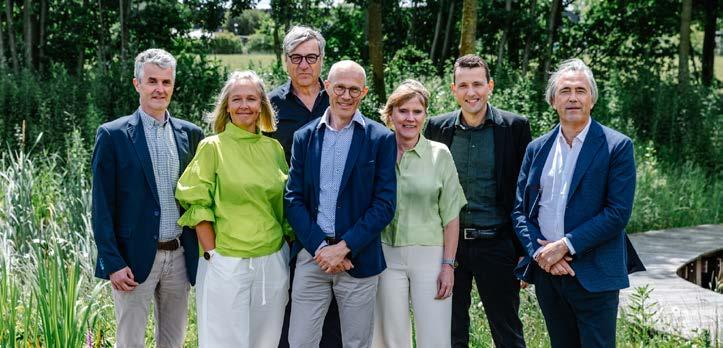
In 2025, the Board of Directors addressed the central topics that are key to the realisation of Aquafin’s mission, vision and strategy. These topics were all checked against Aquafin’s sustainability strategy and are characterised by their focus on long-term, environment-driven value creation.
No conflicts of interest were reported.
The Board of Directors closely monitored financial management through periodic reporting on all aspects of operations. Financial management is monitored in various ways. There is a general KPI dashboard that forms part of the various KPIs as part of the supra-municipal remit, which Aquafin reports on to its supervisor (VMM). In addition, the quarterly figures are explained in detail and measured against the budgeted results.
The financing plan is also discussed in detail along with the business plan.
Aquafin is driven by innovation to continuously improve its core activities and tasks, making them more sustainable and efficient. The various reuse projects around effluent, sewer thermal energy and biomethane production were a fixed topic from this drive. For instance, the further expansion of biomethane plants across Aquafin’s portfolio was approved, contributing further to making its activities more sustainable and to broader societal efforts to make energy more sustainable.
In 2024, the broad sludge strategy, as formulated several years ago, translated into the permit for the sludge mono-processor, while the construction of two new dryers was started as part of the same sludge strategy. The board continued to follow the developments in these dossiers. In the meantime, additional sludge disposal options were approved, while sustainable options were considered as much as possible.
In implementing of the long-term strategy to green the energy mix, further opportunities and adjustments to renewable energy procurement were presented to the Board of Directors.
These topics are discussed in detail at every meeting via various recurring and one-off items.
To ensure reliable operation and promote interaction between strategic powers of the Board of Directors and day-to-day management by the management team, the delegation of powers from the board to the management team was updated.
As part of its risk management approach, Aquafin also focuses on the management of physical assets. In this context, particular attention was given to the ageing of collectors and pumping stations, as well as to the monitoring and prioritisation of their replacement or repair, and the associated budgetary challenges. Physical safety is a constant focus within Aquafin. At the level of the Board of Directors, this translates into a comprehensive explanation of different types of accidents the organisation faces, ongoing preventive and reactive campaigns and measures and the screening of possible new initiatives.
In addition, new challenges and risks relating to environmental legislation and the tighter monitoring of this were discussed in detail. Reporting on environmental risks was structurally integrated into the agenda.
In 2025, Aquafin made digitalisation a focus point of NIS2 and the implementation of a new ERP system (SAP). Both programmes were actively followed by the Board of Directors.
The development of existing and more recent partnerships within the sector was reported to the Board of Directors. According to the strategy, potential new partnerships within the sector are actively monitored and evaluated. New partnerships were set up and with a view to these partnerships and clear internal and external positioning, among other things, the design and approach for a new brand identity were also included.
Aquafin’s activities are exposed to internal and external risks that could hamper the realisation of the company’s objectives. We believe that risk management is inextricably linked to organisational culture. Employees are encouraged to recognise risks and deal with them in an open and transparent manner.
The key features of the internal controls and risk management systems are described below.
The Board of Directors is responsible for monitoring risks and ensuring that appropriate internal control mechanisms and risk management systems are in place. The Audit Committee assists the Board of Directors with risk management and is tasked with assessing the effectiveness of the risk management and internal control processes.
The members of the management team are responsible for the day-to-day risk management within their respective departments. Through collaboration with their teams, they identify key and emerging risks and manage the internal monitoring and control of those risks.
The management team is aware of the importance of effective risk management. Riskrelated matters are treated as a permanent item on the agenda at the weekly meetings.
In addition, Aquafin has an internal control system based on the Three Lines Model of the Institute of Internal Auditors (IIA) to systematically embed risk management and internal control in its functioning. The Three Lines Model is based on control in three layers. Risk management is the responsibility of all layers of the organisation, with specific tasks and responsibilities on each level.
The three levels of control within the organisation:
first line: all departments and services are responsible for risk management and compliance themselves. They develop and maintain the structures and processes required in order to manage their activities (objectives) and risks effectively. They also carry out an initial internal control of their own activities and the extent of compliance with relevant laws and legislation.
— second line: Aquafin opted for a decentralised organisation of the second line function. This means that the second line of control is carried out within specific departments, which, besides supporting the core activities, are also responsible for monitoring and control relating to the domains identified by the management.
Aquafin also ensures that, through a specific steering group, new or amended legislation is continuously monitored and communicated to the relevant departments, and where necessary, implementation processes are set up and actively monitored. For instance, processes and procedures are updated as needed to ensure they remain in line with applicable legislation and internal risk management requirements. This continuous evaluation and adjustment of internal control systems helps
maintain the integrity and effectiveness of risk management within the organisation.
Aquafin wants to be a reliable, committed and ambitious partner for all its stakeholders and attaches great importance to transparency and integrity. This DNA not only determines our day-to-day work but also underpins our approach to risk management and the establishment of a robust internal control system.
The control environment within Aquafin is strongly linked to the integrity policy which serves as the basis for risk management and internal control systems. The integrity policy reflects the corporate culture and guides the actions of employees.
The management at Aquafin encourages open communication, the setting of clear objectives and responsible decision-making, which ensure that risks are identified promptly and addressed appropriately. Aquafin also attaches great importance to ethical conduct and integrity.
Various management measures are implemented within all of Aquafin’s departments
to ensure effective risk management. These measures include established policy rules, procedures and signing authorities as well as segregation of duties and built-in early warning indicators for potential risks. In addition, management reports are drawn up to monitor the progress of processes, with the budget and actual expenditure being regularly updated and analysed.
Specific risks associated with projects or new initiatives are evaluated and operational mitigating measures are implemented.
For its supra-municipal remit, Aquafin is under the supervision of the Flemish Environment Agency and reports on set KPIs. These critical performance indicators were defined and are intended as a measuring instrument, but are also used as a reporting system.
Within Aquafin, various tools are used to disseminate information in a structured and systematic manner, from the management level to operational level.
Financial information is shared between Aquafin’s financial management team and the management team. Besides the monthly reports and analyses prepared by the financial
department, the management team engages in dialogue on performance management with the various operational departments.
A clear division of responsibilities and good coordination between the relevant departments ensures an effective and timely process for communicating periodic financial information.
Financial information is shared with the Board of Directors on a quarterly, half-yearly and annual basis. Prior to this, financial information is subject to (i) a comprehensive internal validation process, (ii) review by the Audit Committee.
The role and responsibilities of the Board of Directors and the various committees are established in Aquafin’s Corporate Governance Charter, which ensures an effective risk management system and internal controls. The Audit Committee has a crucial role in supervising the functioning of the internal control system, paying special attention to the financial reporting process. This committee is responsible for ensuring the integrity of financial information and for evaluating the internal controls and risk management systems. This is to ensure that significant risks, including
those related to compliance with laws and legislation, are suitably identified, managed and communicated.
In addition, the Audit Committee oversees the internal audit function and its effectiveness and performance. The committee also monitors the statutory audit of the annual accounts, including the follow-up of recommendations formulated by the statutory auditor. As part of its supervisory role with regard to financial reporting, the Audit Committee monitors the quality and reliability of accounting methods and financial reporting, based on the discussion of the quarterly reports among other things. Attention is paid to significant evolutions, deviations and risks in the financial figures in the process.
Aquafin has an Internal Audit department that works according to the standards of the Institute of Internal Auditors and was the subject of an external quality evaluation in 2024. Internal Audit provides independent analyses, evaluations, recommendations, advice and information for both the Audit Committee and Aquafin’s management. The audit activities carried out provide a reasonable guarantee of the effectiveness of internal controls in the various processes and activities examined. Internal Audit reports directly to the Chairman
of the Audit Committee, thus ensuring the independence and transparency of the function.
BDO Bedrijfsrevisoren was appointed by the General Meeting as the statutory auditor for the auditing of Aquafin. The statutory auditor provides an independent opinion on the statutory annual accounts for the whole financial year and carries out a limited audit on the half-yearly interim condensed financial accounts. They also review significant changes to accounting principles and evaluate key internal controls in respect of the processes used to prepare the financial accounts.
Based on the advice of the Appointments and Remuneration Committee, the Board of Directors determines the remuneration policy for the management team. The aim of this policy is to attract, retain and motivate management members with the right skillset. The amount of the remuneration shall consider the individual tasks and responsibilities of the members of the management team.
The remuneration of board members and members of the committees is linked to their attendance at meetings. The remuneration for management members consists of a fixed and a variable part. As far as the variable part is concerned, the Board of Directors analyses the performances of the management team.
[ GOV-2 ]
Sustainability objectives and key performance indicators (KPIs) are integrated into the company’s objectives and annual objectives. Aquafin’s internal control system ensures transparent and clear reporting on performance in respect of sustainability-related targets set by the Flemish government. This system follows the three-line model for effective monitoring and reporting of performance statistics.
The performance of the management team is evaluated once a year in the presence of the CEO. The appraisal of the CEO takes place in his absence. The Appointments and Remuneration Committee follows the whole procedure closely.
As usual, the variable remuneration was determined by analysing management functioning as a whole, both based on a scorecard and 5 collective objectives. The scorecard consists of a fixed set of KPIs relating to operational
functioning (e.g. treatment results), financial results, safety, innovation and business development. The collective objectives are redefined every year (e.g. Successful GO-LIVE SAP).
The distribution of the total amount of variable remuneration between the board members is based on a general discretionary appraisal of each board member by the ARC. General performance, internal and external impact and the governance of their own management are important for this. Sustainability objectives were implicitly and explicitly integrated in both the collective and individual objectives for the management committee and thus translated into the remuneration policy.
Aquafin applies the following remuneration model for directors: An annual flat fee is provided for attending meetings of the Board of Directors. The flat fee is 6,500 euros for directors and 13,000 euros for the chairman.
Payment of the fee is conditional on attending at least two thirds of the total number of meetings, barring force majeure.
In addition, a fee is paid per meeting of the Audit Committee and the Appointments and Remuneration Committee amounting to 380 euros for the chairmen and 320 euros for the members of these committees.
Total remuneration 2025 (euros) Koen Anciaux (V) 15,880
The total gross remuneration paid for 2025 to the members of the management team amounts to:
salary: 1,645,777.62 euros
part:
euros
entitlements:
euros
other remuneration components: 194,099.15 euros
The variable remuneration for the 2025 financial year will be added to the group insurance in 2026.
The above foundations give Aquafin a robust control environment that enables the organisation to realise its objectives, comply with laws and legislation and operate efficiently and responsibly. Aquafin regularly questions its structures to make sure that they evolve with internal and social needs and requirements. The combination of a strong corporate culture, focus on integrity, reliable operation and sound risk management provides the basis for Aquafin’s risk management and internal control systems.
This report reflects Aquafin’s constant efforts to operate a solid and responsible corporate governance policy, in line with the expectations of its stakeholders and the social task it carries out, driven by an intrinsically sustainable mission.
The information below can be found elsewhere in this annual report:
However, impact, risks and opportunities were also taken into consideration for the double materiality analysis.
As the annual report does not consolidate the financial results of subsidiaries Aquaplus and Aqcelerator, their sustainability information has not been included either. Both companies file their own annual accounts.
This sustainability statement relates to the activities of Aquafin and, to a limited extent, to the upstream and downstream value chains.
We have based this sustainability statement on feedback on our previous – and first – sustainability report and on the preliminary versions of the simplified CSRD, which will apply to us from the 2027 financial year. The content of this sustainability statement has therefore not yet been reviewed by the auditor.
We used the time horizons as specified in ESRS 1 for the double materiality analysis and the preparation of the report: Short
Long term: more than 5 years
[ BP-2 ]
As ESRS E4 Biodiversity and ecosystems and ESRS S2 Workers in the value chain from our double materiality analysis were identified as material, we have reported on these in this report. ESRS S3 Affected communities and ESRS S4 Consumers and end users were not identified as material in our current double materiality analysis.
We are aware that the data in this report is not yet complete and we are actively working on both the quantity and quality of data for future reports.
[ GOV-3 ]
We apply a double materiality approach in this sustainability statement. This approach helps prioritise significant impact domains and results in the DMA matrix.
Key elements of due diligence
Integration of due diligence in governance, strategy and business model
Consultations with stakeholders and development of the materiality index
Ter voorbereiding op de naleving van de CSRD heeft Aquafin consultaties met stakeholders uitgevoerd om een materialiteitsindex te ontwikkelen en ESG-doelstellingen vast te stellen.
Paragraphs in the sustainability statement
• Role of the administrative, management and supervisory bodies in relation to sustainability – GOV-1
• Integration of sustainability-related performance in incentive schemes – GOV-2
• Interaction of IROs with strategy and business model – SBM-3
Involvement of affected stakeholders in all key stages of due diligence
Identifying and assessing negative impacts
Taking measures to tackle those negative impacts
Monitoring and communication regarding the effectiveness of these efforts
• Interests and views of stakeholders – SBM-2
• Engaging with our own employees and their representatives – S1-2
• Engaging with employees in the value chain – S2-2
• Processes for identifying and analysing material IROs – IRO-1
• Actions and resources for material topics: E1-5, E2-2, E3-2, E4-3, E5-2, S1-3, S2-3 and G1-2
• Risk management and internal controls – GOV-4
• Reporting on results under E1, E2, E3, E4, E5, S1, S2 and G1
[ SBM-2 ]
We surveyed our stakeholders regarding the positive and negative impact they believe we have – or could have – as a company. We involved both internal employees and external stakeholders such as technical partners, local authorities, partner companies and government bodies. The dialogue was structured, with a quantitative survey conducted via an online questionnaire and several deep-dive discussions.
At the time, we used the Sustainable Development Goals (SDGs) as a basis. After that, we will map the topics from the stakeholder survey to the guidelines in the CSRD (ESRS: European Sustainability Reporting Standards). We then carried out the double materiality analysis (DMA) based on an assessment of the material risks and opportunities by a limited representation of the core Corporate Sustainability team and the Finance & Procurement director. This exercise resulted in the materiality matrix shown above, which was explained to the Board of Directors and the entire organisation.
Although all the topics are important to Aquafin, we decided to limit ourselves to material topics E1, E2 (except for air pollution which is not material), E3, E4, E5, S1, S2 (limited to our technical partners) and G1 in the sustainability report.
Aquafin holds regular consultations with most stakeholder groups during which sustainability-related topics are frequently discussed. In 2026, we will consult our stakeholders again in the context of the double materiality matrix.
[ SBM 3 ]
When you say ‘Aquafin’, you think ‘water’. Our ambition to create ‘clean watercourses for future generations and a living environment in harmony with water’ immediately links to the positive impact that we generate for surface water and climate adaptation. Both the extra positive impact on biodiversity and ecosystems and the negative impact due to greenhouse gas emissions in our operations and in the value chain are directly connected with our activities. At the same time, we use our activities and infrastructure to help develop new opportunities whenever possible. For instance, we extract heat from the sewer system for heating and cooling buildings (sewer thermal energy) and we recover energy and raw materials from the treatment process and its residual flows. We also provide the treated waste water itself as a ‘common good’ via our digital platform AquaMarkt, just like the potential for sewer thermal energy and reuse of buffered rainwater. The common goods themselves are not a source of income because they belong to everyone and no one.
However, we do develop new business cases around facilitating the availability of these common goods. We reinvest the revenue from these in innovation.
Through both quantitative and qualitative surveys, we consulted our stakeholders on the impacts, risks and opportunities of the various ESG topics for Aquafin. They were linked to the SDGs; afterwards we linked them to the ESRS topics. In the quantitative survey, we asked them to score the impact (inside-out) on a scale of 0 to 10. We delved deeper into risks and opportunities by asking open questions and holding deep dive discussions.
The stakeholders we consulted for our DMA were identified through mapping. A total of 317 respondents answered the survey, a result we consider representative. 30 stakeholders then took part in a deep-dive discussion
during which we went deeper into the survey results and potential risks and opportunities. We then consulted another 8 external experts to gain an understanding of broader environmental and social impacts and to identify new insights into potential opportunities to increase our positive impact.
Negative impacts are prioritised based on severity and probability. Positive impacts are prioritised based on scale, scope and probability.
In September 2022, Aquafin carried out a materiality assessment in collaboration with Route 2030. In February 2024, a review of the materiality matrix was conducted in collaboration with a consultant, primarily resulting in adjustments of risks and opportunities. We are aware that impacts, risks and opportunities can evolve over time and need to be critically reviewed once a year.
The reporting is most extensive for ESRS E1, focusing on climate change, ESRS S1 relating to own employees and ESRS G1. For the other material environmental topics, we have restricted ourselves to information that is relevant and available, given our specific operating activities. When reporting on these topics, we therefore also frequently refer to our general activities report elsewhere in this annual report. With regard to ESRS S2, we have restricted ourselves to employees in the value chain who work directly on our infrastructure in this report.
The information below can be found elsewhere in this annual report:
DR Data point page
E1-1 Transition plan for climate mitigation: road to zero carbon 12
Explanation IRO
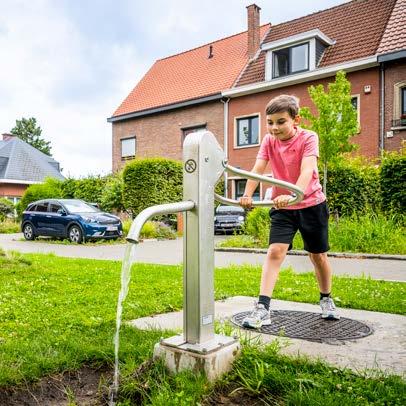

Climate mitigation & energy
We make the natural gas network greener through the production and injection of biomethane Positive impact
We offer sewer thermal energy as an alternative source for heat/cooling Positive impact
CO2 pricing can have a significant financial impact on sewer and treatment projects Risk
‘Hard to abate’ release of process emissions from water treatment Negative impact
Increasing investments required in energy efficiency and transition to renewable energy applications Risk
Production of renewable energy delivers economic added value and long-term price stability Opportunity
Climate adaptation
We implement blue-green, adaptive measures in the public domain Positive impact
More overflow operation due to changing weather patterns Negative impact
Investments to protect our infrastructure against the consequences of climate change Risk
Our expertise in climate-resilient design of public spaces Opportunity
[E1-2 ]
Subtheme Material risk
Energy Increasing investments are required in energy efficiency and transition to renewable energy applications
Impact of CO2 pricing on the cost of sewer and treatment projects
Klimaatadaptatie Investments required to protect our infrastructure against a changing weather pattern
Within Aquafin’s Corporate Sustainability framework, there is a specific steering group working on climate neutrality, with the company’s Energy manager being responsible for its activities. The Energy manager collaborates closely with other departments such as Project Management and Procurementto engage in dialogue with partners, incorporate incentives into procurement processes and set up pilot projects to reduce emissions. The Innovation, R&D and Process Engineering departments present new technologies to
climate risk
this steering group for evaluation. Operational management is also represented in order to build the support required for the new initiatives. A separate working group consisting of experts from different departments continuously updates the approach to Aquafin’s CO2 footprint.
Aquafin is working on a resilience plan for specific risks, which also implements European directive 2022/2557 (EU), the so-called CER Directive. The Flemish Environment Agency is investigating whether, and if so which, waste water treatment infrastructure should be regarded as critical plants. In the meantime, we identified the biggest risks affecting the operation of our infrastructure, including those caused by climate change. Flooding of the infrastructure is the biggest risk: if electrical installations are submerged, the power fails. If that is the case, pumps and the treatment plant will shut down, which could lead to flooding or result in untreated waste water being discharged directly into the watercourse. Critical pumping stations where failure quickly leads to flooding are already equipped with emergency standby units.
Flooding can also cause significant damage to infrastructure. Two other significant risks are fire caused by lightning strike and subsidence of critical pipes due to abnormal drought.
Besides analysing the resilience of our own infrastructure, we also identify risks of disruption in our supply chain. For this, we limit ourselves to the delivery of chemicals for the
water treatment process as they are required to meet treatment standards.
Throughout 2026, we will continue to work on the resilience plan and update our emergency plan with any new insights.
Our road to zero carbon, as described in E1-1, serves as our transition plan and our policy relating to climate mitigation. This strategy will be re-evaluated and updated every 3 years to stay in line with evolving challenges and respond to new opportunities. With the road to zero carbon, there is no specific target date for achieving absolute or net climate neutrality, but it has set a time horizon for achieving concrete reduction targets by 2030, with broader actions defined for reductions beyond 2030.
Regarding climate adaptation of our own infrastructure, the resilience plan (E1-3) includes scenarios and associated measures. It is also our ambition to make a significant contribution to creating a climate-resistant Flanders,
which means providing advice and carrying out projects for the climate adaptation of public space. You can read about exactly how we will go about doing that under E3 – Water and marine resources and above in this annual report under Increasing impact with our clients and partners (p. 32 →).
2 – The most significant impacts are discussed within the steering group for climate mitigation, which also decides on actions to be taken
3 – Budgets for the selected actions are reserved within the departments concerned
4 – The steering group adjusts its actions if there is a change in circumstances, legislation or budgets.
The reductions in greenhouse gas emissions within scope 1 and scope 2 will be achieved according to this plan:
(kton CO2-eq.)
[ E1-5 | E1-6 ]
The main actions for the three pillars of our road to zero carbon over the next few years are listed in E1-1 (p. 12 →).
The actions are defined according to this methodology:
1 – Quantification of greenhouse gas emissions
Fossil-free: this primarily means the replacement of three gas-fired dryers with two new sludge dryers that run on residual heat.
SMP: Sludge mono-processor
Improved process insight and innovative technologies will help us reduce methane and nitrous oxide emissions from waste water treatment. At the end of 2025, our R&D department started measuring various assets (sewerage system, water treatment, sludge processing) using drones equipped with the necessary measurement systems. This research is supplemented by modelling and should provide more insight into process emission hotspots and possible remedial actions over the next few years.
In our processes, we are constantly looking for ways to increase energy efficiency such as by using new types of automatic controls that tailor energy consumption to the desired treatment result with increasing precision or controls to preferentially align energy consumption with times when there is a surplus of solar energy on our own site or if there is a high availability of power within the electricity grid. Read more under ‘Energy savings for infrastructure’ on p. 18.
We follow the GHG protocol for our greenhouse gas emissions inventory and use Carbon+Alt+Delete software to measure
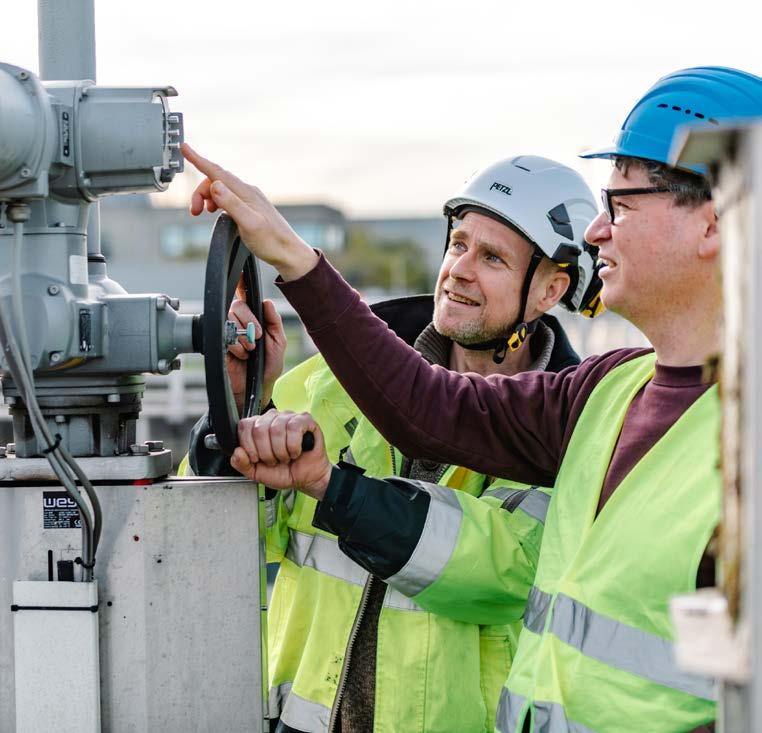
the impact of emissions reduction initiatives. We use both activity-based and expenditurebased assessments to quantify emissions across all scopes. We are currently focusing on the switch from secondary to primary emission factors and to a more activity-based inventory.
The inventory of greenhouse gas emissions includes direct measurements and assessments of the fossil carbon content in waste water. Emissions are reported annually. We are constantly conducting research to refine methodologies and adapt them in line with changing emission factors and standards. In 2025, we took this methodology from the company level to project level, which has enabled us to calculate what the greenhouse gas emissions will be for each individual water treatment project, both during the implementation phase and during the operational phase. This will also enable us to take the carbon footprint into account in future scenario analyses.
Since 2010, we have managed to improve the energy efficiency of waste water treatment plants by at least 1% on average per annum. Since 2018, Aquafin has installed 19,500 kWp of solar energy capac-
ity at 55 waste water treatment plants, of which 8 plants with a total capacity of 1,582 kWp were put into operation in 2025. Almost all available spaces for solar panels have been utilised in the meantime. At the same time, we are exploring options for connecting solar panels to the grid outside our plots.
Meanwhile, we have been investigating the potential for wind energy at various sites. In 2025, a power procurement contract was signed for the connection of a new wind turbine at our Bruges WWTP, which will produce more than 11,000 MWh per annum. Investigations into the possibility of connecting wind turbines directly to our treatment plants are also being conducted with project developers at several other sites, including the Aalst WWTP. Opportunities for power procurement contracts with wind turbines outside our sites are also being actively explored. Thus, in 2026, a power procurement contract begins with Luminus, which will add 21,000 MWh of locally produced wind energy per annum to the mix. As a result, from 2026 onwards, up to 15% of the electricity consumed will be from indigenous renewable sources.
Aquafin is aiming for fossil-free operation by 2030. Fossil-free operation comprises three
main components for our organisation. Firstly, all our own vehicles – from company cars to vans and maintenance trucks – need to be electrified. Currently, all new service vehicles, company cars and vans are battery electric vehicles. In 2023, the first maintenance lorry that runs on green gas was put into operation. In 2025, the contract to replace a quarter of our fleet of lorries with fully electric vehicles was put out to tender.
In addition, the heating and cooling of our buildings need to be disconnected from fossil fuels. Since its renovation in 2021, our head office has been heated and cooled solely using energy recovered from waste water (sewer thermal energy). A renovation plan is underway for service buildings, enabling fossil-free operation.
Finally, accounting for more than 90% of the fossil fuel consumption, the switch to sludge drying using residual heat was initiated. At the end of 2024, the construction started on two new sludge dryers to replace the three current gas-fired installations. When operational in 2027, approximately 60 GWh of gas consumption per annum will be replaced by the use of residual heat from waste incineration.
The expertise required for the organisationwide research into the climate impact of our activities and the identification of the process emissions specifically related to the sewer system, water treatment and sludge processing has been built up over the years within the R&D department and the necessary resources have also been provided for this for the next few years.
Energy optimisations and renewable energy are financed from a rolling Energy fund, where energy savings generate funds for new investments.
Separate budgets have been provided in Aquafin’s long-term budgeting for strategic, long-term projects which have a significant impact on the whole organisation, such as the switch to sludge drying using residual heat and the construction of a stateof-the-art final sludge processing facility with energy recovery.
Other measures, such as electrification of the fleet, are covered within the regular budgets of the respective departments.
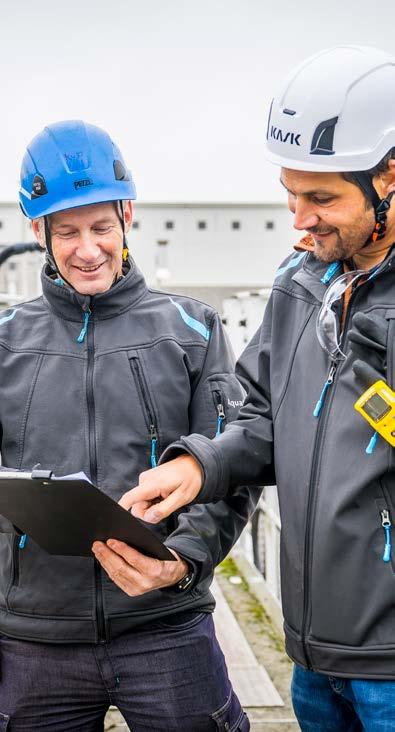
[ E1-8 ]
Aquafin aligns with the GHG Protocol to calculate and measure greenhouse gas emissions (GHG) to ensure consistency and transparency in emission reporting. The methodology used is regularly updated to incorporate new insights and changes to emission factors and standards. We use Carbon+Alt+Delete software to inventory GHG emissions. Both primary and secondary emission factors are used for calculations. Secondary emission factors are derived from sources such as the IPCC guidelines for national GHG inventories, EcoInvent, the European Energy Agency (for electricity) and ExioBase (for expenditure-based calculations). Emissions are expressed in global warming potential over 100 years relative to CO₂ (GWP100, CO₂e), with metrics from the latest IPCC assessment report (AR6).
The reporting of Scope 1 GHG emissions covers Aquafin’s direct impact on climate change
and the share of the total GHG emissions that falls under emissions trading systems. Emissions are expressed in metric tonnes CO2eq.
Aquafin has explicitly opted for a locationbased assessment of Scope 2 emissions despite purchasing electricity under Guarantees of Origin since 2018. Aquafin’s total electricity consumption is covered by these guarantees.
The reporting of Scope 3 emissions covers both downstream and upstream indirect emissions across the value chain. Emissions from partner companies, joint ventures and non-consolidated subsidiaries are excluded due to their intangible financial and carbon impacts. Reporting covers all supra-municipal activities to ensure comprehensive coverage of indirect emissions in their greenhouse gas inventory. Aquafin uses both activity-based
and expenditure-based methods to estimate Scope 3 emissions. Activity-based calculations are based on specific data, such as the mass of chemicals purchased and sludge transport contracted out. Expenditure-based calculations are based on financial expenditure on goods or services. Aquafin is in the process of switching to more activity-based methods in order to improve the accuracy of emissions reporting and is working on increasing the use of primary emission factors in order to improve the precision of its emissions data.
Aquafin’s total GHG emissions are the sum of Scope 1, 2 and 3 GHG emissions. This report provides general insight into the company’s GHG emissions and whether they arise from its own activities or from upstream and downstream value chain activities.
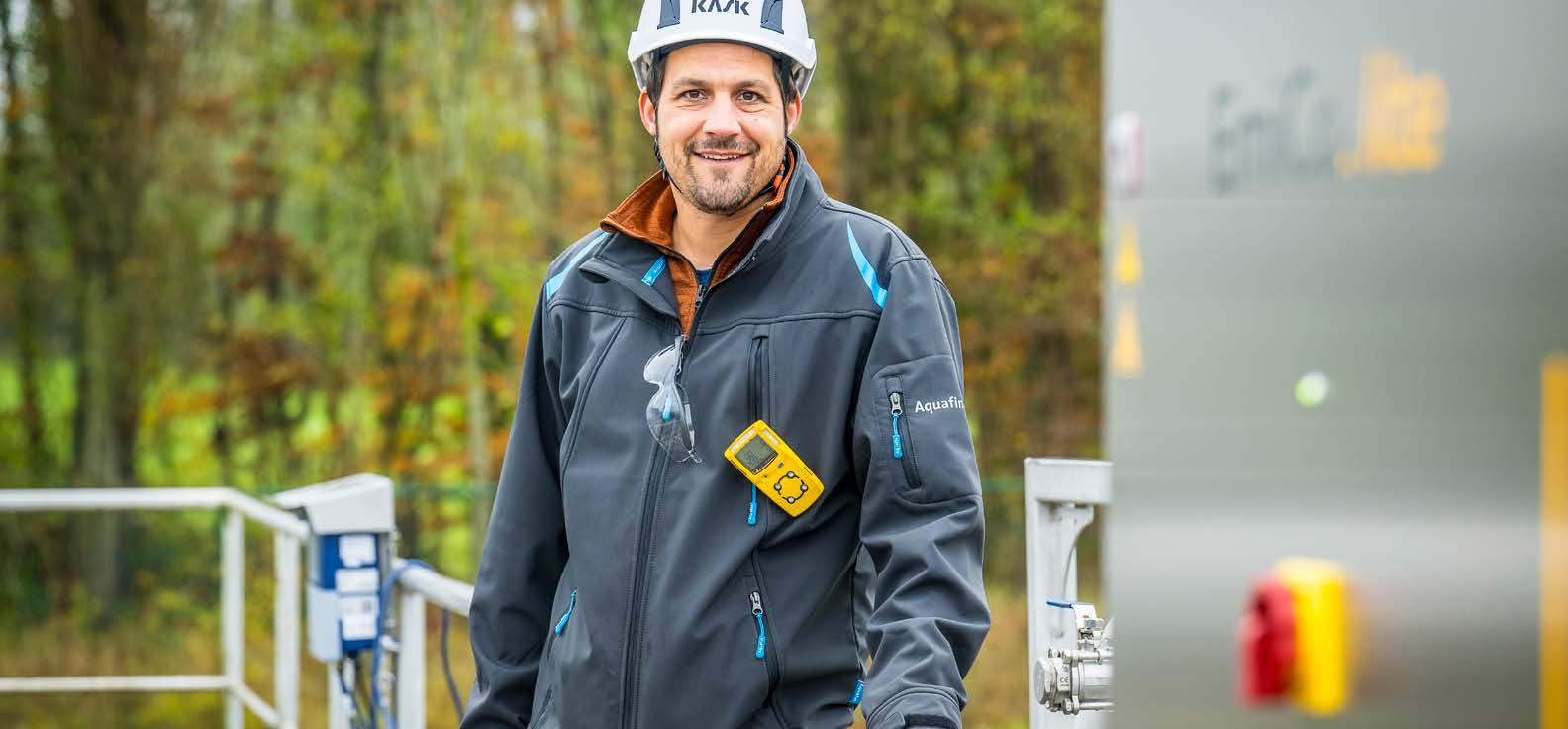
‘Of course, we are not waiting until 2030 to take action. ’
BART SAERENS R&D Study Lead
“Together with my R&D colleagues, I map greenhouse gas emissions across our infrastructure through measurements. This is not straightforward, partly because emissions can vary significantly over time. For example, we know that nitrous oxide emissions fluctuate with the seasons, while methane emissions from sewers often show short peaks. In addition, measurements from one wastewater treatment plant cannot simply be extrapolated to another. The same applies to sewer systems: many factors influence emissions, such as whether the system is combined or separated, the presence of septic tanks, and the material of the pipes.
We measure nitrous oxide emissions using a floating hood that captures greenhouse gases. For methane emissions, we use a drone equipped with sensors. By 2030, we aim to have a clear understanding of our emissions so we can fully focus on mitigation. Of course, we are not waiting until then to take action. Already today, we are working with our process technologists to explore what can be achieved by adjusting aeration control.
International knowledge about emissions from wastewater treatment is growing rapidly, but important gaps remain. With our measurements, we can make a meaningful contribution to both scientific and practical progress in this field. For example, our research on the impact of carbon sources on nitrous oxide emissions has been picked up and applied in Denmark, and we are actively involved in hands-on learning groups on methane and nitrous oxide with our Dutch colleagues.”
[ E1-9 ]
Aquafin does not make use of carbon removals or carbon credits. We prefer direct reduction strategies rather than compensation methods so that we reduce emissions directly in our operations and value chain.
[ E1-10 ]
In a research and innovation context, we explored the possibilities of carbon pricing for future projects, but we have also already applied the principle in several procurement procedures and investment projects. We refer to this methodology internally as TCO2 – or Total Cost of Ownership – with an offset of 100 euros/ton CO2eq as a reference unit cost. Although the policy is not yet generally applied, we are increasingly using this
methodology. One example of that use is the procurement of a carbon source that we use in the biological treatment process. We found significant variations in nitrous oxide emissions when using different products and therefore applied TCO2 in the procurement procedure. Future ETS2 carbon pricing was also an important factor when making the decision to switch to sludge dryers that run on residual heat rather than natural gas.
[ E1-11 ]
The collection and treatment of domestic waste water uses energy-intensive processes, making Aquafin a major consumer in Flanders. Thanks to the many actions and measures, we succeed in further optimising our energy consumption each year and thus keep our carbon footprint under control. As specified under E1-5 and E1-6 for Financing of measures, the major investments for fossil-
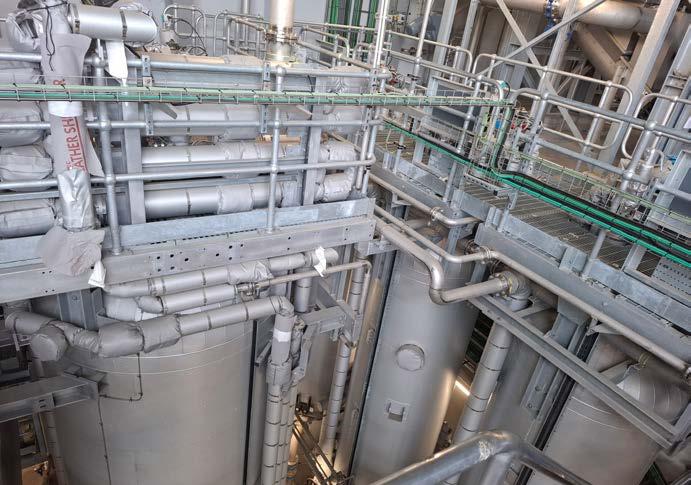
free operation (sludge dryers and sludge mono-processor) are financed using funds outside the regular operating budget.
Besides climate mitigation, climate adaptation also ensures that climate change is a material topic for Aquafin. Currently, we have not yet carried out a climate impact analysis, which included assessing the financial impact for
assets and business activities that present a material physical risk. In terms of opportunities, our ambition is to further increase income from consulting contracts and the climateresilient design of public and semi-public spaces.
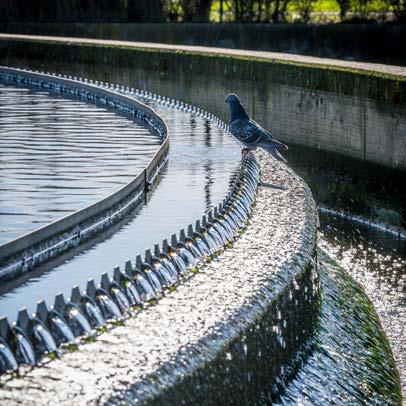
The information below can be found elsewhere in this annual report:
Aquafin’s main task is to collect domestic waste water in Flanders and treat it until it is clean enough to be discharged into the surface water and therefore to prevent the pollution of streams and rivers. By doing this, we prevent waste water directly ending up in streams and rivers and thus create a strong positive impact. For that reason, the topic of Pollution is mainly material for Aquafin in a positive sense. However, a certain form of pollution can also arise via our infrastructure. That is because firstly, our waste water treatment plants are not designed to remove micropollutants too, something that the new EU Urban Waste Water Treatment Directive will make obligatory for the large and the smaller plants in the risk area in the future. And secondly, it is because surface water can become polluted during the transport of waste water by overflow operation or illegal discharges by third parties, for example. In this report, we have therefore limited ourselves to the relevant data points relating to water and soil.
explanation IRO
Water
We treat the domestic waste water so that it can end up in nature safely
Stricter treatment standards require higher dosing of additives
Untreated waste water ends up in the watercourse during overflow operation
97% of all microplastics that enter a WWTP are removed during the treatment process
Tightened European laws and legislation require expansion of water treatment
Possibly necessary removal of PFAS and other emerging pollutants during sewerage works
Positive impact
Risk
Negative impact
Positive impact
Risk
Risk
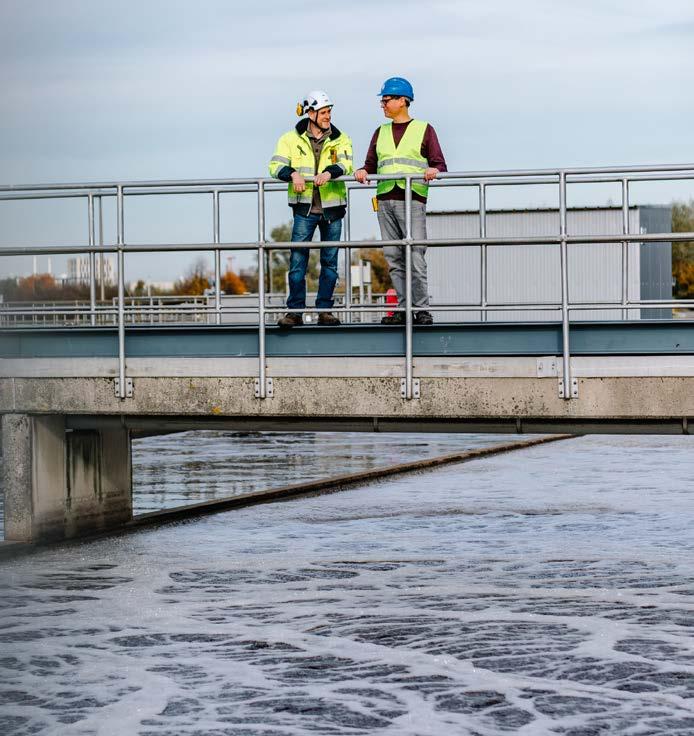
Aquafin builds, manages and operates the supra-municipal infrastructure for waste water treatment in Flanders. We also do this for more than half of the towns, cities and municipalities in Flanders, usually within a partnership with a drinking water company. To expand infrastructure, we work with local authorities and sewer operators to identify projects that deliver the greatest ecological gain in the shortest time. More information on the prioritisation of projects can be found in the activities report on page 20.
Through thorough asset management, we ensure that the infrastructure remains high-performing and that early signs of damage are quickly detected. By doing that, we aim to limit pollution caused by infrastructure failures. See p. 21 →.
At our waste water treatment plants, the waste water goes through a mechanical treatment process first to remove coarse solids. In the next biological treatment process,
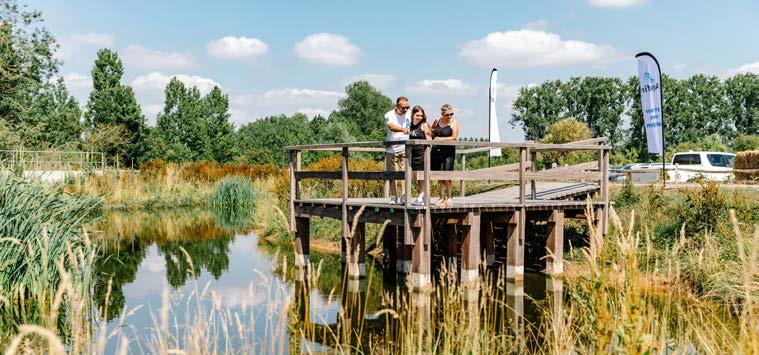
microorganisms absorb the dissolved impurities. At the plants serving agglomerations of 2,000 population equivalents or more, we also remove nitrogen and phosphorus from the waste water.
We monitor the quality of the treated waste water continuously by means of sampling and continuous measurements and make adjustments where necessary. Chemicals such as carbon source, aluminium chloride or polymers are added to achieve a sufficiently high removal percentage. We investigate what impact these products have on the treatment process and on the quality of the treated waste water. There must be sufficient benefits to substantiate the use of these substances
as the cost is also a point for attention (see Notes to the income statement, p. 116 →).
Read more about our waste water treatment activities on p. 19 →. The costs involved in the expansion and management of the supra-municipal waste water treatment infrastructure are invoiced to the drinking water companies, who then pass them on to the consumer via their drinking water bill.
Through effective maintenance, we want to prevent internal incidents caused and deal with them swiftly. We investigate whether incidents are due to our infrastructure and
take the necessary measures to prevent recurrence. Prompt detection, reporting and tackling of discharges by third parties can prevent water and soil pollution.
Aquafin reacts quickly to pollution incidents affecting the supra-municipal treatment infrastructure. We ensure that the disruption to our infrastructure and the surrounding area is kept to a minimum during such incidents. In the case of suspected external discharges, we proactively take samples of incoming waste water and contact any companies potentially affected. We collaborate with municipal authorities and operators, as well as the Flemish Environment Agency (VMM) to identify potential sources of pollution. We have access to emission monitoring data to facilitate preventive measures against pollution.
We have noticed an increasing focus on pollution of rainwater run-off from motorways and car parks, for example, and pollution via overflow operation. Aquafin wants to help increase knowledge and expertise in this area through research and innovation. We defined the following measures for this purpose:
Investigation of the potential of naturebased water treatment solutions (overflows, rainwater and waste water).
Optimise the management of WWTPs and the sewer system by means of digital solutions (smart control, digital twins, etc.)
— Investigate and devise the best possible solutions in order to comply with the EU Urban Waste Water Treatment Directive (ERSA).
[ E2-4 | E2-5 ]
In our double materiality analysis, only the water pollution deemed material, primarily because of our positive impact on it. Aquafin does not produce any pollutant substances or microplastics itself. We treat the incoming waste water using a mostly biological process and only add additives such as carbon source, ferric chloride, aluminium chloride and polyelectrolytes in order to meet the standards imposed better.
The information below can be found elsewhere in this annual report:
DR data point page
E3-1 Policy with regard to water 32
E3-2 Actions and resources 32
E3-3 Targets with regard to water 32
As water is the essence of our business, it is only logical for us to consider this topic as material for Aquafin. We treat domestic waste water clean to a standard that allows it to be discharged into surface water, and we work across Flanders towards sustainable water management Much of the information required in order to meet these reporting requirements can therefore be found elsewhere in this annual report.
our water and environmental advice, we focus on infiltration and reuse of rainwater
facilitate upgrading and reuse of treated waste water
our projects, we use infiltration and buffering of rainwater
E3-4 ]
Aquafin has no water-intensive production processes; consumption remains limited to sanitary and cleaning purposes. As the whole of Flanders is considered to be an area with water risk and water stress susceptibility, no distinction has been made here.
We treat the domestic waste water that enters our waste water treatment plants across Flanders. In most cases, it is then discharged into a watercourse, but we also make treated
waste water available for reuse. In view of Aquafin’s specific activities, we have adjusted the required metrics using this information relevant to us.
At some sites, we also use the treated waste water ourselves for low-grade applications such as cleaning tanks. These volumes are not measured and therefore have not been included in the figures.
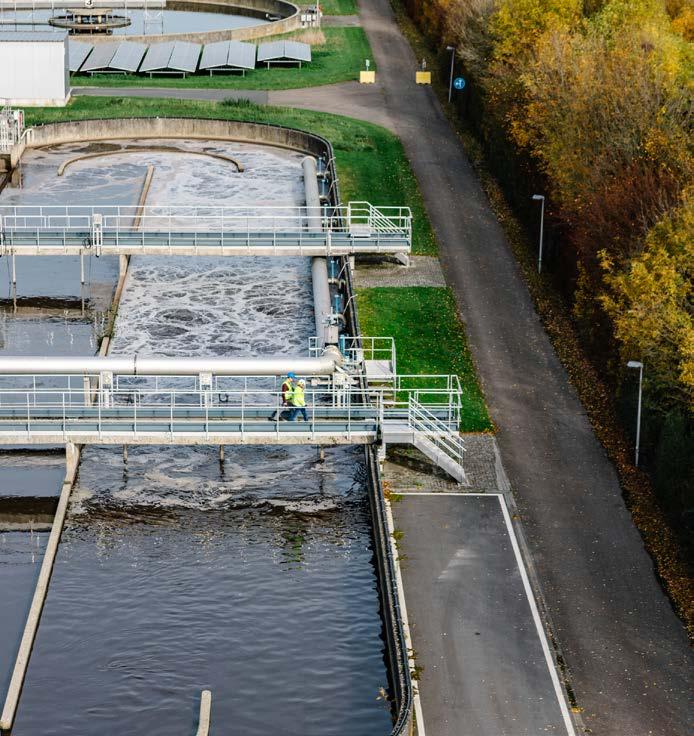
[ ESRS E4 ]

[ E4-1 ]
Restoring ecosystems by increasing the level of treatment
In projects within the public domain and our own domain, we opt for maximum greenery using native species
Ecological damage due to overflow operation is possible
Water and environmental advice as a service for municipalities, where we encourage measures to improve biodiversity
Restore ecosystems through projects that reduce overflow
Positive impact
Positive impact
Aquafin has developed an internal vision for addressing biodiversity in our activities. This vision responds to the following goals of the Kunming-Montreal Global Biodiversity Framework:
— Integrate biodiversity at every level in spatial planning
Effective protection of species and habitats
Manage risks of invasive species
Risk
Opportunity
Positive impact
Minimise the effects of climate change Restore and enhance nature’s contributions to people
Expand green-blue interlacing network in urban areas
Capacity building and development of knowledge and research into biodiversity
Make the best available information and knowledge relating to biodiversity accessible
[ E4-2]
For Aquafin, smart rainwater management is crucial to making both public and private spaces climate-resilient. In the process, we give preference to blue-green measures that combine space for water with softening and landscaping with local greenery. Besides the numerous other benefits of extra nature, there is the positive impact on biodiversity. At our own sites too, we leave as much space as possible for greenery and elements that promote biodiversity.
Nature development is not one of Aquafin’s core activities, but we are committed to maintaining a basic understanding of green spaces and biodiversity so that we can take advantage of opportunities as they arise.
Design and landscape management for our WWTPs
All plants are designed with a green buffer, using local greenery and woven branch boundary fencing. Where spatially possible, we put maximum effort into using designs that promote biodiversity, such as flower meadows, fruit trees, nesting sites, beehives, amphibian pools, etc. We also opt for ecological mowing management to protect biodiversity.
Tree management and conservation efforts during infrastructure projects
We want the design and implementation of infrastructure projects prioritise to the protection and preservation of existing trees along the route. We use the ‘tree test’ to anchor that attention in the design process by requiring it be included in the preliminary design concept and the permit application.
We also developed a practical tool – the ‘tree decision-making tree’ – which ensures that the felling of trees is avoided as much as possible, that damage to trees during the performance of works is avoided and that if it is necessary to fell trees, replanting is max-
imised. In the case of the latter, this should be carried out in the first instance at the same place and if that is not possible, within the same municipality, with replanting in a different location being the last resort.
In sewer projects, we look beyond the project zone and promote opportunities for bluegreen networks. We also promote blue-green solutions as much as possible in our advice to towns, cities and municipalities. We have a team of ‘ecological ambassadors’ who provide targeted advice based on planting species for the site.
Sometimes, the only solution for preventing problems with rainwater run-off is to create a buffer. In the first instance, we look at open canal systems or meandering watercourses for this purpose. However, sometimes it is necessary to install a buffer basin. To mitigate the ecological impact of such a basin, we have our own guidelines for ecological buffer basin design:
If possible, we look to link up with other plots with nature development (potential or under construction) and seek the proximity of pools or trees and the availability of sunlight.
An organic and irregular shape ensures greater variety in the abiotic environment and therefore more opportunity for diverse fauna and flora than a rectangular shape.
Different depth gradients for greater variety.
— Nature-friendly, gently sloping banks for a gradual transition from bank to water and variation in riparian vegetation.
[ E4-4 | E4-5]
We use the impact scan tool that we developed in-house to score a project design based on 4 pillars, including ‘green impact’. In concrete terms, we use a simple method to measure the difference and the diversity in the green offering before and after the project. We measure the difference in low/medium/ high planting and award a higher score if the project fundamentally enhances biodiversity. Overall, we aim for a positive score across our whole project portfolio, which means that after carrying out our projects, we provide more and/or better quality green spaces, while staying within budget.
[ ESRS E5 ]
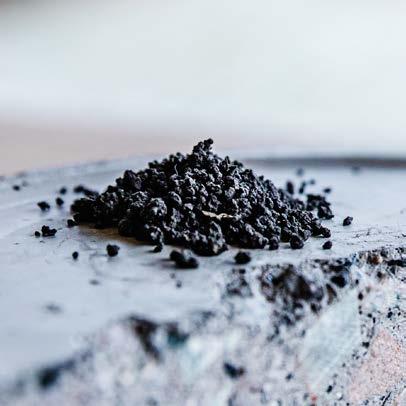
Use of residual flows from industry as a source of carbon
impact Production of renewable energy from sludge processing and sewer water/treated waste water
Facilitate the reuse of treated waste water
Valorisation of emission gases (CO2)
[ E5-1 ] Resource use
The most sustainable resource is the one you do not use. For that reason, we take a thought-
ful approach to the construction of new infrastructure in our projects. For instance, when constructing a separate sewer system, we will always question whether a drainpipe for rainwater is necessary. From the point of view of climate adaptation, it is often better to let rainwater soak into the ground on site (see E3-1), which requires no or far less materials.
The dual use of existing infrastructure is a way of working with materials sustainably. Examples of applications by Aquafin:
The use of buffer basins is both a measure to protect against flooding and a way of providing rainwater in times of drought. We activate this dual function using a smart control system.
Sewer thermal energy or the recovery of heat from the sewer system. A heat exchanger in the sewer pipe extracts residual heat from the water from showers, washing machines, etc. for heating and cooling buildings.
Recovering biomethane from digestion with the possibility of also recovering CO2 from the off-gas from the biomethane unit in the future.
Aquafin can also be a lynchpin in the circular economy through its activities. We do not regard the domestic waste water that enters our waste water treatment plants as waste but rather as a source of energy and raw materials. And we can recover energy from it even before the waste water reaches the treatment stage (E5-2).
Aquafin does not yet have a policy for the recovery of raw materials because the concept is not currently economically viable. There is still no sales market that is willing to pay a fair price. In the next few years, work is to be carried out at the European level on a Circular Economy Act to create a level playing field. In 2026, Aquafin is to start developing its own strategy for the recovery of nitrogen and phosphorus, for example. This will outline our standpoint on actively seeking or creating sales markets.
A plant for full-scale sludge pyrolysis is planned for carbon, where the aim is to explore this option at a first full-scale plant (see p. 37 →).
To improve the availability of water resources, we provide treated waste water as an alternative water source for reuse, subject to further treatment. With this treated waste water from our waste water treatment plants (WWTPs), a flow rate is not required to guarantee the ecological balance in the watercourse (e-flows). The potential is estimated at approximately 1/8 of the total flow of domestic waste water handled.
There are currently a number of companies that use treated waste water as cooling or process water and at two sites, it is used to produce drinking water (see p. 33 →). There are also several project proposals in the research or permit phase.
We unlock potential through our digital platform, AquaMarkt. If interest is shown in a certain site, we launch a final call to give everyone an equal chance to use the effluent from that WWTP.
Phosphorus enters waste water via human excrement and is a vital link in the food chain. Recovery from the water treatment process will make Flanders less dependent on ores mined outside Europe and help create a circular economy. After years of laboratory research and pilot-scale testing, we started large-scale recovery tests in 2025 together with an industrial partner. The aim is to recover phosphorus from the fly ash generated by sludge mono-incineration for use in the production of artificial fertiliser. This should be possible with the new sludge mono-processor we are currently building at the Arcelor Mittal site in Ghent. This plant will be put into operation in 2027. No timeline has been defined yet for the start of phosphorus recovery.
Aquafin is actively involved in research projects for turning raw materials recovered from waste water treatment into valuable materials and has also initiated its own innovation projects to do this. We are developing and implementing future-proof treatment technologies and concepts supporting the principles of the circular economy. In this, we are collaborating with research and innovation partners. For instance, we are currently researching
sludge pyrolysis to generate biochar. And in the past, we have tested various technologies for nitrogen recovery.
Using circular products for water treatment
Sometimes it is necessary to add extra carbon to the waste water for treatment to produce waste water of a sufficiently high quality. That source of carbon is obtained from valorisable residual flows from industry – such as residual flows from sugar factories – as much as possible.
Obsolete Aquafin laptops are given a new lease of life via Close The Gap or Out of Use, two organisations that refurbish used ICT equipment or, if that is no longer possible, recycle the components in an environmentally friendly way. In 2025, Out of Use processed
1,160 kg of e-waste for Aquafin, of which 1,074 kg was recycled and 85 kg was reused.
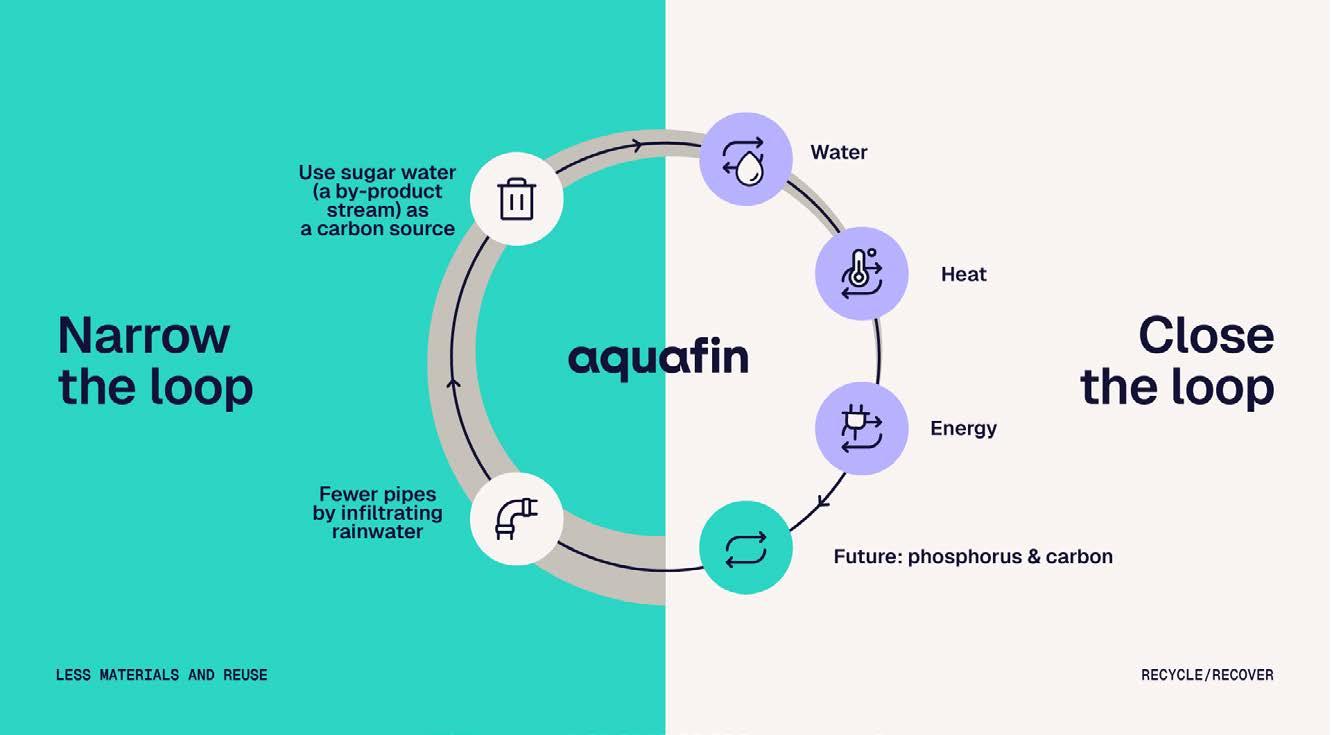
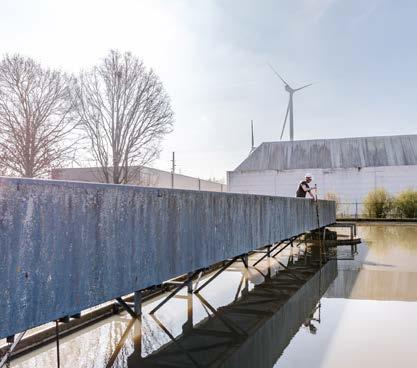
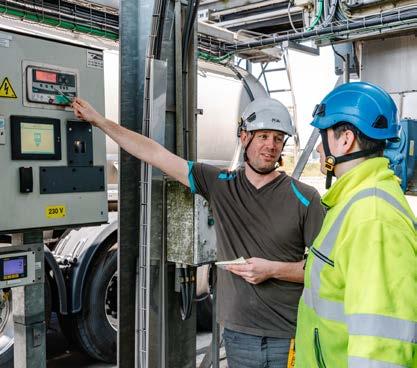
[ E5-3 ]
The following targets have been defined with regard to the circular economy for 2030:
— Sewer thermal energy from sewage and effluent: 20 MW of heat disconnection realised
— 5 biomethane plants are operational, with an annual production of 40 GWh of green gas
An approved policy for the recovery of raw materials.
Aquafin expands the waste water treatment infrastructure for the Flemish Region. The construction and procurement of the materials are carried out by external parties and therefore do not generate a material inflow for Aquafin.
Our main effective inflow of ‘materials’ is the domestic waste water that we treat. In 2025, the total inflow of sewer water at our waste water treatment plants amounted to 683 million m³.
Chemicals were also purchased to better meet the removal percentages (for an overview, see table). The volumes are expressed in tonnes of product and do not account for differences in concentrations between various products.
[ E5-5 ]
Our main ‘product’ is the treated waste water which we discharge into the surface water almost everywhere. As described under E5-2, we make it available for reuse where possible. Currently, offtake is still limited.
Sewage sludge is a by-product of the water treatment process. The processing and disposal routes of the sludge are described in detail on p. 25 →. As biomass, sludge is a source of energy, just like sewer water and treated waste water via sewer thermal energy.
product volume (weight)
[ S1-1 ]
A comprehensive description of our HR policy can be found on p. 16 →. The policy applies to all employees of Aquafin. Certain subaspects of the policy are documented in specific policy documents, such as the integrity policy, the whistleblower scheme, the policy around secondary activities and the policy on working in heat or cold conditions.
Employees can find (digital versions of) all policy documents via the intranet. A new or adapted policy is communicated via newsletters on the intranet, the works council report, debriefings from the management team, team meetings and often also verbal explanation.
Engaging with our own employees and their representatives, channels for expressing concerns and needs
[ S1-2 ]
We engage with employees via various channels and promote a culture of continuous feedback and dialogue. Besides two formal interviews within the interview cycle between an employee and their manager, there are informal check-ins to discuss employees’ well-being and (job) challenges. We regularly organise well-being surveys to monitor the impact of the well-being vision and the effectiveness of actions. More can be found on this on page 12 under ‘Data-driven actions’.
We have a healthy, structured monthly consultation with the employee representative body via the Works Council, the Committee for Prevention and Protection at Work and the Trade Union Delegation. In between times, there is also room for informal discussion.
Employees have various channels for making their concerns and needs known: they can do so via their manager, HR business partner,
internal or external confidential advisers or the whistleblower scheme.
[ S1-3 ]
Impact of a new sludge strategy
Aquafin will shut down three existing sludge dryers in Deurne, Leuven and Houthalen, and is constructing two new dryers in Beringen and Roeselare that will run on residual heat. The shutdown of the current dryers in 2027 means that the employees there will need to be reassigned. Aquafin set up a caring and people-oriented programme. Future options were explored with each affected employee and their alignment with the new organisational structure.
An appropriate solution will be sought for every employee based on these discussions and in conjunction with the needs of the new teams. This will result in reassignment to one of the new dryer teams or to another position within Aquafin in order for everyone to be offered a sustainable future.
We distinguish between two groups of employees: our own employees, who are employed by Aquafin and have a direct employment contract with the company. They fall under S1-5 reporting. The second group compromises seconded employees of the Flemish Environment Agency, temporary agency workers and external employees. They fall under S1-6 reporting.
All employees are employed in Belgium.
of employees
The figures above reflect the status at the end of the reporting period (31 December 2025) and are based on headcount.
2 Gender as indicated by the employees themselves
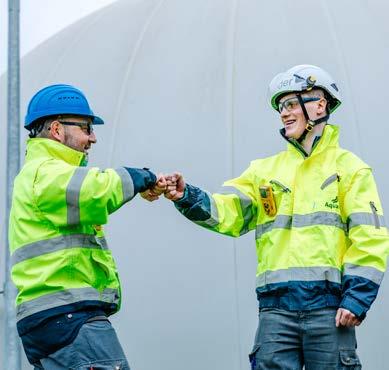
Number of employees per contract (total numbers)
Number of temporary employees as at 31/12/2025
Temporary employees are employees with a fixed-term contract with Aquafin. Part-time employees are employees with an employment rate of < 100%.
Staff turnover
Staff turnover percentage: 4.79%
In the calculation of the above staff turnover percentage, we included everyone who left
the company during the past year whether their departure was voluntary or involuntary.
If we only look at the voluntary staff turnover, the result is as follows: Voluntary staff turnover percentage 2.86%
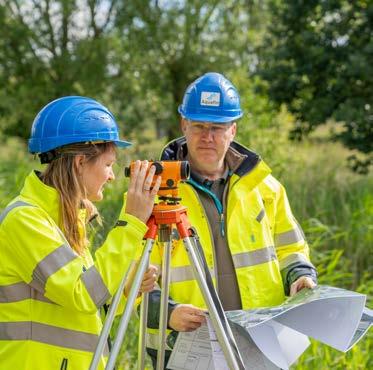
Aquafin uses temporary agency workers and external employees (who may or may not be self-employed) for specialised skills in various functions, including management roles. These employees can also be deployed to handle workload peaks or replace absent employees. The relationship between non-employees and Aquafin is contractually defined in agreements that specify the workload, term and responsibilities.
The diverse composition of our workforce, including employees and non-employees, is essential to the performance of activities and the achievement of strategic objectives.
In addition, there are also seconded employees of the Flemish Environment Agency working at Aquafin. When the operation of the waste water treatment plants was transferred from VMM to Aquafin in 1994, they chose to continue with their work at Aquafin, but while retaining their VMM status.
Number of non-employees in our workforce as at 31 December 2025:
[ S1-7]
Aquafin has a constructive social consultation with a Works Council, a Committee for Prevention and Protection at Work (CPBW) and a Trade Union Delegation. Collective labour agreements are concluded within the latter forum. The employee representative body on the Works Council and the CPPW is chosen via social elections. The last time these elections took place was in 2024.
100% of Aquafin’s employees are covered by collective labour agreements.
[ S1-8]
Gender and age distribution among senior management
category is applied to all employees, based on objectively determined parameters set by the external party and through consultation with external trade union classification experts. A difference in wage progression development is determined by means of an overall assessment based on work-related parameters. The way a job is carried out affects an individual’s wage growth. Employees can gain insight into their own wage progression, while new employees learn their wage information when applying for a job.
Under senior management we include the CEO and the other management members.
[ S1-9]
Aquafin has a CLA (Collective Labour Agreement) for basic salary, which is based on external market conformity ensured via an external party and internal consistency across positions. Jobs are assigned to a job category and a wage progression linked to that
For the benchmarking of the basic salary for which a CLA was set up, Aquafin takes all Belgian companies of the same size and in all sectors as a basis:
That definition is worded as follows:
– organisations with a turnover of >250 million EUR and >500 employees;
– organisations with a turnover of 50-250 million EUR and >100 employees
All employees are thus guaranteed the applicable norm for adequate wages.
[ S1-10]
All employees in Aquafin’s workforce, as well as temporary agency workers, are covered by social protection against loss of income due to illness, unemployment, occupational accidents and acquired disabilities. This protection is provided through legislation and employee benefits. For instance, there is a hospitalisation insurance plan that is free for employees, with family members living at home also covered at a reduced rate. Aquafin’s employees also benefit from social protection for parental leave and a pension. To supplement the state pension, Aquafin provides benefits under the group insurance plan, accrued during the employee’s years of service at Aquafin.
We do not currently keep records of persons with disabilities in our workforce. That is because any figure would be an underestimation as employees decide for themselves whether to provide their employer with this information.
There is an interview cycle for all Aquafin employees, which involves a formal interview being held twice a year. During these interviews, work-related and personal topics such as well-being and career development are discussed, along with training goals. Every year, each employee also receives an overall assessment that determines their position in respect of wage progression and therefore wage development. The overall assessment takes numerous job-related aspects and the employee’s potential into account.
In autumn 2026, we will start collecting and reporting data on the number of formal interviews conducted in order to better support employees’ career goals. In 2026, we will also implement a tracking system that allows both managers and employees to save interview content and data.
100% of our employees participated in regular performance and career development evaluations in 2025.
Total number of training hours
Total (Q1,2) 54,824 uren
Due to the switch to a new system, correct reporting for the whole of 2025 is not accurate. On 30 June 2025, we had already recorded 5.83 training days per FTE, which corresponds to 54,824 hours. This high number of training days in the first half of the year was linked to the switch to a new ERP system, during which all employees underwent an intensive training programme. In addition, in-house training programmes also continued. After six months, Aquafin had already met the minimum number of training days according to PC 200.
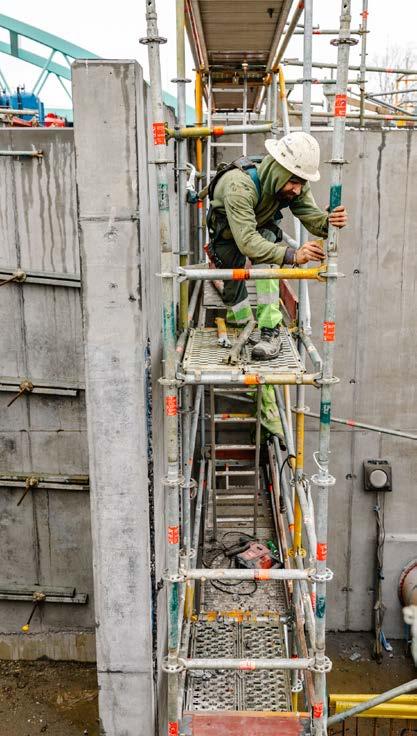
Proportion of employees covered by a health and safety management system based on statutory requirements and(/ or) recognised standards or directives.
Number of fatalities among employees and non-employees as a result of work-related accidents and workrelated illnesses.
Number of recordable work-related accidents involving own employees (lost-time accidents).
Frequency rate of recordable workrelated accidents involving own employees. 5.19
Number of cases of recordable workrelated illnesses among employees.
Number of days lost due to work-related accidents and employees’ illnesses.
Number of cases of recordable workrelated illnesses among non-employees.
We do not keep a record ourselves of the number of days lost due to work-related injuries and health problems among non-employees,
as these would otherwise be counted twice in national figures.
[ S1-14]
All of Aquafin’s employees are entitled to family leave based on legislation and/or company-specific agreements. That includes maternity leave, paternity leave, parental leave and filial leave.
In 2025, 360 employees or 28% actually took that family leave.
[ S1-15]
Jobs are assigned to a job category and a wage progression linked to that category is applied to all employees in that category, based on objectively determined parameters. A difference in wage progression develoment is determined by means of an overall assess-
ment based on work-related parameters. The way in which a job is carried out therefore has an impact on an individual’s wage development. Analysis of the wages for m/w for each job category shows that there is no wage gap.
No internal incidents with these characteristics were reported. However, there were 3 reports of aggression by third parties.
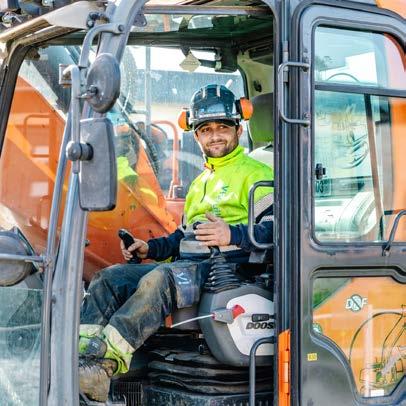
In this report, we limit ourselves to employees of our technical partners (contractors and engineering firms) who carry out work on our infrastructure and who work on our behalf on the construction of domestic waste water treatment infrastructure. They are most intensively involved in our organisation and may be most exposed to direct risks. We also focus primarily on safety risks because they are a top priority.
The information below can be found elsewhere in this annual report:
We indirectly employ thousands of people within the
Working on Aquafin’s infrastructure involves safety risks
We are strongly committed to a culture of safe thinking and working and take the lead on this in the sector
We actively share our knowledge and expertise with technical partners and work on binding collaborative partnerships
of competent contractors for our projects
[ S2-1]
A description of our commitment to strong partnerships with contractors and consultancy firms can be found on p. 30 → under ‘Investing in collaboration with technical partners’. We believe that equality, trust, knowledge sharing and respect for each other’s expertise are the building blocks for high-quality projects and a high level of job satisfaction within the sector.
We want everyone who works for us to return home safely in the evening. That is why we operate a strict safety policy, with a strong focus on safety awareness. We also want everyone who carries out activities for us to be trained in safety practices. In addition, we comply with statutory frameworks such as the “Well-being Act” and the “Code on well-being at work” in order to guarantee a safe working environment.
Aquafin has extensive safety guidelines for all activities at its plants and construction sites. These guidelines are detailed in the “General safety regulations for contracts in the name and on behalf of Aquafin” and are accessible to the public. Specific exceptions are made for personal protective equipment (PPE) based on task-specific risks. More details under S2-3.
We have a structured process for reporting safety incidents and accidents at work, whereby serious accidents must be reported to the Prevention Department immediately. In the case of serious workplace accidents, we require the employer to investigate the incident involving the injured worker. Documentation of incidents, identification of the causes and implementation of corrective measures are mandatory. Significant changes in the condition of the injured employee must be reported to Aquafin’s designated contact person.
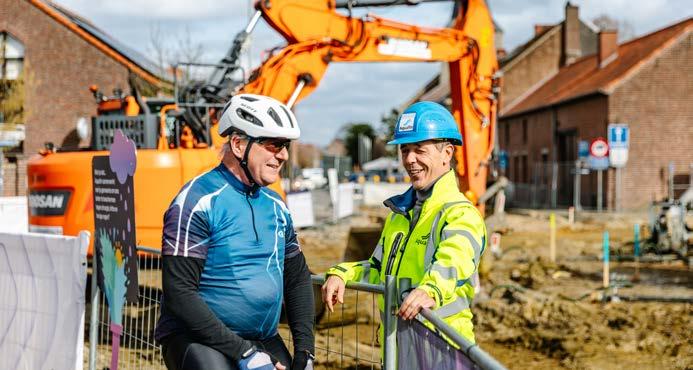
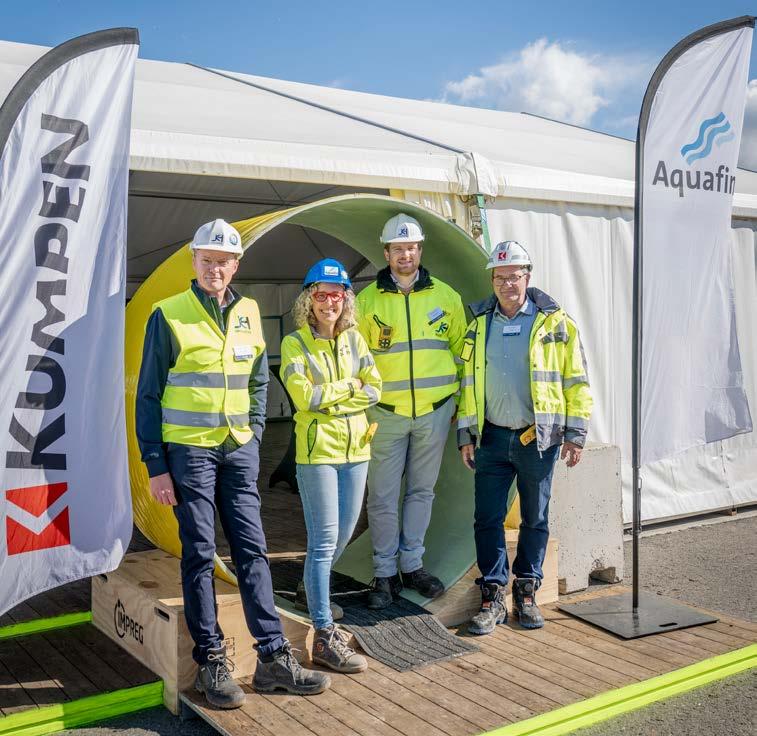
Aquafin does not currently have a general code of conduct for suppliers. However, a code of ethics has been drawn up containing core values, objectives, agreements and peer relationships in collaboration with the sector organisations of contractors and consultancy firms for infrastructure works in Flanders. This code can be found at www.bouwenaanethiek.be.
[ S2-2]
Structured consultation with technical partners
Engagement with the technical partners for infrastructure works, with whom we collaborate most often, takes place at three levels with both the contractors and engineering firms: project level, B2B level and sector level:
Project level: ad hoc, between the members of the project team, regarding project-related concerns and issues.
B2B level: at least twice a year, between the management at Aquafin and the management of the technical partner, regarding targets and general collaboration.
Sector level: three to four times a year, between the management at Aquafin and the sector federations, regarding general topics such as safety, compensation settlements, workload, etc.
Aquafin has an immediate reporting protocol for accidents at work involving employees in the value chain, such as contractors or subcontractors. The STOP and STOP+/++/+++ procedures are an essential part of Aquafin’s safety framework, which enable employees, contractors and third parties to stop work if unsafe conditions are identified. Aquafin’s whistleblowing procedure also applies to employees in the value chain, enabling them to report safety and other concerns without fear of negative consequences. This procedure and the contact details for reporting are available on our website.
All STOP reports are recorded and analysed. The aim is not to reprimand individuals but rather to learn from what has happened. Accidents and safety incidents involving external parties are discussed by the management team on a weekly basis. In the event of serious or repeated safety violations, this will be escalated to a STOP+/++/+++ report, where the contractor’s management will be asked for a plan of action to prevent recurrence in the future.
talent and keeping it in the sector
The sewerage sector requires talent to deliver all projects to make Flemish watercourses healthy again. Aquafin helps make the sector more attractive by intensively on partnerships as described under S2-1, sharing knowledge and highlighting success stories that demonstrate the impact of our projects. We create opportunities for our technical partners to demonstrate their creativity and innovation through initiatives such as our ‘site of the future’ (p. 28 →).
Aquafin has extensive safety guidelines for all activities at its plants and construction sites. These guidelines are detailed in the “General safety regulations for contracts in the name and on behalf of Aquafin” and are accessible to the public. This framework is in line with important statutory standards including the “Well-being Act” and the “Royal Decree on Temporary or Mobile Construction Sites.” We make it compulsory to use personal protective equipment (PPE) including safety footwear, helmets and gas detection equipment, except in administrative buildings.
There are clear safety instructions (AIC cards) for every risk which describe the necessary protective measures. These safety instructions are available on Aquafin’s website and external documentation systems. We also produced 16 Life Saving Rules and a safety introduction film on how to handle risks. Both are available in 11 languages and have been actively distributed to contractors for on-site use. In 2025, together with a delegation from the construction sector via the organisations Vlawebo and Bouwunie, we tested a mobile app that generates a QR code if you have the right safety certificates, have watched the safety introduction film and have answered a number of questions correctly. The QR code grants access to an Aquafin construction site for three years.
VCA* or VCA** certification is a selection requirement for new contracts for the main contractor of:
Infrastructure works on Aquafin’s infrastructure (WWTP, pumping station, sedimentation basin) relating to engineering and electromechanics.
Infrastructure works on the public domain (road and sewerage works), also for class <5
Framework contracts and individual assignments of more than 120,000 euros for works or technical services with a high level of risk (level 1) according to Aquafin’s VCA activities list.
Individual assignments with a high level of risk (level 1) between 30,000 and 120,000 euros, outside a framework contract.
If the main contractor uses subcontractors, VCA** or VCA-P is required.
If the main contractor does not use subcontractors, a VCA* certificate is required.
Aquafin reserves the right to inspect the performance of works to ensure compliance with safety standards. Random HSE (health, safety and environment) inspections are conducted year-round and the findings are recorded digitally. Contractors are held responsible for complying with safety regulations and have the right to inspect sites and stop works if standards are not met. Our appointed safety coordinators coordinate safety at our sites between the different parties: contractors, subcontractors, engineering firms, site management, other employers, local residents,
passers-by, etc. We also work with safety coaches who encourage safe behaviour on site based on a positive approach.
The aim with regard to safety must always be zero accidents. In practice, with more than 100 sites in operation at any one time, that is particularly challenging. 28 lost time accidents were reported to contractors in 2025. We are aware that not all accidents may have been reported. We therefore remain strongly committed to increasing safety awareness among our contractors and incorporating follow-up checks.
Our aim is to collaborate with our technical partners on an equal basis. They should feel involved in and be committed to the common goal we want to achieve: clean watercourses and a living environment in harmony with water.
That is why we build sustainable relationships in which trust, recognition of each other’s
expertise and communication are central and we invest jointly in workable work to achieve greater job satisfaction. For we consider it important for knowledge and expertise to remain within the sector so that we can realise our ambition.
We use mutual evaluations to assess collaboration with consultancy firms. To gauge the atmosphere within project teams, we use a Net Promoter Score. The score for the question “How keen would you be to start the next project with this project team?” and the reasons for that score are key factors in determining the winner of Aquafin’s annual ‘Project team of the year’ award, for example.
We also use a quality scoring system for both consultancy firms and contractors, which is taken into account when awarding contracts. The scoring method was devised through consultation with the sector organisations concerned.
Our approach to business conduct is based on integrity, transparency and responsibility. Aquafin operates in accordance with applicable laws and legislation and adheres to internal policy frameworks that guide ethical conduct and integrity within the organisation. Compliance with laws and legislation is supported by internal processes, guidelines and work instructions that steer the performance of activities. The policy frameworks and supporting mechanisms contribute to a corporate culture in which respect, care and responsibility are central and employees and other stakeholders are encouraged to conduct themselves in a professional manner and with integrity. As a result, Aquafin maintains the trust of employees, partners and other stakeholders.
Continue to foster an ethical corporate culture through a widely supported integrity and whistleblower policy that allows everyone to express concerns in a safe environment, among other things
Anti-corruption, anti-bribery, prevention of money laundering and anti-fraud
on making the sector more sustainable as a major customer and purchaser
Flemish
Our operations and corporate culture are based on integrity and responsible, transparent business conduct. As part of our public service remit and social responsibility, our aim is to create a culture in which ethical working, respect for rules and careful decision-making are central.
To support and anchor this corporate culture, Aquafin has developed policy frameworks, guidelines and organisational agreements that outline expected conduct and steer daily actions. These instruments help raise awareness with regard to integrity, promote open dialogue and help employees and managers handle integrity issues correctly.
The key policy instruments (G1-1) are explained thematically in conjunction with the associated measures (G1-2), objectives (G1-3) and any standards (G1-4) in the paragraphs below.
Behaving with integrity is regarded as essential for maintaining the trust of stakeholders and for the sustainable functioning of the organisation. Trust in Aquafin and its reputation as an organisation with integrity is dependent on the conduct and choices of everyone who works for or on behalf of the organisation.
The integrity policy provides a clear framework for specific conduct and guides daily actions within the organisation. The aim of the policy is to prevent risks to integrity, including fraud and other irregularities, detect them in good time and deal with them appropriately. The integrity policy applies to all of Aquafin’s employees, managers and members of management bodies as well as to third parties who act on the instruction of or on behalf of the organisation. Within the value chain, it is applied through contractual agreements and expectations with suppliers and service providers.
Managers play a key role in implementing the integrity policy and serve as the first point of contact for queries and reports. Aquafin encourages open dialogue on integrity and
provides accessible channels for reporting suspected irregularities, while prioritising on confidentiality and protection against sanctions. Reports are carefully investigated with a view to carrying out prevention and corrective measures.
Training and strengthening of culture [
To further strengthen the existing culture of integrity, Aquafin plans to roll out a compulsory annual training programme for all employees that will focus on integrity, compliance, data protection and cybersecurity. The aim of this training is to increase awareness and enhance skills in order to ensure ethical and responsible conduct. This programme is due to be implemented by 2027.
and tracking the effectiveness of the integrity policy [
Although there are currently no quantitative time-based targets that have been set for integrity, the effectiveness of the policy is systematically tracked via:
the use and monitoring of channels for reporting suspected breaches of integrity;
monitoring of corrective actions following incidents.
No integrity-related incidents were reported via the internal reporting channels during the reporting period.
To ensure a safe reporting culture and ethical conduct within the organisation, Aquafin set up a formal whistleblower scheme. This scheme supports the timely detection and management of risks of non-compliance with regulations, violations of integrity and potential reputational damage, and helps create a culture of transparency, responsibility and trust.
The whistleblower scheme is an additional reporting channel alongside the internal procedure for reporting violations of integrity and irregularities, which is incorporated into the integrity policy. While the latter provides a broad framework for reporting integrity issues, the whistleblower scheme is specifically intended for the safe reporting of violations defined by law, with additional guarantees for the protection of the person making the report.
The scheme provides employees and other concerned parties with an easily accessible, safe and confidential way to report suspected violations. Reports are made via an independent internal channel and investigated carefully,
with respect for the privacy of all concerned.
Aquafin guarantees that people acting in good faith when they make a report are protected against retaliation so that a report cannot have negative consequences for their job or future career.
The scope of the scheme covers reports made by people who have obtained information regarding violations in a work-related context, including employees, self-employed people, shareholders, members of management and supervisory bodies, trainees, volunteers, but also people who work under the supervision of contractors, subcontractors or suppliers.
The effectiveness of the scheme is monitored through the reporting channel and the careful investigation of reports. In 2025, no reports were received via the whistleblower scheme.
Anti-corruption, anti-bribery, prevention of money laundering and anti-fraud
Policy framework and risk approach [ G1-1]
Corruption, bribery and fraud constitute a serious threat to both the functioning of organisations and to society in general.
As an organisation with a public service remit, Aquafin operates a strict zero-tolerance policy in respect of any behaviour that contravenes the highest standards of ethics. Such behaviour could undermine not only Aquafin’s financial sustainability but also stakeholders’ trust and our social legitimacy.
The framework for tackling corruption and bribery is integrated in the integrity policy. The principles of the policy apply to all employees and directors, as well as to third parties who act on behalf of or for the account of Aquafin.
The risks of corruption and bribery mainly arise within functions and roles connected with financial transactions, procurement and tendering processes, contract management, project monitoring and decision-making authorities regarding external parties. Management positions and members of administrative and management bodies also bear increased responsibility in this regard.
Prevention, detection and follow-up of corruption and bribery [ G1-2]
Aquafin is strongly committed to prevention and early detection via a combination of organisational measures, internal controls and raising of awareness. Employees are obliged to follow set approval and reporting procedures and to be alert to suspicious or unusual transactions, especially to prevent money laundering. Irregularities in payment methods or financial transactions should be reported immediately.
In addition, employees and relevant external partners are made aware of the importance of ethical conduct and integrity. The integrity policy contains clear guidelines on matters such as accepting gifts and invitations, conflicts of interest and correct business conduct. Aquafin has channels for the confidential reporting of suspected corruption, bribery or money laundering, which enable indications to be reported safely and without risk of retaliation.
Reports and indications are carefully investigated and, where necessary, followed up with corrective measures. Any violations of procedures or codes of conduct identified lead to appropriate actions in accordance with applicable internal and legal frameworks.
Number of confirmed incidents relating to contracts with business partners that were terminated or not renewed on account of violations relating to corruption or bribery.
Sustainable management of supplier relationships [ G1-2]
Aquafin seeks to develop and maintain sustainable, transparent and responsible relationships with its suppliers. ESG criteria are integrated into our purchase dossiers, whereby environmental, social and ethical aspects are systematically taken into account.
During our market research, we identified how market players address environmental aspects and how we can incorporate these in the selection criteria. The sustainability criteria applied are recorded and documented for each purchase dossier awarded. The Procurement department then analyses the impact of these criteria and includes that analysis in the award proposal for the management.
We work closely with consultancy firms and contractors for our infrastructure projects. We consult with sector organisations on how we
can make these projects more sustainable, from design to implementation. On p. 28 →, you can read more about initiatives such as the ‘site of the future’ and the sustainability board with consultancy firms.
For social aspects, Aquafin includes minimum requirements relating to human rights and treating people with respect in every purchase dossier. Our basis for this includes national and international conventions and regulations, including the standards of the International Labour Organisation (ILO), the European Convention on Human Rights and the Limosa reporting requirement.
Additional health and safety requirements, such as compulsory safety certificates and personal protective equipment, apply to working on our infrastructure. Compliance with these requirements is monitored in various ways, such as via random checks, statutory attendance recording on sites via checkinatwork and via Aquafin’s new registration platform (see information under S2-1 on p. 87 →).
[ G1-6]
Our aim is to apply correct, transparent and non-discriminatory payment practices in our relationships with suppliers. The standard payment term is 60 days, unless otherwise specified in the contract in accordance with applicable regulations governing public service contracts. Aquafin does not distinguish between payments to small and medium enterprises (SMEs) and payments to other suppliers.
The agreed terms of payment are systematically recorded and monitored via the ERP system. Aquafin strives to make payments in accordance with these conditions and to keep late payments to a minimum.
However, in 2025, we experienced a temporary disruption to the processing of purchase invoices due to the switch to a new ERP system (SAP). During the launch phase, the invoice processing was slower, so invoices could not be processed automatically and paid on time.
This situation had a negatively affected the percentage of payments made in accordance with the standard terms of payment. Aquafin then took corrective measures and deployed
additional capacity to eliminate the backlog. While eliminating the payment backlog, specific attention was paid to overdue invoices from small suppliers, given the possible financial impact of late payments on sole proprietors and small enterprises.
The disruption described was temporary and directly linked to the implementation of the new system. Aquafin remains committed to ensuring that payment practices are applied correctly and consistently.
[
Aquafin does not pay any contributions or donations for political lobbying or similar practices in support of or for the benefit of political parties.
Average number of days to pay an invoice from the date on which the calculation of the contractual or statutory term of payment starts. 29 days
Number of current legal proceedings for late payments 0
Aquafin is a member of various sector-specific associations but remains politically neutral at all times. It uses these memberships solely to advance its own social objectives and the realisation of its remit. The goal is to place the importance of a broad water policy –including waste water treatment and all associated aspects – on the social agenda and keep it there. Due to our expertise and experience, we are also actively involved in various advisory councils that provide input into European and Flemish water policy and the laws and legislation that support it. None of these activities is subject to the requirement for registration in a transparency register.
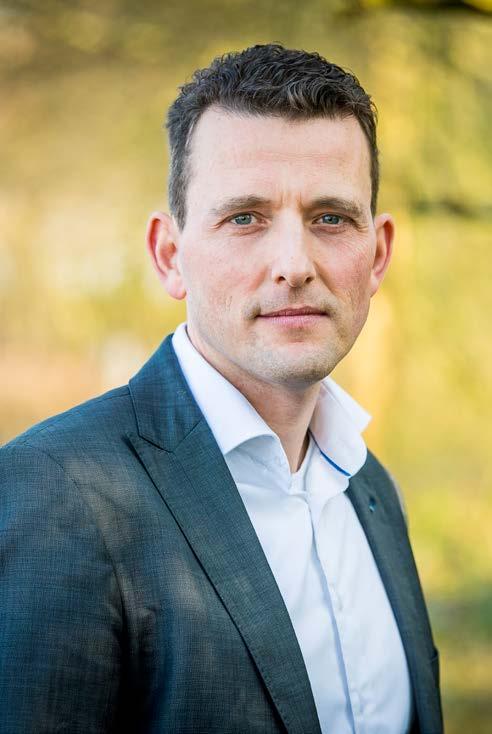
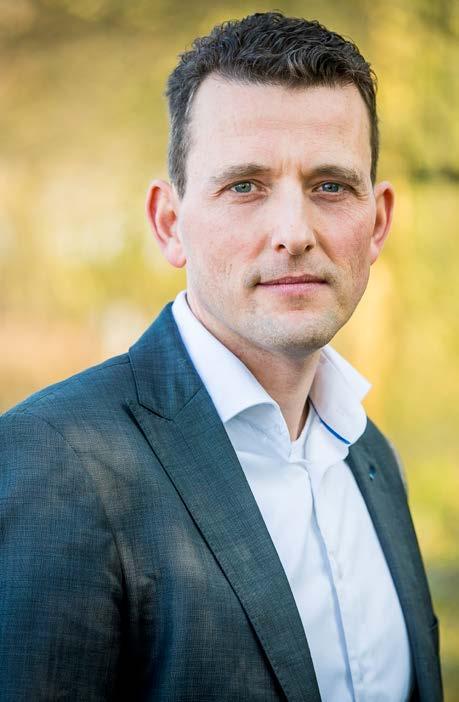
‘More investments in the coming years mean a greater need for financing’
Aquafin closed the financial year on a positive note. Finance & Procurement director Glenn Van Olmen looks back on a tough but exciting year.
during the previous calendar year. If it were a dry year, that translates into lower costs for chemical dosing and sludge processing, for example, and vice versa. So it’s the ‘rough with the smooth’ effect that is always felt after a deferment of a year. As 2024 was an extremely wet year and 2025 was extremely dry, we had a limited surplus.
The result for contracts outside the cooperation agreement with the region was positive but lower than in other years. That was primarily due to the implementation of a new ERP system3, which meant that, exceptionally, we were unable to recognise any more projects in our results during the second half of the year.”
Glenn Van Olmen Finance & Procurement director (until may 2026) Business Development director
How would you rate the financial results for 2025?
“We can be satisfied with the positive result for our contract set by decree. An important component in this is the performance budget that we are allocated by the Flemish Region. That’s the budget for our operations, excluding investments and financing costs, which is calculated based on a set formula that takes account of aspects such as the size of our portfolio and preparations for future investments, but also the waste load processed
How did the switch to a new ERP system go?
“The complex environment that Aquafin operates in made it a challenging process. Despite that, everything went smoothly overall, partly thanks to long and thorough preparations. Since Aquafin was founded 35 years ago, all data relating to project monitoring, personnel, invoicing and payments have been stored on a robust and stable IBM mainframe that has 3 Enterprise Resource Planning >>
‘The transition to a new ERP system went smoothly thanks to good preparation’
to an SAP S4 in the cloud environment. This system has made our ERP futureproof again.”
What opportunities do you see in the coming years for anyone looking to invest in clean watercourses?
You became the head of a new Business Development department at the start of 2026. What is the organisational ambition behind that?
been subject to customised expansion. Because switching to a new ERP system is a costly and time-consuming process, we continued to use the old system for as long as possible, until it became a reliability risk. Despite meticulous preparation and project planning, the leap remained nerve-wracking right up to the very end. Naturally, not everything was plain sailing, but we can definitely be proud of how things went. Particularly when you think that we suddenly switched
“We see our investment authorisation for the Flemish Region increasing strongly over the next few years. Although the delivery budget for the next calendar year is set during the current year, the Flemish Government has already approved a gradual increase until 2032 in view of the new river basin management plans. That means: more projects with a positive environmental impact and therefore also a greater financing need for projects of this type. In addition, an extra 500 million euros will be allocated to Local Pact projects within clearly defined categories. In doing so, the region is taking over investments from the municipalities. By commissioning Aquafin to carry out and prefinance these projects, their impact on the Flemish budget is reduced.”
“Within this new department, we will bring together services that serve various customer segments: the Flemish Region, towns, cities and municipalities, businesses and other organisations. This will enable us to adopt a more centralised product and service strategy while differentiating across customer segments. A growth analysis will further shape the structure of the new department to enable the full potential of our products and services to be utilised, in line with Aquafin’s vision.
For the time being, until a successor has been appointed, I will also remain the director of Finance & Procurement. So I will remain within the organisation and closely oversee the onboarding of a new colleague to ensure that continuity remains guaranteed within that department too.”
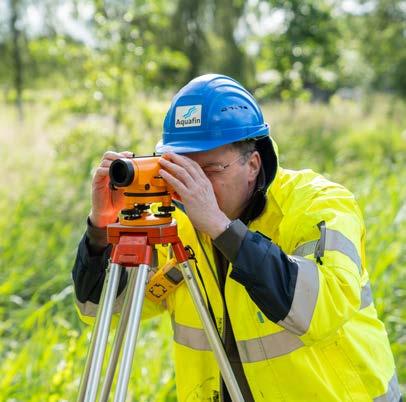
In Belgium, waste water treatment is a regional matter. Aquafin was established by the Flemish Region in 1990 in order to comply with the EU Urban Waste Water Treatment Directive in Flanders. Aquafin became responsible for developing, managing and financing the supra-municipal waste water treatment infrastructure. The company was established in accordance with the law of 26 March 1971 under the section Law on the protection of surface waters against pollution (Wet op de bescherming van de oppervlaktewateren tegen verontreiniging), which was converted in 2018 into the Decree on Integrated Water Policy of 18 July 2003, coordinated on 15 June 2018.
Since 2023, Aquafin has had a new cooperation agreement with the Flemish Government in which it was also assigned a coordinating role to match supra-municipal investments with those of towns, cities and municipalities.
Besides the contract for Flanders, Aquafin also offers its expertise to Flemish towns, cities and municipalities, either directly or via a structural partnership with drinking water companies Water-link, De Watergroep and Pidpa. We also facilitate the beneficial (re)use of flows that are linked to our infrastructure,
such as treated waste water, heat from sewer water or waste water and rainwater. We are always on the lookout for opportunities to create even more value for Flanders through innovation. We see it as a catalyst for realising our ambitions. In 2024, we set up a venture company called Aqcelerator as a subsidiary of Aquafin in order to be able to invest in innovations of third parties that will help us achieve our objectives independently of our supra-municipal remit.
Aquafin applies the principles of separate accounting to separate commercial activities from activities commissioned within the regional (supra-municipal) remit.
As the regulator, the Flemish Environment Agency (VMM) supervises the activities that Aquafin carries out for the Flemish Region. In addition, Aquafin is a private joint-stock company with an autonomous Board of Directors, Audit Committee, auditor, etc.
According to the new cooperation agreement (CA), control of Aquafin’s operations will be result-oriented and directed by the objectives set by the Flemish Region. Aquafin is evaluated based on critical performance indicators.
Aquafin developed an internal control system that enables clear, transparent reporting within the framework of this result-oriented control. The control system is based on the basic concepts of the 3-line model:
At this level, the business carries out its own controls. In collaboration with Deloitte, we defined 114 control actions to ensure good results are achieved in respect of the 23 KPIs. These include, for example, the use of checklists, the drawing up of reports and the taking of samples.
At this level, the business is controlled through operational audits conducted by the Portfolio Management department. Suggestions are also made for improving processes. In addition, the Portfolio Management department is also responsible for external reporting on the 23 KPIs.
This control is carried out by the Internal Audit department through assurance audits. During these audits, checks are conducted to determine whether the 114 control actions
have been performed correctly and documented accurately. It is also checked whether these control actions are actually effective, in other words, whether they make a correct and satisfactory contribution to the realisation of the 23 KPIs. The Internal Audit department is also responsible for external reporting on the effectiveness of these control activities.
As provided for in the cooperation agreement, VMM will monitor the proper and adequate functioning of the internal control system
Since the launch of the new Cooperation Agreement, Aquafin has been responsible for selecting supra-municipal investment projects, which it puts on the agenda to achieve the objectives set. Before projects on supra-municipal budgets are carried out, the Flemish Environment Agency assesses the supra-municipal character of the project. After the contractor delivers, the Flemish Environment Agency can conduct random checks on projects for up to two quarters thereafter. After that, the costs incurred are finally approved and Aquafin has a contractual right to their repayment, spread over a maximum period of 30 years. On the other hand, Aquafin
also prepares an asset management programme for the existing plants, based on LCP analyses (life-cycle plans). The water companies are obliged by decree to treat the water they supply. They enter into an agreement with Aquafin for this, which assumes responsibility for their treatment. Aquafin invoices the drinking water companies for the investment costs over the specified term, along with the operating costs set out in the contract by decree. The drinking water companies pay part of Aquafin’s invoices via a grant from the MINA fund, among other things. They pass on the remainder, currently around two thirds of the total bill, to drinking water consumers according to the principle of ‘the polluter pays’.
In this formula, the budget for operating costs, excluding financing costs, under the Cooperation Agreement is related to factors, such as the pollution load treated, the assets managed, the flows handled and the investment budgets. A series of fixed packages is added to this. The budget calculated is the total operating budget for Aquafin, based on the performance budget formula. This gives Aquafin the freedom to focus on the areas it considers important and to allocate the performance budget internally according to these areas. A cumulative annual efficiency gain is assigned to several packages from the performance budget each year.
The Flemish Region is a co-debtor in the invoice flow between Aquafin and the water companies. The turnover invoiced is spread between the various Flemish water companies, based on an allocation formula annually updated by Aquaflanders and approved by the Flemish Environment Agency. As Aquafin’s investment expenditure is repaid over a period of time, the company has to raise financing for this. Long-term financing for a project is not possible until it has been delivered internally and is in the invoice stream to the water companies.
These long-term investments therefore, involve no construction risk for the financiers. Aquafin covers short-term funding during the projects’ construction phase with equity capital, commercial paper, lines of credit and general corporate-purpose financing.
Aquafin’s tasks are set out in a Cooperation Agreement entered into between the company and the Flemish Region. This is a 20-year rolling agreement that specifies that, in addition
to developing, managing and operating the treatment infrastructure, Aquafin is also responsible for financing it. The latest update to the agreement was made on 1 January 2023. An allocation agreement exists between the Flemish Region, Aquafin, the European Investment Bank and Belfius Bank, with Belfius Bank acting as agent. The agreement stipulates that, should Aquafin find itself in financial difficulties, the water companies will no longer have to pay Aquafin for the treatment of the drinking water they supply, but will pay Belfius Bank instead. As the agent for the allocation agreement, Belfius Bank will then pass on the sums to the financiers on the (interim) maturity dates of the financing agreements. According to the allocation agreement, Aquafin’s outstanding credit balance with the water companies must always exceed the debt under the allocation agreement (the allocation ratio). The statutory auditor checks this ratio after each disbursement of financing under the agreement and confirms this to Belfius Bank. In turn, this bank communicates this allocation ratio to the financiers. It is also important for them to know that, under the allocation agreement, any changes to specified articles of the Cooperation Agreement with a financial impact must first be submitted to them for approval.
To participate in the allocation agreement, the financier first signs an agency agreement with Aquafin and Belfius Bank.
Balance sheet and income statement
Main risks and uncertainties
Main events during the financial year
Auditing of the company
Shareholder structure and cross-shareholdings
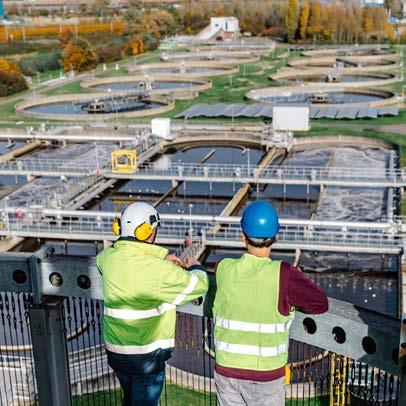
Branch offices
Events after the balance sheet date
Conflicts of interest
Notes to the balance sheet
Notes to the income statement
Proposal to the General Meeting
Extra information
Green Finance Framework report on 31/12/2025
statement (in thousands of euros)
There are no substantial risks or uncertainties regarding the financial year.
After drawing down a final tranche of 25 million euros from our 12th loan with the European Investment Bank (EIB), we signed a new framework contract with the EIB in September. This new 13th loan totals 265 million euros, significantly higher than previous loans. We will also use it to finance the two new sludge dryers that will run on residual heat and are currently under construction in Beringen and Roeselare.
Increase in commercial paper programme
Aquafin uses commercial paper to finance for the short-term investment projects in progress. Given the strong increase in planned investment authorisation over the next few years, we increased our commercial paper programme from 500 to 650 million euros.
In 2025, rating agency Moody’s confirmed the long-term rating of Aquafin as ‘Aa3 with negative outlook’ again. The short-term rating also remains unchanged at P-1. Aquafin’s credit rating tracks the maximum rating of the Flemish Region. Level ‘Aa3’ is the fourth highest rating awarded by Moody’s and signifies creditworthiness of ‘high quality, with minimal risk’.
On 1 January 2026, nine Flemish municipalities joined the Riopact partnership as partners. Seven of them were already Riopact customers but chose to take the next step for greater peace of mind. This meant strong growth for Riopact in terms of the number of partners, which increased from 25 to 34 as a result. Riopact is the structural joint venture for municipal sewer management of Aquafin and the drinking water company De Watergroep.
In 2025, BDO was appointed as statutory auditor by the General Meeting – based on nomination by the Board of Directors –for a period of three years, specifically for the 2025, 2026 and 2027 financial years.
The fees paid to BDO amount to (excluding VAT, excluding the usual charges):
Participatiemaatschappij Vlaanderen (PMV) holds all the Aquafin shares. There are no cross-shareholdings.
There are no branch offices.
There were no events with a material impact after the balance sheet date.
There were no events where a conflict of interest under property law was established in respect of the directors in accordance with article 7:96 of the Companies Code.
The cumulative investment per category is shown below at book value:
in thousands of euros 2025 2024
Activated software 35,253 4,823
Software under development 3,190 11,728
The cumulative investment per category is shown below at book value:
In 2025, 34.2 million euros were invested in software and 3.8 million euros were depreciated. The activation of the 34.2 million euros primarily relates to the implementation of SAP, which was launched on 1 June 2025.
Of the 34.2 million euros, 25.3 million euros were transferred from assets under development (11.1 million euros from Software under development and 14.2 million euros from tangible assets under development) and 2.6 million euros were invested in the development of software. This relates to software that is not yet operational. Capitalisation will not take place and depreciation will not start until it is put into use.
As stipulated in the Cooperation Agreement, Aquafin collects domestic waste water in Flanders via collectors and transports it to
treatment plants for treament. Firstly, Aquafin develops the necessary supra-municipal infrastructure: collector sewers for waste water, pumping stations and waste water treatment plants. Secondly, Aquafin carries out the projects assigned to it by the Flemish Region under the Local Pact with municipalities. These Local Pact projects follow the same procedures as the supra-municipal projects.
The increase in tangible assets is due to net investments growth in water treatment infrastructure, carried out at the instructions of the Flemish Region. Water treatment infrastructure includes the aforementioned collector sewers for waste water, pumping stations and waste water treatment plants. This relates to all investment projects already delivered from the first delivery in 1992 to the end of the last financial year. Aquafin delivered 238 million euros’ worth of new projects in 2025. This year, 195 million euros’ worth of depreciation was also recorded and 1.6 million euros were invested in land.
Projects not yet delivered, including land, comprise all costs incurred for supra-municipal projects in progress. It covers projects in the design phase, contracted projects or projects already awarded where the costs incurred mostly relate to accounting category 27 – assets under construction and advance
payments – and partly to accounting category 22 – land and buildings – for the land element. Assets under construction are not depreciated.
Projects not yet delivered in category 27 increased by 27.3% in 2025 to 716 million euros. There was a 13.96% increase in tender calls for development projects. The growth in assets under construction is a direct result of the increase in the delivery budget. To effectively realise this increase, Aquafin must plan ahead by launching more projects.
In addition, the cost price of projects has risen significantly due to additional requirements
imposed by new regulations and by licensing authorities, such as stricter requirements relating to infiltration, buffering and discharge of rainwater, additional requirements relating to groundwater and PFAS, among other things.
In 2025, 61.2 million euros’ worth of asset management was delivered and 148.3 million euros’ worth were added to assets under construction. In 2025, 3.7 million euros’ worth of energy fund projects were delivered and 1.7 million euros’ worth were added to assets under construction.
In 1994, under the Management Agreement, Aquafin acquired the right to use plants built before its establishment and owned by the Flemish Environment Agency. In subsequent years, these plants were not only operated by Aquafin, but also extended and renovated. Since the management of the same assets by both Aquafin and the Flemish Environment Agency is inefficient, the Flemish Government decided to allow Aquafin to buy out the plants and associated land. These purchases took place from 2010 onwards and are recognised under tangible fixed assets as Flemish Environment Agency assets purchased. In 2025, depreciation of €15 million was recorded on these assets.
Investments in the head office and operations relate to investments in hardware, software,
lab equipment, furniture, materials and equipment required for the operation of the main office and umbrella operational activities, which are not intended for one specific plant.
In 2025, 0.05 million euros were invested in the renovation of buildings managed and 1.0 million euros were depreciated on existing buildings. Of this, 0.9 million euros relates to the Campus.
In 2025, a further 0.22 million euros were invested in hardware, 6.1 million euros in materials and equipment and 0.2 million euros in furniture and in total, 3.2 million euros were depreciated on these items. Also in 2025, 0.17 million euros’ worth of laboratory equipment and 0.04 million euros’ worth of furniture were removed from the assets. Both were fully written off.
Hydronaut studies are carried out to ensure the correct design of the related supramunicipal investment project and are consequently capitalised. These studies are also carried out in relation to the management of existing infrastructure. In 2025, 1.5 million euros were invested and 3.3 million euros were depreciated.
In the context of the role of Asset Manager of Flanders, Aquafin’s task package was
expanded with the takeover of the overflow measurement matrix from VMM, among other things. In 2025, overflow measurement devices worth 0.3 million euros were purchased and installed, of which 0.6 million euros were depreciated.
As well as supra-municipal infrastructure, a small part of Aquafin’s assets consists of municipal infrastructure. Under the contracts with the municipalities, Aquafin may assume responsibility for so-called transport services. Under these contracts, Aquafin provides the necessary investment and the company offers the municipality or intermunicipal cooperative society the opportunity to transport waste water via these sewers for the duration of the contract (15 years), after which the assets will be transferred to the municipality or intermunicipal cooperative society. In 2025, depreciation of 2.7 million euros was recorded for municipal infrastructure. Financial
The financial fixed assets mainly consist of Aquafin’s majority stakes in Aquaplus and Aqcelerator.
Aquafin has held all the shares in Aquaplus since 2022. Previous downward value adjustments have been reversed to the extent of Aquaplus’s result.
Aqcelerator was set up on 8 February 2024. Aqcelerator is a venture company whose participations focus on two topics: stimulating relevant innovations that contribute directly or indirectly to Aquafin’s vision on the one hand and investing in projects relating to common
goods on the other hand. The latter participations of Aqcelerator relate to projects linked to the application of treated waste water but never to projects to produce drinking water. It is important to note here that, in these cases, Aqcelerator will consider participation only after the objective process for allocating the common good has been completed and only on the initiative of the private party.
Aquafin holds 14.29% of the shares in Synductis and is shown under Companies with which there is a participatory relationship.
The shares held by Aquafin in Riopact are included in Other participating interests.
In 2022, as part of Call Groene Stroom, Aquafin received a subsidy to support of medium-sized solar installations and small and medium-sized wind turbines. In return, Aquafin had to deposit a guarantee equal to 7.5% of the support granted, with a minimum of 2000 euros.
Apart from the tasks on behalf of the Flemish Region (which account for 92% of our activities in 2025) assigned under the cooperation agreement, towns, cities and municipalities can outsource sewerage tasks to Aquafin,
which has developed a specific offer for this purpose. They can either enter into a concession arrangement directly with Aquafin or use Aquafin’s services indirectly through one of the partnerships it has formed with Water-link, De Watergroep or Pidpa.
Works in this context which have been started but not yet completed are included under contracts in progress.
The strong increase in contracts in progress is due to the switch to SAP from June 2025 and the long data migration throughput, which meant that, exceptionally, no new projects were delivered and included in the result during the 2nd half of the year. In the first 5 months of 2025, new projects were delivered for a total of 24.1 million euros.
Since mid-2024, the collaboration with De Watergroep has been a partnership. A partnership does not file annual figures with De Nationale Bank itself. As a result, Riopact’s figures have to be included in Aquafin for the portion of its share in Riopact and all transactions between them are eliminated (consolidated).
thousands
Other (Pidpa, individual municipalities) 107,329 79,334
Riopact (partnership with De Watergroep) 83,559 56,254
the late rebilling of commercial projects. In December, the costs for both Q3 and Q4 were invoiced because it had not been possible to do so earlier due to the migration. Due to the incorporation of Riopact, an additional 3.4 million euros has been added to trade debtors outside ‘ordinary operations’.
Other amounts receivable comprise recoverable VAT, recoverable taxes (7.6 million euros) and an amount receivable from De Watergroep as a result of the consolidation with Riopact (-1.4 million euros). These decreased from 10.5 million euros in 2024 to 6.2 million euros in 2025.
Amounts receivable within one year comprise trade debtors and other receivables. The balance for Trade debtors is determined by the timing of customer invoicing and payment.
As at the end of 2025, trade receivables increased from 60.3 million euros to 101.7 million euros.
The increase of 41.4 million euros (including VAT) in receivables from customers is due to
The main reason for this is the drop in corporate tax. In 2024, recoverable corporation tax amounted to 2.7 million euros, whereas in 2025, it was 1.3 million euros. One of the reasons for this is a higher amount of rejected expenditure and a higher result compared with 2024.
Aquafin actively manages its liquidity. Minimal cash surpluses are aimed for and invested if necessary, taking account of liquidity and investment proceeds as well as the creditworthiness of the other party.
The item ‘Short-term investments and cash’ increased by 5.5 million euros from 8 million euros to 13.5 million euros. This amount is in line with the policy for cash surpluses.
in thousands of euros 2025 2024
Purchases
The item purchases of Flemish Environment Agency assets with equity covers the component of the receivable arising from assets acquired by Aquafin from the Flemish Environment Agency since 2010 (for more information on this, see under Tangible fixed assets – pur-
chases of Flemish Environment Agency assets). Aquafin finances these purchases partially with external funds and partially with equity. Purchases using equity are not invoiced to the water companies, but will be invoiced in a single amount should the cooperation agreement, entered into on a rolling basis for 20 years, come to an end. The resulting receivable is increased annually by 1/20th of the acquisition price of the assets and recorded under accrued income and deferred charges.
Other costs to be transferred are costs incurred by Aquafin in 2025 but relating wholly or in part to 2026. These mainly relate to maintenance contracts, licence fees or prepaid rent or interest.
The drop in interest charges to be transferred is primarily due to the issue of commercial paper, which will be processed differently in 2025. In 2024, the interest for the whole term was paid at the time of issue and then transferred. From 2025, the cost will not be processed until payment. This is only an item presented on the balance sheet; it has no financial impact.
Under the contracts with the municipalities, Aquafin assumes responsibility for transport services (cf. Tangible assets – municipal activities) for which a payment system can
be designed upon request by the municipalities. The municipal projects item reflects the positive difference between depreciation on municipal projects and the repayment part of the underlying loans invoiced to the municipalities. This balances out charges and income in the interim.
Aquafin uses interest rate hedging contracts to hedge the interest rate risk on certain loans, in line with the policy approved by the Board of Directors. To enable the hedging results to be measured, a benchmark is set for each hedging strategy. Where the interest charges for the benchmark are lower than the total of the interest charges for the underlying loan and the fixing of the associated hedging instruments, this difference is recorded as a financial charge. Since the interest rate is fixed six months before the payment date, the deviation from the benchmark is known and recorded, a pro-rata entry is made at the time of arrangement under accrued interest – management of interest rate risk. Thanks to optimisations of a large number of our hedges in past years, the interest management results are positive and do not lead to financial charges that have to be recorded on a pro rata basis under accrued interest – management of interest rate risk. The financial charges, which represent the difference between the benchmark and the interest charges for the loan
and are recorded in the results as an interest correction to manage the interest rate risk, are also recorded on a pro rata basis under deferred charges and accrued income. The interest rates on loans consist of a Euribor interest rate plus a margin. In 2025, the 6-month Euribor interest rate fell from approximately 2.6% to 2.1% and the benchmark interest rate for many hedges was higher than the loan rate. That meant that as of the end of 2025, there is accrued interest on the asset side in respect of interest rate risk management.
Accrued revenue includes the 2025 profit under a partnership for municipal sewerage activities between Aquafin and De Watergroep called Riopact. In this, both parties cede 50% of their result to each other. Aquafin ended the financial year with a profit of 0.59 million euros and De Watergroep achieved a result of 0.52 million euros. Profit distribution is processed as a credit note for 0.59 million euros, to be prepared, and the payment of 0.55 million euros is to be received. In addition, half of the partnership is consolidated at the account level in the figures for Aquafin, after elimination of the intercompany items.
Aquafin’s capital currently stands at 298 million euros. The capital consists of 1,001,613 shares, which are unlisted and are fully paid-up.
The reserves consist of the legal reserve and the available reserves.
The legal reserve is topped up annually until it reaches a level equal to 10% of the capital. In accordance with Article 7:211 of the Companies Code, 5% of the after-tax profit is added to the reserve annually.
If the General Meeting approves the proposed appropriation of profits for the 2025 financial year, the legal reserve will be increased by 363 thousand euros to 16,928 thousand euros
and the remaining profit of 2.7 million euros will be added to profit carried forward.
Following the revaluation of Dijkstraat and Ingberthoeveweg, a revaluation surplus of 1.8 million euros was recorded in 2021.
In 1992, Aquafin received a notice from the Belgian Accounting Standards Board granting permission to interpret the investment grants item differently from the usual interpretation. This item reflects the difference between the repayment and depreciation periods for delivered supra-municipal projects. Since repayment rate for these projects does not exactly match the depreciation rate, a mismatch arises between charges and related income. In other words, it relates to prepaid depreciation.
The land acquired by Aquafin is not depreciated and is repaid immediately.
The difference between the repayment and depreciation periods is broken down as follows:
Environment
The main changes in the provisions for liabilities and charges can be broken down into those for supra-municipal project costs, possibly rejected operating costs and personnel-related provisions.
We note that almost all items have increased, with construction engineering and, to a lesser extent, electromechanics as the main exceptions. From 2008, construction engineering was invoiced over 15 years and depreciated over 33 years. As of 2009, the construction engineering category has been invoiced for over 30 years and the repayment term for the outstanding amounts has been adjusted, halving the annual invoice amount. This means that, over time, more and more projects will be invoiced in full and depreciated, so the amount of investment grants will reduce again.
The amount for the sludge mono-processor plant is presented under investment grants sludge mono-processor (22.1 million euros) and relates to the amount already received and reserved for the future milestone payment scheduled.
The provision for supra-municipal project costs (1,925 thousand euros) relates, first, to risks for works in progress and projects that cannot be delivered due to the delayed/ postponed execution of municipal projects, as they would generate an insufficient return as yet (1,441 thousand euros). Second, provisions are made for the deduction of project costs
recorded after delivery, known as subsequent costs (483 thousand euros). The reduction in the provision primarily results from the delivery of project 21.378BB Deinze, in 2025, with a reversal of the provision in the amount of 597 thousand euros.
Provision is made for legal disputes based on a reasonable estimate of the claim where it is probable that Aquafin may lose the case. As at 31 December 2025, the provision for legal disputes amounted to 283 thousand euros for 60 disputes. In 2025, we recorded 17 new cases and 19 files could be closed.
As advised by the accounting standards, every year a provision is made for the processing costs of sludge in the buffers. These are the provisions for sludge buffers.
Provision for bridging pensions has increased by 15 thousand euros. On the one hand, a new employee was added, and on the other hand, the gap between SWT and the actual pension narrows each year for those eligible for the bridging pension.
Possibly rejected operating costs are those for which there is a possibility for non-reimbursement under the cooperation agreement. On the one hand, a provision of 96 thousand euros was retained for operating costs that
might not be accepted, such as endogenous growth, TZPE (patrimonial units related to FTE) and TZPA (patrimonial units related to patrimonial value) of the extraction at Borgloon WWTP and the Water Framework Directive on phosphorus removal. On the other hand, a new provision of 931 thousand euros was created for exogenous income from phosphorus.
The insurance claims provision is 30 thousand euros. On the one hand, the provisions of 8 thousand euros for the KLIP Turnhout insurance claim and 3 thousand euros for the Lieven Gevaertstraat 15 Kapellen – sewer claim were reversed and on the other hand, a new provision of 30 thousand euros was made for the Bornem liability claim.
Other mainly contains provisions in connection with the shutdown plan for sludge processing at Bruges and a provision for digital transport documents at the end of 2025.
An additional 230 million euros was allocated in 2025 to finance our supra-municipal investment expenditure, with repayment by the drinking water companies spread over time. The resulting allocation ratio, in which the
remaining claims against the drinking water companies are set against debt under the allocation agreement, stands at 1.11 (this must always be greater than one) at the end of the 2025 financial year.
For our day-to-day business operations, Aquafin relies first on medium-term finance to maintain a stable financing base and second on short-term loans and commercial paper to respond to fluctuations in work in progress for investment projects. The amount of these general-purpose debts decreased
due to the repayment of 75.6 million euros and the partial refinancing in the amount of 26.5 million euros.
At the request of the municipalities, a payment system can be designed for our municipal activities. No new long-term financing agreements were taken up in this respect in 2025. The outstanding debt for municipal activities decreased due to capital repayments of current debts in accordance with their repayment schedules.
within one year in thousands of euros
Commercial paper
Fixings – management of interest rate risk 1,982 -498
Credit lines 14,790 5,100
the balance of debts and receivables resulting from these fixings is recorded as a shortterm financial debt. A drop in the short-term interest rate in 2025 means that Aquafin will receive less interest on the floating leg. Aquafin pays the fixed leg, the long-term interest rate. Across all swap contracts, Aquafin no longer has a receivable but rather a debt of 2 million euros.
The financing payable within one year is used primarily to fund work in progress before delivery. Within the commercial paper programme worth 650 million euros, of which 485.5 million euros are available for shortterm finance, 381.5 million euros of debt security were outstanding as at 31 December 2025. The outstanding balance depends on various factors and is only a snapshot. The increase can be largely attributed to the increase in assets under construction that need to be prefinanced and the (temporary) lower level of medium-term finance, the other finance component of assets under construction.
For the purpose of managing the interest rate risk, fixing always takes place six months before the payment date. During this period,
As at 31 December 2025, under the existing credit lines worth 465 million euros – including the syndicated credit – a straight loan of 4.9 million euros was in place to finance municipal work in progress and a straight loan of 10 million euros to finance supra-municipal work in progress.
Supplier
Invoices to be received
Credit notes to be prepared – water companies, current financial year
The item supplier debts decreased by 39.2 million euros compared with the previous year. To compensate possible delays in the SAP invoice processing, it was decided to pay all invoices immediately upon processing. In 2024, invoices were paid on the due date.
Invoices to be received includes estimates for goods and services already provided, the invoice for which has not been received or processed yet.
The item credit notes to be prepared – water companies reflects the difference between the budget estimates for operating costs –estimates on which the advance invoices to the water companies are based – and
Aquafin’s final invoice, based on services actually performed and settlement of the remuneration model for operating costs. In 2025, the final settlement of accounts for the 2024 remuneration model resulted in a credit note of 30.7 million euros, for which a provision of 8.9 million euros was made for 2025. The remaining balance (2.2 million euros) comprises a reserve set up by Aquafin to carry out the restructuring of the interest rate management programme.
The other item includes first a reclassification of assets and liabilities: customers with a credit balance and suppliers with a balance owing to Aquafin (2.5 million euros). Second, this includes a provision for credit notes to be prepared for the Flemish Region and De Watergroep, among others, regarding the settlement of profits within Riopact (4.1 million euros combined).
The services provided and invoiced by Aquafin for municipal customers which are not yet completed are included under the heading of advances received on contracts in progress and evolve along the same lines as contracts in progress. As at the end of 2025, this balance sheet item increased by 107.5 million euros to 343.4 million euros.
The item Taxes, remuneration and social security increased by 25.1 million euros to 27.3 million euros.
In 2025, when making holiday pay provisions, the indexation for 2026 was taken into account. That is because holiday pay was accrued in 2025 and will be paid in 2026. An additional provision of 1 million euros was also made in 2025 for holidays not taken in 2025 but carried over to 2026, mainly due to the holiday savings plan introduced. As a result, the provision evolved from 3.2 million euros to 4.2 million euros.
Regional, provincial and municipal taxes and levies decreased by 8 thousand euros. These debts fluctuate on account of actual costs coming in on the one hand and indexation on the other.
The outstanding corporate tax for 2024 relates to the tax audit on the financial year 2022.
The dividend payable is also recognised here.
If the General Meeting approves the proposed appropriation of profits, a gross dividend of 4,207 thousand euros will be paid to PMV on 21 April 2026. This amount is the same as the dividend paid for the 2024 financial year.
Outstanding liabilities with respect to taxes include payable corporate tax, regional, provincial and municipal taxes and levies.
This includes the debt in respect of Aqcelerator with regard to cash pooling (3.7 million euros) and unpaid interest (19 thousand euros) and debt in respect of Riopact (1 million euros).
Accrued interest on loans includes interest on both short- and long-term finance ( except interest on short-term commercial paper), which is allocated to the relevant financial year on a pro rata basis at the time of arrangement. This amount has decreased slightly. Although the long-term interest rate has risen, the increase in interest charges on new
medium- and long-term financing is more than offset by the drop in the short-term interest rate. As a result, the interest charges on our loans with a variable interest rate dropped. This is also noticeable in a decrease in the pro rata entries.
The prorata entries for interest charges relating to contracts to hedge the interest rate risks of certain loans are also recorded under accruals and deferred income. To enable hedging results to be measured, a benchmark is set for each hedging strategy. If the interest charges for the benchmark exceed the sum of the interest charges for the underlying loan and the fixing of the associated hedging instrument, the difference is recorded in a revenue account. Since the interest rate is fixed six months before the payment date, so that the deviation from the benchmark is known and recorded, pro-rata entry takes place at the time of arrangement via accrued interest – management of interest rate risk. For almost all of our hedging contracts, the deviation from the benchmark in 2025 became smaller due to a further drop in the short-term interest rate, as a result of which the floating legs of the swaps (that we receive) and therefore revenue were lower. However, by investing savings from interest rate management, Aquafin restructured one hedging contract, resulting in an additional positive result compared to the
benchmark. In addition, a number of new loans with a variable interest rate and reviewable margin were also concluded which are hedged with swaps which generate revenue compared with their benchmark. As a result of this, accrued interest – management of interest rate risk has risen slightly.
Other accrued charges include 25 million euros of revenue to be carried forward. Since 2021, this item also includes budgets already received but not yet allocated for the roll-out of the digitalisation programme Digital4Us and for performing the role of Asset Manager for Flanders. In 2025, these were cumulated to give 16.4 million euros and 2.6 million euros, respectively.
Since 2023, additional budgets have been received to finance the construction of a sludge mono-processing plant and to invest in making residual water available to agriculture and horticulture. The balance of the residual water not yet used amounts to 4.7 million. From 2024, the amount received but not yet used for the sludge mono-processor (22.1 million euros) will be shown as investment grants.
This income will be recorded as turnover in proportion to the related costs. The other elements are shown in the table below.
Other contains a provision for municipal projects that are not yet completed. Based on the list of projects with negative balances as of the end of 2025, a provision was made in accordance with the principle of prudence.
Bank charges for 2024 include a commiment fee of 110 thousand euros. In 2025, that commitment fee of 118 thousand euros was processed as an invoice to be received (Handelsschuld).
The cooperation agreement with the Flemish Region, which contains provisions regarding Aquafin’s supra-municipal activities, stipulates that Aquafin’s remuneration for supra-municipal activities is based on the rebilling of all reasonable costs, plus remuneration for the shareholder(s) based on the contribution to the company’s equity. This means that charges and income for these activities broadly mirror one another.
The resources available for financing the operating costs – excluding financing costs and excluding fluctuations in energy prices – is determined based on the so-called performance budget formula, where Aquafin’s operating resources budget is dependent on a number of parameters, including assets and the pollution load treated and specific indices.
The difference between the result according to the performance budget formula on the one hand and the actual charges recorded for this financial year on the other has a positive impact of 2.6 million euros on the accounting result as at 31 December 2025. This is mainly due to the dry weather, which has led to a substantial decrease in the costs of chemicals and sludge processing.
Aquafin realises the majority of its turnover from supra-municipal activities under the cooperation agreement with the Flemish Region. Within this remuneration, a distinction can be made between payments relating to construction activities (investment costs) and payments relating to operational functioning (operating costs), which, given the constantly growing activities, evolve along the same lines.
Payments for operating costs concern invoicing in accordance with the budget set by the performance budget formula. The change in operating costs is due to the rise in the output parameters and indices for the remuneration model. This budget has increased due to increased activities, including future delivery volume, increased assets and the pollution load treated. The evolution of energy prices is another important factor here.
The staggered invoicing of investment costs concerns repayment for the sewage treatment infrastructure delivered. The repayment terms for this infrastructure take into account the expected life of the underlying assets.
The settlement of interest charges relates to the rebilling of the interest charges, which are due to Aquafin’s prefinancing role.
The equity remuneration amounts to 1.95% of equity capital, which should lead to the desired dividend, taking taxes into account. In 2025, the corporate tax owed is 4.2 million euros compared with 2.6 million euros in 2024. One of the reasons for this is a higher amount of rejected expenditure and surplus performance budget.
Turnover also includes the rebilling of charges made for the clean-up of cross-regional waste water by the Brussels Region via Hydria.
Services rendered by Aquafin to towns, cities and municipalities not covered by the cooperation agreement resulted in a turnover of 44 million euros in 2025. This relates to the turnover from projects included in the result. This limited turnover is due to the switch to SAP from June 2025, in conjunction with the long throughput time of the data migration, which meant that, exceptionally, no new projects were delivered and included in the result during the 2nd half of the year. Under the completed contract valuation method, a project is not recognised in the income statement until it is fully completed. This decrease in realised turnover is compensated for by an increase in contracts in progress (see below).
Due to a timing difference between the depreciation and rebilling of supra-municipal invest-
ments – as explained under the investment grants item – a correction is made to the result by netting the invoicing of investment costs after depreciation to bring the depreciation into line with the related turnover.
This item reflects the change in the item ‘stocks and contracts in progress’ on the asset side of the balance sheet, from the current period to the previous period.
switch to SAP from June 2025 and the long data migration throughput time. This meant that no new projects or services were delivered and included in the result during the 2nd half of the financial year.
The joint venture ‘Riopact’ has been a Partnership since 2024. As a result, Riopact’s figures have to be included in Aquafin for the portion of its share in Riopact and all transactions between them are eliminated (consolidated).
Own construction capitalised contains capitalised costs of research and development produced by Aquafin employees and external consultants. In 2025, this amounted to 11.8 million euros. The increase of 10.4 million euros compared to 2024 is due to a change in accounting method. In AS400, these costs were entered directly under fixed assets (27-account AIA). In SAP, these costs are entered under the 61-account (services and miscellaneous goods) first. The cost is then neutralised via a 72-account (fixed assets produced) and transferred to fixed assets. This also explains why the cost of external employees (see Services and miscellaneous goods) has increased so sharply.
Under the completed contract valuation method, a project is not recognised in the income statement until it is fully completed. This heading reflects the growth in purchases linked to commercial projects and services that have not yet been delivered. The strong increase in contracts in progress is due to the
Other operating income rose by 697 thousand euros year on year.
Other operating income mainly relates to the recovery of costs that cannot be treated as part of normal sales. Among the main differences, we see an increase in the recovery of training subsidies (+229 thousand euros), recovery of BV R&D (+120 thousand euros) and bicycle leasing (+133 thousand euros) and the consolidation of Riopact (+617 thousand euros) on the one hand and a drop in recovery of educational leave (-77 thousand euros), recovery of scrap iron (-156 thousand euros) and recovery of external waste water (-188 thousand euros) on the other hand.
The main items under the heading Raw materials, consumables and goods for resale are shown below.
Raw materials, consumables and goods for resale
As a result of a remapping of costs within SAP, there was a reclassification between the items Raw materials, consumables and goods for resale and Services and miscellaneous goods. For 2024, that meant the reclassification of 665 thousand euros from Services to Raw materials.
Within Energy costs, electricity costs (accounting for 92% of the total) fell further in 2025 (-12%) on account of both lower consumption (due to the drier weather conditions, among other things) and a lower average price per MWh (2% lower). Turning to natural gas, the average price charged decreased by 13%.
Costs of removal of sludge, sand and screenings dropped by 2.7 million euros. With 2024 being an extremely wet year followed by 2025, which was an extremely dry year, this caused a drop in the volume of dewatered sludge processed in 2025 (-16k tonnes compared to 2024). The transport costs for the removal of liquid, dewatered and dried sludge remained almost stable (-1% or -0.1 million euros). Sales costs, including environmental tax, dropped 11% (-2.6 million euros) due to lower processing volume.
Costs of chemicals dropped by 0.5 million euros in 2025. In the water line (-0.8 million euros), we note lower consumption on account of the extremely dry weather conditions. In the sludge line, costs of chemicals increased by 0.26 million euros (3%).
In the case of Mechanical, electrical and architectural works, we see reclassification from the item Services and miscellaneous goods to Raw materials, consumables and goods
for resale. Costs of Mechanical, electrical and architectural works increased by 28.89% due to inflationary pressures on prices and the impact of ageing assets.
Also in the case of the item Other, there is a reclassification from Services and miscellaneous goods to Raw materials, consumables and goods for resale. This relates to the costs of routine maintenance and emptying. The item Other drops by 12% spread across various items, the biggest of which related to emptying and sludge dryers.
In respect of the item Operation by third parties, costs increased by 0.8 million euros. This relates to Hydria’s rebilling for Aquafin’s contribution to the Brussels Region in the waste water treatment costs of the Flemish suburban municipalities via the Brussels-North and Brussels-South WWTPs. The increase is primarily explained by the higher wage costs on the one hand and fluctuations in annual changes in stocks on the other.
Services and miscellaneous goods increased from 155 million euros to 174.9 million euros.
Costs relating to municipal activities increased by 6.4 million euros compared with
2024. These costs have a limited impact on the result. This is because they are neutralised via contracts in progress on the balance sheet and are not recognised on the income statement until the project or service is fully completed.
This increase is primarily due to contracting costs, which remain high due to factors such as consistently high material prices, wage indexations, etc.
In the case of supra-municipal activities, we mainly see an increase in costs related to contract work connected with electromechanics (2.5 million euros) and IT (2.7 million euros) and external employees (6 million euros). The increase in external employees compared to 2024 is due to a change in accounting method. In AS400, these costs were entered directly under fixed assets (27-account AIA). In SAP, these costs are entered under the 61-account (services and miscellaneous goods) first. The cost is then neutralised via a 72-account (fixed assets produced) and transferred to fixed assets.
Services and miscellaneous goods related to the consolidation with Riopact increased from 20.3 million euros to 22.2 million euros (+9.5%).
The increase in personnel costs reflects the increase in the workforce from 1,201 to 1,213 FTEs. This increase is in line with the growth of the infrastructure operated and developed by Aquafin, at both municipal and supramunicipal level.
within the framework of growth. In addition, an additional provision of 1 million euros was made in 2025 for holidays not taken in 2025 and carried over to 2026, mainly due to the holiday savings plan introduced.
Depreciation and other amounts written off on formation expenses, intangible and tangible fixed assets
Depreciation can be divided into the following four headings. in thousands of euros 2025 2024
premiums for non-statutory
Salaries and direct social benefits increased by 5.4 million euros. On the one hand, personnel costs decreased by 0.35 million due to the consolidation with Riopact, while on the other hand, salaries and direct social benefits increased by 5.7 million euros. This is the result of the increase in the workforce, wage indexation in 2025 and wage adjustments
Given the steady expansion of Aquafin’s assets – the value of Aquafin’s assets continues to increase year on year – the depreciation on Plant, machinery & equipment also increased.
The decrease of 0.1 million euros in respect of buildings is due to a reduction in one-off compensation payments for land. Costs related to the purchase of land are written off in a single amount on completion. The decrease in depreciation is due to a decline in the number of completed land transactions.
Amounts written down on stocks, contracts in progress and trade debtors – provisions for liabilities and charges
The table below shows the connection with changes to the related balance sheet accounts.
Provisions for liabilities and charges have already been discussed in relation to the balance sheet position concerned.
This heading mainly covers direct taxation and taxes levied on Aquafin’s installations. This comprises property tax and regional, provincial, municipal and environmental taxes.
In 2024, the adjustment of VAT on own contributions was recorded for the 2022, 2023 and 2024 financial years, totalling 0.4 million euros.
Other costs mainly includes non-deductible VAT on vehicle costs (476 thousand euros in 2024 compared with 188 thousand euros in 2025). Within SAP, non-deductible VAT is processed on vehicle costs. The 188 thousand euros relate to the processing of vehicle costs within AS400 which were still processed based on non-deductible VAT.
This heading covers interest charges on shortand long-term financing, charges and income relating to active interest rate management and the interest received on Aquafin’s current and savings accounts.
The net result of interest rate management (charges and income) has dropped from 704 thousand euros to 245 thousand euros.
The interest charges on financing are higher as the result of an increase in the outstanding debt to enable pre-financing of the work in progress and additional deliveries.
In addition, despite active treasury management, Aquafin received 503 thousand euros less interest compared to 2024. This is due to the drop in Euribor interest rates (2.9% in January 2025 to 1.9% in December 2025) and smaller cash surpluses.
This comprises the adjustment of the loss recorded for the participating interest in Aquaplus. The valuation in Aquafin’s books is adjusted annually based on Aquaplus’ equity. In 2025, Aquaplus achieved a positive result of 266 thousand euros. As a result, a reversal of 266 thousand euros on the write-down for the participating interest was recognised in Aquafin. This adjustment will continue only as long as the previously recorded write-down can be reversed.
Taking into account the profit after taxes, the profit for the financial year amounts to 7,256,782.13 euros
— transfer to the legal reserve: 362,839.11 euros
— transfer to the other reserve: 0 euros
If the General Meeting approves the proposed appropriation of profits, a gross dividend of 4.2 euros per share will be paid to PMV on 21 April 2026.
In view of the level and terms of Aquafin’s long-term debt, in 2006, the Board of Directors agreed to actively manage the interest rate risk. The framework stipulates that the interest rate risk associated with borrowings may be hedged as follows:
A Long-term debt (initial maturity of more than 10 years)
a maximum of 10% of the long-term debt may have an unlimited floating rate; a maximum of 35% of the long-term debt may be floating, but with interest costs being limited (via caps). a minimum of 65% of the long-term debt must have a fixed rate.
B Medium-term debt
(initial maturity of 1-10 years)
A maximum of 50% may be hedged
C Short-term debt not hedged
D Budgeted long-term debt
50% may be hedged (maximum 5 years forward)
Each hedging transaction is fully documented on conclusion and linked to a (budgeted) underlying loan.
The table below shows the distribution of outstanding debt for long- and mediumterm loans based on the type of rate, hedged or otherwise.
The market value of the instruments used to hedge interest rate risk amounted to 88.2 million euros as at 31 December 2025, an increase of 113.4 million euros compared with a year ago. This is mainly due to a strong rise in long-term rates.
For the current employee population, the upper age limit of the plan is 65 years (the first day of the month following the 65th birthday). If a member remains in the employer’s service after the specified end date, the postponement is extended for successive periods of one year.
of euros
(hedged with caps and floors)
The proportion of financing with a fixed interest rate increased slightly, to the detriment of financing with a floating interest rate (hedged with options or otherwise). The majority of new financing in 2025 was taken up with a fixed interest rate. New financing with a floating interest rate is hedged with swaps as a result of which we pay a fixed interest rate on the balance. The percentage of financing with a floating or limited floating interest rate decreased due to repayment of capital on most of this financing.
Cash flows from interest rate hedging instruments are included in interest cost in accordance with the provisions of the cooperation agreement.
There are two types of pension plans within the company.
Employees joining before 1 January 2007 have a defined benefit plan. Employees joining after 1 January 2007 have a defined contribution plan.
These ‘life and death in service plans’ are managed by AG Insurance NV. They are underwritten through a group insurance scheme managed for each individual member.
Every employee with a temporary or permanent contract is signed up for the ‘survival’ and ‘death’ cover immediately upon joining the company.
All contributions are at the expense of the employer.
No underfunding problem arises for the group insurance. For both plans, the balance of the financing fund is considerably larger than the shortfall on the contract for active members and ‘sleepers’ (former employees who have left the amount of their supplementary pension in the plan).
The table below shows the cash flows for 2025 compared with 2024.
CASH FLOW TABLE (in thousands of euros) 31/12/2025
& INVESTING ACTIVITIES
The cash flow table shows significant changes in operating activities.
There is an increase in net outgoing operating and investment cash flow of 78.7 thousand euros. This is mainly due to increases in payments to suppliers, investments and revenue from customers.
The balance for revenue from customers is determined by the timing of customer invoicing and payment, among other things.
In 2025, the amount of revenue from customers was higher, in line with the evolution of operating income.
To compensate potential delays in SAP invoice processing, it was decided to pay all invoices immediately upon processing. As a result, Payments to suppliers increased.
In the case of Investments, we mainly see an increase in assets under construction.
In the case of net financing cash flow, we primarily see an increase due to new disbursements & repayment of debt repayments.
New disbursements & repayment of debt: this item relates to financial debts.
The increase is mainly in short-term financing, which is used primarily to fund work in progress before delivery. Within the commercial paper programme worth 650 million euros, of which 485 million euros are available for short-term financing, 383.5 million euros of debt security were outstanding as at 31 December 2025. The outstanding balance depends on various factors and is only a snapshot. The increase can largely be attributed to assets under construction that need to be prefinanced.
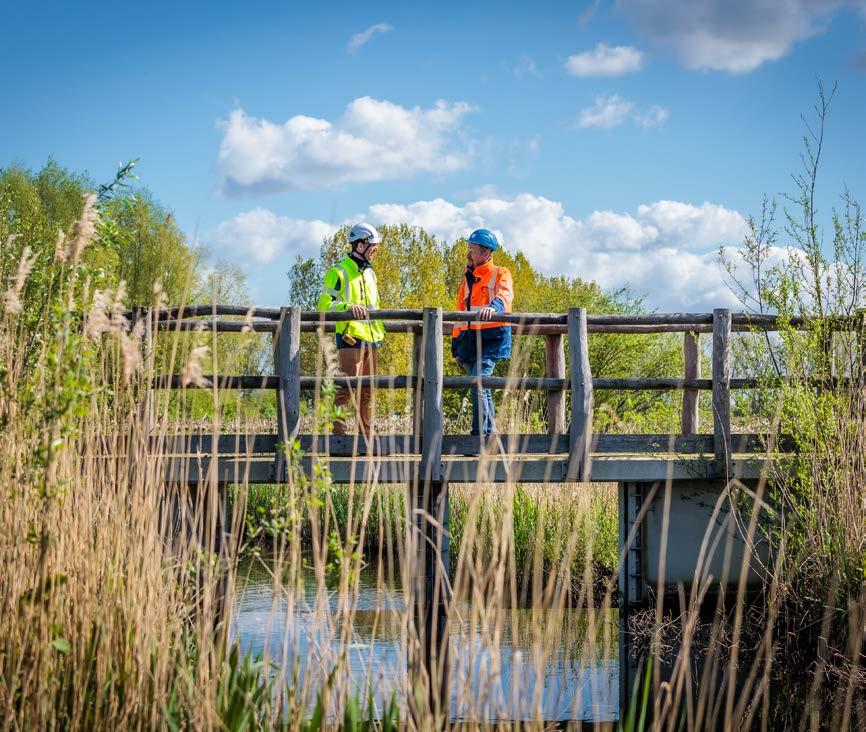
In April 2020, Aquafin published a new Green Finance Framework. In this way, we offer investors structured information on the ecological impact of our projects. The Green Finance Framework is available to view at www.aquafin.be. The annual reporting is available on the website, but is also contained in this section of the annual report.
Allocation
Metric 6 Technical
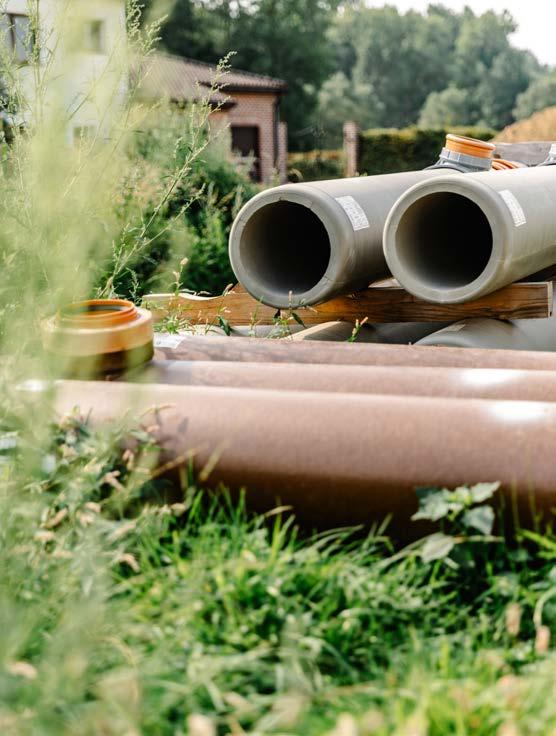
Total flow rate of wastewater entering all WWTPs and SWTPs in operation on 31/12. IWWTPs and commercially operated WWTPs have not been included. The figures are based on an extrapolation of sampling days.
Total sludge production sold without digestion + total amount of sludge supplied to own digestion plants.
amount of sludge sent for digestion.
Up to and including 2021, official figures of VMM; from 2022, Aquafin’s own calculation subject to reservation due to lack of updates by VMM.
Total electricity consumption of WWTPs (mechanical and biological treatment) and Total electricity consumption (metric 5.1) translated into treated m³ of wastewater.
Own production of renewable energy from various sources.
Annual average removal percentage of nitrogen across all WWTPs assessed (in operation on 30/6).
Annual average removal percentage of phosphorus across all WWTPs assessed (in operation on 30/6).
Percentage of the number of WWTPs assessed (in service on 30/6) that comply with all standards.
2025 was a very dry year, which in practice means that much less rainwater was transported through the sewer system to the treatment plants. As a result, the total treated flow rate is significantly lower. This does not mean that we processed a lower pollution load. A lower flow rate also leads to lower sludge production and therefore less sludge being digested, lower production of sludge pellets, and higher energy consumption per m³ of treated wastewater. The decrease in energy consumption compared to 2024 is not in line with the lower flow rate. This is because, in addition to flow, the pollution load and capacity are also determining factors in the energy model, such as fixed energy consumers that operate independently of the flow rate.
The components of renewable energy reflect Aquafin’s strategy to further increase the use of green energy. In the production of green electricity from biogas, we see a downward trend due to the partial conversion of combined heat and power units to biomethane production. As nearly all solar energy potential has already been utilized, its production is expected to level off in the future. Wind energy projects are currently under development.
The metrics for the technical performance of the wastewater treatment plants are in line with expectations.

Statutory auditor’s report to
translation
STATUTORY AUDITOR’S REPORT TO THE GENERAL MEETING OF AQUAFIN NV FOR THE YEAR ENDED 31 DECEMBER 2025
In the context of the statutory audit of the annual accounts of Aquafin NV (“the Company”), we hereby present our statutory auditor’s report. It includes our report of the annual accounts and the other legal and regulatory requirements. This report is an integrated whole and is indivisible.
We have been appointed as statutory auditor by the general meeting of 15 April 2025, following the proposal formulated by the administrative body issued upon recommendation of the Audit Committee and upon presentation by the works council. Our statutory auditor’s mandate expires on the date of the general meeting deliberating on the annual accounts closed on 31 December 2027.We have performed the statutory audit of the annual accounts of the Company for 3 consecutive years.
Unqualified opinion
We have audited the annual accounts of the Company, which comprise the balance sheet as at 31 December 2025, the profit and loss account for the year then ended and the notes to the annual accounts, characterized by a balance sheet total of 4.476.651.664 EUR and a profit and loss account showing a profit for the year of 7.256.782 EUR.
In our opinion, the annual accounts give a true and fair view of the Company’s net equity and financial position as at 31 December 2025, as well as of its results for the year then ended, in accordance with the financial reporting framework applicable in Belgium.
Basis for unqualified opinion
We conducted our audit in accordance with International Standards on Auditing (ISAs) as applicable in Belgium. Our responsibilities under those standards are further described in the 'Statutory auditor's responsibilities for the audit of the annual accounts' section in this report. We have complied with all the ethical requirements that are relevant to the audit of annual accounts in Belgium, including those concerning independence.
We have obtained from the administrative body and the officials of the Company the explanations and information necessary for performing our audit.
We believe that the audit evidence we have obtained is sufficient and appropriate to provide a basis for our opinion.
Responsibilities of the administrative body for the drafting of the annual accounts
The administrative body is responsible for the preparation of annual accounts that give a true and fair view in accordance with the financial reporting framework applicable in Belgium, and for such internal control as the administrative body determines is necessary to enable the preparation of annual accounts that are free from material misstatement, whether due to fraud or error.
In preparing the annual accounts, the administrative body is responsible for assessing the Company’s ability to continue as a going concern, disclosing, as applicable, matters related to going concern and using the going concern basis of accounting unless the administrative body either intends to liquidate the Company or to cease operations, or has no realistic alternative but to do so.
Statutory auditor’s responsibilities for the audit of the annual accounts
Our objectives are to obtain reasonable assurance about whether the annual accounts as a whole are free from material misstatement, whether due to fraud or error, and to issue a statutory auditor’s report that includes our opinion. Reasonable assurance is a high level of assurance, but is not a guarantee that an audit conducted in accordance with ISAs will always detect a material misstatement when it exists.
Misstatements can arise from fraud or error and are considered material if, individually or in the aggregate, they could reasonably be expected to influence the economic decisions of users taken on the basis of these annual accounts. When executing our audit,
we respect the legal, regulatory and normative framework applicable for the audit of annual accounts in Belgium. However, a statutory audit does not guarantee the future viability of the Company, neither the efficiency and effectiveness of the management of the Company by the administrative body. Our responsibilities with respect to the administrative body’s use of the going concern basis of accounting are described below.
As part of an audit in accordance with ISAs, we exercise professional judgment and maintain professional skepticism throughout the audit. We also:
• Identify and assess the risks of material misstatement of the annual accounts, whether due to fraud or error, design and perform audit procedures responsive to those risks, and obtain audit evidence that is sufficient and appropriate to provide a basis for our opinion. The risk of not detecting a material misstatement resulting from fraud is higher than for one resulting from error, as fraud may involve collusion, forgery, intentional omissions, misrepresentations, or the override of internal control;
• Obtain an understanding of internal control relevant to the audit in order to design audit procedures that are appropriate in the circumstances, but not for the purpose of expressing an opinion on the effectiveness of the Company’s internal control;
• Evaluate the appropriateness of accounting policies used and the reasonableness of accounting estimates and related disclosures made by the administrative body;
• Conclude on the appropriateness of the administrative body’s use of the going concern basis of accounting and, based on the audit evidence obtained,
whether a material uncertainty exists related to events or conditions that may cast significant doubt on the Company’s ability to continue as a going concern. If we conclude that a material uncertainty exists, we are required to draw attention in our statutory auditor’s report to the related disclosures in the annual accounts or, if such disclosures are inadequate, to modify our opinion. Our conclusions are based on the audit evidence obtained up to the date of our statutory auditor’s report. However, future events or conditions may cause the Company to cease to continue as a going concern;
• Evaluate the overall presentation, structure and content of the annual accounts and whether the annual accounts represent the underlying transactions and events in a manner that achieves fair presentation.
We communicate with the Audit Committee regarding, among other matters, the planned scope and timing of the audit and significant audit findings, including any significant deficiencies in internal control that we identified during our audit.
Responsibilities of the administrative body
The administrative body is responsible for the preparation and the content of the director’s report, for the documents to be deposited in accordance with the legal and regulatory requirements, as well as for the compliance with the legal and regulatory requirements regarding bookkeeping, with the Code of companies and associations and with the Company’s by-laws.
Responsibilities of the statutory auditor
In the context of our mission and in accordance with the Belgian standard (version revised 2023) which is complementary to the International Standards on Auditing (ISAs) as applicable in Belgium, it is our responsibility to verify, in all material aspects, the director’s report, certain documents to be deposited in accordance with the legal and regulatory requirements, and compliance with certain provisions of the Code of companies and associations and of the Company’s by-laws, as well as to report on these elements.
Aspects related to the director’s report
In our opinion, after having performed specific procedures in relation to the director’s report, the director’s report is consistent with the annual accounts for the same financial year, and it is prepared in accordance with articles 3:5 and 3:6 of the Code of companies and associations.
In the context of our audit of the annual accounts, we are also responsible for considering, in particular based on the knowledge we have obtained during the audit, whether the director’s report contains any material misstatement, i.e. any information which is inadequately disclosed or otherwise misleading. Based on the procedures we have performed, there are no material misstatements we have to report to you regarding the section ‘Financieel verslag’. We did not perform any procedures on the other topics.
Statement related to the social balance sheet
The social balance sheet, to be deposited at the National Bank of Belgium in accordance with article 3:12, §1, 8° of the Code of companies and associations, includes, both in terms of form and content, the information required by the said Code, including that relating to information on wages and training and does not present any material inconsistencies with the information that we have at our disposition during the performance of our mission.
• We do not have to report to you any transactions undertaken or decisions taken in breach of the by-laws or the Code of companies and associations.
Zaventem, 3 April 2026
BDO Réviseurs d’Entreprises SRL Statutory auditor
Represented by Bert Kegels*
Auditor
*Acting for a company
Statement related to independence
• Our audit firm and our network did not provide services which are incompatible with the statutory audit of annual accounts and our audit firm remained independent of the Company during the terms of our mandate.
• The fees related to additional services which are compatible with the statutory audit of annual accounts as referred to in article 3:65 of the Code of companies and associations, were duly itemized and valued in the notes to the annual accounts.
Other statements
• Without prejudice to certain formal aspects of minor importance, the accounting records are maintained in accordance with the legal and regulatory requirements applicable in Belgium.
• The appropriation of results proposed to the general meeting complies with the legal provisions and the Company’s bylaws.
BDO Réviseurs d’Entreprises SRL Statutory auditor
Represented by Pieter De Smet*
Auditor
*Acting for a company
[ ESRS 2 | BP-1 ]
This is the integrated annual report of Aquafin NV, with registered offices at Dijkstraat 8 – 2630 Aartselaar.
The financial report was audited by BDO. The sustainability statement was not audited.
This annual report contains the main financial figures for the 2025 financial year and notes on these, an overview of business activities, the corporate governance report and comprehensive reporting on sustainability initiatives within Aquafin’s corporate sustainability policy.
Aquafin has two subsidiaries: Aquaplus that valorises the expertise of the organisation for industrial clients and on the private market, and Aqcelerator that focuses on technological and infrastructural innovation. The figures for Aquaplus and Aqcelerator have not been con-
solidated in this annual report, as they file their own annual accounts.
The collaboration between Aquafin and De Watergroep takes the form of a partnership called Riopact. As a partnership does not file its own annual figures, Riopact’s figures for Aquafin’s share have been included in Aquafin’s financial report.
PUBLICATION DATE
21 April 2026
The sustainability statement only relates to the activities of Aquafin and its value chain. >
REPORTING PERIOD
01 January 2025 – 31 December 2025
RESPONSIBLE PUBLISHER Jan Goossens
© Aquafin, Dijkstraat 8 – 2630 Aartselaar
GRAPHIC CONCEPT & LAY-OUT wit ’n grid
PHOTOGRAPHY Studio Fossiel, Frederik Beyens, Christophe De Muynck, SKINN, Aquafin
The annual report is only available online at www.aquafin.be under the section Investors. Here you will also find the digital versions of previous annual reports.
A summarised overview of the annual results can be found at aquafin.year.report