MONTHLY JOURNAL OF THE AMERICAN PHILATELIC SOCIETY
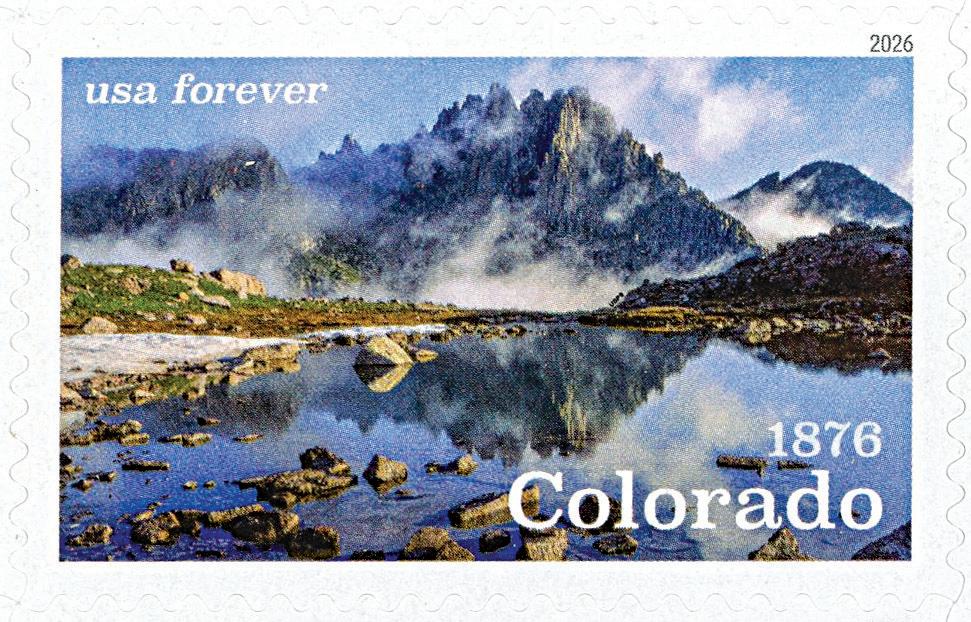
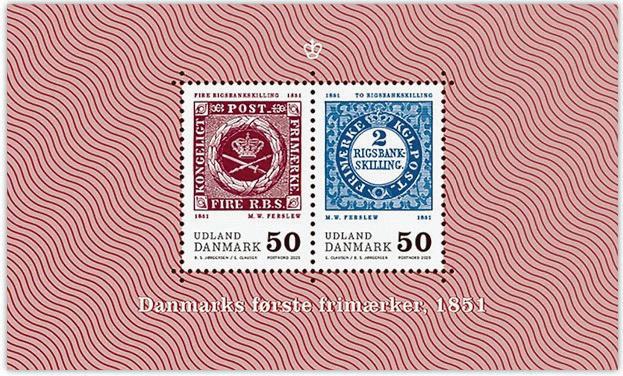
• The end of an era for Denmark's postal system
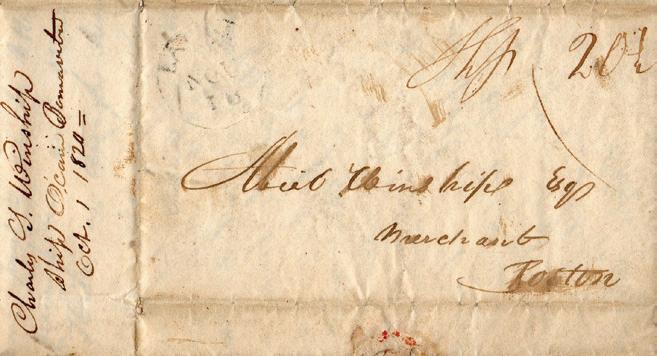
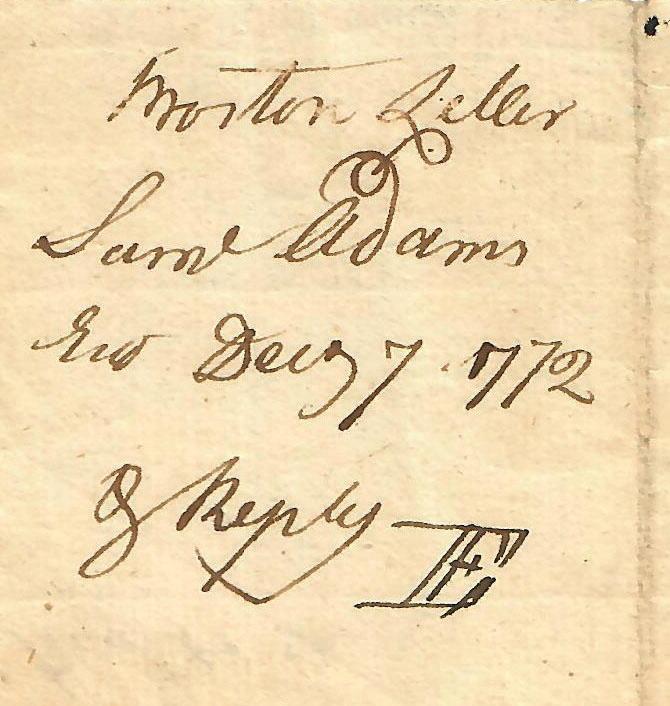
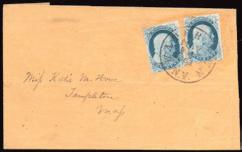
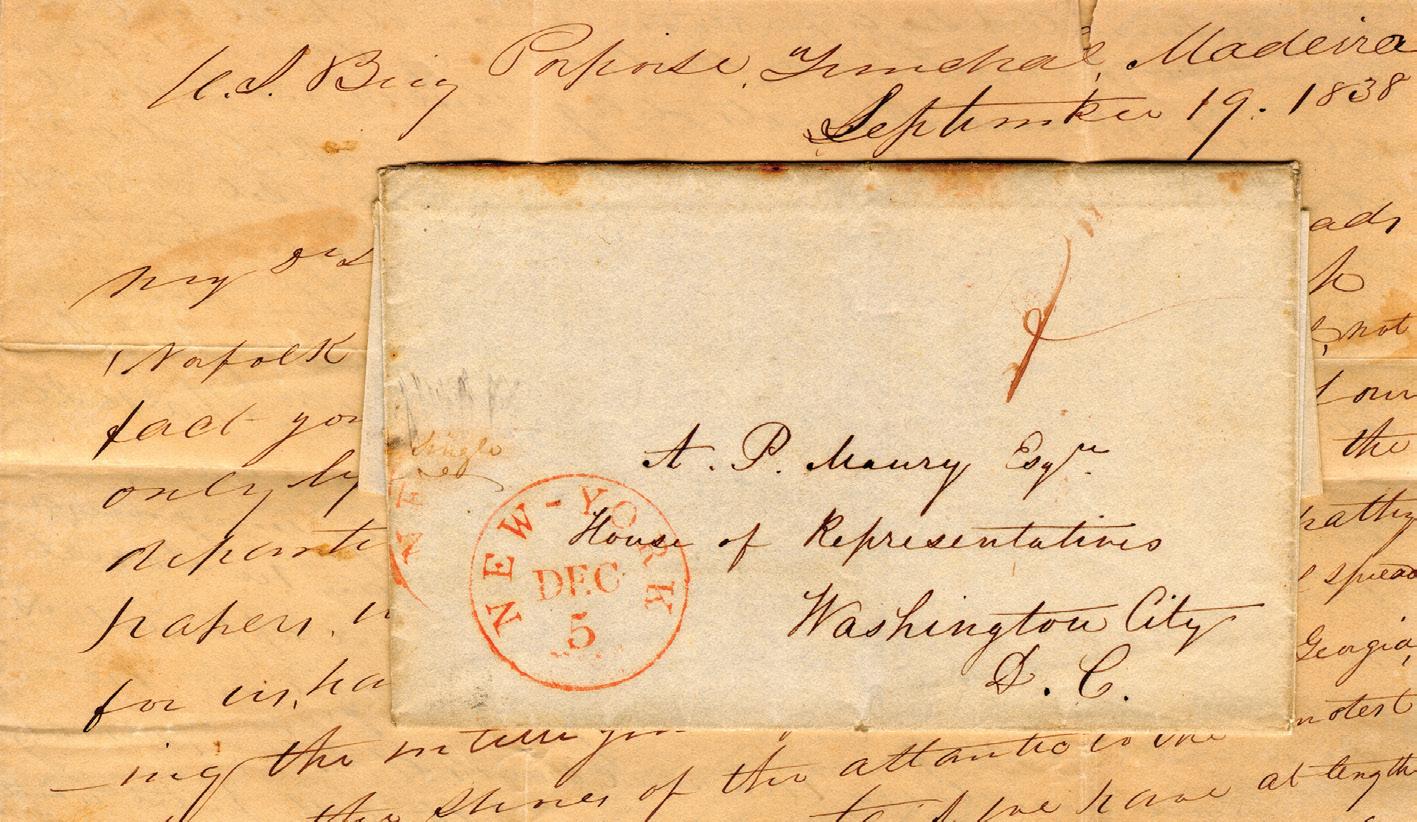
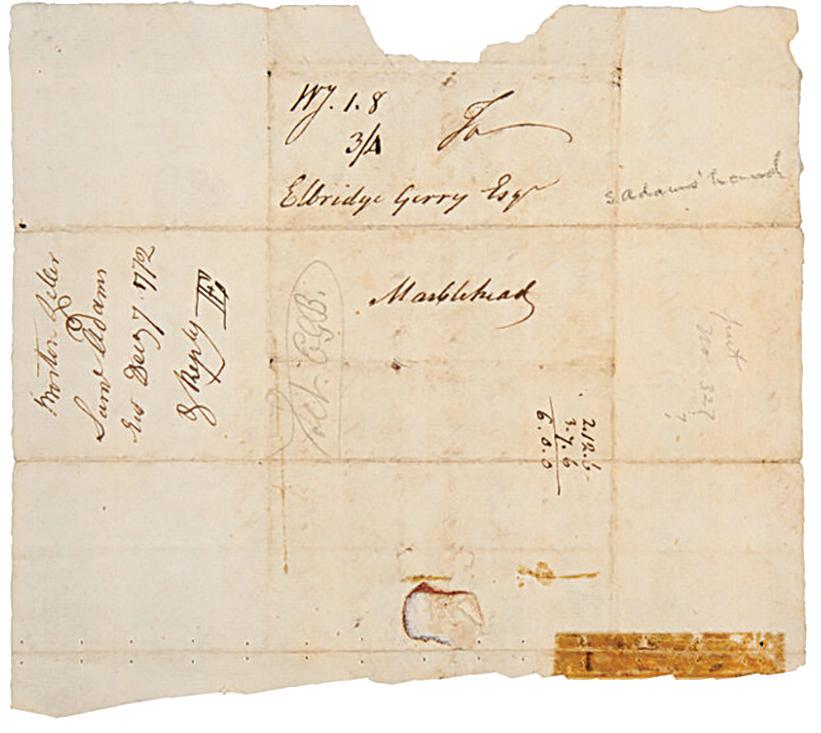
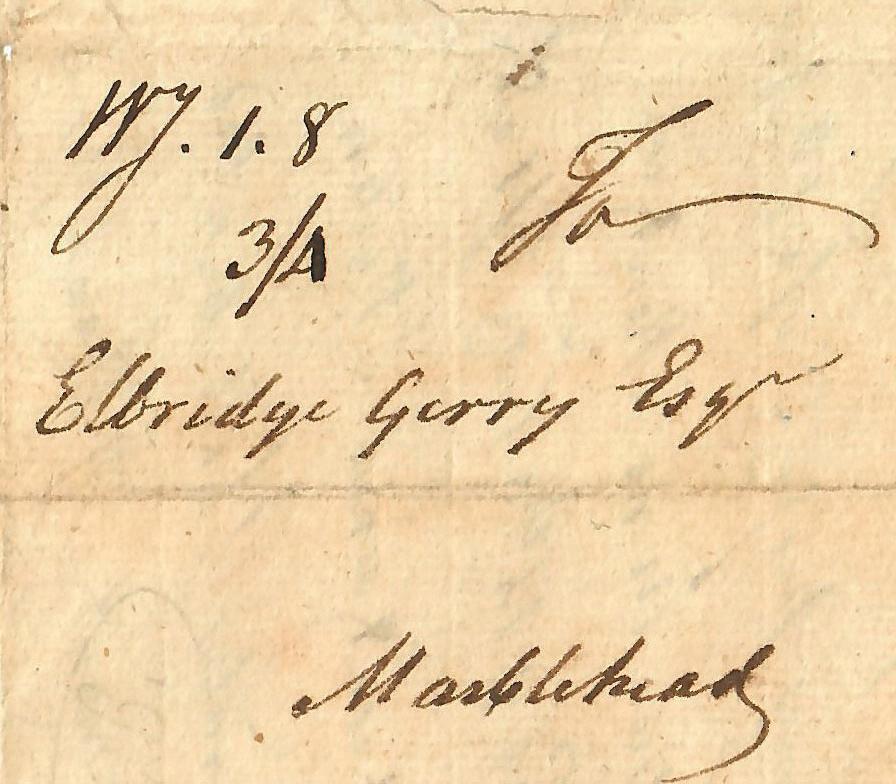
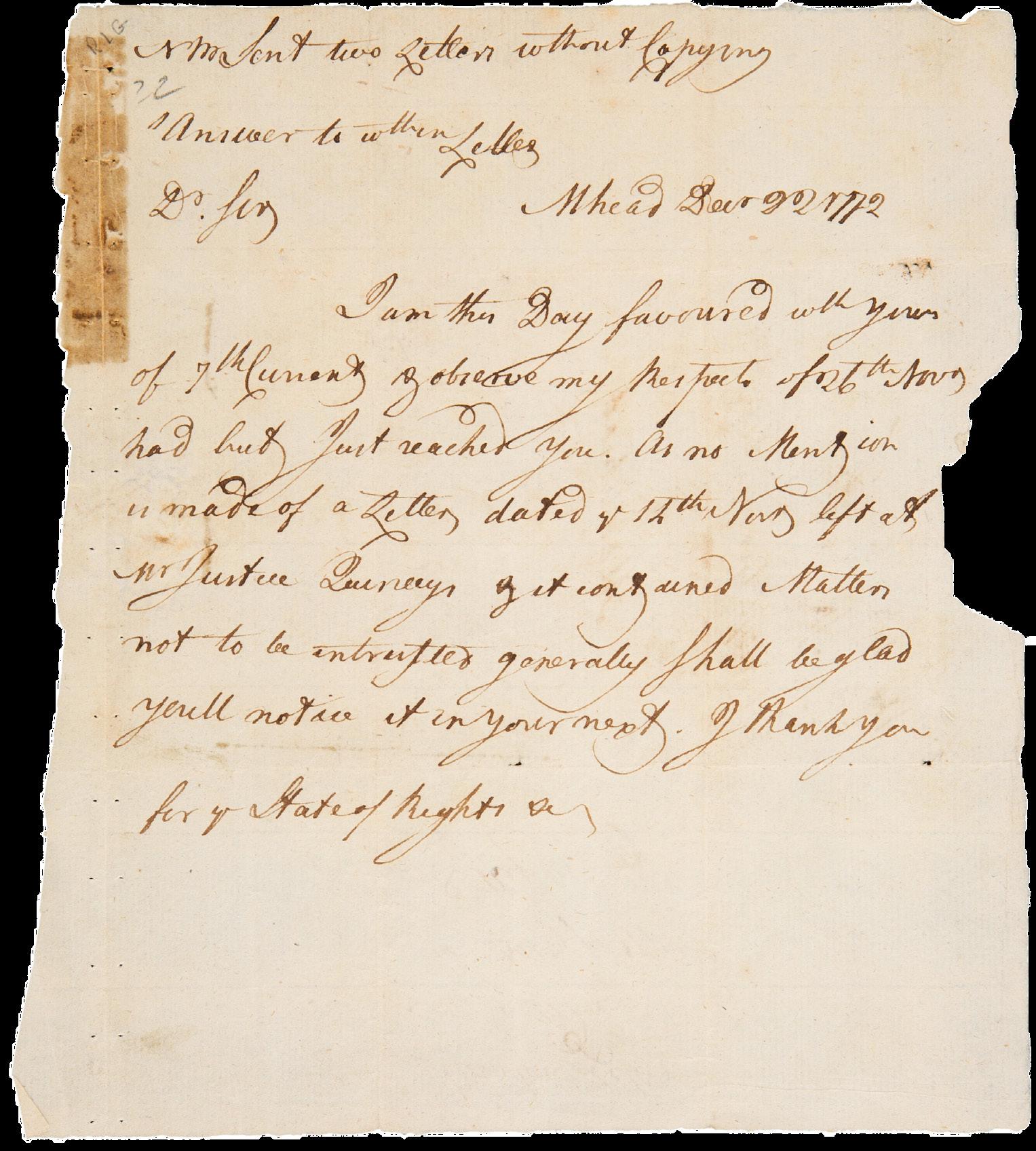
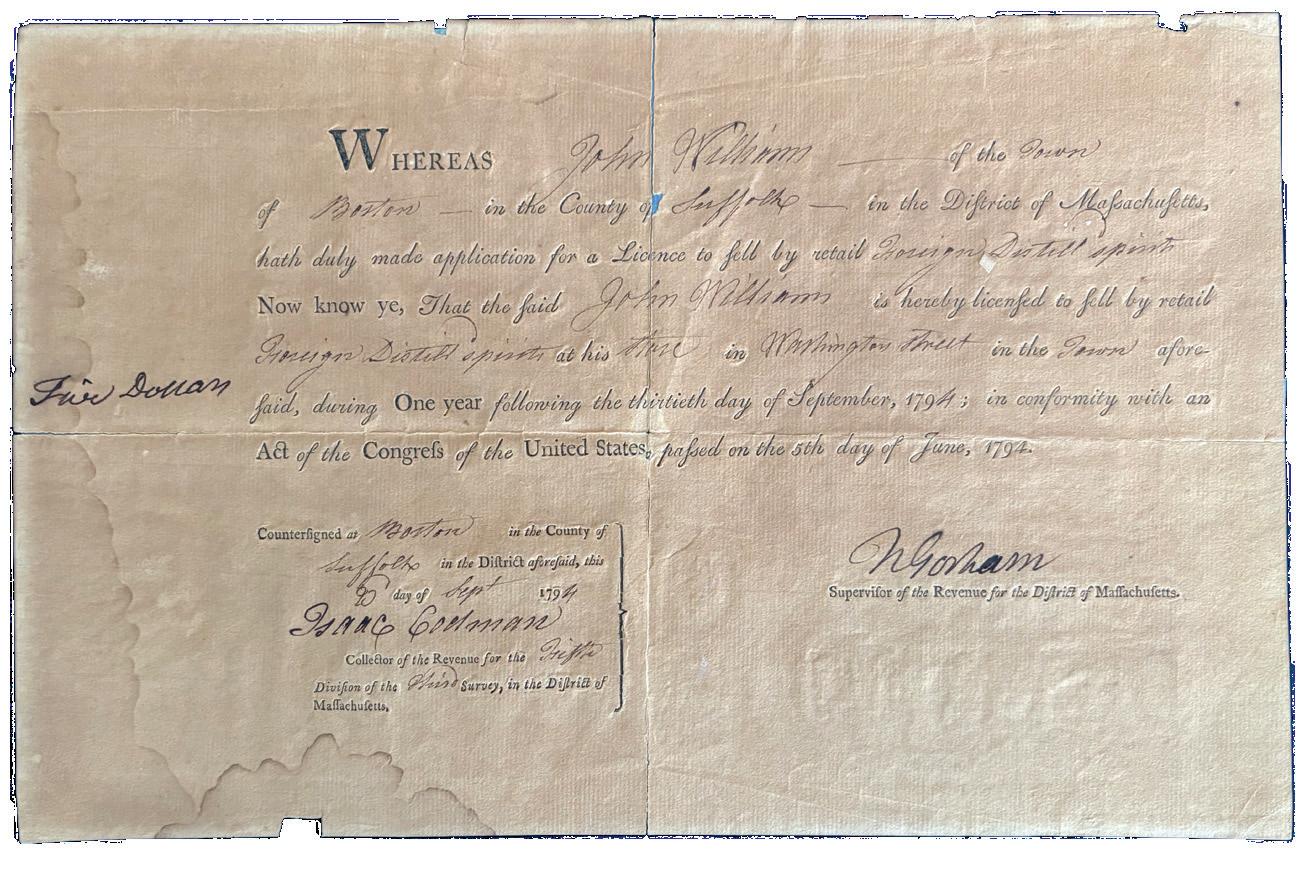
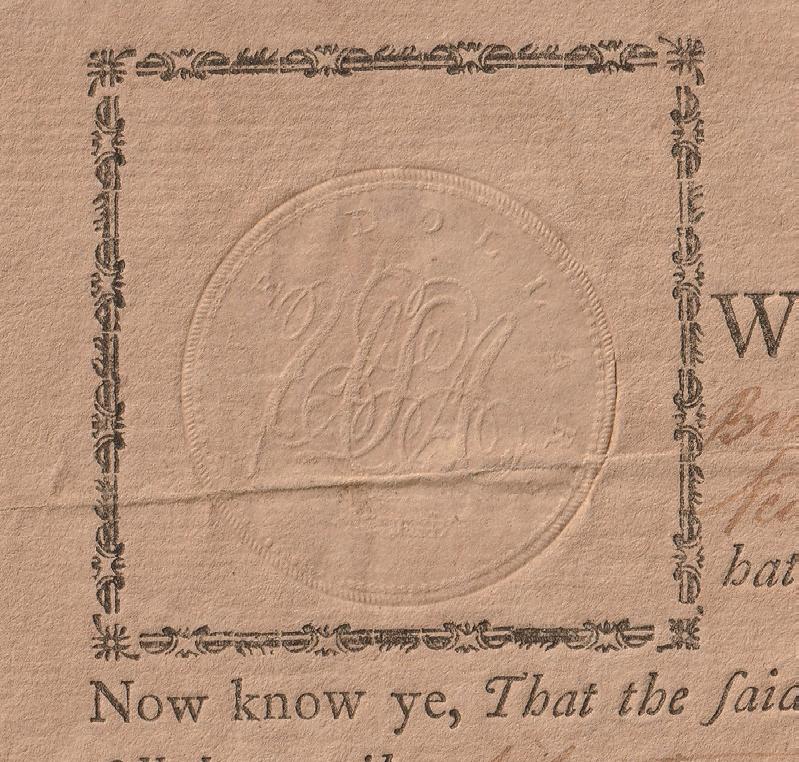
• A letter from Revolutionary War patriot Sam Adams
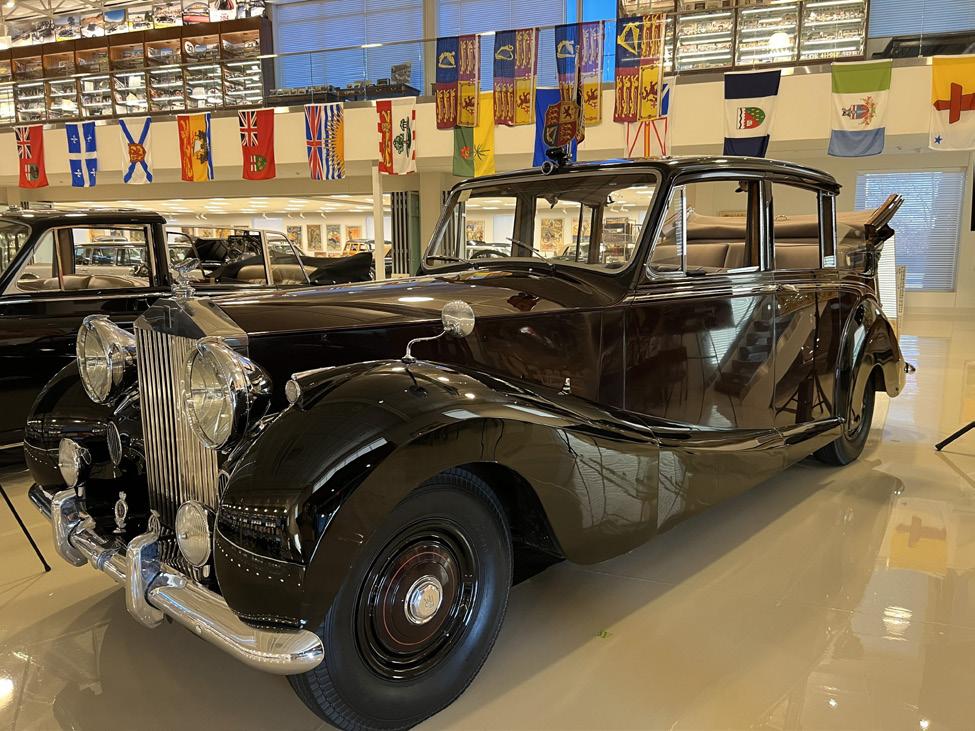
• See Queen Elizabeth II's famous Rolls-Royce in Boston
ALSO FEATURING
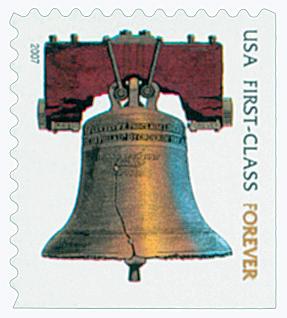
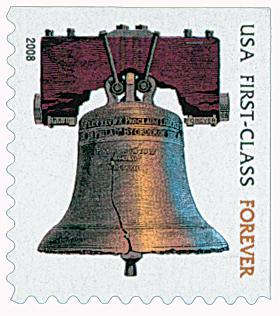
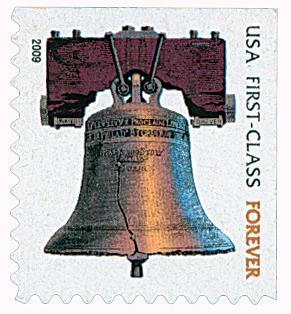
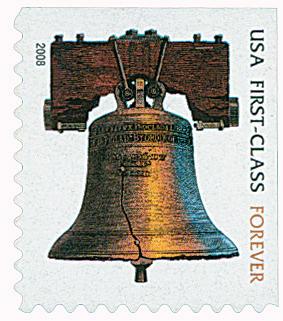
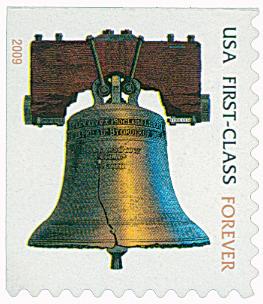
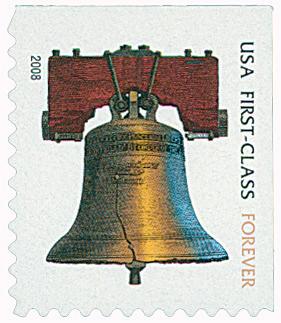
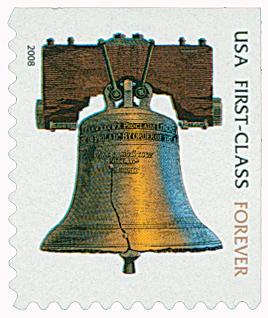
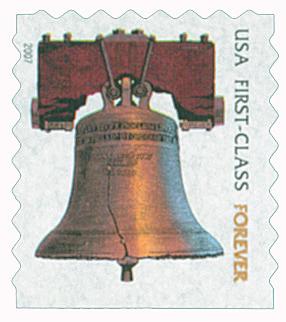
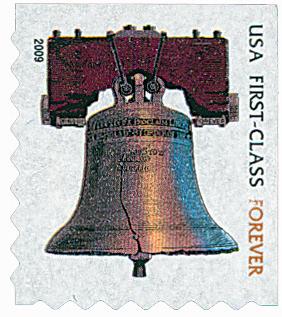
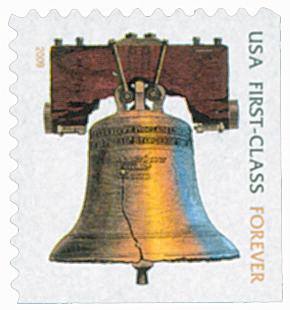
Did you know 13 different Liberty Bell Forever stamps were issued over a four-year period? If not, your collection could be missing key varieties –including the first US Forever stamp! In fact, until 2010, the Liberty Bell design was the only one that appeared on Forever stamps. While they may look the same, there are small differences that make each variety stand apart. For that reason, we sometimes call these kinds of stamps “look-alikes.” They’re a fun challenge to collect since you have to look closely to find the differences.
Get all 13 mint Liberty Bell Forever stamps for just $24.95 plus a handy identification guide and FREE shipping and guaranteed delivery. Strict limit of one set. Send today and you’ll also receive special
collector’s information and other interesting stamps on approval. Your satisfaction guaranteed.
13 Mint “Forever” Stamps
❏ Yes! Send me the 13 mint Forever stamps. Enclosed is $24.95. Strict limit of one set.
AMERICAN PHILATELIST THE
POLAR PHILATELY: THE COLD, HARD FACTS
BY HAL VOGEL
The mostly unoccupied regions of the planet – the North and South poles – have many areas to satisfy the interests of just about any philatelic collector.
BELOW THE POLE – FOOLHARDY OR BRAVE?
BY RICHARD HINDLE
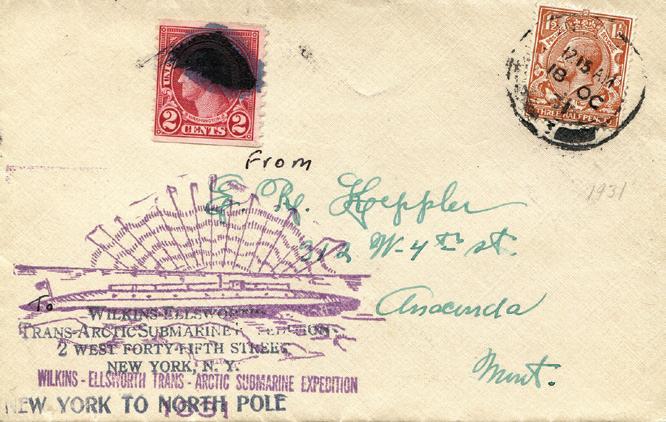
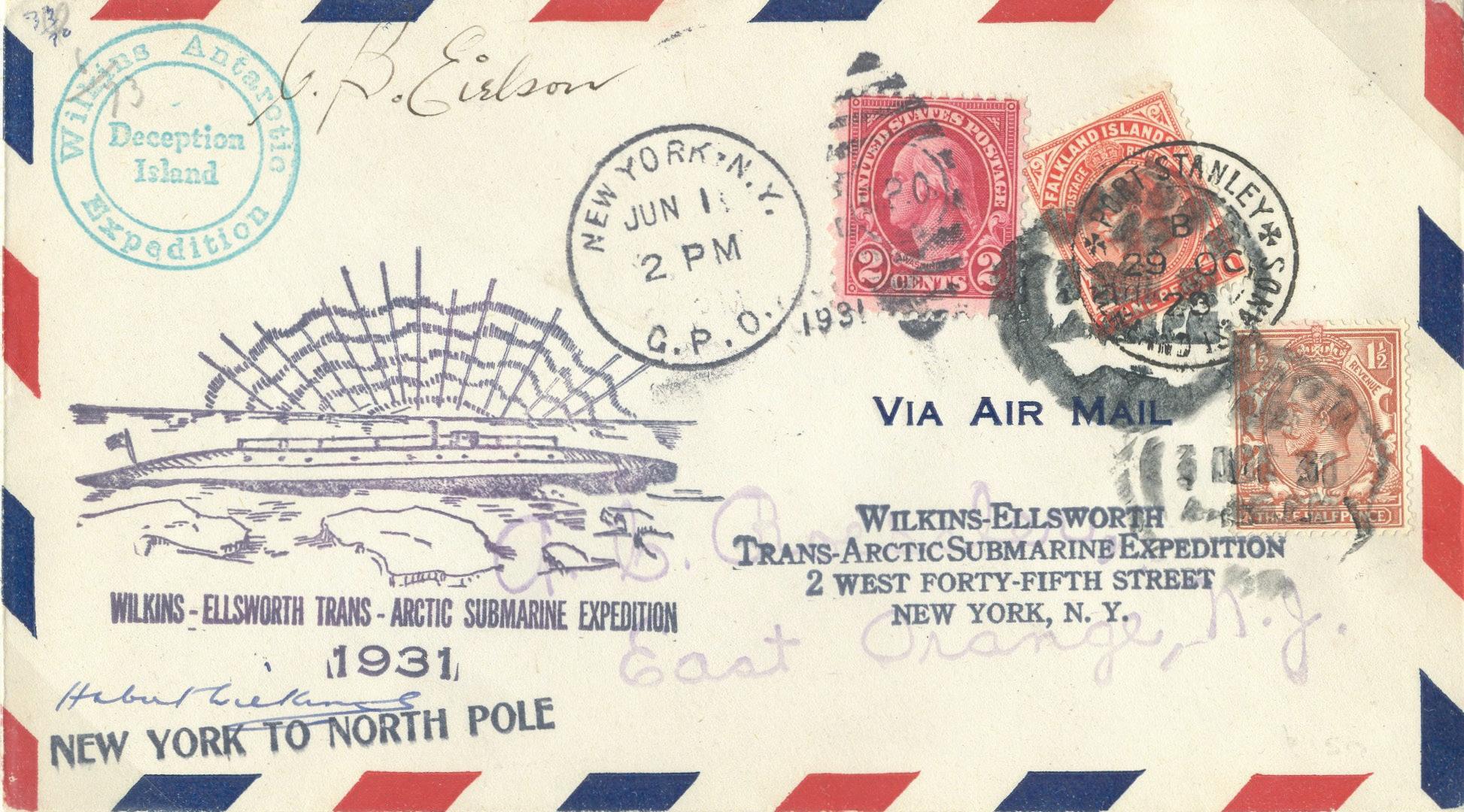
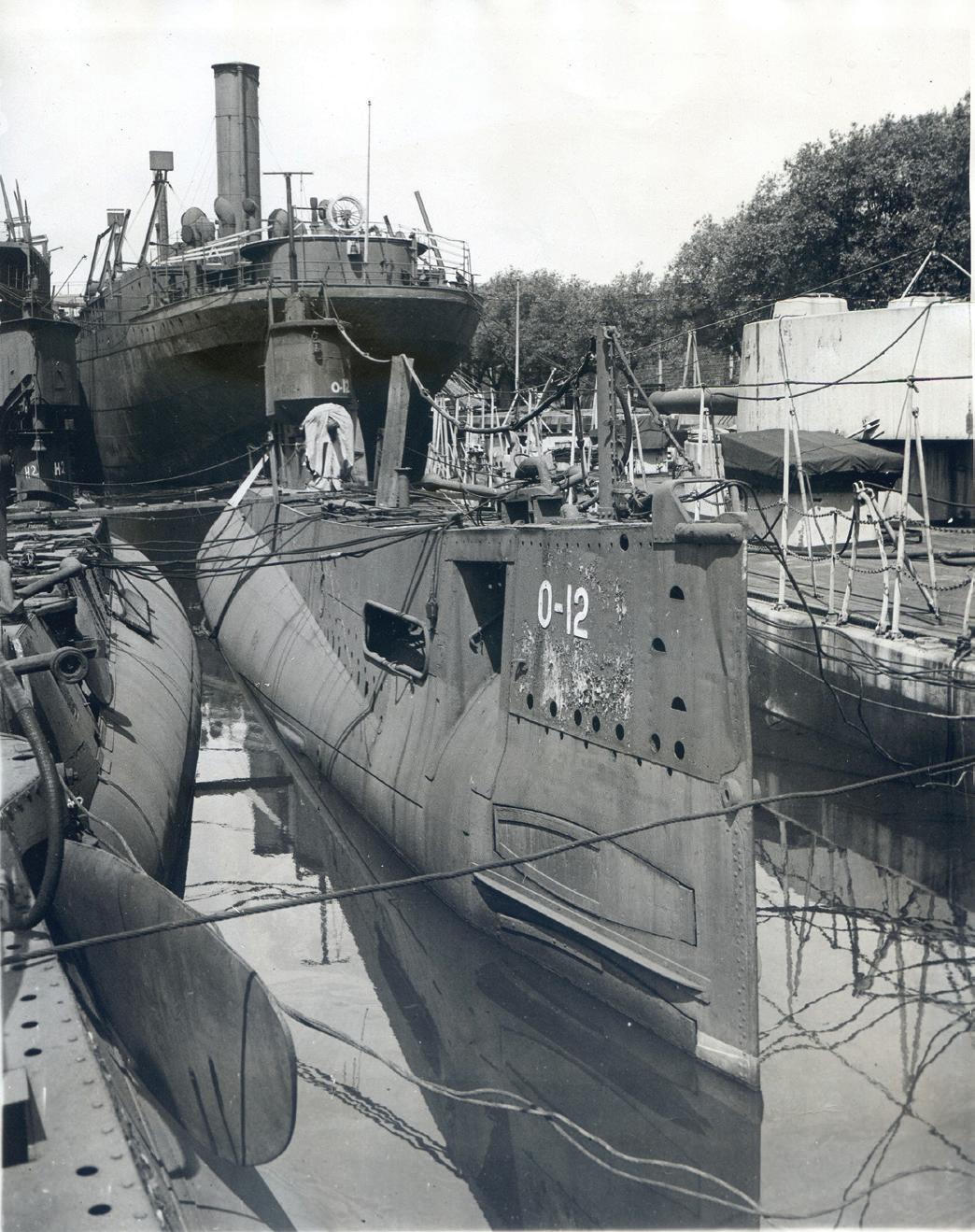
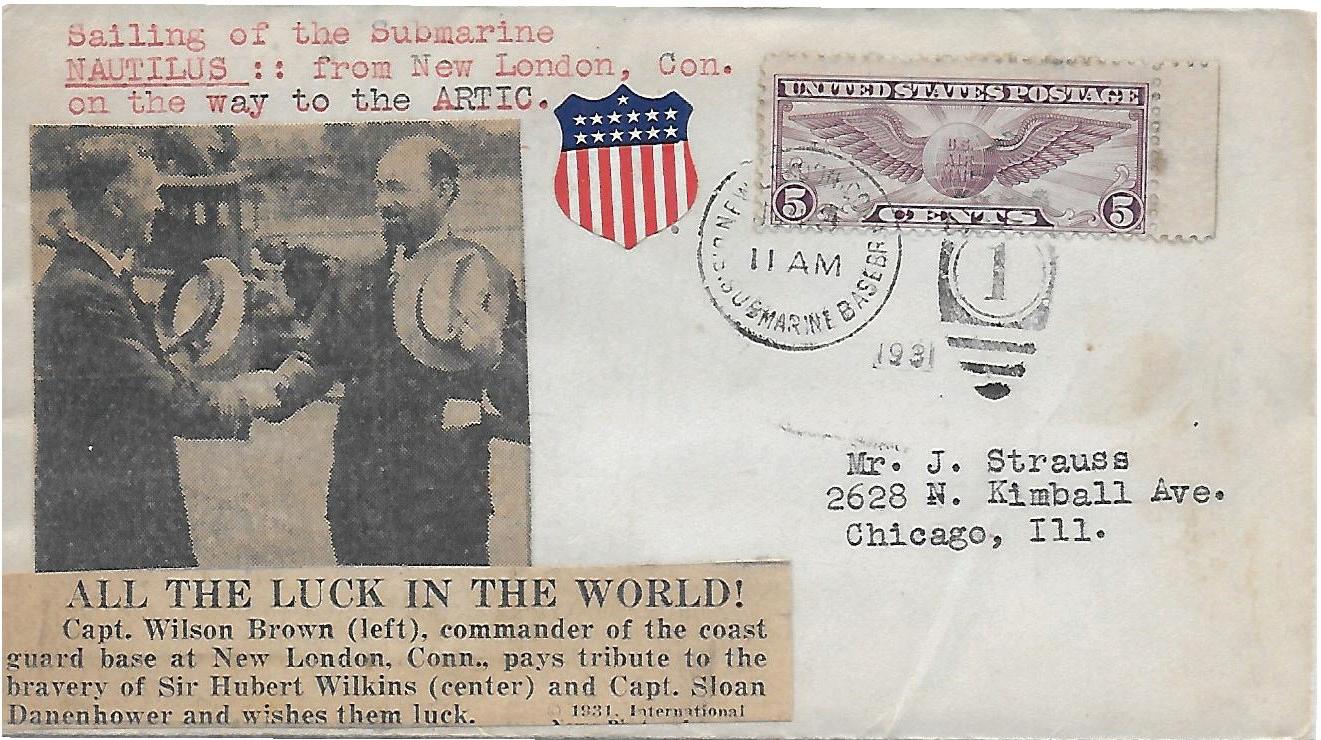
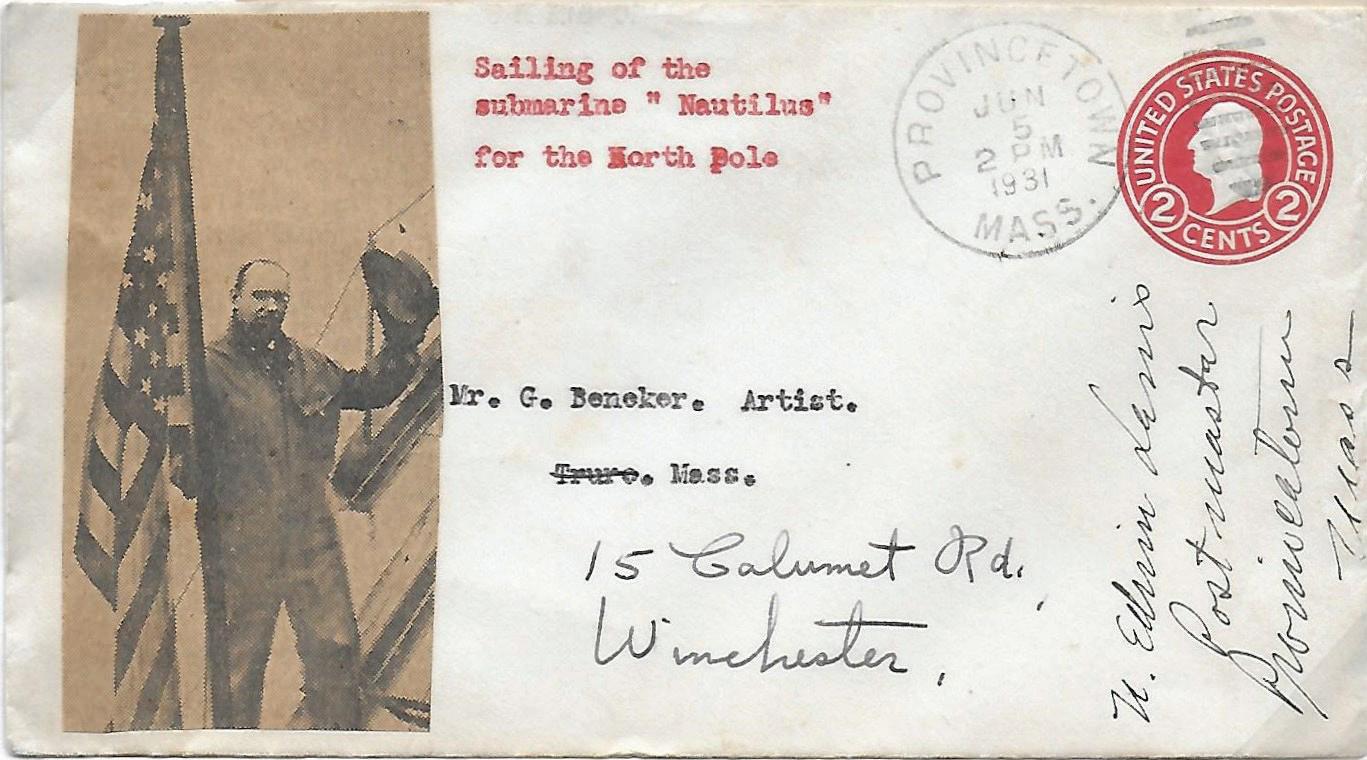
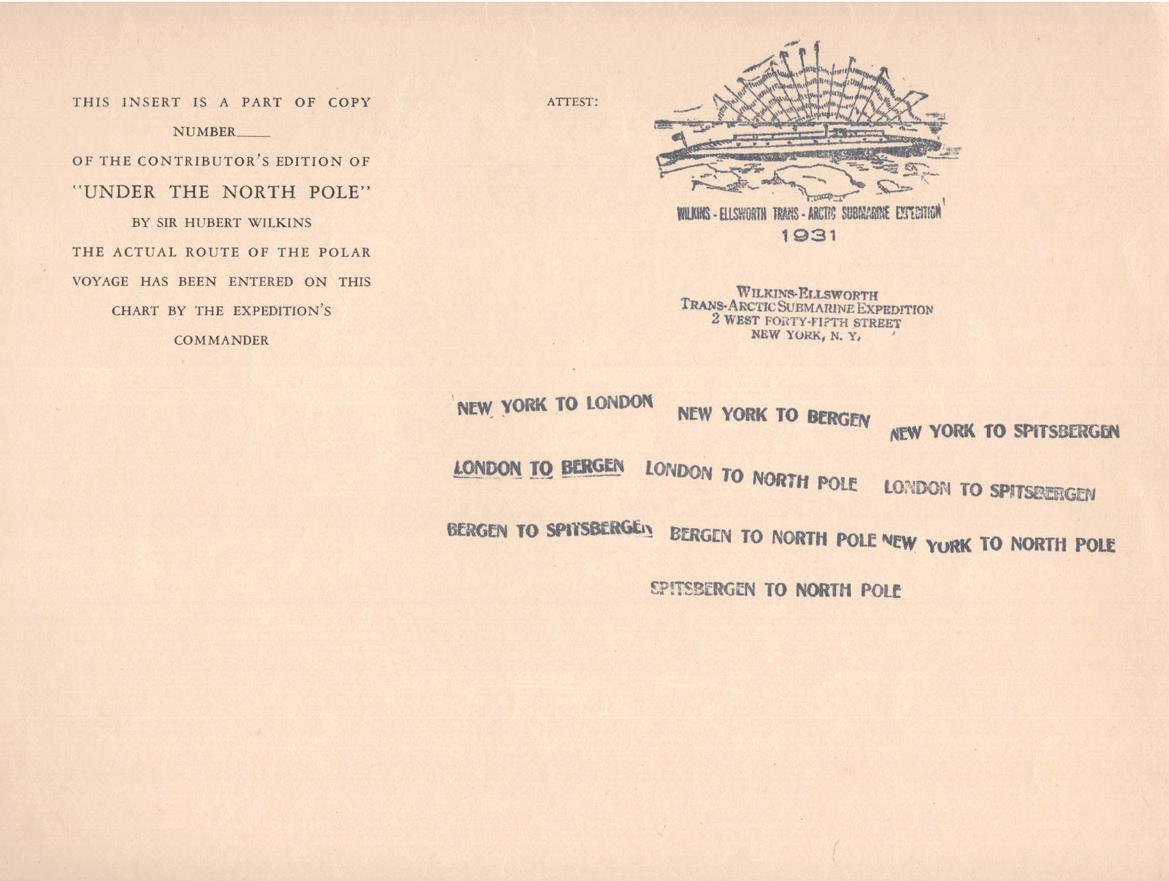
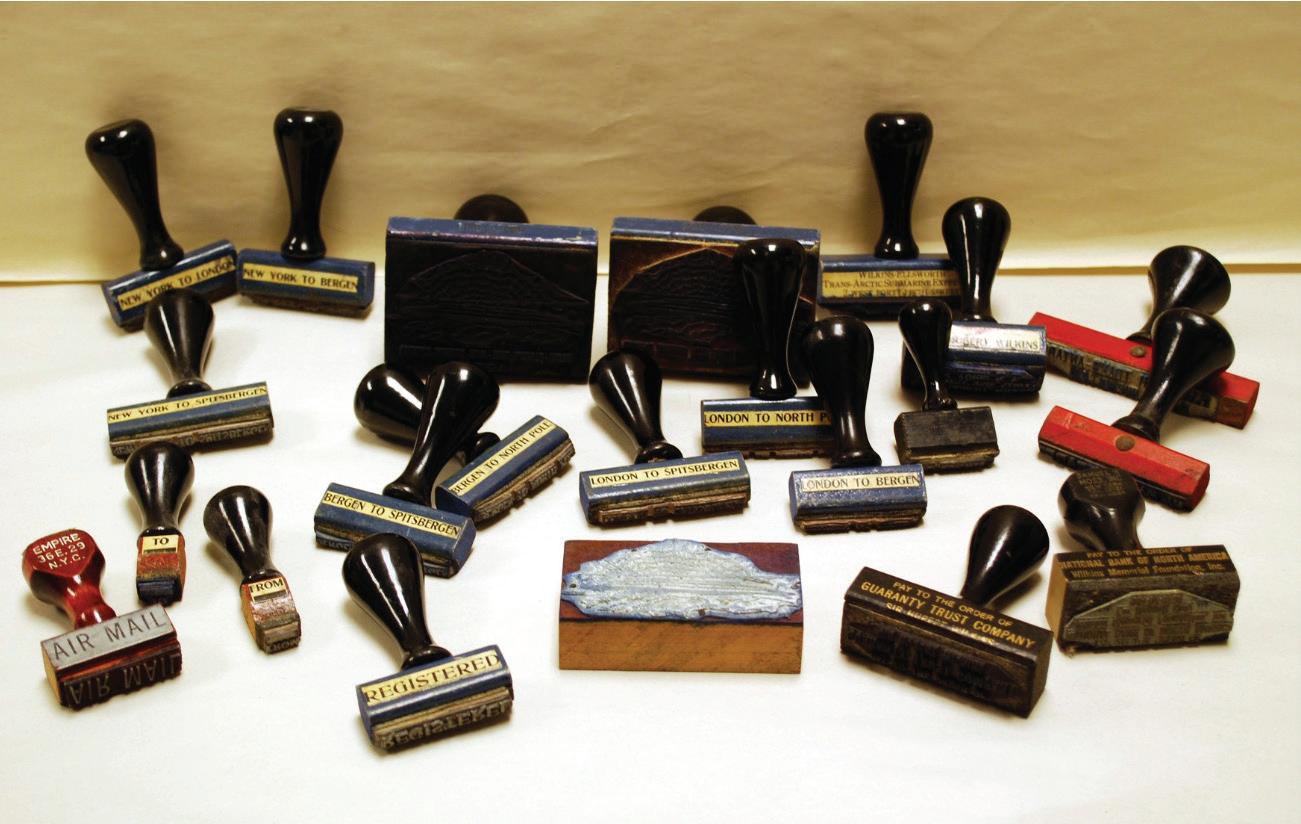
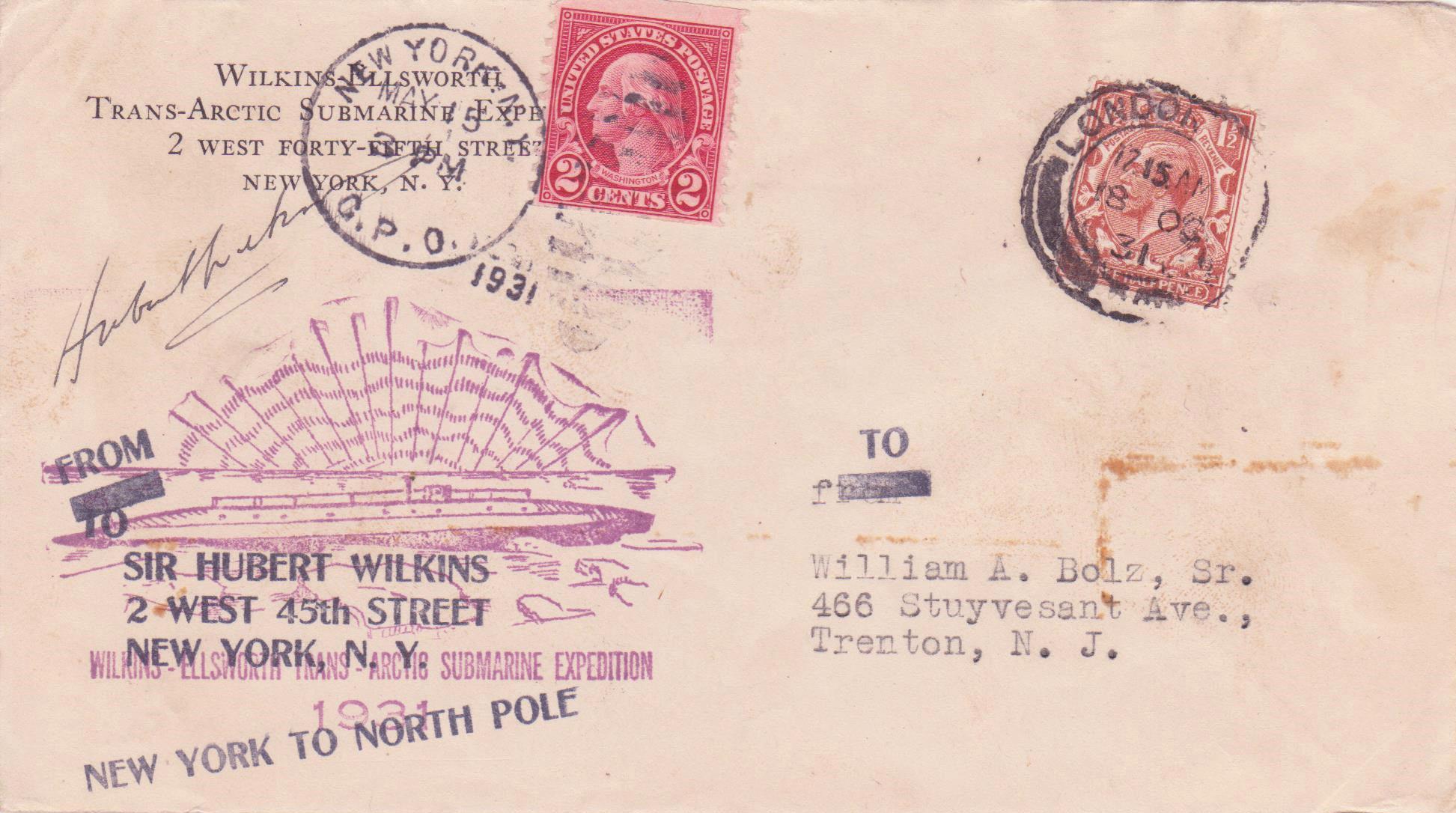
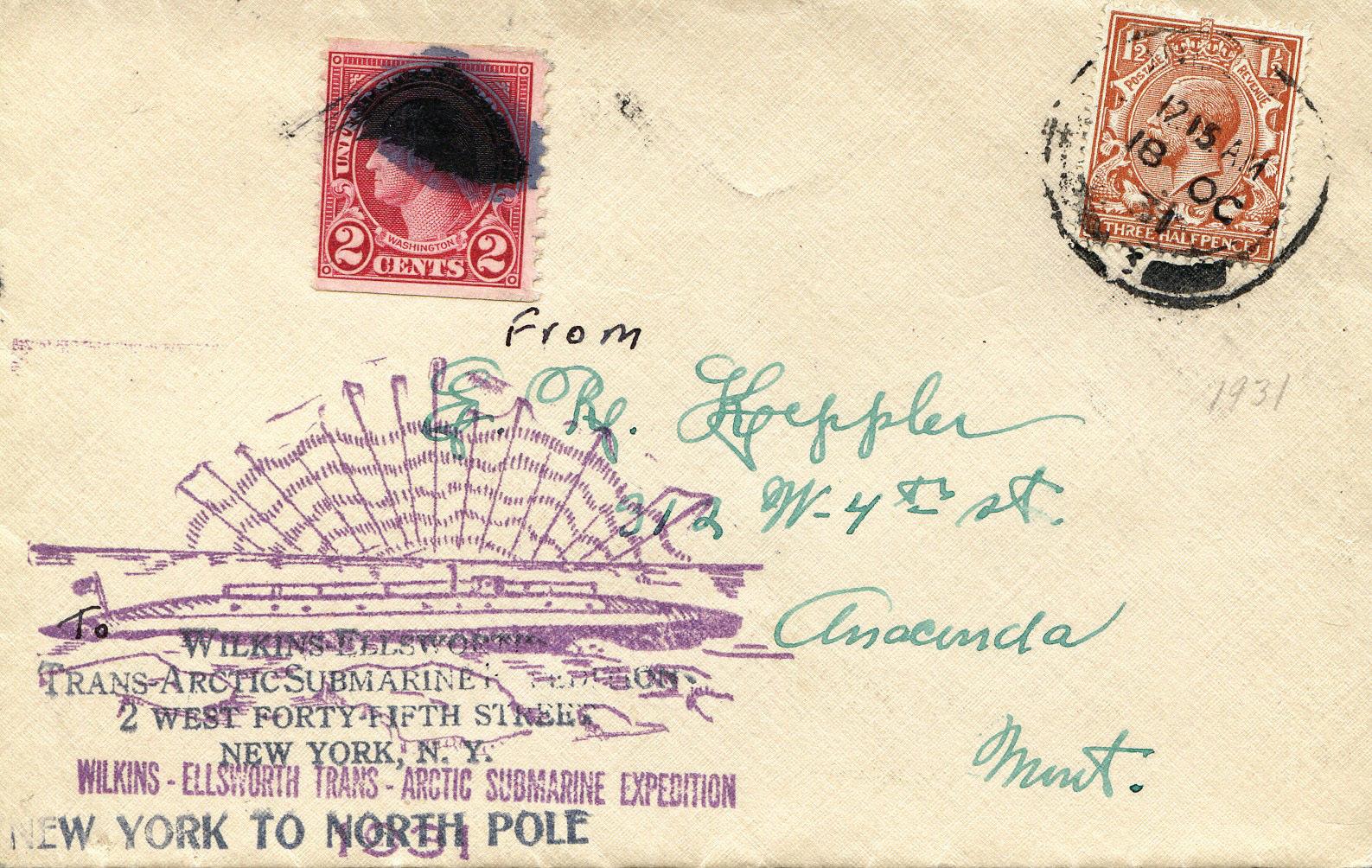
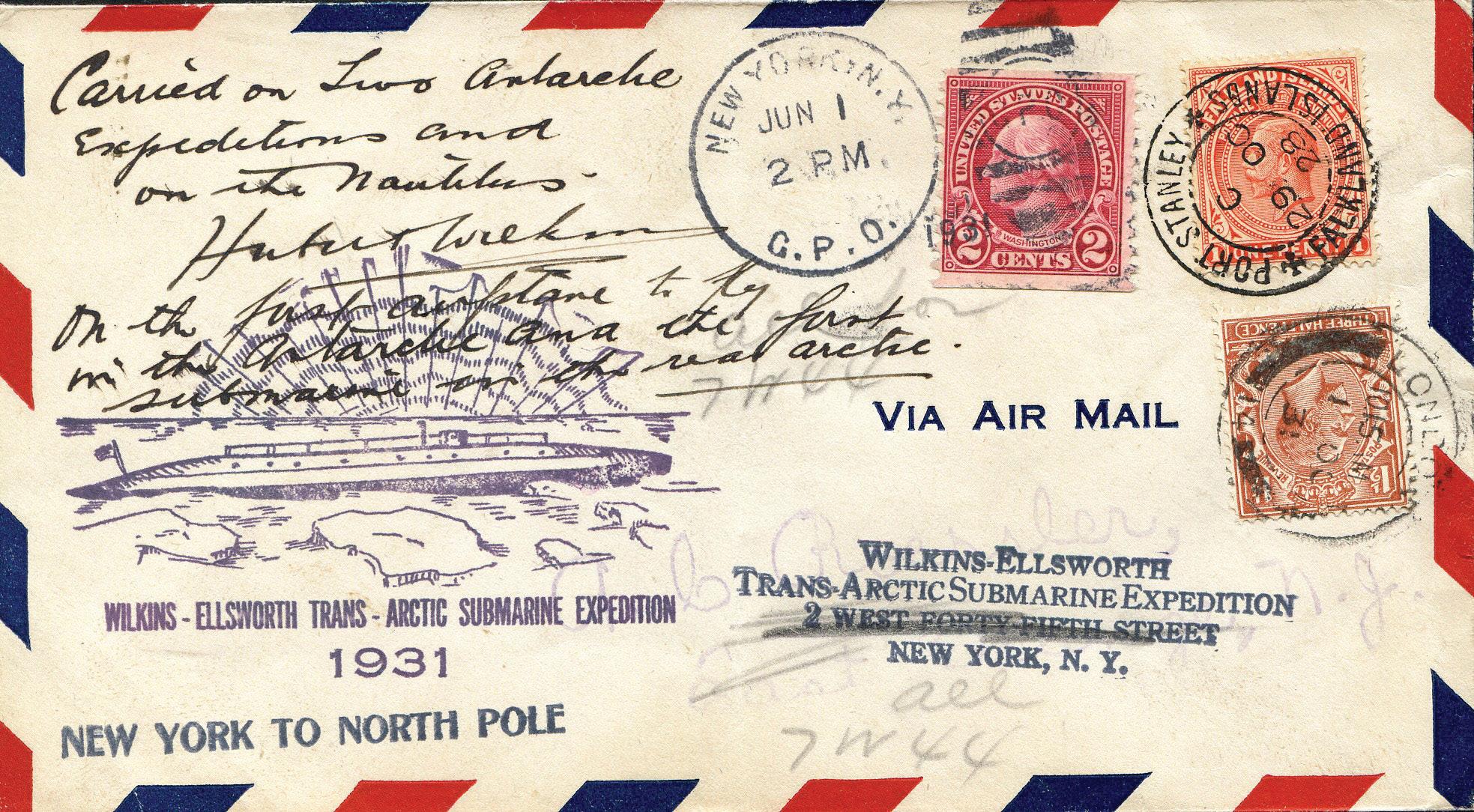
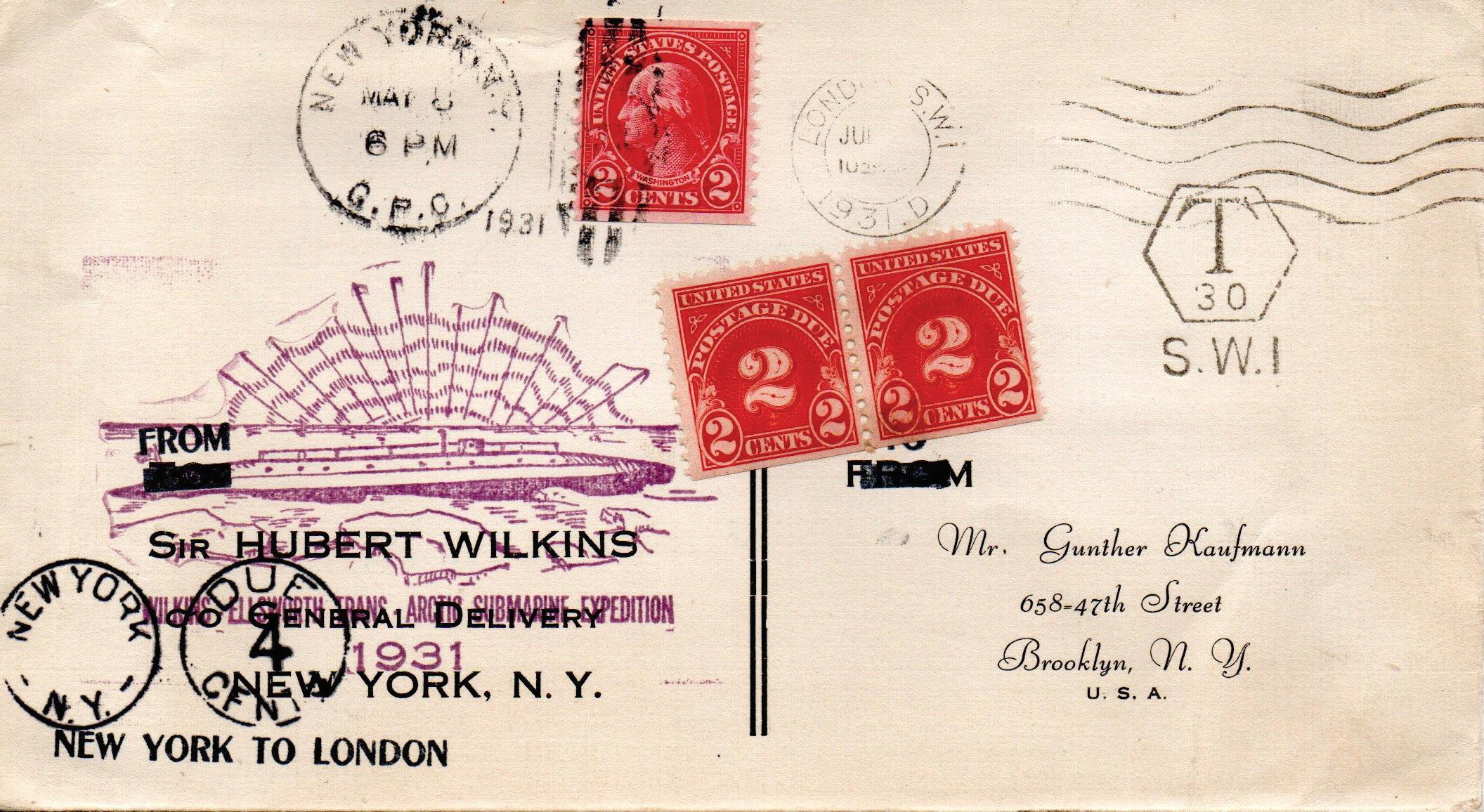
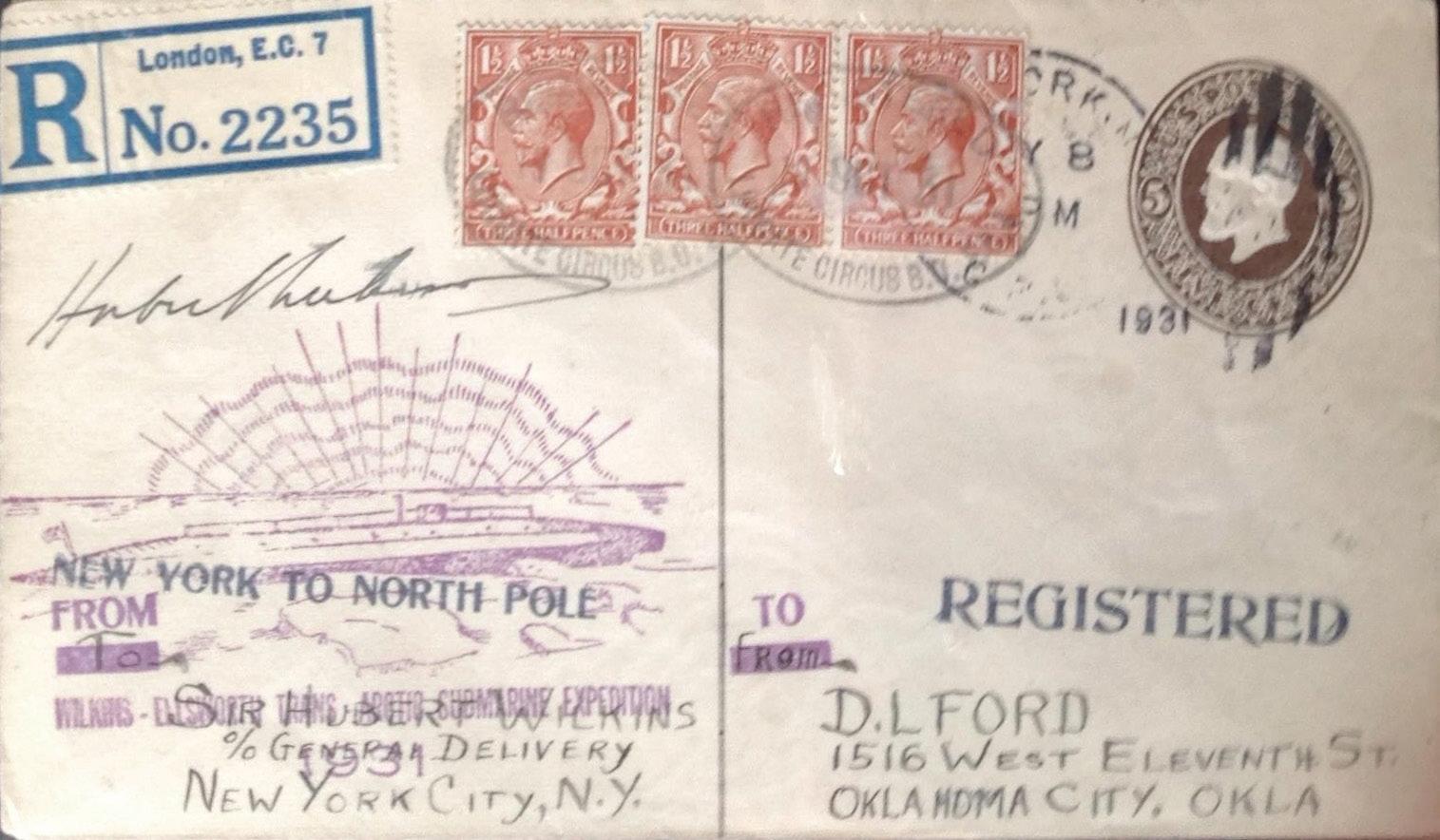
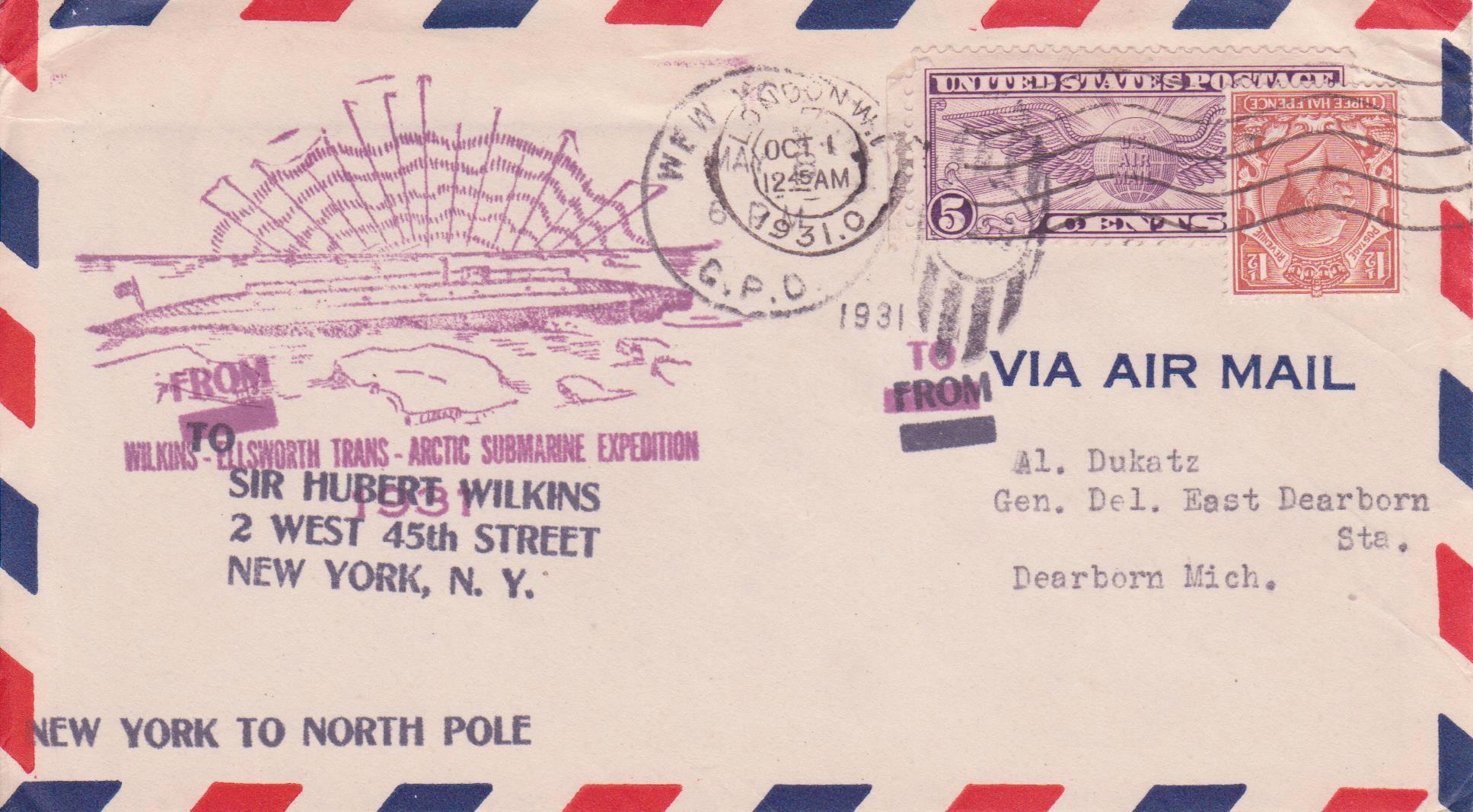
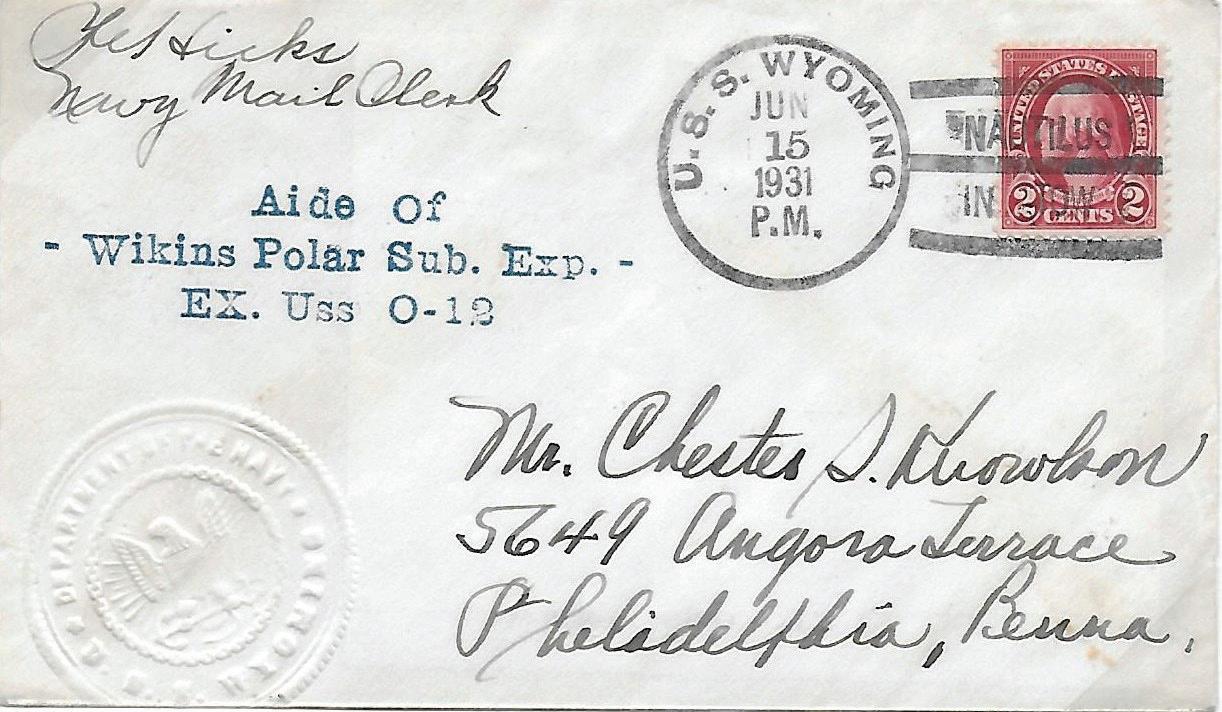
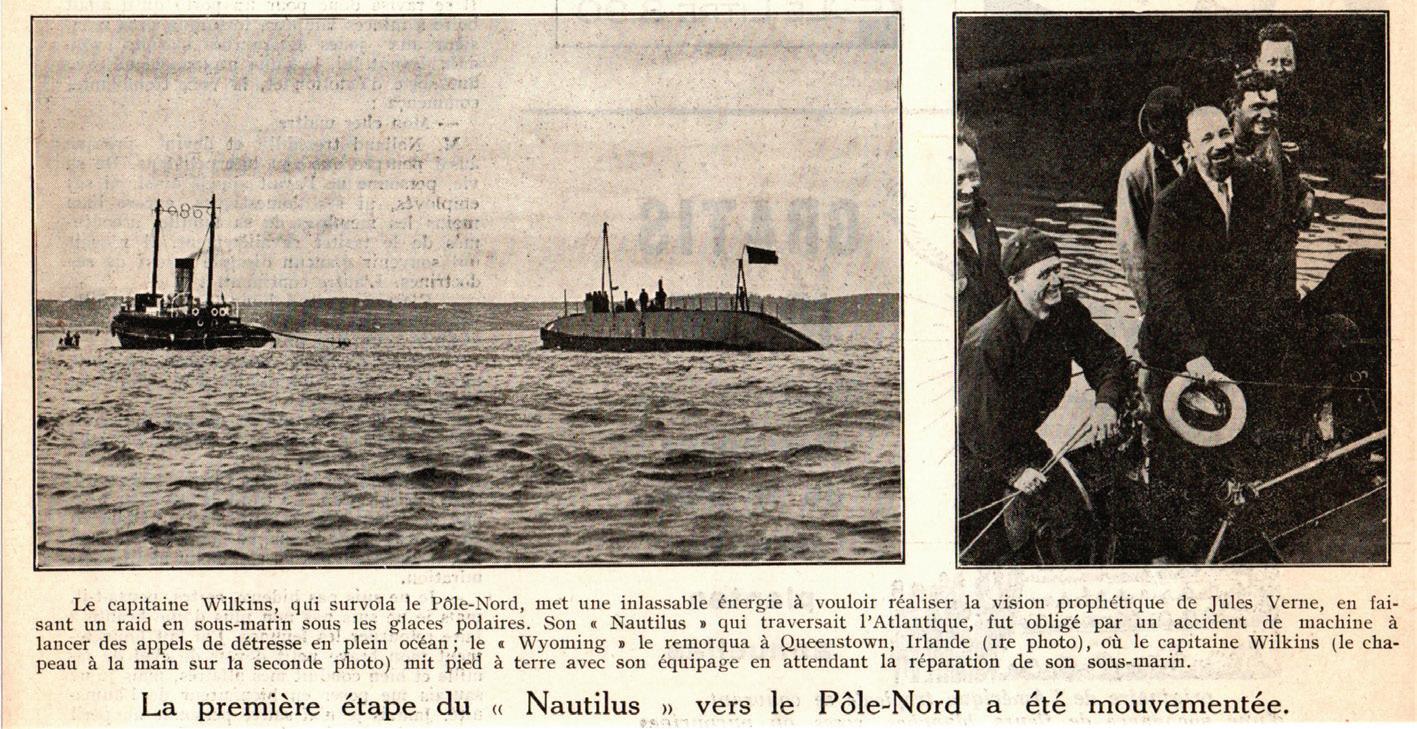
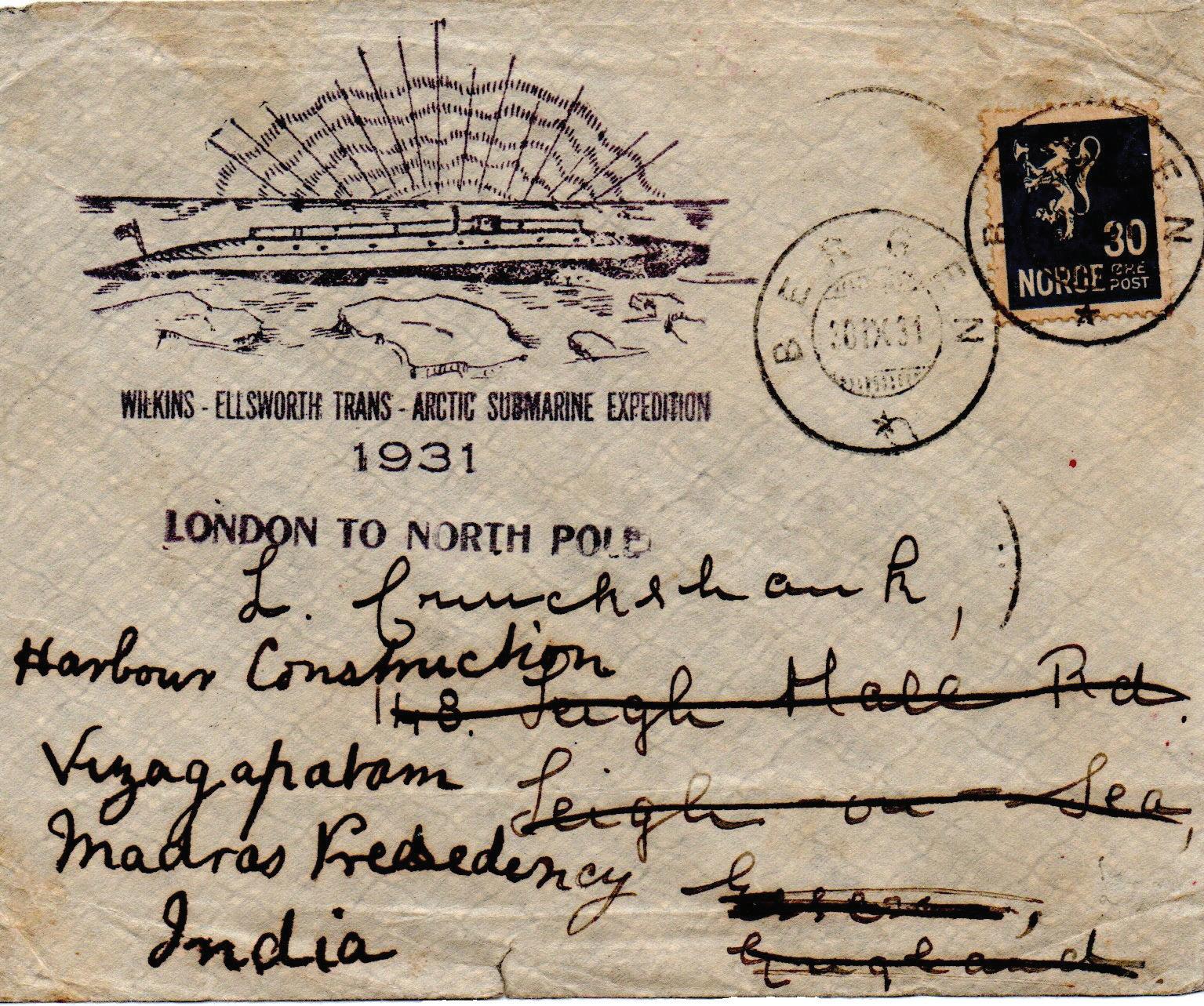
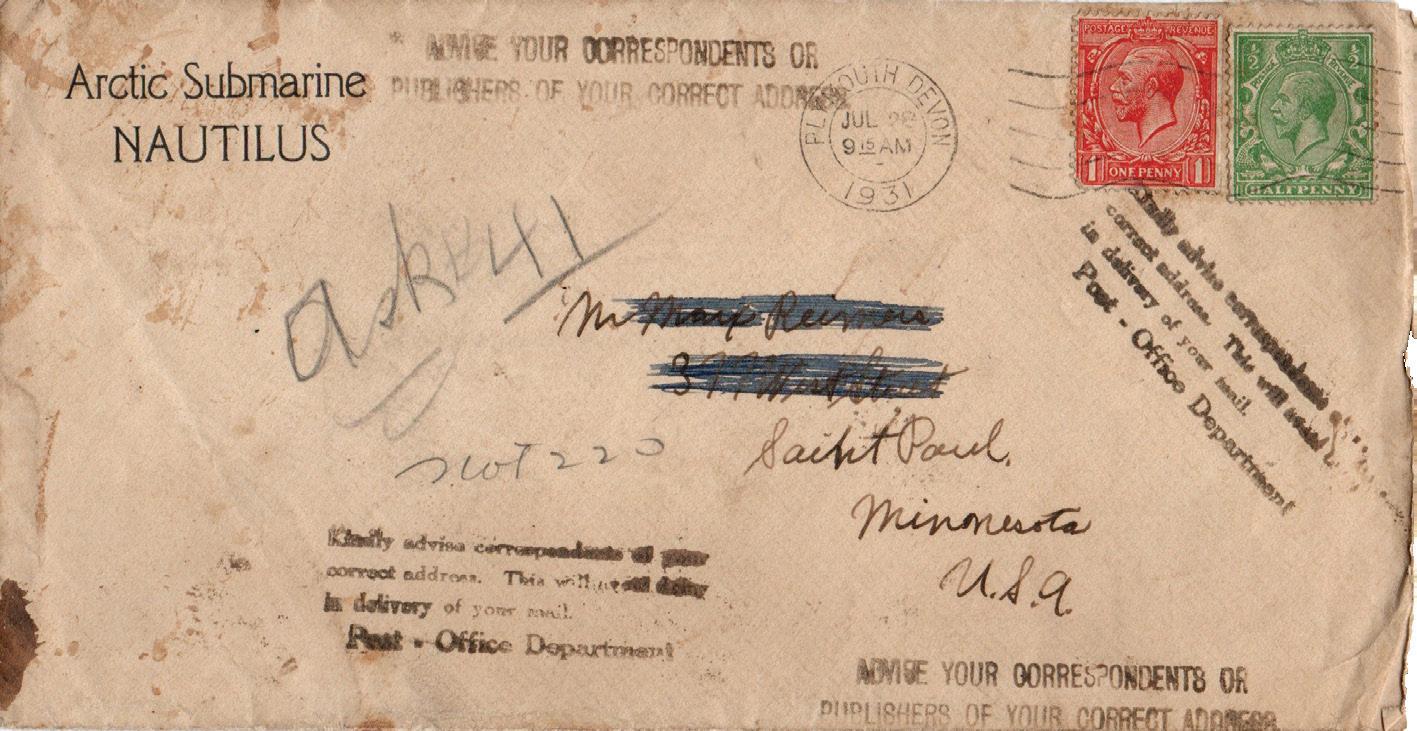
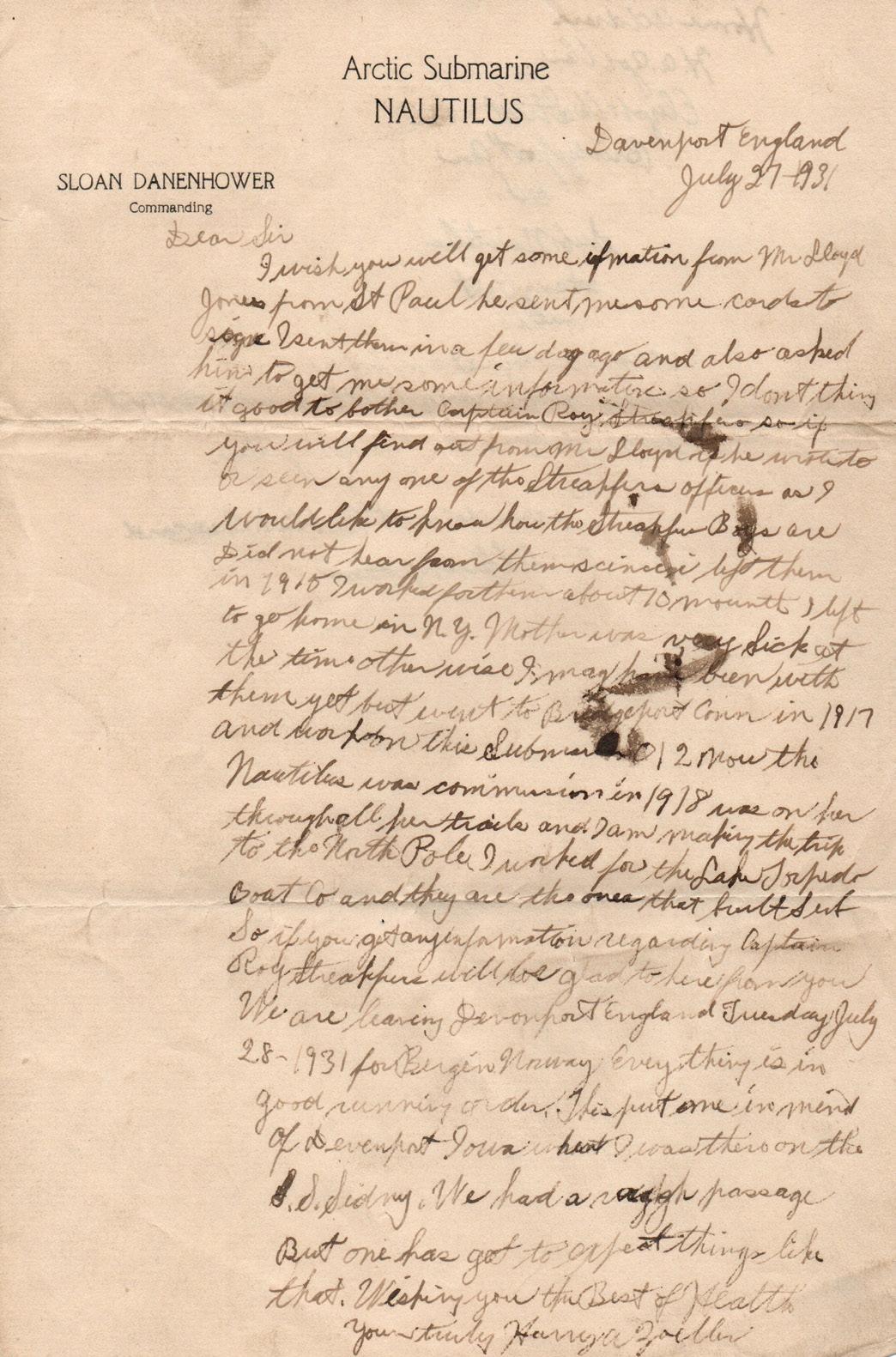
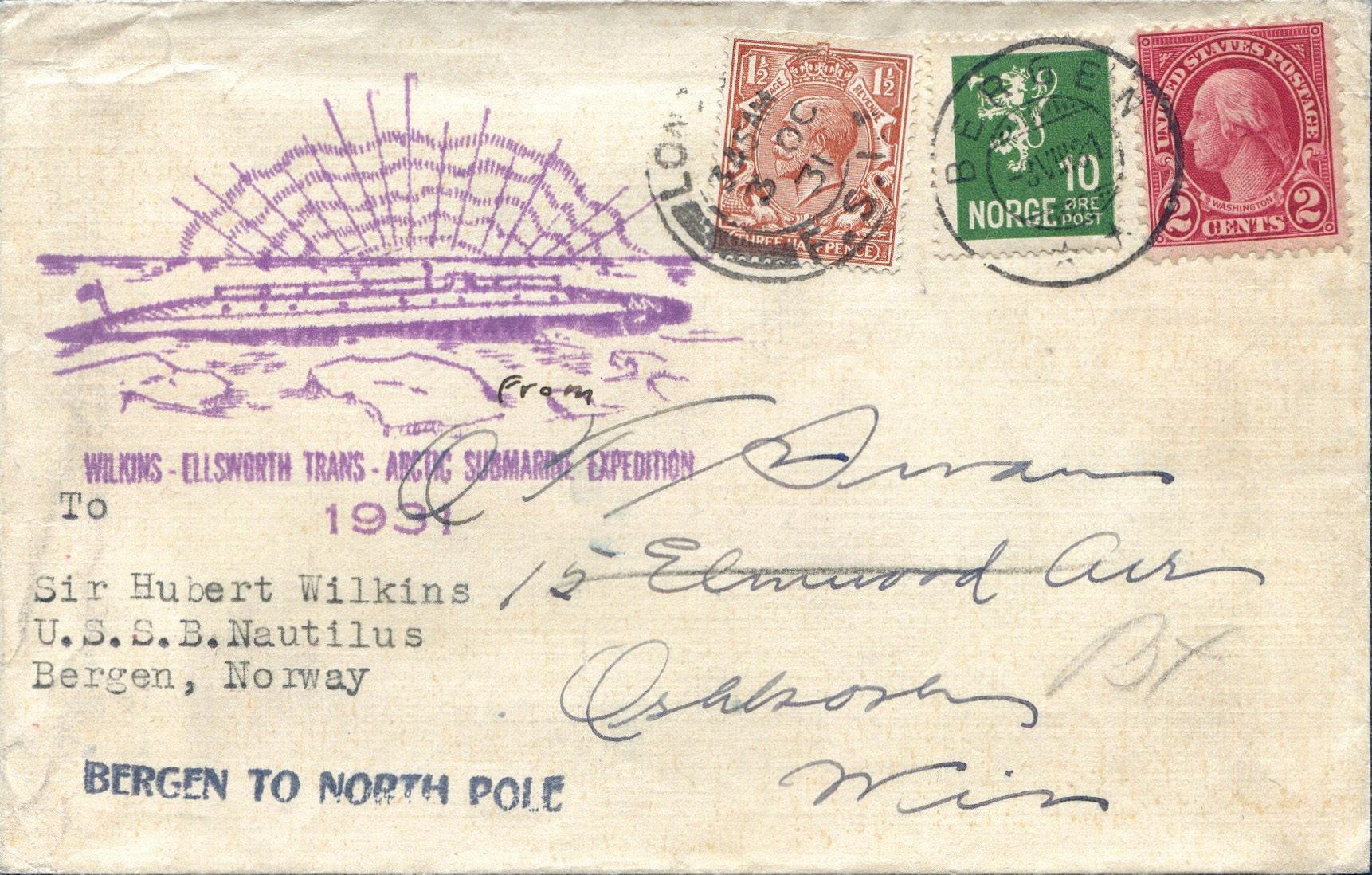
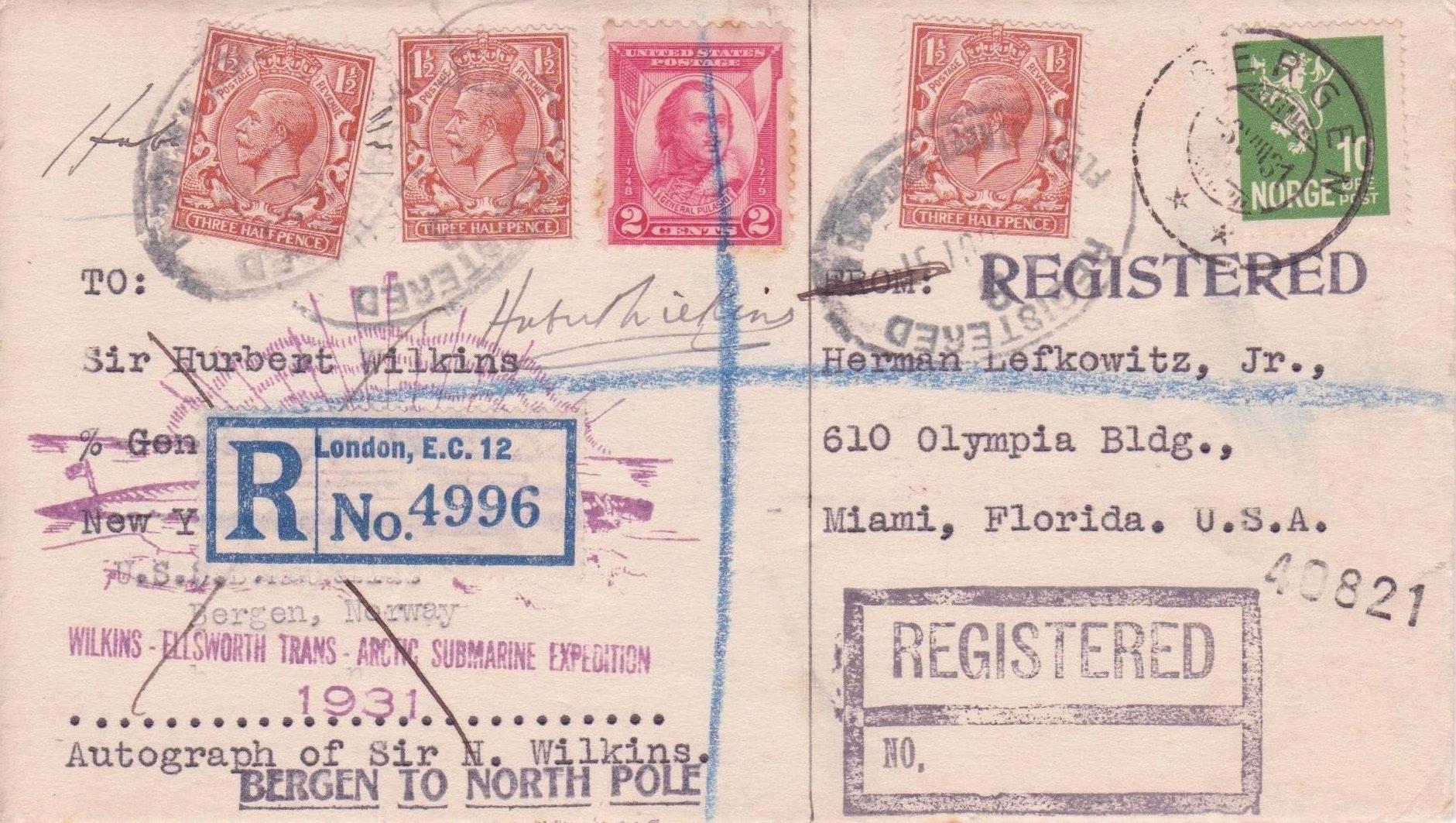
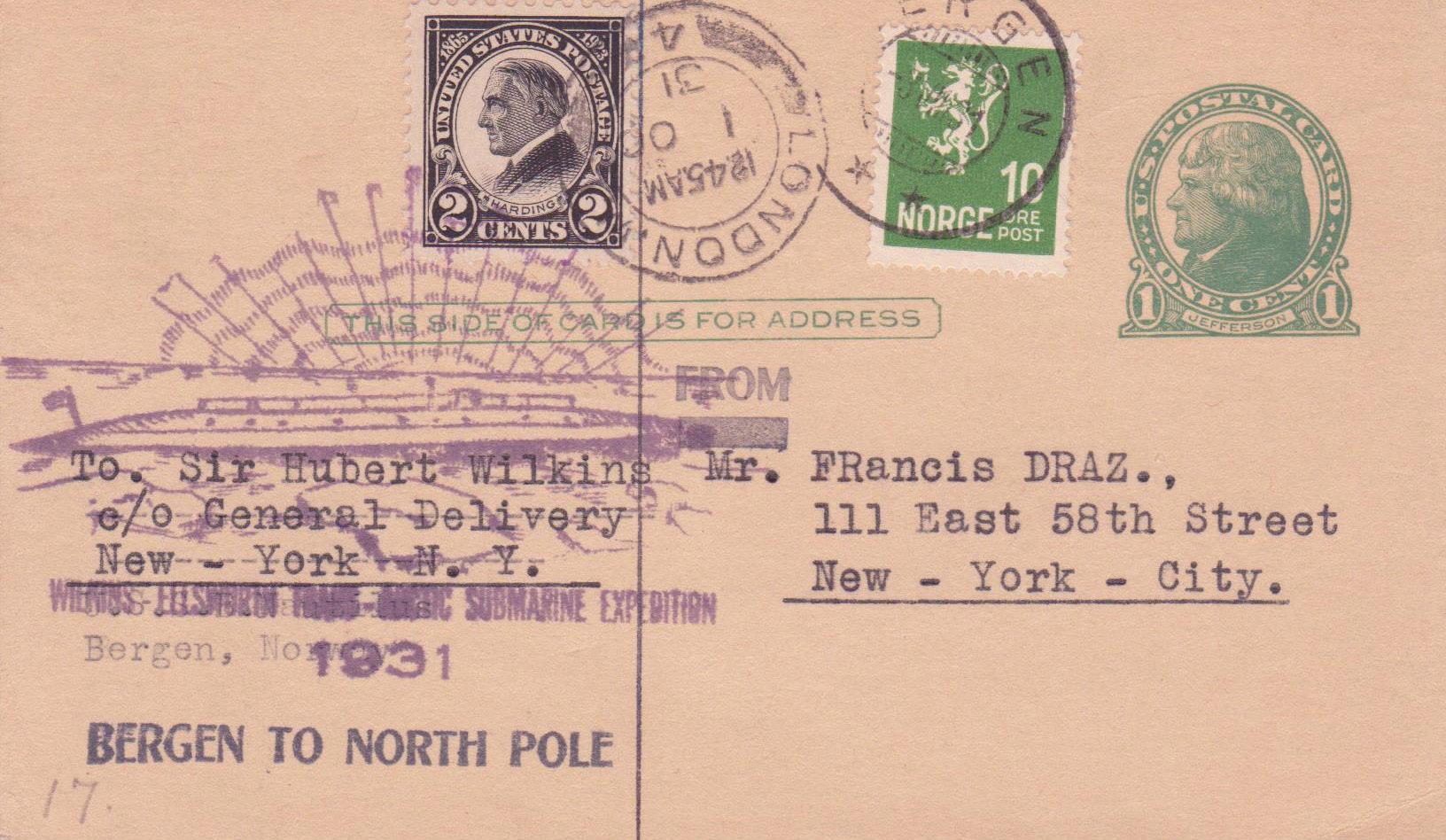
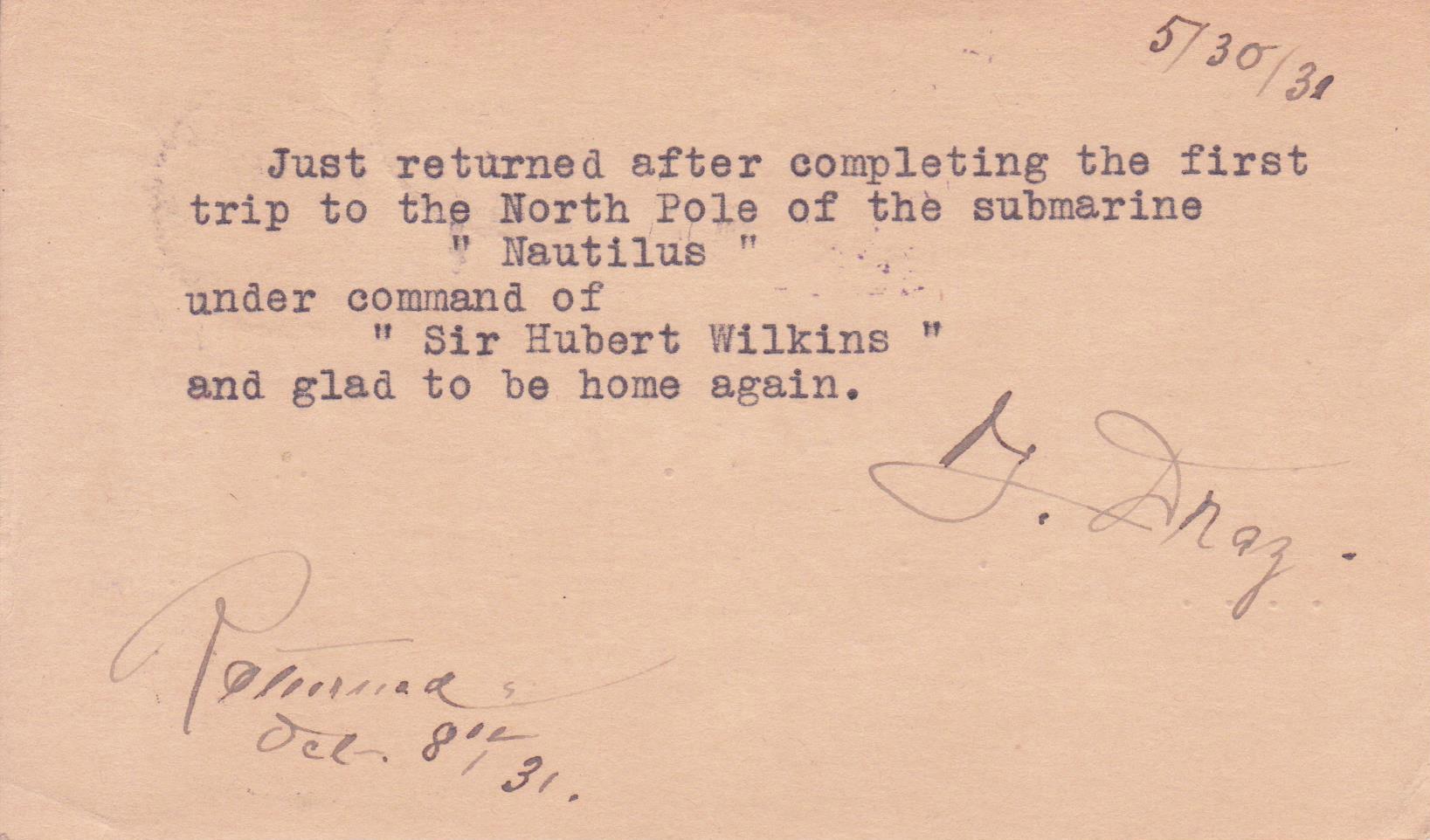
A dozen years after WWI ended, a plan to sail a refitted submarine beneath the North Pole seemed both worthy and reckless. But the plan had supporters and willing participants, and thus sailed the Nautilus
FRANCE AND ANTARCTICA
BY SERGE KAHN
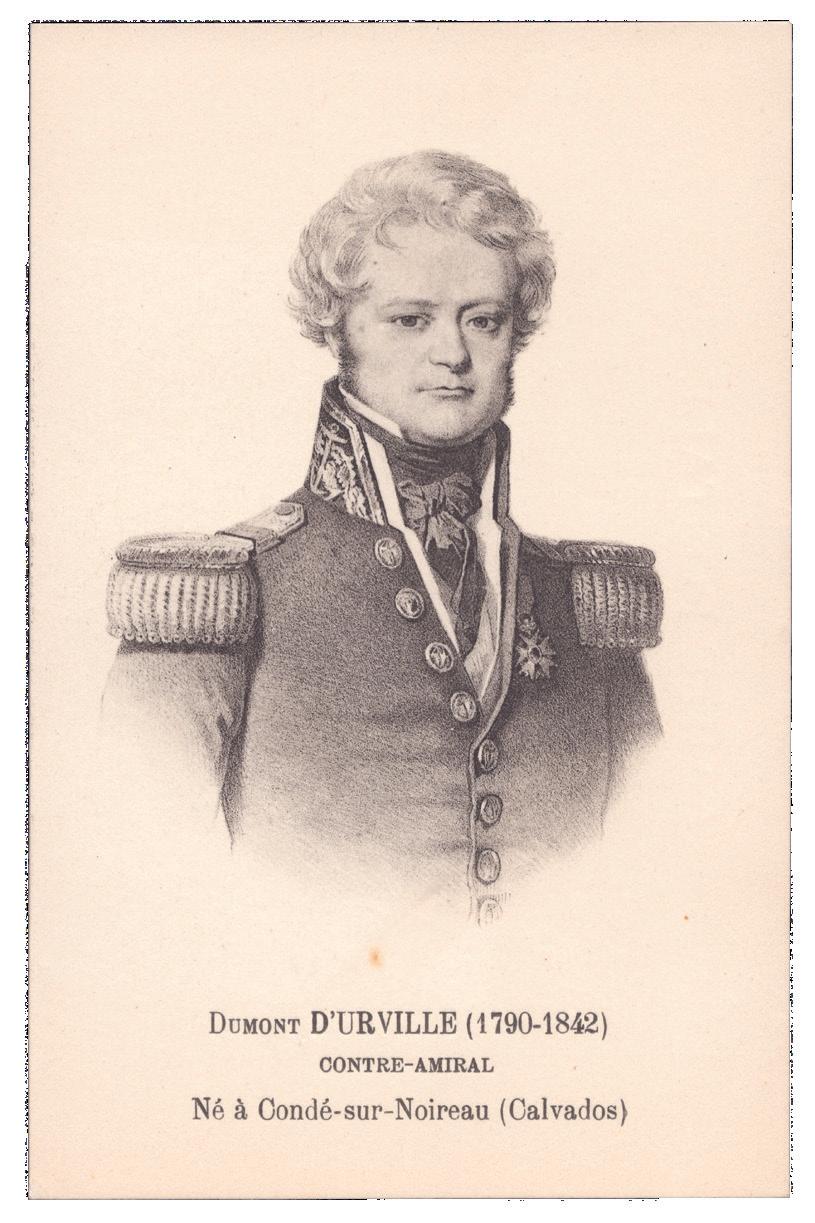
Dumont d’Urville – a brilliant explorer with interests from art and science to maritime exploration – led France’s Heroic Age earliest explorations of Antarctica. His pioneering efforts led to France’s later expeditions in the frozen land.
CRISIS IN BOSTON
BY VERN MORRIS
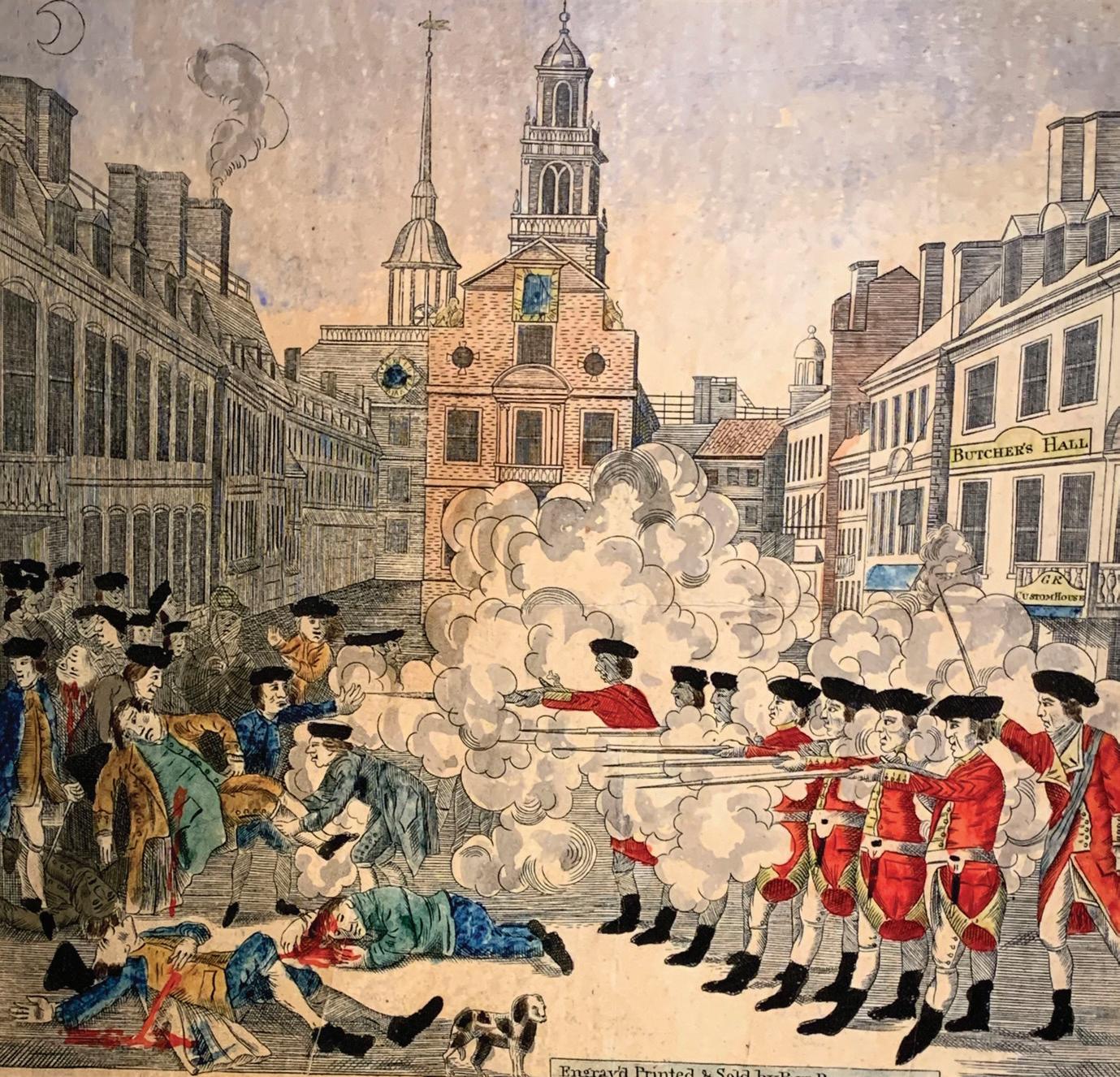
American patriots on the brink of revolt faced a dilemma at the dawn of the Revolutionary War – the British still delivered the mail and could read contents, including potentially damning correspondence.
ON TO THE FROZEN SOUTH BY JIRI KRAUS
Facing the harshest weather conditions on Earth, intrepid explorers and expeditions slowly inched their way through hazardous waterways to explore the land and surrounding seas of Antarctica.
THE
END OF A VERY LONG ERA
BY MORTEN SOERENSEN
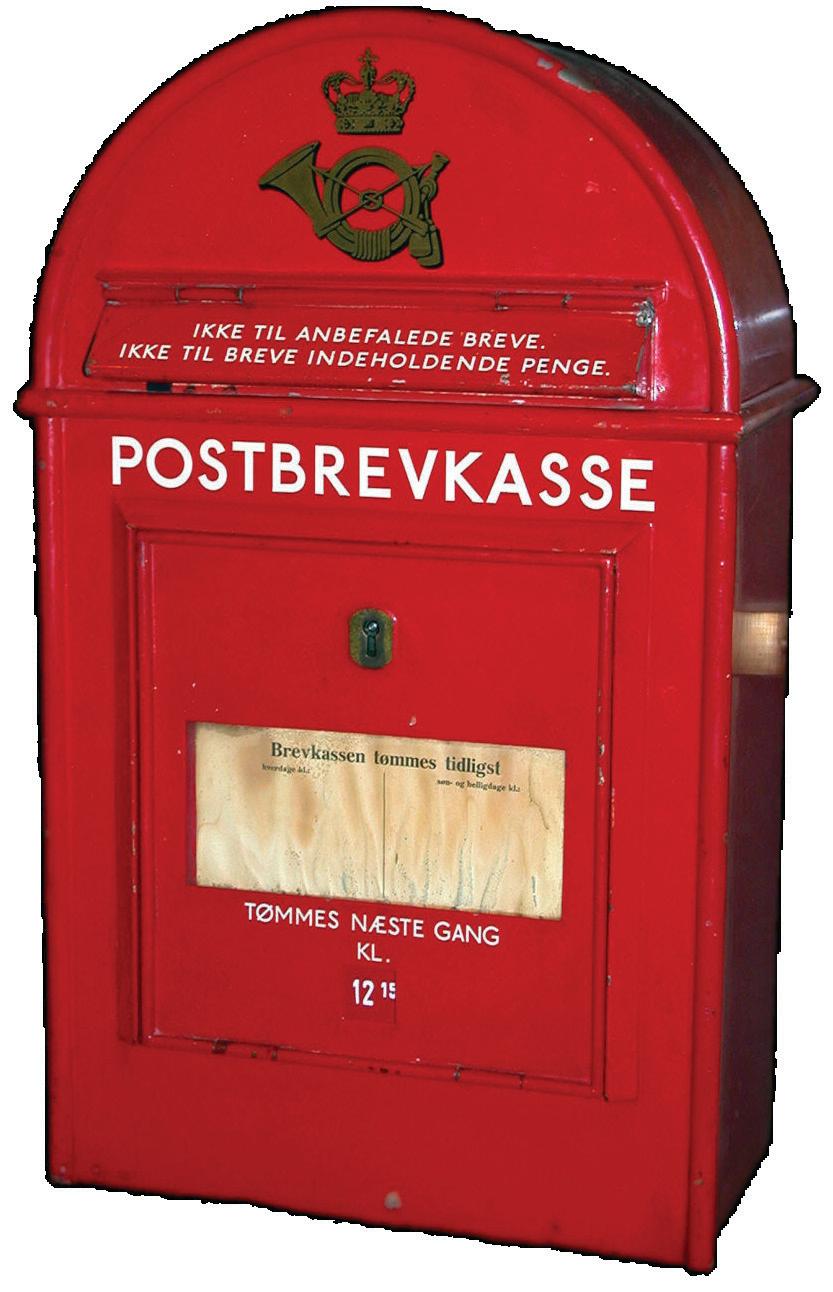
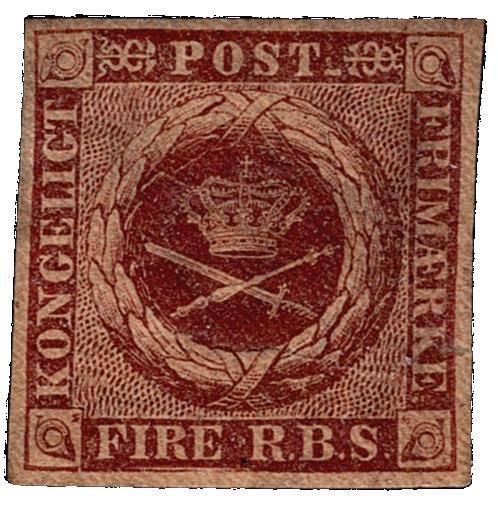
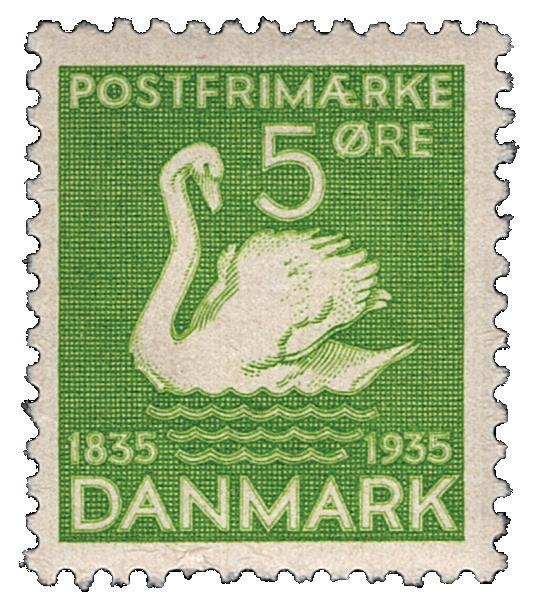
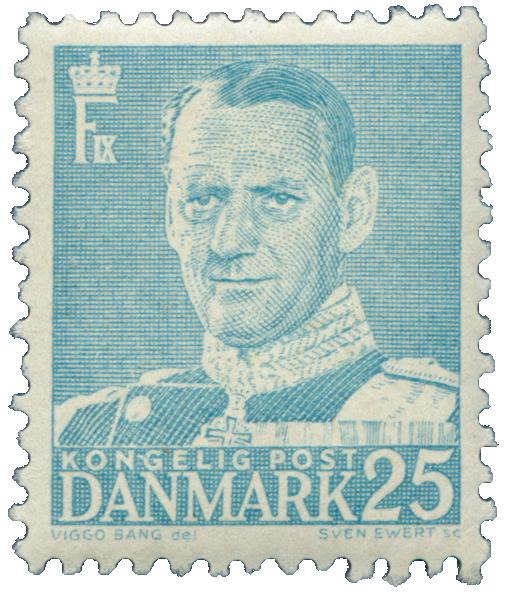
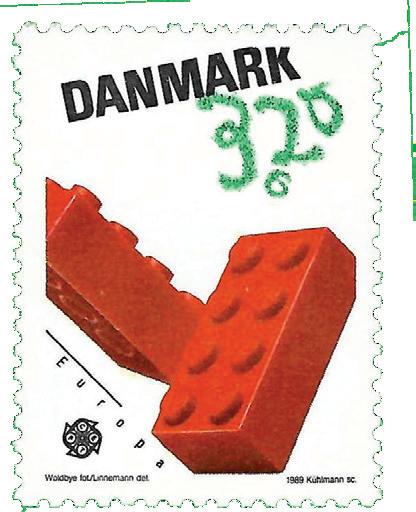
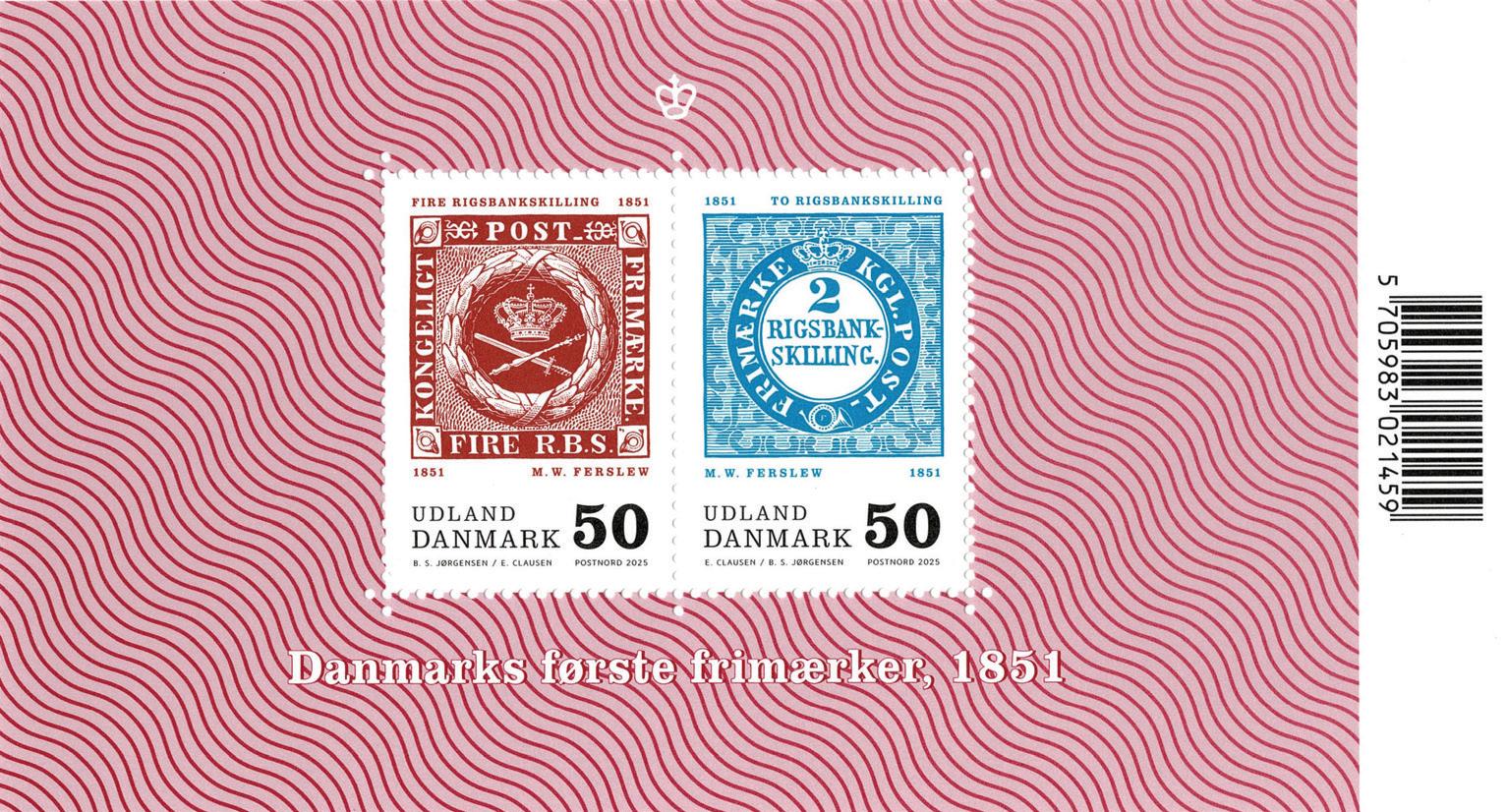
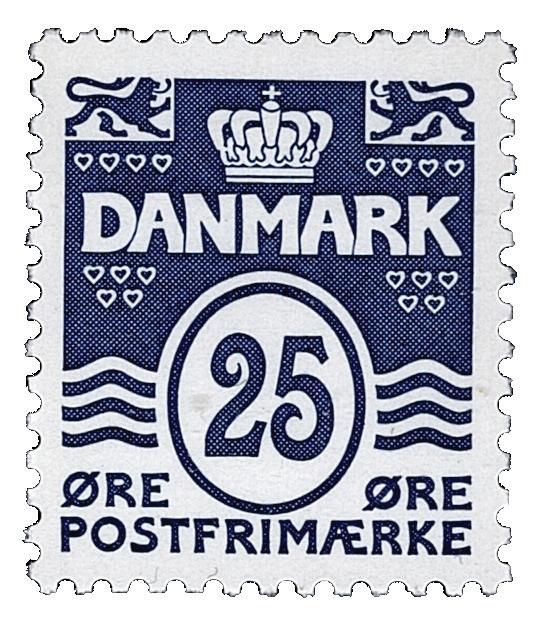
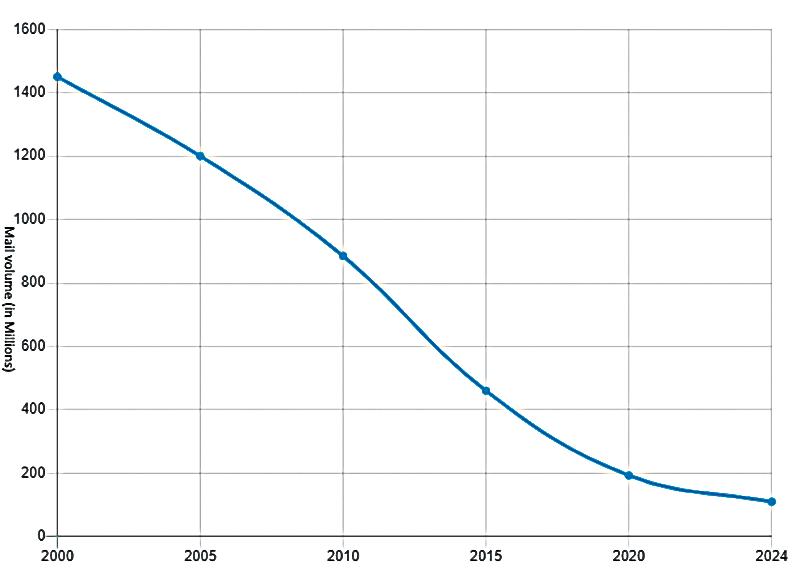
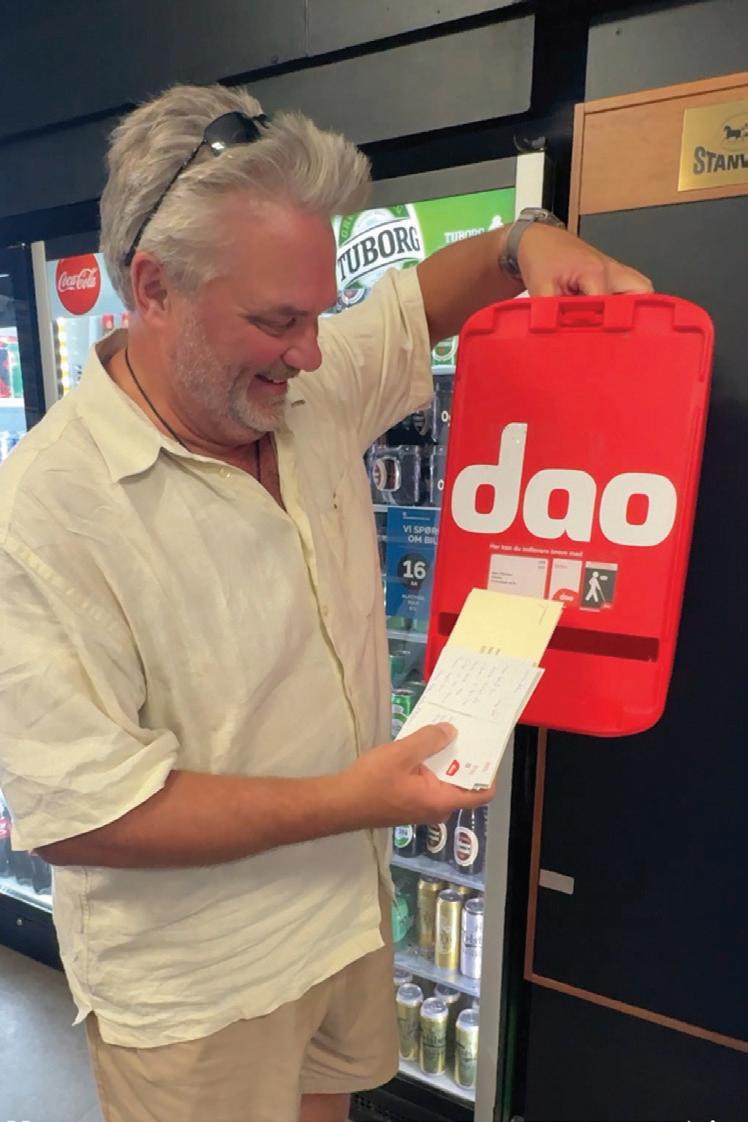
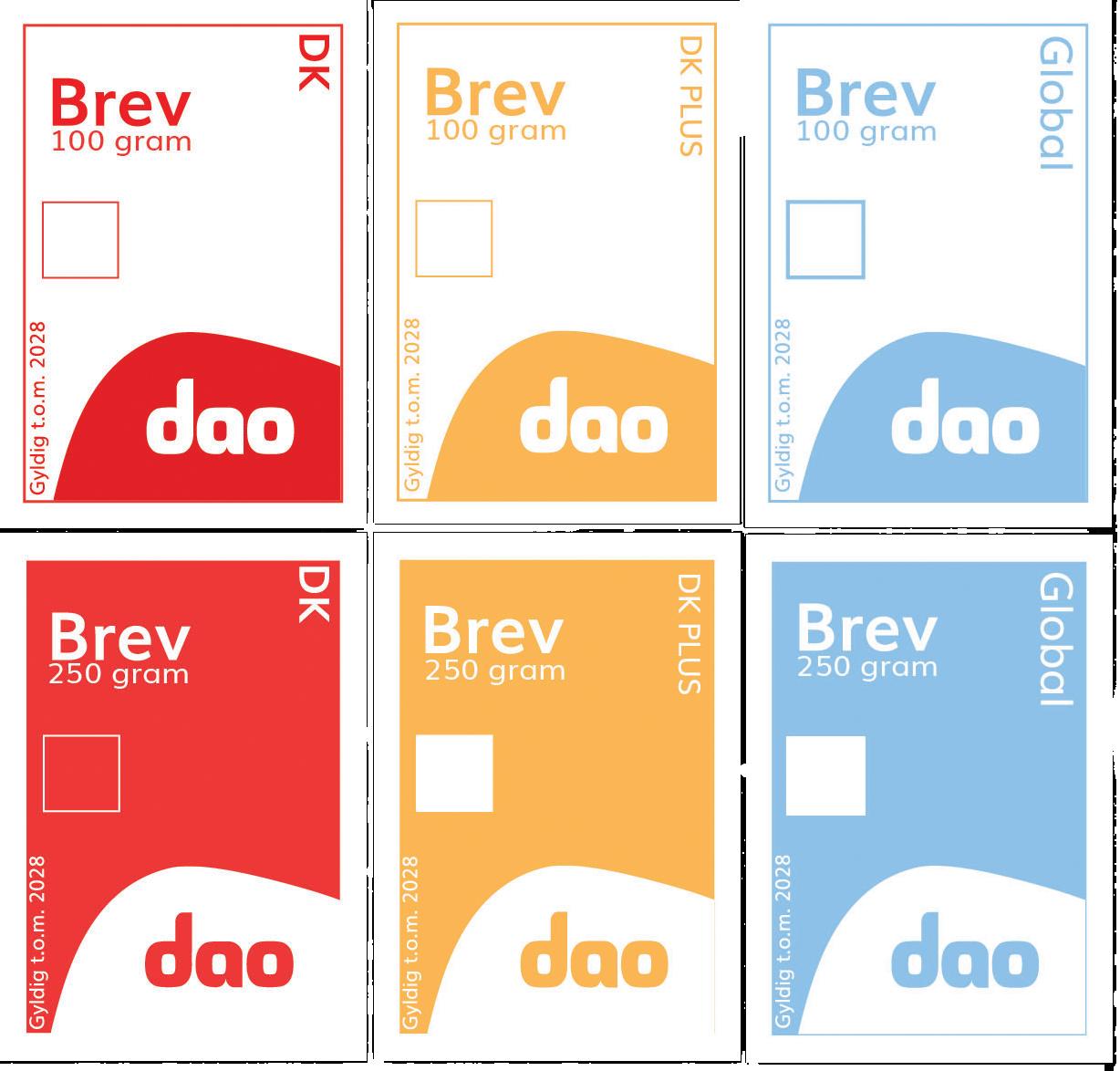
Denmark stopped issuing stamps and delivering cards and letters at the end of 2025. A private company has taken on the role. The stamps look a bit, well, dull.
QUEEN ELIZABETH II EXHIBIT PREVIEW
BY ALEX HAIMANN
Boston 2026 will host an exhibit unlike any seen at an international stamp show –centering around the Rolls-Royce Phantom IV used by Queen Elizabeth II on her world tour. Curator Alex Haimann shares a teaser of what attendees will experience at the show.
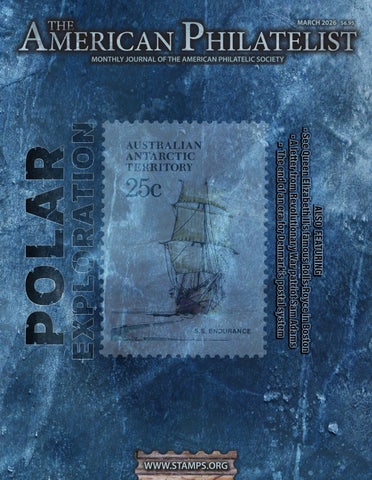
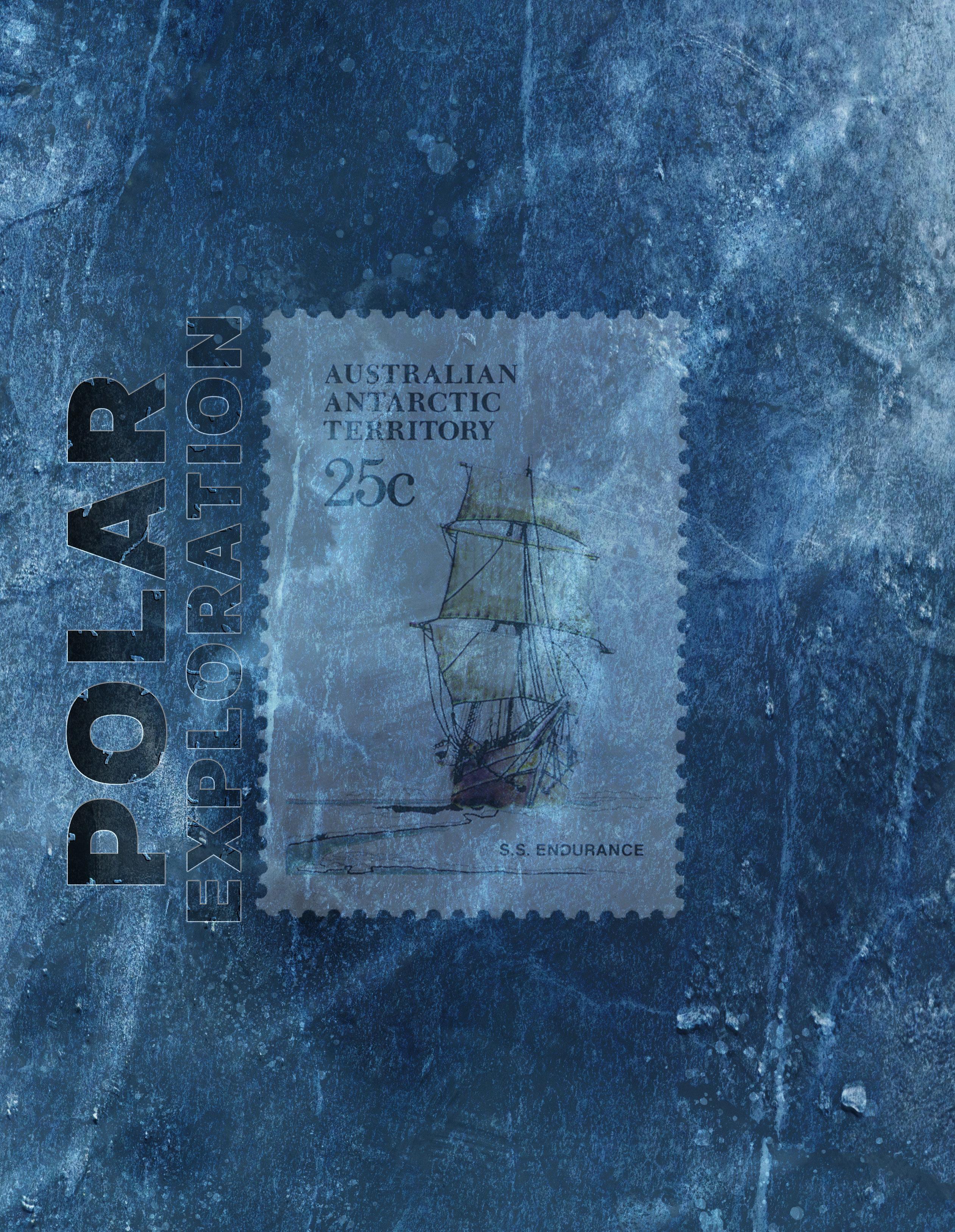
Designed by Chad Cowder, an Australian Antarctic Territory stamp celebrating the Heroic Age of Polar Exploration is buried under the thick icepack of the South Pole.
Other Features
Our Big Tent Has Room For All President’s Column
BY Mark Banchik APS President president@stamps.org
Collecting is a big tent!
We listen. In casual conversations, emails, and social media conversations, we see common themes. Yes, the hobby is changing. Involvement in organized philately is in flux. Membership in traditional organizations is declining/aging out.
These are not new or even recent sentiments! Our hobby has been evolving for as long as I can remember. Back in the “good old days,” traditional collecting was king.
Roughly 30 years ago, collecting and focusing on postal history, thematics, and even revenues were considered more outlier than mainstream. Now, thanks to the foresight of visionaries such as Diane and Jesse Boehret, Mary Ann Owens, and George T. Guzzio, among many others, these collecting areas are now very much mainstream, sharing the limelight with more traditional approaches.
We are each comfortable in our own collecting and research silos. Our focus and attention in preferred disciplines bring great pleasure, satisfaction, and fulfillment. We tend to focus less on other areas, yet that is where opportunity lies.
Recognition of spheres beyond our immediate awareness is the key to relevance and growth. Collecting in many forms is very active. Our mission is to understand how collecting has evolved and where it can go. The inclusion of related ephemera, design, production, history, and the broader world’s use, incorporating communication, is the bigger tent.
Expanding our perception of our pastime is an admirable goal. Aside from engaging related interests, we need to be relevant to the larger pool of non-affiliated collectors. That requires the big tent!
Executive Director Kirk Gillis is formulating the American Philatelic Society’s mission and vision into a strategic
plan. If this were an easy project, it would have been settled a long time ago. Some members have wisely told me that we should also focus on retaining members, targeting likely demographic groups, and expanding social outreach to increase our desirability and relevance.
We have seen how our hobby has evolved and benefitted by inclusion over many years. As we proceed, we are excited by the possibilities of expanding our collecting awareness. It’s a big tent!
Please keep the emails and comments coming. I read each and every one, and I appreciate them. I can be reached at president@stamps.org.
Call for APS 2026 Annual Meeting
Pursuant to Article 4, Section 4.4 of the Bylaws, I hereby issue this official call for the 140th Annual Meeting of the American Philatelic Society for transactions of such business as may be legally brought before it. The convention will assemble during the Boston 2026 World Expo at the Boston Convention Center, from May 23–30, 2026.
All meetings of the American Philatelic Society will be held at the convention complex. In the event the convention is canceled or delayed, the meeting will be rescheduled and held virtually/telephonically at a day and time to be announced.
Proposed resolutions shall be submitted to APS National Headquarters at least 30 days prior to the general membership meeting, which will be held at 9 a.m. on Tuesday, May 26.
Mark Banchik, President, American Philatelic Society
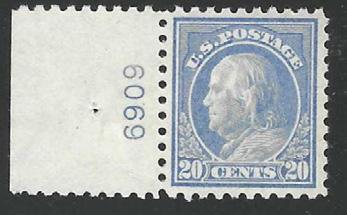
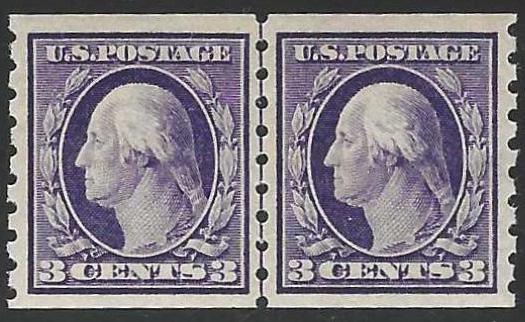
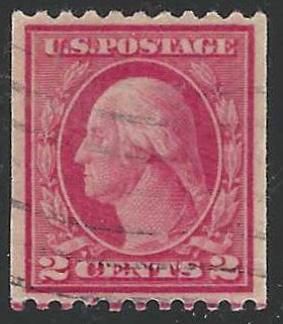
WASHINGTON-FRANKLINS
Our stamps are accurately described by grade & condition and priced accordingly. All stamps are photographed on our website or scans or copies will be sent upon your request our stamps are accurately described by grade & condition and priced accordingly. All stamps are photographed. On our website or scans or copies will be sent upon your request.
499
Double error blk of 12 $1,100.00
Fine + LH Error LH in Blk of 9 $495.00
VF-XF+ Used ......................................................$10.00
All hands on deck! This is the busiest we’ve been at the American Philatelic Society (APS) since I joined the team last July. Over the next few weeks, we will be adding the final touches and polishing the APS strategic plan before presenting it for approval by the board.
The end result will be a strategic and operational plan that will transform the APS, creating the foundation upon which we will grow the APS community. Our primary enterprise goal is to end a 30-consecutive-year decline in membership and achieve positive membership growth by the end of 2027.
The strategic plan has our mission statement as its guiding light: To grow, nurture and empower a thriving community of stamp and postal history collectors across all experience levels.
To write our strategic plan, and later, implement it, we need the input, engagement and support of the APS community. To that end, we have formed seven Advisory Task Forces, each with four APS member volunteers that are experts in their fields. Not only do these task force members bring significant value in terms of their expertise, they also represent the wants and needs of our members. The task force volunteers are your representatives, elevating the perspectives of APS members and helping us to make decisions that will most benefit the membership. They also have strong subject matter expertise in these areas, meaning that they can fill in knowledge and experience that our small staff might not have.
Without further ado, please meet our task forces.
Chapter Clubs Task Force
Members: Charles DiComo, Trice Klauber, Joanne Berkowitz Murphy, Gerald Robbins, and Ken Martin (APS director of expertizing).
The Chapter Clubs Task Force will help the APS identify cost-effective opportunities to support APS chapter clubs, develop best practices to help chapter clubs grow, and better leverage clubs as ambassadors and recruiters for the APS.
Education Task Force
Members: Matthew Healey, Gary W. Loew, Bob Zahm, Alex Haimann, and Kirk Gillis (temporary APS lead).
The Education Task Force’s objective is extensive and includes recruiting the next APS education director. In addition, the task force will advise the APS Education department in creating learning pathways (including live, remote/online, interactive, video, and print pathways) that enable stamp and postal history collectors to progress from beginner to advanced level philately.
Marketing Task Force
Members: Graham Beck, Tom Vasiliauskas, Suzanne Rae, T.J. Donnelly, and Kirk Gillis (temporary APS lead).
The Marketing Task Force will be supporting the APS Marketing Team in its efforts to grow membership and maximize member engagement in APS programs and services. One of its first tasks will be to help recruit talented marketing professionals
AMERICAN PHILATELIST THE
Published Continuously Since 1887
EDITOR-IN-CHIEF OF APS PUBLICATIONS
Susanna Mills, ext. 207 • smills@stamps.org
SENIOR EDITOR
Jeff Stage, ext. 221 • jstage@stamps.org
GRAPHIC COMMUNICATION SPECIALIST
Chad Cowder, ext. 223 • ccowder@stamps.org
ADVERTISING SALES
Steve Schwanz Fox Associates, Inc. 800-440-0231 x114 adinfo.theamericanphilatelist@foxrep.com
American Philatelic Society
American Philatelic Research Library
100 Match Factory Place • Bellefonte, PA 16823 814-933-3803 • 814-933-6128 (Fax) STAMPS.ORG • STAMPLIBRARY.ORG
The American Philatelist (ISSN 0003-0473) is published monthly by the American Philatelic Society, Inc., 100 Match Factory Place, Bellefonte, PA 16823. Periodicals postage paid at Bellefonte, PA 16823 and at additional mailing offices. Price per copy $6.95. Canadian Distribution Agreement Number 40030959. Opinions expressed in articles in this magazine are those of the writers and are not necessarily endorsed by the society and/or the magazine. The American Philatelist cannot be responsible for the accuracy of any information printed herein
A STAMP COLLECTION SHOULD BE A REWARDING EXPERIENCE.”
The “BEST SALE” is when the buyer will personally visit your city and view your collection. The dealers listed below will travel to “any city” to view appropriate holdings.
UNFORTUNATELY
many collections in the $2,000.00 to $20,000.00 range do not economically justify the time and expense for a professional buyer to travel long distances to personally view your collection.
WE OFFER A SOLUTION:
Each dealer listed below has designated a state, and region, he will make every effort to personally visit. Contact that dealer direct and discuss your collection and options.
YOUR GUARANTEE:
While each dealer listed is an independently owned business, all are members of either the ASDA or APS (most - both), insuring fairness and integrity in purchasing your collection.
If you lIve In: Ohio, Michigan, Kentucky, Indiana, Tennessee, West Virginia, Pennsylvania, New England, New Jersey, New York and Canada
Call or WrIte: Randy ScHoll Randy ScHoll STaMP co. 7460 Jager Court | Cincinnati, OH 45230
If you lIve In: Illinois, Iowa, Kansas, Minnesota, Nebraska, South/North Dakota, Missouri, New Mexico, Wisconsin Colorado and Arkansas
Call or WrIte: coinS, STaMPS ’n STuff llc
JeRRy KoePP
P.O. Box 42037 | Urbandale, IA 50323 1-847-778-5519
If you lIve In: California, Nevada, Arizona, Texas, Oregon and Washington
Call or WrIte: neWPoRT HaRboR STaMP
P.O. Box 3364 | Newport Beach, CA 92659 (800) 722-1022 (Dave) newportharborstamps@gmail.com
scrib1@yahoo.com Coins also wanted
to fill the two open positions in the marketing department.
Philately for All
Members: Don Neal, Melanie Rogers, Lisa Foster, Audrey King; and Susanna Mills (APS editor-in-chief).
The Philately for All Task Force will advise the APS on actionable ways to ensure the APS and its affiliated clubs, dealers, shows and the hobby overall are inclusive and welcoming to all. This team will be working in close tandem with the other task forces to review APS projects and provide recommendations on the organization’s new initiatives.
Stamp Shows
Members: Elizabeth Hisey, Timothy Wait, Christopher Brouady, John Schorn, and Wendy Masorti (APS vice president of operations).
The Stamp Shows Task Force will help the APS identify best practices from innovative and successful stamp shows, develop cost-effective opportunities to support stamp shows, and suggest methods to leverage shows as APS recruitment ambassadors.
Digital Library
Members: Murray Abramson, Barry Feddema, Andrew Kelley, Harold Krische, Geoff Hobart (APS digital librarian) and Marian Mills (APS director of information services).
The Digital Library Task Force is assisting APRL staff in their prioritization of content and development needs for
You’re Invited!
the APRL’s digital library, with the goal of maximizing community collaboration and value for members.
Technology & Innovation
Members: Behruz Nassre, Stuart Millstone, David Klauber, Even Brande, and Stephanie Katz (APS director of technology and innovation).
The Technology & Innovation Task Force has been one of our most active task forces to date, especially as the APS and APRL’s technology needs are so great. This group has already helped to advise us on our technology strategy and the development of the website request for proposal (RFP). As we move forward, they will continue to promote the strategic and efficient use of technology to increase our effectiveness, improve APS communications and member engagement, and improve our learning and administrative functions.
ONE GREAT REASON TO SHOP KAP STAMPS….
1. Free catalogs of 5,000 or more stamps offered every week!
2. Next day shipping for virtually every order!
3. Limited mailings for collectors with specialized interests such as U.S. British, French, etc. Only receive issues that pertain to your interests!
4. Prices under 50% of original catalog in our weekly clearance issue for most items!
5. Convenient ordering by e-mail, mail, phone, fax; convenient payment by Visa, Mastercard, Discover, AMEX, check, or cash!
6. Confidence of buying from a family owned business that has been around for 35 years or so!
7. No minimum order ever!
Well my goodness, that’s SEVEN good reasons to sign-up for our free weekly catalogs. Subscriptions are free for 12 weeks by e-mail or 4 weeks by regular mail. What have you got to lose?
KAP STAMPS
On March 31, 2026, from 3-4 pm EST, the APS Board will vote to adopt the strategic plan during the public board meeting. We invite you to attend the public board meeting via Zoom – register to attend at aps.buzz/March31Board. PO Box 68364, Schaumburg, IL 60168 Phone: 847-524-1392 • Fax: 847-301-7320 Email: catalog@kapstamps.com
The seven task forces currently meet on a bi-weekly basis as they support APS efforts to identify key initiatives to be included in the APS and APRL strategic plan. Their help has already been instrumental to developing the strategic plan, and they will be a pillar of support as the APS moves forward into the implementation stage, beginning in April.
Please visit stamps.org/about/ contact/aps-task-forces to read the full Task Force charters and dig more into each task force’s roles and responsibilities. If you have ideas or observations regarding the areas tackled by our task forces, we welcome your input – use the “Contact” button on the Task Force webpage to send a message to the appropriate team for their review and consideration.
The 2026 APS Soirée at Boston’s Museum of Fine Arts
You are cordially invited to join the American Philatelic Society for an extraordinary evening of culture, fellowship, and celebration.
TUESDAY, MAY 26, 2026 6:00 PM
YOUR DONATION
Your generous support will fund our mission to strengthen our online presence, providing muchneeded upgrades to crucial services and allowing us to build a more welcoming digital home for the APS.
RESERVE YOUR SEAT
Learn more about the Soirée and reserve your seat at stamps.org/soiree
1. 2.
As the nation’s largest buyer and seller of country stamp collections for over 50 years, we urgently need to buy new material to satisfy our customers. We are paying exceptional prices for valuable United States and foreign stamp collections- often at or above auction realizations.
We offer full payment on the spot by either bank cashier’s checks or corporate checks, whichever is preferred. Over ninety-five percent of our offers have been accepted by collectors and their heirs over many decades.
3. 4. 5.
No collection should be considered too large or too valuable for us to purchase. Over $5,000,000 is generally available for immediate payment.
We offer to buy everything of value in your stamp collection, not just the most valuable material.
We can immediately come to you anywhere in the United States and make cash offers within hours
Even if you are not presently interested in selling your collection, we will be glad to discuss and help with future planning to maximize the realization of your collection.
Editing Philately
BY Susanna Mills Editor-in-Chief of APS Publications smills@stamps.org
A Curiosity-Inspired Exploration of Polar Philately
Polar philately is a favorite topic around our office. The 2018 TV show The Terror, a fictionalized retelling of the disastrous Franklin expedition to search for the Northwest Passage, sparked an office-wide fascination, leading us to hunt down stamps and philatelic material about the ice-trapped, lost crews of the HMS Erebus and HMS Terror. This, of course, led us down rabbit holes of other heroic – some less tragic – Arctic and Antarctic expeditions.
Then, a fantastic “You’re Wrong About” podcast episode about the sled dogs Balto and Togo, who were part of the 1925 mission to deliver medicine to a diphtheria epidemic in Nome, led us to wonder what kind of postal history or stamps might exist in connection to the “Great Race of Mercy.”
While neither of those specific stories appear in this issue, many authors stepped up to share with us the stories that had fascinated them for years.
There’s no denying that the field of polar philately brushes up against stories of danger, tragedy, heroism, science, invention, and, above all, that great human motivator, curiosity.
In this issue
This issue of The American Philatelist could not exist without the late Hal Vogel, who passed away last November. Hal’s name was synonymous with polar philately from the 1950s on. His sheer breadth of research and publications, his knowledge shared over the decades, and his mentorship to countless other polar philatelists – all together, create a legacy for this philatelic field that is likely unmatched by any other philatelist.
I spoke to Hal in September about contributing an article for this issue, and he returned his introductory piece, “This is Polar Philately,” to me just two weeks later, with a passing mention that he was not in the best of health. When the news of his death reached me a month later, I understood what a gift he’d given us through his time and effort on this article.
Thank you, Hal, and thank you to his friends Alan Warren, who stepped up to help us answer questions about Hal’s article in the editing process, and Serge Kahn, who provided additional images to supplement the article.
Speaking of Serge, he contributed our next feature, “The Heroic Age of France in Adélie Land,” following France from 1848 to 1956 through multiple Antarctic expeditions. Serge is also a judge for international polar philatelic exhibitions and is working closely on the Polar Salon to be held at the upcoming Boston 2026 World Expo.
Author Jiří Kraus is also an accomplished polar philately exhibitor and is deeply involved in the upcoming Polar Salon at Boston. Jiří takes us on a whirlwind tour of the Heroic Age of Exploration in Antarctica, starting with postal history from the earliest sightings of the South Pole, to pioneering submarine expeditions at the end of the 19th century.
Would you believe that polar submarine expeditions were actually reasonably common?
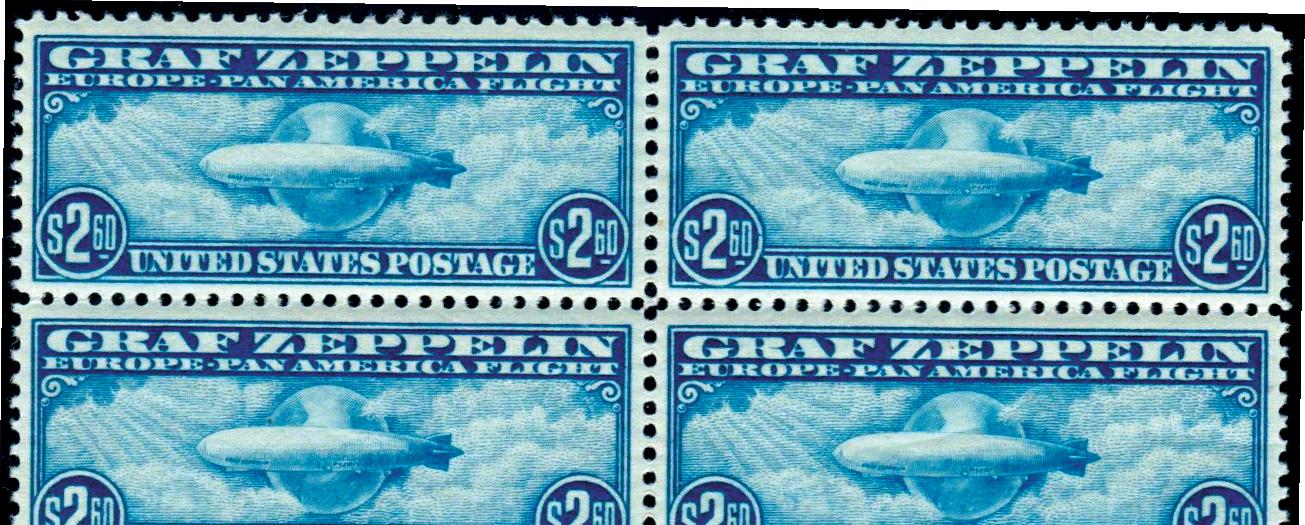
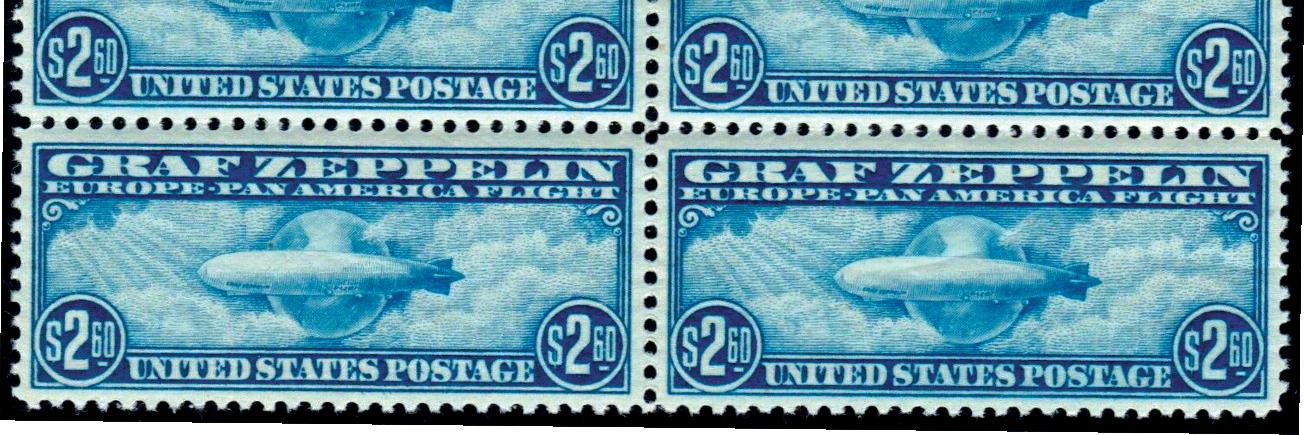
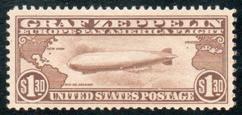
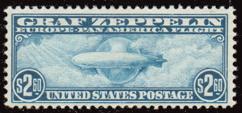
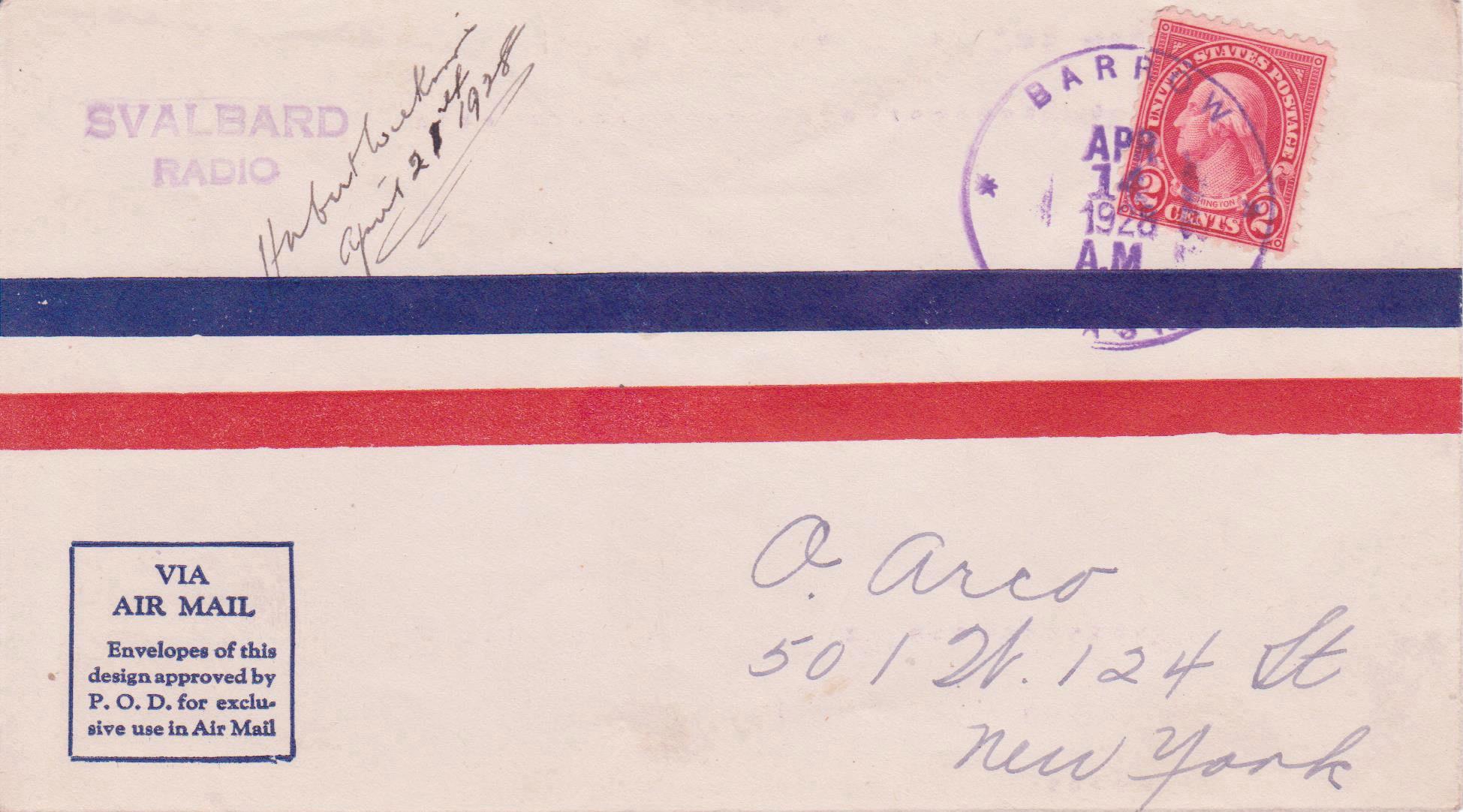
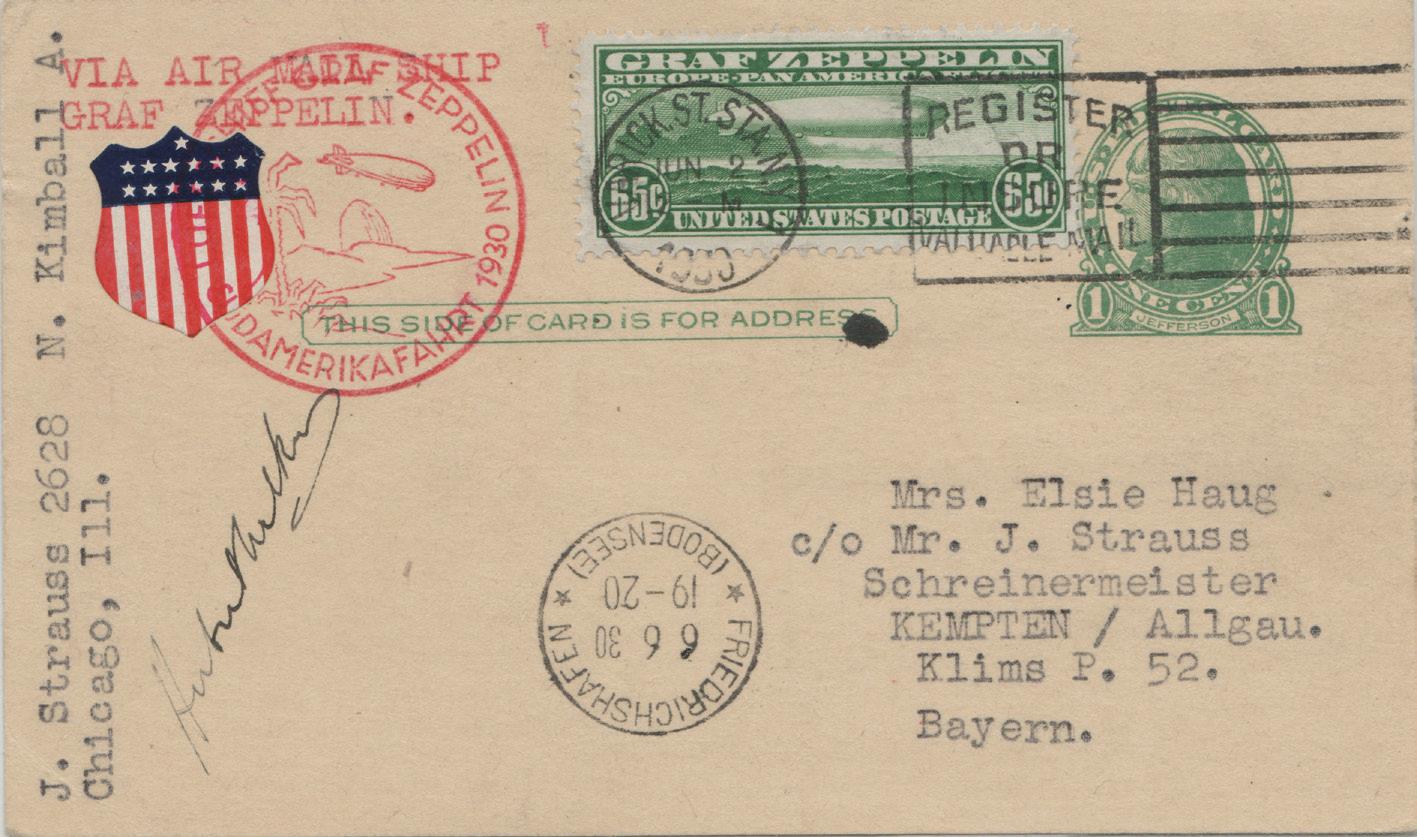
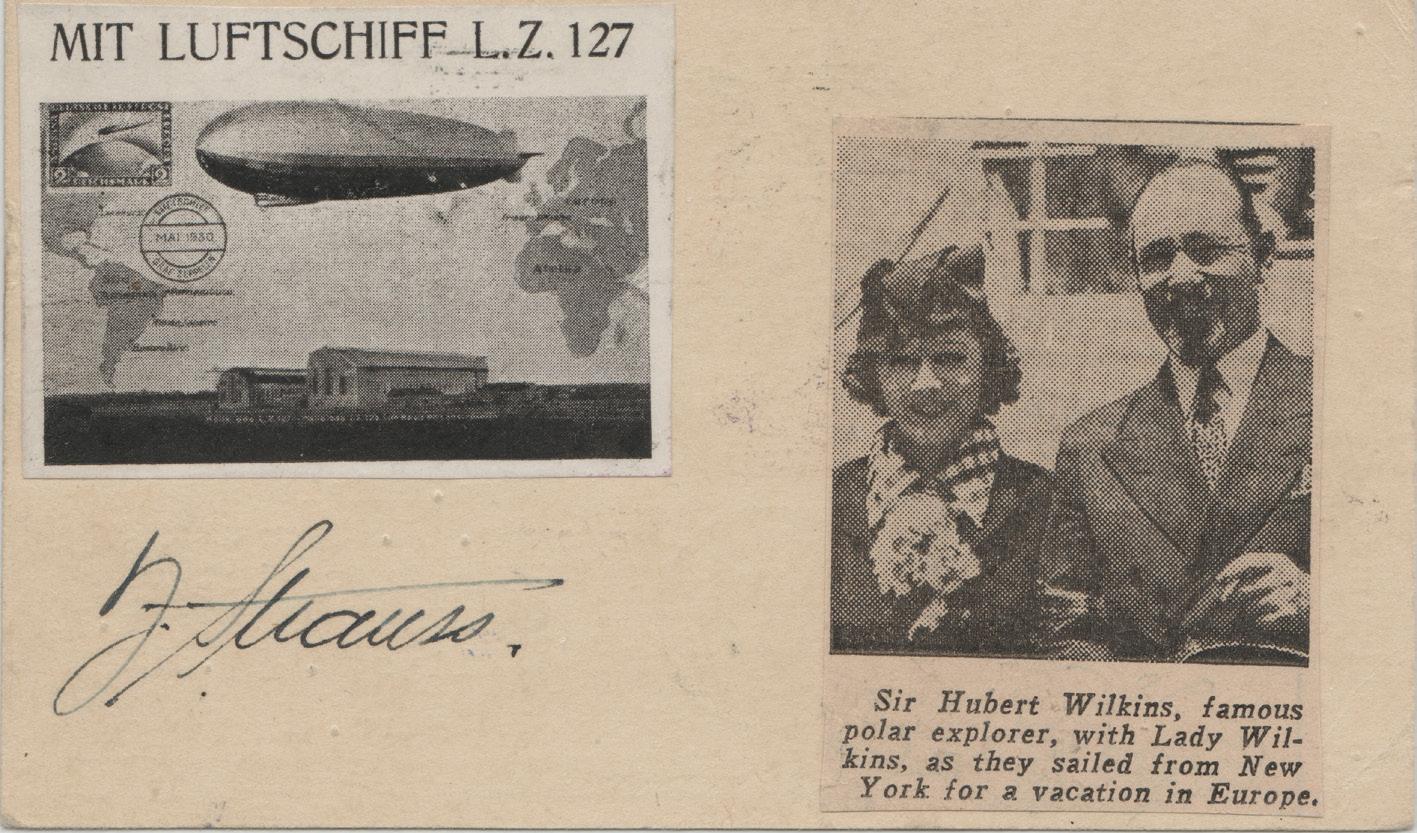
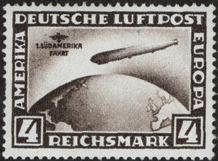
Author Richard Hindle, founding member of the Hubert Wilkins Study Group, offers a glimpse of the Australian polar explorer, Wilkins, and his 1931 submarine expedition to the North Pole – with a Graf Zeppelin connection!
PRESIDENT Mark Banchik president@stamps.org
BOARD OF VICE PRESIDENTS
Greg Galletti unstampz1@gmail.com
Ronald Klimley ron.klimley@gmail.com
Dwayne Littauer dl@kullmanlaw.com
SECRETARY Ed Kroft ed.kroft1955@outlook.com
TREASURER Larry Haber treasurer@stamps.org
DIRECTORS-AT-LARGE
Steve McGill steve.mcgill@comcast.net
Michael Cortese mc@noblespirit.com
Bruce Wasserman bruce@brucearlenwasserman.com
David Klauber klawbohr@gmail.com
IMMEDIATE PAST PRESIDENT Cheryl Ganz cherylganz@yahoo.com
STAMP THEFT COMMITTEE
Nicholas A. Lombardi P.O. Box 1005 Mountainside, NJ 07092 stamptheft@stamps.org
APS INSURANCE PLAN
Hugh Wood Inc., 220 Match Factory Place Bellefonte, PA 16823 Toll Free: 888-APS-6494 Phone: 212-509-3777 Fax: 212-509-4906 aps@hughwood.com
ADDRESS CHANGES CONNECT ONLINE To change your address online visit stamps.org and log into your My APS account. Or mail your new address information to APS, 100 Match Factory Place, Bellefonte, PA 16823 (Fax: 814-933-6128). Please try to give us four weeks’ notice. You can also add an e-mail address or website to your APS record.
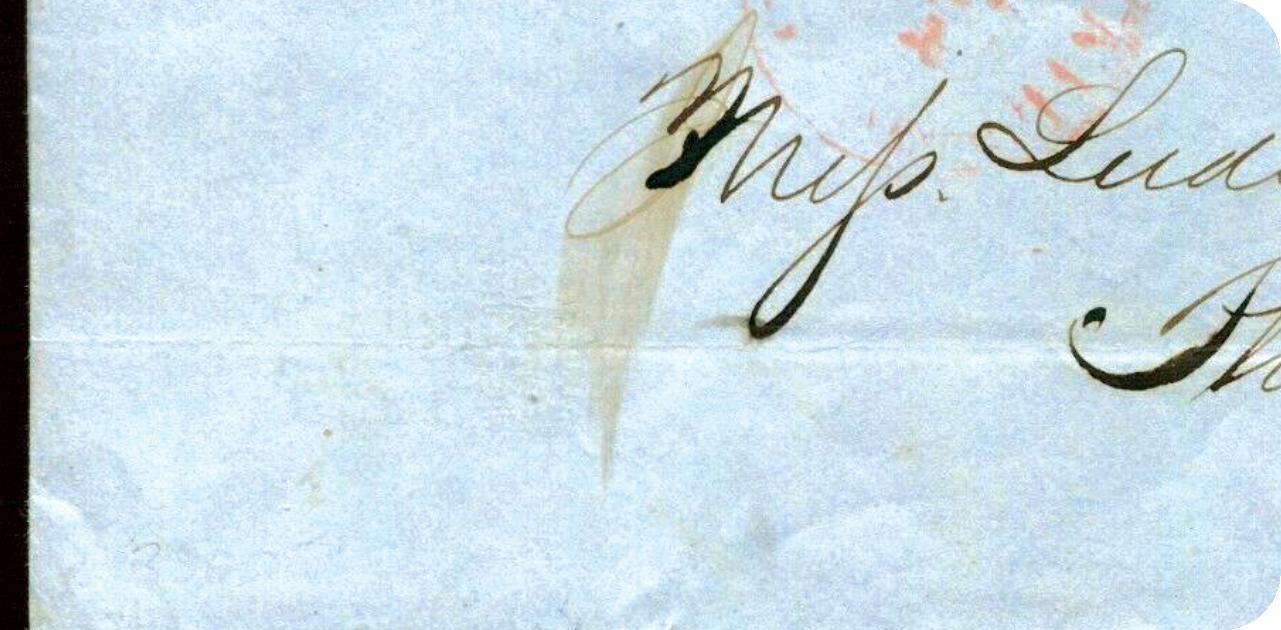
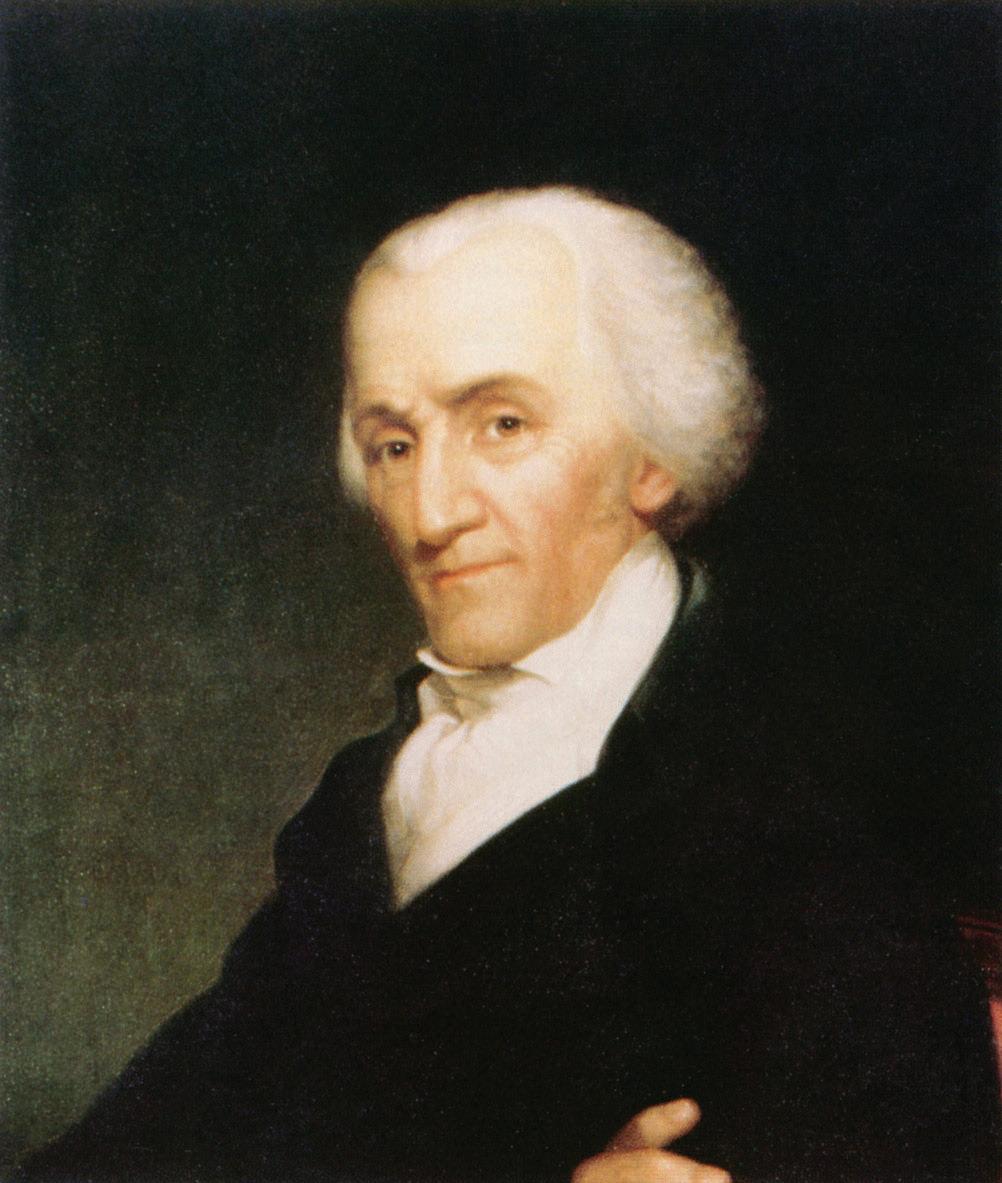
I’m excited to introduce the first installment of a limited article series celebrating the postal history of the American Revolution, penned by U.S. Philatelic Classics Society president Vern Morris. In this first article, we see a folded letter from Bostonian patriot Sam Adams to Elbridge Gerry, sent in 1772 despite the risk of British scrutiny.
Denmark’s mail volume has been declining for years, leading to structural changes with the country’s postal system and moves towards privatization. So what does this mean for Denmark’s modern postal services and modern stamps? Author Morten Soerensen reports on the story and offers commentary on what we may see from Denmark moving forward.
While there’s much more to find in the issue, I want to call your attention to a special teaser of the newly-announced Queen Elizabeth II exhibit, to be displayed exclusively at Boston 2026 this May. The exhibit’s curator, Alex Haimann, shares a few details on what attendees should expect to see.
This brings me to a way that you can help the American Philatelic Society in Boston. The APS is one of several cosponsors of the Queen Elizabeth II exhibit, and will be organizing giveaways of free British Commonwealth stamps to those viewing the exhibits. We are looking to compile a stock of several thousand British Commonwealth stamps, on or off paper, so each exhibit guest can take home a few examples. You can send British Commonwealth material to us at:
American Philatelic Society
Attn: British Commonwealth Donation 100 Match Factory Pl. Bellefonte, PA 16823
Any questions should be directed to Amy Larimer at donate@stamps.org or 814-933-3803 ext. 225. Thank you for your help!
Call for Papers – upcoming anthology
I’m happy to share the following announcement and call for papers from APS member Gregg Redner.
Papers are sought for a forthcoming anthology of articles dealing with printed matter and commercial mail. The expected publication date for the anthology is early summer of 2027. This will be an open-source publication, which will be available without cost online in digital form. Printed copies of the anthology will be available, at cost, for those who wish to order them.
The contributions to this anthology may be related to mail in the following areas:
• Commercial printed matter in the form of announcements
• Advertising material, including but not limited to catalogs
• Books, newspapers and periodicals
• Printed papers
• Legal documents
• Imprimé advertising postcards and postcards with five or fewer words
• Birth and death announcements
• Calling cards
• Parcel post
• Household mail
Other topics/ subject will be considered on a case by case basis. Publication information - including formatting particulars - will be sent to all authors upon acceptance. Expressions of interest may be sent to Dr. Gregg Redner by emailing him at greggredner@rogers.com.
Proposals Sought for 2031 & 2036 International Shows
The American Philatelic Society is requesting proposals for international philatelic exhibitions to be held in the United States in 2031 and 2036. The deadline for receipt of proposals is May 15, 2026.
Proposals are welcome from committees in major metropolitan areas where a broad base of philatelic support exists and where such support is willing and able to assist in the running of the show.
Recent decennial U.S. international shows (1997, 2006, 2016, 2026) have been at least eight show days, utilized at least 250,000 gross square feet of floor space, and required at least 2,500 committable hotel rooms. They have been acccredited by the International Federation of Philately and have accepted all classes of exhibits.
A 2031 international is envisioned as a smaller and shorter event potentially similar to the CAPEX 2022 event held in Toronto which was only four show days and limited to single frame exhibits.
Proposals should include a preliminary budget for the event, reflecting income and expense for the usual show budget categories, as well as FIP requirements. Level of commitment from the host city convention and visitors bureau should be noted, as should the potential city’s attraction or amenities that are pertinent to the decision process.
The decision for accepting proposals rests with the board of directors of the American Philatelic Society.
Proposals should be sent to Ken Martin, Director of Expertizing. Submission in electronic format to kpmartin@stamps.org is preferred. Questions regarding the proposal process may be sent to the same email or phone 814-933-3803 x 205.
Letters to the Editor
Clarification regarding French colonies catalog
In the January edition of The American Philatelist, Gary Wayne Loew reviewed the new edition of Yvert & Tellier’s Colonies Françaises
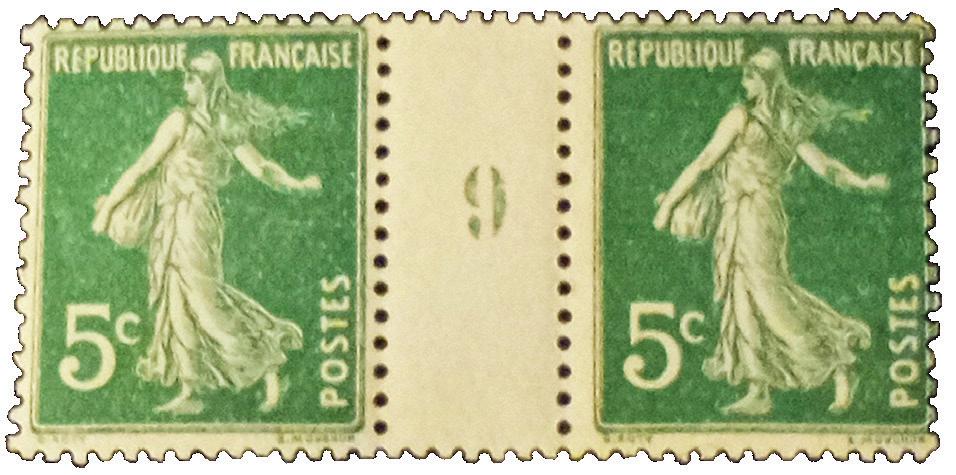
Mr. Loew mentions millésimes. A millésime is not an overprint. It is a year date – only the last digit of the year was used – and it was printed in the gutter between the panes of 25 small format stamps. It appears three times in a sheet of 150 stamps. They were used from 1891 until the early 1930s.
Millésimes are traditionally collected in pairs. Shown is an image of a French Sower stamp (Scott 159) with a millésime of “9,” which could be 1909 or 1919.
Kris Haggblom
DeLand, Florida
Author response – French colonies catalog
I appreciate Kris Haggblom pointing out my error. Regarding the reference to “millésimes,” my choice of verb was misleading. Printed, rather than overprinted, is the accurate verb. The correct statement: “Certain stamps were printed with a year date (millésime).”
The letter-writer also states that millésimes are “… printed in the gutter between the panes of 25 small format stamps. It appears three times in a sheet of 150 stamps …”
However, in the Philatelic Glossary on page 13, Y&T states:
MILLÉSIME. — A number indicating the year in which a stamp was issued or printed. Some millésimes are not shown on the stamp itself, but on the sheet margin
This suggests to me that not all millésimes are printed in margins. Nevertheless, I am not experienced in collecting the French colonies, so perhaps there is a fine point that I do not understand.
My errors in this review notwithstanding, this new Y&T catalog is a wonderful contribution to the philatelic litera-
ture and a valuable update to the previous edition.
Gary Wayne Loew State College, Pennsylvania
Correcting a number error in revenues column
I am inquiring about the first table shown in “The Collector of Revenue” column on page 68 of the January issue of The American Philatelist
Is it be possible a digit was dropped in the rate cited for domestic materials at the Fifth Tier? The number shown is “1.” The prior row shows a 13 and the following row a 25, so I suspect the number should be between the two in keeping with the other rates.
Sid McHarg Anacortes, Washington
[Editor’s note: You are correct as the number should read “17.” A technical production error caused the “7” to be dropped.]
Enjoyed tale of well-traveled postal card
Having collected stamps since the summer of 1940, my collecting interests have changed over the years, especially the past 25 years. However, one facet of our hobby that has always interested me are the many quirky, unusual uses that the humble postal card has been subjected to.
The late Charles Fricke was a favorite author with his stories of postal card uses. Ravi Vora’s article, “Around the World in 89 Days,” in the December edition of The American Philatelist, is another of the very unusual instances of postal card usage. I loved it!
As to the “2996” notation on the card, I believe that represents the number of miles the card traveled on its journey.
James Sauer
San Jose, California
[Editor’s note: We probably erred in Mr. Vora’s article about the fascinating postal card by failing to estimate the number of miles the card traveled. Just using modern internet searching, we come up with the following: Here is the mileage by legs: Ohio to New York City (464 miles); NYC to Liverpool, England (3,300); Liverpool to the Suez Canal (3,579); Suez to Hong Kong (13,000); Hong Kong to San Francisco (6,900); and California to Ohio (2,454). The total is about 29,691 miles which, due to north and south travel, is greater than the Earth’s circumference of 24,901 miles. Multiplying the 2996 by 10 (perhaps the writer forgot a final 0; or just assumed a multiple of 10), that is within 269 miles of the distance measured via internet. That certainly is very close! Thank you for the thought, James. – close! Thank you for the thought, James.]
France Scott 159 has the year date, 9, printed in the gutter.
Appreciates the exceptional research
and review of fake cover
The article, “Looks can be Deceptive,” written by Nicholas M. Kirke, is an exceptional piece of research and makes a valuable contribution to our stamp collecting hobby. Mr. Kirke documents and succinctly explains each of the grounds for his conclusions, and his interest in his hobby appears refreshingly undeterred.
Philately has complexities and even experts can make mistakes. No hobby is immune from fakes and deceptions. Understanding and recognition of the deceptive techniques benefits all. The few bad apples must not destroy the enjoyment provided by collecting.
There are ample good apples. Keep up the good work!
Benjamin J. Trichilo Oakton, Virginia
Questioning is important
Thanks for publishing the informative article written by Nicholas Kirke in the January issue of The American Philatelist, and thanks to Mr. Kirke for sharing his investigation with us. This article is an excellent example of the value of a questioning attitude in our hobby.
Danny Brinkley Raleigh, North Carolina
Appreciates ‘collecting’ aspect of hobby
I am writing about a statement noted in the article “Beware the Black Dot” in the January issue of The American Philatelist. I very much appreciated the conclusion that noted stamp collecting is, first and foremost, a hobby. It can also be “philately,” depending on how the term is interpreted, such as investing or collecting without regard to dollar value.
Joel Wells Dumfries, Virginia
Article led to treasure hunt
I found it most interesting to read the article, “On The Flipside,” by Phil Koelsch in the January issue of The American Philatelist.
Not only was it very informative but it was a subject that very many may not know about. (Or at least, I did not).
As I read the article I began to flip through my Scott Jr. International Album to see if I had some of the stamps that the author highlighted in the article. And, I did. It was like a treasure hunt through my collection.
Stephen Grundfast Akron, Ohio
Black blots caused a stir; should they return?
I enjoyed the article in the January issue of The American Philatelist on the APS Black Blot program. It brings back a memory.
At INTERPHIL 76 (has it been 50 years?), there was
an incident involving the black blot. The blot on the four Bicentennial sheets (Scott 1686-1689) had been issued by the committee. Jim DeVoss, then the APS executive director, exhibited these stamps. One irate show visitor started to harangue him and the APS. I heard the commotion at the nearby American First Day Cover Society booth. (I ran the AFDCS convention at INTERPHIL.) Threats were made. The person was expelled from the APS.
I followed the program. We need something like it today. There are just too many issues.
Sid Morginstin
Columbus, New Jersey
How about a retro black blot guide?
I was so glad to see the article about the black blot in January’s issue of The American Philatelist. It helped to clarify for a relative beginner like myself the entire issue that precipitated black blot in the first place. Still, I completely sympathize with those who wish to distinguish between excessive issues and issues based on postal intent.
To me, an analogy would be the difference between baseball cards of actual players in actual organized baseball and fictional players from fictional baseball organizations. If a collector wants the latter, more power to them; I just want to be able to know the difference.
The article helped to frame for me the when, what, who
HUNGARIA STAMP EXCHANGE
Czecho-Slovakia
Moldova
Poland
Serbia • Slovenia
Ukraine
The “Stans”
and why of the great expansion of stamp issues with some examples. Enough information was provided to be a bit of a guide for me going forward, and confirmed the impressions I had developed without knowing actual facts.
What I wish for is not an active seal of approval by issue, which apparently what the Black Blot Program intended to be. Rather, I wish for a guide, in hindsight of past issues, with general criteria, as to what are “genuine” postage stamps. I would organize by country, period(s), and subjects (Disney, Princess Diana, Olympics, etc.). I get that it would not be realistic to expect to be comprehensive and certain.
Some key criteria for me would be that stamps qualify as postage in the country of origin, were designed and developed by a citizen of the country, are printed in the country, and have as a subject the country’s culture, history, activities, notable citizens, or natural features.
I would think there is sufficient expertise within the APS community to produce such a tool and updated as needed. I would be happy to purchase it, and wonder if others would as well.
Mike Denholm Stow, Ohio
Yikes! More than $1,000 for new stamp
Austria recently issued a Heroes of Mythology stamp with a stunning picture of Zeus, according to the “New World Issues” column in the Janary edition of The American Philatelist. The value is 990 Euros. My goodness! That is $1,168.62.
Perhaps I’ll purchase a sheet of these stamps. I can now mail an elephant from Vienna to Salzburg. The issuing
DECEMBER
countries also offer an “additional crypto special gold edition stamp with a 1 gram, 24-carat gold bar,” but only 350 of these are available.
As we strive to expand our hobby, especially to younger folk, I was hoping that my great-niece might become a collector. Unfortunately, the proceeds from her Girl Scout cookies sales probably won’t allow her to buy these two stamps. Another disappointed potential young collector. Why do we even hype these “stamps”?
Edward Yasuna Harwich
Port, Massachusetts
[Editor’s note: It does boggle the mind that anyone would spend all of that money on the Zeus stamp, or the accompanying crypto stamp. Although they must have some kind of audience, in order to try it!
In the same January issue, we have an article about the former APS Black Blot Program; there’s some irony in these two stories sharing the same issue, when very clearly back in the day, the Zeus issue would have received a black blot.
The purpose of “New World Issues” is not exactly to hype, but to share a taste of stamp issuing programs around the world. Unfortunately, excessively expensive stamps and crypto stamps are part of that story. However, we are not encouraging people to purchase, nor do we share purchasing information. – Editor-in-Chief Susanna Mills]
Another WWI book to consider
It is gratifying to see greater attention being paid to WWI in recent issues of the American Philatelist. Mark Burnett, in his letter in the January issue, recommends two books about the war. I would also like to add my 2024 book, Americans
Page 63. Alex Haimann’s email is alexh@cherrystoneauctions.com.
Page 94. Jimmy Carter lost the presidential election to Ronald Reagan in 1980. JANUARY
Page 35. The 1925 New Zealand stamp in Figure 8 shows Great Britain’s King George V.
Page 51. Holland was not occupied by Nazi Germany in 1939, prior to invasion on May 10, 1940.
Page 78. Mozambique was a Portuguese colony, not French.
Page 78. At least five French colonies in Africa were larger than Madagascar: Upper Senegal and Niger, Mauritania, Algeria, Sudan, and Chad.
Page 68. Part of the table that lists 1792 Duties on Domestic Distilled Spirits gave wrong values for “Foreign Materials.” The table should read as follows:
and the Great War: A Postal History, published by the Military Postal History Society and available only from the APS bookstore (https://aps.buzz/LowtherWWI).
The book contains 38 articles among the 60 I have published in philatelic journals on the war’s U.S. postal history, an indication of the abundant collecting opportunities.
Kevin Lowther
Springfield, Virginia
[Editor’s note: The author’s book also is available for loan from the American Philatelic Research Library with call number G3701.P856 L922 2024.]
Ah, those details we collectors love!
I love the February edition of The American Philatelist! I have a thematic collection for Hawai’i.
Steve Zirinsky’s “Postmarks of U.S. Possessions and Compact States (Post 2000)” article showed a postmark in Figure 4 from Andersen Air Force Base. It is interesting because of the misspelling of the base’s name. The postmark had it as “Anderson” instead of the correct spelling of “Andersen.” I was stationed there in the mid-1970s so I am familiar with the base and Guam in general.
John Jacobs Seffner, Florida
US, British Commonwealth and Worldwide
Appraisals, Buying Stamps, Coins & Banknotes
Singles, sets and collections
Exciting live internet auctions every four weeks.
Consignments accepted.
www.stamp-one.com pvsc@stamp-one.com
Valley
Company PO Box 2884 Concord, NH 03302
Phone (603)223-6650
Should stamp certificate mention hinging?
I would like a clear identification of certificates for which the NH (never hinged) designation was omitted from certificate. Did the people (expertizer) who made that decision think that details about the back of the stamp wouldn’t, or shouldn’t, be a factor in determining the stamp’s value? Did they think that even so, it didn’t warrant an unambiguous mention on the cert, or were they fighting a losing battle against a perceived NH fixation?
Frank Hacker
Fort Myers, Florida
[Response from Ken Martin, APS Director of Expertizing (APEX). Ken speaks on behalf of APEX, not of other expertizing authorities:
Currently, if an APEX certificate says a stamp is unused, it should include a reason if never hinged is NOT also mentioned. Most commonly this would be unused, previously hinged; unused, disturbed gum; unused, partial gum; or unused, no gum. Hinge remnants are normally noted on used stamps, but catalogs do not value never hinged used stamps differently than previously hinged used stamps, so this is not noted. Postal stationery also is not normally described as never hinged, but may be described as having a hinge remnant.]
LETTERS TO THE EDITOR
We encourage readers to send their comments, questions and feedback to The American Philatelist
Submission of a letter implies consent to publish, unless specifically prohibited by the sender. The decision of whether to publish is made by the editorial staff of The American Philatelist.
Generally, letters will be published unless determined to be offensive, disrespectful, libelous, or not chiefly related to the stamp hobby.
Per Section 5.5 of the APS Bylaws, The American Philatelist will not print letters to the editor endorsing specific candidates or which are political in the editor’s judgment.
The opinions expressed in a Letter to the Editor are those of the author and not The American Philatelist. We do not publish or accept requests for the publication of anonymous letters.
To allow more Letters to the Editor, you are respectfully requested to limit submissions to 500 words or less. If your submission is longer, the editorial team will ask you to resubmit a shorter version, or provide you a copy of an edited version to review prior to publication.
Submit your letters to letterstotheeditor@stamps.org or mail a typewritten copy to:
Letter to the Editor
The American Philatelist, 100 Match Factory Place, Bellefonte, PA 16823.
LOTSLOTS!
356
833
834 VF/XF OG
For a long time, to be engaged in polar philately was quite daunting. This was because polar philately encompasses a very broad umbrella, and most polar philately collectors are interested in specific areas, rather than putting together all of its diverse parts.
Fortunately, this roadblock was resolved in 2008 with the publication of my work, Essence of Polar Philately, which codified the entire subject. Essence still can be borrowed through the American Philatelic Research Library (APRL). Unfortunately, it is long out of print. Perhaps, someday, it can be reprinted. In this article, I will synthesize the key elements of polar philately in a manner that can be easily digested.
What Does It Cover?
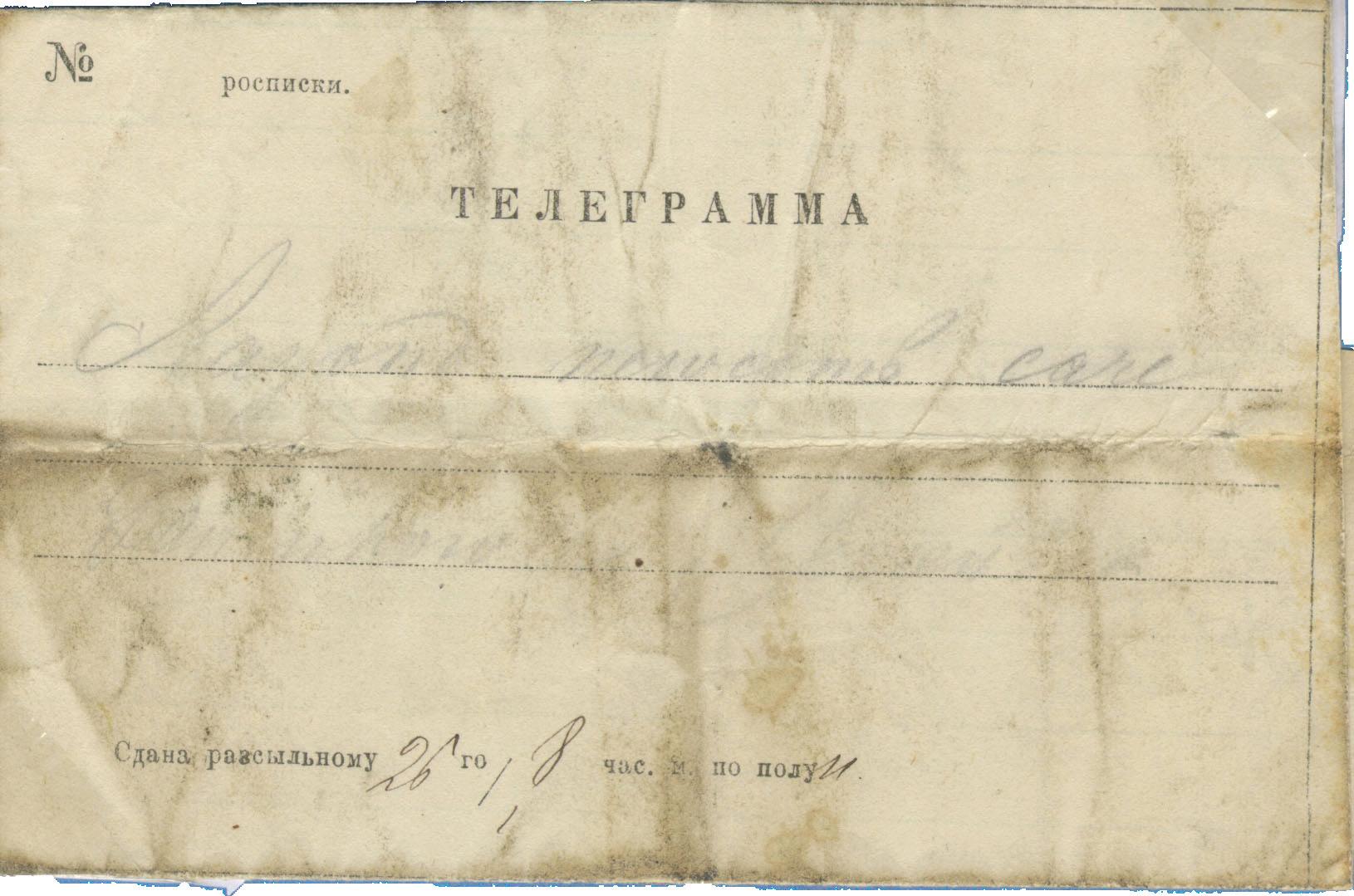
Polar philately involves stamps, postal material, and associated items that document polar events, individuals, occurrences, etc. Polar philately can also include, besides stamps and covers, telegrams (Figure 1), courier mail, postcards, and some other ephemera. Posted items remain the emphasis.
Many of these standard and nonstandard items also would be recognized in all other areas of international philately. So, why is there a
separate polar collecting area for them? Because their very nature – what they document and the peculiar environment with which they are associated – make them different enough to qualify for a philatelic subject area of their own. These collectors and their material really gained traction after World War II.
All mail and associated items to, from, or in any direct
HAL VOGEL
Figure 1. An incoming telegram of February 6, 1882, to one of the few survivors recently arriving at Irkutsk, Siberia, staggering in from a remnant of the 1879-81 Jeannette Arctic Expedition.
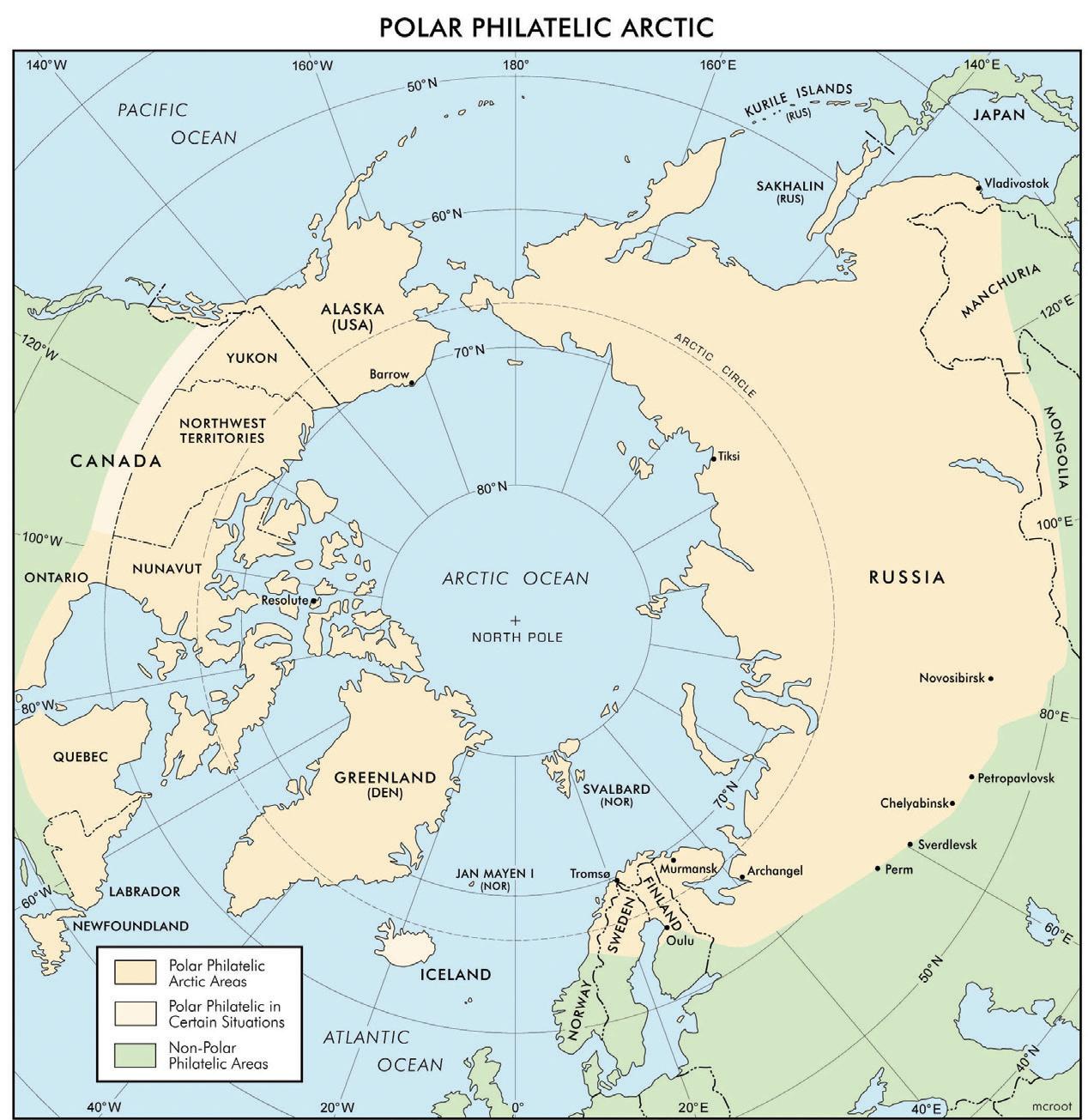
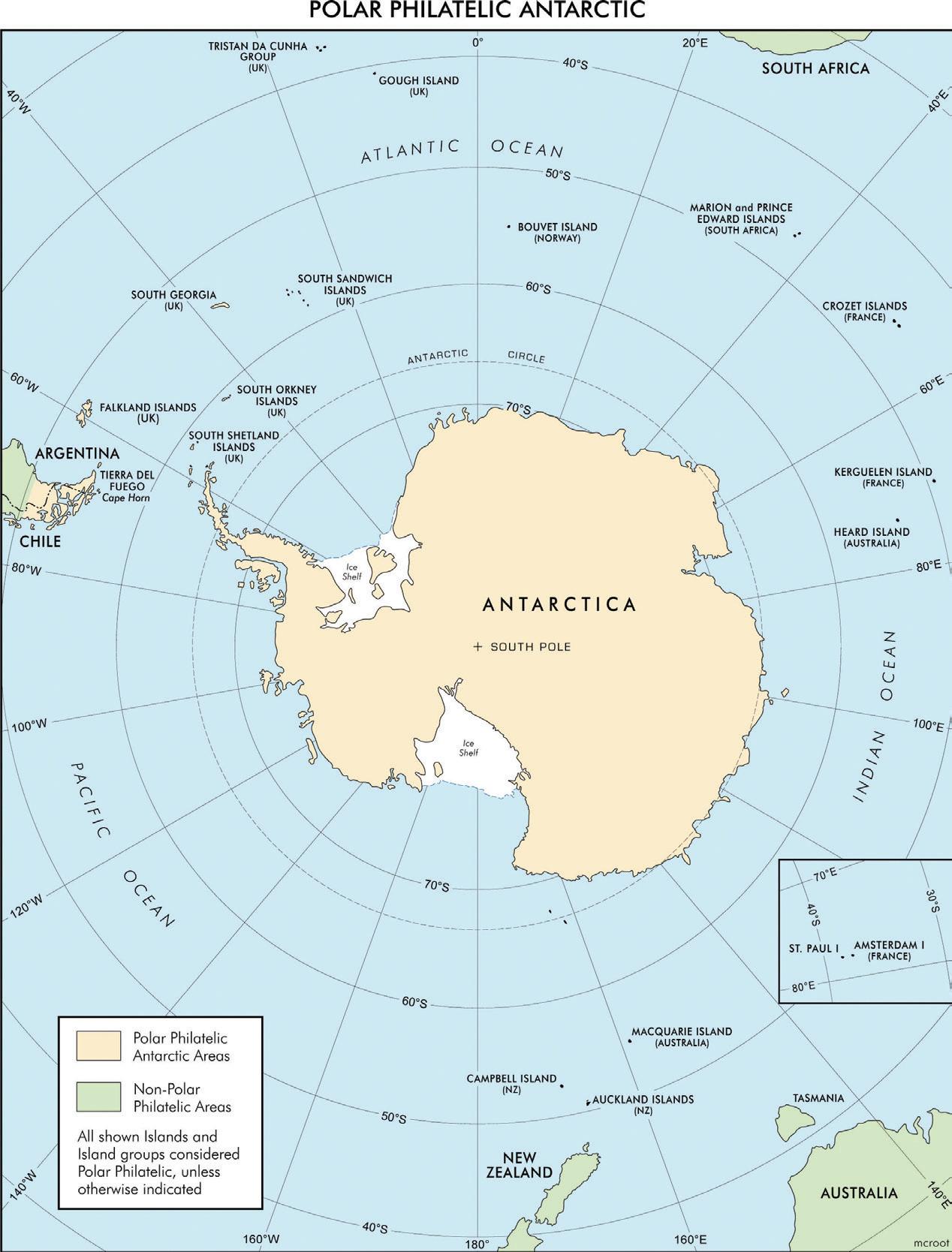
or indirect manner related to one or both of the Earth’s polar regions (Arctic and/or Antarctic) counts as polar philately. What exactly constitutes the Arctic and Antarctic for polar philatelic purposes is arguable.
However, world polar philately (and its main arm, the American Society of Polar Philately, ASPP) agrees on what parts of the earth are considered polar for philatelic purposes. There can be some flexibility as well to accommodate a particularly creative polar philatelist.
The maps shown (Figures 2 and 3) demonstrate what is “polar” for philatelic purposes. It mostly makes sense.
A few aspects may be a bit obtuse to understand as to why they are or are not “polar.” For example, Iceland in general is not considered polar except for World War II military mail.
Suffice to say, a fuller understanding of these fringe areas can be further explored in, Essence of Polar Philately. At least the maps shown are clearer than trying to combine the various other political, social and scientific definitions of “polar.”
How is Polar Material Organized?
There are five major areas of polar philately. These are expeditions, aerophilately, military and conflict, thematics, and geographics.
Expeditions, the first major area, are the spiritual heart of polar philately. Many of the items and foci in the other areas can be related back to polar expeditions.
There are four types of polar expeditions for philatelic purposes, defined by the expeditions’ objectives. The types of expeditions are (Figure 4): geographic and/or scientific exploration; commercial or economic purposes (whaling/ sealing, new trade routes, commercial hunting, etc.); social and/or political purposes; and tourism and adventure. As you can imagine, purposes can overlap.
There are three periods of polar history that further can be applied to its material, especially its expeditionary types. These were defined to distinguish the effort and hazards of polar conduct at certain times. They are:
• Heroic Age, from the dawn of polar history to 1924 (Figure 5).
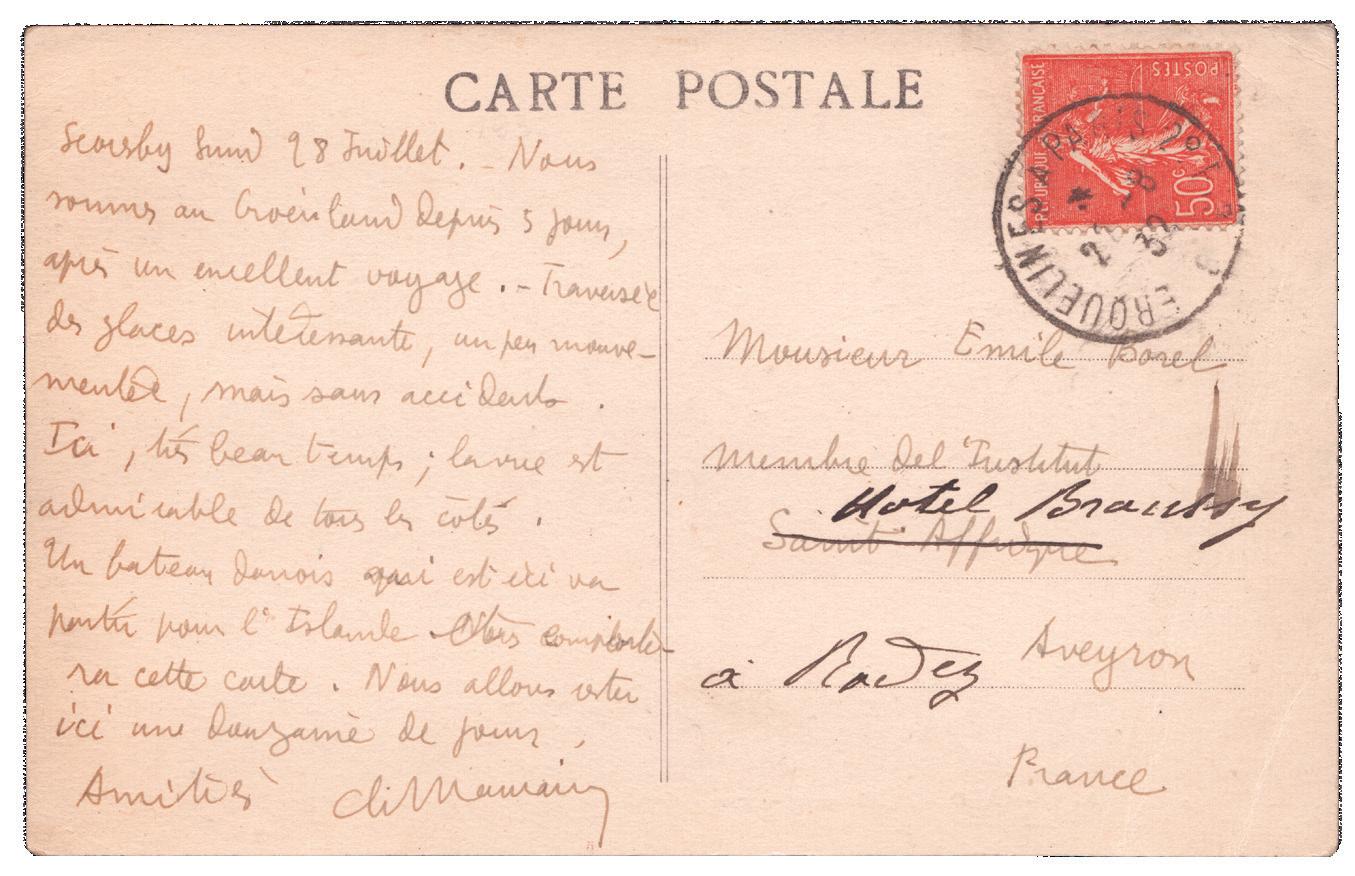
• Mechanical Age, 1924 to 1954 (Figure 6). Shown from this age is a postcard from Charles Maurain, who was respon-
Figure 2. A map of the Polar Philatelic Arctic, originally drawn for Essence of Polar Philately.
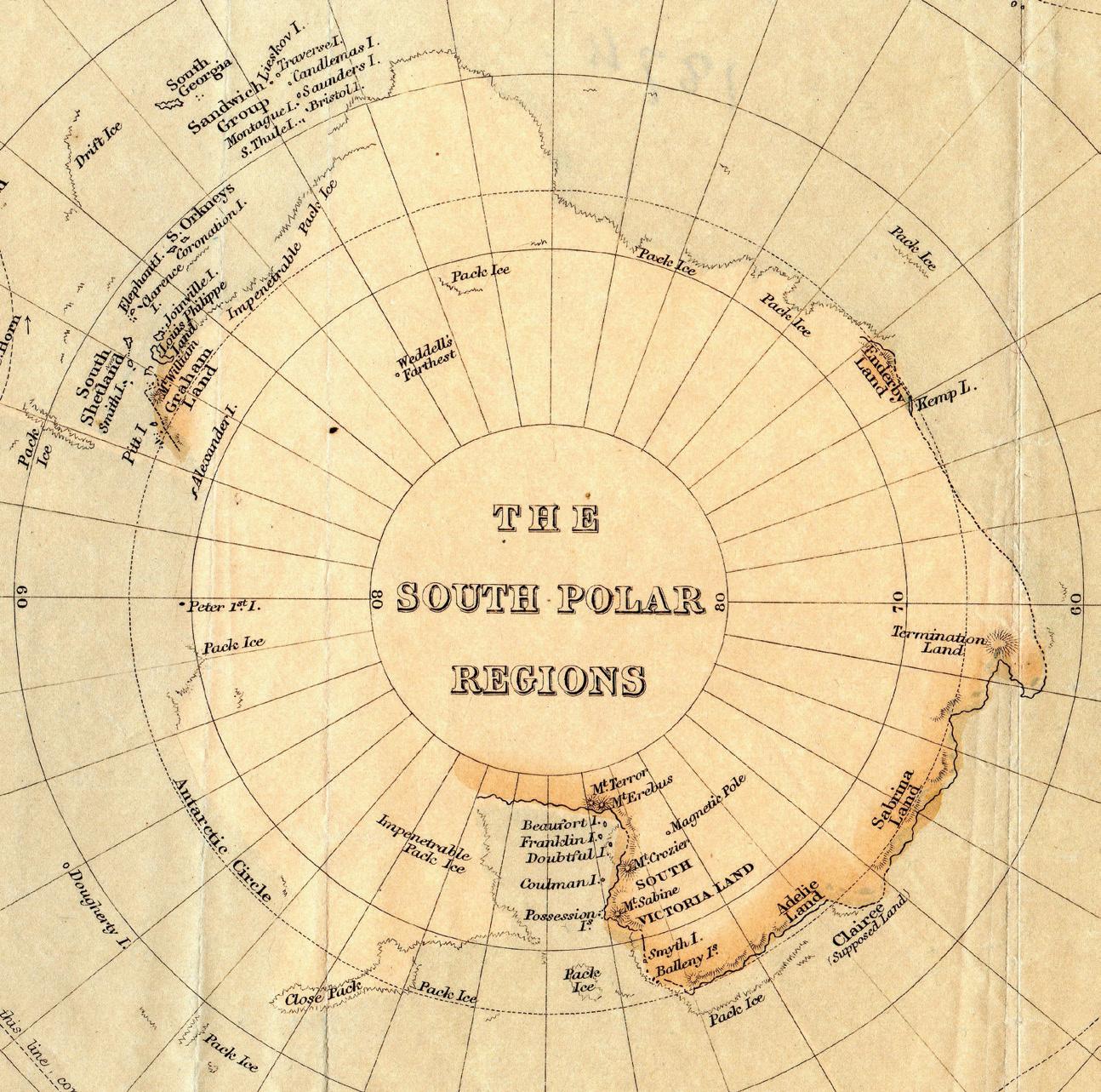
Figure 3. A map of the Polar Philatelic Antarctic, originally drawn for Essence of Polar Philately.
sible for supervising the setup of the French station at Scoresby Sound during the second International Polar Year (1932-1933).
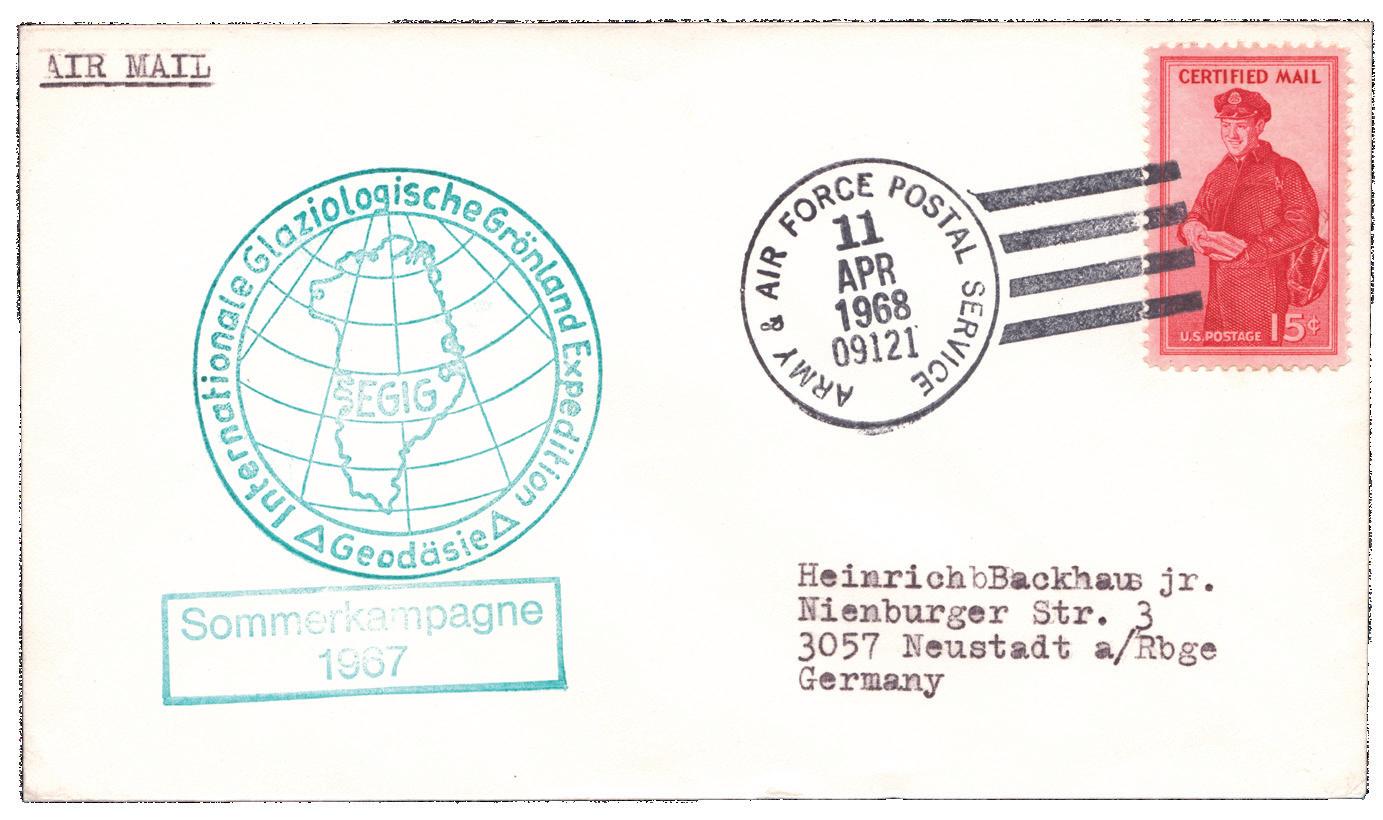
• Modern Age, 1954 into the future (Figure 7). Shown is a cover from a German expedition team sent via the resources of the U.S. military.
The Heroic Age (up to 1924) lacked access to what today we would call modern technology. This especially involved aviation, mechanized ground transport, appropriate garb, better nutrition, and wireless communications.
Some have argued to define a fourth sub-area of polar history/philately called the Pioneer Period. This bridges the late Heroic Age and the early Mechanical Age. Its conditions and travails are very similar to the Heroic Age as modern technology slowly became available.
Other Areas of Polar Philately
Polar aerophilately includes any material from, to, on, or associated with any polar flight or aero event that actually occurred, whether planned, aborted, interrupted or completed. To count as polar philately, only one leg of that proposed or actual flight must have involved a polar part of the earth. Some are specifically polar flights. Others just happened to have touched a polar fringe.
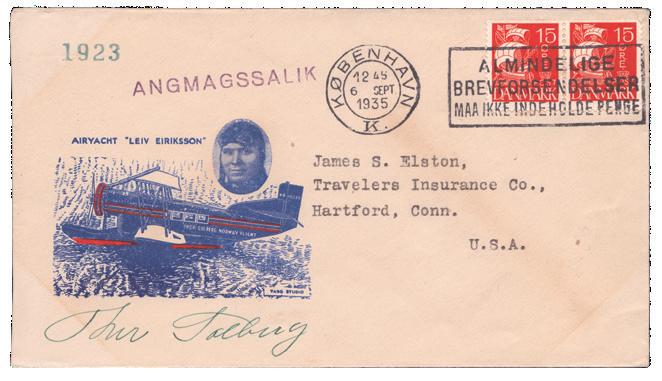
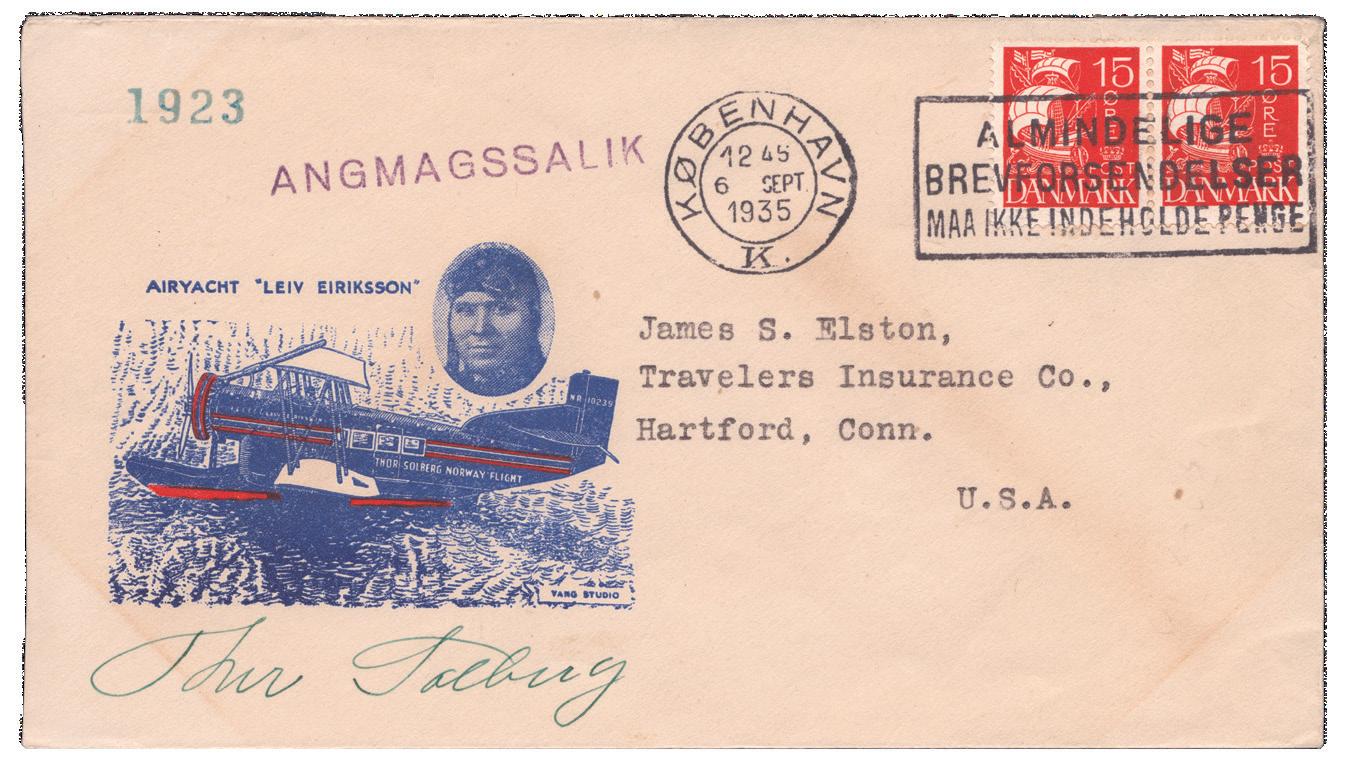
Shown (Figure 8) is a cover from a historic 1935 flight signed by Norwegian aviator Thor Solberg (1893-1967). Solberg and copilot Paul Oscanyan made the first successful flight, with four stops, from the United States of America to Norway. The cachet shows the open-cockpit plane – named the Leiv Erikksson – that he used to make the month-long flight, which ended August 16.
The collecting subfield of polar military and conflict is, essentially, military postal history with a polar flair. Many examples document an event or military/ civilian conflict episode that normally is not thought to have had a polar component. But, they did!
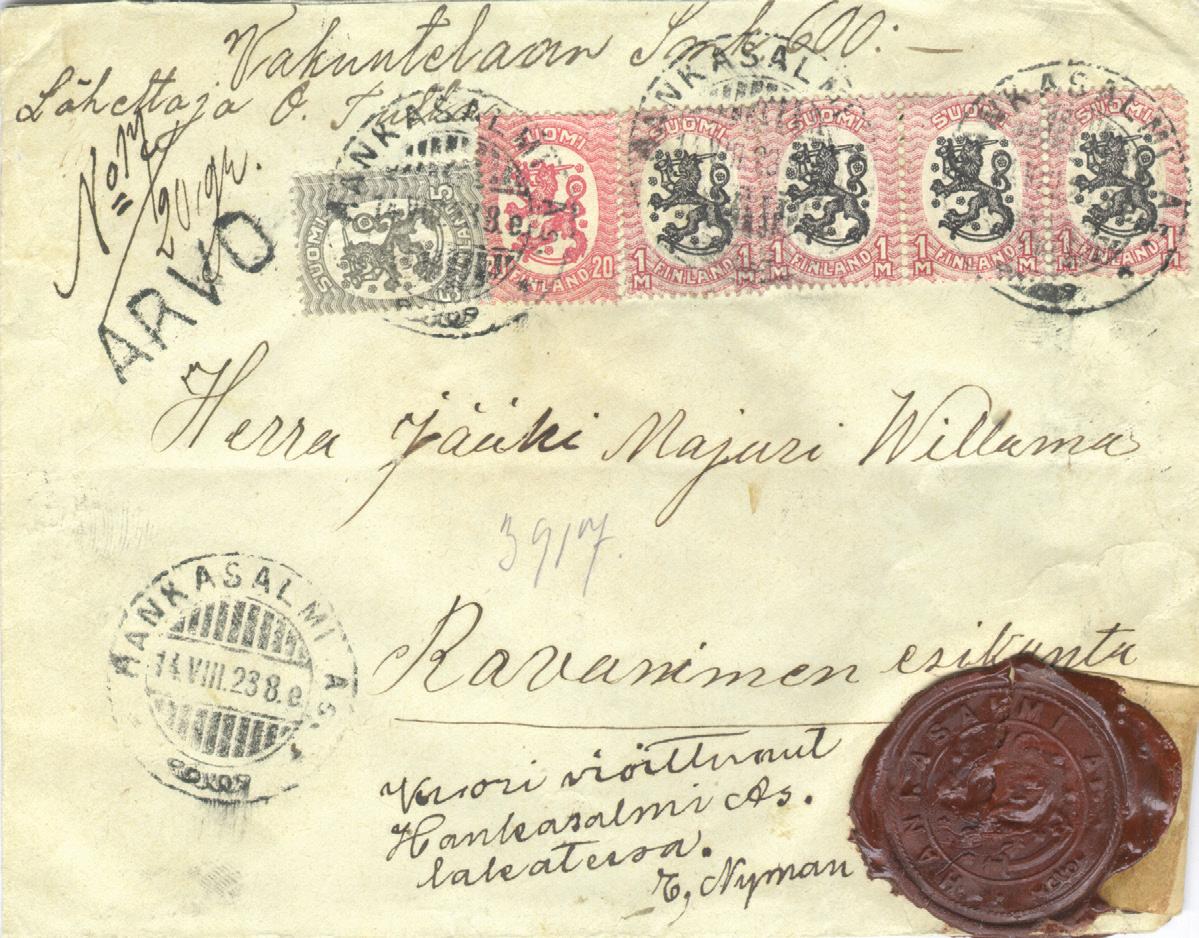
Shown (Figure 9) is a cover from 1923 that sprung from one of the many border disputes between Russia and Finland, which often occurred in and around Petsamo in Finnish (Subarctic) Lapland. Both sides opposed each
4. A
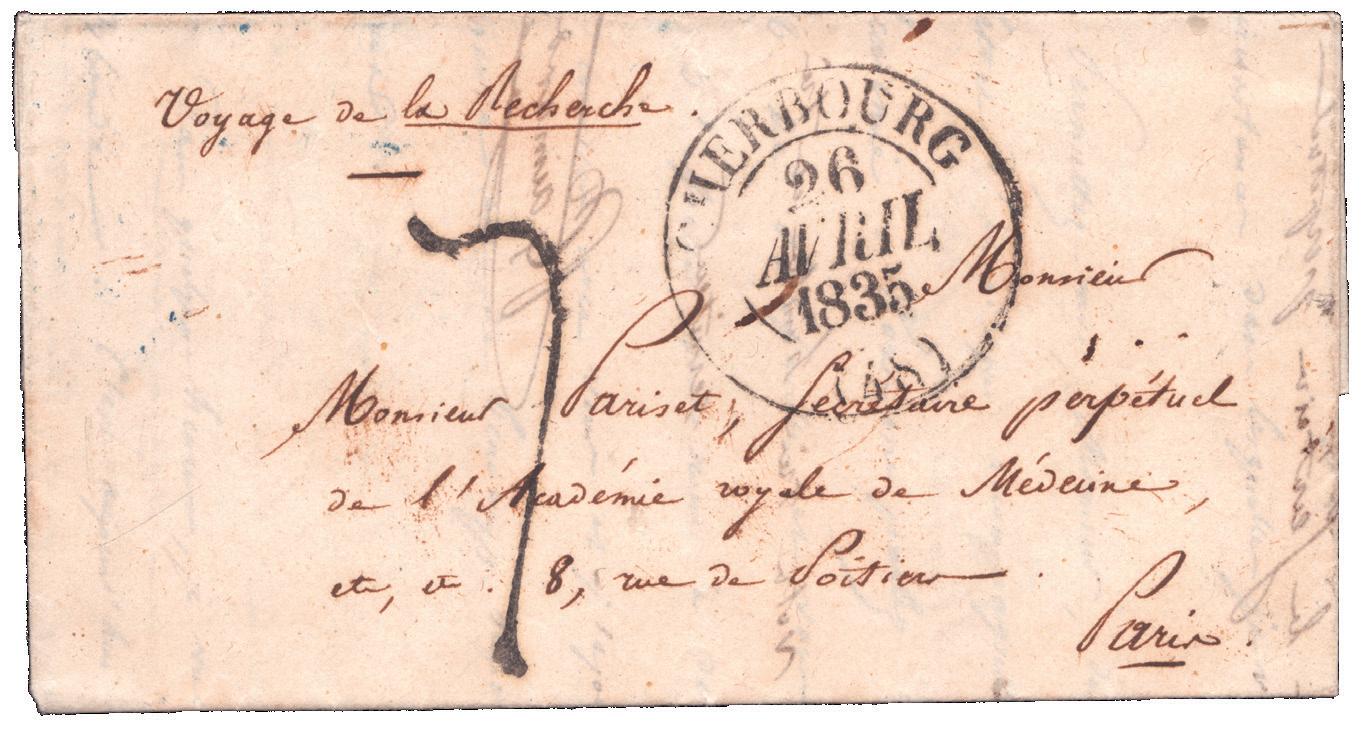
letter mailed
Paul
scientific leader on board Recherche during the expedition to the Arctic Sea. Posted in Cherbourg, France, April 26, 1835, the day the expedition set off.
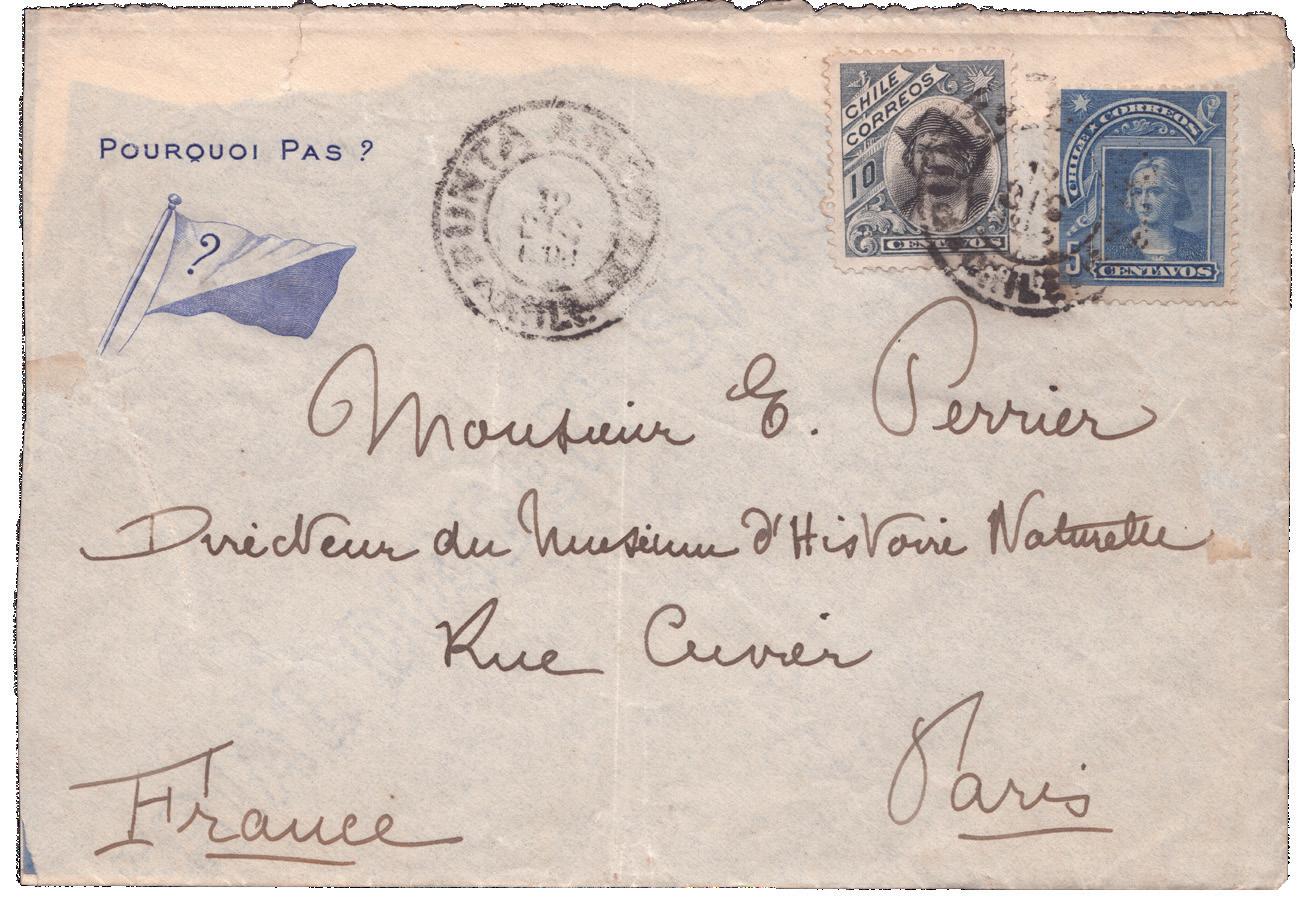
5. A correctly franked (15 centavos) Pourquoi-Pas? onboard stationery (Charcot’s second Antarctic expedition) addressed in the handwriting of expedition scientist, Louis Gain, with a December 12, 1908, Punta Arenas datestamp.
6. A postcard written and signed by Charles Maurain in Scoresby Sound, Greenland on July 28, 1932. Mail was carried by the Danish ship Gertrud Rask from Greenland to Iceland and then aboard another ship to Antwerp, Belgium, and by rail to Paris. It was not canceled until entering French postal system. TPO Erquelines à Paris on August 22, 1932.
Figure
folded
by
Gaimard,
Figure
Figure
other with armed border guards.
Some polar philatelists also collect military mail from ordinary training and organizational situations. Many, though, concentrate on those polar military events that involved actual or potential hostilities.
Though only one military war – the 1982 Falkland Islands War between the United Kingdom and Argentina – was fought entirely in the polar region (Figure 10), while the rest were part of different conflicts elsewhere. Documented polar military events date to the Seven Years War (1756-1763).
Thematics have a wide following in polar philately; the most popular topic is penguins. Other common polar thematics include: polar fauna and flora, dogs, personalities such as Richard E. Byrd and Sir Ernest Shackleton, and many more (Figure 11). If a subject appeals to you and it is somehow polar, you can build a thematic polar collection!
Geographics is the equivalent of “traditional philately” for polar collectors. This involves all that one would expect under traditional philately: postage and revenue stamps, postal history, and marcophilately (postal markings) on mail, and associated items from entities within the polar regions (Figure 12).
Polar material includes Arctic Scandinavia and Russia (NW and Siberia), and Arctic North America, including Alaska and Greenland. At the other end of the earth is the Ross Dependency, French Southern and Antarctic Territories, Australian Antarctic Territory, the Falkland Islands, etc.
Genres of Polar Philately
As a component of international philately, polar philately includes all the types of philatelic collecting and exhibiting, including traditional, postal history, and thematic. There is philatelic and commercial mail. Philatelic is that which is produced primarily to be a collectible. Commercial mail is ordinary mail, whose original purpose was not to be a collectible.
Most Modern Age (from 1954) polar documentation is philatelic, and that is fine. Polar philately had its organizers (mostly beginning at the end of WWII) sending franked mail to polar expeditioners, flight originators, etc., with requests to
Figure 7. During the International Glaciological Greenland Expedition involving five countries (Denmark, France, Switzerland, Austria and Germany), the U.S. Air Force gave its approval for the use of Søndre Strømfjord airfield for air support provided by the French Air Force, and for postal operations. A cover sent by the German team during the second summer campaign of the expedition’s second phase with an April 11, 1968, military datestamp.
Figure 8. A signed cover flown by Thor Solberg to Angmagssalik (magenta handstamp) in eastern Greenland and posted for ship transport back to addressee via Denmark. There is a September 6, 1935, Copenhagen slogan machine cancellation.
Figure 9. An insured cover, dated August 14, 1923, from Hankasalmi, Finland, to Lapland Border Guard official Major Willamo, at headquarters in Rovaniemi. A signed handwritten notation to the left of the wax seal reads, “Envelope damaged by warfare.” Franking accounts for surface postage, registration, insurance and insurance wax sealing.
service them during the conduct of their polar operations. This would be similar to servicing first flight or first day covers. This continues today.
Many of those who cooperated with early polar philatelists realized they could make their mail more distinctive and devised appropriate printed and stamped cachets. Today, this is the most popular area of polar philately. It also is the most accessible to many and has the potential to produce both ordinary, as well as extraordinary, material.
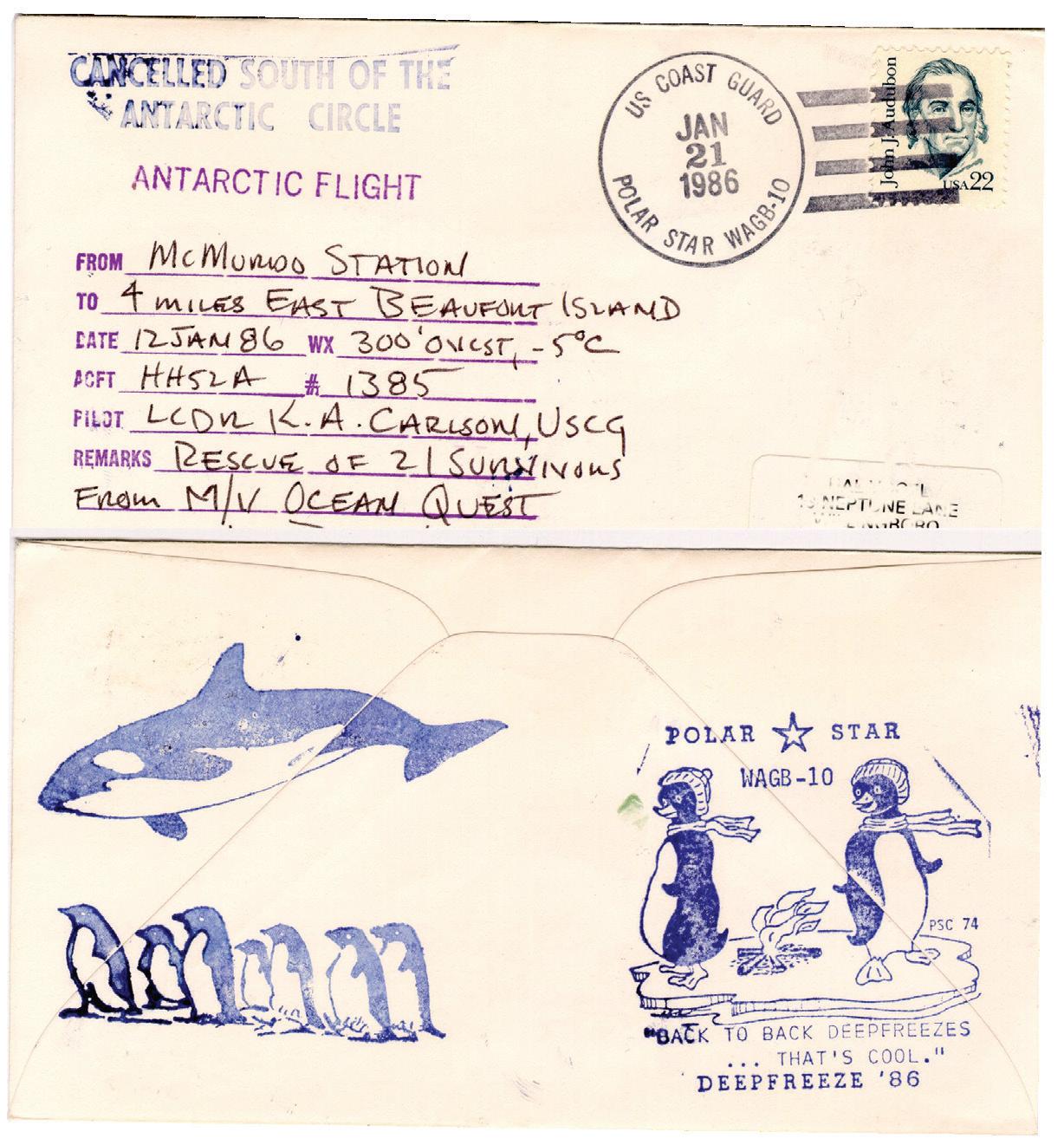
An evolving area of polar philately is a sub-area of what is usually commercial mail. It has been called “archival” mail. In rare instances, this also can evolve from a philatelic mailing, such as the item shown (Figure 13).
This example is an ordinary, modern-era mailing by a polar philatelist in early 1986 that resulted in an extraordinary (archival), philatelic return. The sender would have been pleased just to have evidence of ordinary U.S. Coast Guard flown mail from the United States’ McMurdo Antarctic research station during Operation Deep Freeze ’86. Instead, it became a true polar historical event cover when the aroused pilot (with this philatelic mail in his flight
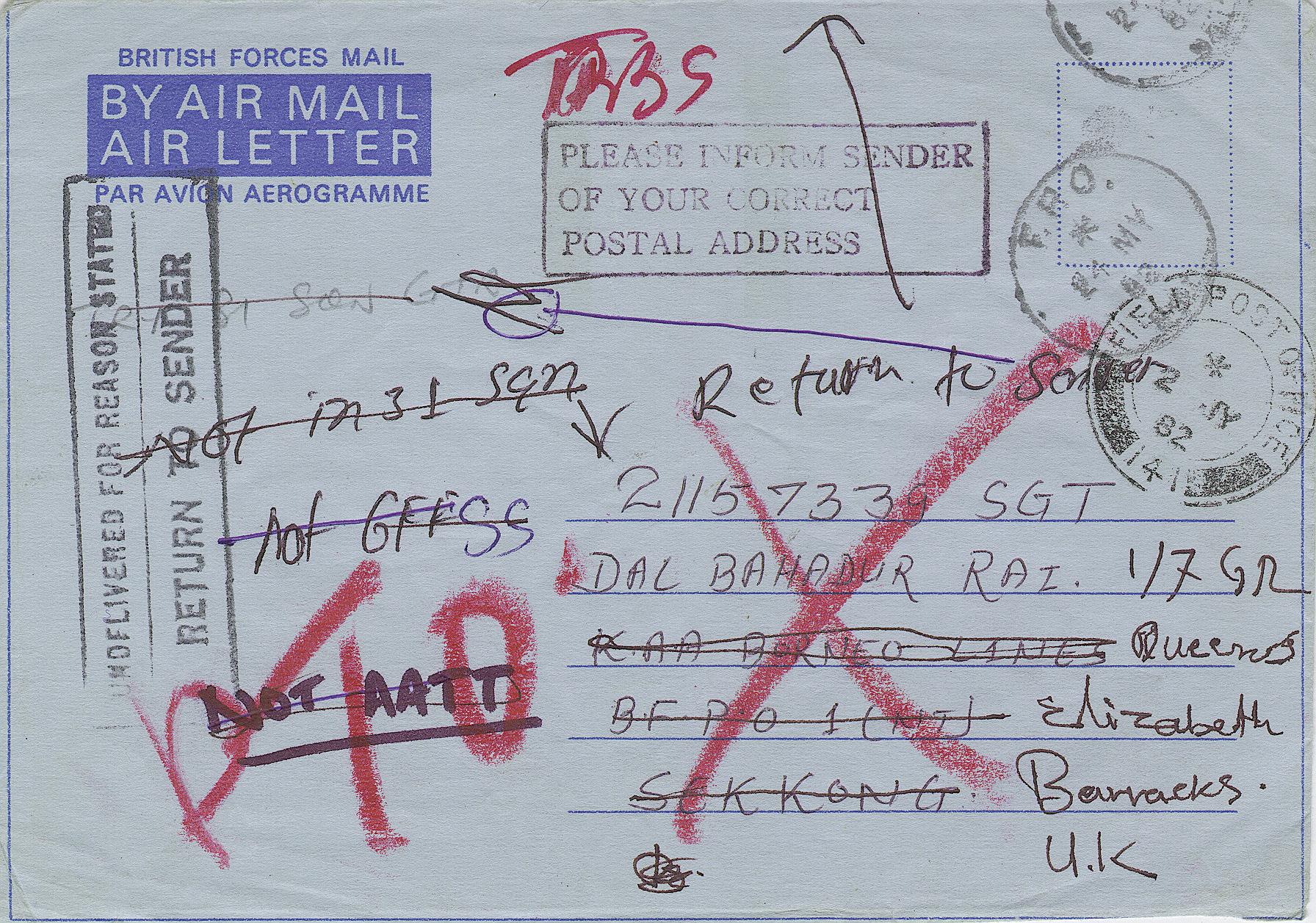
10. A soldier part of the British 5th Brigade, about to invade the Falklands, mailed a cover known as a “bluey” from aboard a troopship heading to South Georgia. It was canceled May 24, 1982. Three days later the soldier transferred to a smaller lander for an amphibious assault. The airletter to a Gurkha battalion at Hong Kong was undeliverable, eventually being returned to the Falklands (FPO 141, July 2) and finally forwarded to the sender at the 1/7th barracks, United Kingdom.
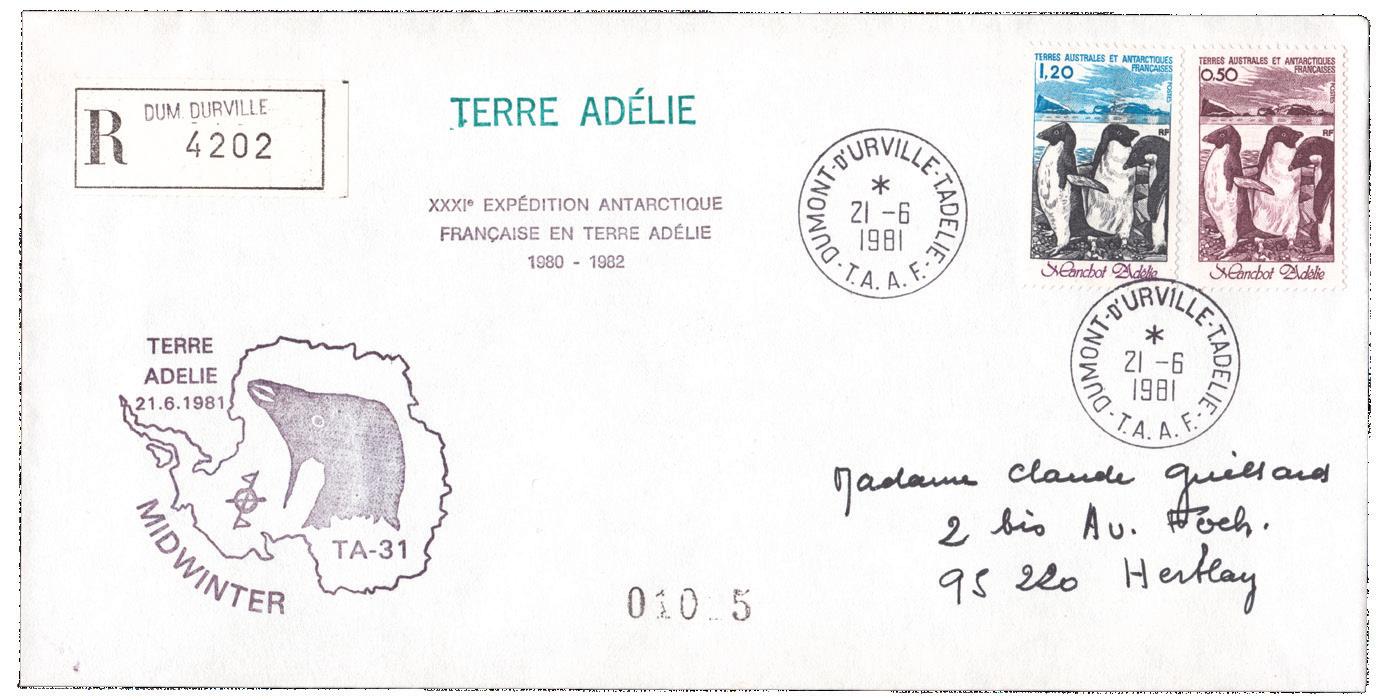
11. French polar researcher Robert Guillard mailed this registered cover to his wife from Adélie Land on June 21, 1981 (Midwinter Day). The postal surcharge is affixed on the back to pay the registered letter rate of 8.60 francs. This cover can be used for two polar related themes: Midwinter and penguins, the iconic bird of the Antarctic continent.
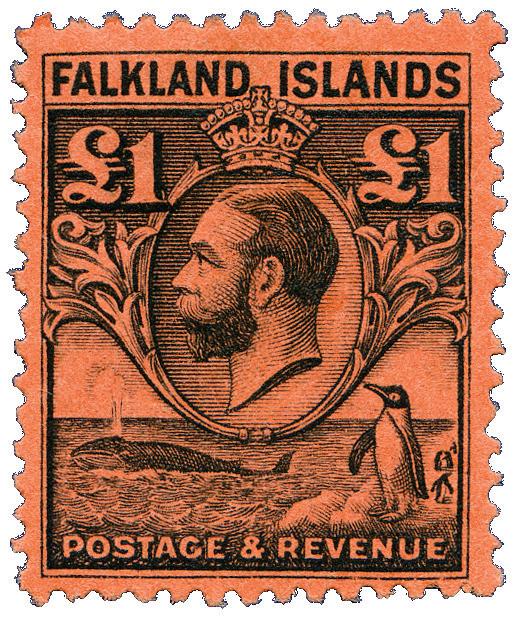
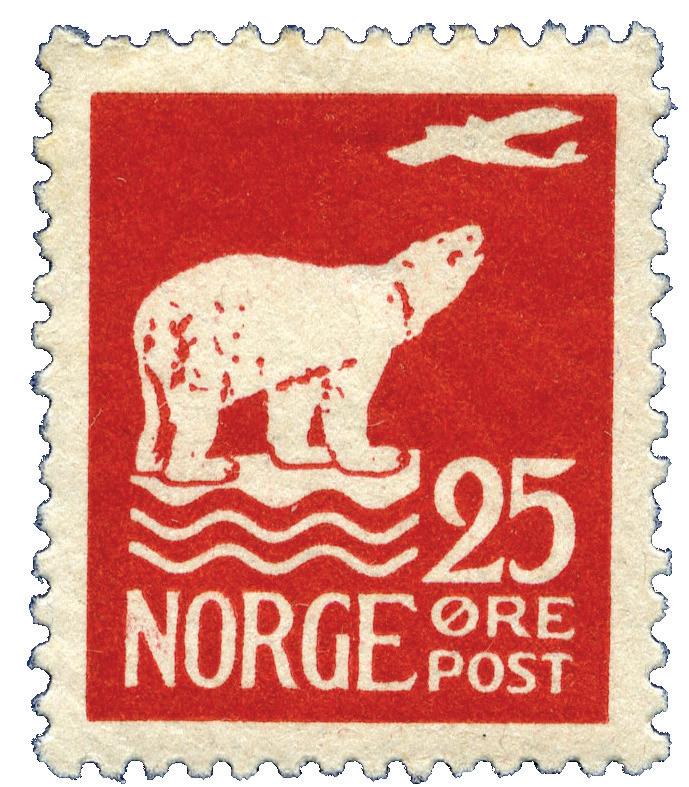
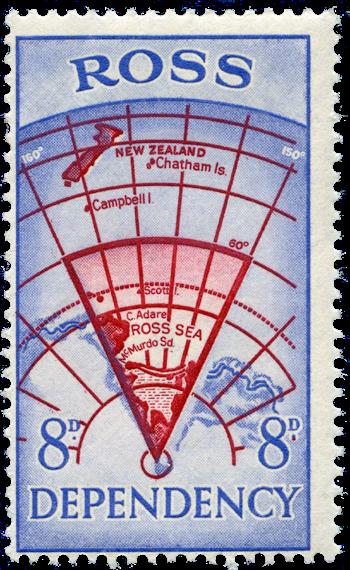
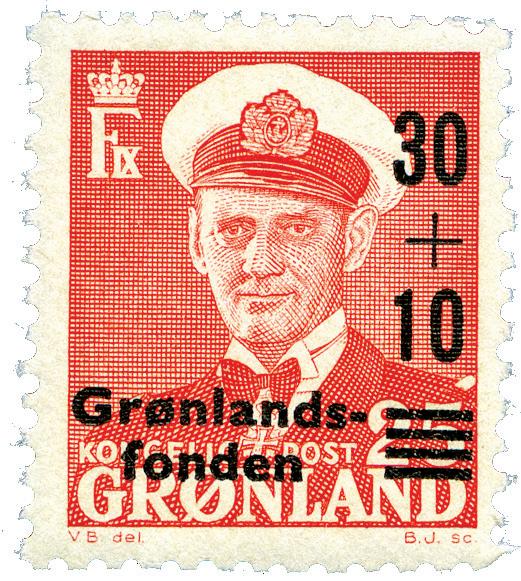
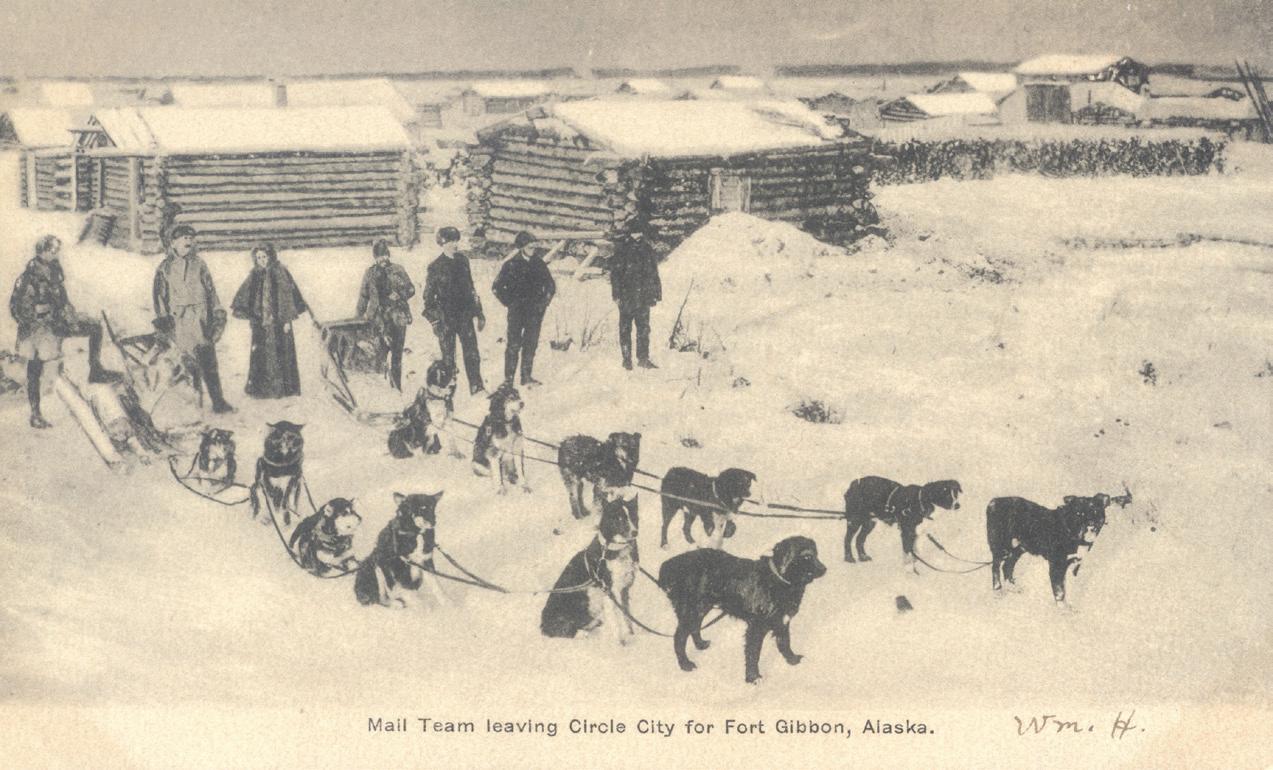
12. Modern stamps from the polar regions include those from the Falkland Islands (Scott 64), which shows a whale and penguin with King George V; Ross Dependency (Scott L3), which shows a map of the area; Norway (Scott 110), featuring a polar bear looking up at an airplane, part of a 1925 series issued to help fund Roald Amundsen’s North Pole flight; and Greenland (Scott B2), a 1959 overprint semipostal that aided the Greenland Fund. Also, a picture postcard shows contract mail carriers preparing their dog sled team to carry mail through the snow from Circle City to Ft. Gibson, in the Alaskan Territory. (Courtesy Smithsonian National Postal Museum).
Figure
Figure
Figure
suit) was dispatched to rescue Southern Quest, an expedition support ship that was sinking off McMurdo Sound.
Archival mail is commercial, or ordinary, mail that has an important historical component that elevates it beyond being just another piece of mail posted from its time and place. Often finding such an item can be quite a challenge, since there may be no obvious indication that it is either polar or historically significant for polar reasons.
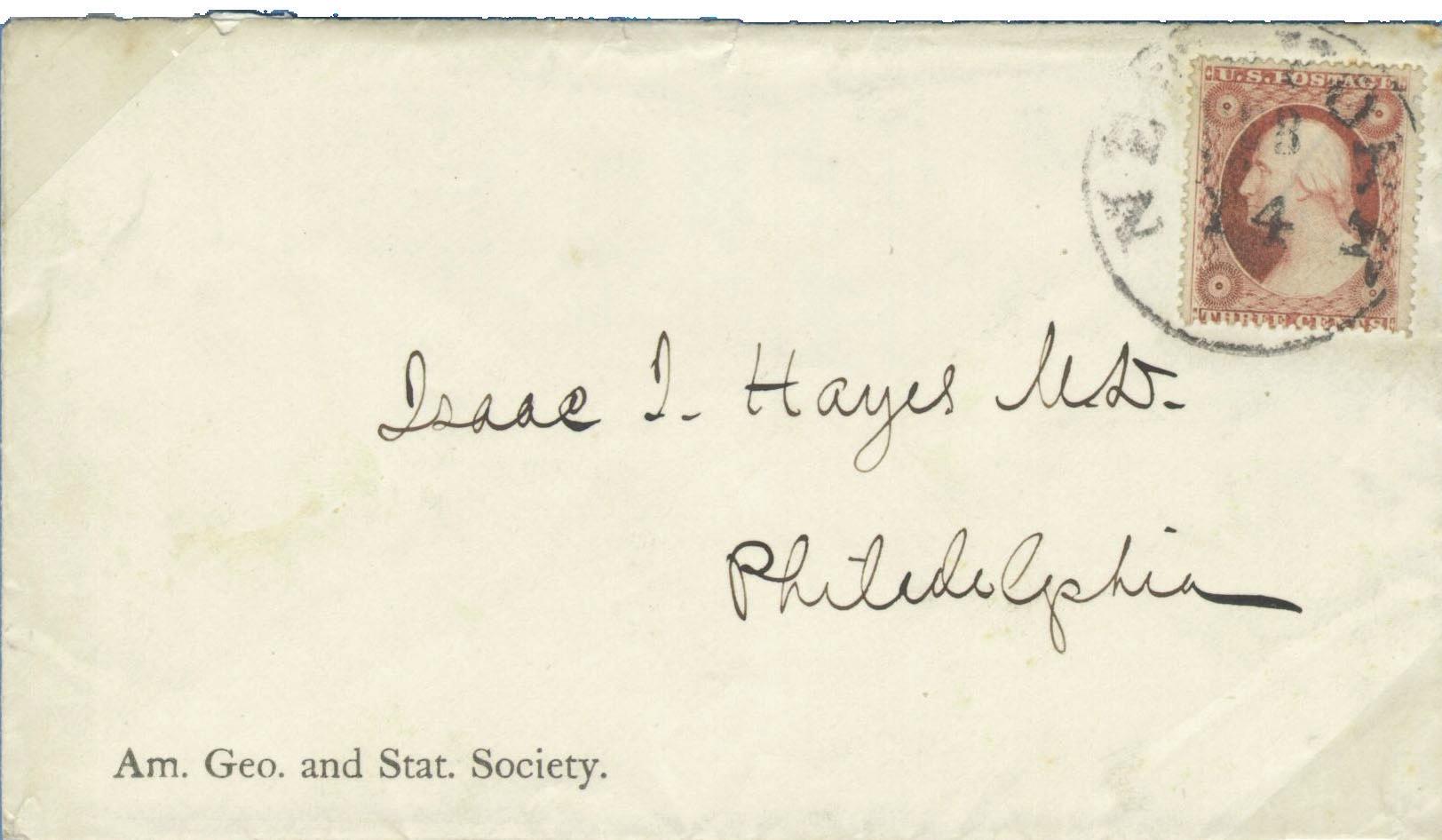
Shown (Figure 14) is what otherwise seems to be a relatively common piece of mail posted March 14, 1860, on American Statistical Society stationery. (The society later became the American Geographical Society). What makes it special, though, is that it was an invitation to a Philadelphia doctor to hear Dr. Hayes’ successful presentation later that month, that enabled funding of the United States’ first North Pole expedition (1860-61).
Most Heroic Age expeditionary material would be archival. It is ordinary mail (or items) that visually appear similar to other mail of its time and place, until someone with the knowledge and good fortune (often after long research) recognizes it for its additional characteristics.
This reveals the most exciting aspect of polar philately: Discovery pieces.
Polar philately is unique among collecting areas due to the sheer volume of new discoveries since the 1980s. Anyone can be the discoverer. It just takes patience (lots of it, since the material can be so elusive), good luck (can be found anywhere), and perseverance. Unfortunately, it is not a good occasional activity, since discovery appearances often pop up in all sorts of odd places, never to be seen again.
There are two types of discovery pieces. The first is the type that is related to a known activity, normally an expedition, but documents something that is not known to have been earlier postally documented. Examples might be the presence of the leader, or a critical en route stop in the course of its transit.
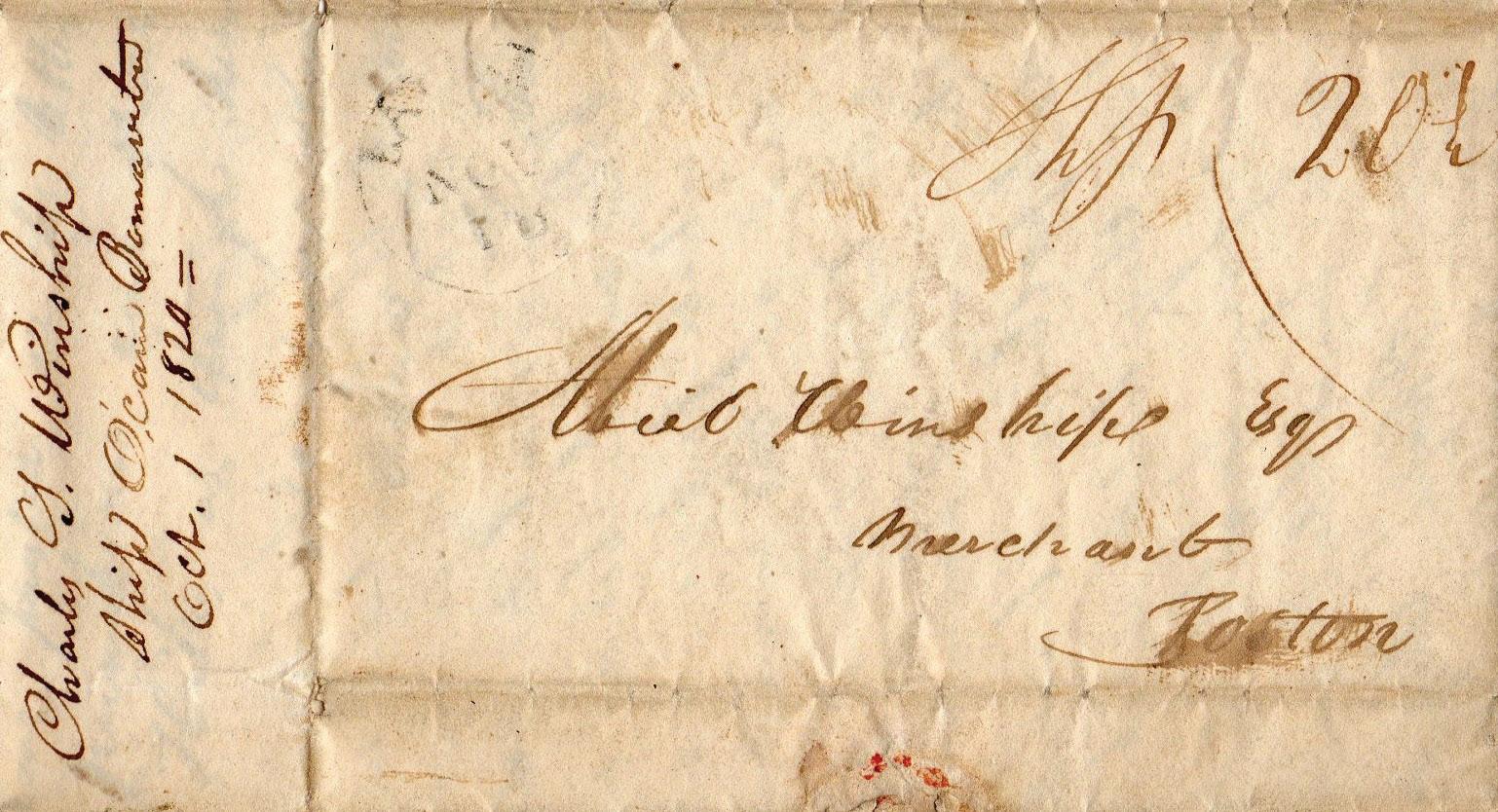
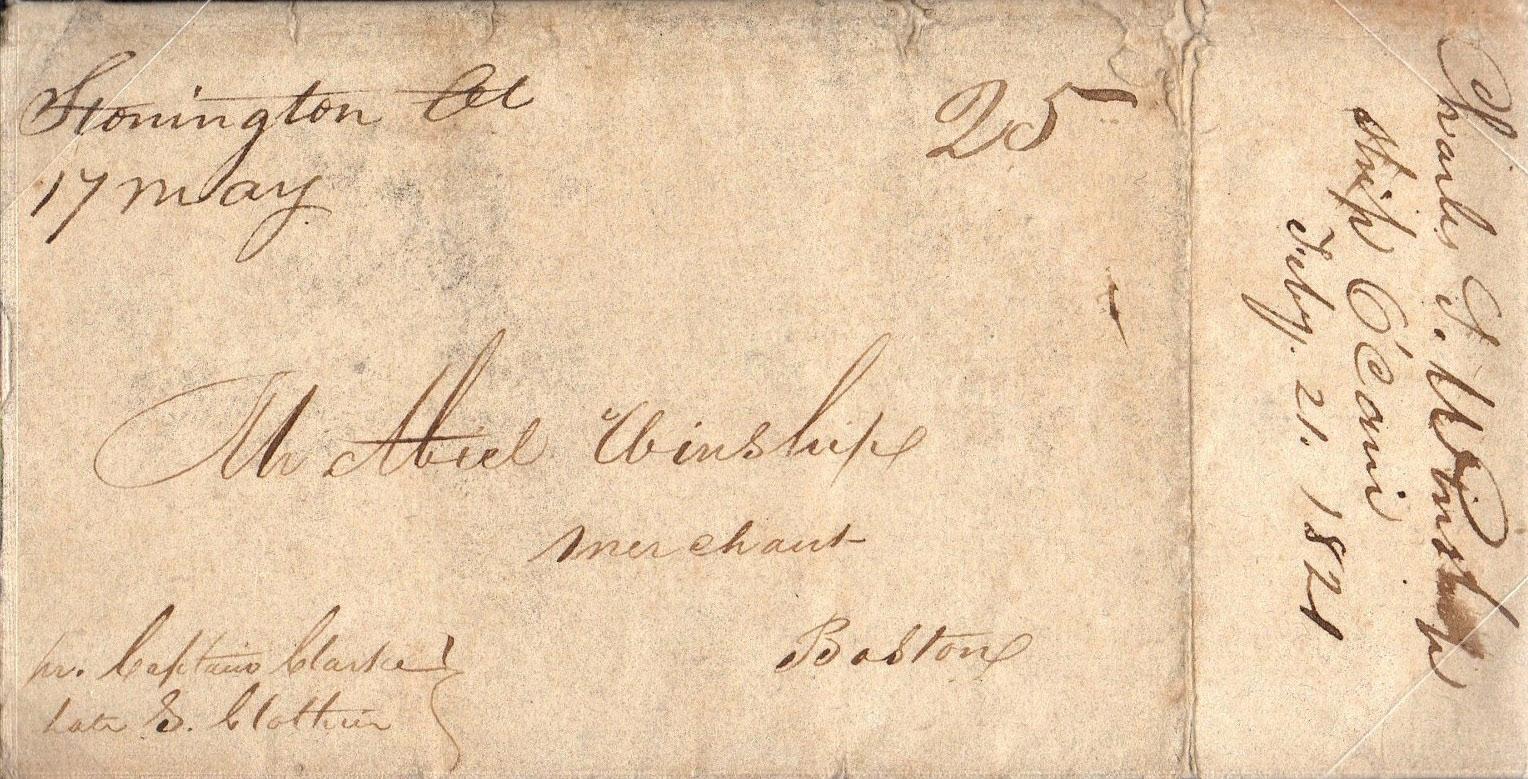
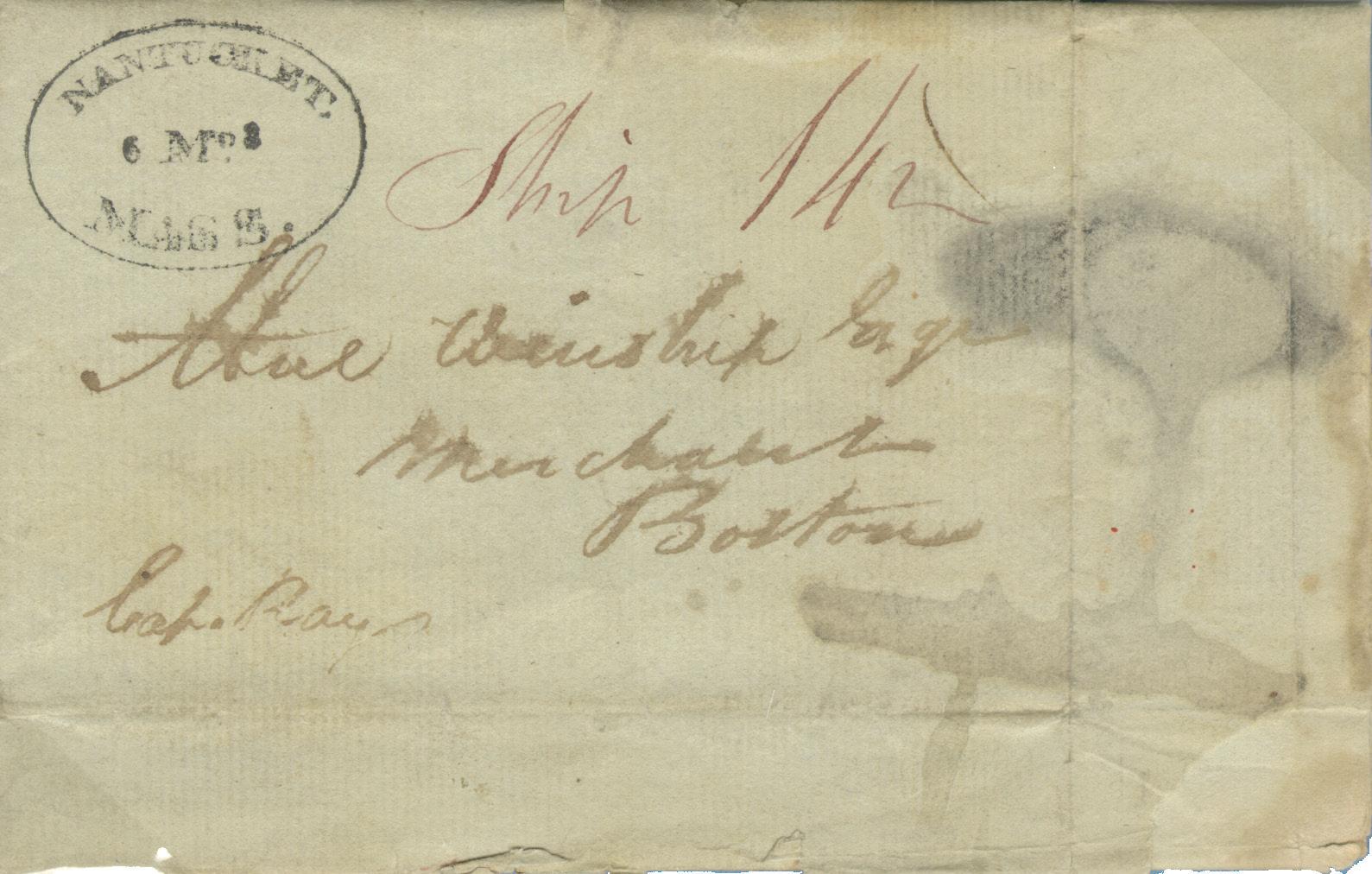
Such an example is shown (Figure 15). This letter, recently discovered, is marked “SHIP” and dated June 20, 1833 from Baltimore and sent from the captain of the Sun. It postally documents for the first time an important threesome of major Antarctic activities, all in the same letter, no less.
Captain Trott reports the attempted seizure of his sealer off the Falklands by a renegade Argentine freebooter, as well as the appearance of HMS Clio, which is the first mention in mail of evidence of British sovereignty over the Falklands. Additionally, the captain references naturalist Charles Darwin’s expedition ship Beagle (then at polar Falklands) and an offer by its leadership to purchase his ship.
The second type of discovery pieces is one of the most exciting in philately: the discovery of a
piece that reminds us of something that had been forgotten to history. The event has perhaps never been documented or remembered until we find evidence of it in a piece of mail or associated item, such as the one shown (Figure 16).
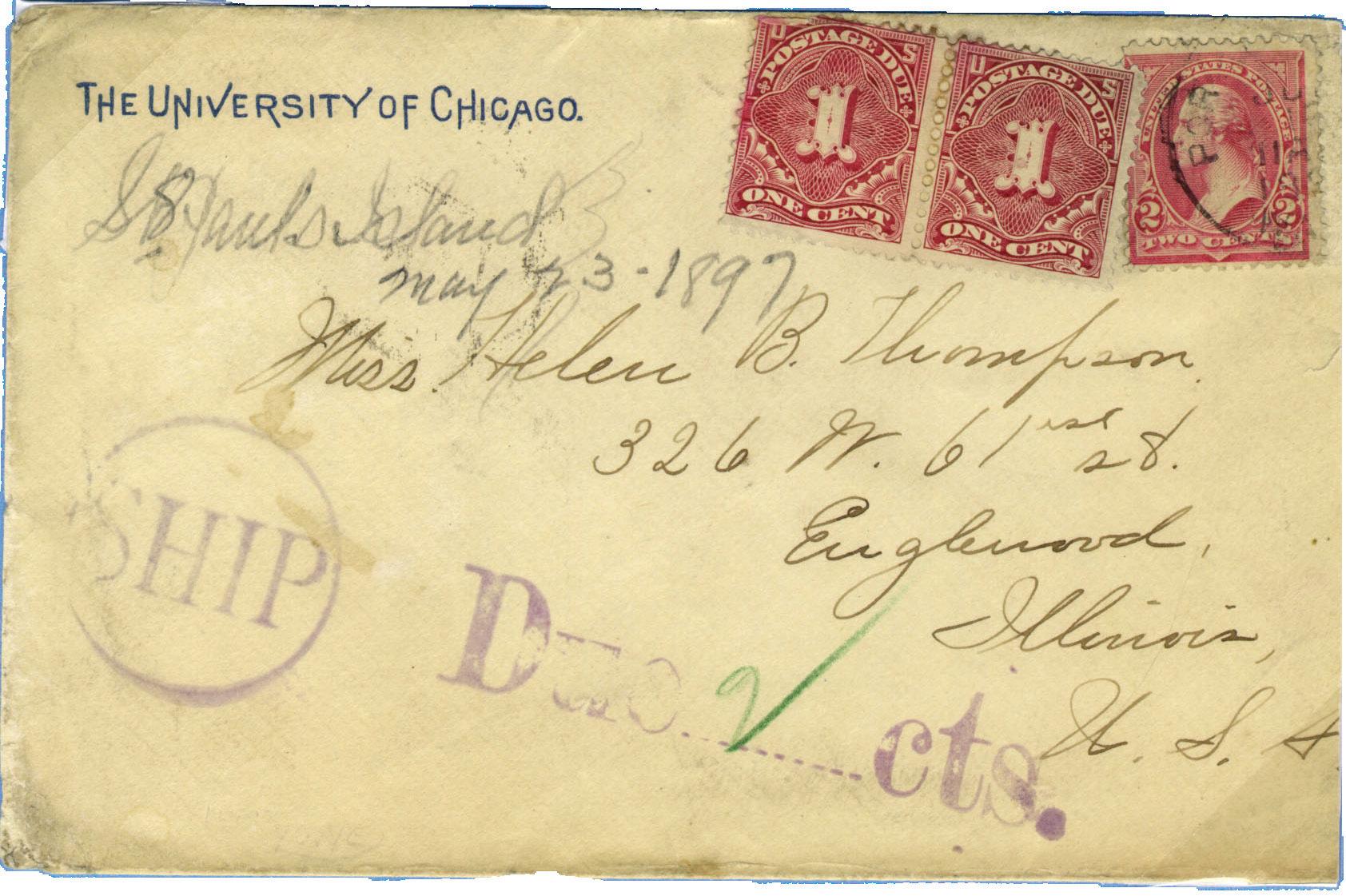
For more than 100 years, there was no record in polar history of a crucially important 1896 and 1897 scientific expedition that led to the salvation of the Bering Sea fur seals. What little was known was buried in an entry of an obscure 1898 Congressional subcommittee hearing report, until a correct reanalysis of the postal cover shown led to its being properly
13. The front and back of a cover that started off as an ordinary philatelic postcard meant to meet a collector’s request in January 1986 wound up going on a rescue trip to help survivors escape a sinking ship, the Southern Quest, a refitted 139-foot British trawler that was trapped and crushed by polar ice. All 21 sailors survived.
Figure 14. A cover posted March 14, 1860, from a society that later became the American Geographical Society. It’s an invitation to a presentation that enabled funding of the United States’ first North Pole expedition (1860-61).
Figure
Figure 15. A folded letter posted from Baltimore in 1833 by a ship captain confirms several historic benchmarks, including Great Britain’s claim to the Falkland Islands and the location of Charles Darwin and his ship, the Beagle.
Figure 16. Knowledge of a crucially important 1896 and 1897 scientific expedition that led to salvation of the Bering Sea fur seals was absent from polar recorded history for more than 100 years. Its few details were buried in an entry of an obscure 1898 Congressional subcommittee hearing report, until a correct reanalysis of this postal item led to its being properly documented.
documented. The cover, on University of Chicago stationery, was sent in 1897 to Illinois while on a ship from “St. Paul’s Island.” It’s been stamped 2 cents postage due. Sometimes, polar discovery items can be easy to spot. For example, a name of a forgotten expedition might appear in the return or sending address. Or, maybe the discovery is found in the cover’s enclosure. However, most covers lack their enclosures, so a profound knowledge of polar history and its personalities may be the best way to detect these items. Those eureka moments are memorable for polar philatelists for the rest of their lives and probably is the most amazing aspect of polar philately.
Closing Thoughts
Many of polar philately’s most profound pieces are not very attractive. One might even say they are tawdry. However, this is ordinary mail that was treated and misused, the same as any other mail pieces of its time, place and condition. Much of the earliest polar material is profoundly interesting postal history material, even for those outside of our field. A good polar philatelist (especially of the earliest material) also has to be a reasonably good student of general philately.
References
Vogel, Hal. American Air Mail Catalogue, 7th ed., Vol. 2 (Mineola, NY: American Air Mail Society, 2016).
Vogel, Hal. Essence Of Polar Philately (Exton, PA: American Society of Polar Philatelists, 2008).
Vogel, Hal and Serge Kahn. Ahead of the Pack. 2nd revised edition (Liberec, Czech Republic: 2022).
Vogel, Hal and Serge Kahn. Cold War (Liberec, Czech Republic: 2025).
Ice Cap News, journal of the American Society of Polar Philatelist. Any ASPP member can access a CD with the journal’s complete run from 1955 for $5.
The Author
Hal Vogel, who passed away in November 2025, was the preeminent expert on polar philately. He published hundreds of articles over his more than 70 years in the hobby, and multiple essential books. He was an accomplished exhibitor and accredited philatelic judge, a valued leader in multiple philatelic organizations, and the winner of the APS Luff Award for Distinguished Philatelic Research.
The Heroic Age of France in Adélie Land
SERGE KAHN
ATthe end of November 1948, a French polar expedition set off for Adélie Land to reaffirm French sovereignty over this small territory on the Antarctic continent discovered in January 1840 by Dumont d’Urville (1790-1842).
Let’s take a look back at this historic episode of discovery, followed by the creation of the French Polar Expeditions in 1947 and the construction of the Dumont d’Urville base at the beginning of the International Geophysical Year (IGY) in 1956.
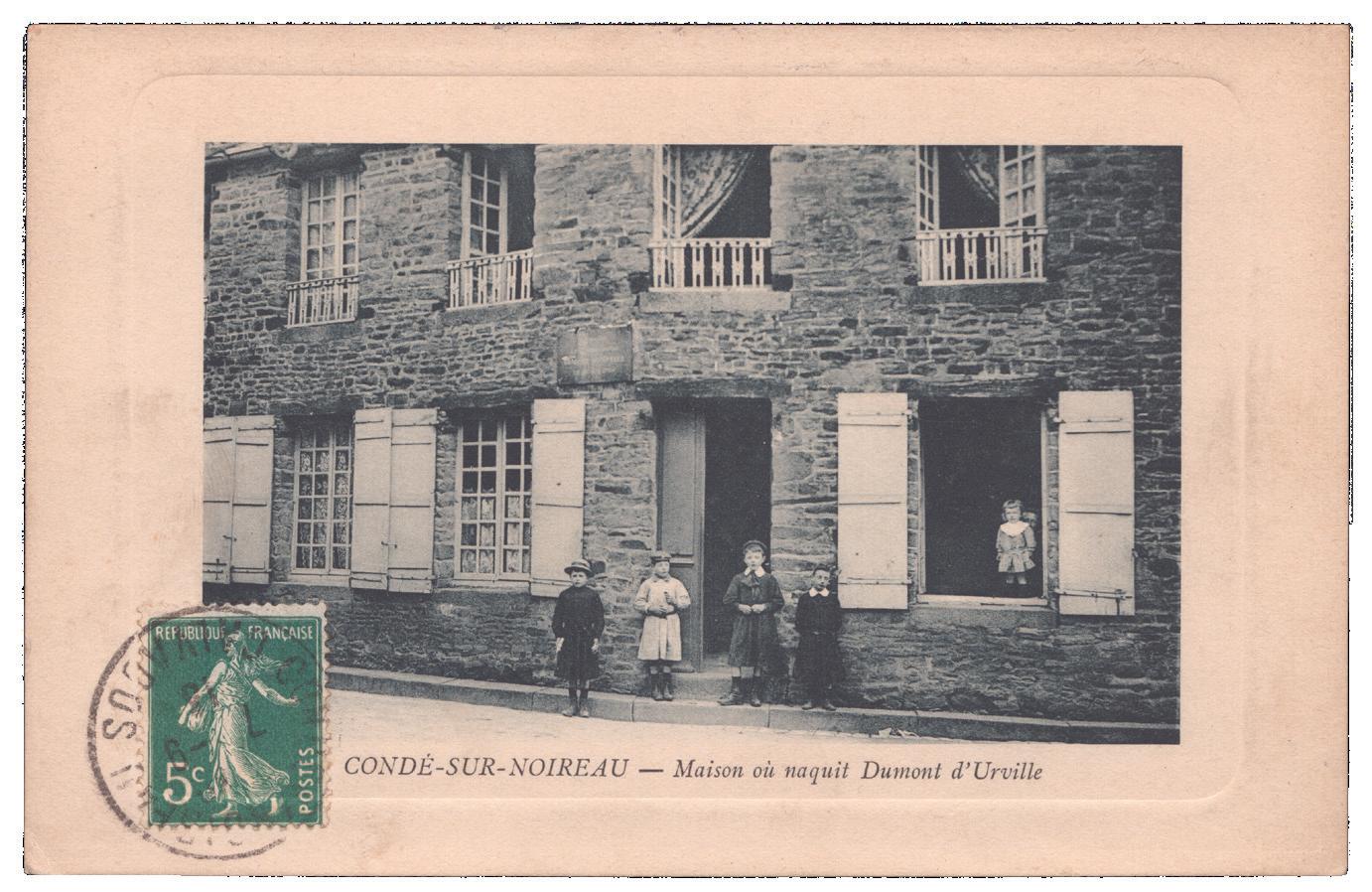
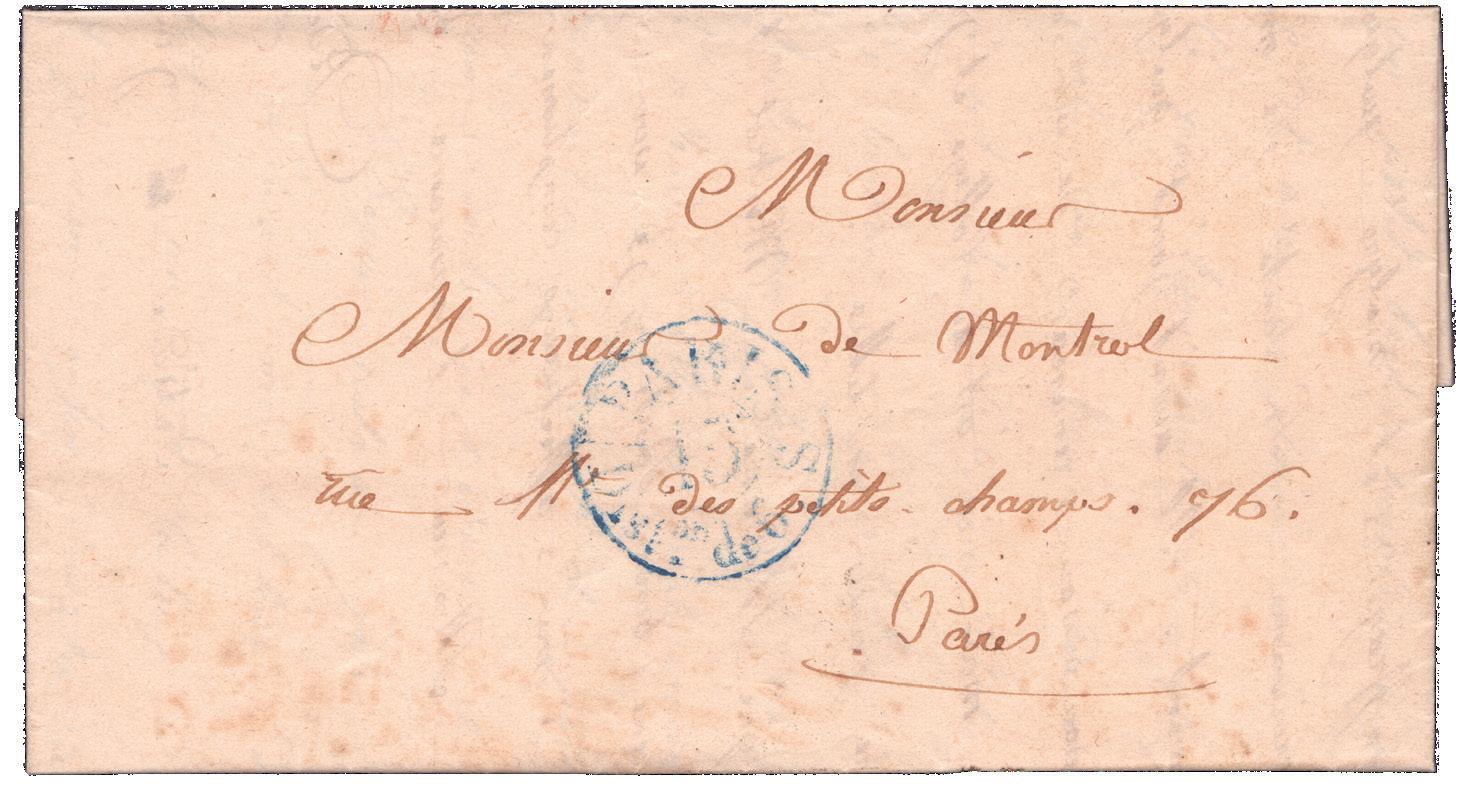
Figure 1. A picture postcard with correct postage depicting the birthplace of Dumont d’Urville.
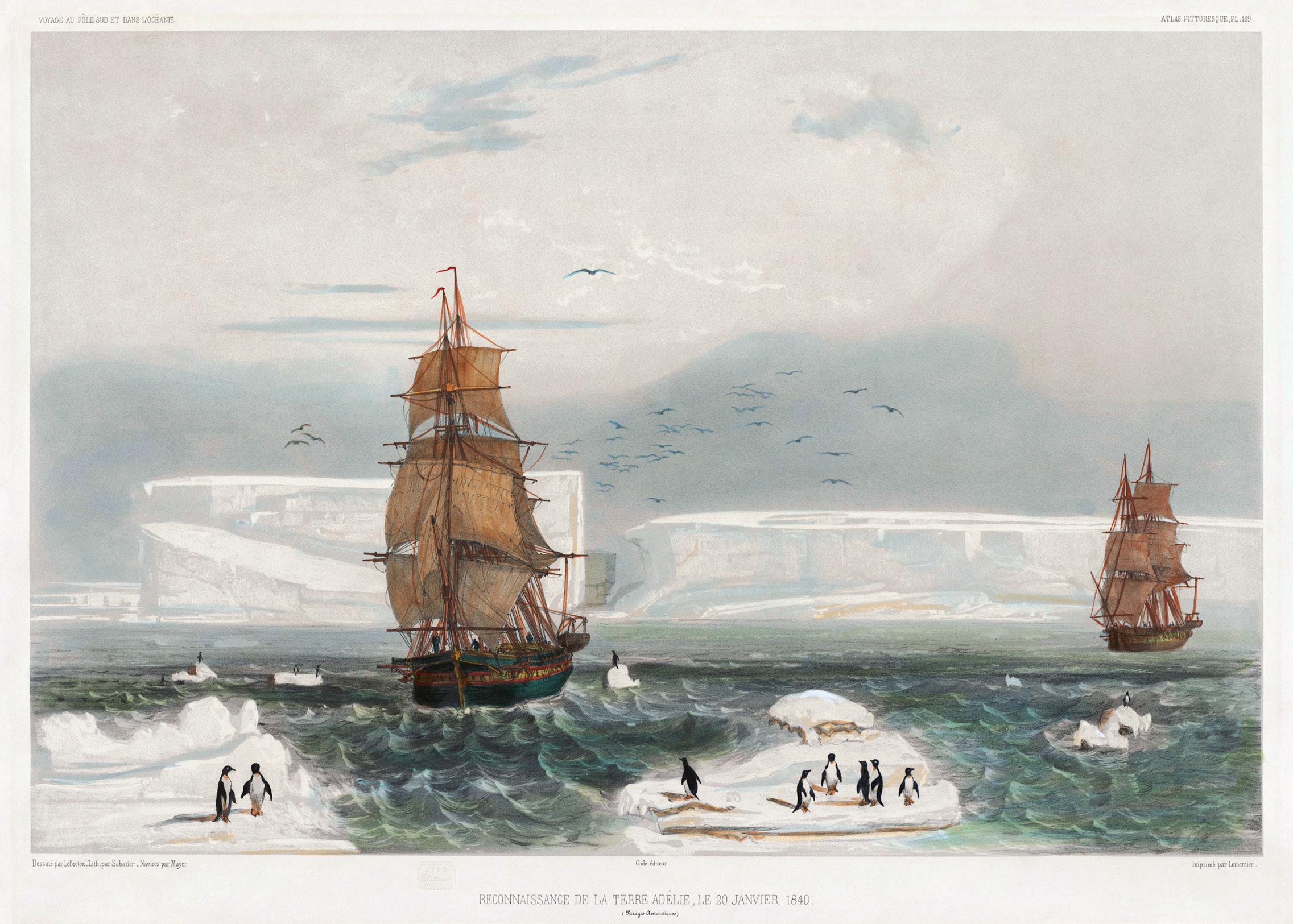
Reconnaisance de la Terre Adelie, 20 Janvier 1840, by Louis Le Breton. Courtesy National Library of Australia.
Discovery of Adélie Land
The Revolution rumbled in France as Jules Sébastien César Dumont d’Urville was born in Condé-sur-Noireau on May 23, 1790 (Figure 1). As a child, Jules divided his time between reading and nature. He would be “a keen observer of heavy rains, evanescent mists, promising azure skies and dark nights.” We already see in him this need to contemplate the universe.
A brilliant student, talented in languages and mathematics, Jules had a boundless curiosity. History, science, botany, and zoology captured his attention. At 17, he admired the heroes of knowledge more than those of battle.
“I found that nothing was more noble, more worthy of a generous soul than to devote his life to the progress of science,” he said. “That is why my preferences led me more towards the navy of discovery than towards the purely military navy.”
After a short stay in Brest, where he was first in the second class aspirant competition, d’Urville moved in October 1810 to Toulon and was promoted the following month to first class aspirant. He moved from ship to ship and his progress followed the regular course. He was appointed ensign in May 1812.
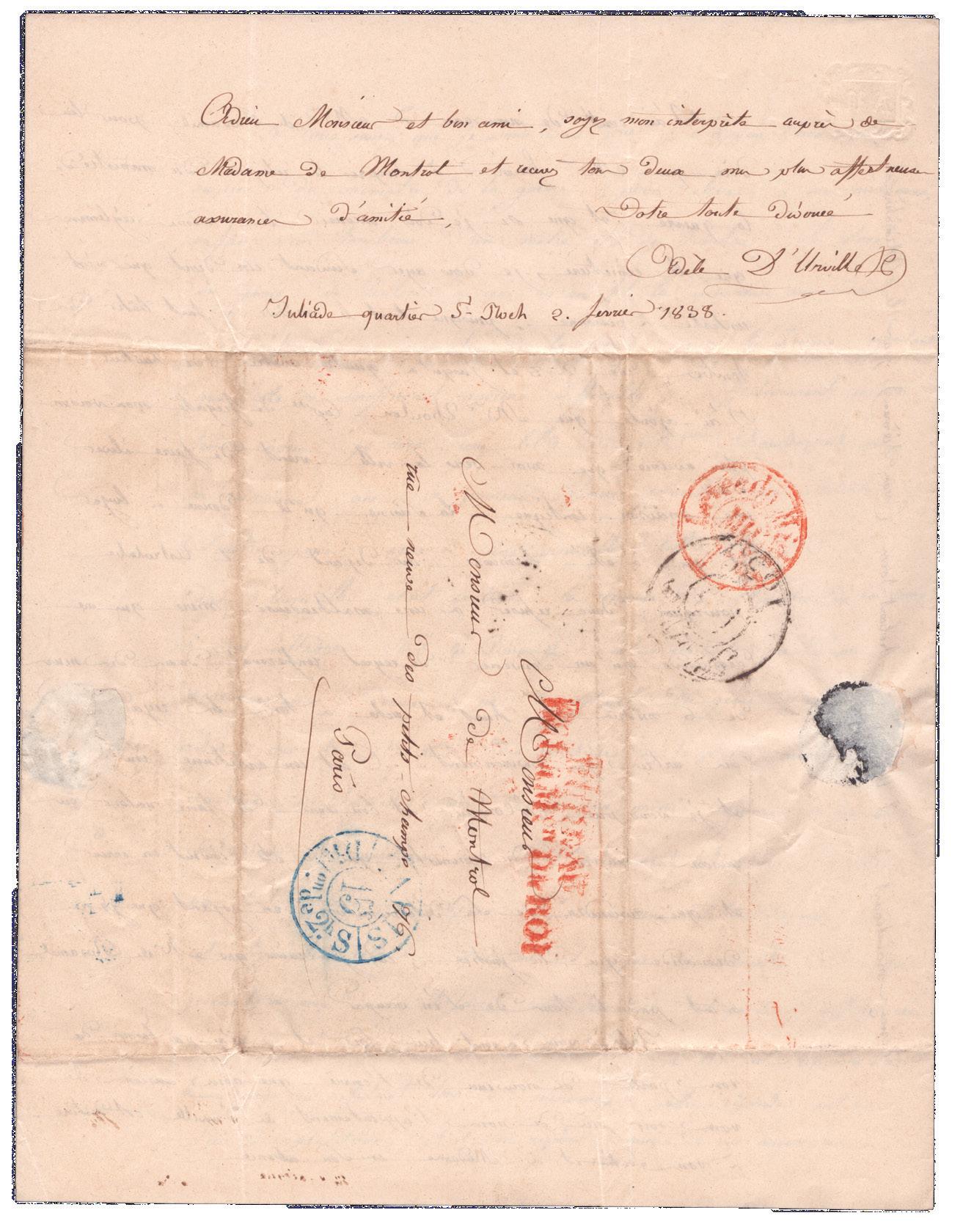
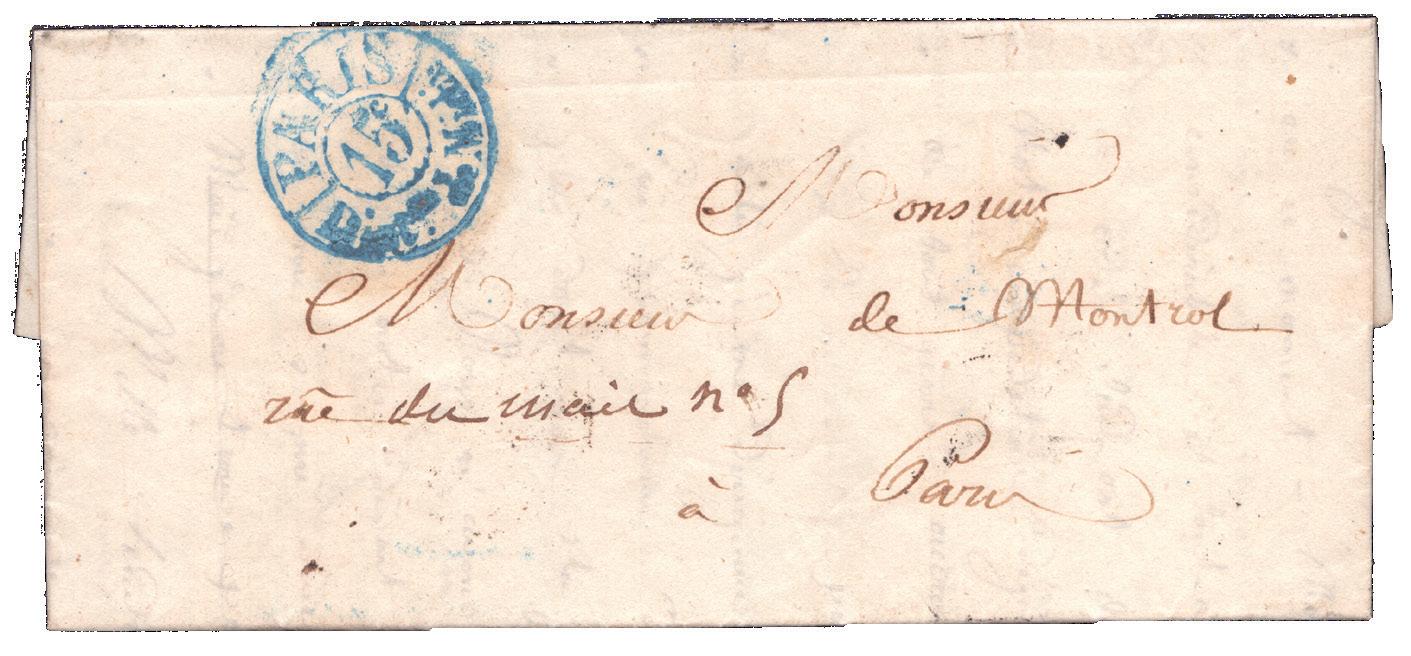
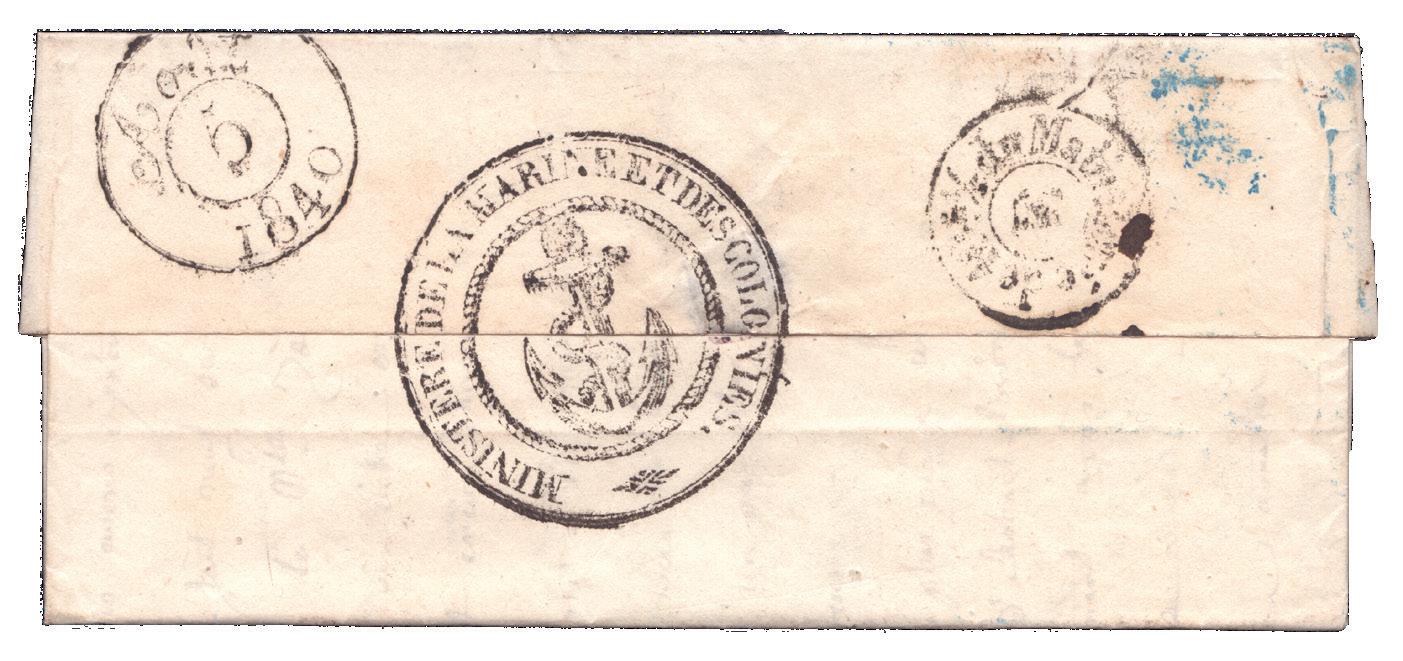
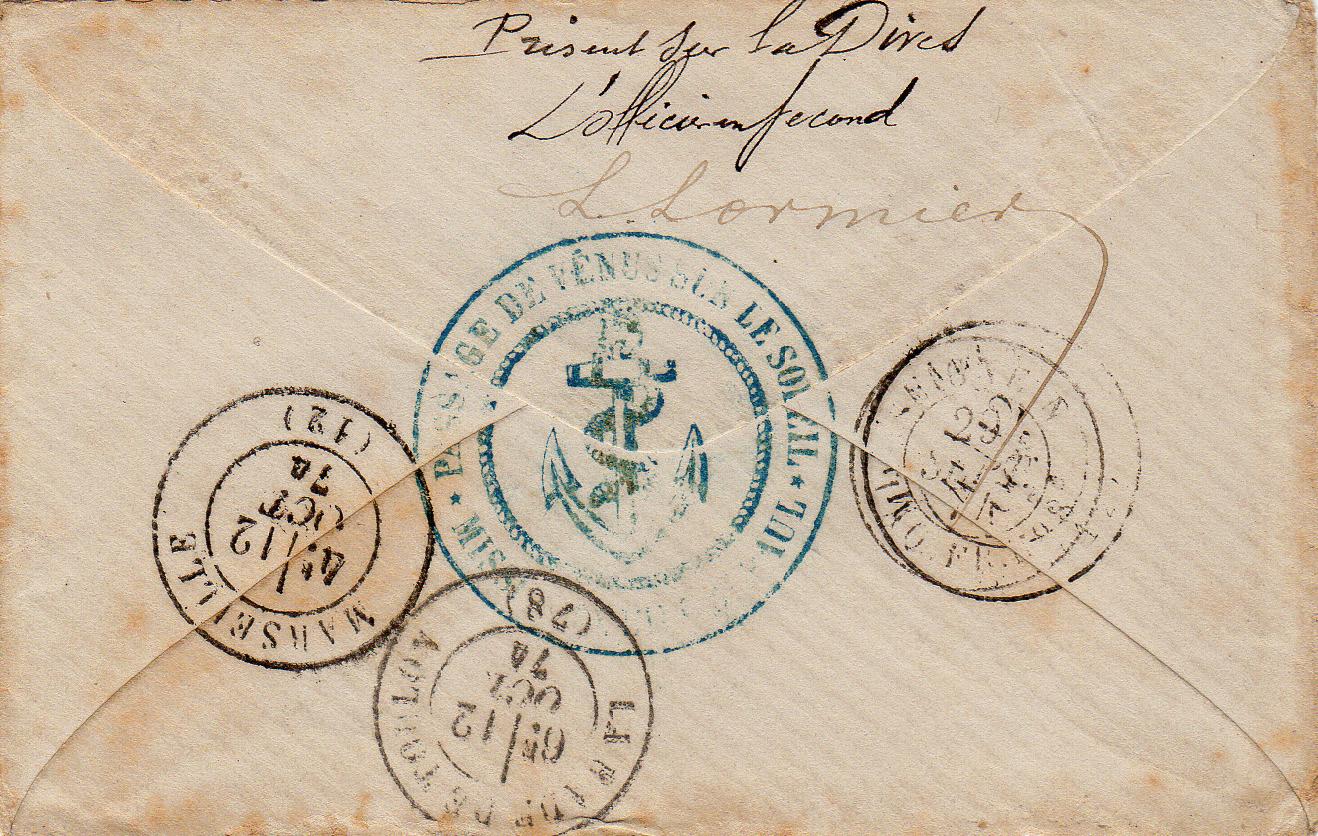
4. Madame d’Urville corresponds about her husband’s expedition in a folded letter to Montrol, hand-carried from Toulon for deposit at the offices of the Royal Bureau (red stamped cachet). The letter received a rear red postmark and is marked as delivered (front blue marking) with 15 centimes postage due.
Figure 2. A picture postcard shows Dumont d’Urville.
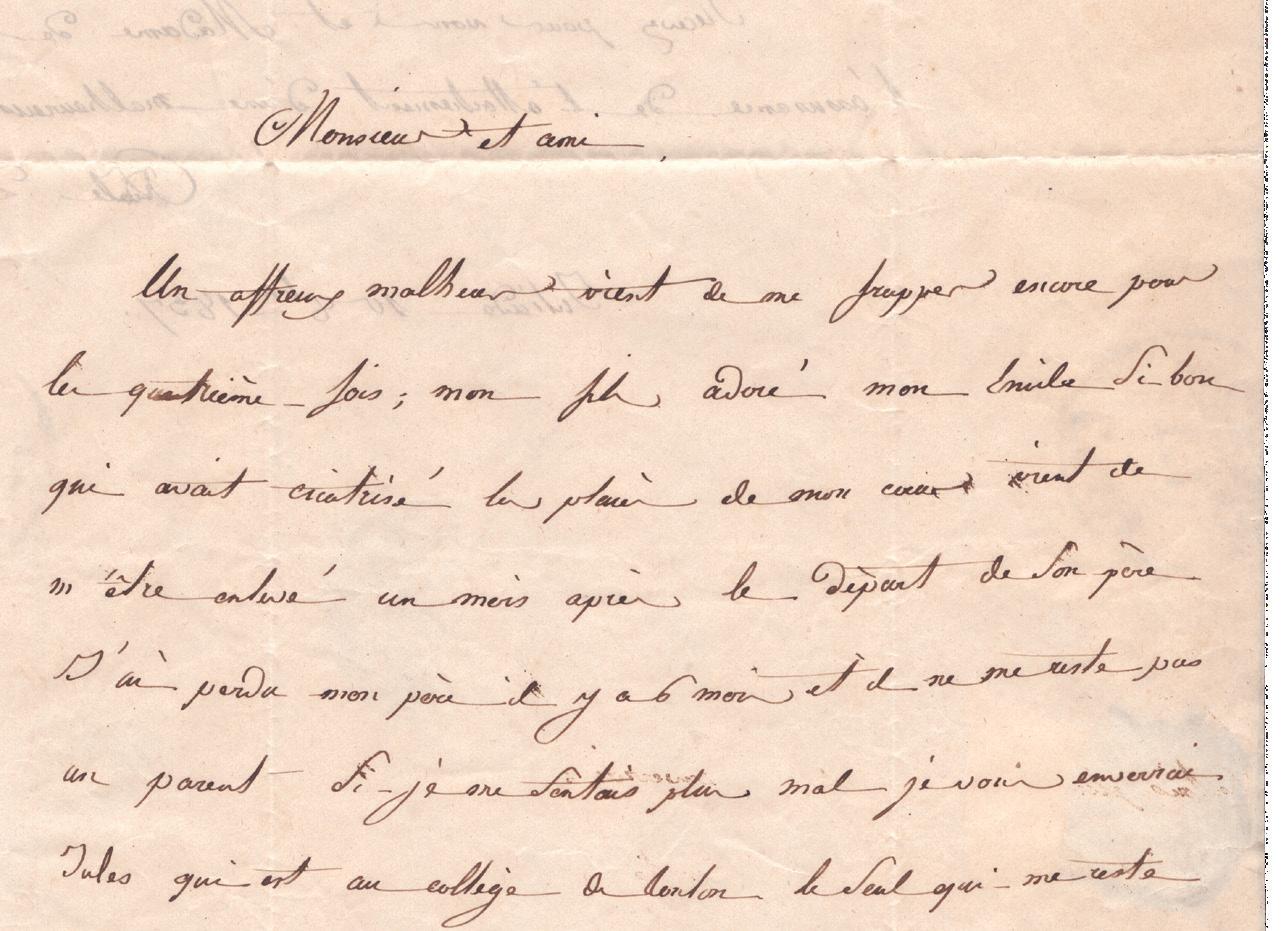
Figure 3. The beginning of a letter written and signed by Adèle Dumont d’Urville. The message reads, in part, “A terrible misfortune has struck me for the fourth time. My loved son Emile just died a month after the departure of his father.”
Figure
In 1819 D’Urville took part in the fourth Mediterranean campaign of Chevrette. The last of the staff by rank, he was entrusted with botanical, entomological and archaeological research. Chevrette returned to Toulon on November 15 and left April 3, 1820, for its fifth campaign with d’Urville, who was automatically entered on the officers’ list.
On April 16, Chevrette dropped anchor in Milo harbor. In a stunning moment of art history, a Greek shepherd had just excavated an ancient marble statue of a woman. D’Urville helped record the discovery – the now famous Venus de Milo (Aphrodite of Melos) – and reported it to the French ambassador in Constantinople. The Venus de Milo has been the crown jewel of the Louvre since 1821.
In the course of his career, d’Urville (Figure 2) made three circumnavigation voyages:
• On board the corvette Coquille (1822-1825).
• In the search of La Pérouse (Jean François de Galaup, comte de Lapérouse) (1826-1829).
• To the discovery of Antarctica (1837-1840).
It is the last voyage that interests us here, the one that would shape France’s new polar identity.
Until 1837, d’Urville knew the gloom of the shore service. The feat of the English explorer James Weddell, whose captain claimed to have approached the South Pole, gave d’Urville the opportunity to leave for a third circumnavigation. In January 1837, d’Urville wrote to the minister of the navy, Vice Admiral de Rosamel, proposing that he be employed in a new campaign of exploration around the globe.
The Navy accepted d’Urville’s proposals and provided the necessary means.
King Louis-Philippe took a personal interest in the affair; the pro-
gram, as a first step, would include an exploration of the Antarctic ice in Weddell’s footsteps. D’Urville knew that other nations – the United States and England – planned an expedition to Antarctica. It was therefore with satisfaction that he emphasized the novelty, the grandeur, and the wonder that the venture would take on in the eyes of the public.
“Our first task will be to conduct a survey towards the South Pole, as far as it is possible to penetrate through the ice,” d’Urville said. “Weddell’s observations in 1823, which appear to be true, seem to establish that after passing the area of floating ice, which is six or seven degrees wide in latitude, one finds oneself in a more open sea and less prone to the storms that often prevail north of this area.”
On September 7, 1837, d’Urville bid farewell to his family – his wife, Adèle, and sons. The corvettes Astrolabe and Zélée – the former commanded by d’Urville, the latter by Captain Jacquinot – set sail on a voyage that would prove to be extremely difficult.
During her husband’s absence, Adèle corresponded on a regular basis with expedition supporter and maritime journal editor François Mongin de Montrol. D’Urville gave Montrol the honor of giving his name to Montrol Rock in Antarctica.
Figure 5. A relayed expedition report to Montrol from Adèle (manuscript dated July 2, 1838 from Toulon), hand-carried to Paris where it was posted at a sub-post office July 19 (left rear marking) and marked as delivered (right rear marking) with postage due 15 centimes (front marking).
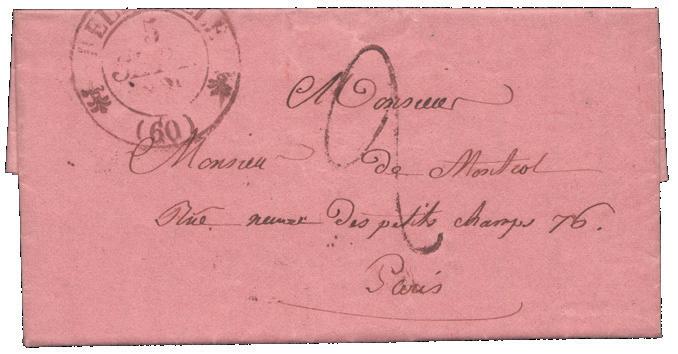
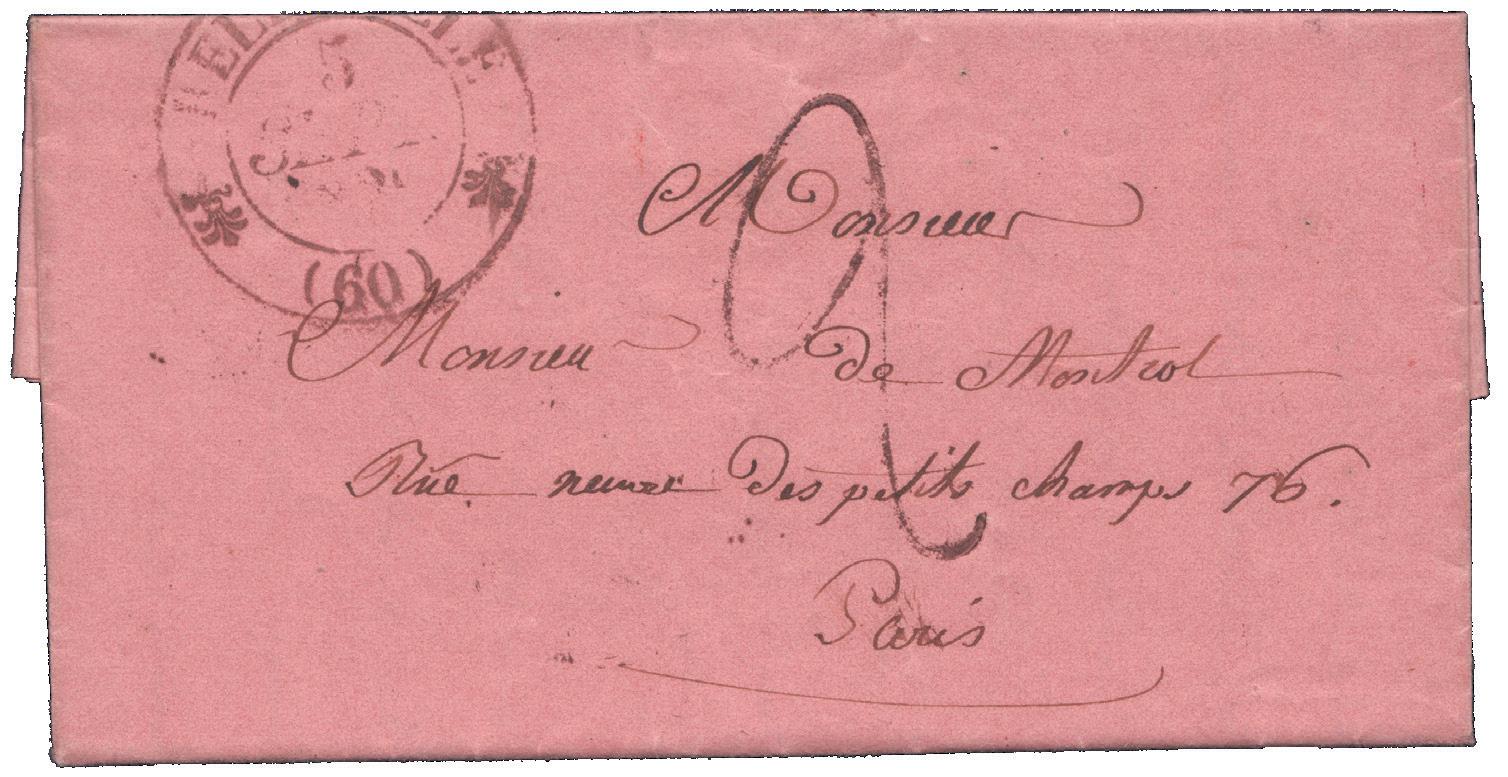
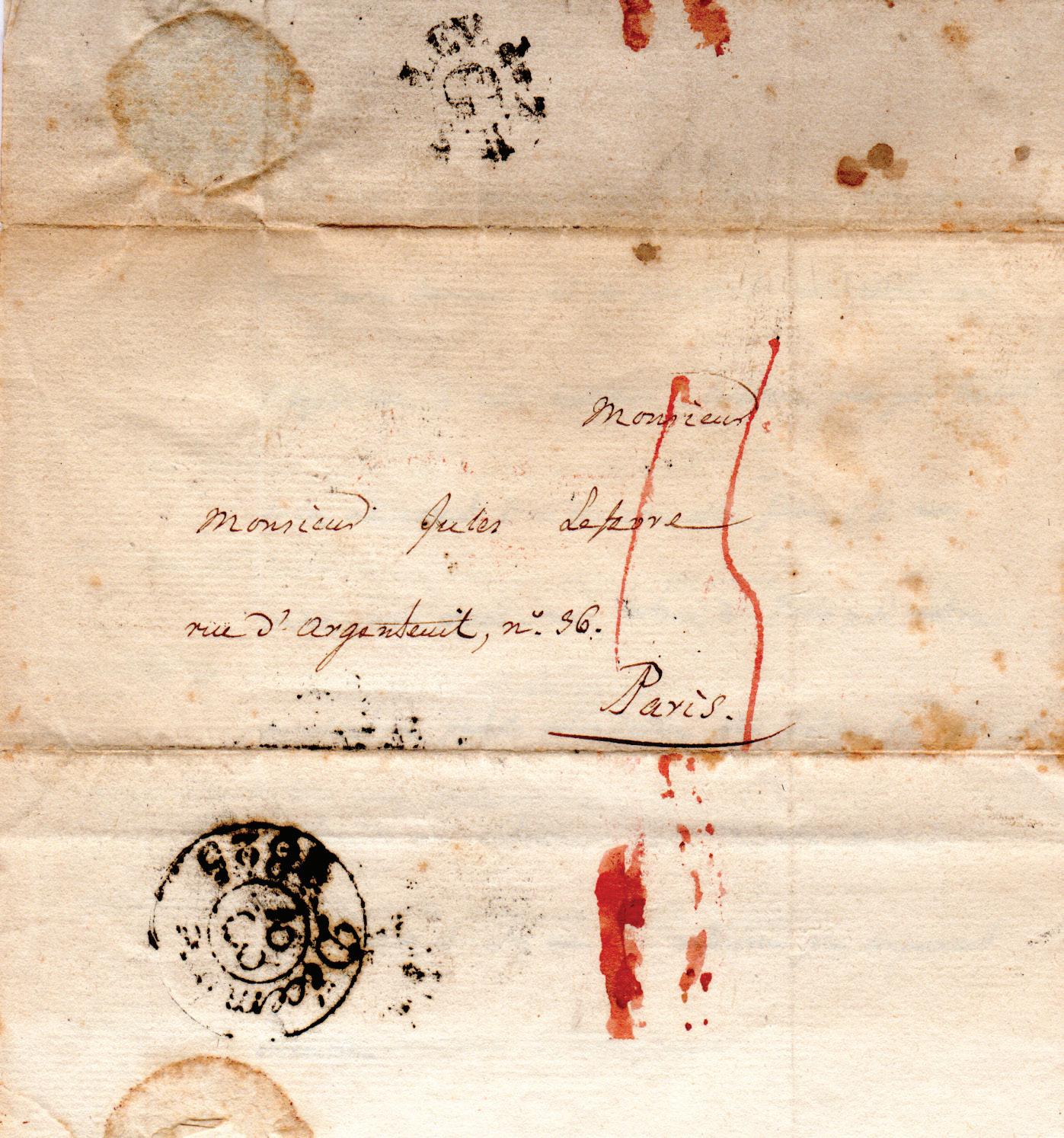
Figure 6. A folded letter to Montrol, with the manuscript dated August 20, 1838, and sent from Belleville (Seine) September 5, 1838 to Paris. It’s rated “2” décimes.
Much insight into d’Urville’s journey can be discovered through Adèle’s letters. Adèle shared her feelings and emotions during this long solitude, as well as the few pieces of information contained in the letters received from her husband. Some of d’Urville’s letters took up to seven months to reach Toulon, where she lived. One month after d’Urville’s departure, Adèle’s life was in turmoil after the sudden death by cholera of their son, Emile (Figure 3).
Meanwhile, unaware of his family’s loss, d’Urville approached the South Pole. On January 15, 1838, the watchman announced fragments of floating ice. A few days later, extraordinary shapes appeared, “sometimes columns, pyramids, triumphal arches falling into ruins, half-formed vaults, needles, towers or gothic bell towers rising towards the sky.”
At 63 degrees, 40 minutes South, the ships were caught in the ice and the crew gave up their first approach south of South Orkney and then in the extension of South Shetland. Nevertheless, there were some named discoveries from this failed approach: Louis-Philippe Land, Joinville Land, Rosamel Island, Astrolabe Island, Mount Urville, Mount Jacquinot, and the Zélée Rocks. The largest of these lands was Louis-Philippe Land, in honor of the king who sponsored these expeditions toward the South Pole.
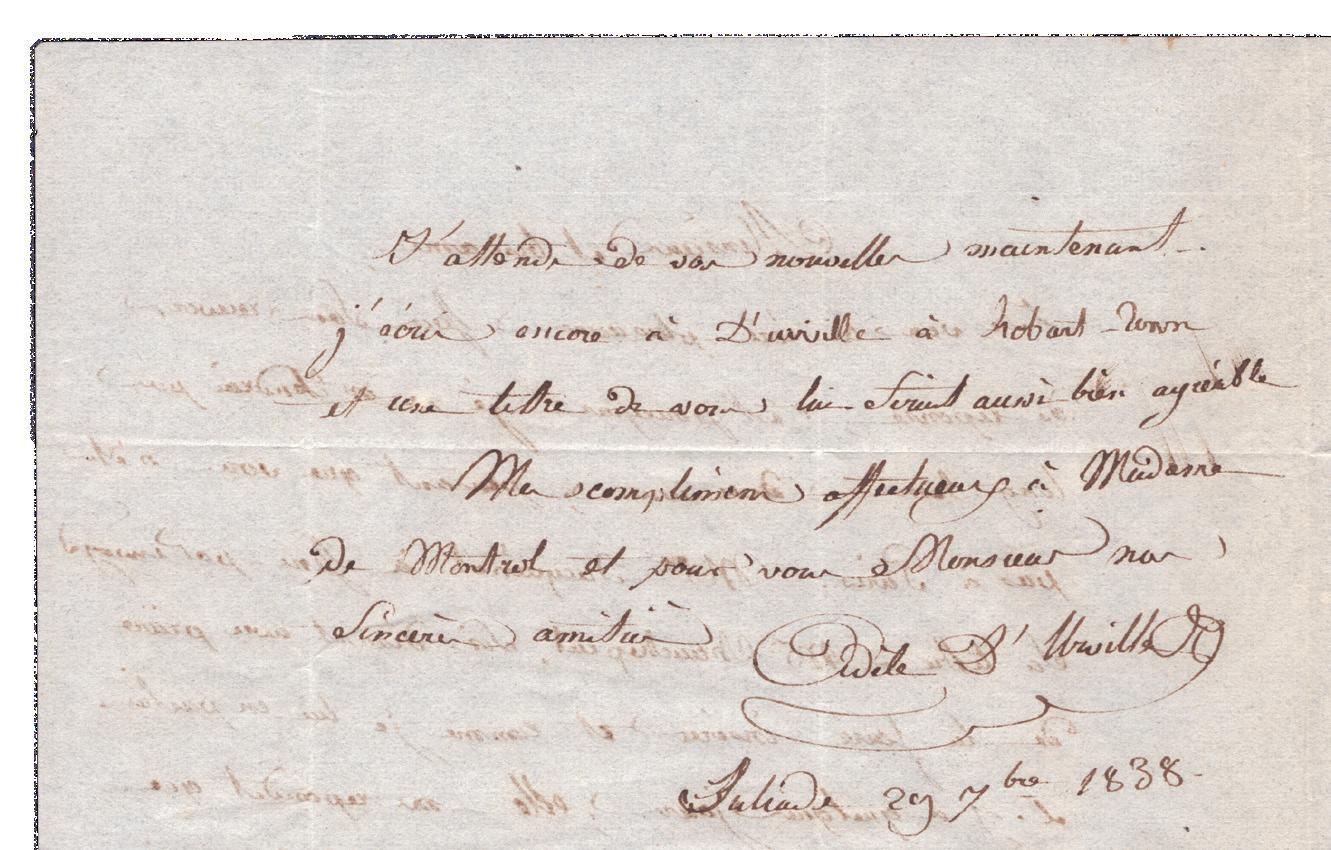
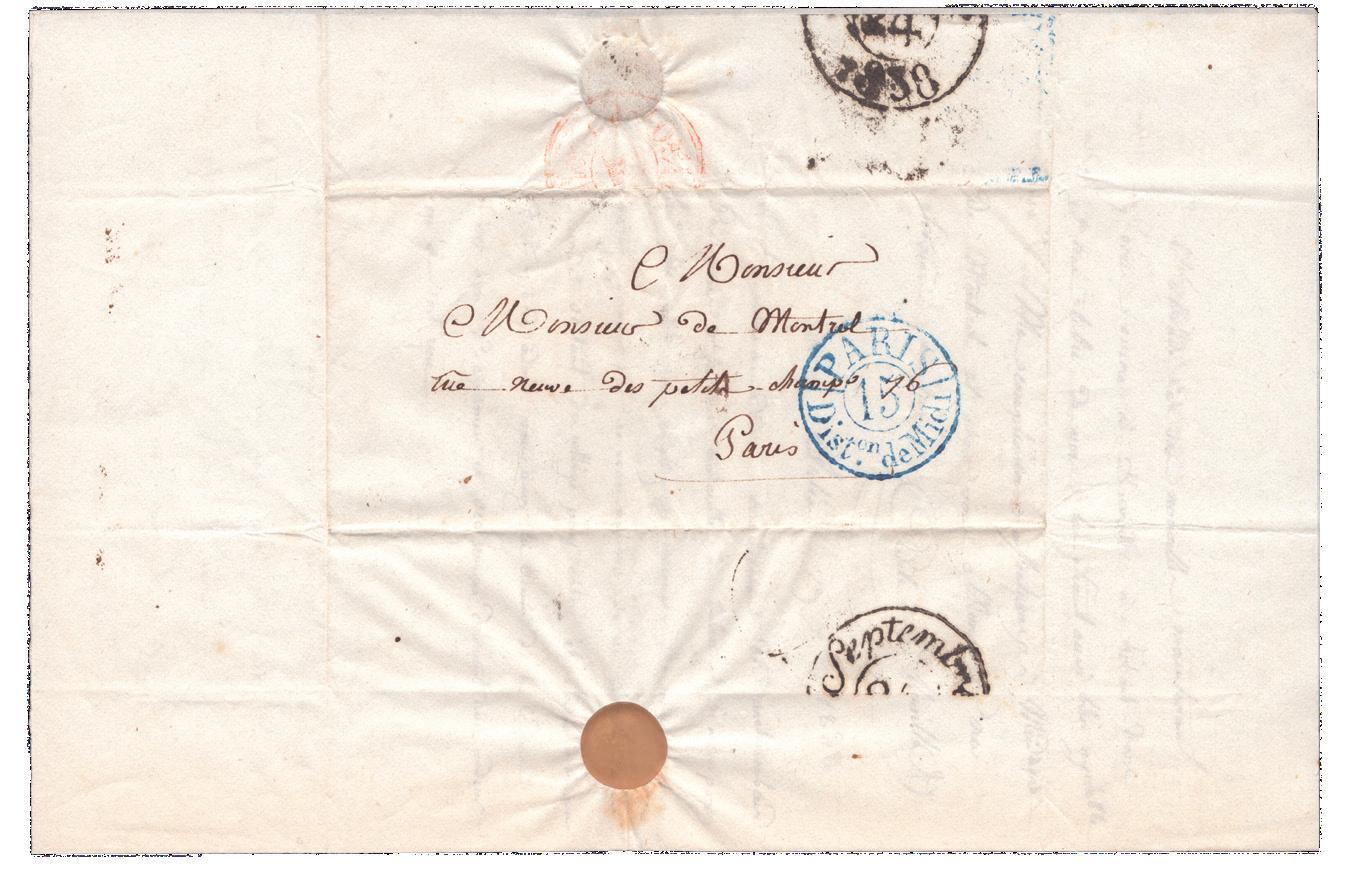
Figure 7. An opened folded letter from Madame d’Urville (manuscript dated September 20, 1838) to Montrol discussing her husband’s expedition. Paris delivery is stamped at noon, September 24.
Scurvy broke out on board the ships and began to wreak havoc. Zélée looked like a floating hospital. Meanwhile, Adèle was at home, distressed. In a letter dated February 2, 1838 (Figure 4), she confided, “The so distant return of Astrolabe inspires only fears without consolation ...”
After more than 50 days continuously surrounded by ice, d’Urville wrote, “This navigation was very painful for all the members of the expedition; and, although it is the first time that similar attempts have been made by Frenchmen, I am firmly convinced that no other expedition leader would have pushed his research further than I was able to do, under the same circumstances.”
In April, Adèle finally received news of her husband. In July, she transcribed a few lines from a letter dated December 1837 (Figure 5):
I deeply regretted that the exploration of the South Pole deprived me of the satisfaction of visiting this famous passage (Strait of Magellan). I did so well, I sailed with such speed and happiness that I was able to satisfy this desire before starting my route to the ice. This will be a brilliant highlight added to the expedition’s achievements. Now I expect to arrive in the ice between January 20 and 25, leave it around March
20 and arrive in Valparaiso at the end of May. Everything is going well on both ships, everything promises the highest results.
For Adèle, the waiting was interminable. In August (Figure 6), she wrote, “His first Antarctic excursion is completed, but it will be two more years before seeing him again (as he prepares for his second exploration cruise from the other side of the Antarctic continent).”
After several calls in Chile (Valparaiso) and the Pacific Islands, the expedition arrived in Tahiti at the end of 1838. After sending letters to Valparaiso, Adèle continued to write to her husband, sending them to Tasmania. She specifies (Figure 7), “I continue to write to d’Urville in HobartTown...”
Astrolabe and Zélée visited Tahiti, Fiji, the Solomon Islands, New Guinea, the Celebes Sea and the Molucca Sea, surveying their coasts, passes and reefs.
In the spring of 1839, the ships were in Batavia, then Sumatra, and then spied the immense and mysterious New Holland (mainland Australia).
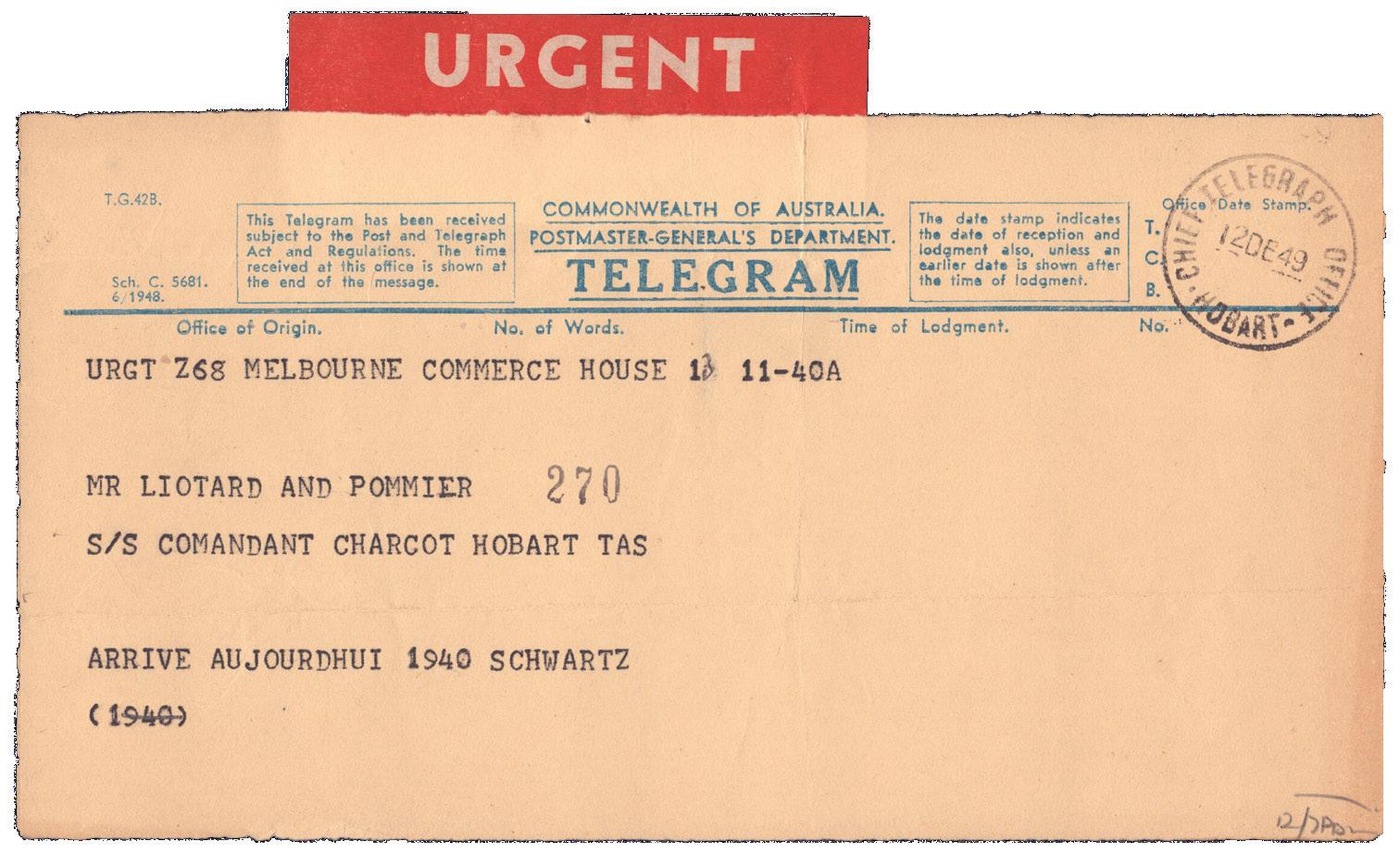
D’Urville might have wanted to end his mission there; records show that he received the news of his son’s death while moored in Valparaíso, and his crew experienced about 20 deaths from dysentery while en route to Australia. However, as a French explorer seeking to outdo the competing American and English polar expeditions (Charles Wilkes’ U.S. Exploring Expedition and the famous Ross expedition), they made the decision to continue. So, from HobartTown (today, Hobart, Australia) he set course south again on January 1, 1840, outpacing the Wilkes and Ross expeditions to the South Magnetic Pole.
In a letter dated May 24, 1840 (Figure 8), Adèle told Montrol that she had felt despondent after not having heard for some time from her husband, but gladly received his latest letter dated on the last day of 1839 from Hobart-Town, renewing her pride in his achievements.
On January 19, 1840, the corvettes were surrounded by white petrels, a few penguins, a whale, and two or three seals. D’Urville concluded that the land was nearby.
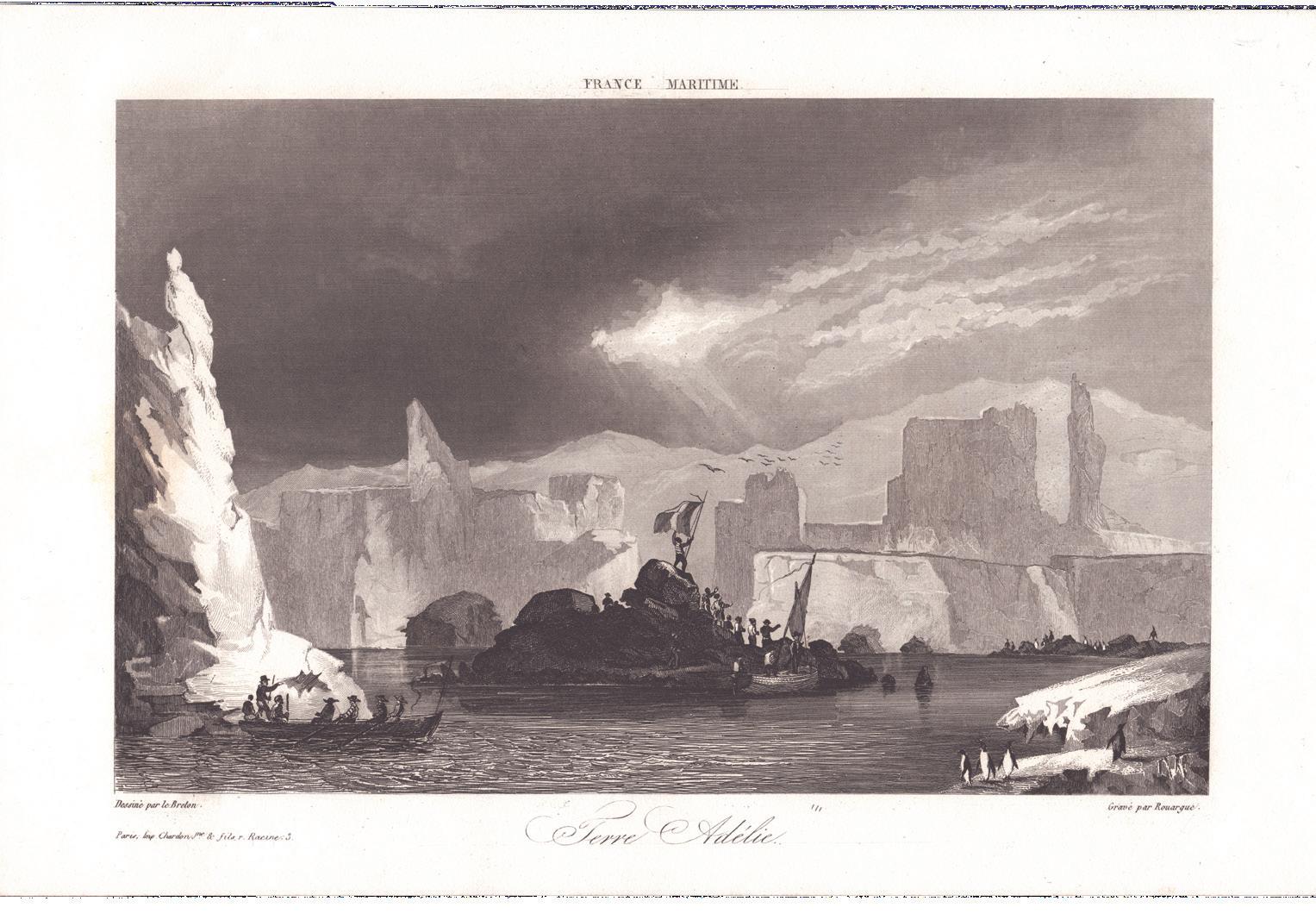
The next day, the captain decided to engage the corvettes in narrow passages to get closer to land. Ice walls exceeded the height of the masts. A few men landed on this previously unexplored land and claimed possession in the name of the king of France, planting the national flag (Figure 9). D’Urville named the land Adélie in tribute to his wife, Adèle, and justifies this in his report.
“This designation is intended to perpetuate the memory of my deep gratitude for the devoted companion who on three occasions consented to a long and painful separation to enable me to accomplish my plans for distant explorations,” d’Urville wrote.
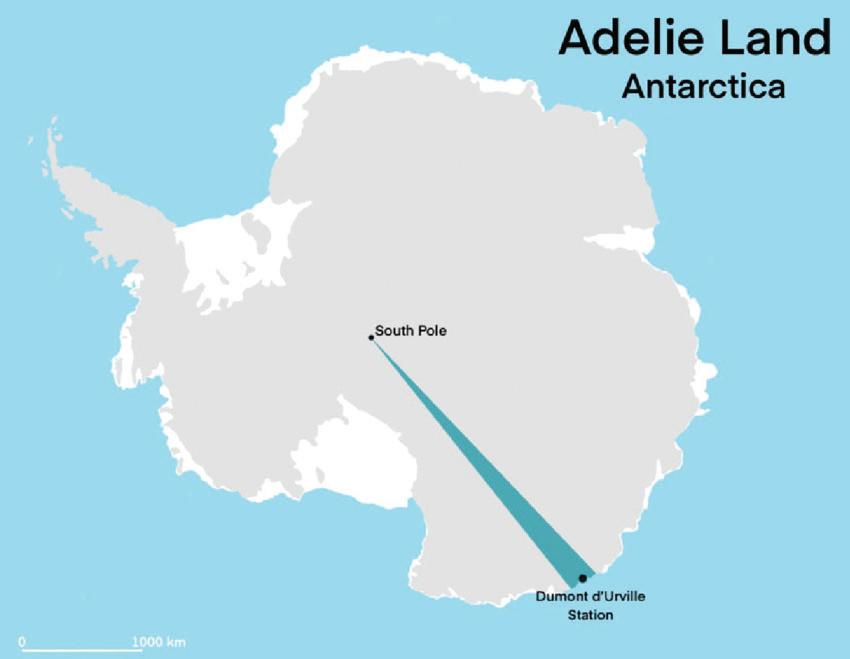
The territory – shaped like a thin slice of pie – stretches from a portion of the Southern Ocean coastline all the way inland to the South Pole. It covers about 167,000 square miles. It remains today as part of the District of French Southern and Antarctic Lands.
Adèle, informed of this discovered land which bears the name Adélie, henceforth signed her letters, from July 1840, Adélie d’Urville (Figure 10).
In an August 1 letter, she wrote, “I have just received a letter from d’Urville dated April 10 from Aka Roa (New Zealand),
Figure 8. Folded letter from Adèle, hand-carried to Paris (for Montrol) with (rear) deposit and collection markings dated May 31, 1840.
Figure 9. An artistic image of “The Rock of the Landing in Adélie Land.” Designed by Le Breton and engraved by Rouargue. (Held by the National Library of Australia and courtesy of Teara, the Encyclopedia of New Zealand.)
unfortunately they found only calm or headwinds, which delayed their arrival in France until November.”
Returning to Hobart-Town on February 17, 1840, the expedition, with an exhausted crew, set out again a week later to return to France. In a final letter written on October 6, Adèle wrote that she had just received a letter from her husband from the Bay of Islands (New Zealand) dated May 1, 1840, announcing his return to France for the first days of November.
On November 6, 1840, at 10 o’clock in the evening, Astrolabe and Zélée dropped their anchors in the bay of Toulon.
D’Urville was promoted to the rank of rear admiral in December 1840 to reward the talent he demonstrated in his various circumnavigation campaigns, and their positive contributions to scientific research.
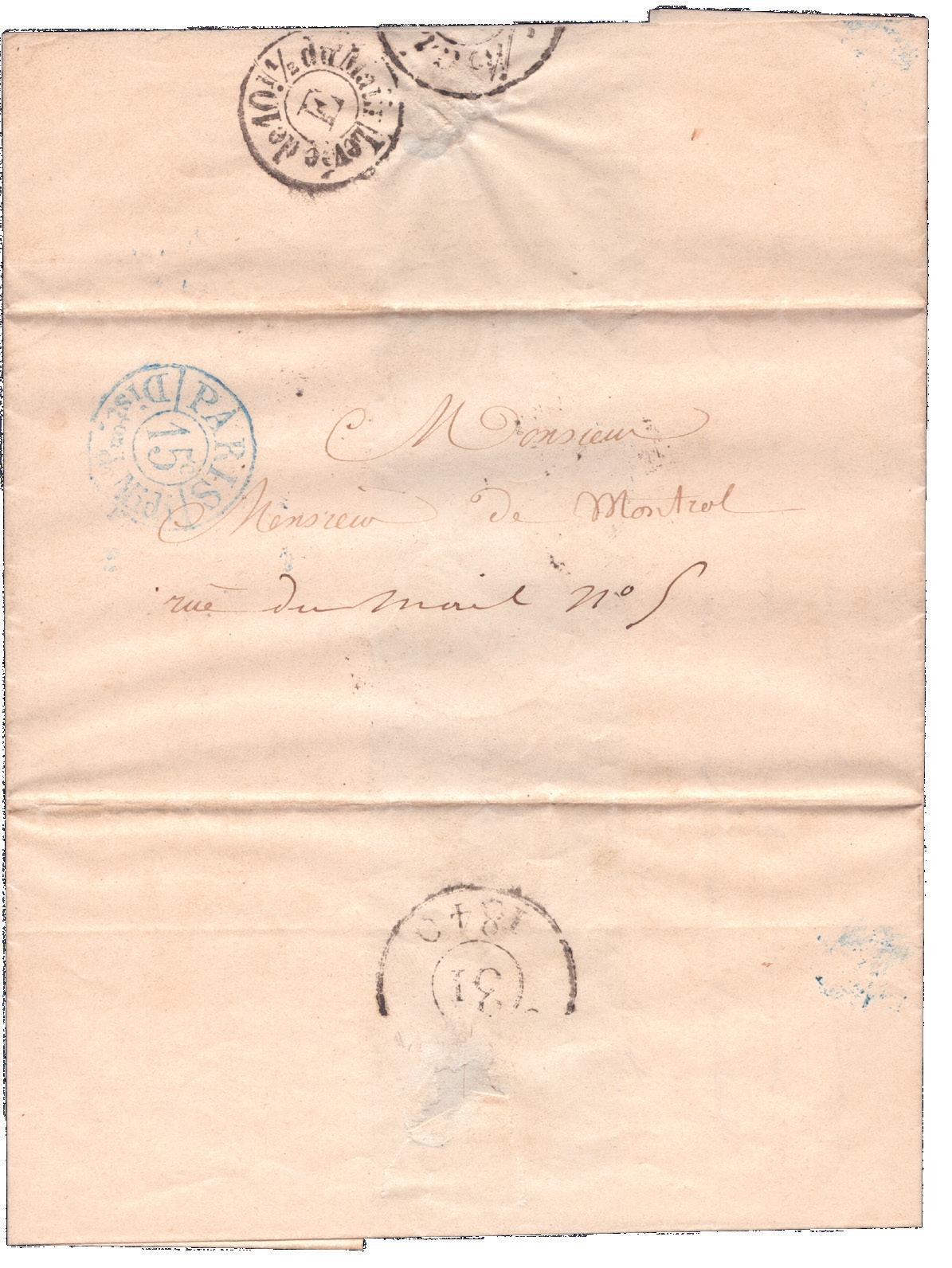
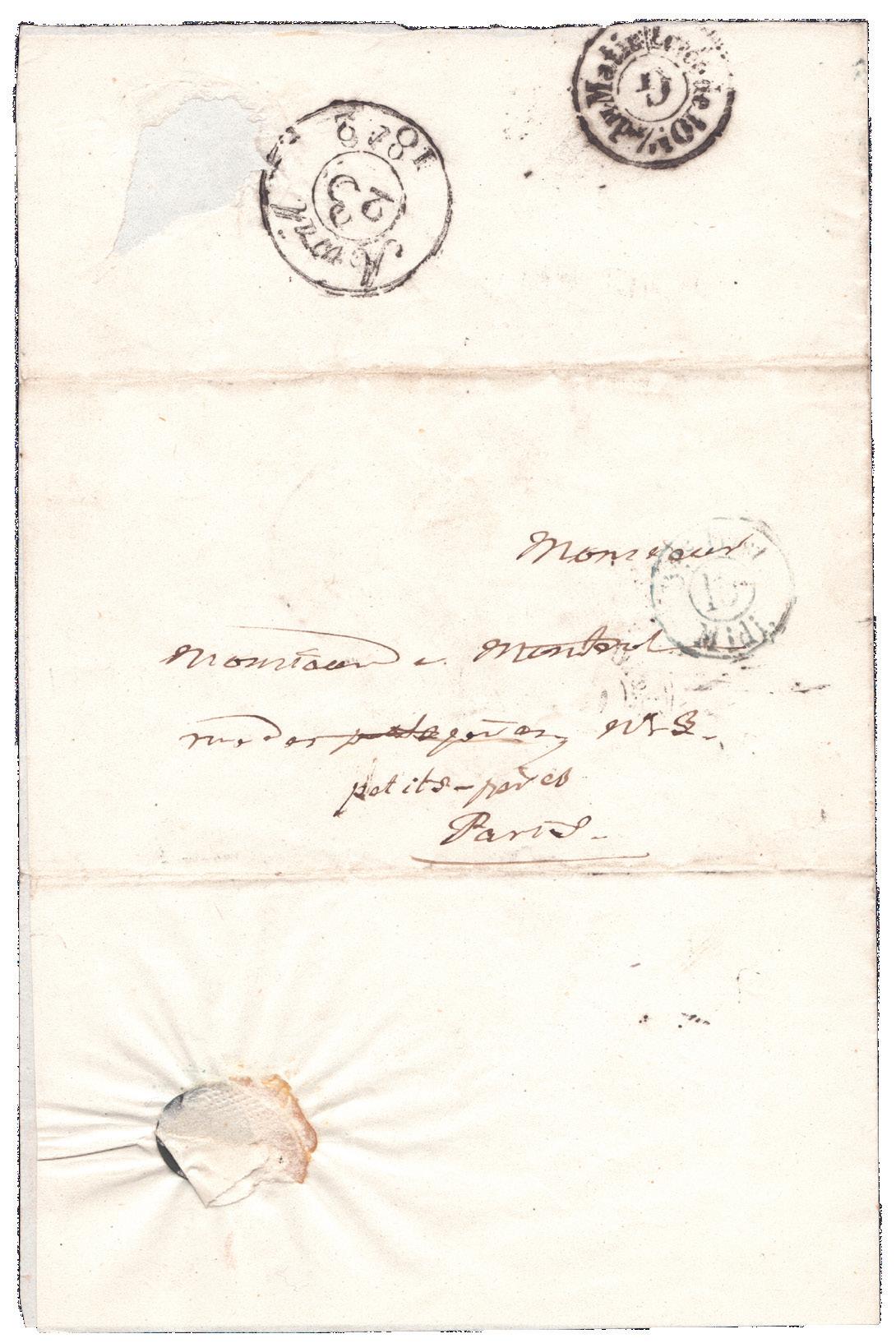
Admiral d’Urville wrote a personal letter (Figure 11) in late April 1842 to his friend, Mongin de Montrol, in Paris, telling of his physical ills (probably as a result of the expedition’s ordeal).
Two weeks later – on May 8 – the explorer and his family visited Versailles to see water games celebrating King Louis Philippe (1773-1850). Afterward, d’Urville and his family boarded the train back to Paris. Two locomotives pulled about 16 carriages, carrying nearly 800 passengers at about 25 mph. Near Meudon, the front locomotive broke an axle, derailed, and the fire-box broke apart.
The second locomotive and carriages continued onward and caught fire. Passengers were trapped in the carriages; it was the custom of the day to lock the doors from the outside. As many as 200 passengers – including d’Urville, Adèle - and their son, died. Hundreds were seriously injured. Many bodies were burned so badly they could not be identified. D’Urville’s remains were identified Andre-Frank Liotard, director of the scientific and technical team, by a sculptor from a cast he had made of the explorer’s skull.
This was the world’s worst rail disaster at the time. The tragedy led to the abandonment of the practice of locking passengers in their carriages in France.
Creation of the French polar expeditions
The creation of the French Polar Expeditions
Figure 10. Letter signed Adélie d’Urville to Montrol, hand-carried from Toulon to the Navy Ministry in Paris (large “anchor” cachet on reverse), then posted August 5 in Paris.
Figure 11. A letter written and signed by Jules Sébastien César Dumont d’Urville dated April 23. D’Urville specifies that he has just suffered cruelly from an attack of gout; this manifests itself in his handwriting.
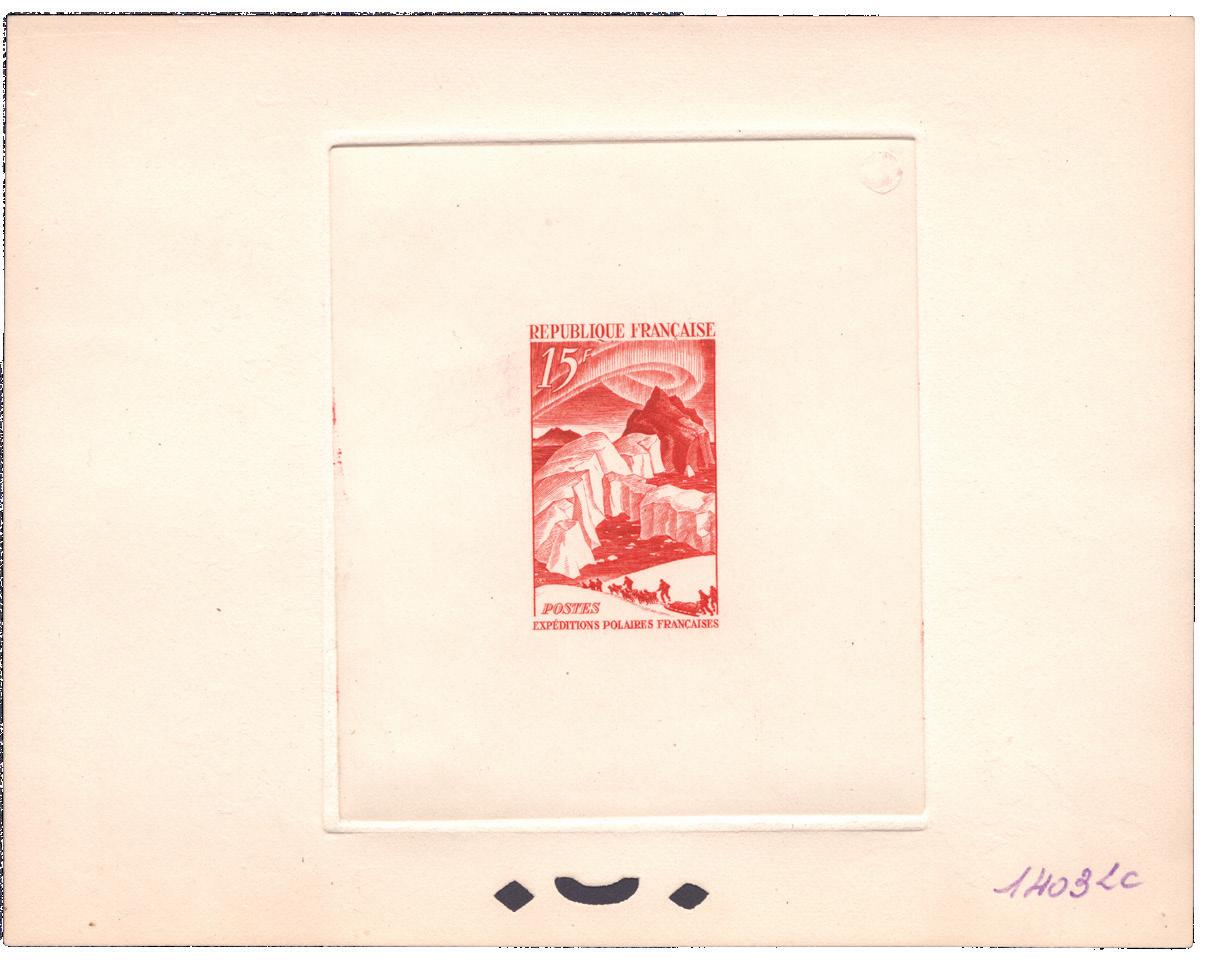
(Expéditions Polaires Françaises; EPF) in February 1947 marked France’s return to the polar regions, to Greenland for the Arctic and to Adélie Land for the Antarctic (Figure 12).
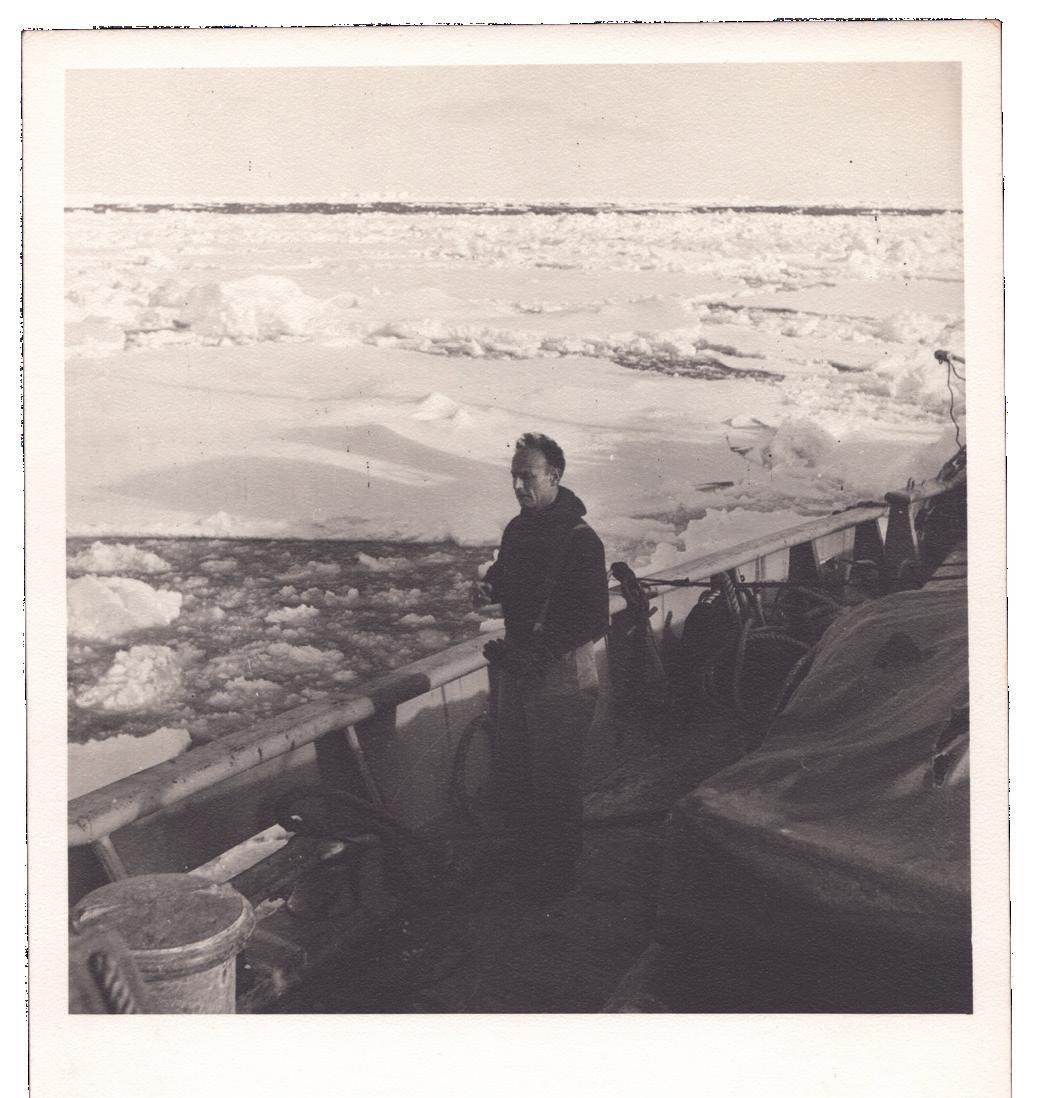
This came about from a proposal by ethnologist and explorer Paul-Émile Victor (1907-1995). Victor had gained experience in living and surviving in polar regions, first in Greenland from 1934 to 1937 with the support of Jean-Baptiste Charcot (1867-1936), then in Alaska during World War II with the U.S. air forces.
Preparations for the Antarctic expedition began quickly, with their departure scheduled for the fall of 1948.
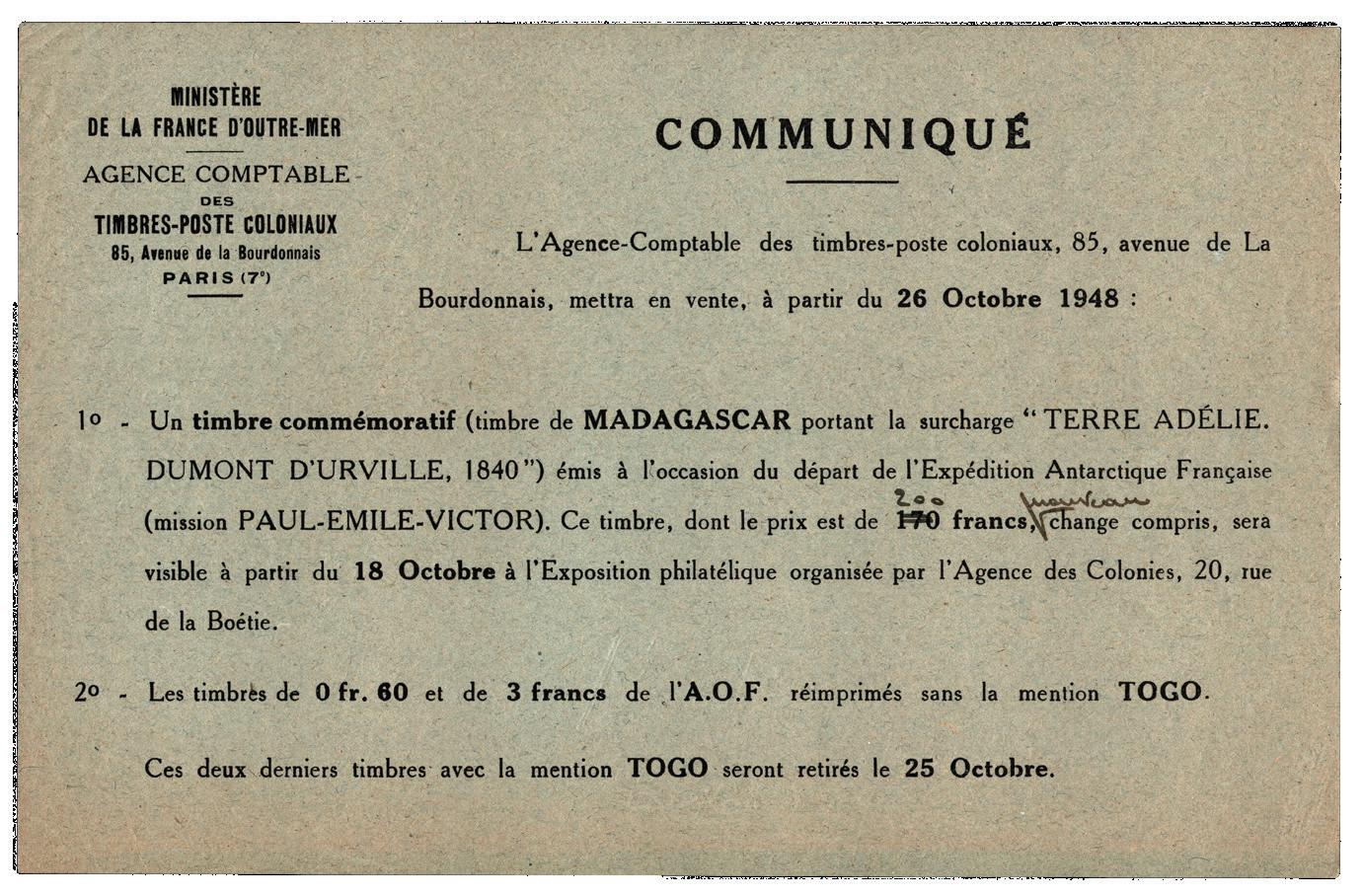
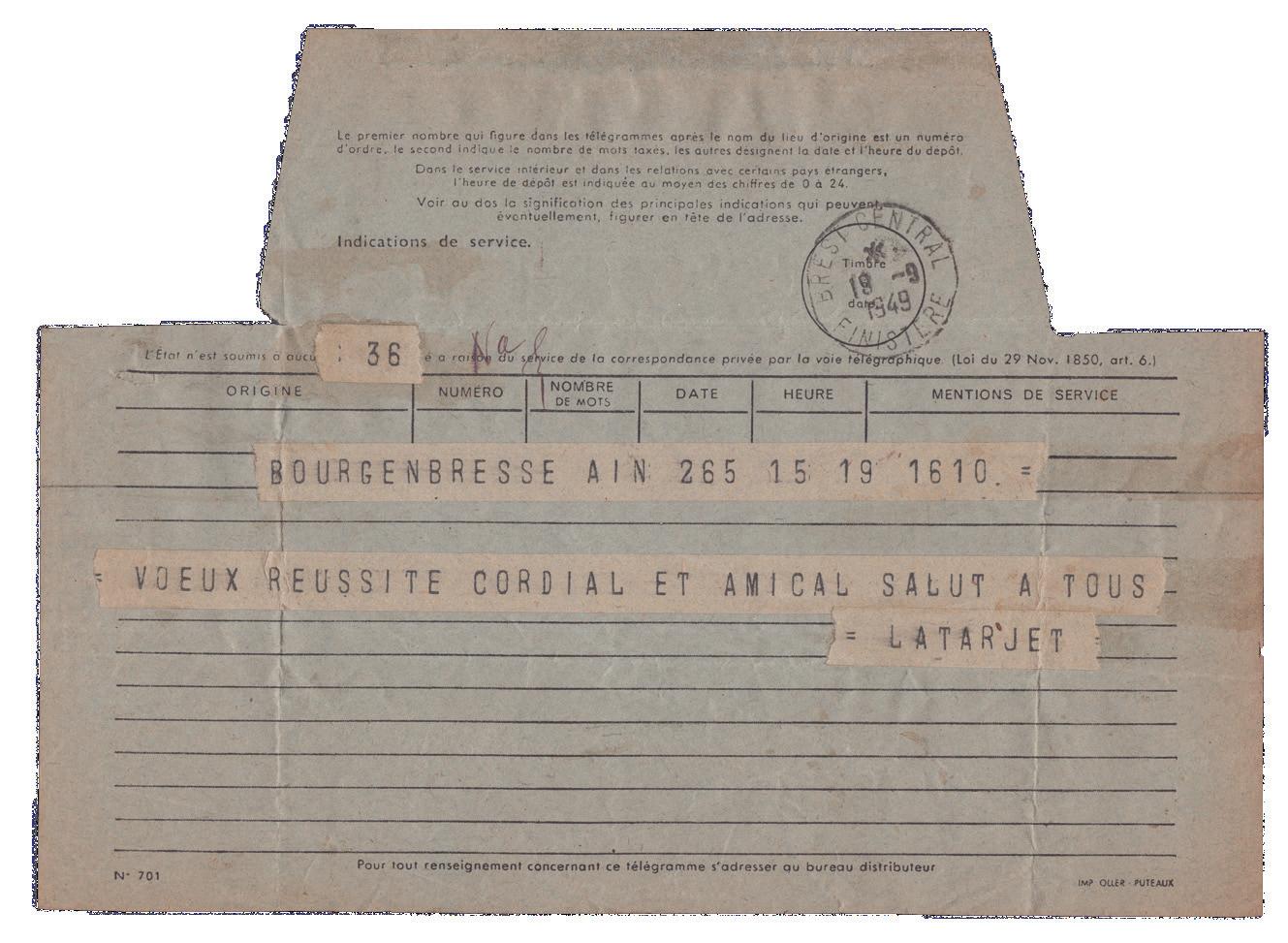
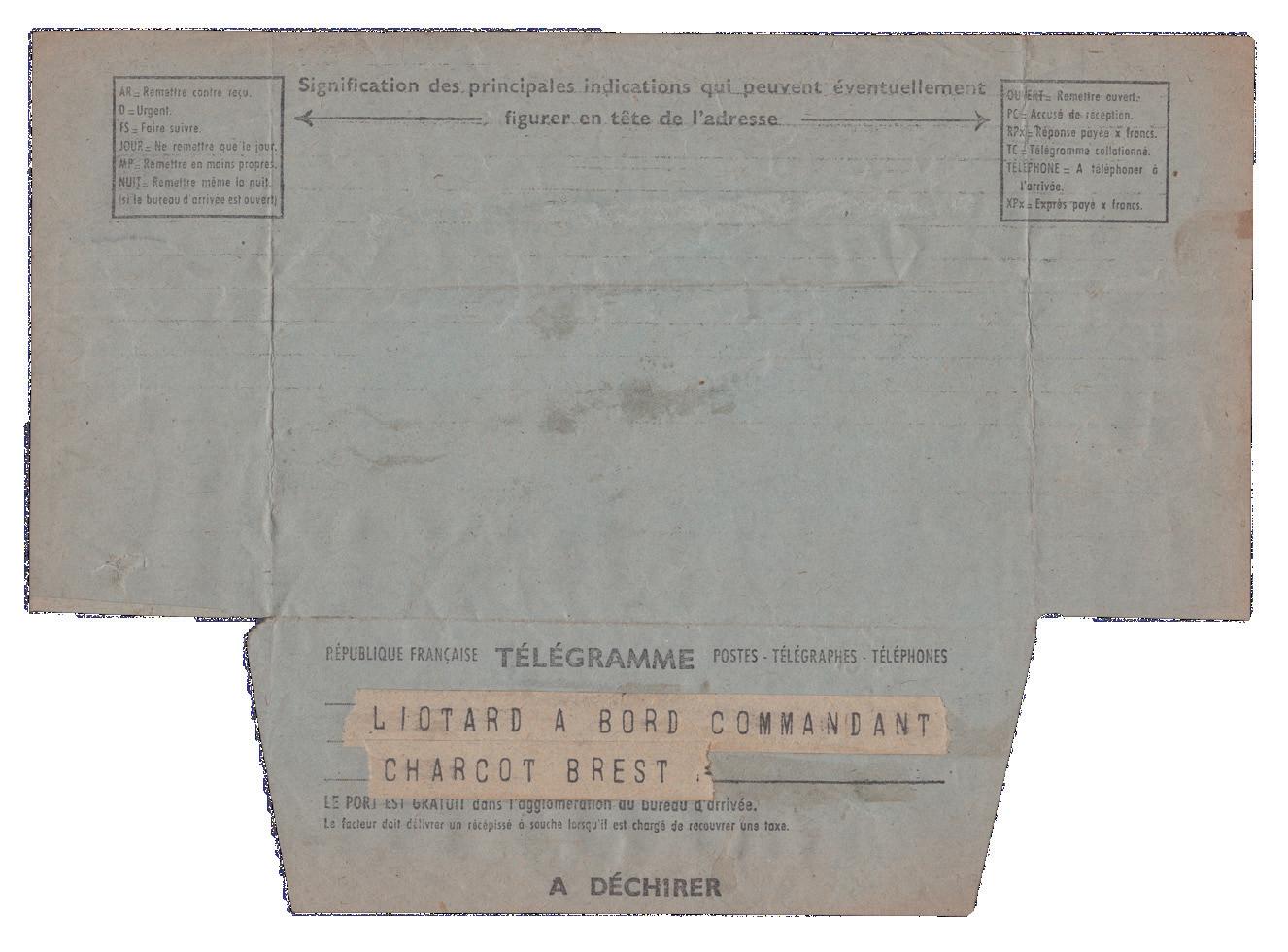
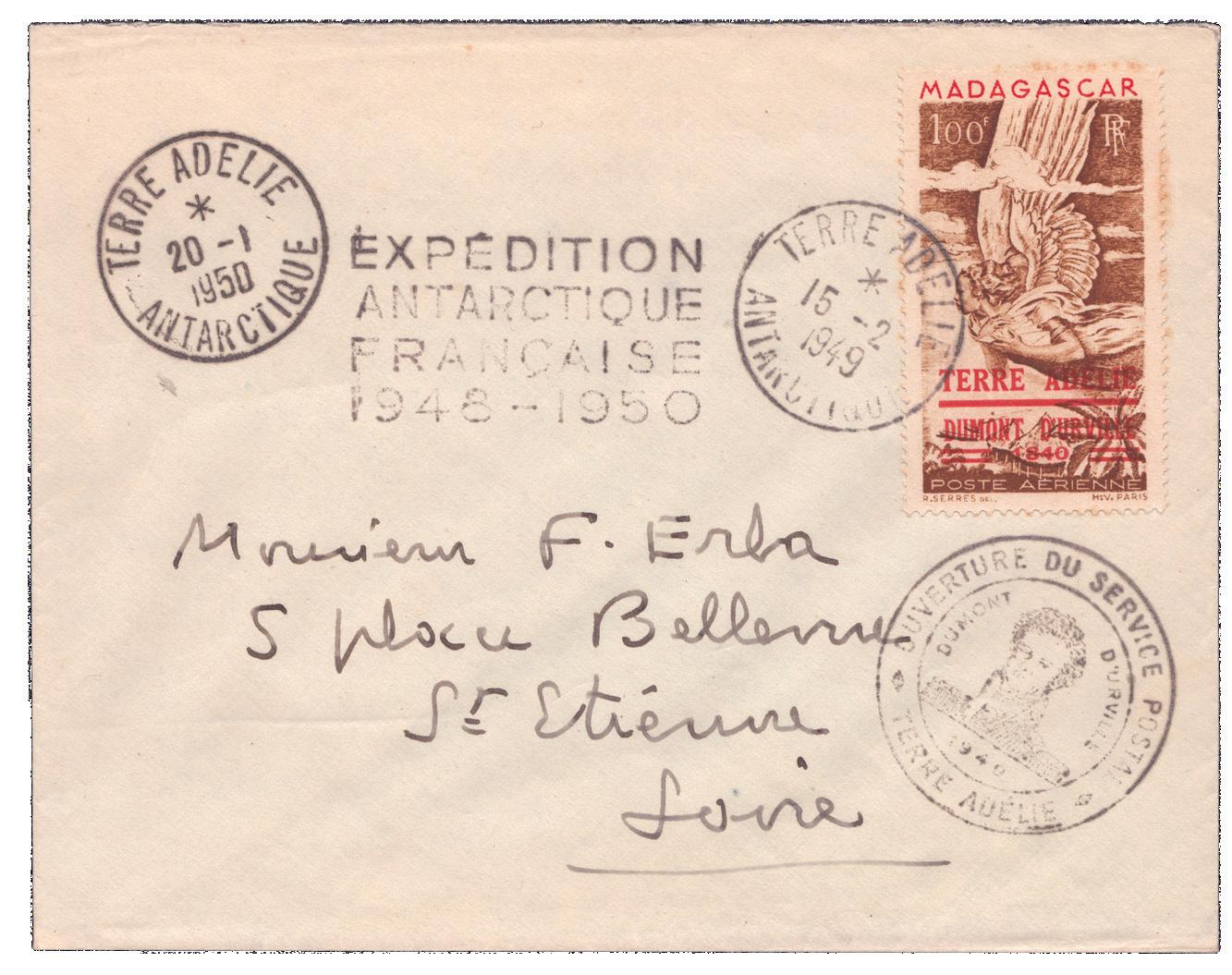
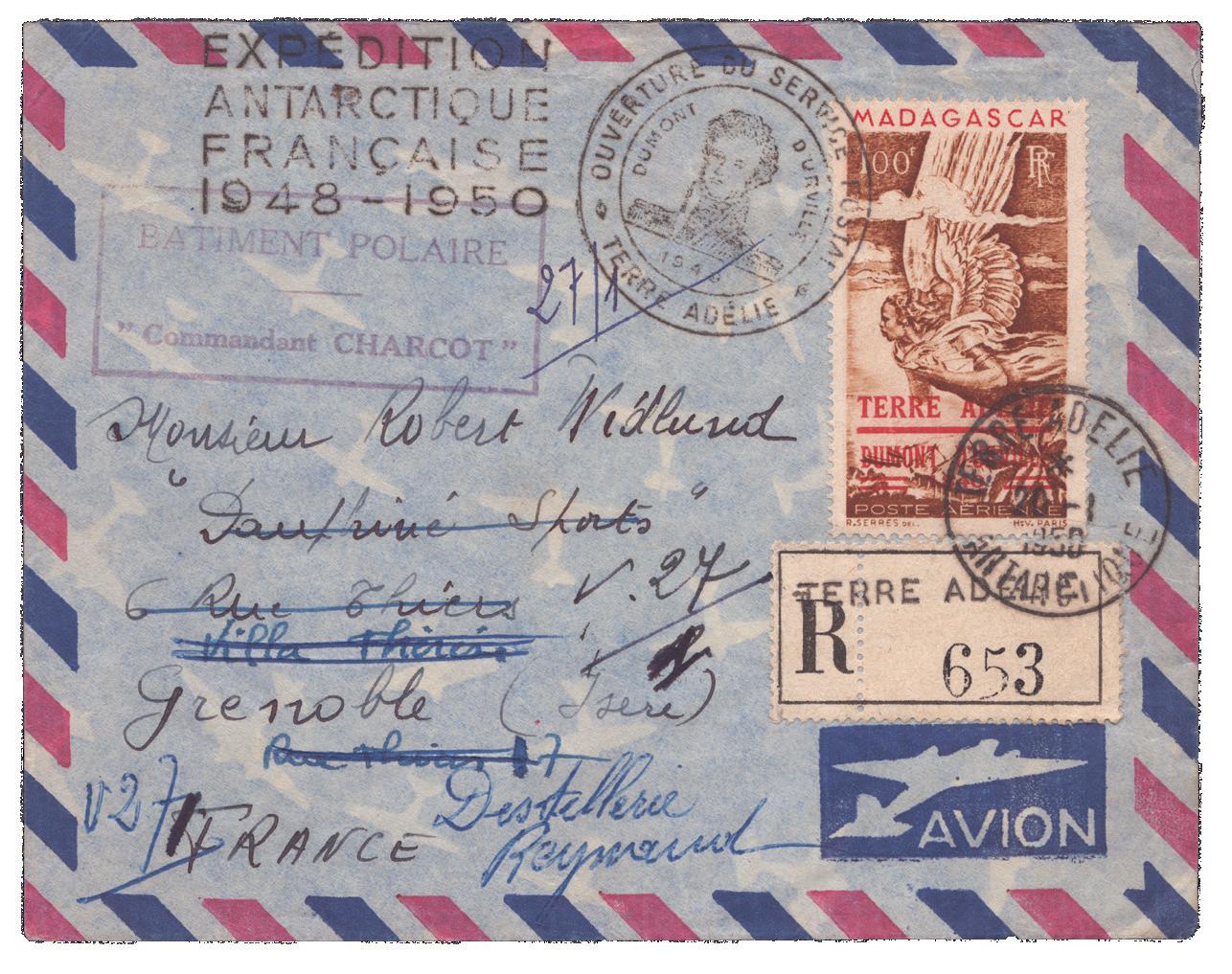
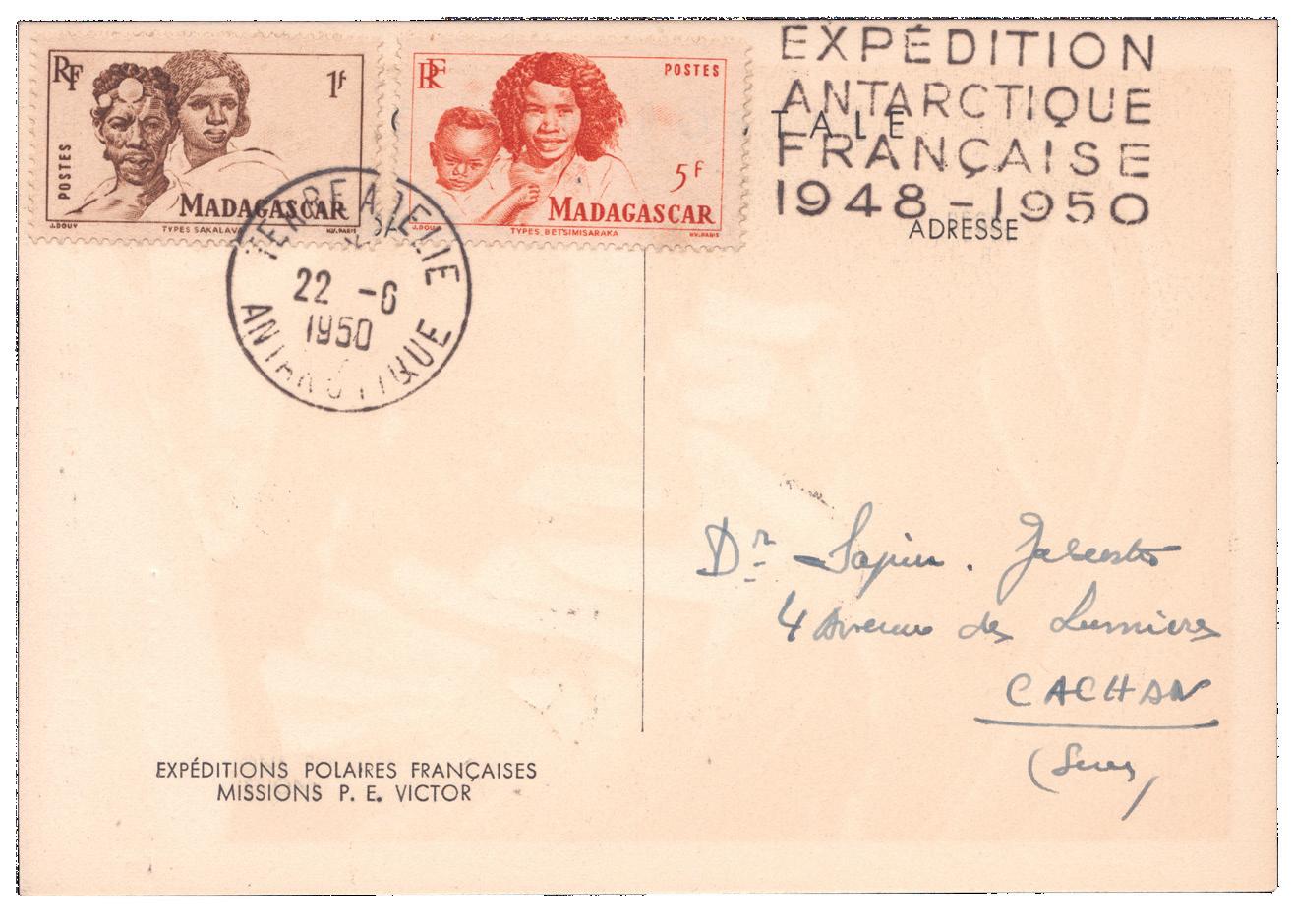
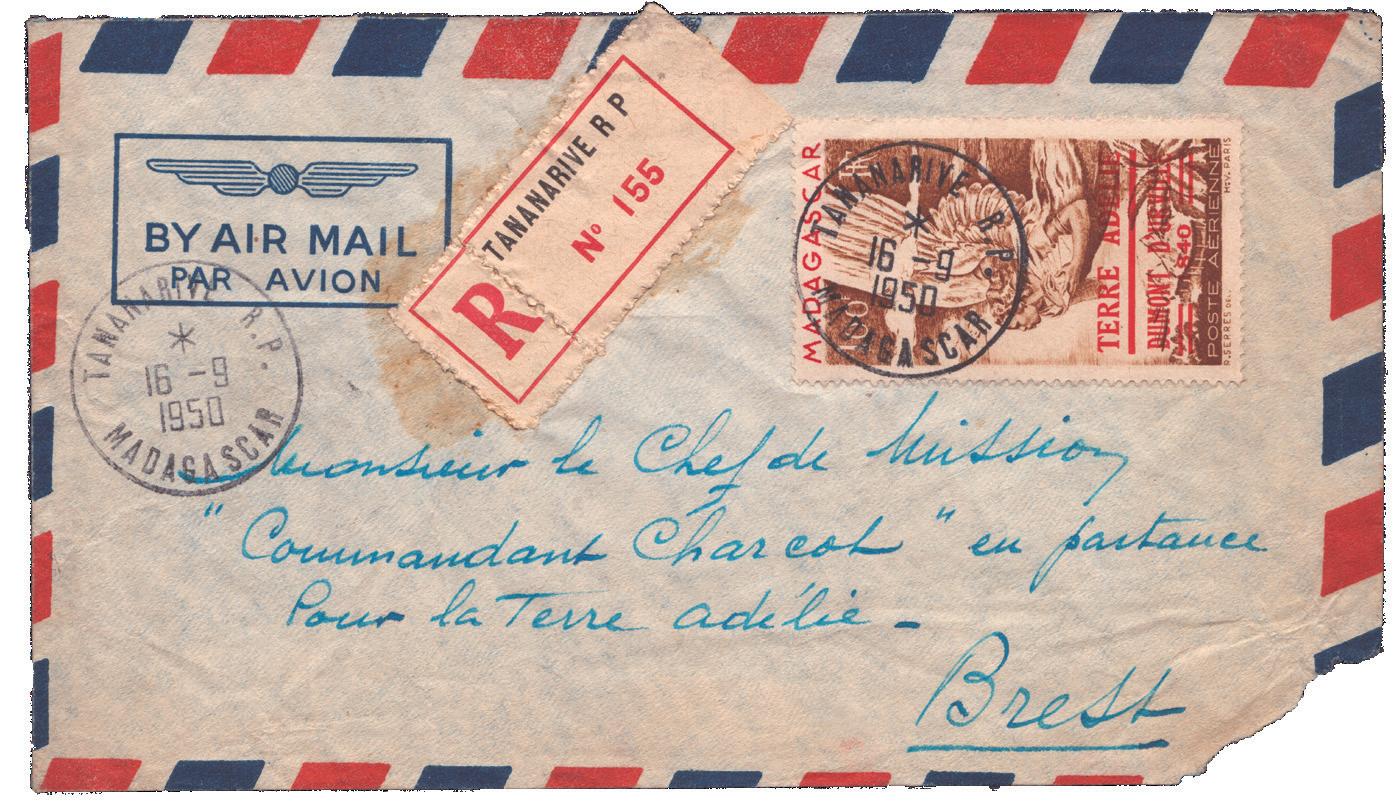
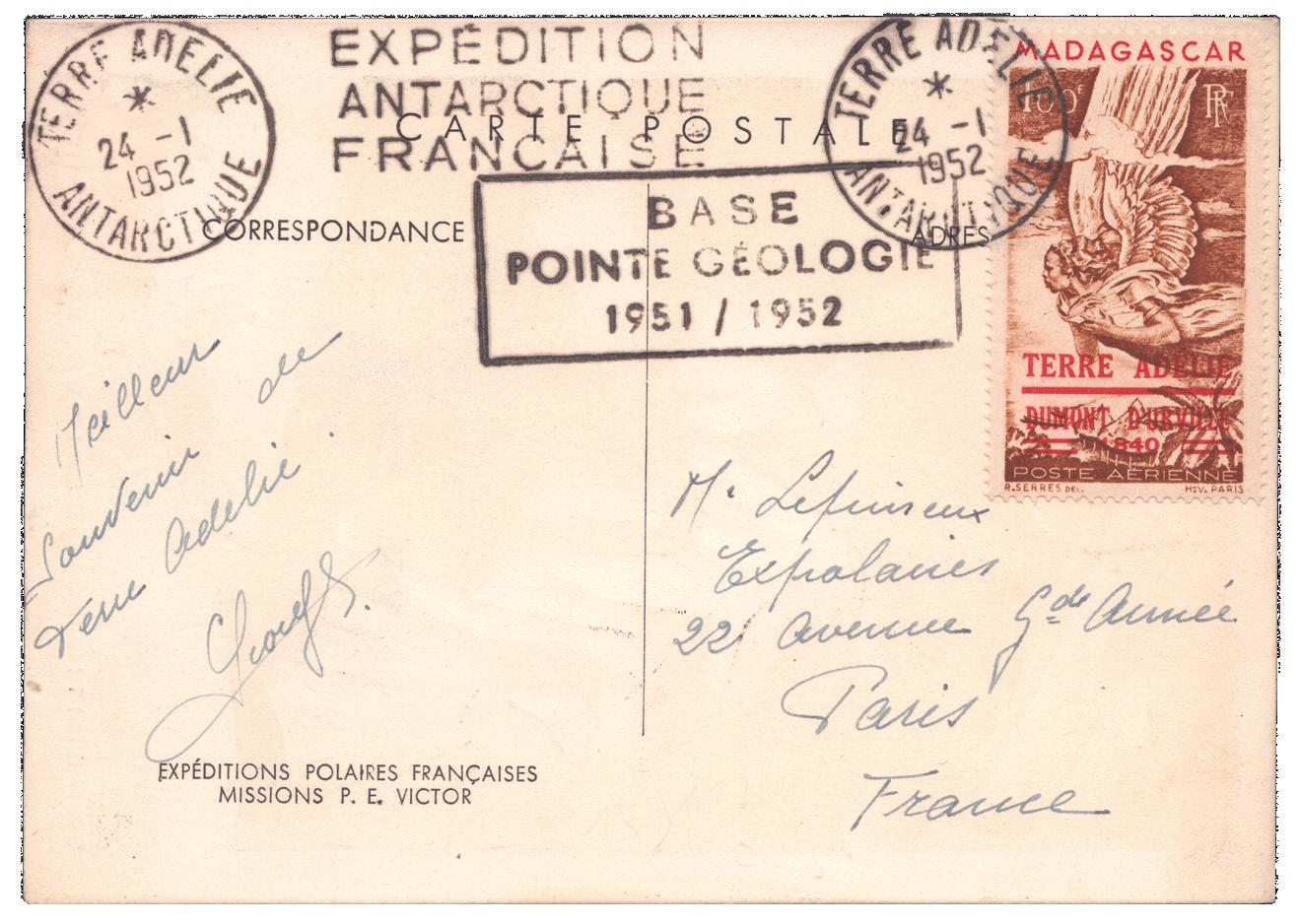
Liotard requested to the Ministry of Post and Telecommunications for the issuance of a special stamp or the overprinting of an existing stamp in support of the project. The Ministry of the Overseas, which had sole jurisdiction, agreed to overprint 200,000 “100 F Zéphyr” postage stamps from Madagascar with the following red inscription: Terre Adélie / Dumont d’Urville / 1840.
This overprinted stamp went on sale at the Colonial Postage Stamp Accounting Agency in Paris from October 26, 1948, at a unit price of 100 CFA francs, or 200 metropolitan francs (Figure 13). In fact, a decree dated November 21, 1924, placed Adélie Land under the jurisdiction of the general government of Madagascar.
Preliminary campaign
A former U.S. Navy mine-laying vessel based in San Francisco was acquired by the EPF in February 1948. Converted into a polar research vessel and christened Commandant Charcot in April, it set sail from Brest at the end of November to attempt the first landing in Adélie Land with a view to establishing a base there. On board were a stock of Madagascar stamps, as well as the new overprinted stamp
and two cancelers.
Two days before the ship set sail, the Administration issued the decree of November 24, 1948, “establishing a post office open for ordinary and registered mail,” which was published December 4, 1948, in the Official Journal of Madagascar and Dependencies
The minutes of the opening of the post office in Adélie Land are dated February 7, 1949, and two days later (February 9), the mail was postmarked on board (February 15, 1949), the scheduled landing date. The latter was not possible due to the pack ice, which prevented the ship from
Figure 14. André-Frank Liotard on the bridge of the Commandant Charcot, immobilized by impassable pack ice.
Figure 12. The location of Adélie Land on a map of Antarctica. This is a part of the continent that stretches from the geographic South Pole to the coast between 136 degrees and 142 degrees east longitude. (Source: Susie Pottier, ResearchGate.)
Figure 13. A communiqué from the Colonial Postage Stamp Accounting Agency.
Figure 15. A trial color proof of the 1949 French Polar Expeditions stamp (Scott 611). At the bottom right is “1403 Lc.” The number is for a shade of red and Lc stands for Lefranc, the ink manufacturer.
approaching the coast (Figure 14).
The expedition returned to France in June 1949. The mail, postmarked February 15, 1949, was not delivered but deposited in Hobart, Tasmania, in sealed bags to be picked up the following year.
It was at this time that the French postal service issued a postage stamp to commemorate the French polar expeditions, designed and engraved by Pierre Gandon (Figure 15). The first day of use was October 2, 1949.
Overwintering seasons in Adélie Land
There was a new departure from Brest on September 20, 1949 (Figure 16).
Off the Cape of Good Hope, the steward and cook, Jacques-André Martin, who was scheduled to overwinter, died on board. He was replaced by Georges Schwartz, who joined the expedition in Hobart by plane.
The Commandant Charcot arrived in Hobart on December 8, 1949 (Figure 17) and departed on the 21st. It was in sight of Adélie Land in January 1950 with a new team determined to reclaim Adélie
17. A telegram from G. Schwartz to
announcing his coming.
Figure 16. A telegram from Raymond Latarjet, member of the EPF Board of Directors, to A.F. Liotard, aboard the Commandant Charcot in Brest, on September 19, 1949, the day before departure.
Figure
A.F. Liotard, aboard the Commandant Charcot in Hobart, on December 12, 1949,
Figure 18. A cover in the handwriting of Max Douguet, captain of the Commandant Charcot, with postmarks dated February 15, 1949, and January 20, 1950. The pictorial circular handstamp indicates the opening of the postal service, along with the four-line marking and the Madagascar stamp with the special red overprint.
Figure 19. A registered cover from Pierre Widlund to his brother, Robert, postmarked January 20, 1950. Pierre Widlund was the pilot and mechanic of the Stinson Voyager seaplane aboard the Commandant Charcot that conducted ice reconnaissance flights before landing on the coast of Adélie Land.
Land. The landing took place on January 20 (110 years after Dumont d’Urville’s expedition) and the mail was postmarked either 20-1-1950 (Figure 18) or 1-20-1950 due to an error in setting the datestamp.
Construction of the base began immediately. It was named Port-Martin in memory of J.A. Martin, the late steward and cook.
There also is mail sent at the end of December 1949 and beginning of January 1950, which therefore only has one postmark, that of January 1950 (Figure 19).
The Commandant Charcot left Adélie Land on February 8, 1950, carrying bags of mail from the first French Antarctic base under construction, which included a post office.
This first wintering at the Port-Martin base in Adélie Land was led by Liotard. The expedition leaders who succeeded one another during the first three winter seasons (1950, 1951, and 1952) were accredited as representatives of the French government for the duration of their mission.
It is a tradition at Antarctic bases to celebrate Midwinter Day on the day of the southern winter solstice, usually June 21. There is always an excellent meal and sometimes a commemorative postmark on the mail (Figure 20).
The replacement team for Liotard left Brest in early October 1950 aboard the Commandant Charcot and anchored off Port-Martin about three months later on January 9, 1951. The new team of scien-
Figure 20. A postcard from Sapin-Jaloustre, expedition doctor, postmarked June 22, 1950. The Franco-colonial postcard rate (effective March 27, 1949) is 6 francs. Liotard, the expedition leader, had forgotten to celebrate Midwinter on June 21 and did so the following day.
tists, led by Michel Barré (Figure 21), disembarked the following day. Barré officially took up his duties as expedition leader and postal agent on January 21, 1951.
A devastating fire
At the end of the second winter, during the night of January 22-23, 1952, a fire destroyed the Port-Martin base. The fire could not be controlled due to the very strong winds blowing in Adélie Land. The scientific results of the 1951 winter were saved, but the scientific and technical equipment was destroyed. There were no casualties among the men present on site. Very few letters (less than five known) that were saved from the fire were postmarked on January 23, 1952 (Figure 22).
The replacement team, initially planned to be led by René Garcia, arrived aboard the Norwegian ship Tottan, chartered by the French Polar Expeditions (EPF), in January 1952 but was unable to take up its duties. After consulting with the EPF in Paris via the Tottan’s radio, the Port-Martin site was abandoned on January 24, 1952.
A team reduced to seven men, led by Mario Marret, then moved to a small base at Pointe Géologie (Figure 23).
At the end of this third wintering period, in early January 1953, Tottan returned to Adélie Land to repatriate the Marret mission. On board were three members of the EPF and an Australian member of the Australian National Antarctic Research Expedition (ANARE), who had embarked in Tasmania.
Tottan dropped anchor January 2 off Pointe Géologie, and a small amount of mail received the datestamp of January 5 (Figure 24). The date block was modified on site because, in the absence of a replacement team, no new datestamp was expected to arrive.
The Pointe Géologie base was closed, and France did not return to Adélie Land until January 1956 as part of the International Geophysical Year (IGY), following the creation of the French Southern and Antarctic Territories (TAAF in French) in August 1955 and the issue of TAAF postage stamps.
from Georges
operator during the third wintering season in
Land. The date of January 24 corresponds to Mario Marret’s taking up his position as expedition leader and postal agent at the Pointe Géologie base.
Figure 21. A registered cover from Madagascar sent to Michel Barré, expedition leader of the second wintering season in Adélie Land, in Brest before the departure of the Commandant Charcot. This shows an uncommon use of the overprinted stamp outside Adélie Land.
Figure 22. An underpaid (2 francs) cover sent from Adélie Land to New Zealand, postmarked January 23, 1952.
Figure 23. A postcard
Lépineux, radio
Adélie
France returns to Antarctica
During the International Geophysical Year, France sent three successive annual teams to Adélie Land, which remained there until January 1959. The main mission of the first team was to build the coastal base known as Dumont d’Urville Base, which was completed in April 1956 and has been permanently occupied since then for scientific observations and work.
Paul-Émile Victor, president of the Antarctic subcommittee at the French National Centre for Scientific Research, made his first visit to Adélie Land during the 1955-56 summer campaign (Figure 25).
A few days later, on January 1, 1956, was the first day of use in Adélie Land of the Madagascar stamp overprinted with “Terres Australes et Antarctiques Francaises” (Figure 26).
Thus ended France’s heroic age in Adélie Land, and began France’s permanent presence on the southern continent.
The Author
Serge Kahn’s interest in polar philately dates back more than 40 years, when he made his first expedition to Antarctica in the footsteps of the great explorers of the heroic age. Serge has been a judge at all Polar Salons (international polar philatelic exhibitions) and was the initiator of the first one held in 2009 in France. Having retired from the business world in France, Serge has won the grand award several times in the U.S. and is proud to be associated with the Polar Salon at the upcoming Boston 2026 World Expo.
Figure 26. A cover from Paul-Émile Victor, postmarked January 1, 1956. The postage affixed meets the Union Française rate of 15 francs of August 6, 1955 for letters up to 20 grams. Note that in the lower part of the datestamp, “Antarctique,” has been replaced by “T.A.A.F.”
Figure 24. A cover with a modified postmark dated January 5, 1953. There are fewer than 15 of these known.
Figure 25. A postcard from Paul-Émile Victor, sent December 23, 1955, during his stopover in Hobart, Tasmania, on his first visit to Adélie Land.
Israel-Special Sale on Year Sets
The Heroic Age of Exploration in Antarctica
Penetrating the Philately of the Unknown Southern Regions
JIŘÍ KRAUS
TIwas not until the early 19th century that maritime expeditions successfully discovered and systematically documented Antarctica, primarily through coastal exploration and charting (Figure 1). Postal items from this period that have been preserved are exceptionally rare, and their philatelic importance lies chiefly in their clear and verifiable association with specific voyages of discovery.
This period, known as the Heroic Age of Antarctic exploration, was the first and most significant phase of polar exploration. The earliest Antarctic postal documents from this period form the most valuable part of polar postal history.
Particular attention here is given to authentic postal artifacts created in direct connection with early Antarctic expeditions, especially ship mail and expedition-related correspondence, and to their significance for the study of polar philately.
Here is a brief look at some of the most significant explorers and expeditions.
1820-1821, Captain Palmer – First Sighting of Antarctica
U.S. Antarctic sealing and exploring expedition
In 1820, the first documented sightings of the Antarctic continent took place. One of the observers was American Captain Nathaniel Brown Palmer, who, while command-
ing the schooner Hero south of the South Shetland Islands in November 1820, sighted land now identified as part of the western coast of the Antarctic Peninsula.
Palmer’s observation, made while searching for new sealing grounds, was later recognized as one of several independent discoveries of Antarctica in 1820, alongside contemporaneous British and Russian naval expeditions. The region he sighted became known as Palmer Land and represents
Figure 1. Map of Antarctica, circa 1874. Areas that had been discovered by this year are marked. From the author's collection.
one of the key moments in the earliest phase of Antarctic exploration.
No mail from Palmer’s early years is known to exist. However, later correspondence addressed to him does survive, including a letter posted in New Haven, Connecticut, on August 30 and bearing a postmark in use there between 1847 and 1851 (Figure 2).
1820-1821, Charles J. Winship
U.S. sealers make significant Antarctic discoveries
American sealers were among the earliest visitors to the Antarctic regions, particularly the South Shetland Islands. In late August 1820, Captain Charles J. Winship sailed from Boston aboard the O’Cain as part of a sealing expedition operating in the area during 1820 and 1821.
During the voyage, Winship, also known as an amateur naturalist, collected natural history specimens and, upon his return to Boston, offered them for scientific study. These sealing voyages provide the historical and logistical context for the emergence of the earliest known Antarctic postal document.
On October 1, 1820, en route to Antarctica, Winship reported on other ships’ activities to the ship’s owner, his father Abiel Winship, from Bonavista Harbor, Canary Islands (Figure 3).
ary 27, 1821, was also composed at Potter Cove.
Winship’s letter was privately conveyed back to the U.S., where it entered the mail at Bath, Maine on November 18 for delivery to Boston. The letter was rated 18 ½ cents for a distance between 150 and 400 miles (1816-1825), plus a 2-cent ship fee for a total of 20 ½ cents. It was usual to pay a ship fee at the time – a standard rate payment depending on the number of letter sheets, plus an additional payment added to the zoned letters addressed inland.
Earliest known mail from Antarctica
On February 21, 1821, Winship wrote to his father from “Potters Harbour” (today, Potter Cove) (Figure 4) in the South Shetland Islands, informing him that he had arrived at O’Cain Harbour (named after his ship) to begin sealing. Although he reports his disappointment with his results, he had the second-highest catch in the sealing fleet.
The cover (Figure 5) was double-weight rated (12 ½ cents doubled for 25 cents) for a distance between 80 and 150 miles (1816-45). Either a returning tender did not submit for a ship fee or it was delivered by a U.S. Navy vessel that was not authorized to collect the ship fee.
A second report from Winship to his father, dated Febru-
Winship’s letter (Figure 6) was entrusted to Captain Ray of the sealer Harmony and entered into the mails on June 8, 1821, at Nantucket, Massachusetts, where it received a Quaker-style datestamp. It was rated 14½ cents, consisting of 12½ cents for the 81-to-150-mile distance rate plus the 2-cent ship fee.
This folded letter is the second-oldest known piece of mail to be sent from Antarctica.
1821-1822, Benjamin Pendleton
U.S. (Stonington, Connecticut) Antarctic sealing and exploring expedition
In July 1821, Benjamin Pendleton departed from Stonington, Connecticut, leading a seven-vessel American sealing fleet into Antarctic waters. Operating alongside a British sealing contingent and ranging farther south than previous expeditions in response to declining seal stocks, the fleet explored beyond the South Shetland Islands.
On December 6, 1821, boat crews from the Stonington squadron discovered the South Orkney Islands, the last major Antarctic island group to be identified. Among those involved was Palmer, already noted for his earlier role in the
Figure 2. Letter from New Haven, Connecticut, addressed to Captain Palmer several decades after his discovery of Antarctica.
Figure 3. Captain Charles J. Winship sent mail from the Canary Islands on his way south.
discovery of the Antarctic continent. Vessels of the fleet returned to Stonington at various times, with Pendleton himself arriving back in November 1822.
Shown (Figure 7) is the only surviving mail documenting the voyage of discovery to the South Orkney Islands.
The cover was sent unpaid, as items generally were, from Stonington to Boston. Markings reflect the rate for 81 to 150 miles (12½ cents). Though sent from his ship, Pendleton apparently deposited the letter as if mailed from ashore, thus no ship fee was payable.
1822-1824, James Weddell
British Antarctic sealing and exploring expedition
On September 17, 1822, British sealer and explorer James Weddell departed the downs of England, aboard the Jane, accompanied by the cutter Beaufoy under the command of Matthew Brisbane, on a combined commercial and exploratory voyage to Antarctic waters.
On February 20, 1823, the Jane reached 74 degrees, 15 minutes south in what later became known as the Weddell Sea. It established a new record for the southernmost position attained by any vessel below the Antarctic Circle.
During the voyage, Weddell charted the Weddell Sea and the South Shetland Islands and observed a volcanic eruption on Bridgeman Island. The expedition also called at South Georgia, the Falkland Islands, and Tierra del Fuego, before returning to Falmouth, England, on July 2, 1824.
Following his return, Weddell wrote to his London publisher from Edinburgh regarding the proofreading of his expedition narrative. The letter (Figure 8), with the manuscript dated August 18, 1826, was personally delivered to London via the 2-pence postal system, thereby avoiding the 13-pence Edinburgh-London rate. It entered at the Gerrard Street Receiving Office, shown by a boxed
Figure 4. Map of Potter Cove, South Shetland.
Figure 5. Earliest known mail from Antarctica, sent by Captain Charles J. Winship.
Figure 6. Captain Charles J. Winship sent another folded letter to be on the safe side (it was customary at the time to ensure that a message from him would reach his father).
handstamp at the top right. The letter then received the Chief Office datestamp of August 22, 1826, 7 p.m. in the top left corner, an oval marking used between 1824 and 1827, along with the “2d” charge stamp (used between 1819 and 1840).
1826-1829, Jules Dumont d’Urville
French naval sub-Antarctic expedition aboard Astrolabe
Following his successful return as second-in-command of his first South Pacific exploration voyage (1822-1825), Jules-Sébastien-César Dumont d’Urville requested, and was granted, full command of a subsequent expedition to the region aboard the same vessel, the Astrolabe (formerly the Coquille).
Departing from Toulon on April 22, 1826, the expedition returned via Marseille on March 25, 1829. During this time, the expedition carried out extensive scientific and geographical surveys, including a visit to the sub-Antarctic Auckland Islands. Severe weather on September 21, 1826, prevented a landing on St Paul’s Island, which was later incorporated into the French Southern and Antarctic Lands (TAAF). This voyage laid the groundwork for d’Urville’s historic Antarctic continental expedition of 1837-1840.
A signed intracity letter (Figure 9) posted December 22, 1825, in Paris by Jules Dumont d’Urville, is correctly rated at 15 centimes (red manuscript marking at center), and delivered the following day to Jules Lefèvre, an unsuccessful applicant for service on his expedition.
1828-1831, Henry Foster
British naval expedition to the South Atlantic
The British Naval Expedition to the South Atlantic (1828-1831) was commanded by Henry Foster aboard the HMS Chanticleer and combined hydrographic, scientific and exploratory objectives.
During the voyage, the expedition stopped at Fernando de Noronha, Rio de Janeiro, Montevideo, Cape Horn and the Wollaston Islands, which Foster named after the chemist William Hyde Wollaston. Sailing farther south, the expedition reached the South Shetland Islands,
Figure 7. Letter sent by Benjamin Pendleton after his successful return from Antarctica.
Figure 8. Letter from James Weddell to a London publisher regarding corrections to the description of his expedition.
the southernmost land at the time, where Foster and Lieutenant Kendall explored Deception Island.
Subsequent stages of the voyage focused on precise scientific work, including chronometer calibration at the Cape of Good Hope and pendulum experiments at Fernando de Noronha, followed by coastal surveys in the Americas. Foster drowned in the Chagres River in 1831 while conducting observations. The Chanticleer completed the voyage and returned to Falmouth on May 17, 1831.
Shown (Figure 10) is an internal shipboard directive dated January 31, 1829, issued by Foster aboard the ship at Deception Harbour, South Shetland Islands, ordering a formal inventory survey of the boatswain’s and carpenter’s stores in connection with the closing of annual accounts.
The order is addressed to H.J. Plumtree and Edward N. Kendall, lieutenants; George Williams, master; and John Harris, carpenter, all of HMS Chanticleer.
1838-1842, Charles Wilkes
U.S. exploring expedition to Antarctica
The U.S. Exploring Expedition, commonly known as the Wilkes Antarctic Expedition, departed Norfolk, Virginia, in August 1838 under the command of Charles F. Wilkes. The squadron comprised five vessels, 83 officers, 342 enlisted men, and a small civilian scientific staff, including seven scientists.
During two Antarctic penetrations approached from opposite sides of the continent – February to March 1839 and December 1839 to January 1840 – the expedition not only conclusively identified Antarctica as a true continent but also applied the name “Antarctica” for the first time.
The expedition returned to New York in June and July 1842, bringing back extensive scientific and cartographic material later transferred to the Smithsonian Institution. Although relatively little contemporary postal material from the expedition has survived, its achievements represent a
Figure 9. Letter from Jules Dumont d'Urville after his return from a successful South Pacific exploration voyage. Courtesy of Serge Kahn.
Figure 10. One of the few preserved pieces of correspondence from the HMS Chanticleer.
pivotal moment in 19th century Antarctic exploration.
On September 19, 1838, Lt. M.G.L. Claiborne wrote to his sister aboard USS Porpoise during the expedition’s stop at Funchal (September 17-25, 1838), while en route to its first Antarctic operations. The letter shown (Figure 11) was forwarded to the United States aboard a passing vessel and received at New York City on December 5, 1838. It is marked “F,” meaning Free, reflecting the congressional franking privilege then in effect when correspondence was addressed to a sitting member of Congress, in this case Abram Poindexter Maury, of Tennessee.
Wilkes’ final letter from the expedition to his wife (Figure 12) was written on February 20, 1842, off Singapore and entrusted to a passing vessel bound for the U.S. The letter did not reach the U.S. until August 2, 1842, when it arrived at Boston, after Wilkes had already returned. It was charged 27 cents for delivery to Washington, D.C. (rate for more than 400 miles, plus the 2-cent ship fee), then marked “For’d” and forwarded on August 3 to New York City, where the Wilkes family had temporarily relocated. As free forwarding was not yet permitted, an additional 18¾ cents (rate for less than 400 miles) was charged, bringing the total postage to 45¾ cents.
1839-1843, James Clark Ross
British naval Antarctic expedition aboard Erebus and Terror
Already a renowned Arctic explorer, James Clark Ross led a British naval expedition from September 30, 1839 to September 4, 1843, departing from Margate Roads, England, aboard the heavily reinforced vessels Erebus and Terror
The expedition, undertaken primarily for a Southern Hemisphere
Figure 11. Letter from Lt. Micajah G.L. Claiborne to his sister during the expedition's stop in Madeira. Courtesy of Hal Vogel.
Figure 12. One of the few preserved letters from Lt. Charles Wilkes from his Antarctic voyage. Courtesy of Hal Vogel.
Figure 13. The only known preserved letter from the British naval Antarctic expedition.
magnetic survey, included three consecutive Antarctic seasons, 1840-1843. During the first two seasons, Ross penetrated the Ross Sea, discovering Victoria Land, Ross Island, and charting more than 560 miles of coastline, while achieving a new farthest south point and identifying major features later bearing his name, including the Ross Sea and Ross Ice Shelf.
In the final season (1842-43), operating from the Falkland Islands, the expedition explored the opposite side of the Antarctic continent, discovering Snow Hill Island and Seymour Island, surveying what would later be known as James Ross Island, and visiting the South Shetland Islands. Extensive magnetic, geological, and biological observations were conducted throughout the voyage, which concluded with the expedition’s return to Folkestone, England, on September 4, 1843.
On September 7, 1842, Richard Wall, a seaman aboard Erebus, wrote to his wife in Woolwich during the expedition’s first of two calls at Port Louis. In his letter (Figure 13), Wall expressed the hope that she would write to him at the expedition’s next populated port of call, the Cape of Good Hope, and commented unfavorably on the bleak conditions of the Falkland Islands.
The letter was countersigned the same day by First Lieutenant Edward Bird, authorizing its transmission to England unpaid at the concessionary 1 penny seaman’s rate. With no post office yet established in the Falkland Islands, the letter was forwarded by a passing vessel. It was conveyed to England by the brig Hebe, which departed the Falklands on November 8, 1842, after delivering the new governor, arrived in London on February 10, 1843, and the letter was receipted there on February 11, 1843.
This is the earliest known concessionary letter from the Falkland Islands and one of the earliest known letters from Antarctic exploratory expeditions.
Figure 14. One of three known pieces of correspondence from the HMS Challenger expedition.
Figure 15. Letter sent by the deputy commander of the ship Dives, who took advantage of the preferential rate of 25 centimes for soldiers and sailors. Courtesy of Alain Jacquart.
1872-1876, George Nares
HMS Challenger voyage to Antarctica during world circumnavigation
Under the command of George Nares, HMS Challenger conducted a four-year scientific circumnavigation of the globe (1872-1876), including an Antarctic phase from December 1873 to March 1874. During this period, Challenger became the first steamassisted vessel to cross the Antarctic Circle (February 16, 1874) and effectively circumnavigated the Antarctic continent.
Geological sampling, including the recovery of Antarctic rock specimens, provided firm evidence that Antarctica is a continental land mass, while geomagnetic and oceanographic studies formed the core of the expedition’s scientific program. The voyage also sighted and visited several sub-Antarctic islands, including Kerguelen, Crozet, and Heard, and produced the first known photographs of Antarctic icebergs.
Senior Surveying Assistant John Matkin wrote to his brother in the 1st Royal Dragoons at Edinburgh, Scotland, from his Hong Kong stop (November 16, 1874 to January 1, 1875) on December 10, 1874.
The cover (Figure 14) is franked at the soldier and seaman’s concessionary 1-penny rate. Besides the Hong Kong cancellation, there also is a January 27 receipt stamp. The sender, Matkin, as well as Lt. Maclear, signing for the commanding officer, provide certification for acceptance of the soldier and sailors concessionary rate.
1874-1875, Ernest Mouchez
French Antarctic Transit of Venus Expedition aboard La Dives
Under the direction of Ernest Mouchez, the principal French scientific party assigned to observe the transit of Venus on December 9, 1874, departed Marseille aboard Amazone, and transferred on August 16, 1874 to Dupleix at Aden.
Figure 16. One of four known postal documents from the German South Georgia International Polar Year expedition.
Figure 17. One of the few known official expedition stationery from the Belgian Antarctic expedition's journey. The letter included a business card (not shown).
The expedition proceeded via La Réunion and Mauritius to board La Dives (sometimes La Dive). On September 23, 1874, it reached Saint Paul Island, where the astronomical observations were conducted. Additional scientists undertook natural history investigations. The expedition departed Saint Paul on January 4, 1875, and returned to Marseille on March 4, 1875.
The second-in-command of La Dives used the 25-centime concessionary rate for servicemen and sailors to send a prepaid (“P.D.”) letter to Toulon (Figure 15), which was posted on September 10, 1874, through Dupleix’s French maritime T-line post office (Aden-Réunion-Mauritius). It bears the “… PAQ. FR. No. 1” marking. An indistinct September 29 transit marking from Aden records transfer to the China-Marseille mail steamer. Arrival markings dated October 12 appear at Marseille and Toulon, alongside the expedition’s official blue circular stamp.
1882-1883, Karl Schrader
German South Georgia International Polar Year expedition
An 11-member scientific party under Karl Schrader departed Hamburg on June 2, 1882, sailing via Montevideo, Uruguay to South Georgia. The party sailed aboard the German steam corvette SMS Moltke and on August 21, 1882, reached Royal Bay, where Germany established the southernmost research station of the first International Polar Year (1882-1883).
Figure 18. One of the few known postcards from this stop, with a rarely used two-line expedition postmark. Sender Fritz Winter affixed the stamps diagonally, which signified a love message to his girlfriend.
1897-1899, Adrien de Gerlache Belgian Antarctic expedition
After the Moltke departed on October 5, the station remained as the only IPY base operating in the Antarctic region. Systematic observations in geophysics, meteorology, glaciology, geology, and biology were conducted, which included the observation of the transit of Venus on December 6, 1882. The expedition was relieved in September 1883 and returned to Germany later that year.
A Moltke crew member mailed a 4-cent international postal card November 7, 1882, from a homebound stop at Valparaiso, Chile, to Kiel, Germany (receipt postmarked December 24), with greetings and trip information for a navy captain (Figure 16).
The Belgian Antarctic Expedition (1897-99), led by Adrien de Gerlache, departed Antwerp aboard Belgica on August 16, 1897. It marked the beginning of a renewed era of major Antarctic exploration.
After calls at Ostend, Madeira, Rio de Janeiro, and Montevideo, the multinational expedition reached the Antarctic Peninsula in early 1898. Significant discoveries included Gerlache Strait, Danco Coast, and Wiencke Island, though the expedition suffered two fatalities: sailor Carl August Wiencke (January 22, 1898) and geophysicist Émile Danco (June 5, 1898).
Later in 1898, Belgica became trapped in the pack ice south of Peter I Island, forcing the expedition to endure an unplanned wintering south of the Antarctic Circle, the first
in history. Despite inadequate clothing, limited provisions, and widespread illness, the crew survived with crucial assistance from members, including Frederick Cook and Roald Amundsen.
After nearly a year in the ice, Belgica was freed and returned to Antwerp on November 5, 1899. The expedition achieved a full year of continuous meteorological observations and extensive coastal charting, establishing its lasting scientific importance.
Shown (Figure 17) is a cover with a business card sent by de Gerlache to J. Du Fief, secretary of the Belgian Geographical Society. It was sent on the day of the departure of the expedition from Antwerp to Antarctica and was postmarked on August 17, 1897.
On the reverse side, there is transit postmark from Buenos Aires on August 3, 1899, and an August 28, 1899, Brussels receipt stamp.
1898-1899, Carl Chun
German deep sea sub-Antarctic expedition
Under the leadership of Carl Chun, the German deepsea expedition departed Hamburg on August 1, 1898 aboard Valdivia, carrying a crew of 35 and a scientific staff of 11. Conducted in the South Atlantic, South Indian Ocean, and sub-Antarctic waters, the voyage employed deep-sea sounding and dredging methods comparable to those used by the Challenger (1872-1876).
The expedition operated off Bouvet Island, where the island’s position was accurately fixed for the first time, and visited the sub-Antarctic islands of Kerguelen Islands, Saint Paul Island, and Amsterdam Island. The expedition produced such a volume of new scientific knowledge – particularly concerning the oceanographic environment of the Antarctic and sub-Antarctic regions – that its results required publication in 24 volumes, completed long after the expedition’s return to Hamburg on May 1, 1899.
Fritz Winter, expedition draftsman and photographer, posted to Germany an expedition postcard, dated October 26, 1898 (Figure 18). It was from the first stop at Cape Town, en route to Antarctic waters. A seldomly used expedition two-line handstamp appears in upper left.
On the picture side of postcard, Winter wrote a mysterious message to a young girl in Frankfurt-Main.
Conclusion
By the end of the 19th century, these pioneering expeditions had transformed Antarctica from a largely hypothetical landmass into a scientifically recognized and increasingly charted continent.
In the early 20th century, Antarctic exploration entered a new phase characterized by systematic inland travel and technological innovation. This culminated on December 14, 1911, when Roald Amundsen became the first person to reach the South Pole.
Exploration from the air soon followed, with the first
flight over the South Pole being accomplished on November 29, 1929, under the command of Richard E. Byrd. The crew included pilot Bernt Balchen, co-pilot and radio operator Harold June, and aerial photographer Ashley McKinley. They flew the aircraft Floyd Bennett during Byrd’s 1928-1930 Antarctic expedition.
As the 20th century progressed, improved ships, aviation, communications and survival equipment enabled more frequent access to the continent, marking the transition from heroic exploration to a sustained human presence in Antarctica.
The Author
Jiří Kraus is an avid collector of polar philatelic material and related non-philatelic artefacts, with a longstanding focus on Antarctic exploration. He is an active member of several international polar and philatelic societies and a committed supporter of polar collecting and research. He organized Polar Salon Liberec 2022 and is involved in the organization of Polar Salon Boston 2026. In addition to exhibiting, he regularly writes articles for specialist magazines and served as editor of the book Ahead of The Pack, published in conjunction with Polar Salon Liberec. His competitive exhibits have been widely recognized, receiving gold and large gold medals at national and international exhibitions.
11:00 AM, MDT
The Suicide Squad
The Wilkins -Ellsworth Trans-Arctic Submarine Expedition, 1931
Sir George Hubert Wilkins (1888-1958) was a famous Australian polar explorer, soldier, aerial and combat photographer, pilot and geographer. However, long before the polar expedition that is the subject of this article, he was a cinematographer working for the English studio Gaumont Newsreels. In 1913, Gaumont sent Wilkins to Canada to record the Canadian Arctic Expedition under the leadership of Vilhjalmur Stefansson.
During this fateful expedition, Stefansson, Wilkins and a few other expedition members left the main ship, Karluk, to visit the Inuit. After they left, ice crushed and sank the ship, taking Wilkins’ cine camera to the bottom of the ocean. The crew split into two main groups to head for safety. The first group appears to have split up later and perished. Captain Bob Bartlett stayed with the Karluk until the end, before heading for safety. He and his party survived.
Stefansson and Wilkins discussed the pros and cons of exploring the Arctic instead by air or submarine. Stefans-
son did obtain the backing of the British government in 1923 to take a submarine under the polar icecap, but before it could sail, there was a general election, and the new government scuttled the project.
Wilkins turned his efforts toward flying in polar expeditions. In April 1928, he made the first flight from Point Barrow, Alaska to Spitsbergen, Svalbard via the North Geo-Magnetic Pole, a flight which Richard Byrd and Roald Amundsen
RICHARD A. HINDLE
Figure 1. A signed cover from the Point Barrow to Spitsbergen flight.
(famous polar explorers both) believed to be impossible because of the effect of magnetism on the compass (Figure 1). Today, flying over the North Pole is an everyday occurrence. For this flight, Wilkins was knighted by King George V. One hundred covers were serviced for the Point Barrow to Spitsbergen flight. (The American Air Mail Catalogue states that 96 covers were flown. However, a cover addressed to Wilkins has been discovered, and it is now believed that Wilkins retained the four additional covers.)
Wilkins began working for Randolph Hearst, the newspaper tycoon, who sponsored Wilkins for the first powered flight in Antarctica in December 1928.
A dual-use cover such as the one shown (Figure 2) needs an explanation. Wilkins was selling expedition covers to A.C. Roessler, a stamp dealer in East Orange, New Jersey. They could not agree on the price of the first flight in Antarctica covers. When he returned to Antarctica on the Wilkins-Ellsworth Trans-Arctic Submarine Expedition, he brought the first powered flight covers with him. Again, Roessler wouldn’t buy them.
Hearst, whose newspaper held exclusive rights to the story, was organizing the first round-the-world flight of the Graf Zeppelin in 1929. He sent Wilkins to Germany to report on the progress. There, he met Dr. Hugo Eckener, who was in charge of the airship. Eckener wanted to make another longdistance flight before embarking on Hearst’s project. In May 1929, Eckener piloted the airship to North America with Wilkins onboard to return to the United States. Unfortunately, five of the six engines failed near Tours, France, and Eckener limped the Graf Zeppelin to an airship mooring mast. However, this was the start of a friendship between the two men.
Wilkins served as a cinematographer and reporter for Hearst on the zeppelin’s round-the-world flight in August 1929.
Wilkins proposed an expedition by submarine from the Atlantic to the Pa-
Figure 2. A dual-use cover signed by Hubert Wilkins and Eielson for the first flight in Antarctica.
Figure 3. A cover from Flights 67 and 68, from Varick Street Station, New York to Bayern, Germany, dated June 2, 1930, signed by Hubert Wilkins. The cover has the 1930 South America flight cachet and the Friedrichshafen receiving cancel dated June 6. The reverse is signed by J. Strauss, a restaurant owner from Chicago. The press cutting was added after delivery.
cific via the North Pole to Hearst, who promptly offered a prize of $75,000 for a rendezvous with the submarine and the Graf Zeppelin at the North Pole.
Wilkins had also met Lincoln Ellsworth, a multi-millionaire, who had sponsored explorer Roald Amundsen until his untimely death. Ellsworth donated $70,000 to the expedition and made personal loans to Wilkins.
Hearst suggested that instead of sailing to Europe, Wilkins and his new wife, Suzanne Bennett, should fly to Europe on their belated honeymoon. They flew on Graf Zeppelin flights numbered 67 and 68 from Lakehurst to Friedrichshafen via Seville (Figure 3).
This enabled Wilkins and Eckener to firm up the arrangements for the submarine-zeppelin rendezvous at the North Pole.
Throughout the couple’s six-week honeymoon at Ellsworth’s castle in Lenzburg, Switzerland, Wilkins and Ellsworth spent much time making plans for the expedition.
The Choice of Submarine
Commander Sloan Danenhower, a navy engineer, was in partnership with American submarine pioneer Simon Lake. Upon hearing about the expedition, they offered their services.
At the time, the submarines available were military vessels and Wilkins, being an Australian, could not hire a U.S. Navy vessel. In his stead, Danenhower was able to lease a submarine for $1 per year with the personal approval of President Herbert Hoover. However, there was a sting in the tail of the lease. If the submarine was not returned, then the Navy required $20,000 compensation!
Wilkins went with Danenhower to the Philadelphia Naval Yards to pick, from the scrap list, a 175-foot long O Class submarine – designed by Simon Lake for coastal patrols –constructed between 1916 and 1918.
Wilkins’ final choice was between a sub designated O-12, or the O-13, which was in better condition, but Wilkins was superstitious and afraid that the number 13 would be a sign of bad luck, so O-12 was chosen (Figure 4).
However, the O-12 had its problems, namely a cracked cylinder in one of the engines. Also, the batteries were used when running submerged, but they only had a range of 125 miles. The engines had to be run to recharge the batteries. As the journey under the polar icecap would be around 3,000 miles, they would need regular stops for fresh air for the engines and replenish the air inside the O-12.
As no ship had sailed within 500 miles of the North Pole and survived, Wilkins would be sailing into a completely unknown world.
Lake demanded and was given, much to Wilkins’ great regret, complete control of the alterations to the O-12.
Lake proceeded to design and build a host of inventions, most of which were useless. For example, even though experts informed him that the thickness of the ice in the Arctic was not more than 13 feet, he made a 100-foot long telescopic drill for making a hole in the ice to allow a snorkel type device to obtain fresh air (Figure 5). There is a whole litany of Lake’s profligacy, which seriously delayed the departure of the expedition, despite his knowledge of the timetable.
Probably, Lake’s most culpable error was his failure to repair the cracked cylinder in one of the engines.
The O-12 was named Nautilus, after Jules Verne’s submarine in his novel, 20,000 Leagues Under the Sea. The author’s grandson, Jean-Jules Verne, attended the ceremony on March 24, when Suzanne Wilkins pulled a lever with a silver
Figure 4. The O-12 submarine in the Philadelphia navy yard. (Courtesy Hubert Wilkins Study Group)
Figure 5. The ice drill can be seen to the right of the second porthole from the bow, but the new conning tower has not been fitted. Some form of temporary handrail and a “head-height” framework has been erected.
bucket of ice to christen the submarine. Due to Prohibition, champagne was not allowed.
The Nautilus made several test runs and shallow dives.
The first deep diving test off Block Island, Rhode Island, on May 15, was with the submarine rescue ship Falcon in attendance. The Nautilus released the air from the buoyancy tanks and plummeted to the bottom of the sea. It became stuck in the mud, despite filling the buoyancy tanks with air. A message was sent to the Falcon to move clear in case the Nautilus suddenly released from the mud and rose very quickly to the surface.
An order was given to all the crew to move to one side of the submarine and then move en-bloc to the other side and back again several times. Suddenly the Nautilus was free and rose rapidly to the surface.
Wilkins was desperate to start before winter made it impossible to sail under the ice. Lake informed him that it was not seaworthy yet due to the cracked cylinder and because the electrics had not been checked. Wilkins, however, had a timetable and could not afford further delays.
The Expedition Begins
Wilkins advertised for a crew to sail a submarine to the North Pole. Even though the risks had been publicised in the press, thousands of applications were received, many from women. Those selected had to sign a contract, which exonerated both discharge Lake & Danenhower Inc of New York and Trans-Arctic Submarine Expedition Inc. of any damages for loss of life or injuries. The signatories included both Wilkins and Danenhower. The only money to be paid was any outstanding wages.
The Nautilus sailed from New London on June 3 and headed for Provincetown to undergo speed trials (Figure 6). The original schedule was to make stops at London, Bergen, and Spitsbergen before setting off to the Arctic. Due to the late departure, Wilkins decided to sail directly to Bergen, bypassing the stop in London.
New York Departure Mail
Wilkins published an advertisement for mail to carry on the journey (Figure 7): the subscription mail would be sent in another envelope with a fee and any instructions for posting and autographs. Mail was to arrive before May 1. According to Wilkins’ instructions to the public, mail received
after that date and before June 1, “will be sent by ordinary means and delivered to the Nautilus at London, Bergen or Spitsbergen for transmission on the North Polar Journey.” It is unclear how he intended to cancel the late mail.
Wilkins charged $1 for mail to either the North Pole, or the termination point of the expedition, and 75 cents for the intermediate destinations. There was also a charge of 25 cents for each piece of registered mail and $1 for each autograph (Figure 8).
Wilkins only intended to have one post for the subscription mail. However, by May 15 he had received 543 late arrival covers and decided to post them (Figure 9).
Approximately 20 percent of the covers were signed, meaning that around 100 of the May 15 covers were likely autographed. Subscription mail received after May 15 is very scarce; six covers are known.
Figure 6. Top, a cover created for the departure of the Nautilus on June 3, 1931, from New London. Bottom, a cover created for the submarine’s departure on June 5, 1931, from Provincetown.
Figure 7. Details from Hubert Wilkins’ advertisement for the New York cancellations. (Courtesy Hubert Wilkins Study Group)
The cutoff date of June 1 only applied to the New York legs. Two very late arrival covers appear to have been treated differently. The stamp on a very large cover to Canada has not been defaced. It is thought that the post office in Anaconda, Montana defaced the stamp to prevent its reuse, whereas there was no obligation to do so in Canada (Figure 10).
New York Mail Cancellations
Destination 8 May 15 May 1 June
London
Letter 603 4
Registered 369 4
Bergen
Letter 583 9
Registered 363 5
Spitsbergen
Letter 891 16
Registered 228 11
North Pole
Letter 265 451 199
Registered 422 43
Totals 10,724 543 199
The total number of covers posted from New York to the four destination legs.
Wilkins Dual-Use Mail
Wilkins also had 199 covers from the first powered flight in Antarctica in his possession. Not wishing to waste them, he posted them on June 1, 1931. One cover (Figure 11) endorsed by Wilkins states, “Carried on two Antarctic Expeditions and on the Nautilus. Hubert Wilkins. On the first airplane to fly in the Antarctic and the first submarine in the real Arctic.” The covers were returned from London.
New York to London and Bergen Subscription Mail
All of the New York to London covers recorded were posted to the subscribers on July 6, 1931 (Figure 12). Wilkins posted the registered mail at the London South West District Office West 1, designated on mail as S.W.D.O. W. 1. The New York to Bergen mail was returned to the subscribers on August 4, 1931 (Figure 13).
New York to North Pole Subscription Mail
New York to North Pole subscription mail accounts for about two-thirds of the mail. Ten different New York duplex cancels have been recorded, the most interesting being the “WEW YORK” spelling error (Figure 14). The covers were returned from London.
The Journey Across the Atlantic
The journey to Bergen proceeded normally for three days, but on June 7, storm clouds appeared. The Nautilus’ hatch had been left open, allowing water to pour into the control room, which was considered the lesser of the two evils, the alternative being closing the hatch and suffering from poor ventilation. The generators were flooded with sea water. Commander Danenhower ordered the engines to be stopped. Later it was discovered that Lake had used a lead paint to line the drinking-water tank, which tainted the water. (The effect of lead poisoning leads to the inability to make rational decisions and eventually, madness.)
Many of the men were seasick. Fumes were being generated from the saltwater mixing with battery acid. The major problem was unseen; seawater was seeping into the engine with the cracked cylinder. The order to start the starboard engine was given. The cylinder lifted from the crankcase with a bang.
Immediately, Ralph Shaw (chief engineer) hit the emergency stop button, preventing further damage and the possibility
Figure 8. Top, a proof sheet of the 10 destination markings. The sheet was included in the deluxe edition of Hubert Wilkins’ book, Under the North Pole ( Courtesy Hubert Wilkins Study Group). Also, a photo of the cancellation devices. Two were made for many of the cachets. In the foreground is the master die for the two Aurora cachets at the back (Courtesy Ohio State University).
of a lump of metal penetrating the hull. Danenhower was on the bridge, trying to keep the Nautilus safe in the troughs of the waves. A huge wave slammed into the bridge, hitting Danenhower with such force that his eyeglasses broke and he doubled up in pain. The Nautilus was rolling 47 degrees to each side.
The radio operator, Meyers, suggested sending S.O.S. signals, but Danenhower said that they weren’t necessary. Radio communications were reduced to conserve the batteries. The ventilation system was shut down and the lights switched off, leaving only blue emergency lights working.
After three days, with the batteries almost dead, Danenhower finally gave the order to Meyers to send distress messages.
Eventually, the sub received a reply from the Independence Hall, which had passed them a few hours earlier. The message was relayed to other ships in the area. Battleships Wyoming and Arkansas, which were heading for Sweden, turned around to help. Another huge wave hit the Nautilus with such ferocity that it tore bunks from the walls, trapping Meyers in his radio room. By this time, the conditions were so dreadful inside the Nautilus, the majority of the crew had given up any hope of rescue.
On June 14, the Wyoming came to the rescue (Figure 15). The battleship could not come too close for fears of crushing the frail submarine. It took seven hours to secure a towline.
The ships were about 1,000 miles from the Irish coast. For the next few days, sailors survived on tinned food and water contaminated by the lead paint.
While under tow, the port engine was started, the batteries recharged and a semblance of ventilation helped clear the noxious fumes.
Near the Irish coast, the tug Morsecock took the Nautilus under tow to enter Queenstown harbor (which later became Cobh, pronounced “Cove”) and after a short break was towed to the Royal Navy dockyard at Devonport, which had agreed to repair the Nautilus (Figure 16).
Figure 9. The unintended “Second Post” cover signed by Hubert Wilkins that shows the May 15, 1931, duplex cancel from New York [the Nautilus sailed on June 3 from New York], franked with a British stamp and postmarked October 18 for the cover’s subsequent return to the U.S.
Figure 10. Late arrival New York cover that was subsequently returned to Montana.
Figure 11. Dual-use First Flight in Antarctica cover. Endorsed by Wilkins, “Carried on two Antarctic Expeditions and on the Nautilus.”
London to North Pole Mail
This unexpected delay reduced the time available to traverse the Arctic. Wilkins went to Bergen to check that everything was ready. The London to North Pole mail leg had already resurrected while the Nautilus was in trouble. Cachets had been made for the London to Bergen and Spitsbergen legs, but they were shelved and an advertisement for the mail – “WOULD YOU LIKE A LETTER FROM THE NORTH POLE?” – was the headline on June 13, 1931, in the Hearst-owned newspaper, the News Chronicle. Instructions noted how to address an unsealed small envelope weighing up to a half-ounce and send it with a postal order for 5 shillings (equivalent to $1) in a larger envelope to Wilkins via the News-Chronicle in London.
There is an unknown quantity of London to North Pole covers (Figure 17). To date, 51 covers have been recorded. As the instructions were to address them to the submarine, they all have two Bergen double ring handstamp cancellations, with the same date of September 30, to show that they had been carried.
Four expedition stationery covers are known posted in Plymouth, the post town for Devonport. Only one includes the contents (Figure 18), written by Harry Zoeller, an “oiler” working in the engine room. Part of the letter reads, “went to Bridgeport, Connecticut in 1917 and worked on this submarine O-12, now the Nautilus, was commissioned in 1918 was on her through her trials and I am making the trip to the North Pole. I worked for the Lake Torpedo Boat Co. and they are the ones that built it.”
Exactly what he did during its construction is not stated, but he may have been involved with the building of the engines, as someone would have been required to monitor their performance during the trials.
The repairs were completed and the Nautilus left Devonport on July 29 for Bergen.
The voyage to Bergen took four days. Wilkins received messages from
Figure 12. A cover with a May 8th New York duplex cancel. Wilkins inadvertently failed to affix a stamp for the return. Only known cover with a postage due.
Figure 13. Registered N.Y. to Bergen cover signed by Wilkins. (Courtesy Wilkins Study Group)
Figure 14. N. Y. to North Pole cover, with the “WEW YORK” duplex spelling error. Returned on October 1.
Hearst telling him it was too late in the season to go north, but he was in a hurry. He picked up scientists, including Dr. Harald Sverdrup, an oceanographer, and Emile Dored, a cinematographer who had recorded Wilkins’ flight from Point Barrow to Spitsbergen.
Bergen to Spitsbergen and North Pole Subscription Mail
Wilkins posted the Bergen to North Pole covers in Bergen on August 3. They were returned from London.
An ad for the non-New York starting points has not been discovered, but two formats are known (Figure 19):
• Mail with both N.Y. and Bergen addresses. These have both Wilkins’ New York office address plus a typed, “U.S.S.B. Nautilus / Bergen, Norway.”
• Mail with only the Bergen address. An ad must have been issued for mail posted to the Nautilus in Bergen asking subscribers to address the covers, “Sir Hubert Wilkins / U.S.S.B. Nautilus / Bergen, Norway.”
The Journey from Bergen to Spitsbergen
The crew had only just left Bergen when another storm pulverized the Nautilus. The canvas bridge was washed away, shelves were torn from their fixings, and the submarine rolled 57 degrees, almost to the point of capsizing. She limped into the harbor at Longyearbyen on August 17. The weather seemed to be conspiring against Wilkins.
Spitsbergen to North Pole Mail
Fifteen covers were recorded as being posted from Spitsbergen with the North Pole cachet. Two covers are known. The number of covers sent direct is unknown, but were probably a similar quantity. They were returned to the addressees from Bergen.
The Arctic
The Nautilus sailed north, hindered by the icepack, and reached the
Figure 15. A cover dated June 15, 1931, from the battleship USS Wyoming (Courtesy Wilkins Study Group).
Figure 16. French newspaper cutting of the Nautilus being towed to Queenstown.
Figure 17. A London to North Pole cover, forwarded to India.
82nd parallel north, the farthest north that any vessel had reached under its own power. When preparing to dive under the icepack, it was discovered that the diving planes at the rear were missing, which would hinder the crew’s ability to control the submarine’s depth. (The forward planes had been removed by Lake.) At the time, it was thought that the diving planes had been removed deliberately by the “Black Gang,” boiler room men, which included Shaw, Chief Engineer John Janson, and Zoeller. It is now believed that they were insufficiently protected when Nautilus scraped the ice pack. Nautilus made three dives, although only one was under
Figure 18. An expedition stationery cover canceled on the day of departure, July 28 from Plymouth, the post town for Devonport. The surviving enclosure includes the first page of a letter written by Harry Zoeller to an unknown gentleman in St. Paul.
the ice, and that was to allow the cinematographer to make a film of the sub under the ice. Samples of sediment from the ocean floor were taken as well as soundings. The rest of the mission was over after just five weeks in the Arctic.
Wilkins pleaded with the men to return via Iceland and Nova Scotia. Danenhower declared it was too dangerous to take the submarine across the Atlantic. Wilkins paid off the crew with his own money, plus a month’s bonus, leaving him with $30 in his pocket as he returned to London. In Bergen, Harald Sverdrup organised the scuttling in 1,100 feet of water, leaving Wilkins with $20,000 of unforeseen debt for not returning the vessel.
Return of the Mail
The numbers of covers posted, except the London to North Pole covers, are taken from a tally sheet of items received until July 6 (when they were posted to Bergen) to Wilkins’ headquarters in New York.
Therefore, it is reasonable to assume that covers without Wilkins’ New York address were sent directly to the submarine in Bergen and Spitsbergen and are not included in these totals.
All of the North Pole mail, except the Spitsbergen to North Pole covers, were returned from London. Wilkins posted most of the mail at various post offices between October 1 and 6, when he returned to the U.S. Further proof is a twice-signed cover. He noticed the counter clerk had placed the stamps across his signature on a registered cover, so he signed it again (Figure 20).
The remainder of the mail was returned on October 18 and 19. It is not known who posted it, but the likely candidate is Harald Sverdrup. He had been responsible for posting the subscription postcards from Amundsen’s Maud Expedition. It would also explain the 12-day delay for him to come to London.
Bogus Crew Mail
Figure 21 shows a genuine Bergen to North Pole postcard written by F. Draz. The message on the reverse reads, “Just returned after completing the first trip to the North
Pole of the submarine “Nautilus” under command of “Sir Hubert Wilkins” and glad to be home again.” It also has a manuscript 5/30/31 date. F. Draz is not a known crew member, and the postcard appears to have been written before the Nautilus left New York! It is the only known item of bogus mail from the expedition.
The Intended Rendezvous
The logistics of the intended rendezvous with the Graf Zeppelin were very problematic.
The ice in the Arctic is constantly on the move and patches of open water appear and disappear quite quickly. Also, radio waves do not travel well through salt water. Submerged submarines are therefore cut off from radio communication.
The Nautilus would have had to find open water to surface, ascertain its position, raise an aerial, and radio its position to the airship. It also had to be prepared to dive if the ice moved in. This would have to be done several times, so the airship would be able to ascertain her likely route.
An illustration shows the Nautilus using smoke pots to enable the airship to locate her. The airship would have to be only a few minutes away to allow sufficient time to exchange the mail before the Nautilus was forced to dive.
Sounds simple, but locating open water is not that easy, especially when the submarine is submerged.
Since the expedition ended early, the intended rendezvous never happened. Instead, the Graf Zeppelin took the subscription mail to the icebreaker Malyguin and picked up Russian subscription mail. But this story will have to be told another day.
Acknowledgements
The Hubert Wilkins Study Group journal is privileged to have several very eminent philatelists amongst our members. They have contributed greatly to both the philatelic and historic knowledge about Hubert Wilkins’ life and expeditions. Also, thanks to our member, Laura Kissel, curator of
Figure 19. At top, Type 1 signed cover, with both addresses, Bergen to Spitsbergen. Below, Type 2 cover, with one address, Bergen to North Pole. (Both covers courtesy of Wilkins Study Group.)
Figure 20. The twice-signed Bergen to North Pole registered cover. Hubert Wilkins' first signature is beneath the stamp at top left. The second is below the second and third stamps from the left.
the Byrd Polar and Climate Research Center Archival Program at Ohio State University, which houses Wilkins’ archives, for her assistance.
Without their help, this article could never have been written.
The illustrations are mainly from my collection, however some are provided by the members of the Hubert Wilkins Study Group or from the Wilkins’ Archives.
References
Duggan, John and Gisela Woodward. Graf Zeppelin Polar Post (Zeppelin Study Group, 1996).
Grierson, John. Sir Hubert Wilkins, Enigma of Exploration (London, UK: Robert Hale Ltd., 1960).
Headland, Robert Keith. A Chronology of Antarctic Exploration (London: Bernard Quaritch Ltd., 2009).
Hubert Wilkins Study Group Journal. The Journal covers all aspects of Wilkins’ life from birth to death as well as information about the people he worked with. Contact the author at richard.hindle@hotmail.co.uk to join.
Ice Cap News, Journal of the American Society of Polar Philatelists.
Maynard, Jeff. Antarctica’s Lost Aviator (New York: Pegasus Books Ltd., 2019).
Maynard, Jeff. The Illustrated Sir Hubert Wilkins (Australia: Netfield Publishing, 2022).
Nasht, Simon. No More Beyond, The Life of Hubert Wilkins (Edinburgh, Scotland: Birlinn Ltd., 2006).
Nelson, Stewart B. Sabotage in the Arctic (Bloomington, Indiana: Xlibris Corporation, 2007).
Vogel, Hal. The American Air Mail Catalogue, Vol. 2, Seventh Edition (American Air Mail Society, 2016).
Figure 21. A postcard written by F. Draz has a message on the reverse which reads, “Just returned after completing the first trip to the North Pole of the submarine “Nautilus” under command of “Sir Hubert Wilkins” and glad to be home again.” It also has a manuscript 30th May ‘31 date.
The Author
Richard Hindle is British and has been a member of Sheffield Philatelic Society since 1971. He is a member of both the American Society of Polar Philatelists and the British Polar Postal History Society. He is a founder member and editor of the Hubert Wilkins Study Group Journal, which deals with all aspects of Wilkins’ life. It has been issued quarterly for nearly nine years. If any reader wishes to join the group, please contact him at richard.hindle@hotmail.co.uk. The journal is issued electronically.
A Mid-1770s Postal Crisis for American Colonists
VERN MORRIS
What is disturbing about the December 7, 1772, folded letter shown (Figure 1)?
The short answer to the question is the risk of its handling by the British post. Since 1711, the British had the legal authority to open and review letters.
Among steadily increasing tensions between the British colonial rule and the American colonists, the Boston Massacre by British soldiers in 1770 (Figure 2) ignited the match of the revolution. In October 1772, the Boston-based Committee of Correspondence had formed – a society, created by Revolutionary War patriot Samuel Adams, to publish reports on colonists’ rights and distribute them within the Massachusetts colony.
Boston patriots soon realized the possible consequences of the British handling their secret correspondence, and developed alternatives, such as private couriers, and eventually, militia couriers.
Figure 1. A folded lettersheet sent in 1772 from Sam Adams to Elbridge Gerry via the Britishcontrolled mail system.
The Figure 1 folded letter was sent from Sam Adams in Boston to Elbridge Gerry in nearby Marblehead, Massachusetts. Although this is just one letter in a long string of correspondence between these patriots, this is the earliest Committee of Correspondence letter available to collectors, outside of various museums and archives.
At the top right on the lettersheet is a British Royal manuscript postmark, “Wy 1.8.” The distance from Boston to Marblehead was 16 miles and therefore fell into the “under 60 miles” rate. That rate in 1772 was 1 pennyweight, 8 grains of silver, on an account. The “Wy,” for “way,” meant the postman picked up the letter on the route from Boston while “on his way” to Marblehead.
The right side of the folded letter shown (Figure 3) is the address panel in Adams’ handwriting.
Only several weeks earlier at the Boston Town Meeting on November 20, 1772, Adams presented his Report of the Committees of Correspondence titled “The Rights of the Colonists.” Adams (Figure 4) was a colonial Massachusetts politician, a leader of the movement which became the American Revolution, a signer of the Declaration of Independence, founder of the Sons of Liberty, and second cousin of future President John Adams.
The left side of the letter is the folded internal docket handwritten on receipt by Elbridge Gerry and signed “E” (Figure 5): “Boston Letter of Saml Adams recd Decr. 7 1772 & reply.” As it was received by Gerry without issue, it was most likely not opened and read by the British post
The verso of the folded letter (Figure 6) includes the following text, likely a response drafted by Gerry, as the dateline reads “Mhead [Marblehead], Decr 22 1772.”
Figure 2. Paul Revere’s 1770 engraving, The Bloody Massacre, is probably the most famous depiction of the clash between citizens and British soldiers that became known as the Boston Massacre.
Figure 3. A detail from the top right of the cover that shows Sam Adams’ handwriting.
Figure 4. Samuel Adams, painted circa 1772 by John Singleton Copley.
Figure 5. A close-up and turned (for readability) detail of the full folded lettersheet shown in Figure 1.
U.S. PHILATELIC CLASSICS SOCIETY
Articles written by members of the U.S. Philatelic Classics Society, an APS affiliate, appear periodically in The American Philatelist.
The U.S. Philatelic Classics Society is a non-profit association of people interested in the pre-1894 stamps and postal history of the United States. Our goal is to encourage philatelic research and the exchange of information among our members and other philatelic organizations. We welcome anyone interested in the classic era of United States philately to join. More information can be found on the society website at www.uspcs.org.
“I am this day favoured with yours of 7th current & observe my respects of 26th Novr. had but just reached you. As no mention is made of a letter dated [of?] 12th Novr. left at Mr. Justice Quincys & it contained matters not to be entrusted generally shall be glad you’ll notice it in your next. I thank you for yr State of Rights etc.”
Gerry (Figure 7), who signed for the letter, also was a colonial Massachusetts politician, a signer of the Declaration of Independence, a signer of the Articles of Confederation, delegate to the inaugural U.S. Congress, active drafter of the Bill of Rights, and fifth vice president under James Madison. Today’s political practice of gerrymandering was named after him.
The Author
Vernon Morris is a semi-retired orthopedic spine surgeon from Philadelphia, currently residing in Florida. He serves as the president of the U.S. Philatelic Classics Society, president of the Carriers & Locals Society, and was a recent trustee of the Philatelic Foundation and past president of the Florida Postal History Society. He has been a philatelic exhibitor for over two decades, known for the APS Champion of Champions-awarded “Fighting the Fed in Philadelphia; Carrier, Local Posts, and Independent Mails 1835 to 1867,” and current competitive exhibits “Transition of American Mail from British Colonial to USPO; 1685 to 1799” and “Evolution & Impact of Blood’s Local Post: 1842 to 1862.”
Figure 7. Elbridge Gerry, painted circa 1861 by James Bogle.
Figure 6. The reverse of the folded letter includes a drafted response by Elbridge Gerry.
End of an Era Denmark says goodbye to government postage stamps
MORTEN SOERENSEN
Like most countries, Denmark has shown a diversity of stamp designs over the years (Figure 1), with many of the earliest stamps devoted to the crown or nationalism. Denmark’s first stamps from 1851 into the early 20th century showed royal images such as a crown and, eventually, the royal leader. Stamps with denominations bordered by wavy lines, representing Denmark’s important waters, started appearing in 1905, with the basic design running for more than 100 years. Naturally, icons, such as Hans Christian Andersen, along with the country’s flora, fauna, resources, landmarks, athletics and culture were added over the decades.
Figure 1. A sample of Denmark stamps from over the years. Shown are: one of the first stamps from 1851 (Scott 2a); a 1935 homage to author Hans Christian Andersen’s “The Ugly Duckling” (Scott 246); King Frederick IX (Scott 334) from a series of 1952; a Legos toy block stamp from 1989 (Scott 871); a modern version of the Wavy Lines design from 2005 (Scott 1338); and a two-stamp souvenir sheet from 2025 that depict Denmark’s first two stamps from 1851, the last of Denmark’s stamps.
Danish mailbox (Model 1949), courtesy National Postal Museum.
But now, after four centuries of service, PostNord ended government delivery of mail in Denmark at the end of 2025. PostNord instead now focuses only on package delivery.
Why did this happen?
The primary reason is the precipitous drop in mail volume caused by digital correspondence. A secure e-mail system – called “e-boks” – was implemented more than 20 years ago. It is the preferred method for exchanging any correspondence with the government or large companies.
Combined with a secure bank-transfer payment platform which defaults to autopay, postal business correspondence has largely disappeared. Consequently, PostNord’s mail delivery volume dropped from 1 billion pieces in 2008 to just 100 million in 2024 (Figure 2).
PostNord has had much stronger competition from private actors in Denmark than a similar comparison in the U.S., as Danish mailboxes can be legally accessed by anyone.
A news release issued by the U.S. Postal Service in 2010 reminded people about mailbox access. It states, “The U.S. Postal Service would like to warn people that only authorized U.S. Postal Service delivery personnel are allowed to place items in a mailbox. By law, a mailbox is intended only for receipt of postage-paid U.S. Mail.”
In Demark, however, private companies can provide distribution of advertising circulars and local newspapers, and do so at a lower price point than PostNord.
My very first job, at the age of about 12, was indeed to deliver advertising circulars in my neighborhood. I think I received 10 øre for each, which kept me in Legos just fine. And my next job was delivering a free local newspaper (Ugeavisen), before I “graduated” to delivering a regular newspaper (Fyens Stiftstidende).
The government continued to require that PostNord eventually become cost-neutral, so the price of a first-class letter has increased to 29 kroner (DKK), equivalent to $4.54 U.S., to attempt to make up for the decrease in mail volume. It didn’t make it easier for PostNord that in 2024 the European Union required that the standard 25 percent Danish sales tax apply to government mail service, too.
The high postage rate certainly accelerated a conversion to electronic means for even personal correspondence. So, by the end of 2025, mail-delivered greeting cards and personal letters had largely disappeared. I still send regular Christmas cards every year, and it often is the only physical card for the
Figure 2. A simple graph shows the decline of mail volume in Denmark make it from 2000 to 2024. (Source: PostNord)
Figure 3. The author sends off a few letters via a DAO postbox. (Photo by Amy Bilyk.)
Figure 4. The initial three new mint DAO stamps. The stamps are not perforated or showing perf marks.
recipient; I get many kudos (via e-mail) but feel rather like an anachronism.
Mail can’t disappear completely, however.
A small (though rapidly declining) percentage of Danes have been exempted from e-boks, so they still receive physical letters – that’s about 300,000 pieces of mail per year. (The U.S., with 334 million more citizens than Denmark, delivered 44 billion pieces of first class mail in 2024, according to a U.S. Postal Service report.)
Election cards are still physical in Denmark, and as the country remains a signatory to the Universal Postal Union (UPU), international mail will still have to be processed, both inbound and outbound, and “Free Matter for the Blind” must be available.
In 2024, the Danish Ministry of Transportation selected the private firm Dansk Avis Omdeling A/S (DAO) to handle 600,000 annual mail deliveries to blind recipients. These were handled in the past by PostNord, but DAO submit-
ted a cheaper bid, and therefore now provide this service. (Note: In its domestic marking, Dansk Avis Omdeling goes by “dao.”)
In November of 2025, the Danish government expanded the relationship with DAO to now also include services for international mail, both inbound and outbound, for an initial annual subsidy of 110 million DKK ($17 million).
Who is DAO?
DAO has delivered newspapers for more than 100 years, packages for 13 years, as well as letters and magazines for the last 20 years. DAO has declared that it is ready to serve as the mail service in Denmark and can do so profitably through its national network without any difficulty.
DAO has placed 1,523 red collection boxes in their package shops for the public’s use (Figure 3). DAO also offers mail pickup from the sender for 10 DKK ($1.57) – a service common in the U.S. but never offered before in Denmark.
DAO has established a customer service team to help companies convert from mail delivery from PostNord to DAO.
DAO is set up to offer delivery on all days of the week, year-round, as it used to deliver newspapers and packages. Mail delivery is now offered on the same terms, which is quite an improvement over PostNord’s offering.
What does it mean for stamps?
DAO issued two stamps for regular domestic letters February 15, 2024 (Figure 4). One was for letters weighing a maximum of 100 grams (about 4 ounces); and another for a maximum of 250 grams (about 8 ounces). DAO also established that anything heavier than 250 grams will be sent at package rates.
Both were only available in sheets of 64. At 23 DKK, that works out to a cost of 1,472 DKK ($230) for the domestic sheet of 100-gram stamps, and double that for the maximum 250-gram sheet. I can’t imagine many were sold, even with a 10 percent discount with the purchase of two or more sheets.
The Danish government awarded DAO the contract for handling Matters for the Blind commencing November 1, 2024, so on that date, a stamp for Matters for the Blind was released (40-by-56 millimeters, with a braille “B”).
DAO updated the original stamp design on October 21, 2025, added a stamp expiration date, and introduced stamps for their new international service as well as an expedited domestic service (“Extra Fast”), with the same weight limits as before (Figure 5).
The stamps are now available in sheets of 10 and 50. Seen on stamps is the Danish word gyldig, which means valid, and the abbreviation t.o.m., which stands for til og med, meaning up to and including.
The postage rates are about 10 percent cheaper than PostNord’s rates.
Figure 5. The newest six new mint DAO stamps. The images are provided by DAO without the QR-like code that will be included when purchased.
Figure 6. The postal markings on a DAO letter sent from Denmark to the Sweden.
Domestic 23 DKK 46 DKK
Domestic “Extra Fast” 36 DKK 59 DKK
International 46 DKK 92 DKK
Interestingly, the international stamps do not adhere to the UPU rule that the name of the issuing country be shown. DAO makes that work by transporting all international mail from Denmark to Austria, where the Austrian mail authorities will handle further processing.
Shown (Figure 6) are the postal markings from a letter recently sent from Denmark to Sweden, routed via Austria. The markings make clear the extent of the collaboration between DAO and the Austrian Post: DAO just prints an Austrian postage paid marking on the envelope, then hands off the letter to Austrian Post for further processing. This is a smart, simple way for DAO to offer international mail service, isn’t it? Effectively, just hand it off to the Austrian Post using a bulk mailer permit.
All the stamps that are not for Matters for the Blind have a unique, proprietary two-dimensional QR-like code that prevents reuse and therefore makes cancellation unnecessary.
DAO applies another proprietary two-dimensional QR-like code to letters, which encodes the address (Figure 7), with a customer-service telephone number plainly visible. When letters are sent on white envelopes, the address code is printed directly on the envelope, but when the letter is any other color, a label with the address code is attached instead.
age stamps no longer are issued. But DAO is contractually authorized by the Danish government to handle mail delivery, so how is that so different than PostNord handling things when the Danish government only held a 40 percent ownership interest in that enterprise?
Privately issued postage stamps aren’t new in Denmark. As collectors of Danish local city mail stamps know, in the 50 years from 1866 to 1916, a dozen larger towns in Denmark had their own mail service, and their own stamps. As the private stamps became successful, the Danish government arranged for the official government mail service to reassert its monopoly through buyouts of the private city mail services.
It would take until 2024 – more than 100 years – before private stamps became available again, now from DAO. Hopefully, they, too, will be collected, just like the local city mail stamps and government-issued stamps have been. And, hopefully, DAO’s service will allow the sending and receiving of physical letters to continue.
Even with sheets of 10 now being available, the better option for individuals who want to mail a letter occasionally is to purchase a 6-digit code online, or in the DAO app as needed. The unique 6-digit code is written by the sender in the upper right-hand corner (as illustrated in Figure 8 where “AP2 H2M” indicates that the sender paid for the postage).
I see no reason for PostNord to issue stamps again, but no final announcement has yet been made. I must admit that I’d be a little sad if the new king, Frederik X, isn’t even honored with a stamp from Denmark, as he now has been by Greenland (Figure 9).
DAO is not planning a more expansive stamp program but will focus on that which they are good at, which is delivering packages, mail, newspapers and advertising circulars throughout the country.
Some might consider Denmark a dead country philatelically, just because official post-
Figure 7. A letter franked with a new DAO stamp. The mail process prints a unique QR code onto the face of the letter that makes re-use of the stamp impossible.
Figure 8. A letter franked with a six-digit code purchased online.
DAO’s marketing certainly is upbeat, encouraging reintroduction of physical Christmas letters as a counter-balance to digital saturation, and offering new solutions: Registered mail has now become available and an app has been launched to make it easier to pay for postage quickly and easily.
Resources
DAO. “Christmas letter boom: ‘Young people are driving the trend’,” (December 16, 2025). https://dao.as/en/christmas-letterboom/.
DAO. “DAO takes responsibility for the future of letter delivery,” (March 11, 2025). https://dao.as/en/the-future-forletter-delivery/.
DAO. “Discover our new postal solutions,” November 12, 2025. https://dao.as/ en/nye-brevloesninger/.
Postnord. “PostNord will deliver its final letter at the end of 2025: Here’s what it means for you,” (March 6, 2025). https://www.postnord.dk/en/ postnord-will-deliver-its-final-letter-at-the-end-of-2025/.
USPS. “First Class Volume Since 1926.” https://about.usps.com/who/profile/ history/first-class-mail-since-1926.htm.
USPS. “Mailbox access restricted to postage paid U.S. Mail,” (September 9, 2010). https://about.usps.com/news/state-releases/tx/2010/tx_2010_0909. htm.
The Author
Morten Soerensen was introduced to stamp collecting by his father at a young age in Denmark, and he attended the international stamp exhibit Hafnia ’76 for his 10th birthday. His collecting interests includes Denmark, Danish West-Indies, and Faroe Islands.
Block collections.
I am looking to buy U.S. and Foreign collections, accumulations and dealer stocks that have a minimum Scott catalog value of $10,000. I am only interested in pre-1922 material (for U.S. - will consider more recent on foreign lots) although I will accept the later material as part of a larger collection. I am not interested in large accumulations of packet-type or inexpensive stamps. I will buy Mint, Used or Plate
Did you know that
we
offer
We also maintain a nice selection of better singles and sets in our Ebay Store which are available for immediate pur chase. Here are just a few of the items currently available. Just head on over to our Store for the full inventory listing at $10,000
If you have such material for sale, I can be contacted either by phone, email or on my Facebook page (under Southwest Stamps). Please do not ship any material until we have discussed a possible sale.
I do not travel but will cover any expense of having your collection shipped to me.
Not interested in selling outright? I also take material on consignment for inclusion in my weekly eBay auctions. Feel free to contact me for details.
200-300 lots
of U.S. and Foreign stamps PER WEEK in our Ebay auctions?
www.ebay.com/str/southweststamps
Figure 9. Greenland’s commemorative stamp for Frederik X.
Spotlight on Queen Elizabeth II (and her Rolls)
Boston 2026 will feature a museum-scale installation on Queen Elizabeth II and her reign ALEX
HAIMANN
When visitors enter the exhibition hall at the Boston 2026 World Expo, one object will immediately reset expectations of what the experience at a philatelic event can be.
At the center of a large, museum-scale installation will sit a Rolls-Royce Phantom IV – one of only 18 ever produced – owned and used by Queen Elizabeth II during the first years of her reign.
This is not a replica or ceremonial stand-in. It is the very car in which the young queen traveled on overseas tours at a moment when the British Empire was quietly, and sometimes uneasily, transforming into a commonwealth of independent nations.
That car and the story it carries forms the heart of a major special exhibit titled “From Empire to Commonwealth: Commemorating the Centenary of Queen Elizabeth II’s Birth,” developed as a flagship context philately installation for the Boston 2026 World Expo. Conceived as a temporary, museum-type exhibition, it will be open only for the eight days of the show.
to Commonwealth” is designed as an immersive environment. Visitors will encounter display walls on three sides, professionally produced explanatory panels, and glass cases filled with artifacts that place stamps in conversation with the wider world they once served. One entire side remains open, inviting attendees directly into the space.
The exhibit traces the visual language of monarchy from Queen Victoria through Edward VII, George V, Edward VIII, George VI, and finally Queen Elizabeth II, showing how royal imagery was reproduced, standardized, adapted, and sometimes contested across the far-flung territories of the British Empire, and later, the commonwealth.
Noted philatelist David Beech MBE explained context philately in an article posted in July 2024 by the Royal Philatelic Society London as a study that “aims to extend the understanding of the aspect of philately that you have decided upon, to collect or study, by setting it in a wider context.” He noted an exhibit could include many other objects and documents to add depth and explain philately’s connection to a greater event or concept.
The timing of the new exhibit is deliberate. Just one month before Boston 2026 World Expo opens, the world will mark the centenary of Queen Elizabeth II’s birth. This exhibit will be among the first major public commemorations to explore that milestone through the lens of stamps, money, ceremonial objects, and the lived experience of empire and transition during her reign.
Unlike a traditional competitive exhibit, “From Empire
Interwoven throughout are stories of royal coronations, overseas tours, and technological change from the evolution of stamp production techniques to the role of currency, medals, and ceremonial regalia in reinforcing legitimacy. A wide range of three-dimensional artifacts, including original coronets used in 20th-century coronations, will appear alongside stamps and coins that echo their imagery in miniature.
At the center of it all, the Phantom IV anchors the narrative in physical reality. Archival film footage including scenes from Queen Elizabeth II’s 1956 visit to Nigeria will play nearby, reminding visitors that the queen whose portrait appeared on billions of stamps was also a living presence, seen in person by millions across the globe.
Some experiences cannot be reduced to catalogs or pictures and some cannot be postponed. “From Empire to Commonwealth” will exist only during the Boston 2026 World Expo, May 23 to 30. It will offer a rare opportunity to encounter context philately presented at true museum scale. You are invited to join the experience.
“From Empire to Commonwealth” is co-sponsored by Cherrystone Auctions, Scott Stamp LLC, the Royal Philatelic Society London, and the American Philatelic Society.
A Rolls-Royce Phantom IV owned and used by a young Queen Elizabeth II during state visits will be on display at Boston 2026 World Expo.
The
The Collector of Revenue
BY RON LESHER
The 1794 to 1802 Annual Tax on Retail Dealers of Imported Wine and Imported Distilled Spirits
FIyou had asked me when I was in high school to name all the internal revenue taxes in the 1790s I would have stopped with the tax on domestic distilled spirits that brought on the Whiskey Rebellion. But there were more internal revenue taxes imposed by Congress during that decade.
Revenue stamp collectors would certainly add two more taxes: (1) the annual license fee of $5 for retail dealers of imported wine and (2) the annual license fee of $5 for retail dealers of imported distilled spirits. These were established by the Act of June 5, 1794 with an effective date of September 30, 1794.
These $5 licenses had the embossed stamp listed as RM400 in the Scott Specialized Catalogue of United States Stamps & Covers. These licenses were printed and the embossed stamp applied centrally except for the state of New York. One might note that these are the first revenue stamps that were denominated in the newly established currency of dollars and cents.
Figure 1. A provisional license for retailing foreign distilled spirits beginning September 30, 1794.
Figure 2. The $5 license for retailing foreign distilled spirits to a widow, Chloe Feruth, in Newcastle County, Delaware.
Figure 3. The $5 license for retailing (imported) wine issued in New Hampshire.
Alexander Hamilton sent instructions for the making provisional licenses, which specified that the words “Five Dollars” should appear in the position where the embossed stamps were to be placed. The denomination could be applied in manuscript or printed on the license.
The Scott Specialized Catalogue notes that such provisional licenses exist from Connecticut with the words “Five Dollars” either written or printed, and the second issue Connecticut supervisor seal (Scott RM559), as well as from New Hampshire without the words “Five Dollars,” but with the second issue supervisor’s seal (Scott RM562). Since the second issue supervisor seals came into use in 1799 these would have been late provisionals, presumably when the supervisors had run out of the centrally printed licenses.
Figure 1 shows such a provisional license issued the last day of September 1794 in Boston for a business retailing foreign distilled spirits. The words “Five Dollars” appear in manuscript in the left margin as had been specified by Hamilton. This represents the third state in which the provisional licenses have been seen and the earliest recorded use.
Although not in the greatest condition, my favorite example of a license with the $5 embossed seal is shown in Figure 2. It is the lone recorded example from Delaware and was issued to a widow, Chloe Feruth, for the retailing of foreign distilled spirits in her house in Brandywine Hundred in the county of Newcastle.
An example for the retailing of imported wines in New Hampshire is shown in Figure 3. One might note that the word “imported” does not appear on the license and that is because there are no vineyards producing wine in the United States during the 1790s.
Another license for retailing wine is shown in Figure 4. This example is from Connecticut and has the additional first issue supervisor seal (Scott RM509). During the tenure of John Chester as supervisor for the District of Connecticut, the supervisor seals were used both on import documents, retail licenses, and still licenses as a means of authentication of those documents.
Government records indicate that there was a single die for the $5 embossed seal and that the licenses were printed centrally and distributed to each state.
Nevertheless, the two licenses in collectors’ hands issued in the state of New York show both a different die and a different text (Figure 5). On the die used only in New York, the A of the USA monogram points between the two L’s of DOLLARS. On all other states, the A points to the
second L of DOLLARS.
The text of the licenses for New York state also differs from all other states. The most significant difference is the addition of a state’s rights clause at the conclusion of the text. The paragraph begins, “Provided that nothing …” To wit, that the license is not inconsistent with the laws of the state which may be in force within the town or county for which the license has been granted.
One should note that Secretary of the Treasury Alexander Hamilton was from New York and that the man who Hamilton appointed as supervisor of revenue for New York
Figure 4. A license for retailing (imported) wine issued in Connecticut with both the $5 embossed stamp (Scott RM400) and the first issue Connecticut supervisor seal (Scott RM509).
Figure 5. A $5 license with state’s rights clause for retailing imported distilled spirits issued in the state of New York.
was Nicholas Fish, who had served as Hamilton’s assistant in the final battle of the Revolutionary War at Yorktown.
The inclusion of the state’s rights clause in these retail licenses is also prescient.
During the Civil War era, Congress enacted a series of occupational licenses. Licenses for the sale of beverage alcohol and lotteries were challenged by local municipalities in the courts and ultimately upon repeal reached the U.S. Supreme Court. At the end of one session of the Supreme Court, the justices informed Congress that these licenses would be declared unconstitutional. Congress reacted by renaming them as Special Tax Stamps with the proviso that they did not violate state or local laws.
We are not yet at the end of the establishment of internal revenue taxes in the 1790s. This story will continue in the next article in this series.
Figure 6. Details from the area of the licenses that shows the A in USA pointing to the second L in DOLLARS on all licenses except those issued in New York.
LOCATION
BY ALEX HAIMANN
The Heartland Tour Continues: From American Pie to Cedar Rapids
This month we pick up from where our column left off in the December issue of The American Philatelist. After departing St. Joseph and the Pony Express Museum, our Heartland Tour turned northeast toward Clear Lake, in north-central Iowa. While this stop did not include a formal stamp club visit, it proved to be one of the most meaningful destinations of the entire trip.
As a parent intentionally focused on exposing my children to formative elements of American culture, music plays a central role in our household. One song, in particular, looms especially large: “American Pie,” Don McLean’s 1971 meditation on memory, loss, and the passing of eras. All three of my kids – ages 4, 7, and 10 – know the song well.
That shared fascination led us to Clear Lake, home of the Surf Ballroom and the site of the 1959 plane crash that claimed the lives of Buddy Holly, Ritchie Valens, and J.P. “The Big Bopper” Richardson, remembered ever since as “the day the music died.”
Standing outside the Surf Ballroom, the weight of that moment in American cultural history becomes immediately tangible. The modest exterior belies the significance of what took place there. Inside, the space remains intimate and remarkably preserved. It is easy to imagine the crowd gathered that winter night, unaware they were witnessing the final performance of artists who would soon become legends.
Nearby stands a memorial marker honoring Holly, Valens, and Richardson. A short drive away, down a quiet rural road, lies the crash site itself, marked today by a simple sculpture of Holly’s iconic black-frame eyeglasses, surrounded by farmland. The stillness of the landscape stands in stark contrast to the cultural shockwaves that radiated outward from that moment.
For Winston, this visit reinforced something philately teaches particularly well: history is not abstract. It happened in real places, to real people, often far removed from grand monuments or textbooks. Sometimes it happened in a ballroom. Sometimes in a cornfield.
From Clear Lake, our route took us east toward Cedar Rapids, with one unplanned but unforgettable stop along
Alex Haimann and his son, Winston, stand beside a small memorial noting where musicians Buddy Holly, J.P. Richardson, Ritchie Valens, and their pilot died in a plane crash in 1959. Holly is commemorated on a 1993 U.S. stamp (Scott 2729). Ritchie VValens also has a commemorative in the same set (Scott 2727).
Cultural Postscript
In December, we completed the cultural connection that began in Clear Lake with “American Pie” by attending a live performance by Don McLean in Virginia.
We were incredibly fortunate that the owner of the venue struck up a conversation with Winston and his older sister, Karinne, before the show. To our complete surprise, she returned afterward and brought us backstage to meet McLean himself, a moment none of us will soon forget.
the way, the Matchstick Marvels Museum in Gladbrook, Iowa. Stamp collectors are, by nature, people who notice small details, and few places celebrate that instinct better than this remarkable museum.
Artist Patrick Acton has created large-scale architectural masterpieces – from the U.S. Capitol to Notre Dame Cathedral, from battleships to space shuttles – entirely out of wooden matchsticks. Hundreds of thousands of individually cut matchsticks come together to form astonishingly precise structures.
Walking through the gallery, Winston instinctively began pointing out tiny details – windows, railings, staircases – much as he would on a stamp or cover. The experience felt oddly familiar: another reminder that philately’s appeal lies not just in history, but in craftsmanship, patience, and the joy of close observation. For any APS member passing through Iowa, Matchstick Marvels is well worth the detour.
That evening, we arrived at the Cedar Rapids Stamp Club, where we were warmly welcomed for our presentation. The room was lively and engaged, with several attend-
ees having driven considerable distances to join us. Such a commitment never goes unnoticed.
Our sincere thanks go to club secretary Chris Dahle, whose thoughtful pre-meeting coordination helped make the visit seamless from start to finish. The discussion itself was wide-ranging and energized, exactly the kind of exchange that makes long drives worthwhile. Cedar Rapids offered a perfect blend of curiosity, hospitality, and enthusiasm, and we left grateful for the time spent there.
As we pulled away that night, the Heartland Tour was clearly gaining momentum. Clear Lake had connected music, memory, and place. Matchstick Marvels reminded us why detail matters. Cedar Rapids reaffirmed the strength of local philatelic communities.
And still, several states and many stories lay ahead.
Next in The American Philatelist: the Heartland Tour continues through South Dakota and North Dakota, with a battleship, a waterfall, an improvised stamp club, and a museum filled with an unexpected collection.
Please send questions, comments and suggestions for On Location to alexh@cherrystoneauctions.com.
1847–1945
Quality U.S. Stamps
Singles (mint and used), Plate Blocks, Booklet Panes plus Complete Booklets, Price lists $2 each category or free online. We also buy quality U.S. & foreign stamps. Mountainside Stamps, Coins and Currency
A model of the U.S. Capitol at the Matchstick Marvels Museum in Gladbrook, Iowa.
Members of the Cedar Rapids Stamp Club visit.
Musician Don McLean visits with Winston and Karinne Haimann before a show.
The Road to Boston 2026
TLatvian designer creates exhibition medal
he ultimate memento of a once-a-decade international exhibition like Boston 2026
World Expo is the show medal, a tangible keepsake honoring the recipient’s high level of achievement in exhibiting, often representing decades of discovery and research. Here’s the background of how ours came about.
Monthly American Air Mail Society (AAMS) Zoom meetings brought David S. Ball, Boston 2026 awards chair and security manager, together with Aija Pince, an AAMS member living in Riga, Latvia. Impressed by the bold design work Aija created to promote Latvia’s PhilLat26 international philatelic exhibition in her country, David asked her to collaborate on the Boston medal.
Aija is a native of the United Kingdom whose father emigrated there from Latvia in 1945 following World War II. She became involved with publicity for the Conservative Party in the mid-1970s that evolved into a photography career, eventually taking her to Kuwait where she worked on a major Islamic art collection.
On retiring, Aija moved into her grandfather’s home in Riga, which is where her philatelic interests began when she found her father’s Latvian stamp collection. With her objective to add to the 1918-1945 collection accomplished, she branched out into Latvian postal history and a special interest in airmail flights of the country.
The design process of creating a show medal and postage stamp is very similar. Both need to convey a large concept in a very small space while not being too busy or detailed. If it sounds tough, it is! Throw in the dimension of depth for a three-dimensional medal and it gets even more complex.
Use of the Boston 2026 logo as part of the design was never in question. But what about the other side? What best represents Boston? Several brainstorming meetings between Aija, David and the show’s executive committee took place over several months. One thought was to feature the city’s skyline, architecture and art deco features. Another set of ideas was around the use of a minuteman figure stepping away from his plow to join the patriot forces. However, that imagery
could connote conflict and was dropped.
One of the more than 10 designs prepared by Aija had Paul Revere as the central character, which won the praise of the committee. Her photographic eye took over, further refining the imagery to depict a close up of Revere on horseback from an oblique angle, emphasizing the power of the horseand-rider duo.
One final refinement was made. A round coin shape was used in all essays to this point. The perforated triangular design of the 1956 FIPEX medal has long been held as unique 2
YAMIL H. KOURI, JR.
A couple of the rejected designs for the Boston 2026 exhibition medals included images of the Boston Post Road and British Tax Stamp.
and groundbreaking among U.S. international exhibition medals. The last change was to form a square medal instead, reflecting the shape of a stamp, with the addition of perforations to complete the likeness.
With the obverse and reverse of the medal’s design set, it was time to look into companies that could produce them.
A request for proposal was sent to four diverse firms in early September. The request was for 1,000 to 1,500 pieces, each between 3 and 4 inches square in size. Only one of the four was able to go the extra mile by saying it could produce cut-out perforations rather than keep the perfs within a squared-off border. That was the Monterey Company, Inc., of Bend, Oregon, which won the contract later that month.
A conversation with Monterey’s accounts manager, Josh Knowles, provided production details. There were three possibilities for the base metal. Iron is utilized for items 2 inches in diameter or less. Larger designs require either a zinc alloy or bronze. Bronze is typically used in low-detail two-dimensional artwork. For this project, a zinc composition was determined best to maximize the detail throughout the three-dimensional nooks and crannies. The overseas production staff also recommended a die-casting process be used, pouring the pressurized molten alloy into molds, rather than have the design die struck, stamped from
blanks. Any remaining fragments would then be buffed off. By this time, the decision was made to make the medals 3 inches square in size and a hefty 4 millimeters thick. The first batch of production samples was ready at the factory on October 28.
A number of plate finishes were applied to these, three each in gold, silver, and a duo gold/silver combination, then antiqued, with the excess polished off the recesses to emphasize the natural beauty of the medal without the addition of enamel colors. The actual precious metals were used. These were sent to Boston 2026 officials to examine and arrived shortly after Thanksgiving in late November. A fourth option in copper was possible as another choice. The Monterey Company offered the option to order all with the same finish or mix them.
Each medal weighs 4.5 ounces and will be handed out in a cherry red presentation box. The cover features the classic image of a blue plate proof of the 5-cent 1847 stamp depicting Benjamin Franklin, who was born in Boston. Underneath, the inscription reads “12th International Philatelic Exhibition Boston 2026.” The medal rests inside on a blue velvet bed. The logo of the medal sponsor, the Spellman Museum of Stamps and Postal History, is on the inside lid.
Versions of the medal will be given to dignitaries, sponsors, major donors and show officials in addition to those awarded to exhibit entrants. It will truly be the prized token of all recipients honoring this once-a-decade event.
Designer Aija Pince and the exhibition committee reviewed several designs before deciding on a final choice for exhibition medals at this year’s international show in Boston. The medal shows an upward-view of Paul Revere astride his horse and carrying a lantern.
UNITED STATES
FREE 40-PAGE U.S. U.N. PRICELIST (412)-431-3800 or view online www.fortpittstamps.com Fort Pitt Philatelics PO Box 6009 Pittsburgh PA 15211 (1507)
RECEIVE MY FREE NO
OBLIGATION EXTENSIVE CATALOG OF US STAMPS all priced at a low 10-25% of Scotts. No common packet stamps or seconds. Contact: E-Z’s Stamps PO Box 1052 West Seneca New York 14224 or mzim@roadrunner.com (1502)
OUR FREE 33-PAGE listing of Booklets, Booklet Panes, Coils and Plate Number Coils is available. We also have an 8-page listing of Used PNC’s. Victor Collinino, PO Box 300, Stratham, NH 03885-0300 (1501)
DK Enterprises 360.692.3823 DickKeiser.com (1502)
USUN 6 old cachet FDC $9. R Herman, Bx 103, Is PK, NY 11558 (1504)
BLANKET YOURSELF IN COVERS. Visit Naxian Stamps & Coins on eBay. (1504) targetauctions.net (1507)
HUGE STOCK OF PNC’S. Want Lists Welcomed. San Pedro Stamp Co. PO Box 91306, Tucson, AZ 85752 sanpedrosc@gmail.com (1507)
UNITED STATES New Issue Service. Singles, Plates, Sheets, PNCs- you decide! Sign up now for 2026 @ foxriverstamps.com (1512)
US MINT/USED 1840-1940 singles and plate blocks send on approval. See it before you buy it. Philatelic Friends, PO Box 187, Carlisle, PA 17013 (1512)
U.S. FIRST DAY COVERS
RARE: USPS OFFICIAL DELUXE PRESENTATION FOLDERS FOR VIPS >20 made for each FD ceremony 200+ avail 19861990. Comem, Gr Amer, UX etc jdldc@outlook.com (1504)
BRITISH COMMONWEALTH
LIKE APPROVALS? Try APS Circuit Books for British Commonwealth! We can build your collection. Email CircuitBooks@stamps.org (1500)
MINT, NH BRITISH COMMONWEALTH 1946 TO 2024, LIVE inventory online, Search by Scott #, SG #, description, Topic, StanleyLisica.com (1507)
www.commonwealth-stamps.com (1522)
GREAT BRITAIN
www.british-stamps.com (1522)
CANADA
CLASSIC CANADA ON APPROVAL. See it before you buy it. Philatelic Friends, PO Box 187, Carlisle, PA 17013 (1512)
AFRICA
LIKE APPROVALS? Try APS Circuit Books for Africa! We can build your collection. Email CircuitBooks@ stamps.org (1500)
CONGO STAMPS – Belgian, French, Portugal, Middle Congo. Fr. Eq. Africa, Katanga, S. Kasai, RuandaUrundi, Ger. E. Africa (occupation). Pricelists, approvals, fast service, and discounts to 25%. 3016 Jodi Lane, Pelm Harbor, FL 34684 wnkelly@earthlink.net (1500)
ARMENIA
www.ArmenianStamps.com (1497)
www.StampsOfEasternEurope. com WANT LISTS FILLED. New Issues. Year Sets available. HSE POB 4028, Vineyard Haven, MA. 02568. Phone (888) 868-8293. (1505)
ASCENSION
http://www.shatps.org (1503)
www.StampsOfEasternEurope. com WANT LISTS FILLED. New issues. Year sets avail. HSE, POB 4028 Vineyard Haven, MA 02568 Phone - (888) 868-8293 (1505)
BALTICS
www.StampsOfEasternEurope. com WANT LISTS FILLED. New issues. Year sets avail. HSE, POB 4028 Vineyard Haven, MA 02568 Phone - (888) 868-8293 (1505)
LIKE APPROVALS? Try APS Circuit Books for China! We can build your collection. Email CircuitBooks@ stamps.org (1512)
PRC/CHINA STAMPS (all diff.): 250/$10; 1000/$35. CLEARANCE LOT: Covers, Stamps, Stationery, More: Five pounds $95.75. (postpaid in USA). Peter Kovacs, POB 450575, Houston, TX 77245 (1512)
AN ONLINE STORE WITH OVER 9,000 STAMP AND COVER ITEMS. Two online 1,200+ lot auctions a year. Six 40-page magazines a year. Join at https:// www.chinastampsociety.org (1512)
CZECH & SLOVAKIA
www.StampsOfCzech.com WANT LISTS FILLED. New issues. Year sets avail. HSE, POB 4028 Vineyard Haven, MA 02568 Phone - (888) 868-8293 (1505)
EASTERN EUROPE
www.StampsOfEasternEurope. com WANT LISTS FILLED. New issues. Year sets avail. HSE, POB 4028 Vineyard Haven, MA 02568 Phone - (888) 868-8293 (1505)
FRANCE
LIKE APPROVALS? Try APS Circuit Books for France! We can build your collection. Email CircuitBooks@ stamps.org (1502)
FRENCH COLONIES
FRENCH COLONIES BEFORE AND AFTER INDEPENDENCE www. DISLER.com or OFFICE@DISLER. COM (APS 122843) (1501)
GERMANY
LIKE APPROVALS? Try APS Circuit Books for Germany! We can build your collection. Email CircuitBooks@stamps.org (1510)
Classified advertising in The American Philatelist is a costeffective way to get the attention of over 23,000 American Philatelic Society members around the world. Call or email today for more details (814) 317-9766 (Classifieds@stamps.org)
Payment in advance. No change of copy. No refunds.
Classified ads are calculated with a payment structure based on character count. To calculate the number of characters for your ad, count all letters, numerals, punctuation and blank spaces between words. Advertisers receive discounts for increased ad duration. Advertising is restricted to current APS members; please include your APS number. All classified ads must be prepaid. The best way to submit classified ads is online at aps.buzz/ClassifiedForm (case-sensitive). Classified ads are also accepted via mail by sending your ad text and payment to AP Classifieds, 100 Match Factory Place, Bellefonte, PA 16823. When submitting your ad, please include your card number (VISA, Mastercard or Discover only) and expiration date. Checks must be drawn on a U.S. bank.
Renewal Notice: If (1502) appears after your ad, it expires after this issue. Deadline for the May 2026 issue is March 23, 2026.
GERMAN AREA ON APPROVAL
See it before you buy it. Philatelic Friends, PO Box 187, Carlisle, PA 17013 (1512)
LIFELONG COLLECTOR
BUYING high quality, premium German stamp collections. 913-226-6279 (1507)
HUNGARY
www.buyhungarianstamps.com
WANT LISTS FILLED. New issues. Year sets avail. HSE, POB 4028 Vineyard Haven, MA 02568 Phone(888) 868-8293 (1505)
INDIA STATES
700+ INDIAN STATES ITEMS. New items added weekly. Visit “stampsinc.com” Stamps Inc. PO Box 8689 Cranston, RI 02920 401 688 9473 info@stampsinc.com (1512)
INDONESIA
BUYING QUALITY
REVOLUTIONARY PERIOD, EARLY INDONESIA, 1942-45 occup., & DEI postage dues. SchaussStamps@gmail.com. APS & ASDA life member. (1510)
IRAN
www.stampsofIRAN.com (1497)
ITALY
LIKE APPROVALS? Try APS Circuit Books for Italy! We can build your collection. Email CircuitBooks@ stamps.org (1500)
www.StampsOfEasternEurope. com WANT LISTS FILLED. New issues. Year sets avail. HSE, POB 4028 Vineyard Haven, MA 02568 Phone - (888) 868-8293 (1505)
ROMANIA
www.StampsOfEasternEurope. com WANT LISTS FILLED. New issues. Year sets avail. HSE, POB 4028 Vineyard Haven, MA 02568 Phone - (888) 868-8293 (1505)
RUSSIA
www.StampsOfEasternEurope. com WANT LISTS FILLED. New issues. Year sets avail. HSE, POB 4028 Vineyard Haven, MA 02568 Phone - (888) 868-8293 (1505)
SCANDINAVIA
LIKE APPROVALS? Try APS Circuit Books for Scandinavia! We can build your collection. Email CircuitBooks@stamps.org (1500)
ST. HELENA
http://www.shatps.org (1503)
SWITZLAND
Alpenstamp store on Hipstamp.com (1505)
TRISTAN DA CUNHA
http://www.shatps.org (1503)
TUVALU
Tuvalu Classic Stamp Club Forming. Contact Jim Johnston at langjwj@earthlink.net (1505)
UKRAINE
www.StampsOfEasternEurope. com WANT LISTS FILLED. New issues. Year sets avail. HSE, POB 4028 Vineyard Haven, MA 02568 Phone - (888) 868-8293 (1505)
UNITED NATIONS
U.N. PRICE LIST, Wm. Henry Stamps, POB 150010, Kew Gardens, NY 11415 www.allunstamps.com (1502)
VIETNAM
WANTED: NORTH VIETNAM (Some Early Issues, Viet Cong, NFLSV, Unissued, some SS’s and Pre 2000 issues. Only MNH. No CTO. Duncan Harvin, 864-230-7512, dharvin@ processtech.com (1504)
WORLDWIDE
ALL DIFFERENT 500 Canada $12.50; 50 Fiji; 50 Greenland $16.40; 100 Iceland $11.70; 100 Jersey $10.30; 100 Libya $14.45; 25 Madeira $22.30; 100 Venezuela. DM Stamps, 6233 Highmeadow, Warrenton VA 20187 (1499)
FREE PRICE LIST OF WORLDWIDE STAMPS Mint Hinged or Used at 50% off Scotts. Please specify which list. We have the stamps you need at the prices you like. Martin Winter 800 W. Willis Rd., Apt. 1045, Chandler, AZ 85286. Email: winter310@aol.com (1517)
FREE NEW 200-PAGE WORLDWIDE PRICE LIST Find out why most collectors place orders when they receive stamps you need at the prices you like. Martin Winter 800 W. Willis Rd., Apt.1045, Chandler, AZ 85286 E-mail: winter310@aol. com (1517)
Rocky Mountain Philatelic Library
stationery, postal history, die proofs from around the World. Send a note of your interests and we’ll advise you of suitable items we have. If in London, please visit our offices and browse our stock. Have you visited our DELCAMPE STORE?
items for sale to members 2038 S. Pontiac Way, Denver, CO 80224 (303) 759-9921
Please visit our web site at: www.rmpldenver.org Please visit our web site at:www.rockymountainphilateliclibrary.org
ACCESSORIES
MIDNIGHT STOCKSHEETS - Made in Japan. Fits in any standard 3 ring binder. 11 different styles, designed with the collector in mind! $4.50 per 5 pack. Available @ foxriverstamps. com (1502)
ANNOUNCEMENTS
RETIRED STAMP COLLECTOR
SELLING OFF a large accumulation of duplicates, U.S. & W/W, albums, etc. Great Prices. Send for listing. M. Rezabek, 395 W. Goldfinch Way, Chandler, AZ 85286. Email: mrezabek@yahoo.com (1501)
APPRAISALS
WORLD WIDE APPRAISALS Collection Valuation. Seller’s Agent Service. info@ hungarianstamps.com. HSE POB 4028, Vineyard Haven, MA 02568. (888) 8688293 (1505)
APPROVALS
PERSONALIZED US AND WORLDWIDE STAMPS on Approval Service. Family Owned Since 1987. Free shipping and US returns. Pause or cancel Any Time. $10 off first purchase. Wilton Stamp Company 300 Cub Ct., Greenville, SC 29609 https://wiltonstamp.com (1513)
IF YOU COLLECT FOREIGN MINT
COMPLETE SETS, our approvals will please you. Mention APS and receive $5.00 credit. Dave Bergman, Box 231, Weymouth, MA 02188 (1497)
WORLDWIDE APPROVALS
DISCOUNT 66 2/3% from Current Scott. Send APS# to Robert Ducharme, C.P. 592, St. Jerome, QC J7Z 5V3, Canada (1503)
GREAT BRITAIN (& REGIONALS) ON APPROVAL. 1840-2025. Want Lists Serviced. GB Approvals, 717 Roanoke Rd, Venice, FL 34293 (1503)
WORLDWIDE. GREAT PRICES
BEGINNER TO ADVANCED. Sets and Singles. State interest. Larry Serenari, 766 Nestle Quarry Rd., Falling Waters, WV 25419 (1509)
US AND WORLDWIDE. See it before you buy it. Philatelic Friends, PO Box 187, Carlisle, PA 17013 (1512
AUCTIONS
E & D STAMP AUCTION LIVE, quarterly auctions in Kansas City, MO. Come join us or submit absentee bids by Mail, E-Mail or FAX. See website for details: https://eanddstamps.com (1501)
COLLECTIONS
QUALITY STAMPS. British & French Colonies, W.Europe, US, BOB at 2530% catalogue. Muriel Rowan, 17160 Kinzie St., Northridge CA 91325 Email: merkrow@aol.com (1501)
COVERS
DK Enterprises 360.692.3823 DickKeiser.com (1502)
DONATIONS
MAKE A DIFFERENCE IN CHILDREN’S LIVES and send Boys Town your philatelic donations. Leon Myers Stamp Center PO Box 1 Boys Town, NE 68010 531-355-1143 Help.Kids@boystown.org (1502)
DECORATED U.S. ARMY VETERAN ACCEPTS YOUR DONATION of surplus stamps to an American Indian School or U.S. wounded veterans. Tax receipt and thank-you letter upon request. Send to Bick, P.O. Box 854A, Van Nuys CA 91408; PH 818-613-3418. ASDA, APS 55+ years. (1504)
INTERNET
DK Enterprises 360.692.3823 DickKeiser.com (1503)
LITERATURE
www.pbbooks.com Leonard H. Hartmann (1502)
A DEALER LARGE LIBRARY is being auctioned in our philatelic auctions. Send for catalog or see our website. hjwdonline.com. HJW Daugherty, POB 1146, Eastham, MA. (15)
MAIL BID SALES
FREE CATALOG. US, British, Europe, W/W. Many Starter Collections. Various Sized Lots. No Buyers Fee. Jarema, 4247 NW 87th Ln, Gainesville, FL 32653 (1512)
MAIL SALES
Dickkeiser.com 360.692.3818
DickKeiser.com (1502)
POSTAL HISTORY
DK Enterprises 360.692.3823
DickKeiser.com (1502)
REVENUES
DK Enterprises 360.692.3823
DickKeiser.com (1509)
WORLDWIDE REVENUES
LIQUIDATION of collections, sets and singles. Everywhere from A-Z. also documents. Gordon Brooks. email Bizzia@sympatico.ca (1519
STAMP SHOPS
DK Enterprises 360.692.3823
DickKeiser.com (1509)
SUPPLIES
ALBUMS, STOCKBOOKS, Mounts & more! White Ace, Prinz, Lindner, Scott, Hagner & Lighthouse. Full line supply dealer. See us online @ foxriverstamps. com (1502)
B and G Sales. All major brands. Free U.S. shipping w/ $50+ order. www. bandgstamps.com or 317-627-5242 (1515)
TOPICAL STAMPS
TOPICAL STAMPS OF EASTERN EUROPE www.EuropeTopicals.com Topics range from Airplanes to Zoos! HSE, POB 4028, Vineyard Haven, MA 02568 (888) 8688293 (1505)
US FIRST DAY COVERS
LIKE APPROVALS? Try APS Circuit Books for U.S. First Day Covers! We can build your collection. Email CircuitBooks@ stamps.org (1500)
WANTED. FOREIGN POSTAL STATIONERY COLLECTIONS, accumulations. Steve Schumann, 2417 Cabrillo Drive, Hayward, CA 94545. stephen.schumann@att.net 510-7854794 (1503)
ECUADOR WANT LIST - 70b, 72b, 73b, 73c, 104, 109, 299a, 778B, C1a, CF1a, O2 red overprint, O10 red overprint, O53, O59, O63, O88, O89, O90, O91, O95, O101, RA4. Mint preferred, will accept used John Kuehn jwkuehn@verizon. net (1503)
WANTED: 22-RING STOCK PAGES. Pages needed are black with 2-4 plastic sleeves on both sides. Will pay $1.00/ page. johnsoncthomas@yahoo.com (1504)
WANTED: NORTH VIETNAM (Some Early Issues, Viet Cong, NFLSV, Unissued, some SS’s and Pre 2000 issues. Only MNH. No CTO. Duncan Harvin, 864-2307512, dharvin@processtech.com (1504)
WANTED POSTAL STATIONERY OF INDIA, Indian States, Aden, Burma, Ceylon & Nepal Sandeep Jaiswal 401688-9473 sj722@aol.com (1512)
Index of Advertisers
American Society of Polar Philatelist — www.polarphilatelist.org 79
Cornerstamp, Inc., Paradise Valley Stamp Company — www.stamp-one.com 19
Daniel F. Kelleher Auctions — www.kelleherauctions.com
David Feldman International Auctions www.davidfeldman.com 17
David Torre Co. — https://waterfowlstampsandmore.com 29
Dr. Robert Friedman & Sons — www.drbobfriedmanstamps.com
Eastern Auction Ltd. — www.easternauctions.com 75 Eric Jackson — www.ericjackson.com 79 HB Philatelics — www.hbphilatelics.com
Henry Gitner Philatelists, Inc. — www.hgitner.com
HipStamp — www.hipstamp.com
Hugh Wood Inc. Insurance — www.hughwood.com
Hungaria Stamp Exchange — www.stampsofeurope.com
Ideal Stamp Company — www.idealny.com/
and States
www.indiaandstates.com
K.A.P. Stamps — www.kapstamps.com
Kelleher & Rogers, Ltd.
About the Index of Advertisers
This index is included to help readers find advertisers included in this edition of The American Philatelist. The support of these dealers and services is very important to the APS and to The AP. Advertising is a privilege of membership and each business represented here is a member in good standing of the Society. Some postal organizations, like the U.S. Postal Service, are not directly members, but are afforded the opportunity to advertise because of their standing, reputation and impact on the hobby. Advertising is open to any member of the American Philatelic Society.
For any advertiser that maintains a website, that web address is listed with their information above. Additionally, the online version of the journal includes clickable links for each of these companies and individuals. These links make visiting the advertisers’ websites easy and avoids the possibility of mistyping the web address from these listings.
As you interact with these advertisers, please tell them you saw their ad in The American Philatelist and let them know that you appreciate their support of the journal and the hobby in general.
Membership Report
No. 01, January 2026
NEW APPLICANTS
The following applications were received during January 2026. If no objections are received by the Executive Director (814) 933-3803 prior to March 31, 2026 these applicants will be admitted to membership and notice to this effect will appear in the May 2026 issue. Abbas, Jeff (240321) Dorchester, IA; 72; Retired Agarwala, Aradhana Alexandra (240295) Brooklyn, NY; 20th Century; 15; Student Bannister, Judy (240331) Belchertown, MA; United States, British Commonwealth, British Empire; 85; Retired
Baulu, Pierre (240288) Montreal, QC Canada; China; 88; Retired
Benardlee, Patty (240326) Louisville, CO
Beyer, Louise Eugene (240286) Lowville, NY; Australia, Australian States, New Zealand, Straits Settlements; 77; Retired
Borney, Marquis (240347) Granite City, IL; United States; 32
Brown, James Gordon (240323) Canton, IL; 19th Century; Disabled vet
Brownworth, Steven (240354) Columbus, GA; United States, Blocks/Guideline Blocks, Canada, Iceland, Ireland, Tonga/Tin Can Mail, Western Europe, Germany; 67; Telecommunications Bruney, James Thomas (240320) Lancaster, OH; United States, Covers, Canada, Europe, Great Britain; 51
Carroll, Richard Tyrrell (240315) New Paltz, NY; Horses; 59; Retired Educator
Carswell, Heather (240296) Topeka, KS; United States; 56
Chapman, Stanley (240357) Old Orchard Beach, ME; United States, 19th Century, 20th Century, Air Mails, First Day Covers, First Day Programs; 71; Retired
Chittibabu, Ranjit (240363) Guttenberg, NJ; United States; 39
Conroy, Sandra L (240342) Cazenovia, NY; United States; 69; Retired
Crawford, William R. Jr. (240350) North Chesterfield, VA; Commemoratives, First Day Covers, Philatelic Numismatic Covers, Plate Blocks, Postal History-US, Souvenir Sheets; 66; Horticulturist
Dakers, Mary Ellen (240324) Kingston, MA; United States; 82; Retired nurse
Dass, Keshav (240294) Princeton Junction, NJ; 19th Century, Duck/Hunting/Fishing Stamps (Fed./State/Indian), First Day Covers, Postage Dues, Postal Cards, Used U.S.; 76; Retired
Dedivitis, Rogerio Aparecido (240344) Santos, Brazil; Brazil, Medicine/Drugs/Health, World War II (Thematic), Disinfected Mail; 60; Doctor and Professor
Dedzins, Richard (240287) Cary, NC; United States, First Day Covers
Deitemeyer, Adam (240277) Springboro, OH; Engineer
Dixon, David (240334) Seguin, TX; Software Architect
Duckworth, Nigel (240358) Hardwick, NJ; United States; 73
Erickstad, Bradley (240310) Port Aransas, TX; 67; Retired
Frank, Claire (240319) Bethesda, MD; 65
Freeman, Jonathan (240351) McKinney, TX; Civil War Covers; 34; Truck driver
Garrison, Nathan Patric (240360) Lansing, MI; 29; Mail Carrier
NEW MEMBERS
Applications 240114-240177 as previously published have been accepted for membership by the Board of Vice Presidents..
SUMMARY
Total Membership, December 31, ........................ ………22,981
Dropped unable to locate ............................. 70
Dropped Nonpayment of dues ............... 2,842
Total Membership, January 31, 20,094 (Total Membership, January 31, 2025 was 24,207 a difference of -4,113 **NOTE: Nonpayment drops were processed in January this year instead of March.)
Gentry, Christopher Michael (240338) Independence, MO; United States
Golden, Catherine (240282) Saratoga Springs, NY; 19th Century, Newspapers & Periodicals, British Colonies, British Empire, Cats, British Royal Family; 70; English Professor
Golladay Jr, James W Jr. (240302) Stephens City, VA; British Oceania; 81; Realtor
Hall, Carlton (240307) Memphis, TN
Hall, Robert B (240299) PA Furnace, PA; Worldwide; 81
Halvorson, Tate (240300) Minneapolis, MN; 81
Hustic, Dean (240353) Olmsted Falls, OH; 54
Koen, Bryan (240337) Florissant, MO; Commemoratives, Covers, Fancy Cancels, Special Event Covers/Cancels, Definitives, Used U.S., Postal History-MO; 57
Kollross, Natalie (240314) Pendleton, OR; France, French Booklets, Mexico, Lighthouses; 44 Kovnat, Alfred A (240325) Bensalem, PA; 82; Retired
Martin, Reuben Leonard (240345) Los Lunas, NM; German Federal Rep.
Martin, Charles Lee (240356) Basse-Goulaine, France; Classics
McAlhany, Shawn (240349) Mt. Pleasant, SC; 54 McCann, Colin (240311) Red Hook, NY; 59; Educator
McCormack, Paul (240332) Beacon, NY; 64; Artist/ Instructor
McCoy, Eric (240361) Pomona, CA; 19th Century; 53; McKinley, Josh (240289) South Hadley, MA
Meyerson, Joel David (240281) Annandale, VA; United States, 19th Century; 83; Military Historian
Munk, Peter L (240276) Vancouver, BC Canada; Canada, Canadian Revenues, Czechoslovakia, Iran, Italian Colonies, Portuguese Colonies, Sarawak; 68; Doctor
Olson, John J. (240290) Joplin, MO; United States; 76; Funeral Associate
Petrone, Katrina (240298) Silver Spring, MD
Politi, Donald (240284) Little Falls, NJ; United States; 84; Retired Polonski, Jeannie A (240313) Wynantskill, NY
Roberts, Margaret Elizabeth (240303) Greer, SC; 63 Sauser, Sharon (240304) Roseburg, OR Schumacher, Rick A. (240335) Austin, TX; 19th Century, Civil War Covers, Errors, Freaks, Oddities; 51 Schwamberger, Michael (240305) Monument, CO; 57
Scott, Michael Lee (240333) W Hazleton, PA; Lighthouses; 56; Postal Worker
Snoeck, Gary (240318) Gaylord, MI
Steve, Steve (240309) Sharon, MA; United States; 71
Stites, Daniel Page (240279) Sonoma, CA; United States, Commemoratives; 88; Retired Stricker, Brian P. (240340) Land o Lakes, FL; 71
Such, Andrew James (240346) Haslett, MI; United States, China, China (People’s Rep.); 80; Retired Tabaku, Kaltrina (240336) Laveen, AZ; 22
Takacs, Michael Richard (240278) Camden, NY; United States, 19th Century, 20th Century, Air Mails, Civil War Covers, Classics, Confederate States, Covers
Tarbox, Nicholas (240291) Albuquerque, NM; United States, Hungary, Germany; 67; Retired Certified Manufacturing Engineer (CMfgE) Tiefenbacher, John (240339) Wimberley, TX; 64; Professor
Travers, Christine (240329) Chambersburg, PA; 46
Tulloch, Jon P. (240327) Brewster, MA; United States; 73; Retired
Tunison, Kevin W (240330) Huntingtown, MD; United States, 19th Century, Covers; Retired Wakefield, Randy (240359) Ellenton, FL; 79 Wilhoit, Jerry (240316) Dallas, GA; Used U.S.
Willemain, Rick (240352) Louisville, KY; United States, Worldwide; 78
Williams, Gary O. (240293) Staunton, VA; 74; Retired Engineer
Wolford, Lucinda K. (240362) Cincinnati, OH; United States; 53; Small business owner Yessman, Timothy M. (240365) Bridgewater Township, NJ; United States, British Colonies, British Empire; 67
DECEASED
Bannister, Richard A. (086740), Belchertown, MA
Craig, Thomas F. (122998), Huntsville, AL
Feller, Steven A. (219195), Robins, IA Fitzgerald, Desmond M. (125600), Oviedo, FL Geisler, Josef (166685), Fort Wayne, IN Graham, Mary Terry (10952-69138), Huntsville, AL
Haworth, Dwight A. (108882), Papillion, NE Holmok, Eugen (04128-31451), Ottawa, ON Kendrick, Kenneth (10006-32714), Woodland Hills, CA
Kramer, George J. (09699-66532), Verona, NJ
McGrath, William A. (195760), Coxs Creek, KY
Miller, Jr., Charles H. (139189), Baton Rouge, LA Pendleton, Stephen (138652), Visalia, CA Perkins, Daniel (165446), Roanoke, VA Polonski, Stanley A. (120131), Wynantskill, NY
Rindshoj, Roland (10866-53517), Laguna Niguel, CA
Sauser, Raymond J. (155948), Roseburg, OR Simons, Marjorie G. (07505-51636), Tucson, AZ Sprague, Lewis J. (11472-122117), Leander, TX
Tocker, Larry (09226-66066), Glendale, AZ
Villa, Juan F. (127694), Stuart, FL
Weiss, Richard A. (162063), Owensboro, KY
Zolno, Michael S. (12347-72802), Phoenix, AZ
NEW DEALER LISTINGS
The following have been approved for classification as a stamp dealer according to qualifications established by the Board of Vice Presidents. All dealer listings are located online at www. stamps.org/Dealers.
Richard Ferretti, Ricks Stamp Store LLC (120926), Milford, DE
David Flannery, Collector Classics (236213), Alpharetta, GA
Daniel Harding, Revenue-Collector.com (171452), Urbana, IL
Henry Jasperson (236479) Saint Petersburg, FL
700+ Indian States items. New items added weekly. Visit https://stampsinc.com
Scott & SG based Want -List welcome PO Box 8689 Cranston, RI 02920 +1 401 688 9473 info@ stampsinc.com
The “Show Time” Calendar features a list of upcoming shows and APS events. To obtain a listing, please submit a “Show Time” form, available online at www.stamps.org/ShowCalendar or by mail from APS headquarters. Information must be received 60 days before desired publication time.
The listings are free to World Series of Philately and other shows that are sponsored by an APS chapter or affiliate. Other shows/bourses may purchase listings for the month of the show/ bourse and the month prior only. The listing fee is $25 per show per issue. Shows designated *B* are bourse only.
Grand award winners from *WSP* shows are eligible for the annual APS World Series of Philately Champion of Champions competition. Note that CofC eligibility may be affected if WSP criteria are not achieved for an individual show. Visit aps.buzz/Calendar for a complete listing of shows and APS events.
Michigan March 6-7
MICHIPEX Michigan Stamp Club’s 112th Annual Stamp Show, Michigan Stamp Club, Sokol Cultural Center, 23600 W Warren Avenue, Dearborn Heights. *B*
Contact: Richard Chellevold
Email: arbor@provide.net
Arizona March 7
Arizona First Saturday Stamp Show, Burgess Hall in the Scottsdale United Methodist Ch, 4140 N. Miller Road, Scottsdale. *B*
Contact: Steve Gross
Email: gross.steve@gmail.com
Connecticut March 7
NORPEX, Norwalk Stamp Club, Norwalk Senior Center, 11 Allen Road, Norwalk.
Contact: Michael Clark
Email: mikalcee@earthlink.net
Website: https://norwalkstampclub.com/
Florida March 7
Annual Stamp Show, West Volusia Stamp Club APS Chapter #1272, American Legion Post 259, 470 Summerhaven Dr., Debary. *B*
Contact: Mike Daley
Email: miked129e@gmail.com
Website: http://floridacsp.com/wvstamp/ Virginia March 7 Williamsburg 2026 Stamp Show, Williamsburg Virginia Stamp Club, Williamsburg Moose Lodge, 5429 Richmond Road, Williamsburg. *B*
Contact: James Harrison
Email: williamsburg.sc@yahoo.com
Illinois March 7-8
Rockford 2-3-4 Stamp Expo, Rockford Stamp Club, Hoffman House Convention Center, 7550 East State St., Rockford.
Contact: Timothy Wait
Email: t.wait@comcast.net
Website: https://rockfordstampclub.com/
New York March 7-8
BUFPEX, Buffalo Stamp Club, Knights Event Center, 2735 Union Road, Cheektowaga.
Contact: Alan Davis
Email: ddavis504@roadrunner.com
Website: https://buffalostampclub.org/
Tennessee March 7-8
KnoxPEx 2026 - General Henry Knox 1776, Knoxville Philatelic Society, Rothchild Event Center, 8807 Kingston Pike, Knoxville.
Contact: Thomas Broadhead
Email: broadhea@utk.edu
Website: https://www.knoxstamps.com/
Massachusetts March 8
Samuel Osgood Stamp Show, Samuel Osgood Stamp Club, Lawrence Elks, Andover St, Lawrence.
Contact: Michael Rivet
Email: m.rivet@verizon.net
Pennsylvania March 8
K2 Churchill Stamp Show, Churchill Borough Building, 2300 William Penn Highway, Churchill. *B*
Arizona First Saturday Stamp Show, Burgess Hall in the Scottsdale United Methodist Ch, 4140 N. Miller Road, Scottsdale. *B*
Contact: Steve Gross
Email: gross.steve@gmail.com
Vermont April 4
Crossroads Postcard & Stamp Show, Upper Valley Stamp Club, Mid Vermont Christian School, 399 Gilson Ave, Quehee.
Contact: Joyce Lapointe
Email: lapointejvt@gmail.com
Website: https://uvstampclub.com/
California April 10-11
Sacramento Philatelic Society Spring Show 2026, Sacramento Philatelic Society, Northminster Presbyterian Church, Social Hall, 3235 Pope Avenue, Sacramento. *B*
Lansing Area Stamp & Coin Show, Lansing Area Stamp Club, Royal Scot Golf & Bowl, 4722 West Grand River Avenue, Lansing. *B*
Contact: Ron Robinson
Email: robinsonrr@comcast.net
Massachusetts May 23-30
Boston 2026 World Expo, Boston Convention & Exposition Center, Boston.
Contact: Executive Director Mark Butter
Email: mark.butterline@boston2026.org
Website: http://www.boston2026.org
Connecticut May 24
Fourth Sunday Stamp Show, New Haven Philatelic Society, Annex YMCA Club, 554 Woodward Ave, New Haven. *B*
Contact: Jesse Williams
Email: redgyphon@gmail.com
Website: https://www.nhps1914.com/
Michigan June 5-6
MSDA Ann Arbor Stamp Show, Midwest Stamp Dealers Association, Washtenaw Community College - Morris Lawrence Buil, 4800 E. Huron River Dr, Ann Arbor. *B*
Contact: Michael Mules
Email: msdastampshow@gmail.com
Website: www.msdastamp.com
CALL FOR PAPERS
The Fourteen Winton M. Blount Postal History Symposium
December 10-11, 2026
Smithsonian National Postal Museum
Washington, DC
2026
marks 250 years since the signing of the Declaration of Independence. To mark the occasion, the Fourteenth Winton M. Blount Postal History Symposium will reexamine key developments and stories of over two hundred and fifty years of American postal history and consider lesser-known stories and new lines of inquiry.
THEME: Revisiting American Postal History
Possible topics include:
British and continental influences on the development of the American post
The Eleventh Postal History Symposium
The role of individuals in shaping American postal services
The development of the American postal transportation infrastructure
October 29-31, 2020
Privacy, surveillance, and censorship of mail
Artistic representations of the postal system
American Philatelic Center Bellefonte, PA
The post office as employer Postal contracting and subsidies
Innovation, adoption, adaptation, and removal of non-mail postal services
Representations of American ideals and history on the mail
Postal regulations and laws, and the public
Mail as a tool or site of formal and informal community development
Postal experiments
Telecommunications and the post
The historiography of postal history
Deadlines:
One-page proposal and brief resume due April 10, 2026. In addition to a one-page proposal stating the question/s to be answered, the basic argument, and the source base, each individual should submit a one-to-two page curriculum vitae or resume that includes contact information (e-mail, phone, address) and information regarding the publication status of the research (already published, planned publication, or unpublished) to NPMResearchChair@si.edu.
Postal Innovation of the Classic Era Evolution Leading to Modernization Symposium Highlights
Preference will be given to new and unpublished work. Notification of acceptance will be mailed no later than May 1, 2026. Although we are planning to hold the event in person, sessions will be streamed and abstracts and, when authors permit, slide shows will be made available online after the event. Presenters should plan to attend the event in person.
Papers due by November 1, 2026. Accepted proposals should result in papers of 5000-6000 words, including bibliographic material and citations. Event organizers are hoping presenters will consider the symposium an opportunity to receive feedback on their papers and are willing to facilitate the placement of publications in postal history and philatelic journals.
Symposium Meet and Greet ● U.S. Philatelic Classics Society Charity Auction Days of Speaker Sessions ● Dealer Bourse ● U.S. Philatelic Classics Society Exhibits ● U.S. Philatelic Classics Society Banquet with keynote speaker Scott R. Trepel President, Robert A. Siegel Auctions
For more information and updates regarding the 2026 Postal History Symposium please see the Symposia and Lecture page on the National Postal Museum’s website at https://postalmuseum.si.edu/symposia-and-lectures
Select APS & APRL Services will also be open during the Postal History Symposium.
For further details and future updates check the Postal History Symposium page of the website (stamps.org/postal-history-symposium)
Sponsored by:
American Philatelic Society, American Philatelic Research Library, and the Smithsonian National Postal Museum
Arizona June 6
Arizona First Saturday Stamp Show, Burgess Hall in the Scottsdale United Methodist Ch, 4140 N. Miller Road, Scottsdale. *B*
Contact: Steve Gross
Email: gross.steve@gmail.com
Alabama June 6-7
HUNTSPEX 2026, Huntsville Philatelic Club, Jaycee Community Building, John Hunt Park, Huntsville.
Contact: Michael O’Reilly
Email: mcoreilly@att.net
Website: http://www.sefsc.org/huntspex.html
Kentucky June 12-13
LOUIPEX 2026, Metro Louisville Stamp Society, American Legion Zachary Taylor Post 180, 4610 Shelbyville Road, Louisville.
Contact: German Dillon
Email: germandillon35@gmail.com
Website: www.louisvillestampsociety.org/
Wisconsin June 12-13
MSDA WI-IL Stateline Stamp Show, Midwest Stamp Dealers Association and Lake County Philatelic Society, First Christian Church, 13022 Wilmot Rd (Highway C), Kenosha. *B*
Contact: Michael Mules
Email: msdastampshow@gmail.com
Website: https://www.msdastamp.com
Pennsylvania June 14
K2 Churchill Stamp Show, Churchill Borough Building, 2300 William Penn Highway, Churchill. *B*
SCOPEX 2026, Mount Nittany Philatelic Society, American Philatelic Center, 100 Match Factory Place, Bellefonte.
Contact: Don Heller
Email: dheller5720@yahoo.com
Missouri June 26-27
Greater Kansas City Area Stamp Show, St Joseph Stamp Collectors Club, Midwest Philatelic Society, Gladstone Stamp Collectors Club, 1st Presbyterian Church - Westminster Hall, 417 West Lexington Ave, Independence. *B*
Contact: Rick Karlslyst
Email: rkarlslyst8@gmail.com
Connecticut June 28
Fourth Sunday Stamp Show, New Haven Philatelic Society, Annex YMCA Club, 554 Woodward Ave, New Haven. *B*
Contact: Jesse Williams
Email: redgyphon@gmail.com
Website: https://www.nhps1914.com/
New York July 11
Big Flats Stamp and Coin *B*, Big Flats Coin Club, American Legion Post, 45 Plcott Road, Big Flats. *B*
Contact: Wayne A. Nyre
Email: mrstampman14891@yahoo.com
Indiana July 11-12
MSDA Indianapolis Stamp Show, Midwest Stamp Dealers Association, Lawrence Park District Center, 5301 N. Franklin Road, Lawrence. *B*
Contact: Michael Mules
Email: msdastampshow@gmail.com
Website: www.msdastamp.com
Nevada July 11-12
Greater Reno Stamp & Cover Show, Nevada Stamp Study Society, Chapter #088229, Reno Sparks Convention Center, 4590 South Virginia St., Reno.
Contact: Erik Fields
Email: show@renostamp.org
Website: https://www.renostamp.org/
Minnesota July 17-19
Minnesota Stamp Expo, Twin City Philatelic Society, Lake Minnetonka Stamp Club, Maplewood Stamp Club, Minnesota Stamp Dealers Association, Crystal Community Center, 4800 Douglas Drive North, Crystal. *WSP*
INDYPEX 2026, Indiana Stamp Club, Hendricks County Fairgrounds & Exhibition Center, 1900 E. Main Street, Danville. *WSP*
Contact: Tom Chastang
Email: tchas5@scbglobal.net
Website: https://indianastampclub.org/
Whether you’re a weekend hobbyist or a serious professional, Palo Albums has the tools that you need. With a huge variety of illustrated albums for every country in world, pages are well designed and comprehensive - all while looking extremely handsome and protected on your shelf in quality binders. Our country albums from Lindner, Davo & Palo are sure to give your collections their value’s worth.
Palo Premium country pages are available in color for every country in the world.
Davo Luxe albums lend an air of distinction to every collection.
Lindner T Illustrated albums are a true classic, with innovative stamp sleeves.
Texas September 18-20
Greater Houston Stamp Show, Houston Philatelic Society, Humble Civic Center, 8233 Will Clayton Parkway, Humble.
Utah Philatelic Society, Utah Philatelic Society, Sons of Utah Pioneers, 3301 E. Louise Ave, Salt Lake City. *B*
Contact: Steve Baldridge
Email: swb7052@gmail.com
Website: http://utahphilatelic.org/
Wisconsin October 9-10
MSDA WI-IL Stateline Stamp Show, Midwest Stamp Dealers Association and Lake County Philatelic Society, First Christian Church, 13022 Wilmot Rd (Highway C), Kenosha. *B*
Contact: Michael Mules
Email: msdastampshow@gmail.com
Website: https://www.msdastamp.com
Maine October 17
MAIPEX - Waterville Stamp Show 26, The Waterville Stamp Club, MacCrillis-Rousseau VFW, 175 Veteran Drive, Winslow. *B*
The new year started off with a diverse group of new stamps from the U.S. Postal Service: a familiar-looking low-value definitive, and commemoratives for a worldwide icon, a long-continuing (almost annual) series and a state’s benchmark, which features an image from a beloved and highly honored nature and landscape photographer.
I have lost count, but the U.S. Postal Service has released more than 70 different Love stamps since the series began in 1973 with Robert Indiana’s colorful LOVE design. Four new stamps featuring birds that were initially designed several years ago have been added to the lineage.
Boxing legend and humanitarian Muhammad Ali, who died in 2016 at age 74, appears on two similarly designed commemoratives, both printed on the same pane of 20. Ali is the fifth pugilist to be honored on a U.S. stamp, joining Joe Louis, Jack Dempsey, Rocky Marciano, and Sugar Ray Robinson.
Colorado – the mountainous state known as the Centennial State because it joined the Union 100 years after the Declaration of Independence – is honored with a commemorative showing a mountain.
One stamp issued late in January – the Phillis Wheatley Black Heritage commemorative – will be presented in the April edition.
Angel’s Trumpets
The first stamp of 2026 is a low-value definitive that succeeds stamps in the same set issued in 2024.
The 4-cent Angel’s Trumpets joins five other low-value flowers definitives (1, 2, 3, 5, and 10 cents) of a similar design. As with the previous stamps in the set, the number of flowers shown mimics the denomination, thus this new stamp has four flowers.
Photographer Harold Davis created the stamp images by backlighting flowers on a lightbox and combining multiple photographic exposures, which resulted in a luminous, transparent look. Ethel Kessler, an art director for USPS, designed the stamps.
The stamps were officially issued January 9 and have a first day site of Kenosha, Wisconsin. No official USPS ceremony was held, but a local ceremony was planned for the Midwest Stamp Dealers Association WI/IL (Wisconsin/Illinois) Stateline Show, at the First Christian Church in Kenosha, according to Linn’s Stamp News.
Find the 4-cent Angel’s Trumpets definitive at the USPS online store at https://aps.buzz/ AngelsTrumpets.
Like those previously released in the set, the 4-cent Angel’s Trumpets stamps are available in panes of 20 and coils of 10,000. They were printed by Banknote Corporation of America.
The coils, with backing paper slightly taller than the stamps, facilitate
the application of the stamps to large numbers of mailings using automated processing equipment. Many of the Flowers coil stamps will likely be affixed to reply envelopes included with donation solicitations from nonprofit organizations.
Love
Four charming scenes of stylized birds inhabiting a colorful world where hearts appear — like love itself — in sweet and surprising ways make up the 2026 Love forever stamps.
The stamps show artwork created by Brooklyn-based illustrator and artist James Yang. Art director Ethel Kessler, who hired Yang to work in her studio three decades ago, designed the stamps.
Yang explained his connection to Kessler in an interview for W (Workbook), a site to connect visual artists and their clients.
“Fun fact: Ethel is a rock star designer who ran one of the top award-winning studios in Washington, D.C., when I was just starting out,” Yang said on W. “She was one of the first art directors to hire me and essentially launch my career. We’ve always had a great relationship, but we hadn’t worked together in over 30 years, so her call was the best kind of reunion.”
The stamps feature pairs of stylized birds. The scenes show a bird duo inspecting leafy branches adorned with small white hearts; a blue bird presenting a heart-shaped flower to a red bird; two white birds resting in a nest beneath a heart-shaped moon; and a pair of birds exploring a flurry of orange and yellow hearts falling like petals. The birds’ behaviors send a universal message: that togetherness marked by small, thoughtful gestures is the essence of a true and loving bond.
The stamps were issued in panes of 20 and have an official first day city of Kansas City, Missouri. Yang refers to the designs as the 4-LOVE set.
You can learn more about the 2026 Love stamps at https://aps.buzz/2026Love.
Yang told the Postal Service that he drew inspiration from midcentury American design and Japanese children’s book illustrations. The illustrator began with pencil sketches on tracing paper, later scanning and refining them digitally. He said that birds proved to be a versatile and visually interesting metaphor for couples, allowing him to explore themes of affection in playful ways.
“I am a big fan of midcentury design and love the rendering of birds by Charles and Ray Eames and by children’s book artists of the era,” Yang said. “At the time the stamp art was created, I was also working on the children’s book Bus! Stop!, which features two birds throughout the storyline.”
The 4-LOVE series has been years in the making, Yang told W.
“Ethel told me I was selected to create a Love stamp because my strength is coming up with ideas and unexpected solutions. … She also told me that although I was officially commissioned for one stamp, I should let my imagination run wild and pitch a series, because you never know. They’re very open to unexpected proposals.”
Yang said he sketched out several possible series knowing they might only choose one stamp.
“I purposely avoided hearts and birds at first, but at the last second, I threw in a few ideas with hearts and birds, because again, you never know,” he said. “Normally, the second round of approvals involves color sketches, but instead I decided to go for it and create four completed stamps that would look good together on a sheet. Creating color sketches takes me almost as long as creating final art, so I figured it would also be easier for the committees (there are several) to evaluate. Visually, I wanted the birds to communicate a relationship, with the hearts as metaphors for connection. I’ve always thought of stamps as tiny posters.”
Yang said the project was accepted, but then faced several delays.
“You never know if or when your stamps are going to be released,” he said. “These were created seven years ago, and after a couple of years passed, I assumed they had been lost in the shuffle, which happens all the time in assignments. I had almost forgotten about them when I finally got the call saying they would be coming out (in 2026).”
“In retrospect, they couldn’t have been released at a better moment. The vibe feels right for where we are now. The biggest lesson I learned is that sometimes the best things don’t happen on your schedule, and if they did, they wouldn’t
work out as well.”
Yang was born in Oklahoma and graduated from Virginia Commonwealth University with a bachelor of fine arts degree in communication arts and design. Within a few years of entering illustration, his work appeared in prestigious trade publications.
The artist has won more than 250 awards for design and illustration. He has taught and lectured at a variety of institutions. Bus! Stop! (2018) was selected as an outstanding picture book. Yang’s 8-foot Clockman sculpture has been exhibited at the Smithsonian’s National Museum of American History. His subway wallpaper can be seen on trains in New York City’s Metropolitan Transit system.
Muhammad Ali
“Muhammad Ali not only revolutionized boxing, he reshaped sports, fought for his beliefs, and became a symbol of courage, integrity and love. Beyond sports, his life was marked by extraordinary humanitarianism. As a global goodwill ambassador, he dedicated himself to service. He promoted peace and understanding across racial, religious and national lines.”
Those are the words of Ronald A. Stroman, a member of the Postal Service Board of Governors, who served as the Postal Service’s dedicating official for two similar-designed stamps honoring Muhammad Ali. In just a handful of sentences, Stroman admirably honored a man from humble roots who became a larger-than-life celebrity, familiar and beloved by much of the world.
“As we dedicate these stamps, we remember Muhammad as a great boxer and a man who dared to be bold and used his fame to improve humanity,” said Stroman at the dedication ceremony held January 15 at the L&N Federal Credit Union Stadium at the University of Louisville in Ali’s hometown.
Known as “The Greatest,” Ali (1942-2016) was a threetime heavyweight boxing champion. In his life, he challenged the best fighters in the world.
Antonio Alcalá designed the stamps based on a cropped, black-and-white 1974 Associated Press photo of Ali in his boxing stance.
One stamp features the photo of Ali on the top half of the stamp with his name written in dark brown caps below it. “The Greatest” runs up the right side of the “I.” On the second stamp, his photo is featured on the bottom half with
“Ali” in red letters above it. Again, “The Greatest” runs up the right side of the “I.”
The stamps, printed by Banknote Corporation of America, are designed in a checkerboard configuration on the pane of 20. The selvage shows a black-and-white 1976 AP photo of Ali in a pinstripe suit, representing his role as a humanitarian.
Among the many on hand for the first day dedication were Ali’s widow, Lonnie Ali, the co-founder of the Muhammad Ali Center; and Jacqueline Coleman, lieutenant governor of Kentucky. Veteran broadcaster Bob Costas was master of ceremonies. Video tributes from Kentucky Gov. Andy Beshear and Sen. Mitch McConnell (R-KY) were played during the ceremony.
“We are deeply honored the Postal Service is commemorating Muhammad,” said Lonnie Ali. “This historic recognition celebrates not only his extraordinary achievements, but the values that defined his life of courage, compassion, conviction, and an unwavering commitment to human dignity and respect. From Louisville to communities across the nation and around the world, Muhammad’s legacy continues
to inspire people to stand up for what is right and to lead with purpose.”
The first global U.S. athlete of the television age, Ali set the mold for generations that followed. His activism and bravery continue to inspire athletes to speak out on social issues.
When he died at age 74, he “was acclaimed by many as the greatest world heavyweight boxing champion the world has ever seen,” reported The Guardian in Ali’s obituary published June 4, 2016. “He was certainly the most charismatic boxer. His courage inside and outside the ring and his verbal taunting of opponents were legendary, as were his commitment to justice and his efforts for the sick and underprivileged.
“Three times world champion, Ali harnessed his fame in the ring to causes outside it. He was a convert to Islam and the personification of Black Pride. He anticipated the antiVietnam war movement of the 1960s by refusing to join the armed forces.
“He made goodwill missions to Afghanistan and North
The Muhammad Ali pair of commemorative, issued January 15 in Louisville, Kentucky,
Korea, delivered medical supplies to an embargoed Cuba, and travelled to Iraq to secure the release of 15 U.S. hostages shortly before the first Gulf war. Repellent though he found many aspects of U.S. foreign policy – and repellent as the establishment found him when in 1967 it banned him from the ring for three years for refusing the draft – the nation embraced Ali as time passed, realizing his unique ambassadorial value. In 2005, he received his country’s highest civilian honor, the presidential medal of freedom.”
Colorado Statehood
Colorado – known for its awe-inspiring views of the Rocky Mountains – is celebrated with a new commemorative stamp marking its 150th anniversary of statehood that indeed shows a majestic view.
The horizontally configured stamp features a photograph of Jagged Mountain by nature photographer John Fielder.
The first-class forever stamp was formally celebrated on its first day, January 24, at the History Colorado Center in Denver. The stamp is issued in panes of 20 and was printed by Ashton Potter (USA) Ltd.
Colorado became the 38th state in the Union on August 1, 1876 – 100 years after the Union declared independence from Great Britain – and was thus nicknamed the Centennial State. The name “Colorado” comes from “colored red (or ruddy),” which is how Spanish explorers described the silt of the Colorado River.
Colorado’s average elevation is approximately 6,800 feet, the highest of all the states; it is known for its world-renowned ski areas and resorts and more than 39,000 miles of hiking trails, the U.S. Postal Service said in its release about the new stamp. Aside from many state parks, visitors enjoy visiting its four national parks: Rocky Mountain, Black Canyon of the Gunnison, Great Sand Dunes, and Mesa Verde. Forest preserves, national monuments, and wildlife areas also provide endless opportunities for four-season adventures.
With all of Colorado’s beauty, a nature scene seemed a no-brainer to picture it on a commemorative. Stamp designer Derry Noyes appropriately chose artwork from passionate landscape photographer and writer Fielder (1950-2023), who turned a hobby into a profession worthy of several awards.
Fielder, a native of Washington, D.C., moved to Colorado after graduating from Duke University, where he studied accounting. The environmental enthusiast worked in the retail business for eight years before becoming a professional photographer. His photographs appear in more than 50 books, including 40 of his own. He won the Colorado Book Award in 1996, 1997, and 2000.
In January 2023, eight months before he died from pancreatic cancer, Fielder released the entirety of his over 5,000 photographs into the public domain, with History Colorado as caretaker. At the time, Fielder said in a television interview that he wanted the generations to come to appreciate
The 150th anniversary of Colorado stamp was issued January 24 in Denver. To purchase, visit https://aps.buzz/ Colorado150.
the work “and perhaps [use the work] to make the world and Colorado a better place.”
“I’ve always been attracted to the out of doors,” Fielder said in the 2023 interview. “Give me an infinite view and I can’t be any happier than being in the high country of Colorado and the Rocky Mountains.”
Fielder’s photography influenced legislation, including the passage of the Colorado Wilderness Act of 1993. He received the Sierra Club’s Ansel Adams Award in 1993.
The first day celebration ceremony took place in conjunction with the opening of the “Mountains Majesty: On the Summit with John Fielder” exhibition at the History Colorado Center. The exhibition runs through January 10, 2027.
According to the center, Fielder’s Colorado collection comprises more than 5,000 photographs that showcase landscapes in each of Colorado’s 64 counties.
The center’s website offers the following about the exhibition:
“During his decades-long photography career, Fielder hiked across the Centennial State, enduring difficult weather and waiting for hours to capture awe-inspiring images of the mountain peaks and summits that make Colorado so special. History Colorado’s members selected their favorite John Fielder mountain photographs for this exhibition as part of Colorado’s 150th anniversary of statehood in 2026.”
You can see a couple of tributes to Fielder, including hearing from the photographer himself, by visiting YouTube. There is one from Denver7 television station (https://aps. buzz/FielderDen7) and the other from “CBS Saturday Morning” (https://aps.buzz/FielderCBS).
The Scott Catalogue. Always Current. Always at Hand.
The Scott Digital Catalogue Subscription gives you authoritative Scott listings with the convenience of online access.
Search instantly, zoom in on detailed stamp images, and stay current with annual updates without waiting for a new print edition.
Whether you’re researching values, identifying varieties, or organizing your collection, Scott digital keeps the world’s most trusted stamp catalog within reach.
ScottStamp.com
Subscriptions • Digital Catalog • Retail
New World Issues
BY William Silvester
AUSTRIA – Ledl AS 160
The Ledl AS 160 sports car was produced by an unlikely Lower Austrian company founded in 1973 by Günter Ledl that produced crash helmets, replica vehicles, and buggies. After numerous revisions, the Ledl AS 160 (the AS stands for Austrian Sportscar) emerged in 1981 from a prototype sports car known as the Tanga, and ceased production in 1987 when catalytic converters became mandatory. The 2 € stamp designed by David Gruber was issued on January 9 and features a red Ledl AS 160 on a blue background.
DENMARK – Last Letters
CANADA – Tinsel Tales
Canada Post’s Tinsel Tales souvenir sheet contains one each of the three common postal rates, permanent (domestic rate), United States ($1.75) and international ($3.65). Designed by Kristine Do and illustrated by Alexandra Finkledey, the stamps were also issued in booklets of six and 12. The stamps depict a fox, a pair of squirrels and a rabbit decorating a Christmas tree with bulbs and lights as snow falls gently around them. Issued on November 5, it carries the theme, “Once again, they had proven that the holidays are a time when each of us shares the best of ourselves to create something beautiful with others.”
PostNord, Denmark’s postal service delivered its last letter on December 30, ending 400 years of letter delivery in Denmark. A significant decline in letter volume, due to digitalization and the rise of online communication, prompted the decision to cease delivery and concentrate on parcel delivery. The last day for the sale of postage stamps was December 18 as the Ministry of Transport will decide, through a tender, who will handle the task in the future. PostNord began removing the 1,500 post-boxes throughout the country in June. A souvenir sheet of two stamps issued September 12 showing reproductions of Denmark’s first two stamp issues from 1851, provided a symbolic close to Denmark’s stamp program.
EGYPT – Golden Jubilee of Restored Diplomatic Relations
Egypt Post on December 18 issued a souvenir sheet to commemorate the restoration of diplomatic relations with Portugal. Designed by Mina Safwat, the sheet contains two stamps. Only 5,000 souvenir sheets were printed by Egypt Post Printing House as the Arab Republic of Egypt “expresses its deep appreciation for the cooperation and friendship that have existed between the two countries.” The past 50 years have seen significant development in all fields and areas of Egyptian-Portuguese relations symbolized in a setenant montage of the joining together of Portugal’s Douro River and Egypt’s Nile River.
GERMANY – Stolpersteine (Stumbling Stone)
The Stolpersteine (stumbling stone) stamp was released in a sheet of 10 at the domestic rate of 0,95 € on December 4. The cobblestone design with a brass-colored stumbling stone in the middle bares the inscription, “Never again is now” (Nie Wieder ist Jetzt) as designed by Jennifer Dengler, of Bonn. The Stolpersteine plaque is hot stamped with semi-transparent gold foil. With the issue, Germany acknowledged its responsibility for the countless crimes against humanity committed under the Nazi regime. The first stumbling stones were laid in 1947 by German artist Gunter Demning, usually in front of “the last freely chosen houses in which the victims lived.” The stones are meant to represent a mental stumble, as anyone who passes by such a plate may pause to read it and hopefully reflect on the fate of the person memorialized.
GREAT BRITAIN – Stranger Things
Royal Mail tends to be right up to date on the latest television phenomena as shown in a pair of se-tenant strips of five first class stamps depicting characters and monsters from the hit Netflix show, “Stranger Things.” The exclusive stamp designs were done by British artist and official “Stranger Things” illustrator Kyle Lambert and “contain hidden features revealed when the stamps are exposed to UV light.” One strip shows key “Rightside Up” world characters and backgrounds set against a red background while five more stamps with a blue background depict characters linked to the alternate dimension, known as the “Upside Down.” Royal Mail also issued a souvenir sheet of four stamps showing four of the main characters on bicycles, as seen in the show’s first season.
ISLE OF MAN – Wild Guide Stamps
The Isle of Man issued a souvenir sheet of 10 stamps on January 6 in collaboration with Andy North, author of Wild Guide Isle of Man, celebrating the island’s wildlife, landscapes, and coastal heritage. Titled Hidden Places, Great Adventures and The Good Life, the images include five 93p (Manx rate) stamps and five £1.08 (UK rate) stamps, highlighting distinctive locations. The 93p scenes feature Climbing North Barrule, Fossils and Flowers, Niarbyl Island, White Beach, Auldyn Waterfall, with the £1.08 stamps showing Cow Harbour, Home of Manannan, Santon Paddlers, Heather Stroll, and Traie Harstal.
NETHERLANDS – Experience Nature: Birds of Saba
Experience Nature, Birds of Saba, a sheet of 10 self-adhesive stamps in as many designs is the latest in PostNL’s series of birds of the Caribbean Netherlands. Issued on January 5 and designed by Frank Janse, Gouda, images on the sheet are from photographs by Dreamstime, Shutterstock and Wikimedia Commons. The stamps are denominated 1 for domestic use within Netherlands.
The first issue of the year showcases the red-billed tropicbird, bananaquit, smooth-billed ani, black-necked stilt, brown pelican, blue grosbeak, belted kingfisher, osprey, black-andwhite warbler, and Antillean crested hummingbird.
NEW ZEALAND – Year of the Horse
New Zealand’s first issue of 2026 is a salute to the Lunar New Year, the Year of the Horse. Issued on January 14 and designed by YMC Design, the four vertical stamps, souvenir sheet and first day cover were released in four denominations with the horse representing the seventh year in the Zodiac. The designers chose to show a horse with a young child in cartoon style representing the various attributes of people born under that sign. The $2.90 shows the horse and a boy with a lucky peach for a long and happy life; $4.20 shows a girl sharing spring rolls with a horse meaning good food and good fortune; the $4.70 depicts a horse and girl as they parade past lilies in bloom symbolizing giving and receiving; and the $7.60 shows a boy and girl straddling the horse and their prize sweet potato, known as a kumara.
SARK – Wildflower Definitives
Among the Channel Islands off the coast of France lies the picturesque island of Sark. Though the sister islands of Guernsey, Jersey, and Alderney have produced stamps for many years, Sark began its philatelic journey this past summer. On September 3, Sark, under the administration of Guernsey, released its first definitives, a set of 15 Wildflowers stamps. They were designed by Bridget Yabsley and issued in sheets of 20. The flowers include including: 1p Rock Sea – Lavender, 2p, Violet, 3p Lesser Celandine, 4p Sand Crocus, 5p Red Campion, 6p Primrose, 7p Bluebell, 8p Thrift, 9p Sea Campion, 10p Sheep’s-bit, 20p Heath Spotted-orchid, 50p Oxeye Daisy, £1 Honeysuckle, £2 Bell Heather, and £4 Autumn Squill
New worldwide stamps images are presented for information and are not necessarily shown at the correct scale. The quality of images available at the time of release varies widely and we resize to achieve the best possible reproduction.
BY JOHN SEIDL
Postmarked at the Ends of the Earth
Polar post offices – scattered across the most remote reaches of the Arctic and Antarctic – are more than quirky curiosities. They are symbols of human connection, ingenuity, and endurance in some of the harshest environments on the planet.
We can begin with the so-called Penguin Post Office at Port Lockroy in Antarctica.
Port Lockroy was established as Base A in 1944 during World War II and later became a key British scientific station. After a period of abandonment, the base was restored in the 1990s and now operates seasonally as a museum and post office under the UK Antarctic Heritage Trust.
Early 20th-century structures at Port Lockroy, once known as Bransfield House, were later restored as a historic site and museum. Today, the Port Lockroy post office is a black hut with red trim tucked among ice and rock on Goudier Island, home to 3,000 gentoo penguins.
This building houses the southernmost operating post office in Antarctica. Tours and postcard services draw visitors each year. Visitors can send postcards that are handcanceled with Antarctic postmarks before they begin their long journey to destinations worldwide.
America’s first Antarctic post office was Little America on the Ross Ice Shelf.
The post office was established October 6, 1933 as part of Robert Byrd’s second expedition. Mail was canceled and then sent back north on supply ships. Operating conditions were far from easy as ink froze, mail piled up in the cold, and Charles F. Anderson worked tirelessly to cancel letters during 1935.
Other historic polar postal operations include Argentina’s Orcadas Base on Laurie Island, which housed a post office as early as 1904-05, making it one of Antarctica’s earliest mail centers. Service later resumed and continued throughout much of the 20th century.
While often overshadowed by Antarctic lore, Arctic post offices have their own history:
• Svalbard, Norway. Advent Bay hosted one of the earliest northern polar post offices in the late 19th century.
• Barrow (Utqiaġvik), Alaska. The northernmost U.S. post office year-round, serving indigenous and remote communities since the 20th century.
• Temporary bases like the Borneo Ice Station near the Geographic North Pole have even hosted brief
postal operations with special cancellations for visitors and explorers.
In the 20th century, permanent post offices appeared in Greenland, northern Canada, Svalbard, and Siberia. These northern polar post offices serve as lifelines for remote communities and contribute to a unique chapter of postal and exploration history. Today, polar mail remains a niche but vibrant part of the philatelic world, cherished by collectors and history enthusiasts alike.
The Penguin Post Office at Port Lockroy in Antarctica (Great Britain), originally built in 1944 as a secret WWII mission (Courtesy PBS). Today, the structure acts as a tourist museum and still has a post office (Courtesy of British Antarctic Territory)
The interior of the post office at Little America (Courtesy Library of Congress)
Admiral Richard Byrd signed this commemorative cover during his second polar expedition and a visit to Little America, Antarctica.
MAURITIUS: Sc.#4c O CHOICE, F-VF, RARE! Cat.$1,600. Net.$525.