FACILITIES MANAGER
Summer 2026

Summer 2026
BY LALIT AGARWAL
The registration numbers this year are telling a story, and it is one worth sharing.
For most of APPA's history, our annual conference simply happened. Every summer, our members came. Then the pandemic took it off the calendar, and for the first time in generations we could not gather in person. We kept the community connected through a virtual summit, and that work mattered. But it was not the same. You cannot recreate a hallway conversation on a screen.
The real question was what would happen when we came back together, and this year we have our answer. Registration for APPA 2026 is running ahead of anything we have seen since 2018, and our team is still working through new requests as this issue goes to print.
Our program takes on the questions defining our work right now, from workforce and culture to resilience and risk to how data and artificial intelligence are reshaping the intelligent campus. Those conversations matter. But they are not what is filling the room.
Our members are coming back for each other. For the conversation over coffee, for the colleague who already solved the problem you are wrestling with, for the handshake that turns into a friendship you lean on for years. It is fitting that this year's keynote is about leading with love and laughter, because the technology will keep advancing while human connection is what endures.
We cannot wait to welcome you to National Harbor, July 16 through 18. See you there.

BY GRANT SOMMERFELD
AUTHOR: GRANT SOMMERFELD; PUBLISHED BY FRIESENPRESS, 2026; 240 PAGES, $24.51
Facilities Management is one of the few campus functions that everyone depends on, yet few institutions fully understand it. When classrooms open, laboratories operate, residences remain safe, utilities perform, grounds are maintained, and emergencies are managed, the work often disappears into the background. However, when something fails, FM becomes immediately apparent and high profile.
That visibility gap is the starting point for Just Because You’re Necessary Doesn’t Mean You’re Important. The book argues that many post-secondary institutions treat Facilities Management as necessary to daily operations, but not important enough to participate in shaping the decisions that determine whether it can succeed. As a result, FM is often brought in after priorities have been set, commitments have been made, and risks have already been created. The result is a function held accountable downstream for consequences it did not help shape upstream. That argument is consistent with the book’s core framing that FM is essential yet routinely excluded from the decisions that determine whether it can succeed.
This is not a technical manual about maintenance practices, project delivery, or service standards. It is a leadership book about how institutions position an essential function. The central argument is that many FM performance problems are not simply funding, talent, communication, or effort problems. They are structural problems. FM is often held accountable for outcomes shaped by governance systems, decision rights, reporting relationships, service expectations, and institutional habits it did not create and cannot change on its own.
The book organizes FM performance through three connected layers: placement, maturity, and service delivery. Placement concerns where FM sits in governance and how it is perceived by the institution. Maturity concerns whether the organization has the structure, capability, systems, and foresight to carry out its mandate. Service delivery is what the campus experiences. Most institutions judge FM primarily at the service layer. The book argues that service is the visible output of the two layers beneath it. Fixing service without addressing placement and maturity may alleviate symptoms, but it rarely changes the system that produces them.
For leaders who want a practical path forward, the book introduces the Relief, Reset, Legacy pathway. Relief restores stability where credibility, safety, continuity, or trust are under strain. Reset redesigns roles, workflows, decision rights, and scorecards so the department is not forced to rely on heroics and informal workarounds. Legacy embeds FM as a contributor to institutional mission, resilience, and long-term stewardship rather than a function expected to absorb whatever the institution has not resolved elsewhere.
APPA members will recognize many of the patterns described in the book: rising expectations, aging infrastructure, deferred maintenance, recurring urgency, constrained resources, staff fatigue, and the persistent challenge of explaining FM’s value before something goes wrong. The book’s contribution is to connect those familiar symptoms to the institutional structures that produce them. It gives FM leaders language for conversations with presidents, vice presidents, boards, academic leaders, and administrative partners about why performance cannot be separated from governance, authority, and institutional design.
Readers looking for a traditional facilities textbook will not find one here. Readers looking for a clearer explanation of why FM so often feels reactive, despite capable people and constant effort, will find a useful framework for understanding the problem and beginning to correct it.
Grant Sommerfeld, MBA, CMC, CFM, CEFP, FRICS leades Executive FM, working exclusively in the post-secondary sector. Grant brings 17 years of experience as a Chief Facilities Management Officer, including nine years in higher education as an Associate Vice President of Facilities Management. He holds an MBA and three professional certifications in facilities management (CFM, CEFP, and FRICS), as well as one in management consulting (CMC).
Grant is a Fellow of the Royal Institution of Chartered Surveyors and the current President of the IFMA FM Consultants Council. He is an active contributor on LinkedIn and an author whose most recent articles were published in the May and September 2025 editions of the IFMA Facilities Management Journal.
BY LINDSAY WAGNER
If you work in facilities, you already know the number. It’s the figure that gets read aloud at a budget meeting, lands with a thud, and then gets quietly tabled until next year. Deferred capital renewal has a way of existing in its own silo, tracked in a spreadsheet somewhere, referenced in capital planning, but rarely sitting at the same table as the institution’s actual strategic priorities. That’s the problem. Not the backlog itself, but the fact that it’s treated as a facilities issue rather than an institutional one.
I’ve spent enough time in this field to know that nobody disputes the math. A roof doesn’t fail because someone forgot it existed; it fails because the funding to maintain it lost every single year to something with a flashier name attached, a new program, a recruitment initiative, a research building with a ribboncutting ceremony. Deferred capital renewal loses those fights because it’s framed as upkeep, not as strategy. And upkeep is always optional until it isn’t.
Fixing that framing problem is a two-fold effort, and both halves deserve equal weight. Aligning deferred capital renewal with the strategic plan changes the conversation with institutional leadership, giving the backlog a legitimate seat at the strategy table. It also gives facilities leaders a way to engage their own staff at a strategic level, building a sense of purpose that extends well beyond maintenance and operations. Neither outcome is a side benefit of the other. They reinforce each other.
Most strategic plans talk about growth, student success, research competitiveness, sustainability commitments. Almost none of them talk about the condition of the buildings those goals depend on. That’s not an oversight so much as a habit. Strategic planning lives in one conversation, facilities
condition assessments live in another, and the two rarely get translated into a shared language.
The result is an institution that can articulate a five-year vision in granular detail but can’t tell you whether the HVAC system in its flagship academic building will make it to year three. When deferred capital renewal isn’t part of the strategic conversation, leadership ends up making decisions blind, and facilities ends up managing crises instead of conditions.
Reframe the Backlog as a Risk to the Plan, Not a Line Item Beneath It
The shift that actually moves the needle isn’t a bigger ask. It’s a different framing. Instead of presenting deferred capital renewal as a number that competes against strategic initiatives for funding, present it as a risk factor that threatens those same initiatives.
If the strategic plan prioritizes research growth, the condition of lab infrastructure isn’t a side issue, it’s a precondition. If it prioritizes enrollment and student experience, the state of residence halls and classrooms isn’t background noise, it’s the product students are evaluating when they tour campus. If sustainability commitments are central to institutional identity, deferred capital renewal on building envelopes and mechanical systems is directly undermining stated energy goals, regardless of what gets installed new.
Every strategic priority an institution sets has a physical plant dependency. The work is making that dependency visible and explicit, rather than assuming leadership will connect the dots on their own. They usually don’t, not because they’re indifferent, but because nobody has handed them the version of the data that makes the connection obvious.

Build the Crosswalk, Don’t Just Build the Ask
This is where facilities leaders have an opportunity that often goes unused. Instead of bringing a capital request that stands alone, bring a crosswalk, a direct mapping between specific deferred capital renewal items and the specific strategic goals they either enable or jeopardize. That means going line by line: this electrical infrastructure project supports the research expansion in the plan; this building envelope work protects the sustainability commitment; this classroom renovation backlog directly contradicts the student experience priority the cabinet keeps citing in board materials.
This kind of mapping takes real effort, and it requires facilities staff to actually read and internalize the strategic plan rather than treating it as something that happens upstairs.
But it changes the nature of the conversation entirely. You’re no longer asking for money to fix things. You’re showing the institution where its own stated priorities are currently unfunded and exposed.
Use the Language Leadership Already Uses
Part of why deferred capital renewal struggles for attention is that facilities tends to talk about it in facilities terms: square footage, system age, FCI scores. Those numbers matter, but they don’t translate cleanly into the vocabulary cabinet-level leadership is using when they talk about institutional risk, reputation, enrollment competitiveness, or accreditation exposure.
Translating condition data into strategic risk language is not dumbing it down. It’s making it legible to the people who control the budget
and don’t spend their days thinking about chiller replacement cycles. An aging building system isn’t just an asset nearing end of life; it’s an unfunded liability sitting against a stated institutional commitment. That’s a sentence a provost or a board member will actually act on.
Engage Your Staff at a Strategic Level
Everything above is about the conversation with leadership. The other half of this effort points inward, and it starts with a simple
fact: you cannot build a credible mapping between the backlog and the strategic plan sitting alone in your office. It requires zone supervisors, trades leads, planners, and custodial managers to engage with the plan directly, to understand what the institution says it is trying to become, and to identify where their buildings and systems touch those ambitions. That exercise, done honestly, pulls frontline staff into strategic thinking they are almost never invited into.

There is a practical dividend here that flows right back to the leadership conversation. The people closest to the buildings usually understand condition and risk better than any assessment report does. Bringing them into the mapping work makes the crosswalk more accurate, and it means that when leadership asks a hard question about a specific system, the answer comes from someone who has walked it. Staff who helped build the case will also defend it, in the hallway conversations and campus relationships where institutional credibility actually gets made. This is why the two halves of the effort cannot be separated: the internal engagement is what makes the external case strong.
The effect on people is just as consequential as the effect on the budget conversation. Most facilities professionals spend their careers being framed as overhead, the department that gets called when something breaks and forgotten when it doesn’t. When a maintenance planner can trace a preventive capital renewal schedule to the institution’s research ambitions, or a custodial supervisor can connect building condition to the enrollment goals in the plan, the work stops being a stack of tickets. It becomes stewardship of the conditions the mission depends on.
That is a sense of purpose that maintenance and operations alone never provides, and it shows up in the things every facilities leader worries about: retention, morale, and the discretionary effort that separates an adequate shop from an excellent one. It is also how you grow your next generation of leaders. Staff who have practiced connecting their daily work to institutional strategy are the ones who will be ready to sit at the strategy table themselves. Treating this engagement as an afterthought wastes the single best professional development opportunity the crosswalk creates.
The institutions that get this right don’t treat deferred capital renewal alignment as a once-a-year capital planning exercise. They build it into the regular cadence of strategic plan reviews, so that facilities condition is revisited alongside enrollment numbers and fundraising progress, not separately from
them. When deferred capital renewal has a permanent seat in that conversation, it stops being a surprise request and starts being a known, tracked variable the institution is actively managing against its own goals. And that standing conversation should not stop at the cabinet level. Sharing strategic plan progress back with facilities staff, on the same cadence, keeps the internal half of this effort alive rather than letting it fade after the initial mapping exercise.
That shift doesn’t happen because facilities asks nicely. It happens because facilities does the work of proving the backlog isn’t a parallel issue, it’s the infrastructure underneath everything else the institution says it wants to become. And it happens twice over when the people doing that work, at every level of the organization, understand that they are part of the strategy rather than just the upkeep. ■
Lindsay Wagner, Ph.D serves as the VP of Strategic Programs for APPA, leading APPA Advisors, FPI, and managing content for key publications. Lindsay is a educator, consultant, and facilities management leader with over two decades of experience in higher-ed, strategic planning, sustainability, and organizational transformation. Prior to this role with APPA, Lindsay founded The Knowledge Collaborative.
Facilities Manager is the flagship publication of APPA and the go-to resource for facilities professionals who want to go deeper. Unlike a newsletter, a magazine is lingered over, with readers spending meaningful time with each issue. With in-depth features, industry research, expert perspectives, and practical guidance, it is the trusted print and digital magazine for educational facility managers nationwide.
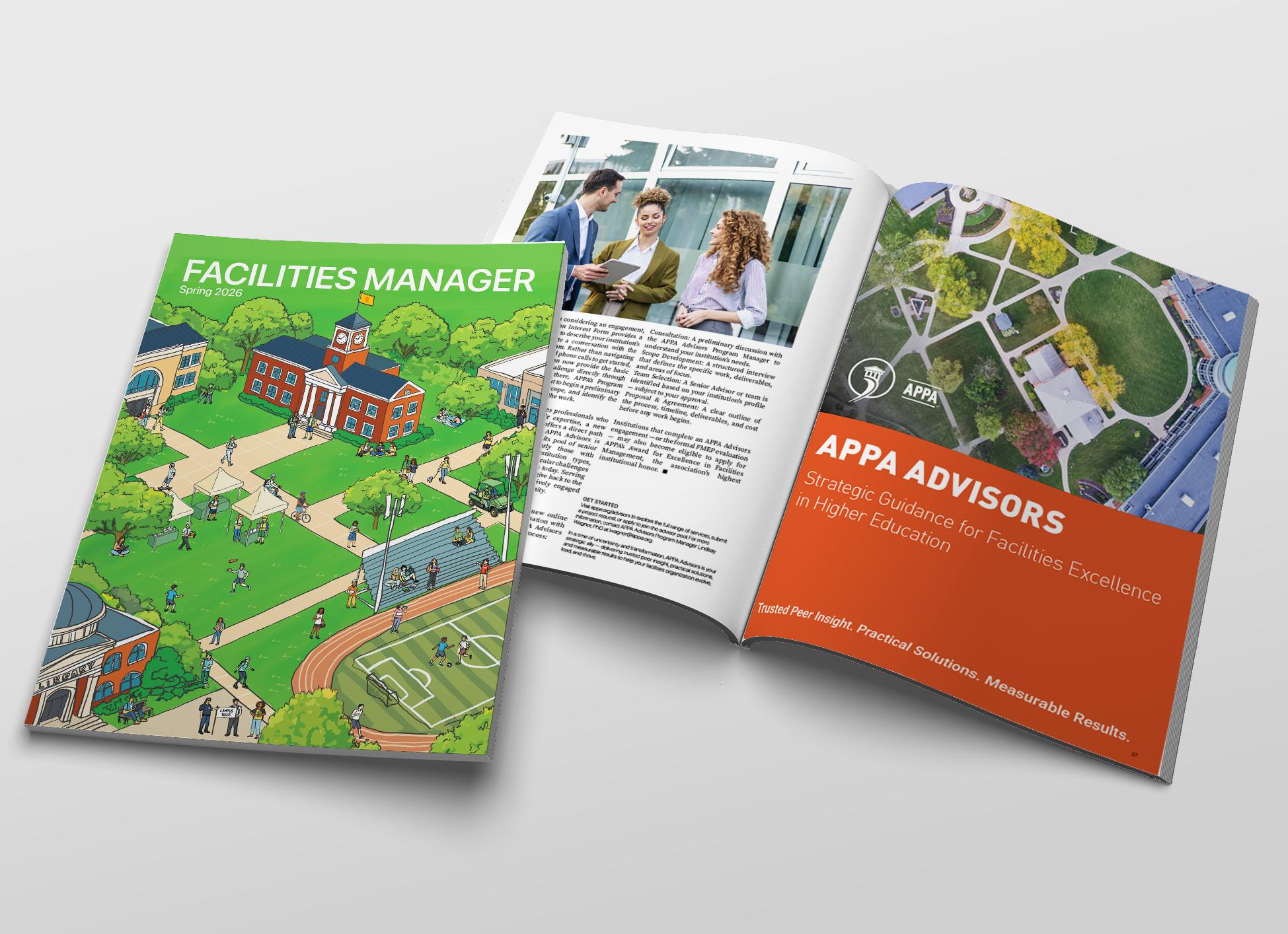
All article or ad submissions must be received no later than one month prior to publication. Facilities Manager is published four times a year on the second Monday of January, April, July, and October. For specific deadline dates, please see our editorial guidelines page at appa.org/editorial-guidelines.
Accepted Formats: High-resolution (minimum 300 dpi) PDF, JPG, or TIF files only.
Color Requirements: Files must be prepared in CMYK. Images must be provided in a separate folder and should not be embedded in Word documents.
How to Submit: Materials can be submitted via email or through a file-sharing service such as Dropbox to marketing@appa.org.
APPA publications reach 13,000+ facilities professionals and 1,000+ institutions across two high performing channels. A monthly newsletter and a quarterly magazine, both consistently outperforming national benchmarks.
SUBMIT TO FACILITIES MANAGER MAGAZINE
The National Average Digital Magazine Read Time vs 3 Minute Industry Average
8.5+
82%
4,600+ 62%
Inside Submit Articles
WHAT FACILITIES TEAMS LEARN AFTER TURNOVER, WHEN A PROJECT BECOMES A CAMPUS ASSET
BY REMY EDMUNDS
Buildings are agreeable at turnover. The punch list is closing, the systems ran during functional testing, the binders are stacked on the table, and everyone in the room wants to sign. Then the first operating year begins, and the building starts telling the truth.
That truth arrives slowly and out of order. It shows up in the first real heating season, when a control sequence that passed in a mild week in October cannot hold a setpoint in January. It shows up in the first cooling season, when a space that modeled cleanly turns humid the first time the building is full and the weather is against it. It shows up in the work-order log, where the same room generates the same complaint every week, and in the quiet workaround an operator invents to keep a system happy, a workaround that nobody wrote down and that is on its way to becoming standard practice. None of this is failure. It is the building doing what no closeout document can do: meeting weather and people and reporting back.
Turnover is a legal event, not an operational one
Closeout tells you the contract is satisfied. It does not tell you whether the building works. Those are different questions, and we tend to treat the first one as if it answers the second.
A capital project is not truly transferred when the punch list closes. It is transferred when it survives its first year of real use: weather, occupancy, controls under load, training that either took or did not, warranty claims, asset data that either matches the field or does not, and the slow process by which an operations team comes to understand a building well enough to run it without the project team in the room. The first operating year is where a delivered project either gets absorbed into the
institution or quietly resists it.
I am using commissioning here in the owner’s broader sense, not only the technical one. I mean the institution’s test of whether the project has become maintainable, operable, and legible to the people who now have to live with it. The commissioning provider may have a defined scope and endpoint. The institution does not. The first year is the institution’s commissioning, and most of what it learns never makes it back to the people who designed and built the asset.
Systems are more complex than they were a decade ago. Electrification, heat recovery, and tighter envelopes have raised the ceiling on performance and raised the cost of getting the first year wrong. The gap between supposed and actual performance is now operational and financial, not just technical.
The performance gap is real, and the first year is when it appears
The first thing the first year reveals is that buildings rarely run the way the design said they would. Researchers who have reviewed the problem define the performance gap plainly as the difference between what a building was predicted to do at design and what it measurably does once occupied. A 2026 structured review of post-occupancy evaluation in higher-education buildings frames it directly: there is an ongoing discrepancy between predicted and actual building performance, and technical compliance with a standard does not guarantee that occupants are satisfied or that the building performs in use. The review also makes a point that should land for facilities leaders specifically: POE only matters when technical measurements, occupant feedback, and operating decisions are connected. The data is not the deliverable. The corrected
building is.
HVAC seasonal performance is the most visible place this shows up, because the first heating and cooling seasons test systems under conditions that functional testing at turnover never exposed. But the gap is broader than mechanical systems. It includes the room that occupants avoid, the space that is booked constantly and was sized for half the demand, the lighting controls that fight the way people actually use a room, and the maintenance access that looked generous on the drawings and is unreachable behind a millwork run. The first year is when assumptions meet reality, and the cheapest time to correct an assumption is while the warranty is still live.
Airports rehearse the first day. Campuses hand over the keys.
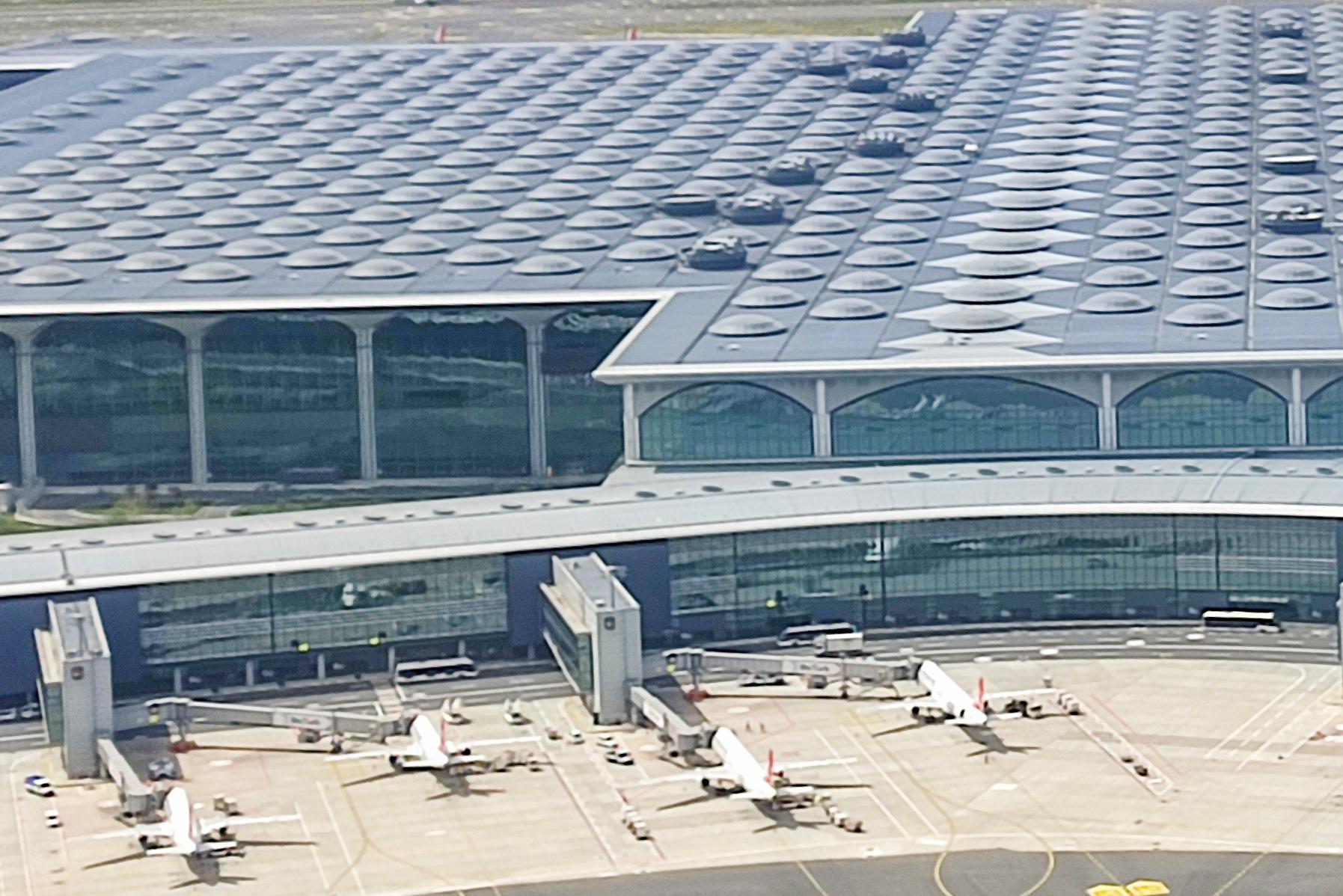
Other industries treat the transition from construction to operation as a discipline in its own right, not as a date on a schedule. Aviation has a name for it: operational readiness, activation, and transition, usually shortened to ORAT. A 2023 case study of one of the world’s largest airport openings describes ORAT as the process of converting a completed project into a functioning operation, where people, processes, systems, and documentation are tested together before the doors open, not after. The objective, as practitioners put it, is to operate a new facility on its first day as if it had been running for years.
A campus building does not need an airport opening program. But it does need to admit that readiness is broader than completion.
The instructive part for higher education is what ORAT treats as in scope. Commissioning is one component of readiness, not the whole of it. The rest is people and process: training that has actually been absorbed, procedures
that have been rehearsed, contingency and emergency plans that exist on paper and in muscle memory, and a tracking system that knows who owns what after the contractor is gone. Campuses do not need airport-scale rehearsal, and most could not afford it. But the premise transfers cleanly. A building is not ready because it is physically complete. It is ready when the people who operate it have been prepared to operate it, and that preparation has a short shelf life. Training delivered at turnover decays quickly, and the people who knew why a sequence was written a certain way leave with the project. The first year is the last reliable window to capture intent before it walks out the door.
The second thing the first-year produces is information, and most institutions throw it away. Work orders, trend logs, meter data, and operator observations are evidence of what the project got right and wrong. Treated as a stream of individual complaints, they are noise. Treated
as a feedback loop, they are the most honest performance report a building will ever generate.
The practice of using building-automation and metering data to find and fix problems continuously, rather than once at turnover, is sometimes called monitoring-based commissioning. The label matters less than the habit. The habit is to ask, every month of the first year, what repeated, what drifted, what an operator quietly worked around, and what the building is telling you about how it was actually built. The barrier is rarely the data. It is ownership, and ownership is what goes missing at handover. The moment the construction manager demobilizes, the project team that understood the building walks out, and the operations staff inherits the systems and the responsibility for them in the same week. Someone has to own the data structure, the corrective-action process, and the follow-through, or the loop never closes. Even a simple monthly review by space, system, symptom, and owner is better than letting the same problem appear as twelve unrelated tickets. A

building generates first-year intelligence whether or not anyone is listening. The only question is whether the institution captures it.
The first year is a renegotiation window that expires There is leverage in the first year that does not exist later, and it is easy to let it lapse. Warranty terms are live. Attic stock and spare parts can still be reconciled against what was actually installed. Asset data can be corrected while the people who installed the equipment are still reachable. Service contracts and training refreshers can still be added on favorable terms. All of this is adjustable in year one and effectively frozen after.
This is also where the building has to become legible. A delivered project can be complete and still be unreadable by the people who operate it, because its information lives in three places that do not talk to each other: design intent in the model, construction records in the project system, and operating data in the facilities platform. The United
Kingdom has gone as far as codifying a version of this idea into law for certain higher-risk buildings, requiring a continuous, accurate record of a building’s safety-critical information, handed to the responsible party at turnover and maintained for the life of the asset. They call it the golden thread. The regulation is theirs, but the idea travels.
If your operations team cannot quickly answer what is installed, where it is, how it was specified, and whether it has been serviced, the building is not yet an asset. It is a box with good documentation somewhere inside it.
The building-services world has a name for doing this deliberately. The Soft Landings framework extends attention past handover into initial and extended aftercare, using post-occupancy evaluation to feed what is learned back into future projects. The mechanism is less important than the commitment to look. A first-year review does not require a framework or a consultant. It
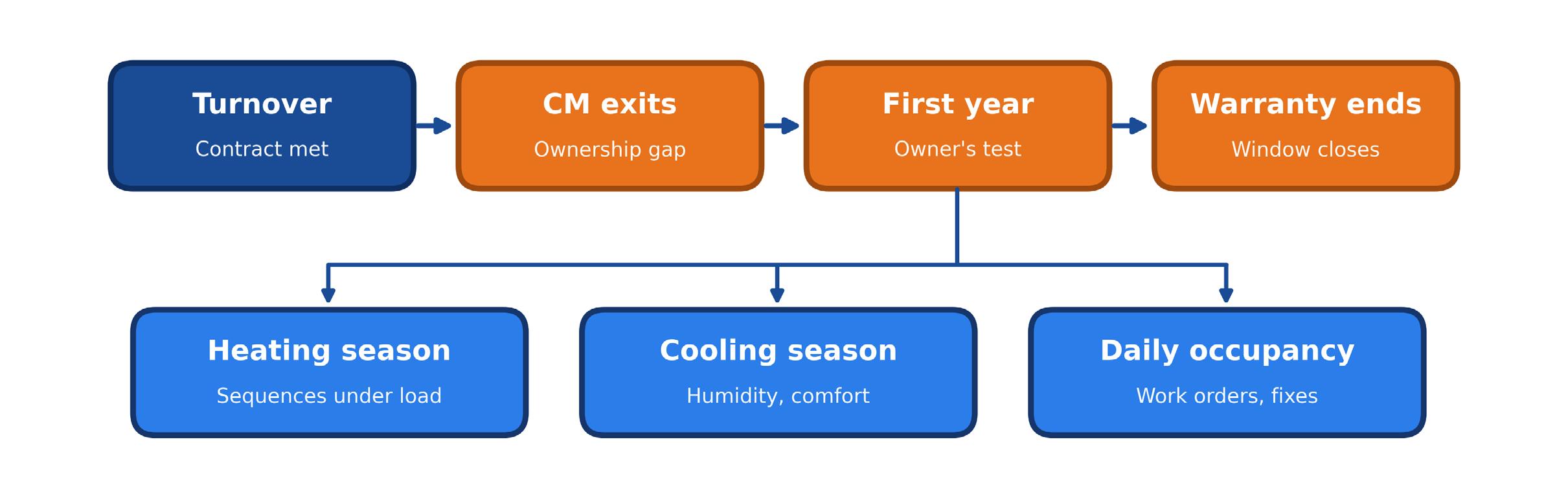
requires that someone be assigned to ask, on a schedule, a short list of questions:
What repeated? What surprised the operators? What did occupants misunderstand or use differently than intended? What did the warranty process reveal or conceal? What training needs to be delivered again, now that people have lived in the building? What asset data needs correcting before it ossifies? And the question that justifies all the others: what should this building change about the next one?
That last question is where the value compounds. A first-year review that only fixes the building in front of you is worth doing. A first-year review that changes your standards, your specifications, and your turnover requirements is worth far more, because it stops you from buying the same problem twice.
The punch list tells you what remains unfinished. The first year tells you what was never fully understood. Closeout is the end of the project. It is the beginning of the part that determines whether the project was any good. ■
Sources
Aladağ, H., Demirdöğen, G., and Işık, Z. (2023). “Fundamental Prerequisites of Operational Readiness, Activation, and Transition: Case Study of Istanbul Grand Airport.” Systems, 11(9), 468.
BSRIA. (2018). Soft Landings Framework 2018 (BG 54/2018). Bracknell: BSRIA.
Ghiai, M., Bassaw, C., and Niknia, S. (2026). “Postoccupancy Evaluation and Human-Centered Indoor Environmental Quality in Higher-Education Buildings: A Structured Review.” Frontiers in Built Environment, 12, 1837203.
Harris, N., Shealy, T., Kramer, H., Granderson, J., and Reichard, G. (2018). “A Framework for Monitoring-Based Commissioning: Identifying Variables That Act as Barriers and Enablers to the Process.” Energy and Buildings, 168, 331–346.
Shi, X., Si, B., Zhao, J., Tian, Z., Wang, C., Jin, X., and Zhou, X. (2019). “Magnitude, Causes, and Solutions of the Performance Gap of Buildings: A Review.” Sustainability, 11(3), 937.
ABOUT THE AUTHOR
Remy Edmunds, PE, CCM, MBA, LEED AP is Associate Director of Project Management in Yale University’s Office of Facilities, where he oversees capital projects focused on complex renovations, historic preservation, and campus infrastructure. He is an APPA member.
Facilities Manager is the flagship publication of APPA and the go-to resource for facilities professionals who want to go deeper. Unlike a newsletter, a magazine is lingered over, with readers spending meaningful time with each issue. With in-depth features, industry research, expert perspectives, and practical guidance, it is the trusted print and digital magazine for educational facility managers nationwide.
Full Page
This edge to edge placement commands the entire page, giving readers an immersive view of your message with no competing content to divide their attention. Ideal for brand storytelling, major product launches, or campaigns that deserve room to breathe.
Ad Specifications | Size: 8.5” x 11” Bleed: 8.75” x 11.25”
Non-member rate $5,000 | Member rate from $3,750
Half Page
A strong presence without the full-page investment. This horizontal placement sits prominently on the page and captures reader attention right where editorial content draws them in, making it an ideal format for a focused message or product highlight.
Ad Specifications | Size: 8” x 4” Bleed: 8.25” x 4.25”
Non-member rate $3,500 | Member rate from $2,625
Quarter Page
A strong presence without the full-page investment. This horizontal placement sits prominently on the page and captures reader attention right where editorial content draws them in, making it an ideal format for a focused message or product highlight.
Ad Specifications | Size: 4” x 4” Bleed: 4.25” x 4.25”
Non-member rate $2,000 | Member rate from $1,500
Eighth Page
A strong presence without the full-page investment. This horizontal placement sits prominently on the page and captures reader attention right where editorial content draws them in, making it an ideal format for a focused message or product highlight.
Ad Specifications | Size: 2” x 4” Bleed: 2.25” x 4.25”
Non-member rate $1,500 | Member rate from $1,125
Full Page Spread
The ultimate brand statement. A full two-page spread commands the entire reader’s view, delivering unmatched visual impact and making your message impossible to miss in the hands of facilities professionals nationwide. And the numbers back it up: studies show magazine ad recall averages 62% among readers, more than double that of television, and 82% of consumers say they trust magazine ads more than any other form of advertising. With readers spending an average of 20 or more minutes per issue, a full page spread in Facilities Manager is not just an ad, it is an investment in lasting brand recognition with the exact decision-makers you want to reach.
Ad Specifications | Size: 17” x 11” Bleed: 17.25” x 11.25”
Non-member rate $10,000 | Member rate from $7,500
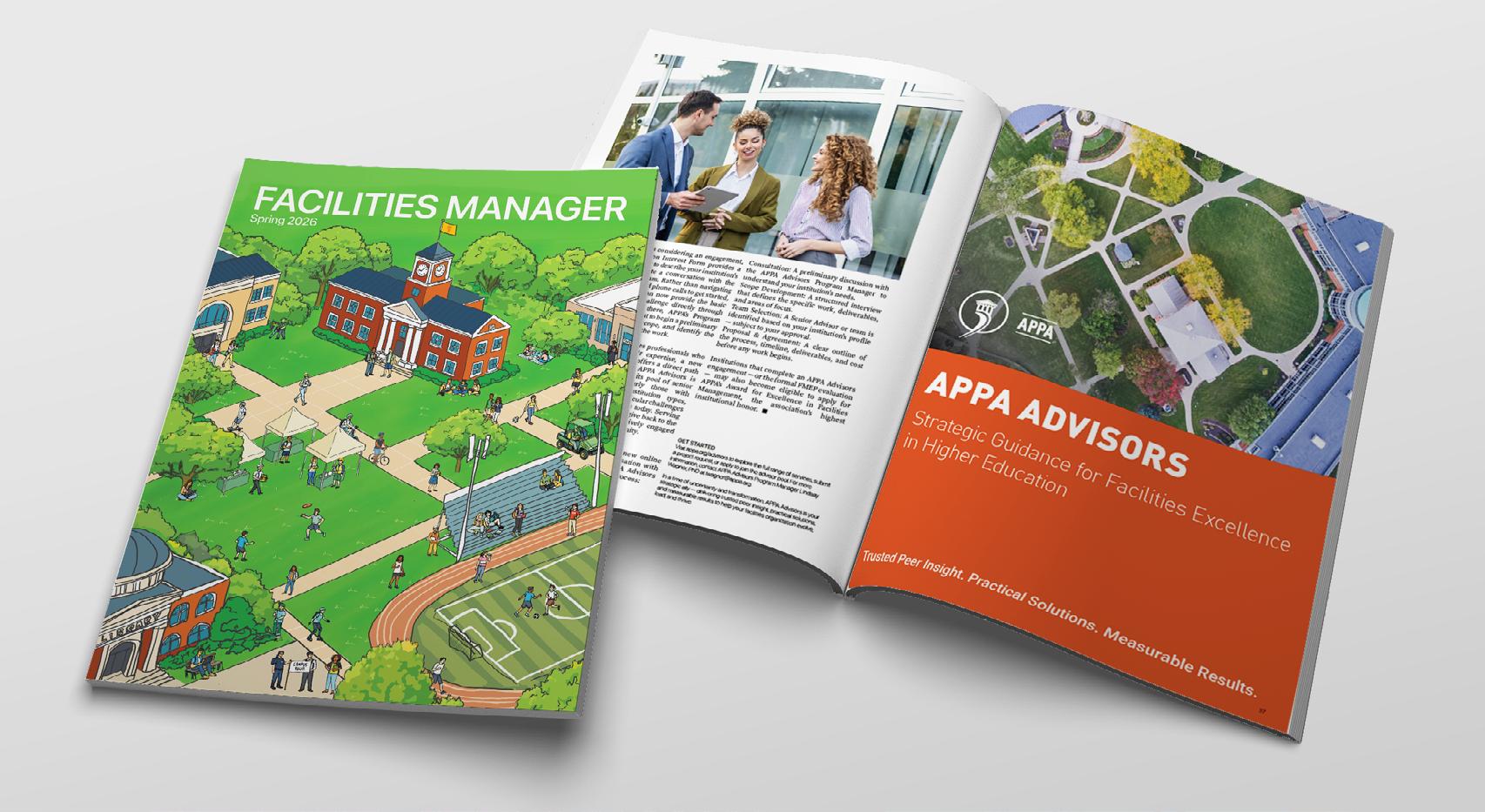
To purchase visit https://www. appa.org/purchase/advertisingopportunities
Questions? Email marketing@ appa.org

From July 16 through 18, educational facilities professionals from across North America will converge at APPA Conference 2026, and we'll be following the whole thing from the opening keynote to the last handshake in the exhibit hall. This special issue will be our record of it, hundreds of photos pulled from keynotes, breakout sessions, and the receptions where the real talk happens after the lanyards come off. This is the kind of week where you learn as much in a hallway conversation as you do in a session, and we'll make sure to catch both.
Inside, you'll find recaps of the sessions that get people leaning forward, keynote takeaways worth revisiting, and the voices of the members who will shape this year's conversation, unscripted and straight from the source. We'll be spotlighting the themes that define APPA Conference 2026, from emerging technology and sustainability practices to the leadership challenges that don't show up on a slide but sit with people long after the conference ends. You'll also see the new visual direction APPA is stepping into, one built around movement and the many paths our members take through this profession.
This issue won't just be a recap. It will be a document of where APPA stands right now and where it's headed next, told through the people doing the work. Whether you're in the room at APPA Conference 2026 or reading about it from your desk, this issue should put you right back in the room, because the future of this profession isn't something you watch happen. It's something you help build. ■
BY DEAN HANSEN
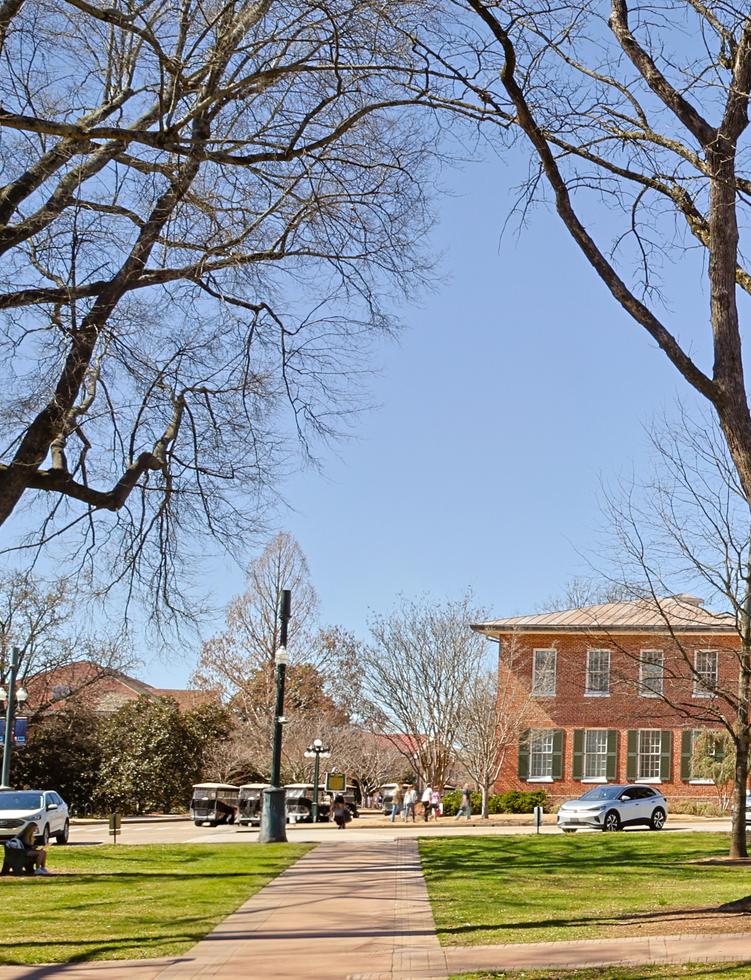
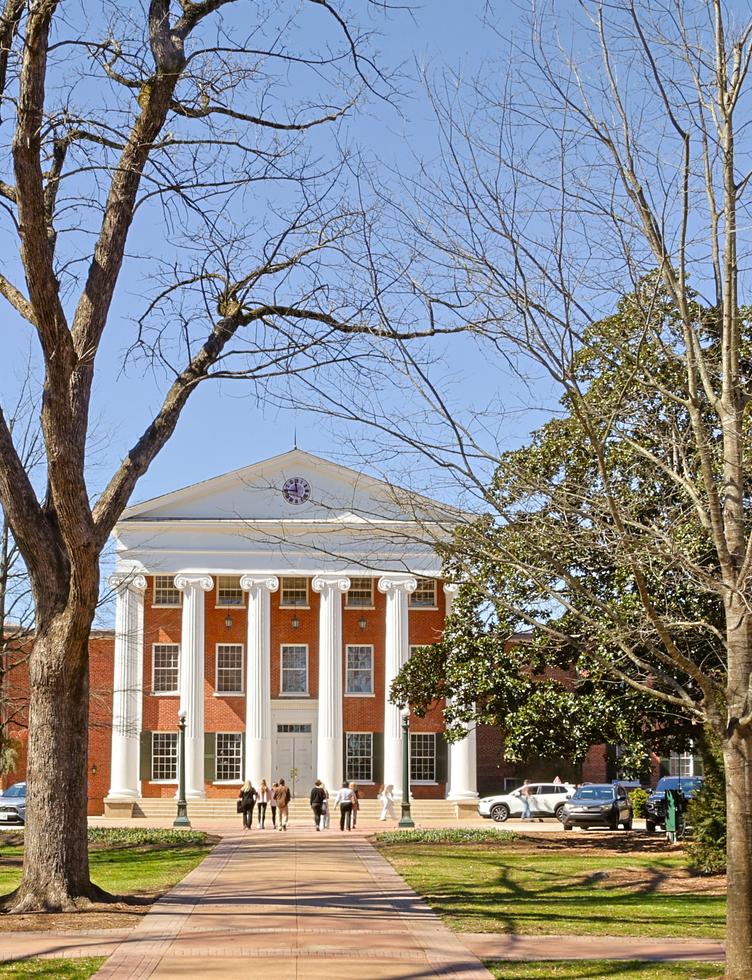
The University of Mississippi, known to generations of alumni and fans simply as Ole Miss, is a place where tradition runs deep. On fall Saturdays, more than 100,000 people flood Oxford, transforming the Grove into one of the most iconic tailgating scenes in college football. The historic architecture surrounding the Grove, from the stately white columns of the Lyceum to the century-old red-brick academic halls, stands as a testament to the university’s legacy.
But behind the beauty of these buildings lies a challenge shared by nearly every major university in the country: aging infrastructure, outdated mechanical systems, and a growing backlog of capital-renewal needs. Facilities Management teams have worked tirelessly for decades to keep these historic structures functioning, comfortable, and safe. Yet the gap between what needs to be replaced and what traditional funding can support has widened year after year.
In 2021, the university adopted a multiphase Energy Savings Performance Contract (ESPC) program as a deliberate, budget-neutral way to make steady progress against that backlog. Strategically sequenced and aligned with the university’s long-term capital plan, the program lets us modernize aging systems without waiting on uncertain state appropriations. With four phases complete, a fifth under construction, and a sixth in development, the ESPC has become a valuable tool in the university’s broader strategy to reduce deferred maintenance, modernize infrastructure, and improve campus resilience.
“Deferred maintenance” is one of the most misunderstood phrases in higher-education facilities management. To someone outside the industry, it sounds like maintenance was simply postponed or ignored. But at universities like Ole Miss, nothing could be further from the truth.
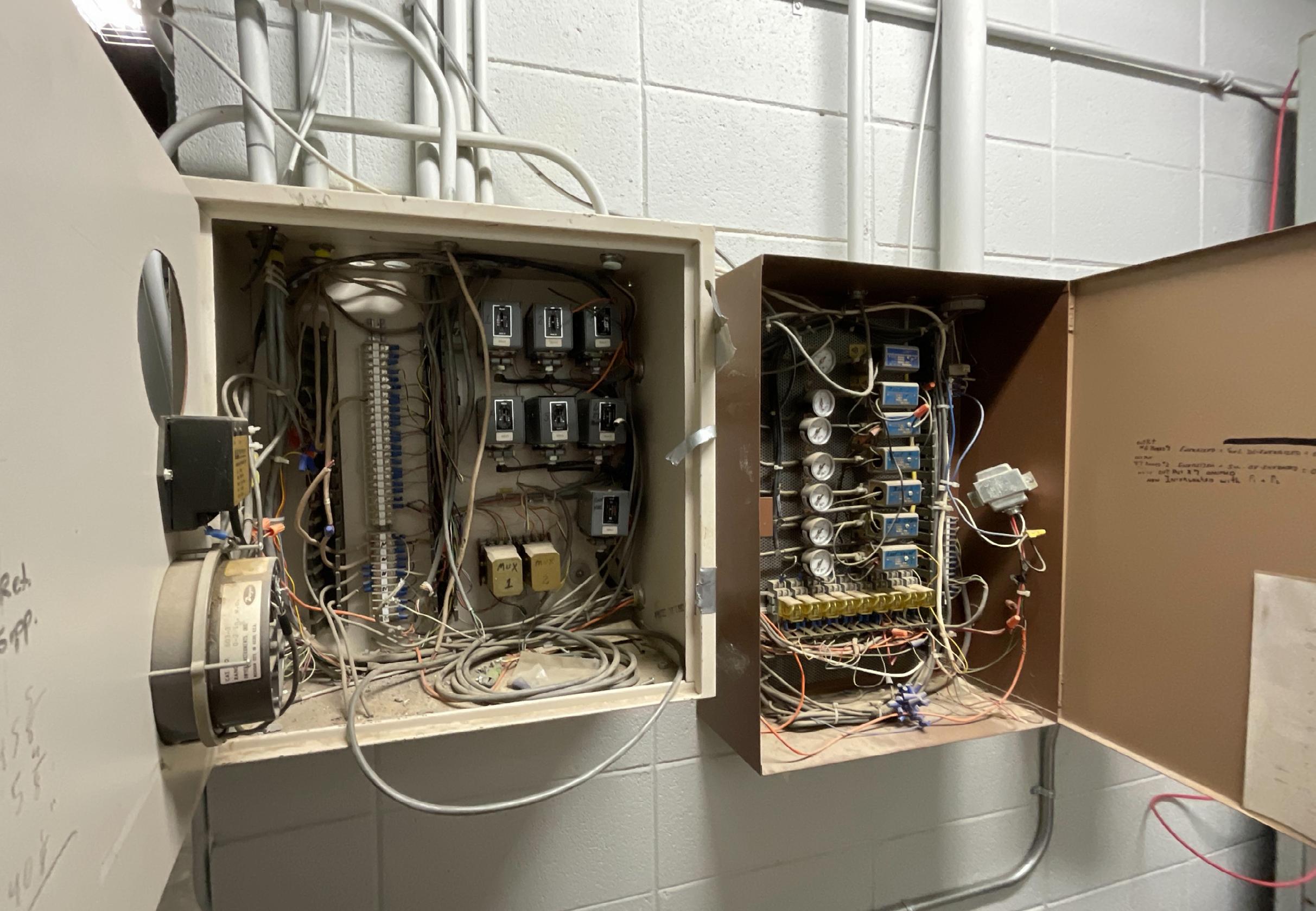
Facilities teams have spent decades maintaining equipment that has far outlived its engineered lifespan, often by 10, 20, or even 30 years. According to ASHRAE guidelines, most HVAC systems, boilers, chillers, and control systems are designed for a 20–25-year service life. Yet universities routinely keep these systems running for 35–45 years through sustained effort, creative repairs, and constant troubleshooting.
The structural challenge is funding. State support for university facilities in Mississippi is inconsistent and often insufficient. Over the past five years, annual state support for capital facilities upgrades at Ole Miss has ranged from zero dollars in some years to roughly $9 million in others. That volatility makes it impossible to plan predictable replacement cycles for major mechanical systems, roofs, controls, and utility infrastructure.
When funding disappears entirely in a given year, the university has no choice but to stretch equipment far beyond its intended lifespan.
This context is essential to understanding the role of the ESPC. It is not a silver bullet, nor a replacement for capital funding. But it is a powerful mechanism, one of several the university is using, to create predictable, scalable progress on long-standing infrastructure needs.
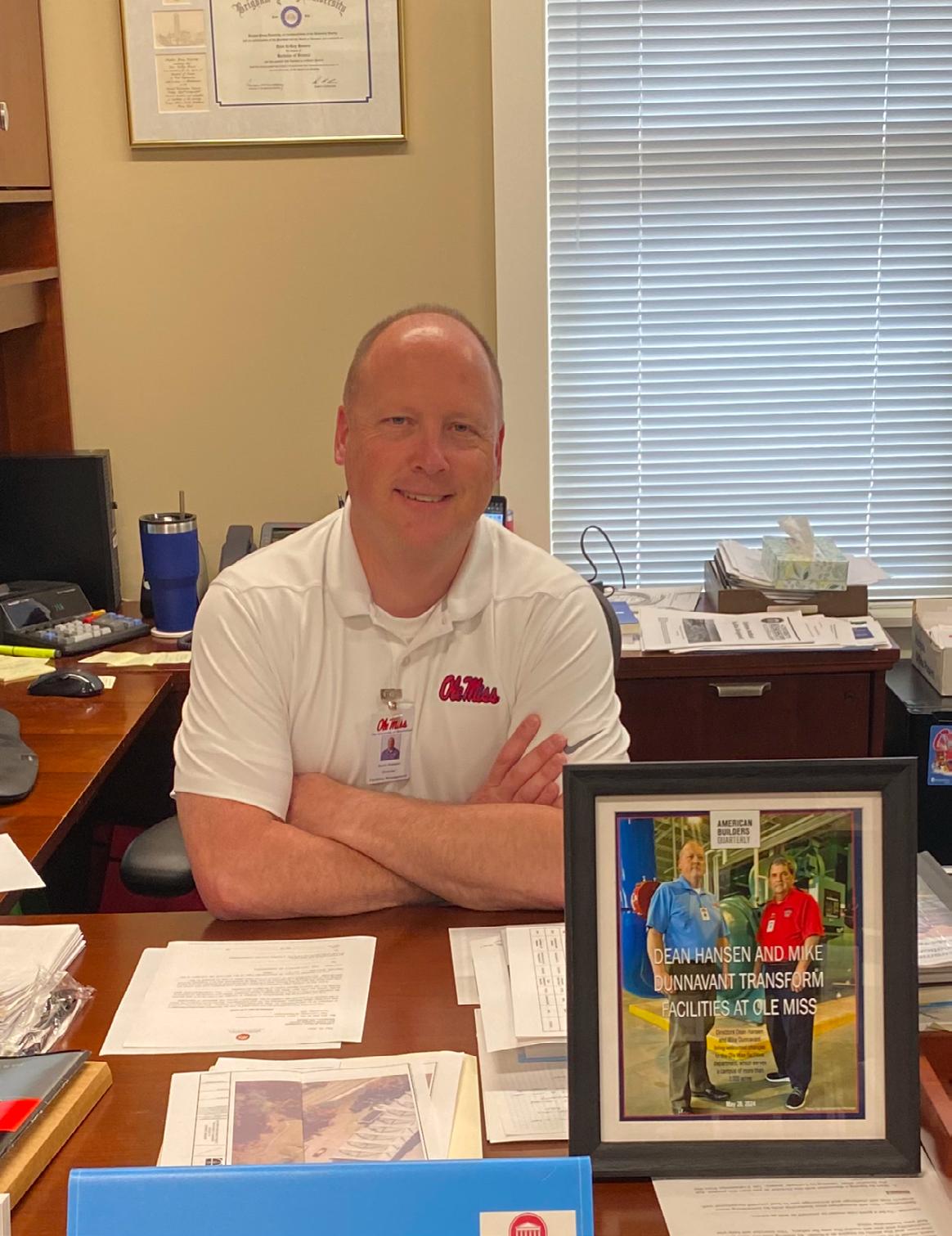
When I arrived at Ole Miss in 2018 as Director of Facilities Management, I brought decades of experience from the University of Texas at Austin, the University of Memphis, and the United States Navy. It was clear early on that the campus had significant opportunities for energy efficiency and infrastructure modernization.
In 2019, I began developing a detailed RFP for an ESPC program, a procurement method that allows public institutions to implement infrastructure upgrades with minimal upfront capital. Under Mississippi’s competitive procurement laws, the university evaluated proposals from pre-qualified firms and ultimately selected Trane Energy Services as its long-term partner.
The ESPC model offered Ole Miss
• A budget-neutral path to modernization
• Guaranteed energy and operational savings
• A long-term strategic partner
• A mechanism to address decades of capital-renewal needs
• A way to keep utility budgets flat despite enrollment growth
While the ESPC is not the university’s only strategy for tackling deferred maintenance, it has become one of its most effective tools for addressing high-priority needs that would otherwise remain unfunded.
The five phases below were sequenced so that each built on the last, with early controls and efficiency work laying the groundwork for the heavier mechanical scopes that followed.
$5.9M | Completed 2023 A rapid deployment of Automated Logic DDC controls/front end, pneumatic replacements, coil cleaning, and retro-commissioning in three buildings, establishing the digital backbone for all future ESPC phases.
$9.9M | Completed 2025 More than 44,000 fixtures replaced across 93 buildings, covering 4.3 million square feet. This remains the single largest source of energy savings and maintenance reduction.
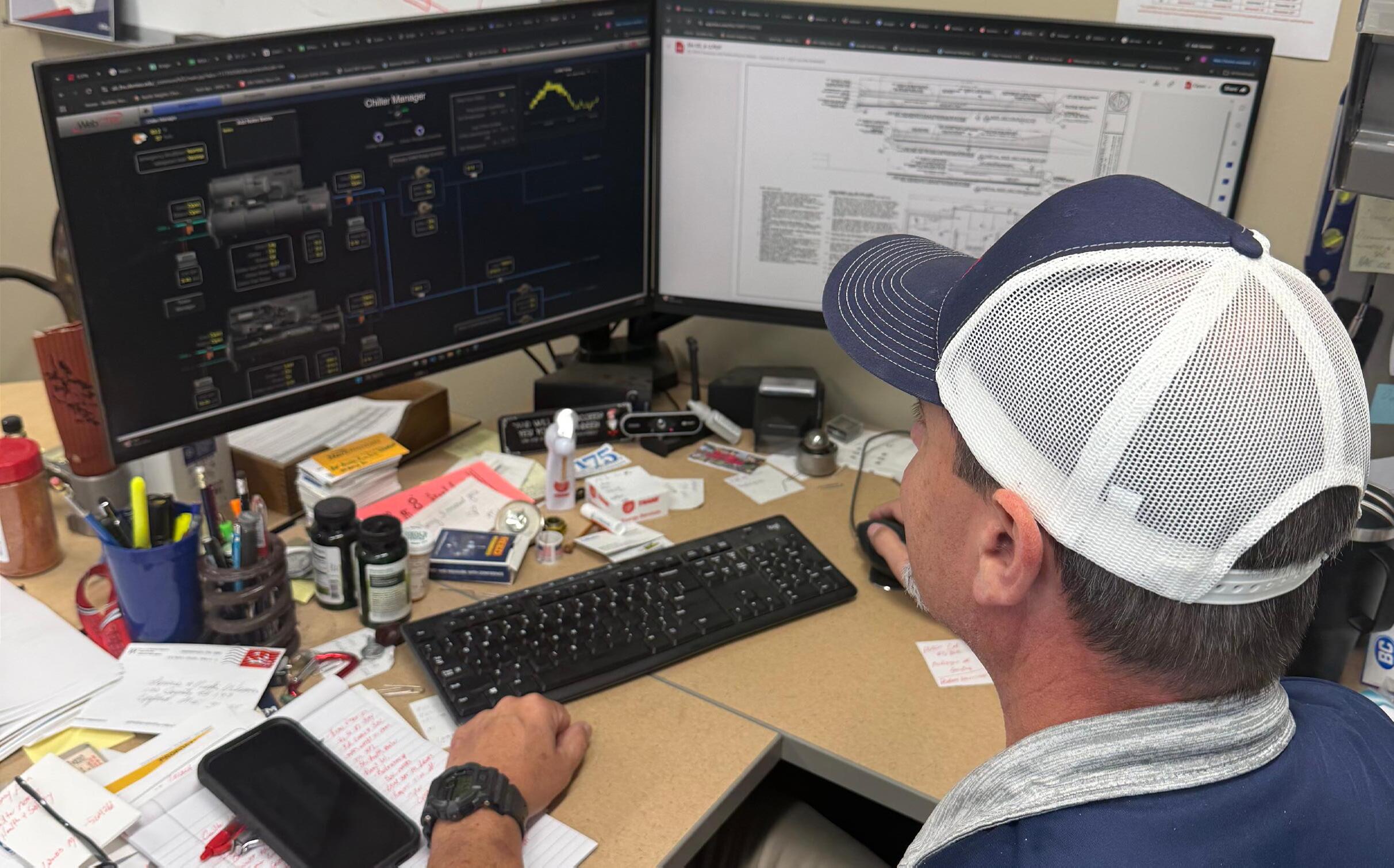
$1.9M (chiller equipment) | Completed 2024 Through the ESPC, the university procured the chiller equipment—two 1,500-ton centrifugal chillers and two 250-ton heat-recovery chillers— and provided it to the broader chilled-water plant construction project for installation. The

OPPOSITE
Automated Logic Controls platform.
added capacity supports campus growth and improves loop stability.
$350K | Completed 2025 A targeted upgrade delivering specialized house-lighting improvements for a high-value performance space.
$10M | Completing 2026 Chilled-water loop corrections/optimization, BAS controls upgrades in 15 buildings and four chiller plants, major HVAC improvements, and Aeroseal duct sealing, maximizing the value of earlier phases and preparing the campus for predictive maintenance.
With Phase 5 under construction, Ole Miss is preparing to roll directly into Phase 6, targeting some of the most persistent deferred-maintenance items on campus. These scopes are not driven by energy savings; they address equipment that is simply beyond the end of its useful life, in some cases double its expected lifespan. On their own, projects like these offer little in the way of energy payback. What makes them possible is the savings generated by earlier phases. The guaranteed energy and operational savings from the lighting, controls, and chilledwater work in previous phases effectively fund this maintenance-driven scope, allowing the university to take on long-deferred repairs while keeping the ESPC program budget-neutral across all phases.
Our planned Phase 6 scopes center around the university’s biggest maintenance headaches, addressing several categories of end-oflife equipment across a range of academic, administrative, and historic buildings.
• Controls modernization, replacing obsolete Andover systems with modern ALC direct digital controls
• Pneumatic-to-DDC control conversions
• Boiler replacements
• Air-handling unit (AHU) replacements
• Fan-coil unit (FCU) replacements
• Variable-frequency drive (VFD) installations
Phase 6 targets the university’s most persistent mechanical liabilities—reducing emergency repairs, improving indoor air quality, lowering utility consumption, and extending the life of historic and high-use buildings.
The ESPC partnership has also given Ole Miss access to AI-driven building-optimization technology, including BrainBox AI, which can autonomously manage building systems in real time.
Where traditional building-automation systems rely on programmed sequences and operator adjustments, AI-driven optimization uses machine learning to:
• Predict building load profiles
• Continuously adjust setpoints and equipment staging
• Reduce peak demand
• Identify anomalies before they become failures
• Optimize chilled-water and heating-water distribution
• Improve comfort while lowering energy use
In other words, AI doesn’t just automate buildings — it teaches them to think.
For a campus with more than 220 buildings and an expanding chilled-water/heating-water network, the potential impact is significant. Early modeling suggests that AI-enabled optimization could unlock an additional 5-15% in energy savings beyond what Phases 1 through 5 have already achieved.
But the value extends beyond energy. AI supports a shift toward predictive maintenance— identifying failing components days or weeks before they cause comfort issues or equipment damage. This is especially powerful for aging buildings with inconsistent equipment histories.
As Ole Miss continues its multiphase modernization journey, AI will become an increasingly important part of the university’s long-term strategy. The ESPC program has already delivered the foundational upgrades, modern controls, efficient equipment, and optimized chilled-water distribution that AI needs to operate effectively. Phase 6 accelerates that readiness by eliminating remaining pneumatic systems and replacing end-of-life mechanical assets.
While AI is certainly not the destination, it is a critical next step in the university’s evolution from reactive maintenance to proactive, data-driven asset management.
None of this replaces the capital funding that higher-education facilities still badly need. But for any campus staring down a deferredmaintenance backlog that grows faster than the budget to address it, the ESPC program has proven to be something rare: a disciplined, repeatable, budget-neutral way to make steady progress. Each phase helps fund the next, the savings are guaranteed, and the work compounds—the modern controls and efficient
systems we install today become the foundation for the smarter, more predictive operations of tomorrow.
The historic buildings around the Grove have stood for more than a century, and they will stand for another. The systems inside them will not—at least not without a deliberate strategy to renew them. At Ole Miss, the ESPC program has become a central part of that strategy, and it is a model that any institution facing the same challenge can adapt to its own campus. ■
BY CAMERON CHRISTENSEN

I’dlike to start with a story…
Some years ago, soon after starting a new job, I was making my rounds visiting with my new colleagues to learn more about their departments and attempt to ascertain how we could deliver excellent customer service to them. A worthy goal – one I imagine many of you can relate to.
I got around to one gentleman who was the head of one of our academic departments. This was my first time meeting him and I was instantly drawn in by his warmth and welcome. He quickly became one of my favorite people. We were having a great conversation. I was learning about the goings on in department and his students along with some of their needs with respect to facilities.
During the course of our conversation, I told him that it was one of my goals to deliver excellent customer service. He then said something that stopped me in my tracks.
He told me he didn’t like that and he didn’t appreciate what I was saying. I was dumbfounded. My mind was racing. What did I say? Did I offend him? I could tell by his expression that wasn’t the case, he was offering a perspective. In as calm of a voice I could muster, I asked why he didn’t appreciate that and asked him to share his thoughts.
His answer was brief but clear. He said, “Because I’m not your customer.”
The term “customer service” is one that I had
been taught since college. I had attended numerous trainings, read books and articles, and listened to podcasts all on the importance of “good customer service.” Enthralled by this new idea, I wanted to know more about his unique perspective and, by the end of our conversation, I was converted. Over the next several years, I worked to shift our mindset from one of Customer Service to Community Engagement.
The change may seem semantic. Of course, at the end of the day, we are doing the same work. We clean, maintain, repair, design, build, and renew our facilities in support of the mission of our institutions. But this seemingly semantic change in perspective can have a lasting impact.
To help illustrate the power of perspective, 64 years ago, President Kennedy pledged to land a man on the moon by the end of the decade and return him safely to the Earth. That vision caught hold of the Nation. As the legend goes, sometime after that speech, he was walking through NASA and came across a custodian sweeping the floor. When the President asked him what he was doing, the custodian replied, “I’m putting a man on the moon.”
This custodian understood his mission. His task was mopping the floor and caring for the NASA facilities. His mission was to put a man on the moon. He kept his perspective and mindset on the mission, not just the task at hand.
The Arbinger Institute has done extensive research on how mindset can impact interpersonal relationships, both in a personal and professional environment. In their book Leadership and Self Deception, they built upon the work by Martin Buber wherein they identify one of the key aspects of building effective, lasting interpersonal relationships is how we perceive others. Do we view them as “People” or do we view them as “Objects”?
When we view others as Objects, it is easy to place our needs above theirs. We look towards them for blame when challenges arise rather than looking inward on how we might help the situation. When we do so we are, to use the Arbinger term, Self-Deceived. Once in that self-deceived state, it is much more challenging to collaborate effectively with a focus on the collective mission of the organization. Personal ambitions rise to the surface. The need to defend your interests becomes paramount. The only way to break the cycle is to begin to see others as people with needs as genuine and meaningful as your own [2]
The Arbinger research highlights how perception can affect reality. It is very difficult to perceive something one way and act in another. Now, I’m not suggesting that simply referring to Customers as Community Members alone will make a difference. It is the effort to see these individuals as fellow collaborators aimed at supporting the same mission that provides value in this different perspective.
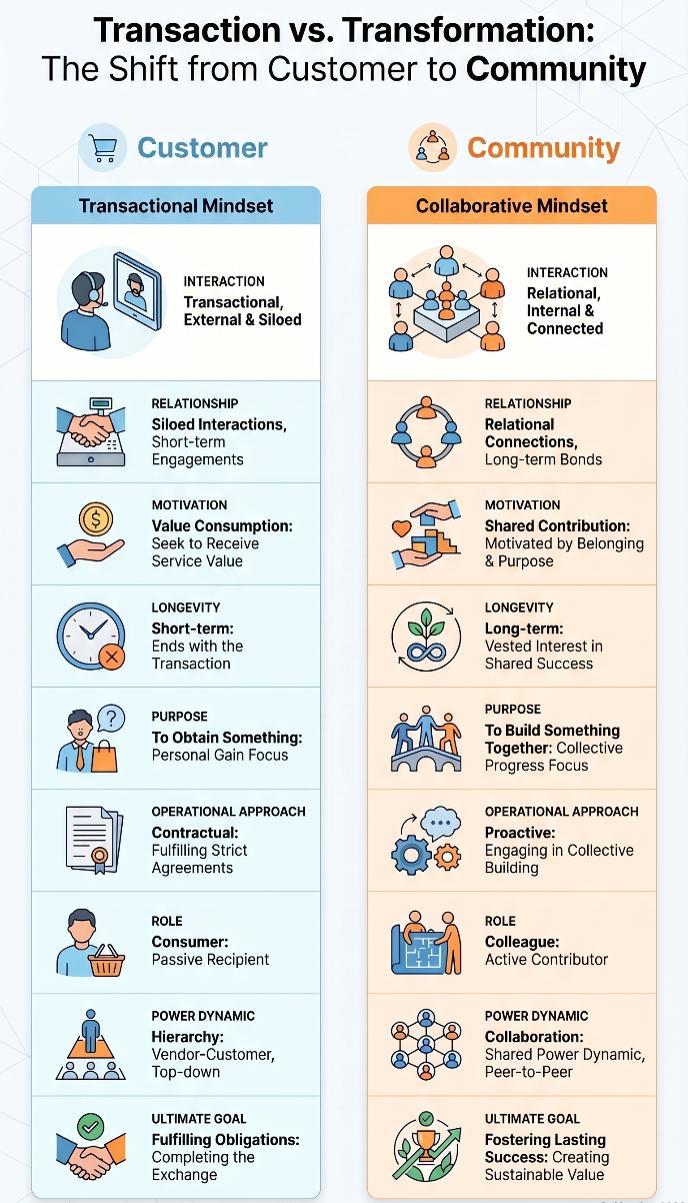
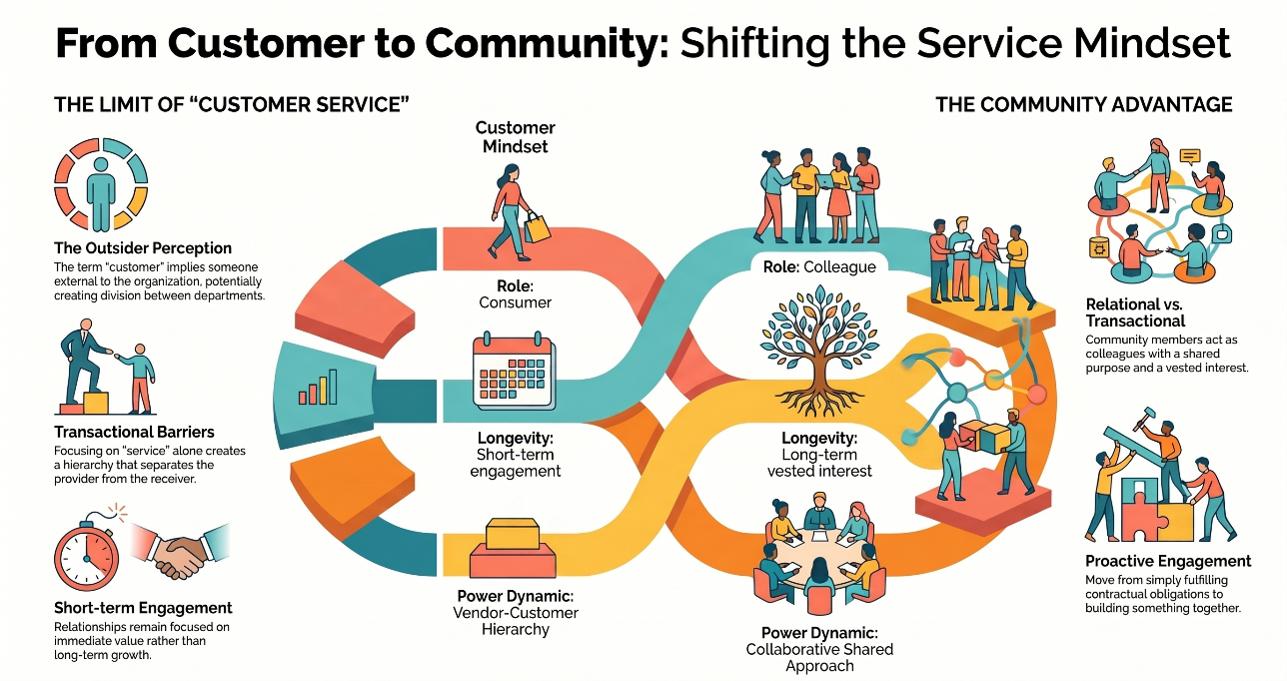
As for the Customer Service vs. Community Engagement mindset, let’s compare…
Customer engagements are transactional, short term, and focused on a specific engagement. Community engagements are relational, long-term, and mission-driven (see figure 1). Admittedly, not all customerprovider relationships are this way. There are certainly those that are much closer to the community engagement end of the spectrum. However, the more effort we make to change our mindset, even in seemingly insignificant, subconscious ways, the more we can engage our communities with shared objectives and perceive others’ needs as genuine and meaningful as our own.
The 2023 APPA Thought Leaders Series report titled Leadership Reimagined: Navigating the Higher Education Workplace identified…
ABOVE From Customer to Community
"One of the greatest burdens of the COVID-19 pandemic was the way it severed human connections. Face-to-face interactions, from casual conversations with coworkers to formal events such as graduations, vanished. For colleges and universities, this meant that most of the tools for fostering student engagement with the campus became irrelevant. Institutions are now seeking to rebuild relationships and reconnect the community in a new environment where online learning continues alongside face-toface instruction" [1].
As I am sure that you have noticed, while our abilities to work remote and detached from the physical campus have improved, for many, our interpersonal connections have also been part of the tradeoff.
The Thought Leaders monograph continues…
"Oftentimes, it’s hard to see beyond your own concerns, and you may feel you lack the bandwidth to build new relationships. But times like these are, in fact, the moments when facilities managers need to reach out. Lean on your relationships – one of your partners might be able to help in unexpected ways" [1].
It is a simple thing. Seemingly insignificant on the surface. But by viewing those in our extended organizations as our coworkers and colleagues rather than external consumers
of our services makes it easier to collaborate, seek out solutions, and work together towards a common goal. It has the potential to build bridges and tear down walls. It impresses upon the mind a bringing together for a shared objective – to build a community.
Our mindset shift from Customer Service to Community Engagement was difficult but, for those that took it to heart, it truly brought value to the work they did. In the years that followed, those that truly embraced the principle were more effective, more innovative, and more collaborative. They were more successful in their endeavors. They were more responsive and attentive to the needs of the campus community.
We need to seek to rebuild the “severed connections” highlighted by the Thought Leaders. As you do so, wherever you are along this path, identify the opportunities to build a sense of community and pursue them relentlessly. Whether those relationships are your campus partners, your fellow board members, the committees on which you serve, or wherever you engage with others, the more we seek to rebuild those relationships and reconnect with our communities, the more we will find shared success in serving and achieving the moonshots that we have ahead of us. ■
Analyze • Compare • Improve

Benchmark your facilities data, performance, and spending across peer institutions.
Sources
[1] The Arbinger Institute, Leadership and Self-Deception, Oakland, CA: Arbinger Properties, LLC, 2018.
[2] APPA, "Leadership Reimagined: Navigating the Higher Education Workplace," APPA, Alexandria, VA, 2023.
ABOUT THE AUTHOR
Director of Asset Management for Facilities Operations at Princeton University.
Scan the QR code to learn more!
BY TED WEIDNER
In 2018, after several years of committee work, the International Organization for Standardization (ISO) published ISO 41001 Facility management – Management systems – Requirements with guidance for use. It was developed as part of a family of standards focused solely on facility management. The management system standard can help any facilities manager operate and plan better facilities that serve users more effectively.
All facility management personnel utilize some kind of facility standard whether they realize it or not. Custodians have standards for cleaning, most often developed or accepted by their employer, and there are standards to measure the cleanliness of facilities using UV light, wipes, or supervisory observations; many of these are described in APPA Operational Guidelines for Educational Facilities – Custodial. Electricians have standards for wiring devices to ensure the safe utilization of electricity, developed over decades, with a more recent standard on arc flash protection. [Dad Joke warning: Q – Who were the original members of AC/ DC? A – Tesla and Edison.] Other trades have similar standards of practice, and there are standards for fire safety and building design used primarily by architects and engineers to protect the health, safety, and welfare of the public.
Standards for building design and construction are updated on a 3-year cycle by committees of experts, but they don’t become requirements until the local governing body, typically the state legislature, enacts them into law. Then there are operating standards. Some are driven by the building codes— ICC 904.11.3, for example, requires testing and maintenance of automatic water mist systems for fire suppression—while many are developed by the organization performing the service. There’s nothing wrong with locally developed standards; in many cases they are preferred because they address the needs of
the clients and leadership.
The International Organization for Standardization is structured like many USbased standards development organizations (SDOs): committees of experts work on specific topics or areas with the goal of providing best practices. Most people are aware of ISO 9001, quality management, which many industries have implemented to improve the quality of their products and services. Many of these organizations also get certified in ISO 9001 to provide evidence to their consumers that their products are high quality—a little like a “Good Housekeeping seal of approval” for industry. When given the opportunity to buy a product from a company that is ISO 9001 certified vs one that is not, the belief is the consumer will choose the product from the certified company, and thus the company will have more income and potentially higher profits.
ISO standards are not limited to quality improvement; there are hundreds of standards developed through ISO committees. Included in ISO standards is the work of Technical Committee (TC) 267, Facility management. To date, eleven standards have been developed focusing on facility management. Ten of the eleven are associated with the management system standard, ISO 41001, the standard which describes how an individual facility management organization executes continuous improvement.
Just like ISO 9001, the management system standard for quality improvement, ISO 41001 describes the system an organization should follow to make regular improvements to a facility management organization. It follows Deming’s plan-do-check-act (PDCA) cycle and is like APPA’s FMEP program. The FMEP program seeks to help educational facilities organizations make continuous improvements and to recognize those facilities through an evaluation by peers; ISO 41001 is for facilities in general, not just educational
facilities. In 2012, representatives from APPA took advantage of a meeting by members of ISO/TC 267 to join the international experts on the technical committee. Since then, the committee has been developing standards that recommend best practices for facilities management.
The ISO 41001 standard is comprised of ten clauses. The first two clauses are generic: they describe the scope of the standard and general references. The third clause covers definitions—the vocabulary used in facility management; a detailed list of those terms and definitions is available in ISO 41011. The remaining clauses describe what is needed for the PDCA cycle. The elements of PDCA for facility management are described below; details are available in the standard.
Plan – The overall organization the facility management team supports must be described. This is typically the entire college/ university. The FM team usually supports the organization’s entire built environment; it is described with physical characteristics and strategy. Here’s where having a strategic plan, whether for the whole university or only facility-focused, is very helpful.
The plan also includes a description of the organization’s leadership and how it recognizes the value of facilities to deliver the organization’s product (typically education, research, and service). It also includes a
description of the FM structure, how its budget is determined, resources identified, and information needed. The plan looks a lot like several elements of the FMEP that consider leadership, strategic & operational planning, customer focus, and human resources.
Do – This section describes how the organization operates: the overall structure that addresses daily, weekly, monthly, and annual operations. The description of how work is received, evaluated, distributed among workers or contractors, completed, and documented constitutes much of the do section. Part of this section includes identification of the measures used in the operation of the facility. Simple measures of backlog or costs may be used, or the organization can be more sophisticated and identify details of equipment performance. Most computerized management systems can track this information, and facility managers choose what they will evaluate based on where they are within the organization.
New to the upcoming revised version of the standard is increased attention on risks associated with annual operations. This is an important addition that simply documents what an organization might do organically. It’s impossible to describe how every risk is addressed, but development of a list of potential risks is an important step. In the US, many organizations follow FEMA’s Incident Command System for emergencies. As COVID
"The International Organization for Standardization is structured like many US-based standards development organizations (SDOs): committees of experts work on specific topics or areas with the goal of providing best practices."
demonstrated, it’s also impossible to identify every possible risk; but thinking about what could go wrong gets an organization most of the way to having a good operation.
Check – This is performance evaluation: how did the organization perform compared to expectations, using the measures identified in either the plan or do sections? The FMEP has similar requirements of assessment & information analysis and performance results. Essentially, how frequently are the different measures of performance evaluated, by whom, and how is that done? There may be several different ways of evaluating performance; the standard expects the process to be described, including who is involved in the evaluation. Work requests might be reviewed daily to see if they should become work orders or assignments to staff or contractors; reports of completed work may be reviewed weekly to assess workload and plan for future weeks; costs might be reviewed monthly for invoice and payment processing. The reviews may be performed by supervisors, management, or internal auditors. The goal of a review is to identify gaps in performance and opportunities for improvement in the short term (long-term improvements are part
of the next clause – act).
Act – This section builds on the prior sections. It is the improvement portion of the management system and the culmination of the PDCA cycle. It describes how the organization will respond to and address any opportunities for improvement, determine corrective actions—including adjustments in the allocation of resources—and coordinate actions for the coming year or operating cycle.
Just as the FMEP identifies how an educational facilities operation plans to improve itself over time to address the needs of the college or university, an FM management system organized using ISO 41001 identifies how a specific organization will plan, operate, measure, and improve its business to better serve the customers, clients, and visitors to the overall business. An organization that develops its business practices consistent with ISO 41001 can get certified and be recognized as using best management practices for facilities management.
The ISO standards are voluntary, not requirements; organizations that use them may be recognized with additional respect
because they are following a recognized process for operations and improvement. To further their recognition, organizations may be evaluated, like the FMEP, and certified as being ISO 41001 compliant. Certification involves an evaluation by an accredited third-party auditor, with periodic followup reviews to maintain the credential. The reward is distinction: very few organizations in the world are ISO 41001 certified. Facility organizations that implement a management system to monitor their performance and make improvements are special. They recognize that having a system for operation is important, they understand that evaluation of the organization requires thoughtful selection of performance measures, and they know that commitment to sharing the results of their performance makes them stronger in the eyes of their customers.
While there are other ISO standards for assets and engineering works, the facility management standards are focused specifically on the operation of facilities—and facilities are about people, place, and process. All three make up facility management. Ignoring any one of these three components hurts the organization and means the
educational facility is not serving its users.
The current version of ISO 41001 and the other facility management standards are available from ANSI.org, and an online course through Purdue University coaches students through the development of a management system standard for facilities. APPA representatives to ISO/TC 267 will continue to assist in the development of facility management standards that may be used by educational facilities professionals as well as other facilities managers. Members interested in the standards, or in beginning a continuous improvement effort through the FMEP or ISO 41001, are encouraged to get involved. ■
ABOUT THE AUTHOR
Institutional Memberships
4-Year Higher Education Institution
Community/Technical College
K–12 (Private / Public)
System District / Office
Other Facilities Teams
International, Affiliate, Library, Military Base, Museum, Church
Varies (annual budget)
Varies (annual budget)
Varies (annual budget)
$835
$835
Region membership dues & event discounts vary by region
Institutional Memberships include access for all employees
Business Partner Memberships
Tiers (Bronze, Silver, Gold & Platinum)
Representatives
Regional Memberships
Sponsorship Discount
Additional Representatives
Business Partner Member Benefits
• Discounted webinar partner rates
• Discounted advertising rates
• Sponsorship & exhibitor opportunities
• Social Media Spotlights
Included Benefits (All Membership Types)
Professional Development
• Discounted event registration for APPAU & Annual Conference
• Discounted Professional Development Programs
• Discounted CEFP Certification Exam
• Advisors & FMEP Program Rates
Publications & Resources
• Facilities Manager Magazine
• InsideAPPA Newsletter
• FPI (Industry benchmarking data and tools)
• Access to Whitepapers
• Body of Knowledge (BOK)
• Free APPA-hosted Webinars
• Bookstore Discounts
• Discounted JobExpress job board
$825–$7,500 2-12 Seats 1-6 Regions 10–25% $400 each 10–25%
$150-$500 (by tier)
Institutional Memberships include full-year access for all employees at your institution.
APPA Advisors offers trusted, peer-driven consulting services exclusively tailored to the unique challenges of educational institutions.
Apply for scholarships that support professional development, event attendance, and educational advancement.
Varies (by tier)
Varies (by memb. type) Included Varies
Varies (by memb. type)
Each Business Partnership Member tier offers more representatives, region access, & sponsorship discounts.
• Volunteer opportunities and leadership roles
• Access to the APPA Community
• Access to the APPA Membership Directory Career & Networking
Renewal Period for all Membership Types
12 Months
Amplify your brand through sponsorship opportunities at APPA events, programs, and initiatives.
Region dues are defined as a percentage of your APPA dues, and range from 15-36%
Save significantly on registration for APPAʼs Annual Conference & APPAU with exclusive member pricing available.
Access Facilities Manager magazine and InsideAPPA with in-depth articles, trends, and association news tailored to members.
Access complimentary live and on-demand webinars featuring industry experts and timely facilities management topics.
Members may submit yearly data in the FPI Annual survey & receive detailed benchmarking insights comparing your institution to others.
FPI Participating members get the full report free & non participating members can buy an anonymized one-year report.
Access the Body of Knowledge, a curated library of research, standards, and practical guidance for facilities professionals.
Thought Leaders Report dedicated to discussions on the future of higher education and the impacts on educational facilities.
Gain recognition through APPA awards that celebrate excellence, innovation, and leadership in facilities management.
Post job openings on APPA JobExpress to reach a targeted audience of higher education facilities professionals.
Increase visibility by being featured in social media spotlights, highlighting achievements, projects, or initiatives.
Professional Development Programs Include Leadership Academy, Institute for Facilities Management, Supervisorʼs Toolkit, Invest in Success & T3.
Purchase APPA publications at member-discounted rates at the Bookstore
Earn the Certified Educational Facilities Professional (CEFP) credential to demonstrate expertise & commitment to the profession.
Connect with peers across higher education through the APPA Community, enabling collaboration and networking.
Get involved through committees, chapters, and leadership roles that shape the future of APPA and the profession.
Receive discounted access to partner webinars that expand learning opportunities beyond APPA programming.
Leverage Feathrʼs digital retargeting tools to reach a digital audience with precision and measurable impact.
Promote your organization through advertising opportunities in APPA publications and digital platforms.
FPI (Facilities Performance Indicators) access to an anonymized version of the report (one-year data) for

USING SPACE DATA AND AI TO SET CLEANING FREQUENCIES THAT FIT THE CAMPUS YOU ACTUALLY HAVE.
BY LINDSAY WAGNER
It is 9:40 on a Tuesday night, and a custodian wheels a cart into room 214. The whiteboard still carries notes from a seminar that met Thursday afternoon. Nobody has set foot in the room since. The custodian empties a trash can holding a single coffee cup, wipes surfaces no one has touched, and moves on. Down the hall, the restroom nearest the library entrance ran out of paper towels at 7:15 and will not be serviced until morning, because the specification says it is serviced twice a day, and it has been serviced twice today.
The custodian did exactly what the schedule required. The schedule is where the trouble lives. But the fix is not what much of the technology industry is selling. The fix is not to abandon the schedule in favor of sensors dispatching custodians in real time. The fix is to keep the schedule and finally give it what it has never had: evidence.
Cleaning frequencies on most campuses are set the way they have been set for decades: by space type, square footage, and professional assumption. A classroom is cleaned nightly. A restroom is checked twice a day. An office suite gets attention three times a week. These frequencies are usually anchored to staffing guidelines that translate desired levels of cleanliness into square feet per custodian, and those guidelines are honest, defensible tools. But they carry one structural blind spot. They assume that use is uniform across spaces of the same type, and use is anything but uniform.
Anyone who has walked a campus knows the reality. A 40-seat classroom in a popular

building may host six sections a day while an identical room two buildings over hosts three sections a week. Restroom traffic near a dining hall spikes at lunch and craters by mid-afternoon. Whole wings sit nearly empty through summer session while a handful of buildings absorb almost all activity. Yet the cleaning specification treats these spaces as interchangeable, because when the specification was written, we had no practical way to know the difference.
The cost of that blind spot has grown as budgets have tightened. Benchmarking data across higher education has shown the same trend for years: custodial teams are responsible for more gross square footage per full-time equivalent than they were a decade ago. When labor is stretched that thin, every recurring hour committed to a lightly used
room is an hour permanently unavailable to the spaces where students, faculty, and visitors are forming their impression of the institution. The problem is not that we have a schedule. The problem is that the schedule was written on assumptions, and assumptions age badly.
The technology industry's favorite answer to this problem is dynamic, demand-based cleaning: sensors count traffic, algorithms generate a fresh work list every morning, and custodians go wherever yesterday's data says the dirt is. It is an elegant pitch, and for an airport terminal it may even be the right one. For a university campus, it solves the wrong problem and creates several new ones.
Custodial operations run on predictability. Area assignments are how custodians build ownership of their spaces, how supervisors train to a standard, and how quality inspections have a fixed baseline to inspect against. A schedule that reshuffles daily dissolves all three. Staff can no longer take pride in a building that is theirs, supervisors can no longer plan training or coverage more than a day out, and quality assurance loses its denominator, because you cannot audit performance against a specification that changed overnight. In represented environments, daily algorithmic reassignment also collides directly with bargaining agreements built around defined duties and defined areas, and it hands the workforce a reasonable grievance: that their day is now dictated by a black box.
There is a quieter operational objection, too. Dynamic dispatch optimizes for yesterday's traffic, but custodial work is not only response; it is prevention and rhythm. Floors are maintained on cycles. Project work is sequenced around the academic calendar. Deep cleaning happens in windows the algorithm does not see. A fixed schedule is not a legacy inefficiency to be disrupted. It is the load-bearing structure of a well-run operation. The goal is not to replace it. The goal is to make it true.
"A fixed schedule is not a legacy inefficiency to be disrupted. It is the loadbearing structure of a well-run operation. The goal is not to replace it. The goal is to make it true. "
If the schedule stays, the question becomes how to set it correctly, and the raw material for that answer is already flowing through campus infrastructure.
The most direct source is the people counter. Mounted above a classroom door or a building entrance, these devices use thermal imaging, infrared beams, or camera-based sensors with on-device processing to count entries and exits. Many institutions installed them for entirely different reasons: registrars want utilization data to defend against claims of classroom shortages, space planners want evidence for capital decisions, and campus safety wants occupancy estimates. The custodial application is often an afterthought, which is a missed opportunity, because a counter that tells the registrar a room hosted 340 students last week is also telling the custodial operation exactly how much soil load that room accumulates in a typical week.
Restrooms offer a second, richer stream. Connected soap, towel, and tissue dispensers report consumption over time, and door counters record traffic by hour and day. In a dynamic model these devices page a custodian; in an evidence-based model they do something more valuable. A semester of dispenser and traffic data reveals which restrooms genuinely need service three times a day, which are comfortably covered by one visit, and precisely when the hightraffic windows fall, so the two daily services can be scheduled at 10:30 and 2:15 instead of the traditional but arbitrary morning and evening rounds. The frequency stays fixed. It is simply, finally, the right frequency at the right times.
Where dedicated sensors do not exist, proxies fill the gap. Wi-fi access point connection counts, card-swipe records, and the registrar's own scheduling data are imperfect measures of occupancy, but they are cheap, already collected, and directionally reliable. A building whose access points show 40 connected devices all week does not need the same custodial frequency as one showing 4,000, and no new hardware was required to
learn that.
A year of occupancy data across a few hundred spaces is far too much information for any scheduling committee to digest by hand, and this is the job artificial intelligence is genuinely suited for. Not dispatching custodians. Analyzing patterns and recommending the schedule.
Given a semester or more of sensor history, machine learning models can do three things that manual analysis cannot do at scale. First, they can classify every space by its true utilization profile, separating the six-sectiona-day classroom from its three-section-aweek twin, and flagging the spaces whose actual use bears no resemblance to their space-type assumption. Second, they can find the temporal patterns that should shape service timing: the lunch surge, the evening lab cohort, the building that empties every Friday at noon. Third, they can recommend frequency tiers, grouping the portfolio into service levels supported by evidence, and model the staffing implications of each proposed change before anyone commits to it. What was once an educated guess becomes an analysis: this room's traffic supports nightly service, this cluster supports three nights a week, this wing supports weekly service with a standing exception during finals.
The output of that analysis is not a daily work list. It is a proposed specification: a revised set of fixed frequencies, mapped to actual demand, that supervisors review, adjust with the judgment no model possesses, and then publish as the standing schedule. Custodians receive stable assignments. Quality programs keep their baseline. The union receives a defined specification, arrived at transparently. And the schedule, for the first time, describes the campus as it is used.
A schedule set on evidence will drift out of date for the same reason the old one did: campuses change. Programs move, enrollment shifts, a renovated building draws traffic from its neighbors, a new dining venue
redraws pedestrian patterns. The answer is not to let the algorithm tinker continuously. It is to institutionalize a review cycle; the same way responsible organizations already treat budget models and space inventories.
A practical cadence for most institutions is a full recalibration annually, timed to the summer window when schedules are naturally rebuilt, with a lighter mid-year check at the semester boundary to catch major shifts. The sensors collect continuously all year; the schedule changes only at the review. Each cycle follows the same discipline: pull the utilization data, let the model reclassify spaces and flag the outliers, compare recommendations against the current specification, apply supervisory judgment, brief the custodial team on what is changing and why, and publish the new schedule with effective dates. Off-cycle adjustments are reserved for genuine triggers, such as a building opening, a program relocation, or a sustained service complaint that the data corroborates.
This cadence does something subtle and important: it converts occupancy analytics from a surveillance system into a planning instrument. Data reviewed on a cycle, in the open, with staff briefed on outcomes, reads as management doing its homework. Data acted on daily, invisibly, reads as being watched. The cycle is not a compromise with the technology. It is the correct use of it.
Even in this measured form, sensors can sound like surveillance to a custodial team, and facilities leaders should walk into the conversation deliberately. If the first time frontline staff hear about people counters is when the devices appear above the doors they service, the message received will be that management is watching, whatever the message sent was supposed to be.
The evidence-based schedule is an easier story to tell honestly than dynamic dispatch, because it preserves the things the workforce values. Assignments remain stable. Areas remain owned. Changes arrive on a published cycle, with notice, with reasons, and with
the data available for anyone to examine. The sensors count building occupants, not employees, and that claim is verifiable precisely because no custodian's daily route depends on them. Institutions that have handled this well share a pattern: custodial supervisors and frontline staff participate in the review itself, and the first cycle's results are framed as what they almost always are, a rebalancing rather than a reduction. Most custodial operations are already understaffed against the square footage they carry. The point of getting frequencies right is not to shed positions; it is to stop taxing a stretched workforce with recurring service that the traffic never justified, and to reinvest those hours where the traffic is real.
A stadium can install camera-based counters with little controversy. A university cannot and should not want to. Campuses carry heightened obligations around student privacy, and a counting system perceived as tracking individuals will generate opposition that no scheduling improvement can outweigh.
The technology allows genuinely privacypreserving choices, and the annual-cycle model makes them easier to defend. Thermal and infrared counters never capture identifiable images. Camera-based systems worth considering process video on the device and transmit only anonymous counts, retaining no footage. Wi-fi approaches can aggregate device counts without storing identifiers. Because the data is used for periodic planning rather than real-time response, retention policies can be strict and simple: aggregate counts by space and hour are kept for analysis, and nothing about any individual is kept at all. Write that policy before the first sensor is mounted, brief shared governance bodies, and be plainly transparent with the campus community about what is collected and what is not.
There is a second order benefit that facilities officers should not overlook. An evidencebased specification generates exactly the documentation that budget conversations
"Data reviewed on a cycle, in the open, reads as management doing its homework. Data acted on daily, invisibly, reads as being watched."
have always lacked.
Today, most custodial budget defenses rest on square footage and staffing ratios. Those describe capacity, not demand. An operation that has calibrated its schedule to measured traffic can speak a sharper language: these frequencies are what current staffing delivers at current utilization, and here, specifically, is what degrades if funding falls. The annual review produces a standing artifact, a specification with the analysis behind it, that turns the budget hearing from a general appeal to standards into a documented statement of fact. And as more institutions collect utilization data, benchmarking across our sector can evolve with it, comparing custodial investment not just against gross square footage but against how intensively space is used. That is a fairer comparison for commuter and residential campuses alike, and it is only possible if the data exists.
Honest Account
Limits Enthusiasm should be tempered by the realities that implementation teams report. Sensors are physical devices in a demanding environment: counters drift and need periodic validation against manual counts, battery fleets need a maintenance program, and a coverage gap in the data will quietly bias the analysis if nobody checks. The model's recommendations are only as good as the period they observed, which is why a full academic cycle of data should be in hand before the first recalibration, and why supervisory judgment stays in the loop permanently. A model cannot know that a lightly trafficked suite belongs to the president, that a particular lab's schedule is fixed by protocol, or that a space's low counts reflect a sensor mounted behind a propped door.
Some spaces should never be candidates for frequency changes at all. Laboratories, clinical and health-adjacent facilities, food service areas, and childcare spaces carry regulatory and risk-based requirements that fix their schedules regardless of traffic. Evidence-based scheduling is a tool for the large middle of the portfolio, the classrooms, offices, corridors, and restrooms where frequency has always been an educated guess. And the analysis must lead somewhere: an institution that runs the review, admires the findings, and never revises the specification has purchased an expensive way to document
its own inertia.
The path in is smaller than most leaders expect. Choose one building with genuinely variable use, ideally one that already has counters installed for space utilization purposes. Spend a full semester collecting occupancy by space, restroom traffic and consumption, current frequencies, labor hours, and complaint volume. Then run the first review. Let the analysis propose frequency tiers, let supervisors and frontline staff interrogate the proposal, adopt what survives the scrutiny, and publish the revised schedule for the following term. Measure the same indicators for a semester under the new specification and let the comparison make the case to the cabinet for scaling.
The fixed cleaning schedule has never been the enemy. It is the backbone of predictable, accountable, trainable custodial operations, and it deserves to survive the analytics era. What should not survive is the guesswork inside it. Our buildings can now tell us how they are used. The institutions that listen on a disciplined cycle and in the open, will run schedules that describe reality, defend budgets with evidence instead of assertion, and give their custodial teams something the old specification never could: proof that every recurring hour is committed where the campus needs it. ■
Lindsay Wagner, Ph.D serves as the VP of Strategic Programs for APPA, leading APPA Advisors, FPI, and managing content for key publications. Lindsay is a educator, consultant, and facilities management leader with over two decades of experience in higher-ed, strategic planning, sustainability, and organizational transformation. Prior to this role with APPA, Lindsay founded The Knowledge Collaborative.
Free to attend, packed with value. APPA's webinars cover facilities management best practices, industry trends, and emerging research, drawing hundreds of professionals to every session. For members, each webinar offers PDH and continuing education credits, making them a must attend for anyone maintaining their credentials.
For sponsors, that same audience is your audience. When you sponsor an APPA webinar, your brand is front and center with a highly engaged group of decision makers, tuned in and ready to listen.
25+
Webinars Per Year
Annual sessions covering facilities management, sustainability, operations and more.
200+
Live participants engaged with your brand per session.
300+
Qualified facilities professionals signing up for each session.
60+
CEFP Credential Holders
Certified Educational Facilities Professionals attending each session.
13K+
Total Annual Reach
Combined live attendees across all webinars per year.
50+
Minutes Per Attendee
Average time your brand is in view during each live session.
Your APPA Advisors engagement is designed to produce clear, usable outputs that support decision-making and accelerate improvement. Depending on the scope, deliverables can include:
• Custom-written reports and findings
• Oral briefings and executive presentations
• Actionable recommendations
• Post-review follow-up and implementation support
• Training programs aligned to institutional needs

Concise, high-impact evaluations of select and support for redesigning services, processes,
One-on-one mentoring for facilities leaders challenges, or building leadership capacity.
Talent Management
Assessments and strategies for workforce planning that ensure long-term readiness.
APPA’s Facilities Management Evaluation
In addition to APPA’s Advisors program, evaluate, strengthen, and support your
The FMEP Program is Conducted in Four
Self-evaluation by the institution’s facilities team using APPAestablished criteria
Oral report delivered onsite to summarize findings and gain clarification
select functions, including recommendations processes, and personnel.
leaders navigating change, addressing capacity.
workforce development, training, and succession readiness. Evaluation Program (FMEP) program, the FMEP assessment can your facilities’ operations.
The FMEP Helps Institutions:
• Benchmark performance against industry best practices
• Gain an unbiased assessment rooted in factual data
• Strengthen long-range strategic planning and operational effectiveness
• Improve customer satisfaction across faculty, staff, and students
• Build staff engagement and support for change
Key Areas of Evaluation
FMEP assessments are built around seven core criteria that together reflect the health and effectiveness of facilities organizations:
Leadership
Direction, vision, values, and ability to drive cultural change
Assessment & Information Analysis
Stages:
Onsite evaluation team organized by APPA meets with the facilities organization Final written report delivered to the institution after the onsite evaluation
Use of data and metrics to improve performance
Human Resources
Development & Management
Building talent, creativity, and capacity
Performance Results
Strategic & Operational Planning
Alignment with institutional goals and future needs
Customer Focus
Engagement with faculty, staff, students, and stakeholders
Process Management
Efficiency and effectiveness of operations and services
Outcomes in campus appearance, satisfaction, financial stewardship, and more
Every campus tells a story about the people who care for it. Behind well-lit classrooms, comfortable residence halls, and grounds that welcome students back each fall stand facilities professionals whose work rarely makes headlines but always makes a difference. Once a year, APPA pauses to put those stories front and center.
The 2026 award winners represent the full breadth of what leadership in educational facilities looks like: decades of quiet, faithful service, rising leaders who rebuild and reimagine their chapters, and institutions whose programs prove that operational excellence and environmental stewardship go hand in hand. From a K-12 district in Oklahoma to an urban research campus in Atlanta, this year's honorees remind us that the profession's impact reaches every corner of the educational community. All will be recognized at the APPA Annual Conference this July.


First presented in 1958, the Meritorious Service Award is APPA's highest honor for individual service, bestowed on members who have made significant, life-long contributions to the profession of educational facilities management. Given to no more than three individuals each year, the award recognizes sustained leadership at the international, regional, and chapter levels. This year, APPA honors two recipients whose careers span the profession's full spectrum, from K-12 districts to research universities.
Jessica Pepoy has served APPA from the ground up. Her nominator traces a 12-year arc that begins with cultivating student interns and emerging professionals and culminates in helping select the association's own chief executive, a journey that captures what lifelong service to the profession truly means.
Jessica's early APPA years centered on the talent pipeline. As ERAPPA's representative on the Emerging Professionals Committee from 2014 to 2018 and a member of the Student Internship Task Force, she invested in the next generation of facilities leaders long before she held a title of her own. Service on the Mentoring, Professional Affairs, and Awards and Recognition committees followed, along with roles as SNEAPPA representative, ERAPPA vice president for professional development, and president-elect. Then came the true test: elected ERAPPA president in 2019, Jessica ended up leading the region for three years rather than the standard one-year term, steering member institutions through the uncertainty of the global pandemic and keeping the region connected and supported when it mattered most.
Today, as Facilities Director for Wolcott Public Schools, Jessica serves on APPA's international board as ERAPPA Regional Director through 2026, and in 2024 she was entrusted to co-chair the APPA President and CEO Search Committee, a direct role in shaping the association's long-term trajectory and a reflection of the deep respect she has earned from peers across the international community. A frequent presenter at ERAPPA annual conferences, she is now co-chairing the 2026 ERAPPA Annual Conference in Providence, Rhode Island, and remains
active in the Connecticut School Building and Grounds Association, advancing professional standards for K-12 facilities leaders across her state.
For 34 years, Tom Jones has been the kind of member every association hopes to have: present, prepared, and generous with his time. A University Director at Clemson University, Tom has served on the SCAPPA board in nearly every capacity, including vice president, president, treasurer, and conference chair, while climbing the full SRAPPA leadership ladder from second vice president through president and past president, and continuing today as SRAPPA's vice president for conferences.
Tom's deepest legacy may be in the classroom. A certified facilitator for APPA's Supervisor's Toolkit since 2008, he helped shape the program's 2018 revision and has facilitated more than 50 classes for SRAPPA and APPA, equipping generations of frontline supervisors with the skills to lead. His nominator recalls a February 2010 Toolkit session at Appalachian State University where the lead facilitator was losing his voice; Tom drove up from Clemson to step in, a small story that captures a career of showing up when the profession needed him. A contributing author to the fourth edition of APPA's Operational Guidelines for Educational Facilities: Custodial, Tom earned his CEFP in 2018 and received the APPA President's Award in 2023. At Clemson, he has chaired the university's Solid Green and Environmental committees, extending his stewardship beyond the shop floor to the campus community.
The Pacesetter Award encourages continued involvement in APPA among members who have already made significant contributions to their regions or chapters. It celebrates emerging leaders whose energy strengthens the association from the ground up. The 2026 recipients have done exactly that, one by elevating a thriving region and one by rebuilding a chapter from scratch.
In eight years as an APPA member, Dr. Ayodele Akinola has held virtually every leadership post PCAPPA offers, serving as chair of information and communications, president-elect, president, and past president, and currently chairing the region's Small and Community Colleges group. As Associate Vice President of Facilities and Campus Operations at Truckee Meadows Community College, he has overseen transformative capital projects and championed sustainability initiatives that earned the college an EPA Green Power Leadership Award.
Dr. Akinola's fingerprints are all over APPA's educational and editorial life. He hosted the first APPA Supervisor's Toolkit at TMCC, expanding access to supervisory training for facilities professionals across Northern Nevada, particularly those at smaller institutions. He has served on the APPA President's Committee and the Communications Strategy Committee, reviewed submissions for the Rex Dillow Award, and peer-reviewed multiple Facilities Manager articles. He is also a two-time Facilities Manager author, contributing "TMCC Facilities: A Commitment to Environmental Sustainability" in 2021 and "What Is Best for a Facilities Culture of Care: Mentor, Facilitator, Manager, or Leader?" in 2023. Beyond APPA, he serves as president of the Northern Nevada Facilities Management Association and sits on the board of Keep Truckee Meadows Beautiful, modeling the servant leadership his nominators describe as the hallmark of his career.
When the Oklahoma chapter of APPA (OACUPPA) experienced a complete board turnover, it could easily have faded away. Larin Davis made sure it did not. Stepping in as membership chair during the chapter's most
fragile moment, she rebuilt its operational structure from scratch, launched a strategic recruitment drive to re-engage members, and helped restore the chapter's financial health and professional reputation. Her peers responded by electing her president-elect.
Now Executive Director of Operations at Ponca City Public Schools, Larin has served on the host committee for four OACUPPA statewide conferences, managing advertising, venue logistics, and budgets to keep professional development accessible and financially sustainable for facilities professionals across the state. Her commitment to education runs deeper still: while managing operations at Oklahoma State University, she identified a gap in technical training around interpersonal skills and partnered with Meridian Technology Center to build a custom curriculum in deescalation and conflict resolution for frontline staff. A CEFP credential holder, Larin coauthored "Redefining Collaboration for More Successful Project Management" in the March/ April 2024 issue of Facilities Manager, and she has carried her leadership into the wider community as campaign chair and building committee chair for the United Way of Payne County.
APPA's Effective and Innovative Practices Award recognizes programs and processes that enhance service delivery, lower costs, increase productivity, improve customer service, generate revenue, or otherwise benefit the educational institution. Projects displaying a high level of innovation and adaptability for implementation at other schools rise to the top.
Auburn University
As a silver tsunami of retirements sweeps the skilled trades, taking decades of institutional knowledge with it, Auburn University Facilities Management decided to stop competing for scarce talent and start producing it. The result is "The Loveliest Pipeline on the Plains," a three-tiered apprenticeship ecosystem that meets future technicians wherever they are, from high school shop class to full-time employment.
The tiers work in concert. Auburn's Registered Apprenticeship, run through the department's NCCER-accredited training site, hires apprentices as full-time employees from day one under a hire once, develop for a career model, pairing them with journey-level master mentors. FAME on the Plains, delivered with Southern Union Community College, puts students in class two days a week and on campus three, earning an associate degree while working alongside Auburn technicians. And a pre-apprenticeship with Auburn City Schools' Career and Technical Education program brings high school students into the shops for hands-on experience, with stipends fully funded by the City of Auburn in a creative town-gown arrangement that costs the university nothing in payroll.
The retention numbers tell the story: 75 percent for registered apprentices, 80 percent for FAME students, and 100 percent for the inaugural pre-apprenticeship cohort of seven. In 2023, Alabama recognized the Registered Apprenticeship as a statewide best practice. Because the model rests on standardized NCCER curriculum and modular partnerships, it can be adapted by institutions of any size. As the submission puts it, "We don't just maintain buildings; we build the people who do."
The Sustainability Innovation Award recognizes institutions that have implemented significant or transformative programs creating a greener, more sustainable campus environment while supporting student success and environmental stewardship. This year, two institutions at opposite ends of the country show what circular thinking looks like in practice: one gave a building's worth of furniture a second life, and the other turned yesterday's lunch into tomorrow's landscape.
When UCSF began decommissioning its 400,000-square-foot Laurel Heights campus, convention said the furniture inside would head to construction and demolition waste streams, where even San Francisco's best sort lines recover only 64 percent of material. UCSF's Recycling Program saw something else: a resource. Working without dedicated funding and relying entirely on existing university tools, the team cataloged more than 1,000 pieces of furniture in SmartSheets, then distributed them to the campus community through a Qualtrics request system with a point-based priority model.
The results speak for themselves. The initiative diverted 64.9 tons of furniture, 1,765 individual pieces, from disposal, with 25.7 tons donated to eight local nonprofits and the rest reused across UCSF. Recipients offset an estimated $809,540 in furniture purchases, and the project saved roughly $50,000 in disposal costs while shortening the decant timeline. Three nonprofits described the donations as organization-changing, with one educational nonprofit redirecting $15,000 originally budgeted for office furniture back into programming for children. The team has since built a furniture valuation calculator covering more than 460 furniture types, drafted a standard operating procedure, and replicated the model on two additional buildings, proof that a program born of resourcefulness can become standard practice.
Georgia Tech's In-Vessel Composting and Campus Composting Initiative is the first large-scale in-vessel composting system on an urban campus in the Southeast, processing up to 1,000 pounds of organic waste each day,
roughly 175 tons per year, nearly half of the approximately 400 tons the Institute composts annually. Acquired through a grant from the Georgia Environmental Protection Division, the system delivers a return on investment of less than two years while cutting landfill tipping fees, hauling costs, and the methane emissions that come with sending organics to landfill.
What sets the program apart is how thoroughly it is woven into campus life. Students run the operation, collecting compost by electric bike and cart, leading tours, and, through the VIP Energy Solutions class, installing solar panels on the composter itself in support of the Institute's net zero energy goals. Finished compost feeds the landscapes of a campus recognized as an ArbNet Level II accredited arboretum, closing the loop from dining hall to garden bed. The initiative advances Georgia Tech's Climate Action Plan and Living Campus framework while serving as a living classroom, and its contained, scalable design offers a replicable model for spaceconstrained campuses everywhere.
Presented since 1987, the Rex Dillow Award honors the best article published in Facilities Manager magazine during the previous publication year, judged on content, interest, readability, applicability, and ease of editing. The 2026 award goes to a piece that gives facilities officers both a financial framework and the courage to use it.
Dean Hansen, P.E., and Mike Dunnavant, University of Mississippi
In "A Strategic Shift," co-authors Dean Hansen, Assistant Vice Chancellor and Chief Facilities Officer, and Mike Dunnavant, Director of Facility Services, chronicle how the University of Mississippi broke from lowest-bid procurement and made life cycle cost analysis the north star of its infrastructure decisions. Empowered by Mississippi's Energy Efficiency Services legislation, Ole Miss launched a multi-phase energy savings performance contract that has touched nearly every corner of campus, from building controls and central plant equipment to an LED retrofit across 93 buildings projected to deliver $13.8 million in combined utility and material savings over 20 years.
The article's reach extends beyond the balance sheet. Ole Miss paired its infrastructure program with engineering capstone projects that put students to work on real campus energy challenges; 22 students have completed capstones tied to the program, and ten have been hired by the university's energy services partner upon graduation. As Hansen and Dunnavant write, life cycle costing is not just a financial technique but a mindset, one that builds resilience, fosters sustainability, and makes institutions future-ready. It is exactly the kind of practical, generously shared knowledge the Rex Dillow Award exists to celebrate.
Look across this year's winners and a pattern emerges. Tom Jones drove to another campus to teach when a colleague lost his voice. Larin Davis rebuilt a chapter no one would have blamed her for letting go. Auburn's master technicians take high schoolers under their wing. UCSF staff walked recipients through an empty building, one piece of furniture at a time. Georgia Tech students pedal compost across campus on electric bikes. Excellence in educational facilities is rarely a single grand gesture; it is a thousand acts of stewardship, repeated until they become culture.
APPA is proud to celebrate these honorees, and prouder still of what they represent: a profession that invests in its people, its institutions, and its future. Congratulations to the 2026 award winners. Join us in recognizing them this July at the APPA Annual Conference.■
3-DAY COURSE OPTIONS: INSTITUTE, LEADERSHIP ACADEMY & CEFP EXAM PREP
Spend 3-days attending one of APPA's signature training programs: Institute for Facilities Management or Leadership Academy — both are long-standing and highly successful programs that expand students' facilities management acumen and leadership skills. Both programs include full days of classes Tuesday through Thursday.
An in-person CEFP Exam Prep Course will be offered Tuesday through Thursday. Instructors will lead participants through the Certified Educational Facilities Professional (CEFP) exam content areas in preparation for taking the exam. Registration includes access to the CEFP learning platform and registration fees for the credentialing exam.
2-DAY OPTION: INVESTING IN THE FUTURE FACILITIES WORKFORCE
Join us for a Targeted Titles and Topics (T3) workshop on Investing in the Future Facilities Workforce. Facilities leaders across education are facing persistent workforce challenges, from unfilled skilled trades positions to rising turnover, retirements, and growing competition for talent. This T3 session spotlights realworld strategies institutions are using to strengthen their workforce pipeline and build teams that can sustain operations today and into the future. Learn more about this compelling session.
WHAT'S INCLUDED
APPAU kicks off with a Monday evening reception. Student meals are provided for breakfast, lunch, and breaks throughout the training days (Tues-Thur). APPA also provides a closing reception on Thursday where we celebrate graduates who have completed all four cores of our Institute for Facilities Management or all four levels of our Leadership Academy programs.
LOCATION
Hilton St. Louis at the Ballpark 1 South Broadway St. Louis, MO 63102
APPA has a room block available with negotiated rates. Book your room now before rooms fill up!



Strengthen Your Knowledge.
Deepen Your Expertise.
APPA’s Institute for Facilities Management is the premier learning journey designed exclusively for facilities professionals shaping the future of educational environments.
Sign up if you’re: Emerging facilities professionals.

Building strategic leaders to drive institutional success
Advance your career, elevate your team, and drive innovation. APPA’s Leadership Academy is the flagship professional development experience for senior professionals who want to lead with purpose, inspire highperforming teams, and shape the future of educational facilities.
Sign up if you’re: Facilities professionals who want to lead with purpose, inspire high-performing teams, and shape the future of educational facilities.

Immerse yourself in the innovation that’s driving the future of educational facilities. APPA’s Targeted Titles and Topics (T3) delivers focused, actionable learning on pressing issues and emerging trends facing today’s senior educational facilities leaders.
Sign up if you’re: Senior educational facilities leaders.
Gain the tools, language, and mindset to guide teams more effectively and support institutional excellence. The Supervisor’s Toolkit is purpose-built for those taking their first step into a supervisory role or for middle managers looking to enhance their management experience.
Sign up if you’re: Those taking their first step into a supervisory role or for middle managers looking to enhance their management experience.
Unlock your potential with APPA’s Invest in Success. This signature program is the jumping off point for frontline staff looking to upskill and move their careers forward.
Sign up if you’re: Frontline staff looking to be valuable contributors to their teams and organization.