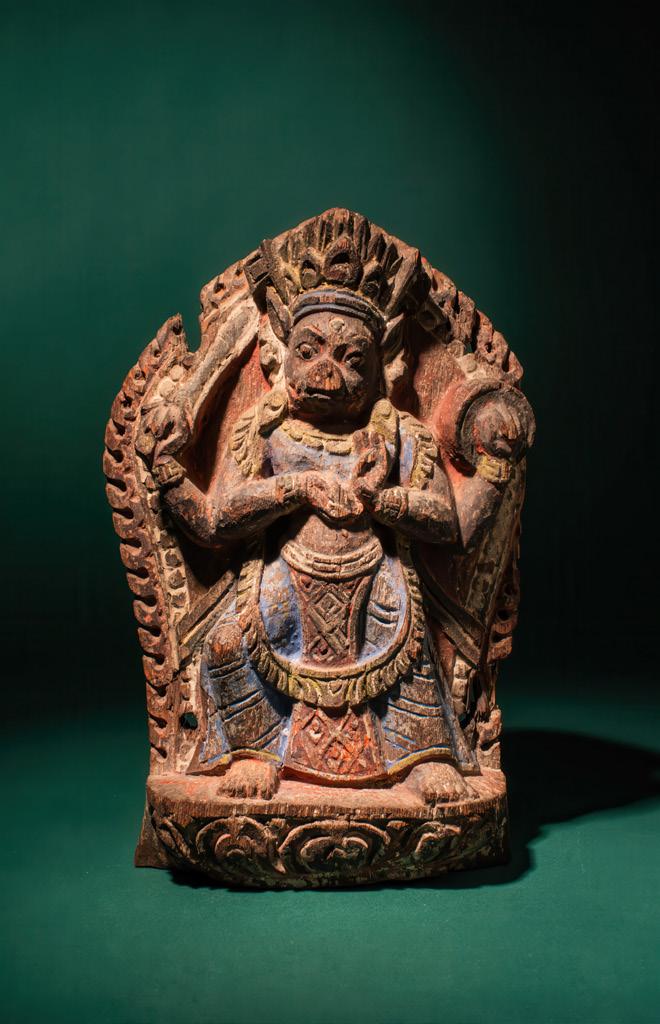
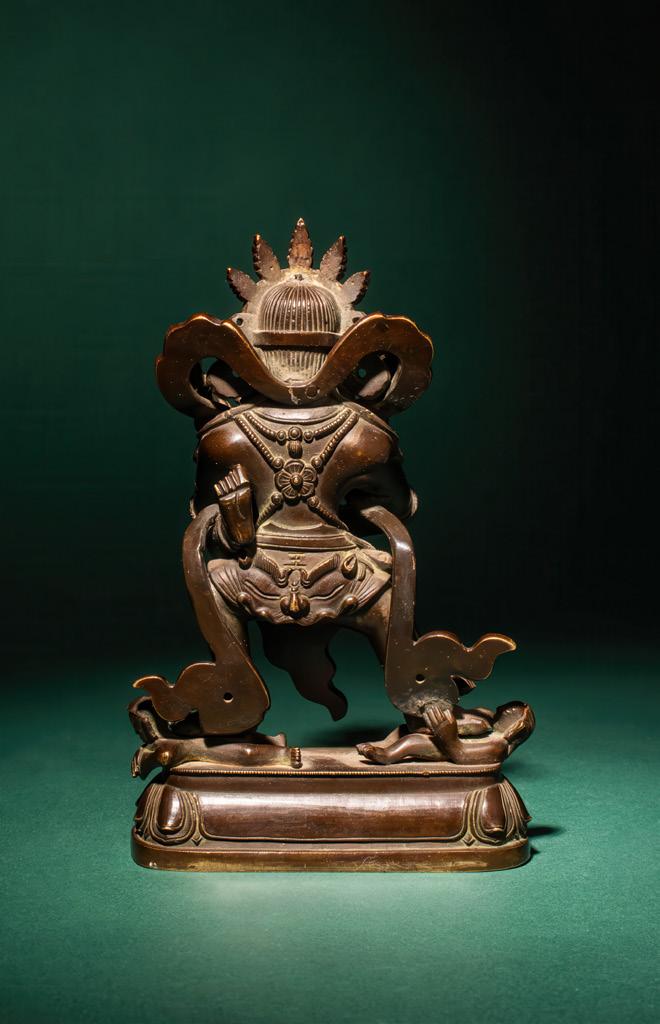
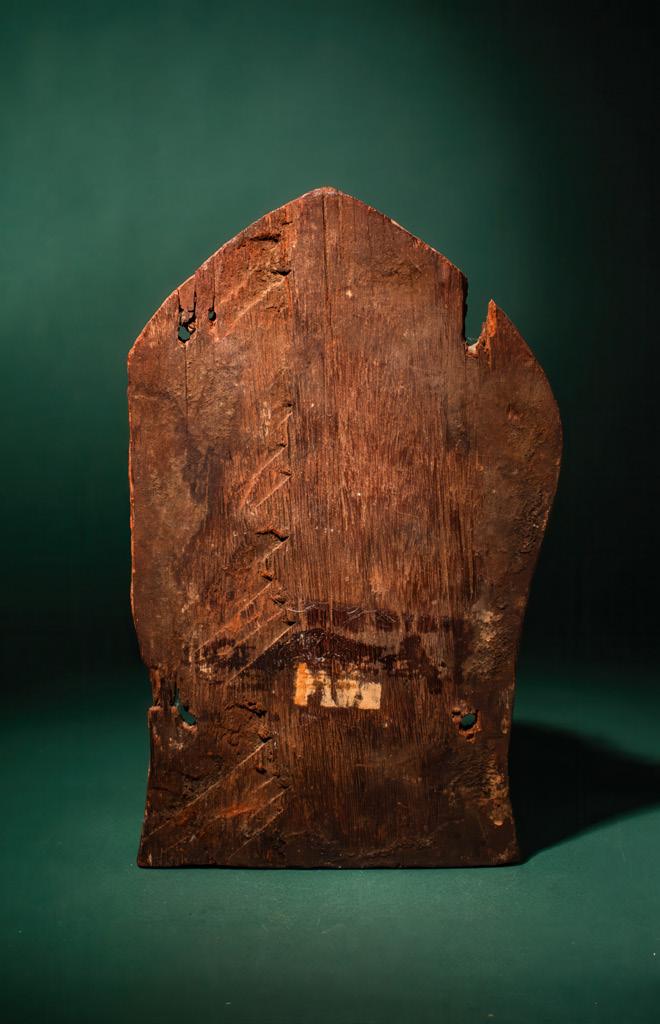
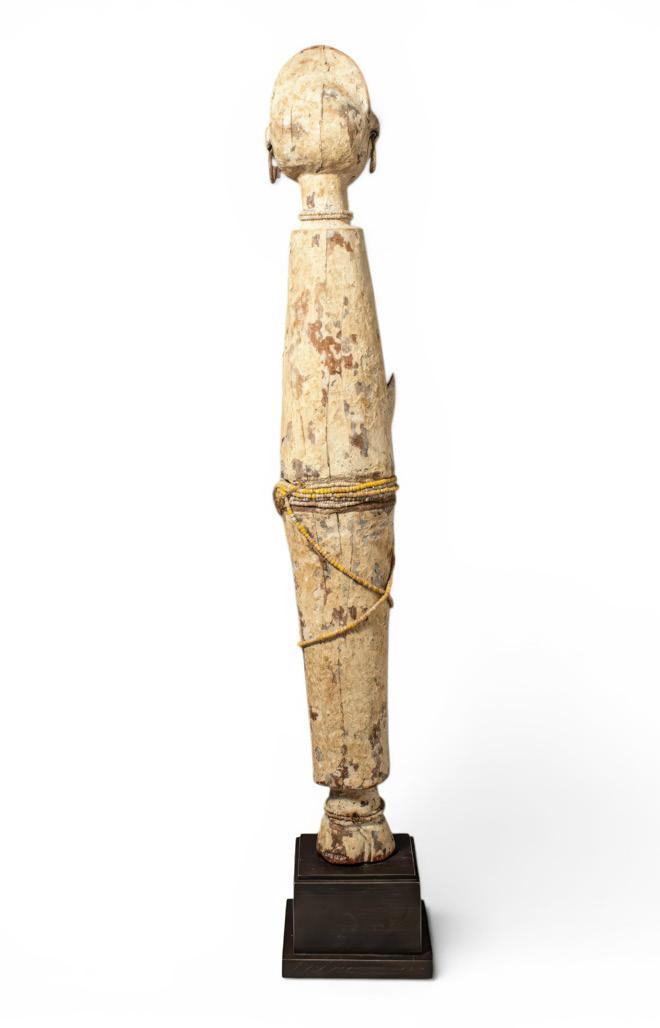
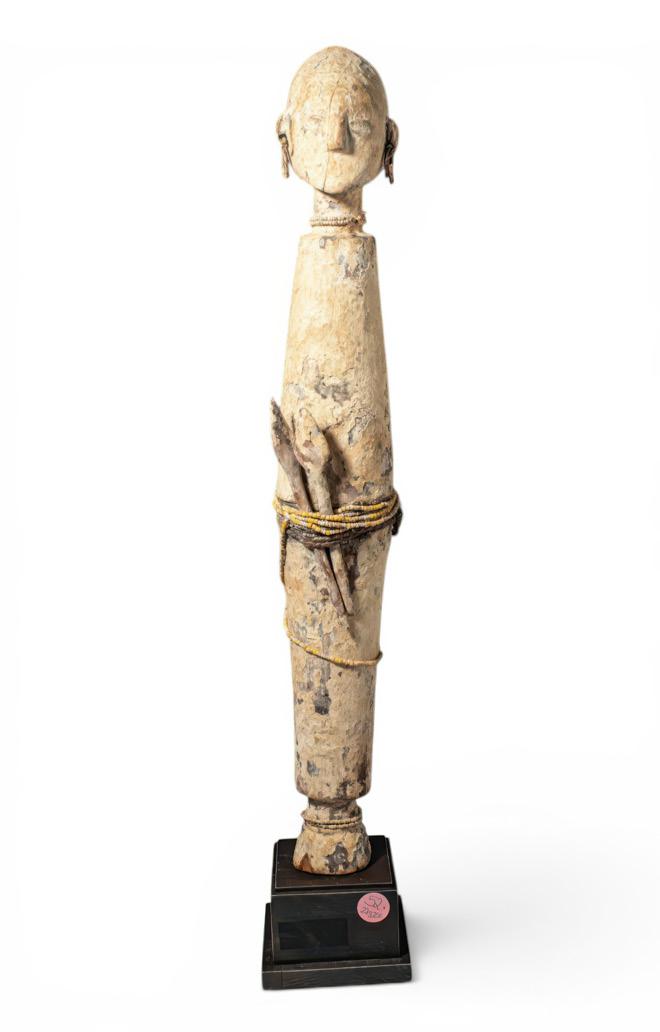
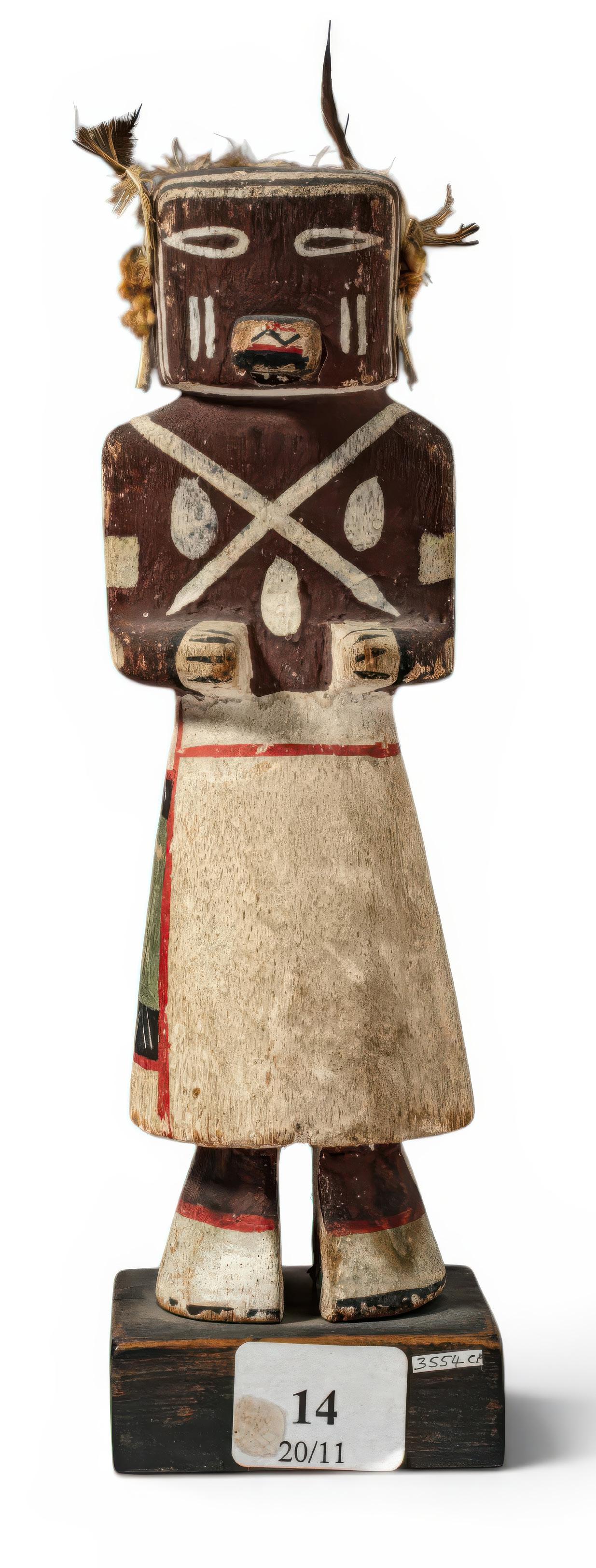
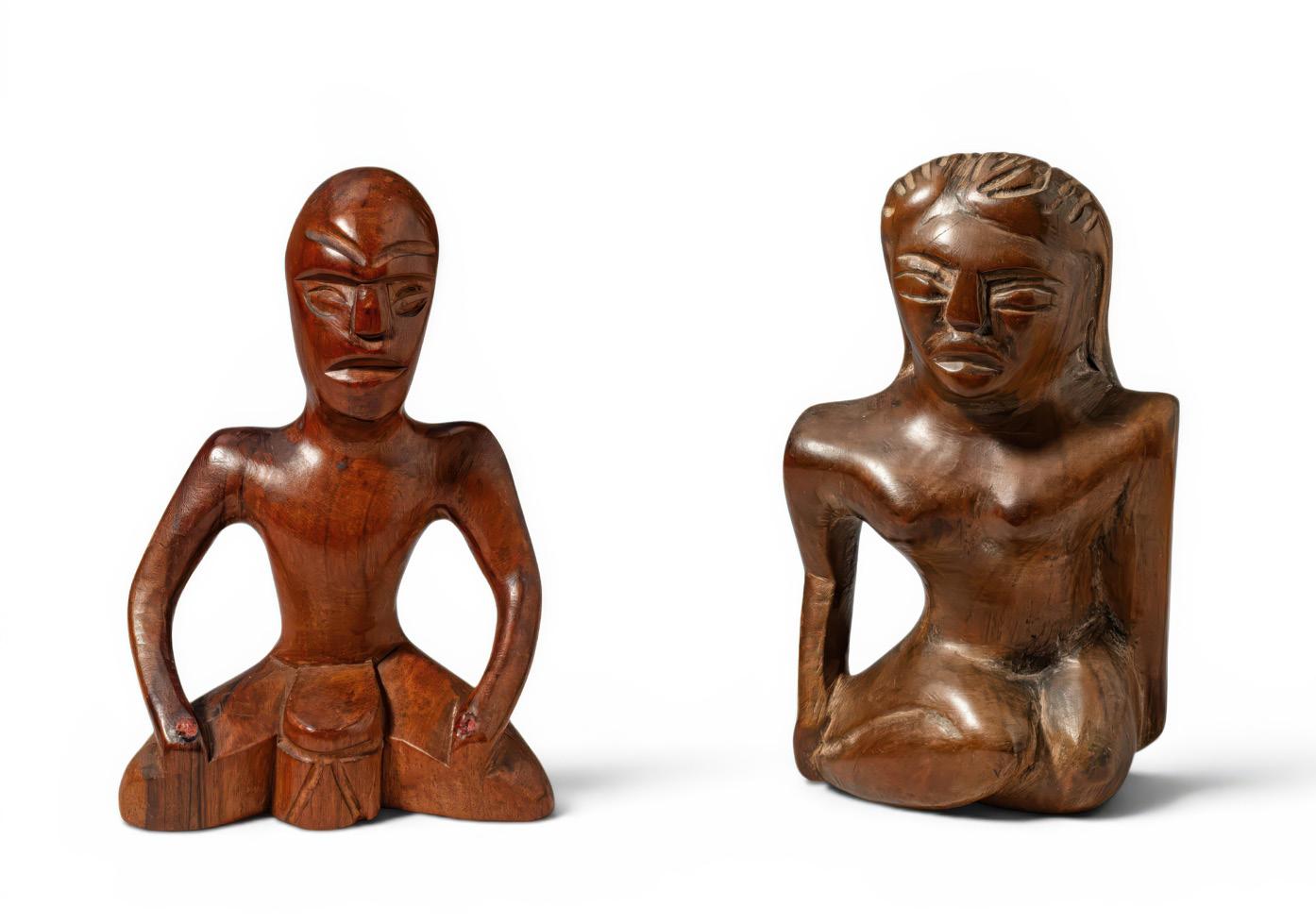
Fine Asian &Tribal Art
The Prince Collection - Day 1
Friday, June 19th, 2026 at 1:00 p.m. BST
Apollo Art Auctions is delighted to present “Fine Asian & Tribal Art – The Prince Collection” that opens on Friday, 19th June 2026 at 1:00 p.m. BST.
The Fine Asian and Tribal Art sale presents a carefully curated selection spanning East and Central Asia, the Himalayas, Africa and Oceania, bringing distinguished Asian pieces ranging from Qing dynasty porcelains and Tibetan bronzes to African sculptural objects of remarkable form and provenance.
Part of the sale is drawn from The Prince Collection, a superb assemblage formed between the 1990s and 2014 by a well-established collector with royal provenance. Many works in the auction also originate from important private collections and respected art markets across London, Milan, Paris, and New York.
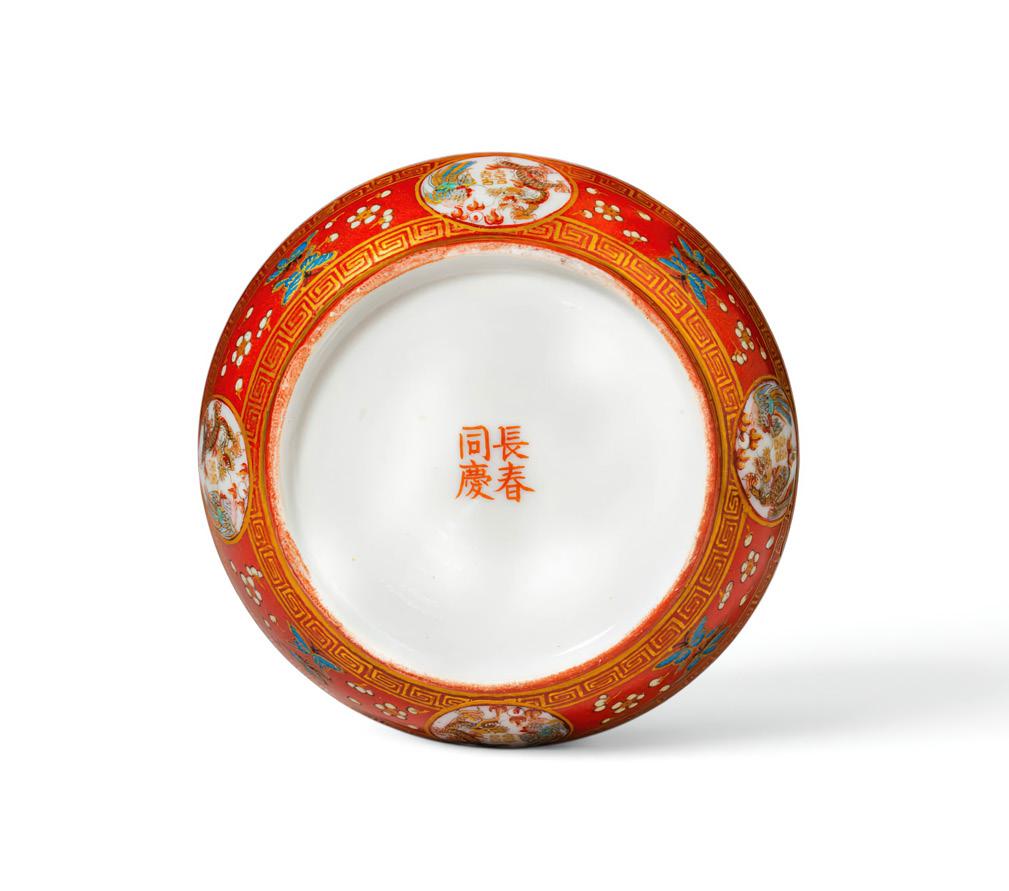
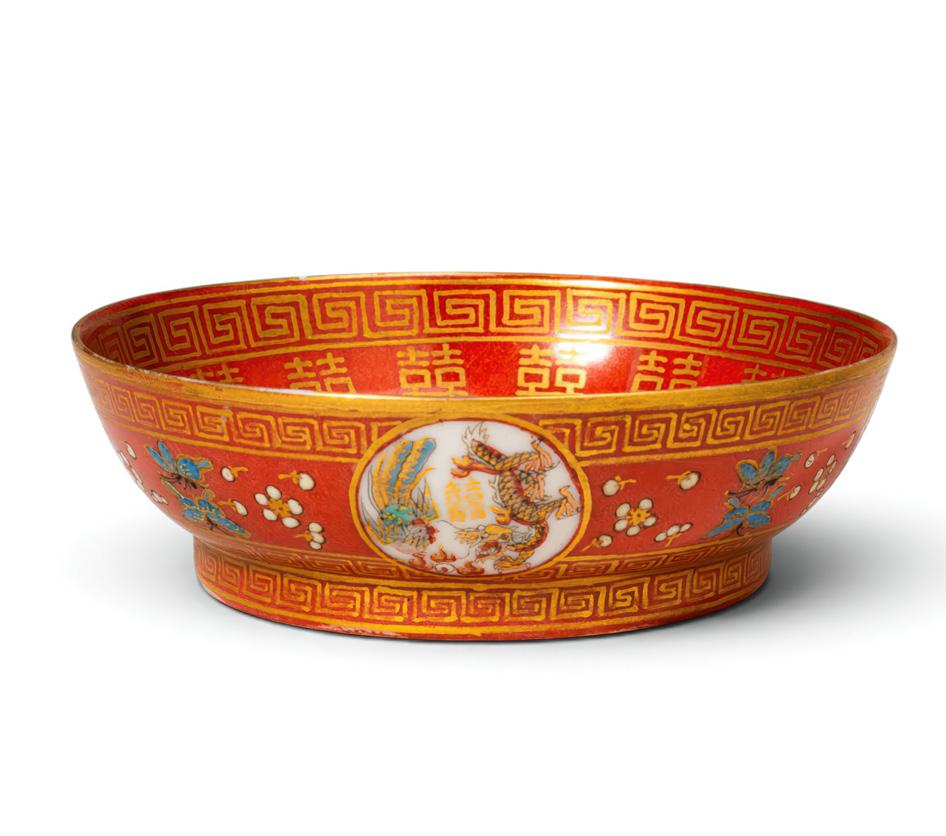
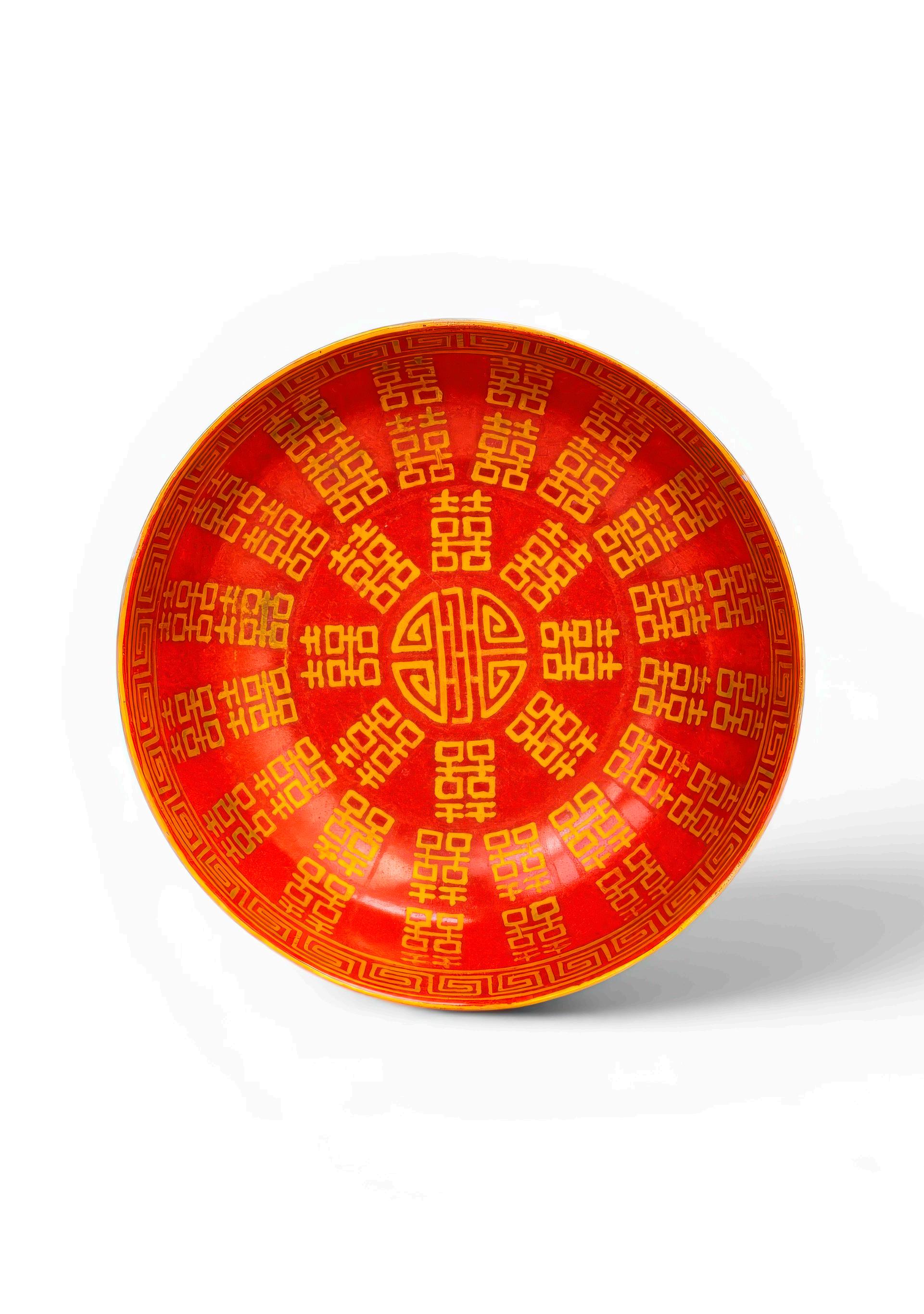
Among the highlights is Lot 4, a Chinese Iron-Red Gilt-Decorated ‘Marriage’ Dish bearing the Chang Chun Tong Qing mark, dating to the Tongzhi period of the Qing Dynasty (ca. AD 1861–1875), richly enamelled in vibrant iron-red with finely executed gilt decoration. Produced for Empress Cixi’s marriage wares.
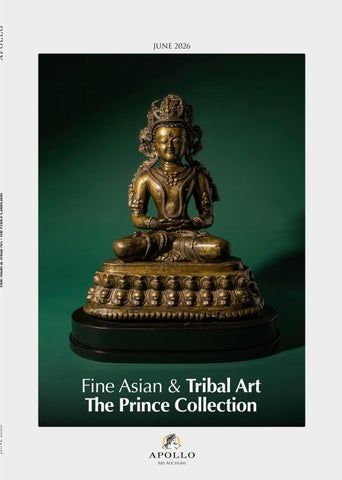
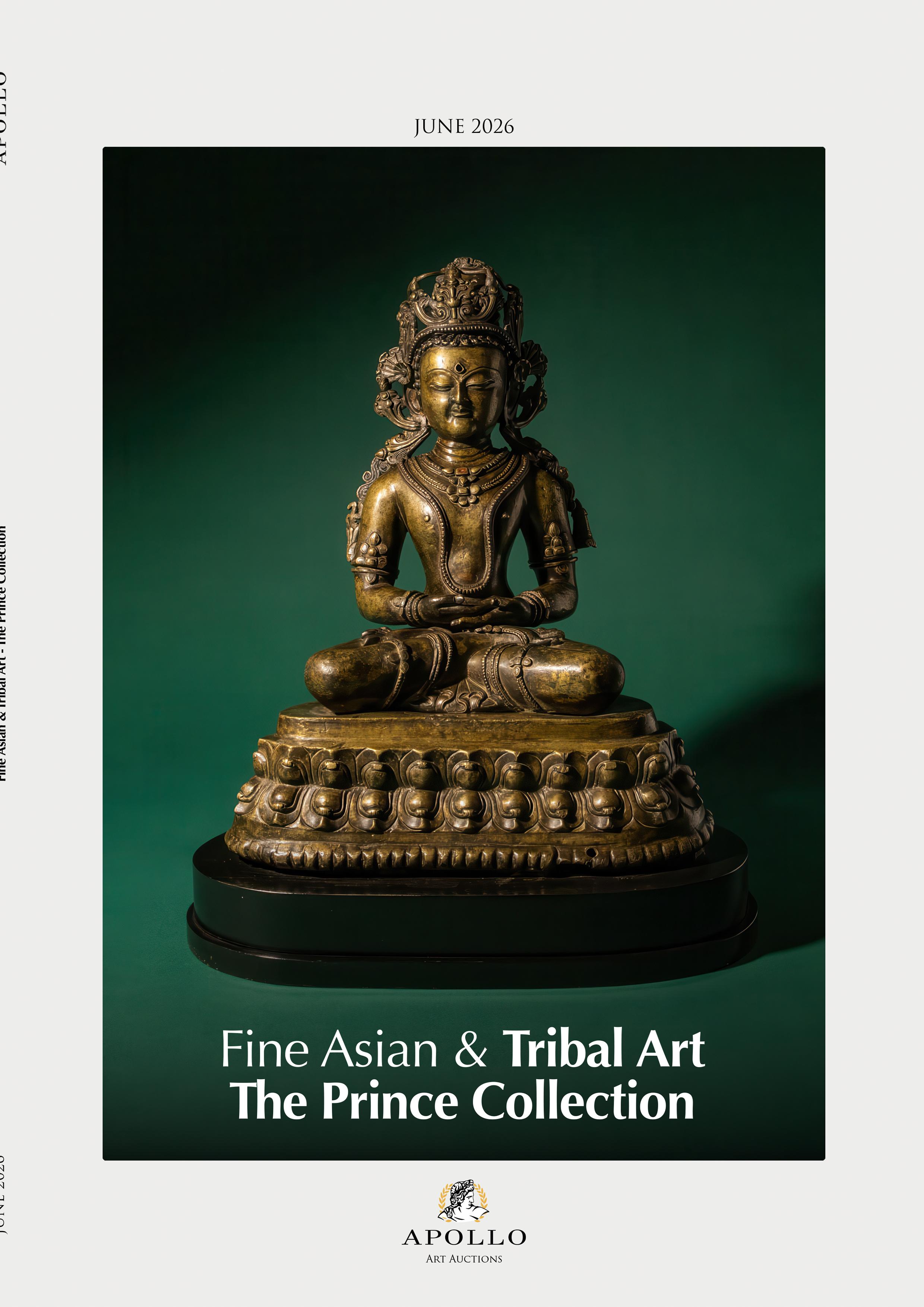
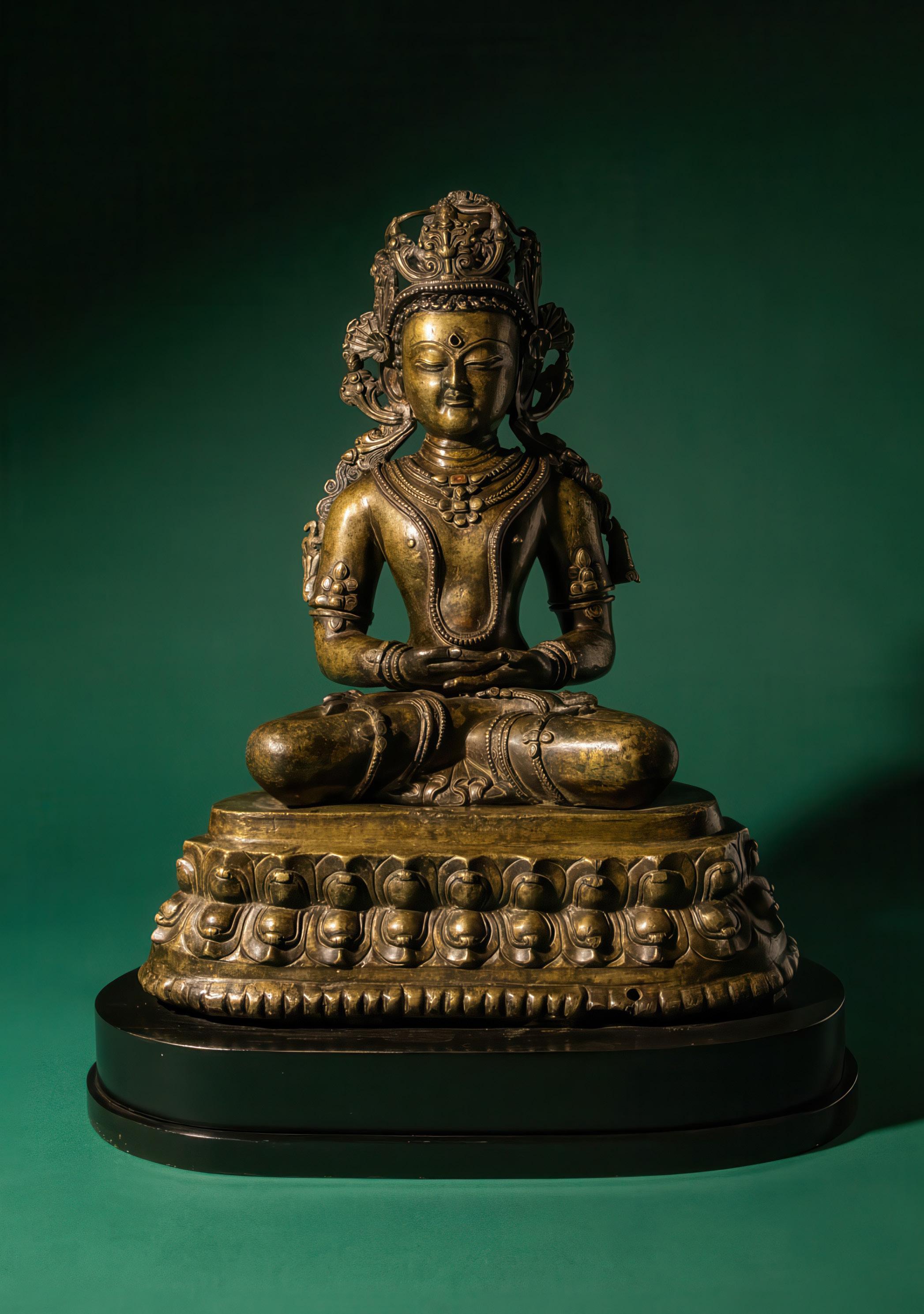
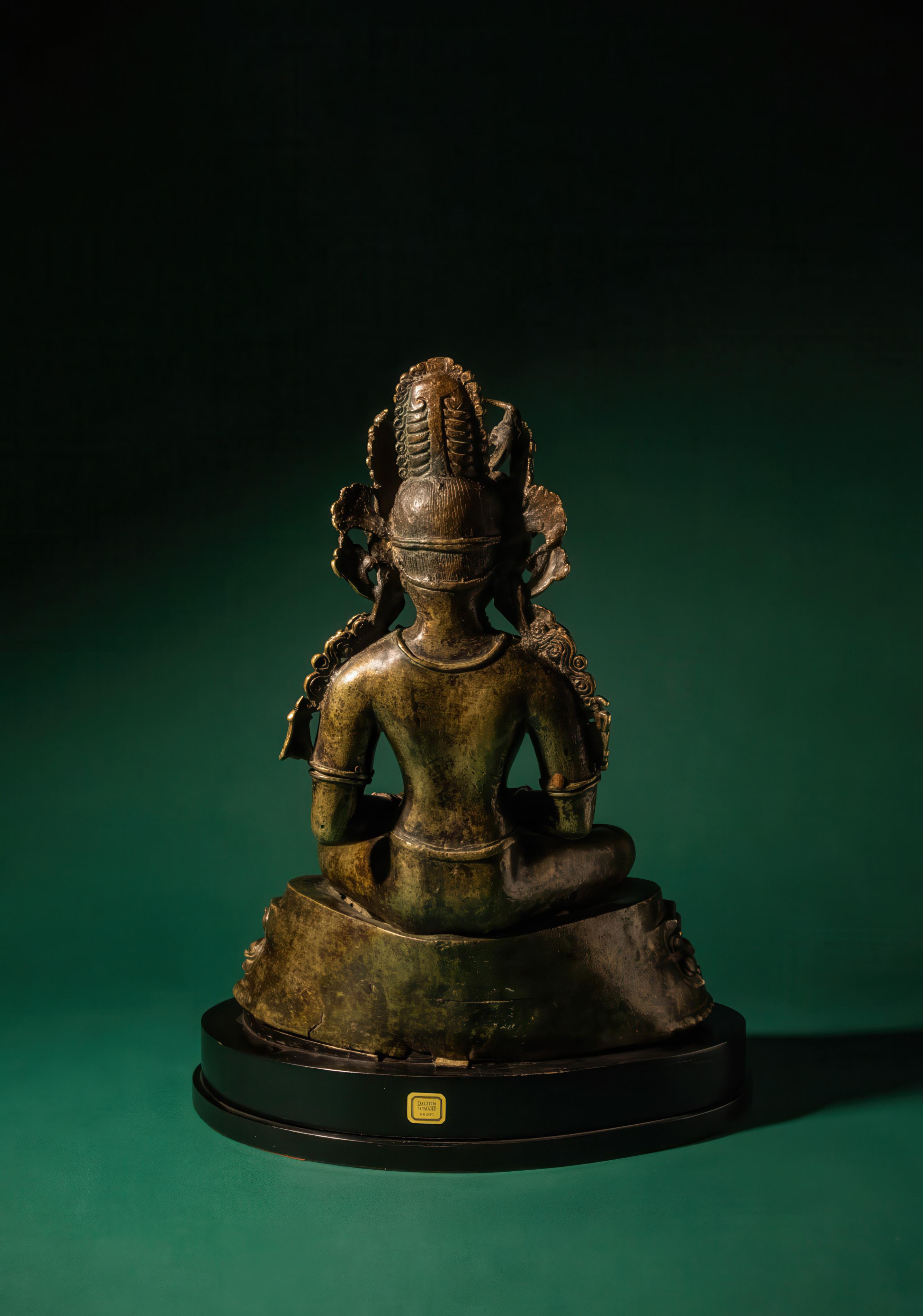
Another important highlight is Lot 51, a Rare Central Tibetan Seated Figure of Kunzang Akor, Bon Deity, dating to the 14th century AD. Richly adorned with an elaborate crown and jewellery, the figure demonstrates the spiritual gravity and exceptional craftsmanship associated with early Himalayan devotional sculpture. Formerly held in distinguished collections in Milan, New York, and Oregon, and published by Himalayan Art Resources.
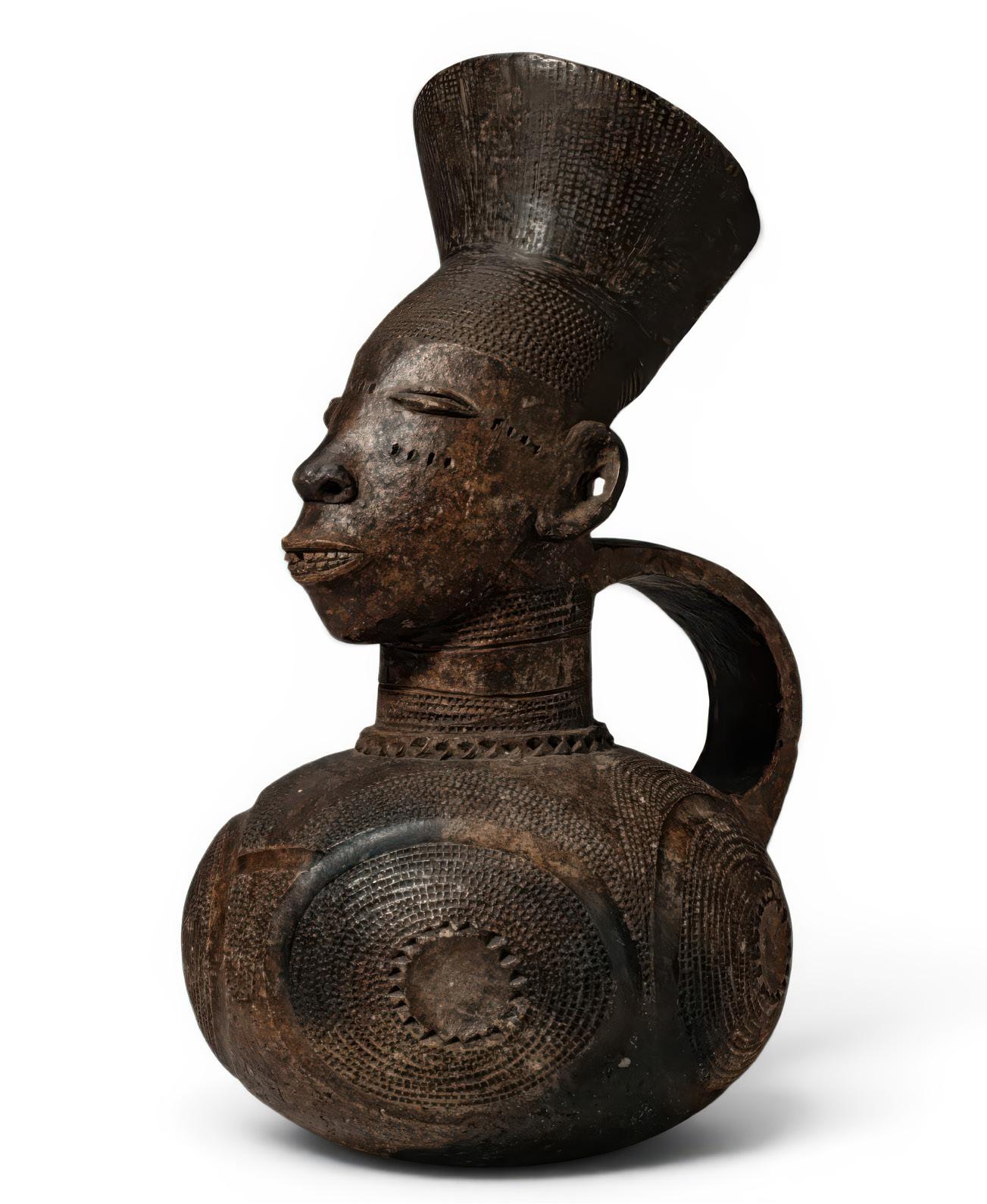
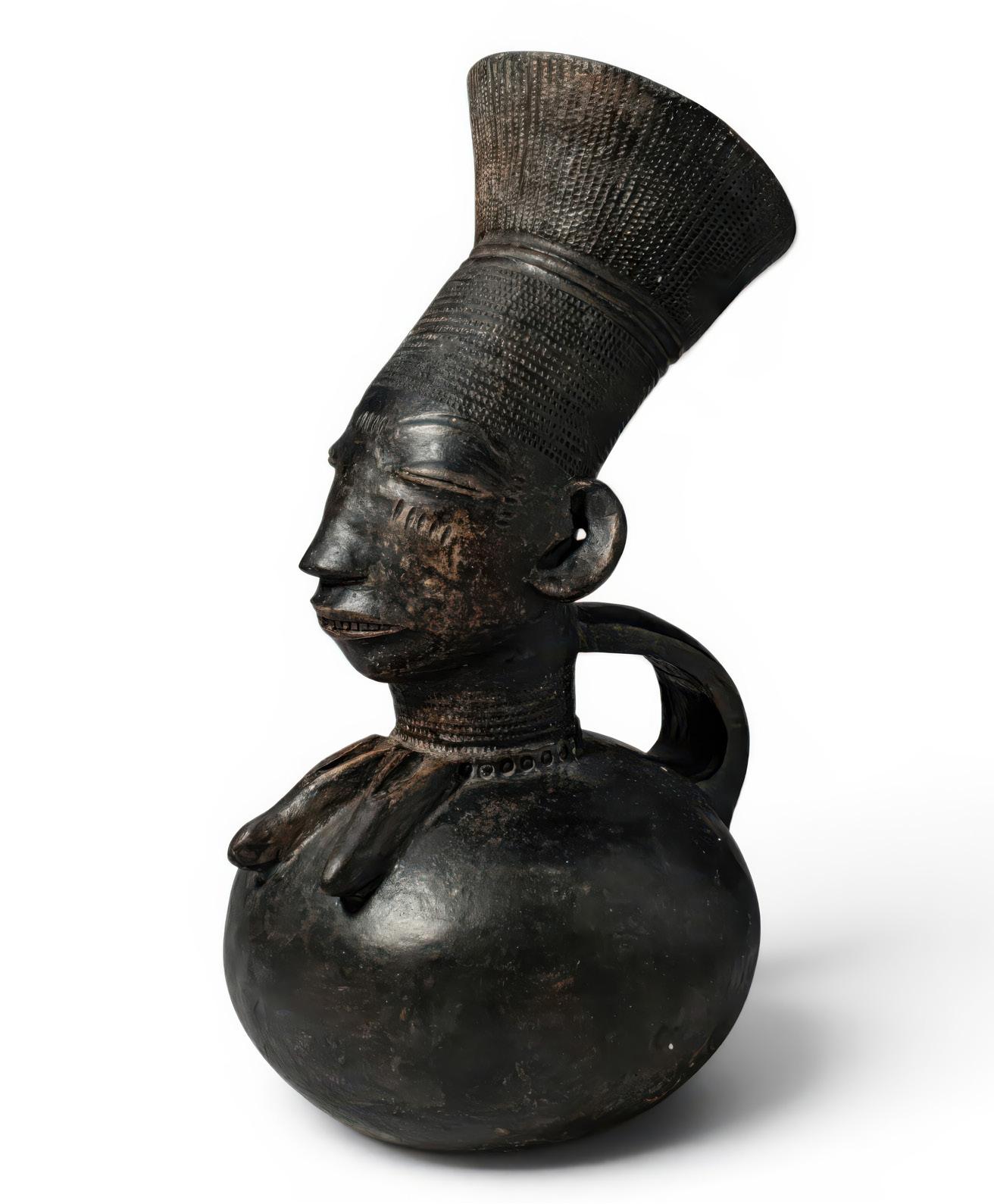
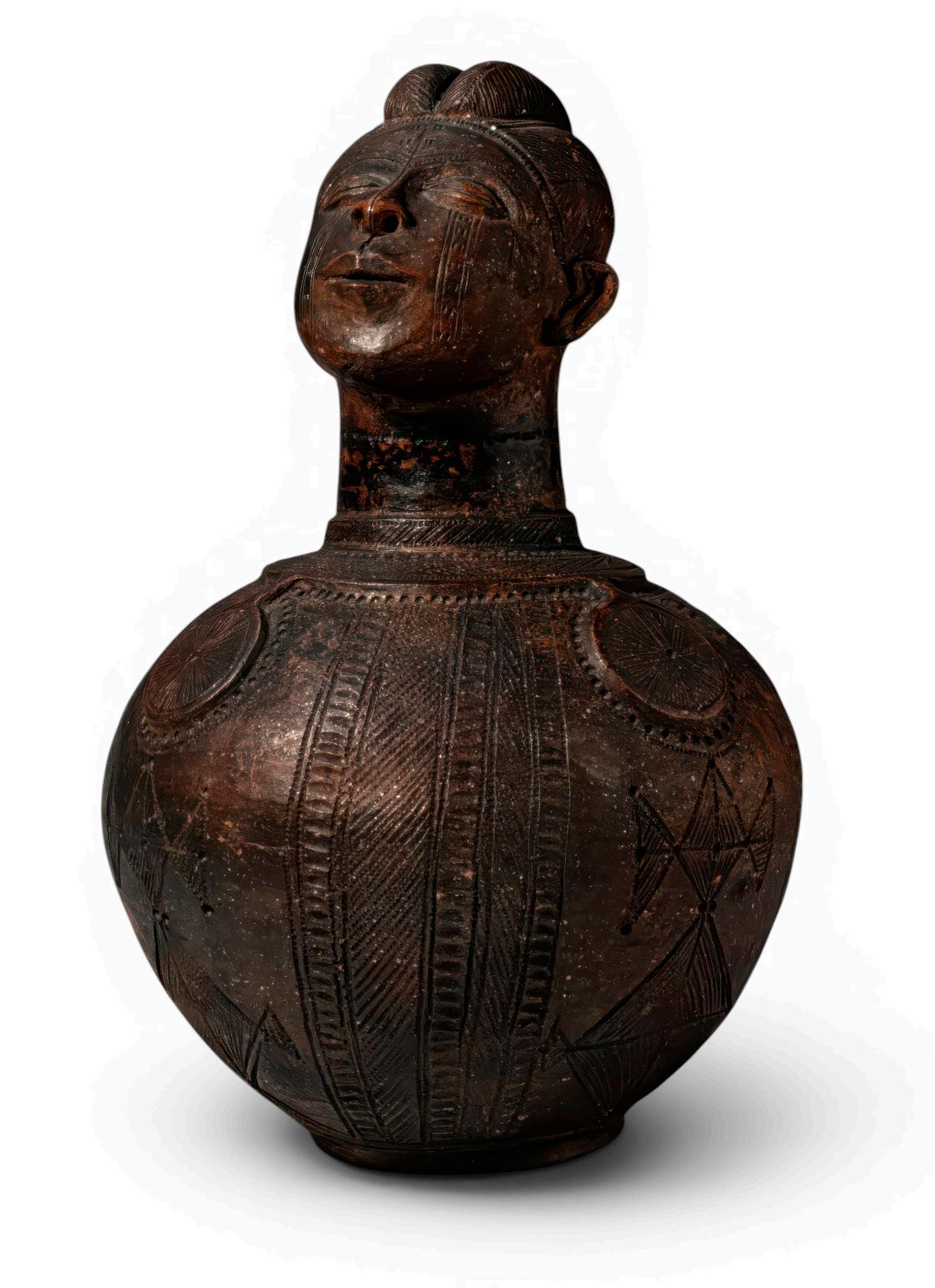
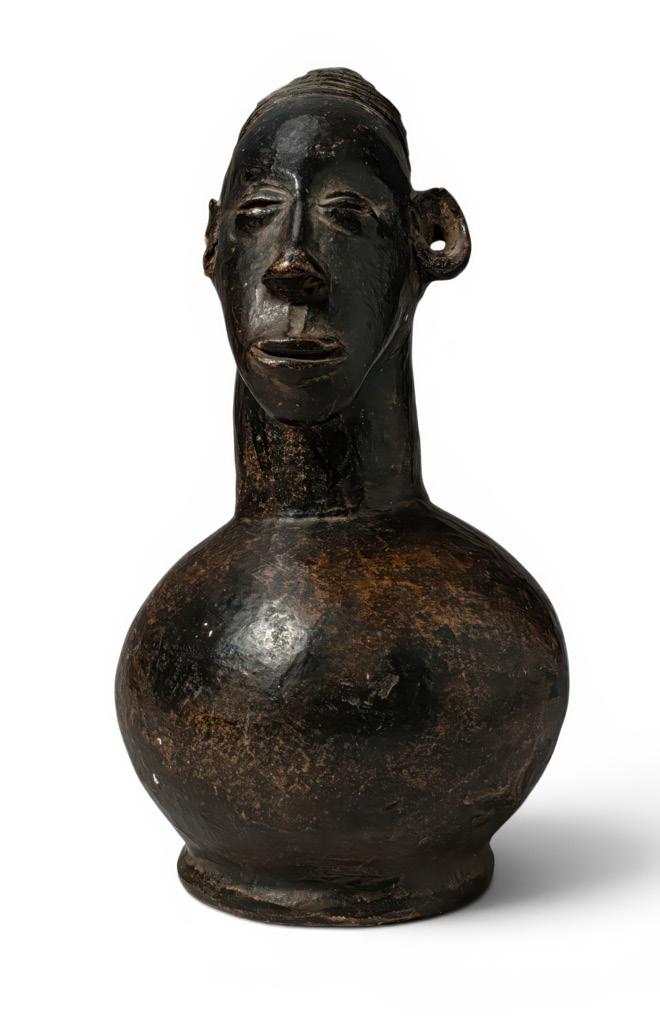
Also featured is Lot 181, a Zande Anthropomorphic Clay Vessel attributed to Mbitim from the Democratic Republic of the Congo, dating to the early 20th century, modelled with a rounded globular body surmounted by a finely rendered human head in profile. Intricately incised geometric decoration and sensitively modelled facial features exemplify the artistic sophistication of Zande ceramic traditions. With provenance including the Castagnola and Robert Rubin collections in New York.
This conscientiously assembled sale offers collectors an opportunity to acquire works of exceptional quality, historical significance, and distinguished provenance. Bringing together courtly Asian masterpieces, sacred Himalayan sculpture, and important African tribal art, welcoming both established connoisseurs and emerging collectors.
For appointments, enquiries or to register for bidding, please contact us via email at enquiries@apolloauctions.com or by calling +44 (0) 2046309333.
Consultants:
Dr. Ivan Bonchev (General Antiquities) Dott. Alessandro Neri (General Antiquities) Carol. R. Andrews (Ancient Egypt) James Brenchley (Classical & Ancient Egypt) Clive Sawyer (Numismatics & General Antiquities)
Sami Fortune (Ancient Jewellery) Prof. Dr. Peter Van Der Veen (Ancient Cylinder Seals and Near Eastern) Ralf Kotalla (Glass and Terracotta) Raymond Bove (Stone and Metal) Simone Musso (Ancient Egypt)
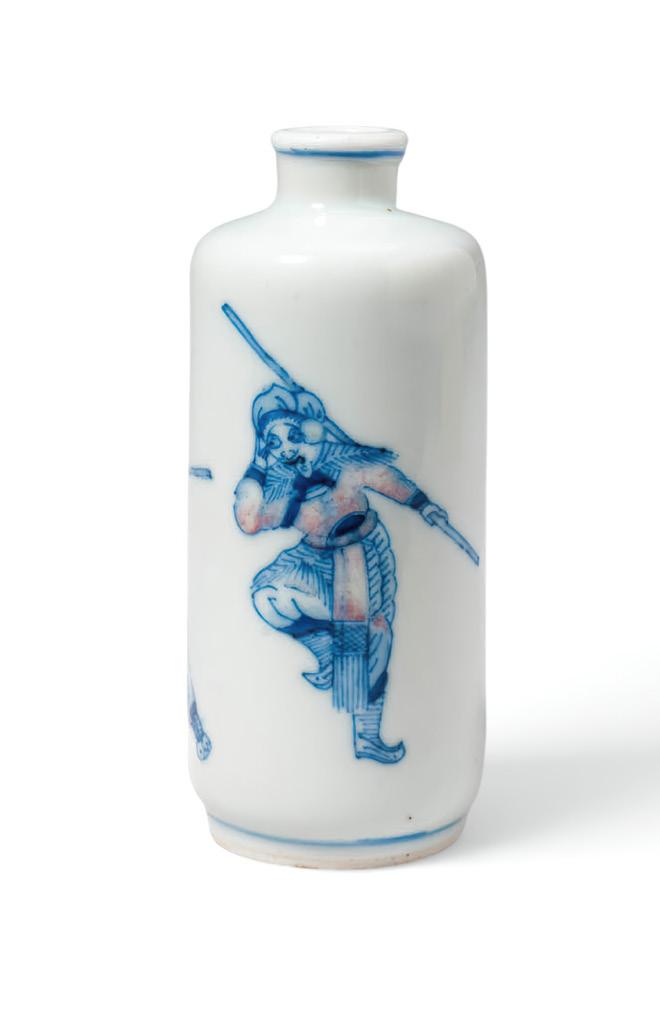
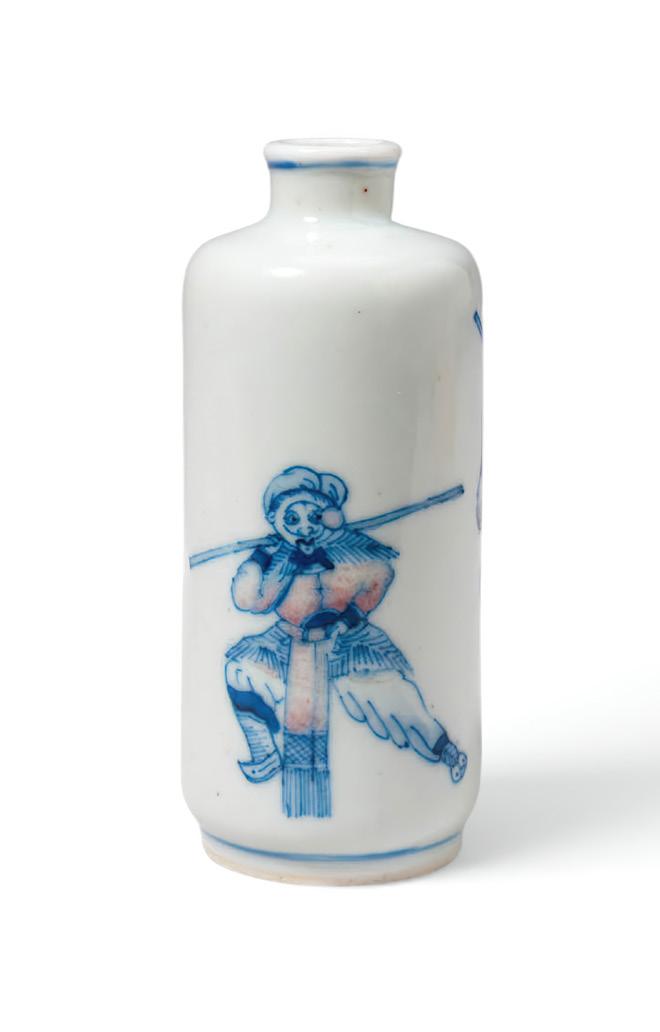
1. CHINESE SNUFF BOTTLE WITH UNDERGLAZE BLUE AND UNDERGLAZE COPPER RED, DEPICTING THE MONKEY KING AS OP
Qing Dynasty, Ca. AD 1644 - 1912.
Starting Price:
£800
A slender porcelain snuff bottle of cylindrical form with a short neck, decorated in a combination of underglaze cobalt blue and copper-red on a white ground. The exterior features a lively depiction of the Monkey King (Sun Wukong) rendered in multiple stylized manners of Chinese opera. The figure is shown in a dynamic pose, balancing lightly while carrying his staff across the shoulders, dressed in theatrical costume with flowing elements and exaggerated features characteristic of stage performance. The face and contours are outlined in cobalt blue, while areas of copper-red enliven the costume. Subjects drawn from Journey to the West and their reinterpretation through opera were immensely popular in Qing visual culture, reflecting the close relationship between literature, theatre, and decorative arts.
Provenance: Private UK Collection.
Size: 80mm x 30mm; Weight: 55g
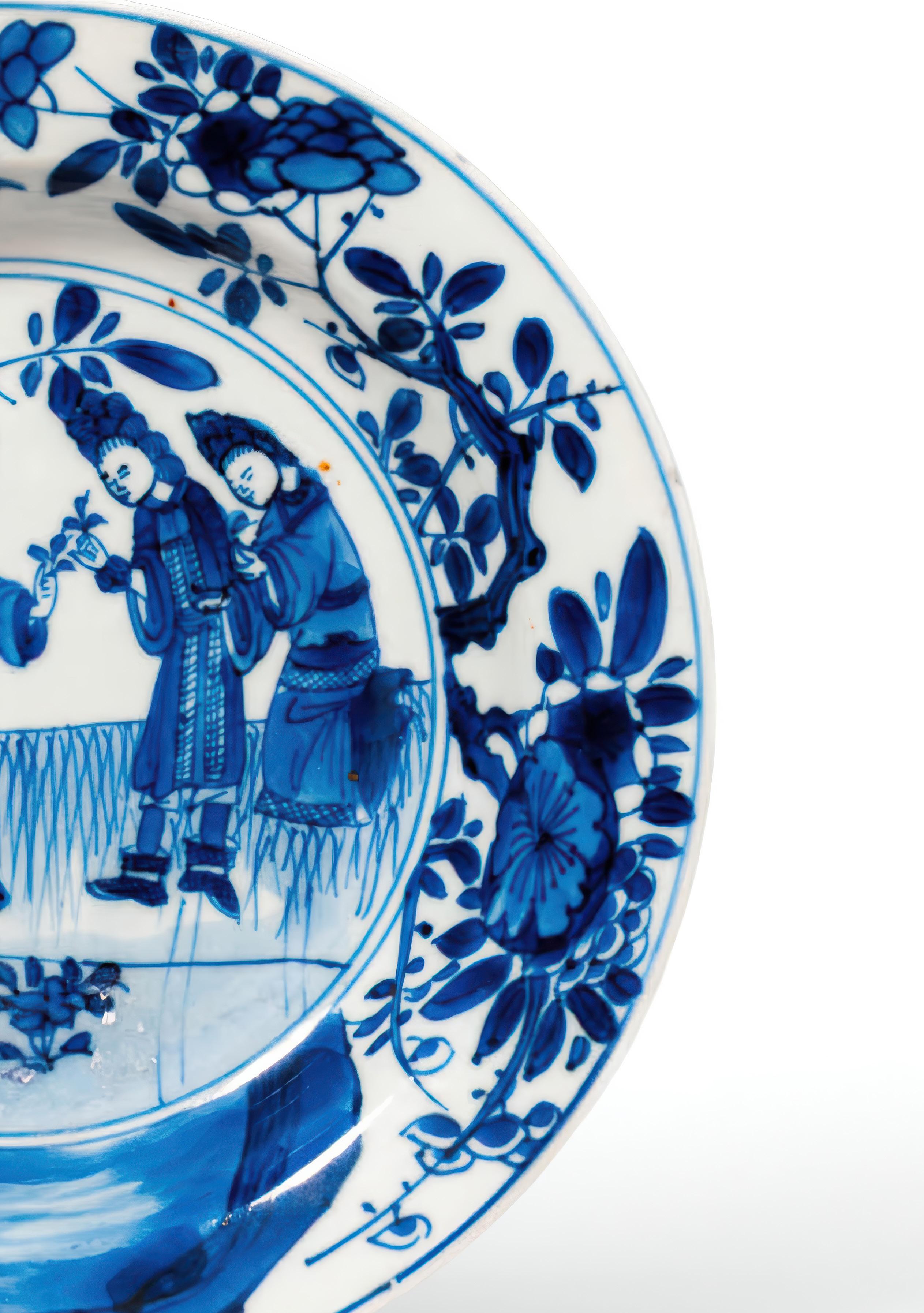
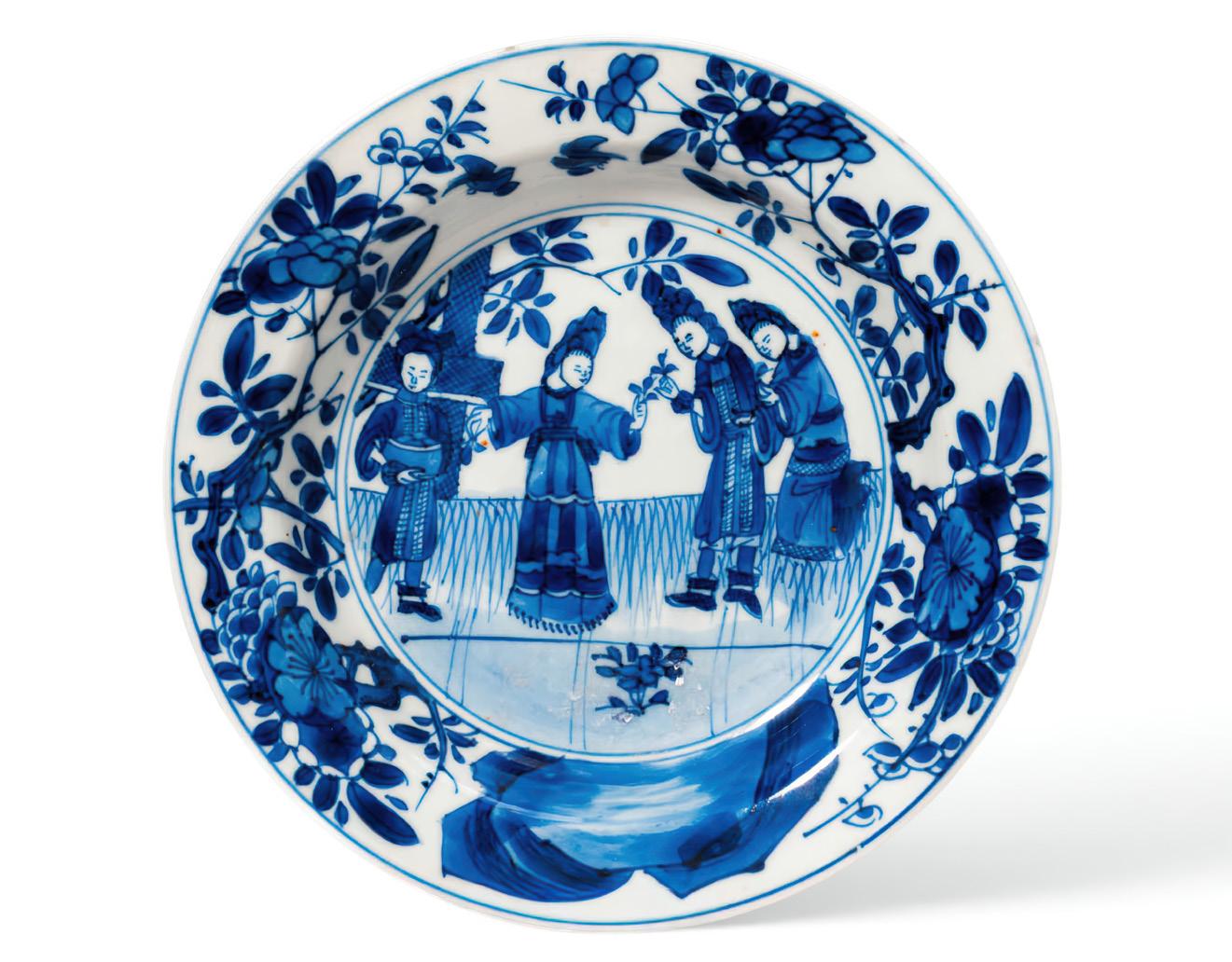
3. CHINESE BLUE AND WHITE FIGURAL DISH
Starting Price: £800
Kangxi Period, Qing Dynasty, Ca. AD 1661 - 1722.
A finely painted blue and white porcelain dish of shallow rounded form, the interior centred with a figural scene of four elegantly attired women gathered on a terrace. The figures are depicted in flowing robes, engaged in refined pursuits, one holding a floral spray while the others look on, suggesting a scene of genteel leisure or courtly interaction.The central medallion is encircled by a broad cavetto richly decorated with flowering branches bearing peony and other blossoms, the foliage extending in a naturalistic yet balanced arrangement.
Provenance: Private UK Collection.
Size: 25mm x 155mm; Weight: 115g
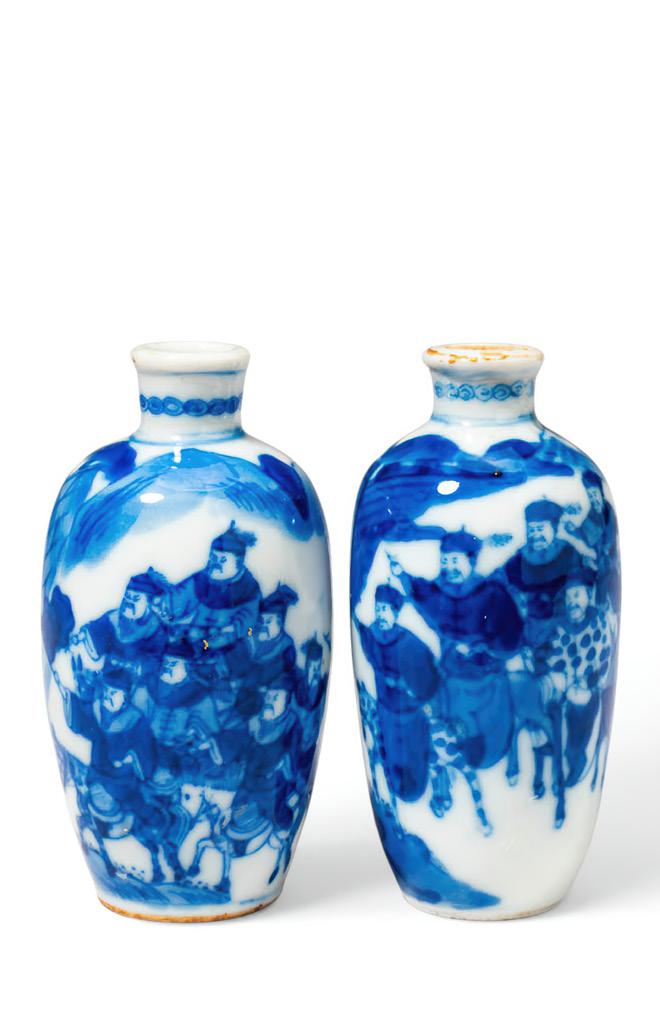
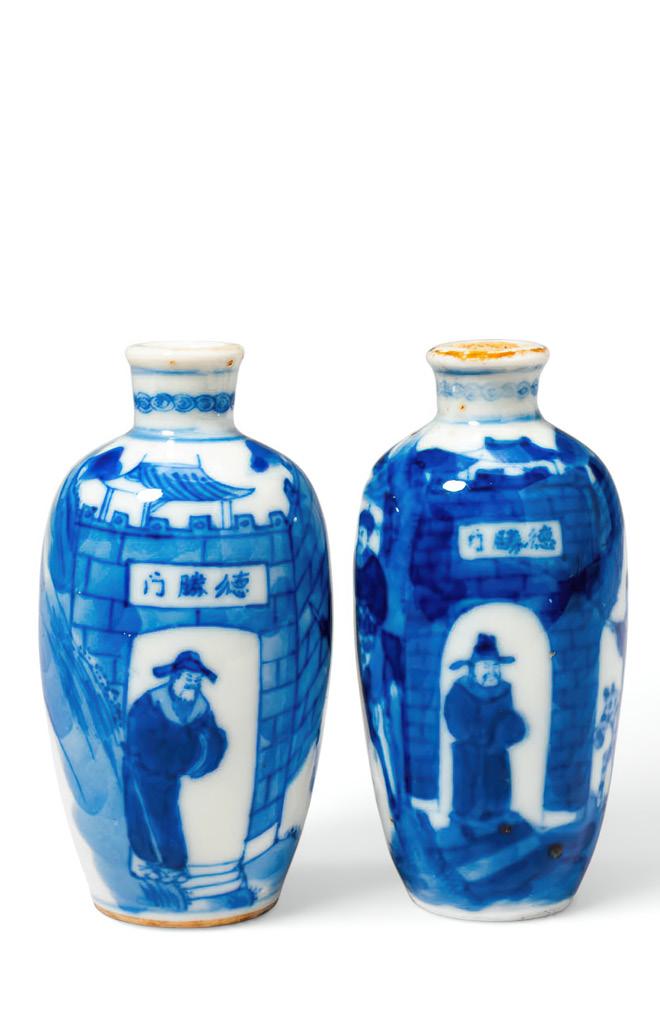
2. CHINESE BLUE AND WHITE FIGURAL SNUFF BOTTLE, DEPICTING THE INVASION OF EIGHT BANNERS
Qing Dynasty, Ca. AD 1644 - 1912.
Starting Price: £800
An engaging pair of porcelain snuff bottles of ovoid form with short cylindrical necks, each painted in underglaze cobalt blue on a white ground with animated figural scenes. The decoration depicts the historical theme of the “Eight Banners Entering the Capital” ( “八旗进京 图”), referring to the Manchu military forces whose entry into Beijing marked the establishment of Qing rule in 1644. The compositions are lively and narrative in character, showing groups of banner soldiers in procession, some mounted and others on foot, carrying standards and accompanied by attendants. Each bottle is finished with a simple decorative band at the neck, with six-character Yongzheng and Qianlong marks on the bases respectively.
Provenance: Private UK Collection.
Size: 70-70mm x 35-35mm; Weight: 90g
4. CHINESE IRON-RED GILT-DECORATED ‘MARRIAGE’ DISH, CHANG CHUN TONG QING MARK 長春同慶
Tongzhi Period, Qing Dynasty, Ca. AD 1861-1875.
Starting Price: £500
A vibrantly enamelled porcelain dish of shallow rounded form, the interior richly decorated in iron-red with gilt ornament. The central medallion encloses a stylised shou (longevity) character, surrounded by radiating panels of repeated gilt double happiness (shuangxi) characters, all set against a dense iron-red ground. The cavetto is bordered by a continuous key-fret (leiwen) band in gilt, framing the bold and auspicious interior design. The contrast between the luminous gilding and the saturated iron-red ground creates a striking visual effect, enhanced by the crisp execution of the calligraphic motifs.With four character mark 長春同慶 on the base, a unique mark used specifically for Empress Cixi’s marriage wares.
Provenance: Private UK Collection.
Publications / Reports: For similar see: Tsinghua University Art Museum, https://www.artmuseum.tsinghua.edu.cn/en/cpsj_english/gndc/gcxy/201605/ t20160531_1215.shtml Auction Comparison: Bukowskis, Important Winter Sale 669, lot 1017.
Size: 25mm x 90mm; Weight: 60g
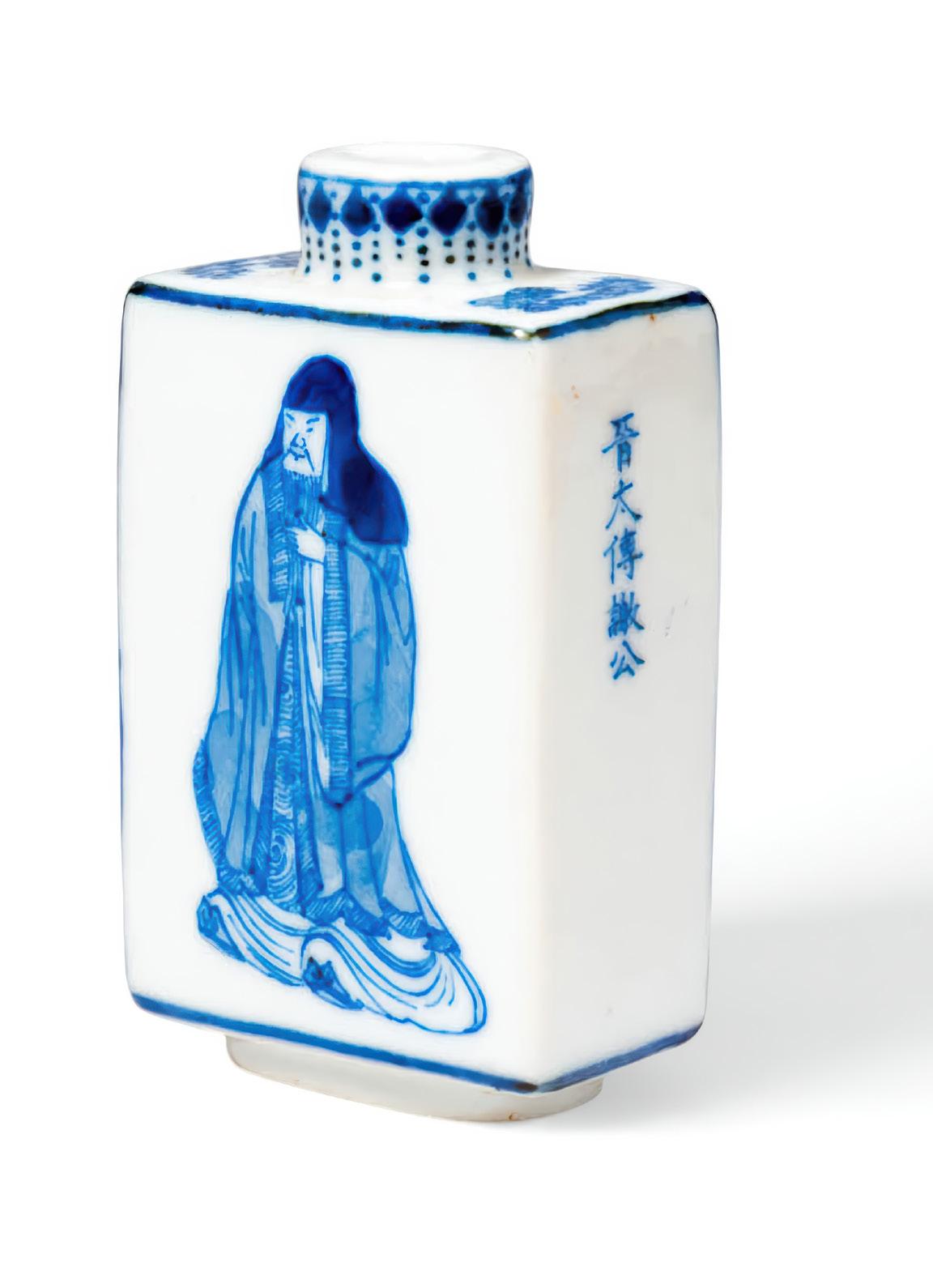
5. CHINESE BLUE AND WHITE FIGURAL SNUFF BOTTLE, DEPICTING XIE AN
Qing Dynasty, Ca. AD 1644 - 1912.
Starting Price:
£500
A porcelain snuff bottle of rectangular form with gently rounded shoulders, rising to a short cylindrical neck. The body is delicately painted in underglaze cobalt blue on a white ground, depicting the celebrated Eastern Jin dynasty statesman Xie An 谢安 standing in flowing robes. The figure is rendered with quiet dignity, his long garment falling in rhythmic folds, and his hands clasped before him in a composed, introspective pose. His facial features are stylised yet expressive. The shoulder is encircled by a decorative band of pendant dots and geometric motifs, framing the main figure and adding visual balance to the otherwise minimal composition. The base is neatly finished, with a four-character Qianlong mark. Xie An (320–385 CE) was revered not only as a statesman but also as a symbol of calm intellect and refined character under pressure. His image on scholar’s objects reflects the Qing dynasty admiration for historical exemplars of moral integrity and cultured demeanor.
Provenance: Private UK Collection.
Size: 67mm x 40mm; Weight: 60g
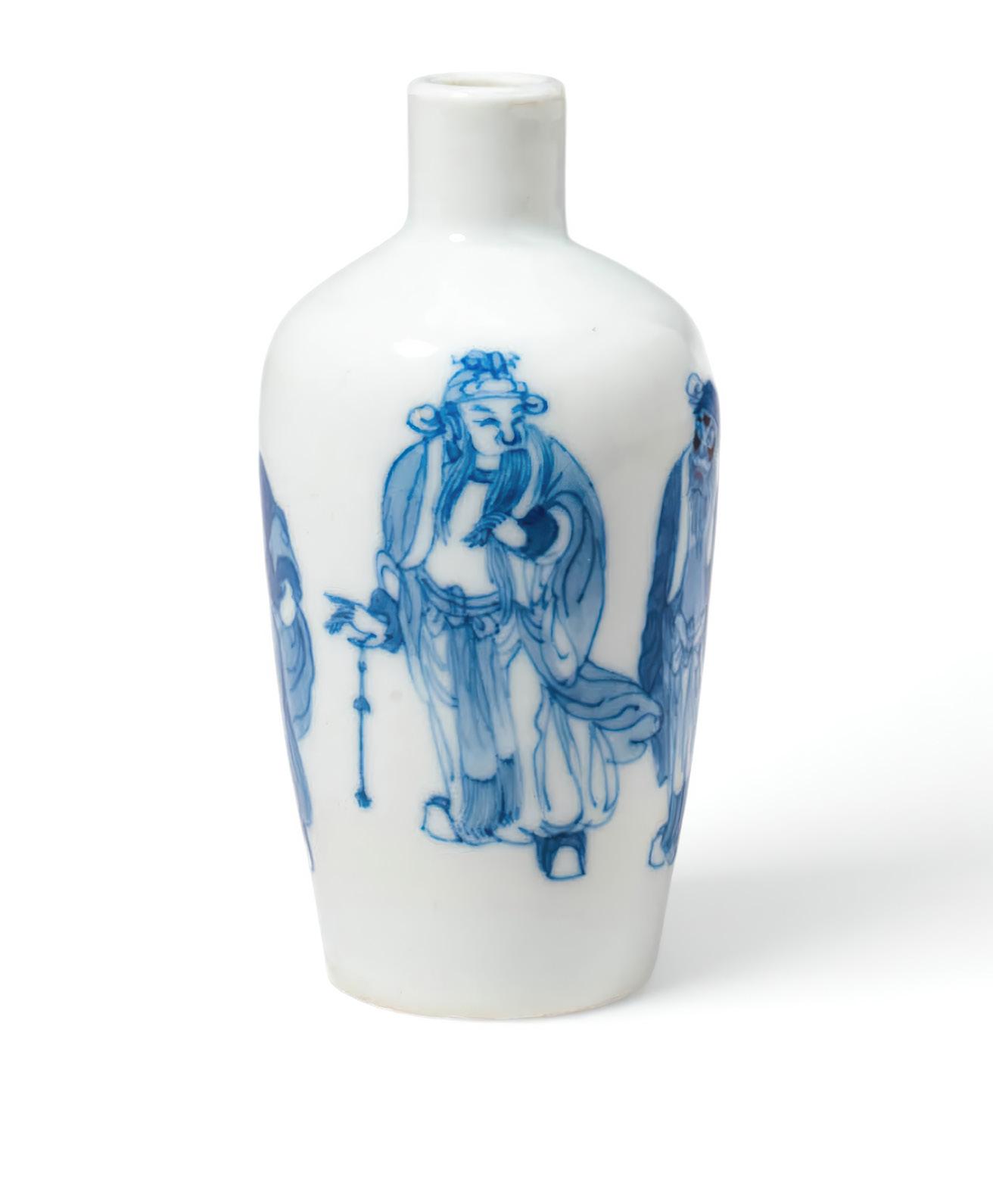
6. CHINESE BLUE AND WHITE FIGURAL SNUFF BOTTLE
Qing Dynasty, Ca. AD 1644 - 1912.
Starting Price: £800
A porcelain snuff bottle of elegant ovoid form with a short cylindrical neck, decorated in underglaze cobalt blue on a white ground.
The exterior is painted with two standing male figures rendered in a lively, expressive manner. Each is depicted with exaggerated facial features and flowing garments, holding attributes suggestive of narrative or theatrical roles.
Provenance: Private UK Collection.
Size: 73mm x 38mm; Weight: 55g
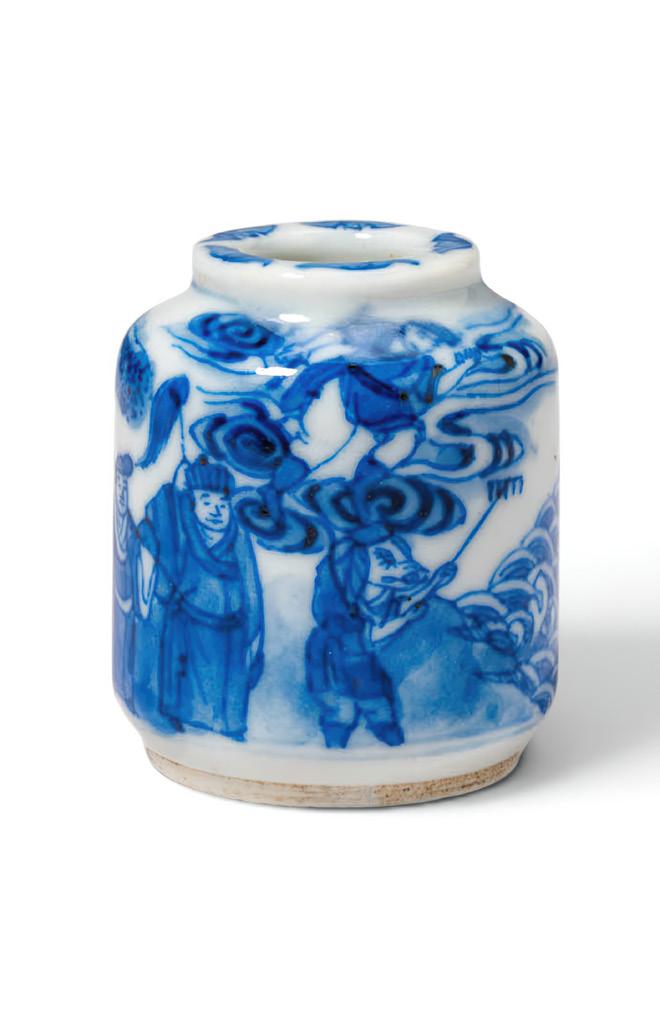
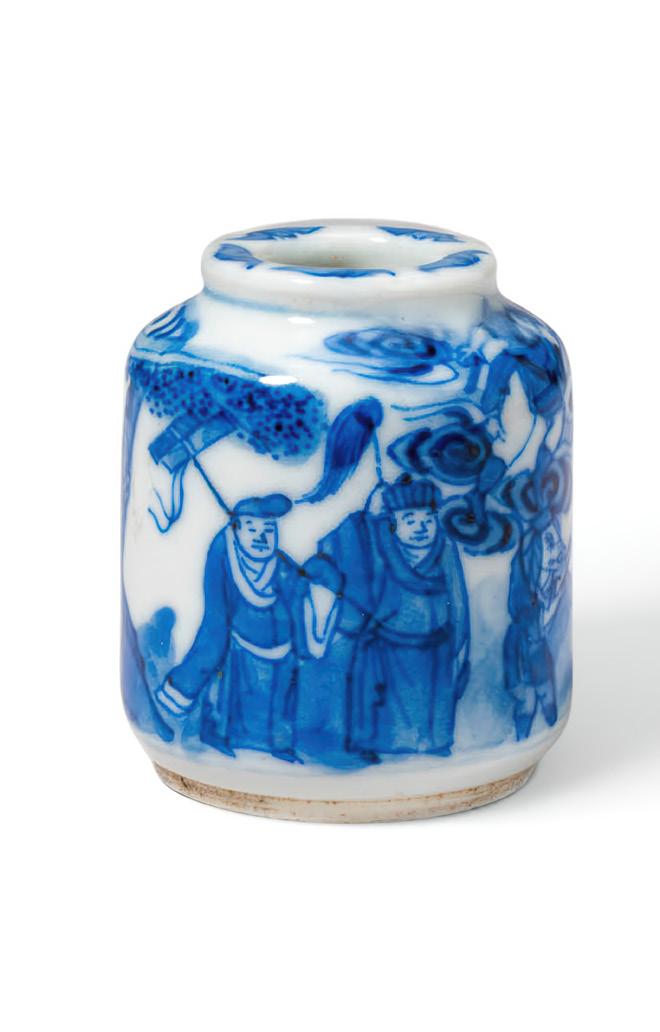
7. CHINESE BLUE AND WHITE SNUFF BOTTLE, DEPICTING SCENE FROM JOURNEY TO THE WEST
Qing Dynasty, Ca. AD 1644 - 1912.
Starting Price: £1000
A porcelain snuff bottle of rounded cylindrical form with a short neck, decorated in underglaze cobalt blue on a white ground with a lively narrative scene drawn from the classic Ming dynasty novel Journey to the West (西游记).
The exterior depicts a group of figures identifiable as members of the pilgrim party, likely including the monk Xuanzang (Tang Sanzang) accompanied by his supernatural disciples. Figures appear animated in gesture, representing the mischievous Monkey King (Sun Wukong) and the Monk Pig (Zhu Bajie), while swirling cloud motifs above suggest a celestial or magical setting.
The neck and shoulder are simply finished, with six character Qianlong mark on the base.
Provenance: Private UK Collection.
Size: 45mm x 30mm; Weight: 25g
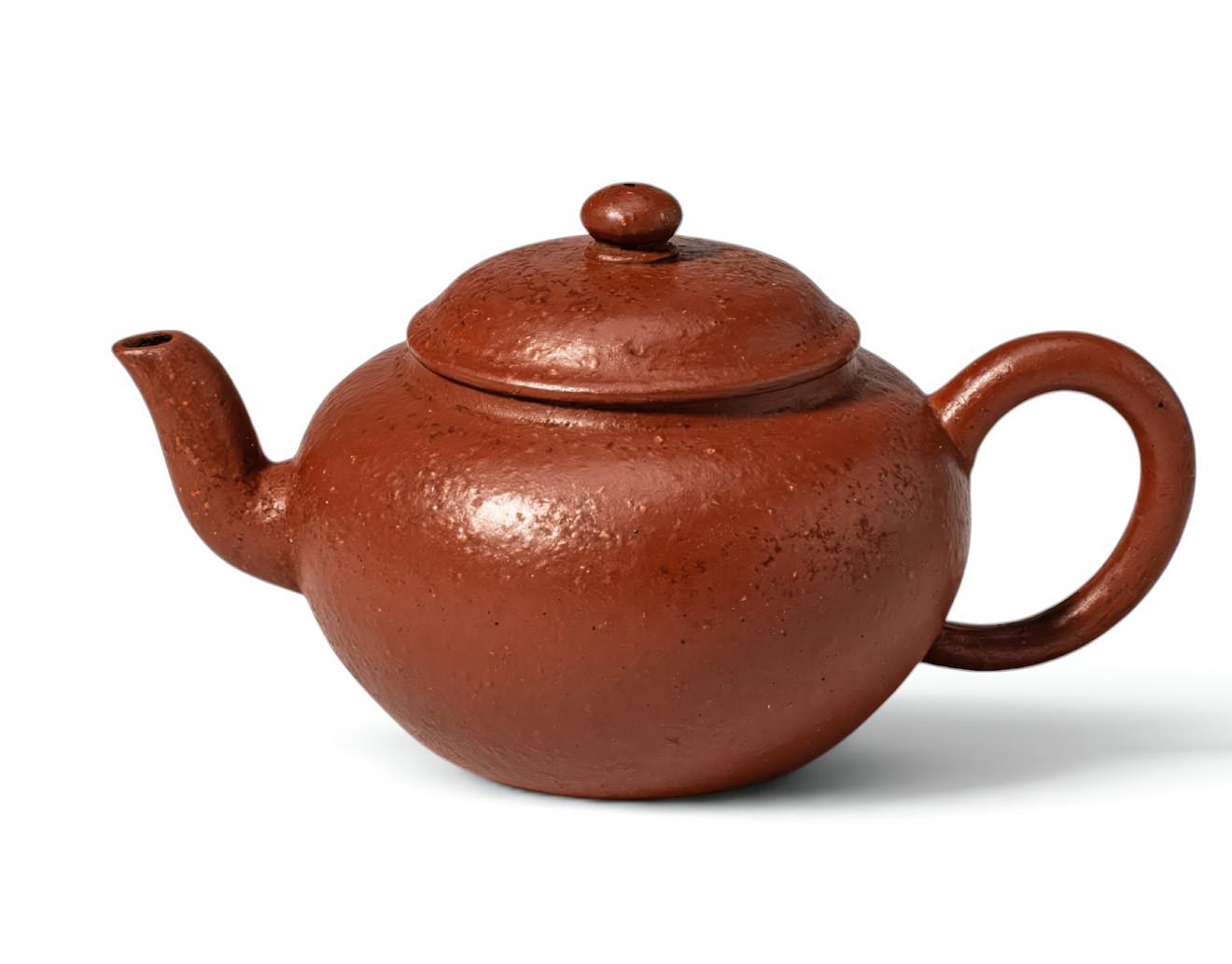
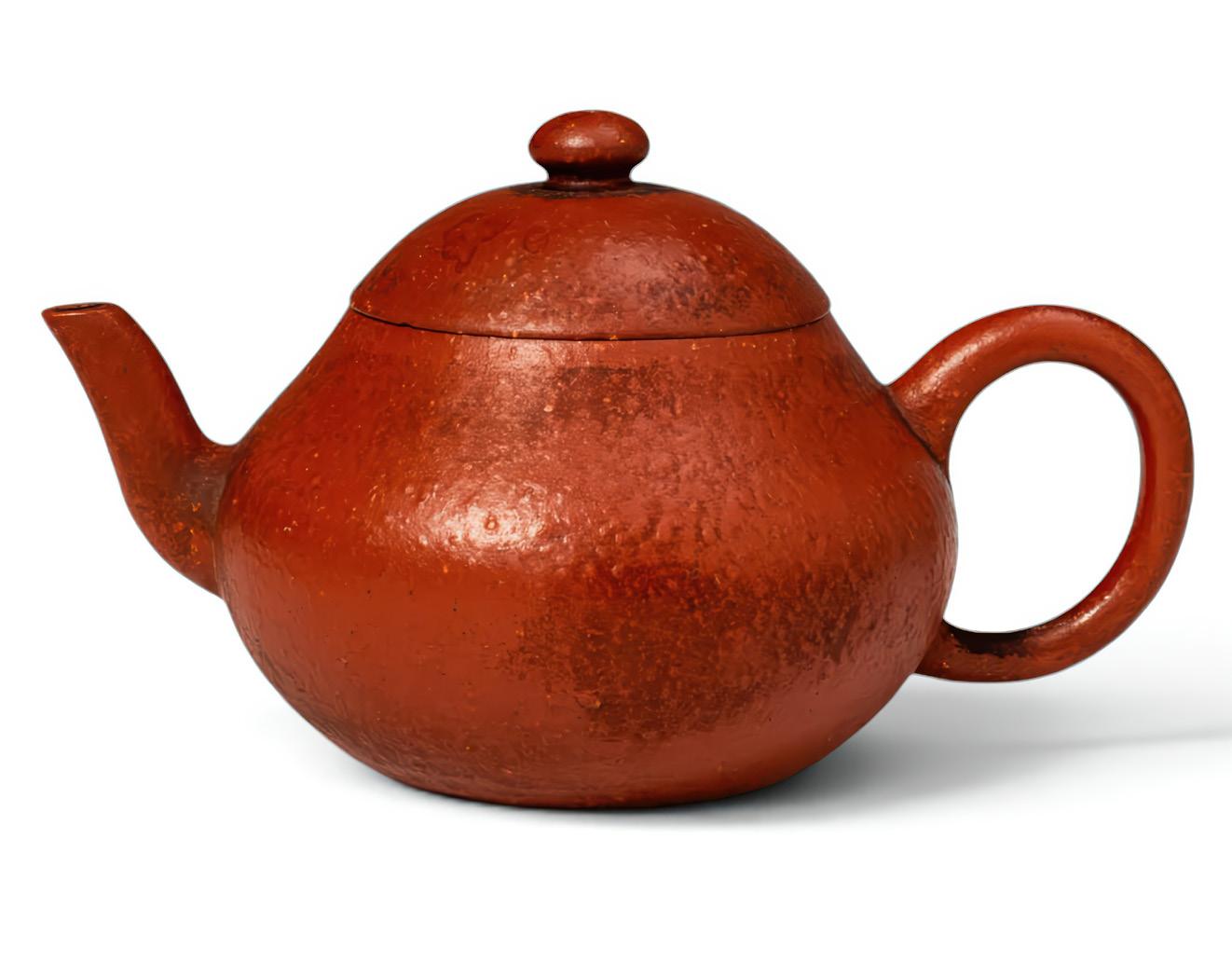
9. SMALL CHINESE YIXING JUNDE TEAPOT, JUNDE MARK 君德
Qing Dynasty, Ca. AD 1644 - 1912.
Starting Price: £800
A teapot of the classic Junde form, the rounded body rising gently from a short foot to a domed cover surmounted by a small knop. It is potted in reddish Yixing stoneware of slightly coarse texture, the surface displaying natural speckling. The base bears an impressed mark reading Junde (君德).
Provenance: Private UK Collection.
Size: 115mm x 70mm; Weight: 115g
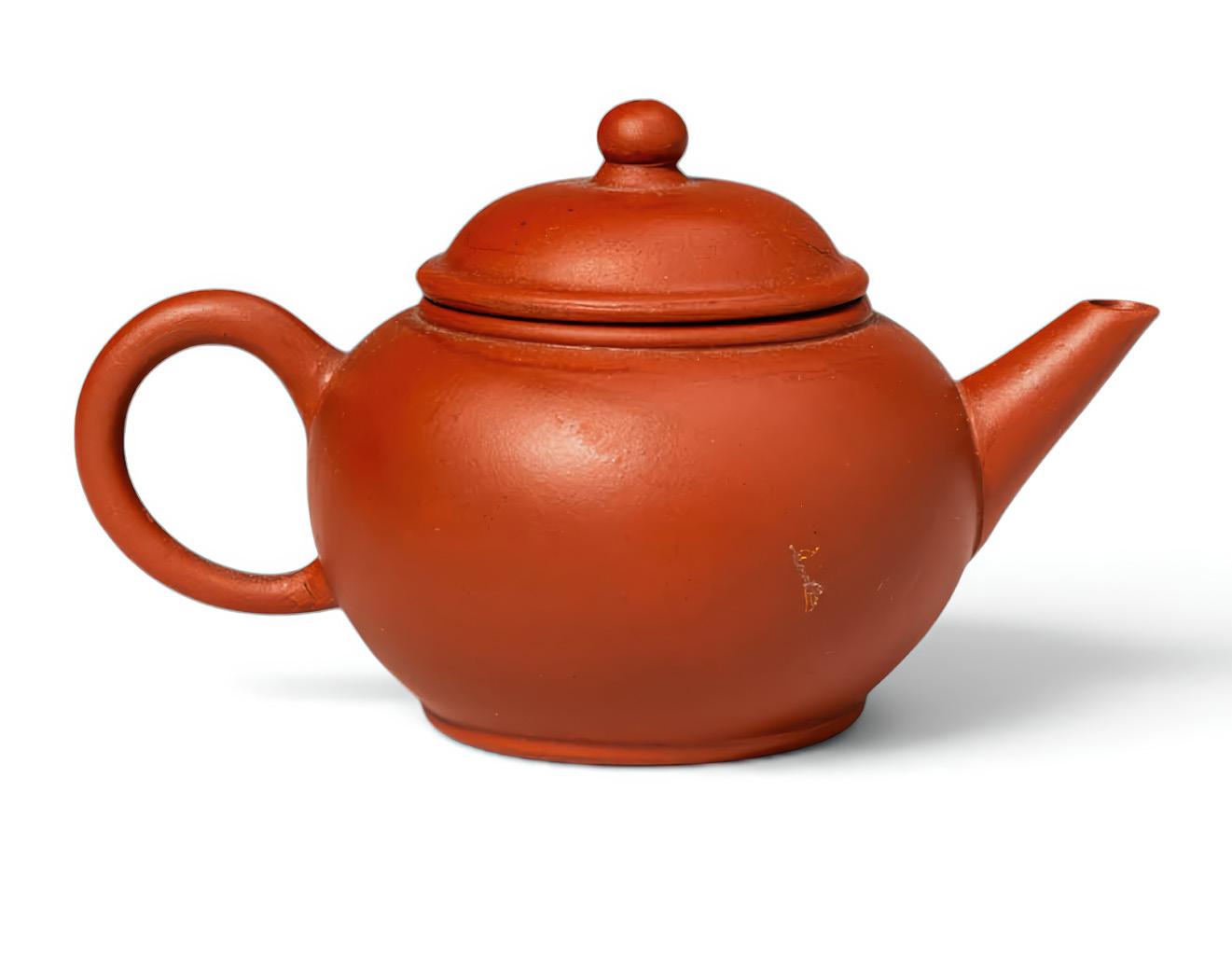
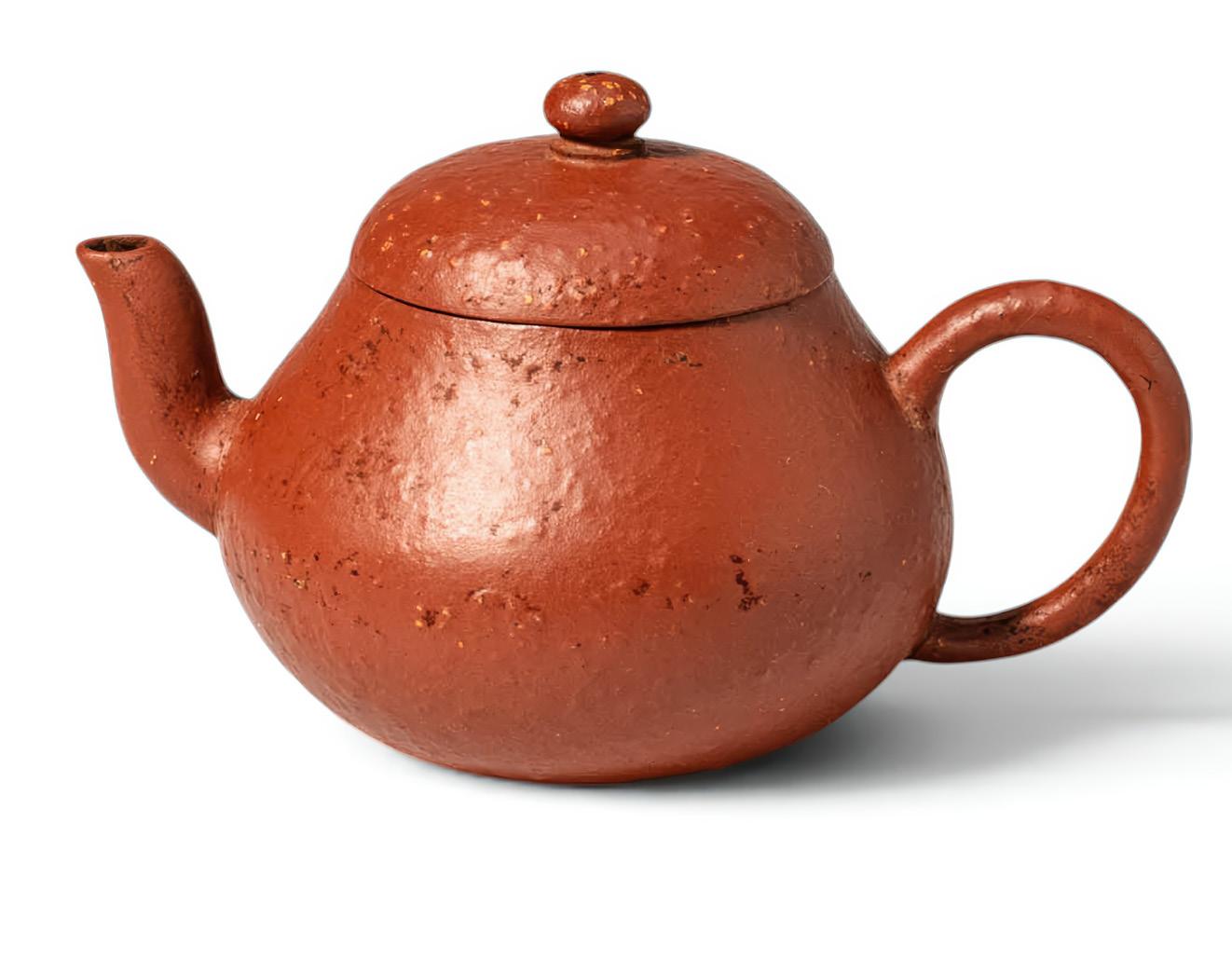
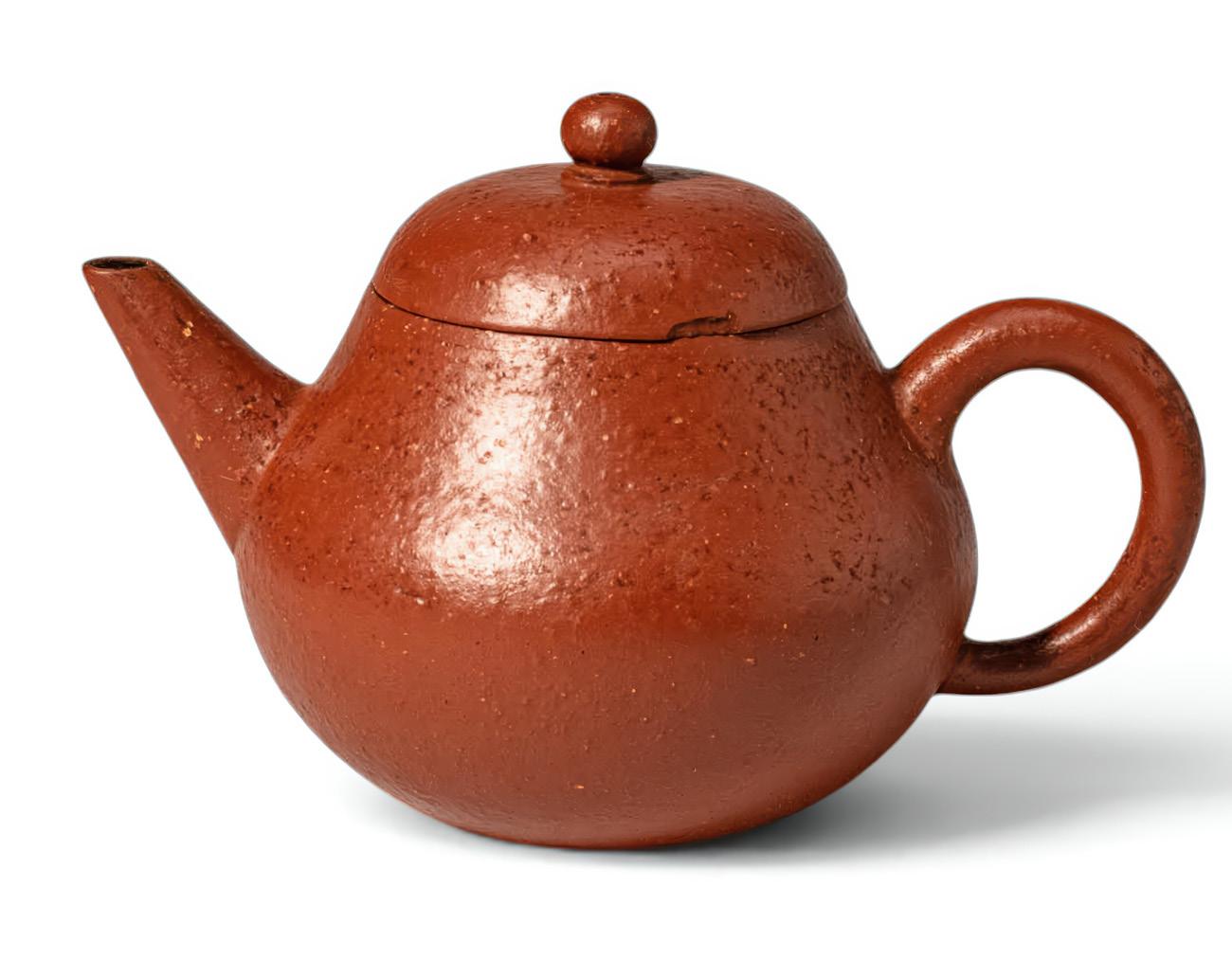
8. SMALL CHINESE YIXING TEAPOT, JINGXI HUI MENGCHEN ZHI MARK 荊溪惠孟臣製
Qing Dynasty, Ca. AD 1644 - 1912.
A Yixing teapot of classic globular form, the rounded body rising from a neatly defined foot to a slightly domed cover with a small spherical knop. The short, tapering spout projects cleanly from the shoulder, balanced by a well-proportioned loop handle. The vessel is executed in a rich orange-red zisha clay, with a smooth, even surface that highlights the purity of form and careful finishing. The clay’s fine texture and soft sheen suggest skilled preparation and controlled firing. The base bears the impressed mark 荊溪惠孟臣製 (Jingxi Hui Mengchen Zhi), indicating “Made by Hui Mengchen of Jingxi”.
Provenance: Private UK Collection.
Size: 55mm x 95mm; Weight: 65g Starting Price: £800
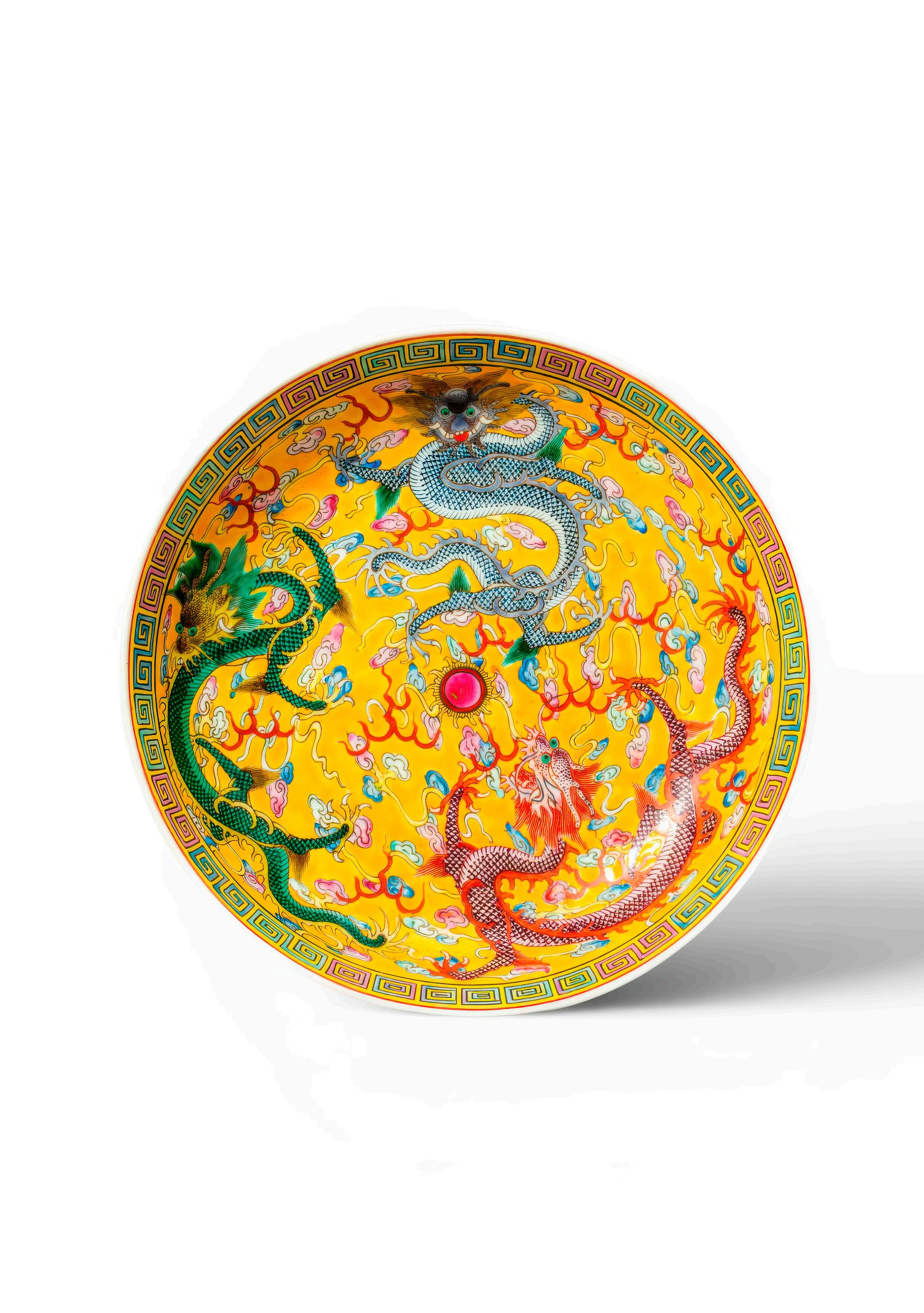
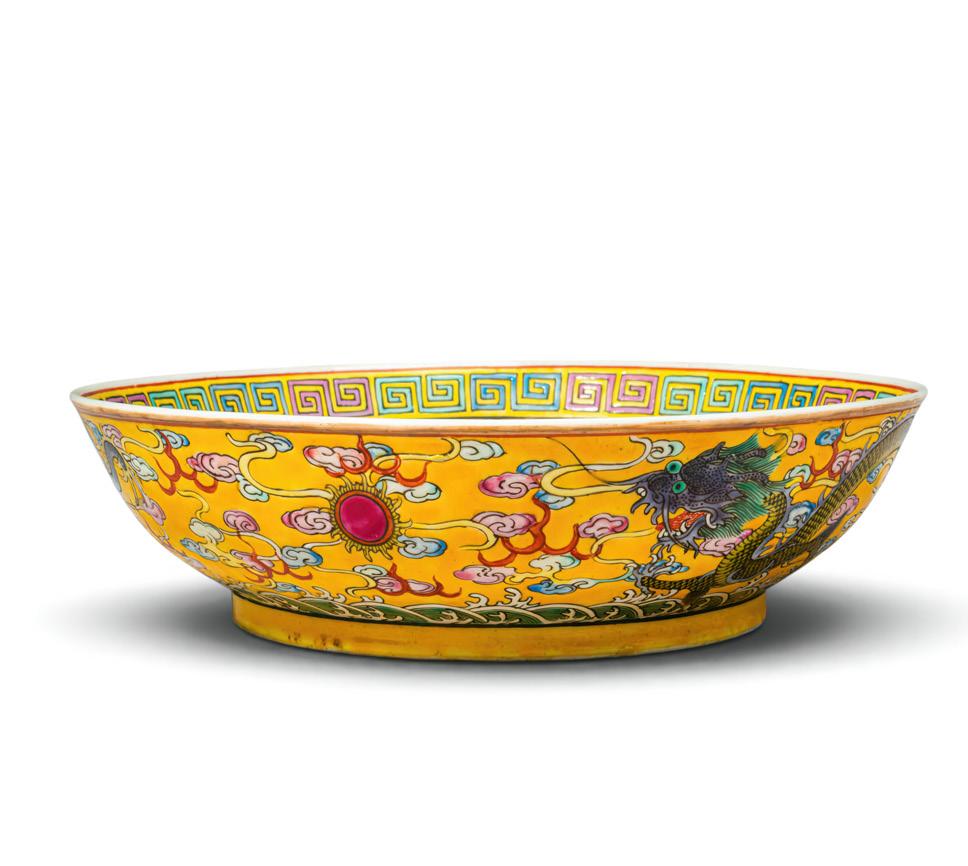
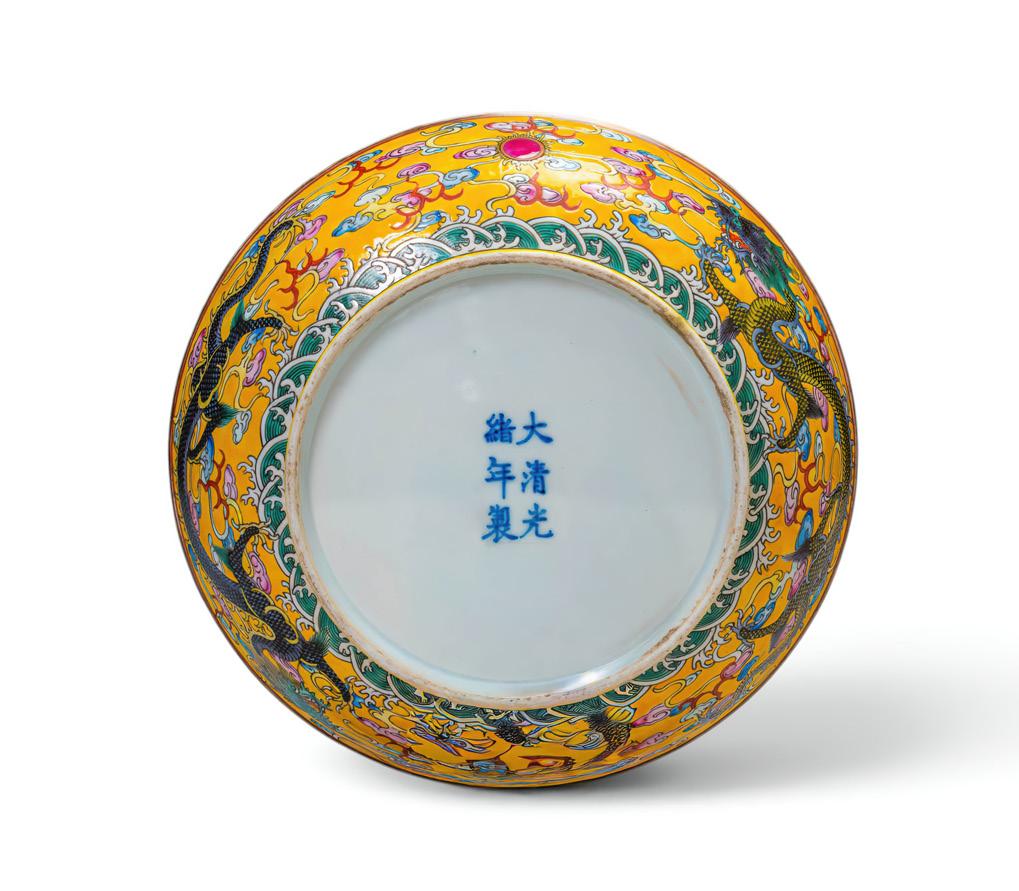
10. CHINESE YELLOW GROUND FAMILLE ROSE “DRAGON” DISH, GUANGXU
MARK AND OF THE PERIOD
Guangxu Period, Qing Dynasty, Ca. AD 1875 - 1908.
Starting Price: £2000
A finely painted famille rose porcelain dish, the interior richly enamelled on a vibrant imperial yellow ground with three sinuous five-clawed dragons in pursuit of a flaming pearl. Each dragon is depicted with dynamic, coiling bodies amidst scrolling ruyi-shaped clouds and stylised flames, rendered in iron-red, green, and blue enamels with meticulous scale detailing. The central medallion is set with a bright iron-red flaming pearl, symbolising power and cosmic energy.The cavetto is encircled by a continuous key-fret (leiwen) border in underglaze blue and iron-red, framing the lively interior scene.The base bears a six-character Guangxu mark in underglaze blue.
Provenance: Private UK Collection.
Size: 50mm x 205mm; Weight: 370g
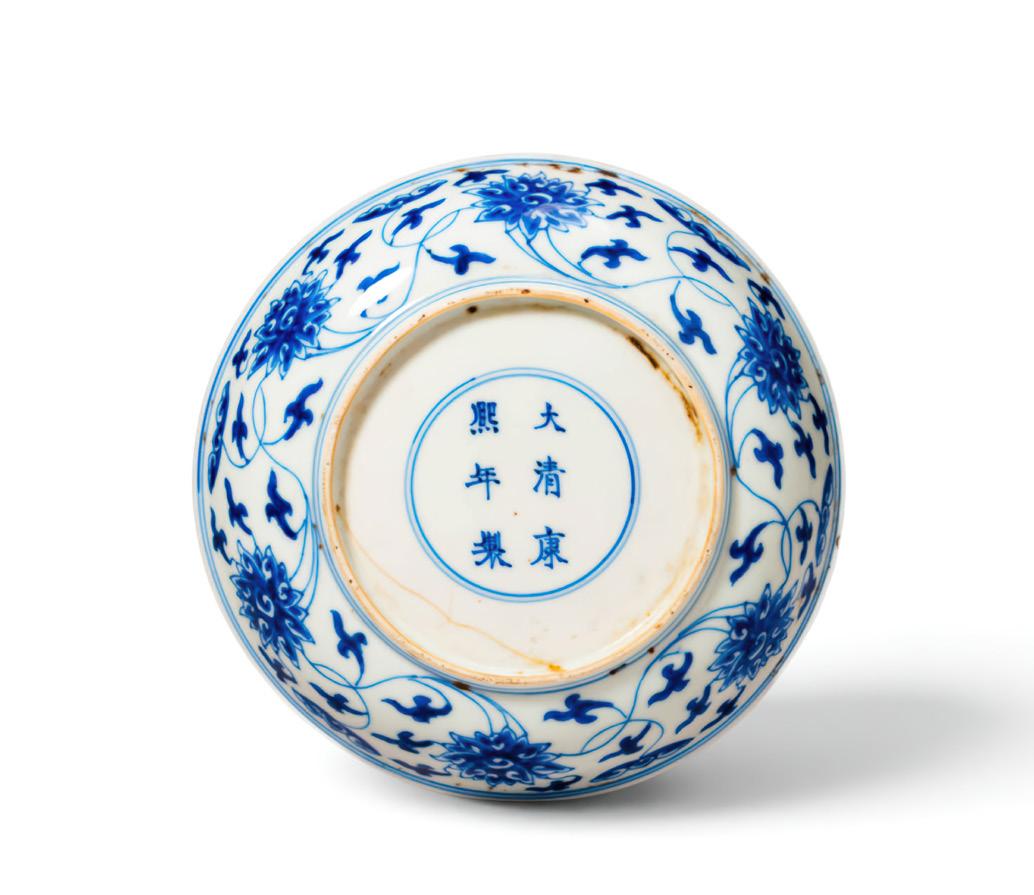
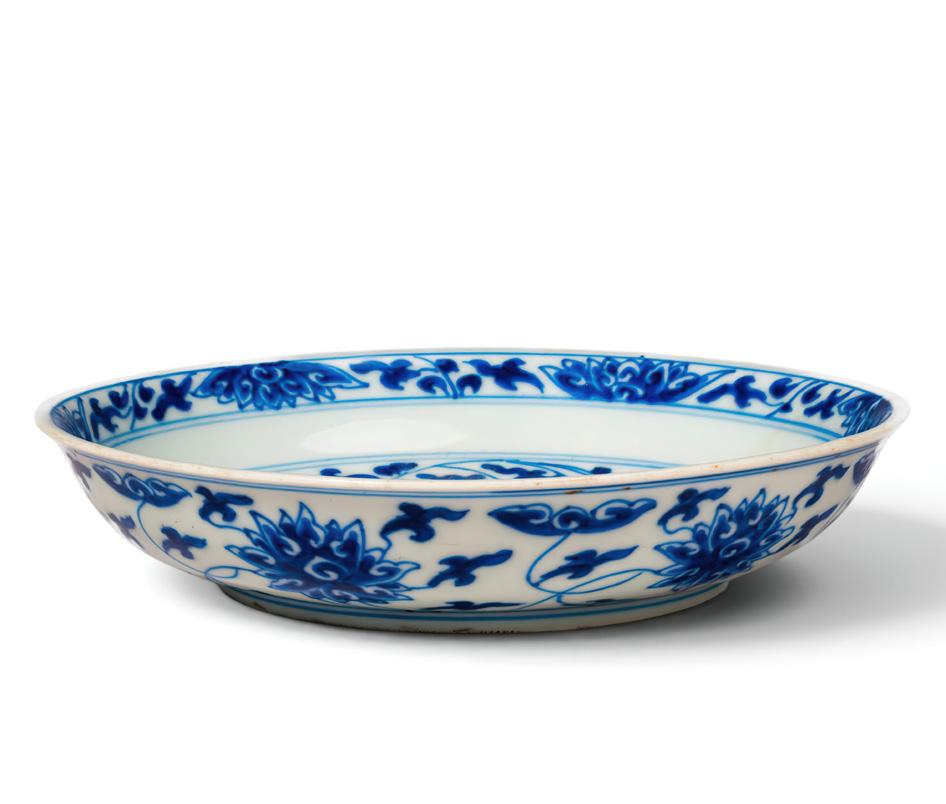
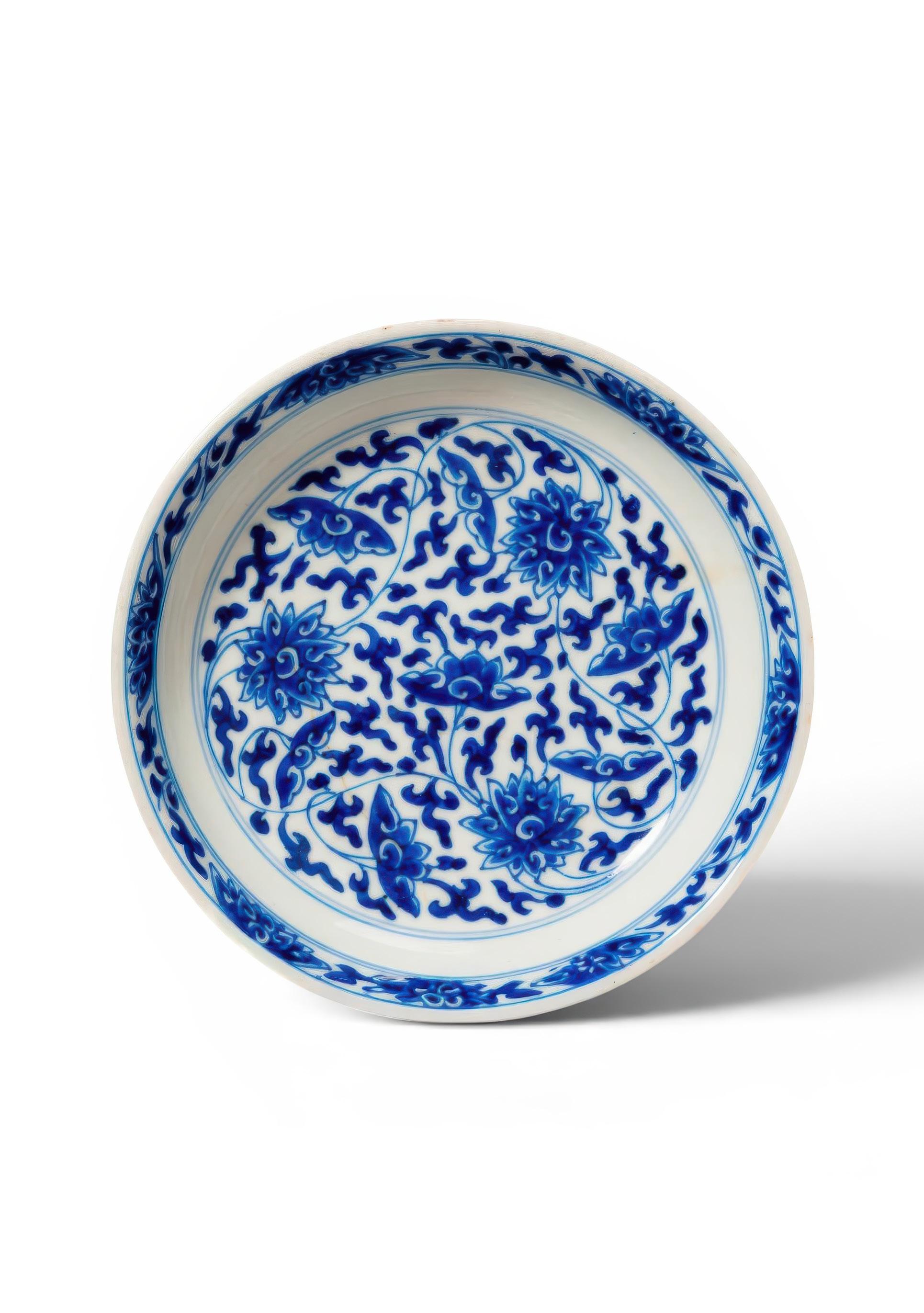
13. CHINESE BLUE AND WHITE LOTUS DISH, KANGXI MARK
Kangxi Period, Qing Dynasty, Ca. AD 1661 - 1722.
Starting Price: £2000
A finely potted blue and white porcelain dish of shallow rounded form, the interior decorated in rich cobalt-blue tones with a dense scrolling lotus design. The central medallion is filled with stylised lotus blooms borne on undulating leafy stems, interspersed with curling foliage and smaller floral elements, all rendered with fluid brushwork and pleasing tonal variation.The cavetto is encircled by a narrow band, and the rim is adorned with a continuous floral scroll border, neatly framing the interior decoration. The cobalt pigment displays characteristic depth and vibrancy, with areas of darker pooling contrasting against lighter washes. The base bears a six-character Kangxi mark in underglaze blue within double circles.
Provenance: Private UK Collection.
Publications / Reports: For similar see: The Victoria and Albert Museum, accession number 771&A-1883. Bonhams San Francisco, Fine Asian Works of Art, 19 June 2012, lot 6311.
Size: 30mm x 150mm; Weight: 160g
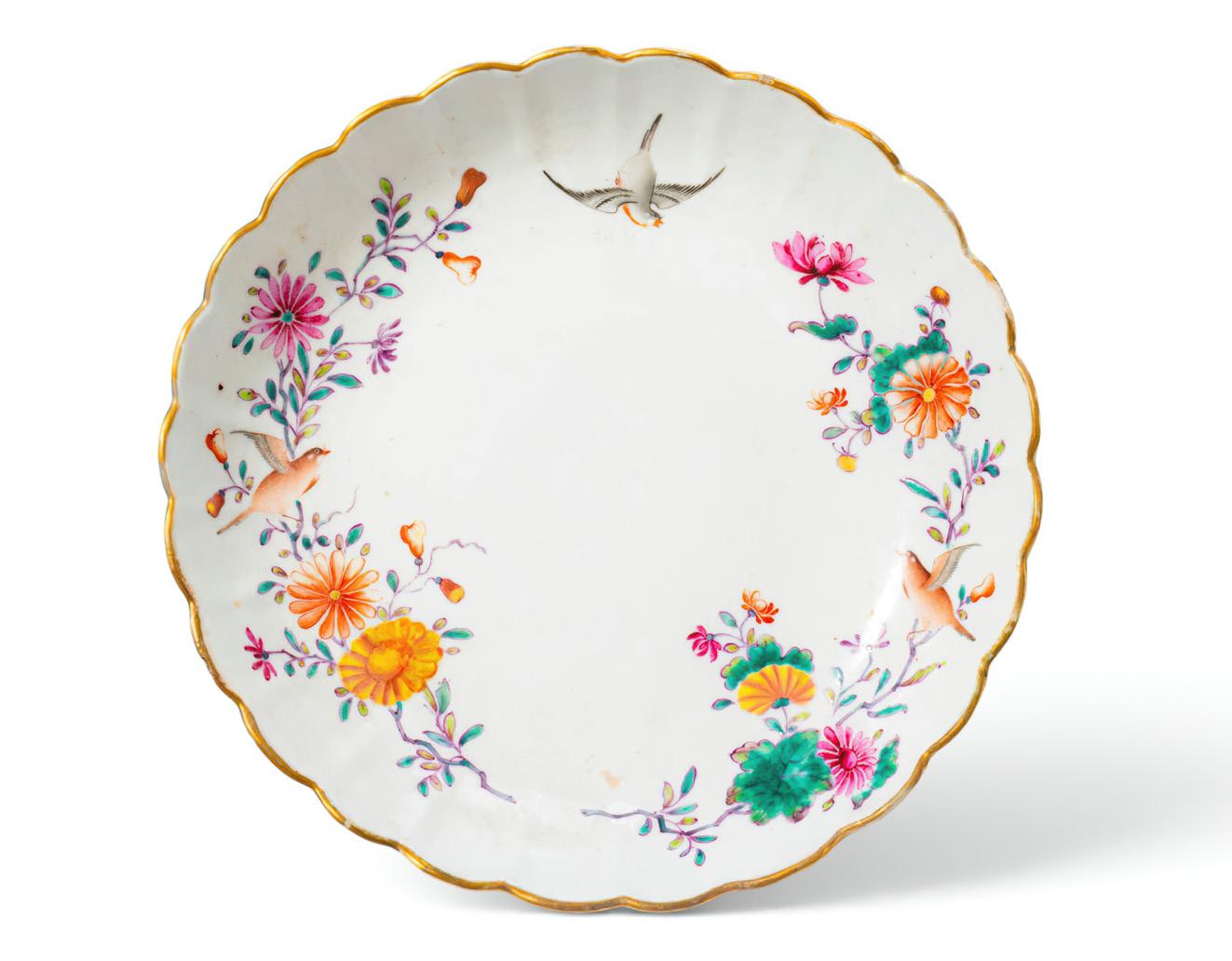
16. CHINESE FAMILLE ROSE DISH WITH BIRDS AND FLOWERS
Mid Qing Dynasty, Ca. 18th century AD.
A famille rose porcelain dish of shallow, lobed form with a finely scalloped rim, the interior painted in soft enamel tones with a continuous floral spray inhabited by small birds in flight and perched among branches. The composition features a lively yet balanced arrangement of chrysanthemum and other seasonal blossoms in shades of iron-red, pink, yellow, and green, with slender leafy stems extending elegantly across the cavetto.Two small birds are depicted perched among the flowering branches, while a third bird is shown in flight above, adding a sense of movement and natural vitality. The enamels are applied with finesse, displaying the characteristic famille rose palette with subtle tonal gradation. The rim is neatly picked out in gilt, following the lobed contour and enhancing the refined silhouette.
Provenance: Private UK Collection.
Size: 47mm x 205mm; Weight: 370g
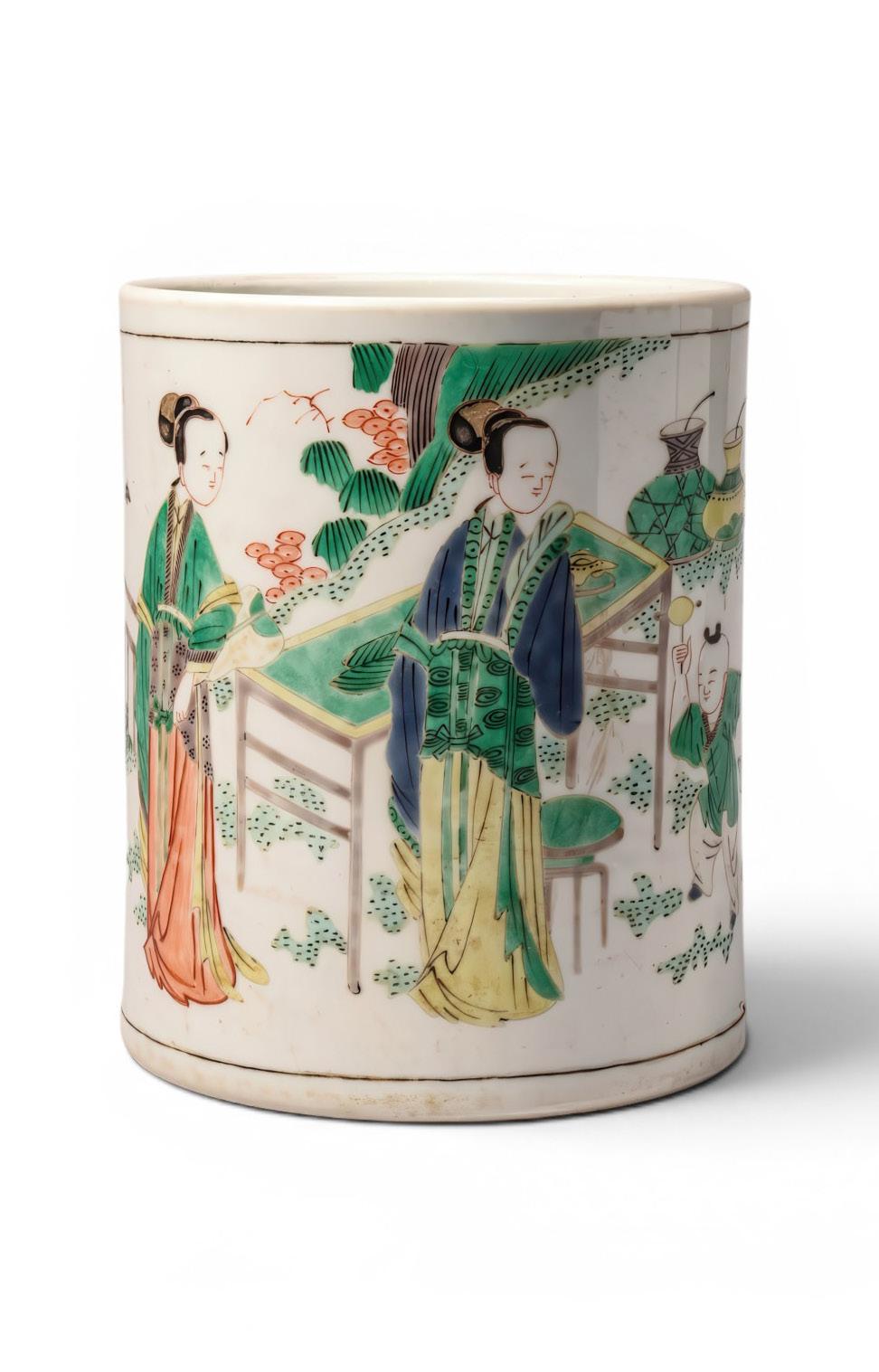
13A.
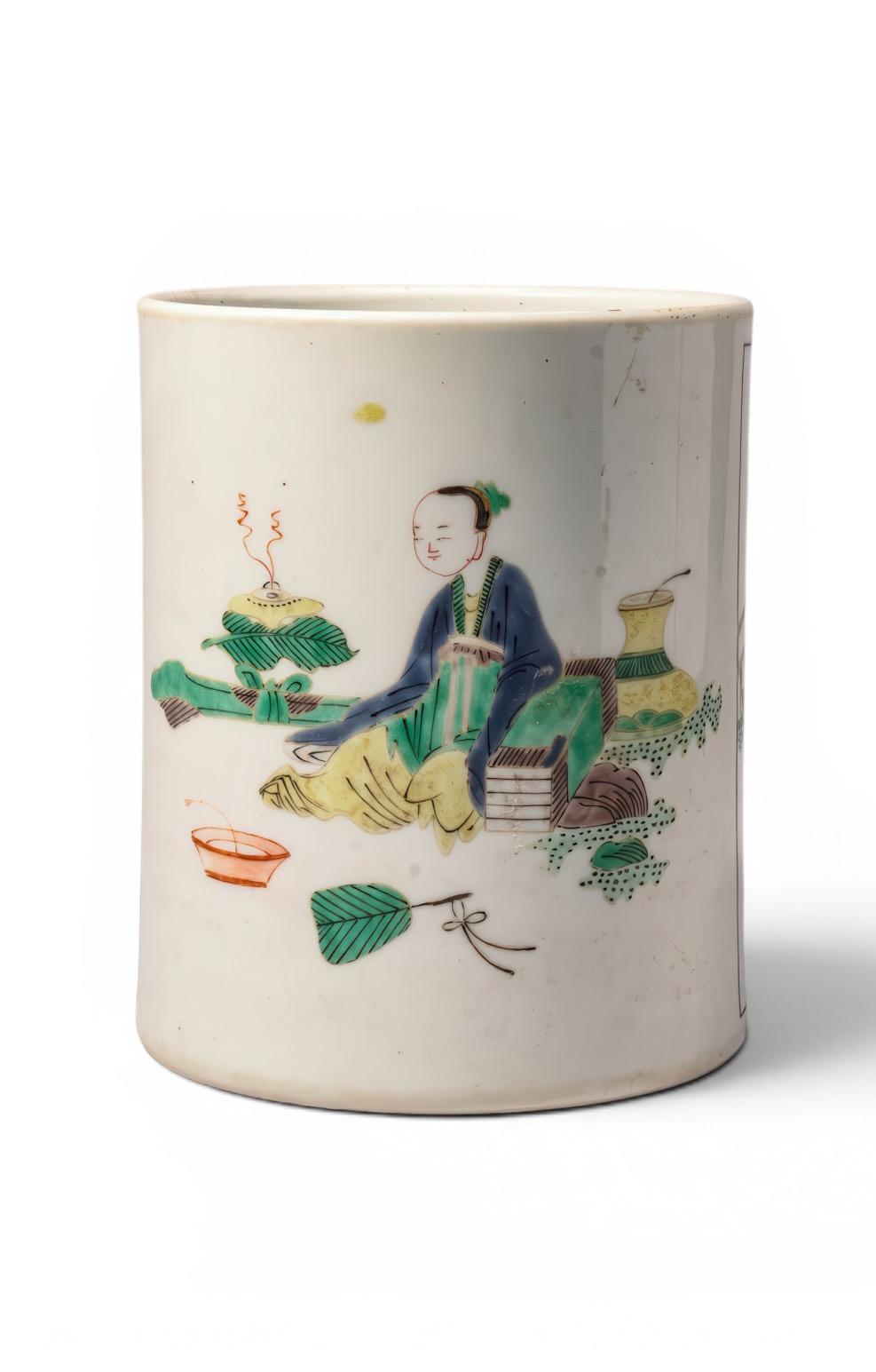
CHINESE FAMILLE VERTE FIGURAL PORCELAIN BRUSH POT
Starting Price: £2000
Kangxi Period, Qing Dynasty, Ca. AD 1661 - 1722.
A Chinese famille verte porcelain brush pot of cylindrical form, finely decorated with an elegant figural garden scene depicting court ladies and attendants gathered within a landscape setting. The figures are rendered in famille verte enamels of green, red, aubergine, and yellow, accompanied by ornamental furnishings, flowering plants, and scholar’s objects.
Provenance: Private UK Collection.
Size: 155mm x 130mm; Weight: 1.12kg
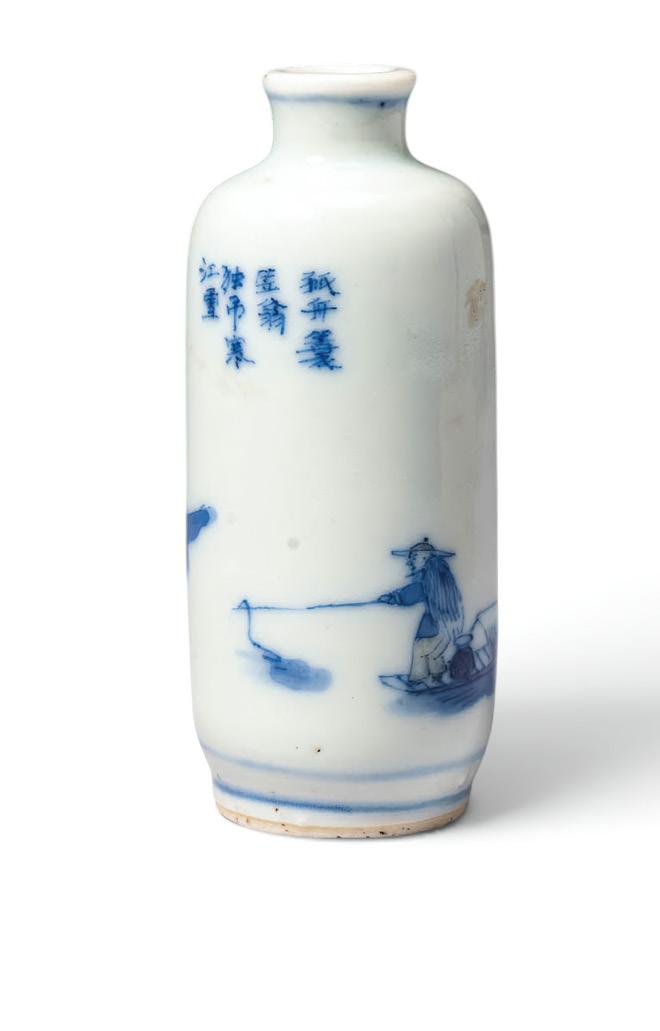
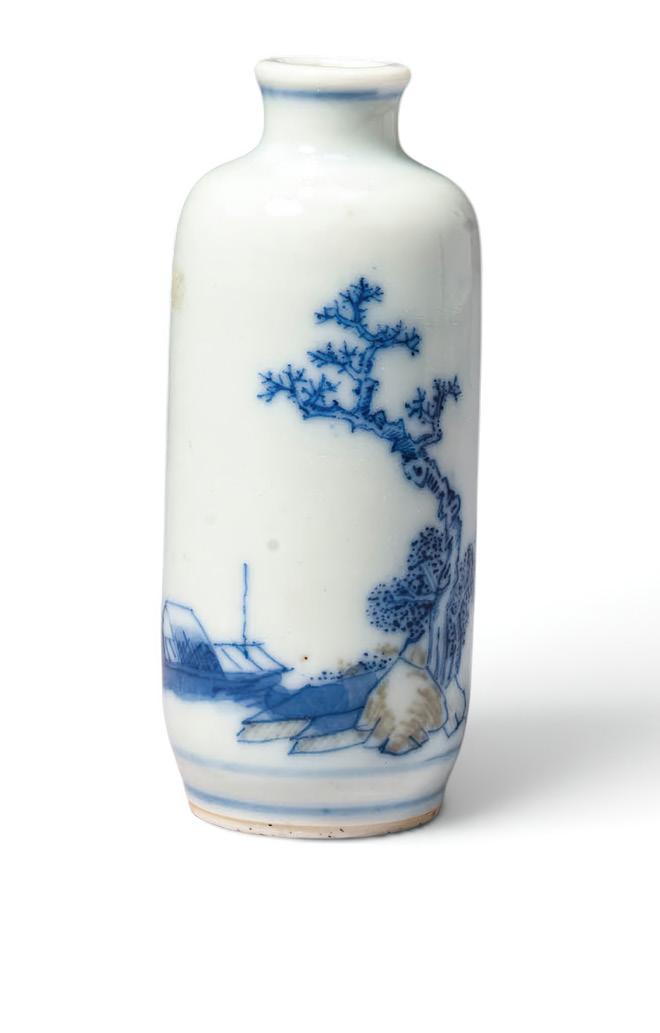
17. CHINESE BLUE AND WHITE SNUFF BOTTLE, DEPICTING FISHERMAN IN THE SNOW
Qing Dynasty, Ca. AD 1644 - 1912.
Starting Price: £1000
A porcelain snuff bottle of elegant cylindrical form with gently sloping shoulders and a short, slightly flared neck. The body is delicately painted in underglaze cobalt blue on a soft white ground. The decoration depicts a solitary fisherman standing in a winter landscape, quietly angling from the bank or a small craft amid sparse, impressionistic forms suggesting snow-covered terrain and still water. Above the scene is a poetic inscription reading: “孤舟蓑笠翁,独钓寒江雪” (A lone boat, an old man in a straw raincoat and hat, fishing alone in the cold river snow), a celebrated line from Liu Zongyuan’s River Snow (江雪).
Provenance: Private UK Collection.
Size: 75mm x 30mm; Weight: 35g
22. SMALL CHINESE YIXING TEAPOT WITH QIANLONG MARK
Qing Dynasty, Ca. AD 1644 - 1912.
Starting Price: £800
A teapot of a compressed globular form, the rounded body rising to a domed cover surmounted by a small knop. It is set with a short, slightly tapering spout and a loop handle. Potted in reddish Yixing stoneware of slightly coarse texture. The base bears an impressed mark reading Qianlong (乾隆).
Provenance: Private UK Collection.
Size: 125mm x 70mm; Weight: 120g
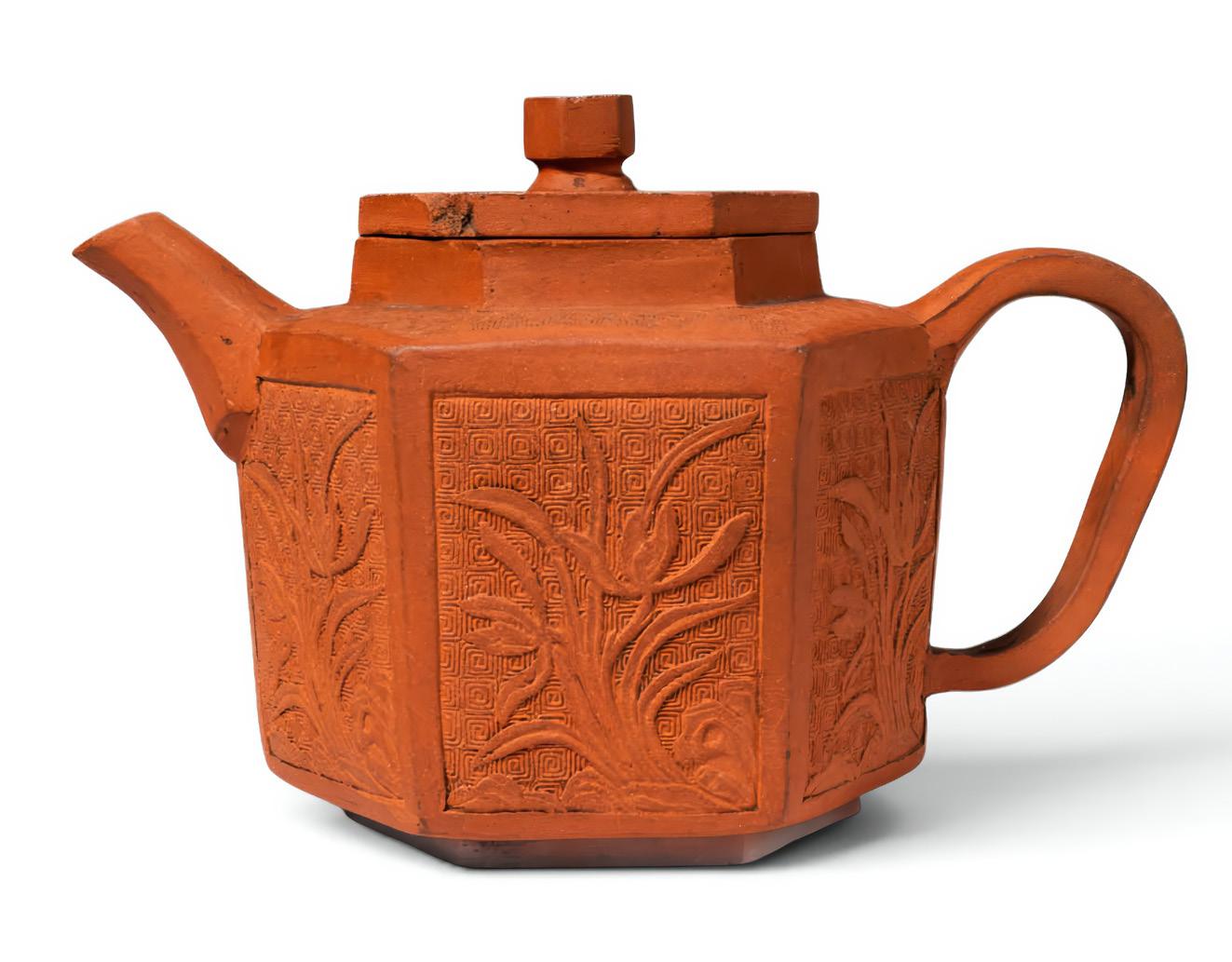
25. CHINESE YIXING HEXAGONAL TEAPOT WITH MOULDED DECORATION
Starting Price: £800
Kangxi Period, Qing Dynasty, Ca. AD 1661 - 1722.
A Yixing stoneware teapot of hexagonal section, the straight-sided body rising from a slightly splayed base and fitted with a flat cover surmounted by a faceted knop. Each of the six panels is moulded in low relief with stylised floral motifs set against a finely patterned ground of leiwen (key-fret) design.
Provenance: Private UK Collection.
Size: 110mm x 150mm; Weight: 230g
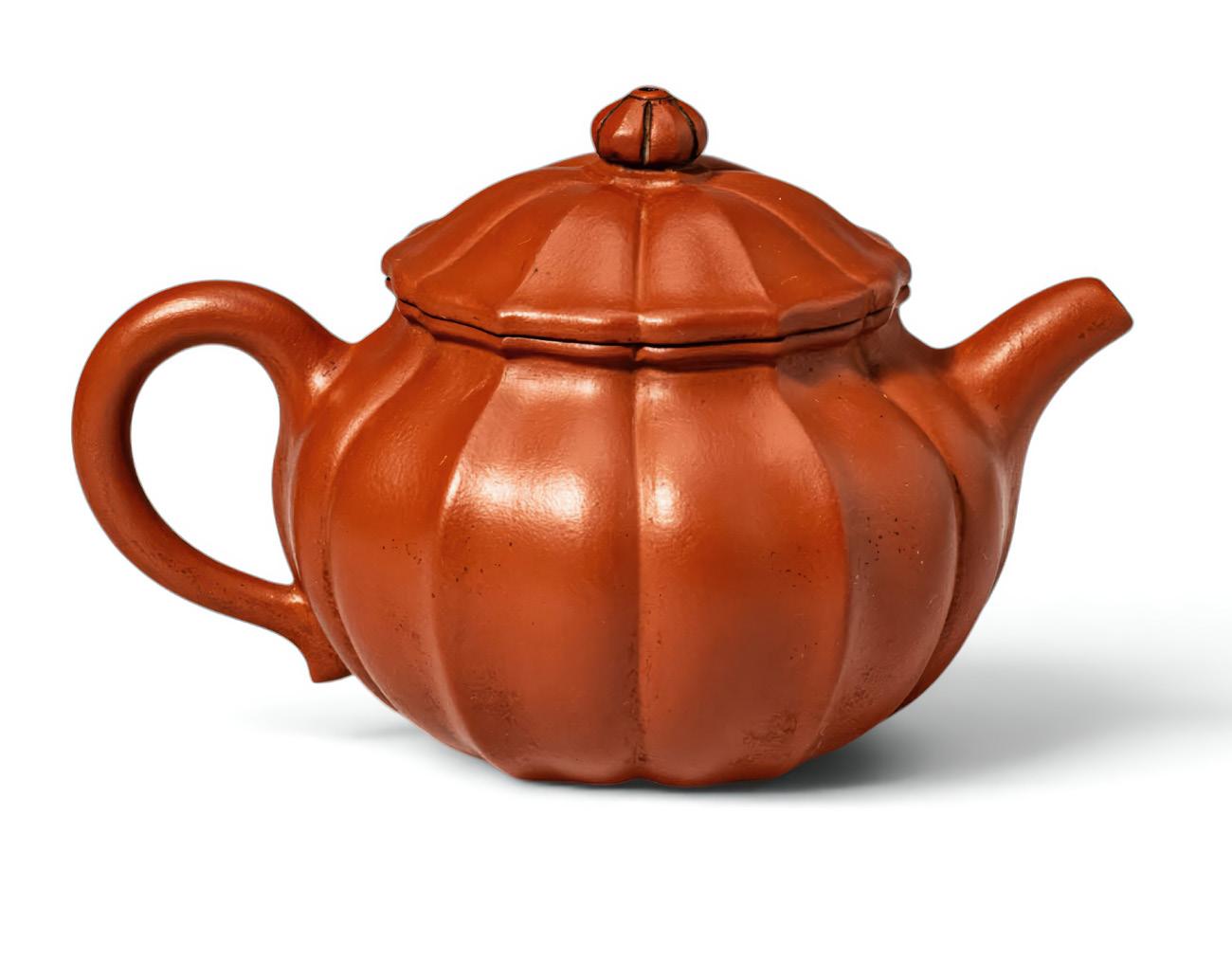
23. SMALL CHINESE YIXING TEAPOT, SHENGHE MARK
Qing Dynasty, Ca. AD 1644 - 1912.
Starting Price: £800
A teapot of a lobed form, the body divided into evenly spaced vertical ribs rising from a short foot and continuing through the domed cover, surmounted by a knop. The base bears an impressed mark reading “Shenghe” (圣圣).
Provenance: Private UK Collection.
Size: 125mm x 85mm; Weight: 165g
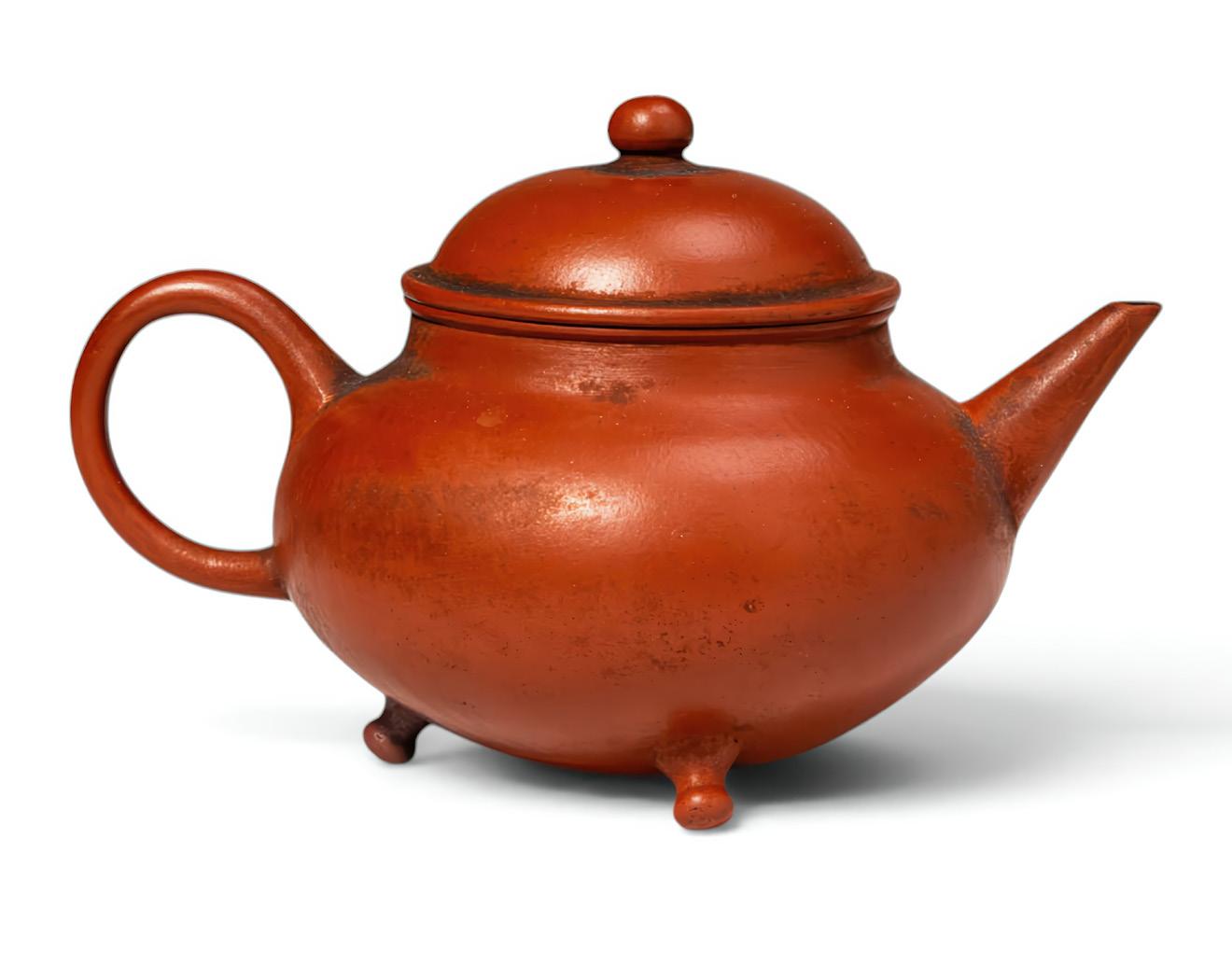
26. SMALL CHINESE YIXING TEAPOT, SIGNED MENGCHEN 孟臣
Ca. 20th century AD.
Starting Price: £800
A Yixing teapot of rounded, compressed globular form, raised on three small cabriole feet. The body supports a gently domed cover with a rounded knop, while the short, tapering spout and circular loop handle are balanced in harmonious proportion. The tripod base lends the vessel a subtle elevation and sculptural presence, distinguishing it from more standard forms.The teapot is executed in a warm reddish zisha clay, with a softly burnished surface that has developed areas of darker patination through handling and use. The clay’s fine texture and even tone reflect careful preparation and skilled firing, while the form itself adheres to the restrained elegance associated with literati taste.The base bears a poetic inscription 山水 之中做主人 and the signature 孟臣, which may be translated as: “To be master amidst mountains and waters - Mengchen.”
Provenance: Private UK Collection.
Size: 75mm x 130mm; Weight: 120g
Starting Price: £800
Qing Dynasty, Ca. AD 1644 - 1912.
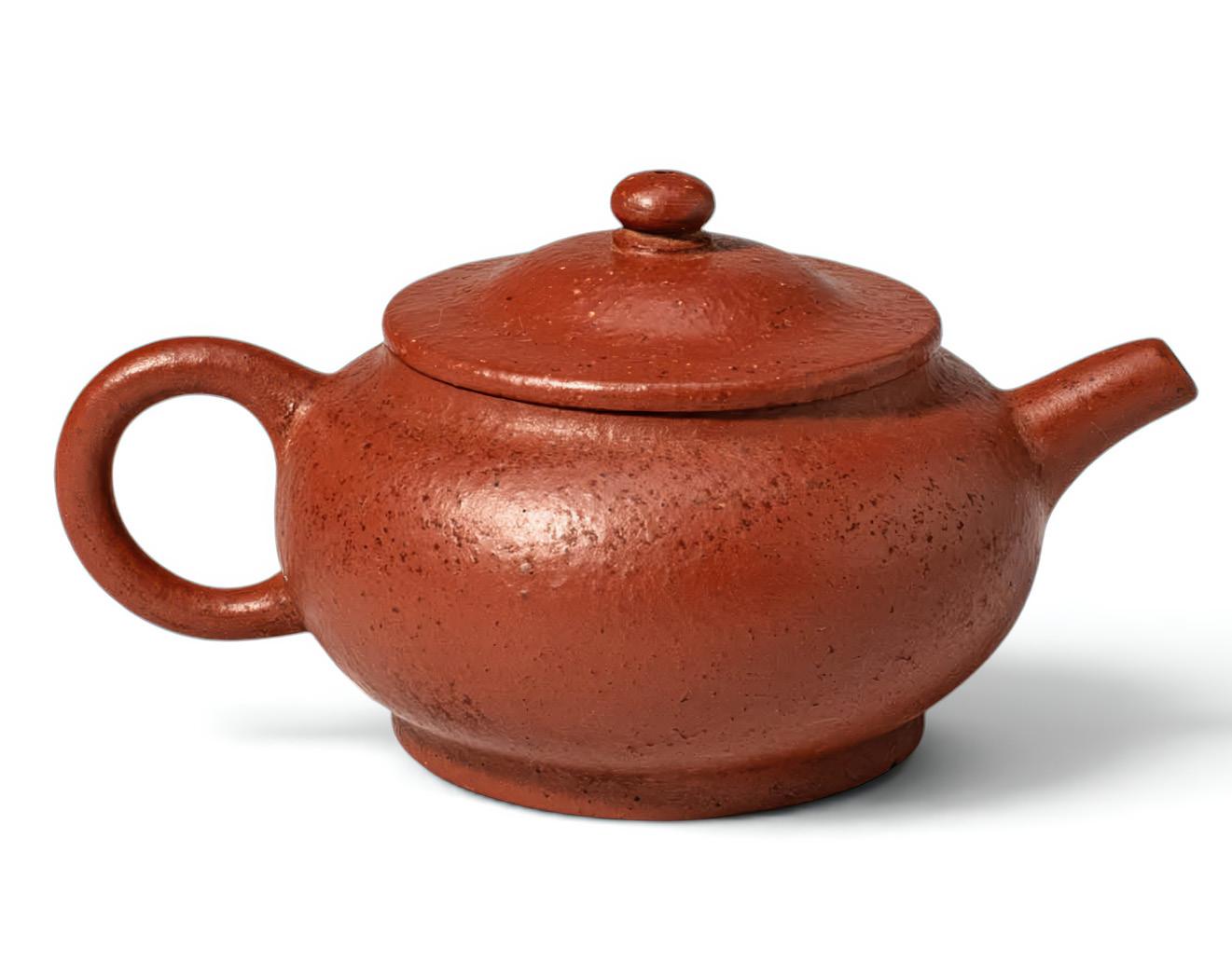
A teapot of a compressed globular form, the rounded body raised on a short foot and fitted with a domed cover surmounted by a small knop. The straight spout and loop handle are simply formed and proportionally balanced. It is potted in reddish Yixing stoneware with a slightly coarse texture, the surface showing natural speckling.
Provenance: Private UK Collection.
Size: 130mm x 70mm; Weight: 150g
28. SMALL CHINESE YIXING TEAPOT, SIGNED MENGCHEN 孟臣
Qing Dynasty, Ca. AD 1644 - 1912.
A teapot of rounded, compressed globular form, raised on a short foot and set with a gently domed cover surmounted by a knop. It has a short, slightly tapering spout and a loop handle. It is potted in reddish Yixing stoneware of slightly coarse texture, the surface displaying natural speckling. On the base is inscribed a poetic line reading “杏花一色红十里” (“Apricot blossoms stretch for miles in a uniform red hue”). The base bears an impressed mark reading Mengchen (孟臣).
Provenance: Private UK Collection.
Size: 125mm x 85mm; Weight: 145g Starting Price: £800
29. SMALL CHINESE YIXING TEAPOT
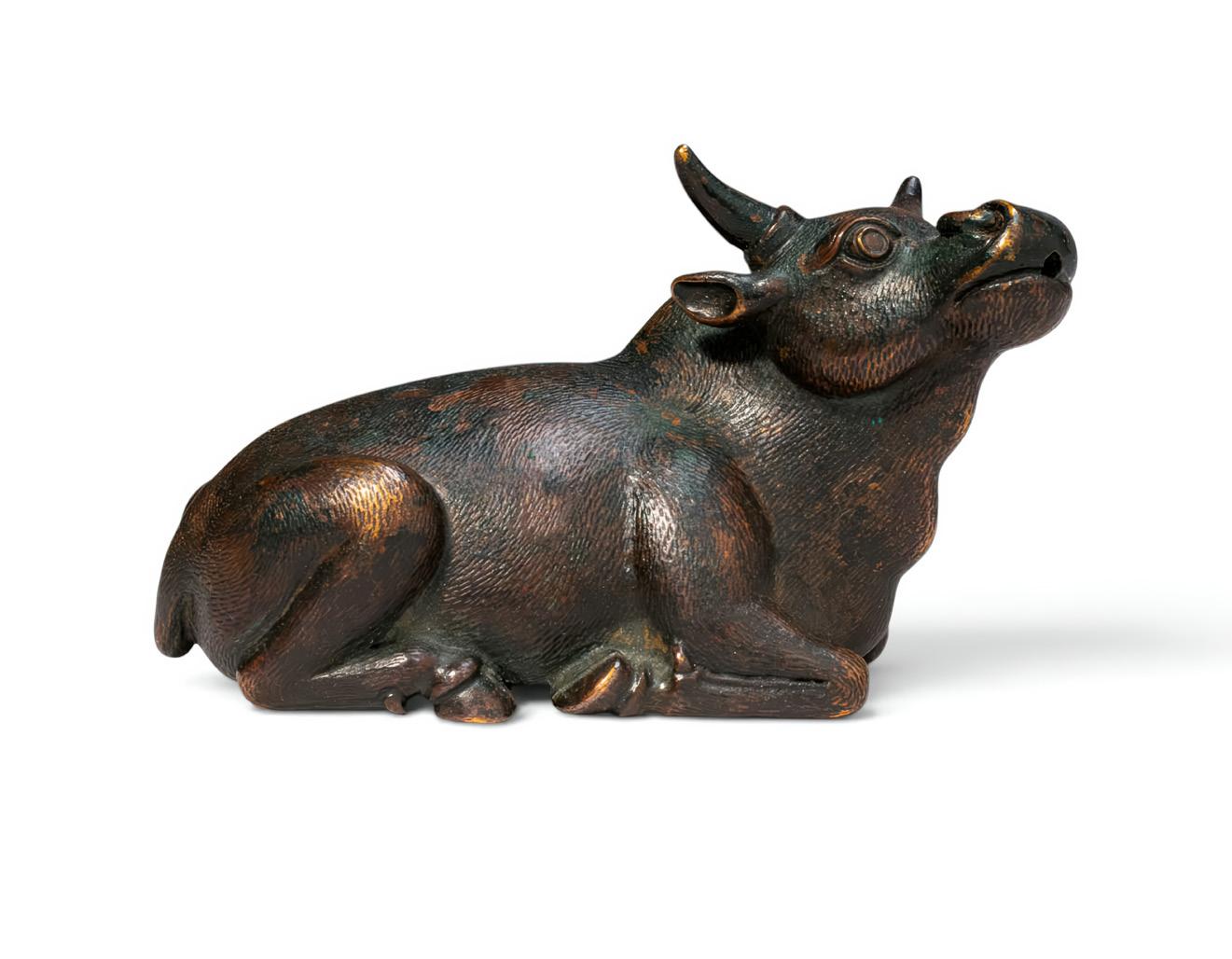
31. CHINESE BRONZE SEATED BULL
Ming Dynasty, Ca. AD 1368 - 1644, or earlier.
A cast bronze figure of a recumbent bull, depicted in a relaxed posture with legs tucked neatly beneath the body. The head is slightly raised and turned, the mouth gently parted, lending the animal a sense of quiet vitality. The horns curve upward with naturalistic simplicity, while the ears are small and attentively positioned. Subtle texturing across the hide suggests the artist’s attention to naturalistic detail, particularly in the treatment of the shoulders, haunches, and facial features. In Chinese culture, the bull (or ox) is a potent symbol of strength, perseverance, and agrarian prosperity. It is also closely associated with themes of peace and harmony, especially in literati culture, where images of oxen evoke pastoral life.
Provenance: Private UK Collection.
Size: 50mm x 95mm; Weight: 200g
30. SMALL CHINESE YIXING TEAPOT, LU LU BAO WAN MARK 陸盧寶玩
Qing Dynasty, Ca. AD 1644 - 1912.
Starting Price: £800
A Yixing stoneware teapot of compact, globular form, the rounded body rising to a gently domed cover surmounted by a small knop finial. The spout projects in a soft, angular curve, balanced by a loop handle of elegant proportion. The surface is covered in a rich, warm reddish-brown tone, with a subtly mottled texture that enhances the tactile quality of the clay. The base bears the impressed mark “陸盧 寶玩” (Lu Lu Bao Wan).
Provenance: Private UK Collection.
Size: 70mm x 120mm; Weight: 85g
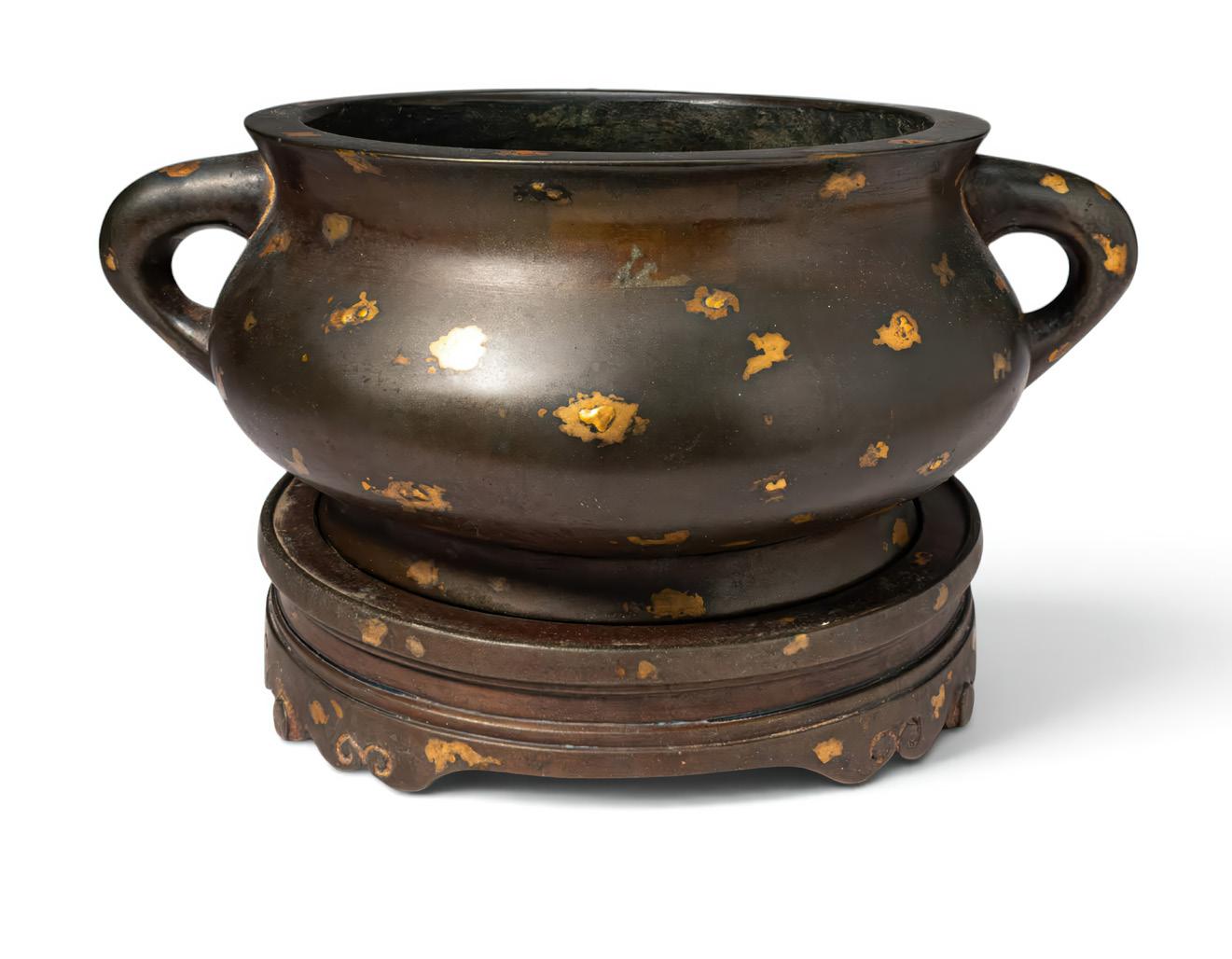
32. LARGE BRONZE GOLD SPLASHED CENSER AND STAND
Qing Dynasty, Ca. AD 1644 - 1912.
Starting Price: £2000
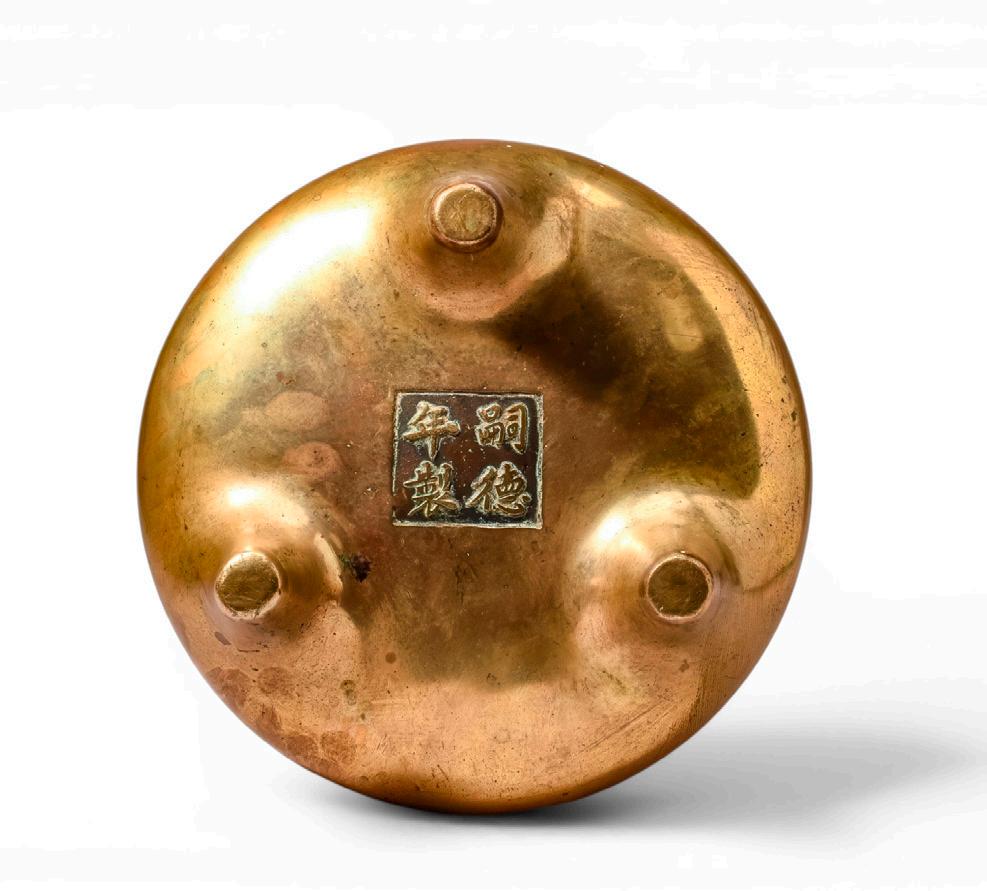
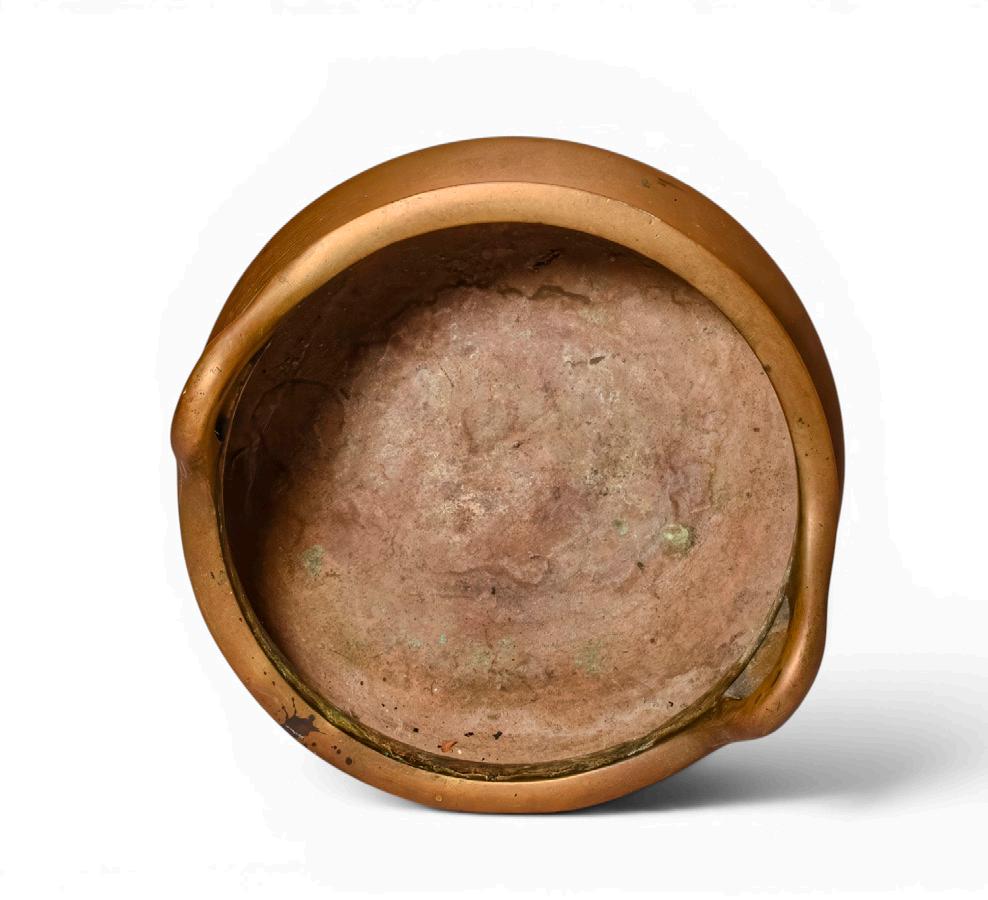
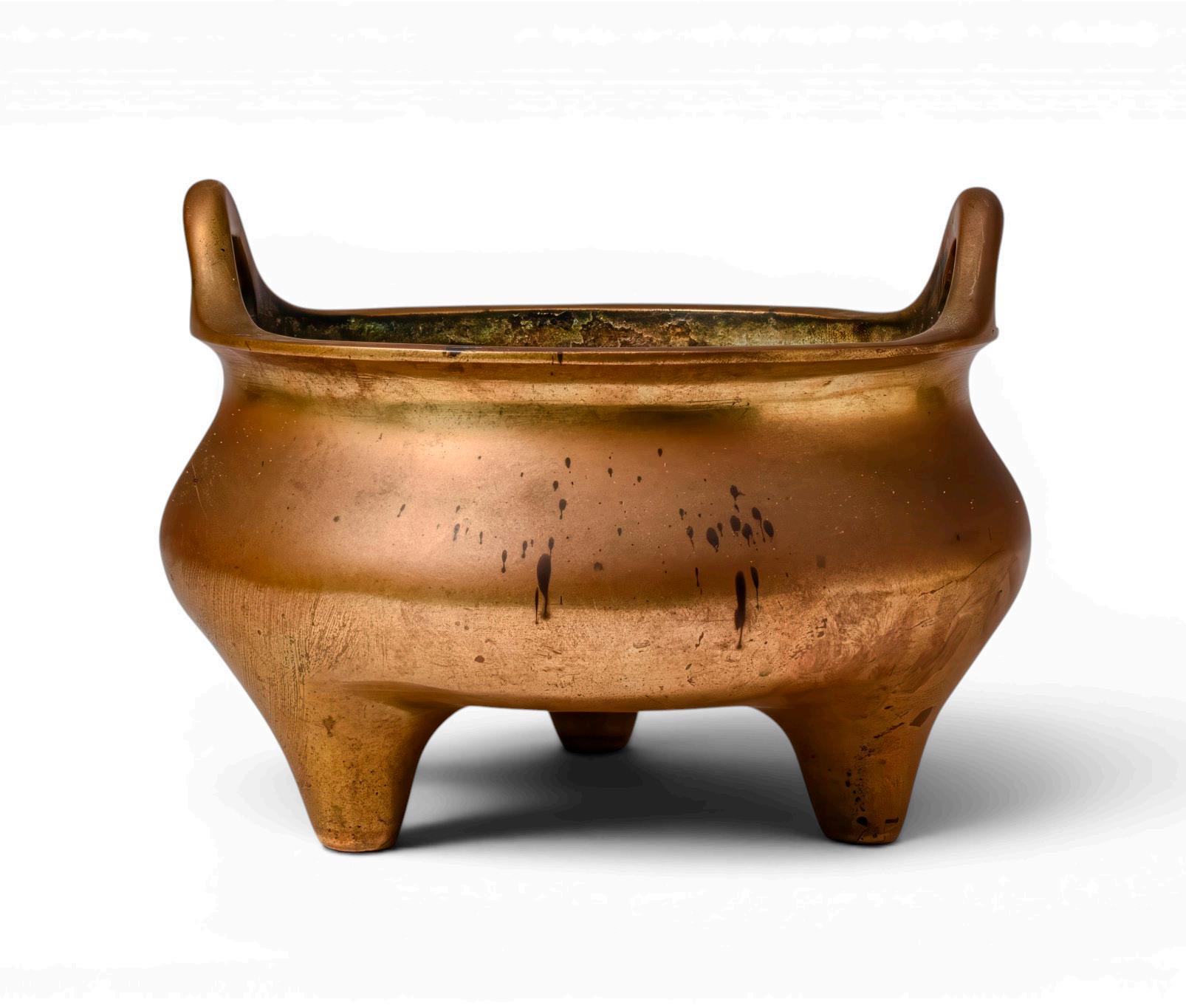
A substantial bronze censer of compressed globular form, rising from a short foot to a gently flared rim, set with a pair of loop handles at the shoulder. The surface is in rich deep brown tones and attractively embellished with irregular gold splashes (jin sa), creating a striking contrast across the body. The censer is accompanied by a fitted circular stand, similarly cast in bronze and echoing the form of the vessel, with a slightly stepped profile and a subtly shaped apron. The base bears a six-character Xuande mark.
Provenance: Private UK Collection.
Size: 145mm x 260mm; Weight: 4.6kg
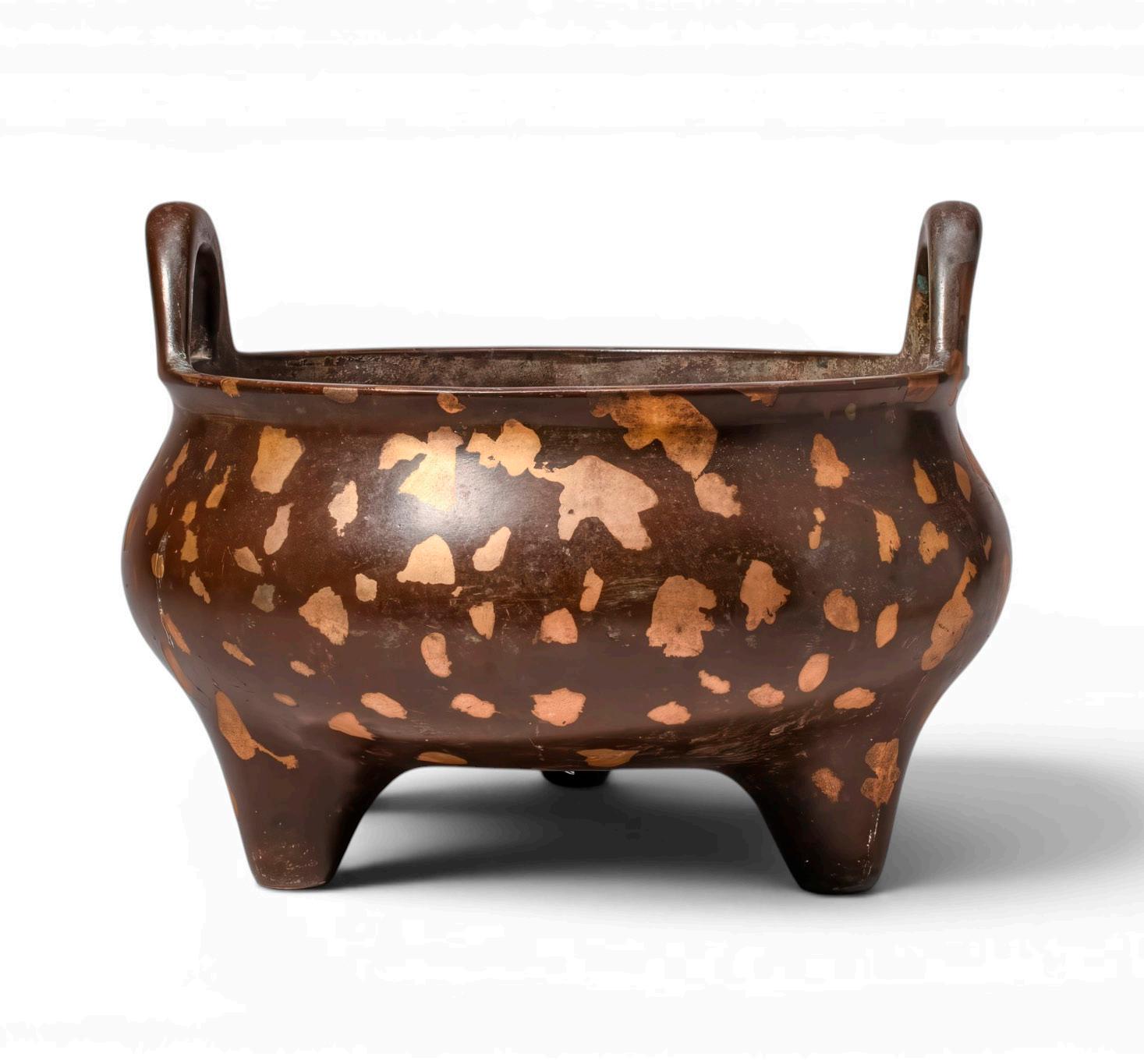
33A. CHINESE BRONZE TRIPOD CENSER WITH SPLASHED GOLD, XUANDE MARK
Ming Dynasty, Xuande period, Ca. AD 1426-1435.
Starting Price: £8000
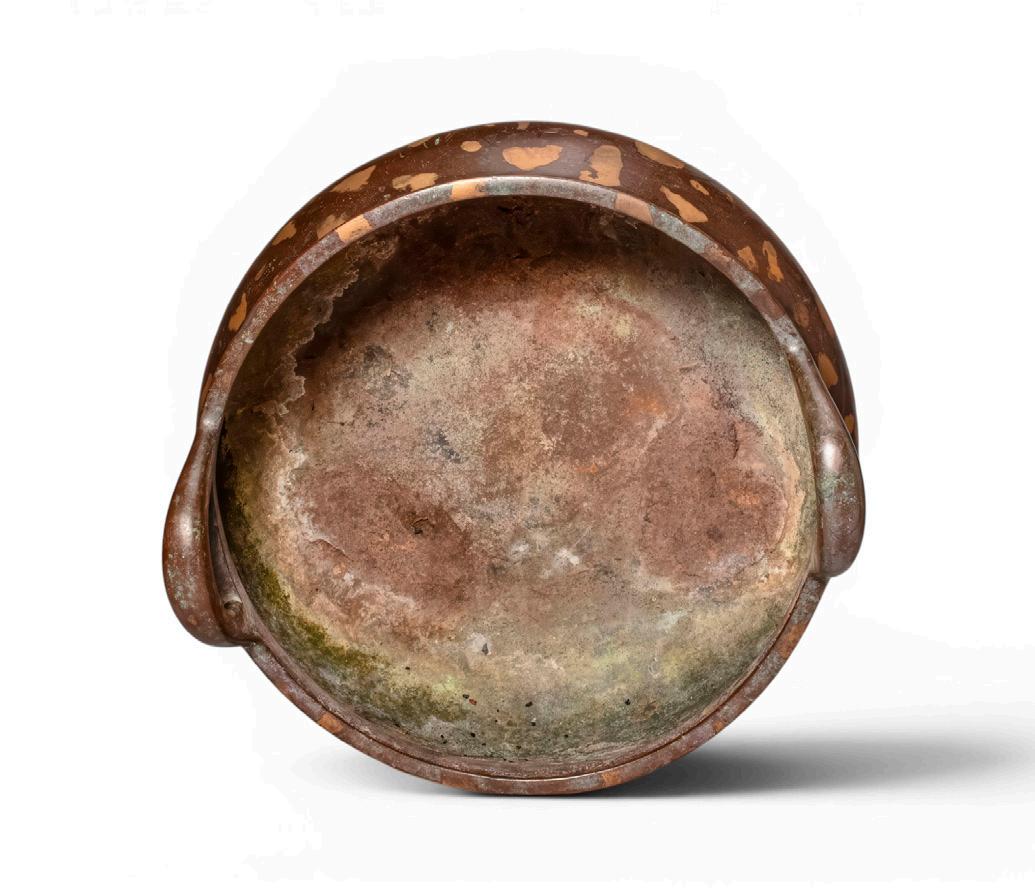
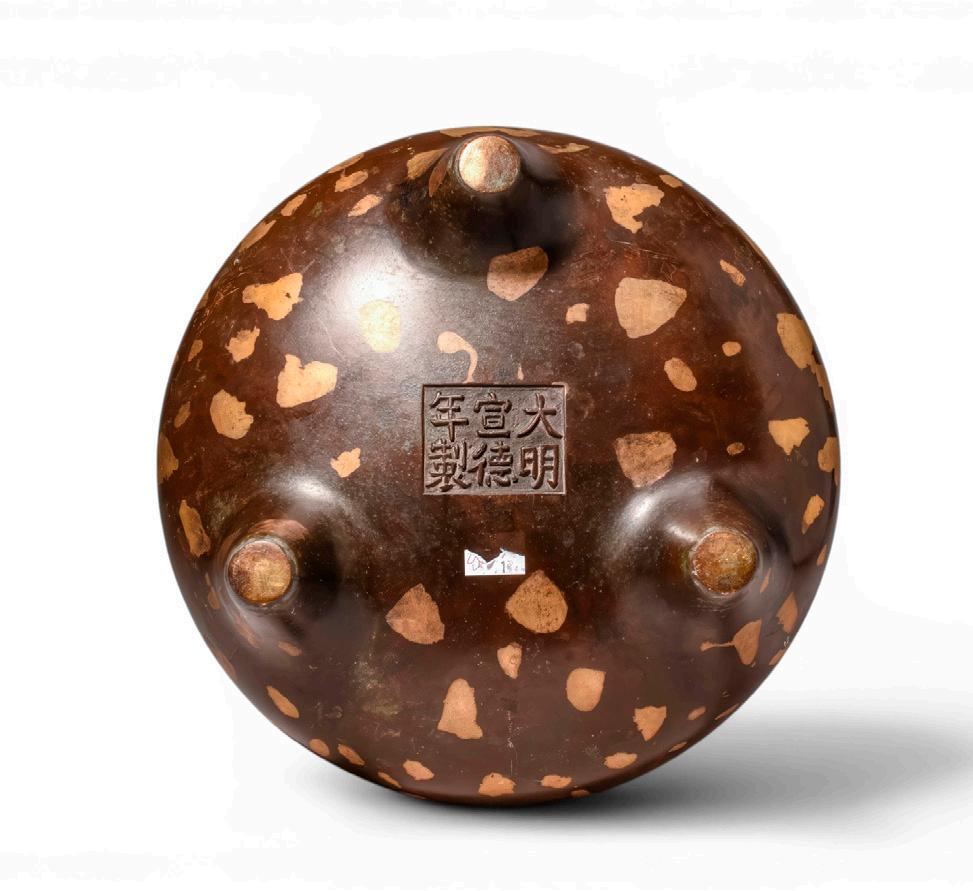
A Chinese bronze tripod censer of compressed globular form, raised on three tapering supports and with a pair of upright loop handles extending above the rim. The exterior is decorated with a splashed-gold surface, creating a striking mottled effect against the dark patinated bronze body. With a six character Xuande mark on the base.
Provenance: Private UK Collection.
Size: 275mm x 200mm; Weight: 4.48kg
33B. VIETNAMESE BRONZE CENSER, SIDE MARK
Ca. 19th century AD.
Starting Price: £8000
A Vietnamese bronze censer of compressed globular form, supported on three short tapering feet and flanked by a pair of upright loop handles rising above the rim.
The elegant silhouette and restrained modelling reflect the influence of Ming-style incense burners widely admired and adapted throughout Vietnam, particularly for use in scholar’s studios, temples, and ancestral altars. The underside bears the Vietnamese Emperor Side’s four character mark.
Provenance: Private UK Collection.
Size: 255mm x 200mm; Weight: 6.86kg
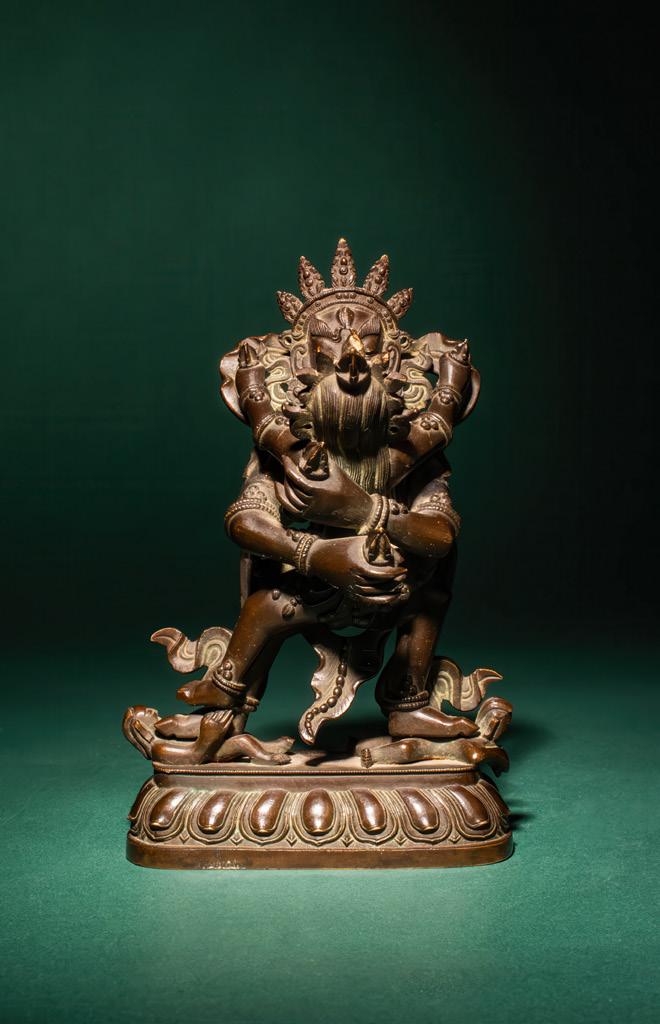
35. SINO-TIBETAN BRONZE YABYUM OF VAJRASATTVA AND CONSORT
Qianlong Period, Ca. AD 1736 - 1795.
Starting
A cast Sino-Tibetan bronze group depicting Vajrasattva in yab-yum (union) with his consort, seated in vajraparyankasana upon a double-lotus base. The principal deity is shown embracing the consort, symbolising the union of wisdom (prajna) and method (upaya), a central concept in Vajrayana Buddhist practice. Vajrasattva is adorned with an elaborate crown and rich jewellery including necklaces, armlets, and anklets, his torso sensitively modelled and his expression serene. He holds a vajra in his right hand and a bell (ghanta) in his left, the attributes of enlightened awareness and wisdom. The consort, seated astride his lap, mirrors the embrace, her arms wrapped around the deity, her form gracefully rendered with refined proportions and delicate ornamentation. Both figures are crowned and richly attired, with finely detailed hair arrangements and beaded ornaments.
Provenance: Private London Collection; Ex. J.A.N. Fine Art, acquired in 1990s.
Size: 135mm x 85mm; Weight: 640g
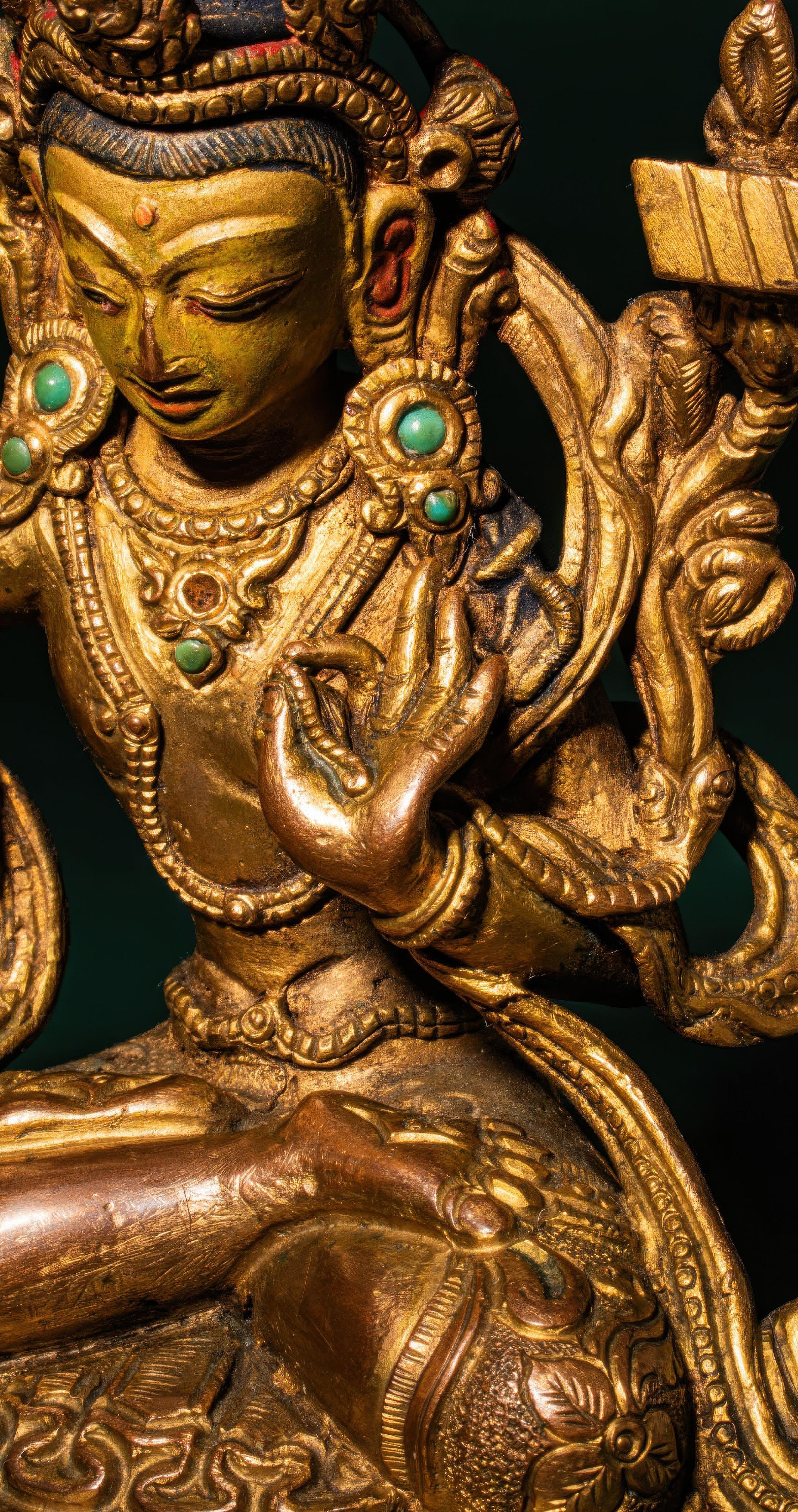
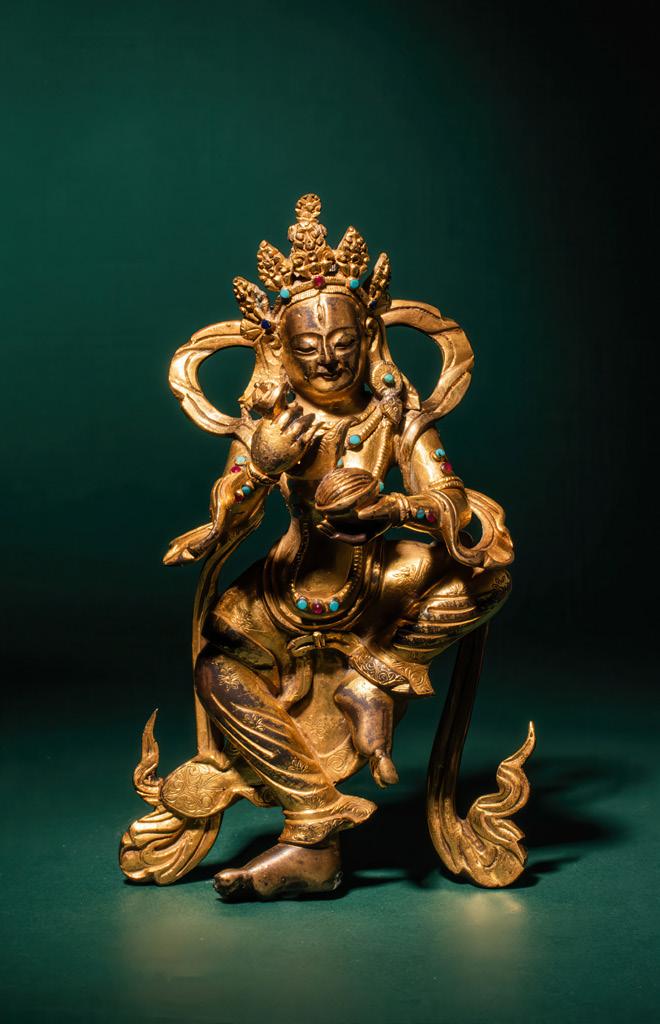
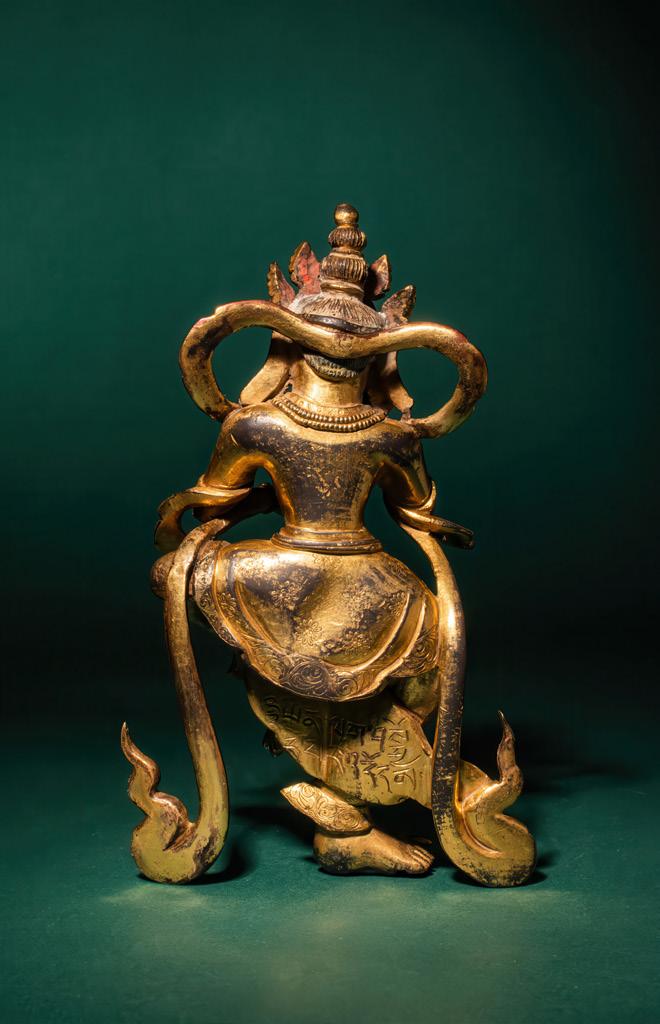
34. SINO-TIBETAN GILDED DANCING DAKINI
Ca. 18th century AD.
A finely cast and richly gilt copper alloy figure depicting a dancing dakini in dynamic posture, shown in animated movement with one leg raised and the body gracefully twisted. The figure balances upon a small support, her flowing scarves and sashes sweeping outward in elegant arcs that enhance the sense of motion.
The dakini is adorned with an elaborate foliate crown inset with turquoise and coral cabochons, matching jewelled ornaments at the chest, arms, and waist. Her face is delicately modelled with a serene yet animated expression, framed by pendulous earrings and crowned by a high chignon. The torso is sensuously rendered, with finely detailed jewelry and a patterned skirt falling in rhythmic folds.
In her hands, she holds ritual attributes, possibly a skull cup (kapala) and offering gesture, reinforcing her role within tantric Buddhist practice.
Provenance: Private UK Collection.
Size: 125mm x 80mm; Weight: 320g
37. NEPALESE BRONZE AMOGHAPASHA WITH BUDDHA SHAKYAMUNI AND TARA
Ca. 18th - 19th century AD.
Starting Price: £1200
A finely cast bronze triadic group centred on Amoghapasha Lokeshvara, standing in elegant frontal pose upon a lotus pedestal and backed by an elaborate flaming aureole. The principal figure is depicted with multiple arms radiating symmetrically, each holding attributes associated with compassion and the salvific power of the bodhisattva, including the noose (pasha), symbolising the drawing of beings toward enlightenment.
Amoghapasha is richly adorned with a foliate crown, necklaces, armlets, and a patterned lower garment, the torso sensitively modelled and the expression serene yet authoritative. The aureole rises in a pointed arch behind the figure, decorated with flame-like motifs and finely pierced elements.
Flanking the central deity are two subsidiary seated figures: Buddha Shakyamuni to one side, depicted in meditation posture, and Tara to the other, shown in graceful seated pose, both set within smaller aureoles. Together they form a balanced and hierarchically arranged composition. The group is mounted on an elaborately cast stepped base with openwork detailing, including a central mask motif and scrolling ornament.
Provenance: Private Collection of Ramchandra Rijal, acquired in 1990s.
Size: 255mm x 235mm; Weight: 1.98kg
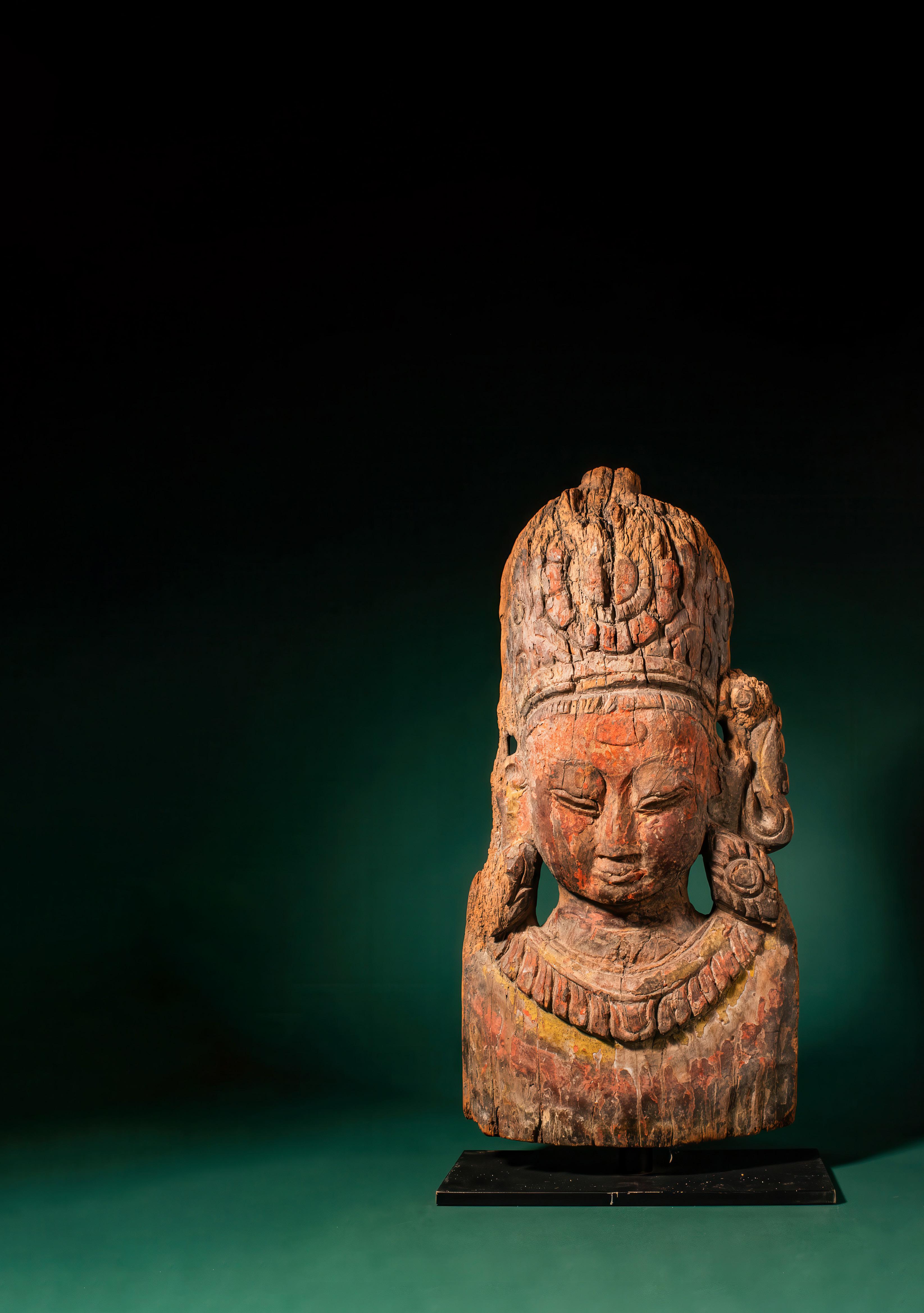
39. NEPALESE WOODEN MASK OF BODHISATTVA
Ca. 16th century AD, or earlier.
Starting Price: £2400
A finely carved wooden mask depicting a bodhisattva, rendered with serene expression and downcast eyes. The face is softly modelled with rounded cheeks, a gentle smile, and elongated earlobes, conveying a sense of calm introspection and spiritual presence.
The figure wears a tall, elaborately carved headdress, with incised detailing suggesting foliate or jewelled ornament. The ears are adorned with large pendulous earrings, and the neck is encircled by a beaded collar, further emphasising the bodhisattva’s regal and divine status.
Provenance: Private Collection of Ramchandra Rijal, acquired in 1990s.
Size: 510mm x 250mm; Weight: 2.91kg
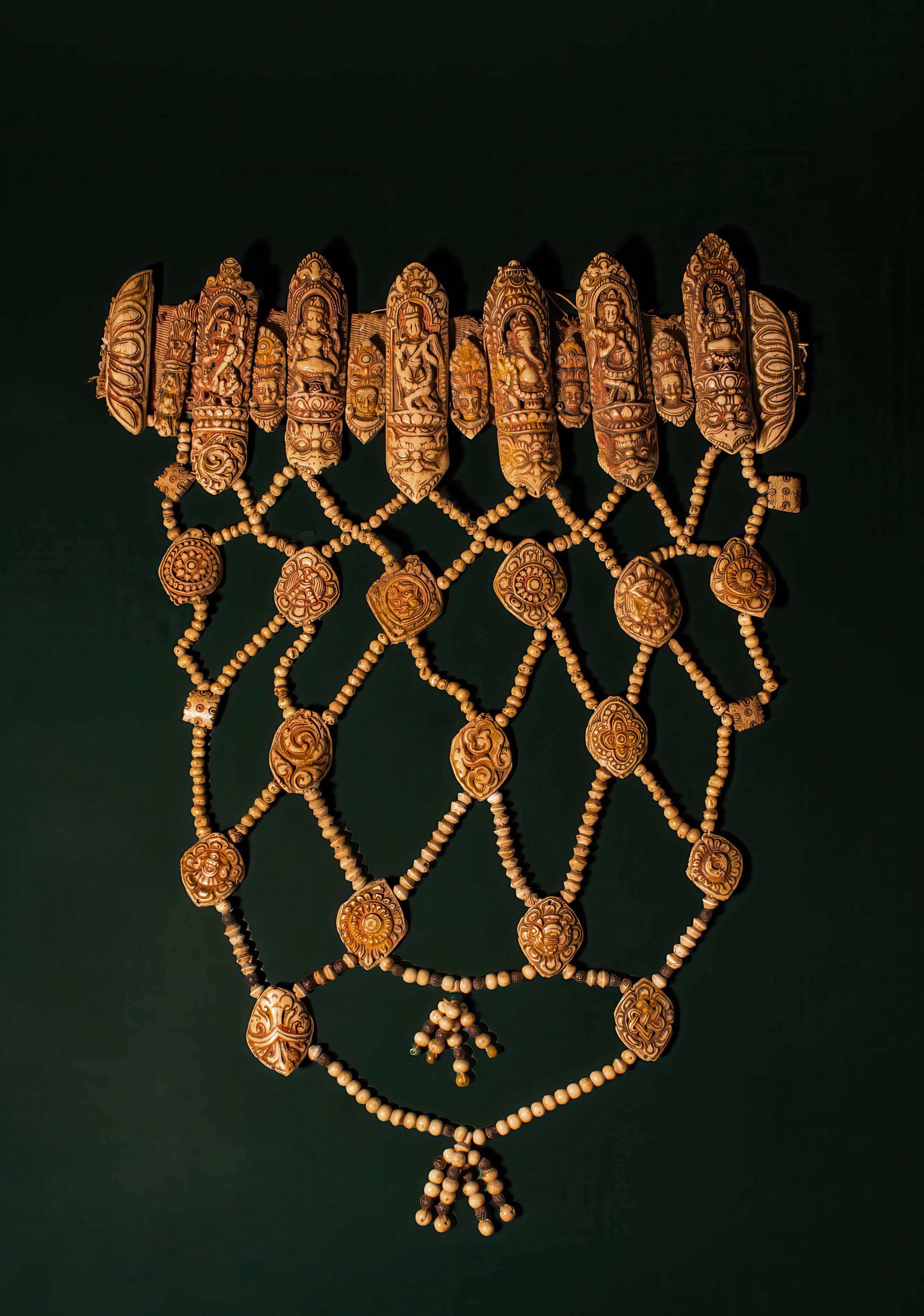
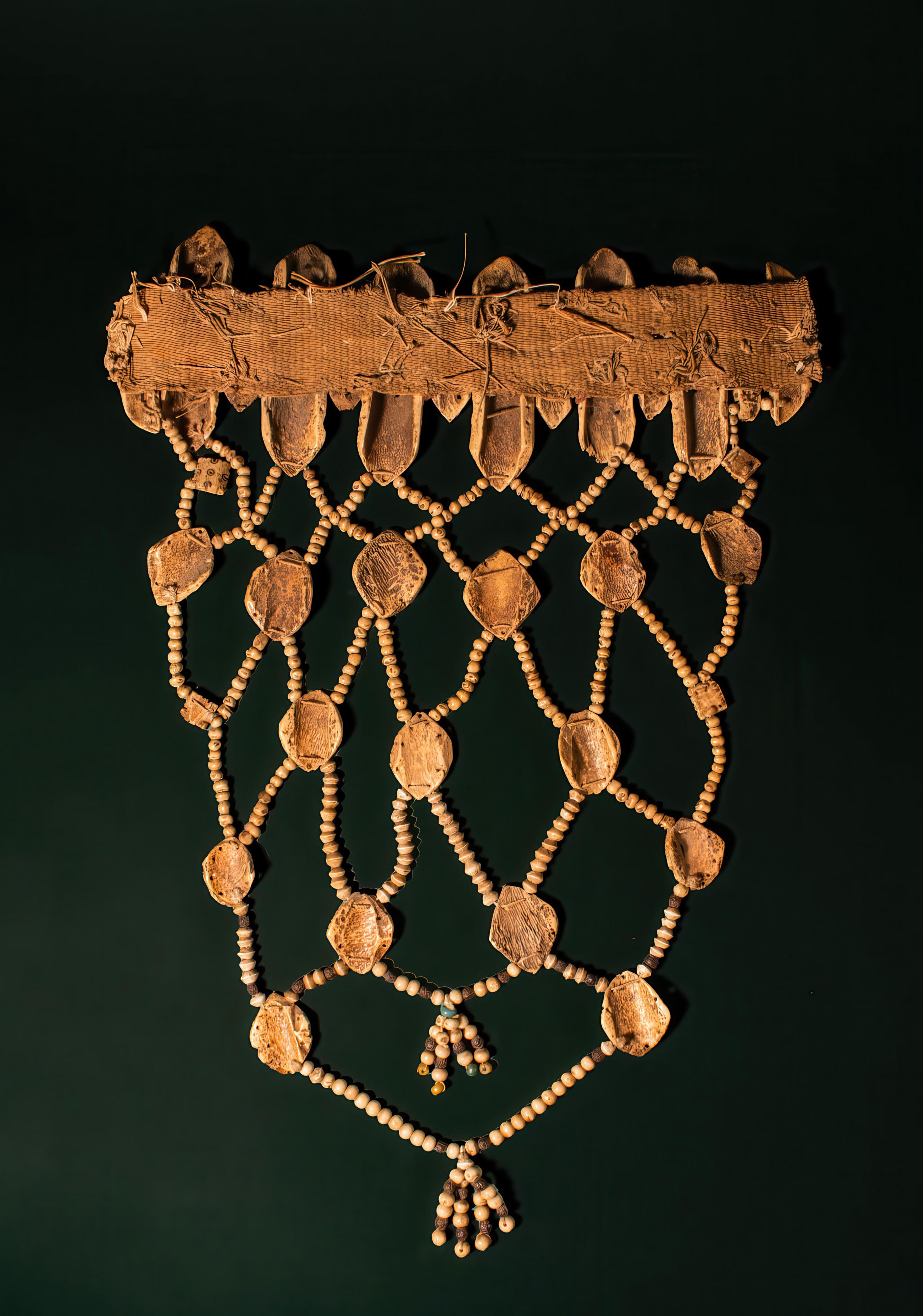
40. STUNNING SET OF NEPALESE BONE APRON WITH CARVINGS OF GANESHA AND DANCING DAKINI
Ca. 16th - 17th century AD.
Starting Price: £3000
An elaborate ritual bone apron composed of intricately carved plaques and a network of beadwork. The upper register is set with a series of elongated rectangular plaques, each finely carved in relief with deities and auspicious figures, including depictions of Ganesha and dancing dakinis.
Suspended below is an openwork arrangement of strung bone beads, interspersed with circular medallions carved with floral and symbolic motifs. The beaded strands form a geometric net terminating in small pendant clusters, enhancing the movement and visual complexity of the piece.
Provenance: Private UK Collection; Ex. French Private Collection, assembled in the 1960/70s.
Size: 830mm x 420mm; Weight: 1.05kg
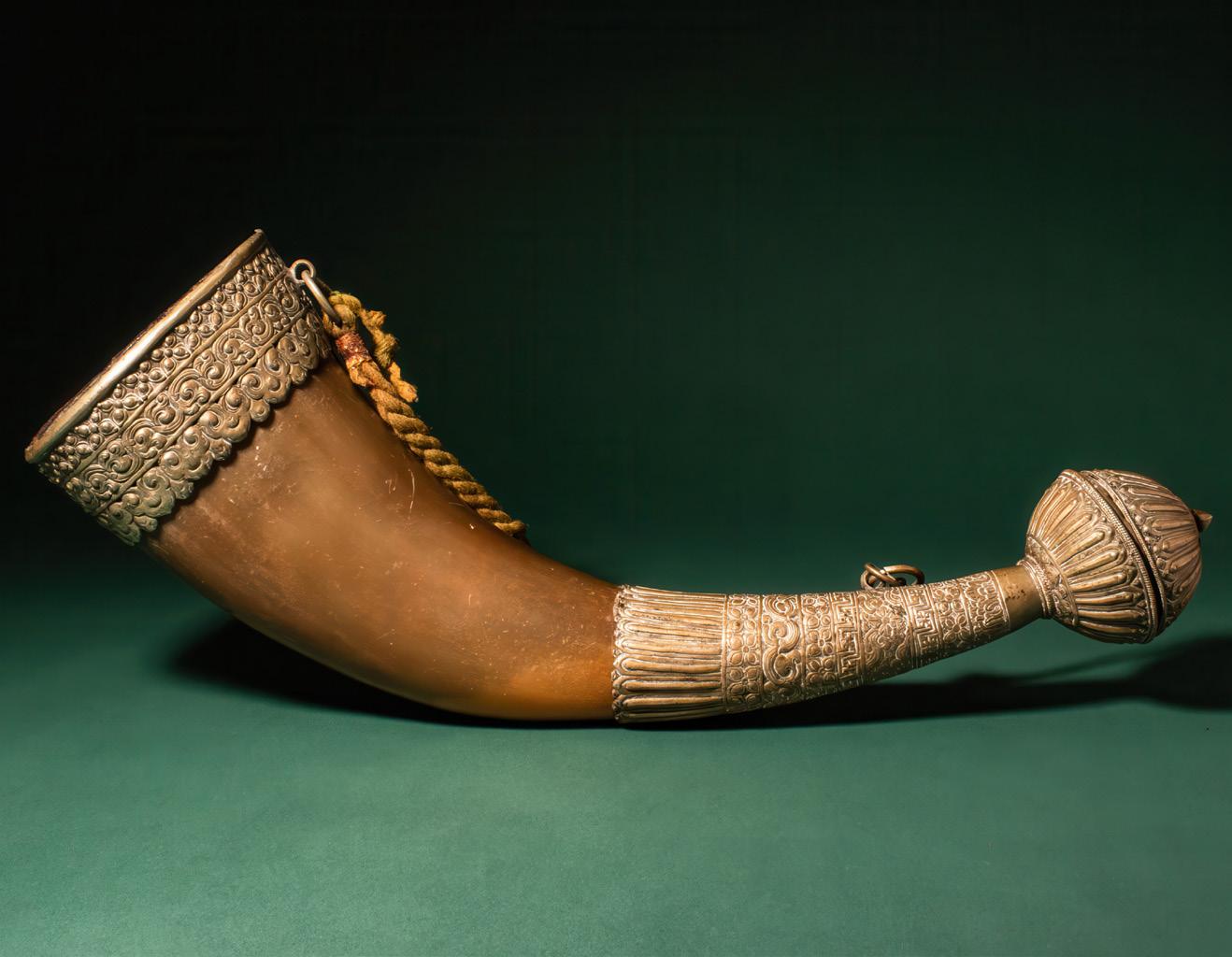
41. TIBETAN CHAANG DRINKING HORN
Ca. 19th century AD.
Starting Price: £400
A beautiful Tibetan drinking horn (chaang horn), formed from a natural bovine bone and mounted with decorative metal fittings. The gently curving body tapers toward a narrow terminal fitted with an ornate metal finial, from which a small suspended element is attached by a chain.
The wider rim is encased in a repoussé metal mount, richly worked with scrolling floral motifs, while a secondary band at the midpoint provides structural reinforcement and decorative continuity. A braided cord is attached near the mouth, allowing the vessel to be carried or suspended when not in use.
Provenance: Private UK Collection.
Size: 530mm x 140mm; Weight: 1.43kg
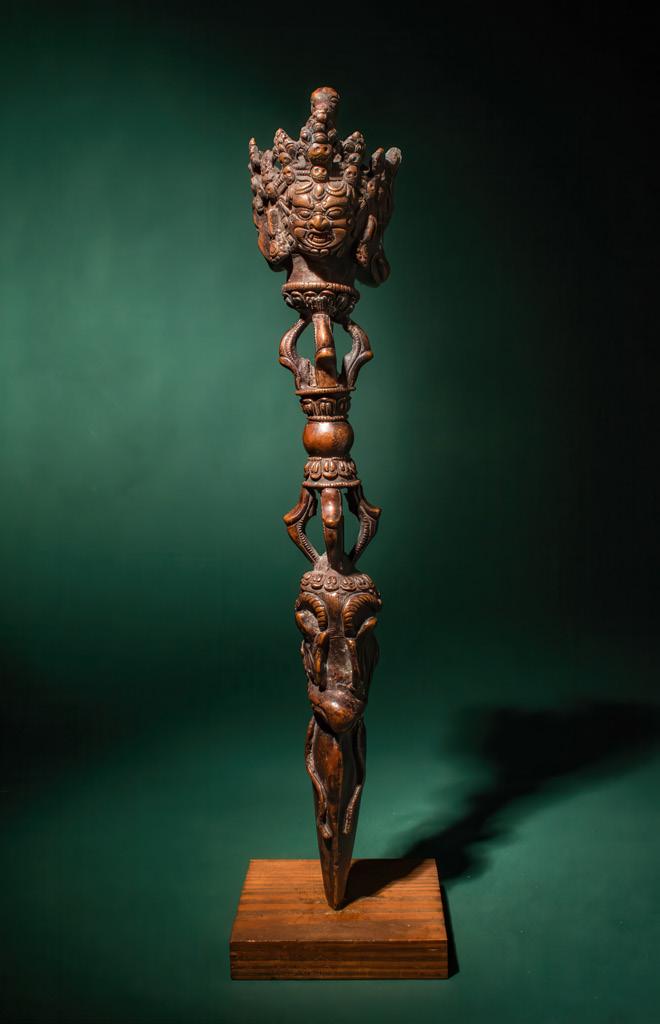
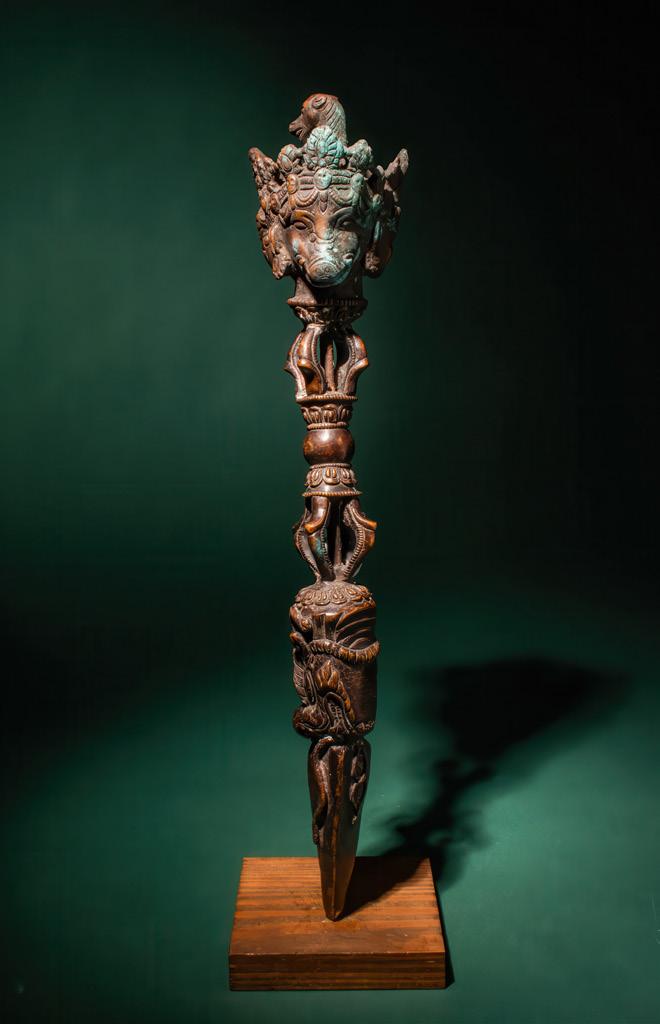
43.
BRONZE
Ca. 17th - 18th century AD.
Starting Price: £600
A substantial bronze phurba (kila), cast in multiple sections and richly ornamented, surmounted by a wrathful deity head with bulging eyes, flared nostrils, and bared teeth beneath a foliate crown. The fierce expression conveys the power to subdue demonic forces and obstacles within tantric ritual practice.
Below the head, the shaft is articulated with a series of symbolic elements, including a vajra motif and openwork prongs, interspersed with baluster-form sections and decorative bands. The lower register transitions into a sculptural figure emerging above the blade, possibly representing a subdued spirit or protective entity, before culminating in a sharply tapered trihedral blade.
Provenance: Private UK Collection.
Size: 385mm x 75mm; Weight: 1.72kg
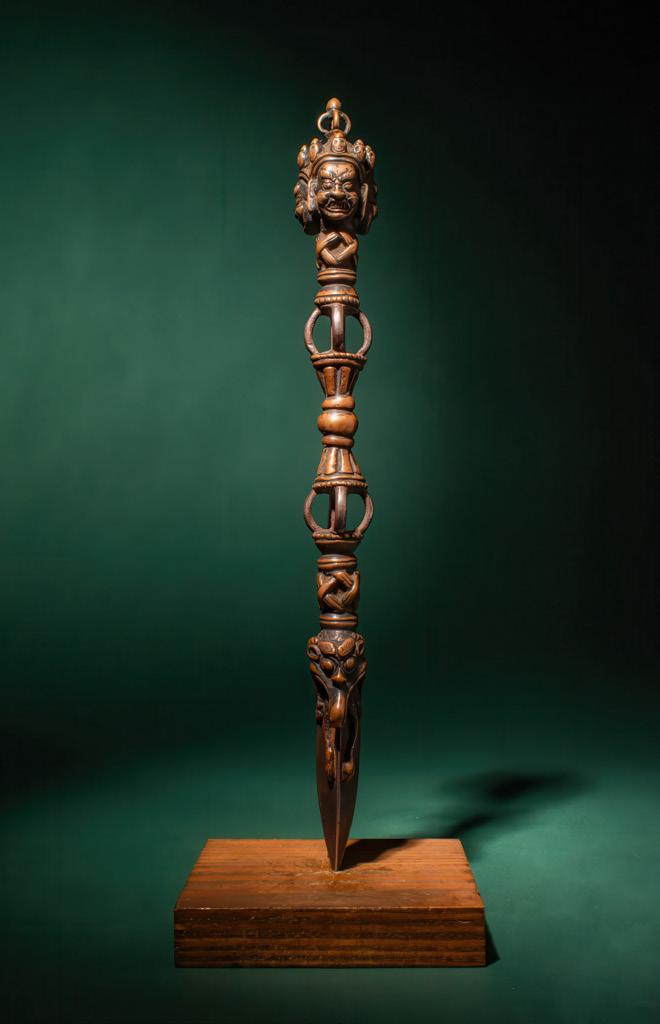
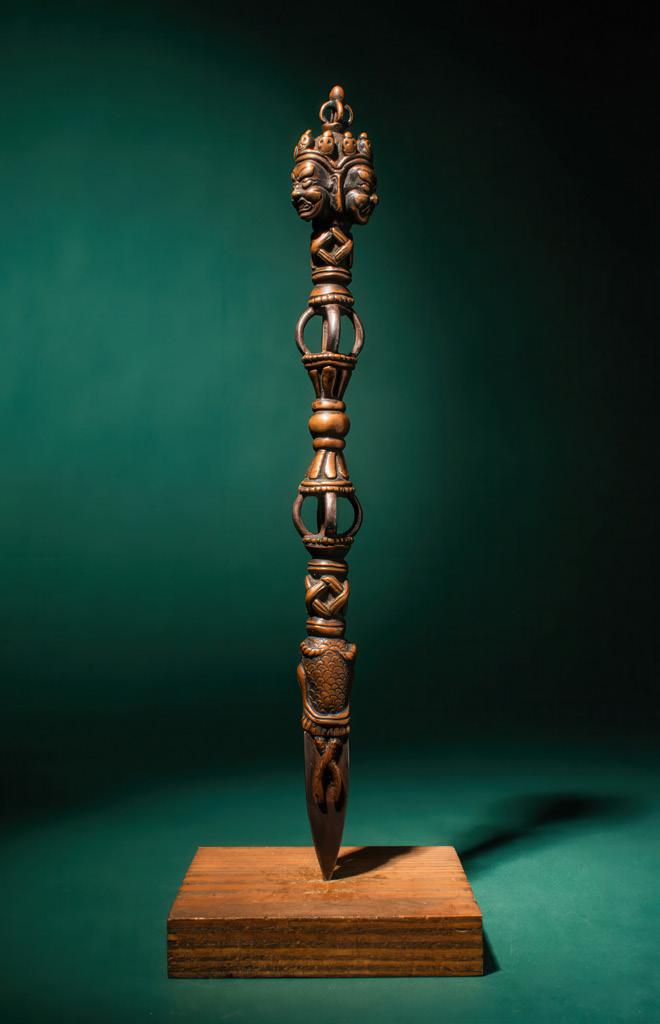
42. BRONZE AND CAST IRON PHURBU, TIBETAN OR NEPALESE
Ca. 16th century AD.
Starting Price: £800
A finely cast ritual phurba (kila), composed of a handle and a tr
ihedral blade, the shaft surmounted by a wrathful deity head beneath a foliate crown. The deity’s fierce expression, with bulging eyes and bared teeth, embodies the subjugation of negative forces.
Below the head, the grip is formed by a vajra (thunderbolt) motif, symbolising indestructibility and spiritual power. The midsection features openwork prongs and ring elements, while the lower register is decorated with further vajra forms and stylised motifs, culminating in a sharply tapered, three-sided blade designed for ritual use rather than practical cutting.
Provenance: Private Collection of Ramchandra Rijal, acquired in 1990s.
Size: 280mm x 35mm; Weight: 395g
LARGE NEPALESE
PHURBU
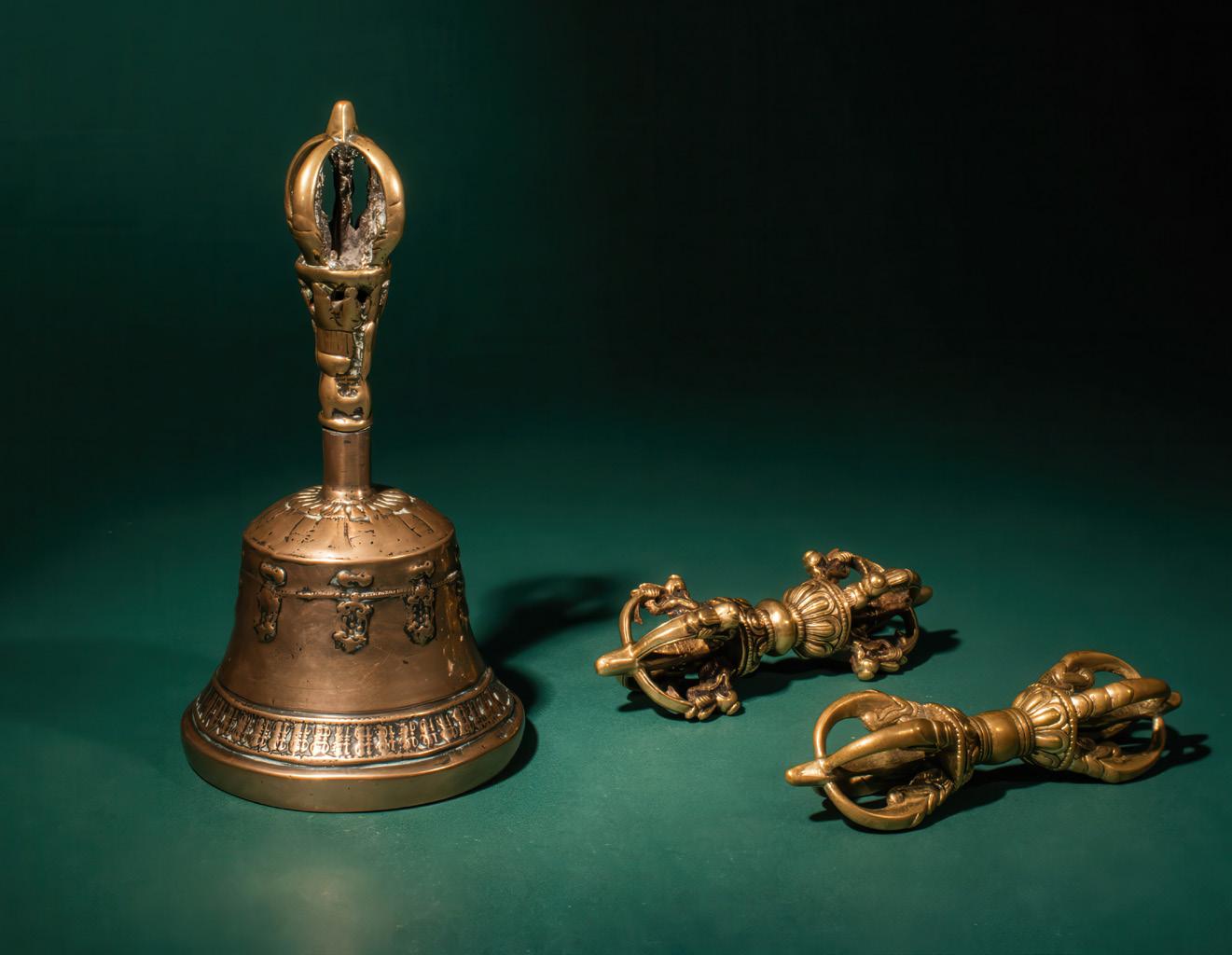
45. GROUP OF TIBETAN RITUAL OBJECTS, BRONZE VAJRA AND BELL
Ca. 18th - 19th century AD.
Starting Price: £800
A group of Tibetan ritual implements comprising a bronze bell (ghanta) and two vajras (dorje), each cast and richly detailed, forming an essential set used in Vajrayana Buddhist practice.
The bell features a flared body with a band of cast ornament, surmounted by a handle in the form of a half-vajra, terminating in a pronged finial. The handle is finely detailed with stylised lotus and vajra motifs, while the bell’s body displays a warm patina consistent with age and ritual use.
The two vajras are of symmetrical form, each with a central spherical grip flanked by lotus collars and pronged ends.
Provenance: Private UK Collection.
Size: 130-180mm x 35-95mm; Weight: 880g
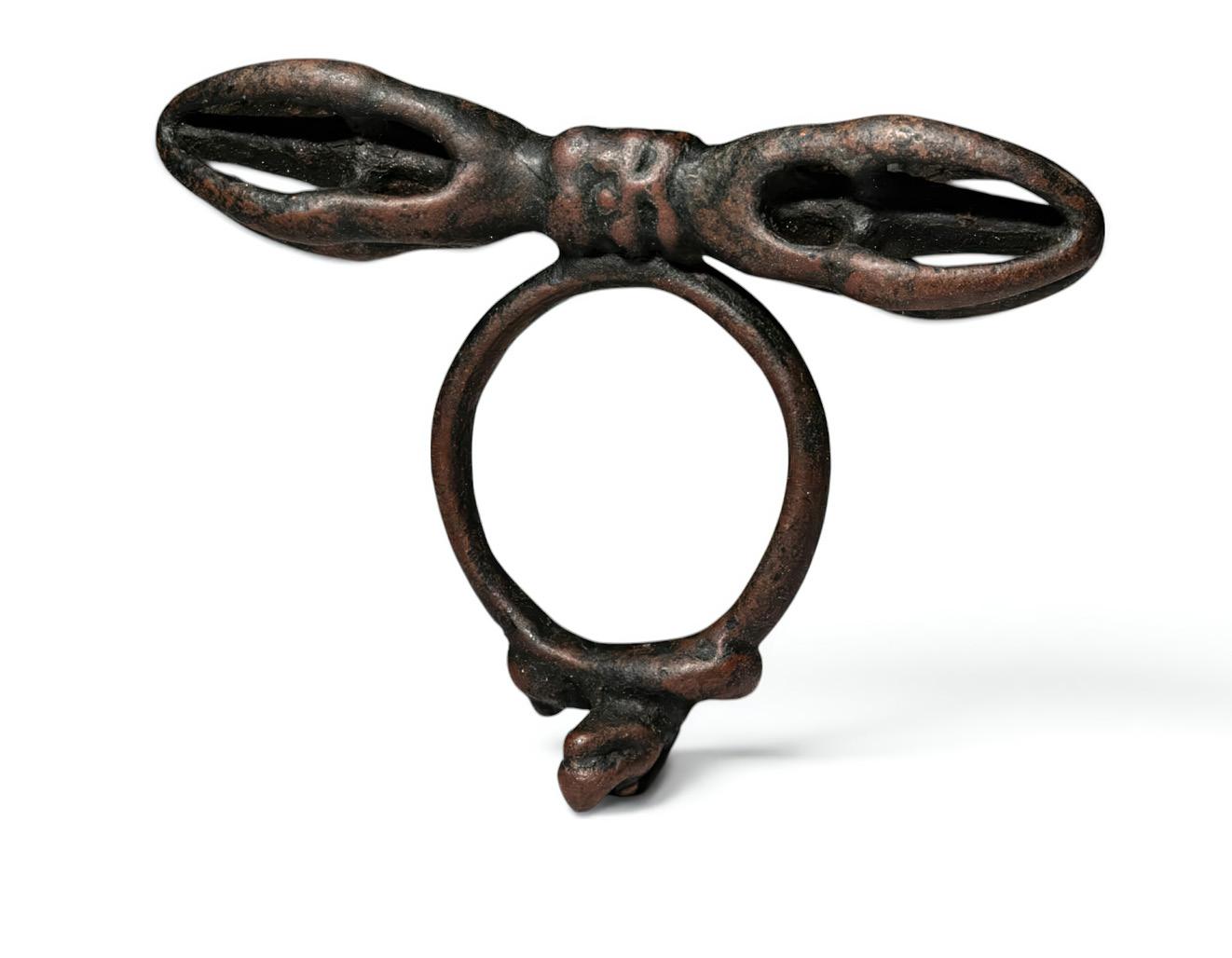
44. BRONZE VAJRA RING WITH WRATHFUL HEAD AND SNAKE
Dali Kingdom, Ca. 12th century AD.
Starting Price: £1500
A cast bronze ring combining a vajra form with an integral ring handle. Stylised vajra prongs extend horizontally from the head and curve inward at the terminals, with a serpent-like form coiled beneath and integrated into the structure.
Provenance: Private UK Collection; Ex. Sotheby’s Hong Kong, Ritual and Reality II, 11 - 18 December 2024, lot 772.
Size: D:18.54mm / US: 8 1/2 / UK: Q 1/2; Weight: 24g
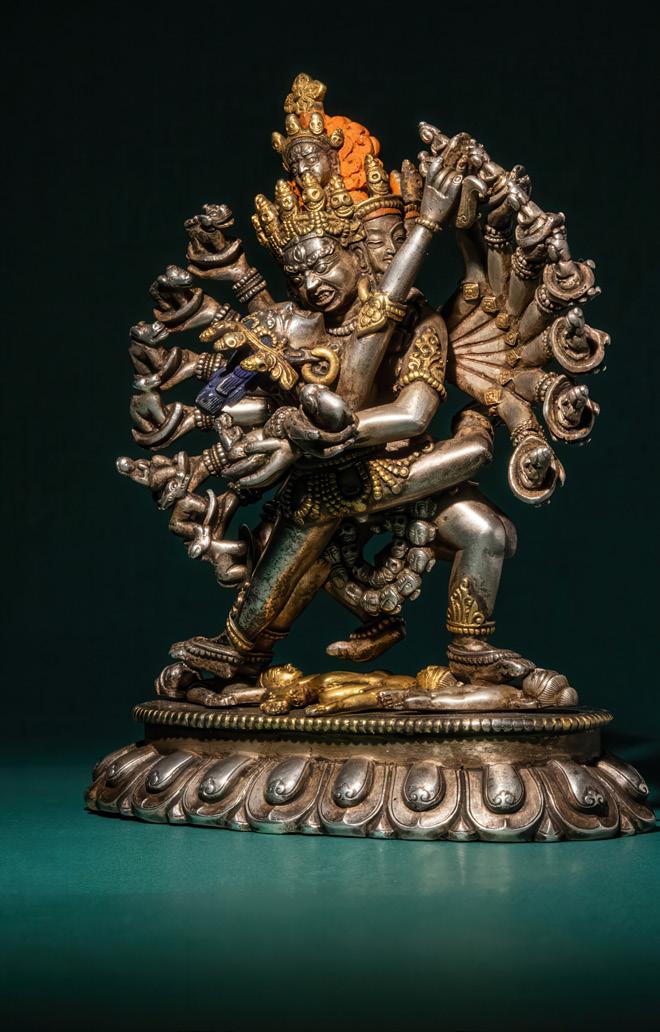
47. TIBETAN SILVER WITH PARCEL GILT FIGURE OF CHAKRASAMVARA
Ca. 18th-19th century AD.
Starting Price: £3000
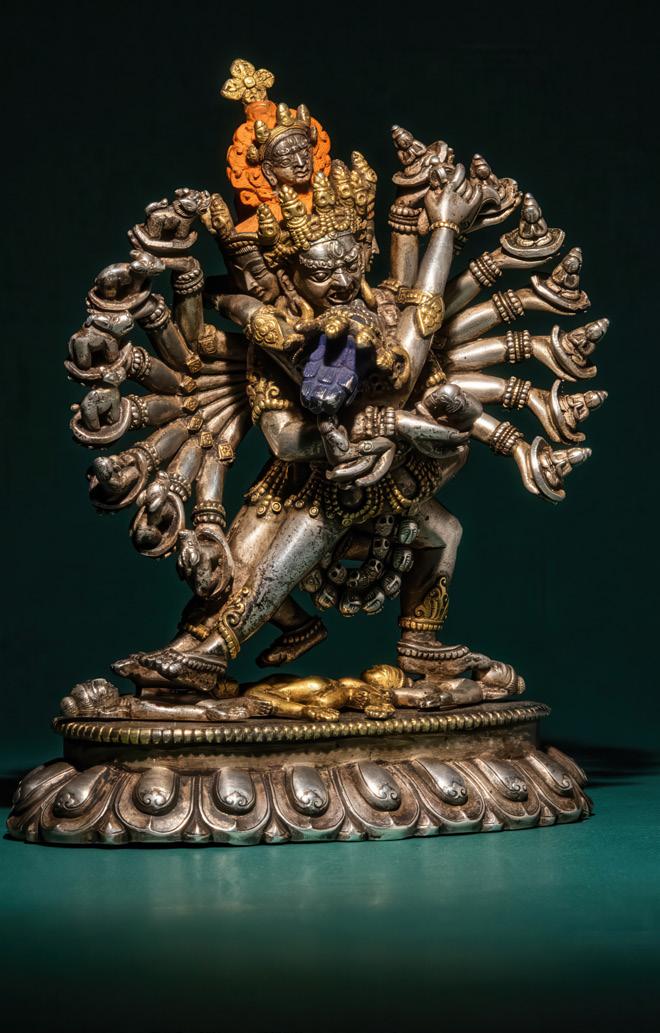
A powerful silver and parcel-gilt figure of Chakrasamvara in union with his consort, standing on a lotus base over figures. Chakrasamvara, depicted with twelve arms, four heads, and a fierce expression, brandishes ritual implements including the vajra, ghanta, karttrika, and kapala, symbolising the mastery of passions through wisdom. The consort Vajravarahi, rendered in contrasting blue pigment, embraces him in yab-yum, representing the union of compassion and wisdom.
Provenance: Private UK Collection.
Size: 165mm x 125mm; Weight: 1.37kg
48.
TIBETAN GILDED COPPER ALLOY VAJRASATTVA
Ca. 14th century AD.
Starting Price: £800
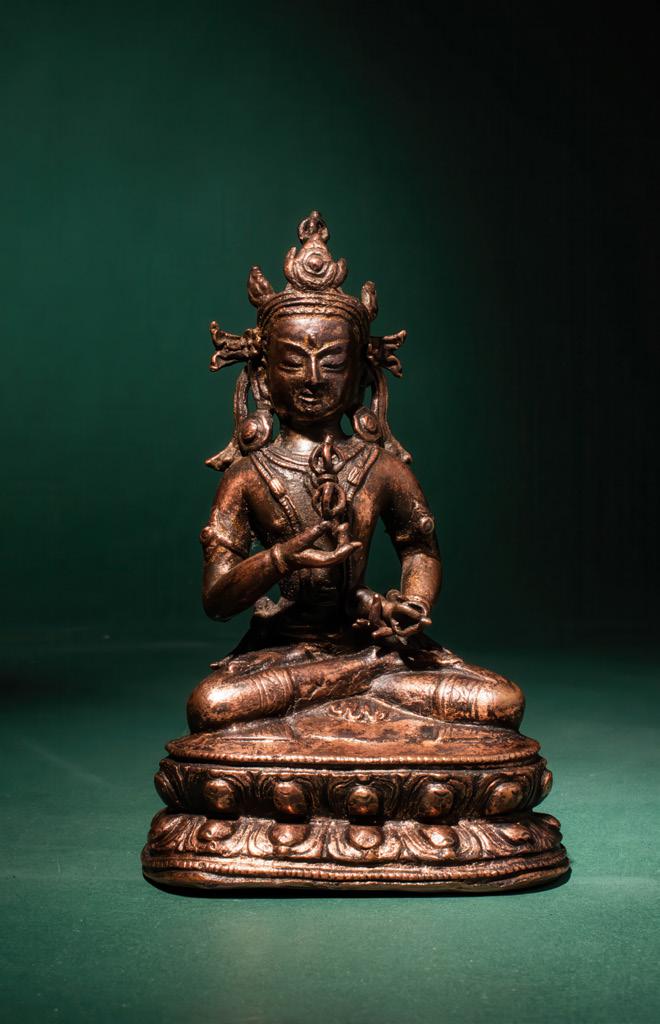
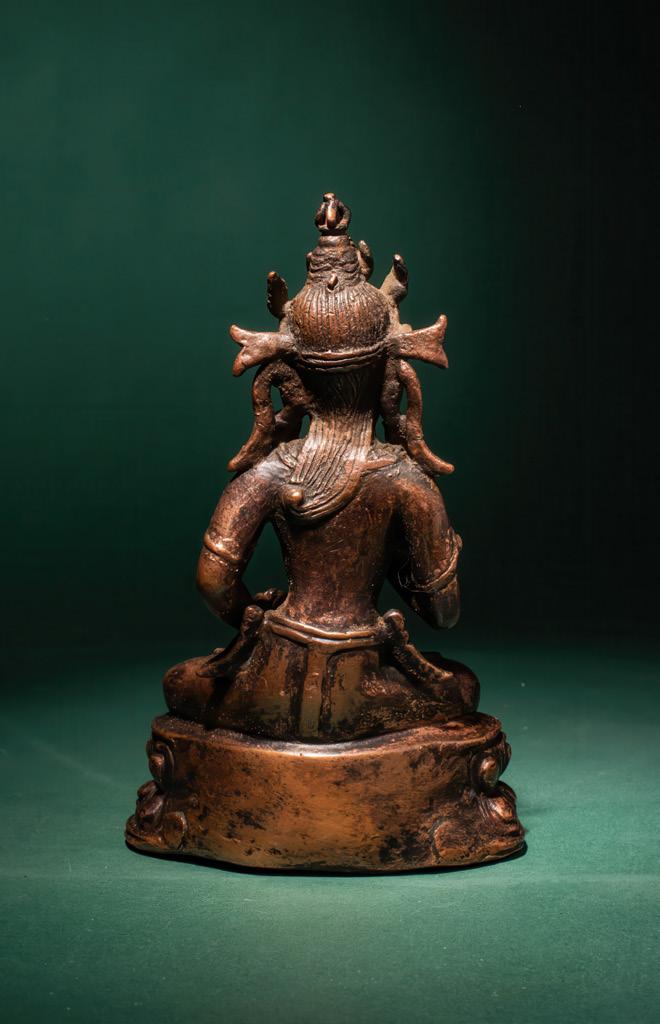
A beautiful cast gilt copper alloy figure of Vajrasattva, seated in vajraparyankasana (full lotus position) upon a double-lotus base. The deity is depicted with serene expression and downcast eyes, the face softly modelled beneath an elaborate fiveleaf crown, with long, beaded earrings framing the cheeks.
The right hand is held before the chest in vitarka mudra, grasping a vajra, while the left hand rests at the lap holding a bell (ghanta), attributes symbolising the union of wisdom and method. The figure is richly adorned with necklaces, armlets, and a flowing dhoti secured with a beaded girdle, the fabric rendered with finely incised folds.
The lotus base is crisply cast with layered petals.
Provenance: Private London Collection; Ex. Private UK Collection, acquired in 1990s.
Size: 140mm x 90mm; Weight: 900g
49.
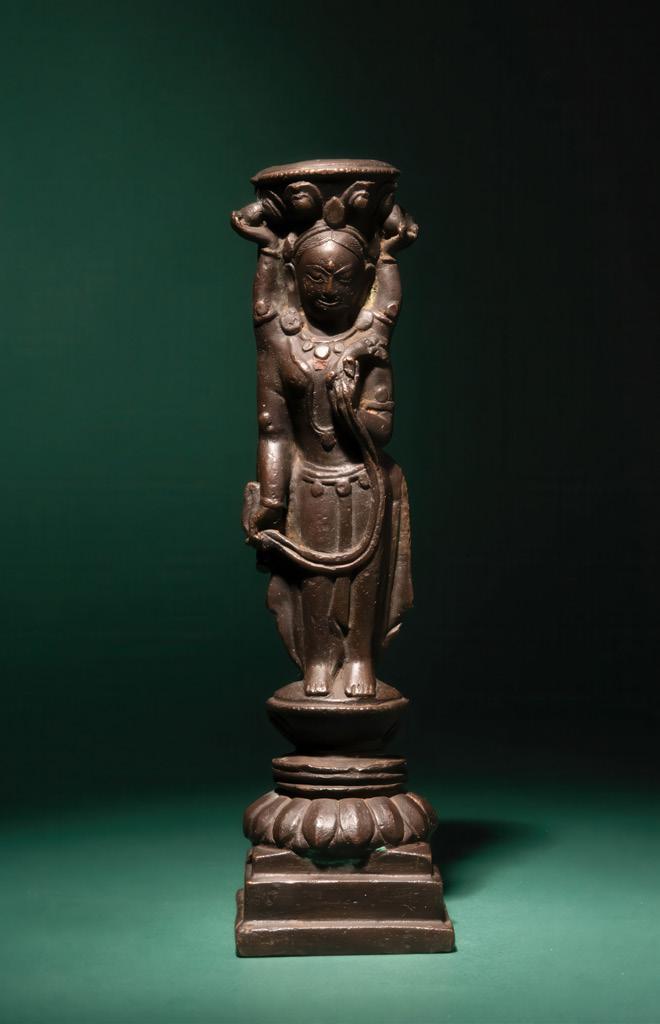
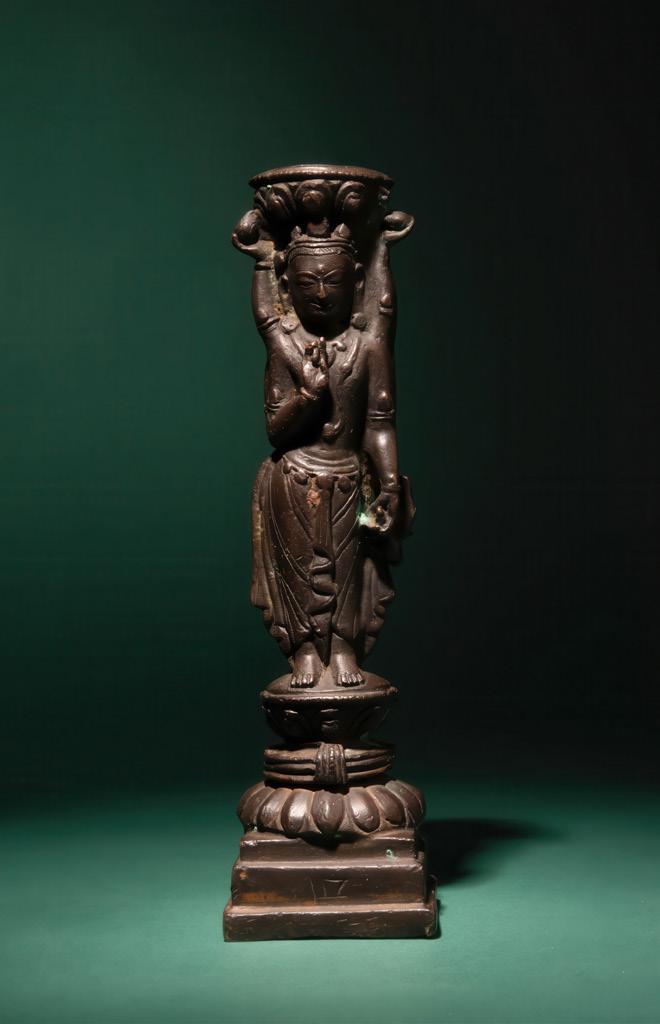
TIBETAN COPPER ALLOY COLUMN SUPPORT DEPICTING AN OFFERING GODDESS
Densatil Monastery, Ca. 14th - early 15th century AD.
A cast copper alloy column support in the form of an elegantly standing offering goddess, shown frontally and raising both arms to support a circular capital above her head. The figure stands upon a lotus pedestal set on a stepped base, the petals crisply defined and lending a sense of elevation and sanctity.
The goddess is adorned with elaborate jewellery including necklaces, armlets, and a tiered headdress, and wears a long, pleated skirt tied at the waist. Her torso is sensitively modelled, and her facial features are serene and composed, reflecting the refined aesthetic of Himalayan metalwork. One hand is held in a graceful gesture near the chest, while the raised arms support the architectural element above, emphasising her dual role as both devotional figure and structural support.
Provenance: Private London Collection; Ex. Private UK Collection, acquired in 1990s.
Publications / Reports: For similar see: Himalayan Art Resources, item no. 12229 and 24574; Sotheby’s New York, 24 March 2026 Indian & Himalayan Art, including Property from the Zimmerman Family Collection, lot 824.
Size: 200mm x 55mm; Weight: 840g Starting
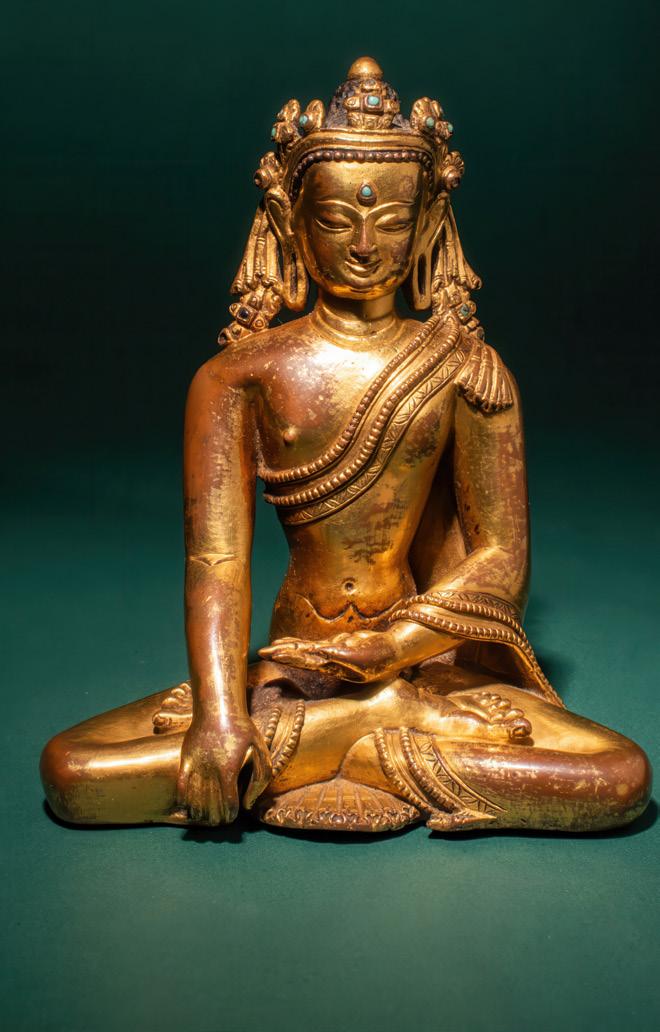
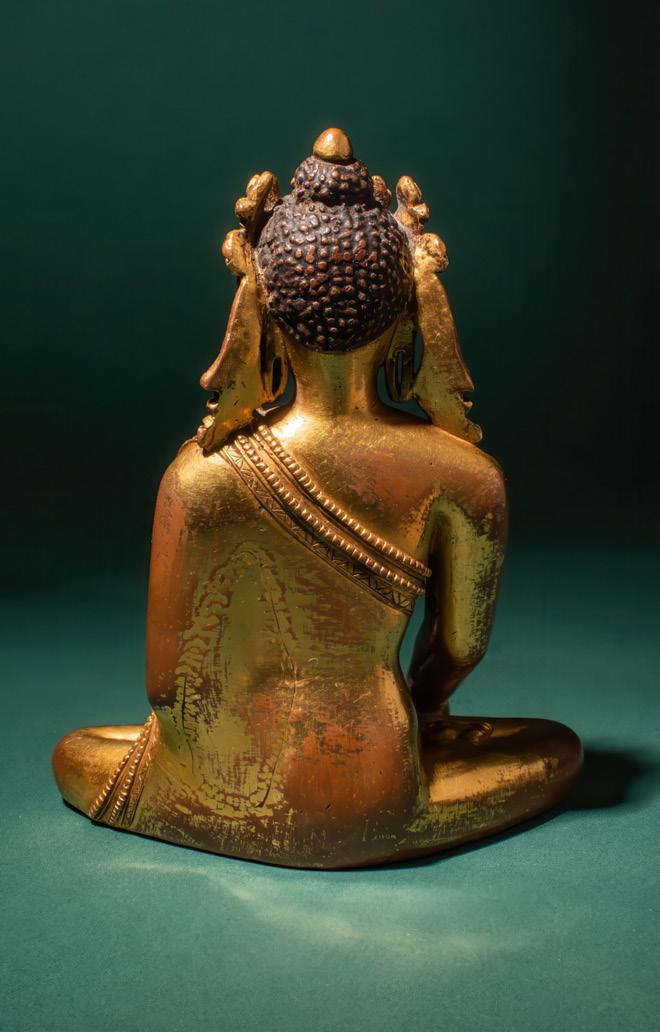
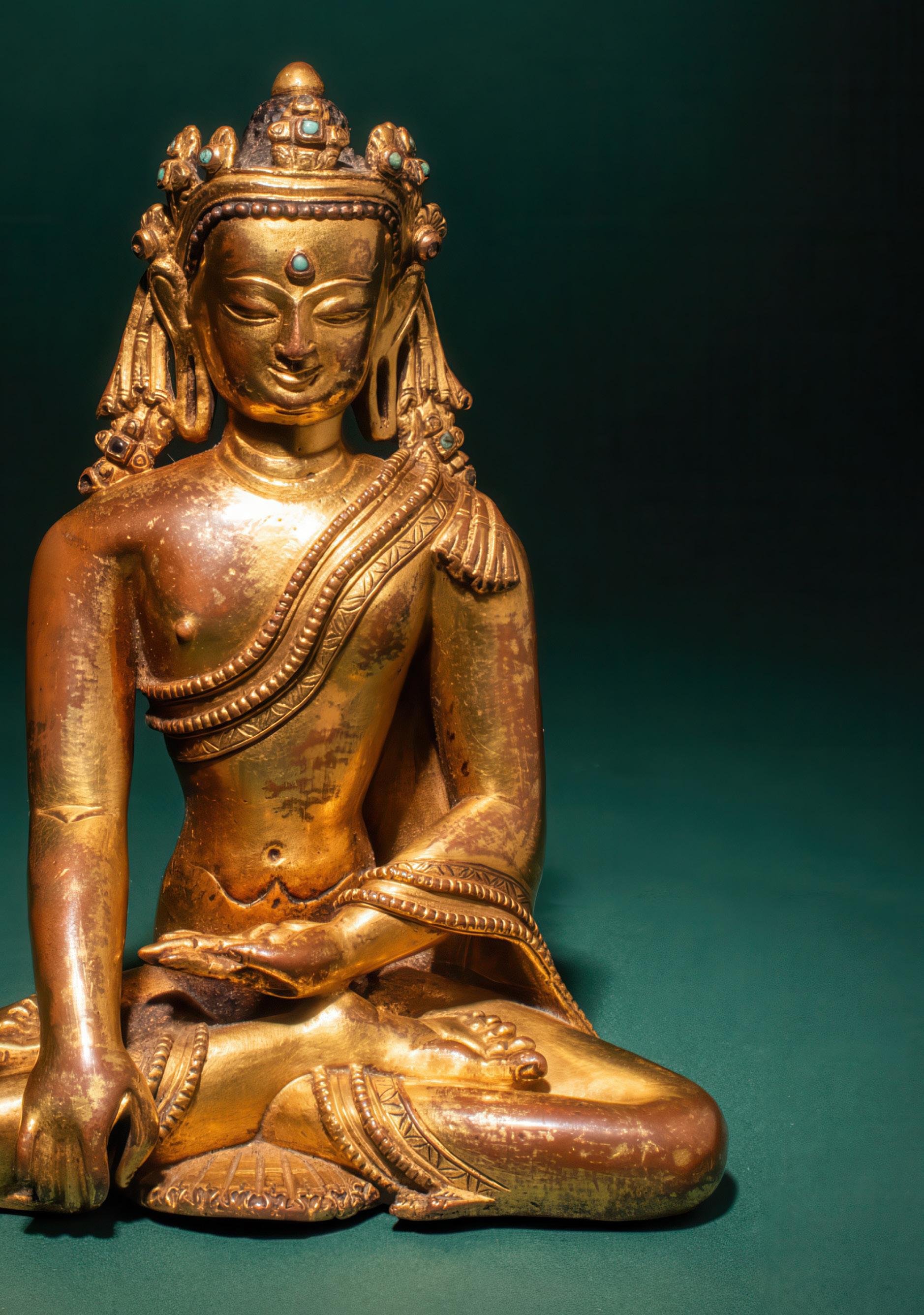
50. TIBETAN GILDED COPPER ALLOY CROWNED BUDDHA SHAKYAMUNI
Ca. 15th century AD.
Starting Price: £2400
A finely cast and richly gilded copper alloy figure of the Crowned Buddha Shakyamuni, seated in vajraparyankasana (full lotus posture). The right hand is extended in bhumisparsha mudra (earth-touching gesture), while the left rests in the lap in dhyana mudra, signifying the moment of enlightenment beneath the Bodhi tree.
Distinctively, the Buddha is shown wearing an elaborate five-leaf crown and princely ornaments, including beaded necklaces, armlets, and a flowing sash draped elegantly across the torso. This “crowned Buddha” form reflects a tantric interpretation in which Shakyamuni is visualized not as an ascetic renunciant but as a fully enlightened, sovereign being embodying both spiritual and worldly perfection.
The face is sensitively modeled, with gently downcast eyes, arched brows, and a subtle urna, conveying a calm, introspective expression. The hair is arranged beneath the crown with finely detailed locks falling to the shoulders.
Provenance: Private UK Collection.
Publications / Reports: For similar see: Bonhams Hong Kong, Images of Devotion, lot 1020; Sotheby’s, Dharma and Tantra, including Masterpieces from the Nyingjei Lam Collection, 18 September 2023, lot 115; Himalayan Art Resources item no. 4734.
Size: 135mm x 110mm; Weight: 875g
51. RARE CENTRAL TIBETAN SEATED FIGURE OF KUNZANG AKOR, BON DEITY
Ca. 14th century AD.
Starting Price: £20000
A finely cast copper alloy figure depicting Kunzang Akor, seated in serene meditation upon a well-articulated double-lotus base. The deity is shown in vajraparyankasana (full lotus posture), with hands resting in the lap in dhyana mudra, conveying a state of profound contemplative stillness. Kunzang Akor is the meditational form of Shenlha Okar, a central primordial deity within the Bon religious tradition. He is typically identified by the presence of the Tibetan letter “A” at the heart center—symbolizing the primordial, unconditioned state. In canonical representations, the hands hold the stems of two lotus blossoms rising at either side, supporting a yungdrung (eternal swastika) on the right and a ritual vase on the left, both potent symbols within Bon cosmology. While these attributes are not always preserved or visible in sculptural form, their conceptual presence remains integral to the deity’s identity. The figure is richly adorned with an elaborate crown, beaded jewelry, and finely detailed ornaments, reflecting both divine and regal iconography. The face is composed and meditative, with downcast eyes and a softly modeled expression of inner awareness.
Provenance: Private UK Collection; Ex. Galleria Dalton Somare; Ex. Private Milano Collection; Ex. Christie’s, New York, March 2014; Ex. Private Oregon Collection 1997. Galleria Dalton Somaré, founded by Leonardo Vigorelli and Grata Somaré in 1993. Internationally renowned for African and Indo-Buddhist pieces, with three decades of field research experience across the Himalayan region, India Southeast Asia, and Africa.
Publications / Reports : Published: Himalayan Art Resources, item no. 30578
Size: 380mm x 290mm; Weight: 4.42kg
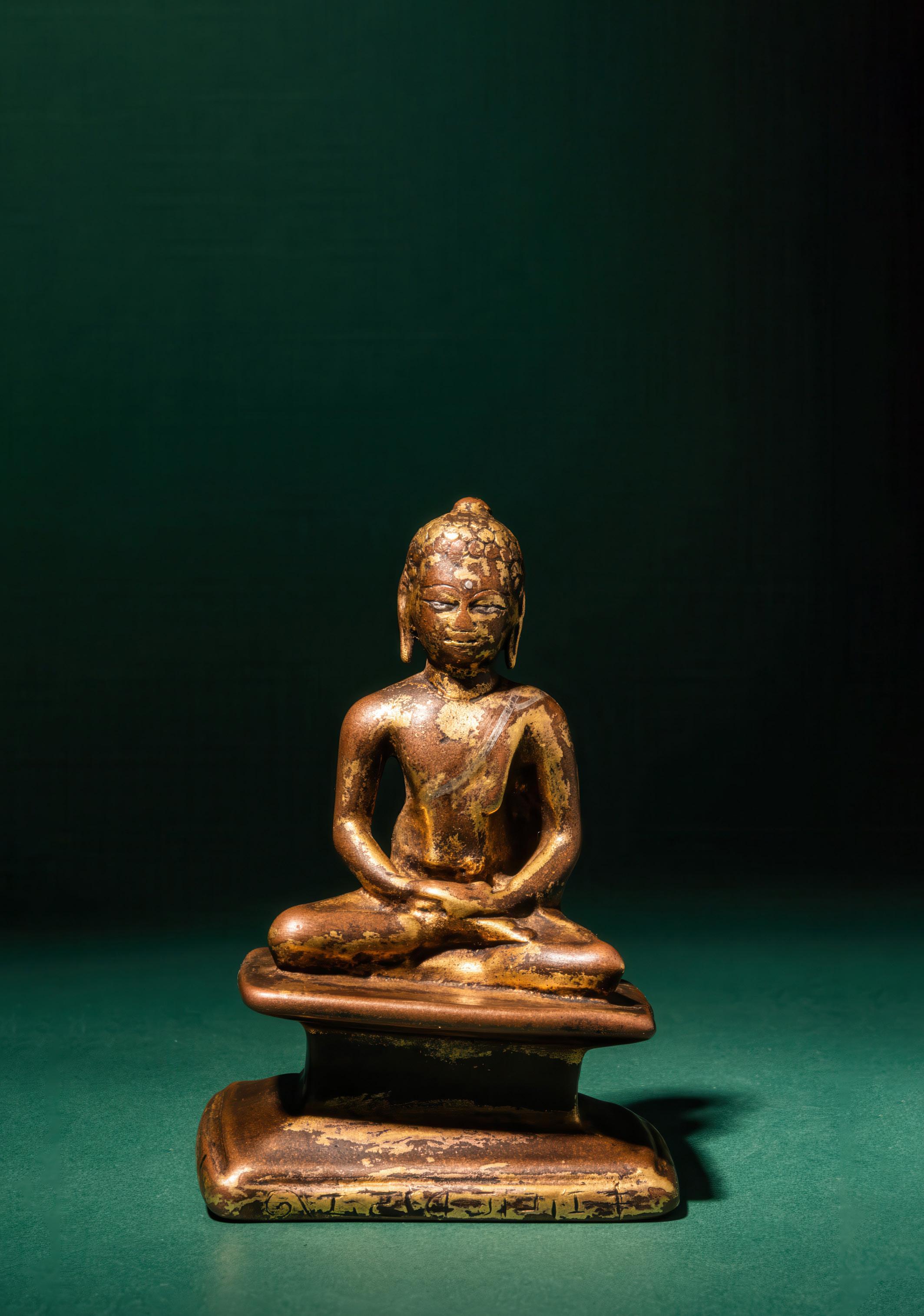
54. INDIAN GUPTA SILVER-INLAID BRONZE SEATED FIGURE OF BUDDHA SHAKYAMUNI
Ca. 6th - 7th century AD.
Starting Price: £3000
A cast bronze figure of Buddha Shakyamuni seated in dhyanasana (meditative posture) upon a stepped pedestal. The hands are held in dhyana mudra, resting in the lap, symbolising meditation and spiritual concentration. The figure is rendered with the classical elegance associated with Gupta-period sculpture: a slender, well-proportioned body, gently rounded shoulders, and a serene, introspective expression. The face is softly modelled with downcast eyes, a subtle smile, and elongated earlobes, while the hair is arranged in small curls surmounted by a domed ushnisha. The monastic robe is indicated by a thin, clinging line across the torso, revealing the contours of the body beneath—a hallmark of Gupta aesthetic refinement. Traces of silver inlay are visible in the facial features and details, enhancing the expressiveness of the figure.
Provenance: Private UK Collection; Ex. Nagel 2024; Ex. German Private Collection, assembled before 2000.
Publications / Reports: For similar see: The Metropolitan Museum of Art, object number 1987.218.2; The British Museum, registration number 1969,0725.1.
Size: 90mm x 65mm; Weight: 365g
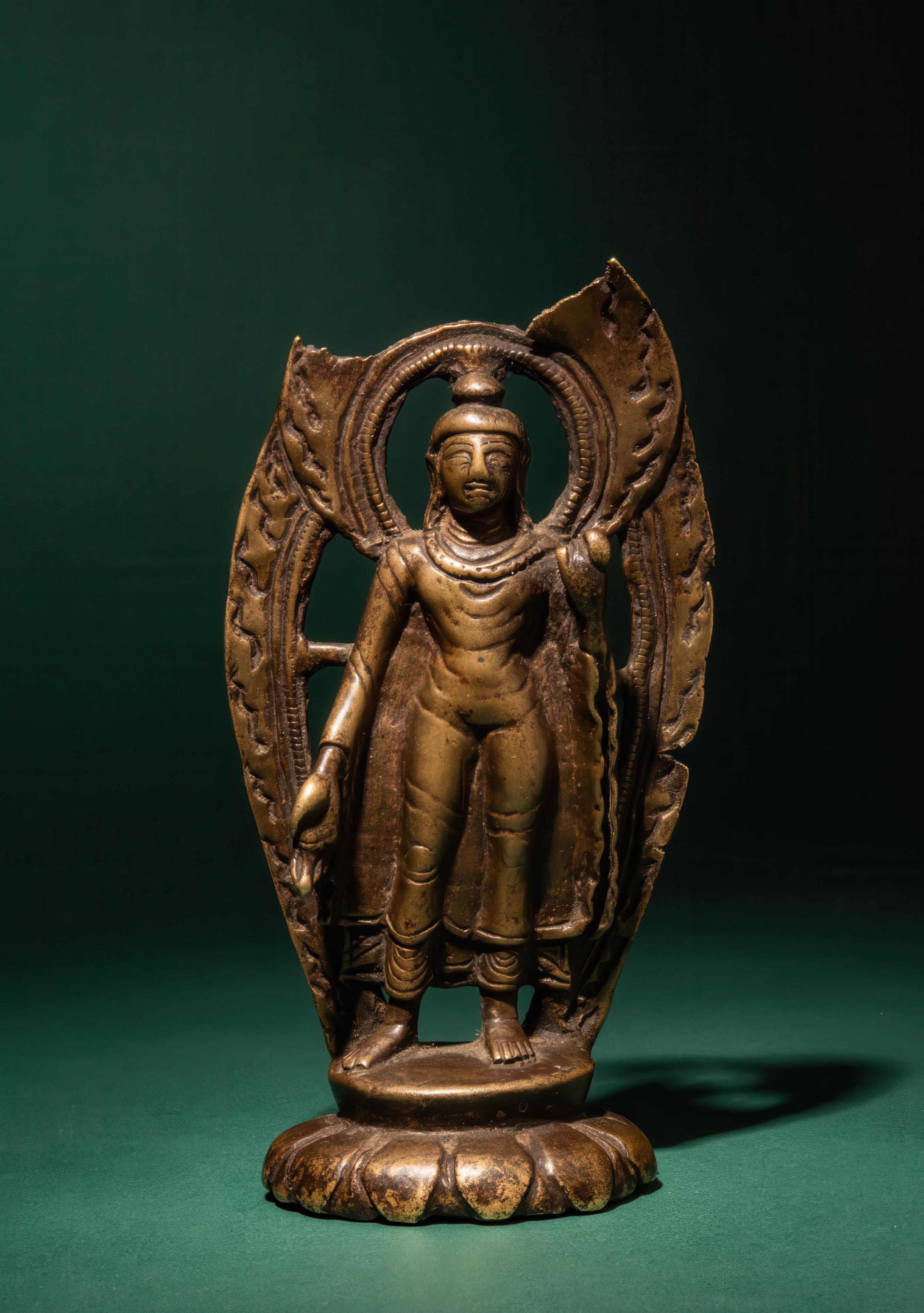
55. BRONZE FIGURE OF BUDDHA SHAKYAMUNI, KASHMIR OR WESTERN TIBET
Ca. 10th - 11th century AD.
Starting Price: £4000
A finely cast bronze figure of Buddha Shakyamuni standing in a frontal, hieratic pose upon a lotus base. The figure is depicted wearing a close-fitting monastic robe that clings to the body, revealing the underlying form, with delicate linear folds cascading down the legs. The right hand is lowered in varada mudra (gesture of giving), while the left hand holds an attribute (possibly a lotus stem), suggesting an iconographic variation influenced by regional stylistic traditions. The face is serene, with almond-shaped eyes, a straight nose, and a composed expression, surmounted by a domed ushnisha. A circular halo frames the head, integrated into an elaborate backplate with foliate and flame-like motifs rising along the sides. The figure stands on a double-lotus pedestal, the petals crisply defined.
Provenance: Private UK Collection; Ex. Private European Collection.
Publications / Reports: For similar see: Christie’s, 17 MAR 2021 | Live auction 19562, lot 444.
Size: 155mm x 85mm; Weight: 335g
61. NEPELESE GILDED COPPER
ALLOY FIGURE OF MANJUSHRI
Ca. 18th - 19th century AD.
Starting Price: £800
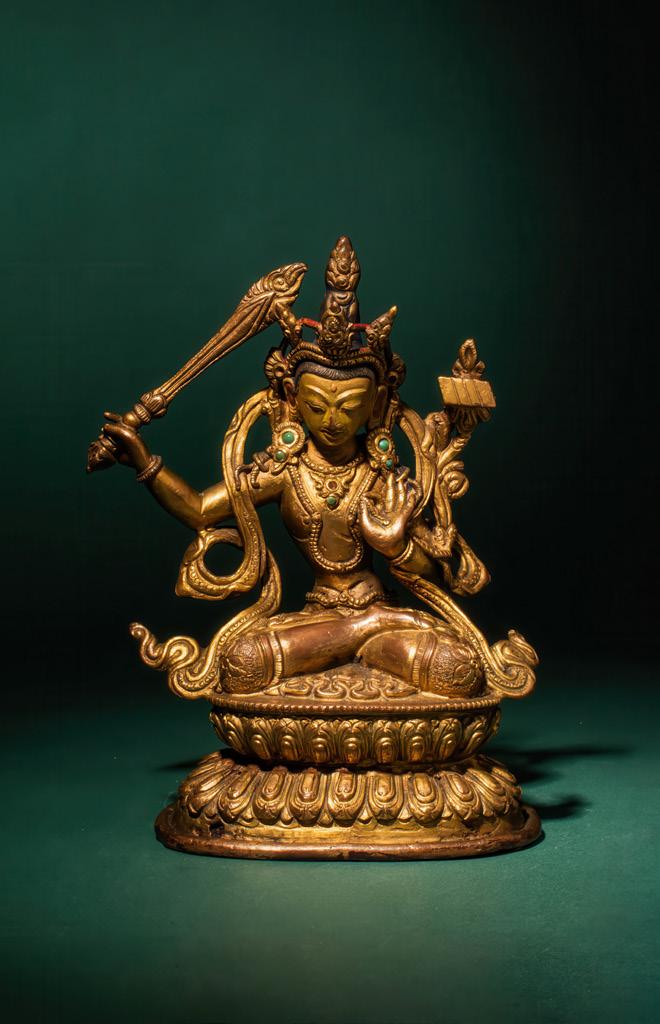
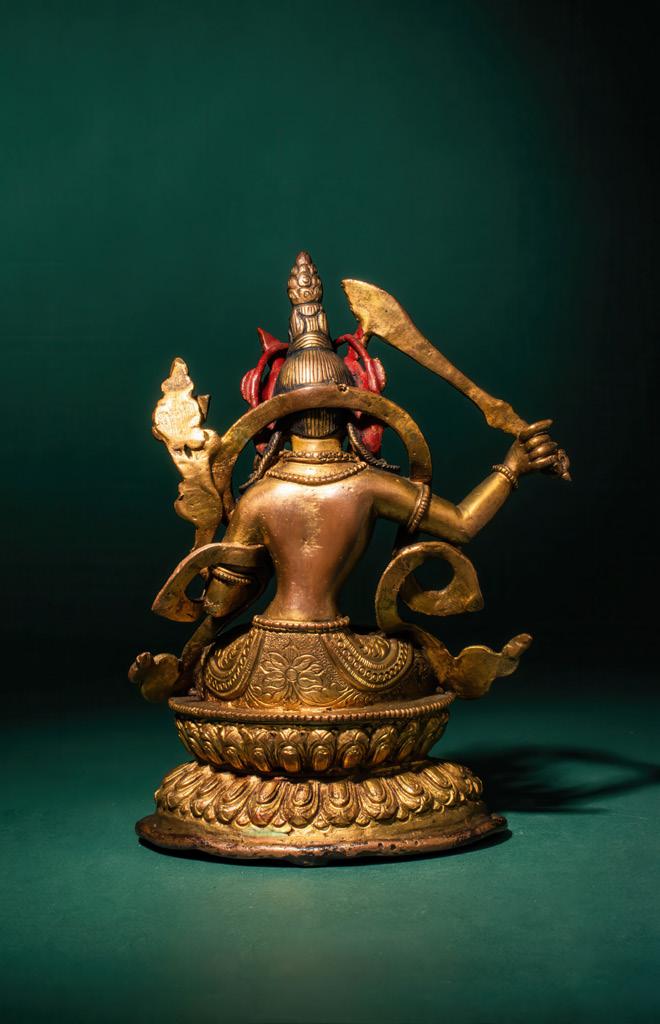
A beautiful cast gilt copper alloy figure of Manjushri, the bodhisattva of transcendent wisdom, seated in vajraparyankasana (full lotus position) upon a double-lotus base. The figure is richly adorned with an elaborate foliate crown, beaded jewellery, and flowing scarves that loop gracefully around the shoulders.
The right hand is raised, wielding the flaming sword (khadga), symbolising the cutting through of ignorance, while the left hand is held in vitarka mudra (gesture of teaching) and supports a lotus stem rising to the shoulder, surmounted by the Prajnaparamita manuscript. The face is serene and contemplative, with downcast eyes and refined features framed by large circular earrings.
The lotus base is cast with layered petals with inset turquoise cabochons to accent the crown and jewelry.
Provenance: Private UK Collection.
Size: 145mm x 105mm; Weight: 625g
62.
Starting Price: £800
Tibet, Ca. 17th century AD, or later.
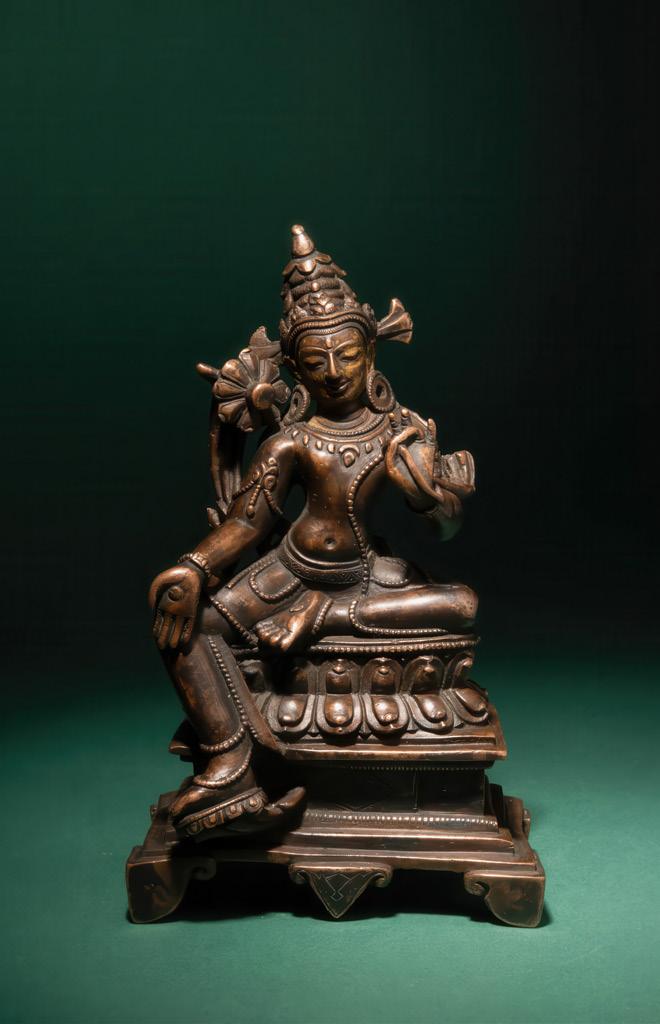
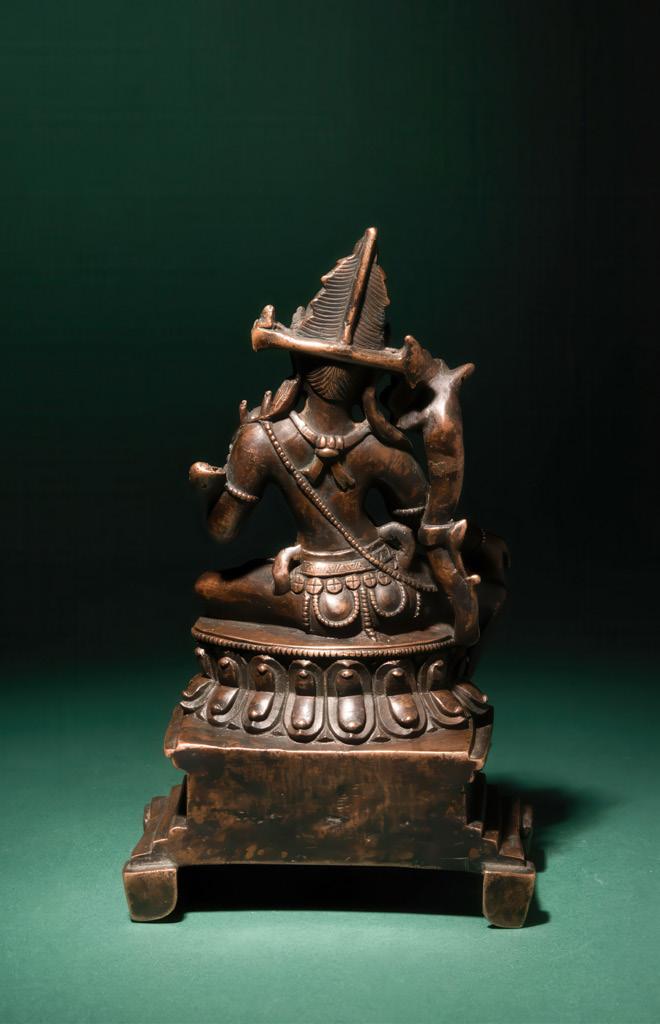
A cast copper alloy figure of the bodhisattva Tara, seated in lalitasana (royal ease) upon a double-lotus base set on a stepped plinth. The right leg is pendent, resting gracefully upon a small support, while the left leg is folded atop the lotus throne, conveying both elegance and accessibility.
The goddess is depicted with a serene, gently smiling expression, her face framed by elongated earlobes adorned with large circular earrings. She wears an elaborate tiered crown and is richly ornamented with necklaces, armlets, and a beaded girdle. The torso is sensitively modelled, reflecting the refined aesthetic of Pala-inspired sculpture. Her right hand is extended in varada mudra (gesture of granting), while the left hand is raised, holding the stem of a lotus that blooms beside her shoulder. The lotus motif, a key attribute of Tara, symbolises purity and spiritual awakening.
The lotus base is crisply cast with rounded petals, and the stepped plinth beneath adds stability and visual weight.
Provenance: Private London Collection; Ex. Private UK Collection, acquired in 1990s.
Size: 145mm x 90mm; Weight: 790g
Starting Price: £500
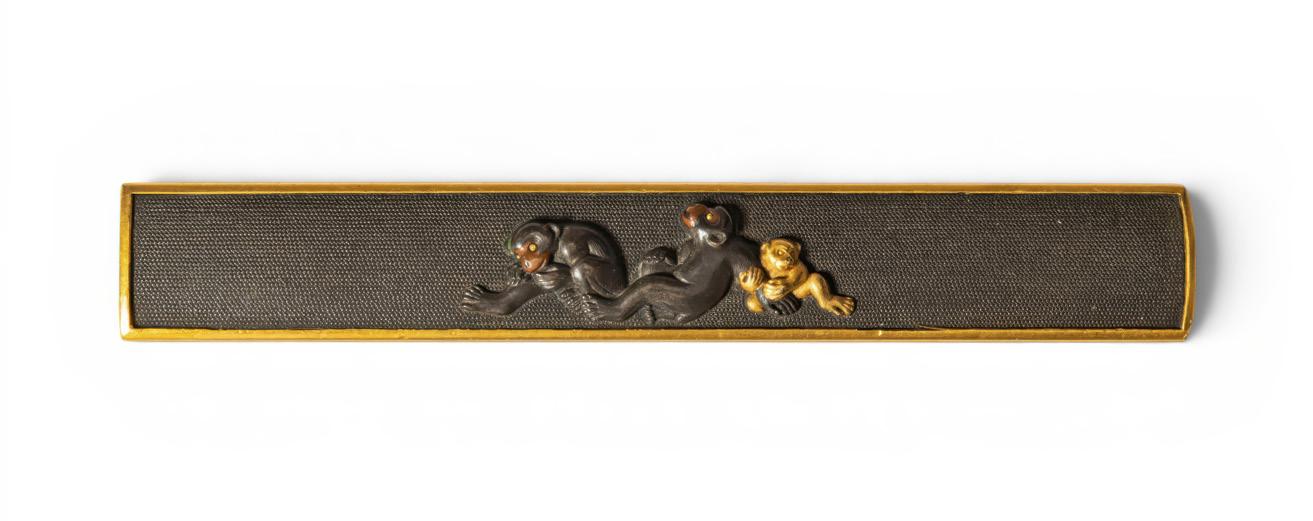
Edo Period, Ca. 19th century AD.
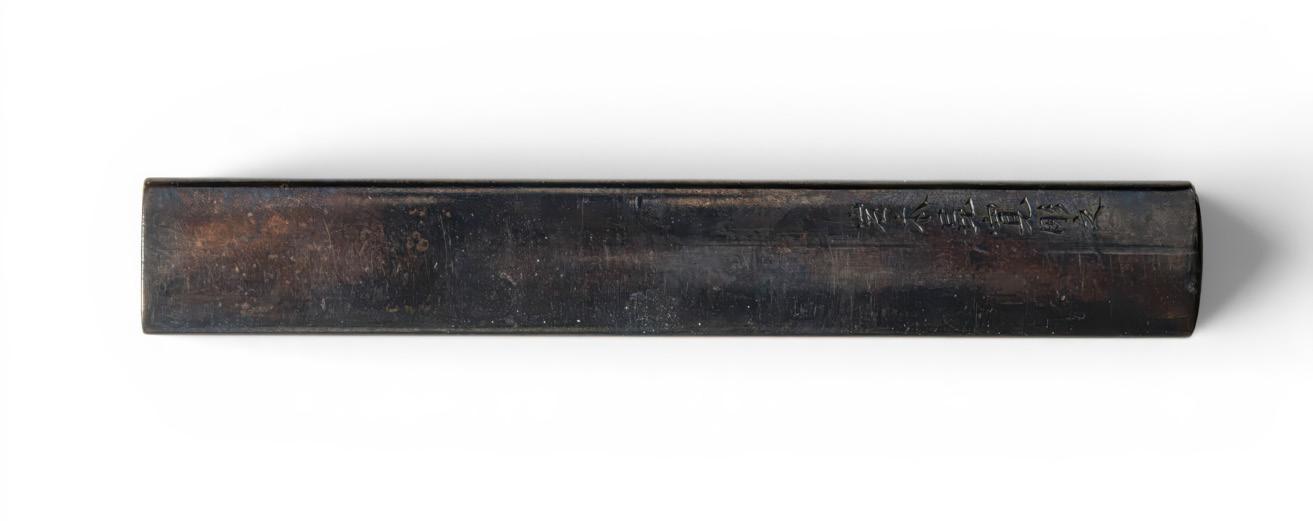
A refined kozuka (small knife handle) featuring a lively depiction of two monkeys and a young one, finely rendered in shakudo and gold in high relief. The dark nanako ground contrasts elegantly with the warm metallic tones of the figures. With signature Iwamoto Konkan kore o horu on the back.
Provenance: Prince Collection, 1990s-2014; ex Bonhams, 15 May 2012, lot 58.
Size: 95mm x 15mm; Weight: 30g
COPPER ALLOY FIGURE OF TARA, PALA STYLE
78. JAPANESE KOZUKA, SIGNED IWAMOTO
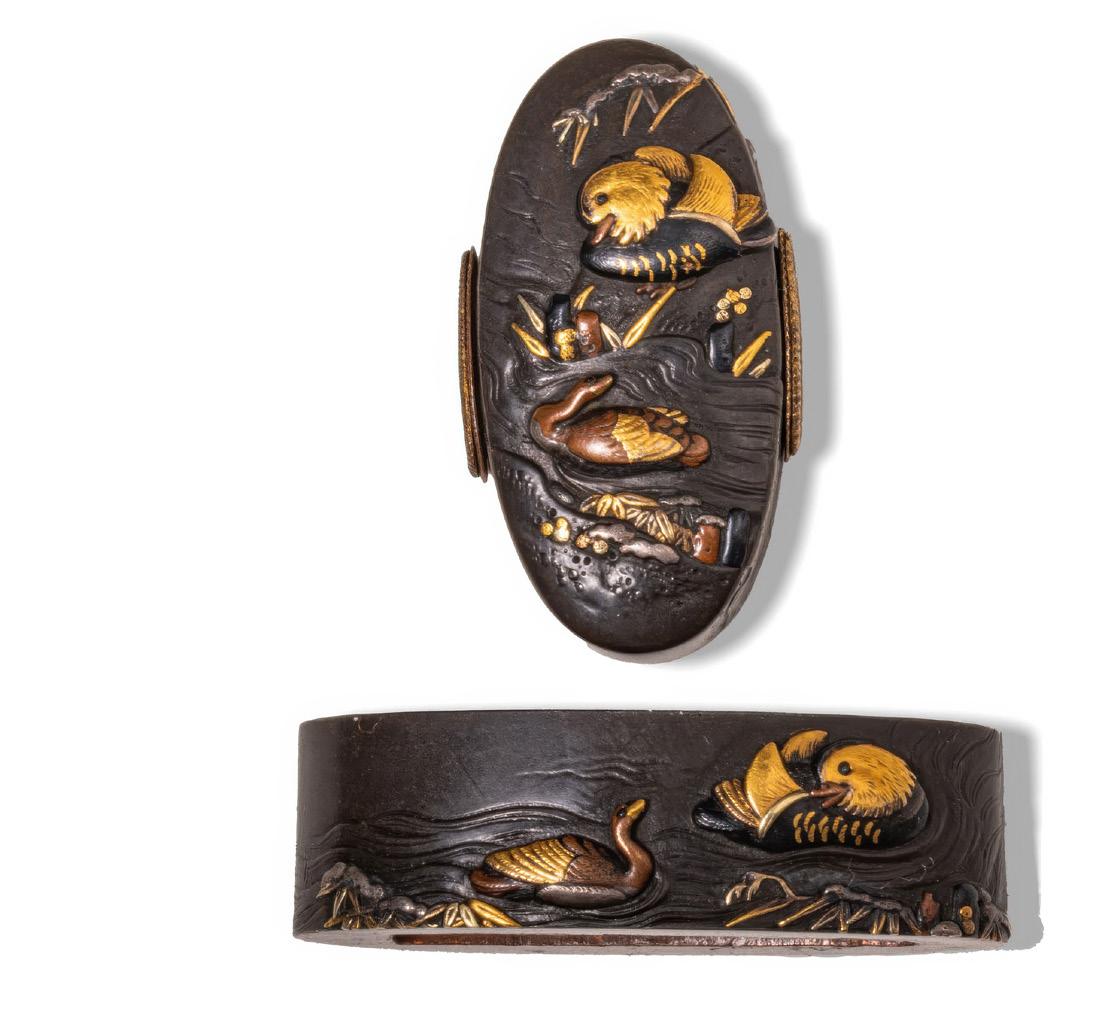
80. JAPANESE SHIBUICHI FUCHI-GASHIRA, NARA SCHOOL, SIGNED NARA EISHIN
Ca. AD 1800 - 1900.
Starting Price: £500
A fine shibuichi fuchi-gashira set, intricately decorated with a serene scene of mandarin ducks swimming.
Provenance: Prince collection, 1990s-2014 Ex Bonhams, 13 May 2013, lot 528.
Size: 35-38mm x 16-20mm; Weight: 35g.
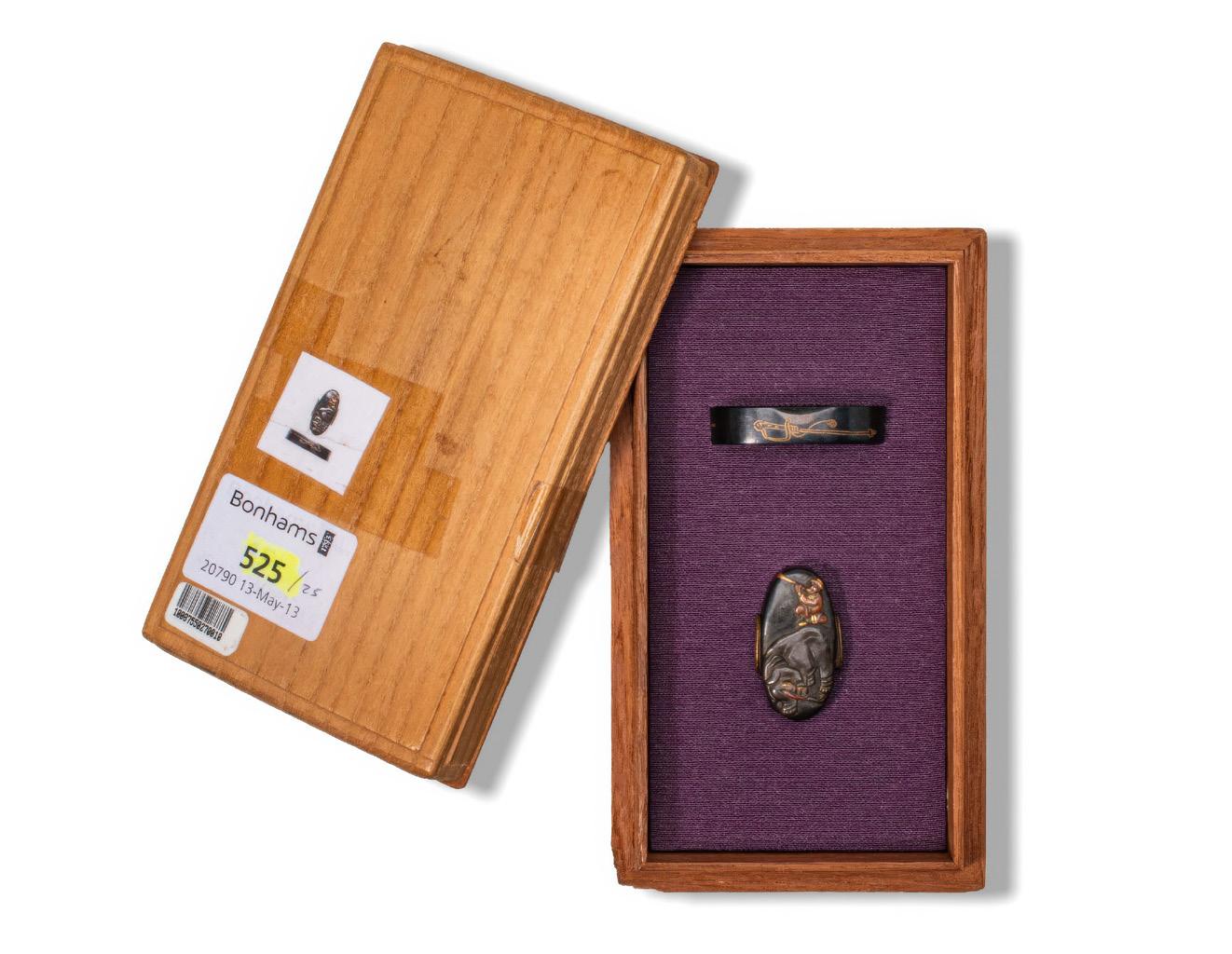
82. SET OF JAPANESE FUCHI-GASHIRA
Ca. AD 1700 - 1900.
Starting Price: £500
A set of fuchi-gashira of shakudo cast and inlaid in iroe takazogan (multicolored high-relief inlay) with a richly adorned mahout riding an elephant.
Provenance: Prince collection, 1990s-2014; Ex Bonhams 13 May 2013, lot 525.
Size: 33-35mm x 16-20mm; Weight: 20g.
83. SET OF JAPANESE FUCHI-GASHIRA
Ca. AD 1700 - 1900.
Starting Price: £500
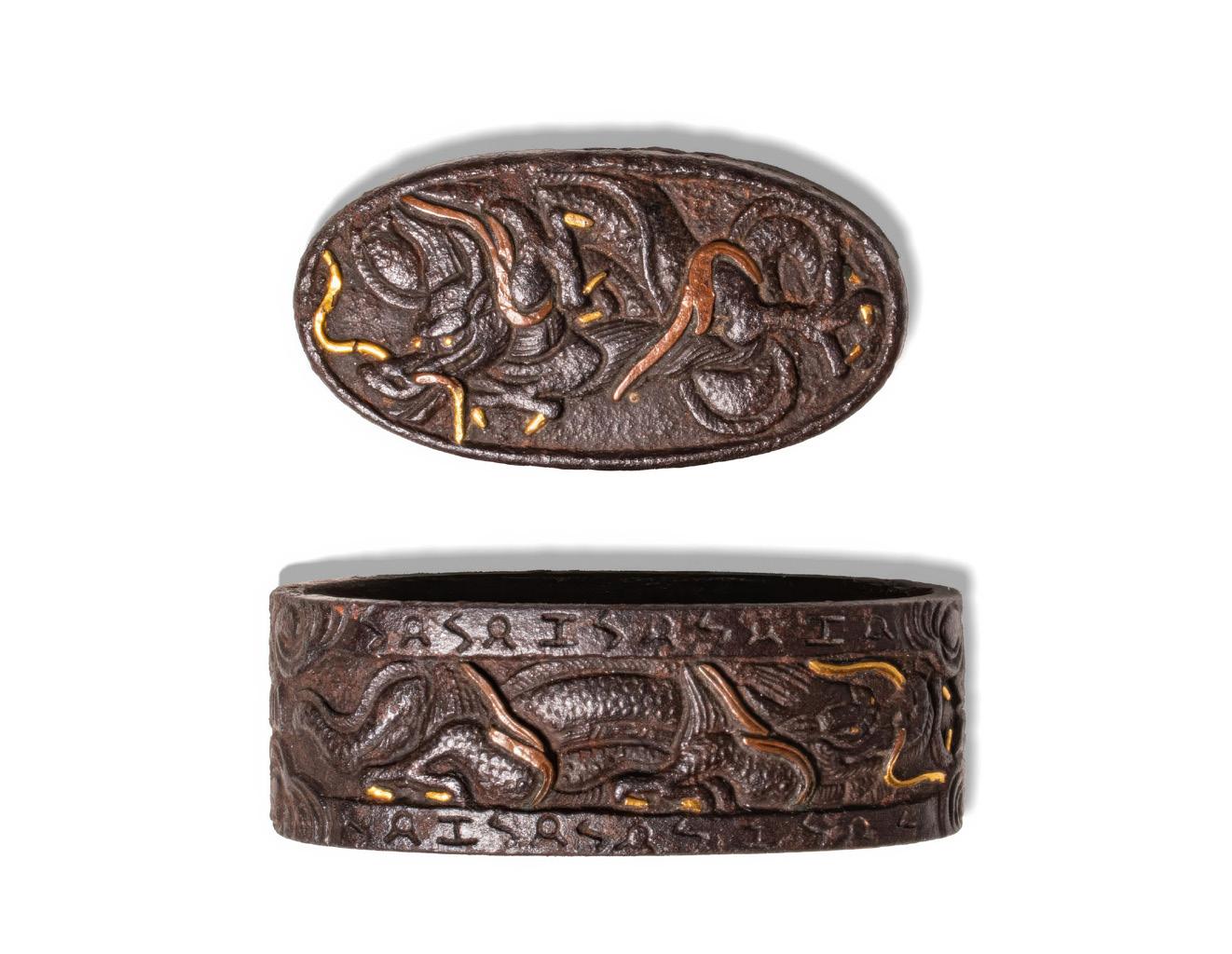
A set of fuchi-gashira finely worked in high relief (takabori) with writhing dragons, the details crisply rendered with strong sculptural quality, signed Hirado ju Kunishige.
Provenance: Prince collection, 1990s-2014; Ex Bonhams 13 May 2013, lot 525.
Size: 31-35mm x 17-20mm; Weight: 30g.
90. JAPANESE TSUBA, ANONYMOUS AND SIGNED YASUCHIKA
Edo Period, Ca. 18th-19th century AD.
Starting Price: £500
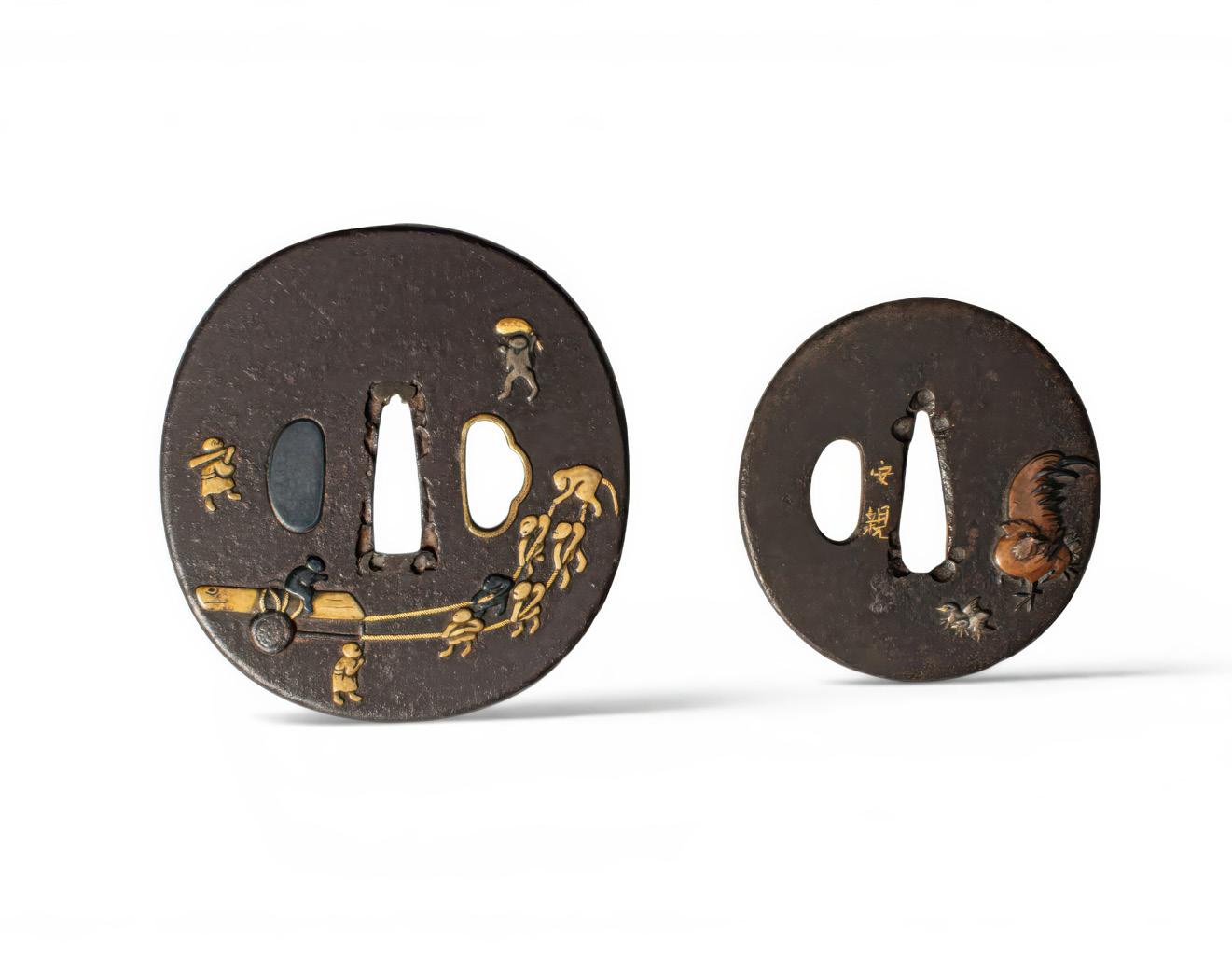
A group of two finely crafted iron tsuba, one unsigned and the other signed by Yasuchika, a master of the Nara school. Both pieces display exquisite taka-z圣gan (high relief inlay) in gold, shakudo, and copper, depicting scenes and figures with remarkable narrative detail. The larger tsuba shows labourers carrying goods across a bridge, while the smaller features a cockerel and an insect, motifs symbolising vitality.
Provenance: Prince Collection, 1990s-2014.
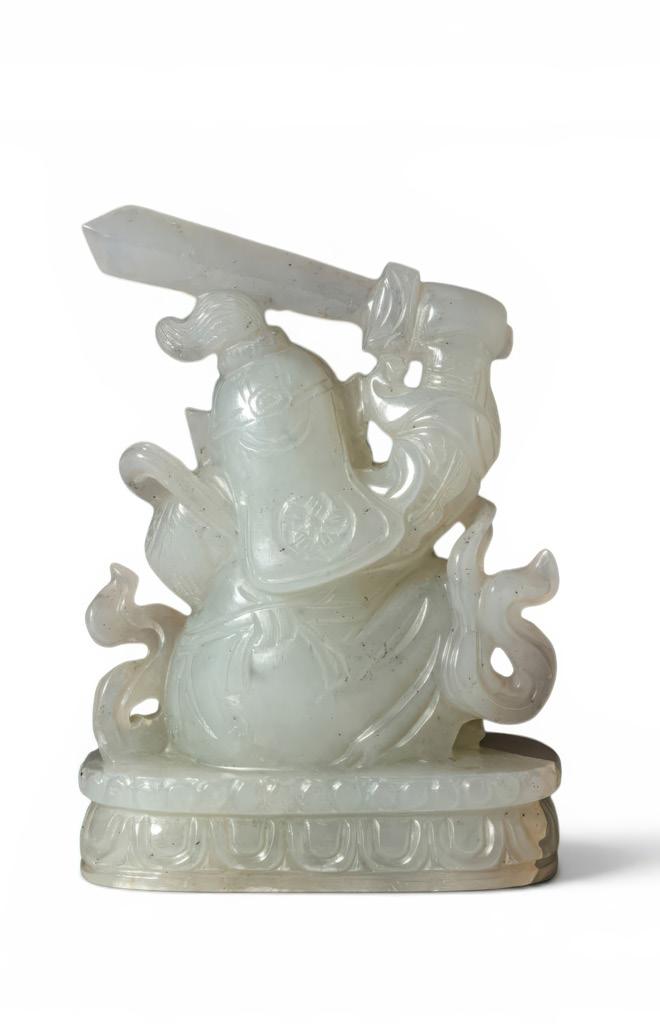
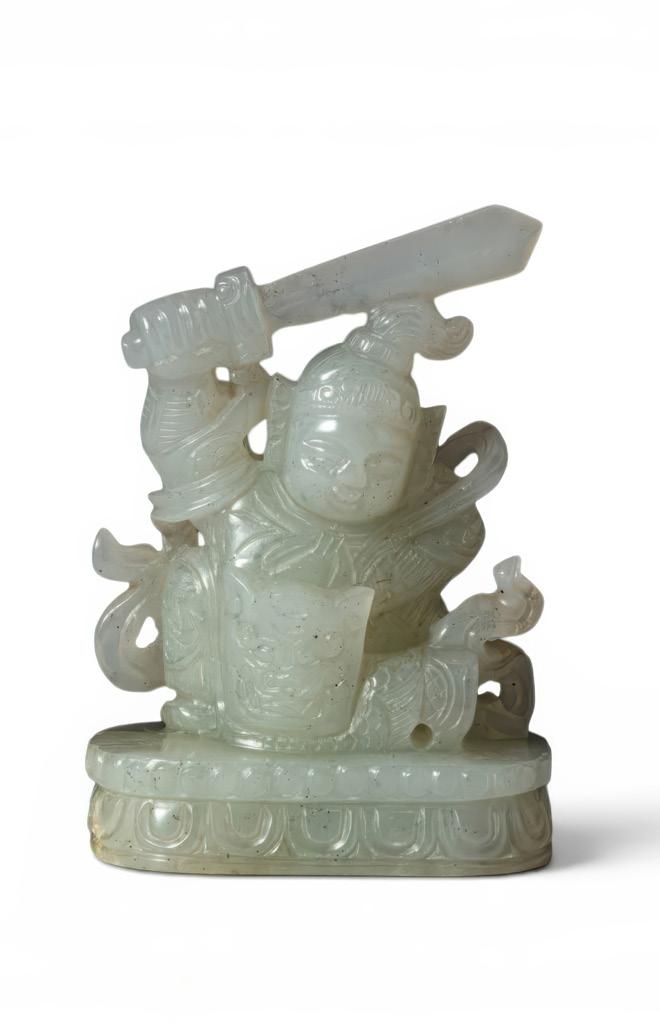
96. CHINESE WHITE JADE DEPICTING A WARRIOR
Mid Qing Dynasty, Ca. 18th century AD.
A finely carved white jade figure depicting a warrior seated in a composed yet alert posture, holding a sword raised across the shoulders. The figure is rendered in flowing robes with softly incised detailing to indicate folds and armour elements, the facial features stylised yet expressive.
The warrior is seated upon a carved lotus base, the petals neatly defined in low relief.
Provenance: Private British Collection; Ex. Old European Collection,previously acquired on the European art market during the 1990s.
Size: 55mm x 40mm; Weight: 43g Starting
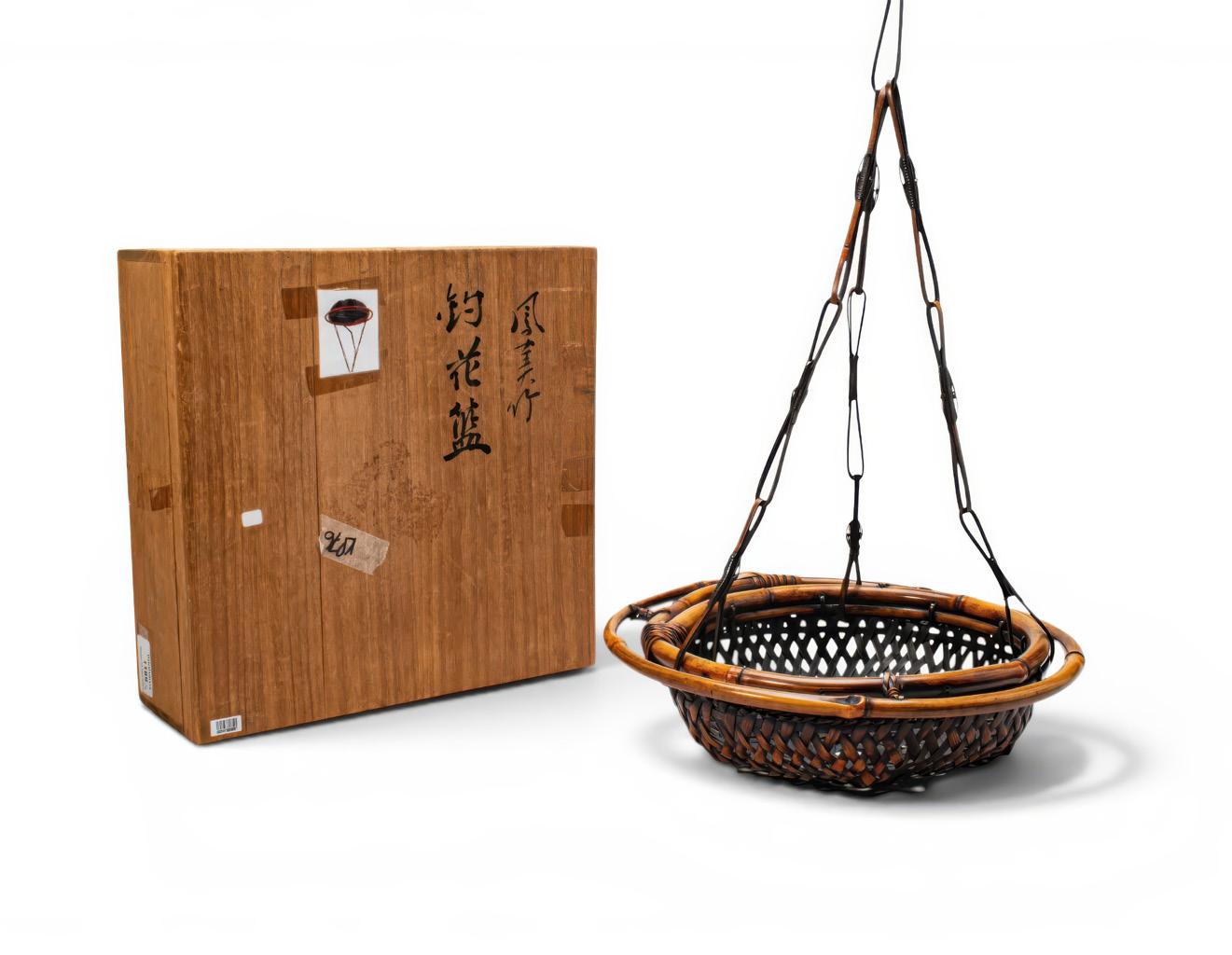
114. JAPANESE FREE-HANGING BAMBOO FLOWER BASKET, SIGNED HOSAI SAKU
Starting Price: £300
Taisho (1912-1926), Shōwa Era (1926-1989), Ca. early 20th century AD.
An elegant free-hanging flower basket meticulously woven from fine bamboo. The basket’s rounded body is constructed in a tight plaited weave, transitioning into an openwork rim reinforced with thicker bamboo lengths. Suspended by three elongated bamboo link chains, the basket is both functional and sculptural, embodying the aesthetic harmony central to Japanese flower arrangement (ikebana). The work is signed “Hosai saku” (made by Hosai) and is accompanied by its original tomobako (wood storage box).
Provenance: Prince Collection, 1990s-2014.
Size: 1450mm x 285mm; Weight: 235g
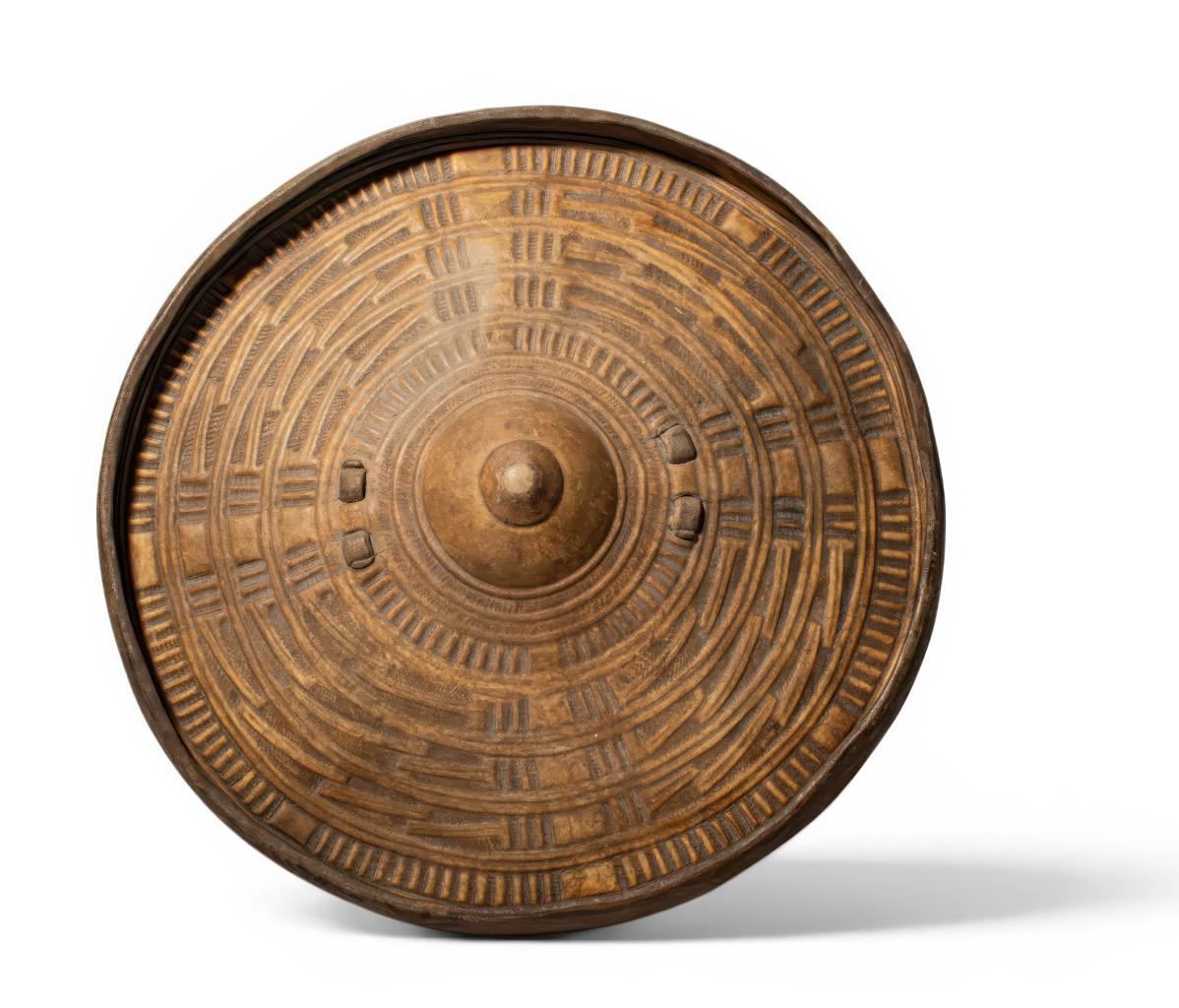
116. SOMALIAN HIDE SHIELD
Ca. 19th century AD.
Starting Price: £300
A shield of circular form, the convex hide body centred by a raised boss and decorated overall with finely incised concentric bands and geometric motifs. The carved ornament is arranged in radiating patterns that emphasise the shield’s symmetry and visual impact. Shields of this type were used across the Horn of Africa both for defence and as markers of status, with decoration often reflecting regional styles and the identity of the owner.
Provenance: Prince collection, 1990s-2014.
Publications / Reports: For similar see: The British Musuem, Af.4367.
Size: 335mm x 335mm; Weight: 710g
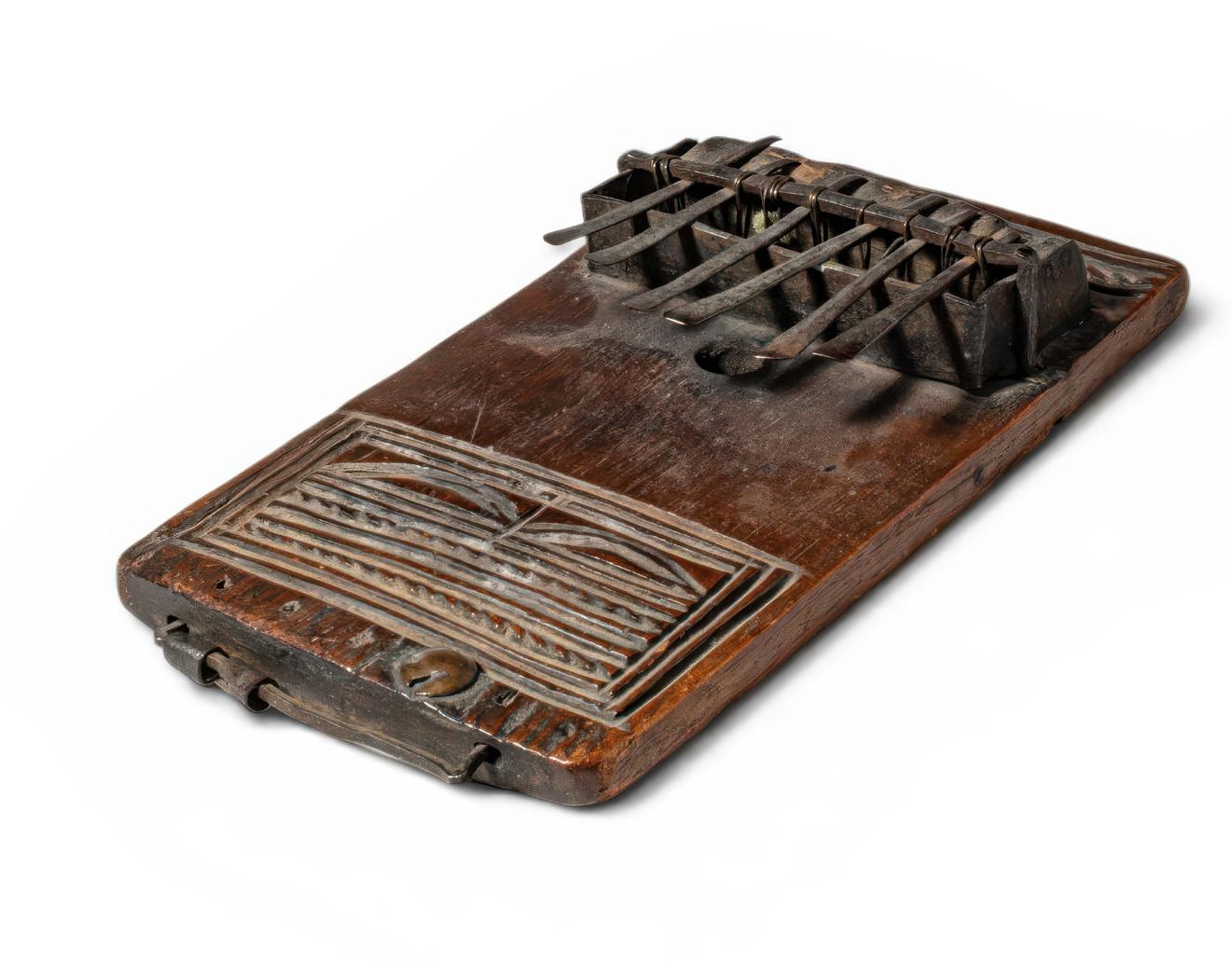
119. ANGOLA CHOKWE THUMB PIANO
Ca. early 20th century AD.
Starting Price: £300
A thumb piano of rectangular wooden form, the soundboard fitted with a series of metal tines secured beneath a metal bridge and pressure bar, the keys arranged in graduated lengths to produce a range of tones when plucked with the thumbs. The lower register is mounted within a raised block, enhancing resonance and tonal clarity. The face of the instrument is decorated with incised geometric motifs, including a bordered panel of linear and chevron designs. Thumb pianos of this type are also known variously as likembe or mbira.
Provenance: Prince collection, 1990s-2014.
Publications / Reports: For similar see: The British Musuem, Af1954,+23.3856.
Size: 140mm x 80mm; Weight: 80g
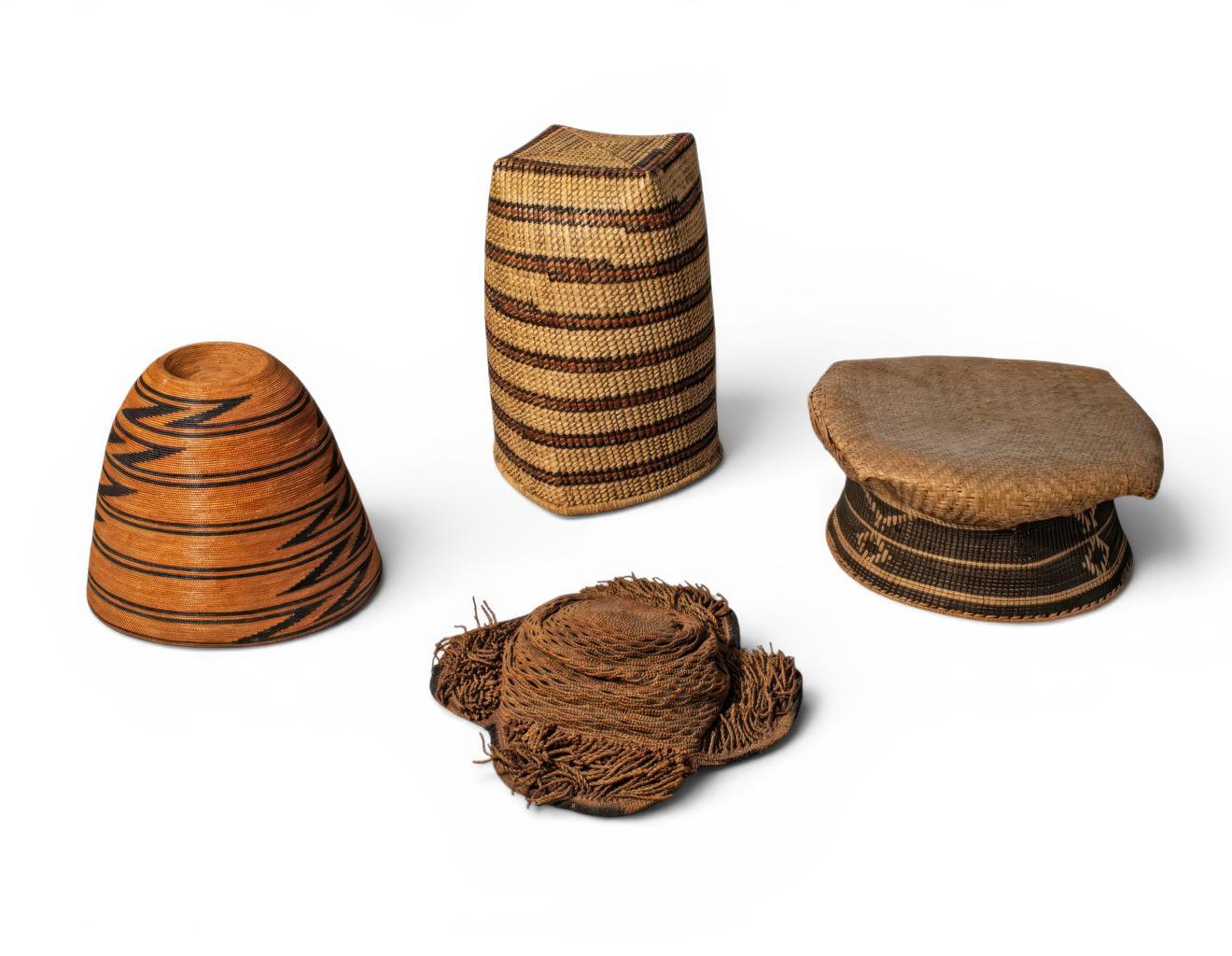
118. GROUP OF MANGBETU HATS AND A TUTSI BASKET
Ca. late 19th - early 20th century AD.
Starting Price: £500
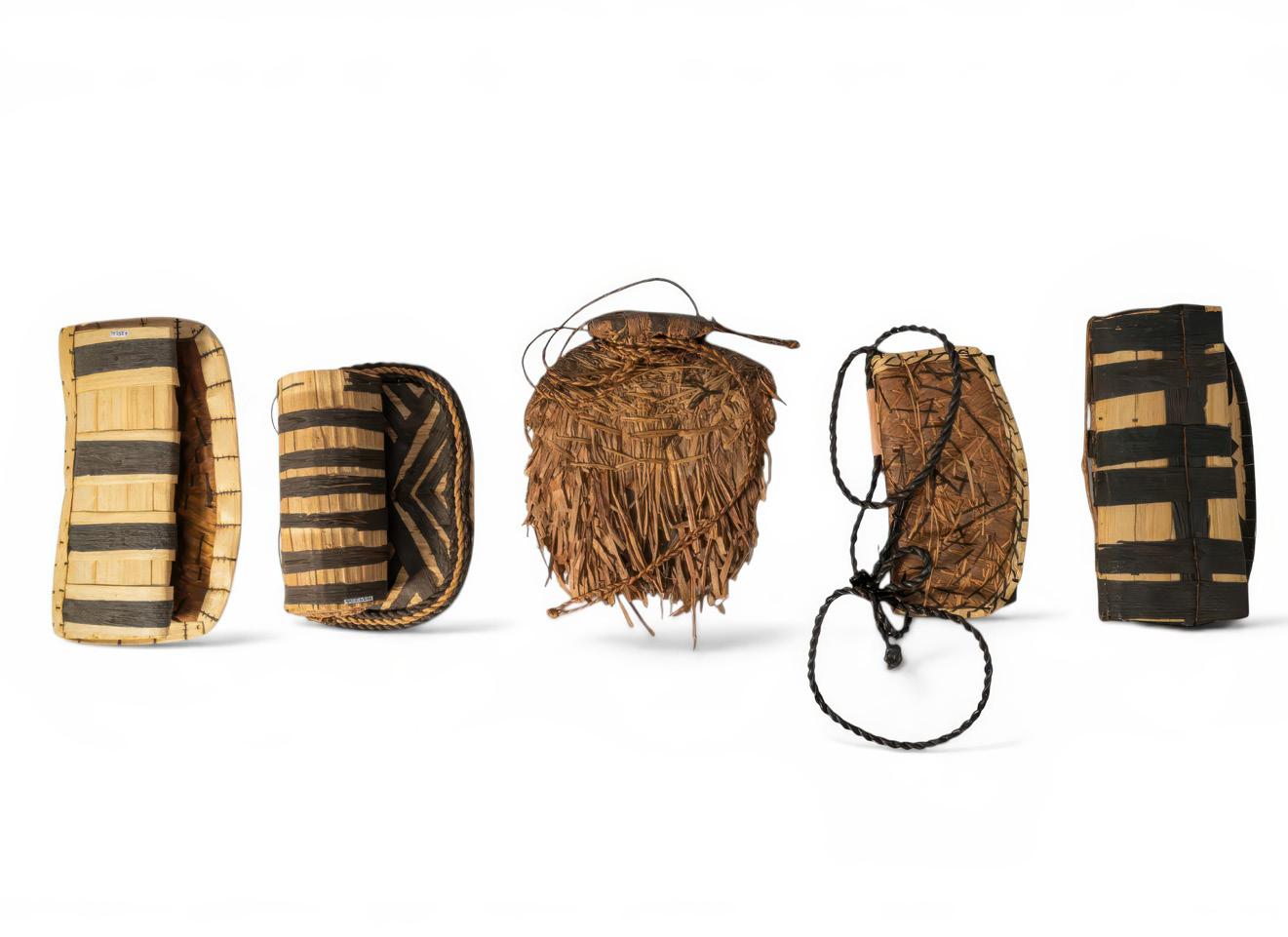
A collection of three Mangbetu woven fibre hats of varying form, including a flat domed example with linear decoration, a tall cylindrical hat with horizontal banding, and a flattened disc-form hat with fitted cover; together with a finely coiled Tutsi basket of compact circular form.
Provenance: Prince collection, 1990s-2014; Ex. Pierre Dartevelle 12 may 2010 (Tutsi basket); Ex. Congo Gallery Brussels 07 April 2010 (partially).
Size: 160-210mm x 85-210mm; Weight: 215g
124. MASSIM LIME SPATULA
Ca. early 20th century AD.
Starting Price: £500
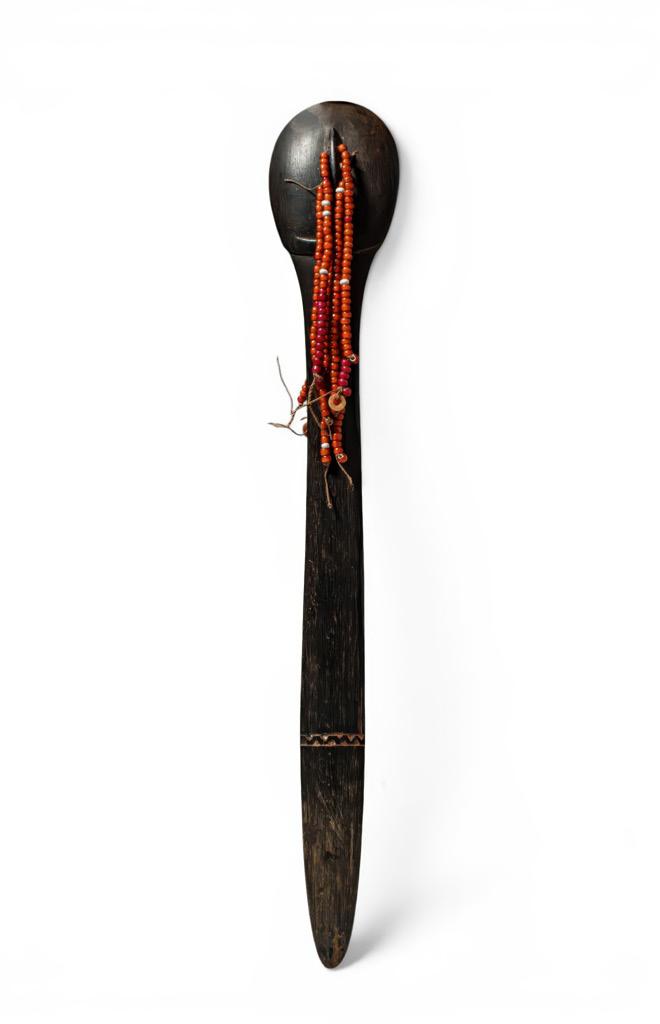
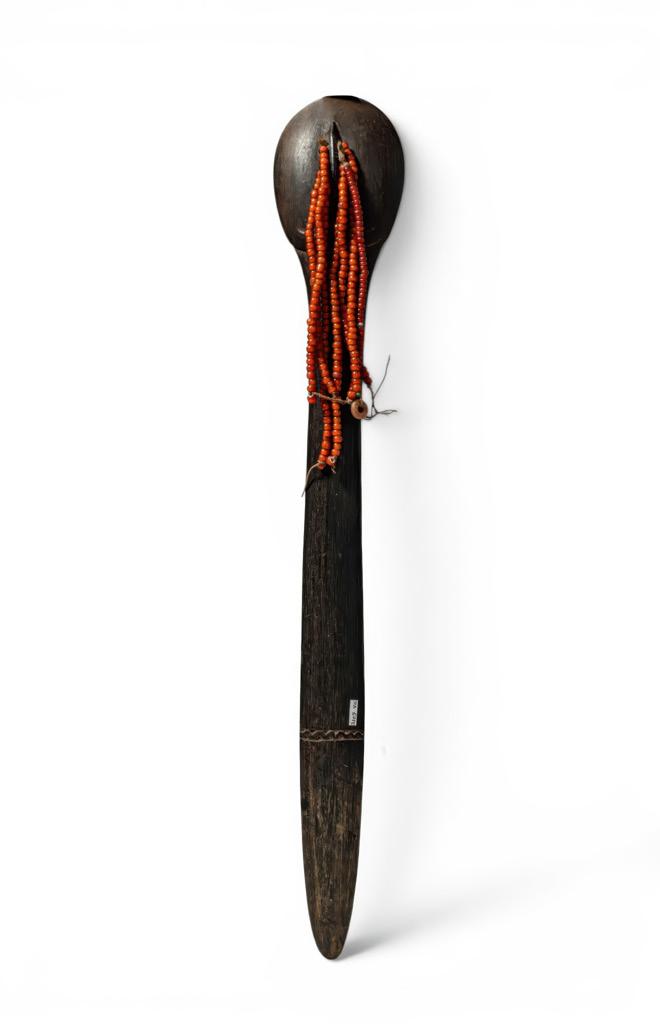
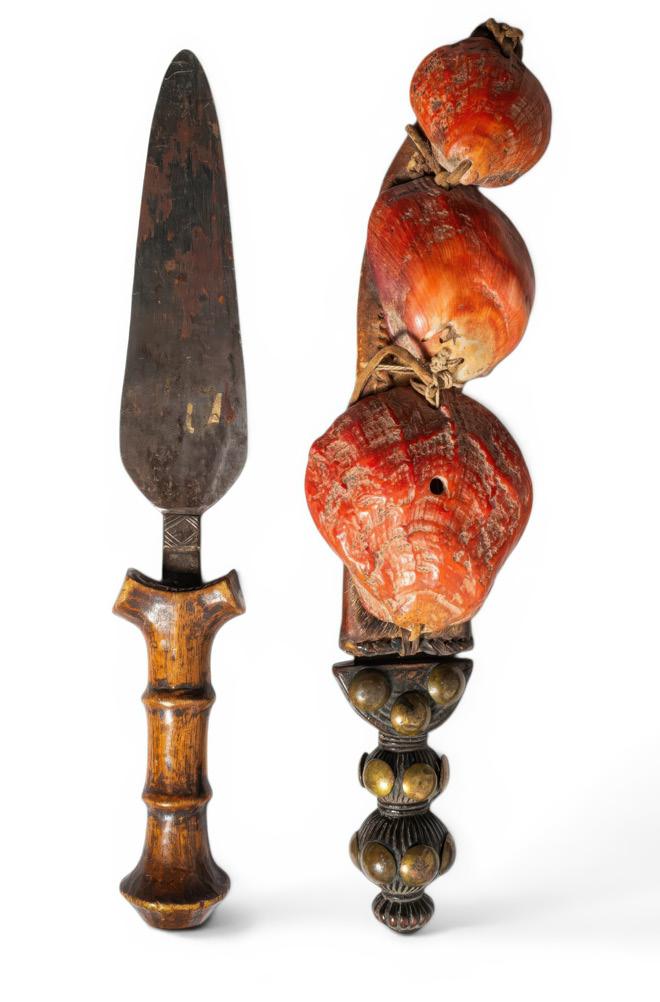
A lime spatula carved from a single piece of dark hardwood, of elongated tapering form, terminating in a rounded, bulbous finial. The shaft narrows to a pointed tip, while the upper section is encircled by a band of incised decoration. Suspended below the finial is a cluster of red trade beads, strung in multiple strands and secured with fibre, forming a vivid pendant element.
Provenance: Prince collection, 1990s-2014.
Size: 315mm x 50mm; Weight: 90g
126. TURKANA FERTILITY DOLL, IKOKU
Ca. late 19th - early 20th century AD.
Starting Price: £300
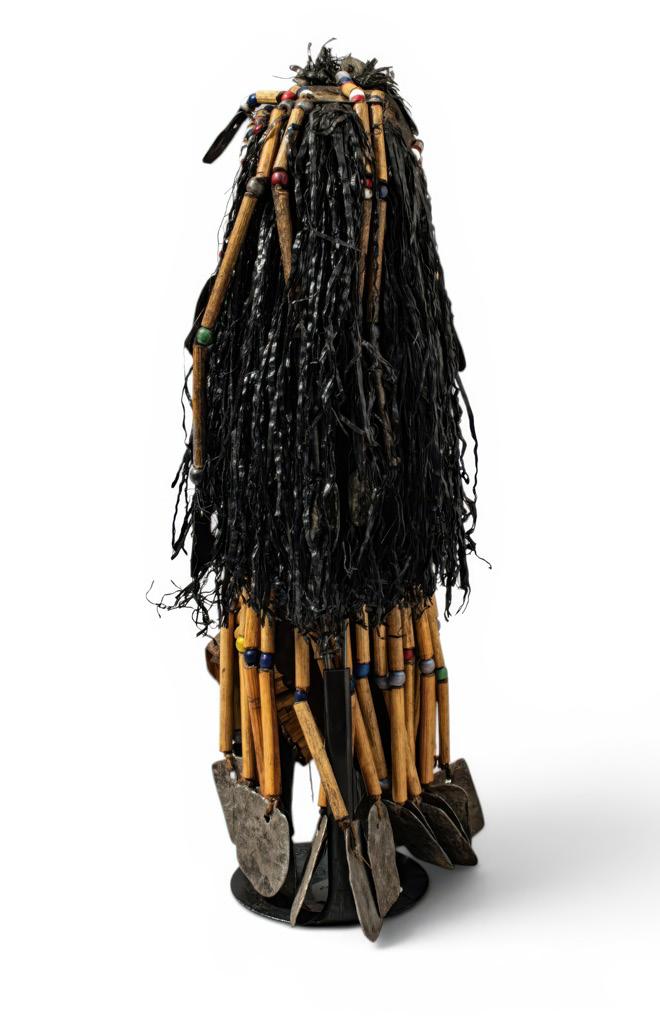
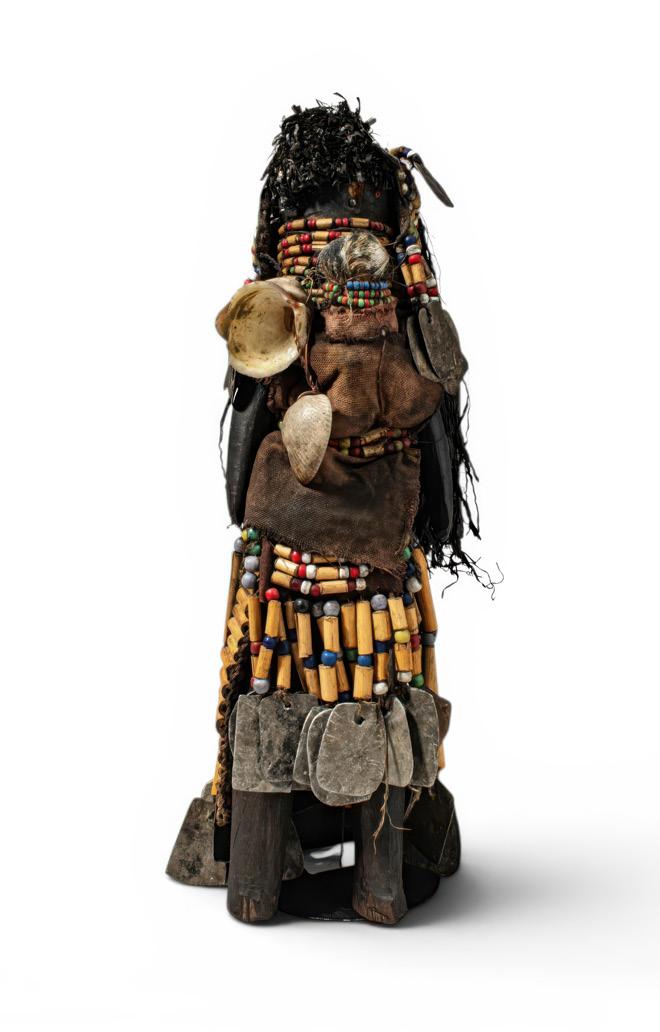
A fertility doll constructed of wood and organic materials, the figure adorned with strands of multicoloured glass beads, leather elements, fibre, and applied ornaments including shells and metal discs. The form is highly stylised, with emphasis on the torso and elaborate surface decoration. Such ikoku figures were associated with fertility and womanhood, carried or worn as personal objects embodying ideals of beauty, protection, and the desire for children.
Provenance: Prince collection, 1990s-2014; Ex. Zemanek Munster, Tribal Art, Auktion 61, 19 June 2010, Lot 534.
Size: 310mm x 90mm; Weight: 480g
125. PAIR OF TANZANIAN KWERE CALABASH VESSELS WITH FIGURATIVE STOPPERS
Ca. 20th century AD.
Starting Price: £300
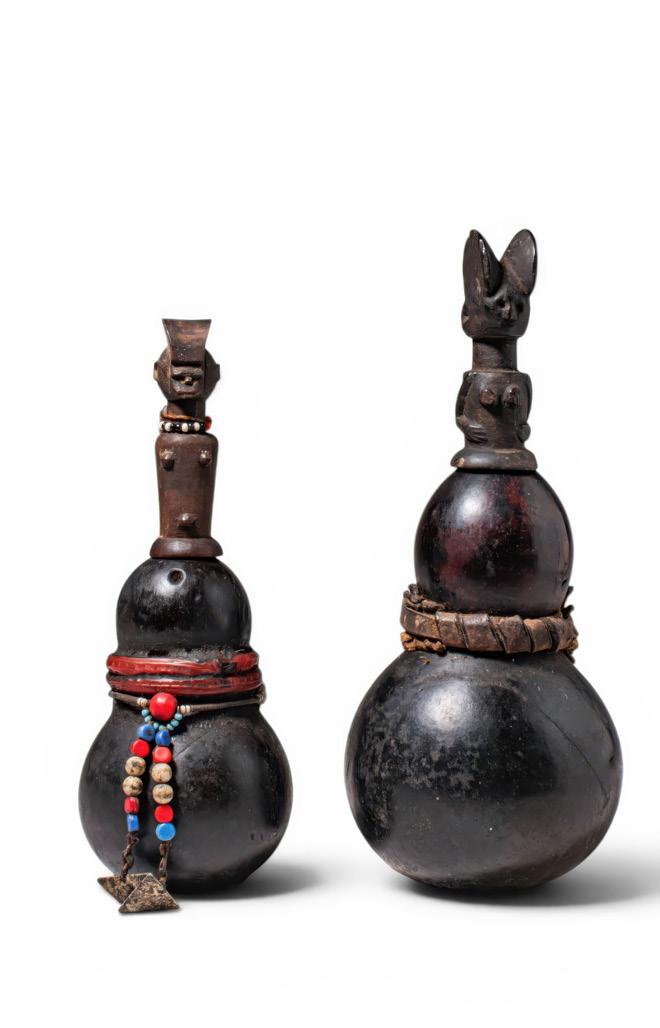
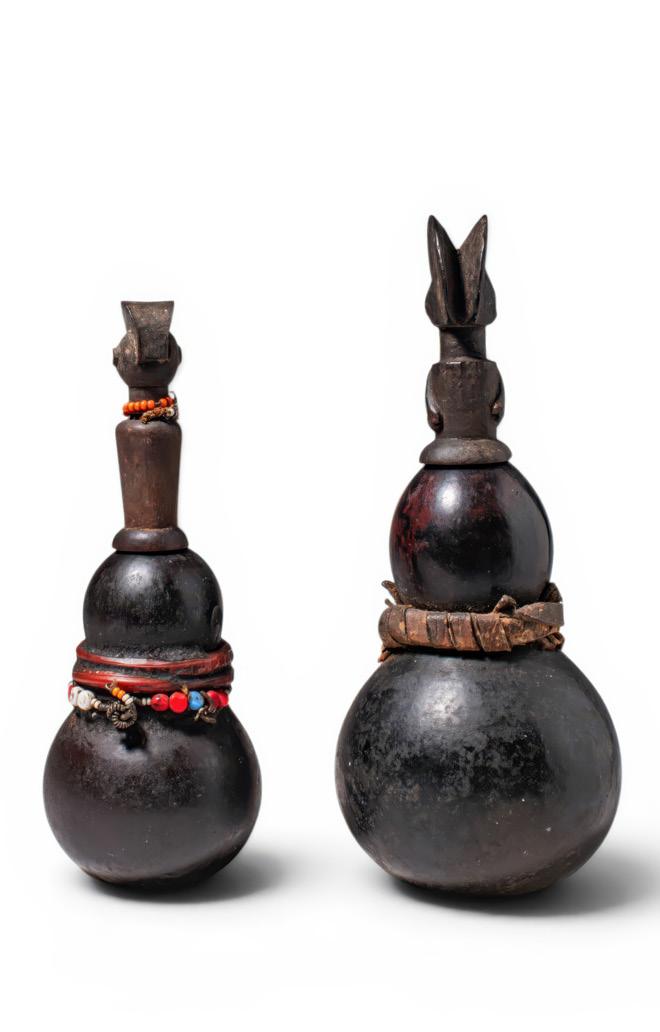
A pair of calabash vessels of double gourd form, each fitted with a carved wooden stopper surmounted by a small figure. One stopper depicts a stylised human figure wearing a beaded necklace, while the other is topped by a small animal-like figure with upright ears. Both vessels are decorated with bands of fibre and beads around the body.
Provenance: Prince Collection, 1990s-2014; ex Zemanek Munster, Tribal Art, Auktion 61, 19 June 2010, Lot 541, 542.
Size: 170-195mm x 60-85mm; Weight: 375g
127. AFRICAN FERTILITY DOLL
Ca. late 19th - early 20th century AD.
Starting Price: £500
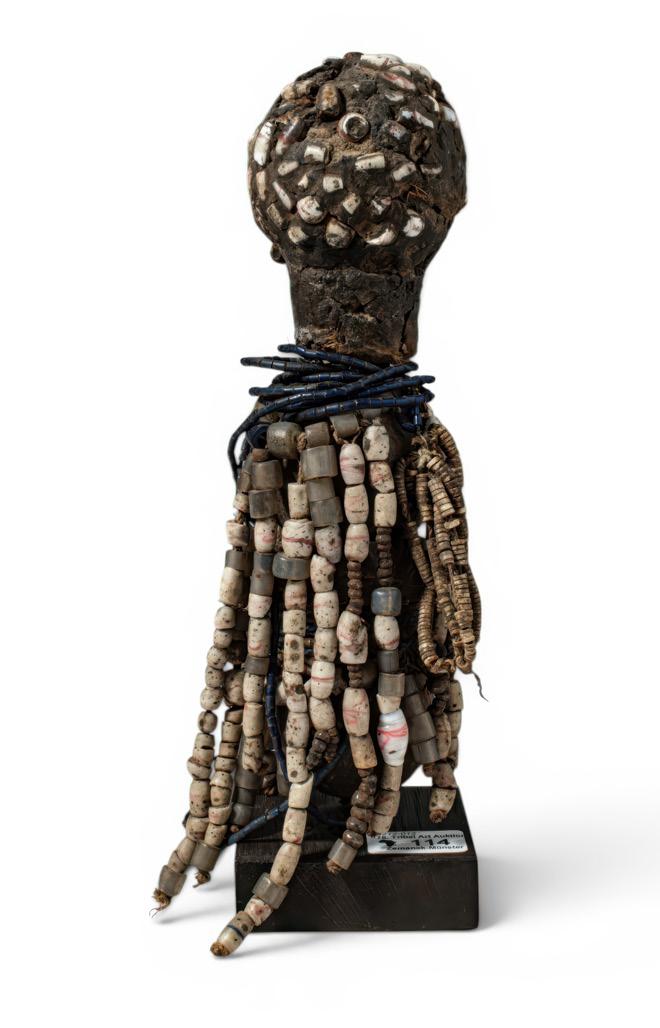
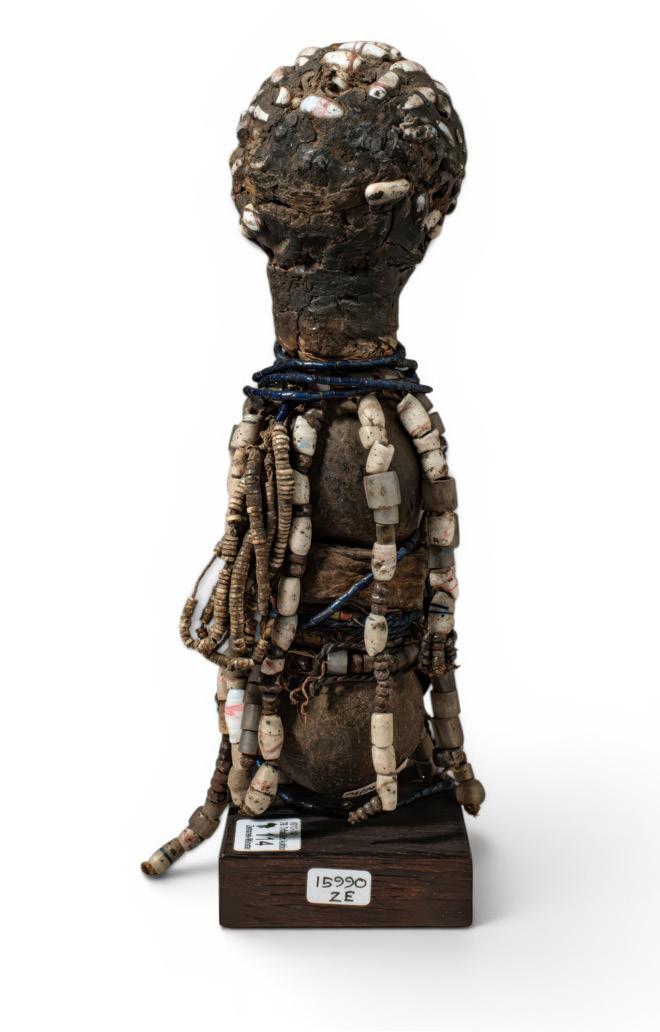
A fertility doll of wood and organic materials, the figure with a rounded head encrusted with shells and small applied elements, above a cylindrical neck encircled by dark rings and suspending numerous strands of beads forming a skirt-like body. The assemblage combines glass beads, shell, and fibre, creating a dense and tactile surface.
Provenance: Prince collection, 1990s-2014; Ex. Zemanek-Münster.
Size: 200mm x 70mm; Weight: 430g
Starting Price: £500
Ca. late 19th - early 20th century AD.
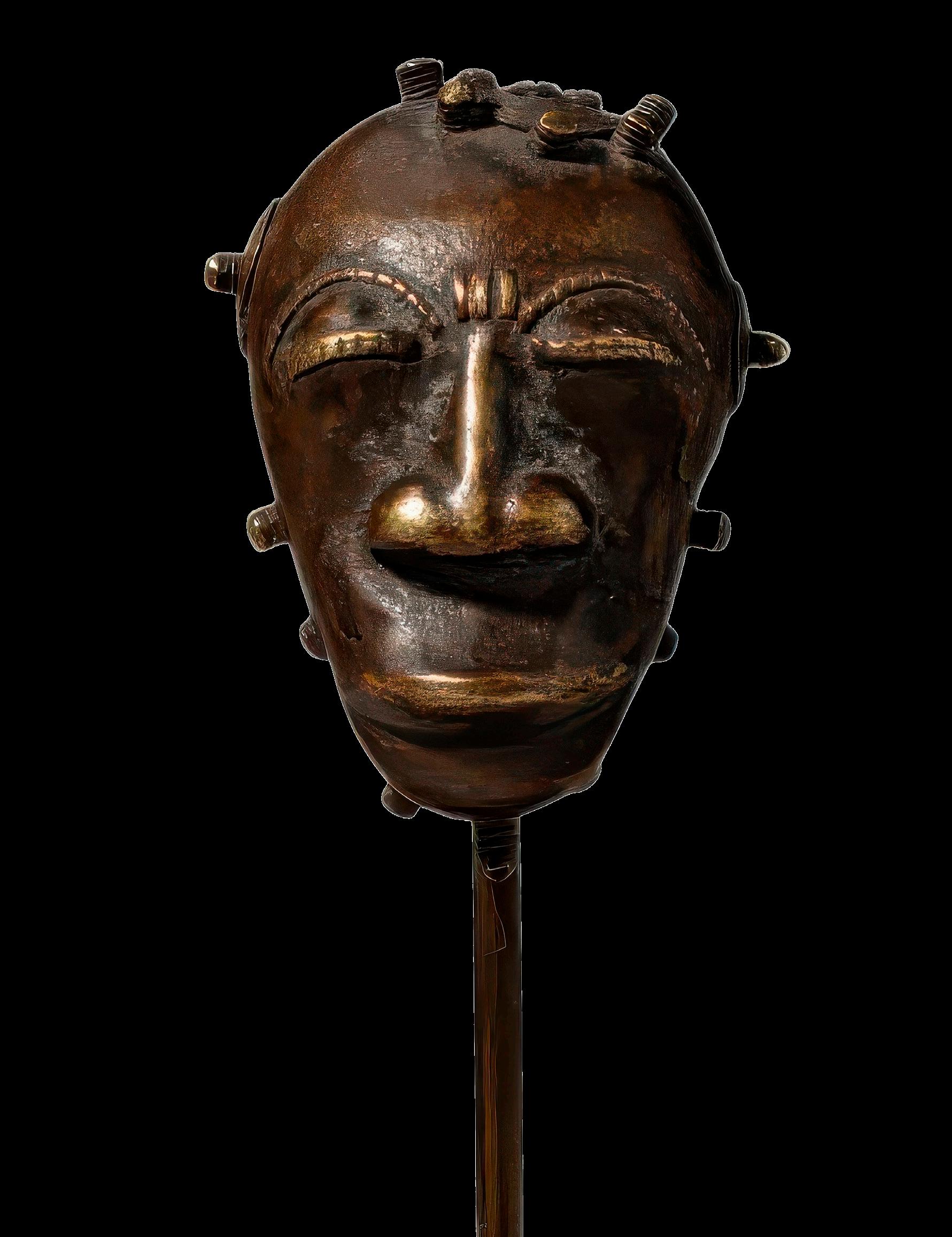
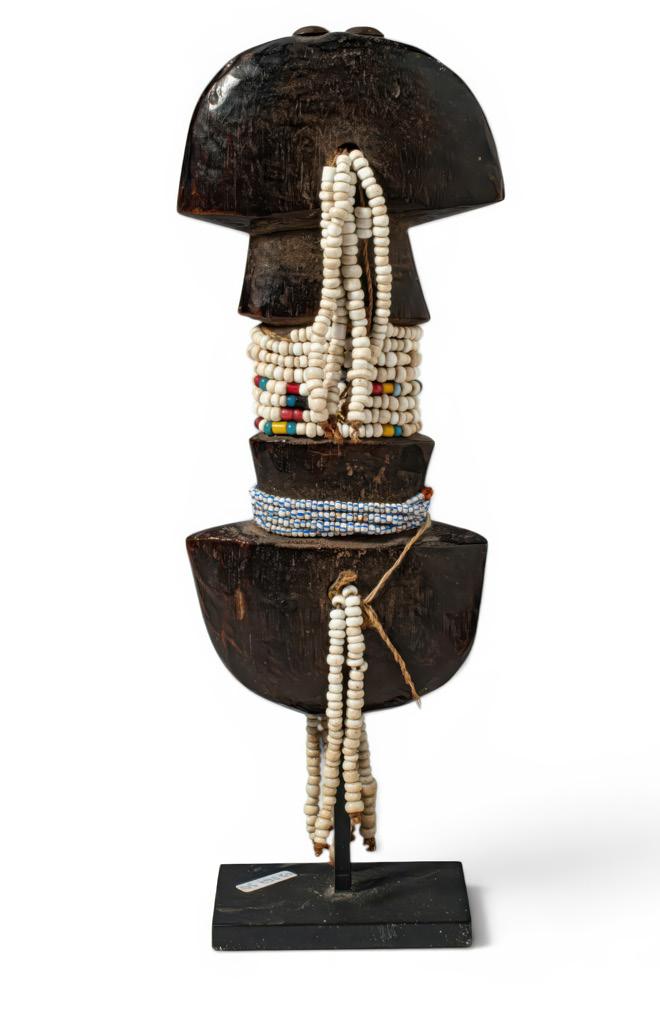
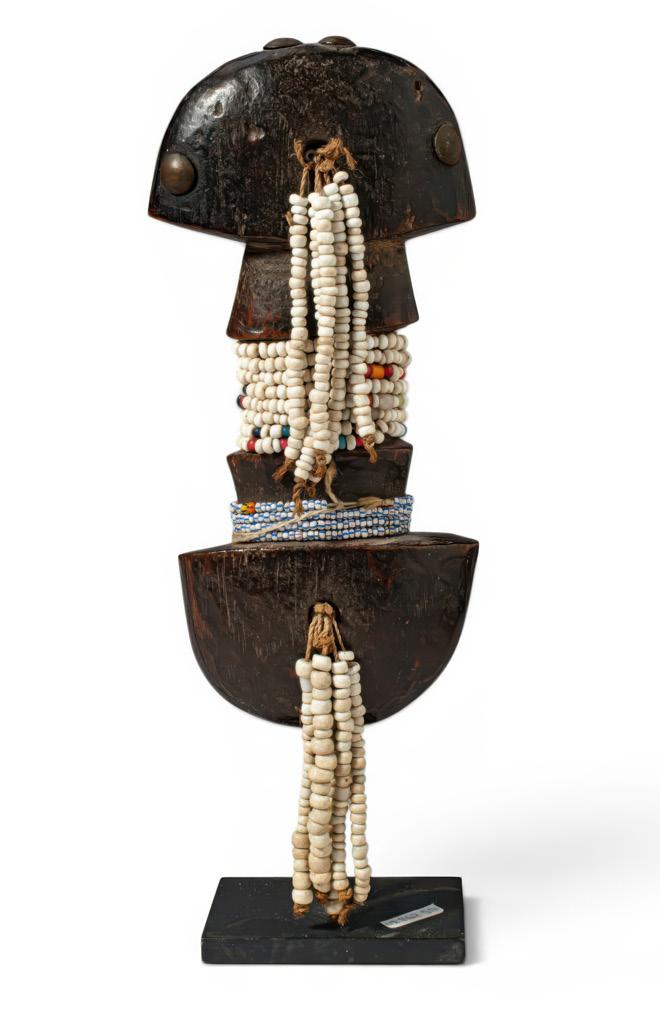
A rare example of a Luba doll whose abstract, symmetrical form evokes a figure: the head punctuated with old upholstery tacks, the femininity expressed by the elegance of the beaded adornment.
Provenance: Prince collection, 1990s-2014; Ex. Sotheby’s, Paris, Sale PF9025, 17 June 2009, Lot 48; Ex. Pierre Dartevelle.
Size: 200mm x 75mm; Weight: 240g
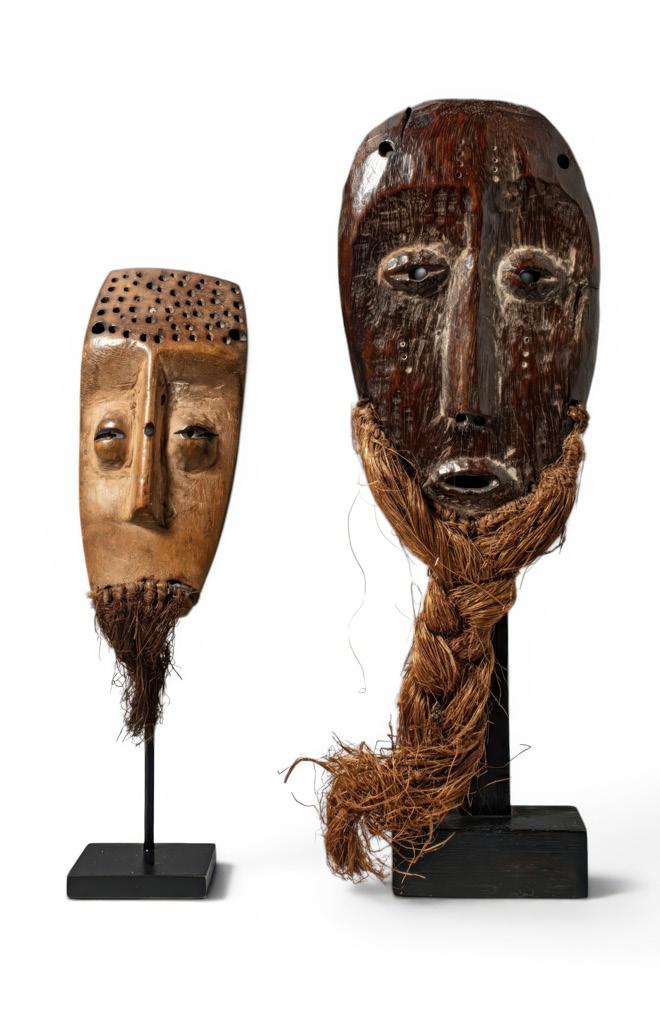
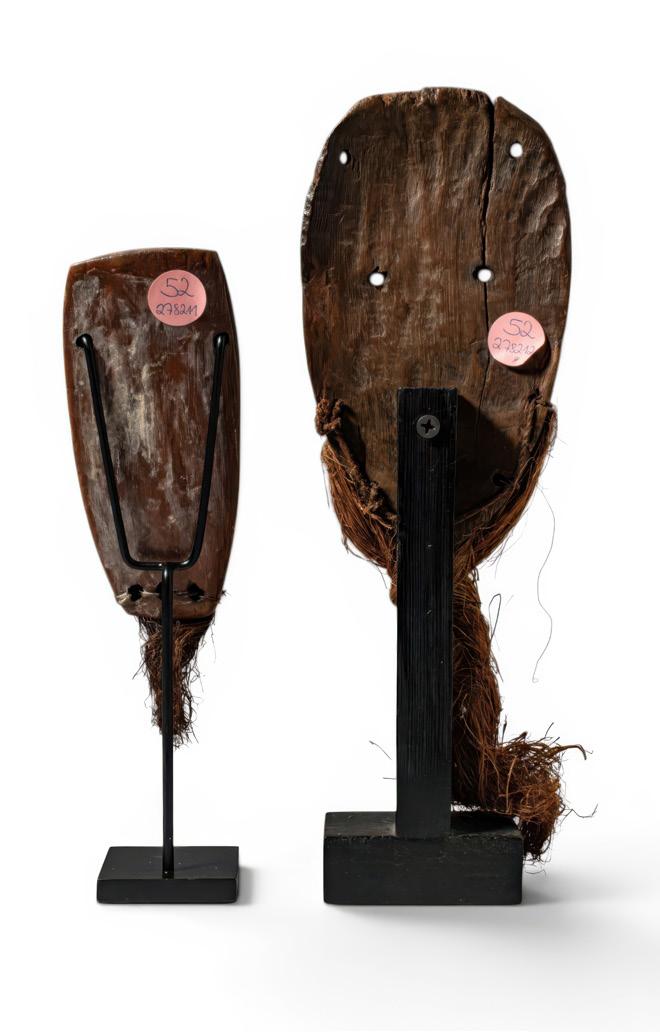
130. TWO LEGA MASKS
Starting Price: £300
Democratic Republic of the Congo, Ca. 19th - 20th century AD.
A pair of carved wooden masks of contrasting scale and finish, both reflecting the refined minimalism characteristic of Lega artistic traditions. The smaller mask, with a pale, worn surface, features a narrow, elongated face, high forehead, and delicately incised eyes beneath subtly arched brows. The perforated crown suggests attachment or suspension, consistent with its use as a handled or worn object within Bwami society rituals. The larger mask presents a darker, richly patinated surface with more pronounced facial modelling. The eyes are outlined and slightly asymmetrical, lending an expressive quality, while the open mouth and elongated nose emphasise verticality. A fibre beard, twisted and bound beneath the chin, adds a tactile and symbolic dimension.
Provenance: Prince collection, 1990s-2014; Ex. Neumeister 14th November 2012, lot 1079.
Size: 175-260mm x 60-100mm; Weight: 390g
128. LUBA DOLL
131. GROUP OF PASSPORT
MASKS AND A BAULE MASKETTE
Ca. 19th - 20th century AD.
Starting Price: £500
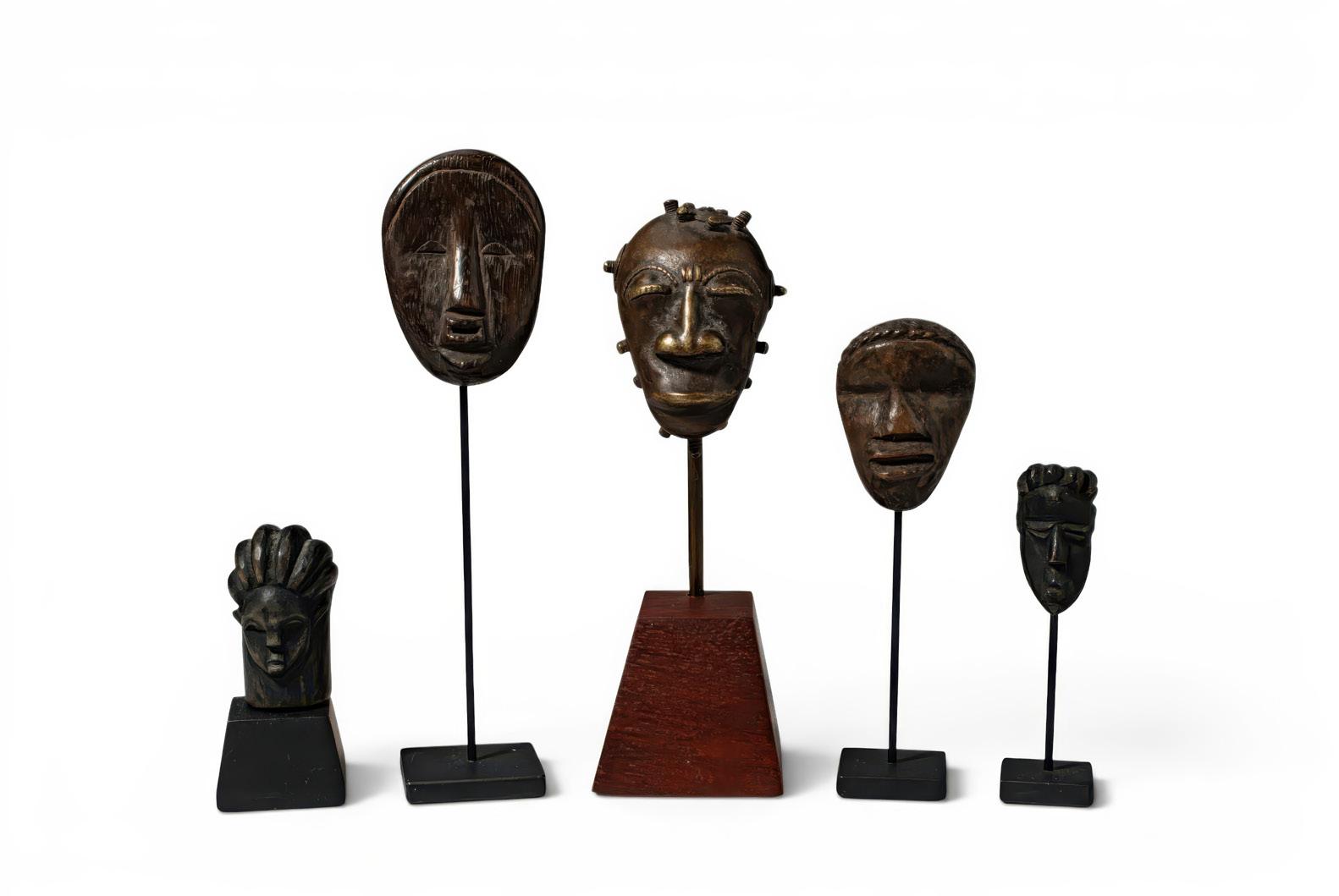
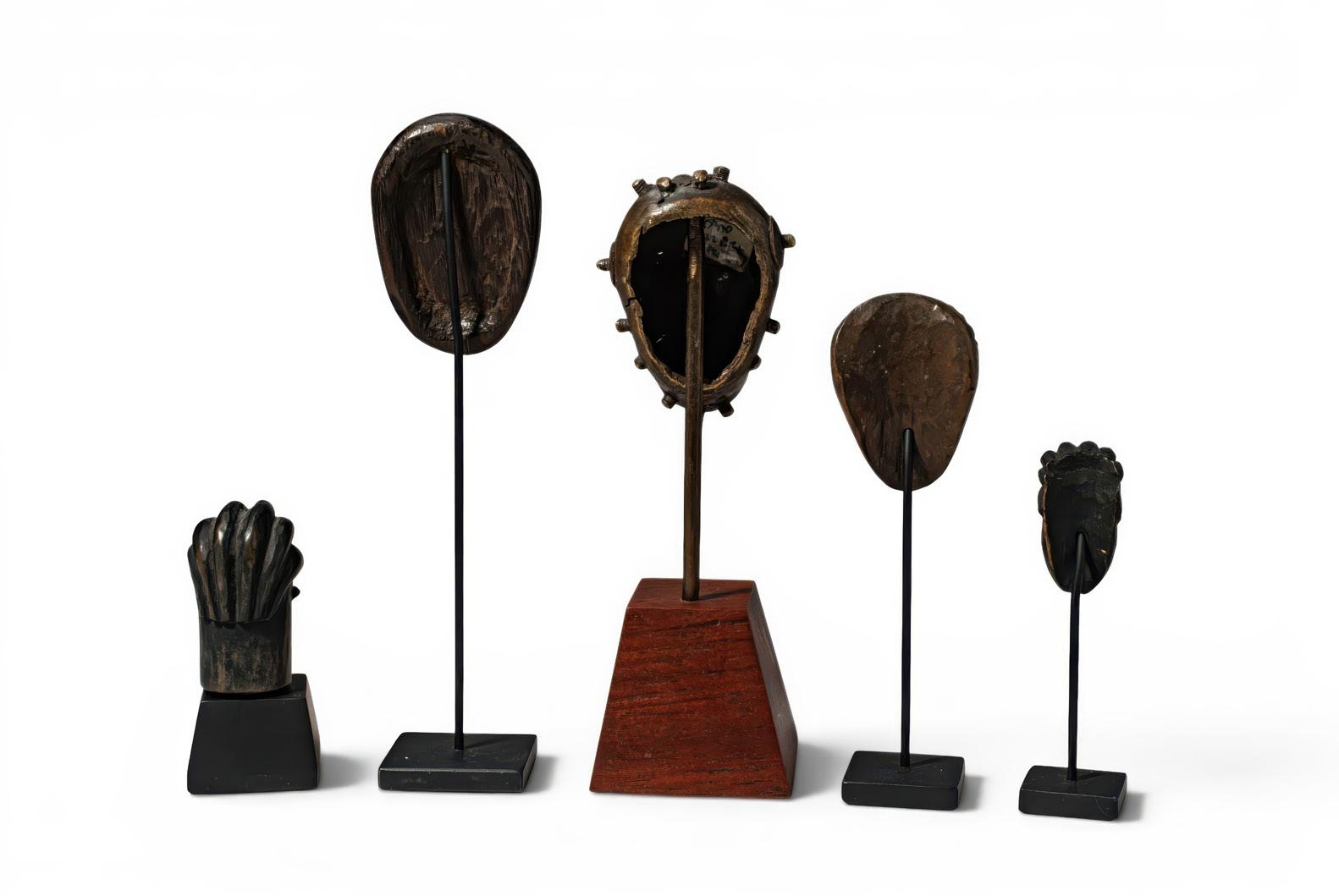
A varied assemblage of five miniature carved heads, combining four passport masks - likely Dan or related cultures - with a single Baule maskette distinguished by its fuller modelling and more naturalistic features. The passport masks are characterised by their reduced scale and portability: elongated or oval faces, simplified planes, slit or almond-shaped eyes, and restrained surface articulation. At centre, the Baule maskette stands apart stylistically. It presents a more volumetric and expressive face, with rounded cheeks, a defined mouth, and small protrusions (possibly metal tacks or coiffure elements) across the surface. The modeling reflects Baule aesthetic preferences for idealised beauty and composure, even at a miniature scale.
Provenance: Prince collection, 1990s-2014; Ex. WEBBS AUCTION HOUSE (Baule Maskette).
Size: 50-75mm x 40-50mm; Weight: 390g
132. GROUP OF DAN PASSPORT MASKS, LIBERIA / IVORY COAST
Ca. 19th - 20th century AD.
Starting Price: £300
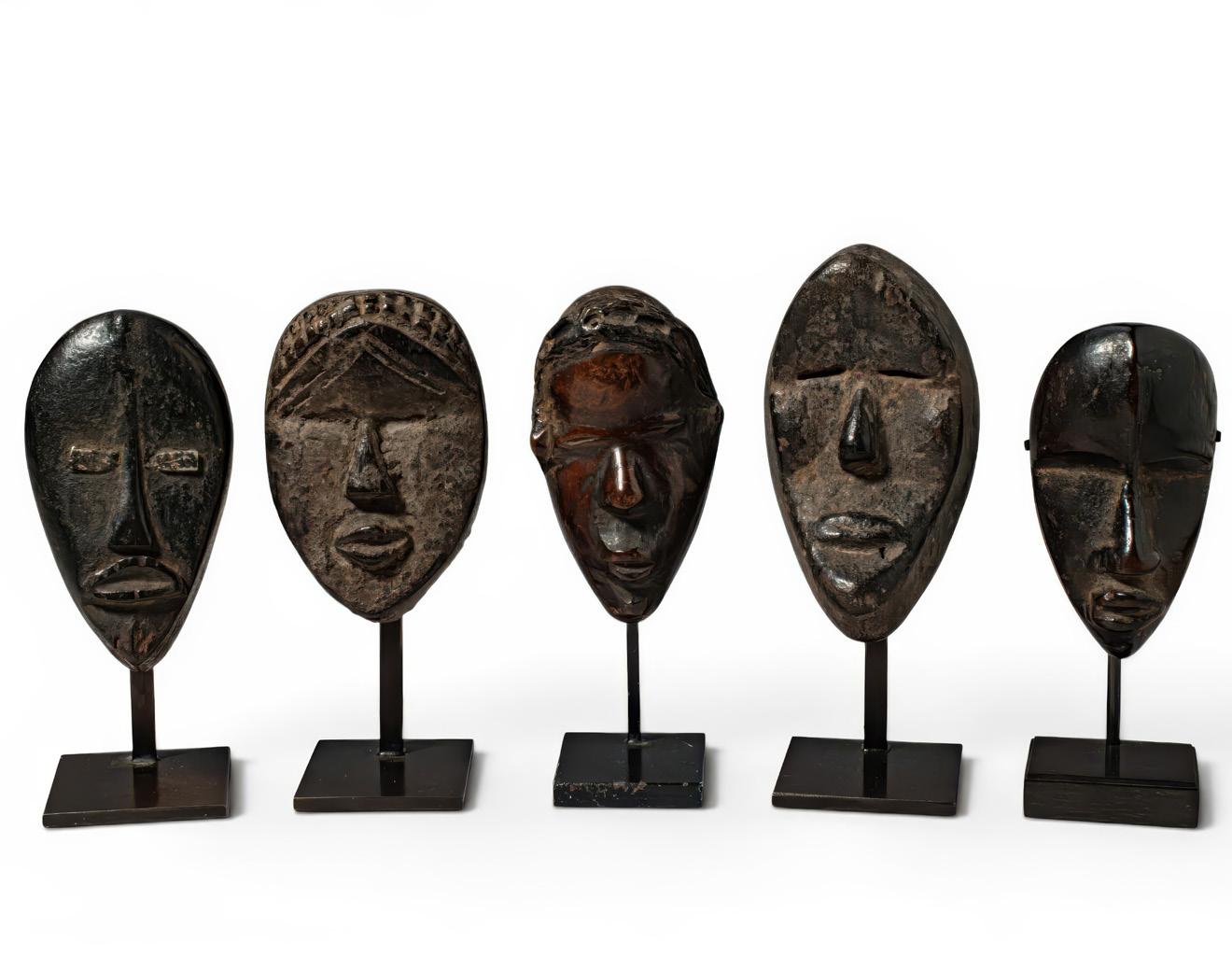
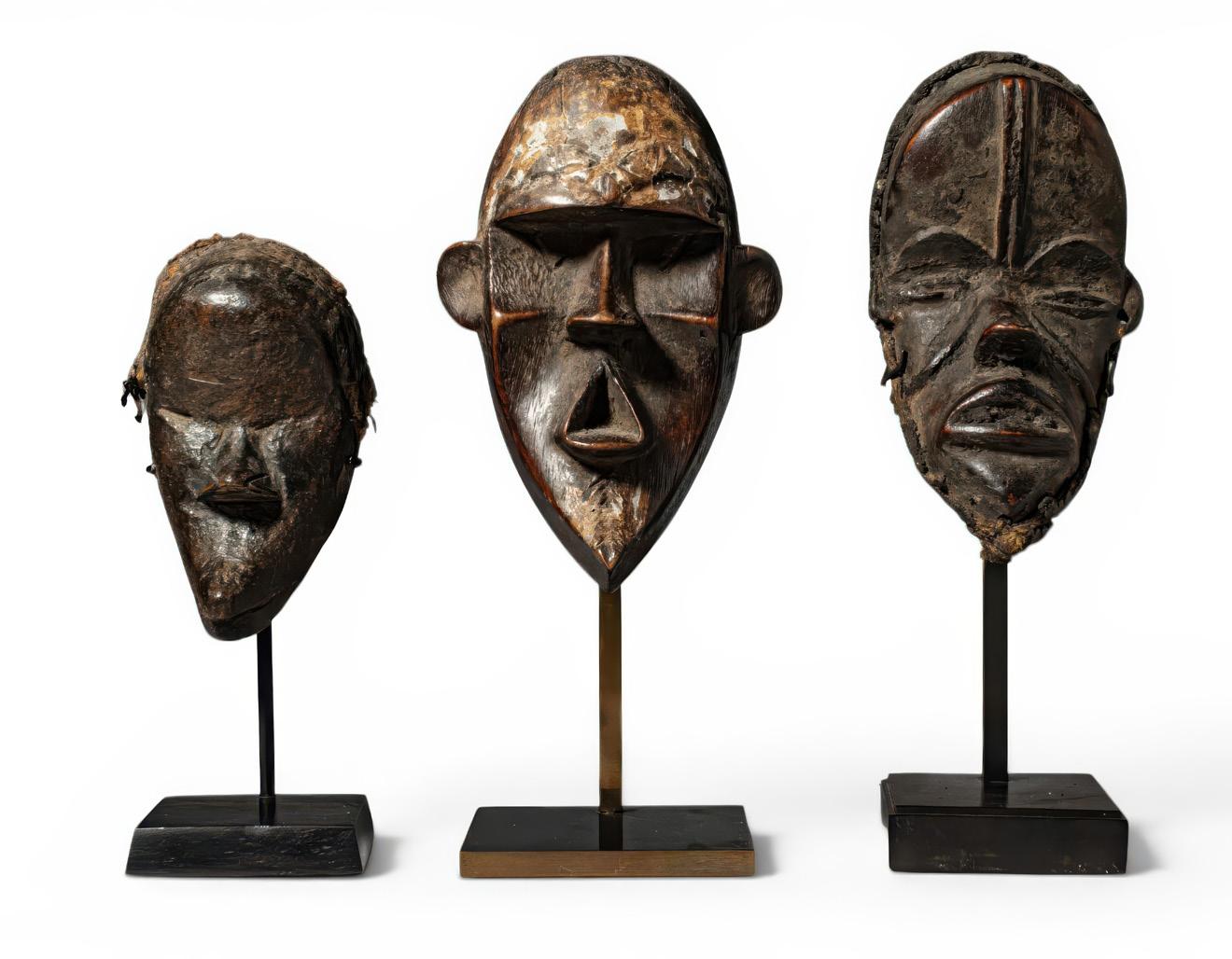
A group of five miniature carved wooden masks, each mounted for display, representing the portable mask tradition commonly known as “passport masks.” These small-scale objects were intended to be worn or carried, functioning as personal protective emblems and markers of identity. The masks display a coherent yet varied stylistic vocabulary: elongated oval faces, high domed foreheads, and restrained, geometric features. Eyes are typically rendered as narrow slits or almond shapes beneath subtly defined brows, while noses are long and linear, often bisecting the face. Mouths are small and closed or slightly parted, contributing to a composed, introspective expression.
Provenance: Prince collection, 1990s-2014; Ex. Galerie Renaud Vanuxem, Paris; Ex. Cecil Kerner, Brussels; Ex. Andre Schoeller, 38 rue du Four, Paris.
Size: 75-90mm x 45-50mm; Weight: 465g
133. GROUP OF DAN PASSPORT MASKS
Ca. 19th - 20th century AD.
Starting Price: £300
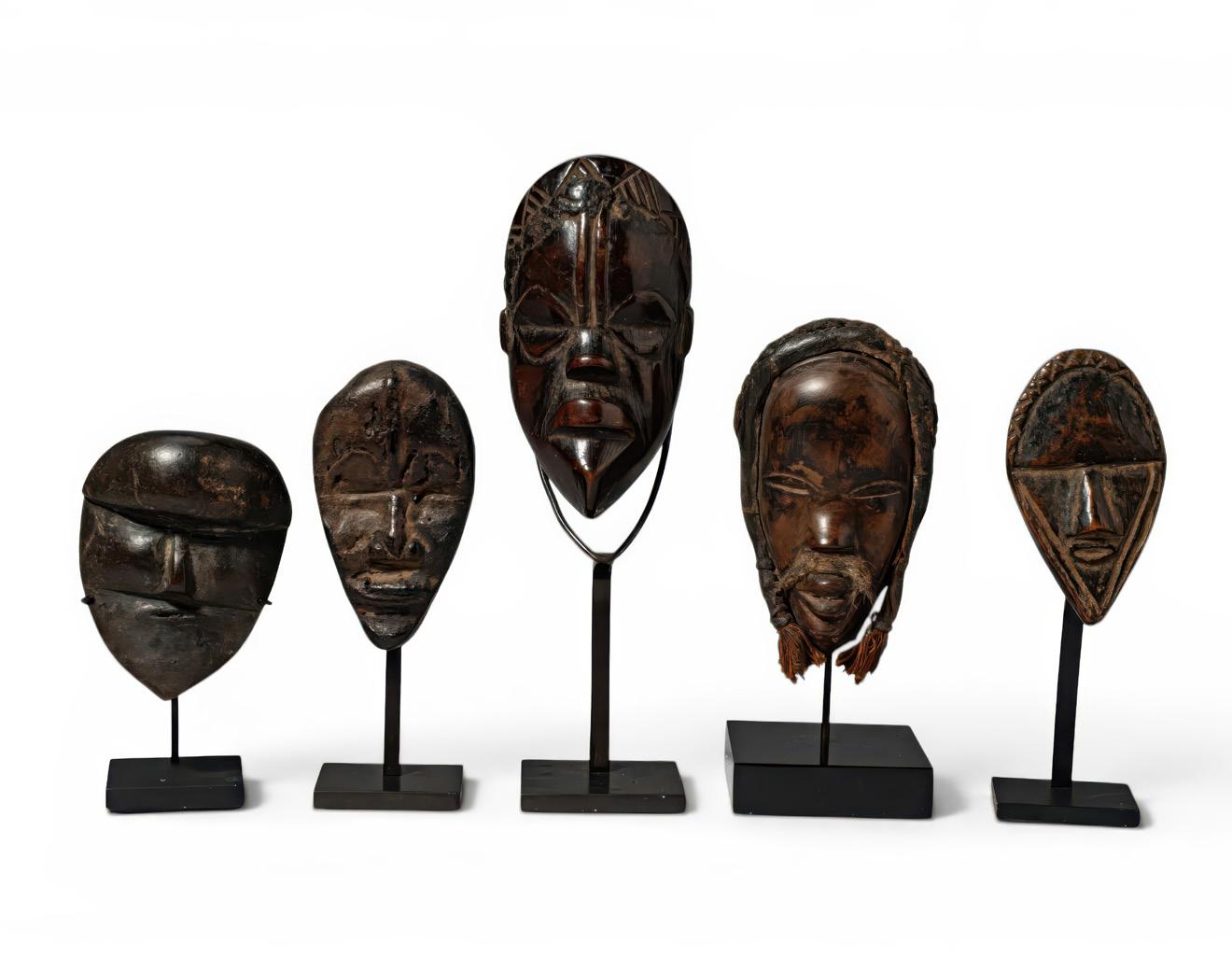
A group of five miniature carved wooden masks, each mounted for display, representing the category commonly referred to as “passport masks.” These small-scale faces were traditionally worn on the body—often attached to cords, caps, or carried on the person—serving as portable embodiments of protective or guiding spirits.
Provenance: Prince collection, 1990s-2014; Ex. Galerie Renaud Vanuxem, Paris; Ex. Andre Schoeller, 38 rue du Four, Paris (partially).
Size: 85-110mm x 45-60mm; Weight: 530g
134. TWO MINIATURE MASKS
Ca. late 19th - early 20th century AD.
Starting Price: £300
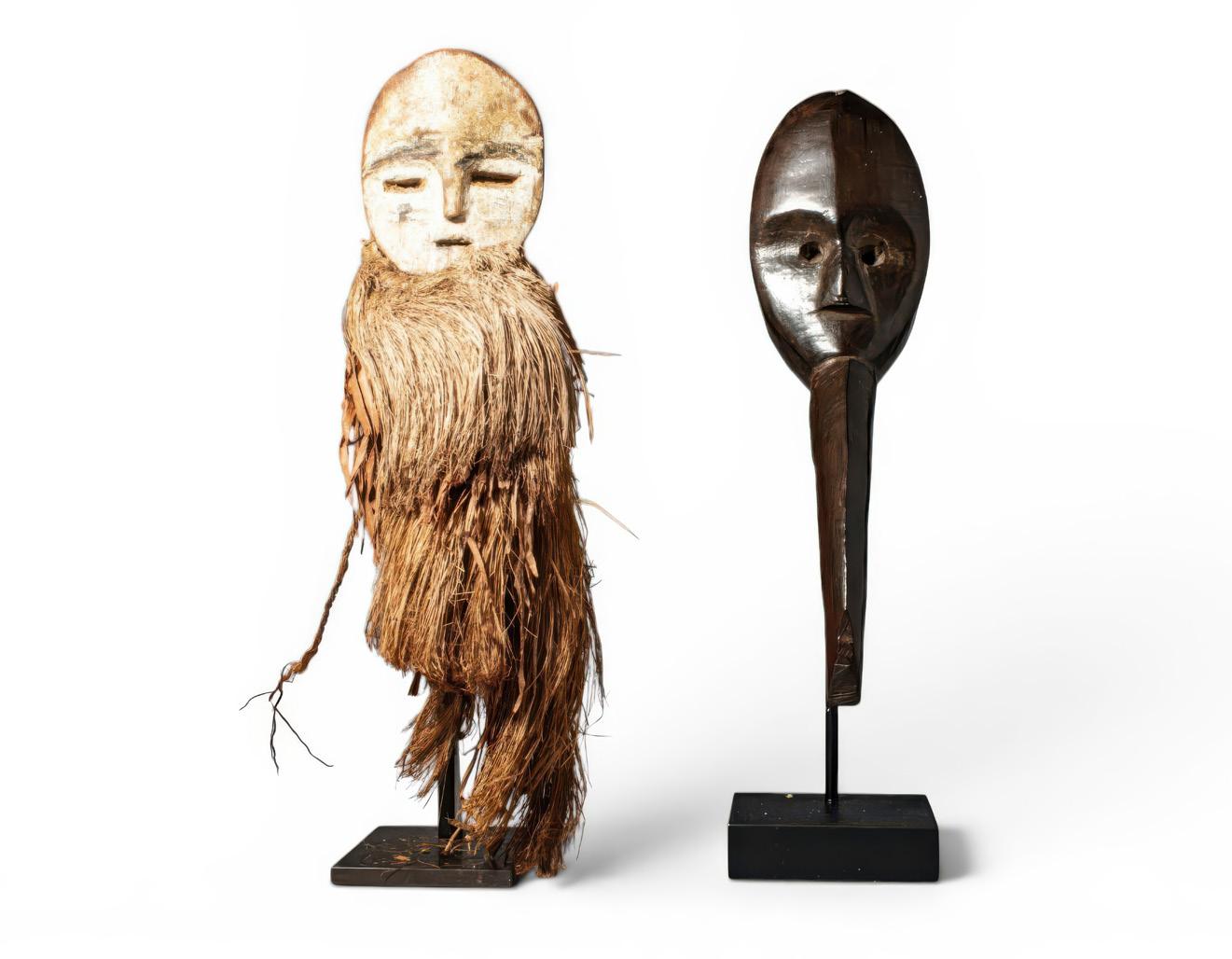
A group comprising two carved miniature masks of contrasting type. One has a pale face, the features softly modelled with downcast eyes and small mouth, the lower section fitted with a dense fibre beard. The second mask of elongated oval form, carved in darker wood with a smooth, polished surface, the face bisected by a subtle medial ridge and defined by almond-shaped eyes and a narrow nose.
Provenance: Prince collection, 1990s-2014; Ex. Galerie Renaud Vanuxem, Paris (left).
Size: 190-240mm x 55-70mm; Weight: 405g
136. GROUP OF LIBERIAN TOMA PASSPORT MASKS
Ca. late 19th - early 20th century AD.
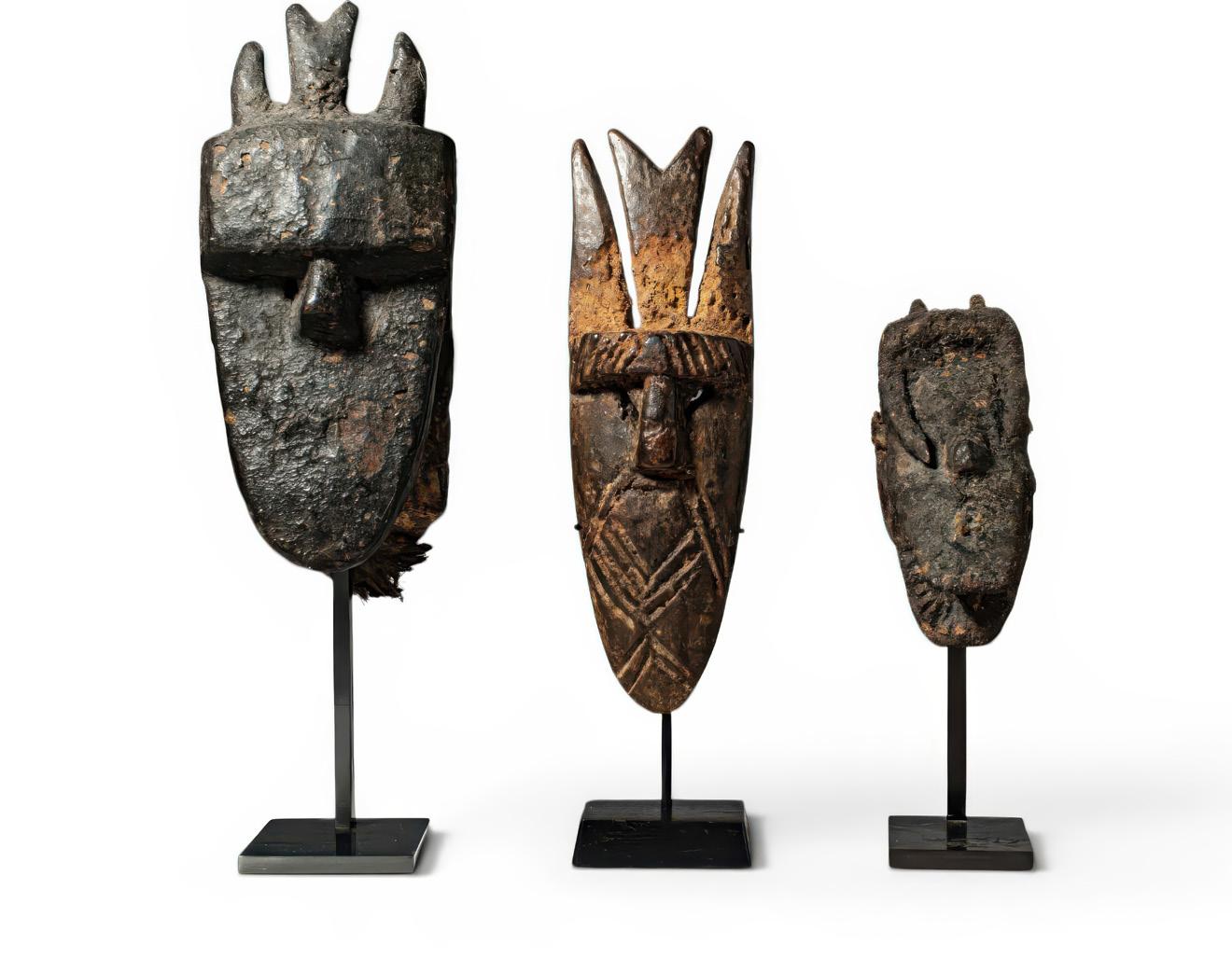
A group comprising three carved wooden miniature masks of elongated form, each with distinctive stylised features. One example is surmounted by a crest-like coiffure with projecting elements, the face simplified with a broad forehead and angular nose; another displays a more refined, narrow visage with a serrated or crown-like headdress and incised geometric ornament across the cheeks and chin; the third is smaller and more compact, with worn features and traces of attachment suggesting former suspension.
Provenance: Prince collection, 1990s-2014; Ex. Andre Schoeller, 38 rue du Four, Paris.
Size: 105-170mm x 45-70mm; Weight: 490g
135. GROUP OF DAN PASSPORT MASKS
Ca. late 19th - early 20th century AD.
Starting Price: £300
A group comprising three carved wooden miniature masks, each of elongated oval form with stylised facial features. The group includes examples with deeply set almond-shaped eyes, prominent triangular or ridged noses, and incised scarification marks across the cheeks and forehead. One retains traces of fibre attachment at the chin, suggesting suspension or wear.
Provenance: Prince collection, 1990s-2014; Ex. Andre Schoeller, 38 rue du Four, Paris (partially).
Size: 110-125mm x 50-85mm; Weight: 570g
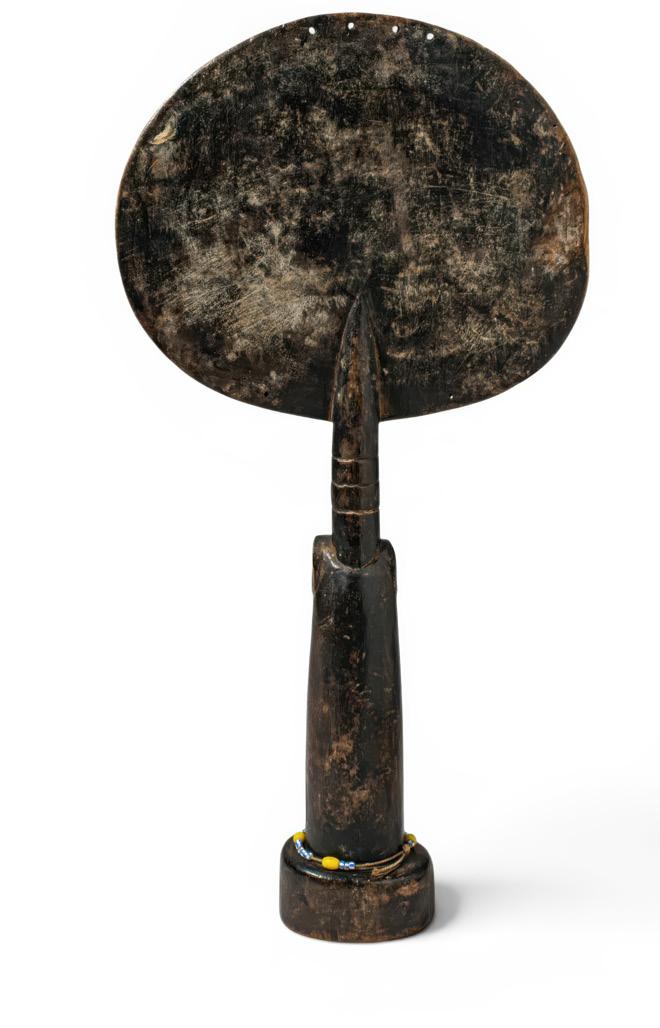
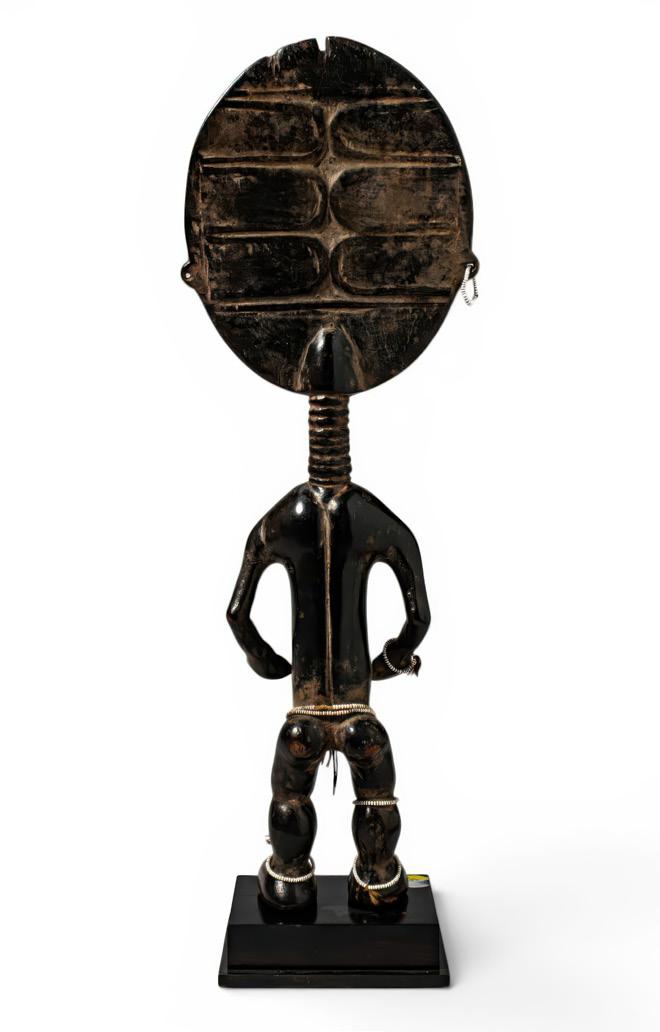
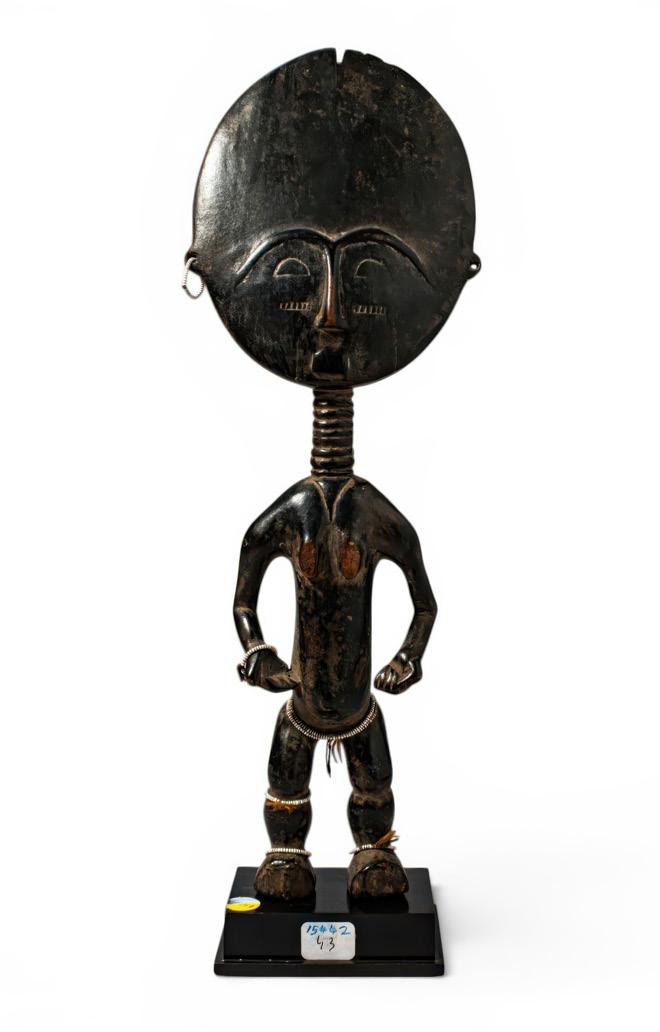
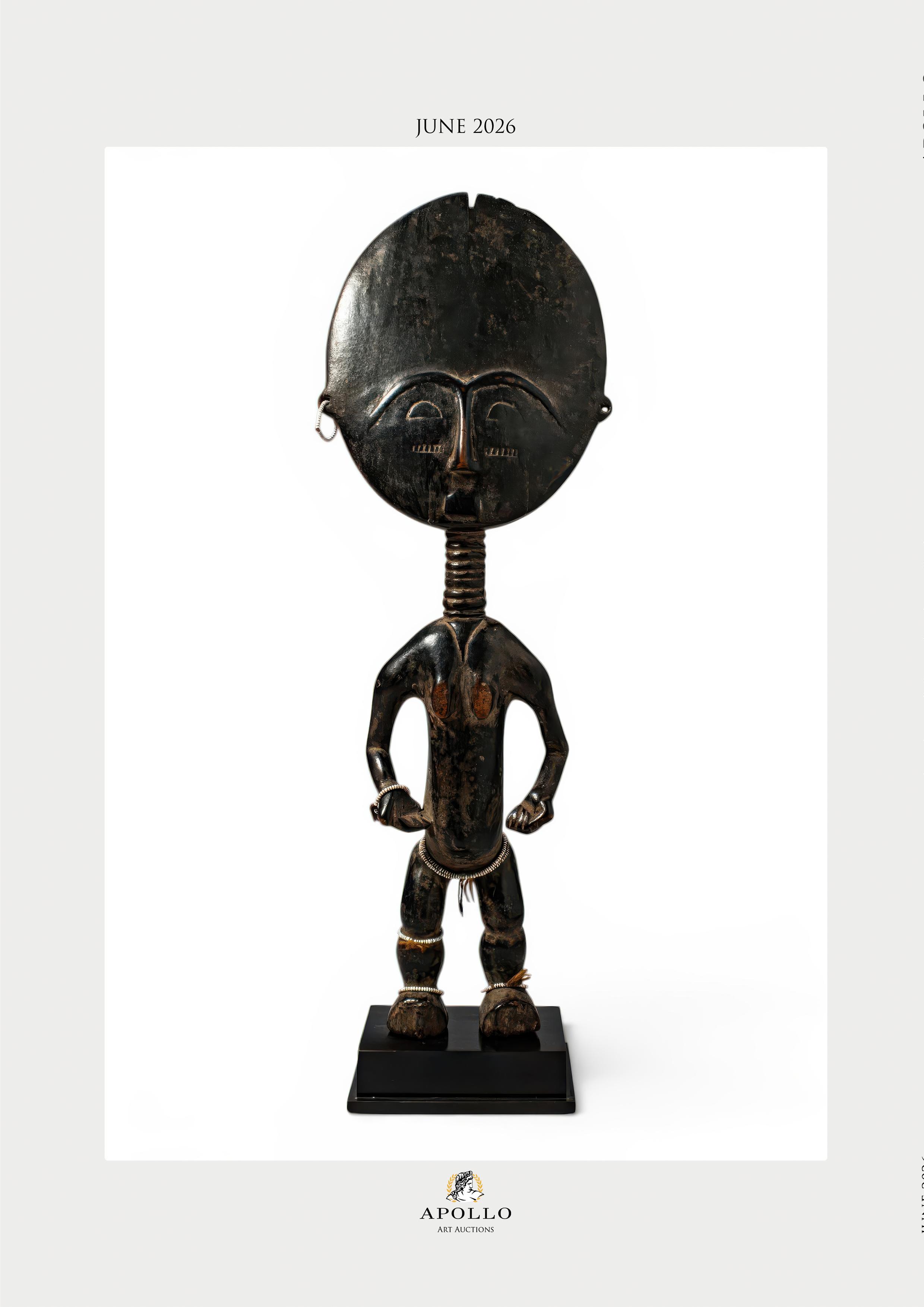
139. ASHANTI DOLL
Ca. late 19th - early 20th century AD.
Starting Price: £200
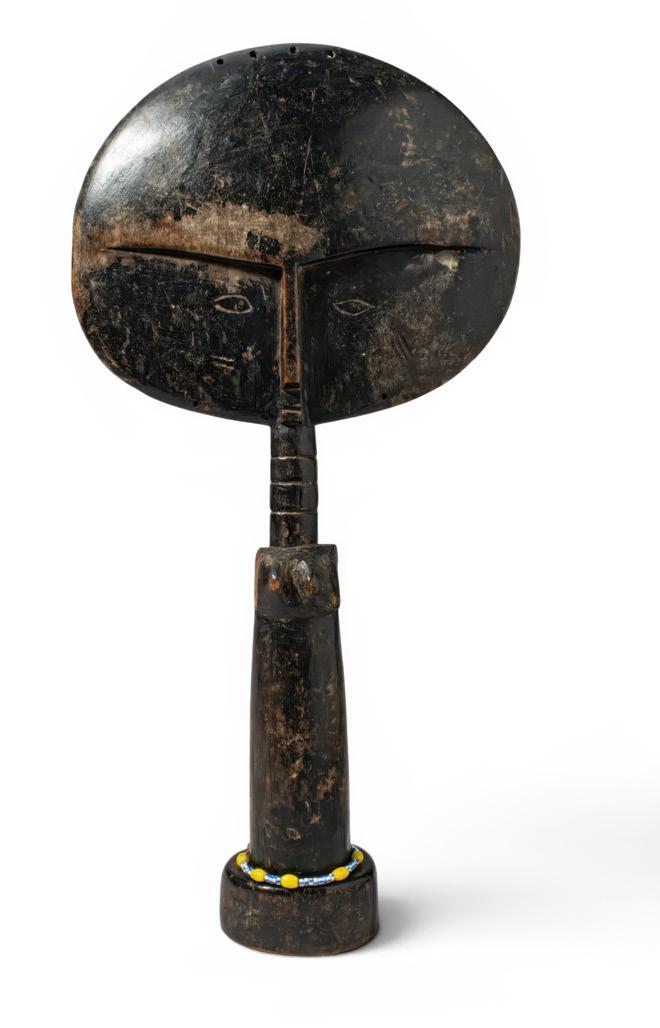
An Ashanti doll carved in wood with a large disc-shaped head above a cylindrical neck and simplified body, the face with incised linear features beneath a gently arched brow, with bead elements at the base.
Provenance: Prince collection, 1990s-2014; Ex. Gallerie Patrik Frohlich, Dec. 2014.
Size: 350mm x 175mm; Weight: 235g
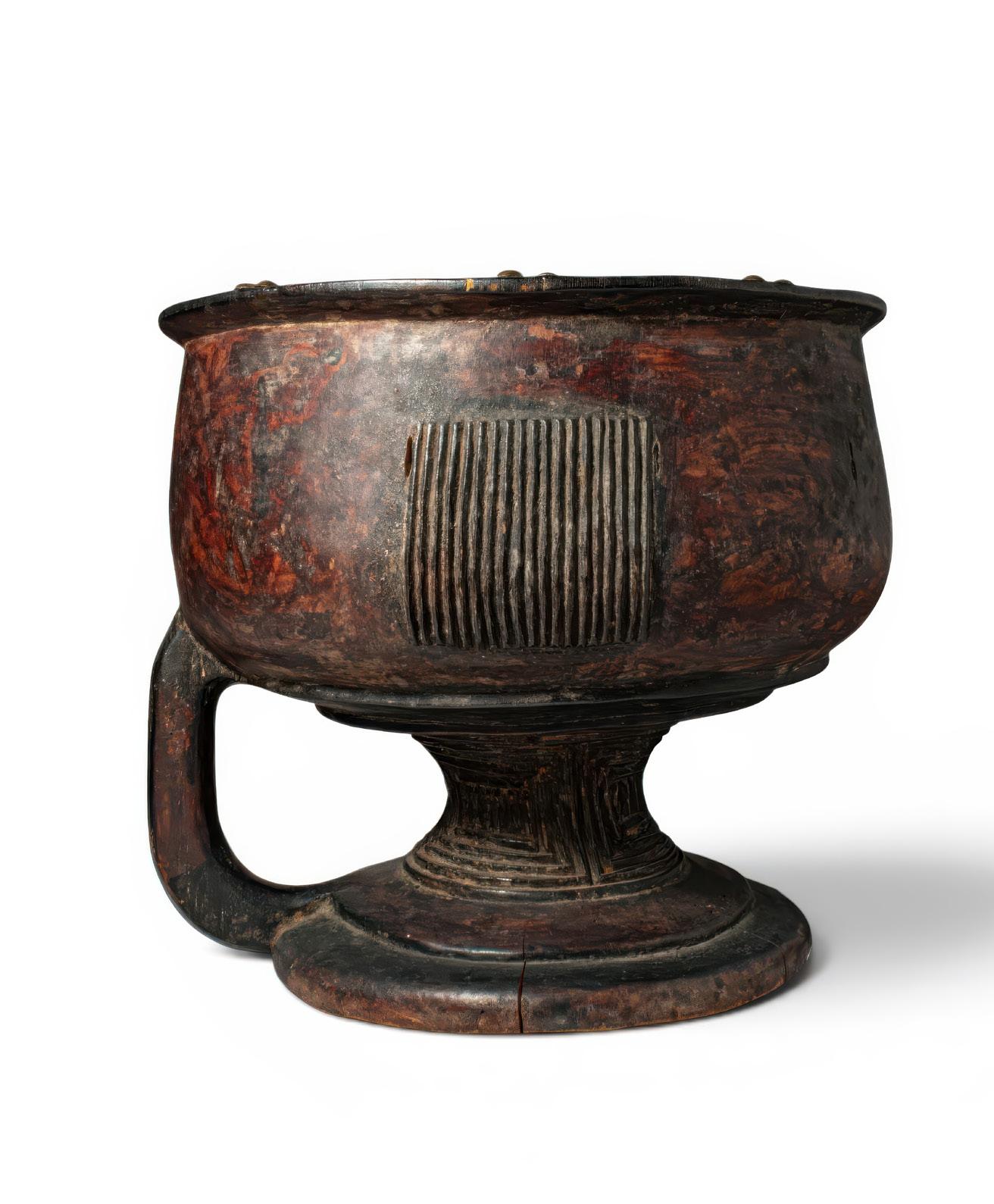
140. LUBA WOODEN CUP
Ca. late 19th - early 20th century AD.
Starting Price: £500
A cup carved in wood, the vessel of rounded bowl form raised on a stepped circular foot, with a curved handle joining the body to the base. The bowl is decorated with a rectangular panel of finely incised linear grooves, while the base is further embellished with inscribed geometric motifs. The rim is set with a series of small brass nails.
Provenance: Prince collection, 1990s-2014; Ex. Lempertz Brussels 24 April 2010 Lot 100.
Size: 250mm x 230mm; Weight: 1.22kg
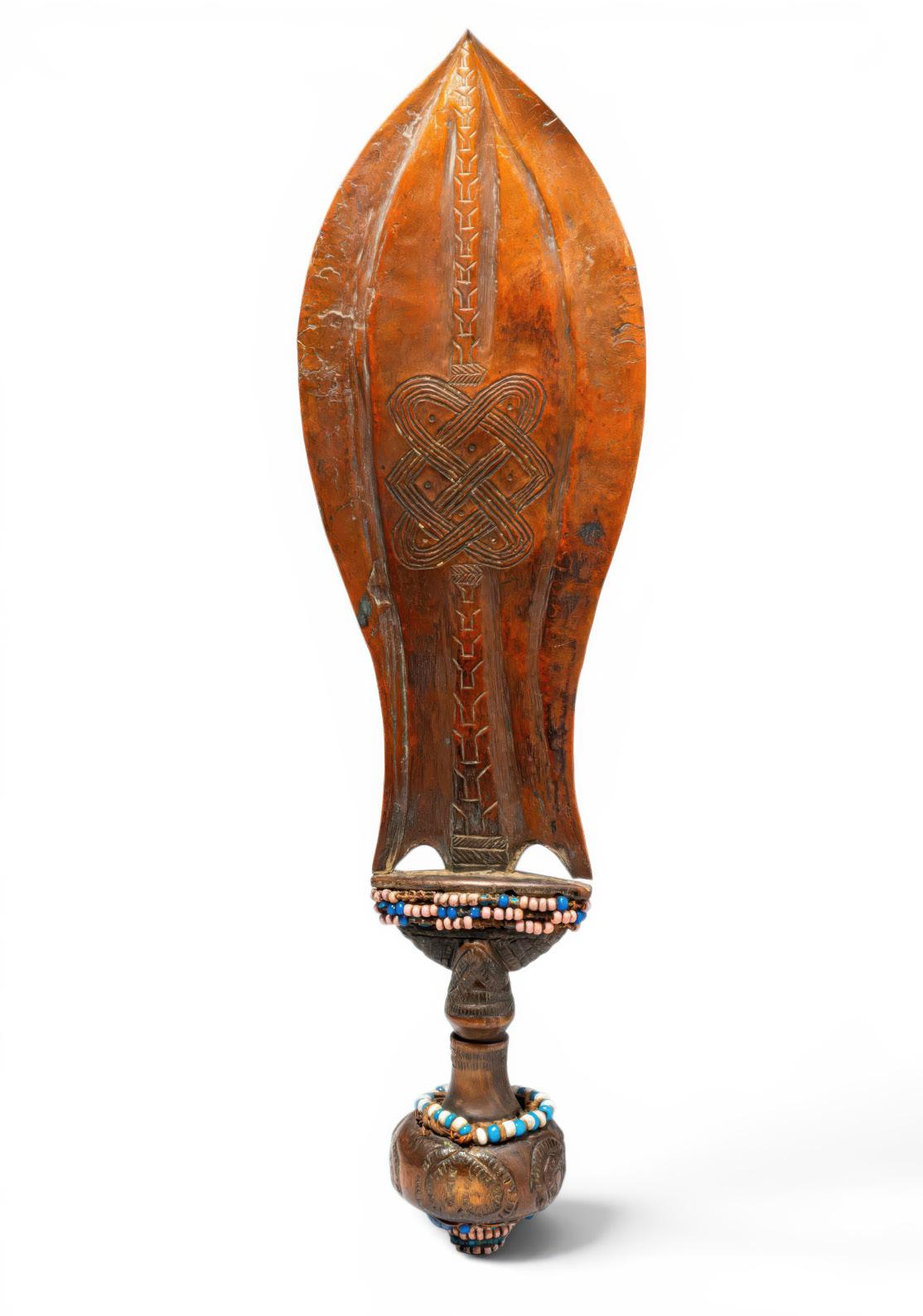
141. KUBA IKUL KNIFE
Ca. 20th century AD.
Starting Price: £300
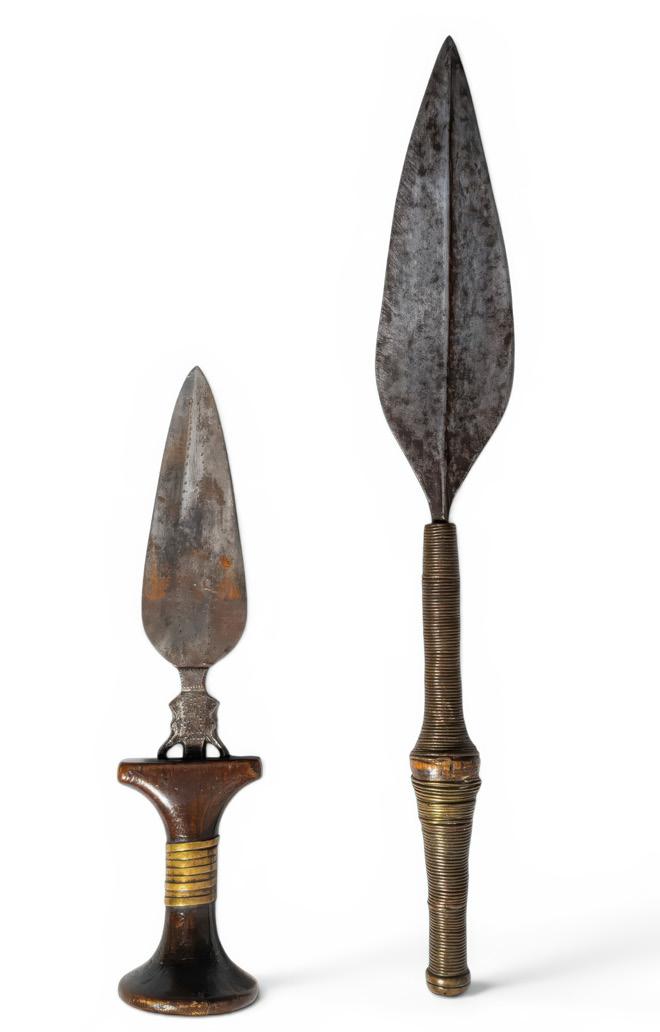
A finely worked Kuba ikul knife, distinguished by its elegant, elongated leaf-shaped blade and richly ornamented handle. The broad iron blade is symmetrically flared, tapering to a rounded tip, and incised with linear motifs and a central interlace pattern, demonstrating refined geometric decoration characteristic of Kuba metalwork. The lower section is mounted with a decorative collar adorned with rows of small beads in white, blue, and red tones, adding color and texture to the composition.
Provenance: Prince collection, 1990s-2014; Ex. Jacques Billen private collection.
Publications / Reports: For similar see: Herbert F. Johnson Museum of Art, Cornell University, object number 84.025.016.
Size: 350mm x 100mm; Weight: 560g
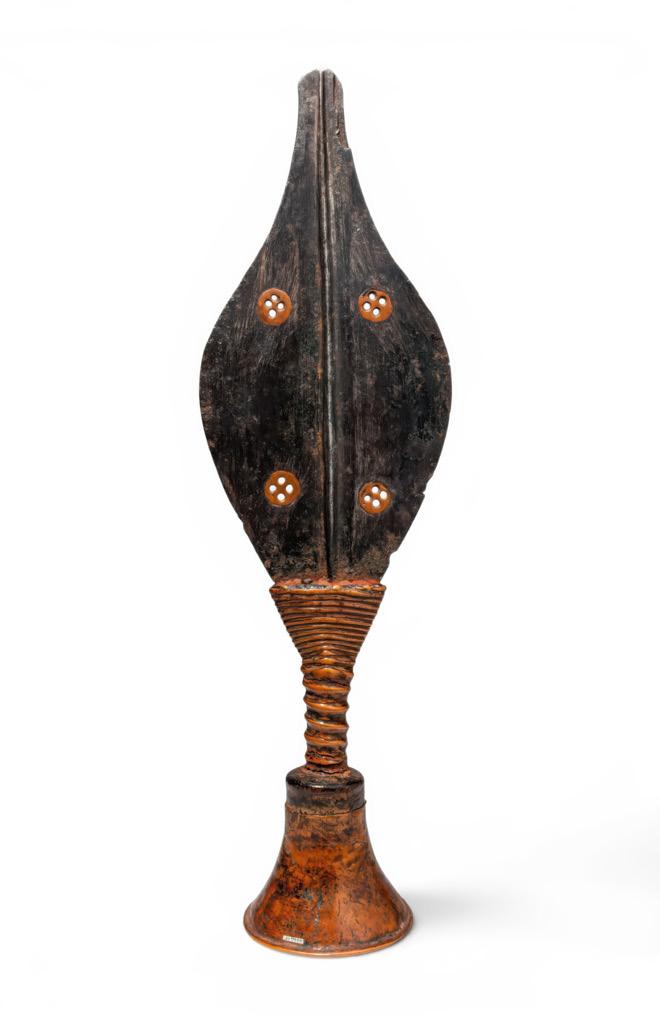
142. CONGO KNIFE
Ca. 20th century AD.
Starting Price: £300
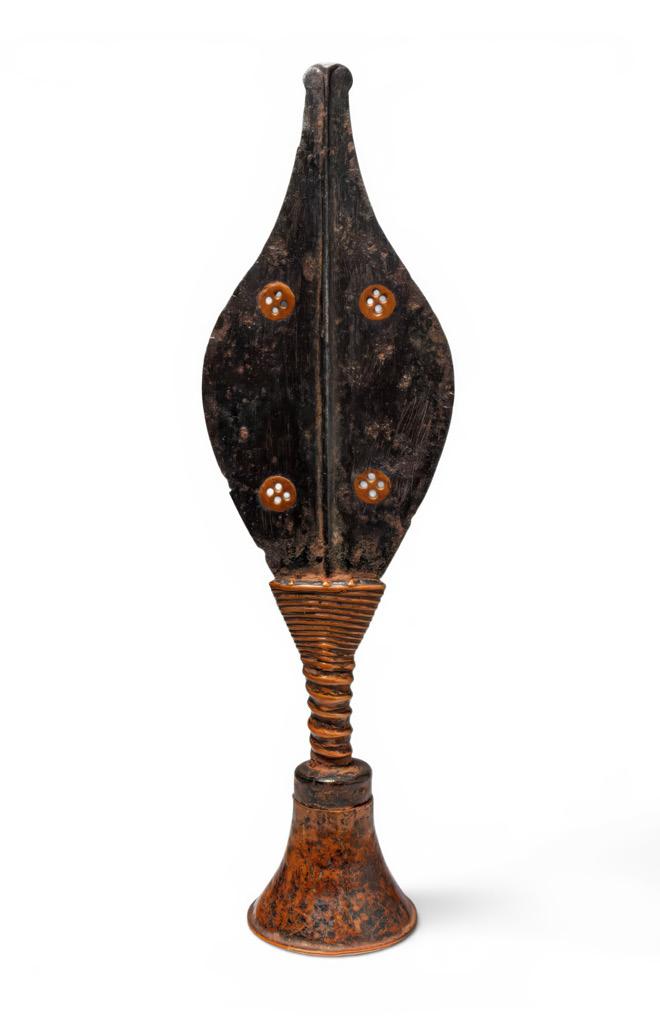
A distinctive Central African ceremonial knife featuring a broad, leaf-shaped iron blade with a pronounced central ridge. The blade is symmetrically formed, widening toward the middle before tapering to a narrow tip, and is ornamented with four applied circular bosses, each inset with contrasting material, providing both visual emphasis and textural contrast.
The hilt is composed of a tapered grip wrapped with tightly coiled metal wire, leading to a flared, bell-shaped pommel that provides balance and stability.
Provenance: Prince collection, 1990s-2014.
Size: 380mm x 110mm; Weight: 555g
144. MANGBETU TRUMBASH SICKLE KNIFE
Ca. 20th century AD.
Starting Price: £300
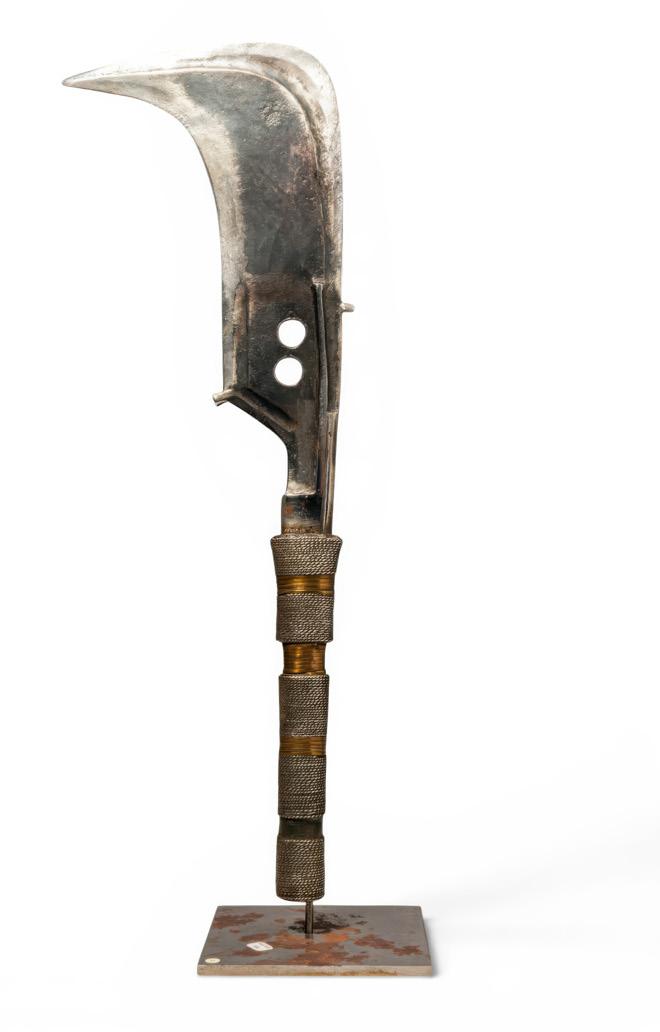
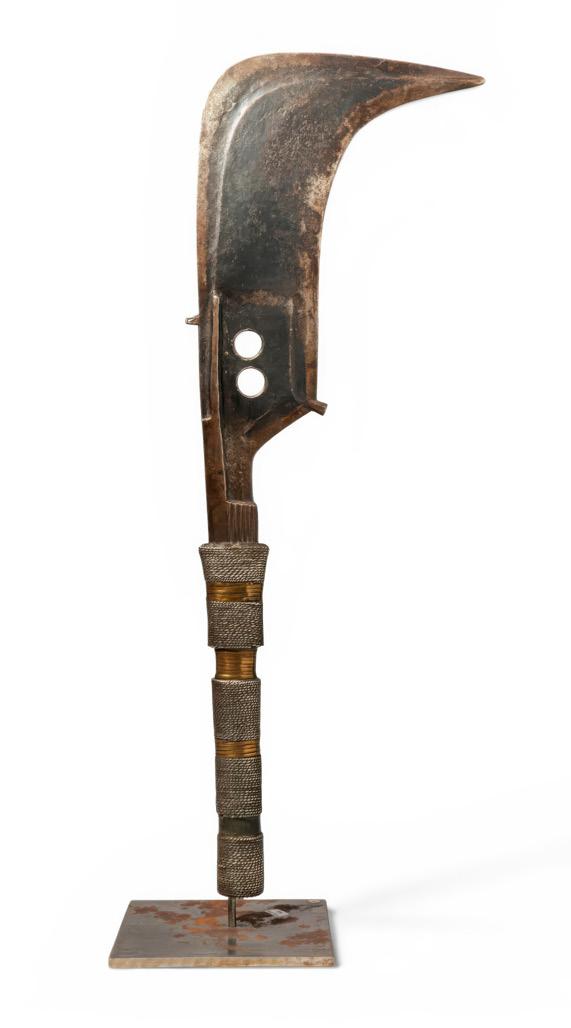
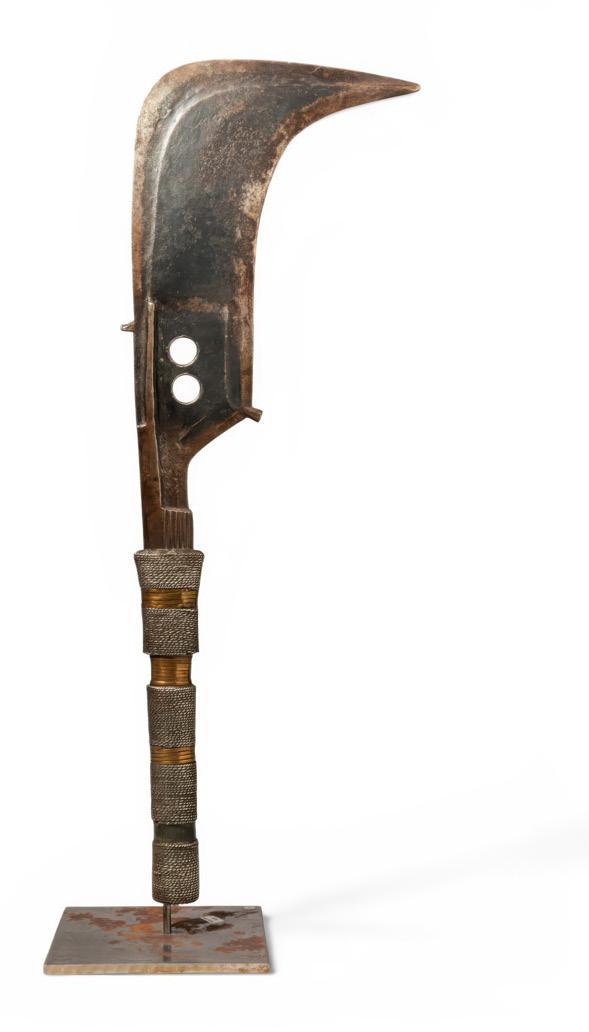
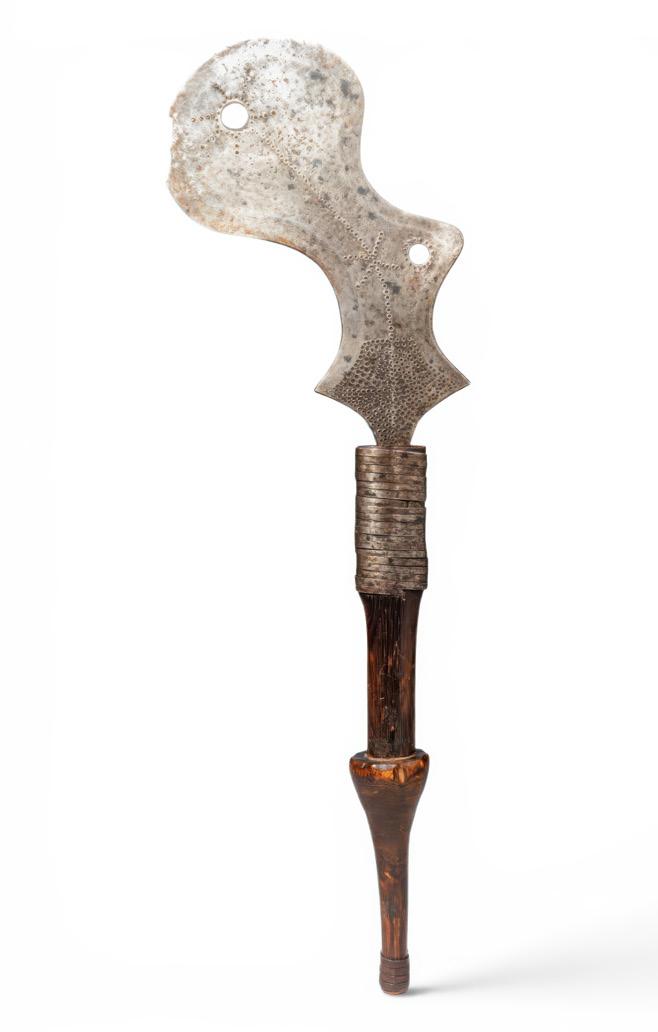
A finely worked trumbash knife of elegant, elongated form, attributed to the Mangbetu people. The blade rises in a pronounced forward curve, tapering to a sharp, beak-like point, its profile both functional and visually striking. Two circular perforations punctuate the lower blade.
The junction between blade and handle is reinforced with a short projecting tang element.
The handle is wrapped in tightly coiled metal wire interspersed with bands of brass, creating a refined geometric rhythm and providing both grip and ornament.
Provenance: Prince collection, 1990s-2014.
Size: 460mm x 140mm; Weight: 905g
143. PAIR OF MANGBETU TRUMBASH SICKLE KNIVES
Ca. 20th century AD.
Starting Price: £500
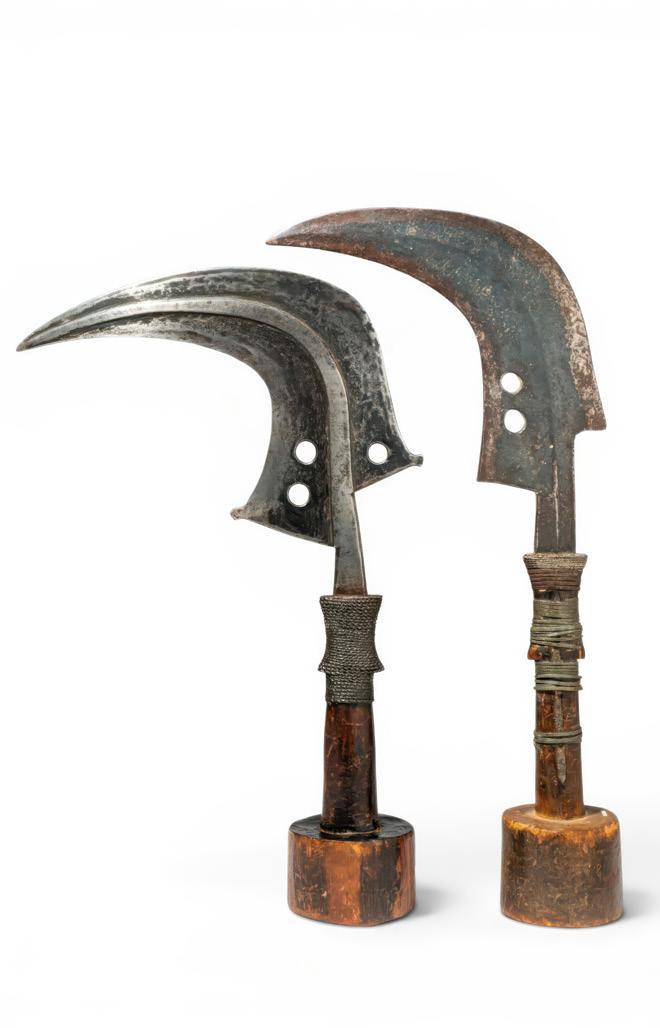
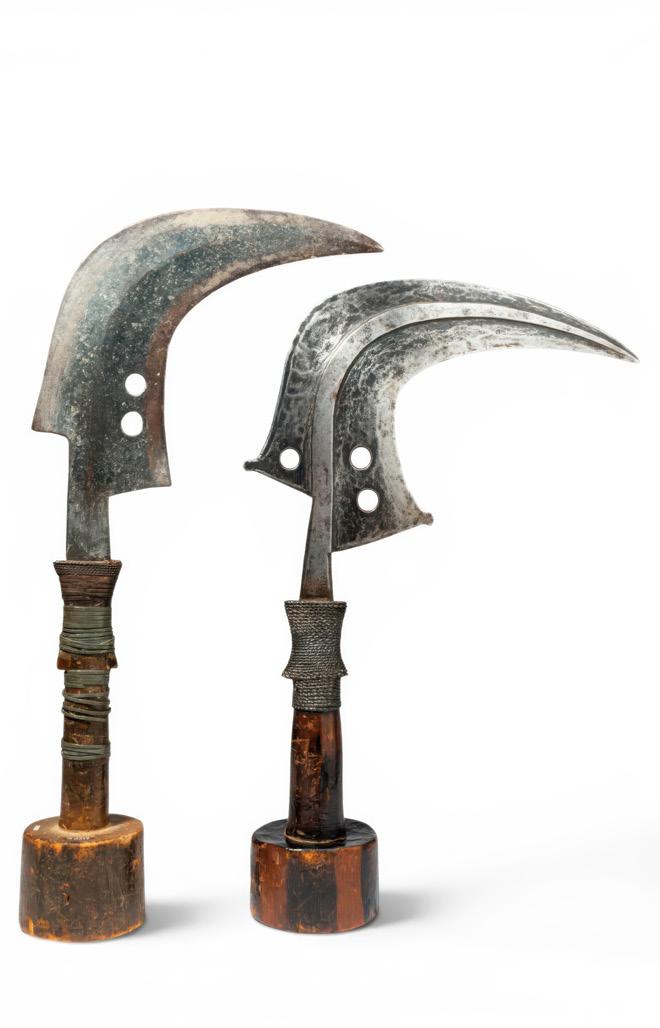
A pair of Mangbetu trumbash knives, each with a distinctive crescent-shaped iron blade mounted on a short handle. The blades are of pronounced curved form, tapering to sharp points, and pierced near the base with circular apertures, characteristic of this ceremonial weapon type. Each blade is affixed to a cylindrical handle, bound with coiled metal wire for grip and stability.
Provenance: Prince collection, 1990s-2014.
Publications / Reports: For similar see: The Museum of Fine Arts Houston, object number 98.241.
Size: 385-350mm x 180-195mm; Weight: 910g
145. TWO THROWING KNIVES, KOTA OR FANG
Ca. 20th century AD.
Starting Price: £500
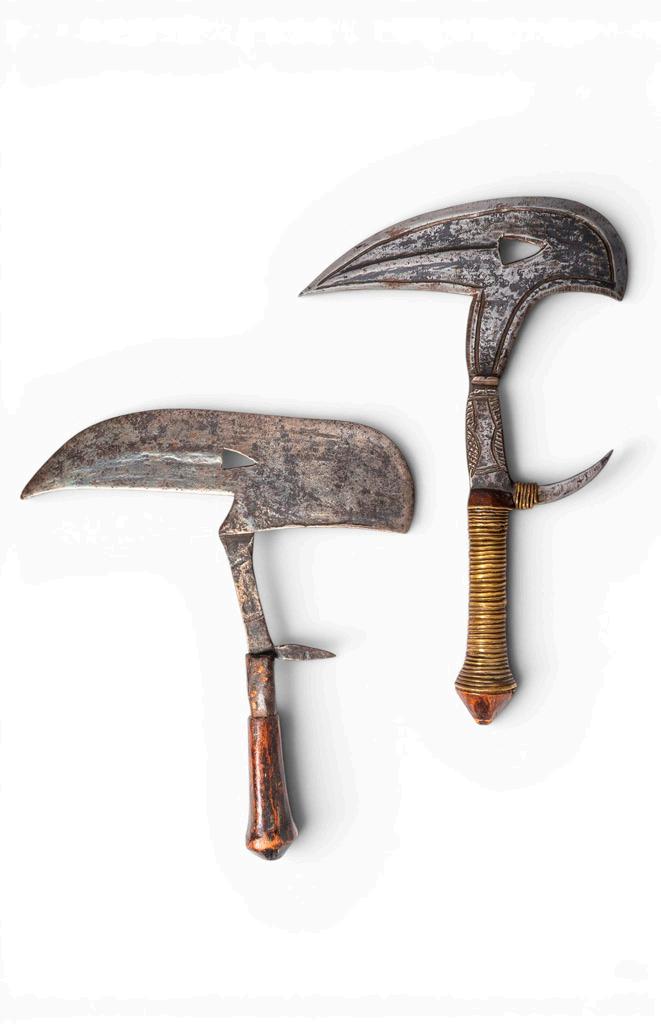
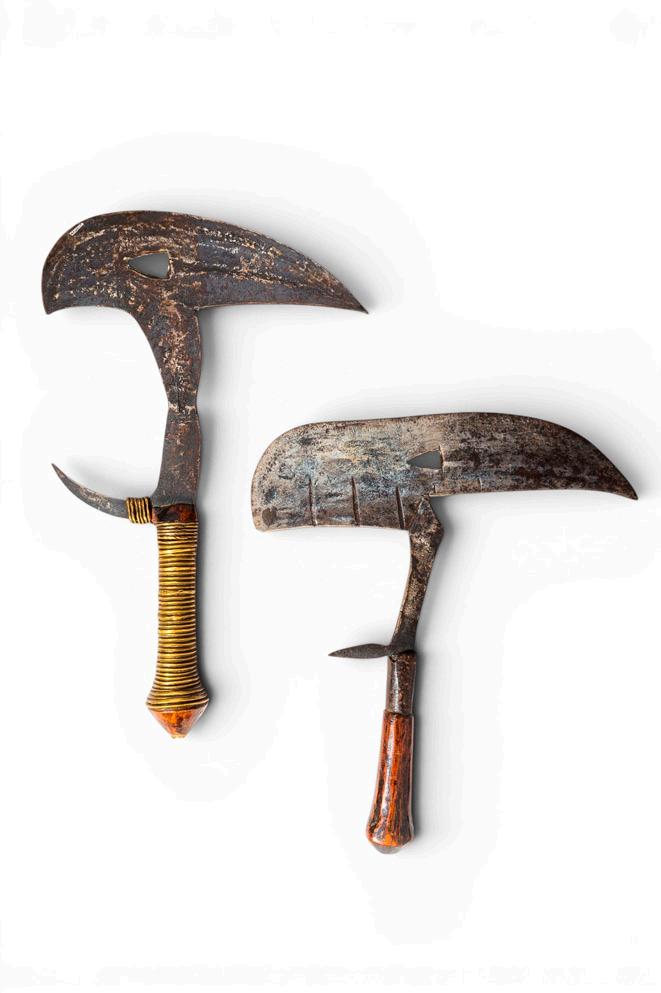
A pair of iron throwing knives of characteristic curved form, attributed to the Kota or Fang peoples of Central Africa. Each features a broad, crescent-shaped blade with a forward-projecting cutting edge and a secondary downward spike.
The blades are pierced near the upper section and display incised linear decoration. One knife is fitted with a handle wrapped in tightly coiled brass wire, terminating in a pointed finial, while the other retains a simpler wooden grip with a gently flared end.
Provenance: Prince collection, 1990s-2014.
Size: 200-250mm x 155-180mm; Weight: 300g
146. TWO KOTA DAGGERS
Ca. 20th century AD.
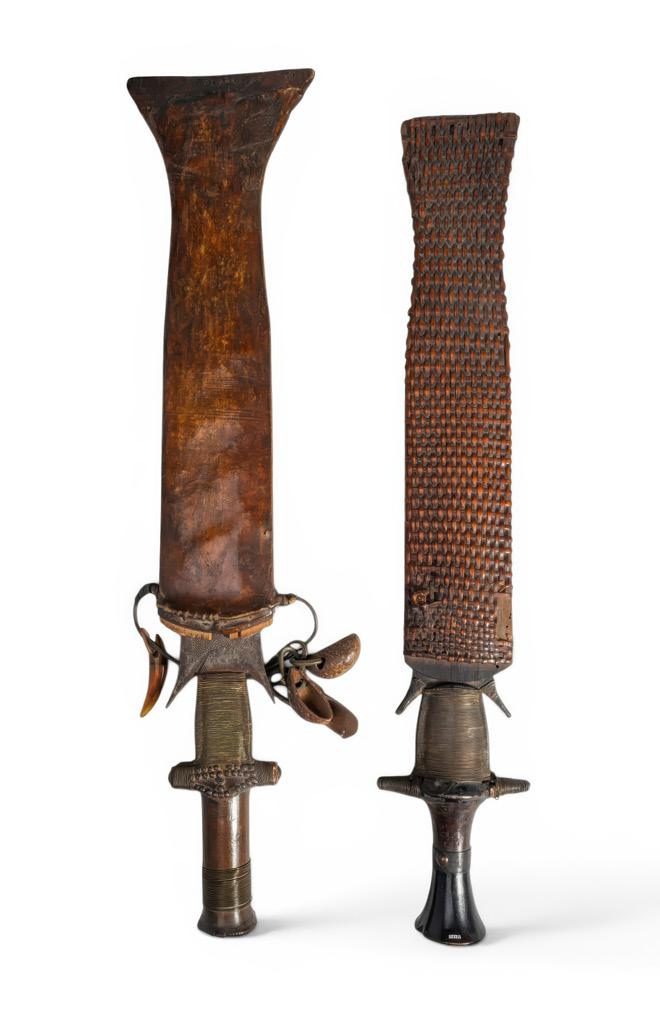
A pair of Kota daggers, each preserved with its original sheath.
The first dagger is housed in a leather sheath of elongated form, widening toward the top and finished with a flared rim. The lower section is mounted with a metal collar and suspension rings, from which small attachments are hung. The handle is wrapped with coiled metal wire, terminating in a rounded pommel.
The second dagger is enclosed in a sheath entirely wrapped in finely woven fibre, forming a tight, textured surface. The hilt is similarly bound with coiled metal wire, rising to a simple flared pommel.
Provenance: Prince collection, 1990s-2014.
Size: 490-530mm x 100-120mm; Weight: 1.2kg Starting Price:
147. AFRICAN KNIFE
Ca. 20th century AD.
Starting Price: £300
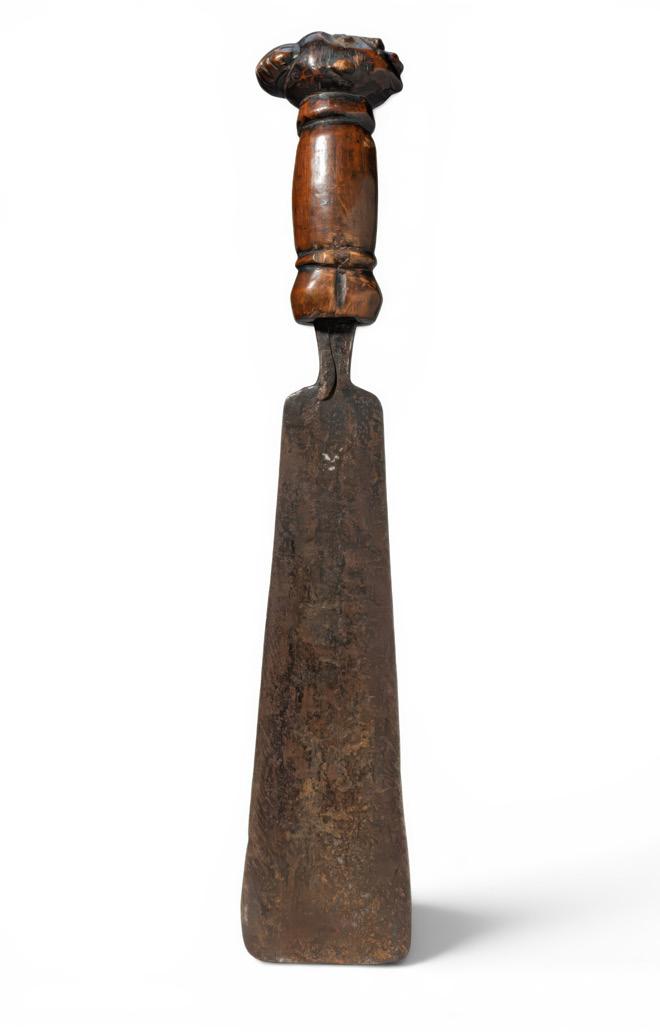
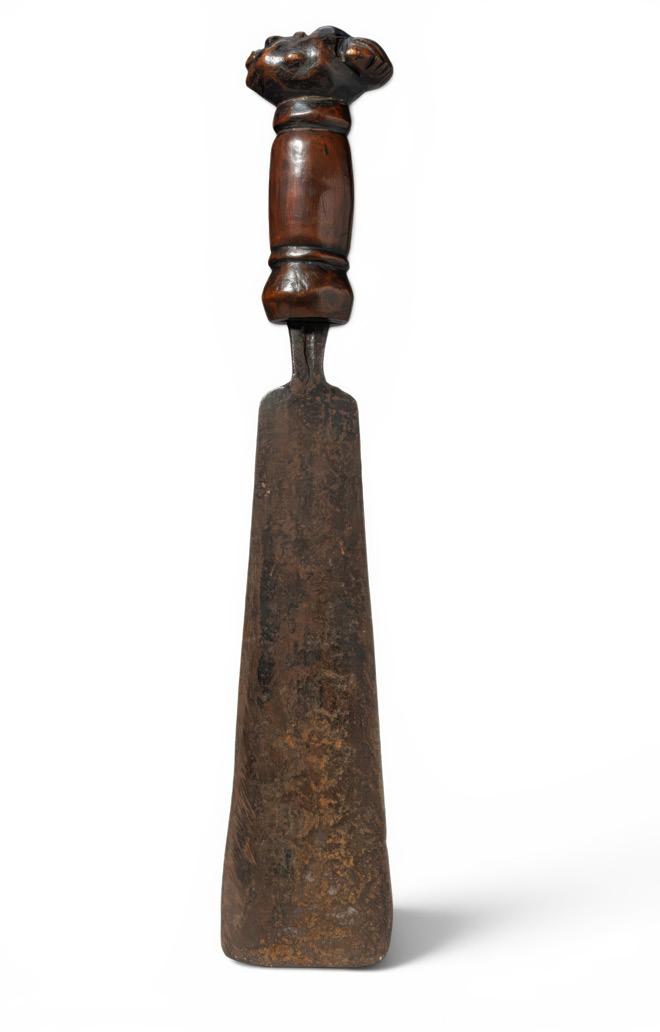
A robust African knife with a broad, tapering iron blade of rectangular form, widening toward the cutting edge.The blade is plain and functional.
The blade is fitted to a carved wooden handle of warm tone, turned in a baluster form and surmounted by a rounded, lobed pommel.
Provenance: Prince collection, 1990s-2014.
Size: 400mm x 70mm; Weight: 470g
149. AFRICAN MACHETE AND AFRICAN ADIO KNIFE
Ca. 20th century AD.
Starting Price: £300
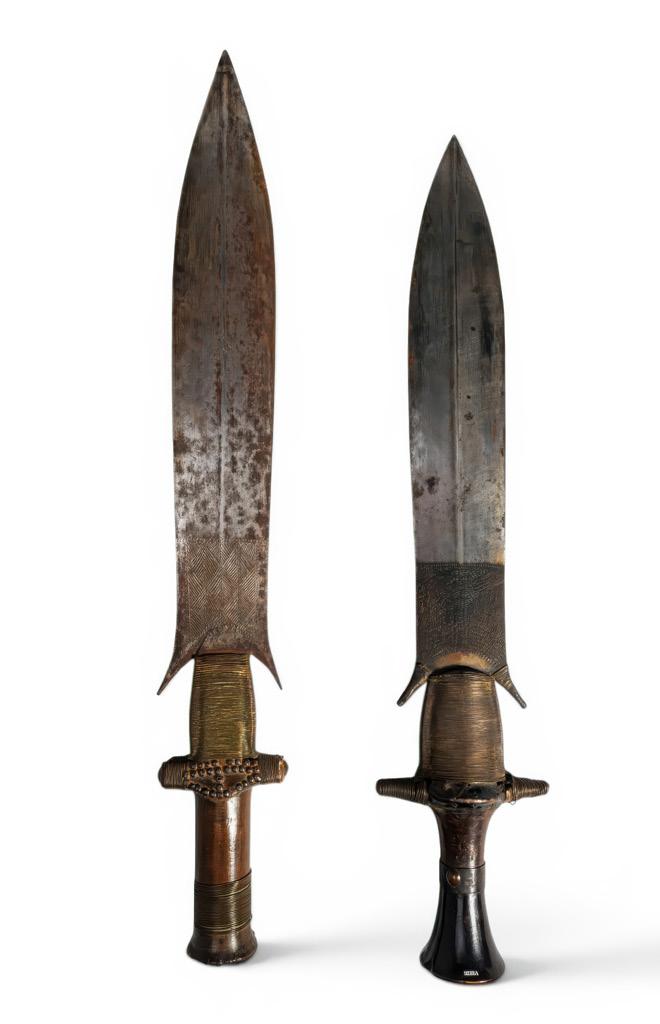
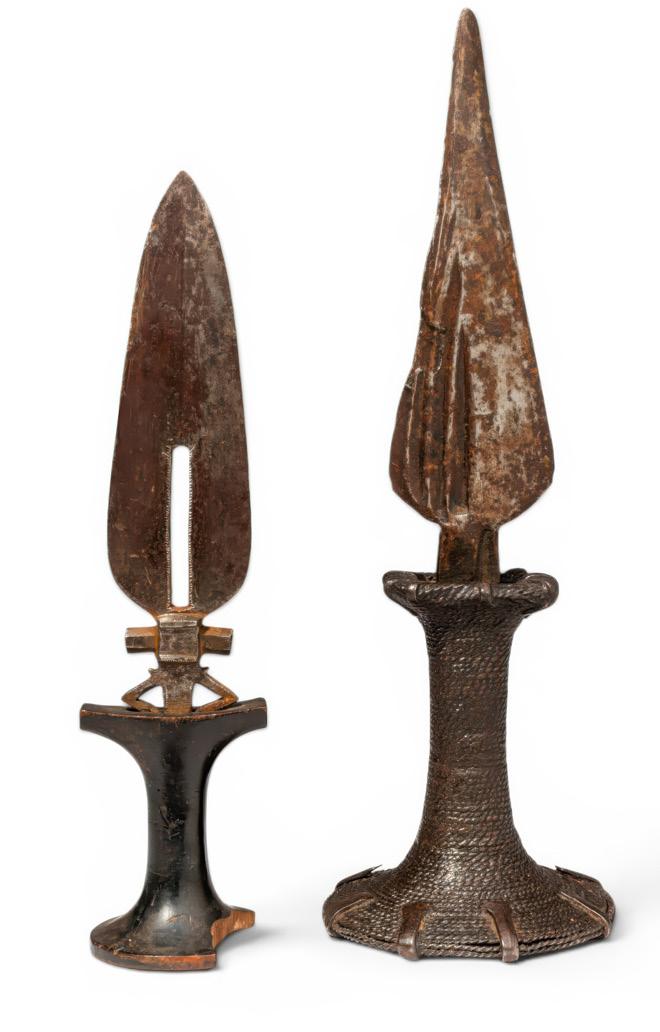
A pair of Central African blades comprising a machete-type knife and an Adio knife, each mounted on distinct handles and displaying characteristic regional forms.
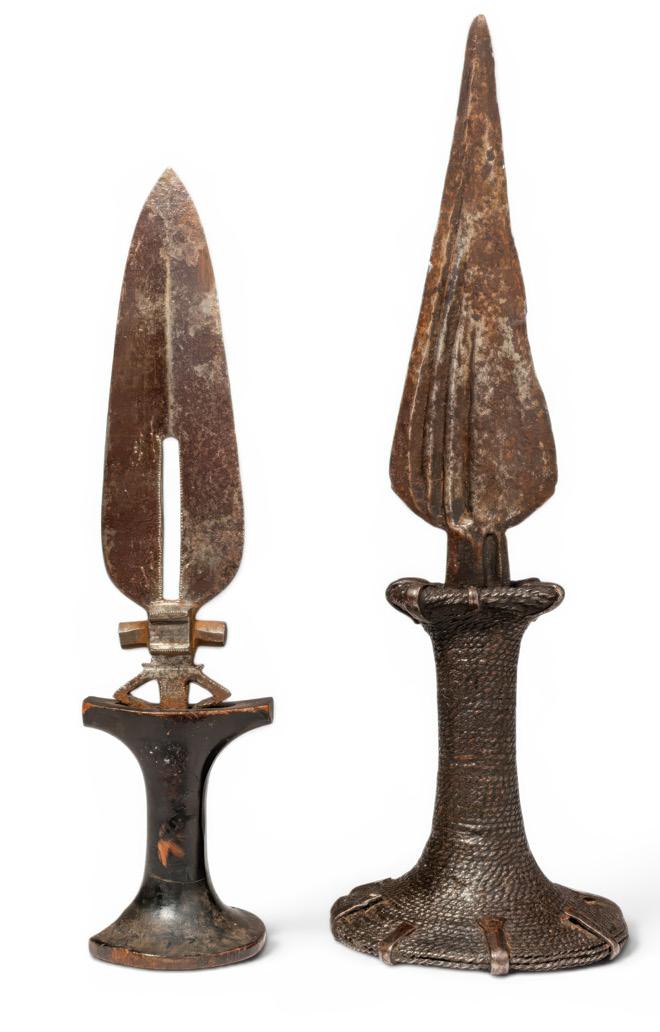
The first features a long, leaf-shaped blade with a central slit, tapering to a pointed tip. It is fitted to a flared, waisted metal handle with a broad foot.
The second is a more compact Adio knife with a thick, triangular blade rising from a tall, tapering handle. The grip is tightly wrapped in coiled metal wire, terminating in a flared base.
Provenance: Prince collection, 1990s-2014.
Publications / Reports: For similar see: The British Musuem, registration number Af,+.855.
Size: 220-260mm x 50-85mm; Weight: 340g
148. AFRICAN KUBA KNIFE
Ca. 20th century AD.
Starting Price: £300
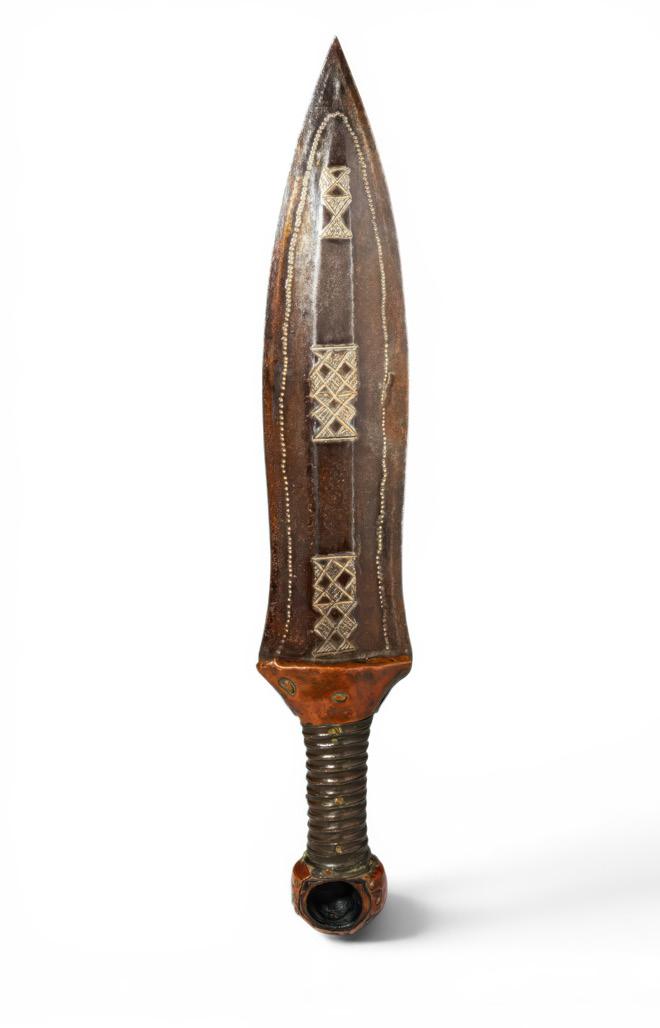
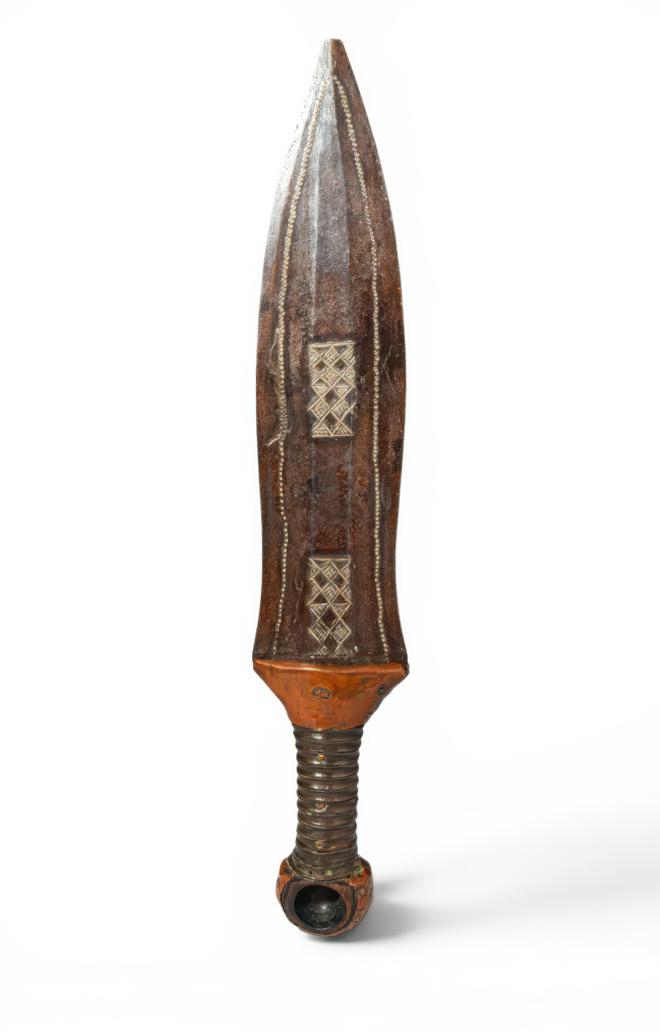
A worked African knife featuring a broad, leaf-shaped iron blade tapering to a pointed tip. The blade is decorated with linear borders and a central vertical register of geometric inlays in contrasting metal, arranged in repeating diamond and lattice motifs. The hilt is wrapped with tightly coiled metal wire.
Provenance: Prince collection, 1990s-2014.
Size: 340mm x 55mm; Weight: 295g
150. TWO AFRICAN KNIFES
Ca. 20th century AD.
Starting Price: £200
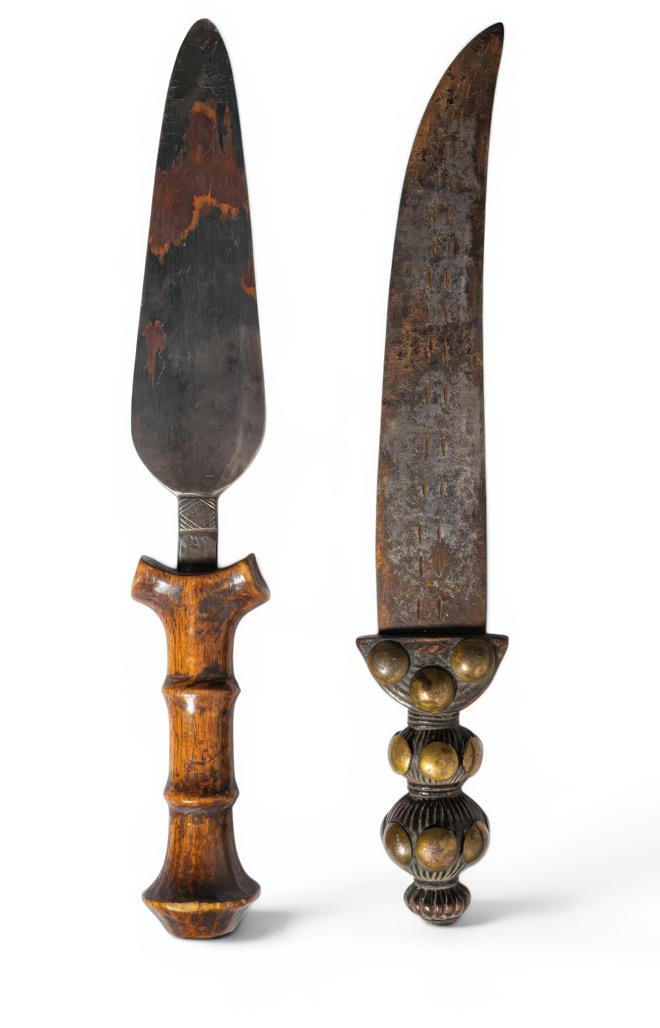
A pair of African knives, each distinguished by its contrasting blade form and handle construction. The first knife is fitted with a leaf-shaped iron blade, tapering gently to a rounded point. It is mounted on a carved wooden handle of warm tone, shaped with waisted sections and a flared pommel.
The second knife features a longer, slightly curved blade with a narrower profile, rising from a constructed metal hilt. The handle is composed of stacked, globular elements with applied brass bosses.
Provenance: Prince collection, 1990s-2014; Ex. Andre Schoeller, Paris 2012 (right).
Size: 200-210mm x 30-30mm; Weight: 160g
151. PAIR OF KOTA DAGGERS
Ca. 20th century AD.
Starting Price: £200
A pair of Kota daggers, each retaining its original sheath and displaying characteristic construction and materials associated with the Kota peoples of Gabon.
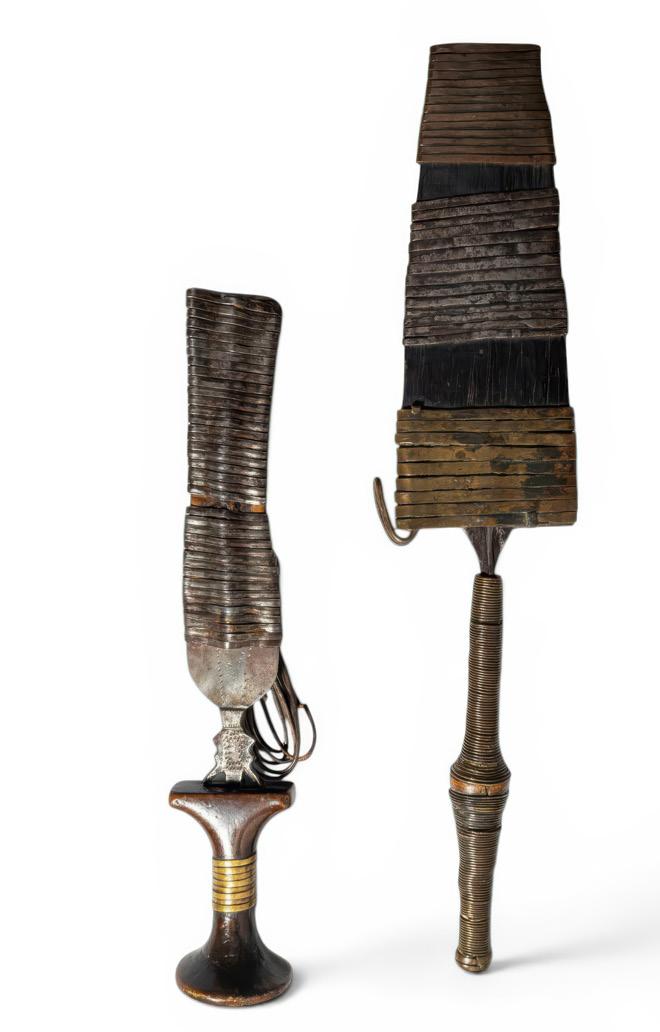
The first dagger is housed in a narrow sheath wrapped with tightly bound plant fibre. The handle emerges from the sheath with a carved wooden grip and a flared pommel, accented with bands of metal.
The second dagger features a broader, rectangular sheath composed of layered materials, including wood and fiber bindings, creating a stepped, architectural form. A metal hook is attached near the upper section. The handle is slender and wrapped with fine metal wire, terminating in a gently flared base.
Provenance: Prince collection, 1990s-2014.
Size: 200-280mm x 35-60mm; Weight: 200g
Starting Price: £300
Ca. late 19th - early 20th century AD.
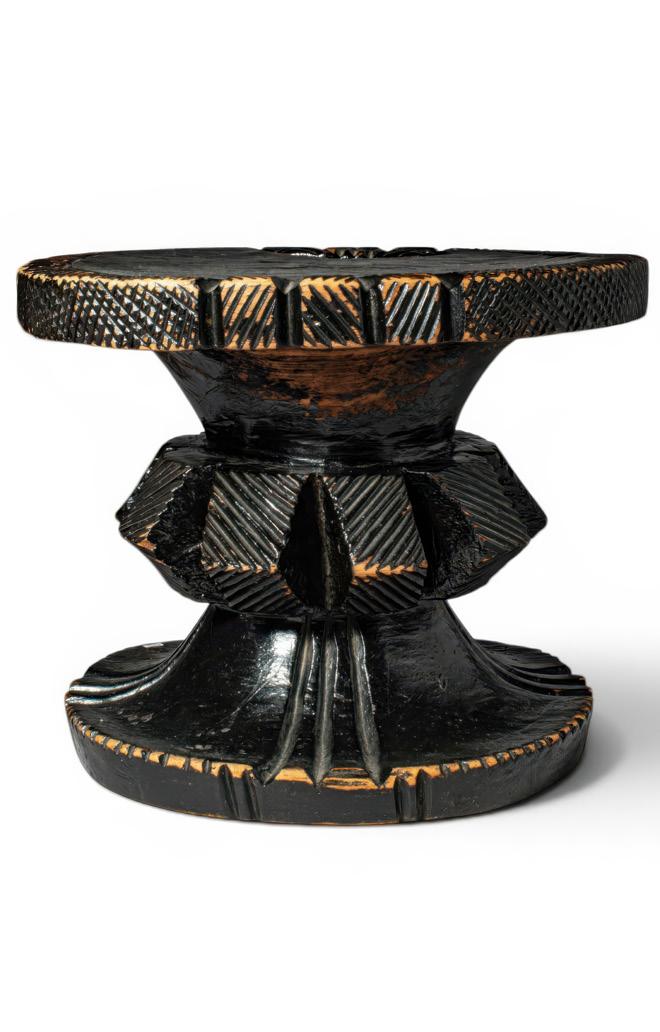
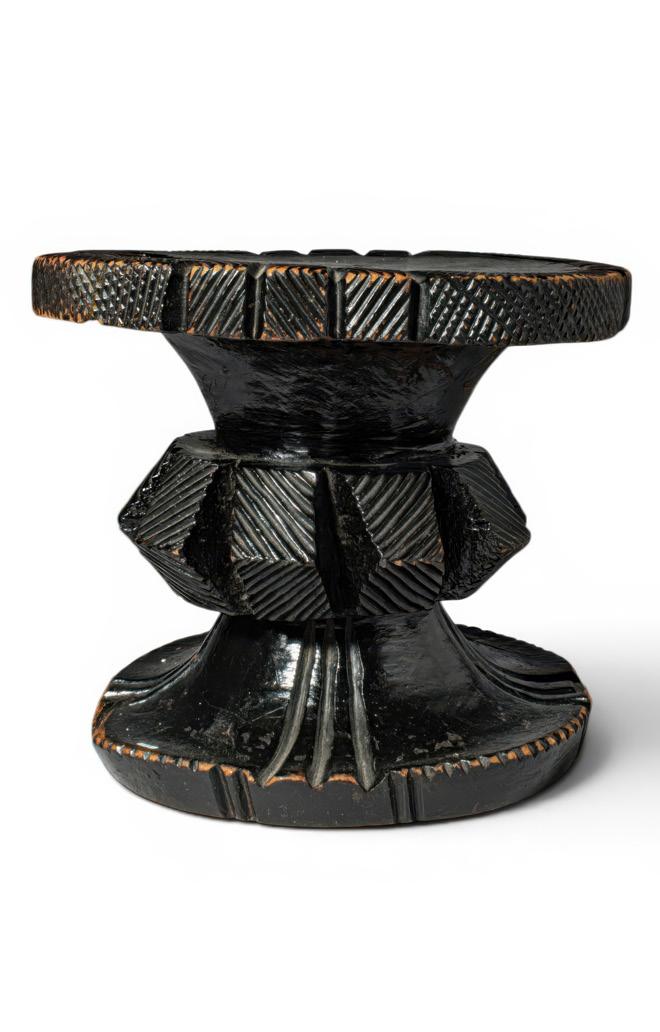
A carved wooden stool of circular form with a flat, slightly concave seat, supported on a sculptural, faceted central column and a broad, stepped base. The rim of the seat is decorated with alternating panels of cross-hatched and linear carving, while the central support is articulated with radiating, diagonally incised facets. The base is further enriched with carved fluting and geometric ornament.
Provenance: Prince collection, 1990s-2014.
Size: 230mm x 185mm; Weight: 1.22kg
152. AFRICAN MOMVU KNIFE
Ca. 20th century AD.
Starting Price: £500
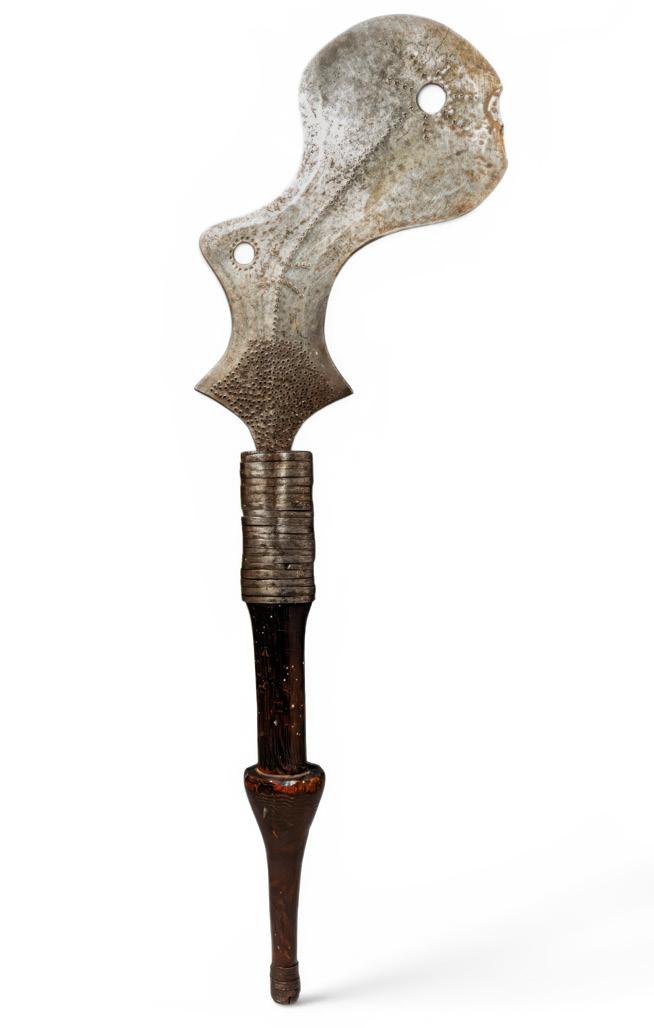
A striking Momvu knife with an iron blade of asymmetrical, abstract form. The blade expands into a broad, rounded upper section pierced with circular apertures, while the lower portion narrows into an angular, faceted transition toward the hilt. The handle is wrapped with tightly coiled metal wire, providing grip and visual rhythm, and is mounted on a long, tapering wooden shaft terminating in a pointed end.
Provenance: Prince collection, 1990s-2014; Ex. Gallerie Patrik Frohlich, 12/036/2014.
Publications / Reports: For similar see: Lowe Art Museum University of Miami, object number S2018.20.27.
Size: 500mm x 155mm; Weight: 560g
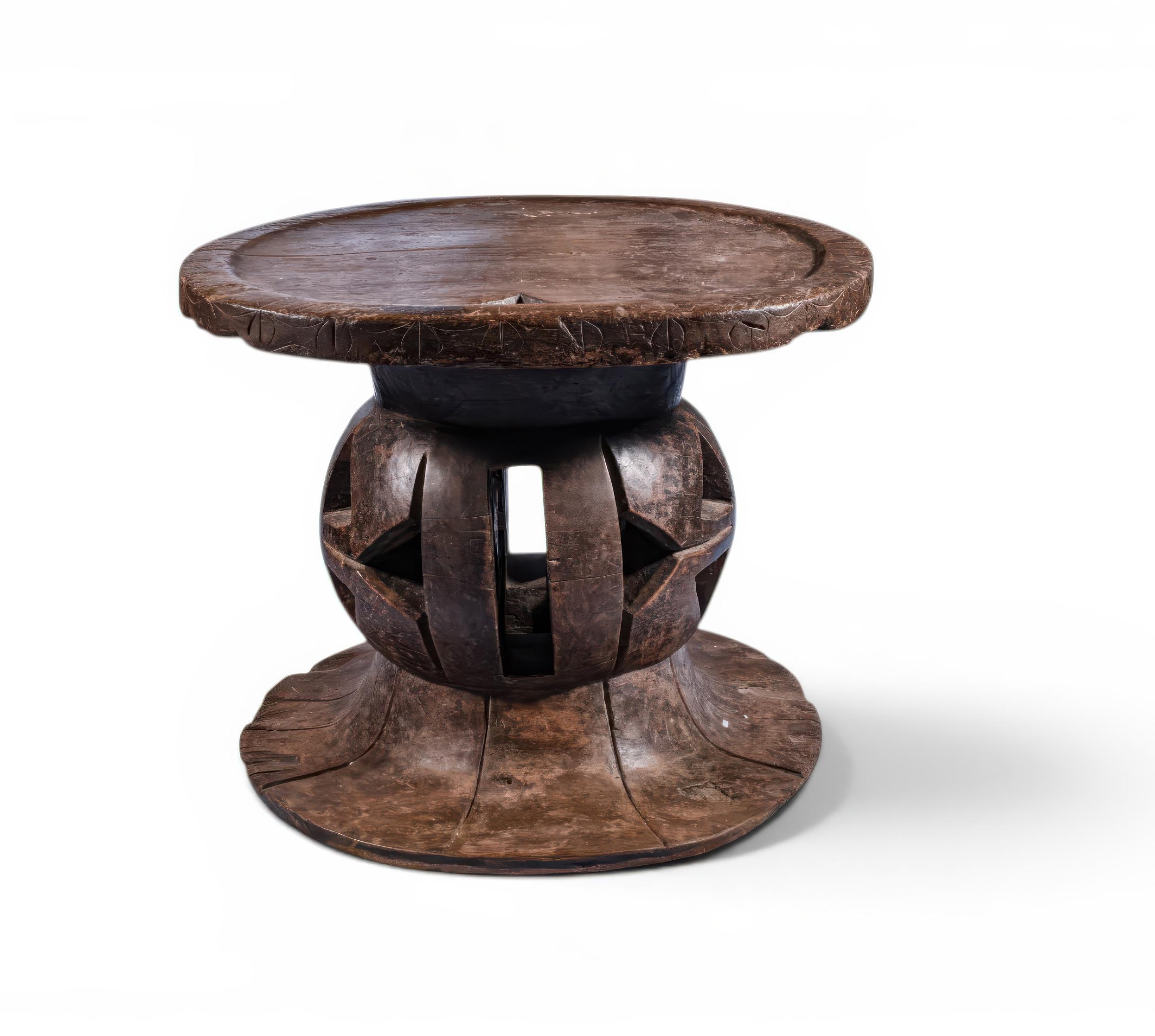
154. MANGBETU WOODEN STOOL
155. MANGBETU WOODEN STOOL
Ca. 19th century AD.
Starting Price: £800
A finely carved wooden stool with a circular seat resting on a distinctive openwork support. The central section is formed as a hollowed, drum-like structure with vertical struts and geometric apertures, creating a sense of lightness within an otherwise solid form. This is set above a flared, disc-shaped base that provides stability and visual balance.
Provenance: Prince collection, 1990s-2014; Ex. Jacaranda Tribal Art 23 November 2009; Ex. Private Collection.
Publications / Reports: For similar see: The Cleveland Museum of Art, credit line 1929.320.
Size: 530mm x 425mm; Weight: 10.07kg
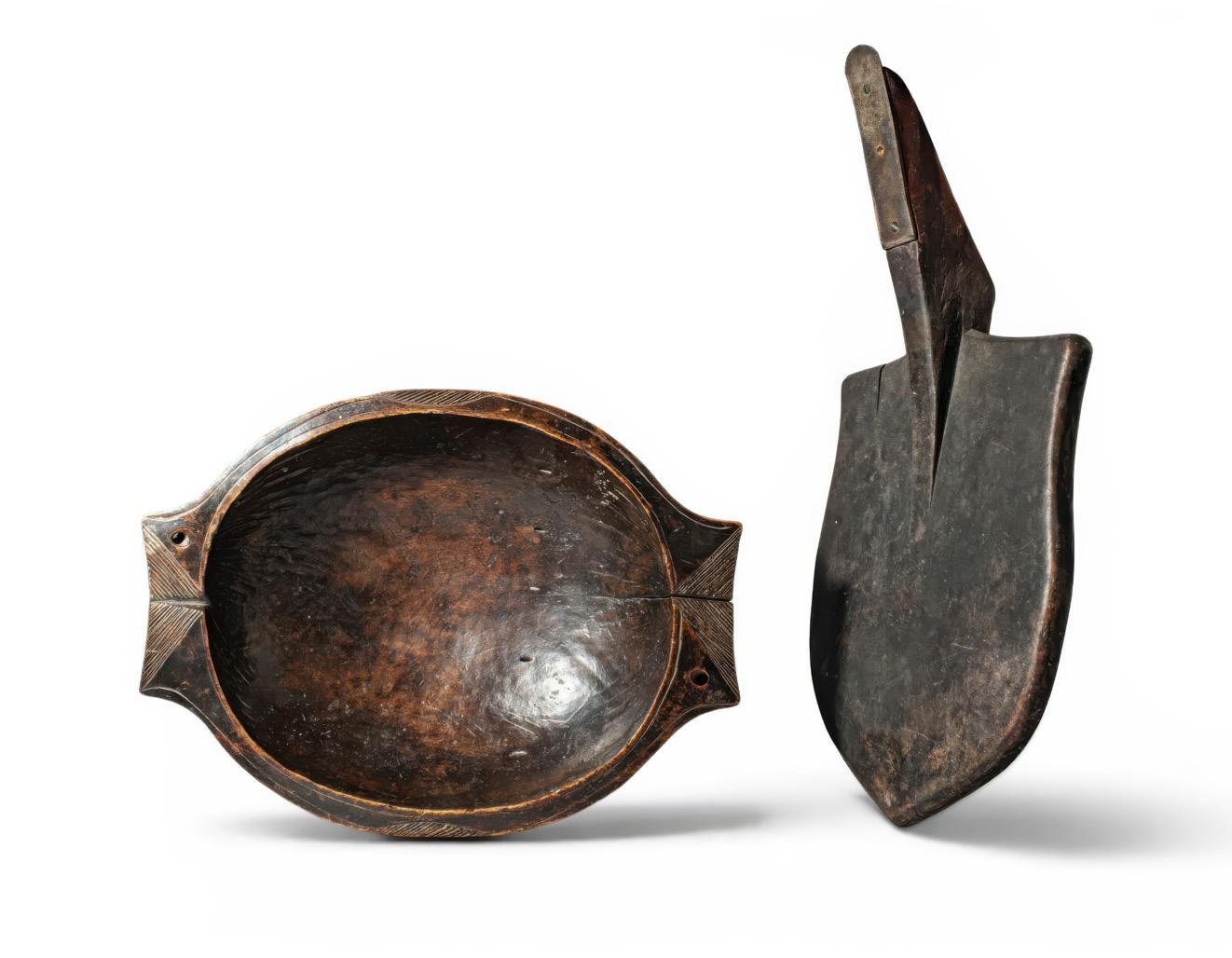
156. AFRICAN WOODEN DISH AND OCEANIC COCONUT RASP
Ca. late 19th - early 20th century AD.
Starting Price: £500
A group comprising a carved wooden dish of shallow, rounded form with slightly everted rim, together with an Oceanic coconut rasp consisting of a carved wooden seat fitted with a serrated metal blade. The dish displays a smooth, well-worn surface from use, while the rasp retains its characteristic upright blade mounted to a plank support. The pairing reflects utilitarian craftsmanship from two distinct cultural traditions, each shaped by local materials and culinary practices.
Provenance: Prince collection, 1990s-2014; Ex. Ambre Congo Pierre Loos & Thomas Bayet, Bruxelles 07 April 2010 (left); Ex. Voyageurs & Curieux (right).
Size: 380-500mm x 225-290mm; Weight: 1.77kg
157. WEST AFRICAN FERTILITY DOLL
Ca. late 19th - early 20th century AD.
Starting Price: £200
A stylised female figure with a large disc-shaped head, slender neck, and compact body with arms held at the sides. The facial features are simplified, with incised eyes and a small mouth, and the surface displays a dark, polished patina. Such figures, known as akua’ba, were traditionally carried by women as fertility charms, associated with ideals of beauty and the desire for healthy offspring.
Provenance: Prince collection, 1990s-2014.
Publications / Reports: For similar see: Sainnsbury Centre, accession number 631.
Size: 360mm x 125mm; Weight: 535g
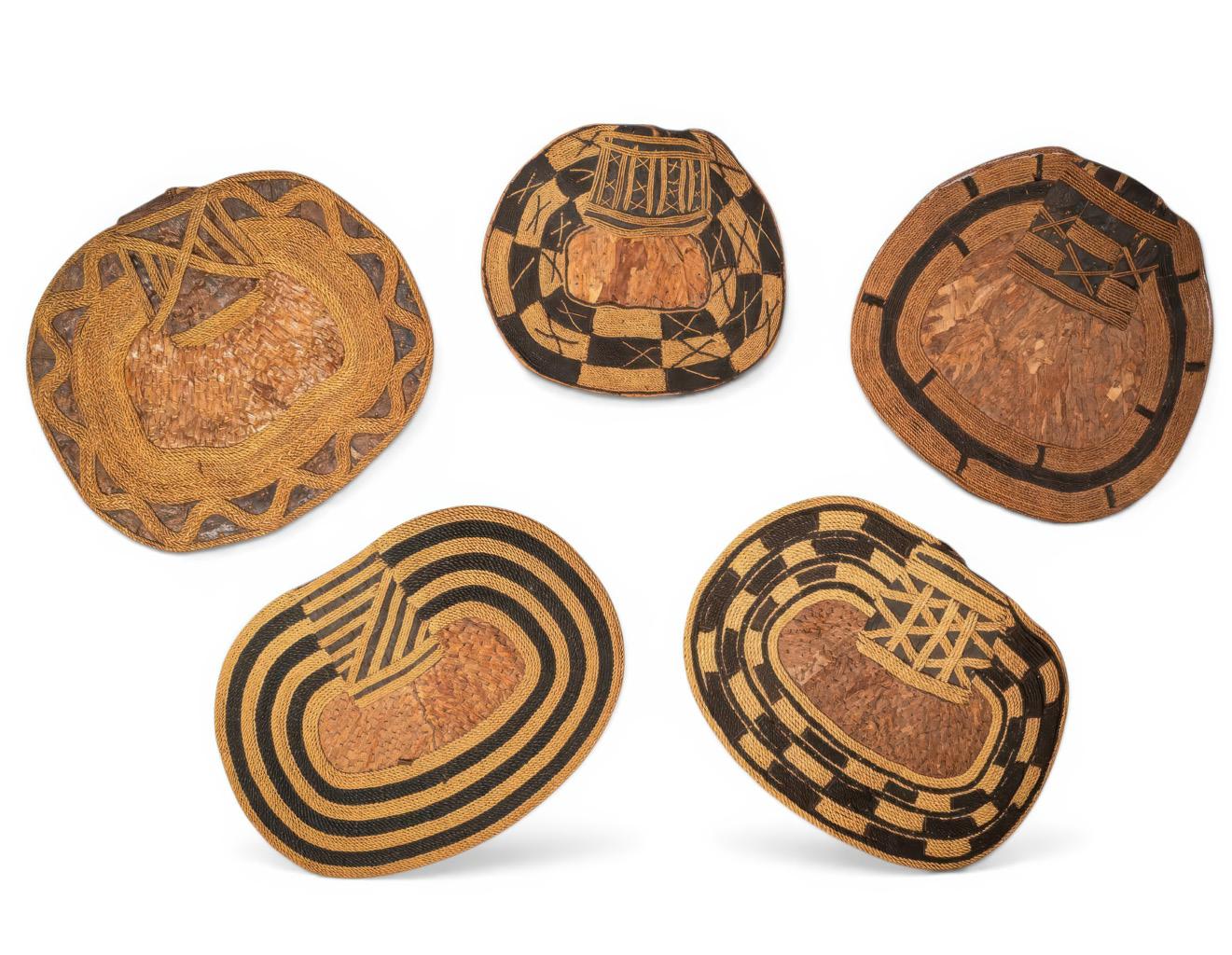
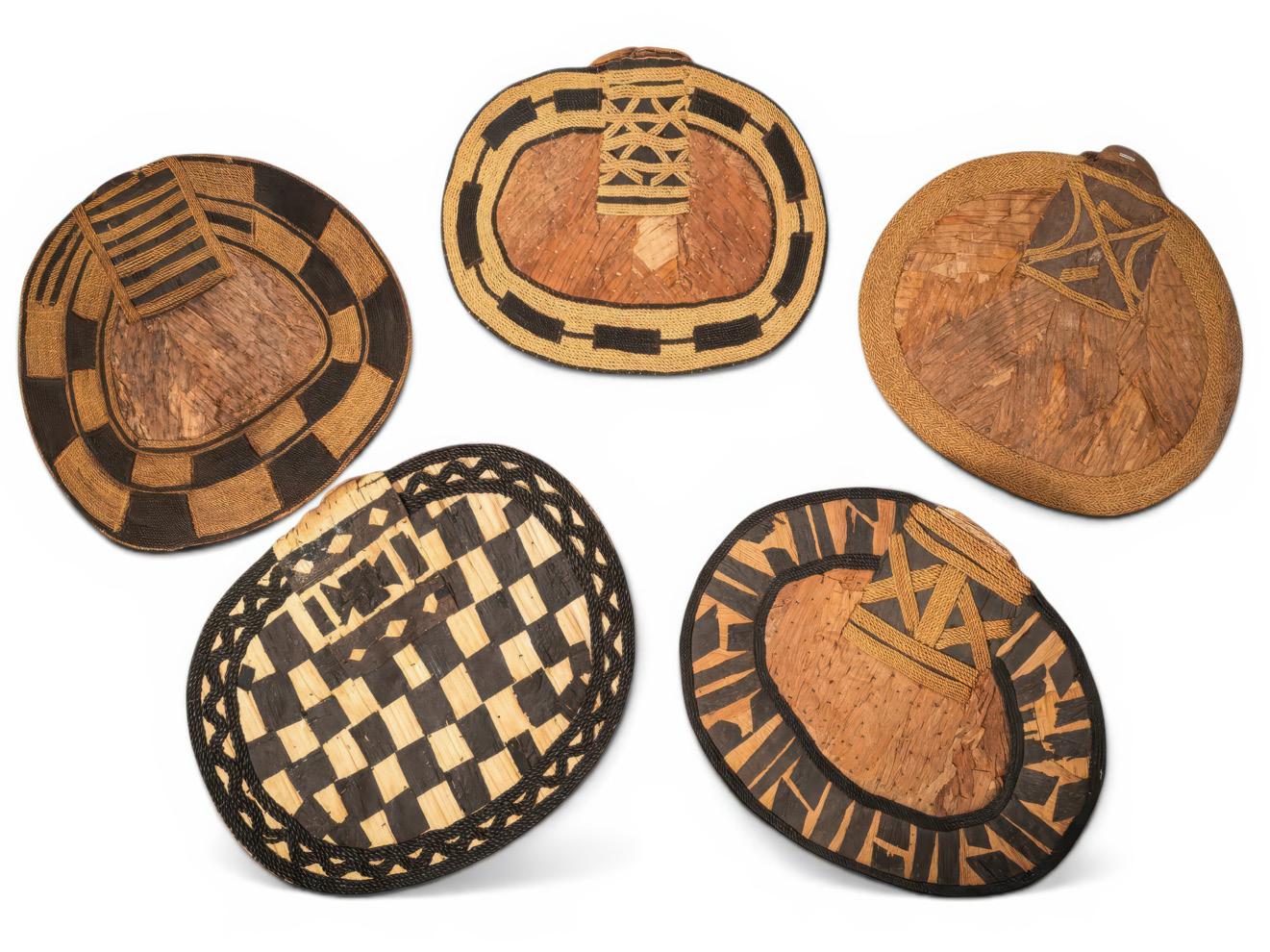
162. GROUP OF MANGBETU NEGBE
Ca. 20th century AD.
Starting Price: £300
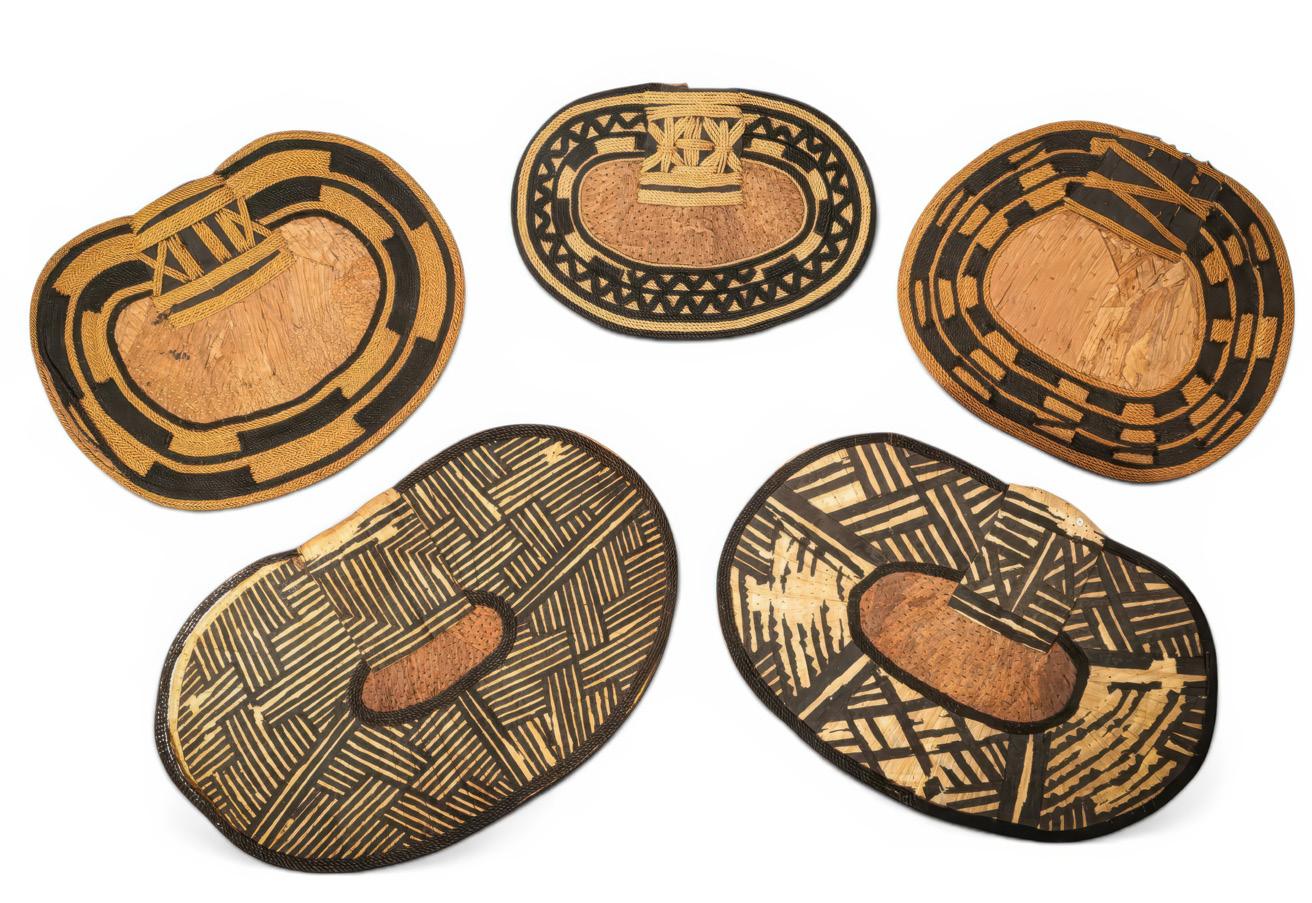
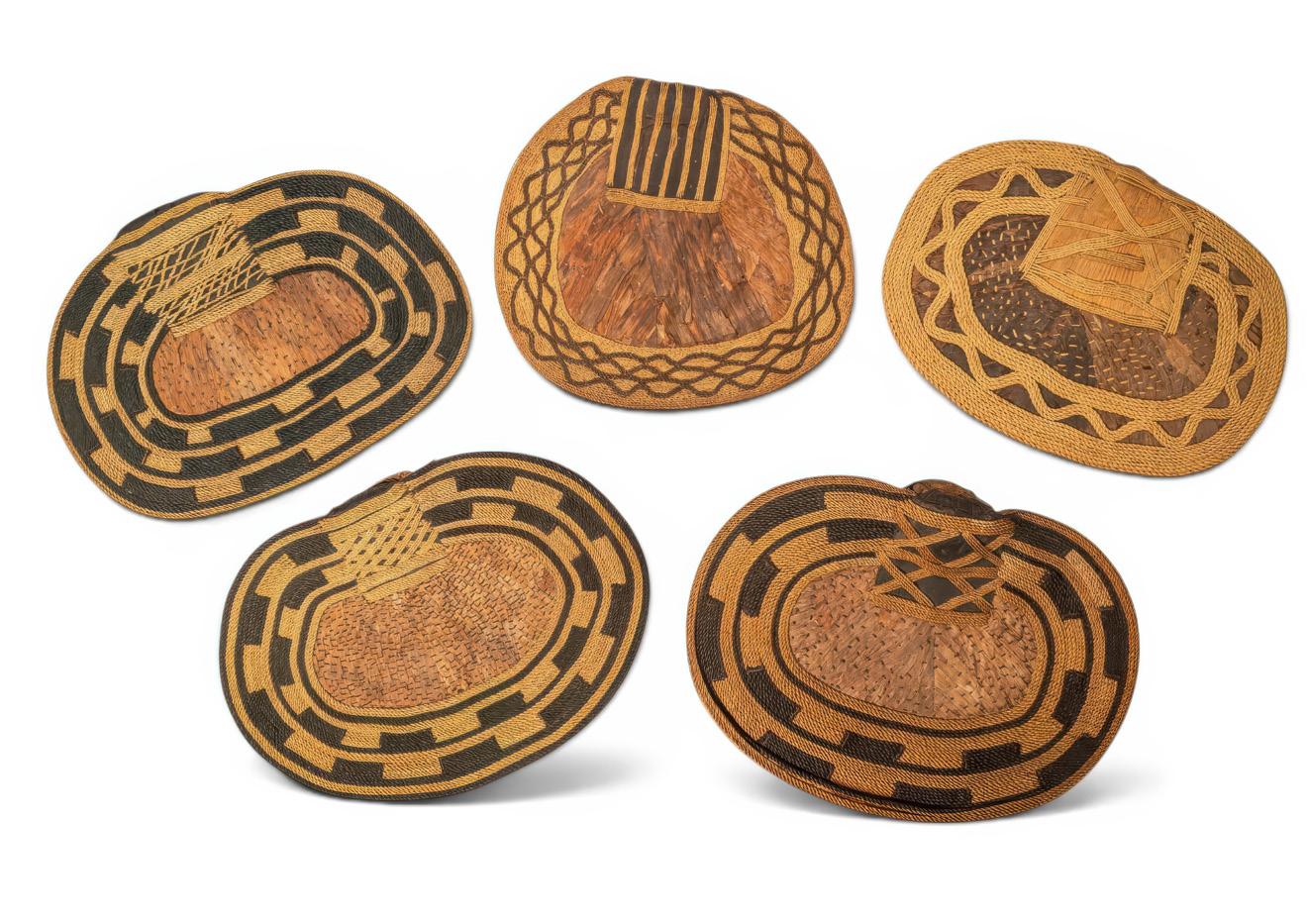
A group of five Mangbetu negbe, formed from bark and plant fibres and decorated with bold geometric patterns in contrasting dark and natural tones. The pieces vary in form, including rounded and oval examples, each featuring carefully composed linear, concentric, and cross-hatched motifs arranged to emphasise the contours of the surfaces. The decoration is achieved through incised or dyed designs, producing striking compositions that include parallel bands, radiating lines, and intricate geometric arrangements. Among the Mangbetu, negbe were worn as elements of women’s back aprons, attached to fibre garments as decorative components of dress.
Provenance: Prince collection, 1990s-2014; Ex. Congo Gallery Brussels 07 April 2010 (partially).
Size: 180-230mm x 230-300mm; Weight: 630g
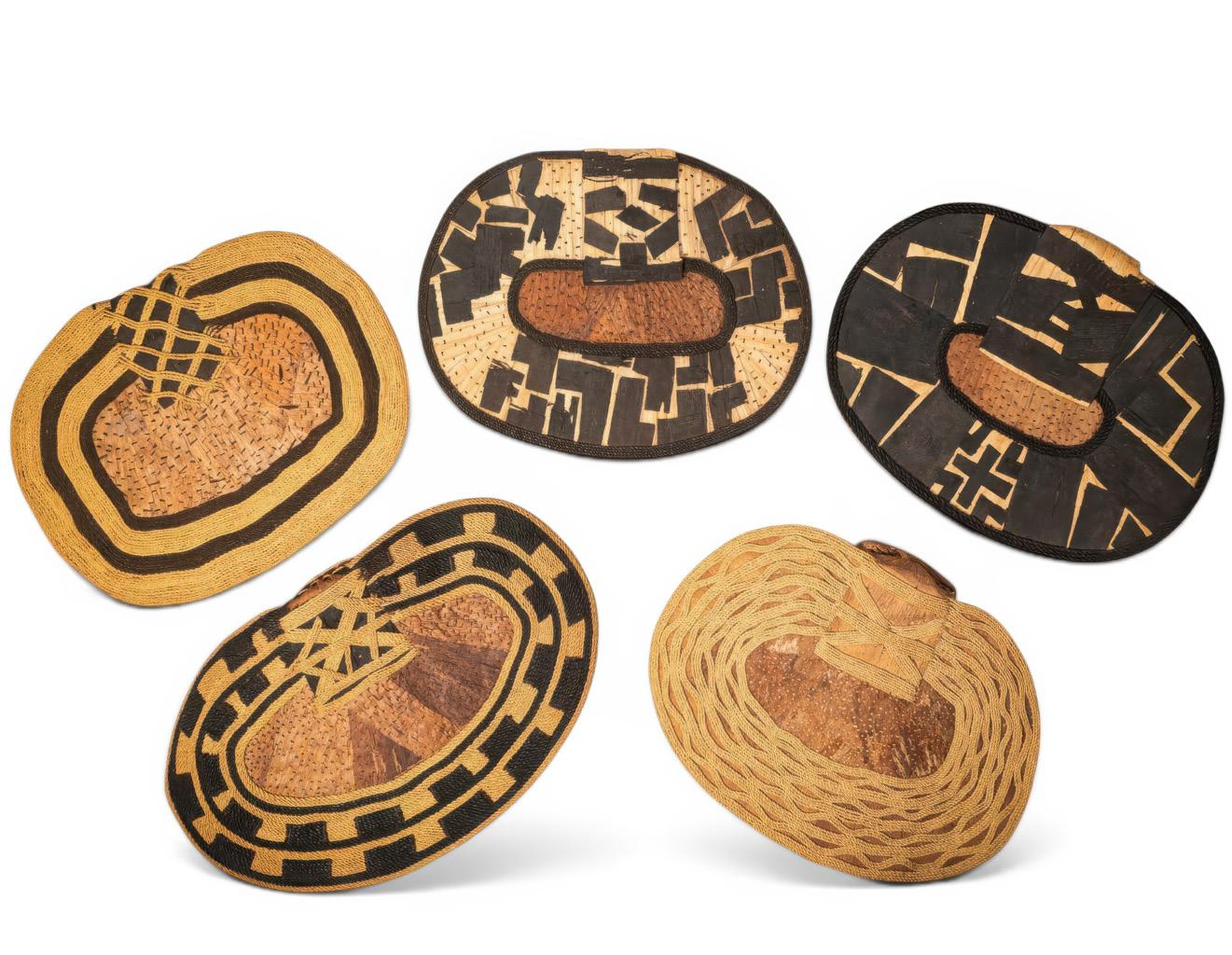
163. GROUP OF MANGBETU NEGBE
Ca. 20th century AD.
Starting
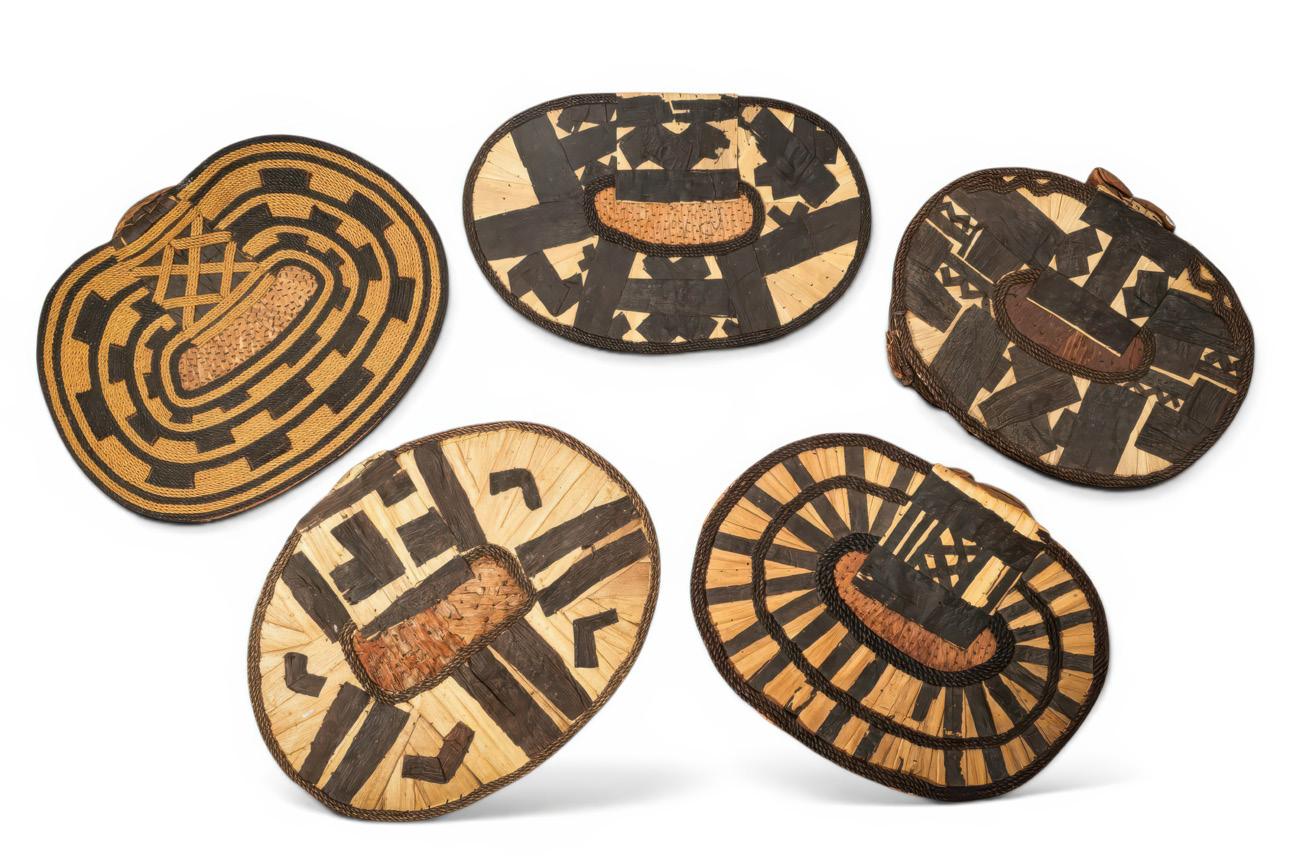
A group of five Mangbetu negbe, formed from bark and plant fibres and decorated with bold geometric patterns in contrasting dark and natural tones. The pieces vary in form, including rounded and oval examples, each featuring carefully composed linear, concentric, and cross-hatched motifs arranged to emphasise the contours of the surfaces. The decoration is achieved through incised or dyed designs, producing striking compositions that include parallel bands, radiating lines, and intricate geometric arrangements. Among the Mangbetu, negbe were worn as elements of women’s back aprons, attached to fibre garments as decorative components of dress.
Provenance: Prince collection, 1990s-2014; Ex. Congo Gallery Brussels 07 April 2010.
Size: 220-260mm x 300-340mm; Weight: 630g
165. GROUP OF MANGBETU NEGBE
Ca. 20th century AD.
A group of five Mangbetu negbe, formed from bark and plant fibres and decorated with bold geometric patterns in contrasting dark and natural tones. The pieces vary in form, including rounded and oval examples, each featuring carefully composed linear, concentric, and cross-hatched motifs arranged to emphasise the contours of the surfaces. The decoration is achieved through incised or dyed designs, producing striking compositions that include parallel bands, radiating lines, and intricate geometric arrangements. Among the Mangbetu, negbe were worn as elements of women’s back aprons, attached to fibre garments as decorative components of dress.
Provenance: Prince collection, 1990s-2014; Ex. Congo Gallery Brussels 07 April 2010.
Size: 230-270mm x 320-360mm; Weight: 770g Starting
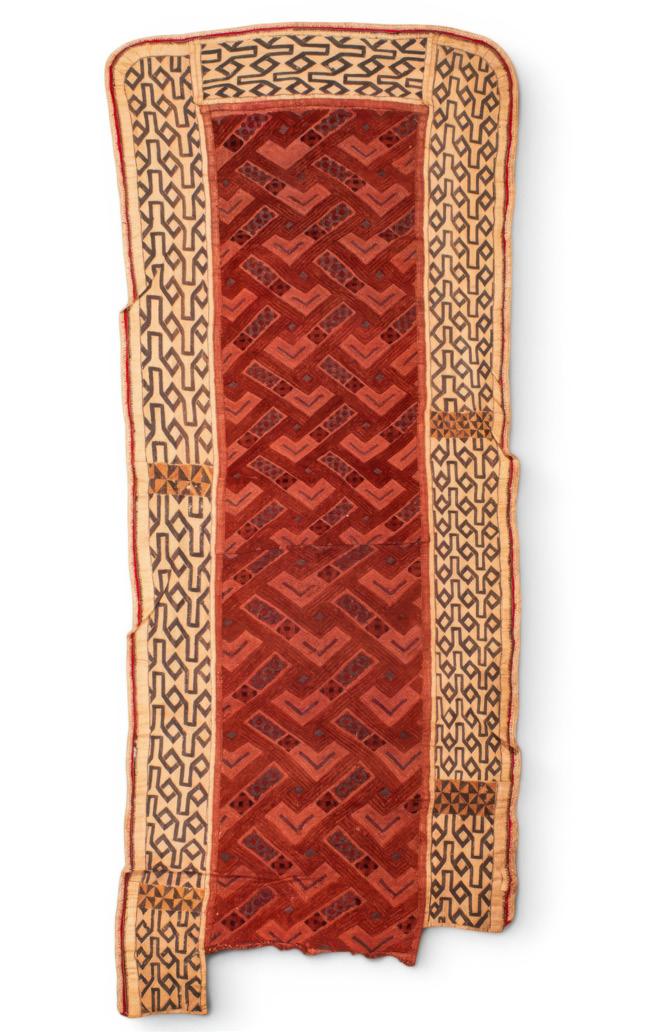
Ca. 20th century AD.
Starting Price: £300
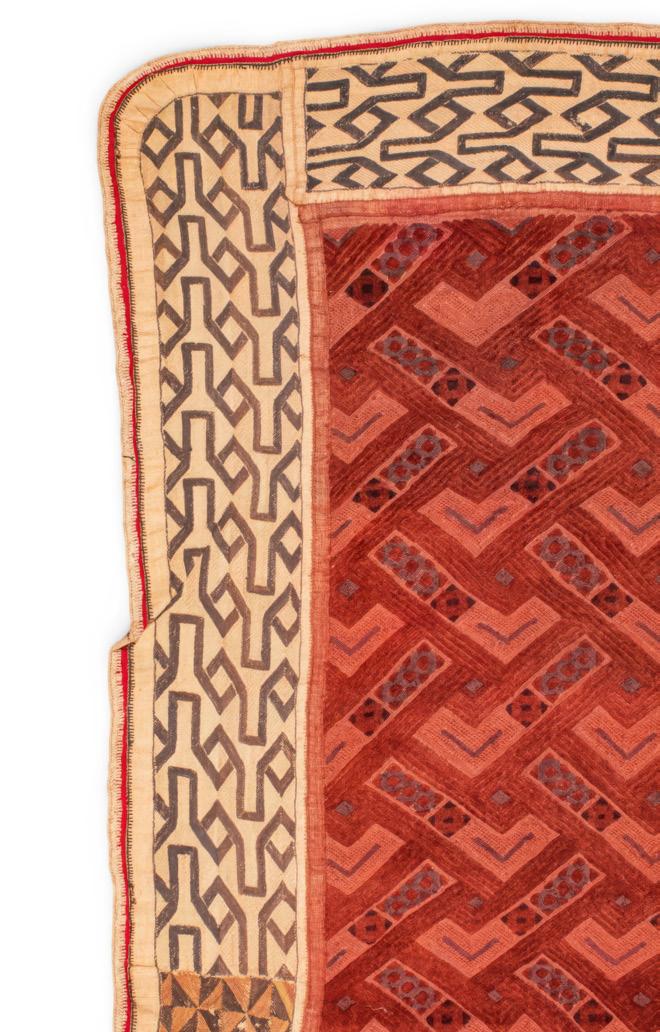
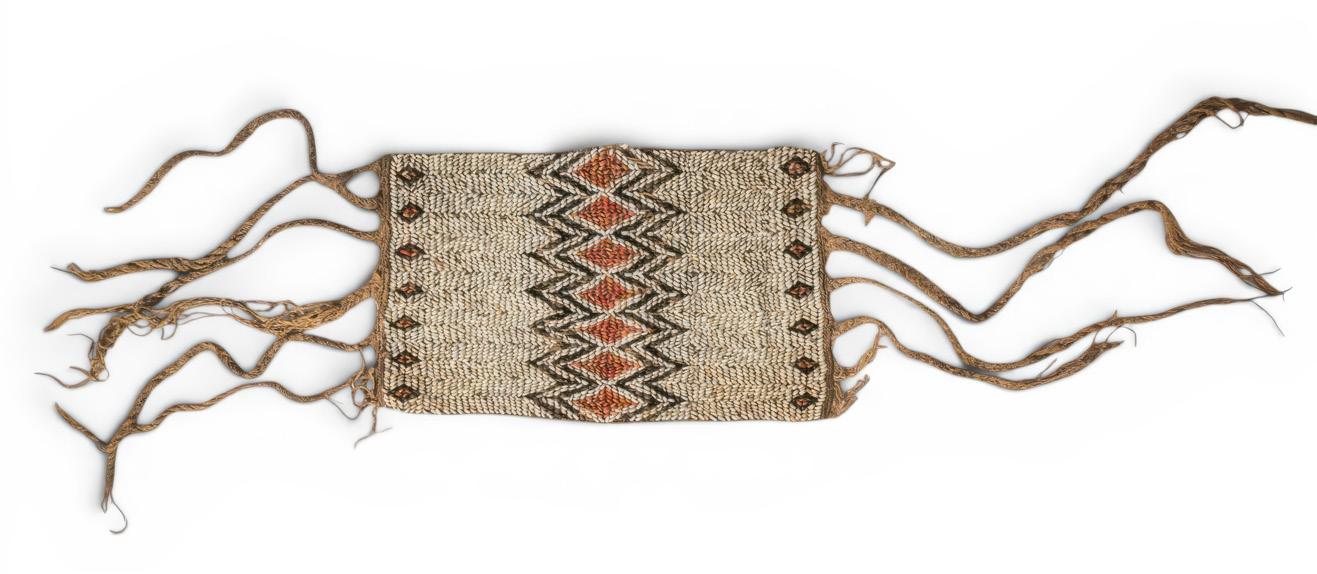
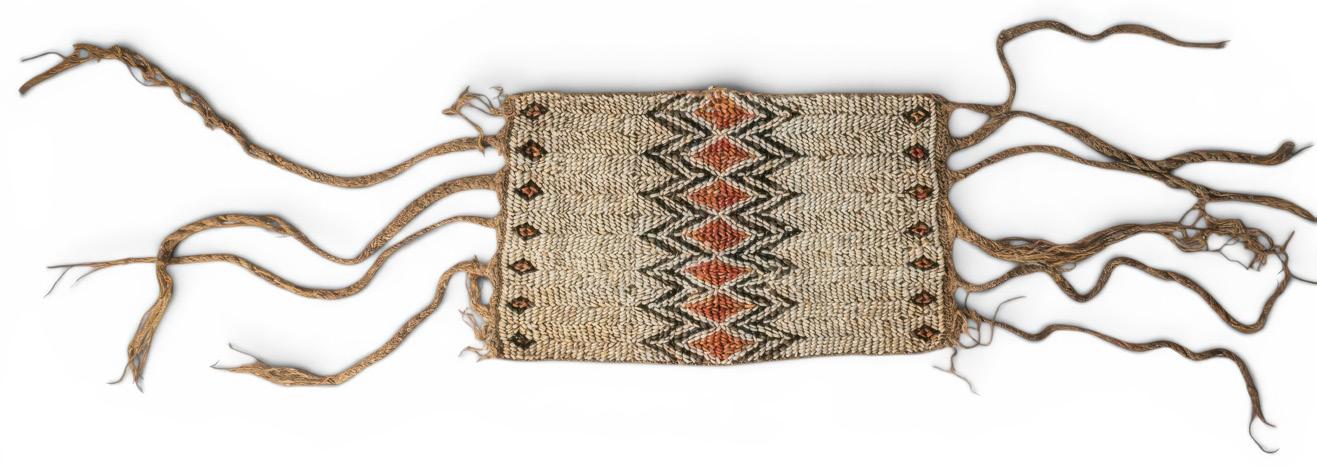
A Kuba raffia skirt panel woven from natural raffia fibres and decorated with intricate geometric designs. The composition features a central field of dense red patterning, formed from repeating angular motifs arranged in a rhythmic lattice. This central section is framed by lighter borders ornamented with dark linear designs that create a striking contrast with the red ground. The panel demonstrates the characteristic cut-pile and embroidered decoration associated with Kuba textile traditions, where raffia cloth is enhanced through surface embellishment and complex patterning. The carefully structured borders and central field emphasise the vertical format of the textile.
Textiles of this type formed part of ceremonial skirts worn by Kuba women, where elaborately decorated raffia panels were assembled to create layered garments. Kuba raffia cloth is highly regarded for its technical sophistication and its role in expressing status and identity within Kuba society.
Provenance: Prince collection, 1990s-2014; Ex. Private collection 1970s-1990s.
Size: 1720mm x 670mm; Weight: 720g
167. KUBA RAFFIA SKIRT END
168. HAUSA MEN’S COSTUME IN WHITE COTTON
Ca. AD 1920 - 1930.
Starting Price: £800
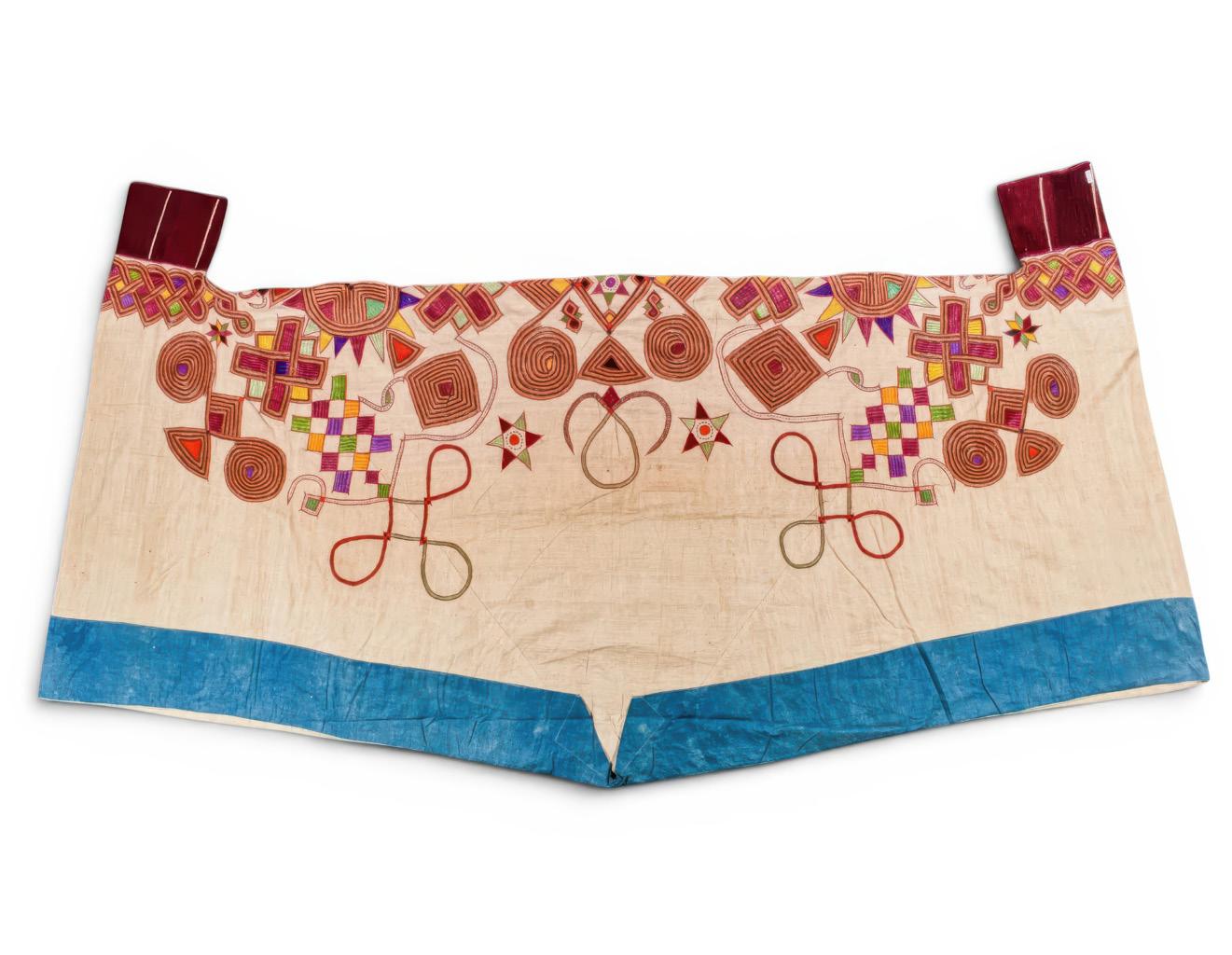
A large embroidered costume in white cotton, richly decorated with polychrome embroidery in coloured silks, featuring a dense arrangement of geometric and symbolic motifs, including crosses, lozenges and interlaced forms.
Provenance: Prince collection, 1990s-2014; Ex. Colette Ghysels 07 January 2010.
Size: 2490mm x 1020mm; Weight: 1.3kg
170. GROUP OF MANGBETU NEGBE
Ca. 20th century AD.
Starting Price: £300
A group of five Mangbetu negbe, formed from bark and plant fibres and decorated with bold geometric patterns in contrasting dark and natural tones. The pieces vary in form, including rounded and oval examples, each featuring carefully composed linear, concentric, and cross-hatched motifs arranged to emphasise the contours of the surfaces. The decoration is achieved through incised or dyed designs, producing striking compositions that include parallel bands, radiating lines, and intricate geometric arrangements. Among the Mangbetu, negbe were worn as elements of women’s back aprons, attached to fibre garments as decorative components of dress.
Provenance: Prince collection, 1990s-2014; Ex. Congo Gallery Brussels 07 April 2010 (partially).
Size: 200-270mm x 300-400mm; Weight: 840g
171. GROUP OF MANGBETU NEGBE
Ca. 20th century AD.
Starting Price: £300
A group of five Mangbetu negbe, formed from bark and plant fibres and decorated with bold geometric patterns in contrasting dark and natural tones. The pieces vary in form, including rounded and oval examples, each featuring carefully composed linear, concentric, and cross-hatched motifs arranged to emphasise the contours of the surfaces. The decoration is achieved through incised or dyed designs, producing striking compositions that include parallel bands, radiating lines, and intricate geometric arrangements. Among the Mangbetu, negbe were worn as elements of women’s back aprons, attached to fibre garments as decorative components of dress.
Provenance: Prince collection, 1990s-2014; Ex. Congo Gallery Brussels 07 April 2010 (partially). Prince collection, 1990s-2014; Ex. Congo Gallery Brussels 07 April 2010 (partially); Ex. Alain Guisson (partially).
Size: 220-290mm x 275-310mm; Weight: 775g
173. GROUP OF MANGBETU NEGBE
Ca. 20th century AD.
Starting Price: £300
A group of five Mangbetu negbe, formed from bark and plant fibres and decorated with bold geometric patterns in contrasting dark and natural tones. The pieces vary in form, including rounded and oval examples, each featuring carefully composed linear, concentric, and cross-hatched motifs arranged to emphasise the contours of the surfaces. The decoration is achieved through incised or dyed designs, producing striking compositions that include parallel bands, radiating lines, and intricate geometric arrangements. Among the Mangbetu, negbe were worn as elements of women’s back aprons, attached to fibre garments as decorative components of dress.
Provenance: Prince collection, 1990s-2014; Ex. Congo Gallery Brussels 07 April 2010 (partially).
Size: 200-240mm x 270-310mm; Weight: 665g
175. GROUP OF MANGBETU NEGBE
Ca. 20th century AD.
Starting Price: £200
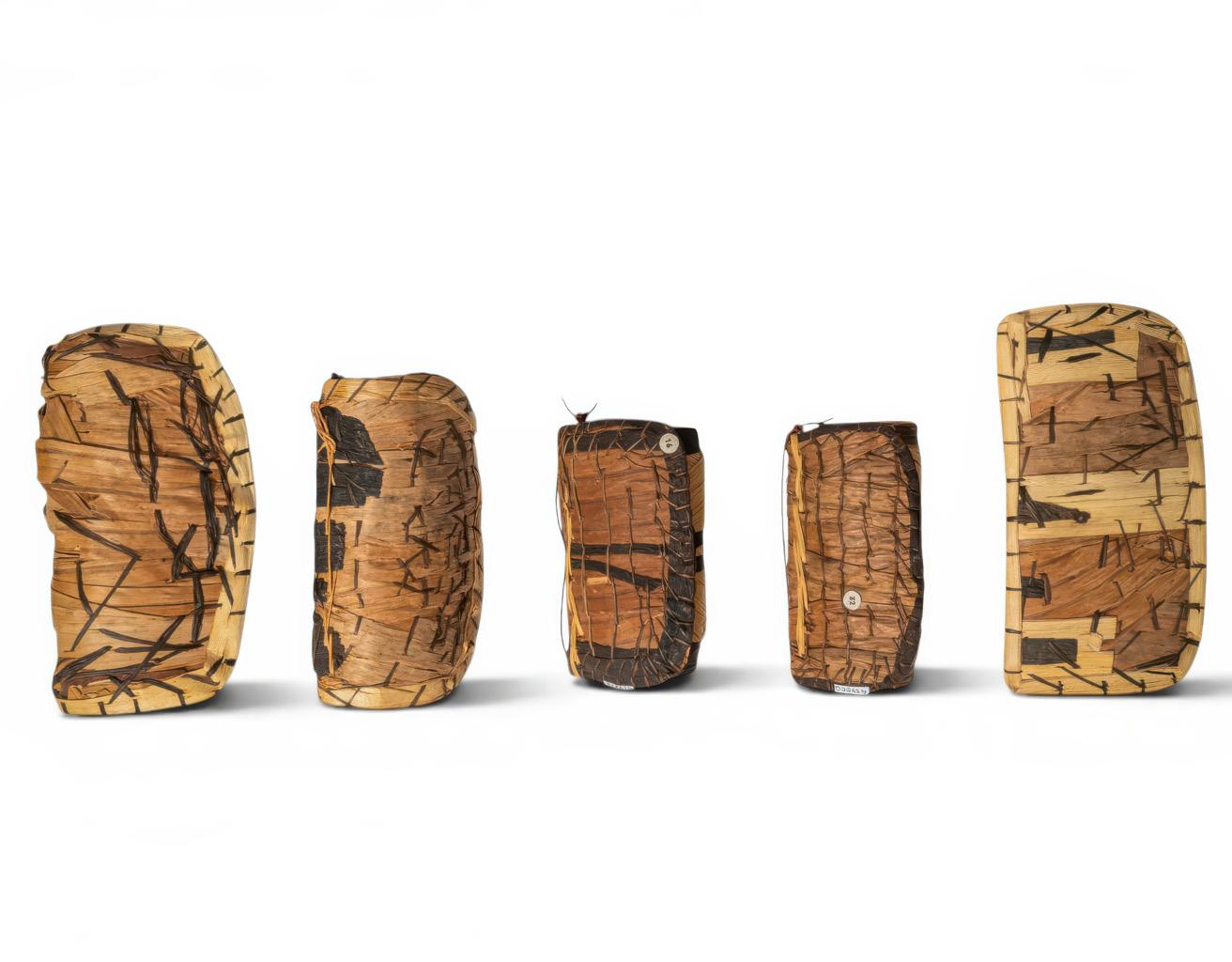
A group comprising five negbe, each incised with linear and abstract motifs and retaining traces of dark pigment within the carved lines.
Provenance: Prince collection, 1990s-2014.
Size: 90-140mm x 60-75mm; Weight: 155g
176. GROUP OF MANGBETU NEGBE
Ca. 20th century AD.
Starting Price: £200
A group comprising five negbe, each incised with linear and abstract motifs and retaining traces of dark pigment within the carved lines.
Provenance: Prince collection, 1990s-2014.
Size: 115-150mm x 55-80mm; Weight: 180g
179. MANGBETU ANTHROPOMORPHIC TERRACOTTA VESSEL
Starting Price: £500
Democratic Republic of the Congo, Ca. early 20th century AD.
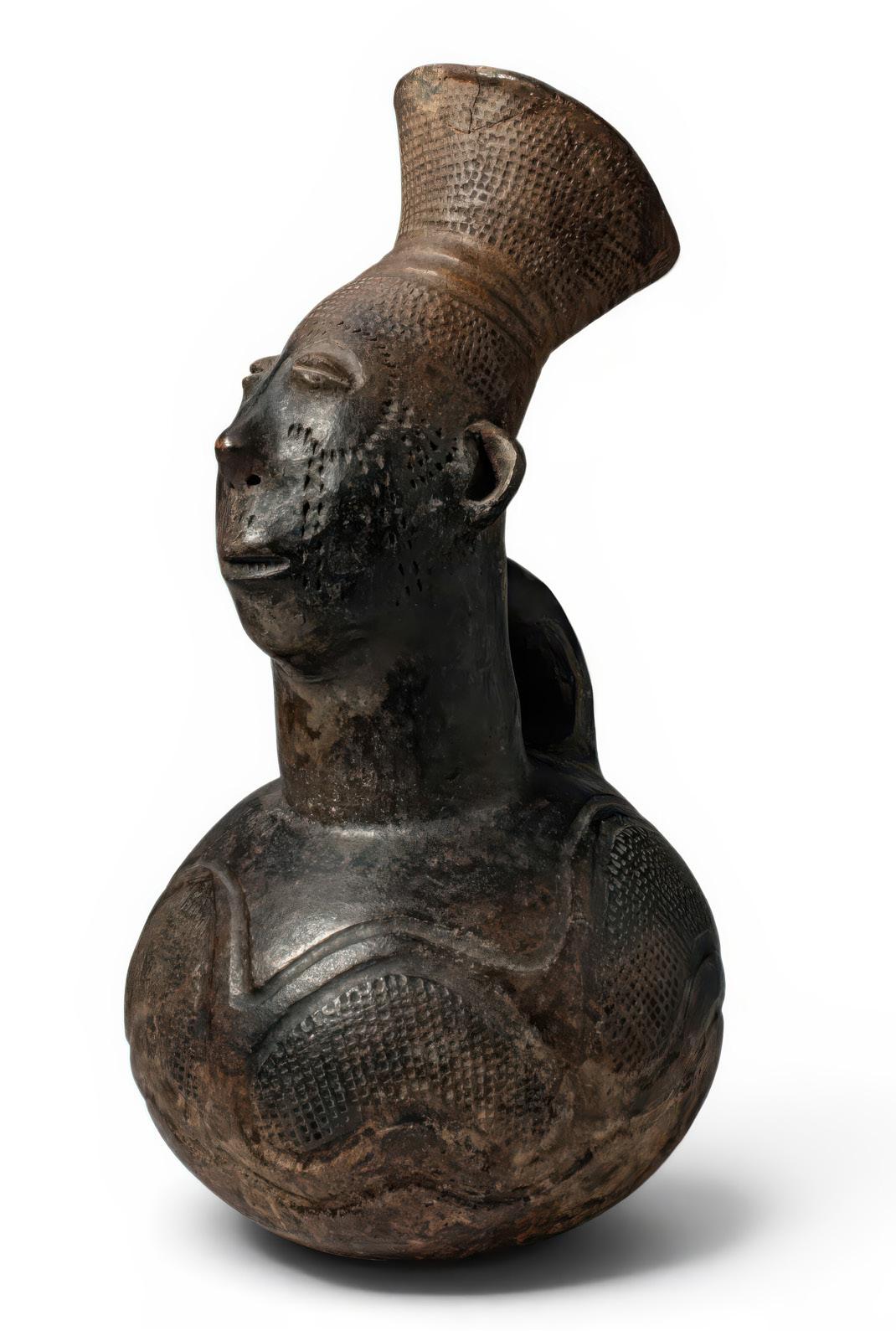
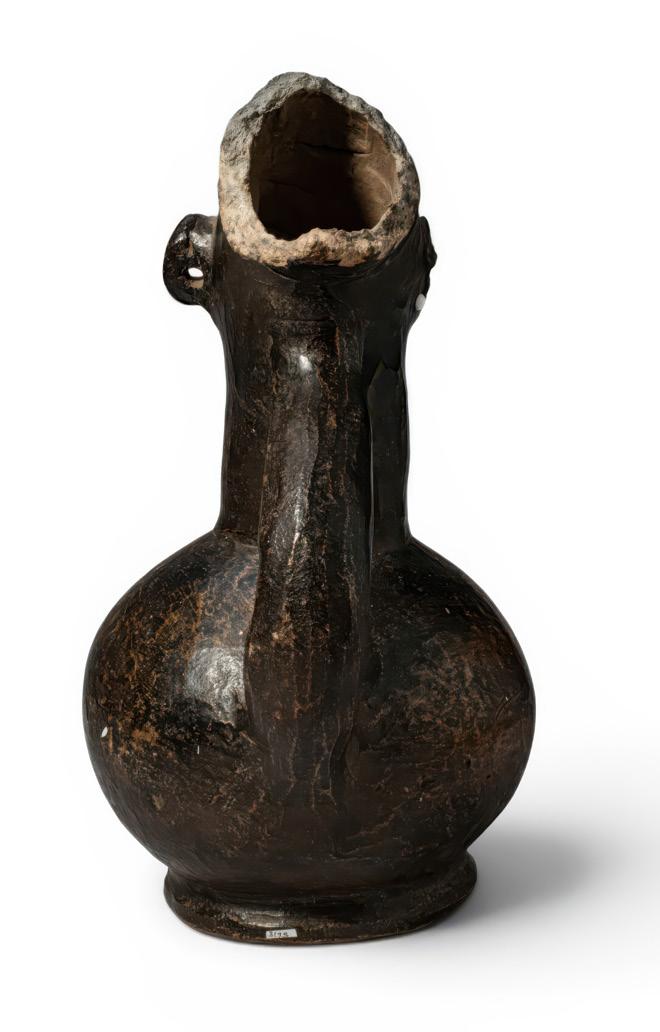
A refined anthropomorphic terracotta vessel characteristic of Mangbetu artistic traditions, combining sculptural elegance with functional form. The vessel is composed of a rounded body surmounted by a tall, cylindrical neck and a carefully modelled human head. The face is rendered with composure and restraint: narrow, half-closed eyes, a straight nose, and a slightly parted mouth create a calm, introspective expression. Fine incised scarification marks appear across the cheeks and forehead. The elongated head is crowned by a distinctive flared coiffure, rising dramatically upward—an echo of the Mangbetu cultural emphasis on cranial elongation and elaborate hairstyles. The surface is densely worked with fine, repetitive incision, creating a textured, almost textile-like effect across the hair and neck.
Provenance: Prince collection, 1990s-2014; Ex. BIG International (Mr Bernard de Grunne) Belgium, 15 Dec. 2009.
Publications / Reports: For similar see: The Metropolitan Museum of Art, object number 1978.412.401.
Size: 270mm x 150mm; Weight: 1.33kg
180. MANGBETU TERRACOTTA POT
Democratic Republic of the Congo, Ca. early 20th century AD.
A finely modelled terracotta vessel in the form of a stylised human bust. The composition is defined by a rounded body supporting a long, cylindrical neck that rises into a tall, flared coiffure, intricately textured to evoke the woven or basket-like hairstyles. The face is calm and balanced, with gently closed or downcast eyes, a straight nose, and a subtly articulated mouth. Fine incised and punctuated markings across the surface suggest scarification or ornamental patterning, contributing to the overall refinement of the piece. A small collar-like detail at the base of the neck introduces a transition between the upper and lower volumes.
Provenance: Prince collection, 1990s-2014.
Publications / Reports: For similar see: The Cleveland Museum of Art, credit line 1992.69; Nelson Atkins Museum of Art, object number 90-8/2.
Size: 310mm x 145mm; Weight: 1.51kg
181. ZANDE ANTHROPOMORPHIC CLAY VESSEL BY MBITIM
Starting Price: £800
Democratic Republic of the Congo, Ca. early 20th century AD.
A finely worked anthropomorphic clay vessel attributed to the artist Mbitim, combining sculptural representation with functional form. The vessel is composed of a rounded, globular body surmounted by a long neck and a carefully modelled human head shown in profile. The face is sensitively modeled, with a smooth forehead, almond-shaped eye, and gently projecting lips, conveying a composed and reflective expression. The coiffure is articulated with incised striations, forming a structured, raised arrangement that follows the contour of the head. The body of the vessel is richly decorated with incised geometric patterns, including linear bands, circular motifs, and intersecting triangular designs arranged in vertical registers.
Provenance: Helmut Gernsheim, Castagnola, reportedly acquired in London in the mid 1940s Private Collection, New York, acquired from the above in 1978 Robert Rubin, New York, acquired from the above on January 25, 1983
Publications / Reports: For similar see: The Cleveland Museum of Art, credit line 1996.301.
Size: 285mm x 170mm; Weight: 1.7kg
182. GA’ANDA ANTHROPOMORPHIC
CLAY VESSEL, NIGERIA
Ca. 19th century AD.
Starting Price: £800
A clay vessel of rounded, globular form rising to a cylindrical neck with everted rim, the vessel richly modelled with an anthropomorphic figure in relief. The figure is depicted with stylised facial features, textured coiffure composed of applied nodules, and articulated arms, one holding a cluster of rounded elements suggestive of fruit or offerings. The shoulders and body are further embellished with incised linear decoration. The vessel is presented on a woven fibre stand.
Provenance: Prince collection, 1990s-2014; Ex. Sothebys, sale NO8779, 13 May 2011, lot 27; Ex. Robert Rubin, New York, acquired from an African trader on November 29, 1999.
Publications / Reports: Exhibited: Museum for African Art, New York, Material Differences, Art and Identity in Africa, April 10 - October 6, 2003; additional venues: National Gallery of Canada, Ottawa, September 17, 2004 - January 2, 2005 Crocker Art Museum, Sacramento, April 2 - June 19, 2005. Published: Frank Herreman, Material Differences: Art and Identity in Africa, New York, 2003, p. 86, cat. 77.
Size: 355mm x 160mm; Weight: 2.78kg
183. MANGBETU ANTHROPOMORPHIC TERRACOTTA VESSEL WITH ARM HANDLES
Starting Price: £500
Democratic Republic of the Congo, Ca. early 20th century AD.
A finely modelled terracotta vessel of anthropomorphic form, the elongated neck rising to a serene, stylised head with characteristic Mangbetu coiffure. The rounded body is flanked by open, looped arm handles, creating a striking sculptural silhouette. The vessel is further enriched with incised geometric decoration across the torso.
Provenance: Prince collection, 1990s-2014; Ex. BIG International (Mr Bernard de Grunne) Belgium, 15 Dec. 2009.
Size: 240mm x 200mm; Weight: 1.12kg
184. MANGBETU TERRACOTTA POT
Starting Price: £2000
Democratic Republic of the Congo, Ca. early 20th century AD.
A finely modelled terracotta vessel in the form of a stylised human bust, exemplifying the distinctive aesthetic of Mangbetu court art. The elongated neck rises from a rounded body, culminating in a high, flared coiffure rendered with finely textured patterning. The face is serene and introspective, with softly closed or downcast eyes, a gently modeled nose, and a small, composed mouth.
Provenance: Prince collection, 1990s-2014; Ex. Jacaranda Tribal Art 24 November 2009; Ex. Private Collection.
Publications / Reports: For similar see: Christie’s, 12 SEP 2002 | Live auction 2558, lot 338.
Size: 330mm x 165mm; Weight: 2.32kg
185. MANGBETU ANTHROPOMORPHIC TERRACOTTA VESSEL
Starting Price: £500
Democratic Republic of the Congo, Ca. early 20th century AD.
A sculptural terracotta vessel in the form of a stylised human bust. The composition is built upon a rounded, globular body from which rises a long, elegantly proportioned neck supporting a sensitively modelled head. The face is rendered in three-quarter orientation, with softly defined features - almond-shaped eyes, a straight nose, and a slightly projecting mouth—conveying a composed, introspective expression. The coiffure is indicated by a smooth, pulled-back form with subtle incised banding at the crown, suggesting stylised hair arrangement.
Provenance: Prince collection, 1990s-2014.
Size: 250mm x 130mm; Weight: 1.31kg
188. AFRICAN FON BOCIO FETISH FIGURE
Ca. late 19th - early 20th century AD.
Starting Price: £500
A carved wood figure of elongated, columnar form, the head with simplified facial features and small, projecting ears, the body tapering toward the base. The arms are rendered in relief along the torso, bound at the waist with fibre and bead elements, suggestive of ritual augmentation.
Provenance: Prince collection, 1990s-2014; Ex. Neumeister 14 -11 -2012 Lot 1093.
Size: 500mm x 80mm; Weight: 1.07kg
186. LARGE SOUTH AFRICAN TSONGA WOODEN SNUFF CONTAINER
Ca. 20th century AD.
Starting Price: £800
A wooden snuff container of globular form with a fitted domed lid, the container carved from a single piece of wood and raised on a small circular foot. The vessel is attached to a carved wooden chain composed of interlocking links. Containers of this type were traditionally used to store snuff, a substance widely consumed in parts of Southern Africa.
Provenance: Prince Collection, 1990s-2014; ex Lance Entwistle 27 November 2009.
Size: 140mm x 350mm; Weight: 415g
189. HOPI KACHINA DOLL
Ca. 20th century AD.
Starting Price: £300
A standing masked figure with prominent ears, the face painted in blue, with red and yellow tunic and a black skirt with white and blue elements. The figure retains traces of pigment and wear, with remnants of attachment points for feathers once mounted atop the head. The figure probably represents an aspect of Potiwa, one of the katsinam associated with Hopi ceremonial tradition.
Provenance: Prince collection, 1990s-2014; Ex. Claude Aguttes, Drouot Richelieu Salle 3, 20 November 09 Lot 13.
Size: 170mm x 50mm; Weight: 65g
190. TWO TAHITIAN FOLK FIGURES
Ca. 20th century AD.
Starting Price: £300
A group comprising two carved wooden figures, each depicted in a seated pose with stylised facial features and simplified anatomical forms. One figure has an elongated head and angular features, the other with softer modelling and incised hair detail.
Provenance: Prince collection, 1990s-2014; Ex. Webbs, March 2012, Sale 979, Lot 110.
Size: 175mm x 115mm; Weight: 260g
191. NORTH AFRICAN TUAREG TENT POST
Ca. 19th - 20th century AD.
Starting Price: £500
A finely carved wooden tent post of elongated form, the shaft articulated with a sequence of geometric and architectural elements. The upper section expands into a distinctive openwork finial with symmetrical projections, while the body is composed of stacked, faceted and flared forms, creating a rhythmic vertical structure. The lower terminal tapers to a point for ground insertion.
Provenance: Prince collection, 1990s-2014; Ex. Zemanek Munster Auciton 59 28 November 2009 Lot 588.
Size: 1220mm x 245mm; Weight: 4.98kg
195. SOLOMON ISLANDS ARM BAND
Ca. late 19th - early 20th century AD.
Starting Price: £300
An arm band of rectangular woven form, worked in natural fibre with a central band of geometric ornament in black and reddish-brown, flanked by smaller repeating motifs. It is fitted with multiple cord attachments at either end for securing to the arm.
Provenance: Prince collection, 1990s-2014; Ex. Webbs, March 2012, Sale 979, Lot 14.
Size: 110mm x 500mm; Weight: 85g
196. MICRONESIAN YAP ISLAND WARRIOR’S BELT
Ca. late 19th - early 20th century AD.
Starting Price: £300
A warrior’s belt formed as a long band of plaited fibre strung with closely set white shell discs arranged in double rows, terminating in looped fibre attachments at either end.
Provenance: Prince collection, 1990s-2014; Ex. Udo Hortsman.
Size: 1400mm x 40mm; Weight: 475g
197. CAROLINE ISLANDS TRUK ATOLL CHAIN
Ca. 19th - early 20th century AD.
Starting Price: £300
A finely worked chain of interlinked shell rings. Highly prized in the Caroline Islands, it served as an heirloom and a form of wealth.
Provenance: Prince collection, 1990s-2014; Ex. Udo Hortsman.
Size: 230/460mm x 25mm; Weight: 20g
199. GROUP OF MARSHALL ISLAND NECKLACES
Ca. late 19th - early 20th century AD.
Starting Price: £800
A group comprising three necklaces, each strung with shell discs or coral beads on fibre cord, including one of large graduated white shell discs, and two of smaller brown and mixed-tone elements. The materials and forms are characteristic of traditional adornment from the Marshall Islands, where shell jewellery functioned both decoratively and as indicators of status and exchange value.
Provenance: Prince collection, 1990s-2014; Ex. Udo Hortsman.
Size: 380-320mm x 10-15mm; Weight: 110g
200. PAPUAN ELEMA ARCHER’S ARMBAND
Ca. early 20th century AD.
Starting Price: £500
An armband composed of a Conus shell, of the type traditionally worn by men as a status symbol. The shell material was used as currency in the region, associating the ornament with wealth and social standing.
Provenance: Prince collection, 1990s-2014; Ex. Jean Edouard Carlier.
Size: 135mm x 170mm; Weight: 205g
202. OCEANIC COMB AND
Ca. late 19th - early 20th century AD.
Starting Price: £300
A group comprising two combs: the first of Oceanic origin, with multiple slender wooden prongs bound at the base with plaited fibre; the second a carved wooden comb attributed to the Lwena (Luena) people of Angola, featuring a figural handle surmounted by a stylised human head above a pierced geometric panel, with a row of tapering teeth below.
Provenance: Prince collection, 1990s-2014; Ex. Voyageurs & Curieux (left).
Publications / Reports: For similar see: The Pitt Rivers Museum, combs collection.
Size: 150-200mm x 60-65mm; Weight: 60g
LWENA COMB
206. COLLECTION OF MICRONESIAN KIRIBATI WOODEN DAGGERS
Ca. 19th - 20th century AD.
Starting Price: £500
A collection of three wooden daggers of elongated form, each fitted with rows of inset serrated teeth along the blade edges, secured with fibre bindings. One example retains a wrapped handle with geometric banding, while the others display smooth grips with perforations for attachment.
Provenance: Prince collection, 1990s-2014; Ex. Bernad De Grunne (left); Ex. Pierre Berge & Associes, 2 April 2012 sale, lot 79, 82 (center & right).
Size: 410-500mm x 45--60mm; Weight: 370g
210. COLLECTION OF CHILEAN FISHING IMPLEMENTS
Ca. late 19th - early 20th century AD.
Starting
A large and varied assemblage of traditional fishing implements, comprising hooks in metal and bone, carved wooden lures, harpoon points, line weights, and numerous fibre components including cordage and woven elements. The group includes both simple and composite forms, several retaining bindings or attached line.
Provenance: Prince collection, 1990s-2014; Ex. Jacaranda Tribal Art.
Size: mm x mm; Weight: g
215. GROUP OF POLYNESIAN TUVALU ELLICE ISLANDS FISH HOOKS
Ca. late 19th - early 20th century AD.
Starting Price: £1000
A group comprising several large wooden fish hooks of characteristic curved form, some retaining fibre bindings and lengths of cord. Each carved with a pronounced barb and shaped shank.
Provenance: Prince collection, 1990s-2014; Ex. Pierre Berge & Associes, 2 April 2012 sale, lot 72 (left); Ex. Patrick Caput (center); Ex. Fraysse & Associes, Sale 20 October 2010, lot 120 (right).
Publications / Reports: For similar see: The British Museum, registration number Oc,St.890.a.
Size: 190-290mm x 120-140mm; Weight: 440g
217. GROUP OF NEW ZEALAND MAORI FISH HOOKS
Ca. late 19th - early 20th century AD.
216. GROUP OF SOCIETY ISLANDS FISH HOOKS
Ca. late 19th - early 20th century AD.
Starting Price: £1500
A group comprising carved fish hooks of varying form, worked in bone or shell and wood, several retaining fibre bindings and lengths of cord. Including examples with composite construction and curved barbs, one with attached lure elements.
Provenance: Prince collection, 1990s-2014; Ex. Claude Aguttes, Sale V9163, 20 November 09, Lot 26.
Publications / Reports: For similar see: The British Museum, registration number Oc1944,02.53.
Size: 67-135mm x 20-45mm; Weight: 175g
A group of carved fish hooks of varying size, worked in wood and bone, several of composite construction with fibre bindings and cord attachments. Each is of characteristic curved form with pronounced barbs, some retaining traces of lure elements.
Provenance: Prince collection, 1990s-2014.
Size: 85-150mm x 20-40mm; Weight: 95g Starting
218. DJANGHARA WAIGAN AUSTRALIAN ABORIGINAL PAINTING ON BARK
Ca. 20th century AD.
Starting Price: £500
A eucalyptus bark painting with natural earth pigments, secured with wooden battens at each end. The composition depicts a dynamic ancestral narrative scene, centred on a sea creature. Surrounding figures—likely associated fauna and spirit beings—are arranged in a flowing, horizontal composition, accompanied by linear motifs suggestive of water currents and movement. The work is attributed to Djang’hara (Waigan), an artist associated with the Arnhem Land tradition, where bark painting serves both as artistic expression and as a vehicle for the transmission of cultural knowledge, ancestral stories, and connections to land and sea.
Provenance: Prince collection, 1990s-2014.
Size: 620mm x 255mm; Weight: 645g
230. GROUP OF SOLOMON ISLANDS FISH HOOKS
Ca. 19th century AD.
Starting Price: £500
A beautiful group of five Solomon Islands fishing hooks, each finely constructed from pearl shell and turtle shell with fibre lashings, natural cordage, and decorative beads in red, white, and blue. The shanks display incised detailing and carefully shaped profiles.
Provenance: Prince collection, 1990s-2014; (acquired from various sources) Ex. Patrick Caput, Ex. Jacaranda Tribal Art.
Publications / Reports: For similar see: The Australian Museum, https://australian.museum/learn/cultures/pacific-collection/fishhooks/solomon-islands/; The British Museum, Museum Number Oc1882,1110.13.
Size: 70-80mm x 20-25mm; Weight: 60g
237. PAIR OF SNOW SHOES, NORTH AMERICAN
Ca. 19th - 20th century AD.
232. NATIVE AMERICAN BOW STAFF WITH RESONATOR - BIRD CALLER
Ca. 19th - 20th century AD.
Starting Price: £300
A slender, gently curved wooden bow staff, tapering towards both ends and fitted at the centre with a small resonating device secured by bindings. The resonator, carved and lashed to the shaft, would have amplified sound when the staff was struck or manipulated.
Provenance: Prince collection, 1990s-2014; Ex. Max Itzikovitz.
Size: 910mm x 50mm; Weight: 200g
Starting Price: £500
A matched pair of wooden snowshoes of elongated teardrop form, each with a bentwood frame enclosing finely woven rawhide webbing. The central openings are fitted with simple bindings for the foot, while the tapered tails aid balance and forward movement across snow. Snowshoes of this type were essential for winter travel, distributing weight to prevent sinking into deep snow.
Provenance: Prince collection, 1990s-2014; Ex. Michael Evans Tribal Art, Dijon.
Publications / Reports: For similar see: Smithsonian National Museum of the American Indian, catalog number 5/7228.
Size: 1155mm x 385mm; Weight: 1.48kg