The Official Journal of the United Grand Lodge of NSW & ACT

24

The Official Journal of The United Grand Lodge of New South Wales and Australian Capital Territory of Ancient, Free and Accepted Masons
This issue of the Freemason is produced under the direction of:
Chairman: Bro Geoff Williams
Editors: Bro Richard Dawes, Bro Simon Pierce and Lynne Clay
Committee: Bros Derek Robson, Kim Nielsen, Rick Atkinson, Peter Stoneman, Nate Mathein, and Tony Maiorana
Design & Production: Bro Simon Pierce, Megan Baumann and Pam Gill
Freemason is published in January, April, July and October. Deadline for copy is approximately one month prior to publication. For exact dates visit: deadlines.freemasonnsw.com.
All matters for publication should be emailed to: freemason@masons.org.au For general enquiries call: 0456 695 600
Published articles do not necessarily reflect the policies or opinions of The United Grand Lodge of NSW & ACT.
Publication of an advertisement does not imply endorsement of the product or service by The United Grand Lodge of NSW & ACT.
Advertising enquiries should be addressed to: Bro Simon Pierce
APM Graphics Management
7 Sublime Avenue, Tascott, NSW 2250 Telephone: (02) 4344 5133 Email: freemason@apmgraphics.com.au
Freemason is proudly designed and produced by APM Graphics Management
7 Sublime Avenue, Tascott, NSW 2250
Printed by Access Print
Distributed to all NSW & ACT brethren and sister Grand Lodges in Australia and worldwide. Electronic versions of FREEMASON can be viewed or downloaded at www.FreemasonNSW.com or via www.masons.au
Aims of the Freemason magazine
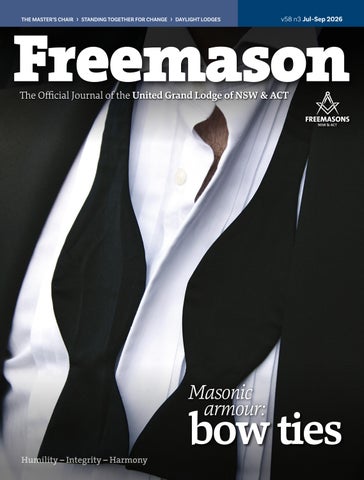
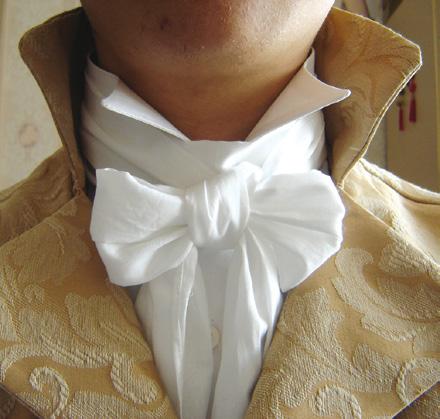
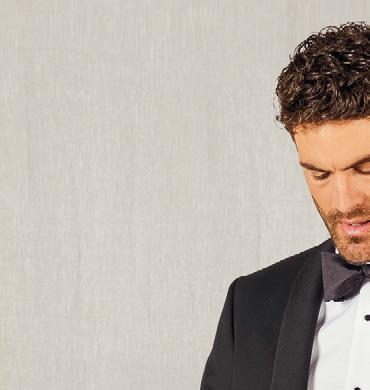
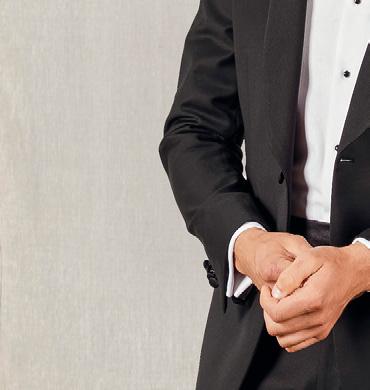
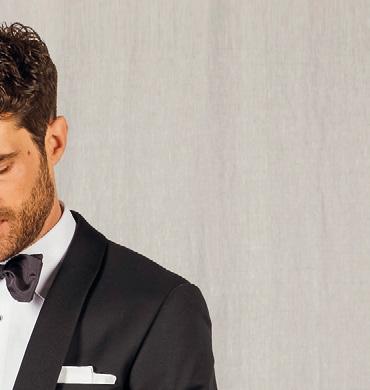
IMAGE: Bow ties are an integral part of masonic formal wear. Learn all about them in this issue!
R To uphold and promote those values, morals and virtues which Freemasonry believes are universal and enduring.
R To foster a better understanding of Freemasonry within the general community.
R To provide a forum for discussion on masonic issues.
R To publicise the charitable works of Freemasonry.
R To provide articles of interest and education and to disseminate masonic news and views.
R To recognise masons who make significant contributions to the Craft and the wider community.
ISSN 1836-0475 or ISSN 1836-0513 (Online) Print Post Approved 100007316
© 2026 Copyright: It should be noted that copyright for all text, photographs and illustrations (except where otherwise indicated) rests worldwide with Freemason
INDEMNITY: It is the responsibility of the advertiser to ensure that advertisements comply with the Trade Practices Act 1974 as amended. All advertisements are accepted for publication on the condition that the advertiser indemnify the publisher and its servants against all
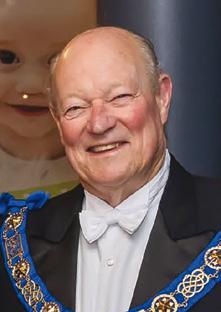
At the March Grand Communication I was privileged to become a member of the Freemason Magazine Editorial Committee.
Recently the committee had suffered the loss of two of its senior members, both Editors, who had laid down their tools after long and faithful service. Terry McCallum and Ted Simmons will be sadly missed.
In order to see the January and April editions of Freemason published, previous Editor Richard Dawes, together with senior committee members Lynne Clay and Simon Pierce stepped in to share the workload and maintain continuity. Richard agreed to act as Interim Editor on the condition that he would relinquish this pivotal and demanding role from the July edition onwards. We are grateful for his continued sustained efforts and very pleased that he will remain a valued Editorial Committee member.
For some time two Committee members had been feeling the need to spend more of their time and energy in their paid occupations. Their resignations from the Committee were accepted with great reluctance. The talents and contributions of Owen Sandry and Max KatzBarber will be sorely missed.
The Shop @ SMC now offers a wide range of masonic paraphernalia and regalia, and items of utility and interest to brethren – online sales facilities coming soon.
However, we have been very fortunate to be able to welcome onto the Committee two very capable and talented men who will, no doubt, have much to contribute to the viability and success of Freemason. Tony Maiorana and Nate Mathein bring their unique skill sets and diversity of experiences to the Committee.

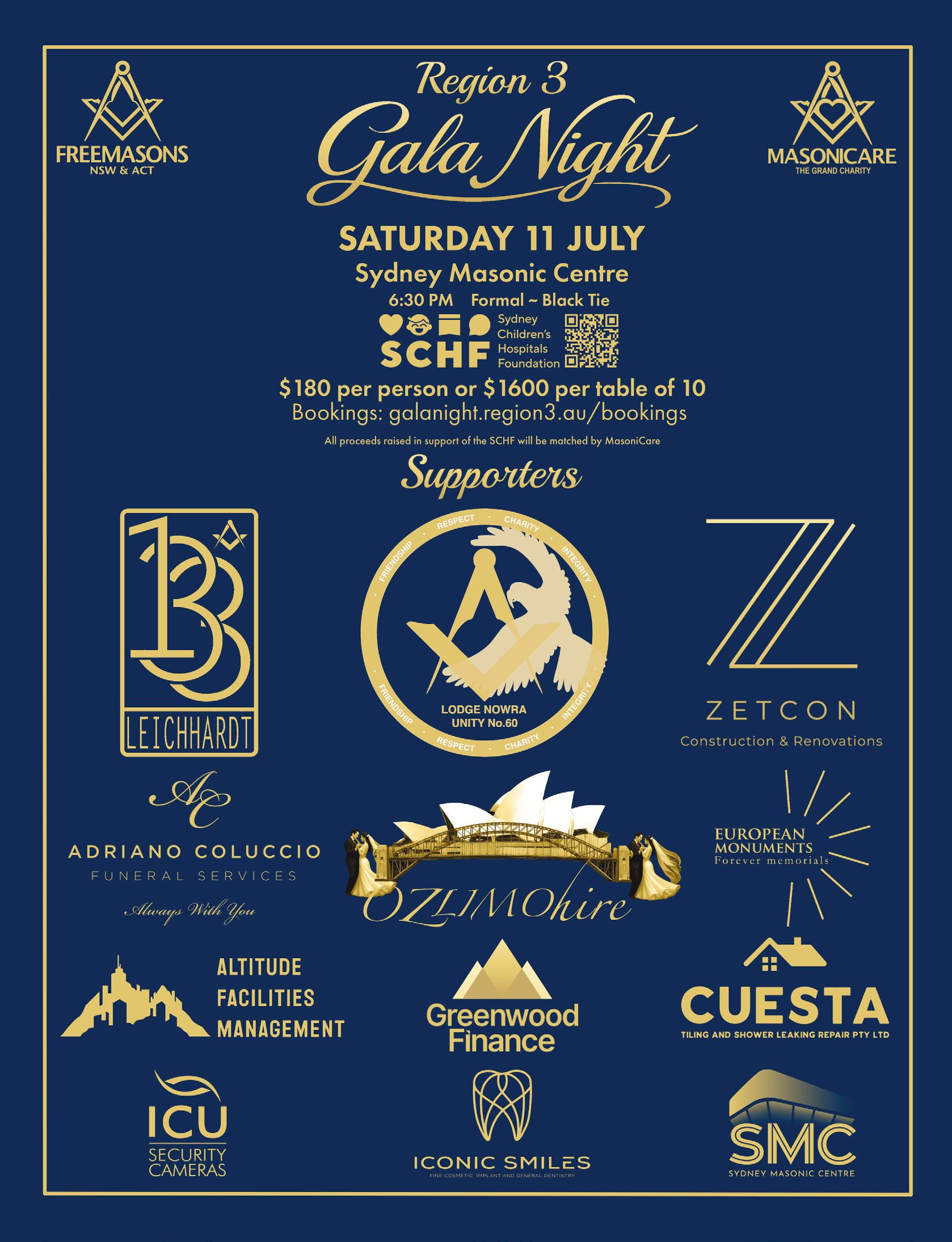
Saturday 11 July
Join us at 6:30 pm on Saturday, 11 July 2026 at the Sydney Masonic Centre for the Region 3 Gala Night!
With sparkling wine and canapés on arrival, followed by a three-course dinner including beverages and entertainment by the High Rollers Big Band.
Dress code is formal black tie. Tickets are $180 per person or $1,600 for a table of ten.
All proceeds will go towards the Sydney Children’s Hospitals Foundation and will be matched by Masonicare, the Grand Charity.
HURRY – DON’T MISS THIS UNFORGETTABLE EVENT!
Book tickets now! Visit: galanight. region3.au/bookings or scan the QR code
Please be reminded that ALL submissions to Freemason magazine should be sent via email to the following email address: freemason@masons.org.au
General enquiries to: 0456 695 600
The contribution of articles, items and photographs from you, our readership, is integral to the existence of Freemason and we look forward to a long and fruitful association in bringing it to you.
For the Editorial Committee: Lynne Clay, Simon Pierce, Richard Dawes, Derek Robson, Kim Neilson, Rick Atkinson, Peter Stoneman, Tony Maiorana and Nate Mathein.
Geoff Williams Chairman, Editorial
Committee
Hosted by Lodge Honour and Lodge Merrylands at Club Liverpool.
For all enquiries, call Jomie (Jomz) Sarmiento on 0404 735 297 or John Riomalos on 0475 606 805
Brethren are invited to join us at the Sydney Masonic Centre for a night that serves two purposes: to honour the legacy of Lord Carrington, the first Grand Master of the United Grand Lodge of NSW & ACT as well as a Masonic Awards Night to celebrate charitable acts and achievements of lodges and brethren across our jurisdiction.
Mark this event in your diaries, further details and booking links will be made available closer to the date.

“Up to that time, as frivolity alone had reigned, the fashion was not injurious; but the throat, which had been hitherto comparatively free, now lost that liberty which it has never since regained.”
the
Wearing cloth about the head and neck has been ubiquitous since the development of weaving. Such a cloth can be worn over the head to keep the sun off, tied around the neck for warmth, used to protect against chafing or to absorb perspiration.
The earliest evidence we have of such scarves or neckerchiefs being widely adopted is the army of Qin Shi Huang, first Emperor of China in the 3rd century BCE. The famous Terracotta Warriors buried in his tomb each sport a sculpted scarf knotted about their necks.
The military association continues with the wool or linen Focale, a scarf worn by Roman Legionaries and depicted on the Forum reliefs and Trajan’s Column. In fact, neck-cloths became so associated with the military that one formal tie is still known for the army that made it popular – the cravat.
During the 14–17th centuries, mercenary regiments of many nationalities served throughout Europe. The story goes that when a Croatian regiment arrived in France in 1660, their fancy
neckwear (which the French dubbed Hrvat; Croatian for Croat) piqued the interest of fashion-conscious Parisians.
The Hrvat was adopted by King Louis XIV and was soon exported to the court of Charles II as the cravat – “…a long towel put about the collar, and so tyed before with a bow knott; this is the original of all such wearings”.
Over the years, the cravat went through may permutations of form and
style. However, by the Industrial Revolution of the 18th century, demand was rising amongst the burgeoning middle class for a more practical, easy-to-wear version of the cravat. Thus, the bow tie was born!
While initially considered everyday wear for middle and upper class men, in the late 19th century the bow tie was adopted by the fashionable elite of the Tuxedo Club in New York. Since then the suit and concomitant tie has become the default choice for formal occasions.
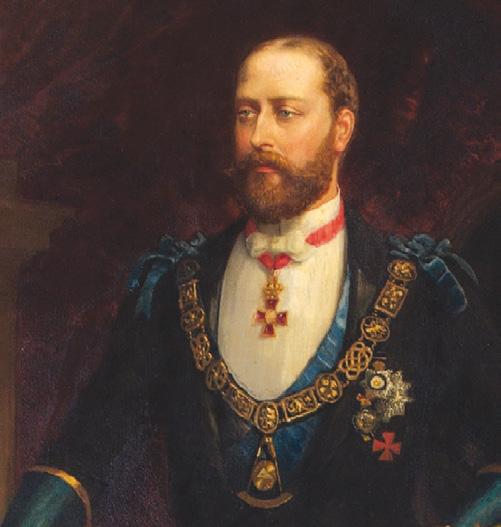
Freemasonry has long had an association with formal wear, as a way of respecting the work of the lodge while reinforcing the equality between brethren. The exact style of which has been largely dictated by the fashions of the day – one need only peruse portraits of historical Grand Masters to note the changing fashions, with bow ties starting to appear around the time of GM Albert Edward (later King Edward VII). Apologies to his predecessor GM George Robinson, whose formidable beard prevents identifying his neckwear!
1. Cross A over B, so that it’s a little longer than B; 2. Tuck A up and behind B; 3. Fold B on itself to make a bow tie shape; 4. Fold A over B; 5. Fold A on itself and pass it though the loop formed behind B to form the back of the bow; 6. Tighten by pulling both sides simultaneously; 7. Adjust the final fit and shape.
“Bow ties are cool.” – The Doctor While bow ties are still de rigueur at formal occasions, they are experiencing a small return to the zeitgeist. As a means of standing out in a sea of business suits with neck ties, a bow tie projects a quirky intellectual image, perhaps enhanced by proving one has mastered the dark art of tying it!
The bow tie has also found favour amongst certain professions – especially those that want to convey an educated air, such as lecturers, doctors, attorneys and politicians. It’s also more common where one’s job makes it more practical, such as artists, paediatricians and scientists who may get a regular tie respectively dirtied, grabbed by a curious patient or even set on fire!
This comeback is also enhanced by famous figures adopting it as a sartorial signature; wartime leader of the UK Winston Churchill, magician and educator James Randi, Bill Nye (of ‘the science guy’ fame) and American basketballer Bruce Bowen to name a few. And that’s not to mention popular fictional characters like James Bond, Indiana Jones, Hercule Poirot and Doctor Who’s eponymous Doctor (as portrayed by Matt Smith). In fact, one English menswear
retailer reported that in the wake of Doctor Who, bow tie sales surged from approximately 3% to 14%!
There are two main types of bow tie, ‘thistle’ (or ‘butterfly’) and ‘bat wing’ (for cricket bat, not the winged mammal!). Named for the shape of the fabric, they produce two distinct silhouettes with the thistle shape producing the classic ‘flared’ bow and the bat wing making for a narrower, square shape.
Further, they come in self-tie (fixedlength and adjustable), pre-tie and clip-on variants. Self-ties, as the name implies, are supplied as a narrow band of cloth with flared ends that one knots oneself. If you want to master the art of tying a bow tie, we’ve provided a simple illustrated guide – and for more in-depth tutorials, YouTube is an excellent resource! On the other hand, pretied bow ties have fixed knots, and the
band fastens around the neck, usually with some form of hook and loop. Clipons have no band at all and instead attach directly to the collar.
While a self-tied bow tie is the classically ‘correct’ choice for black- and white-tie occasions, as we get older and for those experiencing reduced dexterity, pre-tie and clip-on options become a more sensible choice. In fact, this whole article was inspired by W Bro Tim Harrington’s lament over the dearth of quality clip-on bow ties available today. If you can help him out, see his letter on page 38!
Celebrated on 28 August, Bow Tie Day is a great excuse to break out your bow ties and wear them proudly! If your lodge has a meeting on that date, consider yourself already involved!
By MW Bro Khris Albano
Brethren, welcome to your Quarterly Communication of June 2026. I welcome our PGMs and thank them for their continued support to our Grand Lodge, to our lodges in the jurisdiction and to me personally.
Ithank the brethren who travelled to our Sydney Masonic Centre to participate in conducting the business of Grand Lodge and creating a great opportunity for metropolitan and country brethren as well as visitors from other jurisdictions to sit together in harmony.
I acknowledge lodges whose bylaws require them to meet every second Wednesday but who purposely opened and closed earlier or secured a dispensation to alter their meeting date to be able to attend tonight’s Quarterly Communication.
The next Grand Lodge Quarterly Communication and dinner will be held on Wednesday 9 September 2026 at 7:00pm.
The Communication is open to all members of Grand Lodge, which includes all Master Masons. Other brethren are invited to attend as observers.
I greet the brethren who are joining us online via YouTube which we are trialling for the first time as our livestreaming facility. I was informed of groups of brethren who organised activities with the brethren of their lodge, others with their family at home (comfortable and warm from the cool Sydney winter) and brethren in various locations with their choice of electronic device.
1. Would the incumbent WMs and Wardens stand – I welcome you and thank you for all that you do for your lodges, your districts, and for our Grand Lodge.
2. Would the EA & FC please stand. I welcome you and trust that you benefit with a productive learning experience on attending tonight.
I extend warmest welcome to visiting brethren who are observing our Quarterly Communication. Specifically, may I recognise the brethren from the
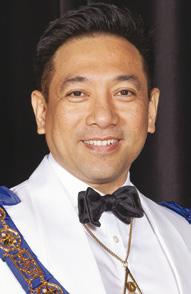
Grand Lodge of the Philippines from Bicolandia or MD RV in R Isarog Masonic Lodge 33, R Naga City Masonic Lodge 257, R Camarines Sur Masonic Lodge 382; and
R Pili Capital Cimarrones Masonic Lodge 521
3. I welcome the Heads of Associated Orders
Brethren, the number of expressions of interest and nominations received for the various offices for election and appointment coupled by the strong attendance we are seeing in our Grand Lodge Room 1 is a real indication of the brethren’s interest to participate in building and strengthening our jurisdiction.
Tonight is a record for many of us, being the first time in quite some time that Grand Lodge will exercise their suffrage for various Grand Offices and official membership into various Boards and Committees. We also have appointments that arise from voluntary endorsements of current Office Holders to enable our Grand Lodge to leverage expertise and experience among us.
Who can forget the investment of brethren in interjurisdiction visitation...
I thank all brethren who have gifted us with their time and commitment in writing submissions, attending interviews and assisting in providing our Grand Lodge with compelling choices of candidates for the various roles.
In looking to the future, brethren, let us also remember our 17 brethren who are no longer able to join in co-creating our history having laid down their working tools since our last GL Communication in March. Your agenda pack lists their details, and you may notice fondly,
12 of them were over 80 years, and 9 of them have each laboured in the Craft for over half a century when they laid down their working tools. May we ever be mindful of our obligations to them and their nearest and dearest and make a sincere effort to offer condolences and assistance, if any be required, remembering their individual and collective labours from which we benefited during our departed brethren’s active years in our quarries and their Masonic journeys.
Brethren, please stand for a moment of sympathy and reflection. The Grand Chaplain will offer prayer for all our departed brethren. (GC offered prayers) We pray they may have heard the welcome words from the GAOUTU. Be seated, brethren.
Tonight’s 21 items in the agenda promise to be most productive. I emphasise ‘productive’ as it continues to describe my personal, and numerous brethren’s experience of the Craft in the last seven quarters, specifically in the period since our March Quarterly Communication in Bathurst.
Tonight, we welcome another opportunity for reflection and renewal. Reflection as it affords us an opportunity to look back to the last quarter and indeed to the past. Renewal as it is in June annually that we identify and explore ways to move forward with the brethren who will continue the good work of providing servant leadership to our jurisdiction.
On the subject of reflection, I paraphrase, the French author and aviator – Antoine de Saint-Exupéry, who wrote, ‘It is the time you have wasted in your rose that makes your rose so important’. in his book, Le Petit Prince (The Little Prince). Brethren, it is the time and effort you have invested in your rose that makes your rose so important. You have invested valuable resources in numerous roses that I have had the good fortune to share.
Who can forget the investment of brethren in interjurisdiction visitation resulting in the largest delegations of NSW & ACT brethren to the Grand Installation of Tasmania in February and, again, in the company of 26 other visiting Grand Lodges from across the
I thank all brethren who have gifted us with their time and commitment...
globe, to the Annual Communication of the Grand Lodge of the Philippines in April. I am pleased to share that the trip to the Philippines again included an historic back-to-back installation ceremony of our Elysian Lodge which attracted Grand Officers from various Grand Lodges such as Victoria, Philippines, Alberta, Queensland, and from the Home Grand Lodges.
The brethren also invested time and resources in fundraising activities organised by lodges to support the Grand Master’s Sleepout in June 2026. Ahead of the actual sleepout, and perhaps to avoid actually sleeping out on the weekend before the coldest night of the year, brethren from the United Lodge of Sydney have raised funds through a Billiards Competition participated in by over 100 brethren, while Lodge West Epping organised a basketball tournament over two days this last weekend which saw 11 lodges participate.
The events mentioned are as delightful and important as the regular meetings and installations of lodges such as the Prince Charles Edward Stuart Lodge, Lodge Wagga Wagga, Lodge Sutherland, Lodge Blacktown Kildare, Lodge Ku-ring-gai, the District 34A meeting hosted by The Cedars Lodge where we witnessed a brother raise his 200th Fellowcraft candidate, and Lodge Temora where we initiated a fourth generation mason into the Craft. All events with noteworthy characteristics peculiar to each lodge requiring time and effort that make them so important.
‘It is the time and effort you have invested in your rose that makes your rose so important’ is the same spirit that unified our forebrothers to form our Grand Lodge in 1888. Articulated in our Articles of Union:
‘And Whereas it is expedient in the best interests of the Craft that perfect unity shall be secured and maintained throughout this Colony and that there shall be henceforth perfect uniformity of obligation, of discipline, and of the working of all Lodges.’
Our membership in Freemasonry includes specific obligations that determine our Grand Lodge’s regularity and recognition. A specific principle of recognition adopted by many regular Grand Lodges including ours is:
‘That the Grand Lodge shall have sovereign jurisdiction over the Lodges under its control i.e. that it shall be a responsible, independent, self-governing organisation, with sole and undisputed authority over the Craft or Symbolic Degrees within its Jurisdiction.’
Diversity and education of rites peculiar to ours are novel and are welcomed, however where rituals and ceremonies are concerned, I endorse the principle of ‘Mastery before Innovation’ – mastery of our jurisdiction’s rituals before innovation of any other jurisdictions’, brethren. The ceremonial aspect of our Craft is an important pillar which is unique to Freemasonry. It is the characteristic of our organisation that attracts and keeps good men who continue to seek moral lessons and self-improvement in the company of like-minded men. This is
MILNE Group Travel & Tours Casual Tourist Drivers Urgently Sought
Blacktown, Hills & Hawkesbury
The perfect opportunity for semiretired or small business owners available to work flexible hours. Enjoy meeting new people and driving them safely to a variety of destinations. It is preferred that you already have an MR/HR licence. Contact Damian on 02 8856 5629 or email operations@milnetours.com.au
List a Classified Ad for as little as $25 per issue Email freemason@ apmgraphics.com.au for details.
consistent with the analysis that attendance at lodges increases when meetings include degree work, or educative and entertaining (or edutaining) ritual or ceremony. ‘Edutainment’, brethren –education and entertainment combined – are the best way to reach and teach adult learners in contemporary times.
I endorse to brethren coordination with our Ritual Advisory and Private Lodges Committees, and the College of Masonic Studies in creating opportunities for education and experience of wider masonic education while
ensuring that we remain true to our obligations, discipline and working.
The Ritual Advisory Committee and the College will provide clear guidance to enable brethren to create events that stimulate attendance and sustain interest while keeping relevant stakeholders and principles aligned.
We also remind lodges to ensure that our rights and privileges are extended to worthy men and to worthy brethren alone. In our modern world connected by technology, the convenience of electronic communication must be used to inform
The following are extracts of interest from the various reports submitted at the June Quarterly Communication. The full reports are available on the UGL website and Lodge Secretaries and Worshipful Masters are urged to read them.
In addition to the election of Grand Officers and members of various Board and Committees, the Grand Master announced that a casual vacancy has been filled on the Board of Management. Election results will be available on the UGL website.
The GM noted that forthcoming activities, fundraisers and special events involving community engagement are creating great vibrancy and excitement for the Grand Lodge. He also highlighted increased focus on traditional values while continuing to grow public awareness of the Craft and its members.
The Grand Treasurer advised that favourable interest rates and the judicious investment of funds have improved the financial results year-to-date and there was every indication that Masonic Operations and Charitable Operations would result in a small profit as opposed to a budgeted moderate loss.
The financial future looks positive following the decision to improve and increase the shop’s operations, expand the range of merchandise, and staff available for in-person sales. The shop will be open for business at the SMC from 15 June onwards with product sales facilities available by phone or online soon afterwards.
Lodges were urged to pay Capitation Fees by 31 October to qualify for discount.
It was noted that there is an increased interest in the Ritual Advisory Committee. Lodges were reminded that only rituals approved by Grand Lodge may be used or demonstrated.
R GymbaROO – investigations are progressing regarding the potential
and orient us to remain true to the principles on which our fraternity is built. But our traditional methods for avouchment and admission must be preserved. Let us continue to vouch only for brethren whose degree conferral we have actually witnessed, with whom we have actually sat in open lodge or whom we have subjected to proper examination. These are the only methods of avouchment and admission noting that once a visitor has had occasion to enter and attend an open lodge, even without proper qualifications, all brethren in attendance, become
expansion of locations and suitable venues.
R Lodge Namoi has been authorised to drawdown BMF funds to purchase a new building.
R There has been further development of reporting systems to assist DGIWs and RBOs.
R Dubbo and Castle Hill Masonic Centres have received approval for a drawdown of funds.
R Approval has been given for a consolidation of Lodge Prince Leopold 71 and Lodge Ulmarra 186. The simplification and improvement of all aspects of membership support is work in progress and proceeds apace.
R The Masonicare Board currently has five vacancies; contact Grand Lodge for all details.
R The donation of $50,000 (first of five) has been made to the Children’s Cancer Centre, Westmead for a family lounge in the new Children’s Hospital. This will be named ‘Freemasons NSW & ACT Lounge’.
R During April, IA grants totalled $16,000 and Special grants totalled $10,000.
The committee reported that a rectification has been made to the list of recognised grand lodges.
Lists have been provided of DGIWs and RBOs for 2026 through 2028. Contact Grand Lodge for details.
default vouchers for the visitor in perpetuity. Circulars will be forthcoming to strengthen protection of our West gate. ‘It is the time and effort we invest in our rose that makes our rose so important.’
On the subject of renewal, I quote the same book, Le Petit Prince, ‘It is only with the heart that one can see clearly. What is essential is invisible to the eye.’ In Freemasonry, as in life, ranks, titles and offices are but labels that would only have meaning to us and to others when one embraces them and makes them their own.
Offices, ranks and titles do not bring honour to a man; it is the man who lends honour to the office, rank and title. And brethren, we are fortunate to have numerous brethren in our midst who, selfless, have, at heart, the best interest of the brethren and the Craft.
Tonight is a significant night as we are given an opportunity to confirm the new Team who will carry on the responsibility of carrying us into the future and also to acknowledge the commitment and service gifted to us by many Grand Officers.
As we confirm the recommendations of incoming DGIWs, I acknowledge the service of outgoing DGIWs. Tonight, as the members of the Ceremonial Team progress, it also heralds the approach of the last quarter in the long tenures of our Grand Wardens, RW Bro Emmanuel Konitopoulos and RW Bro Edgar Dela Cruz. As new brethren are onboarded in the various teams, we thank those who have served in the various Boards and Committees of our Grand Lodge.
On your behalf, I take the opportunity to thank the Grand Officers who have applied themselves to their roles noting their contributions as well over many years of zealous service to the Craft and who will be moving from roles of most senior officers while continuing their concurrent roles in their respective Boards and Committees.
R I am pleased to announce that I have appointed RW Bro Joseph Corrigan as the Deputy Grand Master for the Masonic Year 2026–27 succeeding RW Bro Paul Schultz who has elected to focus on the Ritual Advisory Committee and support initiatives
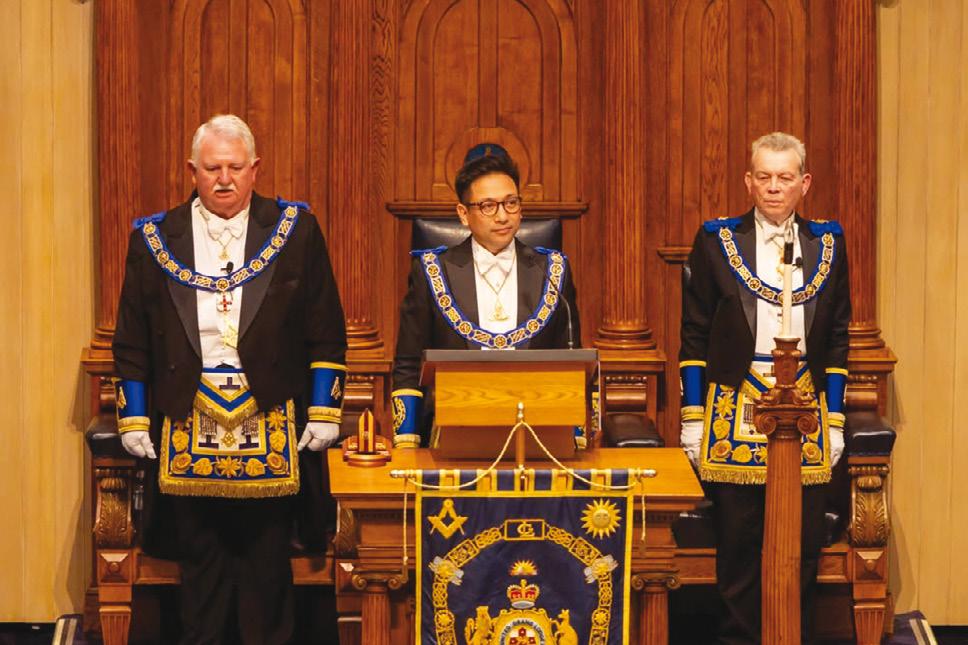
moving forward; and I thank RW Bro Schultz for his continued support.
R It is also my pleasure to announce that I have appointed RW Bro Brian Potter as Assistant Grand Master for the Masonic Year 2026–27 succeeding RW Bro Samuel Young who continues his responsibility in the Board of Management. I thank RW Bro Young for his continued support to our Grand Lodge and to me personally as well as in keeping his serious business in the Boards and key initiatives.
I thank our Deputy Grand Master and Assistant Grand Master RW Bro Schultz and RW Bro Young for their outstanding delivery of their respective roles in the Boards, Councils and Committees where their offices contribute as well as their unwavering support to the strategic plans and initiatives discussed in the lead-up of these announcements.
Brethren, I am pleased to confirm the re-appointment of RW Bro Dr Raul Amor as Chairman of the Grand Charity Fund for the Masonic Year 2026–27.
Membership in our lodges is not the end of our quest to become better men. It is the beginning and it is ongoing. We have an ongoing opportunity to keep improving and such improvement can only be sustained if it comes from
the heart and when we take it to heart. With this and by this, we are always becoming better.
When we involve ourselves in the lifestyle and not just in the membership, when we initiate events, when we imbibe our Craft so that, as an example, you create events that involve community and family, you keep the pulse that keeps us alive, relevant and exciting.
I hark back to the same spirit that prompted our forebrothers to unite into one Grand Lodge. The coming together of brethren with varied interests to become better and be part of something better. Grand Lodge is just another concept to us until one engages and fully embraces it as your own. The various workings of Grand Lodge are made available to you in the agenda pack, brethren. Your Grand Lodge leadership with the committees boards and councils stand ever ready to provide assistance and collaborate to strengthen your lodge and your presence in the community.
Important initiatives are highlighted in the reports in your agenda pack. Your leadership team continues to look for opportunities to create successes.
R You will be pleased to note, as an example, that only a few years ago, our financial outlook was substantially challenged with seven figures
in the red. This financial year, we are anticipating finishing with a meagre win in the black. We have established entities that address issues relating to tax implications for our operations.
R Inter-jurisdiction concordats are being negotiated with other Grand Lodges that support your premium and exclusive experience of the Craft in our jurisdiction. As an example, we executed a concordat with the Grand Lodge of Tasmania in February. The same document is now being reviewed by Grand Lodges in Australia, New Zealand and the Philippines.
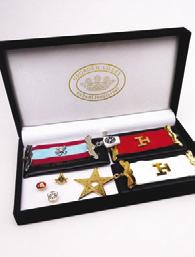
R The Shop @ SMC will open by midJune. Our shop will be able to supply items of utility and interest to the brethren across the state and beyond. The Shop will work with Masonic Orders and interest groups to provide specific paraphernalia and regalia for masons who seek further education and light in Masonry or for those involved in special interest groups.
R District, Regional and Grand Lodge Leadership teams continue to work with lodges – especially those who approach seeking to work together. A good example is Lodge Narrabri who sold their building for a substantial amount, bought another property, developed it, and now have a new Masonic Centre with half of their sale proceeds intact which will sustain their operations and extend their presence in the community.
R Masonicare has organised, once again, a fundraising initiative to upgrade SMC meeting rooms 2 and 3 with organs via the sale of a second version of limited-edition premium watches.
An opportunity to leverage your presence and impact to your community is your charity work bolstered by Masonicare. MW Bro Levenston summarised it best: we are not a charitable organisation, but we undertake a lot of charity work. Charity is a natural by-product of becoming better. Charity work in our Craft is an important pillar which unites us as it gives us a chance to practice our moral and masonic virtues together as we continuously become better men.
Masonicare engagement with the brethren has markedly increased. More and more brethren are showing their co-ownership of our Grand Charity.
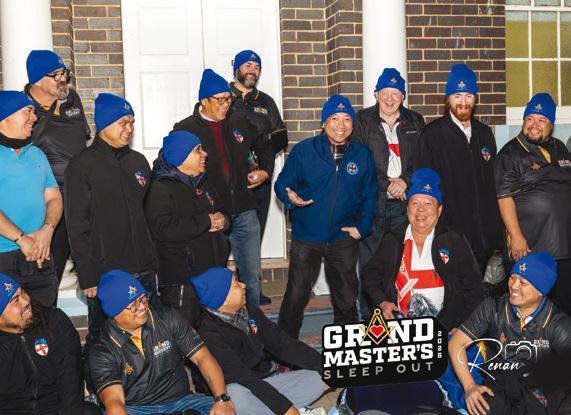
The upcoming GM Sleepout on Saturday, 13 June has attracted significant support from numerous brethren, lodges, and Masonic Centres. Donations of substantial amounts from brethren and their immediate circles have been received while many others have organised their own Sleepouts at their Masonic Centres.
On your behalf, I take the opportunity to thank the Grand Officers who have applied themselves to their roles noting their contributions as well over many years of zealous service to the Craft...
You can also join any of the organised Sleepouts at the Masonic Centres in Sydney CBD (SMC), Camden, Canberra, Blacktown, Castle Hill, Fairfield Kelso, Kurri-Kurri, Mawson, Moree, Oatley, Queanbeyan, Toronto, Turramurra, Wagga Wagga and many others.
I thank W Bro John Koina and his family for his personal donation of $50,000 to Masonicare as well as Lodges for their early response to the call. Brethren, if your Lodge, Chapter, Council, Conclave or Orders are looking to support a charity organisation, please note that we are a registered deductible gift recipient (DGR) and all donations over $2 will be issued a receipt for the purpose and Masonicare will match your donation – not just for the Sleepout but for any undertaking with charity in mind.
The abundance of brethren and Masonic Centres participating is truly overwhelming, and this is just for one of the initiatives. The Region 3 Gala Night is happening in July, District 33’s Gala is happening in August, we have Masonicare’s Carrington Gala happening in November where we have invited the Governor and several Members of Parliament and Ministers.
Brethren, I have been asked several times what Grand Lodge is doing for membership. We have been working with leaders and groups in the jurisdiction to organise initiatives that impact your communities that you can leverage to engage your prospective candidates – leaders in your locations, your dignitaries, your councils. We continue to listen and we continue to create opportunities to engage the public. It is an endorsement that you take advantage of the trend and consider creating similar or social events, and if you require Grand Lodge to support, we stand ever ready.
My invitation remains ever relevant, brethren. Join me, not as witnesses but as co-creators of our history, co-creators of a good and pleasant Freemasonry here in NSW & ACT.
I again commend the outgoing Grand Officers for a job well done and congratulate the brethren who will be elected and appointed tonight and otherwise appointed into Councils, Committees and Boards and positions of service to the jurisdiction.
Let me close by reinforcing tonight’s theme of reflection, renewal and harmony in Grand Lodge by paraphrasing Antoine de Saint-Exupéry in The Little Prince, It is the time and effort you put into your Craft that make your experience of the Craft so important; and it is only with the heart that one can see clearly, what is essential is invisible to the eye. Offices, ranks and titles do not bring honour to a man; it is the man who lends honour to the office, rank and title. Our quest to become better men is internal, not external, and it is ever ongoing. We must always be becoming better, always evolving, always becoming.
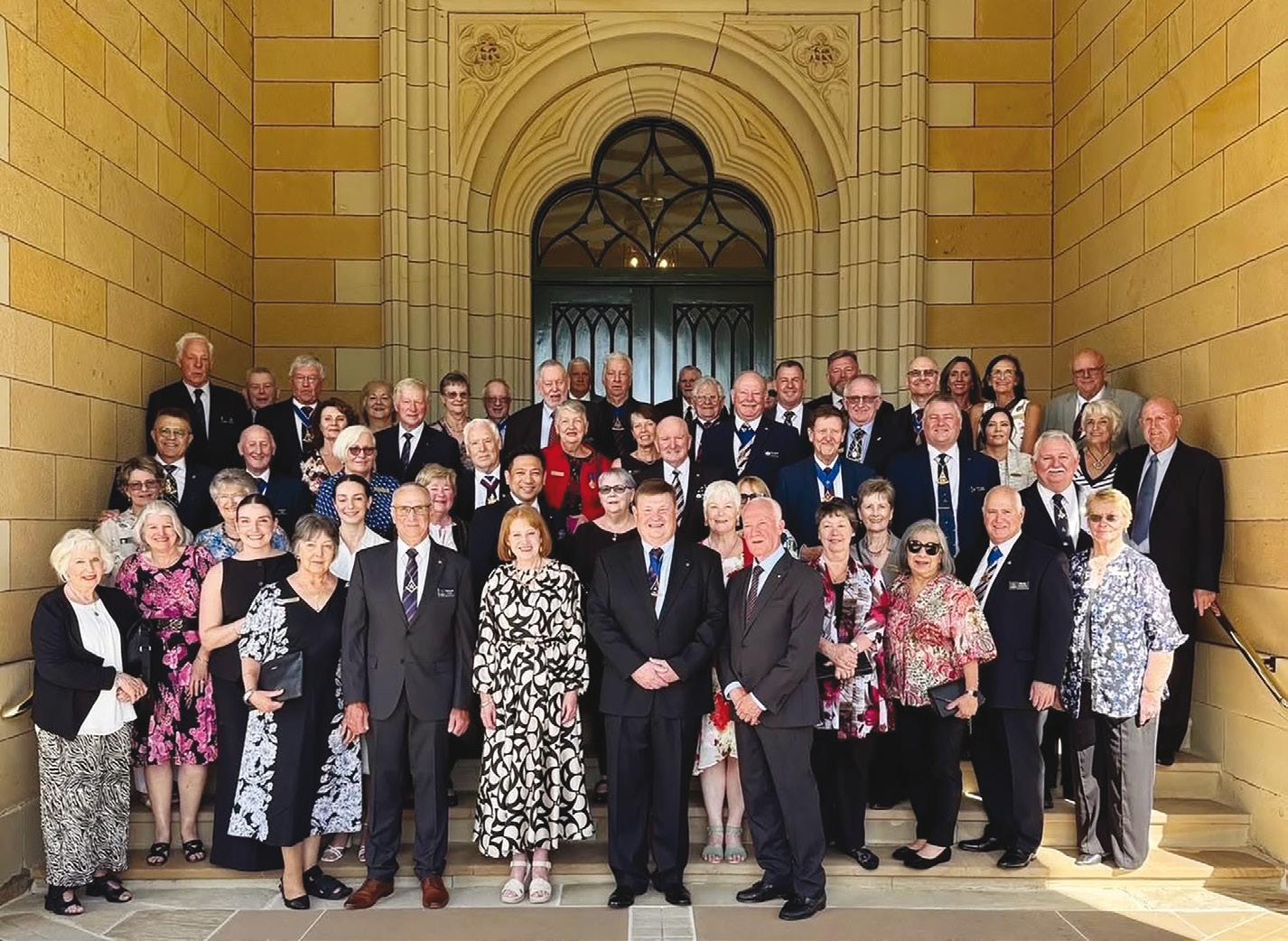
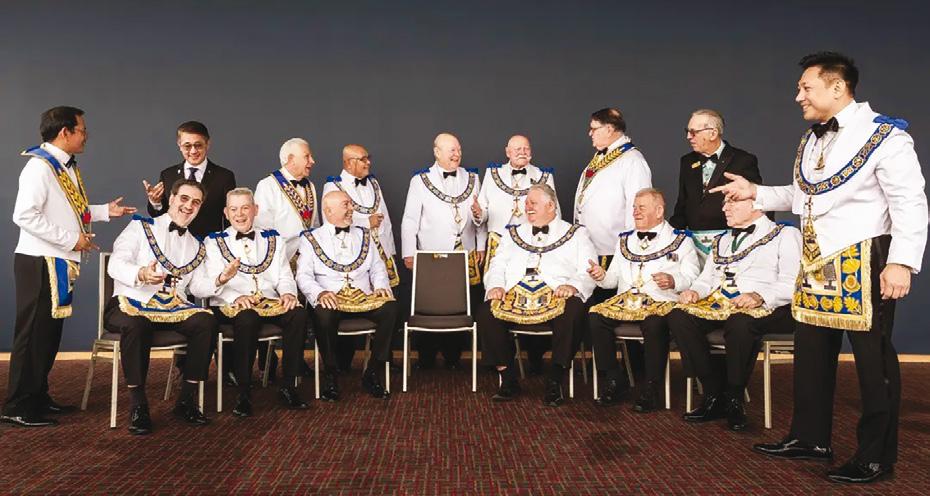
The bonds of Australian Freemasonry were once again strengthened as a delegation from the United Grand Lodge of New South Wales and the Australian Capital Territory, led by Most Worshipful Brother Khris Albano, Grand Master, travelled to Hobart to attend the Grand Installation of Right Worshipful Brother Phillip Kline as the 41st Grand Master of the Grand Lodge of Tasmania.
The Installation festivities were held from 27 February to 1 March 2026 and brought together distinguished Freemasons from across Australia and overseas in a celebration of fraternity, tradition, and unity.
The weekend commenced with a Vice-Regal reception hosted at Government House, where interstate and international delegates were warmly welcomed by Her Excellency the Honourable Barbara Baker AC, Governor of Tasmania. The occasion provided an
opportunity for brethren from many jurisdictions to renew friendships and reaffirm the enduring values that unite Freemasons throughout the world.
...conveyed fraternal greetings and congratulations...
On the following day, brethren gathered for the Grand Installation Ceremony, where RW Bro Phillip Kline was formally installed as Grand Master of the Grand Lodge of Tasmania. Conducted with the dignity and pageantry for which masonic ceremonies are renowned, the Installation marked the commencement of a new chapter for Tasmanian Freemasonry while honouring the achievements and service of those who have guided the jurisdiction before him.
MW Bro Khris Albano, accompanied by members of the Grand Lodge
delegation, conveyed fraternal greetings and congratulations on behalf of the brethren of New South Wales and the Australian Capital Territory. The visit reflected the close relationship that exists between the two Grand Lodges and their shared commitment to preserving and promoting the principles of Brotherly Love, Relief, and Truth.
The attendance of representatives from sister jurisdictions across Australia further highlighted the spirit of cooperation and mutual respect that continues to characterise Freemasonry throughout the region.
The Installation Banquet that followed provided a fitting setting for fellowship, with brethren and guests enjoying an evening of camaraderie and celebration. Conversations throughout the weekend focused on the future of the Craft, the importance of community engagement, and the opportunities that arise when jurisdictions work together in pursuit of common goals.
The Grand Lodge of Tasmania has a proud and distinguished history dating
back to its establishment in 1890 and today continues to serve Freemasons throughout the island state. The installation of MW Bro Phillip Kline represents both continuity and renewal, and the brethren of the United Grand Lodge of NSW & ACT extend their best wishes for a successful and productive term of office.
As the weekend concluded, delegates departed Tasmania with renewed enthusiasm for the Craft and a strengthened appreciation of the fraternal ties that connect masons across jurisdictions. The occasion served as a reminder that while our lodges may be separated by geography, we remain united by the timeless principles and values of Freemasonry.

A report in The Bathurst Times dated January 1891 declares:
‘The furniture in the lodge-room is eloquent with meaning, and its simple symbolical beauty is unsurpassable. The chairs are made of that wondrously lustrous New Guinea cedar, which, when polished, seems to possess vast transparent depths wherein fantastic shapes wreath themselves. The columns holding the canopies of the three chairs are Ionic, Doric and Corinthian.’
Astory in the local press claimed that in 1974 Grand Lodge tried to purchase the chair for the Sydney Masonic Centre.
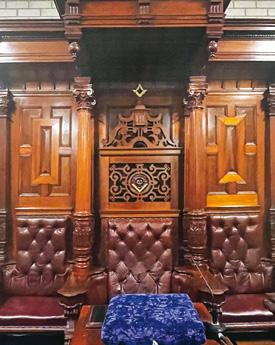
Lord Carrington, Governor of NSW and Grand Master laid the Keystone for the Masonic Temple at 99 Keppel Street, Bathurst in 1889. The Lodge furniture was relocated to Kelso in 1983.
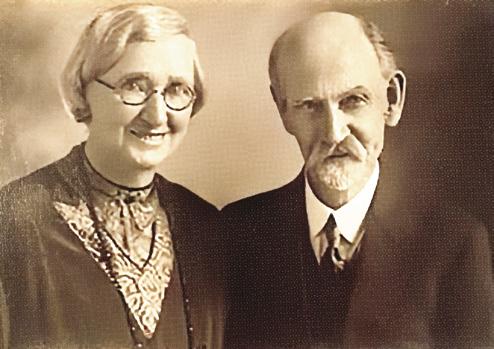
The Master’s Chair and its side chairs were crafted in 1890 by William Dryden who was born in County Durham, Ireland in 1855. He began an apprenticeship at 16, married Mary in 1883 and they arrived in Bathurst in 1884.
Their seven children were all born in Bathurst.
He worked as a Joiner and Architect and, in a period when the Anglican and Catholic religions were clearly separated, was eagerly contracted by both. Examples include the 1896 Bishop’s Throne and side altars for St Michael and John’s Catholic Cathedral in Bathurst; in 1910, a cover for the Christening font and other items for All Saints Anglican Cathedral, and (although consecrated in 1835) what is now the altar, choir screens and surrounds for the Holy Trinity Anglican
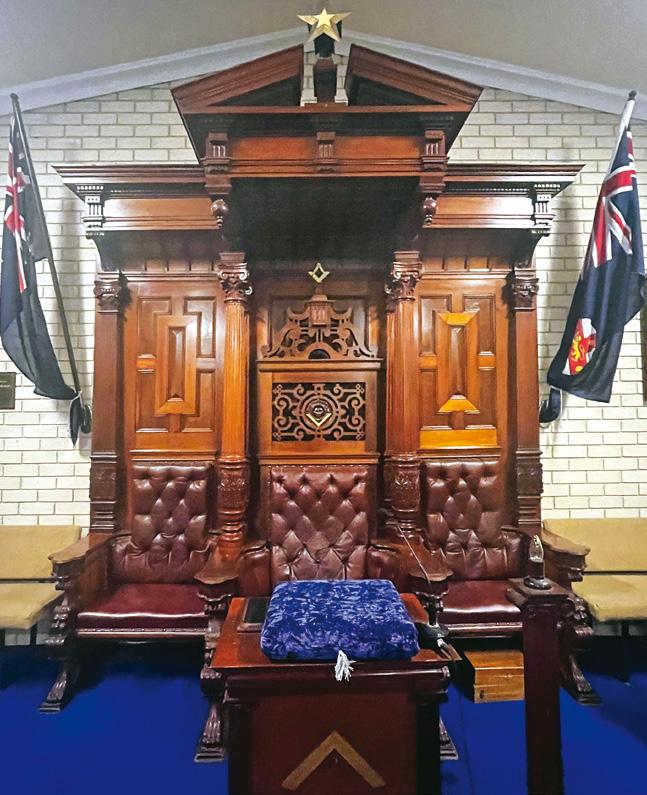
Church, Kelso. He designed a replacement steeple for the Methodist Church in 1911.
Not only was William a skilled craftsman, but he also contributed to Bathurst society in many ways.
He had a deep passion for music. He was Director of the Bathurst Choral Society and was choir master in the Catholic church for over 30 years. He was also President of the St Vincent de Paul Society.
He served on the Bathurst Council for many years. There are a number of reports in the local paper of his campaign to get Council funding for a lake to beautify the town.
Dryden was the architect of the Evans Memorial at the end of Kings Parade. Unveiled in November 1920, it was designed as a Centennial Memorial to the Surveyor and Explorer George Evans, who was the first European to cross the Great Dividing Range leading to the discovery of the Bathurst Plains in 1813.
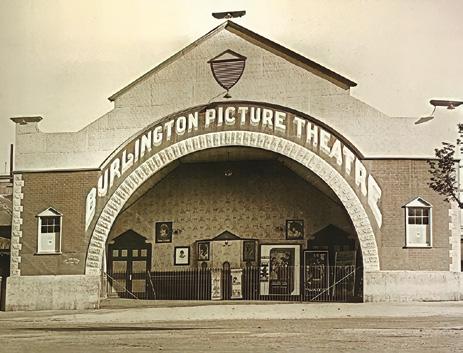
He experimented with pressed metal as a building cladding and the Burlington Picture Theatre built in Bathurst in the early 1900s was an example.
William had a couple of years’ serious illness and in 1924, William and Mary moved to Sydney.
William Dryden died in Sydney in 1939.
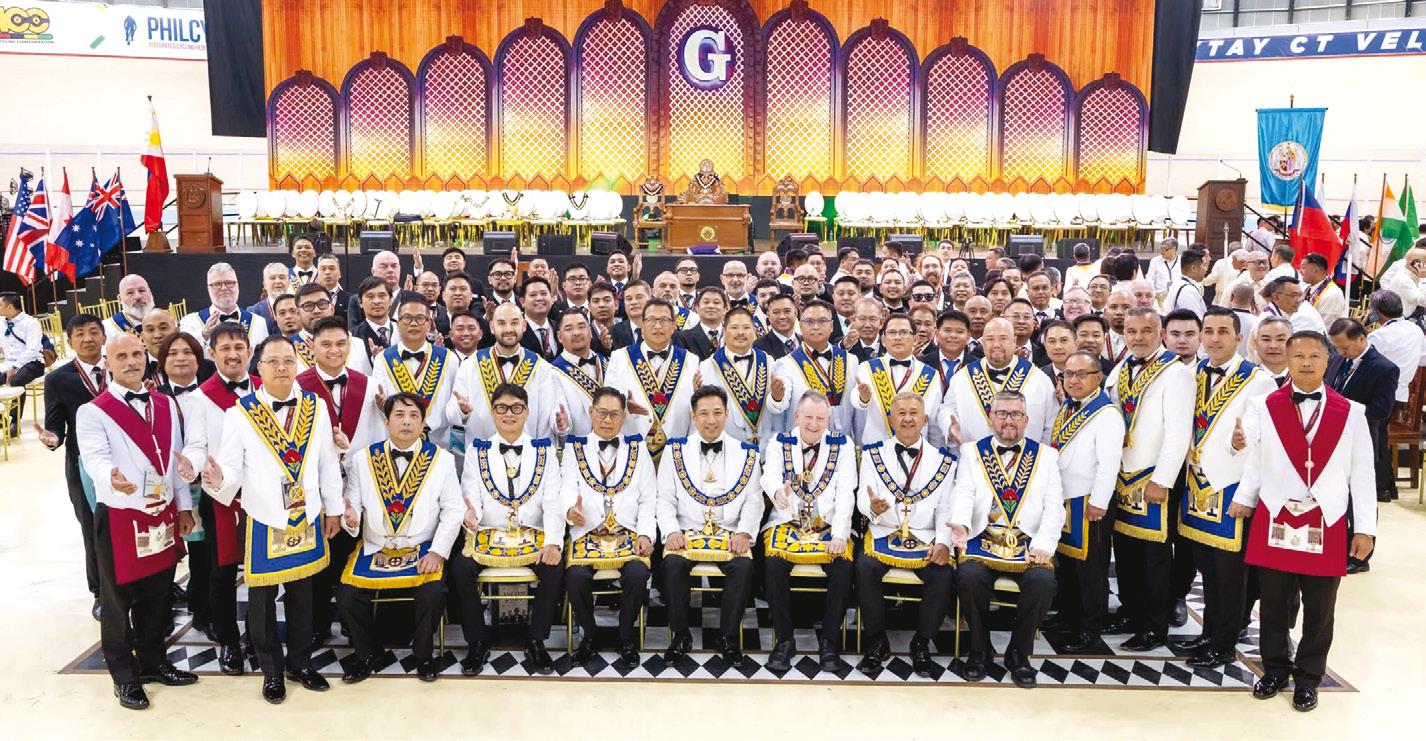
The Most Worshipful Grand Master of the Philippines, Raul E Canon Jr, and Grand MasterElect Robert Joseph S Moran Jr warmly welcomed 26 foreign delegations to the Annual Communication 2026 of the Grand Lodge of the Philippines (ANCOM 2026).
Among the distinguished international visitors attending the four-day event in April was a strong contingent from the United Grand Lodge of New South Wales and the Australian Capital Territory, reflecting the enduring fraternal ties that unite Freemasons across nations and jurisdictions.
Held against the picturesque backdrop of Tagaytay, ANCOM 2026 proved to be a significant gathering dedicated to fellowship, unity, and the shared principles of Freemasonry. Brethren from around the world came together to celebrate the strength of international masonic relations and reaffirm the values of cooperation, mutual respect, and institutional continuity that underpin the Craft.
The Grand Master, MW Bro Khris Albano accompanied by the Grand Secretary, MW Bro Les Hicks (GM40), together with several Grand Lodge Officers and brethren, stood proudly alongside their international
counterparts throughout the proceedings. The presence of delegations from numerous jurisdictions reinforced the spirit of harmony and shared purpose that characterised the event.
As with many important international masonic assemblies, ANCOM 2026 provided an invaluable opportunity for Grand Masters, Grand Lodge officers, and brethren to exchange ideas, strengthen longstanding friendships, and foster new avenues of cooperation. The gathering served as a powerful reminder that while jurisdictions may be separated by distance, they remain united by common values, traditions, and a commitment to the betterment of humanity.
Adding further significance to the visit, the NSW & ACT delegation attended the installation and investiture of officers of Elysian Lodge No. 418 in Manila. By special dispensation, this lodge of the United Grand Lodge of NSW & ACT conducted its meeting overseas – an uncommon and historic occasion
for our jurisdiction. The event highlighted the global reach of our fraternity and demonstrated how the light of Freemasonry continues to shine wherever brethren gather in peace, friendship, and mutual understanding.
The proceedings concluded in an atmosphere of harmony and renewed fraternal goodwill, with strengthened relationships between jurisdictions and reinforcing a shared commitment to the future of universal Freemasonry. The participation of the NSW & ACT delegation at both ANCOM 2026 and the historic meeting of Elysian Lodge No 418 reflected our Grand Lodge’s continuing engagement within the international masonic community and created further opportunities for cooperation, friendship, and brotherly exchange.
ANCOM 2026 will be remembered as a successful and notable occasion, one that celebrated the universality of Freemasonry and further strengthened the bonds that unite brethren across the globe.
The rhythm of modern life has changed dramatically, and the experience of the contemporary mason reflects that shift.

Many members are navigating demanding careers, long commutes, family responsibilities, financial pressures and the constant presence of digital communication. These pressures often collide with the desire to remain active in the Craft, and subsequently the result is a quiet struggle that affects attendance, confidence and longer-term engagement.
The first step in addressing this challenge is merely recognising the reality that many masons face.
A significant number of members work in industries where hours are unpredictable and workloads fluctuate. Younger masons in particular are often raising young families or building careers that require travel or very long workdays. These pressures can make it difficult to attend meetings regularly, rehearse rituals or take on officer roles. Members may feel guilty when they cannot contribute as much as they would like, may worry that they are letting their lodge down or that they cannot return after a long absence. This emotional burden can be heavier than the practical difficulty of attending.
Modern communication tools such as shared calendars, lodge meeting minutes and group messaging help members stay informed...
Yet Freemasonry remains a powerful source of ‘stability’ and meaning. A lodge meeting offers structure, reflection and a sense of belonging. It is one of the few environments where work titles do not matter and where members can step away from the noise of daily life. Many describe their lodge night as a moment of calm or ‘relief’ in an otherwise hectic schedule. It provides an opportunity to reconnect with values, friendships and
purpose. The challenge is finding a sustainable way to maintain that connection.
One way to reach this balance is to rethink what involvement looks like.
Not every mason needs to take on a major office. Members can choose roles that match their availability and step back temporarily when life becomes demanding, such as helping with a single event, attending occasional rehearsals, writing a short piece for the newsletter or mentoring a new member over coffee. These small actions keep members connected without requiring large blocks of time.
Lodges can encourage micro contributions, reinforcing the concept that participation is not all or nothing. A member who cannot attend every meeting can still be an active and valued part of the Craft.
Communication plays an important role in this process, because members need to feel genuinely comfortable speaking with lodge leadership about their availability and the pressures they are managing in their personal and professional lives. When a member is
able to have a simple, honest conversation about what they can realistically commit to, it prevents misunderstandings, avoids unspoken expectations and allows responsibilities to be shared more evenly across the lodge.
Lodges that actively encourage open dialogue often discover that members remain engaged and connected even during periods when they cannot attend every meeting, because they feel understood rather than judged. This approach strengthens the culture of the lodge and the wider Craft by creating an environment where members feel supported, valued and respected, and it also reduces the pressure that many individuals quietly carry when they are trying to balance their masonic duties with the demands of everyday life.
Lodges can also adapt to support busy members.
Shorter business meetings, clear agendas and efficient planning can make attendance easier. Modern communication tools such as shared calendars, lodge meeting minutes and group messaging help members stay informed even when they miss a meeting. Some lodges utilise hybrid formats for planning and management meetings, which allows members to contribute without being physically present. These adjustments do not change the essence of the Craft, they simply make participation more accessible.
These practical improvements open the door to a wider reflection on the many influences that shape a mason’s engagement with the Craft, encouraging us to consider why the journey through its shared labour and communal work takes a different form for each individual. There is real value in recognising the generational differences that exist as each member experiences the challenge of balance in a unique way, differences that shape how they participate in lodge life.
Younger masons are often in the busiest and most demanding years of their lives, managing early career pressures, long work hours, financial commitments and the responsibilities of raising young families, which can make regular attendance difficult even when
their enthusiasm for the Craft is strong. Alternatively, older masons may have more predictable schedules and greater availability, yet they often carry a heavier share of management and officer responsibilities, sometimes for many years, which can create its own form of strain as they work to keep the lodge functioning effectively.
Both groups are navigating the same desire to remain active and connected, but they do so under very different circumstances. When lodges acknowledge these differences openly, it becomes easier to create an environment where expectations are realistic, responsibilities are shared more evenly and members feel comfortable contributing at a level that suits their stage of life. Encouraging such conversations between generations strengthens mentorship, builds understanding and helps cultivate a culture where members feel supported whether they are just beginning their masonic journey or have been part of the Craft for decades.
Freemasonry continues to offer something deeply relevant in a busy world...
The values of stability, brotherly love and truth bring genuine relief in a period when many people feel over-extended, and serve as a dependable source of connection and purpose when life becomes demanding.
By acknowledging the realities of modern life and adapting where appropriate, lodges can assist members in
Members can choose roles
that match their availability and step back temporarily when life becomes demanding
maintaining a meaningful connection to the Craft.
Freemasonry should enrich life, not compete with it.
With thoughtful support and realistic expectations from the Craft at its core, members can find a balance that allows them to thrive both inside and outside the lodge, remaining true to the Craft’s guiding principle of making good men better.
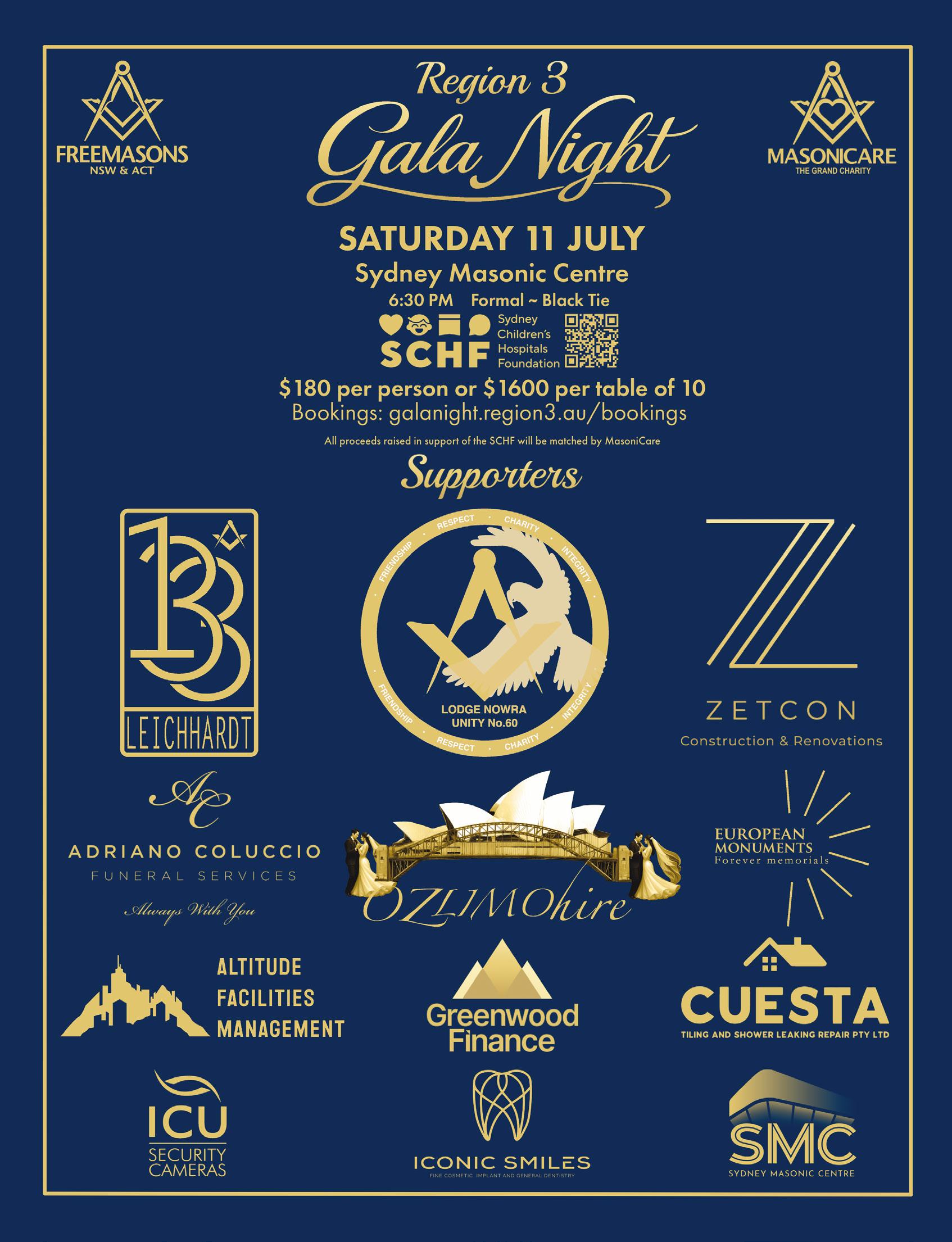
Region 3
Gala Night
6:30 pm on Saturday, 11 July 2026 at the Sydney Masonic Centre
Three-course dinner and entertainment. Proceeds go to the Sydney Children’s Hospitals Foundation. Dress code is formal black tie.
Tickets $180 pp or $1,600 for table of 10. Visit: galanight.region3.au/bookings
Hurry and book now – don’t miss out!

NSWMC Seniors Club Men’s Health talk
Join Dr Greg Levenston OAM for a talk and Q&A session followed by morning tea. All welcome!
To be held at 10am, Thursday 27 August 2026 at the NSW Masonic Club, Level 2, 169 Castlereagh Street, Sydney. Tickets $10, RSVP 24 August 2026. For bookings: call Rita on 9284 1006.
International Order of the Rainbow for Girls
Rainbow Girls meetings
Now meet at 2.00 pm on the second Sunday of each month at the Blacktown Masonic Centre: 5/1 Carnegie Place, Blacktown
For further details please phone Lorraine on 0417 082 631 or email: rainbowgirls74@gmail.com
All masonic brethren welcome!
List in What’s On for as little as $25 per issue ($100 for four listings) or $25 for a classified ad. Email freemason@apmgraphics.com.au for all the details.
Freemasonry is often spoken of in passing, sometimes dismissed as ‘just a men’s club’. The reality is far richer. Across generations, Freemasonry has shaped individuals, strengthened communities, and fostered a culture of reflection, service, and personal growth.
Its traditions reach back centuries, yet the relevance of Freemasonry in modern society depends not on nostalgia, but on how these enduring values are expressed and experienced today.
Preserving ceremony, strengthening understanding Rituals and symbolism are at the heart of Freemasonry. They connect participants to a long lineage of shared history and provide a framework for examining integrity, responsibility, and leadership.
Ceremony is not mere formality; it is a structured opportunity for reflection. When its meaning is understood –particularly by those newer to the Craft – it becomes a powerful anchor that strengthens character and purpose.
Freemasonry thrives when participation is meaningful, not routine. Simply attending lodge meetings without reflection or engagement misses the point.
True value comes when time spent together fosters learning, discussion, mentorship, and visible contributions to the wider community. Presence without purpose is not the goal; informed and active involvement is.
Modern participants are drawn to clarity of purpose, personal growth, and tangible impact. Freemasonry meets these expectations through:
For those willing to look closely, its purpose and impact become immediately apparent...
R Structured education: Linking masonic principles to leadership, ethics, and daily life.
R Active mentorship: Experienced members guide and support those newer to the Craft and really get to know them.
R Charitable visibility: Members see the direct impact of their contributions on local communities.
R Variety in experience: Lodges offer guest speakers, collaborative projects, and community initiatives alongside ceremonial practice.
These elements ensure that time spent in lodge is fulfilling and meaningful.
Freemasonry in New South Wales and the ACT has long been a force for positive change. Through its official charity, Masonicare, Freemasonry supports both its members and the wider community.
Key programs include:
R Benevolence Program: Support for masons and their families in hardship.
R Disaster Relief Fund: Rapid aid to communities affected by fires, floods, tsunamis and earthquakes.
R Interaction Grants: Lodges can apply directly online to fund meaningful community initiatives.
This work demonstrates that Freemasonry is not symbolic; it is structured, practical, and tangible – impacting lives quietly but powerfully.
Freemasonry does not need to abandon its identity to remain relevant. Its rituals, values, and principles are timeless. What evolves is how these foundations are expressed, explained, and experienced.
Relevance is achieved through clarity and purpose, not compromise. When meetings are meaningful, mentorship is active, and members understand the impact of their contributions, Freemasonry strengthens itself from within. If lodges preserve the essence of tradition while creating engaging, purposeful, and fulfilling experiences, Freemasonry will not merely endure – it will flourish.
The Craft thrives on honouring its inheritance while shaping a vibrant, inclusive, and compelling experience that quietly invites curiosity from those who witness its impact.
Freemasonry is more than a social circle. It is a tradition that cultivates character, strengthens communities, and fosters reflection. For those willing to look closely, its purpose and impact become immediately apparent – a quiet invitation to explore what lies beyond the stereotype.
Is it time to explore? For more information visit www.masons.au.

Mention this advert and receive a 25% discount on any full price suit –includes made to measure.



In 2025, Freemasons NSW & ACT demonstrated the true strength of our fraternity through action, the generosity and commitment of brethren, and the work of Masonicare.
We made the single largest charitable donation in our organisation’s history – $150,000 – to the Vinnies CEO Sleepout. More than a figure, it was a powerful statement of compassion, unity, and our shared responsibility to support those experiencing homelessness in our communities. It also set the stage for the Grand Master’s Winter Sleepout 2026.
Building on that momentum, the Grand Master’s Winter Sleepout 2026 was held on Saturday, 13 June across NSW and the ACT, continuing the vision and goal set in 2025 and bringing Lodges, Districts, and Masonic Centres together for a night of awareness and solidarity.
Participants slept out in cold, simple conditions – not to replicate homelessness, but to pause, reflect, and
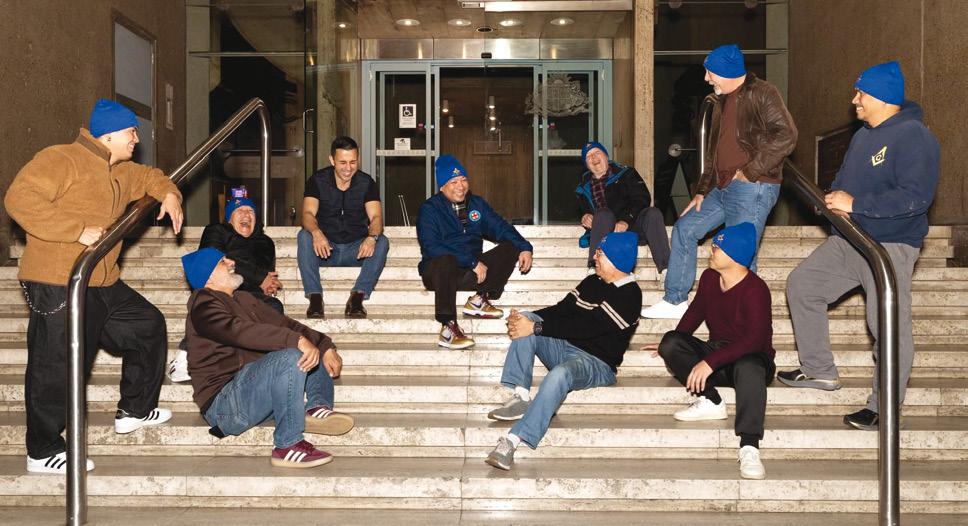
remember those who face these conditions every night without choice.
This symbolic act deepens understanding, strengthens fellowship, and supports organisations helping the homeless.
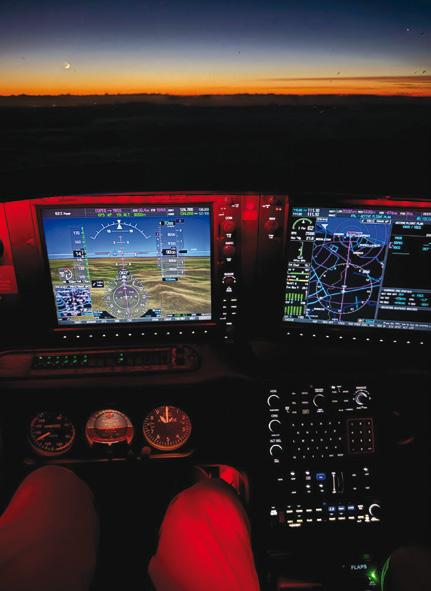
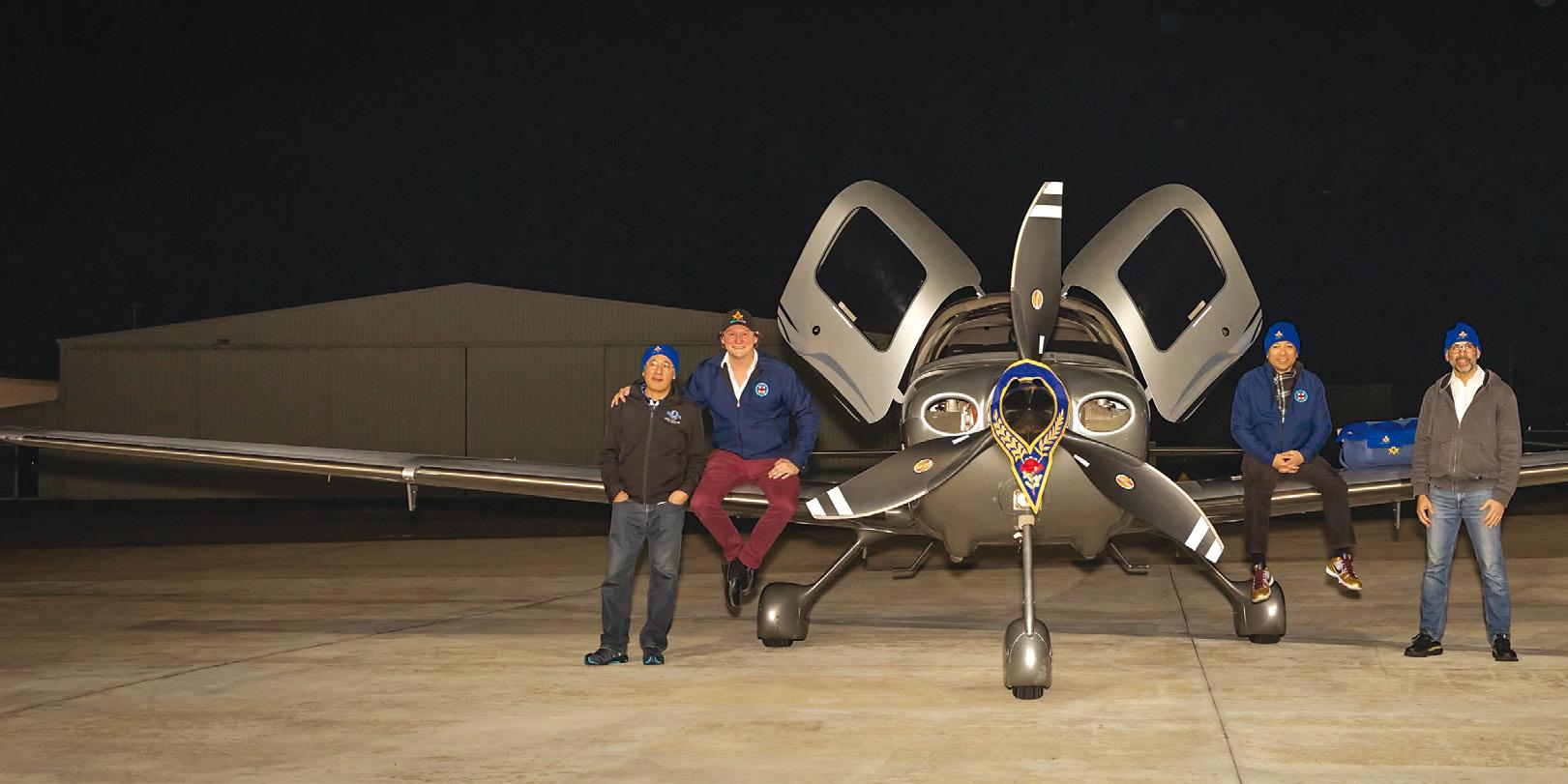
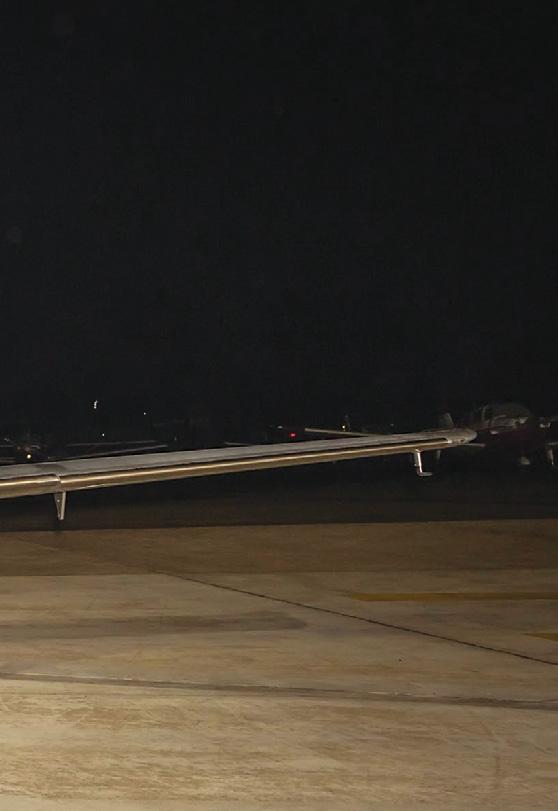
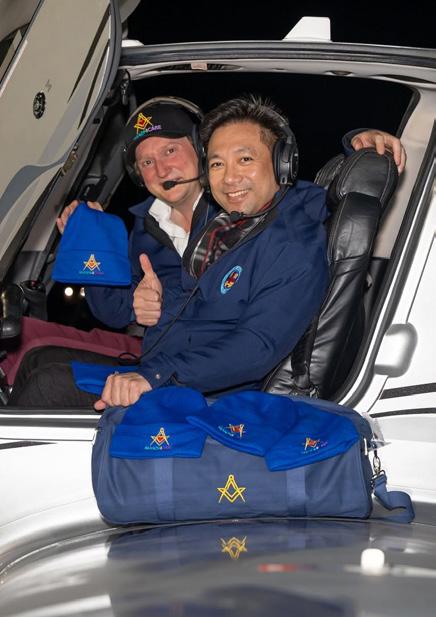
The night was in ‘full flight’ as the Chairman of the Board of Management, RW Bro Joseph Corrigan PSGW, accompanied by RW Bro Joshua Newman PSGW, flew across the State to deliver the MasoniCare Beanies.
The Most Worshipful Grandmaster, MW Bro B Khristian Albano GM, and Bro Owen Guarin hit the ‘Milk Run’ by road, visiting the suburban lodges and brethren.
Thank you to those Masonic Centres in Sydney CBD, Camden, Canberra, Blacktown, Castle Hill, Fairfield, Kelso, Kurri-Kurri, Mawson, Moree, Oatley, Petersham, Queanbeyan, Toronto,
Despite the conditions, a sense of camaraderie abounded as participants prepare for a long night ahead.
By RW Bro Tony Maiorana
Turramurra, Wagga Wagga, and many others that took part through the night until the sun rose in the East.
Further funds were raised through other charitable events, such as Bunnings BBQs, basketball, and billiards competitions, and funds are still being raised towards this worthy cause.
This one night left a lasting impact – on those we support, and on ourselves. This winter, Freemasonry showed itself as a fraternity of values and action.
Editor’s Note: These reports were assembled as the magazine was heading out the door for printing and we encourage additional submissions about these and other events held across the jurisdiction. More SLEEPOUT activity stories from your area are welcome for inclusion in ON THE LEVEL in our next edition. Please email reports and captioned photos to freemason@masons. org.au prior to our 1 September deadline!
As the sun set on the evening of 13 June 2026, one of the most outstanding displays of masonic brotherhood was observed across New South Wales and the ACT as brethren gathered to participate in the Grand Master’s Sleepout campaign. With the brothers about to embark on a tough night in the elements in aid of helping the less fortunate, another important job was needed.
A team of volunteers set out on one of the most amazing ‘milk-runs’ ever seen in Freemasonry, travelling by both road and air to deliver commemorative beanies as widely as possible. The size and scope of the undertaking, and the effort that went into delivering these beanies from metropolitan Sydney throughout the regions of NSW and the ACT was remarkable.
From the Sydney Masonic Centre in the heart of the CBD to Camden, Blacktown, Castle Hill, Fairfield, Oatley, Petersham, and Turramurra and out as far as Canberra, Queanbeyan, Kurri Kurri, Toronto, Kelso, Moree and Wagga Wagga, brethren came together in a spirit of oneness for the cause. The brothers made their way all night long until the break of day when those taking part received their beanies and the inspiration they needed.
Another feature of the event was the innovative way that some lodges and Masonic Centres raised funds for the event. While some members took on the challenge of sleeping outside on a cold winter’s night, other brethren created novel means of raising funds in a fun way.
Social functions were held in several venues, offering masons, their families and friends a chance to spend some quality time together while spreading awareness about the difficulties encountered by less fortunate members of our society. Another was a very successful billiards tournament organised by the United Grand Lodge of Sydney in which more than 100 brethren took part.
...one of the most outstanding displays of masonic brotherhood was observed...
In a similar way, the West Epping Lodge organised a two-day basketball tournament which involved participation from 11 lodges. This tournament was also successful and profitable, promoting brotherhood among the lodges and providing an excellent opportunity for brothers to meet and work together.
While the Grand Master’s Sleepout is an effective symbol of compassion and awareness, another real value comes from the joint efforts of brethren who work for the good of others. Sleeping outdoors, organising community events, travelling long distances to help other people and conducting fundraising are all significant contributions to the successful accomplishment of the objectives set by the Grand Master. The 2026 Grand Master’s Sleepout proved that the tenets of Freemasonry – Brotherly Love, Relief and Truth – will never fade away. When asked to help the needy, Freemasons responded with kindness and devotion.
Reflecting upon what has been accomplished within the framework of the Grand Master’s Sleepout 2026, we would like to convey to everybody concerned our sincere gratitude for helping to make this event so unique and meaningful. The efforts of participants show that Freemasonry is not just talk – it is action aimed in serving other people.
The beanies may have been used for keeping the participants warm during the night, but the spirit of brotherly love was the source of that warmth.
Of the many celebrated bush ballads of Australia, The Man from Snowy River by Banjo Paterson stands as one of the most stirring tributes to courage, resilience, and determination.
While ostensibly a tale of the high country, the poem resonates deeply with principles that echo the teachings of Freemasonry. The daring ride of the young man may be viewed, through a masonic lens, as an allegory for the mason’s own search for Light
At the outset, the young rider is dismissed as unworthy by the seasoned men of the high country. His horse is small, his appearance unremarkable, and doubt surrounds his capability for the perilous task ahead. Here we find a clear parallel with the man who approaches the doors of Freemasonry – one who may possess neither rank nor distinction, yet carries within himself the essential qualities of sincerity and worth. The Craft teaches that true value lies not in outward appearances, but in the refinement of the heart and mind. Like the stripling rider, who ‘bore the badge of gameness in his bright and fiery eye,’ each aspirant holds within himself the seeds of courage, integrity, and untapped potential.
The turning point of the poem comes when the wild horses make their steep and treacherous descent down the mountainside. The experienced riders pause, recognising the danger, but the young man – shaped by the very mountains themselves –presses forward undaunted. In this
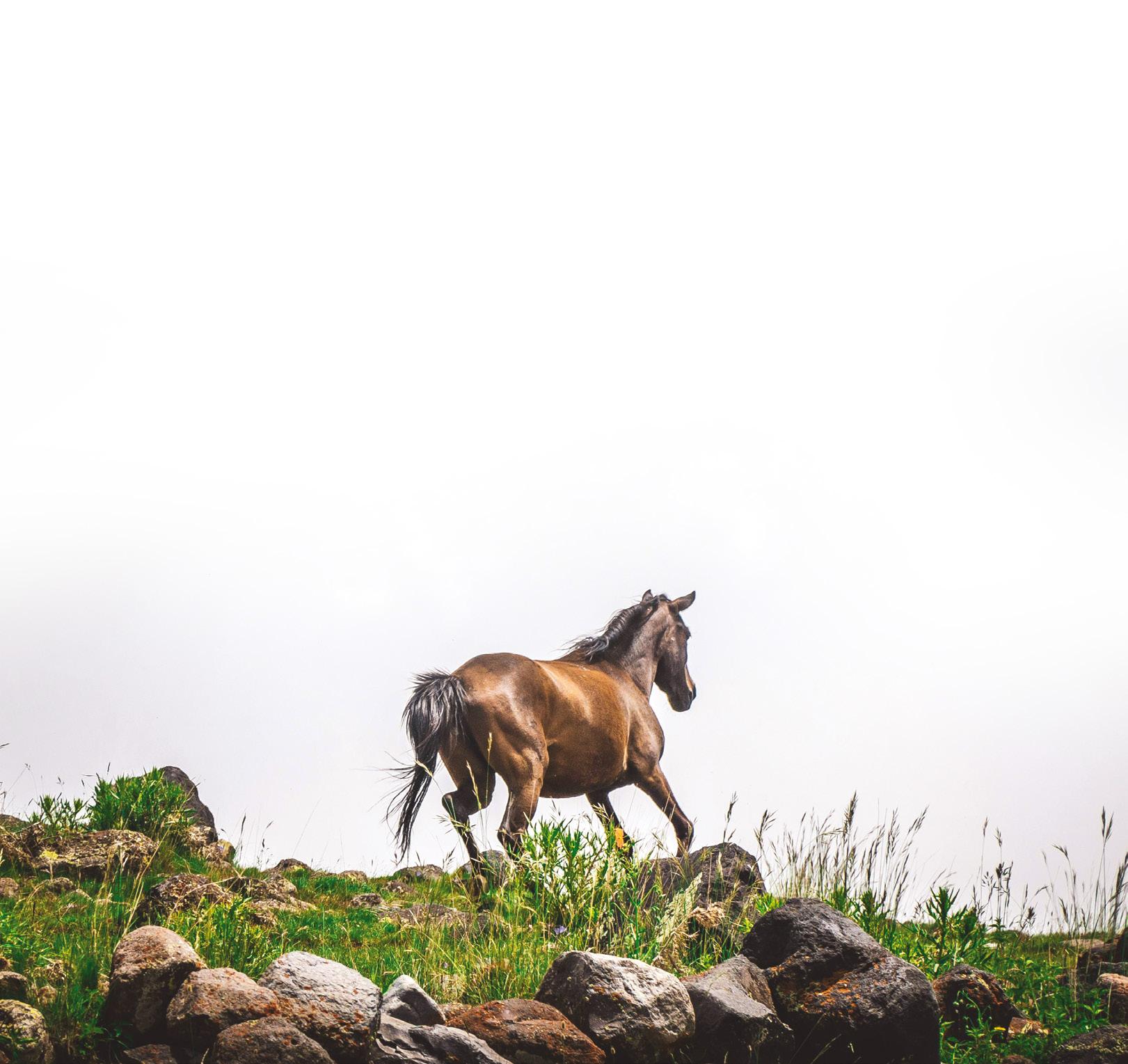
The steep descent represents those difficult paths each of us must traverse...
moment lies one of the profound lessons of Freemasonry: a man is not measured in times of ease, but in moments of trial. Every mason must face his own ‘steep descent’ – those periods of uncertainty where he is called to remain steadfast to his principles. This descent becomes a powerful metaphor for the discipline of self-mastery, the governance of passions, and the enduring pursuit of truth.
Yet it is not courage alone that distinguishes the young rider, but his humility. He does not proclaim his worth; he demonstrates it. Such is the teaching of the
Craft: true merit is revealed through action, not declaration. A mason is not esteemed for titles or honours, but for the quiet expression of charity, integrity, brotherly love, and service to humanity. When the rider succeeds where others falter, he earns the respect of the bushmen solely through his deeds. This reflects the very essence of masonic brotherhood, where men meet on the level, united not by status, but by shared values and mutual respect.
In conclusion, the mountain in Paterson’s poem symbolises the trials and tribulations of life itself. The steep descent represents those difficult paths each of us must traverse, while the rider’s resolve embodies the courage required to overcome them. For the mason, life is a continual journey of self-improvement. Each challenge met with integrity and dignity adds another stone to that spiritual temple not made with hands, eternal in the heavens.
Though The Man from Snowy River recounts the exploits of bush riders and wild horses, its deeper message speaks to the primacy of character and the necessity of courage. Like the young rider, every mason is called to exemplify steadfastness, humility, and determination. The poem reminds us that true manhood is not found in the ease of one’s path, but in the courage with which one rides the steep descent.
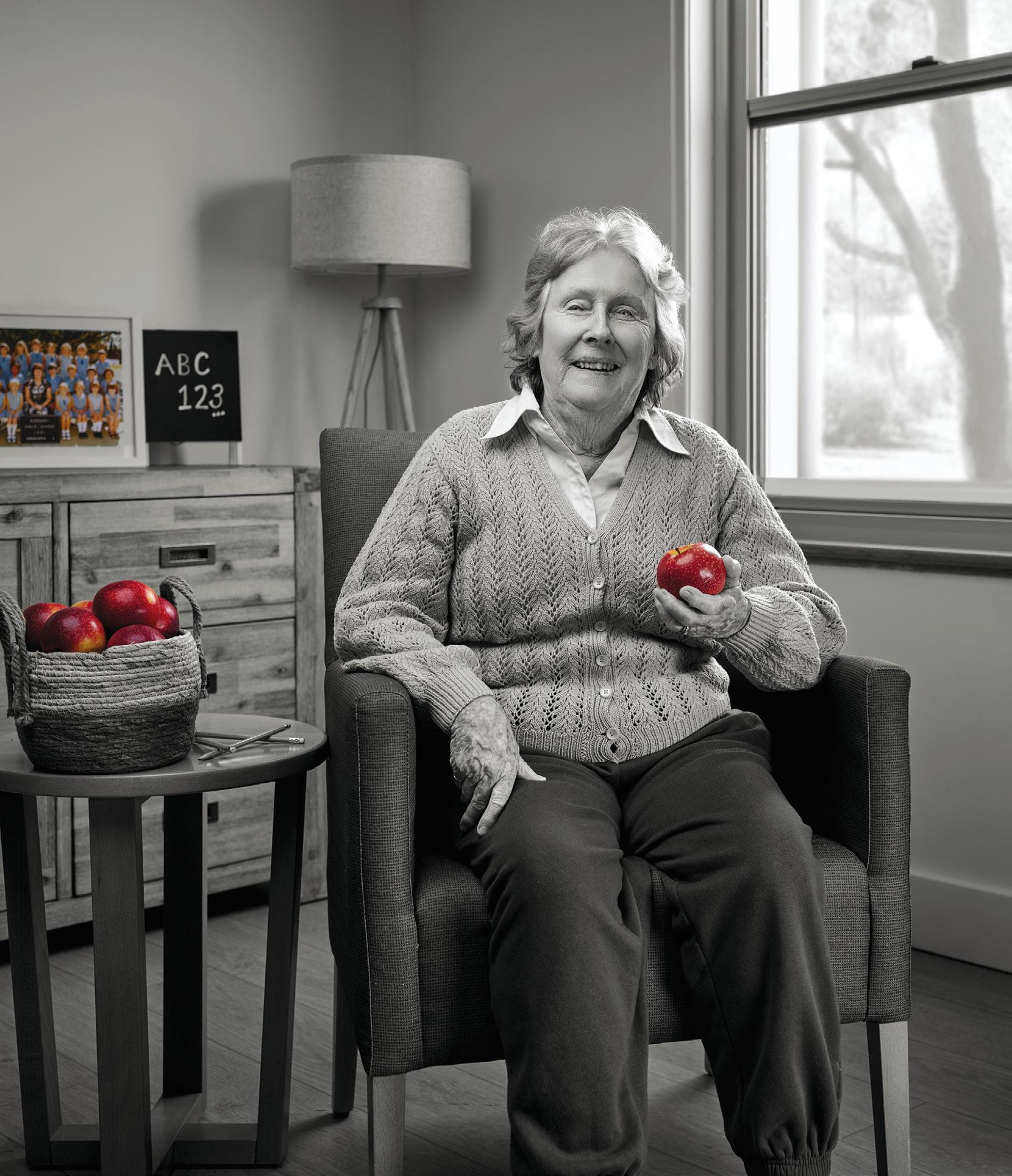
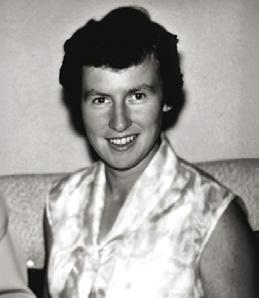
Continuing the story from the April–June issue of Freemason, Owen Moorhouse gives us even more stories of the Volunteer Defence Corps and their experiences on the home front during World War II.
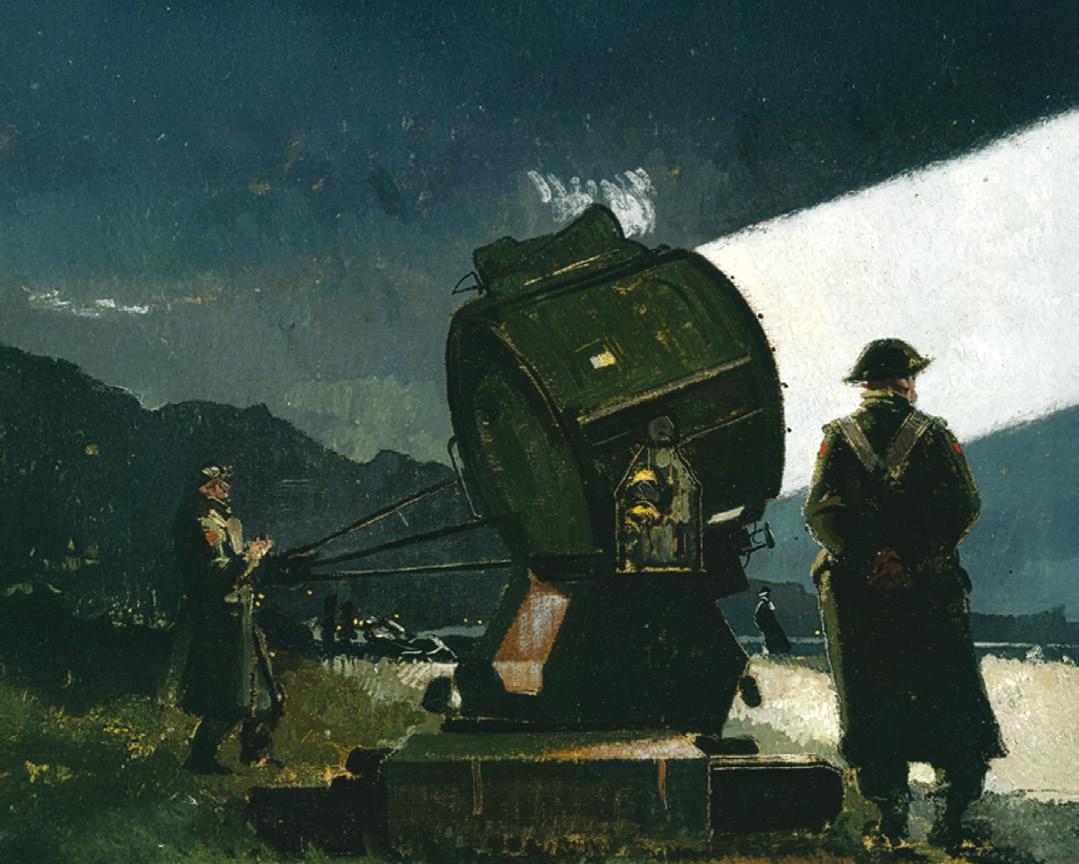
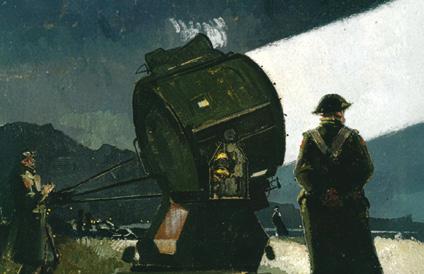
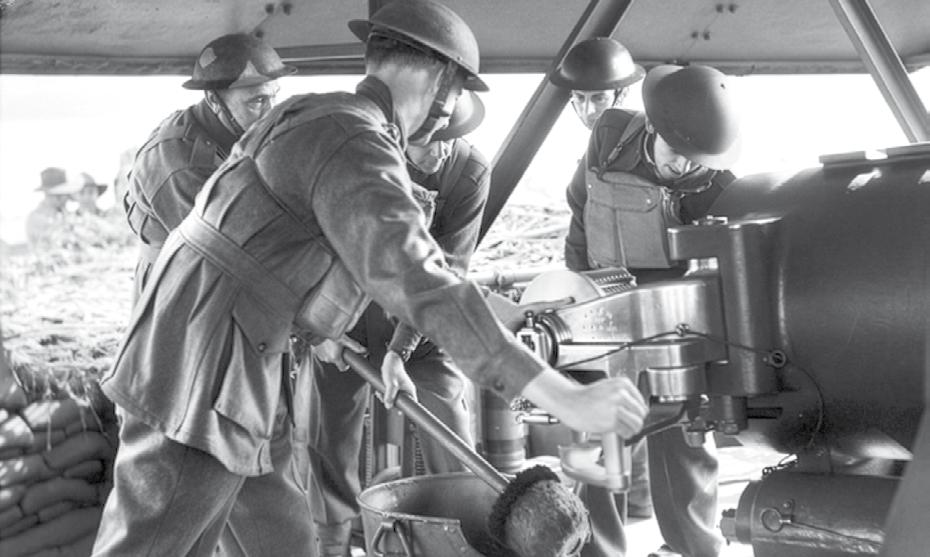
A practical contribution News that German raiders, disguised as commercial shipping, were operating off the Australian coastline, prompted the recruitment of approximately 5,000 permanent VDC members. This released younger armed servicemen for postings closer to the New Guinea frontline. The new VDC recruits filled positions as coastal gunners or manned anti-aircraft defences around large towns and other defence installations. They differed from the Island Coast Watchers, who were posted offshore, and bravely reported on enemy shipping movements from hidden positions, playing a crucial part in the eventual defeat of Japan.
Though I was still below the 16 to 60 age-group eligible for VDC service, as a teenager, I was a member of the Nowra Scientific Club, which was in reality, a mere bush-walking club. It comprised two medical doctors, Roy Thompson and Fredric Rodway (also a renowned botanist), an accountant, Ruben King, and Jack Cole, a photographer and experienced bushman. Other members were progressively called up for active service in the forces, leaving we teenagers in the company of these older, yet very experienced bushmen. The Nowra Scientific Club was asked to survey the coastline between Bowen Island and Warden Head, where it was deemed feasible that
enemy submarines could come ashore to replenish their water supplies, particularly from streams that emptied into the sea. The rationale was that with inflatable dinghies, the enemy could collect water from above the high tide mark, uncontaminated by salt. Our job was to locate and map these potential sites.
The first stream we identified was ideal. Called Stony Creek, it was remote and yet close to the south head of the magnificent Jervis Bay (now in Booderee National Park.) Stony Creek had a steady stream of fresh water that matched our
search requirements. The VDC was then tasked with providing an onsite guard for Stony Creek, but most members were gainfully employed or ran their own businesses. A perfect volunteer soon emerged from Sussex Inlet. He was a fisherman whose boat had been confiscated, to prevent it being captured by invading forces. He was joined by his Aboriginal wife, and armed with a LeeEnfield 303 rifle, ammunition, army rations, a tent and blankets. We also installed a singlewire field telephone, connected to a command post some
ten miles inland, so he could summon support should the enemy appear.
Even with the threat of facing submariners of the German Kriegsmarine or the ruthless Imperial Japanese Navy, he must have thought he was lucky to have been selected, as he was provided with food, shelter and paid eight shillings a day. Payment was deferred until the war’s end, and hopefully he also earned a medal for his services.
Using existing survey maps, the Nowra Scientific Club was also called on to identify features suitable for potential command posts along abandoned logging tracks, and additional water sources should they be required. Back then, Nowra was surrounded by largely uninhabited tracts of land; the west was bounded by the Shoalhaven Gorge system, while the south was largely an unmapped area known as Tianjara. We were provided with all available survey maps and a simple prismatic compass of WWI vintage. We set out every weekend, hiking through the bush to fulfil our duty. With the most rudimentary gear on our backs, we camped wherever night fell. Occasionally we found an abandoned bush hut but spent most nights under the stars in our sleeping bags. Reuben King usually transported us to the start of the trail in his small Austin 7 utility and would collect us the next day at an agreed end point. I recall a heightened state of anxiety mixed with fatigue, as we tried to find his vehicle before the night fell every Sunday evening.
As the consequence of petrol rationing, people became inventive in their pursuit of alternatives. Townsfolk regularly traded stories of their successes and failures when diluting petrol rations with un-rationed kerosine. Some also fitted ungainly domestic coal gasbags atop their vehicles. Others installed ‘gas-producers’ in the car boot space, where they burned charcoal to produce methane gas. While these solutions were at times barely tolerable, they provided some semblance of mobility for day-to-day activities during wartime.
The VDC’s regular Wednesday night parades continued, with all ranks getting there as best they could. My father,
Captain Frank Moorhouse, owned a 1939 Ford V8 that was essential to his farm machinery business. By necessity, he built and fitted a gas producer. He used the resources of his workshop to build it, using a Hoover vacuum cleaner, requisitioned from my mother. Each morning, the Hoover was employed at start-up to create a draught used to blow the gas to the carburettor. After about
half an hour, he was able to start the engine, but this process was not without cost, as it also consumed scarce petrol for the initial ignition.
The gas-producer meant he could accept command of the VDC company platoons that stretched from Falls Creek and Huskisson, and to Ulladulla, some 60 kilometres further south. The platoons were largely made up of men involved in the saw-milling, fishing and farming industries. My father reported to Major Ulrich Walsh, at Nowra Company. As the gas-producer was already fired up from his daytime business activities, he regularly drove it to the drill hall and recreation ground on North Street, and to meet Major Walsh. When the vehicle was parked for any length of time, it was necessary to allow the methane gas to escape into the atmosphere. This was done by opening the filling port on the hopper, where the charcoal was still producing flammable gas. He often did this while the parade was in progress.


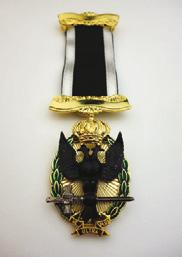
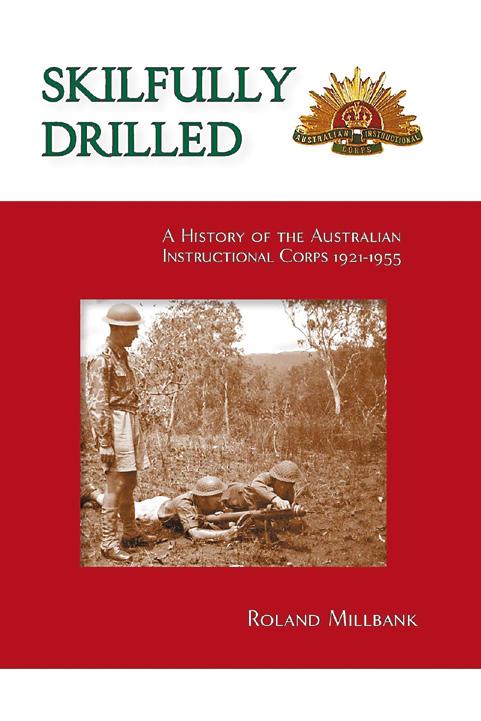
Skilfully Drilled tells the story of the Australian Instructional Corps. Comprising 600 warrant officers, some with honorary quartermaster commissions, they were the unsung architects whose practical soldier training laid the basis for the Australian Army’s success in WWII.
Written by Bro Maj Roland H Millbank (Retd), it delves into the history and influence of this unit that, though never sent to war, nevertheless was critical to our military preparedness.
Relevant to this article, Bro Millbank informs us that officers from the AIC were posted to VDC units as well, stories of which can be found in his book, should you wish to read more.
Skillfully Drilled is available in paperback from various retailers and online.
Published by: Echo Books
Publication date: 2015
ISBN: 9780646477909
Bro Millbank’s letter on page 38 for details!
Young boys often congregated to watch the parade activities, but on one occasion they observed a fire from the open filling port of the gas producer. The boys rushed onto the parade ground in a frantic effort to alert CSM Dick Beatty. He was initially dismissive, insisting they shouldn’t interrupt proceedings. Thankfully their persistence prevailed and the entire company suddenly broke ranks to extinguish the blaze. The company runner was hastily despatched on his bicycle to summon the volunteer Fire Brigade, some four blocks away. Meanwhile, using their bare hands, VDC volunteers scooped up sand from the roadside to throw on the fire, unaware that although the petrol tank was near empty, it was a potential bomb. The Fire Brigade subsequently arrived and averted a potential disaster.
This is a classic example of the issues of the day. In an era when few houses had landline phones, a runner and a bicycle was usually deployed in an emergency. Then as now, petrol was imported and during the war it was only available due to the efforts of seamen willing to run the gauntlet between unforgiving seas and enemy activity, often at a great loss of life.
What’s more, replacement vehicles were simply unavailable. Fortunately, my father’s Ford V8 engine was unharmed, even though the rest of the vehicle was gutted. He eventually found a complete body of an old utility truck that fitted the
chassis perfectly. The Ford V8 was then reborn and carried on with its day-to-day commercial activity, and the work of the local VDC C-Company.
Concern about a Japanese invasion intensified at the beginning of 1942, prompting further plans to be drawn up to deny the invading forces food and transport. That included identifying all forms of transport, including boats large and small, even fishing boats moored unattended in various rivers. This was a ready-made job for the VDC, particularly professional fishermen dispossessed of their boats, or old blokes who simply liked messing around with boats. Many of these vessels were powered by a small single-cylinder two-stroke engine, or often just by oars. All open boats had to be collected and towed together as far up streams and rivers as possible. In the case of Nowra, the upstream settlement of Burrier was chosen as the destination. There the boats could be hidden away from advancing forces or at worst easily destroyed.
Yet flooding rains soon settled in. In the vast Shoalhaven River network, the small boats quickly filled with rainwater. At the point of sinking, they had to be hand bailed, as automatic bailing pumps were as rare as the batteries needed to power them. The rain was unrelenting, and bailing dozens of boats by hand rapidly became an impossible task. The Shoalhaven River is an awesome
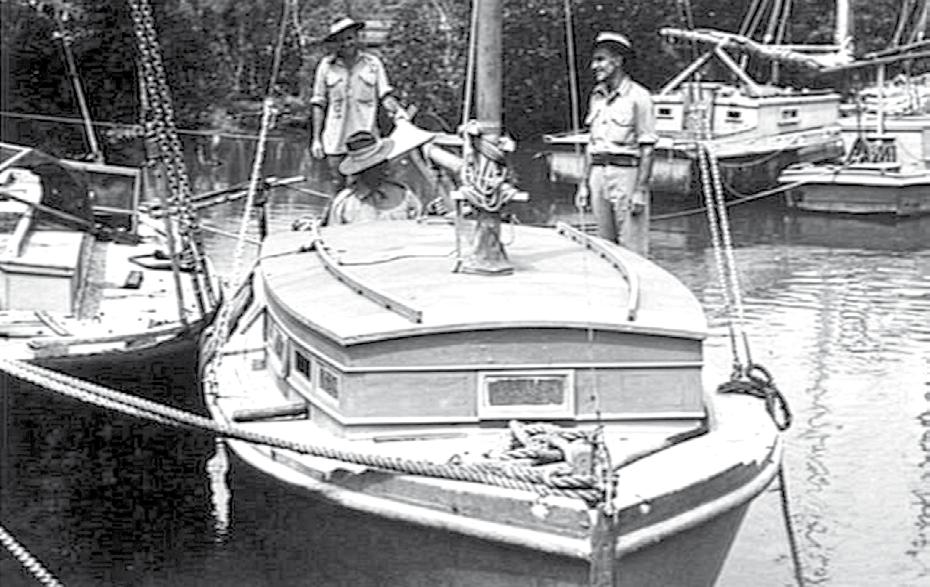
force in a flood. In the swollen, fast-flowing stream, the wooden boats were soon swamped to the gunwales and inevitably broke their moorings. They quickly floated back towards the sea, to be lost forever. I expect many claims were made by owners of those vessels to the Office of War Reparations.
One of my more vivid memories, is of a dark July night in 1942, when the wall phone rang in our family home in Worrigee Street. (Back then, phones were hand-cranked.) It was about 8 or 9 pm and the call was for my father, Captain Moorhouse of the local VDC. It was from RAAF Nowra Hill airbase (not yet known as HMAS Albatross) that had been established just a few months before. The messenger revealed that the entire airbase had lost power. This was serious news, as Nowra Hill was already an important operational base for aircraft patrolling the east coast; vital to protecting shipping against raiders and enemy submarines. As such, many aircraft had already been in the air for long periods and were running low on fuel, wanting to return. In addition to our own RAAF aircraft, some of the incoming planes were from the US Army and Dutch East Indies Air Force, unfamiliar with the area. They were all dependent on approach beacons to identify the airfield, and landing lights to safely guide them in. ‘Would Captain Moorhouse please urgently come to repair the fault? Yes of course,’ my father replied, but in the next breath explained that he was desperately short of petrol for his Ford, and the gas-producer would take at least half an hour to fire-up. ‘Was a vehicle available?’ he asked. Immediately, a 3-ton truck was despatched to bring him to the guard house where the problem had been identified.
It turned out that the electrical emergency was the result of a routine procedure wherein the perimeter patrol guards coming off-duty, had their firearms checked and unloaded at the port position. During this procedure, a standard issue 303 rifle discharged, and fired through the ceiling, severing incoming wires.
My father promptly set up his ladder and climbed into the ceiling to fit a
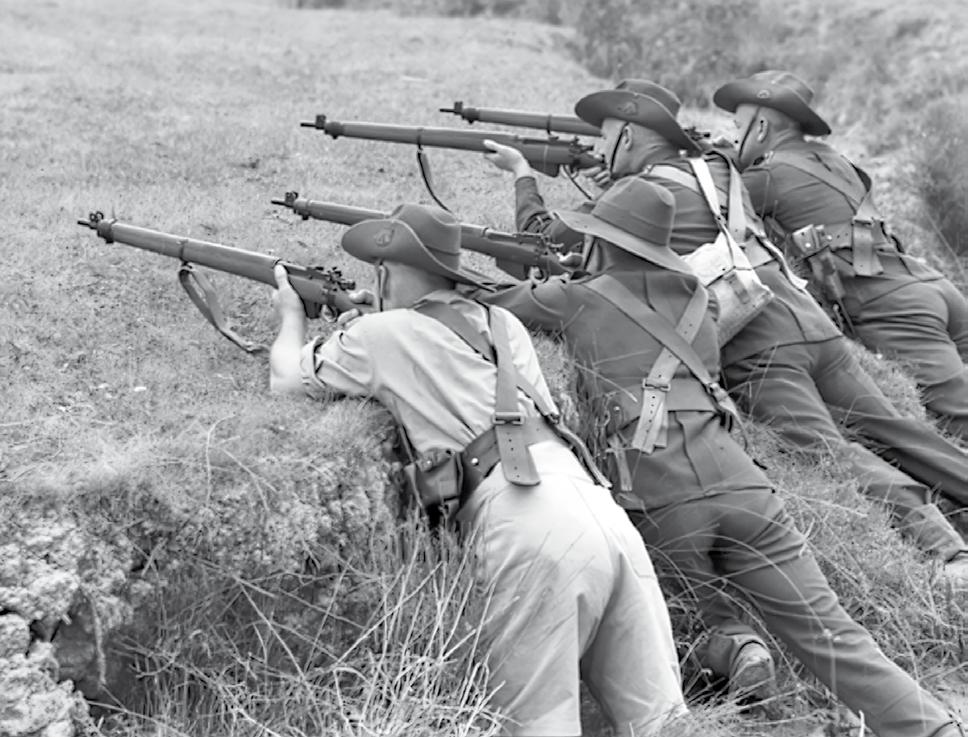
How was it possible for a party of unfit, ageing amateurs in the VDC to neutralise an essential facility?
junction box, necessary for repair. This simple procedure came to the great relief of aircrews waiting to land, for the runway lights suddenly reappeared and the aerodrome quickly resumed normal operation.
Though this was technically not a VDC operation, it came about because the airfield command had contacted Major Ulrik Walsh, OC of the Nowra VDC Company in seek of immediate help. Major Walsh knew that his platoon commander was an electrician in civilian life, so instructed them to contact him directly. Once on site, the problem was resolved in 20 minutes.
During the War, the Nowra Hill RAAF base became very active. Its mandate was to patrol the coast for enemy submarine activity towards Bass Strait, where shipping had been lost.
Visible from Jervis Bay, the airfield itself was also considered vulnerable to enemy attack.
Fearing it could fall into enemy hands, command of the Nowra VDC considered itself ideally positioned to undertake a trial exercise to disable the RAAF base should this happen. How this was to be accomplished with limited numbers, against a well-armed and active airbase was initially considered in the realms of wishful thinking. Only one Bren gun was available to the VDC C-Company for use in this make-believe guerrilla assault.
The small team they assembled, attracted no special attention when they approached the base on Braidwood Road, having secreted Wally Benney’s Chevrolet delivery truck into the bush on the western side of the dirt road. The perimeter fence opposite was patrolled every 15 minutes. The plan revolved around access to a 3-foot concrete stormwater drainpipe that emptied
into an open drain alongside the road. The stormwater drain gave direct, underground access to the centre of the runway, with nothing more than a conventional drainage grate over the exit port that also provided an almost perfect gunner position centre of the north-south runway.
However, not everyone in the raiding party was capable of crawling 200 yards to the exit grate, let alone with a gun and ammunition. Murray Reynolds, known to many as ‘Blowfly,’ and an assistant at the local Anderson’s Cashand-Carry store, was an exception. He was agile, slightly built and easily fitted into the concrete drainpipe, even with the Bren gun. He quickly reached the commanding firing point to neutralise the airfield. Meanwhile the rest of the raiding party waited for the patrols to pass before they overpowered the aircraft guard room and achieved a victory. How was it possible for a party of unfit, ageing amateurs in the VDC to neutralise an essential facility? The whole exercise quickly elevated Murray to hero status around Nowra and awakened those responsible for airbase security to the realities of warfare.
The 5,000 VDC volunteers who enlisted to fill positions of anti-aircraft, coastal gunners and search light operators, released younger and more active personnel for frontline duties. Yet the arrival in Australia of thousands of Italian and German soldiers captured in North Africa campaigns created an urgent need for prisoner-of-war compounds and trained
armed guards. One such compound was established at Cowra, some 300kms north-west of Nowra. This was at a time when the Japanese attempted to invade New Guinea in 1942, so captured Japanese prisoners also began to arrive, along with Koreans and Taiwanese conscripted into the Japanese army, plus Indonesians detained at the request of the government of the Dutch East Indies.
Japanese soldiers and merchant navy sailors considered capture a great dishonour with a moral obligation to escape, which stimulated a demand for trained guards to supervise their more daring behaviour. Those recruited were often WWI veterans with combat and military experience, especially as they were issued with old-style Vickers machine guns that required two trained operators. The VDC was a ready source of veteran gunners, and my uncle, Sergeant Wilfred Yeates, having served in the Somme (1917–18), fitted the requirement perfectly.
Meanwhile on 1 February 1941 and at the age of nineteen, his son and my cousin, Thomas Matthews Yeates, enlisted in the AIF 2/30th Battalion (Army No NX37283). Later that year in July, he was assigned to Singapore. Even though the British Colony had been considered impregnable, Thomas was captured in February 1942 during the Fall of Singapore. He was originally part of the small ships section of the Singapore Strategy that was the cornerstone of British Imperial defence policy in the Far East. Thomas was first interned at Changi Prison along with thousands of others. He was assigned to work parties along places like Thomson Road, Mount
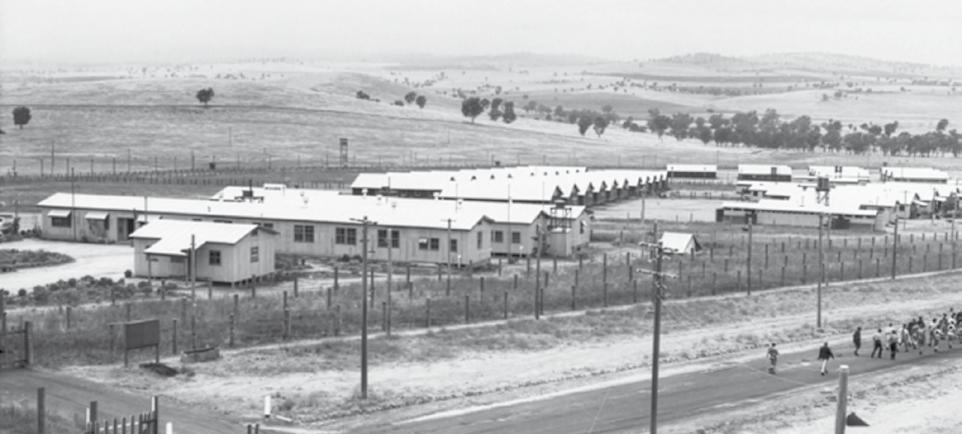
Pleasant, Caldecott Hill and Bukit Timah, now part of downtown Singapore, before being sent to Burma. As communication was effectively lost until the Japanese capitulation in 1945, his fate was unknown to our family. For years, we children were reassured that he had valiantly escaped but was then lost at sea. The reality, however, was far more sinister. While his father, Wilfred Yeates, guarded Japanese prisoners at Cowra, his own son was suffering at the hands of the Japanese. Thomas died in 1943 from forced labour and sickness on the infamous Thailand-Burma Railway. He is buried in the Commonwealth War Graves at Thanbyuzayat, Myanmar. Over three hundred other men from the 2/30th battalion died during captivity.
In August 1944, more than a thousand prisoners of war in Cowra succeeded in the largest breakout of the War. Some 231 prisoners died, along with four Australian guards, two of whom were operating the Vickers gun. Pte Ralph Jones was posthumously awarded the George Cross and Pte Ben Hardy, the George Medal, for preventing the Vickers gun from falling into the hands of the escapees. They disabled the gun by throwing the bolt over the perimeter fence when they were overrun, losing their lives in the melee. My uncle was on leave at home in Sefton, unaware of his son’s imprisonment and death, but news
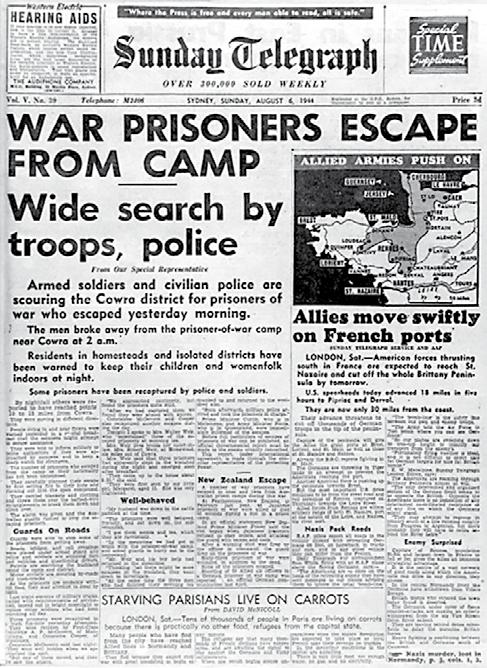
of the Japanese breakout came quickly, and he was urgently recalled to Cowra.
When I reflect on this incident and its dramatic irony, I’m reminded that the war from half a world away was by then very much in our midst. Yet most of us were largely unaware of the tumultuous events occurring at the same time on home soil in Cowra. My cousin’s battalion, the 2/19th was formally disbanded in 1945, having suffered the highest casualties of any Australian Army unit during war.
In 1943 a family crisis occurred in New Zealand. The Tasman Sea was not only rough, but shipping was largely unavailable to passengers. However, my father, VDC Captain Frank Moorhouse, was anxious to return to his family hometown of Wanganui for a short visit. There was only one alternative. Australia and New Zealand were essentially served for mail and matters of priority by Short Sunderland flying boats, under the banner of Tasman Empire Airways Limited. TEAL flew from Rose Bay, Sydney to Mechanics Bay in Auckland. Apart from essential cargo, a few seats were occasionally made available to service personnel with the rank of Captain or above, depending on the service unit. My father enquired whether a Captain of the VDC qualified for a return flight, and was told he would, but only in uniform, with a passport, taxation clearance and a travel warrant – all of which he possessed. The flight to Auckland was uneventful and he soon took care of family obligations.
As was common during winter months, the return flight was into the prevailing westerly wind in a flying boat with a full payload. This headwind generated by the eternal roaring 40s, increased fuel consumption to alarming levels. This prompted the flying boat’s captain to determine that a reduction of the payload was necessary, if they were to reach Sydney.
Short Sunderland flying boats were not pressurised and flew at a comparatively low altitude, just a few thousand feet above the sea. To lighten the load, it was possible to open the door and jettison cargo and luggage into the Tasman
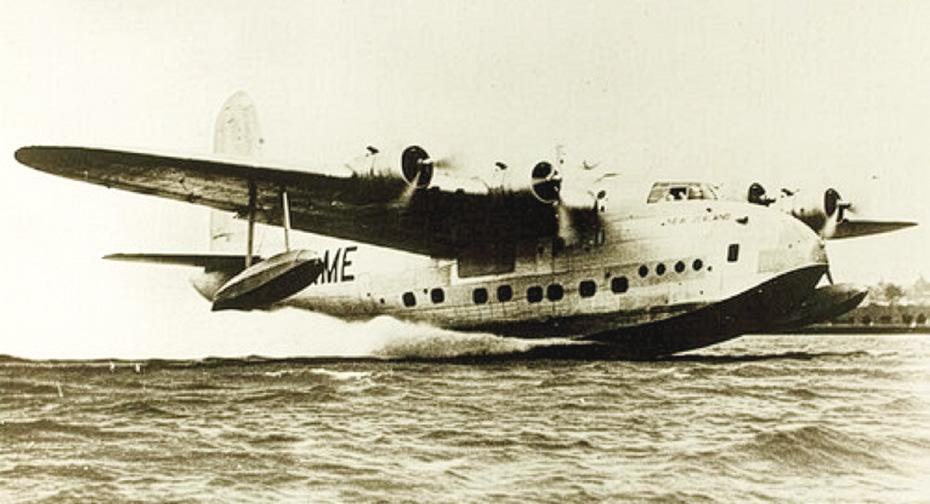
Sea, along with loose items from the galley.
This type of action wasn’t uncommon having been experienced by Sir Charles Kingsford Smith in the initial trans-Tasman mail flights in his historic monoplane, the Southern Cross.
For it was only a decade earlier that he first demonstrated that regular mail and passenger air services were possible. These aircraft were propellor powered with rotary engines and had a mere fraction of the power of modern aircraft. On Kingsford Smith’s initial flight one of the engines overheated while flying into the same westerly wind. His navigator, PG “Bill” Taylor, volunteered to transfer oil from one functioning motor to the other ailing one, outside on the wing. He used a coffee jug while Kingsford Smith piloted the Southern Cross just above the waves.
In the case of my father’s flight, and in the true spirit of “the Royal Mail must go through,“ the mailbag was not touched. Rather, they jettisoned cargo and passengers’ luggage to lighten the load, but this evasive action ensured a safe landing in Rose Bay.
Stories of the Volunteer Defence Corps (VDC) during World War II highlight the resilience and ingenuity of ordinary Australians, in the face of extraordinary challenges. As threats arose, the VDC became vital to Australia’s home front defence, and embodied the community spirit of that era.
During these turbulent years, a classmate of mine at Nowra Intermediate High School was killed, together with her horse when a Dutch-operated Mustang aircraft had been forced landed in paddocks near the family farm at Terara. It was attempting to take-off again with catastrophic results.
To me, the most significant initiative was the inauguration of the VDC by the RSL. That it comprised so many veterans of WWI, a conflict still fresh in many memories, and by men who had already experienced the horrors of battle, speaks volumes about their determination to do everything in their power to defend their own country from aggressors. At that time, family ties and connections with Britain were real and sentiments towards the Empire still strong. Yet any previous divisions, around religion, social status, politics, or associations, quickly evaporated. It was replaced with a ready willingness to accept discipline, often from older, retired veterans. I don’t recall any sense of valour, but certainly one of duty and of camaraderie. For the men of the VDC had one single-minded objective: to defend their homeland of Australia, together.
* With apologies to my brother Frank T Moorhouse OA, from whom I borrowed this title.
On the evening of Friday 12 January 1945, Constable Eric George Bailey was off-duty but on-call in the central western town of Blayney. He had been transferred there just eight days previously, from Moruya on the south coast.
At approximately 8:30pm on the fateful evening, Constable Bailey was called to the Exchange Hotel in Adelaide Street, where a patron was suspected of carrying a concealed firearm. The man, Cyril Norman had arrived in Blayney that day from Sydney.
Upon being approached and questioned by Bailey, Norman produced a revolver and shot Bailey in the stomach. Despite being mortally wounded Bailey managed to handcuff his assailant, but during the scuffle two more shots were fired and Norman was wounded.
Before his death in Orange Hospital late that evening, Bailey dictated a statement of facts to a JP, with full knowledge that his death was inevitable. Constable Bailey was 38 years old at the time of his passing.
With the assistance of some of the locals and with the speedy arrival of police reinforcements Norman was taken into custody. He admitted to the murder of a gun shop owner in Sydney and the theft of weapons and cash to a total value of 200 pounds (somewhere around $9,000 in today’s money). Later, before Mr Justice Maxwell, Norman was sentenced to death but this was later commuted to life in prison.
Having already passed his Sergeant’s exam, Bailey was posthumously promoted to Sergeant (3rd Class). In October 1946, King George VI awarded Sergeant Bailey the George Cross.
...produced a revolver and shot Bailey in the stomach.
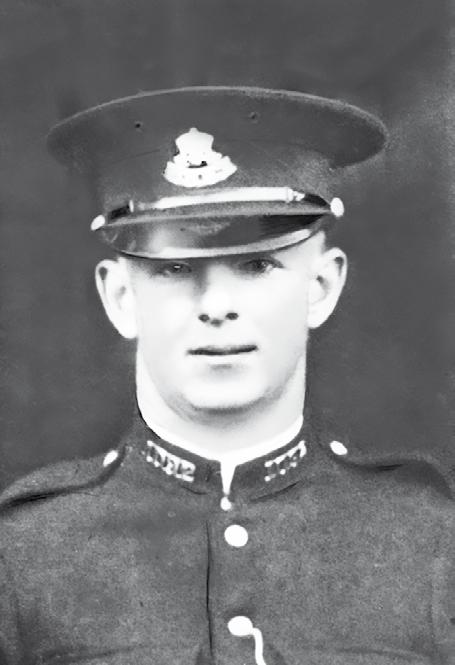
Sergeant (Bro) Bailey’s son, John would follow his father into the NSW police force, retiring in 1988 as a Chief Inspector. Moreover, Bro Bailey’s grandson and John’s nephew, Stephen Martin also joined the NSW police, retiring with the same rank as his illustrious grandfather.
The George Cross is the highest civilian award for bravery and ranks equivalent to the Victoria Cross which is awarded to military personnel. Sergeant Bailey was the first and only NSW police officer to be awarded the GC and one of only 23 Australian recipients.
This in fact was not the first of Sergeant Bailey’s acts of bravery. Some three years earlier he had been recognised for his part in a violent arrest in Batemans Bay and for his involvement in the rescue of the crew of a fishing trawler sunk by a Japanese submarine off the coast at Moruya.
Brother Eric George Bailey was initiated in Lodge Gundagai No 25 on 14 April 1931. He was passed in that lodge and on 13 October 1931 was raised to the sublime degree of a Master Mason.
In February 1935, most likely due to the transfer, he called off (in good standing) from Lodge Gundagai. At the time of his passing, he had submitted his affiliation papers to Lodge Carringtonia No 187, in Blayney.
In 1989, the Blayney community honoured Brother Bailey’s sacrifice with a plaque set into the wall of the Exchange Hotel. The plaque was dedicated by then Shire President, Councillor (RW Bro) Barry Colburt. It reads:
This plaque commemorates and honours the bravery and dedication of Sergeant Eric Bailey of the NSW Police Force who was shot and killed when arresting a criminal at this place on the 12th January 1945.
Placed on behalf of the community by the Blayney Shire Council Cr. Barry Colburt Shire President 11. 12. 89
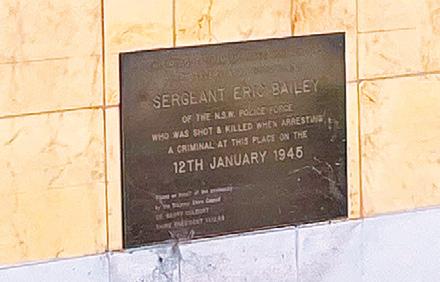
A student sat down at the front of the room. He offered no introduction, asked for no attention, just picked up a guitar and let the music move across a crowd of more than seventy people.
The notes settled something in the room, making it feel less like a venue and more like a gathering of people who already knew each other
That moment, quiet and unrehearsed in Western Sydney University’s Innovation Hub at Parramatta captured something true about what A Start in Life has always been: a community bound by the conviction that no child’s future should depend entirely on the family they were born into.
For the brethren of our Freemason lodge partners, that conviction will sound familiar.
Brotherly love, relief and truth are the three great principles of the Craft, and Freemasonry does not treat relief as a footnote. It is a moral commitment: the active, ongoing decision to place the needs of others alongside your own.
What does that look like, practically?
It looks like a room in Parramatta on a Saturday morning in May. It looks like a woman standing up in front of fortyone award recipients and their families, telling the truth about the years she wasn’t sure she would make it through.
Mimi* has since graduated, but she wanted the room to know what the road had looked like before she reached that point: the uncertainty, the moments she had come close to letting go. But it wasn’t
just the financial support. It was the check-ins. Knowing that someone was paying attention, who genuinely wanted her to succeed. That meant more than she could describe.
That’s what A Start in Life and your support has made possible, not just this year but across a century of giving. The knowledge that you are not invisible to the people who are helping you. That’s what changes a person’s relationship with their own future.
In that room were students and families from across NSW and ACT, some travelled a long way to attend. Honouring them were the donors and brethren who had supported them and alumni who had come back to show the next generation what the road ahead can be like.
Each year, a current student addresses the room. This year Charlie* spoke about what it has taken to get to this point, the challenges that had made ordinary things harder than they should have been, and the feeling of standing in front of people who had helped him without being asked to.
Then he turned to everyone in that room and said they should be proud. That arriving at this point, by whatever road, is worth acknowledging.
These are not groups that typically occupy the same space, and the point of the morning is partly the fact of their being together at all: givers and recipients, past and present, the people who made something possible and the people for whom it became possible.
A Start in Life was founded in 1923. The Freemason community has been part of its story for as long as it has existed, and one hundred years is a long time to hold a conviction.
The Craft has always understood moral development, self-improvement, service to others: these are not abstract ideals, they are expressed in the alumna who made it through. In the young man who stood up and told his peers to be proud. In the 41 students who reached this point because people they had never met decided long before they were born, that this kind of giving was worth it.
The students who will sit in that room next year are out there now. Some are studying at kitchen tables after a shift. Some are navigating school in towns where the nearest support services are hours away. Some are one unexpected bill away from giving up entirely.
Freemasons have always been part of the answer to that. If your lodge would like to contribute, organise a fundraiser, or host a presentation about A Start in Life’s work, we welcome the conversation. Equally, if you have capacity to mentor or would like to share your story, please reach out to communications@ astartinlife.org.au.
The road continues, as it has for a hundred years. We are glad, as always, to walk it together.
* Student names have been changed to protect privacy.
A Start in Life is an ACNC-registered, DGR1-endorsed education charity and a registered charitable cause of the United Grand Lodge of NSW & ACT. Founded in 1923, the organisation supports students aged 4 to 24 across NSW and ACT facing financial barriers to education.
Contact us at astartinlife.org.au or scan the QR code
By RW Bro Robert McKinnon
After 70 years, the Masonic Lodge on Lake Street closed on Thursday 23 April 2026. Secretary Robert McKinnon reflects on the history of why the lodge was built in Forster back in 1956.
The Forster lodge was first consecrated on 17 November 1987, followed by an installation and Banquet at Club Forster (Memorial Services Club), attended by some 200 masons.
The daylight lodge was formed to cater for those older members who were unable to drive or visit at night. It enabled them to retain their interest in masonic ritual, fellowship, and charitable work. In the mid 1990s the active membership exceeded 100, but in recent years it has declined because of the age of the brethren and the high rate of attrition.
Without doubt one of the highlights of the lodge was the lodge choir, which operated in the 1990s where the songsters visited local aged care facilities as entertainers.
After the war ended and up to 1955 the numbers in Forster joining Lodge Manning No 66 in Taree grew rapidly. The one big drawback, however, was the Punt, making its last trip at about
10:30pm. Quite often, due to Lodge Manning’s large membership and a huge workload, returning members would miss the punt. This would mean having to ‘borrow’ one or more row boats, row over to Forster, then row the boat back next morning in time for the first punt back to Forster.
Eventually it was obvious something had to be done to remedy the matter and so it was decided to build a lodge in Forster. The ground where the present centre stands was purchased for 500 pounds, of which Bro Harry Miles donated 400 pounds, a huge sum in those
...within that play or ritual, are lessons about life...
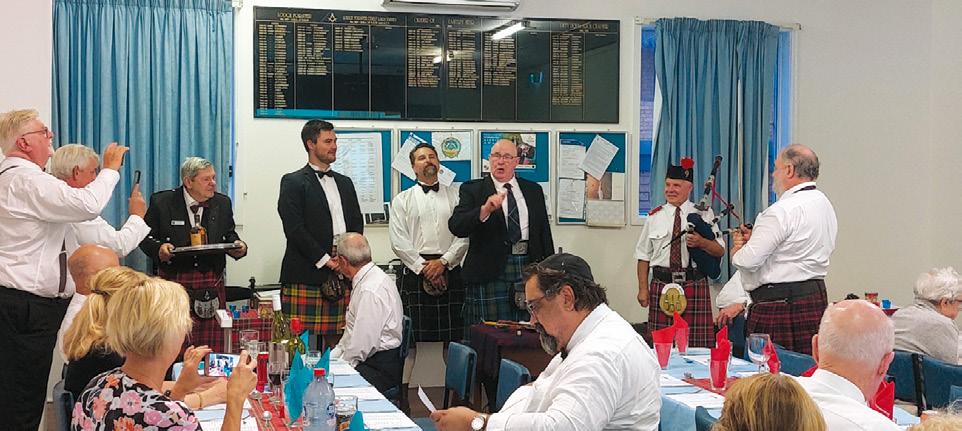
days. Lodge Forster was consecrated as an evening Lodge on 25 August 1956, by Grand Master MW Bro Tom Warren.
The lodge flourished for 50 years, but over the last several years it gradually faded, and it was decided to amalgamate with the daylight lodge. For some it was an ending, but many believed it was a new beginning, and the name says it well – ‘Forster Great Lakes United’.
In November 2009 the lodge consolidated and became a daylight lodge meeting at 9:00 am on the first Monday of the month, however it still maintained its evening status to encourage younger members to join and met at 5:30 pm on the third Thursday of the third month.
Only eight members joined, and the lodge work became boring to many members by meeting twice a month.
In 2017 we changed our meeting times to meet only once a month starting at 6:00 pm on the third Thursday in order to retain our younger members who worked during the day, and that has been retimed to 7:00 pm to allow our members sufficient time to get home from work, see their family then come to lodge. The lodge has had further decline in the current time only having 13 members at present with no potential prospects in the pipeline.
The membership group has members of all ages including some in their 90s, who come from various walks of life, bringing with them their own talents which are used as part of our charity work, where possible.
Modern Freemasonry today provides a framework of life by affirming philosophies and teachings based on self-respect and compassion for others. It builds morality and virtue, illustrating its teachings using symbols based on the working tools of the ancient guilds and lodges of stonemasonry. It is a fraternity of men who meet in a play that
acts out various aspects associated with the building of King Solomon’s temple.
However, within that play or ritual, are lessons about life and how to be a better person.
Freemasonry is often called a secret society. Freemasonry is definitely NOT a secret society.
Its members make no attempt to conceal their masonic affiliation, they proudly wear rings or other jewellery marking them as masons.
Group meeting places are prominently located and clearly marked. Dates and time are often advertised in newspapers or posted on bulletin boards.
Someone many years ago made the following statement: ‘Masonry is not a secret society; it is a society with secrets.’ Freemasonry does have some secrets just like your family having secrets, by keeping of secrets we attempt to preserve them as a sign of our integrity.
Modern Freemasonry today can be related to a building company, the lodge room being the building site.
Just like any building company, the Master of the Lodge is the Company President, the Senior and Junior Wardens his vice Presidents, along with his officers being the Secretary and Treasurer, the two Deacons and Chaplain being his committee. The Director of Ceremonies his Architect or Co-Ordinator and the Inner Guard and Tyler his security officers.
Together just like a company board of management, they open the meeting and confirm minutes, do correspondence, receive the Treasurer’s report then carry out the work.
And like a company, there are several positions (degrees) to work through – starting with First Year Apprentice (Entered Apprentice), then ‘graduating’ to Second Year Apprentice (Fellowcraft) and when your education is complete, becoming a fully qualified builder (Master Mason). Lastly there is the Master Builder (or Master of the Lodge) who teaches and oversees all.
By Bro Simon Pierce
Soldiers Beach SLSC held their 2025/26 presentation night on 9 May 2026, with Freemasons on the Central Coast invited to attend as major sponsors. W Bro Leigh Pollard and Bro Ben Falconer proudly represented the organisation on the evening.
The night began with pre-dinner drinks and plenty of mingling, while guests enjoyed a range of circus-themed activities and entertainment. Formal proceedings commenced with Club President, Simon Falconer and Vice-president, Darcy Walker presenting sponsor plaques, followed by qualification awards recognising members who achieved important competencies throughout the season.
Freemasons on the Central Coast were honoured to present two of the club’s major awards: Junior Club Person of the Year and The Greg Martin Award for Conspicuous Service. The latter award is named in honour of Greg Martin, a past Master of Lodge Toukley.
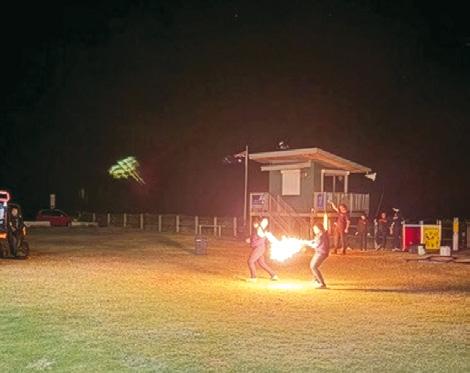
– congratulations to all nominees and recipients!
Freemasons on the Central Coast received a framed Soldier’s Beach SLSC cap with a plaque that reads “Thank you for your continued support”.
It’s a very proud moment for us to be considered a major sponsor for any community organisation, but Soldier’s Beach Surf Live Saving Club is special.
This article was originally published in the Forster Fortnightly newspaper and is reprinted here with kind permission of the author.
After the presentations, the entertainment concluded with an incredible fire-walking and acrobatic performance that amazed the crowd. It was a fantastic evening celebrating the achievements and dedication of club members
Our donation last year of over $13,000 added to this year’s $7,000 means that Freemasons on the Central Coast have donated $20,000 to the SBSLSC in just two years, and over $60,000 since we first became a sponsor.

“When were you made a mason? When the sun was at its meridian. As masonic lodges are generally held in the evening, how do you explain this which, at first sight, appears a paradox?”
There’s no paradox; most lodges, but not all, are held at night. We have daylight lodges too.
With 18 daylight lodges spread across NSW and the ACT and many more around the world, there could be one near you.
So why do some masons go to a daylight lodge? Many have night time jobs or are shift workers. Some of us oldies find it difficult to get up in the morning the day after lodge, having come home in the late hours, and climbing quietly into bed (so as not to disturb the better half). This
At my daytime lodge I have progressed through the ranks and hopefully in November 2026 I will become Worshipful Master of my lodge after 50 years as a Master Mason.
My first experience with daylight lodges was many years ago. In 1978 I joined a Conclave, wait for it, The Imperial Religious and Military Order of Rome and the Red Cross of Constantine, Holy Sepulchre and St John the Evangelist.
There are many and various options of Masonic Order lodges, perhaps all 33 degrees of Masonry.
...you have the rest of the day to, well, enjoy the day.
interferes with our personal circadian rhythm for the next few days.
Sometimes in the winter months we get out of our warm car to go into a cold building, then a warm lodge room, and out again into the cold night air before getting home. High risk of cold or ‘flu at our age!
Who wants to sit in a cold drafty hall at night when you could join a daylight lodge!
My story may not be so uncommon either. For example, my wife didn’t like it when I started ukulele lessons on Wednesday nights. I thought, learning to play an instrument would be great. We could sing songs with the grandchildren. Christmas carols at the family BBQ. This was once a week at the local club. She didn’t want to know about it, she hated everything connected to ukuleles.
It became much worse when I affiliated with a night-time lodge – she
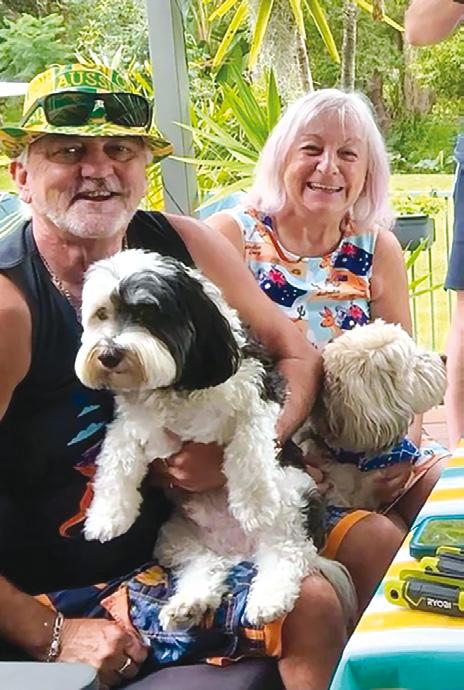
objected to anything connected to Freemasonry. I had rediscovered my skill at ritual work and the joy of delivering the tracing boards and working tools. How could my wife dislike anything and everything I did to try to improve myself?
It wasn’t until I was approached, headhunted, if you like, by a representative from a daylight lodge. I waited, for what I hoped was the right time to ask Rhonda how she would feel if I joined a daylight lodge. I said it would be just like I’d slipped out to play a round of golf. I’d be home in the arvo. She loved the idea. 100% on board.
It was only then that I realised what I should have known from the start – she didn’t like being alone at night.
As we age, we move further away from our beloved Craft, for many differing reasons.
So why not affiliate with a daylight lodge?
I’m still a member of my night time lodge (No 35), with only a minimal individual lodge dues burden as Grand Lodge only charges the lowest numbered lodge
Below is a listing of NSW&ACT daylight lodges, arranged by postcode. If this article has caught your eye, there’s likely one near you! For full details, refer to www.masons.au
LODGE THESPIAN 256 Petersham 2049
Allan: 0457076011 or allan.baker1@gmail.com
LODGE HIGHWAY 837 Northbridge 2063
Bojan: 0403 392 093 or bojan.vizintin@optusnet.com.au
LAURELBANK KURING-GAI
DAYLIGHT LODGE 230 Willoughby 2068
Arthur: 0417 217 280 or atmoreland6@bigpond.com
PARRAMATTA CITY DAYLIGHT LODGE 1014
Castle Hill 2154
Ken: 0415 883 270 or ekcabisidan270@yahoo.com.au
BANKSTOWN DAYLIGHT LODGE 996
Padstow 2211
Mark: 0481 893 609 or bdlodge996@outlook.com
for Capitation. Daylight lodges operate the same as their night time cousins. Same rituals, customs and rights. You can practice your ritual work in two active lodges getting your presentations more gravitas, and a better performance. I don’t have to dress up in a black dinner suit, white shirt and bow tie. Casual, a nice shirt and tie, trousers and jacket.
LODGE MAYFIELD DAYLIGHT 493
New Lambton 2305
Geoff: 0456 695 600 or williako@bigpond.net.au
LODGE TOMAREE 878
Nelson Bay 2315
Colin: 0414 981 833 or colinbailey@hotmail.com
LODGE MYALL 1058
Tea Gardens 2324
Geoff: 0456 695 600 or williako@bigpond.net.au
PORT MACQUARIE DAYLIGHT LODGE 991
Wauchope 2446
David: 0405 478 718 or 991secy@gmail.com
COFFS HARBOUR DAYLIGHT LODGE 1016
Coffs Harbour 2450
Stan: 0419 280 563 or stngordon@gmail.com
TWEED DAYLIGHT LODGE 136
Tweed Heads 2485
Donald: 0410 595 922 or dondezentje@gmail.com
LEISURE COAST DAYLIGHT LODGE 999 Kiama 2533
Allan: 0418 626 345 or allan.r.murray@gmail.com
Joining Leisure Coast Daylight Lodge has improved my marriage. My wife and I can watch the NRL games together, even Married at First Sight (please help me) and we are happy to be together sharing. I can’t sit still all day in front of the tele, so LCDL 999 helps me stay grounded along with golf, ukulele, walking and swimming. But we’re home together at night.
BATEMANS BAY DAYLIGHT LODGE 1013
Batemans Bay 2536
Bryan: 0428 813 695 or bryan.l.davis@gmail.com
LODGE EUROBODALLA DAYLIGHT 989
Moruya 2537
Allan: 0412963678 or albjb3941@outlook.com
LODGE PAMBULA DAYLIGHT 1000 Pambula 2549
Alfred: 0419 260 872 or alfgal1@yahoo.com
THE JUBILEE SOUTHERN
HIGHLANDS DAYLIGHT LODGE 162
Moss Vale 2577
Steve: 0410 861 317 or mossvale.nsw@gmail.com
LODGE CANBERRA DAYLIGHT 1057 Mawson 2607
Howard: 0421 314 587 or sec.lcd1057@outlook.com
BUNDALEEAH DAYLIGHT LODGE 992
South Windsor 2756
Ross: 0419 406 100 or rosspart@gmail.com
Get in touch with your local daylight lodge today!
If you are in a lodge that tyles sometime before 2.00 pm you have the rest of the day to, well, enjoy the day. The pub, club, golf, tennis, library, museum, the day is yours; most tyle before midday. Visit a daylight lodge this month. You will see for yourself how great they are!

When the NSW Masonic Club was established in 1893, it began not simply as a club, but as the New South Wales Masonic Musical and Literary Society – a place where fellowship, culture and conversation were central to its purpose.
More than 130 years later, that spirit continues to find new expression within the walls of its Castlereagh Street home in Sydney CBD.
Dining has always been part of the Club’s story. From formal banquets and members’ luncheons to celebratory dinners and quiet meetings over tea, the Club table has long provided a setting for connection. A glance through the archives offers a charming reminder of changing tastes and enduring traditions. One menu from 1939 lists consommé julienne, chicken and ham pie, steamed plum pudding, Queen custard and apricot compote – dishes of another era, yet familiar in their sense of occasion.
Today, that tradition is being refreshed for a new generation of members, guests and city visitors.
The Alcoves, located on level two of the Club, has undergone a thoughtful transformation over the past year, with refreshed décor and a renewed focus on dining. Alongside its weekday lunch
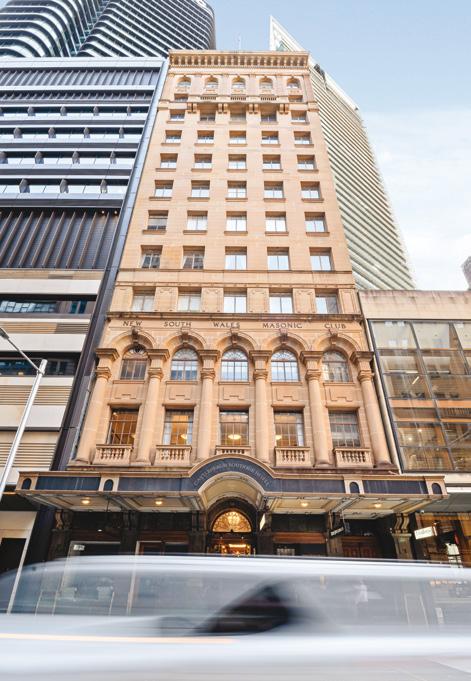
offering, The Alcoves now offers dinner service from Monday to Friday, providing a warm and refined setting away from the bustle of the city.
Music, too, is returning to the Club in a meaningful way.
The winter menu brings a generous, contemporary club-style approach to dining, with dishes such as grilled barramundi, beef and Guinness pot pie, butter chicken, chargrilled pork cutlet and house-made potato gnocchi, followed by classic desserts including apple and rhubarb crumble, sticky fig pudding and dark chocolate crème brûlée.
For those seeking a more private setting, the restaurant also includes a dedicated private dining alcove as well as the adjoining Castlereagh room, ideal for special lunches, breakfast meetings, small celebrations or discreet business
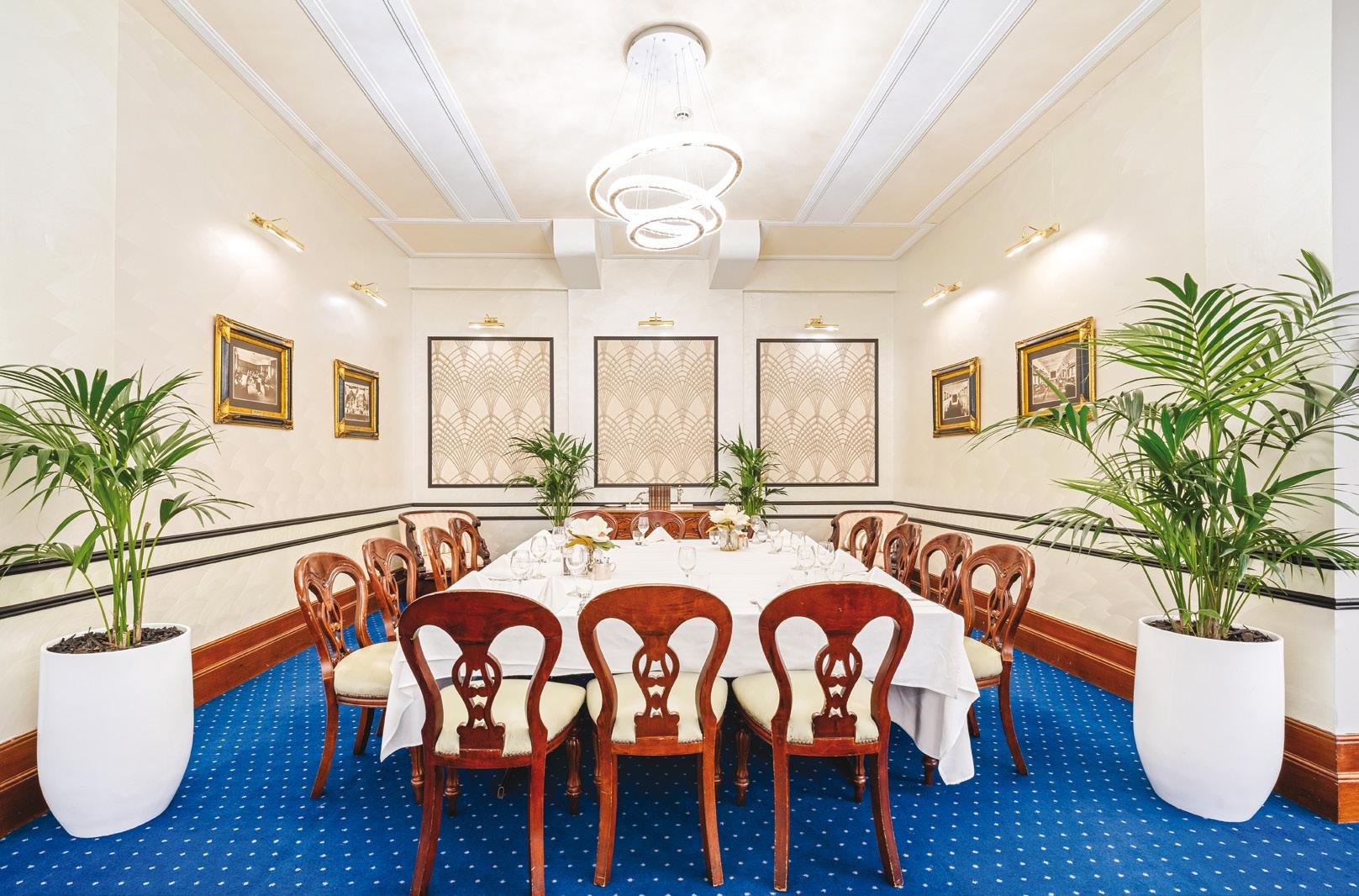
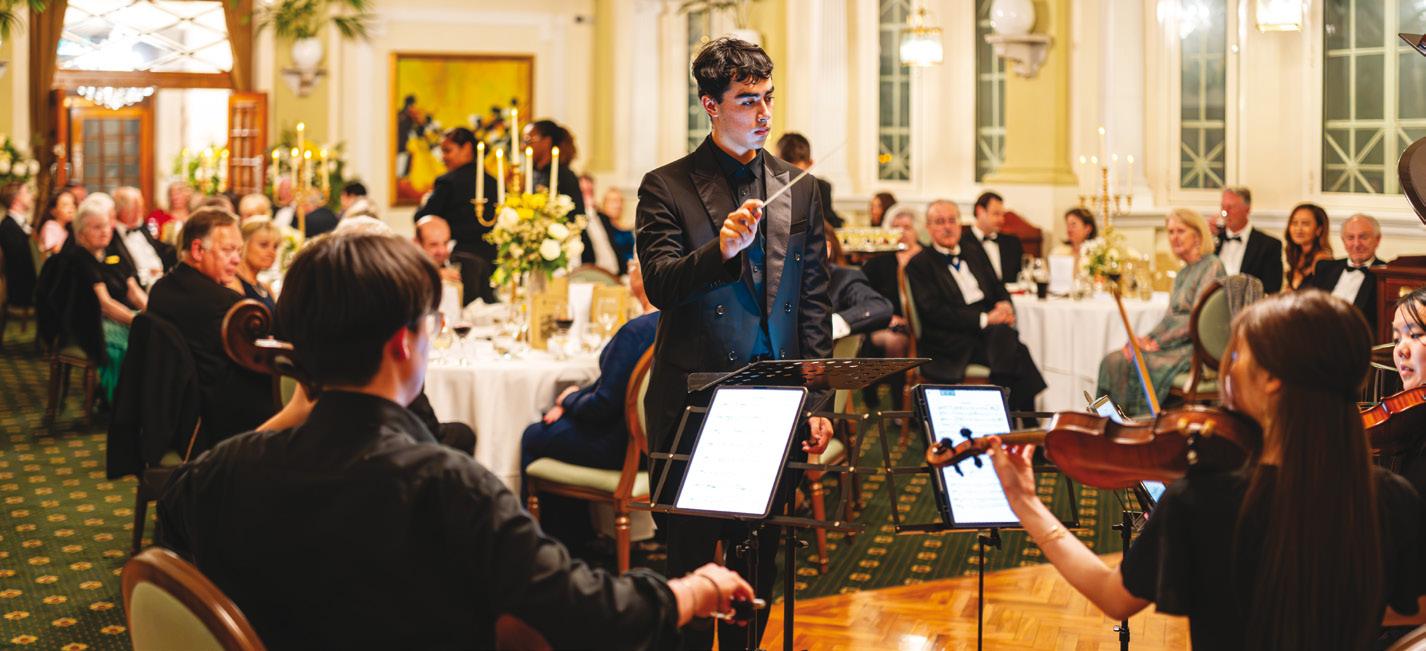
gatherings. It is a reminder that hospitality within the Club has always been about more than the meal alone – it is about providing the right setting for conversation, occasion and connection.
Downstairs, the Reagh Bar offers a more relaxed meeting place at street level. Open for after-work drinks, casual dining and conversation, it now serves light meals from Monday to Friday and lunch on Saturdays. With share plates, pizzas, sandwiches, charcuterie and cheese boards, it has become an easy city venue for members and guests to gather at the end of the day. Happy Hour from 5.00pm to 7.00pm adds to its appeal as a welcoming place to meet before dinner, after work or before an evening in the city.
Beyond its daily dining, the Club continues to welcome members, guests and city organisations for private events, meetings, celebrations and special occa sions. From intimate gatherings and weddings to larger events within the heritage function spaces, good food remains central to the Club’s role as a place of hospitality in the heart of Sydney. Regular wine tasting lunches, dining experiences, themed events and social gatherings also give members, guests and the wider community new reasons to come into the city and connect.
Music, too, is returning to the Club in a meaningful way. Each Friday evening, the Reagh Bar hosts live Chapel Row Jazz, a nod to the original name of Castlereagh Street. Led by Sydney Conservatorium of Music student and musician Alex Putra,
Dining has always been part of the Club’s story.
the program features a rotating line-up of emerging Sydney jazz artists, including Conservatorium students and other musicians building their professional experience. Through Chapel Row Jazz, the Club is creating opportunities for young performers while bringing live music and a fresh atmosphere into the CBD.
In this, there is a pleasing sense of continuity. A club founded from a music and literature society is once again becoming a place where live music is heard, young talent is supported, and members and guests can gather in a spirit of warmth and conviviality.
Much has changed since consommé and compote appeared on Club menus, and since the Club first opened its dining rooms to members. Yet the essential purpose remains familiar. The NSW Masonic Club continues to be a place where people meet, dine, converse and belong.
The table is still set. The music has returned. And the Club’s tradition of hospitality continues.
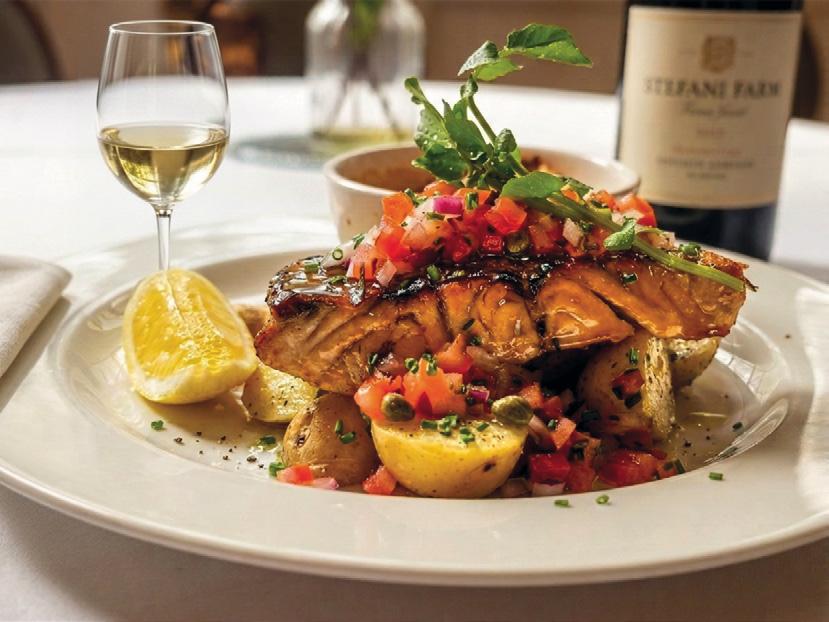
Enjoy classic winter dining in the quiet elegance of The Alcoves dining room, on Level 2 of NSW Masonic Club.
Join us for drinks in the Reagh Bar, with Happy Hour 5-7pm weekdays, and Chapel Row Jazz live, Fridays 7-10pm.

Email your Letters to the Editor to: freemason@masons.org.au
For enquiries, phone: 0456 695 600
I read with great interest your article Vignettes of the VDC in the April 2026 edition of Freemason.
I am the author of Skilfully Drilled, A history of the Australian Instructional Corps, 1921–1955.
From the commencement of WWII, Warrant Officers of the AIC were posted as Instructors to VDC Units. Evidence of this can be found in my book on pages 185, 186 and pages 206-207.
Kind Fraternal Regards,
Bro Maj Roland H Millbank (Retd) Lodge Army & Navy 517
Editor’s note: For more VDC escapades, and further information on Bro Millbank’s book, see Vignettes of the VDC part 2 on page 26 of this issue!
It is my great pleasure to extend my compliments to Bro Simon Pierce for his informative and very interesting piece entitled Freemasonry vs The Met, which was published in the April-June 2026 issue of Freemason magazine
As one of the members of the UK Police Force of England (Leicestershire) some years ago, the subject matter presented by Bro Pierce brought back many memories for me. I found Bro Pierce’s analysis of the matter to be very insightful and very relevant in relation to the existing conflict between public opinion, transparency, and the right to freely associate.
In fact, we discussed the issues raised by Bro Pierce extensively at our lodge meeting held in May 2026, and the article was read out loud in its entirety at the
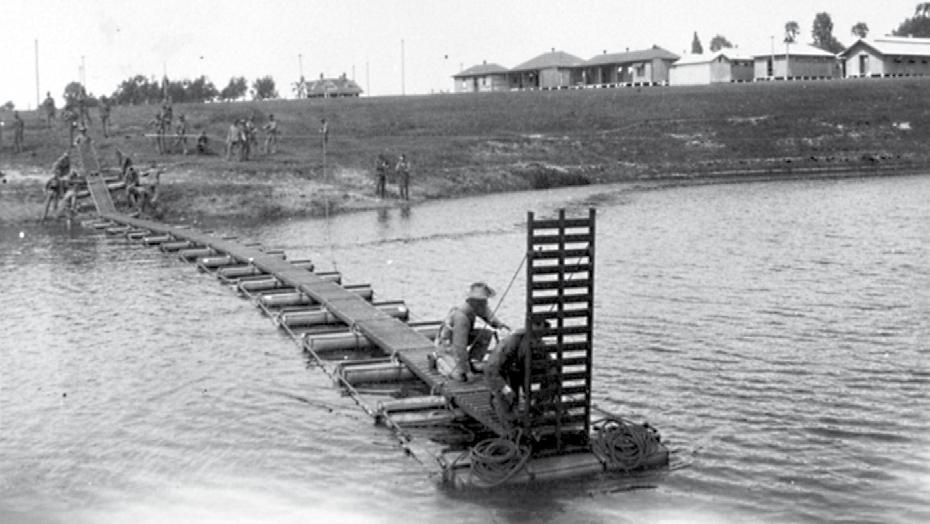
same occasion. As you can imagine, the article was highly appreciated by everyone present at the meeting. The topic under consideration has shown itself to be very much alive not only in England but also in other parts of the world.
Thanking you,
W Bro Mark Battison
Secretary
Bankstown Daylight Lodge No 996
I refer to the very interesting article on masonic dress by Bro Pierce and Morris Farah, particularly to the section regarding bow ties.
For over 12 months I have been trying to find a CLIP ON style bow tie, without success.
I have called on major menswear shops, country shops and even visited charity shops for a second-hand model.
In fact, we discussed the issues raised by Bro Pierce extensively at our lodge meeting held in May 2026...
Perhaps the authors of the article may be able to point me in the right direction. This was quite an interesting and informative article.
Regards,
W Bro Tim Harrington
Editor’s note: Bro Harrington’s letter inspired an in-depth look at bow ties that can be found on page 4 of this issue. Perhaps readers out there can recommend a (preferably local) retailer that stocks quality clip-on bow ties?
Email your masonic news to: freemason@masons.org.au For enquiries, phone: 0456 695 600
Lodge Young Burrangong No 20
This might seem a bit odd but Lodge Young Burrangong No 20 was faced with a dilemma. Our WM, VW Bro Ken Donoghue was going back into the Chair, again. There were no new officers to invest, merely two officers swapping positions. Our budget had taken several unexpected dramatic hits, enough to make any treasurer wince. This became obvious late last year. What to do?
We explored the idea of not having a formal installation which costs big bucks no matter how carefully you budget for the dinner etc. No need for an expensive program but we still had to reprint the cover sheet for our notices.
We needed approval to change the date of the meeting which was kindly given by our RGC RW Bro Brad Scotcher. So we met on an ordinary night. Word must have spread however, as there was a large crowd, but did we have enough room?
Our premises had been designed by our late Bro Neville Todd and his son, later Bro Jay Todd our Treasurer. They had in mind that the new premises should be appropriate for the diminished number of masons likely to attend and at the same time, if it had to be sold, that it could easily be converted to a dwelling. Extra chairs were required. We had 10 members, 13 visitors, four ladies and the DGIW in attendance.
How would it all work out? The evening opened in the usual manner with very minimum business being conducted.
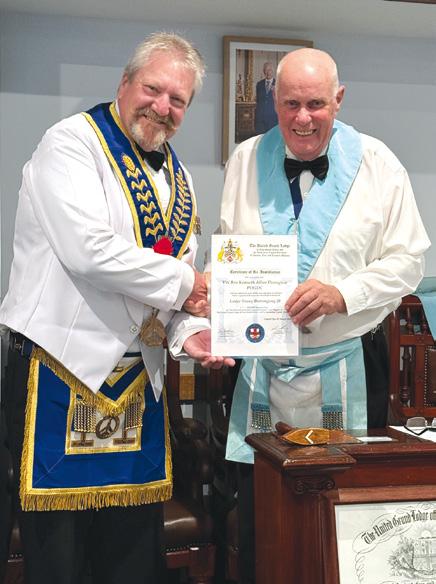
The three addresses of an installation were given and the two officers were invested. The DGIW VW Bro Bob Bourke presented our WM with his latest Installed Masters Certificate then a photo was taken of the multitude.
The Lodge closed early and we all adjourned for a slightly more lavish light refreshment than usual. It must have been a success for no one wanted to leave. So ended our installation, that wasn’t an installation… it was great!
Lodge Enterprise No 400
Lance Nelson, the WM of Lodge Enterprise 400 has always been motivated by a desire to assist the OES maintain their presence and their work in the Newcastle region.
So, at their May meeting, the lodge hosted an information evening with the two Newcastle Chapters of The Order of the Eastern Star.
Lance invited OES members, families and prospective candidates to dinner at New Lambton Masonic Centre.
After an enjoyable meal everybody moved to the lodge room to witness an information session followed by a period of revealing questions.
Members of the OES spoke passionately about the principles and motivations of their organisation and of the beneficial effects their involvement has had on their personal lives.
A very pleasant evening was spent in each other’s company.
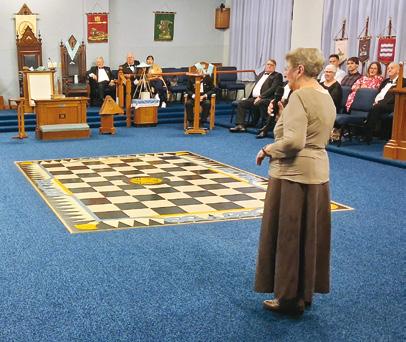
Newcastle OES members gave a talk and answered questions from masons.
Lodge Independent Lewis No 346
On 21 March 2026, the Brethren of Lodge Independent Lewis and visitors convened at the renovated Portland Masonic Centre, to observe the Reinstallation of W Bro Neil Cochran and the Investiture of new Officers for the 2026–27 term. The Installing Master was VW Bro Jeffery Martin. The ceremony, held at the 103-year-old lodge building was both solemn and celebratory, reflecting the rich traditions and values upheld by this lodge and the fraternity in general.
Heading the Grand Lodge delegation was the Senior Grand Warden, RW Bro Emmanuel Konitopoulos accompanied by a sizeable number of Grand Lodge Officers. Assistant Grand Director of Ceremonies was VW Bro John Khoury.
The installation was conducted with precision and decorum. A highlight of the evening for the lodge was the return of Grand Lodge Regalia which belonged to Sir Joseph Cook GCMG (7 December 1860 – 30 July 1947). This was formerly on display in the lodge rooms in Lithgow and had been stored in the Grand Lodge in Sydney whilst the lodge transferred operations to the Portland building. The Regalia was donated to the Lithgow Lodges by the family of RW Bro Cook following his death in 1947.
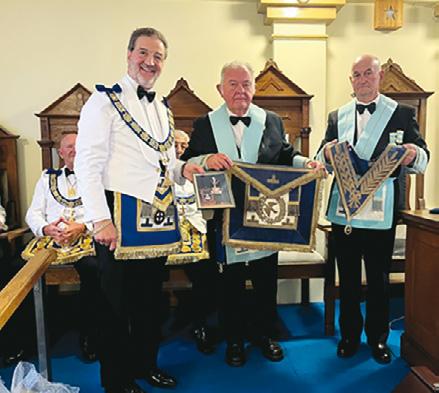
Sir Joseph Cook was initiated into Lodge Independent No 8 on 12 February 1892.
He was an Australian politician and trade unionist who served as the sixth prime minister of Australia from 1913 to 1914. Cook was born in Silverdale, Staffordshire, England, and began working in the local coal mines at the age of nine. He emigrated to Australia in 1885, settling in Lithgow. He continued to work as a miner, becoming involved with the local labour movement as a union official. Cook was Australian High Commissioner to the United Kingdom from 1921 to 1927. During this period, he affiliated, in 1922, with Royal Colonial Institute Lodge No 3556, EC. He rose to the Office of Past Senior Grand Deacon of the UGL of England. He died at the age of 86, as one of the last survivors of the first federal parliament.
The celebrations continued in the Installation Banquet, which was extremely well attended and held at the Portland RSL Indeed, a memorable and historic night for Lodge Independent Lewis.
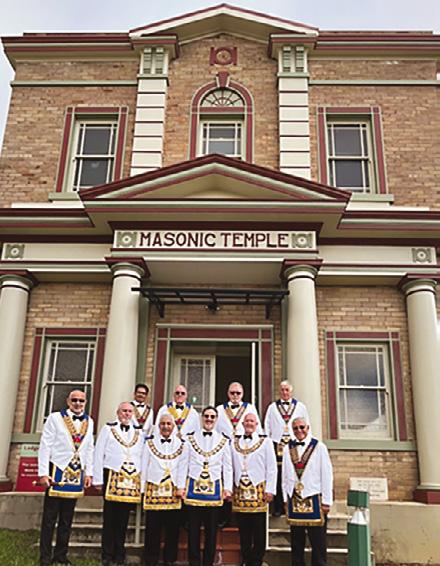
The Lodge installation ceremony concluded on a high note, with members expressing optimism for the future and all pledged their support to the new Worshipful Master and his officers. The event was a testament to the enduring spirit and solidarity of Lodge Independent Lewis.
Lodge Independent Lewis will celebrate its 100 years of operation in in September of this year.
An observation by Mr Neil Ashworth, a colleague of RW Bro Richard Dawes:
As he set up an outside broadcast facility at the Hornsby Cenotaph.
The last few stars start to fade as the eastern sky turns from black to grey. Birds hidden in trees wake and call to their friends ‘I’m awake, I made it through another night’.
Late night revellers wander across the Cenotaph heading for home and regret.
And then the crowds start to arrive. It’s Anzac Day, the most solemn of all our public holidays. Over in one obscure corner is a young man with a military bearing and longing eyes watching the
incoming families. No longer the domain of the aged and wounded. Anzac Day has become a family event. The Catafalque party is from a local high school cadet group. The back of the march is populated by the youth community groups. The watchers hold their infants high on their shoulders and point out the diggers filing past, whispering words of admiration.
Youth wants connection, it wants purpose, it wants to see the column of history marching into a brighter future.
Anzac Day commemorates Gallipoli, Australia’s battle of unnumbered tears. It notes an inflexion in history and mourns the fallen. It is right that we mark it.
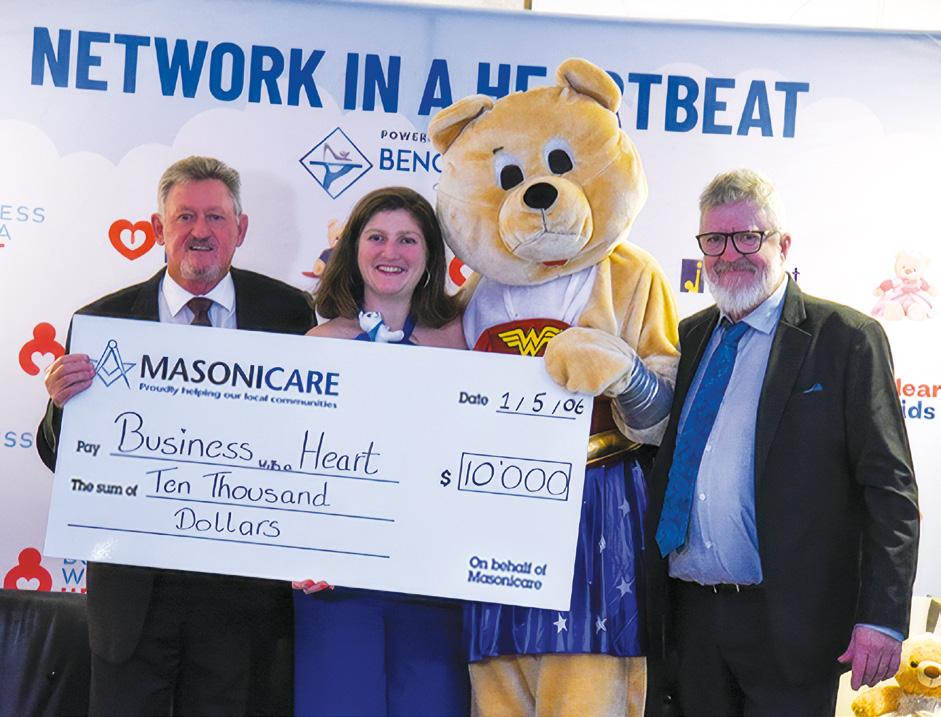
Central Coast Lodge No 2001
Members of The Central Coast Lodge rolled up their sleeves and got to work in true grassroots fashion, raising $10,000 for Business with a Heart.
Fundraising included community BBQs at the Narara Miniature Railway and at Bunnings Warehouse in West Gosford. All told, the lodge raised a staggering $5,000 and, with the help of Masonicare, this was doubled to a total of $10,000.
The funds were formally presented at Business with a Heart’s annual Network in a Heartbeat dinner in Sydney – an evening that brought together supporters, advocates and changemakers united by a shared purpose.
During the event, W Bro Jim Noble took part in a panel discussion where he spoke about the work of Freemasonry and the deep commitment lodges have in supporting local charities.
Adding a touch of light-heartedness to the evening, Wonder-Bear – a beloved mascot of Business with a Heart – ‘caught the scent’ of the fundraising success and sniffed out the presentation cheque, delivering it to the stage where it was presented to Tania Mastroianni by W Bros Paul Kelly and Jim Noble.
Tania was diagnosed with congenital heart disease in utero – a condition that remains the leading cause of infant death in Australia, claiming four young lives each week. After multiple heart operations, she made a powerful decision to live life fully and to give back. That decision became ‘Business with a Heart’.
The organisation’s mission is simple – to ensure that as many sick children as possible receive a Special Bear Friend during their hospital stay. The Central Coast Lodge members are proud to support this mission at Gosford Hospital, helping to brighten the days of young patients and bringing comfort to their families.
In a world that can often feel overwhelming, it’s worth remembering that meaningful impact doesn’t always require grand gestures. Sometimes, it begins with a sausage sizzle and a teddy bear placed in the arms of a child who needs it most.
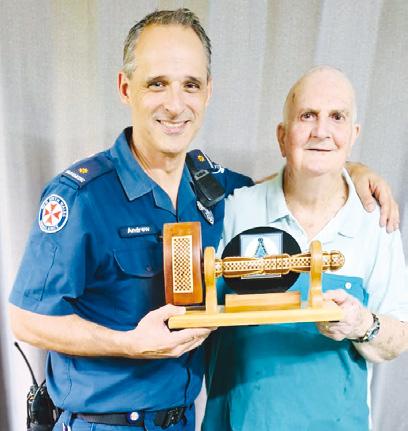
In January 2026, VW Bro Rick Howes presented Station Officer Paramedic VW Bro Andrew Kfoury with a finely crafted masonic gavel in recognition of his service to the community.
The intricately-designed gavel was made for the occasion by Bro Howes, founder of the Australian Travelling Gavel Collection, who honoured Andrew’s remarkable contributions on the front lines of care and compassion.
The 2026 ANZMRC Conference will take place in Brisbane, from Saturday 31 October to Sunday 1 November 2026. Featuring two days of quality speakers presenting a range of interesting papers and a gala three-course dinner on the Saturday evening. Tickets cost $250. Book now at www.trybooking.com/ DLAXE
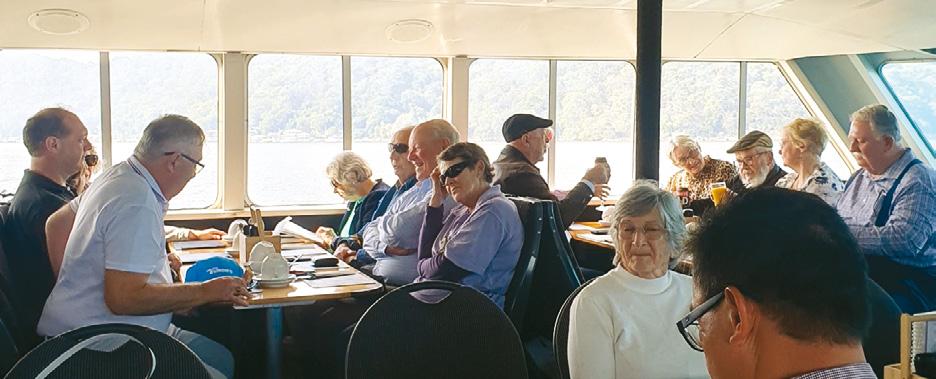
On Sunday, 10 May 2026 the Hunter Valley Freemasons (Hunter Freemasons Association) organised a fundraising Mother's Day Luncheon Cruise and train trip to the Hawkesbury River and back to Newcastle, NSW.
All monies raised are for research into the insidious disease Diffuse Intrinsic Pontine Glioma (DIPG) a highly aggressive, rare tumour found in the pons of the brainstem, primarily affecting children aged 5 to 10. Further information about this rare and highly aggressive cancer can
be found at Diffuse Intrinsic Pontine Glioma – Rare Cancers Australia.
Participants on the day included many distinguished guests including the MW Grand Master Khris Albano and his wife Kharole, RW Bro Deputy Grand Master Paul Schultz and his wife Ellie, and MW Bro Grand Secretary Les Hicks and his wife Narelle.
A total of 70 guests enjoyed a leisurely and thoroughly enjoyable afternoon on the Hawkesbury River with calm waters and plenty of sunshine.
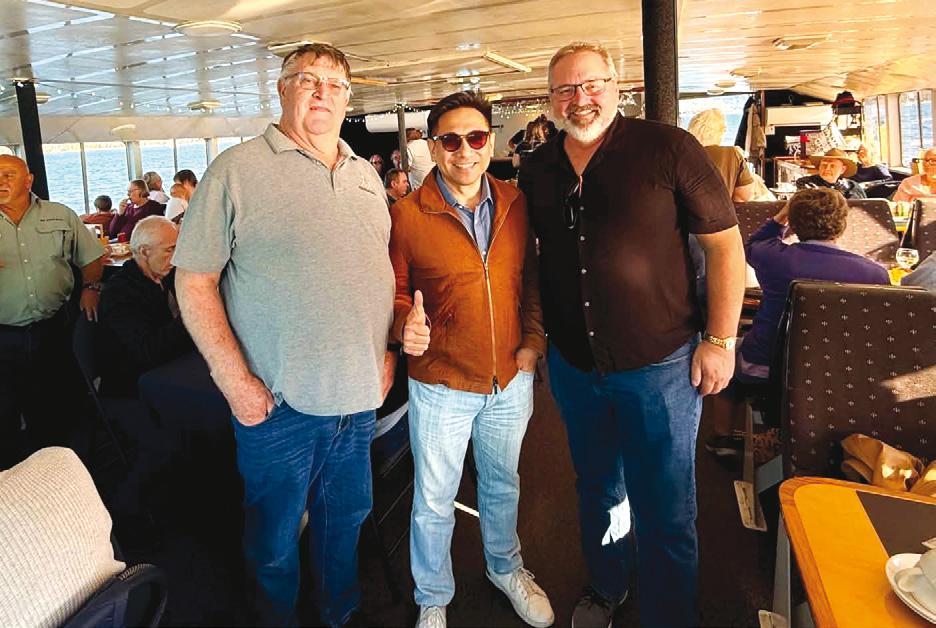
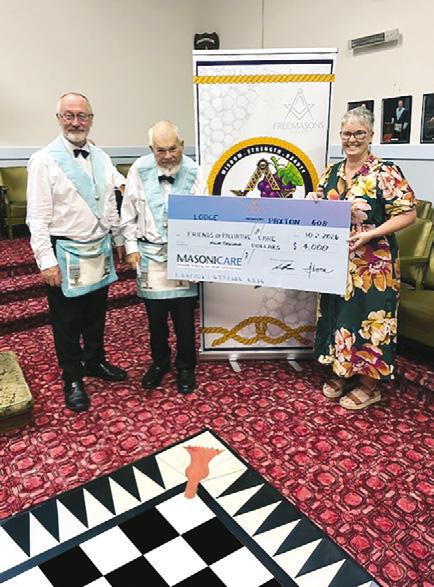
Lodge Paxton has demonstrated the true spirit of community and compassion by raising an impressive $2,000 in support of The Friends of Palliative Care. The initiative, which took centre stage at the lodge’s February meeting, was further bolstered by Masonicare, who matched the amount with an additional $2,000, bringing the total donation to $4,000.
The fundraising campaign was launched by RW Bro Dale Goldie OAM, who is currently battling pancreatic cancer. His own experience became the catalyst for the lodge’s charitable drive, inspiring fellow members to rally behind this worthy cause. The funds were presented by RW Bros Dale Goldie and Andrew Bradley to The Friends of Palliative Care, with Mrs Erin McCord graciously accepting the donation on behalf of the organisation.
Lodge Paxton’s members expressed their gratitude for the support received from Masonicare and highlighted the importance of palliative care services in the local community. The combined effort underlines the enduring commitment of the lodge and its partners to making a tangible difference in the lives of those facing serious illness.
Mrs McCord thanked Lodge Paxton and Masonicare for their generosity, saying that the donation will greatly contribute to enhancing the quality of care for patients and their families. The event is a testament to the power of collective goodwill and the positive impact that can be achieved when communities come together in support of those in need.
On Saturday 7 March 2026, the Temple at the Bankstown Masonic Centre was filled with maturity and youth as Lodge Bankstown Daylight held its Re-installation Ceremony. Brethren gathered in fraternal harmony, a visible testament to the vitality of the Craft and to the esteem in which this lodge is held. It was not merely a re-installation, it was a reaffirmation of continuity, commitment, and confidence in leadership.
W Bro James McDonnell was reinstalled in the Chair of King Solomon by VW Bro Ian Stenning in a ceremony marked by precision, dignity, and solemnity. The ritual work within the lodge was executed with excellence, reflecting both preparation and devotion. Each movement, word, and symbol unfolded with that quiet authority that reminds us why the Installation remains one of the most powerful ceremonies in Freemasonry: it is the moment when responsibility and trust are formally entrusted to a brother who must govern with wisdom, strength, and beauty.
The presence of the Grand Lodge was equally significant. The Grand Master’s Representative, RW Bro Luis Reyes PSGW, expressed genuine surprise at the strength of the Grand Lodge delegation. Seventeen Grand Lodge Officers stood in support of Lodge Bankstown Daylight on this important occasion.
Their attendance was not only a mark of honour but a recognition of the lodge’s standing within the jurisdiction. A good number of lodges, from within and beyond the district, were represented, transforming the morning into a broad celebration of unity across the Craft.
The harmony extended beyond the tiled doors. In the South, the toasts and responses were delivered with warmth, eloquence, and genuine fraternity. The Worshipful Master in response to the toast to the Worshipful Master and his officers said, ‘Brethren, our lodge is blessed with a membership that reflects both maturity and youth – a blend of seasoned experience and fresh energy. History has shown us, even on the world stage, that when wisdom walks hand in hand with enthusiasm, remarkable victories are
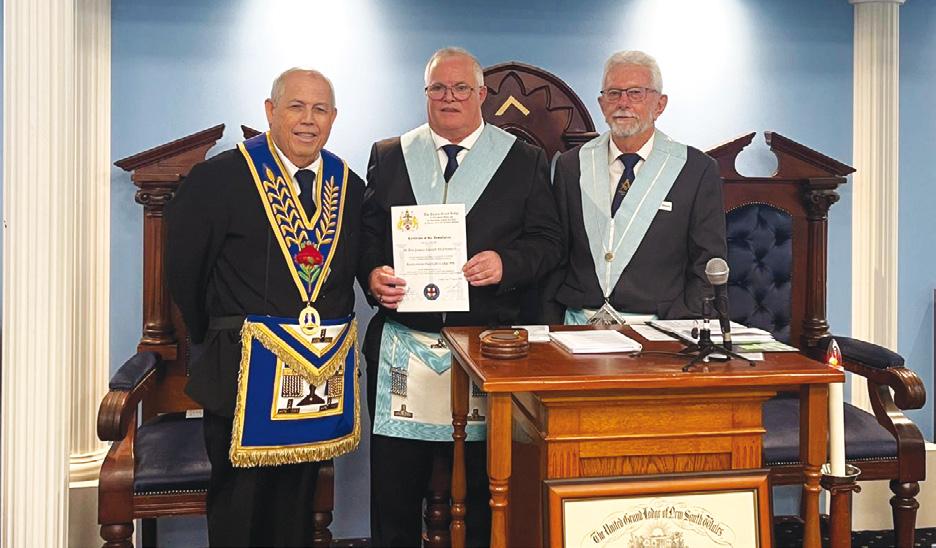
achieved. In our case, however, the goals we seek are not scored upon the grass pitch, but upon the checkered pavement of the lodge. They are not measured in trophies, but in harmony, in personal growth, and in the strengthening of true Brotherhood.
‘I count myself fortunate to be surrounded by our Past Masters and senior brethren, whose steady counsel serves as both compass and anchor. Their experience provides guidance; their example sets the standard. At the same time, the vitality and eagerness of our newer and younger members breathe life into our labours and remind us that the future of this lodge is bright.
‘If we unite these strengths with clear purpose and mutual respect, I have no doubt that the coming twelve months will be both fruitful and inspiring.
‘As your Worshipful Master, I look forward to working alongside each and every one of you. A lodge does not flourish because of one man in the East, but because of many brethren who stand faithfully at their stations and places. Whether you serve as Outer Guard or Senior Warden, your contribution is essential.
‘So, I ask you simply “lead from where you are”.
‘Leadership in Masonry is not confined to an office; it is expressed in conduct, in encouragement, in punctuality, in preparation, and in those quiet acts of service that often go unseen, yet never unnoticed. When every brother accepts that responsibility, the lodge becomes not merely well-governed, but truly great. Brethren, thank you for your trust, your confidence, and your companionship. Let us move forward together — united in purpose, steady in our labours, and joyful in our brotherhood.’
The festive board echoed with the sound of laughter, thoughtful reflections, and renewed bonds of friendship. Such moments remind us that while the ritual instructs and elevates, the shared table cements brotherhood in the most human and enduring way.
Overall, this stands as one of the strongest daylight re-installations thus far this year – distinguished not merely by numbers, but by spirit.
Lodge Bankstown Daylight demonstrated that strength in Masonry is not measured only in attendance, but in unity of purpose, excellence of work, and depth of fraternal support. On that March morning in Bankstown the light burned brightly indeed.
ABAN, Alfredo Lodge Woronora 414
ACKLES, Scott Lodge St David and St John 180
ARAUJO CABRAL, Pierre Lodge Middle Harbour 85
BELKIN, Vladimir Lodge Cessnock 252
BENNETT, Matthew Lodge Queanbeyan St Andrew 56
BONDOC, Jared Lodge Jose Rizal 1045
BONGALONTA, Jade Lodge Jose Rizal 1045
CANETA, Ernesto Lodge Macquarie 53
CHEN, Zhaoming The Royal Empire Lodge 613
CHERNIAKOV, Daniel Lodge Dunblane Australis 966
The Central Coast Lodge 2001
The Central Coast Lodge marked ANZAC Day 2026 with a dignified and wellattended meeting celebrating solemn remembrance and community solidarity.
The lodge conducted the service, supported by a highly professional ceremonial guard drawn from 25 Army Cadet Unit under the watchful eye of Brother Lieutenant (AAC) Morse. Over 55 masons, family and guests were in attendance including: Gosford Mayor Laurie McKinna, RSL Sub-branch representative Greg Mawson, National Servicemen Association representative W Bro Derek Crawford, Federal Government Member Dr Gordon Reid and Central Coast Town Crier Stephen Clarke who also played the Last Post on the bugle to accompany Lucas Kfoury’s reading of the Ode.
Musical support was provided by two members of the City of Gosford Pipe Band, including our own W Bro Guy Thornycroft, whose performance added depth and tradition to the ceremony.
After the ceremony, a wonderful dinner was enjoyed by all. Alexander Kfoury
DALEY, Shannon Lodge Loftus–Macleay 203
DAVIS, Mark Lodge Picton 258
DELA CRUZ, Gillinnitho Lodge Carnarvon 172
DELA GUARDIA, Melvin Lodge Nepean 29
DIAS LEITE, Adriano Lodge Middle Harbour 85
DICKWELLA, Vidanage Lodge Courallie 235
EL-HALABI, Said Lodge Trinity 666
EPSTEIN, David Lodge Kensington 270
FABRIS DE SOUZA, Guilherme Lodge Middle Harbour 85
GARROD, Michael Lodge Phoenix 1034
HANSON, Steven Lodge Southern Cross 91
HIRON, Andrew Lodge Camden 217
delivered an informative and engaging address, How a Small Group Stopped an Army – The Battle of Wau. W Bro Jim Noble and W Bro Paul Kelly followed up with a presentation from their recent trip to Hellfire Pass, where Allied POWs slaved to excavate the cutting for the former Burma Railway.
A fun giveaway capped off the evening, with plenty of prizes won by both brethren and guests. As a parting gift, the honoured visitors each received one of Central Coast Lodge’s new challenge coins to commemorate a special evening.
On ANZAC Day itself, Worshipful Master VW Bro Steve Hart laid a wreath at the Gosford Cenotaph as part of the ceremonies. He was accompanied by brethren Lieutenant Colonel VW Bro Andrew Kfoury, Lieutenant VW Bro Luke Parsons and W Bro Derek Crawford.
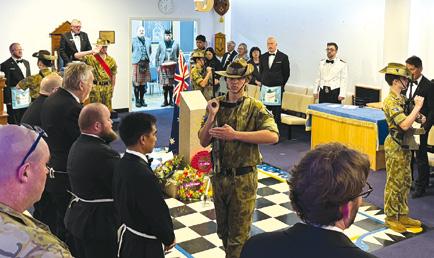
HOSKEN, Craig The Lodge of Australia 3
ILAGAN, Jon Monel The Hawkesbury Heritage Lodge 150
JUSTINIANO, Jay-ar Riverina Thompson 104
KALRA, Gavin Lodge Farrer 93
KAPKAC, Selim Lodge Kingsford Smith 1028
KARLOV, Victor Lodge Mark Owen 828
KING, Joshua Lodge Pennant Hills 905
LINDEN, Lucas The Northern Rivers Lodge 77
MANI, Mani Maran Lodge Alpha 970
MARKULIN, Lincoln Lodge Wyong Tuggerah Lakes 247
MARQUEZ CARMONA, Victor Lodge Kingsford Smith 1028
MARTINS STEFFEN, Felipe Lodge Warringah 83
MASON, Donald Lodge Nowra Unity 60
MORGAN, Joel Lodge Gloucester 291
MULLER, Dean Lodge Pennant Hills 905
NUGENT, Owen Lodge of Peace 120
OLOVCIC, Benjamin Lodge Mark Owen 828
PASCO, Anthony Lodge Woronora 414
PHAM, Quan Lodge University of Sydney 544
POWELL, Brock Lodge Farrer 93
QUIÒONES DIAZ, Hugo Lodge Middle Harbour 85
RAYLA, Cristian Lodge Macquarie 53
RODRIGUEZ, Glenn Lodge Sydney St George 269
ROVERO, Dante Jr Lodge Bulli Thirroul 1040
RUIZ, Patrick Lodge Ionic 65
RUTHERFOORD, Carl Balmain Lodge 23
SALDUA, Roelito Lodge Bulli Thirroul 1040
SAMWAY, John Lodge Cessnock 252
SANTOS, Jan Paolo Lodge Blacktown Kildare 393
SCHNEIDER, Zachary Lodge Camden 217
SCURRAH, Michael Lodge Cavanbah 231
SERTTAS, Erinc Lodge Kingsford Smith 1028
SODERGREN, Nils The Lodge of Tranquillity 42
SORIANO, John Abdiel The Baden-Powell Lodge of NSW 1051
ST VINCENT, Liam Bankstown Daylight Lodge 996
TERDIMAN PASQUALINI, Aiarom Lodge Warringah 83
WILSON, Jarryd Lodge Eltham 272






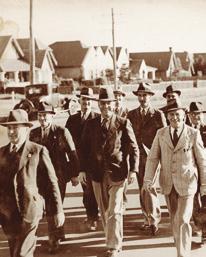


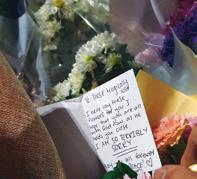




Note: This has been corrected from the print edition. Apologies for the confusion! Cryptic puzzle July 2026 by Bro Simon Pierce
No, it’s not an order of eggs – this issue draws on a modification of the pigpen ciphers to encode the message. To decipher this text, you’ll need to apply a keyword to the pigpen, which is entered in the grid first, followed by the remaining letters of the alphabet in order, skipping those already used in the keyword. This creates a unique version of the pigpen that’s much harder to crack.
For example, if the keyword was MASON, the grid looks like this:
Example: The keyword here is MASON, so we first write in MASON. Then we fill in B (since A was already used), then C, D, E and so on.
It’s important to remember to fill in the letters from top to bottom, and left to right. if you need a reminder of how to solve a regular pigpen cypher, see our article in the March 2020 issue.
This month’s keyword is the answer to the following question: Which architectural style of column signifies strength? Use the blank pigpen below to decipher the message:
If you wish to place an advert and support your magazine, phone 1800 806 930, email freemason@apmgraphics.com.au, or visit advertise.freemasonnsw.com
His work was not done, yet his column is broken; Mourn ye and weep, for ye cherished his worth; Let every tear-drop be sympathy’ a token – Lost to the Brotherhood, lost to the earth.
Good luck! Solution in the next issue.
HISLOP, Alan Keith Lodge Ionic 65
CATTERALL, Donald Lodge City of Newcastle 170
CLARK, Graeme Max The Northern Rivers Lodge 77
CROW, Robert Keith Lodge St David and St John 180
HOCKLEY, Norman Robert Union Lodge 28
HURNDELL, Robert Charles Lodge Kensington 270
WELLS, Perry James The Northern Rivers Lodge 77
WILLIAMS, Darcy James The Hills Lodge 359
BAKEWELL, Desmond Hamar Lodge Mayfield Daylight 493
CALDERWOOD, David John Lodge St David and St John 180
CHRISTOPHER, Beverley Bernard Lodge Artarmon United 285
CLANCY, Peter Francis Lodge St David and St John 180
FRAME, Peter Onslow Lodge City of Newcastle 170
HARVEY, Brian Douglas Lodge Barham 561
LARBALESTIER, Paul James The Hills Lodge 359
LEGG, David James The Hills Lodge 359
USHER, Douglas Graham Bankstown Daylight Lodge 996
WRIGHT, William Lodge Artarmon United 285
BATES, Stephen George Lodge Sylvania 853
COOKE, Robert Grahame Lodge Barham 561
COX, Jeffrey Douglas Lodge Barham 561
DERBIDGE, Ralph Trethowan Lodge Commonwealth of Australia 633
HIXON, Mervyn Lloyd Lodge Inverell 48
MULDER, Steven John The Hills Lodge 359
MUNRO, Bruce Geoffrey Lodge Sylvania 853
PRETTY, John Charles Lodge Thespian 256
WALL, Arthur Raymond Lodge St David and St John 180
Remembering those brethren who have passed to the Grand Lodge Above.
With solemn hearts we record the passing of the following distinguished members of our masonic fraternity who have entered the Grand Lodge Above. We honour their years of dedicated service to the Craft and the invaluable contributions they made during their masonic journeys.
May they rest in peace, and may their memory inspire future
of Freemasons to continue their good work.
For over 146 years, Royal Freemasons’ Benevolent Institution (RFBI) has provided assistance to those in need. Today, with the help of our generous benefactors we continue this important work through our Annuity Scheme and Benevolence Program.
Among our generous benefactors are our local Lodges and Freemasons. This year we very gratefully received nearly $7,500 through our Appeal Quarter and in donations. We extend our heartfelt thanks to everyone who made a contribution so that we can continue to help those in need.

You can make a donation at any time online via the QR code, our website or in cash at your local RFBI Village.
For over 146 years, RFBI has been supporting people in need across our communities.
Through our Benevolence Program and Annuities Scheme, we provide practical support to individuals and families facing hardship, funding health initiatives, equipment and community programs. Now, your Lodge can help bring this impact to life.
Request an Benevolence Kit to display in your Lodge hall and help raise awareness. Every conversation, every contribution and every display makes a difference.
Join us in continuing this proud tradition of giving back.
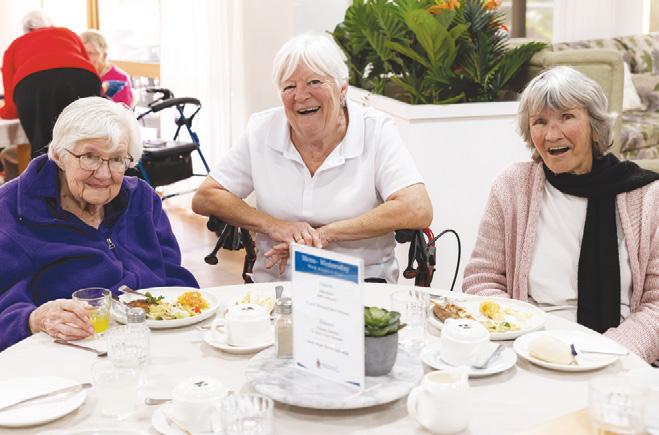
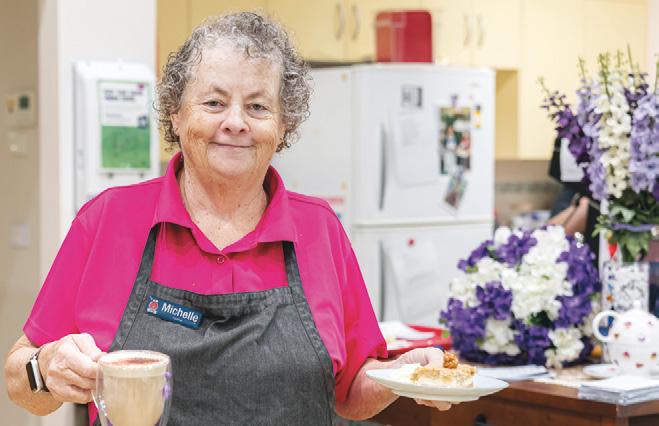
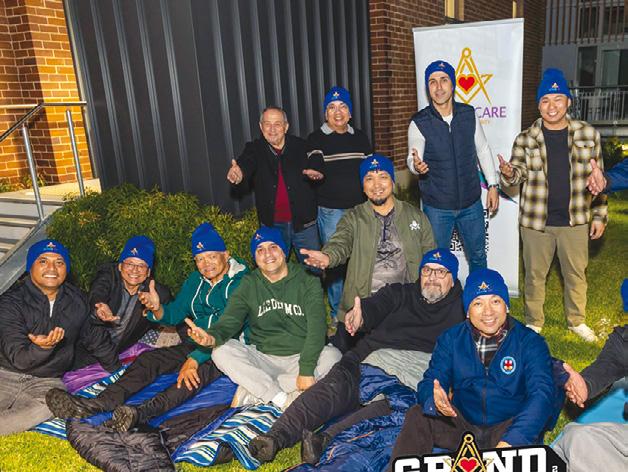
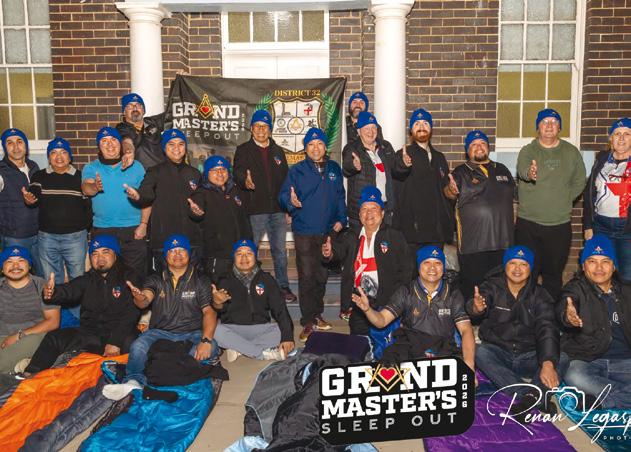
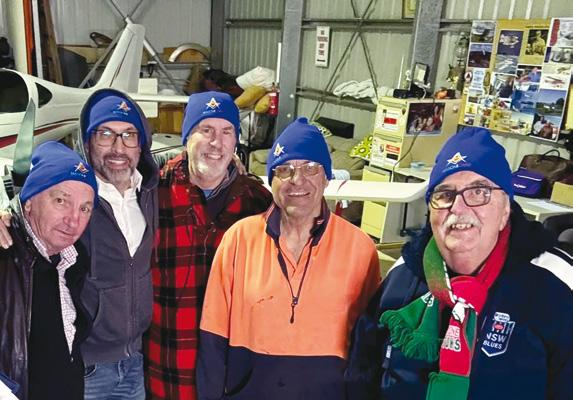
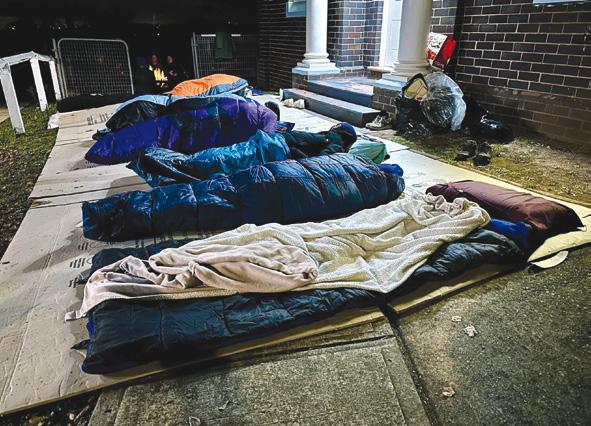
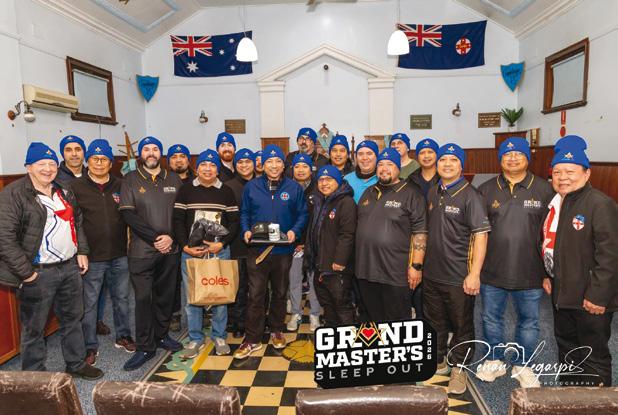
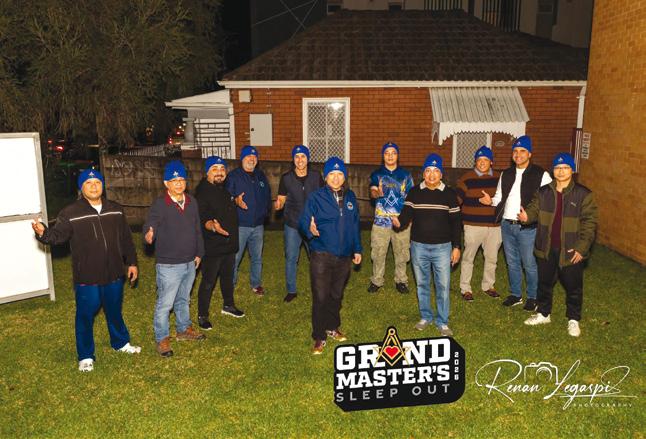
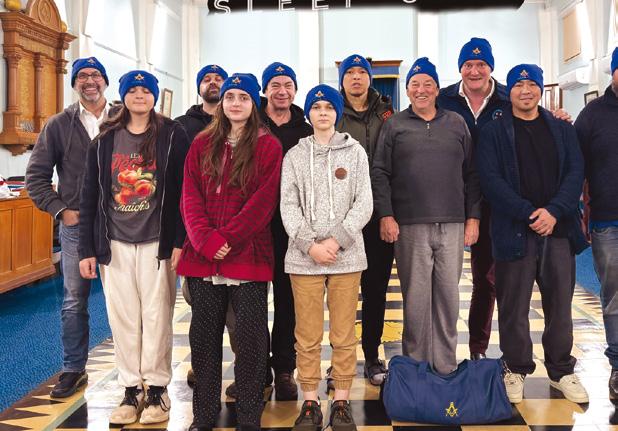
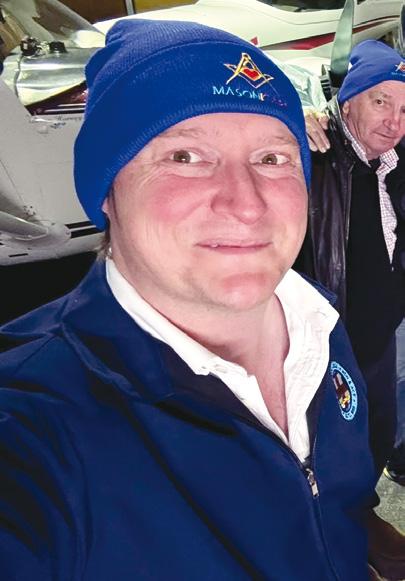
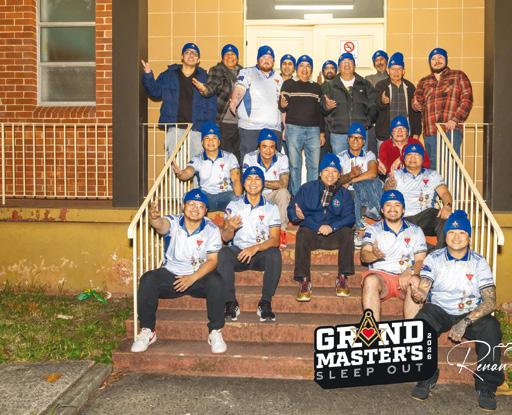
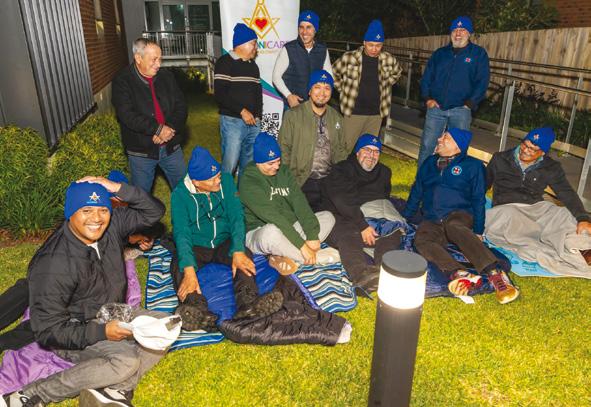
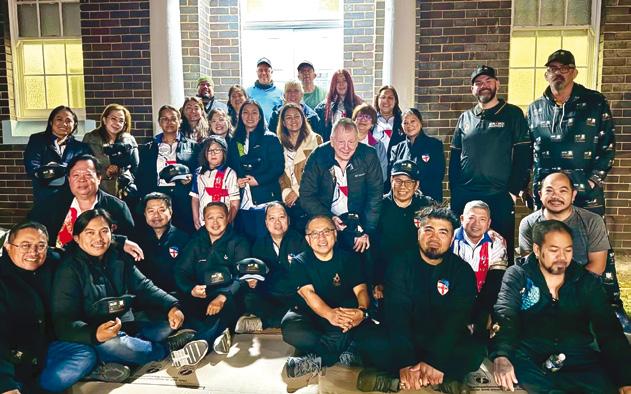
Advertising