Why Voting Matters in the 2026 U.S. Midterm Elections Page 5
AI…A Whole New World Pages 6 & 7
Spring — The Season for a Mindset Change Pages 8 & 9
TRAILBLAZERS
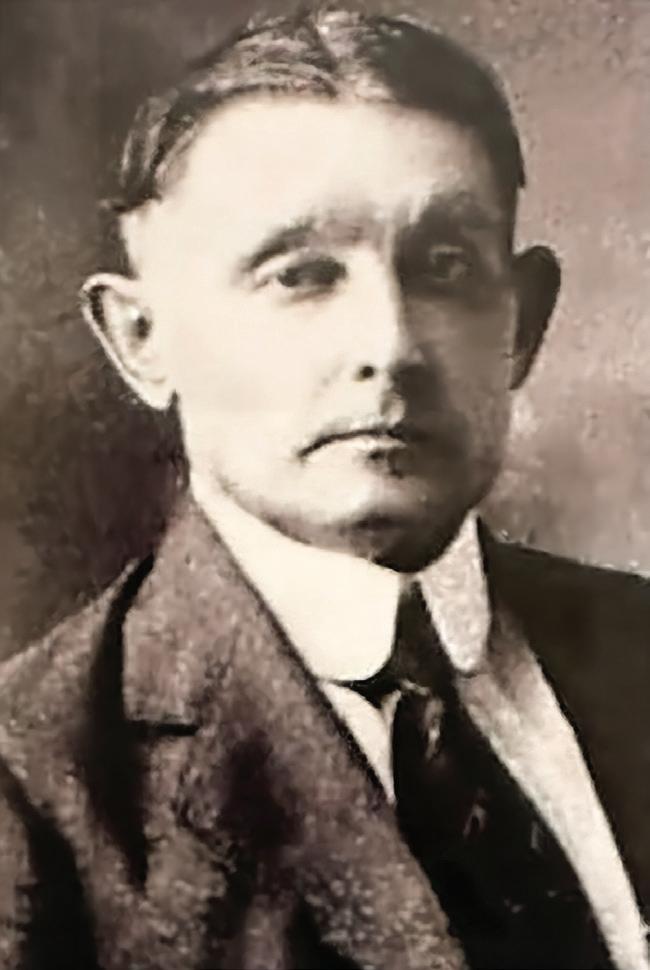
Remembering Bert Parmelee Sr. Pages 10 - 13
SWEET & SAVORY
Simmer, Dip, Repeat: Why Hot Pot Is Boiling Over Worldwide. Pages 14 & 15
STORY THREADS
The Fields of Our Fathers Pages 16 & 17
NEWS & EVENTS
California wants colleges to count work experience for credit. How’s it going? Pages 18 & 19
Robert T. McKee Student Art Exhibition: Celebrating Art in Education Page 20
ADVERTISERS
Learn the
Story of Shen Yun!
Spreading Benevolence, Beauty, and Hope
IT’S A STORY AS OLD AS TIME
—the David and Goliath kind. A small group of artists bound by shared faith, standing in the way of China’s massive communist dictatorship. Both our spiritual beliefs and the culture we work to revive are what the Chinese regime has been at war with for decades.
But as the Chinese regime chose to demonize our faith, imprison our loved ones, and sabotage our company, we chose the power of art—a boundless, beautiful language of movement and sound—to reveal who we truly are. The journey has been one of tribulations but great triumphs. This year, we celebrate 20 years. What began as a quiet aspiration is now hailed by theatergoers around the world as groundbreaking, exquisitely beautiful, and a source of hope.
“I was uplifted. I was filled with hope… The world is a better place because of Shen Yun.”
— Richard Swett, former U.S. Congressman
“These beautiful, gifted people are expressing something that’s both pure and good.”
—Philadelphia Weekly
THE APA LIVING TODAY
PHONE
916.747.9366
Jim Chong
EMAIL
jtc.legendmaker@gmail.com
l_imada@bggwestllc.com
ONLINE
https://issuu.com/apalivingtoday
EDITOR-IN-CHIEF
Terri Torres
DIRECTOR
Jim Chong
ART DIRECTOR
Layne Imada
GRAPHIC DESIGNER
Layne Imada
Summer Risso
CONTRIBUTING WRITERS & SOURCES
Val Acoba
Zully JF Alvarado
Mafae Yunon-Belasco
Nico Belasco
Jessie Bowen
Linda Claramo
Leslie Edman
Elite Publications
Beverly Engkabo
Ines Ruiz-Huston
Linda Norris
Tanya Parmelee
Anna Sass- HerLife
Carrie Sass - HerLife
Terri Torres
CONTRIBUTING PHOTOGRAPHERS
Tim Ulmer
Jim Chong
Deadline to submit newsworthy information from non-profits, charitable organizations, or other sources is the 19th of each month for the following issue. Submitting information does not guarantee it will be featured.
Submit information to: jtc.legendmaker@gmail.com
Attn: Jim Chong
The APALT is digitally published bi-monthly by the APA Living Today.
APALT does not assume responsibility for the authenticity or accuracy of news materials furnished for publication.
APA Living Today is more than a publication—it is a living bridge between heritage and horizon. Founded several years ago and rooted in the vibrant spirit of the Asian Pacific American community, APA Living Today was created to celebrate identity, preserve culture, and elevate voices that deserve to be heard. As its name reflects, APA stands for Asian Pacific American, a community rich in history, resilience, innovation, and contribution to the American story.
From its beginnings, APA Living Today has remained committed to keeping culture and community at the forefront. It honors traditions, language, values, and shared experiences that define who we are, while recognizing that culture is not static—it evolves. At the same time, the publication embraces technology and forward-thinking ideas, understanding that progress and preservation are not opposites but partners.
To move confidently into the future, we must first understand the past. The sacrifices of earlier generations, the journeys across oceans, the struggles for opportunity and recognition, and the triumphs achieved through perseverance form the foundation upon which we stand today. Remembering where we come from grounds us. It gives us clarity, purpose, and responsibility.
Yet remembrance alone is not enough. APA Living Today encourages strategic growth—building businesses, careers, innovations, and community initiatives that lasting impact for generations to come. By connecting heritage with modern advancement, the publication inspires readers to live fully in the present while preparing thoughtfully for the future.
In honoring yesterday and embracing tomorrow, APA Living Today serves as a compass—reminding us that our roots give us strength, and our vision gives us direction.
We encourage you to become an active contributor. If you are interested, please contact us at (279) 999-6363.
Jim T. Chong the Wok Star, Legend Maker, and The AI Asian. jim@CitywideDMS.com
WANT TO ADVERTISE!
The opinions expressed by contributing writers and sources are their own and do not reflect the opinions of the newspaper’s owners, editor or staff.
Would you like to submit your event and be featured in the next The APA Living Today Events Calendar?
Email us at: jtc.legendmaker@gmail.com Online: https://issuu.com/apalivingtoday
Involved - Ask readers to be involved in the community as an informed member. While we most directly address the concerns of
Jim T. Chong
Election Information
June 2, 2026, Statewide Direct Primary Election
Vote Early and Vote by Mail
Vote Early! Don’t wait for Election Day.
Take advantage of early voting and avoid the lines! You can return your ballot in the mail, at any Official Ballot Drop Box, or at any Vote Center. No postage is necessary.
Track your Ballot!
Sign up for “Where’s My Ballot?” with BallotTrax, a free ballot-tracking and alert system. It is available to all voters who wish to track the status of their Vote by Mail ballot from printed to accepted. Scan the QR code or visit www.wheresmyballot.com
How to Vote
Voting is the fundamental right of every US citizen. The County of Sacramento Voter Registration and Elections Department strives to uphold and preserve this right through voter registration, voter education, and accessible voting options.
Here you will find information on where, when, and how you can vote.
As a voter, we thank you for partnering with us in this core element of democracy.
HOW TO MARK YOUR BALLOT
Instructions for how to mark your ballot, how to vote for a qualified write-in candidate, what to do if you make a mistake on your ballot, and helpful tips!
VOTE BY MAIL AND OFFICIAL BALLOT DROP BOX LOCATIONS
Every registered voter in the County of Sacramento will be mailed a ballot starting 29 days before Election Day. Find more information on Vote by Mail ballots and the different ways you can return your voted ballot.
VOTE CENTERS
VOTE EARLY OR ON ELECTION DAY
California law allows voters to visit any Vote Center in the County of Sacramento to drop off their voted ballot, use one of three accessible ballot marking devices, obtain voting assistance, or receive a replacement ballot.
REMOTE ACCESSIBLE VOTE BY MAIL
Voters with disabilities can vote privately and independently by accessing and marking their ballot from a computer using their own assistive technology. Ballots must be printed out and returned to the County of Sacramento Voter Registration and Elections Department. Marked ballots cannot be emailed or faxed.
MILITARY AND OVERSEAS VOTERS
County of Sacramento Voters who meet the criteria below may register and apply for a ballot by completing a Federal Post Card Application (FPCA) form.
• Members of the Uniformed Services or Merchant Marine on active duty
• Spouses or dependents of a member of the Uniformed Services or Merchant Marine on active duty
• Commissioned Corps of the Public Health or the National Oceanic and Atmospheric Administration
• US citizens living abroad with an intent to return
• US citizens living abroad with no intent to return
ASSISTANCE FOR VOTERS WITH DISABILITIES
The Voter Registration and Elections Department has a long-standing commitment to working with voters with disabilities to help them exercise their right to vote. This page provides general information about these efforts. Voters are encouraged to contact us with specific requests for assistance.
ASSISTANCE FOR VOTERS WITH LANGUAGE NEEDS
Vote Early! Vote by Mail.
The County of Sacramento provides reference ballots in designated languages and voting support in specific languages at the Elections Office and at identified Vote Centers.
• Vote Centers, including their locations, hours and language services
• Reference ballot and designated precinct list with languages
Voters requiring assistance may bring up to 2 helpers, but may not include:
• the voter’s employer,
• an agent of the voter’s employer,
• or an officer or agent of the union of which the voter is a member.
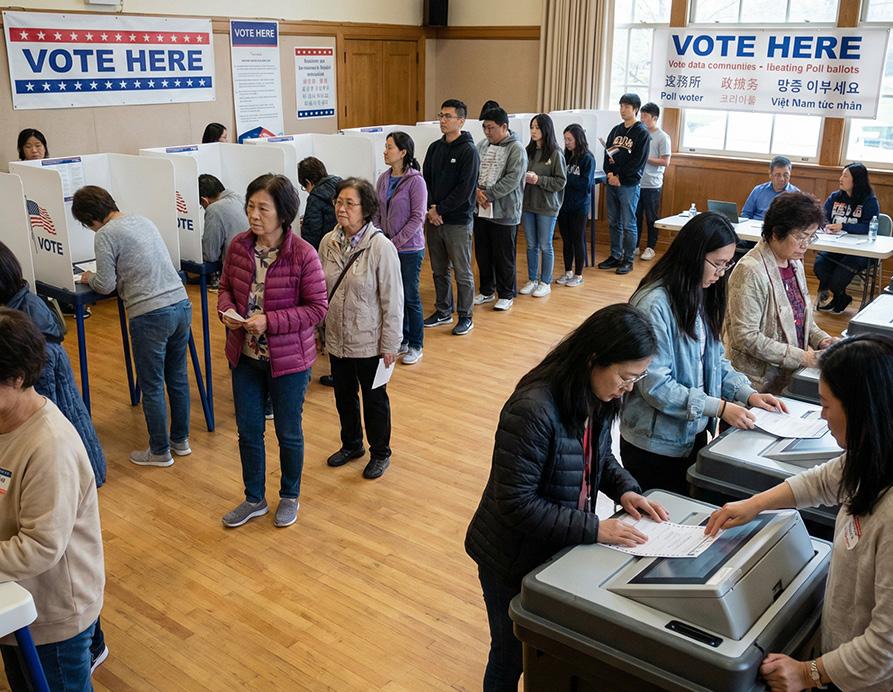
Why Voting Matters in the 2026 U.S. Midterm Elections
By Layne Imada
The 2026 midterm elections will be one of the most significant national events between presidential races, determining control of Congress and shaping public policy across the United States for years to come. Scheduled for November 3, 2026, the elections will influence everything from federal spending and healthcare to local education systems and infrastructure projects.
Midterm elections occur halfway through a president’s four-year term. In 2026, voters will decide all 435 seats in the U.S. House of Representatives and approximately onethird of the U.S. Senate. The outcome will determine which political party controls the legislative branch and, by extension, the direction of national policymaking.
Control of Congress
The balance of power in United States Congress is often decided by narrow margins. The party that holds the majority in the House and Senate controls committee leadership, legislative priorities, and the federal budget process.
Congress is responsible for passing laws, allocating federal funds, approving treaties, and overseeing the executive branch. A shift in control can accelerate or halt major policy initiatives, affecting economic programs, national security decisions, environmental regulations, and social services.
Historically, the president’s party frequently loses seats during midterm elections, making these contests a key indicator of public approval for the administration in power.
A Constitutional Check on the Presidency
Midterms also serve as a constitutional check on presidential authority. Lawmakers elected in 2026 will influence the president’s ability to enact policies through legislation, funding decisions, and oversight.
Congress can investigate executive actions, confirm or reject appointments, and shape federal priorities through budget authority. When control of Congress differs from the presidency, the result is divided government, which often leads to negotiation, compromise, or legislative stalemate.
Policies That Affect Daily Life
Although presidential elections draw the most attention, Congress plays the primary role in crafting federal law. Decisions made by lawmakers directly influence everyday issues, including:
• Tax policy and economic programs
• Healthcare access and costs
• Immigration policy
• Education funding
• Environmental protections
• Infrastructure development
• Social safety-net programs
These policies affect households, businesses, and communities nationwide, making voter participation a key factor in determining future conditions.
State and Local Races on the Ballot
In addition to federal offices, many states will hold elections for governors, state legislatures, judges, and local officials. Ballot measures may address issues such as housing development, public safety funding, school policies, and transportation projects.
State governments play a critical role in implementing federal programs and regulating key areas such as education, public health, and elections. Local officials make decisions that shape daily life at the community level, from zoning laws to school curricula.
Representation and Participation
Midterm elections typically draw lower turnout than presidential contests. However, this lower participation rate means individual votes can carry greater influence, particularly in competitive districts.
High voter participation helps ensure that elected officials reflect the broader population rather than a limited segment of highly engaged voters. Political scientists widely view voter turnout as a cornerstone of representative democracy.
In close races, relatively small numbers of ballots can determine outcomes, underscoring the importance of civic engagement.
Looking Ahead
The results of the 2026 midterms will also shape the political landscape leading into the 2028 presidential election. Party momentum, leadership development, and legislative achievements during this period will influence future national debates.
As the election approaches, officials encourage eligible citizens to verify registration status, learn about candidates and ballot measures, and participate in early voting or Election Day voting.
Ai…A Whole New World
By Jim T. Chong the Wok Star
T. Chong
Music has always been the staple of humanity, culture, and community. In prior writings, I shared how personally, community is established where music is the centerpiece and hub… such as through Karaoke or compositions where harmony was a metaphor.
In the same manner, in today’s world, technology has been the catalyst and innovation for where we are at today. Big leaps have been made since the invention of electricity. Focusing on the past decade, we have seen the word “Media” take on a whole new form. We have come from carvings on stone, to writings on paper, to the virtual media we have today. In music, we have taken progressions from the 8-Track to cassette tapes, to CDs, and to the virtual spaces like the cloud to store music.
I am excited about the newest leap we will take in technology…primarily AI. This is new territory that we are now at the point where it is becoming a “commodity” in how we communicate and do business. With the exciting possibilities being opened up, it’s now more about learning a technology to get things done for you rather than doing the things ourselves. What do I mean by this? Instead of creating animated graphics or videos, it’s now more about how well we are able to describe what we want accomplished.
The key these days and in the future, is to be able to answer questions and describe what you want through “prompts”. When you think about it, this has been where we have been leading to. Remember Excite? Well, after that came Yahoo!, which had preceded Google. While Google has a very strong lead and stake in the ground, Google has to maintain its edge or can eventually be surpassed with the foundation of AI. Fortunately for them, they have been working on Gemini…it’s AI designed to centralize requests and usage of graphics, text, and concepts. We will be exploring the AI technology this year and encourage you to stay connected and grow with the technology.
ESSENTIALS FOR THE FUTURE
The importance of now understanding technology is paramount and essential by definition to really grow with where we are going in the future. We will be exploring the various segments that are vital to how we build for the future generations. Music is now being completely composed, compiled and literally created through AI. Books are being written by AI, business is being reshaped by AI. Understanding the building blocks is essential to any form of sustained growth…this is also try as we adapt AI going into the future years.
• Embrace Change
• Lean new concepts and ways of doing things through the evolution of AI
• Understand how to implement AI by doing rather than just learning
Jim
We have yet to really understand the implications to our culture and society as we know it today. Some key questions are…Will it make us more united or controlled? Will we be more intelligent through this process, or lose our ability to create and think at an individual level as more and more things are becoming automated.
Here is to a new way of doing things. As Bud LIghtyear said emphatically… ”To Infinity and Beyond”
I would love to hear your thoughts.
Jim T. Chong the Wok Star and Legend Maker Innovator, Connector, and The AI Asian Jim@CitywideDMS.com • (279) 999-6363.
Your Resource to create YOUR story.
For More Information, Contact: JIm T. Chong the Wok Star (JimTChong.com) PR, Media, Entertainment Email: jtc.legendmaker@gmail.com
Text / Phone: (279) 999-6363
Are you interested in helping us share about your culture or community? We want to hear from you. Contact Jim at (916) 747-9366 or jtc.legendmaker@gmail.com
About the Columnist:
Jim T. Chong - Jim is the Principal of APA Living Today, specializes in Media, PR, and Publicity to help gain Visibility/Influence/Connection, is a National and International best-selling and multibook author, executive speaker, and community leader within multiple communities.
Spring — The Season for a Mindset Change
By Dr. Jessie Bowen
Spring has long been regarded as a season of renewal. The grass regains its color, trees develop new leaves, and the air carries a gentle warmth that signals transition rather than extremes. Nature demonstrates a steady and predictable shift from dormancy to growth. Yet beyond its environmental beauty, spring represents a structured opportunity for personal evaluation and intentional change.
Each year is divided into four seasons of approximately three months each. This natural division offers a practical framework for reflection and adjustment. A ninety-day period is long enough to establish meaningful habits and short enough to maintain clarity of focus. While external seasons change automatically, internal changes require deliberate attention. Many individuals physically enter a new season while mentally remaining in the previous one. The result is stagnation during a time designed for progress. Spring invites reconsideration of one’s mindset.
Understanding a Mindset Change
A mindset change is not merely exposure to new information or temporary motivation. It is a deliberate shift in thought patterns, interpretation, and response to circumstances. It alters how individuals perceive themselves, their potential, and their direction. Information expands knowledge. Mindset transformation restructures behavior.
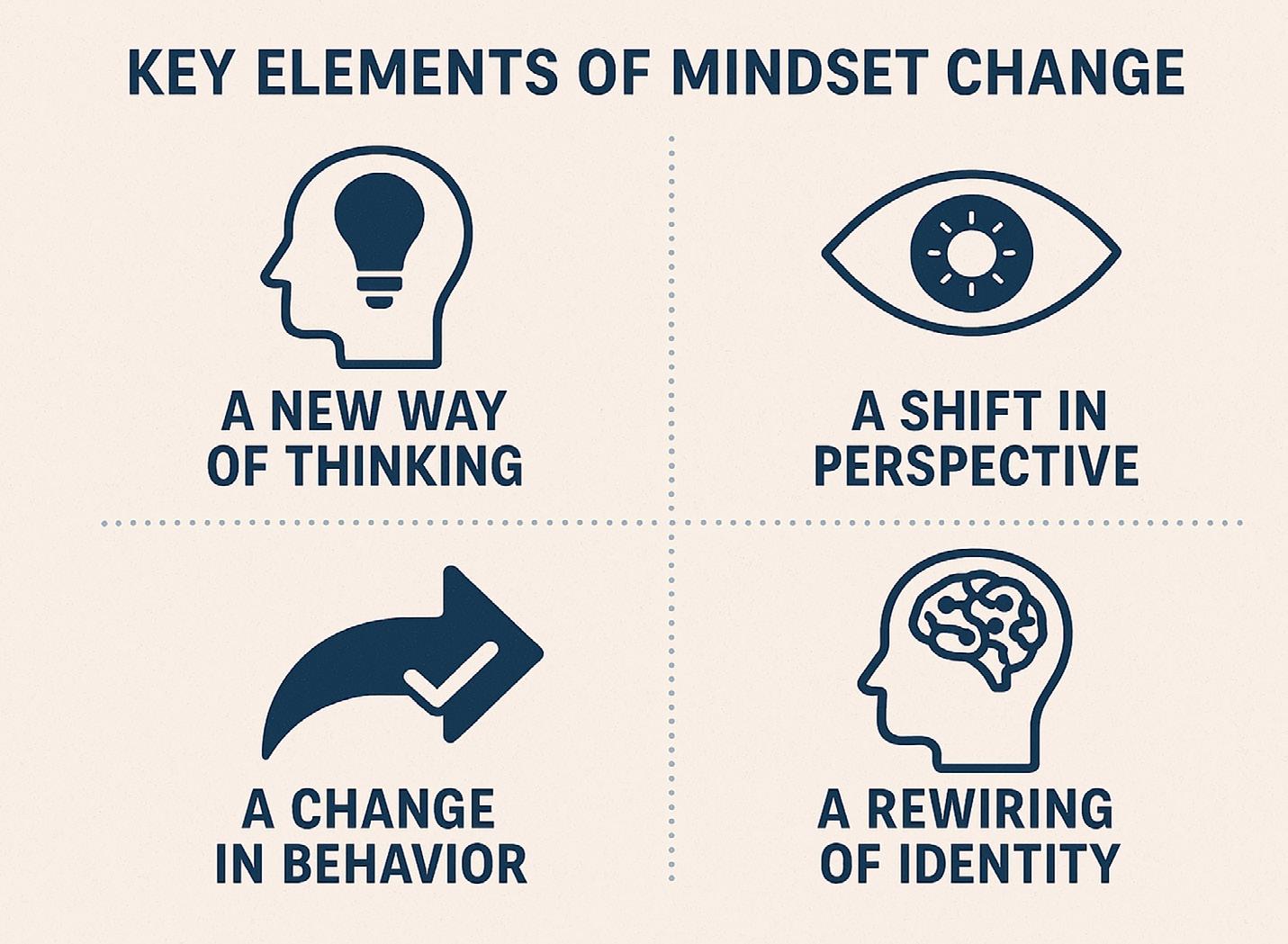
When thinking patterns are modified, actions begin to align accordingly. Spring provides a useful illustration: the environment adjusts first, and growth follows. Similarly, when individuals adjust their mental environment, behavioral change becomes sustainable rather than forced. Four essential components characterize a genuine mindset change.
1. A New Way of Thinking
Every person operates on the basis of established beliefs formed through experience, instruction, and repetition. Some of these beliefs encourage growth, while others restrict it. Growth requires replacement rather than negotiation. Nature demonstrates this principle clearly — old leaves do not remain while new ones develop.
A new way of thinking replaces limiting assumptions with constructive ones:
• “I am not prepared” becomes “I am developing competence.”
• “I cannot do this” becomes “I can learn the required skill.”
• “It is too late” becomes “This is the appropriate time for progress.”
Such thinking does not ignore reality; it broadens the interpretation of possibility.
2. A Shift in Perspective
Circumstances alone rarely determine emotional outcomes; interpretation does. Two individuals may encounter the same challenge yet respond differently based on their perspectives.
When mindset changes, meaning changes:
• Obstacles become indicators of direction.
• Criticism becomes useful feedback.
• Failure becomes measurable information.
Spring again offers a model. A seed must break open beneath the soil before growth appears above it. From an external perspective, nothing seems to be happening; internally, transformation is underway. Many developments in human progress follow the same pattern.
3. A Change in Behavior
Behavioral change becomes consistent only when supported by cognitive change. Attempts to alter habits without adjusting mindset typically result in short-term effort followed by a return to previous patterns.
When thinking changes, actions naturally follow. Goals become scheduled actions:
• Writing a book means writing a defined number of words each day.
• Expanding a business involves contacting a set number of prospects at a specific time.
• Strengthening inner peace becomes a daily practice of reflection or prayer.
Structured actions remove decision fatigue. Individuals no longer debate whether to act; they follow a predetermined plan. Consistency replaces reliance on motivation.
4. A Rewiring of Identity
The most profound aspect of mindset change is identity transformation. Sustainable growth occurs when individuals cease identifying with past limitations and begin identifying with future development.
Instead of attempting a behavior, they become the type of person who performs that behavior:
• Not trying to write, but becoming a writer.
• Not trying to lead, but becoming a leader.
• Not trying to improve, but becoming a person committed to growth.
Identity directs behavior more reliably than goals alone. Spring does not struggle to grow because growth is inherent to its nature. Similarly, consistent action emerges when development becomes part of personal identity.
Jessie Bowen
About the Author
Dr. Jessie Bowen is a prolific author of over 60 books on martial arts philosophy, personal development, and peak performance. An international bestselling author and empowerment speaker, he has served as a corporate educator with the Duke University Corporate Education Program and a performance coach for athletes at the University of North Carolina at Chapel Hill and North Carolina Central University in Durham, NC. He is also the co-host of The Power to Live Your Vision podcast, an empowerment program that connects mind and body for success, which airs Tuesdays at 1:00 PM EST.
Elite Publications
Dr. Jessie Bowen, Founder Elite Publications & AMAA
Are you ready to write your story? Contact us! For more information, visit www.ElitePublications.org or calI/text (919) 618-8075
BUSINESS COMMUNITY
TRAILBLAZERS
Remembering Bert Parmelee Sr.
His Legacies To The People Of Culion And To Mankind.
Source referenced by Tanya Parmelee
While not all of us are eager to study history as a discipline, we are all fascinated when we hear good stories from the past — whether it’s about the way people used to live, how empires were built or how a hero was born.
This neglected lionheart cited in this article had never been mentioned in the annals of Culion. So far, only the medical directors, physicians and other paramedical workers were quantified for their good performances and services during the infancy of Culion as a leper colony. However, the old timers of Culion knew this person pretty well.
In the 1980s, a cure for leprosy; the multi-drug therapy (MDT) was developed, signaling the beginning of the end for leper colonies globally. In 1992, the Culion Leper Colony (Sanitarium) was officially converted into a regular local administrative unit (municipality) by virtue of Republic Act (RA) No. 7193, which was passed on February 18, 1992 following the passage of the relevant local government code legislation. The first set of its elected local government official sat in the year 1995.
Throwback: the American government entered into wars with the Spanish forces in Cuba, Guam, Puerto Rico and the Philippines. It was the first major overseas war of the United States. The mysterious explosion of the U.S. battleship “USS Maine “that killed 266 US sailors in Havana Harbor, Cuba on February 15, 1898, blamed on Spain, intensified the anti-Spanish feeling and led to the U.S. declaration of war in April of 1898.
In the Philippines, the U.S. navy quickly won a decisive victory against the Spanish fleet in Manila Bay, a key battle in the Pacific theater. The American forces took over the Philippines in September 1898. By December 1898, the Treaty of Paris was signed officially ending the war. The war solidified the U.S.'s position as a global power and marked the decline of the Spanish colonial empire. Due to this, territorial acquisitions were taken by the U.S. such that Spain ceded Cuba, Puerto Rico, and Guam to the U.S., and SOLD the Philippines to the U.S. for 20 million US dollars. The wars concluded with a significant shift in the global power dynamics.
General Elwell S. Otis took over the Philippines as the military governor after the Spanish-American War of 1898. The Americans found Manila and the rest of the Philippines soaking dirty and wallowing on small pox, malaria and leprosy. The rural areas were lacking of basic facilities such as toilets and hospitals. Six thousand (6,000) Filipinos were dying of small pox per year. There were estimated 30,000 Filipinos afflicted of leprosy in the entire Philippines. The U.S. as a global power that time continued to strengthen its armed forces vis-à-vis its role in the Asia and the Pacific. American volunteers were secured among male citizens. The system required eligible American men aging 18-35 to sign up and register for military service into the U.S. armed forces. The Congress, acting on behalf of a national emergency, authorized the US President to issue indictments under the Military Selective Service Act. Failure to comply with the registration requirement is a felony punishable by significant fines and imprisonment. The system had been in effect since the American Civil War (18611865) through the World War I (1914-1918), the Korean War (1950-1953) and Vietnam War (1955-1975).
On February 4, 1899, just two days before the U.S. Senate ratified the treaty, fighting broke out in the Philippines between the American forces and Filipino nationalists led by Emilio Aguinaldo who sought independence rather than a change in colonial rulers. The US government immediately re-enforced his troops in the Philippines to quell the Filipino insurrection. William Howard Taft arrived in the Philippines in July 1901, most of the islands were under U.S. control, and the civil government was established. He established the 2nd. Philippine Commission that created the Board of Health for the Philippine Islands headed by Dr. Victor G. Heiser. This became the main agency leading to the control and spread of several communicable diseases brought forth by the aftermath of the war and other natural calamities.
The outbreak of cholera began in Manila sometime March 1902. This devastating epidemic spread throughout the island and claimed the lives of over 200,000 Filipinos exacerbated by unsanitary conditions and troop movements during the war (Americans against Filipino nationalists) and its spread was particularly severe in areas
Cervantes, R. A., “The Lost Footnotes in Culion’s History 1211-1900’’
Bert Baldwin Parmelee Sr.
TRAILBLAZERS
where Filipino civilians were concentrated in camps. The disease was brought to the Philippines by a ship from Hong Kong and spread rapidly.
Bert Baldwin Parmelee Sr. at age 26, volunteered in the US Army by virtue of the Selective Service System in 1902. He was sent to undertake 6-months military training at Camp Merriam in Angel Island, California. After the training, with the rank of Private first class, he boarded one of the several naval vessels together with other hundreds of US soldiers at Presidio, California for a long journey to the Philippines. Due to his previous experience at the City Hospital in Rochester, New York, he was designated as one of the Navy corpsmen (hospital corpsmen). Among his duties were to provide medical care to sailors, marines, and their families. He served in diverse roles, assisting with everything from battlefield emergency care and physical examinations, assisting surgeons and administering vaccinations, acting as vital support personnel in a wide range of medical fields and settings.
Upon reaching the Philippine shores, together with other US corpsmen, he was directed to proceed to Batangas and took care hundreds of Americans and Filipino soldiers wounded in the various military engagements like in Santa Clara and Rosario, Batangas where General Miguel Malvar surrendered to the Americans. General Malvar was the last
Filipino general to surrender after assuming command of the Filipino forces following General Emilio Aguinaldo's capture in Palanan, Isabela on March 23, 1901.
Pfc. Bert Parmelee was around somewhere in Cavite and nearby provinces and had witnessed the surrender of some minor renegade forces of General Aguinaldo. He took care both the wounded Americans and Filipino soldiers. In sum, he was immersed in the insurrection conflict in the Philippines for 41 months as military medic under the governorships of Howard Taft. The conflict became a brutal struggle as Filipino nationalists fought for independence from American rule, which had begun after the U.S. acquired the Philippines from Spain in 1898. The war concluded with an official victory of the Americans and the dissolution of the First Philippine Republic established by General Emilio Aguinaldo after three years of Philippine-American War (1899-1902). The war resulted in the death of over 4,200 Americans and over 20,000 Filipino combatants, while as many as 200,000 Filipino civilians died from violence, famine, and diseases.
Manila notwithstanding the entire Philippines was soaking dirty as a result of the aftermath of the war. The U.S. colonial authorities, under the Bureau of Health, implemented massive strict sanitation and Public Health measures. Ordered the burning of contaminated houses and belongings, especially in crowded districts. Closed and disinfected markets, slaughterhouses, and wells suspected of contamination. The Americans launched public health campaigns to teach Filipinos about hygiene, boiling water, and avoiding contaminated food. Hundreds of corpses were buried quickly in sanitary cemeteries to prevent contamination.
June 27, 1905, Pfc Parmelee applied for honorable discharged from the U.S. military service and joined the American civilian services in the Philippines. He was assigned at San Lazaro Hospital, Rizal Avenue, Manila. His expertise in military medics and good performance during the war made him popular to Dr. Victor Heiser. He was designated to head the Morgue and Crematorium Section of the San Lazaro Hospital. At that time, the Americans believed — correctly — that cholera spread through contaminated water and food, especially when human waste from infected people entered wells or rivers.
After narrowing the devastating effect of the cholera epidemic, the 2nd Philippine Commission focused on the control of leprosy. Later part of 1905, Pfc. Parmelee was called on by the Dr. Heiser to transfer his interest and commitment to work in the control of leprosy. He underwent series of seminars on leprosy control spearheaded by the Bureau of Health with other Filipino and American workers who would be joining in the control of leprosy and establishing an isolated leprosy hospital.
Bert Parmelee turned the honcho of Dr. Heiser responsible for registration, recording and documentation of leper patients from Mindanao and Visayas. He was instructed as one of the administrative staff who routed the three collection points of lepers. First week of May 1906, he boarded the coast guard cutter, “Polillo” together with two Filipino assistant doctors, Filipino nursing attendants from San Lazaro Leprosy Control division, some clerks, administrative staff and some Filipino constabulary guards. After three days, he reached the Cagayan de Misamis (now Cagayan de Oro). Several leper patients were accommodated into the cutter, “Polillo”. The cutter proceeded to Cebu and fetched several leper patients thereat. From here, Dr. Heiser together with Dr. Jose Abreau, Dr. Vicente Llamas, Dr. Antonio Roxas, 10-15 nursing staff and orderlies, European nursing sisters, who were affiliated with the Asilo de San Jose and Cebu hospital joined the collecting trip. Thereafter, the same vessel moved to Iloilo for the last leg of the historic collection of leper patients. In Iloilo, leper patients collected
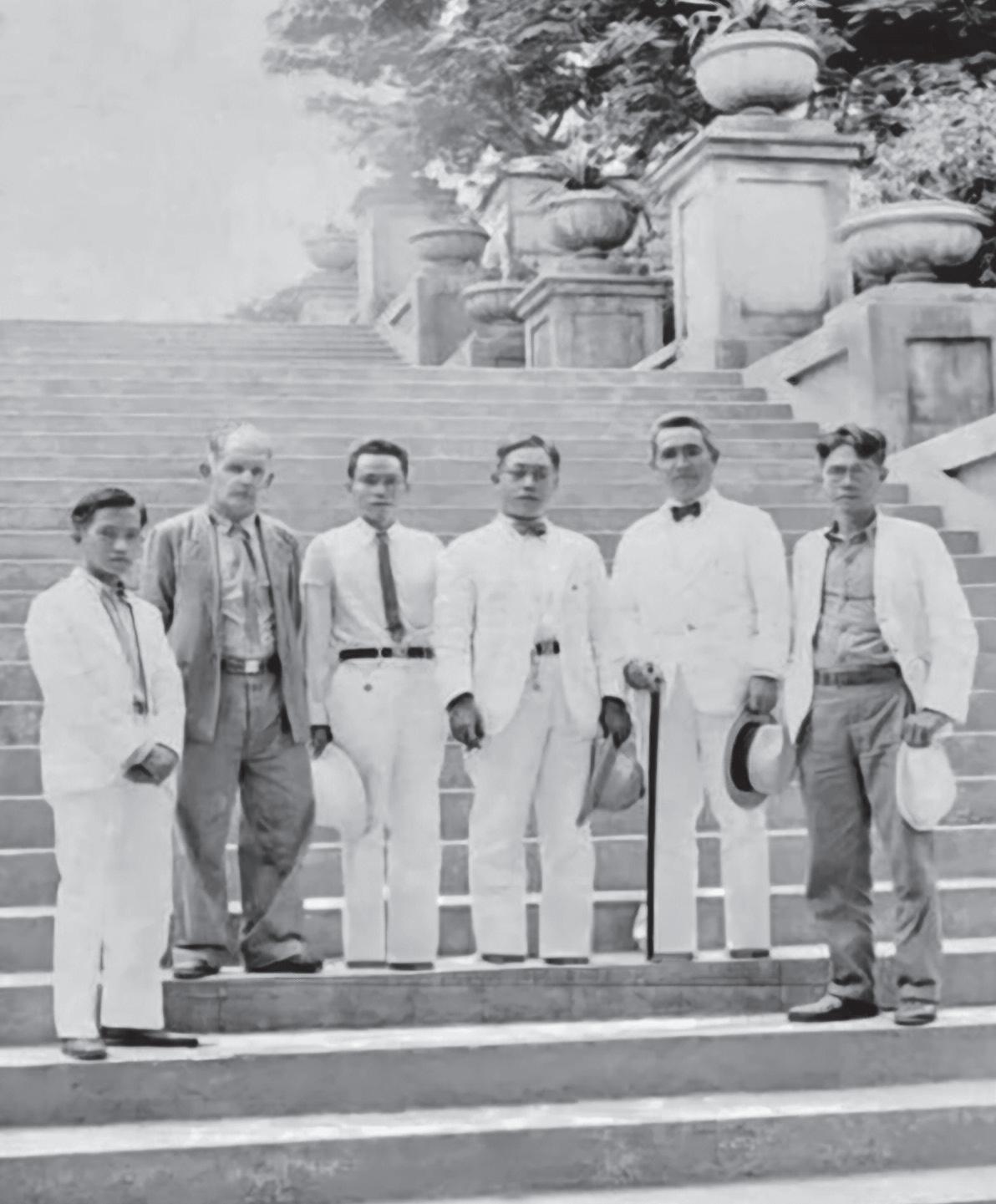
Bert with other government employees at the Grand Staircase, Culion
TRAILBLAZERS
from Panay and Negros islands with few constabulary guards and assistants were loaded. Polillo sailed north-west across Sulu Sea toward Culion.
Presto! on May 27, 1906, cutters “Polillo” and “Mindanao” reached Culion and unloaded the 370 leper patients together with some medical supplies, foodstuff and other logistics. Of course, disembarked were Dr. Victor G. Heiser (Director of Bureau of Health), Dr. Jose A. Abreau, Dr. Vicente Llamas, Dr. Antonio P. Roxas, 2 more Filipino assistant physicians, Bert Parmelee, European nursing sisters, several Filipino nurses and orderlies, Filipino constabulary guards, and other government clerks. The point of disembarkation was the beach front at the old golfo de Bernabe just below the segundo fuerte de piedra in Culion. They were welcomed by Dr. Carlos de Mey, an American doctor who came to Culion much earlier than the first batch of leper patients. He later became the first chief of Culion Leper Colony.
Dr. Heiser found the temporary shelters mostly made out of nipa. Medical and administrative posts were already functional. Water, food, and sanitation basics were in place. The leper patients settled in designated area later on called “colonia” and eventually forming the nucleus of what would become the Culion Leper Colony. Dr. Heiser described the island as “beautiful yet isolated — a natural quarantine station.”
After everything was put in order and segregation of leper patients was strictly enforced, the non-leper medical staff and workers were mandated to move out of the colony proper for Siuk (“Sioux"), a farming village across the colony proper. Only the members of the constabulary guards were left inside the colony proper to prevent break free of patients and ensure order in the colony proper. Bert shuttled the colony proper and Siuk on daily basis together with Dr. de May and other medical staff via motorized bancas and sailboats.
Bert was designated as the bigwig of Dr. de Mey in terms of supply and records. He held the same confidence when he was instructed by Dr. Heiser to go with the cutter “Pollilio” from Manila to Cagayan de Misamis in Mindanao to pick up the first group of leper patients. The combination of American oversight (Heiser), Filipino physicians, nurses, attendants and other staff created the framework for what became one of the most advanced leprosy colonies in the world at that time. Bert also supervised the operation of the crude incineration facility (sunugan or pugon) of the colony.
Bert, being with the supply section, he knew everything what the hospital and the patients’ needs. He always ensured that buffer stock was available before the supply ran out of stocks notwithstanding the availability of the boat traversing Culion and Manila at that time. He used to visit Coron town to coordinate with the various businessmen thereat. One was Juan Palanca Pe Chin Tuan, who had secured an outstanding contract with the government of Culion to supply fresh foods for the hospital. He hailed from (Angke, Amoy-now Xiamen City, China) and married to Mamerta Rodriguez Sandoval who was born in 1860 at Culion (Isla Calamian) and raised to parents Don Laurente Jalbuena Sandoval (Spanish-French-Filipino descent) and Doña Estefania Souza Rodriguez Sandoval (Portuguese-Spanish-Filipino descent) who migrated to Culion in 1850 from Iloilo to partake in the economic boom of Culion as the premiere trading hub in the northern Palawan (Las Islas de Calamianes).
It was in this circumstances that Bert courted one of the daughters of the couple Juan Palanca Pe Chin Tuan and Mamerta Sandoval Palanca. At thirty-three years old, he married Mademoiselle, Luisa Sandoval Pe Palanca, 17 years old on January 9, 1909 in Coron, Palawan. He was lucky to have married, a mestiza de Sangley of Spanish-
Portuguese and Chinese descent, a typical daughter of those early union that had long blended the bloodlines of Iberian and Cathay in the island. Her bearing reflected the quiet dignity of the East and the proud grace of the West.
In 1917, after serving the Philippine Government for 12 years (1905-1917) with all American Hospital Directors of Culion, such as Dr. Carlos de Mey (1906-1907), Dr. James Biggar (1907-1910), Dr. Paul Clements (1910-1915) and Dr. Oswald Denney (1919-1920), he was persuaded by his parents -in- law (Juan & Mamerta Palanca Pe) for a joined -venture undertaking in managing the farms in Bintuan and Concepcion in the light of the aging father-in-law (Juan Palanca Pe Chin Tuan at 64 yo). Plus of course, the commitment of the couple Palanca Pe to the outstanding contract with the government to supply and augment the provisions of the patients. The olden Juan Palanca Pe employed several Kalamyanen, Cuyonon, Agutaynen, Tagbanwa, Kagayanen, Chinese and even Japanese expats to work on this endeavor. The old Palanca was so kind, that he shared and apportioned some of his land in Bintuan for his workers for free. He did it for purposes of maintaining a workable and available manpower for his farms and among others. With this, Bert was in high hopes to sustainably comply the purchase orders (POs) granted to Don Juan Palanca Pe. He was very happy, despite he resigned from Culion, he continued his distinctive service and undertaking in
Bert & Luisa latder in life.
TRAILBLAZERS
helping the leper patients by providing adequate foodstuffs raised from the farms of his parents-in law in Bintuan and nearby areas.
On regular basis, Bert delivered fresh foodstuff to Culion Leper Colony that lasted for almost thirty years. Bert used to butcher 30 heads of cow every Mondays and 20 heads of cow on Thursdays, notwithstanding the number of head of pigs, poultry meat (Cantonese chicken, Peking duck, turkey), various root crops, fruits, vegetables and of course fresh fish (from penet-fish pen) and among others. Bert used the sailboats (named Don Juan and Doña Mamerta) in delivering the various foodstuff from Bintuan to Culion. He was very happy whenever he was in Culion and the patients would greet and called his moniker, “Yankee Bert”, (a general term used to mean for an American outside the U.S).
Whenever, the non- leper residents of Culion (Balala) would see the two sailboats of Juan Palanca Pe Chin Tuan (collectively known among the residents of Culion as “The Matanceros”) coming out from the Punta Buhi, they usually expected that after unloading the beef, pork and other foodstuff to the General Kitchen inside the colony, the non-leper residents would troop to palengke (a market along the coastal area of Balala) to buy the heads, tails, legs and entrails of the cows. There were instances that Bert had to deliver panotcha and brown sugar produced by Don Juan galingan (molino de caña) in Bintuan. As years gone by, Bert was gratified when a lot of Americans doctors, clinicians, bacteriologists, pharmacists were temporarily resided in Culion to conduct researches on leprosy. Foremost were Dr. Herbert Wade, Dr, Hanks, Dr. Perkins and among others. He usually visited them in their offices and brought some presents like fresh oranges (otban) and pomelo (kahil) he harvested from the Don Juan orchard farms.
During WW2, Bert and his family was advised by his Japanese friends, Mr. Taroji Fusato to cool off from the public view for the meantime. He was advised by the same Japanese friend (later found out as a high-ranking Intelligence officer of the Japanese Imperial Army) assigned in the Calamian group of islands) to keep his family and other relatives to the hinterland of Busuanga such as Cheey, another barrio located northeast of Busuanga Island. The Japanese Army never did visit the said place. Bert was so desolate when he learned that the food rations of the lepers were scarce due to the on-going war. He missed the same lepers who were good to him, who travelled with him from Mindanao and Visayas and famously named him “Yankee Bert”. Numerous leper patients by way of backdoor absconded. Some even sneaked out at night to reach Linapacan, Cuyo, Bacuit, Casian and Liminangcong using their pangkos and sail boats looking for food. Bert despite in the hinterland of Busuanga, he donated some root crops and fresh fish for the consumption of the lepers.
After the war, Bert with some friends immediately looked for Mr. Fusato because the guerillas in the Calamian were looking for him. Under the cover of darkness, Bert initiated the safe transfer of Mr. Fusato from Busuanga, and surrendered him to Dr. Wade in Culion for good. This was his ultimate reciprocal gesture given to Mr. Fusato for securing him and his family during the height of the WW2.
Few days after, Dr. Wade together with Bert initiated a “Despedida Party” in honor of Mr. Fusato at the Bachelor’s Hall in Balala in appreciation of his kindness during the WW2. Bert volunteered his nephew (by affinity), a sibling of Barracosos of Busuanga to render the much awaited and fitting song with its lyrics for someone showing reciprocity of friendship. The song was written by Harry Warren in 1943, popularized by Nat King Cole, entitled, ‘’You’ll Never Know’’. The Bachelor’s Hall that night was jampacked and all alleys contiguous were filled up with spectators.
As years went by, Bert, despite his other business pursuits in Manila, he did not fail to fill in supplying the lepers with their needed foodstuff by virtue of a working contract of his parents-in law with the government.
The neglected hero of Culion was born on February 13, 1876 in Lima, Livingston County, south of Rochester, New York, USA to parents Clifford Parmelee, was 26 (born 1852- died 1908) and mother Mary Cullen, was 22 (born 1855- died 1945). He had four siblings: Robert, Charles, Henry and Pearl. He spent his early life in the same place. He attended his early schooling at the Cobblestone Schoolhouse No. 6, Livingston County. Now, this schoolhouse was turned into Livingston County Historical Museum. He took his secondary education at one- room district school of Genesee Wesleyan Seminary in Lima, Livingston County. Later, his family moved to Mendon, Monroe, New York. In 1894 at age 18, he was a paramedical intern at the City Hospital, Rochester, New York.
His marriage to Luisa Sandoval Palanca Pe brought into being ten children: Bert Jr. Mary, Anthony, Mercedes, Purita, Paul, Lulu, Bertha, Bob and Vic.
Prior to his timely demise, he was brought to the Philippine Veterans’ Hospital in Quezon City. He died on October 15, 1966 at age 90 due to congestive heart failure and arteriosclerotic heart disease in the same hospital and lied at the Funeraria Paz, Quezon City. His body was interred in the specially allocated for Spanish- American War Veterans Plot, North Cemetery, Quezon City with Memorial Identification No. 186694227.
Bert could be best remembered by the people of Culion as one of the first administrative staff of the Culion Leper Colony. He was very instrumental in ensuring the availability of the foodstuffs of the patients by acceptable supply and property management. He played a vital role in securing the supplies and materials during the construction of numerous buildings, wards and other service facilities of the hospital. In sum, he relinquished his prime of life, comfortable and prosperous days in the United States and instead devoted himself to the lepers of Culion.
He was instrumental in the hauling- out of the leper patients all the way from Mindanao and Visayas, recorded and housed them in Culion. Despite the severe human cost and ethical issues involved, the segregation policy enforced by the Americans produced several public health and medical benefits, as understood that time: The segregation significantly reduced the spread of leprosy to the general population. By isolating diagnosed patients, transmission rates outside the colony declined, particularly in urban centers. Centralized medical care and research facilities like Culion allowed physicians to study leprosy systematically. This contributed to improved understanding of the disease, its progression, and modes of transmission. The concentrating patients in one location made it possible to test and refine treatments, including early chaulmoogra oil therapy, which later became a foundation for medical advances against leprosy. The policy marked a shift toward modern public health administration in the Philippines, introducing record-keeping, diagnosis protocols, and disease surveillance. While harsh at the beginning, Culion eventually developed hospitals, schools, churches, industries, and self-governance structures that provided residents with a more stable community life.
By treating leprosy as a medical condition rather than a moral or religious affliction, the Health Care system gradually shifted perceptions—though stigma not easily disappeared entirely.
SWEET & Savory
Simmer, Dip, Repeat: Why Hot Pot Is Boiling Over Worldwide.
By Layne Imada
Source cited: Keira Imada
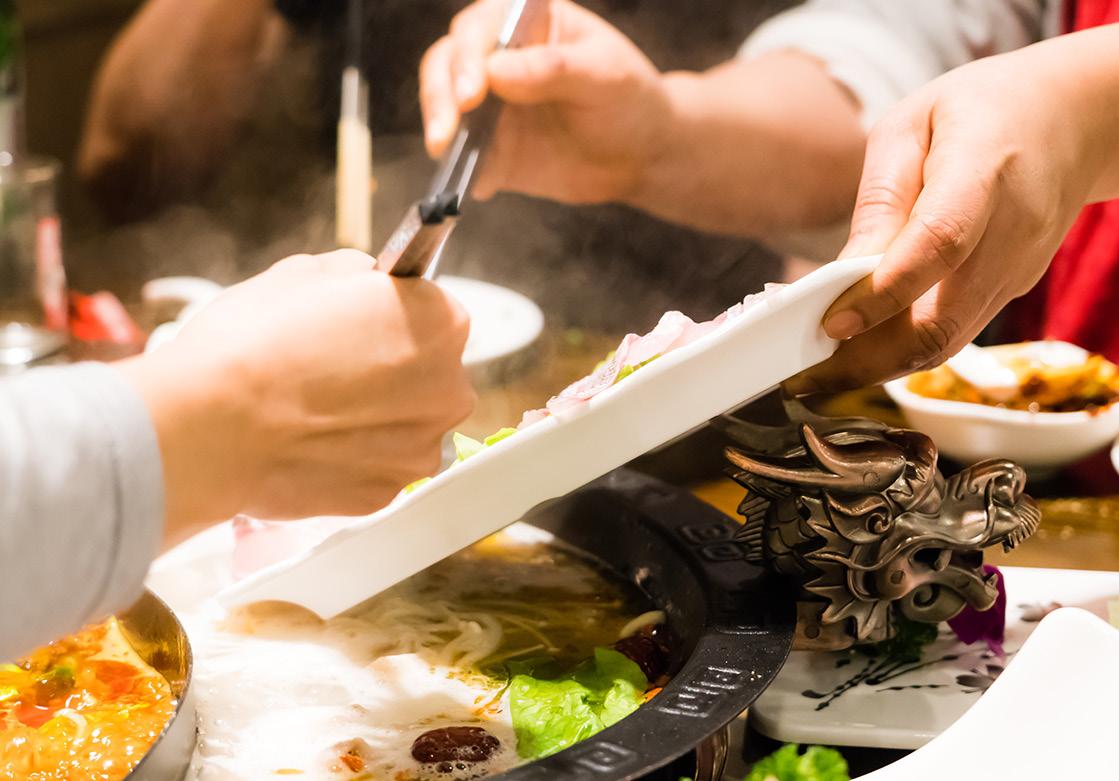
Steam curls toward the ceiling. Chopsticks hover midair. Platters of paper-thin beef, coiled noodles, jewel-bright greens, and handmade dumplings circle a bubbling pot at the center of the table. Dinner does not arrive pre-plated or portioned in courses; it unfolds gradually, shaped by the hands and appetites of everyone gathered around.
This is hot pot—one of the world’s most interactive and communal dining traditions.
A MEAL YOU BUILD TOGETHER
Hot pot is less a single recipe than a method of eating. At its core sits a pot of simmering broth placed over a heat source directly at the table. Surrounding it is an abundant spread of raw ingredients: thinly sliced beef and lamb, fresh seafood, tofu in multiple forms, leafy greens, mushrooms, dumplings, fish balls, and an array of noodles. Diners select what they want, cook it briefly in the broth, and then dip it into customized sauces before eating.
The experience is fluid and participatory. Ingredients cook quickly—sometimes in mere seconds—so diners remain engaged throughout the meal. Conversations flow between turns at the pot. There is no single chef presiding over the stove; everyone contributes. The act of cooking becomes a shared ritual rather than a backstage task hidden from view.
Broths are where hot pot begins to reveal its regional character. Some are clean and restorative, built from long-simmered pork or chicken bones. Others are robust and layered with aromatics such as ginger, garlic, scallions, and dried seafood. Perhaps the most famous style is the fiery, chili-laced broth that delivers a distinctive numbing sensation from Sichuan peppercorns—a flavor profile known as málà.
Modern restaurants often offer divided “yin-yang” pots, allowing diners to enjoy both mild and spicy broths simultaneously. Sauce stations add another layer of personalization. Guests blend sesame paste, soy sauce, chili oil, vinegar, fresh herbs, and minced garlic into custom combinations that reflect individual taste. No two bowls are exactly alike.
ANCIENT ROOTS, REGIONAL EVOLUTION
Historians trace hot pot back more than a thousand years to the grasslands of Mongolia and northern China. Nomadic tribes and soldiers are believed to have simmered thin slices of meat in communal cauldrons over open fires. The technique was practical and efficient: meat cooked rapidly, fuel was conserved, and warmth was shared in harsh climates.
As the method migrated southward, it adapted to local tastes and ingredients. In the river city of Chongqing, hot pot developed a bold, unapologetically spicy identity. In the late 19th and early 20th centuries, dockworkers along the Yangtze River reportedly simmered inexpensive cuts of beef in heavily spiced broths to mask strong flavors and ward off damp winter cold. What began as humble sustenance evolved into the iconic Chongqing hot pot, renowned for its deep red oil, floating chilies, and tongue-tingling heat.
Other regions created their own variations. In Japan, shabu-shabu features whisper-thin beef swished briefly through a light kombu broth, while sukiyaki simmers meat and vegetables in a slightly sweet soy-based sauce. In Korea, jeongol presents an abundant arrangement of meats, seafood, and vegetables layered in wide, shallow pots. Across Vietnam and Thailand, hot pot broths bloom with lemongrass, herbs, and seafood, reflecting local agricultural and coastal influences.
Despite regional differences, the central idea remains constant: a communal pot that brings people together.
FROM TRADITION TO TREND
In recent decades, hot pot has surged beyond its cultural origins to become a global dining phenomenon. As Chinese diaspora communities expanded across North America, Europe, and Australia, hot pot restaurants followed—first in major metropolitan hubs, then in suburban neighborhoods.
A new generation of restaurant groups elevated the format into an immersive experience. Brands such as Haidilao introduced polished interiors, theatrical handpulled noodle performances, and a level of service that borders on hospitality spectacle. Waiting guests might receive snacks, games, or even complimentary manicures. What was once considered comfort food became a destination event.
Social media further accelerated hot pot’s popularity. The visual drama of a roiling crimson broth divided by a yin-yang partition, the meticulous presentation of marbled
SWEET & Savory
wagyu beef, and the satisfying plunge of ingredients into bubbling soup translate seamlessly to Instagram and TikTok. Diners document elaborate sauce creations and share tips on optimal cooking times, transforming the meal into shareable content.
Hot pot also aligns neatly with contemporary dining preferences. It is inherently customizable, accommodating vegetarians, seafood lovers, and devoted carnivores at the same table. Gluten-free noodles, plant-based proteins, and low-sodium broth options are increasingly common. The format scales easily, making it equally suited for intimate dinners and celebratory gatherings.
A CULTURAL RITUAL OF CONNECTION
Beyond flavor and spectacle, hot pot endures because of what it represents. In many Asian cultures, gathering around a bubbling pot symbolizes unity, warmth, and abundance. The act of sharing from a common vessel reinforces social bonds. The meal unfolds slowly, encouraging conversation and lingering rather than hurried consumption.
There is also a democratic quality to hot pot. Every diner participates at their own pace. Elders, children, and friends contribute equally to the rhythm of the table. The bubbling broth becomes both a literal and metaphorical center—a source of warmth around which stories are told and relationships strengthened.
In an era dominated by fast-casual efficiency and delivery apps, hot pot invites a different tempo. It asks diners to remain present, to cook thoughtfully, and to savor both food and company. Steam rises continuously, carrying with it aromas of spice and simmering stock. Laughter follows. Plates empty and refill. And at the center of it all, the pot keeps boiling—an ancient tradition still thriving in modern times.
To learn more, please visit us at www.okagesama.org.
We appreciate your support.
STORY THREADS
The Fields of Our Fathers
By Charles Mariano
Our fathers: Tony Dumpit, Primo Hullana, Christo Hidalgo, Mel Acosta, Al Balanon, & John R. Mariano. The original Filipino farmers of Merced County.
When I started this story, it was titled “In the Fields of My Father,” but by the second paragraph I realized this was not only about my father, it was also about all the Filipino farmers of Merced and our connection to the San Francisco Farmer’s Market of that era. I quickly retitled it, “The Fields of Our Fathers.” This is not just my story, it’s our story.
Daddy would wake me up in the early morning darkness to get ready for the trip to San Francisco. We’d loaded up the old International flatbed truck the previous night. My older brother Junie (John Jr.) always drove the Wednesday load to San Francisco, and Daddy would take the Saturday run. Sometimes I’d go with my father on Saturdays. I’d just climb into the truck cab and fall asleep before we even got to the 99.
I remember the first time I rode with my father on the Saturday trip to the Farmer’s Market in San Francisco. Daddy nudged me awake as we approached the toll booth to cross the SF Bay Bridge. To a sleepy-eyed 12-year-old boy from Merced, seeing the towering skyscrapers across the ocean, rising from the fog with the sun the first time, was a dreamlike setting. My Magic Kingdom.
While deleting old pages, I ran across the contact number of a guy at the San Francisco Public Library who helped me with research for a book I was working on in 2013, titled Piece Work. A woman named Lisa Palella answered. I wasn’t prepared to ask for anything regarding research, so I awkwardly mumbled a request for more Farmer’s Market images. She promptly shared vintage images from 1940s and early 1950s that were so cool, it inspired me to write a second story about the SF Farmer’s Market for the new book.
When Piece Work was originally put together in 2013, it was mostly fond memories with my father that included working in the fields with him and my brothers in Merced. We’d work during the week, especially hot summers, picking, packing and loading the truck with vegetables and produce and shipping to the San Francisco Farmer’s Market on Wednesdays and Saturdays.
A friend of my father, a Filipino lady named Mrs. Padua, who lived in San Francisco, took care of the stand during the week, and we joined her with a truckload of produce on Wednesdays and Saturdays. I’d help sell tomatoes, chilis and bell peppers all day, then take off during the day to climb up and down the hill behind the stands. Eventually, I’d get bored and ask to take a bus downtown and see the real city. Everything about San Francisco fascinated me. The buses, the strange people, the huge buildings, always an adventure.
I got a call recently from my sister Dolores telling me she’d run into Benny Acosta at an event in Merced. That gave me an idea to get a few quotes from him to add to the story I was writing that included the SF Farmer’s Market. There were a number of Filipino farmers from Merced who shipped there produce there like we did. I wanted ask Benny
to share thoughts about our family’s time with the Farmer’s Market days, and maybe even share a photo from the farm on Gerard Avenue in Merced, or a picture selling produce from the stands.
I hadn’t heard or seen anyone from the Acosta family in Merced since I moved to Sacramento over forty years ago. We had a spirited phone conversation that must’ve lasted thirty minutes. His father Mel Acosta and my father were friends and farmers. Just talking to Benny got me all hyped up to include his family in the story.
The Acosta family owned a produce and pig farm on Gerard Avenue in Merced. The farm is still there but less acreage. “We used to have thirty acres, but now its twelve. At one time the farm had 1 boar, 4 to 5 cows, and 150 pigs,” Benny said. “We raise ‘em, kill ‘em, and cook ‘em,” he added.
Benny left Merced twenty-five years ago and lived in San Diego until he got word from home. “Dad wants you to come home, raise piglets,” one of his brothers told him. At the time it seemed like a crazy decision but now he knows better. “We’re the caretakers of the family farm, now” Benny said proudly. When their father was still alive, one of his brothers told them, “Daddy want all Acosta to come out, Uncle Mariano wants to kill a pig. We killed it on a Sunday.” I asked Benny why that was a big deal. “We never kill pigs on Sunday,” he answered.
The Acosta farm was bigger in acreage and manpower by a longshot than our farming. Plus they had pigs, chickens and cows. A real farm. Mel Acosta had seven sons who all grew up to be football stars at Merced High School. Mel Jr., Victor, Joe, David, Marcelleno, Ricardo and Benjamin. Maybe not all of them were football stars but sure seemed like it. Every year I’d see an intimidating photo of another Acosta in full football gear in the Merced Sun-Star. To my young eyes, growing up back then, those boys were larger than life.
Benny told me when he moved back to Merced after retirement, it became the best decision of his life. “I appreciate our family farm more now. It’s cool living there. On clear days, we can see the lights up near Mariposa and the Pacific mountain range 37 miles away.”
Shortly after Benny and I talked, I asked another friend in Merced, Lourdes Dumpit Clesson if she had anymore photos or comments about the San Francisco Farmer’s Market. Her father Teodoro and her uncle Tony were also friends of my father who farmed in Merced and shipped produce to the San Francisco Farmer’s Market. She shared my note with her uncle Tony’s daughter, Vicki Dumpit Estrada. Vicki sent a note last week, that mirrored my own memories as kid selling produce from our stands at the SF Farmer’s Market.
What was even wilder, was in Vicki’s note she mentioned Lourdes having a picture of her when she was 8 years old working in her dad’s stand. It dawned on me that Lourdes shared three photos of her uncle Tony’s stand used in Piece Work in 2013. I grabbed a copy and flipped to the story “Magic Kingdom,” on page 50. There’s Vicki helping a customer with a mountain of bell peppers on display next to her. I added her name to the caption to use again for this story.
Finally, there’s Primo Hullana of Merced, also a friend of my father, whose family shipped produce to the same SF Farmer’s Market. Their farming operation was bigger and better than ours. Every year seemed like a bad year, but we just kept digging up ground and planting the following year. It was our way of life for many years.
STORY THREADS
For a short time, I truly believed this was what I was going to do with my life. Eventually we’d be more successful and have our own farm, like the Hullana and Acosta families. We worked hard every year; it was bound to happen. Besides, John Mariano & Sons, had a nice ring to it. My father had other ideas.
No matter how hard I worked, and proud to do it, my father constantly pushed me away from it. In his big picture, working in the fields like he did, all his life, was the last thing he wanted for me. In a weird way, telling me that, felt like rejection. I wanted to work harder, side-by-side with him, prove how much he needed me there, but Daddy wouldn’t budge.
It took quite a while for me to understand that he was pushing me further from that struggling life, because he loved me. He made it clear, over and over, that the only real way to please him, was to do well in school. I hated that idea of being excluded from some of the important farm work. The hardest part of it all was that I loved being close to father. Working side-by-side in the fields every day was the ultimate father and son memory. Knowing how long and hard he worked, sunup to sundown, and rarely a profitable season, was frustrating and heartbreaking to see on his tired face.
Leaving Merced to go to college was the hardest day of my life. Once I left, our days spent together would be far less. When I stopped by to say goodbye, he had this huge, beaming smile on his face when he walked out to me. His dream for me, was happening. His dream, was my dream. It was almost worth it to see him so proud and happy. I hugged him tight, as if it was for the last time. I wish someone would’ve taken a picture of it, because it was. I honestly could feel his heart. Almost worth it.
I moved away from Merced over forty years ago, so I’ve rarely seen any of the children of those original families. When I ran into Alfonso “Pancho” Hullana, Primo’s son, at a picnic at Yosemite Lake a few years ago, it genuinely felt like I’d found a long, lost brother. Pancho and my older brother Junie were the same age and great friends. All of that group of Filipino farmers, were close friends. It was our fathers who planted the seeds of our existence.
I think about all this now, a lifetime later, picking bell peppers, tomatoes, sweet potatoes, squash, okra, bitter melon, chilis, and much more, side by side with my father and brothers. I can almost feel the overwhelming heat, the brutal, backbreaking aches and pains. Every job afterwards, no matter how difficult, was a piece of cake.
At one of my first interviews for an entry level job with the State, I was informed of my duties for the position. I couldn’t believe my ears. “You want me to work 8 hours a day shuffling paper in an air-conditioned office during hot summers? You also want me to do this job yearround, and my clothes won’t even get dirty?” I wanted to slap my hand on the table and say loudly, “Hell Yeah!” Instead, I said calm and politely, “Yes sir, I can do that.”
When I saw Pancho that hot summer day at Yosemite Lake years ago, I asked about the other Filipino farmers from my youthful days, because I’ve been away such a long time from Merced and lost touch with all of them. “None of them farm anymore,” he said, “and I’m almost done. I’m the last Filipino farmer in Merced.”
Sadly, our fathers, the original Manong generation in California, are all gone, and with them a personal piece of our story. That’s what makes this humble documentation so historically important to all of us who were part of it. No one can share this Filipino farming experience, that also includes a unique connection to the San Francisco Farmer’s Market, but us. We are the children of those fields in Merced County. The fields of our fathers.
Other Children of Our Fathers
A shared note from Lourdes Dumpit Clesson:
In 1955 my Dad (Teodoro Dumpit) and Uncle Tony (Dumpit) decided I could stay in the city and run the stand at the San Francisco Farmer’s Market. Uncle Tony would bring fresh vegetables every Wednesday and Saturday. Friday and Saturday mornings were busy because grocery store vendors made their crate purchases. I had worked in Concord at a packing shed years earlier, so during slow times at our stand, I would fancy-pack lugs to display, hoping to attract customers. I met several Filipino families from Modesto and Turlock. The Balanon family from Merced had the stall next to ours. Sometimes Al and Clara Balanon came with their parents on weekends. They too would try to convince me to visit them at their farm on Olive Avenue in Merced. One of my favorite memories at the farm on Thrift Road in Merced, was camote harvest time. Once arriving at the farm, the usual card games were being played. If Uncle Tony had new fighting rooster, you can be sure he was showing it off. Big tubs of camote were being cooked and when they were ready, we sat in a circle, reaching into the pot to enjoy the harvest and being together as a united family. Dad passed away in 1972 and Uncle Tony in 1984 (excerpt of story by Lourdes Dumpit Clesson from anthology Talk Story 2008, Filipino American National Historical Society, Central Valley Chapter – FANHS-CVC).
I took out the book Piece Work and reread the pages you wrote about SF Farmer’s Market. I seem to remember Mrs. Padua and her apron. It brought back a few memories. My dad would drop me off at the market and pick me up on Wednesday through Fridays. I handled the sales on those summer days. Thinking back, I was only fifteen. How they must have trusted me. I can remember how proud I was to give the money to Uncle Tony when he arrived early Saturday morning. I also remember the old ladies that would come in the back of the stalls looking for smashed tomatoes that they took to make to make sauce. Wish I could remember the number of our stall. Might’ve been #107. Vicki and her brother Tony were 8 and 9 years younger than me. It was great that they could see their dad during the summer. Thanks for triggering my old memories.
A shared note from Vicki Dumpit Estrada 2025:
I am the daughter of Tony Dumpit who lived on Thrift Road in Merced. I lived with my dad during the summers when I was very young. I have so many happy memories of the times spent on the farm and getting ready to go to the Farmer’s Market in San Francisco. I remember my dad letting me sell the vegetables in our stall when he needed to take a nap. Lourdes (cousin) has a picture of me selling at the market when I was 8 years old. My brother Tony and my cousins helped pick the vegetables for the Farmer’s Market. I was very young, so my dad didn’t let me pick, but put me in the garage with lugs of tomatoes and a cloth (old rice sack). My job was to shine the tomatoes and set them in the lugs ready for market.
I miss the togetherness we shared with our family in Merced. We still have family reunions there, but it’s not the same. The younger generations do not share the closeness we shared. We had so much respect for our elders. We addressed them as Uncle or Auntie. Life is different. Merced is my Happy Place.
California wants colleges to count work experience for credit. How’s it going?
By Adam Echelman
February 5, 2026 • Cal Matters
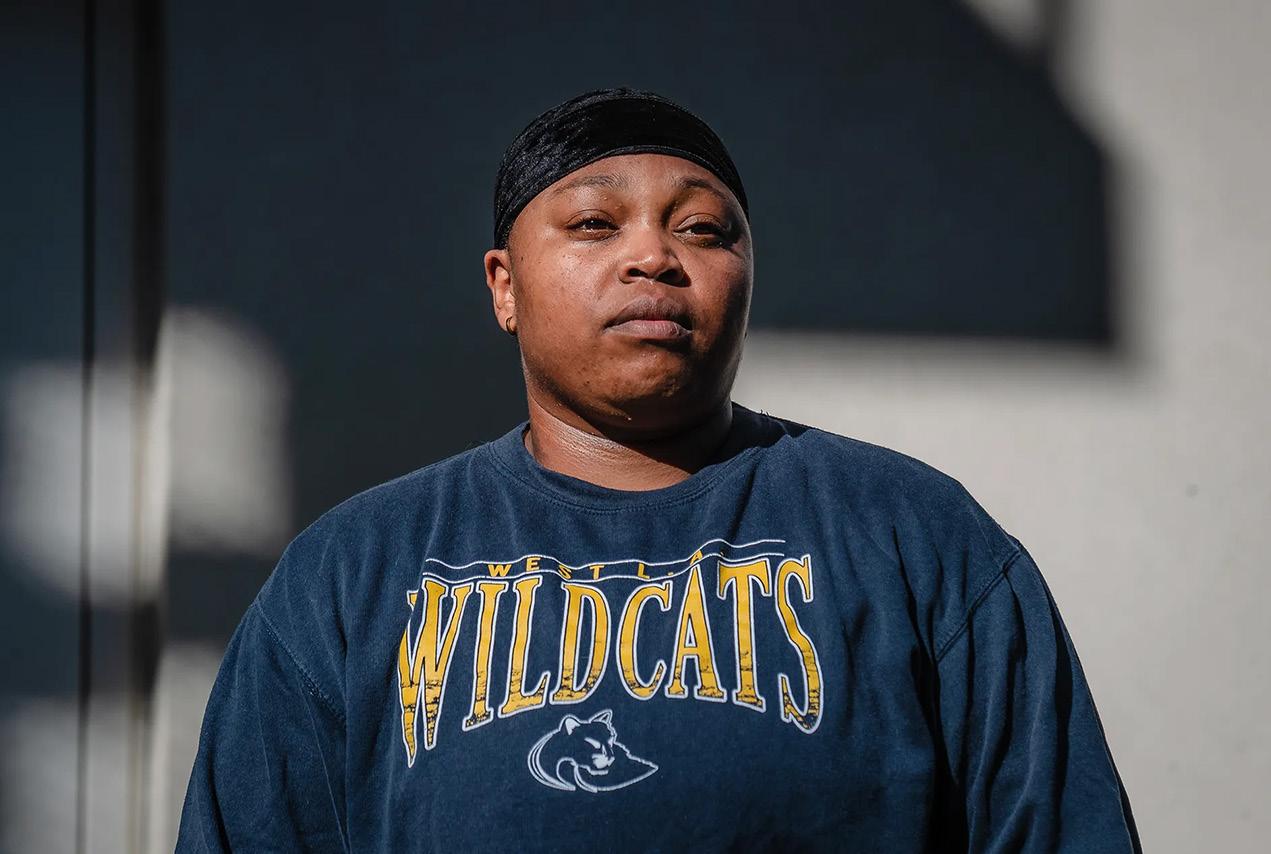
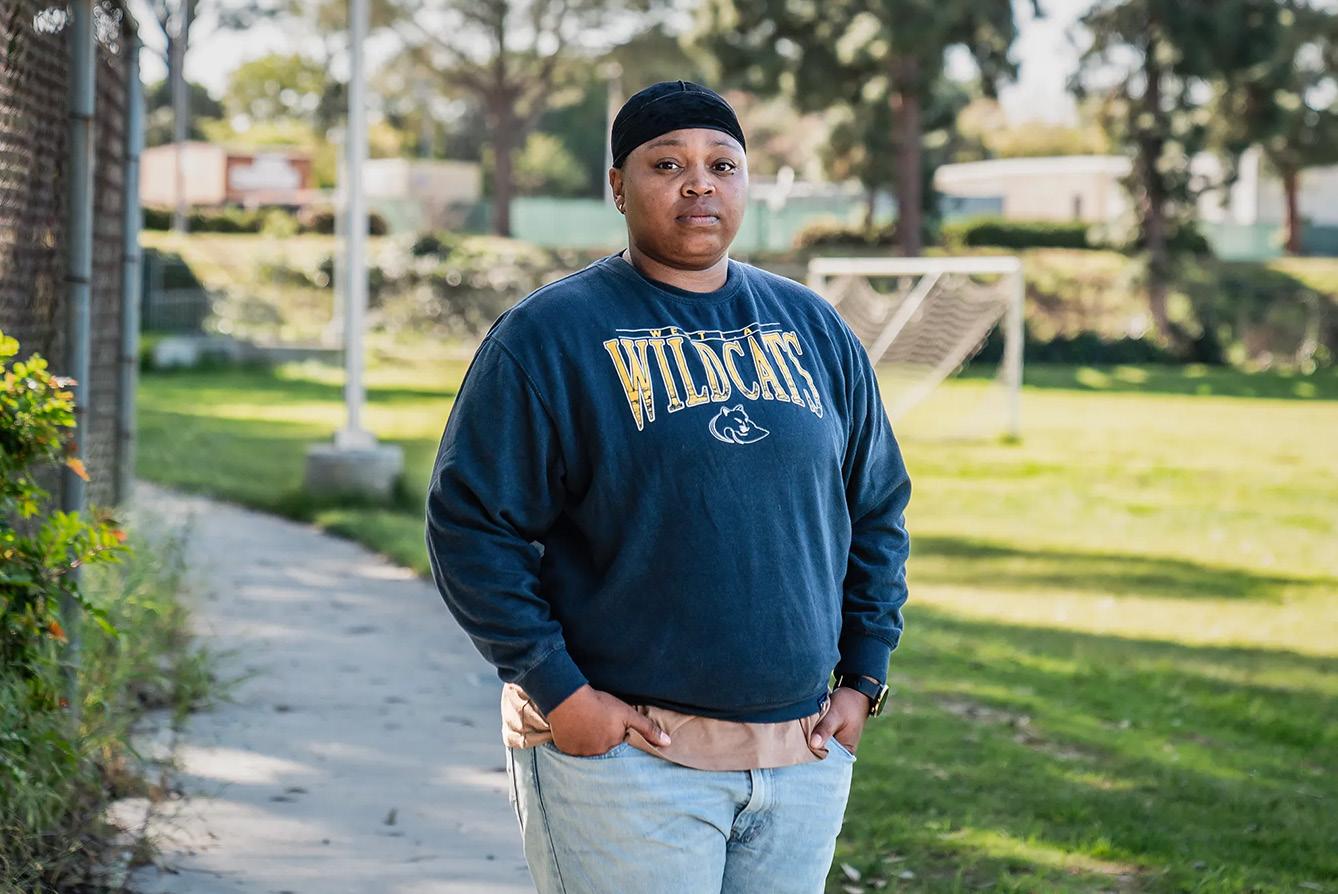
Laylah Rivers had already been a paratrooper in the U.S. Army and worked at various tech companies across the West Coast. But when she enrolled at a Los Angeles community college at 31, she was just another freshman — alongside students nearly half her age.
Luckily, West Los Angeles College has a program that acknowledges students’ prior work experience. The college gave her seven credits, the equivalent of about two classes, after she provided a copy of her military transcript and evidence of computer courses she took while working at Amazon. “Of course, with 13 years of experience, I should get more credit for what I’m doing,” she said. “But I’m grateful.”
Since 2017, California’s community colleges have slowly expanded the number of ways that students can get school credit for their prior work experience, and Gov. Gavin Newsom has made it a priority, in part by approving over $34 million in related state funding in recent years. By 2030, the California Community Colleges Chancellor’s Office wants at least 250,000 students to have earned college credit for their work or other “prior learning” experience, and in January, Newsom proposed putting an additional $37 million toward it.
But many colleges use their own internal methods to track the credits they award, so there’s no authoritative system showing how many students across the state have actually been served. The chancellor’s office operates a public dashboard, which says that over 40,000 students in California have received at least one credit for pre-college work or education in the past few years. Samuel Lee, a senior adviser to the community college chancellor who oversees the dashboard, said the real total is roughly twice that, though he couldn’t provide any exact figures.
Among the students who count toward this 2030 goal are those who gain credit by taking Advanced Placement, or AP, exams — which have existed for decades. What’s new is awarding students credit for work experience, such as computer courses or military training. Because it’s so new, “it’s taking the colleges a while,” Lee said. “Some are nowhere and some are really down the road.”
Historically, veterans have benefited the most from these credits, but students with professional experience in plumbing, first aid, foreign languages and hundreds of other skills can also qualify, either by showing an industry certification or taking an exam. At Cabrillo College in Santa Cruz, for instance, students can get college credit for wine courses if they can prove sufficient knowledge in French, Italian or Spanish wines.
Just a few additional credits can save students over $14,000, according to one California study. These students are more likely to graduate, too.
Because she’s a veteran, Rivers’ education and living costs are supported by the federal government, including through the GI Bill. These benefits only last a few years so every class she can skip saves her time — and ultimately money that she can put toward her future education.
Want to get ahead in tech? Get a degree
Even without a college degree, Rivers was doing well in tech, making over $70,000 a year, first at Amazon Web Services and later as a support engineer at a startup.
California’s tech industry has been vocal about dropping degree requirements for jobs, but research by the Burning Glass Institute shows that employers still prefer college graduates, even when college education isn’t a requirement.
“Computer science is really male-dominated, white-dominated,” said Rivers. “I’m a Black woman, but it’s hard to get my foot in the door. Even though I
Laylah Rivers at West Los Angeles College in Culver City, on Jan. 29, 2026. Photo by Ariana Drehsler for CalMatters
NEWS & EVENTS
have 13 years of experience, they move the goalpost.” When the startup she was working at was sold to another company in 2024, she enrolled at West Los Angeles College, hoping to eventually transfer to a four-year institution, get a degree and land a management job in the tech industry.
But Rivers didn’t know that any of her prior work could translate into college credits until months after enrolling, when a college dean noticed her military and computer science experience.
“I think it should just be built into the registration process instead of people having to find out about it,” she said. “It took me a whole semester to figure it out.”
Starting last fall, West Los Angeles College made it a requirement that all transfer-oriented students learn about opportunities to get credit for prior work experience, either during meetings with a college counselor in the first semester or at orientation, said Allison Tom-Miura, the dean of academic affairs and workforce development for the campus. “This is a big equity issue,” she said. “How can we help students from repeating courses that they do not need?”
In 2018, the state Legislature passed a law that would eventually mandate that every college adopt a policy for awarding students credit for prior learning or work experience, but colleges received little or no funding to implement it. They scrambled to create systems to assess students’ work experience and streamline the process of petitioning for credit, according to interviews with community college leaders across the state.
Administratively, the process is still tricky today. Students need to submit evidence of their work experience, which faculty then evaluate and translate into an equivalent course at the college. Most students gain credit by showing a military transcript, a certification or by taking a test, but sometimes, in more subjective fields such as photography, faculty assess a student’s portfolio.
Lee’s statewide system lists the skills and certifications that community colleges already recognize so that students can petition for credit more easily. But he said that only about half the state’s 116 community colleges are actively participating in the effort.
Getting all colleges on the same system
Often, Lee is on tour, visiting colleges across the state, sometimes meeting with a school six or seven times in an effort to promote his credit tracking system or otherwise improve the way they log students’ credits.
Last month, he sat on stage at a conference in Sacramento to present about the benefits of a shared tracking system alongside the interim president of Palomar College, Tina Recalde. Like many schools in the San Diego metro
area, Palomar College has a high number of enrolled veterans and was an early advocate for awarding additional credit to them. In their joint presentation, Recalde said her college has given over 3,600 students credit for work or other prior learning experiences.
But that data doesn’t appear on Lee’s platform or any other public dashboard. Palomar College has its own system for processing the additional credits, which it created before Lee’s platform existed, said Nichol Roe, the college’s dean of career technical and extended education.
Soon, nearly all schools will have to begin logging information on the same platform. The Legislature approved a budget last year that guarantees $50,000 to every community college campus that wants it. In return, the colleges that receive the money agree to use certain aspects of Lee’s data system and to screen all veterans and incoming students for potential additional credits.
College of the Sequoias in Visalia said it doesn’t need the money and chose not to apply, according to its president, Brent Calvin.
Lee said that every other college applied for the funding by the deadline and that he would “gladly” make an exception for College of the Sequoias. “Our goal is not for them to meet the deadline,” he said. “Our goal is to get people funding and support.”
Laylah Rivers at West Los Angeles College in Culver City, on Jan. 29, 2026.
Robert T. McKee Student Art Exhibition: Celebrating Art in Education
By Jo Ann Kirby HERLIFE Magazine
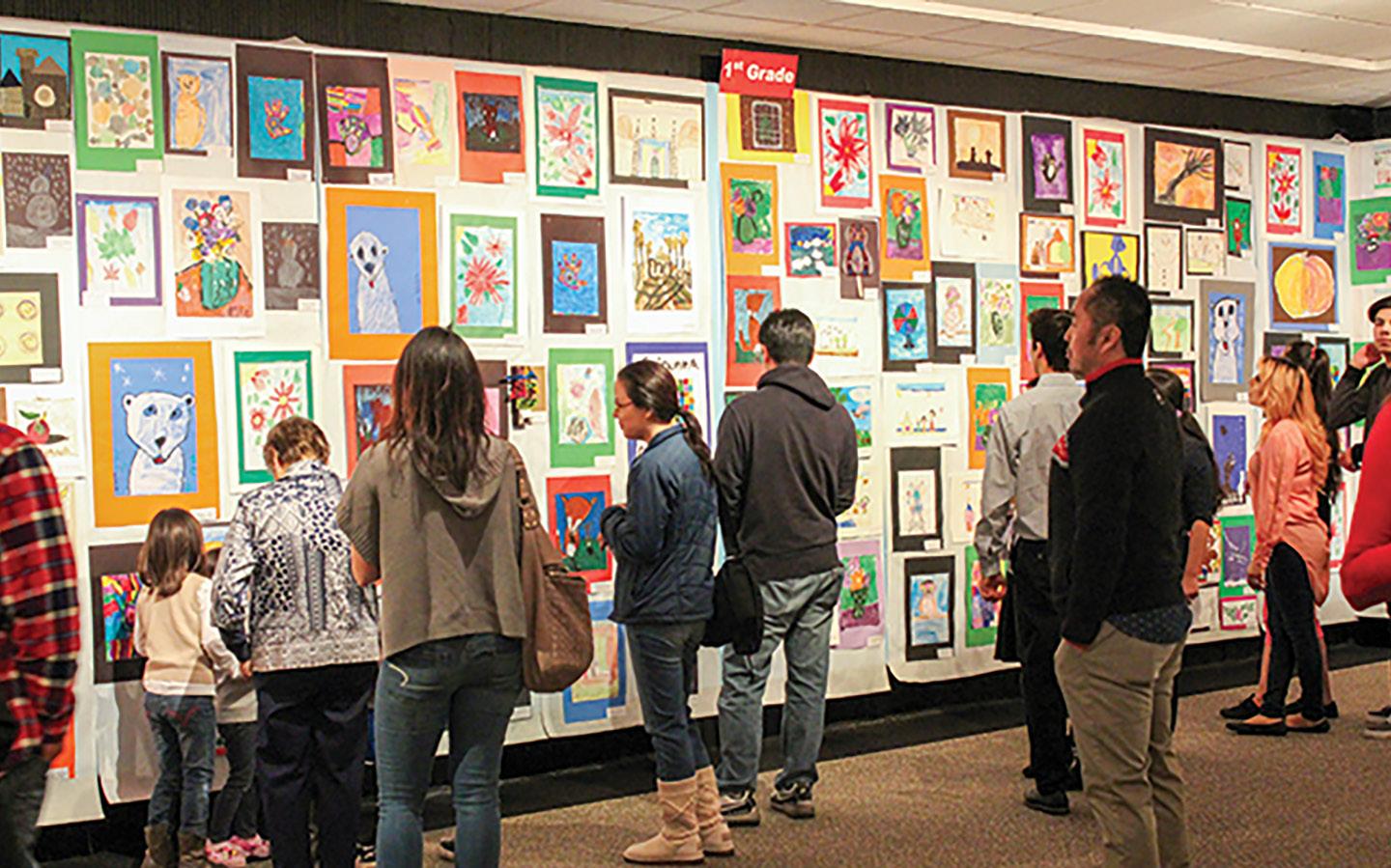
If the 95th Robert T. McKee Student Art Exhibition is anything like past shows, more than 1,000 stunning pieces of artwork produced by area artists in kindergarten through 12th grade will be on display at the Haggin Museum in Stockton. The longest-running museumsponsored student art exhibition in the country celebrates arts in education. The submitted art is hand-selected by teachers as the best from their classes. The exhibit gives students the chance to have their artwork displayed for the general public to enjoy. It also features a special reception that students, their families and teachers are invited to attend.
Teachers and students say participating in the exhibit is so rewarding. “Students are motivated to share their hard work with others beyond school because they are proud of their creative talents,” said Jean Aguilar, who teaches a variety of art classes at Saint Mary’s High School in Stockton. “Exhibiting their artwork publicly is very empowering. It inspires students to keep learning, experimenting and expanding their creativity.”
Jean said the exhibit is important because it gives students a real-world experience that is a boost for their self-esteem. “They are sharing a very personal part of themselves through their artwork,” she said. Twenty students from Saint Mary’s have entered their artwork in the exhibition including a variety of drawings, paintings and mixed-media pieces.
Malelany Phillips, a junior at Saint Mary’s, has submitted a symmetrical design created with markers in various shades of pink and other colors. Her project took about two weeks to create. “My design was inspired by the scrollwork in ancient Greek and Roman architecture,” she said.
The show will be on display at the Haggin Museum from January 29 through March 15, 2026. All schools in San Joaquin County—public, private, charter, parochial and homeschools—received invitations to submit their work. The McKee Student Art Exhibition is a snapshot of arts education in our area and underscores the importance of creative activity in the classroom. Once a teacher encourages their students to enter the exhibit, it often becomes something they look forward to doing again and again!
“For 95 years, the Robert T. McKee Student Art Exhibition has reflected the strength and diversity of arts education in San Joaquin County,” said Susan Obert, the Haggin Museum’s chief executive officer. “By bringing together student work from classrooms across the region, the exhibition celebrates the essential role creativity plays in learning and community life.”
Bear Creek High School art teacher Shan Swoverland said his students have been participating for over 25 years. “I encourage my students to strive to show their voice in their work, while creating pieces of fine art. They always have a sense of pride when I recommend them to enter. Even the students who don’t enter, I give them extra credit to go view the show,” he said. “The McKee exhibition holds a special place for me. I remember some of
my work was entered a few times as a child and teenager. Now it’s my pleasure to carry on that tradition as an art educator. I remind my students that the McKee show isn’t about winning. It’s all about coming together and celebrating art in our community.
The exhibition was first envisioned by the Haggin’s founding patron, Robert T. McKee, whose goal was to encourage students by providing a public venue for their artwork. Since the first show in 1931, the Haggin has been honored to collaborate with the schools of San Joaquin County, resulting in 95 years of celebrating the efforts of its teachers and expression of its young artists.
“This exhibition embodies our commitment to supporting young artists by giving them a public space to share their ideas and perspectives,” said Nicole D. George, who serves as the Haggin’s director of education. “It reinforces the museum’s mission to spark curiosity and inspire lifelong engagement with the arts and regional history.”
The Museum will hold an artists’ reception for students, their families and teachers on Saturday, February 7, from 1:00 to 3:30 pm. This event is free to the public and sponsored by the Junior Women’s Group of the Haggin Museum, who will provide punch and cookies to the guests. The reception is a fun time for students to spy their artwork on the wall and pose for a photo opportunity holding colorful arrow-shaped signs that declare “My ART is at the Haggin.”
This year’s student art show judge is MJ Lazarski, a plein air painter. “To experience the beauty and joy of our existence here on earth is the path to achieving great happiness. My intention as an artist is to share some of this beauty from my perspective,” MJ said.
Jean, who teaches Art 1-2, Art 3-4, Design and Exploration, as well as AP Art & Design, said many of her former students have won awards for their artwork over the past 29 years she has taught at St. Mary’s. “The pride and excitement they feel is unmatched. I often hear them say how surprised they are that people they don’t even know appreciate and admire their work,” she said. “It’s one thing for their teacher and family members to acknowledge their talents, but to receive positive feedback from complete strangers is probably the most empowering feeling.”
“I
am looking for established individuals that would like to pursue a lasting relationship and know what they want
in a partner.”
We listen to what you want and hand-pick suitable matches for you!
My ideal clients are people that are looking for a new beginning and are serious about finding their forever life partner.
Who am I?
I am a certified Professional Matchmaker and also a certified Relationship Coach with a deep psychology background. In years of working with the most eligible single men and women, I have established myself as the premier, elite matchmaker for my unique niche.
If you have a hard time finding high caliber singles, hate wasting time on bad dates, frustrated about online dating, contact us at: