Spring 2026 Issue | Florida Planning Magazine | Historic Preservation
FLORIDA PLANNING
By: Kyle Dost, AICP; Dr. Cleary Larkin, AIA; Dr. Kathryn Frank; Dr. Nicholas Serrano
and Preservation Research in Action
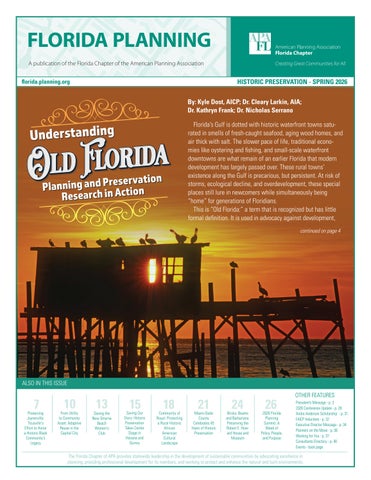
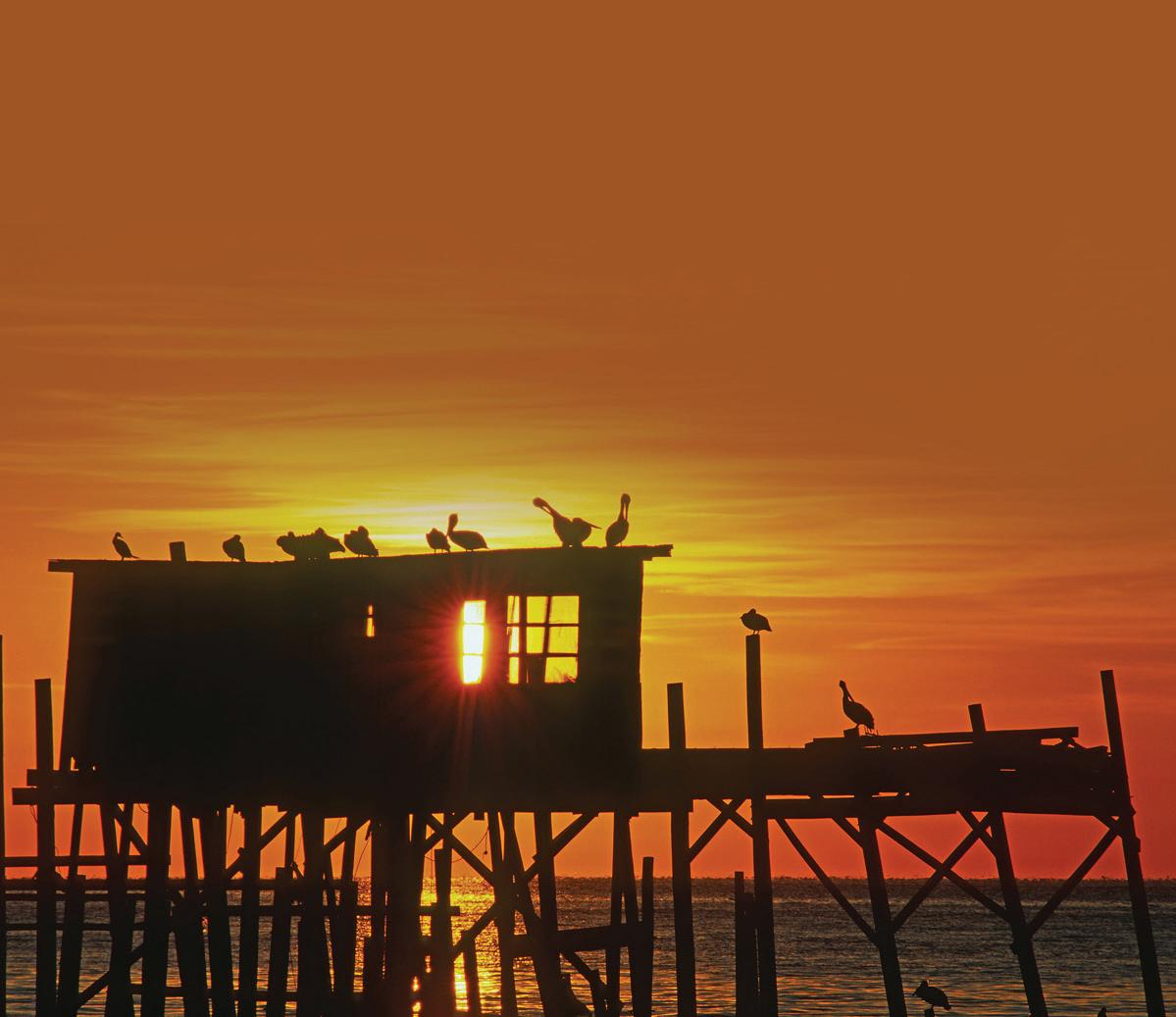
Florida’s Gulf is dotted with historic waterfront towns saturated in smells of fresh-caught seafood, aging wood homes, and air thick with salt. The slower pace of life, traditional economies like oystering and fishing, and small-scale waterfront downtowns are what remain of an earlier Florida that modern development has largely passed over. These rural towns’ existence along the Gulf is precarious, but persistent. At risk of storms, ecological decline, and overdevelopment, these special places still lure in newcomers while simultaneously being “home” for generations of Floridians.
This is “Old Florida:” a term that is recognized but has little formal definition. It is used in advocacy against development,
continued on page 4
[APA FLORIDA] KEY CONTACTS - EXECUTIVE COMMITTEE
Name E-mail
APA Florida Executive Committee
President Allara Mills-Gutcher, AICP president@floridaplanning.org
Immediate Past President Whit Blanton, FAICP pastpresident@floridaplanning.org fx
President-Elect Edward Ng, AICP, MPP, MPA presidentelect@floridaplanning.org
All other inquiries, contact APA Florida at 850-201-3272 or e-mail contact@floridaplanning.org
PLANNERS AS STEWARDS OF HISTORY … PRESIDENT’S MESSAGE
Richard Moe, president emeritus of the National Trust for Historic Preservation (1993 – 2010) once said “Preservation is simply having the good sense to hold onto things that are well designed, that link us with our past in a meaningful way, and that have plenty of good use left in them.”
What comes to mind when you hear the term “historic preservation”? It may mean different things to differing perspectives. To a preservationist, it may mean the protection and care of our culture and history. To a resident it may mean an identity of community. To a developer it may mean an opportunity to uphold the soul of a place, or it could mean the “go/no-go” decision threshold of a pro forma. As a planner, it may mean the act as a steward, entrusted with the care of our community assets.
In October 2018, Hurricane Michael blew through my hometown of Panama City and badly damaged many of our historic structures. If you have experienced this incredible place, you know that today our waterfront downtown is a charming, and historic, small-scale pedestrianoriented environment developed during the times of our city’s incorporation over 100 years ago.
As planners, we have great influence on the preservation of our celebrated historical places.
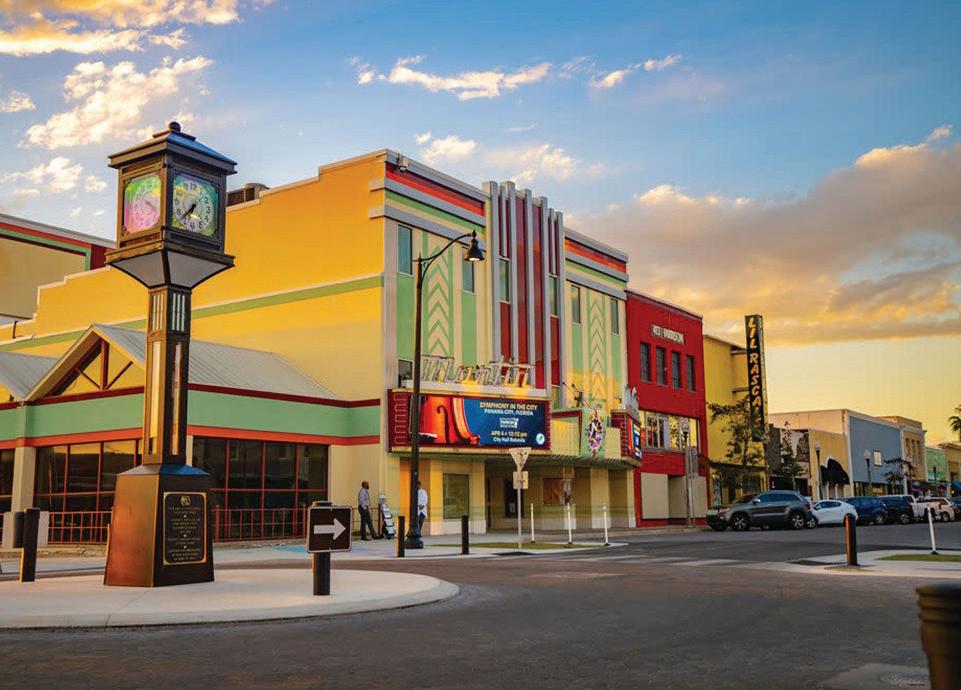
It was likely more cost effective to tear down and rebuild some of the destruction, but instead the tragedy offered an opportunity to a few local incremental developers to preserve and repair these places. Even today, the city is in the midst of restoring our Martin Theater as a result of the storm’s damage almost eight years ago. The theater originally opened in 1936 as part of a chain of cinemas owned by Mr. Martin and Mr. Davis, and it has been owned by the city since 2004. Until the storm, it had been used for small concerts, local dance recitals, and October horror movie nights. Although the repairs have been costly, it is a place of great merit—one that truly deserved our support. Today, it stands as an icon in the community.
As planners, we have great influence on the preservation of our celebrated historic places. Sharing the history of who we are is not only appealing through the visual aesthetics of our communities, but a huge economic driver. According to Main Street America, which annually collects statistical information on activities of local Main Street programs, the revitalization of historic places increases property values and job opportunities. In addition, those property values maintain their values during times of real estate devaluation. Cities that recognize these attributes and protect their historical assets and identities become increasingly sustainable economically.
In today’s times when we need to build community, strengthen connectivity with each other through our third places, and create sustainable plans, I send a big thank you to those of you involved in historic preservation efforts and achievements. We may not see you behind the scenes, but we all benefit from your efforts and work for generations.
Allara Mills-Gutcher, AICP APA Florida President
Photo source: Visit Florida of the Martin Theater, Panama City
[UNDERSTANDING] OLD FLORIDA
continued from cover page
marketing for restaurants, tchotchkes, and real estate. Many of us enjoy it while we have it, even if we can’t quite put our fingers on what it is. Planners and preservationists face a hard question: how do you protect and plan for something that has no definition? Without consensus on a definition, creating frameworks for action and developing tools to safeguard “Old Florida” is fragmented and challenging at best, and impossible at its worst. And once you define it, do you create a risk of losing it?
A group of researchers from the University of Florida’s School of Landscape Architecture and Planning (SLA&P) is setting out to explore these questions. Their research is driven by the recognition that a more precise, community-rooted definition could enable a coherent planning future across the state. The aim is to better understand “Old Florida” characteristics of the Gulf’s working waterfronts, defined as a shoreline historically developed for waterdependent commercial, industrial, or maritime activities.
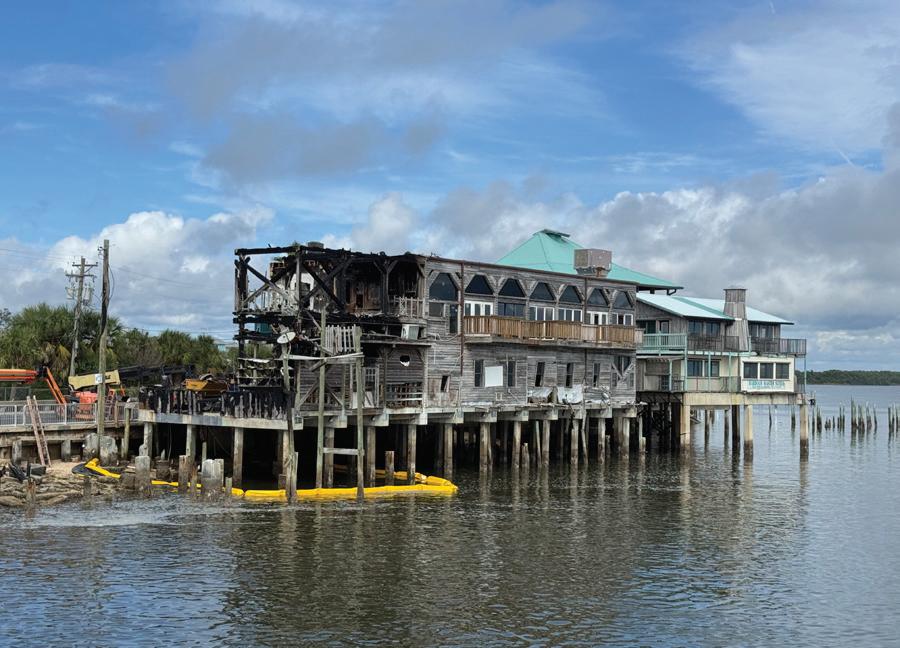
ultimately shifted the town’s economy and identity away from fisheries, and more towards clamming and ecotourism. The ‘working waterfront’ became retail and tourism; demographics changed as affordability challenged local water families, causing inland relocation. Beginning in 2023, Cedar Key experienced four major hurricanes in fourteen months. Shortly before Hurricane Helene in 2024, a fire on Dock Street destroyed much of Cedar Key’s waterfront retail.
Following these disruptions, Larkin proposed and achieved listings for Cedar Key on the National Trust for Historic Preservation’s 11 Most Endangered Historic Places and the Florida Trust’s 11 to Save list in 2025. “Cedar Key represents an increasingly rare example of “Old Florida,” commonly described as small coastal communities based on a mix of fishing, local business, and small-scale, affordable tourist accommodations.”
Dr. Cleary Larkin, Dr. Kathryn Frank, Dr. Nick Serrano, and Kyle Dost, AICP are documenting “Old Florida” to capture its significance at a regional scale, from Port St. Joe to Tarpon Springs. The project addresses multiple themes: community engagement, identity narrative, resilience, heritage, tourism, economics, and evolution of landscape and ecology. The aim is to ultimately develop character defining features to support recognition and preservation of “Old Florida” communities. Although the research is ongoing, the importance of the topic is well framed in the context of Florida’s legislative and societal push for increasing development of coastal small towns.
CASE STUDY: CEDAR KEY, FLORIDA
Cedar Key, 50 miles west of Gainesville, is a town of about 800 residents and exemplifies “Old Florida.” Its waterfront, once the home to local commercial fishermen, was disrupted by the 1996 statewide ‘Net Ban,’ which was a constitutional amendment that
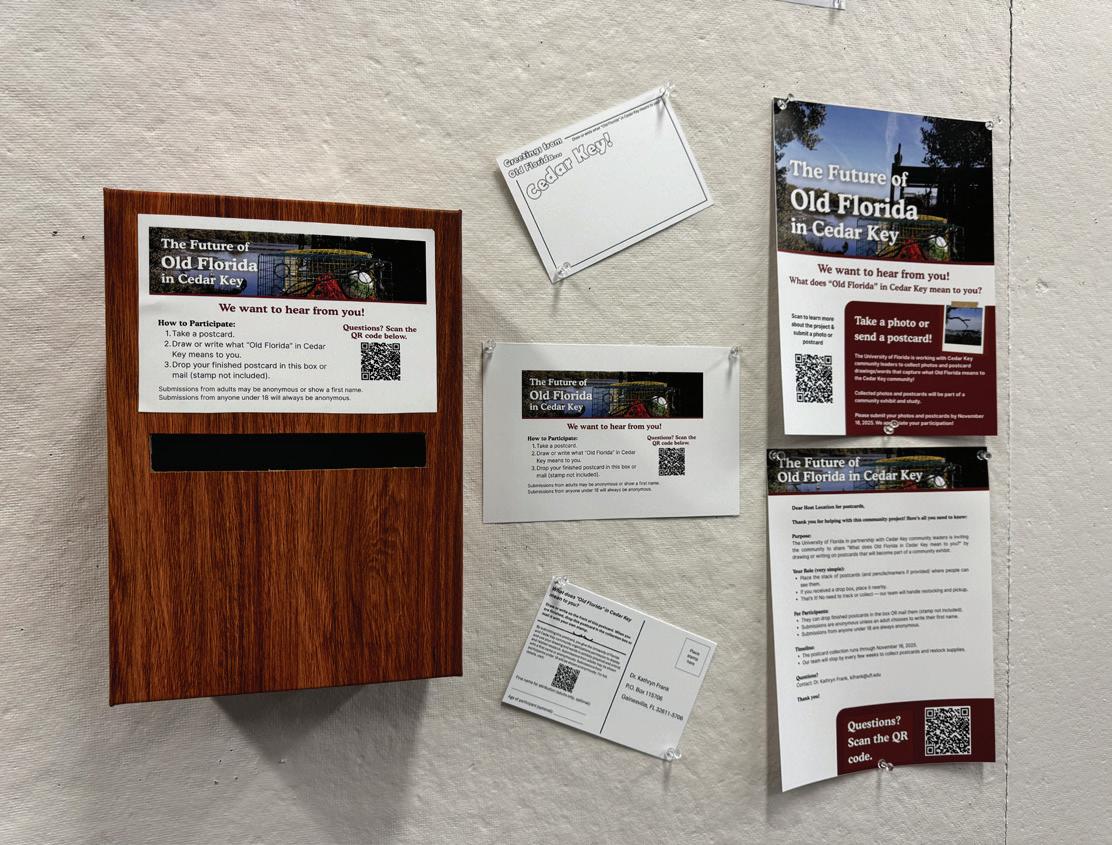
During Frank’s Fall Graduate Community Engagement class, students worked to explore the residents’ value of “Old Florida” and its intersection with community identity. In partnership with the Cedar Key Historical Society Museum, students facilitated golf cart storytelling tours with locally recognized resident groups from Cedar Key and surrounding communities. The class also invited residents to submit illustrated postcards and photographs responding to the question, “What does Old Florida in Cedar Key mean to you?”
Discussions revealed convergence on family continuity, adaptation to environmental change, attachment to historic structures, and pride in local food traditions. Photographs and postcards highlighted water, architecture, and everyday life, underscoring that “Old Florida” is a living, evolving cultural landscape rather than a static heritage site. The project demonstrates creative, informal engagement tools that planners can use to identify shared identity alongside meaningful differences, particularly in the context of
continued on page 5
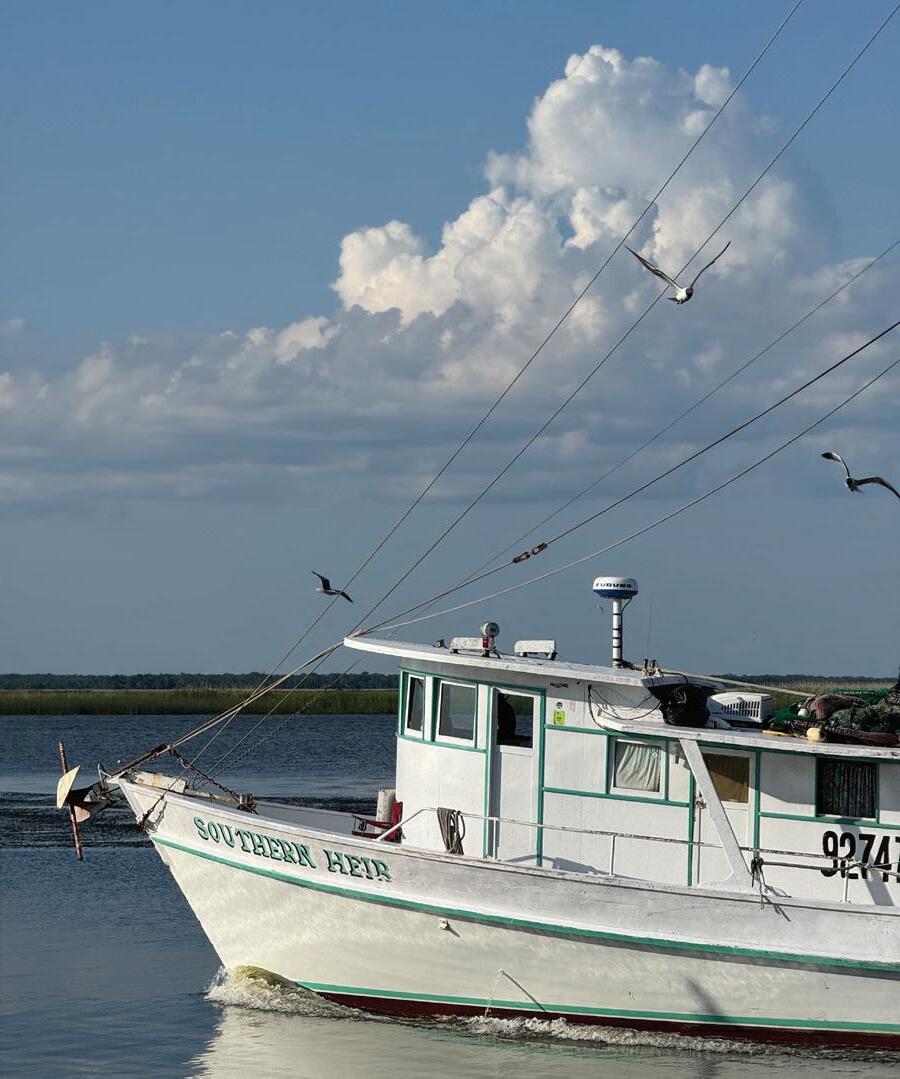
Shrimping boat Southern Heir sails past Apalachicola’s waterfront after a day at sea. Photo by Kyle Dost, August 2024.
Fire at Dock Street, Cedar Key. Photo by Kyle Dost, October 2025.
[UNDERSTANDING] OLD FLORIDA
continued from page 4
navigating hurricane recovery, heritage designation, and economic and demographic transitions. More than 200 postcards and 10 photographs were collected, and with the audio recordings of the golf cart tours, it will be part of a package given to the museum for their use and as an archival repository.
AN INTERDISCIPLINARY APPROACH FOR EXPANDED INQUIRY
Rural communities have long been a blind spot for the planning field. U.S. preservation has emphasized built environments over intangible and cultural heritage. Landscape architecture, emphasizing design, has often overlooked connections to culture and community. These siloed approaches leave communities like Cedar Key with fewer tools to protect a sense of place and ways of life.
This interdisciplinary approach uses a cultural landscape framework to understand how humans interact with and impact their environments.
Dr. Serrano’s work has focused on cartographic analysis of Cedar Keys’ landscape and ecology evolution. Professor Kyle Dost, assisted by undergraduate Avery Gladson, found cultural landscapes are widely used in academic literature and practice, yet “Old Florida” rarely makes an appearance. “The ‘you know it when you see it’ definition has pros and cons. One upside is that it gives a community the ability to self-define their cultural landscape. The challenge is recognizing multi-valent perspectives – like long-time residents and tourists – and what common ground is found in community identity for use in planning and preservation.
WHAT IS THE FUTURE OF OLD FLORIDA?
The next steps include expansion beyond Cedar Key to the other Gulf coast communities, identifying physical characteristics illustrative of the working waterfront history, documenting the changes in economies and ecologies, and beginning informal conversations with residents along the way. The future of “Old Florida” is not yet written, but it is being shaped now by locals through community meetings, hurricane recovery partnerships, and golfcart storytelling trips. The UF research team aims to provide the stewards of “Old Florida” with tools and definitions to better safeguard the cultural landscape loved and shared by so many. “Old Florida” requires more than zoning or historic designations; it demands collective ownership and shared language. By cultivating a community-designed definition, we as planners can be better prepared for resilience, sustainable tourism, and cultural continuity. This research is a first step in fostering statewide commitment to preserve our patchwork of working waterfronts, generational continuity and slower pace that is dynamic and living, yet holds “Old Florida” memory and character.
continued on page 39
Collection box and postcard for Dr. Frank’s community engagement practice in Cedar Key. More than 200 postcards were received. Photo by Kyle Dost, March 2026.
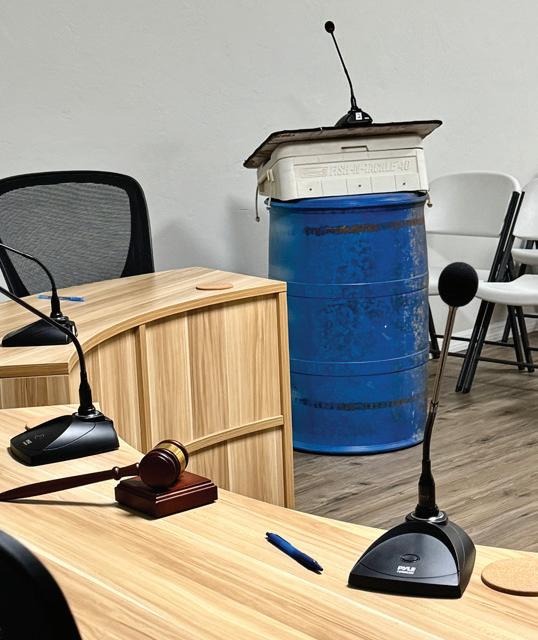
Dais at City Hall, Cedar Key. Photo by Kyle Dost, September 2025.
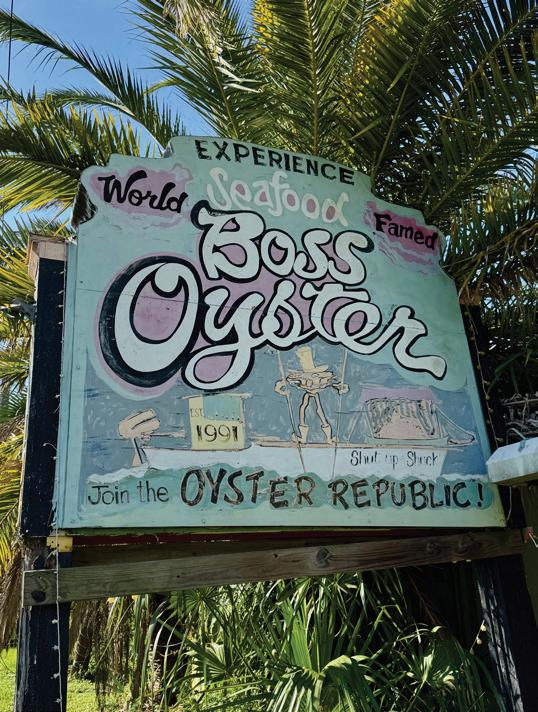
A call to Join the Oyster Republic and “Shut Up & Shuck,” Apalachicola, FL. Photo by Kyle Dost, June 2025.
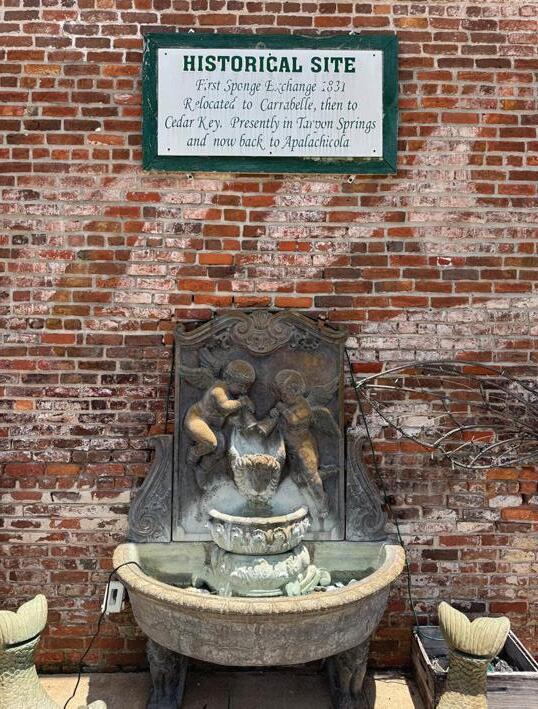
Evidence of a connected cultural landscape centered around the sponge industry from Apalachicola to Carabelle to Cedar Key and Tarpon Springs. Photo by Kyle Dost, August 2024.
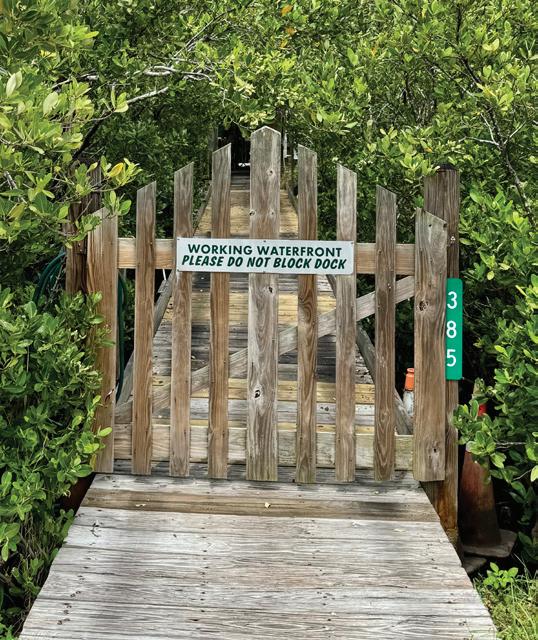
Working Waterfront signage, Cedar Key, FL. Photo by Kyle Dost, September 2025.
Preserving Joynerville:
Titusville’s Effort to Honor a Historic Black Community’s Legacy
By Tabitha Armstrong, AICP, and Brad Parrish, AICP
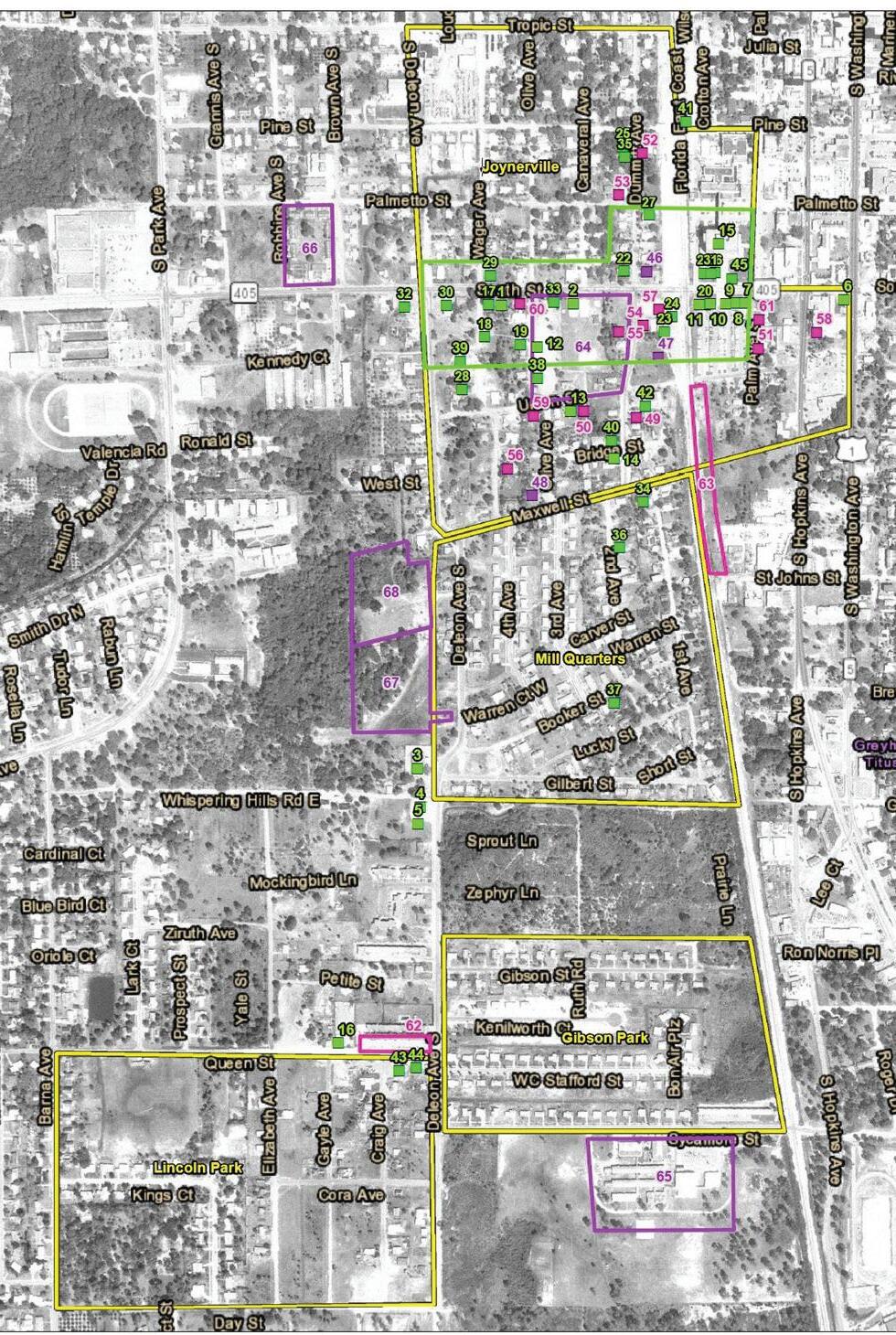
Joynerville is a historically African American community in Titusville that was established in the early 1900s and experienced significant growth through the mid-20th Century as a center of Black ownership, entrepreneurship, faith institutions, and civic leadership. At a time when economic and social opportunities for African American residents were severely limited across much of the region, Joynerville represented a thriving and self-sustaining neighborhood with a strong commercial presence and deep cultural significance. Over time, however, public land acquisition and redevelopment, along with decades of incremental change, significantly reduced the neighborhood’s physical footprint, leaving many of its historic resources unrecognized and much of its story at risk of being lost.
Recognizing the importance of documenting and preserving this legacy, the City of Titusville launched the Joynerville project as a multi-phase effort to identify, record, and share the community’s history while simultaneously supporting long-term recognition of its cultural significance.
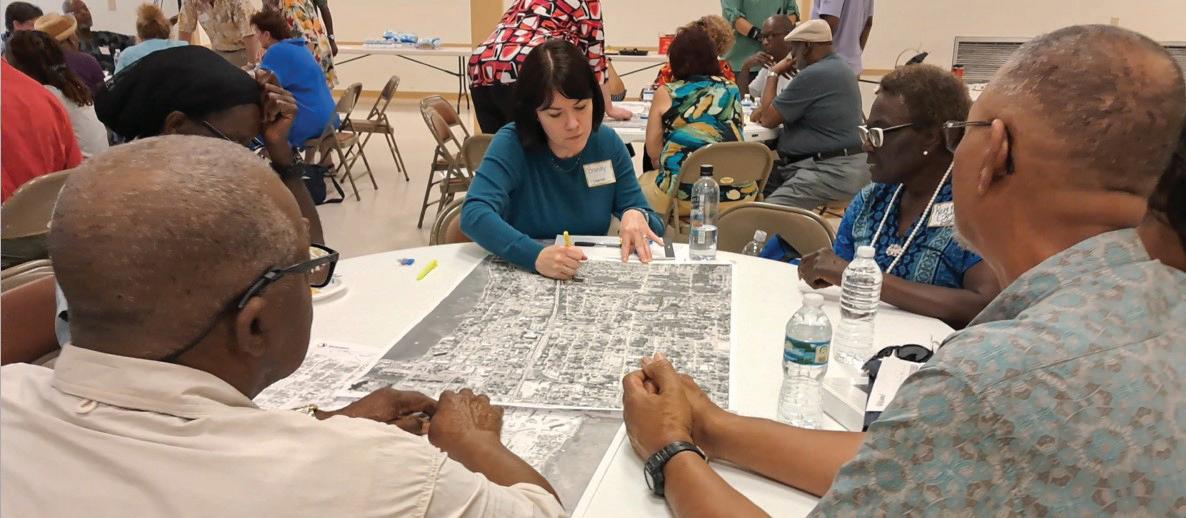
Phase 1 focused on archival research, oral history collection, community engagement, and the identification of historically significant sites and cultural resources. To support this work, the city partnered with Stantec, the lead consultant for Phase 1, whose team conducted historical research and oral history interviews and prepared the final Joynerville report, which now serves as the foundation for future project phases. The Phase 1 effort also included a public community engagement event and workshop designed to gather local perspectives and shared history. Community participation was central to this process, ensuring that the project reflected lived experiences and locally valued places, rather than relying solely on traditional historical records.
Several replicable engagement practices emerged from the project, including meeting residents where they already gather.
For example, the project team learned about the North Brevard Black School Reunion was taking place and decided to use the event as an opportunity to engage residents in a setting that already brought people together. Outreach at the event allowed the team to connect with current and former residents, share information about the project, and collect stories and historical materials that may have otherwise have remained undocumented. Additional outreach through local churches and neighborhood networks further expanded participation, capturing the experiences of long-time residents across generations and strengthening the documentation of the community’s history.
The work completed during Phase 1 established a foundation for future recognition and interpretation efforts tied to identified historic sites. Phase 2 of the project is anticipated to move forward as funding is secured. This phase will build on Phase 1 by identifying opportunities to publicly share Joynerville’s history through interpretive features, potential pocket-park locations, and other visible recognition strategies connected to historically significant sites. These efforts will aim to ensure that the neighborhood’s history is experienced by residents and visitors in significant and thoughtful ways.
The Joynerville project highlights how thoughtful planning and meaningful community partnership can help document histories that might fade from view. As communities across Florida continue to change, efforts like Joynerville remind us that preserving local history is not only about protecting places, but about ensuring that the people and stories that shaped them remain part of the community’s future.them remain part of the community’s future.
Tabitha Armstrong, AICP, is a Planner with the City of Titusville. She can be reached at tabitha.armstrong@titusville.com. Brad Parrish, AICP, is the Community Development Director with the City of Titusville. He can be reached at brad.parrish@titusville.com.
continued on page 8
from page 7
The Joynerville project highlights how thoughtful planning and meaningful community partnership can help document histories that might fade from view.
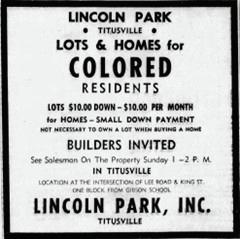
Advertisement for Lots - Evening Tribune Cocoa FL - 3 Aug 1962
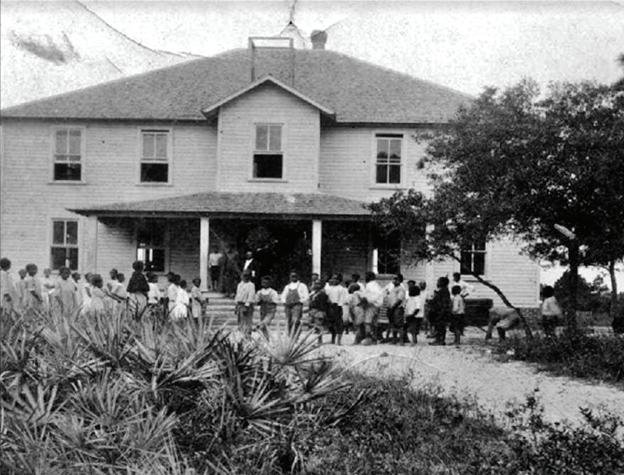
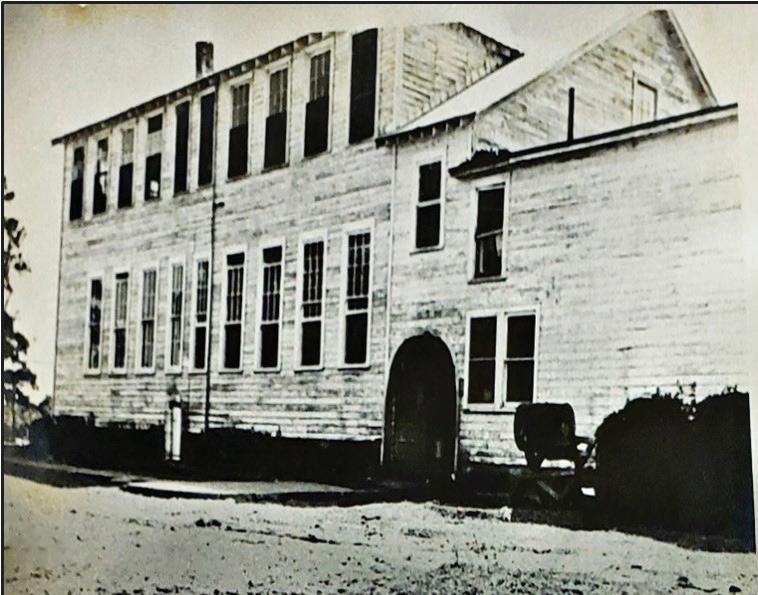
Titusville Negro School. Courtesy of Kirk Davis
Sunshine Boarding House. Courtesy of Kirk Davis
Project Area with Community Identified Locations. From final report.
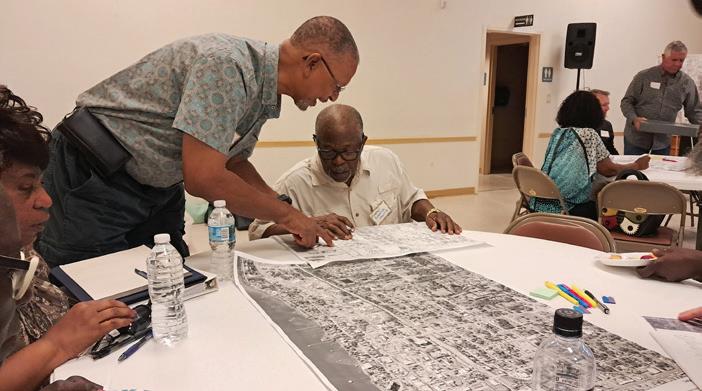
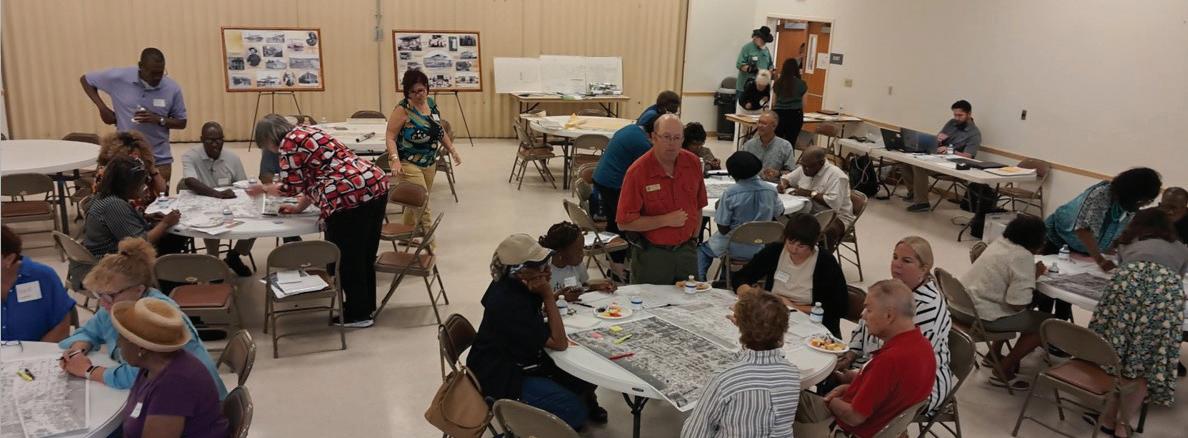
Community workshop.
Above and below. More from the community workshop.
FROM UTILITY TO COMMUNITY ASSET: Adaptive Reuse in the Capital City
By: Chris Carlberg and Billie Ventimiglia
Adaptive reuse is a historic preservation strategy that illuminates local history, reinvests in underutilized civic infrastructure, drives economic activity, and can expand access and physical accessibility without compromising historic integrity. Here in Tallahassee, there are several great places that have used adaptive reuse strategies to reach these goals.
When retrofitting historic structures, planners and local governments have valid concerns about accessibility. Using universal design strategies can be a helpful tool to ensure these improved structures include everyone in your community. Additional guidance is provided through the National Park Service. That emphasizes balancing accessibility improvements with preservation of historic fabric and character. Small unobtrusive changes to buildings that preserve architectural importance and original character can make a big difference. These changes may include adding a ramp at a building entrance, creating new accessible entrances, modifying doors and hardware to be easier to push or grip, and widening thresholds. While it’s often not possible to make historic buildings fully accessible, small changes can create expanded access and inclusion for our residents.
Here are two case studies of sites that have undergone dramatic change through adaptive reuse as a historic preservation tool in Florida's Capital City.
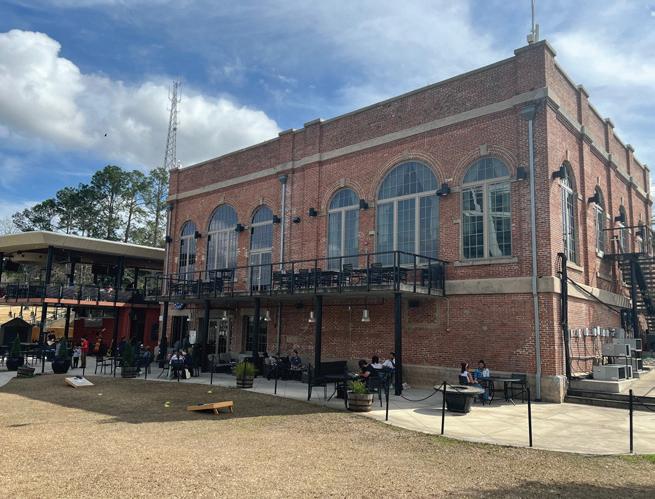
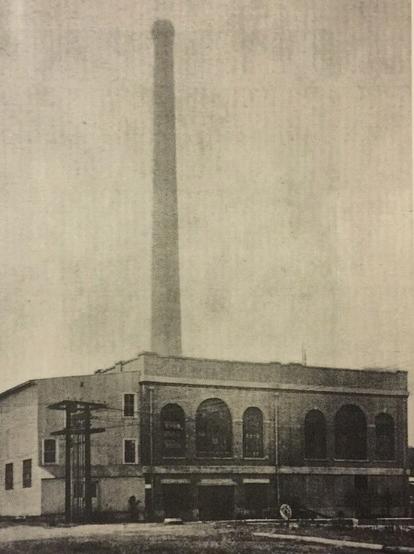
THE EDISON (CITY OF TALLAHASSEE ELECTRIC PLANT, 1921)
The Edison was the site of the former city electric plant. Originally constructed in 1921 as the city’s second coal-fired power plant, the facility served as Tallahassee’s power plant until rapid growth made it inadequate for energy production. The building was repurposed for government use until it was left abandoned for decades. In 2015, investors took the property to its current use as The Edison Restaurant, serving food and drinks for visitors of Cascades Park and Downtown Tallahassee. The project demonstrates how adaptive reuse can incorporate accessibility improvements, including Accessible street-level and pedestrian entrances added for the main restaurant and cafe, as well as an interior elevator installed to connect the restaurant levels.
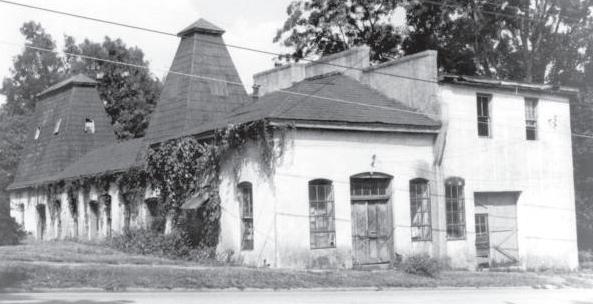
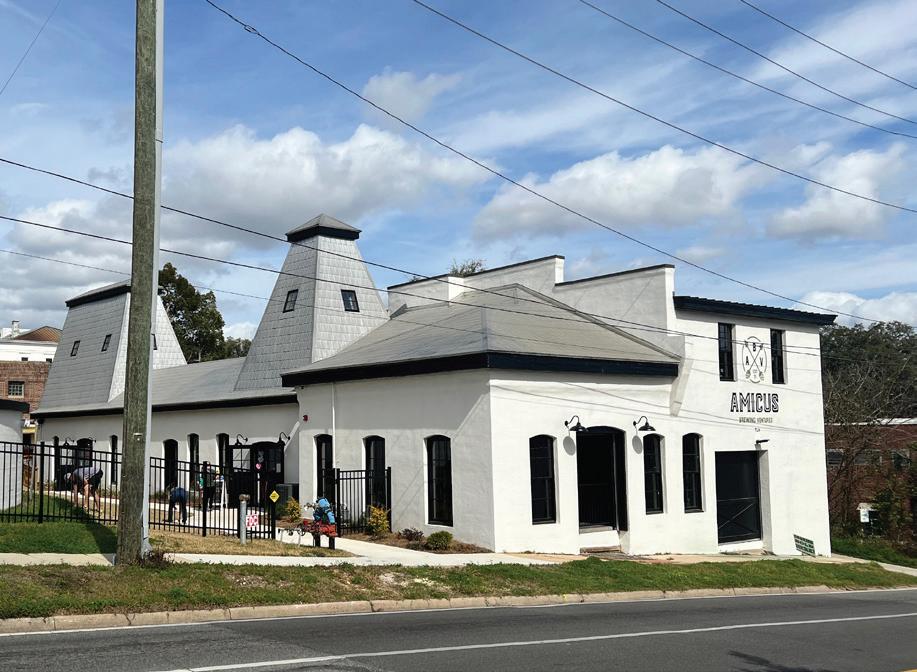
The water pumping station, adjacent to Cascades Park and state office buildings (top) has a new life as Amicus Brewing
[UTILITY TO] COMMUNITY ASSET
continued from page 10
AMICUS BREWING VENTURES (OLD CITY WATERWORKS)
Amicus Brewing Ventures is Tallahassee’s Old City Waterworks building. Built in the early 1900s, the facility served as Tallahassee’s primary water pumping station for more than 50 years, up until the system was destroyed in the 1950s. Despite this disrepair, the building was put on the National Register of Historic Places in 1979, and there were hopes that this site would be revitalized. In 2022, four families purchased the property with the goal of revitalizing the space and converting it into a brewery. As of 2024, this vision has become a reality. The adaptive reuse project incorporates accessibility improvements, including accessible entrances, leveled interior floors, a connecting sidewalk, and a ramp serving the outdoor seating area. These case studies provide us with several lessons learned about historic preservation through adaptive reuse strategies. Government and private investment can help to support preservation, ensure accessibility, catalyze and further private business investment, and strengthen downtown economic ecosystems. When preservation, accessibility, and economic development are aligned, historic buildings become inclusive civic anchors instead of deteriorating relics.
Chris Carlberg is a Ph.D. student at the FSU Department of Urban and Regional Planning. He can be reached at cdc10e@fsu.edu. Billie Ventimiglia is a Senior Planner with the FSU Mark & Marianne Barnebey Planning & Development Lab. She can be reached at bventimiglia@fsu.edu.
The city power plant (left) sat vacant for years until renewed as a restaurant (top floor) and coffee shop (bottom floor) in the heart of what is now Cascades Park.
SAVING THE New Smyrna Beach Women's Club
By Angeline Barretta Herman, PhD
DOCUMENTING AND RESTORING THE BUILDING
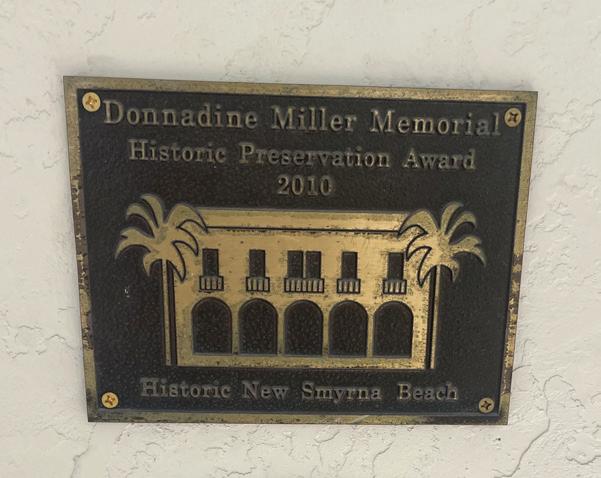
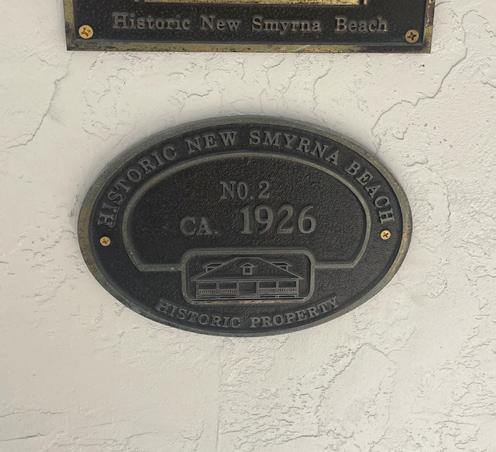
The Woman’s Club, built in 1924 and now known as The Magnolia, has stood as the heart of social and charitable life in New Smyrna Beach for over 100 years. Recognized as “the most beautiful building in the city,” it hosted countless community events and was listed in the National Register of Historic Places in 1989.
When declining membership led to its dissolution in 1990, the City purchased the building for continued public use as an event space, but rising maintenance costs eventually led to disrepair. Preservation efforts began in 2018, but small grants proved insufficient over time. By 2023, City staff created a report documenting funding attempts and ultimately proposed three options: (1) seek costly grants, (2) demolish the building, or (3) sell it as-is.
MOBILIZING FOR PRESERVATION
In response to the threat of demolition, community support increased significantly. Activists and the NSB Residents' Coalition advocated for the buildings’ preservation, recommending that the city offer it for sale. Local contractor Curtis Hodges, of Hodges Brother Roofing and Construction, and his family, who have considerable experience in historic renovations, agreed to acquire the property with a commitment to maintain its historic character. Following successful negotiations, ownership was transferred to the Karter Presley Lynaugh Trust, and comprehensive restoration commenced. Renovations involved close collaboration with city departments and preservationists, utilizing green technology construction practices. Major areas of concern included the fire and water damage that occurred just five years after the original construction and remained in place for 95 years. The project included full interior refurbishment,
IMPACT AND LEGACY
carefully restoring original features, such as heart pine flooring, 1920s-era tiles, and repurposed glass lighting pendants. New plasterwork, updated lighting, electrical and plumbing systems, a new roof, ADA-compliant restrooms, a wheelchair-accessible ramp, removal of crumbling stucco, and structural leveling using steel beams were all completed. Additionally, three new AC units and three-phase power were installed. The project also encompassed the installation of landscaping, including a Magnolia tree, site irrigation, and the addition of a speakeasy beneath the building in the original coquina cellar.
To highlight the restoration journey, King Star Filmworks was commissioned to create a documentary, supported by the Coalition’s Education Committee and outside sponsors. Teaser videos kept the public engaged, and restoration milestones were shared along the way, with the film premiering in December 2025.
The project inspired broad community involvement. More than 400 people toured the ongoing restoration in March 2025, nearly 3,000 received updates from the Coalition, and 150 attended the December 2025 education seminar and film premiere. The effort rekindled local passion for historic preservation and highlighted the Woman’s Club as a community treasure, holding memories of past events and inspiring continued commitment to “save the charm” of New Smyrna Beach.
Angeline Barretta Herman, PhD, is a New Smyrna Beach resident and member of the NSB Residents' Coalition.
SAVING OUR STORY: Historic Preservation Takes Center Stage in Havana
Historic preservation plays a vital role in community planning, particularly in small towns where historic downtowns serve as both cultural anchors and economic centers.
and Quincy
By Laura Jones, Kathie Ebaugh, FAICP, Joshua Kever, Jennifer Carter
In Gadsden County, Florida, the towns of Havana and Quincy demonstrate how preservation, paired with the Main Street Approach, can help communities build vibrant futures rooted in their unique histories.
The Main Street Approach, developed by the National Main Street Center, is built on four key points: Economic Vitality, Design, Promotion, and Organization. Rather than treating preservation as simply protecting old buildings, the approach views historic assets as catalysts for economic development, community identity, and longterm resilience. Both Havana and Quincy have embraced this framework to strengthen their downtowns while still maintaining the character that makes each place distinct.
Just minutes from Tallahassee, Havana’s story began with tobacco. Named after Cuba’s capital, the town was once known for its cigar production and agricultural economy. When the tobacco industry declined, Havana faced the same challenge confronting many rural communities: how to sustain its downtown economy.
In response, local leaders saw an opportunity in the town’s historic buildings and walkable downtown. Beginning in the 1980s, entrepreneurs began repurposing historic storefronts into antique shops, galleries, and cafés.
continued on page 16
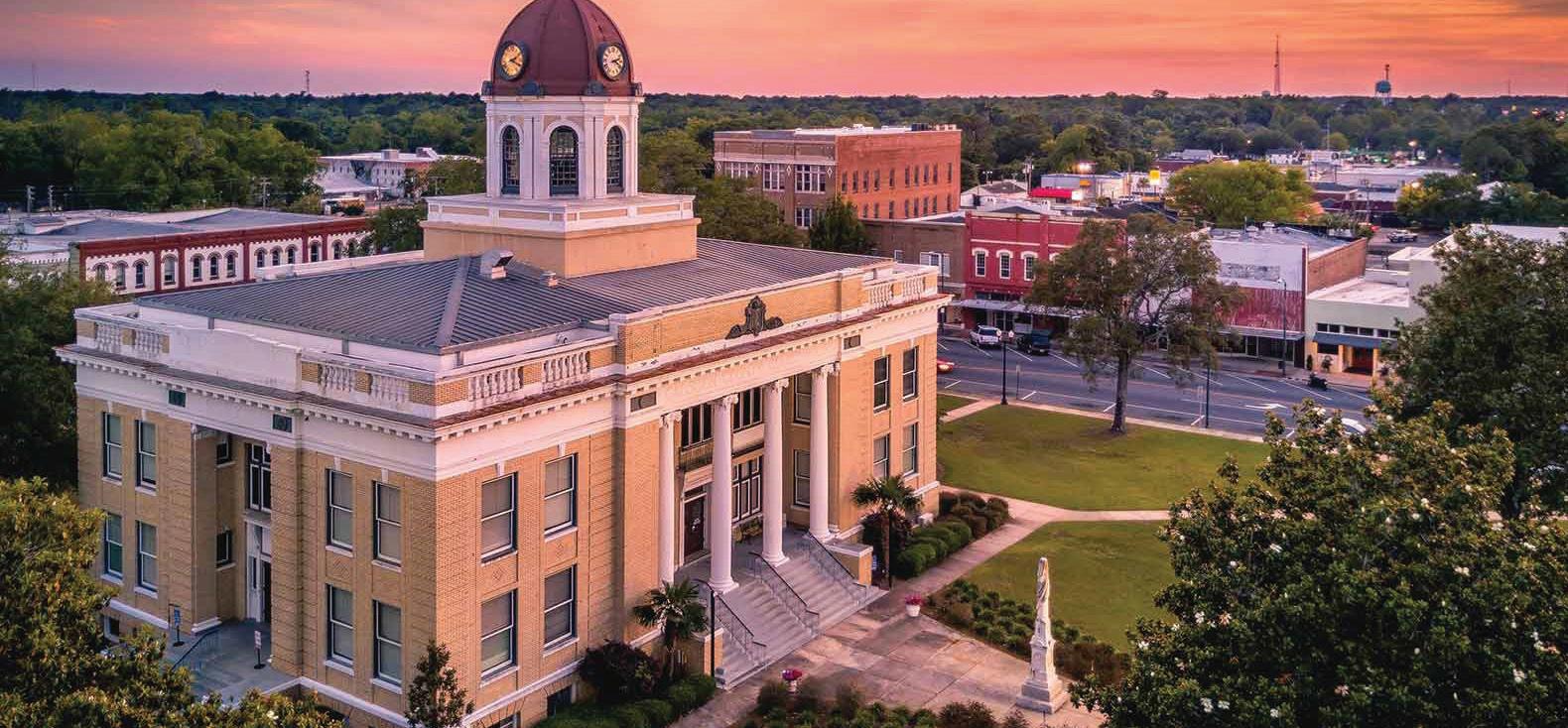
Gadsden County’ fifth courthouse, built in 1913 in the Classical Revival architectural style, was designed by Quincy native Hal Hentz of the architectural firm Hentz and Reid. It is situated in a park-like setting surrounded by historic commercial buildings dating from the late 1800s. This is a contributing building and the heart of Quincy’s 36-block National Register Historic District.
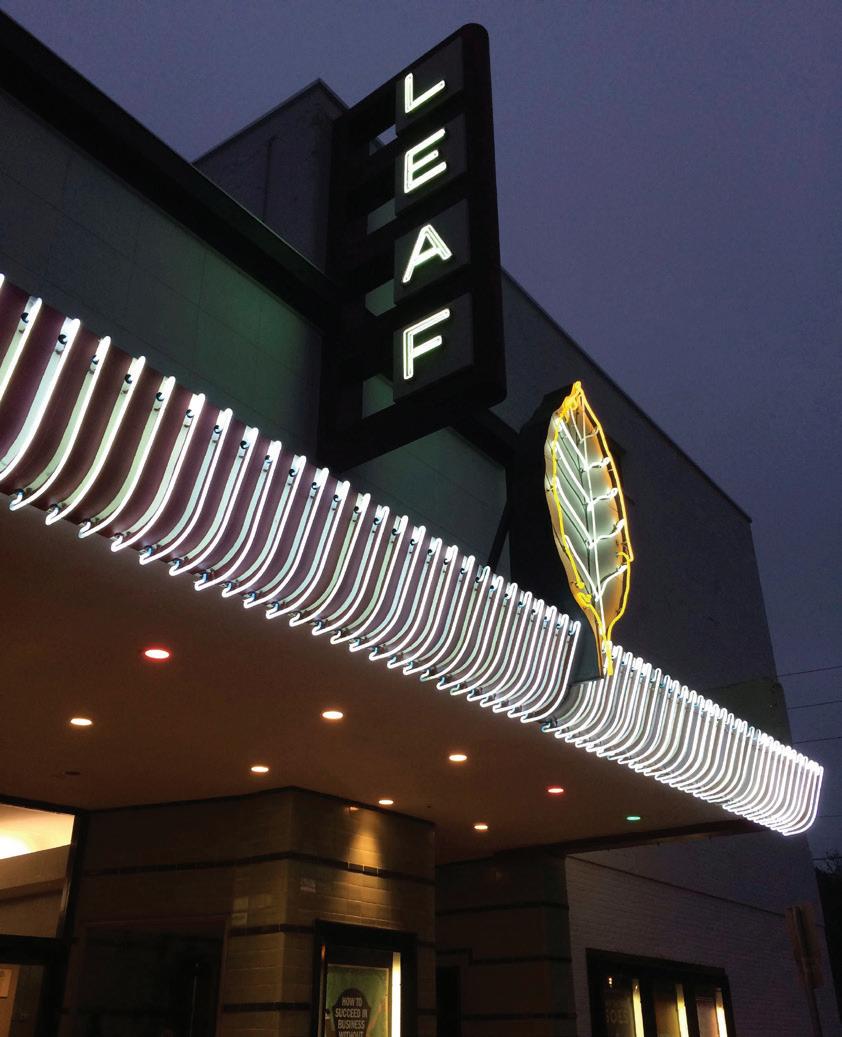
The Leaf Theater, built in 1949, was purchased in 1983 and donated to the nonprofit Quincy Music Theatre group who restored it through preservation grants, local funds, and private gifts. It now hosts live musical theatre throughout the year, educational events, and a Children’s Summer Theatre workshop. Historic architectural details have been preserved including the original neon marquis.
continued from page 15
Over time, Havana developed a reputation as a regional destination for arts and antiques. The establishment of Havana Main Street in 2017 strengthened these efforts by providing organization and coordination around downtown revitalization. Through volunteer leadership, events, and strategic partnerships, the program has helped attract new businesses, support local entrepreneurs, and celebrate Havana’s artistic identity, all while preserving the historic buildings that define the town’s character.
A few miles west, the city of Quincy offers a different example of preservation-led revitalization. Incorporated in 1825, Quincy’s development was shaped by agriculture and an unusual piece of financial history. In the early 1900s, the Quincy State Bank President, Mark W. Munroe, encouraged residents to invest in the young Coca-Cola company. The investment produced extraordinary wealth and eventually led to the construction of an impressive collection of early twentieth-century commercial buildings, churches, theaters, and homes.
Today, Quincy’s historic district spans 36 blocks and remains one of its most defining assets. Through the work of Quincy Main Street, the community has applied the Main Street Approach to reinvest in these historic resources. Several once-vacant and poorly maintained buildings have been renovated and repurposed as apartments, restaurants, and businesses, including a new brewery.
Quincy Main Street’s own offices now occupy the historic Quincy State Bank building, symbolically connecting the community’s past to its present.
The organization has also helped shape public spaces that support downtown life. For example, an architect serving on Quincy Main Street’s Design Committee helped develop plans for Andy Gay Park, a public space now moving toward implementation within the historic district. Events such as Porchfest (scheduled for March 21 this year) bring residents and visitors downtown to experience live music performed on historic porches, reinforcing the connection between place, culture, and community.
Together, Havana and Quincy demonstrate how the Main Street Approach can guide communities in preserving their historic character while simultaneously fostering economic vitality. By investing in historic buildings, supporting local businesses, and creating inviting public spaces and events, both towns are building futures that remain distinctly, and proudly their own.
By Laura Jones is an Associate Senior Planner for JBPro. She can be reached at laura.jones@jbpro.com. Kathie Ebaugh, FAICP, is the Planning Director for JBPro. She can be reached at kathie. ebaugh@jbpro.com. Joshua Kever is the Quincy Main Street Director. He can be reached at director@quincymainstreet.org. Jennifer Carter is the Havana Main Street Executive Director. She can be reached at ed.havanamainstreet@gmail.com
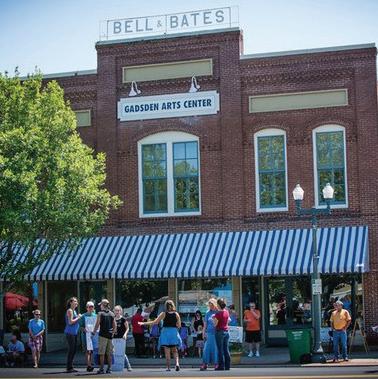
The Gadsden Arts Center and Museum, located on the Gadsden County Courthouse square, is a cultural hub of the community. The circa 1912 Bell & Bates Hardware building was donated by the Bates family to the non-profit Gadsden Arts, Inc. in 1997. Led primarily by private donations, Gadsden Arts, Inc. raised $1.4 million to renovate the hardware store into the state-of-the-art museum facility it is today.
Burned Beard Brewing, Quincy’s first brewery, opened in 2025. They meticulously preserved historic architectural details during the renovation of the 1921 F.P. May Drug Store building.
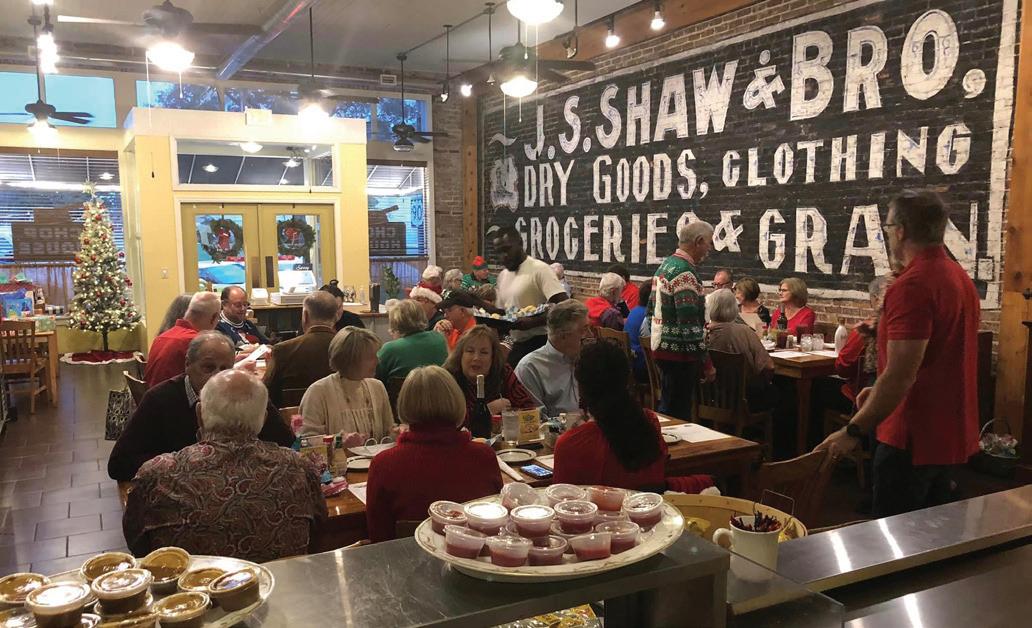
Popular restaurant, Big Papa’s Chophouse, is located across from the Gadsden County Courthouse square. An original late 1800’s advertising sign in perfect condition was uncovered during the renovation of the building.
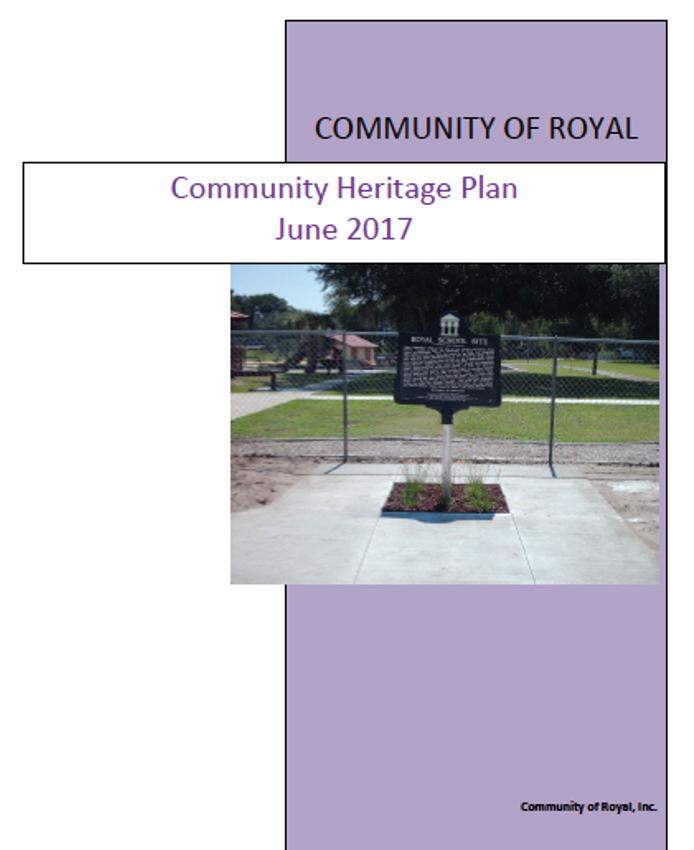
Protecting a Rural Historic African American Cultural Landscape COMMUNITY OF ROYAL
By: Brad Cornelius, AICP, CPM, CFM
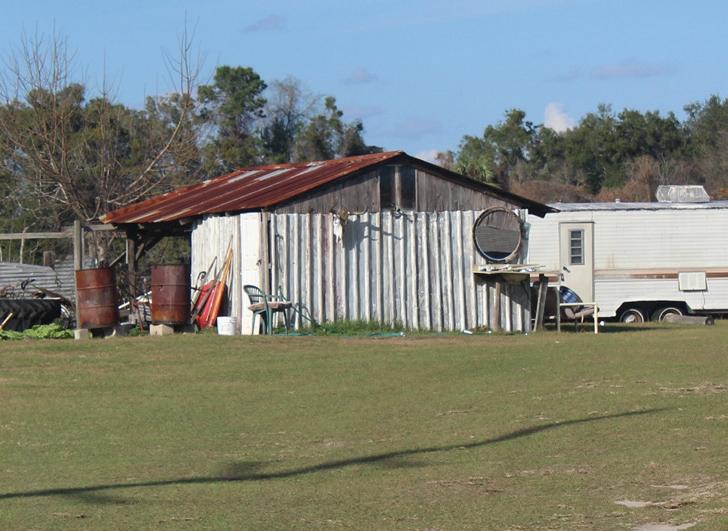
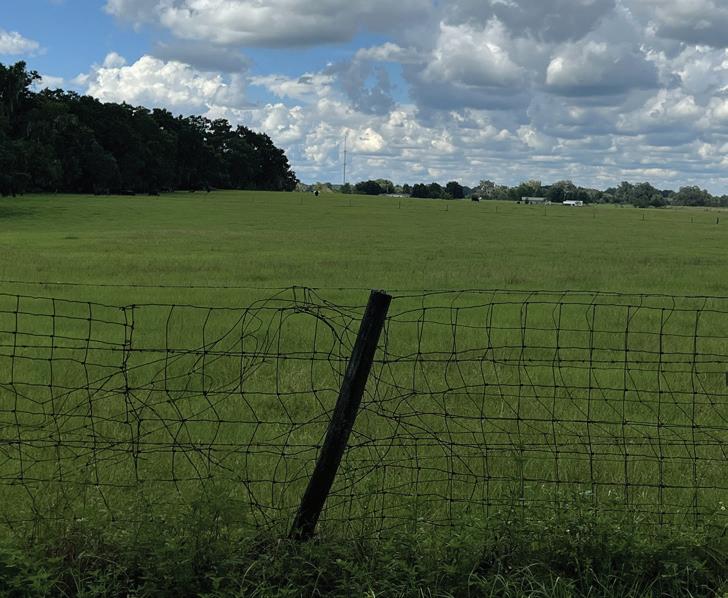
Across Florida, pressures for growth continue to put historic rural communities at risk. While development can bring opportunity, it may also threaten places whose value cannot be measured in acreage or market demand. For the Community of Royal in Sumter County, preserving historic and cultural character is not simply about protecting old buildings or boundaries—it’s about safeguarding identity, heritage, and a living community that has endured for generations. Royal was founded in 1865, under General Sherman’s “Special Field Order No. 15,” by freed slaves from the Old Green Plantation on the Withlacoochee River as a rural, self-sustaining African American community. Similarly to many towns across the South, Royal emerged during a time when segregation and limited economic opportunity forced Black families to rely on mutual support, land ownership, faith institutions, and strong social networks. Over time, Royal developed a distinct cultural landscape rooted in history, tradition, and resilience that remains in the present day.
However, current challenges are threatening Royal’s legacy. Rapid growth in the surrounding region has increased development pressure, land use changes, and infrastructure expansion. Industrial rezonings, large-scale residential proposals, and regional transportation projects have created an uneven power dynamic between long-standing residents and external interests. Without intentional action, these forces risk overwhelming Royal’s historic fabric. Royal has taken proactive steps to protect and define its future. For example, one key effort has been the completion of a Cultural Resources Assessment Survey, which documents Royal’s historic significance, cultural assets, and development patterns. This assessment provides an evidence-based foundation for preservation planning and strengthens Royal’s position in land use and policy discussions. Building on this work, the community has advanced a community-led planning process to prepare a Community Heritage Plan focused on equity, self-determination, and long-term sustainability. Rather than reacting to development proposals, continued on page 19
Royal is articulating its own vision—one that balances growth with preservation and ensures residents have a voice in decisions affecting their land, homes, and heritage.
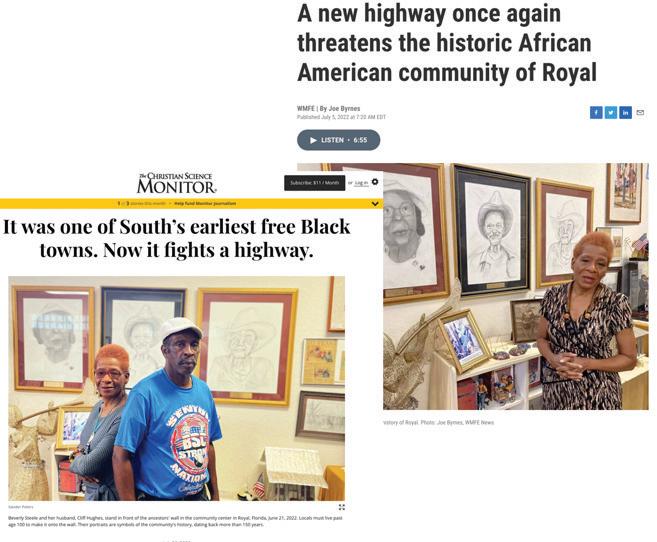
Royal has also actively pushed back against incompatible regional transportation initiatives, including a proposal to extend the Florida Turnpike through the community, and broader county expansion strategies that fail to account for cultural and historical impacts. Through advocacy, engagement, and coordination with legal and planning professionals, the community continues to challenge projects that threaten its integrity.
Another critical milestone is Royal’s pursuit of designation on the National Register of Historic Places as a Rural Cultural Historic District. This process not only recognizes Royal’s state
and national significance, but also provides tools to raise awareness, inform planning decisions, and support long-term preservation efforts. This represents an important step toward formal recognition and protection.
Protecting Royal matters, not just for its residents, but for Florida as a whole.
Royal is a rare example of a historic African American rural community that has endured against significant odds. Its protection affirms the importance of inclusive planning, cultural equity, and honoring histories that are too often overlooked. By standing up for Royal today, the community is ensuring that its story, and its future, remain firmly in its own hands.
Brad Cornelius, AICP, CPM, CFM is a Vice President and Senior Project Manager with Wade Trim. He can be reached at bcornelius@wadetrim.com
MIAMI-DADE COUNTY Celebrates 45 Years of Historic Preservation
By Sarah Cody
Miami-Dade County first adopted a historic preservation ordinance in 1981, making this Spring our 45th year of working to recognize and preserve our historic and archaeological resources. As we continue towards a half-century of preservation in Miami-Dade County, we are now presented with an opportunity to think critically about the field, evolving trends and best practices, and the ways in which we can continue to contribute to the quality of life for our residents in a meaningful way.
Like many local historic preservation offices, the Miami-Dade County Office of Historic Preservation (OHP) is housed within the county’s Planning Division. This underscores the integral relationship between historic preservation and land use planning and development, and the opportunities present to leverage preservation for the betterment of our broader planning efforts. At present, many areas under the jurisdiction of OHP are facing both significant planning challenges and opportunities, including intense redevelopment pressures, gentrification, housing affordability, and climate resiliency. Many of these areas have never been comprehensively surveyed, resulting in a limited understanding of the historic and cultural resources that help define our diverse tangible and intangible heritage. Additionally, a review of previous preservation efforts shows that significant portions of the community associated with a diverse population have been excluded.
A countywide historic resource survey,completed in 1980, evaluated structures built through 1940. In the 45+ years since, the County has not undertaken comprehensive survey efforts to better understand the post-1940 resources in our communities. As a result, there are approximately 200,000 buildings constructed post-1940 that have not been surveyed. In 2022, the Miami-Dade County Board of County Commissioners allocated $500,000 to OHP to undertake a much-needed update to the countywide historic resource survey. This first phase of updated historic resource surveying incorporated best practices in historic preservation and planning, along with centering the need to balance preservation
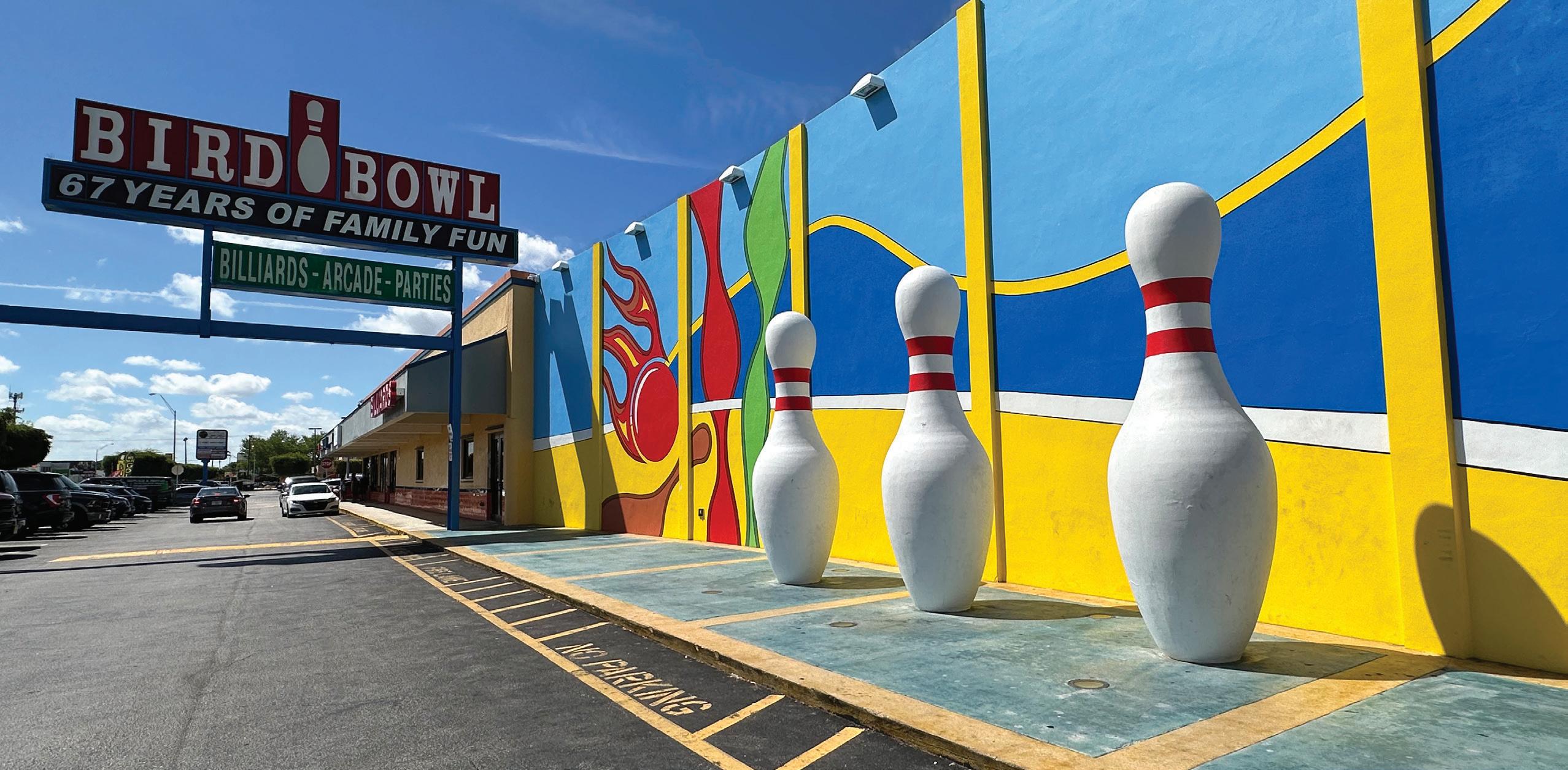
As a result of the project methodology, the surveyed resources included a large number of commercial properties, including the well-known Bird Bowl.
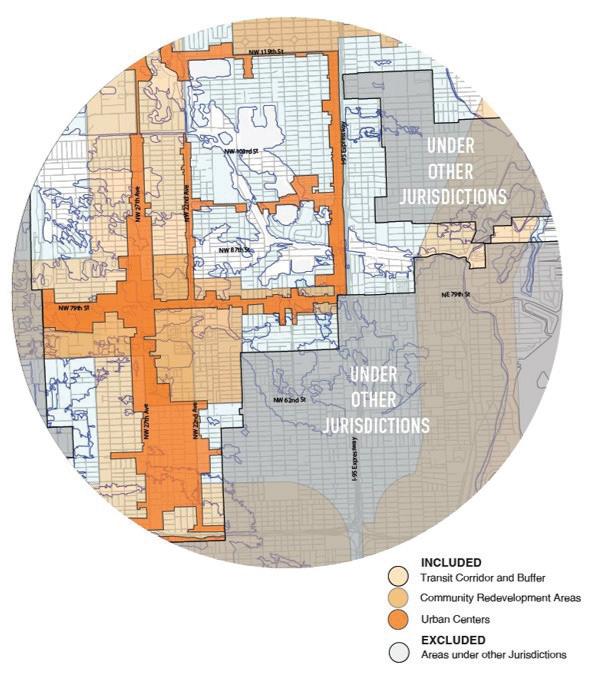
Sample of the overlay mapping used to define the project area.
[MIAMI] HISTORIC PRESERVATION
continued from page 21
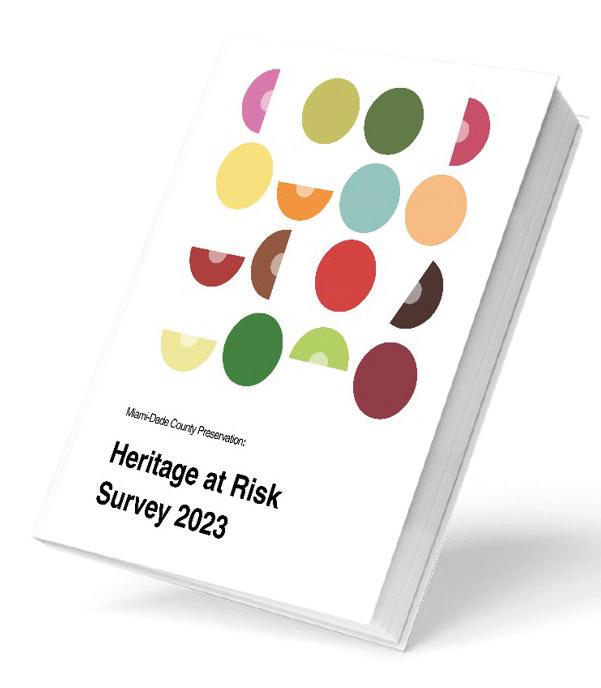
of historic resources with development and environmental impact concerns. The resulting report, Heritage at Risk, marked the start of a long-term initiative, envisioned by OHP, to implement preservation strategies that support the inherent connections between land use planning, zoning, community development, and historic preservation.
The Heritage at Risk project relied on a comprehensive planningbased methodology to identify properties under county preservation jurisdiction constructed between 1941 and 1981 that are most at risk due to two factors:
• Their location in areas susceptible to significant planning challenges, including development, gentrification, climate change risks, and the availability of affordable housing
• Their association with a community’s cultural heritage that has been excluded from previous County preservation efforts
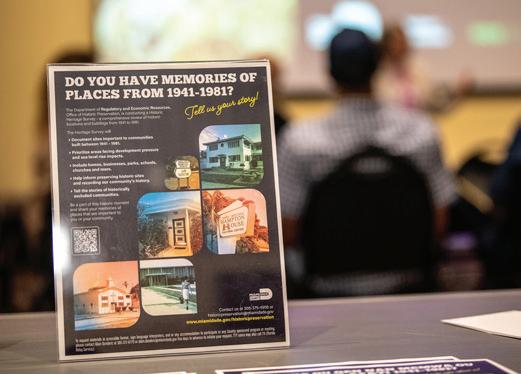
To define the project area, a series of layered maps were created that illustrate communities in which the County has adopted policies that incentivize development and other factors. These maps included SMART Plan corridors and buffer zones, Urban Centers, Community Redevelopment Agencies, and FEMA flood zones. Community engagement was critical to the project: Including a series of in-person and virtual community meetings and events that were conducted, along with a relaunch of OHP’s website, introducing an online questionnaire encouraging community members to share their memories of place. To ensure accessibility, the questionnaires were made available in English, Spanish, and Haitian Creole, and were made available online and at physical drop-boxes stationed at several Miami-Dade County Public Library branches, parks, and community centers.
Preliminary surveying identified 7,870 sites and prioritized documentation of 1,206 of those, based on an initial assessment of their significance. Further review identified 406 of those resources as potentially eligible for listing in the National Register of Historic Places; 15% of the properties surveyed were also found to be associated with historically excluded communities.
Beyond identification of sites, Heritage at Risk provides an invaluable, policy-informed, community-driven framework from which to develop further preservation efforts. Based on the intensive research, field work, and documentation of historic resources in the countywide study area, Heritage at Risk recommendations is framed in three broad categories: process and policy; community engagement, and further historic research and surveys. Based on the recommendations provided in Heritage at Risk, OHP has already completed Phase 2 and is underway on Phases 3 and 4 of its renewed survey efforts. Phase 2 was comprised of the Goulds Heritage Survey, funded by a State Division of Historical Resources grant. Phase 3 is a Migrant Farmworker Historic Context Study, funded by the National Park Service Underrepresented Communities grant, and Phase 4 is a Burial Grounds Historic Context Study,
also funded by a State grant. These types of additional survey and research projects further OHP’s use of traditional survey methodology to support a more inclusive documentation of resources and of ongoing preservation that meaningfully supports our residents through the vital integration of preservation, land use, zoning, and community.
Sarah Cody is the Historic Preservation Chief for Miami-Dade County. She can be reached at sarah.cody@miamidade.gov.
resources included a
including
Heritage at Risk report
Community Engagement Flyer used to promote the project and community engagement opportunities
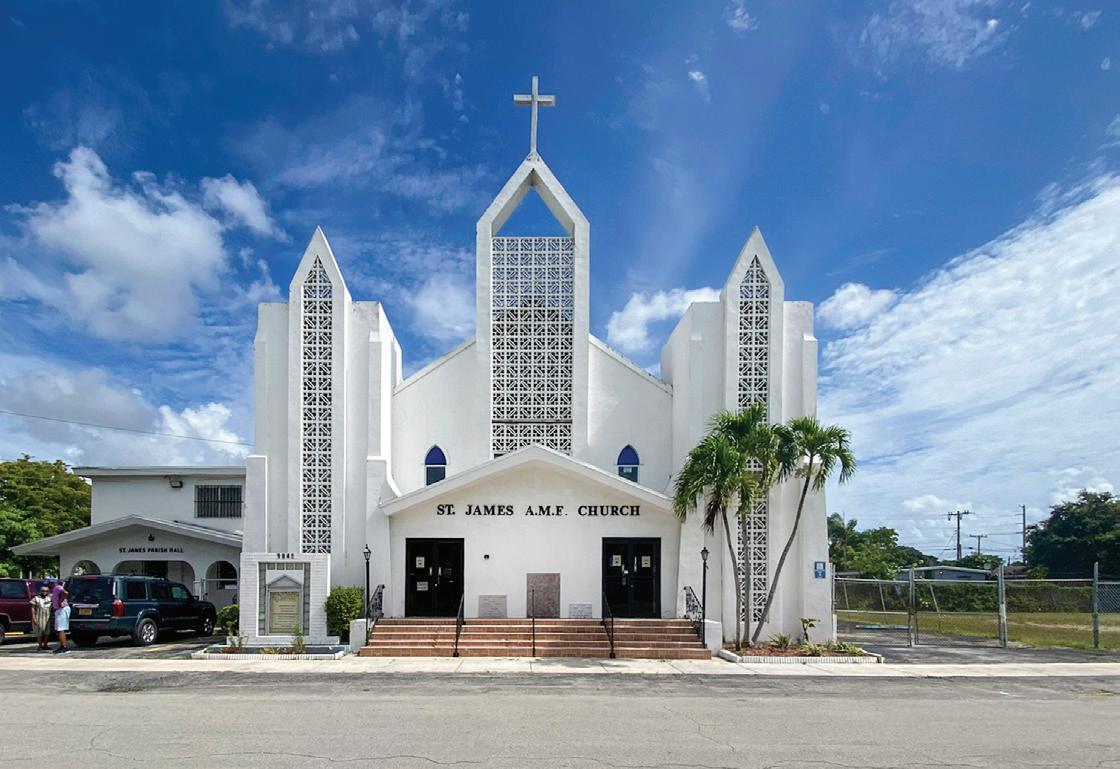
The St. James AME Church in historic Liberty City was one of many significant churches surveyed.
Surveyed
wide range of resource types,
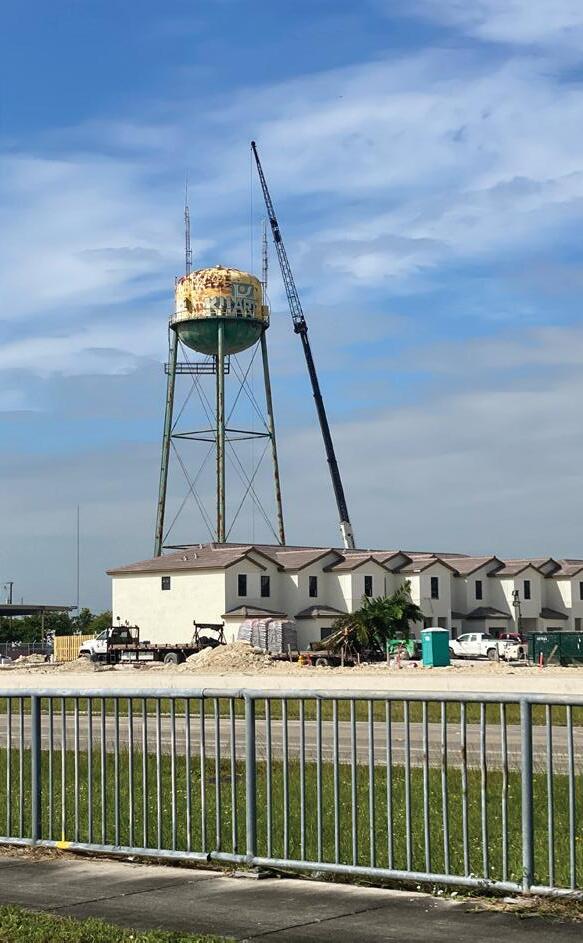
the Princeton Water Tower, photographed here behind development of a new residential subdivision.
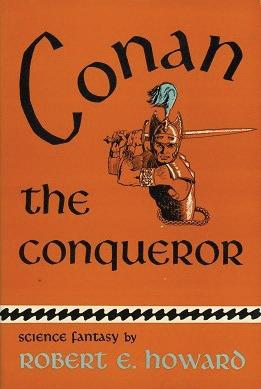
BRICKS, BEAMS, AND BARBARIANS:
Preserving the Robert E. Howard House and Museum
By Jeff Shanks, RPA and Blair Knighting, AICP
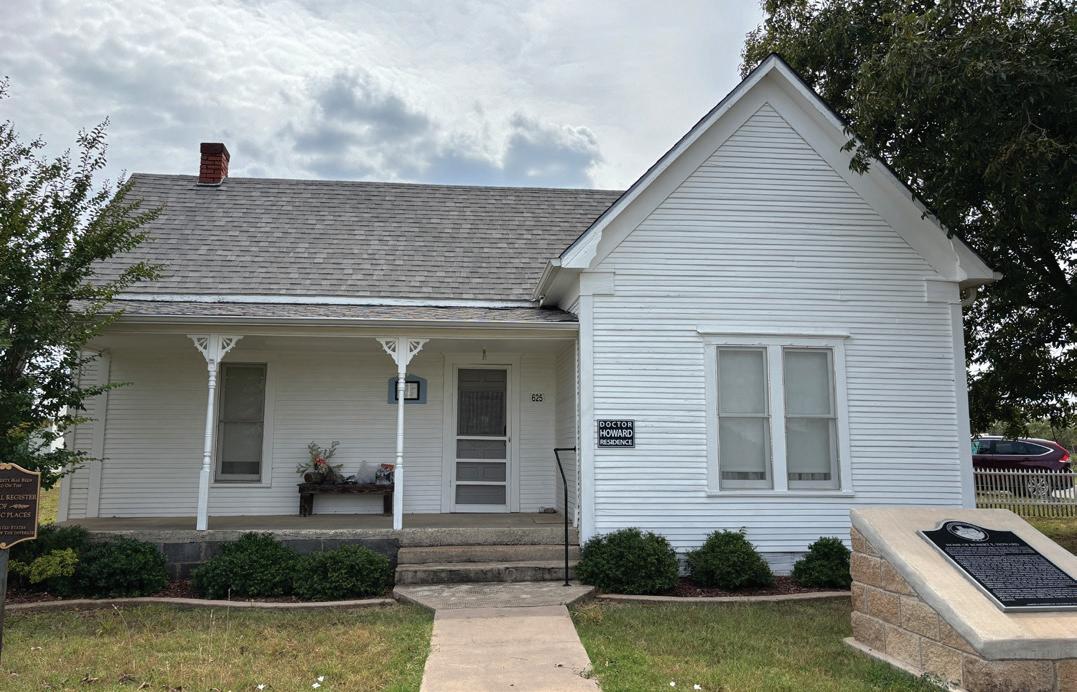
In the small town of Cross Plains, Texas, a modest early-20th Century house sits on brick piers, much like thousands of others across the state.
What sets it apart is not its architecture, but its cultural heritage. This is the Robert E. Howard House: the home and workspace of the writer who created Conan the Barbarian and helped shape modern fantasy literature. Today, the house is a public museum, also serving as the focus of a preservation effort illustrating why planners, preservationists, and communities should care about places tied to popular culture.
Robert E. Howard lived in this house from 1919 until his passing in 1936, completing most of his published work there. While Howard’s stories were originally printed in pulp magazines, their influence now spans across literature, film, games, and visual art worldwide. Increasingly, scholars have emphasized Howard’s identity as a Texas author, grounding his work in the social and cultural context of early twentieth-century Texas, rather than viewing it solely through the lens of the fiction genre. As a result, the house is both a literary landmark and a site of growing academic and public interest.
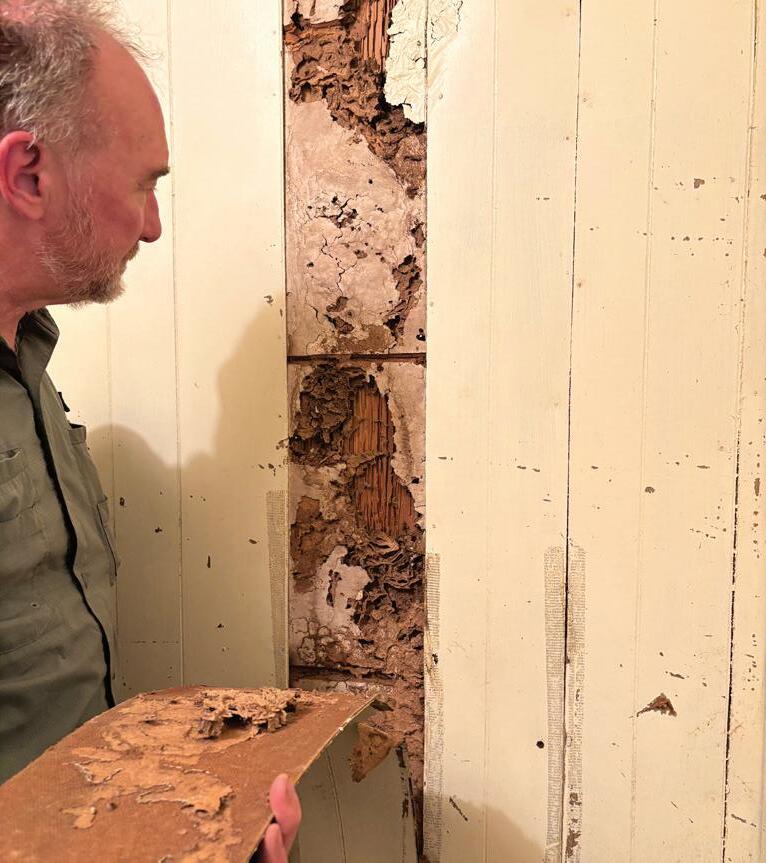
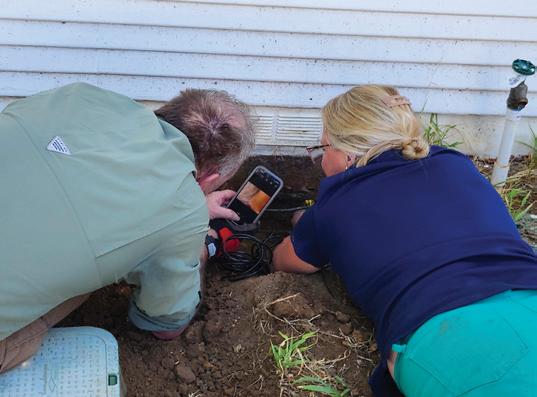
Like many vernacular structures of its era, the Howard House faces preservation challenges common across Texas and the United States. In 2025, Kimley-Horn and Associates, Inc. conducted a professional site visit and conditions assessment to evaluate concerns about uneven floors and other structural damage. The assessment documented failing
continued on page 7
and missing brick piers, inappropriate past foundation repairs, moisture and termite damage, and a later concrete porch that is historically incompatible. These conditions, if left unaddressed, threaten both the historic fabric of the house and its continued public use.
Project PRIDE, the nonprofit steward of the property, is now pursuing a phased stabilization plan focused on repairing the foundation, restoring crawlspace airflow, replacing the non-historic concrete porch with a more historically appropriate wood porch, and addressing the structural issues. This work is being guided by preservation professionals and will meet the Secretary of the Interior’s Standards, emphasizing early intervention and compatibility, rather than wholesale alteration. Kimley-Horn also assisted Project PRIDE in preparing an application to the Texas Preservation Trust Fund, helping translate technical findings into a preservation-focused scope that aligns with state funding priorities.
The Robert E. Howard House is also an active cultural site that includes Robert E. Howard Days, an annual heritage event that brings hundreds of visitors to Cross Plains from across the country and abroad. This event supports local businesses, draws attention to a rural community, and demonstrates how preservation of a small site can generate economic and cultural benefits.
The preservation effort is also notable for its grassroots support. Fans, writers, artists, and scholars have contributed directly through crowdfunding and fundraising initiatives,
continued on page 39
2026 FLORIDA PLANNING SUMMIT
A Week of Policy, People, and Purpose
By Patti Shea, MPP
What a week in Tallhassee!
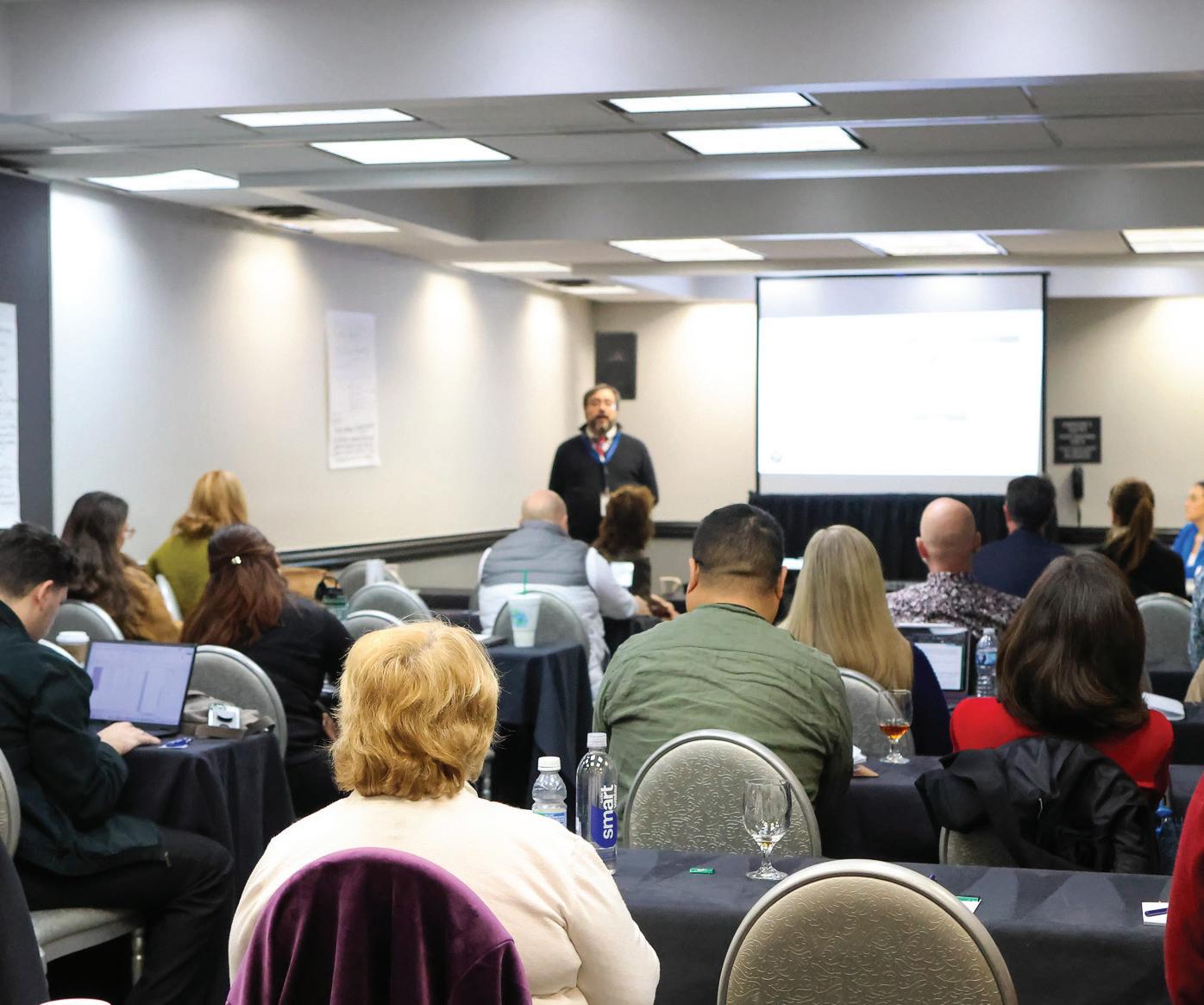
The 2026 Florida Planning Summit brought together talented planners, emerging and legacy alike, with community partners and policymakers for an energizing week of learning, advocacy, and connection, beginning with our Tuesday webinar and concluding with Saturday’s APA Florida Executive Committee Meeting.
TUESDAY: NATIONWIDE CONNECTIONS
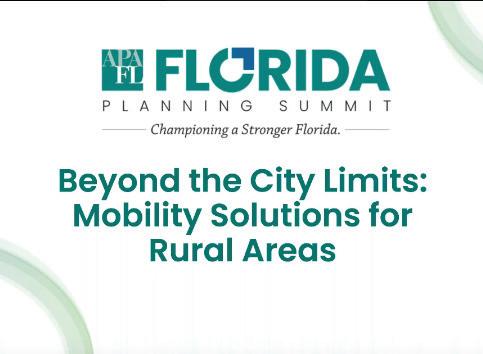
The week kicked off with nearly 200 planners from across the country tuning in for our webinar, Beyond the City Limits: Mobility Solutions for Rural Areas
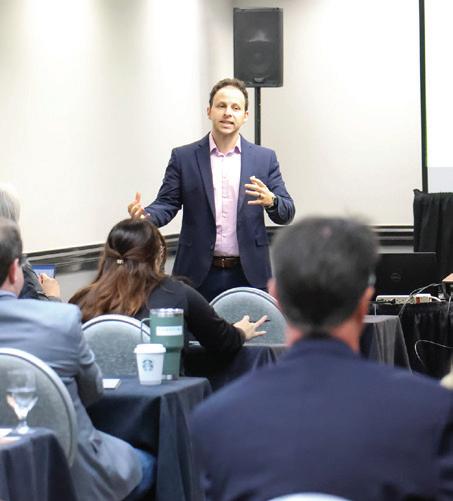
Hosted by the APA Florida Planning for All Committee, moderators Lara Bouck, AICP, PE, and Corinne Arriaga, AICP, MPH, welcomed presenters Kwentin Eastberg, AICP (Apalachee RPC), Marybeth Soderstrom (Central Florida RPC), and Karen Somerset (Commission for the Transportation Disadvantaged). The session sparked thoughtful discussion on rural mobility challenges and solutions.
WEDNESDAY: RURAL PLANNING OFFICIALS TRAINING
On Wednesday, elected officials and staff from the Big Bend’s rural counties participated in Planning Officials Training, led by Florida planning legends Merle Bishop, FAICP, Owen Beitsch, FAICP, and Bob Cambric. Attendees explored core planning principles and fundamentals, followed by a highly engaging land use law masterclass from Liz Ellis, Esq. and Erin Tilton, Esq., of Stearns Weaver Miller. Participants were fully engaged, raising “hypotheticals” drawn directly from issues facing their home communities ... proof of the workshop’s real - world relevance.
THURSDAY: THE FLORIDA PLANNING SUMMIT BEGINS
On Thursday, attendees converged at the DoubleTree in Downtown Tallahassee for a reimagined policy summit experience featuring two focused tracks - Legislative and Rural. The day included interactive communications workshops, in-depth policy discussions, and immersive mobile tours highlighting Big Bend communities.
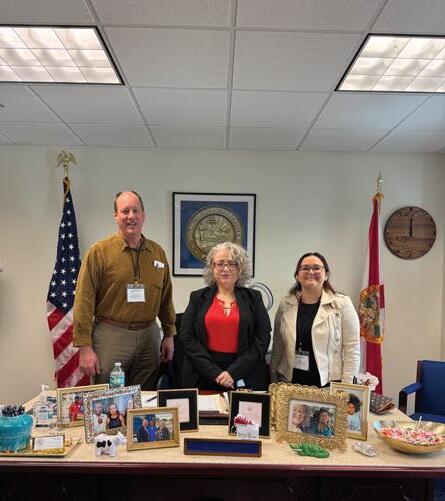
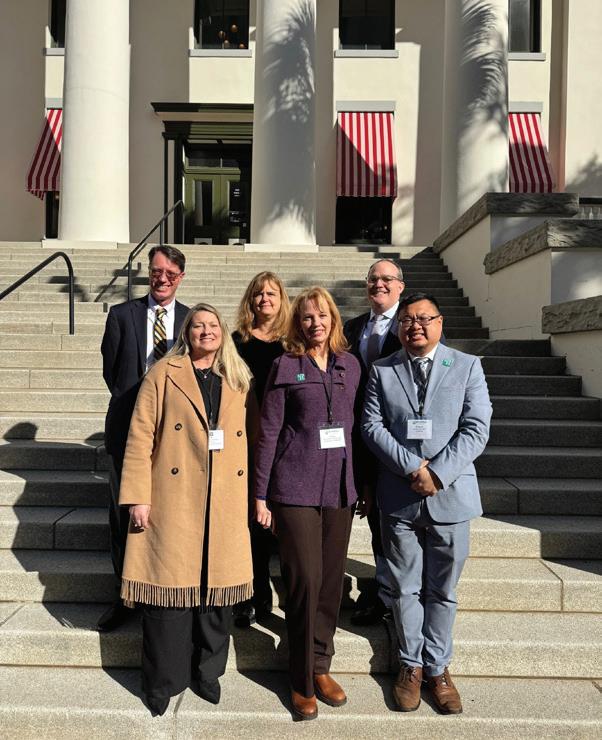
Legislative Track participants received a mid-session legislative update from Anna Grace DePaolo and Doug Bell, Esq. (Metz, Husband & Daughton), followed by a dynamic training on communicating with elected officials led by Joel Staley. Then came the heart of the advocacy experience: 22 legislator Meet + Greets. Despite frigid temperatures, participants trekked to the Capitol to engage directly with state lawmakers on critical legislation and the planner’s role in building resilient Florida communities. We are deeply grateful to the attendees who showed up informed, committed, and ready to make a difference.
Meanwhile, the Rural Track traveled to Quincy and Havana for on-the-ground updates on Main Street revitalization efforts, followed by afternoon problem-solving sessions back at the hotel. Topics included Rural Areas of Opportunity with Richard Williams (Opportunity Florida) and Jeff Hendry (North Florida Economic Development Partnership); grant writing strategies with Caroline Smith (Apalachee RPC), Shawna Martin, AICP (OVID Solutions), and Joe Crozier, AICP (Kimley-Horn); and working agricultural lands as economic engines with Kelsi Jackson (Jackson County TDC), Neil Fleckenstein and Shane Wellendorf (Tall Timbers), and Roy Baker (Opportunity Florida).
The day concluded with both tracks coming together at Eve on Adams for a facilitated panel on leveraging Rural Momentum, featuring Commissioner Jacqueline “Jack” Porter (City of Tallahassee), Commissioner Quincee
Click on image to access webinar recording.
continued from page 26
Messersmith (Wakulla County), and Betsy Barfield (former Jefferson County Commissioner). The conversation offered candid insights and practical guidance on planning in rural and small-community contexts.
FRIDAY: POLICY DEEP DIVES & FIELD EXPERIENCES
Friday began with the Rural Track exploring the often-overlooked issue of heirs’ property rights and the planner’s role, presented by Dr. Sandra Thompson (Florida A&M University). Participants then embarked on a day-long tour to Wakulla Springs (including a boat ride and a spirited manatee song), the Apalachicola National Estuarine Research Reserve, and the Franklin-US 98 Living Shoreline Project.
GRATITUDE
This event would not have been possible without our dedicated volunteers and moderators, especially:
• Kwentin Eastberg, AICP, Capital Area Section Chair
• Hadley Peterson, AICP, Capital Area Section Vice Chair
• Susan Poplin, AICP, Capital Area Section Treasurer
• Missy Daniels, AICP, Jackson County
• Kim Cole Sweazy, AICP, Jackson County
• Ali Palmer, APA Florida Vice President of Communications
Thank you to all our speakers, attendees, community partners, and planning champions. We are grateful for event supporters: Stearns Weaver Miller, JBPro, Kimley-Horn, and Apalachee RPC.
Our sincerest thanks to everyone who contributed their time, expertise, and energy. Your commitment continues to elevate planning policy and advocacy statewide. We hope you left Tallahassee energized, informed, and ready to carry these conversations forward.
At the same time, the Legislative Track toured Downtown Tallahassee, learned about public art and improvement projects, and returned for a conversational overview of state agency programs supporting rural communities. Thank you to Pamela Flores (FDEP Office of Water Policy & Ecosystems Restoration), Rueben Acosta (Bureau of Historic Preservation), and Kathie Beck (Florida Main Street).
The policy discussions continued with Kody Glazer, Esq. (Florida Housing Coalition) providing an update on affordable housing legislation, followed by a deep dive into local preemption led by Rebecca O’Hara, Esq. (Florida League of Cities) and Lindsay Stevens, AICP, Esq. (FSU DURP). The Summit concluded with one of the week’s most discussed sessions: property tax proposals and what planners need to know. This all-star panel featured Dr. Akin Akinyemi, CFA (Leon County Property Appraiser), Dr. Tim Chapin (FSU College of Social Sciences & Public Policy), and Elise Fisher (Tallahassee CRA).
SATURDAY: GETTING DOWN TO MEMBER BUSINESS
As if the previous three and a half days weren’t enough, the APA Florida Executive Committee convened on Saturday to officially kick off 2026 membership initiatives and strategic planning. New Section Chairs were formally seated, and the 26-member, all-volunteer board got down to business, focusing on ways to strengthen operations, elevate programs, and increase member value for APA Florida’s 3,200+ members statewide. The meeting marked a strong and thoughtful close to Summit Week, reinforcing the chapter’s commitment to service, leadership development, and advancing the planning profession across Florida.
THANK YOU TO OUR SPONSORS!
JOIN US FOR THE 2026 FLORIDA PLANNING CONFERENCE IN MAGICAL MIAMI!
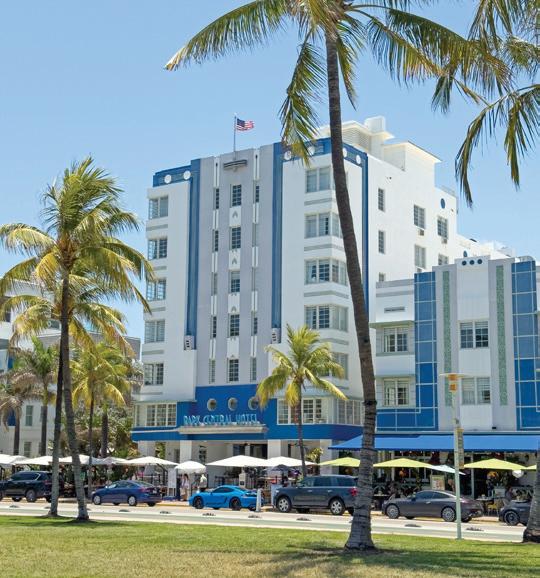
The 2026 Florida Planning Conference host committee invites industry leaders to immerse themselves in Miami Está de Moda – Planning the Magic, Remixing the Future to celebrate innovative planning work shaping communities across the state. Mark your calendars for Oct. 13 – 16 as we head to Miami. The InterContinental Hotel Miami will serve as the headquarters for this year’s conference, offering sweeping views of Biscayne Bay set in the heart of Downtown Miami. The venue places attendees within walking distance of transit, cultural destinations, and public spaces that exemplify the very topics planners will gather to explore.
This year’s conference theme, Miami Está de Moda — Planning the Magic, Remixing the Future, draws inspiration from Miami’s unmistakable soundscape, which is a blend of rhythms, cultures, and creative energy that produces something distinctly its own. This spirit sets the tone for a conference designed to be vibrant, inspiring, and ready to turn up the volume on innovation. Planners across Florida are reimagining communities to address climate resilience, changing demographics, housing and transportation affordability, roadway safety, and intensifying development pressures. Miami provides the perfect backdrop to amplify bold ideas, spark collaboration, and strike the next beat in shaping Florida’s future.
Behind the scenes, the Host Committee is curating an experience that moves beyond the traditional sit-and-listen format. Attendees can expect interactive sessions, engaging discussions, and experiential learning opportunities that reflect the evolving practice of planning. The conference program will feature session tracks that explore innovation in practice, visionary approaches to community building, practical tools for Florida planners, creative placemaking strategies, sustainability and resilience solutions, and collaborative partnerships that drive progress.
For public-sector professionals, the conference offers an unmatched opportunity to exchange knowledge with peers navigating similar regulatory, environmental, and community challenges. For private-sector practitioners, it is the premier venue to build relationships, showcase expertise, and form new partnerships with cities, counties and agencies. For students, it is where careers begin and professional networks take root.
Beyond the sessions, attendees will be invited to experience the energy of the Magic City firsthand, from an opening reception infused with Miami’s signature vibrancy, to mobile workshops aboard the Metromover, to evening socials in the heart of Downtown. Together, we will gather in Miami to learn, collaborate, celebrate, and remix the future of planning in Florida.
Stay tuned with all FPC26 news and updates by bookmarking the conference website. Mobile tours and keynote speakers will be announced soon!
2026 Registration + Hotel Prices
CONFERENCE HOTEL - Miami InterContinental
Please note: Room booking link will be sent upon conference registration
HOTEL ROOM BLOCK
Regular: $189 per night for single/ double occupancy
Students: $142 per night single-quad occupancy
15 rooms Tues.-Fri.
$33/day service fee is included in the $189 & $142. Parking is not included.
Nominate a Planning Champion!
EARLY FOOTBALL GAME ALERT!
Hey out of town Seminole and Hurricane fans sticking around after the conference, you’re in luck as Florida State takes on University of Miami on Saturday, Oct. 17! Even better? Our discounted conference hotel rate runs through the weekend, so you can cheer on your team and keep your wallet happy.
Chapter Planning Leadership Awards Nominations Open in April
Do you know someone who is transforming communities, elevating the planning profession, or inspiring others through visionary leadership? Now is your chance to spotlight their impact!
The APA Florida Chapter Planning Leadership Awards celebrate the planners, partners, and advocates who make Florida stronger, more vibrant, and more resilient. These honors represent the highest recognition our chapter bestows, shining a light on extraordinary contributions that move planning forward. Award Categories Include:
• President’s Lifetime Achievement
• Distinguished Contribution to the Chapter
• Legislator of the Year
• Outstanding Local Public Official of the Year
• Outstanding Student Planner
• Outstanding Public Interest Group
• Outstanding Citizen Activist
• Outstanding Media Leadership
• Best Planning for All Workplace
Whether it’s a dedicated student, a visionary public official, a vocal community advocate, or a media leader elevating planning conversations, we want to hear their story.
Nominations Open in April
Have a person or an organization in mind? Start reviewing the award categories and criteria now so you’re ready when submissions open.
Let’s celebrate the people who are shaping Florida’s future. Your nomination could make all the difference.
Watch your inbox and our chapter socials for the upcoming launch of CHAPTER PLANNING LEADERSHIP AWARD nominations!
Create the Official Conference Poster & Win FREE Registration!
Poster sale profits go to conference scholarships
We’re excited to invite APA Florida members to showcase their creativity and planning spirit by designing the official poster for the 2026 Florida Planning Conference!
This year’s conference theme, Miami esta de Moda: Planning the Magic, Remixing the Future, not only celebrates the vitality and excitement Miami offers, but also celebrates the ideas, people, and innovations shaping the future of planning in our state. Now we want you to help bring that theme to life visually.
And here’s the special part: The winning design will be turned into the official conference poster that will be available for sale and 100% of the profits will go directly toward funding conference scholarships for FPC27 in West Palm Beach. Your creativity won’t just inspire attendees, it will help provide future professional development opportunities for your fellow planners.
Be a Planning Champion … Sponsor FPC26!
Partnership and visibility remain central to the conference experience. Sponsorship opportunities offer organizations a chance to engage directly with both public and private-sector leaders through networking lounges, off-site events, training sessions, and custom activations. Whether large or small, every firm will find meaningful ways to showcase their work and connect with the planning community.
Florida-based DBE, MBE, WBE & veteran-owned businesses may also qualify for a 25% discount on most sponsorship levels.
The deadline to register as a sponsor is Aug. 31, but the sooner you register, the more visibility your brand will have across all FPC marketing materials!
We’re looking for an original poster design that:
• Reflects the conference theme
• Captures the energy, spirit, and forward-thinking nature of planning in Florida
• Appeals to both planners and the communities we serve What the artist of the selected work wins:
• You will receive a complimentary registration to FPC26!*
• Your poster will be professionally printed and displayed throughout the conference.
• Your design will be sold as an official conference poster to help fund scholarships for FPC27. Your artwork will not only represent our conference, it will support the future professional development of planners!
* - The prize cannot be transferred and must be used at FPC26.
Submission deadline is June 30.
Get all Poster Contest judging criteria, information here.
Project Awards NomINATIONS NOW OPEN!
The annual Project Awards program shines a spotlight on the most innovative, impactful, and inspiring planning work happening across Florida. It celebrates the projects that are shaping stronger, smarter, and more resilient communities.
Each year at the Florida Planning Conference, APA Florida honors planning projects that demonstrate excellence in vision, creativity, and implementation. From transformative redevelopment efforts to forward-thinking environmental planning, mobility solutions, public engagement initiatives, and everything in between, these awards highlight the projects where planning truly makes a difference.
Go here for all awards criteria, categories, and deadlines.
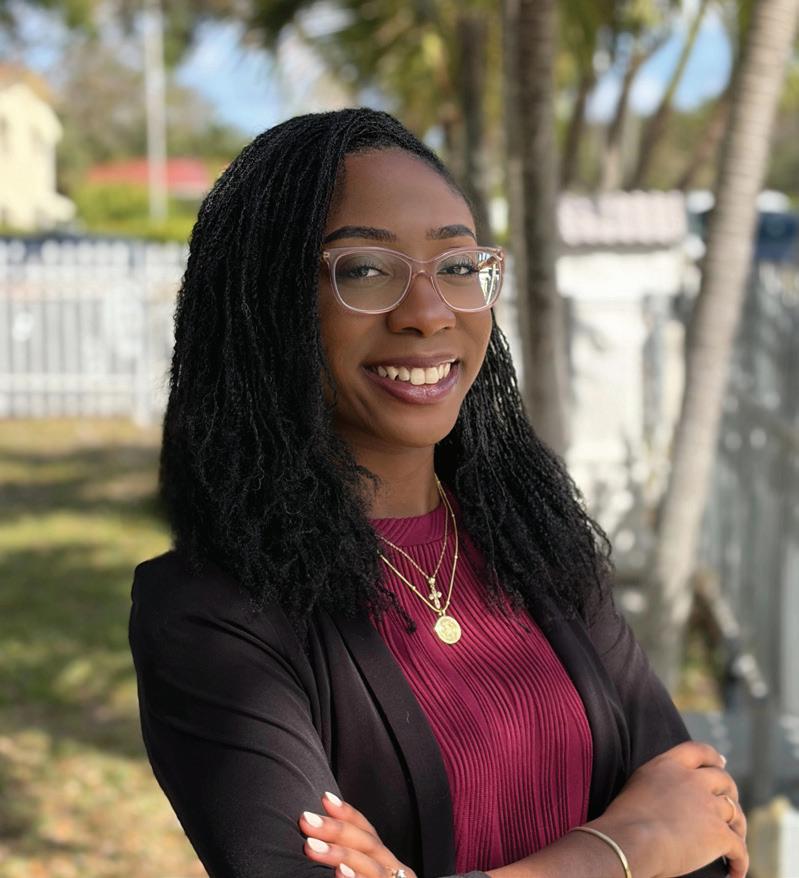
ANDRE ANDERSON MINORITY SCHOLARSHIP RECIPIENT
Lauryn Ballard
I am deeply honored to receive the 2026 Andre Anderson Minority Scholarship. This recognition affirms my aspirations of contributing to public service spaces while also advancing equitable planning practices across Florida.
My path to urban and regional planning began in the Florida House of Representatives, where I served as a Legislative Aide and gained firsthand insight into how statewide policy decisions shape local communities. I later transitioned to local government as a Commission Aide in Miami-Dade County, working at the intersection of land use, zoning, infrastructure, and constituent engagement. These experiences revealed how planning decisions directly influence opportunity, mobility, and quality of life.
My passion for transportation planning was shaped through involvement in initiatives such as Miami-Dade County’s Strategic Miami Area Rapid Transit Plan. Supporting efforts related to transit corridors and community engagement showed me that transportation goes beyond infrastructure. It is access to jobs, education, health care, and economic mobility. In South Florida, where congestion and climate vulnerability present ongoing challenges, equitable and multimodal transportation systems are essential to long-term resilience.
Today, I continue building my interest in planning as an administrative assistant in the City Manager’s Office for the City of Hollywood. There, I help support civic engagement initiatives, grant administration, and community-focused programs. Working at the municipal level has strengthened my understanding of how policy translates into implementation and how meaningful community engagement shapes more effective outcomes.
As a first-generation graduate student pursuing a master’s degree in Urban and Regional Planning at the University of Florida, this scholarship eases financial pressures and allows me to focus fully on my academic and professional development. I am grateful for this support and remain committed to honoring Andre Anderson’s legacy through inclusive, forward-thinking planning that strengthens Florida’s communities.
Thisaffirmsrecognitionaspirationsmyof contributing to public service spaces while also advancing equitable planning practices across Florida.
Lauryn Ballard
Honoring Excellence: APA Florida’s Five New FAICP Inductees
By Patti Shea
Each year, induction into the AICP College of Fellows recognizes planners whose careers have shaped communities, advanced the profession, and embodied the highest standards of public service. This year, APA Florida proudly celebrates five outstanding inductees, whose contributions span decades of innovation, mentorship, community advocacy, and transformative planning.
“Florida is fortunate to have some of the most talented planners in the country shaping the future of our state and its communities,” said Whit Blanton, FAICP, APA Florida Immediate Past President and chair of this year’s nominating committee. “Seeing these individuals recognized nationally affirms the profound impact Florida planners are making every day.”
Together, our inductees’ work reflects both the depth and breadth of planning in Florida and beyond. Here are the remarkable stories of our newest Fellows.
WIATT BOWERS, FAICP
A Lifetime of Leadership, Advocacy, and Service
For Wiatt Bowers, FAICP, planning has been a lifelong calling. “I knew from an early age that I wanted to be an urban planner,” he reflects, noting that he joined APA as an undergraduate in 1993 and became certified in 1998. Today, after more than 30 years of service, he describes his FAICP recognition as “incredibly meaningful … an honor to join many friends and colleagues in the AICP College of Fellows.”
Wiatt is widely regarded as a renowned transportation planner, APA leader, mentor, and community volunteer. His commitment to “repairing the world” has guided a prolific career marked by transformational safety improvements, trail systems, and public-realm projects throughout Florida.
In Jacksonville, his advocacy has reshaped streets, infrastructure, and neighborhood investments, strengthening the urban fabric for residents and visitors alike.
Within APA Florida, Wiatt’s leadership has been equally impactful. His decades of service —culminating in his presidency from 2021 to 2022 — help deliver key legislative victories, highly successful conferences, and programming that reached more than 12,000 attendees and delivered more than 2,000 AICP CM credits.
Wiatt’s career is a testament to what thoughtful, persistent, community-focused planning can achieve.
DR. MARIA ELISA “LISA” COLMENARES, FAICP
A Visionary in Accessible, Multimodal Transportation Planning Dr. Maria Elisa “Lisa” Colmenares, FAICP, currently serves as Chief Planning Officer of Transportation Planning and Policy for Miami - Dade County. With 30 years of experience across South Florida and South America, she has become a leader in accessibility - focused, multimodal transportation planning and has redefined how people move through urban spaces. Her work is known for merging innovation with implementation, resulting in more connected, equitable, and resilient mobility systems.
Lisa has also shaped the future of the profession through her deep commitment to mentorship and education, guiding hundreds of emerging planners and uplifting voices across the field.
Reflecting on her FAICP recognition, she shares: “I am humbled and honored to be included in the 2026 College of Fellows… As a fellow, I want to continue being a change agent to help our communities shine bright through regional thinking and consensus building.”
continued from page 32
MARILYN MAMMANO, FAICP
A Trailblazer for Community Engagement, Resilience, and Balanced Growth
For more than 50 years, Marilyn Mammano, FAICP, has brought extraordinary talent, determination, and consensus-building skills to some of the most complex planning challenges. Her career has balanced growth, conservation, and community participation, always ensuring that the voices of residents help shape the future of their neighborhoods.
Marilyn has been a leader in studies and planning initiatives that resulted in:
• A new Greenbelt Park on Staten Island
• Expanded public access to waterfront neighborhoods in New York City
• Landmark regulations for adult-entertainment uses that contributed to the revitalization of Times Square
In South Florida, she has become especially known for her work in community engagement, empowering residents to play meaningful roles in shaping local planning outcomes.
Reflecting on her FAICP induction, Marilyn shares: “I am so thrilled that my colleagues at the APA Florida Chapter nominated me … I have another 50 years to give.”
Her legacy is unmistakable and still growing.
DENNIS SMITH, FAICP
Innovator, Educator, and National Leader in Resilience
“Election to the College of Fellows is a meaningful professional honor,” says Dennis Smith FAICP. “It is not a finish line, but a charge to continue advancing the profession through thoughtful innovation, applied practice, and sustained mentorship.”
Over more than three decades, Dennis has been a driving force in public-sector innovation, private consulting, and academic leadership. His contributions include:
• Developing Florida’s share-of-damage funding formula
• Advancing the state’s Local Mitigation Strategy
• Influencing national resilience policy
• Refining evacuation and recovery frameworks for state and local governments
In academia, he leads an award-winning studio program that bridges theory and practice, which prepares emerging planners to engage with real-world challenges.
Across all these roles, Dennis has paired policy innovation with mentorship. His work continues to shape not only disaster-preparedness and resilience planning, but the very future of the profession.
VIVIAN YOUNG, FAICP A Champion for Sustainability,
Preservation, and Public Understanding
“I’m truly humbled,” says Vivian Young, FAICP, reflecting on her induction into the College of Fellows.
“It has been an honor and a pleasure to spend my career promoting fiscally sound and sustainable planning to preserve Florida’s unique historic resources, distinctive natural and agricultural landscapes, and vibrant communities.”
Since 1984, Vivian has built a career devoted to livability, sustainability, community education, and resource protection. She has long served as a “translator”— someone who can distill complex planning concepts for citizens, policymakers, and professionals alike.
Among her many accomplishments:
• Florida’s first stateside Main Street Coordinator
• First professional planner for the Historic Tallahassee Preservation Board
• At 1000 Friends of Florida since 1996, she has:
- Launched and coordinated free planning webinars reaching more than 50,000 attendees
- Established a grassroots legislative advocacy platform
- Led landmark projects such as the Florida 2070 studies
- Advanced rural conservation planning in partnership with UF’s Center for Landscape Conservation Planning
Vivian’s career exemplifies the power of informed public engagement and the long-term impact of thoughtful statewide leadership.
We are thrilled to congratulate our five newly elected FAICP inductees on this incredible career milestone. All five will be formally inducted during the National Planning Conference in Detroit next month.
Stefanie Svisco
It's been an exciting year (so far) for APA Florida!
As we continue to move into a busy and exciting year for APA Florida, I want to take a moment to reflect on the tremendous success of the Florida Planning Summit and share a look ahead at the work already underway for the 2026 Florida Planning Conference. Both events continue to demonstrate the strength, dedication, and passion of our planning community, and I am endlessly grateful for the people who help in making them possible.
A Powerful Florida Planning Summit Recap
This year’s Florida Planning Summit brought together an inspiring mix of planners, students, policymakers, advocates, and community partners from across the state. The conversations were rich, the sessions were timely, and the energy in every room was electric. Whether the topic was growth management, housing, resiliency, rural planning, or cutting-edge mobility innovations, our presenters and attendees showed, once again, why Florida continues to lead the way. (Recap on pp. 26)
But the heart of the Summit wasn’t only the content - it was the people behind it. We simply cannot host events of this scale without the dedication of our volunteers, who plan sessions, manage rooms, greet attendees, coordinate logistics, and bring their professional expertise into every detail. A huge thank you to the Capital Area Section’s Kwentin Eastberg, AICP, and Hadley Peterson, AICP!
And to our sponsors: Your commitment ensures that we can keep delivering high-quality, accessible programming that supports planners statewide. Your investment directly fuels strong communities, better policy outcomes, and a stronger profession.
To every volunteer, sponsor, speaker, and attendee: Thank you. Your support made our Summit not only possible, but impactful.
On to the 2026 Florida Planning Conference
With the Summit now behind us, our focus has shifted to the next major milestone: the 2026 Florida Planning Conference. Our amazing Host Committee has been busy building an experience that will be engaging, educational, and energizing for planners at every stage of their career. I truly believe you’re going to love it.
As always, conferences of this magnitude rely heavily on the generosity and partnership of our sponsors and volunteers. If you’ve ever considered
continued on page 35
Stefanie and Patti are ready to help all Summit attendees!
from page 34
getting more involved, now is the perfect time! Whether you want to help with program development, logistics, speakers, awards, student engagement, or simply greet attendees, we welcome your support, and we promise it’ll be very rewarding.
Project Awards Are Here!
One of my favorite parts of the annual conference is our Project Awards Program. Every year, this celebration showcases the best planning work happening across Florida. I’m continually inspired by the creative ideas, community-driven solutions, innovative processes, and the people and partnerships that make them possible.
If you’ve worked on a project that deserves recognition (or know someone whose work stands out), I encourage you to submit a nomination. The awards ceremony is always a highlight of the conference, and we truly love spotlighting the remarkable contributions planners are making statewide. (See pp. 30)
Together, We Shape Florida’s Future
To everyone who has attended, volunteered, sponsored, or supported APA Florida in any way, a huge thank you. These events are more than professional gatherings - they are opportunities to learn from one another, celebrate progress, and strengthen the planning community that drives positive change across our state.
I look forward to seeing this momentum continue as we prepare for FPC26, FPC27, FPC28 and beyond. And I hope you’ll join us, whether as a volunteer, sponsor, award winner, or participant.
Let's make 2026 our best conference year yet!
- Stefanie Svisco
PLANNERS ON THE MOVE
ARRIAGA PROMOTED TO TRANSPORTATION CHIEF PLANNER
Corinne Arriaga, AICP, CPH has been promoted to Chief Transportation Planner for the City of Sarasota. Since joining the city as a Transportation Planner in 2021, she has steadily advanced through roles that reflect her strong commitment to multimodal planning, data-informed decision-making, and building safer, more connected streets in partnership with the community.
Corinne holds both a Bachelor of Psychology and a Master of Public Health in Community and Family Health from the University of South Florida.
CAMPBELL JOINS THE BALMORAL GROUP
Allison Campbell, MS has joined The Balmoral Group as a Transportation and Environmental Planner. Her experience with the Florida Department of Transportation and the Florida Department of Environmental Protection fostered a deep appreciation for balancing infrastructure investment with natural resource protection.
In her new role, Allison looks forward to applying her natural resources background to transportation projects across Florida, supporting PD&E studies, environmental planning initiatives, and efforts that promote resilient, community-focused outcomes.
CORALES PROMOTED TO CAPITAL PROJECTS MANAGER
Alvimarie Corales, AICP, has been promoted to Capital Projects Manager for the City of Sarasota. After four years serving as Chief Transportation Planner, she is grateful for the partnerships and teamwork that made the experience so meaningful, and lead to her current position.
In this new role, she will be overseeing the design and construction of capital projects across the Public Works Department, including transportation improvements, resiliency, and other infrastructure initiatives. Corales is excited for the opportunities ahead of her, and to continue working with such a dedicated team to serve the City of Sarasota Community.
CRONEY MOVES TO CHEN MOORE
Heather Croney, has accepted a position as Senior Planner at Chen Moore and Associates, based in the firm’s Maitland office. Formerly a senior planner with Lake County Schools, she will support CMA’s environmental planning initiatives and help advance the firm’s mission of providing high-quality planning services to its clients.
Heather earned a Bachelor of Science in Public Administration and a Master of Science in Community and Regional Planning from the University of Central Florida.
PALM BAY PROMOTES FLYNN
Debbie Flynn, has been promoted to Assistant Growth Management Director for the City of Palm Bay. Her career includes transportation planning roles with Bowyer-Singleton and Associates, Metric Engineering, and the Space Coast TPO, experience that laid the foundation for her contributions at Palm Bay. Debbie holds both a Bachelor of Science in Community and Regional Planning and a Master of Science in Interdisciplinary Studies of Transportation from Iowa State University.
GREENE JOINS CITY OF ORLANDO
Steve Greene, AICP, has joined the City of Orlando as a Transportation Planning Project Coordinator. In this role, he will support Orlando’s Vision Zero efforts and help advance transportation projects that sustain the city’s vibrant social and economic quality of life. Steve brings a background in growth management and comprehensive planning, with experience at organizations including Lennar and Lake County Planning and Zoning.
KRAUM HONORED WITH DIAMOND AWARD
Sarah Kraum has received a Diamond Award in the Excellence in Healthy Communities category from the East Central Florida Regional Planning Council for her hard work and dedication for the Southern Brevard Trails Master Plan. The plan itself represents a shared vision for a more connected Southern Brevard. Through collaboration with partners, agencies, jurisdictions, and community members, Kraum assisted in creating a roadmap for future connectivity.
With a Bachelor of Science in Legal Studies from the Florida Gulf Coast University, Kraum currently serves as a Senior Transportation Planner for the Space Coast Transportation Planning Organization. Her career ambitions and eight years of experience in environmental education, conservation, and more, has transitioned into her current projects as she aims to aid long term transportation planning regarding bicycle, pedestrian, trail, and transit planning.
NIEVES-RUIZ NAMED ADVOCATE OF THE YEAR
Luis Nieves-Ruiz, FAICP has been honored with the Women’s Transportation Seminar (WTS) Central Florida Chapter’s 2025 Citizen Transporta-
continued on page 39
APA FLORIDA WORKING FOR YOU
Your APA Florida Chapter has been hard at work advancing planning, empowering professionals, and strengthening communities across the state. Here’s a look at how we’ve been working for you:
UPGRADED LEARNING THROUGH OUR NEW FLORIDA PLANNING SUMMIT
Led by our local host committee in the Capital Area Section, in conjunction with the State Conference Committee and the Legislative Policy Committee, we revamped our annual Public Policy Workshop this year into a dual-track, two-day conference that served to showcase best practices and approaches in rural and local planning and legislative policy advocacy.
Planners undertaking the Legislative Track were immersed in training on how to talk to elected officials, before putting their training into practice as we conducted a Planner’s Day on the Hill with 22 legislative visits. Planners electing the Rural Track, inspired by this year’s legislative session’s focus on Rural Renaissance, saw planning in action as they visited local Main Streets in Havana and Quincy, and took back implementable lessons learned on grant writing, heir’s rights, and positioning agricultural lands as economic engines for Florida’s tomorrow. (Don’t miss the recap on pp. 26)
We continue to move the needle in Tallahassee. Allara and Eddie met with the governor’s policy team to discuss planning policy improvements and APA Florida priorities. The conversation was productive and opened the door for ongoing dialogue around strengthening Florida’s planning framework. Their engagement helps ensure that the voices of planners remain central in shaping policies that guide sustainable, resilient growth across the state.
The Legislative Session ended March 13, and we are geared to work through the summer and into the fall on topics ranging from Starter Homes legislation to help with planning frameworks that will address Florida’s housing needs, to review Chapter 163 for proposed changes to better support future planning in Florida.
Be on the lookout as we continue our revamped legislative review series from last year. This time, we will be covering bills from the 2026 session impacting infrastructure, transportation, land use, and more, with upcoming webinars on May 5 and June 10. To register, please click here ADVOCACY ON THE HILL THIS LEGISLATIVE SESSION
It’s certainly been a busy legislative session in Florida this year! With close to 1,800 bills filed, our Legislative Policy Committee and legislative advocates, Metz Husband and Daughton, have been working overtime tracking and providing comments to state lawmakers and the governor’s policy team on the close to 150 bills related to planning that matter to you, our members.
Through our efforts, we made meaningful impacts on language in amendments that included better planning principles to the proposed Blue Ribbon Projects bill and others. On Jan. 6, President Allara Mills-Gutcher, AICP, and President-Elect Eddie Ng, AICP, met with Sen. McClain, sponsor of the Blue Ribbon bill, to discuss potential amendments. We continue to push on your behalf to try to create better planning paths forward through support of SB 840, which, as proposed, will ameliorate some of the more consequential impacts of SB 180 (2025).
Top left to right:
Chuck Barmby, AICP
Missy Daniels, AICP, George Kramer, AICP
LEARNING TO ADVOCATE FROM OUR PEER APA CHAPTERS
President-Elect Edward Ng, AICP, attended the APA National Legislative Policy Committee (LPC) Chairs Summit in Salt Lake City this past December. Attended by more than 20 LPC chairs from across the nation, this summit served as a communications and legislative policy advocacy and development training that covered topics ranging from messaging and platforming to grassroot and grasstop advocacy development that been applied to our advocacy efforts this legislative session.
Bottom left to right: Ali Palmer, Allara MillsGutcher, AICP, Eddie Ng, AICP, pose on the steps of the Historic Capitol after meeting with the governor's policy staff. continued on page 38
CPAT: GIVING BACK TO OUR COMMUNITIES
Led by our Community Planning Assistance Team (CPAT) program committee, we’ve been working to build upon past success like the CPAT support for the community of East Palatka. Having worked over the past several months to refine our CPAT program, we are proud to release the CPAT for this upcoming year.
Through this effort, CPAT teams will work closely with local leaders, stakeholders, and residents of selected community projects to identify challenges, build consensus, and develop practical, implementable strategies tailored to each community’s unique planning vision and needs. We encourage you to support ongoing efforts by APA Florida to give to our communities in the state by volunteering for a future CPAT project by lending your expertise, and by spreading the word to communities in need to apply for our program.
Current applications for the next round of CPAT assistance run through April 30, with project selection around June and CPAT on site visits expected later in the year. Go here for information.
We hosted a Chapter Chat on Feb. 23 for those wanting more information on the CPAT process and tips on submitting a solid application.
AICP EXAM PREP SERIES
The APA Florida Treasure Coast Section’s AICP Exam Prep Series has continued to grow into one of the most widely accessed — and widely appreciated — professional development offerings available to planners preparing for certification.
This year, the program reached a remarkable milestone of more than 1,300 subscribers on its email list, representing planners from across the country and around the world. Attendance was equally impressive, with approximately 400 participants joining the introductory session, underscoring the strong demand for accessible, high-quality exam preparation support.
The series has long been rooted in the generous contributions of planning professionals who volunteer their time and expertise. A special thank-yous go to Henry Bittaker, FAICP, and Susan Coughanour, FAICP, for developing the initial content, as well as to all our dedicated volunteer instructors who will host webinars throughout the summer. We also extend our gratitude to the University of Florida MURP Online Program for its financial support in helping deliver this resource-rich training experience.
Anyone interested in joining the mailing list needs to fill out this form. All information will be on our new AICP Exam Prep Series webpage.
[ROBERT E.] HOWARD HOUSE
continued from page 24
reinforcing the idea that heritage preservation does not only flow from institutions downward, but can also rise organically from communities of interest.
In preserving the Robert E. Howard House, planners and preservationists are not just saving bricks and beams. They are safeguarding a place where local history, popular culture, scholarship, and community identity intersect. It is a reminder that culturally significant places do not always look monumental, but their impact can be anything but small.
Jeff Shanks, RPA, is a Planner and Architectural Historian with Kimley-Horn. He can be reached at jeffrey.shanks@kimley-horn. com. Blair Knighting, AICP, is a Planner with Kimley-Horn. She can be reached at blair.knighting@kimley-horn.com.
[UNDERSTANDING] OLD FLORIDA
continued from page 5
The hope lies in the growing recognition of planning beyond urban centers, preservation beyond structures, and andscape beyond design. Safeguarding Old Florida will require more than zoning overlays and preservation designations. It first requires understanding and definition-building from within communities. It requires planners and advocates who are equipped with the language, frameworks, and community-rooted tools to work with communities ahead of the next hurricane, next fire, and next looming redevelopment project. It demands a widespread commitment to understanding the patchwork of communities and character that comprise Old Florida and make it irreplaceable: the working
[PLANNERS] ON THE MOVE
continued from page 36
tion Advocate of the Year Award.
Throughout his career, Luis has led impactful projects using economic impact analysis tools to demonstrate the value of public transit and multiuse trails. He currently serves as Director of Economic Development for the East Central Florida RPC and as an Instructor at the University of Central Florida.
He also donates his time to numerous organizations, including serving as Chair of the SunRail Customer Advisory Committee and participating in the Central Florida Commuter Rail Commission and the Transportation Disadvantaged Local Coordinating Board.
SMITH JOINS VOLUSIA SCHOOLS
Trish Smith, AICP, has joined the Volusia Schools Planning team. In her new role, she manages the district’s real property assets and leads innovative GIS analyses to evaluate acquisitions and potential surplus properties. She also oversees the Interlocal Planning Agreement between the
waterfronts, the generational continuity, the slower pace.
The work from UF professors in the School of Landscape Architecture and Planning offers a better picture on a cultural asset so important to so many. The lasting contribution of this research may be a shared definition of “Old Florida” that gives planners, preservationists, and communities a common starting point. The power of this isn’t necessarily in the exact definition, but in the communal ownership and shared understanding of the importance of this cultural landscape.
Kyle Dost, AICP, Program Director for the UF Master of Urban and Regional Planning online degree programs. Dr. Larkin Cleary is the Director of Historic Preservation at UF. Dr. Kathryn Frank is an Associate Professor of Urban and Regional Planning at UF. Dr. Nicholas Serrano is Assistant Professor of Landscape Architecture at UF.
district, Volusia County, local municipalities, and partner agencies. With more than eight years at the Volusia County Planning Department, Trish brings seasoned expertise that will support the school district’s planning and coordination efforts.
BENESCH PROMOTES THORDIN
Sofia Thordin, AICP, LEED GA has been promoted to Assistant Project Manager at Benesch. Sofia’s expertise in multimodal mobility, GIS analysis, and sustainability-focused planning has been instrumental in delivering complex transit and mobility projects across the state.
Previously a Planner II and later Senior Planner, she contributed to transit development plans, BRT studies, resilience assessments, and statewide multimodal initiatives. Sofia also serves as an Adjunct Instructor at the University of Florida, teaching GIS applications in urban planning and preparing emerging professionals for the evolving transportation landscape.
[CONSULTANTS] DIRECTORY
Advertise in the Consultants Directory
The Consultant Directory is a fitting place to showcase your firm. $250 buys space for a year in the newsletter (four issues) plus inclusion in our web-based consultant directory. Display ads to promote your business, conference, projects and more are available. Contact the Chapter office at 850-201-3272 for rates and details.
In a Livable Community, people of all ages can make their town or city a lifelong home Learn about what’s happening in Florida. Contact Laura Cantwell at lcantwell@aarp org
[FLORIDA] PLANNING
Published by the Florida Chapter, American Planning Association, the Florida Planning digital magazine has a current circulation of 3,200 members, subscribers and other readers. Three issues are published a year.
CHANGES OF ADDRESS
For APA members, Send to: Member Records Department
American Planning Association
205 N. Michigan Ave., Ste. 1200 Chicago, IL 60601
Fax: 312-786-6700 or log onto www.planning.org/myapa
ARTICLES
Florida Planning welcomes articles, announcements, letters, pictures and advertising. Call 850-201-3272 regarding articles. The next issue will be published Summer 2026.
DEADLINES
Article deadlines are generally four weeks prior to publication. Ad deadlines are generally two weeks prior to publication. Consult the editor for any exception to this schedule.
ABOUT THE CHAPTER
APA Florida is a non-profit organization funded through membership dues and fees. Contributions are also welcomed for general purposes and earmarked programs. Please note that contributions are not tax deductible.
For news and information on chapter concerns, visit the APA Florida website at florida planning.org
APA Florida
2017 Delta Boulevard, Suite 101 Tallahassee, FL 32303
Phone: 850-201-3272
Email: connect@floridaplanning.org
[THANK YOU] TO OUR ANNUAL SPONSORS
[UPCOMING] EVENTS
MARCH 27: HOW LOCAL HEALTH DATA CAN TRANSFORM YOUR PLANNING PRACTICE AND IMPROVE OUTCOMES
Online. Hosted by the Planning Webcast Series. Local-level data is essential for effective public health planning, yet many communities must rely on broad state or county metrics. This webinar introduces the City Health Dashboard and Congressional District Health Dashboard, which are free, interactive tools offering neighborhoodscale data on more than 40 health measures, from mental distress to air pollution. Participants will learn how to access and interpret this data, use visualizations like metric maps to identify and address local challenges, and see how other communities have applied Dashboard insights to strengthen health and wellbeing. Information + Registration here. Free. 1.5 CM or 1 Equity CM credit.
MAY 6 & JUNE 10: LEGISLATIVE SESSION REVIEW SERIES
Online. Hosted by APA Florida The 2026 Florida Legislative Session brought significant changes that will impact planners, local governments, and the communities we serve. To help you stay informed and prepared, we’re hosting a two-part webinar series breaking down the most important bills that passed this session.
• Each session will focus on different pieces of legislation, providing:
• Clear explanations of what the new laws do
• Key takeaways you can immediately apply in your work
• Practical guidance on how these changes may affect planning practice, local policies, and community outcomes
• Opportunities to ask questions and get clarifications from our policy experts
Our goal is simple: To ensure you leave each session confident, informed, and ready to communicate these changes effectively in the communities you serve.
Register here. Free. AICP CM credits (including Law) will be sought.
MAY 13: FROM SWAMP TO SUBURB: THE TRUE COST OF WETLAND LOSS IN FLORIDA
Online. Hosted by 1000 Friends of Florida. Florida has lost tens of thousands of acres of wetlands in recent decades, reshaping ecosystems, water systems, and community resilience. This webinar examines the causes and impacts of wetland loss and introduces new tools that visualize these changes over time, including the Conservancy of Southwest Florida’s updated wetlands mapping tool. Attendees will learn how policy decisions, development patterns, and mitigation approaches influence wetland health and how more holistic planning can better protect these critical ecosystems. Featured speakers include leading experts in environmental planning, research, and advocacy working to safeguard Florida’s remaining wetlands. Information + Registration here. Free. AICP CM credits will be sought.
For more information on these and other APA Florida events, please visit florida.planning.org/calendar/