FLORIDA PLANNING
APA Florida Executive Committee
President Allara Mills-Gutcher, AICP president@floridaplanning.org
Immediate Past President Whit Blanton, FAICP pastpresident@floridaplanning.org fx
President-Elect Edward Ng, AICP, MPP, MPA presidentelect@floridaplanning.org
Treasurer Brad Cornelius, AICP,CFM,CPM treasurer@floridaplanning.org
Secretary Jerry Bell, AICP secretary@floridaplanning.org
VP Communications Ali Palmer communications@floridaplanning.org
VP Continuing Education Lara Bouck, AICP, PE certmaintenance@floridaplanning.org
VP Conference Services Kathie Ebaugh, FAICP conferencesvcs@floridaplanning.org
VP Professional Development Melissa Dickens, AICP profdevelopment@floridaplanning.org
VP Membership/Outreach Tony Palermo, AICP membership@floridaplanning.org f
VP Section Affairs Juan Mullerat sectionaffairs@floridaplanning.org
Atlantic Coast Section Karen Black, AICP atlanticcoast@floridaplanning.org
Broward Section Lorrainia Belle broward@floridaplanning.org
Capital Area Section Kwentin Eastberg, AICP capitalarea@floridaplanning.org
Emerald Coast Section Melissa Ward, AICP emeraldcoast@floridaplanning.org
First Coast Section Cathy Koval, AICP firstcoast@floridaplanning.org
Gold Coast Section Jared Beck, AICP goldcoast@floridaplanning.org
Heart of Florida Section Ben Ziskal, AICP heartoffl@floridaplanning.org
Orlando Metro Section Roxann Read, AICP, CMA, FRA RA orlandometro@floridaplanning.org
Promised Lands Section Kate Burgess, AICP promisedlands@floridaplanning.org
San Felasco Section Gerry Dedenbach, AICP sanfelasco@floridaplanning.org
Sun Coast Section Kyle Dost, AICP suncoast@floridaplanning.org
Treasure Coast Section Jeff Gagnon, AICP treasurecoast@floridaplanning.org
University Liaison Billie Ventimiglia university@floridaplanning.org
EPG Representative Fatima Elkott epg@floridaplanning.org af
Student Representative Gabi Sullivan students@floridaplanning.org
Chapter Office
Executive Director Stefanie Svisco ssvisco@floridaplanning.org
Ad. Assistant/Bookkeeper Vanessa Pedroso vpedroso@floridaplanning.org
Communications Manager Patti Shea pshea@floridaplanning.org
Legislative Representative Metz Husband & Daughton contact@floridaplanning.org
Communications Intern Chloe Harbin charbin@floridaplanning
Graphic Design (Contractor) Summer Watson summerapafl@gmail.com
All other inquiries, contact APA Florida at 850-201-3272 or e-mail contact@floridaplanning.org
I was responsible for all long-range planning activities for the county where I worked. My responsibilities included writing comprehensive plan policies and helping formulate and draft the jurisdiction’s first zoning regulations. During that time, my planning manager offered a piece of advice that has stayed with me throughout my career: write every policy and regulation as if it will one day be challenged in court.
That perspective fundamentally changed how I approach writing comprehensive plans and land development regulations. It taught me to anticipate loopholes, consider multiple interpretations, evaluate fairness, and ensure that the words serve a purpose. For planners who draft or defend comprehensive plan policies and land development regulations, careful attention to language is essential. I’ve witnessed debates hinge on the placement of a single comma, the interpretation of ambiguous language, and conflicts between regulations that raise the question of which provision ultimately controls.
When drafting policies and regulations, it's important to consider how the end user will interpret the language. Are the policies clear and easy to understand? Do they accurately reflect and support the intent of the Comprehensive Plan? Just as importantly, do they actually accomplish something?
I’ve reviewed many local government documents where I found myself asking, "What does this policy really mean?" If its purpose is unclear, its effectiveness will likely be as well.
I have seen firsthand how unclear or inconsistent language can have significant legal consequences. Several years ago, I was peripherally involved in two separate cases involving planner determinations about whether certain uses were permitted within a zoning district. In both instances, the planners relied solely on the zoning code without reviewing the Future Land Use designation, the Comprehensive Plan’s permitted and prohibited uses, or other applicable governing policies such as location criteria.
Unfortunately, the zoning district language was inconsistent with the Comprehensive Plan, and in both jurisdictions the planners issued official determinations that were ultimately found to be incorrect. Property owners had relied on those determinations when making multimillion-dollar property purchases. When the errors came to light, both cases resulted in litigation. Claims of equitable estoppel were made based on the property owners’ reasonable reliance on the planners’ official interpretations. During testimony, each planner struggled to justify the determination once questioned about the applicable Comprehensive Plan policies, and the legal requirement for consistency. These cases serve as powerful reminders that comprehensive plans and land development regulations must always be read and applied together.
Practicality is another critical consideration when drafting regulations. I recently reviewed a code provision that allowed residents to occupy a recreational vehicle during emergency situations—but only after obtaining approval from both the Local Planning Agency and the governing body. While well-intentioned, the process was impractical. Public notice requirements and hearing schedules can take weeks, yet people displaced by emergencies need temporary housing immediately. Equally concerning, the regulation contained no approval criteria for the governing body, making decisions vulnerable to claims of arbitrariness because they lacked objective standards and supporting findings.
continued on page 30
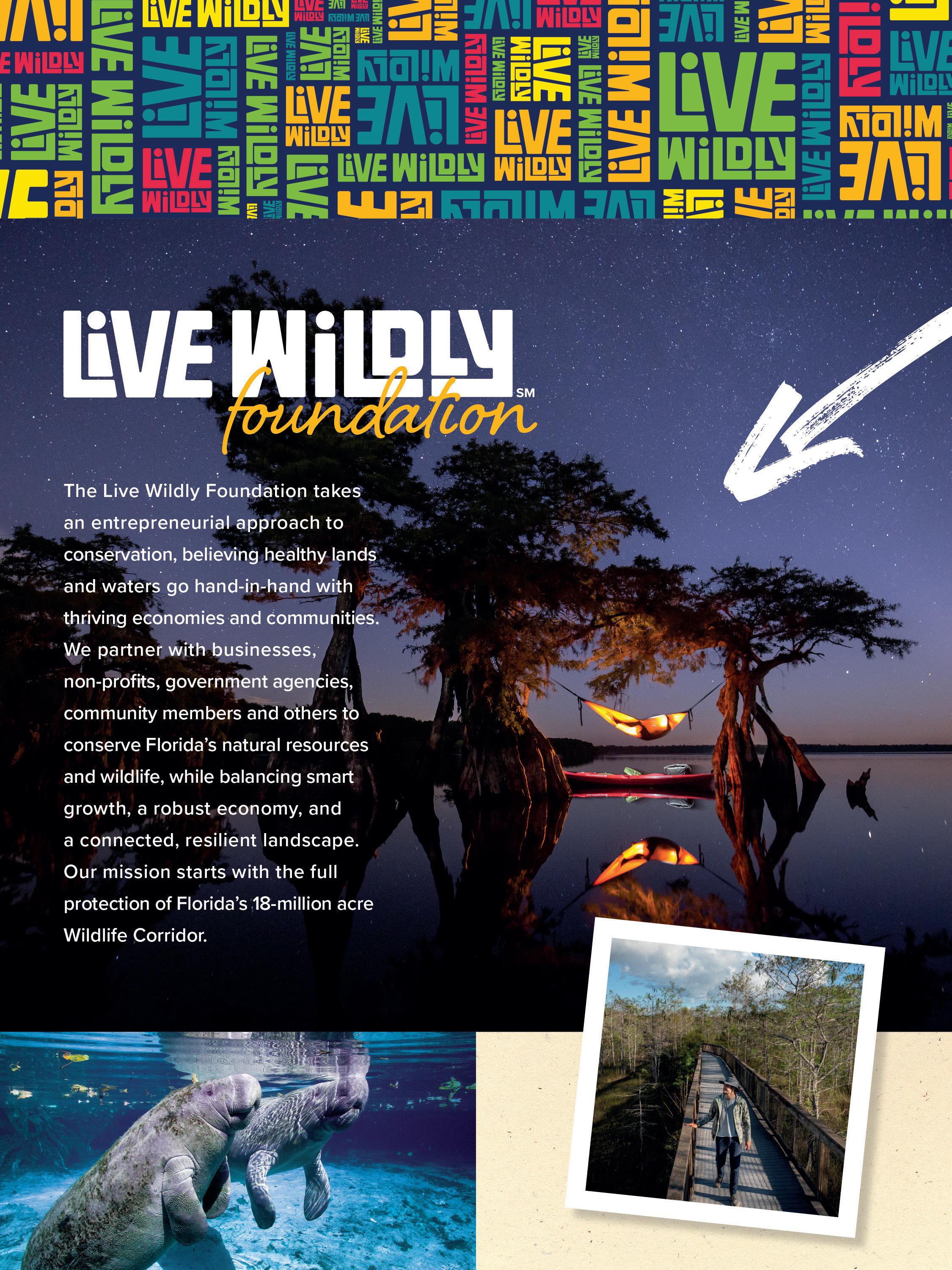

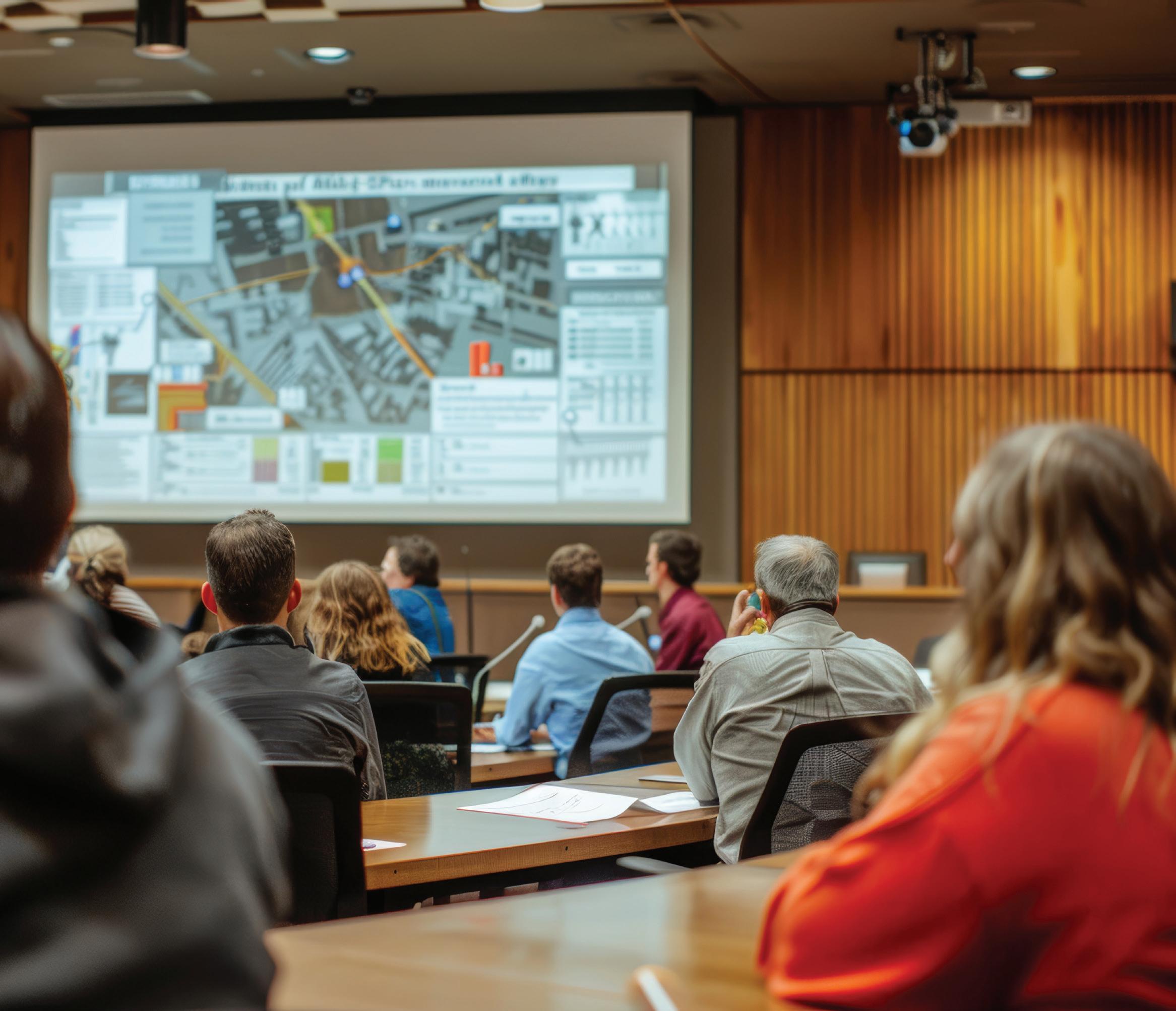
Planners need to take certain steps before votes are cast so land use decisions made by elected officials are legally defensible if a lawsuit is later filed. Assume elected officials in a quasi-judicial proceeding approve a land use application (e.g., small area rezoning, special exception/ conditional use, site plan, waiver, or variance) and neighbors file a Writ of Certiorari lawsuit challenging the approvals; however, the analysis is the same if local government denies the approvals and the applicant files the lawsuit. Whether the local government wins may be based on actions of Planners both before and at the public hearing.
• Staff reports and hearing records should be developed with future court review in mind.
• Building a defensible record before litigation
By Peter J. Henn, AICP, Esq.
Local government should win if, among other things, their decision was supported by competent, substantial evidence. Substantial evidence is such evidence that establishes a substantial basis of fact from which a fact at issue can be reasonably inferred; to be competent, the evidence relied on should be sufficiently relevant and material so that a reasonable mind would accept it as adequate to support the conclusion reached.
Planner’s Staff Reports, Project Narratives/Justification Statements and Consultant’s Reports (the “Reports”) need to meet this standard to be competent, substantial evidence. Planners must write Reports as if they will become part of the litigation, because they will.
Quasi-judicial proceedings have established criteria in the code for applicants to meet. Reports must determine if the application meets these criteria. Do not add to or subtract from these criteria. Well-written reports are competent, substantial evidence and should be offered into the record at the public hearing. Having a Planner read a portion of these reports — especially the relevant facts and professional opinions — as sworn testimony at the public hearing is also competent, substantial evidence.
The legal test is not whether the reviewing court agrees or disagrees with the evaluation of the evidence
continued on page 6
continued from page 5
by the elected officials, but whether there is any competent, substantial evidence which to base the conclusion. The fact that the other side may have submitted its own competent, substantial evidence that supports a contrary result is irrelevant. If the record contains some competent, substantial evidence to support local government’s decision, the decision is presumed lawful and the court’s job is done, and local government should win.
The written transcript from the public hearing is part of the record that the court will review. Planners need to make sure the transcript includes well-rehearsed testimony that reports clearly show the application meets all relevant criteria in the Code based on competent, substantial evidence; and hopefully elected officials relied on reports and testimony in determining the relevant criteria was met.
What a Planner does may determine whether local government will be successful in defending a lawsuit challenging land use approvals. Planners and attorneys need to work together before the public hearing to develop a strategy to establish a clear record at the public hearing that is legally defensible if a lawsuit is later filed.
Note: All legal citations were omitted. This Article is not legal advice. Speak with your local government or private attorney for legal advice. Thank you.
Peter J. Henn, AICP, Esq., is Senior Counsel at Jones Foster Law Firm, in West Palm Beach, and is the Chair of the Florida Atlantic University Department of Urban & Regional Planning. He can be reached at phenn@jonesfoster.com or phenn@fau.edu.
2026 APA Florida Election Slate
Voting for the 2027-28 APA Florida Executive Committee
Statewide Officers is underway. Please take time to review all candidate information before casting your ballot.
Voting began on July 13 Survey & Ballot Systems sent ballots to members (who were current on dues as of July 1) to the email listed at planning.org/myapa.
Voting ends on Aug. 14 If you did not receive your election email, please contact support@directvote.net
Best of luck to all the candidates!
NOMINATING COMMITTEE
• Whit Blanton, FAICP, Immediate Past President (Chair)
• Edward Ng, AICP, President-Elect
• Justin Hannah, AICP, Planning for All Committee Representative
• Kwentin Eastberg, AICP, Capital Area Section Chair
• Kate Burgess, AICP, Promised Lands Section Chair
President-Elect
Gerry Dedenbach, AICP, LEED AP / Alessandria 'Ali' Palmer
Secretary
Alan Amidon / Catherine McCloy, AICP
Treasurer
Brad Cornelius, AICP, CPM, CFM / Stefanie McQueen, AICP
VP or Communications
Ashley Karpf, AICP, LEED GA / Beneeta Mary Jose, LEED GA
VP for Conference Services
Fabian De La Espriella, AICP / Casey Dendor, AICP
VP for Continuing Education
Doug Kelly, AICP / Hadley Peterson, AICP
VP for Membership & Outreach Services
Corinne Arriaga, AICP / Sofia Garantiva, AICP
VP for Professional Development
Roxann Read, AICP, CFM, FRA-RA, CPM / Dennis Smith, FAICP
VP for Section Affairs
Katrina Corcoran, AICP / Juan Mullerat

By Jordan H. Blumenthal, Esq. and Brian M. Seymour, Esq.
Private property rights are fundamental to our system of government, protected by the Takings Clause of the Fifth Amendment to the United States Constitution. This directly impacts the propriety of conditions of approval in land development requests, often referred to as “exactions.” So, when development is conditioned, understanding the rules of unconstitutional exactions is important. Though often a complex analysis, there are some basic principles that must always be considered.
The United States Supreme Court established the framework for considering exactions in the land use context. In Nollan v. California Coastal Commission, the California Coastal Commission granted the Nollans a permit to build a house on their privately owned beachfront property but conditioned it on a public easement across the property. The Supreme Court held the condition invalid because it did not substantially further the government’s interests that would justify a denial, noting that there
KEY TAKEAWAYS
• Constitutional limits on development conditions (exactions).
• Conditions of approval must satisfy constitutional standards of nexus and proportionality or they may create liability.
must be an “essential nexus” between impacts of the development and the proposed condition (e.g., the condition directly offsets an actual impact) that did not exist. Later, in Dolan v. City of Tigard, the Supreme Court furthered the analysis, holding that the Constitution also requires a “rough proportionality” between the condition and the proposed development’s impact. The City approved Dolan’s application to expand her store and pave her parking lot, but required dedications for a public greenway and pedestrian/bicycle path. The Supreme Court found that though a nexus existed, the conditions were not proportional to the impacts and overturned the exaction.
In Koontz v. St. Johns River Management District, the Supreme Court considered this analysis even when a requested approval was denied. When Koontz applied for a permit, the Water Management District denied it because Koontz would not acquiesce to a conservation easement and off-site mitigation work on District-owned land. The Supreme Court held that the Nollan and Dolan requirements applied even though the permit was denied (in addition to confirming that the framework applied to both property and monetary exactions).
Most recently, in Megladon, Inc. v. Village of Pinecrest, in the Southern District of Florida, money damages were available based on attempts to impose improper conditions. There, the Village sought to require Megladon to dedicate 7.5 feet of frontage pursuant to a uniform policy for properties on substandard-width
continued on page 30

By Jane Graham, Esq
Congratulations, after months of working on a project, you are heading to City Hall for a quasi-judicial hearing to testify as an expert, and hopefully not after midnight. Here are tips to protect the record, your client, and your reputation.
Testimony must meet the standard of “competent, substantial evidence.” Courts define “substantial evidence” as evidence that establishes a substantial basis of fact from which the ultimate fact at issue can be reasonably inferred. De Groot v. Sheffield, 95 So. 2d 912 (Fla. 1957). By using “competent” to modify “substantial,” the Florida Supreme Court means that the evidence should be “sufficiently relevant and material that a reasonable mind would accept as adequate to support the conclusion reached.”
of the circuit court is whether there was competent substantial evidence in the record that supports the local government’s decision. If eight witnesses say no and you, the expert, explain why it is yes, that may be factual support for the court to uphold a decision. Here are some best practices for “competent substantial evidence:”
A local government’s professional planning staff recommendation is competent substantial evidence. If a quasi-judicial decision is appealed to the circuit court, the question of whether there was evidence presented that rebuts your testimony is irrelevant. The sole determination 1 2 3
• Practical hearing testimony tips.
• How to present competent substantial evidence effectively and avoid common mistakes during hearings.

Establish your credibility by entering your resume into the record, and provide a short description of your relevant experience. Do not spend twenty minutes talking about yourself after midnight, as once witnessed. List the documents you reviewed on which you based your testimony, and any site visits.
Make sure to provide evidence to support each of the relevant criteria of the approval being sought. Courts have overturned approvals where support for specific criteria is missing.
Base testimony on documentary evidence like maps, reports, and photography, which should be formally entered into the record.
continued on page 11
Conclusory evidence, conjecture, and generalized statements are not competent substantial evidence. It is not enough to testify the sky is purple, you need to show a picture.
Don’t exaggerate. Evidence that is “confirmed untruthful” or nonexistent is not competent substantial evidence. You could be cross-examined and impeached.
Double check for flaws in the evidence. Courts have found a professional engineering study was not competent substantial evidence when it failed to account for 100% of the traffic trips for new students at a school.
Your lawyer’s arguments are legal arguments and are not competent substantial evidence.
to make the extraordinary a reality.
Providing solutions while enhancing mobility is at the heart of what we do. From connecting Florida communities to boosting local economies, we provide safe, efficient, and reliable systems to ensure a resilient transportation network.
Members of the public are often dismissed as not being able to provide competent substantial evidence, but this is not accurate. Case law explains that testimony from members of the public who present specific facts rather than generalizations can qualify as competent substantial evidence. While lay people are not qualified to testify as experts as to technical matters like traffic and noise, they can testify to subjective matters which do not require expertise, like an area’s natural beauty.
Be concise and respectful, and stay alert and caffeinated.
And, always listen to your attorney!
Jane Graham, Esq., is a Florida Bar Board Certified Attorney in City, County, and Local Government Law and founder of Sunshine City Law in Land O’Lakes. She can be reached at jane@sunshinecitylaw.com.

By Alia Schirmer and Jessica Icerman, Esq.
In a high stakes quasi-judicial hearing, a local government’s land use decision is only as strong as the record that supports it. While planners may brush off the term “competent substantial evidence” (“CSE”) as a technicality meant for attorneys, competent substantial evidence is the fundamental standard of proof which dictates whether a local government’s land use decision survives a judicial appeal. If a local government’s quasi-judicial decision is challenged in court, that reviewing court does not reweigh the evidence; rather, the court merely looks to whether there is any competent substantial evidence to support the decision.
Competent substantial evidence requires evidence that is relevant, material, and of such quality that a reasonable mind might accept it as adequate to support the findings. The evidence cannot be generic; it must be specific to the situation/application at hand and reflective of actual knowledge regarding the local criteria. Professional planning staff reports, recommendations, and expert planner testimony all constitute competent substantial evidence when grounded in professional experience and concrete factual analysis.
To maintain a legally defensible record, planners must understand what qualifies as competent substantial evidence.
WHAT CONSTITUTES COMPETENT SUBSTANTIAL EVIDENCE:
FACT-BASED: Rooted in specific, verifiable data points, such as “the project meets density limitations pursuant to code criteria.”
EXPERTLY GROUNDED: Derived from professional expertise and experience relevant to the subject matter.
• Explains what CSE is, what qualifies as CSE, and what does not.
REASONED AND SUPPORTED: Accompanied by a discernible, factually based chain of reasoning that connects the analysis to the local government’s code criteria.
GENERALIZED, CONCLUSORY OPINIONS: Vague assertions of a project’s merits without data or code criteria to support the claim, such as “the project is incompatible.”
SPECULATION: Speculative testimony regarding technical matters without the professional credentials to support it, such as, “the project will increase traffic” or “reduce property values.”
When testifying in a quasi-judicial hearing, a planner acts as an expert witness once they have placed their credentials on the
continued on page 13
continued from page 12
record; however, an expert who opines on a subject matter outside their wheelhouse does not provide competent substantial evidence.
For instance, a planner who lacks formal training in traffic engineering should not opine as to possible traffic issues, as those statements will be deemed as speculation and will not rise to the level of competent substantial evidence. When testifying or drafting a report, guesswork cannot be disguised as expert opinion. Each piece of a planner’s report and testimony must tie its conclusions to specific facts, criteria, and professional analysis to rise to the level of competent substantial evidence.
Ultimately, mastering competent substantial evidence is about providing specific, articulable facts rather than bare conclusions. A planner who understands the boundaries of competent substantial
evidence builds a legally defensible record when they submit a report or testify because they incorporate specific, fact-based evidence into every conclusion. When planners fully understand competent substantial evidence standards, they protect their communities and clients from costly litigation and ensure that land use decisions are not only defensible but driven by accurate data and law.
Alia Schirmer is a rising third year Juris Doctor Candidate at Stetson University College of Law and is a law clerk at Stearns Weaver Miller, P.A. She can be reached at aschirmer@stearnsweaver.com. Jessica Icerman, Esq., is a shareholder at Stearns Weaver Miller specializing in Land Use and Zoning, and is Board Certified by The Florida Bar in City, County, and Local Government Law. She can be reached at jicerman@stearnsweaver.com.
By Katie O. Berkey, AICP, Esq.
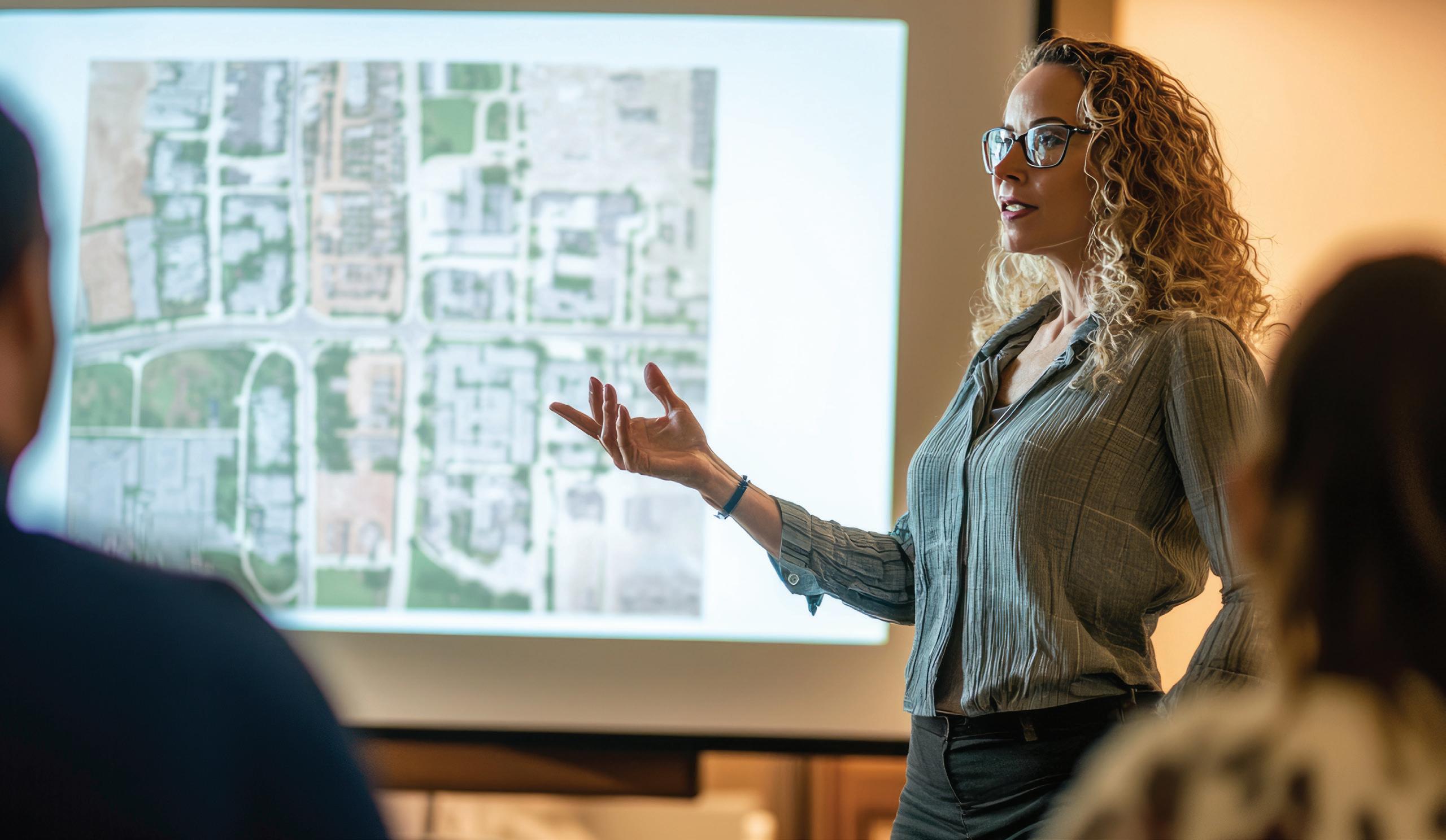
Quasi-judicial hearings are a critical part of Florida’s land use process, requiring planners to operate within a structured legal framework distinct from legislative decision-making. In matters such as rezonings, variances, and special exceptions, decisions must be based on competent, substantial evidence in the record. Public planners therefore serve not only as technical experts, but also as neutral stewards of a fair, defensible process.
All testimony must contribute to the official record, which may be reviewed in court. Present information clearly and concisely, directly addressing each approval criterion. Cite specific code provisions, policies, and data. Ensure visual materials—maps, site plans, and aerials—are legible, labeled, and formally entered into evidence. Avoid referencing materials that are not part of the record.
The planner’s primary role is to remain unbiased. While staff reports include recommendations, presentations should focus on facts, applicable regulations, and analysis—not advocacy. Anchor all statements to the comprehensive plan, land development code, and adopted criteria, avoiding language that reflects personal opinion or predisposition.
• Planner conduct and presentation during hearings.
• Best practices for objectivity, procedure, communication, and expert testimony.
Preparation is essential. Review the application, staff report, public input, and any expert analyses in advance. Anticipate questions related to compatibility, impacts (e.g., traffic, environment, infrastructure), and plan consistency. Coordination with legal counsel before the hearing can clarify procedural requirements and evidentiary standards.
Quasi-judicial hearings typically involve sworn testimony, cross-examination, and a structured order of presentation. Speak clearly when sworn and identify all materials for inclusion in the record. Disclose any ex parte communications as required. Rely on the hearing officer or chair for procedural direction.
continued from page 14
Explain technical planning concepts in plain language while maintaining accuracy. Limit jargon and define unfamiliar terms. Maintain composure in contentious settings and respond respectfully to all participants. If you do not know an answer, acknowledge it and offer to provide follow-up information for the record.
assertions. Instead, guide decision-makers toward findings grounded in adopted standards.
By being prepared and remaining objective, thorough, and procedurally sound, public planners can effectively support impartial and legally defensible decision-making while protecting the integrity of the quasi-judicial process.
Katie O. Berkey, Esq., AICP, is a Shareholder, Certified Land Planner, Board Certified Attorney in City, County, and Local Government Law at Becker & Poliakoff. She can be reached at kberkey@beckerlawyers.com.
When serving as an expert witness, base testimony on professional training and evidence. Clearly separate factual information (e.g., zoning classifications, traffic data) from professional opinions (e.g., compatibility or impact), and explain the basis for those opinions.
Your presentation should help create a record demonstrating that the decision rests on competent, substantial evidence. Avoid relying on generalized public sentiment or unsupported
By Katie O. Berkey, Esq., AICP & Alisha Kurian, J.D. Candidate
The regulation of wireless service facilities (WSFs) in the United States reflects a multi-layered legal framework in which federal law sets overarching limits while state and local governments retain controlled authority over siting and permitting. In Florida, this framework is further shaped by statutory preemption aimed at accelerating deployment, particularly for small-cell infrastructure.
At the federal level, the Telecommunications Act of 1996 governs WSF siting. Section 704 (47 U.S.C. § 332(c) (7)) preserves over local authority over the placement, construction, and modification of WSFs, but imposes critical limitations on how that authority may be exercised. Local governments may not unreasonably discriminate among providers of equivalent services, prohibit or effectively prohibit personal wireless services, or base decisions on radiofrequency emission concerns if the WSF complies with the Federal Communications Commission (FCC) regulations.
Procedurally, local decisions must be supported by “substantial evidence” in a written record and are subject to expedited judicial review. The FCC has also established “shot clock” deadlines for acting on applications and streamlined approvals for facility modifications; however, these timeframes can be jointly waived by the applicant and local government. These measures ensure that local authority does not delay nationwide wireless deployment, while still preserving local zoning control.
Florida law builds on this framework while adding significant state-level preemption. Section 337.401, Florida Statutes, governs the placement of utilities, including WSFs, within public rights-of-way. This provision authorizes state and local entities to regulate the placement and maintenance of communications facilities, but only through reasonable rules tied to safety and infrastructure management.
continued on page 7
In recent years, Florida expanded preemption through the Advanced Wireless Infrastructure Deployment Act. This legislation facilitates small-cell deployment by allowing installations in rights-of-way with streamlined permitting, limiting the need for traditional zoning approvals, capping fees, and imposing approval timelines. While local governments retain authority over aesthetics, spacing, and safety, their discretion is substantially reduced.
Florida law also imposes strict procedural deadlines under Section 365.172(13)(d), Florida Statutes. Local governments must act on WSF applications within 90 business days after completeness, notify applicants of deficiencies within 20 business days otherwise the application is deemed to be sufficient, and identify remaining insufficiency items within the normal timeframe for review but in no event longer than 20 business days. Failure to meet these deadlines results in automatic approval, allowing deployment to proceed. As under federal law, these timeframes may be waived by mutual agreement.
In practice, regulating WSFs in Florida requires navigating both federal limitations and state preemption. Local governments must avoid discrimination and effective prohibition under federal law while complying with Florida’s additional constraints — particularly in public rights-of-way. Overall, the legal framework reflects a clear policy objective: enabling rapid, uniform wireless infrastructure deployment while preserving a limited local role in managing land use impacts.
Katie O. Berkey, Esq., AICP, is a Shareholder, Certified Land Planner, Board Certified Attorney in City, County, and Local Government Law at Becker & Poliakoff. She can be reached at kberkey@beckerlawyers.com. Alisha Kurian, J.D. Candidate, is a law student at the Brandeis School of Law – University of Louisville.

By Chloe Harbin
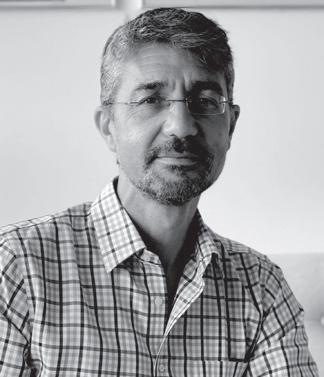
Throughout his career, Juan Mullerat has championed this simple, yet powerful concept: Every great community begins with an act of observation. It was this realization that inspired him to create From Wood Blocks to City Blocks – A Young Planner’s Guide to Building Better Places, a children’s book introducing urban planning through curiosity, observation, and everyday experiences. Serving as an engagement tool, this book stands as a translation for young participants to understand why and how their voices matter when shaping the future of their community.
By Patti Shea
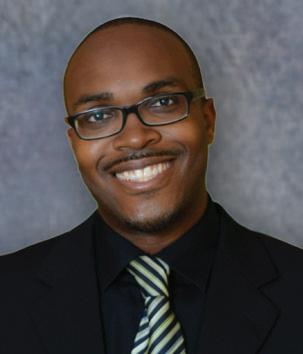
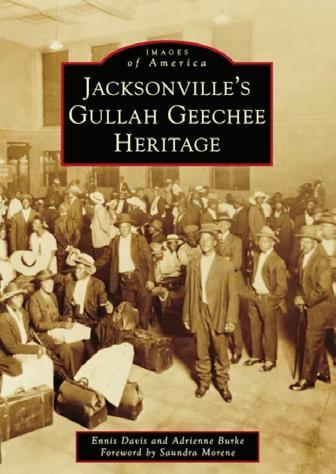
Ennis Davis, AICP, and Adrienne Burke, AICP, Esq., wrote Jacksonville’s Gullah Geechee Heritage to fill a gap in understanding about one of the city’s most significant cultural influences. They hope this book changes how planners think and approach planning projects in Jacksonville and similar cities with rich historical and cultural legacies.
Starting with just one young boy, named Sam, the book follows him as he observes his city, notices opportunities for improvement, and discovers how positive changes begin by paying attention to the people around him. Rather than presenting planning as a profession defined by technical expertise alone, this story encourages young audiences to view themselves as active participants in the places they call home.
For example, one scene follows Sam as he notices another child, a wheelchair user who is impeded from sidewalk use due to barriers that prevent him from passing. Seeing someone
continued on page 19
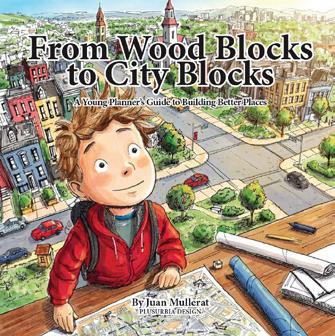
The digital edition of the book is offered freely. Planning knowledge should be accessible to the people who experience cities every day. It is shared under a Creative Commons license, allowing teachers, planners, educators, and community groups to use, print, share, and adapt it with attribution for noncommercial purposes. A low-cost print edition is also available for libraries, classrooms, workshops, and project teams that prefer a physical copy for public settings or community use.
Download or purchase here
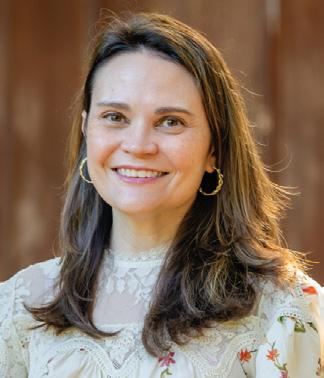
As a Gullah Geechee descendent, Ennis says too often consultants, planners, and developers enter communities without understanding the history and culture that shaped them. This book serves as both a historical record and a practical resource, helping people better understand Jacksonville’s unique identity as a Gullah Geechee city.
Jacksonville, being the largest city within the federally designated Gullah Geechee Cultural Heritage Corridor, is historically deeply intertwined with the experiences of the Gullah Geechee descendants.
Davis notes that while other Southern cultural traditions, such as Cajun, Creole, or Bahamian heritage, are widely recognized, Jacksonville’s Gullah Geechee roots are often overlooked. The concern is simple: if communities do not share and preserve their stories, those stories can be lost. “If we
continued on page 18
Do yourself a favor and order this fascinating insight of one of Florida’s key cities.
Jacksonville’s Gullah Geechee Heritage
continued from page 17
Woodblocks Review Continued Gullah Geechee Heritage Review Continued
excluded within their own community is what helps him come to the realization that something may be wrong when a place is not designed for everyone. From there, the story expands into a broader lesson about the role each individual resident plays in creating strong communities, simply stemming from observing the dynamics and goals of the public.
Throughout Sam’s story, Juan reminds his readers that the future of planning belongs to everyone, and that sometimes, it begins with a child simply learning to notice the world around them. This philosophy is one that Juan has carried, not only in this book, but throughout his entire planning career – regardless of age, background, etc., he hopes people walk away understanding that creating better spaces does not require huge changes over night, but rather small, intentional acts that inspire others to do the same.
don’t share our history, we lose our history,” he says.
The book uses more than a century of photographs and historical imagery to illustrate how Gullah Geechee people helped shape the city’s neighborhoods, economy, architecture, foodways, and cultural traditions. Because Gullah Geechee residents were the dominant population in many parts of Jacksonville during its first century of growth, Davis says that Gullah Geechee history is, in many ways, Jacksonville’s history.
The project is also tied to a larger vision of community-driven revitalization, or what Davis calls Withintrification. Davis believes redevelopment should be guided within communities by descendants and residents rather than imposed from the outside. By recognizing cultural heritage and historic preservation as an economic asset, communities can support small businesses, tourism, affordable housing, and neighborhood investment while preserving their identity. Efforts in Jacksonville’s historic Eastside and upcoming investment to the Downtown Sports District demonstrate how heritage-based planning can attract investment while protecting cultural resources. Ultimately, the book is about listening to communities and allowing them to define their future. Davis hopes the model can be applied not only in Jacksonville but in any community seeking to preserve its history, strengthen its identity, and create unique places that reflect the people who call them home.



CLICK HERE
to explore all conference registration prices and options. Regular Pricing ends on Aug. 14.
All registration ends on Aug. 31.


Join us at FPC26 | Oct. 13 - 16 | Miami
Planning has always been about imagining what comes next. Few cities embody that challenge more than Miami, a global laboratory where resilience, redevelopment, mobility, and culture converge every day. This October, planners from across Florida will gather in the Magic City for the 2026 Florida Planning Conference where the profession will explore new ideas, celebrate creative thinking, and shape the future of our communities.
This year’s conference theme, Miami Está de Moda — Planning the Magic, Remixing the Future, captures the spirit of a city constantly reinventing itself while honoring its unique identity. Just as Miami blends rhythms, neighborhoods, and cultures into something unmistakably its own, the conference invites planners to rethink traditional approaches to some of Florida's biggest challenges—from housing affordability and mobility to climate resilience, redevelopment, and community engagement.
THE CONFERENCE PROGRAM EMBRACES FIVE DYNAMIC EDUCATIONAL TRACKS:
• Urban Innovation in Vogue (Innovation & Future Readiness)
• Powering Cities with Style (Access & Community Well-Being)
• Shaping Cities with Vision (Land Use, Growth & Redevelopment)
• The Green Spark (Adaptation & Resilience)
• The Florida Toolbox (Navigating Challenges)
A sixth Wild Card Track provides fresh perspectives that cross disciplines and encourage planners to think beyond conventional boundaries.
Whether you're a seasoned planning professional, an elected official, a student, or preparing for your AICP certification, this year's conference offers something for every stage of your career.


continued from page 19
Tuesday's preconference training workshops are designed to strengthen both technical expertise and professional growth. From land use law and transportation safety to leadership development and public engagement, participants can customize their learning experience before the conference officially begins. Here’s a sneak peek at some of the workshops that will be offered:
Ideal for elected officials, planning commissioners, advisory board members, municipal staff, and anyone involved in local decision-making, this full-day course provides a practical foundation in planning and zoning. Participants will explore comprehensive planning, development regulations, public hearings, ethics, growth management, transportation and quasi-judicial procedures while learning how thoughtful planning supports stronger communities.
Preparing for the AICP exam? This workshop offers everything candidates need to build confidence. Participants receive guidance on the application process, study strategies, exam content areas, practice questions, ethics, planning history, and Florida Chapter study resources from experienced professionals who have successfully navigated the certification process.
Leadership isn't defined by a job title. This interactive workshop helps planners recognize their own leadership potential through self-reflection, emotional intelligence, and practical decision-making strategies. Participants will leave with a personalized leadership experiment they can immediately apply in their professional roles.
We're excited to offer complimentary professional headshots at FPC26! Whether you're updating your LinkedIn profile, company bio, or professional portfolio, this is a great opportunity to get a fresh, high-quality photo.
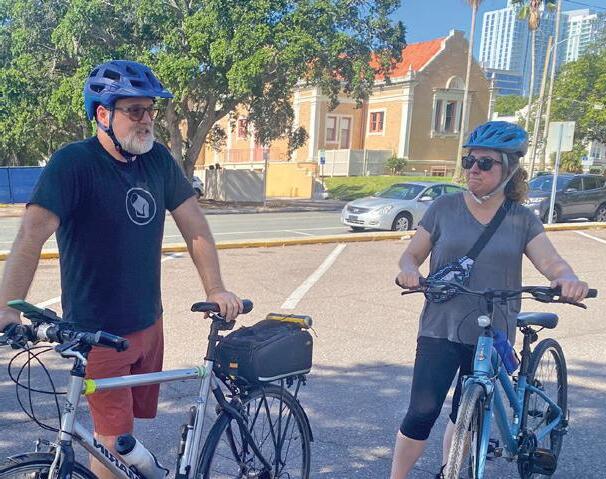
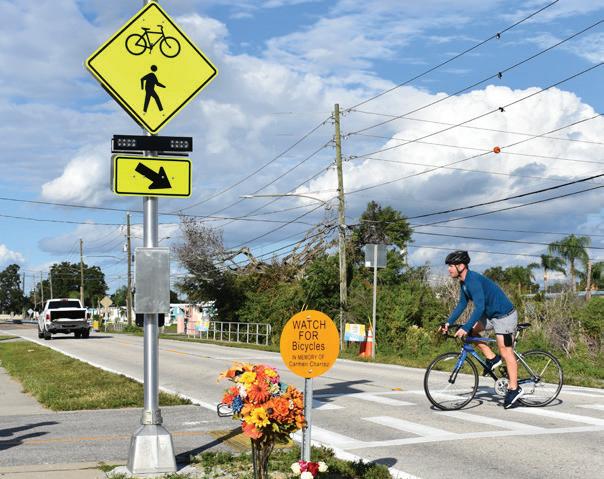
Safety remains one of transportation planning's most pressing priorities. This hands-on workshop introduces practitioners to Broward County's Safe Streets Design Guidance Manual and its toolkit of more than 40 proven safety countermeasures. Through real-world corridor exercises, participants will learn how to create safer, context-sensitive transportation solutions using the Safe System Approach.
Community engagement is at the heart of planning, and effective communication is essential. Using improvisation techniques, storytelling, and collaborative exercises, this workshop helps planners become more confident communicators, better facilitators, and more engaging public speakers.
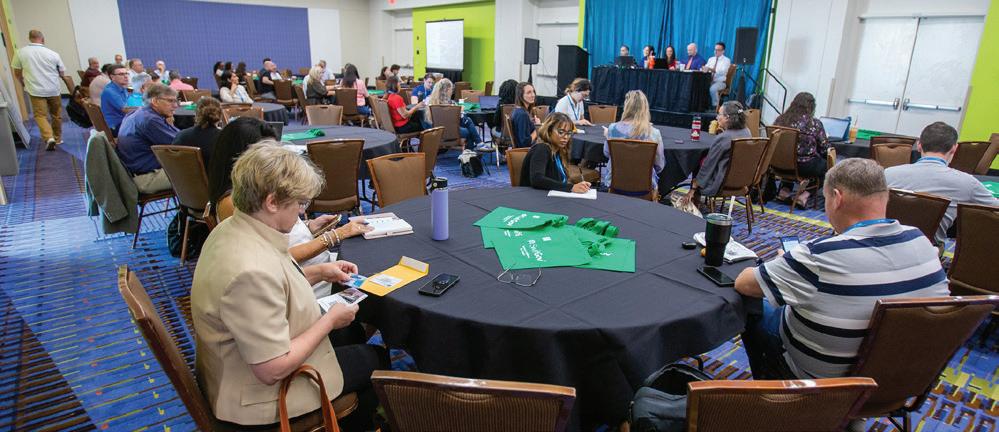
Due to popular demand, we've added two additional headshot sessions: • Tuesday afternoon (NEW!)
Thursday morning • Wednesday afternoon • Friday morning (NEW!)
Appointments are limited and available on a first-come, firstserved basis, so be sure to reserve your spot as soon as possible.
continued from page 20
Beyond its technical sessions, this year's conference features distinguished speakers whose work extends well beyond traditional planning.
WEDNESDAY OPENING PLENARY
MIAMI MAYOR EILEEN HIGGINS
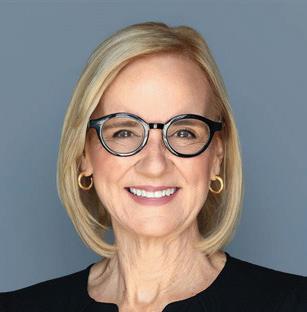
We are excited to announce that Miami Mayor Eileen Higgins will open the 2026 Florida Planning Conference during the Opening Plenary Session on Wednesday.
The mayor will particpate in a one-on-one conversation to discuss her vision and approach to sustainable growth, innovative development, and resilient communities that enhance the quality of life for residents and visitors throughout the region.
THURSDAY KEYNOTE LUNCHEON: LEONARD PITTS, JR.
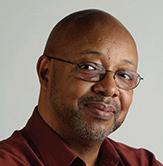
Although best known as a Pulitzer Prize-winning journalist, Pitts' work explores many of the same themes
planners confront daily: equity, civic life, leadership, and the stories that shape communities. Leonard Pitts, Jr. brings decades of experience exploring issues of race, leadership, community, and public life through the power of storytelling. Known for his nationally syndicated columns and thought-provoking commentary, Pitts has inspired audiences across the country by challenging them to think more deeply about civic responsibility, empathy, and the human experience. His keynote promises to encourage planners to consider not only how communities are built, but why they matter.
The 2026 Florida Planning Conference promises four days filled with innovative ideas, meaningful conversations, practical learning, and unforgettable experiences. Whether your work focuses on transportation, housing, resilience, economic development, parks, historic preservation, or community engagement, the conference offers practical ideas that can be applied immediately back home. More importantly, it provides the opportunity to learn directly from colleagues tackling similar challenges throughout Florida.
Miami has always been a city that embraces change while celebrating its unique identity. This October, planners from across Florida will do the same. Whether you're
FRIDAY KEYNOTE LUNCHEON: PHILLIP DUNLAP

Dunlap's work demonstrates how arts and culture are not amenities, but essential infrastructure for vibrant, economically resilient communities. As Director of Broward County's Cultural Division, Phillip Dunlap has spent his career demonstrating how arts and culture serve as catalysts for community development, economic vitality, and civic identity. Drawing on experiences in cultural diplomacy, arts administration, and education, Dunlap offers planners a compelling perspective on the role creativity plays in building stronger, more connected communities.
seeking new technical knowledge, fresh inspiration, lasting professional connections, or simply a renewed appreciation for the power of planning, Miami promises to deliver an unforgettable experience.
Join us October 13–16, 2026, in Miami, and help remix the future of planning.

continued from page 21
Planning is as much about relationships as regulations. The conference's evening events provide the spaces where new partnerships begin, mentorship flourishes, and conversations continue long after the day's sessions have ended.
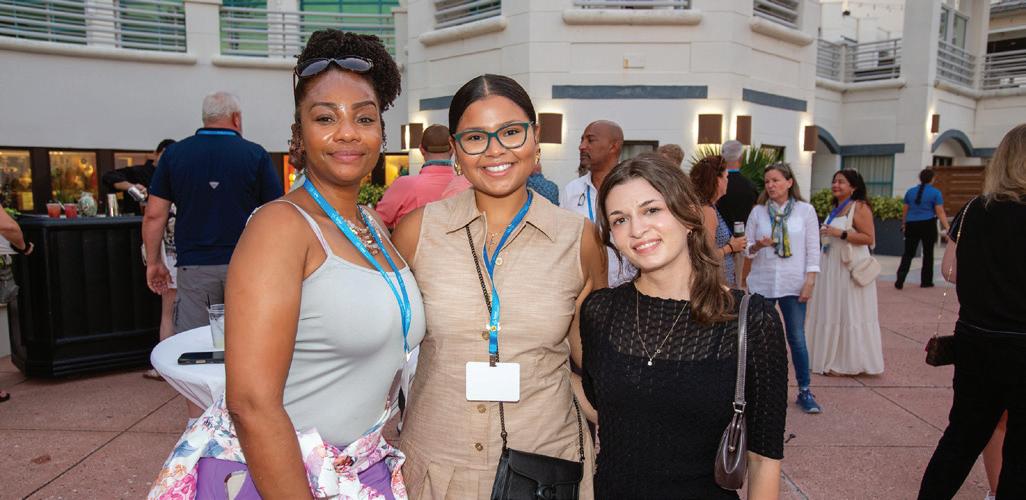
The conference begins with an energetic Opening Reception, welcoming attendees with the unmistakable culture, music, and vibrancy of Miami. It provides the perfect opportunity to reconnect with colleagues, meet new professionals, and begin building the relationships that define the planning profession.
On Wednesday, attendees can participate in a special Film Screening featuring Andy Boenau's thought provoking documentary, Healthy Havoc, creating space for reflection and conversation around mobility and planning. University and student receptions, which will happen simultaneously throughout the evening, further strengthen connections between emerging professionals, faculty, and experienced practitioners, fostering mentorship and collaboration across generations.
The conference concludes in unforgettable fashion with a 1930s-themed Closing Reception, celebrating Miami's culture while embracing the profession's forward-looking spirit. Set within a historic venue, the evening combines music, entertainment, networking, and a touch of vintage glamour to provide the perfect finale to an inspiring week.
These events are more than social gatherings, they are where collaborations begin, friendships deepen, and new ideas emerge. They remind us that planning has always been about people first.
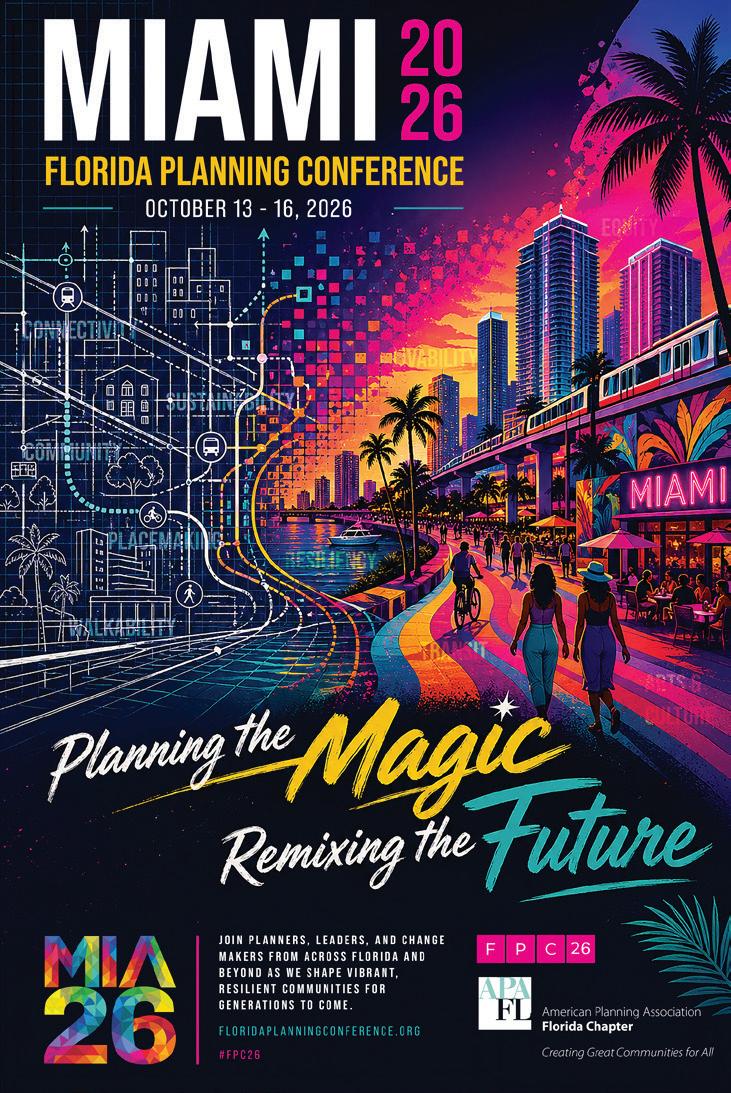
by Joshua Macbeth, AICP Nassau County BOCC
Congratulations to Joshua, winner of our inaugural Design the Official Conference Poster Contest! He receives a complimentary registration to FPC26. Joshua’s winning design will be professionally produced and sold at the conference. Even more exciting, all proceeds from sales will support conference scholarships for FPC27, helping future planning professionals attend and participate. His creativity and talent will not only be showcased at FPC26 but will also leave a lasting impact by supporting the next generation of planners. Well done, Joshua, on this outstanding achievement!
Joshuas inspiration:
Staying Afloat explores the role of planners in shaping resilient communities in the face of rising environmental, social, and economic challenges. Inspired by Miami’s dynamic waterfront and its ongoing relationship with sea level rise, the composition transforms structured planning grids into vibrant public spaces filled with movement, connection, and life.
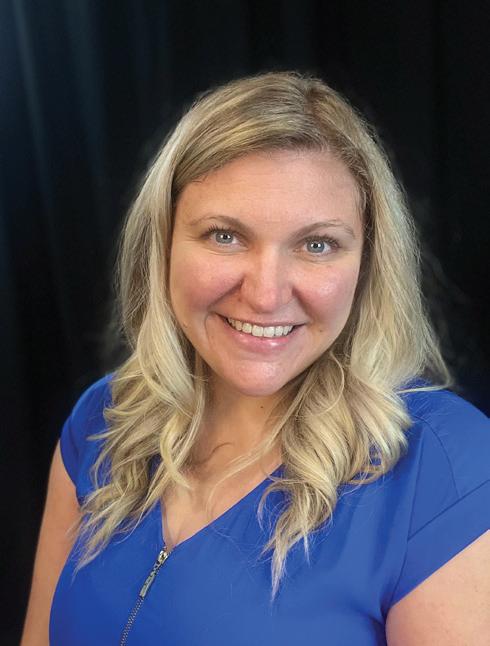
Planners find themselves often at the intersection of policy, public understanding, and community impact. This year is proving to be no exception.
Across Florida, conversations about property taxes are front and center. What can sometimes feel like a complex and technical policy issue has become a kitchen-table topic for residents, business owners, and elected officials alike. Regardless of where individuals stand on potential property tax changes, one thing is certain: informed voters make better decisions.
That is why we are launching a statewide voter education initiative focused on property tax policy, alongwith how sound and logical planning could be impacted should Amendment 3 pass. Our goal is to provide clear, objective information that helps Floridians understand the potential implications of proposed changes and how those changes may affect local governments, public services, infrastructure, and long-term community planning. Our goal is to help Floridians understand that if this amendment passes, the quality of life for all residents will be affected.
This is the first time APA Florida has taken such a strong stance on legislation or referendum.
Once they're available, I encourage all members to become familiar with the resources offered through our campaign and to share accurate information within your communities. The planning profession has always been rooted in education, collaboration, and thoughtful decision-making, and this effort reflects those core values.
While we are focused on important policy discussions today, we are also looking ahead to one of the most exciting events on our calendar. I am thrilled to announce that registration for FPC26 is underway and already 600+ of your colleagues have registered.
The Florida Planning Conference continues to be the premier gathering of planning professionals from across the state, bringing together practitioners, elected officials, students, consultants, and community leaders for learning, networking, and inspiration.
Each year, I leave the conference energized by the innovative ideas shared and the meaningful connections made, and I know many of you feel the same way.
As always, the success of FPC is driven by the passion, expertise, and engagement of our members, and, especially our conference volunteers, many whom have been working on this event for over a year. The Miami Conference is sure to be a year to remember!
Thank you for all that you do to strengthen Florida’s communities and advance the planning profession. Your work matters, and your dedication continues to make a difference in the places where Floridians live, work, and thrive.
I look forward to seeing many of you at FPC26 in a few short months!
Until then, thank you for staying engaged, staying informed, and continuing to lead with purpose.
- Stefanie Svisco


Your APA Florida Chapter has been hard at work advancing planning, empowering professionals, and strengthening communities across the state. Here’s a look at how we’ve been working for you:

The Property Tax Voter Education initiative has become the most ambitious advocacy campaign our chapter has ever undertaken. This effort aims to educate the public about planning-related issues, election processes, and the potential impacts of policy decisions on Florida's communities.
By providing factual, nonpartisan information and encouraging civic engagement, the initiative empowers individuals to make informed decisions while raising awareness of the critical role planners play in shaping the future of our cities, counties, and regions.
The campaign will launch in August.
Investing in future planners remains a central focus of our chapter. We continue to support all APA members (and non-members) through our comprehensive AICP exam preparation and training opportunities designed to help members successfully navigate the certification process.
Through webinars, resource sharing, mentorship, and peer support networks, candidates are gaining access to valuable tools that increase preparedness and confidence. Expanding this support system helps strengthen our profession while encouraging continued professional growth and excellence among our members.
Thanks to the generosity of the University of Florida, we are combining all our training webinars and resources into an online hub that will benefit future test takers. It will be ready in time for the 2027 AICP Exam window.
The 2026 APA Florida Statewide Officers election represents an important opportunity for members to help shape the future direction of the chapter. Strong leadership is essential to advancing our mission, supporting member needs, and ensuring continued organizational growth and this year’s slate of candidates are up to the task.
We encourage all members to vote by Aug. 14. (See pp. 6 for information)
Legislative webinars have become an essential resource for members seeking timely information on policy developments and state legislative activity. We hosted two sessions, on May 5 and June 10, respectively, that broke down key bills that impact how we plan communities and reviewed potential implications for planners and local governments, and offer opportunities for questions and discussion. Part 3 will be held on Sept. 9. Register here
A key chapter priority continues to strengthen partnerships with statewide organizations that share our commitment to building better communities and advancing sound public policy. Through active collaboration with organizations such as the American Institute of Architects (AIA Florida), the Florida League of Cities (FLC), the Florida Housing Coalition (FHC), and other allied stakeholders, we are working together to address issues of critical importance to the planning profession.
These collaborative efforts allow us to present a unified voice on matters including growth management, housing affordability, resilience, transportation, infrastructure investment, and community development. By fostering strong relationships across professions and industries, we are better positioned to advocate for policies that support effective planning and create lasting benefits for Florida’s communities.
Chapter Chats continue to provide an informal and accessible platform for members to connect, share ideas, and discuss planning issues. APA Florida President Allara Mills-Gutcher, AICP, and Executive Director Stefanie Svisco hosted two sessions on April 9 and June 16, where the topics were Professional Development + Continuing Education and APA Florida Emerging Planners Group, respectively. These conversations aim to promote chapter transparency and introduce members to our stellar volunteers who are committed to enhancing our overall member engagement and professional development strategy. The next Chapter Chat will be on Sept. 10 at 12: 30 pm ET. Register here
Our legislative volunteers continue to evolve through the development of focused working groups dedicated to addressing priority issues facing the profession. These groups provide a forum for members to identify emerging challenges, develop policy recommendations, and support advocacy efforts throughout the year. In addition to the ongoing work surrounding a possible rewrite of Chapter 163 and related implementation issues, our established working groups (Housing, Transportation, Sustainability) are getting ahead of a broader range of planning topics that will likely resurface in the 2027 session. These groups will help ensure that member expertise continues to inform our legislative priorities and advocacy strategies.
As we are closing in on FPC26 in October, future conference planning is well underway as we continue developing high-quality educational and networking opportunities for members. The annual conference remains one of the chapter’s premier events, bringing together planners, elected officials, allied professionals, and students from across the state.
This year’s Florida Planning Summit created additional opportunities for members to engage directly with policymakers and better understand the legislative process. The updated format helped strengthen advocacy efforts, increase participation, and reinforce the importance of planning perspectives in policy discussions. Building on this momentum, our team of volunteers is already working on the 2027 Planners on the Hill. We will once again organize legislator meet-and-greets to ensure our chapter and members remain actively engaged throughout the legislative cycle and continue building meaningful relationships with elected officials. Details will be shared in the Fall.
To save the chapter (and attendees!) money, we have scheduled future conferences to lock in lower hotel room and event space prices. Here is our future conference schedule:
FPC27 – West Palm Beach | Sept. 6 – 10 | Hilton $199 a night + Marriott $175 a night | Student rate $150 a night
FPC28 – Orlando | Sept. 5 – 8 | Renaissance Orlando at Seaworld $214 a night (incl. resort fee) | Student rate: $174 a night student rate (incl. resort fee)
FPC29 – Jacksonville | Hyatt Regency Downtown
Jacksonville $159 a night | $109 a night (discounted parking for all rooms)
FPC30 – Tampa | Sept. 3 – 6 | Marriott Tampa Water Street & JW Marriott Tampa Water Street $250 a night at both (incl. destination fee & $20 credit per room per night to redeem at all onsite restaurants at either hotel). | Student rate $224 a night (incl. destination fee & $20 credit per room per night to redeem at all onsite restaurants at either hotel)
Ray Atkinson, AICP has recently stepped into a new role as the first ever Growth Management and Transportation Planning Coordinator at the City of Key West.
Bringing a strong transportation planning background, he hopes to break down the silos between land use and transportation planning and continue the city’s Vision Zero efforts.
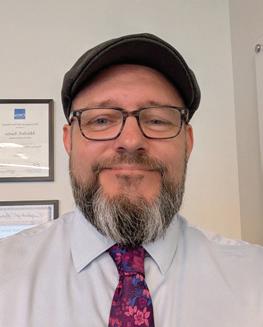
Mitchell Austin, AICP, CNU-A recently stepped into the role of Planning Manager in the Department of Development Services at the City of Hollywood. Bringing over twenty years of planning experience in Florida, Mitchell looks forward to supporting the community through his extensive experience in historic preservation, urban design, land use, transportation, and resiliency planning.
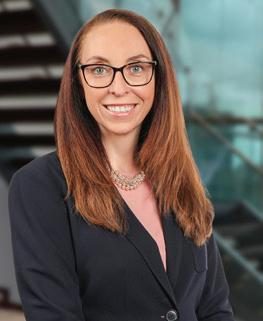
Katie Berkey, AICP, Esq., was recently honored in the Florida Trend Legal Elite Notable Real Estate/Land Use Attorneys special section. This exclusive list features 92 attorneys from across Florida who have demonstrated exceptional legal expertise and leadership in sustainable land use, property development, land use regulation, and real estate transactions. Katie earned this spot due to her strong abilities navigating complex regulatory frameworks and advancing smart growth and development positively impacting individuals, businesses, and communities throughout the state.
As a Florida Bar Certified Specialist in City, County, and Local Government Law, as well as a certified professional planner, she is one of only a few practicing professionals in the state. Her main focus of work centers around representing clients in zoning, land use, development, and other planning matters, representing clients before city and county commissions, councils, and board hearings throughout the state.
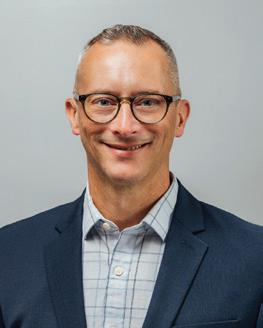
Due to his previous role a City Planner for the City of Palmetto, Jake brings gratitude for the opportunity to serve in this new role and aims to continue helping drive forward great things being done in this area of the beautiful Miami-Dade County.
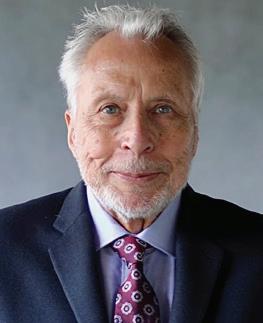
James Carras, article, Capital as a Human Right, included in the Harvard Carr-Ryan Center for Human Rights publication, Self-Evident Truths: The 250-Year Pursuit of Human Rights in the United States of America, released as part of the America 250 commemoration.
His article builds on a conviction shaping his nearly five decades of work in community development to finance: access to capital is foundation to whether people can exercise their right to housing, opportunity, and economic self-determination. James shares his gratitude to the Carr-Ryan Center for creating space for this conversation as our nation reflects 250 years of the pursuit of human rights.
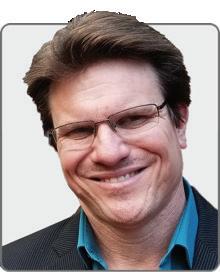
Noel Comeaux, AICP, PMP, started a new position with NAVFAC SE in NASJax for all SE United States Naval installations. This role stems from his previous experience and support of the U.S Navy for Integrated Product Support (now WSIPP), aligning shoreside programmatic and infrastructure support with seaside assets. He also has a strong background at the Pentagon, serving as the COR for the Guam Improvement Enterprise Program for the Maritime Administration, detailing with the U.S Committee for the Marine Transportation System working with the U.S Navy, and much more.
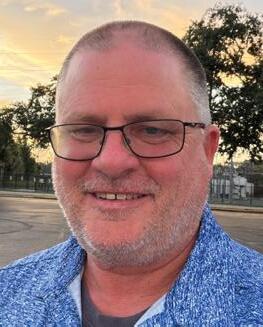
Brad Cornelius, AICP, CFM, CPM, was awarded the 2026 Wade Trim Mark Coleman Eagle Award, honoring him as an employee exemplifying the firm’s core values and making a positive impact on others.
Jake Bibler, AICP, CFM, has been appointed as the Assistant Director of the Palmetto Community Redevelopment Agency, where he will collaborate with city departments, public agencies, and business stakeholders to oversee a multitude of initiatives. Some of these include economic development initiatives, providing planning and development guidance for projects within the CRA, managing budgets and grants, overseeing the Main Street Program coordination, and enhancing community engagement through social media and outreach. continued on page 27
Notably, Brad is the first individual to receive this award twice, reflecting his ongoing dedication and influence within Wade Trim, Inc. Trusted by clients and colleagues alike, he is celebrated for his integrity, fairness, and people-first leadership as he guides teams through complex challenges. Brad notes that leading by example, not because it is required, but because it is ingrained in who he is. Congratulations, Brad!
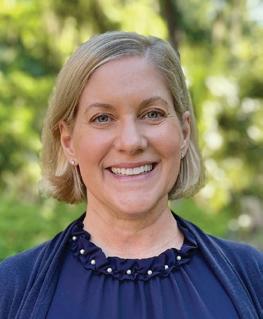
Laura Dedenbach, AICP, Ph.D., has been appointed as Chair of the Department of Urban and Regional Planning, Associate Director of the School of Landscape Architecture and Planning, and Instructional Associate Professor at the University of Florida. Specializing in land use planning, she brings a strong background in comprehensive planning, land use compatibility, urban resilience, neighborhood planning, and planning education.
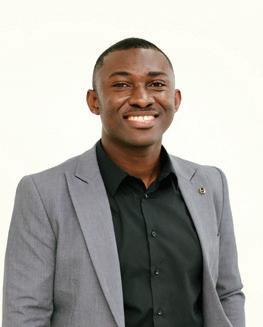
Simon Donkoh, AICP, is the newest Project Planner with JBPro, where he contributes to comprehensive planning, land use analysis, and infrastructure planning efforts across Florida. He brings experience spanning both international practices also with multiple regions across the United States, successfully working on initiatives in communities navigating growth, redevelopment, and evolving development patterns. Now, his focus is working with communities and strengthening infrastructure systems and development outcomes to ultimately align long-term growth with the community’s priorities. Drawing on both international and U.S experience, Simon brings an approach that connects technical planning analysis with practical, community-driven solutions that can be applied across different planning contexts.
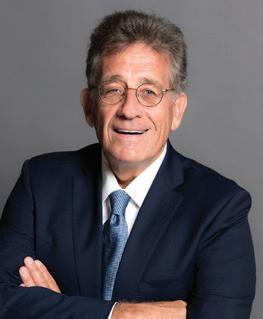
Peter Henn, AICP, JD, is the new Chair of the Florida Atlantic University School of Urban & Regional Planning. In addition to instructor duties in urban planning and land use law at FAU, Peter practices land use and local government law at Jones Foster, where he assists local governments in defending land use law approvals, rewriting land development regulations, and helping real estate developers obtain land use entitlements.
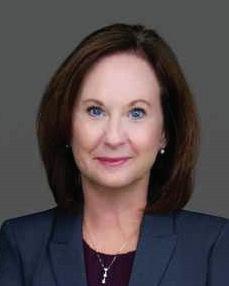
Bonnie Landry, AICP, is proud to announce her firm’s (BCLA) selection by the City of Hollywood to lead a comprehensive three-year initiative rewriting the city’s comprehensive zoning and land development regulations and code of ordinances. This multidisciplinary project will modernize the development of code through a collaborative approach that integrates planning, urban design, economics, legal expertise, and public engagement to create an implementation-focused regulatory framework.
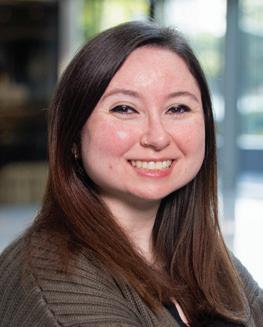
Melissa Porcaro, AICP, was promoted to Florida MPO Practice Lead at HDR, Inc. Within this new role, she works with staff for both statewide and national development, coordination, monitoring, and improvement of technical competencies for metropolitan planning and products in order to meet client needs.
Melissa brings experience in many different realms, including policy, performance-based systems planning, corridor planning and development, operations and safety, affordable housing and resiliency, funding, and associated aspects of the entire multimodal system. She looks forward to building upon the success of HDR’s MPO Practice and taking their MPO/TPO clients to new heights.
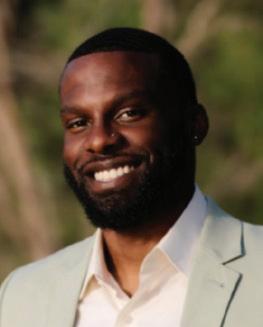
Mazi Rhodes, AICP, is a Freight & Rail Planner the Florida Department of Transportation, where he supports a statewide multimodal freight, passenger rail, and Strategic Intermodal System planning initiatives, overall contributing to project prioritization activities supporting Florida’s long-range economic and mobility goals.
Mazi brings experience supporting statewide transportation planning and programming initiatives through his work with CDM Smith on FDOT’s Systems Implementation Office. He aims to stay involved in the planning profession and community through active engagement in guest lectures, conferences, and industry discussions focused on transportation systems, infrastructure strategy, and multimodal mobility.

Kelsea Roberts has been promoted to Planning Supervisor for the City of Fort Walton Beach. Having previously served as a Planner for the City of Fort Walton Beach and the City of Freeport, she brings valuable planning expertise and local government experience to her new role.
Since her promotion, Kelsea has demonstrated strong leadership, professionalism, and a commitment to advancing the city's goals and supporting the community's continued growth and development.
Advertise in the Consultants Directory
The Consultant Directory is a fitting place to showcase your firm. $250 buys space for a year in the newsletter (four issues) plus inclusion in our webbased consultant directory. Display ads to promote your business, conference, projects and more are available. Contact the Chapter office at 850-2013272 for rates and details.




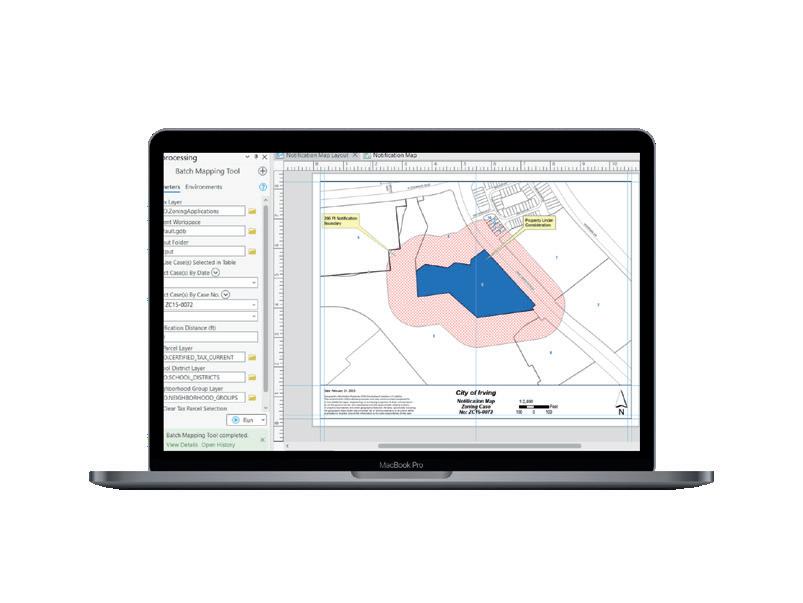









The Consultant Directory is a fitting place to showcase your firm. $250 buys space for a year in the newsletter (four issues) plus inclusion in our webbased consultant directory. Display ads to promote your business, conference, projects and more are available. Contact the Chapter office at 850-2013272 for rates and details.














continued from page 8
streets. Megladon refused because there was no traffic impact from the proposed development requiring that dedication. Because the proposed condition did not meet the Nollan/Dolan requirements, the Court found the attempted exaction to be improper. In March 2026, a jury awarded Megladon over $400,000 in damages as a result of the attempted improper exaction.
Although the question of exactions is often complicated, particularly when a code provision or policy seems to require a condition (as in Megladon ), it is always important to consider the constitutional underpinnings – whether the condition relates to the development impacts and is proportional to those impacts, and if not what could the cost end up being for seeking to impose it.
continued from page 3
This is an important topic for all of us as planners. We have a professional responsibility not only to understand our comprehensive plans and land development regulations but also to identify inconsistencies, ambiguities, and unintended consequences. When we find them, we should be empowered to work with our elected officials to amend the language. Clear, consistent, and well-reasoned policies provide the strongest foundation for defensible development decisions and help ensure that growth occurs in accordance with the community’s adopted comprehensive plan. Please join us at the FPC26 Conference in Miami this October. There will be opportunities to dig deeper into the topics presented in this issue. I look forward to seeing you there!
Allara Mills-Gutcher, AICP
APA Florida President
Jordan H. Blumenthal is a land use and property rights litigation attorney with the Gunster law firm based in West Palm Beach. He can be reached at jblumenthal@gunster.com. Brian M. Seymour is Co-Chair of the Real Property Practice of the Gunster law firm, also based in West Palm Beach, with almost 30 years practicing in the areas of land use, environmental, and property rights litigation. He can be reached at bseymour@gunster.com.

Published by the Florida Chapter, American Planning Association, the Florida Planning digital magazine has a current circulation of 3,200 members, subscribers and other readers. Three issues are published a year.
For APA members, Send to: Member Records Department
American Planning Association
205 N. Michigan Ave., Ste. 1200 Chicago, IL 60601
Fax: 312-786-6700 or log onto www.planning.org/myapa
Florida Planning welcomes articles, announcements, letters, pictures and advertising. Call 850-201-3272 regarding articles. The next issue will be published Fall 2026.
Article deadlines are generally four weeks prior to publication. Ad deadlines are generally two weeks prior to publication. Consult the editor for any exception to this schedule.
APA Florida is a non-profit organization funded through membership dues and fees. Contributions are also welcomed for general purposes and earmarked programs. Please note that contributions are not tax deductible.
For news and information on chapter concerns, visit the APA Florida website at florida planning.org
APA Florida
2017 Delta Boulevard, Suite 101 Tallahassee, FL 32303
Phone: 850-201-3272
Email: connect@floridaplanning.org









AUG. 7: PROMISES AND PERILS OF AI: DATA CENTERS, ENERGY, AND WATER
Webinar. Hosted by the Planning Webcast Series. While data centers have been distinct land uses since at least the 1990s, their scale and speed of deployment have exploded in recent years due to cloud computing and the emergence of artificial intelligence (AI). This webinar will explore the multifaceted implications of data centers for local communities, focusing on environmental sustainability – particularly energy and water usage. Information here. Free. 1.5 CM.
AUG. 18: WORKING TOGETHER:
Webinar. Hosted by the Orlando Metro Section. Join this insightful session exploring how artificial intelligence is merging with Geographic Information Systems (GIS). Learn how these powerful technologies are transforming data analysis, streamlining planning tools, and shaping the future of our communities. Information here. Free. 1.5 CM.
SEPT. 9: 2026 LEGISLATIVE SESSION RECAP SERIES – PART 3
Webinar. Hosted by APA Florida. Join us for the final webinar in our series recapping the bills from the recent Legislative Session. Parts One and Two covered a slew of bills as well as the budget and property tax special sessions. Part Three will include:
• Micromobility Devices: SB 382
• Vertiports: HB 1093
• Conservation Lands: HB 441
• TDR: SB 290
• Septic Tanks: HB 1417
• Public Meetings: SB 655
• Coastal Mitigation: SB 302
• CDDs, Synthetic Turf: SB 1180
If you registered for Part One or Part Two, you are already registered for the finale and will be sent a link before the webinar. Register here. Free. 1.5 CM or 1 Law CM.
Webinar. Hosted by APA Florida. This presentation will support planners seeking to improve their understanding of airport planning and development. This presentation will describe the contents of the Federal Aviation Administration's Advisory Circular 150/5190-4B, which provides guidance on Airport Land Use Compatibility Planning. The presentation will talk about strategies for planners to incorporate these considerations into their workflows. This will appeal to planners who have experience with land use conflicts as well as planners who are curious about how to coordinate with large commercial aviation or small general aviation facility owners. Register here. Free. 1 CM.
For more information on these and other APA Florida events, please visit florida.planning.org/calendar/