It all starts with good nutrition
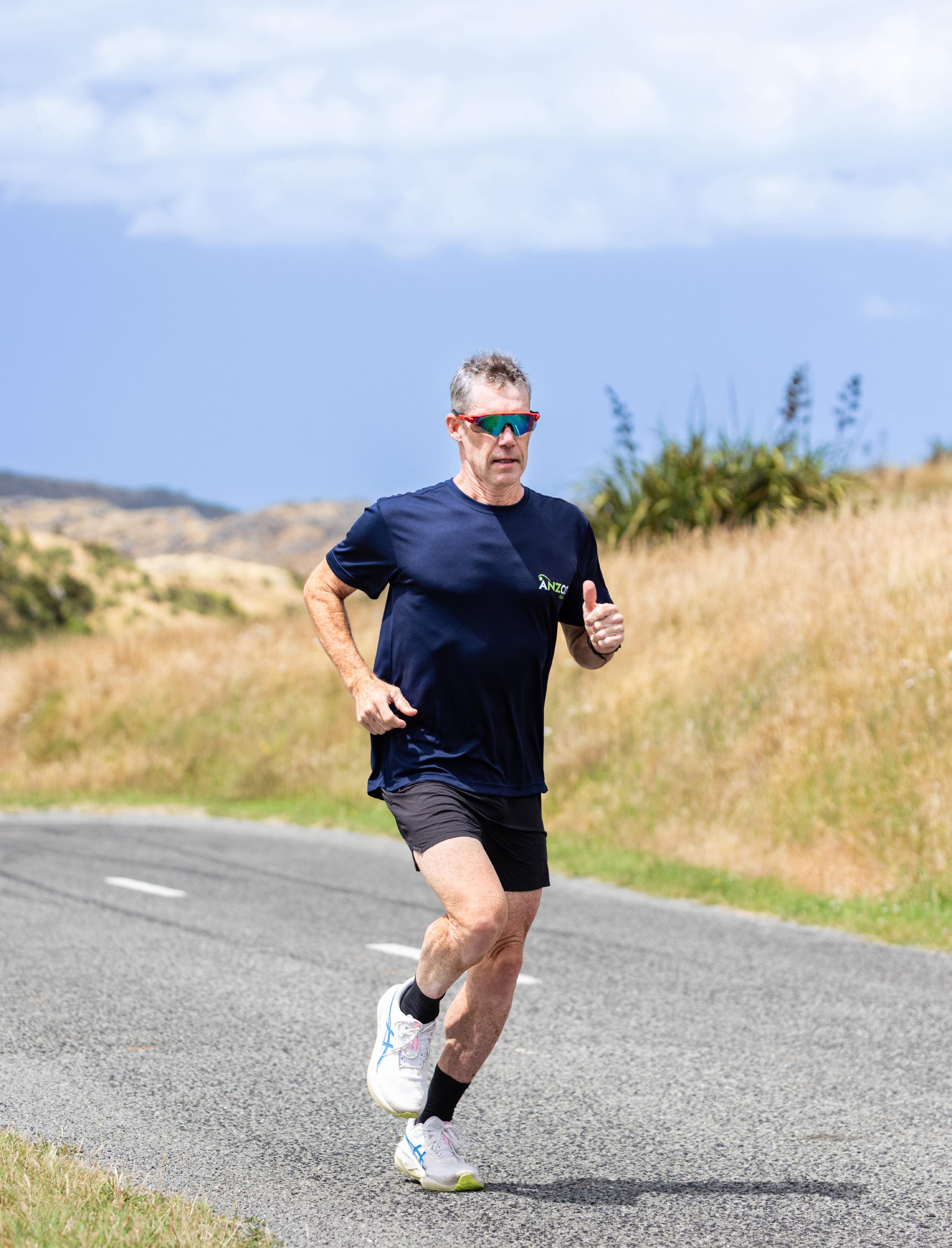
With a professional career spanning more than three decades, including 12 IRONMAN New Zealand victories, Cameron Brown remains one of triathlon’s most respected figures. As ANZCO Foods IRONMAN New Zealand takes its place in the IRONMAN Pro Series this month, Cameron reflects on what’s changed, what hasn’t, and why nutrition remains the foundation for his performance and wellbeing.
Q. When you look back at your association of more than 30 years with the sport of IRONMAN and triathlon, what moments stand out most?
IRONMAN New Zealand was always the race I dreamed about growing up, so to win it for the first time in 2001 was incredibly special. Winning it for the twelfth and final time in 2021, at the ripe old age of 43, is also right up there in terms of memories and achievements. By that stage of my racing career, it wasn’t just about fitness, it was about preparation and drawing on the wisdom that comes from years in the sport to put everything together on the day. That ability to perform at a high level for so long is something I’m most proud of.
Q. IRONMAN demands a lot from athletes physically and mentally. What kept you motivated year after year? genuinely loved the sport and still do even though I’m no longer competing. There were definitely tough times, but always enjoyed and trusted the process. Having great people around me was critical too. IRONMAN is a lonely sport, and it’s hard to train 30–40 hours week in, week out, by yourself. I was always really lucky to have training partners, which created a shared effort and a level of accountability.
Even now, I still train with many of the same people did when I was racing professionally. That social element and the strong community within IRONMAN helped keep the sport enjoyable for so long, and it’s why I’m still keen to give something back to that community now that I’m in a different phase of life.
Q. You’re still training regularly. How has your relationship with training changed? It’s much more about enjoyment now. I still train about 20 hours a week, but I don’t have to stick to a rigid plan. If it’s raining, I’ll stay inside — that never would have happened when I was doing the sport as a job! I go more by feel and spend more time doing the types of exercise I enjoy most, like long gravel bike rides and trail runs. It’s about having fun rather than chasing numbers or specific performance targets every session.
Q. You’ve often referred to nutrition as the fourth pillar of IRONMAN, alongside the swim, bike, and run. How has your understanding of good nutrition evolved over time?
Early on it was guesswork. Today, athletes fuel far more precisely, not just during training and racing, but also when it comes to recovery between sessions and races. The science is phenomenal compared to when I was in my prime, and you can see the impact in the times today’s leading athletes are producing. It wasn’t that long ago that breaking eight hours in an IRONMAN race was seen as the holy grail. These days, you need to be chasing 7 hours and 30 minutes just to be in the top three at most races. That’s a massive increase in performance. That said, the fundamentals of good nutrition haven’t changed. Eating a balanced diet, getting enough carbohydrates to support training, and prioritising protein for recovery are still the foundation. If you get that mix wrong, everything else falls over very quickly.
Q. You’ve stepped into coaching since your retirement from professional racing. What nutrition mistakes do you see amateur or younger athletes making most often?
Under-fuelling is the major issue, particularly when it comes to protein. see more stress fractures now than ever, and a lot of that comes down to athletes not eating enough to support their training volume and the stress they’re putting their bodies under. Every time we train, we’re breaking down muscle. High-quality protein ensures the body can recover and get stronger as a result. If you don’t replenish properly, your body simply won’t cope over a long period of time.
Beef and lamb are excellent sources of protein, as well as iron, zinc and B12. They’ve always been an important part of my diet. I know how good they make my body feel, and they’ve had a massive impact on my recovery and my ability to train consistently, both when I was racing and now, as I’m getting older and need to manage my body more carefully.
Being a brand ambassador for ANZCO Foods feels like a natural fit for me, because it reflects the way I’ve always fuelled my body throughout my time in the sport.
Q. What makes ANZCO Foods IRONMAN New Zealand such a special race, and how significant is its inclusion in the IRONMAN Pro Series?
ANZCO Foods IRONMAN New Zealand is special because it’s the only IRONMAN race in New Zealand. It’s also the longestrunning event outside of IRONMAN’s home in Hawaii, with more than 40 years of history behind it. Everyone knows how beautiful Taupō is, so having the chance to race in that environment makes the event special for athletes and supporters alike. We’ve had some great New Zealand champions over the years, from Erin Baker and Jo Lawn through to Hannah Berry, Braden Currie and Mike Phillips, but it’s the age-groupers who really make the day. Seeing more than 2,000 Kiwis, alongside many athletes from overseas, take on the challenge is inspiring. Everyone has their own story about why they’re there and what it’s taken to get to the start line, and that’s why the race creates memories that stay with athletes for the rest of their lives.
What really makes the race unique, though, is the community that stands behind it every year. Local volunteers, business owners, school kids and spectators all play a role in creating an incredible atmosphere, and as an athlete, it lifts you when you need it most. Whether you’re racing for the win or simply trying to reach the finish line before midnight, that support matters and it’s why still love being part of the Taupō IRONMAN community, even though I’m no longer competing.