Choosing the Right Blogging Platform for Writers and Creators
Introduction
Finding the right digital home for your written work can feel overwhelming given the sheer number of content management systems available today. Whether you are an aspiring author, a seasoned freelance journalist, or an industry expert, your choice of publishing infrastructure dictates how easily your audience can find and read your stories. Many writers struggle to balance technical freedom with ease of use, often getting bogged down by complicated server settings instead of focusing on their actual drafts
Selecting an intuitive environment allows you to bypass code adjustments and pour your creative energy straight into crafting compelling essays and articles. Furthermore, modern digital publishing solutions cater to diverse skill levels, ensuring that everyone can establish a professional web presence effortlessly. Let us explore the critical factors you need to consider when evaluating different writing ecosystems for your personal or professional brand.
Why Platform Selection Matters for Creative Growth
Your chosen publishing tool does much more than just display text on a screen; it directly influences your workflow, audience reach, and long-term creative motivation. A poorly designed or overly complicated interface can drain your enthusiasm, turning the joyful act of writing into an exhausting administrative chore. Conversely, a streamlined,
distraction-free drafting environment encourages regular output and helps you maintain a steady, sustainable publishing habit.
Additionally, your platform choice impacts how search engines index your work and how smoothly readers can share your insights across social media networks. Transitioning from an amateur setup to a professional architecture later on can also disrupt your traffic if not managed with care from the beginning. Taking the time to evaluate your options early ensures your digital foundation grows alongside your expanding audience and evolving creative ambitions.
Core Features Every Writer Should Look For
When evaluating potential publishing environments, you should prioritize tools that directly support typography, readability, and a clean, minimalist drafting canvas. A reliable content editor should feature intuitive formatting options, seamless image integration, and distraction-free writing modes that keep your focus locked on the sentence in front of you. Furthermore, built-in audience analytics help you understand which topics resonate most with your readers without requiring complex third-party tracking scripts.
Essential Feature Direct Benefit for Writers
Minimalist Editor
Built-in Analytics
Clean Typography
Export Capabilities
Eliminates visual clutter so you can focus entirely on your prose
Tracks reader engagement and popular article performance effortlessly
Enhances long-form reading comfort across desktop and mobile screens
Ensures you always retain full ownership and portability of your archives
Data ownership is another critical consideration, as you want to ensure your hard work remains fully portable should you ever decide to migrate to a different web host. Look for platforms that allow easy content exportation, custom domain mapping, and reliable data backups to safeguard your creative archive against unexpected technical glitches. Prioritizing these foundational elements guarantees a smooth, professional publishing experience from your very first post onward.
Comparing Hosted Networks Versus Self-Hosted Solutions
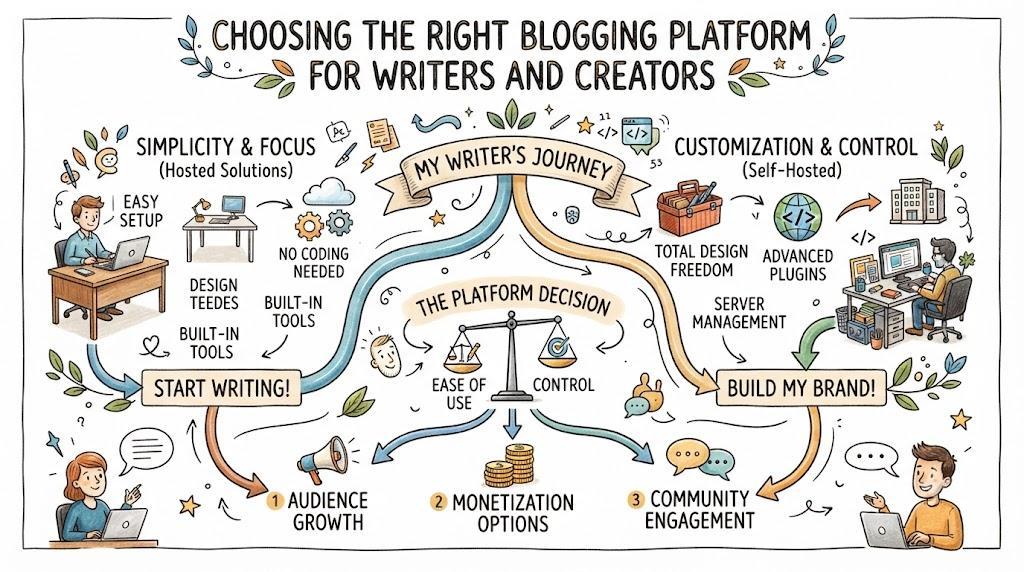
One of the most significant decisions you will face is choosing between a fully managed hosted network and a fully independent self-hosted website infrastructure. Hosted publishing networks handle all server maintenance, security patches, and software updates for you, allowing you to create an account and start writing immediately. These turnkey solutions are ideal for beginners who want zero technical friction and prefer letting platform engineers manage the underlying server architecture.
On the other hand, self-hosted solutions give you absolute control over every single line of code, design layout, and database configuration associated with your domain. While this maximum flexibility appeals to advanced developers and enterprise brands, it requires active maintenance, security vigilance, and technical troubleshooting skills. Weighing your technical comfort level against your desire for custom design control will quickly point you toward the ideal architectural path.
Balancing Simplicity With Advanced Customization
Every writer eventually faces the classic dilemma of choosing between extreme simplicity and deep customization potential for their digital publication. Simple platforms let you launch a blog in under five minutes with pre-set templates, requiring zero configuration but limiting how much you can alter your site's visual identity. If your primary goal is simply putting words on a page and building a quiet reading community, these streamlined options are usually more than sufficient.
However, if you plan to build a multifaceted media brand complete with digital storefronts, membership tiers, and custom branding assets, deep customization features become essential. Striking the right balance depends on your current technical bandwidth and your long-term vision for your writing career over the next several years. Starting simple and migrating to a more robust framework only when your audience demands it is often a wise, stress-free strategy for growing creators.
Evaluating Monetization and Audience Building Tools
If your long-term vision involves turning your writing hobby into a sustainable freelance business or a full-time career, built-in monetization tools are non-negotiable. Modern platforms frequently offer native subscription models, paid newsletters, tipping features, and direct reader membership tiers that bypass traditional advertising revenue models. Evaluating these financial features early ensures you do not outgrow your chosen ecosystem just as your readership begins to generate traction.
Monetization Model
Paid Subscriptions
Reader Tipping
Affiliate Integration
Sponsored Content
Ideal Use Case for Creators
Best for exclusive serialized fiction, deep-dive research, and niche newsletters
Great for casual supporters who want to reward exceptional standalone articles
Ideal for product reviews, tech tutorials, and curated resource lists
Suited for established industry experts with high-volume web traffic
Beyond direct financial tools, look for platforms that foster genuine community interaction through robust comment sections, email newsletter integrations, and social sharing prompts. Building a loyal readership relies heavily on how easily your audience can converse with you and each other beneath your published pieces. Selecting a creator-friendly environment sets the stage for organic growth, meaningful engagement, and lasting professional relationships across your niche.
Final Thoughts
Choosing the right blogging platform is a deeply personal decision that shapes how comfortably you share your voice, ideas, and stories with the wider world. By focusing on clean writing interfaces, reliable hosting infrastructure, and features that align with your long-term goals, you set yourself up for sustained creative success. Remember that no single platform is universally perfect, so the best choice is always the one that keeps you inspired, writing, and publishing consistently. Take time to evaluate your options, trust your creative instincts, and establish your digital home on a platform that truly honors your words.
#Blogging, #Writers, #Creators, #Platform, #Publishing