


Never before have three Spanish films competed for the Palme d’Or.
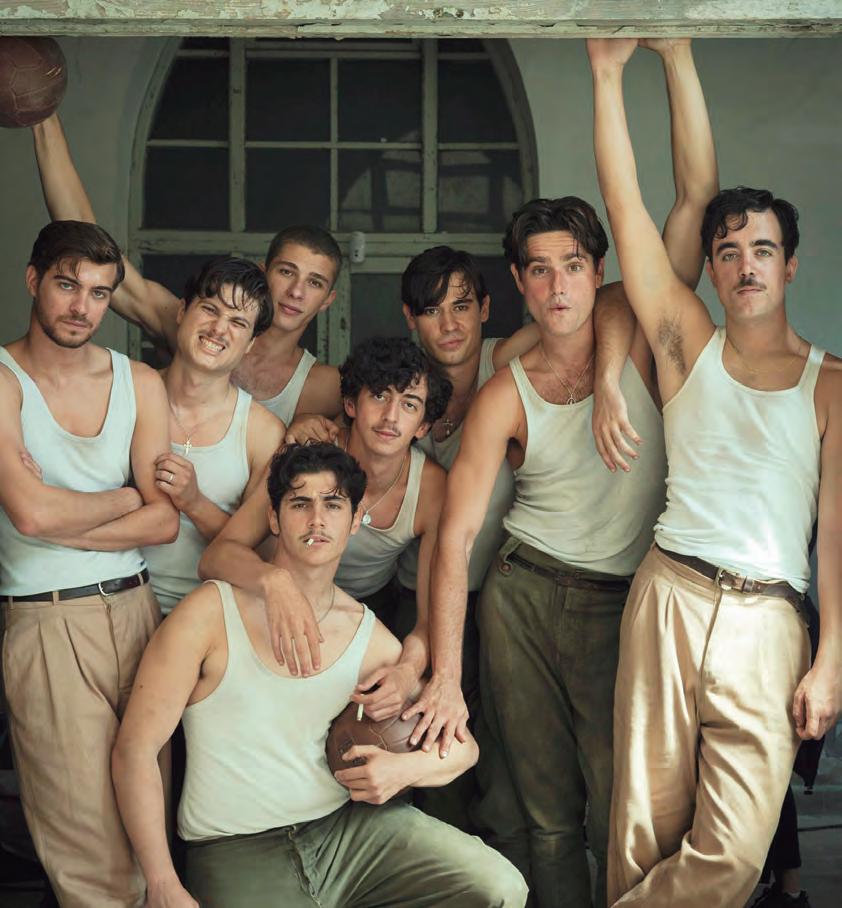
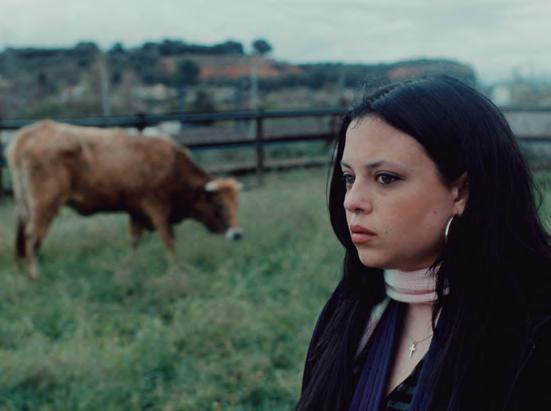
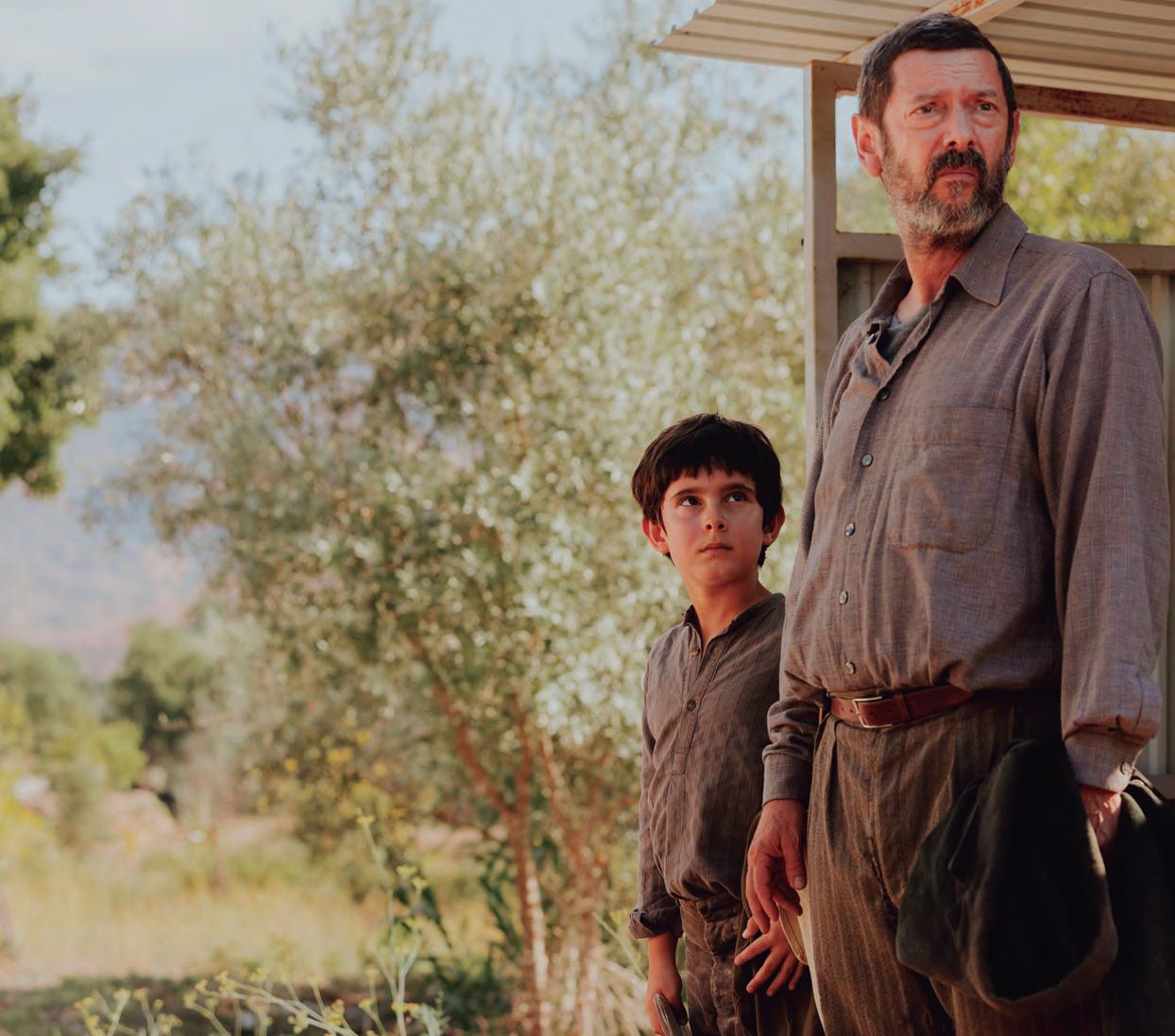
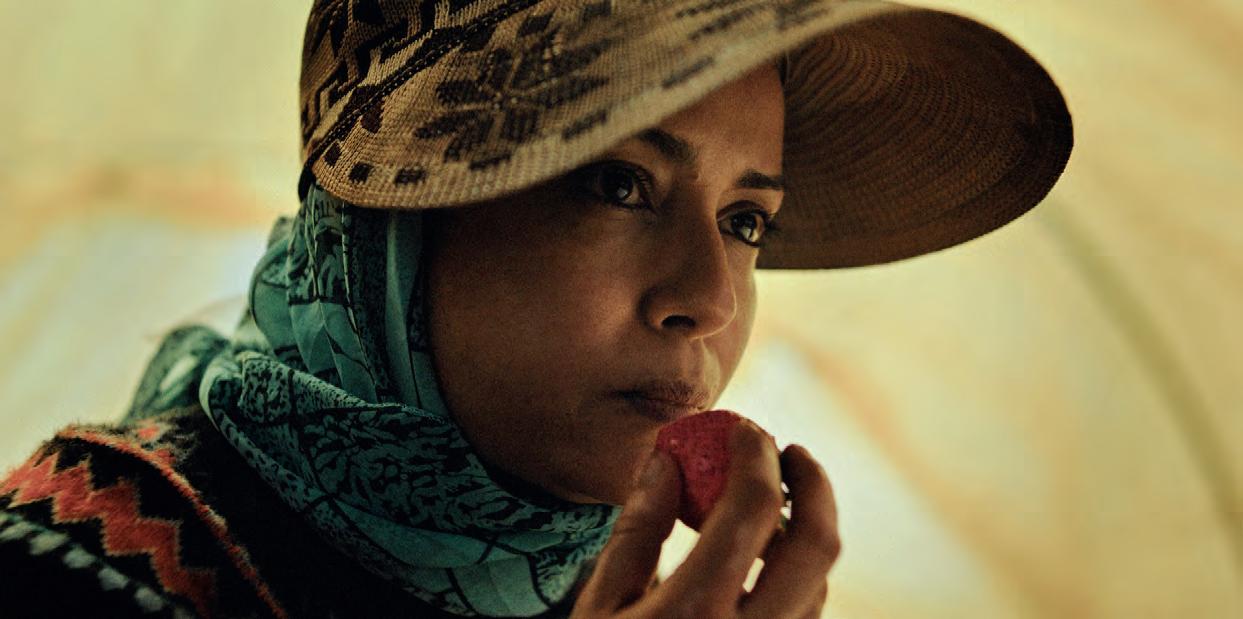
In 2026, Rodrigo Sorogoyen with The Beloved (our cover image), Pedro Almodóvar with Bitter Christmas, and Javier Ambrossi and Javier Calvo with La Bola Negra will all be in contention for the festival’s top prizes. Our international editions go beyond purely national interest, but they also serve as a showcase of what Spanish cinema can offer the world. And at this Cannes, it will have the opportunity to offer a great deal.
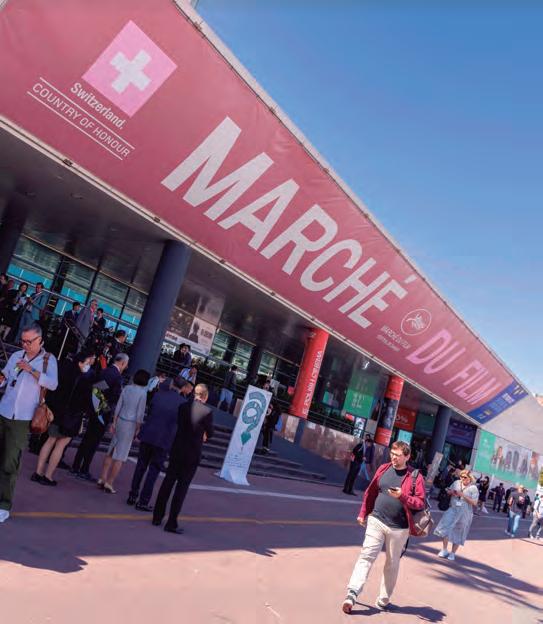
RUBIK May is dedicated in particular to the 79th edition of the Cannes Film Festival, as well as its Marché du Film. In the opening pages of the issue, we provide an extensive overview of the 22 feature films competing for the Palme d’Or. We also highlight 12 key filmmakers presenting work outside the festival’s main competition.
As mentioned, this is a special year for Spanish cinema. In addition to our coverage of the films selected for Cannes 2026 and of Spain’s presence and activity at the market, we feature two interviews with Spanish talent. First, with Aina Clotet, director, cowriter, co-producer and lead actress of Viva, a film selected for the Semaine. Second, with Adrià Monés, CEO of Fasten Films, a Spanish production company involved in three films selected across different sections.
We also spoke with Raúl Torquemada, director of the Madrid Film Office, about a key study they have commissioned quantifying the economic impact of the screen sector in the Spanish capital.
As always, we look at Latin American and Portuguese cinema, highlighting productions screening across the different sections. We also sought to take the pulse of Latin American cinema and its challenges, speaking with representatives from CinemaChile and Proimágenes Colombia.
During Cannes 2026, a new edition of Producers on the Move will take place. This initiative is one of the most important programmes of European Film Promotion. As the organisation bringing together European film institutes approaches its 30th anniversary, we interview its Deputy Managing Director, Jo Mühlberger.
The Marché also hosts an event that has gained momentum: Cannes Remakes. On the occasion of its new edition, we publish a feature on The People Upstairs, a Spanish film by Cesc Gay that has already been remade in Italy, France, Switzerland, South Korea, Russia and the Czech Republic, and has been recently adapted in the United States as The Invite. We speak about it with the Spanish producer (Imposible Films), the sales agent (Filmax), and the Korean remake’s production company (SIDUS).
But it is not all Cannes. This issue also includes other relevant content. For example,
an interview with Charles Tremblay, Head of TIFF: The Market, the new, ambitious and highly anticipated industry initiative from the Toronto Film Festival, whose first edition will take place in mid-September.
Another unmissable interview is with Peter Welter, CEO of Spanish service company Fresco Film, who has recently been appointed president of PROFILM, the association of Spanish international audiovisual production companies.
Looking at the U.S. industry, following reports that Megan Ellison’s Annapurna Pictures is hiring and seeking to regain the prominent position it held in the industry between 2012 and 2018, we look back at the company’s history as a benchmark for auteur cinema and the films it backed.
We close with two issues currently concerning the European film sector. On the one hand, the proposed design of AgoraEU, the new version of the Creative Europe MEDIA programme. On the other, and more broadly a global concern, the implications of the acquisition of Warner Bros. Discovery by Paramount Skydance. Two key developments for the future of the sector.
In the meantime, the present. Have a great Cannes 2026 and Marché!
Carlos Aguilar Sambricio and Miguel Varela.
ISSN: ISSN 3020-5107 GENERAL CONTACT: HOLA@RUBIK-AUDIOVISUAL.COM
EDITORIAL CONTACT: REDACCION@RUBIK-AUDIOVISUAL.COM
ADVERTISING CONTACT: MARKETING@RUBIK-AUDIOVISUAL.COM

THE 79TH EDITION OF THE CANNES FILM FESTIVAL, WHICH TAKES PLACE FROM MAY 12 TO 23, WILL FEATURE 22 FILMS COMPETING FOR THE PALME D’OR. PARTICULARLY NOTABLE IS THE PRESENCE OF FRENCH (5), SPANISH (3), AND JAPANESE (3) DIRECTORS. THERE ARE NO LATIN AMERICAN OR AFRICAN DIRECTORS, AND THE ONLY ONE FROM THE MIDDLE EAST, ASGHAR FARHADI, PRESENTS A FULLY FRENCH PRODUCTION—A PATTERN THAT ALSO HAPPENS WITH LÁSZLÓ NEMES AND RYUSUKE HAMAGUCHI—WHICH SAYS A GREAT DEAL ABOUT THE GLOBAL AUTEUR CINEMA SCENE NOWADAYS. THERE ARE FIVE FILMS DIRECTED BY WOMEN, BUT ONLY TWO OF THEM ARE FROM OUTSIDE FRANCE (VALESKA GRISEBACH AND MARIE KREUTZER).

THE BELOVED by Rodrigo Sorogoyen. After The Beasts (2023), which premiered in Cannes Première and later won Best Foreign Film at the César Awards, it was only natural for Spanish filmmaker Rodrigo Sorogoyen to step up into the Competition section. He arrives there with a film that marks a departure from the rest of his work and, according to him, his most ambitious project to date. Javier Bardem and Victoria Luengo lead the cast of this production, backed by Caballo Films, Movistar Plus+, and Le Pacte, with international sales handled by Goodfellas.
Storyline: The acclaimed film director Esteban Martínez is a legend both for his films and for his past marked by violence and excess. For his new project, he offers his daughter Emilia a role under the pretext of helping her with her stalled acting career. Living together on set will foster a closeness they haven’t shared for years, but it will also reopen old wounds that never healed.

Asghar Farhadi is the only Competition representative from a Muslim-majority country. However, as with The Past , his film is once again more French than Iranian. Several international filmmakers also have French productions this year (Nemes, Hamaguchi). The cast is particularly impressive, featuring major names such as Isabelle Huppert, Vincent Cassel, Virginie Efira, Pierre Niney, and Catherine Deneuve, among others. Produced by Memento, world sales are managed by Charades.
Storyline: In search of inspiration for her new novel, Sylvie spies on her neighbors across the street. When she hires young Adam to help her with her daily routine, she has no idea that he will turn her life and her work upside down, until the fiction she had imagined surpasses the reality of them all.
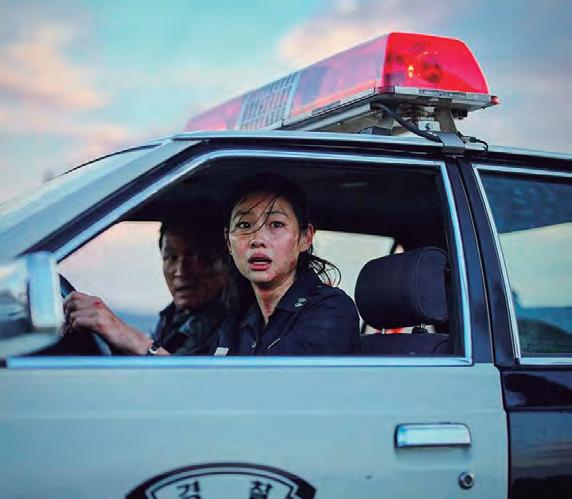
There hasn’t been a Korean film in competition since Decision to Leave in 2022. Hope is Na Hong-jin’s fourth feature, marking his return after The Wailing in 2016, and comes with a $37 million budget—one of the most expensive productions in the country’s history. The film is partially shot in English and features a mix of Korean actors alongside performers such as Michael Fassbender and Alicia Vikander. All of the director’s films have screened at Cannes, but this is the first to compete for the Palme d’Or. International sales are being handled by Plus M Entertainment.
Storyline: Set in the isolated village of Hope Harbor, the story begins when reports surface of a tiger sighting and Police Chief Bum-seok is notified, sending the community into disarray. What starts as a seemingly contained incident quickly escalates into a far more unsettling and enigmatic situation, compelling the townspeople to face a chilling and unexplained threat.

LA BOLA NEGRA by Javier Calvo and Javier Ambrossi. Spain is a major presence at this year’s Cannes Film Festival, and the biggest surprise is the inclusion of Los Javis. Javier Calvo and Javier Ambrossi enter Competition in their first-ever Cannes selection with a musical drama whose sales are handled by Goodfellas. Inspired by an unfinished work by Federico García Lorca, the film marks the acting debut of musician Guitarricadelafuente. He joins a cast that includes Carlos González, Miguel Bernardeau, Penélope Cruz, and Glenn Close. The film is co-produced by El Deseo—Pedro Almodóvar’s production company—alongside Movistar Plus+, Suma Content Films, and Le Pacte.
Storyline: It tells the story of three men whose lives are intimately connected through desire, pain and inheritance, across three different eras - 1932, 1937, and 2017.
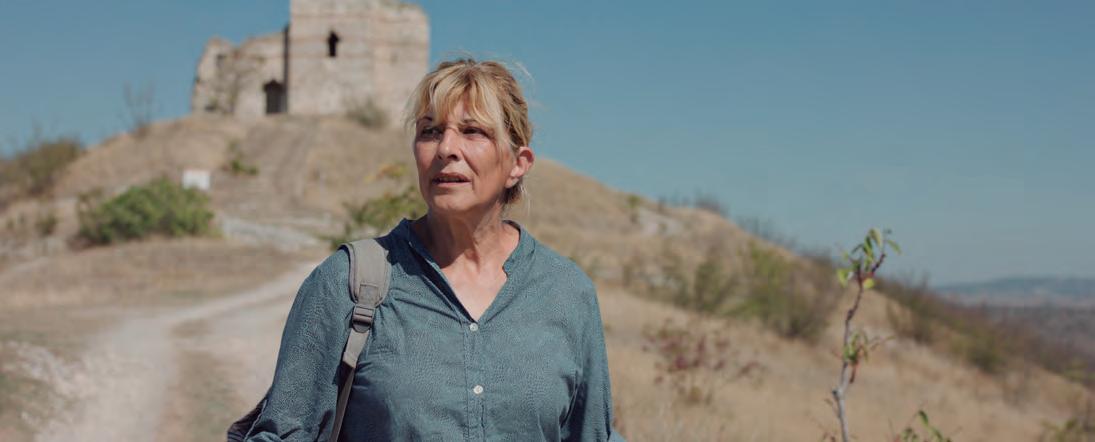
by Valeska Grisebach. After captivating international audiences with Western, which screened in Un Certain Regard in 2017, Valeska Grisebach finally returns with her new film. Alongside Marie Kreutzer, she is the only woman in competition who is not French.
Sold by The Match Factory, it´s a Komplizen Film Production in co-production with Kazak Productions (France), Miramar Films (Bulgaria) and Panama Films (Austria), Valeska Grisebach, New Matter Films (Germany), ARTE France Cinéma and ZDF/ARTE.
Storyline: In a border town in southeastern Bulgaria, a woman becomes involved in an illegal trade to help out a man with whom she shares a special bond. Embarking on a perilous adventure in his stead, she ends up confronting both her own desires and her past.
Lukas Dhont
is one of the most prominent European filmmakers to have emerged in recent years. His debut feature, Girl , was a major success in Un Certain Regard (Camera d’Or, FIPRESCI Prize), and with Close , already in Competition, he won the Grand Prize. Now comes his third feature, Coward , a film inspired by the colour photographs of the era, produced using the autochrome process. Dhont says it´s his most ambitious film to date and it shows that, “even in the darkness, something beautiful manages to grow”. The Match Factory is handling international sales.
Storyline: 1916. During the First World War, the soldiers try to keep up their morale behind the trenches. Stirred by wartime rhetoric, each of them seeks their own path.

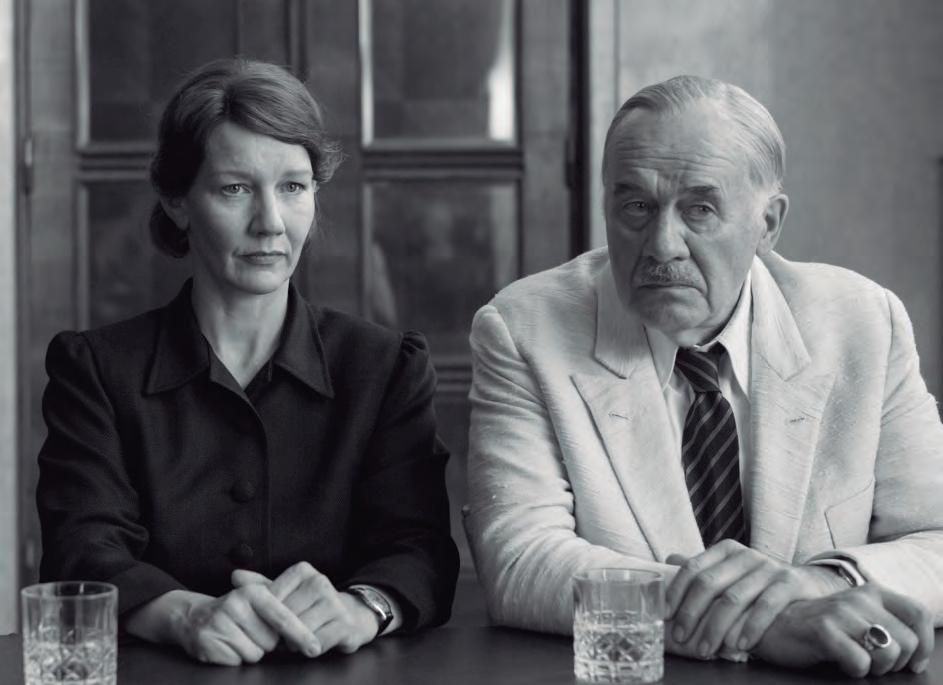
Eight years have passed since Cold War, and cinephiles had been eagerly awaiting what Polish director Paweł Pawlikowski—also known for Ida would do next. The wait is finally over: arriving in Cannes is this biopic about Nobel Prize–winning writer Thomas Mann, portrayed by Hanns Zischler. One of Europe’s most in-demand actresses, Sandra Hüller, takes on the role of his daughter Erika. The Match Factory handles sales for this film set amid the turmoil and moral confusion of post War Europe.
Storyline: Thomas Mann and his daughter embark on a road trip in a black Buick taking them across a Germany in ruins - from US dominated Frankfurt to Soviet controlled Weimar. For the first time since the war, Mann returns to his native Germany, having made the difficult decision to flee for the safety of the US.


CHRISTMAS by Pedro Almodóvar. Pedro Almodóvar is one of the leading figures of contemporary European cinema who has yet to win the Palme d’Or, and he returns to Cannes after winning the Golden Lion for The Room Next Door. The Spanish director has previously competed at the Cannes Film Festival six times. Following his recent ventures into English-language filmmaking, Almodóvar returns to shooting in his native language with Bitter Christmas Sold by Film Factory and produced by El Deseo, the film stars Bárbara Lennie, Leonardo Sbaraglia, Aitana Sánchez-Gijón and Victoria Luengo.
Storyline: Elsa is an advertising director whose mother dies during a long December holiday. She works non-stop and, without realizing, doesn’t give herself time to mourn her mother’s absence. After a crisis, Elsa decides to travel to the island of Lanzarote accompanied by her friend Patricia, who also needs to get away from the city. The story of these characters run parallel to that of a screenwriter and film director, exploring how life and fiction are inseparably linked, sometimes painfully so.
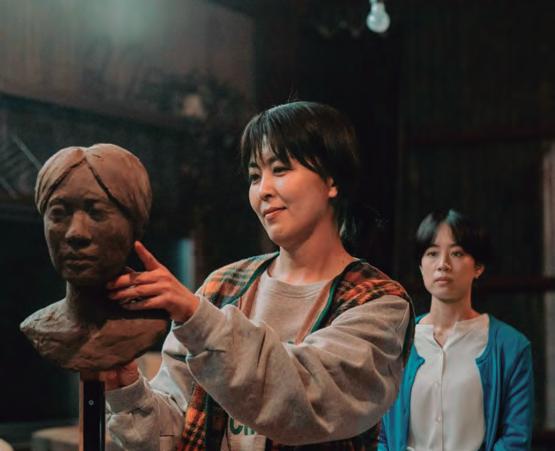
NOTES by Koji Fukada.Prolific Japanese filmmaker Koji Fukada is competing for the Palme d’Or for the first time, although this is not his debut selection at Cannes, as his film Harmonium previously won the Un Certain Regard Jury Prize. This drama sold by mk2 and produced by Hassaku Labs and Survivance is a portrait of contemporary society that explores the friendship between two women bound by art, memory and family.
Storyline: Yoriko, an artist living in rural Nagi, is haunted by a former love affair she cannot bear to mourn. When Yuri, a recently separated architect, travels from Tokyo to visit her friend and former sister-in-law, both women find themselves at a crossroad, each searching for ways to let go of the past and define their identities.

Sachs. Ira Sachs is one of two U.S. filmmakers competing this year for the Palme d’Or. Sachs is a director more closely associated with the Berlinale, as he has only previously appeared at the Croisette with Frankie in 2019. Starring Rami Malek,Tom Sturridge, Rebecca Hall, Ebon Moss-Bachrach and newcomer Luther Ford, the script is penned by Sachs and long-time collaborator Mauricio Zacharias. Sold by mk2, The Man I Love is produced by Big Creek Projects, in association with SBS Productions in France.
Storyline: New York, late ’80s. Jimmy George, an iconic figure in the world of theatre, lives alongside the most devoted and caring of partners. Yet, as he confronts the death that awaits him, his urge to live and create, to desire and love one final time, becomes more powerful than anything else.
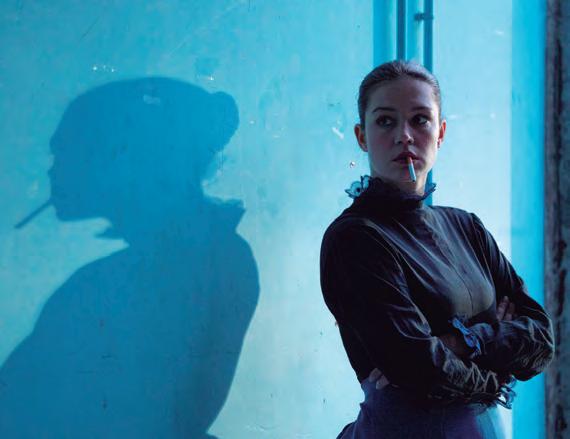
Jeanne Herry. It’s the fourth directorial project by French actress, screenwriter, and filmmaker Jeanne Herry. Her two previous films, In Safe Hands and All Your Faces, were both nominated for Best Film at the César Awards. The film is powered by Chi-Fou-Mi Productions and Trésor Films, productions shingles behind Beating Hearts. Starring Adèle Exarchopoulos, Sara Giraudeau, and Rudgy Pajany, international sales are managed by StudioCanal.
Storyline: Garance is a talented young actress who longs for recognition. Struggling to make ends meet in a modest Paris apartment, she feels increasingly trapped by fleeting relationships, mounting anxiety, and a growing dependence on alcohol. Her deep commitment to her ailing younger sister, along with an emerging romance with Pauline, becomes a fragile source of support. As these connections grow stronger, Garance begins to find the courage to face the darkness she has long avoided.
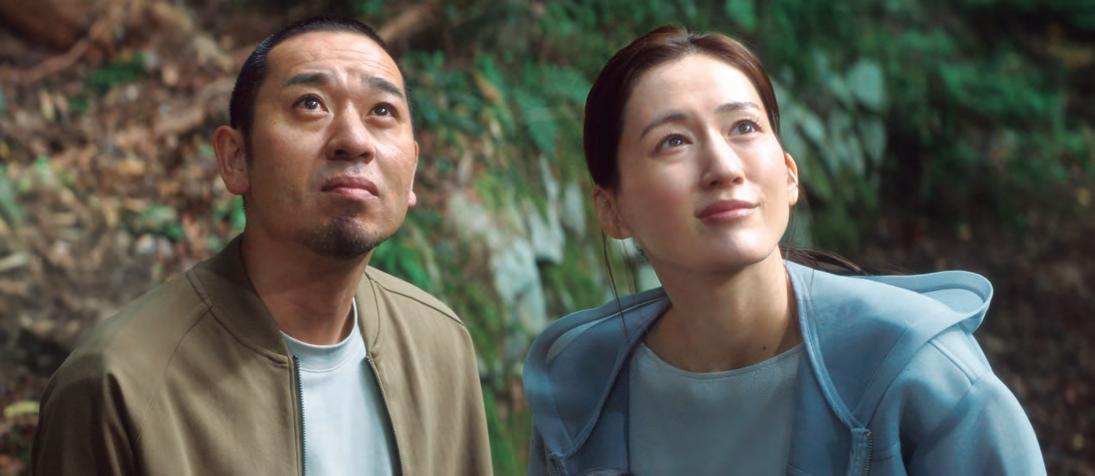
by Hirokazu Koreeda. Few filmmakers are as closely associated with Cannes as Japanese director Hirokazu Kore-eda. This marks his 12th time bringing a film to the festival, most often in Competition. He has received numerous awards there, including the Palme d’Or in 2018 for Shoplifters . The film explores one of the director’s central themes: parenthood as a fluid concept. International sales are handled by Goodfellas for this production by Fuji Television Network, Gaga Corporation, Toho, and Aoi Pro.
Storyline: In the near future, Otone and Kensuke, a grieving couple who have lost their son, take into their lives a humanoid identical to their late child.
by Andrey Zvyagintsev. It’s a year at Cannes marked by the return of several major filmmakers after long periods of silence. Russian director Andrey Zvyagintsev had not delivered a new film for nine years, since Loveless. The director is highly regarded at Cannes: Loveless earned him the Jury Prize, Leviathan brought him the Best Screenplay Award, and Elena received the Special Jury Prize in Un Certain Regard. Sold by mk2 Films, this drama follows the collapse of a Russian businessman under the strain of personal and political crises.
Storyline: Russia, 2022. When Gleb, a successful company director, finds himself under siege from mounting corporate pressures and an increasingly unstable world, the collapse of his carefully ordered life accelerates towards violence.
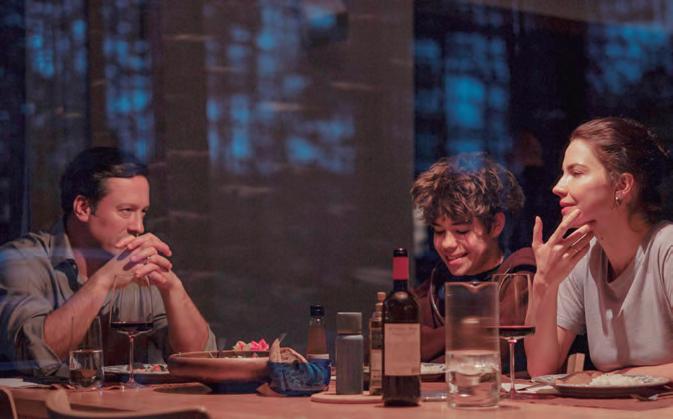
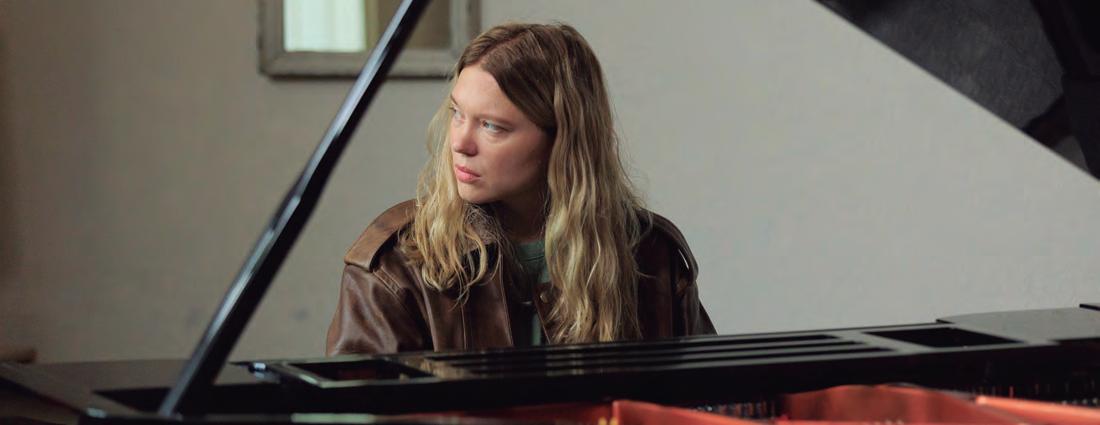
GENTLE MONSTER by Marie Kreutzer. Writter and directed by the Austrian filmmaker Marie Kreutzer, Gentle Monster is a study of a woman forced to carry the unthinkable, exploring the silent, often invisible weight of motherhood, loyalty, and love under pressure. Her previous movie, Corsage, was screened at Un Certain Regard and now she moves up to the main competition section. Produced by Film AG Produktions (Austria), Komplizen Film (Germany) and Kazak Productions (France), sales are in charge of mk2.
Storyline: Lucy loves Philip and, after his burnout, moved to the countryside with him and their son, even though this meant professional constraints for her. Elsa, on the other hand, lives for her job as a special investigator with the police, but is kept busy by the responsibility for her demented father.
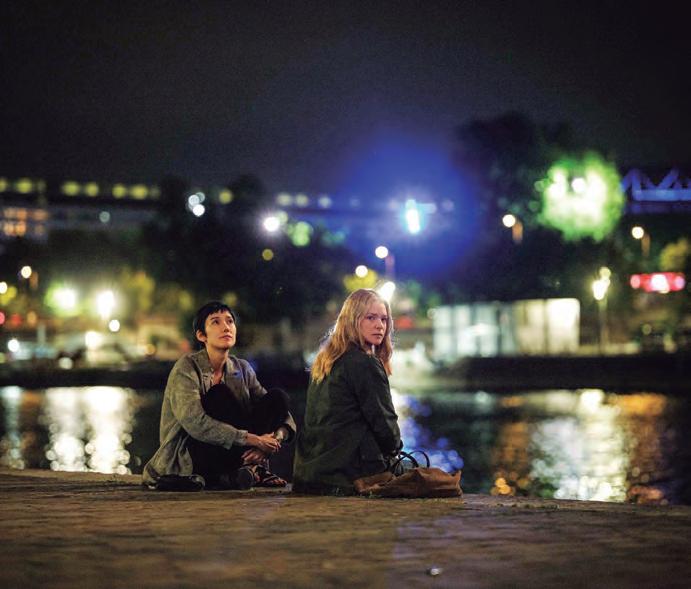
A MAN OF HIS TIME by Emmanuel Marre. French filmmaker Emmanuel Marre draws on his own family history, with the protagonist serving as a reimagined version of his great-grandfather. This is his second feature, following Zero Fucks Given, starring Adèle Exarchopoulos, which premiered in Critics’ Week in 2021. This drama is produced by French Kidam and Belgium’s Michigan Films, with international sales handled by Charades.
Storyline: September 1940. Henri Marre arrives alone in Vichy. Broke, estranged from his family, and carrying copies of his selfpublished manifesto Notre Salut (Our Salvation), the 49-yearold is determined to secure what he believes is his rightful place in the new administration. In his writing, Henri sets out his patriotic convictions and his engineer’s methodology: efficiency above all. He wants to help save France after defeat but he may be pursuing something more urgent: escape from his own ruin.
by Ryusuke Hamaguchi. It’s an important year for Japanese cinema at Cannes, with Ryusuke Hamaguchi, Hirokazu Kore-eda, and Koji Fukada all in competition. It marks the third time Hamaguchi has appeared on the Croisette, following Asako I & II and Drive My Car , the latter of which was one of the sensations of the year, winning Best Screenplay and the FIPRESCI Prize. Like László Nemes, he is another filmmaker making his debut with a Frenchlanguage film. Shot in Paris, the cast is led by Tao Okamoto and Virginie Efira. The film is inspired by real-life exchanged letters by Makiko Miyano and Maho Isono. Cinefrance International handles sales outside of Asia (Bitters End is responsible for the asian sales).
Storyline: Two scholars exchange letters about chance and risk. As the philosopher falls ill, their academic correspondence evolves into intimate discussions about mortality and a deeper connection forms between them.


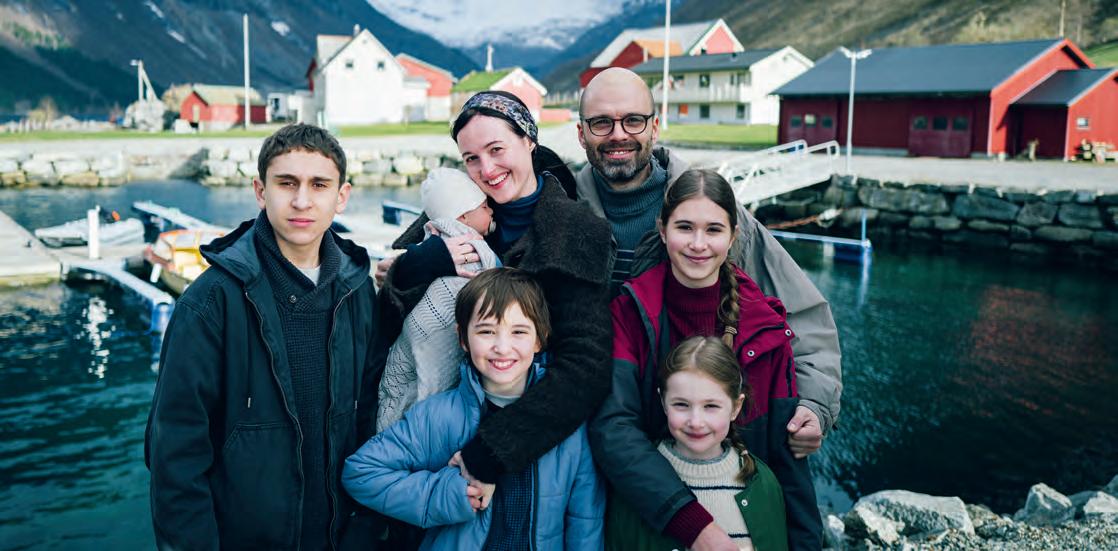
FJORD by Cristian Mungiu. Cristian Mungiu is back at Cannes with his first international-cast feature. This is the 7th time that the Romanian goes to the Croisette and the fifth in Competition. He´s won the Palm d’Or with 4 Months, 3 Weeks and 2 Days, Best Screenclay Award with Beyond the Hills and Best Director with Graduation. Mungiu also writes the story of this film whose main production companies are Mobra Films, Eye Eye Pictures and Why Not Productions. Starring Sebastian Stan and Renate Reinsve, this family drama, Goodfellas is the sales company.
Storyline: The Gheorghius, a devout Romanian Norwegian couple, resettle in a village set in a distant fjord where they become close to their neighbours, the Halbergs. Their children bond despite their different education. When adolescent Elia Gheorghiu shows up at school with some bruises on her body, the community asks itself if the traditional education that the Gheorghiu children get from their parents would have anything to do with it.
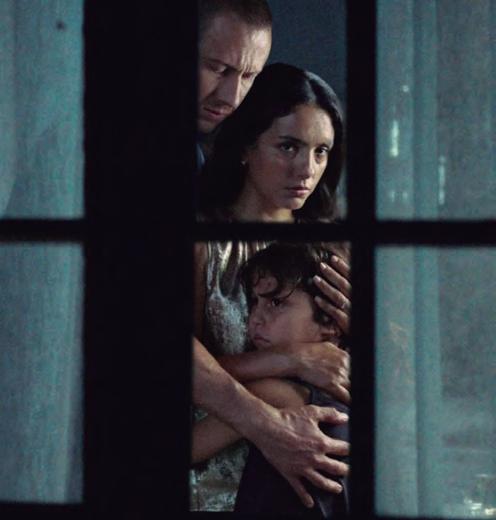
by Léa Mysius . Monica Bellucci and Hafsia Herzi are the leading cast members of the The Birthday Party, third film by French director Léa Mysius. She’s been at Cannes with her previous films: Ava was screened at Critics’ Week and The Five Devils was shown at Directors’ Fortnight. This is a home invasion thriller set in a quite rural area. If you want to secure its distribution rights, mk2 is the company to talk to.
Storyline: Thomas, Nora and their teenage daughter Ida live on remote marshland. Social contact is limited, as they only have one neighbour, Cristina, an Italian painter. As the two households plan a surprise birthday party for Nora, strange disturbances begin to occur and unease rolls over the marsh.

MOULIN by László Nemes. Eleven years ago, Hungarian director László Nemes made his feature debut with Son of Saul—and did so in remarkable fashion, winning the Grand Prix at Cannes Film Festival and the Oscar for Best Foreign Language Film. Despite that success in Cannes, he premiered his subsequent works, Sunset and Orphan, in Venice.Gilles Lellouche and Lars Eidinger lead the cast of his first French-language feature. Out of curiosity, Budapest was tasked with recreating 1940s Lyon. Produced by Pitchipoï Productions and Montmartre Films, sales are in charge of 193 Legendary.
Storyline: The story of Jean Moulin, a French civil servant and resistant who succeeded in unifying the main networks of the French Resistance in World War II, and who served as the first President of the National Council of the Resistance during the German occupation of France.
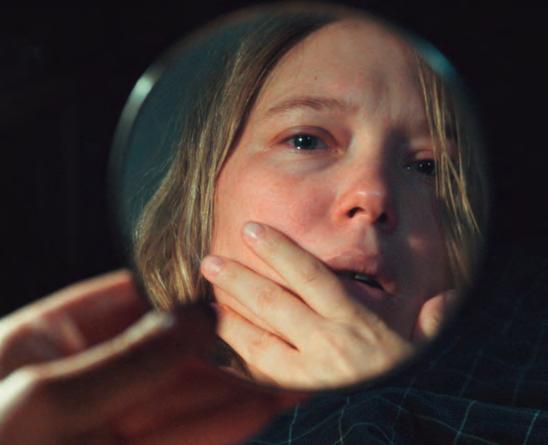
THE
by
is best known as the co-writer of Anatomy of a Fall, although this is his third feature as a director. His previous film, Onoda: 10,000 Nights in the Jungle, opened the Un Certain Regard section in 2021 and won Best Original Screenplay at the César Awards. Starring Léa Seydoux and Niels Schneider, the producers describe the film a mix between a realist urban chronicle, a fantastic film, an investigative movie, a melodrama and a waking dream. Produced by To Be Continued and bathysphere, Pathé International is responsible for international sales.
Storyline: David, almost 40, is a photographer, but no one knows it. When friends drag him to a wild party, he spots a woman in the crowd and can’t take his eyes off her, he follows her... In the middle of the night his life is turned upside down: David wakes up alone in the body of the unknown woman.

PAPER TIGER by James Gray. James Gray is a filmmaker who is far more appreciated at Cannes than in his home country. The festival has supported him since his early career. With this film, he has now been to the Cannes Film Festival six times, all in Competition, although none of the juries have ever awarded him a prize. Gray teams up with cinematographer Joaquín Baca-Asay, with whom he previously worked on Two Lovers and We Own the Night . The cast is led by Adam Driver, Miles Teller, and Scarlett Johansson. RT Features and AK Productions are the production companies of this film already bought by NEON for US.
Storyline: Two brothers chase the American Dream, but find themselves caught up in a dangerous Russian mafia scheme that terrorizes their family, testing their bond as betrayal becomes a real possibility.

LIFE by Charline Bourgeois-Tacquet. In 2021, actress Charline Bourgeois-Tacquet made her debut as a writer-director with Anaïs in Love, which she presented at Cannes Critics’ Week. This year, she returns—this time in Competition—with her second feature film, which portrayes a female character who represents the courage to live boldly Starring Léa Drucker and Mélanie Thierry, the film is produced by Les Films Pelléas (Anatomy of a Fall, It Was Just an Accident). Be For Films is in charge of world sales.
Storyline: Gabrielle, 55, gives herself to her work, body and soul. As a surgeon and head of the hospital department, there is little time left for her private life: a loving husband and a mother who depends on her care. Yet this is the life she wanted, the life she chose. When a novelist comes to observe her at work for a book, her balance begins to shift. How far is she willing to go to shake what she has built?
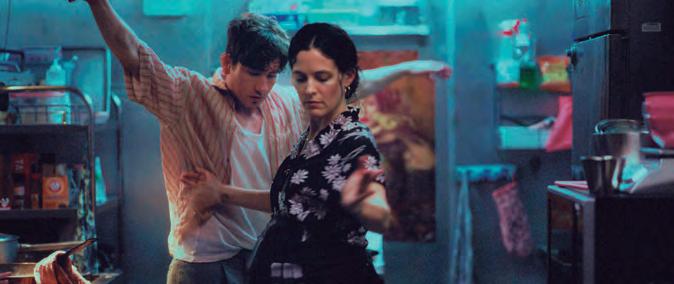



‘Butterfly Jam’
Kantemir Balagov
Sales: Goodfellas (Quinzaine des Cinéastes)
‘The Samurai and the Prisoner
Kiyoshi Kurosawa
Sales: Charades (Cannes Première)
‘I See Buildings Fall Like Lightning’ Clio Barnard
Sales: Charades (Quinzaine des Cinéastes)
‘Every Time’
Sandra Wollner
Sales: Charades (Un Certain Regard)
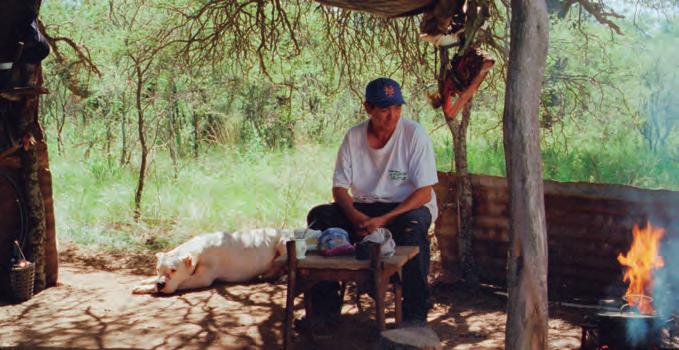
Sales: The Match Factory (Un Certain Regard) ‘La perra’
Sales: Lucky Number (Quinzaine des Cinéastes)
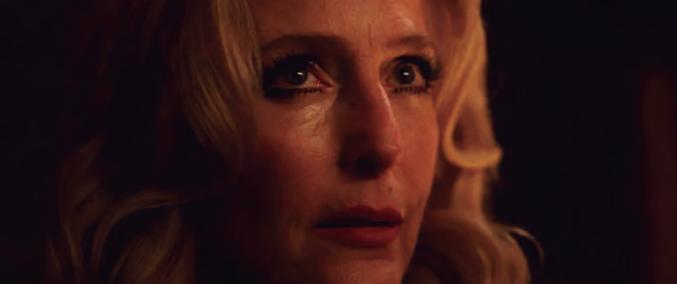
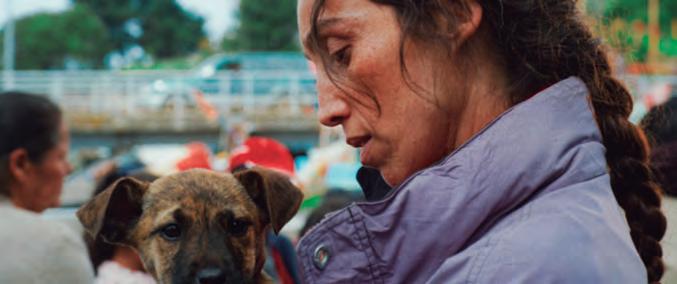
‘Dora’ July Jung
Sales: Finecut (Quinzaine des Cinéastes)

‘Full Phil’
Sales: StudioCanal (Midnight Screenings)
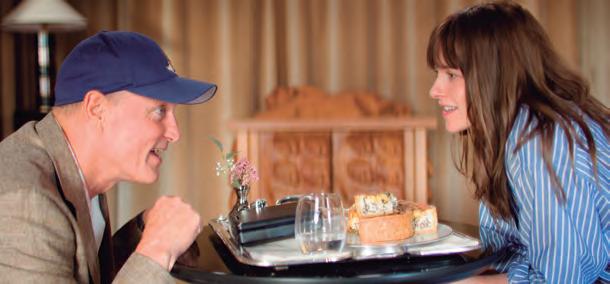

‘Her Private Hell’
Nicolas Winding Refn
Sales: Neon International (Out of Competition)
‘Red
Sales: Luxbox (Quinzaine des Cinéastes)

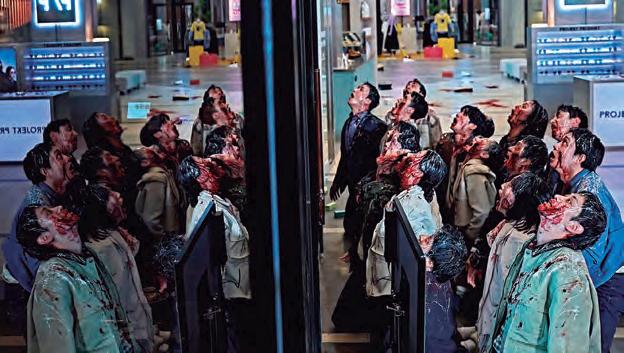
‘Colony’
Yeon Sang-ho
Sales: Showbox (Midnight Screenings)
‘Double Freedom’
Lisandro Alonso
Sales: Luxbox (Quinzaine des Cinéastes)

MANAGING DIRECTOR OF EUROPEAN FILM PROMOTION
EUROPEAN FILM PROMOTION (EFP) IS A NETWORK
SUPPORTS EUROPEAN CINEMA AND PROFESSIONALS IN
STRENGTHENING
FROM 37
THEIR CURRENT MARKET PRESENCE AND EXPANDING INTO NEW
TERRITORIES. IN A FEW MONTHS,
EFP WILL TURN 30, MAKING IT A GOOD TIME TO REVIEW ITS WORK AND GET
A GLIMPSE OF WHAT LIES AHEAD. RUBIK SPOKE WITH JO MÜHLBERGER, DEPUTY MANAGING DIRECTOR, TO LEARN MORE ABOUT THE NETWORK.
BY CARLOS AGUILAR SAMBRICIO
Rubik: Producers on the Move is a programme that is a landmark in the industry. What kind of feedback do you receive about it? And for those who may not be familiar with it, what does it offer to emerging producers and how are they selected?
Jo Mühlberger: In 2026 the programme is entering its 27th edition, and 546 producers have taken part over the past 26 years.
EFP presents it as a platform for 20 producers from 20 European countries, combining preparatory online sessions with an intensive Cannes programme that includes project pitching, one-on-one meetings, curated case studies, networking events and an international promotion campaign.
The selection model is also quite robust: producers are first nominated by their national film promotion institutes, then chosen by EFP through a rigorous points-based process, with eligibility tied to international co-production experience and festival or distribution track record.
The long-term value of the programme is reflected in the achievements of its alumni. In Cannes 2026 alone, 33 former Producers on the Move are involved in the festival line-up. But its impact extends well beyond individual festival selections: many former participants report maintaining lasting contacts and an ongoing professional exchange with fellow members of their cohort, even many years later.
“AT EFP WE SENSE VERY CLEARLY THE NEED AND
Rubik: Shooting Stars initiative is also noteworthy. Many people believe that the limited circulation of European films outside their country of origin is due to the lack of a European star system. Do you see this as a challenge for Europe, and are initiatives like Shooting Stars essential in addressing it?
J.M.: Indeed, the cross-border visibility of actresses and actors remains a real challenge in Europe. Not because Europe lacks talent, but because our audiovisual landscape is still fragmented across languages, markets and viewing habits, even with the growing importance of international co-productions.
This is precisely why European Shooting Stars matters. Each year, the programme brings ten outstanding acting talents to the Berlinale, where it raises their profile among the international press, industry professionals and audiences. At the same time, we run the Actors Industry Network, a dedicated three-day programme that connects them directly with casting directors, agents, producers and filmmakers.
The selection process is also very strong: each of the member institutes from 37 countries can nominate one candidate, and the final selection is made by an international jury. What I find particularly valuable is that the impact can be very concrete. After participating in Shooting Stars, actors are often invited to castings for international co-productions, and we increasingly see them appearing in films outside their home territories.
Rubik: I understand you currently bring together film institutes from 37 countries. How do you manage to coordinate across so many entities from such diverse countries?
J.M.: EFP operates as a network. We bring all our members together at least twice a year, and these meetings are extremely important for the exchange between the institutes. They allow us to catch up on national and international developments, share ideas, and discuss both our ongoing programmes and potential new initiatives.
What connects all members is the shared objective of supporting their national industry players on a pan-European level — whether by creating visibility, opening doors to new networks, or strengthening their presence outside Europe. This is where the network really pays off, especially when it comes to promoting European films and talent internationally, thus, outside of Europe.
The fact that our members come from smaller and larger countries makes the exchange particularly fruitful. Institutes with more limited budgets can share very efficient and pragmatic ways of working, while those with greater resources and more frequent access to international festivals and markets can share their experiences, contacts and market intelligence from those territories. Everyone learns from one another.
At the same time, all members have the same voice, regardless of the size of the country they represent. This has always been —and remains— essential to the way we communicate and work together as a network.
The long-term value of Producers on the Move is reflected in the achievements of its alumni. In Cannes 2026 alone, 33 former participants are involved in the festival line-up
Rubik: Some institutes have significantly larger budgets than others. How do you ensure a balanced effort within EFP and avoid unequality?
J.M.: We are very aware that our member countries have very different financial capacities, and that the size of their audiovisual industries varies considerably. At the same time, one of the core principles of EFP is equality: all members have the same rights and the same voice within the network, regardless of the size of the country they represent.
This principle also applies to participation in our programmes. We want to avoid any kind of hierarchy or labelling. For example, the impression that some Jo Mühlberger
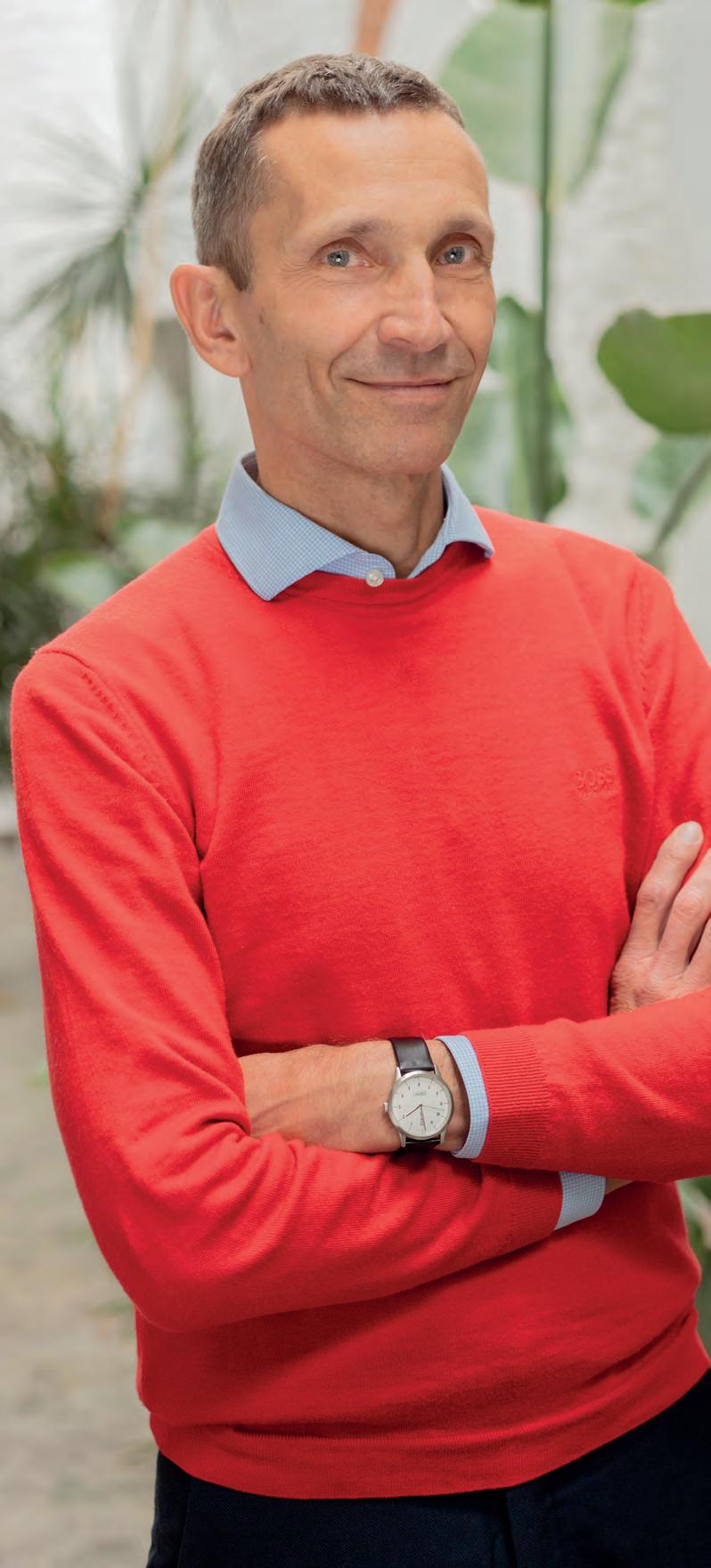
Cross-border visibility of actresses and actors remains a real challenge in Europe. Not because Europe lacks talent, but because our audiovisual landscape is still fragmented
participants or films come from ‘poorer relatives’ within the European family. That would be completely contrary to the spirit of EFP. Instead, curation is key across all our programmes and activities: projects, films and talents are selected on the basis of their professionalism, relevance and international potential, not according to the financial strength of their home country.
Our members need to contribute to programmes in a fair and comparable way. But due to the important financial support we receive from Creative Europe MEDIA we are able to keep participation fees at a reasonable and balanced level. This is essential, because it allows institutes with different budgets to take part, while preserving the principle that everyone participates on equal terms.
Rubik: How do you see the current state of cinema in Europe? What are the
institutes across different countries telling you?
J.M.: We all know that the audiovisual ecosystem is going through a period of profound change and yes, it is challenging. At the same time, it is not a negative picture. We are also seeing a high level of production activity across Europe, although growth is particularly visible in series production.
What we also sense very clearly is the need and the willingness for closer panEuropean exchange. This is becoming increasingly important, because many of the challenges our industries are facing are no longer purely national. Questions around financing, distribution, audience behaviour, talent development and international visibility concern all of us, even if they take different forms in each country.
That said, there is no single European trend that applies equally to all our member institutes. Their structures, mandates and positions within their national systems are very diverse — and so are the developments they are experiencing. Some countries are dealing with funding pressure, others with questions of audience recovery, market access or production capacity. This diversity is precisely why the exchange within EFP is so needed and valuable: it allows us to understand the different realities across Europe and to identify where we can act together.
Rubik: What activities are you planning for the Marché du Film? Producers on the
Move is obviously one of them, but what else can we expect?
J.M.: Of course, Producers on the Move will be at the centre of our activities in Cannes. It is one of our key programmes, and the festival and the Marché du Film provides the right setting to present the selected producers, connect them with the international industry, and create visibility for their projects.
At the same time, Cannes is also an important working moment for EFP beyond the programme itself. We will have many meetings with our programme partners — it is the ideal occasion to catch up in person, review ongoing collaborations and discuss future planning. We will also use the opportunity to meet potential new partners and explore where further cooperation might make sense.
Rubik: Looking ahead into the next months, what initiatives are you currently working on?
J.M.: Right after Cannes, we will continue preparing a panel for Annecy’s MIFA. At the same time, we will be running Film Sales Support around Tribeca, before moving on to FUTURE FRAMES at Karlovy Vary in July, which continues to be an important springboard for emerging European directors.
We are also further developing EUROPE! Voices of Women+ in Film, together with
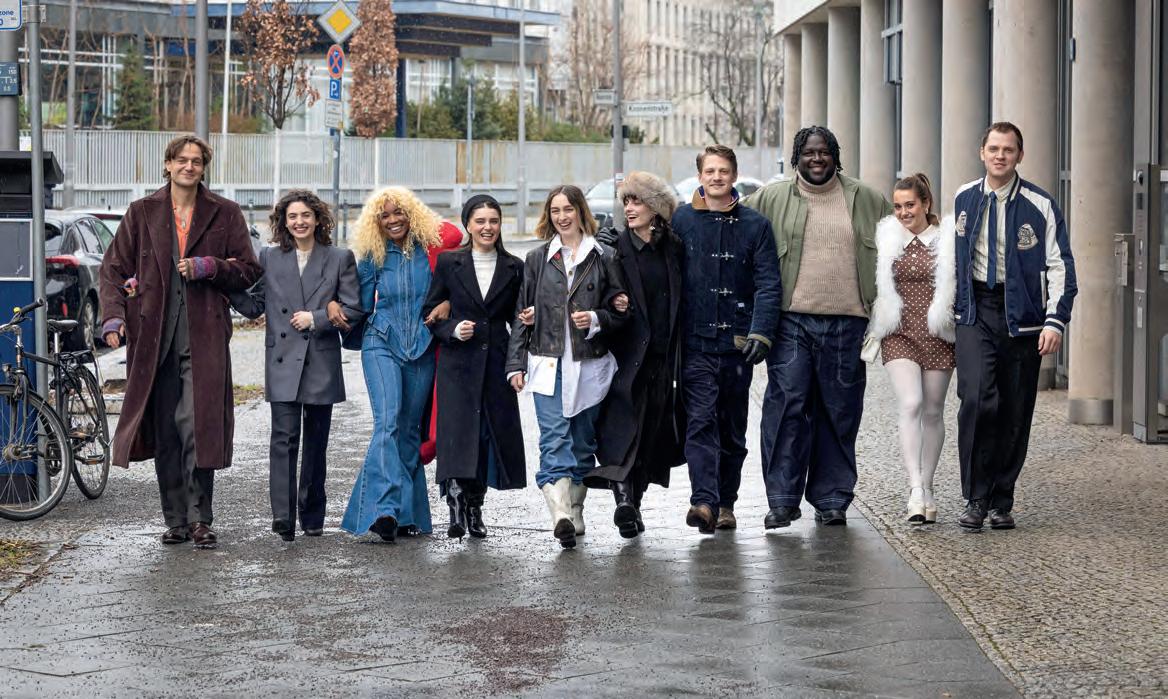

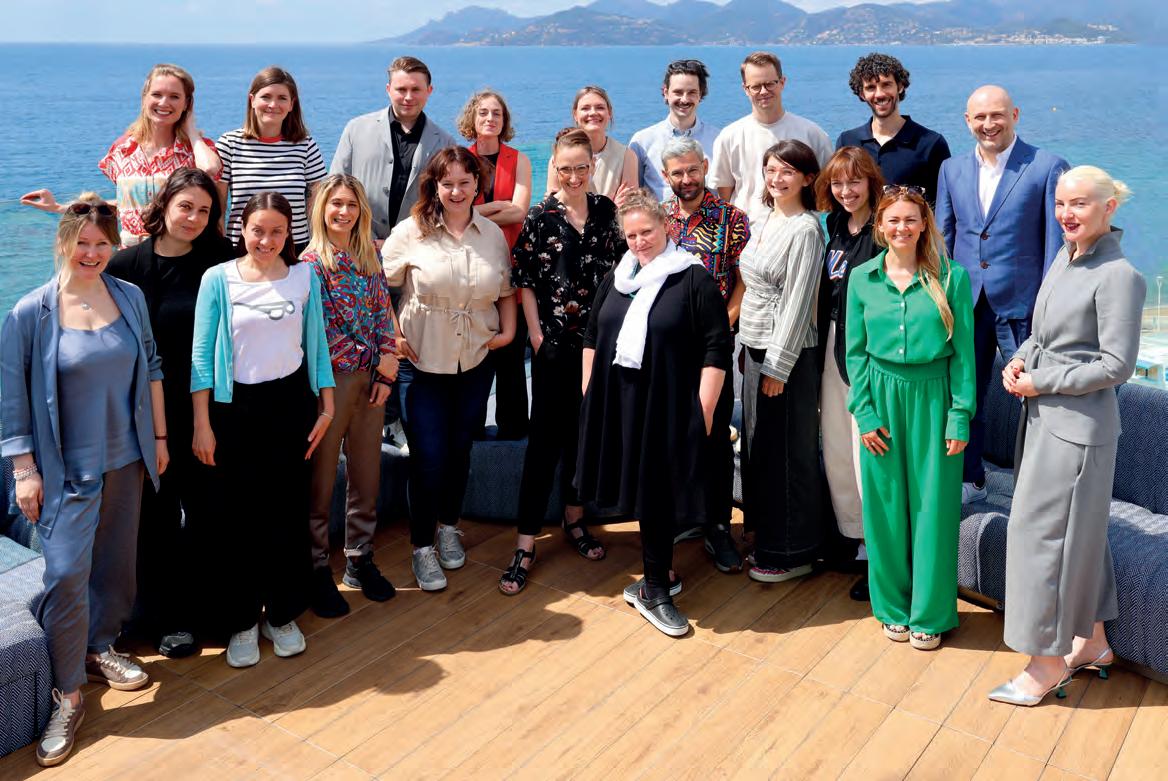
our partners in Sydney, Busan and Rio. And, looking towards September, we are organising the EUROPE! Hub at the newly launched TIFF: The Market in Toronto.
So the coming months will be very much about continuing our established programmes, while also developing new partnerships and formats in places where we see strong potential for European films and talent.
Rubik: What are the main challenges for EFP in the coming years?
J.M.: I would highlight four main challenges. First, serving a network with very different national realities, while still acting strategically as one European platform. Our members operate in very diverse contexts, so it is important to understand these differences while also identifying where we can speak and act together.
Second, preserving flexibility. EFP needs to continue streamlining its programmes and activities, while also adapting to new technologies and to the way they are changing our industry — from development, production and promotion to distribution and audience behaviour.
Third, maintaining visibility for European films and talent in an increasingly competitive global marketplace. This also
means looking at new programmes, formats and partnerships that can help us create visibility where it is most needed.
And fourth —but certainly of utmost importance— funding stability and the future shape of MEDIA support. EFP’s work depends on a strong European commitment to international promotion and collaboration, and this will remain essential in the years ahead.
Rubik: There is quite a bit of concern in the sector about the new AgoraEU program—particularly around preserving the spirit of Creative Europe MEDIA and ensuring it has a dedicated budget separate from broader media funding. How do you see the situation, and what should the new AgoraEU look like?
J.M.: Indeed, this is a question that many people in the sector are currently addressing — and understandably so. From our perspective, it is essential that the spirit and achievements of Creative Europe MEDIA are preserved.
Since its inception, the MEDIA programme has played a crucial role in strengthening the structures, competitiveness and vitality of the European audiovisual industry. Its impact has been truly pan-European: it has supported
collaboration across borders, helped films and talent travel beyond their national markets, and contributed to European values and a European spirit.
One of the core principles of EFP is equality: all members have the same rights and the same voice within the network, regardless of the size of the country they represent
The AgoraEU programme shall continue to recognise the specific needs of the audiovisual sector. This also means maintaining a dedicated and clearly identifiable budget for audiovisual support. We are confident that this is seen by the members of the European Parliament seeing the need of the continuation of a strong, visible and sector-specific European support structure. One that builds on the achievements of Creative Europe MEDIA and continues to serve the diversity, independence and international visibility of European film and audiovisual works.
IN THE MAIN ARTICLE ON THE FILMS COMPETING FOR THE PALME D’OR, WE DISCUSSED THE THREE SPANISH TITLES IN COMPETITION: THE BELOVED BY RODRIGO SOROGOYEN, BITTER CHRISTMAS BY PEDRO ALMODÓVAR, AND LA BOLA NEGRA BY JAVIER AMBROSSI AND JAVIER CALVO. HERE WE’LL FOCUS ON THE REST, WHICH ARE NUMEROUS AND ROUND OUT AN OUTSTANDING YEAR FOR SPANISH CINEMA AT THE WORLD’S MOST IMPORTANT FILM FESTIVAL.
CARLOS AGUILAR SAMBRICIO
The Critics’ Week section hosts the directorial debut of actress Ai-na Clotet, Viva, a production by Ikiru Films and Funicular Films, with international sales handled by Loco Films. The film, co-written by Valentina Viso, was shot
on location in Barcelona and San Francisco. Clotet herself plays the lead role of Nora, a woman who, while recovering from breast cancer, begins to rethink her personal and professional life. In light of this rebirth, Nora sets aside her long-term plans with her lifelong partner and begins a relationship with a younger man.
In one of the most interesting sections, Cannes Première, we find the most surprising Spanish film of the entire selection: The End of It by María Martínez Bayona. It is also a debut feature and one of three films involving Fasten Films selected for Cannes 2026.
The production company is joined by Cobalt Films and The Mediapro Studio, as
well as the UK’s BBC and Elation Pictures and Norway’s Eye Eye Pictures. Bankside Films is handling international sales outside Latin America, which is covered by The Mediapro Studio.
Shot in Tenerife, the film blends science fiction and drama with a distinctive auteur approach. In a near future where aging has been eradicated and death has become a choice, Claire, an artist about to turn 250, decides to end her life. This decision sparks tensions with those closest to her and opens up a broader conflict about the meaning of existence.
In this same section, it’s also worth highlighting a co-production by Los Ilusos Films: Aquí, directed by Portuguese filmmaker Tiago Guedes. It is an adaptation of J.M. Coetzee’s trilogy and is produced by Leopardo Filmes, in collaboration with Filmgalerie 451, APM Actions Per Minute, and Los Ilusos Films, with associated production by Belino Production.
The film features a strong presence of Spanish actors such as Manolo Solo, Patricia López Arnaiz, and Sergi López, alongside French actor Lambert Wilson.
What story does it tell? In a dystopian world where memory has been erased and conformity is enforced, David, a curious and defiant child, arrives as a refugee with his guardian Simón and confronts a society that suppresses individuality. As David challenges the system, Simón and Inés—his supposed mother—grapple with the complexities of parenthood in order to protect him.
In Un Certain Regard, there are no Spanish directors, but there are two very interesting
co-productions. The second Fasten Films title at this Cannes is Strawberries by FrenchMoroccan filmmaker Laïla Marrakchi, who was previously selected in this section in 2005 with Marock.
The film, whose sales are handled by Lucky Number, was shot in Andalusia and features Spanish actress Itsaso Arana in the cast.
The plot revolves around Hasna, who leaves her native Morocco to work as a seasonal strawberry picker in Huelva, hoping to return home and provide a better life for her family with the wages promised by the greenhouse owners. But her dream collides with a harsh reality: abuse, harassment, and inhumane living conditions. At the risk of losing everything, Hasna and her co-workers decide to report their situation and begin a fight against their exploiters with the help of Pilar, a Spanish lawyer.
The other co-production is The Meltdown by Chilean director Manuela Martelli, with participation from Spain’s Elastica Films alongside Ronda Cine (Chile), Wood Producciones (Chile), Cinema Inutile (USA), Piano (Mexico), and Fundación Río (Chile).
The feature is set in Chile in 1992. Inés, a 10-year-old girl, spends time at her grandparents’ hotel at the foot of a ski resort. Her parents are traveling as part of the delegation transporting an iceberg to the Seville Expo. Hanna, a 16-year-old Swedish skier staying at the hotel, becomes Inés’s platonic love. The two form a friendship until one night Hanna disappears under mysterious circumstances.


Also in Un Certain Regard, Spanish production company Frida Films is part of Titanic Ocean, film made by Konstantina Kotzamani. The film has been supported by ICAA and ICEC and sales are managed by Paradise City Sales.
What is it about? Inside the School of Sirens, each student has her own personal story and her own reason for being there. They drift through pools and corridors with their mermaid alter egos, created using mobile apps and luxury accessories, within a context of rigorous training and discipline.
There are two Spanish co-productions in Special Screenings. One is the fourth feature directed by Mexican filmmaker Diego Luna, Ashes, an adaptation of the novel by Brenda Navarro, shot in Madrid, Barcelona, and Mexico City. It is a co-production between Mexico (La Corriente del Golfo, Animal de Luz, and Perro Azul) and Spain (Inicia Films). “In Diego Luna’s approach, there is a blend of poetry and brutality, a cinematic vision that perfectly captures the essence of the book,” says Valérie Delpierre, producer at Inicia Films.
Starring Anna Díaz and Adriana Paz, the story centers on Lucila, a 21-year-old woman searching for her place in the world while facing family pressure, misogyny, and
racism. She travels to Spain with her younger brother Diego to reunite with their mother, Isabel, who emigrated years earlier. However, adapting proves difficult, and her struggle for independence clashes with precarious jobs and the responsibility of caring for Diego.
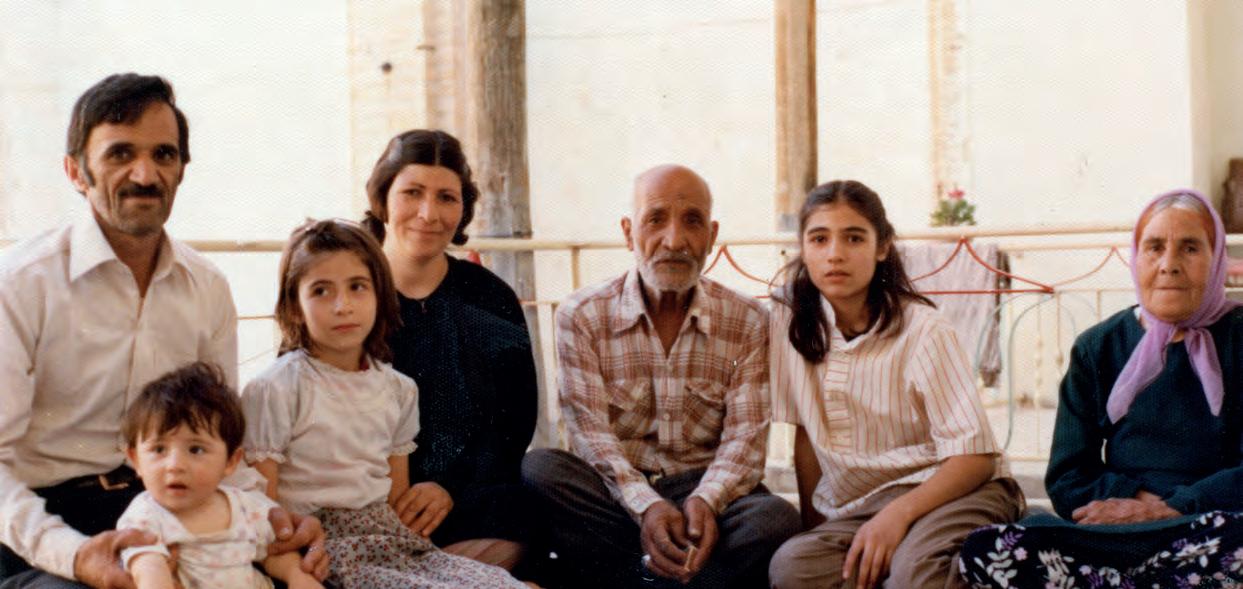
Also in Special Screenings, Spanish production company Fasten Films returns with Rehearsals for a Revolution, the debut feature by Pegah Ahangarani, which uses archival footage from her parents and herself.
This documentary is composed of five essays that summarize the last five decades of Iran’s history, a country marked by political repression and the hope of a revolution that never quite arrives. “At this delicate moment in Iran’s history, when both my people and I live with a deep sense of anxiety and fear, the news that my film has been selected for the Cannes Film Festival fills me with a special joy. Through personal stories, I have tried to portray the resilience of my people, who have never stopped yearning to build a shared dream of a just and free Iran,” says Ahangarani.
Albert Serra and Montse Triola from Andergraun Films are co-producing the latest film by Bruno Dumont, Red Rocks, film with Luxbox in charge of world sales. The film, which
will be presented in a special session followed by a masterclass with the director, takes place on the French Riviera, where two groups of children compete in the dangerous game of jumping from cliffs.
Before wrapping up, I’d like to mention two feature films that, while not Spanish productions, were shot in Spain with local service companies. Out of Competition, Karma by Guillaume Canet will be screened; it was shot in Girona with service by Meñakoz Films, and its cast includes actors such as Leonardo Sbaraglia, Marta Etura, and Luis Zahera.
Meanwhile, in Un Certain Regard, industry professionals will be able to see Everytime by Sandra Wollner, shot in Tenerife with service by Tourmalet Films. The cast includes Tristán López, a 21-year-old Spanish-German actor.
The short film You, Me and the Cow by Aina Callejón is another Spanish highlight at Cannes, participating in La Cinef, a section dedicated to film school works from around the world. This ESCAC project follows Martina, a teenager addicted to her phone who is forcibly taken by her father to a rehabilitation center called “Campo Amiga,” where they practice an unusual form of technological detox: healing through connection with cows.
By the way, Spanish Filmmaker Carla Simón will be the president of the Short Film and La Cinef jury this year
To mark the 50th anniversary of Cría Cuervos (Raise Ravens), one of Carlos Saura’s masterpieces, Cannes Classics will screen a restored version of the film by Mercury Films.
Finally, we turn to the Immersive Competition, which brings together nine works ranging from virtual reality to installations and large-scale projections. Among the selected projects is one with Spanish participation: The Black Mirror Experience, inspired by the Black Mirror brand and directed by David Bardos and Damià Ferrándiz. The project is produced by Banijay Live and the Barcelona-based studio Universe.


€1.54 BILLION BETWEEN
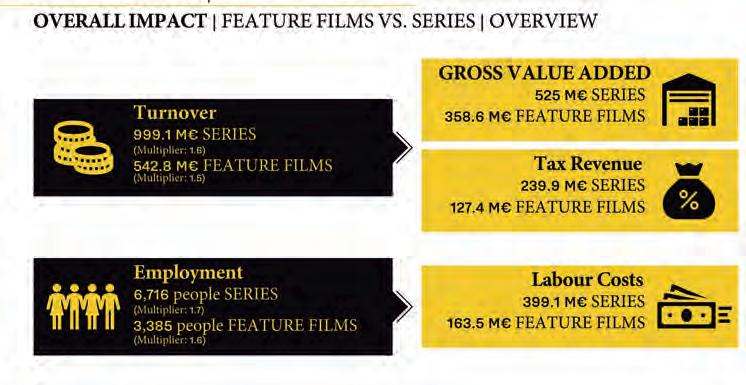
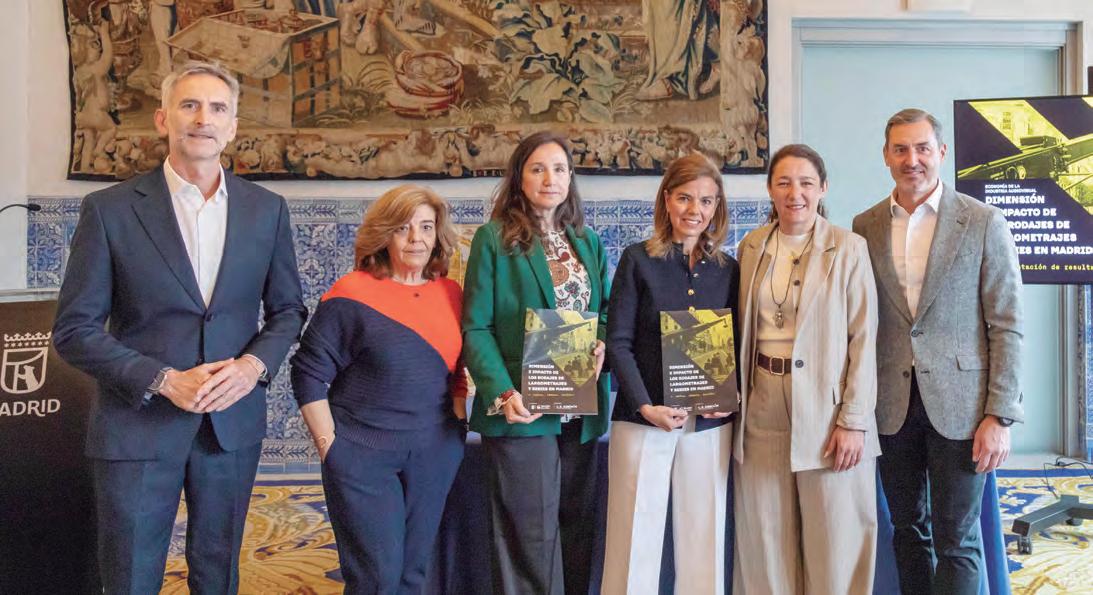
The report analyzes the impact of feature film and series shoots in the city and their effect on the capital’s economy. According to the study, activity between 2021 and 2024 included 415 productions—173 feature films and 242 series—which account for 64.8% of total production and 66.5% of the jobs created.
The analysis also highlights the differing behavior of both formats, with series showing greater production intensity due to their longer shooting schedules.
All of this activity has led to significant growth in the economy surrounding audiovisual production in the capital. The report reveals that every euro invested in a production generates approximately €1.6 in economic impact for series and €1.5 for films. This multiplier effect extends to numerous sectors beyond those directly involved in production, fostering a crosscutting economy that reinforces Madrid’s role as an audiovisual hub.
Rubik: I’d like to start with the motivation behind the study. At Madrid Film Office, you strongly advocate for the importance of data. Why did you believe this study was so necessary?
Raúl Torquemada: From the Tourism Department of Madrid City Council, we have always believed that what isn’t measured doesn’t exist. In that sense, the study was designed to identify and highlight the contribution of this subsector of the screen industry to Madrid’s economy.
At Madrid Film Office, we are convinced that this information is essential to understand the scope of the industry, to support the development of strategies that strengthen it, to communicate its benefits to public administrations and citizens, and to showcase the territory, its industry, and its professionals in order to attract international projects.
It is an ambitious project due to its level of detail, its focus on a specific subsector, and its territorial scope centered on a single municipality: Madrid. The results complement previous work, such as the sixth

Study on the Economic Impact of Advertising Film Production, promoted in 2024 by the Association of Advertising Film Production Companies (APCP), which we sponsored.
Rubik: What was the process of developing and coordinating the study with the L. R. Klein Institute like? How long did it take, and what challenges did you face?
R.T.: It was a rigorous and very enriching process. This is an ambitious project that exclusively and in a segmented way analyzes the impact of feature film and series shoots between 2021 and 2024. At Madrid Film Office, we began shaping the project in mid-

2024 and started collaborating with the university in early 2025.
As a pioneering study, the main challenge was collecting and systematizing data provided by participating production companies, as well as the methodological challenge of developing a sector-specific model to calculate the full impact on the territory, and working with a large volume of data to extend direct impact to indirect and induced effects.
Rubik: One of the key figures in the study is the more than €1.5 billion impact of filming in Madrid between 2021 and 2024. Which indicators do you consider most relevant for understanding the true weight of the audiovisual sector in Madrid’s economy: production volume, employment, tax return…?
R.T.: The overall figure—€1.54 billion in production—is very powerful, but what really matters is the combination of indicators. That’s why we emphasized data such as employment, with more than 10,100 fulltime equivalent jobs; contribution to Gross Value Added, reaching €883.6 million; and a particularly significant figure for public management: €367.3 million in tax revenue.
It’s important to note that these figures correspond to the 2021–2024 period, but the study also provides annual averages—for example, €385.5 million in production. This allows us to build an increasingly detailed picture of the sector’s overall contribution to the city and region, incorporating data from different studies, such as the aforementioned APCP report, which estimated the turnover
of advertising film production companies in Madrid at €250 million in 2023.
Taken together, these indicators show the audiovisual sector as a strategic industry that generates employment, investment, and activity across multiple productive sectors.
Rubik: The report points to a significant multiplier effect. How do you think this will translate into public decision-making or policies to attract shoots?
R. T.: The study demonstrates that the screen sector has a positive economic effect. Out of the total €1.54 billion in production, €553.2 million is generated indirectly and through induced effects—that is, within the supply chain via companies that participate secondarily, and through subsequent spending in Madrid’s economy by workers and suppliers who have earned income thanks to filming.
“We emphasized data such as employment, with more than 10,100 full-time equivalent jobs; contribution to Gross Value Added, reaching €883.6 million; and a particularly significant figure for public management: €367.3 million in tax revenue”
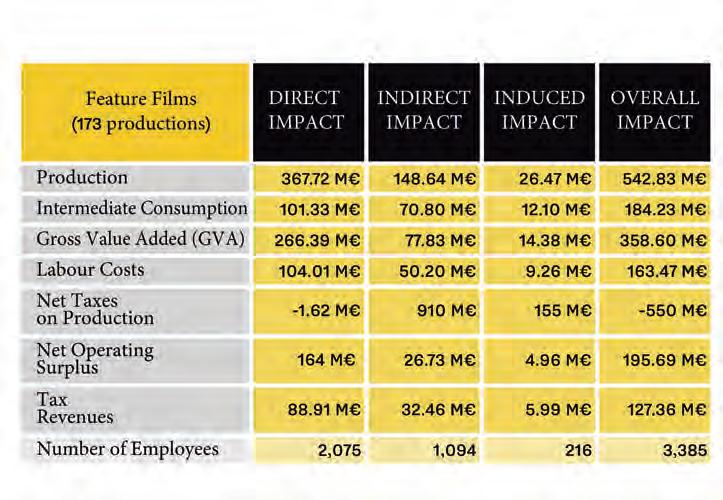
This means the impact goes far beyond the investment and spending within the sector itself, with multipliers of 1.56 in production, 1.67 in employment, and 1.5 in tax revenue. In practical terms, this means that for every €100 in direct production generated by shoots, an additional €56 is created in Madrid’s economy; for every 100 direct jobs, another 67 indirect and induced jobs are supported; and for every €100 in direct tax revenue, an additional €50 is generated.
These figures provide a solid foundation for designing public policies that recognize the driving and cross-cutting nature of the screen sector, which acts as a lever activating multiple productive sectors in the city.
Rubik: To what extent do factors such as tax incentives, administrative efficiency,
or infrastructure availability influence the decision to shoot in Madrid?
R. T.: Madrid offers an attractive framework of tax incentives, local financial support, a committed and efficient administration, and an ecosystem of high-capacity studios and soundstages, including virtual production facilities. This is complemented by a strong professional base, competitive pricing compared to other European hubs, and a vast diversity of locations.
Experience shows that when these elements work in coordination, Madrid becomes a highly competitive, reliable, and safe option for large-scale national and international productions.
Rubik: The study mentions a fiscal return of nearly €12 for every euro of public support. What role does Madrid Film Office play in coordinating with administrations and local stakeholders, and how is this figure used in discussions with public authorities?
R. T.: T his type of data allows policies to be grounded in effectiveness and return, moving the debate away from subjective perceptions and into the realm of evidence.
For Madrid Film Office and the Tourism Department of Madrid City Council, it has been a key argument in sustaining and reinforcing budgetary commitment to the audiovisual sector. Demonstrating that each euro of public support generates nearly €12 in tax return helps make the industry’s economic impact visible to both public administrations and citizens. Madrid Film

Office actively uses this data in discussions with authorities and production companies that value the stability and commitment of the local administration.
Rubik: The study highlights the audiovisual sector’s spillover effect on other industries. Which supporting industries are growing the most thanks to filming in Madrid?
R. T.: The audiovisual sector acts as a cross-cutting economic engine. Beyond the sector itself, the study shows a significant impact on business support services, legal and financial services, construction, hospitality, catering, music, transport, security, as well as locations and real estate. In terms of employment, this dispersion is even more evident, confirming that filming produces a ‘domino effect’, energizing Madrid’s economic fabric.
Rubik: And within the audiovisual sector itself, which professional profiles are most in demand, and where do you see the biggest gaps?
R. T.: The screen sector has the ability to attract high-quality talent to Madrid. Although the study does not go into detail by role, employment data and the growth in activity point to strong demand for specialized technical professionals. From our experience, there is significant demand in areas such as international production— which requires professionals who can work agilely with different workflows—and in new technologies like VFX, animation, and virtual production, all of which require
highly specialized technical profiles in rapidly evolving fields.
The main challenge is to match the sector’s growth with sufficient training and talent, to avoid bottlenecks in certain specialties and ensure that employment growth remains sustainable and of high quality.
“Demonstrating that each euro of public support generates nearly €12 in tax return helps make the industry’s economic impact visible to both public administrations and citizens”
Rubik: In today’s highly competitive environment, what would you say are Madrid’s main strengths as a filming destination? And what are the key challenges ahead to improve its international competitiveness?
R. T.: Madrid is a city that has it all: renowned creators, a strong and cuttingedge industry, versatile locations, and an administration committed to the screen sector. These factors have helped position it as one of Europe’s leading audiovisual production centers and a key bridge with Latin American industries.
The challenges involve further strengthening this position, supporting
growth with more infrastructure and talent, and increasing Madrid’s international visibility as an audiovisual hub. We will also continue working to decentralize filming to ensure a more balanced distribution across the city’s 21 districts, each with its own identity.
Rubik: Finally, what are Madrid Film Office’s priorities for consolidating Madrid as an audiovisual hub?
R. T.: Key priorities include consolidating support across the entire value chain and strengthening backing for co-productions and project development, both national and international. We will also continue working to generate reliable data on the sector, promote screen tourism and the cultural value of audiovisual heritage, attract national and international projects, and strengthen public-private collaboration through the Audiovisual Cluster and major industry forums.
Another important priority is ensuring that the sector’s growth occurs in harmony with the city’s other activities. In this regard, we have launched the Guide to Best Practices for Filming, a tool that sets out criteria and recommendations to minimize environmental impact, facilitate coexistence with local businesses, hospitality, and residents, and reinforce Madrid’s image as a welcoming and professional city for productions.
Ultimately, the Tourism Department of Madrid City Council’s commitment to the audiovisual sector is a commitment to Madrid’s international image as a creative city, open to talent and connected to the world’s major cultural industries.

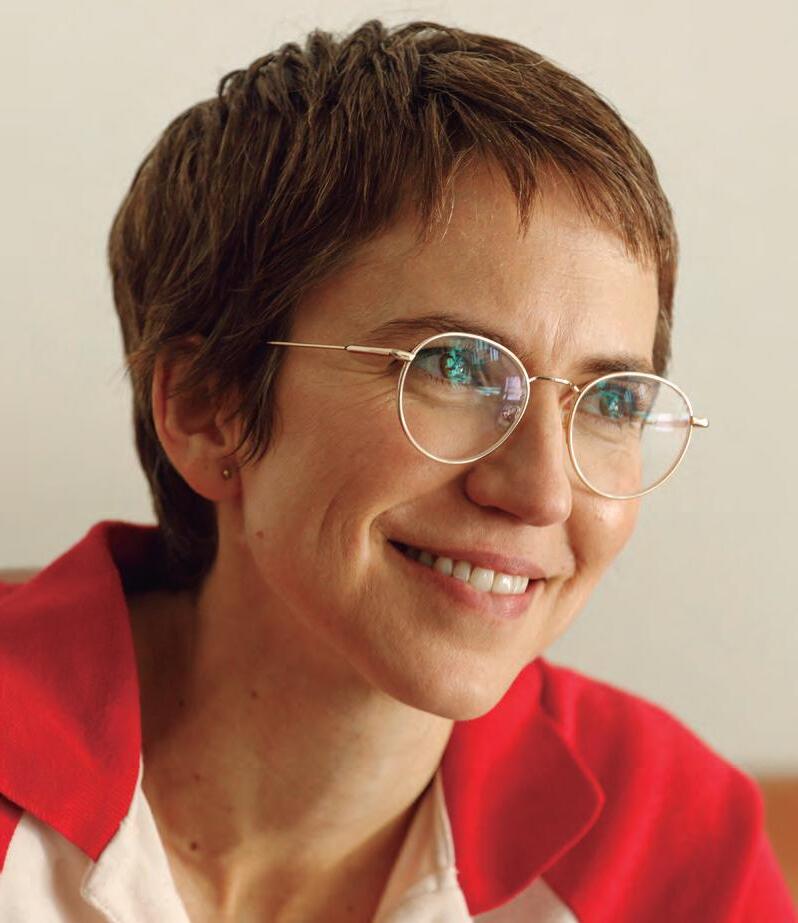
VIVA, THE DIRECTORIAL DEBUT OF ACTRESS AINA CLOTET, HAS BEEN SELECTED FOR THE 65TH SEMAINE DE LA CRITIQUE AT THE 2026 CANNES FILM FESTIVAL. WE SPOKE WITH HER AND WITH THE FILM’S PRODUCERS, EDMON ROCH (IKIRU FILMS) AND MARTA BALDÓ (FUNICULAR FILMS), TO LEARN MORE ABOUT ITS CREATIVE AND PRODUCTION PROCESS, AS WELL AS THE IMPACT THAT ITS SELECTION AT CANNES.
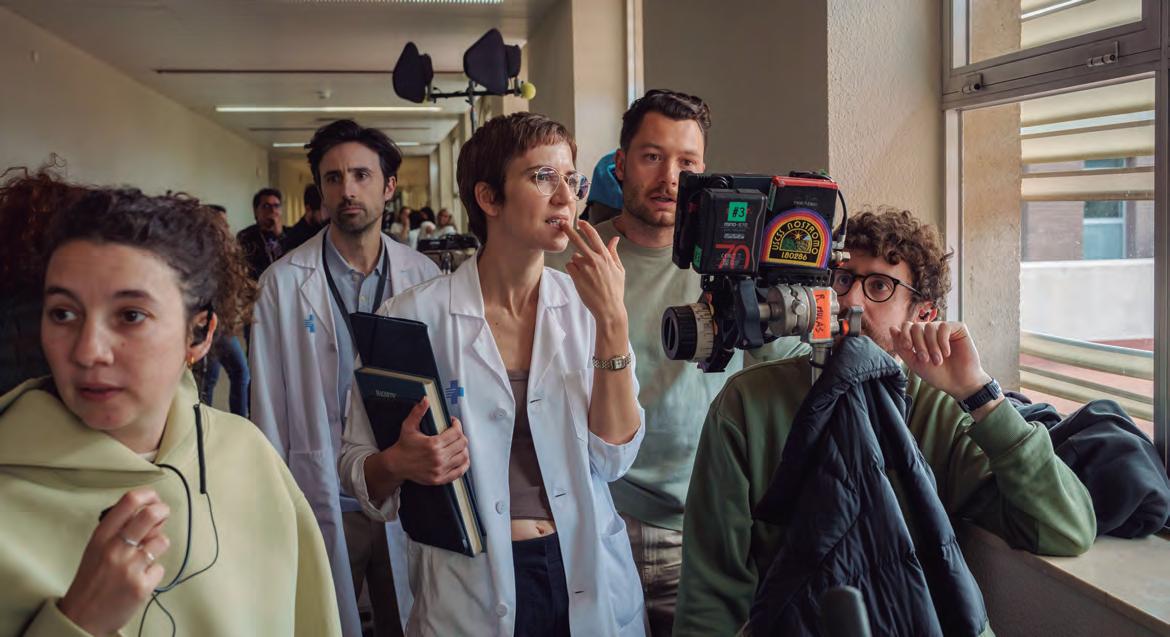
Rubik: In Viva, you take on directing, co-writing the script, and playing the lead role. How did you manage that balance of responsibilities during development and filming?
Aina Clotet: It’s an enormous challenge, but also deeply stimulating, and everything has been possible thanks to surrounding myself with a team I trust blindly. I developed the script together with Valentina Viso, a brilliant screenwriter and an essential creative partner for me. She has been key in the two projects I’ve directed and co-written so far, This Is Not Sweden and Viva, and in both, tone plays a central role. We worked intensively to find a balance between lightness and depth, where humor and irony appear almost naturally, even when we venture into more dramatic territory.
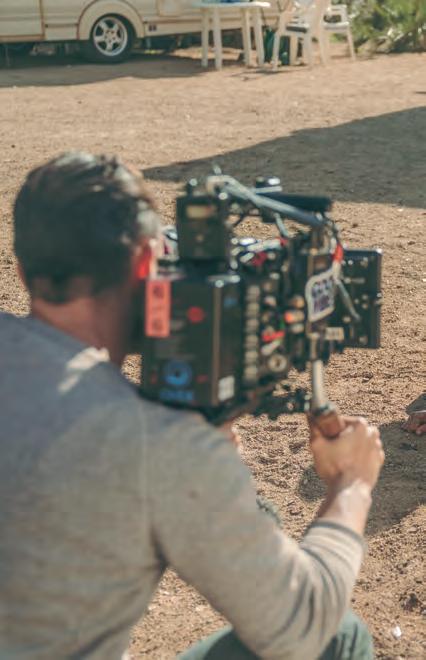
Balancing acting and directing is demanding, but also very exciting. From the beginning, I felt I wasn’t alone: I was supported by an extraordinary team, and we put a huge amount of energy into preparation. We paid attention to every detail, both from the directing perspective and from the acting work. With Nilo Zimmermann, the director of photography, I have a very special connection: we’ve grown together project by project and understand each other with almost instinctive complicity.
I also wanted to bring in Juan Miranda, whose sensitivity, closely tied to theater, brings beautiful precision to directing actors.
His presence was constant and incredibly valuable, both in rehearsals and throughout the shoot. It was also a luxury to have Sara Fantova and Celia Giraldo as script supervisors—two directors with an incredibly sharp eye who gave me great peace of mind on set. Alongside them, amazing professionals like Eva Valiño in sound, Laura Santos in art, and Aina Calleja in editing completed a team I feel deeply proud of.
But above all, I had dream producers. Edmon Roch was present at every moment, throughout all the hours of shooting and the demanding post-production. He worked tirelessly and also challenged me at key moments, something I’m infinitely grateful for.
And Funicular Films is my creative home; Marta Baldó is my soulmate partner, my brother Marc is a fundamental pillar for me, and Jan Andreu has a very strong creative and business vision. I felt that each
person contributed not only talent, but also dedication and contagious passion.
For me, shooting is a space of freedom, play, and risk, and I can only experience it that way when everything is solidly prepared. That’s why I firmly believe that true magic comes from the union of rigor and emotion, craft and enthusiasm. On this film, I was lucky enough to have both, and that made the experience—not only intense and demanding—but also deeply alive (no pun intended) and inspiring.
Rubik: The project has had a long journey from its early stages to its selection in Cannes. At what point did you feel Viva shifted from being a personal concern to a viable project within the Spanish production ecosystem?
A. C.: It’s definitely been a long journey in which we invested heavily in script development, participating in labs like
“THE TRUE MAGIC OF FILMMAKING COMES FROM THE UNION OF RIGOR AND EMOTION, OF CRAFT AND ENTHUSIASM”
Torino, Abycine Lanza, the Catalan Film Academy… always thinking that we wouldn’t move into production until we had a solid script.
Personally, I had a lot of confidence in Ikiru Films and in the pace of steps they were setting, and little by little I saw that we were securing financing. But it’s a path of resilience, where you encounter many “no’s” that force you to confront your story. For years, you’re constantly asking yourself: am I still in love with the story we want to tell? And you have to keep renewing your commitment.
Marta Baldó: As a producer with a long background in marketing and distribution, it was very important for us to work on the strategy and final route from the development stage, building alliances with future festivals. I believe a film has to plant seeds in creative environments from a very early stage, because they later become allies of the project.
We’re very grateful to the Torino Lab and markets like Abycine Lanza, where we had the chance to work with Pamela Biénzobas from Locarno and Isona Admella from the World Cinema Fund. Even though the film eventually has to find its own life and festival, as producers we are already thinking about the distribution process from the very beginning. For both Edmon and me, this was a key point.
Rubik: The film has the support of several television networks and institutions. What factors were key in securing financing, and what lessons would you highlight for other creators trying to push forward their debut feature?
Edmon Roch: A film like Viva required many alliances with strong partners to build up and consolidate the project we were creating. It was a very personal project from such a powerful creator as Aina Clotet, but like any debut, it also needed the market to believe in it.
It was crucial that important partners such as TV networks 3CAT, M+, and RTVE backed Viva, along with funding from ICEC and ICAA, the early support of a distributor like Caramel, a sales agent like Loco Films, the support of Reactiva Badalona during shooting, and Mogambo joining the financing with its investors. For such an ambitious proposal, everyone had to contribute.
Rubik: Shot mainly in Catalan but with international ambitions, how did you approach the strategy for Viva to connect with audiences beyond the local context?
Edmon Roch: Auteur films offer the greatest linguistic freedom, and Viva is a film set in the urban environment of Barcelona that spoke Catalan from the very beginning. When building an international path, linguistic authenticity is never a drawback but rather an added value that allows us to embrace universality through cultural and linguistic diversity.
A. C.: We believe that the way to connect is by trusting that the characters and the story travel beyond language and country. Viva is the story of a 40-year-old woman who, after an illness, fiercely seeks to reclaim all areas of her life—professional, family, and above all, sexual. It’s a film about desire and fear. We believe that the tone and these universal themes are what are connecting internationally.
Rubik: What concrete impact does being part of the Cannes Critics’ Week have for a first film in terms of sales, visibility, and career projection?
A. C.: We don’t have words to thank the Semaine de la Critique for their selection and for the doors it opens worldwide. It’s an incredible opportunity to reach other territories. We are very excited to see the warmth with which the film is being received and the great opportunity we’ve been given. We’re also receiving a lot of interest from other countries.
M. B.: The change in the commercial trajectory of a film that goes through the Semaine de la Critique is absolutely radical. Visibility is not only international, but also local.
This selection has allowed us to choose the best release date together with Caramel, because we believe Viva is a great summer release. It has given us visibility among critics and the press, helping us reach audiences more clearly. And in terms of releasing the film in other countries—something very uncommon for independent films—that step is now much closer.
Rubik: Beyond artistic recognition, what expectations do you have for the film’s commercial journey after Cannes?
A. C.: We would love for it to be released in other countries, but above all, Cannes is a wonderful opportunity to reach audiences. That’s ultimately the most exciting part—that the stories we create reach as many people as possible. In a time of such information saturation, having a platform like Cannes is incredibly helpful—it’s unique. For now, we open on June 19 in Spain, and we hope people will feel like going to see it.
Rubik: What kind of production model did you follow (team size, structure, timeline), and how does it align with current trends in independent cinema in Spain?
E. R.: One of the luxuries of Viva was that from the very beginning, Aina Clotet had a very clear vision of the film, from the first
time she told us about it in 2020. A producer doesn’t ask for simple things, but rather what is needed to tell the film in the best possible way. Where money didn’t reach, there was enthusiasm and a huge investment of time and effort.
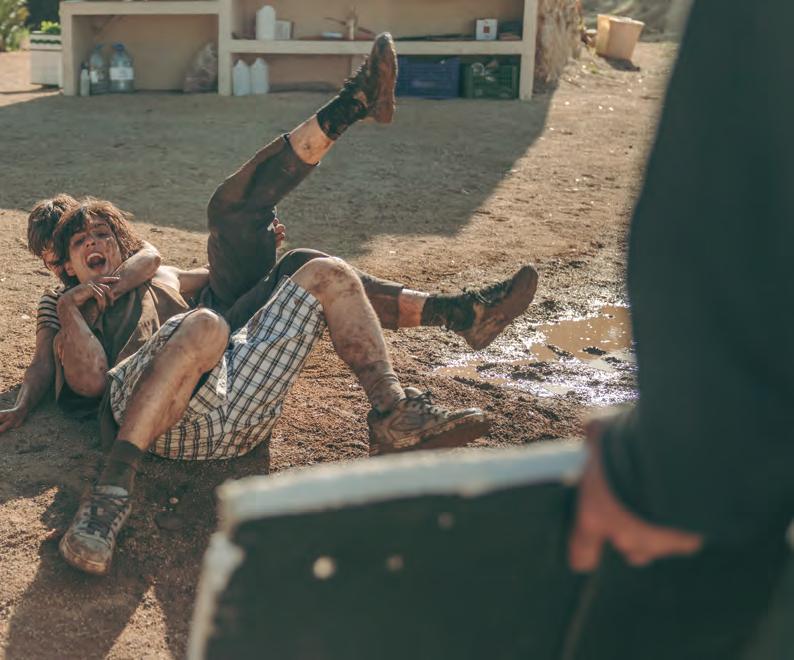
Aina spent many weeks rehearsing with the actors until they became the characters written in the script. The script went through various labs and matured until it reached the perfect point. There was careful and extensive work across all departments: cinematography, location scouting, art, wardrobe, makeup, hair… Prosthetic makeup effects were needed, complex special and visual effects were worked on tirelessly, and the film was allowed to mature in editing, with sound design by Sara Romero and music by Clara Aguilar.
The team was medium-sized, but the level of commitment was enormous. Aina has that wonderful contagious energy that brings out the best in everyone around her.
Rubik: After this experience as a “total filmmaker” on Viva, what are your next steps to continue developing your career as an auteur?
A. C.: We’re shooting the second season of This Is Not Sweden in the fall, and that’s my most immediate next step. As for film, together with Valentina Viso, we’re already starting to explore themes for the next movie. But I once again feel the need to dedicate a lot of time and care to the writing before starting production—which I definitely want to do again with the same team.
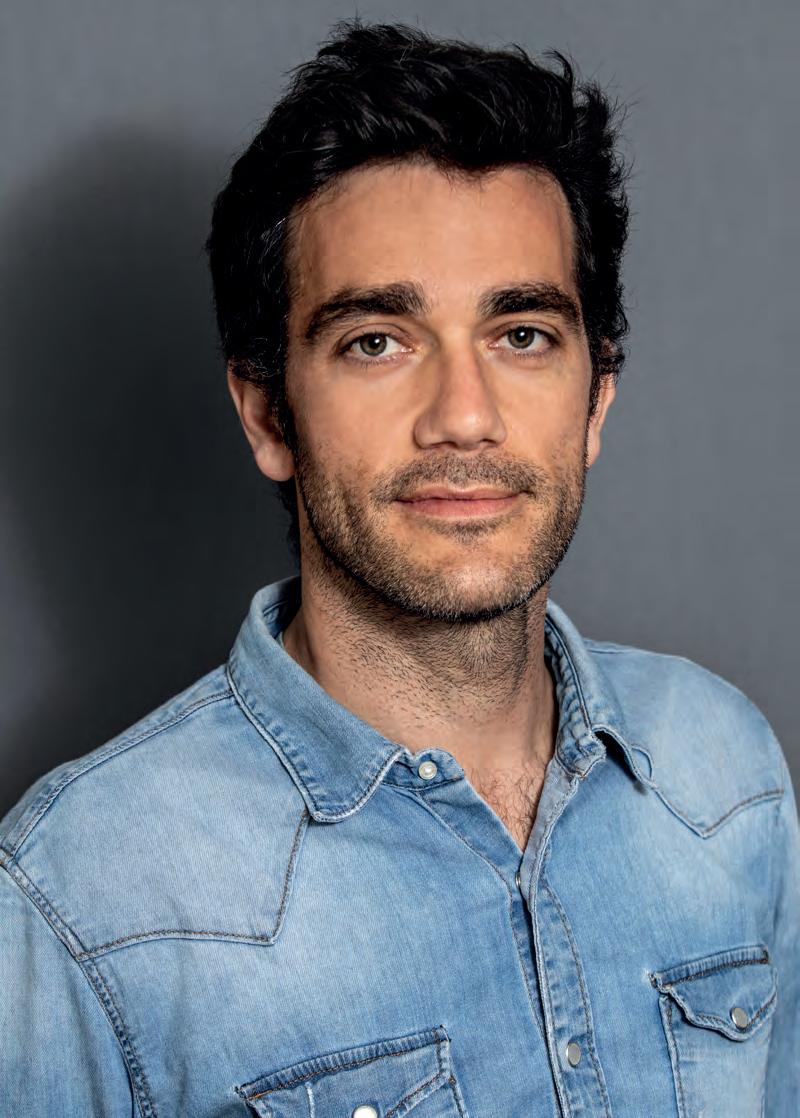
THIS YEAR’S STANDOUT SHOWING FOR SPANISH CINEMA AT CANNES IS PERFECTLY ILLUSTRATED BY THE CASE OF FASTEN FILMS, WHICH HAS ACHIEVED THE FEAT OF BEING INVOLVED IN THREE OF THE FILMS SELECTED THIS YEAR: THE END OF IT BY MARÍA MARTÍNEZ BAYONA (CANNES PREMIÈRE), STRAWBERRIES BY LAÏLA MARRAKCHI (UN CERTAIN
WE SPOKE WITH ITS CEO, ADRIÀ MONÉS, ABOUT THESE FEATURE FILMS AND THE COMPANY’S EVOLUTION.
BY CARLOS AGUILAR SAMBRICIO
Fasten Films had submitted four films to Cannes and never imagined they would be this lucky. At most, they thought they might get one selection—perhaps two. “It’s a lottery. It’s something very exceptional, so we’re very happy,” Adrià Monés tells us.
Rubik: Fasten Films has been around for a few years now—it was founded in 2017. But it feels like in recent years you’ve shifted gears. I imagine this recognition is very important for this new phase…
A.M.: In 2025 we shot six films and three series. Over the past few years we’ve expanded the team, and now we have five executive producers. We’ve been increasing our production volume and now have offices in Barcelona, Madrid and the Canary Islands. Right now we have seven films awaiting release. Gradually, in an organic way, we’ve become more consolidated. We already had a film in Cannes in 2023, Inside the Yellow Cocoon Shell, which won the Caméra d’Or. We’ve been gradually getting our foot in the door with the idea of making projects with directors we admire, always with a social angle or connected to the world we live in, and with an international outlook. That can be the case of The End of It, a majority Spanish production with a first-time Catalan director that we supported from the beginning, or projects we join later on, like Strawberries, a story by a French-Moroccan director set in
Spain, which we’ve been working on for four or five years.
The idea is always to focus on projects that have the potential to travel internationally and to position ourselves in that space: local stories with global reach, working with directors we admire. We always aim for that mix.
At Fasten Films, we’re interested in projects with directors we admire—projects that stand out in a saturated market and have a social dimension connected to what’s happening in the world, that spark conversation.
Rubik: I wanted to ask about that commitment to the international market.
A.M.: Most of our projects—around 80 or 90 percent—are with Spanish writers and directors. But when we like a director, we have no problem reaching out. That’s what happened with Pegah Ahangarani, the director of Rehearsals for a Revolution. We contacted her because we loved her short films, and from there we began developing a project we’re now finalizing with her. She told us she had another film, which was Rehearsals, and we joined to help with post-production and editing.
With María Bayona, although she’s Catalan, it also started from watching her short films. She wanted to make a very ambitious sci-fi film—something impossible
“THANKS
to finance in Spain. I told her I wanted to make whatever she wanted to make. I admire her greatly because she has a sensitivity and ambition that are hard to find. The film had to be financed in English. She had a production company that had worked in the UK, then the BBC came on board, and after that we sought American financing. We adapted to what the director needed in order to finance it. But I would have happily made this film with a Spanish financier—it would have been much easier.
Rubik: For those unfamiliar with Fasten Films, what kind of projects interest you?
A.M.: We’re interested in projects driven by talent we’re excited to work with—whether writer or director—and films that stand out in
a saturated market, always with some element that speaks to something socially relevant or to what’s happening in the world. Films that spark conversation after they end, that don’t remain anecdotal—projects people want to discuss because of their concept or themes.
The End of It is a good example. In a world where people no longer die, what makes you want to live, or feel alive? Today it’s hard to feel alive amid hyperactivity. We’re not that far from death being treated as a disease, so it’s a film that makes me want to see it and talk about it.
Rubik: In France, minority co-productions are very common, and in Spain they’re starting to take off. You do both, and it seems like an interesting business line for growth, right?
A.M.: Yes, it’s something we’ve fought hard to achieve, and it’s well established at the ICEC (Catalunya) and also at the ICAA (Spain), with funding schemes for minority coproductions that allow you to take part in more ambitious international projects. For example, we made The Birthday Party by Miguel Ángel Jiménez, starring Willem Dafoe, which was shot in Greece.
For Strawberries, we received co-production funding in Italy, from the ICAA and the ICEC. Suddenly, Spain has become competitive as a country for minority co-productions. This allows us to grow and work with major directors.
I think it’s clear that, thanks to the ecosystem created in Spain—public funding, film schools and broadcasters that are willing to invest—there are seven or eight Spanish films in Cannes. It’s an industry success, and it makes us very proud of what has been achieved on all fronts.
Rubik: Let’s talk about your films in Cannes. The End of It (Cannes Première) is a very international film directed by Catalan filmmaker María Martínez Bayona. You mentioned wanting to work with her after watching her shorts—how did such major stars come on board?
A.M.: About five years ago I saw María’s short films. I met her and we started developing the project. Everything kept growing, and together with Elation Pictures, the British production company, we approached the BBC and they came on board—that was a major seal of approval. Thanks to María’s shorts, the
script and the casting director, we got Rebecca Hall involved. Then Gael García Bernal joined because they shared an agent at William Morris. The cast kept growing, which helped us secure more financing—from the ICAA, tax incentives, and American equity. The project expanded organically, driven by the story and María’s shorts. It happened because the talent responded to it.
Spain is now competitive as a country for minority coproductions. It’s something producers have fought hard for, and it allows us to grow.
María’s vision as a director is incredibly powerful. Rebecca Hall is amazing—masterful (…) It makes you question what makes you feel alive and what it would mean to never die.
Rubik: You also have a debut feature in Special Screenings, Rehearsals for a Revolution by Pegah Ahangarani. The current situation in Iran is very tense—I imagine when you joined the project you couldn’t have foreseen all this…
A.M.: Obviously, we had no idea that that maniac Trump would end up attacking Iran, but what drew us in was that the film tells the last 50 years of the country through her personal archive. She has incredible footage of her parents—who are filmmakers—and of herself as a child actor. Her parents were
revolutionary directors who opposed the Shah, whom they saw as a dictator, and they joined Khomeini, who at the time was perceived as leftleaning and anti-system. They were seen as very modern people, but later became disillusioned with the religious and ultra-conservative turn.
(…) These are very personal stories that recount the last 50 years of Iran with an extraordinary use of archival material. It’s on the level of Amy or Senna in the way it uses archive footage. It tells small, intimate stories while also telling the broader history of Iran over 50 years.
This is our first non-fiction project, as we recently launched a non-fiction division with Enric Bach.
Rubik: Finally, in Un Certain Regard there’s Strawberries by Laïla Marrakchi, about two young women who travel from Morocco to southern Spain to work harvesting strawberries. What would you highlight about this film?
A.M.: It addresses how large-scale fruit production in southern Spain often relies on a model that takes advantage of Moroccan workers, who are misled and end up facing conditions very different from what they were promised. It’s also a personal story of friendship between four women who don’t know each other, and a lawyer—based on a real case— played by Itsaso Arana, who helps them file a complaint. It sheds light on a largely unknown reality about what happens in many fields in Huelva.
We like personal stories that also speak to something bigger happening in Europe, such as these clear cases of exploitation.
A Fading Man (Der verlorene Mann)
Dir. Welf Reinhart
May 14th (Thu) 2:00 pm @ Palais E
The Trail of the Wolf (El Rastre del Llop)
Dir. Ángeles Hernández
May 15th (Fri) 8:00 pm @ Olympia Cinema
Bitter Christmas (Amarga Navidad)
Dir. Pedro Almodóvar
May 13th (Wed) 9:30 am @ Olympia 3
May 14th (Thu) 9:30 am @ Palais I
Dante
Dir. Hugo Ruiz
May 12th (Tue) 3:45 pm @ Palais D
The Man in My Head (Tengo un hombre en la cabeza)
Dir. Pitipol Ybarra
May 13th (Wed) 11:30 am @ Lerins 2
Tied Up (La silla)
Dir. Ángel de la Cruz
May 14th (Thu) 11:30 am @ Palais F
Torrente For President (Torrente, presidente)
Dir. Santiago Segura
May 16th (Sat) 9:30 am @ Lerins 2
Dance of the Living (La lucha)
Dir. José Alayón
May 15th (Fri) 4:15 pm @ Palais E
The House of Atreus (La casa de los monstruos)
Dir. David Hebrero
May 18th (Mon) 8:00 pm @ Olympia Cinema
Los justos
Dir. Jorge A. Lara
May 18th (Mon) 12:00 pm @ Palais C


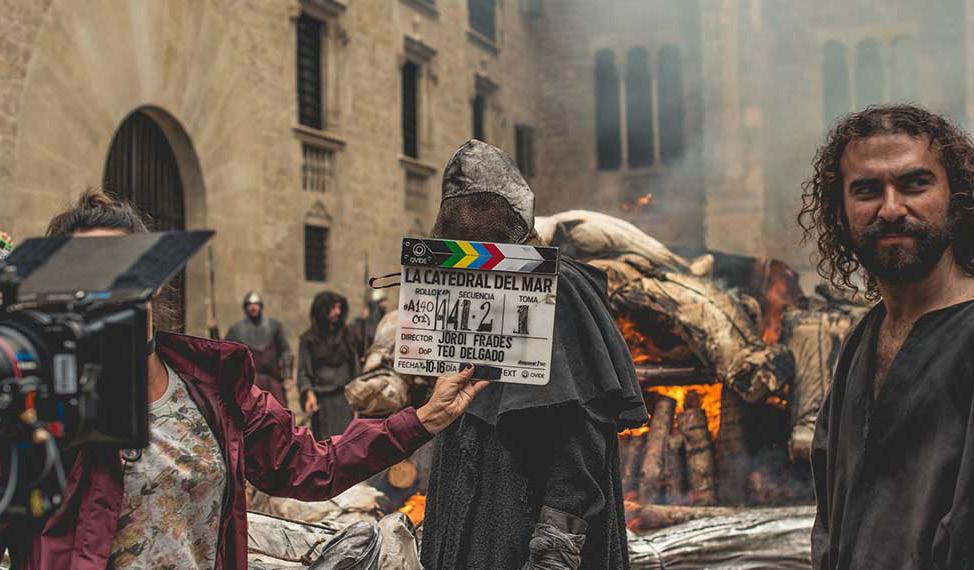
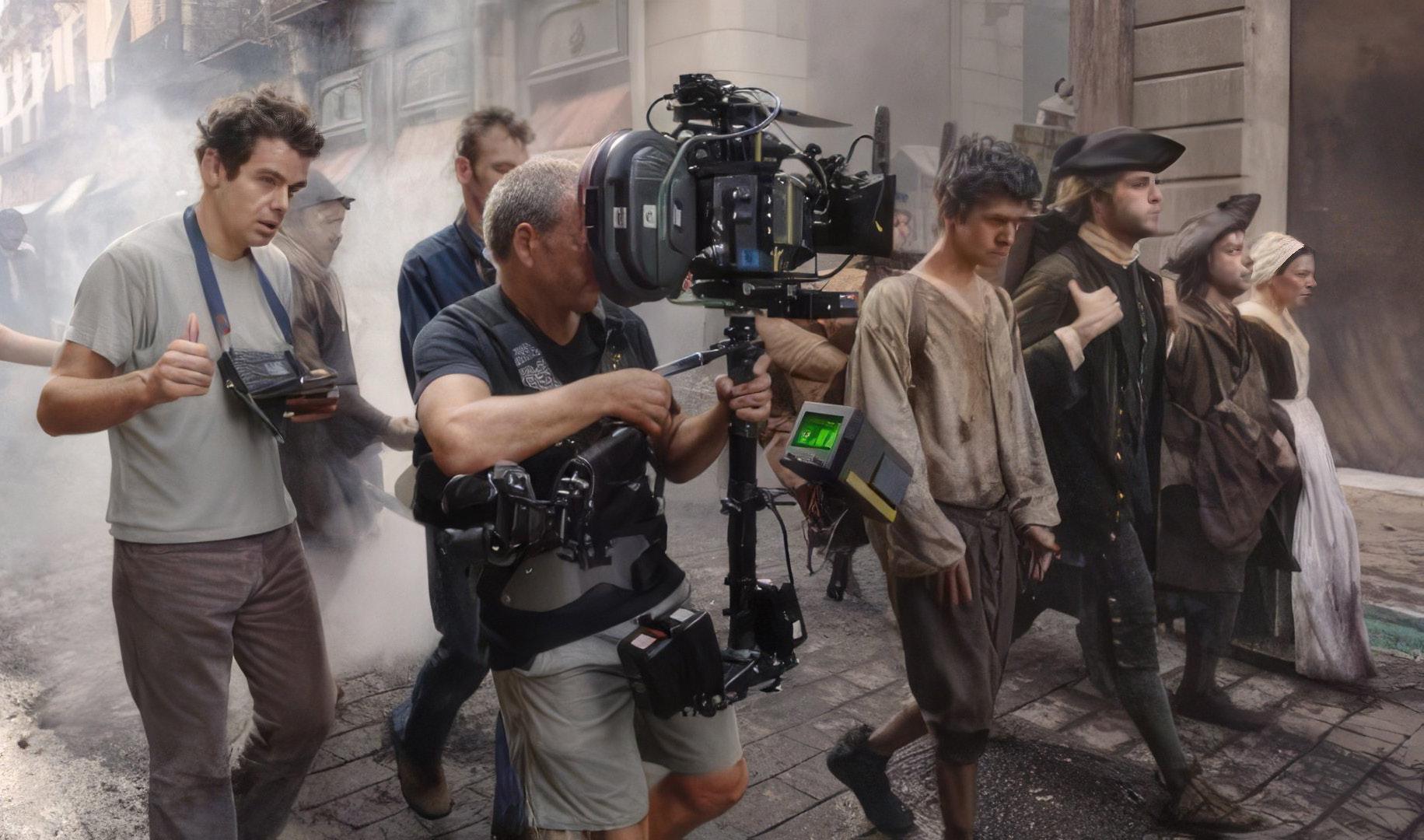
In cinema, everything is possible. The magic of celluloid, and now of television, has allowed our imagination to soar to infinity and beyond. Through both the big and small screen, Barcelona has become a vast audiovisual set, offering us unimaginable stories.
In cinema, everything is possible. The magic of celluloid, and now of television, has allowed our imagination to soar to infinity and beyond. Through both the big and small screen, Barcelona has become a vast audiovisual set, offering us unimaginable stories.
The city has been, and continues to be, the setting for countless audiovisual productions. Films and series alike have filled its streets and squares with shoots. At times, Barcelona has portrayed itself across a wide range of eras and situations, real or imagined. It has
The city has been, and continues to be, the setting for countless audiovisual productions. Films and series alike have filled its streets and squares with shoots. At times, Barcelona has portrayed itself across a wide range of eras and situations, real or imagined. It has
told the story of the grassroots struggle of a man and an entire neighbourhood, Torre Baró, fighting for its rights in El 47 by Marcel Barrena, or a complex love triangle in Vicky Cristina Barcelona by Woody Allen.
told the story of the grassroots struggle of a man and an entire neighbourhood, Torre Baró, fighting for its rights in El 47 by Marcel Barrena, or a complex love triangle in Vicky Cristina Barcelona by Woody Allen.
At other times, the city has stood in for undefined urban settings. With a little imagination and the right cinematic magic, it could pass for almost any city in the Northern Hemisphere. One example is the series The Innocent by Harlan Coben, adapted by Oriol Paulo for Netflix and shot in the city, starring Mario Casas. That city was certainly Barcelona for those
At other times, the city has stood in for undefined urban settings. With a little imagination and the right cinematic magic, it could pass for almost any city in the Northern Hemisphere. One example is the series The Innocent by Harlan Coben, adapted by Oriol Paulo for Netflix and shot in the city, starring Mario Casas. That city was certainly Barcelona for those
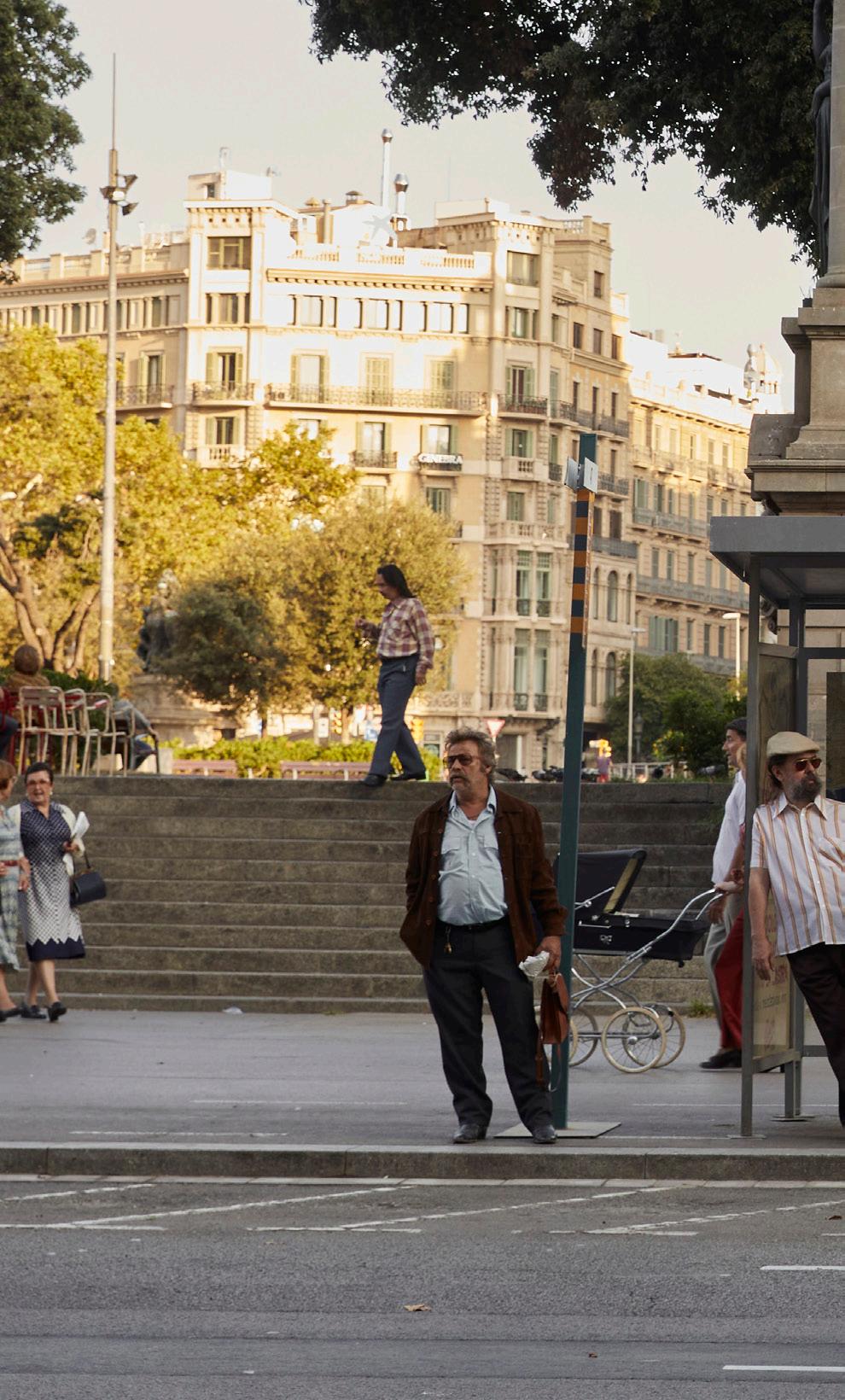
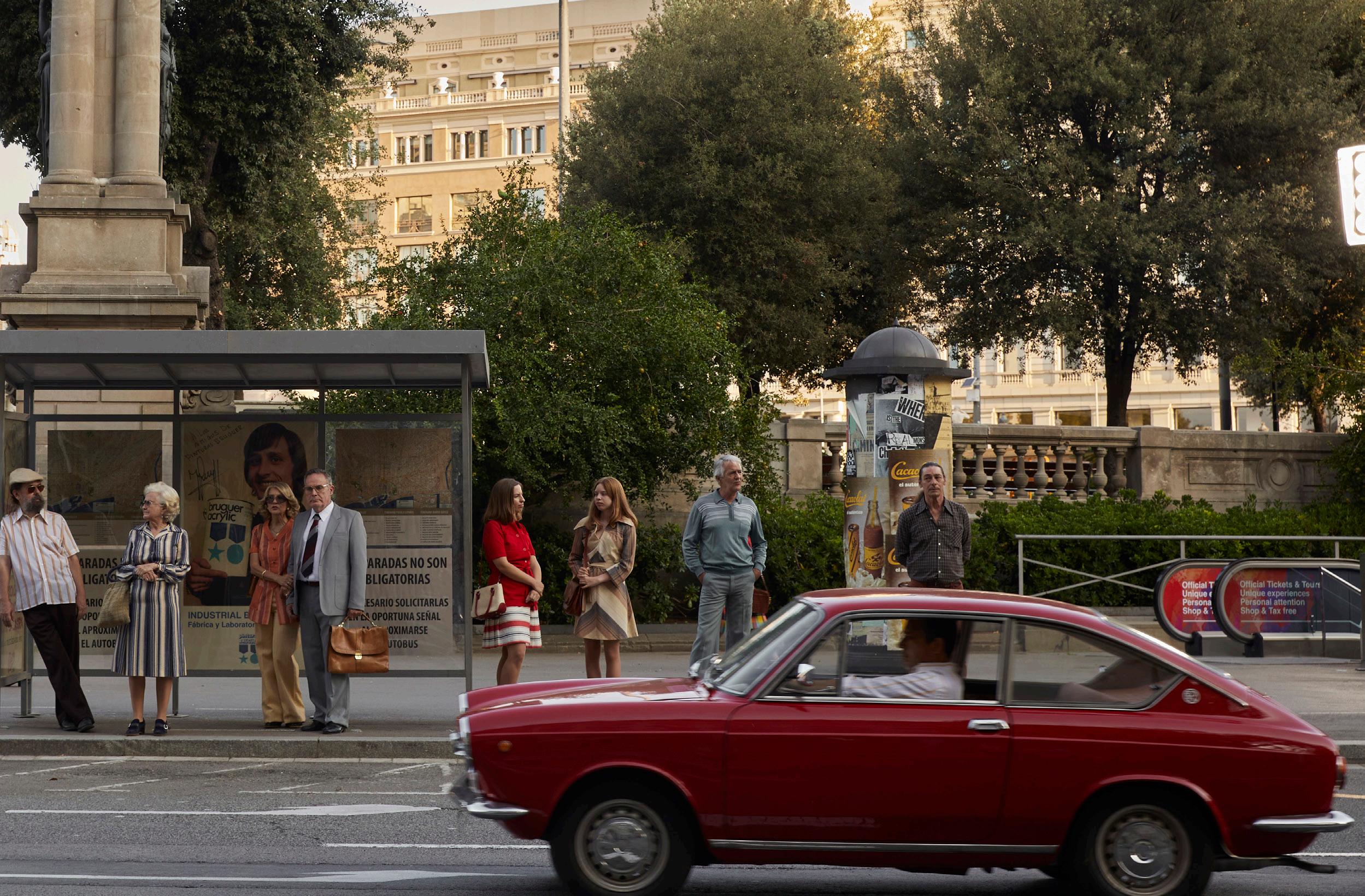
who filmed it and for those who live here and can recognise it, but for the rest of the world it became an indeterminate, cosmopolitan metropolis.
Finally, Barcelona has disguised and camouflaged itself as other places as diverse as Havana, as seen in Mr. Arkadin by Orson Welles; the west coast of the United States in The Machinist by Brad Anderson, starring Christian Bale; Paris in the latest season of The Crown; or even places that have never existed, born from the imagination of writers and screenwriters. Places such as the castle of the villain
Fu Manchu, the planet Foundation conceived by the mind of Isaac Asimov, or the Emerald City, with Dorothy and Toto following the yellow brick road. All this and much more has been, is, and can be Barcelona
Let us open its doors and take a look at how the city’s narrative has been shaped through cinema and television. A different city. Many cities in one city. Let us look at the Barcelona that audiovisual storytelling has created, and that has allowed us to enjoy it on both the big screen and the small one.
If you want to shoot in Barcelona, the first step you need to take is to contact us through our filming support office. This office is part of the Barcelona Film Commission, the public service of the Barcelona City Council which, through the ICUB (Barcelona Institute of Culture), promotes and supports the audiovisual sector in the city. We will work hand in hand with you to ensure your shoot takes place. We will assist you in obtaining the necessary filming permits and facilitate coordination with the different municipal services involved in granting these permits.
On our website you will find all the information you need to film in our city. This is the first step. You can also consult location directories, industry company listings, and an extensive filmography of films and series shot in Barcelona. Do not hesitate to contact our office so we can answer all your questions. We are here to help you.
If you are looking for a specific place to shoot, our location directory provides information on both public and private locations in Barcelona and throughout Catalonia, including all the details you need to contact the people or entities that manage them. It is a first window onto the locations that await you in our city.
If, on the other hand, you are looking for a catering company, technical equipment, post-production services or sustainability solutions, among many other areas, consult our company directory, which brings together Barcelona based companies linked to the audiovisual sector. Here you will find what you need to facilitate your shoots.
If you want to explore all the productions that have passed through our streets, our extensive filmography allows you to consult feature films, television series, TV movies and miniseries that have been shot in Barcelona. It is a living directory that is constantly evolving, whether by incorporating new information on recent productions or through historical research into productions filmed in the city in the past. Browse it and discover everything that has been filmed in Barcelona
If instead you feel like taking a stroll through the places where your favourite films or series were shot, consult our film routes dedicated to feature films and series. In these articles, we follow in the footsteps of their protagonists, revisiting the locations used during filming.
And of course, if you have any questions, do not hesitate to contact us. We are here to help you. Remember: You imagine it, we make it happen.
From the very earliest days of cinema, Barcelona became a nerve centre of the seventh art. The Lumière brothers sent Alexandre Promio to shoot the documentary Spanish Views in 1896, featuring various shots of the port. It is considered one of the first films ever made in Spain. The film was titled Place du port à Barcelone. In 1898, Fructuós Gelabert filmed Fight in a Café at the Casino de Sants, considered the first Spanish action film. The film was purchased by the famous French production company Pathé, which went on to establish a branch in the city.
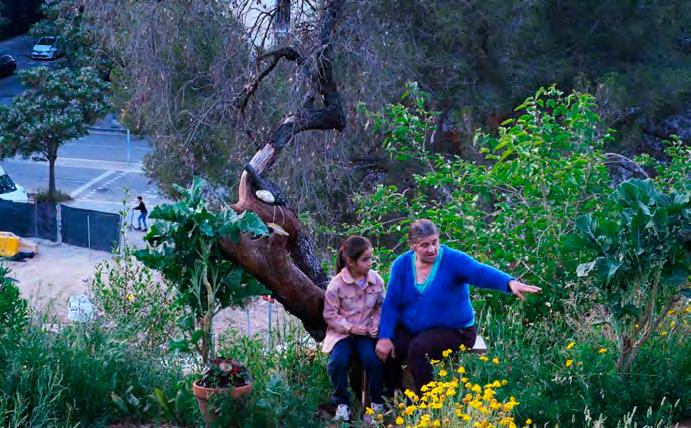
The 1950s were also the golden age of film noir in Spain, and Barcelona was its capital. The genre of Barcelona crime cinema was born with the release in 1950 of two key films: Apartado de Correos 1001 by Julio Salvador and Brigada Criminal by Ignacio F. Iquino. Their spectacular reception by audiences revealed an opportunity that producers seized, resulting in a whole decade of films that defined the genre. Delinquency, robberies, jewels and the seedy underworld of the port were portrayed in films such as The Fugitive from Antwerp (1954) by Miguel Iglesias or Distrito Quinto (1957) by Julio Coll
In 1963, Francisco Rovira-Beleta shot Los Tarantos starring Carmen Amaya and a very young La Singla (also the subject of the wonderful 2023 documentary about her life directed by Paloma Zapata). The film immerses us in the shantytown Barcelona of the Somorrostro neighbourhood, telling the story of two young lovers from rival Romani families, with Antonio Gades dancing beneath an arch of water on Las Ramblas. A very free adaptation of Shakespeare’s Romeo and Juliet
In the 1920s, Barcelona attracted Hollywood and became home to several of its distribution companies. In 1924, Metro Goldwyn Corporation and Hispano Foxfilm set up operations in the city, followed by Paramount Films in 1927. In 1937, Errol Flynn visited Barcelona. A few years later, in the 1950s, the American star system shot films such as the aforementioned Mr. Arkadin (1955) by Orson Welles Ava Gardner also passed through the city on her way to the coast to shoot Pandora and the Flying Dutchman.
Between the 1960s and 1970s, several film classics were shot in Barcelona, such as The Passenger by Antonioni, starring Jack Nicholson riding the cable car or walking along Las Ramblas. In Circus World, starring John Wayne, we discover Port Vell, the Columbus Monument and the Liceu. In The Great White Hope (1970) by Martin Ritt, James Earl Jones fights at the Canódromo de la Meridiana, strolls through the Ciutadella Park as if it were Berlin, and the Olympic Stadium on Montjuïc is transformed into a racetrack in Havana. The Port of Barcelona also doubled as Havana’s harbour in Mr. Arkadin and in Voyage of the Damned (1976) by Stuart Rosenberg. It seems that, at the time, Barcelona was unknowingly twinned with the Cuban capital. It even stood in for a Bosphorus castle when Park Güell became the setting for the extravagant The Castle of Fu Manchu (Jesús Franco, 1969), starring Christopher Lee, an actor who also wandered through the city in those years in the guise of the legendary Dracula in Count Dracula (1970), also directed by Franco, or in the experimental Umbracle (1972) by Pere Portabella.

But if Barcelona made a major cinematic leap beyond its borders and reached a broad international audience, it was thanks to two films and two directors: All About My Mother by Pedro Almodóvar (1999) and Vicky Cristina Barcelona (2008) by Woody Allen. Thanks to these shoots, Barcelona has been able to become any city, country or era: from 18th-century France in Perfume: The Story of a Murderer by Tom Tykwer (2006), to the west coast of the United States in The Machinist (2004) by Brad Anderson, the Paris where Lady Di died in the sixth season of The Crown (2023); 1950s Mexico in Marlowe (2023) by Neil Jordan, The Shanghai Spell by Fernando Trueba (2002), present-day Granada in the Korean series Memories of the Alhambra, or even Thailand during a tsunami in The Impossible (2012) by J. A. Bayona, shot at the Bernat Picornell Pools and the Montjuïc Municipal Pools
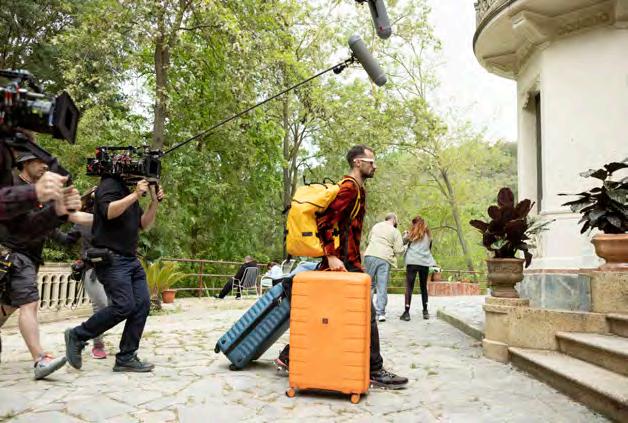
Barcelona has also become history when portraying the devastation of the Civil War and the fight against dictatorship in Land and Freedom (1995) by Ken Loach or Libertarias (1996) by Vicente Aranda, the life of the executed activist Salvador Puig Antich in Salvador (2006) by Manuel Huerga, or the neighbourhood struggle of Torre Baró in El 47 (2024) by Marcel Barrena

In the late 1970s and early 1980s, José Antonio de la Loma portrayed the Barcelona that gave rise to the so-called quinqui cinema in films such as Perros Callejeros (1977), Perros Callejeros II: Busca y captura (1979) and The Last Hits of “El Torete” (1980).

Barcelona based directors such as Marc Recha have shown us other Barcelonas, as in Petit Indi (2009), set in the Vallbona neighbourhood, which also plays a central role in José Luis Guerín’s new film History of the Good Valley (2025). Guerín had already devoted his first and excellent documentary to the city, In Construction (2001). Cesc Gay and Ventura Pons consistently portray the city’s most cosmopolitan side, while Bigas Luna reveals its most extravagant. Meanwhile, Rosa Vergés offered her own take on the city in Boom Boom (1990) and Souvenir (1994). More recently, in Mamífera (2024), Liliana Torres set her story of a woman who decides not to become a mother in the Montbau neighbourhood, while Aina Clotet portrayed the microcosm of Vallvidrera in the series This Is Not Sweden (2023). For his part, Biutiful (2010) by Alejandro G. Iñárritu offered an external view at a Barcelona we had never seen portrayed like this on screen, something also achieved by fellow Mexican director Fernando Frías de la Parra in his adaptation of the novel I’m Not Going to Ask Anyone to Believe Me.
And let us not forget the zombies, who have invaded the city on numerous occasions. Most recently, in the third season of The Walking Dead: Daryl Dixon (2025), but also in the famous REC saga launched in 2007 by Jaume Balagueró and Paco Plaza, or in apocalyptic films such as The Year of the Plague (2018) by Carlos M. Ferrera, The Last Days (2013) by brothers David and Álex Pastor, or Apocalypse Z (2024) by Carles Torrens, who are already shooting its sequel. Horror has become firmly established in the city, not only through zombies but also through ghosts, apparitions, vampires and other creatures of the night, as seen in Darkness (2002) by Jaume Balagueró, Down a Dark Hall (2018) by Rodrigo Cortés, The Orphanage (2007) by J. A. Bayona, Bird Box Barcelona (2023) by the Pastor brothers, and science-fiction classics such as The Day of the Triffids (1963) by Steve Sekely and Freddie Francis, shot at Poble Espanyol.
In Barcelona, the audiovisual industry not only strives for creative excellence, but also for environmental and social responsibility. For many years, the Barcelona Film Commission has been working to help productions implement sustainable criteria at every level of their projects, from pre-production to filming and post-production.
Sustainability is a central pillar of our work. We strive to provide tools, resources and guidance that enable productions to reduce their environmental impact, promote diversity and equal opportunities, and support the local economy. The main areas we focus on include:
- Consumption of materials, energy and water: we promote the efficient and responsible use of resources.
- Waste management: we encourage best practices to reduce, recycle and reuse materials on set.
- Mobility and emissions: we encourage the use of public transport, shared or electric vehicles, and the minimisation of unnecessary travel.
- Social and community impact: we foster positive relationships with the community and inclusion within the audiovisual sector.
We make a range of guides and best-practice guidelines available to productions, specifically adapted to filming in Barcelona. These include sustainability criteria as well as self-assessment questionnaires. We also provide additional materials and resources that facilitate the application of sustainable practices throughout all phases of a project.
In addition, the Barcelona Film Commission gives visibility and support to supplier companies that contribute to making productions more sustainable. We offer a Company Directory that recognises, through specific distinctions, those companies that provide sustainable products or services, use 100% renewable energy, communicate their sustainability actions, hold official certifications, or demonstrate social commitment. These distinctions make it easier for productions to identify responsible suppliers, helping to reduce the carbon footprint and the overall impact of audiovisual production.
As you can see, the Barcelona Film Commission is committed to a more responsible audiovisual industry, one that integrates sustainability as part of its creative DNA. Every small gesture counts: choosing sustainable suppliers, minimising waste, reducing emissions or promoting social inclusion are steps that, taken together, transform the sector. Our goal is clear: to build an audiovisual ecosystem that is environmentally, socially and economically sustainable, in the service of the city and future generations.
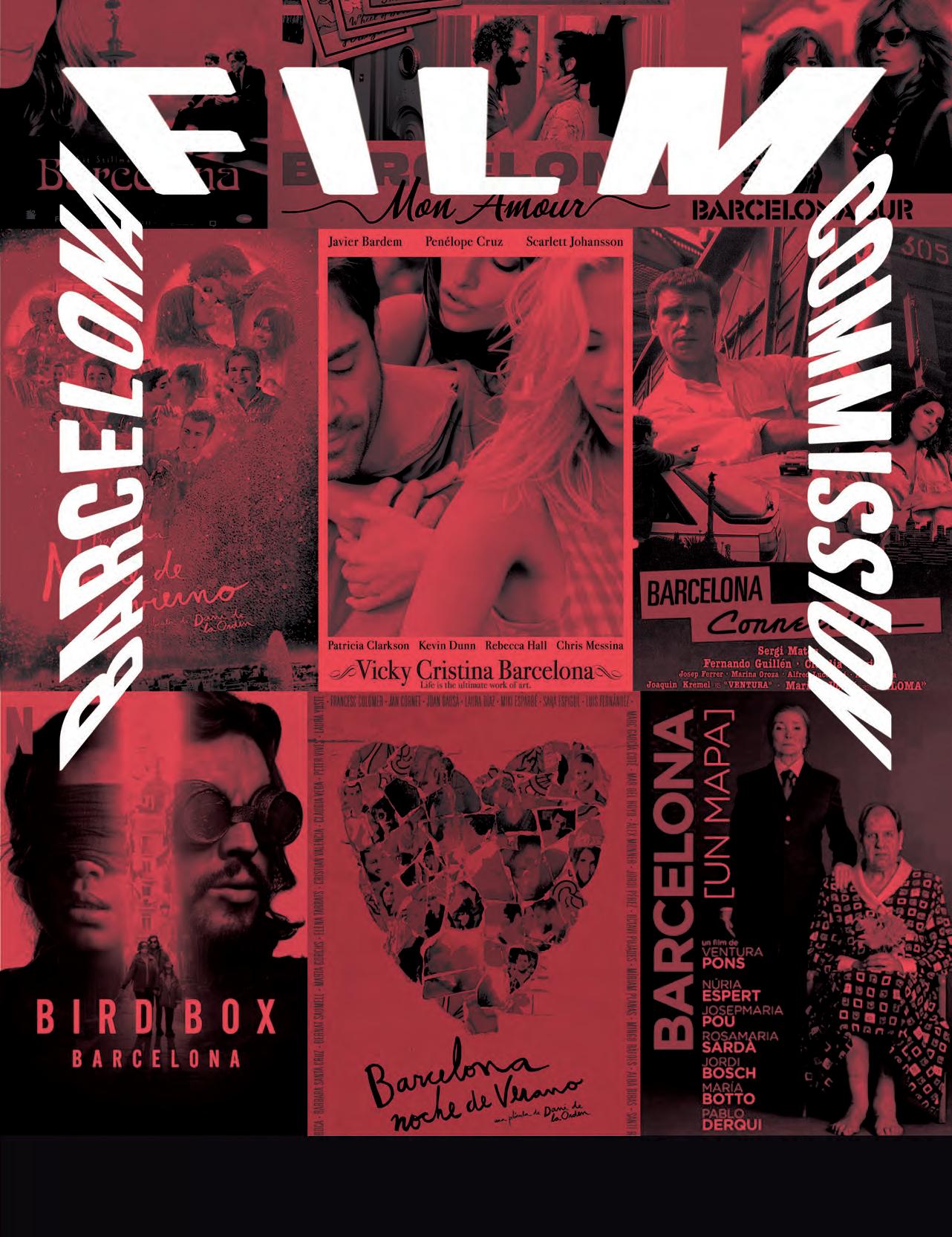


The Harvester (Sacamantecas)
Market Premiere
Dir. David Pérez Sañudo
May 13th (Wed) 11:30 am @ Arcades 3
May 15th (Fri) 3:45 pm @ Riviera 2
La luz - Market Premiere
Dir. Fernando Franco
May 13th (Wed) 2:00 pm @ Riviera 1
Carte Blanche - Market Premiere
Dir. Gerardo Herrero
May 14th (Thu) 11:30 am @ Arcades 3
Arriba Tutto Market Premiere
Dir. José Mota
May 14th (Thu) 4:15 pm @ Riviera 1
I Want to Be Like You
Dir. Konstantin Bojanov
May 12th (Tue) 11:30 am @ Arcades 3
Still Afloat (Dos días)
Dir. Gonzaga Manso
May 12th (Tue) 11:30 am @ Lerins 2
Runner (Corredora)
Dir. Laura García Alonso
May 12th (Tue) 4:15 pm @ Lerins 1
Gaua – The Night (Gaua)
Dir. Paul Urkijo
May 14th (Thu) 4:15 pm @ Palais C
Balandrau, Where the Fierce Wind Blew (Balandrau, vent salvatge)
Dir. Fernando Trullols
May 15th (Fri) 9:30 am @ Palais C
Another League (Pioneras: Solo querían jugar)
Dir. Marta Díaz de Lope Díaz
May 15th (Fri) 2:00 pm @ Palais G
Bros (Hermanos)
Dir. Carol and Marina Rodríguez Colás
May 16th (Sat) 9:30 am @ Palais C
Mallorca Confidential
Dir. David Ilundain
May 15th (Fri) 11:30 am @ Palais H
Another Man (Un altre home)
Dir. David Moragas
May 17th (Sun) 11:30 am @ Palais B
A Son (Un hijo)
Dir. Nacho La Casa
May 17th (Sun) 3:45 pm @ Palais B
Trinidad
Dir. Laura Alvea y José Ortuño
May 12th (Tue) 2:00 pm @ Olympia 3
May 14th (Thu) 3:45 pm @ Palais J
Summer Days (Días de agosto)
Dir. Chema de la Peña
May 14th (Thu) 11:30 am @ Palais D
Love on a Tightrope (Tal vez)
Dir. Arima León
May 13th (Wed) 1:30 pm @ Palais D
Deep Com Roots Presents –Promo Reel
May 12th (Tue) 3:45 pm @ Palais J

IN SUCH AN IMPORTANT YEAR FOR SPANISH CINEMA AT THE FESTIVAL, IT’S ALSO WORTH HIGHLIGHTING ITS ACTIVITIES RELATED TO THE MARCHÉ DU FILM, WHICH TAKES PLACE FROM MAY 12 TO 20. BELOW YOU’LL FIND INFORMATION ON SPANISH EXHIBITING COMPANIES, BOTH IN THE SPANISH PAVILION AND ELSEWHERE, AS WELL AS SOME OF THE MOST INTERESTING MARKET ACTIVITIES IN THIS EDITION FOR NETWORKING.
ICEX and ICAA are once again organizing Spain’s participation with the Cinema from Spain pavilion (Riviera A3–A5). The space hosts exhibitors such as Begin Again Films, Bendita Film Sales, Sideral Cinema / More Than Films, Feelsales, Spain Film Commission, ECAM, EGEDA, Canary International Pictures / ALDA Productions, Basque.Audiovisual. & Film Basque Country, Canary Islands Film,
and The Film Agency / Con un Pack de Películas
Next to the pavilion, at Riviera A0, the sales agency Deep Com Roots will be located for the first time. Another Spanish sales agency, Filmax, will be at its usual spot: Riviera A1. Meanwhile, Latido Films will be located this time at Riviera D1. Film Factory will host buyers at the First Croisette residence, right in front of the Palais (Boulevard de la Croisette 3/4), in Apartment 602.
As always, Riviera A4 will be the stand for Catalan Films (their traditional happy hour is on Friday the 15th at 12:30 pm at their stand). Andalucía Film Commission will welcome professionals at Riviera J1, as will the Sitges Festival. The Mallorca-based production company Shcherbina will be at the Palais -1, Stand 22.08.
As every year, there are various activities supported by the Ministry of Culture , through the Institute of Cinematography and Audiovisual Arts

(ICAA), in collaboration with ICEX (Spain Trade and Investment).
One of them is Producers on the Move , an initiative promoted by European Film Promotion that offers 20 emerging European producers the opportunity to build and expand their international network by participating in Cannes. This year, Xavi Font (Zuzú Cinema), producer of Sirât and Strange River , among others, will take part.
Fantastic 7 is a key platform for genre cinema at the Marché du Film. Together with the Sitges International Fantastic Film Festival, the ICAA supports this 8th edition, which will hold its pitching event for new projects on Sunday, May 17, from 12:00 to 13:50 at Palais K (Palais des Festivals). That evening, starting at 22:00, the Fantastic Night networking event will take place at Bistrot du Lérins.
Among the seven projects is the Spanish Dead Ground by Marta Medina (LAZONA Cine). It’s a fantasy horror project set in depopulated Spain, in the province of Soria. The story follows Hector, who hasn’t returned to his home village since he was a teenager, when his parents disappeared without a trace. Now, he’s been sent back there to fix a data center that’s been built nearby. He discovers that the data center is drying
up the river and crops, the remaining villagers are revolting against it, and that people who disappeared years ago are reappearing during blackouts. When Hector suddenly vanishes, his girlfriend realizes that perhaps something ancient is awakening.
In the documentary field, Docs from Spain returns within the Cannes Docs program. ICAA, in collaboration with ICEX and Zinebi (Bilbao International Documentary and Short Film Festival), supports four Spanish projects in development, presenting them in a showcase that will take place on Sunday, May 17, from 11:45 to 13:00 in Lérins 1. The day before, Saturday the 16th, the Cannes Docs Spain Happy Hour will be held at 18:30 at The Viewpoint (invitation only).
The selected projects are Altxaliliak by Maia Iribarne (Doxa Producciones), Artifacts of War by Jorge Caballero Ramos (Cangrejo Producciones), Homefire by Neus Pagès (Nanouk Films, Mar Maduell | Glia Films), and The Path that Walks by Efthymia Zymvragaki (Gris Medio, Babet Touw | Witfilm, Eirini Makedona | Ethereal).
For the sixth consecutive year, Cannes will host 2cool4school , an ICAA event in collaboration with various film schools that supports new creators by inviting
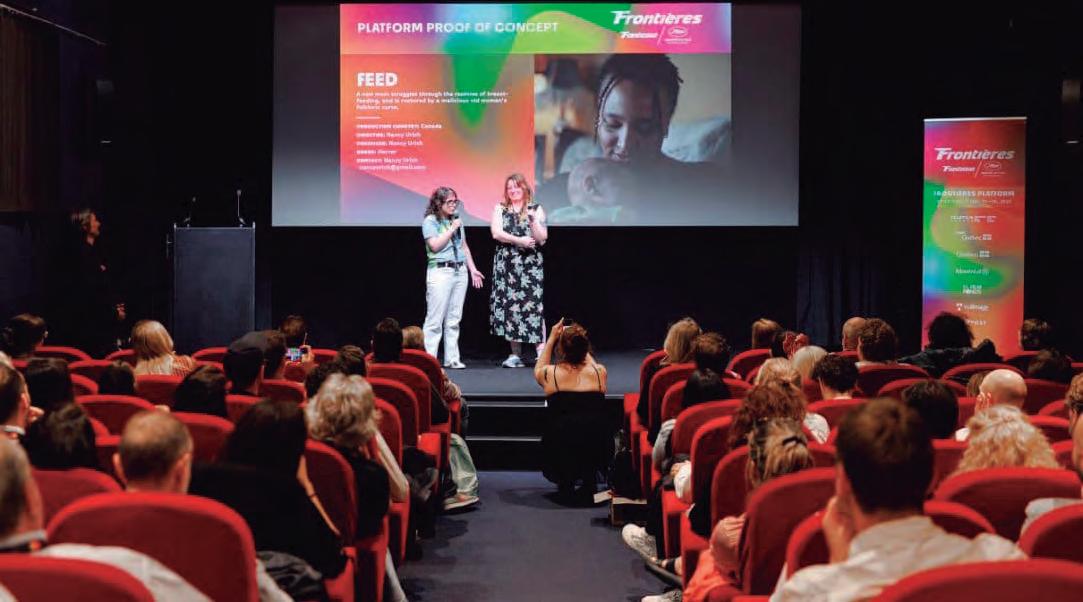

them to Cannes to present their short films at the festival market. In addition to screening their work, they also have a space in the Short Film Corner | Rendezvous Industry.
The shorts traveling this year are Until we bury them! by Marco Araújo (ECAM), Desfici by Gerard Puig (ESCAC), High River by Daniel Alegrete (Zine Eskola), and Insecticida by Paula Gallego (Universitat Politècnica de València).
Another activity that has become important for the Spanish delegation is participation in Cannes Remakes, in which ICAA collaborates. The Spanish institution has selected three Spanish companies to showcase titles with remake potential in other countries. The event will take place on Monday, May 18, at the CNC Pavilion (Gray d’Albion) starting at 9:00, with pitching sessions followed by professional meetings and a networking event.
The Spanish proposals are My Friend Eva by Cesc Gay (sales: Filmax), The Platform by Galder Gaztelu-Urrutia (sales: Latido), and When You No Longer Love Me by Igor Legarreta (sales: Begin Again).
At the Annecy Animation Showcase, held on Sunday, May 17, one of the five selected projects includes Spanish participation: Insectario, the feature debut of Mexican filmmaker Sofía Carrillo. To be made in stop-motion, this project is a co-production between Pimienta Films (Mexico) and Inicia Films (Spain).
The story is set in a world where insects have become extinct. Lexi works cataloguing and preserving specimens for the private collection of a renowned entomologist, Dr. Krause. One afternoon, after finishing her workday, she accidentally knocks over a moth—an uncommon Attacus atlas—and removes the pin that
held it in place. Trying to hide the evidence of her clumsiness, she takes the specimen home and discovers it has come back to life.
Catalan Films will present the publication Shoot & Coproduce, a fundamental guide to encourage coproduction between Catalonia and the world. Thanks to the collaboration that they have started this year with the Short Film Corner, the Catalan producer Pau Pérez, from Atomic Films, will participate in the SFC | Industry Rendez-vous | New Producers Room. Also, as part of Cinéma de Demain, at the SFC | Industry Rendezvous | Focus SCRIPT, the new short film project by Júlia Coldwell Serra, Municipal Services (Maqueta Films, Nakamura Films, ESCAC Estudio) has been selected.
At Goes to Cannes | Tallinn Black Nights (PÖFF), the fiction feature film in post-production The Daughters (La Verneda Films, La Charito Films, Atekaleun, Escape Plan Productions) by Daniel Romero has been selected. Moreover, in Goes to Cannes | Ventana Sur, there will be the the project When I Existed (El Cielo Cine, Doce Entertainment, Metrópolis Films, Moon Ideas) by Alejandro Damiani and Martin Avdolov.
The Chile-Colombia Showcase will present Tana Gilbert’s project Burning Daddy (Errante, Dirk Manthey Films, Isolda Films) and, at the CIRCLE Showcase, Amazonas (Forward Films, Kaleidoscopio Cine, Jyoti Film) by Clara López Rubio will be presented.
Another relevant event is the presentation of the new edition of Iberseries & Platino Industria, a key event for the TV and streaming sector. It will take place on Saturday, May 16, at 17:00 in the Cinema from Spain pavilion (invitation only).
On Sunday, May 17, at 20:00, the international premiere of three new audiovisual works from the promotional campaign ‘Spain, Where Talent Ignites’ will be held. The screening will take place in Room 5 of the Olympia Cinema (invitation only).
On Thursday, May 14, at 17:00, the panel ‘Casting as a Financing Trigger: How to Attach Talent That Unlocks a Greenlight’ will take place at Palais Stage (Palais -1) & Online, presented by Casting Society (CSA). Colette Aguilar, CEO of Moonrise, will participate in this discussion on practical strategies for securing cast attachments that drive financing, funding, and pre-sales in international co-productions.
On Friday, May 15, ‘The Power of Place: From Incentive to Execution’ will take place, a roundtable organized by AFCI – Association of Film Commissioners International. Spain’s Piluca Querol (Andalucía Film Commission) is among the speakers in this session, which explores how producers work with film commissions to move projects from page to screen. It examines how incentives, infrastructure, and local partnerships shape decisionmaking and execution, and outlines key considerations for producers, including costs, vendor requirements, and factors beyond the incentive itself.
On Wednesday, May 20, there will be an emerging production panel: ‘New Producers Room: Presentation of the 10 Producers’. It takes place at 11:15 at Palais Stage (Palais -1). Spain will be represented by Pau Pérez Puig from the Barcelona-based production company Atomic Films.
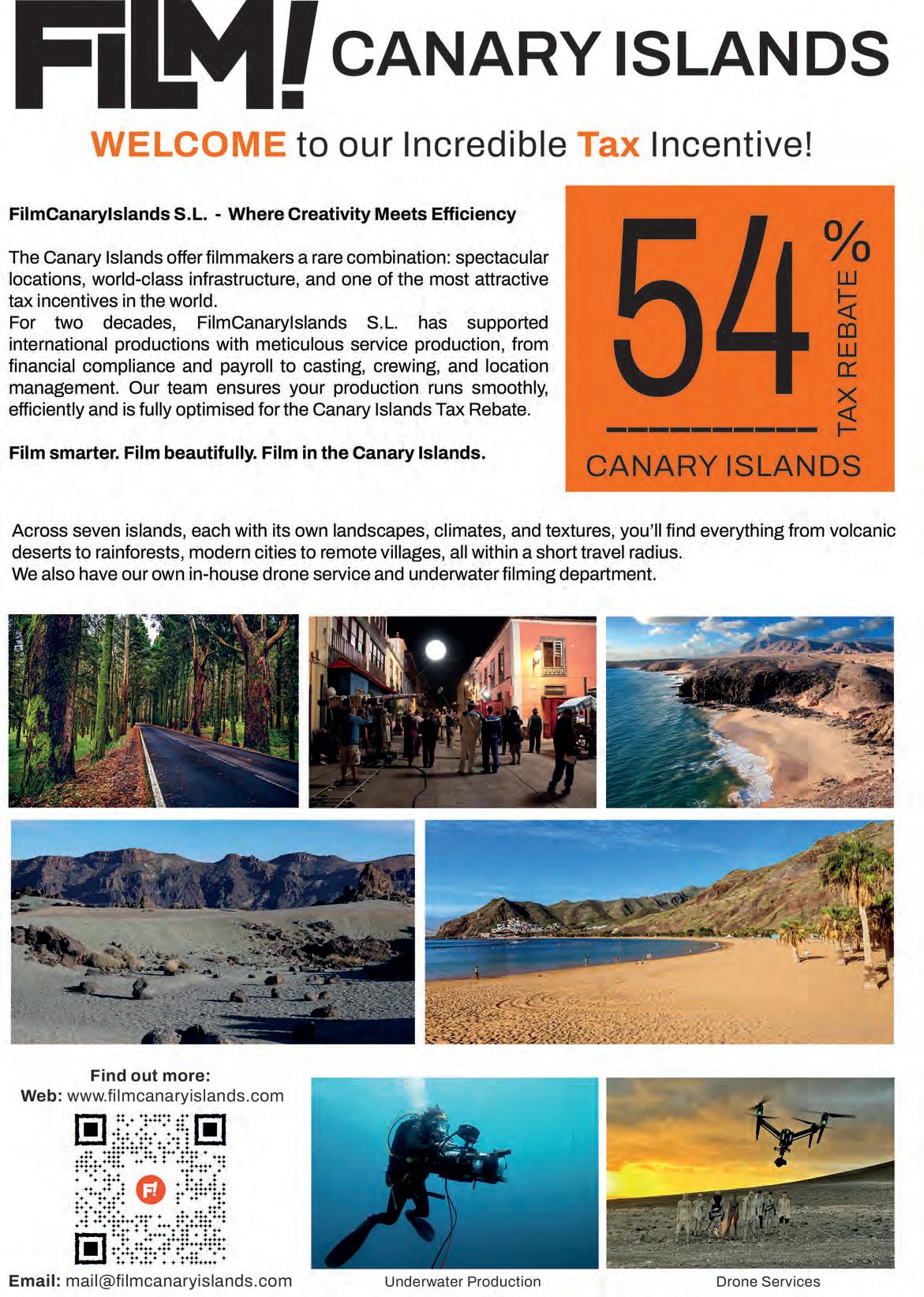
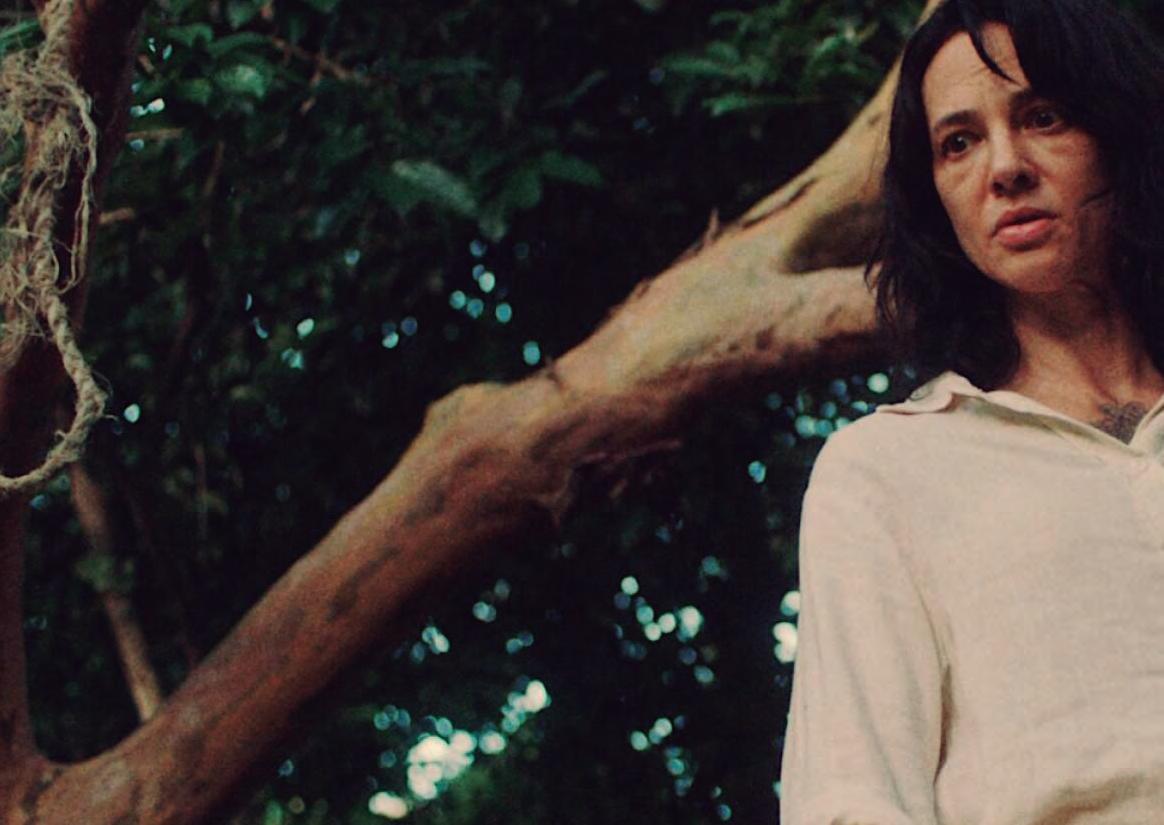
WE’VE ALREADY NOTED THAT THIS YEAR THERE ARE NO LATIN AMERICAN FILMS IN COMPETITION, BUT THERE ARE SEVERAL TITLES WORTH PAYING ATTENTION TO IN OTHER SECTIONS, WHERE PRODUCTIONS FROM LATIN AMERICA AND PORTUGAL ARE PRESENT. THE FILMS COME FROM A RANGE OF COUNTRIES, THOUGH ARGENTINE AND MEXICAN CINEMA STAND OUT IN THIS EDITION.
In the article on Spanish cinema at Cannes, we mentioned some Latin American titles such as Ashes by Diego Luna, Aqui by Tiago Guedes, and The Meltdown by Manuela Martelli. Check out that piece for more information on these films.
We begin our overview with the Directors’ Fortnight, one of the festival’s most prestigious sections. And speaking of prestige, we have to mention the return of Argentine filmmaker Lisandro Alonso with Double Freedom, a sequel to his debut feature, La libertad. The director revisits the life of the solitary woodcutter Misael Saavedra 25 years later. It also marks a return to the roots of his
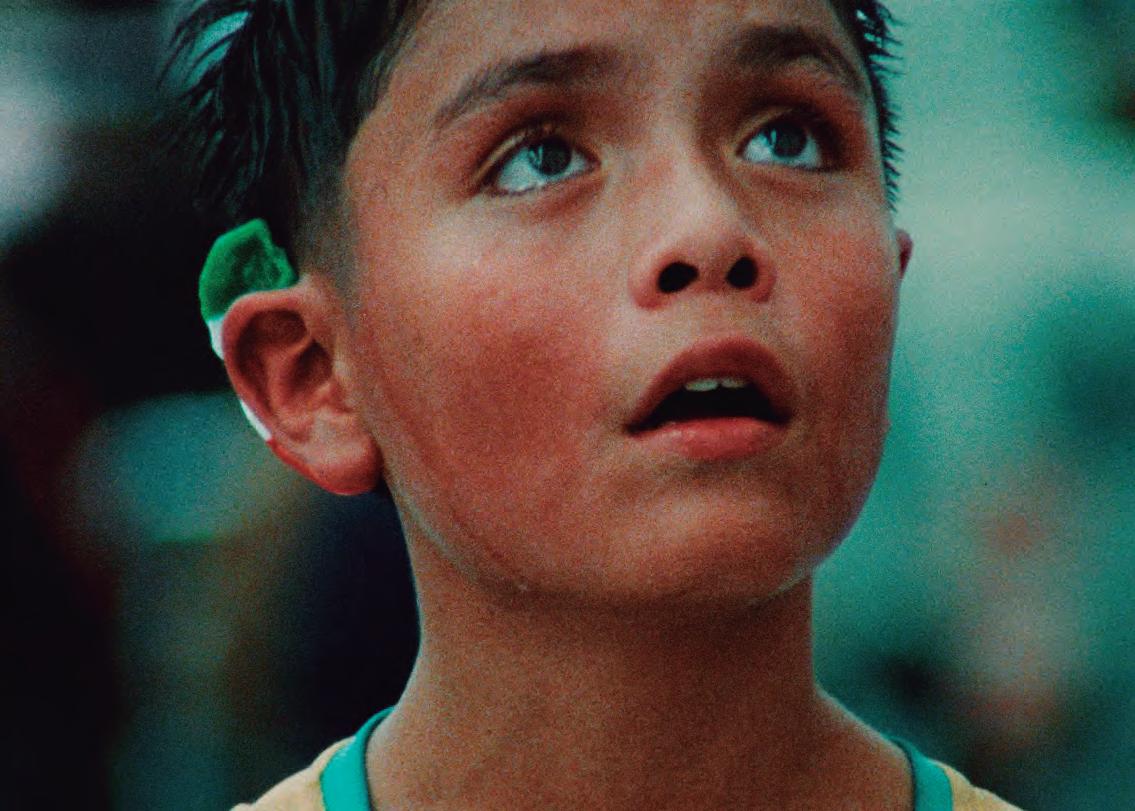
contemplative style, seeking to reclaim a greater degree of creative autonomy.
Sold by Luxbox, it was produced by 4L,Planta Cine and Deptford, in coproduction with Carte Blanche, Cimarrón Cine, Les Films Fauves, Pulpa Film and The Match Factory. The story follows Misael, who works alone with his axe, cutting down trees in the woods. An unexpected responsibility upends his life, and the logic of his days fades away in a nature where human reason holds no meaning.
We also have Dominga Sotomayor in this section, best known for her film Too Late to Die Young, which earned her the Best Director award at Locarno. She now presents her new work at Cannes, La perra, an adaptation of Pilar Quintana’s novel of the same name. RT Features (Brazil) and Planta (Chile) are the producers of this film, whose sales are managed by Lucky Number.
What´s the storyline? On a remote, windlashed island off the Chilean coast, Silvia earns her living harvesting seaweed and shares a quiet life with her partner. When she adopts a stray puppy, Yuri, her days fill with joy, love, and a tenderness that stirs a long-
suppressed longing for motherhood. But Yuri’s sudden disappearance reawakens a haunting childhood trauma, forcing Silvia to confront a past she has never truly left behind.
Sales company Lucky Number also happens to have another Latin American film in Directors’ Fortnight: Death Has No Master, directed by Venezuelan-Canadian filmmaker Jorge Thielen Armand, who previously presented his films in Venice (La soledad) and Rotterdam (La fortaleza). Starring Asia Argento, the film is produced by La Faena Films, Volos Films, and Deal Productions.
The storyline revolves around Caro, who travels to Venezuela to sell her late father’s cacao plantation, only to find the family mansion occupied by its former staff, who are determined to remain at all costs. As Caro takes justice into her own hands to claim the inheritance she believes is hers, she sets off a struggle that unearths the violence buried in the land and its memory.
Before leaving Directors’ Fortnight, we shift our focus to the short films, where Guatemalan filmmaker Sebastián Lojo is featured with Madrugada The Ghosts, his first feature film as a director, premiered in
the Bright Future competition at Rotterdam 2020.
The story follows Koki, a gardener in Guatemala City who hides a secret: he is a vampire. By day he lives with his wife, and young son; by night he feeds in the shadows. Together, the parents try to shield the boy from the curse.
Switching sections, we move on to Critics’ Week, featuring Six Months in a Pink and Blue Building by Mexican filmmaker Bruno Santamaría Razo, with Luxbox handling sales. This is his first fiction feature following the documentaries Cosas que no hacemos and Margarita. The film is produced by Ojo de Vaca (Mexico) in co-production with Desvia Filmes (Brazil) and Snowglobe (Denmark).
It´s set in Mexico City, early 90s. The day Bruno turns 11, his growing feelings for his best friend Vladimir clash with the sudden announcement that his father has HIV. Like in salsa songs, his family tries to sing and dance their pain away. Thirty years later, Bruno films and reimagine the memory of what he could not quite perceive as a child.
In Un Certain Regard, there is a particularly interesting film, Forever Your Maternal Animal, written and directed by Valentina Maurel, a Costa Rican filmmaker based in Belgium. It is her second feature following I Have Electric Dreams, which won the awards for Best Director and Best Actress at Locarno. The director has previously been to Cannes twice with short films: Paul est là (2017) and Lucía en el limbo (2019). Produced by Wrong Men (Belgium), in co-production by Géko Film (France) and Pimienta (México), the sales are managed by Heretic.
What is it about? After years studying in Europe, Elsa returns to Costa Rica to reunite with her family. She finds her younger sister living alone in the family home, growing increasingly distant and reclusive, as if slipping into a world of her own. Their parents, meanwhile, are absorbed in their own lives. Her father drifts through a series of affairs, while her mother is immersed in republishing the erotic poems of her youth, neither fully grasping the urgency of the situation. Elsa’s return draws the three women into a confrontation with what still binds them, despite everything.
In the documentary field, one highlight is the Argentine film The Match by Juan Cabral and Santiago Franco, screening in Cannes Première. It revisits the historic football match
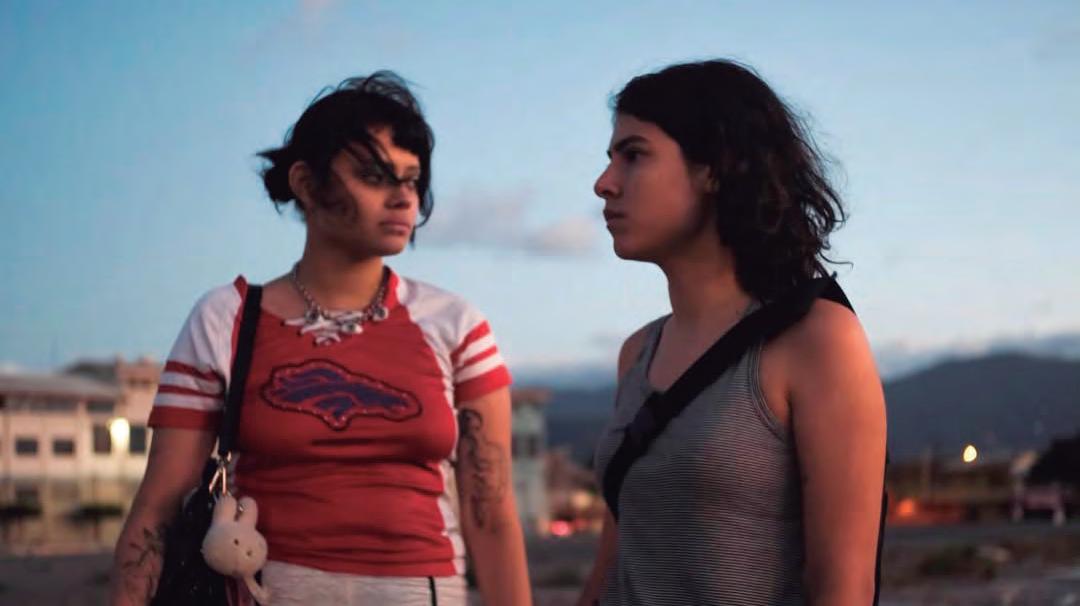
between Argentina and England at the 1986 World Cup in Mexico, especially remembered for the so-called ‘Hand of God’.
Based on the book El partido by Andrés Burgo, the feature brings together players from both teams for the first time to reconstruct not only the match itself, but also the historical forces set in motion centuries earlier. Through testimonies from those involved and neverbefore-seen archival material from coaches, referees, fans, musicians, and politicians, the film seeks to capture both the beauty of the game and the absurdity of war.
While the Palme d’Or for feature films is out of reach for Latin American filmmakers this year, they do have several contenders in the Short Film category. Leading the way
is For the Opponents by Argentine director Federico Luis, sold by Luxbox. In the tough neighbourhood of Tepito, a young boy chases the great Mexican dream: to become a boxing champion.
Another short in competition is Thunder Platoon by Colombian filmmaker Theo Montoya. Set in 2003, it follows the Thunder Platoon, a group of Colombian army soldiers aged between 18 and 23, celebrating their most recent victory in combat at a tropical estate: they have killed nine suspected guerrillas. Under the blazing sun, amid laughter, music, and alcohol, they also celebrate the fact that their commander, Montoya, will soon be decorated for his tireless work in the fight against ‘terrorism’.
We also find here Portuguese filmmaker Daniel Soares with A Few Things Happening by a River. The story revolves around a group of teenagers drifting down a river, pretending to be dead for social media. One of them drifts away.
Before closing the article, we turn to the Immersive Competition section, where there is an animated work, Lúcido, led by the Portuguese studio COLA Animation.
This interactive narrative VR experience follows Gil who, after waking up from a nightmare, learns to control his dreams with the help of his boyfriend. Together they journey through strange dreamscapes and discover that the worst dreams are the ones they don’t want to wake up from.
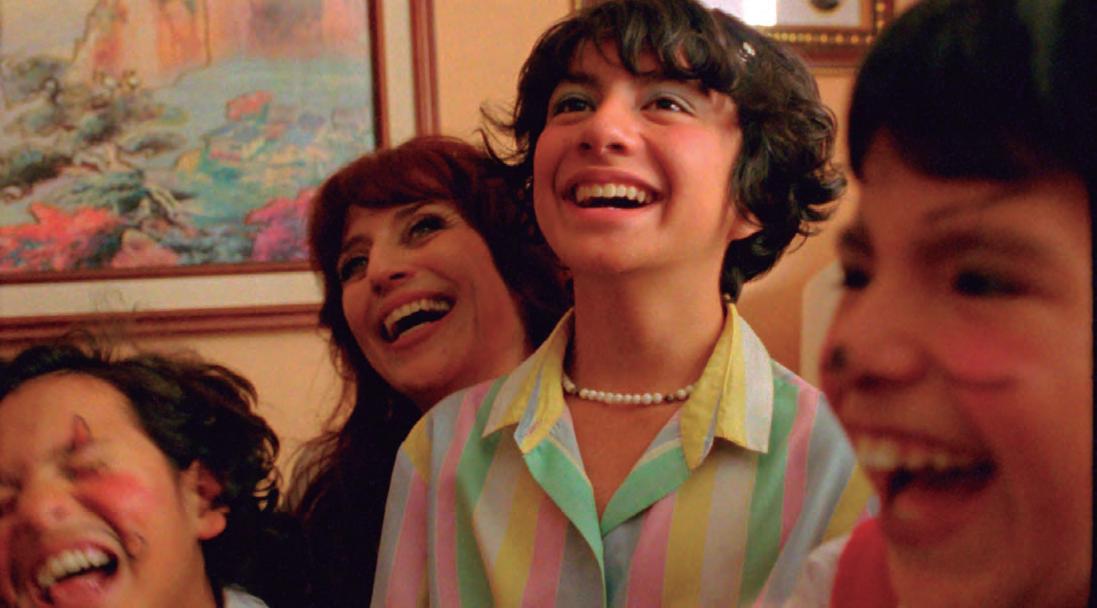

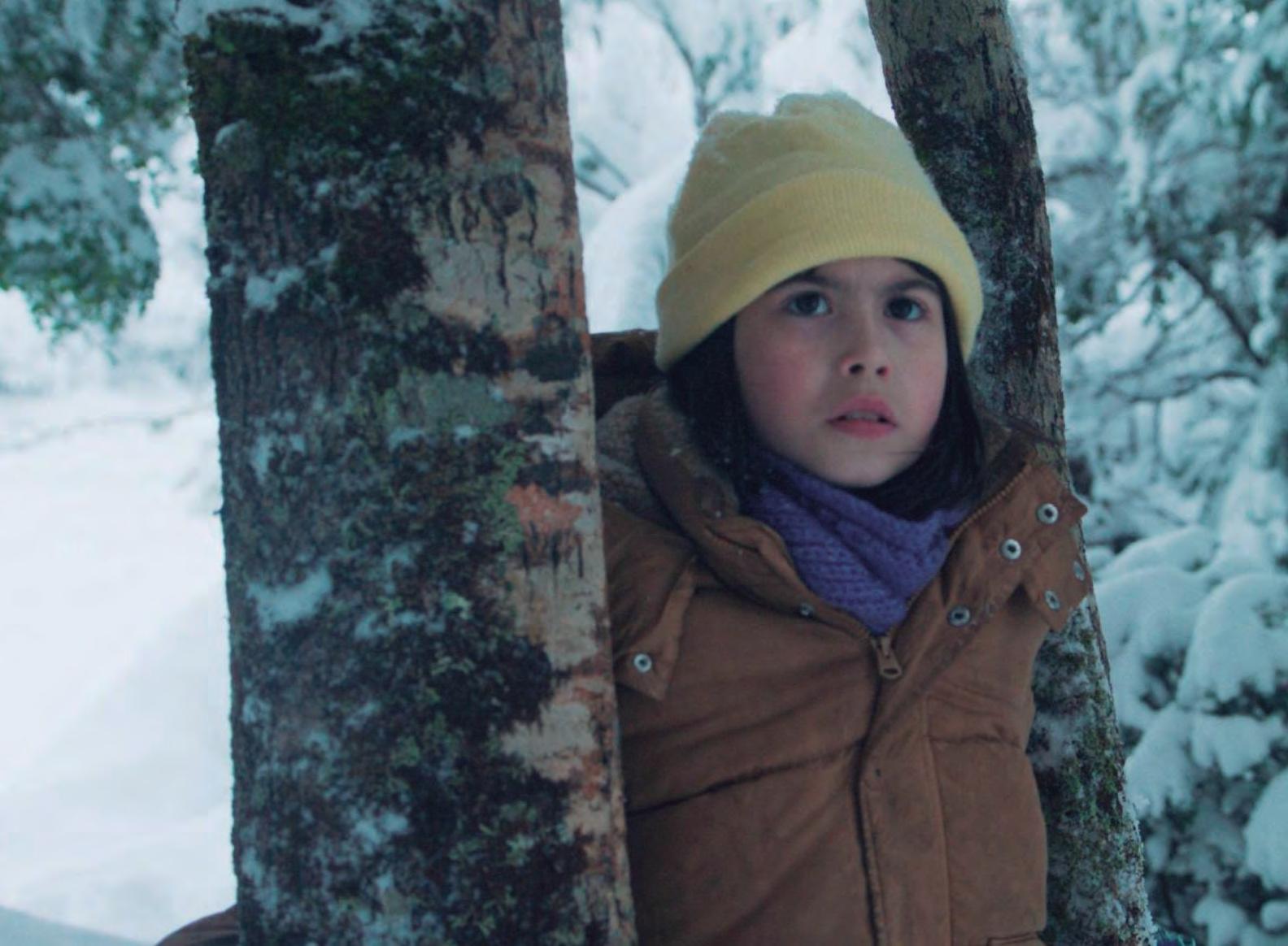
LATIN AMERICAN FILMMAKING IS CURRENTLY EXPERIENCING A PERIOD OF GROWTH ON THE INTERNATIONAL LANDSCAPE, AN UPSWING CLEARLY REFLECTED IN ITS PRESENCE AT MAJOR FESTIVALS AND MARKETS. EACH REGION BRINGS ITS OWN VISION, LANGUAGE, AND PRODUCTION MODELS—DIVERSITY THAT PROVES ESSENTIAL. WE SPOKE WITH REPRESENTATIVES FROM TWO PROMOTIONAL BODIES—GABRIELA SANDOVAL, CO-DIRECTOR OF CINEMACHILE AND DIRECTOR OF THE CHILEAN ASSOCIATION OF FILM AND TELEVISION PRODUCERS (APCT); AND CARLOS MORENO, DIRECTOR OF PROMOTION AT PROIMÁGENES COLOMBIA— TO GAIN DEEPER INSIGHT INTO THE CURRENT STATE OF LATIN AMERICAN AUDIOVISUAL PRODUCTION—AND OF THEIR RESPECTIVE REGIONS—AS WELL AS THE CHALLENGES THEY FACE AS THEIR REACH BECOMES INCREASINGLY GLOBAL.
For Gabriela Sandoval, the current moment in Latin American audiovisual production is the result of steady, long-term evolution. “I think Latin American cinema is in a very interesting moment—not necessarily an easy one, but certainly a very vibrant one”, she says, though she is not alone in offering a positive assessment.
Carlos Moreno takes a broader view, pointing to “the constant—and increasingly significant—presence of films from the
region at festivals such as Berlin, Cannes, Karlovy Vary, Toronto, and San Sebastián” as clear evidence. In these spaces, he adds, these works not only participate but are also “awarded and widely recognized by international critics.”
According to Sandoval, this vitality is also a response to the emergence of new generations of professionals who are redefining how films are conceived and produced. In this sense, she highlights that “there is a generation of filmmakers and producers thinking about films from very
diverse perspectives, with a strong identity that engages with global audiences without losing its local roots”. This dual local and global dimension has become one of the central pillars of the current development of Latin American cinema.
Beyond recognition, Moreno draws attention to a structural phenomenon: the expansion of the region’s cinematic map. “What is truly interesting is the diversity of voices that are emerging”, he explains. In particular, he emphasizes the rise of film industries from historically less visible
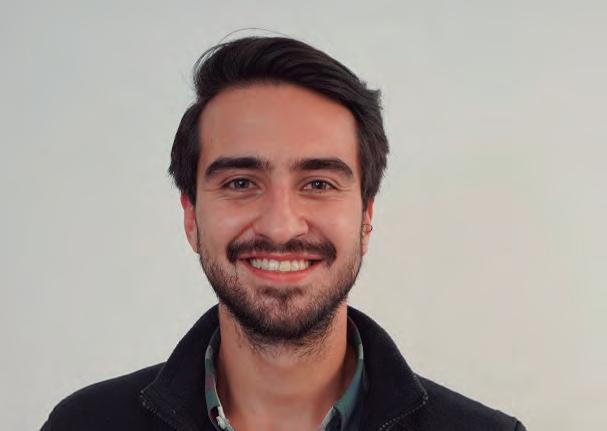

territories: “Today we see film scenes from Central America, the Caribbean, and other regions in dialogue with the more established industries of the continent.”
As Moreno noted, much of the richness of Latin American screen production stems from its structural and creative diversity—something Sandoval also underscores: “Latin America is not trying to respond to a single idea of content or production; instead, very different cinemas, with diverse production models, bold creative pursuits, and stories deeply connected to their territories,” she explains. In her view, this diversity constitutes one of the main strengths of Latin American cinema today.
This process not only broadens geographic representation but also challenges traditional frameworks. “It also questions the idea that there is a single regional cinematic identity,” adds the Director of Promotion at
“What is truly interesting is the diversity of voices that are emerging. Today we see film scenes from Central America, the Caribbean, and other regions in dialogue with the more established industries of the continent
Carlos Moreno, Proimágenes Colombia”
According to Sandoval, “Chilean cinema has managed to carve out its own place on the international map, mainly through its creative identity”. In this regard, she stresses that “Chile exports perspectives: voices with a very particular point of view, connected to their territories, their memory, and deeply
human outlooks that also respond to social and historical issues.”
The Director of APCT and CinemaChile also identifies the ability to connect the particular with the universal as a defining trait of Chilean productions. In this way, specific stories open up broader debates on issues such as family, memory, desire, human rights, community, territory, identity, and the future.
This thematic dimension is complemented by a wide formal diversity. “There is a Chilean cinema that moves very freely between fiction, documentary, animation, auteur cinema, hybrid proposals, and new narrative forms”, Sandoval notes. This versatility, along with “that constant search, that creative risk, and that unique way of seeing the world,” has been key to its international recognition.
For Moreno, “trying to define a single contribution of Colombian cinema can be limiting, precisely because one of its greatest values today is its diversity.” Still, he identifies some key trends. Among them, he highlights “the emergence of voices from Indigenous communities and historically marginalized territories”. These creators, he adds, not only bring new stories but also new ways of making films: “they are proposing different modes of production, distinct narrative languages, and new ways of engaging with their communities”.
The international recognition of these works confirms their relevance, although Moreno nuances the scope of these achievements. “Beyond awards, what matters is that they are expanding the very notion of what we understand as Colombian cinema,” he explains. At the same time, he emphasizes the profile of contemporary filmmakers: “I would highlight their tenacity and their ability to continue exploring a complex country still shaped by multiple tensions.”
Another important aspect, he notes, is the rethinking of production models. “There is a growing awareness of the need to rethink production scales.” In this regard, he insists that “the value of a film is not necessarily tied to its budget, but to the strength of its proposal,” reinforcing the importance of creative vision over financial resources.
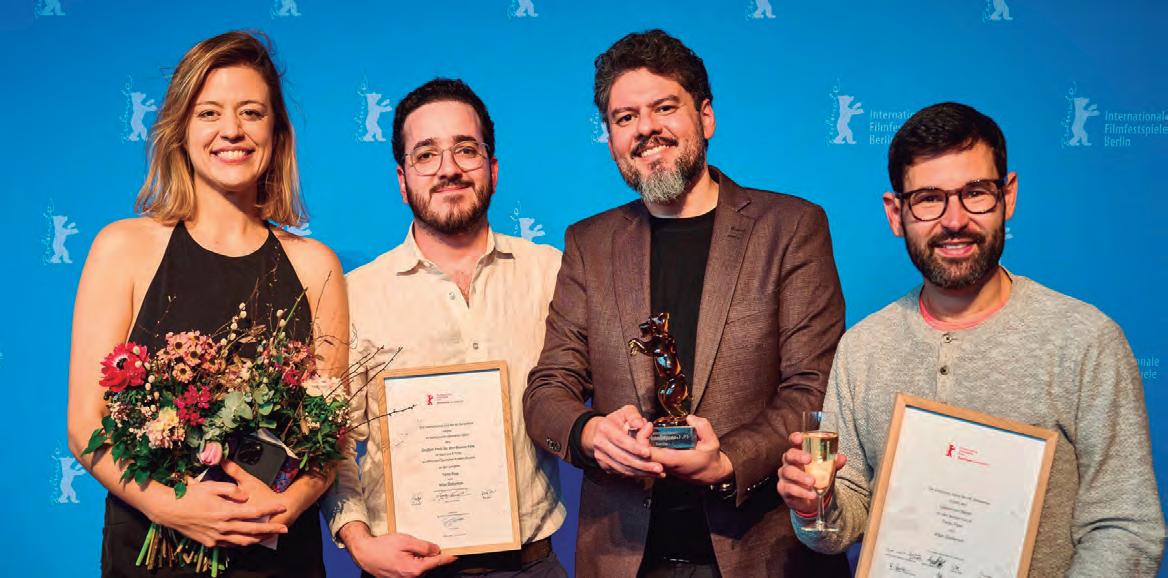
Chile and Colombia, along with many other Latin American countries, will take part in various sections and parallel events at the Cannes Film Festival, such as the Marché du Film. For Sandoval, “in Cannes, Chile arrives with a presence that confirms the consistency of its film output.” Moreover, she stresses that Chile’s participation in the festival is “confirmation of the strong state of the national audiovisual sector, which has steadily secured a place in the most relevant spaces of the international circuit.”
For his part, Moreno highlights Colombia’s presence in both artistic and industrial spheres. He points to a specific work, Thunder Platoon (Pelotón Trueno) by Theo Montoya, selected for the Official Short Film Competition. “Montoya is undoubtedly one of the most singular voices in contemporary Colombian cinema,” he notes. At the same time, Colombia’s industrial dimension features a “diverse and active delegation,” according to Moreno, with professionals participating in spaces such as Cannes Docs, the Fantastic Pavilion, and the CNC Co-Production Workshop.
From CinemaChile and APCT, Sandoval describes Chile’s presence at the event as a coordinated strategy that “showcases the strength of a creative system that, year after year, continues to consolidate a distinctive and unique voice on the global stage.”
Both extend an invitation to those interested in learning more about their respective cinematographies during the festival, encouraging direct connections, dialogue, and the building of partnerships to further drive their projects.
Despite the strong moment Latin American productions are enjoying, structural challenges remain decisive. “The main challenge continues to be circulation”, Sandoval warns. Specifically, she notes that “Latin America produces very powerful works, but these films often struggle to consistently reach their audiences, both within their own countries and across the region.” This highlights the need to strengthen both public policy and private sector involvement.
“I believe the future of Latin American cinema depends on sustaining a particular tension: remaining deeply local while becoming increasingly capable of engaging with the world”
Gabriela Sandoval, CinemaChile
Moreno agrees and adds that “despite the richness of our cinematographies, we still don’t see each other enough”. A problem linked to structural factors: “limited exhibition networks, centralization of cultural offerings, and lack of sustainability in alternative spaces,” he explains.
Funding is another major challenge. “Producing independent cinema in the region remains complex, with limited or intermittent
funding,” Sandoval explains. In this context, the development of co-productions, incentives, and international partnerships becomes essential to ensure the sector’s sustainability. This is accompanied by the need to advance regional integration.
“We share many cultural, linguistic, and historical affinities, but we still lack real circulation between our countries, more agreements, stronger exhibition networks, and greater collaboration among producers, distributors, festivals, theaters, and platforms,” she states.
In response, Moreno calls for deep structural changes. “It is essential to consolidate more diverse and decentralized exhibition circuits so that these films can find their audiences”, he emphasizes.
At the same time, he identifies another key challenge: audience development “This necessarily involves education in visual literacy—training viewers capable of engaging with the aesthetic and narrative diversity of Latin American cinema,” he explains. Without this educational process, he warns, it becomes difficult to ensure the sector’s continuity.
Ultimately, Sandoval frames the future of Latin American cinema as a balance between two complementary forces: “I believe the future of Latin American cinema depends on sustaining that tension—remaining deeply local while becoming increasingly capable of engaging with the world”, she concludes.
This balance—between identity and international projection—thus emerges as one of the key elements for the development of an industry that, despite its challenges, continues to establish itself as one of the most dynamic and diverse in the global landscape.
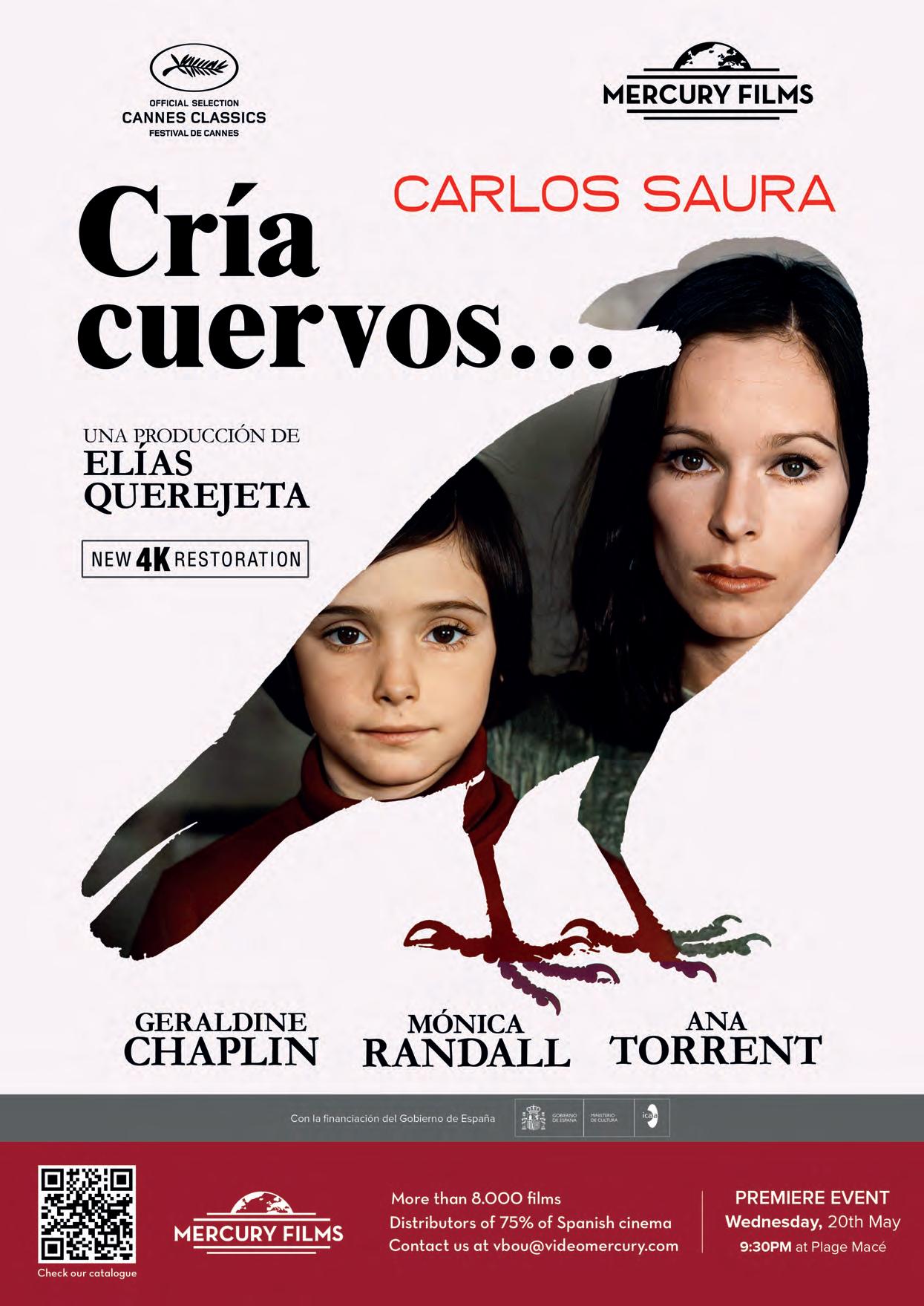
WHICH BRINGS TOGETHER MOST SERVICE PRODUCTION COMPANIES IN THE COUNTRY. IN FEBRUARY, THE ORGANIZATION HELD ITS GENERAL
FERNANDO VICTORIA DE LECEA AS PRESIDENT. WE SPOKE WITH THE NEW PRESIDENT TO LEARN ABOUT HIS PERSPECTIVE ON THE CURRENT STATE OF SERVICE PRODUCTION COMPANIES AND SPAIN’S POSITION IN THE INTERNATIONAL MARKET.
“TAX INCENTIVES ARE THE GATEWAY, BUT NOT THE ONLY THING PRODUCTIONS ARE LOOKING FOR”
RUBIK: How do you assess PROFILM’s achievements in recent years, and what are your main goals as the new president?
Peter Welter: Whenever you launch a new project—whether business, social, or personal—the biggest challenge is ensuring it can adapt to change over time and remain relevant.
I believe that has been PROFILM’s greatest achievement: an association that has just turned eight and is the only one capable of representing Spanish professionals working on international productions filmed here before public institutions.
Spain is a great country, but its audiovisual market is still relatively small. We all know each other, and although we compete, we try to bring out the best in ourselves to help the sector grow. That’s why we founded PROFILM—to provide a unified voice.
Looking ahead, and given the current uncertainty, my goal is to continue along this path, helping the Spanish screen sector
grow by removing barriers and building a truly international industry. I believe we are now being heard; what we need next is for our proposals to be implemented.
“We’re not seeing instability affecting productions. The dollar–euro exchange rate is currently working in our favor”
RUBIK: You recently updated your Code of Ethics. What principles underpin your commitment, and what changes have you introduced?
P.W.: There’s an undeserved stigma around the lack of professionalism among promoters and producers in the cultural sector. In international productions, where budgets are very high, it’s essential to maintain strict control over how, who, and under what conditions people are hired.
In our Code of Ethics, we’ve introduced tighter oversight to ensure compliance not only by our members but also by our suppliers. It’s a matter of survival: if suppliers fail to meet their tax or labor obligations, the responsibility ultimately falls on the production companies that hired them, creating a vicious cycle that harms the entire sector.
RUBIK: What do you see as the main challenges for service production companies, both Spanish and international?
P.W.: What we value most is being able to offer security to our clients—in terms of timelines, permits, pricing, and, in general, clear and reliable rules.
PROFILM members are the leading experts in applying the regulations governing international production services, so our input is very valuable to those responsible for drafting them.
RUBIK: We’re living through turbulent geopolitical times. Do you think this instability could affect international shoots?
P.W.: So far, we’re not seeing instability affecting productions. The dollar–euro exchange rate is currently working in our favor, but rising prices across the board will affect us, like all sectors, by increasing production costs.
These are turbulent times for all of Europe, and no one can predict how or when they will end.
RUBIK: How do you view technologies like virtual production or AI? Do you think they could negatively impact international production services, or will they be integrated into traditional productions?
P.W.: As with most things, it’s not black and white. While it might seem that artificial intelligence could reduce demand for locations and our services, the technology isn’t yet advanced enough to replace shooting in real locations like the deserts of Tabernas or Bardenas Reales with studio work.
Moreover, Spain has outstanding visual effects companies, such as our partner El Ranchito, which has been using AI for some time to enhance creative processes and deliver spectacular results to clients worldwide.
We’ll certainly need to adapt to some changes, but that’s nothing new in the history of filmmaking. The future lies in reinforcing human creativity with AI tools.
RUBIK: Bureaucratic procedures are very important for international shoots. How should countries make them easier?
P.W.: Bureaucracy should be streamlined through dialogue. When public authorities at all levels—national, regional, and local— understand the impact a shoot has on their territory, obstacles turn into opportunities.
Ideally, there should be clear, public, and efficient regulations that benefit both the administration and those subject to it. These measures don’t cost public funds; in fact, they help increase them.
For example, Spain introduced a regulation exempting non-EU audiovisual workers from visa requirements for stays under 90 days.
After Brexit, increased bureaucracy caused serious problems, but thanks to swift action by the Ministry of Inclusion, Social Security and Migration, the situation was resolved at no cost.
Peter Welter
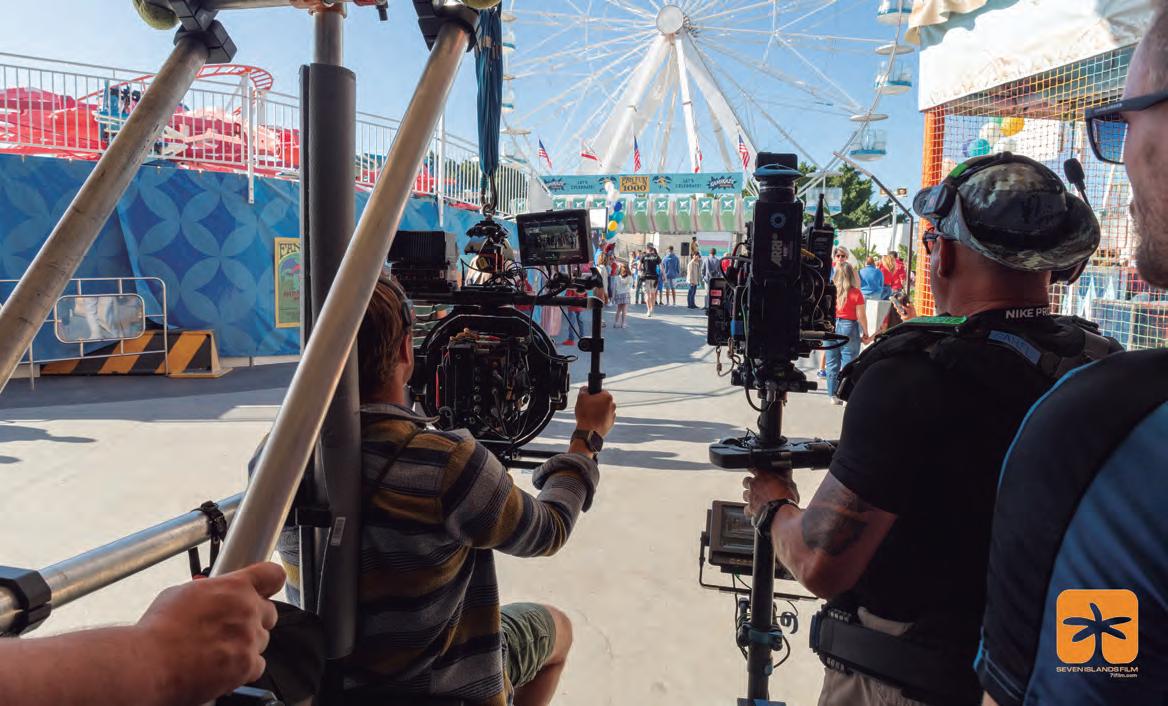
RUBIK: It’s often said that tax incentives are the deciding factor in attracting productions. Do you think they are decisive?
P.W.: Tax incentives are the gateway, but not the only thing productions are looking for. Cultural, social, safety, natural, and artistic heritage considerations are just as important.
Recently, we’ve seen productions initially considering Hungary for its excellent financial conditions but ultimately choosing other locations due to certain political positions of its government. That said, if incentives don’t meet the standards of our competitors—especially in the Mediterranean—studios won’t even consider a location.
RUBIK: Is Spain competitive in terms of incentives? PROFILM has criticized system rigidity and refund timelines— do you see institutional willingness to improve?
P.W.: There’s always room for improvement. We’re currently at a disadvantage compared to our Mediterranean neighbors, but we’re working with the government and parliamentary representatives to remain competitive.
We receive very positive feedback when we propose changes, but the current
parliamentary situation isn’t ideal for major legislative reforms. What’s encouraging is the broad political consensus recognizing the positive impact of international shoots and post-production in Spain.
“Over the past two decades, Spain has developed a highly professional sector with top-level technicians experienced in both domestic and international productions. Around the sector, outstanding service companies have also emerged”
RUBIK: Spain has a long history of hosting international productions. What do you see as its biggest attractions?
P.W.: Ultimately, what matters most to foreign clients is knowing there’s a solid industry here. No matter how cheap it is to shoot in a country, it’s not worth it if you have to bring your entire technical team
because local talent and equipment aren’t up to standard.
Over the past two decades, Spain has developed a highly professional sector with top-level technicians experienced in both domestic and international productions— from hair and makeup to VFX and production.
Around the sector, outstanding service companies have also emerged, competing in quality with any international provider. This gives productions confidence that costs will align with project needs and everything will run according to plan.
RUBIK: What sets Spanish service production companies apart?
P.W.: Versatility is undoubtedly one of their defining traits. We can handle largescale projects as well as small auteur films because we understand both.
Many PROFILM members work on foreign films and series, as well as their own productions or commercials, as the market demands. This allows us to tailor teams, budgets, and professionals to the specific needs of each shoot.
But above all, what truly sets us apart is the friendliness and professionalism with which we approach clients and projects, backed by a solid track record and a commitment to giving our all in every production.
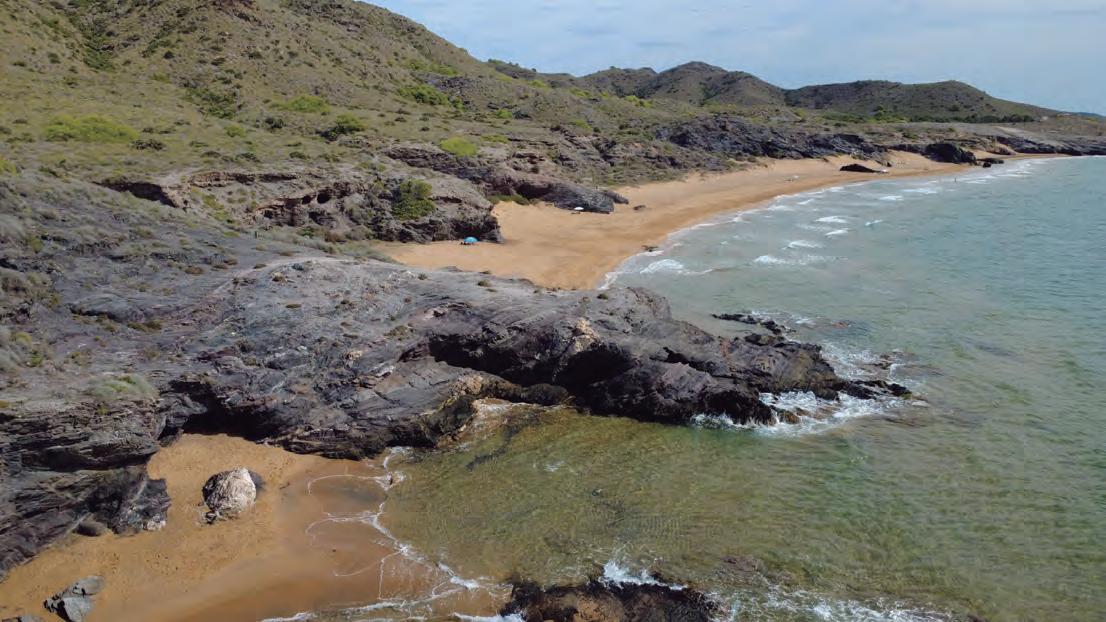
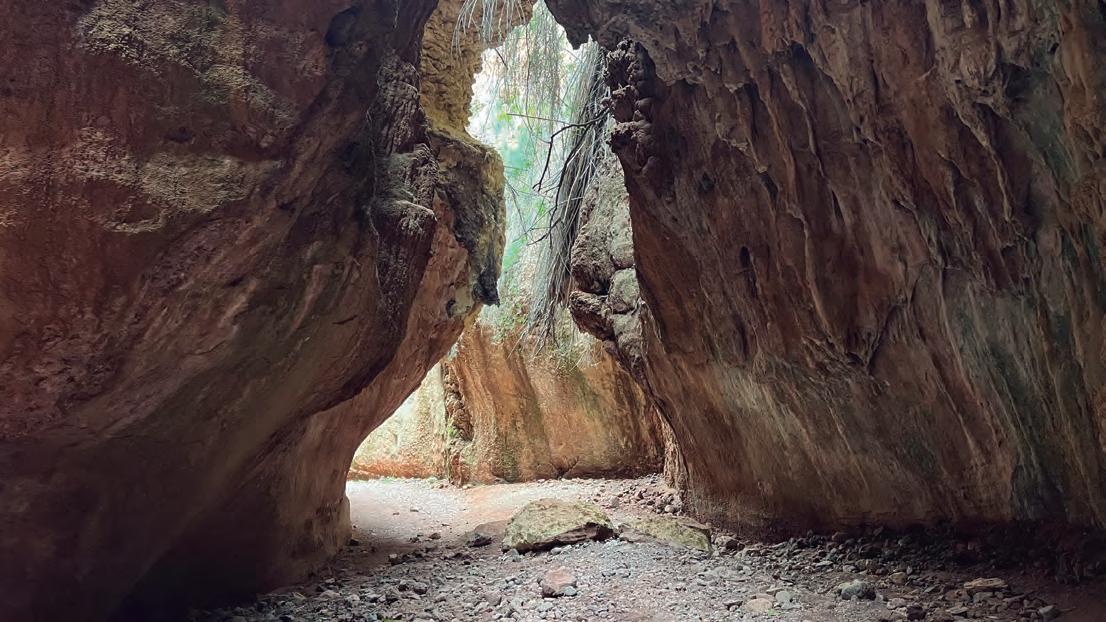


AS THE GLOBAL AUDIOVISUAL INDUSTRY EVOLVES—DRIVEN BY THE RISE OF INTERNATIONAL CO-PRODUCTIONS AND SHIFTING AUDIENCE HABITS—THE TORONTO INTERNATIONAL FILM FESTIVAL TAKES A STRATEGIC STEP FORWARD WITH THE LAUNCH OF TIFF: THE MARKET. THE INITIATIVE AIMS TO FILL A LONGSTANDING
FALL.
ON OVER FIVE DECADES AS ONE OF THE WORLD’S LEADING FESTIVALS, TIFF EXPANDS INTO A KEY BUSINESS HUB, CONNECTING GLOBAL PLAYERS, CREATING NEW FINANCING OPPORTUNITIES, AND REINFORCING TORONTO AS AN INTERNATIONAL MEETING POINT FOR THE SCREEN INDUSTRIES.
Rubik: TIFF has long been one of the most influential festivals in North America. What strategic need led to the creation of TIFF: The Market at this particular moment?
Charles Tremblay: The main thing we hear from industry professionals is that they need a place to do global business, especially since many productions are increasingly co-productions and distribution opportunities are coming from all over the world. Being so close to the U.S. makes a market at TIFF even more appealing. Many of the 6000+ industry professionals that TIFF attracts every year have expressed that it’s a missed opportunity to not have an official market attached to the largest public festival in the world.
Rubik: How would you define the core identity of TIFF: The Market in comparison to established industry
platforms like the American Film Market or the European markets linked to Cannes or Berlin?
C. T.: TIFF: The Market will be a full content market with extensive programming elements across film, series and innovation. Our Market is attached to the largest public festival in the world, which is a major distinction. Based on the comprehensive industry feedback that we’ve received for several years, we’re confident that we’re serving a need that will drive the global screenbased ecosystem forward. The trust and belief in the value proposition of TIFF has been established over five decades; it is widely acknowledged as one of, if not the best run festival in the world. The Market is an extension of this legacy. Many of the team members who have helped TIFF earn this welldeserved honour are an integral part of the planning and execution for the Market, in collaboration with a group of dedicated professionals who all bring a

wealth of experience to their respective roles on the Market side.
Rubik: What gaps in the current global marketplace are you aiming to address with this new initiative?
C. T.: There’s an eight-month gap between the Cannes and Berlin markets and both take place in Europe. With no major markets affiliated with a major festival in the fall and none in the Americas all year, there’s a significant void in both time and space. By bringing a formal market to North America, we’re also giving sales agents more time to develop films or packages that are not ready in time for Cannes.
Rubik: TIFF has traditionally been a non-competitive festival with a strong audience focus. How does the introduction of a market reshape its role within the international industry ecosystem?
C. T.: T he festival will continue to be one of the biggest and best global screen-

based industry events on the fall calendar and the focus on delivering a memorable experience for the thousands of film enthusiasts and industry professionals who will line the streets of downtown Toronto will remain the same. The Market will not only add a more formal B2B element to the event, it will give buyers, sellers, creators, and producers more content to see, more events to attend, more opportunities to nurture their talent and make international connections, and more access to projects at all stages of development. Projects do not have to be finished to be featured or pitched at the Market. We’re launching the Market in response to the natural shifts that have been occurring in the global industry for the past several years. Most noticeably, the increase in co-productions across continents and the rapid evolution of audience viewing habits; people are much more open and receptive to storytelling that transcends formats and borders. They’re invested in learning about new
“TIFF: THE MARKET IS A FULL CONTENT MARKET FEATURING FILMS, TV SERIES AND INNOVATION
ALL UNDER ONE ROOF”
“The Market will not only add a more formal B2B element to the event, it will give buyers, sellers, creators, and producers more content to see, more events to attend, more opportunities to nurture their talent and make international connections”
cultures and discovering how much more we have in common.
Rubik: Could you elaborate on the types of content and business opportunities that TIFF: The Market will prioritize (film, series, IP, immersive content, etc.)?
C. T.: TIFF: The Market is a full content market featuring films, TV series and
innovation projects, all under one roof at The Metro Toronto Convention Centre, which is our primary hub for Market activities. Film will be the core and represent the lion share of both the programming and exhibitors. However, series and innovation creators and projects will be prominently featured as well, including an Innovation Hub showcasing eight immersive and XR projects. Buyers and sellers don’t think or operate in silos, and neither should we. It’s one of the reasons why we’re very excited about our IP Exchange, a designated space for individuals and companies with intellectual property across publishing, brands, gaming, and immersive media to meet with film and series production companies and studios to pitch their stories. For us, it’s all about expansion and having a range of projects will ultimately attract a wider and more engaged delegate base.
Rubik: Canada is positioning itself as a global hub for content creation and innovation. How does TIFF: The
Market leverage this positioning internationally?
C. T.: Toronto is one of the most multicultural cities in the world. Its rich cultural heritage and multilingual population makes it a natural and welcoming place to do business. This is one of the many reasons why TIFF has been attracting diverse people and projects for more than 50 years. The Market will build on this legacy of inclusion and broad-based artistic representation that both Canadian and global audiences have come to know and love. We’re also inviting 200 buyers from every corner of the world to attend the Market. This list of net new buyers, who have never attended TIFF before or have stopped attending at some point, was developed in consultation with a variety of experienced industry professionals. These buyers are in addition to the 800 North American and international buyers that have been accredited year-over-year.
Rubik: You have already started presenting the project to different territories and industry players. What has been the initial response from the international community so far?
C. T.: The response has been extremely positive. In addition to early exhibitor confirmations from buyers and sellers across LatAm, Asia, Europe, and North America, all three major agencies (CAA, WME and UTA) have confirmed that they intend to launch packages at the market. Early registration numbers have also been strong and the number of submissions for
our talent development labs exceeded the amount received in previous years, despite the first-time addition of fees.
Rubik: How do you envision the relationship between TIFF: The Market and other major festivals, particularly in terms of calendar positioning and industry collaboration or competition?
C. T.: The early fall timing of our Market allows the agencies and sales companies to launch packages that were not ready for Cannes and to potentially close the financing before the end of the year. This is also a major benefit for sales agents and producers who require more time for sourcing co-production partners and for development.
Rubik: For European and specifically Spanish companies, what opportunities do you see in participating in TIFF: The Market from its early stages?
C. T.: The North American production and distribution industry is heavily relationship-driven and thrives on faceto-face interactions. TIFF: The Market creates space for Spanish and European companies to make these meaningful connections with a single trip. Sellers from every region can take advantage of the hybrid Market screenings to gauge how their projects might fare with an international audience. North American reviews, box office sales, and awards are still a key catalyst for a film’s global success. There’s a lot of excitement and anticipation for the Market. This momentum, coupled with the fact that it’s
a small footprint in close proximity to all of the major venues and the Festival, means more attendees and more opportunities for Spanish and European companies to book meetings that increase the likelihood of forging co-production alliances. Another important opportunity is the fact that the entire screen-based ecosystem will all be under one roof with key decision-makers who acquire, finance, produce, distribute and show content.
Rubik: Looking ahead, what would success look like for TIFF: The Market in its first editions, and what is your long-term vision for its role in the global audiovisual industry?
C. T.: Attendance is of course a key measure of success. With more programming, content, events, networking opportunities and venues, the number will inevitably surpass 6,000 industry professionals. But attendance is not the sole factor. Connections that lead to collaborations and content being sold and produced will also be a metric that meets our expectations. Creators are an essential part of our delegate base; giving them the chance to enhance their skills through our elevated development labs and knowing that they’re feeling more empowered after their experiences will also be a major high point for our team. Ultimately, we want all key industry stakeholders, speakers, and sponsors to enjoy being immersed in the combined energy and excitement of the Festival and Market; so much so that after this year’s editions are over, they will be eager to return.


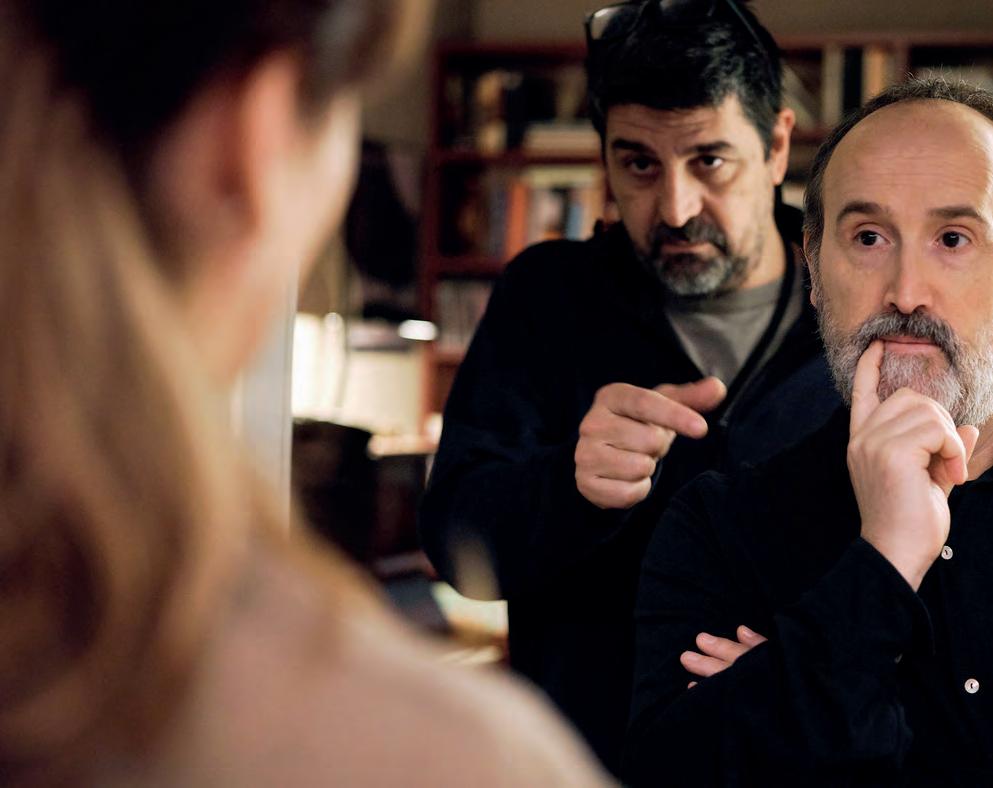
THE COMEDY THAT CESC GAY BASED ON HIS OWN PLAY THE PEOPLE UPSTAIRS HAS BEEN REMADE NO FEWER THAN SEVEN TIMES. THE LATEST, THE INVITE , IS A U.S. ADAPTATION DIRECTED BY OLIVIA WILDE THAT CAUSED A SENSATION AT THE SUNDANCE FESTIVAL, BUT THERE ARE ALSO SOUTH KOREAN, RUSSIAN, CZECH, AND FRENCH VERSIONS, AMONG OTHERS.
BY NEREA MÉNDEZ PÉREZ
One night, from his bed, the Catalan director and his wife overheard moans of pleasure coming from the neighboring apartment. The humorous moment and the sense of awkwardness inspired his stage play The People Upstairs, later adapted for the screen in Spain under the title Sentimental Now it’s time to tell another story: how the
neighbor’s orgasm became Cesc Gay ’s most widely adapted work.
To understand the remake phenomenon surrounding The People Upstairs , which continues to this day, we need to go back a decade. In 2015, Gay premiered the play at Barcelona’s Teatre Romea, a hit with audiences that was later replicated on stages in Mexico, Argentina, Chile, Colombia, and Portugal. In October 2020, it
reached Spanish cinemas via Filmax , with executive production by Marta Esteban and Laia Bosch of Imposible Films.
Iván Díaz , head of international sales at Filmax, says the film “performed very well under extremely difficult circumstances,” noting that with cinema capacity restrictions, “there was a smaller pie to share.”
International distribution and remake rights sales performed even better, although the distributor doesn’t attribute everything to the pandemic. “The material was strong and the film was very well received. It was also a project that was very easy to reproduce at the time, with a single location and four actors,” he explains.
Producer Marta Esteban, who describes everything that happened with Gay’s film as “peculiar,” was astonished at the time: “I kept saying, ‘How? It’s such a small film.’ But that was precisely what made it perfect for producers.”
The People Upstairs has several international versions: the South Korean Witjip saramdeul, the Italian Vicini di casa , the French Te plus si affinités , the Czech V
dobro i zlé , the Russian Neprilichnye gosti , and the Swiss Die Nachbarn von oben .
“Remakes
are performing better than ten years ago because back then people weren’t chasing IP so aggressively to sell. The growth of streaming also means you need to generate a lot of content very quickly.
What’s the easiest option? A remake”
“All the versions that have been made are very notable, which places it among the strongest European properties,” says Díaz. “For us, having handled many remake sales across different projects, including TV series like The Red Band Society, The People Upstairs has become the crown jewel.”
Bosch, for her part, highlights the financial relief brought by its international
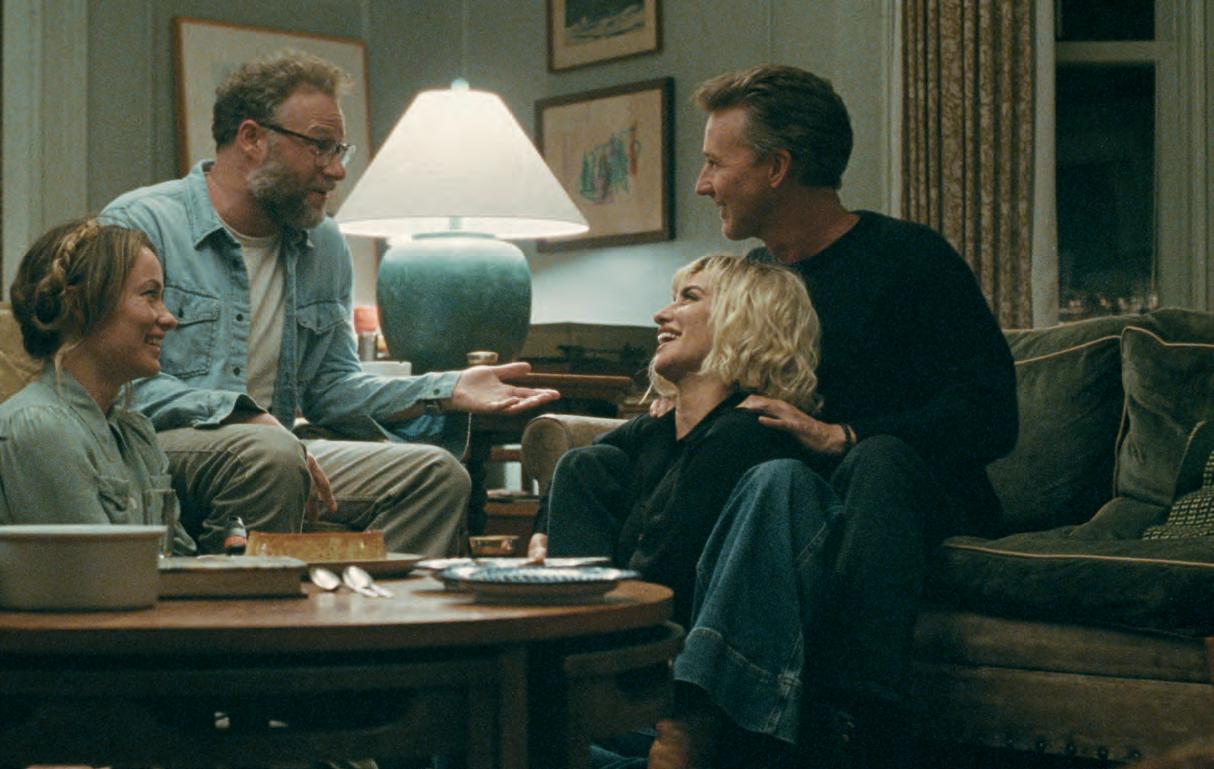
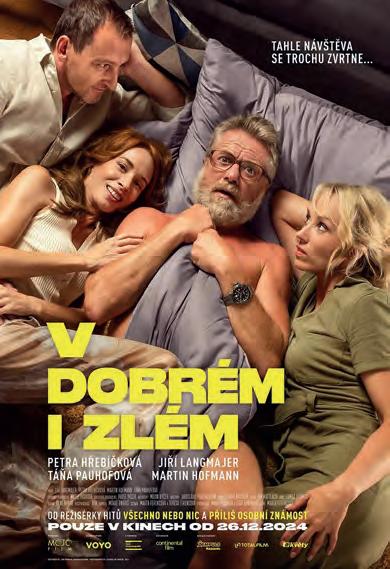
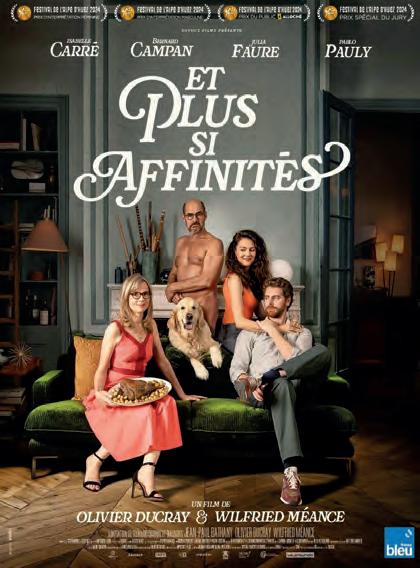
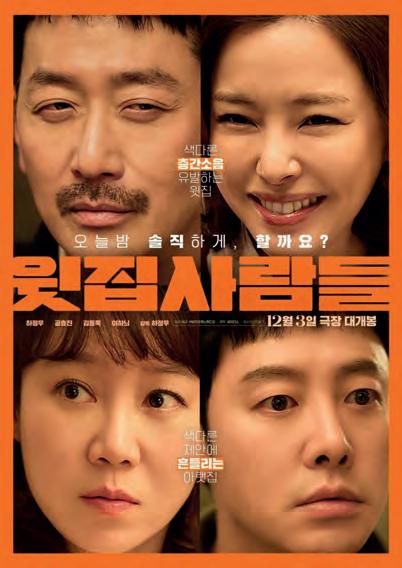
success: “This was The People Upstairs ’s salvation. With the pandemic hitting and theatrical distribution suffering, the remakes have brought in far more than we expected.”
One version both producers from Imposible Films single out is the South Korean one. “It’s wonderful. It has an incredible ten-minute opening and is shot like a major production,” says Bosch.
The People Upstairs premiered in South Korea in 2025, produced by SIDUS and distributed by BY4M Studio. “We liked the message of the original. It flowed simply, yet the resonance at the end was immense,” says Eunyeong Jo, marketing director of SIDUS, about what drew them to Gay’s story. “The characters were lovable and the drama was powerful. We felt that if adapted to suit the domestic sensibility, it could create a sufficiently entertaining movie.”
Marta Esteban believes the key ultimately lies in finding characters that resonate with each country’s audience.
“We found it amusing when we saw the actors in the other remakes—each country approaches it differently,” she says.
In the case of the South Korean adaptation, Eunyeong Jo explains they did not see “this work simply as a sex comedy.” “The film deals with the process of realization and recovery within a marital relationship within a confined space, and the challenge and task for us was figuring out how to lead the narrative to that point. We intended to expand on
the comedic and character elements to achieve a complete a dramatic conclusion. We focused on adapting it into a drama about relationship restoration that is worth reflecting upon, rather than a sex comedy filled with wordplay and banter,” she explains.
Producer Marta Esteban describes everything that happened with Cesc Gay’s film as “peculiar”:
“I kept saying, ‘How? It’s such a small film.’ But that was precisely what made it perfect for producers.”
As for the local audience’s response, she notes that “they gave positive feedback on the fact that such a bold and candid film emerged from Korea.”
“Audiences found the film’s structure, which unfolds solely through dialogue within a confined space, refreshing, and were intrigued by the actor’s performances that brought out the charm of the lines. Also, they highly praised director Ha Jung-woo’s distinctive sense of humor,” she adds.
The Catalan producers also highlight Gay’s restraint compared to the international versions. Esteban even told the director that in his film “they don’t
touch a single butt,” whereas “the other remakes go a bit further.” In any case, both acknowledge that there is now a strong “Cesc Gay brand” that audiences really like.
“The Italians couldn’t get enough of it,” Esteban boasts about The People Upstairs’s distribution, though it’s not the only one of his films they’ve shown interest in. “Every film he makes, Italy remakes,” says Bosch. Their adaptations tend to be the most faithful, down to the smallest detail: “What the Italians did with Truman went as far as copying the character Ricardo Darín’s sneakers.”
OF THE INVITE
The latest audiovisual adaptation of The People Upstairs is the U.S. version directed by Olivia Wilde, who also takes on a leading role. Alongside her, names like Penélope Cruz, Seth Rogen, and Edward Norton add to the project’s appeal.
The American version made even more noise at the 2026 Sundance Festival, where it sparked one of the fiercest bidding wars of the event, involving Netflix, Neon, Focus, Warner Bros., and A24, which ultimately secured the title. The indie label closed an eight-figure deal.
“With this U.S. sale and the success of the American remake at the festival, it feels like the market values you more and positions you more strongly,” says Iván
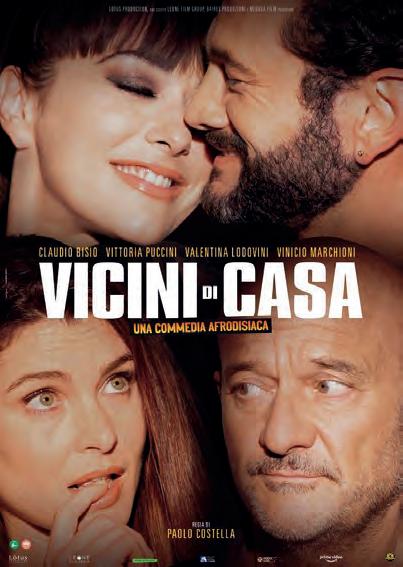

Díaz. Even so, he adds that even without such a major acquisition, they would still be “very happy because something powerful and meaningful would have been made with Sentimental .”
As a side note, the distributor reveals that the current cast was not the original plan. The film initially had a lineup of “very big Hollywood actors,” but the 2023 SAG-AFTRA strike caused the project to fall through due to scheduling conflicts.
“In that sense, the producers reassured us by saying they loved the project and would revive it once the strike ended in the United States. They were going to find a way to make it happen, even with different talent,” Díaz explains.
“We liked the message of the original. It flowed simply, yet the resonance at the end was immense. The characters were lovable and the drama was powerful”
Eunyeong Jo, SIDUS
Both the producers and the distributor agree that the American remake could further extend The People Upstairs ’s reach. “Imagine what the English-language version could generate in terms of stage adaptations. A U.S. release could lead to a Broadway play. These are the kinds of
things that can happen with this level of buzz,” says Bosch.
The producers at Imposible Films believe the film adaptation market has changed over the past decade, especially with the rise of streaming. “In general, remakes are performing better than ten years ago because back then people weren’t chasing IP so aggressively to sell. The growth of streaming also means you need to generate a lot of content very quickly. What’s the easiest option? A remake,” Bosch reflects. They used to attend markets themselves, but now leave everything in Filmax’s hands. “Now they don’t even want to see you—everything is agreed beforehand,” says Esteban. “By definition, the people who buy remakes are producers, and they don’t go to markets as much anymore or come under pressure to secure a film without competition. Since the pandemic, negotiations happen between markets,” explains Díaz. “They already have everything discussed beforehand— they’ve watched the screening online, met, and agreed on the price in advance,” Bosch adds.
These days, Cannes Remakes will take place within the Marché du Film, featuring three Spanish titles, including My Friend Eva by Cesc Gay. “So far, its exploitation has focused more on selling the original. The distributor will try to sell the original film first, because if they buy the remake,
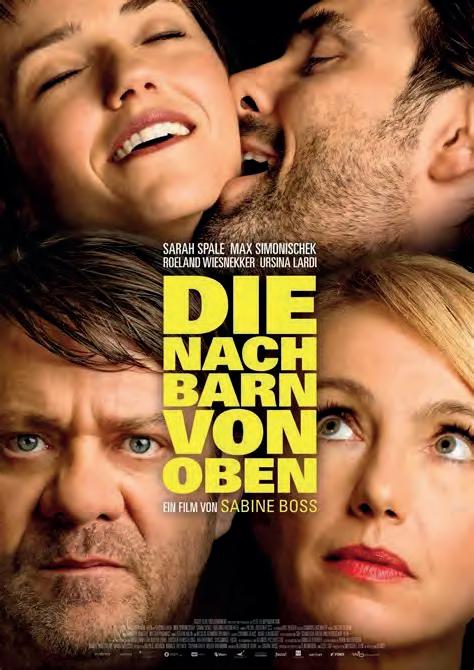
they might not take the other one,” Esteban notes.
“This year we’re attending with the added buzz of a previous work being adapted by the Americans with Olivia Wilde, that cast, and the impact it had at Sundance. Hopefully it catches on and gives My Friend Eva strength as a potential remake,” Bosch adds.
“After the success of The People Upstairs, there’s a lot of interest in anything that comes from Cesc Gay. When international remakes are made and succeed, people start wondering what that director or writer will do next,” the distributor concludes.
“We’ve handled
many remake sales but The People Upstairs
has become
the
crown jewel.
With the U.S. sale and its success at Sundance, it feels like the market values you more and positions you more strongly”
Iván Díaz, Filmax
As for their strategy with My Friend Eva, Díaz explains: “At Cannes, we’ll talk about how it performed in Spain and how Cesc’s previous films have done. We can’t announce it yet, but I can confirm that we already have several remakes lined up.”
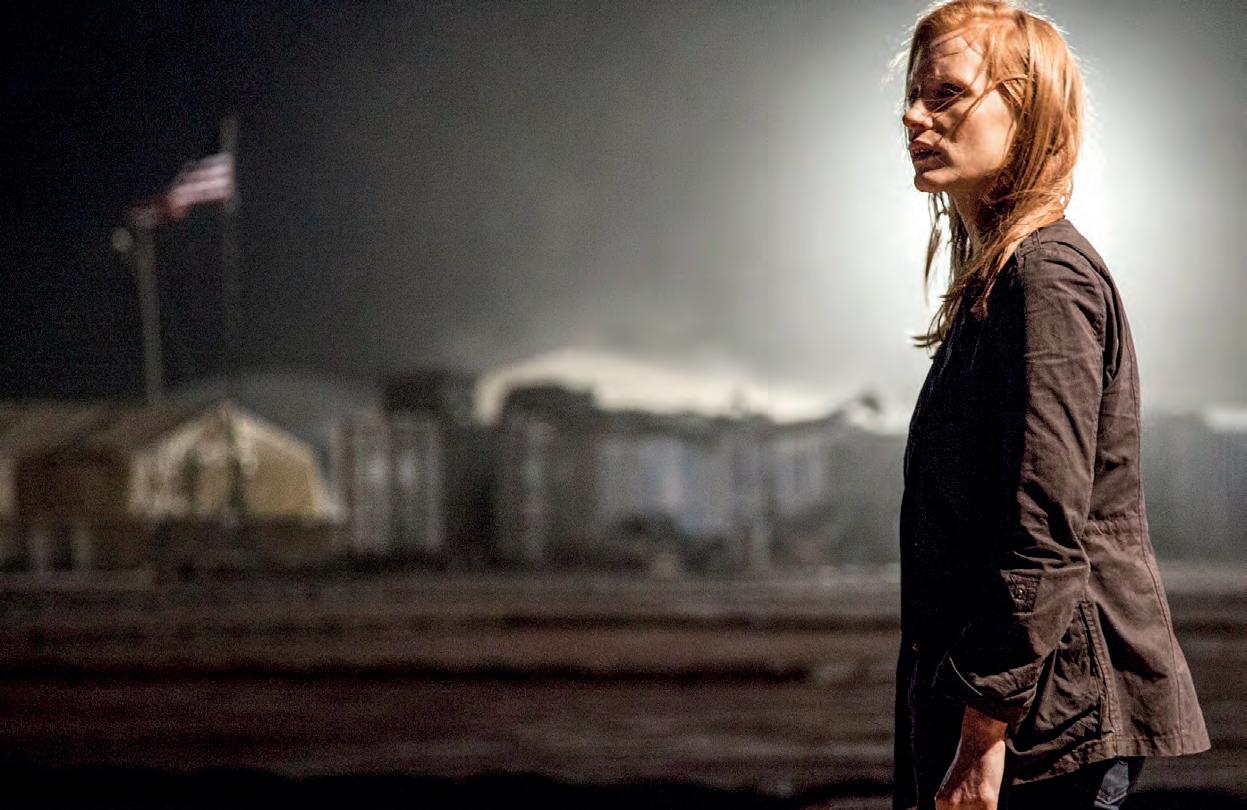
IN 2011, ARTHOUSE CINEMA WAS IN LUCK: THE BIRTH OF ANNAPURNA PICTURES POSITIONED A SELECT GROUP OF INDEPENDENT FILMMAKERS AS GLOBAL BENCHMARKS OF AMERICAN CINEMA. MEGAN ELLISON’S COMPANY BURST INTO HOLLYWOOD WITH THE AIM OF PRODUCING AMBITIOUS FILMS THAT OTHER STUDIOS CONSIDERED
TOO RISKY AND UNPROFITABLE, BECOMING A KIND OF REFUGE FOR SUCH PROJECTS.
During its first decade, Annapurna became synonymous with critical prestige; however, problems arose when the artistic quality of its projects did not translate into commercial success, a factor that would ultimately define its later years.
But let’s go back to the beginning. In its first year, Ellison—who founded the company at just 25 and was named one of Time magazine’s 100 most influential people in the world in 2014—personally financed several works that are now part of contemporary film history.
Annapurna thus established itself as one of the most influential independent production companies of the decade, with an identity defined by sophistication and formal innovation that left a lasting mark on the industry. Its slate, focused on
independent cinema, combined projects for diverse audiences, where genres and forms were treated as flexible concepts spanning historical drama, irreverent comedy, political thriller, and even fantasy.
The Master (2012), by recent Academy Award-winning director Paul Thomas Anderson; the provocative Spring Breakers (2012), by the eccentric audiovisual artist Harmony Korine; and Zero Dark Thirty (2012), Kathryn Bigelow’s follow-up to The Hurt Locker (2008), were among the bold early bets that culminated in a particularly significant 2013: up to 17 Annapurnarelated productions secured Academy Award nominations.
In the following years came Wong Kar-wai with The Grandmaster (2013), Spike Jonze with Her (2013), and Todd Solondz with his most recent film to

date, Wiener-Dog (2016)—pending the still unreleased Wild Child—until, in 2017, a series of decisions began to shift the company’s trajectory.
Annapurna decided to try its hand at distribution, with Detroit (2017) as its first major release in this area. It also signed
a deal with Plan B Entertainment, the production company founded by Brad Pitt, Jennifer Aniston, Brad Grey, and Kristin Hahn, a partnership that lasted only three years but produced titles such as If Beale Street Could Talk (2018) by Barry Jenkins, who had won two Oscars two years earlier for Moonlight, one of A24’s early breakthroughs (co-produced with Plan B).
That same year, Annapurna and MGM (now Amazon MGM Studios) created a joint distribution venture that in 2019 became United Artists Releasing. Rather than consolidating the company, this strategy led to a delicate financial situation: films such as Vice (Adam McKay, 2018) and Destroyer (Karyn Kusama, 2018) generated significant losses, compounded by the abandonment of projects like Bombshell (Jay Roach, 2019).
After a period out of the spotlight— from 2020 to 2024, during which no major titles were released—it now seems that Annapurna is making a comeback with the intention of returning to its original essence: supporting mid-budget cinema, which today appears neglected amid the majors’ obsession with mass production (and, arguably, excessive) reboots, franchises, and remakes. With the return of former executives Chelsea Barnard and Matthew Budman, and pending new hires, the company is stepping into a new phase focused on recovering its founding spirit.
From the outset, Annapurna has championed a very specific model of cinema, and its choice of filmmakers such as Kathryn Bigelow, Paul Thomas Anderson, and Harmony Korine defines its identity. Its commitment to auteur cinema at a time when few studios were looking in that direction was key to building an early period of success: as patrons of unique voices, they prioritized artistic vision over commercial criteria, which was far from the prevailing industry mindset.
Annapurna is making a comeback with the intention of returning to its original essence: supporting mid-budget cinema, which today appears neglected amid the majors’ obsession with reboots, franchises, and remakes
Its early productions stand out precisely for their willingness to take risks: Her’s exploration of loneliness in the digital age turned Jonze’s film into a generational

landmark; meanwhile, the performances of Joaquin Phoenix and Philip Seymour Hoffman in the intelligent portrait of Scientology that is The Master led many audiences and critics to regard it as an instant masterpiece. Spring Breakers, for its part, broke aesthetic conventions and revived the visual energy of early-2000s music videos, offering a chaotic escape for former Disney Channel stars such as Selena Gomez and Vanessa Hudgens.
We will see
whether its new
team can strike the right balance between art and profitability without giving up what made it essential in the first place: faith in auteur cinema
With the creation of new divisions from 2016 onwards—Annapurna Television and Annapurna Interactive—the company sought to expand beyond film, but dividing its focus may not have been the best decision. In the video game space, it achieved critical acclaim with titles such as What Remains of Edith Finch (2017) and Outer Wilds (2019); however, in cinema, its ambition to expand creative and financial control ultimately backfired.
Films such as Detroit (Kathryn Bigelow, 2017) and Joy (David O. Russell, 2015), despite favorable critical reception, simply were not profitable. The model that had worked for years was beginning to show cracks: producing auteur-driven films with budgets too large for independent cinema clashed directly with market logic.
In recent years, although with a lower profile, the company has continued to be involved in various projects. The numbers no longer match those of its early years, and media attention has also declined, but Annapurna appears to be slowly rebuilding. Who knows whether it will eventually compete with A24, today’s benchmark of American independent cinema.
In this new phase, while remaining faithful to its principles, the company seems to be renewing its creative ambition: its latest productions show a subtle strategic shift toward market awareness, without abandoning the identity of its projects.
With its first animated feature, Nimona (2023), distributed by Netflix and reflecting a key moment in the company’s history— demonstrating its willingness to explore new formats in order to reach broader audiences without losing its identity—it received an Academy Award nomination. In 2024, it co-produced with Searchlight Pictures the adaptation of Rachel Yoder’s novel Nightbitch,
directed by Marielle Heller and starring Amy Adams. The film, which received mixed international critical responses, earned several nominations at major international festivals. Its blend of black comedy and feminist fantasy resulted in a doubly compelling work: not only because of what it depicts—a mother overwhelmed by family life—but also because of how it does so, through a surreal allegory that sparked strong reactions at the 57th Sitges Film Festival.
More recently is The Testament of Ann Lee (Mona Fastvold, 2025), which, after a fifteenminute standing ovation in Venice, managed to secure nominations at the Golden Globes and the Independent Spirit Awards.
For the current year, two promising projects stand out: Olivia Wilde’s new film The Invite, based on the stage play The People Upstairs by Catalan playwright and filmmaker Cesc Gay, and I Love Boosters by Boots Riley, who sharply captures the despair of contemporary capitalism in a hilarious dystopia.
If the Californian studio has proven anything over its fifteen-year existence, it is that prestige does not guarantee stability— but also, and no less importantly, that there is still space for cinema that challenges market rules. We will see whether its new team can strike the right balance between art and profitability without giving up what made it essential in the first place: faith in auteur cinema.
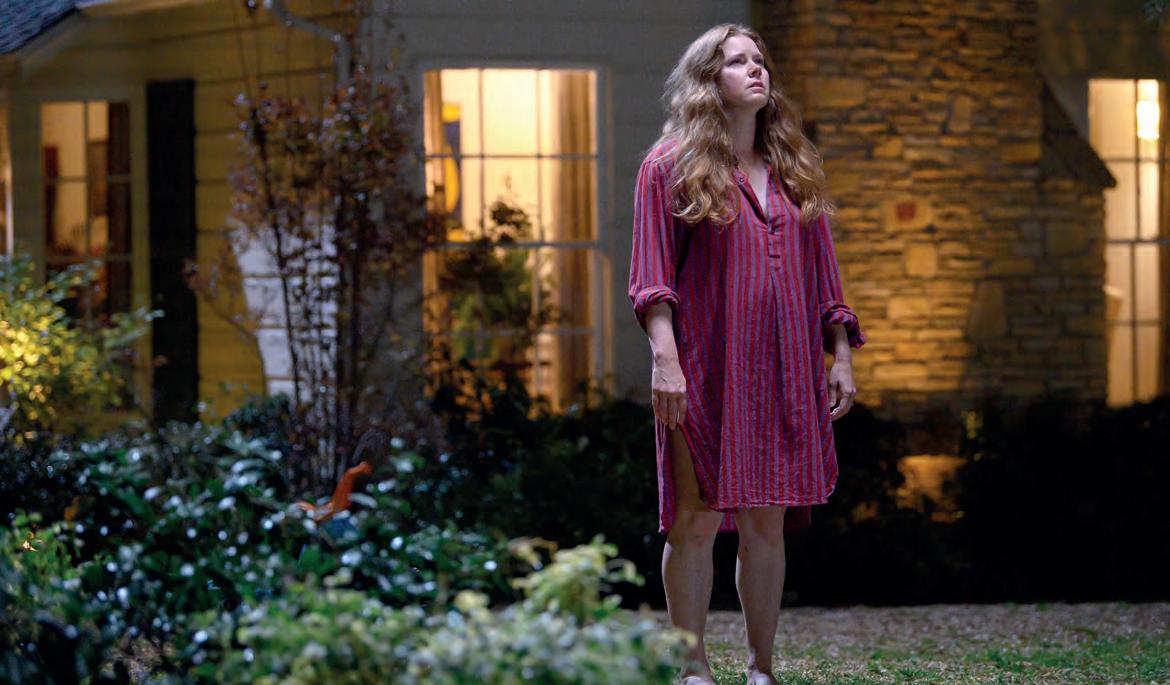
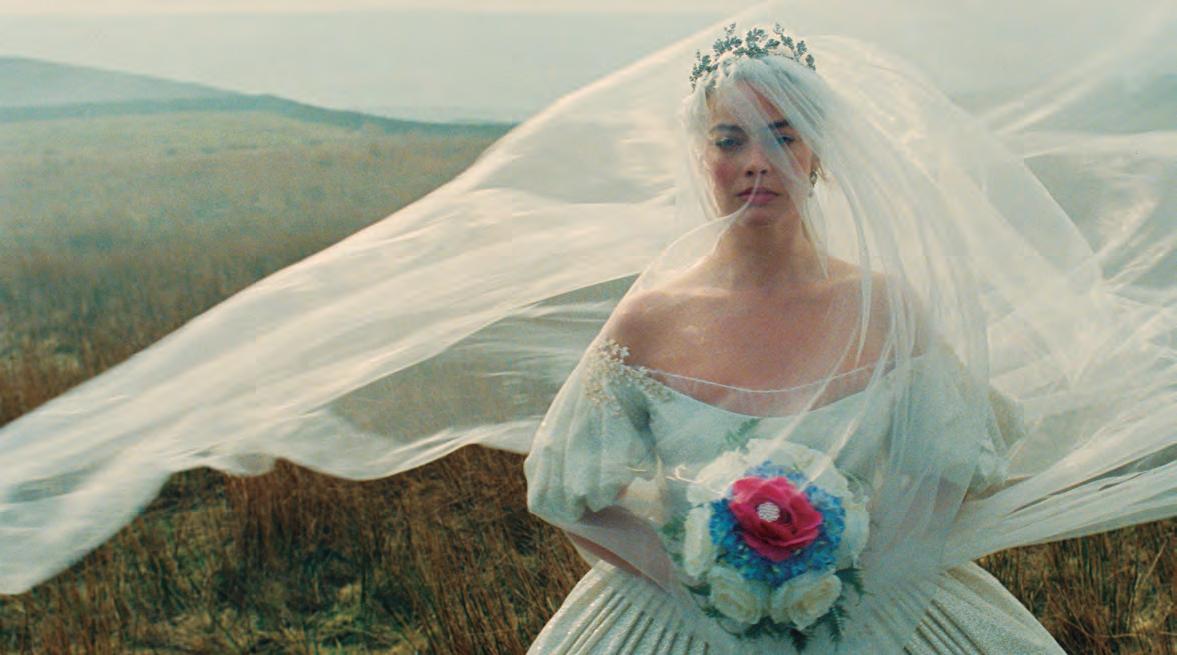
CICAE – THE INTERNATIONAL CONFEDERATION OF ARTHOUSE CINEMAS – CALLS ON EUROPEAN COMPETITION AUTHORITIES TO CHALLENGE THE PROPOSED ACQUISITION OF WARNER BROS. DISCOVERY BY PARAMOUNT SKYDANCE. IN CASE OF APPROVAL, THEY URGE TO
“IMPOSE LEGALLY BINDING, MARKET-TESTED, AND ENFORCEABLE REMEDIES TO PROTECT EUROPEAN CINEMAS, AUDIENCES, AND CULTURAL DIVERSITY.”
CICAE is a non-profit association representing over 2,400 arthouse cinemas with more than 4,400 screens in 46 countries.
In their opinion, the merger, if approved, “risks severely reducing production output, weakening theatrical distribution, and causing irreversible harm to cinemas, audiences, and the European film ecosystem.”
They stress large-scale consolidations produce the same outcome: “higher prices, lower wages, reduced competition, less choice and lower quality” . They remember the 2019 case of Disney/Fox and they believe this new merger will result in “fewer films, deteriorating terms for negotiating partners, and severe competitive harms across the entire ecosystem.”
“ A merged entity of this scale will face no structural incentive to maintain meaningful theatrical release windows. Already under pressure, these windows risk further erosion – with severe consequences for films and cinemas: lower audience numbers, lower revenues, and, for arthouse cinemas operating on narrow
margins, a direct path to closure,” CICAE adds.
Warner Bros. has been “a vital source of mid-budget, director-driven films” and it remains !one of the most important distribution partners” for arthouse cinemas across Europe. Beyond global titles, “Warner Bros. finances and coproduces local-language films in several key European markets such as Germany, France, Poland or Spain – a role no other studio fills at comparable scale.”
Dr. Christian Bräuer, President of CICAE, warns: “This deal would dramatically reshape the movie industry and pose an existential threat to arthouse cinemas across Europe. If cinemas are forced to close as a result of this, European films lose yet more visibility – stories that already struggle to find an audience would disappear entirely.”
Increased consolidation means increased market power for the remaining studios. That power will be felt in every negotiation between distributors and cinema operators: “This deal risks irreversibly tipping that balance and leading to even less feasible contract terms and further constrained market conditions.”
Paramount has publicly committed to a minimum of 30 theatrical releases per year and a 45-day exclusivity window. But CICAE is skeptical without a binding legal framework: “The history of media mergers is a history of promises made and broken.”
The arthouse cinemas are clear: “this merger is bad for European film, bad for arthouse and independent cinema, and bad for audiences.” According to CICAE, the European Commission “must conduct a rigorous review and ensure all relevant stakeholders are heard.”
They think the following points are essential: A guaranteed minimum number of theatrical releases per year with defined production investment and marketing budget thresholds;
• Meaningful theatrical release windows meeting or exceeding current European standards;
• Guaranteed theatrical access to catalogue and repertoire titles, including European and local-language productions;
• Maintained commitments to national production, local distribution and diverse content across European markets.

IN A JOINT STATEMENT, LEADING EUROPEAN ORGANISATIONS FROM THE FILM, SCREEN, PRESS AND MEDIA INDUSTRIES HAVE OUTLINED THEIR POSITION ON THE PROPOSED AGORAEU PROGRAMME.
WHILE WELCOMING THE AMBITION TO REINFORCE CULTURAL AND DEMOCRATIC VALUES, THEY RAISE SIGNIFICANT CONCERNS ABOUT ITS CURRENT DESIGN AND POTENTIAL IMPACT.
Below you can read the full statement:
“We, representatives of the European film and audiovisual sector and the press sector, welcome the European Commission’s ambition to strengthen support for culture, audiovisual, media and democratic values under the future AgoraEU programme.
However, we express strong concerns regarding the proposed grouping of the audiovisual and news within a single “MEDIA+” strand.
Together, we wish to strongly underline that the film and audiovisual sector and the media and press sectors operate under very distinct processes, economic models, regulatory frameworks, and market dynamics, and therefore require each their own tailored policy approaches and dedicated financial support.
Therefore, to ensure fairness, effectiveness and stability in Programme implementation, as well as maximum impact in reaching the Programme specific objectives, we call on the Member States of the Council of the European Union and the European Parliament to:
• Guarantee the establishment of two ring-fenced envelopes , one for the film and audiovisual sector and one for the media and press sectors;
• Ensure that budget allocations are defined ex ante , for the full duration of the multiannual financial framework;
• Base these allocations on fair, objective and transparent criteria
Such an approach is essential to provide inclusivity, predictability and visibility to project holders across both ecosystems. It will also prevent the need for repeated, complex annual negotiations , whose outcomes risk being influenced by unequal capacities to shape budgetary decisions.
A clear and balanced structure is a prerequisite for preserving the diversity, competitiveness and sustainability of Europe’s film and audiovisual sector and media and press sectors.
We stand ready to engage constructively with EU institutions to ensure that AgoraEU and MEDIA+ delivers on their objectives while respecting the specific needs of each ecosystem.”
• ATC – Audiovisual Training Coalition
• CEPI - European Audiovisual Production Association
• CICAE - International Confederation of Arthouse Cinemas Collective of Film Festivals
• EMMA – European Magazine Media Association
• ENPA – European Newspaper Publishers’ Association
• EPC – European Producers Club
• EUROCINEMA
• EUROPA DISTRIBUTION
• EUROPA INTERNATIONAL
• FERA - Federation of European Screen Directors
• FIAD – International Federation of Film Distributors’ and Publishers’ Associations
• FIAPF – Fédération Internationale des Associations de Producteurs de Films
• IVF – International Video Federation
• NME - News Media Europe
• SAA – Society of Audiovisual Authors
• UNIC – International Union of Cinemas