

The year 2025 ended with a bombshell in the film industry. On 5 December, it was announced that Netflix had agreed to acquire Warner Bros’ film and television studios, including assets such as HBO and HBO Max, for a staggering $82.7 billion. A story of global significance, explored in depth in this edition.
Although the details of the deal’s completion are still unknown—and, far more importantly, how it will affect cinema as we know it—industry professionals are once again gathering at the Berlinale for the first major sectoral meeting of the year. Even before reviewing the full list of titles selected for this edition or participating in its program activities, simply booking a flight to attend the festival is, in itself, somewhat reassuring.
In times when major threats loom, casting shadows of uncertainty over cinema and its traditional distribution models, being able to attend the 76th edition of one of the world’s most important film festivals—where artistic curiosity and business flourish equally— provides a sense of relief in uncertain times. History and tradition, diversity and fresh perspectives, serve as guarantees for the industry’s future.
At Rubik Magazine, we are proud to be an active player of the event, distributing
for the third consecutive year our special edition dedicated to the Berlinale at the European Film Market. The publication opens with a comprehensive overview of the 22 films competing for the Golden Bear. A selection in which, in the absence of predominant thematic or stylistic trends, variety is precisely its hallmark.
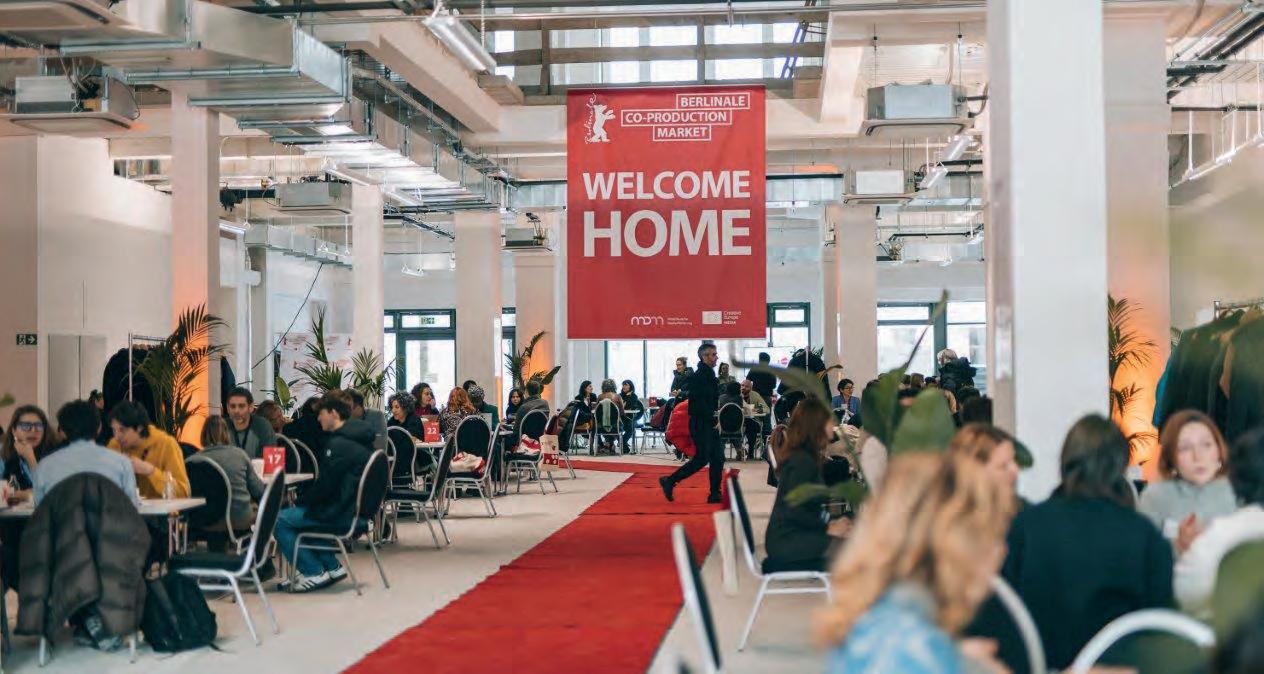
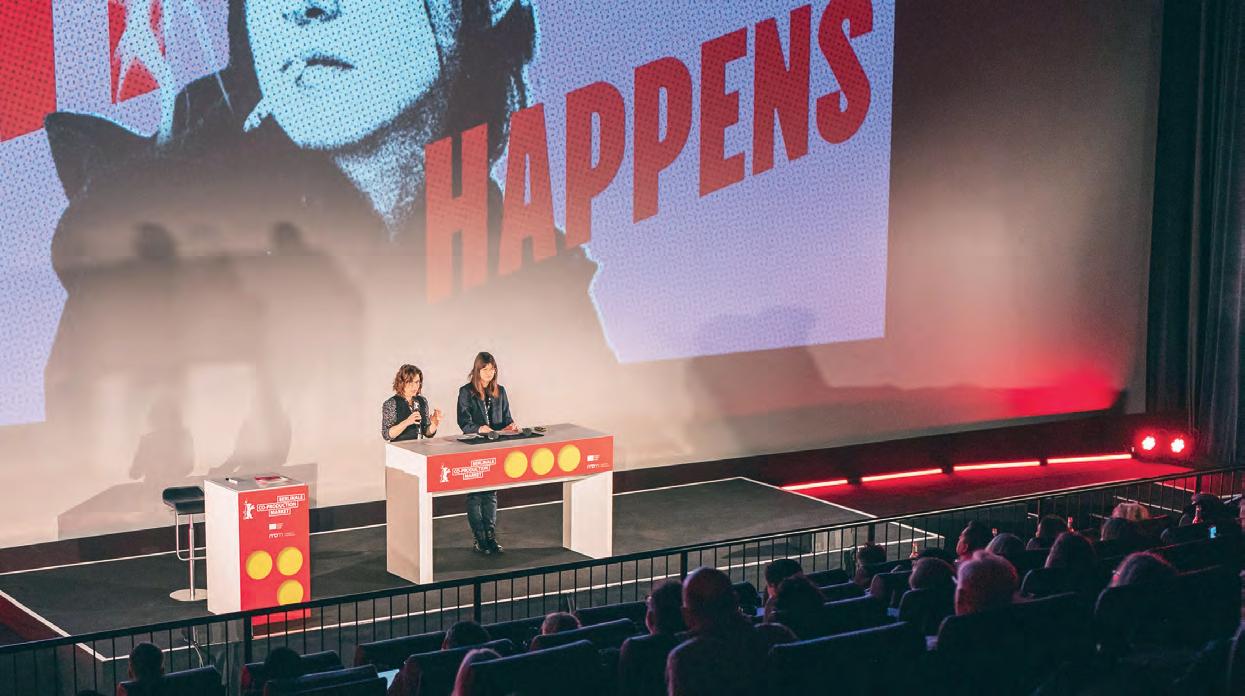
Next, we take an in-depth look at Spanish cinema featured in the festival’s various sections and at the schedule of market screenings presented by Spanish sales companies. We also provide an overview of the best of Latin American and Portuguese cinema, along with an interview with Martina Bleis, Head of the Berlinale Co-Production Market—a key initiative promoting projects with international co-production potential, part of Berlinale Pro.
We close our coverage of the Berlin event by continuing an initiative launched last year: the Spanish Producers Spotlight. We profile five selected Spanish producers participating in a new showcase, providing insight into their work, the types of projects they are developing, and their goals at Berlinale 2026. This year’s featured producers are Gerard Rodríguez, Emilia Dulom, Amaya Izquierdo, Miguel Molina, and Koldo Zuazua.
Leaving the Berlinale-focused section behind, we continue with two interviews
that examine the distribution sector. One with Yvette de los Santos, Sales Director at Raabta International, a new Spanish sales company focused on promoting emerging talent; and another with Eduardo Escudero, Co-President of Europa Distribution, an international association representing independent film distributors and a global network defending European cinema.
We round off this edition with an indepth story on Sirat , a Spanish film that has won five awards at the European Film Awards, received eleven Goya nominations, and earned two Oscar 2026 entries, competing for Best International Feature. The piece traces the long journey of Oliver Laxe’s film from the financing stage through red carpets and camera flashes, highlighting the insights of the professionals who made it possible.
We hope this international edition proves both interesting and useful to you. Every day, we continue working hard to ensure Rubik Magazine remains the go-to source for the Spanish and international screen industry. We wish you a fruitful experience at Berlinale 2026.
Carlos Aguilar Sambricio and Miguel Varela.
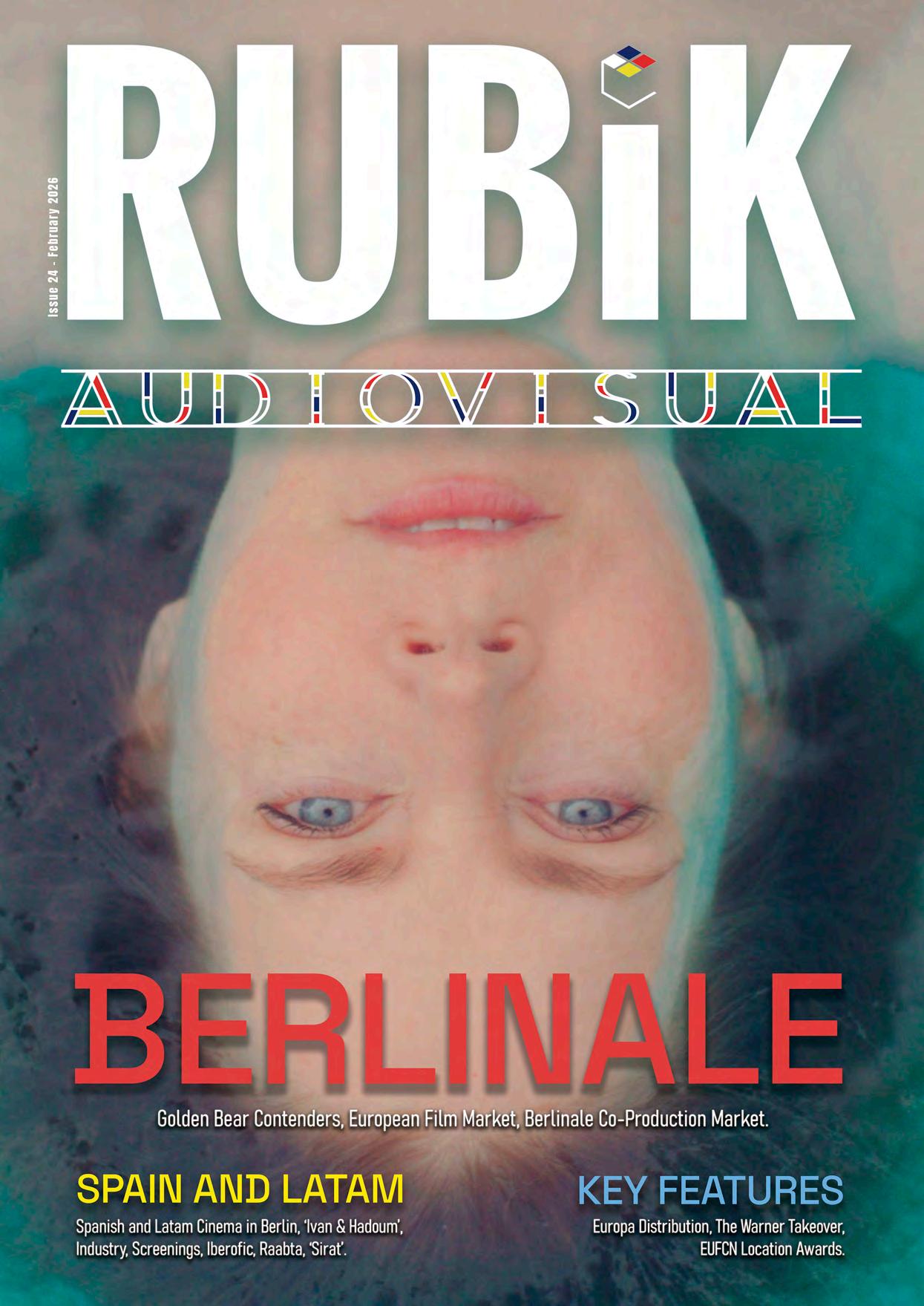
FRONT COVER: AMY ADAMS IN AT THE SEA, FILM DIRECTED BY KORNÉL MUNDRUCZÓ © Produced by AR Content, Ryder Picture Company, Proton Cinema and Hammerstone Studios, and sold by MK 2 Films. Image courtesy of Berlinale
MADRID IN FEBRUARY 2026 BY MARATÓN AUDIOVISUAL S.L.
ISSN: ISSN 3020-5107
GENERAL CONTACT: HOLA@RUBIK-AUDIOVISUAL.COM
EDITORIAL CONTACT: REDACCION@RUBIK-AUDIOVISUAL.COM
ADVERTISING CONTACT: MARKETING@RUBIK-AUDIOVISUAL.COM
THIS 76TH EDITION OF THE BERLIN FILM FESTIVAL IS THE SECOND UNDER THE LEADERSHIP OF TRICIA TUTTLE. PRODUCTIONS FROM 28 COUNTRIES ARE REPRESENTED IN COMPETITION: NINE FILMS WERE DIRECTED OR CO-DIRECTED BY WOMEN. 14 FILMMAKERS HAVE BEEN AT THE FESTIVAL BEFORE, SIX EVEN IN COMPETITION. TUTTLE EMPHASIZES THE DIVERSITY OF THE PROGRAMME: “IF YOU DON’T FIND SOMETHING HERE TO LOVE, YOU DON’T LOVE CINEMA!” GERMAN DIRECTOR WIM WENDERS IS HEADING THE JURY THAT WILL DECIDE THE AWARDS AMONG THE 22 FILMS SELECTED FOR THE COMPETITION, THREE MORE THAN LAST YEAR. IN THE FOLLOWING PAGES WE TAKE AN IN-DEPTH LOOK AT THE FILMS VYING FOR THE GOLDEN BEAR.
BY CARLOS AGUILAR SAMBRICIO

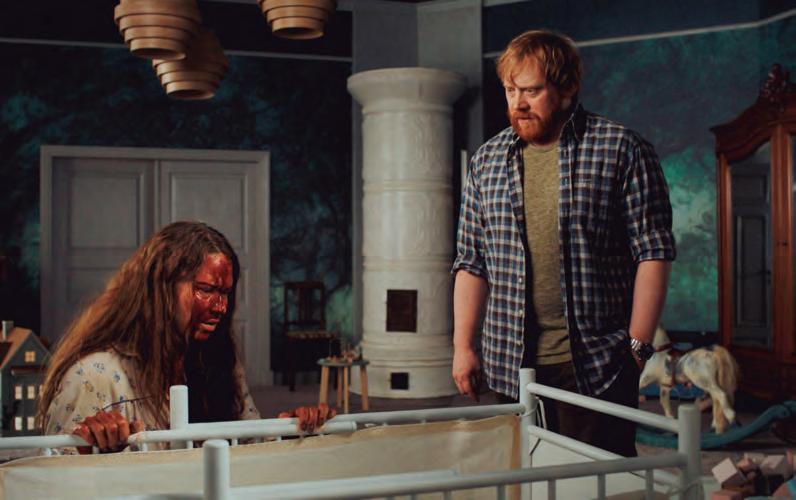
NIGHTBORN by Hanna Bergholm. Genre cinema is not common at major festivals, and even less so at the Berlinale. This horror thriller, directed by Finnish filmmaker Hanna Bergholm, is therefore well positioned to attract attention. She had already done so with her feature debut at Sundance and Sitges in 2022, Hatching. Goodfellas is responsible for sales of this dark fable about motherhood.
Storyline: Eager to start a family, Saga and Jon move to her childhood home in the Finnish forest. But after their baby is born, the couple’s dream of a perfect child turns into a nightmare – and only Saga senses the unsettling truth.

A NEW DAWN by Yoshitoshi Shinomiya. There hasn’t been a Japanese film in the Berlinale Competition since 2023, when Makoto Shinkai’s Suzume was selected. In fact, Yoshitoshi Shinomiya, who makes his directorial debut with this animated feature, previously worked in the illustration department on Shinkai’s films such as Y our Name, The Garden of Words and Children Who Chase Lost Voices . Produced by the French company Miyu Productions and the Japanese studio Asmik Ace, Charades handles international sales.
Storyline: Keitaro lives in a fireworks factory that is about to be shut down. He is determined to unravel the mystery of the Shuhari, a mythical firework created by his father before he disappeared without a trace – and launch it before the factory closes.
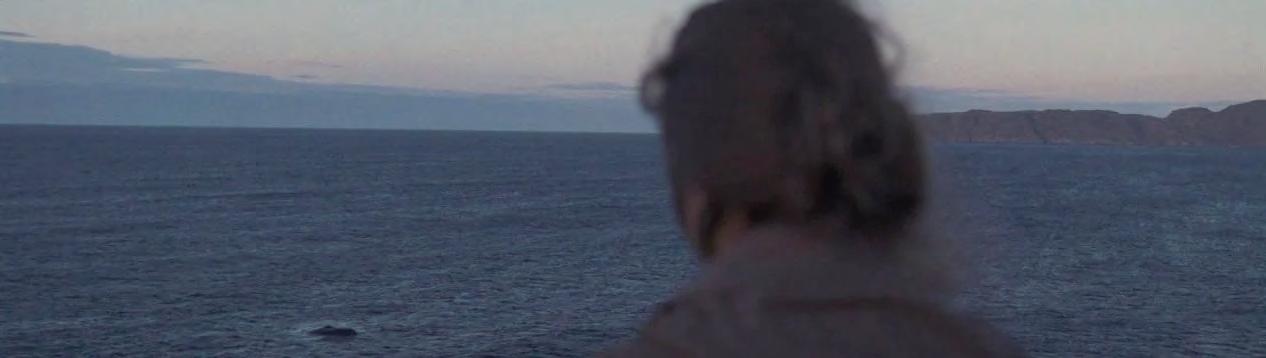
AT THE SEA by Kornél Mundruczó. Hungarian filmmaker Kornél Mundruczó has been one of the most prestigious directors in Europe in recent years. Although Cannes was the festival that launched him to international prominence, screening five of his films, including White God and Jupiter’s Moon , his latest work will be shown in Berlin. It´s an English-language drama starring Amy Adams as a woman attempting to redefine herself following a self-destructive period. MK2 is the sales company.
Storyline: After rehab, a woman returns to her family’s Cape Cod house, where sobriety forces her to confront buried trauma and the terrifying question of who she is without her career that once justified her self-destruction.

IN A WHISPER by Leyla Bouzid . Tunisian filmmaker
Leyla Bouzid premieres her third feature film in Berlin, following the warm reception left of As I Open My Eyes and A Tale of Love and Desire . Playtime is in charge of global sales for this co-production between France and Tunisia. Eya Bouteraa, Hiam Abbass, Marion Barbeau and Feriel Chamari are the film’s leading actors.
Storyline: Lilia returns to Tunisia for her uncle’s funeral and reunites with a family that knows nothing about her life in Paris, especially her love life. Determined to confront her family’s secrets, Lilia sets out to unravel the mystery of her uncle’s sudden death.

WE ARE ALL STRANGERS by Anthony Chen. Aside from the Japanese animated film, there is only one other Asian title in competition: We Are All Strangers. This is Singaporean filmmaker Anthony Chen‘s third film in his ‘Growing Up’ trilogy. The first film was Illo Illo, Cannes’ Golden Camera for best first film, and second one was Wet Season, which premiered in Toronto. Paradise City Sales is managing sales for this film about family and class inequalities.
Storyline: A life-altering event forces 21-year-old Junyang and his girlfriend to face reality. At the same time, while Junyang’s father is struggling to hold their modest life together, a woman enters his life and both generations are forced to redefine their family.

WOLFRAM by Warwick Thornton. Warwick Thornton is a highly regarded Australian filmmaker whose notable works include Samson & Delilah, Cannes’ Golden Camera, and Sweet Country, Venice’s Special Jury Prize. Actually, this is a sequel to Sweet Country, set four years after. Paradise City Sales is in charge of this western drama starring Deborah Mailman, Thomas M. Wright and Pedrea Jackson. It´s an International Premiere because it was already screened at Adelaide Film Festival.
Storyline: 1930s Australia, the colonial frontier. Two swaggering outlaws roll into a mining town and unleash a wave of cruelty, leading two siblings to break free from their white masters and set off across the “sweet country” of central Australia in search of a safe home.

HOME STORIES by Eva Trobisch. Eva Trobisch first drew industry attention with her debut feature, All Good (2018), which won the Best First Feature award at Locarno. Her second film, Ivo, competed in the Berlinale’s Encounters section, and she now returns in the Official Selection. International sales are handled by The Match Factory for this film which delves into themes such as family, belonging, and the search for identity.
Storyline: “Who are you and what defines you?”, Lea is asked by the production crew of a reality talent show. She does not know. And with this question, her search for an identity within and beyond her family’s hotel in the forests of the former East Germany begins.


DAO by Alain Gomis . The Party Film Sales is responsible for international sales of Dao, the new film directed by Alain Gomis. French-Senegalese filmmaker is a regular name in Berlinale, having stood out in 2017 with Felicité winning Grand Jury Prize. He also had another two films in the festival: Today (Competition, 2012) and Rewind & Play (Forum, 2022).
Storyline: A film in which two celebrations of life, a wedding in France and a commemoration in Guinea Bissau, are organically intertwined with the threads of a family and heritage that live and travel between these two worlds. Perpetual circular movement framing reality.
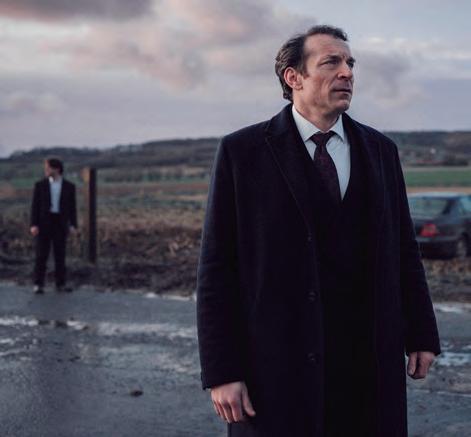
DUST by Anke Blondé. Anke Blondé, who has also worked as a casting director, is a Belgian filmmaker presenting her second feature here, following The Best of Dorien B., a film that competed in Rotterdam. Levelk manages global sales for this drama that takes place in the span of one day. The script is penned by Angelo Tijssens, co-writer of Lukas Dhont’s Girl and Close
Storyline: At the end of the 1990s, during the height of the Belgian tech boom, visionary entrepreneurs Luc and Geert watch their empire collapse as news of their fraud breaks. With just one day of freedom left, they part ways in search of redemption.
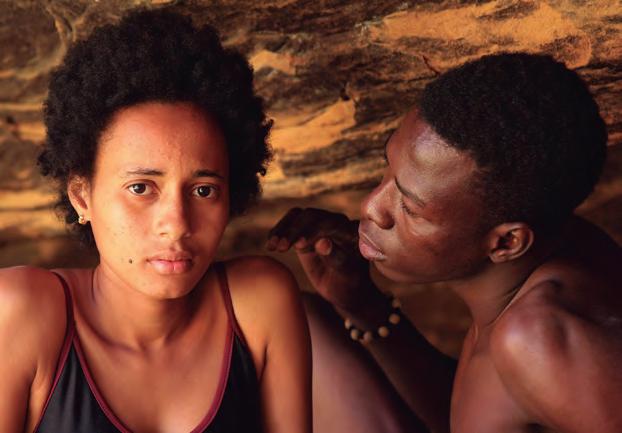
by MahamatSaleh Haroun. Chadian director Mahamat-Saleh Haroun is one of the most established African filmmakers with films such as Daratt – Dry Season, A Screaming Man, and the recent Lingui. However, he has never competed at the Berlinale, as nearly all of his films have premiered at Cannes. The new film delves into contrasts, juxtaposing ancient cosmologies with monotheistic religions, and highlighting the tension between men and women.
Storyline: Seventeen-year-old Kellou has been gifted with supernatural powers she does not understand. Her disquiet and uncertainty only change when she meets Aya. It is an encounter with destiny that forges a mystical world where the visible and invisible converge.
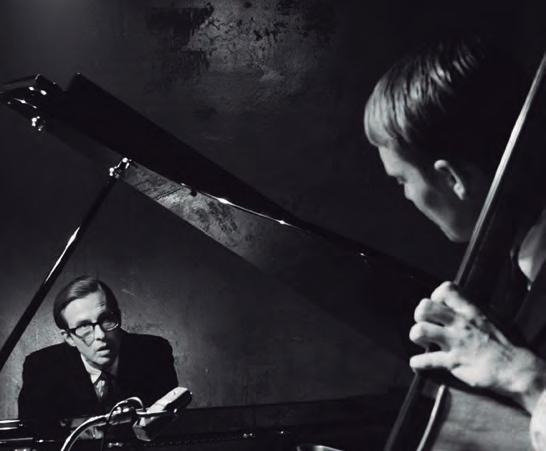
by Grant Gee. Known for music documentaries such as Joy Division and Meeting People Is Easy (about Radiohead), as well as numerous music videos for Blur, Nick Cave, and Radiohead, the English filmmaker Grant Gee could be one of the big surprises of this Berlinale. Adapted from Owen Martell’s book ‘Intermission’, this fiction has Anders Danielsen Lie, Bill Pullman and Laurie Metcalf in its cast. Mister Smith Entertainment oversees international sales.
Storyline: At the height of his career, legendary jazz pianist Bill Evans loses his bassist and musical soulmate in a tragic car crash. The film portrays the inner life of a musical genius as he struggles to learn that sometimes an intermission is part of the music.

ROSE by Markus Schleinzer. One of the contenders for the Best Acting award will be Sandra Hüller (Toni Erdmann, Anatomy of a Fall, The Zone of Interest). His new film is a drama set in the 17th century that explores the identity, deception, and survival of a mysterious soldier. This is the third film by Austria filmmaker Markus Schleinzer, known for his debut film, Michael, which was in Cannes Competition and also nominated in the European Discovery catergory in the EFA Awards.
Storyline: In the early 17th century, a soldier arrives at an isolated Protestant village in Germany claiming to be the heir to an abandoned farmstead. Even though he proves to be a good man, the villagers’ suspicions about his identity grow and they force a reckoning.
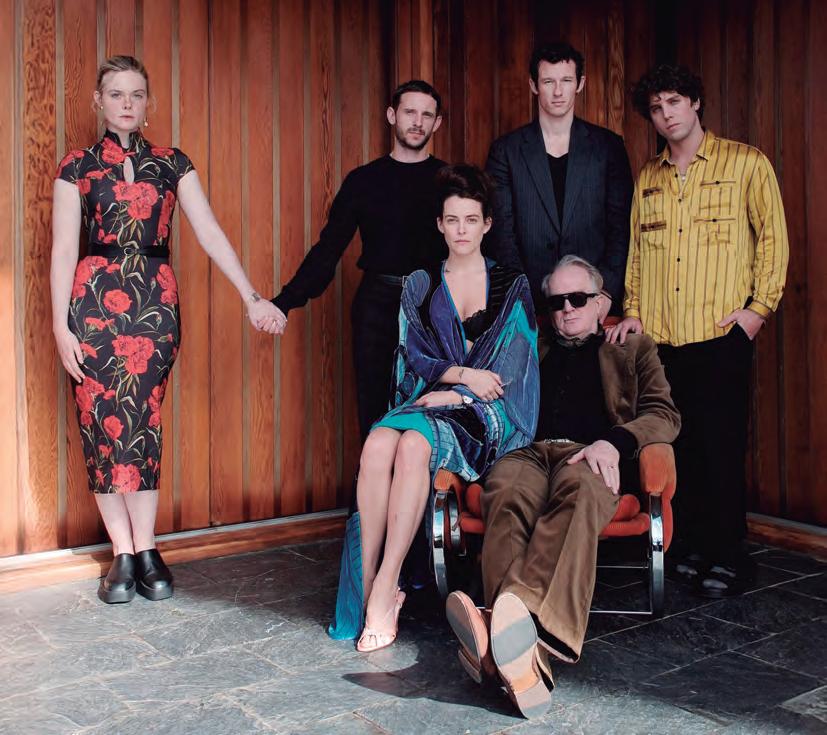
The latest feature film from Karim Ainouz (Motel Destino) is a production made by MUBI, The Match Factory (also sales), Kavac Film, The Apartment (A Fremantle company), Sur Film, Crybaby and Gold Rush Pictures. Its a contemporary satire about the absurdity of the traditional patriarchal family written by Efthimis Filippou, long-time Lanthimos collaborator in films such as The Lobster, Dogtooth or The Killing of a Sacred Deer. Its stellar cast includes Callum Turner, Riley Keough, Jamie Bell, Lukas Gage, Elena Anaya, Tracy Letts, Elle Fanning and Pamela Anderson.
Storyline: In a Spanish villa, American siblings Jack, Ed, Anna and Robert wallow in isolation and their inherited fortune. When Jack wants to move in with his girlfriend and Ed uncovers the truth about their mother’s death, the fabric of the family begins to unravel.
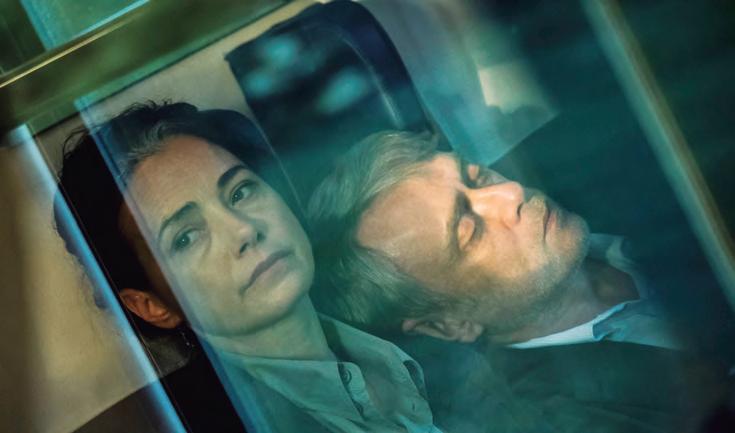
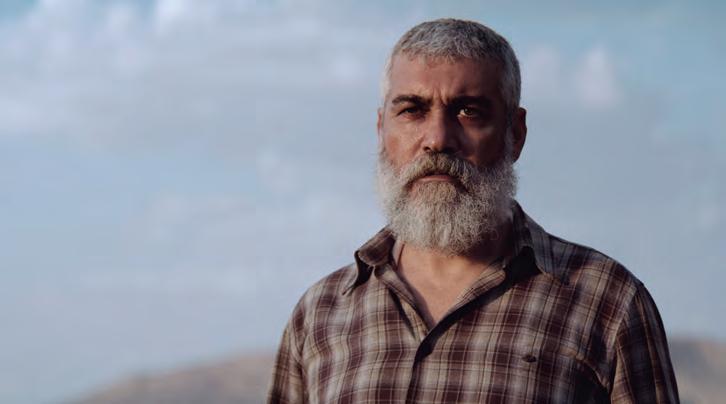
by Emin Alper. Turkish Emin Alper might not be a very popular name but he has been selected in the Big Three. His first film, Beyond the Hill , won the Caligari Film Prize at Berlinale Forum; Frenzy received a Special Jury Prize at Venice; and Burning Days was presented at Un Certain Regard in Cannes. Lucky Number handles international sales of this parable of fear of the others Storyline: In a remote village, an exiled clan returns, reviving a decades-old land feud. Seized by divine visions, Mesut challenges his brother’s leadership to save his people. Will this new path bring salvation or tragedy?
tak. This is one of the three German films in Competition. lker Çatak, German film director of Turkish descent, is back at Berlinale after his social drama The Teacher’s Lounge was shown in the Panorama section in 2023 —it was later nominated in the Oscars—. With sales in charge of Be for Films, this is a political drama starring Turkish actors Özgü Namal and Tansu Biçer.
Storyline: Life is good for Derya and Aziz, a celebrated artist couple from Turkey, until an incident at their play’s premiere. Suddenly targeted by the state and struggling to balance their ideals with life’s necessities, their marriage is pushed to a breaking point.
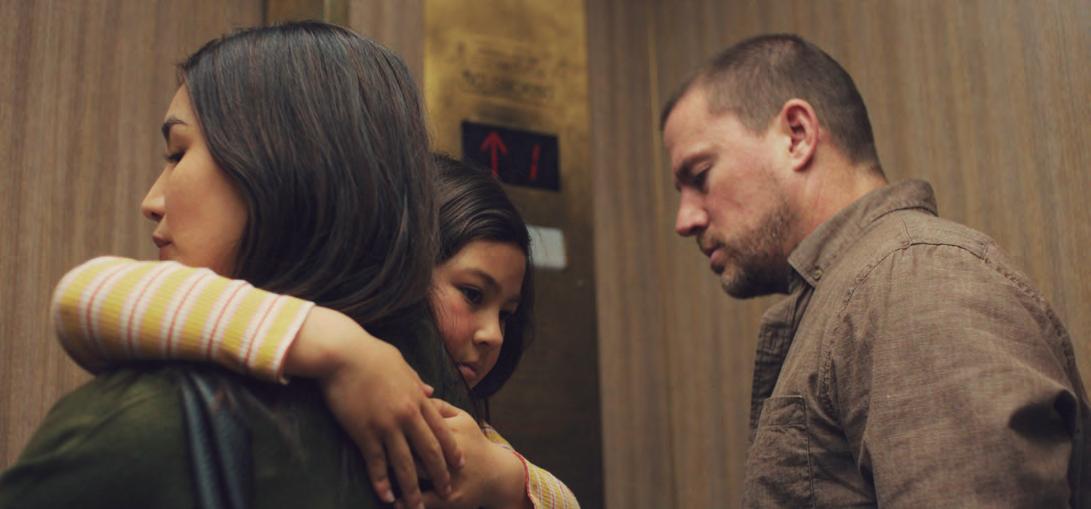
JOSEPHINE by Beth de Araújo. There is a substantial presence of American cinema in this edition, but the most anticipated title in Europe is Josephine , which has just won the Grand Jury Prize and the Audience Award at Sundance (so its an International Premiere). The director’s second feature, following Soft & Quiet , is a family drama with touches of psychological thriller that explores the impact on a young girl of witnessing a rape in a park. The cast is led by child actor Mason Reeves, alongside Channing Tatum and Gemma Chan.
Storyline: After eight-year-old Josephine accidentally witnesses a crime in Golden Gate Park, she begins to act out violently to protect herself. This emotional trauma leads to conflicts between her parents as they search for justice, and a way for the family to feel safe again.
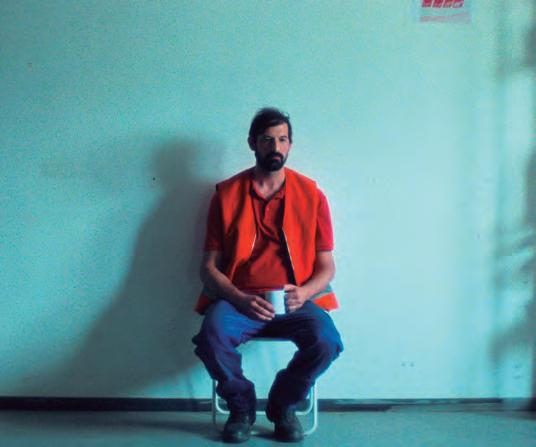
WIFE CRIES by Angela Schanelec. Another key name in this year’s Berlinale Official Selection is Angela Schanelec, one of the most significant contemporary filmmakers in Germany. Her two most recent films, I Was at Home, But… and Music, made a strong impact at the Berlinale and won over the jury, earning the awards for Best Director and Best Screenplay respectively. My Wife Cries is produced by Blue Monticola Film and international sales are handled by SBS International.
Storyline: An ordinary workday on a building site. Forty-year-old crane operator Thomas receives a call from his wife: he has to pick her up from the hospital. Once there, he finds her sitting alone on a park bench, crying.
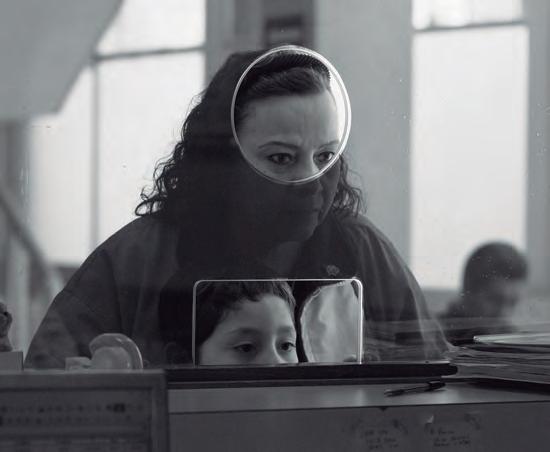
FLIES by Fernando Eimbcke. The only Spanish speaking film in Competition is Flies, directed by Mexican Fernando Eimbcke (Duck Season, Club Sandwich). He is not a newbie in Berlin, because he was selected in 2008 with Lake Tahoe, which won FIPRESCI Prize and the Alfred Bauer Award, and his last film, Olmo, was screened at Panorama. Shot in black and white, this project won the WIP Latam award in the industry section of the San Sebastián Festival.
Storyline: Olga rents out a room to a man whose wife has been admitted to a hospital nearby. However, the man has a nine-year-old son he has been sneaking into the room, which leads to Olga’s carefully controlled world shifting as their lives become intertwined.
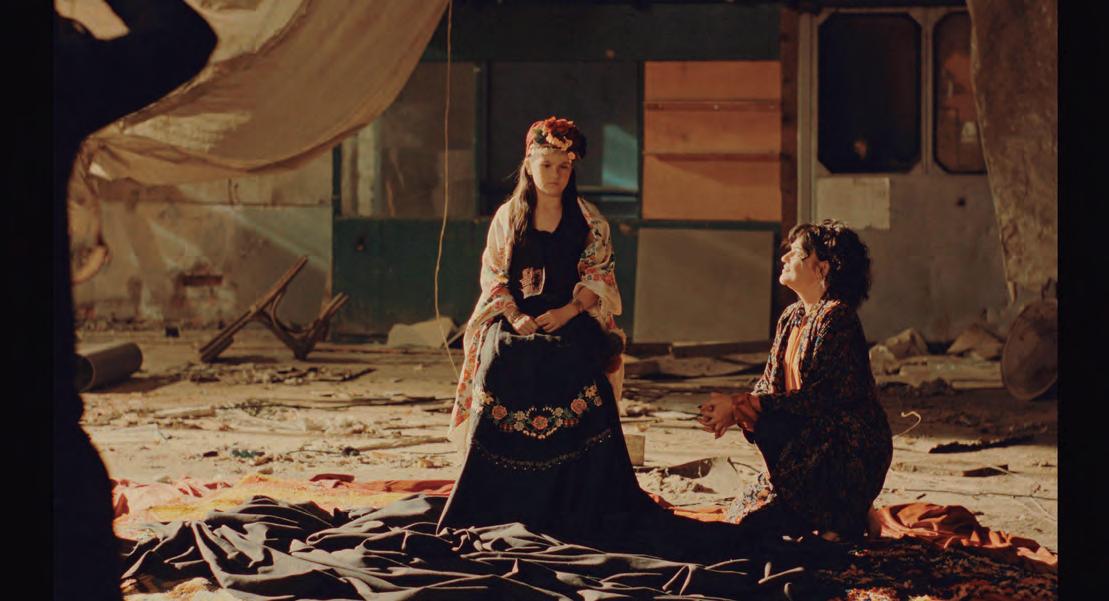
by Geneviève Dulude-de Celles. With her narrative feature debut, A Colony, Canadian filmmaker Geneviève Dulude-de Celles won the Best Film award in Berlin’s Generation section. After a new approach to documentary filmmaking, she returns to fiction with Nina Roza, a project she has been developing for six years. The film is an exploration of the contemporary art world and is being sold by Best Friend Forever.
Storyline: An art dealer travels from Quebec to the homeland he abandoned to see the paintings of an elusive pre-teen prodigy in the Bulgarian countryside. It is only by viewing her work firsthand that he will be able to determine if she is a fraud, or a genius.
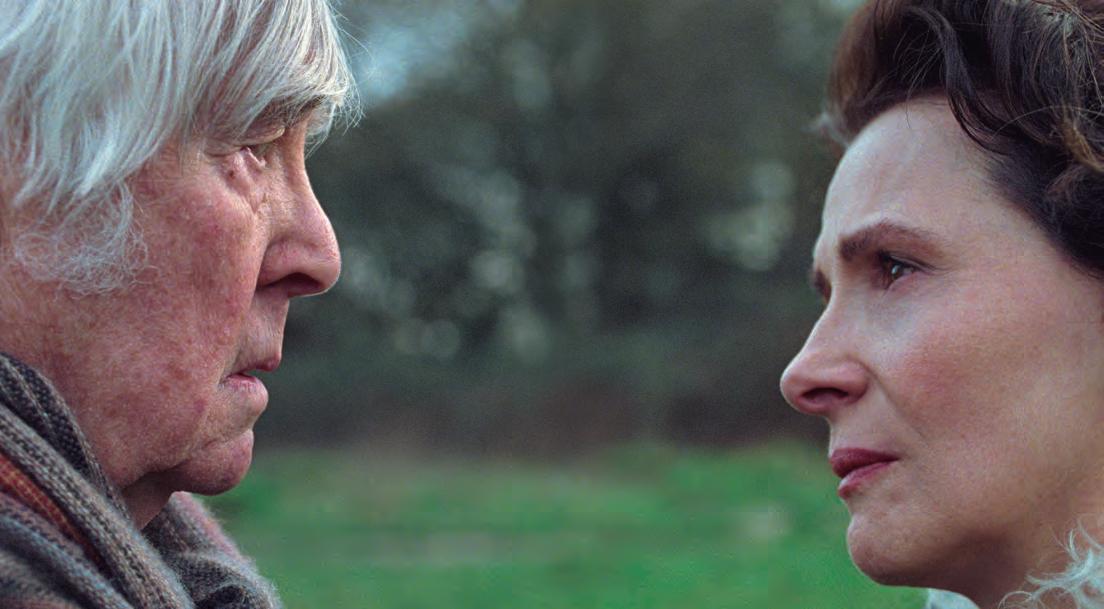
QUEEN AT THE SEA by Lance Hammer. The legendary actress Juliette Binoche is the main draw of Queen at Sea, a film directed by American filmmaker Lance Hammer, whose only previous feature dates back to 2008. That film was Ballast, which won the Best Director award at Sundance and the Breakthrough Director award at the Gotham Awards. The feature is a production from The Bureau whose sales are managed by The Match Factory. Storyline: As advanced dementia erodes an older woman’s ability to communicate her inner life, her husband and daughter struggle to act in her best interests, navigating love and the fragile boundaries between care, protection and autonomy.
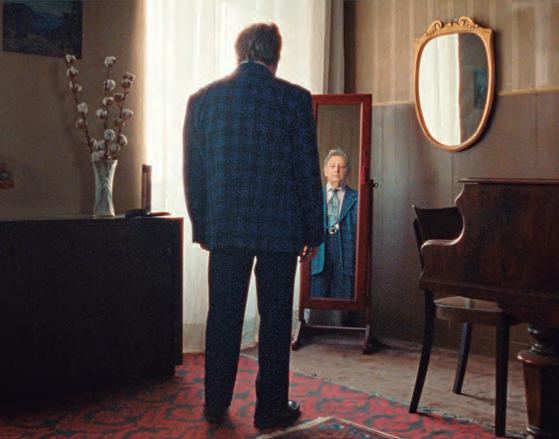
by Tizza Covi and Rainer Frimmel. Festival attendants cannot miss Italian Tizza Covi and Austrian Rainer Frimmel’s new film. They are two of the most interesting filmmakers in arthouse European cinema since the release of La pivellina, premiered at the Directors’ Fortnight, Cannes, in 2009. Their last one, Vera, was also awarded in Horizons, Venice, in 2022. Be For Films is the sales company of this film, shot again in Super 16mm and with a bunch of non-professional actors. Storyline: Blues musician Al Cook lives in an apartment filled with memories. Outside, the world carries on without him. When his home is slated for demolition, out of the ruins of his existence, a long-forgotten dream suddenly resurfaces.
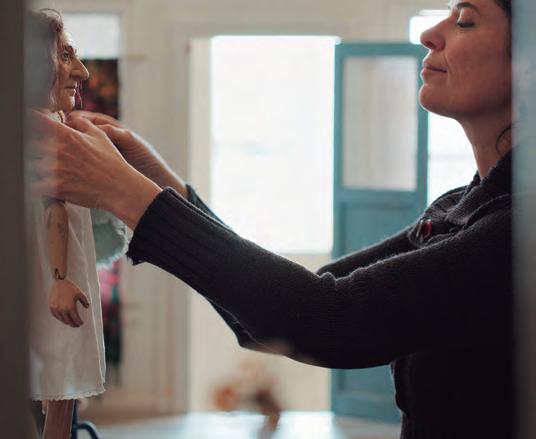
by
Anna Fitch
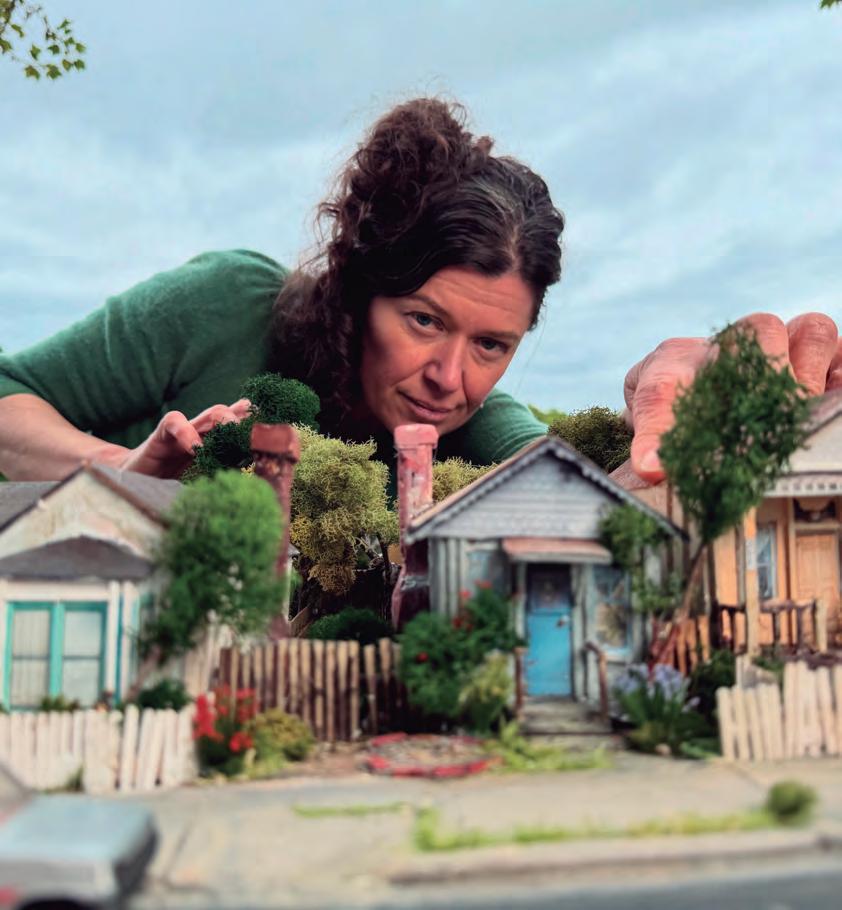
and Banker White. This is a special film. Not just because it´s the only documentary in contention for the Golden Bear but also because this project has been decades in the making. The film blurs memory, time and invention, and also reveals the power of artistic creation to channel grief and love. This is a production of San Francisco-based Mirabel Pictures whose sales are managed by First Hand Films.
Storyline: After losing her friend Yo, Anna builds a detailed 1/3-scale version of her friend’s house. It is just big enough for Anna to squeeze into, and inside lives a puppet of Yo. When the pair first met, Yo was 73 and Anna 24.
BY CARLOS AGUILAR SAMBRICIO
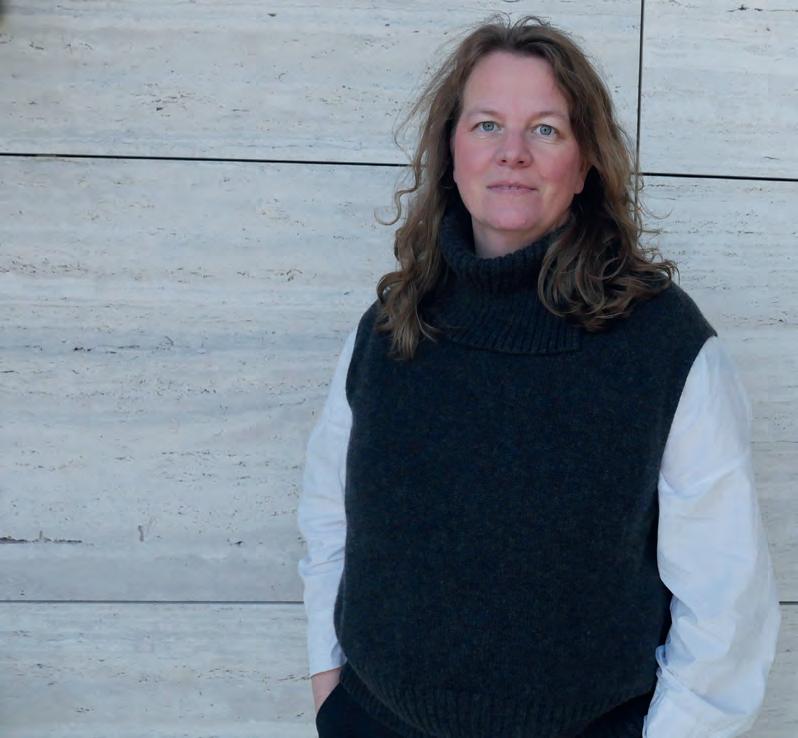
Rubik:. How has it evolved over all these years? What figures can you share about how it has grown and what percentage of the projects end up being made?
Martina Bleis: When we started, it was an event for approx. 200 people, taking place in one room for 1,5 days. There were probably more participants with projects than without projects in that very first year, and it was not easy for us to schedule meetings and keep track of people and projects. It was a success, nevertheless.
Over the years, we have professionalized the event, we have developed our own meeting software and learned a lot, so we can support and advise the projects in a focused way. There are now about 600 registered participants plus around 350 additional industry professionals joining us for specific events; we organize a talks and networking programme and approx. 1500 pre-scheduled meetings on five days.
The success rate of projects getting made is around 60% - so there is meanwhile an incredible number of 400 feature films and 25 series that have been completed. This year so far, we are proud and happy about fresh releases such as Sundance Best Directing Winner How To Divorce During The War , a 4-country co-
production by Andrius Blazevicius; and Butterfly by Itonje Søimer Guttormsen, which was in the Big Screen Competition in Rotterdam.
And now at the Berlinale, as many as 6 of our previous feature projects are selected, among them the Opening Film No Good Men as well as two titles
in Competition, Yellow Letters by Ilker Catak and We Are All Strangers by Anthony Chen, Where To? in Perspectives as well as Ivàn & Hadoum and Narciso in Panorama. And one of our Co-Pro Series projects screens in Berlinale Series Market Selects, La Linea Della Palma from Switzerland.
Rubik: What sets this initiative apart from others in the international market?
M.B.: I think there is an amazing momentum when your project is selected here in Berlin. It really gets noticed by the industry, and many relevant players attend our market and take meetings. Regarding the sheer amount and the quality of potential partners around, we certainly benefit strongly from being part of a large festival that has an important market like the European Film Market and also the other high-class Berlinale Pro industry events happening.
At the same time, inside the eye of the storm of these many meeting possibilities if you will, we very thoroughly curate our selection of projects, participants, and meetings. We aim to create a focused atmosphere and a selection of exciting projects that can really benefit from being presented here, and which

really also have something to offer for the participants looking for projects.
We are putting a lot of work into the selection, the editing (in order to present very precise information upfront, so that people come to the meetings well-prepared), and setting the right priorities for the meetings for each individual project.
Some projects receive more than 80 meeting requests, and we can organize 33 meetings each. We want them to have the best matching meetings, so we need to know the projects’ needs and the producers’ preferences in detail, so we can be their ideal matchmakers.
Rubik: What´s new for this upcoming edition?
M.B.:This time, we are not implementing major event changes, however, we do have a new location: the Atrium Tower at Berlinale Service Center, right next to the Berlinale Palast.
It’s always a challenge to find a matching location closeby, and to ‘translate’ all our programme events to fit into the new space, and I think we have managed this pretty well. We’re also excited since our new location is high up on floors 12-14 and has great views over the city.
Rubik: What is the tailor-made programme organized for the participants like?
M.B.:The programme is made particularly for producers: focused and pre-scheduled meetings with quality-checked projects are at the heart of the event, and on the side, there are case studies on international coproductions and casting, as well as talks on financing possibilities and Country Sessions, where funders from different countries detail their regions’ available support for coproductions. Also, there are informal events like lunches and receptions, as well as Speed
Matchings at random, which are very fun but also offer a different way of making new connections in a short time.
Special focus is also put on literary adaptations, in our Books at Berlinale pitch and networking event, where we present 10 novels for adaptations, together with Frankfurter Buchmesse – this year is our 21st edition. Plus, there is Co-Pro Series, our day of pitches and meetings for new drama series projects.
Participants are welcome to make use of our programme according to their personal needs and availability: some come for 2 meetings only, and some spend all day, and can hang out or arrange meetings in our Producers Lounge whenever they are not busy with any of the other programme parts.
There is also a special programme for newcomer producers, the Visitors Programme, where, in partnership with many international institutions and promotion bodies, 110 upcoming producers from 25 countries meet, gain insights from experts and kickstart their international networks.
Rubik: There are some common mistakes that are often made, especially by young producers, when facing pitches or meetings. What do you recommend to them?
M.B.:There are quite a few possible mistakes of course – much of it comes down to impatience and sometimes maybe ignorance: submitting a project at too early stage, or insisting to be part of a specific market, when maybe your project has a better-matching profile for another one.
We always recommend to research well which markets there are and which could be good and offer the right guidance and meeting possibilities for your specific project at its current stage. Take submission criteria seriously, ask in case something is unclear or you are not sure whether you fulfill the criteria;
and trust the market you are eventually going to: be honest about the stage of your project and your financing partners in place, in order to collaborate smoothly and get the best guidance and meeting options from a market. Also, be aware of projects and films with similar themes and try to work out precisely and make people see what makes your project stand out as unique, but without preaching why you think it’s better than others. And in general for meetings, don’t assume, but ask and communicate.
Some
projects receive more than 80 meeting requests, and we can organize 33 meetings each. We want them to have the best matching meetings, so we need to know the projects’ needs and the producers’ preferences in detail
For pitches, I’d have a whole additional set of recommendations, but I guess this is a bit too long here now.
Rubik: Do you have specific types of projects that you tend to select? What trends are you seeing among filmmakers?
M.B.: Within our selection of 35 features, we aim to offer a variety of projects, in terms
of their countries of origin, genres, themes, budgets and stages. Ideally partly financed, with a script ready to exchange with partners, and coming from experienced producers. Directors have often had their previous films in A-film festivals. Our projects are generally arthouse features, ideally with a crossover potential, and producers should definitely have an audience in mind when applying here.
Contentwise, we have a strong tradition (though not only) regarding queer themes and female empowerment stories; we support diversity, female directors, and indigenous filmmakers.
Surely there are trends: this year, horror is especially strong. In some projects explicitly, in some more as an underlying mood. This year, Amanda Nell Eu from Malaysia, known for Tiger Stripes, is attending with her producer to present their new project, Lotus Feet and this is only one of several projects. But don’t worry if you are not into horror: we do also have dramas and comedies.
Rubik: You have a section called Co-Pro Series. You seem to place a stronger focus on series than other festivals and markets. How has this area developed over time?
M.B.: Yes, we are presenting 10 exciting drama series projects in development and financing stages. We started this as part of a joint initiative in 2015. The major part of the Berlinale Series Market is run by our colleagues from the European Film Market, Jana Daedelow and her team. As our contribution from the Berlinale Co-production Market, we curate the 10-project Co-Pro Series selection,

pitches and targeted one-on-one meetings. This year again more strongly, the festival is also showing outstanding series prominently, so there is a good momentum here for industry and audiences alike.
I think as an A-film festival, we are very strong in bridging cinema and series, especially with regard to the creatives and the producers who are presenting projects here. This year for example, we will present the first drama series to be directed by Ilker Catak (internationally known for his Academy Award-nominated The Teachers Lounge). His new film Yellow Letters was with us as a project
and screens in Competition. The series project is adapted by two feature-experienced writers from the bestselling novel The Granddaughter by Bernhard Schlink (known for The Reader), which was presented at Books at Berlinale a few years ago.
Rubik: I’m also interested in the socalled Company Matching. How are the countries and companies selected, and what advantages does participating in this initiative offer?
M.B.: For the Company Matching, we handpick 5 participating companies each year, either very active coproducers, companies with a strong slate or with interesting company structure/ specialisations or even all of the above. These are companies and people who we think many of our participants should and will want to meet, to speak about ideas, collaborations, structural questions. They can also pitch own projects, however, ideally the programme is meant also to give room for reflection and collaboration beyond single projects.
This year, we have invited X Filme Creative Pool from Germany, Elastica Films from Spain, Bubbles Project from Brazil, 2Brave Productions from Ukraine, and Kino Produzioni from Italy. The companies are presented in our catalogue with their slates, and quite detailed and personalized information about their goals regarding
company partnerships, projects, and meeting people.
Onsite, they meet each other, and then they each have individual meetings with other participants who have requested a meeting with them. We have done this for many years and while it is a new experience often for producers not to pitch one specific project, they usually really enjoy the experience and find it very inspiring.
Contentwise, we have a strong tradition (though not only) regarding queer themes and female empowerment stories; we support diversity, female directors, and indigenous filmmakers
Rubik: Awards are also important, right? For example, the Eurimages award is very valuable. Which organizations do you collaborate with, both for the awards and for the event in general?
M.B.: Awards are also important, true. The awards can give a true boost on the way to getting the finances together. The Eurimages Award is not only worth 20,000
Euros, but it is also highly prestigious, same as the arteKino International Award which comes with 6,000 Euros.
New since last year, we also have the Gen Z Audience Award, given by a jury of film students, who also provide feedback for the projects which they consider potentially interesting for their generation of cinemagoers. For this, we have a partnership with the Franco-German Youth Office (OFAJ/DFJW) who are supporting us in setting up the jury and sponsoring the award itself.
This year, two of our films coming back to the festival are previous award winners: Ivàn & Hadoum by Ian de la Rosa won the Eurimages Co-production Development Award in 2023, and Narciso by Marcelo Martinessi won the arteKino Award in 2021.
Our main financing support comes from MDM – Mitteldeutsche Medienförderung, and Creative Europe MEDIA. FFA, the German Federal Film Board strongly supports our programmes for newcomers.
Beyond this, we collaborate with up to 30 institutions, both financially as well as contentwise. There are many national and regional partners worldwide who are providing valuable and important support and promote their filmmakers and their country as a co-producing country. This support is necessary for us in order to be able to provide our offers on a high-quality level, and we are very grateful to our partners.
THERE ARE NO SPANISH FILMMAKERS IN COMPETITION, ALTHOUGH THERE IS SPANISH PARTICIPATION IN A COUPLE OF FILMS VYING FOR THE GOLDEN BEAR. IT’S NOT A REMARKABLE YEAR FOR SPANISH PRESENCE AT THE FESTIVAL, BUT IN THIS IN-DEPTH REPORT WE DELVE INTO EVERYTHING THAT’S ON OFFER, PAYING ATTENTION ALSO TO SERIES, WHERE SPANISH TALENT IS GIVEN GREATER VISIBILITY, AND TO PROJECTS IN DEVELOPMENT
BY CARLOS AGUILAR SAMBRICIO
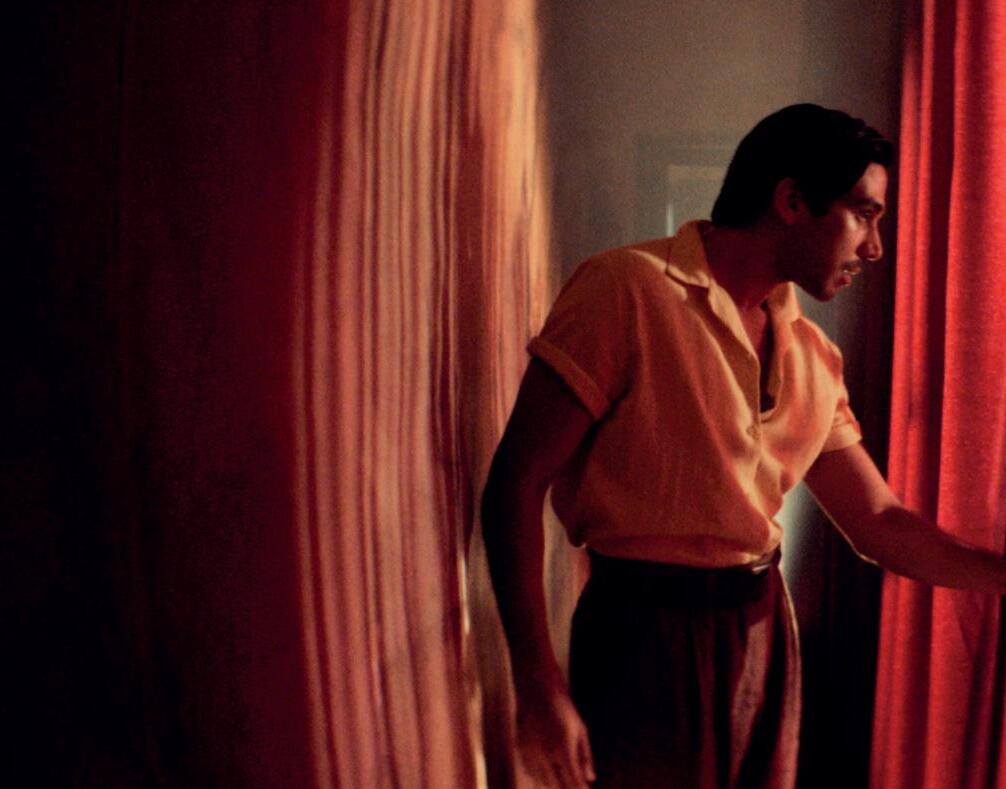
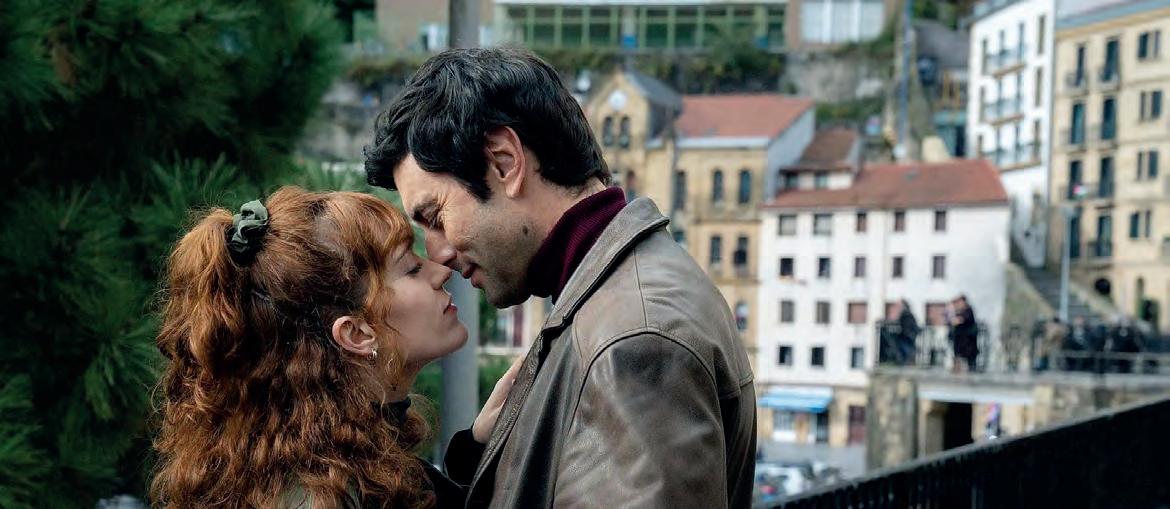
Spain’s presence in the 2026 Berlinale Competition is limited to minority co-productions. The production company SurFilm is participating as a producer on Rosebush Pruning, the new film by Brazilian director Karim Aïnouz (Motel Destino). The film is inspired by Marco Bellocchio’s debut feature, the highly acclaimed Fists in the Pockets
What’s most striking about the film is its cast, featuring Pamela Anderson, Elle Fanning, Callum Turner, Riley Keough, Jamie Bell, and Elena Anaya. The film was shot in a mansion surrounded by 20,000 square meters of land, located on a hill outside the town of Castellterçol (Catalonia), as well as in other nearby locations such as Barcelona and Platja d’Aro.
According to its plot, the film takes place in a Spanish village, where American
siblings Jack, Ed, Anna, and Robert find themselves mired in isolation and their inherited fortune. When Jack wants to move in with his girlfriend and Ed discovers the truth about his mother’s death, the family dynamic begins to unravel.
“It is a deeply personal and bold proposal, with a clear authorial vision and a sensitivity that invites the viewer to surrender to it. Its combination of creative risk and openness toward the audience can spark

curiosity and generate a special connection with very diverse viewers. Its presence in the competition already places it in a prominent position within the festival. For Sur-Film, being part of this creative journey is both a privilege and another step in our commitment to storytelling with an international vocation,” the Spanish production company exclusively tells RUBIK.
Another film in competition with a small Spanish presence is Flies, the new film by Mexican director Fernando Eimbcke, a veteran filmmaker known for films such as Duck Season, Club Sandwich, and Lake Tahoe. Flies went through the WIP Latam event at the San Sebastian Festival and won the award, so the Spanish production company Nephilim Producciones joined the film’s team.
Shot in black and white, the storyline revolves around Olga, who rents out a room to a man whose wife has been admitted to a hospital nearby. However, the man has a nine-year-old son he has been sneaking into
the room, which leads to Olga’s carefully controlled world shifting as their lives become intertwined.
The Berlin Film Festival, among the Big Three, is the one that gives more space to TV
fiction. This explains why Berlinale Special features one of the most important Spanish productions of this year’s festival: Not For Sale (Ravalear). In fact, it’s the first Spanish series in the Berlinale’s official selection, as although it’s not eligible for the Golden Bear, it is included in the official selection.
This HBO Max original series is produced by Arcadia Motion Pictures, Eter, and Supernova in co-production with 3Cat and UMEDIA (Belgium), and created by Pol Rodríguez, who also directs it alongside Isaki Lacuesta, a duo we previously saw in the acclaimed Saturn’s Return
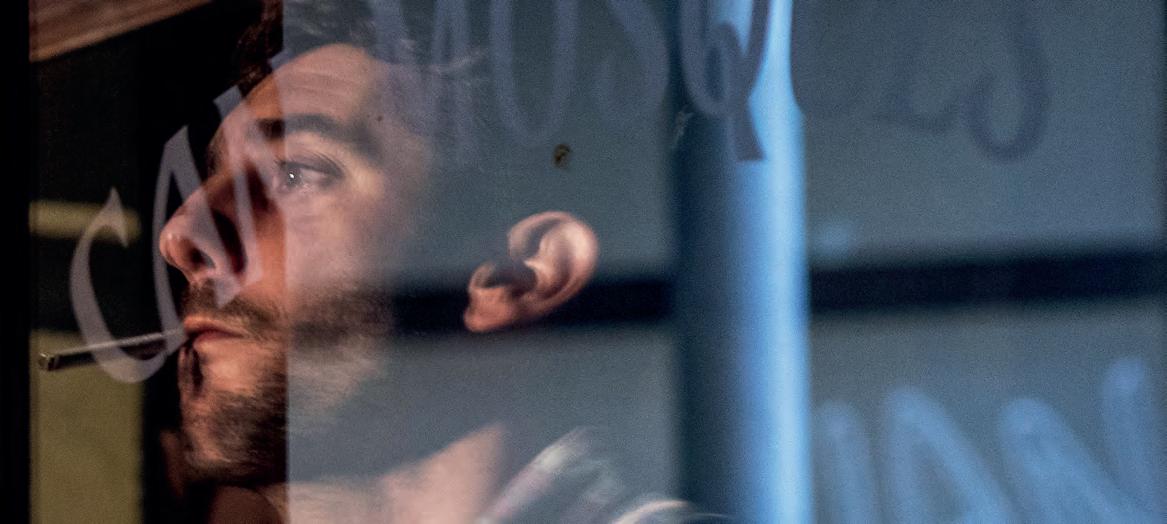
The story revolves around Can Mosques, a century-old restaurant in Barcelona’s Raval district, facing eviction after falling into the hands of an investment fund. Their goal is to empty the building and accelerate the neighborhood’s transformation. The news plunges the family into despair, convinced that defeat is inevitable. But when they decide to stand up for themselves, with the help of the neighborhood, the fight spirals into an increasingly dangerous conflict.
This dramatic thriller was filmed primarily in Catalan and includes dialogue in Spanish, Arabic, Urdu, and English. It was shot in various locations throughout Barcelona, particularly in the Raval neighborhood.
With international sales handled by Filmax, the cast includes Enric Auquer, María Rodríguez Soto, Sergi López, Quim Ávila, and Francesc Orella, among others.
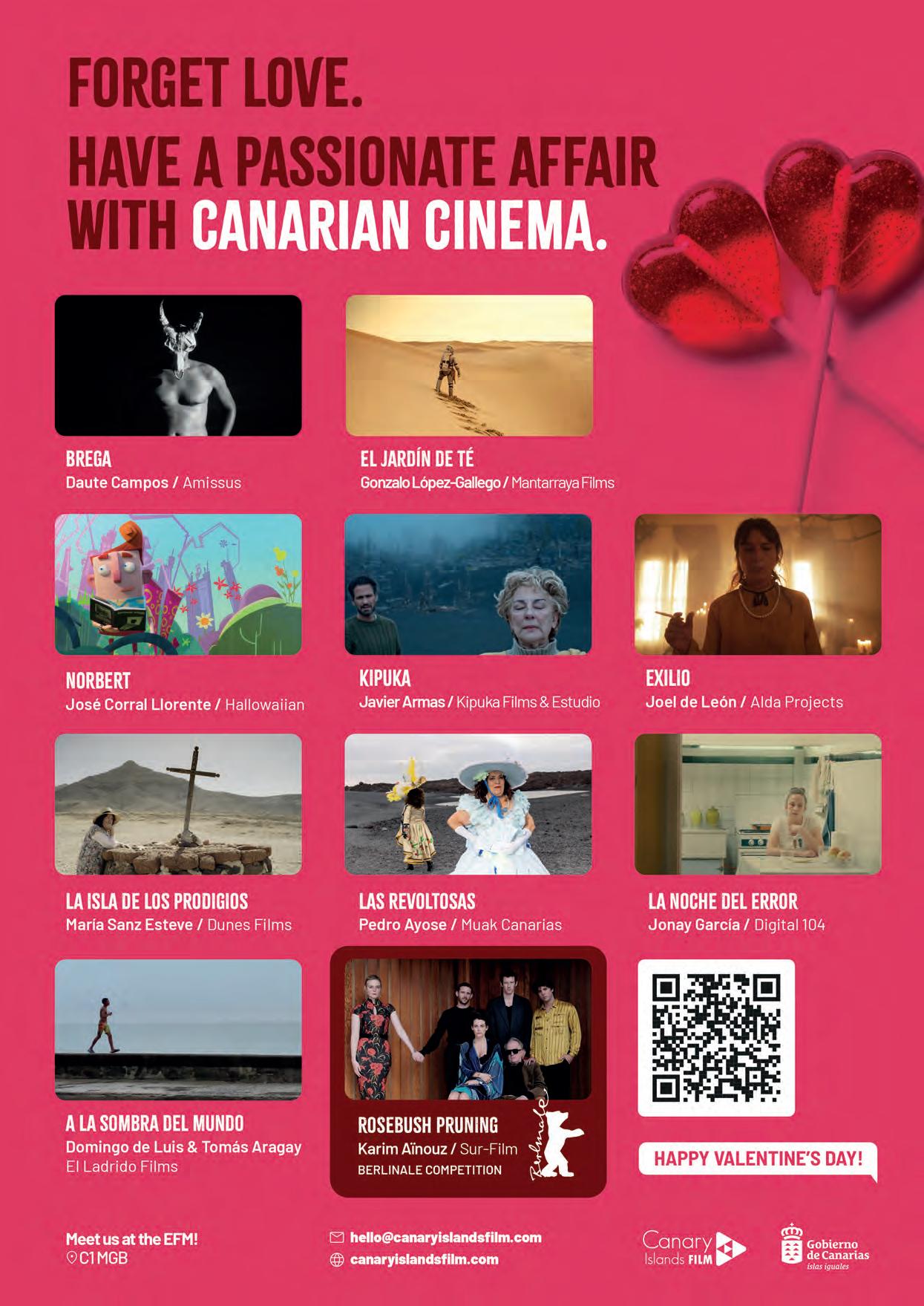
Another major draw for Spanish cinema at the Berlinale will be found in the Panorama section: Iván & Hadoum, the debut feature by Ian de la Rosa, whom we
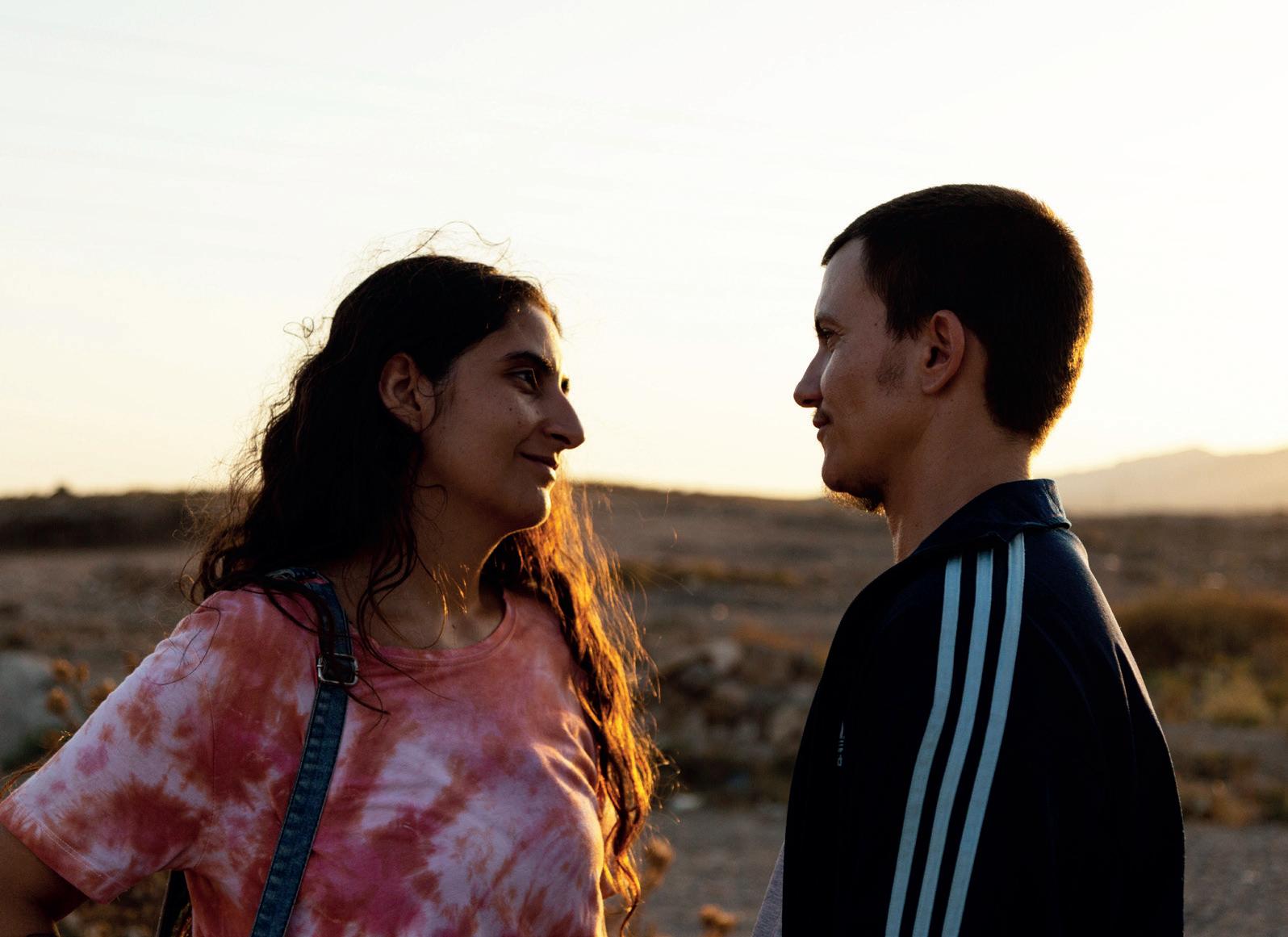
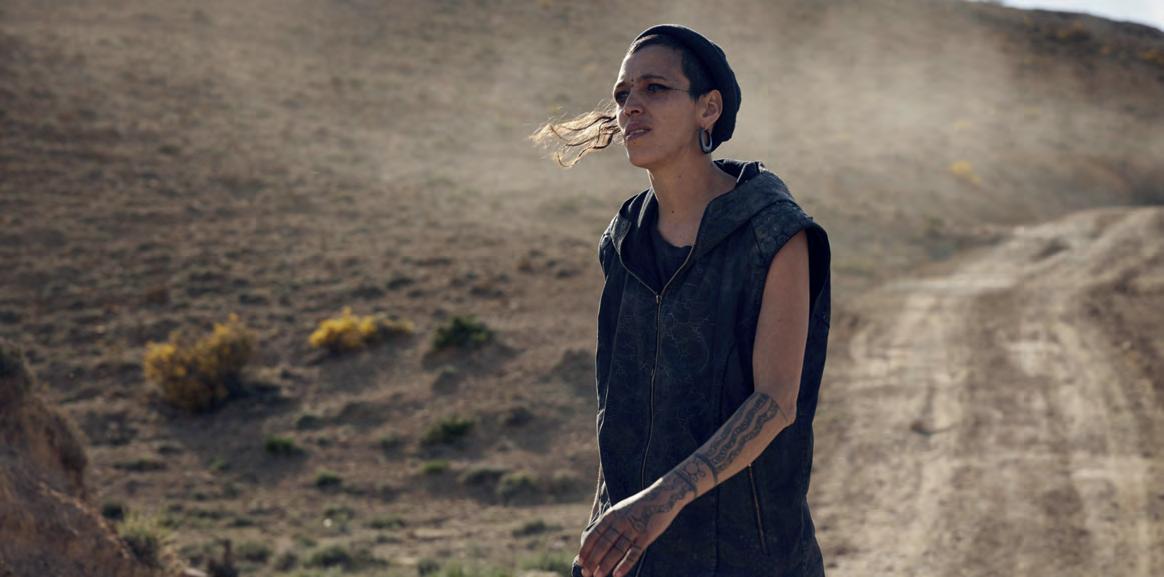
have interviewed and whose comments you can read in this edition. The filmmaker from Almería explores identity and love between a trans man and a Spanish-Moroccan woman through a reflection on identity, cultural heritage, and bodily freedom.
The film is produced by Avalon, along with Pecado Films, Vayolet, and Iván & Hadoum AIE, in international co-production with Port au Prince (Germany) and Saga Film (Belgium). Avalon will handle distribution in Spain, while Indie Sales will manage international sales. As a project, Iván & Hadoum participated in the Berlinale Co-Production Market, where it received the Eurimages Co-Production Development Award.
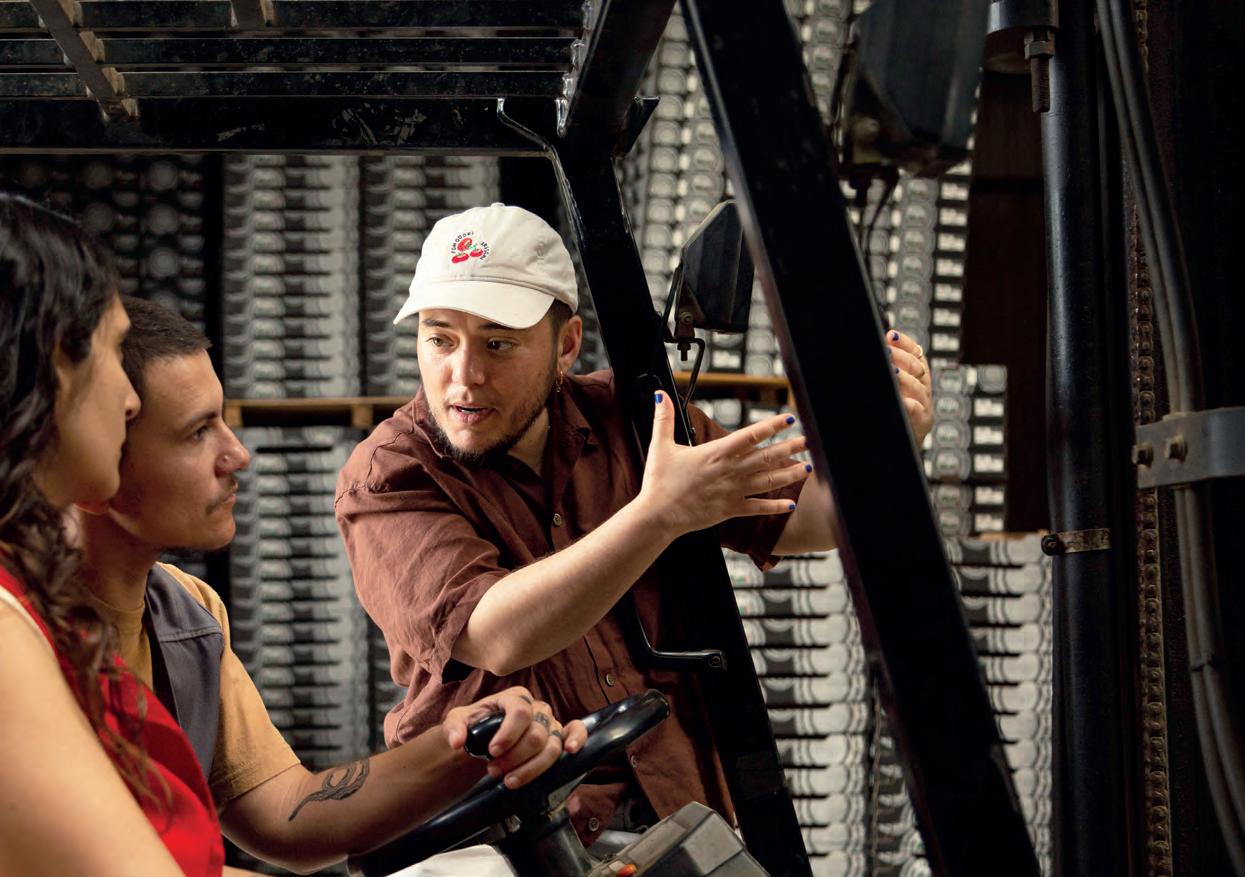
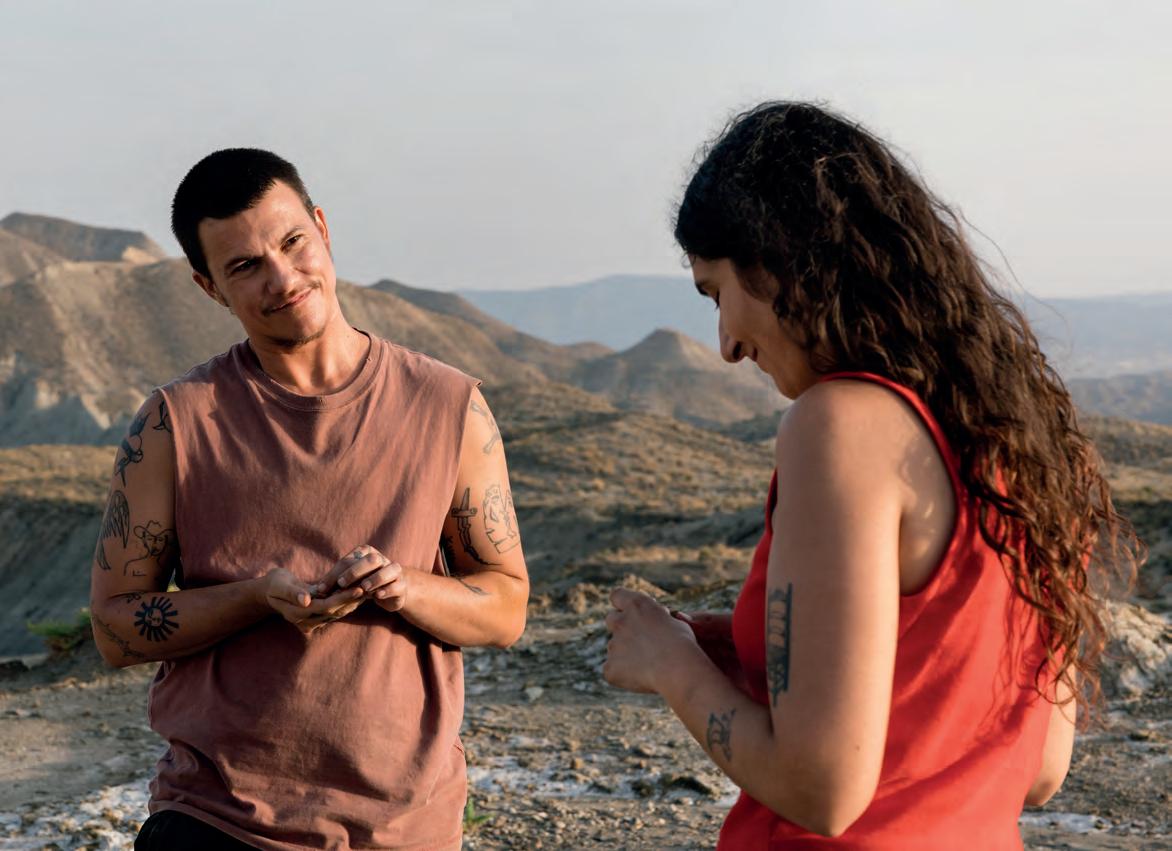
The story unfolds in the greenhouses and deserts of Almería, where Iván, played by Silver Chicón, falls in love with Hadoum, played by Herminia Loh, his new coworker. The plot explores the personal and professional challenges that arise when Iván receives a long-awaited promotion, forcing him to question who he wants to be.
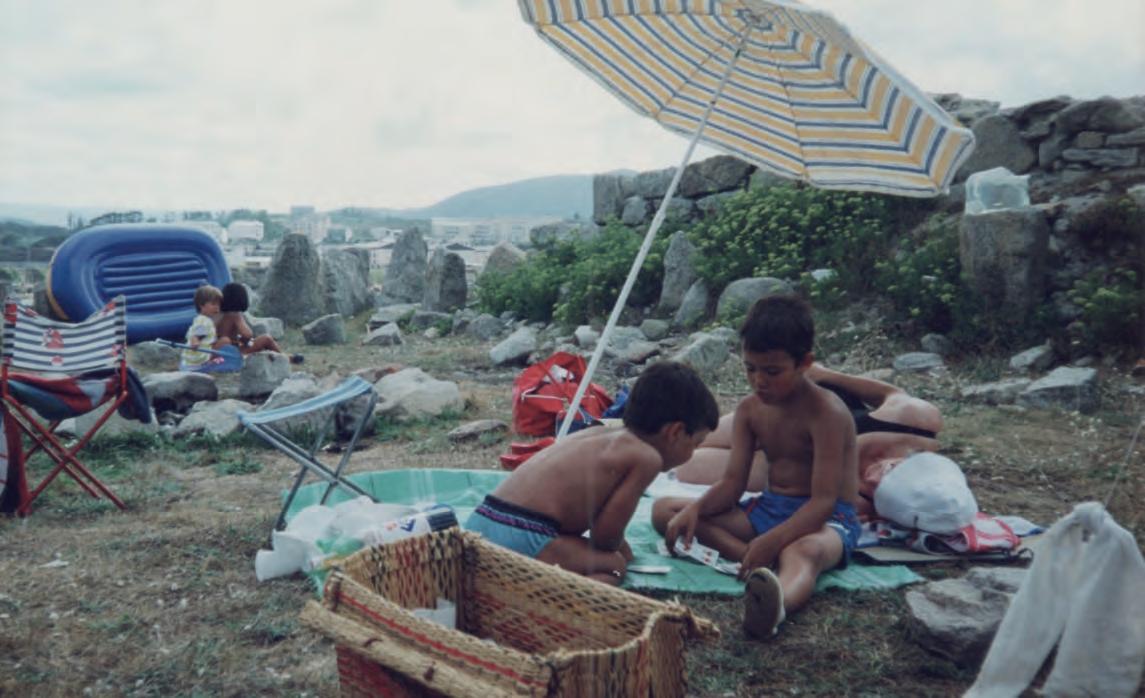
Also selected for Panorama is Narciso, the new feature film by Paraguayan director Marcelo Martinessi, who rose to fame with The Heiresses, which won Best Actress, the Alfred Bauer Prize, and the FIPRESCI Prize at the 2018 Berlinale. The film, a minority Spanish co-production, combines drama and suspense to reflect on desire, power, and repression.
Set in Asunción in the late 1950s, the film reconstructs the story of Narciso, a charismatic and provocative young man who returns from Buenos Aires with rock & roll as his banner during the height of the military dictatorship. Having become a popular idol and a symbol of freedom, his story takes a dramatic turn when he is found dead after his last concert.
This international co-production is led by La Babosa Cine (Paraguay), along with Pandora (Germany), Esquina (Brazil), Bteam Prods (Spain), La Fábrica Nocturna (France), Oublaum (Portugal), and Mutante Cine (Uruguay). International sales are handled by Luxbox Films, while Bteam Pictures will be in charge of distribution in Spain.
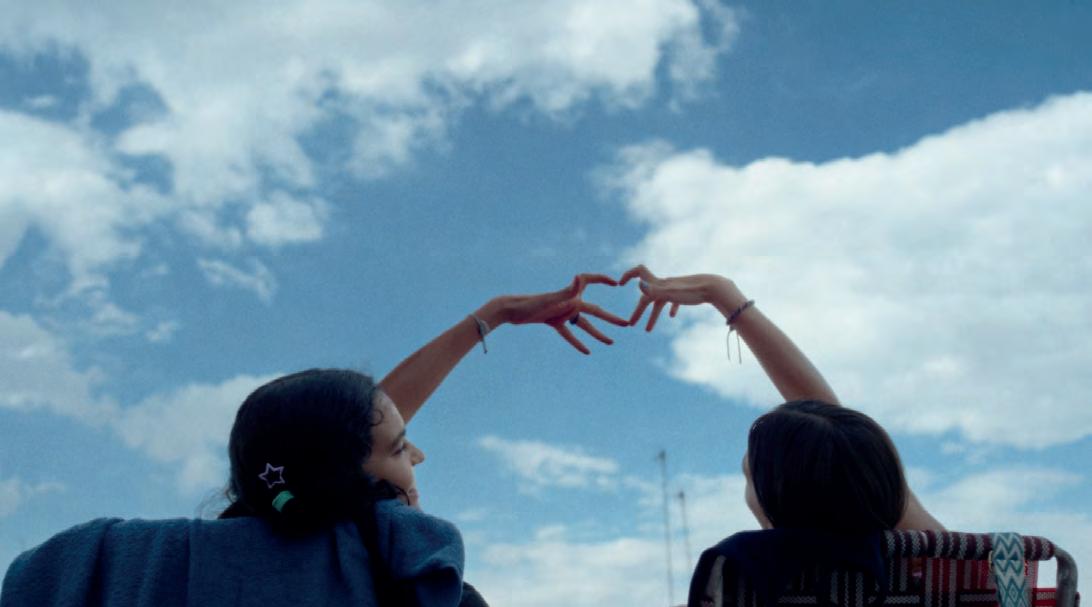

Continuing with co-productions, we now turn our attention to Generation 14plus, which includes Sad Girlz, the debut feature from Mexican director Fernanda Tovar that participated in the WIP Latam section of the San Sebastián Film Festival.
It’s a co-production between Colectivo Colmena and Martinshot Films (Mexico), Potenza Producciones (Spain), and Promenades Films (France). The film follows La Maestra and Paula, the best swimmers on their team and inseparable friends, whose relationship is shaken after an incident at a party. When the truth comes out, they face an impossible choice: the desire for justice versus silence.
The Berlinale Co-Production Market will offer a sneak peek at some of the most
promising Spanish feature film projects. One of them is Cura Sana by Lucía G. Romero (produced by Filmax), an adaptation of the short film of the same name that won the Crystal Bear at Generation 14Plus. The filmmaker continues to explore themes such as family relationships, trauma, and healing.
Eduardo Casanova (Piety) will be finding partners for The Big Goat (produced by Morena Films). What is its plot? In a small town steeped in repression and superstition, where the rural environment shapes the way of life of its inhabitants, a black goat turns the local festivities into a dark sacrifice.
Another project is Porto Alegre, directed by Álvaro Gago (Matria, which screened at Berlinale Panorama) and produced by Ringo Media. The feature film takes place on the
eve of a solar eclipse, when Tomé returns to San Cibrao, the coastal town where he spent his childhood and where he experienced his mother’s death. Here, he relives his childhood and adolescence in search of a sense of belonging to a family and a place.
Yesterday I Will Love You is Guillermo Benet’s second feature film (produced by Solita Films). The story follows Julia’s life, from birth to death, seeking to understand the reasons behind her mother’s suicide. It is a succession of moments where childhood, adolescence, adulthood, and old age intertwine to create the narrative of a lifetime.
Aside from the flagship film Not for Sale (Ravalear), Spanish series have a greater presence at this year’s Berlinale. In the
Berlinale Series Market Selects section, which offers an exclusive preview of some of the most anticipated series on the international market, you will be able to discover some Spanish productions.
Among them, the pubcaster RTVE features La frontera, a series produced in conjunction with Par Producciones and created by David Zurdo and Luis Marías. In 1987, a captain of the Spanish Civil Guard uncovers an imminent ETA terrorist attack in Paris. When the Spanish government refuses to intervene, he takes matters into his own hands, partnering with a French police officer who is secretley a member of ETA.
Movistar Plus+, in collaboration with Fonte Films, will show The Center, created by David Moreno and directed by David Ulloa. It´s an espionage thriller set in the present day but echoing the Cold War, delving into the hidden world of Spain’s National Intelligence Center. The plot kicks off with a murder that uncovers an international operation and sets the protagonists on a race against time.
Another Movistar Plus+ entry is A 100-Million Reward, made in collaboration with Felicitas Media. Created by Nacho G. Velilla, it´s set in 1981, when three
mechanics from Zaragoza drowned in debt and unemployed kidnap Enrique Castro ‘Quini’, FC Barcelona’s famous striker, and demand a great reward for his release.
Finally, Tornasol Media co-produces with the Portuguese Ukbar Films a TV series created by Pandora da Cunha Telles: The Marquise . In 18th-century Europe, a fearless poet defies kings and conventions. Torn between love, art, and revolution, she rewrites what it means to be a woman.
There is yet another section within the field of series with Spanish participation: Berlinale Co-Pro Series . There, an original project is being presented: Robbery, Beating and Death . A heist film in which filmmakers Nao Albet and Marcel Borràs play themselves and face an absurd dilemma when their staged bank robbery shoot threatens to turn into a real crime.
Spanish cinema has a production at Berlinale Shorts . It’s Stallion and a Crystal Ball by Christian Avilés , a Catalan filmmaker who was already present at the German festival in 2023 with Daydreaming So Vividly About Our Spanish Holidays , which received a nomination for the European Film Awards that same year. It’s produced
by Archivo Guardián and Escándalo Films, in collaboration with Movistar Plus+, and international sales are handled by Solal Films. In the darkness and silence of his room, an isolated teenager, consumed by desire, casts a spell. As violent visions distort his reality, a bubble threatens to burst; something has to break.
Among the 200 Berlinale Talents in 2026, there will be 15 Spanish professionals: Montse Pujol Solà (producer, Boogaloo Films), Pedro J. Márquez (cinematographer), Paloma Zapata (director, writer, producer, La Fábrica Naranja), Maria Riera Peris (producer, director, Películas María), Beatriz López-Nogales (composer), Jose Esteban Alenda (producer, director; Solita Films), Mireia Graell (producer, Ringo Media), Lur Olaizola Lizarralde (director, programmer), Alicia Nuñez Puerto (director, writer), Marisol Cao Milán (composer, sound designer), Juan Carrano (editor, director), Andrés Sanjurjo (producer, director, Acariño Films), Zoe Stein (actress), Tábata Cerezo (actress, intimacy coordinator) and Epi (producer, writer).

AFTER A SUCCESSFUL CAREER IN SHORT FILMS, SPANISH FILMMAKER IAN DE LA ROSA MAKES HIS FEATURE FILM DEBUT WITH IVAN & HADOUM, WHICH HAS ITS WORLD PREMIERE IN THE PANORAMA SECTION OF BERLINALE 2026. THE FILM EXPLORES “HOW LOVE AND DESIRE CAN BE THE PRIMARY DRIVING
FORCE FOR A REVOLUTION THAT BEGINS ON A PERSONAL LEVEL,” AND THROUGH IT, DE LA ROSA AIMED TO PORTRAY “A TRANS EXPERIENCE” ON THE CINEMA SCREEN IN WHICH HE COULD “FEEL REPRESENTED.”
BY CARLOS AGUILAR SAMBRICIO
Shot in Almería (Andalusia) and produced by the Spanish Avalon, Pecado Films, Vayolet, Port au Prince (Germany) and Saga Film (Belgium), international sales are handled by French company Indie Sales.
Rubik: What can professionals attending Berlinale expect to find? What kind of film is Ivan & Hadoum, and what motivated you to make it?
Ian de la Rosa: Ivan & Hadoum is a love story that we tried to tell as simply and honestly as possible. It’s an unwavering defense of love, with a protagonist surrounded by many layers: his socioeconomic background, class, and the family expectations weighing on his shoulders. All of this complicates the love story that Iván experiences with Hadoum and forces him to decide what kind of person he wants to be. Every large-scale revolution begins with small personal decisions. At its core, this film is about how love and desire can be the primary driving force for a revolution that starts on a personal level.
I hope the audience can connect with and empathize with the protagonists, experiencing a love story that can serve as a refuge—a refuge I believe is especially important today. Creating that was one of the main motivations for making this film. The other motivation was being able to see a trans experience on the cinema screen in which I could feel represented.
Rubik: Was it difficult to get the project off the ground? You got an award by Eurimages for development.

I.R.: Launching a first feature is always a long and complicated journey. The Eurimages award was a great boost to continue writing the script and give international visibility to the project. It’s been a process of years, which we traveled alongside Avalon and Vayolet. Later, Pecado Films, Port Au Prince, and Saga Films joined. All these production companies supported me in the best way possible. Thanks to their dedication and work, we’ve managed to get this far. I’m aware of the privilege it means to be able to launch a first film, and at the same
“IVAN & HADOUM IS AN UNWAVERING DEFENSE OF LOVE, BEYOND ANY BORDERS OR LABELS”
time, I believe the economic conditions offered by the film industry to emerging creators like me need to be reviewed.
It’s sad to see that today you need a financial cushion to fully dedicate yourself to your script or project. Many talented people are often left behind due to financial difficulties. You need many privileges to stay in the industry until your opportunity comes.
I believe that more support for emerging creators and public, free film schools would be the antidote to prevent our industry from becoming an elitist space.
Rubik: This is your feature debut, but you have award-winning shorts like Victor XX, which received a Cinéfondation award at Cannes, and Farrucas, which won the Gaudí Award and was nominated for a Goya. How would you define your filmmaking style and artistic concerns for those who don’t know you yet?
I.R.: I want cinema to be an immersive experience, a kind of emotional 3D, in which each film offers a unique experience to the audience—an experience that touches the
soul and somehow changes the way they see the world. Always towards a gentler and more compassionate place, if possible.
I don’t mind seeming naive; I still believe that cinema and love can change the world. That’s what I look for when I watch a film, and also when I make one.
Another thing I seek is to see, in the mirror that is cinema, faces, bodies, and stories that are often underrepresented or always told from a single perspective.
“The economic conditions offered by the film industry to emerging creators need to be reviewed”
Rubik: Do you think trans themes have been well represented in cinema? As a trans director who has worked on films like Victor XX and now Ivan & Hadoum, what perspective could you bring that you hadn’t seen before?
I.R.: I recently rewatched Belle Époque (Fernando Trueba, 1992). It was a film that fascinated me as a child, and I thought I had forgotten it. I say “thought” because seeing it again, I realized how much that film influenced me as a filmmaker, especially the character Violeta, played by Ariadna Gil. Violeta is a trans character without conflict. Her struggles have nothing to do with her gender identity. Her family and close circle accept and love her without questioning or dramatizing it. For a trans child in the early ’90s, like I was, that character was the closest mirror I could have. Now I understand why I watched that film over and over again.
But we’re no longer in the ’90s, and the industry has, fortunately, changed—very slowly. Trans and nonconforming people are gradually gaining access to spaces where we can create our own stories and characters. The change is slow, but it exists.
Looking at it historically, it took centuries of struggle to acquire this space. Now we have the agency to tell our own stories and a certain voice in shaping the collective imagination, especially regarding the representation of our experiences and bodies.
In recent years, we’ve seen some films with trans characters where the conflict revolved around gender identity. Whether I felt represented in these stories or not, it was a sign that change was coming. I’m grateful for the collective journey that made this film possible.
Rubik: The film also addresses issues faced by immigrants. Another group often portrayed simplistically, wouldn’t you say?
I.R.: This is not a film about immigration. The very concept of “immigrant” seems racist and xenophobic to me. I wouldn’t even label my characters as second-generation immigrants. What is the point of those labels? To underline… what? You can’t be an immigrant on a planet that belongs to everyone.
I understand that labels can be useful to give visibility to politically and historically discriminated groups (I belong to one myself), but I didn’t make this film thinking about labels. Borders are a human invention. The Earth belongs to all living beings who inhabit it. I think it’s dangerous
to constantly subdivide everyone into identity boxes, which only serve to separate us. This film is an unwavering defense of love, beyond any borders or labels.
“Trans and nonconforming people are gradually gaining access to spaces where we can create our own stories and characters. The change is slow, but it exists”
Rubik: Your work is also closely linked to Andalusia. How important is that in your cinema, and how do you see the industry there?
I.R.: Andalusia is vast and diverse and deserves to be represented in its full diversity. Sometimes I feel it’s often portrayed from a single perspective, as if all Andalusians were the same and
spoke the same way. Everyone knows that’s not true, and we sometimes lack representation—this needs to be emphasized.
Almería, where the story takes place and where I grew up, is a land known worldwide for its desert landscapes. Many times, these landscapes have served, and still serve, as natural sets for productions from all over the world. But Almería rarely gets to represent itself. Its landscapes almost always stand in for somewhere else.
In that sense, I personally saw it as a trans concept beyond gender—a land that seldom gets to see itself in the cinematic mirror. A hinge between Europe and Africa, navigating diverse cultures and finding its own identity among them.
This was another debt I felt cinema owed to the place I grew up. I love its people and its corners. I am who I am, in part, thanks to growing up in Níjar.
The Andalusian industry continues to gain momentum. A few years ago, we got the new Andalusian Film Academy, a very necessary institution that I hope will help promote all creators in Andalusia.

“THE FUTURE LIES IN COLLABORATION, CO-PRODUCTION
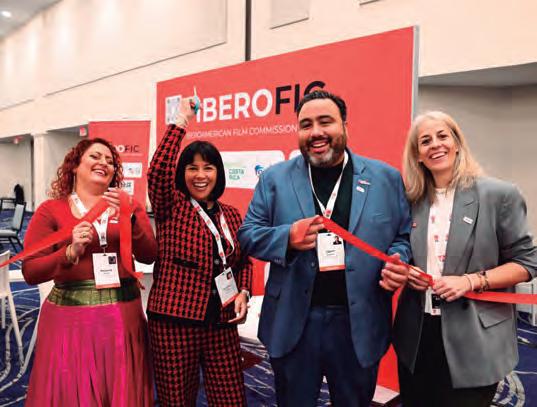
AND THE BUILDING OF STABLE NETWORKS, AND IBEROFIC WAS CREATED TO MEET THAT
AND DRIVING FORCE BEHIND IBEROFIC (THE IBERO-AMERICAN FILM COMMISSION NETWORK), AN ORGANIZATION ESTABLISHED IN MAY 2024 WITH THE AIM OF SHOWCASING—THROUGH A DECENTRALIZED
Rubik: The IBEROFIC network was created in mid-2024. It’s still very young. How did it come about and what objectives have you set for yourselves?
Carolina Cordero: The IBEROFIC Network began to take shape in early 2024 and was officially launched in May of that year, when more than 60 film commissions signed, in Madrid, a declaration of intent toward an Ibero-American Agreement for Audiovisual Co-production between cities and regions, which now guides our work agenda.
Today we bring together nearly 150 film commissions and organizations from the audiovisual ecosystem, and we continue to grow. IBEROFIC is currently the only organization that brings together and represents the whole of Ibero-America.
The network was born out of the understanding that the audiovisual sector entered a new phase several years ago. Historically, cinema was structured around the search for external financing and coproductions, while the rise of streaming introduced the ‘originals’ model, fully
financed by platforms. That model later evolved into licensing schemes, strategic alliances and international co-financing, once again highlighting the value of cooperation between territories.
“IBEROFIC does not seek to homogenize realities, but to articulate them. Diversity is a strength if it is strategically organized”
In this context, IBEROFIC positions itself as a strategic tool for local and international producers, facilitating access to information on tax incentives, benefits, regulations, locations and key contacts in each country.
Our goal is to integrate Ibero-America into the major global production flows, strengthen regional co-productions, and build a stable public-private collaboration platform that generates long-term economic, cultural and industrial value.
Rubik: How has the network evolved since its creation?
C.C.: The evolution has been very fast for such a young network: in less than a year and a half we moved from an initial declaration of intent to a regional operational structure. This reflects a real need in the sector: to coordinate efforts, organize information and generate scale.
The industry is increasingly demanding platforms that reduce fragmentation and make cooperation between countries easier.
Rubik: What are the advantages of being part of the network and what kind of support do you offer? Are there any requirements to join, beyond being a film commission in Ibero-America?
C.C.: Film commissions are key players in the era of international alliances: they facilitate shooting locations, manage permits, coordinate incentives and financing, participate in forums and markets, and promote not only the screen industry but also tourism, gastronomy and other sectors. That is what each film commission does, and IBEROFIC brings them all together in a single network.
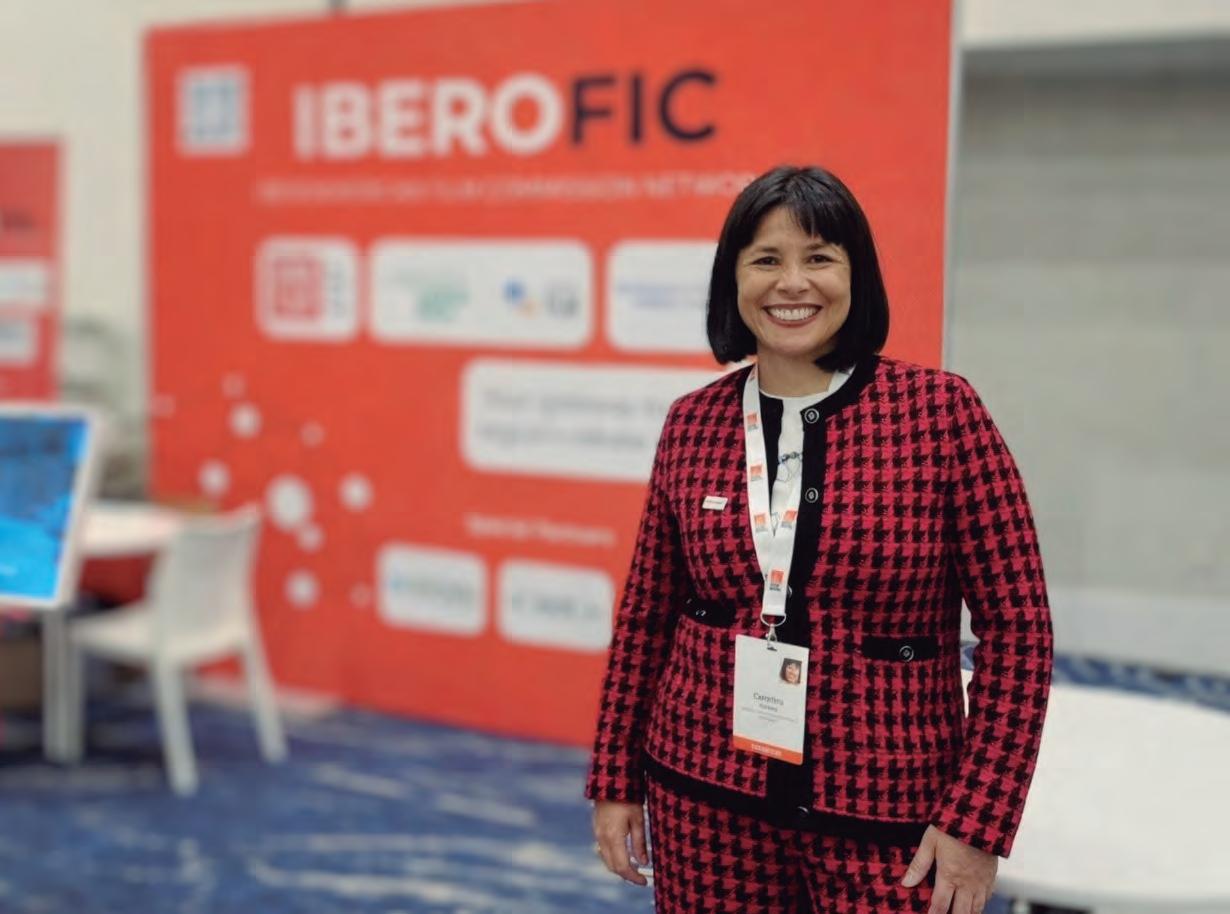
As a result, it functions as a one-stop access point to approximately 95% of the incentives, rebates and production opportunities available in the region, concentrating strategic information for producers, studios, platforms and international partners.
We offer personalized consulting, on-the-ground support during shooting processes, technical information on incentives and regulations, connections with markets, festivals and international events, and support in structuring coproductions and territorial alliances.
We are already supporting concrete projects, such as La ruta del jamón, the first audiovisual project advised by IBEROFIC and carrying our seal. The series, focused on the story of ham carver Emilio García Ortigosa, is produced by PAN Audiovisual (Argentina) together with Blurr Rojo (Canary Islands).
As for requirements, it is not mandatory to be a film commission. Film institutions, investment funds, public and private audiovisual promotion organizations, and structures linked to the industrial development of the sector can also join.
We are looking for organizations with an international outlook, strong coordination capacity and a genuine vocation for cooperation. In addition, IBEROFIC is open to incorporating strategic partners, sponsors and new institutional members who wish to support the network’s growth and actively participate in its regional expansion.
“IBEROFIC functions as a one-stop access point to approximately 95% of the incentives, rebates and production opportunities available in the region, concentrating strategic information for producers, studios, platforms and international partners”
Rubik: How do you operate and organize yourselves, considering your strong presence in markets and industry events?
C.C.: We operate through dynamic, collaborative working groups. We meet monthly to share progress, experiences and market updates, and to coordinate joint actions. This system allows us to align strategies, strengthen communication between countries, and ensure up-to-date and reliable information for producers.
International presence is a core part of our strategy. We have participated in Content Americas, MIP Cancún, Iberseries & Platino Industria, Conecta Fiction, Ventana Sur, FITUR Screen, the Gramado Film Festival, Shooting Locations Marketplace, the International Emmy World Television Festival, among others.
In 2025 we took a major leap forward with our first booth at MIP Cancún, and in 2026 with our first regional pavilion at Content Americas, organized together with the film commissions of Spain, Costa Rica, Buenos Aires and Baja California, and with the collaboration of PAN Contenidos, DG Cine, FID Aval and ARYSE Legal Studio. These types of actions consolidate IBEROFIC as a visible and structured player within the international audiovisual map. Likewise, sponsoring the Rose d’Or
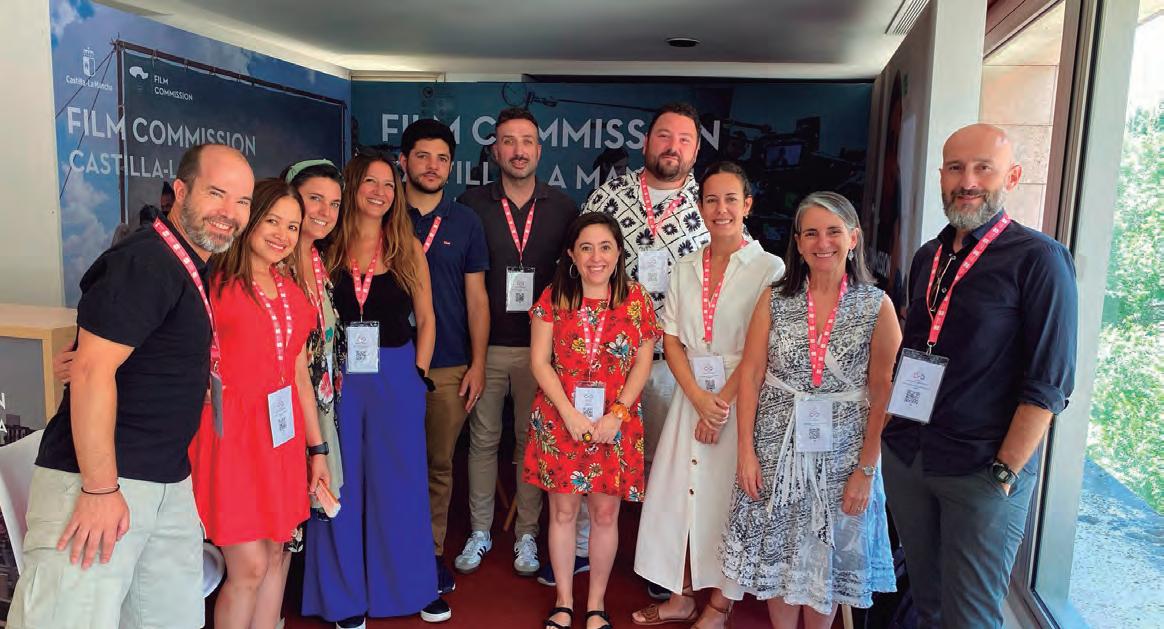
Latino Awards provided significant brand exposure for IBEROFIC.
Rubik: I imagine training is one of your core pillars. What activities are you developing in this area?
C.C.: Training is a strategic pillar. We work on strengthening co-productions, professionalization of the sector, and the internationalization of Ibero-American projects.
In 2026, our working groups will prioritize topics such as sustainable audiovisual production and the integration of environmental criteria into shoots, among others. Looking further ahead, we are also evaluating topics such as financing through private investment funds, the adoption of emerging technologies like artificial intelligence, agile management of shooting permits, and the adaptation of literary works for audiovisual formats. The goal is to anticipate new market demands and build more modern, responsible and competitive structures.
Rubik: In Ibero-America, each country often goes its own way, and building common policies is difficult. How can the network overcome these obstacles?
C.C.: It is a structural challenge, but also an opportunity. IBEROFIC does not seek to homogenize realities, but to articulate them. Diversity is a strength if it is strategically organized. Obstacles are changing but permanent realities, and we must live with them and keep moving
forward despite them, because they will always exist. Our network functions as a coordination layer that allows common agendas to be built without erasing local identities, while navigating those obstacles.
The global screen industry is increasingly oriented toward networks, consortia and cooperative platforms. Within this framework, IBEROFIC acts as an integrating node that facilitates agreements, standardizes processes and builds trust between territories.
“Latin America is often associated with instability or a lack of professionalization, and that no longer reflects reality. Today there are highly qualified crews, clear regulatory frameworks, competitive incentives and solid production structures”
Rubik: What kind of collaborations are you seeking with other bodies?
C.C.: We are looking for alliances with public institutions, multilateral organizations, universities, investment funds, technology companies, platforms, production companies, strategic sponsors and cultural organizations.
The logic is to build a shared-value ecosystem where each actor contributes from their area of expertise. IBEROFIC is not a closed structure; it is an open platform for regional cooperation.
Rubik: How important is public support for film commissions? In Argentina, for example, the lack of support is proving harmful for the sector.
C.C.: Public support is structural. Film commissions are tools for economic development, job creation, investment attraction and international visibility.
At the same time, the model is changing: it is increasingly necessary to combine public support with private collaboration schemes, mixed investment and strategic alliances. IBEROFIC works precisely at this intersection between the public and private sectors, building long-term institutional sustainability.
Rubik: What are the main strengths of Ibero-American territories for filming?
C.C.: Geographic, cultural and climatic diversity; the technical quality of professional crews; competitive costs; tax incentives; and the adaptability of the territories. Ibero-America offers everything from major urban centers to unique natural landscapes, with increasingly sophisticated technical infrastructures.
Rubik: Do you think there are mistaken preconceptions about filming in Latin America?
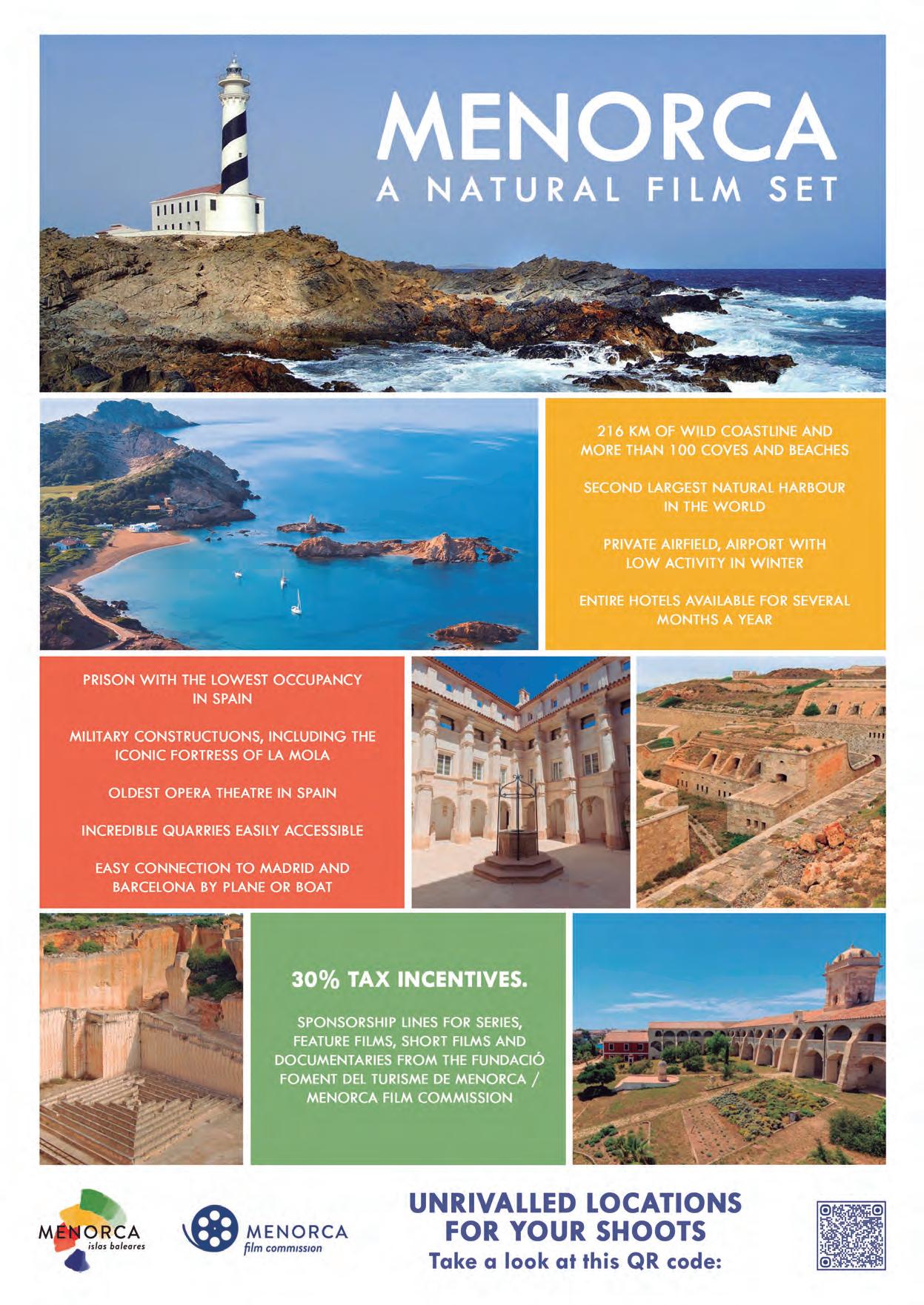
C. C.: The region is often associated with instability or a lack of professionalization, and that no longer reflects reality.
Today there are highly qualified crews, clear regulatory frameworks, competitive incentives and solid production structures. The issue is not capacity, but rather a lack of international visibility and coordination—and that is where IBEROFIC plays a key role.
That said, the world is already looking at the region differently thanks to the many strong international productions reaching screens, such as the Argentine series The Eternaut , the Colombian One Hundred Years of Solitude , the Mexican Pedro Páramo , or the Brazilian Oscar-nominated film The Secret Agent . And of course, also thanks to the promotional work carried out by various film commissions.
Rubik: What are the main challenges for film commissions in general, and for Ibero-American ones in particular?
C. C.: The main challenge is adapting to a constantly changing market, although many film commissions have shown they are very capable of doing so.
This era of international alliances has given film commissions renewed prominence, as they have the ability to streamline procedures and quickly connect industry players.
The future of the sector lies in collaboration, co-production and the construction of stable networks. IBEROFIC was created precisely to respond to that challenge.
Rubik: Which upcoming events will you be attending?
C. C.: At the European Film Market (EFM) in Berlin, Spain Film Commission, Portugal and Italy are organizing a co-production
event on February 13. At the Noronha Film Commission Forum in Brazil (March 3–6), there will be a Film Commissions Forum, and in March we will attend the Tridente Film Showcase in Uruguay.
We will also be present at MAFIZ during the Málaga Film Festival (March 7–16), while at FICCI – the Cartagena International Film Festival (April 14–15) the Ibero-American Film Commissions Meeting will take place.
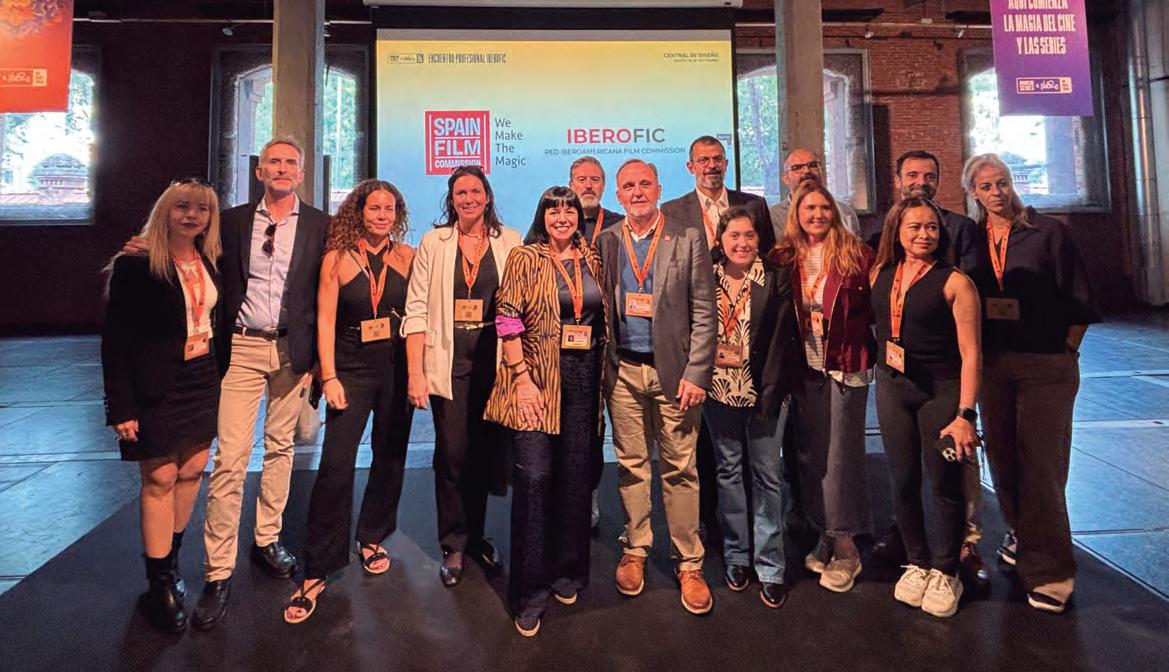

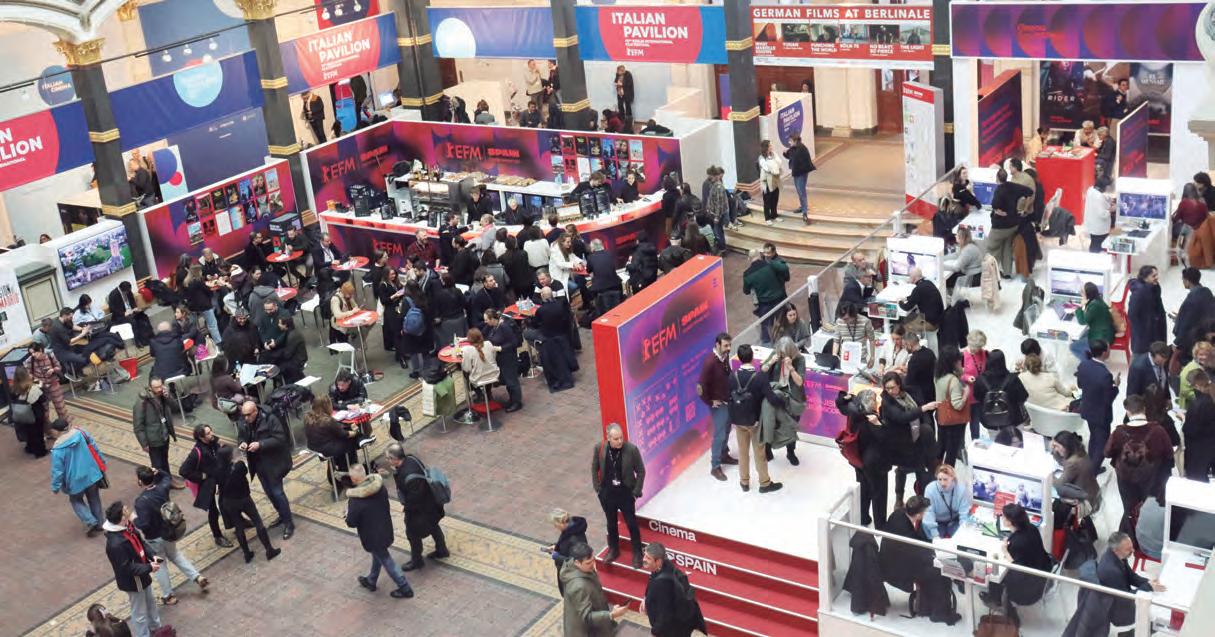
LAST YEAR, SPAIN WAS THE FOCUS COUNTRY AT THE EUROPEAN FILM MARKET (EFM), SO THAT EDITION FEATURED AN INTENSE PROGRAMME OF ACTIVITIES. THIS YEAR, IT IS QUIETER, BUT THE SPANISH DELEGATION IS ONCE AGAIN ONE OF THE LARGEST AND BUSIEST. THIS YEAR, THE EUROPEAN FILM MARKET TAKES PLACE FROM 12 TO 18 FEBRUARY, WITH MOROCCO AS THE FOCUS COUNTRY. BELOW, WE REVIEW THE KEY HIGHLIGHTS OF THE ACTIVITIES THAT INSTITUTE OF CINEMATOGRAPHY AND AUDIOVISUAL ARTS (ICAA) AND ICEX SPAIN TRADE AND INVESTMENT HAVE SET UP.
The Cinema from Spain Pavilion at the EFM, powered by ICEX in collaboration with ICAA, is located at booth C1 of the Gropius Bau, as always. There are 86 companies attending under this umbrella and 19 are exhibitors: sales companies and distributors Begin Again Films, Bendita Film Sales, Feelsales, Latido Films, Con un Pack de Películas, Movistar Plus+ International, Agencia Freak, The Mediapro Studio and Sideral Cinema; film commissions and regional public bodies Andalucia Film Commission & Andalucía Cultura, Basque. Audiovisual. & Film Basque Country, Canary Islands Film, Catalan Films, EGEDA, Films from Galicia, Madrid, Make It Possible!, Cinema from Spain and Spain
Film Commission; and companies like More Than Films.
Outside this umbrella, sales company Deep Com Roots (ISII Group) will be at Gropius Bau #122. It´s the first year they attend to EFM, and they are going with 5 professionals and several market screenings.
ICEC - Catalan Institue for Cultural Companies will be available at Gropius Bau #221. Moreover, Catalan Films will put together the Catalan Films Corner at the Innovation and Producers Hub. Stand 210 (2nd floor Gropius Bau) for laid-back meetings.
In addition to the GB’s area, within the Marriott Hotel, some Spanish sales companies will have rooms for meetings: Filmax (#270/272) and Film Factory (#274/276) have rooms for meetings.
BY CARLOS AGUILAR SAMBRICIO
FRIDAY 13TH AND SATURDAY 14TH
Friday, 13 February will mark the kickoff of the main Spain-led industry activities, starting at 3:30 p.m, at the Cinemobile , with the conference: ‘Sustaining AV Creators in a Shifting Market: The Economic Power of Authors’ Rights’ (free access with RSVP), with the presence of some Spanish filmmakers such as Ángeles González-Sinde, Inés París and Nieves Maroto.
At 5:30 p.m. attendees can´t miss the presentation of the tenth edition of Conecta Magaluf–Mallorca , one of Spain’s must-attend events in the field of Ibero-American TV fiction. During the session, some of the key highlights of the upcoming edition will be unveiled.
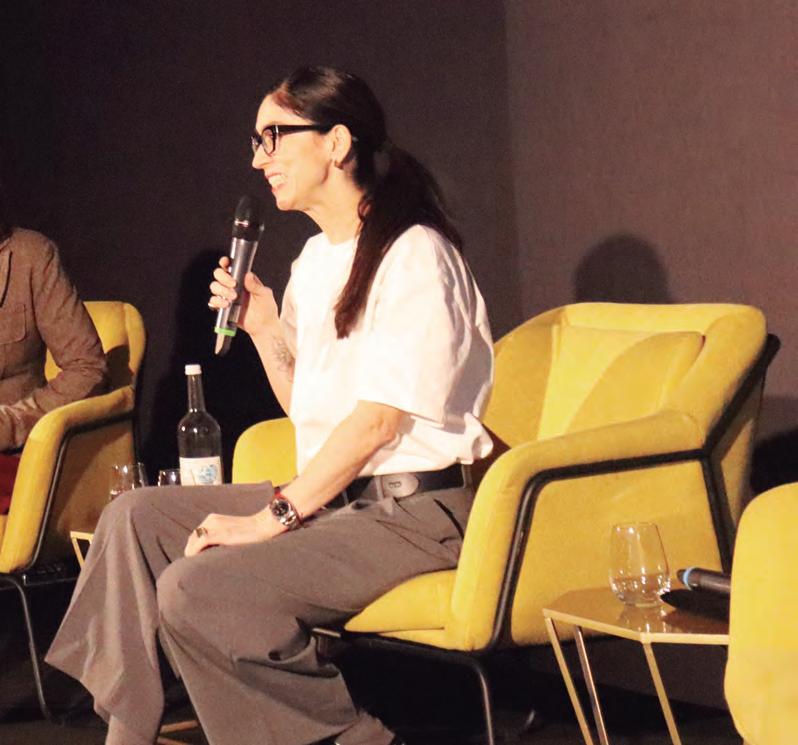
The event will take place at the Business Lounge, and market badge is required to attend.
This will be followed by two invitationonly cocktails: the Spain Film Commission reception at 6:30 p.m., and the Catalan Films cocktail at 8:00 p.m.
On Saturday, 14 February , and taking place as well on Sunday and Monday, there will a Happy Spanish Breakfast (GB C1) at 9:00 a.m. for relaxed networking. Market badge is needed.
At 11:00 a.m. at the Cinemobile, one of this edition’s flagship Spanish activities
will take place: a showcase of five Spanish producers: Koldo Zuazua (Kowalski Films), Miguel Molina (Jaibo Films), Gerard Rodríguez (Japónica Films), Amaya Izquierdo (Vértigo Films) and Emilia Dulom (Link-Up). This Spotlight On, set up by ICAA, is a pitch session featuring five established Spanish production companies presenting their profiles and current projects aimed at international coproduction and distribution. It´s required Festival Accreditation & (Online) Market Badge to access. After the pitch, there’s a Happy Hour (Event Room) where the market badge is needed.
In this edition, RUBIK is publishing a dedicated piece on the production companies featured in this showcase, so you can learn about their projects and what they are looking for.
Speaking of producers, there are also five selected producers from Spain for the Co-Production Market Visitors Programme . They are Nakarey (P.E.C. Cine y Teatro), Eva Vázquez de Reoyo (Love Monster), Nati Juncal (Cósmica Producions), Leticia Montalvà (Pangur Animation) and Rubén Seca (Shoji Films). Also, it´s worth mentioning that Elastica Films is one of the five companies selected at Company Matching in the Berlinale Co-Production Market.
Later in the day, two panels will take place in the Conference Lounge at 3:00 p.m. One panel will focus on ‘Artificial Intelligence as a production tool’ , while the other will provide key information for ‘Co-Producing with Spain’
At the same time, but at the Documentation Centre (access for CoPro Participants and with Market Badge), there will be a Country Session Laia Boixader from Catalunya Film Commission and Haizea Alberdi from Catalan Films will give short overviews and answer questions on co-producing with and accessing financing in Catalunya
The afternoon becomes more relaxed from 6:00 p.m. with the Spanish Happy Hour in the Business Lounge, which requires market accreditation. This will be followed by another cocktail reception, the Canary Islands Film event at 8:00 p.m., which is by invitation only.
The first interesting panel on Sunday, 15 February is ‘Understanding and Collaboration in the Film Sector’ ( 11:30 a.m. at Producers Hub; market badge required), in Association with Europa Distribution. Spanish distributor Eduard Escudero (A Contracorriente Films), copresidente of Europa Distribution, is one
of the panelist. We are interviewing him in this RUBIK edition. This panel offers space for sector representatives to voice their evolving needs and explore ways to strengthen circulation and reach of independent European films. To ensure this, the industry needs open, constructive dialogue and stronger collective action.
Co-Hosted by ICAA , there´s a Lunch at the Co-Production Market at 1 p.m. with market badge needed.
As mentioned earlier, Catalunya took part in a Country Session on Saturday. On Sunday, there will be another Country Session (3.30 p.m.), this time featuring Spain . In the brief 10-minute session, some representatives will talk about incentives and share insights on co-producing with Spain.
At DocSalon, you can attend a round table organised by DocsBarcelona at 5 p.m. Topics to be discussed will include the importance of data, maintaining transparency with the audience, and measurement mechanisms.
This day will finisth with the cocktail arranged by Basque.Audiovisual. ( 7 p.m. / access with invitation).
Monday, 16 February will be a day especially dedicated to TV series. Iberseries & Platino Industria and Berlinale Series Market strengthen their partnership with a new Series Match initiative focused on connecting Ibero-
American and German companies with series projects in early development. At 11:40 a.m. (Conference Lounge) some producers will take part of this brand new event, including several representatives from Funicular Films production company and the filmmakers Joana and Mireia Vilapuig ( Selftape ).
Cinemaxxx will host at 3:00 p.m. a Spanish Showcase in Berlinale Series. Market badge is required. At the same time, Joana Vilapuig will be one the panelists in a panel at Atrium Tower, within Berlinale Series Market. Some award-winning writers discuss creative processes and international collaboration in a session that also introduces MIDPOINT Talent Connections - a unique curated database and collaboration-enhancing tool featuring exceptional European talent. Besides TV series, there will be some institutional activies. First of all, at 5:30 p.m., there will be a round table at the Spanish Embassy (by invitation only), followed by an exhibition at the same venue related to Andalusia. At 7:30 p.m., the traditional reception will take place at the Embassy, also by invitation only.
The programme will end with the Galicia cocktail set up by AGADIC at 9:30 p.m. (access by invitation) and the Spanish Night at the Mirror Tent (10 p.m.), also with invitation required.
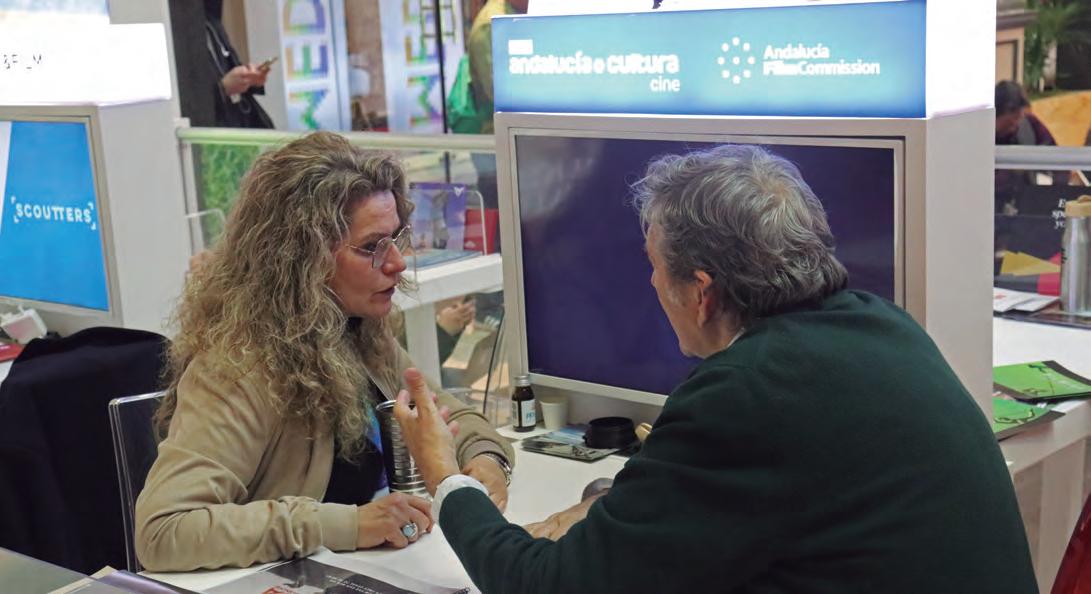
ONE OF THE MOST INTERESTING MARKET ACTIVITIES ORGANIZED BY THE SPANISH PUBLIC INSTITUTIONS ICAA AND ICEX DURING THE EUROPEAN FILM MARKET AT BERLINALE 2026 IS A SHOWCASE FEATURING FIVE SPANISH PRODUCERS, WHO WILL PRESENT THEIR COMPANIES -AND THE PROJECTS FOR WHICH THEY ARE SEEKING PARTNERS- ON SATURDAY, FEBRUARY 14 AT 11:00 A.M. AT THE CINEMOBILE. RUBIK HAS REACHED THEM TO PROVIDE INTERNATIONAL PROFESSIONALS WITH AN OVERVIEW OF THESE PRODUCERS.
CARLOS AGUILAR SAMBRICIO
:
“At Japonica, we are interested in cinema that is deeply connected with audiences, while also committing to proposals with a clear and recognizable identity. We look for projects with personality, formal or narrative risk, and a clear international vocation, both in their language and their references. We are particularly drawn to cinematographies such as American indie cinema, contemporary European genre films, or Asian thrillers, where entertainment, concept, and creative vision coexist without inhibition.”
Founded in 2018, its titles include The Human Hibernation (FIPRESCI Award – Berlinale Forum 2024), Lo Carga el Diablo (an Iberian road movie that premiered in Mar del Plata), and The Mystery of the Pink Flamingo (a mockumentary on kitsch that premiered at SXSW).

NEXT PROJECTS: “We arrive at the EFM at a moment of consolidation and maturity for Japonica, with a diverse slate that clearly reflects our editorial line.” In the feature film field, one of the highlights is La Madriguera (dir. Frank Lucas), a project that combines body horror and mental illness, which took part this year in the EAVE Producers’ Workshop.
They are also developing Ripe! (dir. Olivia Mitchell & Kerry Furrh), based on the Tribeca Award-winning short film of the same name (2024). It is a co-production with the US that follows the summer of an American teenager on the Costa Brava, where she falls in love with Gloria, a young Catalan woman, amid football matches and beach days.
For both projects, they are currently seeking international sales agents. In the case of La Madriguera, they are also looking for European co-producers, while remaining open to partnerships in Latin America and the United States.
In series, they are developing Wendolin Kramer (created by Cintia Ballbé, cowritten by Zebina Guerra), based on the bestselling novel of the same name by author Laura Fernández, as well as Home, Sweet Home, a comedy about the housing crisis in Barcelona, for which they are seeking a national streamer and a European co-production. Finally, they have recently acquired the rights to a biopic with strong cultural and media potential.
ABOUT LINK-UP: “At Link-Up, we create audiovisual content from Catalonia for global audiences, with a strong independent spirit and a clear auteurdriven vision. We select only a few projects and support them comprehensively, from the earliest stages of development through distribution, fostering strategic collaborations with production companies in Europe and Latin America.”
The company was founded by Teresa Enrich, a producer with over 30 years of experience who has served as vice president of the Spanish Film Academy and as director of ICEC – the Catalan Institute of Cultural Industries.
Among its most notable titles is The Belly of the Sea (2021) by Agustí Villaronga, nominated for Best Film at the European Film Awards and awarded the Biznaga de Oro for Best Film at the Málaga Film Festival. Also noteworthy is Piety
(2022) by Eduardo Casanova, which received the Special Jury Prize at the Karlovy Vary Film Festival.
NEXT PROJECTS: “Currently, we are driving the development of several fiction and documentary projects with a strong auteur identity and a clear international focus.”
Among these is Barcelona at Night, in co-production with Pokeepsie Films, which portrays the counterculture and working-class neighborhoods of late-1970s Barcelona.
They are also developing the documentary Agustí Villaronga, entre la muerte y la primavera, directed by Judith Colell and co-produced with Abacus. At the same time, they are working on the feature film La playa de Paris, co-produced with Wapo Films (Andorra), which tells the story of a villa on the Costa Brava where time unfolds across four different eras—from the decadent parties of the 1930s with figures like Sert and Dalí, to the glamour and drama of 1950s European Hollywood, marked by the presence of Ava Gardner.
Currently, they are focused on finding international co-producers for La playa de Paris. “We believe this is a project with excellent international potential, thanks to its multilingual approach and its historical and universal characters.”
ABOUT VÉRTIGO FILMS: Vértigo Films is drawn to bold, contemporary projects with a strong authorial vision and clear international potential. “We are particularly interested in character-led stories that explore social themes while remaining accessible to wide audiences”.
With over two decades of experience producing and co-producing both commercial and critically acclaimed films, they have recently expanded into TV series, collaborating with emerging voices. “This balance allows us to develop projects from their earliest stages, packaging them strategically for the global market while maintaining creative ambition, production value, and strong audience engagement”.
NEXT PROJECTS: We are in post-production on A Man on a Bridge, David Martín de los Santos’ highly anticipated second feature, a characterdriven Gen X midlife crisis film about needing a place to call home, currently looking for international sales. Production will soon begin on Broken Waters,
a Galician noir co-produced with Portugal and backed by RTVE, Movistar, and RTP, following Marisa, a woman seeking justice for her granddaughter’s death. Films in development include the queer feel-good drama The Ranking, the sex-trafficking drama Where Names Fall Silent, and the legal feel-good drama The Idealist, all seeking European partners.

In series, we recently released the teen drama Sense FilTRES in Spain, soon to premiere internationally in France; we are seeking sales and remake opportunities. Two additional series, La guerra del Frankfurt and La Selva, are in development, actively seeking European partners.
ABOUT JAIBO FILMS: Jaibo Films celebrates 20 years this year. It has more than 30 fiction, documentary, and animation films. Its works have been selected at hundreds of festivals, earning over 100 awards and recognition at Berlinale, Cannes, San Sebastian, Rotterdam, Locarno, IDFA, Annecy, Krakow, Shanghai, Seminci, Malaga, Seville, etc.
During 2025, they have released 2 new films A Portuguese House by Avelina Prat with (and important domestic box office success with a solid international distribution strategy) and also Balearic by Ion de Sosa, with a different target on Festivals, premiered in Locarno and then BFI London, Thessaloniki, IndieLisboa or Sitges. In the meantime, they are finishing their second Animated Feature, Disposable (by Carlos Gómez Salamanca), a co-production with Colombia, and a Feature Documentary, Dreamin’, in co- production with Romania. Both ready to be released in 2026 and open for international sales.
NEXT PROJECTS: Jaibo has increased the number of projects in its pipeline, striving to consolidate productions with larger budgets and broader audience reach while keeping its core editorial line. They go to the EFM to find strategic alliances for their new slate: The Cure, a psychological thriller directed by Gigi Romero; A Werewolf, a powerful drama about pre-teen maladaptive daydreaming directed by Saida Benzal; Gospel, an adaptation of Elisa Victoria’s acclaimed novel, directed by Joaquin Leon; Revelation, the new film by experienced directors Adan Aliaga and David Valero; and Daemonium Vortex, directed by the celebrated filmmaker Chema García Ibarra, his second film after Sacred Spirit.
ABOUT KOWALSKI FILMS: Kowalski Films is an independent production company based in the Basque Country, represented by Koldo Zuazua. “Our goal is to combine audience-oriented productions with more auteur-driven and riskier projects, always through co-production models— both national and international—seeking each time to attract national and international film production to the Basque Country and to foster Basque talent.”
They produced the historic box-office hit Spanish Affair (awarded three Goya Awards), the highest-grossing film in Spain, as well as acclaimed titles such as Fire Will Come by Oliver Laxe (Jury Prize in Un Certain Regard), the recent films by Icíar Bollaín I Am Nevenka and Maixabel (winner of three Goya Awards), and the critically acclaimed series Querer by Alauda Ruiz de Azúa, winner of Series Mania in 2025, among many other accolades.
Other productions include Handia - Giant (winner of ten Goya Awards), Coven (five Goya Awards), and the recently released Los Tigres, as well as the complete filmography of director Fernando Franco and a slate
of more commercially oriented, familyfriendly films.
NEXT PROJECTS: At the moment, they have several projects in development and pre-production. They are currently preparing the next series by Alauda Ruiz de Azúa together with Feelgood Media for Movistar Plus+.
In film, they will shoot this summer the comedy McMansion 2, to be directed by Ana Vázquez, and this autumn they will film the project they are presenting at the showcase: Hay alguien en el jardín, the new feature by Jaume Balagueró (REC, 28 Weeks Later), written by Guillem Clua. It is a co-production between Kowalski Films, Feelgood Media, and Minoria Absoluta, with international sales handled by Film Factory. They are interested in securing a minority European coproduction.
Escape Net
Dir. Dzintars Dreibergs
Feb 11th (Wed) 6:20 pm @ CinemaxX 11
Feb 14th (Sat) 9:00 am @ CinemaxX 2
A Fading Man
Dir. Welf Reinhart
Feb 16th (Mon) 9:00 am @ CinemaxX 16
Dance of the Living (La lucha)
Dir. Jose Alayón
Feb 16th (Mon) 2:55 pm @ CinemaxX
Vanilla (Vainilla)
Dir. Mayra Hermosillo
Feb 16th (Mon) 11:00 am @ CinemaxX 18
The Condor Daughter
Dir. Álvaro Olmos Torrico
Feb 16th (Mon) 12:40 pm @ CinemaxX 17
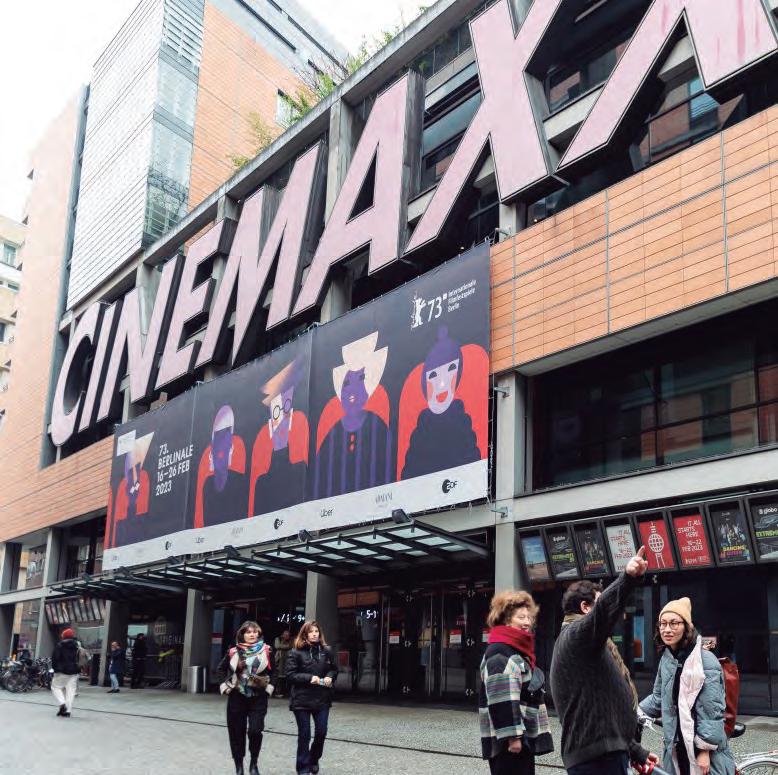
Luiza’s Desert
Dir. Alan Minas
Feb 12th (Thu) 3:20 pm @ CinemaxX 18
Promo Reel Deep Com Roots – Auri and Summer Days
Feb 11th (Wed) 2:00 pm @ CinemaxX 18
Promo Reel Deep Com Roots – Love on a Tightrope
Feb 11th (Wed) 2:15 pm @ CinemaxX 17
Auri (Cataratas)
Dir. Violeta Salama
Feb 13th (Fri) 10:50 am @ CinemaxX 14
Feb 14th (Sat) 5:50 pm @ CinemaxX 12
Love on a Tightrope (Tal Vez)
Dir. Arima León
Feb 14th (Sat) 12:30 pm @ CinemaxX 19
Feb 15th (Sun) 4:45 pm @ CinemaxX 19
Summer Days (Días de agosto)
Dir. Chema de la Peña
Feb 14th (Sat) 3:45 pm @ CinemaxX 11
Feb 15th (Sun) 4:00 pm @ CinemaxX 11
Evil Dress (El vestido)
Dir. Jacob Santana
Feb 13th (Fri) 10:00 am @ Virtual Cinema 5 (Virtual)
Feb 14th (Sat) 12:35 pm @ CinemaxX 9
MADRID IS A CITY THAT HAS IT ALL: RENOWNED CREATORS, A STRONG, CUTTING-EDGE INDUSTRY, INNOVATIVE ANIMATION AND VFX COMPANIES, VERSATILE LOCATIONS AND A PUBLIC ADMINISTRATION COMMITTED TO THE AUDIOVISUAL SECTOR.
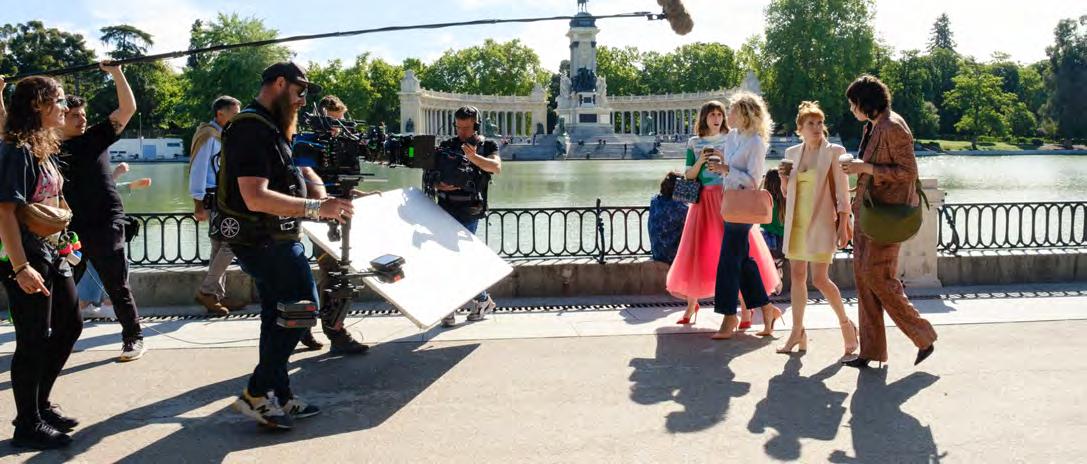
In recent years, Madrid has established itself as one of Europe’s leading hubs for audiovisual content production and as a strategic link to Latin American industries and Spanish-speaking markets.
The figures speak for themselves: an average of more than 40 films, 50 seasons of TV series and 400 medium- and large-scale commercials are shot on the city’s streets each year, in addition to other projects filmed in studios and towns in the region. A perfect example of this is Madrid Film Office, the city council’s audiovisual division under the municipal Department of Tourism, which increased the support it provided by almost 18% in 2024 compared with the previous year.
→AN ATTRACTIVE AND COMPETITIVE ENVIRONMENT
Madrid has much in its favour to attract investment and boost the activity of the audiovisual sector. Its strong professional and industrial fabric includes top-tier creators who have demonstrated the potential for global success with productions such as Money Heist
(Netflix), 30 Coins (HBO Max) and Red Queen (Prime Video). The city also has all the suppliers, production services and professionals required to deliver projects of any scale, at more competitive prices than other European production centres. Not forgetting the growing investment in new studios and virtual sets, and the international expansion of the city’s VFX and animation companies.
Madrid’s favourable filming climate is complemented by a wide variety of urban and natural locations available across its 21 districts and other municipalities in the region, making it possible to design extensive and efficient shooting schedules. There’s still a lot of Madrid waiting to be discovered, as shown by every new project from directors such as Pedro Almodóvar, Arantxa Echevarría, Álex de la Iglesia and Jonás Trueba, while others take advantage of the versatility of its locations to double for Buenos Aires, Moscow, London, Mexico City or the deserts of Arizona.
The sector benefits from solid institutional support at both a national and local level, with attractive tax incentives nationwide and a wide range of financial and administrative aid for production from Madrid City Council and the regional government of Madrid. In addition, its strong tourism industry offers excellent transport and accommodation infrastructure, and its central location on the peninsula makes the region an ideal logistics hub for large-scale projects, as demonstrated recently by international productions such as The Walking Dead: Daryl Dixon.
Perhaps Madrid’s greatest advantage today is that it has already proved that all these factors work. This explains the growth in recent years of productions for national platforms and why many international platforms and major companies have chosen Madrid as a production base.
MADRID IS, WITHOUT A DOUBT, A CITY MADE FOR TELLING GREAT STORIES.
ALL 21 DISTRICTS OF THE CITY-FROM ITS HISTORIC CENTRE AND HERITAGE SITES
TO ITS MORE PERIPHERAL NEIGHBOURHOODS AND PARKS-HAVE SERVED AS THE BACKDROP FOR A WIDE VARIETY OF FILMS AND SERIES OVER THE PAST YEAR.
The third season of The Walking Dead: Daryl Dixon, the spin-off of the renowned AMC series, established its Spanish filming operations and logistics centre in Madrid and used various locations throughout the city to shoot scenes, some of which were used to recreate a post-apocalyptic London. The team is already preparing a new season, which will increase its presence in the capital. Madrid has also hosted international projects such as Day Drinker, directed by Marc Webb and starring Johnny Depp and Penélope Cruz, The Beast, an action thriller directed by Renny Harlin and starring Samuel L.Jackson, and A Mouthful of Ash, a Mexico-Spain co-productiondirected by Diego Luna.
A wide range of films have set their stories in the city, including Mikaela by Daniel Calparsoro, Tell Me What You Want by Lucía Alemany, The Redemption by Daniel Guzmán, The Other Side of the Bed by Samantha López Speranza, Sofia’s Suspicion by Imanol Uribe, The Delights of the Garden by Fernando Colomo, I Hate Summer by Susan Béjar, Notes for a Consensual Fiction by Ana Serret Ituarte and Sleepless City by Guillermo García López.
Madrid will feature prominently in The Anatomy of A Moment, a Movistar Plus+ series in which Alberto Rodríguez adapts Javier Cercas’ novel, with extensive filming taking place inside the Palace of the Congress of Deputies. Other leading creators have also shot new projects in the city, including Pedro Almodóvar, returning with Bitter Christmas following the success of The Room Next Door, and the second feature film from Los Javis, The Black Ball, based on the works of poet Federico García Lorca, supported by Movistar Plus+ and El Deseo.

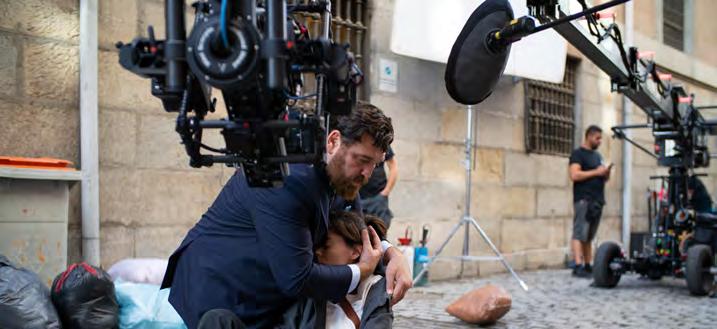
The city has hosted the filming of new seasons of hits such as Berlin, the well-known spin-off of Netflix’s Money Heist produced by Vancouver Media, and Valeria, a Plano a Plano production for Netflix, as well as some of the most recognised and anticipated new series of the year: Celeste (Movistar Plus+), Superstar (Netflix), The New Years (Movistar Plus+), Life is Short (Movistar Plus+) and Salvador (Netflix).
The city has also seen intense activity in co-productions and collaborations between Madrid-based and international production companies, some of which have set up offices in the city to foster this line of work. Examples include the successful Red Queen, an adaptation of the best-selling novel series by Juan Gómez-Jurado, whose second season is awaiting release, produced by Mexican company Dopamine and Focus Studios
for Prime Video, and The Immortal, produced by DLO Producciones and Telemundo International Studios.
Over the past year other notable projects include the Spain-Mexico co-production The Incredible Story of Julia Pastrana (Disney+) and the series Isla Brava (Vix), co-produced by Onza Entertainment and TelevisaUnivision, as well as international productions beyond Latin America such as Shared Custody (Disney+), Javier Fesser’s first series, produced in collaboration with the American group The Immigrant; Tell Me Your Name (Prime Video), co-produced with US-based Skybound Entertainment; La encrucijada (Atresmedia), involving the Turkish production company Ay Yapim; and the latest season of The Head, a Spain-Japan co-production through The Mediapro Studio and Hulu Japan.
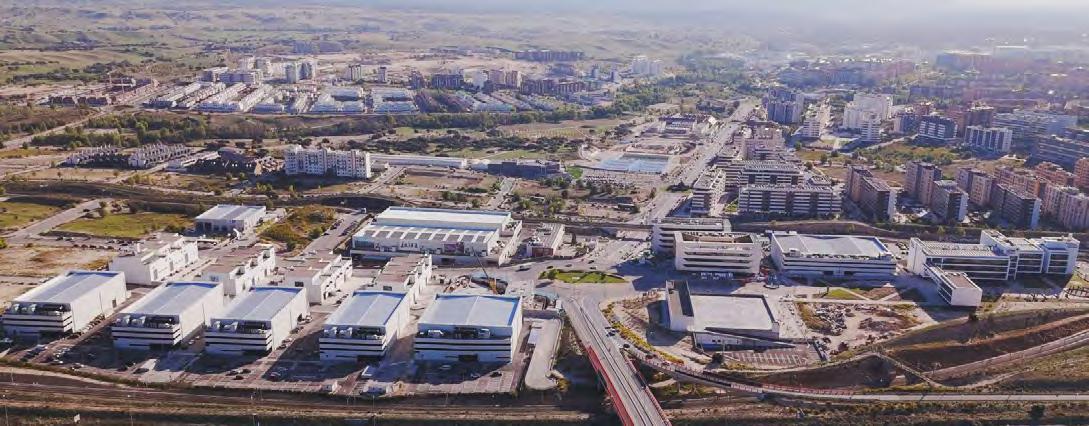
THE COMMITMENT OF DOMESTIC AND INTERNATIONAL PLATFORMS AND PRODUCTION COMPANIES, TOGETHER WITH GROWING INVESTMENT IN INFRASTRUCTURE, CONTINUES TO STRENGTHEN MADRID’S INDUSTRIAL NETWORK.
International platforms such as Netflix, HBO Max, Prime Video, Disney+ and SkyShowtime have established offices and production centres in Madrid. This international investment goes hand-in-hand with that of domestic platforms and broadcasters such as Movistar Plus+, RTVE, Atresmedia and Mediaset, along with Madrid’s extensive production ecosystem, which includes the creation of companies such as The Mediapro Studios, Buendía Estudios and Secuoya Studios.
Madrid is also consolidating its position as a major hub for Spanish-language content production, making the city the point of connection par excellence with the European and Latin American industries. In recent years, several Latin American production companies such as Dynamo, Dopamine, The Immigrant and Woo Films have set up bases in Madrid. This growth is complemented by new business ventures such as the partnership between Onza Américas and BH5 Studios to co-produce content in Mexico and Spain, and the creation of Cacao & Cía as a joint venture between the iZen Group in Spain and the NonStop Group in Latin America.
And then there’s the animation sector. Madrid-based companies such as The Spa Studios (with titles including Despicable Me and the multi-award-winning Klaus), Sygnatia (Buñuel in the Labyrinth of the Turtles) and Lightbox (Tad, the Lost Explorer saga) have earned international recognition for Spanish animation. They’re joined by international companies that have recently opened offices in Madrid, including Skydance Animation, part of the American group Skydance Media, and Flying Bark, an Australian animation studio owned by the Belgian company Studio 100.
This growing commitment to production in Madrid has led to increased investment in infrastructure, particularly medium- and large-scale studios and soundstages. Madrid Content City has already become one of the largest audiovisual hubs in Europe, boasting studios that meet the most demanding international standards. It’s now developing Phase IV, focused on expanding its facilities and operations. Toboggan Group has begun the first of three phases to build a 30,000-square-metre production hub in the Madrid district of Villa-
verde. The group plans to create 15 production centres in different parts of the region.
EFD Studios has announced the construction of a virtual production stage of more than 2,000 square metres in Madrid, with further facilities planned to support high-quality productions and promote the growth of the audiovisual industry. NonStop has acquired a 1,000-square-metre studio to meet increasing demand, with a major project scheduled for 2025. Infinia is making a medium-term effort to equip its stages with the technology required for virtual production and already operates a 500-square-metre virtual set. They’re joined by other major studios such as Elamedia, Adisar Media and Estudio Súper 8, which opened last year in central Madrid.
In addition, some of the leading companies in the field of virtual production (VPX) are based in the city, including Orca Studios, which operates a fully equipped virtual production facility with the latest technology, and Mr Factory, a production company specialising in real-time virtual production and the creation of photorealistic 3D sets with cinematic quality.
THE MADRID AUDIOVISUAL CLUSTER PROMOTES COOPERATION BETWEEN THE SECTOR AND THE INSTITUTIONS INVOLVED IN DEVELOPING THE AUDIOVISUAL INDUSTRY IN THE CITY AND THE REGION.
Madrid has the highest concentration of talent and companies in the audiovisual sector in Spain, bringing together over 47% of professionals and nearly 29% of active companies. With the aim of fostering intra-sector cooperation and public-private collaboration for the growth of the audiovisual industry, the Madrid Audiovisual Cluster was launched in 2024 with the strong support of Madrid City Council and the regional government of Madrid.
The Madrid Audiovisual Cluster is a strategic alliance that brings together more than 100 member organisations from across the audiovisual and entertainment value chain operating in the Madrid region. Its mission is to stimulate the development of the sector in all its dimensions and to serve as a meeting point for companies, associations and academic institutions.
It currently includes Spain’s most prominent industry associations (such as PATE, AECINE, APPA, APCP, ALIA, AEVOD, ADICINE, PRÓXIMA, UTECA and FEDICINE) as well as associations of producers, location professionals, festivals and hospitality businesses in Madrid. Among its members are key companies and organisations in Spain’s audiovisual market, including film and television producers (Tornasol, iZen, Secuoya, Globomedia, Mediacrest and others), SVOD platforms (Netflix, Amazon, Disney, Movistar Plus+ and more), studios (Madrid Content City, Toboggan, Adisar and Super8), technology leaders (Telefónica, Paramotion and those represented by Pixel Cluster Madrid), universities (Complutense, Alcalá, Europea, Nebrija and Rey Juan Carlos) and schools (ECAM, UTAD and The Core). It also includes major sector bodies (Egeda, Crea SGR, SGAE and DAMA), banks (CaixaBank, Bankinter and Triodos Bank), law firms (Andersen and Ecija) and service companies specialising in audiovisual production (The Film Agency, Mrs Greenfilm, OMMA and Creast). Together they work toward a sha-

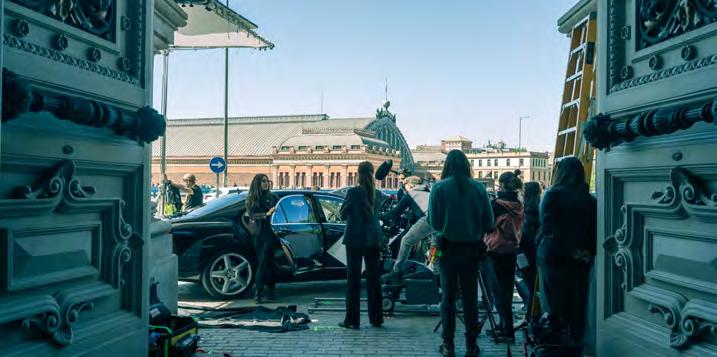
red goal: to foster innovation and competitiveness in the sector, strengthen existing companies, promote new initiatives and enhance Madrid’s position on the international audiovisual stage, establishing the city as a benchmark of quality in the field.
Among other initiatives, this year the Cluster organised the first Madrid Audiovisual Investment Forum in collaboration with Crea SGR, as well as the Un planeta de cine event on sustainability in the sector in partnership with Mrs Greenfilm, the FINDE conference
focused on independent cinema as part of the ECAM Forum, and a workshop on Artificial Intelligence use cases in the sector within the framework of Iberseries & Platino Industria. 2025 also saw the establishment of the Madrid Audiovisual Observatory.
The Madrid Audiovisual Cluster is becoming a driving force for the transformation of this key sector in Madrid and across Spain, focusing on innovation, internationalisation, competitiveness, financing and sustainability.
MADRID CITY COUNCIL’S COMMITMENT TO THE AUDIOVISUAL INDUSTRY IS REFLECTED IN A BROAD RANGE OF INITIATIVES DESIGNED TO STRENGTHEN EVERY LINK IN THE SECTOR’S VALUE CHAIN.

The city’s audiovisual industry is currently thriving. According to Madrid Film Office, more than 41 films, 53 series and 430 medium- and large-scale commercials were shot in the city in 2024. Figures from Spain’s Institute of Cinematography and Audiovisual Arts (ICAA) also show that companies based in Madrid produced 382 feature films between 2021 and 2023, accounting for nearly 40% of the domestic total.
This vitality is also evident in the consolidation of markets such as Iberseries & Platino Industria, the emergence of new and prestigious initiatives such as the ECAM Forum, and the growing presence of projects supported by the city council at festivals and in cinemas, including those developed through the Film Academy Residencies programme, now in its seventh edition. The city’s activity extends beyond the screen to its streets, which have served as the setting for international pre-mières such as Extraction 2 (2023) starring Chris Hemsworth and the third season of The WalkingDead:DarylDixon (2025).
In recent years Madrid City Council has stepped up its support for the sector to establish the city as a prime hub for audiovisual production, promotion and business. This commitment takes shape through a wide range of actions that strengthen every stage of the production pipeline and support projects from development and financing through to production and promotion.
Since 2021, through the Mayor’s Coordination Office, the city council has launched a funding programme for the audiovisual sector with an annual budget of three million euro, extendable to five. Aimed at both production and promotion, these grants are notable for their flexible criteria and their focus on international cooperation, including the allocation of 10% of the total budget to minority international co-productions. The city council has also invested €8 million in the
Crea SGR program me to provide guarantees that facilitate private financing for Madrid-based projects. Both financial mechanisms are compatible with national tax incentives, including a rebate of up to 30% for national and international productions.
Film shoots in the city receive support from Madrid Film Office, which assists with location scouting, production coordination and mediation for permit management. Permits for filming on public streets are handled by the Department of Urban Planning, Environment and Mobility, which processed 11,419 applications in 2024. The Department of Culture also manages an important line of grants aimed at supporting cultural festivals and fairs in the city.
Madrid City Council promotes training and project development programmes through collaborations with the Spanish Film Academy and initiatives such as TorinoFilmLab, the European Writers Club, Cartoon Springboard, MIA-
NIMA and Conecta Digital. Its backing of Iberseries & Platino Industria and the ECAM Forum, as well as industry events like Documenta PRO, Animario PRO, Microsalón AEC and Madrid Film Office’s “Cortamos para…” afterwork sessions, reinforces Madrid’s role as a meeting place for reflection, exchange and business development, with a strong emphasis on fostering international co-production.
The results of this ongoing effort are evident in the year’s major festivals and awards ceremonies, where several productions supported by the city council have stood out: Saturn Return won three Goya Awards, Idol Affair received recognition at the Platino Awards, Marisol, llámame Pepa won big at the Forqué Awards, and Myocardium won Best Film about Women at the Toronto Women’s Film Festival, a distinction that underscores the city’s commitment to diversity and female perspecti-
ves in the industry. The Residencies programme has also left its mark with titles such as Sleepless City and Last Night I Conquered the City of Thebes, both awarded at leading festivals including Cannes and Venice, confirming the international reach and high artistic quality of these projects. Other highlights include The Remnants of You, recognised at the Málaga Film Festival, and several films featured at the latest edition of San Sebastián Film Festival, such as The Sleeper, The Last Rapture, The Delights of the Garden and 8.
The city council’s sponsorship of the Platino Awards, the Iris Awards of the Television Academy and the “Madrid, 21 Districts” prize within the Notodofilmfest online short film festival extends this commitment further, as does the creation of the Madrid Audiovisual Cluster to promote public-private collaboration that drives the sector’s growth and sustainability.
THE MADRID CITY COUNCIL’S INVESTMENT IN THE AUDIOVISUAL SECTOR IS, ULTIMATELY, AN INVESTMENT IN ITS INTERNATIONAL IMAGE AS A CREATIVE, TALENT-DRIVEN CITY CONNECTED TO THE WORLD’S LEADING CULTURAL INDUSTRIES.
Research into the reach, impact and potential of Madrid’s audiovisual sector from industrial, sociocultural and tourism perspectives is also among the strategic objectives of Madrid Film Office, which develops studies and projects to improve data collection and publication. At present, it’s working with the Autonomous University of Madrid on the study The Economics of the Audiovisual Industry: Scale and Impact of Filming in Madrid, an ambitious and innovative project expected to provide valuable insights for institutions, citizens and the business sector alike.
Madrid Film Office, part of the city council’s Department of Tourism, also prioritises promoting the city’s audiovisual heritage and developing screen tourism to strengthen the connection between residents, visitors and the films and series shot in Madrid. Routes such as Pedro Almodóvar’s Madrid, Sound Images of Madrid by Gustavo Santaolalla and The Landscape of Light on Screen are part of the city’s growing catalogue of experiences, with new additions introduced every year.

The Night (Gaua)
Dir. Paul Urkijo
Feb 12th (Thu) 5:50 pm @ CinemaxX 13
Feb 13th (Fri) 4:30 pm @ CinemaxX 14
Frontier (Frontera)
Dir. Judith Colell
Feb 12th (Thu) 11:00 am @ CinemaxX 14
The Hanged Woman (La ahorcada)
Dir. Miguel Ángel Lamata
Feb 13th (Fri) 2:55 pm @ CinemaxX 16
Every Side of the Bed
(Todos los lados de la cama)
Dir. Samantha López Speranza
Feb 12th (Thu) 9:00 am @ CinemaxX 11
Balandrau, Where the Fierce Wind Blew (Balandrau, vent salvatge)
Dir. Fernando Trullols
Feb 11th (Wed) 3:00 pm @ CinemaxX 12
Feb 13th (Fri) 12:35 pm @ CinemaxX 14
A Son (Un hijo)
Dir. Nacho La Casa
Feb 14th (Sat) 10:40 am @ CinemaxX 11
Not For Sale (Ravalear) (S1. E1-2)
Dir. Pol Rodríguez and Isaki Lacuesta
Berlinale Special Series – Date and place to be confirmed
Another Man (Un altre home)
Dir. David Moragas
Feb 15th (Sun) 2:30 pm @ CinemaxX 14
The Awakening (El despertar)
Latido Films 2026 Showreel Online
Feb 12th (Thu) 10:00 am @ Virtual Cinema 1
9 Moons (9 Lunas)
Dir. Patricia Ortega
Feb 12th (Thu) 10:20 am @ CinemaxX 17
The Whisper (El susurro)
Dir. Gustavo Hernández
Feb 13th (Fri) 12:45 pm @ CinemaxX 10
Nothing Between Us (Nada entre los dos)
Dir. Juan Taratuto
Feb 14th (Sat) 9:00 am @ CinemaxX 5
Dir. Jaime Osorio Márquez
Feb 14th (Sat) 10:45 am @ Level2 (Gropius Bau)
Ladies’ Hunting Party (Día de caza)
Dir. Pedro Aguilera
Feb 14th (Sat) 3:40 pm @ CinemaxX 2
Divine Punishment (Castigo divino)
Dir. Pablo Guerrero
Feb 15th (Sun) 9:00 am @ CinemaxX 8
I Want To Be Like You
Dir. Konstantin Bojanov
Feb 15th (Sun) 10:40 am @ CinemaxX 14

MEXICAN FERNANDO EIMBCKE WITH FLIES AND BRAZILIAN KARIM AÏNOUZ WITH ROSEBUSH PRUNING ARE THE TWO
FILMMAKERS FROM LATIN AMERICA THAT ARE COMPETING FOR THE MAIN AWARDS IN BERLINALE 2026. BUT LATAM CINEMA HAS A NOTABLE PRESENCE THROUGHOUT VARIOUS SECTIONS AS THIS FESTIVAL HAS LONG BEEN RECEPTIVE TO CINEMA FROM THESE REGIONS. LET’S EXPLORE THEIR FILMS —AND PORTUGUESE CINEMA AS WELL— AT THE FESTIVAL.
BY CARLOS AGUILAR SAMBRICIO
Chilean filmmaker Maite
Alberdi (The Mole Agent) is one of the most prominent figures in Latin American cinema. She’s premiering the documentary A Child of My Own in the section BERLINALE SPECIAL. This is a Mexican production about a woman who fakes a pregnancy. The filmmakers captures how what begins as a simple lie turns into a complex charade that Alejandra must sustain for months before her hopeful husband and family.
Diving into the PANORAMA section, it’s worth noting that we’ve already discussed Narciso by Paraguayan director Marcelo Martinessi in our piece on Spanish cinema.
Among the most eagerly awaited films is Isabel, the new work from Brazilian director Gabe Klinger, known for Double Play: James Benning and Richard Linklater. It´a film revolving a sommelière in São Paulo’s fine-dining scene who dreams of escaping her controlling boss and opening her own wine bar where she decides what goes in the glass. When her plans fail to ferment as expected, Isabel must decide between playing it safe and taking her one bold chance to uncork her destiny on her own terms.
Brazil is huge this year and Panorama is a good example. Another Brazilian movie in this sidebar is If I Were Alive, directed by André Novais Oliveira (Quintal, Temporada). The story deals with Gilberto and Jacira, a charismatic and gentle couple in their mid-
seventies. They lead a happy life but when Jacira is suddenly hospitalised, Gilberto begins to experience disturbing events – in a spiral through time and space – that lead him towards the unknown.
Mexican cinema can also be proud with this year’s selections, such as The Garden We Dreamed, directed by Joaquín del Paso, who in the Best Screenplay of the Ariel Awards with Panamerican Machinery. What is it about?
Haitian couple Esther and Junior undertake a journey to the northern part of the American continent with Esther’s daughters, Flor and Aisha. They are in pursuit of a better future. In Mexico, they settle in a remote forest where illegal logging shapes both the lives of the people and the forest that surrounds them.

At Panorama Dokumente there´s another Mexican film: Jaripeo, by Efraín Mojica. This debut film centers on the annual ‘jaripeo’ –central Mexican rodeo – in a small town that draws locals and returning US migrants alike for a nostalgic celebration of the masculine ideals of this rural Mexican state. But beneath the spectacle, another story emerges: fleeting touches, coded glances and secret hookups in the woods behind the arena reveal a hidden queer subculture shaped by this environment.
GENERATION features a wide array of Latin American titles. We won’t go into Sad Girlz here, as you can find full details about the film in our article on Spanish cinema.
The most significant Chilean inclusion at the Berlinale is Matapanki, a first film by Diego ‘Mapache’ Fuentes. It´s a black and white film about a punk who spends his days drinking cheap alcohol, going to gigs and wandering the streets of the outskirts with his two best friends. Beneath his tough exterior lies a fragile tenderness: he lives with and cares for his grandmother. One night,he tries a strange, clandestinely brewed alcoholic drink known as Matapanki. From that moment on, he gains alcohol-fuelled
superpowers that activate every time he drinks the potion.
As we said, Brazilian cinema is strongly represented in this edition. But it is undoubtedly in Generation that this cinematography truly shines. One of the selected movies is Gugu´s World, directed by Allan Deberton and written by André Araújo. The storyline focuses on Gugu, a twelve-year old boy who dreams of becoming a football player. He is growing up in a small community that is slowly drying up to expose the ghostly remains of a submerged town. Gugu is cared for by his grandmother Dilma, whose warmth and open-mindedness gives him the space to simply be himself.
First-time director Karen Suzane will be part of Generation 14plus with Four Girls, a coproduction between Brazil and Netherlands. Set in Brazil, 1884, it follows the handmaidens to four pupils at a countryside boarding school. They dream of freedom just to make it through the day. When an ill-advised romance puts Lena’s life in danger, their dreams of escape become a matter of necessity, and the four girls decide to run away.
The diversity of Brazilian cinema is impressive, since there´s also an animated
feature and a documentary film. On the one hand, Papaya is the debut film by Priscilla Kellen. It has no dialogue and it revolves a Papaya, a tiny seed that is passionate about the idea of flying. She struggles to conform to expectations because her curiosity and an uncontrollable desire for freedom make her different from other seeds. When she realises that her destiny is to become a tree, she rebels.
On the other hand, Generation’s attendees will be able to watch the doc The Fabulous Time Machine, directed by Eliza Capai. Told from the perspective of a ten-year-old girl, the film follows her and her friends’ journey from childhood to adolescence. Despite living in houses with dirt floors, without tap water, amid the aridity of the Brazilian sertão, they state that they were born with perks – able to eat, study, play, and dream of better futures. The girls invent time machines and when they realise that fighting against the passage of time is futile, they travel to the future and envision becoming independent and successful women.
Dominican Republic is also represented in Generation 14plus with Don´t Come Out, a movie made by Victoria Linares Villegas The feature film centers on a a closeted gay college student pretending to be straight who is still haunted by the gruesome death of her girlfriend, Wendy. Desparate for escape, she joins her friends on a weekend trip away. But as Liz grows close to a mysterious young woman on the trip, unresolved sorrow and long-buried desires stir something unnatural within her.
There are three short films from Latin American in Generation: The Dream of Dance, directed by Luzbeidy Monterrosa (Colombia); Nobody Knows the World, directed by Roddy Dextre (Peru), and When I Get Home, directed by Edgar Adrián (Mexico).
There´s one TV show selected at BERLINALE SPECIAL SERIES: the Chilean The House of the Spirits, by showrunner Francisca Alegría. Based on Isabel Allende’s bestselling book, it’s an eight-episode, multi-generational family saga spanning half a century, centred on the revolutionary Trueba women – Clara, Blanca and Alba – in a conservative South American country shaped by class struggle, political upheaval and magic.
Out of the FORUM sidebar, we would like to highlight a film from Mexico: Everything Else Is Noise. Directed by Nicolás Pereda, it follows a musician and composer who opens her home to a musician friend’s television interview.
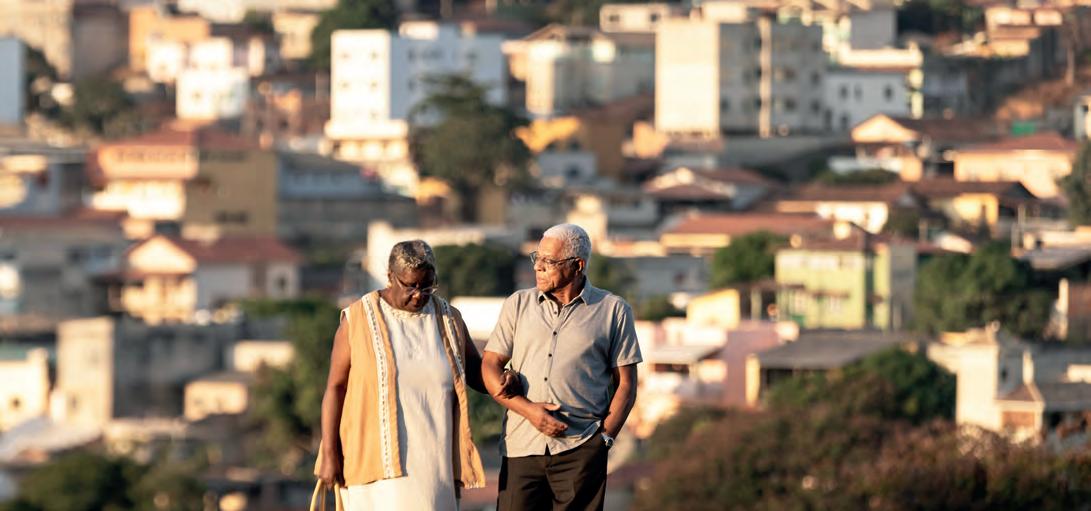
Another film festival goers should take a look is I Built a Rocket Imagining Your Arrival, a Brazilian film directed by Janaína Marques What is it about? Rosa dives down into her childhood, to those disturbing moments when her mother was arrested, accused of killing her neighbour’s husband. Decades later, she sets out on a magical realist journey with the mother she never really had in order to finally rediscover some happy memories – through the landscapes of northern Brazil and those of her inner life.
Other movies from Latin America in Forum are Gemstones, first film by Simón Vélez (Colombia, Portugal); and documentary Forest up in the Mountain, directed by Sofía Bordenave (Argentina).
Besides this, Forum Expanded will premiere the short films El León, directed by Diana Bustamante (Colombia); the documentary Filme Pin, directed by María Rojas Arias & Andrés Jurado (Colombia, Portugal); and Forest of the End of the World, directed by Felipe M. Bragança (Brazil).
The sidebar PERSPECTIVES offers some other productions from Latin American. One of them is The Red Hangar (Chile, Argentina), directed by Juan Pablo Sallato. Inspired by true events and shot in black and white, it´s the first Latin American thriller to explore the inner workings of the military during the dictatorships of the 1970s.
Coming from Argentina, Perspectives shows The River Train, directed by newcomer
Lorenzo Ferro. It focuses on a nine-yearold that dreams of taking control of his life and escaping his responsibilities of washing dishes, cooking and practicing the Malambo at night. A co-production from Brazil and Portugal, Our Secret, directed by Grace Passô is also here. This debut film revolves around a family that tries to evade the pain of grief by immersing themselves in their individual routines. Only the youngest child understands the secret that the house holds.
Finally, we don´t want to forget about BERLINALE SHORTS, where the selection committee has included Time to Go, directed by Renzo Cozza (Argentina), and Miriam, directed by Karla Condado (Mexico).


SARA RODRÍGUEZ MARTÍN
Rubik: You’ve worked in recent years at another Spanish company in the field, Feelsales. What led you to embark on this new venture?
Yvette de los Santos: This change came about because Feelsales is more focused on documentary, although they’ve also been working in recent years on fiction aimed at the festival circuit.
I wanted to take a more direct step into market-oriented fiction, because I want to explore this market and this type of film from a slightly different angle, one aimed at large audiences.
Rubik: How was Raabta International born, and why did you choose that name?
Y. S.: Raabta International was born, basically, out of the need to give opportunities to emerging talent that is creating more audience-focused films and that also deserves a chance to place their films on streaming platforms or windows outside Spain.
As for the name, ‘Raabta’ is a word of Hindi origin that means ‘embrace’. It’s directly connected to this intention of wanting to ‘embrace’ new talent, to welcome each film and treat it with the care and attention it needs to reach the right audience.
Rubik: What would you say sets Raabta apart from other Spanish international sales companies?
Y. S.: I think what differentiates us is the type of support we give creators. Along with the opportunity itself, we work very closely with them. We’re going to have a small catalogue so we can give that level of care to each title. Our goal is to create a very clear strategy by working together, in order to reach the target audience that best suits each film.
Rubik: In your launch statement, the company talks about “films with identity

and potential”. Could you explain what that means for you?
Y. S.: When we talk about identity and potential, we’re referring to films that have a distinctive vision—whether in their narrative, aesthetics, or the themes they explore.
There’s a strong sense of identity, and at the same time we see that they have real potential when it comes to entering the market.
Rubik: Will you mainly focus on theatrical sales, or will your work extend to other windows such as VOD, television, or festivals?
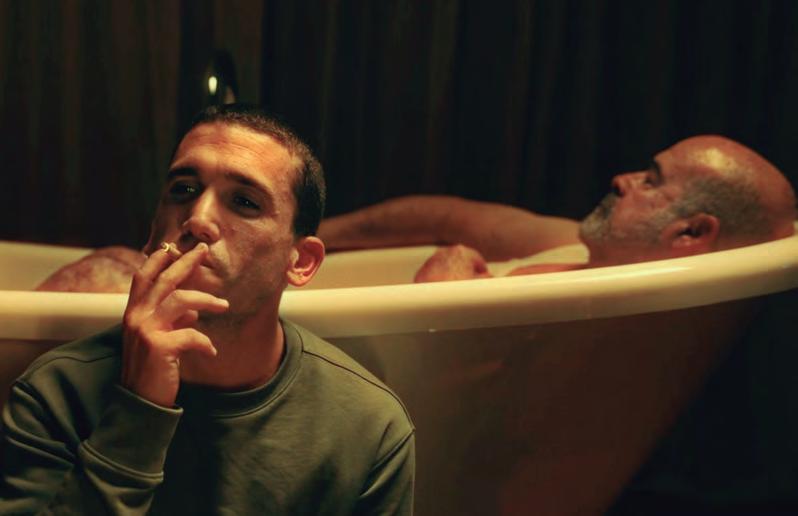

Y. S.: For Raabta International, the focus is mainly on VOD, television, and festivals. Raabta Pictures, which is the distribution arm, will be focused on theatrical releases, but that’s a separate catalogue.
Rubik: You’ll be present at festivals like Berlin and Málaga. Which international markets do you think will be key for you?
Y. S.: We’re starting with Berlin, Málaga, and then Cannes. The idea is to attend these three markets in the first half of the year.
We chose them because they’re festivals that have a very strong reception for Spanish cinema, and where international buyers are also looking for the kind of content we work with at Raabta International.
Rubik: From your perspective, what is the current situation of the international independent film market?
Y.S.: The truth is that there’s an oversaturation of content—that’s the reality. It’s a complex issue, and what I tell most producers is that they need to be patient. Films do have a place on streaming platforms, on television, and in other territories, but patience is key.
From experience, I can say that a film might premiere at a festival, for example, in 2026, but the exposure it gets internationally
“THERE HAS BEEN A BOOM IN
comes later—it’s not immediate. Especially when you’re competing with all the majors and with films that win awards at major festivals.
All of that makes things more complex, which is why patience is so important in such a competitive landscape.
Rubik: And when it comes to Spanish cinema, have you noticed any change in interest in Spanish or Ibero-American films in international markets?
Y. S.: Yes, I think that for several years now there has definitely been a boom in Ibero-American cinema.
You only have to look at the number of international award nominations to see this rise. For example, we’re seeing it with the Brazilian film The Secret Agent and the Spanish film Sirat
I think this strong moment for Spanish and Ibero-American cinema is due to the fact that they offer different kinds of stories. That’s the key. They tell new stories—or familiar ones—but in a different way. They have a lot to say, and they’re even more valuable because of how they say it.
Rubik: What genres or types of content do you think are most in demand right now?
Y.S.: I think there are two different paths. For festivals, social drama or films with a
strong message of social critique have a lot of space. On the more audience-driven side, and for streaming platforms, thrillers and true crime are what’s most in demand. That’s what audiences are consuming the most.
Rubik: Is there any type of project that, because of its genre or subject, you consider more challenging to bring to the international market?
Y. S.: Right now, we’re starting out with different genres. We have a black comedy that deals with the housing crisis in Spain, but which is actually something happening all over the world. We also want to develop a horror line and fully commit to genre films. So at the moment, we’re facing the challenge of betting on these two directions.
Rubik: Do you plan to collaborate regularly with production companies outside Spain?
Y. S.: Yes, that’s actually another reason why we want to go to Berlin, Cannes, and Málaga—because many Latin American producers attend these markets as well.
We want to see what they’re bringing and explore whether we can take on some projects from outside Spain, in order to start building closer ties with production companies in other countries.
EUROPA DISTRIBUTION, THE INTERNATIONAL ASSOCIATION REPRESENTING INDEPENDENT FILM DISTRIBUTORS, HAS EVOLVED FROM A COLLABORATIVE FORUM INTO A GLOBAL NETWORK ADVOCATING FOR EUROPEAN CINEMA. EDUARDO ESCUDERO, CO-FOUNDER OF A CONTRACORRIENTE FILMS AND CO-PRESIDENT OF THE EUROPA DISTRIBUTION BOARD ALONGSIDE KIM FOSS, BELIEVES THAT FILM DISTRIBUTION ON THE CONTINENT IS CURRENTLY IN A “DIFFICULT” MOMENT, FOLLOWING THE MODEL SHIFT BROUGHT ABOUT BY THE CONSOLIDATION OF STREAMING, AND WITH TERRITORIES WHOSE CINEMA SCREEN-PER-CAPITA RATIOS ARE, IN HIS WORDS, “ENOUGH TO MAKE YOU CRY.”
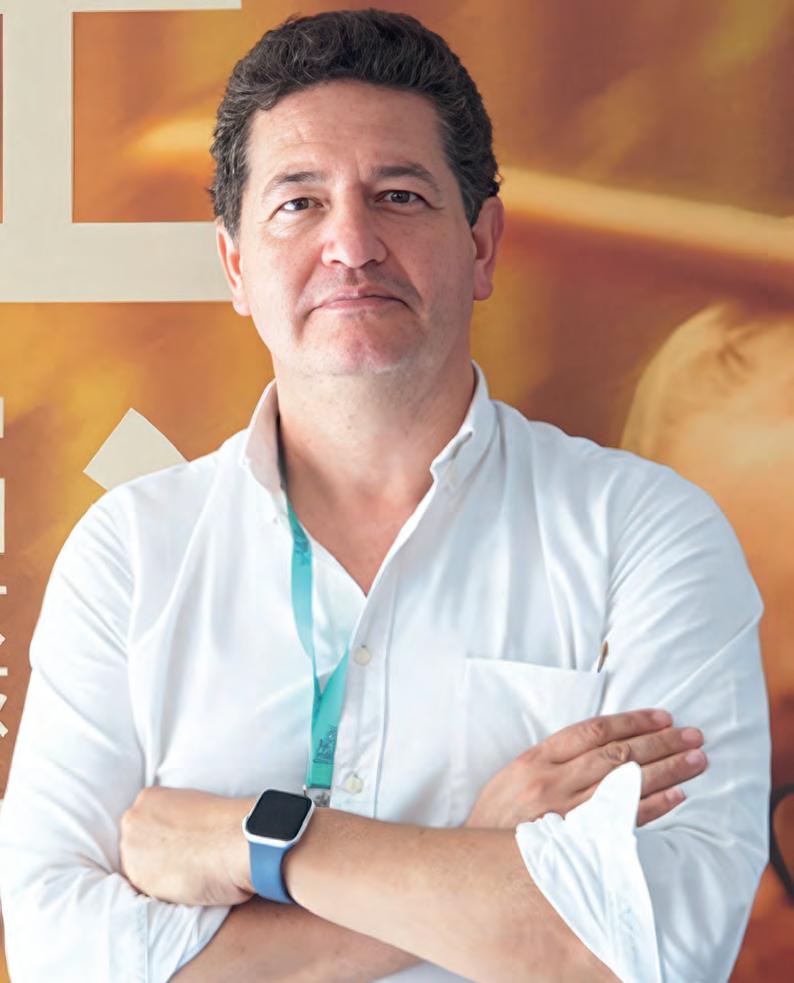
BY NEREA MÉNDEZ PÉREZ
ubik: This year marks the 20th anniversary of Europa Distribution. What do you see as the main achievement?
Eduardo Escudero: From the association, and particularly from the Europa Distribution Board, we are planning some kind of special event to commemorate the anniversary, because there is a lot to celebrate.
The association has succeeded in putting the work of distributors on the radar of European decision-makers and in conveying that we are a key link in the value chain. Our role is very much about networking and continuing to highlight the importance of our work to public authorities.
Rubik: You have around 130 members. How do you maintain continuous and fluid dialogue?
E.E.: First, we aim for balanced representation in terms of gender, as well as representation from both large territories— Germany, Italy, Spain and France—and smaller countries such as Romania, Austria, Denmark, Belgium and the Netherlands.
We meet online every month and a half to discuss the main issues and to support our managing director, Christine Eloy, in making
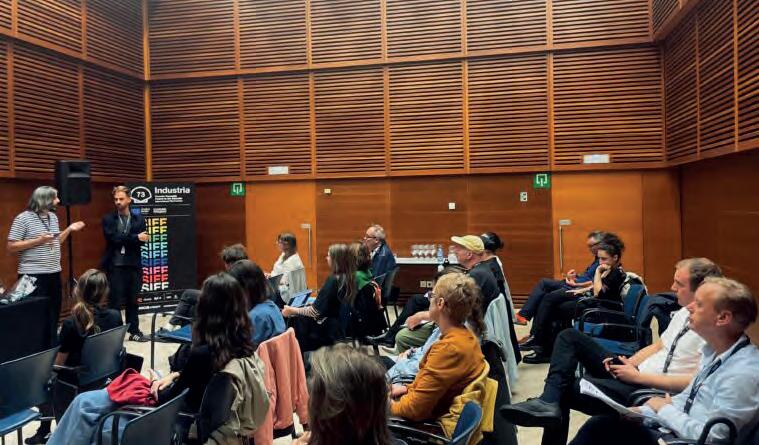
the best decisions for the association’s various actions. In addition, we hold three or four inperson meetings each year, with marathon sessions from nine in the morning until six in the evening. Everything that comes out of these meetings is immediately shared with distributors through regular newsletters, which members can respond to by adding information or sharing their views.
In any association there are more active and more passive members, but everyone is informed, and the Board works continuously to address all relevant issues.
Rubik: I’ve noticed that some members come from non-European countries. What explains their inclusion?
E.E.: It’s true that we are called Europa Distribution, but we have opened the door to distributors from other territories who work with European cinema. We have members from Canada, Taiwan, Israel and Australia, all of whom are passionate about European films.
They join not so much to receive funding or benefit directly from our work around
European funds, but rather to generate networking opportunities and build a network for exchanging experiences and market knowledge.
Rubik: Over the years, you have also built networks with other associations…
E.E.: We organize workshops with Europa International, the association of international sales companies, with whom we share challenges and try to collaborate on issues of common interest. We also work closely with Europa Cinemas, with whom there is an ongoing climate of collaboration, dialogue and joint initiatives.
Rubik: You have also developed a wide range of initiatives during this time…
E.E.: We run a mentorship program for women, through which those working in acquisition, sales or marketing departments at European distribution companies spend a few days in other territories to learn how executives there operate. Alongside this specific program, we also have Distributors on the Move, which—without excluding more
experienced professionals—places a special focus on younger ones. Participants choose a destination at another member distributor in a different territory, and Europa Distribution supports their learning stay abroad.
“Everyone has become more selective—the audience, TV and platform buyers—so if you have one of the few strong titles, it can save your year. If you don’t, competing is extremely difficult right now, and this is happening across Europe”
In addition, we organize workshops at various events such as San Sebastián, Cartoon Movie and soon Berlin, where this year I will be participating in a panel
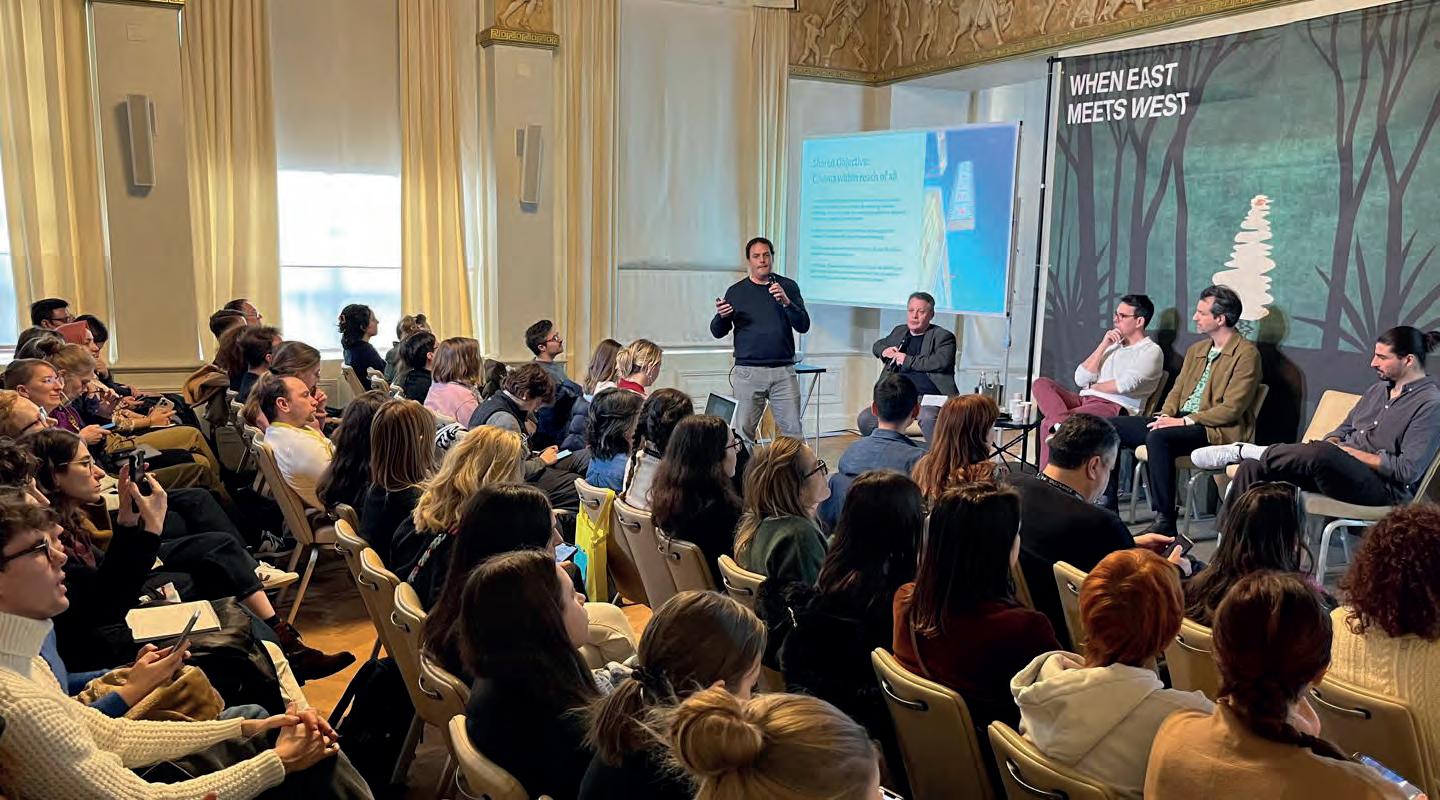
organized by the association. One of our most recent initiatives was bringing our Film Distribution Innovation Hub to When East Meets West in Trieste.
“Cinemas are extremely important for distributors. This is not a romantic argument; it’s essential to generate business in the first window and ensure a long exploitation life over the years”
Rubik: What is the current state of film distribution in Europe?
E.E.: It’s a difficult moment, full of challenges and requiring constant adaptation. Each country has its own national cinema, and every year five or six films stand out. In Spain, for instance, we could mention Sundays, The Dinner, Flores para Antonio or Deaf. These are our national gems. Other countries may have four—or even just one—that are extremely important for their domestic market.
Beyond that, there are always six or seven undeniable films that gain strong momentum after premiering at Berlin, Venice and, above all, Cannes. However, films outside that group struggle both in cinemas and on television, which
is increasingly reluctant to buy due to competition from streaming.
Everyone has become more selective— the audience, TV buyers, platform buyers— so if you have one of those six or seven strong titles, it can save your year. If you don’t, competing is extremely difficult right now, and this is happening across Europe.
From the association, we are also trying to raise awareness about the unbalanced situation within European markets, even countering politicians’ claims that Europe should be more like the United States. That comparison doesn’t work: the U.S. is a single market of over 350 million people, whereas in Europe, even if the population is larger, each country operates under different conditions and contexts.
Rubik: What measures are being taken to address this disparity in Europe?
E.E.: We have succeeded in consolidating distribution support programs across the continent, such as Films on the Move and European Film Distribution (Automatic), which are essential for any distributor in any country, but especially for those in much smaller markets.
I’m thinking, for example, of Romania, Latvia, Estonia or Lithuania, where there may not be strong national players—or even anyone to license content to. In Romania, for instance, the number of cinemas is disproportionately low for a population of nearly 20 million people. The screen-percapita ratio is enough to make you cry.
This makes it even harder for independent Romanian distributors to bring the best European cinema to theaters, yet they continue to fight to offer a diverse cinematic slate to their audiences.
This situation, often referred to as ‘cinema deserts’, can even be found in countries like France and Germany. In Germany in particular, especially in the eastern regions incorporated after reunification, the cinema map is radically different from that of the former West Germany.
In Spain, we have unfortunately labeled this phenomenon ‘Empty Spain’, leaving more than five million people living in towns of fewer than 5,000 inhabitants without cinemas. Despite this, I believe we still have a strong exhibition network and a market for independent platforms such as Filmin, Movistar Plus+ or our own acontra+, services that do not have clear equivalents in other neighboring countries.
Rubik: How has the rise of VoD changed your distribution model?
E.E.: First, streaming platforms pulled films away from the independent market, and then they altered and conditioned the way films are produced. I am convinced that many productions—though not all—are conceived with the thought: “I’ll make it this way because it increases the chances that an international streaming platform will like it.” This ultimately influences editorial direction.

There’s no doubt that streaming has become a major form of at-home entertainment, and it is having an impact to the situation faced by cinemas, which are extremely important for distributors. This is not a romantic argument; it’s essential to generate business in the first window and ensure a long exploitation life over the years. Independent distributors are absolutely clear about this, and we defend it fiercely.
“We believe this year is crucial for participating in the design of the programs that will replace Creative Europe. We want to ensure that the underlying philosophy remains intact”
At the same time, media coverage of theatrical releases in print, radio and television has virtually disappeared, with the limited remaining space now occupied by streaming releases. Streaming platforms have also taken over advertising space, running outdoor campaigns, billboards and TV ads, much like film distributors—both majors and independents—used to do.
Rubik: In the case of A Contracorriente Films, you launched the acontra+ platform. Is this a strategy other independent distributors can replicate?
E.E.: We are still on a learning curve, but we are satisfied with the growth and its gradual consolidation. In countries such as Spain, Germany, France, Italy or even Poland, a distributor might consider it, but it is very difficult because you need sufficient market size and population.
Unfortunately, we are still far from it becoming a primary window or a true alternative; for now, it is more of a complement. That said, we are working to change this in the not-too-distant future.
We believe it is essential to have access to the open sea—even if it’s just a narrow passage that allows us to take a small boat out to fish in a vast ocean dominated by the giant ships that are the global streamers.
Rubik: What is your roadmap for 2026?
E.E.: At an institutional level, work has begun on designing the new program that from 2028 onward will be called AgoraEU . We believe this year is crucial for participating in the design of the programs that will replace Creative Europe, with new budgets and possibly different operating models. We want to ensure that, even if
the name and rules change, the underlying philosophy remains intact.
We are also working to protect geoblocking . We are strongly opposed to its removal, because independent distributors make release decisions based on what best serves each film, taking into account seasonality, public holidays, long weekends or national football matches. If geoblocking were removed, everyone would pay lower minimum guarantees to international sales agents, and as a result, films would either not be made at all or would be made with smaller budgets.
Rubik: What are the upcoming events on Europa Distribution’s agenda?
E.E.: In Berlin, we are organizing a panel on Sunday, February 15, followed by a board meeting with institutions the next day. From there we head to Cannes for another panel, and we will hold workshops at Cartoon Movie, the Sofia International Film Festival and the San Sebastián Festival, among others.
We would also like to repeat an event we held last year in Brussels, where we invited all Europa Distribution members and held sessions explaining in detail what we do and what our concerns are. In short, Christine Eloy’s team never stops, and we continue working to foster knowledge exchange and improve our work.
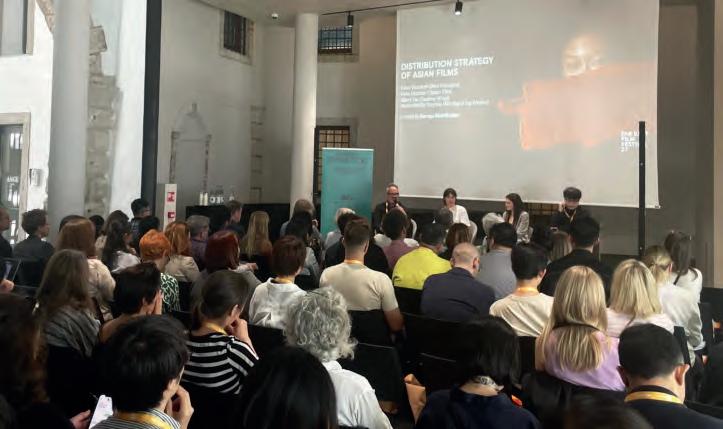
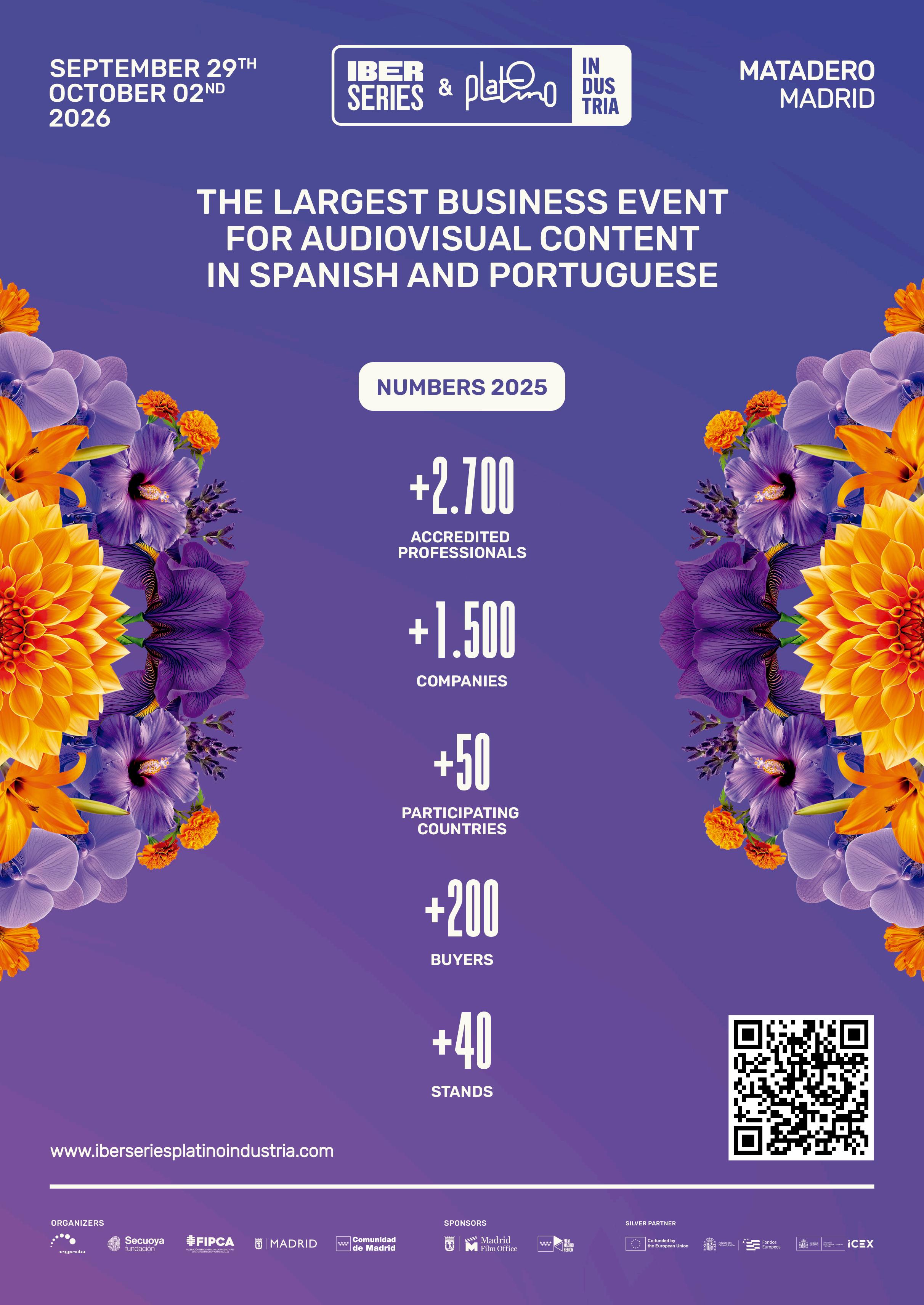

THE FACT THAT THE TWO FILMS WITH THE MOST NOMINATIONS AT THE UPCOMING OSCARS, SINNERS AND ONEBATTLEAFTERANOTHER, WERE BOTH PRODUCED BY WARNER PUTS AN ESSENTIAL ISSUE
ON THE TABLE: THE CONSEQUENCES OF THE MAJOR STUDIO’S ACQUISITION BY A STREAMING COMPANY—NETFLIX—THAT IS WHOLLY UNINTERESTED IN THE THEATRICAL EXHIBITION BUSINESS.
In the razor-sharp series
The Studio (2025–), its protagonist, Matt Remick (Seth Rogen), asks Ted Sarandos—playing himself— how he manages to get every filmmaker with a Netflix-produced film to mention him when accepting an award. The CEO of the streaming giant replies that they’re contractually obliged to do so, fully aware that artists tend to forget about the bean counters—the accountants—like them.
It may sound like a simple industry joke, but it encapsulates the core conflict raised by Netflix’s purchase of a major film studio such as Warner Bros.
Warner was one of the few studios that still retained the aura of being director-driven, an identity shaped during Jeff Robinov’s tenure as president of the company between 2008 and 2017. During that period, he forged extremely close relationships with filmmakers of the stature of Clint Eastwood, Christopher Nolan, Baz Luhrmann, Zack Snyder, and Ben Affleck, among others.
By contrast, although Sarandos and his team have flirted with prestige cinema through projects such as Roma (2018), The Irishman (2019), or Mank (2020), their interest in this type of filmmaking is purely promotional—mere brand building. In
reality, they are fully aware that what their core audience wants is content, content, and more content. Hence their interest in acquiring Warner, and in the sheer value of absorbing its catalogue.
To fully understand the situation, however, one must look back to the arrival of David Zaslav at the helm of the company, following Discovery Communications’ acquisition of AT&T’s stake in the major. From the moment he took over, Hollywood insiders suggested that Zaslav’s intention was not to breathe new life into the studio
after the pandemic downturn. Rather, the goal was to tidy up the books and make a future sale of the company’s assets more attractive in the medium to long term.
The reason is straightforward: upon assuming his position, the president of Warner Discovery received, as part of his compensation, roughly $660 million worth of company stock. This means that, should those shares be sold, he could personally pocket profits exceeding $1 billion. There is little room for alternative interpretations of Zaslav’s intentions. For him—and for the shareholders he represents—this is a purely financial transaction that would turn him into an even bigger billionaire.
This context helps explain one of his most controversial decisions: the cancellation of projects, some of them already completed, in order to reduce Warner’s tax burden. This was the case with finished films on the brink of release such as Batgirl, Scoob! Holiday Haunt , and Coyote vs. Acme (2026). The latter was at least rescued by Ketchup Entertainment, but the other two have vanished entirely, with no plans even to release them on streaming.
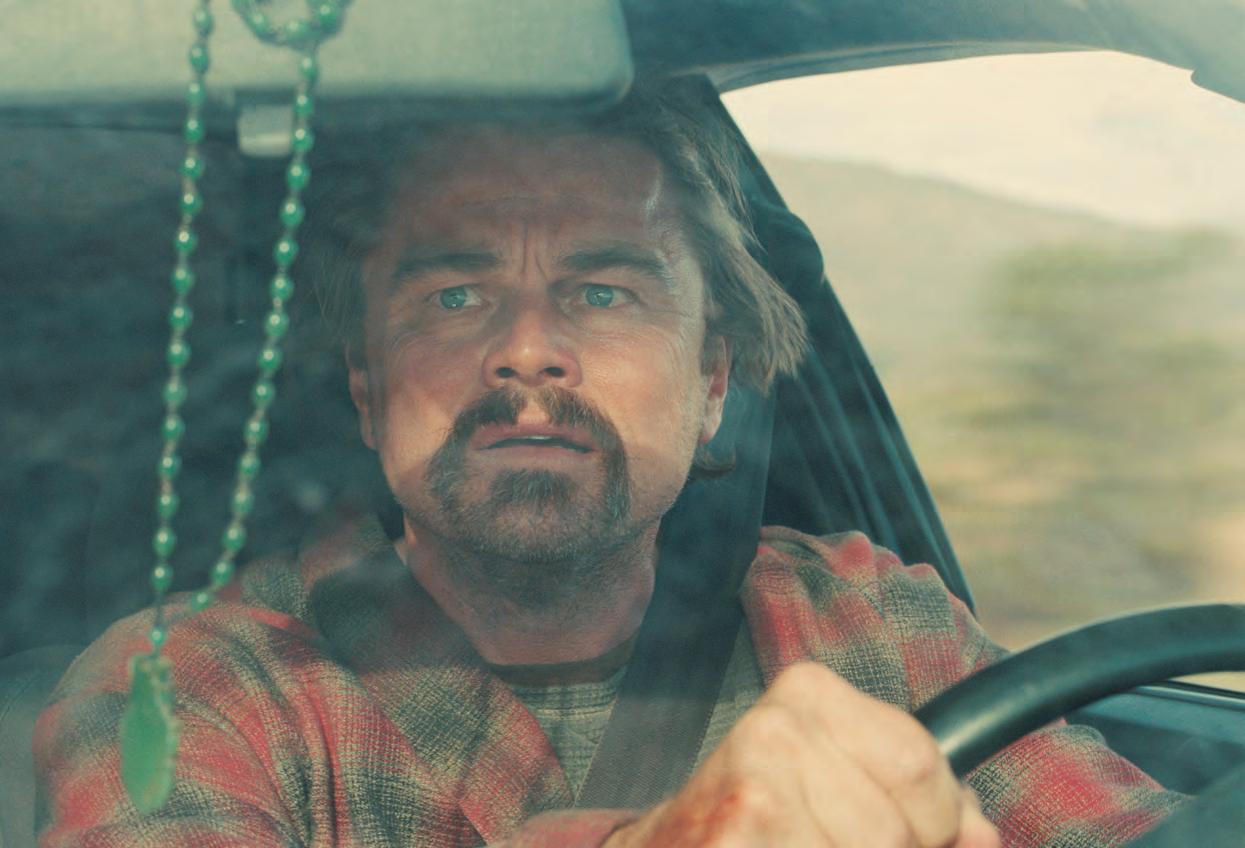

The same happened with a large portion of HBO Max’s content, which was removed after the platform was rebranded—following the integration of Discovery’s catalogue—as simply Max. At least temporarily. The brand devaluation was so severe that the change ultimately proved short-lived: the priority was to secure a sale.
Among cinephiles, a flicker of hope emerged when, following Netflix’s acquisition announcement, Paramount stepped in with a higher hostile bid. On paper, it certainly looked that way. David Ellison, Paramount’s current CEO, publicly stated that they were willing to pay $30 per share in cash, compared to Netflix’s $27.7 per share in a mix of cash and stock (later amended by an all-cash transaction). Why, then, did Zaslav and his team continue to favor Netflix’s offer?
The answer lies in the fine print. Netflix’s bid was aimed exclusively at the studio and its various entertainment divisions— film, streaming, video games, and so on— leaving out the portion stemming from the merger with Discovery Communications.
Paramount’s $30-per-share offer, by contrast, covered the entire company, including Discovery. This was clearly a lowball offer, since Netflix’s proposal gave Zaslav exactly what he had wanted from the moment he took charge of Warner: a dismantled company, easier to sell off in separate divisions that could appeal to a wide range of buyers—and, in turn, further line the pockets of its shareholders.
Zaslav’s results-driven approach may seem at odds with the fact that, in 2025, Warner delivered box-office hits such as A Minecraft Movie ($958.3 million), Superman ($616.8 million), The Conjuring: Last Rites

Sarandos and his team have flirted with prestige cinema but they are fully aware that what their core audience wants is content, content, and more content. Hence their interest in acquiring Warner, and in the sheer value of absorbing its catalogue
($494.7 million), Sinners ($368.3 million), Final Destination: Bloodlines ($316 million), and Weapons ($269.1 million). At its core, however, the contradiction is only apparent.
In reality, the company made just two major bets. The first was based on an in-house IP: James Gunn’s reboot of the Man of Steel . The second was a box-office stumble that has nonetheless become a major awards-season contender: One Battle After Another. By contrast, in the next two most expensive films— A Minecraft Movie and Sinners — Warner was not involved in production at all. One was produced by Legendary Pictures and Vertigo Entertainment, and the other by
Proximity Media. Warner’s role was purely that of distributor.
A key factor behind Warner’s strong box-office year is that its remaining successes were horror titles from New Line Cinema, a subsidiary whose production philosophy centers on mid-range or uppermid-range budgets—ranging from the $38 million spent on Weapons to the $55 million budget of The Conjuring: Last Rites. Moreover, given that both The Conjuring: Last Rites and Final Destination: Bloodlines were based on long-established IPs, the actual risk involved was minimal.
The wave of backlash against the Warner acquisition—threatening to tarnish the brand’s public image—forced Sarandos to issue statements assuring that Netflix intended to respect the studio’s identity. He even mentioned, not insignificantly, that they were willing to honor Warner’s 45-day theatrical window, despite Netflix’s long-standing policy of limiting theatrical releases to the bare minimum required for awards eligibility.
A similar argument applies to another of Warner’s crown jewels: HBO, which since the rise of streaming has always been

one of Netflix’s competitors. According to executives working under Sarandos, the intention is for both platforms to continue operating separately- but only in the short term. Because although Netflix is extremely well positioned within the sector, it has always coveted something that this deal with Zaslav can provide: a vast array of hugely popular proprietary IPs, both film and television, to feed its insatiable recommendation algorithm.
Netflix says they intend to respect the Warner’s identity. But eventually, if the company needs to faces cuts, the first victim will be the theatrical film business. Legacy is a kind of concern that belongs to artists— not to bean counters
As noted earlier, the acquisition also includes absorption of Warner’s massive catalogue, which—along with the studio’s video game division—is one of Netflix’s primary interests. This also ties into its agreement with Sony Pictures to stream Sony releases exclusively once their theatrical windows expire. The goal is to expand the amount of content available to Netflix users while minimizing rights negotiations.
Which brings us to the central question: to what extent will Netflix continue to respect the original operating model of Warner’s companies once the deal has settled? The key lies in a financial indicator: Netflix’s debt ratio, which Sarandos has consistently kept below 1.0. The moment that figure rises too high—threatening the financial stability of a company that has always relied on long-term debt—cuts and mass layoffs will follow.
It’s not hard to imagine that the first area to face reductions will be the theatrical film business of the newly acquired major. After all, in the world of ultra-capitalist corporations, the historical legacy of one of the great studios of classic Hollywood is the last thing anyone worries about. That kind of concern belongs to artists—not to bean counters.

THE POSSIBLE TAKEOVER OF WARNER BROS. STUDIOS AND HBO/HBO MAX BY NETFLIX OR PARAMOUNT SKYDANCE MARKS A NEW STAGE IN THE RAPIDLY ACCELERATING CONSOLIDATION OF THE GLOBAL FILM AND MEDIA MARKET. SINCE IT IS A CRUCIAL TURNING POINT FOR CINEMAS WORLDWIDE, RUBIK WANTS TO PUBLISH A STATEMENT MADE BY CICAE - INTERNATIONAL CONFEDERATION OF ARTHOUSE CINEMAS.
Increasingly, fewer and fewer companies control ever larger parts of production, catalogues and distribution.
This development is particularly risky for arthouse cinemas as it threatens to severely impair access to films and repertoire, reduce the diversity of offerings and increase the risk of de facto monopoly structures and a massive concentration of cultural influence.
(…) Arthouse cinemas worldwide are particularly affected, even if they focus on repertoire. Warner Bros. is one of the most important distributors of repertoire films. Its library includes classics from ‘Casablanca’ to pre-1986 MGM titles and RKO classics. In many European countries, Warner Bros. also operates as a local film producer and therefore has a larger local catalogue.
The problem is that Netflix does not rent its films to cinemas for repertoire screenings in a standardised manner. If this practice should be applied to the Warner catalogue, arthouse cinemas stand to lose access to a significant part of their programming.
Increasing market concentration poses not only economic risks, but also significant cultural and democratic risks. When fewer and fewer companies control a growing share of film production, catalogues and distribution channels, cultural influence also becomes concentrated in the hands of a few players. This influences which stories are told, which perspectives are visible and which topics reach the public at all.
This development is problematic for the democratic diversity of opinion that arthouse cinemas around the world stand for: less diversity in the production and distribution landscape means less plurality in cultural discourse in the long term — and thus a weakening of the cinema as a place for diverse, independent and socially relevant narratives.
THREE KEY MYTHS AND WHY ARTHOUSE CINEMAS SHOULD QUESTION THEM.
Myth 1: ‘One of the deals is better for cinemas.’ Reality: From a cinema perspective, neither deal is good.
Fewer studios means fewer films, less competition for creative talent, and accelerating market consolidation. The 2018 Disney-Fox merger shows what such consolidation means: in 2016, Disney and 20th Century Fox together released 26 films with wide US theatrical distribution. Today, that number is 14 — a decline of 46%.
Of course, it is encouraging that Paramount Skydance promises ‘30+ films per year’ despite all this; but such promises are not legally binding.
Myth 2: ‘Netflix will change its cinema strategy.’ Reality: Netflix has not made a U-turn.
Netflix-CEO Ted Sarandos says that the company will continue to bring Warner films to the cinema. However, he also claims that exclusive cinema windows are ‘not consumerfriendly’ and need to ‘evolve’. Netflix operates only two cinemas worldwide (Paris Theatre in New York, Egyptian Theatre in Los Angeles) and uses them primarily for Oscar-qualifying runs.

The company has not changed its model for Netflix films — and there is no indication that this will change with Warner Bros. Furthermore, individual CEO statements are, again, not legally binding.
Myth 3: ‘Regulatory hurdles will stop the deal, especially in the EU.’ Reality: Experts do not expect a blockade.
Following an initial pre-notification procedure, the European Commission will initiate formal merger control proceedings. Similar reviews will be conducted in all other jurisdictions in which the two companies are active.
These procedures are extensive multistage procedures and involve an in-depth competition law assessment of potential effects on value-chains, market structures, competition, and cultural diversity. The review will therefore constitute a central element of the further process.
However, European antitrust experts largely agree that, while the European Commission will review the deal, it is unlikely
to block it. In the geopolitical reality, the EU is unlikely to block a merger between two purely US companies — especially not under a Trump administration that has already actively intervened in the deal.
From a cinema perspective, neither deal is good. Fewer studios means fewer films, less competition for creative talent, and accelerating market consolidation.
Can the deal be prevented? A realistic assessment: probably not by the EU alone. The European Commission will review the deal and possibly impose conditions (as in the DisneyFox merger, when Disney had to divest certain TV stations). However, a complete blockade is unlikely. This does not mean that engagement is pointless. On the contrary: the conditions imposed in the event of approval can make all the difference.
The CICAE and its members worldwide demand::
• No further market consolidation — The best solution for cinema is for none of the deals to go ahead. One less studio means fewer films, less diversity, less cinema.
• Regulatory requirements for fair market access — US, UK and EU antitrust authorities must ensure that creators and cinemas continue to work under fair conditions and have access to content. Pluralism, competition and a sustainable division of control between production and distribution must be guaranteed.
• A binding commitments to cinema — If a takeover is approved, we demand legally binding commitments for cinema distribution: a minimum number of cinema releases per year, fair exclusive theatrical windows, guaranteed access to repertoire catalogues for all cinemas — from multiplexes to single-screen arthouse cinemas.
Belgrade (Serbia) (Serbia Film Commission)
TV Series: The Librarians: The Next Chapter
Belgrade, Serbia’s capital, offers a dense and varied urban fabric where Ottoman, AustroHungarian, interwar, socialist-modernist, and contemporary styles exist within short distances. Public squares, historic streets, and cultural institutions gave The Librarians: The Next Chapter a credible sense of place, balancing time travel fantasy with contemporary realism.
The production used the Belgrade Fortress to evoke potent scenes of magical and historical gravitas and transformed the exterior of the Military Museum into the central location of the series. Serbian folklore elements like vampyres and drekavac (shapeshifter) added site based supernatural accuracy.
Figueira da Foz (Portugal)
Portugal Film Commission
TV series: Espías (Broken Spies)
TV Series: Arctic Circle (Ivalo)
The city of Figueira da Foz stands out as one of Portugal’s most cinematic coastal cities, where heritage, nature and architecture intertwine . The filming of Broken Spies played a decisive role in shaping Figueira da Foz’s commitment to becoming a film-friendly city.
Its diversity of locations gave the series Broken Spies an authentic visual identity, evoking the glamour, intrigue and tension of the 1940s. Once a luxurious seaside resort for elites, the city became, during World War II, a refuge for exiles and spies. For the directors and producers, this duality was key to the series’ tone.
Inari is the largest municipality in Finland but also one of the least populated. Its center, Ivalo, is also the original title of the series. Arctic Circle, produced by Yellow Film & TV, uses Inari’s raw atmospheric sceneries as an integral part of the series from the very start, becoming a character of their own and bringing the gripping Nordic crime drama to life. Inspired by the project’s positive impact, the municipality has developed Lapland’s first-ever local audiovisual incentive
“The vast, frozen wilderness—where silence, light, and extreme weather coexist—establishes an atmosphere of isolation and fragile beauty that mirrors the series’ psychological intensity,” says EUFCN.
TV series: La Palma
The island of La Palma, located in the northwest of the Canary archipelago and designated a UNESCO World Biosphere Reserve, stands out for its rugged terrain, volcanic origins, and remarkable diversity of landscapes.
The Netflix miniseries La Palma “organically integrated this diversity of environments into its narrative, a fictional story that incorporated the 2021 volcanic eruption”. The series depicts a recent disaster in which the island’s geography and volcanic landscapes are far more than a backdrop. The production La exemplified the importance of collaboration among the Film Commission, the Island Council (Cabildo), and local municipalities.
MDM Film Commission
Feature Film: Phantoms of July (Sehnsucht in Sangerhausen)
Sangerhausen is a small town in the southern Lower Harz Region of Saxony-Anhalt (Germany), with a visible mining past and a floral present, rich in history and German Romanticism.
Phantoms of July, which was the opening film of Locarno Film Festival 2025. Directed by Julian Radlmaier, the film follows two women brought together by the winding paths of chance on an unexpected ghost hunt in the mountains. The director was also inspired by the 18th-century poet Novalis, who introduced the blue flower as a symbol of romantic longing.
The European Film Commissions Network (EUFCN) has launched the ninth edition of their annual contest for European filming locations. The Jury evaluated all 13 submissions by the EUFCN members, focusing on the significant role of each location in the story. Five locations are now competing for two distinct awards (Jury and Audience). The ceremony will take place, during de Berlinale Film Festival, on February 15, 2026.
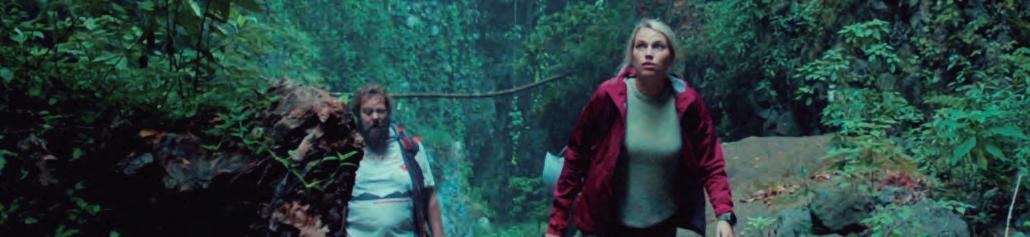

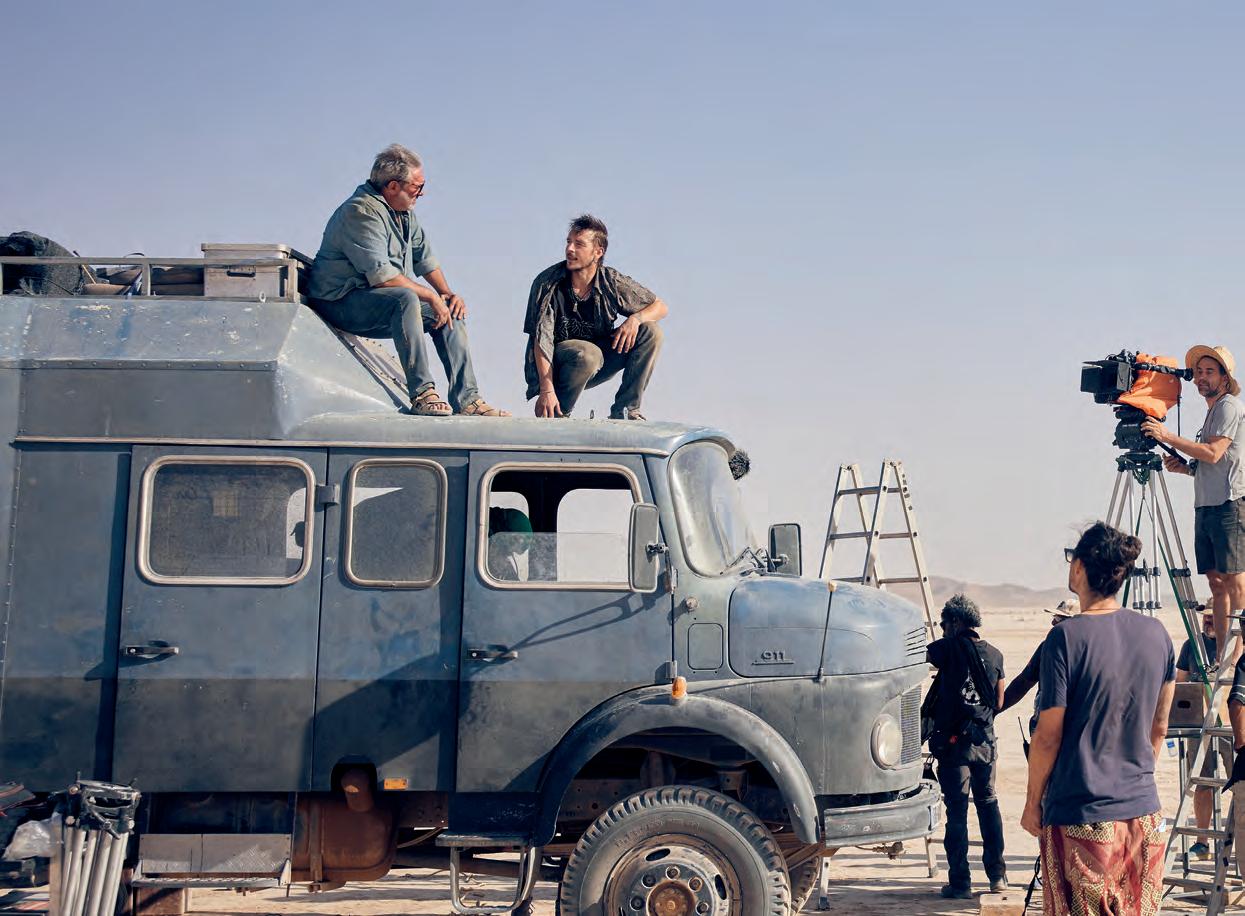
WHEN SIRAT (A PRODUCTION BY EL DESEO, MOVISTAR PLUS+, FILMES DA ERMIDA, 4A4 PRODUCTIONS AND URI FILMS)
PREMIERED IN THE OFFICIAL SELECTION OF THE CANNES FILM FESTIVAL AND RETURNED HOME WITH THE JURY PRIZE UNDER ITS ARM, FEW COULD HAVE PREDICTED THAT THIS RADICAL, PHYSICAL AND DEMANDING FILM WOULD BECOME, MONTHS LATER, ONE OF THE MOST SINGULAR PHENOMENA IN RECENT SPANISH CINEMA. DURING ITS THEATRICAL RUN, THE FILM SURPASSED THREE MILLION EUROS AT THE SPANISH BOX OFFICE — AN UNUSUAL FIGURE FOR SUCH A MARKEDLY AUTEUR-DRIVEN PROPOSAL. LATER CAME THE EUROPEAN FILM AWARDS, WIDESPREAD RECOGNITION FOR ITS TECHNICAL ACHIEVEMENTS, ELEVEN GOYA AWARD NOMINATIONS AND, FINALLY, CONFIRMATION OF ITS INTERNATIONAL RECOGNITION WITH NOMINATIONS FOR BEST FILM AND BEST SOUND AT THE 2026 ACADEMY AWARDS
BY MIGUEL VARELA
The journey of Sirat — both literal and metaphorical — is that of a film born on the margins that ultimately ends up dialoguing with the very center of the international film industry. A project that crosses the desert on screen and in reality, and that questions the boundaries between industrial cinema and radical cinema, between control and chance, between extreme
planning and surrender to the unpredictable. Behind this journey lies a series of bold decisions, an unusual network of alliances and a shared conviction: that cinema can still be a physical, sensory and moral experience. Sirat belongs to the family of works that refuse to fit into a predefined category, that move against the current and therefore require a paradoxical industrial apparatus. Here, ambition does not lie in spectacle, but in the
intangible: ensuring that an extreme experience — a real party, a real desert, real bodies — does not turn into a postcard or a pose. The risk was not only economic. It was moral
A QUALITATIVE LEAP IN ÓLIVER LAXE’S CAREER
Óliver Laxe is not a conventional filmmaker within the Spanish cinematic landscape.
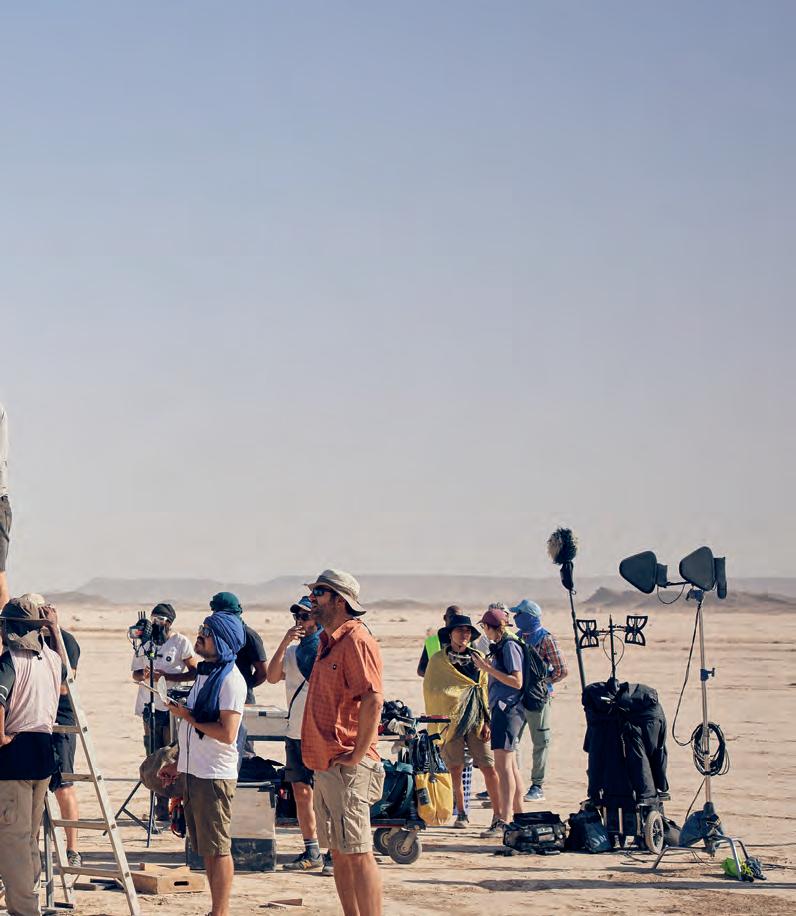
From his earliest works, his filmography has navigated a porous frontier between fiction and documentary, between mise-en-scène and observation, always with special attention to territory and the bodies that inhabit it. Mimosas placed him on the international radar after winning the Critics’ Week Grand Prize at Cannes; Fire Will Come consolidated his prestige with the Jury Prize in Un Certain Regard. But Sirat represented something else entirely.
In the words of Agustín Almodóvar, it was “a very important qualitative leap” in his career. A more ambitious, more costly and more complex film, requiring a production structure very different from his previous works. “Fire Will Come was practically made with his own production company, with him taking on many tasks himself,” recalls the producer. “Sirat needed far greater technical and material resources. It was a radical proposal, but it also required a considerable investment.”
The project reached El Deseo during the awards campaign for Fire Will Come. Almodóvar and his team immediately recognized a singular voice. “When we discover an artist with such a
personal proposal, the mechanism is always the same: to approach them and say that we love their cinema, that we connect with the way they work.” That first contact eventually led to a coproduction that would prove decisive.
From the screenplay onward, Sirat was conceived as something more than a simple search narrative. Beneath the surface of a road movie filtered through rave culture, the film engages indirectly with the historical moment the world is currently experiencing. For Almodóvar, that connection was evident from the outset. “There is an institutional violence that runs through our time, a dehumanization that turns tragedies into figures,” he notes. “The film speaks about that without doing so directly, through a war that erupts in the desert and through characters who confront the inhuman.”
Faced with that violence, Sirat proposes an inner, almost spiritual journey that functions as a counterpoint to contemporary materialism and consumerism. The characters’ passage
through the desert becomes an experience of stripping away, of losing reference points, connecting with issues as current as migration flows or the hostility of the so-called First World. “That ending, with the survivors on the roof of a train, moving toward an uncertain destination, strikes me as profoundly contemporary,” the producer points out.
The conceptual ambition of Sirat translated directly into economic terms. With a budget of close to six and a half million euros, the film occupied a particularly delicate position within Spanish cinema: too large to be sustained solely by public funding, too radical to respond to conventional commercial logic.
Under the guise of a road movie threaded through rave culture, the film engages indirectly with the historical moment the world is living through—one marked by dehumanization and institutional violence.
“The entry of Movistar Plus+ was decisive,” Almodóvar acknowledges. “Without their financial muscle, a radical auteur film at that scale would have been unviable.” From there, a complex co-production was structured involving several Spanish companies and a French production partner, each contributing resources, experience and international reach.
The financing process was long and laborious, with multiple budget adjustments. “You always try to see if the film can be made with less,” explains the producer, “but in this case it wasn’t possible. The landscapes, the journeys, the scale of what was shown on screen demanded those resources.”
That financial scaffolding, however, is not sustained by numbers alone. In Sirat, coproduction functions as a form of storytelling in itself: companies with very different DNA pushing in the same direction, aware that the margin for error was narrow and that disagreement could become lethal. Almodóvar
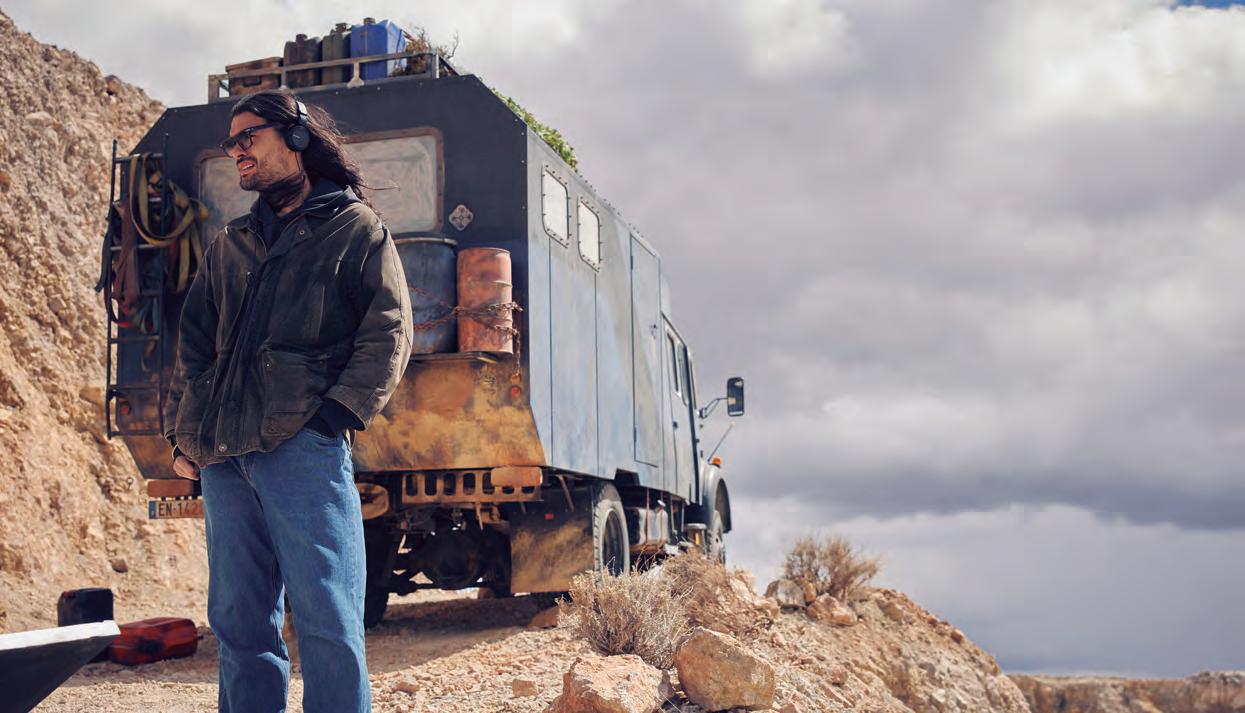
describes it as an unusual unity of criteria, a kind of leap of faith around Laxe’s vision In a film where chaos exists within the frame, cohesion had to exist outside it.
Another early supporter of the project was AGADIC (Galician Agency for Cultural Industries), the body responsible for promoting and supporting Galician audiovisual production. Its director, Jacobo Sutil, explains to Rubik that this support — around €300,000 in production and promotion grants — was clear from the outset due to the long-standing relationship of trust established with the filmmaker.
“The main guarantee of this project was the author behind it. Óliver Laxe is a director who has already given us many reasons to celebrate, and we knew this project would be no exception, as is now being proven,” explains Sutil. “Having a filmmaker like him is a great fortune. At AGADIC we have known Óliver for many years and have supported his projects, but this explosion with Sirat is extraordinary and makes us very proud of Óliver and of our entire sector.”
If financing was complex, the casting process was no less demanding. One of the most celebrated elements of Sirat — and one of those most recognized during awards season — is its choice of non-professional
performers. Characters drawn directly from the rave universe, bringing an authenticity that is difficult to manufacture.
The casting director spent two full summers immersing herself in that world, attending parties, meeting people and building trust. “It’s not a matter of looking at photos,” Almodóvar stresses. “It’s a vital immersion.” Once selected, Laxe lived with them in Galicia, gradually integrating them into the narrative and cinematic language.
“Sirat presented production challenges that seemed impossible to overcome. The key was to turn them around with a team willing to think creatively.”
Oriol Maymó, Production Director
“They are people who show their wounds without any shame,” the producer notes. “That cannot be achieved with makeup. It’s one of the film’s greatest strengths.”
Casting and locations in Sirat respond to the same idea: reality is not a set you arrive at, but a territory you enter. Laxe has formulated it almost in legal terms during promotion: “reality has to give you permission.” That is why the
film is built on trust — with bodies, communities and landscapes — and not solely on planning. Before moving a camera, presence had to be negotiated. And that silent negotiation is part of what ultimately appears on screen.
The story of Sirat required vast, arid spaces capable of conveying desolation and transcendence. Laxe knew Morocco well after living there for a decade, and that personal experience was decisive in shaping the film’s visual conception. However, the production decided that the large opening rave would be shot in Spain.
The choice of Teruel — specifically the Cañón Rojo or Rambla Barrachina — was the result of a long search process carried out in collaboration with the Aragón Film Commission. “We were looking for a landscape that felt like another world,” they explain. “When Laxe visited the location, he was captivated.”
For Oriol Maymó, line producer of Sirat, the rave was from the outset the project’s greatest challenge. “For Óliver it was essential to shoot a real rave,” he explains, “and that forced us to design an event that was authentic but could also be filmed with all necessary guarantees.” It was not about simulating a party or choreographing extras, but about creating a real event, with hundreds of people,

live music and unpredictable energy. The obsession, Maymó recalls, was finding the balance between safety and naturalness, between control and chaos.
The solution was as pragmatic as it was ingenious. With the collaboration of rave collectives, the team decided to design the event as a fully legal music festival, while preserving the aesthetic and spirit of a rave. “Someone at the Teruel City Council called it ‘a music festival with a rave aesthetic’,” Maymó recalls, “and the definition seemed perfect to us.” From there, all necessary permits were secured: crowd control, security, medical services, cleaning and a campsite equipped with essential facilities. All of this infrastructure remains off-screen, invisible, but it was indispensable for the sequence to exist.
Organizing a real rave for 1,000 people in a natural environment posed an enormous administrative challenge. “It was essentially an illegal event, involving a great deal of complexity,” acknowledge the
Film Commission. Months of negotiations, territorial sensitization and coordination between different administrations followed. The final support of the Teruel City Council proved crucial in making the project possible.
The desire not to disrupt the collective energy of the party conditioned the filming setup. “We knew everyone was aware that a film was being shot,” explains Maymó, “so to preserve naturalness we decided to work with very few people around the camera.”
Two units shot in parallel, sometimes continuously, with operators accompanied only by a single assistant. The instruction was clear: the camera had to be one more person on the dance floor.
From the cinematography department, Mauro Herce took on the challenge of translating that collective experience into
images. “We wanted to avoid any sense of a fake party. The music had to be real, and the people had to belong to that world”, he sais.
The strategy was clear: plan as much as possible without closing the door to chance. Herce speaks of working in “hunting mode” and “fishing mode,” alternating moments of control with others of pure observation. During the rave, an enormous amount of material was recorded, trusting that the editing process would distill the essence of the experience. “The relationship between cutting and not cutting is fundamental,” he notes. “Letting actions unfold within the shot creates a very powerful sense of truth.”
Most daytime scenes were shot on Super 16 mm film, a choice that was both aesthetic and practical. “Analog responds better to the harsh desert sun,” explains Herce. “And working with film means accepting a latent image, something that stimulates the imagination.”
Night scenes, by contrast, were shot digitally using the Alexa 35 to avoid excessive

lighting that would break the atmosphere. Combining formats required meticulous postproduction work, particularly in color grading, to unify textures and tones.
Shooting in the desert with analog equipment was, in Almodóvar’s words, “a logistical nightmare.” Wind, sand and heat tested the entire crew during seven intense weeks of filming, preceded by more than two years of pre-production.
Editing Sirat was a long and organic process. Laxe lived with the material for months, exploring different narrative possibilities. “It’s a very open film,” Almodóvar recalls. “It allowed for many different cuts.”
The Cannes Film Festival deadline ultimately closed that phase. Selection in Official Competition not only finalized post-
production, but also activated the film’s public life. “Cannes was decisive”. states the producer. “It places you in a very different position within an extremely competitive market.”
The trajectory of other films illustrates the festival’s weight as a launch platform. Being part of the Cannes lineup multiplies visibility, activates international sales and opens the door to an awards season that, in the case of Sirat, has continued to grow.
Cannes was not just a showcase; it was an accelerator. The selection closed the edit, but also fixed the point from which the world would look at the film. Suddenly, the conversation was no longer whether Sirat was too radical, but whether that radicalism could circulate. And here a decision emerges that is best understood in hindsight: releasing the film in theaters almost immediately, without allowing the narrative to cool. Turning the echo of the Palais into commercial momentum.
A risky move, but one consistent with the film itself: not domesticating the journey, but taking advantage of its inertia
Releasing a radical auteur film in summer was another bold bet. Without yet knowing whether Sirat would win a prize at Cannes, the production decided to bring it to theaters in June. The result exceeded expectations: more than three million euros at the Spanish box office and a solid theatrical run in France.
Choosing the right distributors was crucial. In Spain, BTeam embraced the risk with a carefully measured strategy, fully aware of the current market’s limitations for auteur cinema. In France, Pyramide contributed its experience, and in the United States, Neon’s involvement positioned the film advantageously for awards season.

“We’re not just looking for advance money,” Almodóvar emphasizes. “We’re looking for the right distributor for each film.” He highlights the role of companies such as BTeam, Pyramide and Neon in sustaining cinephilia at a time when the market increasingly favors family-oriented comedies. “They understood from the beginning that we had an extremely risky film on our hands and that release and advertising costs had to be handled with great care — and they managed it beautifully.”
The European Film Awards confirmed what had already become evident: Sirat is sustained by extraordinary technical work.
Laxe’s film won awards for Best Casting (Nadia Acimi, Luís Bértolo and María Rodrigo), Cinematography (Mauro Herce), Editing (Cristóbal Fernández), Production Design (Laia Ateca) and Sound (Laia Casanovas, Amanda Villavieja and Yasmina Praderas).
For Almodóvar, this recognition carries a sense of poetic justice. “When you compare the physical and creative effort required to shoot under those conditions with films made comfortably in studios, you realize there is added value — and we’re glad that it has been recognized at the highest level.”
Sirat’s eleven Goya nominations and two Oscar nominations, where it will compete for Best International Feature Film, reinforce that
perception. Without triumphalism, but with genuine excitement, the team embraces a season that has already become historic.
“The Jury Prize at the Cannes Film Festival was decisive. It places you in a different position within an extremely competitive market.”
Agustín Almodóvar, El Deseo
For Laxe, Sirat is more than a film: it is a ceremony, a collective rite. His greatest fear, he has said, was “lying to himself.” Perhaps that honesty explains why the film has connected with such diverse audiences and found its own place on the international circuit.
For its producers, the experience reaffirms a way of understanding risk and collaboration. “It’s a model that has taught us a great deal,” Almodóvar concludes. “When everyone believes in a project and rows in the same direction, even the impossible can move forward.”
For Maymó, quite simply, it was the most complex challenge of his career. “Those of us who work in field production often face situations that seem impossible to manage,” says the production director. “In this case, the key was turning them around with a team willing to think creatively.” An extreme challenge that, as often happens in the most daring cinema, ended up becoming one of the film’s greatest strengths.
Sirat was born as an uncertain journey through the desert. Today, that journey has brought it to the doorstep of the Oscars — no longer just a dream, but a tangible recognition for the many professionals and institutions that rowed together over the years to make Sirat possible.
As Jacobo Sutil explains, “This situation is not only exceptional; it would have been unimaginable just ten years ago. It is a shared success for the entire Galician audiovisual sector, and one we are proud to celebrate. There is now a 20% chance of winning the Oscar for Best Film, and if that happens we will celebrate as it deserves — but simply being here is already extraordinary.”
Extraordinary: defined as that which lies outside the common or ordinary, whether due to rarity, excellence, magnitude or singularity. Sirat, for everything discussed in this article, fits that definition. And regardless of what happens at the Oscars, it has already left a deep mark: confirmation that radical cinema, when made with rigor, conviction and talent, can still find its place in today’s cinema