Spirit Of Schimmel Is Alive And Well
Historic Heishman’s Mill Hosted Exciting Event
By Karl Pass
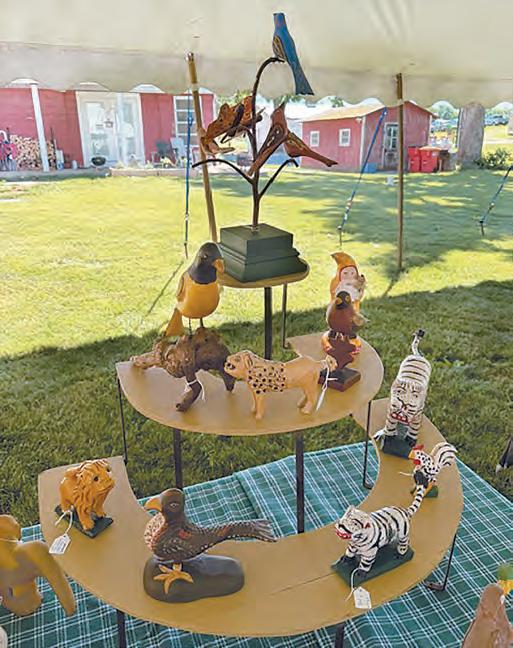
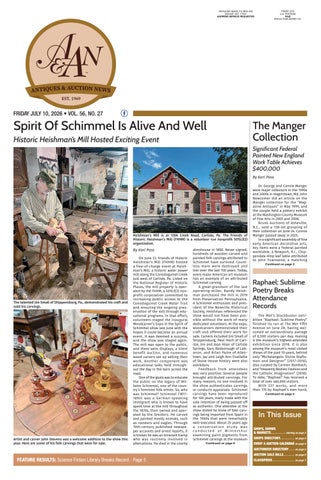
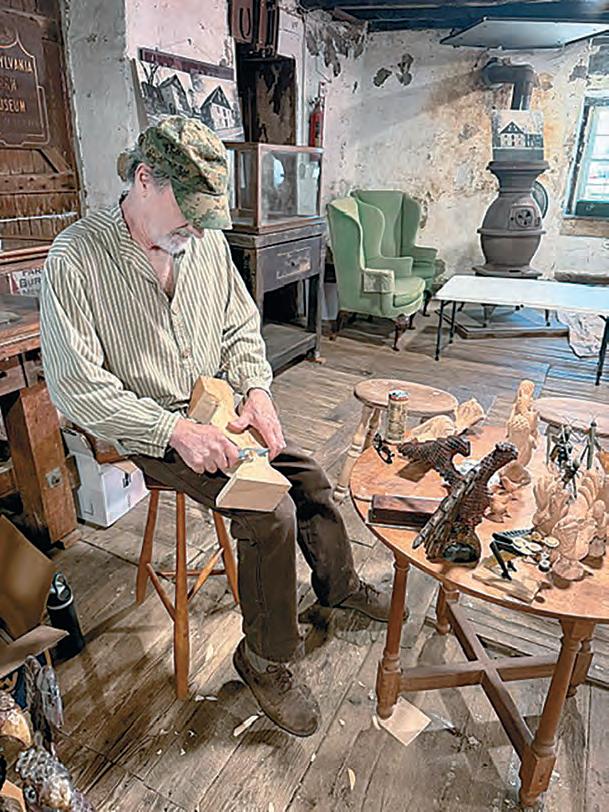
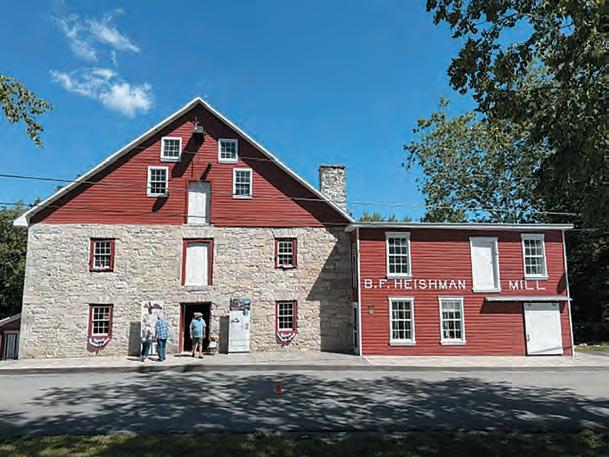
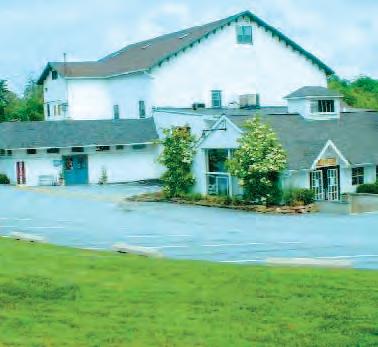
On June 13, Friends of Historic Heishman’s Mill (FHHM) hosted a free-of-charge event at Heishman’s Mill, a historic water power mill along the Conodoguinet Creek just west of Carlisle, Pa. Listed on the National Register of Historic Places, the mill property is operated by the FHHM, a 501(c)(3) nonprofit corporation committed to increasing public access to the Conodoguinet Creek Water Trail and ensuring the ongoing preservation of the mill through educational programs. In that effort, volunteers staged the inaugural Woodcarver’s Expo in the Spirit of Schimmel show last June with the hopes it could become an annual event. It was deemed a success, and the show was staged again. The mill was open to the public, and there were displays, a silent benefit auction, and numerous wood carvers set up selling their work. Another component was educational talks held throughout the day in the barn across the road.
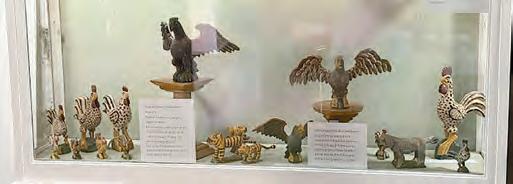
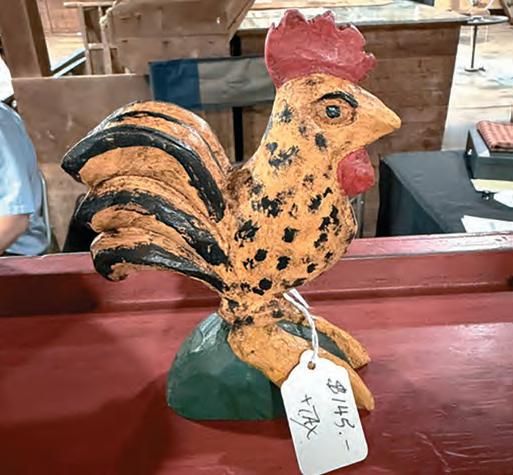
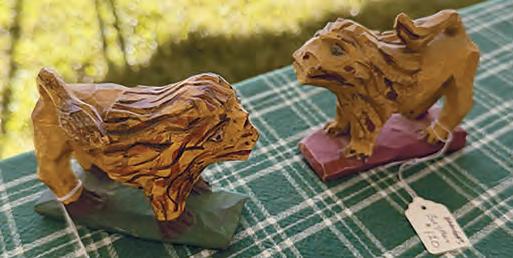
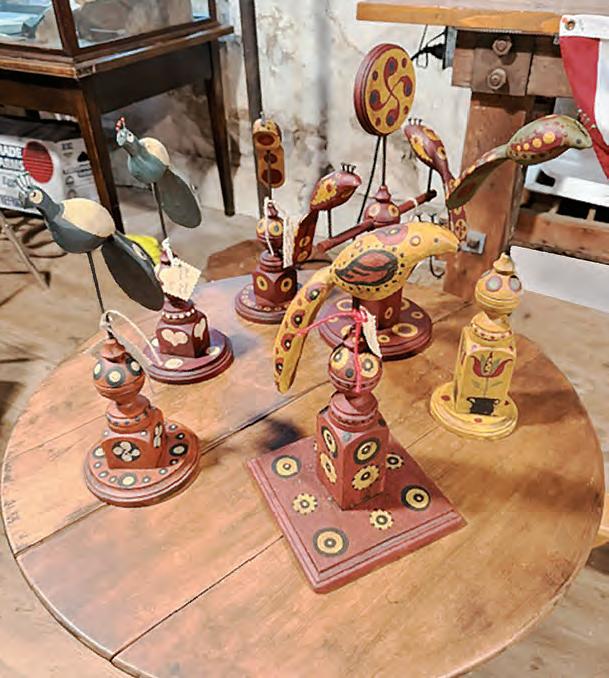
One of the goals was to educate the public on the legacy of Wilhelm Schimmel, one of the country’s foremost folk artists. So, who was Schimmel? Schimmel (18171890) was a German-speaking immigrant who is known to have spent time at the mill throughout the 1870s, then owned and operated by the Greiders. He carved and painted mostly animals, such as roosters and eagles. Through 19th-century published newspaper accounts and arrest reports, it is known he was an itinerant tramp who was routinely involved in altercations. He died in the county
almshouse in 1890. Never signed, hundreds of wooden carved and painted folk carvings attributed to Schimmel have survived. Countless more were destroyed and lost over the last 150 years. Today, every major American art museum has an example of an attributed Schimmel carving.
A great-grandson of the last operating miller, Randy Heishman purchased the mill in 2019 from Preservation Pennsylvania.
A Schimmel enthusiast and president of the Newville Historical Society, Heishman referenced the show would not have been possible without the work of many dedicated volunteers. At the expo, woodcarvers demonstrated their craft and offered their work for sale. Carvers included Jim Small of Shippensburg, Paul Hoch of Carlisle, Jim and Joan Hiser of Carlisle Springs, Gary Rosborough of Lebanon, and Brian Paine of Allentown. Jay and Leigh Ann Ouellette of Stone House History were also exhibitors.
Feedback from attendees was very positive. Several people brought attributed carvings. For many reasons, no one involved in the show authenticates carvings or conducts appraisals. Schimmel carvings have been reproduced for 100 years, many made with the sole intention of being passed off as authentic. One attendee at the show stated he knew of fake carvings being imported from Spain in the 1960s that were remarkably well-executed. About 25 years ago a conservation study was conducted at Winterthur examining paint pigments from Schimmel carvings at the museum
Continued on page 6
Federal Painted New England Work Table Achieves $400,000
By Karl Pass
Dr. George and Connie Manger were major collectors in the 1990s and 2000s in Hagerstown, Md. John Newcomer did an article on the Manger collection for the “Magazine Antiques” in May 1999, and the couple held a pottery exhibit at the Washington County Museum of Fine Arts in 2003 and 2008. Brunk Auctions of Asheville, N.C., sold a 138-lot grouping of their collection on June 24. Connie Manger passed away in 2025. In a significant assembly of fine early American decorative arts, key items were a Federal painted worktable; a Newport, R.I., Chippendale drop leaf table attributed to John Townsend; a matching
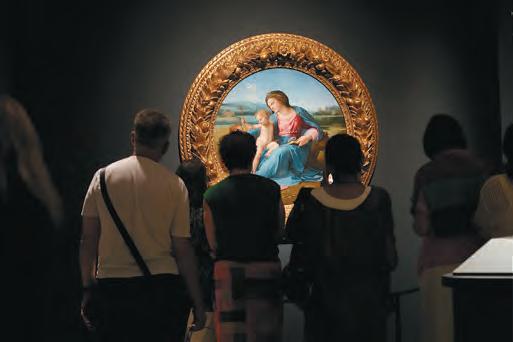
The Met’s blockbuster exhibition “Raphael: Sublime Poetry” finished its run at The Met Fifth Avenue on June 28, having welcomed an extraordinary average of 6,500 visitors per day, making it the museum’s highest-attended exhibition since 2018. It is also among the museum’s most visited shows of the past 10 years, behind only “Michelangelo: Divine Draftsman and Designer” (2017-2018), also curated by Carmen Bambach, and “Heavenly Bodies: Fashion and the Catholic Imagination” (2018). To date, “Raphael” has received a total of over 460,000 visitors. With 237 works, and more than 170 by Raphael’s own hand,
Brunk
Continued from page 1
Massachusetts Queen Anne high chest and dressing table; a pair of labeled 1803 Federal eglomise mirrors; a group/nest of signed Nantucket baskets; and important pottery by John Bell, Henry Adam, Anthony Bacher, and others. High end fine jewelry was also sold. Much of the pottery was illustrated in “Pottery From the Shenandoah and Cumberland Valleys: Selections from the Manger Collection” by Dr. George and Connie Manger. The prior mentioned Washington County Museum of Fine Arts is in Hagerstown, Md. The 2008 exhibit was titled “The Bell Family Pottery.” Additionally, some of their pottery was shown at the Renfrew Museum and Park in Waynesboro, Pa., in 1995. The Renfrew is a gem, and the Washington County Museum of Fine Arts is also
well worth the visit. Auction houses usually don’t include receipts of what the consignor paid. Serving as a transparent tool for price histories, it outlined that the grouping was formed under different market conditions versus today. It’s a way to advertise that the material was formed during an era when more wealthy people were active in the field. Even passive market watchers realize a lot has changed in the last 20 years. The Mangers bought extremely fine early high style antiques from dealers, including the late Wayne Pratt and the late Israel Sack, at the upper reaches of the retail market. I find it interesting to see such material sell outside of New York City, and Brunk has a long track record of excelling. Brunk is a highly capable and popular regional firm in the booming tourist town of Asheville. Owner and auctioneer
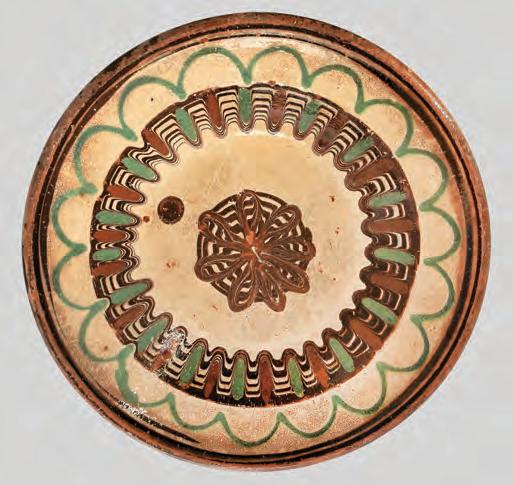
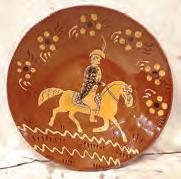
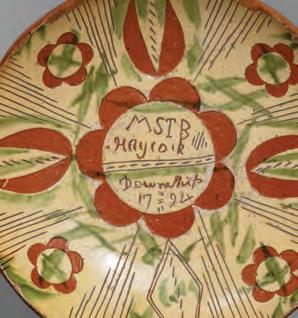
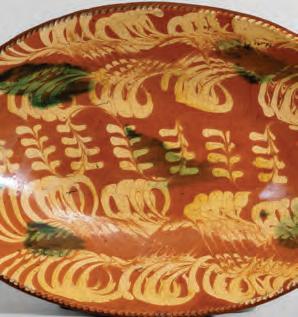
This is a “rare and early object” announced auctioneer Andrew Brunk from the podium describing this unique decorated redware charger attributed to Henry Adam, ca. 1797-1819, Hagerstown, Md., with profuse slip decoration, selling for $30,000. It is believed that Adam is most likely the maker who brought the tin glazed tradition to the Hagerstown school, having immigrated from Germany.
Andrew Brunk worked at Christie’s in the early 2000s and is an expert in early American decorative arts.
The Manger sale grossed $1,912,500 (including a 25 percent buyer’s premium) and had a 98 percent sell through rate. A few newsworthy results included a rare nest of seven Nantucket lightship baskets signed Captain James Wyer, 1873, selling to a phone bidder for $57,500. They previously sold at a Rafael Osona auction on Nantucket in 1996 for $55,000. The Mangers had Wayne Pratt bid on their behalf. He charged 10 percent as outlined on the invoice, bringing the total to $60,500. Captain James Wyer (1816-1899) started his maritime career as a cooper aboard the ship Nantucket and eventually served as master of the whale ship Spartan. After the death of his wife in 1860, he moved to California, where he worked as a
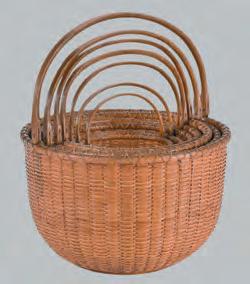
A rare nest of seven Nantucket lightship baskets signed Captain James Wyer, 1873, sold at a Rafael Osona auction on Nantucket in 1996 for $55,000. They sold here for $57,500.


carpenter for several years. He later returned to Nantucket and married Lois Starbuck in 1866, becoming stepfather to her two children, Mary Eliza and Henry Pease. It is around this time that he is believed to have started making lightship baskets, which he continued to do through the 1890s. Mary Eliza writes about her stepfather making lightship baskets in her book “My House and I.” He is widely regarded as a premier Nantucket craftsperson and one of the earliest makers of lightship baskets. They represent a unique regional craft associated with the affluent Massachusetts island.
Another ex. Pratt lot was a group of three graduated and nesting folk art paint-decorated dome-top wooden boxes, ca. 1835, attributed to Worcester, Mass., bringing $13,750. The Mangers paid $14,000 in 1991.
From Pennsylvania came a dated 1782, possibly Lancaster County, architectural paint decorated lift-top chest with three front panels of tulips and urns, accompanied by a receipt from dealer Greg Kramer from 2004 for $90,000. It sold for $27,500.
The important Federal painted mahogany and maple
Continued on page 3
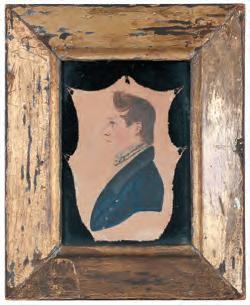
Achieving $8,750 was this miniature framed profile view portrait of John Bell (180080) inscribed on back “John Bell, Drawn in 1823.”
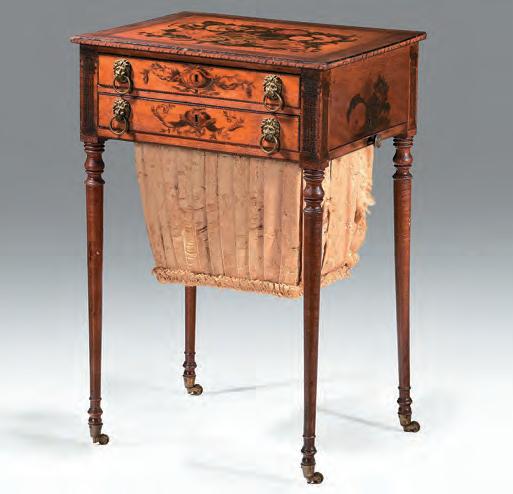
An important Federal painted mahogany and maple work table, attributed to the shop of John and Thomas Seymour, paint decoration attributed to John Ritto Penniman, Boston, Mass., ca. 1800-10, gilt embossed red morocco divided lower drawer, painted and stenciled decoration, side-hung silk workbag with birdseye maple frame, fully finished back with painted seashells, sold for $400,000.
A lengthy illustration history includes the well-known “American Painted Furniture” by Dean A. Fales, (Penguin, 1979). Provenance includes Israel Sack Inc. It sold at Christie’s in 2005 for $262,400.
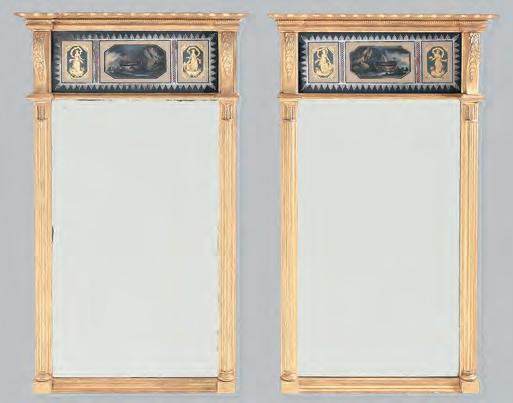
This rare pair of Federal eglomise mirrors sold for $287,500. One panel was inscribed on back “Painted by John Ritto Penniman, Boston, 1803” and one had a label reading “JOHN DOGGETT, GILDER, Looking-Glass and Picture Framer Roxbury-Street.” The Mangers bought them from Israel Sack in 1993 for $120,000.
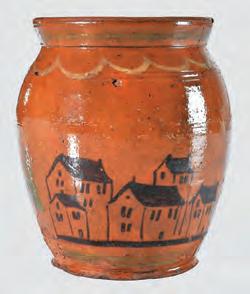
The 6.75-inch high ovoid glazed redware jar, Pennsylvania or Maryland origin, ca. 1840-80, with manganese, copper, and cream slip decorations, and unusual applied manganese slip five building town scene with eight applied copper slip pine trees, realized $12,500. It brought $9,350 on April 3, 2004, at Conestoga Auction Company’s Eugene and Dorothy Elgin sale. It was illustrated in Jeannette Lasansky’s “Central Pennsylvania Redware Pottery 1780-1904” pg. 40 published in 1979.
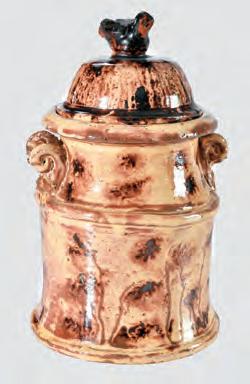
A rare form, this Anthony Bacher (Winchester, Va.) attributed glazed redware tobacco humidor with bird whistle finial, ca. 1880, was $18,160 from Greg Kramer in 2003. It realized $3,750 and was illustrated in “The Shenandoah Pottery” by A.H. Rice and John Baer Stoudt, pg. 84.

Brunk
Continued from page 2
work table was attributed to the shop of John and Thomas Seymour, with paint decoration attributed to John Ritto Penniman, Boston, Mass., ca. 1800-10. With gilt embossed red morocco divided lower drawer, painted and stenciled decoration, side-hung silk workbag with birdseye maple frame, and a fully finished back with painted seashells, it sold for $400,000. A lengthy illustration history includes the wellknown “American Painted Furniture” by Dean A. Fales, (Penguin, 1979), and provenance included Israel Sack, Inc. It sold at Christie’s in 2005 for $262,400.
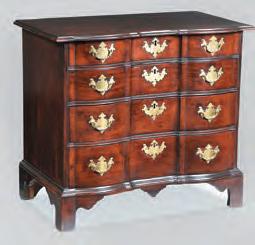
A Boston, Mass., ca. 1770, Chippendale block front chest of drawers, old surface, minor condition issues, sold for $13,750 at Sotheby’s in 2020 and sold here for $20,000.
A very rare pair of Federal eglomise mirrors achieved $287,500. One panel was inscribed on back “Painted by John Ritto Penniman, Boston, 1803” and one had a label reading “JOHN DOGGETT, GILDER, Looking-Glass and Picture Framer Roxbury-Street.” The Mangers bought them from Israel Sack in 1993 for $120,000. A pair of Philadelphia Chippendale walnut side chairs, ca. 1770, carved shell, volutes and interwoven strapwork and heart pierced splat, acanthus carved knees, boldly carved ball and claw feet, sold for $106,250. Published in Albert Sack’s “Fine Points of Furniture: Early American,” 1950, pg. 39, and Israel Sack’s “American Antiques from Israel Sack Collection, vol. III,” pg. 672, no. P2864, the pair was $280,000 from Wayne Pratt in 2002. Selling for $81,250 was a rare Chippendale mahogany armchair, New York or possibly Boston, ca. 1760, with eagle carved arm terminals. The late Israel Sack sold it to the Mangers in 1994 for $83,000.
Possibly the only one in existence, a miniature framed profile view portrait of John Bell (1800-80), inscribed on back “John Bell, Drawn in 1823,” is a watercolor on paper with painted eglomise on glass. Thought to be the only extant
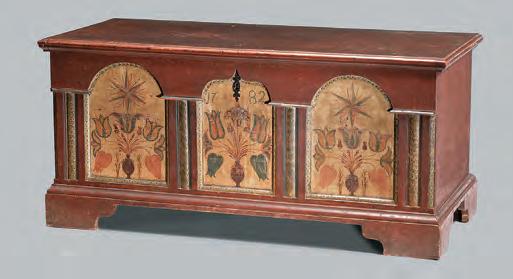
A very fine Pennsylvania paint-decorated chest, dated 1782, sold for $27,500. Read the story for more.
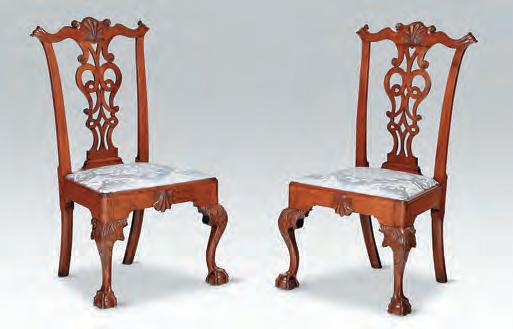
A fine pair of Chippendale walnut side chairs, Philadelphia, ca. 1770, carved shell, volutes and interwoven strapwork and heart pierced splat, acanthus carved knees, boldly carved ball and claw feet, realized $106,250. Published in Albert Sack’s “Fine Points of Furniture: Early American,” 1950, pg. 39, and Israel Sack’s “American Antiques from Israel Sack Collection, vol. III,” pg. 672, no. P2864, the Mangers bought them in 2002 from Wayne Pratt for $280,000.
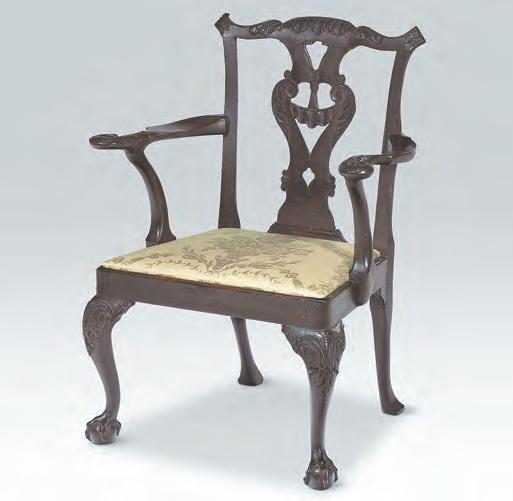
Selling for $81,250 was this very rare Chippendale armchair, New York or possibly Boston, ca. 1760, retaining an exceptionally fine patinated original surface, and eagle carved arm terminals, mahogany. Israel Sack sold it to the Mangers in 1994 for $83,000.
portrait of John Bell, this portrait was exhibited at the “By, For, and Of the People: Folk Art and Americana at the DAR Museum” in Washington, D.C., in 2011 and 2012. John Bell was a patriarch of the Bell family of potters. The portrait realized $8,750.
An ovoid glazed redware jar, Pennsylvania or Maryland origin, ca. 1840-80, with manganese, copper, and cream slip decorations and unusual applied manganese slip five building town scene with eight applied copper slip pine trees, brought $12,500. It went for $9,350 on April 3, 2004, at Conestoga Auction Company’s Eugene and Dorothy Elgin sale, and was illustrated in Jeannette Lasansky’s “Central Pennsylvania Redware Pottery 1780-1904” pg. 40 published in 1979.
Realizing $40,000 was a large and exceptional glazed redware figural standing dog attributed to the John Bell Pottery, ca. 1860-90, manganese and engobe glaze, with highly incised upper body and head; articulated fur; sculpted snout and nose; incised eyes; sculpted basket in mouth containing a jug, mug, and bread
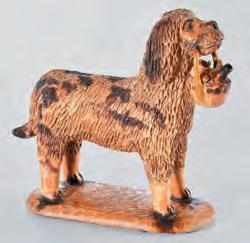
Selling for $40,000 was this rare and large glazed redware figural standing dog attributed to the John Bell Pottery, ca. 1860-90. To learn more, read the story.
rolls; manganese slip to ears, tail, and body; profusely decorated with impressed floral heads around base edge; and large impressed floral motif centrally located on base was ex. Lester Breininger and ex. John Newcomer. It measured 9.5 by 10 inches and was included in Gene Comstock’s “The Pottery of The Shenandoah Valley Region” pg. 456 where he writes this particular earthenware dog “is one of the most intricately decorated of all the known attributed examples of Bell-modeled ware from either Waynesboro or Strasburg, although similar decoration appeared in different configurations on much of the Waynesboro and Strasburg Bell products.” The dog was exhibited in both of the exhibits at the Washington County Museum of Fine Arts, in 2003 and in 2008. Black light illumination (images in the online catalog) show restoration to basket handles, jug, and around all four paws on base due to adhesive.
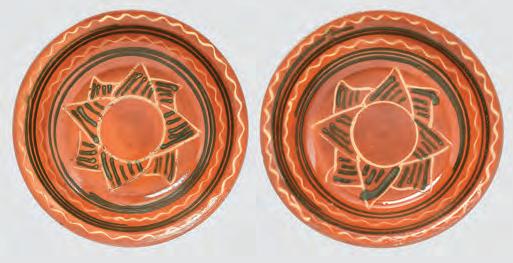
Selling as a pair, two Snow Hill Nunnery, John Bell, Waynesboro, Pa., (attributed) decorated redware bowls with centrally applied slip eight point stars brought $10,000. The Snow Hill Nunnery in Quincy, Franklin County, Pa., was a 19th-century off-shoot communal society related to the Ephrata Cloister. In 1997, Horst Auction Center in Ephrata, Pa., sold the contents of Snow Hill. Among featured items were around 40 of these redware bowls (the group totaled $345,000). Believed to have been used for “love feast ceremonies,” the bowls are considered iconic pieces of American folk pottery.
For further information, visit www.brunkauctions.com.
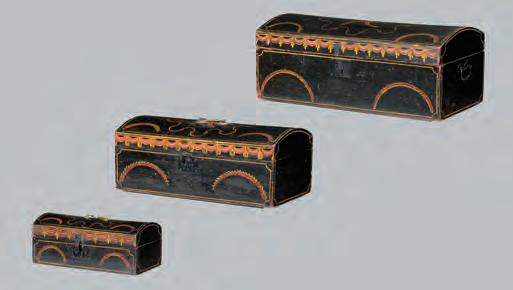
The group of three graduated/nesting folk art paintdecorated dome-top wooden boxes, ca. 1835, attributed to Worcester, Mass., sold for $13,750. The Mangers bought them from the late dealer Wayne Pratt for $14,000 in 1991.






Continued from page 1
this was the first comprehensive, international loan exhibition in the United States on Raphael (Raffaello di Giovanni Santi; 14831520), considered one of the greatest artists of all time. This once-in-a-lifetime