FRIDAY AUGUST 30, 2024 • VOL. 54, NO. 35
Exceptionally Rare Charleston “Free” Badge Acquired By The Colonial Williamsburg Foundation
New Research Shows The Previously Unknown Numismatic Origins
Of “U” And “X” Badges
Weeks after the Revolutionary War ended by the terms of the Treaty of Paris in 1783, the newly incorporated city of Charleston, S.C., began to pass laws. The population of the city was overwhelmingly African American with more than 8,000 people in the community, and the vast majority of them

were enslaved; only about 600 were living there as free citizens. Ever fearful of insurrection, the city’s administration continued to implement policies designed to constrain the lives of all of its African American residents. An ordinance from Nov. 22, 1783, regulated the employment or “hiring out” of skilled and unskilled
enslaved workers in which an individual went to work for an entity other than their enslaver, who was paid a fee for the service provided.
An annual fee of five to forty shillings was to be paid to the city by the enslaver for the right of an enslaved person to be hired out, and a badge or ticket was required

to be worn by the laborer. While no examples of “slave” badges dating to 1783 are known to exist today, 10 “free” badges from later in the 1780s have been located and are either in private or museum collections. The Colonial Williamsburg Foundation has recently acquired one of these “free” badges, and it is now on view in the Lowcountry
section of the exhibition, “A Rich and Varied Culture,” in the Nancy N.and Colin G. Campbell Gallery of the DeWitt Wallace Decorative Arts Museum, one of the Art Museums of Colonial Williamsburg.
“It’s an important piece, and an emotional one,” said J. Grahame Long, The Colonial Williamsburg Foundation’s executive director of collections and deputy chief curator. “Obviously, it’s a terrific addition to Colonial Williamsburg’s permanent collection, but it goes much further than that. It’s a critical component in telling America’s whole story.”
The Charleston “hiring out” law did not pertain to enslaved workers only. It went further to affect the free African American population as well by stating: every free negro, mulatto or [mestizo] living or residing within this City, shall be obliged to register him, her or themselves, in the office of the City Clerk, with the number of their respective families and places of residence every free negro, mulatto, or mestizo, above the age of fifteen years, shall be obliged to obtain a badge from the Corporation of the City, for which badge every such person shall pay into the City Treasury the sum of Five Shillings, and shall wear it suspended by a string or ribband, and exposed to view on his breast.
Red Rose Coin Club Show To Be
Held Aug. 31
On Saturday, Aug. 31, from 9 a.m. to 3 p.m., the Red Rose Coin Club will hold its coin show at the Lancaster Farm and Home Center. This annual event falls on Labor Day weekend and is a premier opportunity for buying, selling, and trading coins and paper money. Food will be available for sale by the Paradise Lions Club while shoppers browse over 40 tables full of numismatic and bullion
related items from a diverse array of dealers. In addition to the standard U.S. currency, there will be some foreign and ancient coins as well.
Whether showgoers are looking to complete a set or just get started and learn about the hobby, the show serves as a good opportunity for both. For those interested in selling, many of the exhibiting dealers will be happy to make offers. Unlike shopping
on the internet, visitors to the show can examine the items in person.
Free-of-charge parking is plentiful, and admission is also free of charge. Historically, gold and silver have been a popular hedge against inflation; compare prices on similar items and find a deal. Security will be on-site. The Farm and Home Center is located at 1383 Arcadia Road, Lancaster, Pa.
Through these requirements, the city of Charleston levied a fee on the right of free people of color to live and work there, which was a stinging irony when considering the root causes of the American Revolution. The penalties for breaking this law were harsh: failure to comply could cause a free person to be fined £3, which if not paid within 10 days could force the person to the workhouse (jail) and work for up to 30 days. Enslaved individuals caught wearing a “free” badge were subject to whipping, by up to 39 lashes, followed by an hour in the stocks.
“I can’t help but see the parallels between these 18thcentury ‘free’ badges and the yellow stars worn by Jews during the Holocaust,” said Erik Goldstein, Colonial Williamsburg’s senior curator of mechanical arts, metals, and numismatics. “Both survive as reminders of horrific ideologies, and how humanity must do better going forward.”
Of the 10 known “free” badges, with one exception, all are made of copper. Their iconography is misleadingly uplifting: they featured the “Phrygian” cap and pole, symbolizing the lofty ideals of liberty since ancient times and were rendered in high relief and emblazoned “FREE.” Each of these badges carries a unique sequential designator as they were intended
Continued on page 2

Lecture At Historic Rock Ford Will Be Sept. 28

Historic Rock Ford welcomes Bob Frishman as he presents “Edward Duffield: Philadelphia Clockmaker, Citizen, Gentleman 1730-1803” on Saturday, Sept. 28, at 2 p.m., in the Langmuir Education Room located on the first floor of the Rock Ford Barn, 881 Rockford Road, Lancaster, Pa. Frishman will present an informative historical overview on Edward Duffield, who was far more than a clockmaker in 18thcentury Philadelphia. While Duffield made, repaired, and sold elegant floor-standing clocks, surveying instruments, and sundials that today are in museums and private collections, he was also a wealthy property owner and active civic and Anglican Church leader. He was also a lifelong friend of Benjamin Franklin and served as executor of Franklin’s estate. Frishman’s presentation will be supplemented with over 100 images from his
The Charleston “FREE” Badge was engraved by Thomas Albernethie, ca. 1787-89, in Charleston, S.C., in copper, was a museum purchase, The Friends of Colonial Williamsburg Collections Fund and Partial Gift of John Kraljevich, 2024-171.
to be instruments of tracking, control and a revenue source. The badge acquired by Colonial Williamsburg is engraved “No.. U,” and is part of a succession, possibly
limited to 26 or fewer badges with letters instead of numbers. To date, the only other badge inscribed with a letter is “No.. X,” and the other eight examples are numbered between 14 and 341. Research conducted by
PUBLISHER: Jocelyn Engle
EDITOR: Karl Pass kpass@antiquesandauctionnews.net 717-278-1404
DISPLAY SALES: Tim Moore tmoore-ant@engleonline.com 717-492-2534
CLASSIFIEDS: 1-800-800-1833, ext 6022 antiquesnews@engleonline.com
SUBSCRIPTION & CIRCULATION: 717-492-2556
Antiques & Auction News is distributed at shops, shows, markets and auctions throughout the Mid-Atlantic region.
ADVERTISING DEADLINE: Every Thursday at 11 A.M. Issues are mailed one week prior to publication date.
Gol dstein at Colonial Williamsburg reveals new insights into how these badges were made. What further unites badges “U” and “X” are the copper pieces, or planchets, that they were struck on. Both exhibit portions of text engraved in retrograde or “mirror image” on their backs, showing that they had previously been part of a printing plate relating to money. Once reversed, the readable portions contain words like “PENCE,” “TREASURY,” “DEPOSIT” and “RENTS.” This detail offers a surprising clue to their numismatic origin; the only paper currency circulating in South Carolina in the 1780s that carried these specific terms were the City of Charleston’s emissions of July 12 and Oct. 20, 1786, only current until July 21, 1788. It can therefore be said with certainty that the badges “U” and “X” were made of copper recycled from the out-of-date printing plates for these two issues. As of mid-2024, unique examples of only the “Two Pence” and the “Five Shillings & Three Pence” bills from the 1786 issues of Charleston’s paper money have been recorded. Given that the text engraved on the reverses of badges “U” and “X” match neither, they were for the printing of bills of unknown denominations that are not known to survive.
“The fact that two of the ‘free’ badges were made from re-used copper printing plates is an exciting discovery, since few printing plates from 18th-century American currency issues survive, in any form. But it also makes sense, using governmentally owned material for an official purpose,” said Goldstein.


and worn by Charleston’s “hired out” enslaved workers. Though “FREE” badges were never again mandated by the city, the poor condition of some of the surviving examples suggests they may have been worn well past their obsolescence. It is speculated that their owners sought to display their status as dignified, free individuals in an open and proud manner for all to see.


A law passed on June 16, 1789, eliminated both of Charleston’s badge programs for African Americans. When the city reimplemented a significantly enlarged system of regulation in 1800, it required the purchase and wearing of badges for enslaved people only. Between then and the end of the Civil War in 1865, more than 187,000 “slave badges” were made, sold


Collector Anecdotes And Antics
Private Equity And The Lack Of Transparency In The Trade

By Shawn Surmick
I have long argued that the antiques and collectibles trade no longer belongs to the average collector or enthusiast. Auction companies and third-party grading companies now control these markets with an iron fist. The collecting categories that these companies choose to promote vastly influence both collectors’ and investors’ tastes, who now view these markets as a valid alternate asset class.
Over the course of the last decade more capital than ever before is flowing freely through the antiques and collectibles trade. In
fact, according to an article that premiered on the website cllct (www.cllct.com), the collectibles trade is estimated to grow to a whopping $1 trillion by the year 2033. If this number is to be believed, given that the current value of the collectibles trade is valued at about $600 billion, this number represents a potential growth rate of about 40 percent in the next nine years. Make no mistake, I do not dispute these findings. Speculating and investing in antiques and collectibles used to be done by a select few diehard enthusiasts who knew the risks as well as the treasures they were attempting to profit from. Today, thanks in part to online collecting forums and social media, investing in alternative assets like antiques and collectibles is quickly becoming the norm. And while I do think way too many speculators and investors are taking on an enormous level of risk by choosing to go all in on this asset class, I am just as concerned as to what is happening behind the closed fancy ivory doors at high-profile
auction companies and thirdparty grading conglomerates. A troubling development that is occurring at present, which corresponds to the massive amounts of money flowing into some of these markets, is the rise of private equity that is slowly starting to consume auction houses


SHOW & SALE
60 Selected Exhibitors featuring 18th- & 19th-Century American, English, Primitive and Period Furniture and Accessories Fine Early China and Glassware
18th- & 19th-C. Silver • Chinese Export Porcelain Oriental Rugs
Fine Antique Jewelry
Kitchen & Fireplace
American Militaria American & English Samplers
Navajo Rugs, Pueblo Pottery, Baskets and Native American Artifacts
A Bird in Hand, Florham Park, NJ
Michael Gunselman, Centreville, DE
H&L Antiques, Princeton, NJ
Jane Langol, Medina, OH
Antiques from Home, Bethesda, MD
Steven & Sally Still, Manheim, PA
Hilary & Paulette Nolan, Falmouth, MA
Jon Mehl, York, PA
Marc Calciano, Clifton Heights, PA
Christopher & Bernadette Evans, Waynesboro, VA
Jewett & Berdan, New Castle, ME
Saratoga Fine Art, Saratoga Springs, NY
Barometer Fair, Sarasota, FL
Lisa S. McAllister, Clear Spring, MD
Marc Witus, Gladstone, NJ
Ziebarth’s Antiques, Verona, WI
Daniel and Karen Olson, Newburgh, NY
Thomas Restoration, Laurel, MD
Greg K. Kramer & Co., Robesonia, PA
Larry Thompson, Atlanta, GA
Joseph J. Lodge, Lederach, PA
James Island Antiques, Charleston, SC
James L. Price, Carlisle, PA
Joan Staufer, Catskill, NY
Frylings Antiques, Green Lane, PA
Willow Springs Antiques, Rexford, NY
Mark & Kelli Saylor, Cape May, NJ
Hanes and Ruskin, Niantic, CT
Richard M. Worth, Centreville, DE
Stephen-Douglas, Rockingham, VT
Steve Sherhog, Canfield, OH
Art and Antiques Gallery, Holden, MA
Fleshman’s Antiques, New Market, MD
Robert Conrad, Yeagertown, PA
Heller-Washam, Portland, ME
Beaver Creek Antiques & Arms, Dillsburg, PA
Marvin Wies, Baltimore, MD
Soheil Oriental Rugs, Roslyn, NY
The Haneberg’s Antiques, East Lyme, CT
Dennis & Valerie Baboledis, Rhinebeck, NY
Wm. R. & Teresa Kurau, Lampeter, PA
Newsom and Berdan, Thomasville, PA
Steve Smoot Antiques & Navajo Textiles, Lancaster, PA
Sandy Jacobs-Scott Bassoff, Swampscott, MA
Joan Bowman Antiques, Milford, DE
Nancy and Gene Pratt, Victor, NY
Charley Horse Antiques - Toby Chittum, Petersburg, VA
John Kolar Antiques, Hershey, PA
Blandon Cherry Antiques & Art, Paris, KY
James Grievo, Stockton, NJ
Firehouse Antiques, Galena, MD
B. Hannah Daniel, Athens, AL
Frank Gaglio, Rhinebeck, NY
Pat & Rich Garthoeffner, Lititz, PA


SHOP DIRECTORY
19711 Newark 302-454-8007
AUNT MARGARET’S ANTIQUE MALL,
294 E. Main St. Mon- Sat. 10-5, Sun 12-5. 2 floors. Antiques, collectibles, vintage, primitives, much more! www.auntmargaretsantiquemall.com
19711 Newark 302-733-7677
MAIN STREET ANTIQUES, 23 Possum
Park Mall. Summer Hrs.: Mon.-Sat. 108, Sun. 11:30-5:30. Over 45 Showcase/ Room Dealers selling qty. antqs. & collectibles. mainstreetantiques.com
19977 SMYRNA 302-399-9777
STONE SCULPTURES GALLERY 90 Smyrna Landings Road. 2000 Sculptures. Open by appointment only. 302-653-4810. To view inventory www.richardhbailey.com
21901 North East 410-287-8318
07901 Summit 908-273-9373
SUMMIT ANTIQUES CENTER, 511
16686 Tyrone 814-684-5088


Morris Ave. 2 floors, 50+ dealers. Antiques, collectibles. Smalls to furniture. Open 7 days 11-5. Free Parking. www.thesummitantiquescenter.com
08005 Barnegat 609-698-3020
BAY AVENUE ANTIQUES, 349 S. Main. Open Thurs.- Sun., 1-5 pm or by appt. Book seller, pottery, glass, furniture, holiday, decoys, antiques & uniquesplus chalkpaint & iron orchid design.
08016 Burlington 609-747-8333
HISTORIC BURLINGTON ANTIQUES & ART EMPORIUM, 424 High Street. Open 6 Days, Tues.-Sun.: T, W, F, Sat., Sun: 11A-5P; Th.&F.: 11A-7P; Closed on Monday. www.antiquesnj.com
08037 Hammonton 609-561-1110
I-99 ANTIQUES, conveniently located off the Tyrone Exit of I-99, 1222 Pennsylvania Ave. Qty. antqs. & collectibles. Multi-Vendors. Open Th., Fri., & Sat., 10:30am - 4:30pm, Dlrs. welcome.
17062 Millerstown 717-589-7810
STITCH IN TIME ANTIQUE & GIFT
MALL, 43 N. Market St. Antiques, Collectibles, Furniture, Quality Handmade Crafts & Gifts. Open 7 days 10-7, F til 8. Millerstown exit off RT 322.
17350 New Oxford 717-624-3800
ZELMA’S EMPORIUM 11 N. Water Street. Antiques, Primitives, Americana, European, Asian, Art, Home Decor. Hours: Tues.-Sat.10-5; Sun. 12-5 or by appt. Closed Mon. ZELMASANTIQUES.COM 17361 Shrewsbury 717-235-6637
SHREWSBURY ANTIQUE CENTER 65 N. Highland Dr. “A True Antique Mall” Over 10,000 sq.ft. with over 60 dealers. Open 10-5, closed Wed. Ample parking. Close to other shops in historic village.
BERNIE’S ANTIQUES & ARTIFACTS, 18 Central Ave. Tues.-Sat. 11-6 & Sun. 11-5. Trains, Pottery, Lenox, Breweriana, Fenton, Petroliana, Van Briggle, Albums + Neon Signs. Qty.Dlrs. Invited.
08062 Mullica Hill 856-478-9810


THE PEOPLE’S STORE





5 & 10 ANTIQUE MARKET, 115 S. Main St. Daily 10am-6pm. Cecil County’s largest! Approx. 65 dealers, variety & nostalgia. Buying/selling antiques & collectibles.
18944 Perkasie 215-257-3564 TREASURE TROVE, 6 S. 7th Street. Estate jewelry,


07052 West Orange 973-323-1711
VALLEY VINTAGE, 168 South Valley Rd.

OLD MILL ANTIQUE MALL, 1 S. Main Street. Open Daily, 11-5; Sat. 10-5. Antiques, glassware, records, coins, stamps, military items, collectible toys, trains, linens, books & ephemera.
08525 Hopewell 609-466-9833


Open Mon-Sat. 11-6, Sun. 12-5. 2100 sq. ft., 25+ dealers. Antiques, vintage, collectibles, furniture, decor, kitchenware, jewelry, books, LPs, ephemera.
TOMATO FACTORY ANTIQUE & DESIGN CENTER, 2 Somerset St. We Have It All! Open Mon. thru Sat. 10-5, Sun. 11-5. We have 38 Dealers. www.tomatofactoryantiques.com


Brandywine Museum Of Art To Present
“In Shadows’ Embrace: Prints By Peter Paone” New
Exhibit Now Open
The Brandywine Museum of Art is presenting “In Shadows’ Embrace: Prints by Peter Paone,” featuring more than 20 prints by this acclaimed Philadelphia artist and teacher. Over his sevendecade career, Paone has mastered the mediums of painting, drawing and printmaking. His extraordinary ability to infuse the figurative tradition with his fantastical imagination is evident throughout his oeuvre. On view at Brandywine now through Oct. 13, “In Shadows’ Embrace” highlights a major recent gift by Paone to the museum of 52 of his etchings, the majority of which were created in the 1960s. Together, these offer an overview of both Paone’s early career and his printmaking practice.
Known today largely as a painter, Paone had early success in printmaking (specifically etching), and it is that medium he feels was critical to his artistic development. Paone learned printmaking at John Bartram High School and the Philadelphia College of Art (now University of the
Arts) in the 1950s. Throughout the following decade he gained recognition for his etchings and devoted himself almost entirely to printmaking. Major inspiration for Paone was the work of two European artists, Francisco Goya working in the 18th century, and Käthe Kollwitz working early in the 20th century. Like those artists before him, Paone created images that reflect the plight of the human condition, in his case, in the context of America in the 1960s.

Peter Paone’s (b. 1936) “Owl,” from 1964, is an etching and aquatint on paper, 12.5-by-12 inches, gift of the artist, courtesy of Peter Paone.
A centerpiece of the exhibition is Paone’s portfolio, titled “The Ten Commandments of Ambrose Bierce” (1963), which will be shown in full for only the third time, the last being at the Musèe d’Art Moderne, Paris, in 1967. In this tour de force of printmaking, Paone gives visual form to writer and poet Ambrose Bierce’s “Decalogue” (1906), a biting satire of contemporary society based on biblical principles from the Book of Exodus. The fourth commandment, for example, becomes “Work not on Sabbath days at all, / But go to see the teams play ball.” Inspired by Bierce’s irreverent writing, Paone created otherworldly images, at times witty, at times demonic, that bring these “commandments” to life. The suite of prints sets up a fascinating dialogue between Paone and Bierce across decades and across disciplines. Working with printer Charles Hunsberger, whose workshop was in Philadelphia, Paone combined etching with aquatint for the series, which created a rich
Continued on page 7


Meet Me At The Fair!
Smack Dab In The Middle: Design Trends Of The Mid-20th Century

By Donald-Brian Johnson
“Our State Fair is a great State Fair, Don’t miss it, don’t even be late!
It’s dollars to doughnuts that our State Fair Is the best State Fair in our state!”
Oscar Hammerstein II, 1945
The State Fair. It’s a grand old institution, spanning the United States for over a century and a half. Inspired by European agricultural fairs, a State Fair at summer’s end provided breathing room after a busy growing season and an opportunity for friendly competition. Attendees vied for blue-ribbon recognition in livestock exhibitions, the display of varied crops, and the demonstration of such skills as jam-and-jelly-making, needlework, gardening, and baking.
Ever since, agriculture, livestock, and handicrafts have continued as major elements in the State Fair makeup. But somewhere along the way, entertainment entered the equation. Soon, the State Fair wasn’t just a place to compete; it was a place to have fun! A carnival-like atmosphere helped establish the State Fair identity we know and love. There’s the “Mighty Midway,” with its scream-inducing “Loop-O-Planes” and “Cyclone Coasters,” its goosefleshy haunted mansions, and rib-tickling fun houses. For

the more sedate, there are leisurely spins on the merry-goround, and stately twirls on the Ferris wheel. How about those games of chance? (Chances are, you’ll end up spending more than that enormous teddy bear is actually worth.)
The side shows are still pretty jaw-dropping, even if the “Alligator Boys” and “Baby Dumpling Fat Ladies” of bygone days have been replaced by today’s “fire eaters” and “human pincushions.” And oh, that delicious, description-defying fair food! An ever-varied lineup of tempting indigestibles is offered up, from “Honey Fried
daughter Margy find true love with a brash young reporter? And what about son Wayne? Will he win the heart of that snazzy nightclub singer?
Waiting for the answers (“yes,” “yes,” “yes,” and “no” -Wayne wises up to the charms of the girl back home) had 1930s moviegoers sitting on the edge of their seats. “State Fair” was a hit! And, by the 1940s, Rodgers and Hammerstein, fresh off the all-American stage successes “Oklahoma!” and “Carousel,” found this down-home story ripe for musicalization.

Their 1945 movie musical version of “State Fair” was an overwhelming smash, with “It Might as Well Be Spring” winning the Oscar for “Best Song.” A 1962 remake, with additional all-Rodgers songs (Hammerstein had died several years prior), moved the setting to the mammoth Texas State Fair.
Featured in the cast: Pat Boone, Bobby Darin, Ann-Margret, and Alice Faye. In 1996, a full-blown “State Fair” stage musical finally arrived on Broadway, the movie
CALENDARS
GEORGIA
09/12-15/2024, Atlanta, Thurs.Sun., Antique Market, 3650 Jonesboro Rd SE, Scott Antique Markets
10/10-13/2024, Atlanta, Thurs.-Sun., Antique Market, 3650 Jonesboro Rd. SE, Scott Antique Markets
MASSACHUSETTS
09/28/2024, Brookfield, Sat. 10 a.m. - 3 p.m., Antiques & Primitive Goods Show, 19 Martin Road, Walker Homestead
NEW JERSEY
08/04-09/15/2024, Barnegat Light, Sunday 9 a.m.-5 p.m., Antique & Collectible Show, 19th & Bayview Ave., Viking Village
09/07/2024, Ocean Grove, Sat. 9 a.m.-4 p.m., Fall Flea Market
09/15/2024, Barnegat Light, Sunday 9 a.m.-5 p.m., Antique & Collectible Show, 19th & Bayview Avenue, Viking Village
09/22/2024, Hammonton, Sunday 9 a.m.-3 p.m., Fall Antique & Bottle Show, Historic Batsto Village.
01/07-12/29/2024, Lewisburg, Every Sun. 8-4 (except Easter), Rt. 15 Flea & Farmers Market, 150 Silvermoon Ln. 02/03-12/21/2024, Kutztown, Saturdays 8-4 (7:30am-flea), Antique & Farmer’s Market, 740 Noble St., Renningers 02/04-12/22/2024, Denver, Sundays 7:30-4, Antique Market, 2500 N. Reading Rd., Renningers
08/31/2024, Lancaster, Sat. 9 a.m.-3 p.m., Fall Coin Show, 1383 Arcadia Rd., Renningers 08/31-09/01/2024, Reinholds, Sat. & Sun., Music & Lighting, 607 Willow Street, Shupp’s Grove Antique Market
09/07-09/08/2024, Reinholds, Sat & Sun 9 a.m. - 2 p.m., Mid century modern furnishings, Apparel & pop art culture, 607 Wilow Street, Shupp’s Grove Antique Market
09/14-09/15/2024, Reinholds, Sat & Sun 9 a.m. - 2 p.m., Breweriana, 607 Willow St., Shupp’s Grove Antique Market
09/20-09/22/2024, Reinholds, Fri 11 AM - 5 PM, Sat & Sun 7AM - 4PM, Fall bottle fest, hunting & fishing show, nautical items, 607 Willow Street, Shupp’s Grove Antique Market
09/25-09/29/2024, Wed.Sun., Adamstown, September Extravaganza
09/27-09/28/2024, Fri. & Sat., Antiques & Collectors Extravaganza, Renningers
09/29/2024, Denver, Sunday, Antique Show Special Sunday, 2500 N. Reading Rd., Renningers
10/04-10/05/2024, Lebanon, Fri 10AM - 4PM, Sat 10 AM2PM, Antique & Artisan Show, 80 Rocherty Road, Morgans Milkweed Antiques
10/05/2024, Fairfield, Sat. 9 a.m.-3 p.m., Gathering on the Farm at Gettysburg, 1042 Bullfrog Road
11/03/2024, Lancaster, Sun. 9 a.m.-2 p.m., Lancaster Doll, Toy & Teddy Bear Show, 1383 Arcadia Road.
VIRGINIA
09/21-09/22/2024, Chantilly, Sat 9 AM - 6 PM & Sun 11 AM - 5 PM, DC Big Flea Antiques Event, 4320 Chantilly Shopping Center, The Big Flea Market
Walleye On A Stick” (thanks, Minnesota!) to “Fried Coca-Cola” (and thanks to you too, Texas!) It wouldn’t be Fair Day without them. There just had to be a musical lurking somewhere amidst all this hoopla, and there was. But first, there was a book: Phil Stong’s “State Fair,” which made its way to the movie screens in 1933 as a non-musical starring Will Rogers. The storyline follows the Frake family, taking time off from the farm for a sojourn at the Iowa State Fair. Adventure and romance await. Will “Blue Boy,” Abel’s prize boar, take home a blue ribbon? How about Melissa’s mincemeat, liberally (and unwittingly) liquor-spiked? Will

NEW YORK
08/31-09/01/2024, Stormville, Saturday & Sunday 8 a.m - 4 p.m., Stormville Airport Antique Show & Flea Market, 428 Rt 216, Stormville Airport Flea Market
10/12-13/2024, Stormville, Saturday & Sunday 8 a.m - 4 p.m., Stormville Airport Antique Show & Flea Market, 428 Rt 216, Stormville Airport Flea Market
09/20-09/21/2024, York, Fri 10 AM - 6 PM, Sat 10 AM - 5 PM, 183rd Semi-Annual Antiques Show & Sale, 334 Carlisle Avenue.
10/11-10/12/2024, Fisherville, Fri 9 AM-5 PM, Sat 9 AM-4 PM, 73rd Antiques Expo, 277 Expo Road, Heritage Promotions 11/02-11/03/2024, Chantilly, Sat 9 AM - 6 PM & Sun 11 AM - 5 PM, DC Big Flea Antiques Event, 4320 Chantilly Shopping Center, The Big Flea Market
A UCTIONS
DELAWARE
08/28/2024, Selbyville, Wed Ending starts at 5PM. Primitives, antiques, tools, household & more! A & M Auctioneers & Appraisers

score augmented with little-known R & H tunes. “State Fair” was the last musical produced by David Merrick; headliners included John Davidson and Kathryn (Mrs. Bing) Crosby. Fans of traditional musicals ate it up as quickly as a deep-fried Twinkie (an Indiana specialty), and the show continues as a community theater favorite.
State Fairs. In an instant, we’re transported back to carefree days of childhood. Once more, the balloons sail skyward, the scent of popcorn and cotton candy fills the air, the merry-go-round whirls, and the rollercoaster roars. Down the pike we stroll, our arms laden with oversize plush pandas, caramel apples, and maybe a corn dog (or two).
Our State Fair. “Don’t miss it. Don’t even be late!”
11/02/2024, Stormville, Saturday & Sunday 8 a.m - 4 p.m., Stormville Airport Antique Show & Flea Market, 428 Rt 216, Stormville Airport Flea Market.
PENNSYLVANIA
12/16/2023 - 01/05/2025, Every Sat. & Sun. 9-5, Indoor/ Outdoor Vintage Flea Market – Now Open Year Round! 270 W. Swedesford Rd., Philadelphia Flea Markets
Associate: Hank
All photos by Donald-Brian Johnson. Donald-Brian Johnson is the co-author of numerous Schiffer books on design and collectibles. He’s a longtime attendee of the State Fair in his home state of Minnesota, where most of these photos were taken. Please send inquiries (or extra Tom Thumb donuts) to: donaldbrian@msn.com.


MARYLAND
09/11/2024, Belle Haven, Sun Ending starts at 5PM. Estate vehicle, tractor implements, primitives, furniture & more! A & M Auctioneers & Appraisers 11/06/2024, Parsonsburg, Wed Ending starts at 5PM. Civil War memorabilia auction. A & M Auctioneers & Appraisers
NEW HAMPSHIRE
09/09/2024, Westmoreland, Mon. 4:30 p.m. & Online, Multi estate eclectic collection of antiques. Flying Pig Auctions PENNSYLVANIA
07/11-12/31/2024, Lehighton, Wed through Sun 10 AM - 6 PM, Antiques & Collectibles. 30 Dealers, Anthracite Village Mercantile & Auctions 09/07/2024, Orwigsburg, Sat. 10 a.m., Firearms, gunsafe, coins, jewelry, furniture, antique & vintage items, toys, sports, collectibles & more! Auction Time Bid Board

“Our
Better than a blue ribbon, it won an Oscar! Sheet music for “It Might As Well Be Spring” by Rodgers & Hammerstein, “State Fair,” from 1945, est. $10-$15.
Photo
Kuhlmann.
Here is a vocal selection book from the 1962 “State Fair” remake, est. $5-$10.
This is the logo from the 1996 stage version of “State Fair.”
You can’t eat just one, a durable State Fair treat, “Tom Thumb Donuts.”
State Fair,” those magic words spelled out in lights, against the Minnesota State Fair Grandstand.
Collectors’ Ongoing Investment In Lithography
Original Poster Market Continues To Show Strength
Poster Auctions International’s (PAI) second sale of the year was held July 11 and finished at $1,403,500. Rare Posters Auction XCIII welcomed passionate collectors who bid on items from across the world showing continued interest in original lithography.
“Consistently, we see the most enthusiasm for rare and one-of-a-kind works at auction. Collectors are keen to find that special item to round out their collection, and this sale was no exception: the posters that we see less often performed especially well,” noted Jack Rennert, president of PAI.
Rare posters once again garnered the affection of bidders. From the travel/tourism category, Boris Artzybasheff’s 1949 “Pan Am / Bermuda” was sold for $9,375 (est. $4,000$5,000). Clarence Coles Phillips’ 1912 “Flanders Colonial Electric” sold for $6,000 (est. $3,000$4,000), and a perennial racing favorite, Robert Falcucci’s 1932 “Monaco Grand Prix,” went for $32,500 (est. $17,000-$20,000). All prices quoted include the buyer’s premium.
Highlights from the war and propaganda category include the rare anonymous 1919 image, “True Blue,” which was won for $11,250 (est. $2,000-$2,500); Charles Livingston Bull’s 1917 “Army Air Service,” which sold for $4,250 (est. $1,700-$2,000); and Eugene DeLand’s 1917 “Before Sunset/2nd Liberty Loan,” which was claimed for
$3,250 (est. $800-$1,000).
Several modern posters held sway over bidders, such as the anonymous ca. 1942 “Devil’s Harvest / Marijuana,” which was won for $4,250 (est. $1,700-$2,000); the rare anonymous 1966 design, “Levy’s Rye/ Buster Keaton,” realized $4,000 (est. $2,000-$2,500).
The maestro of advertising, Leonetto Cappiello, received favorable bids at auction. Some of his top lots included the 1900 “Héléne Chauvin,” which went for $6,250 (est. $3,500-$4,000); his 1902 “Pur Champagne/ Damery-Epernay” was swept up for $6,250 as well (est. $4,000$5,000). The 1906 “Automobiles Brasier” sped away for $15,000 (est. $10,000-$12,000), and the ca. 1912 “Vermouth Martini” sold for $9,375 (est. $2,500-$3,000).
For Jules Chéret, his original works captivated bidders, such as the 1887 “Saint Jacut-dela-Mer” oil painting selling for $22,500 (est. $12,000-$15,000); the ca. 1891 pastel drawing “La Comédie,” $11,250 (est. $7,000$9,000); and the 1902 pastel “L’Eventail,” which went for $11,875 (est. $8,000-$10,000).
Alphonse Mucha, the premier Art Nouveau artist, saw consistently strong interest in this auction. His top sale was the 1902 “Cycles Perfecta,” selling for $50,000 (est. $30,000$40,000). Further top sales were his iconic 1896 “Job,” which was won for $20,000 (est. $17,000$20,000); the 1899 “Moët & Chandon/Crémant Imperial” for



$18,750 (est. $17,000-$20,000); and the 1897 “MonacoMonte-Carlo,” which sold for $20,000 (est. $14,000-$17,000).
Further notable sales from the Art Nouveau period include Edward Penfield’s 1896 “Western Lawn Tennis Tournament,” which sold for $12,500 (est . $8,000-$10,000); Walter Schnackenberg’s 1912 “Odeon Casino” for $27,500 (est. $25,000$30,000); and the famous Henri de Toulouse-Lautrec’s 1893 “Caudieux” for $32,500. Théophile-Alexandre Steinlen saw enthusiasm for his classic 1896 “Chat Noir/Prochainement,” which was won for $32,500 (est. $20,000-$25,000), and his 1899 “Motocycles Comiot” sold for $25,000 (est. $25,000-$30,000). Lastly, the top lot was the complete set of “Les Maîtres de l’Affiche,” which went for $55,000 (est. $50,000-$60,000).
This auction featured a noteworthy collection of brilliant Art Deco works, among them Chesley Bonestell’s 1930 “New York Central Building,” which was won for $12,500 (est. $6,000-$8,000). Roger Broders’ 1930 “Lac d’Annecy” sold for $6,000 (est. $2,500$3,000), and collectors vied for a chance to secure Franz Lenhart’s 1933 “Modiano,” leading to an unprecedented sale of $18,750 (est. $5,000-$6,000).
For further information, email info@posterauctions.com or visit www.poster auctions.com.
PUBLIC AUCTION
800 + Lots, Live In-Person &
4522 N Sherman St., Ext. Mt. Wolf, York Co., PA SATURDAY, SEPT. 7 • 9:00 AM Preview: Friday, Sept. 6, 12-4 P.M. Advertising Signs, Clocks, Lighted Displays, Clothing Store Realated Adv., York Bottles & Jugs, Blue Dec. Jug,



(Clay & Brickerville Area)
2-DAY PUBLIC AUCTION
851-CATALOGED WOOD WORKING TOOLS * CARS RARE ANTIQUE TOOLS OF ALL KINDS * ANTIQUES SATURDAY, SEPTEMBER 7 • 8:30 A.M. & WEDNESDAY, SEPTEMBER 11 • 8:00 A.M.
LOCATED AT: 439 E. 28th Division Hwy., Lititz, PA 17543
This is a live on-site auction, the catalog is both live & online Please visit our website www.martinandrutt.com
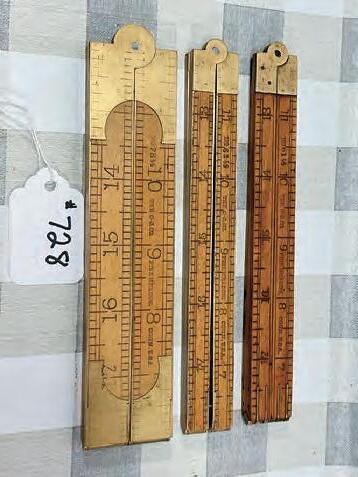
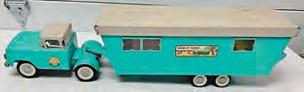
GENERAL LISTING: 1969 Buick Skylark convertible, 1-owner; 2002 Chevy Monte Carlo, 1-owner; 1-OWNER LIFETIME COLLECTION, 851-CATALOGED LOTS, 400+ rare wood planes, including 250+ antique Stanley including org. #1 plane (some BED-ROCK) & others from Keen Kutter, Millers Falls, Bailey, Winchester, Sandusky, Sargent, Siegley, Thos Ibbotson, plus more. Also, salesman sample box w/ mini brass tools in cabinet; Stanley tool display; Stanley 9-pc tool display, Stanley 150-year anniv. tool kit; 40+ lots of Winchester; Carroll R. Tiffany grafting knife; Fairbanks 200-lb counter top scales; WW-II cross-cut saw; Nail/hardware swivel stand; Oakleaf draw knife; Westline 14” Jack plane; Thos Ibbotson & Company wood plane (J. Mathison); Winchester hatchets; Plumb hatchets; many rare handbraces; ice axe; wing axe, post axe, Brady post axe; Gauge Tool #AS wood plane; Shelton #4 wood plane; rare Winsor bead planes; Winchester baseball bat; #66 ½ & 72 ½ Stanley bone folding rulers; dozens of bone Stanley folding rulers; #12 H. Chapin glass-cutter ruler; Reissman’s pattern perfect ruler gauge; many brand name axes; many brand name large chisels; many rare levels; Starrett tools; WW-II crash axe; Stevens & Co. planes; dozens of antique wooden/brass levels; rare stove-pipe shears; many H. Disston items including adv. sign; Lufkin items; Chaplin items; Stanley #45 folding plane w/ fencing; assorted plane parts, handles and blades; hand-made wooden canes; quilts & braided rugs; old work benches w/ vise; tools; furniture; antiques & collectibles; dozens of toy trucks; artwork. This is a very brief listing, many rare items off the catalog. See our website to see which items are sold on each day. BID ONLINE FROM THE CATALOG NOW!


and grading companies at a feverish pace never before seen. There was once a time in the antiques and collectibles trade where at least some of the top tier firms that cater to these markets were publicly traded enterprises. Case in point, there was once a time when Christie’s, Sotheby’s, and the Collector’s Universe were all publicly traded companies required by the SEC to publish quarterly and yearly financial reports. These reports, known as either the 10-Q quarterly report or the 10-K report, provided valuable insight and transparency to not only the company’s shareholders, but also their customers.
Sadly, today, thanks in part to hedge funds and private equity companies buying up a lot of auction houses and grading conglomerates that cater to the antiques and collectibles trade, this level of transparency is sorely lacking at a time when individual investors are seeing these markets as a viable alternative asset class on par with financial investments like mutual funds, ETFs, stocks, and bonds. In all actuality, nothing can be further from the truth. If you think Wall Street is risky, at the very least, financial assets are highly regulated. On the other side of the proverbial coin, the antiques and collectibles trade is comparable to the Wild, Wild West where caveat emptor (aka let the buyer beware) is the law of the land.
Today, as I write this article, there are virtually no publicly traded auction houses or
third-party grading conglomerates left. Sotheby’s and Christie’s are back in private hands. Heritage Auctions, which has made massive inroads into becoming one of the premier auction houses catering to investment grade collectibles, is also in private hands. Meanwhile, grading conglomerates like the Certified Collectibles Group in Sarasota, Fla., that grade everything from paper money to coins to comic books to video games, are completely controlled by private equity. Even the Collectible Grading Authority out of Norcross, Ga., which controls the premier toy and action figure grading company, AFA (Action Figure Authority), is controlled by private equity.
Now obviously, private ownership isn’t a bad thing. After all, this is America and America thrives on capitalism. However, when we have an extremely unregulated industry which is being looked at as a rising alternate asset class that is solely controlled by private equity, I think at some point we have to ask the question: Is this inherently sustainable and for how long?
To my critics, I am not directly criticizing private ownership. Obviously, there are hundreds if not thousands of smaller local and even regional auction houses that are owned and operated by entrepreneurs and small independent corporations. What I am asking is, given the amount of financial capital flowing into these markets and these markets being seen as an “investment,” shouldn’t some level of regulation or, at the very least, transparency, be warranted? After all, we
have seen massive amounts of alleged market manipulation occurring behind the scenes from the epic graded coin bubble of the late 1980s to proposed allegations of price fixing levied at some of the most prolific auction houses in the trade. Given these risks and the fact that this market could become worth $1 trillion in the not distant future, one has to ask who exactly is looking out for the little guy. And if you think this question is controversial in nature, just wait until you hear some of my proposed solutions. We are already seeing the effects as to how this is playing out over the long term.
I often lament that when billionaires invest in the antiques and collectibles trade they do not always go after $100 million dollar plus paintings or the dinosaur fossil hedge fund billionaire Ken Griffin just bought for close to $50 million. Now they are taking aim at owning the auction companies and the grading conglomerates that promote a lot of the collectibles that less wealthy collectors have previously been able to acquire. And therein lies the problem. There is absolutely no regulation or transparency in these markets. Anyone operating with an investment mindset in these markets needs to use caution as a result. It’s just a thought.
Shawn Surmick has been an avid collector since the age of 12. He currently resides in his hometown of Boyertown, Pa., and is a passionate collector of antiques and collectibles. His articles focus on various topics affecting the marketplace.
Brandywine
Continued from page 4
variety of tones that amplify the dark visionary quality of his imagery.
Subjects in ten other etchings in the exhibition include historical figures such as Queen Elizabeth I, quasi-human mythical figures, and floral still-lifes. All reflect Paone’s remarkable technical skills and his mastery at crafting enigmatic narratives, wherein even a vase of flowers is transformed into a meditation on death.
“Peter Paone is an artist who creates compelling, haunting images, he brings a kind of fever dream to the tradition of figurative art,” said Thomas Padon, the James H. Duff Director of the Brandywine Museum of Art. “In this dazzling group of prints, one sees not only Paone’s fervid imagination but also his technical prowess in printmaking. This donation marks a significant addition to our collection of graphic work by Philadelphia-based artists, and

Peter Paone’s (b. 1936) “Wasteland,” from 1964, is an etching and aquatint on paper, 8.5-by-11.75 inches, gift of the artist, courtesy of Peter Paone.
I am profoundly grateful to him for his generosity.”
The artist was also the subject of the exhibition “Reality Reassembled: The Halloween Paintings of Peter Paone” in 2019 at the Brandywine Museum of Art. Since then, the museum has acquired two of his paintings, including a remarkable self-portrait from 2012, and a drawing.
The guest curator of the exhibition is Audrey Lewis,
formerly associate curator of the Brandywine Museum of Art, where she organized such landmark exhibitions as “Andrew Wyeth: In Retrospect” and “Exalted Nature: The Real and Fantastic World of Charles E. Burchfield.” Lewis also curated “Reality Reassembled.” The Brandywine Museum of Art is in Chadds Ford, Pa. To learn more, visit www. brandywine.org.
Continued from page 1
newly released comprehensive biography of Duffield, which addresses all aspects of the clockmaker’s life and the practice of clockmaking in Colonial America.
After his presentation, Frishman will have a Q&A session and also have copies of his book available for purchase and signing.
Frishman lives in Andover, Mass., and is a Silver Rockford
Star Fellow of the National Association of Watch and Clock Collectors and has lectured at over 100 places, including Winterthur Museum, the Museum of Fine Arts, Boston, the Henry Ford Museum, the Museum of the American Revolution, and the Horological Society of New York. Additional biographical information may be found at www.HistoricRockFord.org.
This presentation is free of charge, but all guests are required to register at
www.rockford.yapsody.com due to space restrictions.
Historic Rock Ford, located at 881 Rockford Road, Lancaster, Pa., is comprised of the ca. 1794 General Edward Hand Mansion and the John J. Snyder Jr. Gallery of Early Lancaster County Decorative Arts. The property is open for tours from April through October. It is operated by the nonprofit Rock Ford Foundation. For more information, visit www. HistoricRockford.org.

FIREARMS: Savage Mod 99 Rifle, Nagant 53 7.62x54R Rifle, 1917 US 30-06 Rifle, Marlin Glenfield Mod 60 Rifle, Lanco .22 Rifle, Laurona 20ga Shotgun, Sears Ranger 20ga Shotgun, Marshwood Dbl Barrel Shotgun, Imperial .22 Revolvers, Remington 9mm Luger Pistol. Much Ammo incl Many Vintage Boxes. Champion 50 Gun Safe. COINS: (5) 2004 $5 Gold Pieces in 14K Bracelet, (2) 1996 $5 Gold Pieces in 14K, Earrings, 1987 $5 Gold Pc in 14K Ring, 1996 $5 Gold Pc in 14K Pendant; Morgan & Peace Dollars, Barber & Franklin Halves, Silver Dimes & Qtrs, National Currency incl Shenandoah. JEWELRY: 14K: Rings incl Diamond, Earrings, Chain; 10K Rings incl Diamond; Much Sterling incl Rings, Necklaces & Bracelets; 100’s of Costume Lots incl Estate & Tray Lots. FURNITURE: Sectional Sofas, Canopy Bedroom Set, Dining Room Sets, Jelly Cupboard, Pennsylvania House Bedroom Set, Recliners, Mattresses, Curio Cabinets, Grandfather Clocks. ANTIQUE/VINTAGE: Brunswick Floor Phonograph, Knives incl Schrade & Stiletto, RR Lanterns, Mining Lamps & Helmets, Pyrex incl Atomic Starburst Casserole, Black Americana, Hall Autumn Leaf, Typewriters, Fishing Lures & Reels, Postcards, Mack Truck Emblems, CI Banks, LARGE Beer Sign Collection. TOYS: Video Games incl Game Boy, Air Hockey/Pool Table, Tin Litho & Batt Op, Tonka, Toy Soldiers, Big Bang Cannon, Star Wars Vehicles. SPORTS: Vintage Cards incl 68 Bench RC, Framed Shaq & Larry Bird Autographed Jerseys w/ Beckett COAs; Unopened Wax Packs, Factory Sets. COLLECTIBLES: Longaberger® Baskets, Lenox, Art Glass Paperweights, Temptations incl Easter, Fiesta, Hallmark Ornaments incl Many Star Wars & Star Trek, Pokémon & Garbage Pail Kids Cards, Large Precious Moments Collection. MUSICAL INSTRUMENTS: Acoustic Guitars incl Peavey, Violins, Clarinet, Trombone, Piano. OTHER: Cub Cadet Riding Tractor w/ 4’ Snowblower Attachment; Power Tools, Building Equipment, Lumber.

“Proven Reliability for Buyers And Sellers” Phone: 570-968-4636


LIVE PREVIEW: AUGUST 30TH – SEPTEMBER 8TH from 10am-5pm
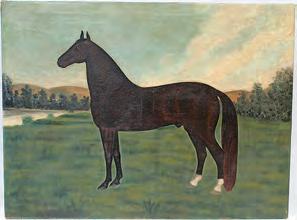
Flying Pig Auctions next online auction is as diverse & eclectic as we’ve ever had! At the nucleus of this sale is the contents of a fantastic French chateau from Westerly, RI that was once featured in “The Architectural Record” in April 1927. The home was filled with late 18th/early 19thC carved French Country furniture plus European & American antique accessories and artwork. We are also concluding our collection of the octogenarians from Rhinebeck, NY which also included antique French furniture but spanned through the time periods all the way up to Mid Century Modern! A very eclectic collection! Other estates/collections incl a Staffordshire collection of platters, blue & white Historical plates, teapots & other vessels, etc! Great Masonic collection; Large collection of decoys; Antique Toys incl tin wind-up plus early stuffed Mickey & Minnie by Merrythought; Country primitive incl apothecary chest, pantry boxes, baskets, buckets and more; Weathervanes; Carved garden sculpture in stone & cast iron; Fine Art incl a wonderful horse portrait of Hambletonian plus bronze sculpture; Textiles incl Hooked & Penny rugs, Oriental Rugs, Samplers & Family Register; Wooden painted signs; Artwork incl portraits & beautiful scenic paintings; Art Pottery in signed Van Briggle; Mirrors; Chairs in sets & singles; Lighting; Copper incl pots & buckets; fireplace related; And so much more! This sale truly has something for everyone! Please take note of the EARLY START TIME of 4:30pm! Don’t miss this exciting sale! FULL CATALOG AVAILABLE ON LIVE AUCTIONEERS ON AUGUST 30TH! This will be an INTERNET ONLY AUCTION