
Designs
By Amish Women Quilters
Presentation Features Recent Gift From Collectors Faith And Stephen Brown
A new exhibition at the Smithsonian American Art Museum explores the creative practice of Amish quilters in the United States. “Pattern and Paradox: The Quilts of Amish Women” looks beyond quilting as a utilitarian practice. It reveals historical quilting among the Amish as an aesthetic endeavor that walked a line between cultural and individual expression. The quilts paradoxically twin the plain with the spectacular, tradition with innovation, and a dismissal of personal pride with objects often seen as extraordinary artworks.
The exhibition is currently on view through Sept. 2 at the Smithsonian American Art Museum’s main building in Washington, D.C. It is organized by Leslie Umberger, curator of folk and self-taught art, and Virginia Mecklenburg, senior curator, with support from Anne Hyland, curatorial assistant. Janneken Smucker, cultural historian and professor of history at West Chester University in West Chester, Pa., is the primary author of the exhibition catalog and contributed to the exhibition. She is a fifth-generation Mennonite quilt maker of Amish Mennonite heritage.
The exhibition celebrates a major gift announced in 2021 of Amish quilts to the museum by Faith and Stephen Brown. They began collecting quilts in 1977, four years after encountering Amish quilts for the first time at the Smithsonian American Art Museum’s Renwick Gallery in the exhibition “American Pieced Quilts.” The 50 quilts featured in “Pattern and Paradox” include 39 from the museum’s collection and 11 promised gifts. Around 100 additional quilts from the Browns’ exemplary collection are promised to the museum as a bequest.

of Amish quilts,” Umberger said. “These objects traveled into the art world in the late 20th century, but the Amish women who made them never intended them to be seen as artworks. Audiences and collectors responded to the striking color combinations and inventive abstract patterns, but the Amish were uneasy with the idea of having made and possessing museum-worthy, valuable artworks and began divesting of these quilts. Seen here, hanging on the gallery walls like paintings, they prompt us to consider the subjectivity of words like ‘artist’ and art’ and consider how cultural perspective can transform one’s understanding of an object.”
Although vintage quilts remain among the most recognized manifestations of Amish culture, they represent the historical, localized trends of only a finite period from a living and changing culture. The exhibition celebrates the quilts, the women who made them, the collectors who preserved and donated them, and considers the unique role of Amish quilts in American art today, roughly a century after those in this collection were made.
By Karl Pass“Faith and Stephen Brown assembled this extraordinary collection with care and devotion over some four decades after a revelatory visit to the Renwick Gallery. It comprises the largest and most widely representative group of Amish quilts ever to be acquired by a major art museum,” said Stephanie Stebich,
the Margaret and Terry Stent Director. “Their generous gift reaffirms SAAM’s long-standing commitment to equity in representation for art and artists and brings sharply into focus the complexity and importance of exhibiting diverse cultures in the museum setting.”
In the late 19th century, Amish women adopted an art form already established within the larger American culture and made it distinctly their own, developing community and familial preferences with women sharing work, skills and patterns. The quilts in “Pattern and Paradox” were made between 1880 and 1950 in communities united by faith, values of conformity and humility and a rejection
of “worldly” society. No specific guidelines governed quilt patterns or colors, so Amish women explored uncharted territory, pushing cultural limitations by innovating within a community that values adherence to rules. Styles, patterns and color preferences eventually varied and distinguished the various settlements, but it was the local quilters who drove and set the standards.
Today, Amish quilts present a particular quandary for art museums and audiences. By the mid-20th century, Amish quilts were increasingly being shown in museums.
“Pattern and Paradox’ invites viewers to consider the dual identity
The accompanying catalog, published by the Smithsonian American Art Museum in association with D Giles Limited, is written by Smucker with an introduction by Umberger. It will be available for purchase ($34.95) in the museum store and online.
“Pattern and Paradox: The Quilts of Amish Women” is organized by the Smithsonian American Art Museum. Generous support has been provided by Faith and Stephen Brown, Billings and John Cay, Barbara Coffey Endowment and the Ellsworth Kelly Foundation. This exhibition received federal support from the Smithsonian American Women’s History Initiative Pool, administered by the Smithsonian American Women’s History Museum, and from the Smithsonian Collections Care Initiative, administered by the National Collections Program. For further information, visit www.americanart.si.edu.

ANTIQUES NEWS, P.O.BOX 500 MOUNT JOY, 17552 ADDRESS SERVICE REQUESTED PRSRT STD U.S. POSTAGE PAID ENGLE PUBLISHING CO.
Based in Kinzers, Pa., Embassy Auctions International sold an Art Deco pastel watercolor for $86,800 during its recent antiques auction held April 4. The work depicting two figures was done by Tamara Embassy Sells Art Deco Pastel By Tamara De Lempicka (1898-1980) For $86,800 Welcome to a journey exploring Barry Hogan’s legacy. His name is known across Lancaster County for his real estate development and his passion for antiques. Now his collection will take center stage at the Friday, May 17, Pook & Pook sale. Hogan’s journey into the world of antiques began in the early An Introduction To Barry Hogan’s Collection Pook & Pook To Hold Sale On May 17 FRIDAY
10, 2024 • VOL. 54, NO. 19 FEATURE ARTICLE: Old Morgantown Glass Collectors Show on June 1 And 2 - Page 10 In This Issue SHOPS, SHOWS & MARKETS starting on page 3 SHOPS DIRECTORY . . . . on page 4 EVENT & AUCTION CALENDAR on page 6 AUCTIONEER DIRECTORY . . on page 8 AUCTION SALE BILLS on page 8 CLASSIFIEDS on page 11 Continued on page 5 Continued on page 8
MAY
By an unidentified Maker, this “Crazy Star” quilt dates ca. 1920, from Arthur, Ill., cotton and wool, 74-by-63.5 inches (detail view shown), from the collection of Faith and Stephen Brown, and is a promised gift to the Smithsonian American Art Museum.
The Art Deco pastel watercolor realized $86,800. The work was done by Polish artist Tamara De Lempicka (1898-1980).
Milestone’s May 11 Auction Exclusively Features
Elmer’s Toy Museum Collection, Part II
Assembly Includes Selection Of European Antique Tin Toys, Motorcycles, Boxed Tonkas, Battery Ops
Last October, antique and vintage toy fans added a new chapter to the legend of Elmer’s Auto and Toy Museum, which closed its doors in 2022 after 28 years of operation. Stoked by intense media coverage and toy-hobby chatter, bidders worldwide set their sights on rarities from the Wisconsin museum’s archive of 25,000 toys and paid estimate-shattering prices at
Milestone’s first of a series of sales. After the event, collectors clamored for more and asked when the next auction of museum treasures would take place. The answer is on Saturday, May 11, at Milestone’s suburban Cleveland, Ohio, gallery, with all forms of remote bidding, including live via the internet. The museum’s vast and storied collection of
American, European and Japanese toys was built over 50-plus years by a visionary in the toy hobby, the late Elmer Duellman. “Everybody knew Elmer, or if they lived overseas, they knew of him. He had an army of pickers from coast to coast, and if necessary, he would drive through the night in a blinding snowstorm just to pick up a toy, motorcycle or car that he wanted. He was the king of all toy networkers, with a reputation for tracking down rare toys that was second to none,” said Miles King, co-owner of Milestone Auctions.
The 774-lot May auction traverses scores of categories, such as tin windups, battery-operated toys, pressedsteel trucks, Japanese tin cars, Dooling gas racers, and
as well as a strong array of early 20th-century Lehmann clockwork toys.
Two “Gordon Bennet” tin windup racers pay tribute to an early 20th-century New York sportsman known for his foolhardy adventures in yachting, hot air ballooning, aviation and motor racing. One of the auction entries, a rare Gunthermann tin clockwork production with lithographed vents and a four-leaf clover on its bonnet, retains its two original passenger figures. The other Gordon Bennet racer, made by Issmayer (Germany), is in excellent condition with a functional clockwork mechanism and has both of its original passenger figures.
Lionel is known primarily for its train sets, but the firm’s

rare
Jocelyn Engle EDITOR: Karl Pass kpass@antiquesandauctionnews.net 717-278-1404
DISPLAY SALES: Tim Moore tmoore-ant@engleonline.com 717-492-2534
CLASSIFIEDS: 1-800-800-1833, ext 6022 antiquesnews@engleonline.com
SUBSCRIPTION & CIRCULATION: 717-492-2556
Antiques & Auction News is distributed at shops, shows, markets and auctions throughout the Mid-Atlantic region.
ADVERTISING DEADLINE: Every Thursday at Noon Issues are mailed one week prior to publication date.
Antiques & Auction News is published weekly. We reserve the right to edit material submitted for publication to conform to the editorial guidelines of Antiques & Auction News. Reproduction of artwork, editorial or advertising copy is strictly prohibited without the written consent of the publisher.
Antiques & Auction News PO Box 500 Mount Joy, PA 17552 ANTIQUESANDAUCTIONNEWS.NET


A Steelcraft pressed-steel New York/San Francisco streamline bus with Art Deco styling, all original with excellent paint, 21 inches long, is estimated at $1,000-$1,500.

This Dooling Arrow gas-powered tether race car with Dooling 61 motor, complete running gear with fuel tank, all original, in as-raced condition, 17 inches long, is estimated at $1,000-$1,500.
both automotive and character toys from Germany’s prewar era.
The session will open with European tin, starting with windup double-decker buses, limos and convertibles by Gunthermann, Bing, Carette, Karl Bub, Distler and Fischer,
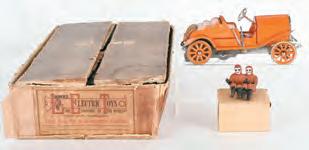
production range over the years has included a number of sidelines. An unusual example from Elmer’s Toy Museum is a rare 1912 #80 Automobile Outfit which contains an orange race car, both original drivers, and metal track. The set is presented in its original cardboard box with Lionel company advertising on the
tin
at $6,000-$8,000.

An Issmayer (Germany) tin clockwork Gordon Bennet racer in excellent condition with original passenger figures, 7.5 inches long, is estimated at $4,000-$6,000.

A large and wildly futuristic Yonezawa (Japan) tin friction #58 Atom Jet racer with driver inside clockwork, fine graphics and details, both friction and motor sound are functional, 26 inches long, is estimated at $10,000-$15,000.
exterior. As the auction catalog states, it appears never to have been played with.
The sale also offers a strong selection of postWWII automotive toys. Some faithfully replicate actual work trucks, taxis, fire trucks, scooters, delivery or transportation vehicles, while others are fueled by out-ofthis-world imagination, like Yonezawa’s tin friction #58
Atom Jet Racer. Wildly futuristic, with super graphics, a toothy chrome grille, and

distinctly 1950s/’60s graphics and colors, this car measures 26 inches long.
All a child of the boomer generation needed in order to feel like a worksite foreman was a junior-size hard hat and a Tonka pressed steel toy. Tonkas were built to last, and many have, but because kids often gave them a workout in dirt mounds and mud puddles, they incurred a few battle scars along the way. Elmer’s collection boasts a number of beautiful examples that managed to avoid rough play, including some hard-tofind boxed sets. A 1955 Tonka #775-5 Road Builder Set that consists of a semi with lowboy trailer, steam shovel, road grader and dump truck comes in its original, correctly partitioned box. Also, a 1959 Tonka #B-207 Hi-Way Construction Set with a lowboy truck and trailer, dragline, road grader and dump truck in its original box will be sold.

The 1959 Tonka pressed steel #B-207 Hi-Way Construction Set including lowboy truck and trailer, dragline, road grader and dump truck in original, correctly partitioned box will be estimate at $800-$1,200.
This 1955 Tonka pressed steel #775-5 Road Builder Set including semi with lowboy trailer, steam shovel, road grader and dump truck in original, correctly partitioned box will be estimated at $1,500-$2,000. Continued on page 10
Four popular Dooling gas-powered tether racers are lined up and ready to take a victory lap around Milestone’s gallery. They include an “Arrow,” a “Mercury” and an “F Car,” and a “Pee Wee,” which, in spite of its smaller size, is just as much fun. “What collectors love most about Elmer’s museum archive is the variety. Elmer
2 — Antiques & Auction News — May 10, 2024 antiquesandauctionnews.net antique sa ndauc ti o nn ews.ne t SUBSCRIBE TODAY! 4 EASY WAYS TO SUBSCRIBE! ANTIQUES & AUCTION NEWSTM P.O. BOX 500, MOUNT JOY, PA 17552 ➊ Call: 1-800-800-1833, ext. 6022 ➋ Fax this form: 717-892-6016 ➌ Mail this form to address shown ➍ www.antiquesandauctionnews.net and receive 10% DISCOUNT Have your credit card number and expiration date ready when you call! 1 Year, 3rd Class $28.00 6 Months, 1st Class $48.00 1 Year, 1st Class $80.00 Each issue contains important, dated material. For timely delivery, subscribe by 1st Class. NOTE TO 3RD CLASS SUBSCRIBERS: No refunds available for late delivery. Post Office does not promise delivery by a specific date. NAME ��������������������������������������������� ADDRESS ������������������������������������������ CITY STATE ZIP ������� PHONE: ( ) ����������������������������������� DATE Where did you pick up this copy of ANTIQUES & AUCTION NEWSTM? COLLECTOR DEALER AUCTIONEER SHOW MGR. OTHERS PAYMENT ENCLOSED All checks must be in U.S. funds. Checks must be drawn on U.S. bank add $7.00 to sub. price outside of U.S. CHARGE TO: #���������������������������� EXP. DATE ��������� Receive Our Email Newsletter: Email Address ��������������������������������� F027603 F027604
PUBLISHER:
antiquesandauctionnews.net
The
Gunthermann (Germany)
clockwork Gordon Bennet racer with original passenger figures, 8.5 inches long, is estimated

antiquesandauctionnews.net Antiques & Auction News — May 10, 2024 — 3 R106745

Collector Anecdotes And Antics
Analyzing A $6 Million Dollar Comic Book
 By Shawn Surmick


On April 4, a copy of “Action Comics #1” featuring the first appearance of Superman sold at Heritage Auctions for $6 million. The comic book was graded by CGC (Comics Guaranty Company) in 8.5 (very fine plus) condition with off-white to white pages and was from the Kansas City Pedigree collection of comic books. This is a new record price for this particular book, and it is now the most valuable comic book ever sold at auction.
Make no mistake, “Action Comics #1” is a very scarce book, as it was published in

19711 Newark 302-454-8007
MARGARET’S ANTIQUE MALL, 294 E. Main St. Mon- Sat. 10-5, Sun 12-5. 2 floors. Antiques, collectibles, vintage, primitives, much more! www.auntmargaretsantiquemall.com
1938 and very few survived through the paper drives of the WWII era. Comic books were also not seen as collectibles back in 1938, which is also why very few books from this era are around today. In fact, CGC has only graded about 80 copies of “Action Comics #1” according to their population reports that list how many copies they have graded and their corresponding condition. This particular book that sold was in very high grade for this issue compared to how many survived, and only two copies have ever been graded higher.
The fact that this particular book continues to see such strong auction results is great news for the buyer, and should that individual decide to eventually sell this particular book, I am sure that they will do equally as well as a seller. That said, be careful thinking that this sale means good things for the vintage comic book market overall.
“Action Comics #1” is a book that is easily in the top 0.01 percent of the entire vintage comic book market
at present time. I don’t see that changing anytime soon. However, every time a sale like this occurs and the mainstream media reports on it, I get emails from collectors and casual enthusiasts who think this helps the market for back issue comic books overall. Does it? Because I would argue over the long term, it has very little effect on the market as a whole.
I think we can all agree that the average person does not have $6 million dollars to pay for a comic book or any kind of item in general. Therefore, this book was most likely sold to someone of means who has a sizable net worth. And just to put this into perspective for you, according to the website Investopedia, to be in the top one percent of U.S. households in the year 2023 (2024 numbers are not available at this time), you would have to have a household net worth of $13.7 million dollars. I don’t think too many households who just qualify as being in the top one percent are spending $6 million dollars on one single item, let alone
a comic book. Therefore, we can fathom the individual who bought this most likely has a net worth significantly higher than the $13.7 million net worth that just barely qualifies to be in that ranking. In my opinion, I would venture to say that the individual who bought this item most likely has a net worth of $50 million or more, but that is only a guess. Another misconception that collectors make when they hear of a sale of this magnitude is assuming that this means that comic books make excellent financial investments. For the record, I do collect and invest in vintage comic books on a regular basis, and if you buy right it can be very rewarding. However, it is not without risk, and, in most cases, a good stock index fund like an S&P 500 is far better and easier to manage. Also, please know that most speculators and investors operating in any market within the overall antiques and collectibles trade rarely ever outperform the stock market over the long term. Antiques and
Continued on page 11
08005 Barnegat 609-698-3020
BAY AVENUE ANTIQUES, 349 S. Main.
Open Thurs.- Sun., 1-5 pm or by appt. Book seller, pottery, glass, furniture, holiday, decoys, antiques & uniquesplus chalkpaint & iron orchid design.

16686 Tyrone 814-684-5088
I-99 ANTIQUES, conveniently located off the Tyrone Exit of I-99, 1222 Pennsylvania Ave. Qty. antqs. & collectibles. Multi-Vendors. Open Th., Fri., & Sat., 10:30am - 4:30pm, Dlrs. welcome.





19711 Newark 302-733-7677
MAIN STREET ANTIQUES, 23 Possum Park Mall. Summer Hrs.: Mon.-Sat. 108, Sun. 11:30-5:30. Over 45 Showcase/ Room Dealers selling qty. antqs. & collectibles. mainstreetantiques.com
21901 North East 410-287-8318
5 & 10 ANTIQUE MARKET, 115 S. Main St. Daily 10am-6pm. Cecil County’s largest! Approx. 65 dealers, variety & nostalgia. Buying/selling antiques & collectibles.
07052 West Orange 973-323-1711
VALLEY VINTAGE, 168 South Valley Rd. Open Mon-Sat. 11-6, Sun. 12-5. 2100 sq. ft., 25+ dealers. Antiques, vintage, collectibles, furniture, decor, kitchenware, jewelry, books, LPs, ephemera.
07901 Summit 908-273-9373
SUMMIT ANTIQUES CENTER, 511

08016 Burlington 609-747-8333
HISTORIC BURLINGTON ANTIQUES & ART EMPORIUM, 424 High Street.
Open 6 Days, Tues.-Sun.: T, W, F, Sat., Sun: 11A-5P; Th.&F.: 11A-7P; Closed on Monday. www.antiquesnj.com
08037 Hammonton 609-561-1110
BERNIE’S ANTIQUES & ARTIFACTS, 18 Central Ave. Tues.-Sat. 11-6 & Sun. 11-5. Trains, Pottery, Lenox, Breweriana, Fenton, Petroliana, Van Briggle, Albums + Neon Signs. Qty.Dlrs. Invited.
08062 Mullica Hill 856-478-9810
OLD MILL ANTIQUE MALL, 1 S. Main Street. Open Daily, 11-5; Sat. 10-5. Antiques, glassware, records, coins, stamps, military items, collectible toys, trains, linens, books & ephemera.
08081 Sicklerville 856-545-3187
CARNIVAL OF COLLECTABLES, 368 Cross Keys Rd. Open Tue.-Sat. 10am6pm, Sun. 10am-5pm. 12,000 sq. ft. Antique & Art Mall, over 130 dealers. www.carnivalofcollectables.com
08525 Hopewell 609-466-9833
16801 State College 814-238-2980 APPLE HILL ANTIQUES, 2221 East College Ave. Distinctive antiques in a gallery setting. Over 40 dealers. Open daily 10 to 6. Wide variety.
17062 Millerstown 717-589-7810
STITCH IN TIME ANTIQUE & GIFT MALL, 43 N. Market St. Antiques, Collectibles, Furniture, Quality Handmade Crafts & Gifts. Open 7 days 10-7, F til 8. Millerstown exit off RT 322.
17350 New Oxford 717-624-3800 ZELMA’S EMPORIUM 11 N. Water Street. Antiques, Primitives, Americana, European, Asian, Art, Home Decor. Hours: Tues.-Sat.10-5; Sun. 12-5 or by appt. Closed Mon. ZELMASANTIQUES.COM
17361 Shrewsbury 717-235-6637
SHREWSBURY ANTIQUE CENTER 65 N. Highland Dr. “A

Morris Ave. 2 floors, 50+ dealers. Antiques, collectibles. Smalls to furniture. Open 7 days 11-5. Free Parking. www.thesummitantiquescenter.com
TOMATO FACTORY ANTIQUE & DESIGN CENTER, 2 Somerset St. We Have It All! Open Mon. thru Sat. 10-5, Sun. 11-5. We have 38 Dealers. www.tomatofactoryantiques.com


4 — Antiques & Auction News — May 10, 2024 antiquesandauctionnews.net 135 Bridge Street, Columbia, PA 17512 135 Bridge Street, Columbia, PA 17512 717-684-0009 www.bootlegantiques.net Open Wed.-Thurs. 10-5, Fri. 10-8, Sat. 10-5, Sun. 1-5, Closed Mon. & Tues. R105478 ANTIQUES & ODDITIES OPEN THURS.-MON. 10 A.M.-5:30 P.M. CLOSED TUES. & WED. Located At The “Crossroads” Of Rts. 743 And 322 825 COCOA AVE., HERSHEY, PA 17033 CROSSROADS ANTIQUE MALL Two-Floor Multi-Dealer Mall Featuring A Variety Of Antiques And Collectibles With Reasonable Prices 717-520-1600 www.crossroadsantiques.com R100403 R100431 2800 N. Reading Road Route 272 in the IronSpire Complex @AngusAntiques 717.208.2380 www.ironspirecomplex.com Open Sundays 7:30am-4pm • A top destination for high-quality antiques • One of the largest under-roof antique malls R066446 Pocono Peddlers Village Voted #1 in Northeast PA Over 100 Vendors Open 7 Days A Week Call For Holiday Hours 10am-5pm A Hidden Treasure Awaits 570-629-6366 GPS 246 Stadden Rd., Tannersville, PA 18372 Rt. 80 To Bartonsville Exit 302, Turn Left Onto Rt. 611, 2.2 Miles On Left www.pocono-antiquemall.com F059658 THE SLATINGTON MARKETPLACE Antiques & Collectibles 8281 Rt. 873, Slatington, PA 18080 Wed. & Thurs. 9-5; Fri. & Sat. 9-6; Sun. 10-5 135+ DEALERS • 200+ SPACES www.theslatingtonmarketplace.com 610-766-7495 (Follow Us On Facebook) New Hours: Wednesday-Sunday 10am-5pm (484) 949-8130 ANTIQUE VINTAGE GIFTS COLLECTIBLES MORE! TOIT! 2030 Swamp Pike, Gilbertsville, PA 19525 Visit our co-op for Great Finds and Super Prices! 7,000 sq. ft. of showrooms 70+ Vendors R106743 , PA R087469 Mon., Tues., Thurs., Fri., Sat. 10-6 Sun. 11-5 • Wed. Closed HOURS: 610-791-7910 www.weilantiquecenter.com 2200 31st St. SW, ALLENTOWN, PA Monday Thru Friday 10-6, Saturday 10-5, Sunday 11-5 Over 150 Dealers WEIL ANTIQUE CENTER Featuring Quality Antiques & Collectibles, COINS, CLOCKS, JEWELRY, FURNITURE, CHINA, LINENS, MEMORABILIA, VINTAGE CLOTHING, TOYS, DOLLS, POSTCARDS & RETRO R106684 R088201 Final Thursday! The Last Thursday Evening of each month, featuring wine, snacks & discounts! Open every day! 10am-6pm, Thurs. 10am-8pm, Sun. 11am-5pm 610-390-0403 www.sseemantiques.com 100 S. Chestnut St. (Rt. 248) • Bath, PA 18014 Multi-Dealer Co-op • 5 other shops on block Co-op with 25+ dealers Quality Antiques in 1840’s Brick Store F063434 ATTENTION Shouldn’t Your SHOP Be Listed In This Directory? CALL 1-800-800-1833, ext. 6022 or 717-892-6022 Monday-Friday 8:00am-4:30pm E-MAIL Submit your ad to us at therr@engleonline.com Deadline: Thursday at Noon for Friday’s edition ALL ADS IN GUIDE ARE LISTED IN ZIP CODE SEQUENCE WITHIN EACH STATE.
DIRECTORY
SHOP
AUNT
True Antique Mall” Over 10,000 sq.ft. with over 60 dealers. Open 10-5, closed Wed. Ample parking. Close to other shops in historic village. 18944 Perkasie 215-257-3564 TREASURE TROVE, 6 S. 7th Street. Estate jewelry, furniture, linens, vintage clothing, glass, china, books, toys, kitchenware, advertising, postcards. Primitives to Deco. Dealers Welcome. Mon.-Sat. 10-5. In business 42 years. 18962 Silverdale 215-453-1414 THE FACTORY ANTIQUES AND COLLECTIBLES, 130 West Main Street, Rt. 113, Bucks County. Featuring 45 Dealers. Open Wednesday thru Saturday 10-5, Sundays 11-4. 19543 Morgantown 610-913-1953 MORGANTOWN MARKET, 2940 Main St. Hours 10-5 daily. Berks Co. Largest Antique Boutique. Antiques, Collectibles, Vintage Home & Garden Decor. Now we have miniatures & dollhouses!
Pook
& Pook
Continued from page 1
was a connoisseur of Pennsylvania folk art and early Americana. His approach to collecting was far from the leisurely pastime of a hobbyist. For Hogan, it was an avocation, a calling that he pursued with the fervor and dedication of a true devotee. He sought not just the 1970s. Over five decades, he meticulously curated one of the nation’s most esteemed collections of early American historical flasks. However, his affinity extended far beyond the shimmer of early glass. He


rare or the exquisite, but also examples that spoke to him personally, which he considered the “best” by his own unique standards. This selection process was not simply about prestige or value alone but about a deep, intrinsic connection to the heritage and beauty each piece represented. His collection serves as a testament to his knowledge and exceptional eye for detail.
The following photos showcase some of the items to be offered. Pook & Pook invites anyone who appreciates the timeless beauty and historical significance of Americana and Pennsylvania German antiques to
preview and attend the sale. Hogan’s collection will be sold on Friday, May 17, at Pook & Pook’s gallery, 463 E. Lancaster Ave., Downingtown, Pa. For more information, visit www.pookandpook.com.
FIND OR SELL








antiquesandauctionnews.net Antiques & Auction News — May 10, 2024 — 5 R106098 We Buy & Sell Vintage Merchandise! 270 Swedesford Rd., Berwyn, PA Market: 484-320-8019 Office: 215-625-FLEA (3532) Vintage Flea Market Berwyn Indoor/Outdoor • Jewelry • Clothing • Artwork • Vinyl • Magic & Novelties • Toys • Glassware • Vintage Books • Hardware • Electronics • Baked Goods & So Much More! Antiques, Collectibles VINTAGE { { Open Year Round! Every Sat. & Sun. 9am-4pm www.PhilaFleaMarkets.org @PhilaFleaMarkets Free Admission! Free Parking! R106051 139 South Hanover Street, Hummelstown, PA (Just West Of Hershey) (717) 566-5685 Open Daily Mon.-Sat. 9-5, Sun. 12-5 www.oldefactory.com Olde Factory Antiques & Crafts You’ll Say “I’ll Be Back” ANTIQUES, CRAFTS, BOOKS, CANDLES, PRIMITIVES, GLASSWARE, FURNITURE, OLD TOYS, COLLECTIBLES, JEWELRY, COKE MEMORABILIA And Much More! 3 Floors, 24,000 Sq. Ft. • Elevator www.hawkmountainantiquespa.com • 484-752-2108 214 E. Independence St. Orwigsburg, PA 17961 Brian D. Herber, Owner hmabcllc@gmail.com Vendor Space Available & Consignors Welcome! R106469 Hours: W-Th 10-5; F-Sat 10-6; Sun 10-3; Closed M-Tu Weekend Spring Sat., May 11, 10am-7pm & Sun., May 12, 10am-4pm Merchandise Sales throughout the Store - Savings from 10-50% PLUS- Saturday -Orwigsburg Community Outdoor Yard Sale on site Participants will need to supply their own tables & chairs. Rain or Shine - come prepared. If interested, please call 484-752-2108. Extended Shopping Hours ANTIQUE CENTER 517 St. Mary’s Street, Lewisburg, PA 17837 OPEN 7 DAYS 10-5 570-524-5733 www.rollermills.com R079635 400 ANTIQUE DEALERS One of the Largest & Finest Antique Malls in PA Dutch Country! 3371 Lincoln Highway East, (Rt 30), Paradise, PA 17562 • 717 442.8805 CackleberryFarmAntiqueMall.com All Under One Roof—On One Floor • Shop in a clean, brightly lit, climate controlled building that’s open all year long • Huge variety of fine antiques & collectables on display by over 125 dealers • Over 26,000 sq ft of merchandise • Convenient parking—handicap accessible • Most major credit cards accepted Monday -Saturday 9:30 a.m.–5 p.m. Sunday 10 a.m.–5 p.m., closed Tuesday CackleberryFarmAntiqueMall.com All Under One Roof—On One Floor • Shop in a clean, brightly lit, climate controlled building that’s open all year long • Huge variety of fine antiques & collectables on display by over 125 dealers • Over 26,000 sq ft of merchandise • Convenient parking—handicap accessible • Most major credit cards accepted Monday -Saturday 9:30 a.m.–5 p.m. One of the Largest & Finest Antique Malls in PA Dutch Country! 3371 Lincoln Highway East, (Rt 30), Paradise, PA 17562 • 717 442.8805 CackleberryFarmAntiqueMall.com All Under One Roof—On One Floor • Shop in a clean, brightly lit, climate controlled building that’s open all year long • Huge variety of fine antiques & collectables on display by over 125 dealers • Over 26,000 sq ft of merchandise • Convenient parking—handicap accessible • Most major credit cards accepted Monday -Saturday 9:30 a.m.–5 p.m. Sunday 10 a.m.–5 p.m., closed Tuesday 3371 Lincoln Highway East, (Rt 30), Paradise, PA 17562 • • Shop in a clean, brightly lit, climate • Huge variety of fine antiques & collectables on display by over 125 dealers • Over 26,000 sq ft of merchandise • Convenient parking—handicap accessible • Most major credit cards accepted Monday -Saturday 9:30 a.m.–5 p.m. Sunday 10 a.m.–5 p.m., closed Tuesday One of the Largest & Finest Antique Malls in PA Dutch Country! 3371 Lincoln Highway East, (Rt 30), Paradise, PA 17562 • 717 442.8805 CackleberryFarmAntiqueMall.com All Under One Roof—On One Floor • Shop in a clean, brightly lit, climate controlled building that’s open all year long • Huge variety of fine antiques & collectables on display by over 125 dealers • Over 26,000 sq ft of merchandise Convenient parking—handicap accessible • Most major credit cards accepted Monday -Saturday 9:30 a.m.–5 p.m. Sunday 10 a.m.–5 p.m., closed Tuesday R106545 Not Just An Antique Mall It’s Your Destination We Are Open - in Paradise, Lancaster County
CALENDARS
IOWA
2024-05-17, Waterloo, Friday
- Sunday Featuring great collections from across America!, Rich Penn Auctions
MARYLAND
2024-05-11, Frederick, Saturday 9AM 1862 book signed by Abraham Lincoln, Civil War items, antique & mid-century furniture, art, vintage tupperware, tools & much more!, Howard B Parzow
PENNSYLVANIA
2024-07-10, Wednesday
Ending starts at 5 PM Antique & modern furniture, glassware, sterling silver, primitives, tools & more!, A & M Auctioneers & Appraisers
2024-05-11, Newville, Saturday 9AM One of the largest private collections of IH toys & memorabilia., All American Auction Service
2024-05-17, Ephrata, Friday 2PM, Sat 9AM Cataloged Antique Auction, Horst Auctioneers
2024-05-17, Downingtown, Friday 9AM The collection of Barry D. Hogan, Pook & Pook Inc.
2024-05-11, Orwigsburg, Saturday 10AM -7PM, Sun 10AM -4PM Savings from 10-50% throughout the store. Also Orwigsburg outdoor community yard sale on site., Hawk Mountain Antiques
2024-05-03, Manheim, Friday 9AM Antiques & Americana Auction. Over 600 lots to
include pottery, glass, artwork, metalware, miscellaneous & more!, Hess Auction Group
2024-05-11, Bird-in-Hand, Saturday 8AM Estate of Mattie L. King. 1800s Grandfather clock, old furniture, 1800s German books, 100s of quilts, buggy wheels, antiques & primitives & much more!, White Horse Auctions
2024-05-25, Mohrsville, Saturday 1 PM Large estate auction. Antiques & collectibles, furniture, tools, lawn & garden & much more!, L & H Auctions
2024-04-24, Now through May 7. Closing at 6PM Furniture, household items, tools, antiques, collectibles & more!, Lane Ryan Auctions
SHO W & FLEA MARKET CALEND AR GEORGIA
05/09-12/24, Atlanta, Thursday - Sunday Antique Show, 3650 Jonesboro Road SE, Atlanta Expo Center, North Bldg.
06/06-09/24, Atlanta, Thursday-Sunday Antique Market, 3650 Jonesboro Rd. SE, Atlanta Expo Center, North Bldg.
07/11-14/24, Atlanta, Thursday-Sunday Antique Market, 3650 Jonesboro Rd. SE, Atlanta Expo Center, North Bldg.
NEW JERSEY
05/19/24, Hammonton, Sunday 9AM - 3 PM Spring Antique & Bottle Show, Historic Batsto VIllage, Historic Batsto Village
06/08/24, Mullica Hill, Saturday 9 AM -3 PM The Annual June Festival of Antiques, 275 Bridgeton Pike, Gloucester 4H Fairgrounds
06/08/24, East Windsor, Sunday 9AM - 2PM Bottle & Antique Show, 831 Windsor Perrineville Road, Kyle Family Farm
NEW YORK
05/31/24 to 06/02/24, Bouckville, Friday - Sunday 8 AM5 PM Antiques & Collectibles Show, 6890 State Route 20, Madison-Bouckville
05/25-26/24, Stormville, Saturday & Sunday 8AM - 4PM Stormville Antique Show & Flea Market, 428 Rt 216, Stormville Airport Flea Market
07/06/24, Stormville, Sat 8AM - 4PM Stormville Airport Antique Show & Flea Market, 428 Rt 216, Stormville Airport Flea Market
08/31/24 to 09/01/24, Stormville, Saturday & Sunday 8AM - 4PM Stormville Airport Antique Show & Flea Market, 428 Rt 216, Stormville Airport Flea Market
10/12-13/24, Stormville, Saturday & Sunday 8AM - 4PM Stormville Airport ANtique Show & Flea Market, 428 Rt 216, Stormville Airport Flea Market
11/02/24, Stormville, Saturday 8AM-4PM Stormville Airport Antique Show & Flea Market, 428 Rt 216, Stormville Airport FLea Market
PENNSYLVANIA
12/16/23 to 01/05/25, Berwyn, Every Sat. & Sun, 9-4 Indoor/ Outdoor Vintage Flea MarketNow Open Year Round!, 270 W. Swedesford Rd, Berwyn, PA
01/07/24 to 12/29/24, Lewisburg, Every Sun. 8-4 (except Easter) Rt. 15 Flea & Farmers Market, 150 Silvermoon Ln., Lewisburg, PA
02/03/24 to 12/21/24, Kutztown, Saturdays 8-4 (7:30am-flea) Antique & Farmer’s Market, 740 Noble St., Renningers Kutztown
02/04/24 to 12/22/24, Denver, Sundays 7:30-4 Antique Market, 2500 N. Reading Rd., Renningers Adamstown
05/11/24, Fairfield, Saturday 9 AM - 3 PM Country & Primitives Antique Event, 1042 Bullfrog Road, “The Farm” in Gettysburg
05/18/24, Philadelphia, Saturday Antique & Vintage Flea Markets in Philadelphia, 500 S 2nd Street (Society Hill), Headhouse Square

Mother’s Day Gifts On Sale At Haddon Heights Antiques Center
The Haddon Heights Antiques Center is a great source of one-of-a-kind gifts for any occasion yearround but never more so than at Mother’s Day. The special sales display for the month of May will contain all sorts of lovely antique and vintage things designed to bring delight to the moms and grandmoms out there.
There will be plenty of fine estate jewelry in addition to costume brooches and rings. There will be vanity mirrors and trays, powder containers, and perfume bottles large and small.
Does mom like colored glass from the 1960s? Depression glass from the 1930s? Cut crystal from the 1910s? Examples of all kinds of glass can be found in the display and throughout the store.
Perhaps she collects

china cups and saucers and teapots. There is a large variety to choose from. Maybe she likes to collect or decorate with Roseville or McCoy pottery. Again, shoppers will see plenty of examples throughout this large, multidealer shop. And if shoppers are overwhelmed by so many choices, gift certificates are available too.
The Haddon Heights
Antiques Center has been a constant source of beautiful Mother’s Day gifts for over 30 years. The store is open seven days a week from 10 a.m. to 5 p.m., with extended hours on Fridays. It is located at 531 Clements Bridge Road next to the railroad tracks in Barrington, N.J. For directions or more information, call 856-546-0555.




06/01/24, Philadelphia, Saturday Antique & Vintage Flea Markets in Philadelphia, 2161 E York Street (Fishtown), Hackett Elementary
06/15/24, Philadelphia, Saturday Antique & Vintage Markets in Philadelphia, 1400 W Passyunk Avenue ( Broad & Passyunk), South Philly Blues Festival
05/11/24, Fairfield, Saturday 9 AM - 3 PM Country & Primitive Antique Event, 1042 Bullfrog Road, “The Farm” at Gettysburg
06/15-16/24, Elverson, Sat
10 AM - 4 PM, Sun 10 AM - 3
PM Elverson Antique Show & Sale, 4897 Twin Valley Road, Twin Valley High School
05/03-04/24, Carlisle, Fri
10AM - 5 PM, Sat 10 AM - 4
PM 69th Eastern National Antiques Show & Sale, 100 K Street, Carlisle Expo Center
05/11-12/24, Reinholds, Sat & Sun 7AM - 4PM. Yard sale open Sun. Coins & Stamp Show, 607 Willow Street, Shupp’s Grove Antique Market
05/04-05/24, Reinholds, Sat & Sun 7AM - 4PM. Yard sale open Sat. Vintage Kitchen & Cast Iron Show, 607 Wilow Street, Shupp’s Grove Antique Market
05/17-19/24, Reinholds, Fri11AM-5PM, Sat & Sun 7AM -1PM Friday only Spring Bottle Fest, Adamstown Hunting & Fishing Show, 607 Willow Street, Shupp’s Grove
WEST VIRGINIA
06/01-02/24, Westover, Sat 10AM - 4PM, Sun 11AM - 3PM Old Morgantown Glass Show & Sale, 340 Holland Avenue, Westover VFW
A Short History Of Gumball Vending Machine Charms
By Bob ReighGumball charms have interested me since I was little kid, and still do. When I was a kid in the 1950s, we caught the school bus at a local gas station/old time grocery store in York, Pa. There was only one gumball machine per establishment. We would put our pennies into the machine hoping to get the little gumball charms that came along with the gumball itself.
Over those school years, I accumulated quite a collection of the little plastic charms and put together many sets. About 30 years ago, cleaning out some of my things, my mother gave me my big jars filled with charms, and I fell in love with them all over again. Since then and continuing now that I have retired from a teaching career, I’ve been
growing and specializing the collection through eBay and antique co-ops. I buy and trade to complete certain sets and have accumulated over 15,000, which are mostly displayed in glassfront jewelry cases. These cases can also easily be hung on the wall.
The history of the gumball charm business began with the Eppy Co. in New York. Samuel Eppy started manufacturing the copper, silver, and gold flashed or coated charms, opening the Samuel Eppy Co.  in Jamaica, N.Y., in 1938. According to researcher Jeffrey Maxwell, Samuel Eppy was a leader in the bulk vending industry who pioneered both vacuum plating and vacuum metalizing for plastics. Vending companies used these plastic charms to boost

These are the types advertising various products which the assembly-line workers labeled. They took the plain plastic charms and, by hand, wrapped and glued the piece of advertising label (Crisco, Heinz, Guldens, Mobil Oil, Karo, and others). It wasn’t just children related marketing, such as baseball charms, Pabst Blue Ribbon and Schlitz beer and tobacco companies promoted themselves in this medium.


gum sales, putting them in capsules (small gumfilled eggs). In the heyday of vending machine charms, in the 1940s and ‘50s, Eppy was considered the largest manufacturer.
For years, I corresponded with Mrs. Samuel Eppy, who wrote the large molds weighed a thousand pounds each. Sand-like material was poured into the mold and baked, like muffins, she wrote. Mrs. Eppy worked on the production line in the early ‘40s and wrote that girls would take the baked-like charms and paint them with different colored lacquer. The girls would wrap some varieties by hand. When the charms were ready, they were bagged to be sold to vendors. In one letter, Mrs. Eppy stated she and the other workers would play with the “beautiful colored” charms.
Mrs. Eppy sent me copies of promotion sheets the company sent to gumball machine vendors. Companies would order charms from the sheets, which had black and white photos of what was available and the price per thousand.
The Food & Drug Admistration stepped into the gumball machine business in the 1950s as machine vendors had the charms in with the gumballs. Lacquer from the charms rubbed off on the gumballs.
The charms pictured here showcase a small fraction of what I’ve put together. Much of my interest over the years has been complete sets of certain types of charms, and it’s truly been a fun pursuit.


6 — Antiques & Auction News — May 10, 2024 antiquesandauctionnews.net Historic Burlington Antiques and Art Emporium Burlington City 424 High Street 609-747-8333 antiquesnj.com 10% OFF $20 & over if you mention this ad Southern Jersey’s Biggest and Most Diverse Antiques Shopping Location antiquesnj51@gmail.com Historic Burlington Antiques and Art Emporium Burlington City 424 High Street 609-747-8333 antiquesnj.com 10% OFF $20 & over if you mention this ad Southern Jersey’s Biggest and Most Diverse Antiques Shopping Location antiquesnj51@gmail.com Open Tues., Wed., Sat., Sun. 11 A.M. until 5 P.M. Thurs. & Fri. 11 A.M. - 7 P.M. , Closed Mondays R106741 Burlington City ~ 424 High Street 609-747-8333 Historic Burlington Antiques and Art Emporium Burlington City 424 High Street 609-747-8333 antiquesnj.com 10% OFF $20 & over if you mention this ad Southern Jersey’s Biggest and Most Diverse Antiques Shopping Location antiquesnj51@gmail.com OUTDOOR ANTIQUE & FLOWER SHOW SUNDAY, JUNE 2, 2024 R033445 red bank antique center Daily 11 a.m.-5 p.m. Sundays 12 noon-5 p.m. 100 DEALERS - ALL SPECIALTIES RED BANK, NEW JERSEY 07701 Exit 109 - Garden State Parkway www.redbankantique.com 226 W. FRONT ST. (732) 842-4336 195 W. FRONT ST. (732) 842-3393 THE PEOPLE’S STORE Quality Antiques, Fine Art, Furniture, Estate Jewelry, Mid Century Modern & Industrial OPEN EVERY DAY 10 AM to 6 PM 4 Floors (Including 2 Artist Galleries) 28 North Union Street Lambertville, NJ 08530 (609) 397-9808 www.peoplesstore.net R079236 A UCTIONS
Vintage Poster Sale To Include Company’s
Other Categories Will Be Travel, Advertising, Sports, Theater, Magic, And Music
Potter & Potter Auctions is pleased to announce this 608-lot sale to be held on Thursday, May 16. This auction will be held live at Potter & Potter’s gallery, located at 5001 W. Belmont Ave. in Chicago, Ill. It will also be livestreamed on the company’s website, which can be found at www.potterauctions.com. Phone and absentee bids are welcome. Contact Potter & Potter Auctions directly for more information.
The expected top lot in this sale is Harry R. Hopps’

(1869-1937) “Destroy this Mad Brute / Enlist,” which is estimated at $10,000$15,000. This framed example from 1917 is illustrated with a bloodied German brute wearing a helmet reading “militarism” stepping onto an American shore holding a Lady Liberty captive. This brutal and visceral call to action for American men predates the now legacy King Kong character by more than a decade. In 2018, the auction house sold a similar example for
$12,500. Pierre Fix-Masseau’s (1905-94) “Exactitude” is estimated at $8,000-$12,000. It was published in Paris in 1932. This iconic Art Deco advertisement is illustrated

James Montgomery Flagg’s (1877-1960) “I Want You / For U.S. Army / Nearest Recruiting Station” is estimated at $5,000-$7,000.

Pierre Fix-Masseau’s (190594) “Exactitude” is estimated at $8,000-$12,000.
with a state locomotive in an emphatic, streamlined perspective.
James Montgomery Flagg’s (1877-1960) famous “I Want You / For U.S. Army / Nearest Recruiting Station” is estimated at $5,000$7,000. This original WWI recruitment poster was printed in 1917. It shows Uncle Sam pictured pointing his finger at the viewer and has a blank space below this copy intended for the address of the “nearest recruiting station.” Boris Artzybasheff’s (1899-1965) “Bermuda by Clipper / Pan American World Airways,” estimated at $4,000-$6,000, comes to life with a mermaid, lilies, a Pan Am jet, and an outline of the Bermuda territory. This linen backed 1949 travel poster was designed by the Russian-born American artist who was known for his
Continued on page 11


A.M. Cassandre’s (1901-68) “Normandie / Transatlantique / French Line” is estimated at $7,000-$10,000.


antiquesandauctionnews.net Antiques & Auction News — May 10, 2024 — 7 R106677 Sat., June 15th - South Philly Blues Festival 1400 W. Passyunk Ave. (Broad & Passyunk) Antique & Vintage Markets In Phila - Spring Schedule Antique & Vintage Markets In Phila - Spring Schedule 215-625-FLEA (3532) www.PhilaFleaMarkets.org 215-625-FLEA (3532) www.PhilaFleaMarkets.org Sat., May 18th - Headhouse Square 500 S. 2nd St. (Society Hill) Sat., June 1st - Hackett Elementary 2161 E. York St. (Fishtown) NEW YORK’S LARGEST ANTIQUES & COLLECTIBLES SHOW OVER 400 DEALERS & VENDORS FOR ONE OF THE FIRST SHOWS OF THE SUMMER! Located on scenic Route 20, Bouckville, NY www.Madison-Bouckville.com MADISON-BOUCKVILLE ANTIQUE WEEK: AUGUST 12–18, 2024 May 31–June 2, 2024 Friday–Sunday 8 a.m.–5 p.m. Dealers who would like to participate in either the JuneShow orthe August Antique Week can visit our websiteto contact one of our showfields. FREE ADMISSION TWO NEW SHOWFIELDS THIS YEAR R104881 Antiques & Collectibles Antique MARKETPLACE In Frederick, Md. 110 Dealers 5862 Urbana Pike (Rt. 355 So.) Frederick, MD oldgloryantiques.com Open Daily 10-6 “Late” Thursdays ‘til 8 pm Furniture Art & Prints Advertising • Textiles ���������������������� Records • Pottery • Civil War Items 301-662-9173 R102157 A Fun Place To Shop! Open Daily 10-6 Antique Mall R096284 Antiques & Collectibles AMAZING TREASURES FROM 30+ VENDORS Toys, Books, Records, Vintage Clothing, Furniture, Racing Collectibles, & Much, Much More! Open every Saturday & Sunday 8am-4pm www.MorningSunPA.com 5309 Lincoln Highway Thomasville, PA 17364 Antiques & Collectibles at Morning Sun PA R104617 The Spring Antiques & Bottle Show SUNDAY, MAY 19, 2024 9:00 A.M.-3:00 P.M. Rain or Shine Event Historic Batsto Village - Wharton State Forrest Hammonton, NJ 08037 For information, Jim Hammell (856) 217-4945 (hammelljm@gmail.com) Presented by Batsto Citizens Committee, Inc. U.S.A™ www.antiquescapital.com Dozens of Shops … Thousands of Dealers located along a 7 mile strip in ADAMSTOWN, PENNSYLVANIA R106393 Antiques Capital ANTIQUES • RESTAURANTS LODGING • SPECIALTY SHOPS Great Mom’s Day Ideas! R079650 Established 1990 Open 7 Days We Buy & Sell Two Floors of Quality Antiques 2 Minutes From Short Hills Mall 511 Morris Avenue, Summit, NJ 07901 908-273-9373 thesummitantiquescenter.com For updates, follow us on Facebook and Instagram @thesummitantiquecenter Haddon Heights Antiques Center 80 Dealer Co-Op Clements Bridge Rd. & E. Atlantic Ave. Haddon Heights, New Jersey www.haddonheightsantiques.com (856) 546-0555 OPEN 7 DAYS - 10 AM TO 5 PM FRI. OPEN ‘TIL 8 Grist Mill Antiques Center PEMBERTON, NJ 125 Dealer Co-Op Route 616, 127 Hanover Street Head east on Rt. 38; turn left at light after Rt. 206 intersection www.gristmillantiques.com (609) 726-1588 OPEN 7 DAYS - 10 AM TO 5 PM WED. OPEN ‘TIL 8 R106420 Mother’s Day Gift Ideas! Great ANTIQUE CROSSROADS 20150 National Pike, Hagerstown, MD 21740 I-70 To Exit 32A Route 40 E. 1.5 Miles 250 Antique Dealers Open 7 Days 9-5. 301-739-0858 Handicap Accessible R087443 R101993 DAYS of OLDE ANTIQUES & COLLECTIBLES 609-652-7011 | www.daysofoldeantiques.com The Jersey Shore’s Largest Co-Op • Open 7 Days a Week • 10am-6pm Visit our NEW 21,000 Sq. Ft. Facility BIGGER & BETTER! New Dealers Welcome! Check it Out! 150 S. New York Rd. (Rte. 9), Galloway, NJ Less than a 1/2 mile south of our old location NOW OPEN!
Largest
War
War Propaganda
Offering Of World
And
Posters To Date
Continued from page 1
De Lempicka (1898-1980). The Polish artist was known for working in the Art Deco style. She specialized in portraits. She lived in the U.S. and France. Prices include buyer’s premium.
A Dudley Masonic Model 1 pocket watch with 10-carat gold realized $3,410. An original wood engraving titled “Mountain Climber” by Rockwell Kent (1882-1971) sold for
$1,240, and a signed woodblock print “Fujiyama From Okitsu” by Hiroshi Yoshida (1876-1950) went for $1,178. A signed bronze statue, “Lion Cub Surprised” by Eli Harvey (1860-1957), brought $1,054, and a bronze by Jean Leon Gerome (1824-1904) titled “The Ball Player” sold for $2,480. The photos show a few more items from the diverse sale. For more information, call Embassy at 717-442-8529.

The early 20th-century one-cent “Pulver” gum and chocolate machine sold for $2,790.


Selling for $1,054 was this Columbia Phonograph Co. graphophone table top disc phonograph.











8 — Antiques & Auction News — May 10, 2024 antiquesandauctionnews.net The Estate of the late Faith & Val Kucher, formerly the owner of Cubby Hole Antiques, Huntington, Long Island, NY. To be held onsite, Rain or Shine from Owego’s most prominent Front Street homes. The Kucher’s were discerning collectors of American, Asian and Unique classic antiques. As Dealers, they retained very choice pieces for themselves. This collection has been in the making since the 1970’s, first time offered in 50 years! No direct online bidding. Absentee and Phone Bids graciously accepted, call (607)223-2033 to reach our 24-hour bidding assistant, we will return your call the next business day and verify your request. Mead & Sons “Everybody’s Auctioneers” Magnificent Onsite Antique Auction Unique – Asian – Folk Art – Lighting – Wicker –Textiles – Brass – Deco – Art Nouveau – Victorian Saturday, May 18, 2024 at 10:00 AM Preview at 8:00 AM Location (Rain or Shine): 30 Front Street OWEGO, NY 13827 Photos Available on AuctionZip Mead & Sons BID BY PHONE Professional load-out crew and sales team on site 18% Buyer’s Premium, 3% discount for cash or check Give us a call if you are burdened with an estate, downsizing, or just a few items to sell. Fran Antalek, Sales Manager - Mead & Sons Auctioneers, 607-239-8353 COL. JIM MEAD PRINCIPAL AUCTIONEER 4868 ROUTE 38, OWEGO, NY 13827 (607) 725-6833 Member: National and NYS Auctioneers Associations R106727 WEHRLY’S AUCTION SERVICE INC. !! OUTSTANDING GUN AUCTION !! TUESDAY, MAY 14, 2024 AT 9 A.M. WEHRLY’S AUCTION SERVICE, INC. 717-235-4146 Lic. #AY002060 R106715 PICTURES AND FULL DETAILS ON WEHRLYSAUCTION.COM 4067 SNYDER ROAD, GLEN ROCK, PA 17327 4067 SNYDER ROAD, GLEN ROCK, PA 17327 PREVIEW ON MON. 4/13, 1 P.M. TO 4 P.M. THERE WILL ALSO BE SOME BIG BOY TOYS IN THIS AUCTION. AUCTION IS CATALOGED, IN-HOUSE LIVE, WITH REAL TIME ONLINE BIDDING. KLEINFELTER’S AUCTION 492 E. Lincoln Ave. MYERSTOWN, PA 17067 Online Only Auctions Every Thursday 1PM For Information Phone (717) 272-7078 R075957 R030375 Richard L. Dotta Auction Co. Route 512 (11 miles North of Route 22) NAZARETH, PA 18064 www.dottaauction.com 610-759-7389
Embassy
Titled “Lion Cub Surprised” by Eli Harvey (1860-1957), the bronze statue realized $1,054.
A 1903 Victor D oak table top phonograph with spear point horn sold for $2,108.
AUCTIONEER DIRECTORY
1963 Mustang II Concept Car Confirmed For 2024 Carlisle Ford Nationals
Direct From Detroit, Guests Can See Rarer-Than-Rare Car That’s Seldom Showcased
The Mustang is considered among the most iconic muscle cars of all time, and annually at the Carlisle Ford Nationals, thousands of them are showcased on the National Parts Depot Showfield. For 2024, not only will Ford Nationals weekend celebrate 50 years of Carlisle Events, but it’ll also be showcasing 60 years of the Mustang. As such, guests can expect a variety of Mustang-themed displays, including a timeline display tent showcasing one Mustang from each year of production, a 50th gallery of some of the top Mustang II’s ever produced, another Mustang gallery highlighting some of the most legendary Mustangs of all time, and recently announced, joining that display will be a very special ‘63 concept that’s rarely shown at events.
The concept in question is the 1963 Mustang II Concept, and it’s coming directly to Carlisle by way of the Detroit Historical Society, its home since 1975.¬† Before it got there, it was an inspiration and showpiece for Ford and Ford lovers alike.
This concept was, in part, the brainchild of Lee Iacocca. Knowing that there was a general hunger for the Mustang project and all things Ford, he envisioned a car that would hint at future Ford builds. The result was this Mustang II Concept. Visually, it resembled the first-generation Mustang but carried some modifications that made it unique. Its steel body was five inches longer than the Mustang and its top to bottom size was three inches shorter.There was an aircraft-styled instrument cluster that included a Ford


Falcon speedometer, plus handmade upholstery
Debuting at Watkins Glen, N.Y., in advance of the United Grand States Prix, it would ultimately only make a few more appearances through 1964 before slinking back into obscurity.It did, however, serve as a test mule for R&D engineers as a way to better fine-tune their mainline Mustang projects.
Now, thanks to the historical society and the international reputation of the Carlisle Ford Nationals, the car comes to Carlisle for the
first time.It rarely appears at events, and it will be the centerpiece of the Mustang Legends gallery in Building T on the Carlisle Fairgrounds.
Gates open at 7 a.m. all three days, and these displays are just one small part of the world’s largest all-Ford-themed car show.
The show takes place Friday, May 31, to Sunday, June 2.
“The Detroit Historical Society is excited to partner with Carlisle Events, one of the premier automotive venues,” said Dave Marchioni, Automotive and Industrial Curator at the Detroit Historical Society.
“The Ford Nationals is an amazing event to showcase cars from our collection!”
HAAR’S AUCTION SCHEDULE
Located @ 185 Logan Rd. (Rt. 15), Dillsburg, PA 17019 MONDAY EVE., MAY 13, 2024 @ 6:00 P.M. ANTIQUES – COLLECTIBLES – FURNITURE – ETC.
Restaurant & AUCTION DOORS open 5:00 p.m. Sale starts at approximately 6:30 p.m. with 3 auctioneers (1 tools/ box lots, 1 furniture, 1 collectibles); PORCH AUCTION BEGINS @ 6:00 (weather permitting); Real nice furniture of all types; dishes; collectibles; primitives; tools; box lots; love seat; dining room suite; bedroom suite; NOTE: Only a partial listing, STILL MUCH MORE TO UNPACK! Check www.haars.com for pictures and updates. Office 717-432-8246 or Doug & Vickie Hardy auctioneers 717-432-3779. NEXT AUCTION: MONDAY, MAY 20, 2024 6:00 P.M.
HARDY’S AUCTION SERVICE
AH000010L 717-432-8246 or 717-432-3779




There’s still time to register for the National Parts Depot Showfield, secure a vending space within the automotive flea market, and purchase discounted spectator admission tickets.
Full details on the event are available at www.Carlisle Events.com or by calling 717-243-7855.



antiquesandauctionnews.net Antiques & Auction News — May 10, 2024 — 9
R106738
View artwork online, buy tickets & place your bids at: 610.433.003 | www.baumschool.org Bidding online from: 10:00pm Saturday, May 18, 2024 6:30pm Saturday, May 11, 2024 GIVERGY.US/BAUMARTAUCTION39 AUCTION PREMIERE PARTY Saturday, May 11, 2024 at 6pm PREVIEW ARTWORK IN PERSON beginning April 29, 2024 THE THIRTY-NINTH ANNUAL AR T AUCTION Allentown Scene, Painted at 6th St. by Walter Emerson Baum R106673 R106748 MILESTONE AUCTIONS Elmer’s Toy Sale #2 SATURDAY, MAY 11 • 10:00 A.M. Preview: 8:00 A.M. Auction Day 38198 Willoughby Parkway Willoughby, Ohio 44094 (440) 527-8060 info@milestoneauctions.com Auctioneer: Miles King LIC#2014000146 MILESTONE AUCTIONS IS ALWAYS LOOKING FOR QUALITY CONSIGNMENTS! ONE PIECE OR ENTIRE COLLECTIONS! CALL 440-527-8060 FOR DETAILS Buyers Premium: 20% Online 17% In-House 3% Added for Credit Card Payments “GALLERY OPEN FOR IN-HOUSE BIDDING” PHONE BIDS & ABSENTEE BIDS ALWAYS ACCEPTED LIVE BIDDING: WWW.MILESTONEAUCTIONS.COM, LIVEAUCTIONEERS & INVALUABLE
Old Morgantown Glass Collectors Show And Sale Set For June 1 And 2
By Karl PassMorgantown, W. Va., will again be the site for the 35th Annual Old Morgantown Glass Collector’s Guild convention, glass show, and sale. The glass show and sale will be held on Saturday and
Milestone’s
was a nonpartisan toy buyer. As long as it was in excellent condition, and especially if it had its original box, Elmer was interested. American, European, Japanese, he liked it all,” continued King. “Based on how geographically diverse the bidder base was for our first offering of the museum toys, we’re expecting that many from outside the United States will return for round two on May 11, especially for the Lehmann, Gunthermann
Sunday, June 1 and 2. Membership and board meetings will occur on Friday evening, May 31, at 5 p.m.
The event takes place at the Westover VFW (Post 9916) at 340 Holland Ave., Westover, W. Va. The show runs 10 a.m. to 4 p.m. on Saturday
and other German toys.”
Milestone Auctions’ gallery is located at 38198 Willoughby Parkway, Willoughby, Ohio. Start time will be 10 a.m. ET. All forms of remote bidding will be available, including absentee, phone, and live online through Milestone’s bidding platform, Live Auctioneers or Invaluable. For additional information on any item in the sale, call 440-527-8060 or email info@ milestoneauctions.com.
All images courtesy of Milestone Auctions, Willoughby, Ohio, USA.

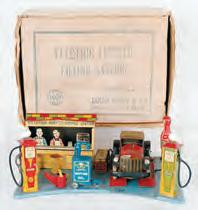
A rare 1912 Lionel #80 Automobile Outfit containing race car, original drivers and track, original cardboard box with Lionel advertising on exterior, appears never to have been played with, is estimated at $1,500-$2,000.


and from 11 a.m. to 3 p.m. on Sunday. Admission is $5. Bring a show card or press release for $1 discount.
A Morgantown basket will be among the prizes at the annual raffle, and Max and Anne Blackmore will present an educational seminar on Saturday at 1 p.m.
The convention will have a banquet and glass auction on Saturday at 6 p.m. The auction portion starts at
7 p.m. Donated items from the group’s nationwide membership will be auctioned. Items from different glass companies and eras will be offered. Included among the auction items will be a Bryce Glass collection of eight cerulean blue wine stems, two different sizes, and centerpiece bowl.
For more information, call Jim Leasure at 412-217-2083.
R.
FRIDAY, MAY 10, 2024
PUBLIC AUCTION NEW HOLLAND ESTATE VARIETY
COLLECTIBLES,
BIDDING
SUNDAY, MAY 12TH, 2024 @ 3:00 PM
This is an ONLINE BIDDING ONLY Auction at 325 W. MAIN ST., NEW HOLLAND, PA 17557
SHIPPING AVAILABLE

Very large auction (750 Lots) from several downsizing & estate dispersals including Antique & Vintage Kitchenware (Yellowware Bowls; PYREX; Stone & Enamelware; Stainless Steel Cookware; & more); STERLING, Pewter, Brass, & Silverplate Serving Pieces & Candlesticks; Uranium, Depression, Carnival, & Cut Glass Pieces; Antique & Vintage Collectibles, Tools, Advertising, Toys, Dolls, Historical Ephemera; Eastman Kodak & other Scales; Antique Wooden Foot Warmer; Coffee Grinders; Cast Kettles; Ship's Compass & Ship Collectibles; Ship's Captain Desk; Bisque & other dolls; FRAKTUR by Roma Ruth, "500th Anniversary of Menno Simon"; New & Vintage Clothes; Art Glass Paperweights; Numerous “Gone With The Wind” Framed Art & Plates; Several Framed Disney Lithographs & Prints, & Collector Plates; Eagles, Steelers, & Baseball Collectibles; Framed Winnie-the-Pooh Prints; Camping, Shooting, Fishing, Bicycling Gear & Accessories; Numerous Framed Limited Edition Prints by various Artists, some signed & dated; Several Pottery Pieces, some southwest & international patterns; Antique Vintage Millinery Hat Molds & Forms; Cast-Iron Doorstops, Bank; Quimper Plates; Sewing Notions & Fabrics; Many lots of Children & Hard Back Books; Lots of Record Albums in Good Condition; Vintage Trains & Accessories; Oil Lamps & Lanterns; Rifle Ammunition; Tools, Tools, & More Tools; & Much More. FULL LISTING & LARGE PHOTO GALLERY ON OUR WEBSITE BID NOW @ www.pmorganauctions.com


LIVE PREVIEW: MAY 3rd - MAY 13th from 10am-4pm
Flying Pig Auctions next auction is a continuation of our Spring Spectacular Auction which was so deep, diverse & eclectic that we divided it into two auctions! PART II consists of FOUR estates including an Eastern MA dealer/collector & a pair of octogenarians from the Hudson River Valley that have been married and collecting for over 60 years! Those two estates are complimented by PART II of the collection of Carl & Mary Lou Peterson of Eastern MA as well as The Estate of Marv & Barb Eliot of CT! These FOUR Estates all come together and form an exciting sale! Folk Art; Stacks of Furniture from Early Period & Primitive Country to early 20thC and all periods in between incl chests, blanket boxes, chairs, cupboards, candlestands, tables, etc! Boxes, Buckets & Baskets Galore in many shapes, sizes & colors! Signs, signs, and more signs… Stoneware, Redware, Yellowware & more ceramics & pottery incl collection of Dedham Pottery Plates; Glassware; Tin & Pewter; Weathervanes; Gameboards; Oriental Rugs; Hooked rugs; Decoys; Lighting; MINIATURES collection of stoneware & ceramics! Garden/Patio chairs, etc; I can’t even begin to list all the categories because there are so many! Almost 500 lots in this sale so take note of the EARLY START TIME of 4:15pm! Don’t miss this sale!



10 — Antiques & Auction News — May 10, 2024 antiquesandauctionnews.net R106552
FULL
LIVE
ONLY
Internet,
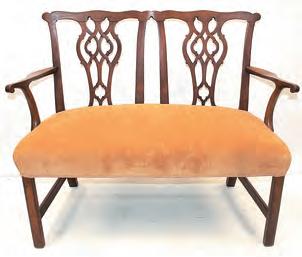
& Phone bidding available 25% buyer’s premium. Flying Pig Auctions MULTI-ESTATE ONLINE ANTIQUES AUCTION INTERNET, PHONE & ABSENTEE BIDDING AVAILABLE Monday, May 13th At 4:15pm NOTE EARLIER STARTING TIME 867 Route 12 Westmoreland, NH 03467 PH: 603-543-7490; 413-537-4855 Email: flyingpigantiquesnh@gmail.com https://flying-pig-auctions.liveauctioneers.com FLYING PIG AUCTIONS 867 Route 12, Westmoreland, NH 03467 13 Industrial Park Dr., Westmoreland, NH 03647 (Mailing Address) PH: 603-543-7490; 413-537-4855 • Email: flyingpigantiquesnh@gmail.com https://flying-pig-auctions.liveauctioneers.com Wonderful 18thC Mohawk Valley pine stepback cupboard w dental molding on top & lollipop carved sides in nice old surface shown w a sample of the many accessories Stacks of furniture incl 3 antique work/tavern tables in varying sizes incl very large w 2 board top – shown w a selection of Taghkanic baskets Another fabulous collection of Miniatures incl stoneware, yellowware & Quimper Fine period furniture incl this 18th C English Chippendale mahogany settee Wonderful painted country incl this 19thC 2 door cupboard Pr of early 19thC oil on canvas portraits of Peter & Betsy Allen – identified, signed H.C. Allen and dated 1815 on verso More country & primitive painted furniture incl bucket bench in blue & set of drawers in red shown w some of the buckets Antique glass & lighting incl a selection of 19thC blown Lacemaker’s/whale oil peg lamps Great antique carved wood lion corbel
CATALOG AVAILABLE ON
AUCTIONEERS ON MAY 3RD! This will be an INTERNET
AUCTION featured on LiveAuctioneers.com https://flying-pig-auctions.liveauctioneers.com
Absentee
Collection of Dedham Pottery plates many with Maude Davenport rebus
R106732 ANTIQUES,
TOOLS, ART GLASS, HOME GOODS, FRAMED DISNEY
LIMITED-EDITION LITHOGRAPHS
PRINTS ONLINE
ONLY
AND
AND
PA AY002383 R106687 DEAN
ARNER AUCTIONEER, LLC Public Auction! Check full listing and photos at www.deanarnerauctions.com DEAN R. ARNER, AUCTIONEER, LLC AY-002077L 570-386-3389
bagger, Cub Cadet riding
advertising items, large Winchester tool collection, Keen
tool collection, pocket and hunting knife collection, ammunition and much more! online • antiquesandauctionnews.net
AT 10:00 A.M. 1160 Trachsville Hill Road, Kunkletown, PA 18058 Firearms, 1996 Dodge pickup truck, John Deere mower with
mower,
Kutter
Continued from page 2
Collector
Continued from page 4
collectibles can make for an excellent diversification hedge as part of a well-established financial plan, but they should only ever make up a tiny fraction of the total portfolio. There is numerous data to cite on this topic and it is readily available online.
If you do want to try your luck at comic book investing, you will quickly learn that this sale of this top 0.01 percent book has absolutely no effect on the rest of the market at all. Over the short term, it is true that sales like this that are pumped up by the mainstream media do bring new participants into the market. I use the term participants because make no mistake, these are not collectors; true collectors do not just enter a collectibles market because they heard about a record breaking sale for an item they will never own. Therefore, in the grand scheme of things, this sale means very little unless if you happen to own this book.
But what about the person who has the money and means to buy this comic book and is wondering if they should take the plunge? After all, the collectibles market has been booming these past few years, even if you remove the pandemic speculative boom that caused several pop culture collecting markets to hit new record highs. I would offer them the same advice that I offer everyone else, and that advice
is simple: “Slow your roll.” Astute watchers of the History Channel show “American Pickers” will remember that advice from earlier seasons of the show, which are well worth watching. And before I conclude this article, I cannot help but to alert you that in our present higher-than-normal interest rate environment, many brokerage companies offer money market funds that are paying about five percent a year right now. To put this in perspective, that individual who paid $6 million dollars for this comic book could be getting $300,000 a year in simple interest alone (not factoring in compounding interest) for parking their money there instead. The economic opportunity cost of tying up money in antiques and collectibles is quickly forgotten by starry-eyed
Posters
Continued from page 7
signature, surreal style. He also designed covers for “Time,” “Fortune,” and “Life” magazines and produced commercial illustrations for corporations including Shell and Xerox.
“The number of graphic styles, designers, and periods represented should make for an exciting auction. We’re pleased to bring the individual rarities and the abundance of quality to the market,” according to Joe Slabaugh, Director of Cataloging. To learn more, visit www. potterauctions.com.
speculators but cannot be ignored by those trying to invest in these items. I am confident that the buyer of this book already took that into account and still went through with the purchase. Do with that information what you will because if you happen to own a copy of “Action Comics #1,” you own a piece of comic history, assuming Superman stays culturally relevant for years to come!
Shawn Surmick has been an avid collector since the age of 12. He currently resides in his hometown of Boyertown, Pa., and is a passionate collector of antiques and collectibles. His articles focus on various topics affecting the marketplace.

Boris Artzybasheff’s (18991965) “Bermuda by Clipper / Pan American World Airways” is estimated at $4,000-$6,000.


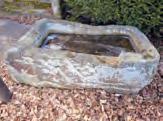




antiquesandauctionnews.net Antiques & Auction News — May 10, 2024 — 11 Preview for these items will be available 10am-3pm day of sale Pickup for both auctions will be May 21 - 9am-3pm. Horton Auction - Mill Stones, Sand Stones, and More Antiques, Primitives, Huge Bottle Collection, Victorian and Country Style Furniture, and Collectibles Online Only - 6 PM Large 6ft diameter millstone, benches, sandstone troughs, statues, cast iron hitching posts, lights, and rocks of all sizes. This stone auction is a live in person sale! Uncataloged stones and other items will be sold throughout the sale. Load out will be same day and May 21. Monday, May 20, 2024 10751 Johnnycake Ridge Rd Painesville, Ohio In Person - 12:00 Noon Rare bottles, Bristol Glass, primitive hutches, country store display cases, Victorian marble top furniture, antique books, artwork, hurricane lamps, hanging crystal light fixtures, quilts, clocks, local Painesville, Ohio items, and more! This collector had an eye for the finest detail, don’t miss out on a chance to bid on these fantastic items! TERMS: 10% BP ON ALL SALES CASH/CHECK 4% FEE FOR CC DIFFERENT ONLINE FEES APPLY Find this auction online at Atleeraberauctions.com, Live Auctioneers and Auction Zip 330-473-2448 R106725 “LET’S PLACE OUR AD TODAY!” Find a buyer for your antiques in SELLERS Find the antique you are looking for in SEEKERS. Call 1-800-800-1833 ext. 6022 or place your ad online antiquesandauctionnews.net Serving the antiques industry for over 55 years! antiquesandauctionnews.net R068587 R106755 Accepted Payments: Cash or PA Check. Visa, MasterCard & Debit Card with 3% fee. No out-of-state checks without prior approval. VARIETY SALE ANTIQUES, COLLECTIBLES, TOYS, MODEL TRAINS, DOLLS, HOUSEHOLD GOODS, TOOLS SATURDAY, MAY 11, 2024 SALE TIME - 9:00 A.M. PREVIEW - Friday, May 10, 2:00 P.M. - 5:00 P.M. and Saturday, May 11 from 7:00 A.M. *The following is just a very general list of items to be sold. Photos representing the entire auction will be posted on our website www.horstauction.com on Friday, May 10. Sale to be held at Horst Auction Center, 50 Durlach Road, EPHRATA, LANCASTER CO., PA 17522 ANTIQUES
CAST IRON; WOODENWARE; STRAWSER CARVED BIRD TREE; COPPER & BRASS; TIN & METALWARE; MILITARY COLLECTIBLES; LONGABERGER® BASKETS & POTTERY; CONTEMPORARY FOLK ART REDWARE; MUSICAL INSTRUMENTS; CHRISTMAS &
DECORATIONS; CHINA & GLASSWARE; VINTAGE & COSTUME
LINENS &
ARTWORK &
BOOKS & PAPER; STAMPS ALBUMS; 1954 CHEVROLET DEALERS SALES ALBUM; COMIC BOOKS; TOYS; TONKA TRUCKS; EARLY HESS SHIP; MODEL TRAINS & ACCESSORIES; SPORTS CARDS & MEMORABILIA; DOLLS & STUFFED ANIMALS; LARGE DOLLHOUSE W/FURNITURE; HOUSEHOLD GOODS; TOOLS; BOX LOTS & MANY OTHER ITEMS TO BE SOLD! “Horst Auction Center” F063435 ATTENTION! Get the Word Out! Advertise Your SERVICE OR SUPPLIES in the Classifieds! Call 1-800-800-1833, x6022 or www.antiquesandauctionnews.net R103930 Specializing In Vintage Cameras & Photographs from the 1840s-1990s Hours: Mon., Thurs., & Fri. 10-5; Sat. & Sun. 10-3 354 Main St., Denver, PA - 717-335-8508 Always buying collections cameras, photographs, comic books, sports cards and other ephemera! PLACE YOUR CLASSIFIED AT ANTIQUESANDAUCTIONNEWS.NET OR 1-800-428-4211 CLASSIFIED S SEEKERS/SELLERS FINE ART WANTED ROGALLERY.COM BUY. SELL. CONSIGN ONLINE ART AUCTIONS OVER 5,000 ARTISTS 800.888.1063 art@rogallery.com 47-15 36th ST., LIC, NY 11101 OLD PAINTINGS WANTED American Impressionists, New Hope School artists, PAFA artists, European paintings. 40 years experience. Immediate payment. Call 215-348-2500. SMALL COLLECTOR PAYS FOR COINS & COLLECTIONS: ALL TYPES. Will travel to you. Call Gary: 301-809-0291 BUYING LARGE DIAMONDS Gold, Platinum, Silver, High grade watches, any condition. Call Ron 484-872-8216 Highest Prices Paid. Lobby Cards, 1-Sheets, Displays, Window Cards, Glass Slides. Dwight Cleveland, ph. 773-525-9152 POB 10922, Chicago, IL 60610 posterboss@aol.com MOVIE POSTERS Export PDF_Export PDF 3/22/2024 11:2 SHEET MUSIC WANTED, any era. Sandy Marrone, 113 Oakwood Drive, Cinnaminson, NJ 08077, 856-829-6104 E-mail: smusandy@aol.com 1950s STYLE PAYPHONES Available are 1950s style old payphones not plastic repros! $280, TT $235. Call, send for details. Offering to sell out. Typical pictures on website: www.phonecoinc.com Also old store & tavern antiques to vacate building. 608-582-2263 10 am-8 pm CST phonecoinc@aol.com KYLE FAMILY FARM Bottle & Antique Show. Vendors & customers welcome. June 8, 9AM - 2PM. 831 East Perrineville Road,East Windsor, NJ. 609-209-4034 WORLD’S LARGEST WORLD’S LARGEST on-line store! OldPostcards.com 2 Million Postcards! Email: Sales@Oldpostcards.com Toll-Free: 1-888-828-7811 ANTIQUE LAMP & METALS RESTORATION Antique Oxidized Patina Finishes, Polishing & more in Abbottstown, PA. Ask for John: 717-797-9194
& COLLECTIBLES;
SEASONAL
JEWELRY;
TEXTILES;
PRINTS;