being human

Gradalis Teacher Training and Summer Programs
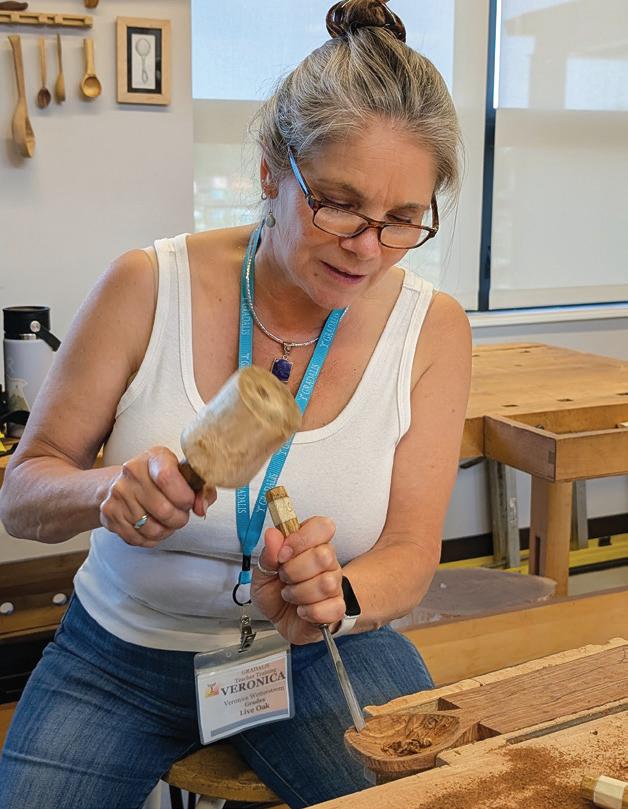
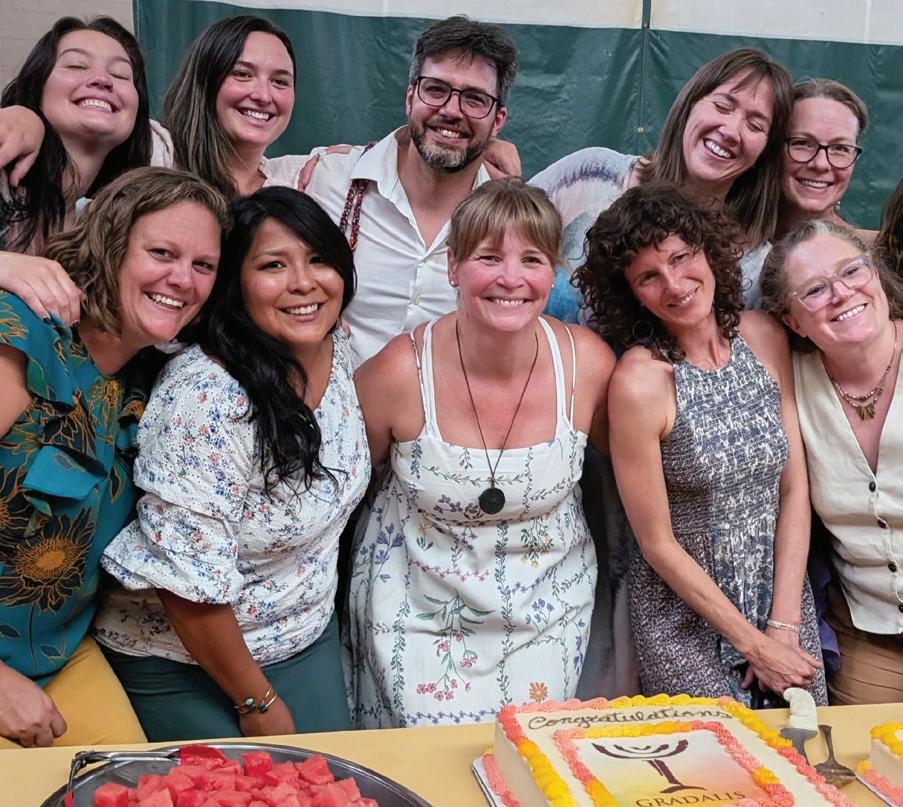
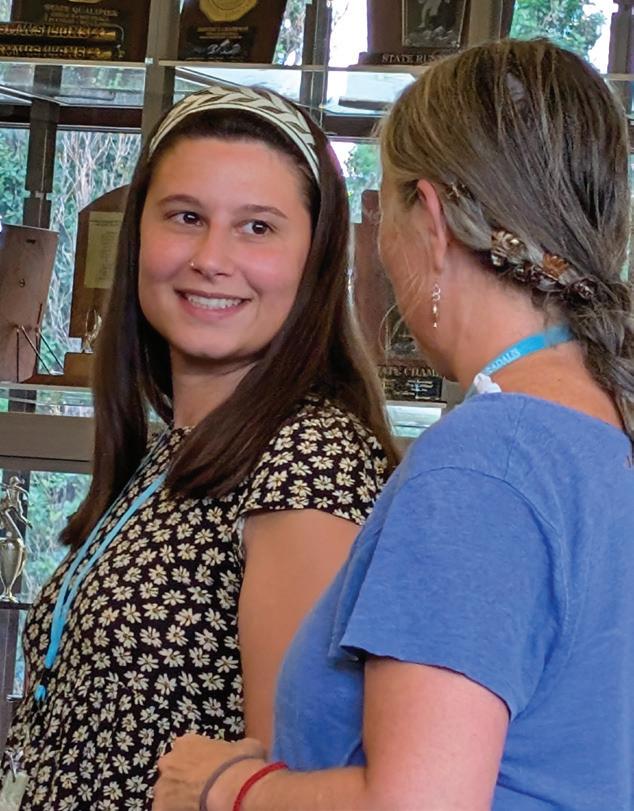
CERTIFIED GRADALIS TEACHER TRAINING
For independent and public schools inspired by Waldorf principles
NEW COHORT BEGINS SUMMER 2026
BOULDER, COLORADO | June 21 - July 10
26 month Program designed for the busy full-time working teacher.
Choose Early Childhood or Grades 1- 8
TEACHING AS AN ART WEEK
ECE & Grade-level preparation for the 2026-2027 school year
School Leadership Institute for administrators and other school leaders
BOULDER, COLORADO | June 21 - 26, 2026
Cohorts include: ECE-Grade 8, Leadership, and Specialty Teachers including Foreign Language, Music, and Games.
Coursework includes philosophical foundations, practical insights for child observation, Waldorf curriculum at your grade level, Waldorf culture, inner development, visual arts, movement, and music. All instructors are Waldorf trained and experienced educators.
Includes online and in person elements over 7 Trimesters.
• Three 3-week Summer Intensives (includes Teaching as an Art Week)
• 4 Practicum Weekends over 2 school years
• Monthly online webinars focused on curriculum at your grade level and applied philosophy
• 4 On-site field mentor visits at your school
Join us for renewal and practical grade level instruction, arts and Waldorf approaches for use in the classroom.

4 Introduction to this issue from Mary Stewart Adams Features
14 About the Verse for America By Virgina Sease
17 Ancient Threads Unbroken By Cliff Venho
20 Some Reflections from Dornach By Nanthaniel Williams
23 Anticipating Raphael at the Met By Bruce Donehower
25 RAFFAELLO DA URBINO | Raphael Santi 1483 - 1520
26 Explorations for Working with Those Who Have Died By Lynn Stull
30 Futuring Now By Adeline Lyons Research
34 Virtue Maxims of Rudolf Steiner By John Riedel
37 Poem By John Urban
38 Completing the Circle By Chiaki Uchiyama News
40 Biodynamic Association By Alex Tuchman
42 Dues, Freedom, and Commitment Firing our will! By Charles Burkam, J.D.
45 Statute 12 By Rudolf Steiner
46 Reflections on Light Between Compiled By Frank Agrama
48 The Western Regional Council By Christina Sophia
50 Council of Elders for Waldorf Schools By Jeffrey Levy Books & Reviews
52 Living Social Art - The Life and Work of Carlo Pietzner By Cornelius Pietzner
53 Stories from the American Journey: A Review By Linda Williams, PhD 55 Rudolf Steiner Library Celebrating its past present and future In Memoriam
56 Memoriam for Mary Lee Plumb-Mentjes By Margaret Runyon
57 Memoriam for Penny Appel Kruse
58 Honoring Members Who Have Crossed the Threshold of Death Of Note
59 Welcoming New Members of the Anthroposophical Society in America
60 Henry Barnes Fund By Sherry Wildfeuer, Helen Lubin, and Margaret Runyon
61 Sun and Moon At 24 o Cancer August 12, 2026 By Mary Stewart Adams
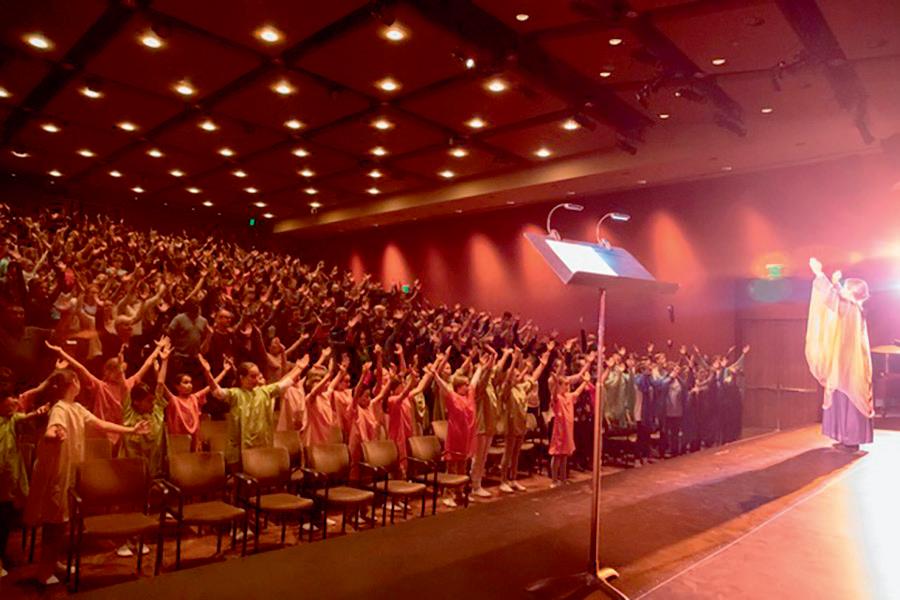
Correction: The photo used on page 31 spring/summer 2025 issue was taken in February 2019 during a performance of Astrid Thiersch’s San Francisco Youth Eurythmy Troupe in Kanbar Hall at the Jewish Community Center in San Francisco. In the full picture shown here, Astrid is doing eurythmy with the audience. The performance was sold-out, with over 400 Waldorf students in attendance.
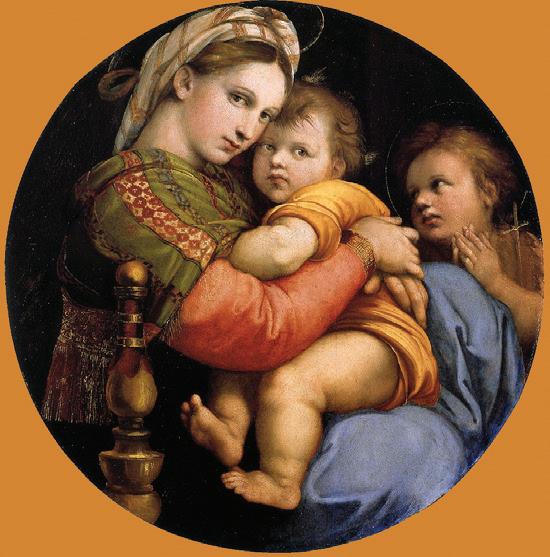
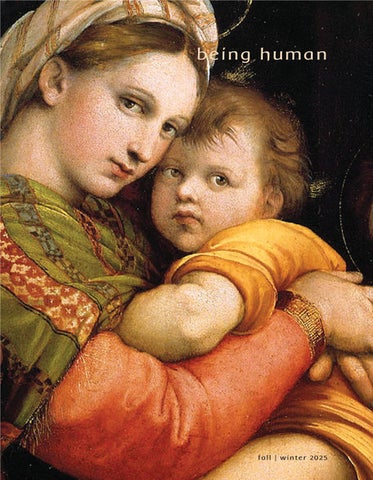
ON THE COVER
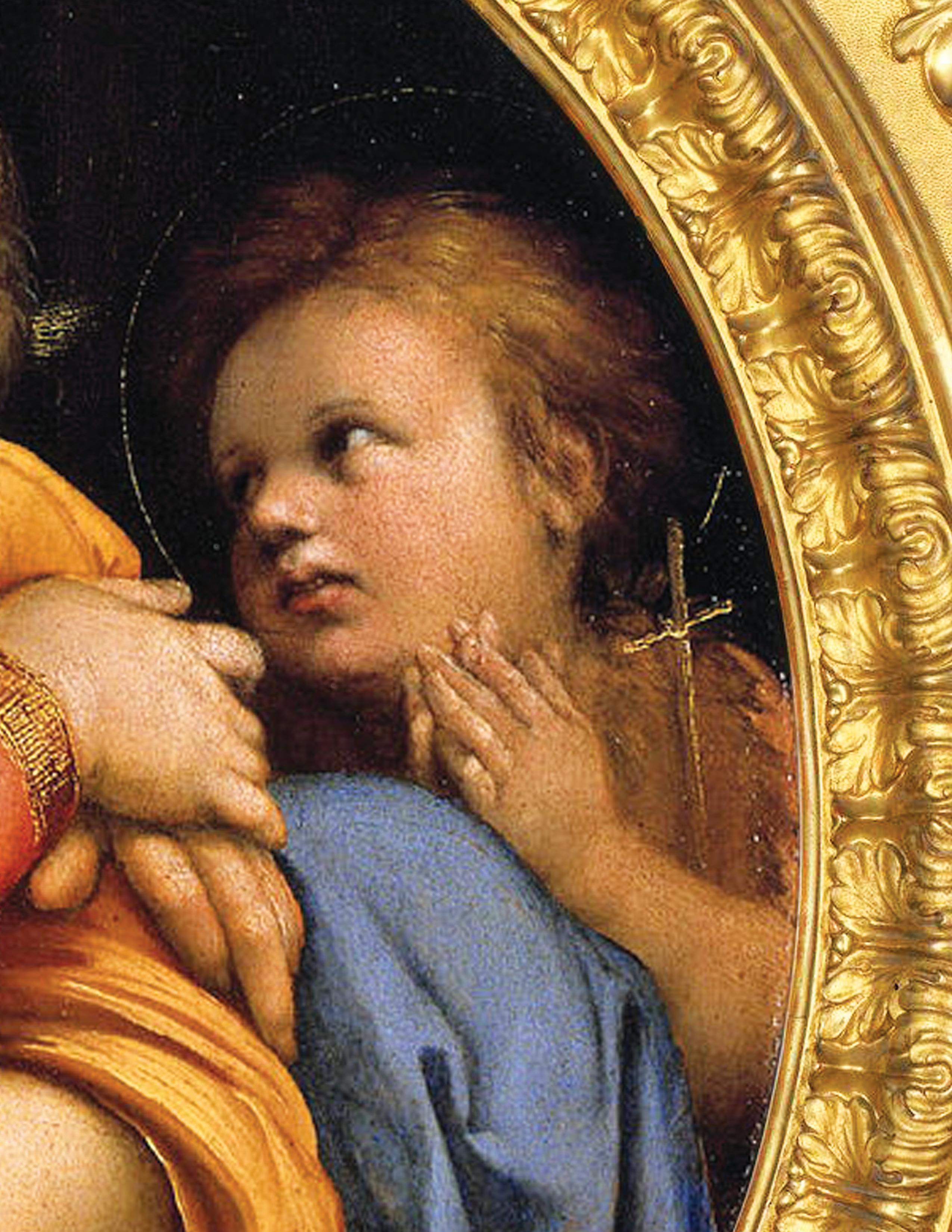
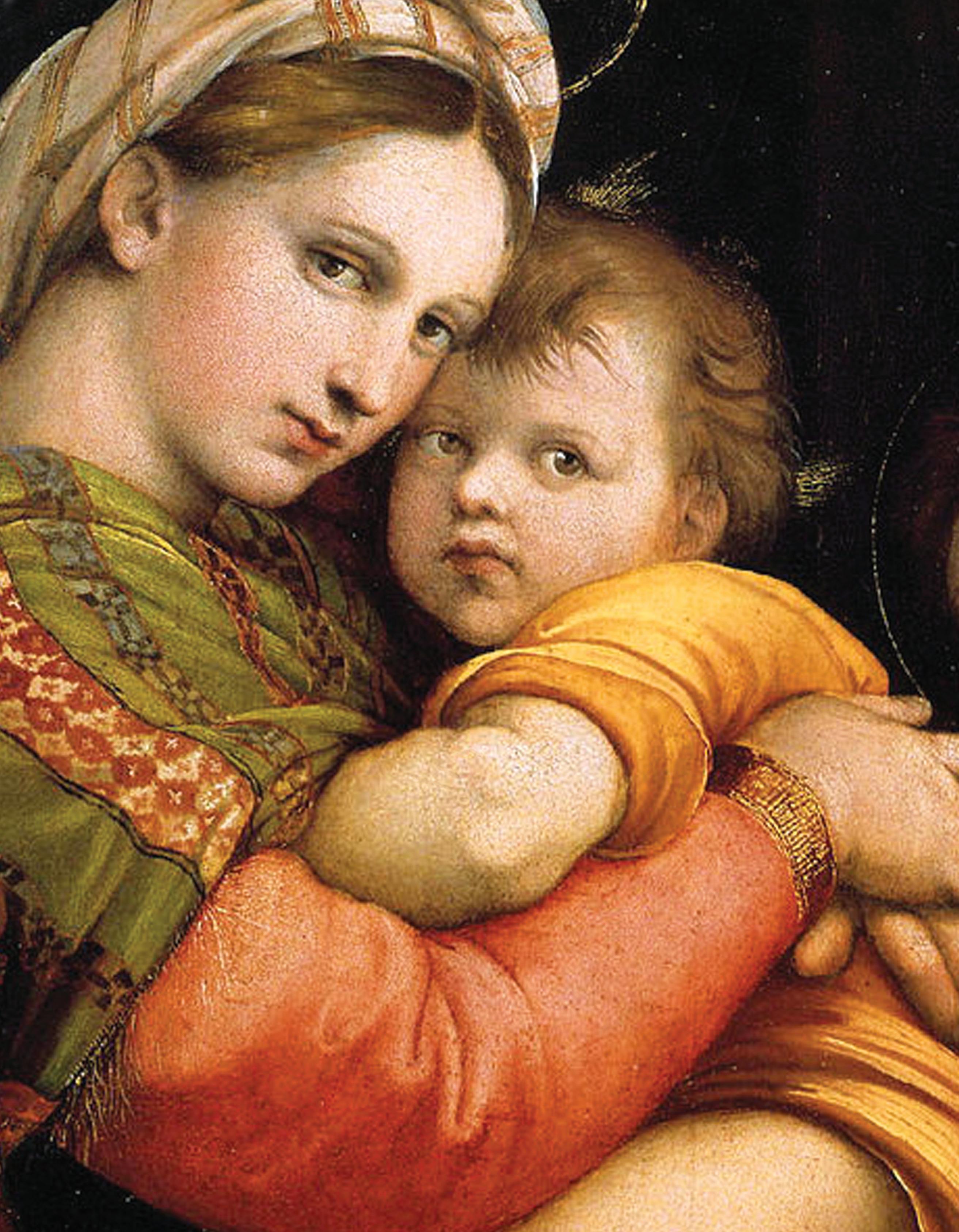
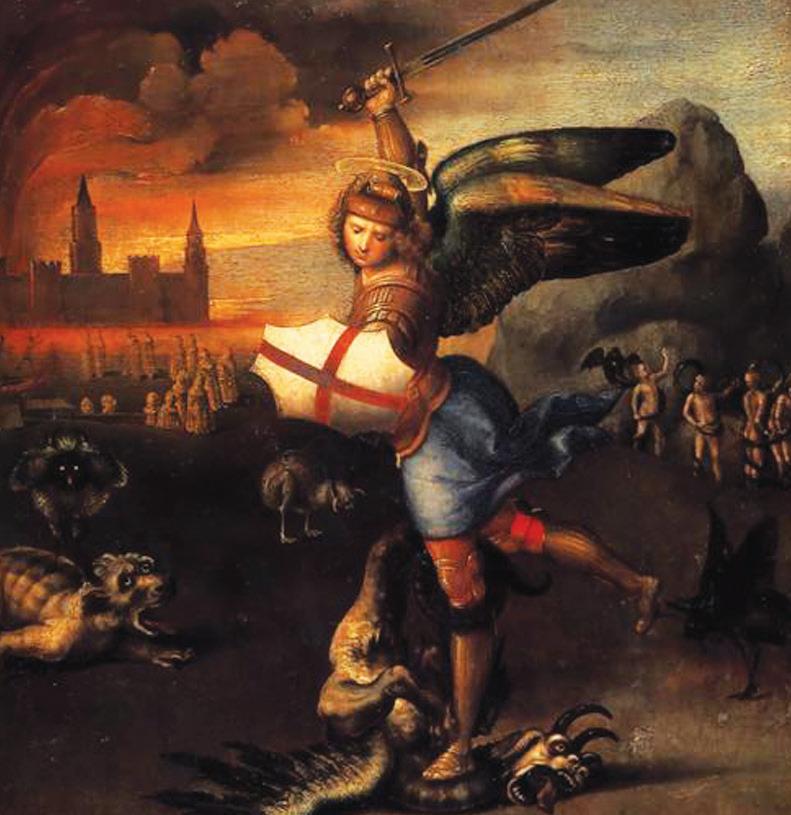
Raphael Santi, Madonna della Seggiola or, The Madonna of the Chair. executed c. 1513–1514, and housed at the Palazzo Pitti Collection in Florence, Italy... it has been in the Medici family since the 16th century.
HOW BOUNTIFUL and benign Heaven sometimes shows itself in showering upon one single person the infinite riches of its treasures, and all those graces and rarest gifts that it is wont to distribute among many individuals, over a long space of time, could be clearly seen in the no less excellent than gracious Raffaello Sanzo da Urbino, who was endowed by nature with all the modesty and goodness which are seen at times in those who beyond all other men, have added to their natural sweetness and gentleness the beautiful adornment of courtesy and grace, by reason of which they always show themselves agreeable and plesant to every sort of person and in all their actions...there was right good reason for Heaven to cause to shine out brilliantly in Raffaello... Giorgio Vasari The Lives of the Artists

The Anthroposophica l Society in America
GENERAL COUNCIL
Gerneral Secretary & President
Mary Stewart Adams
Treasurer, At-large
Charles Burkam
Secretary, Central Region
Mary Mertz
Chair, at-large
Ezra Sullivan
Western Region
Christine Burke
At-large
Margaret Runyon
At-large
Gino Ver Eecke
At-large
Eduardo Yi being human MAGAZINE
is published by The Anthroposophical Society in America 1923 Geddes Avenue
Ann Arbor, MI 48104-1797
Past issues are online at www.issuu.com/anthrousa
Submissions, questions, comments : editor@anthroposophy.org or to the postal address above
Next submission deadline: March 31,2026
being human is sent free to ASA Members anthroposophy.org/join
To request a sample copy editor@anthroposophy.org
Letter from the General Secretary
As the year 2025 fulfills and we turn the calendar page to 2026, so, too, does the decade of centennial observances rooted in the life and deeds of Rudolf Steiner reach its fulfillment. These celebrations have been particularly poignant during the last three years, beginning with the 100th anniversary in 2022/23 of the fire that destroyed the First Goetheanum on New Year’s Eve, followed by the 100th anniversary in 2023/24 of the Christmas Conference for the Foundation of the General Anthroposophical Society, and in 2025, we bring to its close the 100-year rhythm of time that followed on from the life of Rudolf Steiner.
Now, our story begins again, as Marie Steiner described it, with a newly-won consciousness, through which the light is shining in the darkness.
In the US, we find ourselves in the culminating moment of another potent rhythm ~ the semiquincentennial, or 250th anniversary of the signing of the Declaration of Independence, on July 4, 2026.
With this in mind, this issue of being human magazine opens with an essay from Virginia Sease about the Verse for America , written by Rudolf Steiner at the behest of Ralph Courtney in 1923 for strengthening the anthroposophic work that was taking root in the US.
©2025
The Anthroposophical Society in America.
Resposibility for the content of the articles is the authors ’
being human
From the Verse for America we step into the mystery of destiny encounters, and to one of the most precious treasures of Rudolf Steiner’s life: his meeting with Felix Koguzki, the herb gatherer (see Cliff Venho’s piece on page 17).
And now let us believe in a long year that is given to us, new, untouched, full of things that have never been . - Rilke
Nathaniel Williams shares an essay on his life as an American in Dornach, where he has been living with his family these three years, leading the Youth Section for the School of Spiritual Science. Both Nathaniel (page 20) and Chiaki Uchiyama (page 38), will be panelists at the Harvard Divinity School event 100 Years of Rudolf Steiner happening in December, and we are grateful to them both that they shared their thoughts and ideas at this culminating moment.
In spring 2026 the Metropolitan Museum of Art in New York City is hosting the largest-ever exhibition of Raphael’s artworks in the US, in the first year of the next century of anthroposophy in the world. As Bruce Donehower writes in his essay on page 23, the exhibit’s title Sublime Poetry is enough to give any anthroposophist pause, and offers plenty of opportunity to celebrate the beauty with which spiritual science moves through the world.
Author and therapeutic eurythmist Lynn Stull grounds us in this season with insights and support for working with loved ones who have died, and then we turn toward the future with Adeline Lyons’ feature on the Youth Section’s publishing initiative Futuring Now . The artwork, poetry, and plans are impressive and warrant our attention and support.
From the season of the dead with its beautiful call to remembrance of things past, to the promise of what is to come with Futuring Now , we turn our attention to the season of holy nights, and John Riedel’s article about the 12 Virtues, which creates a nice framework for reviewing the year past and the year ahead during the 12 days and 13 nights of the Christmastide.
There’s news to share about a newly-formed Alliance of Biodynamic Associations, so we asked Alex Tuchman, in his role as coordinator in North America of the Agriculture Section for the School of Spiritual Science, to describe for the rest of us what’s going on.
In Member News, we include treasurer Charles Burkam’s essay on membership dues ~ an expression of our will to fully realize the statutes of the Christmas Conference (we’ve included Statue #12 on page 45).
There was a large gathering of the Youth Section this past summer at Hawthorne Valley Waldorf School, and
readers will get a glimpse of the Light Between through the shared reflections of participants on page 46.
Linda Williams provides an insightful review of Karl Frederickson’s book Stories from the American Journey, a timely publication particularly suited to the semiquincentennial year upon us, to support our “looking into the past, to identify the values and strengths on which (we) can build a better world.”
The Rudolf Steiner Library holds the largest Englishlanguage collection of Rudolf Steiner’s works in the world. Friends and supporters hosted a summer event in Hudson, NY which we share here to help raise awareness about what’s needed to keep the Library strong.
Our News for Members also includes a report from the Whidbey Island group and the support their burgeoning community received from a recent meeting with the Western Regional Council of the Anthroposophical Society. Another new group, in Louisville, Kentucky, celebrates the support in their community from the council of elders gathered around the local Waldorf school.
In this issue we honor Mary-Lee Plumb-Mentjes and Penelope Kruse, and other friends who dedicated their lives to anthroposophy, together with those who are just joining the Society this year.
There are some terrific research announcements from stewards of the Henry Barnes Fund, with information about how you can support this essential work.

Then there’s the Moon, readying to eclipse the Sun at the peak of next year’s Perseid Meteor Shower, hung aloft in the night like an invitation from starry worlds (page 61). May it be an inspiration for our further work in the renewed spiritual life of our time. i
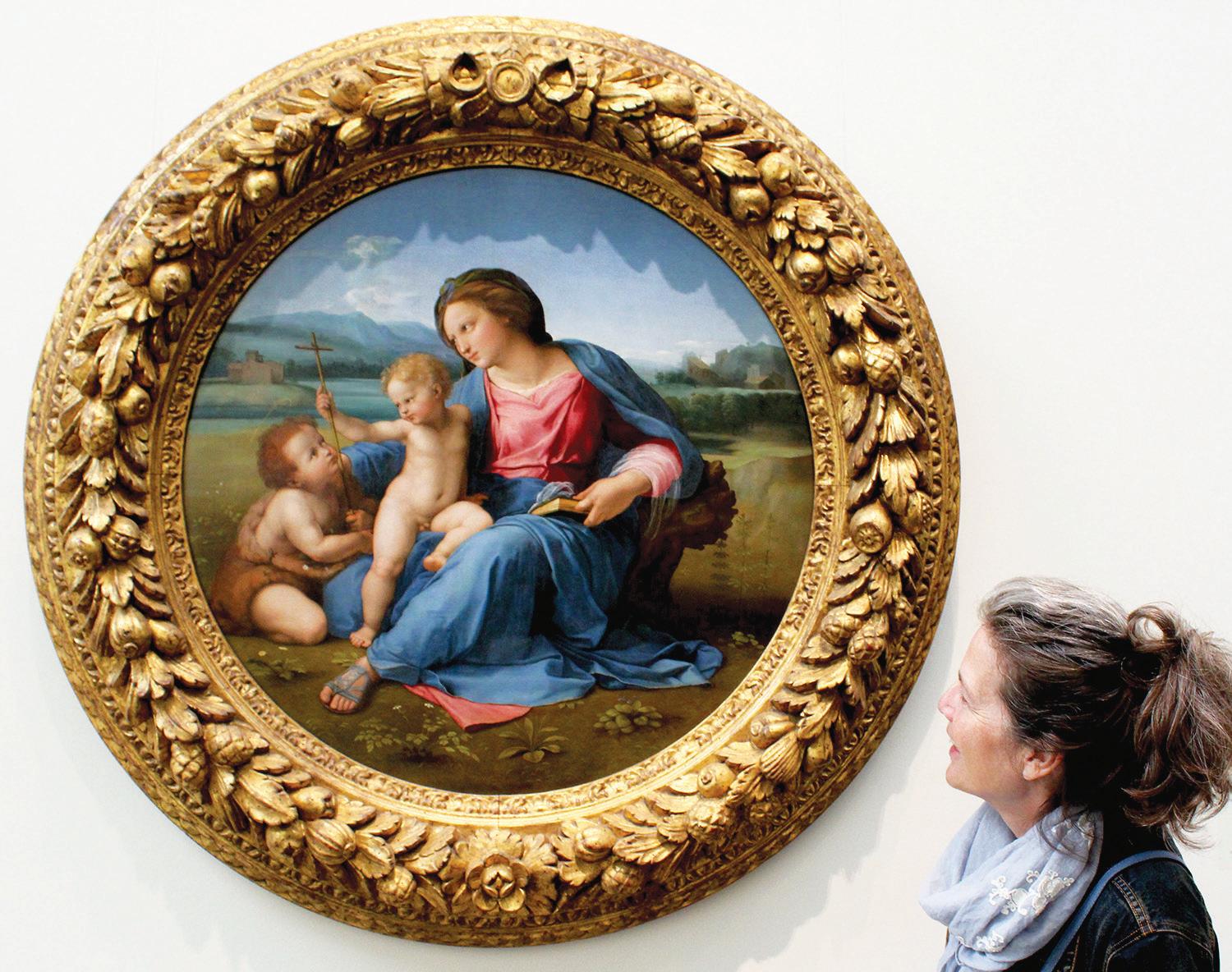
I had the chance to see Raphael’s Alba Madonna at the National Gallery, Washington DC, during the Society’s Annual Conference there in October 2022. This piece travels to the Met for their spring exhibit of Raphael: Sublime Poetry . Other pieces include the Portrait of Baldassare Castiglione from the Louvre, and the Ecstasy of St Cecilia from the Pinacoteca Nazionale in Bologna. There will be 200 pieces in all. Tickets go on sale in mid-December.



GRADALIS
CURRICULUM FRAMEWORKS
Easy detailed Math & Literacy Guides for KG through Grade 8 in public and private Waldorf Schools.
A Five-volume, detailed-scope and sequence defines subject content and provides examples for designing Waldorf lessons.
Curriculum Guides are a resource for teacher research - - guiding delivery of skills content using Waldorf approaches.
Provides support for more rigorous foundations in Literacy and Math in schools inspired by Waldorf Education.
Designed by Prairie Adams in collaboration with educators and consultants with expertise in their fields.
Includes both electronic and hard copy volumes, instructional videos, and student report form templates.


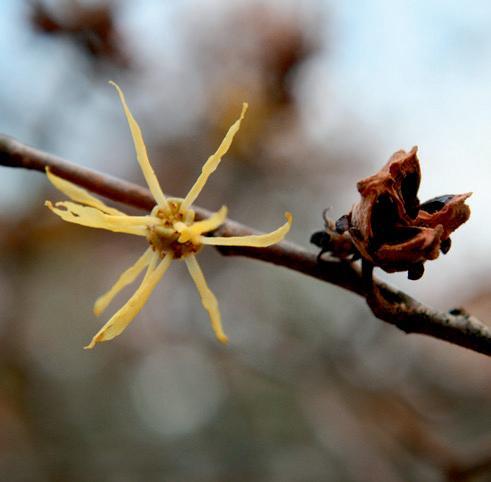
Encountering Nature and the Nature of Things
Foundation Course in Goethean Science
March 2026- July 2027
Two-week residential intensives:
June 22 - July 4, 2026
June 21 - July 3, 2027
Nonresidential guided study & independent practice in between
“The knowledge [we] seek is not meant for controlling the world, but, rather, for unlocking it and letting a mute world become one that speaks to us in a thousand places.” — Erwin Straus
Learn more and apply at natureinstitute.org/foundation-course
February 20 - 22, 2026
Climate Colloquium
March 20 - 22, 2026
Mathematics Alive!

Check out our publications and more programs and events at natureinstitute.org The Nature Institute







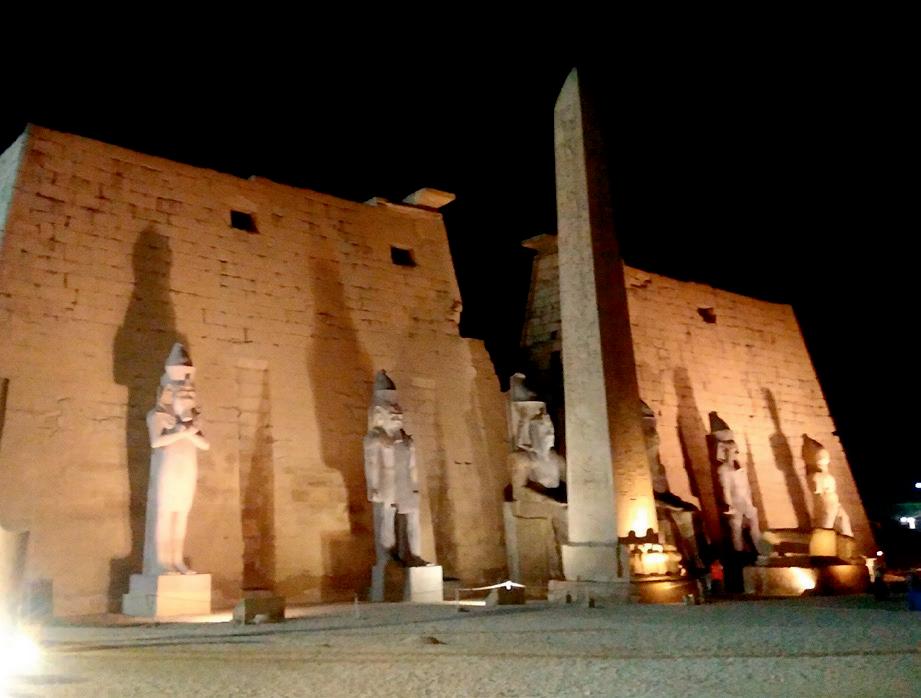

Sail the Nile in a traditional houseboat
Details: Gillian at gillianschoemaker@gmail.com
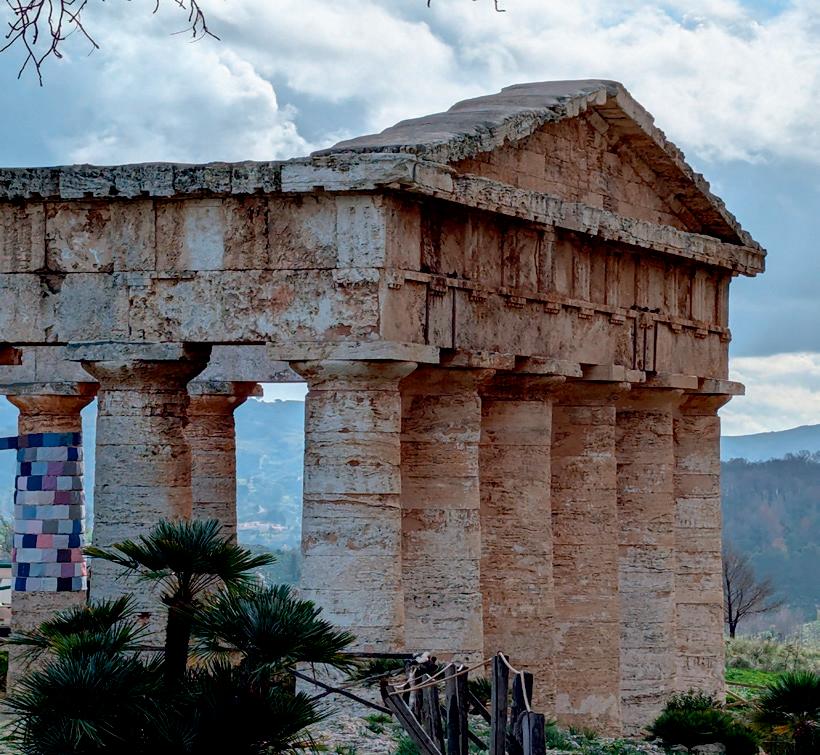
Sicily - cultural melting pot from East, West, North & South Rome the eternal city & Pompeii


THE COLLECTED WORKS OF RUDOLF STEINER

Earthly and Cosmic Man (CW 133)
isbn 9781621483847 198 pages, $24.95
The Hour of Decision (CW 203) isbn 9781621483236 362 pages, $35.00 color plates
STEINERBOOKS
The Seasonal Festivals as Soul Experience (CW 224) isbn 9781621481812 284 pages, $28.00 color plates
Eurythmy Forms for The Calendar of the Soul (CW A23/2) isbn 9781621483861 180 pages, $35.00 full color illustration
www.steinerbooks.org • order phone 703-661-1594 friends@steinerbooks.org
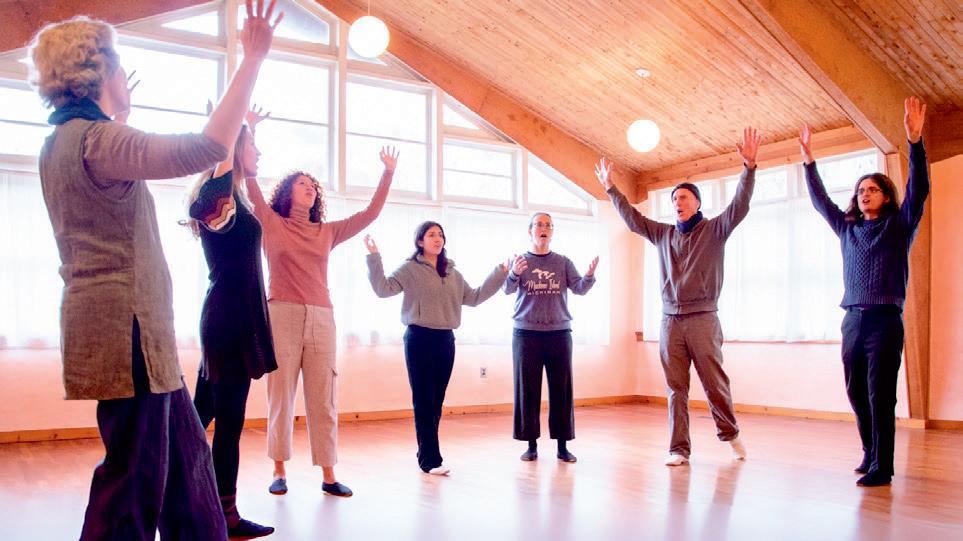
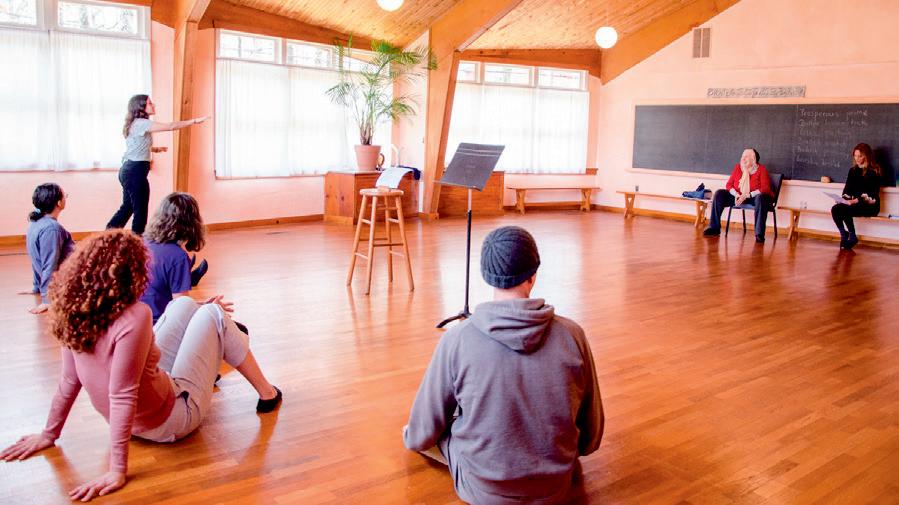
Deepen your sense of self, and strengthen your capacity for engagement in the world through work with the spoken word, based on the insights of Rudolf and Marie Steiner.
The Steiner School of Speech Arts offers an in-person, four-year training program, as well as shorter workshops, within the embrace of the Threefold Educational Center (Chestnut Ridge, NY), also home to many and varied anthroposophically-inspired initiatives
Barbara Renold, Jennifer Kleinbach, & Helen Lubin

A two-week intensive therapeutic session held at the Rudolf Steiner Health Center in Ann Arbor. The program is designed for individuals with a variety of ailments, including cancer, chronic illnesses or anyone seeking a restorative reset. Patients receive care from fully trained MD’s. Anthroposophic therapies and nursing care, vegetarian meals and education complete the care.
For more information go to: steinerhealth.org Financial aid is available
L egacy C ircle
Leaving a Legacy of Will
The Anthroposophical Society in America
Thank You to those members, who support the Society’s future through a bequest or planned gift .
Erika V. Asten* Seymour Lubin*
Betty Baldwin* Greg Martens*
J. Leonard Benson* Barbara Martin
Susannah Berlin* Beverly Martin
Hiram Anthony Bingham Helvi McClelland
Virginia Blutah* Robert & Ellen McDermott
Iana Questara Boyce* Robert S. Miller*
Marion Bruce* Ralph Neuman*
Robert Cornett Martin Novom
Helen Ann Dinklage* Carolyn Oates
Irmgard Dogegge* Mary Lee Plumb-Mentjes
Raymond Elliot* Norman Prichard*
Lotte K. Emde* Paul Riesen*
Hazel Ferguson* Joan Roach*
Marie S. Fetzer* Mary Rubach*
Linda C. Folsom* Margaret Runyon
Gerda Gaertner* Ray Schlieben*
Susanna Gaertner Lillian C. Scott*
Ray German Fairchild Smith*
Ruth Geiger Patti Smith*
Harriet S. Gilliam* Hannah Sohnrey*
Chuck Ginsberg Doris E. Stitzer*
Hazel Archer-Ginsberg Gertrude O. Teutsch*
Agnes B. Granberg* Katherine Thivierge
Alice Groh Jeannette Van Wiermeersch*
Bruce L. Henry* Catherine Vanden Broek*
Ruth Heuscher* Randall Wadsworth
Richard Hicks* Pamela Whitman
Christine Huston Thomas Wilkinson
Ernst Katz* Patricia Turner*
Cecillia Leigh Anonymous (22)
Anna Lord* * indicates past legacy gift
L egacy giving is an excellent way to support the work of the Society far beyond a person’s current living capacity. There are a variety of ways to make a legacy or planned gift. If you would like to learn more please contact us: info@anthroposophy.org 734-662-9355 www.anthroposophy.org/legacy
The ASA invites you to join the
Michael Support Circle
Our major donor circle. Thank You to the 45 individual members, and to these organizations for their gernerous and on-going support:
Association of Waldorf Schools of North America
Camphill School - Beaver Run
Carah Medical Arts
Council of Anthroposophical Organizations
Great Lakes Branch
House of Peace
Michael Support Circle members pledge gifts of between $500 and $5000 per year for five or more years. They help to Society to grow in capacity and vitality - the basis for increased membership, new learning opportunities, and greater impact in the world.
To learn more about how you can support the strength and sustainability of our movement, contact us: info@anthroposophy.org

Steiner Health Clinical Fellowship
A unique one-year hands-on program for an MD or DO to be mentored by anthroposophic medical doctors. Designed for recent residency graduates and practicing physicians. Applicants must be eligible for licensure in Michigan as an MD or DO. Interest in pursuing anthroposophical medicine is required. The position will be funded at $100,000 which will cover salary and other expenses.
For more information and to complete an online application, go to: https://steinerhealth.org/fellowship/







the interpenetrating mysteries of Body, Soul & Spirit

the elusive secrets of your Psyche


AAP programs provide potent tools and rich experiences to explore the beauty and complexity of the human being
the journey from lower self to Higher Self

NEW PROGRAMLAUNCHED - A NEW COHORT IS FORMING
anthroposophicpsychology.org
Dear Members and Friends of the Anthroposophical Society in America
From Virginia Sease | Goetheanum May 2025
In response to a request from Mary Stewart Adams to write something for the newsletter, I would like to share some considerations which ultimately relate to the current challenges for the USA and the world. During a time of crisis resulting in the First World War, Rudolf Steiner held a lecture in the Swiss city of St. Gallen. At this time the United States had entered into the war. In his lecture, 16 November, 1917, with which many readers may be familiar, he described a particular being depicted as the “geographic Double”. The German word offers an exact picture: “Doppelgänger” which may be translated as walker – “Gänger” – in German – “Fussgänger” is a foot-walker, a pedestrian and “Doppel” – Double, a duplicate “companion” walker. Rudolf Steiner depicts an Ahrimanic spiritual being which attaches itself to a human being soon after birth. This being chooses the human being according to his or her place of birth. It should not be confused with the being, the essence, carrying our past karma which is completely and only related to the individual human being and represents personal qualities in thinking, feeling, and willing which need to be transformed, sometimes referred to as the Lesser Guardian of the Threshold.
Since this St. Gallen lecture is available, 1 it may suffice to mention a few key-note qualities as a background for the manner in which this being can be met especially through anthroposophy. Rudolf Steiner mentions how the Double works through the human will forces, which have a natural connection to the Earth, and also works through the forces of the intellect. For the middle sphere the human being is not under the influence of the Double. This means that the “Gemüt” is not affected by the Double (The word “Gemüt” is difficult to translate into another language. I have tried to designate it as “a warm thought—imbued feeling essence” V.S.) Rudolf Steiner has ascertained that this geographic Double strives most strongly where the mountains run in a north-south direction in relation to the electromagnetic pole, such as the Rocky Mountains in the West and the Appalachian chain in the East.
With this summarized background we can turn to Rudolf Steiner’s extraordinary gift for America, known as the Threefold Verse or the America Verse . First, I would like to take this opportunity to record an event which occurred for me regarding the history of this verse. I was invited to give a lecture in the St. Gallen branch of the Anthroposophical Society in Switzerland, which took place exactly 70 years after Rudolf Steiner’s lecture about the “geographic Double”. After the lecture an elderly gentleman, Reinhardt Müller, mentioned that he had a special connection with the United States, and we arranged for a conversation at the Goetheanum. He related that when he was a young man, he was afraid that he would be conscripted into military service, and he requested a meeting with Rudolf Steiner. Rudolf Steiner allayed his fear. During the First World War, he did border guard duty at the Swiss border. Later he attended Rudolf Steiner’s lectures to the workers at the Goetheanum. His family had a lace business which was well-known for fine craftsmanship. At that time lace was very popular. Since Reinhardt Müller spoke English, he went regularly on business trips as a representative of his family’s firm to New York City. He crossed the Atlantic by ship with the goods in his luggage. In New York City, he found the early American anthroposophists: the “First Generation.” Among them were Ralph Courtney, Charlotte Parker, Frederick Heckel, Henry and Maud Monges. These individuals undertook practical steps to bring the presence of anthroposophy to this vast city. They founded a famous vegetarian restaurant in the city center. Their many guests made their first acquaintance with anthroposophy through conversation and lectures. 2
Ralph Courtney had acquired an especially comprehensive understanding for the Threefold Social Order. He was the chief European correspondent at the Paris headquarters of the New York Tribune , and visited Rudolf Steiner frequently at the Goetheanum. For the Threefold Group, Ralph Courtney contacted Rudolf Steiner in 1923 and requested a verse, a meditation for this group. Rudolf Steiner accepted his
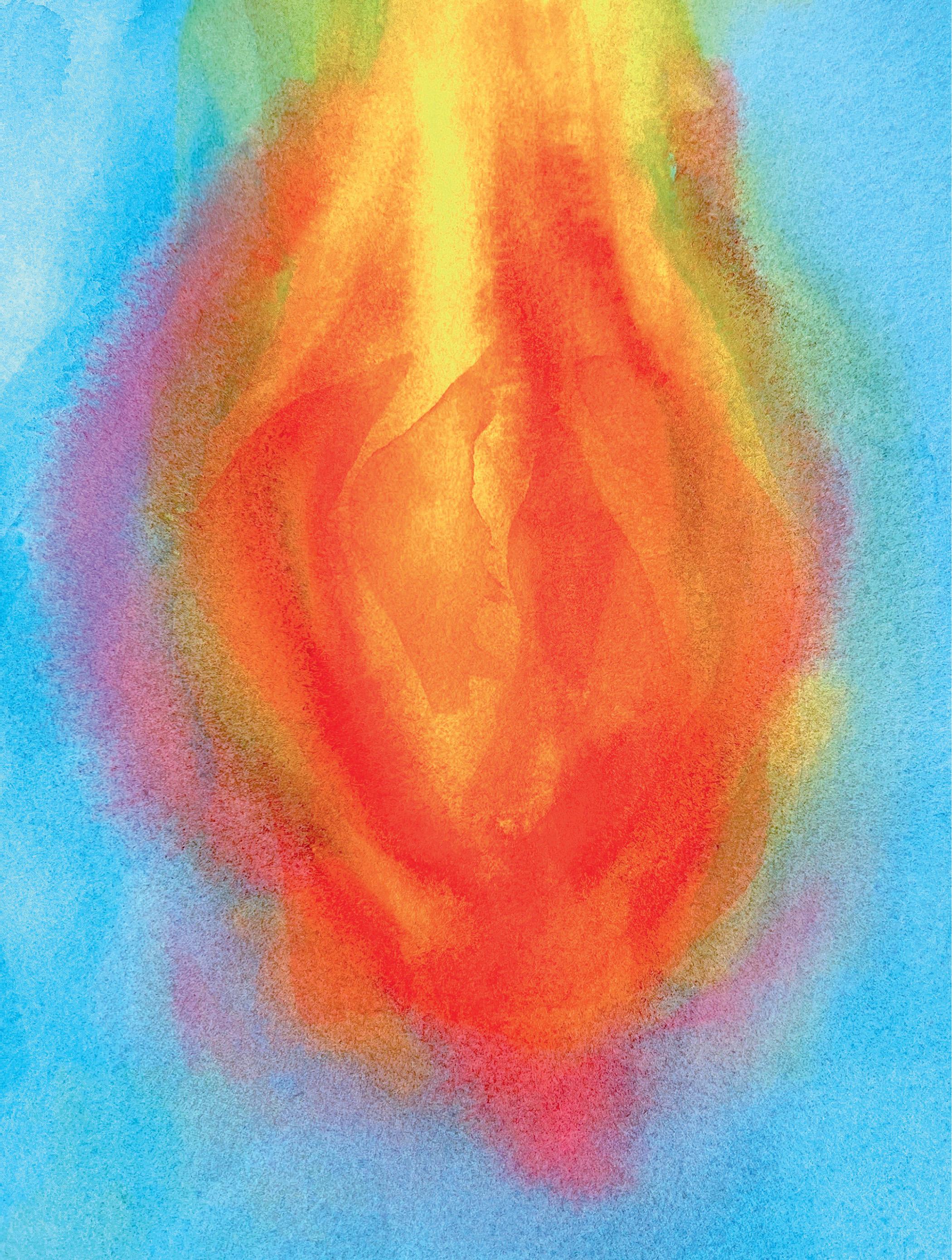
Verse for America
May our feeling penetrate Into the center of our heart, and seek, in love, to unite itself with human beings seeking the same goal, With spirit beings who, bearing grace, Strengthening us from realms of light And illuminating our love, Are gazing down upon Our earnest, heart-felt striving.
RUDOLF STEINER TRANSLATION BY FREDERICK HECKEL
ART | Within the Beat of Heart and Lung | Pamela SophiaJohn
request and composed the America Verse , commonly also known as the Threefold Verse . This response from Rudolf Steiner could not be entrusted to normal mail. Therefore, he requested that Reinhardt Müller deliver it directly into the hands of Ralph Courtney. Then a founding member of the Threefold Group, Frederick Heckel, who was an American with a German heritage, and a professional translator and journalist, translated it into English. It is the translation authorized by the Rudolf Steiner Estate (Nachlassverwaltung).
I had the good fortune shortly after Reinhardt Müller’s death – 31 August 1990 – to establish contact with his daughter, Elisabeth La Rocca-Müller, who was born on September 2, 1924, in New York City. She confirmed all the facts which are cited here. Now for a full century this America Verse has become meditative content for numerous members and friends. It represents a meditation which is also a prayer of supplication.
May our feeling penetrate Into the center of our heart And seek, in love, to unite itself With the human beings seeking the same goal, With the spirit beings, who, bearing grace, Strengthening us from realms of Light. And illuminating our Love Are gazing down upon Our earnest heartfelt striving.
Rudolf Steiner
The first two lines state the request. We realize that our heart, our “Gemüt” is not accessible to the Double, but it is up to us to direct our feeling to our “heart” center. In this realm feeling can freely join with others “seeking the same goal”. We can think here of many goals, but most central is anthroposophy itself. The wisdom of the human being arising spiritually out of the Christ Impulse.
We are also called upon to unite “with the spirit beings ...”. In meditation this brings us into the realm of the hierarchies who “bearing grace,” that is bestowing gifts we have not yet earned, “out of their realms of light” which are “strengthening us” and also “illuminating our love.” Our love has gained in quality and in dimension.
We can ponder here how and why it is that the hierarchical beings do this. Rudolf Steiner describes that we human beings are their tasks in the evolution of the Earth and the cosmos, so that humanity in the future will be able to join their ranks as the 10th hierarchy. In our time, it is our responsibility to be aware of this relationship which occurs when they gaze down upon “our earnest heartfelt striving.” They can become active when they gather up our human substance of love. In the Calendar of the Soul for the 10th week this is expressed:
“In time you will come to know A being Divine has felt you now.” 3
The America Verse also gives expression to Michael’s wish as hierarchical leader of our epoch. In Rudolf Steiner’s Leading Thoughts it is expressed in “At the Dawn of the Michael Age”: ... since the last third of the nineteenth century he (Michael) wishes to live in the human souls in which the thoughts are formed... He liberates thought from the sphere of the head; he clears the way for it to the heart... The Age of Michael has dawned. Hearts are beginning to have thoughts... The Spiritual must originate in hearts which beat for Michael. ” 4
It is our heart, the bearer of love, through which a twofold union can occur. One is with and for the seekers of anthroposophy, the wisdom of the human being. The other union is with spirit beings, whose task is to reach us with grace and strengthen us from their realms of light. They may gaze down and perceive our striving, but as Rudolf Steiner mentions in various connotations, the hierarchical beings wait for our recognition. Our “grace” for them, so to speak, is our awareness that they are there and their further development, in part, depends upon the spiritual development of the human being.
We have within us the geographic Double, but we may live also with our Guardian Angel, who is waiting for us to activate this supplication. Our Guardian Angel is directly connected with the Christ. This thought –prayer is also a pathway to the Christ which may come when human feeling penetrates into the center of the human heart and leads us thereby to connect with other mutually-striving human beings.
1 Rudolf Steiner, The Mystery of the Double. Geographic Medicine . Lecture of 16 November 1917 in Secret Brotherhoods and the Mystery of the Double . Translation of GA 178. Rudolf Steiner Press, Forest Row 2004. | 2 See Henry Barnes, Into the Heart’s Land , Steiner Books, 2005. | 3 Rudolf Steiner, The Calendar of the Soul . Translation into English by William Mann and Liselotte Mann, Hawthorn Press, Stroud, 1990. | 4 Rudolf Steiner, Anthroposophical Leading Thoughts, authorized translation by George Adams and Mary Adams, Rudolf Steiner Press, Forest Row, 1973.
Ancient Threads Unbroken:
Felix the Herb-gatherer at the Dawn of the Michael Age
By Cliff Venho
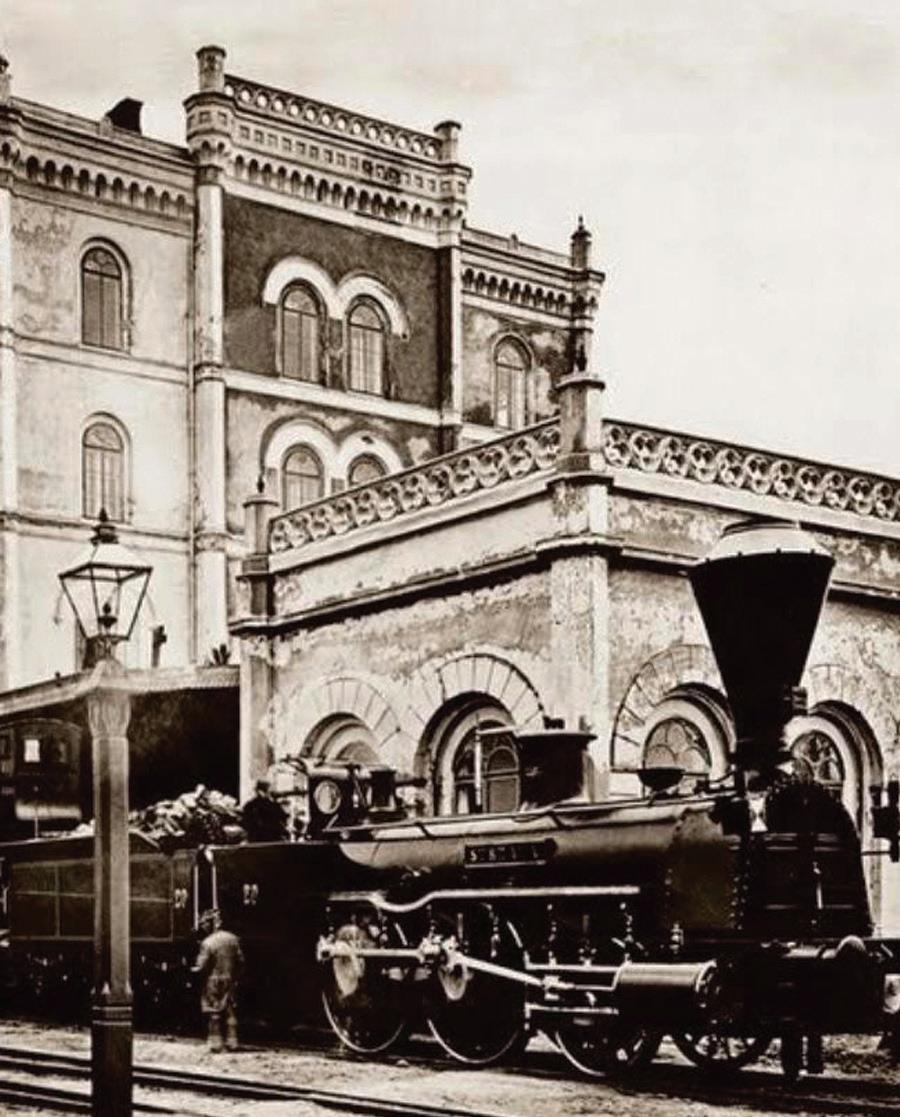
One autumn day in 1879, the 18-year-old Rudolf Steiner boarded a train in the suburb of Inzersdorf, bound for Vienna South Station. He was setting out to begin his studies in the most modern fields of research— physics, chemistry, mechanics, etc.—at the Vienna Technical College. On the train was a man in his late 40s, simply dressed and carrying a bundle of herbs on his back. A conversation struck up between the odd pair, who, despite their differing ages and life paths, felt an immediate, deep-rooted kinship.
The man was Felix Koguzki, an herb-gatherer from the countryside on the outskirts of Vienna and the inspiration for the character of Felix Balde in Rudolf Steiner’s mystery dramas. Felix is a remarkable figure in many ways—a simple man of the people, unnoticed by the outside world, who made a modest living gathering medicinal herbs and selling them to apothecaries in Vienna, and, at the same time, a representative of an ancient spiritual stream that went back, along hidden channels, to Alexander’s campaigns and the spread of Aristotle’s nature wisdom to the East (more on that later).
In his autobiography, Rudolf Steiner describes Felix’s unique qualities:
But then I became acquainted with a simple man of the people. . . . We became friends, and it was possible to speak of the spiritual world with him as someone of experience. . . He gave the impression that he was simply the mouthpiece for the spiritual seeking a voice from
hidden worlds. With him, one could look deeply into the secrets of nature. . .Gradually, it seemed as though I were in the company of a soul from ancient times - one untouched by civilization, science, and modern views— who brought me the natural knowledge of ancient times. One could “learn” nothing from this man in the usual sense of the word. But through him, and with one’s own powers of perception of the spiritual world, one could gain significant glimpses into that world where this man had a firm footing. 1
Thus it was that Felix became Rudolf Steiner’s first guide into the hidden realms of nature and the mysterious connection between the cosmic life of plants and the human organism. The art of healing, which lies at the heart of Rudolf Steiner’s life work, was guided at this early stage by the loving hand of Felix the herb-gatherer.
There is a further mystery related to the identity of this simple man of the people. Rudolf Steiner never actually spoke the name Felix Koguzki in his lectures, and a veil shrouded the herb-gatherer’s identity during Steiner’s lifetime. It was not until the late 1950s that the historical identity of Felix Koguzki was discovered by Emil Bock through a remarkable series of events described beautifully in his book The Life and Times of Rudolf Steiner . 2 Without Bock’s discovery, we would know nothing of the events of Felix’s life. Thankfully, the veil was lifted at that time, and we are able to sketch a brief biographical portrait.
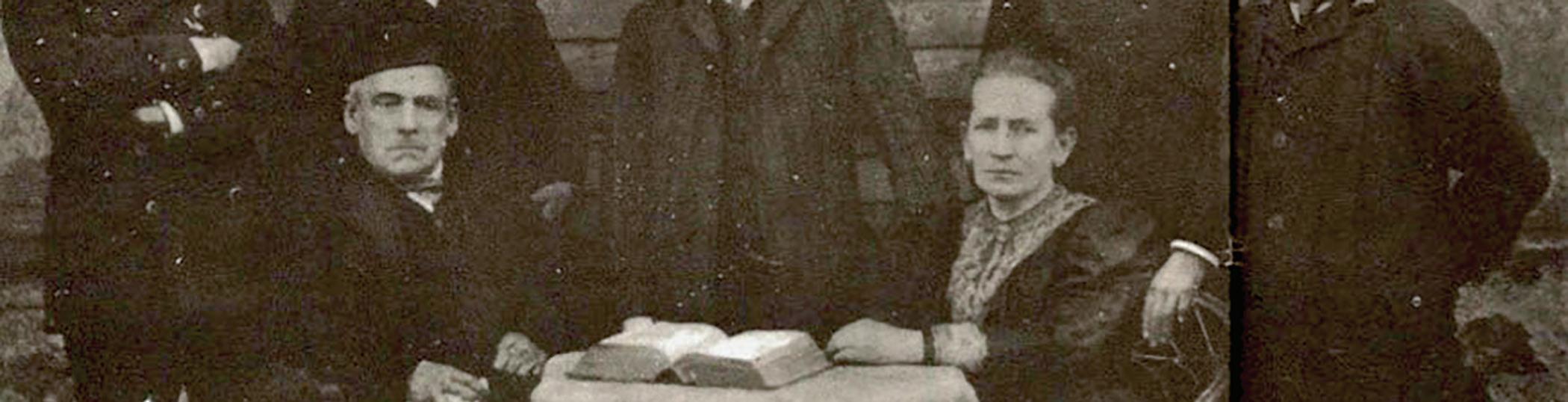
Detail Felix Koguzki with his family | 1833-1909

Born August 1, 1833, to the unmarried daughter of a Polish officer in Vienna, Felix was christened in St. Stephen’s Cathedral and brought up in a foundling hospital. He suffered terribly there and often had his head bashed against the wall as punishment for his misdeeds. He was a guileless child, always concerned for others. When he got his first job as a baker’s assistant, he gave away all the bread to hungry soldiers without collecting any money and was thoroughly thrashed for it. Struggling to earn a living, he moved to the countryside and began gathering herbs and selling them at pharmacies in Vienna. He married and had five boys. Felix played the organ at church, and he and his boys were the band at local events—weddings, dances, etc. He spent his free time playing music, or
else reading philosophical and mystical books, and he rose before dawn nearly every morning to gather his herbs in the Vienna Woods, or else in the nearby Leitha Mountains. The young Rudolf Steiner joined him on some of these trips into the forest and learned from his deep connection to the elemental world. Rudolf Steiner later recounted his visit to Felix’s cottage in Trumau, Lower Austria, where he was given coffee “not in a cup but in a mug that held nearly a liter, along with a huge piece of bread.” 3
Felix died in 1909, and though all outward contact between Rudolf Steiner and the herb-gatherer had long since ceased, the character of Felix Balde appeared on the stage for the first time the following year. Rudolf Steiner counted his meeting with Felix among the most precious treasures of his life. 4
Decades later, during the Christmas Conference of 1923/24, Rudolf Steiner shed light on a deeper aspect of his meeting with the herb-gatherer. In the lectures, he portrayed in powerful words the two streams of Aristotelian teaching from the last, pre-Christian Michael age that had made their way to Europe. On the one hand, Aristotle’s philosophical and logical writings were carried to the West by his pupil Theophrastus and made their way along official channels through the academies and universities of Europe. The other stream, that of Aristotle’s nature wisdom, was carried by Alexander to the East, only later making its way to Europe, spreading
far and wide, unobtrusively, among simple folk—the secret source of much of medieval thought and insight. . . . We find it in every corner of Europe—inconspicuous, flowing silently into hidden places. . . . We have had amongst us in Europe far more folk-wisdom than is generally supposed. 5
According to Rudolf Steiner, a last echo of this spiritual stream was still active among the country folk in the ‘60s and ‘70s of the 19th century. One could at
that time still meet representatives of this Aristotelian stream such as Felix. 6
There is, in truth, a wonderful interworking in all these things. For we can see how the expeditions of Alexander and the teachings of Aristotle had this end in view: to keep unbroken the threads that unite man with the ancient spirituality, to weave them, as it were, into the material civilization that was to come, so that they might endure until such time as new spiritual revelations should be given. . . Both streams have lasted up to the very moment when it is possible to begin a renewed life of the spirit . 7
This renewed life of the spirit became possible with the dawn of the Michael age in 1879. After the Christmas Conference, in his lectures on the karma of the anthroposophical movement, Rudolf Steiner spoke in powerful words about the experiences he had as a young man in the last decades of the 19 th century, from 1879 onward:
Behind a thin veil, a very thin veil at that time, was a world adjoining our physical world. . . In very truth something mysterious was at work in the closing decades of the 19th century. There were momentous happenings, grouped around the Spirit we name Michael. Participating in these happenings were strong and forceful followers of Michael, human souls living at that time in their existence between death and rebirth, not yet incarnate in the physical body; but there were also mighty demonic powers who under the sway of ahrimanic influences set themselves in rebellion against what was thus to come into the world. 8
Rudolf Steiner continued to experience this battle and the riddles that arose in Michael’s sphere throughout the ‘80s and ‘90s of the 19th century. And in the first two decades of the 20th century, whenever he wanted to reveal something of these Michael Mysteries, “it was as though the opponents of Michael gathered round and sealed one’s lips—for about certain matters silence was to be maintained.” 9 And so these Michael Mysteries, these most important revelations of the renewed life of the spirit that began in 1879, had to live on silently within the heart of the anthroposophical movement until, through the deed of the Christmas Conference, the demons were compelled to silence and the veil could be lifted in the last year of Rudolf Steiner’s life.
The renewed spiritual life of our time strikes a special note in the meeting of Rudolf Steiner and Felix Koguzki
on the train to Vienna South Station in the autumn of 1879, when the unbroken threads of the ancient Aristotelian nature wisdom, which continued on from the ancient mysteries, were woven together with the new spiritual threads of the dawning Michael age.
1Rudolf Steiner, Autobiography (CW 28), trans. Rita Stebbing (Great Barrington, MA: SteinerBooks, 2005), p. 29.
2 Emil Bock, The Life and Times of Rudolf Steiner, vol. 1 (Edinburgh, UK: Floris Books, 2008).
3 Rudolf Steiner, Autobiography (CW 28), p. 30.
4 The mystery is further deepened by Rudolf Steiner’s autobiographical sketch in the so-called Barre documents, written in 1907 for Édouard Schuré at his home in Barre, Alsace, and by certain verbal communications recorded by his friends and pupils. See Nachgelassene Abhandlungen und Fragmente (GA 46), p. 574, and Peter Selg, Rudolf Steiner und Felix Koguzki: Der Beitrag des Krätersammlers zur Anthroposophie [Rudolf Steiner and Felix Koguzki: The herb-gatherer’s contribution to anthroposophy] (Arlesheim, CH: Verlag des Ita Wegman Instituts, 2008).
5 Lecture of December 29, 1923, in Rudolf Steiner, World History in the Light of Anthroposophy (CW 233), trans. George and Mary Adams (London: Rudolf Steiner Press, 1977), p. 103
6 For a more in-depth examination of this theme and of Rudolf Steiner’s relationship with Felix in general, see Peter Selg, Rudolf Steiner und Felix Koguzki (op. cit.).
7 Rudolf Steiner, World History in the Light of Anthroposophy (CW 233), op. cit., p. 103.
8 Lecture of August 12, 1924, in Rudolf Steiner, Cosmic Christianity and the Impulse of Michael (CW 240), trans. D. S. Osmond (London: Anthroposophical Publishing Company, 1953), p. 13. Also published as Karmic Relationships, Vol. VIII
9 Ibid., p. 14.
Ancient Threads Unbroken
c. 1800 train from Vienna, Austria
Some Reflections from Dornach
By Nanthaniel Williams
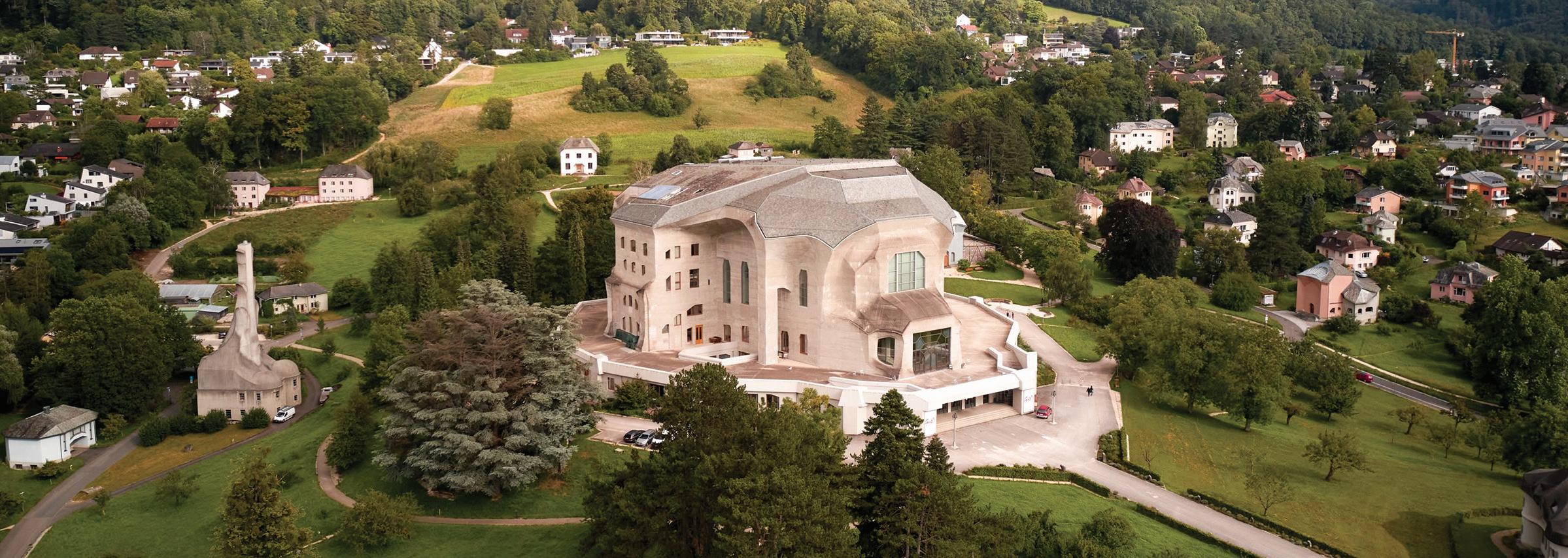
It is a great opportunity for me to share an article in this edition of being human , a chance to reflect on the three years that have passed since I arrived with my family at the Goetheanum as the new leader of the Youth Section. As most readers will know, the Goetheanum is in a town called Dornach, a small town that straddles the side of a hill. The Goetheanum is on its upper side looking toward the west, with a view into France, and to Germany toward the north. It is only a 10-minute train ride to the Swiss city of Basel, but it can be misleading to use the word city. It has under 200,000 inhabitants, few tall buildings and many of its streets and structures have retained the character of centuries long ago, long before Europeans knew the Americas existed.
The landscape here is a beautiful green in the summer, though this year it has had an olive hue due to a long dry spell. Grey, white, and tan limestone cliff faces look out of the dense green in the summer, faces that have something opaque, dreamy, even a bit dreary about them. Trekking up the streams that run down to the Birs (the river that runs through the valley at the base of the Goetheanum hill) before it joins with the Rhine River in Basel, limestone fossils are plentiful, as are caves. It has been wonderful to experience the Goetheanum from different directions, at different times of day, and in different seasons. The earth has an exceptional capacity to form a special type of slick mud
given the slightest rainy provocation. When I was living in New York, I felt the whole landscape (including the ox red barns) came into alignment with itself in the autumn. I had the impression that after the creation of the seasons there had been some material left over, and it was used to fashion the northeast. Here it is not the autumn that seems most comfortable when it settles into the landscape, but the grace, beauty, and mild character of spring. Certainly, the vegetation, elements, and sky have made the strongest natural impressions on me since arriving. Large wildlife is rare, and I have been delighted when the loping fox or the prancing small deer have appeared.
The layers of culture and history have also begun to make a deeper impression on me. A few kilometers away the ruins of Augustus Raurica are located, a city established by Romans and Celts that dates back 2,000 years, with an extant amphitheater. Earlier this year I had the opportunity to visit the monastery at Odlienberg, which involved driving through the Rhine Valley in Alsace, with hills textured by castles from the medieval age. Even the current state has roots that reach back 800 years to the beginning of the Swiss confederacy. On the hill where the Goetheanum now stands a decisive battle was fought in 1499. The hill became known as “blood hill” and today there are human skulls on display near the Dornach train station, and a large relief sculpture, commemorating
Dornach Hill, Switzerland
the battle. This grand temporality is so interesting to experience in relation to the country currently, with a population of under 9 million, a population like New York City. It can feel like a very small society indeed. When I first called the authorities to inquire about trading in my driving license they informed me that I needed to fill out a form and send it in the mail. I asked what I should do if I was pulled over while I was waiting for the new one and received the answer that I should simply tell the police that it was currently at the main offices in Solothurn! There is something very practical about the culture here and I have been impressed when talking to citizens about their feeling of ownership and agency. They radiate a feeling of agency and empowerment. Once a Swiss colleague, who noticed I had sensed the solidarity among the locals, called out, “Now you see how it is, here we are with one another, and then there are the other people as well!”
I have also been able to experience a genius for organization and regulation. Time itself has a remarkable structure and contour. It is no fable that you can set your clock by the trains. I was amazed at an event which hosted over one thousand people which started one minute early with everyone seated! The weight of the well-ordered state, that loses sight of ends in the brilliance of means, also makes a regular appearance. The other day I received a call from the local police station informing me that they had found a house key that had been lost. I was impressed; what a system. The key was numbered and registered by the real estate owner so it could be returned if lost! For family reasons I could not go until the next day. When I arrived the officer on duty noted, with a seriousness that did not seem to align with the situation, that I was expected the day before. I replied that something important had come up with my children that had to take priority. She then noted that expectations from the police were important, to which I replied that one would be an idiot to prioritize picking up something at the lost and found over a pressing issue with children. This provoked a slight scowl that could not be taken seriously.
presence and activity of the Goetheanum, which hosted one of the ceremonies. It is home to one of the largest and most advanced performance stages in the country. In recent years the performances of Wagner’s Parsifal, in which eurythmy made some of the most beautiful and strong impressions, have drawn people from all over the world, and received international attention. The tickets for these performances have sold out the year before. In the same year, performances of Goethe’s Faust and Steiner’s Mystery Plays are produced.

The Goetheanum, and many other buildings, are internationally renowned as works of art, and they draw all kinds of visitors throughout the year. Of course, the Goetheanum is the center that has been built and maintained over generations by individuals from around the world who sense the justification of expanding our understanding of life in the direction of the spiritual, and fructifying practical life with new insights. And at the center of it all one finds the work of Rudolf Steiner, whose stature will reveal more of itself in the future. It is telling that this year a cast sculpture of Steiner’s suitcase was installed at the Dornach train station with a sign about his life and work.
The Goetheanum itself has become a site of Swiss pride. The local area won a coveted national prize last year and one of the reasons was connected with the
His traveling, international collaborations, and initiatives are a powerful picture of world connection and openness. Today representatives of country societies from all over the world make their way to the Goetheanum twice a year to share, foster connections, and take up collaborations. I have been able to see John Bloom and Mary Stewart Adams in these contexts, an opportunity I have appreciated. Over the last three years, I have discovered there is a need to support translations between German and English, which I have been able accommodate at times. Translating for the country society gatherings was an education on the quick in the Anthroposophical Society. This circle of people play a crucial role in supporting the 12 departments of the School of Spiritual Science, as a significant portion of the membership dues flow from each country society toward the Goetheanum each year. In this regard, it is important to realize how unusual it is in Europe to have an independent college or university at all, not to speak of an independent college that is focused on contemplative knowledge and culture. Higher education in Europe is connected with, and funded through, the state. While this has obvious advantages from the perspective of accessibility, given the extremely modest tuition costs, these advantages
are paid for through a loss of independence and autonomy. In the USA, there is a long history of independent colleges and universities of all sizes, something that does not exist here. One thing I have come to appreciate is the novel constitution of the Goetheanum: a public society that gathers together out of interest in contemplative knowledge practices and culture, structured as independent country societies with voluntary members, who send support every year to foster a school.
Many colleagues at the Goetheanum have been working to lift this vision of the School and its departments more into awareness, and to take a new step in realizing its potential. Over a decade ago, the Goetheanum Leadership group was established, a group that meets at least once a week, whose members include all the Section leaders as well as the treasurer. In recent years, there has been an effort to raise visibility of current research and innovation in the departments/sections and a research fund was established to try to accelerate their progress.
On campus, the Goetheanum currently hosts two full-time study courses, one a foundations course in English, and the other a practical year dedicated to art, which is held in German. In the immediate vicinity, there are other schools where one can study eurythmy, sculpture, the art of teaching, or social work. The Ita Wegman Klinik is very close, one of the great initiatives to appear through the efforts of the first leader of the Medical Section, and it remains a place of pilgrimage for physicians from around the world seeking an expanded art of healing. Many of the educational gatherings involve department colleagues from around the world who travel regularly to the Goetheanum to collaborate on seminars, research meetings, further education, and conferences.
In the Youth Section, I have focused on creating contacts with youth groups and initiatives around the world and encouraging connections between them as well. Besides traveling to collaborate with youth groups in places like Georgia or Australia, we have hosted large youth gatherings like the International Students Conference, which saw over 700 16-20 year olds journey to the Goetheanum from near and far. Among young people there are burning questions related to technology, ecology, and politics, and a sense that a deeper and enlivened approach is needed
to make headway with them. The tasks involve hosting regular study groups on campus, art projects, weekend seminars and courses, podcasts, newsletters, videos, as well as conferences large and small. There is a great deal of fundraising and development work that is required from each Section leader given the reality of the resources at our disposal (Life has unfolded for me in such a way that I have the opportunity to learn how to navigate these new tasks while also living with my wonderful family, which currently includes three friends under five!).
There is a significant gap between the tasks of the School and the resources at its disposal. As a cultural center that is tasked with working with individuals from all over the world, the financial demands implicit in being situated in Switzerland pose a serious challenge. Besides the task of dedicated and creative engagement with the contemplative core of the movement, and the insight it can lead to, creative ways of facilitating movement to and from the Goetheanum will have to be a central part of the coming years. Anthroposophy and the School have significantly influenced major fields of culture and society over the last century, something that should become more evident in the near future. Rudolf Steiner’s work has often been unfairly marginalized, something that is quite understandable given the common prejudices of our time, but the fruits of the movement are leading to a renewed interest in anthroposophy, the Society, and the School.
One example of this is the upcoming conference at Harvard Divinity School in December 2025, which opens with a reception hosted by the Anthroposophical Society in America, and whose core organizer, Dan McKanan, presented the central role anthroposophy played in the emergence of the modern environmental movement and social and ecological banking in his book Eco-Alchemy: Anthroposophy and the History and Future of Environmentalism . Over 70 contributions from researchers from around the world will be presented. One of the significant aspects of this initiative is that it is a major event at an independent university hosted in the English language, one of the world languages of our time. I am excited to attend theis 100 Years Rudolf Steiner Conference at Harvard in December, to be back in the USA for the first time since I moved, and I hope it will be a chance to reconnect with friend and coworkers as well.
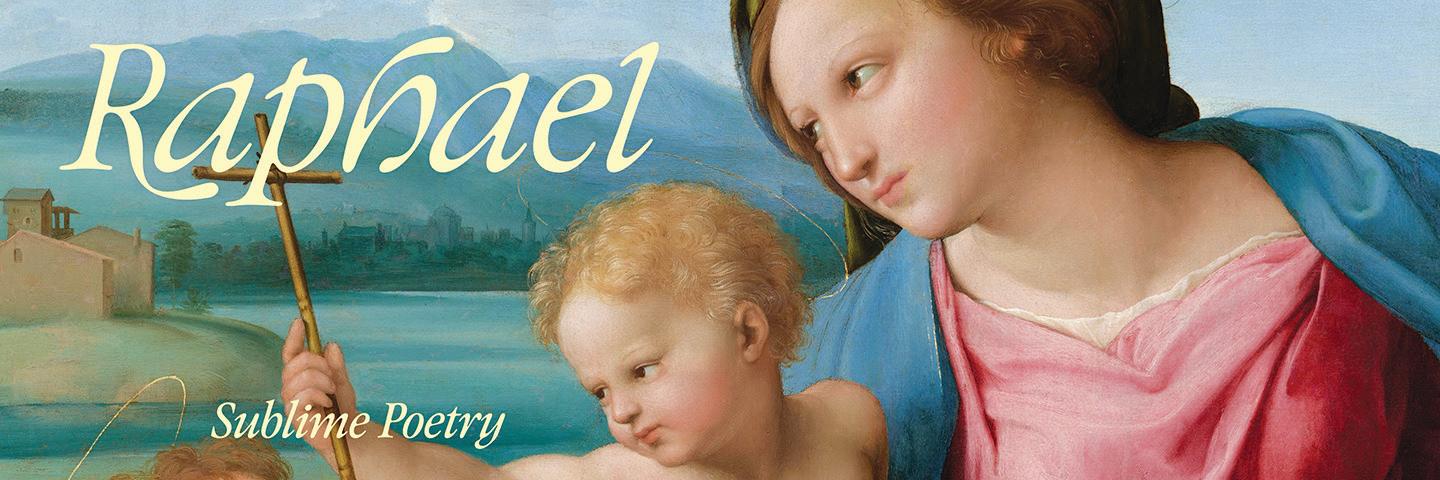
Anticipating Raphael at the Met
By Bruce Donehower
Anthroposophists train to be awake to the Spirit of the Time. This requires that we develop a capacity to determine what is essential and non-essential amid the swirl of events that cascade before us day by day.
One significant event that speaks loudly to the spirit of our time will occur in New York City at the Metropolitan Museum of Art. It is an exhibition of the artwork of Raphael, an exhibit that has a title that should resonate loudly with any student of Rudolf Steiner’s anthroposophy: Raphael: Sublime Poetry.
The exhibition at the Met begins at the tide of Easter 2026 and concludes at the tide of the festival of St. John in June 2026.
This is the first comprehensive exhibition of Raphael in the United States (and I suspect in North America), and it assembles in one location “more than 200 of the artist’s greatest masterpieces” with particular attention “to Raphael’s portrayal of women - from his use of nude female models for the first time in Western art to his tender depictions of the Madonna and Child . . .”
Raphael - or as we often say in anthroposophy, the eternal individuality Raphael-Novalis - has enormous critical importance to the anthroposophical movement and the Michael School, as Rudolf Steiner emphasized many times. Those many times of emphasis include Rudolf Steiner’s Last Address . As I explained in
an Easter lecture that I gave last year for the ASA, the eternal individuality Raphael-Novalis is a “red thread” that runs through all the mystery teachings of Rudolf Steiner. This “red thread” is critical to an understanding of Rudolf Steiner’s Christology and thus, likewise, critical to the development of the anthroposophical movement. “Red thread” is of course the descriptive term that Marie Steiner-von Sivers used when she spoke of Raphael- Novalis. She did not use that phrase lightly—and she, of all persons closest to Rudolf Steiner, could best appreciate the truth of those words.
The fact that we have a world-class museum highlighting the work of Raphael under an exhibition titled Raphael: Sublime Poetry at this moment in our 21 st century . . . well, I don’t know about you, but to me this very much seems a gesture in accordance with the spirit of our time.
What does Rudolf Steiner tell us about Raphael?
So very much! But as a place to start, we need only read his Last Address to understand why we might want to awaken to the significance of this exhibit at the Met that begins at Easter. Those last publicly spoken words of Rudolf Steiner in his Last Address contain many indications.
There for the first time, Rudolf Steiner pointed to Christ’s raising of John-Lazarus in respect to the
Raphael, The Virgin and Child with Infant Saint John the Baptist (The Alba Madonna; National Gallery Washington DC) ca. 1509–11
Raphael: Sublime Poetry
mystery of the eternal individuality Elijah-RaphaelNovalis. Up until this moment of revelation in the Last Address , the incarnational lineage of Elijahwhich included John the Baptist, Raphael, and Novalis - had never included John-Lazarus, the disciple whom the Lord loved: John who received the care of the mother of Jesus directly from Jesus on the cross, John who became John the Evangelist, John who wrote the Gospel of John and the Book of Revelation.
“This being appears once more in that world painter Raphael who let his artistic power unfold in marvelous depths of tenderness, as it moved hovering over the Mystery of Golgotha” states Rudolf Steiner at the beginning of his Last Address
Speaking now as a poet and an artist, and escorting his listeners in a manner reminiscent of Beatrice escorting Dante, Rudolf Steiner then begins a journey through the stars with his imaginal eye as he follows Raphael through the “gates of death” - praising the power of Raphael’s art, “which already on earth shone with the bright light of the stars.” In the Moon sphere, Raphael associates with “the great original Leaders of mankind”- those sublime beings who “at the beginning of Earth existence set the goal for the life on this Earth.” In the Sun sphere, Raphael “lives over again what he underwent when, through the Initiation of Christ Jesus, he, Lazarus, became John.”
“The truth is, my dear friends,” says Rudolf Steiner: “this earthly personality of Raphael was completely yielded up and was only present through what LazarusJohn gave to this soul to be poured out into color and line for all mankind.”
And, as we know, the Last Address concludes with emphasis on that other mysterious expression of the eternal individuality: the poet Novalis.
No surprise that during the tide between Easter and St. John in 2026, we have an exhibit at the Met with the title Raphael: Sublime Poetry !
Is the Spirit of the Time speaking to us?
I should also mention that the Section for the Literary Arts & Humanities has calendared a Novalis conference in Dornach for Pentecost 2026.
Perhaps the time is at hand!
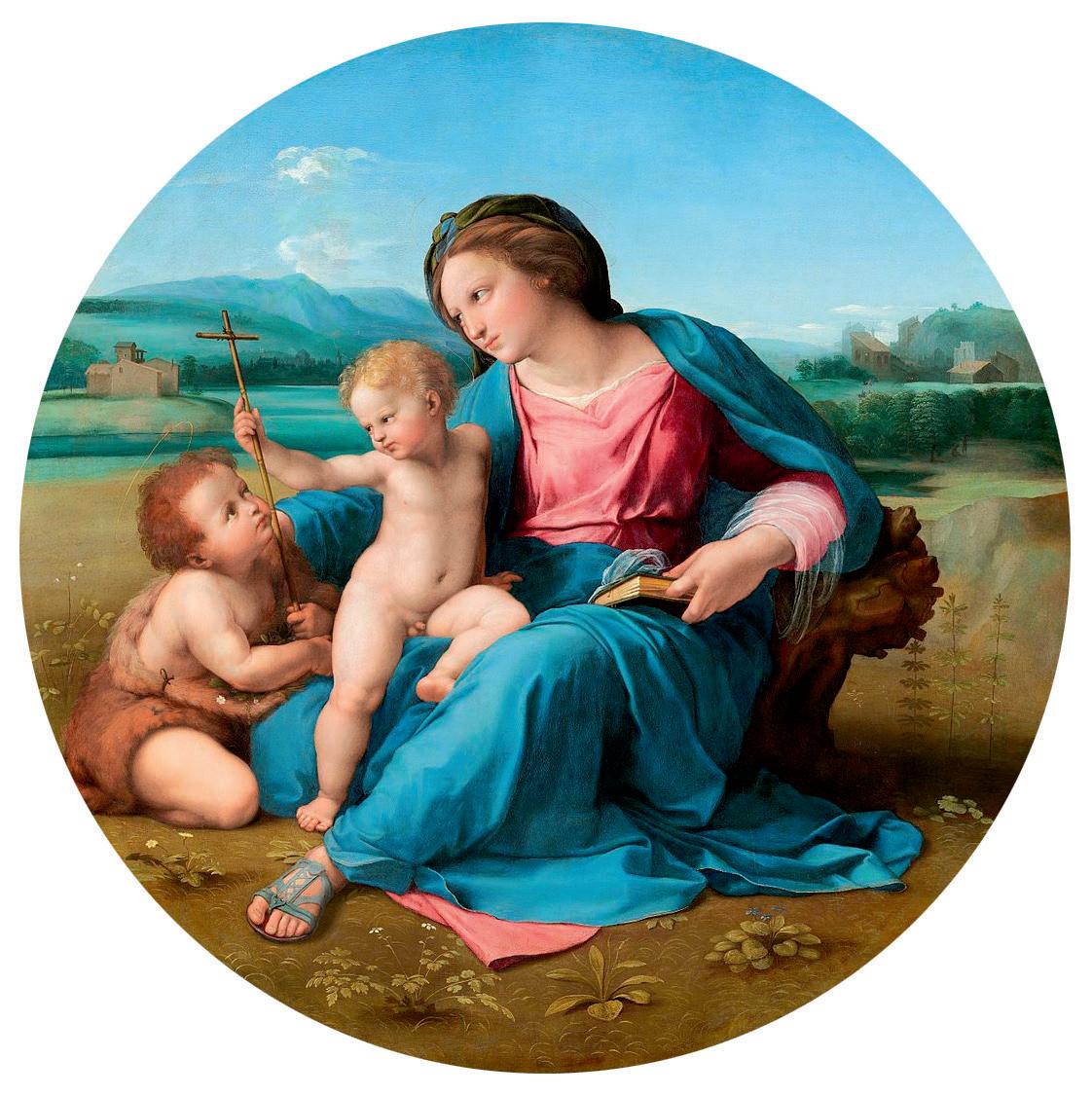
“The truth is, my dear friends,this earthly personality of Raphael was completely yielded up and was only present through what Lazarus-John gave to this soul to be poured out into color and line for all mankind.”
Rudolf Steiner
Raphael: Sublime Poetry
RAFFAELLO DA URBINO | Raphael Santi 1483 - 1520
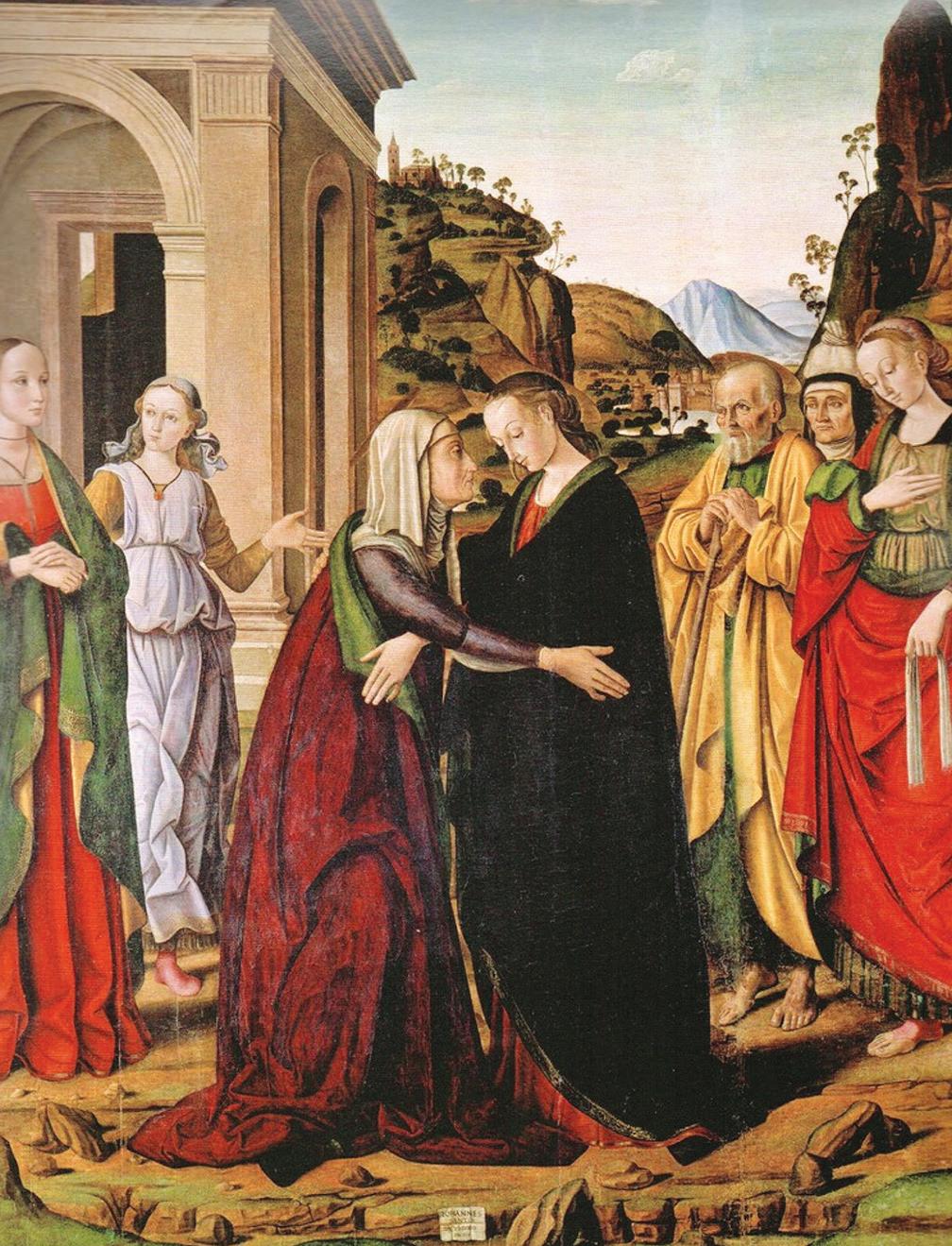
Santi. The Visitation 1490
The more we work with spiritual science, the more we notice that the dead also work back upon the living. For example, in educating children who have lost their fathers at a very early age, we must take this into account. Often one can feel the father sending an influence from the spiritual world. I once had to tutor children whose father had died early. I tried to train them in my own way, but it would not work, simply would not work. But when it occurred to me to allow for the influence of the father from the spiritual world, then it went very well …
If you work out something about incarnations in a clever theoretical way, it will usually be wrong. It must seem strange that Raphael was the same person as a thorny character like John the Baptist. How could it happen that this thorny man, who had to pave the way for the Mystery of Golgotha in such a violent way, reappeared as the gentle, pliable, charming Raphael? But look at this. Raphael’s father, Giovanni Santi, died when Raphael was
eleven. He was a painter. He was not a great painter so far as external achievements go, but he had great ideas in his head, although he could not put them on canvas because he had no technical skill. He was also a poet. There was a great deal of fantasy in him, but the physical capacities simply were not there. He went early through the portal of death, and then his forces worked into his son. In Raphael’s hands and imagination worked all that his father could send into the physical world. One can say that the old Giovanni Santi was a painter without hands in the supersensible world, for in a wonderful karmic relationship he supplied, in combination with the Christ-filled individuality of the Baptist, what came to expression in Raphael. The supersensible world had to work with the physical world to achieve this result. It shows how the so-called dead are able to influence those who have been left behind…
Rudolf Steiner, On the Relationship with the Dead, 23 April 1913 i
RAFFAELLO SANTI, THE SON OF GIOVANNI OF URBINO. EMINENT PAINTER. RIVAL OF THE ANCIENTS. LOOKING UPON HIS LIFELIKE IMAGES YOU CAN THUS BEHOLD THE UNIFICATION OF NATURE AND ART. THROUGH HIS PAINTINGS AND ARCHITECTURE HE INCREASED THE GLORY OF POPES JULIUS II AND LEO X. HE LIVED FOR 37 YEARS IN COMPLETE PERFECTION AND DIED ON THE DAY OF HIS BIRTH 7 APRIL, 1520 . THIS THEN IS RAFFAELLO. THE GREAT MOTHER OF ALL THINGS, FEARED THAT SHE WOULD BE SURPASSED BY HIM WHILE HE LIVED, AND FEARED THAT SHE WOULD DIE WHEN HE DIED. Raffaello received from Bembo this epitaph, engraved at his place of repose in The Pantheon, Rome.
Giovanni
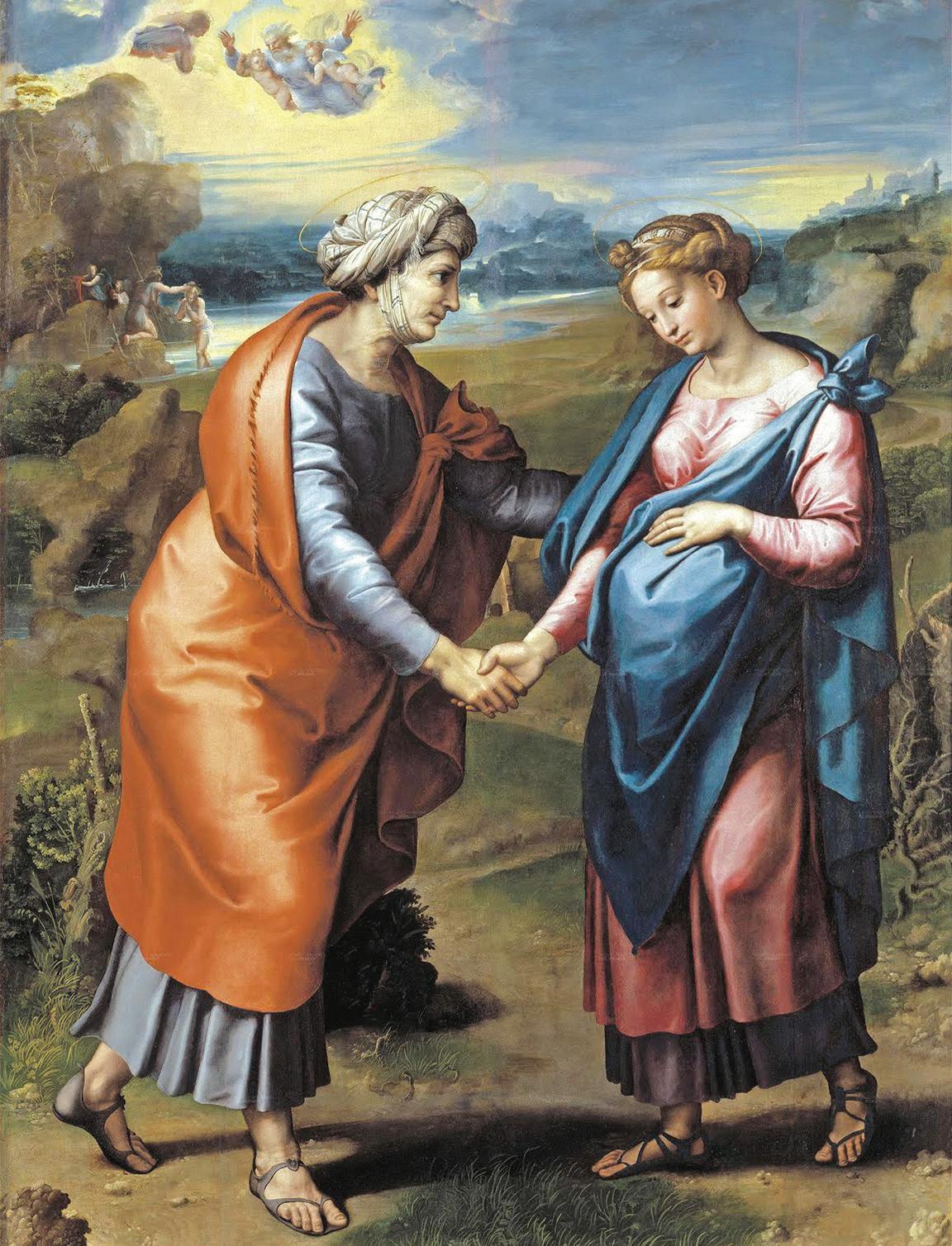
Raphael Santi. The Visitation 1517
Explorations for Working with Those Who Have Died
By Lynn Stull
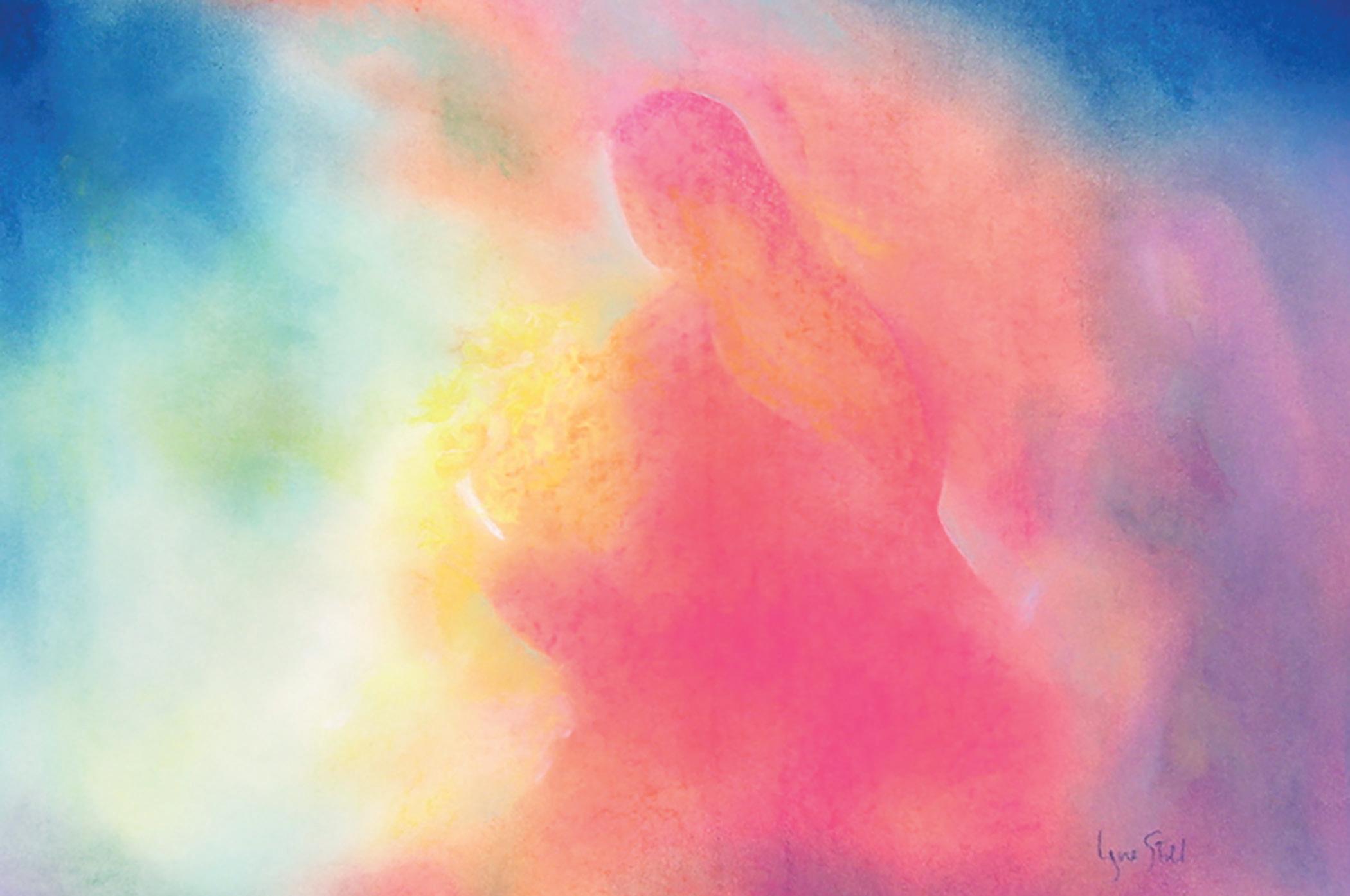
Over the last 25+ years, I have cultivated a relationship with my loved ones who have died, utilizing Rudolf Steiner’s indications. This spiritual practice has been life changing: enriching my spiritual path while informing my biography in the most rewarding and often surprising ways.
My intention with this article is to review some traditional ways of interacting with our loved ones across the threshold, offer two simple artistic exercises, and suggest new ways which, when implemented and practiced, have the potential to broaden our relationship with our loved ones so that our connection deepens even further. This creates a living connection in which we deliberately co-create deeds for the Earth, whether for the present moment or planting a seed of goodness for the future.
The first way that we build our connection is through being conscious of our loved one’s communications to us via our Imagination, Inspiration, and Intuition. Generally their communication immediately after death informs our interest in others. During Kamaloka they have the capacity to encourage a change in our habits, and once in Devachan they have the wisdom to influence our views and ideas from a moral level.1
It was once natural for a soul to have a living relationship with the dead ….. it will be one of the practical tasks of anthroposophical living to ensure that such a bridge is built between the living and the dead.
Rudolf Steiner, October 10, 1913
Tender Heart, Lynn Stull
The second way we build our connection is through the foundational practice of reading as well as consciously bringing our loved ones into the spiritual practices and spiritual activities that we undertake.
Rudolf Steiner makes it clear that the dead are very interested in us and the endeavors of the Earth. “What is the human being doing in the period between death and a new birth: He himself is working from out of the spiritual worlds, under the guidance of higher Beings, at the transformation of the Earth. It is human beings themselves, between death and rebirth, who carry out this work. When they are born again they find the face of the Earth changed, changed into a form which they themselves have helped to fashion…. They are not, as is often said, in a state of blissful rest or dream. Life in Devachan is just as full of activity as life on the Earth.” 2
Intention
It is important to know why you want to undertake or deepen this spiritual practice. Choose a clear intention that is meaningful for you and doable in your mind’s eye. Below are a few intentions which you might find helpful:
To provide spiritual nourishment for your loved one
To consciously deepen your love for them
To heal a past wound
To complete a spiritual task that our loved one was not able to complete while they were alive
To provide guidance for your loved one as they journey through the spiritual worlds
To provide spiritual information for a task that your loved one may want to complete in his or her next incarnation
To assist you in completing a spiritual task
To complete spiritual research
To be inspired to explore new areas of spiritual study and activities
This last point suggests that, as your work develops and grows, your loved one might inspire you to learn the spiritual aspects of common human activities. You might delve into the spiritual nature of the arts, including music, speech, and writing. You might be moved to explore the indications which Rudolf Steiner and other spiritual leaders have given for spiritualizing
everyday activities like: agriculture, business, community life, or the study of the stars.
Creating a Heart-Centered Practice: Love, Interest, and Enthusiasm
Love Whether asking a question, reading to our loved ones, or co-creating through a spiritual activity, we want to warm our communication with feelings of love. I am referring to an objective love, selfless and unconditional. One that does not desire or need personal gain to result from the communication. The love that warms your communication is based on a devotional commitment to be of service.
Interest When we study our loved one’s biography including their interests, habits, and values we are demonstrating interest. “By concentrating on handwriting or a picture, we take into our own work the dead person’s views, intention, and aims.” 3 This interest in our loved one enriches the connection and also provides insights in communications that we might receive from them and what reading materials or activities to engage in.
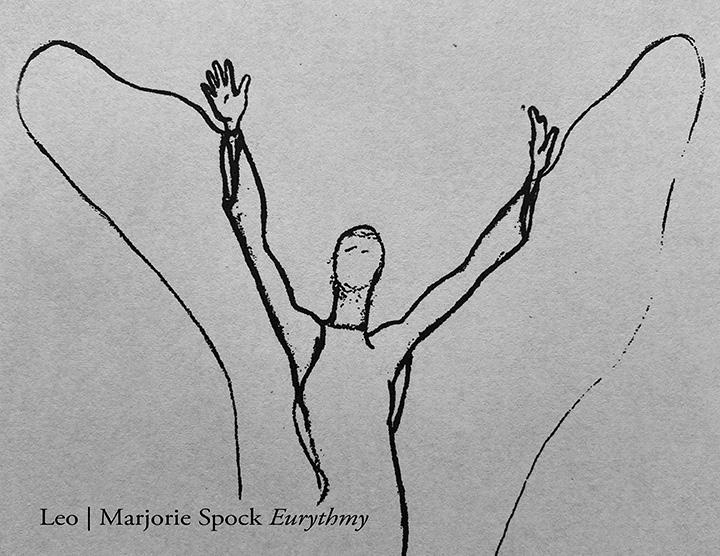
Enthusiasm With an energy all its own, enthusiasm is like sunshine on a bright summer day. It adds a warm, golden glow, a sun-kissed feeling, to your practice. In eurythmy, the gesture for the zodiacal sign Leo embodies this quality of enthusiasm. The movement for Leo starts from your heart center, felt as a seed inside yourself, and then powerfully blossoms into the outside world. This is the strength of enthusiasm. It starts deep within you, and as it grows, the whole world can feel it.
Genuine enthusiasm and interest are two aspects of selfless love. This type of deep engagement doesn’t wane when you do not get an immediate response or are met with what seems like silence from your loved one; rather, you are engaged for the duration. You remain inspired to keep bringing your question, thought, or spiritual content to them in a fresh and alive way, no matter if you have received a response, or not.
Christ and Love
“ For where two or three are gathered together in my name, there am I in the midst of them.”
Matthew 18:20, KJV
There are several reasons I invite the Christ into my reading and spiritual activities with the dead. The primary reason is the love which Christ brings into the gathering. When we work with those who have died from a place of pure love we have to overcome something in ourselves. Acts of love have no future rewards. Acts of love pay off past debts. 4
“If we send thoughts of love - but not of egotistic love - to the Dead, we strengthen the feeling of community with them.”
Rudolf Steiner, The Theosophy of the Rosicrusians
Reading, it’s where we start
Reading spiritual materials is the foundation for our communication with our loved ones. The more we know our loved one, the more clear it becomes to choose which book or lecture to read. If you are still at a loss, here are a few ideas which might inspire a book title.
Start by asking your loved one
What books were on your loved ones’ bookshelves
Prayers or verses, there can be great depth packed into a small number of words
Consider where they are in the spiritual world
Your loved one’s unfulfilled dream or passion
Follow your own spiritual interests
Saying a prayer or a verse before you begin reading is a good way to welcome your loved one into your practice. While in Kamaloka (approx 1/3 of their years on earth) a Rudolf Steiner verse which addresses the warmth (sympathies) and coolness (antipathies) would be appropriate. After they have purified their sympathies and antipathies and are in Devachan, then I recommend a verse like The Prologue to the St. John’s Gospel.
Your Spiritual Research
With spiritual research I find there is an exchange between my loved ones and myself. I give spiritual content to them. They seem to digest the material in a way that then gives me insights of wisdom that I might not otherwise have gained. Here are two ideas that one might explore based on your loved one’s needs.
Do a deep dive into St. Francis and his mission. In his book, The Spiritual Leadership of Mankind, Ehrenfried Pfeiffer writes about the spiritual leadership of Saint Francis and one of his tasks after his death: “The first step in his task after death was that once a year, on September 14, he was permitted to go down to Hell (Kamaloka) and gather those souls who had been penetrated by his principles and to bring them, shortening their time, directly to the realm of the Spiritual Sun, the Christ.” 5
Explore how spiritual qualities inform the workplace. A successful business executive Bill Bottum (19272005) was a fine example. Beginning at the age of 20 he developed a personal connection to the Beatitudes, Matthew 5:1-12. These verses formed his values and informed how he led his personal life as well as how he pursued his business career and built his company. To avoid intruding on others’ personal beliefs, he rewrote the Beatitudes as “Guiding Principles and Attributes” for the workplace. Bottum “believed that these concepts were universal.” 6
Spiritualize Activities

Color Light violet leads us across the threshold into the spiritual world. It contains qualities of selflessness, gratitude, and the “washing of feet” principle. Violet is intimately connected with everything that is holy. It holds qualities of self-sacrifice and demands something from us. Penetrating violet with our soul and giving these color images to our loved ones is significant.
“When we think of the deceased we can help them by visualizing colors and especially violet - the color that is so intimately connected with everything that is holy, with depth. Colors are soul-substance and that is something the dead need. Therefore one has to learn
Explorations for Working with Those Who Have Died
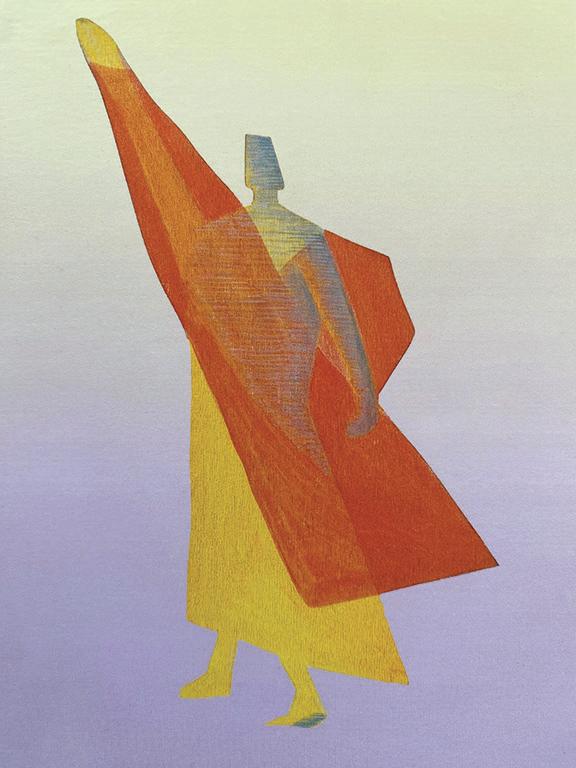
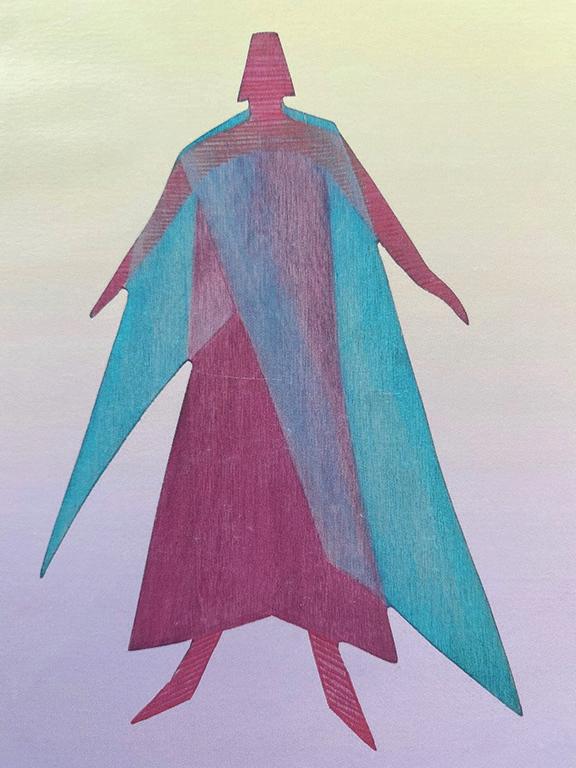
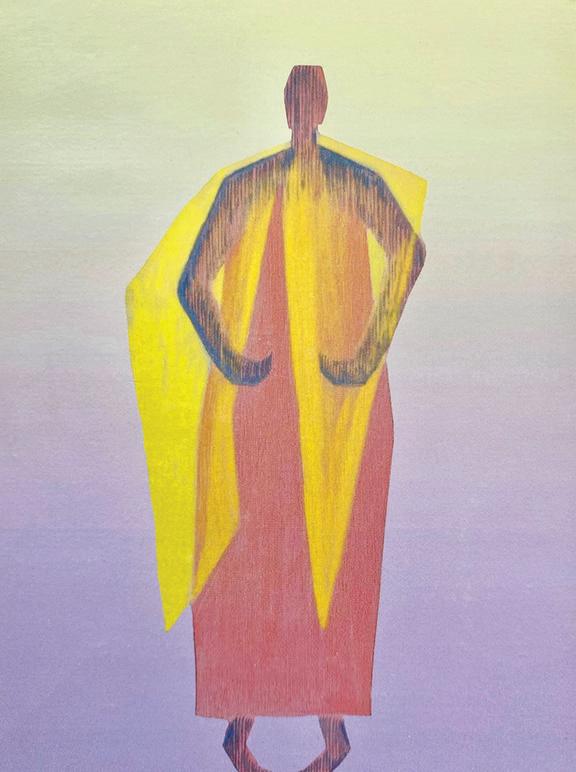
to think in color, without words.” 7
Eurythmy Eurythmy is an artistic movement. In practicing it, the eurythmist embodies the sounds of speech or the tones and intervals of music. When we express with our limbs and body the creative power that lives in the individual sounds, which originate with the zodiac constellations and the planets, it spiritualizes the movement.
“For the dead, the fixed stars of the zodiac and the planets are what letters are for us here on the physical plane. The fixed stars of the zodiac are the consonants, and the planets are the vowels … the dead can read what lies spiritually at the foundation of the stars.” 8
Doing eurythmy “lights us up” to our loved one, enabling them to see us. If you bring the eurythmy gestures of IAO to your loved ones, imagine them doing the gestures with you. This gives them the opportunity to engage artistically.
Truth, Beauty, and Goodness as Guide Posts
The virtues of Truth, Beauty, and Goodness are reliable guideposts and standards when working with the dead. To understand each virtue’s nuances and how together
they intertwine and stand as a luminous trinity will help you recognize valid communication from loved ones, identify effective reading materials, and evaluate your co-creative projects.
To be true is to be rightly united with our spiritual past. To sense beauty means that in the physical world we do not disown our connection with spirit. To be good is to build a living seed for a spiritual world in the future.
Rudolf Steiner, January 19, 1923
A Successful Practice
To be successful in building any practice start with small steps, establish a consistent rhythm, and have faith that your communications and your spiritual work is making a difference to your loved one and to their experience in the spiritual world.
Lynn Stull is a therapeutic eurythmist living in western North Carolina. She is author of Wonders at the Veil, Creating a Living Relationship with Loved Ones Who Have Died , and producer of the Easing Grief Home Study Program. Lynn has been working with loved ones across the threshold since 1997.
1Rudolf Steiner, Staying Connected, Chapter 7 | 2Rudolf Steiner, The Theosophy of Rosicrucians , p.45-46 | 3Rudolf Steiner, Staying Connected , Chapter 7 4Rudolf Steiner, Love & Its Meaning in the World , p.180-181 | 5Ehrenfried Pfeiffer, The Spiritual Leadership of Mankind , p.22 | 6Bill Bottum, bellbottom. wordpress.com | 7Liane Collot d’Herbois, Light, Darkness and Colour in Painting Therapy, p.250 | 8Rudolf Steiner, The Influence of the Dead on Destiny , p 58-59
The IAO, illustrations are by Annemarie Bäschlin.
Futuring Now
By Adeline Lyons
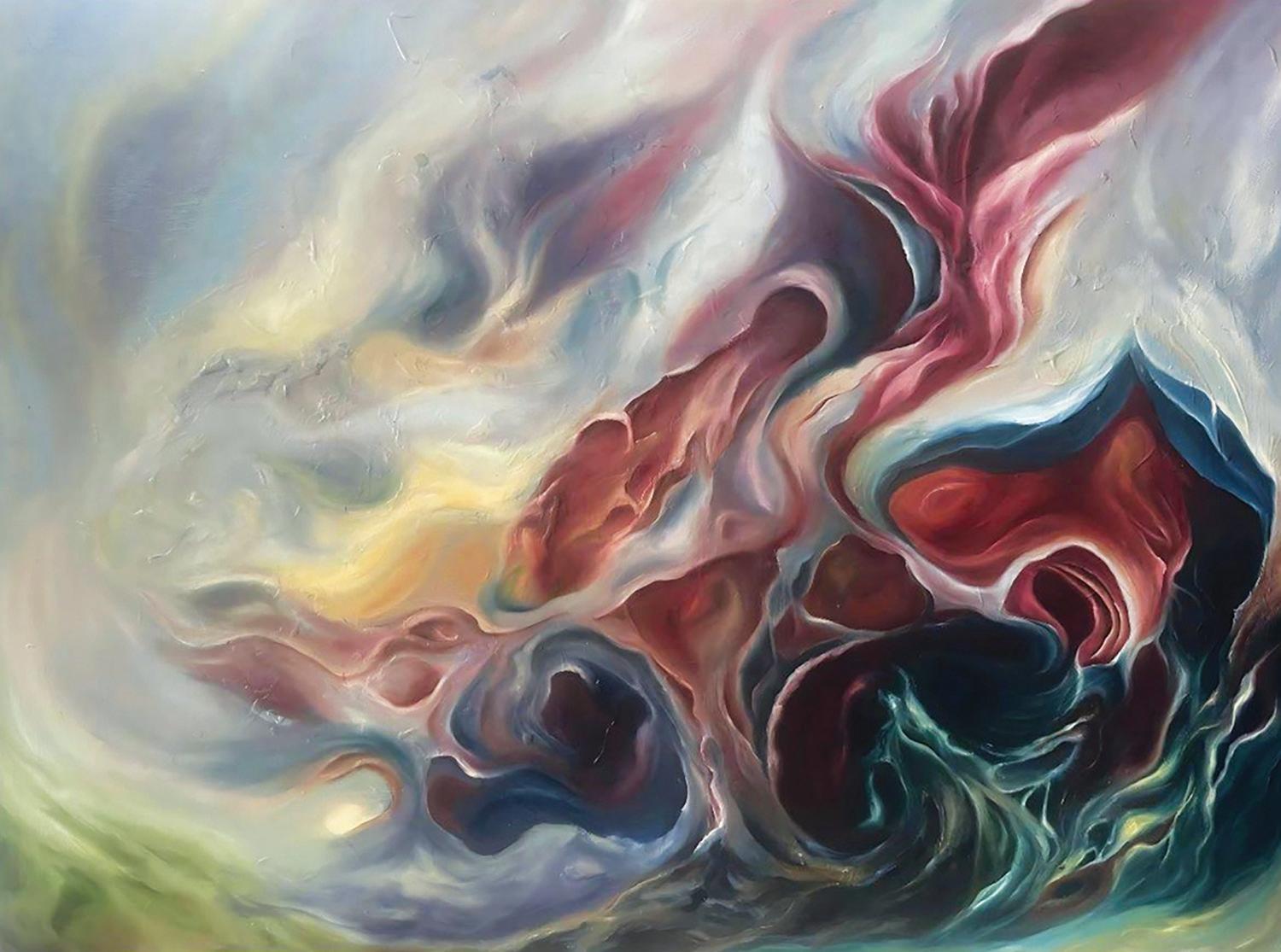
Emily Fecsko
In the past year, Futuring Now emerged as a new initiative out of work and conversation within the North American Youth Section. This triannual publication showcases the creative work of young adults engaged in anthroposophy. Born from an idea at a small youth section conference in summer 2024, this publication has incarnated in two bodily forms over the last year.
The first issue, published in February 2025, served as a prototype, featuring visual art, poetry, essays, and other creative works. The second, released in June 2025, centered on the theme “the light between,” inspired by a young adult conference in Harlemville, New York, in August 2025. This theme explores
the spaces between individuals, polarities, and the spiritual and physical realms, sparking rich insights. Examples from these first issues are shown below. Now established, Futuring Now is refining its vision with an eye toward the future.
Future issues will focus on specific themes or questions, with all submissions responding to the chosen prompt. For instance, the October 2025 issue will explore “Entering the Task at Hand: How Do You Hold the Future?” Creative works will address questions like, “What is the task for young adults today?” and “How can we transform existing structures to reflect our evolving humanity?” The idea of “entering” a task emphasizes active engagement with the demands of our
times. For young adults today, the question of shaping the future is both urgent and critical. This bold theme, timed with the Michaelmas season of challenge and courage, aims to inspire urgency and transformation, and encourage young adults to respond uniquely to today’s challenges and opportunities. Submissions will include visual art, poetry, prose, and essays or spiritual research from young people across North America.
Though rooted in the Youth Section, Futuring Nowas the subtitle of this article suggests - reaches beyond , with the eventual intention to welcome creative work from people of all ages, not just young adults. While it’s begun as a youth-driven initiative and will continue as such for now, the vision is to grow a broader platform for creative dialogue. I believe individual creative work - distinct and unique - gains new meaning when placed alongside others’ contributions. In Futuring Now , this dialogue - whether through visual art, poetry, or prose - reveals a startling newness that might surprise or inspire the individual creators. This actually creates the substance of the future, and can awaken a new sense of communication - one conducted by the creative word or image. This exchange of creative voices, striving to renew spiritual mysteries and forge modern paths of initiation, is urgent and vital.
Unlike most contemporary publications, Futuring Now prioritizes print over digital (after the first three issues, which have been shared digitally to expand reach). With nearly 50 subscribers to date, each receives three print copies annually - February, June, and October - delivered to their door. This print focus counters the trend of confining art and poetry to digital spaces, fostering a tangible network of diverse voices that reflect the spirit of our time.
To subscribe, email me (contact info below). The annual subscription cost is $15–$45 on a sliding scale. Payments can be made via PayPal, Venmo, or check. Donations are welcome to support the initiative without a subscription. Note that the October 2025 issue will be the final one shared digitally; afterward, all issues will be print only , making word-of-mouth sharing essential. If this article has piqued your interest, consider sharing it with your community or contact me for digital copies of the first two issues, which demonstrate the publication’s vision.
Looking ahead, I hope Futuring Now will include
more contributions from high school students and Camphill communities across North America. I plan to send out bulk editions to such institutions with the hope of reciprocal sharing. Future issues may highlight specific vocations, such as young Waldorf teachers, eurythmists, or biodynamic farmers, while also reaching beyond traditional anthroposophic circles to engage young people unknowingly doing the work of the Michael School.
Print media can feel like clutter in today’s digital age, but the effort to design, edit, print, and mail a 45page publication is a deed that our time has made convenient by corralling written and visual work into online spaces. Bringing creative work into the physical world preserves a waning craft. While digital tools aid editing and design, I believe serious creative work deserves to break free from the mesmerizing glow of screens by embodying itself in the world. Futuring Now arrives at subscribers’ doorsteps like a newspaper once did, offering a real encounter with art and ideas that resists the hypnosis of pixels.
Adeline Lyons, editor of Futuring Now adelineroselyons@gmail.com Venmo: @Adeline-Lyons
T his exchange of creative voices, striving to renew spiritual mysteries and forge modern paths of initiation, is urgent and vital. i
Risen
All pacifying fronts obstructed we can’t see into risened fields where immaculate sheep resound. But we can grow ball-fisted and vigilant with an immaculately provocative punch. What’s risen in some ways is unoriginal.
Our white-knuckled fistedness reveals new sheep not-frolicking but passing at the torn ground. Rose
Something Unsaid
Unsteady, flowing forms of fear, shaken, shaking, stakes in, check my breaks, unbreakable, she cracks, unravels, among the making of a speck of starlight.
A glow, dimming, glimmers after a show, but no, I don’t know, if that’s the way, give way to a little bit of phony, but show me you care.
Trust in tumbles and falls. Trust in fences and walls. As you find them they’ll crumble if you know them as your own.
Berenika Lehrman
Becoming Dreams
Do you not think that dreams are a means to reality?
Do you not think that weeds dream of becoming trees?
Do you not think that ants dream of becoming bees or bees dream of becoming birds?
Do you not think that the mice in the fields dream of becoming lions?
Do you not think that plants dream of becoming mobile like animals?
Do you not think that animals dream of becoming upright and intelligent like humans?
Do you not think that humans dream of becoming Gods?
Do you not think that Gods dream of seeing their creations fulfilled?
Do you not think that stones dream of germinating and growing upward like plants?
953
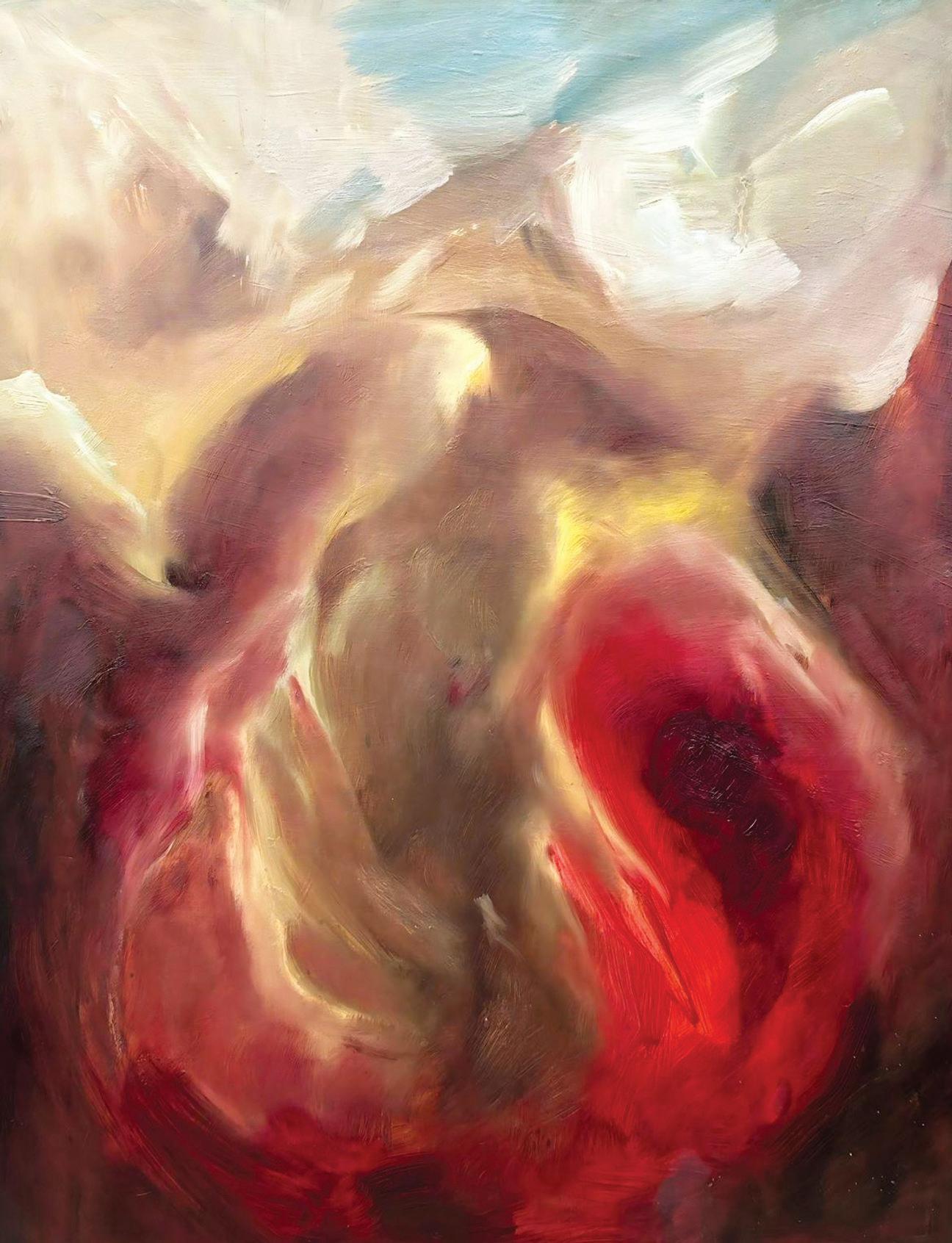
East of Eden, Emily Fecsko
Research
Virtue Maxims of Rudolf Steiner
By John Riedel
Below are the maxims with English translations. Each will then be digested and developed.
Virtue is a trait of moral excellence or a good moral quality in a person, often associated with behaviors that align with what is considered morally right, with qualities like justice, charity, and patience. Virtue is seen as essential for ethical living. Confucius in the distant past provided short maxims that if practiced led to being a better person, to virtue.
Steiner also presented 12 practices that lead to virtue, each tied to a particular month, to a particular constellation of the starry heavens, 1 the twelve good, pure, holy maxims to meditate on, and to consider in life, which lead to virtue. The spiritual beings living in the constellation that the sun is in each month are speaking to us in these maxims. To practice means to focus on something for a while. If you put your whole heart and mind into focusing on good words, good images, good sounds, good thoughts, then practicing becomes meditating.
Daily focusing on short phrases (taugen in German) was common in olden times. Nowadays we are more likely to practice what makes us unique as individuals. Whereas today we are more apt to say that a psychologist may help us with self-reflection, back then, maxims such as these were practiced if you wished to become a better person. Each maxim comes from one particular constellation in the zodiac, and Steiner explained that one should always start practicing around the 21st of the previous month, starting at the Spring Equinox. For example, April’s maxim should be practiced from March 21st to April 21st.
April: Devotion (Ehrfurcht) wird zu Opferkraft 2 *
Devotion (reverence) leads to sacrificial power
May: (Inneres) Gleichgewicht wird zu Fortschritt * (Inner) balance leads to stepping forth, to progressing
June: Ausdauer (Durchhaltekraft, Standhaftigkeit) wird zu Treue | Perseverance (endurance, steadfastness) leads to loyalty
July: Selbslosigkeit wird zu Katharsis
Selflessness leads to catharsis, purification of emotion
August: Mitleid wird zu Freiheit
Compassion, pity, sympathy, empathy leads to freedom
September: Höflichkeit wird zu Herzenstakt *
Courtesy leads to heartfelt tactfulness
October: Zufriedenheit wird zu Gelassenheit
Contentment leads to equanimity, serenity, composure
November: Geduld wird zu Einsicht
Patience leads to insight
December: Gedankenkontrolle (Kontrolle der Sprache – Beherrschung der Zunge “Hüte deine Zunge”) wird zu Wahrheitsempfinden | Control of speech (think before you speak, master your tongue, guard your tongue) leads to a sense for truth, to empathy in truth-finding
January: Mut wird zu Erlöserkraft*
Courage leads to redemptive power
February: Diskretion (Verschwiegenheit) wird zu Meditationskraft | Discretion (maintaining silence) leads to meditative ability
March: Großmut wird zu Liebe
Magnanimity, noble generosity, leads to love
1 Die Zwölf zu meditierenden und im Leben zu berücksichtigenden Tugenden, Anweisungen für eine esoterische Schulung (Guidance in Esoteric Training), 1987 Rudolf Steiner Verlag, Dornach, Swiss Republic. ISBN 3-7274-5515-2. 2* a word invented by Steiner

April
Ehrfurcht is a deep sense of reverence or awe, often in a spiritual or moral context. When paired with Devotion, it emphasizes a heartfelt, humble attitude of respect or surrender. This sense of devotion becomes, transforms into Opferkraft, which is the strength to sacrifice yourself, to offer up yourself to another person you love, or to a higher purpose. Through true reverence or
inner devotion, one gains the spiritual strength to make selfless sacrifices.
May
Inner balance, inner equilibrium, is a state of emotional, mental, or spiritual harmony. Whether considering a response or whether about to move in dance or in martial arts, if you first center and balance yourself, you can step forth in freedom, you can make
a decision, you can act from a firm center. Fortschritt means to step forth in freedom from a firm grounded center. True growth, true progress doesn’t come only from strenuous effort, but also from cultivating stability and alignment within yourself.
June
Ausdauer, perseverance, is the ability to keep going despite difficulty or fatigue.
Virtue Maxims of Rudolf Steiner
Research
Durchhaltekraft, a synonym of Ausdauer, emphasizes mental or moral staying power. Standhaftigkeit emphasizes steadfastness, firmness, the ability to stay true and unshaken in the face of challenges. These qualities lead to the development of true loyalty, to becoming stalwart, trusty, firm in your allegiance. People will learn to trust you to follow through loyally on whatever you say you will do.
July
Selflessness is the quality of acting without ego, of putting aside one’s own interests for the sake of others or for a higher goal. If you stop judging others, and stop considering possible actions and ideals merely in regard to your own self-interest, you will be able to purify yourself and purge yourself of negative thoughts, angry emotions, and self serving intentions. Catharsis is the transformation, purification, cleansing, emotional release of ego-bound elements. Selflessness transforms into catharsis.
August
Mitleid is suffering along with another person, having an emotional resonance with the pain of another. It goes beyond sympathy or pity; it is a deep, shared experience of suffering that can move individuals to action. True freedom arises not solely from autonomy or power, but from our ability to feel and act in solidarity with others. A compassionate person is free from hatred, bitterness, and indifference. Compassion liberates both the giver and the receiver. Social freedom is achieved through collective empathy, but without compassion, freedom becomes an illusion reserved for the privileged few. Compassion that leads to freedom is a call to recognize that through understanding and
alleviating the suffering of others, we ultimately free ourselves.
September
Höflichkeit wird zu Herzenstakt (Courtesy leads to heartfelt tactfulness). The Hof was the open courtyard of a castle, where people of all different professions and social standing met together. To preserve peaceful courtly behavior, courtesy was needed. In England, the young men of noble class were taught to gentle other people by being courteous, and so were called gentlemen. Being a gentleman, acting courteously, requires the effort to see into other people’s hearts and minds, so as not to offend them, and leads to tactfulness of heart.
October
Zufriedenheit wird zu Gelassenheit (Contentment leads to equanimity, serenity, composure). This phrase expresses the idea that when a person achieves true contentment – accepting life as it is without constant desire or agitation – this naturally leads to a state of calm inner peace or serenity. This reflects a kind of personal or philosophical progression: first, one finds peace with the present moment or with what one has (Zufriedenheit), and from that grounded state, a deeper emotional calmness or equanimity (Gelassenheit) can emerge.
November
Geduld wird zu Einsicht (Patience leads to insight). Clarity and understanding do not come instantly, unless you have an epiphany, which is a rare moment of immediate insight. Whether in personal growth, relationships, learning, or problem-solving, insight often emerges over time. Rushing to conclusions or acting impulsively can cloud judgment, while patience allows
space for reflection, observation, and perspective. In this way, patience is not passive – it is an active, intentional discipline that fosters deeper awareness.
December
Gedankenkontrolle, Kontrolle der Sprache, Beherrschung der Zunge, Hütung der Zunge wird zu Wahrheitsempfinden (Control of language, thinking before speaking, guarding your tongue leads to the ability to sense, to find the truth, with empathy). This explores the deep connection between mental discipline, verbal restraint, and the development of a true understanding or sense of truth (Wahrheitsempfinden). It suggests that by learning to control one’s thoughts and words, a person cultivates a clearer, more honest relationship with truth. When we learn to pause before speaking, to examine our thoughts, and to question our assumptions, we become more aligned with what is genuine – free from impulse, ego, or illusion.
January
Mut wird zu Erlöserkraft (Courage leads to redemptive power). Mut, or courage, is the ability to face fear, danger, or uncertainty, but also involves moral strength, the will to act according to truth, justice, or love even when it is difficult or costly. When courage is fully embraced, a person is more than brave, a person becomes a healing liberating force. The purpose of courage is not merely to survive, it is also for redemption. In standing firm for what is right, in facing fear, in protecting the vulnerable, courage becomes a sacred force, capable of restoring dignity, hope, and humanity.
February
Diskretion, Verschwiegenheit wird zu Meditationskraft (Discrete silence leads to meditative ability). Discrete silence refers to the capacity to keep things unsaid, to speak only when necessary, with thoughtfulness, without impulsivity. It refers to a silence that is conscious. The same restraint that keeps you from speaking impulsively also creates the mental space for stillness, reflection, and insight. These are core faculties if you wish to meditate. In this conscious quiet space, the mind becomes clearer, the heart more grounded, and the spirit more alive.
March
Großmut wird zu Liebe (Magnanimity, noble generosity, leads to love). This expresses the idea that nobleheartedness, Großmut, can transform into genuine, selfless love when practiced fully and authentically. Become someone who is forgiving, gracious, and bighearted, especially toward those who may not deserve it or who have caused harm. What begins as generous forbearance or kindness toward others becomes something deeper, warmer, and more personal. It becomes love. While Großmut might initially arise from a sense of duty or moral principle, over time, it opens the heart and allows us to see others not through the lens of judgment, but through empathy. And from that shift in vision, love naturally grows.
John Reidel majored in philosophy at Stanford which directly led to Rudolf Steiner and Anthroposophy. He then spent 42 years as an Emergency Medicine physician. He avidly translates various texts of Rudolf Steiner into English. John serves as a member of the Eastern Region Holding Group of the Anthroposophical Society in America
Involution / Evolution
Aristotle, Science, Reason; Plato, Art, Intuition.
Aristotle’s thought is directed Toward the sensory, the outer; Toward the temporal and the multiple.
Plato’s thought is directed Toward the ideal, the inner; Toward the unitary and the eternal.
But, Aristotle, taken or directed, Or expanded to the above gives Plato; And Plato, taken, or directed, Or contracted to the below gives Aristotle.
Thus, the worldviews of Plato and Aristotle Are polar compliments which imply a Universal Worldview embracing time and eternity, Multiplicity and unity, the real and the ideal.
Thus, out of the timeless world of causation The idea descends, the world of effects ascends.
John Urban
Aristotle, 384 - 322 BC Plato, 428 - 347 BC
Virtue Maxims of Rudolf Steiner
Completing the Circle: Rethinking Cultural Evolution Beyond Eurocentrism
By Chiaki Uchiyama, Ed.D Portland Waldorf School
This essay explores Rudolf Steiner’s evolutionary framework of human consciousness through the lens of cultural epochs and considers its implications for contemporary understandings of diversity, equity, and inclusion. Drawing from Steiner’s lectures - particularly At the Gate of Spiritual Science and Egyptian Myths and Mysteries - he presents a framework outlining the progression of human civilizations through distinct cultural epochs: India, Persia, Egypt/Chaldea, Greece/Rome, and Western Europe. He demonstrates how human intellectual capacity and materialistic consciousness evolved across these ages, gradually diverging from spiritual reality and ancient wisdom. The Western European epoch, in which humanity currently lives, is situated not as the culmination of human development but as a stage a few degrees past the midpoint in a larger arc of evolution (see Figure 1). While this stage represents the rise of intellectual
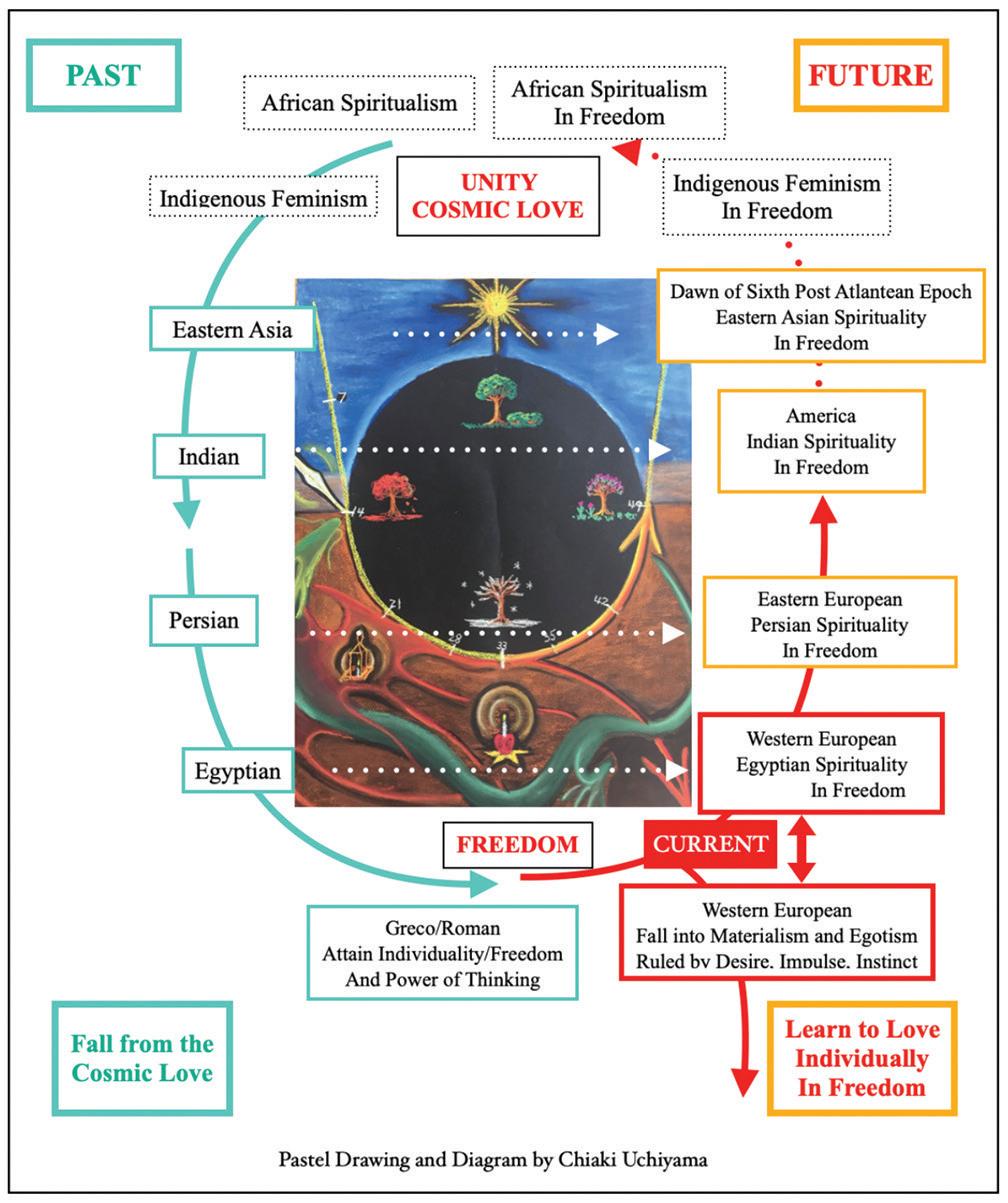
materialism, individuality, and personal identity distinct from others, it is intended to be followed by a re-spiritualization of consciousness that integrates these qualities with cosmic and universal wisdom.
Contrasting with Hegel’s view of Western consciousness as the apex of human freedom, the anthroposophical model emphasizes a more balanced and cyclical evolution of humanity. Without this broader perspective, Steiner’s insights can easily be misread as Eurocentric or hierarchically-biased. Properly understood, his framework acknowledges the essential contributions of all cultural streams to the unfolding of human consciousness.
Importantly, when considering the latter half of evolution, Africa emerges not as a lesser point of origin but as a future bearer of deep spiritual potential, symbolizing both the beginning and the end of the evolutionary circle. African spiritualism, at the “top” of the circle in the diagram, embraces the cosmos, Earth, and humans in harmonious unity, with love existing unconditionally. In contrast, the Greco-Roman epoch - especially in the Roman era, symbolized at the ‘bottom’ of the circle in the diagram - conceived of the cosmos, the Earth, and human beings as distinct and separate existences, with love arising as a human longing to heal and reconcile these divisions.
Steiner describes the characteristics of each culture to illustrate the evolution of human consciousness. While distinctions among races were most pronounced in the past, the influence of Western intellectual education and the ongoing blending of races and cultures have begun to blur these boundaries. Humanity’s current task is to integrate all races, embodying a universal consciousness that unites the spiritual and the material - harmonizing individual freedom with spiritual unity.
The Western European epoch draws on the philosophical currents of Greek, Medieval, and later-European thought - exemplified in the Odyssey, Parzival, Faust , and the writings of American Transcendentalists,
such as Emerson. In this stream, humanity began to turn inward, cultivating a microcosmic wisdom - the recognition that the human being is itself a mirror of the cosmos, containing within the depths of heart and soul the very forces once read in the stars. This stood in contrast to the earlier macrocosmic wisdom, when truth was sought in the great patterns of the heavens and in the vast harmonies of creation. Where once humanity looked outward to the constellations for guidance, it now turned inward to the constellation of its own moral striving. Through this shift, questions of intuition, individuality, and moral responsibility arose, as human beings sought to reconcile intellectual insight into the material world with the spiritual wisdom residing within. Central to this stage is the awakening of the Consciousness Soul, the faculty through which individuals can behold, discern, and take responsibility for their own thoughts, deeds, and intentions. Confronting one’s own egotism - the “devil” - activates the Consciousness Soul, fostering self-awareness, moral discernment, and ethical independence. Through this inner struggle, individuals discover that true fulfillment arises from contributing to others, as Parzival and Faust discovered, grounded in compassion, selflessness, and altruism.
Engaging with these traditional works is crucial not only for their literary or historical content but also because they portray the dynamic intervention of spiritual hierarchies guiding the evolution of the human race. This process of crossing the threshold of self is essential for contemporary human development—all members of the Western European cultural epoch, not only high school students, must undergo it. This is not because Western Europeans are superior or more important than others, but because the unique character of Western culture supports individuals in traversing this threshold, guiding them to transform egotism into a higher manifestation of the self. It cultivates resilience, compassion, and the capacity for interdependence, enabling individuals to navigate the challenges of modern life while integrating insights from both material and spiritual realms.
Steiner’s perspective integrates the Western European gifts of individuality and freedom with the spiritual insights of other cultural traditions - such as reincarnation and karma - emphasizing that human unity in freedom requires contributions from all cultural streams. Leaders and visionaries, including figures such as Martin Luther King Jr., Gandhi, Thích
Nh ấ t H ạ nh, Rumi, and women of color such as Zora Neale Hurston and Wangari Maathai, exemplify how rigorous intellectual training in Western frameworks, combined with spiritual and cultural wisdom, can yield profound contributions to the evolution of humanity. For young people today, however, these teachings remain abstract unless they confront their own egotism and engage the Consciousness Soul to navigate the “darkness” within. Only through this inner work can the lessons of freedom, compassion, and interdependence truly take root, allowing the insights of these figures to resonate and inspire action.
In this light, Steiner’s framework presents an encompassing vision for the evolution of human consciousness: one in which all cultural, spiritual, and intellectual streams contribute to humanity’s collective awakening. The Western European epoch provides the necessary stage for individuals to wrestle with ego, activate the Consciousness Soul, and cultivate resilience, while integrating wisdom from global traditions.
By engaging with traditional literature and cultural heritage in this way, humanity collectively moves toward a state of free, compassionate, and spiritually aware beings. As Steiner emphasizes in his discussions of community, “A healthy social life is found when, in the mirror of each human soul, the whole community finds its reflection, and when, in the community, the virtue of each one is living.” In this mirror, each individual soul reflects the unique gifts of its culture while simultaneously participating in the collective evolution of humanity - a vision in which every culture, every soul, and every life contributes to the harmonious unfolding of the whole.
iChiaki Uchiyama, born and raised in Yokohama, Japan, began her journey into anthroposophy in 1996 and has since dedicated her career to Waldorf education, serving as a teacher, Pedagogical Director, and now School Director at Portland Waldorf School. She has led annual languageteacher conferences and presented widely through AWSNA, WECAN, the Center for Anthroposophy, other teacher training institutes, and NAIS conferences. Chiaki holds an Ed.D. in Waldorf Education from Antioch University, with her dissertation, “Heart-Thinking Leadership,” exploring diversity, equity, and inclusion through the lens of anthroposophy.
The Emergence of the Alliance of Biodynamic Organizations and the Reinstating of the Biodynamic Association
By Alex Tuchman

The much-anticipated centenary of Rudolf Steiner’s Agriculture Course was, for the biodynamic community in North America, quite transformational. The 100-year mark brings a perfect moment to take a step back and question everything. The years leading up to 2024 were filled with attempts to raise up the community and restructure key biodynamic organizations for a greater working-together to meet the weighty needs of the Earth and agriculture.
Collegiality was the basis for a working group of organizations that formed in 2018 called the Council of Biodynamic Organizations. A positive development in the relationship between Demeter USA and the Biodynamic Association (BDA) allowed for an intimate working together and community conversation to emerge which had been longed for for decades. Discussions and meetings led to a unified feeling among these organizations and other partners, and a wish emerged to create something bigger, greater, and more impactful. There was much hope placed in legally unifying these two organizations under one umbrella, with the goals of aligning missions, integrating staff and resources, and streamlining administrative processes.
The effort was made to unite the BDA and Demeter under the umbrella organization of the Biodynamic Demeter Alliance, which was originally intended to be an Alliance that included other organizations as well. Unfortunately through this process, the BDA lost its independent identity, and after many significant trials and a great deal of effort, this error derailed the Alliance so significantly that its continued existence ceased to be practical. The loss momentum and talented co-workers, and the significant hollowing out of the Biodynamic Association through these past few years was painful for us all to watch, especially leading up to the centenary, when we would have hoped to have things building up rather than breaking down! But as every biodynamic farmer knows, if you can manage to organize the breaking down processes in a wise way, a nourishing compost can result at the end of the season, with all the potential in the world for new life to spring forth from it.
Although the unifying organizational framework was ultimately unsuccessful, all are grateful that the main goals the unification hoped to accomplish continue to be jointly carried by the BDA and Demeter, who are again independent entities developing their individual
charters alongside each other, with greater capacities and structures in place for working practically and productively together towards a shared mission.
Many friends, colleagues, and organizations accompanied this process with sympathy, interest, and support, including the Agriculture Section of the School of Spiritual Science. Through their initiative, a new collegial entity was (re)born in 2024, to help carry the common mission of all biodynamic organizations, called the Alliance of Biodynamic Organizations (ABO). All of the organizations who carry a national scope within the biodynamic network are invited to participate in round-table discussions on a regular basis, in an effort to build trust, collaboration, and transparency, share wisdom and support, and hold a consistent thread that is common to all.
The Agriculture Section, which has been largely invisible in the public eye for many years, has now found a natural role stepping into the work of facilitating and hosting the conversations of the ABO, seeking to provide solid ground and stability, and hold the course for the continued authentic development of biodynamics, which, in view of the Agriculture Section’s mission, is through cultivating a living connection between the practices of biodynamic agriculture and its source in anthroposophy and the work of Rudolf Steiner. The 1924 Whitsun Festival in Koberwitz was the community event which brought Rudolf Steiner’s Agriculture Course into being and is our common source of inspiration. From this wellspring the Agriculture Section works to host these relationship-building conversations between key partners in the movement. This is the fertile soil that we are now tending, to help develop a healthy social life among the biodynamic organizations.
The current organizations who take part in the ABO include Demeter USA, the Biodynamic Association, the Agriculture Section, the Fellowship of the Prep Makers, the Josephine Porter Institute, and Spikenard Farm Honeybee Sanctuary. A formal legal entity is in the process of being finalized, and as the bylaws are completed, other organizations will be invited to join. Meanwhile, we are all working together to help the BDA rebuild itself in the context of the greater movement and ecosystem of organizations who are working jointly to help further the mission of biodynamic agriculture in the United States.
Please feel free to contact Alex Tuchman with any questions and comments, alex.t@spikenardfarm.org.
Ihave realized that the earth has the ability to regenerate, and that the principles which govern regeneration are similar to those which apply to sick human beings. Landscapes, like people, have become sick because of a lack of love….. man has the privilege of being able to make the earth fruitful by allowing love to pour into it, through him. I think it is very probable that, in this way, the earth is dependent on man for its life….What a wonderful thing, that to be a husbandman….one need not first DO anything in relation to nature. One needs to GIVE TO IT in spirit. Then….the right physical treatments become apparent and easy….Faced with a dying world, we either love or perish.
Biodynamic Gardener Donald Harvey, from Biodynamics Magazine, Spring, 1977
Dues, Freedom, and Commitment Firing our will !
By Charles Burkam, J.D. | ASA Treasurer
In Virginia Sease’s article she gave a picture of the physical journey, from Dornach to the United States, of the Verse for America . 1 She shared how she came to know that the verse had been handdelivered by businessman Reinhardt Müller from Rudolf Steiner to Ralph Courtney in New York. I would like to complement her picture with a picture about a journey in the opposite direction - one from New York to Dornach.
In July, while searching through the Society’s archive of legal records, I came upon minutes of the St. Marks Group in New York City dated November, 1923. These minutes were from the meeting in which Henry Monges was selected to take part in the Christmas Foundation Meeting in Dornach on behalf of anthroposophy in the United States. It described in detail how the members made individual commitments of funds until there was enough to enable Mr. Monges to make the trip on behalf of everyone else.
Everyone in the group knew the importance of supporting the work in Dornach. They felt the magnitude of what was to happen at the Christmas Conference, even if they did not know the precise details, in part through the close connection Ralph Courtney had with Dr. Steiner, as described in Virginia Sease’s article. This motivated them to express their individual and collective will through funding the trip of Mr. Monges. −
How does this example from the past inform the present? One aspect is it shows that anthroposophy thrives when there are living personal connections in place, whether connections within a group or between different constellations of groups. Secondly, out of the warmth generated by such connections, the will to provide the necessary funds for anthroposophical activity can be activated
Each member faces this question in relation to paying annual dues to the ASA. Will it be enough
to enable the ASA, as a country group, to cover both its own requirements and its obligation toward those of the General Anthroposophical Society (GAS), so that the work of both is properly funded.
Do we have that will?
Rudolf Steiner shaped the Christmas Foundation Meeting statutes mindful of the threefold ideal. 1 To maintain maximum freedom, first for himself as an initiate, and then also for the members, whose freedom he could not infringe; second, to provide the Society with a rights structure that addressed the rights and responsibilities of members and of the leadership of the Society; and thirdly, the statutes address the economic reality that funds are needed for the Society to function.
A main challenge he faced was how to maintain freedom in relation to this economic aspect. To wit:
Joining the Society is a free deed, but it is also a commitment to use one’s will to support its existence: “The Anthroposophical Society is to be an association of people whose will it is to nurture the life of the soul, both in the individual and in human society, on the basis of a true knowledge of the spiritual world.” Statute 1. 2 (Emphasis added.)
The Society comprises the General Society at the Goetheanum as carried by its Country Groups and direct Branches (the Anthroposophical Society in ‘_____’ “ Members may join together in smaller or larger groups… ” Statute 11. 3
One’s will includes a financial contribution: “ Membership dues shall be fixed by the individual groups; each group shall , however, submit … 4 for each of its members to the central leadership of the Society at the Goetheanum. ” Statute 12. 5 (Emphasis added.)
Steiner says both that the amount “is not intended to be an absolute demand” 6 and that “whether or not something is obligatory is not so much the point. The
point is that the amount can be counted on under all circumstances.” 7 This is a simple matter of budgetary principles. One cannot, for example, include unknown potential donations in a budget, but only validlyexpected revenue. What should be expected is the contribution specified by the responsible council or board of an organization.
If we are to fix an amount - otherwise we might as well go straight to voluntary contributions - then it must be on the basis of what we need here. 8 (Emphasis added.)
This language makes it clear that these are dues, not voluntary contributions – a foundational principle confirmed by the Vorstand and the country societies when, in April 2019, the Treasurers Guidelines were adopted, the first of which reads: ‘The councils of the country societies confirm that, since membership of the Society entails a contribution from each member, membership dues are not free donations.’
In the discussions about setting the amount of the annual payment to Dornach, Steiner explained why he did not start with a set figure:
We could have started the discussion by considering the amount - I know this would have gone against our moral sense - and once the discussion had revealed that the General Anthroposophical Society could not be maintained we could have decided not to found it in the first place. There is no other way than to think realistically. We cannot found a Society which is incapable of surviving. 9 (Emphasis added.)
He later gives the example of gathering dues payments within the German Section of the Theosophical Society:
Individual members were not forced to pay, but the groups were able to pay the full sum … by making up any shortfall out of larger payments by some members. 10
Steiner was counting on the collective will of the members to provide the funds; it is about shared obligation. In unincorporated associations, the fundamental legal principle that applies is that all members are jointly and severally liable for all actions untaken. This is normally a retrospective view. Steiner is applying the same principle prospectively : all members are jointly and severally responsible going forward. Even where a group is incorporated and thereby has limited legal liability for past actions, all members retain the spiritual responsibility to ensure
that the Society continues to exist.
What then is the individual responsibility here, other than for each individual member to pay the amount requested by the group 11 through which he or she joined, absent true hardship ? This respects all three social dynamics:
The freedom to join or not to join;
The rights and responsibilities attendant on becoming a member; and
The mutual obligation to participate in the collective funding of the Society.
Interestingly, the dynamic of the German Theosophical Section described above, can be seen as an application of the Social Ethic to the economic aspect!
Heilsam ist nur, wenn im Spiegel der Menschenseele sich bildet die ganze Gemeinschaft, und in der Gemeinschaft lebet der einzelseele Kraft. 12
Social health only exists, if in the mirror of each human soul the whole community finds its reflection and if in the community the virtue of each one is living,
Out of a mutual knowing, the community gathers the needed total contribution, mindful that each individual’s contribution (whatever the amount) should be virtuous to the extent it embodies the individual’s best effort. Those individual contributions added together are a group’s dues.
When those with greater means are able to fully balance all amounts less than the required amount, the whole contribution can fully meet the budgetary expectation. What matters is that the collective contribution can be the most substantial amount possible if everyone treats paying dues as a real responsibility, and not as voluntary or optional.
Financially, the amount gathered equals the sum of the parts. And the process of gathering the dues is what can increase the mutual awareness, understanding, empathy, and concern amongst the members of the group. Socially, the whole will be increased by the warmth and satisfaction of what has been accomplished, strengthening the group itself. Indeed, perhaps that collective strength is more than the sum of the parts? From the minutes of the meeting of the St. Marks Group in November 1923, it seems that was how the process worked among those who sent Henry Monges
to Dornach – they stayed committed and went on to incorporate the ASA in 1933.
The dynamic of the Social Ethic was both the imagination behind how Steiner framed the Statutes and the actual process of gathering contributions in the early years by the country societies, including the ASA. In fact, money boxes were distributed at the Christmas Conference to be taken away by the groups. 13 Over time, the practice of collection by groups became abandoned. And it seems that the sense of a joint responsibility has diminished as well. My next article will look at what we might do collectively to alter that.
The world is still in great need of the awakening to spirit that the Society offers, as well as the continued search within the School of Spiritual Science for inspired insights that have practical impact and benefit for humanity at large - to echo the opening statutes and affirm the benefit is not for ourselves.
I am hoping that at the beginning of this second 100 years of the Society, we can rekindle the sense of purpose that lived at the Christmas Conference and regain the sense of responsibility of those early years. We would than collectively enable the ASA to serve anthroposophy within the US and to meet its obligations to the GAS in Dornach.
What we have founded in our hearts, needs our awareness and thinking to be enlightened, so that we can work with the question of finances “with focused will.” And, thereby, the ASA can truly become an association of people whose will it is!
i1 See Virginia Sease p. 14 | 2 Rudolf Steiner, The Christmas Conference for the Foundation of the General Anthroposophical Society 1923-1924, Anthroposophic Press, New York 1990, p. 57. | 3 Ibid. p. 61 | 4 The German word is zu enrichten. A better translation, therefore, would be the financial term “remit”, which means settlement of an obligation. “Submit” also somewhat contradicts the mood of freedom and commitment, which this article seeks to appeal to. | 5 CCFM, p. 62 | 6 Ibid. p. 176 | 7 Ibid. p.178 | 8 Ibid. p.177 | 9 Ibid. p. 179 | 10 Ibid. p. 181 | 11 Meaning as determined by the Vorstand and Council leadership. | 12 Rudolf Steiner, Verses and Meditations, Rudolf Stiener Press, Bristol 1993, pp. 116-7 a revised more literal translation to English. | 13 Ibid. p. 108. Using the boxes also served to make the individual amounts confidential where that was desired. I imagine that the practice was, after counting the funds in the box, that all members would consider additional contributions to “top up” the box in order to send the correct combined total.
F ormin’ F reedom
Form came forth out of freedom, yet form did not freedom bring, We must learn to love each other
So that “of freedom” we can sing.
Take time to make the effort to reflect ...then think, say or do. Acting only when clearly authorized, provide others a chance to choose.
Clear boundaries provide reflections
Keep them supple, let others come through
For boundaries that become hardened, give license to demean and abuse.
Fear doubles amid separation
Join together where reverence abides
Create spaces to see one another, Where no one wishes to hide
Be mindful of other’s intentions, speak most thoughtful and true, Then forms and older conventions Can be filled with freedom anew.

© Charles Burkam August 4, 2024 i
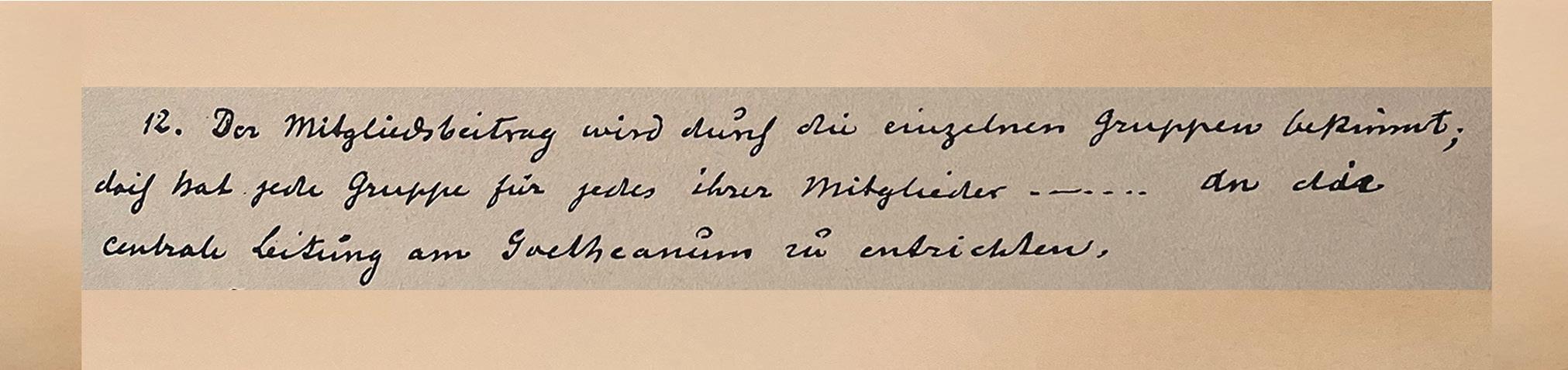
Statute 12.
Membership dues shall be fixed by the individual groups; each group shall, however, submit ... for each of its members at the central leadership of the Society at the Goetheanum.
The only fruitful thing to do is to take the general picture as the basis and to endeavour from this general picture to state a figure which promises to be sufficient for the General Anthroposophical Society to achieve what it has to achieve. I would therefore be in favour of stating a standard figure and then leaving open, of course, what the groups, the national groups, can agree to in practice. Of course the figure can be exceeded by an unlimited amount, approaching, though never achieving, the lavish scale on which Carnegie acted. And less can also be contributed, for instance by the countries with very weak currencies, down to what in mathematics is termed the vanishing point. In practice we shall see what can be done. I do not know how closely it will be possible to approach the scale of Carnegie, but I am quite certain that the vanishing point, as they say in mathematics, will have a definite part to play. Therefore, having regard to all that we can know today, I do believe that a standard figure should be fixed and that deviations from this can be arranged in individual discussions. So I think it would be right to lay down
that each group should pay 12 Schillings for each of its members, that is 1 Schilling per month. I can assure you that even if this Schilling is really contributed we shall have the greatest difficulty in carrying out the things we intend to do here. This must not be allowed to weigh on people. For those who cannot pay, the amount will have to be reduced, and we shall have to reduce our plans accordingly. But I do believe that we could agree on a standard contribution, for the groups, of 12 Schillings per member. Any other arrangement would lead to the Anthroposophical Society being able neither to live nor die, so that once again for financial reasons nothing worthwhile would be achieved. We shall be criticized and people will not understand that we cannot achieve anything if our hands are tied.
So this is not intended to be an absolute demand. It is a general standard. If it turns out to be impossible, it nevertheless expresses what we would need; and we shall then simply have to reduce it. This is perfectly possible. But I do think that it is necessary to make a statement of where one stands.
Rudolf Steiner
From the proceedings of The Christmas Conference | 28 December 1923 | 10 o’clock in the morning.
Statute 12 written by Rudolf Steiner
Reflections on Light Between
Compiled by Frank Agrama
The Light Between was a conference held at the Hawthorne Valley Waldorf School in Ghent NY, beginning August 6th and ending August 10th 2025. The Upstate New York community was graced with the presence of 150 participants, some traveling cross-country, some over seas, and many from just down the road. Warm gratitude goes out to all who contributed. Farms, cooks, workshop hosts, Orland Bishop, open minds and brave souls. So much was in this conference, as is true with many conferences, and for one person to summarize or distill its essence cannot paint a true picture. Instead, we held an open zoom call in which participants could reflect on and share their experiences of and after the conference.
These are some of their shared words .
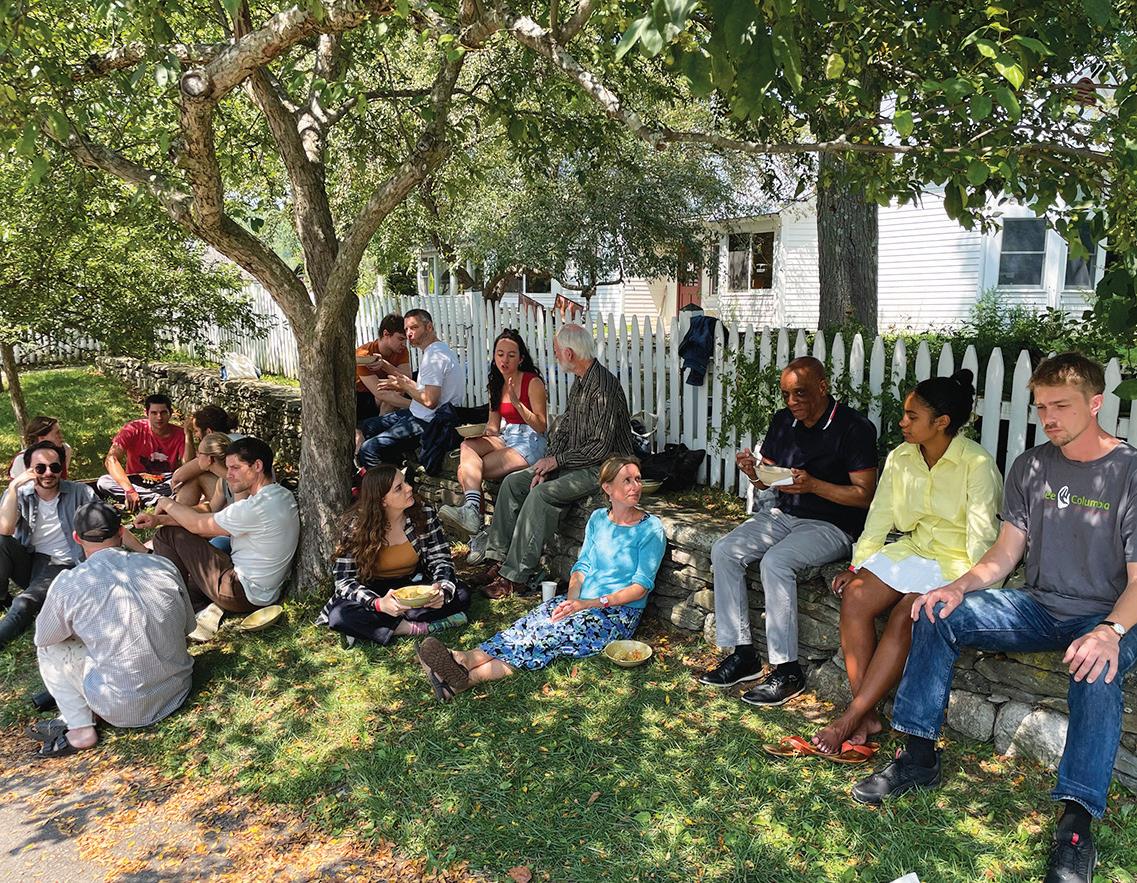
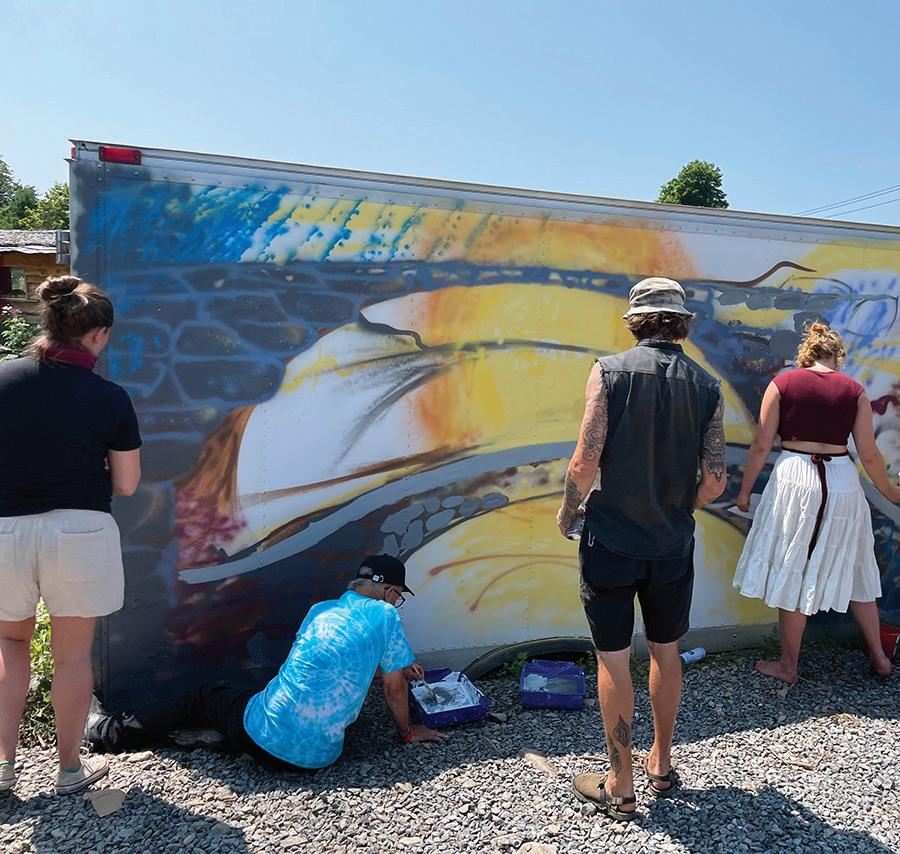
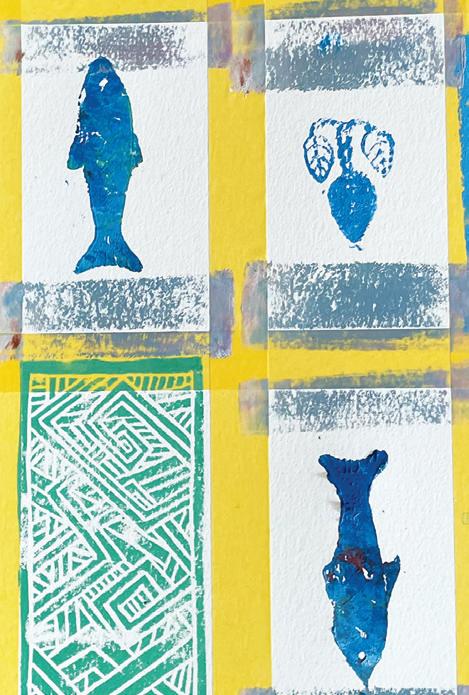
I was so inspired by the transformation of a dream that was shared as an idea into an event with over 100 people. Idea became reality. When I came home, I started putting some of my own ideas into reality, and felt how many possibilities opened up. So many possibilities! Dreams and ideas can become realities when people work together.” - Bella Toso, Minnesota
“I had a ton of fun at the conference. It was cool to meet so many people on the same wavelength. I’ve pushed away from Steiner over the years, but coming to this conference instilled some curiosity in me. I read Knowledge of Higher Worlds when I got back. I want to do another conference-a longer one. Excited for the next thing we’re gonna do!” - Julian Toso, Minnesota
“It was big-that was the impression. I felt a lot of gratitude. As the Youth Section often is, it was a leaven and support for questions and work that I was already carrying. It supported continuation. Orland’s lectures have helped me think about what realities I’m creating and where I’m putting my attention. Also, I had already initiated an impulse for a water study and
found more colleagues for that at this gathering!”
- Zuri Agrama, Wisconsin
“I really appreciated how it was play-complete play. It was a return to the self through coming out into space amongst others...We spun wool, made puppets, and so much more!” - Emily Fecsko, New York City
“The level of inspiration I felt at this conference was greater than any I’ve experienced before in terms of enthusiasm. I saw realities from the future-especially with the puppet walk on the last night. I saw a future and wondered how that could become now. So special. A lot of gratitude.” - Gareth Dicker, North Carolina
“The sadness that I was feeling a day or two after the conference goes to show how meaningful the connections were that I made during that time, and how important it is for me to feel connected with you guys going forward...I look at your faces and imagine that some people here could potentially be long-time friends and collaborators to develop and create new initiatives with.” - Ben Kibby, Spring Valley, New York
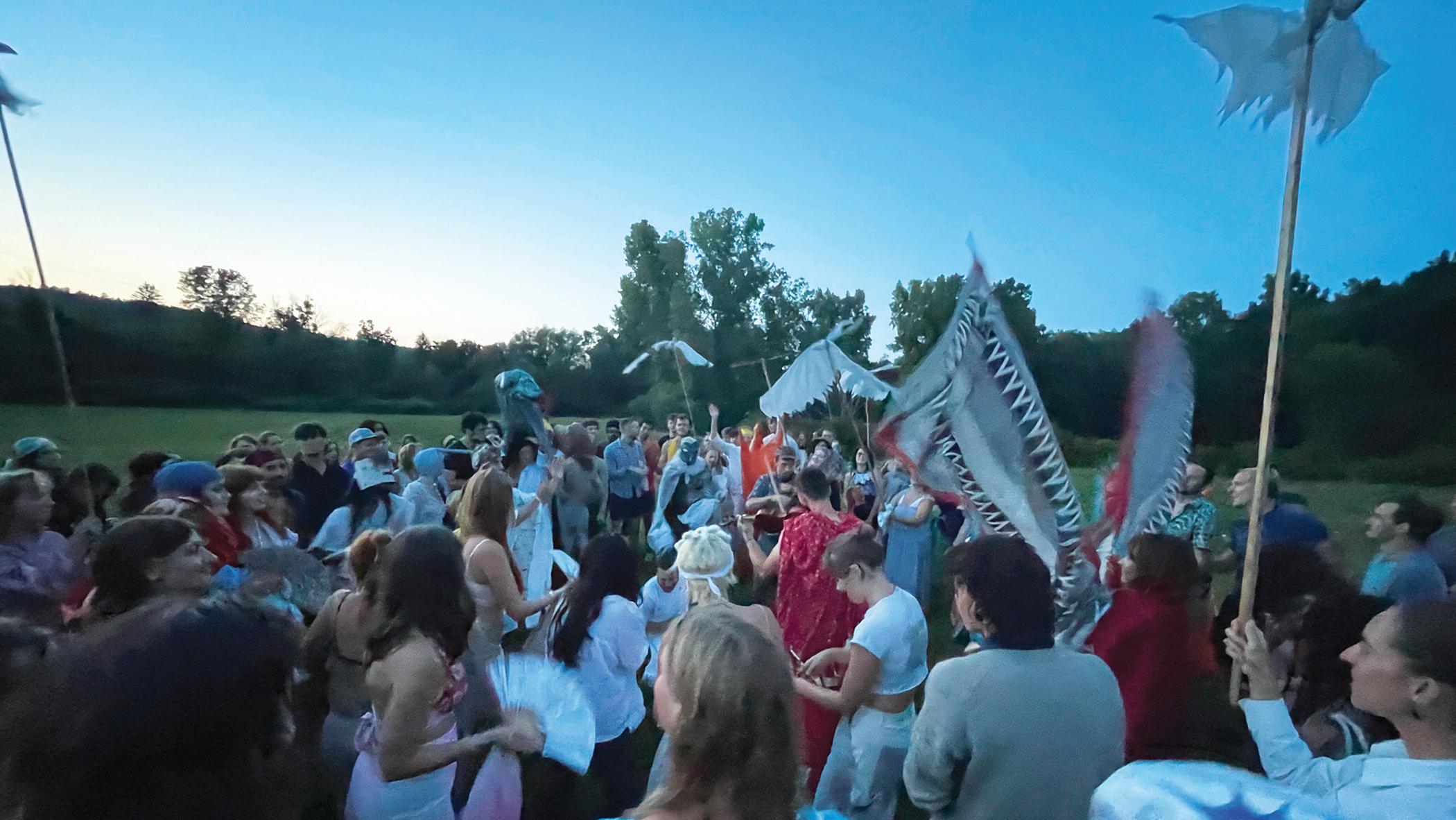
“One, I felt very rejuvenated when I came back to my hometown, and inspired and filled up with energy to be bright when I was not feeling that before I came. Two, I feel like I’ve made so many connections with people that I want to continue to foster and develop. I made some special friends, and that was amazing. It felt like a camp for adults. Singing, shared meals, and work.” - Nicholas Budwine, New Orleans, Louisiana
“With these conferences, I always have the question of how to carry them forth-how to make them manifest in real life. I was inspired by all the initiatives happeningso much enthusiasm. I’ve been carrying the conference in my heart for weeks afterward, and it’s still very much alive in me. We are planting seeds for the future. I got a glimpse of the future and am holding it in my heart.” - Magdalena Kadula
“I live in Camphill Copake, and every time someone asked me how it was, I said I love it, and I was really inspired. Beautiful to see how it was all put together. I connected with a coworker from Camphill Triform, and we’ve been talking about how to build these kinds of connections in Camphill, among the youth. How could we create a group for connection? To connect with anthroposophy and all the initiatives coming out of it.” - Nathalia Rodovalho, Copake, New York
Imagine that each person carries with them half of a bridge. In meeting one another we complete a bridge, and the place where those bridge halves meet is an unknown, beautiful, terrifying, shining space of infinite possibility. And I feel like that is what I saw: Hundreds, thousands, a million bridges being made.
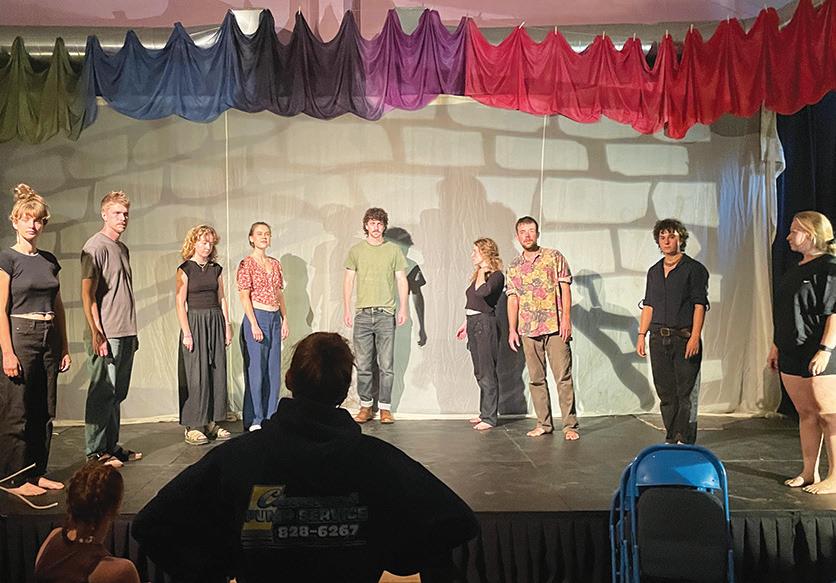
The Western Regional Council in Washington State
By Christina Sophia

Even prior to the appointed time of our gathering on May 24th 2025, the sun is already bursting - shimmering light of warmth over the Pacific Sound. The day is announcing that this gathering is to take place on one of the most beautiful days of the year. Traveling to the Western Regional Council’s (WRC) gathering on Whidbey Island, the thought arises - from something forgotten till now, something from Rudolf Steiner: That when an activity is guided through spiritual necessity it is often surrounded in a bubble in order to allow the necessary activity to unfold unhindered. This is the feeling arising in my soul, there is something very special, mystical, and protected that is about to take place. And this wondrous anticipation is present like a cloak of a loving guardian, perceptible, upon entering the ‘Seed and Feed’ building for the next five hours.
For the many setting out on the journey - some as early as dawn in order to get a ferry across the Pacific Sound, expectant showers never manifest - only out-of-season cozy warmth as greetings are shared. A total of 26 gather for exploring the 100 year anniversary of Rudolf Steiner’s death. The day’s overall question, “What is our responsibility in carrying the future of anthroposophy and the endowment we have received from Rudolf Steiner?” Present are five members of the WRC: Lori Barian, Kim Lewis, Kirk Mills, Christine Burke, and Timothy Kennedy, who emcees the afternoon. Each member of the WRC assumes certain responsibilities -
ensuring the smooth unfolding of the day.
After sharing in a delicious pot-luck lunch, including fresh made bread by the WRC, we then form into five groups. These groups, each facilitated by a member of the WRC, meet in various parts of this beautiful wooden structure with its great screened-in porch and impressive beamed ceilings. Each group finds its own space for sharing in conversations, responsible for one of the five questions. These topics invite potent discussions - deep conversations, with main points written on large blocks of paper to be eventually shared with the whole circle.
The insightful topics are;
1 How can anthroposophy|anthroposophists work well with the world at large now and with future needs?
2 How do we encounter - work with and transform evil in the world today?
3 Can we strengthen our collaborating in the midst of our imperfect striving?
4 What will strengthen the initiatives and entrepreneurship in ourselves and community? And this question also focuses on finances.
5 What is needed to deepen the renewal of festivals regionally?
This time of meeting in small groups over two hours was broken up with a magical community speech and movement exercise led by Christine Burke. Just what was needed to bring us, through playful speaking and moving, into a more grounded sense of self and community.
Throughout the afternoon there was a tangible bubble of goodwill surrounding and enveloping the speaking and doing. Loving goodness pervaded and lit up these 26 grateful souls - connecting all in communal warmth. And let me just add, that no one could have left as the same individual who entered almost five hours earlier. How could one not be changed through participating in this magical and spiritual temple of sharing? Thoughts became alive, and hearts created a vessel for authentic and hygienic community development. Change happens. Through tapping into the deepest and best of group potential when the portal is prepared and all are warmly invited to participate. In the midst of the WRC gathering on Whidbey Island, in the expansive vista of Salish (chalice) Sea filled with salmon and whales, at the very core of this gathering, a nourishing and living heart-space is opened and perceptible. The community experienced the presence of the lineage connecting the Society to Rudolf Steiner - perceptible alive and well. Feelings arise and become insights of knowing, that new ways for forming community, through meeting boundless depths of potential from one another and sharing with one another.
And what were some key points? Here are three that remain now, in retrospect, after living within the afterecho of this miraculous encountering of being sheltered into perceiving a path forward for forming new community based on listening, hearing, and stepping into the soul-space of one another, still living in the memory of that protective bubble of guardianship. First, we are the ‘preparation,’ the agents to nourish growth; and our capacity to become worthy for offering and becoming the ‘preparation’ really does depend on one’s ability to connect with the offering from each in our community. That is, connecting/meeting through a heart awakening, a deep and honoring compassion and empathy for one another. And second, knowing there is no change without growth in consciousness; as we all carry darkness - our inadequacies and our real human limitations. This is what we meet in our group work, branch gatherings, study groups, and community initiatives. Third, becoming agents of change for one another: digging into our depths and
then offering oneself as a servant or midwife. And within this, meeting our mutual and individual karma, through the resultant growth in awakening human heart consciousness. And how is this accomplished? Helping one another in serving like their hierophant, calling forth from the other their highest and best, mirroring and recognizing their truer self; and allowing oneself to become the agent of change. Not in anger, but love! So the darkness living in oneself, and present in each human soul, is transformed, through the light the other shines into all our painful struggles.
This is the battlefield: the very ground of individual challenges seeking and needing to change. This is what is now asked for to build community. Each one serving and bringing to the offering bowl: gratitude, forgiveness, and love-filled acceptance. For it is through the potent and painful connections the heart suffers that regeneration and transformation can build community. Not just for a few - as exclusive through an invitation, but inclusive through self realization for all. Not I but Christ living between and through oneself and another - witnesses illuminating human limitations and frailness - hidden in the shadows. Inadequacies that cannot be seen due to delusions and illusions of self-ignorance; now perceived and acknowledged openly when community strives to become a vessel for purposefully creating the divine good. Each willing to be the substance offered in the community ‘grail’ bowl.
The Seattle Branch of the Anthroposophical Society in America (ASA) is in process to re-define, re-claim, and re-acknowledge serving as a community vessel for holding current and future initiatives as a branch of the ASA. Sharing this birthing time participating in the WRC gathering is a true gift for the future of the work in this area. We on the board and those in attendance give heart awakened love and thanks to the WRC for the abundant seeds planted throughout the afternoon of May 24th: seeking to do all that is possible to responsibly care for the growth and becoming of the Seattle Branch.
Respectfully submitted by Christina Sophia, PhD, Interim President of the Board for the re-founding of Seattle Branch of the Anthroposophical Society of America.
Council of Elders for Waldorf Schools
Jeffrey Levy at the Waldorf School of Louisville
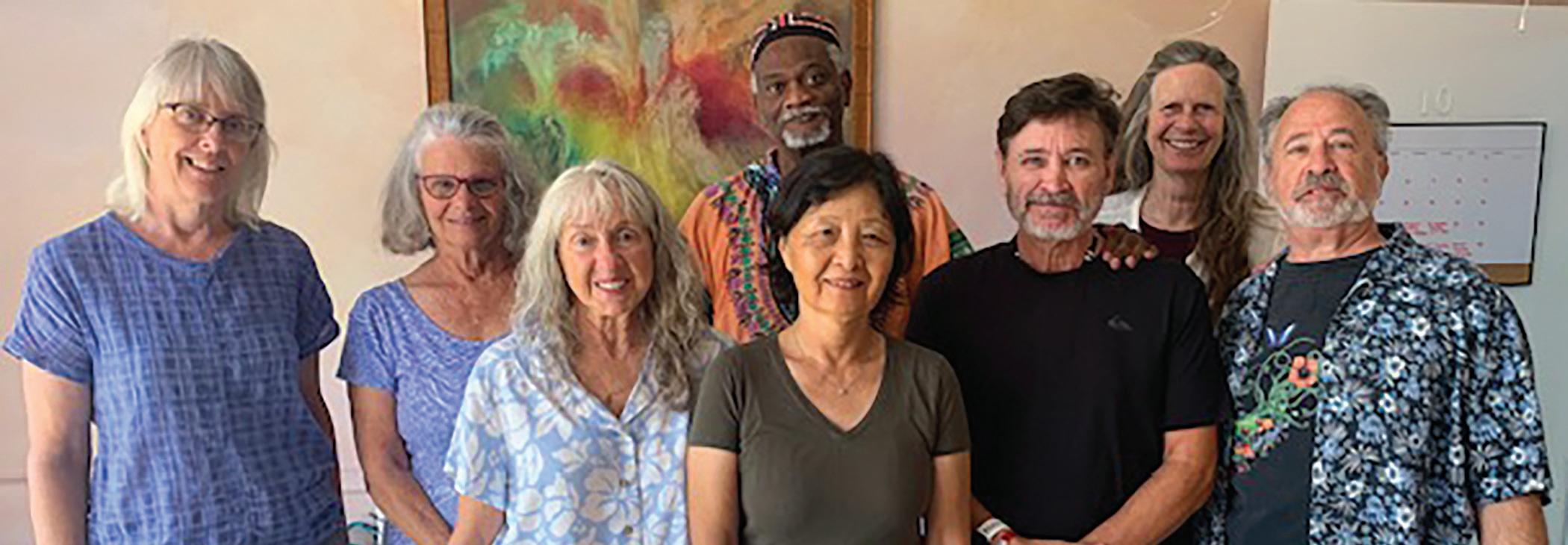
Late in the summer of 2024, I helped form a group at the Waldorf School of Louisville we call the Council of Elders. Although I was new to the school, I had been active in Waldorf education since 1999 and served as a high school teacher in Oregon for many years. The Louisville school had many former teachers, school founders, and parents with a long-term connection to the school but they did not have an organized means of continuing their involvement. Some of them helped hold the festival life of the school, served as substitute teachers, or supplemented the curriculum. Their contributions were important but they were individual and isolated.
Having a Council of Elders honored, in a general way, the wisdom of many Native American cultures. While the running of affairs of any community will be attended to by younger men and women, having a body that can reflect upon and inform current decisions will be of significant value. With experience, and especially shared experience, comes the tempering of rash, impulsive actions and raw emotions. In commercial society, this role is supposedly filled by a board of directors (although financial and personal incentives often undermine this function). Valuing the past is simultaneously preparing the future.
As with all Waldorf schools, there have been challenges in Louisville heightened by the pandemic: enrollment, recruiting experienced teachers, retirement of gifted teachers, uncertain management and leadership. It was clear that finding a way to re-engage the dedication
and wisdom of elders could serve as a vital resource. Furthermore, forming such a group was a way of recognizing and honoring the long service of elders. The idea was floated to members of the community and board. It was well-received.
The key idea was for the Council to serve the being of the school: to provide a longer vision of the school’s life, its strengths and weaknesses, past crises and successes. Council members were self-selected; most were already part of a long-term anthroposophical study group. We began to meet in the summer of 2024 and as we did, the purpose and function of the group began to arise. What was immediately clear was the elders’ ongoing love of the school, its faculty and families, and the anthroposophical vision for education. Also, recent retirees shared some of the current challenges to the school’s policies, procedures, and guidance.
At WSL, the Council first decided to be particularly active in supporting current teachers. Several of the teachers are young and new to Waldorf, while others have not had the time (or inclination) to deepen their relationship to Anthroposophia. In moving its location, in the challenges of the Covid pandemic, and in a severe budgetary challenges, as well as indecision about pedagogical leadership, the elders sensed that first they should try to support the faculty. We set out to give them a feeling of security in the rhythm of the curriculum and connect them to a larger picture beyond the day-to-day preparation of class lessons and
student concerns. We began to meet once a month by ourselves and a second time during a full faculty meeting. We have shared movement, speech, music, and painting exercises to make a connection with the art of teaching by giving a brief explanation how these activities enhance instruction. We have also done biography exercises in order to deepen relationships between faculty members and with elders. The biography work seems particularly important. This is a work in progress.
The Council of Elders has begun discussions on other topics such as strengthening the festival life of the community and appreciation of, or access to, the anthroposophical roots of the education. Often one stress for teachers is when a parent lacks understanding about the basis of the education and sees Waldorf as simply another technique. If their child is struggling, they can make demands and express anxieties that may not help the child or the class as a whole. Teachers can get worn down by this conflict. Therefore, another way to support the faculty will be to strengthen parent education beyond class meetings. A further path for the Council is to provide guidance when there is some crisis between families, teachers, administration – a moment when policies or procedures have failed (or been lacking) and the upset threatens a single class or the school as a whole. Yet, it is not the purpose of the Council to become active managers. It is to serve as a reflection, reminder, and higher connection to the school’s being.
We suggest other schools take up the idea of a similar council. In practice, each different Council of Elders could take different forms. It could serve as a resource for teachers, administrators, or parents when there is a serious disruption in the life of the school. It could also serve as a means of outreach to the wider community. By meeting together, it is natural that through discussion and shared experiences, new purposes for the group will come into being. In a large or longstanding school, a council might need to determine membership and it would encourage succession so that an old-guard does not maintain old ways of doing things that have become sclerotic. A council could become a legal part of the school organization or remain an auxiliary advisory body depending on each school’s circumstance. It could also offer service to nearby and new schools that do not have elders of their own. It is important to recognize that such a
council is not a ghost administration and its purpose in serving the being of the school is not to become managers.
To sum up - why form a Council of Elders? Those who have a deep and ongoing love for a school, who have carried and sustained it, need a means to provide service different from employment. Beyond individual service such as substitute teaching or holding elements of a festival, a council can help provide a kind of coherence and wisdom leadership separate from the week-to-week duties of the school. It honors the founders and former teachers while giving a vision of an organization in a healthy cultural sphere.
M ay those things shine again On the path through life
That in the time of youth Were planted in the heart As the seal of true humanity.
May those things be strong
In the depth of memory
Which the soul discovered
Through the heart
Under the spirit guidance
Of
the powers that teach for life.
Rudolf Steiner’s verse for the graduates of the Stuttgart Waldorf School, April 1924 i
Living Social ArtThe Life and Work of Carlo Pietzner
By Cornelius Pietzner
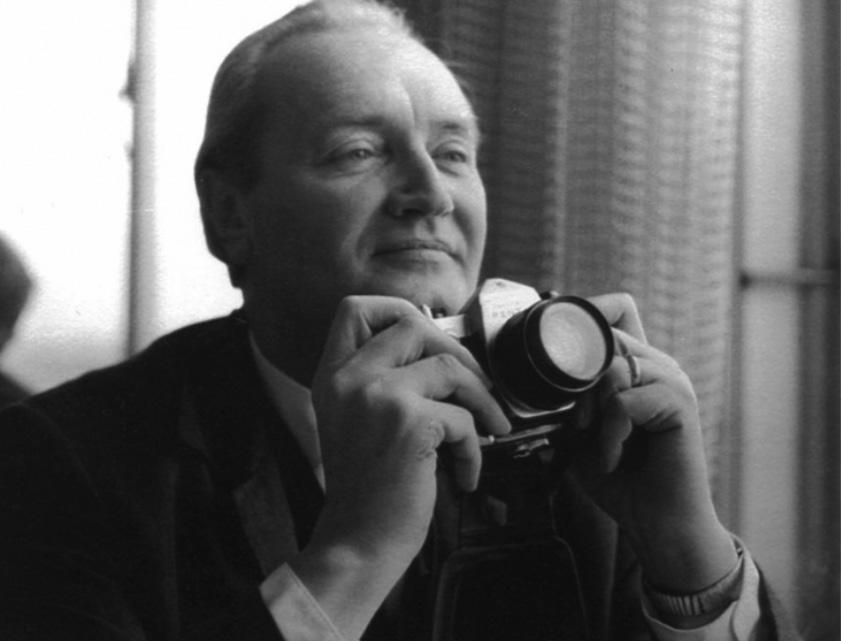
When Richard Steel (Karl König Institute) reached out to ask whether I thought it worthwhile to publish a book on Carlo Pietzner’s life and work - under the title Living Social Art - to mark the 40th anniversary of his death in April, 1986, my answer was an immediate and wholehearted yes.
Though several of Carlo’s lectures, his novel (in German), and various poems have been published over the years, there has never been a single volume that gathers the full breadth of his artistic and cultural contributions. With the support of Temple Lodge Press and an introduction by Virginia Sease, a former colleague of Carlo’s, we’ve begun the process of bringing this vision to life. The book will include family photographs, a selection of his paintings and stained glass works, plays, poems, and several of his lectures - each still remarkably relevant and resonant today.
This publication is meant for those who knew Carlo personally, for the Camphill communities he so deeply influenced, and for members and friends of the wider anthroposophical movement where he was an active and shaping force for decades.
On a personal note, this project has been both moving and meaningful. It offers an opportunity to distill the extraordinary scope of Carlo’s inner and outer journey into roughly 200 pages - an international life that began in Vienna and eventually took root in North America. For me, it has also been a chance to see him anew: not only as a father who shaped my early life, but increasingly, over the years, as a mentor and companion in spirit.
It’s a true joy to help bring this book into being. I believe it will speak to many - evoking memories for some, offering insight and inspiration for others, and introducing yet others to a remarkable individual: a modern artist and thinker, fundamentally engaged in the founding impulses of Camphill, shaped by the cultural atmosphere of early 20th-century Europe, and deeply at home in the wider world.
Living Social Art:
The Life and Work of Carlo Pietzner will be published in spring 2026.
We look forward to sharing it with you and will provide further publication details this winter!
Stories from the American Journey:
Men and Women Whose Lives and Deeds Express the Ideals of a Nation
A Review of Karl Frederickson’s Book
By Linda Williams, PhD
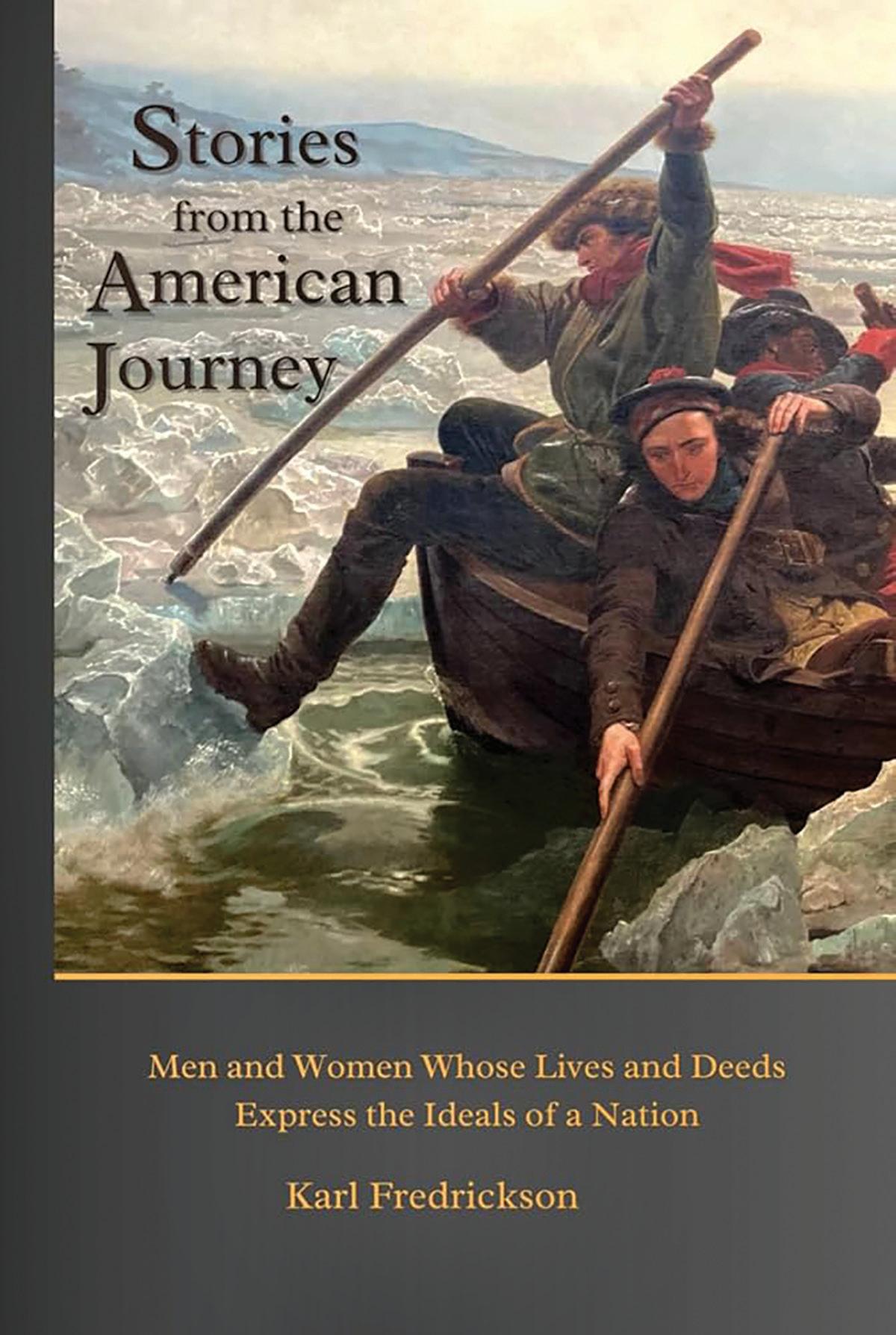
At a recent small dinner party for a friend who is a long-retired Waldorf teacher, I shared my impressions from a book I was reading: Stories from the American Journey , by Karl Frederickson. Her middle-aged daughter’s eyes lit up, hearing the name of one of her former teachers at Green Meadow Waldorf School. “Oh, he was so kind to us,” she said, “and he would be so excited with his stories, that we would become excited too!”
That enthusiasm experienced by a former student comes through the deeply researched and encouraging stories that Mr. Frederickson shares from his 35 years as
a Waldorf high school history teacher. The collection of nearly 50 stories about deeds, events, and biographies expands an arc of American history from colonial days through the Civil Rights movement, and also includes some hopeful reporting of 21st century deeds.
Mr. Frederickson is a superb storyteller - and this book is not only helpful for teachers. Anyone interested in American history will be enthralled by his ability to illuminate the moral imagination at work in pivotal moments of our national story.
Frederickson’s goals are revealed in his accompanying essay, including a powerful admonition from a Mohawk chief who visited his classroom in 1976. After sharing stories of his tribe’s heritage, the chief observed: “It is nice that you are interested in us, but we don’t understand why Americans spend so little time looking into their own past, identifying the values and strengths on which they can build a better world today.”
This challenge shaped Frederickson’s philosophy. Rather than avoiding troubling aspects of American history, he discovered that “it is often in those darkest moments, when injustice raises its head or when the nation is in crisis, where we find the best examples of heroic action, where the human spirit shines most brightly.”
Themes That Illuminate the American Spirit
The book is organized around several central themes that reveal the American character at its best: liberty, enterprise, community, and what Frederickson calls “moral awakening.” These themes weave through the centuries, connecting Roger Williams’s 1630s stand for religious conscience to the courageous children who walked out of Birmingham churches in the 1960s to face Bull Connor’s police.
The theme of moral awakening particularly resonates throughout the collection. Frederickson presents individuals who experienced profound shifts in consciousness that drove them to act against
Book Reviews
injustice, even at great personal cost. Sarah Grimké’s transformation after witnessing the brutal treatment of an enslaved woman in a Christian household led her to abandon her privileged South Carolina life and become an abolitionist speaker. Similarly, Dorothea Dix rose from her sickbed to embark on a grueling journey documenting the horrific conditions faced by the mentally ill, ultimately transforming care across multiple states.
These stories reveal Frederickson’s understanding of moral imagination - the capacity to see beyond accepted norms and envision a more just world, appearing in figures as diverse as Jane Addams founding Hull House from a mansion’s porch and Booker T. Washington building Tuskegee Institute from its humble beginnings in a “dilapidated shanty.”
Modern Echoes
What sets this book apart from typical historical surveys is Frederickson’s attention to how these timeless themes manifest in our contemporary world. His examples from modern Detroit are particularly poignant, given that city’s role as the site of the 2025 meeting of the Annual Conference and Annual General Meeting at the Detroit Waldorf School. He highlights figures like Toni McIlwain, who transformed her own experience of domestic abuse and homelessness into tireless work restoring hope and community spirit in Detroit’s Ravendale neighborhood, and educator and community collaborator Bart Eddy, the founder of Brightmoor Makers, whose makerspace supports creative innovation with powerful community effects.
These contemporary examples demonstrate that the spirit Frederickson celebrates in historical figuresthe willingness to see beyond present circumstances and work toward moral and social renewal - continues to flourish in unexpected places. These stories can certainly inspire our youth to take principled steps of their own.
A Resource for Teachers and Others
For teachers, Frederickson offers something especially valuable: guidance on how to research and develop stories from their own local and regional history that embody themes of moral awakening. He encourages educators to “find your own themes, and discover your own stories from the rich tapestry of our nation’s history,” providing a framework for bringing moral imagination into any classroom setting.
While designed with eighth and ninth-grade teachers in mind, this collection offers insights for anyone seeking to understand American experience. The book serves as an excellent complement to Luigi Morelli’s The Passage of Time: A History of the United States from an Anthroposophical Perspective and Arthur Pittis’s Documents in American History , offering biographical elements and primary documents that bring abstract historical forces to life.
In our current moment of national division, Frederickson’s work offers a timely reminder of Lincoln’s appeal to “the better angels of our nature.” By understanding the moral courage of those who came before us, we may find inspiration for the conversations and actions our own time demands. As Frederickson concludes, “We have been a nation of inventors, collaborators, and community-minded individuals, but we now need to begin a new era of national conversations” guided by honesty, respect, and recognition of our shared ideals.
This is history as moral education - not in the sense of simple lessons, but as an invitation to see how individual human beings, faced with moral choices, can indeed, as Dr. King reminds us, “bend the arc of history toward justice.”
Stories from the American Journey: Men and Women Whose Lives and Deeds Express the Ideals of a Nation by Karl Frederickson is available in paperback ($15.95), hardcover ($23.95), and Kindle ($4.99) from Amazon. Mr. Frederickson offers more insights and resources at his site, including audio versions of the chapters at asenseofhistory.org.
“ ...he would be so excited with his stories, that we would become excited too! ”
Rudolf Steiner Library
Celebrating its past, present, and future
i
In May 2025, friends and supporters of Rudolf Steiner Library gathered at Lightforms Art Center in Hudson, NY, to celebrate the library - its past, present, and future. The impulse for the occasion was to honor the national anthroposophic library, the people and books that make it special, and what the future holds. It is notable that 2025 also marks 10 years since the library moved to Hudson, NY!
Attendees shared memories, reflections, and gratitude. People spoke warmly of long-time librarian Fred Paddock, his devotion to the mission of the library, and how he helped many on their path, whether it be introducing them to anthroposophy or helping with research projects. Staff who followed in his footsteps, including Judith Kiely and Judith Soleil, were also gratefully acknowledged, along with the many employees, volunteers, patrons, and supporters who have maintained the collection over the years.
For many, Rudolf Steiner Library serves as a gateway to anthroposophy. Library Board member Cate Decker recalled moving to Harlemville in the 1990s with little knowledge of anthroposophy. While walking through the forest with her son, she stumbled upon the library, then located on Fern Hill Road. “I went in, and there was Fred Paddock, with his warm, welcoming smile. This was my port of entry into anthroposophy!” Over the years, the library has served as a valuable resource to meet her evolving interests.
Researcher and author Gary Lamb first encountered the library when it was still in NYC. Over time, it became an indispensable resource for him. “[Once,] I couldn’t concentrate on my work because I was dealing with a personal issue. I remembered this indication by Steiner that you can walk up to a shelf and pull exactly the book that you need. So I decided to try it. I walked past two shelves and then picked out Friend of My Heart: Meeting Christ in Everyday Life by Claire Blatchford. I opened the book and there it was: the first step to the solution of my problem.” He added, “There’s something to say for being in a room full of books with all the answers that you’ll ever need.”
Library supporter Gloria Kemp said: “This is Rudolf Steiner’s legacy. It is not only the legacy of the past but a gathering for the future.” Gloria voiced her gratitude for the Rudolf Steiner Library Circle of Friends taking on the responsibility to steward the library, especially given that the relationship with the Society has changed. “Whatever we can do to spread the word of the need for support is a responsibility that we all carry and that’s why we are here today.”
Author Kevin Dann recounted a pivotal moment while working
on his PhD dissertation. After finding a pamphlet for “Rudolf Steiner Library fellowships,” Kevin met Fred Paddock and began his journey into anthroposophy. “I know that [someone] will have an encounter with one of my books, like the first time I came to the Steiner Library in 1994.
“I’m so grateful to Rudolf Steiner Library for continuing to curate and steward and disseminate these [books].”
Harold Bush, editor of the Paul Scharff Archives, emphasized the importance of maintaining physical libraries in the digital age.
“It’s incumbent upon us to continue to support physical libraries,” he said, adding, “It is also my hope that the future of the library holds a permanent home.”
Along with appreciation for the library’s evolving history and growth, the sense of potential for the future was clearly felt.
This celebratory event was hosted at Lightforms Art Center, the anthroposophical gallery with whom the library has been collaborating this year. This collaboration exemplifies the interweaving of cultural initiatives and holds many possibilities for future development.
Executive Director Zoï Doehrer spoke about recent initiatives, including the library’s thriving biographical lecture series. The library is also helping organize anthroposophical lectures, poetry readings, exhibitions, and other cultural events at Lightforms. Zoï shared her excitement about bringing a wider audience to the library through sharing curated selections of books with the many visitors who attend exhibitions at Lightforms every year. “One of our goals is to develop the library into a cultural hub of anthroposophic initiatives, including artistic, social, and educational events, and Lightforms is the perfect partner for realizing this dream while simultaneously bringing broader awareness to the work of Rudolf Steiner.”
In addition to being the world’s largest English-language collection of Rudolf Steiner’s work, the library serves as a living, evolving impulse within the anthroposophical movement.
The gathering of friends and supporters in Hudson celebrated this expanding role - a library that remains a vital source of study while acting as a catalyst for cultural, creative, and spiritual life in the world today.
Rudolf Steiner Library is a national treasure and its existence as an independent operation, separate from the Anthroposophical Society of America, requires active support from the community to continue its vital mission.
Rudolf Steiner Library
In Memoriam
. Mary Lee Plumb-Mentjes
. OCTOBER 13, 1949 - MARCH 4, 2024 .
By Margaret Runyon
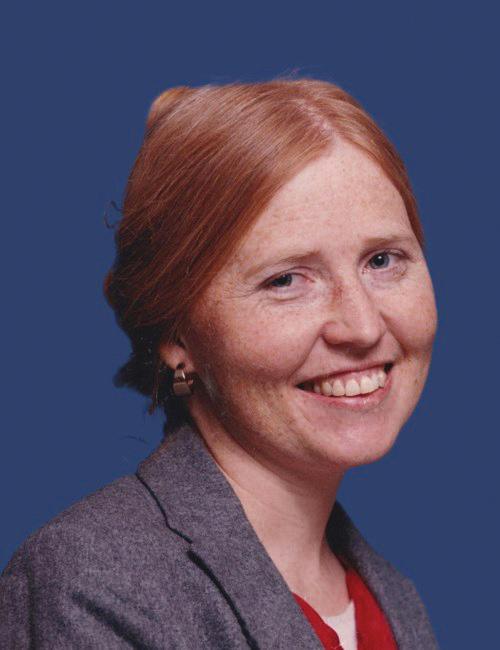
Mary Lee Plumb-Mentjes died in Austin, Texas, on March 4, 2024, after suffering a stroke and the effects of Alzheimer’s disease. Her husband, Conrad Mentjes, her brother Tom, and friends were by her side.
Mary Lee’s life was filled with love, friendship, and joy in nature and the out-of-doors. This was accompanied by a deep love for anthroposophy, which sparked and inspired activity and initiative in all the places that she lived and worked. She was a dedicated member of the Anthroposophical Society, active in the Agriculture and Social Science Sections of the School of Spiritual Science.
Mary Lee grew up in suburban Washington, DC. Her father’s Quaker ideals and her mother’s love of gardening were qualities she carried with her and shared with her many friends. She attended Sidwell Friends School, where she made lifelong friends. She received a BA in Psychology from Antioch College, an MA in Botany from the University of Texas in Austin, a PhD in Botany from the University of Wisconsin in Madison, and an MS in Animal and Range Science at New Mexico State University.
It was during her student years that Mary Lee met anthroposophy through a college co-op job at Camphill Copake in New York. She subsequently studied at Emerson College in England and completed Waldorf High School Teacher Training at High Mowing School, New Hampshire.
Conrad first met Mary Lee when he was selling some of his exquisite craft creations at a street fair in Madison, Wisconsin. As Mary Lee approached his stall, he took one look at her beautiful red hair and tried to sell her an amber necklace. She didn’t buy the necklace, but they started talking, and she expressed interest in joining his hunt for dinosaur bones. That search in South Dakota was the beginning of their fifty-plus years of adventures.
Mary Lee worked as a botanist, plant ecologist, and environmental regulator, beginning her thirty-year career with the US Army Corps of Engineers in New Orleans in 1982. A consummate networker (preinternet!), Mary Lee sought out the small anthroposophical study group in New Orleans that Molly and Quentin McMullen, who were in medical school at the time, gathered around them. With the McMullens and others, Mary Lee built community through study, public outreach, and festivals that supported the eventual founding of the Waldorf School of New Orleans. Her Louisiana legacy includes anthroposophical “lifers” whom she introduced to Rudolf Steiner’s work. (Thank you, Mary Lee!) She returned to New Orleans as part of the Central Regional Council’s Earth Healing Pilgrimage, following Hurricane Katrina at Easter 2006.
Mary Lee transferred with the Corps of Engineers to Anchorage in 1987, and she and Conrad lived there until 2014. During her long career in Alaska, she had an important impact on wetland conservation, infrastructure development, and mitigation programs throughout the state, doing so humbly and thoughtfully. She knew the importance of getting decision makers into the field to learn about issues by experiencing them firsthand. Mary Lee received a 2012 recognition by the Great Land Trust for Extraordinary Service and Contributions to Wetland Conservation in Alaska. In a (literal!) field then dominated by men, she was a role model for other women.
Mary Lee’s vision and unfailing dedication to Rudolf Steiner’s educational philosophy helped launch the Aurora Waldorf School in Anchorage (now Anchorage Waldorf School) - Alaska’s first Waldorf school. Setting an example of collaboration, commitment, and selfdevelopment, she was the school’s first board president and served as a member of the board that steered the school through its first 21 years. Mary Lee tapped her networks throughout the Waldorf and anthroposophical world to provide enrichment programs and workshops featuring leading figures in the movement. Waldorf training originally organized by Mary Lee continues to be the model and inspiration for education throughout the state.
Mary Lee also built bridges between Alaskan and Russian Waldorf communities. Over several years, she sponsored a gala in support of the Aurora Waldorf School’s Russian language program. She travelled to Russia seven times to visit Waldorf schools and established longterm partnerships with the Kirov Waldorf School and a day center in Yekaterinburg for young people with special needs.
Following her retirement from the Corps of Engineers in 2014, Mary Lee and Conrad made their home in Austin, TX, where Mary Lee took up Spanish along with ongoing Russian studies. She remained active, volunteering in the public school system and with a program that helped resettle women refugees from around the world. With her deep understanding of native plants, she found a niche exploring the habitat of endangered plants around the shores of Ladybird Lake. Mary Lee and Conrad were conscientious supporters of the homeless population of Austin, making almost
In Memoriam
daily circuits on thoroughfares near unhoused encampments, building relationships with the individuals they regularly encountered on the street corners. Of course she participated in local anthroposophical branch activities, too!
As Mary Lee stepped across the threshold in March 2024, the fields around Austin were blooming with the Texas bluebonnets and
other native wildflowers she loved. Her friends around the world are grateful for all she did to make our lives fuller and our planet a healthier, more beautiful place.
Survivors include her husband, Conrad Mentjes; brother, Tom Plumb; sister, Carol Meininger; nieces, Sarah Signor and Lara Baltes; nephew, Oscar Plumb; and numerous cousins, grandnieces, and grandnephews.
. Penny Appel Kruse . DECEMBER 23, 1940 - JUNE 17, 2025 .
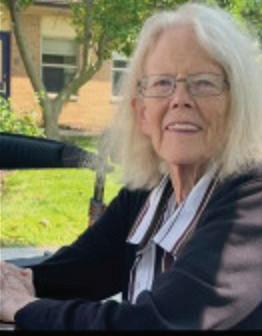
Penelope Appel Kruse (Penny Kruse) died peacefully on Tuesday, June 17, 2025, in Ypsilanti, Michigan. She was 84. She was born and raised in Lancaster, Pennsylvania. The youngest of three children, she delighted in recalling that her parents said she was “for fun” after her somewhat older siblings were brought up in a proper way. In fact, she was raised surrounded by literature and learning, becoming an avid reader at a young age. She acquired a lifelong interest in ideas and the arts from her parents.
Penny met John Corbett O’Meara during her college years, an IrishCatholic law student from Hillsdale, Michigan, whom she married soon after graduating. Her conversion to Catholicism before marrying was undertaken with a genuine interest and enthusiasm for its theology, especially that of Thomas Aquinas.
The two moved to Detroit in the early 1960s, full of idealism. Their plan was for John to pursue his law career and political ambitions while Penny would devote herself to raising the many children they both wanted. Eventually they settled with their growing family in a house in Indian Village on the east side of Detroit.
While exploring schools in the Detroit area for her five children, Penny became deeply interested in the Waldorf approach to education. She sent her children to the nearby Detroit Waldorf School and also trained as a teacher at the Waldorf Institute under Hans Gebert and Werner Glas. She formed and taught a new kindergarten class at the school for several years. This was followed by three years as a class teacher before she left the
school. Penny was known for the great warmth and creativity she brought to her teaching.
After a divorce in the early 1970s, Penny remained in the Indian Village house, and carried herself with courage and resolve in order to meet the challenges of single parenting in a beautiful, aging house in a sometimes unsafe neighborhood.
In 1976, she met and married Gerald “Jerry” Stanley Kruse, an accountant who had two children of his own.
The late 1970s presented Penny with the greatest vocational challenge of her life. She left the Detroit Waldorf School and tried her hand at teaching in the Detroit Public School system, where her children were now enrolled. When this did not work out, she pursued other ways of making a living, including working as an ad rep for the Detroit Metro Times, which allowed her children to explore the many good restaurants in the city. Ultimately she decided to pursue a computer science degree at Wayne State University, where Jerry had begun teaching accounting. Doing this, she figured rightly, would lead to the kind of career opportunity that she sought, putting to practical use her aptitude in math and her joy in solving puzzles.
With her second bachelor’s degree in hand, Penny was offered a position working for EDS at General Motor’s Tech Center in Warren, Michigan, which resulted in 26 years with GM.
Penny retired in 2008 and made caring for her grandchildren a central focus of her attention. She also pursued many other interests and activities, including the saxophone, which she performed with Jerry and granddaughter Eaven in the Ypsilanti Youth Orchestra. She pursued her love of drawing and was published in various art journals. The creative writing classes that she took at Washtenaw Community College resulted in a self-published memoir that is a pleasure to read. She also was active in the community, serving in a local soup kitchen and participating in the life of the First Presbyterian Church.
Life in Ypsilanti also gave her the opportunity to be active in the Great Lakes Branch of the Anthroposophical Society at the Rudolf Steiner House in Ann Arbor. She credited Dr. Ernst Katz’s Tuesday night talks with rekindling her interest in the worldview with which she had first become acquainted in her Waldorf years.
Penny Kruse was and is much loved. She brought a tremendous amount of good into the world. She will be greatly missed by her friends and family.
HONORING MEMBERS Who Have Crossed The Threshold Of Death
Elizabeth Auer Lyndeborough NH 02|15|2002 09|03|2024
Johanna M Frouws Carmichael CA 01|05|1976 07|11|2024
Carol Gutierrez Citrus Heights CA 06|08|1978 09|16|2024
Van Beck Hall Pittsburgh PA 09|09|1993 08|11|2023
James Hindes Denver CO 06|04|1980 04|25|2024
Jessica Leaf Escondido CA 12|27|2019 07|02|2024
Erk Ludwig San Francisco CA 12|06|1972 06|22|2024
Ed Scherer Chestnut Ridge NY 08|03|1989 02|21|2024
Colleen Shetland Marcellus NY 08|30|1994 06|16|2024
Elsbeth Sunstein Honey Brook PA 10|26|1993 12|27|2023
our Dead
I nto cosmic distances I will carry
My feeling heart, so that it grows warm
In the fire of the holy forces’ working;
Into cosmic thoughts I will weave
My own thinking, so that it grows clear
In the light of eternal life-becoming;
Into depths of soul I will sink
Devoted contemplation, so that it grows strong
For the true goals of human activity.
i i
In the peace of God I strive thus Amidst life’s battles and cares
To prepare myself for the higher Self;
Aspiring to work in joy-filled peace, Sensing cosmic being in my own being, I seek to fulfill my human duty;
May I live then in anticipation, Oriented toward my soul’s star Which gives me my place in spirit realms.
Rudolf Steiner
WELCOMING NEW MEMBERS
4.11.2025 - 10.02.2025
Full Name (F) City
Linda Gibbs Malibu CA
Vanessa Martin Cranston RI
Heidi Sheppard Portland OR
Manuela De Mattei East Hampton NY
Amy Rini Chestnut Ridge NY
Craig Ramsdell Rochester MI
Andra Sakson Durango CO
Tatiana Regan San Diego CA
David Zoellner Keego Harbor MI
Berenika Lehrman Hillsdale NY
Lenore M Pacitto Howell MI
Lucy Brown Louisville KY
Robert Newman Gilbert AZ
Arlene Hopkins Santa Monica CA
A.E. Mays Aliso Viejo CA
Denise Bethel-Stacke Somerville MA
Mary Ellen Bettencourt Acton MA
Anthony Cowan Houston TX
Ronni Sands Sebastopol CA
Nesta Carsten Waalre NETHERLANDS
Lourdes Arguelles Claremont CA
Gabriel Ben-Shalom El Cerrito CA
Pauline Kelly Lexington MA
Patricia Laird-Martin Flagstaff AZ
Jeffrey Michael Lewis Las Vegas NV
Angelie Ryah San Diego CA
Jessica Burton Ider AL
Kathleen Ellertson Cameron Park CA
Moses Ochelle Denver CO
Vivien Carrady Toronto CANADA
Talia Dueñas Wafford Louisville KY
Jack Uldrich Minneapolis MN
Stacy Ito Rohnert Park CA
Jihye Park Soquel CA
Jaimie Bell Kirkland WA
Daniel Bieber Chestnut Ridge NY
Natalie Reteneller Louisville KY
Barbara Weiler Sacramento CA
Jade Mattice Santa Cruz CA
Harald Kiczka Witten GERMANY
Mara L. Di Donna Kingston NY
Ashley Holzhauer Vista CA
Dukki Kim Harleysville PA
Jennifer Baier Downingtown PA
Brettany Shannon Los Angeles CA
Hernan Rodriguez Fort Lauderdale FL
Acea Black Grass Valley CA
Barbara Braathen St. Johns FL
Michael Hernandez San Jose CA
Eliyyas Northern Charlotte NC
Francis Steiner Bloomington MN
Donald Waltman Red Lion PA
Michael OBrien Palo Cedro CA
Molly K Brett Phoenixville PA
Joachim Faust New York NY
Kaley Klecka Austin TX
Linsay Heimberg Chicago IL
Godfrey Cavers Canton NC
Regin Dervaes Palmer AK
Angelica Hangartner-Perry Chelsea MI
Yaisha Muhammad Brooklyn NY
Betrina Snively Wilmington NC
Sarah Reynolds Meadow Vista CA
Soren Dietzel Ghent NY
Melissa Koch Clinton WA
Louis Osofsky Grants Pass OR
Mona Agger Ann Arbor MI
Deborah Cher Austin TX
Amanda Blumenthal Little Compton RI
Joseph Quinn Staten Island NY
Raymond Rea Tucson AZ
Blaise Restovic Lufkin TX
Elizabeth Kelly Chicago IL
Martha Cameron Hollandale WI
Stephen Goulet Green Valley AZ
Ned Kessenich Verona WI
Jan Schubert Carbondale CO
Of Note
Henry Barnes Fund For Anthroposophical Research
By Sherry Wildfeuer, Helen Lubin, and Margaret Runyon
As stewards of the Henry Barnes Fund, we would like to share some of the good work it has supported in the last year, describe its history and purpose, and call on those who feel aligned with its mission to help replenish it.
The question is frequently asked whether there is any new research done by anthroposophists. When Henry Barnes was General Secretary of the Anthroposophical Society in America (1974- 1991), he responded by creating a Future Value Fund within the Society to support ongoing research work. And in 2010, after the Collegium for the School of Spiritual Science had taken up the question “What is Spiritual Scientific Research?” for several years, it was entrusted with an anonymous gift to support anthroposophical research as well. That Fund was named after Henry Barnes, and was combined with the Future Value Fund in 2020.
The criteria that we use in considering applications are: 1) The applicant should be an active member of the School of Spiritual Science (we only fund individuals and not organizations). 2) We do not fund research in the sense of gathering content, but rather consider the nature of the method of research. 3) There should be a compelling need for the research. 4) There should be a need for the funds to complete the research (as distinct from being given as recognition or compensation for work already done). 5) There should be an outcome that makes the result of the work available to the members of the Anthroposophical Society and ideally the general public. 6) There needs to be enough money in the Fund to give away!
We hope you will be as inspired as we are by our most recent grant recipients’ projects.
One is called The Warmth Project by Gopi Vijaya, a PhD physicist who is producing an extensive paper to show that warmth is indeed a fourth element in its own right rather than just a modification of the other three states of matter. Without this understanding, critical topics like global warming and energy overuse will not have a clear foundation. It is hoped that this work will be of value simultaneously to both science and spiritual scientific endeavors.
A second project is a book, Archangel Vidar: Michael’s
Successor , by Bill Trusiewicz. Rudolf Steiner said, “We hope that those forces which the archangel of the Teutonic world [Vidar] can contribute to the evolution of modern times will be able to provide the core and living essence of spiritual science...one part [of which] has been realized for the 5th post-Atlantean epoch; another part has yet to be accomplished.” The purpose of the book is to lead readers to a real connection to the impulse of the new school of Vidar which seeks to “restore the lost Word” and facilitate the Reappearance of Christ in the etheric.
And a third is Gary Lamb’s community-based social science research project to create Model National Constitutions that are in harmony with a Threefold Social Organism. Rudolf Steiner’s perspectives on democracy and government, including the idea that political parties are outdated forms and that elections should be funded through taxation rather than interest groups or wealthy individuals, as well as his indications on how to engage in non-polarized, civil discourse and decision making, will prepare an analysis of the American Constitution and determine to what degree it is in harmony with Rudolf Steiner’s spiritual scientific perspectives and to what degree it is divergent.
Today’s world is more in need of anthroposophy than ever, and the Henry Barnes Fund wants to continue to support worthy projects that make a real difference in the world. We hope you are motivated by the exciting projects described above to help build the Fund up again.
In keeping with Henry Barnes’ impulse to set aside a portion of the Society’s income for research to benefit the future, we are hoping that each Branch and Group of the Anthroposophical Society in America will consider offering ongoing support in any amount to the Henry Barnes Fund, and that individual members will also add it to their annual contribution.
We will keep you updated on the progress of this fundraising effort and on the anthroposophical research that it makes possible. Thank you for your support!
Please contact the The Anthroposophical Society at reception@anthroposophy.org for information about the Henry Barnes Fund, the projects included here, and how to donate
Sun and Moon at 24 o Cancer August 12, 2026 Total Solar Eclipse
By Mary Stewart Adams i
When it is understood how to think with the course of the year, then forces will intermingle with the thoughts that will let us again hold a dialogue with the divine spiritual powers revealing themselves from the stars. 1
In August 2026 there will be a Total Solar Eclipse, and though it won’t be visible from the US, it is remarkable because it occurs during the peak of the Perseid Meteor Shower. In his October 1923 lecture on The Michael Imagination , Rudolf Steiner aligned this meteor shower to the activity of Michael, in this mighty being’s work of instilling the forces needed by human beings for encounter with the dragon ~ like strength of iron streaming through the blood. And when in high summer, from a particular constellation, meteors fall in great showers of cosmic iron, then this cosmic iron, which carries an enormously powerful healing force, is the weapon which the gods bring to bear against Ahriman, as dragon-like he tries to coil round the shining forms of human beings. 2
To research this phenomenon, we are including here a graph that marks the dates that the Moon will move through 24 o of Cancer, the August 12, 2026 eclipse point. The dates are for the nine months from November 2025 to August 2026, and here’s why:
On August 12 each year, the Sun arrives at 24 o of Cancer in the sidereal zodiac. August 12 is also the peak of the Perseid Meteor Shower. In 2026, the Moon will come to New Phase on August 12, causing a Total Solar Eclipse. These three phenomena do not always occur together (New Moon, Meteor Shower, and eclipse), and when they do, it is worth noting. Chapter 24 of the Matthew Gospel seems to point to the very thing: Immediately after the tribulation of those days shall the sun be darkened, and the moon shall not give her light, and the stars shall fall from heaven, and the powers of the heavens shall be shaken.
The Moon moves through the entire zodiac each month, and each month it moves over 24 o of Cancer . Since we know that this is where the Moon will eclipse the Sun at the peak of Michael’s meteor shower in August, it gives us the opportunity to do some research, to prepare ourselves to stand with Michael in the good work of bringing harmony and steadiness into life experience.
Aligning our contemplation and activity to celestial phenomena is one way to begin living with the course of the year, which may awaken a steadying sense of destiny forces, those forces that are cultivated by human souls in the time between death and rebirth. Further, Rudolf Steiner describes how the waxing and the waning of the Moon each month fashions the inner and outer etheric body of the incarnating soul. 3 Eclipses augment these processes and can be imagined as serving the development and gradual realization of human freedom. Meteors give us strength and courage to engage fully in the time in which we find ourselves. We could also imagine that these celestial gestures are an invitation to resolve the chaos in our karma.
This Moon graphic depicts nine-months of the Moon’s movement, beginning with the Last Quarter Moon on November 12, 2025 because nine months is the rhythm of a healthy human gestation, from conception to birth. It is also worth noting that every Last Quarter Moon will occur in the same sign and degree of zodiac where, nine months later, the New Moon will occur. So we join the Moon in its journey of cultivating this degree of zodiac, as if it were a celestial seed bed awaiting our attention.
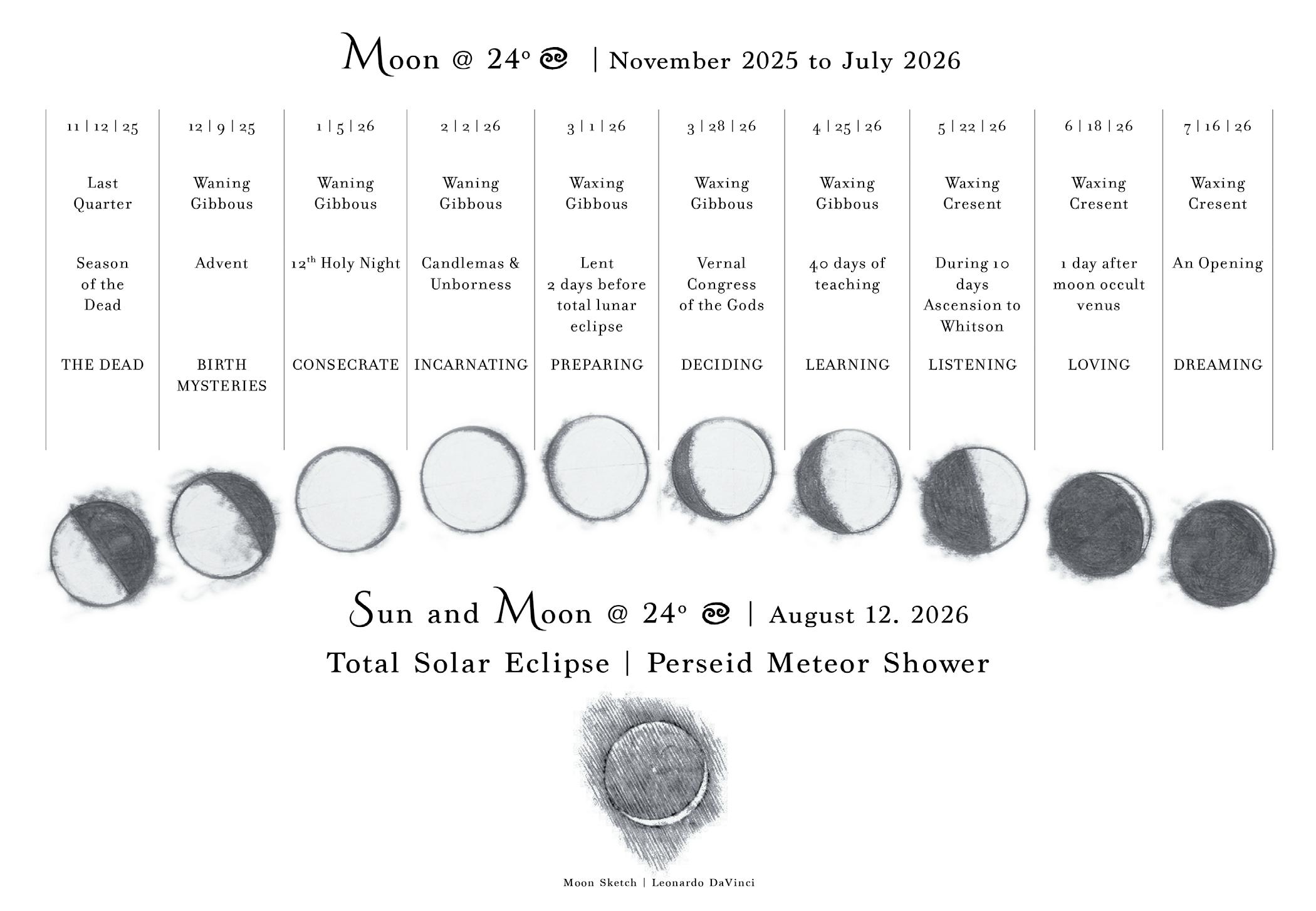
To make use of this content, we recommend journaling, drawing, or engaging in some dedicated activity on the date of the Moon at 24 o of Cancer each month ~ something that has a mood of preparation about it. Dedicate a viewing place and watch for the Moon, note or draw its phase and relationship to the horizon. Pay attention to dreams, to outer events, to where we are in the festival cycle.
The Perseids peak at the same date each year, at the time in the cycle when conscience begins to stir. Conscience pricks at us and requires courage for encountering the self, and here we find the activity of Michael. In 2026, the Moon’s eclipse of the Sun at this time when conscience is stirred seems worth noting.
Have fun with this research, be creative, and please submit questions and share ideas at programs@anthroposophy.org
The more abundantly the harmony of the cosmos fills the soul, the more peace and harmony there will be on the earth .
Rudolf Steiner
The Christmas Festival - A Token of the Victory of the Sun December 24, 1905.
|
1 Rudolf Steiner The Cycle of the Year , Easter Sunday, April 1, 1923 GA 223
2 Rudolf Steiner The Michael Imagination October 5, 1923 GA 229
3 Rudolf Steiner T he Easter Festival in the Evolution of the Mysteries lecture III, April 21, 1924
~ A Letter to America ~
An invitation to support New View
An international, independent, anthroposophical public magazine.
Dear Member, Warm greetings from Britain!

New View is a quarterly publication, produced in the UK, which goes out to the public. 25 years ago we sent every member of the American Anthroposophical Society a complimentary copy of New View in the hope that some would subscribe. Several hundred did and since then we have continued to have a presence in America. That mailing was funded by a generous donation, but today we are not in a position to once more offer the whole current membership a free paper copy of New View, but we would like to encourage more subscribers to read New View in America.
We print paper copies and also offer a digital version, downloadable as a PDF. The majority of our subscribers still prefer to read a paper copy, although a digital copy saves on mailing costs.
Why this advert? As New View’s editor, I have always considered it important to have a close relationship with America, sharing a spiritual perspective based on Rudolf Steiner’s insights (the heartbeat of New View) for understanding ourselves and life on earth. New View needs to increase its subscriber base to survive, therefore I am reaching out to members (and friends!) to support New View with a paper or digital subscription. We have published over 400 authors from around the world – many from America – on diverse themes informed by anthroposophy and we are always open to new authors.
If any member would like a complimentary DIGITAL copy to see what New View is like, please contact us and we will email one to you.
Thank you for considering this, Tom Raines (Editor)
New View
198/15 Lindsay Road
Edinburgh EH6 6ND
Paper: Mailed to your address
One year (4 issues) £55
Two years (8 issues) £90
Digital PDF: 1 year
Single copies
£5
£18
www.newview.org.uk
subscriptions@newview.org.uk ++44 131 392 7823
And even as he embellished the world with his talents, so, it may be believed, does his soul adorn Heaven by its presence.
Giorgi0 Vasari, on Raphael