Director of the Series: Mickeal Milocco Borlini PhD
Deputy Director of the Series: Lelio di Loreto PhD
Editor in chief: Andrea Califano MSc
Books on Architecture, Art, Philosophy and Urban Studies to nourish the Urban Body.
Urban Corporis is an interdisciplinary and international book series that questions urban, cultural and social dynamics to investigate and learn about the contemporary city and its inhabitants. Urban Corporis explores the state of tension between historic, contemporary and future cities and its many facets with a view to identify its criticalities and understand its possible transformations. This book series is not exclusively for architects; in fact, it was born out of a desire to find common ground between different disciplines such as fine art, photography, aesthetics and urban sociology.
Series International Scientific Committee
Fausto Sanna PhD, Senior Lecturer, Cardiff School of Art and Design, Cardiff Metropolitan University, Wales, UK.
Nadia Bertolino PhD, Assistant Professor in Architecture and Urban Design, Università degli Studi di Pavia, Italy.
Christina Conti PhD, Full Professor in Architectural Technology, University of Udine, Italy.
Stefanos Antoniadis DD PhD, Assistant Professor, Lisbon School of Architecture, Lisbon, Portugal.
Published Volumes
1. URBAN CORPORIS X – UNEXPECTED, M. Milocco Borlini, A. Califano, 2022.
2. URBAN CORPORIS – TO THE BONES, M. Milocco Borlini, A. Califano, A. Riciputo, 2023.
3. URBAN CORPORIS – FOUNDATIONS, A.Califano, F. Lembo Fazio, 2025.
URBAN CORPORIS FOUNDATIONS
Edited by ANDREA CALIFANO FRANCESCA LEMBO FAZIO
URBAN CORPORIS FOUNDATIONS
URBAN CORPORIS – FOUNDATIONS
First Edition, December 2025
A. Califano, F. Lembo Fazio
This work is distributed under Creative Commons License Attribution – Non-commercial – Share alike 4.0 International
The essays in this book have been double-blind peer-reviewed by selected experts
Disclaimer: responsibility for the text and images contained in individual chapters lies with their respective author(s). For queries, please contact the editors at urbancorporis@gmail.com or at info@iuvas.org.
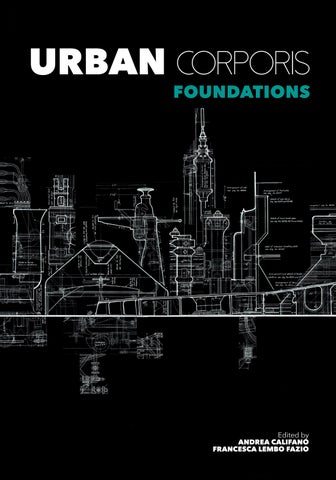
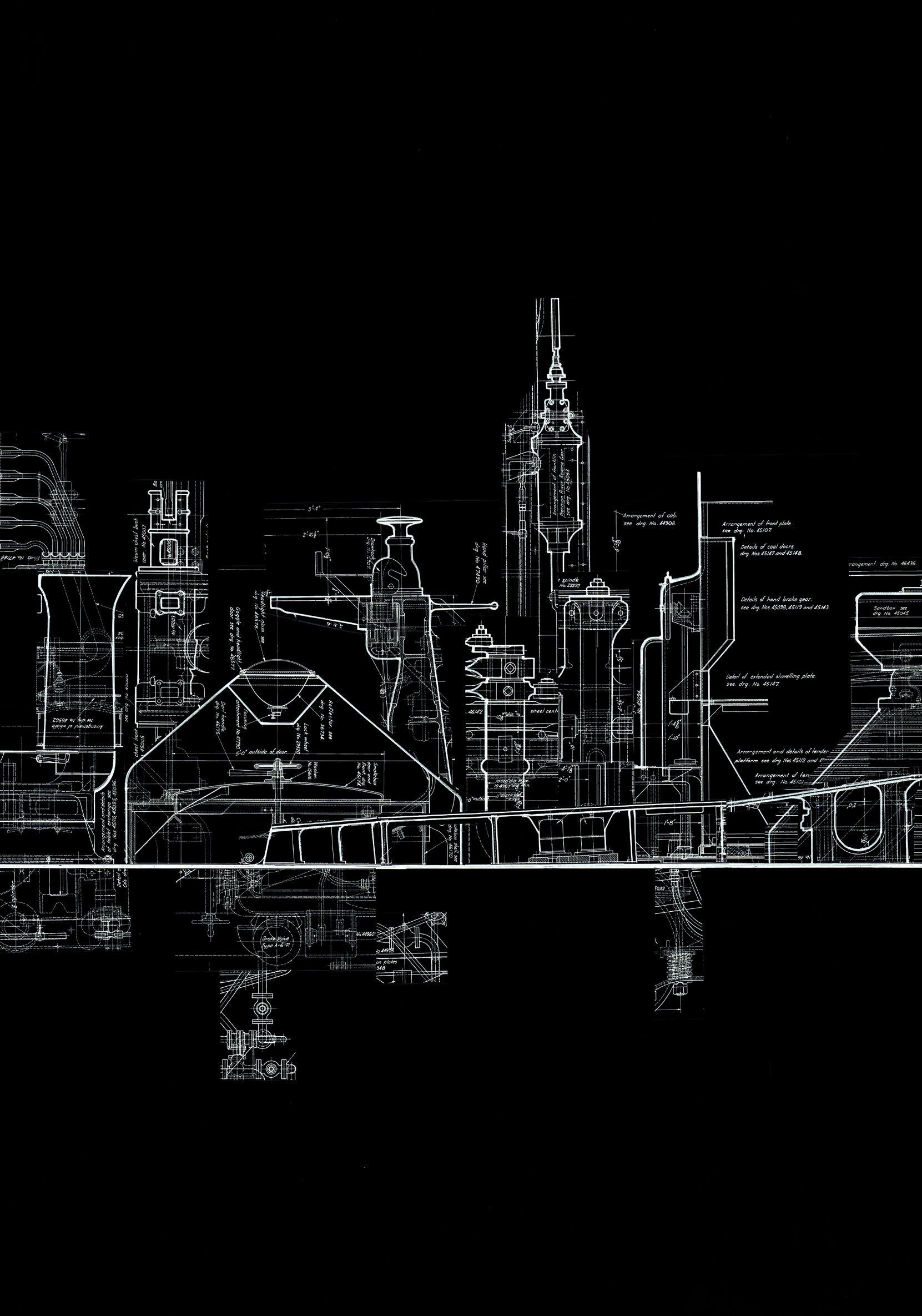
Cover image: Belinda J. Dunstan, City C38: General Arrangement (2025), author’s collage, cropped. Courtesy of the Author.
A BOOK BY IUVAS www.iuvas.org
EDITORS of this issue
Andrea Califano, PhD, Architect, Ministry of Culture, Italy
Francesca Lembo Fazio, PhD, Research Fellow, Sapienza University of Rome, Italy
EDITORIAL BOARD
Mickeal Milocco Borlini, Director, PhD, Lecturer in Architecture, Cardiff Metropolitan University, Wales, UK
Lelio di Loreto, Deputy Director, PhD, Architect, Italy
Andrea Califano, Editor in Chief, PhD, Architect, Ministry of Culture, Italy
Francesco Airoldi, Assistant Editor, PhD Candidate at Politecnico di Milano, Italy
Kevin Santus, Assistant Editor, PhD, Architect, Adjunct Professor at Politecnico di Milano, Italy
Stefano Sartorio, Assistant Editor, PhD Candidate, Research Fellow at Politecnico di Milano, Italy
Arianna Scaioli, Assistant Editor, PhD Candidate at Politecnico di Milano, Italy
SCIENTIFIC BOARD OF REVIEWERS
Francesco Airoldi, PhD Candidate at Politecnico di Milano, Italy
Veronica Balboni, PhD, Associate Professor at University of Ferrara, Italy
Carol Breen, PhD, Senior Lecturer at Cardiff Metropolitan University, UK
Emilia Corradi, PhD, Associate Professor at Politecnico di Milano, Italy
Silvia Covarino, PhD, Associate Professor at German University in Cairo, Egypt
Francesca Dal Cin, PhD, Assistant Professor, at Prince Mohammad Bin Fahd University Saudi Arabia; Researcher, CIAUD, Research Centre for Architecture, Urbanism and Design, Lisbon School of Architecture, Universidade de Lisboa
Francesca Giofrè, PhD, Associate professor at Sapienza University of Rome, Italy
Anna Riciputo, PhD, Assistant Professor at Sapienza University of Rome, Italy
Stefano Sartorio, PhD Candidate, Research Fellow at Politecnico di Milano, Italy
Giulia Setti, PhD, Assistant Professor at Politecnico di Milano, Italy
Barbara Tetti, PhD, Assistant Professor at Sapienza University of Rome, Italy
A BOOK ON ARCHITECTURE, ART, PHILOSOPHY AND URBAN STUDIES TO NOURISH THE URBAN BODY
URBAN CORPORIS – FOUNDATIONS
Table of Contents
9 AB IMIS FUNDAMENTIS: FROM THE DEEPEST FOUNDATIONS
Mickeal Milocco Borlini
13 URBAN CORPORIS FOUNDATIONS
Andrea Califano and Francesca Lembo Fazio
FROM ABOVE
19 Construction innovations in residential architecture in Rome
Architectural responses to the role as the new Capital of Italy
Liliana Ninarello
29 Ur-Sabaudia and Mazzoni’s post office building
Potential relationships
Daniele Carfagna, Fabiana Cesarano
41 Between Tradition and Autarchy
Materials and Techniques in the Pontine Foundations
Andrea Califano, Francesca Lembo Fazio
51 Guidonia: the Flying City
Myth and Disenchantment of an Architectural Dream
Giuseppe Felici, Antonio Schiavo
65 New Agricultural Foundations in Italy and Spain (1950-1960)
Rural Villages and Pueblos de Colonización Between Rediscovery, Knowledge, Protection and Rehabilitation of Modern Built Heritage
Raffaele Pontrandolfi, Francesca Romana Stabile
77 Refounding
From CIAM to K. Tange
Claudio Zanirato
89 Retaining Strangeness
Collage and the Urban Future
Belinda J. Dunstan
FROM BELOW
97 Swamp Urbanism: Community-Led Re-establishment in Sydney’s Periphery
Introduction: Swamps as Ruins in Motion
Louisa King, Urtzi Grau Magaña
111 Caring Foundations
The methodological project of Saint-Vincent-de-Paul Neighborhood in Paris
Kevin Santus, Arianna Scaioli
123 Given and Taken Space
Architectural and Urban Form as the Foundation of Informal Spatial Transformations: the Case Study of Quarticciolo, Rome
Francesco Airoldi, Mariasole Dassié
135 Founding New Identities: Urban Art as a Tool for the Re-Territorialization of the Roman Periphery
The Case Studies of San Basilio and Tor Marancia as a Response to Urban Marginalization
Claudia Verzari
147 Decoding Identity
Cultural Foundation of Bangkok
Adrian Lo, Onnutcha Naknawaphan, Amika Naknawaphan
159 Urban Antagonisms and (Re)Visions of the City Overwriting Unsanctioned Inhabitations
Duncan Cook
169 The Paper Folder
Reconnecting the City
Matthew Wayne Thomas
179 Art as a communication tool to rethink the city of health
Alberto Cervesato, Christina Conti
IN METHOD
187 Urban Hierarchies in the Design of Complex Spatial Systems
An integrated methodological approach for territorial development
Lorenzo Bagnoli
201 Chinese Urban Models in Transformation
Entangled Ideologies between Collectivism, Individualism, and Publicness
Yichuan Guo
213 A Deep Road Map for Bristol
Jon Pigott
227 Transplanted: an English market town in the antipodes
Guildford Western Australia 1829-2025
Simon Kilbane
239 The Villages (Florida, USA)
An urban settlement beyond-city within planetary urbanization
Lívia Zanelli
251 The act of seeing emptiness
Steps for the reconquest of abandoned places
Elizaveta Proca, Emily Rieppi
263 Death and the Open
Notes for a Cemetery Defoundation
Tommaso Antiga
275 Disrupting the Architectural Drawing
The New Agency of the Digital Image
Linda Matthews
283 THE DOMESTIC DIMENSION OF URBANISM. WALKING IN TOKYO
Lelio di Loreto
287 EDITORS BIOGRAPHIES
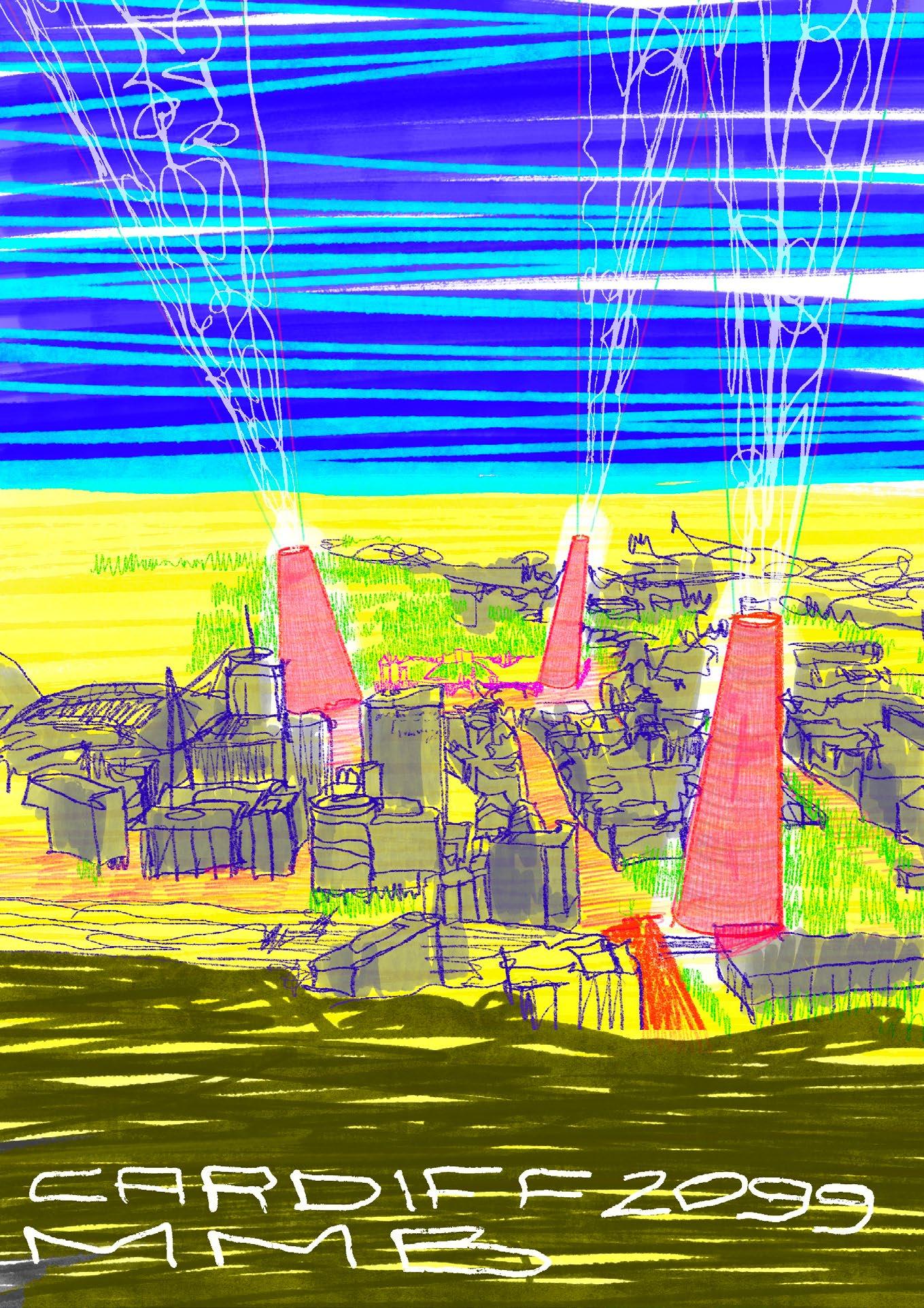
M. Millocco Borlini, Cardiff 2099, 2025.
AB IMIS FUNDAMENTIS: FROM THE DEEPEST FOUNDATIONS
From the lowest foundations there perhaps emerges the guiding interpretation of this issue of Urban Corporis. To found, both as a term and as a verb, contains a significant expressive force, one that naturally applies to architecture and related disciplines, but also extends to urban, cultural, and symbolic practices. With the Latin expression ab imis fundamentis, we refer not only to the material or technical origin of a building or a city, but to the very act of starting anew, of redefining what counts as a foundation, with all the cultural and political implications this entails.
In this sense, foundation assumes a multiple and stratified value: it does not refer solely to the physical base of a construction, but also to the ways in which ground, memory, power, and time intertwine in the constitution and reconstitution of urban bodies.
Foundation speaks of ground in the broadest sense of the term, and this expanded notion is central to the questions addressed here: as physical terrain, as cultural substrate, and as temporal stratification. One of the key concepts for interpreting this relationship is that of the palimpsest, developed by André Corboz (1983) to describe territory as a set of superimposed traces that do not disappear, but are transformed and reinterpreted over time. According to Corboz (1983), the city is never a tabula rasa, but rather a stratified document of cultural and material sedimentations, in which the past never entirely disappears, but continues to inform the present. In architecture and urbanism, this palimpsest becomes a lens through which to read the city as a layered, plural space in continuous dialogue with human and his-
torical practices. Thus, to found is not to erase the car park, the archaeological remnant, or the existing road, but to negotiate with what is already written on the surface of the ground.
The concept of foundation inevitably intertwines with myth and memory. As Aldo Rossi demonstrated in The Architecture of the City (1966), the city is not only a spatial organism, but above all a repository of history and collective memory. For Rossi, the city is a place where memory takes form: monuments, squares, traffic lines, and social relations are all elements that render collective historical memory visible within the urban fabric. The foundation of Rome, Jerusalem, or other sacred cities is therefore not merely an archaeological fact: it is a symbolic act that shapes the collective imagination, establishes hierarchies, legitimises power, and organises the memory of a community. In this sense, memory is never neutral: it is produced, selected, and spatialised through acts of foundation.
This symbolic dimension inevitably brings questions of power to the fore. If foundation gives form to memory, it also determines which histories are made visible, which narratives are monumentalised, and which are marginalised or erased. The act of founding is therefore inseparable from the exercise of power. The design and imposition of an urban plan are never neutral, but embody relations of force between actors, institutions, and communities. Michel Foucault’s political and spatial philosophy (2010) elucidates how space is a dimension in which power is exercised: he shows how relations of discipline and control are inscribed in space it-
Mickeal Milocco Borlini
self, not only on its surface but also within the practices that inhabit and regulate it. From this perspective, the foundations of cities such as Brasília, or of ideological capitals more broadly, reveal not so much a neutral will to order as an attempt to impose a grid of power and meaning upon a territory. Moreover, an often overlooked dimension of foundation lies in invisible infrastructures: transport networks, energy systems, digital circuits, and subterranean services that sustain urban life without appearing in its symbolic representation.
In parallel, foundation is intertwined with the dimension of time: preservation, decline, reuse, and the adaptation of ruins are
all ways through which memory and historical presence remain operative within urban time, rendering the city not a static object but a continuous process. Accordingly, this volume demonstrates that refounding and conserving, time and memory, form part of the same process, intrinsic to the condition of ‘being’ a city.
Far from being a univocal or merely technical concept, the act of founding must be understood as a multidimensional act. For this reason, in this issue of Urban Corporis, foundations are read not as a point of arrival, but as a continual point of departure – a principle that demands to be constantly questioned, reread, and redefined.
Bibliography
Corboz, A. (1983). ‘The land as palimpsest’, Diogenes, 31(121), pp. 12–34. Rossi, A. (1966). L’architettura della città. Padova: Marsilio Editori. Foucault, M. (2010). Eterotopie. Milano: Mimesis.
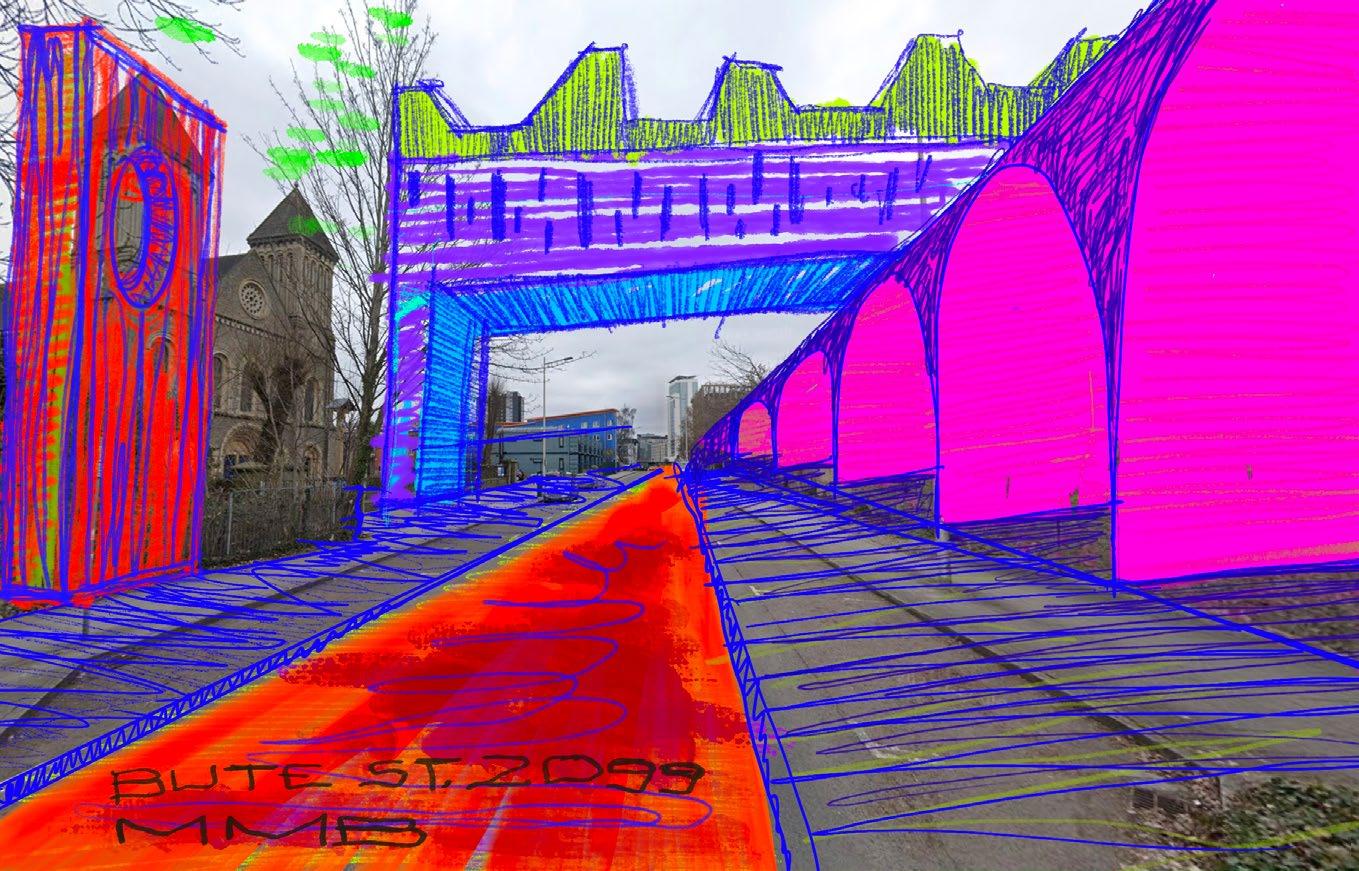
M. Millocco Borlini, Bute St. 2099, 2025.
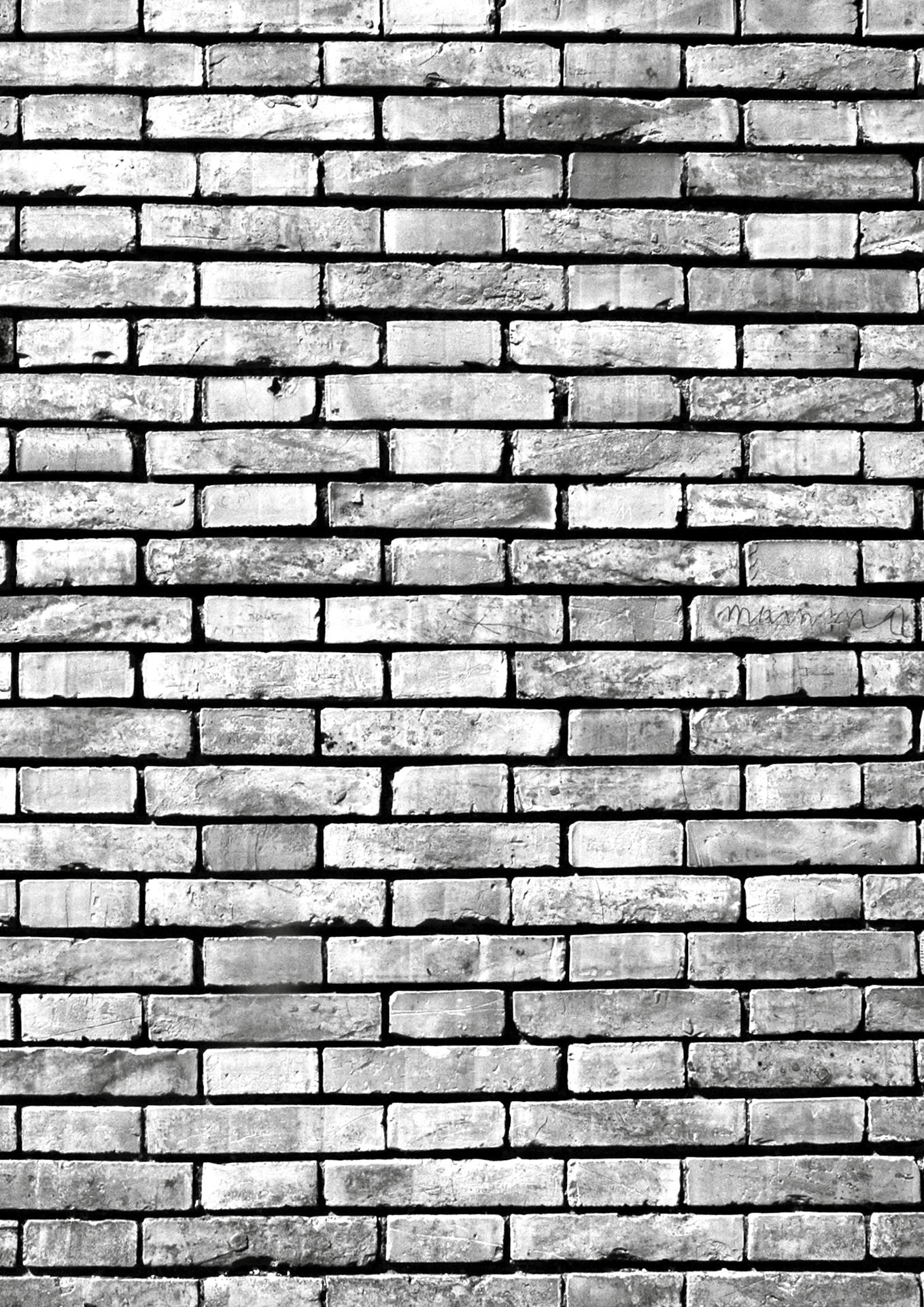
Andrea Califano, Francesca Lembo Fazio, Sabaudia, bricks over time, 2024.
URBAN CORPORIS FOUNDATIONS
“A description of Zaira as it is today should contain all the past of Zaira. Nevertheless, the city does not say its past; it holds it as the lines on one›s hand, written in the corners of the streets, in the window’s grids, in handrails on the stairs, in lightning rods’ antennas, in the masts of the flags, in every lined segment, saw-toothed edge, carving, slice” (Calvino, 1972, p. 4).
The dissemination of new ideas and lifestyles prompted substantial technical and urban transformations during the twentieth century. The current issue of Urban Corporis, titled Foundations, investigates the interplay between emerging ideologies and planning within both architectural and urban frameworks, emphasizing the shift from historic urban fabrics to the contemporary city. Since the Second Industrial Revolution, reinforced concrete has emerged as the predominant construction technique, representing a functional approach that facilitated community engagement in newly designed spaces. As a result, art and architecture have served as influential and flexible instruments for articulating ideological shifts and future-oriented visions. Within an international framework, Foundations aims to analyse the similarities and differences among new towns and planned cities worldwide. This initiative seeks to encourage dialogue among diverse ideologies and cultural identities, identifying recurring patterns as well as contrasting architectural and stylistic features. The cultural output of the previous century reflects new aspirations while preserving elements of the past, thereby justifying its continued study and preservation.
This volume aims to examine both the planned and spontaneous outcomes resulting from the ambitions and initiatives of urban projects. Additionally, it explores the present conditions of neglect or preservation of urban heritage, considering how communities currently inhabit these spaces. The overarching goal is to elucidate the role of planned cities within contemporary and future contexts. Furthermore, the volume addresses the testimonial value of the recent past and evaluates the capacity to restore a sense of belonging to projects that may be disconnected from their context and citizens, whether by embracing, reinventing, or erasing their meaning. The volume is organized into three sections, each reflecting the complexity of foundation, re-evaluation, and subsequent re-foundation processes over time, as shaped by evolving community needs and broader social transformations.
The first section, F. from Above: Power, Planning, and the Making of Cities, addresses top-down approaches to urban planning. These strategies often reflect political ideologies, including those of a dictatorial nature, and incorporate new technologies, construction methods, materials, and architectural languages. Experimentation serves as the central theme, manifesting at various scales – from individual construction elements signalling ideological change and the onset of new planning phases, to the redesign of entire neighbourhoods and interconnected residential areas. These interventions have attracted both criticism and reconsideration, sometimes leading to efforts to revise initial plans in subsequent planning phases that engage in critical dialogue with earlier approaches.
Andrea Califano and Francesca Lembo Fazio
The second section, F. from Below: Cities Re-foundation through Social and Cultural Forces, examines bottom-up approaches, spontaneous adaptations, and urban regeneration efforts that reinterpret or conserve historic urban fabrics. In these cases, community contributions are central; as spatial needs and perceptions evolve, communities collaboratively adapt urban structures and revitalize cultural heritage, thereby reconnecting the built environment to shared values. Such approaches are evident in territories experiencing reappropriation and decolonization, as well as in the reclamation of abandoned spaces and neighbourhoods. These processes often involve the communal sharing of spaces and projects, the development of services, and the use of artistic and experimental practices to reestablish connections between residents and their everyday environments. Challenges persist, particularly where communication between designers and the public is less direct, yet these efforts frequently aim to redefine community identity. Across these examples, there is a sustained focus on the historic urban fabric and a conscious commitment to preserving both the city and its inhabitants through the formation of heritage communities.
The third section, F. in Method: Theory and Tools for Urban Transformation, compiles reflections on emerging frontiers in foundation and planning. It explores analytical and
representational methods, as well as the innovative adaptation of established methodologies to the rapidly evolving contemporary context. By reconsidering previously overlooked urban elements, addressing issues that influence spatial perceptions and uses, and acknowledging the complexity of urban systems from individual sites to broader territorial networks, this section provides a foundation for envisioning the future of urban development.
Urban Corporis – Foundations is conceived as both a reflection and a point of departure for understanding the ongoing contributions of art and architecture to the vitality of urban structures. The volume outlines necessary actions to foster active community participation in planning processes and to enhance communication of urban planning decisions. Ultimately, it seeks to address how the urban system can once again become a central and dynamic expression of the evolving needs of the population. If Zaira is likened to a sponge that expands as it absorbs memories of the past, Foundations aims to analyse the bricks, streets, perspectives, and transformations that constitute the contemporary city. In squeezing it, this approach seeks to extract and examine the essence of contemporaneity, reflect on present conditions, and establish a record for the future.
FROM ABOVE
Power, Planning, and the Making of Cities
Construction innovations in residential architecture in Rome
Architectural responses to the role as the new Capital of Italy
Keywords: cast-iron, steel structures, masonry structures, Roma, XIX century
Abstract
The relocation of Italy’s capital from Florence to Rome represented a decisive turning point that unleashed an extraordinary wave of urban development. This transformation profoundly reshaped the city’s identity, both within and beyond the Aurelian Walls. In response to the pressing need to concentrate administrative and political functions within a limited timeframe, the authorities undertook extensive construction programs, encompassing monumental institutional edifices alongside the rapid expansion of residential quarters.
Rome’s modernization was decisively advanced by the introduction of innovative mixed construction techniques. These methods employed industrially manufactured materials – metal profiles, ceramic components, and prefabricated elements – that, although initially resisted by the local workforce, ultimately facilitated the rationalization of building practices and the modernization of construction sites prior to the widespread adoption of reinforced concrete.
Building upon the author’s earlier research, the present study examines the residential architectural fabric of the city, focusing on the Castro Pretorio, Esquilino, Celio, and Flaminio districts. These case studies, often preceding the emergence of open-plan layouts and skeletal frame structures characteristic of large public buildings, reveal the formative elements of Rome’s new architectural identity. Such features were materially enabled by emerging technologies, particularly decorative and structural systems articulated through iron and steel frameworks. These frameworks functioned as structural armatures, ensuring the stability of hollow or lightweight volumes that integrated ornamental components in terracotta, industrial hollow brick, and masonry infill.
Liliana Ninarello PhD, research fellow “Sapienza” Università di Roma – DSDRA.
Ur-Sabaudia and Mazzoni’s post office building
Potential relationships
Keywords: Sabaudia, Angiolo Mazzoni, Modern Architecture, Urban Project, Urban Redevelopment
Abstract
Sabaudia, new town founded in the 1930s, is structured on a system of squares, created by the intersection of three main axes. The only contradiction in this clear urban design is the area designated for the post office building by Angiolo Mazzoni: a futuristic architecture within a rationalistic city. Also, it is the only public building that is not located at the closure of a major road axis. Conversely, in the first P.R.G., the building stood on a different lot, specifically the one facing the square at the intersection of two major routes. As for the other public buildings in Sabaudia, the importance of the Post Office was also emphasized by the square it created. In a planned city where the relationships established between visual axes and notable elements play a fundamental role and the masses are established on peremptory perceptive balances, the repositioning of Mazzoni’s area should not be considered irrelevant. Therefore, the urban landscape of “original Sabaudia” (Ur-Sabaudia) will be analyzed, considering that – without this minimal movement – perhaps it would have been structurally dissimilar from the built one. Among the assumptions of this thesis, which concerns the way of perceiving the city, there is also the imageability of the building, which distances itself from the pure volumes of the town hall or the church, to explore chromatic and material solutions that are new in the Pontine landscape. The results of this analysis could support a more efficient use of this edifice which is underused today.
Daniele Carfagna Architect, Ministry of Culture.
Fabiana Cesarano Architect, freelance.
Between Tradition and Autarchy
Materials and Techniques in the Pontine Foundations
Andrea Califano PhD in History, Drawing, and Restoration of Architecture, architect of the Italian Ministry of Culture at the Galleria dell’Accademia in Florence and the Bargello Museums.
Francesca Lembo Fazio PhD in History, Representation and Restoration (Restoration), Research Fellow in the Department of History, Representation and Restoration in Architecture at Sapienza University of Rome.
Keywords: Pontinian foundations, Building techniques, Autharchic materials, Littoria/Latina, Quartiere Nicolosi
Abstract
At the turn of the 1920s, modern Italian architecture underwent rapid transformation and fervent cultural debate as the new doctrines of the fascist government sought to meet the new demands of the European modern movement. The ideological and propagandistic policy of the autocratic government used architecture as a media, narrative, economic and testimonial element, both to display the Duce’s abilities to citizens and to prevent the economic collapse of the productive system, due to the crisis triggered by the escalation of international hostilities and wars. During the twenty years of dictatorship, technical innovations and the appeal of classicism represented not only a stylistic and ideological choice but also a necessity derived from the regime’s policies, economic constraints and, to a lesser extent, the sanctions imposed on the Italian state between the end of 1935 and July 1936. Some more problems in finding and using materials – such as steel and cement – that arose during the Second World War led to technological attempts and building techniques experiments. Therefore, studying the architecture created during this deeply problematic period in Italian history today means understanding the reasons and causes that encouraged both the revival of traditional materials and the development of innovative construction techniques and materials. The strong ambivalence that links these opposing polarities is one of the distinctive features of Italian architecture of that period, also evident in the design not only of single buildings or hubs in the cities, but also of new centres. The materials and techniques used to build these new towns and villages are the result of choices – in some cases conscious, in others forced by events – made by their designers and builders. Behind the buildings’ patina, the blistering and the signs of decay – even premature ones – lies the history of this cultural transition, and it is from these signs that the restoration project must start.
Guidonia: the Flying City
Myth and Disenchantment of an Architectural Dream1
Giuseppe Felici Dipartimento di Storia, Disegno e Restauro dell’Architettura – Sapienza University of Rome.
Antonio Schiavo Dipartimento di Storia, Disegno e Restauro dell’Architettura – Sapienza University of Rome.
Keywords: Foundation Cities, Guidonia, Mediterranean, Rationalism, Urban Planning
Abstract
Guidonia, a metaphysical construction of a dream of modernity. An aeronautical new town inaugurated in 1937, as a corporate city serving the Centro Studi ed Esperienze dell’Aviazione Italiana – an architectural realization of the myth of Icarus.
Built in just over a year and based on the project by Giorgio Calza Bini, Giuseppe Nicolosi and Gino Cancellotti, with “realistic proportions into the limits of the theme” without any “rhetorical megalomania”. The city and its air force base, nestled in the fertile land of the Sabina countryside at the foot of the Lucretili Mountains, is only 30 kilometers from Rome.
An urban translation of a political and ideological, military and scientific project. The urban layout of Guidonia is set on a cardo-decumanus system; centered on a pilotis-raised building and its black civic tower. The cardo symbolically binds the airport to the civic center; the decumanus ideally connects the city to the church, which is located at the highest point of the town-like a contemporary acropolis. Access to it is granted through a long monumental staircase, a solemn ascent leading to another dimension. This is the genesis of Guidonia: an architectural dream, a “city of air and science”, intensely modern and untouched by ruralist evocations or rhetorical excess.
But what remains of that “dream”? Not so much. That highly centralized and ideological urban vision has, by a curious paradox, become one of the most emblematic instances of Italian-style urban sprawl. Today, the third-largest city in Lazio keeps on spreading in all its fascinating disorder, stretching from the first pre-Apennine hills to the Grande Raccordo Anulare. Guidonia, an “archipelago-city” whose fragmented development offers a compelling narrative of the complex history of Italian architecture and urban planning from the postwar period to the present day.
New Agricultural Foundations in Italy and Spain (1950-1960)
Rural Villages and Pueblos de Colonización Between Rediscovery, Knowledge, Protection and Rehabilitation of Modern Built Heritage
Keywords: Agrarian colonization, Rural villages, Modern architecture, Italy-Spain
Abstract
The proposed contribution, the result of research carried out as part of an international doctoral programme (between the Departments of Architecture at Roma Tre University and at the University of Seville), focuses on a historical-critical reinterpretation and the legacy of the settlements founded as part of rural colonization projects promoted in Italy and Spain during the second half of the 20th century. In particular, the aim is to analyse the intrinsic link between the different socio-political and economic contexts of reference – in Italy, republican democracy; in Spain, the rise of Franco’s dictatorship – and the respective settlement developments connected to the planning of agricultural land in the two countries, which at the time were still strongly linked to the pre-existing latifundia system.
Although characterised by various similarities and differences, the two processes of agricultural colonization were both aimed at transforming entire areas of rural territory that were then almost completely depopulated, promoting the formation of a small peasant class and the project of over 150 new settlements, both centralised and scattered.
Starting from these assumptions, several settlement projects will be examined, ranging from the territorial to the urban and architectural scale, which are of particular historical and testimonial value for the experimentation of new languages, building types and the construction technologies, in line with the rediscovery of traditional vernacular models in a modern key.
Finally, several paradigmatic case studies will be examined in depth, analysing the state of conservation of the existing settlement heritage in relation to the original projects.
Raffaele Pontrandolfi PhD in Architecture: Innovation and Heritage, Roma Tre University. Francesca Romana Stabile Associate Professor in Architectural Restoration, Roma Tre University, Department of Architecture.
Refounding
From CIAM to K. Tange
Claudio Zanirato Associate Professor, Dipartimento di Architettura – Università degli Studi di Firenze.
The founding of new cities is often also a matter of “re-founding” when the reasons for settlement are associated with trauma or momentous changes, and there have always been “reconsiderations”.
The history of Pianoro Nuova, in the hills of Bologna, can be summarised in two important recent episodes: the courageous foundation of the city destroyed in the last war (an emblematic case in Italy that rejected reconstruction on site) and the recent rethinking of its “centre”, which it was decided to completely rebuild after only fifty years. It was originally a very ambitious project, almost “ideal” in its compositional clarity: it represents the most authentic approach of architect Alberto Legnani (member of CIAM), with his urban planning proposal for a rationalist “sunny” city. In more recent times, there has been a lack of courage to improve on what was done at the time in a situation of extreme emergency, a sign of a lack of concrete ideas about what a new contemporary city could be, even if it is very small.
Between these two episodes, in the 1970s, the city of Bologna embraced an urban expansion programme that also aimed to be a re-founding of the city: Kenzo Tange conceived an ambitious master plan for a “modern district” in the northern suburbs. The project envisaged a linear city organised along a main road axis, connecting the historic centre to the new exhibition centre. The Fiera District is one of the most significant urban and architectural projects carried out in Italy in the 1970s and 1980s. It remained an incomplete project, but in recent years another tower block belonging to the regional government has been added, in keeping with the original spirit, while the rest of this part of the city has grown in a “disorderly” manner. The history of cities, whether large or small, is often the transposition of an “urban” programme, made up of continuous rethinking, rewriting, interruptions and overwriting.
Retaining Strangeness
Collage and the Urban Future
Belinda J. Dunstan Senior Lecturer, Faculty of Arts, Design and Architecture, UNSW Sydney.
Keywords: Speculative cities, Art, Architecture, Collage, Transport
Abstract
Throughout the Twentieth century, art frequently served as inspiration for visions of the future urban landscape, in both form and dynamism. This art was often inspired by the physical and ideological qualities of contemporaneous technologies, particularly new forms of high-speed transportation that introduced a compression and rearrangement of the order of things. The methodology of collage has been notably employed by the artist groups and movements that have historically worked in close relationship with architecture, from the Cubists and Futurists through to Archigram and Superstudio. Collage and assembly have been engaged not to imitate reality, but rather as a form of model building, or re(con)figuring; to grasp at how the world might be put together. The methodology of collage is discussed as the process of displacing and rearranging artifacts in relation to one another, where they might retain some strangeness and generate dialogue, allowing new knowledge to emerge. The author’s artwork is a collage, featuring cut and rearranged components from a sectional hand drawing of a mid-century modern train (C38 class, 1943-1949), re-arranged into a speculative city skyline. The author’s literal arrangement of a speculative city from drawn components of a mid-century steam train conveys a stagnation in the critical futuring of the urban fabric. The accompanying text employs Karen Barad’s agential realism to explore the temporal relations and intra-actions between advancements in contemporaneous transport technologies and the use of collage in engendering dynamic dialogue between art and architecture, towards understanding what approaches and artistic languages may reignite this generative entanglement.
Re-foundation Through Social and Cultural Forces
FROM BELOW Cities’
Swamp Urbanism: CommunityLed Re-establishment in Sydney’s Periphery
This paper examines community-led design interventions in Sydney’s highland swamps, exploring how suburban wetlands can be re-established as living ecological and cultural landscapes. Often overlooked as marginal or degraded, these wetlands – particularly the Temperate Highland Peat Swamps on Sandstone (THPSS) in the Blue Mountains – play critical roles in hydrological regulation, biodiversity support, and carbon sequestration. Hanging swamps perched along ridgelines rely on groundwater seepage and exhibit slow, continuous flows that maintain wet conditions year-round, while their peat-rich soils store carbon and support rare species. These ecosystems also bear the imprint of human intervention: altered catchments, stormwater runoff, and urban infrastructure shape both visible and subterranean processes. Since 2022, the BRIC project has partnered with local First Nations communities and municipal councils to develop site-based research, mapping, and design strategies that work at the edges of swamps, foregrounding Indigenous knowledge and ecological restoration. By attending to the relational agency of wetlands –where water, soil, vegetation, and nonhuman life co-create space – the project explores adaptive urban form that collaborates with, rather than overrides, swamp temporalities. This work demonstrates the potential of community-led design to create resilient, culturally grounded, and ecologically attuned interventions, reimagining suburban wetlands as active participants in urban landscapes rather than marginal remnants.
Louisa King, Postdoctoral Research Fellow, Australian National University. Urtzi Grau Magaña, Senior Lecturer, University Technology Sydney.
Arianna
Caring Foundations
The methodological project of SaintVincent-de-Paul Neighborhood in Paris
Keywords: Architecture of Care, Ecological Stewardship, Feminist Design, Fragile Context, Design Methodology
Abstract
The paper Caring Foundations: The Methodological Project of the Saint-Vincent-de-Paul Neighborhood in Paris investigates how care, equity, and environmental responsibility can be understood as emerging foundations of contemporary architectural and urban design. To this end, the essay critically examines the regeneration project of the Saint-Vincent-de-Paul complex in Paris, which becomes the basis for a broader discussion on processes of care.
Against the backdrop of the climate and social crises, the study explores how certain design practices can move beyond technocentric or purely functional approaches, shifting instead toward frameworks grounded in ethics, collective action, and the interdependence between human and non-human agents. Furthermore, the analysis of the regeneration project examines the convergence between institutional planning and grassroots practices in the creation of an eco-quartier, highlighting how adaptive reuse strategies can intertwine with community care.
The essay thus proposes care as both a conceptual and operational tool, a design infrastructure capable of addressing overlapping temporalities and crises. The Saint-Vincent-de-Paul project emerges as an example of a paradigm shift: from architecture as object to architecture as process, negotiation, and maintenance. In this perspective, it redefines the “foundations” of design practice as a space of shared responsibility and creative dialogue, where issues of climate, gender, and social justice converge to generate new forms of urban inhabitation and collective well-being.
Kevin Santus PhD Architect, Research Fellow and Adjunct Professor of Architectural Design at the Department of Architecture and Urban Studies of the Politecnico di Milano.
Scaioli Architect, PhD Candidate, Politecnico di Milano (DAStU).
Given and Taken Space
Architectural and Urban Form as the Foundation of Informal Spatial Transformations: the Case Study of Quarticciolo, Rome
Public housing neighborhoods can be considered as ‘given’ spaces, conceived from above and regulated in their form but also provided for people in economic need, whose narrative – stereotyped and stigmatizing –is often aprioristic. From this kind of feature emerges and opposes a ‘taken’ space: taken by the communities that live there, which through informal practices of self-appropriation transform the urban and architectural space in its use and meaning.
Informal processes of spatial transformation often raise issues that are deeply rooted in community needs and contemporary urgencies, especially in fragile and marginal urban contexts. These practices can give rise to a number of fundamental design themes which, going beyond conventions and predefined models, can trigger dynamics of community empowerment towards antifragile conditions: unpredictability in the co-production and appropriation of space, profound reinterpretation of places, self-determination of people, transfrormative participation, architectural and urban co-design. This paper aims to investigate the role of architectural and urban form in encouraging (or not) these kinds of bottom-up processes with new languages, narratives, and creative dimensions. To do this, the case study of Quarticciolo public housing neighborhood in Rome will be investigated: through its analysis, a critical reading of the concept of re-foundation as a process not only cultural and social, but also spatial, is proposed, considering both architectural and urban forms as foundations of the tension between design and use, a space of negotiation for negation and possibility.
Francesco Airoldi PhD Candidate, Politecnico di Milano, Department of Architecture and Urban Studies – DAStU, Architectural Urban Interior Design – AUID PhD program.
Mariasole Dassié MSc in Architecture, Politecnico di Milano, AUIC School, Architettura Ambiente Costruito Interni program.
Founding New Identities: Urban Art as a Tool for the Re-Territorialization of the Roman Periphery
The Case Studies of San Basilio and Tor Marancia as a Response to Urban Marginalization
Keywords: Roman periphery, Urban art, Marginalisation, Reterritorialization, New foundation
Abstract
Mitigating the divide between the historic city, strongly symbolic and identity-defining, and the modern periphery, characterised by urban cores often perceived as ‘non-places’, represents one of the most significant challenges in defining the contemporary urban identity of Rome. In this scenario, marginal contexts, such as the Roman borgate, marked by considerable physical and social degradation, where the presence of anonymous architecture and the lack of essential services have rendered these sites devoid of identity, lead us to reflect on the possibility of re-signifying these places through ‘new’ urban art. By presenting examples such as the SanBa Project (curated by the WALLS association) and the Tor Marancia Condominium Museum (curated by the 999Contemporary association), it is intended to examine how this artistic expression can serve as a tool to highlight, through bottom-up initiatives, those realities left in the shadow by institutions, enacting a process of re-appropriation of urban space by citizens and the transformation of degraded areas from marginal spaces to ‘places of value.’
These re-territorialisation processes witness a ‘new foundation,’ which is not identified with the physical construction of an urban core but with the creation of ‘new places’, where the redefinition of identity can make the place recognisable, not only for its residents but also for its visitors.
Claudia Verzari PhD Candidate, Sapienza University of Rome, Dipartimento di Storia Disegno e Restauro dell’Architettura –DSDRA.
Decoding Identity
Cultural Foundation of Bangkok
Adrian Lo Senior Lecturer, Universiti Teknologi Malaysia.
Keywords: Cultural identity, Yaowarat Bangkok, Image of the city, Spatial triad, Intangible cultural assets
Abstract
In a rapidly urbanizing world, cultural diversity is a foundation for many cities’ vibrant, inclusive, and positive perception. While culture is the lifeblood for urban areas, the cultural identity in Bangkok, Thailand’s bustling capital, is eroding amidst market-driven developments and globalization. Culture, an intangible asset with tangible manifestations, as seen in the street vendors, festivals, and alleyway shrines of Yaowarat, aka Chinatown, contributes to sustainable development for local communities and fosters urban regeneration.
The challenge is how cities like Bangkok should meet their contemporary needs, such as infrastructure and economic growth, while preserving or protecting their cultural identity and heritage in the long term. In a city where tourism and commercial developments are oversaturated, Bangkok’s cultural identity is compromised and cannot be easily decoded. This is juxtaposed with the aspirations of the Sino-Thai local communities, leading to the marginalization of street vendors and, more significantly, the transformation of the city’s fabric.
This chapter seeks to decode the cultural identity and foundation of Bangkok by exploring Yaowarat as a case study of wider urban tensions – where cultural continuity coexists with constant transformation, offering new insights into how communities negotiate cultural preservation within evolving cityscapes. It explores Yaowarat as a lens for understanding the sociocultural evolution of the city’s image and physical fabric. Using identity mapping this paper integrates cultural diversity via bottom-up local perceptions with sustainable urban growth, showcasing Yaowarat as a cultural foundation to the Right to the City.
Urban Antagonisms and (Re)Visions of the City
Overwriting Unsanctioned Inhabitations
Keywords: Urban space, Art and urban intervention, Urban regeneration and antagonisms, Rights to the city
Abstract
This paper examines the tensions between spontaneous adaptations of urban space and regeneration initiatives that seek to restore socio/natural urban fabric and rewrite narratives of the city. Reflecting the push and pull of what Deleuze and Guattari term “smooth” and “striated” space, under scrutiny here is the political instrumentalization of urban regeneration projects where new identities for cities are wrestled from unsanctioned appropriations of space and reformulated to fit new ideological and cultural agendas. In the city of Seoul, post-war development was marked by urban informality and a ‘growth’ of parallel economies. The ad-hoc nature of this bottom-up composition was evident in the labyrinthine spatial formations in and around the Cheonggyecheon district. The Cheonnggyecheon Restoration Project (2002) was conceived by the metropolitan government as a reclamation of its once symbolic river, culturally significant in forming the foundational narratives of the city. The resulting urban antagonisms were played out against a backdrop of capitalist economic growth, gentrification and re-greening. By restoring the Cheonnggyecheon Stream, planners sought capital from a redevelopment that merged ideas of national heritage, economic progress and ecology, at a local and global level. Through the lens of the project platform instigated by the artist collective FlyingCity – Urbanism Research Group (2001-2009), this paper examines how urban citizens became co-authors in shaping the physical and cultural identity of the city creating dynamic self-organized systems forged from a complex colonial legacy, contributing to a distinctive phase in its history and asserting their role as legitimate stakeholders in urban heritage.
Duncan Cook Researcher, Artist and Senior Lecturer in Photography at the Cardiff School of Art and Design, Cardiff Metropolitan University.
The Paper Folder
Reconnecting the City
Matthew Wayne Thomas Senior Lecturer, CSAD Cardiff Metropolitan University.
Keywords: Speculative Urbanism, Rewilding, Comics in Architecture, Everyday Infrastructure, Walking Practice
Abstract
The Paper Folder is a visual narrative series that imagines radical urban interventions in Cardiff and Pontypridd, set in a near future shaped by ecological and social reconnection. Across five short comics (Living Bridge, Urban Moat, Rooftop Meadows, Edible Lanes, Pollinator Paths), we follow a character inspired by the artist himself: a quiet observer and maker who walks the city, releasing folded forms; a paper boat, a plane, a crane, into reimagined spaces where infrastructure, nature, and memory coalesce. These regenerative interventions propose a future where bridges become habitats, moats civic stages and water play, and rooftops wild meadows. Informed by speculative design and post-industrial rewilding, each vignette explores how design can reconnect people with place. The narratives are deliberately modest: rain falls, streets glisten, quiet mornings invite reflection. Through the metaphor of paper, delicate yet intentional, the artworks suggest that cities, too, can be refolded. The project reflects on Calvino’s assertion that “the city does not say its past,” yet holds it in every carved and gridded line. The Paper Folder sees the city not only as archive but as ongoing origami: once folded, even when unfolded, creases, traces of its past remain. It asks: what if we designed for belonging, biodiversity, and wonder?
Originally developed through practice-based research at Cardiff Metropolitan School of Art & Design (CSAD), the series bridges comic art, speculative architecture, and landscape intervention. It speaks to the shifting foundations of urban life, offering gentle, grounded visions as cities transition from industrial pasts and the contemporary frenetic state to futures of care, slowness, and seasonal connection.
Art as a communication tool to rethink the city of health
Alberto Cervesato Researcher of Technological and Environmental Design of Architecture, University of Udine.
Christina Conti Full Professor of Technological and Environmental Design of Architecture, University of Udine.
Keywords: Asylum, Architectural heritage, Urban regeneration, Art, Social inclusion
Abstract
The proposed theme concerns the former Sant’Osvaldo asylum in Udine. Inaugurated in 1904 as an internment facility for people with mental disorders, it presents the typical structure of psychiatric hospitals of the time, where the architecture, in its construction of the limits and internal structures of these places, recounts forms of ritualised and bureaucratised living, defined by rigid codes of behaviour and spatially defined. From a small foundation town born in an isolated context, it is now an integral part of the city’s spaces and dynamics. After years of partial abandonment, the health authority has begun a process of rethinking the area through a research agreement involving the University of Udine, to try to imagine new scenarios for the area’s redevelopment. There are many forms through which the research activity is carried out: round tables with the contribution of local stakeholders, teaching activities within the Design Laboratories, degree theses, and design workshops. Sant’Osvaldo represents one of the cases in which an attempt is being made to put the vestiges of the twentieth century back into circulation: hospitals, slaughterhouses, asylums, barracks, sanatoriums, factories are among the types of artefacts that gave structure, form and ‘modernity’ to the city at the end of the nineteenth century and move into the twentieth, and today stand as available and complex materials to be reused. Art becomes a priority tool to communicate the regeneration process that is underway and to support a project that triggers new forms of living, freeing these spaces from the stigma of remote misery, before time consumes them.
IN
METHOD Theory and Tools for Urban Transformation
Urban Hierarchies in the Design of Complex Spatial Systems
An integrated methodological approach for territorial development
Lorenzo Bagnoli President, IUVAS Institute for Urban Variations and Architectural Systmes.
The intuition of the German geographer and economist Walter Christaller in 1933 about a correspondence between spatial framework and a series of persistent hegemonies between cities lays the foundations for a contemporary reflection on the interpretation of space and its urban settlements in the territory. The translation of this plurality of links into dimensional language has allowed the production of a spatial theory to read the urban territory as an organic system, rich in relationships and incidences that are articulated between them. This experience lays the foundations for a reflection on the theme of the interrelation between intangible elements that influence the development of the territory. In this framework, it becomes evident how it is necessary to orient urban planning towards activities of heterogeneous relationships that link urban structures together in a series of priorities and dependencies. The spatial interpretation determined by the application of this theory opens a redefinition of the concept of territory, defined by a multilevel dimension that relates the complexity of its surroundings. Understanding the dynamics involved in the relationships between anthropic poles thus becomes a key cognitive tool in the discussion of territorial planning and the arrangements of its connective links. This research investigates the principles of Christaller’s theory and Losch’s subsequent evolutions, identifying their potential for development and application for a broader understanding of complex spatial systems.
Chinese Urban Models in Transformation
Entangled Ideologies between Collectivism, Individualism, and Publicness
Guo PhD Candidate, Department of Architecture and Urban Studies – DAStU, Politecnico di Milano.
Keywords: Chinese urban models, open neighbourhood, spatial ideology, publicness, architectural agency
Abstract
Since 1949, Chinese cities have undergone successive transformations in their urban models, from the danwei compounds of the 1950s to the gated xiaoqu of the 1990s. In recent decades, these closed models have come under increasing criticism, culminating in the formal endorsement of the open neighbourhood policy in 2016. However, the implementation of this policy has remained highly constrained, facing widespread resistance. Against this backdrop, this paper retraces the historical evolution of Chinese urban models and the entangled ideologies underlying them, to illuminate the continuities and complexities that shape the contemporary debate on openness, and to further consider the potential role of architectural practice within this contested process.
The paper first examines the trajectory from danwei to xiaoqu and then to the contested open neighbourhood model, situating these shifts within broader ideological transitions: from collectivism, to individualism, to a state-led quasi-publicness. It argues that amidst these competing ideologies and the conflicting interests of state, market, and society, structural transformation proves particularly difficult to enact. Nevertheless, architectural practice offers a critical means to subtly reshape social ideologies through creative spatial interventions, exemplified by the Baiziwan Social Housing project. The paper concludes that such a shift from macro-level implementation to micro-level intervention can serve as a crucial tactic for establishing new ideological foundations in contemporary Chinese cities.
Yichuan
A Deep Road Map for Bristol
Keywords: Deep Mapping, Roads, Bristol, Lost Futures, Cumberland Basin, Totterdown
Abstract
This paper draws on creative and scholarly traditions within human and psycho geography and deep mapping to characterise and locate aspects of the city of Bristol. Themes of 20th century road building and the ‘lost futures’ of 1960s modernist optimism are used to link the two separate sites of Cumberland Basin and Totterdown. The work of English landscape architect and author Sylvia Crowe for Cumberland Basin is briefly detailed and the narrative of an ill-fated 1960s / 70s road scheme in Totterdown is recounted. Relationships between the motor car, roads and the city are considered as a possible method for building an interdisciplinary understanding of the city through an essaying of place as part of an extended slow residency. The approach includes comparative reflection between the two sites through local histories and current uses alongside considering of the possibility of urban exploration as both a real world and online activity.
Jon Pigott Cardiff Metropolitan University.
Transplanted: an English market town in the antipodes
This paper examines what trace of the aspirations and physical artefacts of the planned English free settlement to Western Australia’s Swan River Colony in 1829 exists today. This original encounter and the unanticipated realities of its environment: an unfamiliar climate, soils, flora, fauna, and its original inhabitants, the Noongar people, were steep challenges to the first European colonists. What happened when a foreign, imposed settlement order met this reality and what traces of this layered past is evident and visible or tangible today? With primary sources that build a foundational understanding, followed by dérive explorations this paper recounts a series of explorations into this relatively unknown story. Through a series of walking, bicycle and canoe-based explorations, the spatial legacy of the early Surveyor General’s settlement patterns, namely the cadastral street grid, public functions as notable edifices, and the open space typical of C19th English Market town are sought and traced. These overlay the much older Noongar Boodja of Mandoon – Guildford’s original name – that perhaps finds its best expression in the patination of extant pre- and post-European vegetation. Through a series of illustrative transect maps that document key moments in this (re)discovery, a tapestry of traces juxtaposes the banal with the sublime, the fleeting with the timeless, and the lost with the found. In reflecting on these entanglements, the paper invites readers to reconsider the histories inscribed in their own place, and to recognise layered, contested, and more-than-human dimensions of place. These offer a range of post-colonial and more-than-human encounters and perspectives, weaving a tapestry of observations that contrast – for example – the banal fence post with sweeping movements of government policy; of forced resettlement and destruction with the sublime, timeless passage of an ancient river. Within the story a recombinant nature and human capacity is recognised for their mark on this ideologically driven historic English market town. A place founded on philosophical ideals, but lost in the antipodes, opening discussion and giving rise to the reader to consider afresh the place beneath their own feet.
Simon Kilbane School of Design, University of Western Australia.
The Villages (Florida, USA)
An urban settlement beyond-city within planetary urbanization
The article begins by problematizing contemporary forms of urbanization that expand beyond cities, in dialogue with the concepts of planetary urbanization, which points to the dissolution of boundaries between urban and rural, and extended urbanization, which describes processes that territorialize the urban beyond metropolitan limits. The literature has privileged modalities linked to industrialization, metropolization, commodity extraction, or informality, with less attention to distant, large-scale forms that reach territorial and demographic proportions comparable to or greater than historically constituted cities. In this context, the analysis examines how ideological and symbolic dimensions present in The Villages (Florida, USA) contribute to understanding new forms of beyond-city urbanization. The research adopts a qualitative approach focused on the interpretation of meanings, symbols, and representations, covering the period from the 1980s to the present. Data collection combined field observation, document analysis, visual materials, aerial and satellite imagery, and the elaboration of critical cartographies, revealing spatial, discursive, and symbolic dimensions that do not emerge from quantitative analyses. The study identified findings such as standardized morphology as a device of segregation; market logic transforming the urban into spectacle; scenographic nostalgia sustaining a homogeneous identity; socio-environmental impacts extending beyond its limits; and the manifestation of a distinct form of extended urbanization driven by land and real estate capital. By articulating critical theory and situated empiricism, the study expands the notion of extended urbanization to include privatized and themed enclaves, complementing planetary urbanization with ideological and market dimensions. In doing so, it shows how localized cases can challenge abstract categories and enrich debates on twenty-first-century urbanization.
Lívia Zanelli PhD, Postdoctoral researcher, Institute of Architecture and Urbanism, University of São Paulo.
“It is precisely the empty spaces that allow men to form an image of the city. Not only because they allow you to embrace entire surfaces with your gaze [...]; but because through these flaws we can see time, which, in general terms, is the element that marks history”. W. Wenders, The act of seeing, 1992. Experiencing an urban environment through the lens of “empty space” means reading its history, its past, interpreting its wounds, and seeing its potential. Ruins and urban voids are configured as invisible archives of collective memory, where layers of a forgotten or removed time resurface. These spaces, suspended between decadence and rebirth, become the spokesperson for a fertile death (Solnit, 2005), escaping the logic of production and offering themselves as a canvas for future imaginaries. Urban voids can remain, becoming ideal spaces for art forms, or transform through strategic planning into catalysts for social mixité, opening up to spontaneous re-appropriation by local communities. In this perspective, ruin is death and living matter that stimulates new urban practices. In this delicate context, punctual redesign, or bottom-up, with spontaneous urban regeneration initiatives, can set in motion a broad range of strategies that promote the enhancement of a complex network of emergencies within a consolidated urban fabric (Colantonio, 2010).
Elizaveta Proca PhD Candidate, University La Sapienza of Rome. Emily Rieppi Architect.
Archaeological (past-oriented) and design-related (future-oriented) are two opposing yet nonetheless inventive motions – that is, both are acts of re-discovery. What is unearthed and put into question are, for the most part, the very foundations of things. This paper, starting from the observation of today’s Italian cemetery crisis, seeks to establish some theoretical and design bases for investigating this “foundational” tension (between the past and the possible future) of a specific and situated design thinking: that concerning the places of death in our cities. Through an archaeological movement of thought directed backward, an attempt has been made to bring to light the very “foundations” of these places, probing the crucial moments that have decided, regulated, and defined the constitutive elements of the modern cemetery’s architecture – a spatiality that has remained substantially unchanged to today, particularly in the case of Italian monumental cemeteries. From this inquiry arises the definition of today’s widespread modern cemetery realism: a (pathological) impasse of architectural thought whereby – hence its designation as a “realism” – it seems exceedingly difficult, even now, to reflect outside the “formal” constraints established by the Edict of Saint-Cloud (1804), in order to attempt to re-invent our burial grounds “exhausted enclosures”. In order to move beyond such realism, this study has thus sought to initiate a theoretical and design exercise in the “defoundation” of the modern cemetery, offering a number of examples, also from different geographical contexts, that may help to articulate a penser autrement of design regarding these places.
Tommaso Antiga Architect and PhD Candidate, University of Trieste / University of Udine.
The foundations of urban space have been reshaped by new modes of navigation and perception, facilitated by the camera’s unprecedented ability to traverse the cityscape. The zoom lens expands the capacity to observe a wide array of human conditions, delivering streaming video content to a global audience that is indistinguishable from real-time perception. As a result, technology and imagery now play a highly instrumental role in a new form of engagement with urban space.
Architects map, analyse, and represent sites to leverage the widespread effects of image-making through digital visioning platforms, extracting qualities of geographic locations and modes of habitation. Rather than relying on many proprietary software tools available today, independent, open-source platforms, such as those with specialised data analysis capabilities used in diagnostic or medical imaging, enable the creation of a complex, qualitative reality index. When applied in a design context, these high-performance tools offer not only new insights into the composition of space and time but also dismantle the effects of proprietary-controlled image-making. In this respect, while established modes of architectural representation or drawing define disciplinary practice, the disruption of these modes opens new disciplinary conversations and new mechanisms for constructing form.
These artworks employ representational techniques that generate new urban insights linked to the digital camera’s translation of colour, brightness, and movement. By reprocessing footage of selected urban spaces, the works demonstrate that the ability to consider and incorporate new modes of digital data in the production of the city’s materiality challenges and supersedes the authority of traditional, foundational civic narratives, while also offering architectural agency within the new digital frame.
Linda Matthews Associate Professor, School of Architecture, University of Technology Sydney.
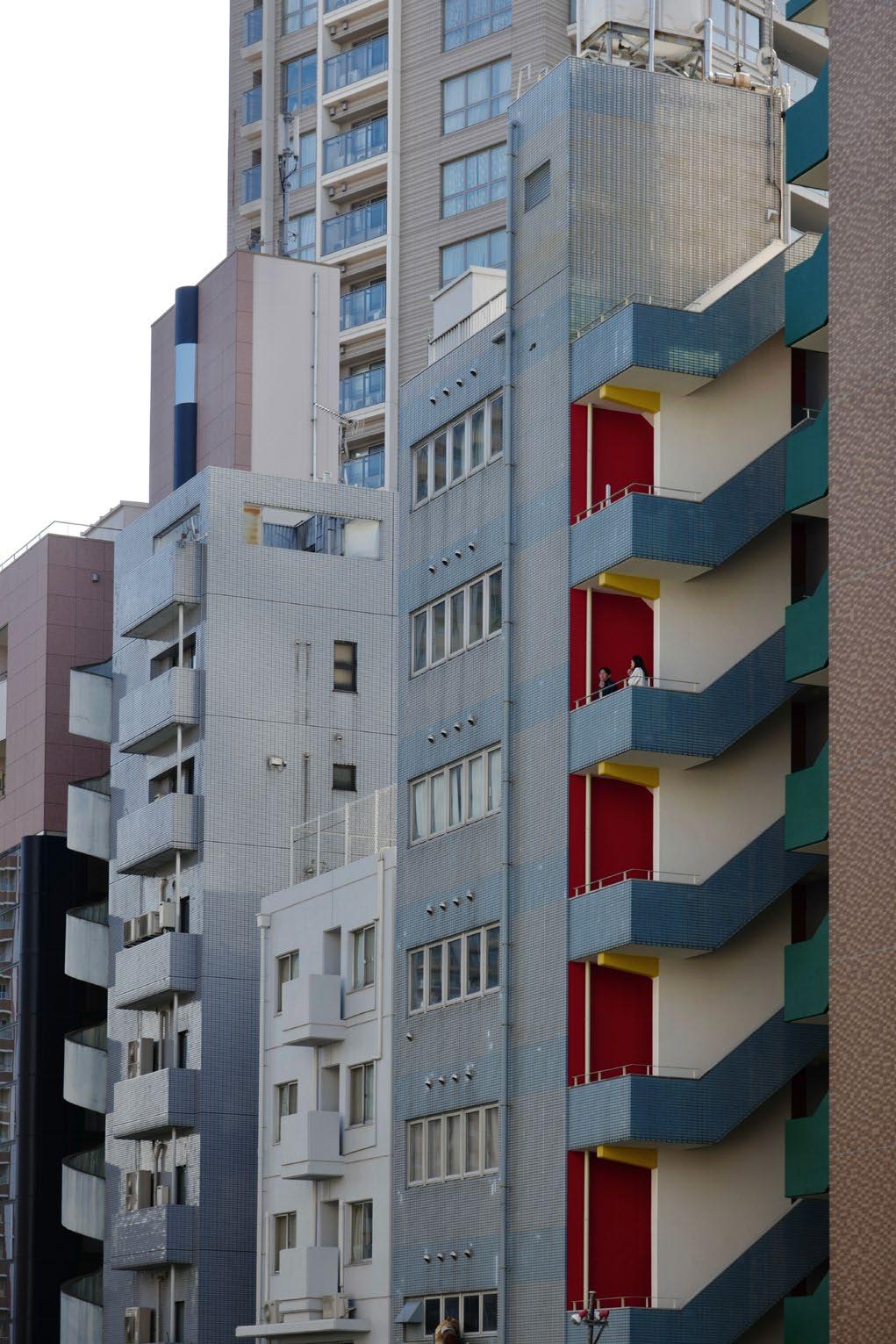
Discontinuity and coexistence: aesthetic and formal outcome of the coexistence of profoundly different architectural, social, and economic scales that come into close proximity without appearing to be in conflict with one another – Part 1
2024.
Photograph by Cristina García Montesinos – Japan, Tokyo, November
THE DOMESTIC DIMENSION OF URBANISM. WALKING IN TOKYO
“Les pas écrivent une histoire qu’aucun processus ne peut saisir ni cartographier”.
Cit. Michel de Certeau, L’invention du quotidien. Arts de faire, vol. 1: La pratique de la vie quotidienne, p. 97.
The different sections of the Urban Corporis – Foundations collection of essays juxtapose contrasting points of view according to historical period and methodological approach; however, in the conclusions, a shift in perspective seems to emerge: the city cannot be read as a collection of monuments or infrastructures but as an organism that breathes and grows through the stories and daily actions of its inhabitants.
Urban debate has often attributed the failure of entire portions of cities to incomplete projects, errors of vision, or the inadequacy of the ruling class. While these responsibilities are real, this interpretation is partial if it does not consider an additional determining factor: the active or passive role of citizens in the processes of city use and management. From this perspective, it is necessary to mention the thought of Colin Ward, according to whom the functioning of the city does not depend exclusively on the density of rules, but on the possibility for individuals to act responsibly in urban space without every behaviour needing to be preemptively prescribed or controlled. This management of public space, which can be defined as domestic due to its scale, does not coincide with a privatisation of urban responsibilities but is configured as a series of widespread practices of maintenance, care, and active presence that operate in the residual space between design and use. In this sense, Michel de Cer-
teau defined these practices as “arts of doing”: minute, often invisible actions through which inhabitants do not merely use planned space, but reinterpret and transform it, making it more livable and tailored. It is in this theoretical space, between urban design and daily use, that the individual ceases to be a mere recipient of the project and becomes capable of making a difference.
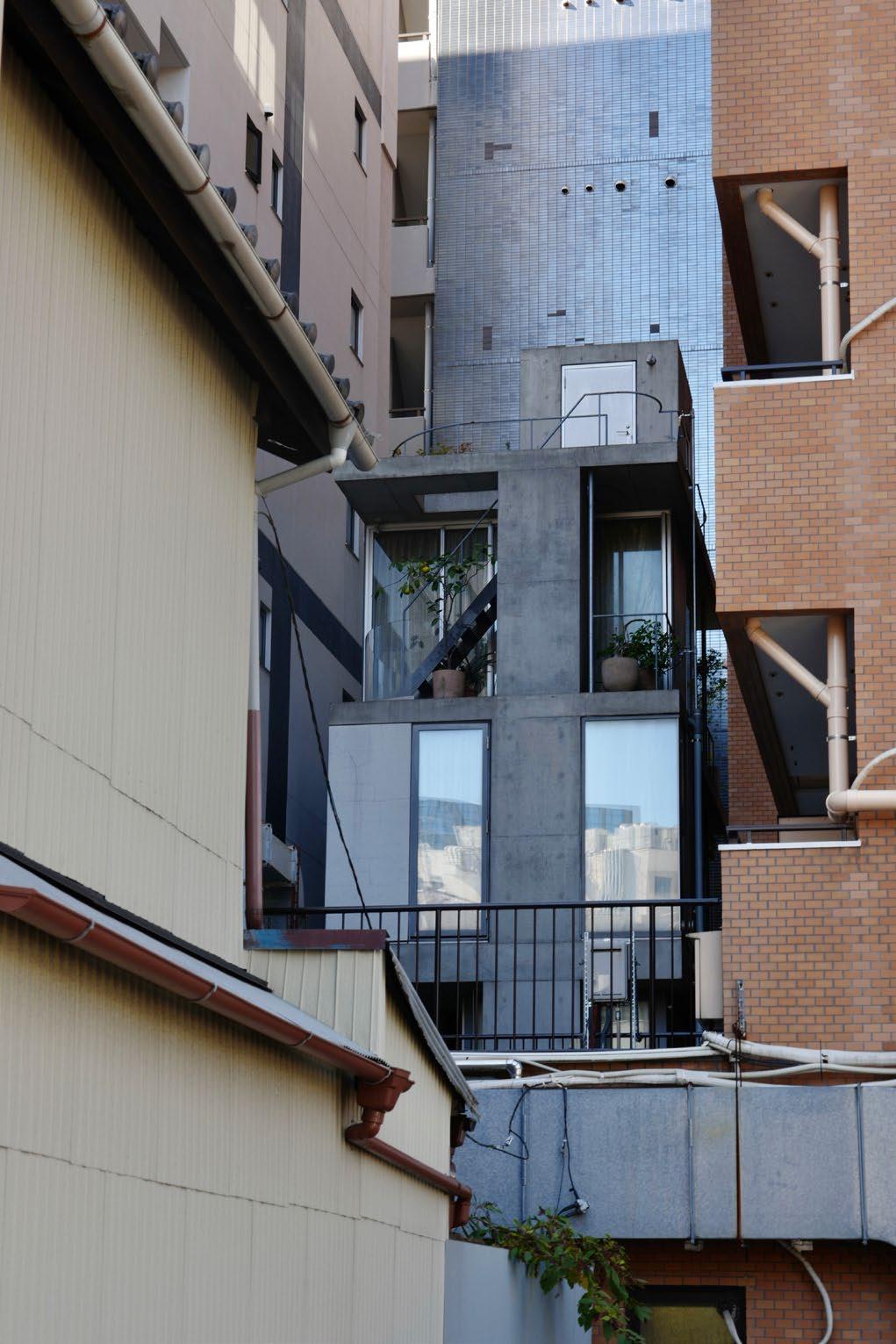
From this perspective, Tokyo allows observation of how the relationship between urban design and diffuse responsibility can evolve. Despite its vast extent, it is composed of a constellation of highly connected neighbourhoods: a sum of microcosms that maintain constant proximity between scales and functions that are very different from one another. Traversing these neighbourhoods, a condition of strong scalar discontinuity immediately emerges; an inter-scalarity taken to the extreme: tall buildings coexist with single-family homes, ultracontemporary architecture with vernacular wooden constructions, informal micro-activities alongside multinational headquarters. The interest lies not in the aesthetic outcome or formal analysis, but in the coexistence of architectural, social, and economic scales that are profoundly different yet proximate without apparently conflicting with one another.
One then wonders what renders this evident heterogeneity cohesive. Without claiming a definitive answer, direct experience suggests a stabilising factor: constant and methodical management not only of public and private space but also of the threshold that relates (or separates) them. Citizens are active in caring for the city through minimal and repeated practices: self-pruning, cleaning, attention
Lelio di Loreto
Discontinuity and coexistence: esthetic and formal outcome of the coexistence of profoundly different architectural, social, and economic scales that come into close proximity without appearing to be in conflict with one another – Part 2.
Tokyo, November 2024.
Photograph by Cristina García Montesinos – Japan,
to balconies and flowerbeds, as well as small acts of self-appropriation of common space that do not aim at privatisation but at maintaining a decent and welcoming environment, producing everyday, widespread urban order that is not only imposed but shared and internalised. The experience of Tokyo suggests that urban functioning based on diffuse responsibility is possible while still maintaining an order founded on strong adherence to rules. The challenge for future urbanism and for citizens is to cultivate a culture of urban sense within which this responsibility can be emancipatory rather than disciplinary and controlling. In this context, the figure of the inhabitant
undergoes a conceptual shift: no longer a simple user or consumer of urban services, but an active subject who intervenes daily in the functioning of urban dynamics. This shift in perspective does not represent a mere extension of the concept of participation but a reversal of viewpoint: widespread practices of care cannot be understood as a marginal complement to public action but as an operational field in which urban order is produced even before it is regulated. The domestic scale of urbanism is therefore not a solution but a critical act in which use and responsibility enter into a structurally stable relationship capable of influencing the city’s functioning.
EDITORS BIOGRAPHIES
Andrea Califano is an architect. He obtained his degree in Architecture from the University of Florence in 2016 and subsequently earned a Postgraduate Specialisation Diploma in Architectural and Landscape Heritage in 2020 at Iuav University of Venice.
His research focuses on the conservation and enhancement of twentieth-century architecture, a field in which he holds a PhD in Restoration from Sapienza University of Rome in 2024. In the same year, he was the successful candidate in a national competition held by the Italian Ministry of Culture and was appointed as an Architectural Officer at the Superintendency of Siena, Grosseto, and Arezzo. He is currently seconded to the Bargello Museums.
His research interests include the conservation of modern architecture, twentieth-century construction techniques, and industrial archaeology.
Francesca Lembo Fazio holds a PhD in History, Representation and Restoration (Restoration) and is a Research Fellow in the Department of History, Representation and Restoration in Architecture at Sapienza University of Rome. She serves as Adjunct Professor for the Conservation Design Studio for Urban Regeneration in the MSc in ArchitectureUrban Regeneration, and for Organizzazione del cantiere di restauro [Organisation of the Restoration building site] in the MSc in Architettura (Restauro) [Architecture (Restoration)] at Sapienza University of Rome.
Her research focuses on the perception of ruins and spolia, traditional building techniques, and the challenges of built heritage in the context of climate change. Her principal publications address protection and reuse practices for ancient ruins in Early Modern Rome, as well as the restoration of modern architecture from the fascist period through postwar reconstruction.
A book oN Architecture, Art, Philosophy and Urban studies to nourish the Urban Body.
The contemporary city retains its past not through explicit narratives, but by silently inscribing it within its material structures: in urban layouts, construction details, surfaces, and the techniques that have shaped its form. The twentieth century, marked by profound social, ideological, and technological transformations, produced a new urban body in which visions of the future and historical stratifications coexist in an often fragile balance.
This volume of Urban Corporis – Foundations examines the relationship between ideology, planning, and architectural design, analysing the transition from the historic city to the contemporary city through the study of new towns and planned urban fabrics. Starting with the Second Industrial Revolution and the emergence of reinforced concrete as the predominant construction method, architecture and urban planning became central tools for shaping new forms of habitation and collective aspirations.
From an international perspective, the volume compares experiences of new towns and planned cities, highlighting analogies, divergences, and contradictions among different urban models, cultures, and identities. The material traces of the last century – situated between utopian ambitions and enduring legacies of the past – thus become the subject of critical analysis, engaging with issues of conservation, abandonment, and contemporary reappropriation.
Through contributions addressing both planned outcomes and organic developments, this collection examines the role of planned cities in the present and future, offering a nuanced interpretation of the twentieth century as an ongoing urban laboratory.