PRÉFACES | PREFACES
Laurent Le Guedart
Directeur des Investissements et de la Maintenance – Groupe Hospitalo Universitaire APHP Nord – Université Paris Cité, membre du Comité de Pilotage de la Chaire Archidessa.
Commémorer, ce n’est pas seulement revenir au passé. C’est aussi interroger les traces qu’il a laissées dans nos paysages, dans nos institutions, dans nos imaginaires collectifs. À l’occasion du 80e anniversaire du Débarquement et de la Bataille de Normandie, en 2024, une série d’initiatives scientifiques et culturelles a permis d’ouvrir des perspectives nouvelles sur les multiples dimensions de la reconstruction française. Parmi elles, le colloque international et les visites architecturales organisés à Saint-Lô les 18 et 19 octobre 2024 se sont imposés par l’originalité de leur angle d’approche : la solidarité franco-américaine à travers l’architecture hospitalière du XXe siècle.
L’ouvrage L’hôpital du XXe siècle. Une histoire de solidarité franco-américaine, rassemble les actes de ce colloque et prolonge la réflexion collective engagée lors de ces journées. À travers trois exemples majeurs – l’Hôpital mémorial France–États-Unis de Saint-Lô, l’American Memorial Hospital de Reims et l’Hôpital Beaujon de Clichy – il met en lumière la richesse d’un dialogue transatlantique fécond, où se croisent l’histoire médicale, l’innovation architecturale, l’aide humanitaire et la diplomatie culturelle.
Ces hôpitaux ne sont pas de simples édifices hospitaliers. Ce sont des témoins sensibles d’une époque où la reconstruction ne se résumait pas à rebâtir les murs, mais à refonder les valeurs d’un système de soin, à penser autrement l’hôpital comme lieu d’accueil, d’innovation et de résilience. Chacun, à sa manière, illustre une forme de réponse à la crise – qu’elle soit issue de
Laurent Le Guedart
Senior Engineer, Director of Investments and Maintenance, GHU APHP Nord – Université Paris Cité, Member of the Archidessa Chair.
Commemorating is not just about returning to the past: it is questioning the traces it has left in our landscapes, in our institutions, in our collective imaginations. On the occasion of the 80th anniversary of D-Day and the Battle of Normandy, in 2024, a series of scientific and cultural initiatives opened up new perspectives on the many dimensions of the French reconstruction. Among them, the international symposium and architectural tours organized in Saint-Lô on October 18 and 19, 2024 stood out for the originality of their angle of approach: Franco-American solidarity through the hospital architecture of the 20th century.
The Hospital of the Twentieth Century: A History of Franco-American Solidarity gathers the proceedings of this symposium and extends the reflection initiated during these days. Through three major examples – the France-United States Memorial Hospital in SaintLô, the American Memorial Hospital in Reims and the Beaujon Hospital in Clichy – it highlights the richness of the France-USA transatlantic dialogue, where medical history, architectural innovation, humanitarian aid and cultural diplomacy intersect.
These hospitals are more than buildings. They bear witness to a time when reconstruction was not limited to rebuilding walls, but consisted of rebuilding the values of a healthcare system, rethinking the hospital as a place of welcome, innovation, and resilience. Each, in its own way, illustrates a form of response to the crisis – whether it be the result of war, medical shortages or urban change –and embodies a project with collective ambitions.
la guerre, de la pénurie médicale ou de la mutation urbaine – et incarne un projet porteur d’ambitions collectives.
Les travaux du colloque se sont structurés autour de quatre grands axes thématiques, qui permettent de mieux comprendre les logiques croisées de conception, de diffusion et de réception des modèles hospitaliers au XXe siècle :
1. Les transferts de modèles : comment les échanges entre la France et l’Amérique du Nord ont permis l’émergence de formes architecturales, d’organisations médicales et de standards techniques qui ont transformé l’hôpital moderne ;
2. L’hôpital moderne, laboratoire de l’architecture : en quoi ces lieux, souvent situés à la frontière entre innovation médicale et expérimentation spatiale, ont permis aux architectes de repenser les usages, les circulations, les matériaux, les ambiances ;
3. La reconnaissance des valeurs : pourquoi ces bâtiments, trop souvent considérés comme purement fonctionnels, doivent être aujourd’hui regardés comme des patrimoines à part entière, porteurs de mémoire, de savoir-faire et de sens social ;
4. L’intégration entre les arts et l’architecture : comment les artistes, les designers, les urbanistes ont pu intervenir dans les projets hospitaliers pour humaniser, embellir et inscrire ces lieux dans une démarche culturelle plus large.
L’Assistance Publique – Hôpitaux de Paris a souhaité s’associer étroitement à l’organisation de cet événement qui consacre la réflexion qu’elle a engagée de longue date sur le devenir de l’hôpital Beaujon. Conçu par l’architecte Jean Walter, Urbain Cassan et Louis Plousey, l’hôpital Beaujon illustre une rupture majeure dans la typologie hospitalière française. Il introduit pour la première fois sur le territoire national le modèle de l’hôpital vertical, en rupture avec la traditionnelle organisation pavillonnaire héritée du XIXe siècle. La conception architecturale repose sur une superposition fonctionnelle
The work of the colloquium was structured around four main themes, which provide a better understanding of the design, dissemination and reception of hospital models in the 20th century:
1 Shared methods: how exchanges between France and North America led to the emergence of new architectural forms, medical organizations and technical standards.
2. The modern hospital as an architectural laboratory: how these places, often situated on the frontier between medical innovation and spatial experimentation, enabled architects to rethink uses, materials and atmospheres;
3. Recognition of values: why these buildings, too often considered purely functional, should be seen as heritage in their own right, conveying memory and social meaning;
4. Integration of the arts in the buildings: how artists, designers and urban planners have been able to intervene in hospital projects to humanize and embellish them, and make them part of a broader cultural approach.
The public organization of Paris hospitals, Assistance Publique – Hôpitaux de Paris, has been closely involved in the organization of this event, which marks the culmination of its long-standing reflection on the future of the Beaujon Hospital. Designed by architects Jean Walter, Urbain Cassan and Louis Plousey, the Beaujon hospital represents a major break with French hospital typology. For the first time in France, it introduced the vertical hospital model, breaking with the traditional pavilion organization inherited from the XIX century. The architectural design is based on a functional superposition of departments, optimizing vertical and horizontal circulation, and facilitating the flow of patients, staff and equipment. The widespread use of natural light, the simplification of technical spaces and the rigorous distribution of functions reflect a pioneering effort toward efficient, functional hospital organization.
des services, optimisant ainsi les circulations verticales et horizontales, et facilitant les flux internes tant des patients que des personnels et des matériels. L’usage généralisé de la lumière naturelle, la rationalisation des espaces techniques et la rigueur dans la distribution des fonctions traduisent un effort pionnier vers une organisation hospitalière efficiente et fonctionnelle.
Au-delà de ses innovations formelles, l’hôpital Beaujon a été un lieu d’expérimentation médicale et sociale, intégrant dès ses débuts des équipements techniques avancés et répondant aux besoins croissants d’un système de santé en mutation rapide. Son architecture moderniste, caractérisée par un langage sobre, fonctionnel et épuré, a exercé une influence notable sur les constructions hospitalières ultérieures, tant en France qu’à l’international.
Cet établissement, emblématique de l’architecture hospitalière moderniste, incarne une époque et un projet. Mais il est aussi porteur d’un patrimoine architectural singulier, d’un imaginaire urbain fort, et d’une valeur d’usage qui dépasse la seule fonction sanitaire.
C’est dans cet esprit que l’Assistance publique –Hôpitaux de Paris attache aujourd’hui une importance particulière à la valorisation, à la préservation et à la transformation réfléchie de son patrimoine immobilier. L’AP-HP, forte de plusieurs siècles d’histoire, est à la tête d’un parc hospitalier sans équivalent en Europe. Ce patrimoine est un bien commun. Il constitue la mémoire matérielle de la santé publique française, mais aussi un levier d’innovation pour répondre aux défis du XXIe siècle. Entre conservation, adaptation, et projection, il s’agit pour nous de concilier exigences fonctionnelles et techniques, contraintes économiques, et respect des valeurs historiques et culturelles des lieux.
C’est également dans cet esprit que l’Assistance publique – Hôpitaux de Paris contribue aux travaux de la chaire Archidessa, qui a initié et organisé ce colloque. L’enjeu est de contribuer à une démarche scientifique et institutionnelle qui œuvre notamment à la reconnais-
Beyond its technical innovations, the Beaujon hospital was a place of social and medical experimentation, responding to the growing needs of a rapidly evolving healthcare system. Its modernist architecture, characterized by a sober, uncluttered system, exerted a certain influence, both in France and abroad, on other hospital buildings.
This establishment, emblematic of modernist hospital architecture, is symbolic of an era and a mindset. It is also the bearer of an architectural heritage, a strong urban conceptualization and a concern for its usage beyond its purely medical function.
The public organization of Paris hospitals today attaches particular importance to the preservation and transformation of its buildings. With its centuries of history, the organization owns an unrivalled hospital estate in Europe. This heritage constitutes the material memory of French public health, but also an opportunity for innovation, to meet the challenges of the XXI century. Between conservation, adaptation, and projection, we have to reconcile technical requirements, economic constraints, and respect for the historical and cultural values of these sites.
That is why Assistance publique – Hôpitaux de Paris is contributing to the work of the Archidessa Chair, which initiated and organized the symposium, in order to participate to a scientific and institutional approach for the recognition of the hospital heritage of the 20th century. The Archidessa Chair is actively working to raise awareness of the heritage of modern hospitals, documenting their characteristics, sharing their stories, and offering new perspectives for their conversion.
This book is a statement, a plea for a global understanding of the hospital institution as a place of care but also as a space of culture, architecture, memory and collective identity. It demonstrates that the history of the hospital is inseparable from the history of international solidarity and the evolution of medical
sance du patrimoine hospitalier du XXe siècle. La chaire
Archidessa travaille en effet activement à faire émerger une conscience patrimoniale des hôpitaux modernes, à documenter leurs caractéristiques, à partager leurs histoires, et à proposer des pistes pour leur reconversion ou leur revalorisation.
L’ouvrage que vous tenez entre vos mains n’est pas seulement une somme de contributions scientifiques. Il constitue une prise de position, un plaidoyer pour une approche globale de l’hôpital : comme lieu de soin, certes, mais aussi comme espace de culture, d’architecture, de mémoire et d’identité collective. Il montre que l’histoire hospitalière est indissociable de l’histoire des solidarités internationales, de l’évolution des sciences médicales, mais aussi des transformations de la ville et de la société.
Je tiens à remercier l’ensemble des contributeurs, les partenaires scientifiques et institutionnels, ainsi que toutes celles et ceux qui ont œuvré à la réussite du colloque et de cette publication. Grâce à eux, ce travail prend une dimension transversale, ouverte et exigeante. Il pose les bases d’un dialogue essentiel entre le passé et l’avenir, entre la technique et la culture, entre l’histoire et l’action publique.
La rédaction de cet ouvrage coïncide avec les 90 ans de l’hôpital Beaujon inauguré par le président de la République Albert Lebrun le 19 mai 1935.
Puisse-t-il contribuer à nourrir les réflexions actuelles sur l’avenir de nos hôpitaux. Puisse-t-il inspirer les politiques de santé, les choix architecturaux, les projets de reconversion et les pratiques de soin, dans le respect des valeurs qui ont présidé à leur création : solidarité, dignité, innovation, et engagement.
science, as well as from the transformation of a city and the evolution of society as a whole.
I would like to thank all contributors, our scientific and institutional partners, and all those who worked to ensure the success of the symposium and this publication. This work takes on a transversal, open and demanding perspective. It lays the foundations for an essential dialogue between past and future, technology and culture, history and public action.
May it contribute to current thinking on the future of our hospitals. May it inspire healthcare policies, architectural choices, redevelopment projects and care practices, in keeping with the values that presided over their creation: solidarity, dignity, innovation and commitment.
Emmanuelle Lejeune
Maire de Saint-Lô, Présidente du conseil de surveillance de l’hôpital Mémorial États-Unis.
Des Ruines à la Renaissance : l’Hôpital Mémorial France États-Unis de Saint-Lô, symbole de Résilience et de Fraternité
En tant que maire de Saint-Lô, ville profondément marquée par les cicatrices de la guerre et l’ampleur de sa reconstruction, je suis honorée de préfacer cet ouvrage. L’Hôpital du XXe siècle : une Histoire de Solidarité Franco-Américaine n’est pas seulement une plongée dans l’histoire des relations transatlantiques ; c’est également un témoignage vibrant des valeurs humaines qui ont façonné notre présent.
Le colloque ayant inspiré ce livre s’est inscrit dans le cadre des commémorations du 80e anniversaire du Débarquement et de la Libération de Saint-Lô. Il a exploré l’épopée des hôpitaux issus de l’entraide franco-américaine, dont le Mémorial France-États-Unis de Saint-Lô, un édifice qui ne se contente pas d’offrir des soins mais incarne aussi la mémoire et la fraternité. Cet hôpital, tout comme ceux de Beaujon à Clichy et de l’AMH de Reims, témoigne d’une volonté commune de placer l’humain au cœur des priorités, même dans les contextes les plus tragiques.
Saint-Lô, autrefois surnommée la « Capitale des ruines » par Samuel Beckett, s’est reconstruite grâce à l’énergie et à la solidarité de ses habitants et des Alliés. Au milieu des pierres et des cendres s’est érigé un symbole de résilience : l’hôpital Mémorial France-États-Unis, fruit d’une coopération exceptionnelle entre nos deux nations, prolongeant d’ailleurs la formidable expérience
Emmanuelle Lejeune
From Ruins to Renaissance: the France-United States Memorial Hospital in Saint-Lô, a symbol of Resilience and Fraternity
As mayor of Saint-Lô, a city deeply marked by the scars of war and the scale of its reconstruction, I am honored to preface this book. The Hospital of the Twentieth Century: A History of Franco-American Solidarity is not only a deep dive into the history of transatlantic relations; it is also a vibrant testimony to the humanistic values that have shaped our present.
The symposium that inspired this book was one of the events of the 80° anniversary commemorations of D-Day and the Liberation of Saint-Lô. It analyzed the history of the hospitals that grew out of Franco-American mutual aid, including the Memorial Hospital of Saint-Lô, a building that not only provides care but is also a symbol of solidarity. This hospital, like those of Beaujon in Clichy and the AMH in Reims, was born through a shared aim to place human beings at the heart of priorities, even in the most tragic contexts.
Saint-Lô, once dubbed the “Capital of Ruins” by Samuel Beckett, has rebuilt itself thanks to the efforts and solidarity of its residents and allies. True symbol of resilience, the French-American Memorial Hospital is the fruit of an exemplary cooperation between two nations, and an extension of the formidable experience of mutual aid and generosity of the Irish provisional hospital of 1946, in Saint-Lô. More than a building, this hospital is a bridge between past and future, between
Mayor of Saint-Lô, President of the Supervisory Board of Memorial Hospital USA.
d’entraide et de générosité de l’hôpital provisoire irlandais de 1946. Plus qu’un édifice, cet hôpital est un pont entre passé et avenir, entre mémoire et soin, entre deux peuples unis par des valeurs communes. Le Mémorial est un « lieu de mémoire », tel que défini par Pierre Nora, où le souvenir des événements tragiques et des gestes de solidarité est perpétué. Ce concept trouve une résonance particulière à Saint-Lô, où l’hôpital est à la fois un témoin des sacrifices du passé et un acteur de l’avenir. Il incarne une histoire ambivalente, mêlant douleur et espoir, et agit comme un espace où l’on se souvient tout en construisant des lendemains meilleurs.
Les pages de cet ouvrage rappellent que la reconstruction d’un hôpital dépasse de loin le simple geste architectural. Chaque pierre posée, chaque couleur choisie, chaque mobilier dessiné, chaque décision prise a incarné une volonté de redonner vie, de soigner non seulement les corps, mais aussi les âmes meurtries. L’implication de figures comme Georges Lavalley et Henri Liébard, maires visionnaires de Saint-Lô, illustre cette ambition. Leur ténacité, leur engagement à faire entendre la voix de notre ville jusqu’à la MaisonBlanche, et leur foi dans le projet de Paul Nelson sur la capacité de l’architecture à guérir et inspirer, demeurent une source d’inspiration pour nous tous. Le Mémorial, c’est cette célébration du retour à la vie, cette contribution à dépasser la mort et les ruines, Une ode au relèvement et à la renaissance.
Cet ouvrage se veut également un hommage à tous ceux qui, dans l’ombre ou en pleine lumière, ont contribué à bâtir ces lieux de vie et d’espoir. Les architectes visionnaires comme Paul Nelson, les artistes tels que Charlotte Perriand et Fernand Léger, et les personnels soignants qui depuis 1956 perpétuent cette tradition d’excellence médicale et humaine : tous ont gravé leur empreinte dans l’histoire de ces hôpitaux. Aujourd’hui, alors que nous faisons face à de nouveaux défis sociétaux et environnementaux, le modèle de résilience incarné par ces hôpitaux nous guide. Il nous rappelle
memory and care, between two peoples united by common values.
The Memorial is a “place of memory”, as defined by Pierre Nora, where the history of tragic events and solidarity are perpetuated. This concept has particular resonance in Saint-Lô, where the hospital is both a witness to the sacrifices of the past and a central subject for the future. It embodies an ambivalent history, combination of pain and hope, and acts as a safe space to grieve, while building a better tomorrow.
This book reminds us that rebuilding a hospital is much more than a simple architectural project. Every stone laid, every color chosen, every piece of furniture designed, every decision taken embodied a desire to restore life, to care not only for bodies, but also for battered souls. The involvement of figures such as Georges Lavalley and Henri Liébard, visionary mayors of Saint-Lô, is proof of this ambition. Their tenacity, their commitment to making our city’s voice heard all the way to the White House, and their faith in Paul Nelson’s vision of architecture’s ability to heal and inspire, remain a source of inspiration to us all. The Memorial is a celebration of the return to life, a contribution to overcoming death and ruin, an ode to recovery and rebirth.
This book is also a tribute to all those who have helped build these places of life and hope. Visionary architects like Paul Nelson, artists like Charlotte Perriand and Fernand Léger, and the nursing staff who have perpetuated this tradition of medical and human excellence since 1956: all have left their mark on the history of these hospitals.
As we face new societal and environmental challenges, we are guided by the model of resilience embodied by these hospitals. It reminds us that in times of trial, humanity, solidarity and collective determination can lead to exceptional achievements.
I hope that this academic collaboration will be a source of inspiration for future generations and will allow everyone to appreciate the extent to which the
qu’en période d’épreuves, l’humanité, la solidarité et la détermination collective peuvent donner naissance à des réalisations exceptionnelles.
Je souhaite que cet ouvrage, fruit d’une collaboration académique et mémorielle, soit une source d’inspiration pour les générations futures. Que sa lecture permette à chacun de mesurer combien l’hôpital, lieu de soin et de mémoire, reste un pilier de nos sociétés. Un Hôpital mémorial, phare patrimonial de l’architecture de la Reconstruction au cœur de la ville et de la vie. Puissions-nous nous souvenir que, là où il y a une volonté, il y a un chemin.
Avec toute ma gratitude envers les contributeurs de cet ouvrage et les participants au colloque, je vous invite à parcourir ces pages comme un voyage à travers le temps et l’humanité.
Que résonne bien au-delà de 2024, le slogan de ce 80e anniversaire du Débarquement et de la Libération de Saint-Lô :
« la Paix et la Liberté en partage, la Reconstruction en héritage ».
hospital, a place of care and memory, remains a pillar of our societies. A memorial hospital, a beacon of Reconstruction architecture is at the heart of the city and life. May we remember that, where there is a will, there is a way.
With all my gratitude to the contributors and the participants of the symposium, I invite you to peruse these pages as a journey through time and humanity.
May the slogan of this 80th anniversary of the D-Day Landings and the Liberation of Saint-Lô resonate well beyond 2024:
“Sharing Peace and Freedom, Inheriting Reconstruction”.
Frédérick Marie
Directeur des centres hospitaliers de Saint-Lô et de Coutances.
Le 19 octobre 2024, nous avions le plaisir d’ouvrir avec Madame Emmanuelle Lejeune, Maire de Saint-Lô et Monsieur Sébastien Delescluse, directeur général adjoint de l’ARS Normandie le colloque international d’art et d’histoire consacré à « L’hôpital du XXe siècle : une histoire de solidarité franco-américaine ». C’était également une fierté de contribuer à l’ouverture de cette journée consacrée à la solidarité Franco-américaine qui a engendré plusieurs hôpitaux intégrant la dimension mémorielle.
Cette journée née d’un dialogue qui s’est noué avec Monsieur Donato Severo et la municipalité de Saint-Lô autour des visites de l’hôpital mémorial France-ÉtatsUnis a été un temps fort des célébrations du 80ème anniversaire du débarquement en Normandie afin d’organiser, sur notre territoire, un événement culturel et historique autour de l’émergence de ces hôpitaux. Je profite de cette préface pour remercier également le musée d’art et d’histoire de Saint-Lô pour sa superbe exposition inaugurée le vendredi 18 octobre 2024, veille de ce colloque : « Saint-Lô, un hôpital pour la vie », qui valorise le patrimoine mobilier et immobilier de notre hôpital.
Lorsque l’on est nommé à la direction d’un hôpital mémorial Franco-américain, rien ni personne ne vous livre le sens de cette dénomination, ni ce que l’on peut en faire dans la conduite de ces établissements de santé. La notion d’hôpital mémorial n’a pas de racines ni de correspondances, que ce soit dans le droit ou la culture française.
Frédérick Marie
Directeur des centres hospitaliers de Saint-Lô et de Coutances.
On October 19, 2024, we had the pleasure of opening the International Art and History symposium, titled “The Hospital of the Twentieth Century: a history of Franco-American Solidarity”, alongside Mrs. Emmanuelle Lejeune, Mayor of Saint-Lô and Mr. Sébastien Delescluse, Deputy Director General of the ARS (Regional Health Agency) Normandy. It was an honor to contribute to the celebration of Franco-American solidarity, which has spawned several memorial hospitals.
This event was one of the highlights for the 80th anniversary of the Normandy landings. It was born of a joint effort by Donato Severo and the municipality of Saint-Lô, who collaborated on planned visits to the France-United States Memorial Hospital, and celebrated these types of hospitals in our region. I would like to also thank the local History and Art Museum for its superb exhibition “Saint-Lô, a hospital for life”, which opened on Friday, October 18, 2024, on the eve of the symposium, and showcased our hospital’s heritage.
When you’re appointed to head up a Franco-American memorial hospital, nothing and no one tells you what weight this denomination holds, or what you can do with it in the running of these healthcare establishments. The notion of a memorial hospital has no roots in French law or culture.
Legend has it that the idea and financing of a hospital in Saint-Lô, after the bombings of June 1944, was born out of the guilt of the American Army General Staff and a handful of dollars symbolically collected in General Eisenhower’s cap.
La légende veut que l’idée et le financement d’un hôpital à Saint-Lô, après les bombardements de juin 1944, soit née de la culpabilité de l’Etat-major Américain et d’une poignée de dollars recueillie symboliquement dans le calot du Général Eisenhower.
Qu’est-ce qu’un hôpital engendré par le chef des armées d’une coalition internationale ? Qu’est-ce qu’un hôpital signalé comme une curiosité dans le guide vert de la Manche ? Que représentent plus largement les hôpitaux Franco-Américains ? L’entreprise humaniste et artistique d’un groupe d’artistes à qui l’on a confié les clés de la reconstruction ? Un sanctuaire dédié aux soldats qui ont sacrifié leur vie pour libérer l’Europe ? La réparation d’un bombardement qui a détruit l’hôpital qui préexistait, c’est-à-dire ce qui ne doit jamais arriver ?
La fondation et la construction des hôpitaux Franco-Américains portent en elles : la paix et le conflit, la création et la destruction, la fraternité et l’altruisme qui doivent empêcher la guerre, alors qu’ils n’en sont que la conséquence ou le résultat.
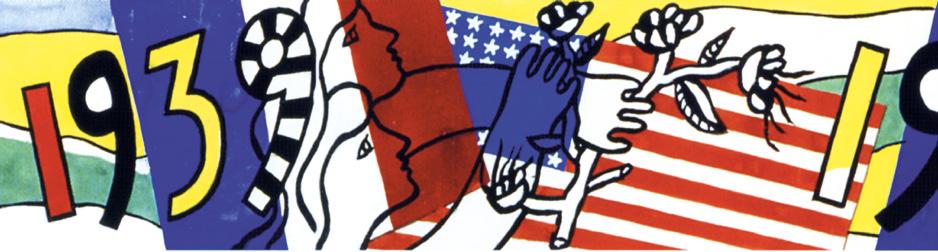
La mosaïque de Fernand Léger présentée la veille de ce colloque à ses participants possède la force de l’évidence. C’est une œuvre belle et harmonieuse mais elle n’apporte de réponse à aucune de ces questions.
Oui, il fallait bien un colloque afin d’éclairer ce que représente l’existence de ces hôpitaux, nés de la guerre et de l’amitié Franco-américaine. J’adresse toute ma reconnaissance à toutes celles et ceux qui ont contribué à la rédaction de ses actes.
What’s the significance of a hospital created by the army chief of an international coalition? What is a hospital listed as a curiosity in the Green Guide to the English Channel? Is it a humanist and artistic undertaking, led by a group entrusted with the reconstruction of a whole region? A shrine to the soldiers who sacrificed their lives to liberate Europe? The reparation for a bombing raid that should never have happened?
The Franco-American Hospital embodies peace and conflict, creation and destruction, fraternity and altruism which should prevent war but, in this case, were the result of it. Fernand Léger’s mosaic holds all of it in its essence. It is a beautiful, harmonious work, that doesn’t provide a specific answer to these questions.
A symposium was needed to shed light on the existence of these hospitals, born of war and Franco-American allyship. I would like to express my gratitude to all those who contributed to this project.
Laetitia Micaelli-Flender
Directrice générale du CHU de Reims.
avec le concours de Sophie Truchet
Coordinatrice de la mission d’étude.
Les directeurs d’établissement de santé sont tous confrontés dans leur carrière au devenir de sites hospitaliers. Ces bâtiments sont porteurs de qualités architecturales, culturelles, historiques, mémorielles et immatérielles qui nous engagent. Comment, dans ces conditions, la valeur de ces sites peut-elle être prise en compte, soulignée et prolongée pour les générations futures ?
Dans cette entreprise délicate, souvent source de dilemme sinon de choix contraints, un retour aux origines est essentiel mais ne peut se faire sans l’appui d’experts.
Donato Severo, Lila Bonneau, Alexis Markovics et Florent Paoli ont rendu visible ce qui était pour nous de l’ordre du ressenti, de l’émotion et même du vécu pour les équipes qui ont travaillé des années durant dans ces murs.
A ma prise de fonction en septembre 2021 figure, parmi les dossiers ébauchés, une réflexion à conduire sur « l’ancien AMH ». Se pose en effet la question du devenir de l’American Memorial Hospital, hôpital pédiatrique du début du XXe siècle, alors innovant, doté de toutes les installations modernes et conforme aux règles d’hygiène de l’époque mais délaissé en 2016 pour l’AMH2, un immeuble flambant neuf, moderne et adapté aux progrès de la médecine. Les équipes fraîchement installées dans ce nouveau bâtiment nourrissent une nostalgie certaine envers leurs anciens locaux. L’acronyme AMH2 utilisé au quotidien traduit sans doute une reconnaissance et une filiation avec un lieu de mémoire et d’histoire.
Laetitia Micaelli-Flender
Director General of the CHU of Reims.
with the assistance of Sophie Truchet
Coordinator of the study mission.
All healthcare facility managers are concerned by the future of hospital sites. We are deeply invested in those buildings, that have architectural, cultural, historical, memorial and intangible qualities. How can the value of these sites be taken into account, emphasized and preserved for future generations? Often a source of dilemma, the answer requires a return to the site’s origins and cannot be obtained without the help of experts. Donato Severo, Lila Bonneau, Alexis Markovics and Florent Paoli have shed light on the architectural and concrete elements that maintained the atmosphere and feeling we experienced while working within these walls.
When I first started, in September 2021, one of the issues on the agenda was the “old AMH” (American Memorial Hospital). This was an innovative pediatric hospital at the beginning of the twentieth century, equipped with all modern facilities and complying with the hygiene regulations of the time. However, it was abandoned in 2016 for the AMH2, a brand-new, modern building adapted to recent medical evolutions. And yet, the teams who had just moved into the new building retained an attachment to their former station. The acronym used, AMH2, undoubtedly expressed a recognition of and attachment to the place, both for its memory and its history.
Reims emerged from the First World War devastated. The city alone accounted for 2.26% of France’s destruction, 36 public buildings were in ruins, all services had been put out of action by the
Reims sort de la première guerre mondiale dévastée. La ville concentre à elle seule 2,26% des destructions du territoire français, 36 édifices publics sont en ruines, tous les services ont été mis hors d’usage par les bombardements et seuls 600 immeubles et maisons sont encore habitables.
Dans la foulée de l’immense mouvement de solidarité américain en faveur des blessés français, Reims « ville martyre » est choisie pour accueillir un hôpital commémoratif, financé par une souscription, en mémoire des nombreux soldats américains morts en France1. Porté par l’engagement de trois femmes Mrs Edith Bangs2, Jeanne Krug3 et la docteure Marie Louise Lefort4, le projet est confié à l’architecte américain Charles Butler qui en dessine les plans sans percevoir d’honoraires.
Chaque lit est parrainé par la famille d’un soldat américain disparu et les noms des donateurs sont gravés dans les fresques qui décorent les murs.
L’American Memorial Hospital de Reims est inauguré le 30 avril 1925 et se voit attribuer la même année une dotation perpétuelle de 600 000 francs annuels. L’édifice incarne l’élan de générosité de nos amis américains, témoigne de la solidarité franco-américaine et revêt une valeur inestimable à la dimension mémorielle, historique et architecturale.
« Il n’y a pas de hasards, il n’y a que de rendez-vous »
Paul Eluard
En juin 2022, le Congrès FHF se réunit à Reims sur le thème « Architecture et santé ». Donato Severo et Lila Bonneau y présentent leurs travaux sur l’hôpital mémorial France-États-Unis de St Lô et l’hôpital Beaujon
1 Nombre de ces soldats ont été enfouis dans des fosses communes.
2 Présidente du Comité américain.
3 Membre de la Commission des Hospices de Reims, première femme membre d’une commission municipale en France.
4 Médecin américain en charge des équipes médicales venues soignées les blessés en France.
bombardments, and only 600 buildings and houses were still habitable.
In the wake of the immense American solidarity movement for the wounded in France, Reims, the “martyred city”, was chosen to host a memorial hospital in memory of the many American soldiers who died in France1. Spurred on by the commitment of three women, Mrs. Edith Bangs2, Jeanne Krug3 and Dr Marie Louise Lefort4, the project was entrusted to American architect Charles Butler, who drew up the plans without charging a fee.
Each bed is sponsored by the family of a missing American soldier, and the names of the donors are engraved in the frescoes decorating the walls.
The American Memorial Hospital in Reims was inaugurated on April 30, 1925, and in the same year, a perpetual donation of 600 000 francs a year, was set. The building embodies the generosity of our American allies, bears witness to the Franco-American solidarity of the times, and is a priceless memorial, historical and architectural landmark.
“There is no such thing as chance, only encounters”
Paul Eluard
In June 2022, the FHF (French Hospital Federation) Congress is held in Reims, on the theme “Architecture and Health”. Donato Severo and Lila Bonneau presented their work on the Franco-American Memorial Hospital of Saint-Lô and the Beaujon Hospital of Clichy. Their presentations spoke to me, as I had also worked at the Beaujon hospital in 2006. We decided to keep in touch, and the Archidessa Chair team discovered the
1 Many of these soldiers were buried in mass graves.
2 President of the American Comity.
3 Member of the “Commission des Hospices de Reims” (Hospitals of Reims Committee), the first woman to become a member of a municipal commission in France.
4 American doctor in charge of medical teams treating wounded in France.
de Clichy. Ces interventions passionnantes résonnent tout particulièrement en moi qui ai travaillé à l’hôpital Beaujon en 2006. Les contacts sont pris, l’équipe de la Chaire Archidessa découvre le site de Reims quelques semaines plus tard et propose de mener une mission d’expertise prenant en compte les dimensions architecturale, patrimoniale, urbaine et environnementale de l’American Memorial Hospital. Les premières conclusions sont une révélation sinon une confirmation des qualités intrinsèques du bâtiment, de l’intégration de l’art à l’architecture comme vecteur de soins, de son ancrage dans la ville, de la conception thérapeutique de ses jardins, du message hygiéniste des fresques de Robert et Marthe la Montagne Saint Hubert. Tout dans cet édifice a été conçu et concourt aux soins, à l’état de santé physique, moral et psychologique pour la guérison du petit patient. L’agencement des chambres en enfilade et les ouvertures laissent une belle part à la lumière de jour. Les fresques, au-dessus des lits dans les chambres, à l’entrée du bâtiment, dans les salles à manger et salles de jeux font entrer la couleur, la vie et contribuent à l’apaisement.
Au-delà de ces valeurs, la mise en évidence du rôle particulier des femmes dans la conception de l’ensemble est une heureuse et même fondamentale découverte.
Lila Bonneau poursuit cette première approche pour réaliser une anamnèse complète et approfondie du bâtiment, qui constituera une base riche d’enseignements à même d’éclairer la réhabilitation des locaux.
« Nous n’héritons pas de la terre de nos parents, nous l’empruntons à nos enfants »
Antoine de Saint-Exupéry
Se pose la question du devenir de cet héritage et de la fidélité à l’esprit de cet hôpital mémoriel.
Comment composer avec le projet de restructuration et la conservation patrimoniale du site ?
Reims site a few weeks later. They offered to carry out an appraisal mission taking into account the architectural, heritage, urban and environmental dimensions of the American Memorial Hospital.
Their initial findings were a confirmation of the building’s intrinsic qualities: the integration of art into architecture as a way of caring for the patient, its anchorage in the city, the therapeutic design of its gardens, the hygienic message of the frescoes by Robert and Marthe La Montagne Saint-Hubert. Everything in this building was meant to contribute to the physical, moral and psychological health of the young patients. The layout of the adjoining rooms and the windows let in plenty of daylight. The frescoes above the beds in the bedrooms, at the entrance to the building, in the dining rooms and playrooms, bring color and life into the building and contribute to its soothing effect. Also, the particular role of women in the creation of the complex is a happy and fundamental discovery.
Lila Bonneau follows up this initial approach with an in-depth analysis of the building, in order to build up a comprehensive information base that would be useful for the building’s rehabilitation.
“We don’t inherit land from our parents; we borrow it from our children”.
Antoine de Saint-Exupéry
What is the future of this heritage and how to remain true to the spirit of the Memorial Hospital?
How can we reconcile the restructuring project with the preservation of the site’s heritage?
The challenge is to safeguard the nature of places, belonging to the public, in order to carry out coherent transformations, that integrate today’s healthcare standards. The link with pediatrics must be maintained, and the garden preserved as a single entity.
L’enjeu est à la fois de sauvegarder, de protéger, de tenir compte de la nature de lieux qui appartiennent à tous, pour opérer des transformations cohérentes, insérées dans un ensemble contemporain répondant aux normes de dispensation de soins d‘aujourd’hui.
Les aménagements futurs devront préserver le lien avec la pédiatrie et maintenir le jardin comme une entité unique.
Dans cette entreprise de valorisation d’une histoire commune, nous sommes des passeurs de mémoire. Réunis dans le cadre du colloque L’AMH, l’hôpital mémorial France-États-Unis de Saint-Lô et l’hôpital Beaujon de Clichy sont autant de témoignages des liens pluriels, d’influences et de mécénat, qui unissent les États-Unis et la France. Le colloque de Saint-Lô qui s’est tenu en octobre 2024 en a fidèlement restitué l’esprit. A Reims, le 30 avril 2025, tous ensembles, petits et grands, patients et professionnels, représentants du Comité Américain, des Amis de l’AMH, Ministre du Travail, des Solidarités et des Familles, et représentante des États-Unis ont célébré le centenaire de l’inauguration de l’AMH dans ses jardins.
We are the transmitters of this shared history. The AMH symposium, the France-United States memorial hospital in Saint-Lô and the Beaujon hospital in Clichy all bear witness to the multi-faceted links of influence and patronage that unite the United States and France. The Saint-Lô symposium, held in October 2024, faithfully captured the spirit of these ties. In Reims, on April 30, young and old, patients and professionals, representatives of the American Committee, the Friends of the AMH, the French Minister of Labor, Solidarity and Families, and the representative of the United States, all came together to celebrate the centenary of the inauguration of the American Memorial Hospital, in its gardens.
Donato Severo
Donato Severo, architecte, docteur en histoire de l’architecture, est professeur émérite HDR à l’École Nationale Supérieure d’Architecture Paris-Val de Seine. Chercheur au laboratoire EVCAU, ED 624 – Sciences des Sociétés – Université Paris Cité, il est le responsable scientifique de la chaire Archidessa. Il est l’auteur de plusieurs ouvrages sur : l’ architecture et santé, le Care, l’histoire des hôpitaux, le patrimoine architectural et urbain, la théorie et la pratique de la conception architecturale.
Donato Severo, architect, doctor in architectural history, is professor emeritus HDR at the École Nationale Supérieure d’Architecture Paris-Val de Seine. Researcher at the EVCAU Laboratory, ED 624 – Social Sciences – Université Paris Cité, he is the scientific director of the Archidessa Chair. He is the author of several books on: architecture and health, care, the history of hospitals, architectural and urban heritage, the theory and practice of architectural design.
Lila Bonneau
Lila Bonneau est architecte HMONP, spécialisée en « Architecture et Patrimoine » (DSA « Architecture et Patrimoine » à l’ENSA Paris Belleville) et docteure en « Architecture, Urbanisme, Paysage et Patrimoine » (Université Paris Cité, UR ÉCHELLES). Elle est enseignante-chercheuse à l’ENSA PVS, master « Transformations » et membre du comité de pilotage de la chaire Archidessa. Elle est coresponsable de l’axe « Architecture, Santé, Vulnérabilités » du laboratoire EVCAU. Lila Bonneau est associée et co-fondatrice de l’agence d’architecture Maàpa.
Lila Bonneau is an HMONP architect, specialized in “Architecture and Heritage” (DSA “Architecture and Heritage” at ENSA Paris Belleville) and doctor in “Architecture, Urbanism, Landscape and Heritage” (University of Paris Cité, UR ÉCHELLES). She is a teacher-researcher at ENSA PVS, “Transformations” master’s degree and a member of the steering committee of the Archidessa chair. She is co-responsible for the “Architecture, Health, Vulnerabilities” axis of the EVCAU laboratory. Lila Bonneau is a partner and co-founder of the architectural firm Maàpa.
Florent Paoli
Florent Paoli est architecte, diplômé avec la mention recherche de l’ENSA Paris-Val de Seine (projet de reconversion de l’hôpital Bichat), et titulaire de l’HMONP. Il a créé en 2023 CAMPO architectures et est membre du comité éditorial de la revue Topophile (AJAP 2025). Il est enseignant-chercheur à l’ENSA PVS, collaborant au master « Transformations » et membre de la chaire Archidessa « Architecture, Design, Santé ».
Florent Paoli is an architect, a graduate with a research distinction from ENSA Paris-Val de Seine (Bichat Hospital redevelopment project), and holds the HMONP (Authorization to Practice Architecture in One’s Own Name). He founded CAMPO architectures in 2023 and is a member of the editorial board of the journal Topophile (AJAP 2025). He is a lecturer and researcher at ENSA PVS, contributing to the “Transformations” master’s program and a member of the Archidessa “Architecture, Design, Health” chair.
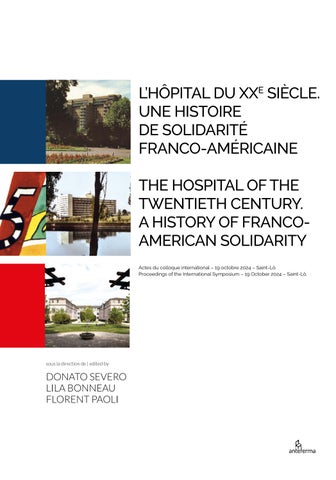
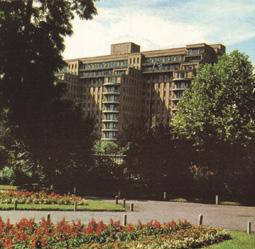
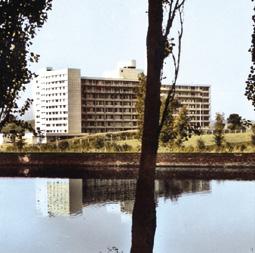
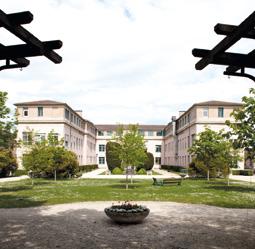
L’Hôpital Beaujon à Clichy, photos des années 1930, l’Hôpital Mémorial France-États-Unis de Saint-Lô, photos des années 1950, l’American Mémorial Hospital de Reims, 1925.
The Beaujon Hospital in Clichy, 1930s photo, the France-United States Memorial Hospital in Saint-Lô, 1950s photo, the American Memorial Hospital in Reims, 1925.
ISBN 979-12-5953-261-9
28,00