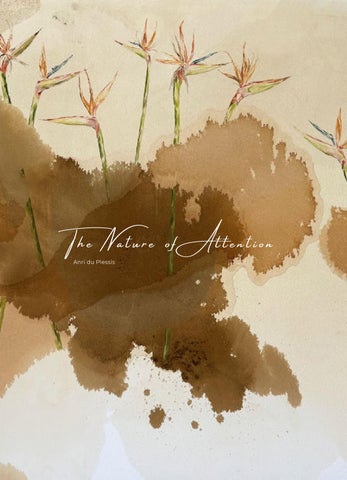
The Nature of Attention Anri du Plessis
The Nature of Attention Anri du Plessis
Exhibition catalogue by
Anri du Plessis www.anriduplessis.art 2026
Figure 2 Anri du Plessis, Endemism (detail) , 2026, oil on stretched canvas, 50,8cm x 40,3cm , unframed
Contents Introduction Personal Experience Artistic Influence The Nature of Attention Conclusion List of Illustrations Bibliography Biography Artist Statement This Exhibition
05 07 12 14 22 23 24 26 26 27
Introduction My artistic practice has repeatedly returned to nature as a source of observation and inquiry. My initial interest in the diversity of flowering plants in the Western Cape developed into a closer examination of the cycles of growth and change that characterise plant life. Through this process, I began to identify the correspondence between plant cycles and human experiences of growth, hardship, and adaptation. The Nature of Attention developed from this interest, using the observation and representation of South African flora to explore the relationship between nature and human experience. I selected plants from three significant locations: the Soutpansberg, Mopaneveld and Western Cape, each of which holds personal significance and connects to the development of my identity. Through painting, I investigate how close observation can lead to interpretations that extend beyond the immediate appearance of a subject. I explore how these interpretations might encourage viewers to reconsider their own relationship with the natural world. The locations from which my works originate are intricately connected to my relationship with nature. In the Mopaneveld, our family farm, Pafunda, holds various childhood memories and has become a place of retreat and peace. The alkaline clay soil and harsh conditions drew my attention to the ability of local plant life, including the baobab, mopane tree, impala lily, and blood lily, to survive in challenging environments. This sparked my curiosity about the healing qualities associated with these plants. In returning to my roots, I began to observe my surroundings more attentively. Silva et al. (2023) discuss the traditional medicinal uses of baobab, which led me to question whether my relationship with nature could also be understood in terms of metaphorical healing.
05
Figure 3 Anri du Plessis, Belong , 2026, oil, hibiscus, black and rooibos tea on stretched canvas, 118,9cm x 84,1 cm, unframed
06
Personal Experience The Soutpansberg offers a contrasting experience. Its dense green forests, tree orchids, and diversity of indigenous flora form part of a significant period in my life. Together, these two locations have influenced the way I look at nature and understand its relationship with human experience. The Western Cape, my current environment, introduced me to a different range of indigenous flora. Fields of colourful wildflowers and the diversity of fynbos initially inspired my body of work through their striking visual qualities. These experiences continue to inform my practice through close observation and questions about the connections between nature and human life.
07
Figure 4 Anri du Plessis, Endure (detail), 2026, oil, hibiscus, black and rooibos tea on stretched canvas, 118,9cm x 8 unframed
84,1 cm,
08
The Mopaneveld Series
Figure 5, Anri du Plessis, , Perennation 2026, oil on stretched canvas , 29,8cm x 21,1 cm , unframed
09
Figure 6, Anri du Plessis, Deciduous 2026, oil on stretched canvas , 29,8cm x 21,1 cm , unframed
Figure 7, Anri du P 2026, oil on stretched cm , unframed
Plessis, Huilboerboon canvas , 29,8cm x 21,1
Figure 8, Anri du Plessis, Dormancy 2026, oil on stretched canvas , 29,8cm x 21,1 cm , unframed
Figure 9, Anri du Plessis, Multiflorum 2026, oil on stretched canvas , 29,8cm x 21,1 cm , unframed
10
Figure 10, Hermien van der Merwe, Fynbos Landscape with Aristea, Everlasting and Leucadendron (Rhythm series), Oil on canvas, 1500mmx1100mm
Figure 11, Wolf Kahn, Orange Stripe (2015) Pastel on Paper, 22.9 x 30.5 cm.
Figure 12, Anri du Plessis, Become (detail), 2026, oil, hibiscus, black and rooibos tea on stretched canvas, 118,9cm x 84,1 cm, unframed
11
Artistic Influence My artistic influences include South African artist Hermien van der Merwe and international artist Wolf Kahn. Van der Merwe’s depictions (fig 10) of indigenous Cape fynbos and her vibrant use of oil paint inspired me to look at nature with greater attention. Her work informed my thinking about healing within nature and the changing seasons of life. In The Nature of Attention, I extended my process by staining the canvases with tea before painting. The stains establish a material connection between the natural world and the plants represented in my work. Historical uses of tea in medicinal preparations informed my decision to incorporate tea staining into the preparation of my canvases (Torchia, 2025). I stained my larger canvases with rooibos, hibiscus, and black tea, connecting these plant-based materials to my exploration of nature as a physical and metaphorical healer. Through this process, I intended to connect the preparation of the canvas with the natural subjects represented in the paintings. Wolf Kahn’s interpretation (fig 11) of landscape informed my interest in how painted representations of nature can extend beyond the literal appearance of a place. Viewers may interpret the same artwork differently according to their individual perceptions and experiences (Ishai, Fairhall & Pepperell, 2007:21). This relates to my interest in how close observation can encourage viewers to look beyond the immediate appearance of plants and consider the meanings they might associate with them. These influences contributed to the development of my approach, in which the choice of subject, the painting process and the viewer’s interpretation all relate to the central idea of attention.
12
13
Figure 13, Anri du Plessis, Anthesis (detail) 2026, oil on stretched canvas , 50,8cm x 40,3 cm , unframed
The Nature of Attention The Nature of Attention consists of eleven artworks arranged in three phases and size groups. Drawn from three memorable locations, the works consider qualities such as endurance, growth, belonging and renewal through the forms and cycles of plant life. Each piece focuses on a particular plant or tree, whose characteristics inform the meaning of the work. Together, the artworks explore how the observation of nature can lead to personal interpretations of human experience. In Endure (fig 4), the aloe represents the ability to persist through difficult conditions. It serves as a reminder of how humans adapt to challenging circumstances and demonstrate resilience during difficult seasons. The work combines layered stains with heavily diluted oil paint, creating a fading effect across the surface. This treatment relates to the aloe’s ability to prevail, while the fading forms invite reflection on human endurance. The painting process contributes to this interpretation by allowing the plant to remain recognisable while its representation appears to recede in places.
14
The Soutpansberg series
Figure 14, Anri du Plessis, , Reviviscence 2026, oil on stretched canvas , 50,8cm x 40,3 cm , unframed
15
Figure 15, Anri du Plessis, Anthesis 2026, oil cm , unframed
on stretched canvas , 50,8cm x 40,3
Figure 16 Anri du Plessis, Endemism , 2026, oil on stretched canvas, 50,8cm x 40,3cm , unframed
16
The Nature of Attention Become (fig 12) depicts strelitzias that appear to be taking flight. Their upward-reaching forms suggest movement, growth, and the possibility of change. This relates to my exploration of becoming and the ways we move into new stages of life. Through this work, I explore how the development and form of a plant can reflect the human desire to grow and strive towards something new. The sense of movement in the strelitzias connects their physical forms to the idea of change, allowing the painting to suggest development beyond the plant itself. In Belong (fig 3), Cape wildflowers are spread across a hibiscus teastained canvas. The flowers represent connection and diversity, while exploring the relationship between individuality and belonging. I believe people often develop a sense of belonging through their surroundings. I found the ecological relationships between varied species and their shared environments particularly remarkable. Observing the diversity of plant life encouraged me to consider how individual forms exist in relation to a wider natural environment. Through Belong (fig 3), I connect this relationship to the human experience of finding a place within a community or environment. These works form part of a broader investigation into how attention can change our perception and understanding of nature. The body of work invites viewers to spend time with the plants represented and consider the meanings they might associate with them. Across the collection, the natural world provides a starting point for reflecting on experiences that extend beyond the visible subject.
17
Figure 17, Anri du Plessis, , Huilboerboon (detail), 2026, oil on stretched canvas , 29,8cm x 21,1 cm , unframed
18
The Western
Figure 18 Anri du Plessis, Photographs of The Western Cape Series (20
19
n Cape series
026)
20
21
Figure 19, Anri du Plessis, Become (detail) 2026, oil on stretched canvas , 29,8cm x 21,1 cm , unframed
Conclusion The Nature of Attention developed from my ongoing interest in nature and the connections between plant life and human experience. Through observing and painting South African flora, I explored qualities that people value and seek in their own lives, including endurance, growth, belonging, and renewal. The use of tea stains and oil paint allowed me to incorporate natural materials into my process, extending my investigation beyond the representation of plants alone. My experiences of the Western Cape, Soutpansberg and Mopaneveld also shaped the meanings I associated with the selected subjects. Throughout this project, I came to understand attention as an important part of how we interpret the world around us. Taking time to observe nature encouraged me to look beyond the immediate appearance of plants and consider what their forms, characteristics and cycles might reveal about human experience. I hope the works encourage viewers to approach nature with similar curiosity and to consider the personal meanings they find within it.
22
List of Illustrations Fig 1: Du Plessis, A. 2026. Become. Oil, hibiscus, black and rooibos tea on stretched canvas, 120cm x 150 cm , unframed. Fig 2: Du Plessis, A. 2026. Endemism. Oil on stretched canvas, 50,8cm x 40,3cm , unframed. Fig 3: Du Plessis, A. 2026. Belong. Oil, hibiscus, black and rooibos tea on stretched canvas, 118,9cm x 84,1 cm, unframed. Fig 4: Du Plessis, A. 2026. Endure. Oil, hibiscus, black and rooibos tea on stretched canvas, 118,9cm x 84,1 cm, unframed. Fig 5: Du Plessis, A. 2026. Perennation. Oil on stretched canvas , 29,8cm x 21,1 cm , unframed. Fig 6: Du Plessis, A. 2026. Deciduous. Oil on stretched canvas , 29,8cm x 21,1 cm , unframed. Fig 7: Du Plessis, A. 2026. Huilboerboon. Oil on stretched canvas , 29,8cm x 21,1 cm , unframed. Fig 8: Du Plessis, A. 2026. Dormancy. Oil on stretched canvas , 29,8cm x 21,1 cm , unframed. Fig 9: Du Plessis, A. 2026. Multiflorum. Oil on stretched canvas , 29,8cm x 21,1 cm , unframed. Fig 10: Van Der Merwe, H. Fynbos Landscape with Aristea, Everlasting and Leucadendron (Rhythm series), Oil on canvas, 1500mmx1100mm. Fig 11: Kahn, W. Orange Stripe (2015) Pastel on Paper, 22.9 x 30.5 cm. Fig 12: Du Plessis, A. 2026. Become. Oil, hibiscus, black and rooibos tea on stretched canvas, 118,9cm x 84,1 cm, unframed. Fig 13: Du Plessis, A. 2026. Anthesis (detail). Oil on stretched canvas , 50,8cm x 40,3 cm , unframed Fig 14: Du Plessis, A. 2026. Reviviscence. Oil on stretched canvas , 50,8cm x 40,3 cm , unframed. Fig 15: Du Plessis, A. 2026. Anthesis. Oil on stretched canvas , 50,8cm x 40,3 cm , unframed. Fig 16: Du Plessis, A. 2026. Endemism. Oil on stretched canvas, 50,8cm x 40,3cm , unframed. Fig 17: Du Plessis, A. 2026. Huilboerboon (detail). Oil on stretched canvas , 29,8cm x 21,1 cm , unframed. Fig 18: Du Plessis, A. 2026. Multiflorum. Photographs of The Western Cape Series. Fig 19: Du Plessis, A. 2026. Become (detail). Rooibos, Black and Hibiscus Stained, Oil on Canvas. 118,9cm x 84,1cm, unframed. Fig 20: Ellis, R. 2026. Photograph of Anri du Plessis. Fig 21: Anri du Plessis, The Nature of Attention (2026) Rooibos, Black and Hibiscus Stained, Oil on Canvas. Photograph by Laurette de Jager, reproduced with permission from Laurette de Jager. Fig 22: Du Plessis, A. 2026. Belong (detail) Rooibos, Black and Hibiscus Stained, Oil on Canvas. 118,9cm x 84,1cm, unframed.
23
Bibliography Endangered Wildlife Trust. (2025). Soutpansberg Protected Area - endangered wildlife trust. [online] Available at: https://ewt.org/spa-programme/ [Accessed 19 Oct. 2026]. Gaia Herbs (2026). What is an herbal tincture & why are they making a comeback? [online] Gaia Herbs. Available at: https://www.gaiaherbs.com/blogs/seeds-ofknowledge/what-is-a-tincture [Accessed 19 Oct. 2026]. Maria Leonor Silva, Rita, K., Maria Alexandra Bernardo, Fernanda, M., Ana Maria Pintão and Moncada, M. (2023). Adansonia digitata L. (Baobab) bioactive compounds, biological activities, and the potential effect on glycemia: A narrative review. [online] 15(9), pp.2170– 2170. doi:10.3390/nu15092170. Subject (2017). Blom waar JY geplant is. [online] SAArtists. Available at: http://www.southafricanartists.com/blom-waar-jy-geplant-is-85502 [Accessed 19 Oct. 2026]. Torchia, L. (2025). American College of Healthcare Sciences. [online] American College of Healthcare Sciences. Available at: https://achs.edu/blog/herbal-medicine-how-to-maketinctures/ [Accessed 19 Oct. 2026].
24
25
Figure 20 Anri du Plessis, photograph by Ryno Ellis
Biography Anri du Plessis was born in Louis Trichardt, Limpopo, and now lives near Saldanha Bay in the Western Cape. She has been interested in art since the age of seven, when she began experimenting with different materials and ways of making art. She received several Kinderkuns awards during her childhood and is currently completing a Bachelor’s degree in Visual Multimedia Art at the University of South Africa (UNISA). Nature has always been an important part of her work. She draws inspiration from the plants and landscapes of the Western Cape, Soutpansberg and Mopaneveld. Working mainly in oil paint, she paints South African flora and draws on her own interest in the connections between plants and human emotions.
Artist’s Statement I created The Nature of Attention as a body of oil paintings in three size groups and process stages. The works feature carefully chosen flora from three South African locations including, the Western Cape, the Soutpansberg and the Mopaneveld. I explore nature on a metaphorical level, considering the qualities humans search for, such as resilience and healing. Centralizing the way, we choose to see the world around us – looking beyond the mere visuals. Throughout previous work, nature repeatedly emerged, leading me to develop a stronger understanding of connection to the natural world. This project extends that interest by connecting natural forms to human experience. My work is influenced by the South African landscape and artists, like Hermien van der Merwe who use indigenous Cape fynbos and vibrant oil paint to capture the human and spiritual experience. This inspires me and connects to my intention of understanding nature, healing from loss, and the journey of life seasons. Process is fundamental to this work. I stained large canvases with locally sourced rooibos, hibiscus and black tea, embedding traces of natural materials into the paintings before layering oil paint. Through attention to nature, I explore what lies beyond the immediately visible.
26
This Exh
27
Figure 21 Anri du Plessis, The Nature of Attention (2026) Rooibos, Black and Hibiscus Stained, Oil on Canvas. Photograph
hibition
h by Laurette de Jager, reproduced with permission from Laurette de Jager.
28
30
Anri du Plessis 083 822 2498
anriduplessisart@gmail.com
@anriduplessis.art