



READER SERVICE
Print and digital subscription inquires or changes, please contact Angelita Potal, Customer Service apotal@annexbusinessmedia.com 416-510-5113
Mail: 111 Gordon Baker Rd., Suite 400, Toronto, ON M2H 3R1
EDITOR Jon Robinson jrobinson@annexbusinessmedia.com 647-448-6188
FLIGHT DECK
Tim Anderson, Catherine Doyle, Edward Lennox, Phil Lightstone, Carroll McCormick, Karel Peters, Andrea Sepinwall, Steven Sitcoff, Adam Slinn
NATIONAL ACCOUNT MANAGER Mena Miu mmiu@annexbusinessmedia.com 416-510-6749
ACCOUNT CO-ORDINATOR Barb Vowles bvowles@annexbusinessmedia.com 416-510-5103
MEDIA DESIGNER Graham Jeffrey
GROUP PUBLISHER Adam Szpakowski aszpakowski@annexbusinessmedia.com
CEO Scott Jamieson sjamieson@annexbusinessmedia.com
WINGS MAGAZINE
P.O. Box 530, 105 Donly Dr. S., Simcoe, ON N3Y 4N5 Tel: 519-428-3471 Fax: 519-429-3094 Toll Free: 1-888-599-2228
Printed in Canada ISSN 0701-1369
PUBLICATION MAIL AGREEMENT #40065710
Published four times per year December, March, June & September by Annex Business Media
SUBSCRIPTION RATES
Canada – 1 Year $36.60 CDN; 2 Years $64.18 CAN (plus GST - #867172652RT0001)
USA – 1 Year $83.27 CAN
International – 1 Year $96.00 CAN
Annex Privacy Office privacy@annexbusinessmedia.com • Tel: 800.668.2374
No part of the editorial content of this publication may be reprinted without the publisher’s written permission.
©2026 Annex Business Media All rights reserved. Opinions expressed in this magazine are not necessarily those of the editor or the publisher. No liability is assumed for errors or omissions.

Occasionally, Wings magazine will mail information on behalf of industry-related groups whose products and services we believe may be of interest to you. If you prefer not to receive this information, please contact our circulation department in any of the four ways listed above.

All advertising is subject to the publisher’s approval. Such approval does not imply any endorsement of the products or services advertised. Publisher reserves the right to refuse advertising that does not meet the standards of the publication.

Annex Business Media brands focused on Canadian aviation and aerospace include Wings, Helicopters and UAV Canada, as well as the Careers in Aviation Expo, Careers in Aviation Guide, Canadian Wildfire Conference, Aerial Firefighting Directory and the MRO Directory.

By Jon Robinson |
Pilatus Aircraft in late February at its facility in Stans, Switzerland, led the production test flight of the CT-157 Siskin II destined for the Royal Canadian Air Force. The flight, lasting approximately one hour and 15 minutes, included functional testing of the engine, aircraft systems and flight controls. The CT-157, built on the Pilatus PC-21, is a marque aircraft type of the 25-year, $11.2 billion Future Air Crew Training (FAcT) program awarded to SkyAlyne by the Canadian Armed Forces.
SkyAlyne, a partnership between CAE and KF Aerospace to oversee FAcT, ordered 19 CT-157s with the first aircraft expected to arrive in Canada in the second half of 2026. The two-seat plane, featuring a 1,600 horsepower PT6A Pratt & Whitney Canada turboprop engine and the ability to reach speeds of 685 km/h, will underpin RCAF’s advanced flight training. It is one of five FAcT fleets that will account for more than 70 new aircraft across locations in Moose Jaw, Portage la Prairie, and Winnipeg.
The FAcT and Future Fighter program –the planned acquisition of 88 F-35 fighter jets – are two of the biggest ticket items moving Canada toward its NATO spending targets and a newly outlined strategy to develop a stronger domestic defence industry, pushed on both accounts by the current United States administration under by Donald Trump. On February 17, Canadian Prime Minister Mark Carney at CAE in Montreal unveiled the Liberal government’s Defence Industrial Strategy. This $6.6 billion framework outlines a plan to build an industrial base by scaling up small- and medium-sized businesses on which the military can rely.
Christyn Cianfarani, president of the Canadian Association of Defence and Security
“The strategy vows to increase Canadian firms’ share of federal defence contracts to 70 per cent, boost Canada’s defence exports by 50 per cent and add 125,000 jobs over the next decade.”
Industries, called the strategy a “landmark document”. The strategy aims to increase Canadian firms’ share of federal defence contracts to 70 per cent, boost Canada’s defence exports by 50 per cent and add 125,000 jobs to the sector over the next decade. As reported by the Canadian Press, Cianfarani described the plan as aggressive and requiring a different approach of development, manufacturing and procurement.
The federal government earlier moved to overhaul its defence procurement to reduce hurdles for domestic firms through a new Defence Investment Agency. It is scheduled to become a legislated standalone agency with more independence and authority; allowing small- and medium-sized firms,
1. Germany awarded Top Aces with a $681 million contract for air combat training. P.9. 2. Canadian airports moved 156.7 million passengers in 2024. P.14. 3. Textron Aviation purchased Pipistrel for approximately US$235 million in April 2022. P.17. 4. Stratus has sold more than 110,000 receivers since 2011. P.41. 5. Canadian Peter Pigott authored a total of 25 books focused on aviation history. P.46.
according to a Canadian Press interview with Stephen Fuhr, secretary of state for defence procurement, to have one main point of contact and, therefore, better access to decision makers during the military contracting process – bypassing the need for lobbyists.
The aviation and aerospace sectors will surely led this domestic build-up driven in large part by Canada’s close to 30-year participation in the Joint Strike Fighter program established by Lockheed Martin to reward countries participating in the development of the F-35 with preferred manufacturing and overall industrial benefits. FAcT, meanwhile, is primarily a Canadian program leveraging decades of training expertise.
The Defence Industrial Strategy received high praise from a range of businesses and industry groups across the aerospace spectrum. Large industry players have already moved toward defence inspired by NATO member commitments to meet existing spending targets at 2 1/2 per cent of GDP based on pressure from Trump. NATO members in June 2025 then agreed to a new five per cent target under a framework to invest 3.5 per cent in core defence needs, such as jets and weapons, and 1.5 per cent in defence-adjacent areas like infrastructure and cybersecurity. Any way you slice it, defence will become a hallmark of Canada’s economy for decades and aerospace will help lead the way leveraging many of the structural changes now, or soon to be, in place. | W
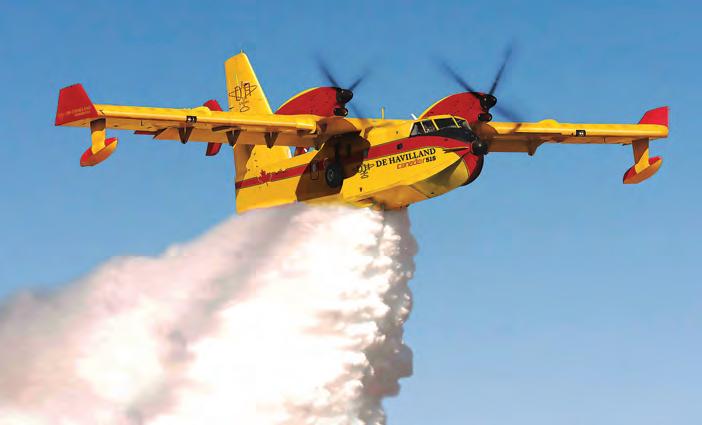
The Government of Alberta in midFebruary secured a contract with De Havilland Aircraft of Canada for five new, locally built waterbombers with a price tag of around $400 million. The first Canadair DHC-515 aircraft, designed to skim bodies of water to fill a 6,100-litre tank in about 12 seconds, is expected to arrive by spring 2031. In making the announcement, Alberta Premier Danielle Smith said the money for the aircraft is separate from the approximate $160 million the province spends on its wildfire response each year. In 2025, there were 18 airtankers ready to respond to wildfires, including four Alberta-owned and contracted aircraft that were built between 1986 and 1988.
“These Alberta-built waterbombers will strengthen our wildfire response, protect our communities and create hundreds of skilled jobs right here at home,” said Smith. De Havilland Canada in 2022
outlined plans to build a new primary assembly and production facility, called De Havilland Field, in Wheatland County, approximately 30 minutes east of Calgary. The contract with De Havilland Canada is projected to create around 1,000 jobs. Alberta has had more than 1,000 average annual wildfire starts in the past decade, noted the Canadian Press, which is the second highest in Canada behind British Columbia.
The addition of the five new waterbombers, according to the province, will result in an almost 60 per cent increase in Alberta’s total drop capacity. The DHC-515 can fly up to 330 km/h, about 15 per cent faster than Alberta’s existing CL-215, while also carrying 15 per cent more water. In June 2025, Manitoba confirmed its intent to purchase three De Havilland Canadair 515 aircraft, while close to two dozen of the aircraft type have been ordered by European countries.
Air Canada on February 11 announced the next phase of its fleet modernization program with the addition of the Airbus A350-1000 widebody aircraft. The airline
committed to purchasing eight aircraft and has rights to purchase eight more A3501000s, with deliveries scheduled to begin in the second half of 2030. Powered by the XWB97 engine from Rolls Royce and fabricated using lighter weight materials, Air Canada points to Airbus estimations that the aircraft will deliver up to a 25 per cent fuel consumption reduction compared to the previous generation aircraft. The A350-1000 has a potential range of approximately 9,000 nautical miles.
According to Airbus, c ustomers will experience the quietest twin-aisle cabin available. The aircraft is designed to be pressurized to only 6,000 feet to reduce stress on the body, minimize jet lag and deliver a noticeably more comfortable travel experience. The A350-1000 will come equipped with the latest generation in-flight entertainment screens and connec tivity, as well as Air Canada’s new cabin standard, which is being introduced later this year on other new aircraft.
The order for eight A350-1000s is in addition to the 14 Boeing 787-10 Dreamliners expected to start entering service later this year. Air Canada is also set to welcome in the coming months the first of its 30 new Airbus A321XLRs. Air Canada also continues to take deliveries of the Canadian-assembled Airbus A220, with 23 aircraft remaining on its firm order of 65. An additional five Boeing 737 MAX aircraft, on lease, are expected to enter service in 2026. These aircraft will enter service with Air Canada’s next generation cabin design and standard, including enhanced connectivity and in-flight entertainment offerings.
Flair Airlines in mid-February appointed Len Corrado as Chief Executive Officer, succeeding Maciej Wilk who joined the airline in 2023 as Chief Operating Officer before becoming interim CEO in mid-2024 and permanent CEO in July 2025. “My mandate was always clear: bring discipline, reliability, and cost efficiency into the business, and be rigorously honest about what works and what doesn’t,” said Wilk, in a news release about Corrado’s appointment. Corrado brings deep roots in Canadian
aviation, explains Flair, with decades of experience across Canadian airline operations, commercial strategy, and leisure travel, most recently as President of Sunwing Airlines. His background aligns closely with Flair’s next phase, including the expansion of Flair Vacations, as the airline builds on its value-carrier model. The airline in February also outlined plans to attract more work travellers – mainly from small businesses – via affordable fares and by plugging into networks linked to travel agents, booking sites and hotels. Leveraging Boeing 737 aircraft, Flair flies to over 25 destinations across North America, including Canada, the U.S., Mexico, the Dominican Republic and Jamaica.
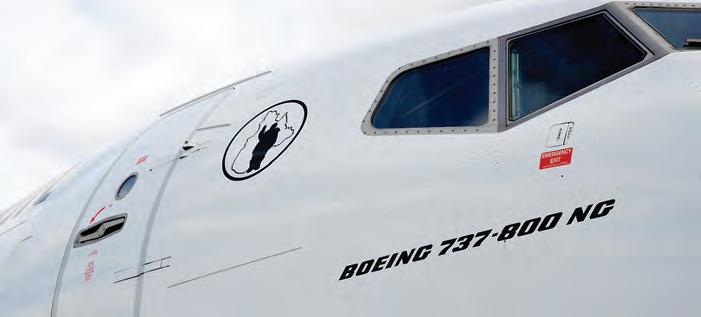
Air Inuit in January earned Transport Canada certification for its first newly reengineered Boeing combi aircraft, which marked the arrival of the world’s first 737800NG configured for both passengers and freight. The aircraft entered service on Air Inuit’s Montréal-Kuujjuaq route.
“Our investment in this next-generation combi reflects Air Inuit’s commitment to innovation that directly serves the unique passenger and freight needs of the communities and the people we serve,” said Christian Busch, President and CEO of Air Inuit.
Air Inuit explains the 737-800NG combi represents a major advancement in multirole aircraft capability to address Northern realities. Converted by KF Aerospace, the aircraft features a forward cargo compartment with space for five pallets and a 90seat passenger cabin in the aft section. This world-first is part of Air Inuit’s broader fleet-modernization strategy, which began with the acquisition of three Boeing Next-Generation 737-800s to eventually replace its 737-200 fleet. Air Inuit explains the new aircraft offer improved passenger comfort, inflight wifi powered by Starlink, better fuel efficiency, modern avionics, and increased passenger-cargo capacity to respond to the essential needs of communities in Nunavik and beyond.
Combi conversion of the third of three 737-800s acquired by Air Inuit in 2023 was scheduled for completion in February 2026. Founded by the Inuit of Nunavik in
1978, Air Inuit, a wholly owned subsidiary of Makivvik, was created to provide air connections between Nunavik’s 14 coastal villages and the south, to promote trade and to preserve Inuit culture. Air Inuit today has more than 1,175 employees and a fleet of 36 aircraft.
Gulfstream Aerospace in December announced the new super-midsize G300 made its first flight from Ben Gurion International Airport, launching its flight test program. The flight lasted two and a half hours with the G300 reaching a speed of Mach 0.75 and an altitude of 30,000 feet (9,144 metres). Prior to first flight, the G300 program completed more than 2,000 ground test hours and includes two additional test aircraft already in production.
Gulfstream states the G300 will feature the largest interior in the super-midsize segment, including 10 Gulfstream Panoramic Oval Windows, which can seat up to 10 passengers and includes two living areas, a galley and ample room for baggage. The G300 also features the lowest cabin altitude in its class at 4,800 feet (1,463 metres), according to Gulfstream, when flying at 41,000 feet (12,497 metres). Powered by Honeywell HTF7250G engines and the Harmony Flight Deck, the G300 is expected to hold a rated
range of 3,600 nautical miles (6,667 kilometres) at Mach 0.80 or 3,000 nautical miles (5,556 kilome tres) at Mach 0.84.
The Canadian Press in mid-February reported that Transport Canada had certified Gulfstream’s G800, G700, G600 and G500 jets shortly after U.S. President Donald Trump threatened fresh tariffs over the planes’ status in Canada. Trump also warned he would decertify and place tariffs on all Canadian-made planes unless the government approved the four Gulfstream aircraft.
Bombardier began 2026 with a series of achievements, following the December entry into service of its Global 8000 longhaul jet, purchased by Patrick Dovigi, founder and CEO of Green For Life Environmental Inc. Days later, on December 19, the Federal Aviation Administration (FAA) certified the Global 8000, noted by the aircraft maker as the fastest civilian aircraft since the Concorde with a top speed of Mach 0.95 and range of 8,000 nautical miles. In January 2026, the Global 8000 was certified by the European Union Aviation Safety Agency.
Also in January, Bombardier announced plans to build a new 126,000-square-foot manufacturing centre in Dorval, which will be located near the Challenger manufacturing centre and the Laurent Beaudoin Completion Centre. The project, supported
by a $35 million repayable, non-forgivable loan under Investissement Québec’s ESSOR program, represents an investment of approximately $100 million with the new facility expected to open before the end of 2027. Québec’s ESSOR program was created to help promote Quebec’s competitive manufacturing sector and economic vitality.
The latest PwC study commissioned by Bombardier found that the company contributed a total of $7.4 billion (direct, indirect, and induced) to Canada’s GDP in 2024 and sustained nearly 50,000 jobs across the country. In Quebec alone, Bombardier creates nearly 10,000 direct jobs and is a direct source for over 31 per cent of aerospace employment.
In February, Bombardier
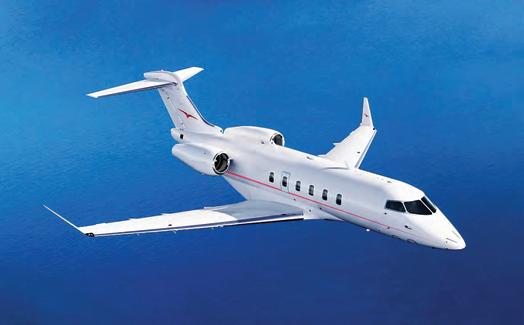
announced firm orders from longtime customer Vista and its commonly controlled entities for 40 Challenger 3500 business aircraft, with purchase options for an additional 120 aircraft. The market value of the orders based on current prices is valued at US$1.18 billion.
If all purchase options are exercised, the total order value for all 160 aircraft would reach US$4.72 billion. In 2024, the Challenger 3500 aircraft became the fastest-growing platform to reach 100 deliveries in the super-midsize category. The company in February also acquired Velocity Maintenance Solutions, a Maintenance, Repair and Overhaul services provider based in a 35,000-squarefoot hangar at the Wilmington, Delaware, airport.
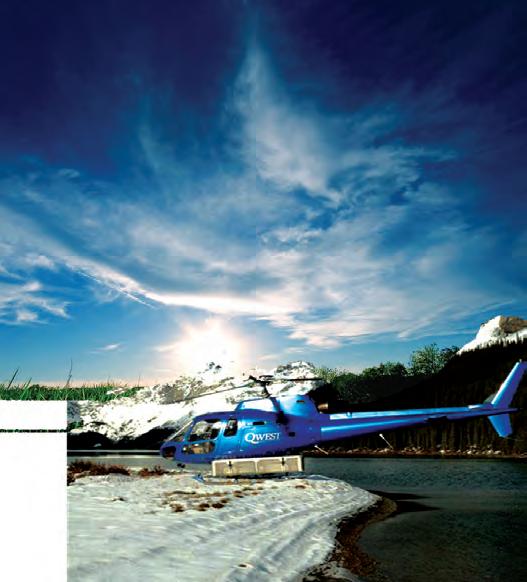
Summit Helicopters in January announced the acquisition of Blackcomb Helicopters, which adds seven helicopters to its growing fleet, as well as additional bases in Whistler and Squamish, B.C. From the coastal mountains of British Columbia to the Arctic, Summit Helicopters provides tailored solutions for a variety of needs, including mineral exploration, utility work, wildfire support, and medevacs, ensuring projects run smoothly and safely.
Summit is a member of The Ledcor Group of Companies, one of North America’s most diversified construction companies, serving the civil and infrastructure, oil and gas, pipeline, building, mining, power, and telecommunications sectors. Ledcor also owns operations in property investment, aviation, and marine transportation services.
long-term contracts and shortnotice community needs. Blackcomb will continue to operate under its existing branding.
Airbus Helicopters has been approved by the Transport Canada Civil Aviation (TCCA) authority for the operation of the H175 helicopter in Canada. Airbus describes the H175 as a cutting-edge and proven platform capable of supporting diverse operations including: energy, search and rescue (SAR), emergency medical services (EMS), private and business aviation, public services, and defence.


Summit explains the acquisition of Blackcomb Helicopters significantly increases its operational capacity along the Sea to Sky corridor and beyond, as the company will assume operations for Blackcomb’s existing utility, film, firefighting, and emergency response activities. Summit will also operate what the company describes as Blackcomb’s highly sought-after sightseeing and charter tours. Summit notes the seven helicopters operating out of Whistler and Squamish will continue to support both
Airbus also notes how the robust design and advanced systems of the H175 are wellsuited to Canada’s demanding operational environments, from offshore platforms to remote northern regions. The multirole super-medium H175, Airbus explains, provides a combination of range, speed, and useful load in its class. It can transport up to 18-passengers.
Airbus Helicopters in February also reported its year-end numbers, which included 544 gross orders (net: 536) in 2025, highlighting what the company describes as strong market growth with a solid performance this year across its entire civil and military range. The orders came from 205 customers in 50 countries. Airbus notes its year was defined by major sovereign commitments, most
notably from Spain, which placed a landmark order for 100 helicopters.
Top Aces, headquartered in Montréal, was awarded a 10-year contract worth up to €420 million ($681 million) by the German Armed Forces (Bundeswehr). Building on a decade-long partnership between Top Aces and the Bundeswehr, the new agreement, officially titled Contracted Fast Adversary Air, aims to deliver mission-critical operational training across
Germany’s air force, army and navy. Top Aces explains it will provide a comprehensive suite of training capabilities designed to strengthen operational readiness across all branches of the Bundeswehr. Training will be conducted using Top Aces’ diverse fleet, featuring A-4N Skyhawk aircraft equipped with Active Electronically Scanned Array (AESA) radar and highly upgraded Alpha Jets. Leveraging an open architecture design, Top Aces explains its proprietary Advanced Aggressor Mission System (AAMS) enables the A-4Ns to integrate advanced sensors, effectively replicating the threats posed by modern adversary fighter aircraft.
With more than 150,000 accident-free flight hours, Top Aces and its subsidiaries,

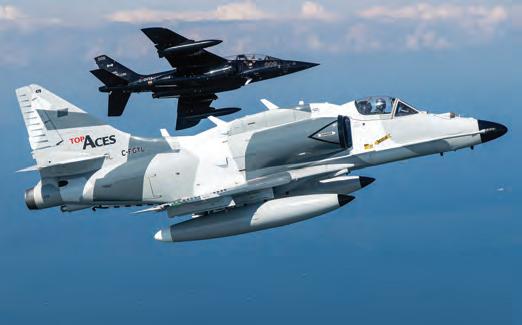
including Top Aces Corp. and Blue Air Training Corp., provide advanced operational training to the world’s leading armed forces. It is the world’s only commercial owner/operator of the F-16.
The Government of Canada ordered six Global 6500 jets to replace the Royal Canadian Air Force’s last four Challenger aircraft, which are used to
shuttle around VIPs, as well as for medical evacuations and disaster relief. The contract is expected to be worth $753 million with the inclusion of pilot training and maintenance. The first aircraft is expected to be delivered by summer 2027 and to be in the air by the end of that year.
The Global 5500, 6500, 7500 and 8000 aircraft are manufactured at Bombardier’s Global Aircraft Assembly Centre, a 770,000-square-foot, $670 million facility opened in 2024 at Toronto Pearson Airport. | W

The D328eco is an operator-focused turboprop with Canadian propulsion, short-field muscle and a future-proof path to 100 per cent Sustainable Aviation Fuel – right sized for Canada’s challenging climate and remote regional routes. Holding the largest turboprop market in the world, Canada is facing a unique intersection of geographical scale and environmental severity.
Many communities in Canada depend on short, gravel runways and operators must deliver essential lifelines with uncompromising reliability especially with long and challenging winters. Deutsche Aircraft’s D328eco enters this market with a clear promise: a right-sized, operator-focused turboprop engineered for the Canadian mission. The program pairs a rugged airframe and true short field performance with a Canadian heart, the Pratt & Whitney Canada PW127XT S, while charting a clear path to 100 per cent Sustainable Aviation Fuel from entry into service in 2027.
Engineered for northern operations, the D328eco performance envelope is tuned for the Canadian landscape, including:
• Short-Field Muscle: Authentic 800 metre STOL runway capability (at 70 per cent LF for a 250 NM mission;
• Surface Versatility: Certified for unpaved and gravel runway operations;
• Vertical Reach: 30,000-foot service ceiling, offering over-the-weather efficiency; and
• Mission Velocity: ~324 KTAS maximum cruise speed for high-utilization scheduling.
Operator-driven design
Deutsche Aircraft has spent the past two years engaging directly with regional operators at the ATAC conferences in Vancouver and Montréal to align the D328eco’s capabilities with the mission-critical needs of Canada’s regional network.
The feedback was consistent: Canada needs a sustainable connectivity solution with short-field muscle and operational versatility. In response, the D328eco delivers authentic STOL performance, and the multi-mission DNA required to pivot between passenger, cargo and medevac roles.
The operator focused design of the D328eco addresses the areas where Canadian airlines feel constraints most acutely: on the runway. Building on the Dornier 328 heritage, the aircraft incorporates a reinforced landing gear and a gravel kit to access short and unpaved airstrips, enabling reliable services to communities that currently depend on aging, maintenance heavy fleets.
With a modern 40 seat configuration that elevates passenger comfort without compromising field performance, the D328eco paves the way for the future of Canadian regional travel.

The D328eco is a right-sized, operator-focused turboprop engineered for the Canadian mission.
Right sizing matters in Canada. Many regional markets lack the daily demand to profitably fill 50- to 70-seat turboprops or legacy regional jets. Deutsche Aircraft leans into that reality: the D328eco is engineered to reduce trip cost risk and steers towards profitable economics for operators.
The D328eco is an aircraft that can pioneer new spokes, sustain marginal routes and improve frequency without flooding the market with seats that must be discounted to clear.
The result is an aircraft that can pioneer new spokes, sustain marginal routes and improve frequency without flooding the market with seats that must be discounted to clear. This balance between capability and capacity is key in serving Canada’s thin routes, as the aircraft’s economics support low breakeven load factors – making essential services viable where larger aircraft struggle to fill seats.
At the same time, the D328eco is designed to perform exceptionally well on shorter range mainline sectors – typically under one hour – where airlines prioritize frequency over capacity. In these high-utilization, high-frequency markets, the D328eco offers a compelling blend of speed, efficiency and right-sized economics, enabling operators to maintain competitive schedules without deploying more capacity than the market requires.
Canadian heart
Beneath the nacelles, the Canadian link is literal. Pratt & Whitney Canada’s PW127XT S – built on four decades of regional turboprop leadership – powers the D328eco and anchors the efficiency story. Deutsche Aircraft and P&WC report up to 14 to 15 per cent lower fuel consumption, approximately 20 per cent lower maintenance costs and 40 per cent more time on wing compared to legacy platforms. For operators spanning across vast geographies, fewer shop visits and higher dispatch reliability
translate directly into better economics and more resilient schedules.
For local operators, serviceability is strategy. Choosing a Canadian engine means tapping into an established maintenance, repair and overhaul ecosystem, simplifying logistics and shortening turnaround times. Paired with the D328eco’s lower maintenance burden, this platform minimises downtime risk — a major operational expense for airlines serving remote communities through winter and shoulder seasons.
Sustainability is foundational to the D328eco, providing a seamless transition to net-zero. In late 2024, Deutsche Aircraft and P&WC completed a joint flight test campaign on the D328 UpLift research aircraft using fully synthetic Fischer Tropsch fuel. The results confirmed performance equivalence, paving the way toward 100 per cent Sustainable Aviation Fuel (SAF) readiness at EIS.
For Canadian airlines navigating evolving climate policy and community expectations, the D328eco provides a credible path to decarbonization that sidesteps future retrofits and speculative technologies, while aligning perfectly with Canada’s emerging SAF supply chains.
This future-ready philosophy extends to the cockpit. Combined with the Garmin G5000 Prime flight deck, the D328eco is built to reduce pilot workload and improve maintainability – important advantages in a market contending with crew scarcity and long supply lines.
The economics sharpen further when you consider multi mission flexibility. A modular cabin and large in-flight operable door enable quick conversions between passenger service and cargo or medevac roles.
This versatility increases daily use and supports community mandates – from emergency evacuations to seasonal firefighting logistics – without requiring a separate fleet type. For carriers balancing thin passenger demand with essential public services, multi-role capability is a genuine profit lever rather than just a brochure bullet.
For communities, the benefits are concrete. Better shortfield performance means more reliable access in marginal conditions, efficient economics make weekly frequencies sustainable, and multi-role flexibility ensures critical services can be maintained with the same assets that provide passenger lift.
For local governments and funding bodies, a SAFready, Canadian-powered turboprop offers a credible pathway to climate goals without sacrificing connectivity or escalating subsidy requirements.
Crucially, Deutsche Aircraft’s timeline is aligned with Canadian replacement cycles. With a significant share of 19- to 50-seat turboprops surpassing 22 years of service, and turboprops demonstrating superior economics on sub 500 nautical mile sectors, analysts see an opening for a modern 40-seater that can shoulder lifeline missions without the fuel and maintenance penalties of small regional jets. Following
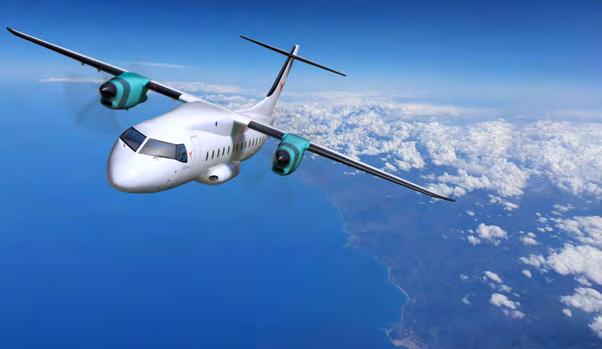

Deutsche Aircraft’s D328eco is on a clear path to 100 per cent Sustainable Aviation Fuel from entry into service expected in 2027.
The D328eco program pairs a rugged airframe and true short field performance with a Canadian heart, the Pratt & Whitney Canada PW127XT S.
and the delivery of the PW127XT S development engines in 2025, the program is targeting flight testing this year and entry into service in late 2027. That window dovetails with the retirement curves of many under 50-seat aircraft operating in Canada today, providing operators with a modern option without a capability gap. A modern, efficient turboprop is ready to take up the mantle as legacy platforms age out of the market.
As the D328eco advances toward certification, the conversation is shifting from capability to commitment. From successful SAF trials to the delivery of Canadian engines, the program’s momentum is undeniable. In a nation that has long relied on turboprops to connect its distant communities, the D328eco looks less like a newcomer and more like a timely, modern heir.
The D328eco’s value proposition is straightforward: It is big enough to move the needle on capacity and comfort, small enough to keep trip costs in check, rugged enough for real Northern runways and efficient enough to meet the financial and environmental challenges Canadian operators face. It is a platform that meets Canada where it flies, not where it dreams.
“As a Canadian native with many years working with turboprop aircraft, I’m proud to be working on a new aircraft that can help shape the future of sustainable regional aviation in Canada,” says Aaron Tsang, Vice President Engineering at Deutsche Aircraft.

By Tim Anderson |
Canada’s Arctic geography has not changed. What has changed is the strategic environment around it. Rising geopolitical pressure, renewed great-power interest in the Arctic, and accelerating climate-driven accessibility have reshaped the North from a distant frontier into a central element of national defence and sovereignty. Arctic sovereignty is not asserted by maps or statements alone. It is exercised through presence, infrastructure and sustained operations. Two locations, Churchill, Manitoba, and Resolute, Nunavut, were once part of Canada’s strong northern presence. Both were deliberately scaled back on the assumption that the Arctic was quiet, predictable and prohibitively expensive areas to maintain defence infrastructure. Those assumptions no longer hold.
Churchill and Resolute are not theoretical solutions or aspirational projects. They are proven operating locations. Canada has worked with them before, at scale, for decades. That experience matters now more than ever.
Churchill occupies one of the most strategically valuable locations in the country: a deepwater port on Hudson Bay with rail access to the continental interior. Churchill provides a rare combination of maritime, rail and aviation access linking southern Canada to the Arctic and onward to Europe. The geographical importance of Churchill was recognized centuries ago, beginning with the Hudson's Bay Company's early efforts to establish a post in 1692. This grew into a full post
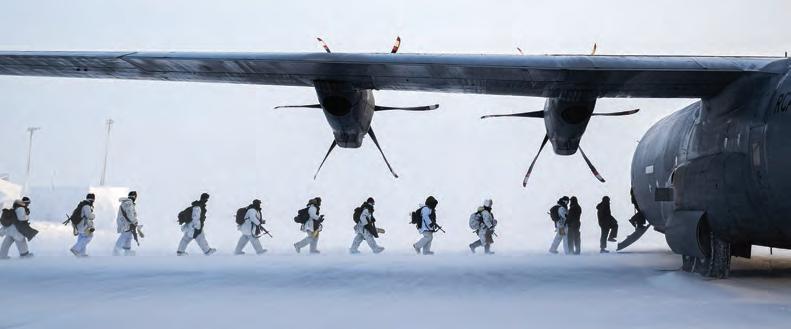
and, eventually, Fort Churchill.
During the Second World War and the Cold War, Churchill was developed into a major military and logistics hub. Fort Churchill supported air defence, training, and logistics, while the Churchill Rocket Research Range became a centre for upper-atmosphere and missile research.
The airport in Churchill featured long, paved runways capable of handling large military aircraft in extreme conditions, supported by fuel, maintenance, and accommodation infrastructure. These were not experimental operations. They were sustained, routine and reliable.
Canada has already demonstrated that persistent aviation, logistics and military operations from Churchill are achievable, even with the limited technologies and resources bookmarked between the 1940s and 1960s. Today, Churchill Airport remains a certified jet diversion airport capable of handling wide-body aircraft, yet it operates far below its potential.
Restoring Churchill as a fully functional deepwater port and
aviation hub would deliver both economic and strategic benefits. Economically, it would strengthen export capacity, diversify supply chains, and support northern communities and industry. Strategically, it would provide a southern anchor for Arctic operations, supporting Royal Canadian Navy activity, continental defence obligations, search-and-rescue coverage, and sustained logistics into the central Arctic.
In a region where access increasingly equals influence, a modernized Churchill would once again project Canadian presence northward in a visible and credible way.
Resolute plays a different but equally critical role. Located on Cornwallis Island near the geographic centre of the Arctic Archipelago, Resolute was established in 1947 as a joint Canada–United States airstrip to support High Arctic weather stations and sovereignty operations. A permanent Royal Canadian Air Force presence followed shortly thereafter.
From the outset, Resolute was
designed as a forward operating location, enabling Canada to reach the High Arctic quickly and repeatedly.
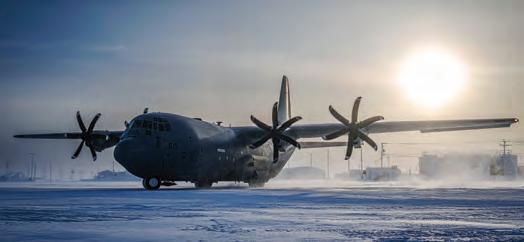
Today, Resolute Airport remains the northernmost Canadian airport with scheduled commercial service and functions as a logistics hub for operations extending to Grise Fiord, Eureka, and Alert. It supports Canadian Armed Forces exercises, scientific research, and sovereignty patrols. Its location along the Northwest Passage gives it exceptional geopolitical significance, allowing rapid access across the archipelago.
Despite this, Resolute remains constrained by limited infrastructure. The gravel runway, fuel capacity, and support facilities restrict the scale, tempo, and persistence of operations. These constraints are not new.
In the last decade, the RCAF has studied expanding Resolute into a major Arctic base, including runway improvements, hangars, and expanded fuel storage, explicitly recognizing Resolute as a natural location for a permanent High Arctic outpost. That
logic applies even more strongly today. Arctic airspace is busier, maritime traffic is increasing, and foreign interest is more pronounced.
The Government of Canada’s renewed focus on the North, largely led by the potential military and economic threats of China and Russia, was brought to the forefront in April 2024 with the introduction of the "Our North, Strong and Free" defense strategy, focuses on exercising sovereignty, enhancing Arctic security against emerging threats, promoting sustainable economic development, and protecting the environment.
The strategy, an update of policy laid out in 2017 under the Strong, Secure Engaged policy, prioritizes modernizing NORAD, investing in surveillance (drones, sensors, satellites), and strengthening infrastructure to maintain a secure, stable, and prosperous North.
In July 2025, the Government of Canada then introduced its first Arctic ambassador to play
a key role in preserving sovereignty in the region. Iqaluit resident Virginia Mearns will be Canada’s senior Arctic official on the world stage, following a career with local Inuit governments. In an interview with the Canadian Press, Foreign Affairs Minister Anita Anand said, “Canada’s Arctic ambassador is going to advance Canada’s polar interests in multilateral forums.”
She said Mearns will “engage with counterparts in both
Arctic and non-Arctic states” and “serve as a representative in our diplomatic core.” She also said Canada will follow through on its $35 million Arctic foreign policy and its commitment to open new consulates in both Alaska and Greenland.
The strongest argument for restoring Churchill and Resolute is not random, but historical. Canada has done this before. During the Cold War, the country built, staffed, and maintained multiple northern
sites despite having fewer resources and less advanced technology than it does today. Operations were sustained yearround under conditions no less demanding than those seen today. Reinvestment would mean modernizing ports, upgrading runways, expanding fuel and hangar capacity, and enabling continuous operations rather than episodic deployments.
The result would be tangible sovereignty: aircraft on the ground, ships in port, personnel in place, and logistics flowing north on Canadian infrastructure.
The Arctic’s importance is not a future concern. It is a present reality. Churchill and Resolute are just two examples that Canada already knows how to operate in the North, effectively and credibly. We have done it before. It is time to do it again.| W
Tim Anderson is a professor at Fanshawe College’s Norton Wolf School of Aviation and owner of Anderson Aviation Services.




BY CATHERINE DOYLE, ANDREA SEPINWALL, ADAM SLINN AND KAREL PETERS
The 2025 Canadian federal budget, Canada Strong, signals a potentially significant shift in Canada’s approach to airport governance and growth with talk of private investment and privatization of Canadian airports at the fore. The initiative includes a plan to attract greater private sector involvement in the National Airports System (NAS), as outlined in the budget, which includes the country’s largest airports.
The budget, tabled by Minister of Finance François-Philippe Champagne in the House of Commons on November 4, 2025, signals why the government plans to consider several measures aimed specifically at airports, including unlocking more of the economic potential of Canada's airports by: considering new ways to attract private sector investment, including by negotiating lease extensions with airport authorities; enabling more economic development activities on airport lands; examining the existing airport ground lease rent formulas to ensure the long-term sustainability and competitiveness of Canada’s airports; and considering options for the privatization of airports.
Ottawa’s objectives of sustainability and competitiveness underscore its view that investing in airports will enhance safety and transportation, improve affordability for
Canadians, strengthen regional access and connectivity, and drive economic growth.
Policy foundations and recent government activity have set the stage for a shift toward more private sector development in the airport sector. The current environment brings with it opportunities and challenges.
Flight status, the current landscape
Canadians may be surprised to understand the idea of private sector involvement in airport operations is not new. The 1994 National Airports Policy (NAP) laid the groundwork by transferring operational responsibility for major airports to private notfor-profit airport authorities under longterm leases. The NAS currently consists of 26 airports, each meeting the requirement of either serving a provincial capital or handling more than 200,000 passengers annually. Thus, while the federal government retains ownership of most large airports, these non-governmental authorities manage day-to-day operations and development, as outline in a McMillan LLP report about the competition-bureau report Cleared for take-off: Elevating airline competition. Historically, Canada’s airports have operated on a user-pay model, where a majority of funding for airport services and future infrastructure comes from fees paid by airlines
and passengers. This system is resilient, but user fees directly affect ticket prices. In fact, 30 cents of each dollar passengers pay to traditional full-service airlines now goes toward such fees. These costs account for an even higher share of passenger ticket prices charged by low-cost carriers.
Growing demand for air travel and cargo services suggests that additional investment in airports will be necessary and, currently, many major Canadian airports are simply not equipped to handle the increased loads. Over the last few years, Canadian airports have seen a steady increase in passenger and cargo traffic and in 2024, Canadian airports moved 156.7 million passengers – a four per cent increase from the previous year – with cargo volumes also rising, according to Airport Activity: Air Carrier Traffic at Canadian Airports, 2024. User fees alone will not be adequate to fund the necessary airport improvements to support these trends and recent developments, culminating in the Budget, suggest that private investment and privatization are being considered by the government as potential solutions.
Discussions on stimulating private investment in Canadian airports have been active
all year and certainly inform the Budget announcements.
First, in March 2025, Transport Canada released a policy statement on airport investment. While the statement does not propose a move to full privatization, it signals an attempt to work within the existing framework to attract more private capital investment from new sources to fund airport growth plans. Among other things, the statement clarifies the existing mechanisms for private investors to collaborate with NAS authorities, including commercial subleases for airport land development and subcontracting for services.
While much of the statement focuses on using existing tools open NAS system assets to private investors, it also lays the groundwork for the stronger statements in the Budget. Ground lease extensions, for example, could provide more certainty for investors to commit capital for new commercial infrastructure at airports. Similarly, making changes to ground lease terms themselves may make it easier for NAS airport authorities to enter into joint ventures or limited partnerships, allowing the risks and rewards of land and infrastructure development to be shared between the NAS airport authorities and investors.
On the heels of Transport Canada’s policy statement, the Competition Bureau released a market study in June 2025 analyzing Canada’s domestic airline industry, with recommendations to enhance competition. The study underscores the drawbacks of Canada’s current user-pay model and looks to private investment as one way of tipping the scales more favourably to consumers. In particular, the study highlights the need to prioritize competition in Canada’s aviation policy and proposes analyzing whether the current balance between user fees and government support ser ves the sector effectively.
The study considers the restrictions on foreign airlines that limit competition and increase ticket prices for Canadian consumers and elaborates on the use of potential future investments and tools, such as improving critical infrastructure at key northern airports, to foster competition. Notably, it further observes that user fees can weaken the business case for airlines to enter the Canadian the market, especially for low-cost carriers and remote regions. This is supported by an additional study that found ground rent can absorb as much as 12 per cent of an airport’s revenue, as outline by Wing Heavy: The Fees That Undermine the Competitiveness of the Airline Sector.
Given the recent focus on private investment in Canadian airports by various government
agencies, it is safe to assume that both the Transport Canada policy statement and the Competition Bureau report would have informed the Department of Finance in their budget deliberations.
What’s more, the fact that the Budget included explicit references to “privatization” is a noteworthy shift in tone. Coupled with this, the Budget announcements that the government intends to examine ground lease rent formulas and extensions, along with other increased private sector investment opportunities, shows that the country may be at an inflection point for private financiers seeking to explore more airport development projects.
For Canada’s airports, both private investment and privatization models have the potential to unlock increased capital investments, including from global markets.
Authorizing more private investment could enable airports to finance operations and infrastructure expansion more efficiently, such as through equity financing, pension funds, and infrastructure funds, rather than through more traditional mechanics such as retained earnings or debt. Compared to the current user-pay model, a private investment model would allow capital to be deployed more quickly and on a larger scale. This would allow Canada’s airports to pursue expansion and other capital projects without being constrained by the existing cost-recovery model or government funding challenges.
Private investment can also introduce stronger performance incentives, since investors typically seek returns tied to operational efficiency, revenue growth, and passenger satisfaction. These factors could make it easier for airports to adopt new technology and systems, expand retail offerings, and improve overall facilities utilization.
Additionally, to the extent that private investment helps lower user fees for passengers and airlines, it could encourage new entrants into the space. Such an increase in competition could in turn reduce ticket fees and make air travel more affordable for Canadians, as described by the CBC News in its story Privatization? Foreign investment? Canadian airports face an overhaul of their business model
A full-privatization model would allow private operators to pursue similar investments to those discussed above, but with more flexibility to make quicker, marketdriven decisions on capital planning, technology adoption, and airline development. By changing the underlying economics of airport operation, privatization could also attract new entrants to the space, which
could provide stronger competition among airport service providers, potentially reducing service costs and making air travel more affordable for consumers.
The models advocated to date for increased private investment would still see the airport authorities as the ultimate decision makers. This would leave the public sector in control of core policies, pricing frameworks, and strategic planning, and limit the impact of market forces through arrangements like revenue sharing, long-term lease structures, and regulatory oversight.
Nonetheless, the re-emergence of both private investment and full-scale privatization as potential options for Canada’s large airports raise important questions about governance, accountability, and affordability.
Issues such as user fees, regulatory oversight, and equitable access for smaller communities will require careful consideration. While opening up airports to private capital (and the market forces that come with it) may prove to be more economically efficient, a careful balance would be required to ensure accessibility of air travel for less populated and profitable areas, especially in the northern region, and to ensure that investment is made not only in revenuegenerating assets, such as retail or parking, but also to essential (but possibly less profitable) airport infrastructure.
There has been no further official government discussion of full-scale privatization since the Budget announcement and its passing in Parliament. However, at the Air Transport Association of Canada conference held in Montreal on Nov. 17-20, 2025, Parliamentary Secretary to the Minister of Transport and Internal Trade, Mike Kelloway, reiterated the government’s commitment to safe, affordable, and accessible air transportation and private investment certainly has a role to play in this vision.
The coming months will surely bring further clarity to the government’s approach. It is clear that the conversation around airport investment is gaining momentum, and the decisions made now could shape the future of Canada’s air transportation system for decades to come. | W
Catherine Doyle, Andrea Sepinwall, Adam Slinn and Karel Peters (articling student) are colleauges with the business law firm McMillan LLP. Andrea Sepinwall, Partner, specializing in aircraft leasing and aviation law, is a regular contributor to Wings magazine. McMillan Vantage also provided its expertise and valuable insights for this report.

“2026 is the new 2016.” What began as a lighthearted social trend — people revisiting photos and memories from a decade ago — has taken on a surprisingly accurate resonance. In 2016, the world felt on the edge of rapid change yet still grounded in a familiar, pre AI digital era. Today, that same sense of inflection has returned, only intensified. Much like 2016, 2026 has become a pivotal year marked by accelerated technological shifts, evolving workforce expectations, and growing pressure for modernization across industries — including aviation.
The difference now is the magnitude of transformation. The forces reshaping aviation in 2026 are more complex, interconnected, and consequential for operators of every size. For ATAC, this reinforces why our mission remains essential: advocating for a safe, competitive, innovative, and sustainable aviation sector that keeps Canadians connected and strengthens the national economy.
In 2016, modernization felt exciting but manageable. Mobile boarding passes were becoming common, self service kiosks were expanding, and early automation offered pockets of operational relief. These enhancements were meaningful but largely incremental — evolutionary rather than disruptive.
The aviation landscape of 2026 tells a different story. Digital systems now sit at the heart of operational strategy. Artificial intelligence supports real time decision making, allowing operators to anticipate disruptions before they occur. Predictive maintenance increases aircraft availability and reduces delays. Advanced analytics optimize fleet utilization, fuel efficiency, and scheduling with unprecedented precision. At the same time, modernized air traffic management tools help navigate increasingly congested and complex airspace.
This is no longer a collection of small improvements — it is structural transformation.
ATAC continues to advocate for a regulatory environment capable of keeping pace. Modern aviation requires timely, predictable approvals, regulatory frameworks that enable digital integration, and stronger government industry collaboration. Canada’s world class safety standards remain non negotiable, but fostering innovation must also be recognized as a pillar of national competitiveness.
A decade ago, workforce concerns focused on replenishing traditional roles such as pilots, maintenance engineers, flight dispatchers, and other frontline professionals, with training
pipelines built around established competencies. Today, needs have broadened significantly: demand for experienced pilots and AMEs remains high, but operators also rely on data analysts, cybersecurity specialists, digital systems engineers, and others who can integrate emerging technologies into operations. These roles are no longer “emerging”; they are essential to safety, efficiency, and resilience.
ATAC’s mission includes supporting modernized training programs, expanded entry pathways, and the removal of administrative barriers that slow licensing and certification. Flight training organizations — vital to Canada’s long term workforce strategy — require policies that reflect current realities: advanced simulators, digital learning environments, increasing international demand, and rising training volumes. Canada’s aviation future depends on talent across a broader spectrum of expertise than ever before.
Sustainability has also shifted from long term goal to near term operational priority. Canadian carriers continue investing in fuel efficient aircraft, optimized flight operations, and cleaner ground practices. Yet meaningful emissions reductions require coordinated national policy. Sustainable aviation fuel (SAF) remains the most effective tool for lowering aviation’s carbon footprint. Canada has the feedstock, clean energy capacity, and technical expertise to lead in SAF production — but commercial scale facilities have yet to materialize.
ATAC continues urging a national SAF strategy, long term investment certainty, and incentives comparable to those available in competing jurisdictions. Without decisive federal action, Canada risks losing ground in the global shift to lower carbon aviation.
The challenges facing operators today — digital transformation, workforce renewal, sustainability, and the protection of northern and regional connectivity — demand collaboration across sectors. ATAC brings together operators, regulators, educators, technology innovators, and energy partners to strengthen Canada’s aviation ecosystem. Whether advancing SAF development, modernizing training, or enabling digital innovation, progress depends on strong policy direction and shared commitment.
Canada’s aviation industry has always demonstrated resilience and leadership through periods of change. With the right policy foundations, the sector is prepared not only to meet the challenges of 2026 but to seize the opportunities they create. ATAC remains committed to supporting operators of all sizes, ensuring Canadian aviation continues to thrive as a vital contributor to connectivity, economic growth, and national competitiveness.
Julie Mailhot President and Chief Executive Officer
A ground school trusted by flight schools — built for students.
Simple for students. Trusted by flight schools. Reassuring for parents.


Student support included Exceeds Transport Canada Standards

Question bank and exam preperation included
Partner / referral program available
Northerners Taking Flight | Whitehorse
Northerners Taking Flight (NTF) is a nonprofit organization that aims to inspire, guide, mentor, support, train and facilitate aviation employment in collaboration with northern operators, education, government, aviation organizations, indigenous leaders and communities. NTF has partnerships with Yukon University through its Aviation Management Diploma program and with Cornwall Aviation.
Yukon University | Whitehorse
The Aviation Management diploma program at Yukon University comprises a block transfer of pilot training credentials earned at Northerners Taking Flight (or other recognized flight schools) that equals one year or 30 credits and an additional 30 credits earned at Yukon. Students are expected to earn a Commercial Pilot License while concurrently earning academic credits.
British Columbia Institute of Technology | Richmond, Delta British Columbia Institute of Technology’s (BCIT) School of Transportation provides students with skills to become pilots in its Airline and Flight Operations Commercial Pilot program. It combines flight training with industry related academic training at BCIT’s Aerospace Campus in Richmond. Flight training for fixed-wing aircraft is conducted at Pacific Flying Club’s flight school at Boundary Bay Airport in Delta. Rotary-wing flight training is provided by Chinook Helicopters in Abbotsford.
Chinook Aviation | Abbotsford
With over 40 years of experience, Chinook offers helicopter and fixed-wing training from Private through Commercial licences,
Instructor Rating, Night Rating, and advanced qualifications, including Multi-Engine and IFR. Chinook also provides Foreign Licence Conversions and is currently the only flight training unit in Canada authorized to issue a temporary licence.
Pacific Flying Club | Delta
Pacific Flying Club has been serving members, students and career pilots since 1965. Based at Boundary Bay Airport (CZBB), Pacific Flying Club (PFC) delivers Recreational, Private and Commercial Pilot training, instrument and advanced ratings, and flight instruction endorsements. PFC is the primary flight training partner for BCIT Airline & Flight Operations Program.
Sealand Flight | Campbell River
Established in 2014, Sealand Flight was Canada’s first flight school flying an electric airplane. It now operates four sub-base flying schools in Powell River, Courtenay, Qualicum Beach and Nanaimo. Sealand offers flight lessons and ground school programs towards Private Pilot Licences, Commercial Pilot Licences, and a variety of other ratings and aircraft rentals. In addition to pilot training on e-planes, landplanes, and seaplanes, Sealand owns and operates BC Air.
Southern Interior Flight Centre | Kelowna
Southern Interior Flight Centre is located at Kelowna International Airport, allowing for exposure to the controlled and uncontrolled environments.
Alberta College of Aeronautics | Edmonton
The Alberta College of Aeronautics is an Alberta Advanced Education accredited Private Vocational College based in Cooking Lake Airport. Its flagship program is

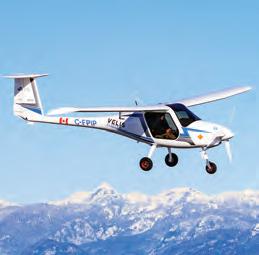
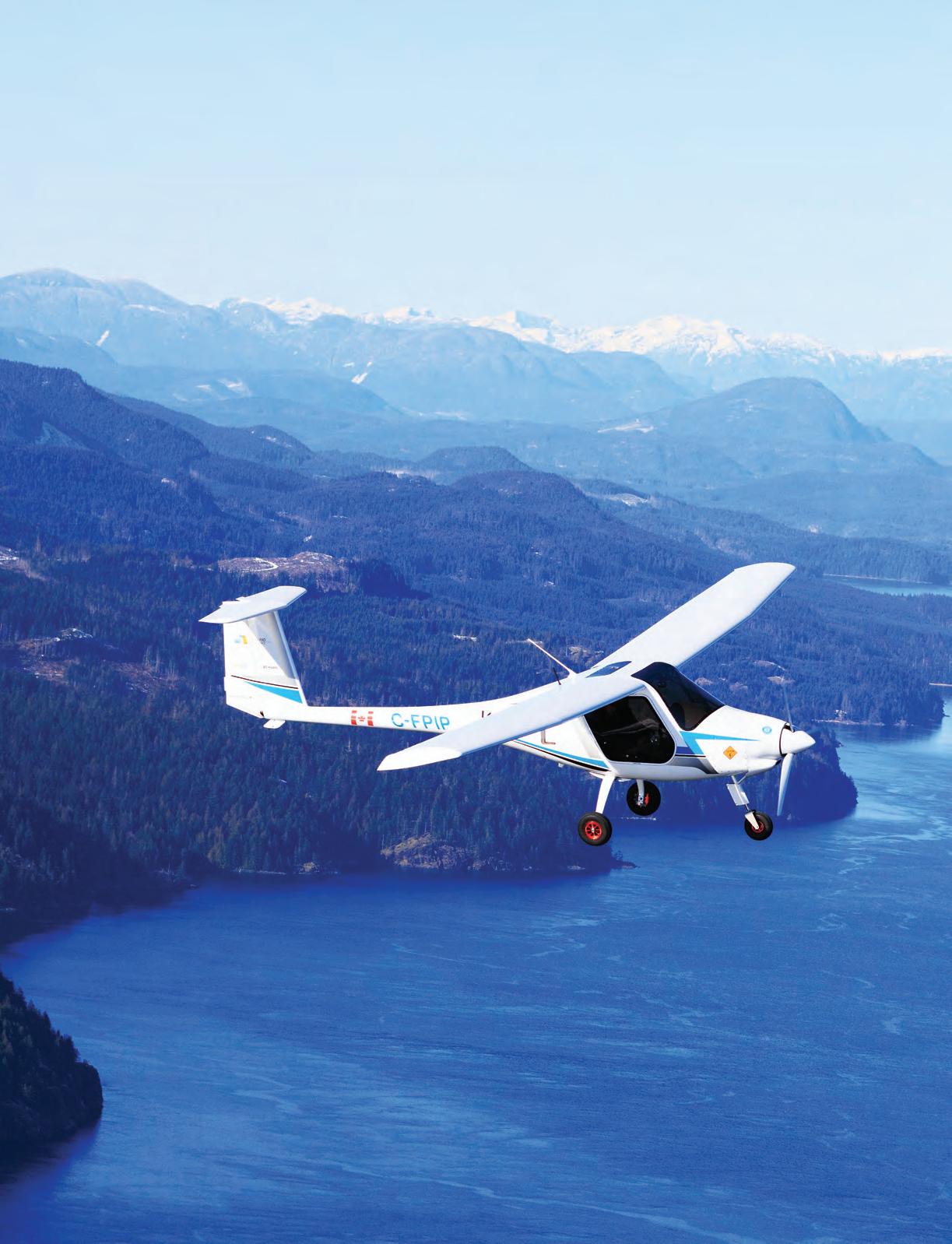
Sealand Flight based in Campbell River, British Columbia, in 2025 became the first Canadian flight school to be certified in the use of an electric aircraft, the Pipistrel Velis Electro – photographed above by Tony Puerzer. Back in early 2023, Sealand was selected by Transport Canada to participate in a trial program to evaluate the viability of electric airplanes, along with the University of Waterloo and Waterloo Wellington Flight Centre. Working with Pipistrel’s Canadian distributor, Apex Aircraft, Sealand’s Velis Electro arrived in Campbell River on February 18, 2024.
On June 14, 2024, Sealand then completed a commercial electric flight with a specific regulatory exemption from Transport Canada. Sealand is now training new pilots in its electric airplane, while continually evaluating the aircraft’s capabilities. In November 2025, Transport Canada moved beyond its regulatory exemptions to approve the Velis Electro and other Pipistrel aircraft for flight training purposes. The Pipistrel platform is supported by one of the world’s largest aircraft manufacturers in Textron Aviation, which acquired Pipistrel in April 2022 for approximately US$235 million. | W
a two-year integrated Airline Transport Pilot License (iATPL) diploma that helps fast-track students with zero flight training background into commercial flight operations. Admissions open 12 months prior to each intake (September and January).
Centennial Flight Centre | Edmonton Centennial Flight Centre, in operation since 1967, is located at Villeneuve Airport. It provides training for RPP, PPL, CPL, Multi-Engine and Instrument Ratings.
Red Deer Polytechnic | Red Deer Red Deer College’s partnership with Sky Wings Aviation Academy, based in nearby Penhold, aims to provide a foundation in business with flight training.
Super T Aviation | Medicine Hat
Serving southern Alberta since 2008, Super T Aviation is a family-owned operation providing flight training and charter ser vices.
Mitchinson Flight Centre | Saskatoon
Mitchinson Flight Centre has been training pilots since 1946. Its Integrated Airline Transport Pilot License (iATPL) program and Professional Pilot program, in addition to partnering with Saskatchewan Polytechnic’s Commercial Pilot diploma program, allows Mitchinson to offer flexible career path options. Flight training is conducted out of Saskatoon International Airport. It holds a fleet of 15 aircraft.
Harv’s Air | Steinbach, St. Andrews Harv’s Air is a family owned and operated air service with locations near Steinbach and St. Andrews, both in the Winnipeg area. Its operation has provided flight training, air taxi, and aircraft maintenance services since 1973.
PilotTraining.ca | Steinbach
PilotTraining.ca is an online ground school, providing training for fixed-wing and rotary-wing pilots. It is a division of the long-established flight school Harv’s Air. PilotTraining.ca provides both self-led and instructor-led training.
Aerocourse | Oakville Aerocourse provides ground school training, including IFR and ATPL ground
school seminars offered both virtually and in-person in centres across Canada. They are designed to lead students to be successful on their Transport Canada exams and to become IFR and ATPL airline pilots.
Algonquin College | Ottawa
Algonquin College’s Aviation Management is a two-year diploma program designed to provide students with the knowledge and skills to become a commercial pilot. Through a series of classroom courses and practical labs, students have the opportunity to complete the Transport Canada Commercial Pilot Licence.
Brampton Flight Centre | Brampton Brampton Flight Centre and College (BFC), in addition to non-structured (certificate) programs, offers two professional flight training programs (diploma) open to those with no prior training. Its 20-month iATPL program provides the qualifications for students to work for airlines directly upon graduation. BFC also offers the 14-month Professional Pilot Training Program (college).
Brantford Flight Centre | Brantford Since 1929, Brantford Flying Club has provided flight training at CYFD. It has helped thousands of students earn their RPP, PPL and CPL.
Canadian Flight Trainers | Smithville
Canadian Flight Trainers is an online ground school providing comprehensive and accessible ground training across Canada. Canadian Flight Trainers (CFT) offers a range of courses tailored for private and commercial pilot licenses, all designed under the strict guidance of experienced aviation professionals. CFT’s interactive platform supports students through engaging multimedia content, including video lessons, downloadable resources, and virtual classrooms.
Conestoga College’s Commercial Flight Operations program runs for two years and features modern flight simulators for practical training. Students have the option to concurrently complete flight training which qualifies them to apply for Canadian Commercial Pilot Licence.
Confederation College’s Aviation Flight Management program has provided aviation education for more than 50 years. Students begin flight training in their first semester. Graduates earn a CPL and an Ontario College Advanced Diploma.
Cygnet Aviation Academy LP is a professional flight school based in Kingston, Ont. In partnership with CAE, Cygnet delivers flight training on a fleet of Diamond aircraft and ALSIM flight simulation training devices. A subsidiary of Chorus Aviation, Cygnet offers three programs: Free Agent, Jazz Approach, and Destination Porter, all leading to an Integrated Airline Transport Pilot License (iATPL). The programs are designed for individuals with little to no previous flight experience and prepare graduates for direct entry positions with Canadian airlines in approximately 20 months.
Diamond Flight Centre has been training pilots at London International Airport since 2009 and, as a registered Private Career College, holds a full-time staff of certified flight instructors. The school leverages a fleet of advanced training aircraft manufactured by Diamond Aircraft, which develops modern glass-cockpit aircraft.
Durham Flight Centre offers training for all phases of recreational and professional licences as a registered Flight Training Unit and a Private Career College. It has been offering pilot training since 1997.
Fanshawe College | London
Fanshawe College’s Norton Wolf School of Aviation and Aerospace Technology is a Transport Canada Approved Training Organization offering a range of aviation programs. These include Aircraft Structural Repair Technician (certificate), Flight Ser vices (certificate), Aviation Technician – Aircraft Maintenance (diploma), Aviation Technician – Avionics Maintenance (diploma), Aviation Technology – Aircraft Maintenance and Avionics (advanced diploma), Commercial Flight and Aviation Leadership (advanced diploma), and Aerospace Operations Management (graduate certificate). The Commercial Flight and Aviation Leadership diploma provides the opportunity to pursue an Integrated Airline Transport Pilot License (iATPL).
Collingwood
Genesis Flight College provides iATPL and modular programs with airline-aligned training built from direct airline feedback. Students train on a modern Diamond aircraft fleet equipped with glass cockpits, along with mixed-reality simulators, single and multi-engine full cockpit simulators, and a 737 Max full cockpit simulator for multi-crew training. Genesis’ airline partnerships give students a clear path from

• Interested in advanced airline-ready training programs,
• Looking to write your IFR or ATPL exams,
• Wanting quality aviation workbooks and manuals.


• AeroCourse delivers industry leading ground school training designed by airline pilots and taught by real life professionals.
• Our courses are continually updated to meet Transport Canada standards, with a strong focus on safety, understanding, and real-world application.
• We o er interactive instruction, in-depth Ground School Manuals and Workbooks for ATPL and IFR training, as well as customized ground school solutions for ight schools nationwide.
Becoming an airline pilot takes hard work, dedication, and quality training. Since 1988, AeroCourse has delivered exceptional ground school programs, helping pilots achieve their aviation goals. Our team is built with experienced professional pilots, training captains, and ight examiners who understand what it takes to succeed. With decades spent re ning our manuals and course material, we ensure students develop the knowledge, con dence, and skills needed for successful aviation careers. Workbooks & Manuals*


aerocourse.com Check out our app!
training to the flight deck and include the Flair Cadet Program with a conditional direct-entry first officer position on the 737 Max, the Destination Porter Mentorship Program, and other referral partnerships.
Journey Air Pilot Training | Windsor
Journey Air Pilot Training is a Private Career College and focuses on providing hands-on theory and practical education. It operates a fleet of composite Diamond aircraft with modern avionics and advanced flight training devices.
Seneca Polytechnic | Peterborough Seneca College, through its School of Aviation, is educating students at the degree level with its 4-year Honours Bachelor of Aviation Technology program. Flight training and classroom instruction for students in year’s two to four of the program take place at Seneca’s Peterborough campus.
Spectrum Airways | Burlington Spectrum Airways has been training pilots for more than 40 years. The training facility is situated at Burlington Executive Airport, one of the busiest airparks in Ontario. Seneca’s aviation school enjoys a close relationship with Jazz Aviation through
a first-of-its-kind cadet program and the flight instructor pathway program
Waterloo Wellington Flight Centre | Breslau
Waterloo Wellington Flight Centre is located at Waterloo International Airport, offering a range of fixed-wing training programs. WWFC provides RPP, PPL, CPL and iATPL programs, as well as MultiEngine, Instrument, Night and Instructor Ratings. WWFC partners with the University of Waterloo and Conestoga College.
Collège Air Richelieu | Saint-Hubert
Air Richelieu is an accredited flight training centre controlled by the Montreal Flying Club. It offers a college diploma with an iATPL.
Select Aviation College | Gatineau Based at Gatineau Executive Airport, Select Aviation’s facilities can accommodate approximately 100 students per year. Select Aviation operates a fleet of nearly 40 aircraft, including Cessna 150, Cessna 172, Cessna 180 (float and conventional), Cessna 185 (amphibious), Piper Seminole
PA-44, and Robinson R44 and Bell 505 helicopters. The school also leverages advanced ALSIM simulators.
Debert Flight Centre | Truro Debert Flight Centre is part of the Truro Flying Club and operates out of Debert Airport, which has been home to the club since 1972.
MFC Training | Dieppe, Lincoln MFC Training was founded in 1929 and is now one of Canada’s most experienced flight schools. MFC’s career pilot programs provide all required flight hours and examinations to graduate with a CPL, as well as Multi-Engine and Instrument Ratings.
Gander Flight Training | Gander Gander Flight Training (GFT) has provided flight training since 1992. Located at Gander International Airport, GFT focuses on providing RPP, PPL and CPL licences. | W
BC Helicopters | Abbotsford
BC Helicopters, based at the Abbotsford International Airport, offers private and commercial helicopter pilot licence training in one of Canada's most diverse training environments. Students fly a modern fleet that includes the Guimbal Cabri G2, Robinson R44, Robinson R66, and Bell 206 JetRanger, gaining both piston and turbine experience. With mountain terrain just minutes from base, BC Helicopters emphasizes real-world flying conditions.
British Columbia Institute of Technology | Richmond
BCIT’s Airline and Flight Operations Commercial Pilot (Rotary-Wing) Diploma is a fully integrated 57-week program developed in partnership with Pacific Flying Club and Chinook Helicopters. The program combines fixed-wing private pilot training with rotary-wing commercial pilot training alongside a post-secondary diploma.
Chinook Helicopters | Abbotsford
Since 1982, Chinook Helicopters has provided basic and specialized advanced flight and ground training, recognized as one of Canada’s largest and most respected ab initio commercial helicopter flight schools. Based at Abbotsford International Airport, Chinook offers private and commercial helicopter pilot licences, mountain training, and instrument ratings across a diverse fleet including Bell 505, Bell 206, and Robinson R44 helicopters. Chinook is also a key partner in the BCIT Airline and Flight Operations rotary-wing diploma program.
Heli-College Canada provides high-quality ground and flight training leading to private, commercial, IFR, and ATPL(H) licences, with excellent mountain training locations less than 10 minutes from their base in Langley, and a complete in-house
ground school program taught by hightime instructors averaging a minimum of 10,000 hours. The school also offers foreign licence conversions, simulator training, turbine and piston type endorsements, and PPC preparation.
Okanagan College’s Commercial Helicopter Pilot Certificate is a 30-credit program that blends commercial pilot training skills with business administration skills. Students complete 15 academic credits at Okanagan College covering business, communications, and aviation-related subjects, while the remaining 15 credits are earned through flight training at any Transport Canada–approved provider. Partner schools include Okanagan Mountain Helicopters.
Mountain Helicopters | Kelowna
Okanagan Mountain Helicopters (OK Heli) is located at Kelowna International and offers comprehensive helicopter pilot training close to mountainous terrain of all types. OK Heli’s training is tailored to the demands of commercial operators. OK Heli is a designated partner school for Okanagan College's Commercial Helicopter Pilot Certificate.
Topflight Elite Training | Penticton
Topflight has been in business for more than 70 years, providing advanced and mountain flight training to military, police, corporate, and civilian pilots. The school is within minutes of the mountain training area, and the diverse terrain and variable winds of the Okanagan Valley and surrounding mountain areas provide a unique training environment.
L R Helicopters | Springbank
L R Helicopters provides pilot training from ab initio commercial and private licences to
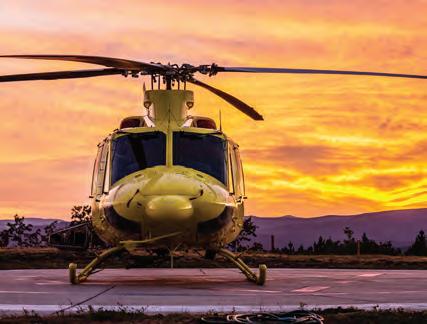
advanced operational and industry-related training near the Canadian Rockies, where challenging weather, high altitude, and busy airspace offer ideal conditions for developing strong flying skills. The school’s goal is to prepare graduates to perform above the industry standard without requiring further operator training, making LR Helicopters a competitive choice for students seeking career-ready rotary-wing credentials in Western Canada.
Mountain View Helicopters | Springbank
Mountain View Helicopters, based at Springbank Airport, has been training pilots for commercial and private licences since 1995, providing advanced and recurrent training for pilots working throughout Western Canada. The school offers private and commercial pilot licences, night ratings, instrument ratings, and an approved mountain course, with access to the Canadian Rockies as a key training asset. Because Mountain View is also a commercial operator, its courses give students a competitive advantage in skills sought by industry employers.
Harv's Air | Steinbach
Harv’s Air, based at Steinbach Municipal Airport, is one of Manitoba’s most established flight training organizations, offering both fixed-wing and helicopter pilot training. The helicopter program provides training toward a Transport Canada Private and Commercial Helicopter Pilot Licence, with students benefiting from Manitoba’s wideopen airspace.
Prairie Helicopters | Gimli
Prairie Helicopters, a Transport Canada–approved Flight Training Unit situated just north of Winnipeg, provides a strong environment for rotary-wing training across Manitoba’s wide-open prairie airspace.
Situated at Gimli Airport, the school provides private and commercial helicopter pilot licence programs, with students benefiting from uncongested airspace, predictable weather, and accessible training areas.
Canadore College | North Bay
The partnership between Canadore College and Helicopters Canada offers a unique blend of academic, operational, and hands-on training, combining collegestructured classes with extensive practical training to provide students with the skills necessary to operate helicopters safely under various flight conditions and in remote geographic locations. Graduates receive a Transport Canada Commercial Helicopter Pilot Licence along with a Canadore College Pilot Preparedness Certificate, first aid, winter sur vival, underwater egress, and other industry-recognized credentials.
Great Lakes Helicopter | Cambridge Great Lakes Helicopter is a Transport Canada-approved, Ontario Private Career College, which specializes in training, utility, spray, charter, tourism, and drone
operations. Based at the Region of Waterloo International Airport, GLHeli offers flight training year-round and focuses on commercial and private licensing, IFR, night ratings, and foreign license conversions. A full-time commercial license and certificate program is also offered through its partnership with Conestoga College.
Helicopters Canada | North Bay Helicopters Canada’s training programs provide extensive training and operational courses, with over 200 hours of formal in-class ground school and a Duty Pilot Program that puts students in charge of organizing and overseeing flight operations. In partnership with Canadore College, Helicopters Canada offers a Commercial Helicopter Pilot Licence with a college Pilot Preparedness Certificate, delivered at Jack Garland Airport.
Helicraft | Saint-Hubert Helicraft, based at Saint-Hubert Airport on Montreal’s South Shore, offers collegial studies in helicopter piloting. The program combines rigorous academic ground
The Flair Cadet Program is an iATPL course designed for people with little or no flight experience. Flair Airlines offers accepted students a conditional offer of employment; pending graduation, you are eligible to fly B737s.
school with extensive flight training toward a Transport Canada Commercial Helicopter Pilot Licence. Students train on a modern fleet in a bilingual environment.
Select Aviation College | Gatineau Based at Gatineau Executive Airport, Select Aviation’s program offers students the abilty to earn a Commercial Air Transport Pilot CPL Helicopter licence. In addition to all the academic benefits of a college program (800 hours of theory), the program also includes 100 hours of total flight time. The program leverages Robinson R44 helicopters.
Advanced Heli-Flight | Saint John Advanced Heli-Flight operates from the Atlantic Flight Center at Saint John Airport. The school offers private and commercial pilot licences, night ratings, instrument ratings, instructor ratings, and mountain training. With an additional base at Grande Prairie Airport in Alberta, Advanced Heli-Flight provides students access to both coastal environments and mountainous terrain. | W
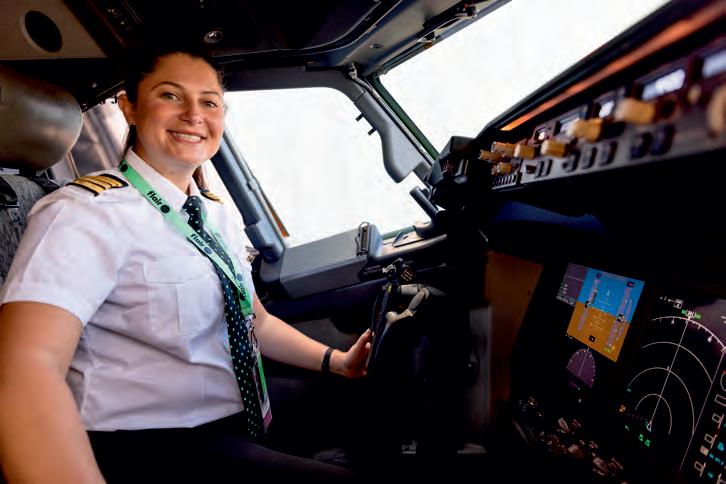


AN ALPHABETICAL BREAKDOWN OF SOME OF THE LEADING SCHOLARSHIP AND AWARD PROGRAMS FOR DEVELOPING CAREERS IN CANADIAN AVIATION AND AEROSPACE
Aerospace Industries Association of Canada | aiac.ca
AIAC presents the Dave Caddey Memorial Scholarship at the Canadian Aerospace Summit (CAS), which takes place every year in October. This scholarship supports post-secondary students choosing careers in aerospace, space and defence sectors. Recipients receive financial aid, travel/ hotel to the Canadian Aerospace Summit in Ottawa, and networking opportunities with industry leaders. Applications typically open in spring.
Air Canada Indigenous Students Award | aircanada.com
This award is distributed annually to Indigenous students with demonstrated financial need, attending approved post-secondary institutions enrolled in aviation programs to become a commercial pilot, as well as those in other disciplines that pertain to Air Canada’s business operations. Air Canada works with a range of partners to support scholarships and awards, including The Captain Judy Cameron Scholarship, RCAF Foundation scholarships, and with the Urban Pilot Network, among others.
Alberta Aviation, Aerospace & Defence Council | albertaaviationcouncil.com
The Alberta Aviation Council provides two awards of $1,000 each for Alberta residents actively enrolled in PPL flight training. Applicable to fixed-wing or rotary-wing training. Scholarship awards are presented at the annual Alberta AAD Summit in Edmonton. The group also provides two AME scholarships: one awarded through Alberta’s Air Cadet Provincial Committee for a cadet pursuing an AME career; and a second scholarship for students registered in SAIT's AME program (E, S or M licences). Both are valued at $1,000. The group also provides the Alex Lanovaz Flight Instructor Scholarship to honour the flight instructor from the Alberta College of Aeronautics. It
is for students pursuing a Flight Instructor Rating who hold a Commercial Pilot Licence and are enrolled in an approved instructor training program.
Air Line Pilots Association | alpa.org
The Captain Christina Thomson ALPA Scholarship Honors Captain Christina Thomson, a WestJet pilot and union representative who was a victim of intimate partner violence in 2023. The scholarship supports women in flight training who demonstrate leadership qualities.
Atik Mason Indigenous Pilot Pathway | indigenouspilotpathway.ca
The Atik Mason Indigenous Pilot Pathway program offers fully funded flight training for Indigenous community members to become pilots in northern Canada. Training occurs locally in Thompson, Man., and Rankin Inlet, Nunavut, with accommodations provided. Graduates earn employment with Exchange Income Corporation’s air operators, including Perimeter Aviation.
BC Aviation Council | bcaviationcouncil.org
BC Aviation Council (BCAC) members work with industry partners to provide over $200,000 worth of scholarships and other support on an annual basis. BCAC notes, with its members support, it oversees Canada’s largest aviation and aerospace scholarship program. Students can apply for cash awards ranging from $1,500 to $20,000. The Bain & Brown Commercial Pilot Career Scholarship is Canada's largest single pilot career scholarship – $20,000 annually for students enrolled in pilot-education programs at one of B.C.’s Transport Canada certified flight schools. It is open to fixedwing or rotary-wing pilot training students. It was launched in 2024 by Ted Bain and Nancy Brown to address the national pilot shortage. Other scholarships administered through BCAC include: Coulson Aviation AME-Structures Career Scholarship

(approximnate $54,000 value); Harbour Air Fixed Wing AME Awards, two scholarships at $3,000 for fixed-wing Aircraft Maintenance Engineer training, each including a six-month paid apprenticeship with Harbour Air; Helijet Rotary AME or IFR Pilot Bursary ($5,000) for rotary aircraft AME training or IFR Pilot flight training, including emerging eVTOL pathways; Pacific Coastal Airlines Diversity Scholarships ($30,000 pool); Pacific Coastal Airlines Sheldon Smith Memorial Scholarship ($10,000); Pacific Aircraft Maintenance Engineers Association; PetroValue Airport Management, Operations & Fueling Scholarship ($2,500); Pitt Meadows Airport Aviation Management & Operations Scholarship ($5,000); Emil Oucharek Memorial Scholarship ($1,750), an annual scholarship for students completing their Commercial Helicopter Pilot Licence; Prince George Airport YXS Indigenous Aviation Scholarship ($1,500); Nanaimo Airport Employee Training Award ($1,750); Mary Swain Memorial Aviation Training Award ($1,750) for female students registered at a B.C.-recognized university, college, or Transport Canada certified flight school pursuing a pilot, AME, or airport operations career; and the BCIT Aviation Management and Operations Award ($2,000); and several more, including some listed in the following pages.
Captain Judy Cameron Scholarship | northernlightsaerofoundation.com
This will be the seventh year for the Captain Judy Cameron Scholarships, administered by the Northern Lights Aero Foundation, for Canadian women pursuing careers as pilots or aircraft maintenance engineers. The Captain Judy Cameron Scholarship awarded by Air Canada supports women who are pursuing careers as commercial fixed-wing pilots or aircraft maintenance engineers. The Captain Judy Cameron scholarship awarded by CAE supports women who are pursuing careers as
commercial fixed-wing pilots. The scholarship program is celebrated at the annual Northern Lights Aero Foundation gala in the Greater Toronto Area.
Aeronautics and Space Institute (CASI) | casi.ca
CASI awards two scholarships annually to outstanding university students in aeronautics, space sciences, and related engineering disciplines. The awards professional recognition within Canada’s aerospace community.
University | carleton.com
Multiple annual scholarships for undergraduate students in the Mechanical & Aerospace Engineering department, including the R.D. Richmond Scholarship (3rd and 4th year). Must be Canadian citizen or permanent resident. Awards made at departmental level.
Helicopters | chinookhelicopters.com
Chinook Helicopters awards its Women in Aviation scholarships at an annual breakfast held during the Abbotsford International Airshow (August). Sponsored in part by Envision Financial and Conair Aerial, the $5,000 award supports women
pursuing helicopter pilot training. It is administered in partnership with BCAC’s Silver Wings celebration.
The Canadian Owners and Pilots Association offers a range of scholarships, which total approximately $30,000. The Neil J. Armstrong Ab-Initio Scholarship is for applicants aged 16 to 21 committed to earning their Private Pilot’s Licence (PPL). The COPA Advanced Flight Training Scholarship supports COPA members interested in pursuing advanced flight training, with individual awards of approximately $2,500. COPA provides other scholarships, such as a drone pilot award for advanced licencing. The scholarships are largely based on a longstanding fund of donations from its general aviation members.
elevateaviation.ca
Elevate Aviation is an organization committed to educating and supporting individuals as they explore the world of aviation with an emphasis on diversity and equality. The organization provides a range of bursaries for pursing pilot, AME or operational careers. Elevate also offers a range of free programs across Canada that provide training and mentoring.
EAA offers multiple scholarships open to Canadian students attending accredited programs in the US or Canada. Covers flight training and post-secondary aviation/aerospace education. EAA membership not required to apply, but members are prioritized. Applications are open from October 1 to December 19 annually.
Thge Jazz Aviation Pathway Award for Professionalism provides two scholarships for University of Waterloo program students and two for WWFC ATPL program students. The award recognizes academic achievement and professional conduct. Applications open in January. Jazz APP is a premiere education and training pathway for pilots in Canada, providing aviation students from numerous colleges and flight training units industry-leading access to airlines, as well as professionalism awards to help fund their education.
The Porter Star Awards are presented to one WWFC ATPL student and one University of Waterloo student who demonstrate

academic achievement and contribute to helping others meet their training goals. Applications open in January.
The RCAF Foundation Student Scholarship is offered to Canada’s next generation of aviation and aerospace leaders. These scholarships are designed to assist postsecondary students in STEM areas of study who are planning future careers in the fields of either aviation or aerospace. In 2024, the RCAF Foundation awarded a total of 70 scholarships, including 64 at $1,000 each.
Each year Amelia Earhart Memorial Scholarships are awarded to qualified members for five different scholarship types, including Canadian pilots. The organization has awarded more than $12 million in funding since 1941 to over 800 recipients.
The Urban Pilots Network offers a range of scholarships to its members aspiring to pursue a career in aviation, such as the Aviation Excellence Sponsorship in partnership with the Dream Never Dies
Foundation, as well as an Air Canada funded scholarship for $2,000 to pursue commercial pilot or AME careers. The WestJet-UPN Commercial Pilot Scholarship is awarded to UPN student members pursuing commercial pilot training. Recipients are selected based on academic achievement, extracurricular involvement and alignment with WestJet’s core values. The WestJet-UPN AME/Aerospace Engineering Scholarship supports members pursuing aircraft maintenance engineering or aerospace engineering education. It is awarded based on academic achievement and extracurricular involvement.
Women in Aviation provides a range of scholarships open to members, including Canadians. WAI supports women in aviation careers and training across a range of disciplines. The annual program typically stays up in the prior year until October.
The Bob Connors LIFT Scholarship was created by Waterloo Wellington Flight Centre (WWFC) to assist student pilots. Four students typically receive $4,000
each. Since the launch of the scholarship program, $92,000 has been presented to students in financial support of their aviation career aspirations. The school also provides two Jazz Aviation Pathway Award for Professionalism for WWFC ATPL program students.
Scholarship
The world’s largest helicopter scholarship program exclusively for women – 28 different awards worth over $550,000 in 2026. The program is open internationally, including for Canadian women. Categories include: initial helicopter rating ($8,000), upgrading/advancing a current rating ($8,000), private helicopter ground school ($794), turbine transitions, CFII, ATP, S-76 type rating (via CAE), maintenance technician courses, and more.
The Bea and George McLeod Scholarship is designed for students studying in the field of aviation or for obtaining a Commercial Pilot Licence or Aircraft Maintenance Engineer licence. One year of Yukon residency is required. Check with Yukon Government’s training programs for current award amounts and deadlines. | W


Cygnet Aviation Academy takes students all the way from ground school basics to the right seat of commercial airliners
BY CARROLL MCCORMICK
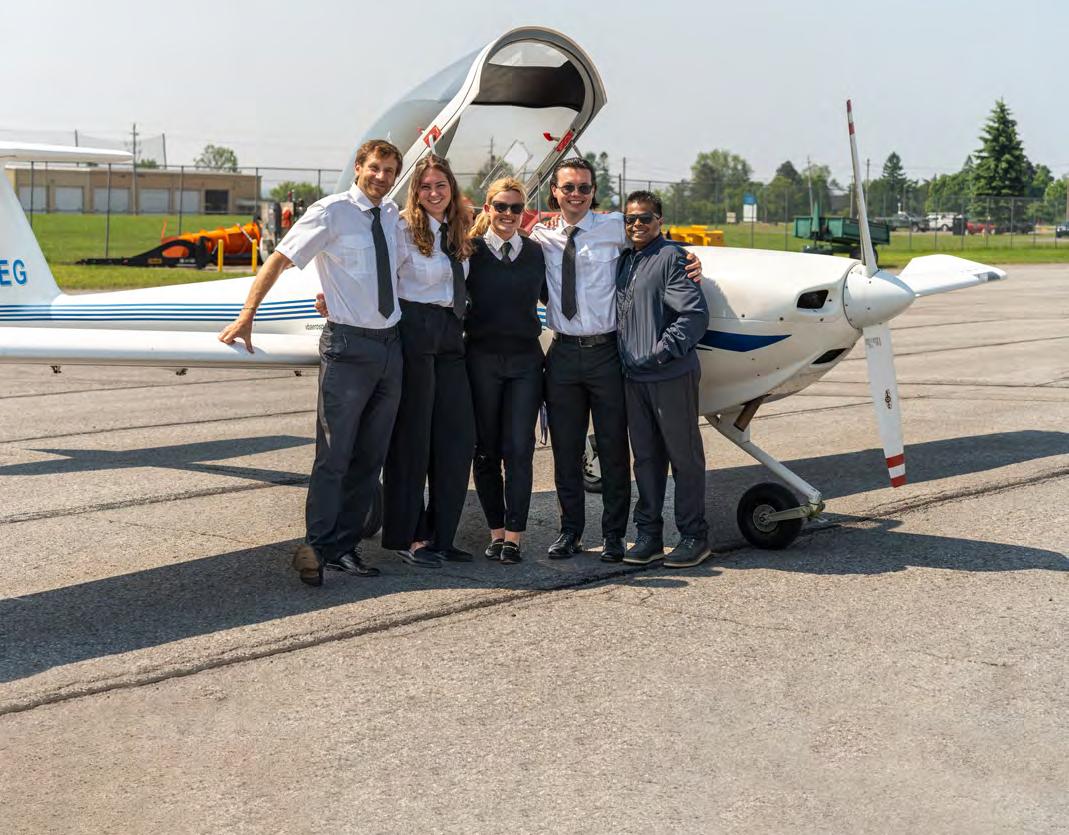
This May another cohort of pilots will graduate from Cygnet Aviation Academy LP with their Integrated Airline Transport Pilot (IATP) licences. These graduates are completing one of Cygnet’s three training pathways, Jazz Approach, and will move directly into First Officer roles with Jazz Aviation LP. Cygnet’s other pathways include the Free Agent Program and the Destination Porter: Cadet Program, which welcomed its first cohort in January 2026 and will see its inaugural graduates in 2027.
Based in Kingston, Ont., a welcoming and student-centric city, Cygnet, owned by Chorus Aviation, offers a 20-month program in partnership with aviation leaders CAE, Jazz and Porter. The first program of its kind in Canada, it is the most structured and direct pathway available to the right seat of a commercial airline in the country.
“We are very proud to have developed a professional flight training operation that focusses entirely on training pilots in a very structured way while maintaining high standards and to prepare graduates for direct entry into a Canadian airline,” says Lynne McMullen, President of Cygnet.
“The concept of training at Cygnet as an
airline pilot is different than training at a flight school where you go to get licences,” says Cygnet’s Chief Flight Instructor Nick Taylor. “The students are not here simply to get a licence. You will get your private and commercial pilot licences and your ratings, but you will also get a career.”
The program welcomes both students on their first career path and those seeking a career change. “We have many great candidates straight out of university and high school. Cygnet is also an excellent option for people entering from different careers entirely. Our students range in age from 18 to their early fifties,” McMullen explains.
Students can choose from three training streams: the Free Agent Program, which culminates in the IATP licence without being attached to a specific airline training program; Jazz Approach, a partnership with CAE and Jazz that includes training on a Bombardier CRJ-200 full-flight simulator; and Destination Porter, which, in partnership with CAE and Porter, is tailored to its Dash 8-400 fleet.
For all three streams, the basic admission requirements include Canadian citizenship or legal entitlement to live and work in
ABOVE Cygnet Aviation Academy students celebrate a training milestone at Kingston Airport, where flight training begins on Diamond aircraft in a hands-on, student-focused environment.
Canada, being at least 18 years old upon graduation, demonstrating written and spoken fluency in English, and holding a Category 1 Medical Certificate issued by Transport Canada. Post-secondary education is required for the Destination Porter and Jazz Approach streams, while the Free Agent Program does not require a post-secondary degree or diploma.
For the Jazz Approach and Destination Porter training streams, Jazz and Porter conduct interviews and assessments to screen and pre-select candidates and extend conditional offers of employment to successful applicants. While Cygnet oversees and conducts the admission interviews for its Free Agent Program, graduates are not interviewed by specific airlines at the outset. Instead, once they complete the program, they are offered opportunities to meet with a growing network of referral partners, including Summit Air and Air Tindi.
McMullen notes that through
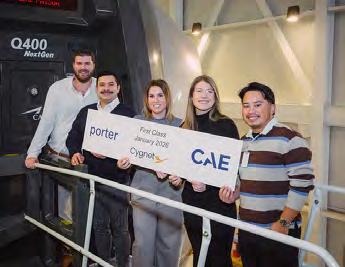
touchpoints like wings ceremonies, Crew Resource Management days and graduation events, students and employers build strong connections well before graduates join the workforce.
The students’ education begins with theoretical training in the classroom, followed in their third week by hands-on instruction with Cygnet’s fleet of Diamond aircraft at Kingston Airport (CYGK), an ideal training location due to its less congested airspace. Beginning in the Diamond DA-20 single-engine aircraft, students progress to the Diamond DA-40 featuring a glass cockpit and autopilot, eventually advancing to the more complex twin-engine Diamond DA-42.
Training also includes nearly 90 hours of simulation time. “We are big believers in adding simulator training to support the flight training. Over the course of the program, students can expect to receive 207 hours of flight time, minimum, and close to 90 hours of flight simulation time to support their flight training,” McMullen says. “The culminating experience is the Multi Crew Coordination Program. This 45-hour simulator course, taught by airline pilots, gives students the opportunity to operate in a simulated 705 level airline environment and learn how to work effectively in a twocrew flight deck.”
The finishing touch to their training occurs at CAE Toronto, where Jazz Approach students complete two weeks of jet orientation and Destination Porter students

advance to Dash 8-400 simulator sessions. Free Agents also have the option to take part in a jet orientation program.
Cygnet welcomes a new cohort every January, May and August. Students in all three streams train together, with the goal of flying at least three times a week. “It’s a rapid pace, it’s very worthwhile and it is rewarding,” says graduate and Jazz First Officer Michael Drysdale. While academic classes are scheduled from nine to five, students must be prepared to attend six days a week because, for example, flight time is dependent on good flying weather.
Cygnet’s instructors include retired commercial airline and military pilots and subject matter experts, including an air traffic controller from NAV CANADA. The current instructor-to-student ratio is 1:6.
“We have a phenomenal team of instructors who are committed to professional flight
“We have a phenomenal team of instructors who are committed to professional flight training and supporting the students’ dreams.”
training and supporting the students’ dreams,” McMullen says.
McMullen notes that students and staff benefit from regular interaction through monthly student representative meetings and weekly study halls. Ensuring a positive student experience is imperative, and these touchpoints provide a mutually beneficial space to share information and collaborate for continual improvement. Quarterly town halls provide an opportunity not only to review the company’s Safety Management System reports and trends, but also to hear from industry-leading guest speakers.
McMullen adds that Cygnet’s industry advisory committee meets twice annually to review programming and offer insight on evolving industry trends, training standards, and best practices. Cygnet also receives direct input on advancing technology from CAE and Canadian airlines to ensure graduates are fully prepared for direct entry positions.
“This is the program for you,” says current student, Kesaia Bruni. “I’ve felt supported the entire way through.”
University of British Columbia | Vancouver
The University of British Columbia offers an aerospace engineering option within its mechanical engineering program, equipping students with the knowledge and skills to tackle challenges in aviation and space systems. The program covers essential disciplines including aerodynamics, propulsion, flight mechanics, and aerospace structures. Students benefit from research facilities and faculty engaged in pioneering work across a range of aerospace fields. They also benefit from close ties to B.C.’s growing aerospace and defence industry, and proximity to major Pacific aviation corridors. The program features strong research at UBC’s Institute for Applied Mathematics and related aerospace labs.
MacEwan University | Edmonton
MacEwan University describes as a unique partnership with Transport Canada-approved training centres to complete a Business Management diploma with a specialization in aviation management. Students in the Aviation major complete 15 of the 20 courses from the Business Management diploma, which provide core business skills in accounting, marketing and strategic management. The remaining five courses are replaced with aviation training. Students can block transfer credits to the third year of MacEwan’s Bachelor of Commerce degree program.
Mount Royal University | Calgary
At Mount Royal University, aviation students can choose between a focused twoyear Aviation diploma or a four-year Bachelor of Aviation Management. The Aviation Diploma combines hands-on flight training with academic coursework in meteorology, navigation, air law and aviation operations. Students build flight hours toward their
Transport Canada Commercial Pilot Licence while developing strong technical and decision-making skills. The program maintains notable industry partnerships, including Air Line Pilots Association (ALPA) for mentorship and professional development, and pathway agreements with airlines such as Jazz Aviation, Porter Airlines, WestJet, Airsprint and Canadian North. Diploma courses may also ladder into the Bachelor or Aviation Management or other business degrees.
University of Manitoba | Winnipeg
The University of Manitoba offers an aerospace engineering option within its mechanical engineering program, providing students with a focused pathway into the science and technology of flight and space systems. The program covers key aerospace disciplines including aerodynamics, propulsion, structural mechanics, and flight dynamics. Students benefit from close collaboration with dedicated faculty and access to well-equipped research facilities. With strong connections to Manitoba's growing aerospace industry – anchored by companies such as StandardAero and Boeing Winnipeg – graduates emerge ready to contribute meaningfully to both domestic and international aerospace sectors.
Carleton University | Ottawa
Carleton’s Aerospace Engineering program emphasizes the development of analytical, computational, and hands-on engineering and design skills related to the aerospace field. The broad range of topics and applications included in this discipline are covered in four streams: Aerodynamics (aerospace propulsion and atmospheric flight); Aerospace Structures (lightweight vehicles for flight and space travel); Aerospace Electronics and Systems (aircraft control,
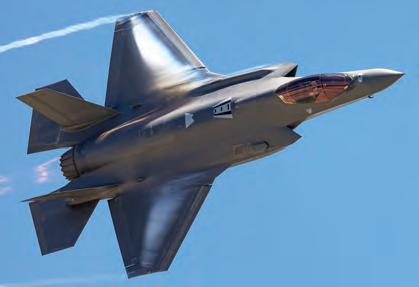
communication and navigation systems); and Space Systems Design (astronautics and space/satellite technology).
Queen’s University | Kingston
The Mechanical and Materials Engineering degree program at Queen’s University provides opportunities geared at aviation and aerospace design. The program’s Airplane Aerodynamics is a course highlight. Students will combine the study of basic engineering with practical courses in machine design, robotics and manufacturing methods. Hands-on design is integral to this program, with specialization in aerospace, mechatronics, biomechanical, manufacturing, materials, and thermofluids.
Royal Military College of Canada | Kingston
The Royal Military College of Canada offers an aerospace engineering program that uniquely combines rigorous academic training with the demands of a military education. The program covers key disciplines including aerodynamics, propulsion, flight mechanics, and aerospace structures. Students develop not only deep technical expertise but also the leadership and problem-solving skills essential to serving in Canada’s defence sector. With close ties to the Canadian Armed Forces and the broader defence industry, graduates are exceptionally prepared to take on critical roles in militar y aviation, aerospace systems, and national security. Graduates often enter the RCAF and aerospace defence sector.
Toronto Metropolitan University’s Aerospace Engineering Bachelor’s program provides students with the opportunity to study aerodynamics, stress analysis and structural design, flight mechanics, stability and control, aircraft performance, propulsion, avionics and systems. Students also learn to design, test, manufacture and maintain aircraft or spacecraft, as well as vehicles for transport on land and water.

The program provides knowledge to work in fields involving commercial and military aircraft or spacecraft engineering; space exploration, teaching, research, military service; air transportation and spacebased telecommunications. The school also allows students to pursue a graduate degree (MEng, MASc, PhD) in aerospace engineering. It provides a unique offering in the Professional Master’s diploma in Aerospace Design Management.
University of Toronto | Toronto
Students who wish to study Aerospace Science and Engineering at the University of Toronto enroll in the four-year undergraduate Engineering Science program. In the first two years, this program emphasizes mathematics, chemistry, physics and computing. Towards the end of the second year of Engineering Science, students must select a speciality option for their third and fourth years of study. This includes an Aerospace Engineering option, taught primarily by UTIAS professors. Considered a global top 25 school, the University of Toronto Institute for Aerospace Studies (UTIAS) graduate program is focused on scientific exploration and aerospace research. Graduate specializations include Space Systems, Robotics, Flight Systems, Flight Dynamics & Simulation.
University of Waterloo | Waterloo
Established in 2007, Waterloo’s Aviation program is described as the largest university-level aviation program in Canada. The Bachelor of Environmental Studies (BES) degree focuses on geography to interpret weather patterns, identify land formations, read multi-layer maps, and use tools such as geographic information systems and remote sensing. The Science and Aviation program is supplemented with courses on cartography, climatology, geographic information systems, aerodynamics and remote sensing. Both programs provide access to Preparatory Ground Instruction and professional pilot theory courses taught by a Waterloo Wellington Flight Centre (WWFC) instructor. Upon graduation, the student will possess a CPL as well as MultiEngine and Instrument Ratings.
of Windsor | Windsor
The Aeronautics Leadership Program at the University of Windsor offers a unique blend of a Liberal Arts and Leadership-focused education with practical flight training. Students pursue a Bachelor of Arts in Liberal Arts and Professional Studies, specializing in Aeronautics Leadership. This Bachelor of Arts degree is complemented by ground school and flight training, conducted with
Journey Air Pilot Training, situated at Windsor International Airport (YQG).
Western University | London
Western’s Commercial Aviation Management program allows students to earn a Bachelor’s degree in Management and Organizational Studies, with specialized courses in aviation management. Within the program, students have the option to combine a degree with professional pilot flight training, ultimately receiving a Transport Canada approved Integrated Commercial Pilot License with Multi-Engine and Instrument Ratings.
The Space Engineering program (BEng) at York’s Lassonde School of Engineering focuses on areas of study from orbit control and space-based optics to ground station communications and robotics, as well as satellite design and spacecraft systems. Students learn about the management of complex multidisciplinary projects, including missions within the solar system and CSA collabotration.
Concordia University | Montréal
Concordia’s Aerospace Engineering (BEng) program is offered by the Department of Mechanical, Industrial and Aerospace Engineering. The program allows students to specialize in Aerospace and Propulsion, Aerospace Structures and Materials, or Avionics and Aerospace Systems. It provides access to areas like mechanical, electrical, computer, and industrial engineering to the conception, design, implementation and operation of aerospace systems.
École Polytechnique de Montréal | Montréal
École Polytechnique de Montréal’s aerospace engineering program offers a comprehensive pathway for students passionate about pushing the boundaries of flight and space technology. Through specialized courses in aerodynamics, propulsion, structures, and avionics, students develop the skills needed to address real-world aerospace challenges. Situated in the heart of Montréal’s aerospace cluster, students benefit from deep Bombardier and Pratt & Whitney Canada research ties.
McGill University | Montréal
McGill University’s Department of Mechanical Engineering offers an aerospace option that prepares students to tackle the complex challenges in flight, space systems,
and propulsion. The program is linked with the McGill Institute for Aerospace Engineering (MIAE). Students engage with research in areas such as aerodynamics, structural mechanics, and orbital dynamics, supported by world-class faculty and stateof-the-art facilities. Student and graduates also benefit from McGill University’s close ties to Montréal’s aerospace industry home to major players like Bombardier, Pratt & Whitney and CAE.
Université Laval | Québec City
Université Laval’s aerospace engineering program provides students with a rigorous and comprehensive education at the intersection of aeronautics and space technology. Université Laval’s strong collaborative ties with Québec’s aerospace industry and government research institutions provide graduates with an advantage for career development. The program includes aerospace research in composites, aerodynamics and flight systems.
Université de Sherbrooke | Sherbrooke
Université de Sherbrooke’s aerospace engineering program includes cooperative education, providing students with real-world industry experience alongside academic studies. The program covers essential aerospace disciplines including aerodynamics, propulsion, structures, and control systems. Sherbrooke’s co-op model ensures students alternate between academic semesters and paid industry placements, graduating with exceptional hands-on expertise.
Dalhousie University | Halifax
Dalhousie University offers an aerospace option within its mechanical engineering program, whicch overs key aerospace disciplines including aerodynamics, propulsion, structural mechanics, and flight dynamics. Students benefit from close collaboration with experienced faculty and access to well-equipped research facilities.
Mount Allison University | Sackville
Mount Allison’s Aviation degree program combines flight training with undergraduate studies in Arts, Commerce, or Science. The Bachelor of Arts – Aviation program is for students, for example, to combine aviation training with studies in arts, humanities and social sciences. MFC Training provides the flight training component. | W

By Phil Lightstone
MTU Maintenance Canada located in Delta, British Columbia, is a leading Canadian aviation Maintenance, Repair and Overhaul (MRO) organization. MTU Maintenance Canada (MTU-C) is part of MTU Aero Engines AG (www.MTU.de), which is the world’s leading provider of customized services for commercial aircraft engines. MTU Aero Engines AG has more than 40 years of experience, 13,000 employees, 19 locations, over 22,000 shop visits and consolidated sales of US$7.42 billion. Its strengths include a global MRO network and the world’s biggest portfolio of over 30 engine types for all common aircraft types, from business jets to wide-body aircraft, delivering tailored services covering the entire engine lifecycle. MTU is consistently expanding their global network and is public company with shares on the DAX stock market index trading on the Frankfurt stock exchange. MTU-C’s mission statement is clear and succinct: “Our Commitment, Your Success”.
The company is a technological leader in low-pressure turbines, high-pressure compressors, turbine centre frames, as well as manufacturing processes and repair techniques. In the commercial OEM sector, the company plays a key role in the development, manufacturing and marketing of high-tech components together with international partners. Some 30 per cent of today’s aircraft in service have MTU components onboard.
In the commercial maintenance sector, the company ranks among the top three service providers for commercial aircraft engines and industrial gas turbines. In the military arena, MTU is Germany’s industrial lead company for practically all engines operated by the country’s military.
MTU-C turns 28 years old in 2026 with more than 630 employees, some of which have been with the company for more than 40 years. Its roots began with Canadian Airlines partnering with MTU Aero Engines in 1998 to create MTU-C. In 2003, Air Canada (in 1999 Canadian Airlines was bought by Air Canada) sold its interest allowing MTU-C to become a wholly owned subsidiary of MTU. In 2021, MTU-C expanded into a new 236,800-square-foot (22,000-square-metre) facility in Delta,
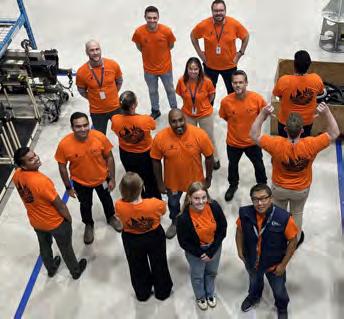
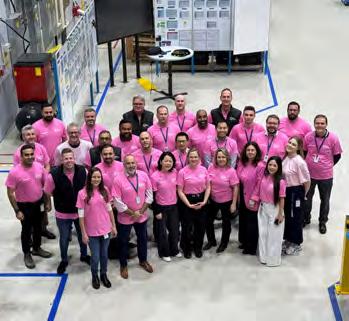
not too far from Vancouver International Airport (YVR). In 2022, MTU-C focused on stabilization and its evolution as the leading independent MRO provider in the North American market resulting in the establishment of a sustainable future.
The MRO location on the outskirts of Vancouver has had a varied portfolio of commercial legacy engines, as well as their military variations. International Aero Engines’ V2500 has become a centrepiece of MTU-C’s service, specifically the –A5 model, as well as its – E5 military variant, of which MTU-C has worldwide exclusivity working on the behalf of the engine OEM. The Delta location has more than 300 shop visits since the V2500 program’s introduction in 2017. Dr. Uwe Zachau, CEO and President of MTU-C, says that the broad expertise of the Canadian team with respect to legacy engines is at the root of this milestone.
“At MTU Maintenance Canada, we have seen some of the most popular engines in aviation history and the collective competence amassed over the last decades drives our success forward,” Zachau says. “I want to thank our engine experts for bringing their very best every day and our customers for entrusting their engines with MTU.”
MTU-C has a diverse employee base representing more than 64 different nationalities with a corporate culture focused on supporting the needs of the staff. Reinforcing the change, corporate branding has been enhanced using the tagline “Uplift Your Future”. In 2025, MTU-C was recognized in the Canadian HR Awards 2025
as excellence awardees in three categories (Best Employer Branding, Best Talent Management Strategy and Canadian HR Team of the Year). Since 2019, MTU-C has been recognized as Canada’s Best Employer for Recent Graduates.
MTU-C currently has a range of postings (www.mtu.de/careers/online-job-market/), including: Component Mechanic; Component Apprentice; Gas Turbine Engine Mechanic; and Machinist – Red Seal. Depending upon the role, MTU-C offers: a generous relocation package available to eligible candidates; benefits starting from your first day of employment (with no waiting period); company pension 100 per cent match; extended Medical and Dental programs; Disability Insurance; Employee and Family Assistance Program; Life Insurance; Vision Care and Rx Safety Vision Program; and free on-site parking. In addition, MTU-C is providing employees with employee and family assistance, Telus Health sessions and a Kindness Wall of images and messages (between employees). MTU-C has a people-first culture, beginning with not using artificial intelligence (AI) in the review and screen of candidates.
MTU-C’s corporate culture is founded on diversity, an interdisciplinary approach, excellence in everything they do, paired with the human touch. Interestingly, the COVID pandemic created an impetus of cultural change as MTU-C hired more than 250 employees based upon the expansion of their customers. The creation and implementation of new programs were designed to create organizational behaviour change
and personal development. Essentially, the relentless belief that people are the cornerstone to the economic success of the company.
People bonding is one key element that has been implemented to improve both the workforce and the work environment, where harassment and bullying are a thing of the past. Success flows from the company to the employee’s personal life, with the result of employees being able to maximize their potential. Employees realizing their potential is about expanding their horizons. MTU-C’s Walk in My Shoes HR program allows employees to work for one week in a completely different department and role. This has resulted in many employees to broaden their horizons through applying for new or vacant positions as a result of the program.
MTU-C’s culture of “work hard, play hard” is realized through a variety of team building activities including: softball team; participating in the Vancouver Sun Run 10K marathon; and the beach to beach 425 km bike rally, Vancouver to Seattle (to name a few). MTU-C is participating in Kindness Week (February 23), with the purpose “to improve the health and well-being of Canadians by encouraging acts of kindness, volunteering, and charitable giving.” Essentially helping staff understand the impacts and identifying bullying. The goal is to create an environment where employees are safe both mentally and physical.
Supporting women in aviation is part of the company culture at MTU-C, which provides mentorship, hands-on experience, career development opportunities and MTU-C’s Training Academy. MTU-C fosters an inclusive environment where women can grow, lead and make a lasting impact on the industry. From apprentices to experienced mechanics, MTU-C creates pathways for women to thrive and help shape the next generation of aviation professionals. While the percentage of women in the MRO industry is very low, MTU-C is starting to see a shift in the male-female ratios in their Training Academy, which is currently at 50 per cent.
In 2017, MTU-C implemented a Women in Leadership program with nine senior positions filled by women. Claudia Urasche, HR Director for MTU-C, reports, “As an HR director, I’m driven by a simple belief, when people grow, organizations thrive. My work sits at the intersection of people strategy and organizational development, helping MTU-C unlock performance through culture, capability, and connection.”
MTU-C has successfully met the challenges of the V2500 and CF6-80 engine programs and is MTU’s military maintenance expert. Today, MTU-C looks after the F138 and F108 engine fleet and has competence in line replaceable units (LRUs) and accessories, managing more than 12,000 accessories per year. MTU-C also serves as the MTU network’s centre of excellence for the repair of line replaceable units (LRU) such as pumps, actuators, cables and harnesses for a variety of engines, including GE90-110/115B, CFM56 and LEAP.
MTU-C will be participating at Wings’ careers in Aviation Expo, April 11, 2026, in Mississauga, Ont. The Careers in Aviation Expo provides an excellent opportunity for students, employees and employers to grow their networks, ask questions to industry experts and talk to hiring managers. This event is an unprecedented opportunity to engage in an arms open and welcoming environment, for many, starting them on their next career path.
For career opportunities email MTU Maintenance Canada at careers-yvr@mtucanada.com.

AIRCRAFT MAINTENANCE ENGINEER AND TECHNICAL TRAINING BY PROVINCE
British Columbia Institute of Technology | Port Alberni
British Columbia Institute of Technology’s (BCIT) School of Transportation prepares students for careers as Aircraft Maintenance Engineers, Aviation Maintenance Technicians (Avionics) and Gas Turbine/Jet Engine Technicians. Its Aerospace Technology Campus is located near Vancouver International Airport in Delta with a 40,000-square-foot hangar that holds a fleet of light piston, turboprop, corporate and jet transport aircraft, as well as light and medium helicopters. Completion of its Aircraft Maintenance Engineer (AME) program will result in a work experience credit of 18 months of the 48 months required by Transport Canada toward obtaining an AME license.
Coulson Aviation | Port Alberni
Coulson Aviation a world leader in aerial firefighting, received Transport Canada Approved Training Organization (ATO) approval to train students toward a Aircraft Maintenance Engineer – Structures (AME-S) license at no cost to the student. Coulson hires team members who demonstrate a passion for the aviation industry and positive attitudes to join its workforce. Once students have demonstrated excellent potential in the industry, students are invited to join the ATO program. There is no required tuition to attend the course. The student remains on the Coulson payroll while attending school and can further supplement their income by working for the company outside of schooling hours. Coulson guarantees a full-time position to every student who completes the school portion, offering a path through apprenticeship to a full AME-S license.
IMP Academy | Abbotsford, Halifax
IMP Academy offers two programs: Introduction to Aerospace Skilled Trades Program and the Aircraft Maintenance Apprenticeship Program. Its introduction to Aerospace Skilled Trades Program offers the ability to earn a variety of transferable certificates while testing skills and learning about aviation. This program is four weeks, with the end goal of applying to be an apprentice at IMP Academy. This four-level earn/learn apprenticeship program for Aircraft Maintenance Technicians is offered with no tuition or text-book fees for those who successfully complete the program. Graduates from both campuses will be qualified Aircraft Maintenance Technicians. Additionally, the courseware used in this program is accepted by Transport Canada and applicable for those wishing to eventually pursue an AME-M license through Transport Canada.
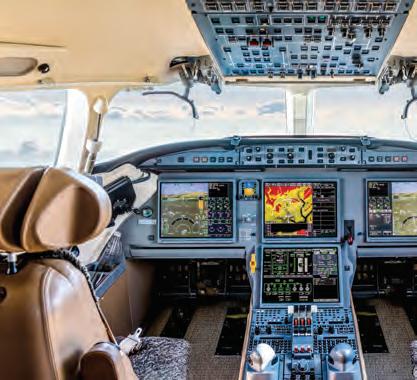
Southern Alberta Institute of Technology | Calgary
SAIT provides a range of aviation-focused programs at the Art Smith Aero Centre, occupying 17 acres of land at Calgary International Airport. The Aircraft Structures Technician program includes courses on traditional aluminum sheet metal structure and advanced composite material manufacturing and repair. The Aircraft Maintenance Engineers Technology program provides skills to begin a career as an aircraft maintenance technician. Graduates in compliance with the required attendance (95 per cent) and minimum marks of 70 per cent in each course will receive a Transport Canada credit of 18-months of work experience toward the “M” license. The Avionics Technology program at SAIT provides the skills required to earn an “E” license for servicing aircraft electrical and electronic systems.
RRC Polytech | Winnipeg, Southport
RRC Polytech’s Aircraft Maintenance Engineer program is designed to develop skills to maintain large and small airplanes and helicopters. The program is run at RRC Polytech’s Stevenson Campus with locations in Winnipeg and Southport where students prepare for overhauling aircraft engines, maintaining aircraft, building components, and preparing to take on management positions.
Algonquin College | Ottawa
Algonquin College’s School of Advanced Technology provides a twoyear Aircraft Maintenance Technician Ontario College Diploma program, which gives students hands-on experience. Students study at the Ottawa campus as well as at the Canadian Aviation and Space Museum. Through a series of classroom-based courses and extensive practical labs, students learn about the repair and maintenance of mechanical and electrical systems within an aircraft, including: hydraulics, fuel systems, environmental instrumentation, engine, control surfaces and undercarriage, and repair of the aircraft body.
Canadore College | North Bay
Canadore College’s Aircraft Maintenance Engineer programs include: Aircraft Structural Repair Technician; Aviation Technician








– Aircraft Maintenance; Aviation Technician – Avionics Maintenance; Aviation Technology – Aircraft Maintenance and Avionics; and Aviation Technology – Aircraft Maintenance and Structures. The Aircraft Structural Repair Technician program allows students to specialize in repair, upgrading and the modification of an aircraft. The Aviation Technician – Aircraft Maintenance program trains students how to troubleshoot vital aircraft components and systems, including piston and turbine engines, electrical systems, hydraulics, and navigation and communication systems.
Centennial College | Toronto
Centennial College’s Aircraft Maintenance – Aviation Technician provides students access to modern labs and the school’s aircraft hangar with both fixed- and rotary-wing aircraft. Students work on components like airframes, engines, electrical and hydraulic systems, propellers, avionics equipment and aircraft instruments. The Avionics Maintenance - Aviation Technician program prepares students for work as a bench technician with a broad base of knowledge for complex electronics and electrical systems related to the navigation, guidance, communications, instrumentation and flight controls of an aircraft.
Confederation College | Thunder Bay
Confederation College’s Aviation Technician – Aircraft Maintenance co-op diploma program is a comprehensive two-year program with a legacy of more than 50 years in aviation education. Designed to prepare students for the Transport Canada Aircraft Maintenance Engineer (AME) license, eligible graduates receive up to 21 months of credit toward the 48-month AME certification requirement. Through a combination of rigorous classroom instruction and hands-on experience, including a co-op work term with industry
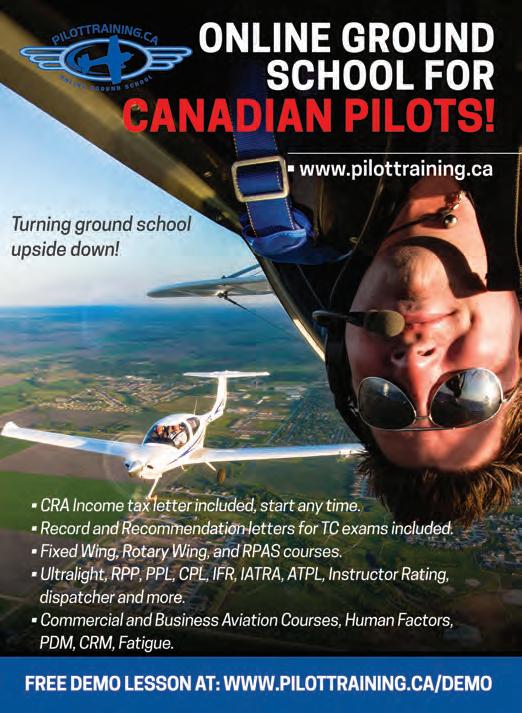
leaders, students become proficient in maintaining, repairing, and troubleshooting complex aircraft systems. The curriculum covers topics such as aircraft construction science, electrical systems and avionics, airframe systems, rotary-wing (helicopter) maintenance, structural repair, and piston and turbine engines. Training is conducted at the state-of-the-art Aviation Centre of Excellence (ACE), located at the Thunder Bay International Airport.
Fanshawe College’s Norton Wolf School of Aviation and Aerospace Technology is a Transport Canada Approved Training Organization offering a comprehensive suite of aviation programs. These include Aircraft Structural Repair Technician (certificate), Flight Services (certificate), Aviation Technician – Aircraft Maintenance (diploma), Aviation Technician – Avionics Maintenance (diploma), Aviation Technology – Aircraft Maintenance and Avionics (advanced diploma), Commercial Flight and Aviation Leadership (advanced diploma), and Aerospace Operations Management (graduate certificate). The Commercial Flight and Aviation Leadership advanced diploma provides the rare opportunity to pursue an Integrated Airline Transport Pilot License. Students benefit from strong industry partnerships with London International Airport, Diamond Aircraft, and Diamond Flight Centre, gaining valuable real-world experience throughout their studies. As a Transport Canada Approved Training Organization for Aircraft Maintenance Engineers, the school’s programs and graduates are in high demand. To help meet industry needs, an additional student intake will open in January 2027 for Aircraft Maintenance programs, expanding access to accredited training within the school’s 80,000-square-foot hangar facility.
Flightline Training Services is a Transport Canada Approved Training Organization for commercial and business aviation aircraft. Flightline tailors courses and services to meet training needs, focusing on a range of aircraft. With its Transport Canada and EASA approvals, Flightline is a worldwide training organization, providing approved type courses, familiarization courses and level 4 in-depth training, addressing all aspects of aircraft maintenance operations.
Mohawk’s Centre for Aviation Technology is home to classrooms, labs and hangar space for Mohawk’s Aviation Technician programs: Aviation Technician – Aircraft Structures (289), Aviation Technician – Aircraft Maintenance (269), and Aviation Technician – Avionics Maintenance (299). The 75,000-square-foot complex brings together all of the college’s Aviation programs into one purposebuilt, state-of-the-art facility in an airside hangar at John C. Munro Hamilton International Airport. This three-storey facility provides students with modern labs, shops, training aids, classrooms and access to nearly 20 aircraft. The Centre for Aviation Technology was built in cooperation with KF Aerospace. The Mohawk College and KF Aerospace buildings are connected by common areas, providing students with opportunities to gain hands-on experience working side-by-side with certified tradespeople through placements and experiential learning in a hangar adjacent to their classes and labs.
Nova Scotia Community College | Dartmouth
Nova Scotia Community College’s Aviation Institute is located in a 43,000-square-foot training facility. It provides a two-year Aircraft Maintenance Engineer, Mechanical, diploma program. Courses focus on aircraft servicing and ground handling functions, and maintaining aircraft systems. | W
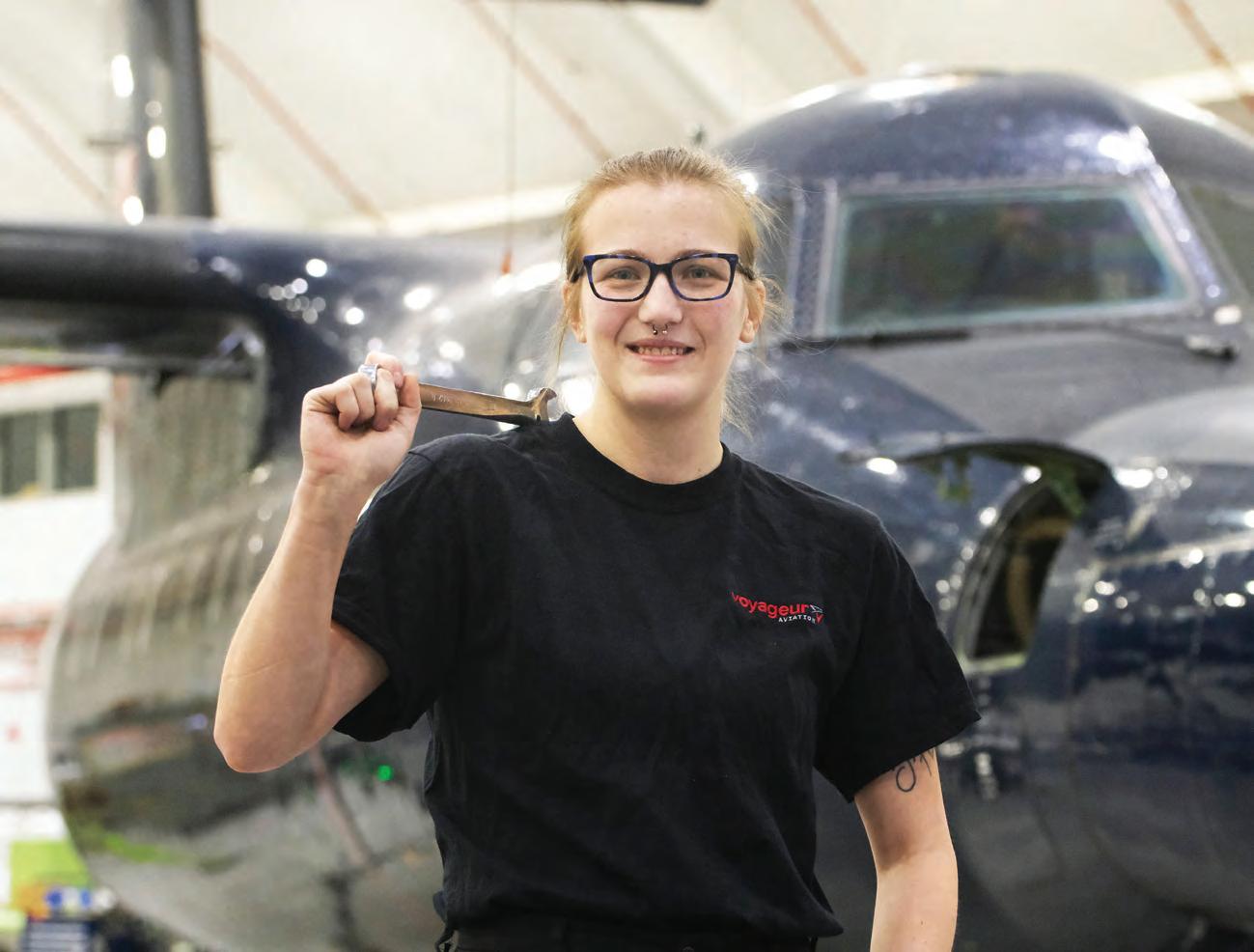


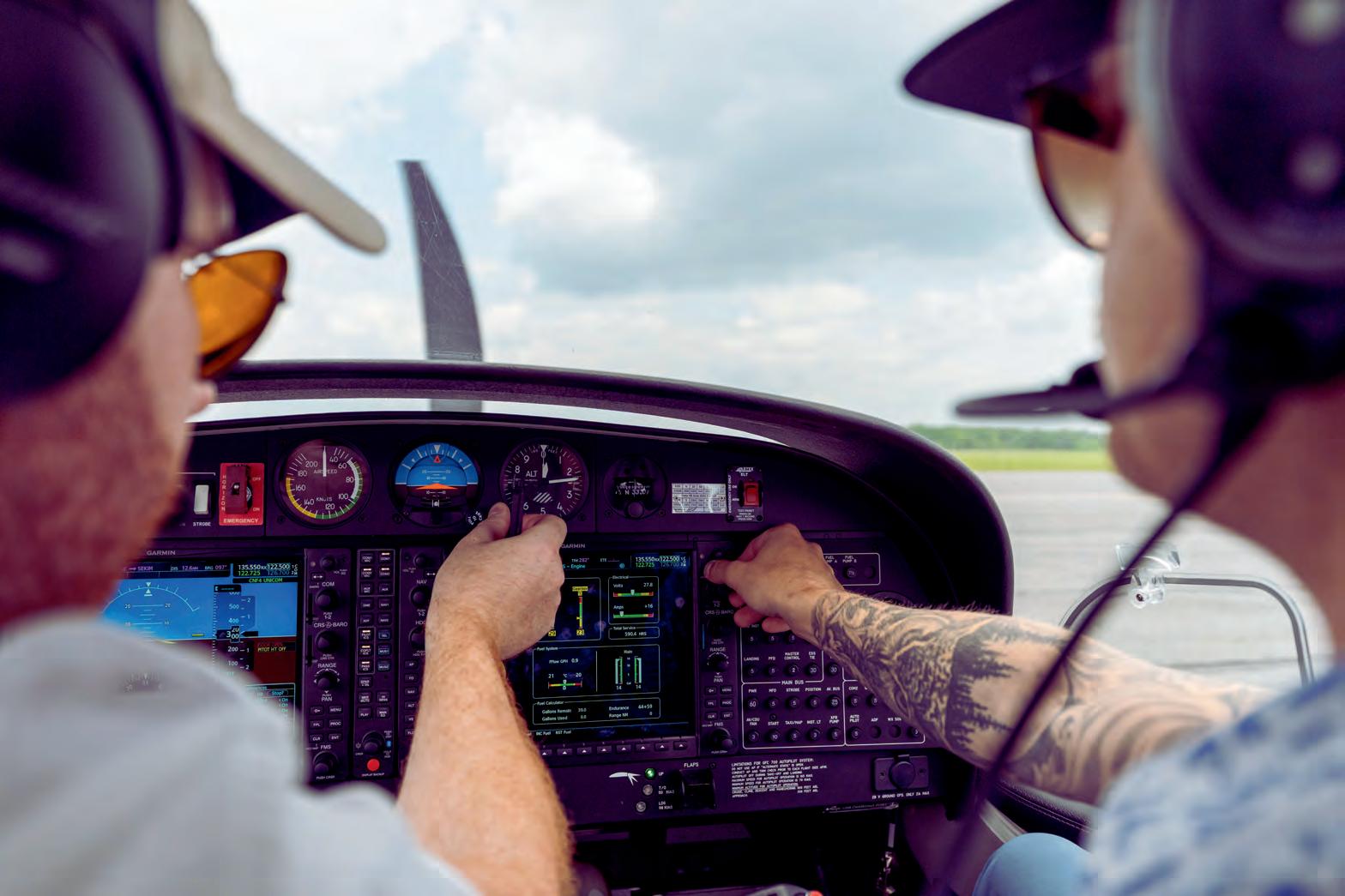


BY PHIL LIGHTSTONE
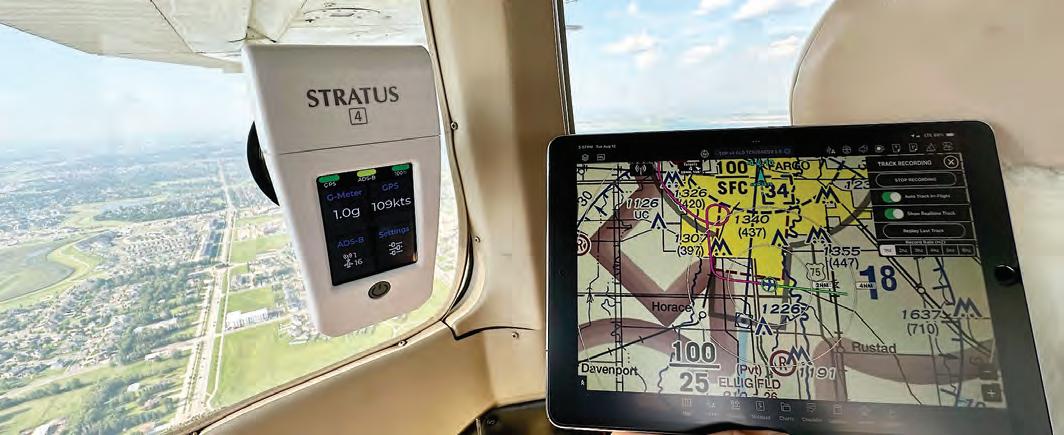
Many pilots’ flight bags, aircraft and homes are treasure troves of pilot tools, gear and gadgets. Most have a common theme; ForeFlight, iPad, ADS-B receiver, headset, SiriusXM weather, and a portable transceiver. Below are some new tools for safety, style and comfort for the upcoming spring flying season. Prices quoted in this article are as of late-2025 and do not include taxes, tariffs, duties or shipping costs.
MyGoFlight in 2023 acquired Flight Flix, a manufacturer of action camera solutions from mounts to entire recording systems. Its products solve two problems: mounting an action camera like a GoPro or Garmin VIRB to the wing or fuselage of an aircraft or helicopter and, second, providing continuous power during flight. GoPro’s original camera cases were built from Lexan polycarbonate. Over time, Lexan will be damaged by UV light, becoming brittle. The small tabs on a GoPro case could break,
mount and is available for both GoPro and standard 1/4-inch-20 camera sockets.
causing the camera to depart the aircraft. Flight Flix’s cases are made from aircraft grade aluminum (Metal GoPro Safe Case). Flight Flix has a variety of internal and external mounts branded Rock Steady also built from aluminum. The RS Slim GoPro Tie Down Mount (US$74) uses the aircraft’s tie down rings to securely affix its Safe Case (sold separately) to the aircraft. An aluminum centring nut allows for quick attachment to any tie down ring. The Rock Steady Tie Down Standard Ball Mount (US$124) is more versatile providing unlimited adjustability using a ball and socket
MyGoFlight solved the problem of battery life in flight with a ram turbine charging system, the Airfoil Generator (US$479). It features: 5V/1.5A output using a standard USB-C port; 65 Knots minimum speed to generate power; weather resistant aluminum case; 1/4-inch-20 universal mounting point; a small Fast Speed Turbine (31 mm/1.22 inches) with a minimum airspeed to start producing energy of 90 knots (do not exceed 200 knots); and a large Slow Speed Turbine (42 mm / 1.65 inches), minimum speed to start producing energy is 70 knots (do not exceed 140 knots).
Sporty’s in August 2025 introduced the Flight Gear Smart Battery Pack in either 10,000 mAh (US$49.95) or 27,600 mAh (US$99.95) capacities. Designed for pilots, these battery vaults have been tested in various aircraft to ensure clean operation with no radio interference. Equipped with two USB-C and one USB-A ports,
the Flight Gear battery pack can charge up to three devices at once. It will detect the type of device and apply the optimal charging current, delivering safe power without overloading. Equipped with pass-through charging, the power vault will charge tablets and smartphones as it recharges itself.
Critical for use during flight, the battery packs are engineered to prevent overcharging, short circuits, and voltage spikes. It will pause operation until it reaches a safe temperature (think lithium-ion thermal runaway). With an LCD screen and aviation placards on the battery pack, these devices are designed for the aviation environment.

In 2024, I had the opportunity to fly a new Cirrus SR22. Flying at 17,000 feet in a non-pressurized aircraft, supplemental oxygen was an absolute necessity. The aircraft was equipped with a Mountain High Equipment & Supply’s O2D2 pulse demand system, designed to conserve supplemental oxygen. Mountain High was founded in 1985 by Patrick McLaughlin, who was flying hang gliders in Sault Lake City and needed supplemental oxygen. In his garage, McLaughlin built the prototype of an ondemand oxygen system that quickly gained popularity with other hang-gliding pilots,


For over 35 years, AeroCourse has been a leader in advanced aviation training in Canada.
We provide regular training courses-IFR and ATPL and custom seminars for the aviation industry along with developing and publishing manuals and workbooks to assist pilots gain the knowledge required to write their IFR and ATPL exams.
Our dynamic and enthusiastic instructors are exceptional –they are professional pilots and ight examiners with thousands of hours experience both in ight and in the classroom. They provide a productive learning environment which contributes to student’s success.
We pride ourselves with high quality materials and training resulting in a high success rate.

GROUND SCHOOL SEMINARS:
Toronto Mar 6-8
Mar 13-15
SAMRA Apr 14-15
SARON Apr 21-22
Toronto Mar 13-15 Calgary Mar 27-29
Virtual Apr 11-12 and Apr 18-19 In-Depth Apr 25-26 and May 1-3

leading to commercialization.
The pulse demand technology is different from the “standard” constant flow systems, wasting no oxygen during the breathing cycle. The average aviator may see an increase in capacity of their oxygen tank of two to three times compared to constant flow systems. The system operates for up to 100 hours (two people) on three AA alkaline batteries. The O2D2-2G has an external power jack enabling it to be operated from an external power source.
The two person system is equipped with a built-in barometer reducing oxygen system workload to almost zero. There are no oxygen flow indicators to monitor and you do not need to manually operate a flow valve. A rotary switch cycles the O2D2-2G through the various modes that automatically deliver the required supplemental oxygen pulses for both the pilot and passenger. The EDS O2D2-2G unit weighs 12.1 oz. (with batteries) and costs US$995. The O2D12G kit is a single-pilot system and retails for US$789. Multiple units can be attached to a single oxygen bottle to support four or more people.


Many corporate aircraft operators subscribe to specialized services from specialized connectivity companies like GOGO Flight, because accessing the internet can be challenging at altitude. Starlink provides an alternative to these costly systems for general aviation and business aviation. StarLink’s Mini satellite antenna ($599) delivers a form factor perfect for the confines of small aircraft.
Complementing the antenna is MyGoFlight’s mount adapter. The Sport Starlink Adapter (US$105) is good solution for mounting Starlink in the cockpit or cabin. Combined with the MyGoFlight mounting system, Starlink can be mounted virtually anywhere and quickly positioned and is compatible with the StarLink Mini. The adapter is to be used with the Flex Suction Pro only.

New to the aviator watch scene is Bravo Golf, now rebranded as Call Sign. The design of the watch face is simple and uncluttered displaying both local and Zulu (GMT) times. “Most pilot watches got bigger and busier over time,” says Beau Garrett, founder of Call Sign. “We went the other direction, towards simplicity and balance.”
Call Sign watches are 42 mm in diameter, 11.3 mm thick and waterproof to 100 metres. They feature sapphire crystal glass, titanium carbide material, and super-LumiNova glow in the dark on the hands and dial. The watch includes a Swiss made quartz movement with an internal battery expected to last for 45 months.
Call Sign has two collections, Discovery Collection and the Wrights of Passage. The Wright of Passage collection celebrates the contributions of Katharine Wright, Wilbur and Orville Wright, and their father, Milton Wright. Each watch is engraved with symbols of their groundbreaking achievements and personal legacies, paying tribute to the vision and innovation that made the dream of flight a reality. The Discovery Collection is priced at US$700 and the Wrights of Passage Collection starts at US$2,690.

Stratus released its first ADS-B IN receiver in 2011 and has sold 110,000 receivers to date. Stratus 3 was launched in 2018 and it has now been replaced with October 2025 launch of Stratus 4 (US$849), a fifth-generation product. The Stratus 4 portable receiver has the usual features pilots need, including: WAAS GPS; dual band ADS-B IN; AHRS; flight data recorder; Wi-Fi and Bluetooth; field replaceable battery (no tools needed); automatic shut off; light weight at 10.6 oz; USB-C connector; support for popular EFBs including ForeFlight, Garmin Pilot, Stratus Insight and others; and eight hours of battery life.
Stratus 4 has three new key features, including support for Apple Find My, G meter, and a full-colour touch screen. It includes
a carrying case, charging cable, suction cup and mounting clip. For Canadians, AvWorld will retail the Stratus 4 for between $1,080 and $1,100 (depending upon US Exchange rates). Stratus offers a trade-in program (US$100 for S2, US$200 for S3), but your Stratus 3 might have more value on eBay or Barnstormers. Stratus products are manufactured in Fargo, North Dakota.
Pilots and aircrew flying the line are increasingly deciding to pack their own food for flights away from home. Travelpro manufacturers several models of cooler bags specifically designed for aviation use. Its

FlightCrew 5 Flight Cooler features: a 12 can capacity; 10 zippered compartments; fully insulated main compartment; zip out PVC lining for washing; 10.5” x 14” x 9”; and weights 2.3 lbs empty. FlightCrew 5 is $88 and is available from AvWorld. Pro Tip: use Ziploc bags to carry ice or ice packs to prevent leakage and to work the ice around food or beverages.
“Our goal is to craft superior luggage that makes the demanding lifestyle of airline professionals easier,” says Scott Applebee, Vice President of Marketing for the Travelpro family of brands. “This is the reason why over 90 airlines choose Travelpro.”


Flying at altitudes requires supplemental oxygen to meet FAA, TC and personal health requirements. Some pilots and passengers find traditional nasal cannulas uncomfortable especially those over the ears and under a headset. The noise cancelling capabilities of modern ANR headsets can be compromised with tubing breaking the seal with the headset’s ear cushions. Aithre Aviation solved these problems with its new Boom Cannula and Adapter kit. Built from aircraft grade aluminum, the Boom Cannula is designed to attach to the side of the headset and has a small silicon nasal cannula which easily fits into your nose, without compromising the headset’s microphone. The anodized aluminum adapter is designed to last just as long as your headset. The cannula will last a long time as well, but many aviators like to occasionally get a new cannula replacement. The boom and cannula portion is easily removed and interchangeable without any tools.
When oxygen is not required, the aluminum adapter can be pivoted away from your face or the boom can be bent upwards or sideways. This keeps the boom and nasal piece available, but out of sight. If this is not enough, the Boom Adapter can be removed from the adapter ball mount. With a little pressure, the Boom will pop out of the adapter ball mount with a little pressure after loosening
the thumb set screw. The kit includes: the Aithre Boom adaptor; adaptor ball mount; adaptor screw; adaptor ball mounting 3M Tape x2; long Boom Arm (7.5 inches) and nose piece; and cannula tubing, seven feet (OD 6mm, ID 4mm). Current retail price is US$250 for the kit.
FDM has a large selection of ready-to-ship models starting at US$225 and can also recreate your personal aircraft down to the smallest of details.
Factory Direct Models has manufactured high-quality wood models for over 35 years. Founded in 1945, FDN has over 124 employees, with 120 at its plant in the Philippines, where the models are meticulously hand carved by skilled craftspeople. FDM produces custom models for the military, commercial airlines, business aviation, general aviation and many of the world’s leading aircraft manufacturers worldwide. You can email them photos of your aircraft, which they will duplicate both in terms of paint, right down to the placement of antennas. FDM uses 26 steps, starting with a solid block of wood, resulting in an outstanding model aircraft created with no power tools or computers. Its showroom is located at the Phoenix-Mesa Gateway Airport in Mesa, Arizona.

The owners of Flare Bourbon are all pilots who, one day while hanging out in a general aviation hangar, formulated a plan to create a bourbon that would help celebrate all the milestones on your journey in aviation. From your first solo flight, PPL, CPL, type ratings, career milestones, Flare wants to be there with you. The bourbon is distilled in Atlanta and ages in fine oak barrels before being bottled. Currently its vintages are aged for four years. Flare Bourbon was the first alcohol manufacturer allowed by the EAA to exhibit at the Oshkosh 2025. A 750ml bottle is US$59.99. | W

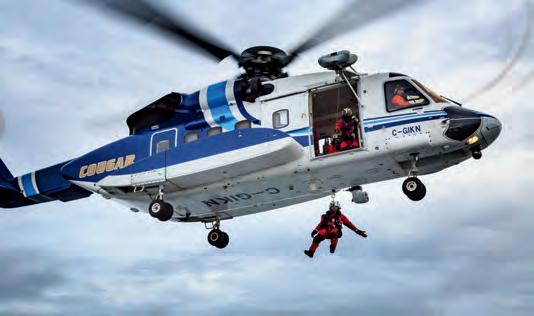


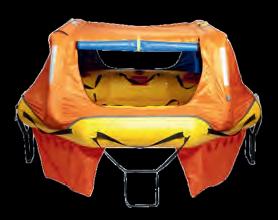


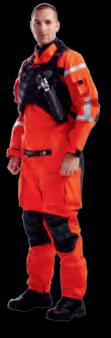
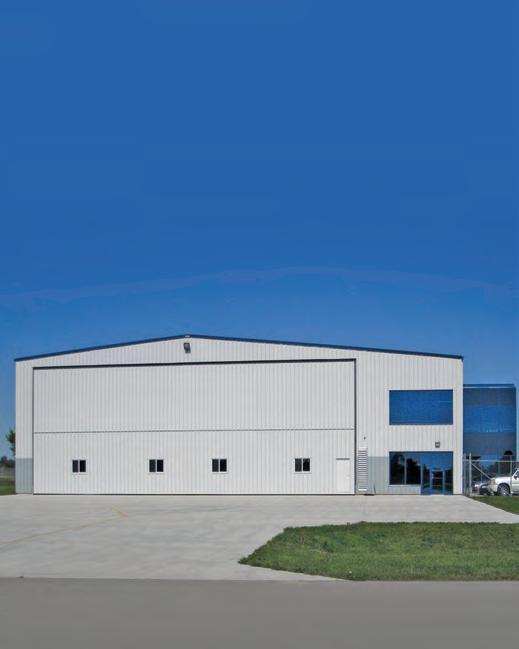


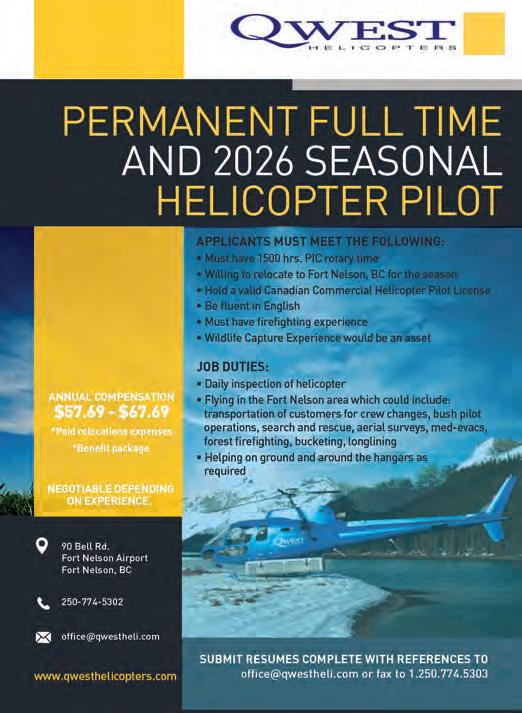

By Edward G. Lennox |
Canada lost one of its most prolific and well-known aviation writers on December 29, 2025, when Peter Pigott passed away in Ottawa at the age of 78. Born in post-war England, Peter was the son of an international airline manager who had served in the Chindits Special Forces in Burma and been a Japanese POW. Profoundly affecting his father, this impacted Peter's upbringing alongside airports around the world and travelling as the son of a TWA manager.
Settling in Canada, Peter earned a BA, a B.Ed., an MA, and subsequently a diploma in history from Oxford University. He joined the Department of Foreign Affairs in 1978 and served at embassies in New York, Hong Kong, Vienna and The Hague. In Hong Kong he wrote his first book Kai Tak: The History of Aviation in Hong Kong. Returning to Canada in 1993, he churned out 13 more books, including histories of Air Canada, Trans Canada Airlines, Canadian Airlines, Airports of Canada, and the three-volume Flying Canucks series.
After retirement from Global Affairs in 2007, Peter taught aviation at Algonquin College in Ottawa and continued to write. He had broad interests and authored books about Canada's operations in Afghanistan, Sudan and, subsequently, a History of the Canadian Pacific Line. His interest in contemporary history was deep and wellfounded. He wrote An Illustrated History of Canadian Aviation, A Celebration of Canadian Flight; On Canadian Wings and A Century of Flight, culminating in 2011 with A Complete History of Canada’s Arctic Sovereignty. In 2016 Brace for Impact: Air Crashes and Aviation Safety appeared.
Peter Pigott's final four books demonstrated his consummate research skills, meticulous technical accuracy, and appreciation of the human side of aviation. During the Covid lockdown Peter continued to write, with his wife Donna as his sounding board. Peter said “being in isolation with her and writing about aviation is to see heaven in a wildflower.” A steady seller in bookstores, The Golden Age of Flying Boats (2020) delightfully captures a reader's interest early and holds it to the very end. It is

A Canadian publisher specializing in storytelling advised Peter that stories about Howard Hughes sell well in America. So, he wrote American Obsession: Howard Hughes and Juan Trippe, Rivals in The Sky (2023), which is a “must-have” examination of aviation history. Comparing and contrasting these difficult and diverse characters was no small task, and Peter tackled the story with professional thoroughness.
For Texas-moneyed Hughes it was aircraft speed, for Yale-businessman Trippe it was airliner range. The business case for an airliner was thin by today's standards, while for Hughes the concept of a business case seemed unnecessary. American Obsession is full of almost unbelievable anecdotes. The use of Trippe's Pan Am by the U.S. government to develop airports in the Caribbean, South America, Africa and Pacific as private ventures seems incredible today. Trippe triggered Boeing to develop the B747. The rapacious conduct of Hughes in Hollywood is an eye-opener to today’s generation.
of aviation.
Peter Pigott’s final four books demonstrated his consummate research skills, meticulous technical accuracy, and appreciation of the human side
full of history, technological developments, stories and adventures, as well as operational and technical points of interest. These divergent aspects are well tied together, as the author thoroughly understood aviation.
Peter was a kind man, very observant of society and human behaviour. Having put his heart and soul into writing See Jane Fly (2022), it was rejected by 15 publishers as lacking a market, and he discovered late in his career that books may appeal differently to each gender. Published in the UK, See Jane Fly is a good read with hair-raising human-interest stories of early aviators and aviatrixes confronting danger. Many well-documented first-attempt flights simply vanished into stormy waters, often the North Atlantic. With this book Peter traced the accelerating entry of women pilots into commercial aviation, and some of his accounts of early cabin attendant roles seem incredible today.
Peter’s concerns about the environment were expressed in his final book. Fire Eaters (2025) is a comprehensive ventilation of a controversial and operationally dangerous civil aviation topic. From efforts 100 years ago in combating forest fires to today’s hitech detection and suppression strategies, Peter delved deeply into the dangerous world of fire reconnaissance, aerial attack, and smoke jumping bravery. At times impassioned, his last book provides a breadth of understanding of the latest strategies and tactics of the wildfire suppression industry across international aviation.
Whether writing about flying boats, firefighting or historical personalities, Peter captured the possibilities and limits, majesty and inequities of “mankind’s greatest technological achievement”. Peter Pigott authored a total of 25 books which are a permanent legacy to the man and to the history of aviation. It was an honour to have been his friend. | W
Ted Lennox P.Eng., FRAeS, founded and for 23 years led LPS AVIA Consulting, an engineering, aviation and airport planning practice with projects in North America, Europe and Asia.