
PESTICIDE-FREE GOLF MAINTENANCE
IPX4-rated
Ensures optimum
3
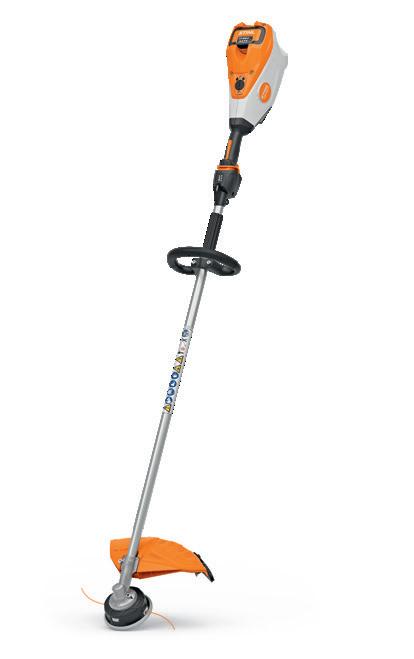
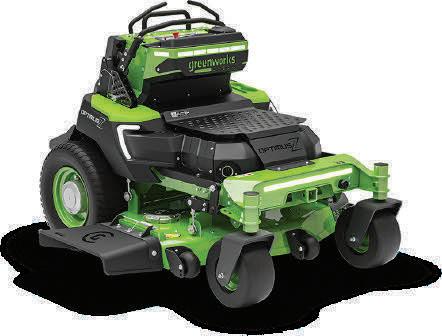
The FSA 135 R is the ideal battery-powered brushcutter for landscaping professionals. The ergonomic loop handle makes it comfortable to operate and easy to manoeuvre in confined spaces. Choose power or energy efficiency with three performance levels and a power-saving mode.
Bike handle version available.
DEPARTMENTS
06 | In the news TV contractor Mike Holmes to keynote October’s Equip Expo
| Sports Turf BMO Field set for World Cup

By Mike Jiggens
The Middle East conflict’s impact on care of turfgrass
As I write this to meet our production deadline, the U.S.-Israeli war with Iran has yet to reach a peaceful conclusion, and the blockade of the Strait of Hormuz continues. Despite the agreement of a temporary ceasefire, the impact of these crises is being felt around the world, and the turfgrass industry is subsequently facing a formidable challenge as the 2026 growing season is now underway.
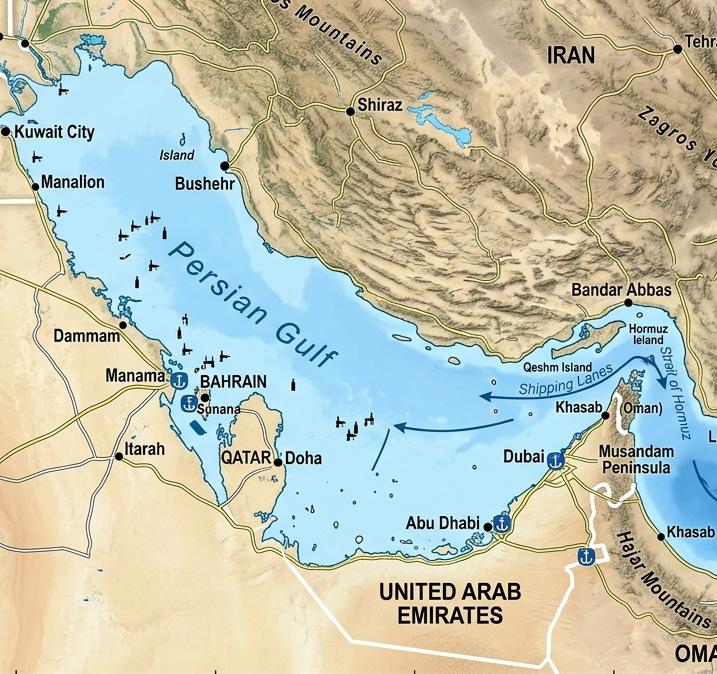
The Strait of Hormuz is a key shipping lane in the Persian Gulf which leads to the open sea from several Middle Eastern ports. Iran’s blockade of this waterway is preventing exports of urea and sulfur from reaching destinations in Canada and other countries where it is essential to the manufacturing of fertilizer for use on golf courses, sports fields and home lawns.
Meanwhile, the cost of gasoline and diesel has been escalating at a brisk pace as oil exports have also been stymied.
Fertilizer prices are being hiked due to the situation in the Middle East, and those cost increases will undoubtedly be passed along to such end users as lawn care customers and golfers. These cost increases simply can’t be swallowed by lawn care companies and golf
courses themselves. Someone else will be tasked with helping to shoulder the burden.
Golfers may ultimately have to fork out more in green fees if they want their greens, tees and fairways to remain in pristine condition. Their maintenance will depend on both fertilizer inputs and the gasoline required to operate mowers and other equipment. If they’re not among those who prefer to walk the course, the cost of riding in a gasoline-powered golf car is apt to increase as well.
These cost increases simply can’t be swallowed by lawn care companies and golf courses themselves
Green fees typically see a year-over-year increase in the neighbourhood of five per cent, but those rates may demand a spike as the price of gasoline and diesel has jumped between 30 and 40 per cent since the turmoil in the Middle East began.
Most Canadian golf courses are still using gasoline-powered mowers for their maintenance needs. Although more courses have been trending toward battery-powered equipment in recent years, it’s likely that even more clubs are strongly considering a switch to electrification during this

period of uncertainty.
Only three weeks into the strait’s blockade, fertilizer prices jumped upwards of 28 per cent. This, too, may be felt among golfers – perhaps not so much in the wallet but by scaled-back playing conditions as golf courses strive to save money. Slower green speeds and roughs that aren’t as lush could be forthcoming.
If the situation in the Middle East doesn’t change for the better anytime soon, there could be other long-term implications for golf. Golfers accustomed to playing frequently are apt to cut back on their rounds because of the higher costs of fueling their own vehicles, making the commute a deterrent. Senior golfers who depend on riding in golf cars may temporarily put the game on hold or look to other courses that have fleets of electric cars.
Lawn care customers who wish to enjoy another season of pristine turf will be forced to cough up more in 2026 and potentially face reduced nitrogen inputs as lawn care companies may need to stretch their supply.
Let’s hope common sensebased diplomatic measures can soon put an end to this madness, and that lawn care professionals and golf course superintendents will have one less concern on their minds.
turfandrec.com
Reader Service
Print and digital subscription inquiries or changes, please contact Angelita Potal, Customer Service Tel: 416-510-5113 apotal@annexbusinessmedia.com
Mail: 111 Gordon Baker Rd., Suite 400 Toronto, ON M2H 3R1
Editor Mike Jiggens mjiggens@annexbusinessmedia.com
Advertising Manager Rebecca Lewis 519-400-0322 rlewis@annexbusinessmedia.com
Account Coordinator Emily Guimarães 416-510-5118 eguimaraes@annexbusinessmedia.com
Audience Development Manager Anita Madden 416-510-5183 amadden@annexbusinessmedia.com
Group Publisher Anne Beswick 416-410-5248 abeswick@annexbusinessmedia.com
CEO Scott Jamieson sjamieson@annexbusinessmedia.com
Printed in Canada ISSN 1186-0170
PUBLICATION MAIL AGREEMENT #40065710
SUBSCRIPTION RATES
Published 7 times a year – Jan/Feb, March, Apr/May, June/July, Aug/Sept, October, Nov/Dec
Canada – 1 year $37.13 CAD; 2 year $47.74 CAD (plus applicable taxes; single-copy$7.00 CAD
USA – 1 year $50.92 CAD HST 86717 2652 RT0001
Occasionally, Turf and Recreation will mail information on behalf of industry related groups whose products and services we believe may be of interest to you. If you prefer not to receive this information, please contact our circulation department in any of the four ways listed above.
Annex Privacy Office privacy@annexbusinessmedia.com Tel: 800.668.2374
No part of the editorial content of this publication may be reprinted without the publisher’s written permission © 2026 Annex Business Media. All rights reserved. Opinions expressed in this magazine are not necessarily those of the editor or the publisher. No liability is assumed for errors or omissions.
All advertising is subject to the publisher’s approval. Such approval does not imply any endorsement of the products or services advertised. Publisher reserves the right to refuse advertising that does not meet the standards of the publication.



P.E.I. minister ousted over involvement in golf course plan
Prince Edward Island’s minister of economic development has been removed from office over what is perceived to be a conflict of interest associated with a redevelopment plan for a golf course in Summerside.
It is reported the RCMP has since been alerted over the matter.
Gilles Arsenault was removed from cabinet for, according to Premier Rob Lantz, showing poor judgment after the developer asked him to change a permit to alter wetlands last fall.
Lawn care company offers free mowing for cancer patients
A Fergus, Ont. lawn care company is offering free mowing services for residents in Centre Wellington who are undergoing treatment for cancer.
Mike and Cassandra Morrison, owners of Morrison’s Lawn Care, were inspired to offer the free service after Cassandra’s mother died of cancer four years ago. The Morrisons said that mowing a cancer patient’s lawn helps take away some of the stress in dealing with mundane tasks.
Vandalism damages sod, drainage features at Guelph park
Guelph, Ont.’s Eastview Park was partially closed in the early spring following an act of vandalism that left significant damage to sod and compromised drainage features. The damage was caused by vehicles driving where they shouldn’t have been. Repairs are expected to be costly. Work to restore the damaged area cannot begin until ground conditions become more favourable.
It was hoped security footage would be helpful to the investigation.
Perceived conflict of interest over Summerside golf course results in dismissal of P.E.I.’s minister of economic development. Until ground conditions at Eastview Park become more favourable, repair can’t get underway.

Television’s Holmes to keynote October’s Equip Expo show
Canadian television contractor Mike Holmes, the star of HGTV’s Homes Family Rescue, will be the opening keynote speaker for October’s Equip Expo in Louisville, Ky.
Holmes is known for his no-nonsense approach, high standards, and commitment to “making it right.” His work on television has reshaped how homeowners think about building, renovation, and the importance of hiring qualified professionals.

In addition to Holmes, the Oct. 20-23 Equip Expo will have another keynote speaker: Susan Packard, a media entrepreneur who helped create popular TV channels like HGTV, CNBC, and Food Network. She will keynote the Women’s Leadership Reception Thursday afternoon.
“This October, we’re launching the Keynote Series, offering four industry-specific events that will host not only esteemed industry insiders but celebrity speakers to inspire and entertain our attendees,” Kris Kiser, president of the Outdoor Power Equipment Institute, said.
Packard is known as a tireless advocate for women who aspire to success and accomplishment, and she will share her experiences and practices of good emotional health. Rounding out the keynote speaker series experience is The Morning Show and ENERGIZE, both of which will address key challenges landscape contractors who operate in the front lines face when operating and scaling their operations.
Canadian television contractor Mike Holmes will be the keynote speaker at October’s Equip Expo in Louisville, Ky.
PHOTO: OPEI
Documentary about man’s fight against lawn bylaw wins two awards
A documentary film about a Mississauga man who fought to keep his lawn in a naturalized state has won two Canadian film awards.
The film, called A Wolf in the Suburbs, won both the Canadian grand prize and the FIPRESCI International Critic Award at the 2026 REGARDS Festival in Chicoutimi, Qué. The 18-minute film documents Wolf Ruck’s fight against the City of Mississauga to keep his lawn in a natural state as a means to provide a habitat for pollinators.
Ruck had fought since 2021 against a city bylaw that prohibited grass to grow beyond 20 centimetres in height. He took his battle to court and won.
Calgary Stampeders’ home nearing end of its functional life
Calgary’s McMahon Stadium is getting long in the tooth after 66 years, sparking the University of Calgary to explore the construction of a new facility for its varsity teams.
The stadium, however, is a shared venue with the Canadian Football League’s Calgary Stampeders who would need a new home once McMahon is permanently shuttered. Located between the university campus and the city’s downtown core, McMahon Stadium is reaching the end of its functional life, it is reported.
The university is exploring a facility that could accommodate

several varsity sports with upwards of 7,000 seats with the addition of a seasonal dome.
With the university’s sights set on a new stadium, questions have arisen where the Stampeders might play in the future. One thought is to move the team to an upgraded stadium at the Calgary Stampede grounds.

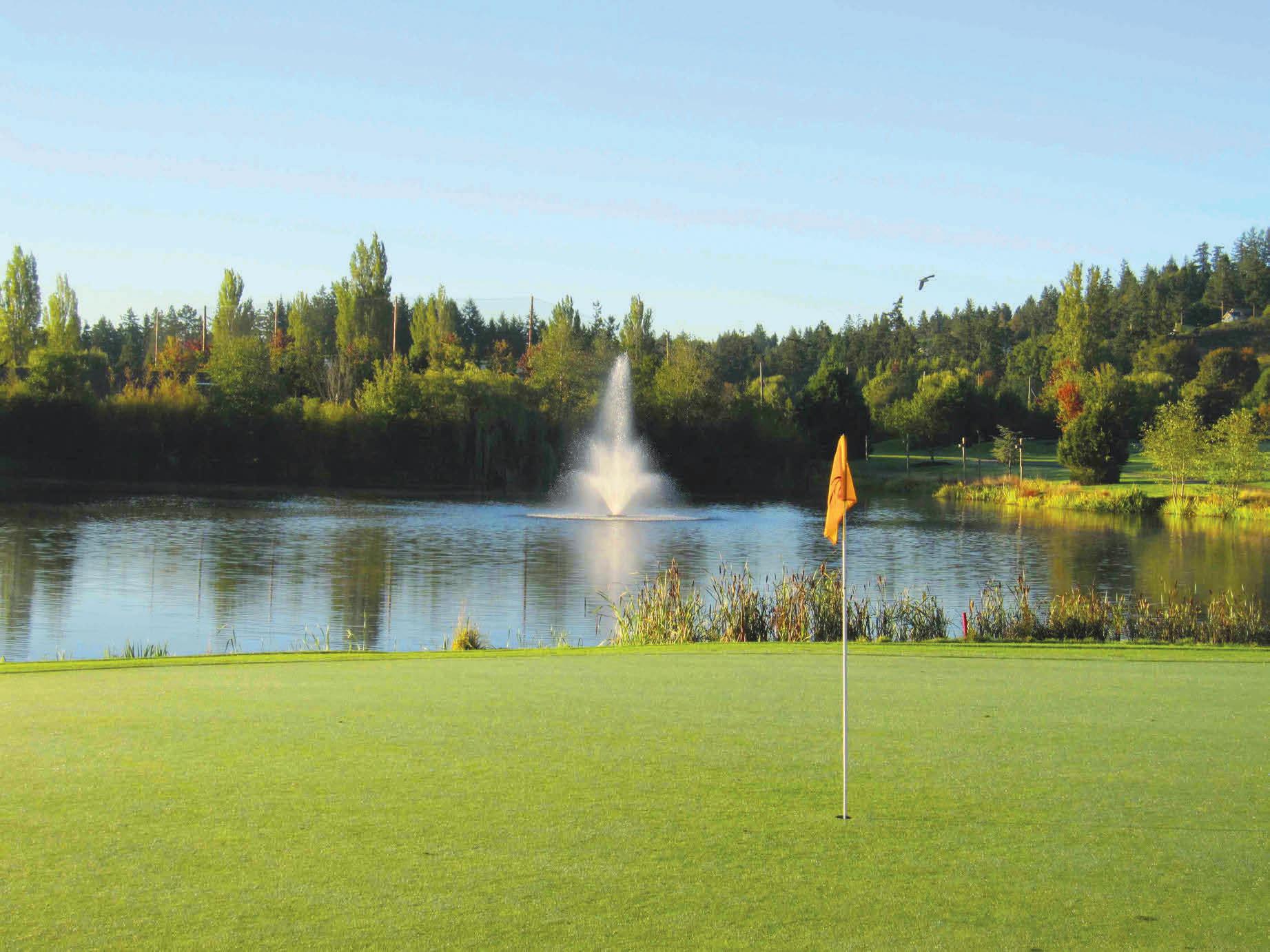
Pesticide-free course upkeep
Danish ‘superintendent-inresidence’ shares his story of maintaining a golf course without pesticides
By Dr. Sara Stricker, with input from Martin Nilsson
Maintaining a golf course without the use of pest control products presents a challenge, especially when balancing course expectations with strict legislation.
The University of Guelph’s 2026 superintendent-in-residence (SIR) program recently welcomed Martin Nilsson from Copenhagen, Denmark who spoke about his experiences managing golf course turf without the aid of pesticides.
The superintendent-in-residence program brings an experienced turf industry professional to campus to engage with students in the Diploma in Turfgrass Management and Turf Managers’ Short Course.
Through presentations, informal discussions, and social activities, students gain valuable real-world insight and networking opportunities. The SIR also delivers a public lecture, typically attended by students, faculty, and industry professionals, about their career and a topic of their choice.
With more than 25 years of experience in greenkeeping, including two decades at Royal Copenhagen Golf Club, Nilsson delivered a compelling presentation on pesticide-free golf course management. His talk, “Pesticide-Free Golf Course Management: A Danish Experience,” highlighted the challenges of maintaining high-performing turf under strict legislation, while sharing practical insights from managing a course without synthetic inputs. He also emphasized the added complexity of balancing golf course expectations with its role as a public park and a nature reserve.
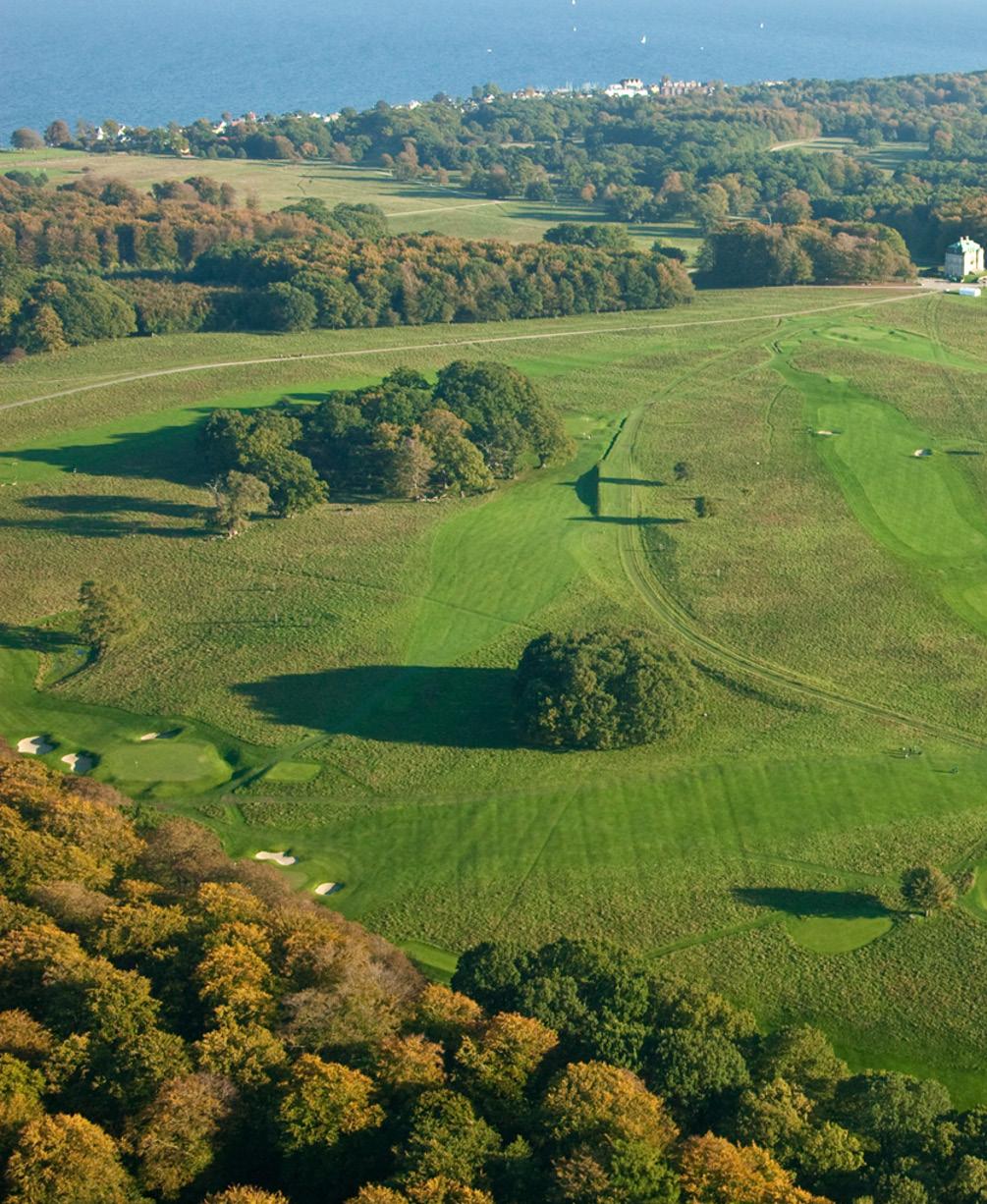
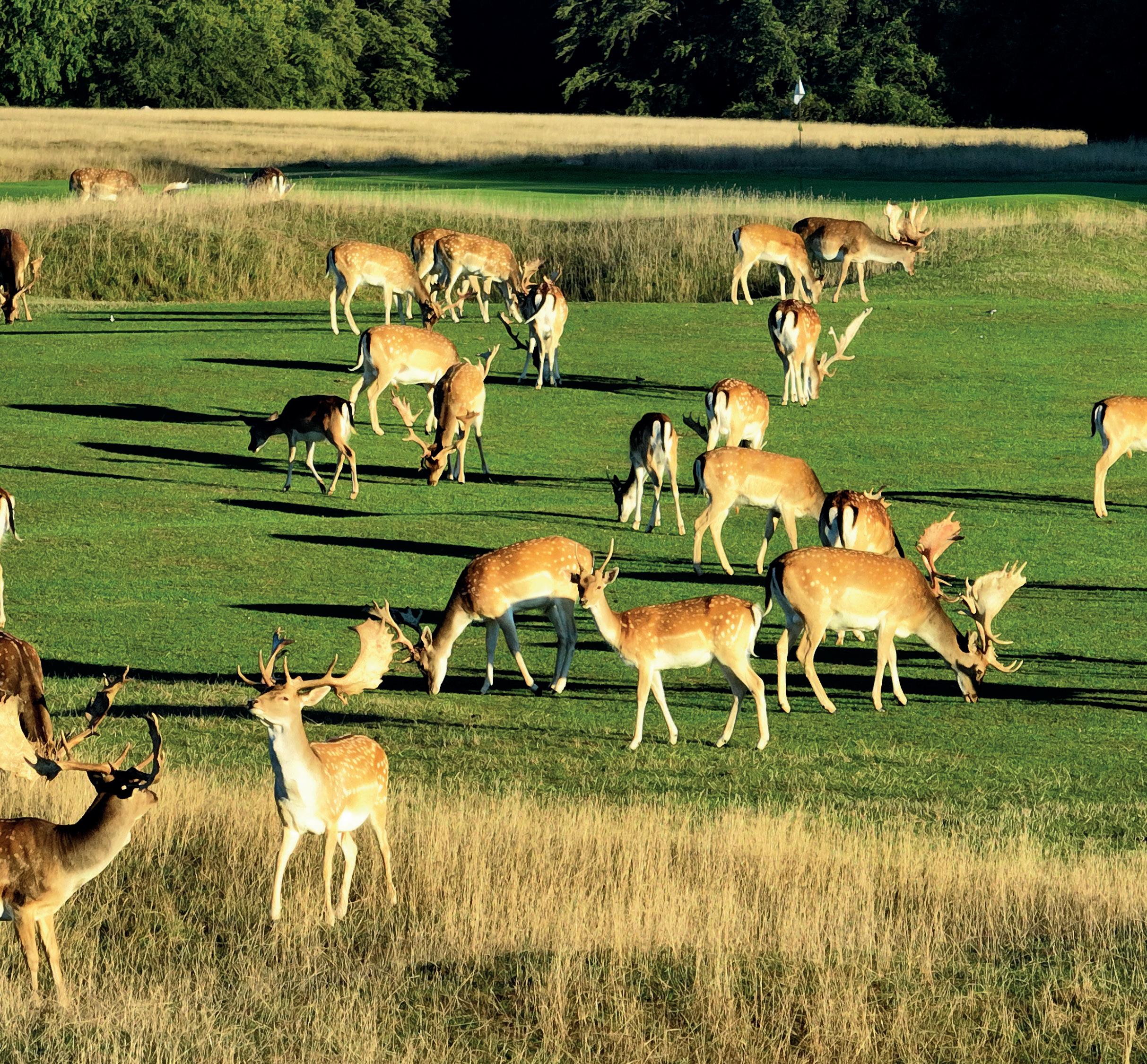
The Royal Copenhagen Golf Club is unlike most golf facilities. Established in 1898 as the first golf course in Scandinavia, it is located within Dyrehaven, a UNESCO World Heritage Site that welcomes approximately seven million visitors each year. The course exists as part of a multifunctional public landscape, where golfers share space with walkers, horse riders, cyclists, wildlife, and cultural heritage. Between 2,000 and 2,700 deer roam freely across the property, contributing to both the beauty and the complexity of turf management.
Once a year the course is shut down to welcome 40,000 spectators and 160 horse riders. The Hubertus Hunt, a longstanding Danish tradition, temporarily transforms the course into a heritage event, further emphasizing its role as a shared public landscape. It’s clear that the golf course must coexist with broader ecological and social priorities, fundamentally shaping how it is designed, maintained, and operated.
This context requires a shift in mindset. Nilsson emphasized that many golf courses in Europe are considered public spaces and thus must embrace shared use. At Copenhagen, this philosophy is reflected in subtle but meaningful ways. There are no visible course markings, benches, or signage, and flags are removed each evening to preserve the natural landscape. If a flag is accidentally left out overnight, the deer take it as an open invitation
Dyrehaven is a forest park north of Copenhagen, within which there is an 18-hole golf course.

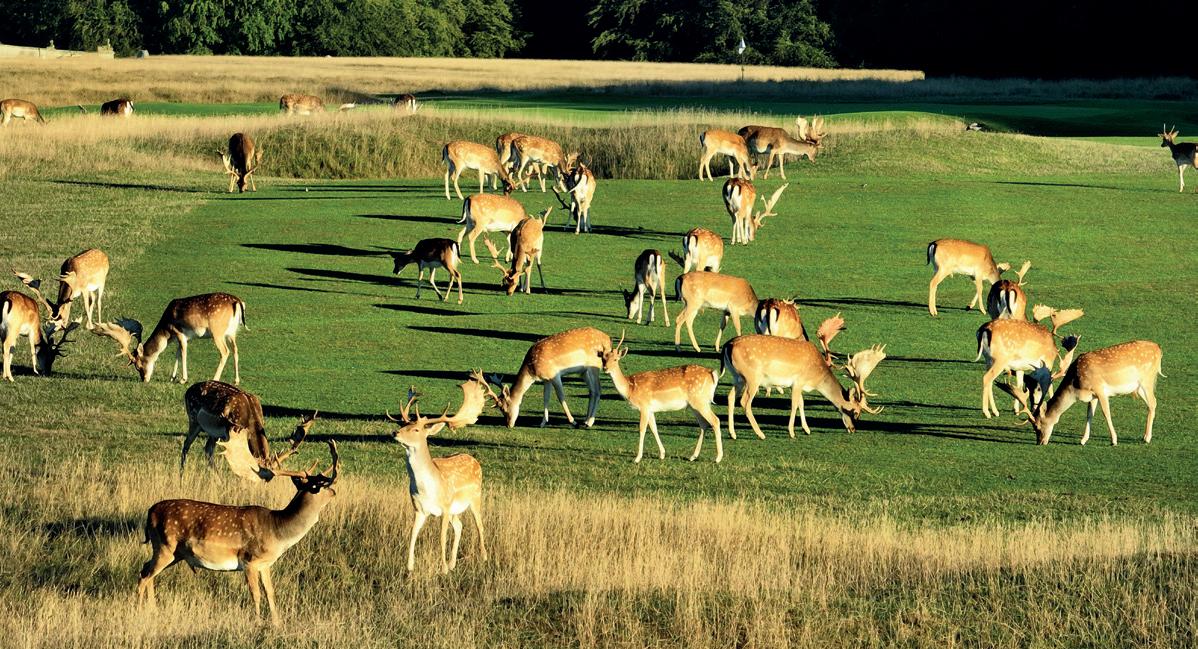
to play on the greens, leaving behind scrapes and hoofprints. The course is not imposed upon the environment; rather, it is integrated into it. The grounds crew focuses management on the greens, tees, and fairways, allowing the roughs and surrounding areas to blend naturally into the landscape.
The transition to pesticide-free management in Denmark did not happen overnight. It was driven by a combination of government policy and industry collaboration, beginning with voluntary agreements in the early 2000s and culminating in stringent regulations introduced in 2013. By 2023, pesticide use in Danish golf had been reduced by approximately 95 per cent compared to 2013 levels. At Copenhagen Golf Club, the shift began even earlier due to its location on government-owned land.
PESTICIDE ELIMINATION
Herbicides were eliminated in 2003, and fungicide use ceased entirely by 2011. These changes forced a fundamental rethinking of turf management strategies and increased the need for clear communication with stakeholders. For example, because iron-based products became the only option for weed control, greens and approaches now often sport a pattern of polka dots in darker green – an aesthetic shift that required explanation and buy-in from golfers.
Without chemical tools, cultural practices become the primary means of maintaining turf quality. This includes careful attention to soil health, drainage, and air movement, as well as precise management of fertility and irrigation. Nilsson emphasized that reducing inputs does not mean neglecting the turf; rather, it requires a deeper understanding of how environmental conditions influence plant health. In some cases, this involves embracing stress as a management tool.
Periods of drought, limited fertility, or even disease pressure can shift the competitive balance toward desirable species, ultimately strengthening the system. As Nilsson put it, “Death is an integral part of the management program.”
One of the most significant changes made at Copenhagen due to the pesticide ban was the transition to red fescue as the dominant turfgrass species. Known for its disease resistance and suitability for low-input systems, red fescue provides a strong foundation for pesticide-free management. It thrives in the free-draining, sandy soils of the site and is well adapted to the pressures of both play and wildlife activity. However, this choice is not without its challenges. Red fescue is slow to recover from damage, struggles in shaded or poorly drained areas, and can appear inconsistent during periods of transition. Nilsson was candid about these limitations, emphasizing that success in pesticide-free systems requires accepting trade-offs rather than striving for perfection.
The journey toward a fully pesticide-free course was a transition process spanning nearly two decades, beginning with the conversion of Poa annua greens to fescue and progressing through phases of improving uniformity, managing weeds, and refining playing conditions. The major challenges in the beginning were snow mould, but over time, weed management of plantago species and clover took over as a main concern. In recent years, dollar spot has emerged as a growing concern, likely influenced by changing climatic conditions. Bunker management has remained a consistent challenge, and weed encroachment and the heavy use they receive from golfers require continual attention.
Thousands of deer roam freely at the Royal Copenhagen Golf Club.
Visit one of these participating Exmark Dealers to learn more about the full line of professional Exmark models.
ALBERTA
CALGARY
DRAYTON VALLEY
EDMONTON
FORT MCMURRAY
GRANDE PRAIRIE
ALBERTA FOREST & GARDEN
HORIZON FOREST AND GARDEN LTD
EDGE EQUIPMENT LTD
DENNEY’S SAW SHOP INC
KEDDIES TRAILERS
BRITISH COLUMBIA
ABBOTSFORD
BURNABY
CAMPBELL RIVER
CHILLIWACK
COURTENAY
KAMLOOPS
KELOWNA
NORTH VANCOUVER
SURREY
VERNON
MANITOBA
FORESHORE EQUIPMENT AND SUPPLY
FORESHORE EQUIPMENT AND SUPPLY
C & L SUPPLY LTD
CHILLIWACK OUTDOOR POWER EQUIPMENT
PILON TOOL RENTALS B & L SMALL MOTORS LTD
SAVOY EQUIPMENT
FORESHORE EQUIPMENT AND SUPPLY ARCOM POWER EQUIPMENT INC
SAVOY EQUIPMENT
403-248-0878
780-542-4446
780-455-3343
780-881-2179
780-513-1340
604-744-0547
604-436-9312
250-287-9231
604-792-4410
250-338-5361
250-376-0033
250-868-1010
604-924-9400
604-533-0081
250-545-0627
COVER STORY
ROLLING TO MANAGE DISEASE
One of the most innovative aspects of Copenhagen’s approach is the use of rolling as a disease management strategy. Research and field experience have shown that rolling greens twice per week during the late summer and fall can significantly reduce the incidence of microdochium patch in fescue-dominated systems. This practice not only improves playing conditions but also suppresses disease development, reducing the need for chemical intervention. In some cases, rolling continues through the winter when conditions allow, further enhancing its effectiveness.
Weed management in a pesticide-free system requires vigilance and persistence. At Copenhagen, clover is controlled using iron sulphate applications (spot treatments), applied multiple times throughout the growing season. While this approach is labour-intensive, it demonstrates that alternative solutions can be effective when applied strategically. Similarly, worm cast management relies on reducing organic matter inputs through sand topdressing, limiting the food sources that support earthworm populations. Frequent scouting is essential to stay ahead of emerging issues, particularly in the absence of conventional chemistries that would otherwise be used for rescue or curative treatments.
ONTARIO
ARVA
AYR
BRANTFORD
BURLINGTON CAMBRIDGE CHATHAM
MILVERTON
MISSISSAUGA
MISSISSAUGA MITCHELL
PETERBOROUGH SIMCOE
STAYNER
STRATHROY
THAMESFORD
VARS
WALKERTON
WINDSOR
HURON TRACTOR LTD
AYR TURF & TRAC LTD
BOBCAT OF BRANTFORD INC
B.R. DICKSON EQUIPMENT INC
CAMBRIDGE POWER EQUIPMENT INC
CHATHAM OUTDOOR POWER
BRUCE SERVICE
MARTIN’S SMALL ENGINES LTD
HURON TRACTOR LTD
LOU DENNIS EQUIPMENT
ALBRECHTS CHAINSAW SERVICE
CURRENT POWER MACHINERY INC
TONY & SONS POWER EQUIPMENT
MITCHELL CYCLE INC
STORM SOLUTIONS PLUS INC
NORFOLK TRACTOR
HURON TRACTOR LTD
CAMPBELL’S OUTDOOR POWER EQUIPMENT
HURON TRACTOR LTD
M.R. BLAIS SALES & SERVICE INC
HURON TRACTOR LTD
OAKEN EQUIPMENT
519-666-2300
519-632-9901
519-752-7900
905-331-5040
519-621-7805
519-354-3990
519-363-6345
519-669-2884
519-235-1115
289-963-9666
519-595-2579
905-822-4211
905-569-2055
519-348-0490
705-775-7587
519-426-1090
705-466-6232
519-245-2428
519-285-3845
613-443-1230
519-881-2231
416-679-4172
Despite the technical challenges, Nilsson emphasized that the greatest obstacles are often social rather than agronomic. Successfully implementing pesticide-free management requires clear communication and strong alignment among stakeholders. Golfers must understand and accept that playing conditions may differ from conventional expectations, particularly during periods of transition. It is a delicate balance between maintaining player satisfaction and reducing inputs, with managers operating on a razor’s edge of maximum efficiency – where turf performance is optimized with minimal inputs, but even a small setback can quickly and dramatically reduce turf quality.
Rather than throwing in the towel under increasingly strict legislation, Nilsson and other like-minded greenskeepers banded together to refine best practices. This “Turf Club” network of turf managers from across Scandinavia provides a forum to share knowledge, test new ideas, and support one another in navigating challenges. Their annual meeting, called the “Tour De Fungus,” takes participants across multiple sites to compare the performance of different management programs against some of the most prevalent diseases, including snow mould, anthracnose, red thread, and, more recently, dollar spot. For turf managers working in more isolated settings, this professional network is particularly important, underscoring the value of community within the industry. It is a strong network that Nilsson stresses multiple times that Canadian colleagues should consider duplicating.
NOT SACRIFICING PERFORMANCE
Perhaps most importantly, Nilsson’s and his Danish colleagues’ experience demonstrates that pesticide-free management does not require sacrificing performance. Thomas Pihl, Furesoe GC and
CONTINUED ON PAGE 25


The uncertainty of fertilizer cost
The ongoing crisis in the Persian Gulf has led to increased fertilizer costs. By Mike Jiggens
(Editor’s note: This story was written March 26. Since then, there have been few developments that could alter the information contained before this issue went to press.)
Iran’s blockade of the Strait of Hormuz is apt to see fertilizer costs significantly escalate if the situation isn’t soon resolved, the northeast U.S. and eastern Canada territory manager for Allied Nutrients says.
Speaking March 18 in Guelph at Nutrite’s 16th annual lawn care seminar day, Andy Drohen said the blockaded passageway in the Persian Gulf has prevented freight ships loaded with urea from reaching the open sea. About 30 per cent of all global urea exports move through the
strait which borders Iran.
Prior to the current conflict between Iran and the U.S.-Israel alliance and the subsequent blockade of the Strait of Hormuz, about 100 ships passed through the waterway each day. As of the middle of March, however, about 3,400 ships became stranded in the Persian Gulf, not being able to enter or exit through the passageway. Among the impacted ships were urea freighters destined for ports around the world.
Product is moved out from Iran, Iraq, Kuwait, Qatar and United Arab Emirates.
“It’s (Strait of Hormuz) the main maritime route because there’s no exit on the other side,” Drohen said.
Qatar produces about 14,000 tons of urea
a day, he said, but production has been shut down since the beginning of the conflict. Most of Iran’s plants also shut down while a few continued to operate at minimal capacity, allowing the country to move some of its gas and oil out.
Drohen said officials with Allied Nutrients claim more than a million tons of fertilizer remained in limbo in the gulf and are apt to be lost. With shipping stopped, plants producing product and trying to get it out had nowhere to put it. Crews aboard both empty and full shipping vessels also had no place to go and were running low on food and water supplies.
In his presentation, Drohen showed photographs of the mass of stranded freighters along with the multitude of gas and oil
Expect an increase in fertilizer prices this season as a consequence of the Persian Gulf turmoil.
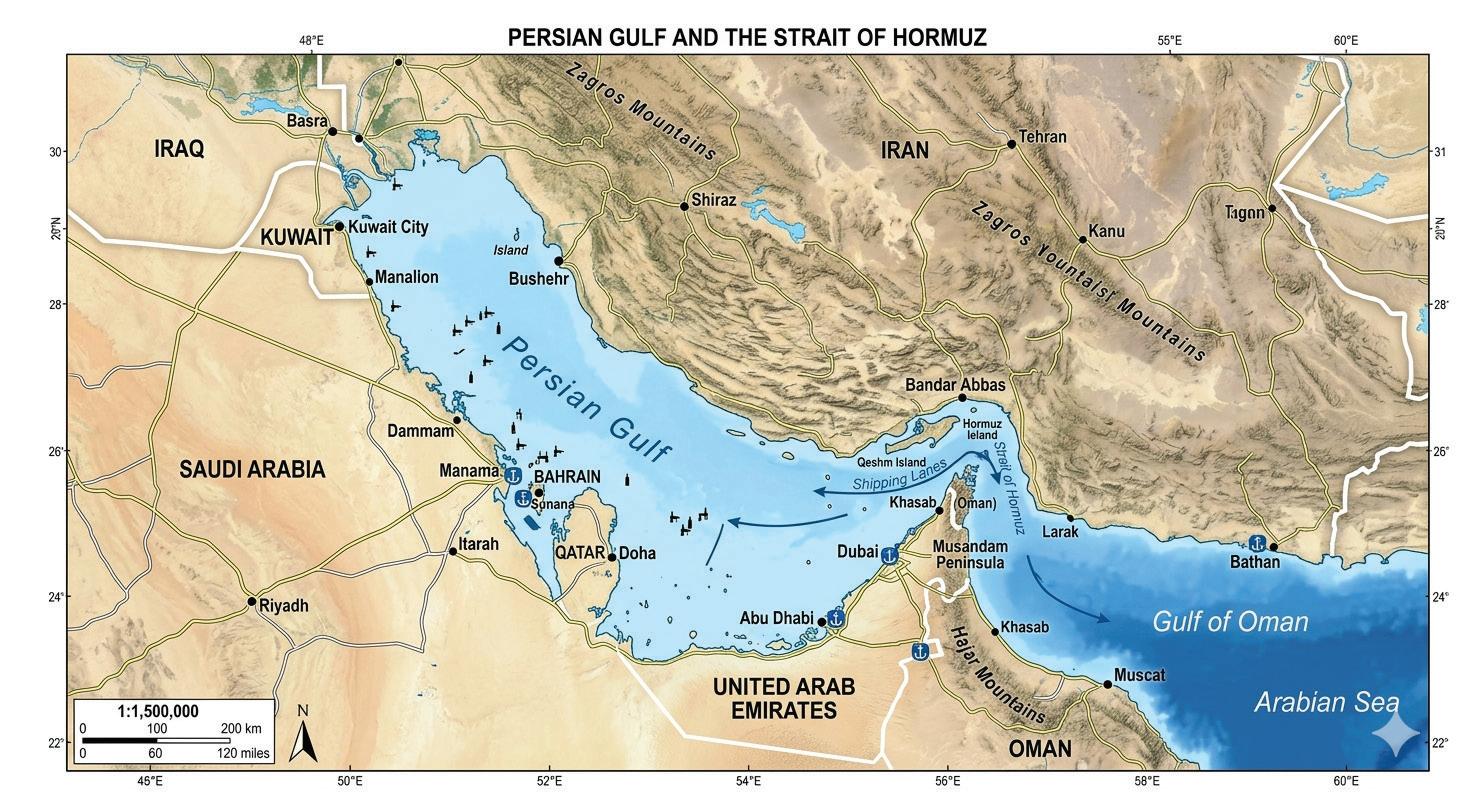
refineries in the Persian Gulf.
“If both sides start launching missiles into these things, it’s going to be a disaster,” he said. “Let’s hope these things don’t get blown up.”
In recent weeks, both diplomatic solutions and threatened acts of aggression have been bandied about as the blockade continues.
Prior to the housing market crash of 2008 and such subsequent events as the more recent COVID pandemic, the price of urea was relatively stable with yearly increases that were usually no more than $20 per metric ton. The days of $200 to $250 per metric ton are likely never to be seen again, Drohen said. Last year saw prices of about $350 (U.S.), but experts are predicting prices could range between $450 and $850, depending on how much longer the conflict continues or to the extent it might escalate.
In 2008, the price of urea skyrocketed from $250 to $1,000. As prices escalated, large amounts were purchased and stockpiled. When the market crashed, buyers were saddled with millions of dollars’ worth of in-
ventory.
“Most people today lived through that, so they’re really gun shy about bringing in product,” Drohen said. “This (the Middle East conflict) could end, and the floor could fall right out of it, or it could go another two months and stay high and there would be a slow, gradual decrease. It’s hard to tell how bad this is going to be.”
LAWN CARE CUSTOMERS TO PAY PRICE
Lawn care companies will be paying more this season for their fertilizer, he said, adding the cost increase must be passed onto the customer. Not doing so will mean lawn care companies will be eating the cost themselves.
Production of urea is dependent upon natural gas. More than 40 per cent of the world’s natural gas reserves are in Iran and Qatar, and about 80 per cent of the cost of producing urea comes from natural gas. Nitrogen is pulled from the air, reacting with carbon and natural gas to ultimately create urea.
‘You have to watch what gas is doing to get an idea what your fertilizer is going to do’
“You have to watch what gas is doing to get an idea what your fertilizer is going to do,” Drohen said. “When gas goes up, so does fertilizer. Why is that? Urea is the highest nitrogen content. It’s one of the modern wonders of the agricultural world. If we didn’t have urea, we couldn’t feed the planet like we do.”
Global fertilizer usage was about 46 million tons in 1965. By 2019, the amount jumped to 190 million tons. The number climbed to 206 million tons in 2024. As the world’s population continues to grow with more mouths to feed and the need to feed livestock, the more fertilizer will be required.
The turfgrass industry accounts for a minute percentage of the global production of fertilizer. Of the 206 million tons produced in 2024, only one million tons of that was earmarked for turf while the rest was used for agricultural purposes.
“What we do in turf really doesn’t matter,” Drohen said. “It’s what’s going on in the world globally that affects our pricing of fertilizer.”
About 75 per cent of North America’s natural gas needs is produced domestically, including from fields in Western Canada. Nevertheless, much of it must be imported from the Middle East.
Fertilizer costs are also affected by rising gasoline prices with trucks, ships and other modes of transportation needing fuel.
Complicating matters is the recent withdrawal of Lloyds of London’s insurance coverage of freight shipments through the Persian Gulf. Renowned for its high-risk insurance protection of major corporations, the company has opted to remove itself from war-risk coverage. Ships transporting 50,000 tons of fertilizer at a cost of about $30 million, not including the vessel and its personnel, are sailing without a safety net.
The blockade of the Strait of Hormuz is preventing urea shipments from reaching markets around the world.
TURF TIRES: They play a key role
Tires influence equipment performance and early season turf recovery.
By Peter Kortes
As turf professionals prepare equipment for the spring season, attention often turns to blades, engines, and cutting performance. But one of the most critical components that may get overlooked sits where equipment meets the ground.
Tires play a bigger role in turf operations than they’re often given credit for. They influence how equipment performs, how efficiently work gets done, and how well turf surfaces recover in the early season. As the only point of contact with the ground, tires control traction, load distribution, and the overall impact applied to the surface with every pass.
Spring conditions make those factors even more important. Tire condition, setup, and maintenance can directly affect both equipment performance and turf quality.
SPRING CONDITIONS EXPOSE EVERY WEAK POINT
The shift from winter to spring creates some of the most demanding conditions turf managers will face all year. As snow melts and frost leaves the ground, surfaces become wet, uneven, and inconsistent. These conditions increase the risk of rutting, slippage, and turf damage, especially
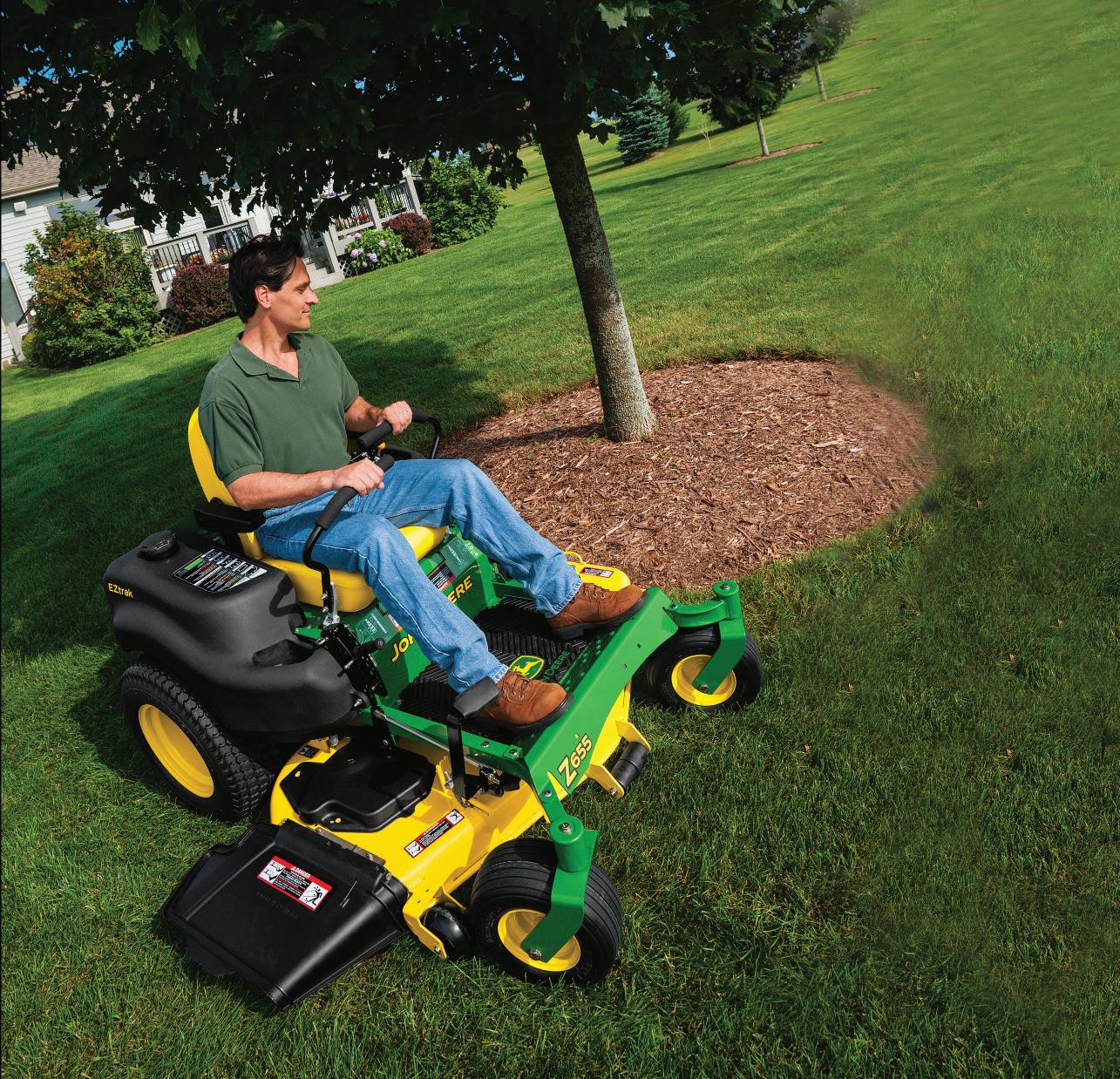
when equipment is put into service too early.
Wet ground can also create a compounding problem. Reduced traction leads to tire spin, which impacts productivity and can quickly damage sensitive, early-season turf as it’s still developing. Growth is often uneven, and soil conditions can vary across a property, creating unstable and unpredictable surfaces.
Timing is another important factor. Some municipalities begin work as early as March, while many golf courses wait
until late April to allow turf to firm up. Starting too early can lead to damage that affects surface quality for the rest of the season.
TIRE CHOICE DIRECTLY IMPACTS TURF QUALITY
In spring conditions, tire selection should not be a secondary decision, instead, it is a key performance decision. Tires carry and distribute the full weight of the machine. On soft turf, even small differences in load distribution can influence how well
Tires built for turf applications help reduce rutting, protect root structure, and support overall turf health.
Peter Kortes is the outdoor power equipment product manager for Titan International which provides tires, wheels and undercarriage products for a variety of off-road equipment.
the surface holds up and recovers.
Tires built for turf applications, often with smoother tread patterns, are designed to deliver a more consistent footprint. That helps reduce rutting, protect root structure, and support overall turf health. More aggressive tread designs may offer traction in certain environments, but on sensitive turf they can increase surface disturbance when conditions are least forgiving.
For professional operators, protecting turf quality and ensuring consistent performance are the priority, and tire selection needs to reflect that. Look for tires engineered to balance traction and turf protection, with a design that distributes weight evenly and performs reliably across changing ground conditions. In less demanding applications, such as homeowner use, there is often more flexibility because work begins later when conditions are more stable.
PRE-SEASON CHECKS SET THE TONE FOR THE SEASON
Prevent many early-season issues before equipment even enters the field by completing a targeted tire inspection. Key areas to review include tread depth, sidewall condition, valve stems, and overall tire pressure. Cracks, bulges, uneven wear, or signs of air loss all point to potential problems that can impact performance or safety.
Winter storage of your equipment often introduces hidden issues. Tires that sit for
In spring conditions, tire selection should not be a secondary decision
long periods, especially in changing temperatures, can develop flat spots, cracking, or pressure loss. These issues may not be obvious at first but can quickly lead to downtime once equipment is in use. Addressing them early supports reliability and helps avoid interruptions during a critical window of the season.
INFLATION DRIVES PERFORMANCE, TRACTION, AND TIRE LIFE
If there is one maintenance practice that delivers immediate impact, it is proper inflation. Correct tire pressure allows the tire to maintain its intended shape and footprint, therefore supporting even load distribution, consistent traction, and reduced turf disturbance.
Overinflated tires increase ground pressure and reduce traction. On the flip side, underinflated tires can lead to uneven wear, reduced stability, and a higher risk of failure. Neither condition supports efficient operation or long-term durability, to say the least.
Maintaining the correct pressure, based on manufacturer recommendations, helps balance performance, safety, and tire life. Operators should reference the tire sidewall or consult their tire provider to deter-
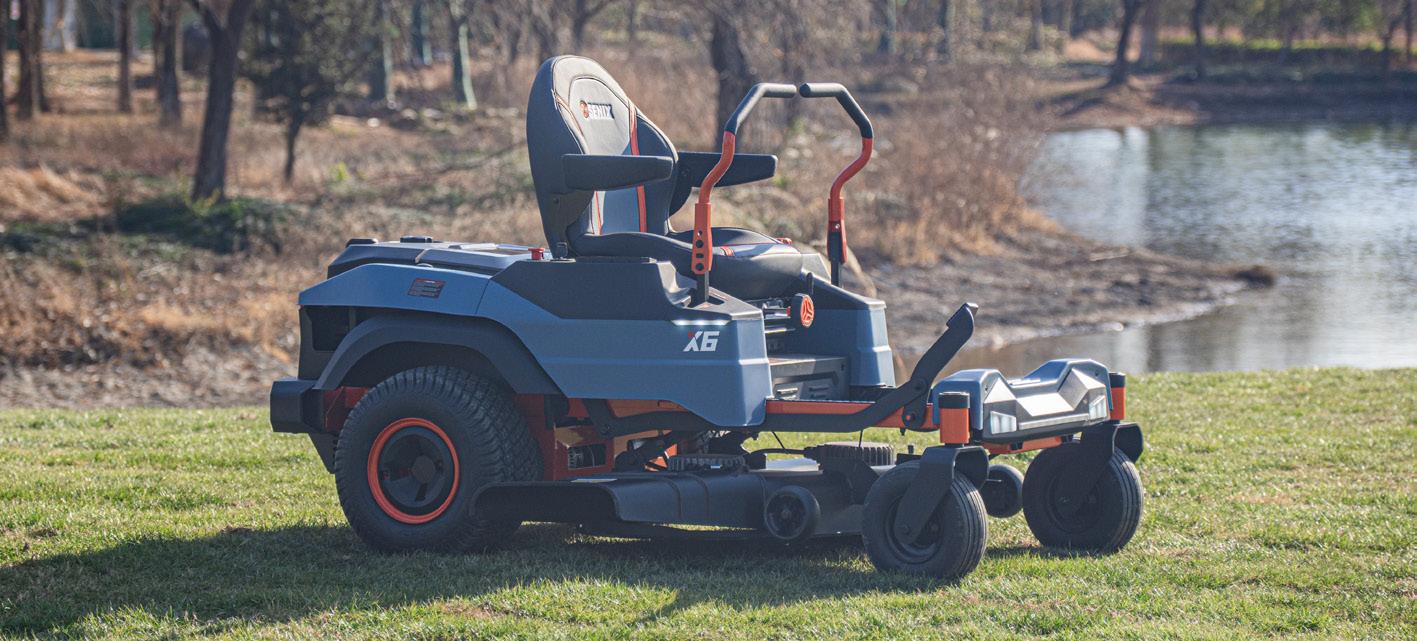
mine the appropriate PSI for their specific application.
During peak use, consistency matters. Weekly pressure checks are a practical habit for most professional fleets and help maintain reliable performance across changing conditions.
PROACTIVE TIRE CARE SUPPORTS UPTIME
Tire maintenance plays a direct role in keeping equipment working when it is needed most. Tires that are properly maintained deliver consistent traction, reduce unnecessary strain on equipment, and support predictable performance in the field. Tires that are neglected tend to fail under load, leading to downtime, delays, and added cost.
Monitoring wear patterns throughout the season helps identify issues early. Uneven wear, sidewall damage, or slow air loss are often early indicators that maintenance or replacement is needed.
A proactive approach supports uptime, improves efficiency, and helps ensure equipment is ready when conditions are right.
THE BASICS STILL MAKE THE BIGGEST DIFFERENCE
Tire technology continues to advance, but the fundamentals remain the same. Consistent inspection, proper inflation, and selecting the right tire for the application are some of the most effective ways to protect turf and support long-term equipment performance.
These are well understood practices, but they are often overlooked during the transition into a busy season. Spring preparation is an opportunity to refocus on those basics and start the season strong. Because in turf operations, performance starts at ground level.
BMO Field set for World Cup
‘All the grass needs to play the same, regardless of where it’s played’. By Mike Jiggens
The soccer world will soon be turning its attention to North America where the United States, Canada and Mexico will jointly host the 2026 FIFA World Cup tournament – the sport’s grandest spectacle.
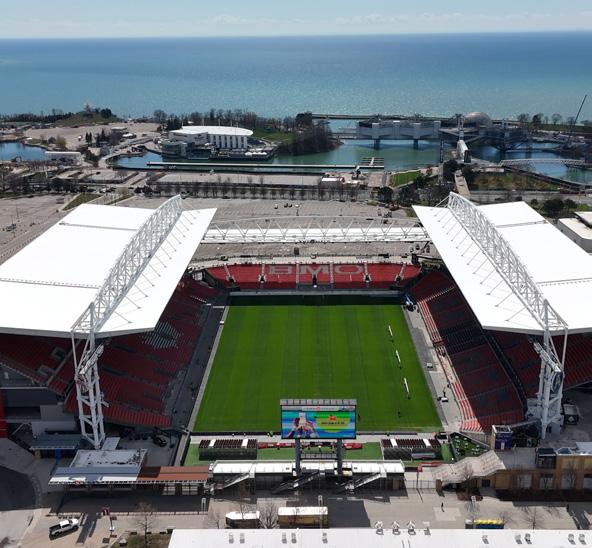
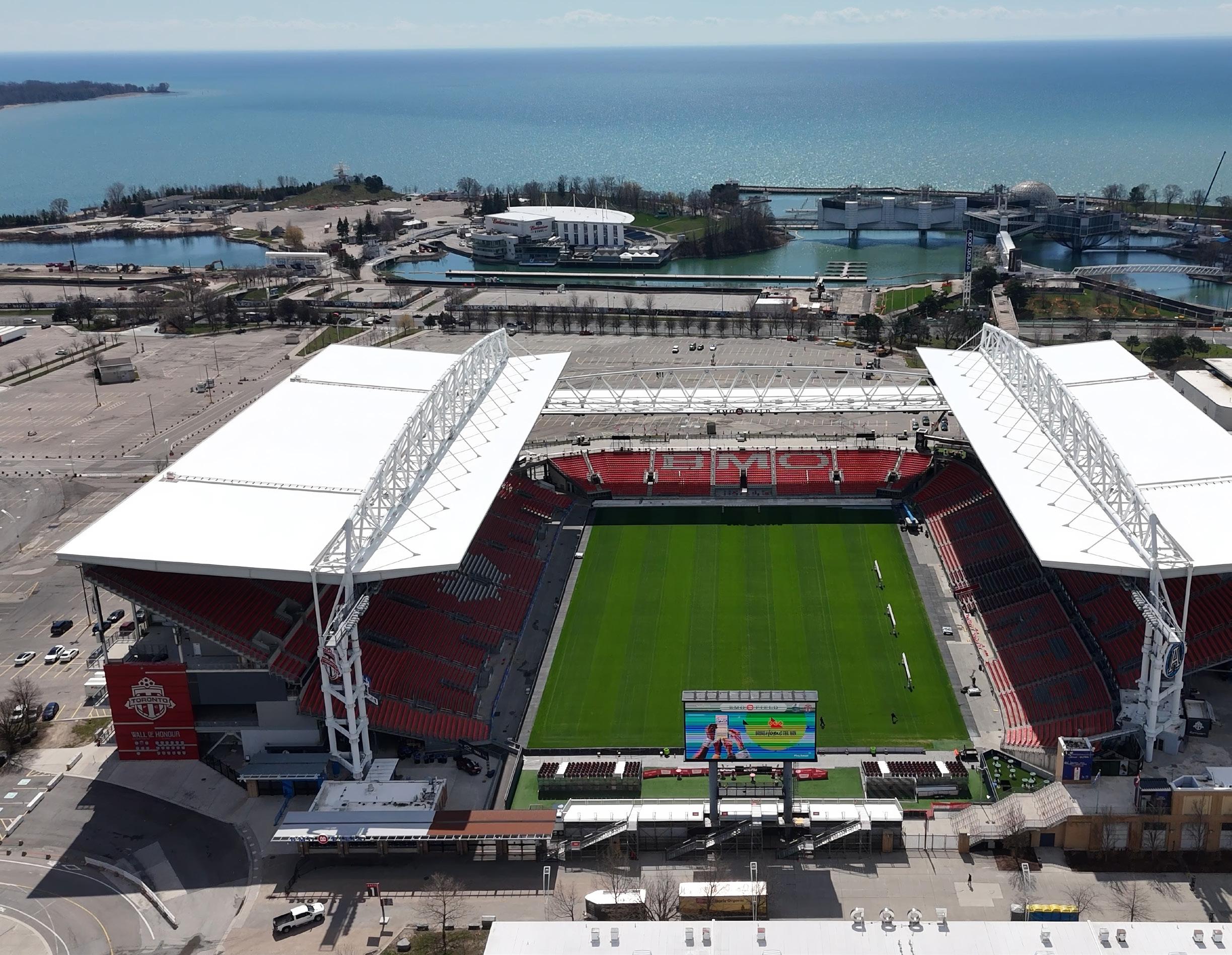
The tournament, to be played June 11 to July 19, will see 48 teams from around the world competing for soccer glory at 11 different stadiums in the United States, three in Mexico and two in Canada. The Canadian venues are Vancouver’s BC Place, where seven games will be played, and Toronto’s BMO Field, which will be the site for six games.
Robert Heggie, director of grounds at BMO Field (Maple Leaf Sports and Entertainment), spoke in February at the Ontario Turfgrass Symposium about field preparations in the leadup to the international tournament.
BMO Field has undergone several changes and upgrades since its construction 20 years ago and has more recently been forced to comply with a set of standards set down by FIFA (F<1>d<1>ration Internationale de Football Association). The stringent field conditions are meant to ensure that all 16 World Cup stadiums have playing surfaces that perform equally, allowing no one team to have a playability advantage over another.
This has presented a challenge for many of the host cities whose stadiums are located in vastly different climate zones where some fields are indoors while others are open air, some traditionally have artificial turf surfaces, and those with natural grass surfaces are grown to different turf types. World Cup games must be played on natural grass, as mandated by FIFA. BC Place, along with Mercedes-Benz Stadium in Atlanta, AT&T Stadium in Dallas and SoFi Stadium in Los Angeles, are indoor facilities with traditional artificial turf playing surfaces used primarily for professional football. Each is having to transition to natural turf during the World Cup. Without access to natural photosynthe -
BMO Field in Toronto will be the host venue for six FIFA World Cup games this summer.
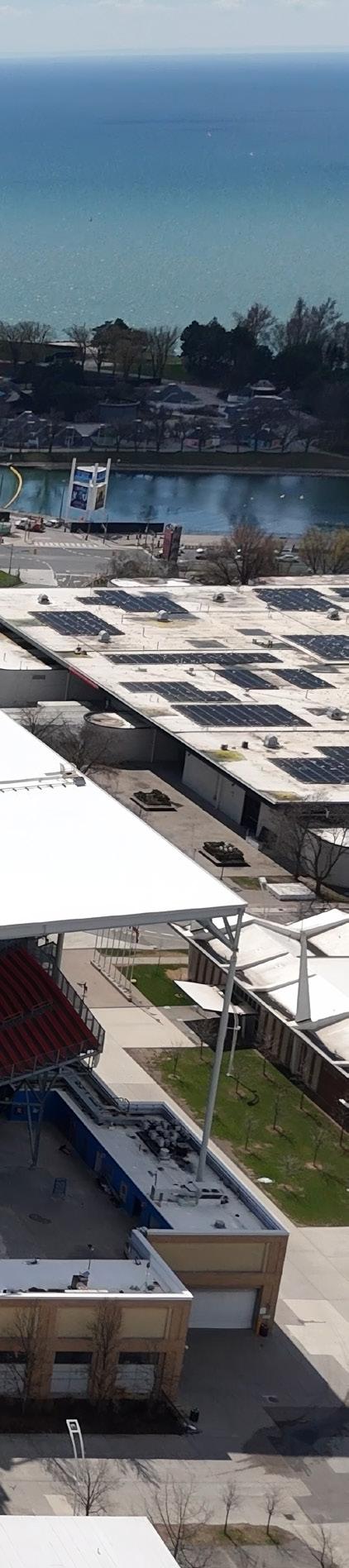
sis, the temporary natural surfaces will rely on artificial grow lights.
Boston’s Gillette Stadium also has a traditional artificial playing surface yet is an open-air facility that will allow sunlight in.
“All the grass needs to play the same, regardless of where it’s played,” Heggie said.
BMO Field was originally constructed as a soccer-specific stadium albeit with an artificial turf playing surface. Elite soccer players, however, prefer to play on natural grass, and Toronto was challenged to attract high-end athletes during the facility’s early years. When Real Madrid came to play in a “friendly” competition in 2009, it meant having to temporarily lay natural grass atop the artificial turf. Maple Leaf Sports and Entertainment requested a permanent natural surface for the following season which cost $3.5 million. Another $2 million was spent on seating expansions.
The conversion to natural turf led to a new challenge – ensuring the grass field could survive an entire soccer season with games often played from late winter to late fall. Compounding things was the addition of
the Canadian Football League’s Toronto Argonauts who joined the Toronto FC as co-tenants at BMO Field after abandoning the Rogers Centre following the 2015 season.
To ensure natural grass could thrive throughout the lengthy Major League Soccer season, a subsurface heating system and artificial lighting system were installed.
In 2018, a hybrid surface was introduced in which artificial fibres were stitched in with the natural grass to help reinforce the playing surface. The artificial fibres account for only five per cent of the entire playing surface but help the field withstand the rigours of both soccer and football play.
“You stitch artificial roots into the field,” Heggie said. “This gives us the playability. We won’t always be pretty, but we’ll always play. We’ll always be safe, and the game will never be cancelled.”
BMO Field’s World Cup surface is a mix of Kentucky bluegrass and perennial ryegrass. Southern U.S. venues are using various Bermuda grass blends while Mexico City’s Estadio Azteca’s surface is expected to be Kikuya grass.
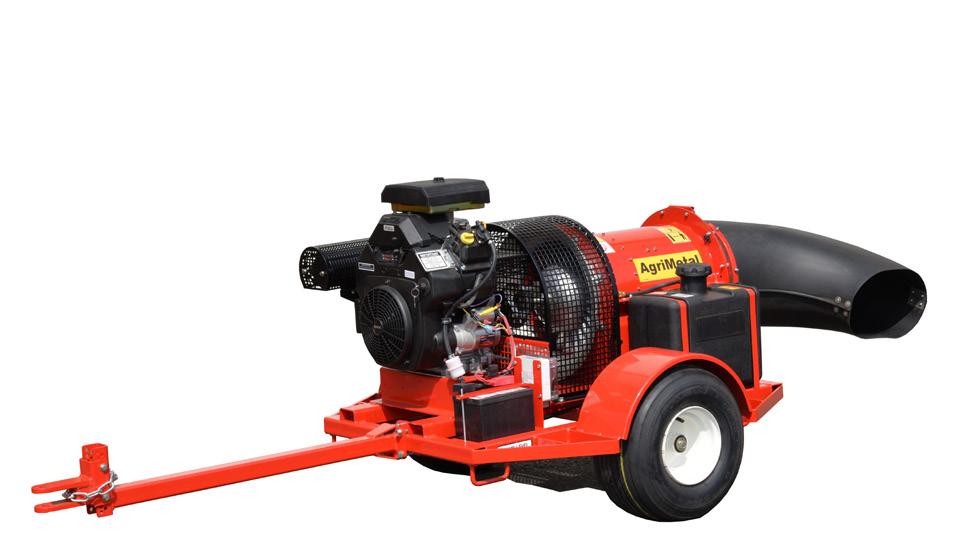

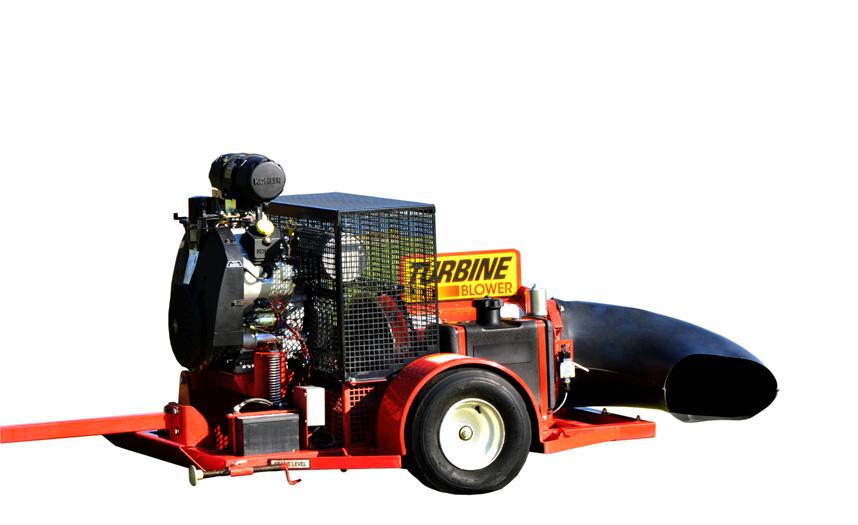
FIFA officials have tested the surfaces of the participating World Cup venues to ensure play will be consistent from one field to the next, including how the ball will respond on the turf.
In November of 2025, BMO Field underwent a surfacing renovation in which a new FIFA-regulation hybrid surface was installed. The project also saw the field dimensions reduced to 105 metres by 68 metres.
The hybrid surface is a reinforced system designed to withstand the stress of tournament play. Already tested in March by the Toronto FC for its season home opener, the field conditions generated rave reviews.
The field’s natural grass was grown by Greenhorizons Sod Farms.
“They had a fantastic product for us.”
World Cup games to be played at BMO Field include five round robin contests and a Round 32 match between the runners-up of Group K and Group L. The first game scheduled for BMO Field on June 12 will feature Canada against the European playoff A winner from the group stage.
Consider this before digging
Turf professionals must contact Ontario One Call before starting excavation work.
By Mike Jiggens
Call before you dig was once the oft-heard refrain meant to prevent the inadvertent severing of underground pipes and cables when excavation jobs were planned. Today, it’s “click” before you dig, but the message hasn’t changed.
Sports field managers, golf course superintendents and other turf professionals planning to renovate their green spaces are well advised to consider what lies beneath the surface before a shovel or backhoe penetrates the ground.
Beth Patchett, education and training program co-ordinator for Ontario One Call, addressed a roomful of sports field managers in February at the Ontario Turfgrass Symposium in Guelph about the importance of contacting the public safety administrative authority in advance of any excavation work.
Failure to contact the authority before digging into the ground could result in the disruption of pipes, communication cables, and gas, electrical and irrigation lines. The disturbance may not only be costly but can shut down services that could impact others for lengthy per-
iods of time.
Patchett said Ontario One Call doesn’t mark the location of underground infrastructure. Instead, that responsibility lies with the organizations that own the pipes and cables.
“We act as the communication link between excavators and owners and operate on a cost-recovery model to ensure that we balance public safety and fiscal responsibility,” she said.
Patchett defined “excavator” as an individual, partnership, corporation, public agency or other entity that digs, bores, trenches, grades, excavates, moves or breaks earth, rock or the material in the ground. Excavators have a legal obligation to contact Ontario One Call no matter how big or small or how deep or shallow an excavation job is to be.
A locate request is mandatory before the ground is to be disturbed. This includes such projects as the installation of a backyard garden, the enlargement of a golf course bunker or the removal of old sod.
“You do indeed need a locate request, and this is another one of those activities that people don’t think about when they think of ground disturbances.”
LOCATE REQUESTS
A locate request compares the targeted area with mapping provided by the infrastructure owners. The system then determines if there is buried infrastructure that might be at risk. Ontario One Call will subsequently notify the various infrastructure owners and supply an emailed list of underground cables,
pipes and lines and the agencies which own them.
“Before you can start digging, you need to receive a response from every single infrastructure owner on that list.”
Locate requests should be made well in advance of excavation, Patchett suggested. Before digging can begin, all locate request responses must be received. Infrastructure owners will flag sensitive areas and provide necessary guidelines to initiate safe digging.
Making a locate request requires a visit to Ontario One Call’s website –ontarioonecall.ca – and the creation of a contractor account. Turf professionals must indicate where, why and how they wish to dig. The system will ask for the excavation address and the nearest intersection. A map selection of the property from an aerial view is also required as well as an explanation of the type of work that will be undertaken, such as the installation of a fence, the laying of sod or other landscaping work where ground penetration is involved.
“There are two items that I really want to bring to people’s attention. The first is the method of excavation. Your choices are going to include hand-digging, machine-digging and hydro excavation.”
Except for hand-digging, all other methods of excavation are regarded as machine-digging.
The other key consideration, Patchett said, is the dig site – whether it’s on public or private property. Service lines are designated as public when the providing utility company

It’s important to contact Ontario One Call before the start of an excavation project.
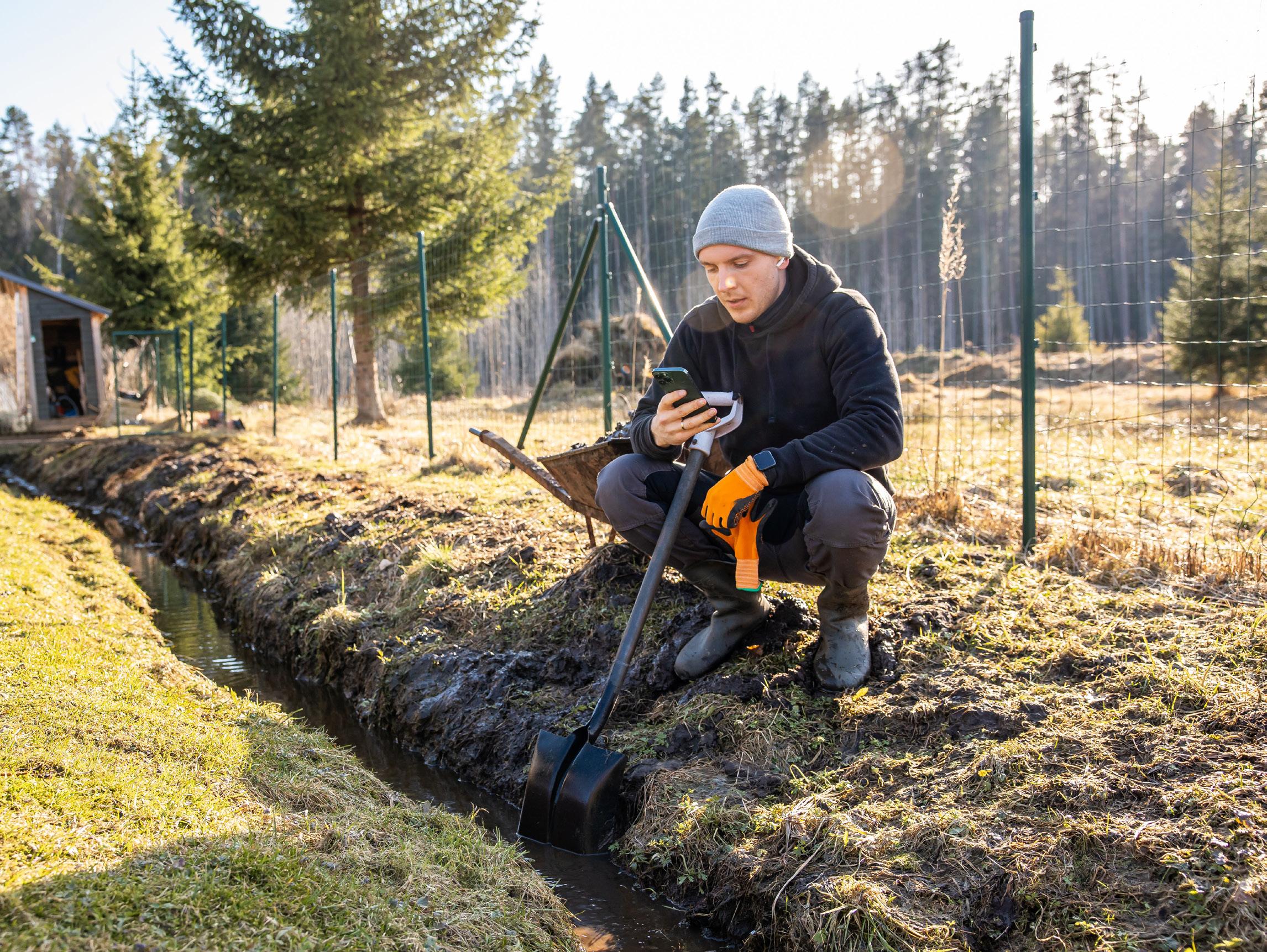
is responsible for the installation and maintenance of the transmission line. Utilities such as privately owned electrical lines or in-ground sprinkler systems are not typically located by Ontario One Call and must be marked by a private locator.
“Each property is going to be unique, so you’re going to want to review your records to what you own.”
A clearance statement from the underground infrastructure owner will indicate there is nothing below the surface in the targeted area that will be affected by digging.
“They must also inform you of how long that is valid for. By law, the minimum is 60 days, but it can be longer.”
By contrast, locate documentation is paperwork from the infrastructure owner that shows a map or drawing of the infrastructure’s location and will be accompanied by paint or flags to mark its position.
Patchett recommended making a standard request for a single civic address between five and 30 days before the desired
start of digging. Infrastructure owners must provide a response within 10 days.
EMERGENCY REQUEST
An exception to the rule is an emergency request which would be made in the event of a water main break or the loss of an essential service that could pose a safety or environmental threat. After contacting Ontario One Call, the infrastructure owner is legally obligated to send a clearance or have someone on site within two hours to mark the infrastructure.
“If you think you’re ready to dig, you need to review the paperwork to ensure compliance. Ask yourself: do I have a response from every single infrastructure owner that Ontario One Call notified? If not, don’t dig. Do the paint or flags match the map provided by the infrastructure owner? If they don’t, don’t dig and contact the infrastructure owner.”
Patchett said if the paint markings or flags have been removed, the locate request process must begin again. A new locate request
is also required if a project was initially intended for hand-digging but later warrants machine-digging.
As the regulator for the Ontario Underground Infrastructure Notification Systems Act, Ontario One Call is responsible for ensuring its compliance. Violations of the act include digging without a locate request, digging in an unsafe manner, digging before receiving the necessary notification or documentation from all infrastructure owners, switching to machine-digging from hand-digging without making a new locate request, or digging deeper than planned.
In the event infrastructure owners fail to respond within the legal time limit, complaints can be submitted to Ontario One Call by filling in an online form. Its compliance and industry performance team (CAIP) will verify if the complaint is valid and take the necessary action to resolve the late locate.
“Our goal is to help you build knowledge now so that you can start working safely and efficiently when spring digging season arises.”
Maximize profit in land clearing
Revenue-generating ideas for land-clearing professionals. By Turf & Rec staff
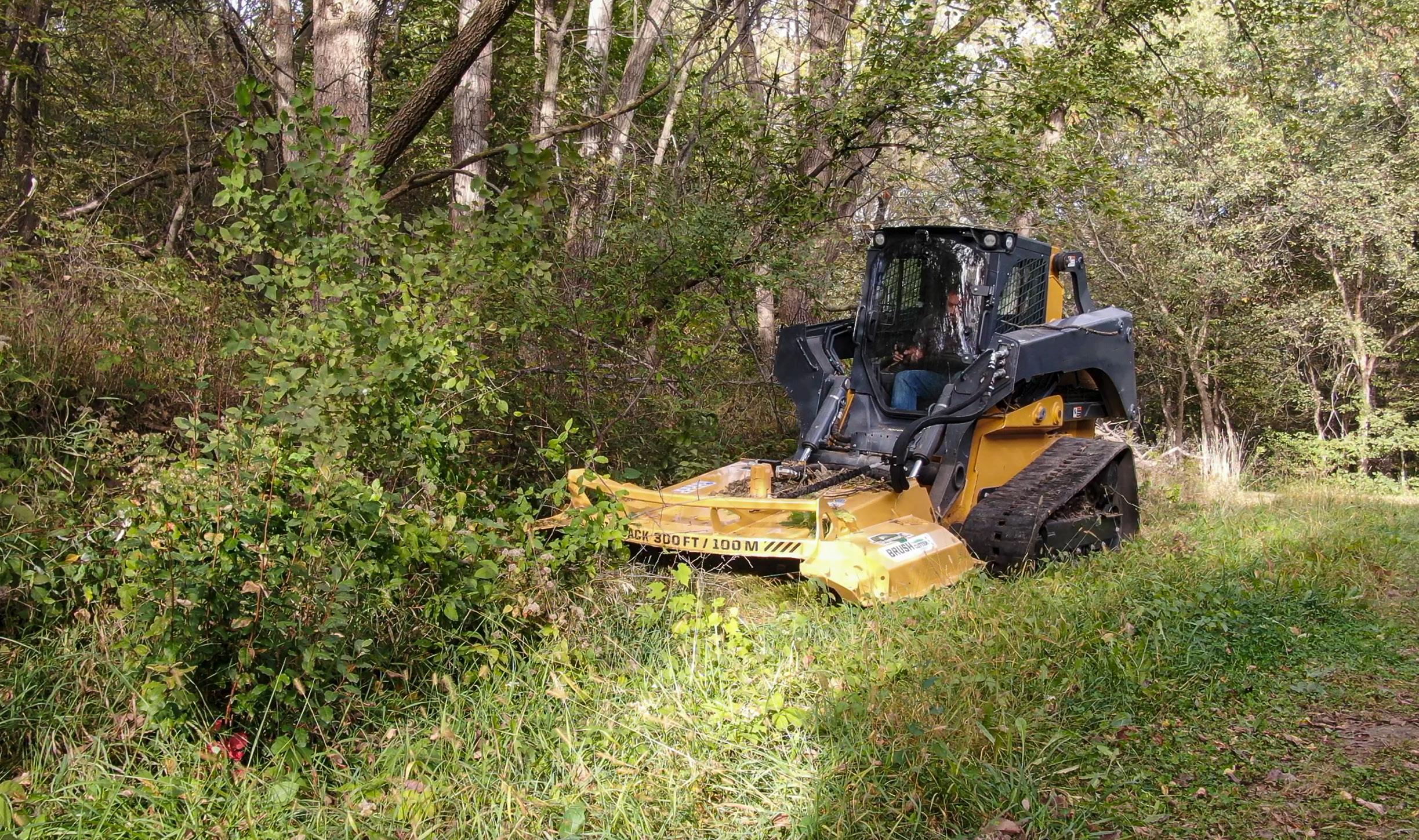
As winter loosens its grip, spring brings heightened demand for land-clearing contractors, municipalities, utility crews, and private landowners preparing for the season ahead. Winning the season involves moving early, diversifying services, and matching the right equipment to the right applications.
“What makes spring unique is the variety of work that shows up all at once,” Nate Cleveringa, vice-president of engineering and product management at Diamond Mowers, says. “Contractors who are equipped to handle everything from light cleanup to heavier land clearing can take on more jobs without slowing down or switching up their workflow.”
The following revenue-generating strategies can help operators capture and complete more spring work. Each one outlines where demand typically shows up, how to approach the work, and which attachments are best suited to help turn spring activity into sustained momentum throughout the year.
CASH IN ON THE THAW: POST-WINTER PROPERTY AND LAND RECLAMATION
As snowmelt and spring rains pull back winter coverage, landowners are often surprised by what’s hiding underneath: downed trees, broken limbs, debris piles, and encroaching brush. This creates an immediate need for cleanup and land reclamation, particularly for those preparing fields, property owners recouping usable acreage, and developers assessing new construction sites.
“The most successful operators take a measured approach to early-season reclamation,” Cleveringa says. “With better visibility before vegetation thickens, they can plan cleaner passes, address hazards before they become costly setbacks, and work more efficiently while minimizing wear on their machines and attachments.”
For these jobs, a combination of brush cutters and mulchers work well, depending on material size and site conditions. For grass, brush, and smaller woody material, they offer a fast, easy way to reclaim land
and stepping up cutting capacity for denser growth and heavier brush. In tighter spaces, mini brush cutters allow for detailed cleanup and property maintenance without sacrificing performance.
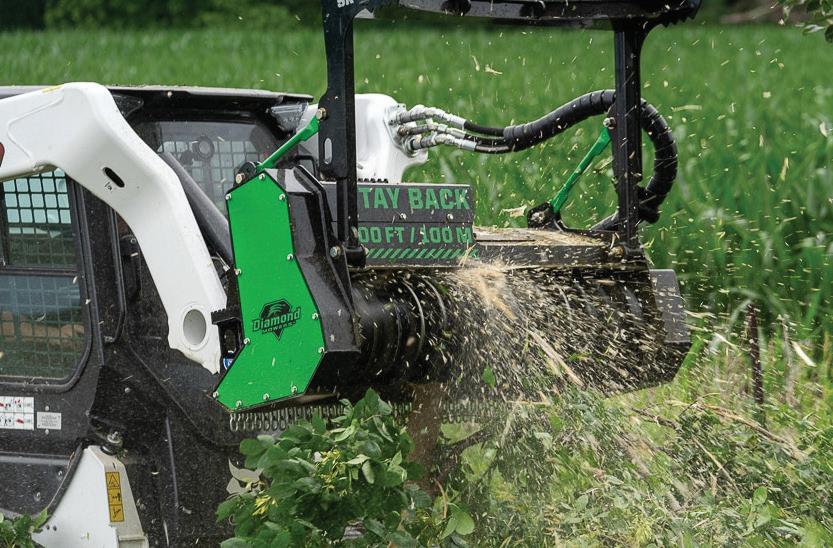
When the work involves standing trees or heavier debris, a mulching attachment can take down material and process it in a single pass while maintaining control and visibility. For both open drum and depth control configurations, they tailor performance to varying ground conditions. The depth-control model is ideal when controlled ground engagement and a finer mulch are priorities, while open drum units excel in applications requiring aggressive material ingestion and productivity in uneven terrain.
PROFIT AT THE PERIMETER: ENCE LINE AND BOUNDARY MAINTENANCE
Fence and boundary lines require consistent upkeep, particularly for agricultural producers, municipalities, and property managers. Over the winter, vegetation
Brush cutters offer a fast, easy way to reclaim land and stepping up cutting capacity for denser growth and heavier brush.
creeps back toward fences, ditches, and buffer zones, creating access issues and other safety concerns.
For lighter growth, a brush cutter is often the most ideal solution, but extended-reach equipment becomes especially valuable when work extends along roads, ditches, or uneven terrain. Midmount boom mowers, for instance, offer precise control, improved visibility, and a compact profile that enhances safety when working near traffic.
STOP THE SPREAD: INVASIVE SPECIES CONTROL
Early spring offers a prime window for controlling invasive species before they mature and seed. Left unchecked, intrusive trees and brush can quickly overtake land, degrade ecosystems, and significantly increase future removal costs.
“Effective control of invasive species follows a deliberate process,” Cleveringa says. “Contractors typically begin by cutting and knocking down standing growth before mulching trees and dense brush because addressing tree stumps or root systems as part of the same project helps limit regrowth and delivers longer-lasting results for landowners.”
For invasive species removal involving standing trees, a disc mulcher is an ideal choice because it uses stored energy to efficiently process larger material. In sensitive environments where a finer mulch and minimal ground disturbance are preferred, it is an effective solution.
REVENUE IN THE FORECAST: STORM AND DISASTER READINESS SERVICES
Spring also marks the beginning of severe weather season. Professionals who prepare
in advance are best positioned to respond quickly when storms, floods, or wildfires create urgent cleanup needs.
Drum mulchers engineered to process downed trees and storm debris help crews restore sites efficiently while producing a clean end product.
Tree stumps left behind after storms can delay restoration and create safety hazards, particularly along rights-of-way and on agricultural land. There are wheel-based stump-grinding solutions that remove stumps quickly and effectively, enabling contractors to offer a complete, high-value recovery service.
HIT THE ROAD: MUNICIPAL AND INFRASTRUCTURE WORK
Many municipalities ramp up spring spending on roadside maintenance, rightof-way clearing, and infrastructure preparation. For contractors, this work represents more than a seasonal spike; it’s an opportunity to build long-term partnerships by delivering consistent and reliable results.
“Municipal work demands equipment that prioritizes operator visibility, stability, and efficiency in high-traffic environments,” Matt Nelson, director of development at Diamond, says. “Combining a rotating cab, advanced sightlines, and boom-mounted attachments, this turnkey platform is engineered to improve safety and productivity.”
Paired with boom mowers and mulching attachments, crews can take on a wide range of tasks from roadside mowing to drainage maintenance, without expanding fleets. This versatility helps municipalities stretch budgets while enabling professionals to keep machines productive across seasons.
Spring offers land-clearing professionals
a wide range of opportunities to stay productive and build momentum for the year ahead. With the right mix of services and equipment, contractors can take on seasonal work with confidence while positioning themselves for repeat business and long-term growth.

Drum mulchers engineered to process downed trees and storm debris help crews restore sites efficiently.

Preventing lawn drainage issues
A guide to diagnosing and preventing issues that can lead to waterlogged lawns. By Turf & Rec staff
AColorado low recently hit parts of Canada, bringing storms and heavy rainfall and even more snow in some areas. Such weather can be a disaster for outdoor spaces and may lead to waterlogged lawns, which can result in deep, wet patches, as well as a sudden surge of slugs or dead grass, making it a challenge to fix. Homestars.com has created a guide that allows waterlogged lawns to be fixed and prevent one in the future.
Lawns become waterlogged when excessive amounts of water are unable to drain away, leaving no air spaces in the soil, which causes a lawn to literally drown. This is an issue that’s easy to spot. After weeks of rainfall, one may notice that grass tips are turning yellow, which means they’re strug-
gling to breathe. A lawn may also feel particularly squelchy when stepped on, which is a sign of poor drainage.
Colleen McGrory from Homestars says a drenched yard may lead to critical lawn damage if it’s not taken care of as soon as possible.
“The Colorado low has resulted in warnings being issued for storms, heavy rainfall and snowfall in parts of Canada, so the last thing households may be thinking about doing is heading out into their yards,” she said. “However, it’s not just us that get hit by extreme weather – our lawns do, too.
“It’s quite difficult for large amounts of water on your grass to drain after these types of weather. This can leave very little space for your soil to breathe, which puts your lawn at risk of dying out.
“But there are ways you can fix a damaged lawn before it reaches that stage – and prevent one down the line. Start with aerating your lawn and levelling it out, which will help stop your yard flooding more heavily in certain spaces. Afterwards, you may want to consider what your lawn needs. In some cases, especially if your yard has heavy clay soil, which drains poorly, you may need your own drainage system.
“Ultimately, bracing the miserable weather now, and keeping on top of your lawn, will ensure it’s in good condition once the sun is here consistently.”
Spotting a waterlogged lawn:
PUDDLES
If you notice a yard has areas with standing water, the lawn isn’t draining properly. It’s
Lawn aeration will help rainwater infiltrate the soil easier, preventing surface ponding.
important that this issue is fixed as soon as possible, as it could lead to bare patches on grass, or even a surge of algae and various types of moss.
YELLOW GRASS
Yellow patches on a lawn aren’t just unsightly; they’re a sign that a lawn is at risk of dying out. This yellow hue appears on the tips of grass when excessive rain deprives it of the air it needs, causing it to lose its colour. This is a clear sign that a lawn is under stress and is at risk of dying if left untreated.
SPONGY TEXTURE
A quick and useful way to test if a lawn is waterlogged is by taking a stroll across it. A healthy lawn should feel firm and springy. However, if it’s soft and spongy, this could be a sign of a drainage issue.
Here’s how to fix a waterlogged lawn:
‘It’s quite difficult
amounts of water on your grass to drain after
of weather’
REMOVE DEBRIS
If a yard is waterlogged, water must start to drain as quickly as possible. To start with, clear away debris, such as sticks and leaves, to prevent draining areas from becoming blocked. Do this job with your hands, instead of a rake, to avoid damaging an already weakened soil.
AERATE THE LAWN
Aerating a lawn allows rainwater to flow into the ground more easily. This can be done using a yard fork or aerator tool, which
will create tiny holes in the soil and allow it to breathe. Doing this regularly will not only help drain a lawn, but also strengthen the soil long-term.
Here’s how to prevent a severely waterlogged lawn in the future:
SPREAD TOPDRESSING ON THE LAWN
If a lawn is especially waterlogged in certain areas, it may be due to its surface being uneven. For this reason, one may need to level out a lawn to distribute the water
equally and allow it to drain evenly. To complete this job, prepare an appropriate topdressing for the soil type. Ready-made mixes are available at yard centres, or advice can be sought on preparing a own soil mix. Once a mix is prepared, apply it to the damaged area and smoothing out with a soil rake. If this trick hasn’t appeared to work after a few days, repeat the process. Make sure to do the job when the lawn is dry, to avoid risk of mud and clumping. This will also improve the structure of the soil over time to allow for better drainage.
FERTILIZE THE SOIL
Ahead of future heavy rainfall periods, grass roots must be as strong as possible so that they can withstand excess water. For this reason, soil should be fed with a fertilizer that’s rich in the right nutrients to promote healthy root growth. While spreading fertilizer throughout the growing season (April
to September) will benefit a lawn, and doing so in the fall will especially help prepare it for the miserable weather.
CREATE A DRAINAGE SYSTEM
Some types of soil, such as heavy clay soil, drain poorly, which means that an entire yard could be at risk of waterlogging. If this is the case, creating a drainage system, such as a simple ditch or a French drain, may be necessary. It’s worth noting, though, that DIY attempts at this job can fail, and a professional should be consulted to careful-
ly plan a drainage system.
GROW SUITABLE PLANTS
Plants don’t just help improve the appearance of a yard, they also break up compacted soil and absorb excess moisture, which helps prevent a drenched lawn down the line. Shrubs, such as dogwood and winterberry, and water-tolerant flowers such as daffodils, are able to withstand wet weather, although it’s best to wait until the lawn is dry before planting begins in order to avoid compaction.
26_002781_Turf_and_Rec_APR_MAY_CN Mod: March 27, 2026 11:25 AM Print: 04/06/26 page 1 v2.5


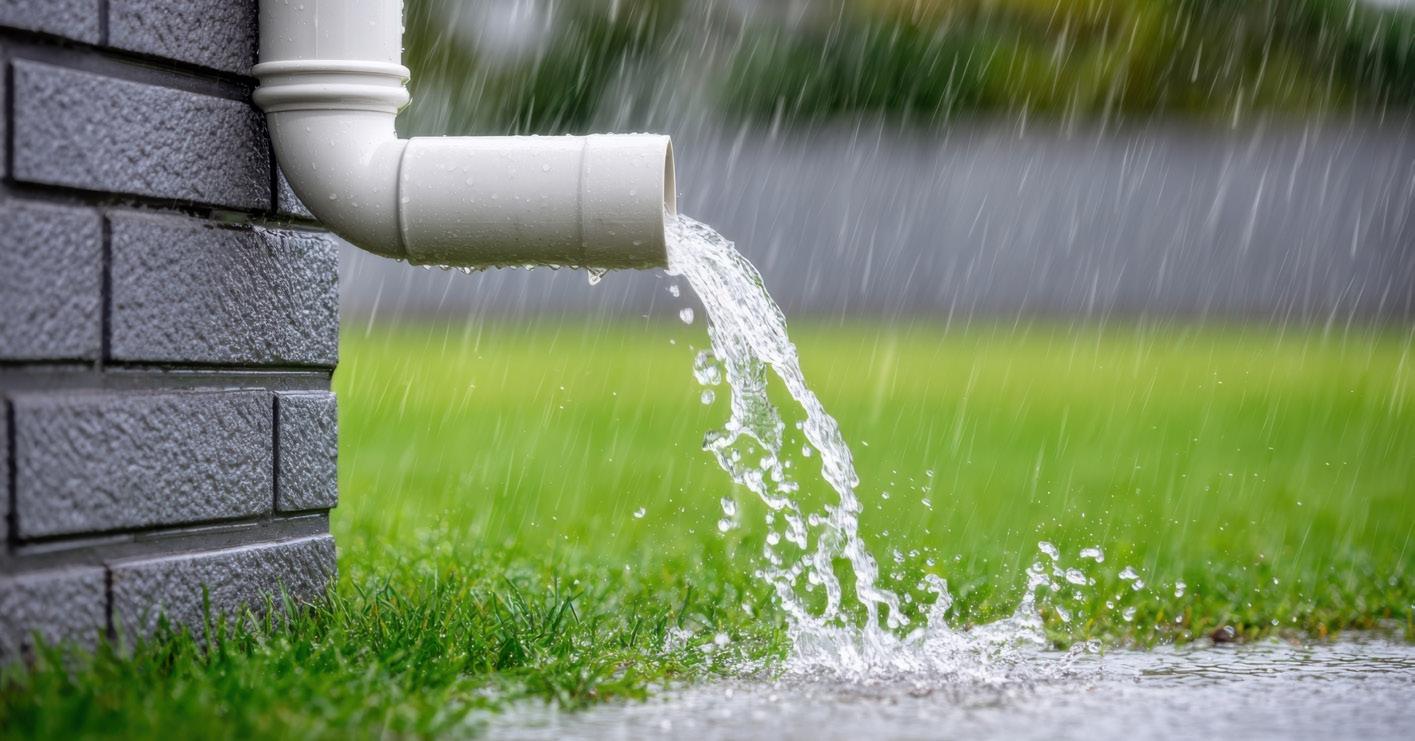
Heavy rain can wreak havoc on a home lawn if drainage issues persist.
member of the Turfgroup, has successfully hosted professional events, including the DP World Tour, while adhering to strict pesticide policies. This achievement challenges the assumption that high-quality playing conditions depend on chemical inputs and suggests that alternative approaches can meet even the most demanding standards.
For the Canadian turf industry, Nilsson’s presentation offers both inspiration and practical guidance. While regulatory frameworks differ, the underlying principles of sustainable management are widely applicable. Since Canadian legislation often follows trends set in Europe, and some municipalities have already implemented stringent policies, pesticide-free management is not a distant concept, but a plausible future for golf in Canada.
Nilsson’s experience provides a positive outlook for those who may be faced with potential incoming pesticide restrictions. By focusing on system design, species selection, and cultural practices, turf managers can reduce reliance on pesticides while maintaining functional and aesthetically pleasing surfaces.
Nilsson was careful not to suggest that all courses should immediately transition to pesticide-free management, noting that Copenhagen represents a unique case study within a protected natural landscape. In some situations, the use of traditional chem-
istries may still be the most efficient option, particularly when the labour, cultivation, reseeding, and fuel required to recover declining turf outweigh the impact of a single application. However, his experience demonstrates that it is possible to significantly reduce pesticide use while still maintaining player satisfaction.
Ultimately, the lessons from the 2026 SIR presentation extend beyond golf. They reflect a broader shift in how we think about managed landscapes, emphasizing resilience, adaptability, and coexistence with natural systems. While golf has historically been viewed as an exclusive sport, the game, and the spaces it occupies, have evolved to become more accessible and multifunctional.
Many courses now incorporate additional uses, from winter cross-country skiing and public walking trails to disc golf, broadening their role within the community. As environmental and social pressures continue to shape the future of turf management, the question is no longer whether change is coming, but how the industry will respond.
Dr. Sara Stricker is the communications and outreach co-ordinator at the Guelph Turfgrass Institute. Martin Nilsson is superintendent at the Royal Copenhagen Golf Club.

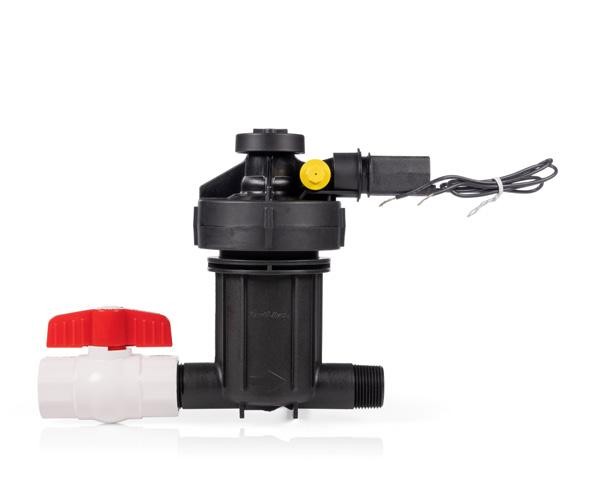
Rain Bird’s new “All-in-One Zone Control” is designed with simplicity aimed at a competitive advantage in micro-irrigation.
Instead of assembling multiple components on site, it combines the valve, filter, and regulator functions into a single compact device.
For specifiers, that means simplifying documentation and ensuring design intent translates more cleanly in the field. For contractors, it means fewer failure points, faster installs, and fewer callbacks tied to pressure inconsistencies or assembly errors. With a wide flow range and small size, it works across virtually any project and fits into almost any valve box, supporting cleaner landscape designs.
Features include:
• Pre-assembled for simple, streamlined installation
• Wide operating range covers virtually any commercial drip zone
• Includes optional purple handle for non-potable systems
• Compact footprint reduces size and number of valve boxes required
• More efficient Pressure Regulation System (PRS) works with lower inlet pressures
Specification include:
• Flow Range: 3 to 30 GPM
• Operating Inlet pressure: 15 to 150 PSI
• Nominal Outlet Pressure: 40 PSI
• Stainless Steel Screen Filter: 150-mesh
• Compatible with traditionally wired controllers with traditional solenoid
• Compatible with TBOS/DC controller when used with DC latching solenoid
• Compatible with IVM controllers (ESP-LXIVM/ LXIVMP) when used with IVM SOL
• Compatible with 2-wire decoder systems like ESP-LXD controller
don’t follow schedules.
Now your service can.
Build a mosquito service designed for consistency with the MosquitoPro Program from Envu Canada.
Powered by trusted solutions like Suspend PolyZone® and Dragnet ® FT, MosquitoPro provides exible, eld-tested rotation options designed to help you deliver consistent control, reduce callbacks, and simplify your season — without disrupting your work ow or your customers’ expectations.
Structure your season with MosquitoPro Program
Electric utility vehicle allows for powerful yet quiet hauling
Built for demanding jobs and forward-thinking fleets, the Cushman Hauler XL ELiTE redefines what an electric utility vehicle can deliver – combining high-capacity performance with a zero-maintenance battery and a zero-emissions approach to daily operations.
The newest addition to the durable Hauler line-up, the 14.9 horsepower Hauler XL ELiTE is designed to meet the demand for more hauling with a 68.5-inch aluminum flat bed, 1,600-pound vehicle load capacity and 1,200-pound bed load capacity. The 22.5-square foot cargo deck can also be upgraded to add steel drop sides or an aluminum box bed.
The Hauler XL provides the same

features as the rest of the Hauler line-up, including a truck-inspired design, automatic parking brake, functional dash and purpose-built accessories.
The ELiTE series is a result of years of
collaboration between Textron Specialized Vehicles and Samsung SDI to create a powerful, reliable, and zero-maintenance battery for utility vehicles. With its advanced Samsung SDI lithium battery technology, the Hauler XL ELiTE supports cleaner, more efficient operations.
The Hauler XL’s ELiTE powertrain is also quiet compared to gas utility vehicles, and the street-legal LSV model can reach speeds up to 25 mph, keeping crews moving to and from jobsites faster and with less hassle. With lithium-powered performance, a zero-maintenance battery and zero emissions, the Hauler XL ELiTE is built for operations who don’t want to compromise performance and sustainability. ai1681314469190_De Groot 3.475 x 4.75 Ad.pdf 1 2023-04-12 11:47:50 AM






An easier way to record meetings with real-time transcriptions
Golf course superintendents frequently meet with their club’s board of directors or greens committees. Parks and recreation supervisors do the same with their municipal councils and the user groups of their sports facilities. Manual notetaking during these meetings can be an arduous task, especially when they run long and involve much detail.
Such industry professionals can make it easier for themselves with a product that not only provides a full transcription of the meeting, but which gives an AI-generated summary of the session as well as a follow-up list of to-do items – all without the need of pen and paper.
The Viaim RecDot AI note-taker is built into smart earbuds that record, transcribe,

translate and take notes. Every word is captured and recorded from the earbuds’ pocket-sized case. Linked via Bluetooth to a smartphone’s downloadable Viaim app, transcriptions appear in real time and are saved for later reference, recognizing individual speakers. The product also translates audio from several foreign languages into English in real time.
Up to 36 hours of battery life is provided, and the earbuds feature 48 dB of noise reduction, enhancing such other uses as listening to music. Four sets of earbud tips are provided to ensure a proper fit. One of the app’s features helps to determine if there is a snug seal within the ear canal. Phone calls, live and online meetings, podcasts and more can be captured and instantly transcribed. The meeting


assistant feature produces concise summaries and actionable to-do items from lengthy recordings. Recordings can be started and stopped either from the compact earbuds’ case or via the Viaim app.
Test driven by Turf & Rec at a recent industry conference, the recorded transcriptions were close to 100 per cent accurate, and the saved audio allowed for recordings to be simultaneously read and heard to permit the few necessary corrections to be made immediately. The AI-generated summaries were accurate and highlighted the recordings’ main themes.
Transcriptions were exported to a laptop computer where corrections were easily made to the few inaccuracies recorded. The product’s features saved hours of manual transcription.
For more than a decade, this book has been the leading authority for green industry professionals in their ongoing quest to control weeds and limit deleterious effects: the weed clumps, color variation, and unsightly patches that disrupt turf uniformity. The 2nd Edition of this essential resource has been expanded & updated to provide control information that professionals need to maintain the quality that is so vital to the golf, sports field, and managed landscape industries.
$176.00 | Item#0470189511




The Canadian Advantage for Your Lawn




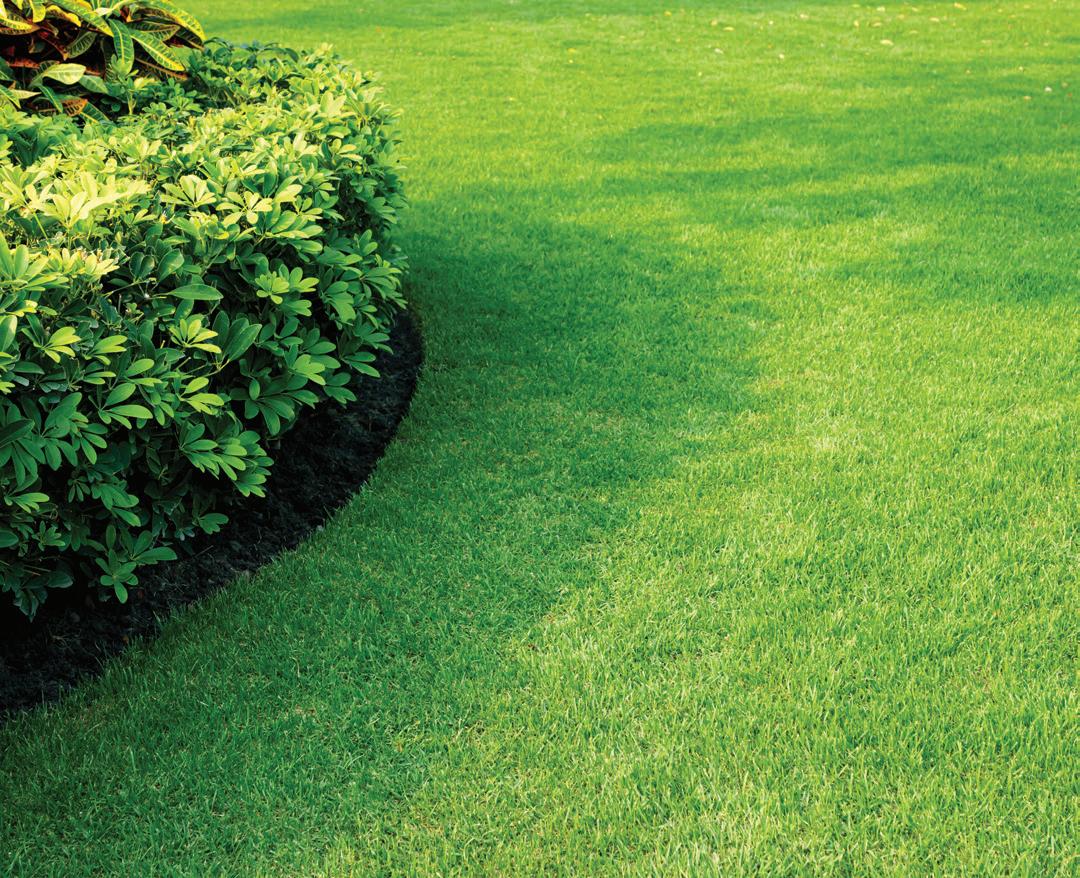












A healthy lawn starts with the right foundation. Turf Pride® fertilizers are coated in Canada and designed to deliver consistent nutrition that supports strong, resilient turf, season after season. Powered by PurKote™, an advanced controlled-release technology, these formulas ensure precise nutrient delivery that maintains peak colour without the surge growth that leads to excessive mowing. Reducing the frequency of applications cycles, Turf Pride helps you maximize your labour savings and operational efficiency without compromising on quality.

















At Plant Products, we offer everything you need for complete lawn care, including:
• Premium lawn fertilizers














• High-quality grass seed for establishment and repair


• Weed and Insect management solutions
• Mosquito and Tick solutions


All supported by Plant Products’ technical expertise and a full portfolio built for lawn care professionals.









But great lawns don’t stop at fertilizer. PlantProducts.com



Talk to your Plant Products representative to learn more.


Health & Safety
By CCOHS
The Canadian Centre for Occupational Health and Safety (CCOHS) promotes the total well being of workers in Canada by providing information, training, education, systems and solutions that support health and safety programs and injury and illness prevention. www.ccohs.ca
Strategies to boost your mental health
On average, workers in Canada spend 60 per cent of their waking hours on the job. With so much time spent at work, it’s important to have a workplace that not only supports physical health but also mental well-being.
Employers are responsible for identifying and taking measures to protect their workers from psychological hazards in the workplace, like stress from heavy workloads and poor work-life balance. Workers can also take steps to manage work-related stress and improve their emotional health. The following strategies can help promote positive mental health for everyone.
BUILD POSITIVE RELATIONSHIPS
A culture where workers feel connected and supported by their colleagues and leaders is essential to good mental health. Employers should implement policies that encourage civility and respect in the workplace. Management and workers can do their part by putting these ideals into practice through positive social interactions.
Respectful behaviour can go a long way in establishing good interpersonal relationships at work. Be courteous with your co-workers. Say “hello,” “please,” “thank you,” “excuse me,” and “I’m sorry.” Include others by offering an invite to lunch or asking for input on a group project.
Value other people’s time and efforts – be on time to meetings, give your full attention, avoid interrupting others, and be respectful of deadlines.
Be sure to elevate other people in your organization by giving credit when it’s due and celebrating the achievements of others.
While there are steps your employer can take to help manage the harm from mental health issues, there are steps that can be taken for your self-care as well.
GIVE YOURSELF A BREAK

Taking breaks from work can help you recharge your mental battery and work at your optimal potential.
Regular breaks can also make you feel more focused, creative, and engaged in your work, giving you renewed energy. Working through breaks and not disconnecting from work can lead to poor work-life balance and burnout.
MENTAL HEALTH FIRST AID
It can be difficult to know how to approach or talk to someone at work who is experiencing a mental health challenge or crisis. That’s where mental health first aid training can help.
Just like providing first aid after a physical injury, offering initial support to a person in mental distress can be a vital first step to getting them the help they need.
Education in mental health first aid encourages co-workers to support one another. It can help reduce the stigma associated with mental illness and build resilient teams while also creating a culture where workers feel comfortable asking for help without fear of judgment.
By participating in mental health first aid training, you gain the knowledge needed to recognize signs and symptoms of a mental health problem, including depression, anxiety, and burnout.
You also build the practical skills needed for early intervention, such as how to start
a conversation that will help keep co-workers feeling safe and engaged until appropriate professional help becomes available.
PRACTISE SELF-CARE
Work can be busy, so take the time to check in with yourself, reflect on your emotions and practise self-care.
Treat yourself to simple pleasures, like listening to a podcast, reading a book, or engaging in another activity you enjoy.
Take time to participate in workplace programs that encourage wellness, such as fitness breaks and mindfulness workshops if available. For workers on the road, find time in your day to take a walk or stretch break to reduce stress.
Adopt healthy routines, like maintaining a good diet, getting enough sleep, and setting clear work-life boundaries, such as finishing work on time.
Always be kind to yourself. If something doesn’t go as planned at work, recognize that everyone faces challenges, and learn from the experience instead of passing self-judgement.
Self-care isn’t self-indulgence. It’s about prioritizing your time to proactively do things that improve your mental health and overall well-being.
SEEK SUPPORT IF NEEDED
If you’re concerned about your mental health and how it’s affecting your ability to do your job, it may be time to seek support. Your supervisor or manager may be able to help you by letting you know about your workplace’s mental health policies and any resources that might be available to you, such as an employee assistance program, or EAP. In many cases, these programs offer confidential services to help with family relationships, conflicts at work, workplace discrimination, and grief or loss of a loved one, among other stressors.
Remember that diagnosis or details of treatment do not need to be disclosed to your employer.
Taking breaks from work can help you recharge your mental battery and work at your optimal potential.
CORGWIN TM with Seed GRANULATED
ORGANIC COMPOST
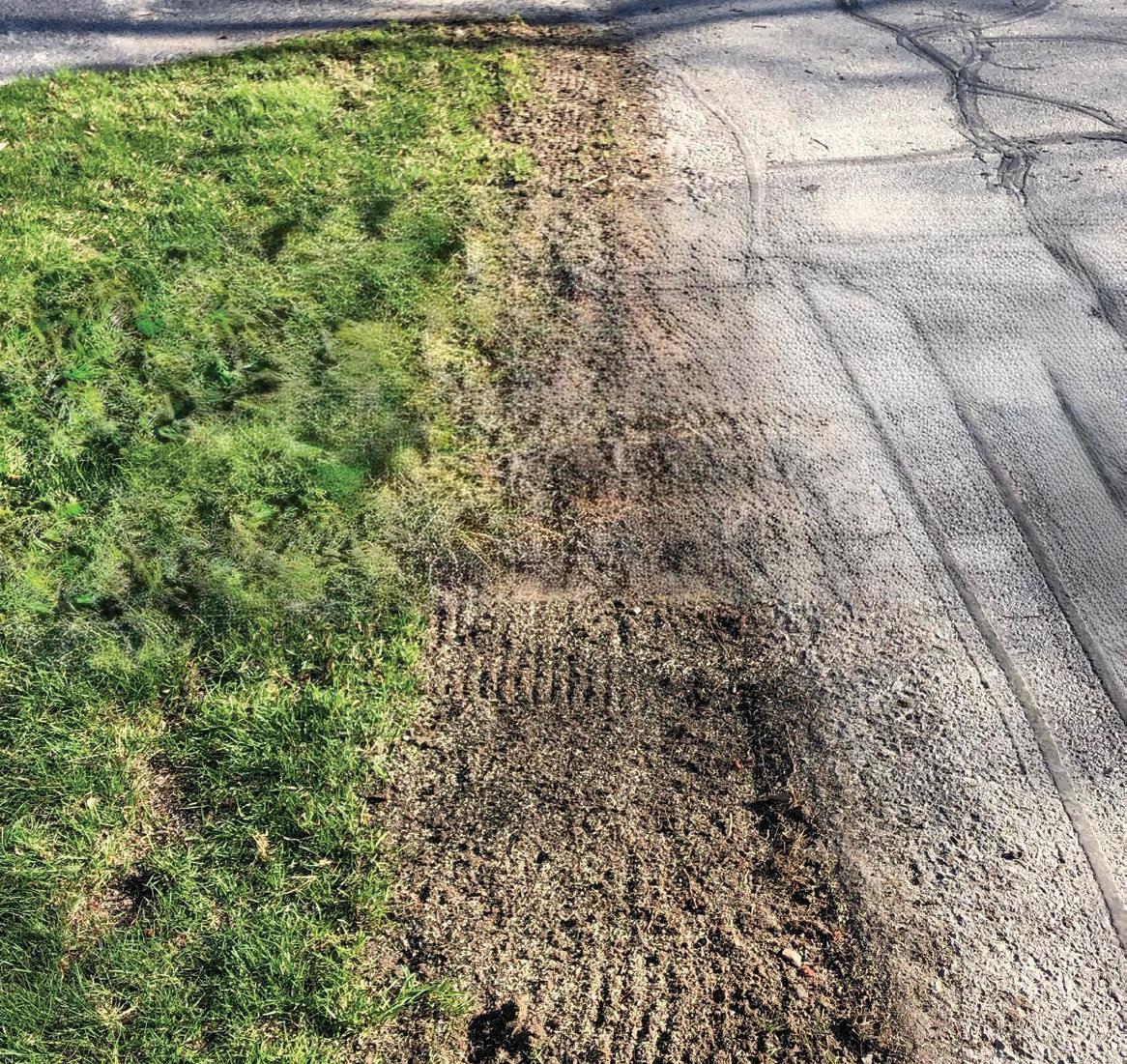
Great for overseeding; rebuilding turf’s natural character traits, creating a denser lawn, consequently combating weed growth. Also suitable for lawn repair; dog urine & salt damaged areas.
Suggested application rate: 4.5kg (10 lbs)/ 1,000ft2

4-1-0
now containing
CORGWIN (Canadian Organic Water Insoluble Nitrogen)
• Derived from Canadian dried citric acid biomass; (citric fruit waste)
• 6-2-0 , 2% Fe analysis
• Contains proprietary biostimulant; NUTRIFENSE; plant extracts which enhance plant resilience, especially in the face of heat, wear & drought stress;
• CFIA registered for use in Canada
OPTIMUM SEED MIXTURE
75% Certified Perrenial Ryegrass, selected for:
• Spreading Ability, High Heat, Drought, Cold & Salt Tolerance Rating;
25% Certified Kentucky Bluegrass, selected for;
• Fast Germination/ Establishment Excellent Tillering & High Wear Tolerance 80% 20%
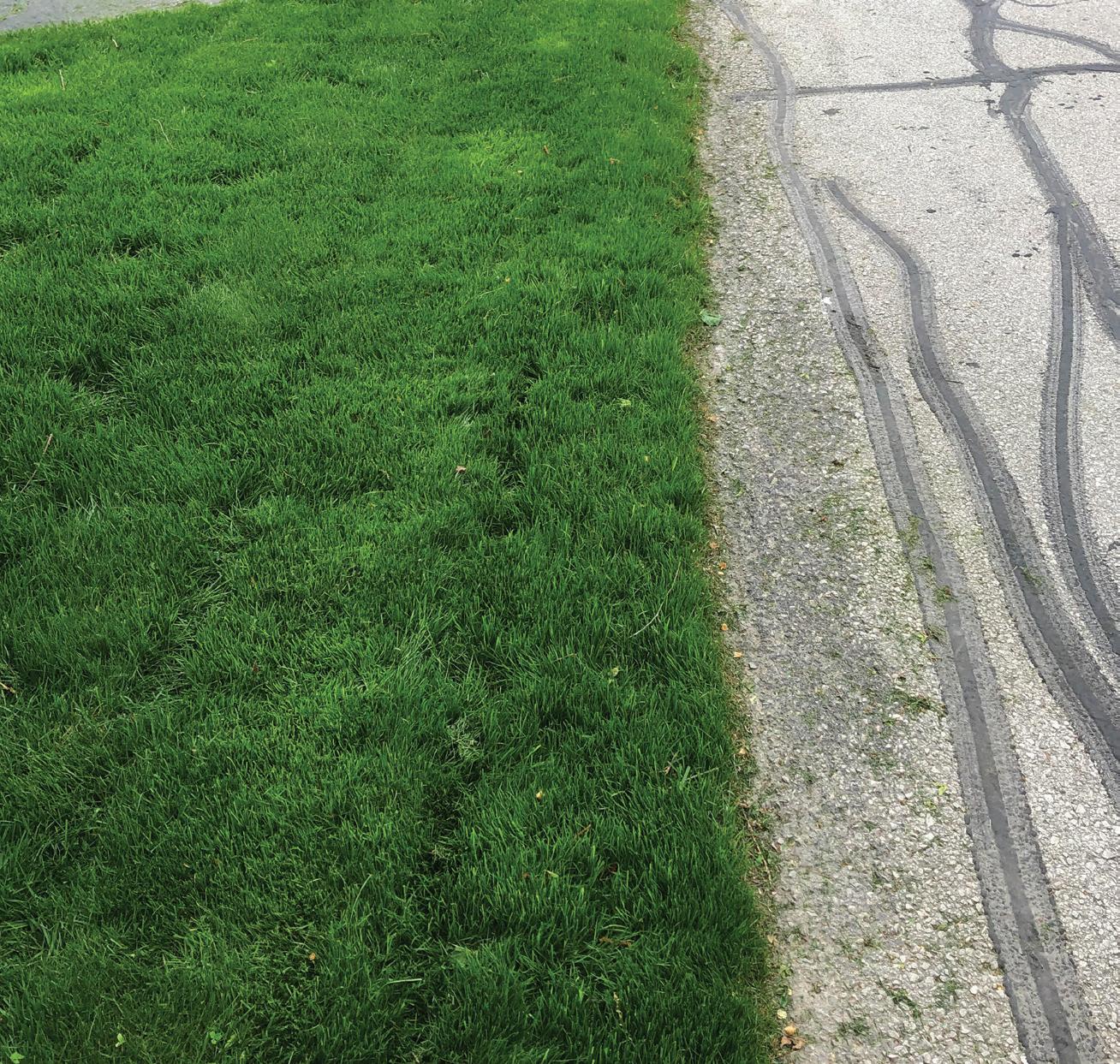
Available in both 5kg & 18kg FIND
Pitt Meadows, BC Calgary, AB Burlington, ON St-Bruno, QC