

SMART PLANT CHOICES IN LANDSCAPING PG8
Padded support system
Padded hip belt, shoulder straps and back support for operator comfort.

HMI Display
Select the speed level, monitor the battery level and status of the unit.
Powerful 36 V Motor
Powerful performance in lightweight design. Can run on one AP System Battery.
Variable speed trigger
With three working modes and Boost Mode.

The STIHL BRA 280 Backpack Battery Blower delivers exceptional balance, low weight, and long runtime with consistent power. Ideal for park and landscape maintenance, municipalities, and noisesensitive areas, it clears leaves, grass, and debris effortlessly with a maximum air velocity of 308 km/h. Enjoy quiet operation, an adjustable blower tube, and a comfortable carrying system. Built tough with IPX4 splash protection, the BRA 280 is ready for any weather. For maximum performance, pair with 2 AP 300 S batteries



By Mike Jiggens
Behind the scenes at turfgrass symposium
By the time you read this, the 2026 Ontario Turfgrass Symposium will be in the rear-view mirror. At the time this is being written, the event is less than a week away.
With Turf & Rec serving as a media partner, I was invited almost a year ago to sit on the OTS’ organizing committee as an industry representative. I was always curious to know what went on behind the scenes in putting together such an event, and I gladly accepted the invitation.
Little did I know that the organizational work for getting the two-day symposium ready begins almost a year in advance. Initial online meetings tossed around ideas that could potentially improve upon what was offered the previous year, making the event more streamlined for attendees and providing them with the best value for their money.
As the meetings continued through the summer and fall months, we looked at various matters such as the time that should be allotted to speakers and how that would translate into continuing education credits, and how lunch should be rolled out. There was much to consider – all aimed at providing the best possible experi-
ence for everyone in attendance.
The speaker program lies at the heart of the OTS, and this year’s lineup was second to none. Dr. Sara Stricker, outreach and communications co-ordinator at the Guelph Turfgrass Institute, was the point person behind finding the industry experts and academicians who would address trending topics of interest for the golf, lawn care, sports turf and sod sectors of the industry.
The speaker program lies at the heart of the OTS, and this year’s lineup was second to none
Being part of the organizing committee was more of a learning experience for me than one in which I made any significant contribution. I made notes of the financial considerations –not my area of expertise – and took a serious look at the pros and cons associated with two different systems for providing lunch. If my services are requested again, I’ll be in a much better position to provide meaningful input into some of these matters that many in attendance might almost take for granted.
Although I was at the OTS mainly to provide coverage of

the event for Turf & Rec, I also took on the role of “chair” for a couple of sports turf sessions on Day Two. This meant introducing the speaker and his topic and soliciting questions from the audience following each presentation. It wasn’t a tough job, and I was happy to oblige.
The Ontario Turfgrass Symposium has always boasted a top-notch education program, even during two years of virtually offered sessions as we navigated through COVID-19.
The look of the OTS has changed since I made my debut in this industry. Back in the mid-1990s, when the Ontario Golf Superintendents Association was still a partnering organization, the trade show component required the space of the University of Guelph’s twin-pad arena before shifting to the then-standing Regal Constellation Hotel in Toronto.
After the OGSA parted ways to launch an event of its own, it changed the complexion of the trade show, but the educational component continued to be as strong as ever and remains so today. Even the golf sessions haven’t suffered any since the OGSA’s departure.
Those who attended the 2026 OTS certainly got their money’s worth out of the event. There was much to learn, education credits to earn, ample time for networking, a chance to speak with the event’s exhibitors and a hearty lunch to be enjoyed on both days.
turfandrec.com
Reader Service
Print and digital subscription inquiries or changes, please contact Angelita Potal, Customer Service Tel: 416-510-5113 apotal@annexbusinessmedia.com
Mail: 111 Gordon Baker Rd., Suite 400 Toronto, ON M2H 3R1
Editor Mike Jiggens mjiggens@annexbusinessmedia.com
Advertising Manager Rebecca Lewis 519-400-0322 rlewis@annexbusinessmedia.com
Account Coordinator Emily Guimarães 416-510-5118 eguimaraes@annexbusinessmedia.com
Audience Development Manager Anita Madden 416-510-5183 amadden@annexbusinessmedia.com
Group Publisher Anne Beswick 416-410-5248 abeswick@annexbusinessmedia.com
CEO Scott Jamieson sjamieson@annexbusinessmedia.com
Printed in Canada ISSN 1186-0170
PUBLICATION MAIL AGREEMENT #40065710
SUBSCRIPTION RATES
Published 7 times a year – Jan/Feb, March, Apr/May, June/July, Aug/Sept, October, Nov/Dec
Canada – 1 year $37.13 CAD; 2 year $47.74 CAD (plus applicable taxes; single-copy$7.00 CAD USA – 1 year $50.92 CAD HST 86717 2652 RT0001
Occasionally, Turf and Recreation will mail information on behalf of industry related groups whose products and services we believe may be of interest to you. If you prefer not to receive this information, please contact our circulation department in any of the four ways listed above.
Annex Privacy Office privacy@annexbusinessmedia.com Tel: 800.668.2374
No part of the editorial content of this publication may be reprinted without the publisher’s written permission © 2026 Annex Business Media. All rights reserved. Opinions expressed in this magazine are not necessarily those of the editor or the publisher. No liability is assumed for errors or omissions.
All advertising is subject to the publisher’s approval. Such approval does not imply any endorsement of the products or services advertised. Publisher reserves the right to refuse advertising that does not meet the standards of the publication.




Guelph turfgrass students place fourth at GCSAA Turf Bowl
A team of turfgrass management students from the University of Guelph placed eighth among 79 teams at the 32nd annual Turf Bowl held last week in conjunction with the 2026 Golf Course Superintendents Association of America’s conference and trade show in Orlando.
Team members were Kyle Trumper, Nolan Guertin, Mackenzie Scott and Dylan Christensen. Adviser to the group was Cam Shaw.
The University of Guelph was one of 33 universities from the United States and Canada that competed in the annual showdown of turf knowledge.
A team from Penn State University captured top honours while second and third place went, respectively, to teams representing Iowa State University and Purdue University. A prize of $15,000, furnished by sponsor John Deere, was awarded to the winning team.
The competing students were tasked with identifying samples of turf, weeds, insects and disease presented in multiple choice and sample identification formats.
SIMA symposium goes to Cincinnati June 23-26
The Snow & Ice Management Association is gearing up for its 29th symposium, to be held in Cincinnati, Ohio June 23-26.
The First Financial Center (formerly the Duke Energy Center) will be the venue for the symposium which will feature several education sessions, networking opportunities and a large trade show. Education sessions will look at salt shortages, managing cash flow, the financial aspects of fleet management, best practices for hiring middle managers and avoiding mistakes when misjudging weather.

Louisville, Orlando to alternate as host cities for Equip Expo
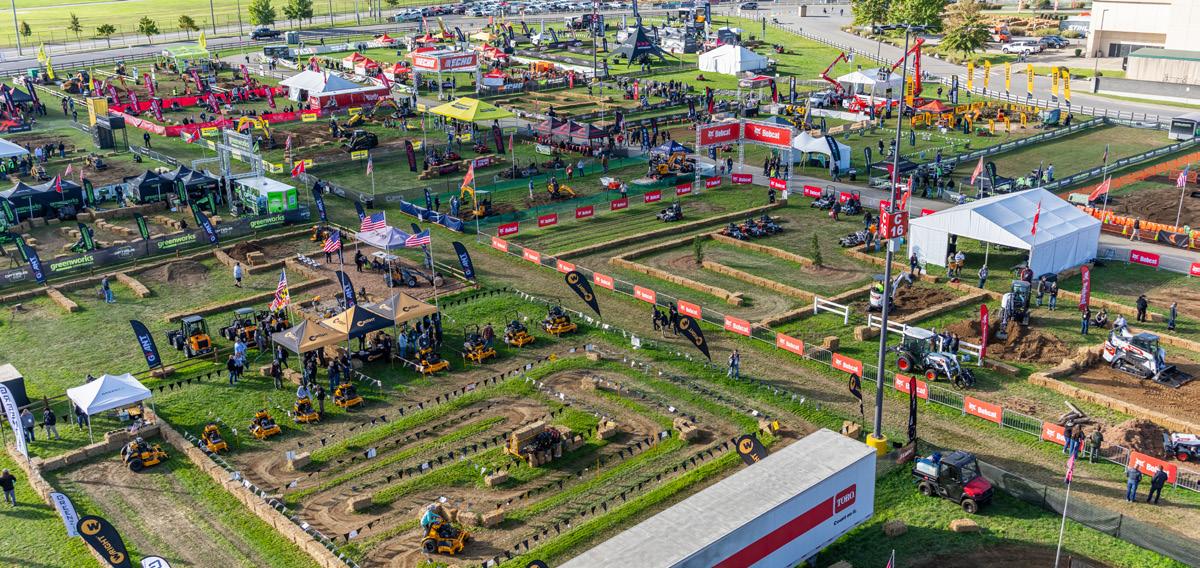
Equip Exposition, the international landscape and equipment trade show presented each October, will begin a two-city rotation in 2029, with Louisville, Ky. and Orlando, Fla. alternating as host cities.
The event will be held at the Orlando County Convention Center Oct. 10-12, 2029, with shows in 2031 and 2033. The trade show will be in Louisville in 2028, 2030, and 2032.
“This rotation gives our exhibitors and attendees the best of both worlds,” Kris Kiser, president of the Outdoor Power Equipment Institute, said. “Orlando has space for our members to host dealer meetings, provides additional co-location opportunities, and offers expanded venue choice for exhibitor and attendee programming. The rotation also allows us to work with Louisville on enhancing their unique outdoor demo area – the only venue of its kind in the country.”
number
Since OPEI assumed full management of Equip Exposition in 2022, the show has experienced significant growth in attendance, exhibit space, and revenue – as well as award recognition. Since 2022, Equip has received 12 Grand Award nominations from Trade Show Executive magazine, and has won
four, including the “Greatest Trade Show of 2024,” the “Against All Odds Award,” “Most Innovative Show,” and “Best New Idea.”
The 2025 show expanded to 1.2 million square feet and drew nearly 30,000 registered attendees from all 50 states and 52 countries, marking an attendance and net square footage record for the fourth year in a row.
“This planned two-city rotation builds on Equip’s tremendous growth trajectory,” Kiser said. “Our transformation of Equip has unlocked enormous value for both attendees and exhibitors. We’ve created a platform where industry professionals can see thousands of products, test real-world equipment, and make critical business connections.”
Equip 2026 will be held Oct. 20-23 in Louisville. OPEI and Equip have already initiated conversations with local partners, including Louisville Tourism and Kentucky Venues, about enhancing and expanding the show’s Outdoor Demo Yard experience at the Kentucky Exposition Center (KEC).
“Louisville has been our home for 42 years – this is where Equip began,” Kiser said. “We’re proud of that history, and the extraordinary Southern hospitality.”
of SIMA snow and ice symposiums
PHOTO: OPEI
Canada’s largest university sports dome opens in Waterloo
Believed to be Canada’s largest seasonal dome for university sports, a new multi-use dome at Waterloo, Ont.’s Wilfrid Laurier University has officially opened.
The dome covers 118,750 square feet and stands 80 feet tall. It includes an artificial turf field and is Canada’s second-largest air-supported structure. Primary users of the dome include Wilfrid Laurier’s varsity football, rugby and soccer teams, its intramural sports teams, and community rental groups.
More than 1,800 hours of programming are expected to be booked this year at the dome.
$305
Fine amount for failing to comply with order
Fines coming to golf courses that fail to shield errant balls
The City of Mississauga has approved the implementation of fines against local golf courses that fail to contain errant hit golf balls.
City council will begin to enforce the measure starting April 6.
Fines of $305 will be assessed if golf courses fail to install containment netting or fencing in risk areas, for failing to comply
with an officer’s order that can include the need to pay for a professional trajectory study, and for obstructing an officer doing a site inspection.
Council had earlier heard complaints about stray golf balls leaving a golf course property and entering a neighbouring residential area, putting homes, vehicles and people at risk.
Find the latest turf-related news, stories, blogs and analysis from across Canada, and access our forum . . .
www.turfandrec.com
Build a mosquito service designed for consistency with the MosquitoPro Program from Envu Canada.
Powered by trusted solutions like Suspend PolyZone® and Dragnet ® FT, MosquitoPro provides exible, eld-tested rotation options designed to help you deliver consistent control, reduce callbacks, and simplify your season — without disrupting your work ow or your customers’ expectations.
your season with MosquitoPro Program
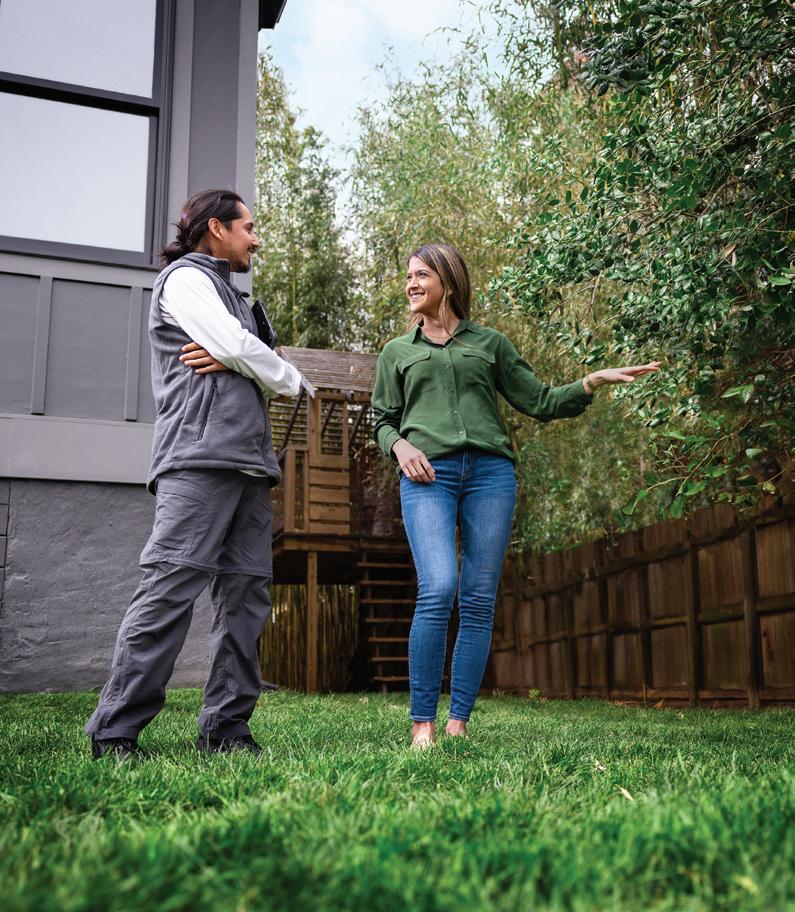
Making smart plant choices
The right choices make for functional and sustainable landscapes.
By Stephen Fleischauer and Dr. Sara Stricker
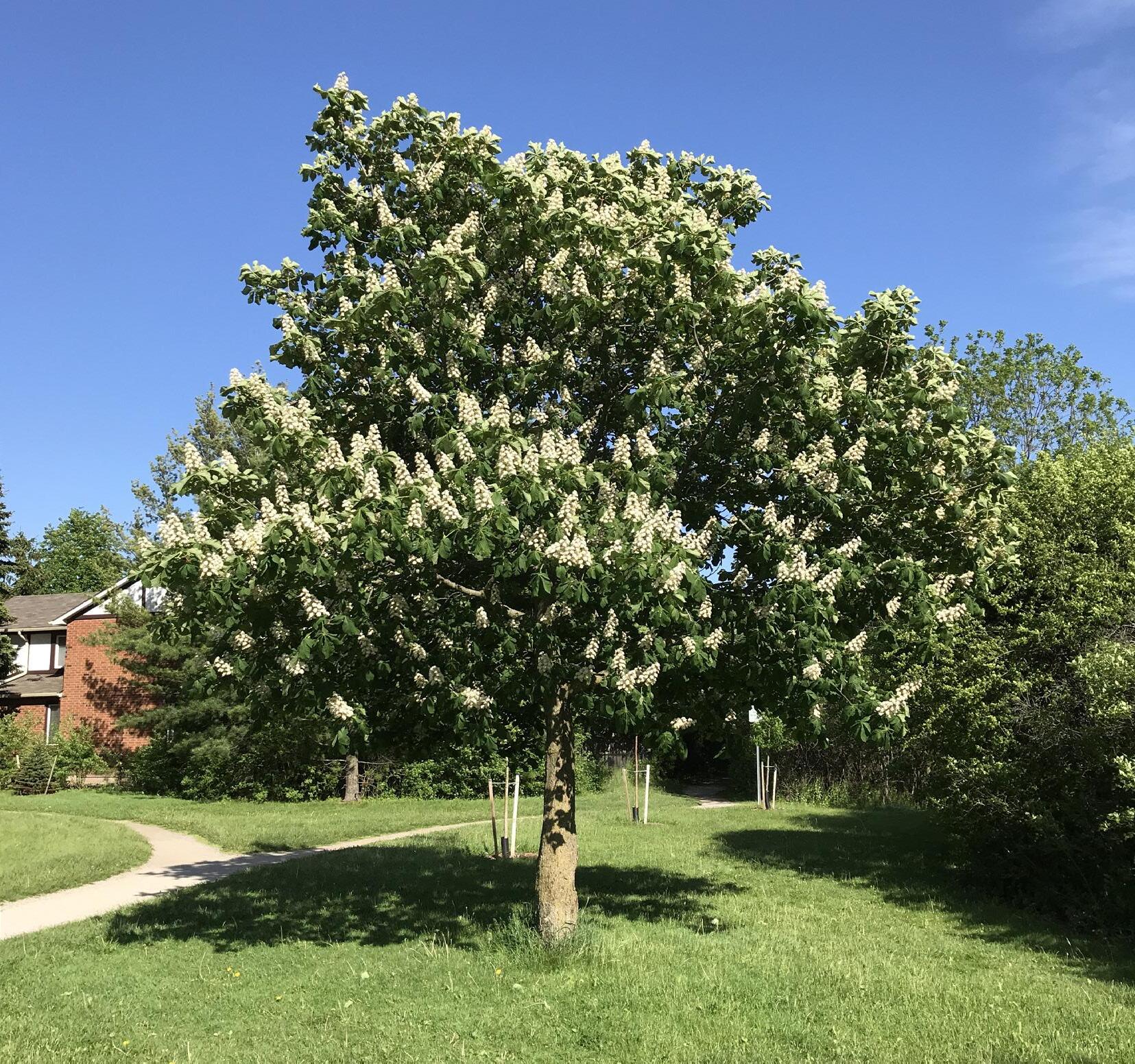
There is almost an unlimited variety of plants to choose from when designing a landscape. While landscaping professionals may have their personal preferences in selecting plant material, it should be remembered that choosing plants in the landscape can be determined via a list of qualities and characteristics.
It is important to acknowledge that plants are one of several components that make for an exciting landscape experience. Hard landscape materials such as pavers, concrete or asphalt, wood, topography, architectural features and more will also contribute to the finished product. Meaningful landscape design must consider aesthetics, function and sustainability – make sure that your plant choices help meet these three general criteria.
Before selecting plants, it is important to clearly define the purpose of your planting design. Consider whether the goal is to screen unsightly views, frame or highlight desirable features, or perhaps guide
visitors from the driveway to the front door. Plantings can also be used strategically to create shade over patios and seating areas, improving comfort during hot weather, or to ensure that key spaces – such as vegetable gardens or lawns – receive adequate sunlight. Understanding the intended function of the landscape helps ensure that plant choices, placement, and long-term management align with how the space will be used and enjoyed.
When selecting herbaceous or woody plants for a landscape, a range of aesthetic, functional, and practical factors should be considered. Leaves are often overlooked, yet their colour, shape and texture contribute significantly to visual variety, and therefore, interest in the landscape. Flowering characteristics clearly have influence on the impact of plants in the landscape. While bold blooms can be striking, more subtle or understated flowers can be just as effective, particularly when plants are selected to provide a sense of continuous bloom throughout the growing season. Fruit production can further enhance visual appeal and may help attract wildlife, although you should be mindful that dropped fruit can cause unwanted litter resulting in extra maintenance and other issues.
Beyond flowers and fruit, bark and branching patterns add yearround interest for landscape users through variations in colour, texture, and form. Changes in leaf
colour, flowering, fruiting, and form throughout the year all contribute to a dynamic landscape, while evergreen species provide structure and visual continuity during winter months.
Plant form itself is a critical design element – whether the plant is vase-shaped, conical, low and spreading, upright and columnar, or weeping form will influence both the visual effect and the use of the space. Plant form can also impact your maintenance efforts, as some shapes may limit access to other landscape features.
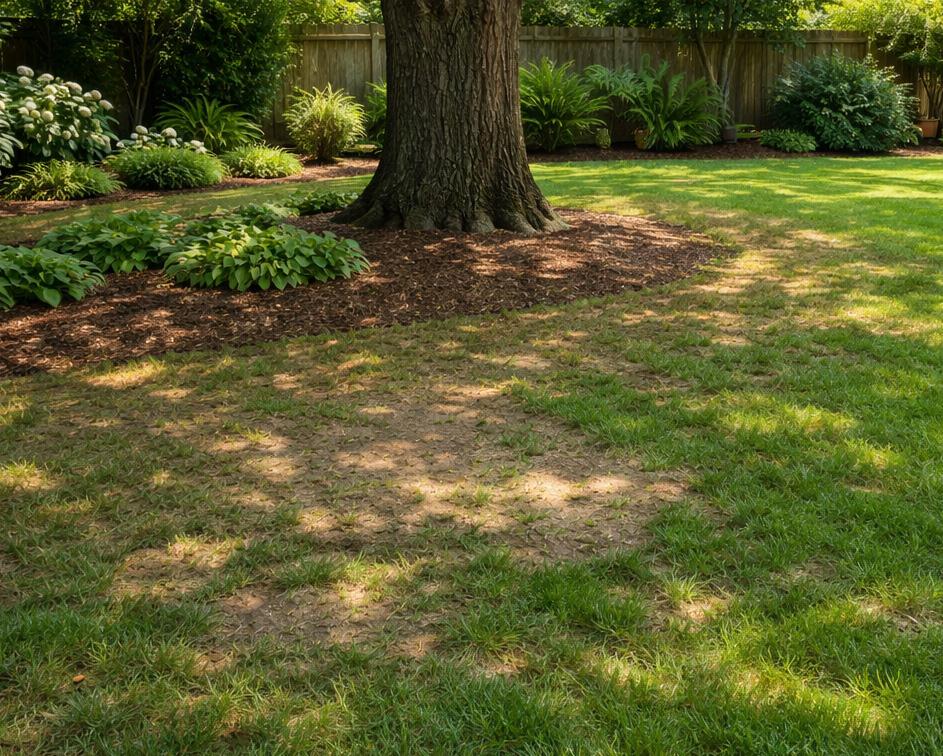
It is also important to recognize that plant material, particularly trees, can affect turf performance by competing for light, water, and nutrients. Encouraging healthy turf growth often requires managing competition from nearby trees and shrubs. When overhanging branches create excessive shade, trimming or thinning the canopy can improve light penetration and air movement, both of which are critical for turf health. In some cases, selective branch removal is enough to shift conditions from persistent shade to partial sun, allowing turf to recover and maintain density.
Competition for water
Below ground, aggressive or shallow tree roots may compete with turf for water and nutrients; root pruning can help reduce this competition in high-traffic or highvalue turf areas. Combined with appropriate irrigation, fertility, and

species selection, managing above- and below-ground competition can significantly improve turf establishment, vigour, and long-term performance.
Many landscapes aim to incorporate native plant species, which can be well adapted to local conditions and support regional biodiversity. Consider a pollinator garden or aspects of a pollinator garden when you design your landscape. There is abundant information online regarding this kind of landscape such as
beecitycanada.org. Do your research to determine which plant selections are best for the pollinators in your region.
Regardless of origin, plant selections should always take mature size into account. A shrub or tree that fits neatly at planting may become problematic over time if its ultimate height or spread interferes with buildings, utilities, or hardscapes. Consider the potential mature size of plants when selecting for your site.
A 60-centimetre-high (two-foot) shrub
Flowering characteristics clearly have influence on the impact of plants in the landscape
today may grow to 300 centimetres (10 feet) in the future. A 175-centimetre (sixfoot) tree might grow to 18 metres (60 feet) in height. This will certainly impact the position and location of plants as they are installed.
Finally, plant health requirements and long-term viability must guide selection. Ensuring that the species has hardiness appropriate to the region is essential –don’t try to plant a palm tree in the Prairies! Factors such as light requirements, drought tolerance, salt sensitivity, fertility needs, and pruning frequency directly influence ongoing maintenance costs and plant performance. In most landscape settings, plants should be resilient and naturally resistant to pests and diseases, as high-maintenance, fussy, or fragile species are rarely practical or cost-effective over the long term.
Overhanging tree branches create excessive shade, requiring trimming or thinning the canopy to improve light penetration and air movement for turf health.
Plant purchase price is always a factor, but affordability should not come at the expense of quality. Building a strong relationship with a reputable nursery or grower can help ensure access to healthy plant material, informed advice on trends, and insight into both immediate availability and longer-term production plans. Look for nurseries that offer a wide selection of healthy plants. Visit their stock yards when time permits and see what is typically part of their inventory.
Plants can be used strategically to shape the visual hierarchy of a landscape. Species with unique form, colour, texture, or seasonal interest can serve as focal points that draw the eye, while massing identical or similar plants together helps establish a cohesive back-


standing of plant qualities, consulting with a landscape designer can provide valuable insight into how different plant combinations will work together over time. This collaborative approach can tions such as plant longevity, input requirements, and management costs. Stephen Fleischauer is the instructor for Landscape Design in the Associate Diploma in Turfgrass Management at the University


How Does Pond Dye Work?
Aquatic plants, just like plants on land, need light to grow. In ponds we address light penetration into the water by adding pond dye. Pond dye essentially creates a higher re ective surface on your pond so that less light reaches the bottom, where plants start to grow every spring. It works best at depths greater than six feet and will not be as e ective in the shallow areas around the edges of your pond. Pond dyes work on the premise that plants grow poorly without light so blocking it will reduce your growth in the main body of the pond. Pond dyes are available in blue, which you commonly see at golf courses, and black, which give a more natural Muskoka water look. Pond dyes are most e ective if added early in the spring as soon as the ice is o the pond and before growth starts. They are non-toxic and are safe for humans, pets and wildlife alike.
To decrease plant growth in ponds you could also explore nutrient management straties by using probiotics and manual removal. We discuss these topics and more in our FREE Pond Resource Guide. It is lled with years of experience helping our customers and will help you understand the problems you are experiencing and why they happen. Please contact us if you would like one sent out or you can drop by our store to pick one up and discuss the challanges you are having.
Your Pond & Lake Professionals Since 1989
Left: Fruit production can lead to unwanted litter which creates additional maintenance.
Right: A pollinator garden not only adds aesthetic appeal but supports regional biodiversity.

Preparing for a productive season
Planning around turf health, equipment readiness and workforce development sets the foundation for year-long success.
By Troy Smith
As winter melts away, turf and recreation professionals know they’re entering a critical planning window. Decisions made early can influence performance and profitability for the rest of the year. While turf inputs are an important part of the preparation, experienced operators recognize that turf health, equipment readiness and workforce strength all influence how the year unfolds.
By approaching the season with a coordinated effort across these areas, managers can reduce in-season disruptions and position their operations for sustained success.
Laying the foundation
Spring turf performance starts below the surface. Before seeding or fertilization begins, soil testing provides insights to ensure turf professionals aren’t just planting the
right seed but also creating the best possible conditions for it to grow. Routine soil testing is a great tool to identify nutrient deficiencies and surpluses, soil pH and cation exchange capacity (CEC).
Without this information, turf managers risk applying fertilizers or soil amendments that may not perform as intended. CEC, for example, reflects the soil’s ability to hold and release essential nutrients. Soils with low CEC may require more frequent, carefully timed applications, while soils with higher CEC can retain nutrients longer. Understanding these characteristics allows turf professionals to make more precise adjustments rather than relying on generalized programs.
Soil pH also plays a key role in nutrient uptake. While optimum soil pH is species-dependent, nutrient uptake for turfgrass, shrubs and flowers is generally maximized when soil pH falls between 6.0 and 7.0. When pH levels fall outside the optimal range, turfgrass can struggle to
absorb nutrients even when they are present in the soil.
Adjusting pH is a gradual process. Alkaline soils may require sulfur-based amendments, while acidic soils often benefit from limestone to help neutralize conditions. By addressing these issues early and continuing to conduct soil tests throughout the year, nutrient applications at any stage will be more effective.
Once soil conditions are known, spring preparation shifts from assessment to action. Turf professionals need to balance recovering from winter dormancy with preparing turf for increased use.
Soil compaction is one of the most common challenges managers face in early spring. Compacted soils restrict the movement of air, water and nutrients, limiting root development and turf resilience. Aeration helps relieve compaction and improves overall soil structure. For high-use fields, hollow-tine aerators – also referred to as spoon-type – are commonly used because
Have your soil tested first before beginning fertility
they remove soil cores rather than pushing soil aside. This approach improves infiltration and root growth. Heavy aeration (six to eight passes) should occur in the spring before overseeding and fertilization. After aeration, drag the field with a steel drag mat to break up the cores and redistribute them into the soil profile.
Spring also presents an opportunity for seeding and overseeding, particularly in areas that experienced thinning or damage during the previous season. In northern climates, overseeding cool-season grasses is often most successful when soils freeze overnight and thaw during the day. Applying seed in the early morning while the soil is still frozen allows seed to settle into the soil profile as conditions warm. Multiple lighter applications spaced several days apart typically result in better establishment than a single heavy application.
Seed selection should reflect how the turf will be used throughout the season. Hightraffic areas require turf varieties bred for durability, wear tolerance and recovery, while other areas may prioritize density or appearance. Matching seed type to both environmental conditions and field demands helps turf establish more quickly and withstand seasonal stress.
Early-season weed pressure is another factor that can affect turf recovery. Pre-emergent herbicides can control broadleaf weeds before they have a chance to spread, but application timing and product selection are critical, as some formulations can also damage turfgrass. Addressing weeds before they become established reduces competition during early growth stages and helps maintain turf density as the season progresses.
Preparing equipment for peak operations
Having the right tools isn’t just about convenience; it’s essential for getting the job done efficiently and delivering high-quality results. In the spring, it’s critical that turf professionals conduct preseason inspections and inventory before workloads increase.
Maintenance checks, including inspecting moving parts, replacing worn
Spring turf performance starts below the surface
components and verifying safety features, can help prevent costly downtime during peak season. If equipment needs replacing, investing in durable, high-quality tools can increase productivity, reduce long-term replacement costs, improve safety and enhance overall results.
Tool selection also affects crew performance and fatigue. Long-handle tools, for example, allow workers to maintain better posture and reduce bending, which can lower the risk of repetitive strain injuries. Choosing the right tools for specific tasks improves both productivity and comfort during long workdays.
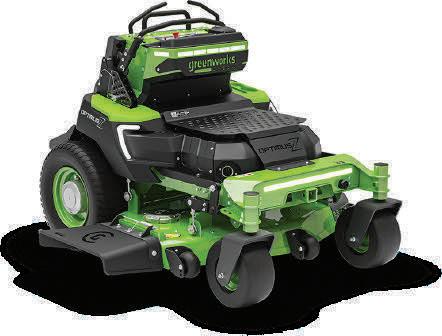
Many turf and landscape operations are also evaluating new equipment trends as part of spring preparation. Battery-powered equipment continues to gain attention due to lower refueling costs, quieter operation, reduced emissions, lower routine maintenance requirements and ease of use. Some municipalities are introducing regulations that limit or ban gas-powered equipment due to noise and air quality concerns. Making the shift to battery-powered equipment will be necessary in many cases to maintain compliance with these new regulations.
As with any business decision, adopting new equipment requires careful consideration. Managers must evaluate whether tools are suited to the tasks at hand, whether crews are properly trained and whether charging infrastructure and storage needs are in place. Now is the time to assess equipment needs thoughtfully before the demands of peak season set in.
Attracting and retaining quality crews
Labour shortages continue to challenge turf and recreation operations across the industry, making it increasingly difficult to fully staff crews as the growing season begins.
With competition for skilled labour at a high point, simply posting open positions is no longer enough. Many organizations are finding that the way to attract high-quality employees is by making smart, intentional decisions early in the season.
Preparation plays a key role in shaping how crews experience the work environment. Clear expectations, consistent leadership and a visible commitment to safety and training signal professionalism and stability. When employees feel supported and set up for success from Day One, operations are better positioned to retain talent and maintain productivity during peak demand.
Accountability helps reinforce consistency across teams. Leaders who communicate expectations, provide feedback and follow through on commitments set the tone for the entire operation. When crews understand how their work contributes to overall outcomes, they are more likely to take ownership of results.
Training refreshers are especially important at the start of the season. Reviewing equipment operation, safety protocols and communication procedures helps new and returning employees feel prepared before workloads increase.
Safety risks also tend to rise in spring when wet conditions, uneven ground and increased activity contribute to slips, trips and falls. Training employees with proper jobsite awareness can significantly reduce these incidents. Reinforcing a safety-first culture early in the season helps establish habits that carry through the busiest months, protecting both crews and operations.
A plan that lasts beyond spring
Spring preparation sets the foundation for the entire growing season. When turf managers plan ahead, they reduce the need for reactive fixes later in the year. By entering the season with a clear plan for turf, equipment and crews, professionals can move forward with confidence.
Troy Smith is the sports field manager for SiteOne Landscape Supply. He can be reached at tsmith5@siteone.com.
Better water, better experience
How aeration, probiotics and phosphorus binders can prevent algae buildup in ponds
By Julia Webber
So many golf courses, housing developments, parks and recreational areas are centred around water. Be it a stream, river, pond or lake, we are drawn to these areas, and they can add so much to a space. They can also be the source of so many complaints and problems from those who utilize these spaces.
To stretch your budget, it is best to use preventative methods so that a major rehabilitation isn’t a big hit to your budget. This method will not only help your budget; it will make the experience of your clientele better as well. So, what does a preventative program look like?
Prevention of algae and plant overgrowth in a water feature is mainly centred around breaking down nutrients, nitrogen and phosphates.
There are a variety of layers to accomplish this depending on the scale of the nutrients entering or already existing in the system. These layers include aeration, probiotics and phosphorus binders. We will review how each of these are used and when they are most effective.
Firstly, aeration is used to break down nitrogen and phosphates by adding oxygen which makes nitrogen less toxic and makes nitrogen less available to algae and plants. Aeration can be accomplished in multiple

ways, including bottom-up bubblers, fountains and aeration windmills. We will review the benefits of each of these in another article.
All types of aeration share some universal benefits. Aeration will circulate the water body, which prevent stagnation as well as allow additional oxygen to enter the water at the surface. As an added benefit, circulation will help to reduce mosquito larvae and unpleasant odours. Oxygen in the water is the primary means of converting nitrogen to its least toxic form. As oxygen binds nitrogen, it oxidates them over time, which converts it so that plants and algae can no longer use them as a food source. The other benefit of aeration is that it introduces large enough quantities of oxygen to allow pro-
biotics to further accelerate this nutrient breakdown process.
These probiotics, oxygen-using good bacteria, can reduce nitrogen in the water and bottom sediments up to 10 times faster than bacteria that don’t use oxygen. This means they can move the clock back to when your water was cleaner and healthier. This will mean fewer algae blooms in the middle of the summer and fewer weeds clogging up the waterway over time.
They do this by using both dissolved nutrients, those in the water, and accumulated organic nutrients, that appear on the bottom as a muck layer, as a food source. This not only removes them from being available to plants and algae but directs them into the animal food chain, serving as
An algae-free golf course pond adds aesthetic appeal to the property.
Julia Webber is president of Fish Farm Supply Company in Elmira, Ont.
the base of a food chain that can support more wildlife. By breaking down organic matter on the bottom, you also reap the secondary benefit of preventing the pond or waterway from filling in and becoming shallower.
When probiotics are most effective
When considering probiotics, they are generally most effective when they are applied on a consistent regular basis so that they do not run out of food. This will translate into many smaller doses that provide results over the course of a few seasons.
Probiotics generally work fastest in water warmer than 15 degrees Celsius, maximizing your investment. When considering a supplier, it is always best to ask for a quote for a full season so that you know what a program will cost instead of just comparing the price per unit as dosage rates between manufacturers can vary greatly.

Unlike probiotics, phosphate binders use a chemical process that make phosphorus unavailable to algae and plants by chemically binding it so that it is inert. The upside to this is that it can be a faster process. Depending on the location, this is sometimes a once-a-season application, or it can be done on a continuous basis using a slow-release product if there is a larger level or continuous input.
Be aware that these will only work on the phosphates in the water at the time of application and any additional influxes may lead to future problems. They can be a useful tool that allows you a buffer that will allow time for aeration and probiotics to address the broader source of the problem while still keeping your water feature looking good.
Like so many things, maintaining ponds, lakes and water features proactively will decrease your budget as well as your stress.
Efficiency That Pays Off

Talking to an experienced supplier who can provide you with a full line of preventative products should allow you to benefit from their cumulative knowledge instead of learning at your expense. Preventing the problems will mean you have less urgent situations and complaints to resolve, as well as creating an experience where your clientele remember your facility for all the best reasons.

Productivity is more than speed. It’s efficiency you can feel on every job. The Kubota ZD1200 Series pairs Kubota diesel power with a shaft driven ACS deck designed to move air, cut clean, and discharge efficiently, helping reduce power draw so you can stay productive across the route. The same oscillating front axle technology you know from tractors is incorporated in the ZD giving you built-in stability, along with operator-focused comfort, keeping the machine (and the crew) working like the schedule demands.
An algae buildup is not only an eyesore but endangers a pond’s health.

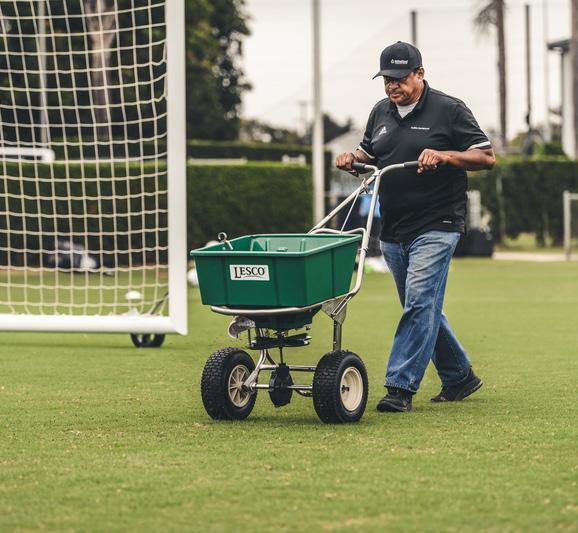
Spread uniformly with calibration
A properly calibrated spreader will ensure fertilizer is applied evenly.
By Mike Jiggens
Although new technology exists for variable rate fertilizer applications, turfgrass managers will continue to use spreaders for a while, an associate professor of turfgrass nutrition with the Center for Turfgrass Science at Penn State University says.
Dr. Max Schlossberg told those attending December’s 35th annual Ontario Seed Company/Nutrite professional turfgrass seminar in Waterloo that while rotary and drop spreaders will continue to be used, it’s important they are properly calibrated to ensure turf is uniformly fertilized.
Rotary and drop spreaders, however, are not the same and each has its advantages and disadvantages.
“Compared to rotary spreaders, drop spreaders are a little more slow because they treat a lesser swath width,” Schlossberg said. “We have to do more walking.”
He said drop spreaders are good for all application rates and, with no minimum operating speed required, applicators can walk slowly. They are also accurate under windy conditions and are effective with most fertilizers.
“They’re really the best choice where we have ornamental beds or surface water features or paved surfaces we don’t want to treat with these granular materials.”
Rotary or centrifugal spreaders are comparatively rapid and are good with lower application rates, but they require a minimum operating speed. They are generally less accurate under
windy conditions and are often compromised by other factors. Recent efforts have been made to enable rotary spreaders to function like drop spreaders by equipping them with guards that protect one side of the treatment areas.
Schlossberg said he prefers the improved method of a cableclosed trap door that can stop treating one side of a swath. This allows for the application of only two-thirds of material to the rest of the swath. The full material is still being applied, but it’s landing on only two-thirds of the swath.
“Anything we can do to keep fertilizer and nutrients out of surface water resources is admirable, but I think this is a better method.”
The height of the operator can make a difference when spreading granular materials. The angle of the impeller, or spinner disk, is impacted by the operator’s stature. If a shorter person is operating a rotary spreader, a tilted disk will throw more material higher which can be affected by wind. Schlossberg said rotary spreaders largely work well but can leave diffuse striping when the distance between passes is too great and/or the spreader’s distribution was asymmetric or heavier on one side.
Keep the spreader clean
To accurately calibrate a spreader, he recommends it be thoroughly cleaned before use and to have a test area set up prior to an application. A digital scale that measures in either pounds or kilograms to a tenth of a decimal point is recommended. Two
Drop spreaders are ideal for ensuring accurate spreader in windy conditions.
equally sized clean, dry tarps labeled A and B should be placed a minimum of 10 feet on one side. Pin flags or marking tape and two clean and dry five-gallon buckets marked A and B will also be needed.
Once the application rate has been determined – Schlossberg used an example of five pounds per 1,000 square feet – a suitable distance to maintain between passes is decided. That determination is apt to be the most problematic part of the process, he said.
For a test run, a small amount of material should be placed in the hopper for the operator’s walk of the site. A second person following behind can mark the width of uniform dispersal with flags and measure the distance between them.
If there is a dispersal width of 10 feet, it’s highly probable on turfgrass that the distribution within the edges is going to be triangular, although Schlossberg said some will debate it’s semi-circular or in the shape of a trapezoid. It’s usually a triangle, he argued.
“We always see the most amount of material in the pan underneath the two wheels, mainly because the fertilizer is being thrown out ahead of the hoper and it’s also interfering with the infrastructure that causes it to fall straight down.”
If 10 feet were maintained between passes when the width of distribution was 10 feet, there would be zero per cent overlap. Schlossberg said that’s not what he recommends, suggesting instead that half that distance between passes be made.
When making a test run with one individual instead of two, he suggested setting up the spreader at the midpoint of the tarps that should be laid lengthwise perpendicular to the path of travel. Of importance, he noted, was to spread in the same direction each time.
“You don’t go back and forth.”
Doing that five times allows the swath width of treatments to be determined. The next passes will be made at half the distance or five feet apart, starting at 10. There are no gaps, and 100 per cent overlap is achieved.
Using a narrower hopper gate setting will typically result in a more symmetric pattern, Schlossberg said.
“You’ll do twice as much walking but will be really satisfied with the outcome.”
Drop spreading is an easier task, he said, with a swath width usually the distance between the wheels achieved. The goal is to maintain the same width between passes or to place the wheels on the wheel marks left from the previous pass.
Walking speed isn’t as impactful on swath width as much as the operator’s height, he said. The angle of the spinner, which is affected by operator height, has a significant impact on how the material is spread, Schlossberg said. He added the hopper should be kept full to avoid running out of fertilizer in midpass. Clogs in the hopper must always be monitored to ensure even distribution.

Doing snow ‘ right ’ generates profit
Effective marketing and doing the right things creates cash flow, stability
By Mike Jiggens
Snow and ice contractors who choose to effectively market their services and do all the little things right are apt to significantly profit from their efforts, an industry veteran says.
“Snow can create cash flow in some of your worst times,” Sam Gembel, founder of Atlas Outdoor in Flint, Mich., told those attending an online webinar in October. “It creates stability for your team. It gives you control when everything else is shutting down.”
Gembel, who is also a business coach and mentor to landscaping companies throughout North America, was joined on the webinar by Jason Drews, senior director at Markham, Ont.-based Granum, whose company sponsored the online event.
Gembel warned, however, that the “snow game is not for the faint of heart” and that a company’s best lawn and landscape customer can quickly become its worst enemy if service isn’t provided when it’s needed.
During the summer months, if grass isn’t cut or weeds aren’t controlled one day, the service can easily be provided the following day, he said.
“You don’t get that luxury in the wintertime,” Gembel stressed.
Atlas Outdoor’s snow and ice operation

accounts for about 40 per cent of the company’s business and is its most profitable department.
Gembel said that despite having to be available 24 hours a day, seven days a week during the winter and facing such challenges as expensive insurance premiums, companies that get snow “right” can cultivate some of the best “champions” during the winter season.
“If you’re doing things right, snow can be very profitable,” Drews agreed, noting success is achieved by setting sales goals, knowing how to keep the best staff intact, investing in equipment, having a plan for salt acquisition, and not waiting to do everything until the season is about to begin.
“If you’re just waiting for leads to come to you, that’s not the right action to be
taking,” he said.
Gembel said it’s important for a company to understand its costs prior to getting leads, knowing what leads are worth chasing “because not all leads are good leads. If you’re just sitting back waiting for the leads to come, you’re probably going to be left out in the cold.”
For those wishing to enter the snow and ice maintenance business, it comes down to reputation, he said, adding appearing at trade shows is an effective means of establishing a good reputation. He warned, however, to avoid trying to land the “1,000-pound gorilla” as a first customer because it’s the quickest way to fail.
Gembel said it’s important to ask wouldbe customers who might be seeking a third bid: “Are you looking for the best price or the best service?” Most will say they’re
Success in snow contracting is achieve by setting sales goals, knowing how to keep the best staff intact, investing in equipment and having a plan for salt acquisition.
looking for a combination of both, he added, and will see professionalism when the right questions are being asked.
’Spying’ for new clients
“Spying,” or watching out for properties that aren’t being well serviced, is a strategic tactic snow and ice companies can adopt to potentially secure new clients for the following year, Drews said. Gembel added he has employees with lighter routes who serve as “spies.”
When advertising dollars are spent, it’s important to note what’s coming in, Drews said, adding referral sources must be tracked to know where money is to be invested, targeting sources that are bringing in the ideal customer.
Companies looking to scale their businesses and are focused on a certain client type – such as medical, industrial or educational facilities – are apt to find the
journey difficult in the beginning, Gembel said. But if they’re relying on snow and ice income, they may need to lower their standards, he added.
A company might get its feet wet in its first year in business, but then things get more stressful because it must juggle the business it already has with the one it wants. Gembel said contractors must maintain their current customers with those they wish to acquire.
“It took us 13 years to be an overnight success in snow and ice,” he said, adding it gets easier to build a desired business over time.
Insurance costs are an important aspect to consider when focusing on a specific client type, Gembel said, noting it could mean a different level of liability risk.
“Will my insurance company accept these types of clients?”
The type of equipment a contractor has
also plays a role in acquiring a desired customer group, he added.
Potential qualifying customers can be shown pre- and post-season photo inspections of sites already serviced, Gembel recommended.
“Show the customer why you’re the professional and the expert,” he said.
They should be shown site damage prevention plans, training plans and how they’ll be billed.
“When you show them how professional you are based on other sites that are similar to theirs, they’ll stop negotiating with you and start trusting you.”
Transparency is key, and potential customers tend to want to partner with larger service providers because they know they have resources, Gembel said. Customers will also be more forgiving after the first snowfall, “but you’d better have it dialed in by that point.”
26_000601_Turf_Rec_MAR_CN Mod: January 15, 2026 4:35 PM Print: 02/06/26 page 1 v2.5


Women share snow strategies

Snow maintenance webinar panelists extol the value of communications. By Mike Jiggens
Private snow removal contracting has its share of challenges, but there are rewards to savour in the end, a trio of women leading snow operations concurred in October.
Salt shortages, increasing insurance premiums, finding and keeping staff, and dealing with often “insane” expectations of customers pose an ongoing challenge for contractors.
“But the profit is real when you run it right,” Janna Bradley, co-founder of Toronto-based LMN software and former vice-president of TBG Environmental, said during a Granum-sponsored online Snow N Tell webinar. “It can be very rewarding. The struggle is real, but it can be profitable.”
Bradley was joined on the webinar panel by Lex Steele, customer success manager at LMN and the daughter of a long-serving plow operator in Oakville, and Nicole Downer, president of Downer Brothers Landscaping in Massachusetts.
In the business for more than 20 years, Bradley has since retired but still seeks to
conduct educational events.
“I can’t stay away,” she said. “I love this industry too much.”
Steele acknowledged the snow contracting business “isn’t the most glamorous industry to apply for,” especially when having to deal with such issues as salt shortages but added crew communications and proper planning can make operations run much smoother. Communications should include pre-storm planning, in-storm messaging and post-storm reflections, she said.
Downer agreed.
“Communication is the most important thing we do to keep our staff on task as well as staying in touch with our customers and have empathy with them because they’re in a crisis situation,” she said.
Downer said her company is proactive with its communications, both with staff and customers. This includes the anticipation of storms, sharing information about weather events, informing clients and staff when operations are to begin and updating them about any changes.
“Communication is the thing that calms people down the most,” she said, adding the
coming of snow and ice can lead to increased pressure and stress that can be alleviated through proper planning a couple of days in advance of a storm.
Pre-season planning
Bradley emphasized the value of pre-season planning.
“We took a lot of time, and it took a lot of years to figure it out, about pre-season planning – where you physically take the time to go and walk the lot and mark out the areas of concern and look at the pre-season damages or concerns,” she said.
Such planning includes observing where asphalt may be holding water and ice and sharing that information with crew members. Discussing such matters with crew leads and drivers “made a world of difference” for her company.
“Spend the time,” she stressed. “It’s expensive but it’s worth it because the efficiencies are huge. You save the money in the long run.”
Bradley said it’s important to note the areas where snow and ice management are to take place, including the equipment that
The snow contracting business can be rewarding even though it may not be the most glamorous.
will be needed, trouble areas that are identified, places where snow must be pushed toward, and where on-site storage is warranted.
TGB Environmental used to plow a school parking lot adjacent to the residence of a local member of Parliament – a situation which led to a complaint.
“He would absolutely lose his mind if we were there after midnight, and he made a huge deal about it to the school,” Bradley said.
His complaint led to the company noting to its staff not to plow after 11 p.m. without approval.
Bradley said that was a good example of what must be communicated with the team and having such messages visible for everybody, including new drivers.
“Those small things are critical,” she said, adding communications eliminate confusion and increases efficiency.
Downer said the software program her company uses outlines the process for the crews, identifies who is in charge, notes the assignments and how the route is to be accessed.
“It’s a little different from the green season because it’s not scheduled,” she said.
Crews are given the opportunity to practise spreading ice melt in the yard and become acquainted with the equipment. The business software program stores site maps and photographs that depict images before, during and after a snow event to ensure everything is documented. They are both
‘Communication is the most important thing we do to keep our staff on task’
GPS and time-stamped for documentation, proving the company did its due diligence while providing the expected service.
“We try to get through all the nuts and bolts so that everyone understands everything,” Downer said. An artificial intelligence tool allows both English and Spanish-speaking staff to comprehend the same message.
She said there is no excuse for not providing the training crews need.
“For every hour of training, you save several hours in the field,” Downer said, adding certain tasks can be delegated to allow for such pressing matters as hiring.
Bradley said the better the planning, the happier the staff. Discussions among staff help to build a better culture and communications, she added.
Importance of scheduling
Steele noted the importance of scheduling, suggesting it’s vital to ensure everyone knows where they need to be so that three crews don’t show up at the same place.
Bradley said her company’s business software allows crews working another route to see if another crew has fallen behind. If a setback such as an equipment malfunction occurs, instead of several phone calls being
made to learn what is happening, the software’s scheduling indicates how far a crew has moved along and what they’ve completed, allowing a second crew that is ahead of schedule to assist them.
Steele said unpredictable things can happen when it’s snowing, and the software provides real time insights. It provides the ability to learn what went wrong and what can be done to turn things around.
“The real time insights are a game changer,” Bradley said.
Software optimizes operations by eliminating paperwork and enabling daily reviews of what was and wasn’t accomplished that day.
“Time sheets carry a lot of critical information,” Steele said, adding it allows for live site tracking and better streamlining of invoicing and job costing.
Billing efficiency is enhanced through business software, Bradley said, noting everything is “right there,” whether it’s billing per push, per inch or per hour.
In the past, an operator would plow and deal with paperwork later.
“That’s just not efficient anymore,” Bradley said. “It doesn’t allow for billing, it’s hard on payroll and you’re waking people up. We can’t do that anymore.”
Get an early start on spring “green up” with Evergreen
Mower upkeep: Keep heat at bay
Lawn Mower Maintenance Week was recognized March 1-7 – a time when both landscape professionals and homeowners were encouraged to tune-up zero-turn or walk-behind mowers to prevent breakdowns in mid-season. While operators are familiar with basic maintenance requirements, the two biggest threats to a mower’s engine are friction and heat, Wes Bollingmo, channel and
product support manager at Toro, says.
“Heat is the silent killer of outdoor power equipment,” he says. “Think of your mower like your own body. It needs to breathe to keep moving. Clear airflow keeps it cool, clean surfaces help shed heat, and fresh oil reduces internal stress. If any of those are blocked, heat can build up and that’s when failures happen.”
Lawn Mower Maintenance Week is said to be akin to an annual physical checkup. Toro has created a once-a-year checklist to help prevent overheating and keep mowers running reliably. Check your vitals: oil quality and level
Fresh, high-quality oil reduces
SEEDS & SCIENCE BY DESIGN

internal friction, and maintaining correct quantities ensures proper lubrication. Oil carries heat away from moving parts to be cooled by the engine case; when levels run low, heat stays trapped around the piston and crankshaft, increasing the risk of failure.
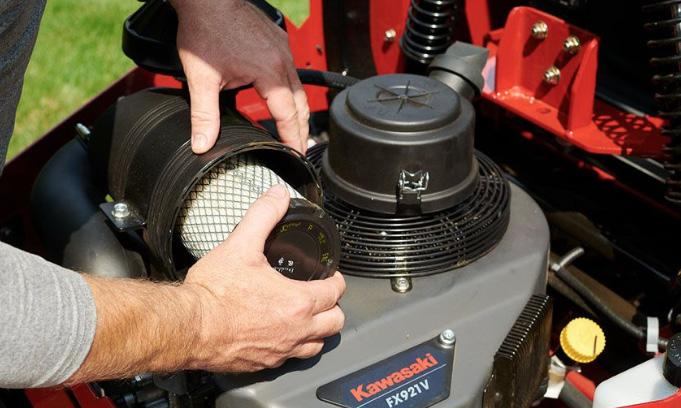
Breathe in: replace the air filter
A clogged air filter acts like a thermal blanket, trapping heat and causing poor running conditions. Replacing the filter allows the engine to pull in cool air, regulate temperature and maintain efficient combustion.
Breathe out: clear the mower deck
Dried grass clippings trapped under the deck disrupt airflow
and trap heat. Scraping and washing the deck clean allows better airflow, reducing heat and resulting in a better cut.
Stress test: inspect blades
Dull or unbalanced blades create excessive vibration, leading to costly component failures and generating unnecessary heat. Sharp, properly balanced blades help the mower run smoothly and efficiently.
Posture check: air up the tires
Low tire pressure tilts the mower causing an uneven cut and increased resistance, forcing the engine to work harder. Properly inflated tires keep the mower level for a smoother, cooler-running cut. Routine check-ups can reduce breakdowns.

Doing the math in fence installs
Reducing time spent installing and maximizing resources directly impacts the bottom line.
By Joe Haynes
There’s a lot of math involved in running a fencing company. Calculating the time required to complete a job, the number of crew members that will be needed on-site, how many jobs the operation can take on and the cost of materials is just the beginning to ensure the business will be profitable. Every opportunity to reduce the time spent on the installation process and maximize resources on the jobsite has a direct impact on the bottom line.
A significant line item in any fencing operation’s calculation is its equipment cost. Most residential fence installers invest in an earth drill to speed up the posthole digging process. This key piece of equipment has a big impact on a fencing crew’s productivity, and, with the right features, this expense can lead to a big boost in the bottom line.
One is less than two
There are many portable earth drill options on the market, but most require two-man operation for safety. When an earth drill hits an obstacle underground, it can jerk and jar the operator with enough force to result in injury. Because this is so dangerous, most drills require two operators to hold the drill steady and combat these effects. However, some earth drills feature a
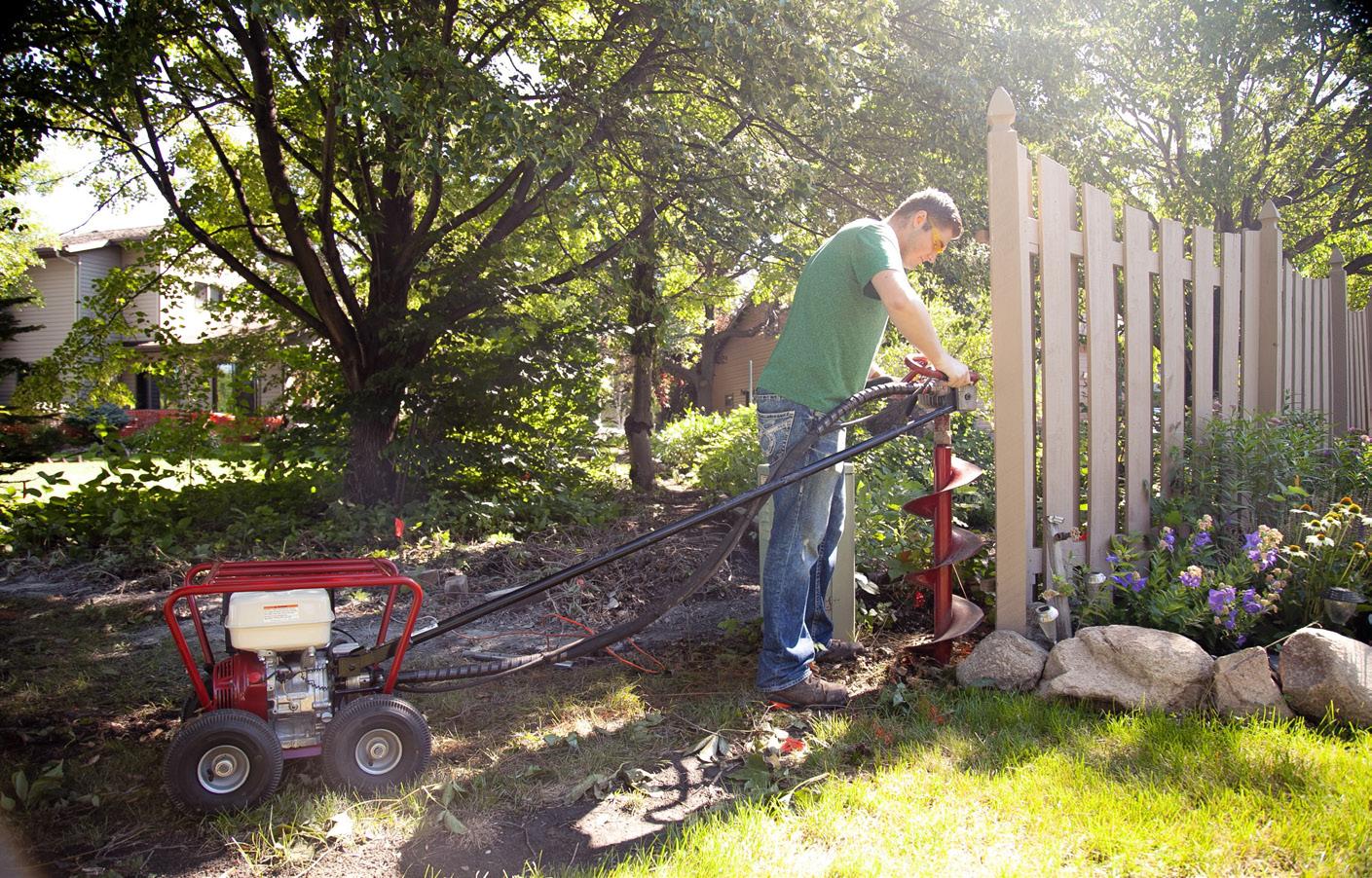
torque tube that makes one-man drilling possible by redirecting kickback to the engine carriage as opposed to the handles.
When a contractor can subtract one operator from the drilling process, the labour cost for that step is cut in half. Multiply that by dozens of postholes for a single fencing job and the savings add up. The second crew member can be reassigned elsewhere, such as following behind and placing the fence posts, to optimize the workforce on the jobsite.
Double drilling speed
Ready for more math? One of the key considerations with a one-man mechanical earth drill is its operational speed – look for one with an auger that can rotate at up to 360 rpm. Not all drills can meet this speed in a one-man drilling package and it’s common to see drills operating at half
that pace.
These mechanical earth drills can create a posthole in less than one minute, cutting down on drilling time and speeding up the installation process. The fast rotation speed also creates a smoother, cleaner hole than other posthole digging options, reducing time required to prepare the hole for the fence post. By cutting back on time spent digging, contractors can complete more projects in less time, bringing additional income into the equation.
Do the math
The common denominator is finding a mechanical earth drill capable of one-man operation and increased drilling speed. With reduced labour requirements and improved safety features, these earth drills can provide both short- and long-term financial benefits.
Some mechanical earth drills can create a posthole in less than one minute, cutting down on drilling time and speeding up the installation process.
How to ‘ nope ’ out in business matters
Effective ways to say ‘no’ when it’s necessary
By Turf & Rec staff
If you’re an entrepreneur, you’re used to doing hard things. So why do you struggle with saying no? Whether you need to turn down a prospective client, reject a misguided employee idea, or decline the invitation to chair a committee at a professional organization, why does that two-letter word get stuck in your throat?
Julie Bee, author of Burned: How Business Owners Can Overcome Burnout and Fuel Success, says, for one thing, entrepreneurs are human. It doesn’t feel good to anyone to let someone else down. But there’s more to the story than that, she says.
“I think entrepreneurs in particular struggle with this because we tend to be growth-focused and are always on the lookout for new opportunities,” she says. “Saying no – even if it’s in our best interests – can feel like failure.”
Still, at various points, everyone must reject clients, projects, and other offers to keep companies moving forward, manage workloads, and maintain mental health.
“That said, all ‘no’s are not created equal,” Bee says. “In some situations, you’ll want to let the other person down gently and leave the door open to future collaboration. In others, you might need to set a non-negotiable boundary.”
Here, she shares several ways to say “no.”
Ways to say “no” when setting boundaries
• No, I do not have the capacity to (fill in the blank).

• I’m working on saying no more often; this is one of those times.
• No, but I have someone who might be a good fit. Let me check in with them (get permission from that person first).
• Right now, and into the foreseeable future, I am focusing on (fill in the blank). Therefore, I cannot move forward with/ help with (whatever they asked for).
• No, I want to create more space on my calendar, which means I’m turning down some things I would have said yes to in the past.
• I am already over-committed/have a full plate, and I would not be able to give this the attention it needs/deserves. I have to say no.
• I recognize what you are doing is important/has value, but at this time I cannot participate/listen/attend.
Ways to say “no” to something you’d like to do, but simply can’t right now
• Not at this time, but please follow up with me in (number of months) when I may have more capacity to review/participate/ advise/etc.
• No, I have decided to pass on this project/ request/etc. Thank you for thinking of me and please keep me in mind for future opportunities (if you want this).
• The answer is no for now, but the door is open for a later conversation in (number of months).
• I/we have other priorities at this time, so I/we cannot pursue this one.
• No, I am booked solid through (fill in the blank). Thanks for understanding.
Ways
to say “no” to something that feels off
• My gut instinct is to say no, and I’m going to stick with my gut.
• I was initially excited about this idea, but upon review, I realize it isn’t a good fit.
• No, this does not align with our mission statement and/or vision.
• No, we are going in a different direction, but thank you for your time/offer/etc.
• No, I have found a more ideal option that suits me/us better.
• I’m not the one to talk to about this – you need to speak with (fill in the blank).
Ways to say “no” to people who (try to) make you feel bad about saying “no”
• No, thanks.
• No, I am not interested.
• No, I’ve already exceeded my (fill in the blank that relates to the ask) for the next (number of months/years).
• No, I am not able to take on (fill in the blank).
• No, I am going to burn out if I take on anything else.
• No, I’m taking a break from (whatever they asked you to do).
• No, this is not in my wheelhouse.
New enhancements for walk greens mowers
John Deere recently introduced some of its newest equipment at the 2026 GCSAA Conference and Trade Show. Among the products showcased were its walk greens mowers, including new enhancements.
The full portfolio of John Deere walk greens mowers have been refined for 2026, including all PrecisionCut, E-Cut Hybrid, and E-Cut electric walk greens mower models. With new design and ergonomic improvements, simplified adjustments and boosted cut consistency, the MY2026 Walk Greens Mowers
offer enhancements for the golf market.
Boosting operator control, all walk greens mower models now include a clutch control integrated into the operator presence bail, streamlining machine operations while improving operator control. The newly designed donut-style handlebar isolators help self-center the handlebars, keeping the cutting unit engaged for a more consistent cut on the course. All walk greens mowers now have a modernized side cover styling, which delivers a refreshed appearance for 2026.
On the SL walk greens mower models, John Deere has introduced an updated bedknife-to-reel adjustment system, which features a 13-millimetre hex shaft design for

more consistent adjustments and simplified tool requirements when checking bedknife-to-reel clearance.
Featuring an improved throttle control positioning, the lever on the 185 and 225 E-Cut electric walk
SPORTS FIELDS: DESIGN, CONSTRUCTION,


greens mowers now optimizes the operator’s range of motion, increasing overall ease of use. These design enhancements help reduce the effort needed to adjust traction speed, helping operators work more comfortably and efficiently.
The updated Third Edition of Sports Fields: Design, Construction, and Maintenance is a comprehensive reference for professionals who are responsible for the design, construction, renovation, and maintenance of athletic facilities. This book contains illustrative examples of specific design elements of the most popular sports facilities. This Third Edition contains new chapters on safety, public relations, and professionalism for future sports field managers, as well as fresh drawings and photos that highlight innovative field layout, grading, irrigation, and drainage.
$132.00 | Item#1119534754

Health & Safety
By CCOHS
How to build a safety-focused culture
In groundskeeping and maintenance, hazards are part of the job. When safety is part of the daily routine, workers are more likely to plan ahead, follow procedures, and speak up when something does not feel right.
Make safety your foundation
Your health and safety program should set clear expectations for how to safely perform work. It should include policies, training, and inspection procedures, while also being practical for the work being done. Involve workers, supervisors, and health and safety committee members early in the process to help ensure procedures make sense on the job. Crews working outdoors, in public spaces, or across multiple sites often face conditions that change quickly. Their input helps identify practical controls and procedures that can be followed in the field.
Once developed, the program should be communicated clearly and used consistently. Rather than treating it as a separate initiative, integrate the program into daily planning, job assignments, and regular check-ins. Review it on an ongoing basis and adjust as equipment, tasks, or seasonal demands change.
Provide
practical, ongoing training
Training plays a key role in getting workers engaged in safety and is most effective when it is hands-on and tied directly to the tasks workers perform.
Orientation sets the foundation. New workers need to understand emergency procedures, reporting expectations, and workplace rules, as well as how safety applies to their specific duties. Task-specific training is equally important and should cover the safe use of equipment, tools, and required protective gear.
Hands-on demonstrations and supervised practice help workers build confidence and retain information. Use real
The Canadian Centre for Occupational Health and Safety (CCOHS) promotes the total well being of workers in Canada by providing information, training, education, systems and solutions that support health and safety programs and injury and illness prevention. www.ccohs.ca
work situations (safely) rather than generic examples.
Make sure training goes beyond onboarding. Refresher sessions help reinforce safety expectations, introduce new equipment or procedures, and address any issues that arise during busy seasons.
Reinforce that safety is a shared responsibility
A strong safety culture depends on everyone understanding their role. Workers, supervisors, and managers all contribute to maintaining safe work practices.
Regular check-ins give crews an opportunity to review tasks and discuss any challenges with procedures. If something is not working as intended, look for ways to improve the process without introducing new hazards. Workers often have valuable insights because they perform the tasks daily.
When developing or updating procedures, focus on each step of the task and the hazards that may be present. Involving workers in these discussions improves both the quality of procedures and worker buyin. Encourage workers to report unsafe conditions or practices and make sure they know how to raise concerns and who to contact.
Use safety talks to keep hazards top of mind
Safety talks, sometimes called toolbox talks, are short, focused conversations about specific hazards and safe work practices. They support formal training by reinforcing safety awareness at the start of a shift or before a task begins.
Safety talks work best when they are brief, relevant, and tied to the work planned for the day. Topics can be based on current tasks, recent observations, inspection findings, or past incidents. For example, a safety talk before spring cleanup may focus

on equipment start-up checks, while one before winter work may address slips, trips, and falls.
Effective safety talks explain why the topic matters, outline the hazards involved, review safe work procedures, and give workers a chance to ask questions or share observations.
Support supervisors as leaders
Your supervisors and managers play a vital role in shaping safety culture. Providing regular training helps them carry out responsibilities such as conducting inspections, encouraging safe work procedures, and leading safety discussions. Reinforce that crew safety is their No. 1 priority.
When supervisors take part in orientations and lead safety talks, it demonstrates their commitment to safety and sets clear expectations. Their involvement makes it easier for workers to raise concerns and follow safe work practices.
Keep communication open
Clear communication is essential, but engagement grows when workers feel their input matters. Surveys, group discussions, and informal conversations can provide insight into how safety is experienced day to day.
Following up is just as important as asking for feedback. Let workers know what changes can be made, what may take more time, and why certain decisions are made. PHOTO: GEMINI
A safety program should include policies, training and inspection procedures.
CORGWIN TM with Seed GRANULATED ORGANIC COMPOST
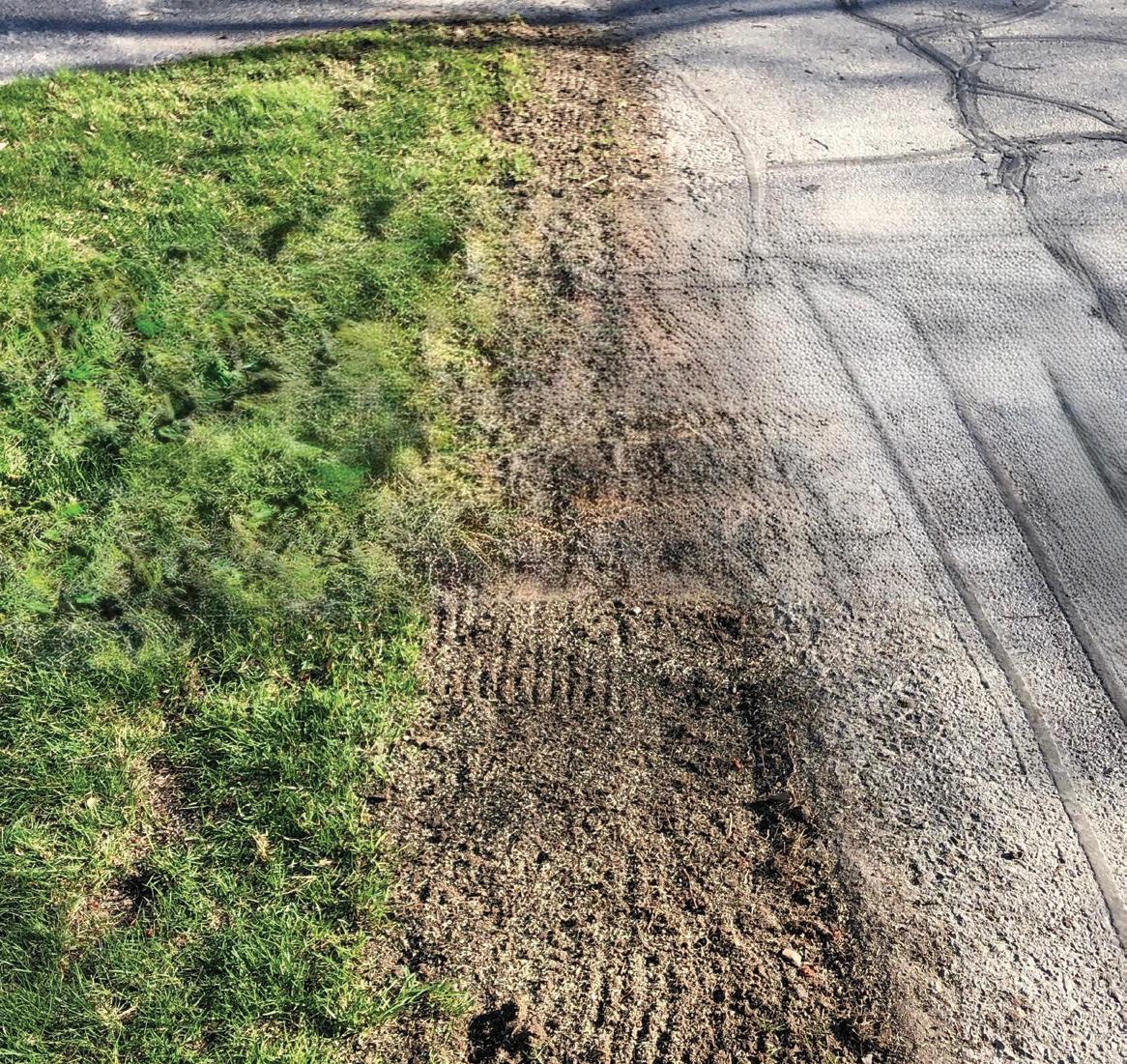
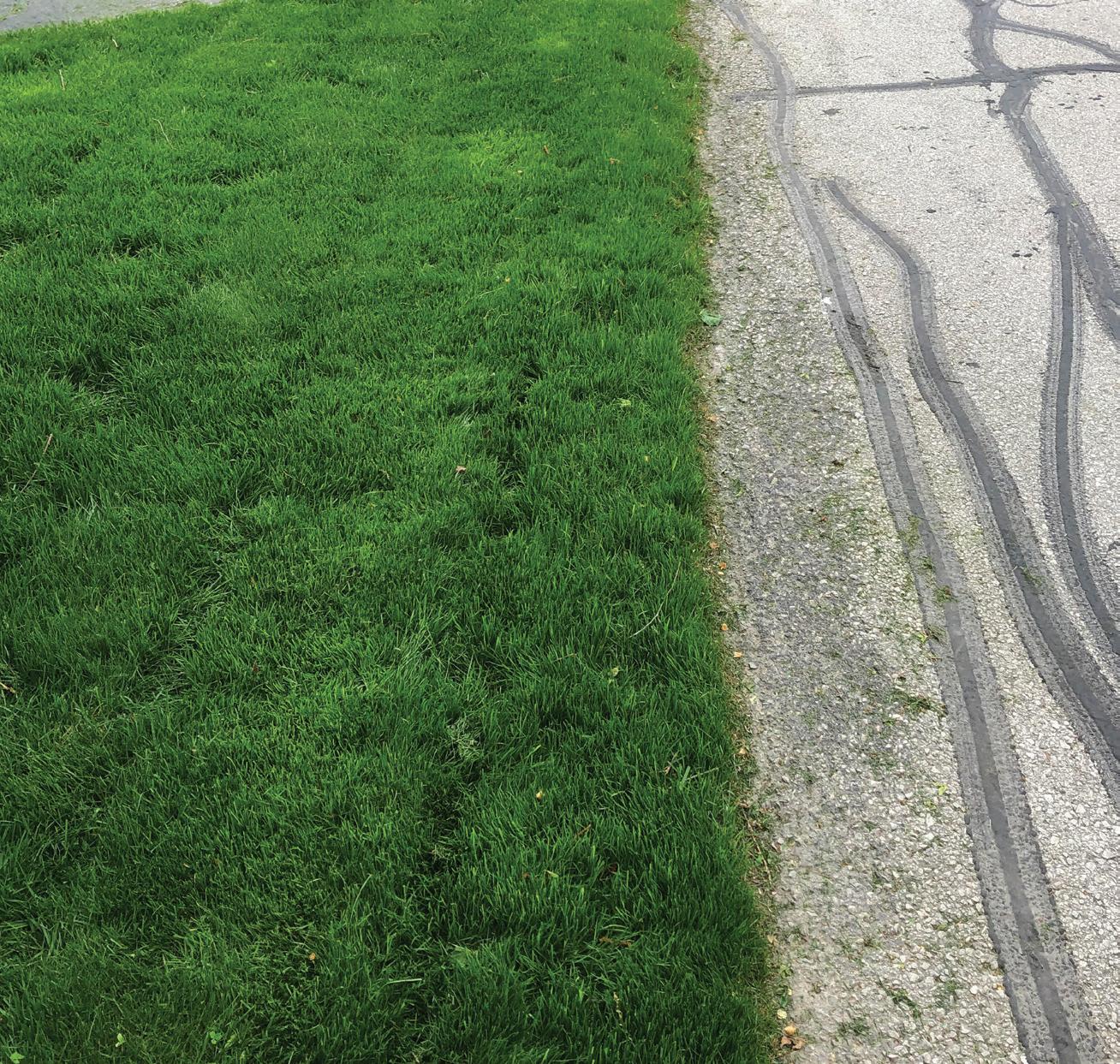
Great for overseeding; rebuilding turf’s natural character traits, creating a denser lawn, consequently combating weed growth. Also suitable for lawn repair; dog urine & salt damaged areas.
Suggested application rate: 4.5kg (10 lbs)/ 1,000ft2
Available in both 5kg & 18kg

4-1-0 now containing
CORGWIN (Canadian Organic Water Insoluble Nitrogen)
• Derived from Canadian dried citric acid biomass; (citric fruit waste)
• 6-2-0 , 2% Fe analysis
• Contains proprietary biostimulant; NUTRIFENSE; plant extracts which enhance plant resilience, especially in the face of heat, wear & drought stress;
• CFIA registered for use in Canada
OPTIMUM SEED MIXTURE
75% Certified Perrenial Ryegrass, selected for:
• Spreading Ability, High Heat, Drought, Cold & Salt Tolerance Rating;
25% Certified Kentucky Bluegrass, selected for;
• Fast Germination/ Establishment Excellent Tillering & High Wear Tolerance 80% 20%
Pitt Meadows, BC Calgary, AB Burlington, ON St-Bruno, QC

FIND YOUR LOCAL
UPDATED WITH WIRELESS SATELLITE EXACT NAVIGATION
REDEFINING AUTONOMY.

With ECHO Robotic’s new WiseNav software update, your GPS-RTK robot mower automatically adapts to every part of the course. Cutting height and mowing patterns adjust seamlessly to your criteria — delivering faster coverage, professional-quality results, and less manual adjustment. From fairways to semi-roughs and step-cuts, the robot follows every curve with precision, and even parks and open green spaces benefit from the same consistent, attractive results.
Exclusively available for GPS-RTK robot models.

PATTERN MOWING & PICKING
With centimeter accuracy
FULLY AUTONOMOUS
Charges, Cuts & Dispenses golf balls on its own
STEP-CUT MOWING
AUTOMATIC HEIGHT CONTROL
Tailored to each area
LABOUR OPTIMISED TO THE MAX
Available 24/7. Saving time, cutting costs, and freeing your team for other tasks
SUSTAINABILITY AND RELIABILITY

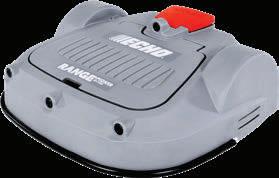
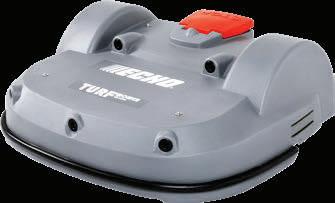



For semi-roughs, roughs, and aprons
Zero emissions with zero noise pollution

DPB-7700T


The ECHO X Series is a collection of best-in-class tools, engineered for professionals to conquer the toughest jobs e ortlessly. This powerful lineup of battery-powered equipment maximizes productivity and e ciency, ensuring peak performance on every task. Backed by a two-year commercial warranty, you can trust in our superior quality and reliability.


TRUSTED OUTDOOR POWER.