The speed and performance of new Intruvix® II herbicide is so darn good, folks can hardly contain their excitement. By applying it with glyphosate before planting cereals, they’re saying goodbye and good riddance to narrow-leaved hawk’s-beard, volunteer canola, kochia and many other problem weeds. Enjoy cleaner fields, faster, while protecting your future glyphosate use. Cheese and crackers, how easy can you get?
Clean is good
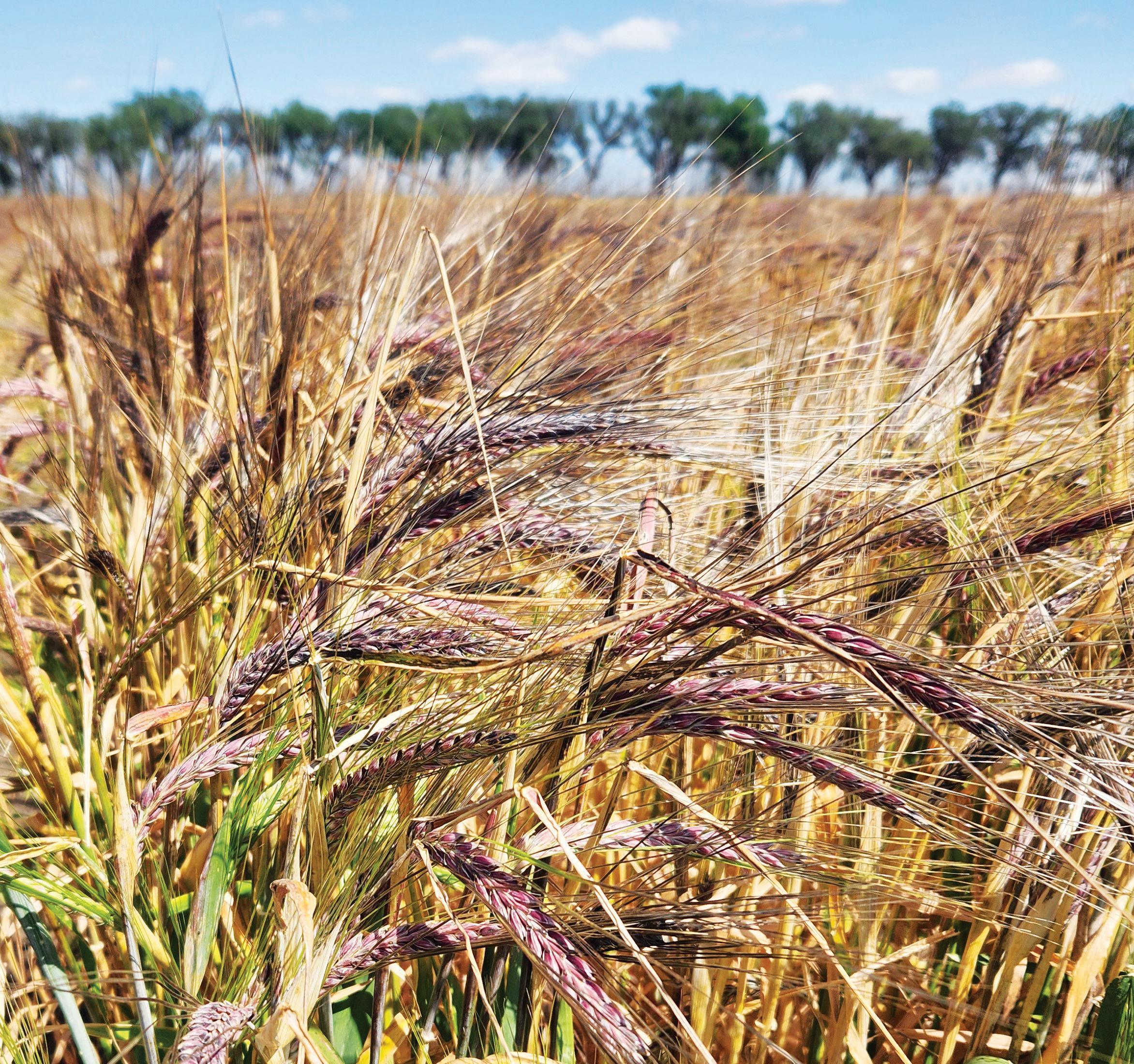
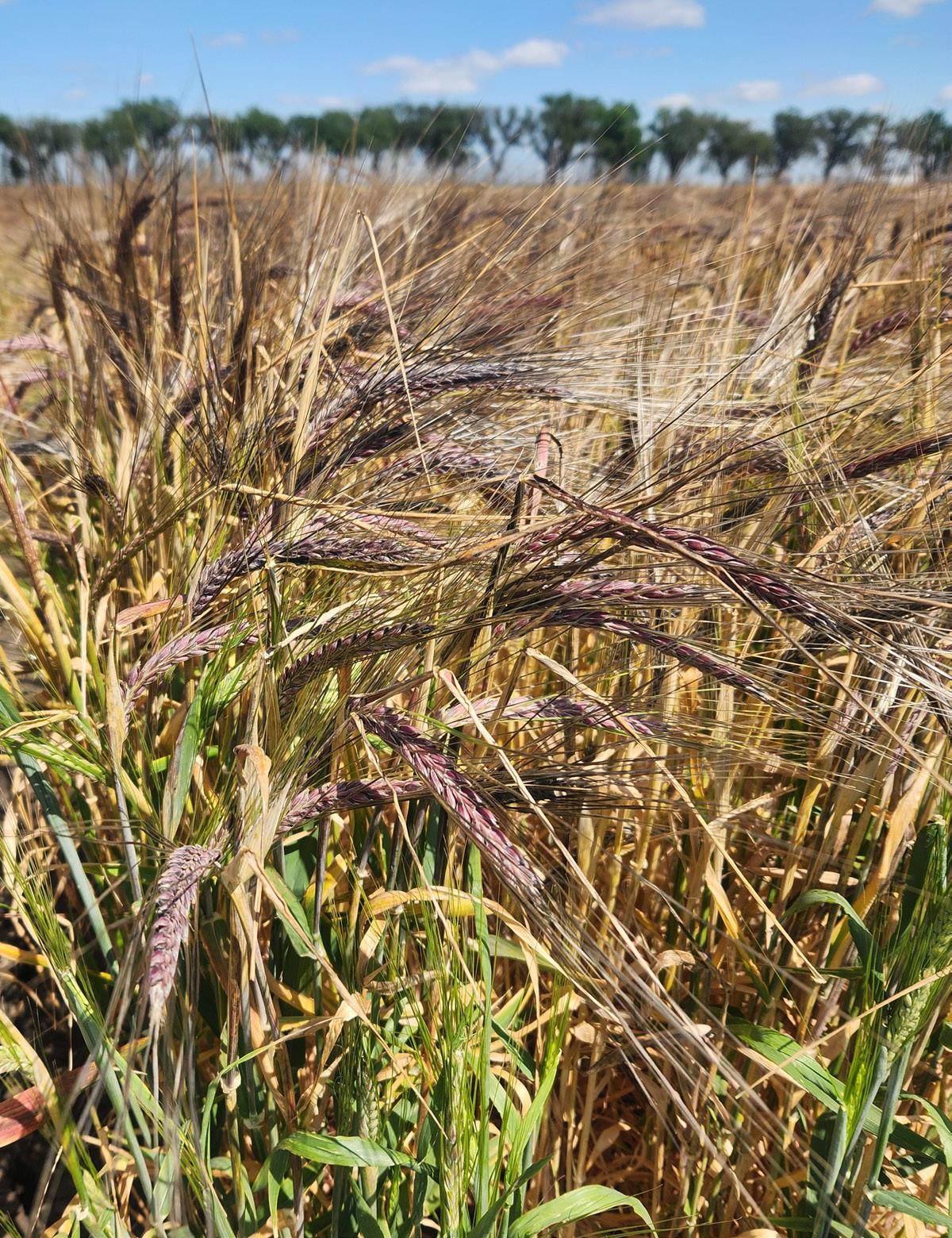
AAC Magenta is a purple, hulless barley.
Sweet spot: lodging, yield and profitability.
Research
Searching for fungus-infecting viruses.
Two projects to boost success on the Prairies.
Remote-sensing possibilities explored.
On-farm trials focus on optimum yield.
Management
AAC Magenta purple hulless barley brings a combination of high anthocyanin, beta-glucan and protein content to the health food industry. Photo courtesy of Ana Badea. Mid-March
approach.
FROM THE EDITOR
by Kaitlin Berger
TRENDS AND TRACTORS
If you haven’t noticed it yet, we recently included a section called “Equipment and Technology” in the February issue of Top Crop Manager and again this month, too. In this issue, you’ll find it on page 8. The goal is to provide you with some quick updates on the latest equipment releases and other technology trends. There are plenty of new tractors and equipment assets coming to market, new technology being released for your smartphone – and it can be difficult to keep track.
Farm Credit Canada (FCC) published Farm Equipment Outlook 2026: Used Equipment and Livestock Support Modest Sales Growth late last year, a report that predicts another year of weak sales in Canadian farm equipment. This follows the trend of the last few years where many farmers have been facing declining commodity prices and higher operating costs. This has changed their buying priorities from want to necessity, which has made a big impact on new equipment sales.
...used equipment sales have seen rising demand in some areas.
“New farm equipment unit sales are projected to remain soft as farmers feel the pressure of tighter profitability due to low commodity prices, high equipment prices, and market uncertainty stemming from geopolitical and trade issues,” said the December 2025 report.
Alternatively, used equipment sales have seen rising demand in some areas. At the time of the report in late 2025, used combine sales were expected to finish higher than 2024 levels, and used baler sales had increased 30 per cent.
One factor that influences used equipment sales in Canada is the strength of the U.S. equipment market. When new equipment sales decrease south of the border, Canada receives more new equipment much sooner. According to the FCC report, this resulted in greater trade activity for used combines in September 2025.
In addition to U.S. demand, FCC assumes the planned review of the Canada–U.S.–Mexico Agreement (CUSMA) in 2026 may also affect farm equipment sales this year. If negotiations proceed and tariffs on steel and aluminum are lowered, it will significantly help reduce input costs for manufacturers – and ultimately the pressure on buyers.
Either way, whatever you’re planning for equipment updates in 2026, it’s worth staying informed on what’s available and on what might affect your purchasing plans in the future.
Mid-March 2026 | Volume 52 | Number 3
Reader Service Print and
or changes,
Angelita Potal,
Tel: (416) 510-5113 | Fax: (416) 510-6875 Email: apotal@annexbusinessmedia.com Mail: 111 Gordon Baker Rd., Suite 400, Toronto, ON M2H 3R1
Group Publisher MICHELLE BERTHOLET (204) 596-8710 mbertholet@annexbusinessmedia.com
Audience Development Coordinator LAYLA SAMEL (416) 510-5187 lsamel@annexbusinessmedia.com
Team Lead/Media Designer BROOKE SHAW
CEO SCOTT JAMIESON sjamieson@annexbusinessmedia.com
Printed in Canada ISSN 1717-452X
PUBLICATION MAIL AGREEMENT
Weeds show up early — and steal yield fast in the spring. Getting ahead of hard-to-kill weeds is easier with soil active solutions like Fierce® EZ and Valtera® Cereals. These proven pre-emergent herbicides deliver broad-spectrum control across cereals and pulses, helping you manage resistance, stay flexible and lead the season instead of chasing it. Less in-season pressure. More flexibility when it counts. You don’t need to overhaul your season. Just upgrade your start.
Why wait to take control?
Purple is the new barley colour
Newly registered AAC Magenta is a purple, hulless barley for food with potential health benefits.
BY BRUCE BARKER
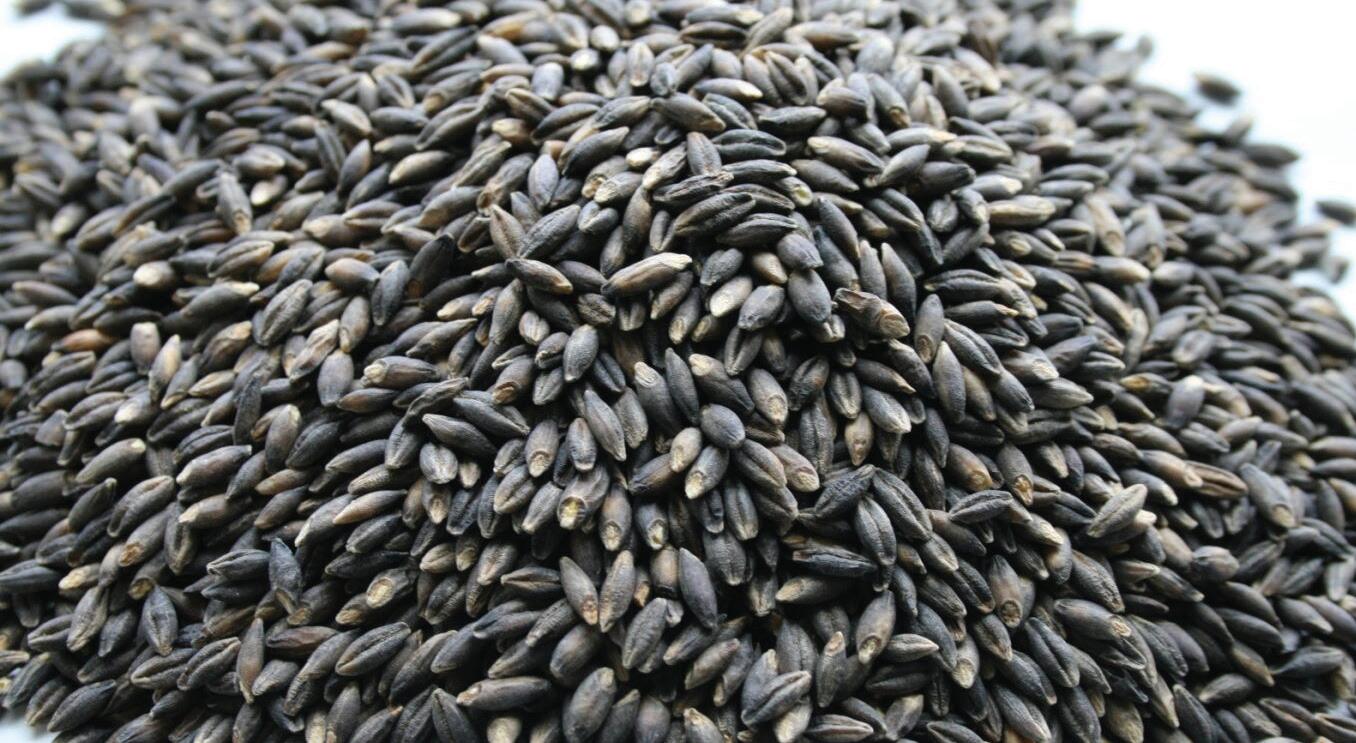
Purple, hulless barley brings several health attributes together in one package. AAC Magenta was registered in November 2024. It brings a combination of high anthocyanin, beta-glucan and protein content to market as a specialty product in the food and potentially industrial processing markets.
“We thought that developing a hulless barley for food variety with both high beta-glucan and anthocyanin content could be one of the answers to ‘how can we make our Canadian barley even better and further increase its consumption as a healthy food option?’” says Ana Badea, a plant breeder with Agriculture and Agri-Food Canada in Brandon, Man.
The cross from which AAC Magenta was derived brought together several desired quality traits such as high beta-glucan and anthocyanin content packed in a Canadian background, says Badea. She knew it was going to be challenging, but armed with the support and encouragements from both growers and end users, her group initiated the work on the development of a hulless purple barley. “In less than 10 years, we are very excited to bring forward AAC Magenta, a purple, hulless for food barley,” says Badea.
Badea says the background for health claims in barley goes back to 2012 when Health Canada concluded “that scientific evidence exists in support of the therapeutic claim linking barley grain products to a reduction of blood cholesterol.” She also says the daily intake of a minimum of 3 g of beta-glucan from barley grain products has been shown to significantly lower blood cholesterol concentrations and reduce circulating low-density lipoprotein cholesterol, which are key risk factors in cardiovascular diseases, and a major health problem in Canada, affecting 1.6 million Canadians.
Around that time, Badea says that some of her collaborators also reported that coloured barley – black, purple, blue – can produce higher antioxidants than the regular yellow to amber barley. They also reported that among the barley accessions tested, the purple and blue ones have shown higher average contents of anthocyanins than the black.
“We were also aware of the fact that the consumption of foods with high anthocyanins content has been
ABOVE AAC Magenta purple hulless barley brings a combination of high anthocyanin, beta-glucan and protein content to the health food industry.
linked to lowering the risk of chronic diseases such as hyperglycemia, hypercholesterolemia and cancer,” says Badea.
Information in the scientific literature shows that coloured barleys may have advantages over sources of anthocyanins such as blueberries and grapes. Badea says the research found that the anthocyanins from certain barley varieties are more stable during extraction, making them a more appealing source compared to anthocyanins from other fruits and vegetables that may degrade more easily. It was also found that the anthocyanins can be extracted using water, which is a
All photos courtesy of Ana Badea.
less harsh extraction method than those required for other plant sources.
“Moreover, the properties of barley anthocyanins, combined with the other nutritional benefits of the barley grains such as beta-glucan, vitamin E, macro and micronutrients, etc., make them very appealing from a health perspective as well as suitable for a wide range of products, including foods, beverages and supplements,” says Badea.
The performance of AAC Magenta in the Western Co-operative Registrations trials found that it displayed high anthocyanin and beta-glucan contents. It also displayed high protein content averaging 16.5 per cent in the 2022 tests. Badea says protein is an essential nutrient that builds and repairs body tissues. “All of these fit well with the consumers’ interest in health and wellness, by consuming functional foods that provide specific benefits as well as plant-based alternatives.”
GOOD AGRONOMIC PERFORMANCE
AAC Magenta performed well in the registration trials in 2021 and 2022 covering 19 site-years. It averaged 64 bu/ac (4.157 tonne/ha) in the eastern Black soil zone, 57 bu/ac (3.708 t/ha) in the west Black and Gray soil zones, and 55 bu/ac (3.570 t/ha) in the Brown soil zone.
Days to maturity for AAC Magenta was approximately 87 days. Height was about 30 inches (76 cm) and had a lodging rating of 4.4 on a scale of 1 to 9. One thousand kernel weight was 44.8 g with 95.5 per cent plumpness. It had very low hull adherence of 0.5 per cent which is a desired trait for hulless barley as it makes it a more efficient-to-process grain.
AAC Magenta’s disease package shows moderate resistance to surface smuts and loose smut, intermediate resistance to Fusarium head blight (FHB), net-form and spot-form net blotch and spot blotch, but moderately susceptible to scald and susceptible to stem rust.
THIS PURPLE BARLEY WENT OFF TO MARKET
Agriculture and Agri-Food Canada has a pre-licensing agreement in place with Progressive Foods in Edmonton, Alta. Marvin Nakonechny, CEO of Progressive Foods, says that the company is in the initial stages of both seed production, and product and market development. The company currently markets organic and conventional pre-cooked barley under the name Snappy Grains, which is ready to eat in 12 to 14 minutes.
“We have a lot of background work to do. A key thing is that the market wants a shiny, polished product. We still have to work out the processing procedures to make sure we have that type of product,” says Nakonechny.
One of the main food markets that Nakonechny wants to target is the food service industry, including hotel caterers, restaurants, health care facilities, and universities and colleges. Typical pearl or pot barley takes over one hour to cook, so he hopes an eye-appealing, quick-cooking, healthy barley can break into these markets. “First of all, the dark purple colour of barley will stand out on a buffet table or any dish on which it is served. We eat with our eyes,” says Nakonechny.
Another market with great potential is Asia, where Nakonechny has traveled for market development purposes. There, coloured grains are perceived as more nutritious. In China, he says consumers believe the best rice is a blend of white, red and black colours, and Korean and Japanese consumers already understand the benefits of coloured grains. “We have a lot of hurdles to get there, but we are making more of an effort to get into those countries,” says Nakonechny.
On the domestic side, Nakonechny says that getting into retail grocery stores will depend on selling the health benefits to consumers. He says the company can ride the marketing efforts of Snappy Grains to get a new, quick cooking purple barley onto shelves and into consumer hands.
For farmers interested in growing AAC Magenta, Progressive Foods will only offer it under production contracts for both organic and conventional production. The company has completed the first seed increase in 2025. A small portion will be used to see how it performs under its quick-cooking treatments. A large portion will be replanted for another increase.
MORE COLOURED HULLESS BARLEY FOR FOOD IN THE PIPELINE
AAC Magenta isn’t the first hulless barley for food developed by Badea. Previously, AAC Becket, a regular yellow coloured barley, was registered as a high yielding and high beta-glucan variety licensed to Tomtene Seed. She has two more hulless barley for food lines that have recently received support for registration.
“We are very excited about both of them. The black coloured candidate line drew lots of attention, but I am looking forward to seeing this attention translated into action. What I mean by that is having a license holder that will make it available to both growers and end-users,” says Badea. Interested parties can apply for the license in March 2026.
RIGHT Consumption of food products high in anthocyanin and beta-glucan have been proven to provide health benefits.
EQUIPMENT AND TECHNOLOGY
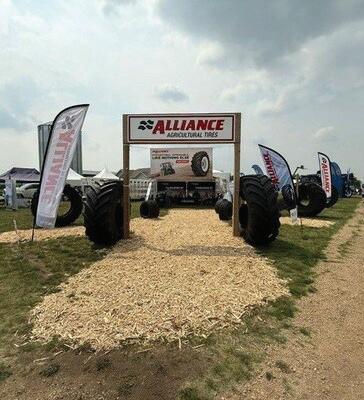
ALLIANCE SHOWCASES BESTSELLING AGRICULTURAL TIRES AT AG IN MOTION 2025
Alliance, a leading global brand of agricultural and off-highway tires, displayed its bestselling agricultural tires at Saskatchewan’s Ag in Motion in July 2025. This included the Agri Star II series along with multiple patterns equipped with VF technology such as Agriflex+ 377 XT, Agriflex+ 381 and Agriflex+ 389 XT.
“Our participation at Ag in Motion is a testament to our commitment to the growing agricultural economy of Canada,” says Trent Wallin, vice president of U.S. sales. “We take pride in making tires that are tailored to suit the evolving needs of modern Canadian farmers. We aim to serve customers in the region with our innovative tires for superior output and maximum yields.”
According to the product description for AGRI STAR II tires, they come with a Stratified Layer technology (SLT), which includes a top layer with a single angle profile and a bottom layer with a multi-angle profile. “After 40 per cent wear of the tire, bottom layer of the lug comes in contact with the ground which leads to increased contact area at the central portion. This leads to better roadability and performance of the tire,” says the description. Increased rubber volume also improves tire stiffness for better wear resistance.
Visitors to the Alliance exhibit during Ag in Motion showed interest in the VF tire range, which help reduce soil compaction by carrying the same loads as standard radial tires but at 40 per cent lower inflation pressure.
NEW SMARTPHONE-BASED AI TOOL PROVIDES GRAIN QUALITY ASSURANCE
Protein Industries Canada, in partnership with Grain Discovery, Inarix and Sevita International, is working on a project to develop a smartphone-based grain quality assurance tool that farmers can use to support their decision-making. “By leveraging AI, specifically computer vision and machine learning algorithms, the project partners will provide options to complement grain testing methods with a softwareas-a-service (SaaS) platform,” says a press release from Protein Industries Canada.
The platform is being developed to allow users to take a photo of a soybean sample on their smartphone and receive an AI-generated assessment in under 20 seconds.
“The integration of digital innovation and agricultural expertise is reshaping Canada’s agrifood sector,” says Robert Hunter, CEO of Protein Industries Canada. “This project demonstrates how advanced, accessible AI tools can help optimize decision-making at the farm level. By enhancing consistency and traceability, this technology supports the delivery of high-quality, food-grade crops. It’s a strong example of how collaborative innovation strengthens Canada’s position as a global agri-food leader.”
The app will provide multiple benefits, including real-time, standardized assessments of soybean variety, enhanced traceability and transparency for grain buyers and processors, as well as increased accessibility with tools designed for smartphone use across rural regions.
NEW SERIES OF NEW HOLLAND T7 XD TRACTORS ARE BUILT FOR LARGESCALE FARMERS
New Holland has a new series of T7 XD 360-435hp tractors for large-scale farmers, coming to North America in 2027. Offering three models - the 360hp T7.360 XD, 390hp T7.390 XD and 435hp T7.440 XD – the tractors are designed around a Stage V 8.7-litre FPT Cursor 9 six-cylinder engine mounted on a structural sump to minimize vibration, keep the tractor waist narrow and enhance maneuverability.
The new series features a 680-litre fuel tank, 13 per cent bigger than T7 HD tractors, and the engine service interval is extended to 750 hours. Peak torque is 1,400 rpm and the system is designed to electronically utilize low engine speed figure to decrease fuel use.
The tractors are designed to be fuel-efficient in other ways, with the engine speed dropping to 650 rpm when idling. A new version of Auto Command CVT increases the tractors’ speed to a maximum 60 kph, reducing road travel time and fuel use through operating at lower engine rpm.
For the first time on a New Holland tractor, this series has a central tyre inflation system for increased flexion (IF) or very high flexion (VF) tyres to be operated at their lower recommended pressures to minimize soil damage. With fast reinflation from the cab, it’s easy to get the tractor back on the road once fieldwork is complete.
“The T7 XD will extend the compact design, versatility, and excellent power to weight ratio characteristics of our T7 family into the high horsepower segment,” says Richard Hollins, New Holland T7 global product manager. “The new range will appeal to customers looking for that all-round capability, from heavy field work, demanding PTO or hydraulic tasks, to high-speed haulage; the T7 XD has the features that can deliver this.”
RIGHT New Holland T7.440 XD is designed for versatility.
LEFT New project is developing a smartphone-based grain quality assurance tool.
LEFT Alliance showcases leading agricultural tires at Canada’s largest farm expo.
Tired of disposing of hundreds of used herbicide jugs?
WE’VE GOT A BAG FOR THAT
PrecisionPac® herbicides are made to order. Fast, convenient and field ready. No waste, no guesswork — just precision weed control made for your farm.
Ask your local retailer about customizable PrecisionPac® herbicides.
Another angle of attack on white mould
Searching for fungus-infecting viruses to help control this disease.
BY CAROLYN KING
White mould, or Sclerotinia, is a major fungal disease that can seriously impact yields in many crops such as canola, soybean, dry bean and sunflower. In a current project, Sean Prager’s research group at the University of Saskatchewan (USask) is seeking tiny natural enemies of Sclerotinia on the Prairies to tackle the disease.
These researchers are exploring the possibility of using mycoviruses – viruses that infect and replicate in fungal cells – as biocontrol agents for Sclerotinia. “Identifying a mycovirus with the potential to control Sclerotinia could add another tool in our toolkit for controlling this devastating disease,” says Dinesh Babu Paudel, a professional research associate in Prager’s group.
A BIT OF BACKGROUND ON THE DISEASE
White mould can be difficult to control for several reasons. Sclerotinia sclerotiorum, the fungus that causes the disease, can infect a wide range of plant species and can survive in the soil for years, so crop rotation is not always effective. Breeders have developed some crop varieties with improved tolerance to Sclerotinia, but they are not completely resistant. Fungicides are important tools for managing this disease, but making timely applications can sometimes be challenging.
Although chemical fungicides are often used for Sclerotinia control in Canada, biofungicides are also available, including one product that uses a bacterium and another that uses a parasitic fungus as the control agent. A virus-based biofungicide could be another alternative.
Biofungicide products provide crop growers with additional options for rotating their fungicide modes of action in order to reduce the risk of the fungus developing insensitivity to frequently used modes of
action. The importance of fungicide rotation is underlined by recent findings from Agriculture and AgriFood Canada (AAFC) research showing that some Sclerotinia samples from the Prairies have higher insensitivity to commonly used chemical fungicides.
A BIT OF BACKGROUND ON MYCOVIRUSES
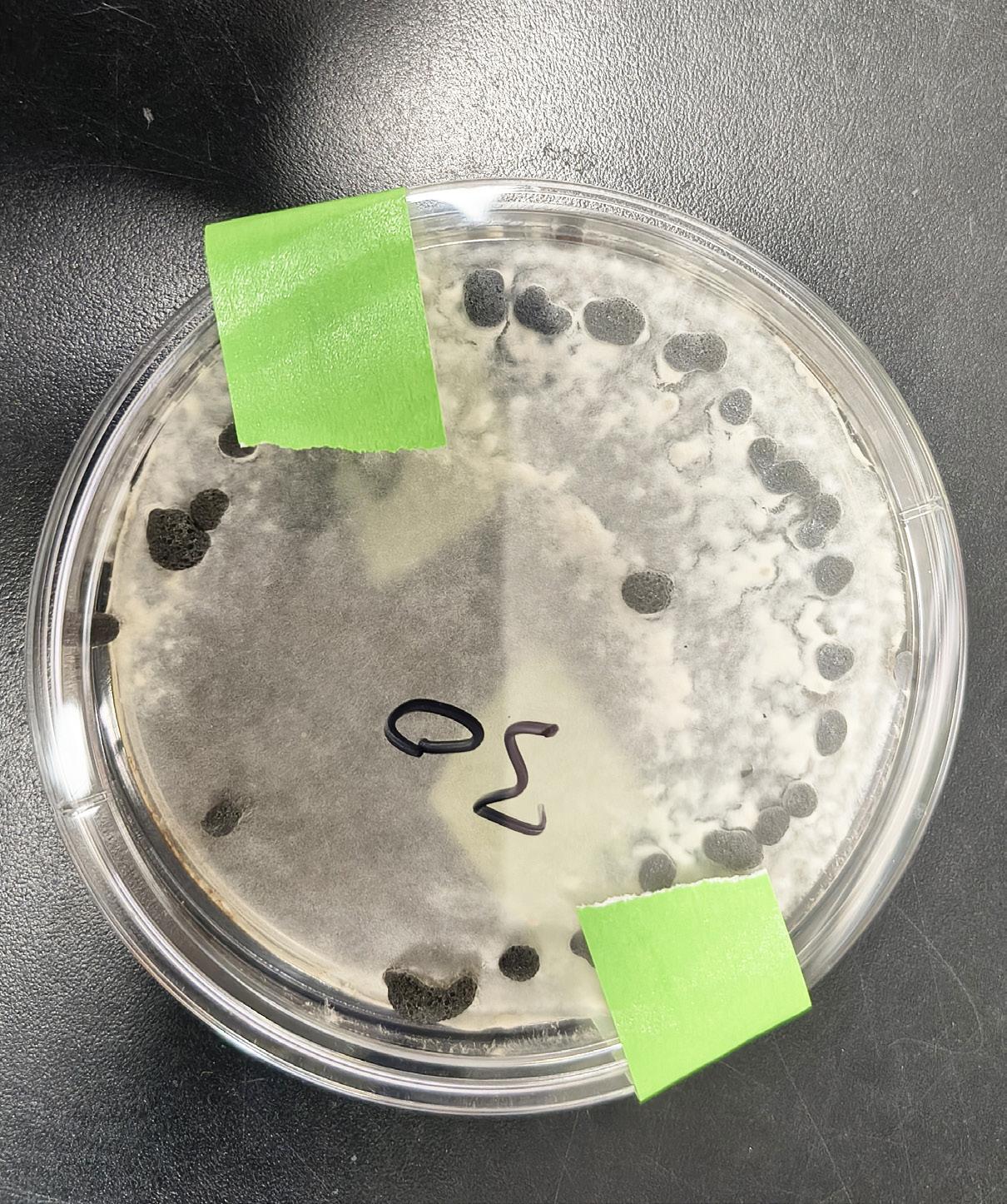
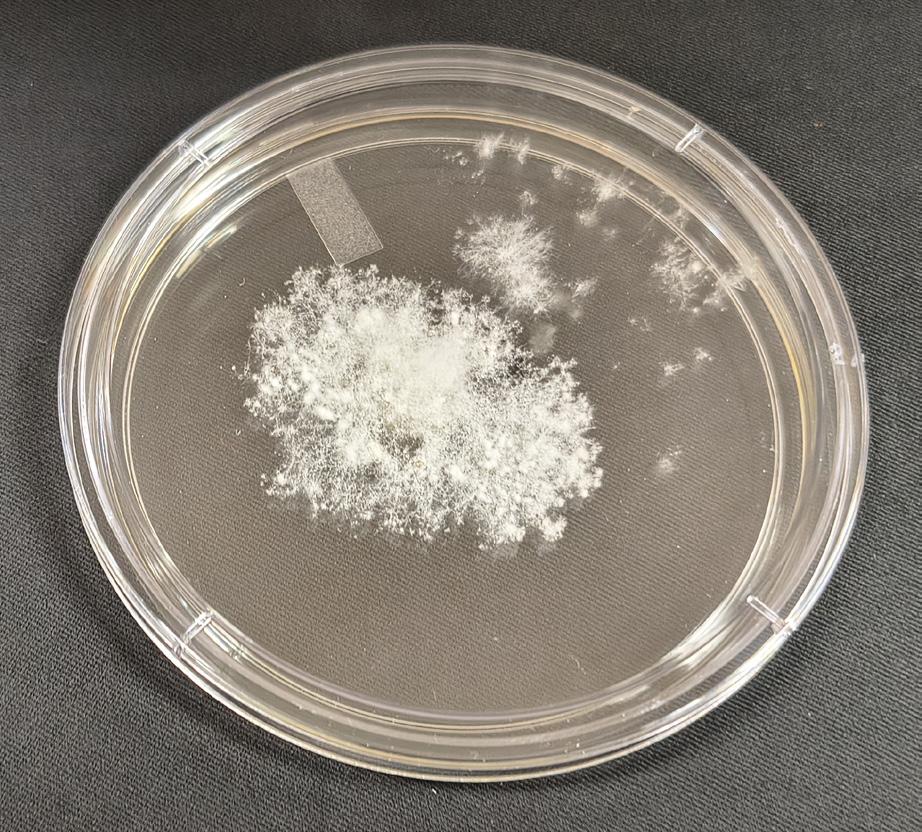
ABOVE In this project, Sclerotinia samples from Prairie crop fields are first grown in the lab on a solid growth medium. The white cottony growth is fungal mycelium, while the dark masses are sclerotia, the fungus’ survival structures.
Paudel has been researching viruses that harm plants for quite a few years, but this project offers an opportunity to pursue his longstanding interest in working on viruses that are beneficial to plants.
He notes that mycoviruses are actually common in fungi, including fungi that cause diseases in plants. “There are various types of viruses, but we can group them broadly into two categories. One category is DNA viruses, which have their basic genetic information in the form of DNA. And the other category is RNA viruses, which store their genetic information in the form of RNA,” says Paudel. “Viruses infecting fungi include both DNA viruses and RNA viruses ... scientists have already identified diverse groups of viruses in fungi, including Sclerotinia.”
Researchers in various countries are studying mycoviruses that infect Sclerotinia. Paudel notes that a research group in China has discovered a mycovirus with very good potential for Sclerotinia biocontrol. However, he explains that a mycovirus that controls
All photos courtesy of Dinesh Babu Paudel, University of Saskatchewan.
a fungus in one region may not be effective on the same fungus in a different region. “For example, in the 1950s in Europe, they had a fungal pathogen that causes blight in chestnut trees, and it was killing a lot of chestnut trees. But later on, this epidemic slowly stopped, and one of the reasons for that was the emergence of a virus that infects the chestnut blight fungus, causing the fungus to become less virulent,” he says.
“People in North America also had this problem of chestnut blight. So they brought this virus from Europe to control chestnut blight in North America. But it failed. That shows there is likely some environmental effect [on the virus/fungus/plant interactions] or the strain of the pathogen is different here than in Europe.”
The possibility of regional differences in effectiveness is one reason why the USask project is focusing on mycoviruses found in Western Canada. “Also, we wouldn’t need to worry about the introduction of foreign viruses from a different region,” adds Paudel.
He also speculates that a product using a regionally-sourced mycovirus might provide longer control of the disease in that region, so growers may need to apply it less often. In other words, if a Prairie mycovirus, adapted to Prairie mycovirus/Sclerotinia/crop interactions, is applied to a Prairie field in sufficient amounts, the virus could have a good chance of persisting, reproducing and spreading to attack new white mould outbreaks in that field in the future.
PROJECT DETAILS
This four-year project, funded by SaskOilseeds (formerly SaskCanola) and the Western Grains Research Foundation (WGRF), started in 2024 and is in its initial stages. At present, the project team and their collaborators are collecting Sclerotinia samples mainly from canola fields and mainly from Saskatchewan with some samples from the other Prairie provinces. The team has also started doing some DNA and RNA sequencing and developing some of the primers needed for various molecular tests.
Paudel explains that each Sclerotinia sample is brought to the lab and grown on a plate. Once the sample has produced enough bio
mass, the DNA and RNA are extracted and sequenced.
One approach the team is using is total RNA sequencing. “That means we extract the RNA in the fungi; this RNA can be the RNA that originated from the fungus itself or the RNA that originated from viruses, if any are present. Then we do sequencing. And then we filter all the sequencing information originating from the Sclerotinia and remove that,” he says.
“So, we end up having only the RNA sequences that are not from the Sclerotinia. We analyze these sequences using bioinformatic tools to check for the presence of viruses.”
They can use various strategies to identify which types of viruses are present. For instance, they can check the sequence information to see if there are any matches with viruses reported in other studies. They can also go back to the fungi samples and use PCR or other molecular techniques for detecting types of viruses.
The next stage in the project will be to assess the detected mycoviruses for possible biocontrol activities against Sclerotinia. “Viruses are obligate parasites, which means they can only live inside a living host; outside of a living host they cannot do anything. [Consequently, mycoviruses have evolved ways to live in their fungal host without causing so much harm to their host that the mycovirus cannot survive.] Some viruses cause debilitating effects on their host organism, but others may not cause a huge impact. So, once we identify a virus, we will check if the virus can alter fungal growth, fungal development or fungal ability to cause Sclerotinia in the plant.”
These biocontrol assessments will involve comparing a fungal strain infected with the virus and fungal strain without the virus. The team will grow each strain on a plate to see if the virus-infected strain has any growth and development abnormalities that reduce its ability to multiply or grow. They will also apply each strain to plants to see if the virus-infected strain has a decreased ability to cause the disease.
Then, if they find a mycovirus that has good potential to reduce the disease in crops, they will work on developing an efficient way to mass produce the virus in the large quantities needed to apply the biocontrol product to crop fields. Paudel notes that there are various possibilities for mass production, depending on the specific characteristics of the mycovirus. The team could try inserting the mycovirus’ RNA or DNA into organisms such as yeast that are easy to grow and are not pathogenic to plants, and then evaluate the ability of those organisms to produce the virus.
Another interesting possibility is to use insects. He explains: “Some mycoviruses use insects as a vector, a way to move from one fungus to another fungus. For instance, certain insects eat fungi and the mycoviruses hide inside these insects in order to pass from one fungus to another.” So, it might be possible to use such insects as hosts for growing these mycoviruses.
This research is still in its early stages, but Prairie-sourced white mould mycoviruses might offer another way to fight this very damaging disease.
ABOVE Actively growing pieces of the fungus are transferred to a liquid medium to increase the amount of material available for study.
Building a foundation for faba bean’s future
Two projects aim to boost this pulse crop’s success on the Prairies.
BY CAROLYN KING
At present, faba bean is a relatively minor crop on the Prairies, but research scientist Ahmed Abdelmagid is hoping to help change that. He is leading two projects to help move the needle toward capturing this crop’s impressive potential to bring multiple benefits to western Canadian crop production systems.
“Faba bean is a high-value crop for food, feed and soil health worldwide, with growing demand for the low tannin, protein-rich cultivars in regions such as the Mediterranean, Middle East and Asia,” says Abdelmagid, who is with Agriculture and Agri-Food Canada (AAFC) in Morden, Man.
Beyond this economic potential, faba bean offers valuable agronomic and environmental advantages. “It is one of the most efficient nitrogen fixers among the pulses grown on the Prairies,” notes Abdelmagid, “which means it can naturally enrich soil nitrogen, which reduces nitrogen fertilizer use and lowers greenhouse gas emissions, which are all important for improving soil fertility and long-term sustainability.”
ROTATIONAL EFFECTS
One of Abdelmagid’s two projects is testing the hypothesis of findings from rotational studies in other countries – showing that faba bean improves soil health, lowers root rot risk and boosts following-crop yields –to see if it also holds true for the Prairies.
This project, which runs from April 2024 to March 2027, involves three-year field trials of faba bean in rotations with crops such as pea, soybean, wheat and canola. The trials are taking place at both AAFC Morden and AAFC Lethbridge to determine if and how faba bean’s rotational effects differ under the different weather and soil conditions.
A key objective of the project is to assess whether having faba bean as a preceding crop in a rotation will help suppress Aphanomyces and Fusarium root rots in following pea and soybean crops. Aphanomyces root rot is a major threat to pea production on the Prairies – and faba bean is considered to have good partial resistance to it.
Abdelmagid explains that research studies conducted overseas have found, under growing conditions in Europe, the Middle East and the Mediterranean, faba bean can help disrupt these pathogen cycles and improve the health of subsequent crops in the rotation. Now his project is testing this possibility under Prairie conditions.
To evaluate these root rot effects, the project’s field plots are located in the Aphanomyces root rot nurseries
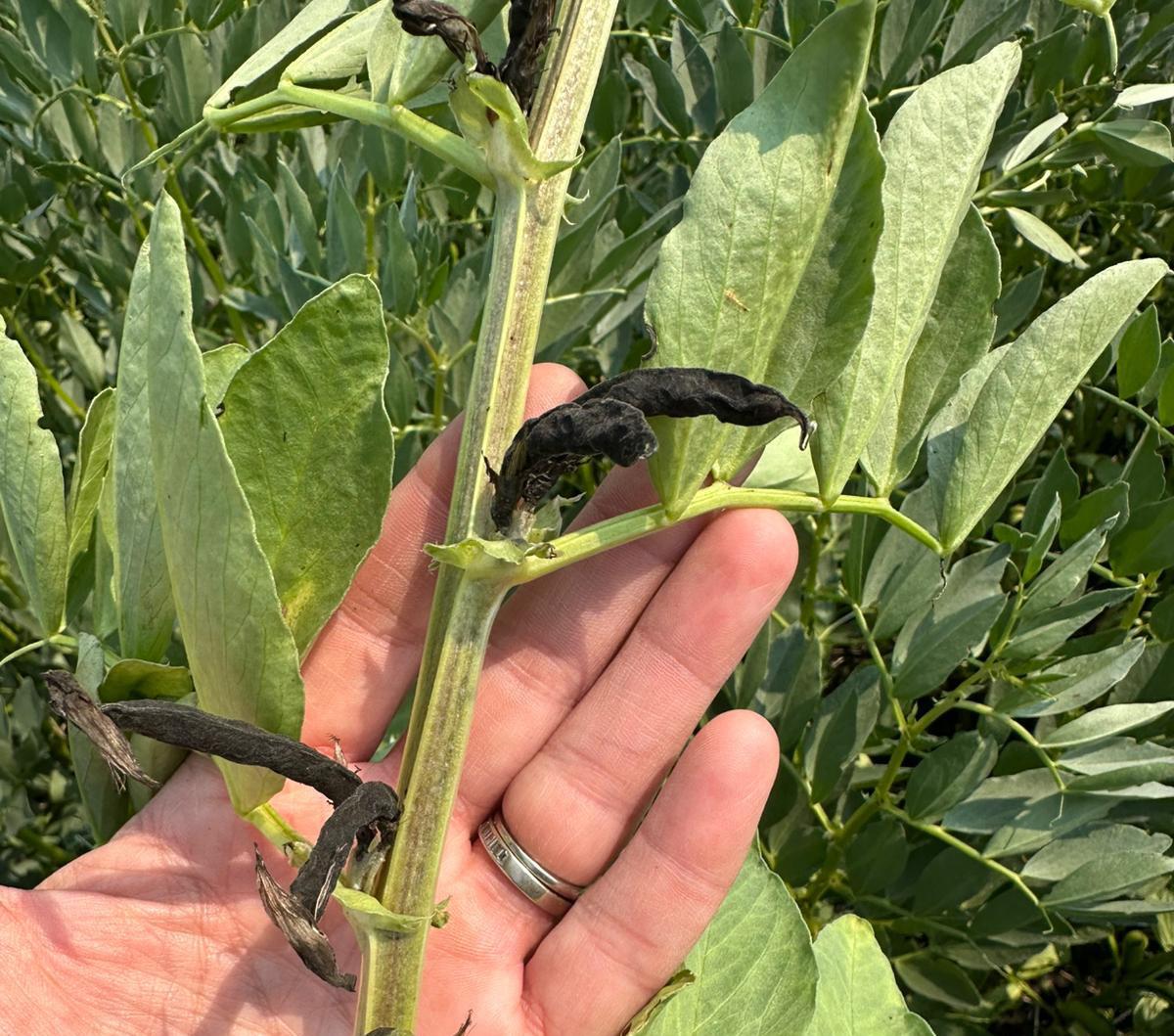
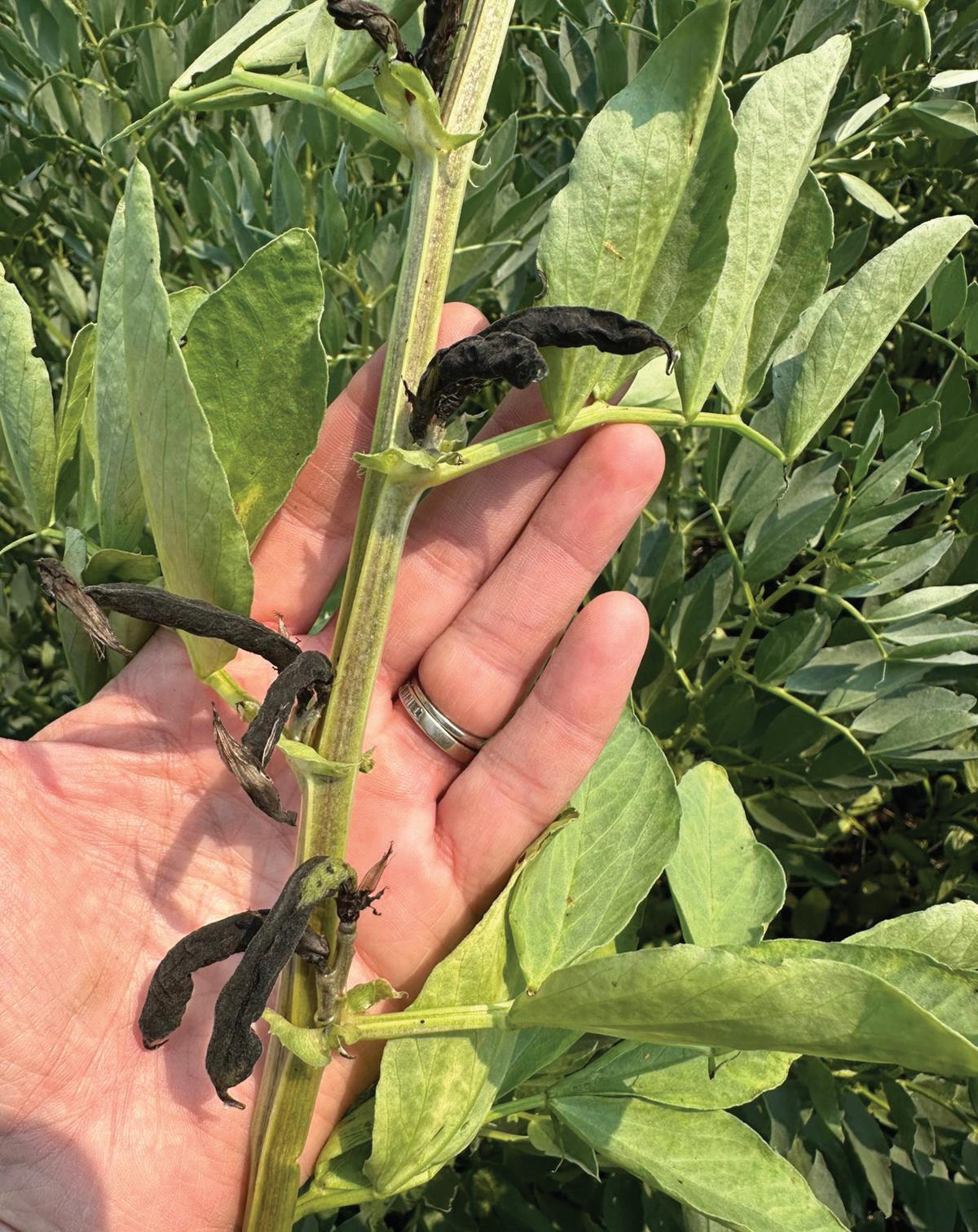
ABOVE Chocolate spot in faba bean.
Photo
New technology levels up irrigation scheduling
Researchers explore remote-sensing possibilities to improve decision-making support.
BY KAITLIN BERGER
Precipitation is unpredictable and – according to the Prairie Irrigation Scheduling Manual – not always accommodating to field crops on the Prairies where half of it falls in the winter. The large-scale irrigation systems in Canada, primarily servicing field crops in southern Alberta and Saskatchewan, as well as potato fields in Manitoba, can help make up precipitation deficiency. The challenge is always around maximizing water use efficiency without investing extensive labour.
“The biggest challenge is time; farmers don’t have a lot of time,” says Evan Derdall, irrigation and drainage engineer at Agriculture and Agri-Food Canada (AAFC). “So that’s part of our research is we’re studying some of these newer technologies.” Derdall is working on a number of research projects at the Canada-Saskatchewan Irrigation Diversification Centre, testing existing irrigation scheduling technologies, as well as remote sensing possibilities.
There are potential benefits to scheduling irrigation properly, including less leaching of nutrients, reduced disease pressure as a result of excessive irrigation, reduced pumping costs and increased yield. Derdall predicts there could be even greater benefits, depending on what policies are implemented in the future.
Currently all provinces have fixed allocations tied to a parcel of land. This policy has led to the “if you don’t use it, you lose it” mindset. Provinces are currently investigating a different version of water policy called flex allocation, which allows water to be split between parcels. “This type of policy could add value to more effective scheduling,” says Derdall.
One project Derdall, in partnership with multiple provincial governments and universities, has completed is the development of the Prairie Irrigation Scheduling Manual – an informational resource growers can access online that covers everything related to irrigation scheduling. “Now there’s this multi-province manual; the environments change in every province, but the actual methods for scheduling are the same, so it just made sense to work collaboratively on this product.”
COMPARING TOOLS
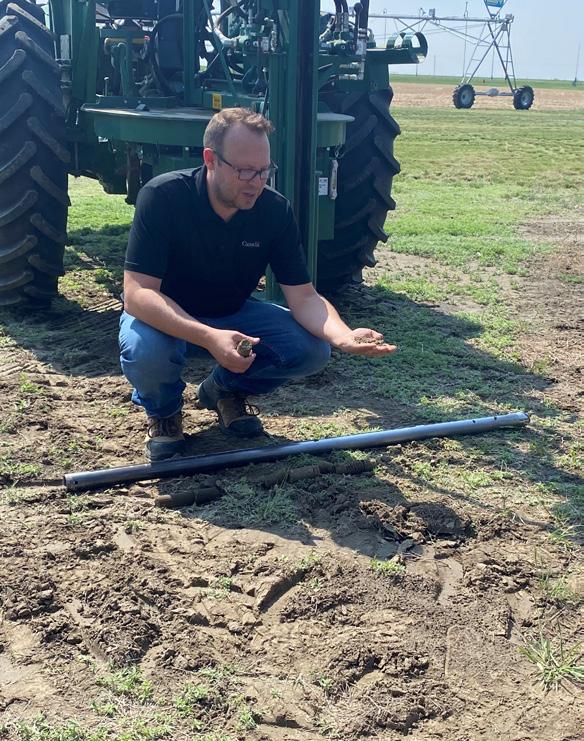
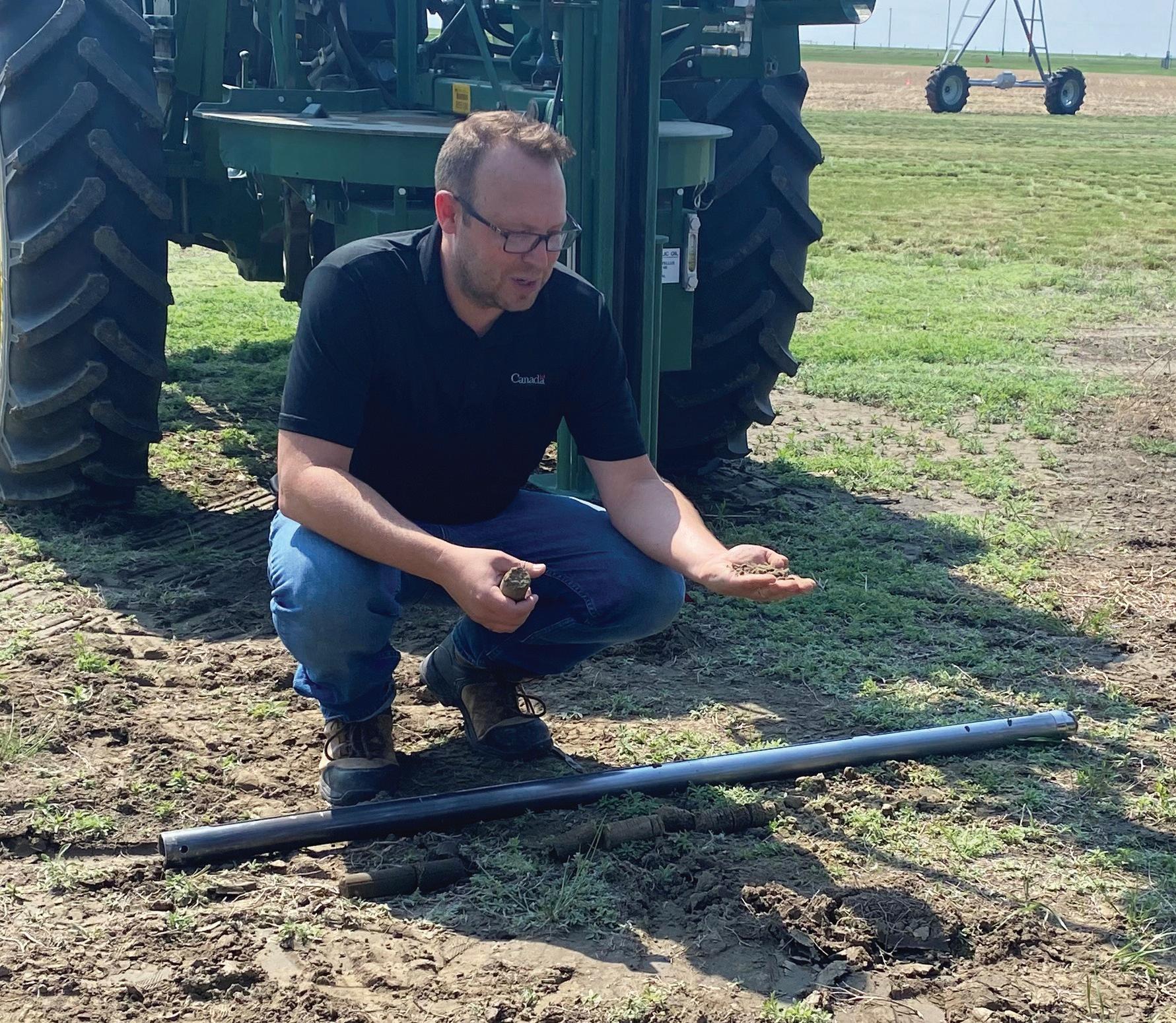
ABOVE Evan
Derdall showing soil cores to a group interested in learning more about irrigation scheduling. Soil texture is an important aspect in properly scheduling irrigation.
Another of Derdall’s research projects, working in collaboration with Erin Karppinen, tested four irrigation scheduling tools to complete a comparative analysis. One of these tools is the Alberta Irrigation Management Model (AIMM) – a free downloadable model that digests weather data to estimate crop water use. They’re comparing this to the CropX system, a capacitance sensor that also takes weather into account, as well as Sensoterra – a Time Domain Reflectometry sensor (TDR). The final sensor they’re evaluating is WATERMARK, a tension-based sensor.
“The three sensors all could be equipped with telemetry. So, it could be placed into your field as long as you have a cellular network connection or internet connection somewhere.” Remote telemetry-based systems allow growers to access the information from a phone or laptop, so they don’t have to go out to the field every time to check to see if the crop needs to be irrigated or not.
All photos courtesy of Evan Derdall.
At the time this article was written in August 2025, Derdall’s research was showing WATERMARKS as the best option for improving water use for yield output. “I mean it’s the oldest technology out of the three and the only one that mimics root water stress, and it’s the cheapest, so that’s always good too,” says Derdall.
They evaluated this water use efficiency based on a certain formula: yield divided by total water use. “What we’re doing is a water balance, so how much rainfall we got, how much irrigation water we applied and then we account for soil moisture change and leaching,” says Derdall. “Then we’re doing these small plot or medium-sized plot trials at the farm here and we’re replicating them and we’re scheduling based on what the sensors are telling us and then whichever one is producing the most yield for the least amount of water.”
EXPLORING REMOTE-SENSING DEVICES
Derdall also recently wrapped up a research project that explores using thermal and Normalized Difference Vegetative Index (NDI) imagery to estimate water stress in a plant. “We were using drone and satellite imagery to try to estimate when to time irrigation,” he says, “so that work is finished and we’ve developed a little bit of a model for that.” Depending on financing, the end goal is for the Government of Canada to provide a remote sensing portal growers can use to help schedule their irrigation events using satellite imagery. After all, the challenge with using sensors is the time and labour it
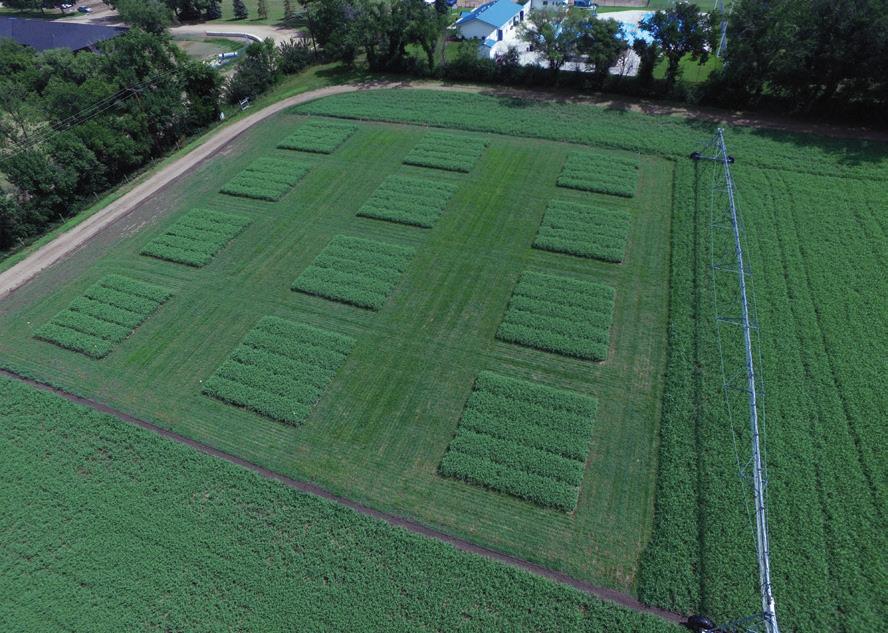
ABOVE Irrigation scheduling technology research plots located at the CanadaSaskatchewan Irrigation Diversification Centre in Outlook, Sask. Demonstrating and evaluating irrigation scheduling sensors to improve irrigation water use efficiency.
takes to put them in the field and check them. In the U.S., they’re already using a program called OpenET, which uses satellite-based models to estimate the evaporation off a field. “If the farmer knows how much water is coming off his field and how much rainfall then he should know what he needs to apply for irrigation,” says Derdall, “so the idea of using sensors or these remote sensing devices is you get that equipment off your field, so then you don’t need to check on it or you don’t need to repair it or forget where it is.”
THE FUTURE OF WATER USE EFFICIENCY
If we wonder what irrigation scheduling might look like in the future, we can look to California where they’ve overallocated their water resources. “We don’t necessarily have that problem,” says Derdall, “but depending if we have these prolonged droughts, it’s going to put more pressure on the reservoirs, and we are going to likely have to see more of that scheduling.” Because we don’t know what the future holds, Derdall encourages growers to continue adopting effective management practices–even small ones – to improve
irrigation scheduling and water use management.
Another thing to watch is how artificial intelligence (AI) technology will be implemented into irrigation scheduling. Derdall says he’s working with a company called InteliRain in Alberta that is using automated variable rate technology with sensors on the pivots that are using AI to learn water distribution throughout the field and then automatically adjusting the sprinklers. “I think everything’s going the route of AI eventually. I mean there’s just so much data available and there’s just not enough time.” Whether it’s using informative manuals, remote sensors, satellite imagery or AI, technology can provide more reliable recommendations for irrigation scheduling and simplify the decision-making process for growers. “The biggest thing is, with most farming, is ‘do I have enough hours in the day and what’s the economic return,’” says Derdall. “The big one right now is just trying to maximize the environment so that your other input costs are like your seed and your nitrogen and your phosphorus and all that, you’re maximizing those by providing a good environment through proper irrigation.”
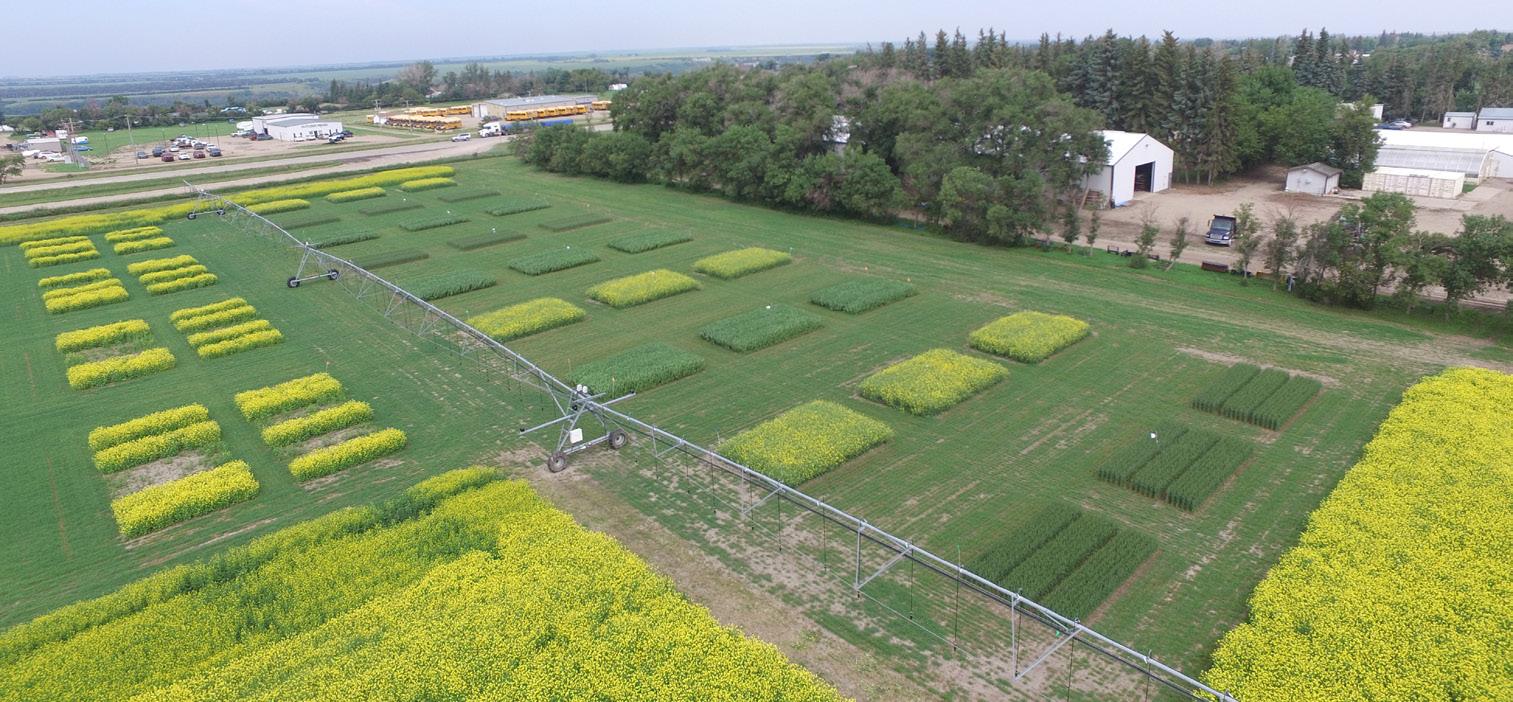
ABOVE Flexible water allocation research plots located at the Canada-Saskatchewan Irrigation Diversification Centre in Outlook, Sask. Investigating how irrigation schedules can be used within a flexible water allocation policy and improve water use efficiency.
maintained at AAFC Morden and AAFC Lethbridge. Fusarium root rot pathogens are widespread on the Prairies, so Fusarium root rot nurseries are not needed.
The project team is also tracking rotation-driven changes in soil health including changes in soil chemistry properties, such as total organic carbon and nitrogen, and changes in the soil microbiome, such as shifts in pathogen populations. “Researchers in China and Europe have found that faba bean enhances soil health but, again, this hasn’t been tested under Prairie field conditions,” Abdelmagid notes.
Root and soil samples are collected from the plots each year for root rot severity measurements, soil chemical analysis, soil microbiome studies and molecular quantification of the pathogens. The yields of each of the crops in the rotations are measured each year.
The project team will bring all the resulting data together to evaluate the effects of faba bean on the agronomic and environmental performance of the rotations. “We aim to provide practical, evidence-based recommendations to help growers in western Canada to improve their profitability and sustainability through better crop rotations,” says Abdelmagid.
He is collaborating on this project with Syama Chatterton, a research scientist with AAFC Lethbridge who is managing the project’s Lethbridge site; Matthew Bakker, an associate professor at the University of Manitoba who is conducting the soil microbiome analysis; and Shanwei Xu, a research scientist at AAFC Lethbridge who is carrying out the soil chemistry analysis.
This project is funded under the Sustainable Canadian Agricultural Partnership (Sustainable CAP), a cost-shared program between the Government of Canada and the Province of Manitoba. Additional support is provided by the Manitoba Pulse & Soybean Growers (MPSG).
A MUCH-NEEDED DISEASE UPDATE
Abdelmagid’s other faba bean project, funded by the Saskatchewan Ministry of Agriculture through its Agriculture Development Fund and Saskatchewan Pulse Growers (SPG), aims to provide a much-needed update on the root and foliar disease situation affecting this crop on the Prairies, with a focus on Saskatchewan and Manitoba. “I believe this project will
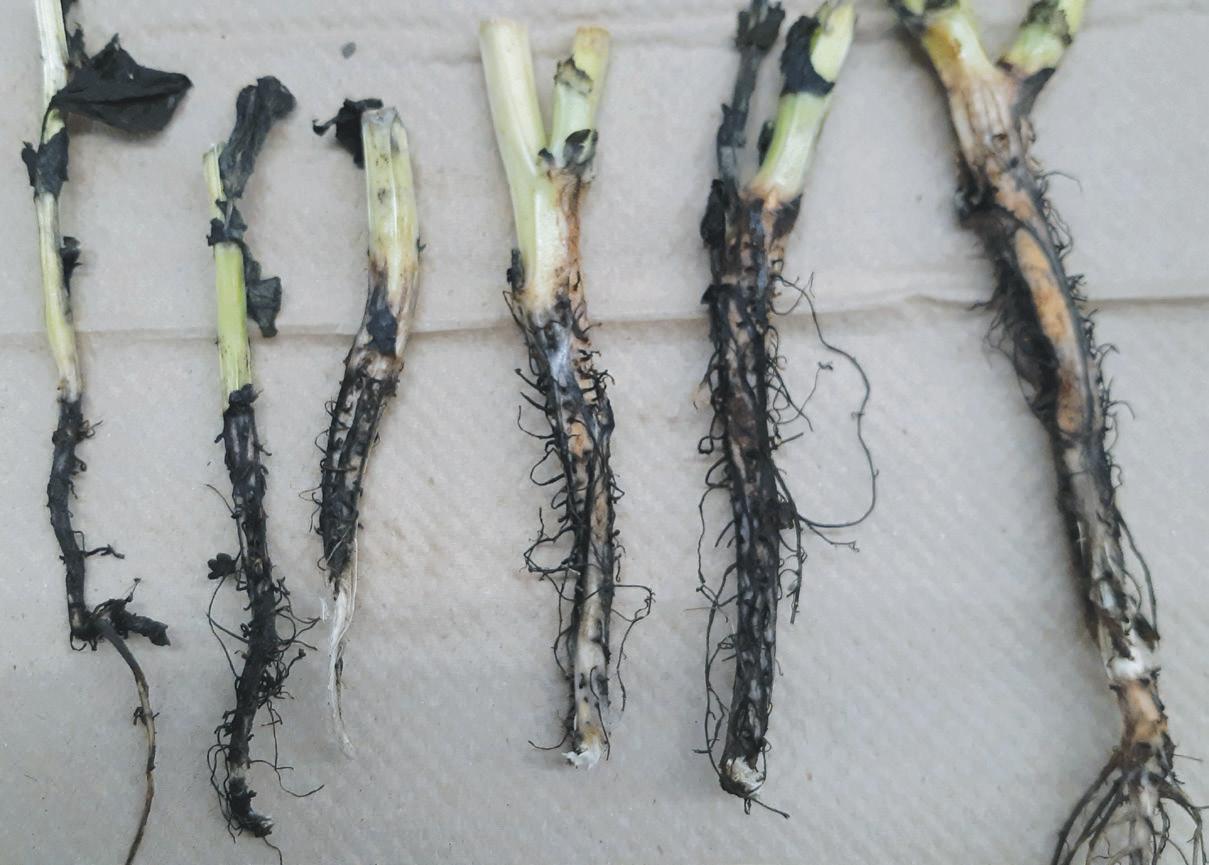
LEFT The increasing impact of root rot on faba bean plants collected during the Prairie disease survey in Manitoba; disease severity progresses from mild surface discolouration to severe decay, darkening and loss of lateral roots.
help Prairie faba bean growers by tackling one of the main barriers to expanding Canada’s role in the global faba bean market, which is disease pressure,” he explains.
“No comprehensive faba bean disease survey has been conducted in Manitoba since 1985, and Saskatchewan’s last [faba bean] root rot survey data dates back to 1975 … By conducting coordinated surveys across Saskatchewan and Manitoba, we aim to fill this critical knowledge gap, support breeding programs and equip growers with actionable data to protect faba bean production and profitability.”
The team for this project includes many players. Abdelmagid and his research group at AAFC Morden are conducting the lab and greenhouse work on the root diseases. Chatterton and her group at AAFC Lethbridge are focusing on the foliar disease work. Sabine Banniza, a professor at the University of Saskatchewan (USask), is coordinating the field sampling in Saskatchewan. The SPG, Saskatchewan Ministry of Agriculture and MPSG are helping with the collection of the root and leaf samples.
The work is well underway on this four-year project, happening April 2024 to March 2028. One of the project’s objectives is to map disease distribution and severity across the faba bean growing areas of Manitoba and Saskatchewan. The project team has carried out the first two years of the three-year root and foliar disease surveys, going to dozens of commercial faba bean fields across the two provinces and collecting leaf and root samples for analysis.
The team is also working on the isolation and identification of the fungi from the diseased root and leaf samples. “So far, we have more than 1,000 fungal isolates, so we have to do lots of intensive work to identify the fungi based on morphology and then by sequencing,” Abdelmagid notes.
The team is testing the isolates in greenhouse trials at AAFC Morden and AAFC Lethbridge to verify that the isolates do indeed cause disease on faba bean and to assess their relative aggressiveness under controlled conditions. The team is using a single faba bean variety for these trials because so many isolates have to be tested.
The researchers have also started building a collection of virulent pathogens that faba bean breeders could use to screen their breeding materials for
Photo courtesy of Abdelmagid’s lab, AAFC Morden.
resistance to these pathogens, and the team is assessing how agronomic data collected during the surveys – such as information on the previous crop, soil conditions, seed treatments and crop variety – are correlated with disease prevalence and severity patterns. This analysis could help in developing region-specific management strategies for Prairie faba bean growers.
INITIAL SURVEY RESULTS AND NEXT STEPS
“We have some solid early findings from the first two seasons of the project,” notes Abdelmagid. The 2024 survey results showed that both root and foliar diseases are challenges for faba bean production across Manitoba and Saskatchewan. “For example, we found root rot symptoms in over 90 per cent of the fields we visited in Manitoba. Fusarium species were clearly dominant — mainly F. avenaceum, F. acuminatum, F. culmorum and F. equiseti.
Overall, root disease severity averaged around 50 per cent, although it was a bit higher in Saskatchewan,” he says.
On the foliar side, Alternaria leaf spot and Stemphylium blight were present in every surveyed field in 2024. Chocolate spot was less prevalent, occurring in about one-third of the fields, and it was also less severe. That is good news because chocolate spot can be a very destructive disease. Overall, foliar disease pressure was moderate.
The 2025 survey findings showed similar trends. Root rots
were found in almost every surveyed field, with moderate root rot levels overall but more severe cases in Manitoba. For the foliar diseases, Alternaria leaf spot and Stemphylium blight continued to predominate.
The team will be completing the final year of the field surveys in 2026. Then they will complete the final round of pathogen isolation and identification in the two labs through early 2027. The final phase of the project, beginning in 2027, will focus on the pathogenicity assays on faba bean in the greenhouse.
“All survey, lab and greenhouse data will then be combined to produce regional disease maps and scientific publications. The results will be shared directly with breeders, agronomists and grower organizations to help develop targeted, science-based management strategies for faba bean production across Western Canada,” says Abdelmagid. “This project is really about building the foundation for long-term faba bean success on the Prairies,” he adds.
Overall, Abdelmagid hopes both of the collaborative faba bean projects will help contribute to a stronger, more sustainable and competitive faba bean industry, and more resilient crop rotations, ultimately improving the productivity and profitability of Prairie crop production.
25_015618_Top_Crop_Western_Edition_MAR_CN Mod: January 30, 2026 9:20 AM Print: 01/30/26 page 1 v2.5
On-farm trials fine-tuning flax seeding rates
On-farm trials focus on optimum yield and net returns on individual farms.
BY BRUCE BARKER
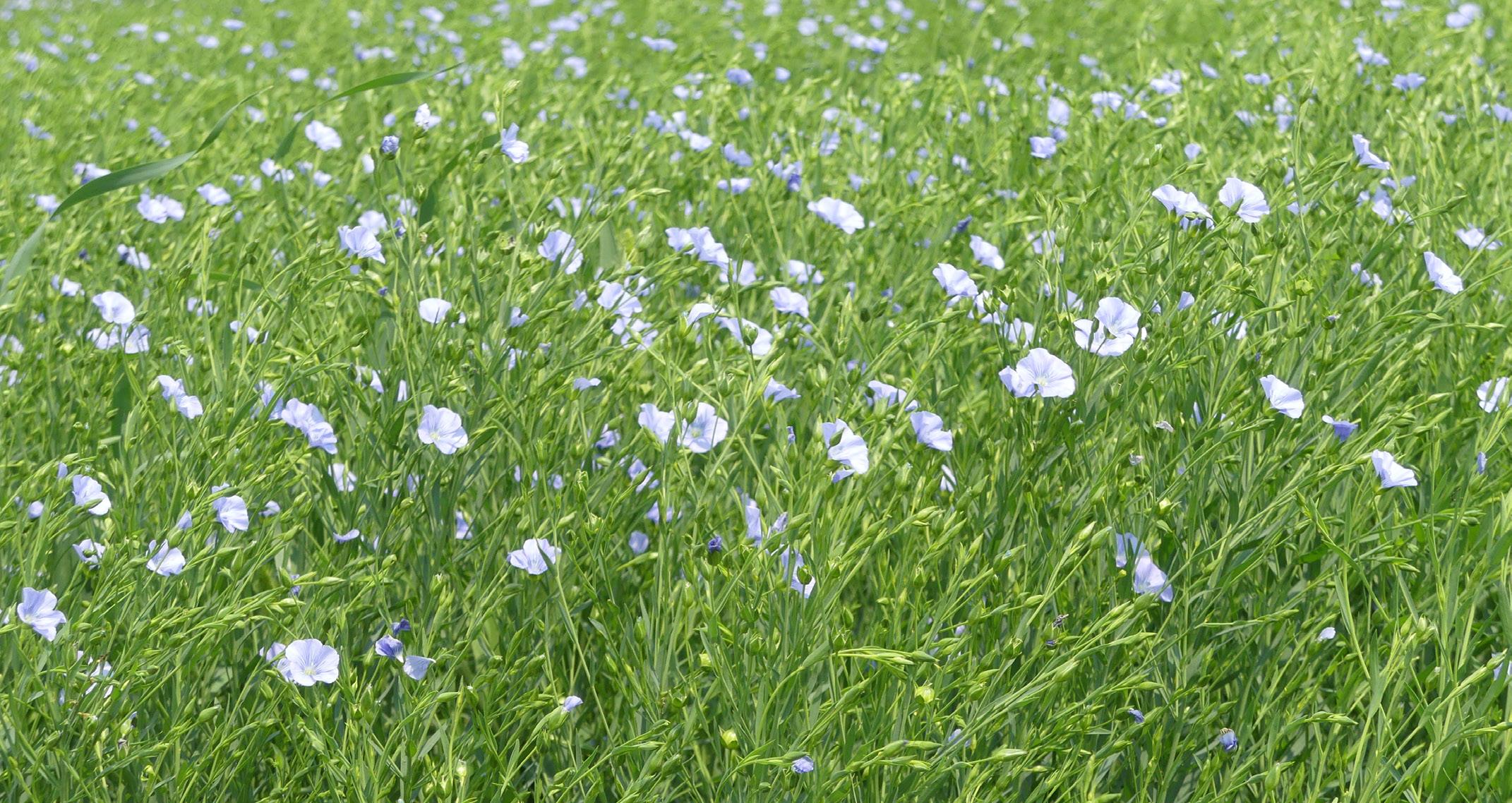
Flax can be a profitable crop, but as a smaller acreage crop, it doesn’t always receive the agronomic research resources necessary to keep the profitability moving forward. As a result, farmers are often left to trial agronomic practices on their own. That’s one reason the Manitoba Crop Alliance (MCA) set up their Research on the Farm program – to look at common agronomic, crop-specific concerns on field-scale, replicated trials in commercial fields. Over three years from 2022 through 2024, the program turned its attention to flax seeding rates.
“Research on the farm is research by farmers, for farmers. The goal of the program is to bring a scientific approach to answer farmers’ questions. We conduct trials in a scientific manner with farmers’ equipment and conditions,” says Madison Kostal, research and production coordinator with MCA. “The goal of this specific trial was to understand if farmers’ seeding rates
Different seeding rates yielded similarly, because stand establishments were above recommended plant stands.
were giving them the best economic payoff.”
The specific objectives of the trial were to look at how flax seeding rates and plant populations affect the agronomic and economic returns in flax production in Manitoba. With few new flax varieties introduced recently, farmers were raising the question as to how they can improve their returns by manipulating plant populations.
“On-farm research is particularly important for smaller crops like flax, where research may not be recent, but farmers still value new data,” says Morgan Cott, agronomy extension specialist – special crops with MCA. “And where better to accumulate that data than on their own land?”
On-farm trials were conducted at 17 on-farm locations across Manitoba: five sites in 2022, eight sites in 2023 and four sites in 2024. Seeding rate varied by preference of each farmer. Each site had a low, medium
Photo courtesy of Manitoba Crop Alliance.
ECONOMIC RETURNS FOR LOW, MEDIUM AND HIGH SEEDING RATES
Median Seed Cost - $22.25/bu / Flax Price - $16.50/bu
and high seeding rate of their choosing. The medium rate was considered to be their ‘normal’ seeding rate. The medium seeding rates ranged from a low of 40 lb/ ac to a high of 95 lb/ac. Low seeding rates ranged from 30 to 80 lb/ac. High rates ran from 50 to 112 lb/ac. The average rate over the 17 site-years was 55 lb/ac, resulting in plant stands between 22 and 96 plants/ft2 with an average of 47 plants/ft2.
Kostal says that typical seeding rate recommendations are between 35 to 42 lb/ac. This equates to a typical plant stand of 30 to 40 plants/ft2. Most of the flax in the on-farm trial was seeded on row spacing of 10 in with one at 6 in, one at 7.5 in and one at 12 in row spacing.
NO YIELD DIFFERENCES
Between individual sites, there were no significant differences in yield between low, medium and high seeding rates. For example, the site at Rockwood in 2024 used the lowest seeding rates in the trials of 35, 45 and 55 lb/ac, producing plant stands of 38.3, 43.4 and 51.9 plants/ft2. The low rate yielded 48.3 bu/ac, the medium at 51.9 and the high
yielded 51.9 bu/ac.
“Farmers know their own operations and farm better than anyone else, applying data from a single trial across their entire farm is not an effective management practice.”
The highest seeding rates in the trial were at Dauphin in 2024 with seeding rates of 56, 84 and 112 bu/ac resulting in plant stands of 61, 90 and 96 plants/ft2 Yields were 40, 39 and 38 bu/ac for the low, medium and high rates respectively.
“In almost all the trials, seeding rates were above the highest recommended seeding rate, which likely resulted in not seeing any differences in yields. We also know that most flax farmers have been growing flax for many years and they know what rates work best on their fields,” says Cott. “Participants of this trial have been working on their optimal seeding rate over time and have effectively found that, but this trial confirmed their years of hard work.”
ECONOMIC RETURNS VARIED OVER THE SEEDING RATES
Economic returns were calculated based on an average seed cost of $22.25/bu and a flax price of $16.50/bu. These economic returns again varied by individual farm and year. Ten of 17 site years had the highest economic returns with the low seeding rate, four at the medium seeding rate, and three yielded at the highest seeding rate.
ABOVE The economic returns for various seeding rates varied by farm.
Cott explains that there were several reasons that the highest economic returns varied by farm. The highest return was at 2024 Rockwood with a low seeding rate of 35 lb/ac (38 plants/ft2) and a yield of 48 bu/ac for a net return over seed cost of $783.04/ ac. For comparison purposes, going back to the site with the highest seeding rates at Dauphin, the highest net return was with the lowest seeding rate (56 lb/ac) at $618.38/ac.
The trial showed that in many instances, the medium seeding rate – the typical rate used on the farm – did not always provide the highest economic return under the environmental conditions during the three years of trials. Lowering the seeding rate could have paid off at 10 out of 17 sites.
“I think this is the exact reason why on-farm trials are so valuable, which is to say that we learn that the lower seeding rate is more economic, given the inputs applied and external factors, like environmental conditions,” says Cott. “The key thing to consider in this trial is that fertility is the same across all treatments, so a higher seeding rate is not receiving higher
fertilizer inputs. If a farmer is getting lower yields on their mid- or high seeding rates, it is time to consider those inputs and their economic draw.”
Stepping back to take a bigger-picture look at onfarm trials, Cott says that the data that comes from each trial is specific to the cooperating farmer and the field it is placed in. Replication is key, which is to say that replication in other fields is key as well. The onfarm field trials are set up with specific protocols to ensure reliability and repeatability. An additional benefit is that organizations like MCA who are supporting these trials are making trial setup as simple as possible so farmers can run the trials themselves in the future. She also says that another important factor is to replicate the trial every few years, and to learn the responses of new varieties on their own farms.
“Farmers know their own operations and farm better than anyone else, applying data from a single trial across their entire farm is not an effective management practice,” says Cott. “Instead, trials should be conducted periodically across many fields to ensure accurate, field-specific insights.”
You don’t have time to wait around for weeds to react. With Insight® Liquid SC, your pre-seed burndown happens fast, giving you a cleaner field and a head start on the season. Make this spring your
Taking control of volunteer canola in soybeans
Management takes a multi-faceted approach.
BY VANESSA FARNSWORTH
Volunteer canola in soybean fields is nothing new. When soybeans first started being grown in a serious way in Western Canada 10 to 15 years ago, it wasn’t long before masses of attractive yellow flowers became a relatively common sight in the region’s soybean fields.
“That first flurry of volunteer canola in soybean was interesting because, back then, it was the only glyphosate-resistant weed in soybean,” says Robert Gulden, a University of Manitoba (U of M) weed researcher who has been studying volunteer canola for more than 20 years. “It used to be that when you applied Roundup to the field, all the weeds would be gone. But then some of those volunteer canola plants survived Roundup, so we started seeing fields of various densities. You still frequently see soybean fields with at least a few – and sometimes quite a few – volunteer canola plants.”
Herbicide resistance isn’t the only issue. Another key contributor is how often soybean and canola are grown by the same producers in Western Canada. This is particularly true in Manitoba, he says, where roughly a third of the acreage each year is planted in canola while soybean acres tend to hover just below the 20 per cent mark.
“Both are major crops, so it’s really hard to avoid the problem,” Gulden says. “The trick is being as preemptive as we can, knowing the biology of the two species, and then using control measures where needed.”
UNDERSTANDING THE PROBLEM
Because canola is a cooler season species, it has the competitive advantage in Western Canada where it grows faster and gains access to resources earlier in the spring than soybean. It also typically grows taller than most soybean varieties, outcompeting them for light
and quickly overpowering the crop. The impact on soybean yields can be significant. When Gulden was researching thresholds, he regularly saw 50 or 70 per cent yield losses in soybean due solely to higher densities of volunteer canola.
“Volunteer canola is quite manageable in most of our other crops,” says Gulden. “That doesn’t mean it’s not there, but it’s managed quite well with in-crop herbicides.” An effective tank-mix partner can also manage it in Roundup Ready or multiple herbicide-resistant soybeans.
Because canola, particularly Brassica napus, still retains some weedy traits, it can form seed banks that persist in rotation, and large seed bank inputs have inadvertently been created in the past when seed was lost at the front and out the back of the combine during harvest. The result was many more seeds being returned to the seed bank than a farmer would plant. Gulden notes that while the rate of seed bank decline is roughly 90 per cent per year, it doesn’t take a lot of persistence to have a substantial weed problem the following year.
“If people are losing five or six thousand seeds per metre squared – that’s what the average was – and we generally plant at 50 or 60 seeds/m2, you need a lot of seed bank mortality to not have a full canola crop just with the volunteers,” Gulden says, noting that the numbers are probably lower these days due to pod shatter resistance technology. “But we haven’t quantified that. From what I’ve seen anecdotally, that technology works well, and there should be lower seed bank inputs. But that doesn’t mean they’re zero.”
MANAGING THE PROBLEM
There are several ways volunteer canola can be managed. Research found
LEFT Volunteer canola can have significant impact on soybean yields.
a light tillage pass over the field right after canola harvest promotes greater fall germination. “In most winters, we get effective winter kill and those seeds are taken out of commission,” says Gulden. “That doesn’t mean you’re going to get all of them, but you’re going to get a large proportion of them.”
Growers can also stack the deck in their favour by establishing soybean stands that are competitive against weeds. “We found that soybeans are more competitive against volunteer canola at a density somewhere around 180,000 soybean plants per acre than when you lower your seeding rates to 140,000 or 150,000 plants/ac,” Gulden says. “You don’t need to go much above 180,000.”
Scouting is key to ensure an issue with volunteer canola is handled early. Multiple herbicide-resistant soybean varieties can further help the cause. “Anytime you have a double-resistant soybean that includes particularly a Group 4 herbicide, be it 2,4-D or dicamba resistance, volunteer canola becomes easier to manage,” Gulden says.
RESEARCH IS ONGOING
While a lot of progress has been made on the volunteer
canola issue across Western Canada over the years, Gulden is still searching for new and better ways to give growers the upper hand. That includes collaborating with Sally Vail, a research scientist in oilseed breeding with Agriculture and Agri-Food Canada (AAFC) in Saskatoon, Sask., on a project investigating the genetics of secondary dormancy in canola with the goal of reducing seed bank persistence.
Another project Gulden hopes will pay big dividends involves training deep learning networks to recognize specific weed populations. This large-scale project involves multiple crops and a diverse group of researchers. Although it originally had nothing to do with identifying volunteer canola in soybeans, it turns out that’s likely to be one of its earlier spin offs.
“Sometimes you get a soybean field that’s completely polluted with canola, and spot scouting gives you a good estimate of what’s going on,” Gulden says. “But oftentimes it’s in patches in the field and when you’re spot scouting, you miss those patches and have no idea that they’re there.”
This project could provide a powerful new tool for reliably identifying patches of volunteer canola in their soybean fields early in the season.
Nitrogen fertility for oat reaches a balance between yield, test weight and lodging.
Refining nitrogen fertility for oat
Finding the sweet spot between lodging, yield and profitability.
BY BRUCE BARKER
Nitrogen (N) fertility in oat is tricky. Too much N and the crop can lodge, resulting in lost yield and quality. Too little N and yield and net returns can suffer. Finding that sweet spot has been the focus of numerous Agri-ARM research studies over the years.
“When we poll farmers, many of them are applying around 60 lb N/ac. They cite concerns with lodging, maturity and low test weights as reasons for keeping N rates down,” says Mike Hall, research coordinator with the East Central Research Foundation (ECRF) and Suncrest College at Yorkton, Sask. “Those are all valid concerns and ultimately the producer will judge those risks based on his own field experience.”
Hall says recent research by Bill May, research scientist with Agriculture and Agri-Food Canada (AAFC) at Indian Head, Sask., as well as Agri-ARM research, has found that higher rates might be more profitable unless growing conditions are poor or the field has high residual soil N levels.
A 2019 trial at ECRF looked at the effect of increasing N rate on yield, test weight and profitability with CS Camden and Summit oat varieties. The plots had 35 lb N/ac (39 kg/ha) background soil test levels. For CS Camden, the most economic fertilizer rate was at 90 lb N/ac (100 kg N/ha) in addition to soil test N with a yield of around 145 bu/ac. This assumed $6/bu oat and $1.33/lb fertilizer N cost. For Summit oat, the most economic rate of N was
94 lb N/ac (105 kg N/ha).
Hall says CS Camden consistently had lower test weight than Summit. At the most economic rate, CS Camden had a test weight of around 235 g/0.5 L, while Summit had a test weight of around 240 g/0.5 L. Millers typically will discount oat prices if the test weight falls below 245 g, and may reject the oat if test weights fall below 230 g.
“Half the oats accepted by grain millers are AC Camden and they rarely have to reject Camden because of low test weight. It has been suggested to me that producers have higher test weights because they will blow more light seed out the back of their combines than we do in our plot work,” says Hall. “This may be true, but unfortunately, Summit is less resistant to lodging than Camden which is an important factor to consider with oats.”
Another trial at the Northeast Agriculture Research Foundation (NARF) at Melfort, Sask. and the Western Applied Research Corporation (WARC) at Scott, Sask. looked at rate and placement of N and phosphorus (P) in 2022 and 2023 with CDC Arborg oat. Nitrogen rates were 67, 90 and 111 lb N/ac (75, 100 and 125 kg/ha) either side-banded or seed-row placed. Phosphate was applied at a rate of 40 lb P2 O 5/ac (45 kg P2 O 5/ha) side-banded or seed-row placed. Soil test N in 2022 was 39 lb/ac (44 kg N/ha) in the 0 to 6 in (0 to 15 cm) depth at Melfort, and was 16 lb N/ac (18 kg N/ha) at Scott. In 2023, soil tests were 17 lb/ac (19 kg/ha) at Melfort and 6 lb/ac (7 kg N/ha) at Scott.
Over the four site-years, the Agriculture Demonstration of Practices and Technologies (ADOPT) report indicated: “Overall, side-banding nitrogen, and seeding placing phosphorus were the best options for optimizing
Photo courtesy of Bruce Barker.
oat yields, whereas high nitrogen rates often decreased test weights and increased yields.”
WHAT’S THE IMPACT OF REDUCED N FERTILITY?
In response to the December 2020 greenhouse gas (GHG) emissions reduction policy targeting a 30 per cent reduction of GHGs below 2020 levels by 2030, the Saskatchewan Oat Development Commission funded a research project to look at the effects of reducing fertilizer N application to meet this goal. The objectives were to determine the yield and test weight response of oat to 15 and 30 per cent reduction in recommended N rates.
The project looked at soil plus fertilizer N rates of 125, 106 and 88 lb N/ ac (140, 119 and 98 kg/ha) and a soil-N only control. Research was conducted at Agri-ARM sites at Yorkton, Outlook, Melfort and Prince Albert, Sask. CS Camden and CDC Arborg oat varieties were compared.
Hall ran the economics using $0.82/lb N, and $5.25/ bu oat price. He separated out the dryland sites from the irrigated Outlook site. For dryland, reducing the N fertilizer rate by 15 per cent from 125 to 106 lb N/ac actually increased profit by $28.02/ac in the drought year of 2024.
At Outlook under irrigation, reducing N fertility by 15 per cent to 106 lb N/ac was also economically beneficial. Based on the actual data points, a 15 per cent reduction improved economic return by $9/ac, or $3.86/ac based on the response curve. However, reducing N rates by 30 per cent to 88 lb N resulted in an economic loss of $22.70 to $16.61/ac.
At Scott, WARC research manager Jessica Enns looked back into research
studies conducted from 2014 to 2024 (excluding 2017 and 2020) to investigate the impact of fertilizer reductions on oat yield.
“Nitrogen fertility in oat really comes down to finding the balance between maximizing yield while managing lodging risk and input costs. From the trials we’ve seen, the ‘sweet spot’ depends somewhat on the variety and yield potential, but an even bigger factor is soil zone,” says Enns.
In the Black and Gray soil zones, where yield potential is typically higher, total available N (soil plus fertilizer) around 125 lb/ac tended to produce the highest yields. However, Enns says: “Profitability didn’t always align with the highest rate. In fact, reducing that standard rate by about 15 per cent — down to roughly 107 lb/ac — was more profitable about 55 per cent of the time, improving returns by approximately $32/ac compared with the full 125 lb/ac.”
In the Dark Brown soil zone, where yield potential is lower, producers were able to reduce N rates even further. “We found that cutting rates by about 30 per cent (down to 88 lb/ac) could still remain profitable,” Enns says, “although 107 lb/ac was more consistently successful in achieving both strong yield and profitability.”
A full season of solutions.
Start fresh with Paradigm PRE pre-seed herbicide, followed by Rexade™ or Rezuvant™ XL herbicides for your worst in-season weeds. Then finish strong with Telbek™ PRO, with Adavelt™ active, for unparalleled disease protection. Find full cereal acre protection at Corteva.ca/Cereals
by Bruce Barker, P.Ag | CanadianAgronomist.ca
CWRS wheat varieties evaluated for ultra-early seeding
Numerous studies have been conducted since 2020 on the potential for ultra-early seeding of Canada Western Hard Red (CWRS) spring wheat varieties. One study by Collier et al. 2021 assessed nine registered spring wheat varieties in the CWRS, Canada Western Soft White Spring (CWSWS), Canada Prairie Spring Red (CPSR), Canada Western Special Purpose (CWSP) and Canada Northern Hard Red (CNHR) wheat classes. This research found that ultra-early planting improved grain yield stability and growing system stability across all varieties.
A new research project led by researcher Linda Gorim at the University of Alberta (U of A) was conducted over three years from 2021 through 2023 to evaluate yield and yield stability and grain quality differences in early- and late-maturing CWRS wheat cultivars at two seeding dates across Western Canada.
Research was conducted at Beaverlodge, Edmonton, Lacombe and Lethbridge, Alta. Five early- and five late-maturing CWRS varieties were assessed. The early varieties included AAC Redberry, Go Early, Jake, Parata and Tracker. The late varieties were AAC Brandon, AAC Viewfield, AC Stettler, CDC Stanley and Noor.
Daily soil temperatures were taken at 10 a.m. Once the soil reached the trigger temperatures of 2 C (ultra-early) and 8 C (conventional) at a 2 in (5 cm) depth, seeding occurred the following day or when soil conditions allowed. Ultra-early seeding dates ranged from March 21 to April 30, and conventional dates from April 15 to May 15.
Seeding rate ranged from 30 to 40 seeds/sq ft (300 to 400/m2) that targeted the regional yield potential. Seeding equipment and row spacing varied by site. Seeds were treated with Raxil PRO to help prevent seedling disease. Nitrogen and phosphate fertilizers, and pesticides were applied as required.
The ultra-early sown wheat had delayed emergence, as would be expected, compared to conventional seeding. However, there was little difference between the seeding dates on plant populations that ranged from 20 to 23.5 plants/ft2 (201 to 235 plants/m2).
Lodging ratings were low, ranging from 1.0 to 1.32. Lodging was not significantly different between the two seeding dates, with a few exceptions.
Early-maturing AAC Redberry and Tracker, and late-maturing CDC Stanley, and Noor were significantly shorter with ultra-early seeding.
Ultra-early sown CWRS wheat took 6.33 days longer to reach maturity from emergence than conventional sown wheat. Despite the longer days to maturity, because ultra-early wheat was sown seven to 34 days earlier, these treatments were ready to harvest earlier than the conventional seeding treatments.
Late-maturing wheat took 1.5 more days to reach maturity at both seed
timings than the early-maturing varieties. The researchers concluded that since the difference was small, “the use of early-maturing CWRS wheat cultivars is not required to ensure plants reach maturity early within the growing season.”
As expected, the late-maturing varieties generally yielded significantly higher than early-maturing cultivars. Late-maturing AAC Brandon yielded the highest at 61 bu/ac (4.1 t/ha), which was significantly higher than the next two varieties, AAC Viewfield and AC Stettler.
There were no significant yield differences between the ultra-early and conventional seeding timings. This suggests that environmental conditions during the critical growth periods were similar for both seeding timings, and that ultra-early seeding did not have a negative impact on yield.
However, yield stability was improved under ultra-early seeding. The research found that both late- and early-maturing wheat varieties had improved yield stability with ultra-early seeding. Ultra-early seeding increased yield stability for nine of the ten cultivars.
Four of the five late-maturing CWRS wheat cultivars evaluated yielded significantly higher and demonstrated similar yield stability to early-maturing CWRS wheat cultivars. This indicates that growers could use higher-yielding, late-maturing wheat varieties under ultra-early seeding to maximize yield and yield stability.
The researchers indicated that “ultra-early seeding had better yield stability through increased access to early-season soil moisture left by snowmelt and rains, and that plants that emerged earlier may accumulate more growing degree days by intercepting more radiation.”
Overall, ultra-early seeding was found to be a beneficial practice that maintains yield with improved yield stability of both early- and late-maturing CWRS wheat cultivars in Western Canada. This research adds to previous research led by research scientist Brian Beres at Agriculture and Agri-Food Canada at Lethbridge, Alta., who first initiated ultra-early seeding research on the Prairies.
Funding for Gorim’s research was provided by Alberta Grains, Saskatchewan Wheat Development Council, NSERC and Western Grains Research Foundation with U of A Research Chair Support.
Bruce Barker divides his time between CanadianAgronomist.ca and as Western Field Editor for Top Crop Manager. CanadianAgronomist.ca translates research into agronomic knowledge that agronomists and farmers can use to grow better crops. Read the full research insight at CanadianAgronomist.ca.
Heavy is the head that wears the crown—but cleaner is your field
How do you rule over the cereal field? With a legacy of legendary wild oat control. Though there’ve been many would be contenders for the crown, they’re no Axial. With unmatched performance, it’s the cereal herbicide that’ll have you saying: “Long live the king.”
Discover the entire lineup of Syngenta cereal solutions
To learn more, visit Syngenta.ca, contact our Customer Interaction Centre at 1-87-SYNGENTA (1-877-964-3682), or follow @SyngentaCanada on Twitter.