handle on current and emerging soybean root diseases through the identification of emerging risks and solutions for effective risk management.
WEED MANAGEMENT
6 The battle of beans vs. weeds
Fine-tuning weed management practices in organic bean production. PLANT BREEDING
8 From humble cover crop to chic craft whisky
Growing fall rye with an eye to the craft whisky market in the Maritimes.
11 Pest scouting calendar for corn
CROP MANAGEMENT 12
Assessing Kernza for the Maritimes
Could this perennial grain become another option to add into East Coast crop rotations?
Updating nitrogen rates for production in Ontario.
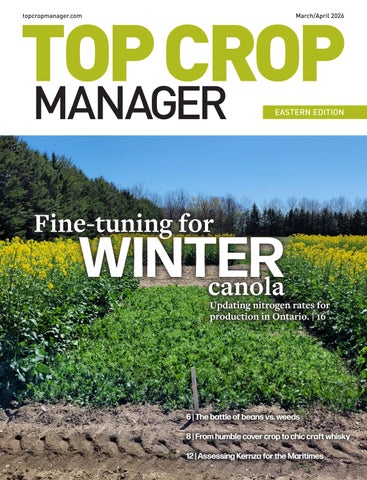
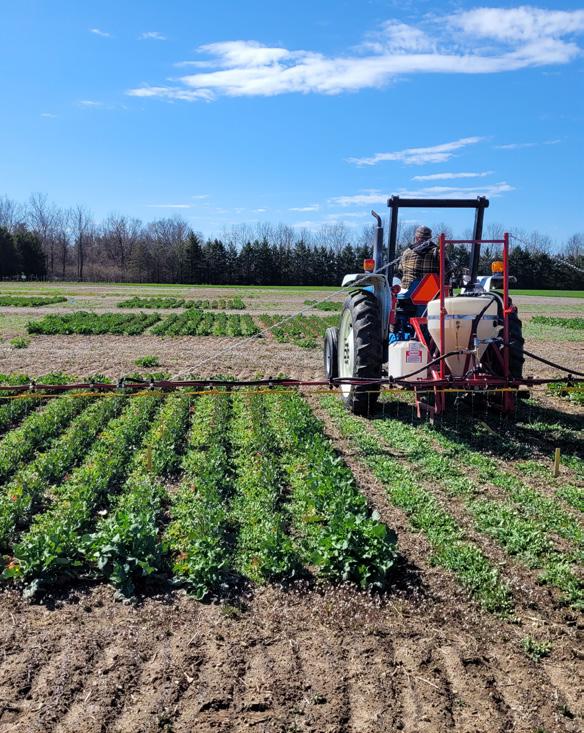
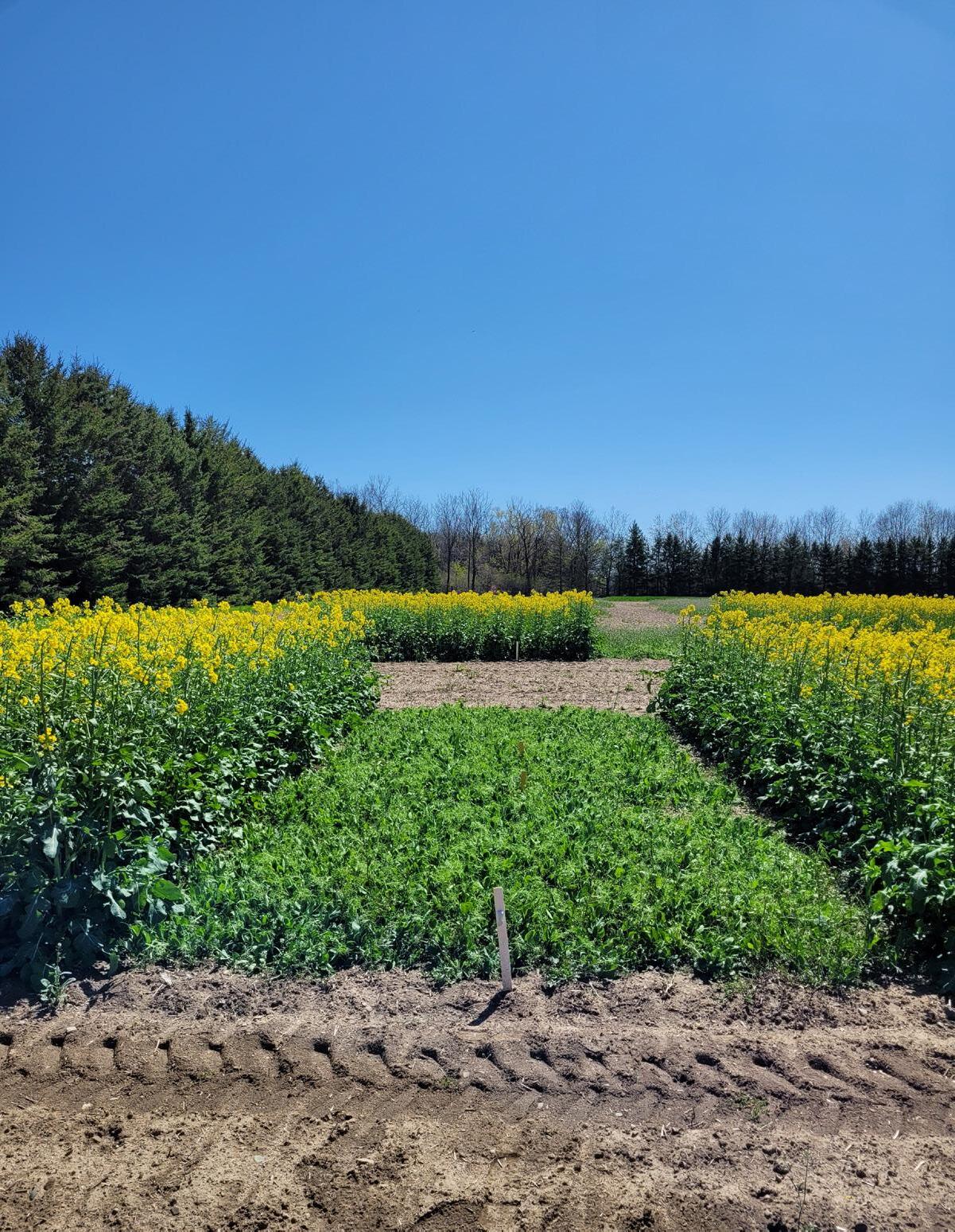
ON THE COVER: Research project evaluating spring-applied nitrogen rates for winter canola, winter peas and winter peaola in Essex County, Ont.
Photo courtesy of Sydney Meloche, AAFC.
by Jillian Filmer
Hitting pause for progress
2026 started off with a bang and the Canadian agricultural sector has already been hit with a shockwave.
As I write this at the end of January, the federal government has announced major cuts to Agriculture & Agri-Food Canada (AAFC). This includes the elimination of 665 jobs and the closure of seven research locations across the country. These job cuts and closures are a hit to livelihoods, local communities and the resilience of Canadian agriculture.
One of the research locations that has been slated to close is the Indian Head Research Farm in Indian Head, Sask. The projected ‘wind-down’ and eventual closure of this one hit close to home. My career journey, and passion for agriculture, started there while working as a co-op student back in 2014. A pillar within the small community of Indian Head since 1886, this research farm provides significant contributions to no-till research, propagates seed for crop varieties developed by AAFC and the list goes on. Research, like that conducted at Indian Head, fuels innovation and productivity on Canadian farms, producing and improving the solutions that Canadian farmers have come to rely on.
“Unfortunately, it’s a numbers game at the end of the day.”
With the release of the federal budget, Budget 2025: Canada Strong, the resounding takeaways of this proposed budget were to build a more resilient Canadian economy, diversify market access and limit trade reliance on our neighbour to the south. How is this directive possible by undermining the pivotal, necessary research that helps support Canada’s key agricultural commodities during trade uncertainty and climate change?
Unfortunately, it’s a numbers game at the end of the day.
It seems rather fitting for this issue to feature four ongoing AAFC research projects helping to improve management practices and open new opportunities for farmers. Learn about growing fall rye for whisky production (page 8), improving weed control in organic pulse production (page 6), updating nitrogen rates for winter canola (page 16) and expanding perennial options in the Maritimes with Kernza (page 12). I hope these stories demonstrate the value of federally funded field crop research. As always, if there is a story or an important issue you think should be featured in Top Crop Manager, email me at jfilmer@annexbusinessmedia.com. All the best for the season ahead.
All advertising is subject to the publisher’s approval. Such approval does not imply any endorsement of the products or services advertised. Publisher reserves the right to refuse advertising that does not meet the standards of the publication.
topcropmanager.com
The battle of beans vs. weeds
Fine-tuning weed management practices in organic bean production.
BY STEPHANIE GORDON
Growing beans organically turns up the difficulty. “Beans are wimpy,” starts Jamie Larsen, dry bean and pulse breeder at Agriculture and Agri-food Canada (AAFC) Harrow Research and Development Centre. “Dry beans will fall over so if you have any kind of weed pressure, to get that crop off is really challenging.”
“Dry beans, relative to let’s say soybeans, are a crop that directly goes to food production,” Larsen says. “You’ll buy canned beans, dry pack beans right off the shelf, and if the beans are all stained [green from weed damage,] obviously nobody will want to buy that.” Dry beans are also a high value crop in Ontario, and up to 90 per cent of beans grown in the province are exported to places such as the United Kingdom.
PUSH FOR ORGANIC
The European Union (EU) Green Deal’s goal, under its Farm to Fork Strategy, aims for at least 25 per cent of the European Union’s total agricultural land to be dedicated to organic farming by 2030, which could impact dry bean producers in Canada. Tia Loftsgard, executive director at the Canada Organic Trade Association (COTA), says the volume of organic dry bean exports from Canada have always been substantial but wonders if the Green Deal might result in the EU growing more organic beans domestically and displacing opportunities for Canadian farmers. Currently, only a small proportion of Canadian dry bean growers are organic, which could still mean there is potential for the organic dry bean sector to expand.
PEST MANAGEMENT IS A CHALLENGE
Larsen has teamed up with AAFC weed scientist Robert Nurse to investigate weed management practices for organic bean production. “The current state of weed management in any organic production falls heavily on tillage,” Nurse says, adding this can degrade soil quality and increase erosion. These cultural methods work slower, and are weather dependent, nutrient dependent and pest population dependent, whereas weeds evolve quickly.
Nurse and Larsen are currently conducting field trials from 2024 to 2028 where they will investigate various IPM strategies within navy, black and white
kidney beans. “The reason we chose white kidneys is to see if we saw any staining based on the weed control present,” Nurse says. “If you have a lot of weed content in the crop [...] it can stain the beans.”
ABOVE To replace a conventional farmer’s in-crop herbicide, Nurse’s team used a Weed Zapper to “zap” weeds above the crop canopy.
The trials are seeded on an organic grower’s field in Harrow, Ont. They investigated three seeding rates based on the Ontario Ministry of Agriculture, Food and Agribusiness (OMAFA) recommendations. They stuck with 30” row spacing for white beans, which grow as a bush, and 15” for black and navy beans, which grow as vines, to be representative of what growers were using and keep a full tillage option as their control plot.
RYE AND ZAP
For early season weed control, Nurse’s team tested fall seeded rye. For mid-season weed control, the team used electricity to zap weeds.
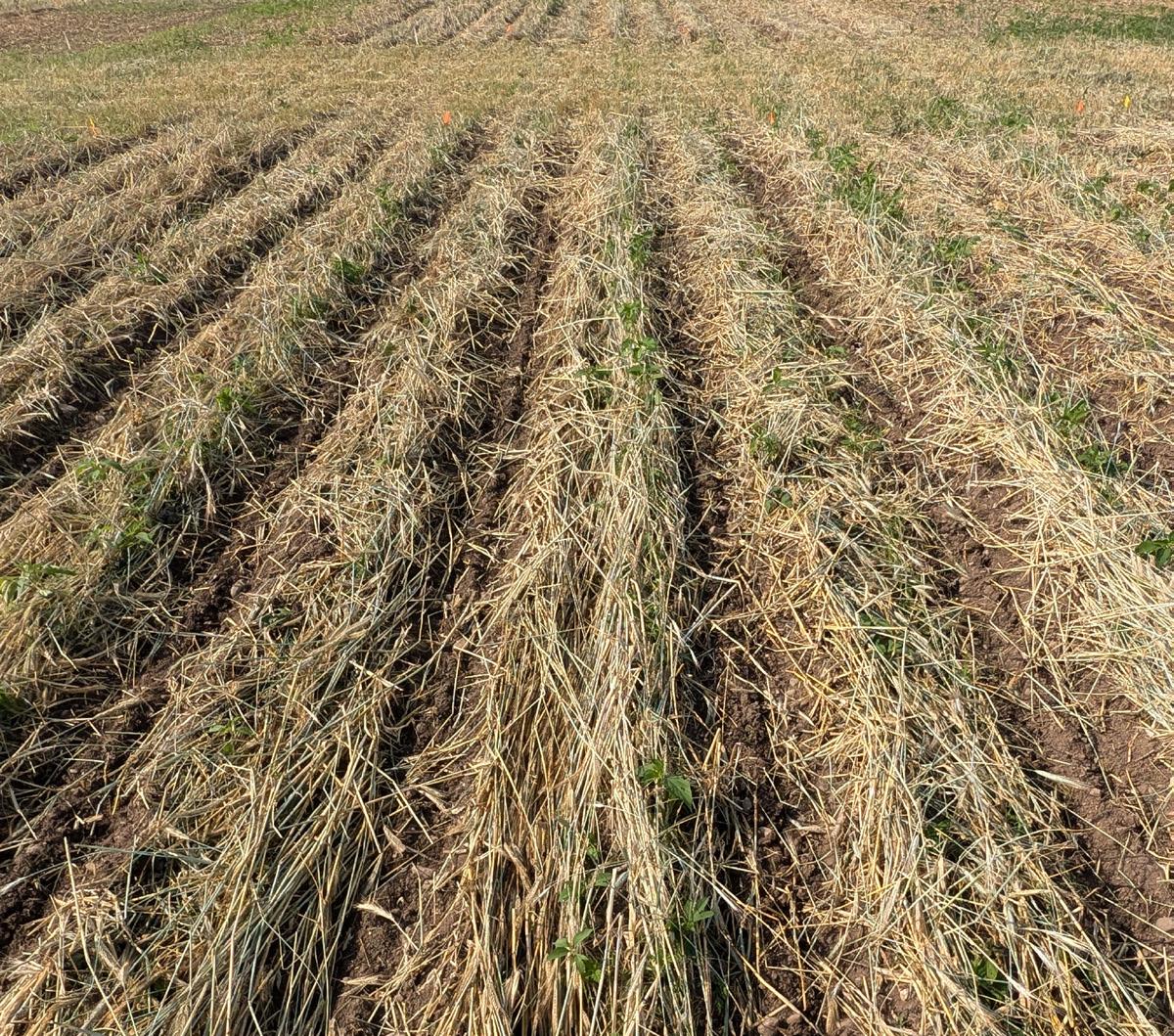
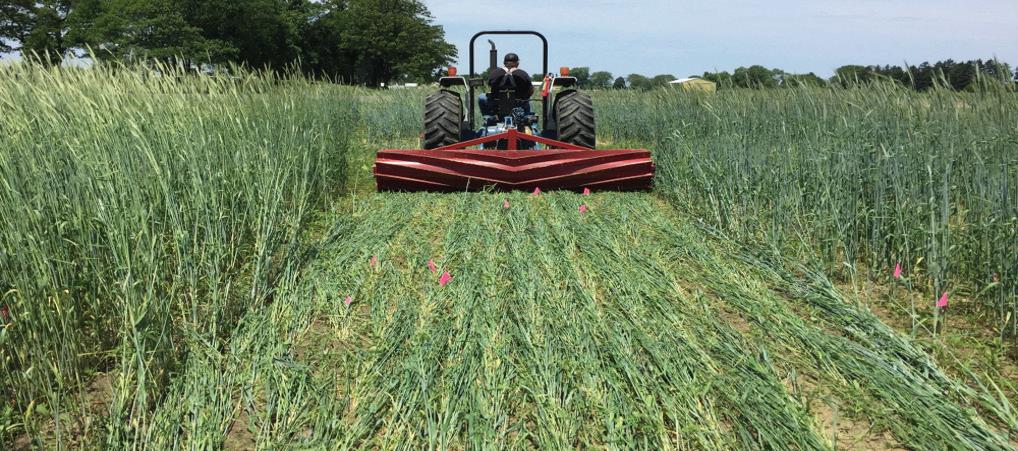
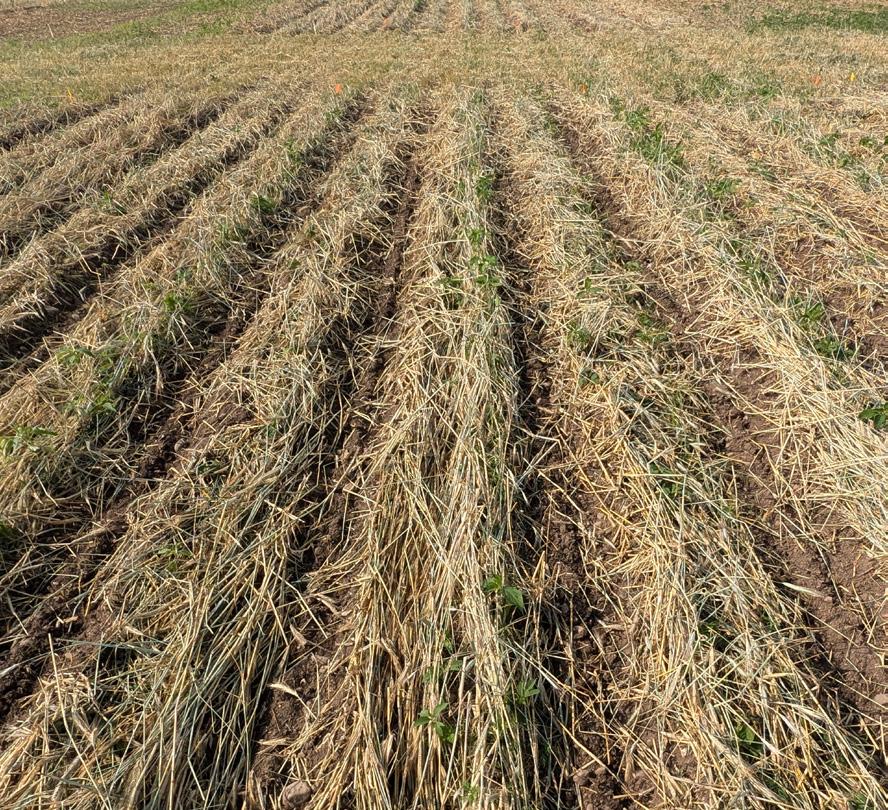
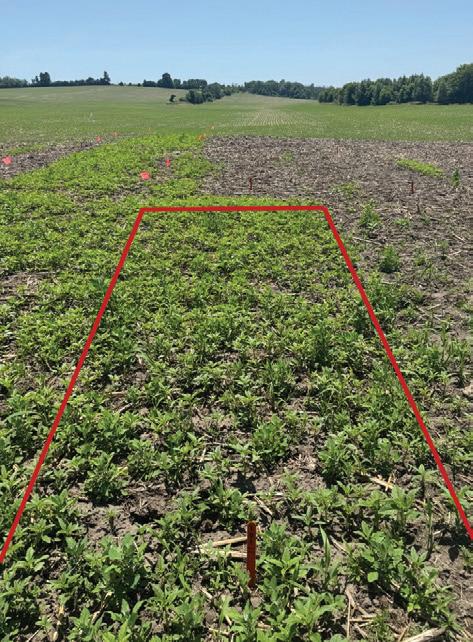
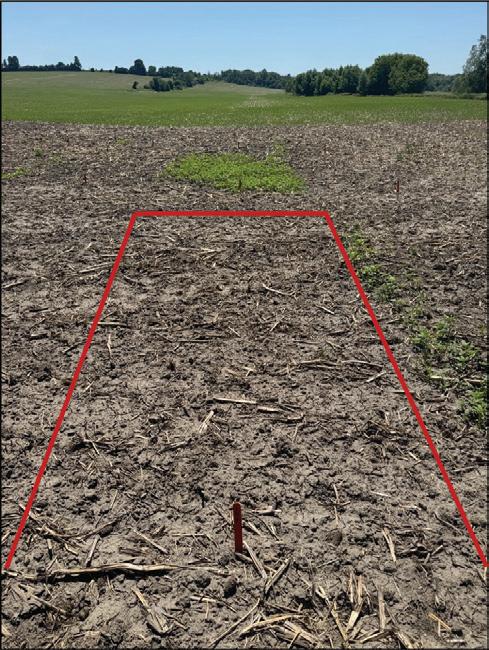
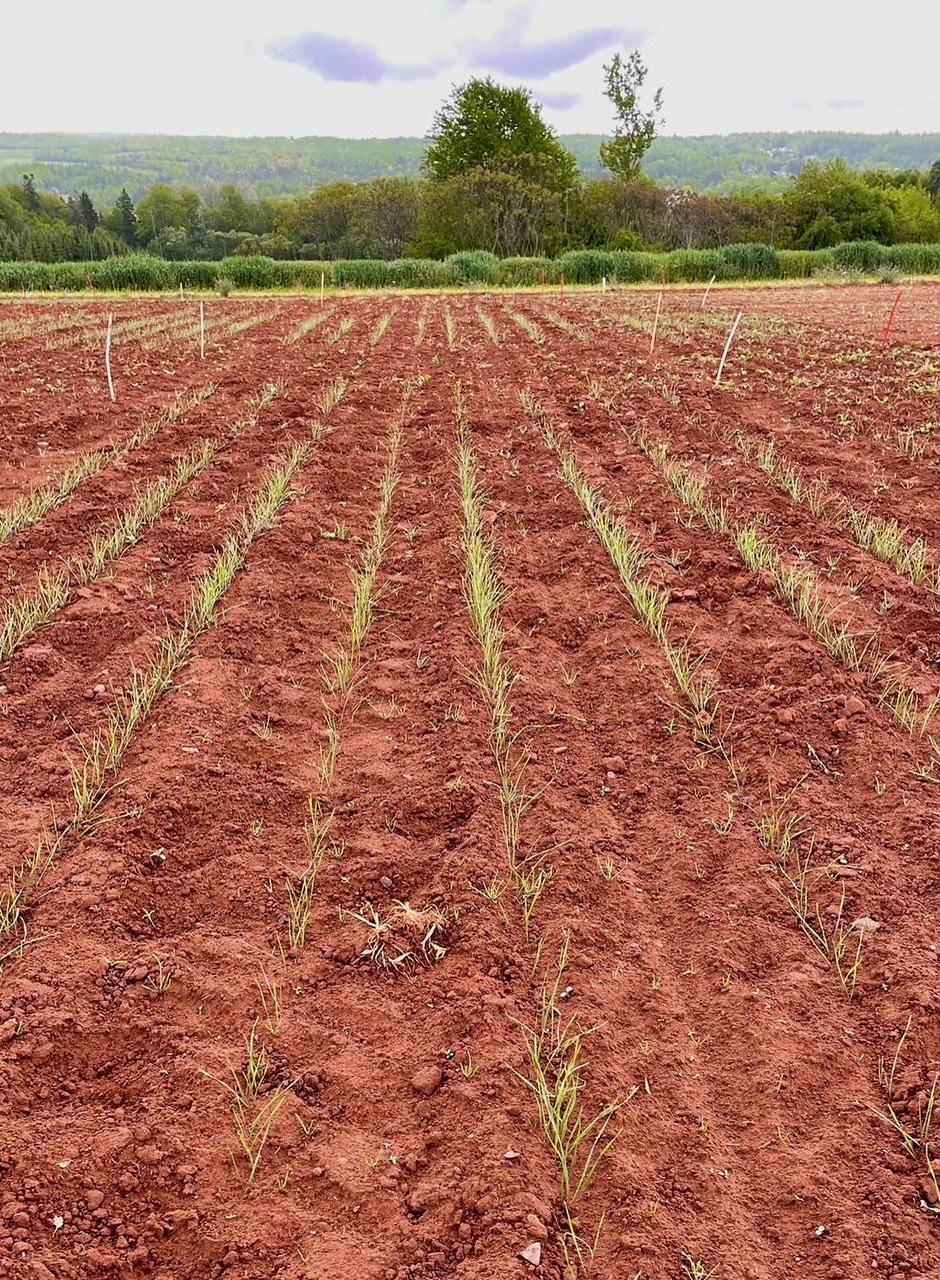
Rye was seeded during the fall to provide winter ground cover. In the spring, a roller crimper was used to kill the crop. Nurse explains there’s some evidence rye has allopathic effects when it starts breaking down which may prevent weed seed germination. The beans were seeded using strip tillage into the mat of decomposing plant material, which ideally would inhibit weed growth.
Later in the season to replace a conventional farmer’s in-crop herbicide, Nurse’s team used a Weed Zapper. “The weeds have to be above the crop canopy. Any
weeds that the boom hits, it zaps with electricity . . . you can see it within minutes if you walk behind the tractor, [the weeds] start drooping over,” Nurse says.
TILLAGE IS EFFECTIVE BUT AT WHAT COST?
Nurse wants to collect more field data before drawing any conclusions. However, the control tillage plots are proving the most effective for weed control and yield – if the farmer stays on top of it.
While the rolled rye offers some forgiveness because it takes longer for weeds to break through, when they come through, they start coming through fast. “And the challenge that we’re finding there, from a weed control perspective, is we don’t want to go through with tillage, because then you’re destroying that rye mat, but you have to wait to come in with electricity until the weeds are above the crop,” Nurse explains.
The team will also investigate if they can prolong the weed control period with rye, either by getting rye flowering earlier or planting it in higher densities.
“Tillage has its own costs associated with it, trips over the field, diesel fuel, [and] the environmental costs of soil compaction and poor soil structure,” Nurse says.
BREEDING MORE COMPETITIVE BEANS
The field work complements Larsen’s breeding work to increase pest
resistance and crop competitiveness (beans that get larger sooner) within bean varieties.
Overall, dry beans have three main concerns: potato leafhopper, anthracnose and white mould. Larsen says he’s focused on breeding resistance while retaining market qualities.
He explains that his work focused on looking at existing varieties in different ways, and his team has been able to find varieties that have decent levels of resistance, or even combined resistance potential. “For example, anthracnose and white mold resistance in small, seeded beans is absolutely achievable out of this project.”
Currently organic dry bean seeds are conventional seeds but with organic management practices (no seed treatment or sprays) – so both conventional and organic farmers can benefit from Larsen’s breeding work.
SUPPORT WITHIN THE ORGANIC SUPPLY CHAIN
Ben Cullen is the founder of Cullens Foods, which sources, processes and sells a fully Canadian grown brand of organic edible beans. When he first started the business in 2018, he faced challenges like growers getting organic seed or time with processors. But since then, the business has blossomed. “There’s a consumer who will eat organic first,” Cullen starts. “As the cost of food goes up, they’re more willing to trade down to beans from
ABOVE The beans were seeded using strip tillage into the mat of decomposing rye plant material –ideally inhibiting weed growth.
organic meats than they are willing to trade out of organics entirely.”
When sourcing organic beans, contingency is automatically built in because of how vulnerable organic farmers are to weather and pests. “It’s about a 20 per cent contingency [but] it varies by crop. Like black beans, for example, we’ve had a lot of success, so I can expect that to come more reliably so I don’t need to carry as much of a buffer in the contract,” Cullen says. “There’s no secondary supply, so if the contracts don’t come through, then there’s nowhere to turn to – so I’ve always had to contract above my forecast needs just to avoid the risk of running out.”
Rye was seeded during the fall to provide ground cover during the winter. Then a roller crimper was used to kill the crop in the spring.
Cullen says another challenge is support from marketing boards and retailers to drive consumer demand. Here is where Loftsgard and COTA can step in. The association offers support in various ways from doing market access work to matchmaking to offering the Export Support Fund, which gives subsidies to growers sending their samples abroad.
Back at the field where it all starts, for Larsen and Nurse, they want organic growers to know “we’re on it” when it comes to getting organic beans growing and winning the weed battle.
LEFT
From humble cover crop to chic craft whisky
Growing fall rye with an eye to the craft rye whisky market in the Maritimes.
BY CAROLYN KING
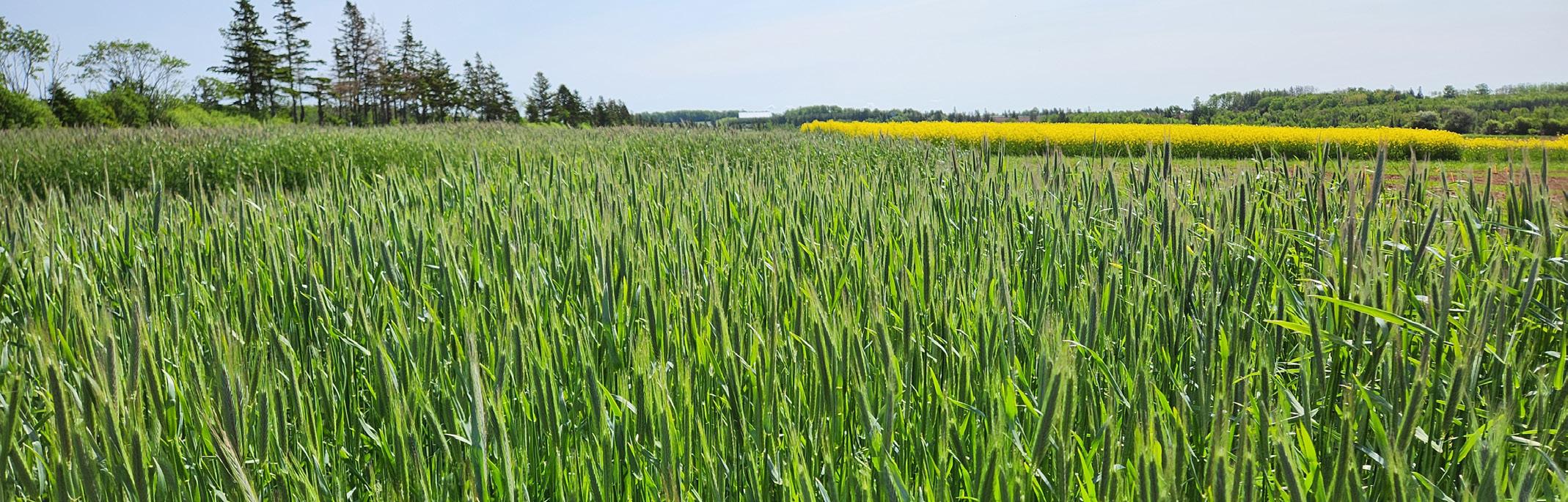
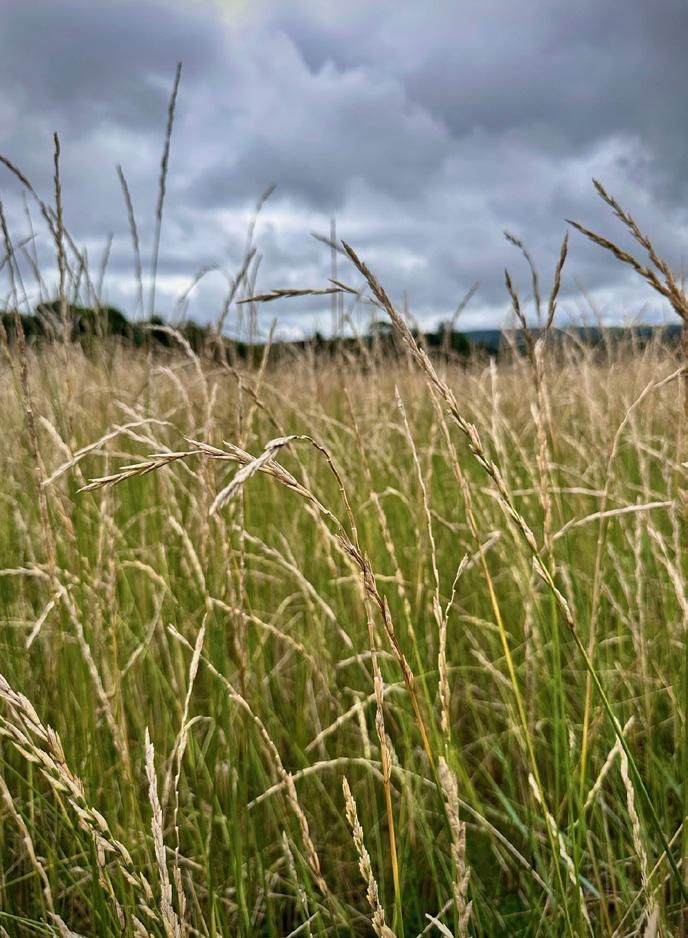
Afour-year project is looking for fall rye varieties that grow well in the Maritimes and produce great whisky.
Targeting crop production for the distilling sector is a new focus for agronomist Aaron Mills with Agriculture and Agri-Food Canada (AAFC), who is leading this project.
“We’ve done quite a bit of work with the malt barley sector here. We have a push on for milling qualities in spring wheat. And we are also really interested in exploring milling quality in winter wheat,” says Mills, a research scientist at AAFC’s Charlottetown Research and Development Centre in Prince Edward Island.
“Managing a crop for grain quality really makes sense because then you have a lot more market opportunities.”
This value-added focus is also a key interest of the Atlantic Grains Council (AGC), which is funding the rye project in partnership with AAFC. “Our biggest research priority is research focused on yield and quality improvements across a range of crops. Finding out what quality is needed for rye falls into that realm of discovery,” explains Alan Miller, AGC’s science coordinator.
Mills notes, “The idea is to add value to crops that do well here to begin with.” And rye is a crop that usually grows well in the region without heavy management.
“We are interested in seeing if producing rye for the
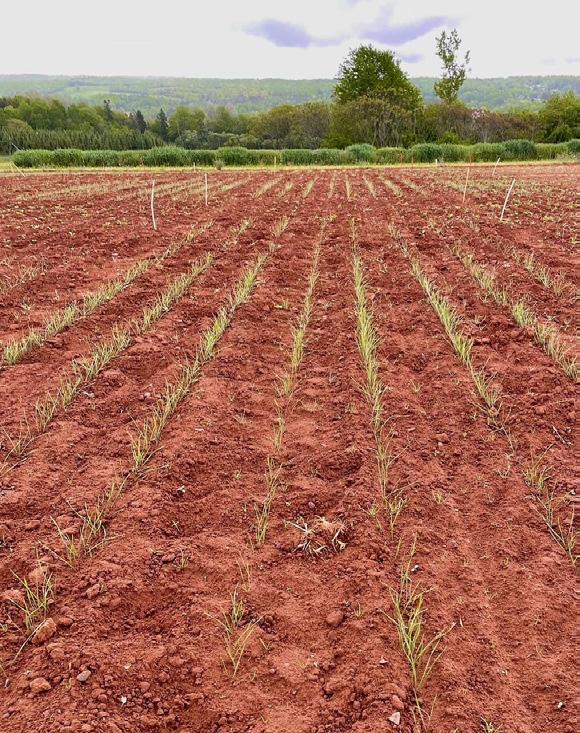
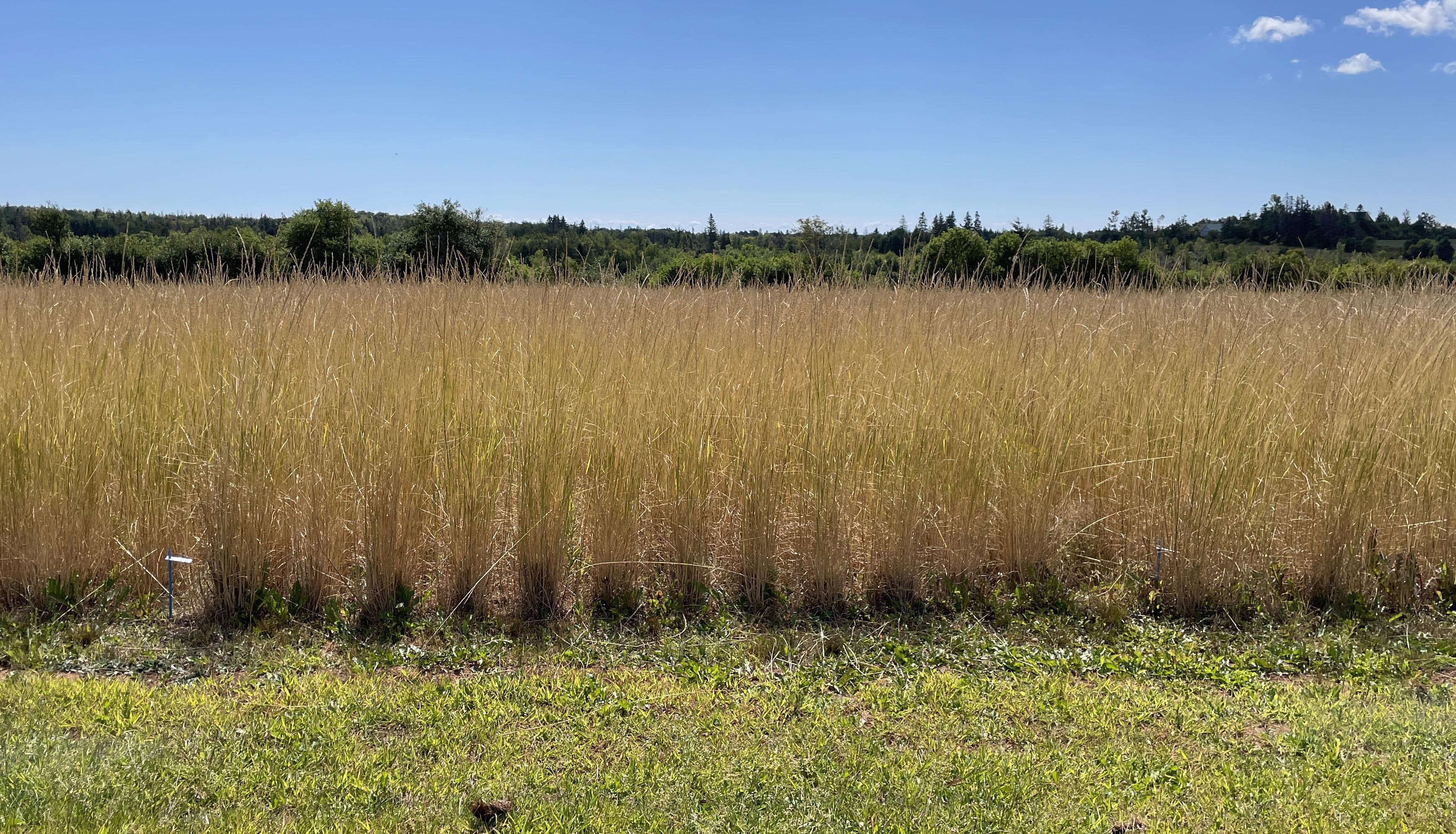
ABOVE The project has fall rye plots at Harrington (shown here) as well as Fredericton and Truro.
distilling market might be a little easier than some of the value-added opportunities for other crops.”
Although fall rye can be grown for feed for local livestock, many crop growers are familiar with it as an excellent winter cover crop after potato harvest. Mills notes that fall rye is able to establish later in the fall than other fall-seeded crops like winter wheat. Fall rye is also very winter hardy and starts regrowing early in the spring, protecting against soil erosion.
Fall rye aligns with AGC’s interest in fall-seeded crops. “One of AGC’s strategic directions targets adaptation to climate changes. Our winters are getting softer, our summers at times are becoming drier, and we’re finding that winter crops can be quite successful here,” says Miller. He notes that fall rye is typically ready for grain harvest in late July or early August.
FIELD TRIALS
The project is evaluating various fall rye varieties to find ones that not only have good agronomic traits and high yields under Maritime growing conditions but also have the grain quality characteristics that distilleries are seeking.
The field trials, which started in fall 2023, are taking place at three sites: AAFC’s Harrington Research Farm in PEI; Dalhousie University’s Agricultural Campus in Truro, Nova Scotia; and AAFC Fredericton in New Brunswick. Mills notes, “We want to see if there might be quality attributes like a ‘terroir’ effect of growing in
Ready for waterhemp?
New Convintro Corn 12 is.
Over the past two decades, waterhemp has spread throughout Eastern Canada. Today, it’s on track to become one of the region’s most problematic, yield-threatening weeds. Waterhemp resists several registered pre-emergent programs and continues to grow after post-emergence, contact herbicide applications. Female plants can produce up to 4.8 million seeds, which can easily spread through contaminated machinery, livestock, and manure – forcing farmers to go on the defensive against waterhemp all season long.
Introducing new Convintro Corn 12
All-new Convintro ® Corn 12 herbicide helps you stay ready. It’s the only product with a Group 12 active ingredient (di ufenican) – the rst new mode of action registered for use in corn in Eastern Canada in decades. Applied pre-plant or pre-emergent, it combines 3 modes of action (Groups 12, 15 and 27) for one-pass, residual broad-spectrum control –including exceptional control of waterhemp and the newly emerging palmer amaranth.
Count on Bayer in corn
You can count on Bayer corn herbicides to keep you ready for any weed challenges. Look to Corvus ® herbicide for early-season residual control and Laudis ® herbicide for post-emergence control of actively growing broadleaf weeds. No matter what you’re up against this season, the right weed control strategies will make all the di erence. And if waterhemp is a challenge on your acres, stay ready with Convintro Corn 12.
Source: 2024-2025 Eastern Canada Market Development (8 locations). Your results may vary according to agronomic, environmental and pest variables.
Convintro
*Source: 2025 Bayer Market Development Trials, Cobourg, ON – 28 DAA (Multi-resistant waterhemp to herbicide Groups 2, 9 and 14)
Untreated Convintro Corn 12 (high rate)
Truro versus Fredericton versus Harrington.” Terroir refers to unique quality characteristics that result from the specific conditions where a crop was grown.
“We are focusing on rye varieties that are commercially available for anybody in the Maritimes. We have a really good mix of open-pollinated and hybrid rye varieties,” he explains. The field trials are comparing these newer varieties to AC Hazlet, the standard open-pollinated variety.
At present, AGC’s cereal variety performance reports do not include rye varieties. Mills says, “With the emergence of the hybrid rye varieties and new open-pollinated varieties, we really wanted to do the foundational work on these rye varieties here for the East Coast.”
The project team is growing the varieties using the recommended practices for rye production in the region.
QUALITY ANALYSIS
To find out if rye grown in the Maritimes can meet distillers’ grain quality requirements, Mills is collaborating with Gerrard Kilfoil, a food science researcher at INNOV, the applied research and innovation centre of the Collège communautaire du Nouveau-Brunswick.
For about the past seven years, Kilfoil has been working with the craft malting, brewing and distilling industries on projects related to best practices training, product and process improvement, and establishing quality programs. “But recently my research has been focused on helping to increase the usage of local grain and malts for the craft beer experience. To do this, I have done a bit of expanding the testing capacities here in our lab at INNOV to offer complete grain and malt testing,” he explains.
The results from these quality tests enable INNOV clients to better guide their malting, brewing and distilling decisions.
Kilfoil’s and Mills’ shared interest in craft alcohol production for the Maritimes and their complementary research areas make for good opportunities to collaborate. Kilfoil says, “I rely on Aaron quite a bit for guidance on the agronomy side of things and how that will influence grain quality. And from this I take those results, and I help end-users such as craft maltsters and distillers to interpret the results.”
For the fall rye project, Kilfoil’s lab is testing the grain for some standard quality attributes such as protein, moisture and kernel weight, and some of the key distilling-specific characteristics such as extract percentage, predicted spirit yield and phenolic testing of the distillates.
“Characteristics such as extract percentage and predicted spirit yield are very important to distillers. They are essentially a prediction of the maximum amount of alcohol that can be produced from a given weight of grain. Distillers want the most bang for their bucks, so they are looking for those rye varieties that yield the most alcohol,” he explains.
Regarding the phenolic content, Kilfoil says, “Rye is naturally quite high in phenolics compared to other grains. These phenolics generate some of the desirable flavour compounds that we commonly recognize in whiskies such as clove and peppery/spicy character. So, one of the main parts of our project goal is to evaluate and select those rye varieties that have high flavour-producing potential in distilled spirits.”
LOOKING AHEAD
So far, Mills’ team has harvested two years of grain for the quality analysis, with one more year of field production to go. By the end of next year, the project will have three years of grain production and three years of quality results from Kilfoil’s lab. In the final year, they hope to work with some craft distilling partners.
“Right now, we are early in the project, but in the next couple of years we want to be able to scale up some of this to see how this research fits in with more of a practical setting,” explains Kilfoil.
Although rye is a fairly small crop in the Maritimes, rye for the distilling market could be a good niche opportunity for both growers and craft distillers.
“From the distillers’ point of view, it would provide them with a craft opportunity...we may find that growing rye in the Maritimes provides a distinctive flavour for whisky. And from the growers’ perspective, they are able to connect directly with their market. And maybe the distillers would want the rye grown a little bit differently and they would be able to connect with local growers to meet those requirements,” says Miller.
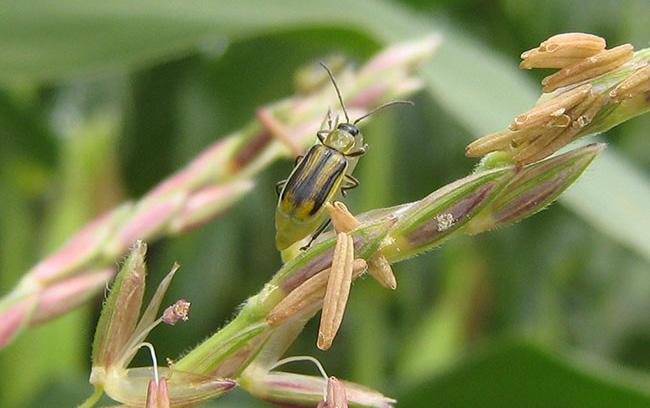
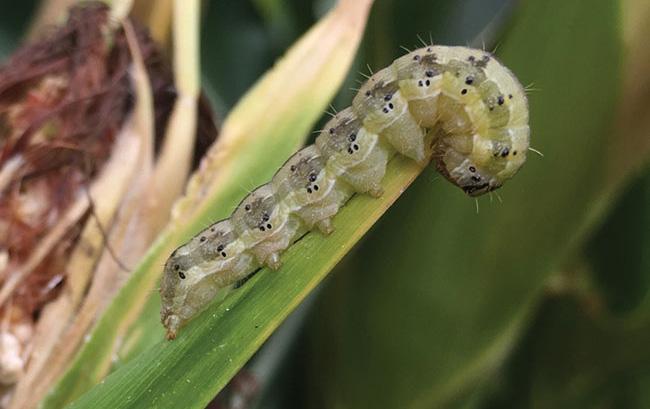
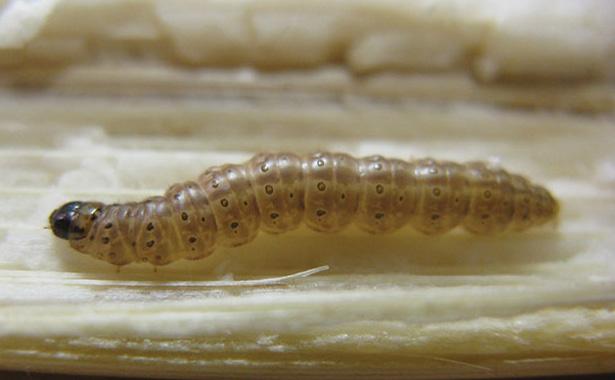
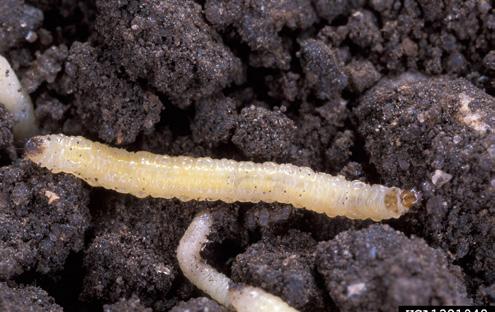
Pest Scouting Calendar for Corn
CORN ROOTWORM, WESTERN AND NORTHERN, LARVAE
CORN BORER
CORN ROOTWORM, WESTERN AND NORTHERN, ADULT (BEETLE)
CORN EARWORM
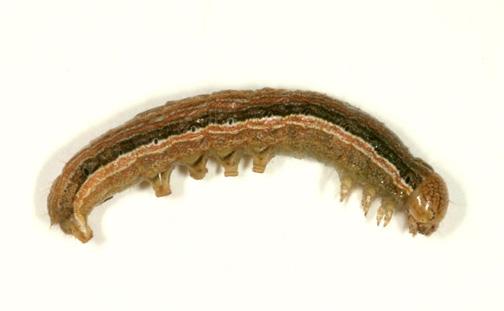
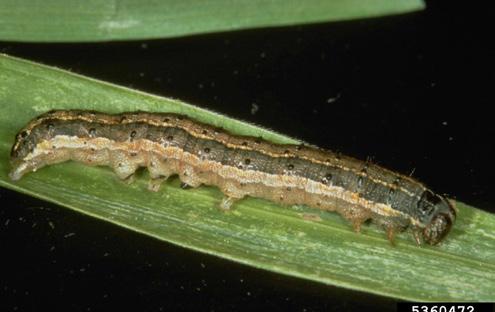
ARMYWORM
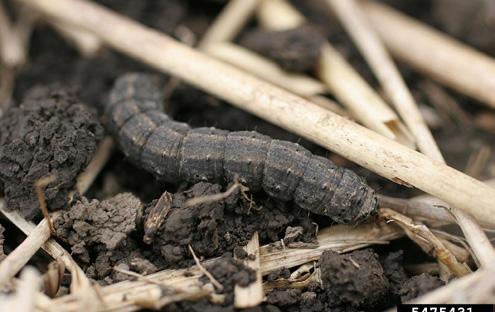
BEAN CUTWORM
Black cutworm Western corn rootworm (beetle)
armyworm Corn earworm
armyworm Western corn rootworm (larvae)
Western bean cutworm
Adapted from Ontario Ministry of Agriculture, Food and Agribusiness resources.
Assessing Kernza for the Maritimes
Could this perennial grain become another option to add into East Coast crop rotations?
BY CAROLYN KING
Kernza – the first commercial perennial grain – represents an emerging crop opportunity with a lot of potential. Compared to an annual crop, its perennial nature offers advantages such as improved soil health and resilience to stressful growing conditions. And its ability to produce grain for human consumption could give it an economic advantage over a perennial forage.
Now Brittany Cole, a Dalhousie University PhD student, is conducting a project to see if and how Kernza could be grown in Atlantic Canada. She hopes this research can be a step toward adding more resiliency and diversity into Maritime cropping systems by including both perennial grains and annual grains in rotations, and by growing perennial grains intercropped with annuals.
Cole brought her idea to Aaron Mills, an agronomist with Agriculture and Agri-Food Canada (AAFC) in Charlottetown, PEI.
For more than two decades, the Kansas-based Land Institute has been developing Kernza from intermediate wheatgrass, a perennial forage grass that the institute has bred to optimize the plant’s grain production. Over the years, Mills has kept an eye on how Kernza development was coming
along, including recent news about companies like General Mills and Patagonia Provisions using Kernza in some products.
Mills, one of Cole’s thesis supervisors, thinks the potential for Kernza production in the Maritimes is worth exploring, especially since forage grasses tend to perform very well in the region. “With our growing conditions, we’re not in a position to be turning away crop options. If we can generate a little information on newer crops like Kernza that may find a niche somewhere here, it could be beneficial.”
KERNZA PROS AND CONS
The Land Institute is continuing to develop improved Kernza lines as well as production practices. According to its website, 3,270 acres of Kernza are currently being grown in the U.S.
In addition to the Land Institute’s efforts, several other breeding programs are developing Kernza lines, including a program in Canada led by Doug Cattani at the University of Manitoba. His program, started in 2011, is breeding varieties and developing agronomic practices suited to the Canadian Prairies, where intermediate wheatgrass has been grown as a forage grass
All photos courtesy of Brittany Cole, Dalhousie University.
for many years. Some Prairie producers are trying out Cattani’s lines.
Kernza’s deep roots can access water during drought periods. Compared to cropping systems that rely on annual tillage, Kernza is better for soil health, reducing soil erosion, increasing carbon storage and benefiting soil biological communities. Kernza is also good at retaining nitrogen, helping to reduce nitrogen levels in runoff. And, as a perennial, the crop is not seeded every year, so inputs of seed, fuel and time for seeding operations are reduced compared to annual crops.
However, Kernza production also has some drawbacks. Cole says its main disadvantage is that its grain yields are a fair bit lower than grain yields for annuals like wheat. A perennial plant puts more of its resources into its roots to help maintain itself in the following year whereas an annual prioritizes seed production.
Another possible drawback is that Kernza requires equipment suited to smaller-seeded crops because the seeds are generally less than half the size of wheat seeds. So, some growers may need to make adjustments to their field equipment.
Also, as a Kernza stand grows older, it tends to prioritize vegetative growth over continuing seed
production. In the U.S., Kernza typically produces grain crops for several years before grain production starts to decline.
On the other hand, Kernza can potentially be grown as a dual-purpose crop, harvested for both grain and forage in the same year, which would give the producer more options.
ABOUT THE PROJECT
Cole started the project’s field work in spring 2022. She planted each spring and fall after that, completing her field work in fall 2025. Each year, she collected biomass samples, assessed weed pressure, collected soil samples, monitored the weather and collected data on Kernza plant traits like the number of grain heads, grain yields and straw yields.
The field sites for the project’s small-plot studies were at: AAFC Fredericton in New Brunswick; AAFC’s Harrington Research Farm in PEI; Dalhousie’s Agricultural Campus in Truro, Nova Scotia; and for one year, a site with Perennia in Cambridge, Nova Scotia. The project also included a field-scale trial in a potato field at AAFC Fredericton.
The Kernza seed for the project was from Cattani’s
PREMIUM
PULSE WIDTH MODULATION SPRAY TIPS FROM
LEFT
project to assess the suitability of Kernza for the Maritimes is just wrapping up.
materials developed for Prairie conditions.
Although Cole is currently analyzing the project data and writing up the results, she is able to share some of her findings so far.
CAN KERNZA GROW IN THE MARITIMES?
The project’s primary objective was to see if Kernza could grow in the Maritimes – if it could germinate, establish a stand, and survive the region’s winters and spring freeze-thaw cycles. “It did quite well with that,” says Cole.
Like many perennials, Kernza stands take time to become established. So, weeds were an issue in the year when the stand was seeded. However, by the year after seeding, Kernza was very competitive, minimizing weed impacts.
The year after seeding was also when the first grain harvest occurred. The first-year grain yield averages ranged from 500 to 800 kilograms per hectare (kg/ha), second-year averages ranged from 300 to 800 kg/ha, and then third-year averages dropped to approximately 300 to 500 kg/ha.She notes, “The demonstrated yield declines with stand age identify that we need to explore additional agronomic practices to minimize the yield declines between harvest years 1 to 3.”
WHICH PRACTICES ARE BEST?
The project’s second objective was to identify which agronomic practices can optimize Kernza performance, both in early growth and with stand age. This included assessing the effects of spring versus fall seeding,
narrow versus wide row spacing and different seeding rates.
Preliminary results indicate that planting time is a key factor, with spring and fall seeding each having benefits and challenges. In a 2025 conference paper, Cole reported on the first harvest year findings from plots seeded in 2022 and 2023: “In general, spring seedings are associated with larger plants, and fall seedings are associated with higher seed weights, more tillers, and increased weed pressure. Grain yield was highest in spring-seeded plots at low density, followed by fall seedings at higher densities…Conditions for fall seeding are more variable than spring seeding and come with higher risk of winterkill.”
COULD KERNZA BE INTERCROPPED WITH AN ANNUAL CEREAL?
Another project objective was to examine the possibility of intercropping Kernza with an annual cereal. “You are growing a perennial that is benefitting your soil along with an annual that can give you that higher grain yield,” she explains.
Cole tried barley-Kernza and oat-Kernza intercrop combinations, under seeding the annual with Kernza by planting both together in the same row. She found that the faster-growing annual crops tended to smother the young Kernza seedlings within the first month of growth, especially in the barley plots.
However, she suspects these problems could be overcome with more experimentation, such as trying different seeding rates or seeding the annual crop and Kernza in alternate rows rather than in the same row.
COULD KERNZA FIT WITH A POTATO ROTATION?
Another project objective was to see how Kernza might fit in a three-year potato rotation in the field-scale trial at AAFC Fredericton. Cole has not yet analyzed the data from this trial. However, from what she has observed, a big challenge is the narrow window of seeding time between a typical potato harvest and fall seeding of Kernza. “Kernza needs to be seeded
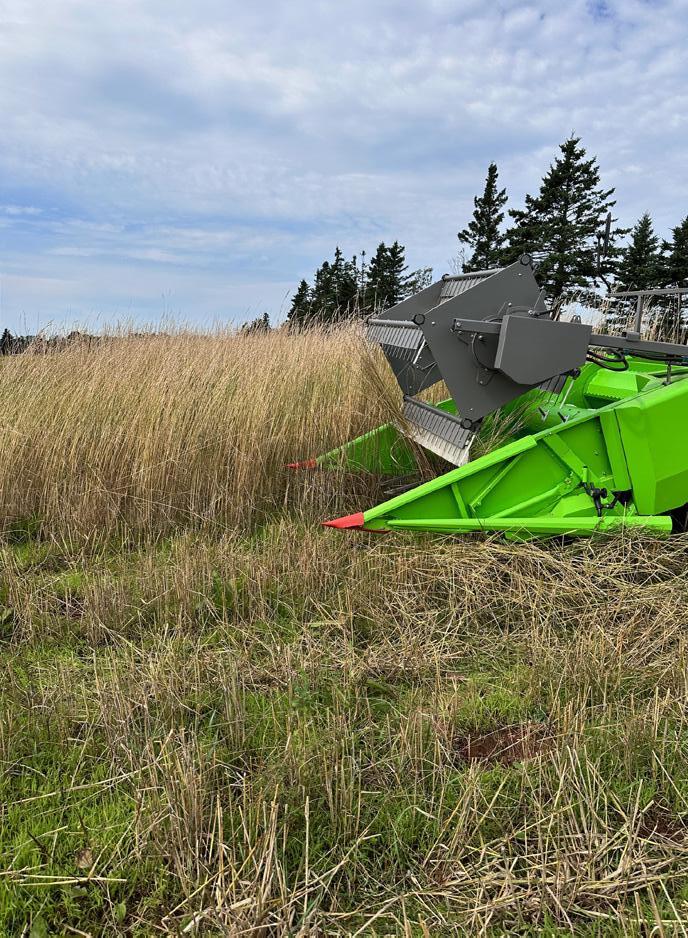
LEFT TO RIGHT Kernza, the first commercial perennial grain, was developed by breeding intermediate wheatgrass, a forage grass, to optimize seed production; Kernza seedlings at emergence in the field plots; Harvesting the Kernza plots.
“Kernza could also find a place in marginally productive lands that are prone to erosion, have issues with slope or other problems.”
before mid-September, which means only a short-season potato would be suited to a rotation that includes [fall-seeded] Kernza.”
“Alternatively, Kernza could be seeded in the spring following potato harvest, but then you would not get a grain yield from the Kernza crop until year 2 and lose a full grain production year from the rotation.”
FUTURE RESEARCH
Cole and Mills have several ideas for what might be done next to advance the production of perennial grains in Atlantic Canada.
“I would like to do some selective breeding of Kernza for traits suited to this area. When you are growing a crop that is made for the Prairies, it’s not going to be at its best in the Maritimes,” says Cole. For example, by breeding the crop for Maritime conditions, it might be possible to prolong the grain production phase.
As Kernza grain production has gradually increased in the U.S. and the Prairies, interest has also been increasing in using Kernza in local breweries, distilleries, artisan bakeries and other niche markets. She thinks there could be ways to open up these kinds of local opportunities in the Maritimes too.
Cole is also curious about other perennial grains as potential options for the Maritimes in the years ahead. Mills is interested in looking into where Kernza could fit into Maritime production systems. “The first step was: Does Kernza work here? Brittany has some pretty good numbers to show that it does work here. The next step is to work on the where and the why side of it,” he says.
“All indications are that Kernza grain is largely a niche crop. It is not going to fit into every farmer’s rotation. But perhaps it may work for smaller producers looking to make more money than they would from playing the commodities market. Kernza could also find a place on marginally productive lands that are prone to erosion, have issues with slope or other problems.”
He adds, “You never know where it may fit... Kernza fits in the organic sector. And the craft brewing sector is interested in it – Patagonia has a beer brewed from Kernza.”
This project is funded through Mitacs and the Atlantic Grains Council in partnership with New Brunswick’s Agricultural Climate Solutions, which is part of the current phase of AAFC’s Living Labs initiative.
Fine-tuning for winter canola
Updating nitrogen rates for production in Ontario.
BY CAROLYN KING
With its acreage leaping from less than 100 acres just a decade ago to about 20,000 acres in fall 2025, winter canola is still a relatively new crop in Ontario. “Ontario still has an expanding number of winter canola growers and expanding interest in the crop. There is still a lot of ground yet that could be suitable to winter canola,” notes research scientist Eric Page, who is with Agriculture and Agri-Food Canada (AAFC) in Harrow, Ontario.
So, for much of the past decade, Page has been leading studies to develop new knowledge around basic issues in winter canola agronomics for Ontario conditions, including planting date and tillage research.
Currently, growers have nitrogen recommendations from the Ontario Ministry of Agriculture, Food and Agribusiness (OMAFA) for fall-applied and spring-applied nitrogen (N) for winter canola. Page’s five-year project, started in fall 2023, is looking at the spring-applied rates to determine the best rates for maximizing profitability while minimizing environmental risks.
“We’re pretty set in terms of the fall recommendation, which should be 30 to 35 pounds of actual nitrogen to the acre,” he says.
“The recommendation for spring application is normally in the range of 100 to 150 pounds per acre. The reason for this range is that we’ll evaluate the overwintered stand. [For instance,] if you have a great looking stand and you really want to push for a high yield target, then we’ll go to the upper end of that range. Otherwise, maybe to be a little more economical, if the stand took a hit over the winter, we might be at the lower end of that range.”
According to Page, there is not a lot of good Ontario-specific data for making decisions on spring-applied N rates. “Much of the data that we are relying on comes from our pretty deep knowledge base on spring canola agronomic practices and some of the knowledge we have gleaned about winter oilseed rape production from Europe.”
So, the project’s main focus is to produce Ontario data to update or validate the spring-applied N recommendations for winter canola. Page aims to refine those recommendations by assessing both economic
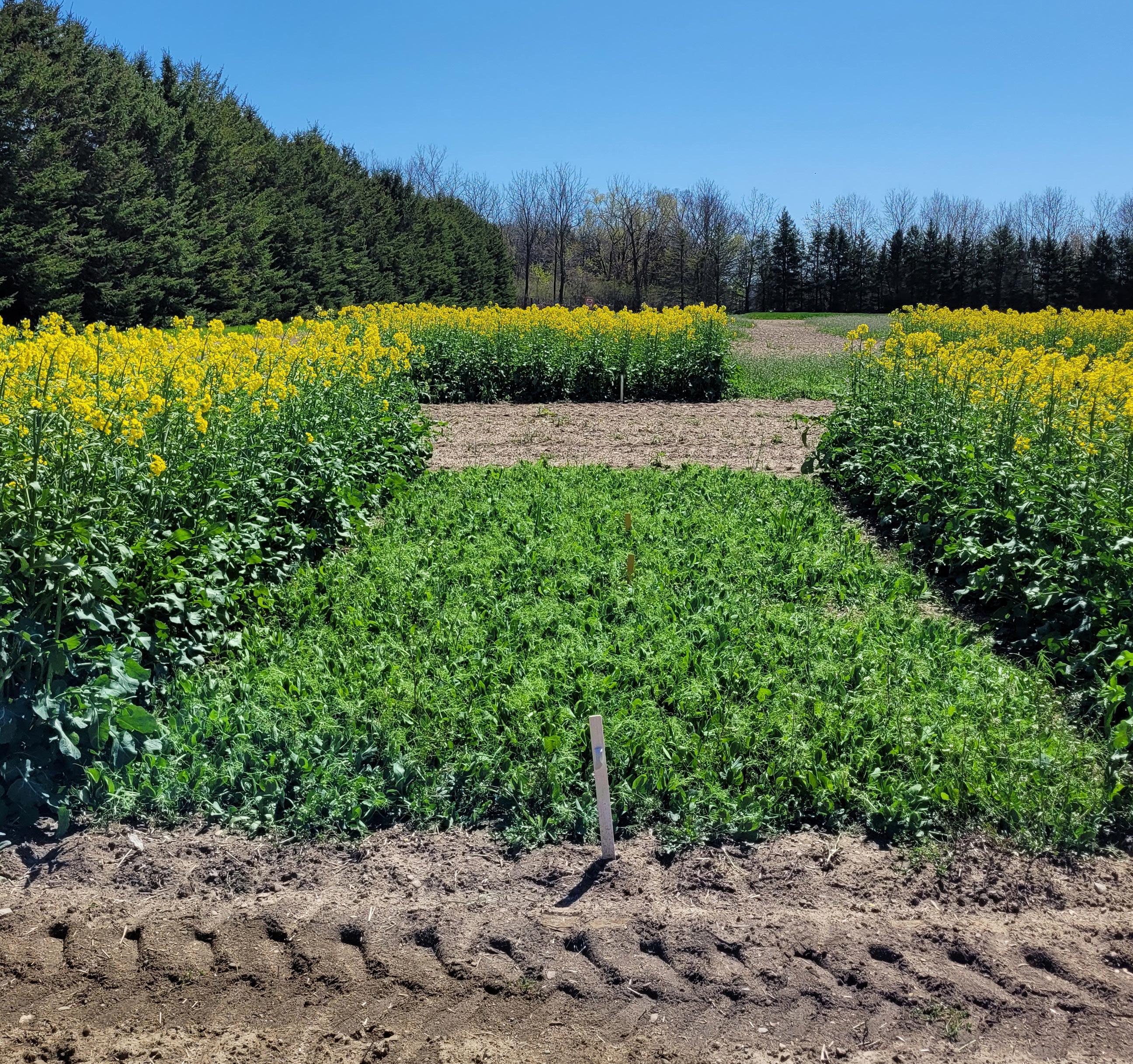
ABOVE The project is evaluating spring-applied nitrogen rates for winter canola, winter peas and winter peaola, considering both the economic and environmental implications of the rates.
and environmental implications of the N rates. As well, they will be developing N recommendations for winter peaola, an intercrop of winter canola and winter peas.
A LOOK AT THE PROJECT DETAILS
Page’s team is comparing five spring-applied N rates for winter canola, winter peaola and winter peas. The rates range from 0 pounds per acre (lb/ac) through various increments up to 320 lb/ac. The lowest and highest rates in this range are not rates that a grower would normally use. They are included for research purposes, so Page can have confidence in the results of the
Photo courtesy of Sydney Meloche, AAFC.
analysis that fits a curve to the relationship between the N rates and crop yields.
The project’s small-plot field trials are taking place at two contrasting sites in Essex County: Harrow, which has a sandy loam soil; and Woodslee, which has a Brookston Clay soil. The trials involve Mercedes, the only winter canola hybrid registered for Ontario. Since no winter pea varieties are registered for Ontario, Page sourced a variety called Goldenwood from ProGene Plant Research, a breeding company based in Washington state.
There are no OMAFA recommendations for N applications on winter peaola or winter peas. “I included winter peaola in the project because spring peaola, a combination of spring canola and spring peas, is grown in Western Canada, and I have an interest in understanding intercropping practices and how they can be beneficial to Ontario and Canadian farmers in terms of improving land use efficiency,” he explains.
“If you can over-yield on an intercrop, essentially get more bang for your buck per unit land, then I think that could be valuable.”
Intercropping can offer various benefits that can enhance the productivity and resilience of cropping systems. Intercrops may help reduce problems with disease and insect pests, and if growing conditions are poor for one crop, the other crop may be able to do well. And for a crop combination like canola with an N-fixing crop like peas, the canola could reduce pea lodging, and the peas could provide some extra N for the canola.
Page has been exploring winter peaola in another study, which has been finding that the peas don’t necessarily use the N applied to the intercrop, leaving more
The recommendation for spring application is normally in the range of 100 to 150 pounds per acre.
N for the canola. Now in his N rate project, he is looking at this aspect and at whether the N fixed by the peas could provide an N credit for the next crop in the rotation.
MAXIMIZING PROFITS
This project includes calculating the maximum economic rate of nitrogen (MERN) for winter canola and winter peaola. The calculation uses the N rate response curve from the field data and determines what the best N rate would have been from an economic perspective, based on the value of the crop and the cost of the N.
“MERN allows producers to dial in to where the best value was in terms of profitability, not just maximum yield.”
He gives an example: “At Harrow, for the first two years in the project, we had maximum economic rates of nitrogen of 183 lb/ac and 152 lb/ac in 2024 and 2025, respectively.” So, given the current N recommendation of 100 to 150 lb/ac, these findings show that, in the first year, it would have been best to apply slightly higher than the recommendation to maximize profitability. And in the second year, applying N at the high end of the recommendation would have been best.
The OMAFA recommended N rates at Harrow generated winter canola yields around 90 bushels per acre in these trials. Small-plot trials tend to have higher yields than field-scale production; average winter canola yields for Ontario are around 70 bushels per acre, and experienced growers can achieve over 80 bushels per acre.
The project’s initial results also indicate that MERN levels are soil-type specific. So far, it looks like even
So Much Power. So Little Effort.
and more, in a convenient, concentrated formulation. It also works with beneficials** for a one-two punch that keeps the fight going long after you’ve left the field. Controlling damaging insect pests doesn’t have to be a heavy lift.
Coragen® MaX insecticide provides fast, selective, extended control* of western bean cutworm, corn earworm
more N may be needed for Woodslee’s heavier soils than for Harrow’s sandy soils – but Page would like a couple more years of data to have more confidence in the Woodslee MERNs.
The project’s final results for MERN at the two sites will be key to updating or validating the Ontario recommendations for spring-applied N on winter canola.
For winter peaola, the results so far indicate that spring N applications benefit the canola but not necessarily the peas because peas fix their own N. The findings also show that if the winter canola is nice and lush because of a high N rate, then it will outcompete the pea crop and the pea yield will be low.
The project’s data could help in finding a balanced N rate that allows both crops in the intercrop to do well. Page notes that intercrops often do better at lower fertility levels, which help reduce competitive interactions between the crops.
The initial findings are also confirming that winterkill is the main issue for winter pea productivity, with significant winterkill in the project’s second year. “On the heavier ground at Woodslee, winterkill completely wiped out the winter peas. And at Harrow, they only survived as a sole crop and not as an intercrop,” he says.
So, for now, winter peaola production in Ontario is still exploratory.
REDUCING ENVIRONMENTAL RISKS
After the crops have been harvested, Page’s team collects soil samples to determine residual N levels so they can refine the N recommendations from an environmental perspective.
Nitrogen in the nitrate form can be associated with a higher risk of N losses to the environment, including the risk of leaching from Harrow’s sandy soils. He notes, “In the Great Lakes region, we have to be sensitive to applying too much nitrogen if it is not being actively taken up by a crop.”
The preliminary results show that the more N fertilizer that is applied, the more nitrate remains in the soil after harvest. For example, at the Harrow site, the residual nitrate levels ranged from 5 parts per million (ppm) for the plots with 0 lb/ac of spring-applied N, to about 25 ppm for the plots with the project’s highest N rate.
“I’m looking for OMAFA’s guidance on this in terms of what residual nitrogen level we should be most concerned about. But anytime we see residual nitrogen at a rate closing in on 20 parts per million, it is not necessarily a practice that we would like to see because of the risk of significant leaching and potential environmental impact,” Page explains.
“The good news is that, at 150 lb/ac of spring-applied N, the residual N levels at Harrow are under 10 ppm. And even at the slightly higher N rate based on MERN, the residual N levels are still within a tolerable range.”
TAKE-HOME MESSAGES
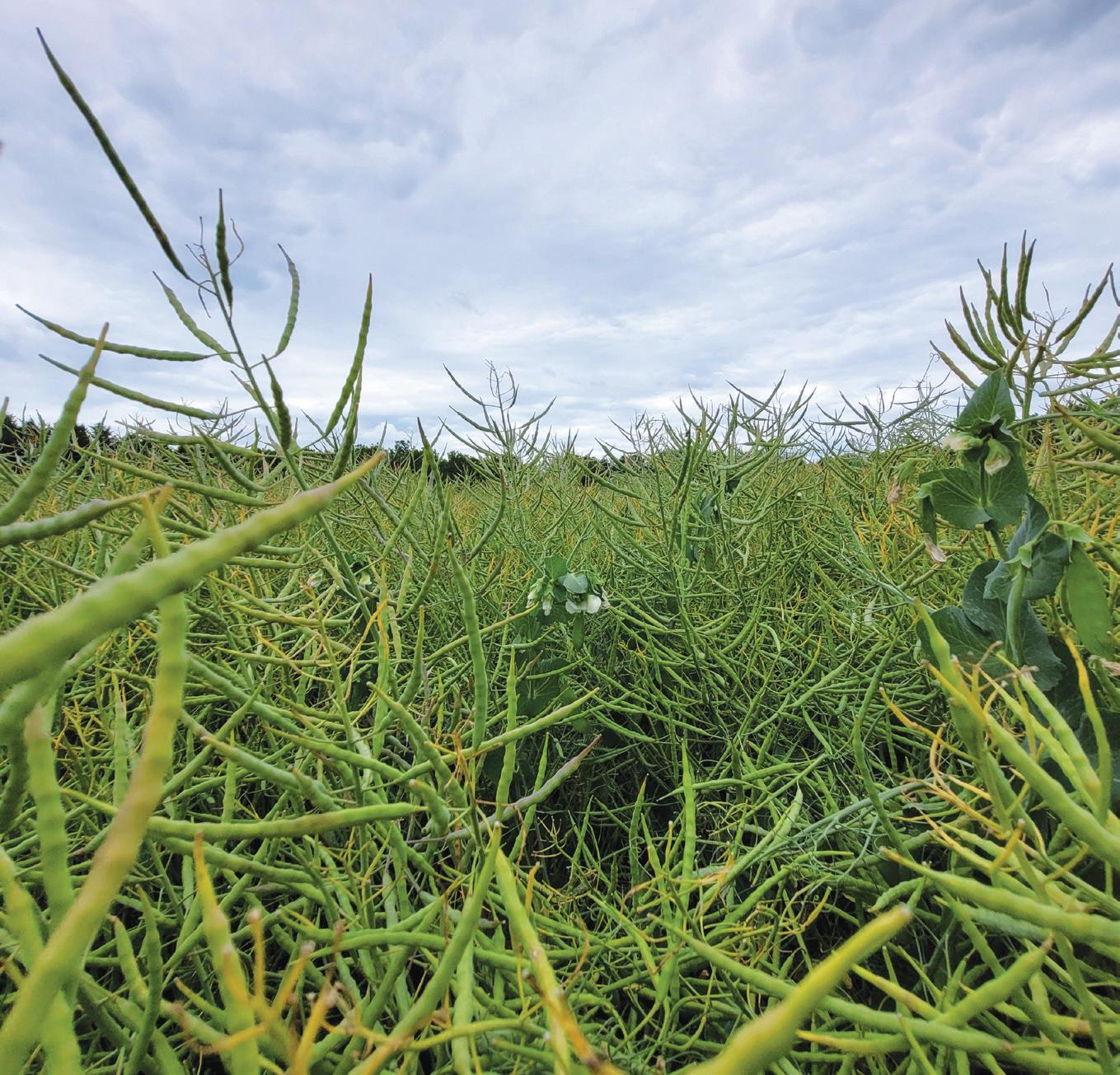
ABOVE White
winter pea flowers at the top of a winter canola canopy: at higher nitrogen rates, the canola plants will outcompete the pea plants in winter peaola.
For now, Page thinks it makes sense to stick to the current N recommendations for winter canola. “They seem to be pretty spot on for the moment for spring-applied nitrogen. We know where they are ending up in terms of yields, and up to 150 lb/ac is not unreasonable if you have a yield goal of 70 to 80 bushels per acre, which many of our producers do,” he says.
“When this project wraps up, we may look to change some of those recommendations if our findings continue to show that higher nitrogen rates are profitable for Ontario growers and that there aren’t adverse environmental impacts from moving to those higher rates.”
Page hopes this research reinforces producers’ understanding of the need to look in hindsight at how profitable their winter canola was. “There is sometimes a rationale for applying less nitrogen but making more money out of it. I hope this project will really drive home that point and help producers to make that choice based on strong local data.”
This project is funded under the national, five-year Canola AgriScience Cluster program which is run by the Canola Council of Canada in association with AAFC. The Ontario Canola Growers Association, one of the grower associations participating in this cluster, is also a strong, ongoing supporter of Page’s winter canola research. Meghan Moran, who until recently was OMAFA’s canola and edible bean specialist, was integral to moving this project forward.
Photo courtesy of Eric Page, AAFC.
Canadian agriculture and food needs more talented people.
Each year, CABEF helps students to pursue rewarding agri-food careers through seven $2,500 scholarships. We’re looking for the future leaders who will help this industry meet tomorrow’s challenges.
Do you know someone who needs to fund their future in agri-food? Tell a student today.
Scholarship application deadline is April 30, 2026
Want to help support the next generation of agri-food leaders? Become a “Champion of CABEF.” This program allows your organization to directly sponsor a deserving student. Contact CABEF at info@cabef.org.
Weeds don’t wait, and yield doesn’t come back. That’s why growers looking to stay ahead start with pre-emergent soil active solutions like Bifecta® EZ, Fierce® EZ and TriActor® EZ. These proven pre-emergent products give you broad-spectrum protection across your herbicide tolerant, conventional and IP soybeans — helping you manage resistance, stay flexible and lead the season instead of chasing it. Less in-season pressure. More flexibility when it counts. You don’t need to overhaul your season. Just upgrade your start.