

Education options and greater awareness are creating a pipeline for more security hires

NEIL SUTTON
Aphrase that has stuck with me for several weeks now is one I read in a Brivo report from earlier this year: “The future of security is consulting not selling.”
I recently asked Brivo’s president, Steve Van Till, to provide some extra context on what that means for the security industry, and he obliged me with an answer that also draws on his previous experience in the IT software market. (You can read his full answer in the Q&A on p.18.)
Based on my understanding of the concept, as security systems become more complex, continue to add features and are integrated into other enterprise software suites like building systems, they require a different approach — not just during the initial sales cycle, but through ongoing operations, up to and including decommissioning and replacement. Users need to know up front what they are buying, but also what they are buying into long-term.
AI has magnified this effect partly because it is still a relatively new phenomenon in security circles. Most new security software seems to contain an element of AI, whether that means a machine intelligence that is capable of managing and analyzing large quantities of data, or an AI interface that will allow the user to operate the software more efficiently.
Some users are ready for this great leap forward, since they have done their preparation and already taken some baby steps in that direction. Others might not be ready for years. But in order to make that determination, they need reliable consultation from their service providers.
Security is by no means alone in this paradigm. In the media world, we still sell advertising space on websites and in print magazines, but there are a range of other options available to potential clients, like custom publishing, content marketing, event sponsorship and market-specific digital magazines.
Explaining the value proposition behind all of these is the difference between selling and consulting. The same could be said for any market that has adapted to change, introduced new products that fill a customer’s needs or sold anything that requires integrity and trust.
Not every consultation will lead to a sale, but every sale should at least begin with a consultation.




Security education, mentoring and accreditation programs are being rolled out or developed to help create more applicants for skilled jobs
By Neil Sutton
Replacement cycles hinge on a number of factors, including compliance, budget and appetite for new features
By Andrew Snook
Q&A: Steve Van Till, President, Brivo
Erin Marsden
Victor Harding
When a
Roger Miller
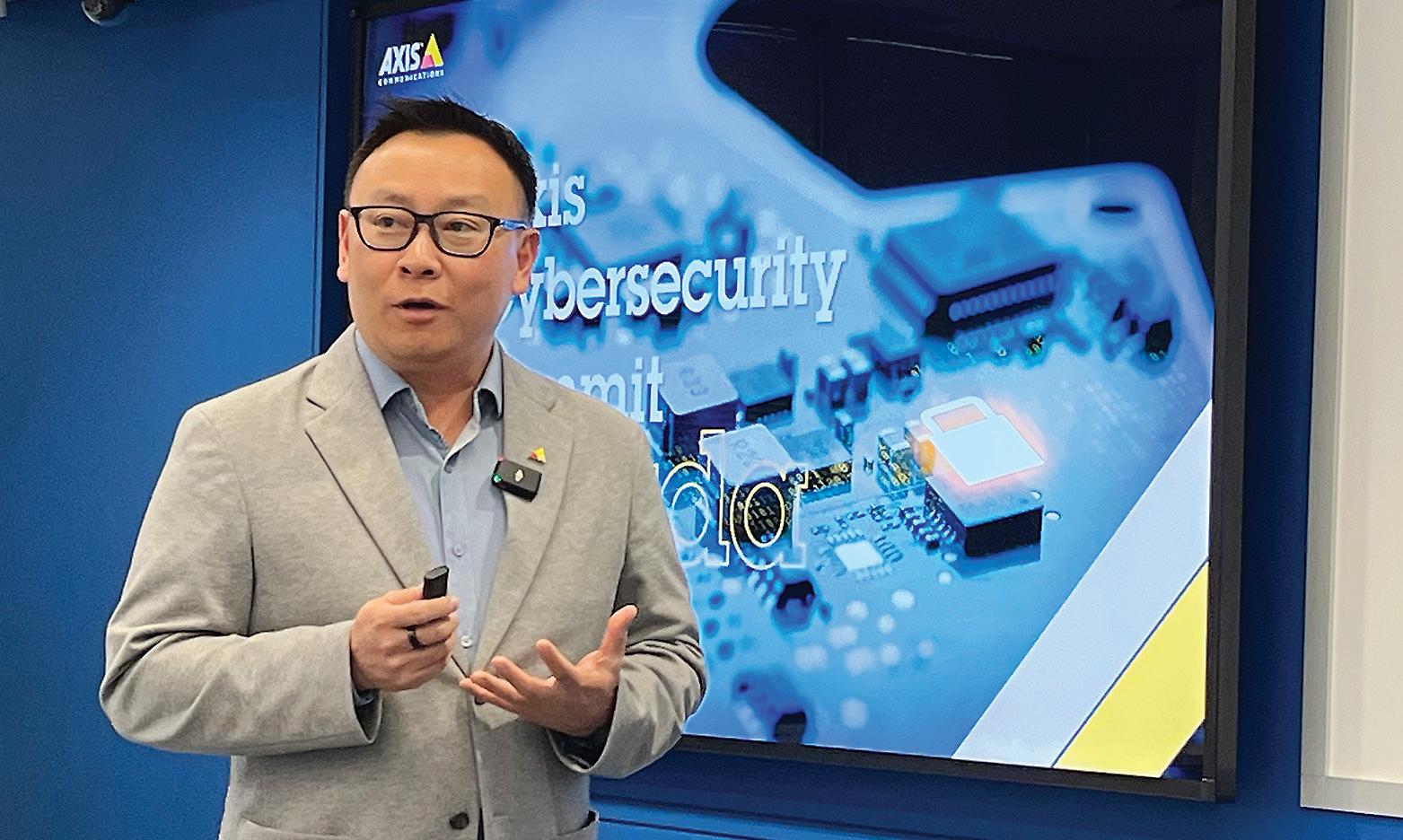
Jason Chiu, Axis Communications, was one of the featured speakers at the company’s recent Cybersecurity Summit
Axis Cybersecurity Summit reinforces message of regular patching, maintenance
By Neil Sutton
Today’s surveillance cameras offer greater utility and more features for end users than ever before, but in order to protect these devices, rigorous patching and routine maintenance is a must.
This was one of the major messages conveyed during Axis Communications’ third annual Cybersecurity Summit, which was held recently at its Mississauga, Ont., office.
“If you have a takeaway from today, you should be patching faster,” said Wayne Dorris, cybersecurity program manager, Axis.
Quoting the Device Security Threat Report, published by Palo Alto Networks last year, Dorris noted that the average enterprise network contains 34,000 connected devices. IP cameras represent almost 16 per cent of IoT network devices and are present in the vast majority of organizations.
“The same policies you use for patching IT equipment should also apply to your physical security equipment,” he said.
A major issue facing all network devices is the accelerated pace at which vulnerabilities are being discovered and therefore potentially exploited.
When they were first introduced,
IP video systems were “kind of in their own little corner of the world,” noted Dorris, “but that is changing drastically.”
Shi-lin Chan, chair of Axis’ cybersecurity communications team agreed. “We’re more and more speaking the IT language here,” she said.
Chan said that users must be proactive in maintaining software and equipment for the duration of its lifecycle. Users should prepare for device decommissioning well ahead of time in order to avoid the risk of running an unsupported device or having data remaining after its disposal. “If you continue to run an end-of-life product, that product could have vulnerabilities,” she said.
Axis offers a number of resources to help its ecosystem of users and integrators, including cybersecurity best practices (axis.com/ cybersecurity) and an OS hardening guide. The company also runs a “bug bounty” program, offered rewards to ethical hackers in exchange for disclosed vulnerabilities.
In concluding remarks, Jason Chiu, professional services and area technical manager for Axis, noted that “cybersecurity is a shared responsibility among manufacturers, system integrators and customers.”

READER SERVICE
Print and digital subscription inquiries or changes, please contact Shawn Arul, Audience Development Manager Tel: (416) 510-5181 • Fax: (416) 510-6875
Email: sarul@annexbusinessmedia.com
Mail: 111 Gordon Baker Rd., Suite 400, Toronto, ON M2H 3R1
Your Partner in Securing Canada
Security Products & Technology News is published 5 times in 2026 by Annex Business Media. Its primary purpose is to serve as an information resource to installers, resellers and integrators working within the security and/or related industries. Editorial information is reported in a concise, accurate and unbiased manner on security products, systems and services, as well as on product areas related to the security industry.
Editor, Neil Sutton 416-510-6788 nsutton@annexbusinessmedia.com
Group Publisher, Adam Szpakowski 289-221-6605
aszpakowski@annexbusinessmedia.com
Brand Sales Manager, Trish Sutton 437-995-4651
tsutton@annexbusinessmedia.com
Media Designer, Graham Jeffrey gjeffrey@annexbusinessmedia.com
Account Coordinator, Kim Rossiter 416-510-6794 krossiter@annexbusinessmedia.com
CEO, Scott Jamieson sjamieson@annexbusinessmedia.com
EDITORIAL ADVISORY BOARD
Patrick Soo, Alarm.com
Floria Chiu, ECAM Val Harris, Real Time Networks
Stephen Karchut, Alarmtech Frank Pietrobono, Avante Security
111 Gordon Baker Rd, Suite 400, Toronto, ON M2H 3R1
T: 416-442-5600 • F: 416-442-2230
PUBLICATION MAIL AGREEMENT #40065710 Printed in Canada ISSN 1482-321
SUBSCRIPTION RATES:
Canada: $43.86 + HST/yr, USA: $99.96/yr and International: $114.75/yr
Published 5 times a year
Occasionally, SP&T News will mail information on behalf of industry-related groups whose products and services we believe may be of interest to you. If you prefer not to receive this information, please contact our circulation department in any of the four ways listed above.
Annex Privacy Officer privacy@annexbusinessmedia.com • Tel: 800-668-2374
No part of the editorial content of this publication may be reprinted without the publisher’s written permission. ©2026 Annex Publishing & Printing Inc. All rights reserved. Annex Publishing & Printing Inc. disclaims any warranty as to the accuracy, completeness or currency of the contents of this publication and disclaims all liability in respect of the results of any action taken or not taken in reliance upon information in this publication.




By Neil Sutton
March Networks and Vivotek officially closed their merger on April 13 when the companies’ parent organization, Delta Electronics, acquired the remaining shares of Vivotek it did not already own.
“We’re officially together. We’re going through that process and really becoming one organization,” Net Payne, chief sales and marketing officer, March Networks, told SP&T News in an interview.
The merger of Vivotek’s branded business with March Networks was first announced during the ISC West trade show in March (Vivotek’s ODM manufacturing business will continue to operate independently).
The combined organization is now led by Peter Strom, president and CEO of Ottawa-based March Networks. Outside of Canada, the companies also operate centres of excellence in Poland, Italy and at Vivotek’s headquarters in Taipei.
“We know global scale matters in the video space.”
There are some complementary strengths like March Networks’ focused solutions for vertical markets like retail, banking and mass transit, and Vivotek’s expertise in equipment manufacturing and its strong presence in Asian markets.
Payne said the first step for the companies was aligning their sales organizations. They have since brought their North American sales teams together — combining Vivotek’s sales organization and March Networks’ channel sales organization under a common leadership structure. The combination did not result in any layoffs or downsizing, according to Payne.
“This is all about growth and how we create scale. It is not about cutting,” he said. “We are combining the organizations because we know global scale matters in the video space.”

He added that the next step will be cross-training all sales personnel so they are fully up-to-speed on both sets of solutions.
Go-to-market strategies
March and Vivotek have historically taken different approaches to the market, with Vivotek selling mainly through distribution and March selling direct to its integration partners (although some March products are available in the U.S. through distributor ScanSource).
The two businesses may stay in those lanes for the foreseeable future, but an overarching channel program will be coming soon, said Payne. It is expected to be implemented as early as January 2027 with more details to be announced before the end of this year.
There are no product branding updates coming from either company in the near term, but that may change over time. “It’s going to be something that we address as we get a common product roadmap,” explained Payne.
There is one change March Networks users and installers will see soon. March’s camera-to-cloud solution CloudSight, which was introduced in April 2024, will adopt the name of Vivotek’s cloud solution, Vortex, since the two already share a common architecture.
June 1-4, 2026
ESX
Irving, Tex. www.esxweb.com
June 3, 2026
Security Canada West Richmond, B.C. www.securitycanada.com
June 11, 2026
ADI Expo Edmonton, Alta. www.adiglobaldistribution.ca
June 15-16, 2026
Security LeadHER Minneapolis, Minn. www.securityleadher.org
September 14-16, 2026
GSX
Atlanta, Ga. www.gsx.org
September 15, 2026
ADI Expo Vancouver, B.C. www.adiglobaldistribution.ca
October 20-21, 2026
Securing New Ground New York, N.Y. sng.securityindustry.org
October 21-22, 2026
Security Canada Central Toronto, Ont. www.securitycanada.com
October 24, 2026
Career Expo West Calgary, Alta. www.emergencyservicesexpo.ca
November 3-5, 2026
ISC East
New York, N.Y. www.isceast.com
November 12, 2026
ADI Expo
Montreal, Que. www.adiglobaldistribution.ca

Dormakaba has named Heather Torrey as its new executive vice-president for the Americas. Torrey comes to dormakaba from Honeywell, where she most recently served as the general manager for the security and access solutions business in the Americas.

Darshil Panchal has joined PGSA, a manufacturer’s rep firm, as a business development manager, supporting Central Canada with a focus on the Greater Toronto Area. According to the company, Panchal will be “out in the field working directly with our partners — delivering hands-on training, building relationships, and helping uncover smart solutions in today’s fast-moving, ever-evolving environment.”
The Security Industry Association (SIA) has appointed Amanda Garzon as chief operating
Health PEI selects screening system

Toronto-based Xtract One Technologies announced its SmartGateway screening technology has been selected by Health PEI.
According to the company, SmartGateway provides high-throughput security screening using AI-powered sensors that discreetly detect weapons and prohibited items as individuals enter a facility.
“SmartGateway provides the balance of protection and efficiency needed to streamline operations so organizations like Health PEI can focus on essential care,” said Peter Evans, CEO of Xtract One, in a statement.
Other Canadian health-care organizations that have recently deployed systems from Xtract One include Nova Scotia Health and select hospitals in Manitoba.

officer. Most recently, Garzon served as COO of the Hydrocephalus Association, where she supported organizational growth and program expansion across a national network of stakeholders, including patients, caregivers, clinicians, researchers and industry partners.

Axis Communications announced it has appointed Adon Sanjab as the company’s new regional director for Canada. Sanjab was previously vice-president of sales and marketing at Commissionaires B.C., working with security technology solutions. He has also held roles at Hilti Canada, a provider of solutions for the construction industry.
Patrick Soo was recently promoted to the position of senior director, Canadian national sales, Pacific Northwest at Alarm.com. Soo

has worked with Alarm.com for approximately 12 years. He was originally hired as national sales manager, then subsequently promoted to director of Canadian sales before his most recent appointment. In his new role, Soo will focus on strategic, super-regional and national accounts. He will also lead and guide the Canadian and Northwest U.S. sales team.

Verkada announced the appointment of Chris Stori as chief information officer. In this role, Stori will lead corporate IT strategy, business systems, and broader technology-driven initiatives to support the company’s growth. Stori joins Verkada from Bright Machines, where he served as CEO. He also previously spent 11 years at Cisco in leadership roles. Prior to Cisco, he was a consultant at McKinsey & Company, advising on international market expansion.
North Carolina school district deploys security tools

Lincoln County Schools (LCS) in North Carolina has modernized its security infrastructure, unifying video surveillance, access control and intrusion systems across its schools and support facilities.
LCS serves over 11,000 students across 23 schools. Four additional buildings support district-wide services such as school nutrition, transportation and maintenance. LCS selected Genetec Security Center to modernize its security.
The district wanted the flexibility to reuse existing video and access control hardware while upgrading devices as needed. It also wanted to manage video, access control and intrusion systems within a single solution and to connect other school systems, including the human resources database.
Cincinnati school rolls out gun detection

St. Cecilia School in Cincinnati, Ohio, has deployed ZeroEyes’ AI gun detection and situational awareness software to help protect students, staff and visitors, according to the company.
St. Cecilia School has approximately 250 students and employs 28 faculty and staff members.
“The safety of our students is always at the forefront of what we do,” said David Lewis, teacher and student resource officer at St. Cecilia School, in a statement. Lewis is also a retired police officer with 30 years of service.
“When I’m teaching, it’s hard to focus on security, so this technology gives me real-time intelligence to respond quickly.”
ZeroEyes’ gun detection software layers onto existing digital security cameras, according to the company.
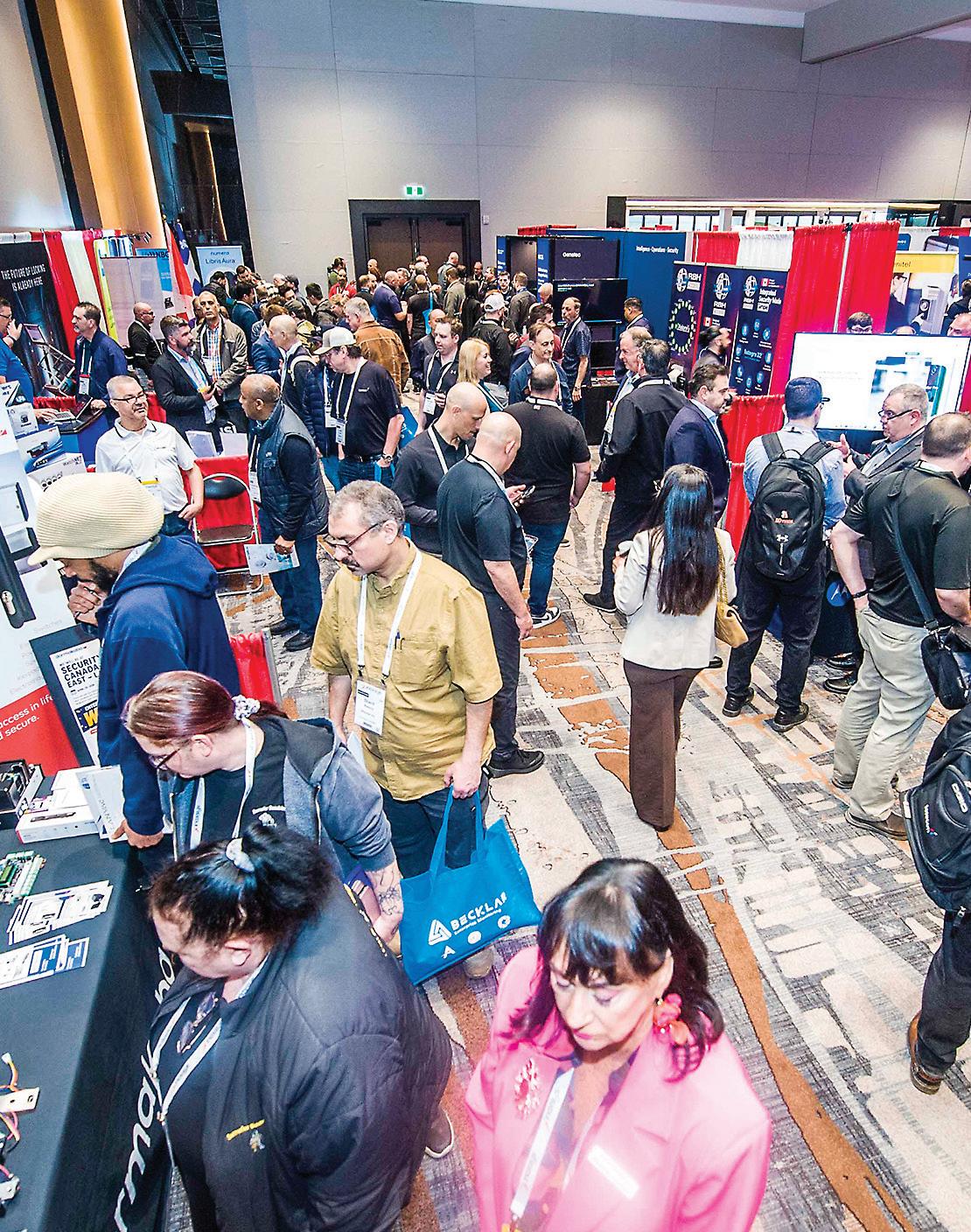
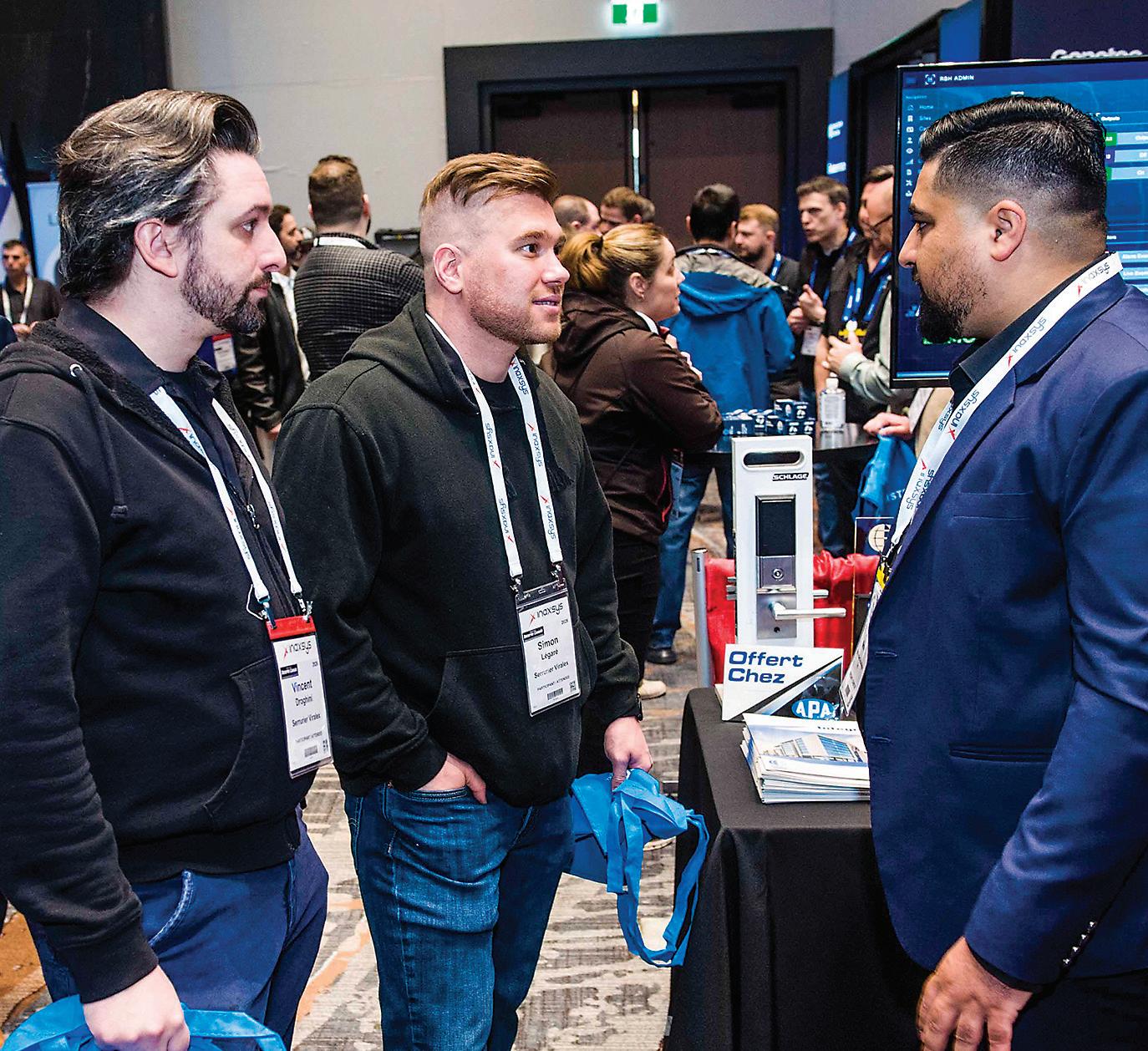
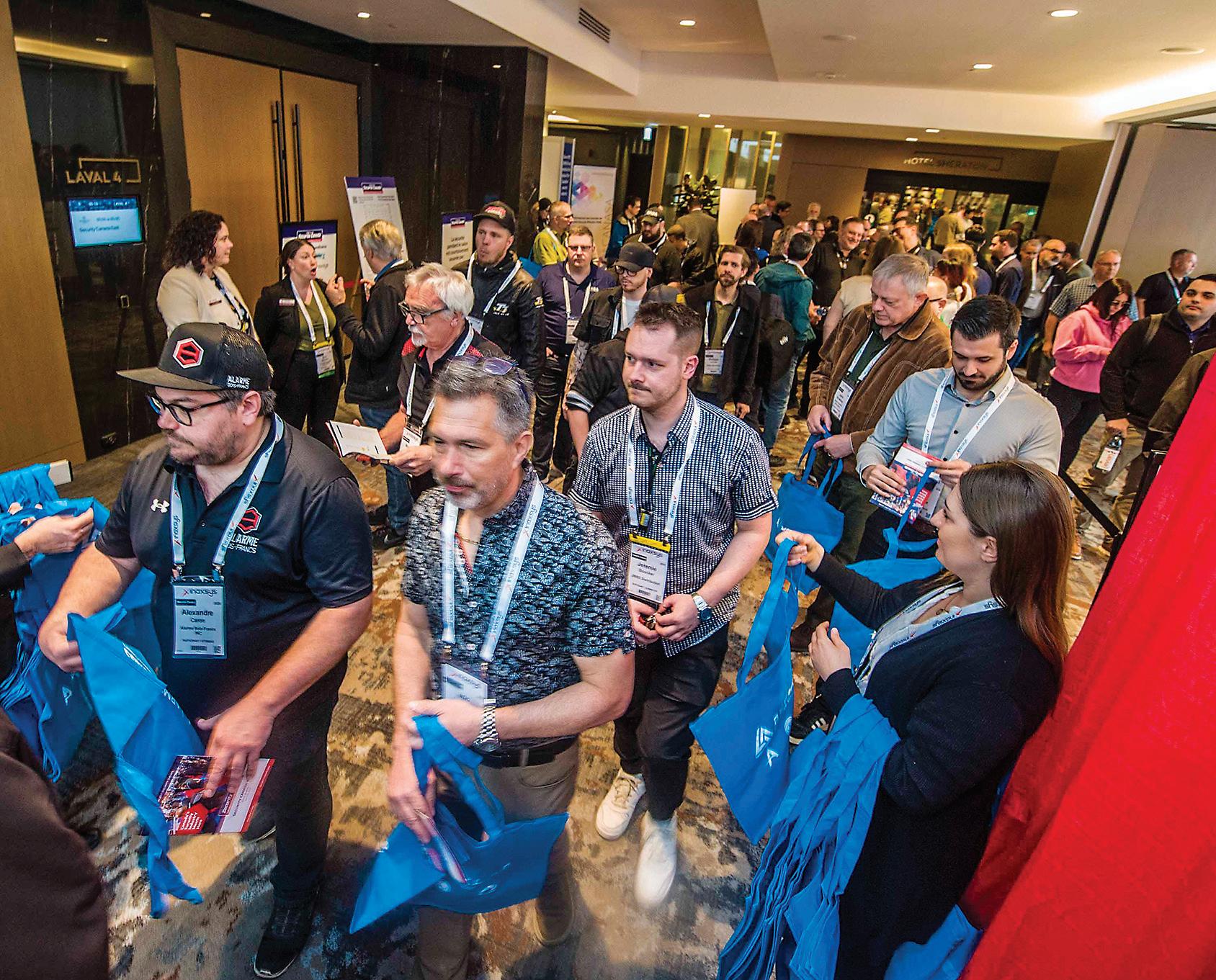
The Canadian Security Association (CANASA) held its annual Quebec-based trade show and conference, Security Canada East in Laval, on April 29. The 2026 show drew record attendance, with more than 1,100 through the doors. New for this year: a tented area outside for food service and additional networking options.
CANASA will host Security Canada West in Richmond, B.C., on June 3. Security Canada Central is scheduled to take place in Toronto on Oct. 21-22.
Visit www.securitycanada.com for event details. For all other CANASA-related events, including golf tournaments, visit www.canasa.org.



Erin Marsden
ICANASA membership offers tangible benefits from day one.
joined CANASA in 2016 as board and council liaison, later moving into manager, board relations and member events, and now proudly serve as senior manager, membership and events.
Over the years, the opportunity to learn from industry leaders has been invaluable. As I step into overseeing CANASA’s membership, with the support of our national board, executive committee, membership committee and executive director, I’m continually inspired by the strength of our network and the commitment of our members and volunteers. We truly have a lot to offer, and even more potential ahead.
C ANASA is recognized as Canada’s leading voice for the security industry, connecting trusted professionals nationwide. With
regional councils across the country, our members benefit from strong local engagement while remaining connected to a national network that drives advocacy, education and industry leadership.
CANASA membership offers tangible benefits from day one. Members gain access to exclusive savings through our Affinity Program, free provincial alarm contract templates, a no-cost job board, and CANASA branding tools that help businesses build credibility in their markets. Members are also eligible for a complimentary subscription to SP&T News, keeping them informed on industry trends and developments. Through national committees, such as Education, Government Relations, Membership, Monitoring Station, NextGen and Scholarship,
members can contribute directly to shaping the future of the association and the industry.
O ne of CANASA’s greatest strengths is bringing the industry together. Our Security Canada shows deliver unmatched access to innovation, education and networking.
Looking ahead, I’m excited to strengthen connections, elevate member value, and ensure every CANASA member feels supported, engaged, and proud to belong. I welcome feedback and look forward to connecting with members and future members at upcoming events and industry shows as we shape the future of Canada’s security industry.
is the senior manager, membership & events, at the Canadian Security Association (www.canasa.org).







Victor Harding
In my last column for SP&T
News, we looked at the critical role that an experienced broker can play in guiding a security company owner through the sale of their business — from giving the owner a ballpark value to helping to maintain confidentiality to creating buyer competition to structuring the right deal.
But there’s another part of the sales process that can’t be overlooked: preparation.
on those accounts is. They know what their annual attrition numbers are and what percentage of their accounts are on a signed contract.
light inspection cycles, NFPA/ ULC compliance, AHJ relationships, and inspection reporting systems.
Without these details at hand, sellers risk being undervalued.
Our experience at Harding Security is that most alarm, guard and fire service companies aren’t ready to talk to buyers when they decide to sell. Yes, they have strong customer relationships, recurring contracts and solid reputations, but when pressed for the standard requirements from buyers such as three years’ worth of financials, contract summaries, details on their alarm accounts or fire contracts or compliance documentation, the information can be scattered or incomplete.
Owners of privately-held security businesses are typically focused on their daily operations. And rightfully, that’s where their attention belongs. The problem is they are not generally ready for a sale and the critical documents and data points buyers expect to see have not been prepared or maintained in a systematic way. If they go into a sale process without preparation, it can cost owners money. Deals will slow down, buyers can start to worry about what they are paying and discount their offers or even worse, they may walk away. And very seldom does the owner get told that the real reason the buyer walked was the state of the owner’s data.
We have done enough deals over the last 16 years to experience the difference between owners who are prepared to sell and those who are not. For example, alarm company owners who are prepared know how many accounts they have and what the RMR
A buyer considering buying a guard company will want to see what percentage of the business is backed by contracts, what the length of those contracts are, renewal history and wage structures. For fire companies, code compliance, inspection cycles, and AHJ (authorities having jurisdiction) relationships are central. Without these details at hand, sellers risk being undervalued.
Why does this matter? Because when a seller goes to market with all the information a buyer needs, buyers see:
• Credibility: A company that can produce organized information inspires confidence. Buyers assume operational discipline.
• Speed: Deals move faster. Buyers can make informed offers quickly, without long delays chasing down missing details.
• Value: With full visibility, buyers are less likely to discount price based on “unknowns.”
• Storytelling: A well-prepared selling package highlights the strengths that matter most — recurring contracts, compliance track record, customer loyalty, trained staff.
The framework isn’t one-size-fitsall. Brokers who understand the industry adapt it to reflect the drivers of value in each type of security business:
• Alarm dealers: They will emphasize RMR, monitoring rates attrition, and upsell opportunities.
• Guard companies: Focus on contract stability, wage and overtime structures, scheduling systems, and union agreements.
• Fire service companies: High-
By tailoring their information-intake questionnaires and preparation processes to the business model, brokers ensure that what buyers see is both accurate and persuasive. A good broker will create a Confidential Information Memorandum (CIM) that has all the pertinent information in it.
Even if you’re not planning to sell tomorrow, start gathering and organizing now. Some of the most useful steps include:
• Three years of financial statements, making sure they tie to tax filings
• Provide sample customer contracts
• Document annual attrition history
• A list of your current employees, including function, longevity and payroll
• A list of your existing vehicles and their value
Owners who take these steps early will find the eventual sale process smoother, faster and far more rewarding. Selling a security business is both a financial transaction and a story-telling exercise. The CIM or Selling Package is designed to help tell the story.
The broker manages the process and creates competitive tension, but preparation is what makes the story credible.
The difference between a mediocre outcome and a great one often comes down to this: are you ready to answer the buyer’s questions before they even ask them?
Victor Harding is the principal of Harding Security

Roger Miller
As providers of security services and products, we often have to see the world around us, globally and locally, with two different perspectives.
First, as human beings, we are naturally concerned about how negative events will affect those closest to us, especially our families, friends and colleagues. But secondly, as security professionals, we must be aware that how we approach such events will affect our business, our staff, our channel partners and the security industry at large.
Crisis-level events will result in an opportunity for your business to support your clientele in a positive and productive way.
Very often, crisis-level events will result in an opportunity for your business to support your clientele in a positive and productive way. As a service provider, you need to understand the potential impact on your customer base, and reach out to them frequently and proactively, before they’re even aware of the increased risk.
Some examples include:
• The most recent escalation of conflict in the Middle East has led some houses of worship to consider increasing their level of security. In one example, an initial request was for security personnel, to be followed up with a discussion on enhancing security systems, CCTV and an assessment of the physical structure itself.
• Labour disruptions, such as a strike or lockout, are very often a catalyst for improving security infrastructure. The potential for conflict increases if there are limited resources available to address any security incidents.
• An organization’s international operations may make its Canadian offices a target. The client may be local to you, but if they have operations outside your region, it is important for you to fully understand their corporate

breadth. This doesn’t mean you need to become familiar with their entire international corporate profile but knowing that they have ties to a conflict region matters.
• For the integrators who provide screening hardware, there will typically be an increase in demand for these products and services after a significant event. In recent years, there have been several examples of hospital organizations across Canada adding weapons screening technology at their entrances in an effort to protect their staff, patients and visitors.
These examples are often precipitated by calamitous events or increased threat levels. Yet, for security professionals they are opportunities for you to provide a service that is needed. Often these requests for service are outside of the normal procurement practices due to the urgency. This is a basic supply and demand rule of business, and you should approach it ethically. However, there may be a down-
side to a sudden increase in business, depending on the scale involved. After the 9/11 attacks, for example, there was a very significant increase in the need for security, new installations and upgrades of existing systems. This demand impacted the supply chain quickly which left some integrators and dealers out in the cold while they waited for hardware. Government organizations were given a high priority by manufacturers, leaving smaller businesses to find alternative options. This is where integrators have to know their channel partners, know their products and seek alternative solutions to stay on top.
Leading in business means being proactive about customers’ needs and rising to meet an opportunity. But before you can do that, you have to anticipate change and measure risk. Your customers are counting on you and your expertise.
Roger Miller is the president of Northeastern Protection Service Inc.
(www.protectionpartner.ca)
Security education, mentoring and accreditation programs are being rolled out or developed to help create more applicants for skilled jobs
BY NEIL SUTTON
In response to the challenge of filling skilled technician job vacancies, the security industry is pursuing a variety of solutions, such as the provision of more training and education, raising the profile of the industry to attract more young people, and ultimately, creating a framework that would provide for a higher level of accreditation and professionalization.
Roland Akwensivie has experienced this challenge first-hand.
With a background in IT systems, network cabling and electronic security, he and his wife Emelia set up their own integration firm, Delmi Solutions, in 2011.
Upon hiring and training technicians, Akwensivie discovered they would often stay long enough to gain some professional experience, then take that experience to one of his larger competitors.
Rather than constantly replacing departing techs with new recruits, Akwensivie and his wife took another approach. They set up a second company, Delmi Training Institute, in 2016.
“We said, OK, why not create an institution where we can train the people, they would pay us, we will train them, and when they leave, no hard feelings,” says Akwensivie.
“Being an employer myself, and understanding trends in network cabling and the security industry, and what has to be done to get the job
done, I took all these and put them together and created a curriculum,” he explains.
Vaughan, Ont.-based Delmi Training Institute offers courses in network cabling, CCTV systems, electronics and relays, and access control. Each course runs 40 hours. Students can take them individually or take all four to maximize their chances of finding employment. Akwensivie has also added a fifth course on health and safety training and working-at-heights.
I n the classroom, hands-on experience with real equipment is essential to the training process, says Akwensivie. The curriculum is updated every few months, he says, to keep up with new technology.
Students are equipped with hard hats, safety shoes, safety vests and safety glasses. Delmi also provides a two-week internship program, which allows for on-site experience and gives students the opportunity to get acquainted with job site culture.
Delmi currently graduates about 400 students a year. Akwensivie says they come to him with a mixture of different backgrounds, levels of

education and previous work experience.
Hiring organizations are “coming to us for talent,” says Akwensivie. “They are able to take our technicians and with very minimal training on their end, they are able to put them in a tr uck and they are able to go on their own.”
Toronto-based Humber Polytechnic is offering what’s known as a bridging program. Its Electronic Security Technical Training course is part of a two-year pilot program that is supported by the Ontario Ministry of Labour, Immigration, Training and Skills Development and is offered for free to qualified enrollees.
“We’re going to offer what we think needs to be taught to get people into the workforce.”
— Kim Caron, CANASA
Designed for new Canadians who already have some international experience with security systems or other relevant electronics, the 13-week course provides hands-on training offered by experienced security professionals.
In addition to practical training that will prepare them to work in Canada as a junior security technician, students learn skills like ef-

“We are helping them to bridge into the Canadian labour market and electronic security.”
— Rodica Lefter, Humber Polytechnic
fective communication, building a professional network and workplace integration.
“To have technical skills is not enough. Our program is offering a holistic approach,” says Rodica Lefter, the program’s coordinator. “We are helping them to bridge into the Canadian labour market and electronic security. One of the main objectives of the program is to prepare them with in-demand skills.”
The program also connects students with industry mentors who can provide practical advice and help them get acclimatized to the security industry in Canada.
Lefter says the program has received “amazing” support from the Canadian Security Association (CANASA), which has been working in tandem with the program since its inception last year.
CANASA has connected the program to security companies that have offered their own level of support. For example, several companies have donated equipment for training purposes and provided guest speakers. Some companies, like Keenfinity and Genetec, are also facilitating product-specif-
ic certification programs that students can take, which will ultimately increase their chances of finding employment.
Avante Security, a Toronto-based security services provider, has provided job-shadowing opportunities, enabling Humber students to work in the field with established technicians.
The Electronic Security Technical Training program has graduated one cohort of students so far, with an estimated 10-15 now working full-time in a security-related field.
Despite the wealth of experience they received via the program, there are still some graduates who are facing a Catch-22 situation of not being able to find Canadian jobs without first having Canadian work experience, says Lefter
“The students in the program are very talented,” she says. “They have lots of experience in the field. They just need a chance to prove that they can be an asset to a Canadian company.”
For CANASA, working effectively with
educators like Humber is another step towards securing the long-term viability of the security industry and creating a reliable pipeline of new professionals.
C ANASA’s support of Humber’s electronic security program has been an important factor in its success and CANASA’s executive director Kim Caron is open to conversations and more potential partnerships with other institutions. Ultimately, what the association wants is to create an accreditation program that will be broadly recognized by the security industry and provide additional qualified applicants for skilled technician jobs.
Based on a recent industry survey conducted by the association, more than 700 respondents expressed support for the creation of an accreditation or trade designation program managed by CANASA.
CANASA is currently in the process of hiring an education manager who will oversee this process (at press time CANASA was still reviewing applicants). Once appointed, the manager will take over the process of liaising with colleges, universities and other education institutions that offer physical security training. That person will also be responsible for the creation of a curriculum that will ultimately lead to the new security accreditation.
This transition will not come about quickly, notes Caron, since it may also require coordination with other security programs or designations that exist from province to province. She estimates it will take two to three years to get the project off the ground and hiring a project manager is just the first step of many.
“This is all blue sky thinking at this point. We haven’t gotten into the details. But we do know there needs to be a curriculum and there needs to be hands-on [training],” she says. “We’re going to offer what we think needs to be taught to get people into the workforce.”
Caron stressed that any CANASA-level accreditation will be created in partnership with the security industry and offered at an affordable rate to allow as many people as possible to benefit. She also feels that the association has received a mandate to go ahead based on the overwhelming support indicated in the recent survey results.
“I understand the industry needs education. We’re going to put our best foot forward and do the best job we can to get it done,” says Caron.
Replacement cycles hinge on a number of factors, including compliance, budget and appetite for new features
BY ANDREW SNOOK
While some users will keep security equipment like cameras and access control systems in service almost indefinitely, others are more attentive to replacement cycles.
For a company like ADSS, a national systems integrator whose clients primarily operate in the public sector, adoption of new technologies is sometimes slow-going.
“ The end user does not want to get rid of their equipment for a fancy feature set if it’s working,” explains Andrew Lauzon, president of ADSS, which operates offices in Montreal, Toronto, Ottawa and Atlantic Canada.
Meeting compliance requirements will generate some equipment cycling in government buildings, however, most of the investments in the latest security features will take place when full replacements of systems are needed.

Whether on-prem, cloud or hybrid, adoption of new systems varies according to the user’s needs and budget
“When they’re going to look at a new deployment, then they’re going to look at AI capabilities, what kind of analytics it would have. But replacing compliant functional hardware, we don’t see it much,” Lauzon says.
Getting budget approval to replace working equipment can be difficult for security departments in any sector due to spiking costs in equipment since the COVID-19 pandemic.
“It’s hard for them to justify it unless it doesn’t meet compliance,” says Lauzon.
Some of the latest system features that interest companies include ways to obtain information that would be useful across multiple departments.
While government facilities may be less likely to invest in the latest
features, retail companies have been showing increased interest in what newer security applications can offer them.
“A lot of that is the business experience of security practitioners being able to communicate with leadership that there is a return on investment, that there is help on the risk management side of things. Rather than just being a cost centre, there are additional tasks that can be leveraged using security infrastructure,” explains Gio Santoro, professional services specialist at SoloSquid, a professional services and custom development agency based in Paris, Ont.
He adds this is more prevalent on the retail side, where companies are
www.marchnetworks.com/vivotekmerger


more receptive to getting traffic numbers, heat mapping, and other features that more current model security cameras are able to provide. “They are looking for ways to leverage that metadata,” Santoro says.
One of the keys to getting more companies to buy into the ROI of installing new security technologies is by adding different stakeholders to the conversation.
“I think if you can start to bring in some of those other stakeholders, whether it’s marketing, operations, or other people within that organization, you can kind of shift the conversation, and then you start opening up budgets in other departments where it’s now not seen as a cost centre, but something that adds value to the business,” says Jason Kloss, president of SoloSquid.
One trend that has been taking place for several years across many security departments is the move to cloud-based systems or a hybrid combination of on-premises and cloud-based systems.
ADSS has been selling cloud access control for over a decade. Lauzon says these systems are a win-win for the company and their clients.
“Too many times with the on-premises systems, the servers aren’t being patched, or you have a smaller system, where you have a compact computer in the closet that’s never been backed up,” he says. “I’m a really big fan of the cloud systems.”
There are other concerns that security departments need to consider when deciding on cloud, on-prem or hybrid systems, Lauzon notes. “ For the video
“Often, we talk about AI and data, but I think a lot of the time the challenge is, what do we actually want to do with that data?”
— Jason Kloss, SoloSquid
surveillance, I definitely prefer a hybrid model, because I don’t think cloud scales well for large end users with on-site security,” he says. “If you have a hospital with 600 cameras, it’s hard to put that all on to the cloud, and then you have the live viewing constraints and latency as well. So, I think hybrid makes sense for the enterprise video surveillance market. But as far as access control, I think cloud is the way to go — bandwidth is very minimal. You don’t have to worry about servers, redundancies, remote access — it’s just so much easier to manage.”
C osts for on-prem servers are also pushing companies towards using more cloud-based solutions.
“We’ve seen a huge increase in server costs just because of some of the RAM shortages and things like that happening in the industry. And then also, now you’re seeing servers that need to have these beefy GPUs built in them to run some of these AI applications and video analytics applications. So, those costs are going up,” Kloss says.
“ I think that’s helping to shift that conversation from everything needs to be on-prem to some of that being shifted and allocated into the cloud, and doing some of that process in the cloud, or doing some of that processing on what I’ll call ‘the true edge,’ which is inside of the camera itself,
or inside of the door controller — taking that horsepower out of that beefy server.”
When new software upgrades are added, it can sometimes lead to companies cycling out older equipment.
“When you have a small system, say five doors, eight doors, that makes sense. You have to cycle out all the hardware, but you’re giving them a new type of system that is going to fix their needs, whether it’s mobile passes, a new feature set, or maybe their server needs to be replaced,” Lauzon says. “I find for the smaller sites, it’s definitely a lot easier to replace that hardware. It’s more when you’re getting into those enterprise level systems where that’s a bit of a tough sell, when you’re affecting hundreds of doors.”
While some new software solutions can spark the need to replace aging equipment, other solutions being brought forth complement existing systems.
For the video side of their business, Toronto-based integrator A.C. Technical Systems installs a health monitoring system in addition to what’s provided by the equipment manufacturer. The health monitoring system generates proactive alerts for potential equipment issues that A.C. Technical Systems staff will then call their clients to schedule a remote or on-site diagnostic review
“Let’s say a hard drive went outside of its bandwidth parameters. We immediately contact the customer to schedule a service call,” explains Dominic Burns, president and CEO of A.C. Technical Systems. “We’ll have a technician remote into the site to verify the issue, then schedule a site visit with a new hard drive.”
Santoro says a lot of customers have come to realize that investments in security hardware are not a “one and done” anymore. As these technologies become more heavily entrenched in the operational technology (OT) umbrella, companies have become more aware of the need to properly maintain their systems.
“I think that customers are more cognizant and more willing for even simple things like firmware updates or software updates.

That’s a lot of what we do on the systems maintenance side, and end users are much more receptive to that, rather than just letting sleeping dogs lie,” Santoro says.
While the decision to keep technologies until they finally break down may be good for the budget, those technologies aren’t necessarily doing an adequate job addressing security needs. Some security departments will use the same access control and cameras for over 15 years.
“I think in some ways it would be easier to force the end user to adopt the current technology for their own security,” Lauzon says. “There’s still a lot of clients using prox cards in Canada. Unless you force them to switch by not meeting compliance or obsolete hardware, the classic ‘if it works, don’t touch it’ is still strong in our industry.”
Preventative maintenance programs may be part of the reason that some equipment continues to operate well, although the majority of companies do not perform preventative maintenance on their security equipment, notes Burns.
“I continue to be surprised on a regular basis at how large enterprise accounts do not see the value of preventative maintenance until there is a major issue,” he says. “When there is an issue this usually leads to crisis management and finger pointing. Many ACTS clients require a comprehensive PM agreement to ensure their security equipment will always be in working order. A preventative maintenance agreement with clearly defined expectations guarantees peace of mind.”


When it comes to new technologies and systems coming into health-care facilities, weapons detection systems are currently being evaluated by some sites as potential security enhancements.
“There is an interest within the health-care vertical to evaluate weapons detection systems at the entrance of emergency departments,” Burns says. “We have a few test sites deployed we’re evaluating.”
One of the areas where security replacements are trending is in the adoption of mobile access control.
“Whether it be for visitor management or just to manage their team in general, the mobile passes are definitely a sell point that makes sense for them to change their hardware to be able to use this,” Lauzon says.
Other technology adoptions he expects will garner increasing interest from clients are direct-to-cloud intercoms — which will force some companies to switch out old phone systems — and direct-to-cloud access cameras. “I think that’s going to be the next big push in the industry,” Lauzon says.
In the end, companies will need to focus on what the customer wants to gain from their security solutions as they continue to make new investments.
“Often, we talk about AI and data, but I think a lot of the time the challenge is, what do we actually want to do with that data? What do we want to do with that application to get the desired outcome? Why are we counting people? I think sometimes getting beyond just the feature on a spec sheet and going into the outcomes of what’s actually being delivered is a tough thing to get to,” Kloss says.

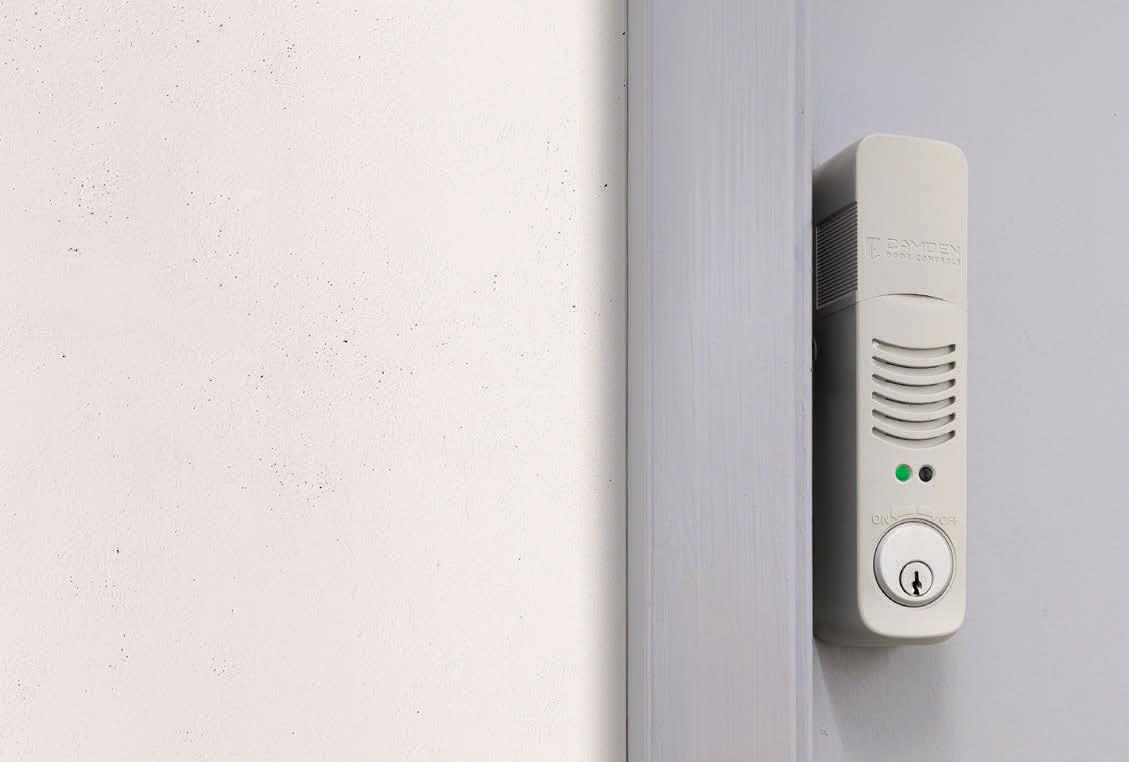
Camden’s new CX-DA800 Series battery-powered door alarms offer an all-in-one 'Universal' solution that provides an instant audible and visual alarm indication of unauthorized exit or entry of mechanically secured doors. The CX-DA810 door prop alarm will sound when doors are being held open for more than a specified time.

Compact and attractive, these UL Listed door alarms are compatible with the widest range of industrystandard mortise cylinders and cams - ensuring maximum flexibility and integration with existing master key systems.
• Mortise cylinder included (Keyed alike or keyed different)
• Automatic silence after 2 minutes or manually with key
• Easy installation on in-swinging or out-swinging doors
• Enhanced security features include immediate triggering with LED and buzzer sounds
• Weatherized models designed for outdoor applications
• Loud 105 dB alarm


BY NEIL SUTTON
In 2015, Dean Drako, founder of cloud video surveillance company Eagle Eye Networks, acquired a majority stake in Brivo, a provider of cloud-based access control solutions.
In December 2025, the two companies officially merged and now operate entirely under the Brivo name. Drako assumed the role of company CEO with Steve Van Till, Brivo’s founder, as president.
SP&T News recently sat down with Van Till to learn more about what has happened behind the scenes since the merger was completed. He also spoke about the role that AI now plays in Brivo products, including the introduction of the Eeva AI video agent (an extension of the Brivo VMS), and how the selling process is changing (or should change) as product functionality continues to evolve. (This interview was edited for clarity and brevity.)
SP&T News: What does Brivo look like post-merger with Eagle Eye Networks?
Steve Van Till: The first thing that we did after announcing the merger was to merge the two sales teams. These are the sales teams that predominately interact with our dealer channel in Canada, U.S., Europe, etc. I think it’s easier [now] to understand the organization from a dealer point of view. We also merged the product lists into a single list.
The other piece [dealers] didn’t have was unified support behind the scenes. Now we’re in the process of merging the back office,

so whether you started with Brivo or you started with Eagle Eye, you’ll get a unified bill from one organization. A lot of the business process has been streamlined.
SP&T: How has product development changed since the companies came together under a single owner 10 years ago, and are now merged under the Brivo name?
“The merger of the companies just strengthens that message — that it is a unified platform.”
SVT: We started doing an integration with Eagle Eye in 2014, which was the year before Dean [Drako] became a large shareholder of Brivo. That was pretty much the standard access plus video combination you see across the industry. If there’s an event on the access side, you can use that as a video bookmark to pull the streams from that event. We eventually brought in live viewing, so people can do a matrix display inside Brivo and continue to iterate on that. The big change for that approach was in March of last year when we announced Brivo Security Suite. That had a much, much deeper integration with the Eagle Eye platform, among other things. We’ve got all the video events showing up in our log, we’ve got a great degree of configurability: how many cameras you want to see, which ones you want to see, where you want to see them. We’ve got full integration with the event log.
Another point of integration we have… We call it the Brivo Door Station, which is a combination of facial authorization, camera and intercom. That can feed into both systems at the same time.
We had about a 15-month head start on being able to try to have a single product that went out to the market as a consolidated or unified platform. Now, the merger of the companies just strengthens that message — that it is a unified platform.
SP&T: What is the advantage to the end user of Brivo and Eagle Eye being a single company?
SVT: It depends on the category of
the end user. Most of the small and mid-size business users want a single app they can log into and it does everything for them. They don’t want to have multiple apps. They may not have someone with a title like “security director” in a smaller company. It often falls to an office manager or the head of finance… What those people want is something that’s easy to use, it’s one log-in, it’s one identity, it’s single-source and one company to deal with.
That class of user is getting all of those things through the integration, perhaps better than what they had when they were consuming the Brivo suite before the companies merged. If you look at larger users, like enterprise, they’re again able to get everything from one source, with the ability to treat it as an open system that can use third-party products for cameras, for access control devices, readers, credentials… giving people a degree of choice.
SP&T: Bringing the two companies and technologies together, is Brivo more than the sum of its parts ?
SVT: Looking at the product, I think it is. Automation is a key word these days. A lot of what’s being done with AI platforms is automating processes that used to be done by people. With a single system, you can automate completely across what used to be a boundary between the two. Now there’s no boundary. Automations can span incident management, for example — they can go from access control events to video events, all wrapped up in single incident you can dispatch once you have done your investigations and not have to do two separate tracks of evidence collection.
SP&T: How is AI changing the way people sell, install and use security products?
SVT: [We] have developed Brivo Genius, which is a chat interface to allow you to query system events and ask for reporting. It’s also got technical documentation behind it, so you can ask it those kinds of questions. Eagle Eye had a similar capability, so we’re merging the two chat agents into one. There’s a benefit for users — now you can query across both domains without having to specify. It’s smart enough to figure out how to direct a query if you’re asking for video, if you’re asking for events, or if you’re asking both together, it will serve up both together.
We also announced that we moved the chat interface all the way up to our mobile application. At that point of use, you have all of the benefits of voice transcription on your phone. In the event of an emergency, you can talk into your phone and tell it to initiate an emergency lockdown. I think that’s very important in any situation of duress. I think the voice interface is a much better way to execute security procedures in the event of whatever calamity is at hand. These are the kinds of things that bring the two systems together, and bring a higher degree of benefit to the customer.
SP&T: Where does the Eeva AI video agent fit in?
SVT: What Eeva allows you to do is monitor for literally any condition that you can write down in words. Eeva allows you to define a circumstance like “person fell down” and put that into a permanent watch mode. It then looks for that situation all the time
across all the cameras that you asked it to look at. Whenever that [situation] happens, it will tell you. You could have it monitor for “door propped open” — in that regard, video is becoming a replacement for intrusion systems. You could have it monitoring for “tailgating.” That’s a very powerful capability. It’s not just powerful for security. People can start using these cameras’ capabilities in other operational contexts, like “tell me anytime there’s nobody at the cash register” in a retail situation. There’s no limit to what you can do with it.
SP&T: In a recent trends report, Brivo concluded that “the future of security is consulting not selling.” How do you see this playing out in the security industry?
SVT: Before I came into the security industry, I was in a broader IT and software development industry. Every single one of our engagements with customers had a four- or eight- or 12-week business consultation first.
We got deep into the customer’s business, we understood their business goals. There was always a deep consultation before there was any sort of technology recommendation.
I don’t see that happening nearly as much in the security industry.
I think with the stakes increasing and the quality of the technology improving, we can do a lot more with our integrators to have that capacity… aligning the desired customer outcome with technology selection.

video surveillance
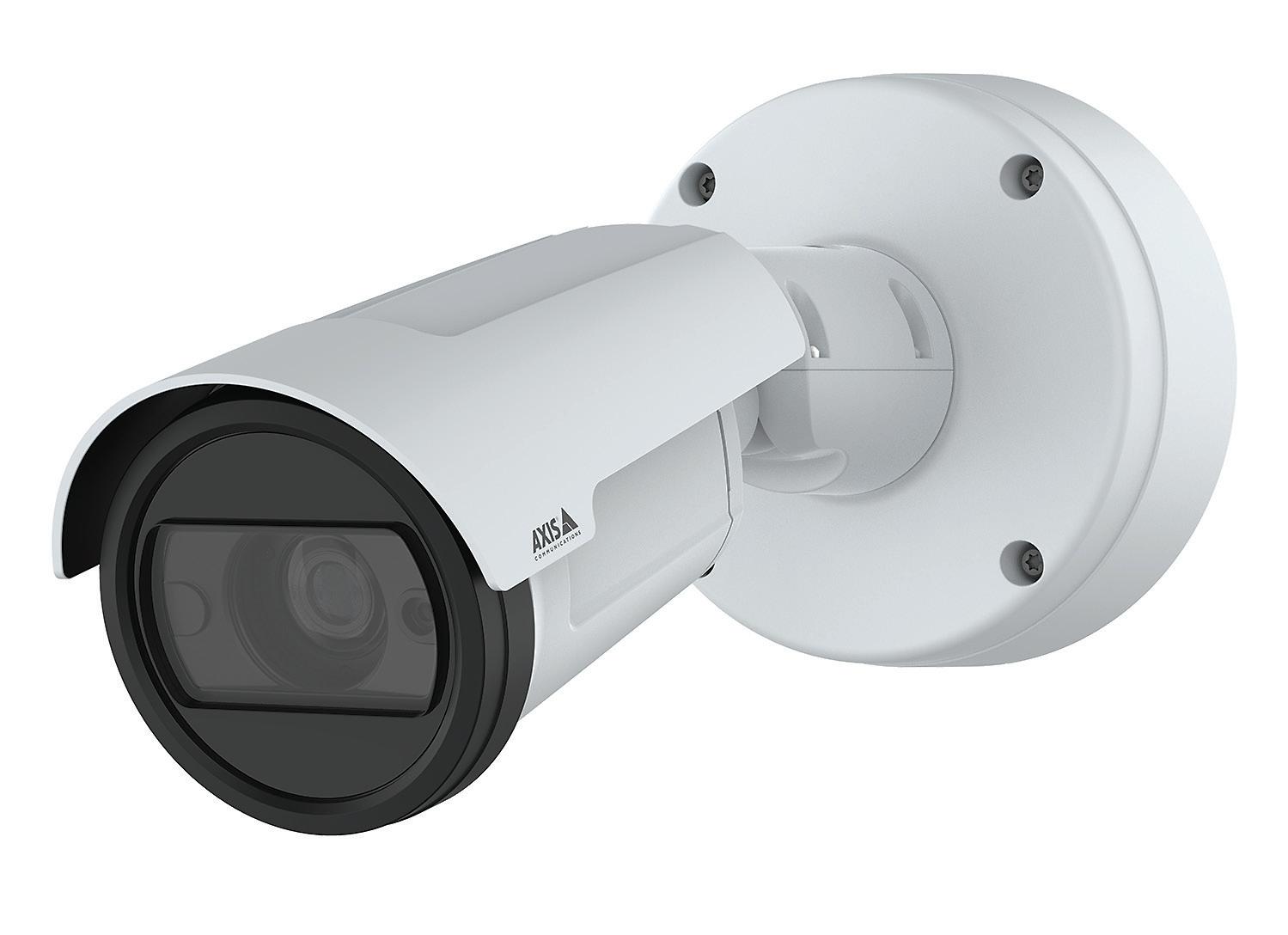
Global shutter camera
Axis Communications
Using advanced CMOS global shutter technology, the AXIS P1486-LE Global Shutter Camera delivers distortion-free images of fast-moving objects, eliminating motion blur and rolling shutter artifacts to support accurate identification and forensic analysis, according to the company. Its built-in continuous and strobing IR illumination provides clear capture of vehicles and licence plates. Powered by the ARTPEC-9 system-onchip, the camera supports advanced edge analytics for real-time processing and intelligent insights directly on the device, reducing server load. It is purposebuilt for demanding applications such as traffic monitoring, logistics hubs, manufacturing lines, and other high-speed environments.
www.axis.com

Luminys LumiAgent is a new AIpowered video search capability for LumiCloud and LumiCenter. Designed to transform how operators interact with recorded video, LumiAgent enables natural-
language search powered by Vision Language Models (VLMs) and Large Language Models (LLMs). By combining advanced AI models with camera-generated metadata, LumiAgent converts recorded video into searchable events. With LumiAgent, users can enter queries and the system returns relevant video results in seconds, according to the company. In addition to event search, LumiAgent can automatically generate descriptive summaries of recorded video and, through LumiAgent QS (Quick Serve), analyze queuing and transaction patterns. www.luminyscorp.com
VIVOTEK
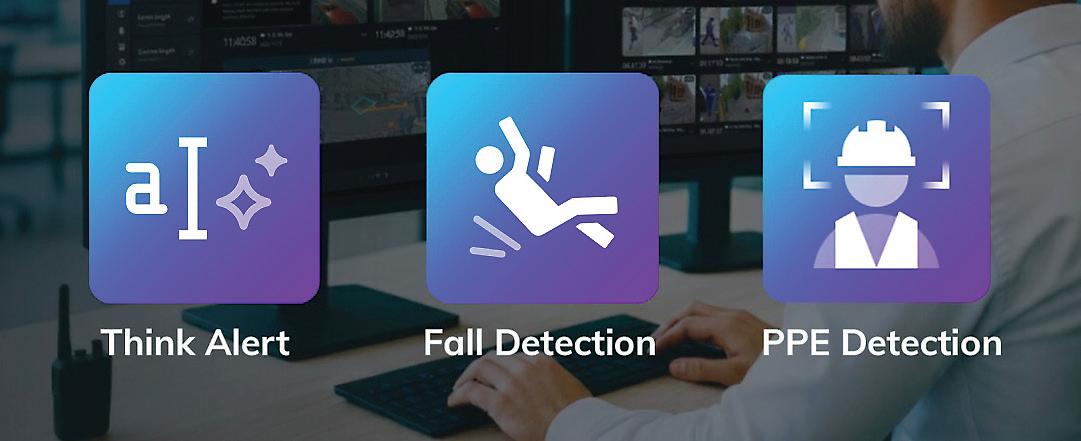
VIVOTEK announced major enhancements to its VORTEX cloud platform, introducing the generative AI-powered “Think Alert” feature alongside advanced personal safety detection capabilities. To further expand the cloud security ecosystem, VORTEX has also integrated with multiple access control service providers, enabling convergence of video surveillance and access control within a single operations interface. “Think Alert” has a generative AI capability powered by a visual language model (VLM). With natural-language input, users can quickly define alert rules without complex configurations. When predefined conditions or keywords are detected, the
system automatically triggers alerts. Once a target matches the rule, alerts are issued instantly. www.vortexcloud.com
Hanwha
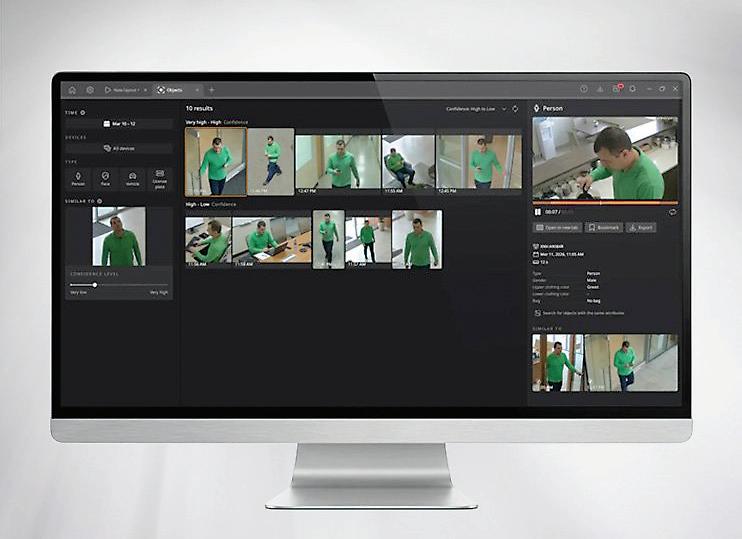
BLAZE VMS is a nextgeneration hybrid Video Management System. BLAZE integrates with Hanwha Vision cameras and devices while combining onpremises system performance with cloudbased federation and centralized user management. BLAZE natively supports Hanwha Vision’s portfolio of devices. The system automatically detects connected devices and applies optimized configurations. BLAZE works with WiseAI from Hanwha cameras to enable fast object and attribute searches across archived videos. Similarity Search uses AI to match similar sightings of a person across multiple cameras. Semantic Search allows operators to use natural language queries to locate events. hanwhavisionamerica.com
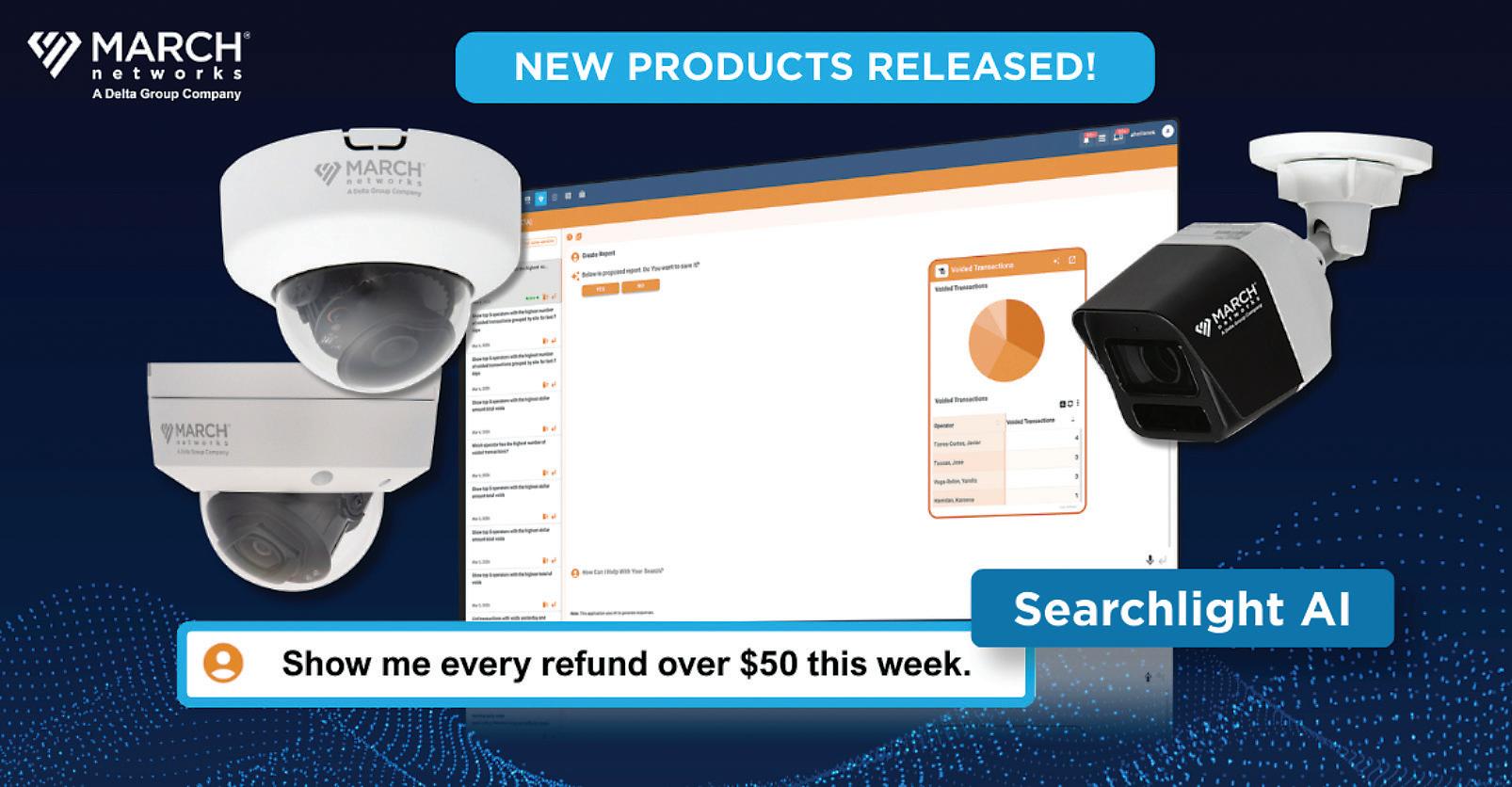
Searchlight AI is a new generative AI capability for Searchlight Cloud. Searchlight AI allows users
to ask natural language questions and instantly receive insights connected directly to video evidence. By connecting video, transaction data, and operational information through generative AI, Searchlight AI helps organizations reduce investigation time, identify operational risks, and uncover patterns that would otherwise remain hidden across large video environments, according to the company.
www.marchnetworks.com
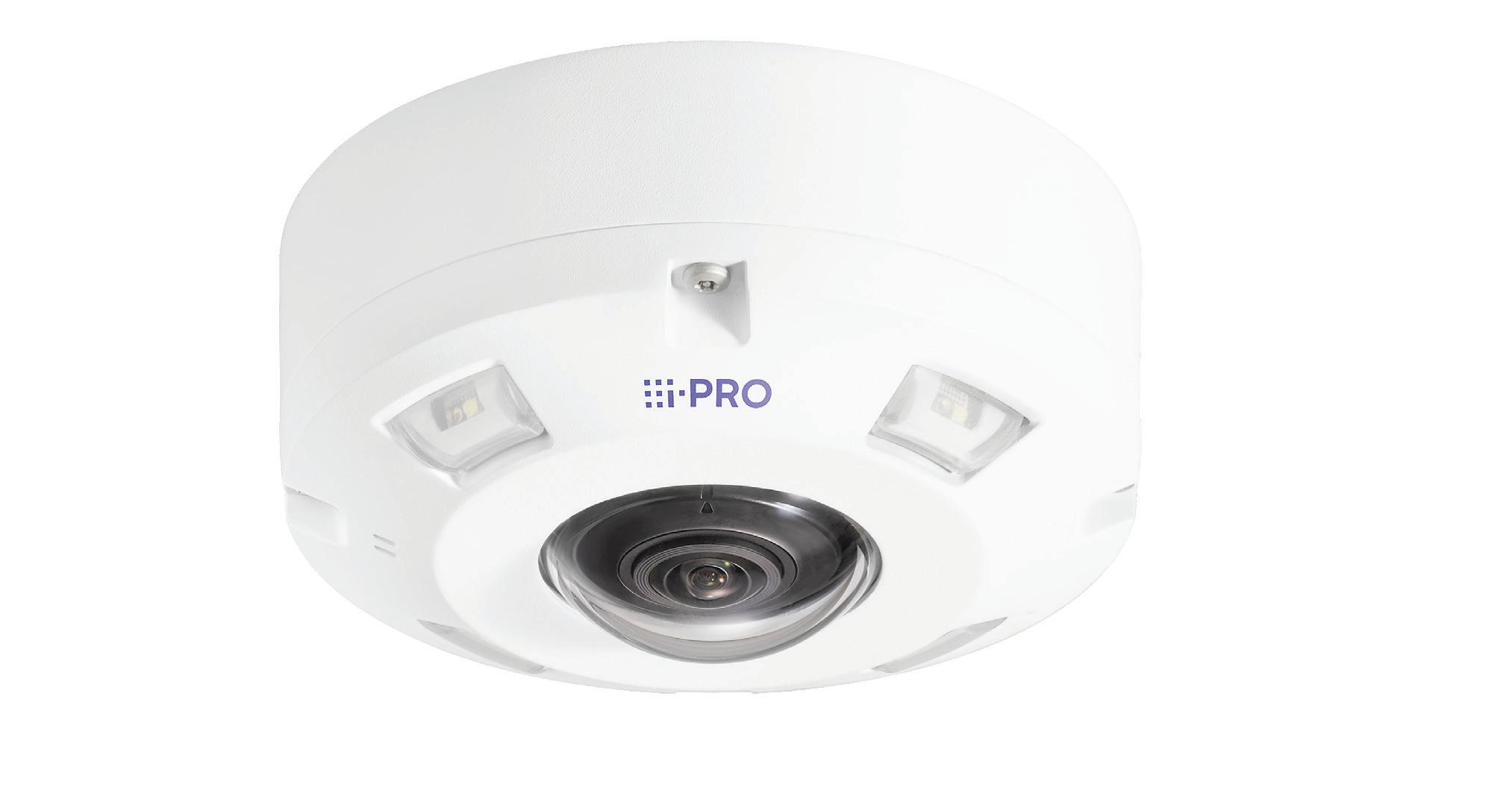
With the new X-series fisheye cameras, i-PRO extends generative AI, running directly on the camera. At the core of the new X-series fisheye cameras is a generative AI engine running fully on the edge, utilizing Ambarella’s CV72 AI vision SoC.
Generative-AI-powered free text search enables operators to locate people, vehicles, or objects across recorded video by typing a natural-language description. Feature extraction and metadata generation are performed on the camera, while the free text search itself is executed via i-PRO Active Guard using this on-camera metadata. For VMS integration, i-PRO Active Guard performs free text search across recorded video, while real-time free text detection and feature extraction remain fully on-edge. www.i-pro.com
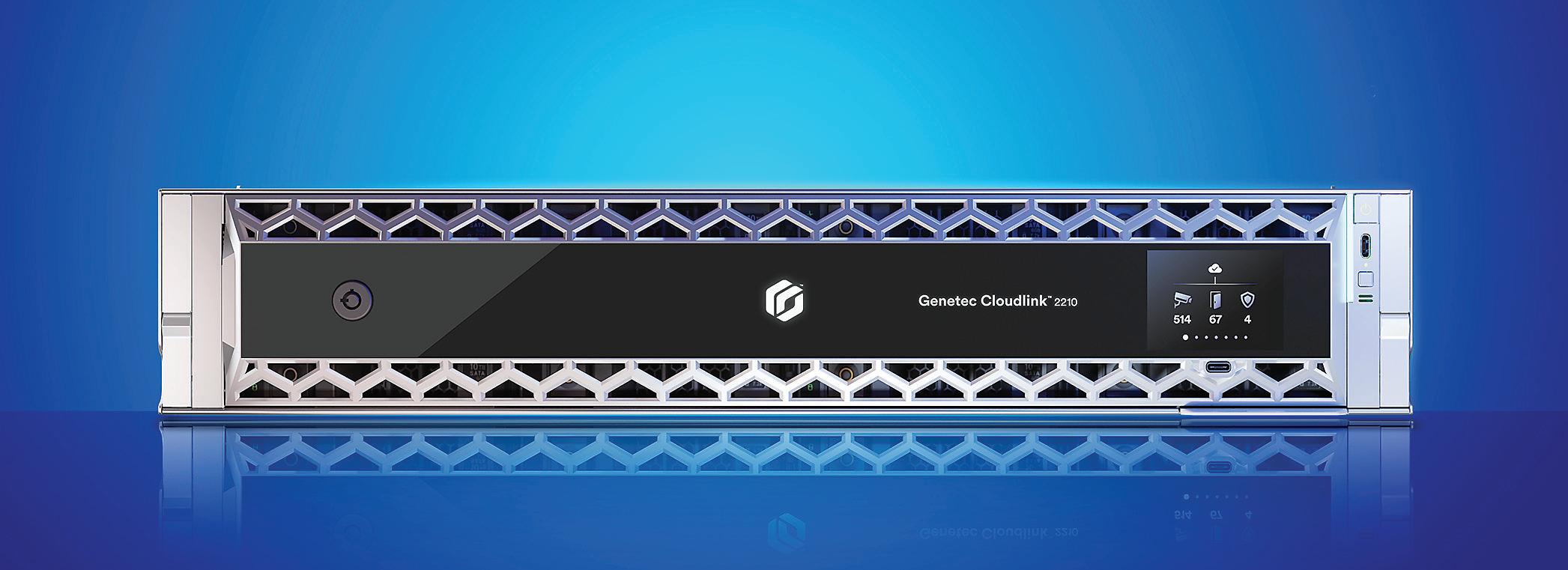
Genetec
Genetec Cloudlink 2210 is designed for complex, enterprise-scale deployments. With a stackable, 2U rack-mount form factor, the Cloudlink 2210 enables large organizations to extend cloud-managed security across high-density, mission-critical environments without redesigning their existing infrastructure. The 2210 supports multiple workloads, including video management, access control and intrusion, in a single appliance. Genetec
Cloudlink 2210 is built on an open architecture that supports a wide range of third-party devices. Cloudlink 2210 supports hundreds of connected devices per appliance and provides up to 240 TB of local storage per unit. RAID-protected storage and redundant system components help ensure data protection and OS availability.
www.genetec.com
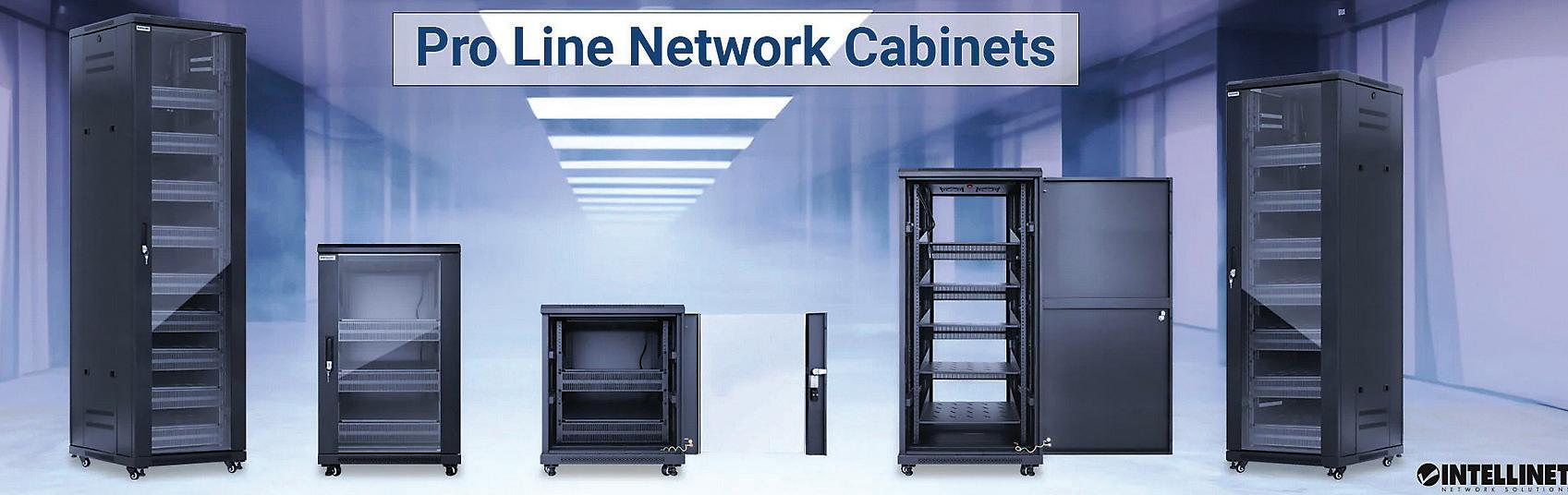
The five-model line of Pro Line Cabinets includes removable vented 2U cantilevered shelves and
vented blank panels as standard. Top and bottom openings on the cabinet frame allow cables to be routed to and from the rest of the network. Each cabinet comes equipped with a pre-installed fan kit with thermostat to monitor the cabinet’s temperature. Move it into place with the included and installed heavy duster casters, and once in place, stabilize/level the cabinet with its included leveling feet. Models available include: 12U, 18U, 27U, 38U, 42U.
www.icintracom.com
The latest AiphoneCloud updates provide a more powerful remote configuration of the IX | IXG
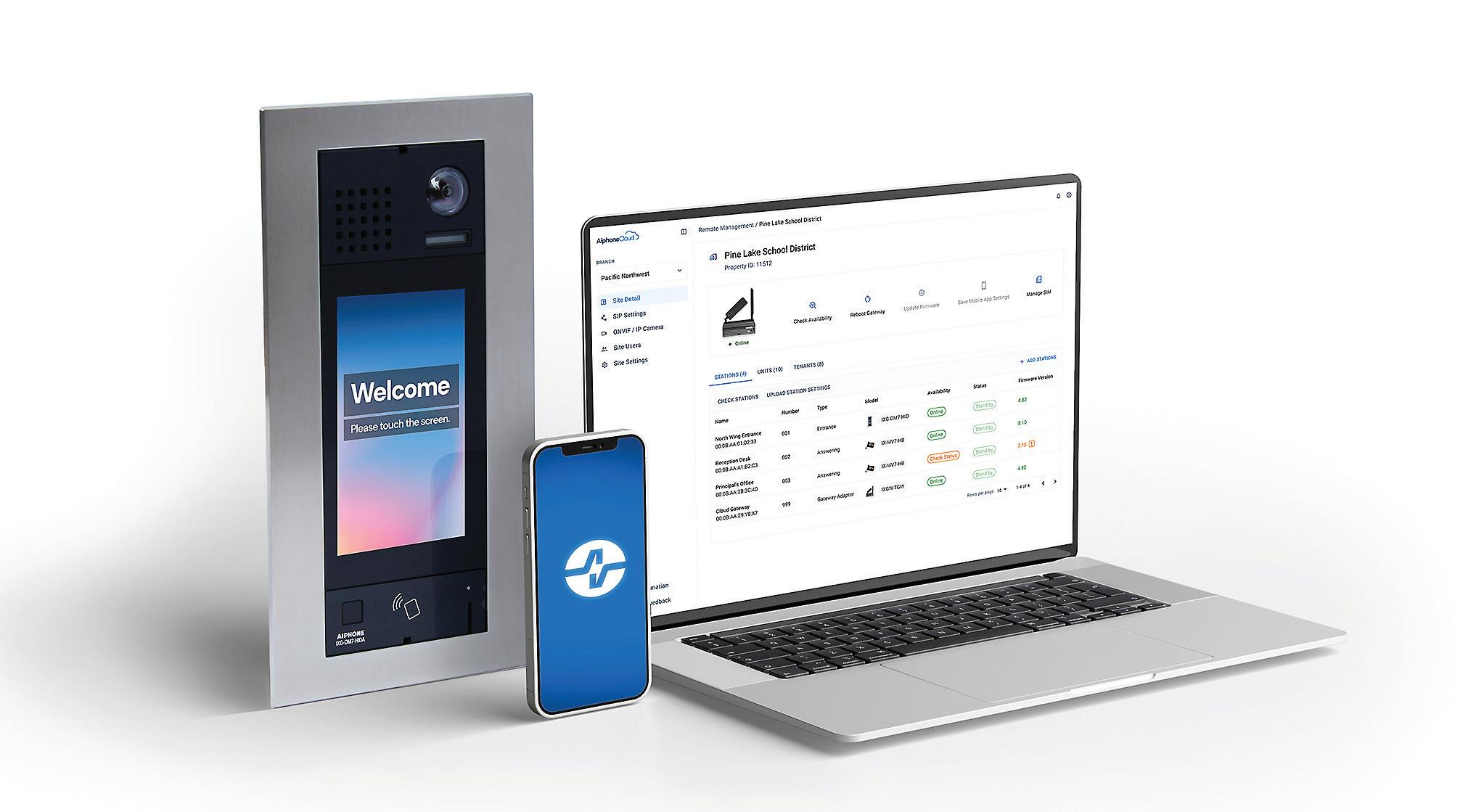
Series IP Video Intercoms including SIP integration, IP camera, and video management system. Technicians can now program features of the IP video intercom series, such as speed dial buttons, call destinations, and transfer routing, and all from a redesigned interface. Building on its Remote Management capabilities, AiphoneCloud now enables security professionals to invite property managers directly into the platform and delegate day-to-day site responsibilities.
www.aiphone.com


Suprema
Suprema announced the launch of XPass Q2, an intelligent QR/RFID reader designed for facilities managing high volumes of users across visitor, membership and ticketing environments. XPass Q2 combines native QR and barcode authentication with RFID card and BLE/NFC mobile credentials in a single device. XPass Q2 features a dedicated scanning module optimized for reads across varying lighting conditions and presentation distances. Clear LED indicators and adaptive audio feedback maintain throughput at busy entrances. Its IP65-rated design supports both indoor lobbies and outdoor gates. The device also reads standard barcodes. www.supremainc.com
Antaira Technologies
Antaira Technologies announced the availability of V6.2 firmware for its LMP1204G-SFP-bt-24-T, a 12-port Gigabit PoE++ managed Ethernet switch. This firmware update enables connecting high-power IP cameras up to 100W when operating within the maximum PoE power budget defined by the power input voltage — a capability engineered specifically for solar-powered security trailer deployments. The Antaira LMP-1204G-SFP-bt-24-T with version 6.2 firmware, operating at a 24VDC input from solar panels mounted
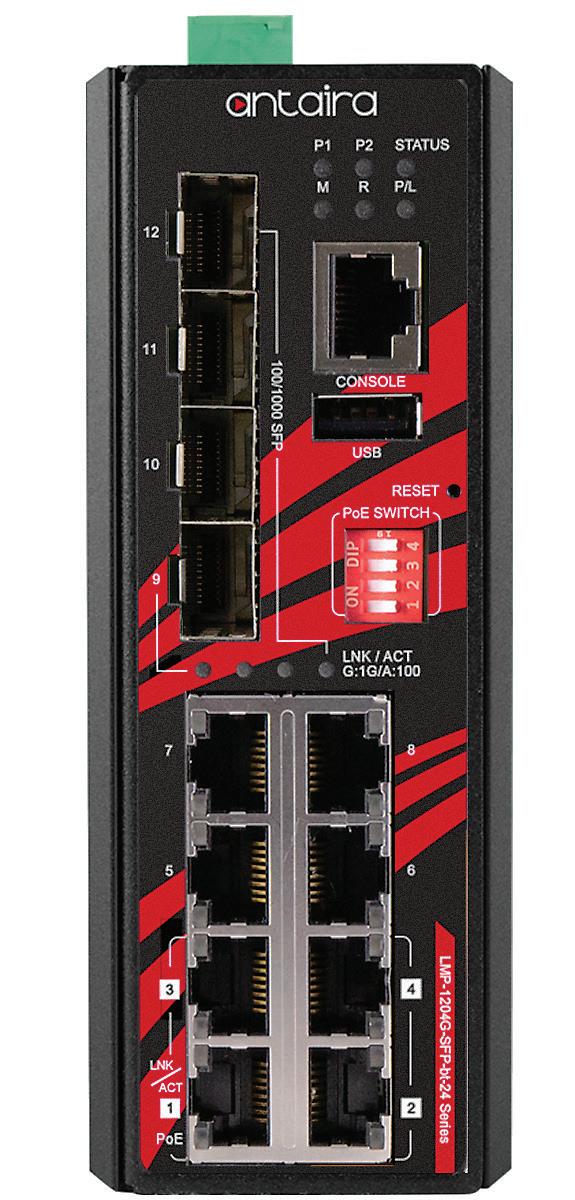
on trailers, delivers 180W total PoE power budget with the ability to supply up to 100W to a single port. This means a single hardened switch can power advanced PoE++ devices including the latest in high-wattage IP PTZ cameras with integrated heaters, multi-spectrum sensor arrays, AI edge computing units, LED illuminators, radar modules, and two-way audio/ deterrence systems — all from solar power in rugged environments with temperatures ranging from -40°C to 75°C.
www.antaira.com

The F5 and F6 Fence Controllers introduce advanced safety features designed to meet the demands of modern security environments. Purposebuilt for high-performance perimeter protection, the new fence controllers provide intelligent intrusion detection, flexible deployment options, and enhanced safety functionality in line with latest international safety standards. They are built to comply with IEC 60335-2-76 as well as multiple regional variants. The F6 series introduces enhanced features including: Smart synchronisation, Safety Extra Low Voltage (SELV) readiness to detect movement at sensitive areas
without deterrence, and Dual Pulse Peak Measurement (DPPM).. security.gallagher.com

The SlimLane EVO nextgeneration optical turnstile combines a slender design with high-precision detection and a customizable cabinet. The EVO’s extension post ecosystem can accommodate new biometrics and access control technologies, and its software cybersecure platform integrates with third party systems. The brushless motor converts more electrical energy to motion, reducing power use and heat in high-traffic applications. EVO is suited for 24/7 security operations and high throughput applications. automatic-systems.com
Southco
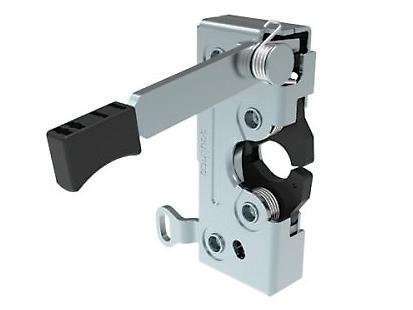
Designed for off-highway and agricultural equipment, the R4-50 rotary latch enables independent interior and exterior actuation, reduces vibration and accidental release, and offers flexible integration for cab door systems. The R4-50
provides: Independent interior and exterior actuation; a pre-loaded interior hand lever –purpose-built for highimpact environments; accidental actuation prevention; and flexible release options – including remote actuator connection via cable or rod, or direct push release, to meet different cab design needs. Southco’s R4 Rotary Latch series is available in a variety of configurations, including compact mechanical and electromechanical designs made of durable materials suitable for any environment. www.southco.com
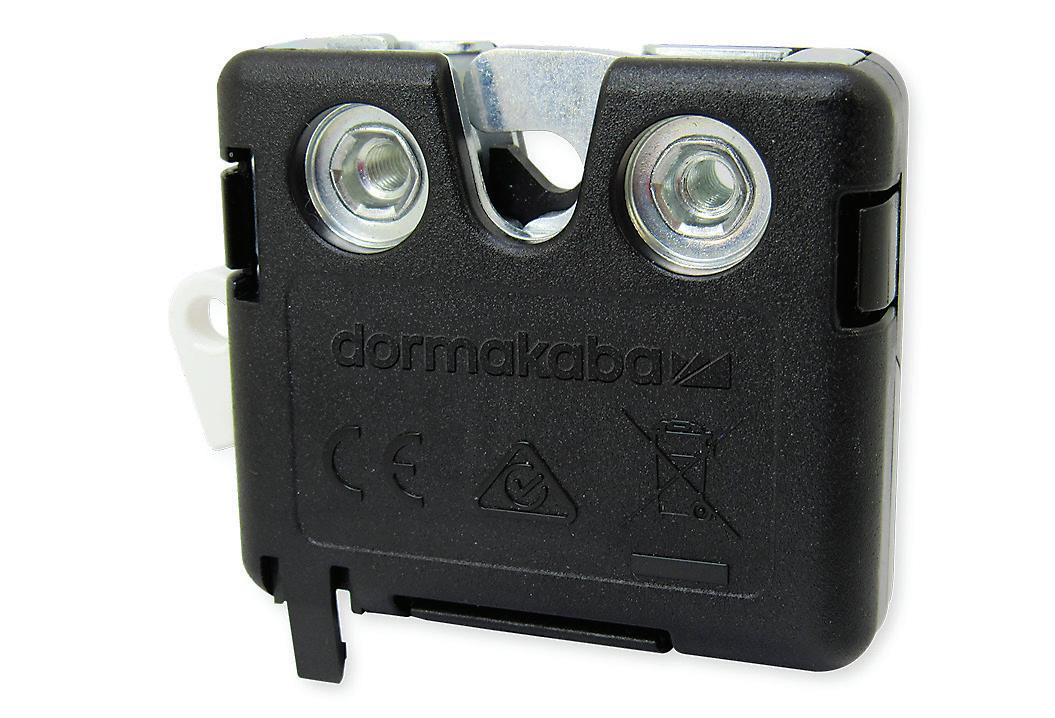
The Apexx Strato Rotary keyless electronic ATM rotary lock is designed to secure the ATM top hatch and help prevent unauthorized access that can lead to malware installation and jackpotting attacks. Features include keyless access — replacing shared mechanical keys with secure BLE credentials through the dormakaba Safe Locks mobile app. Digital credentials assigned to individual users improve accountability and eliminate shared service keys. Every access event is recorded automatically, creating audit-ready records. Operators can remotely add, remove, or update user permissions without on-site changes. www.dormakaba.com


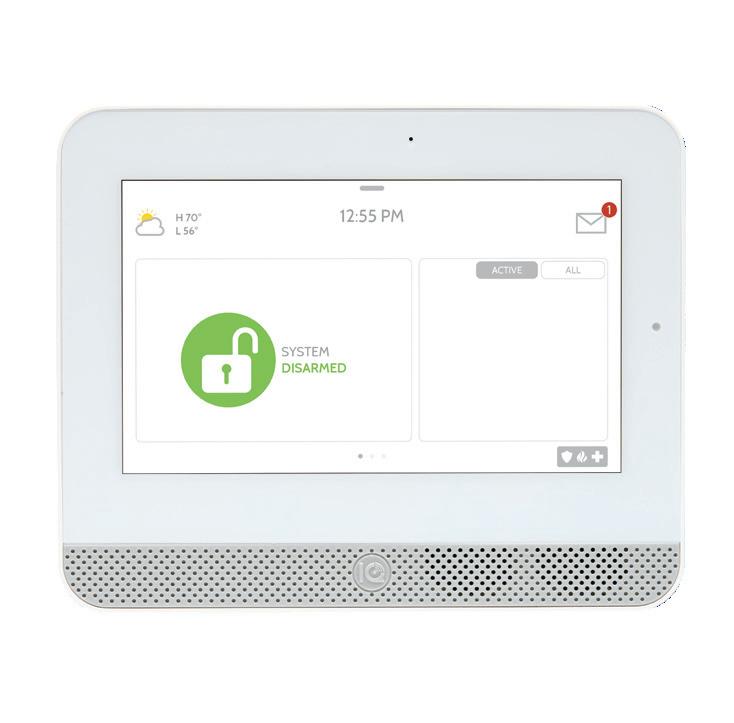
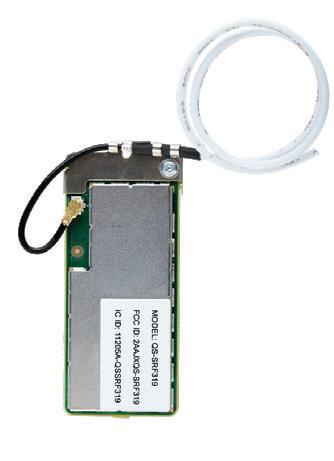
IQH5018 (AT&T-USA, Canada)
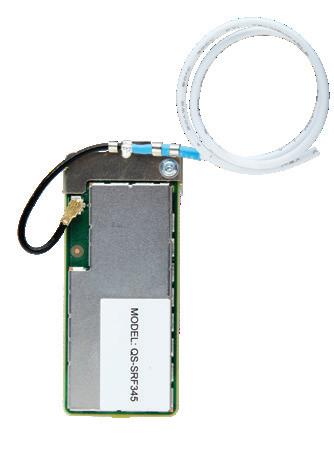
IQH5020 (Telus-Canada)
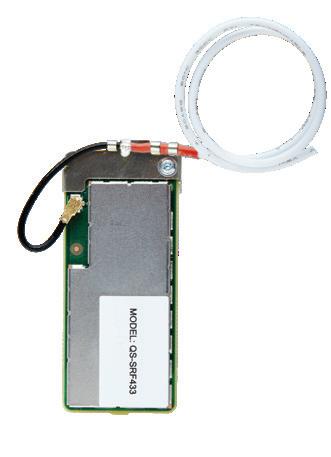
IQH5017 (Verizon-USA)
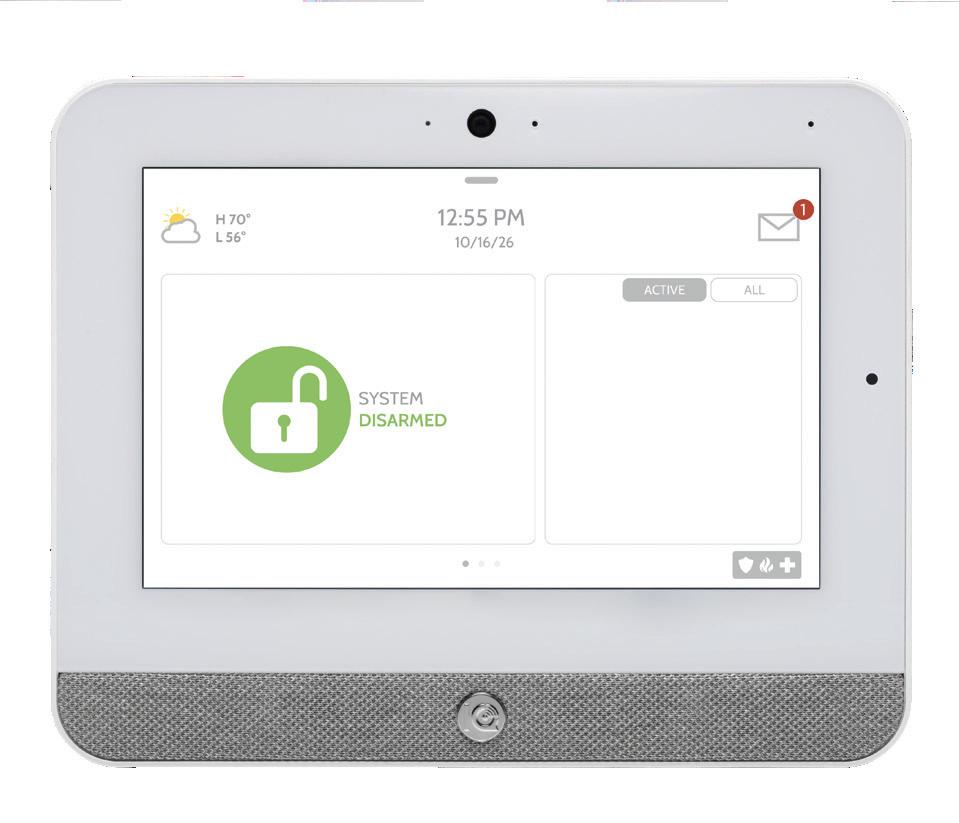
IQP5018 (AT&T-USA, Canada)
IQP5020 (Telus-Canada)
IQP5017 (Verizon-USA)

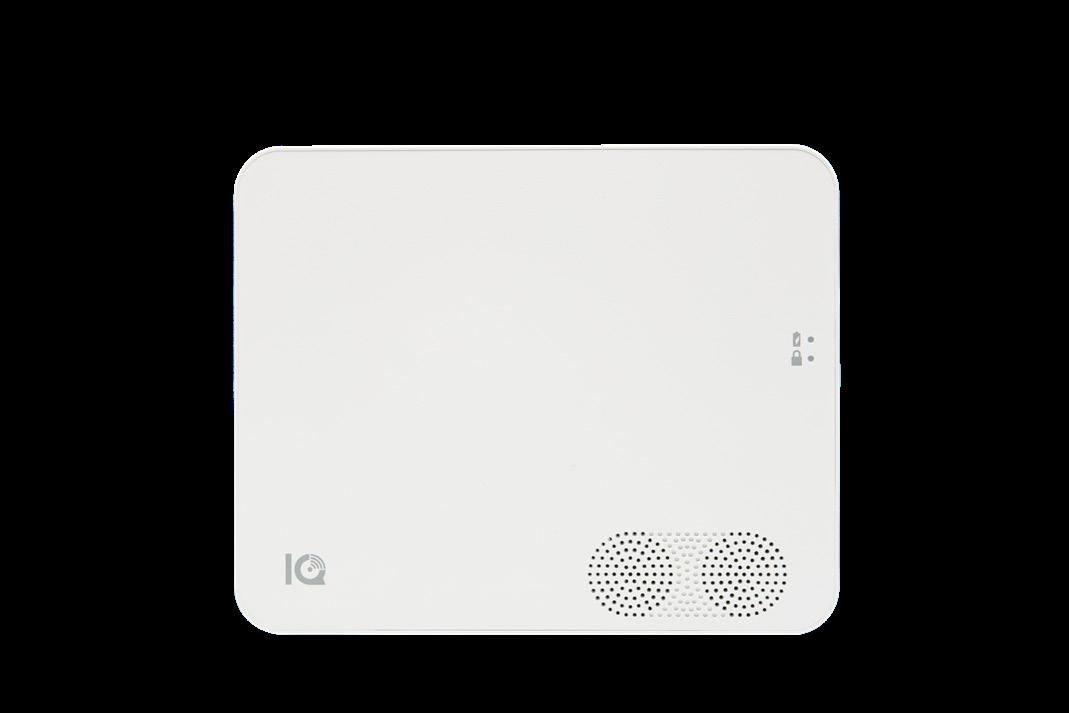
IQN5018 (AT&T-USA, Canada)
IQN5020 (Telus-Canada)
IQN5017 (Verizon-USA)