SECURITY PRODUCTS AND TECHNOLOGY NEWS



SECURITY PRODUCTS AND TECHNOLOGY NEWS
Serving Canada’s security industry for three decades
SERVING INSTALLERS, DEALERS AND INTEGRATORS ACROSS CANADA
U.K. LOCKBOX COMPANY LAUNCHES IN CANADA P4
HOW INTEGRATORS HELP THEIR CLIENTS ACHIEVE OPTIMAL SOLUTIONS P11
30TH ANNIVERSARY ROUNDTABLE DISCUSSION P14


NEIL SUTTON
This issue of SP&T News is a cause for celebration for two major reasons: first, the size, format, layout and logo are all-new; and, second, we’re celebrating our 30th anniversary in 2026.
The format change has been under consideration for a while (the previous design was in circulation for more than a decade) and the timing was right for a new look.
If you subscribe to our weekly e-news, you will have noticed a change there as well, with more stories, more images and a cleaner look. This new magazine design takes a similar approach with a fresh format and more readable layout.
The second reason this is a special issue is it marks the first to be published in SP&T News’ 30th anniversary year. The magazine first launched in 1996 with many of the same features we’ve maintained over the decades: a sizeable new products section, opinions from trusted industry experts, and news from across the Canadian security industry.
SP&T News has evolved over the years to include more feature content designed to help security providers deliver effective services and solutions to their clients. We also like to stay on top of technology trends that are changing security best practices today or are likely to have a significant impact on the market in the near future.
With that idea in mind, I recently hosted a roundtable discussion with the five members of SP&T’s advisory board. Back in 1996, the only feasible way to host such a discussion was to gather in a board room, but in 2026 it’s easy to connect everyone through an online meeting, no matter where they are physically located Some of us were travelling or situated outside Canada, but today’s communications technology has made distance irrelevant.
Together, we discussed the major technology trends that are shaping the industry, while also addressing some of the challenges and opportunities that come with doing business in today’s market. The highlights of that meeting are recapped in an article on p.14.
Thank you to everyone who has supported SP&T News over the years. We truly appreciate your readership and will continue to bring you great stories and valuable information for many years to come



How integrators help their clients achieve optimal and long-lasting security systems and solutions
By Andrew Snook
The SP&T News editorial advisory board offers their perspectives on AI, cloud, client engagement, training, hiring and much more
By Neil Sutton
Victor Harding
Kim Caron

READER SERVICE
Print and digital subscription inquiries or changes, please contact Shawn Arul, Audience Development Manager Tel: (416) 510-5181 • Fax: (416) 510-6875 Email: sarul@annexbusinessmedia.com
Mail: 111 Gordon Baker Rd., Suite 400, Toronto, ON M2H 3R1
Your Partner in Securing Canada
Security Products & Technology News is published 5 times in 2026 by Annex Business Media. Its primary purpose is to serve as an information resource to installers, resellers and integrators working within the security and/or related industries. Editorial information is reported in a concise, accurate and unbiased manner on security products, systems and services, as well as on product areas related to the security industry.
Editor, Neil Sutton 416-510-6788
nsutton@annexbusinessmedia.com
Group Publisher, Adam Szpakowski 289-221-6605 aszpakowski@annexbusinessmedia.com
U.K. lockbox company makes products available in Canada through Montreal connection
By Neil Sutton
A British lockbox manufacturer has introduced its products to the Canadian market through a partnership with a Montreal-based manufacturer’s representative firm.
The Key Safe Company, based in Worcester, U.K., decided to expand into new markets several years ago, starting in continental Europe then into the U.S., according to Marcus Taylor, managing director of Key Safe.
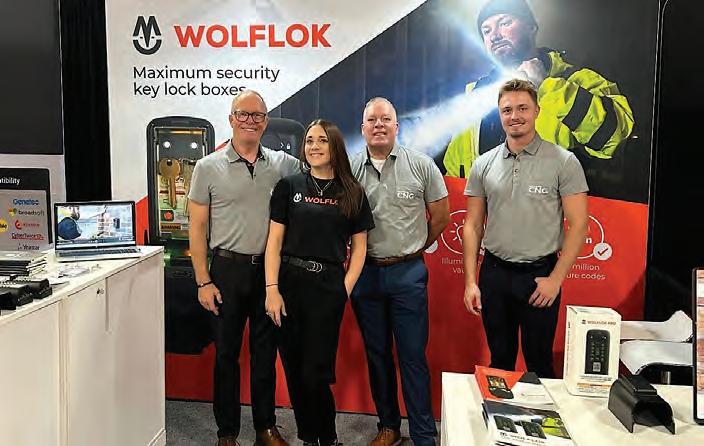
Key Safe rebranded its signature product line as Wolflok and Wolflok Pro for the North American market. The company says both products include features such as illuminated buttons and multi-push button technology capable of more than 9.7 million password combinations.
Christian Godon, founder and CEO of Services CNG, first encountered Key Safe’s Wolflok line in a chance meeting on the ISC West exhibit floor in Las Vegas.
Upon seeing the product, he says he was immediately impressed by its ruggedness. “It actually piqued my interest,” he says. He left his business card at the Wolflok booth and asked the company to keep in touch.
“Christian was one of the first
people who expressed a strong interest and offered to represent us,” says Taylor.
The Las Vegas meeting has since led to Services CNG representing Wolflok across Canada.
Godon says he and his team have had discussions with potential Canadian customers across different markets including commercial properties, campuses and critical infrastructure facilities. Wolflok is also suited to real estate, Airbnb properties and the automotive sector.
Locksmiths have been impressed with the products, says Godon.
“I think we’re already creating a little bit of a buzz in the locksmith world,” he says. “It’s a great conversation piece.”
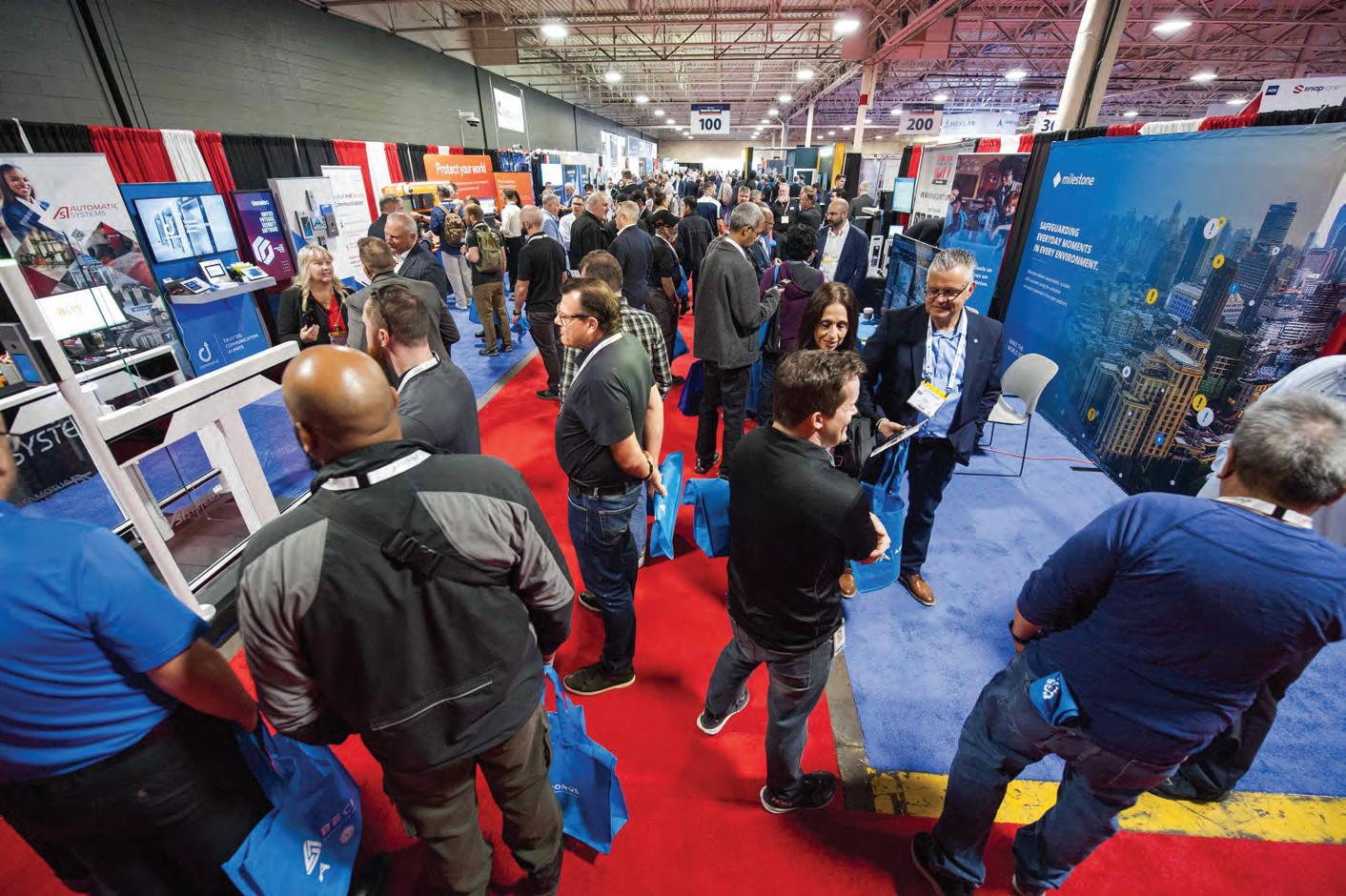
Wolflok inventory is currently warehoused in Montreal and available across Canada. Godon has also formed partnerships with several Canadian distributors and showcased the products at the Security Canada Central show in Toronto last October. He plans exhibit with Wolflok at future events.
The Key Safe Company is celebrating its 30th anniversary this year and has sold an estimated three million lockboxes globally.
Brand Sales Manager, Trish Sutton 437-995-4651 tsutton@annexbusinessmedia.com
Media Designer, Graham Jeffrey gjeffrey@annexbusinessmedia.com
Account Coordinator, Kim Rossiter 416-510-6794 krossiter@annexbusinessmedia.com
CEO, Scott Jamieson sjamieson@annexbusinessmedia.com
EDITORIAL ADVISORY BOARD
Patrick Soo, Alarm.com
Floria Chiu, ECAM
Val Harris, Real Time Networks Stephen Karchut, Alarmtech Frank Pietrobono, Avante
111 Gordon Baker Rd, Suite 400, Toronto, ON M2H 3R1 T: 416-442-5600 • F: 416-442-2230
PUBLICATION MAIL AGREEMENT #40065710
Printed in Canada ISSN 1482-321
SUBSCRIPTION RATES:
Canada: $43.86 + HST/yr, USA: $99.96/yr and International: $114.75/yr
Published 5 times a year
Occasionally, SP&T News will mail information on behalf of industry-related groups whose products and services we believe may be of interest to you. If you prefer not to receive this information, please contact our circulation department in any of the four ways listed above.
Annex Privacy Officer
privacy@annexbusinessmedia.com • Tel: 800-668-2374
No part of the editorial content of this publication may be reprinted without the publisher’s written permission. ©2026 Annex Publishing & Printing Inc. All rights reserved. Annex Publishing & Printing Inc. disclaims any warranty as to the accuracy, completeness or currency of the contents of this publication and disclaims all liability in respect of the results of any action taken or not taken in reliance upon information in this publication.


By Neil Sutton
Genetec recently spent the better part of two days briefing a group of international journalists at its Montreal headquarters.
During its Global Press Summit 2026, Genetec senior executives outlined the company’s recent accomplishments and partnerships, and hinted at some of the announcements it plans to reveal at the upcoming ISC West conference in Las Vegas in March.
A central theme of the press event was the role of artificial intelligence (AI) in security systems: where it is appropriate, what it can (and cannot) currently do, and where we might see AI taking the security industry in the near future.
AI is a topic that has fascinated the industry for a decade or more. Many enterprise security vendors today claim or advertise that their products can achieve a new level of efficiency or efficacy by taking advantage of AI. Genetec is also incorporating AI into its security tools, but is taking a more circumspect approach.
Genetec’s vice-president of marketing Andrew Elvish indicated the company is clear-eyed and pragmatic when it comes to AI and the role it plays in Genetec products.
AI is “a very in-motion space right now,” Elvish told the assembled group of journalists. “AI is a hammer. The question you should be asking is: what do you want to build?”
Christian Morin, Genetec’s vicepresident of product engineering and chief security officer, reiterated that


the company’s preferred take on AI is “IA” — intelligent automation vs. artificial intelligence. The IA approach acknowledges that machines are capable of huge data workloads but specifies that decision-making and creativity should be left to humans. Any conclusion reached by an AI should also be verified by a human and documented accordingly in an incident or investigation log.
Morin also noted that great care must be taken when allowing an AI to have access to data. As with any human actor who is granted access to company data, the process must be permission-based and follow the appropriate safeguards.
Earlier this year, Genetec published its annual State of Physical Security report, which according to Elvish, has been downloaded more than 11,000 times from the company’s website.
The sixth annual report collected data in August and September of last year from more than 7,000 respondents globally, 80 per cent of which identified as either end users or
ASSA ABLOY announced in March it has acquired Sam’s Garage Doors, a distributor, installer and servicer of door products and a manufacturer of gate products.
The company’s main office and manufacturing facility is located in Port Coquitlam, B.C. Sam’s Garage Doors was founded in 1990 and has approximately 40 employees.
“I am very pleased to welcome Sam’s Garage Doors to ASSA ABLOY. This acquisition delivers on our strategy to strengthen our position in mature markets through adding complementary products and solutions to our core business,” said Nico Delvaux,
channel partners.
Elvish said a major change in this year’s report is how AI has grown into a “key priority” for survey respondents, ranking alongside cornerstone security tools such as surveillance and access control.
The Genetec report suggests that end users “still need guidance, not only in choosing the right products but in understanding how AI can translate into real-world impact.”
AI ranked in fifth place as a key priority in Genetec’s 2025 report. In the 2026 edition, it moved into second place, only behind access control.
Approximately 70 per cent of end users who responded to the survey indicated they were concerned about how AI is designed and implemented. Concerns included the lack of understanding around AI or how it might be used maliciously, as well as difficulties in hiring staff with AI expertise.
Genetec’s 50-plus page report covers other pertinent issues such as reasons why security systems are replaced or updated, the expanding role of IT departments in security purchasing decisions, and the importance of making cybersecurity a top priority.
A substantial change for the industry, added Elvish, is “how the investment mindset for physical security has completely changed over the last five years.” Physical security systems are now more likely to be viewed as a “system of record,” he said, i.e. a core enterprise technology essential for business operations.
president and CEO of ASSA ABLOY, in a statement.
“Through the acquisition of Sam’s Garage Doors we strengthen our position in Western Canada and expand our service reach across the greater Vancouver area. With their complementary portfolio and strong customer focus, we can offer new products to our existing customers and further enhance the service we provide, creating even greater value across the region,” added Massimo Grassi, executive vice-president of ASSA ABLOY and head of the Entrance Systems Division.
According to Axis Communications, royalties from “Intelligent Network Video: Understanding Modern Video Surveillance Systems,” a book authored by Fredrik Nilsson, vice-president, Americas at Axis, have been donated to charitable non-profit Mission 500.

The book was first published almost 18 years ago and has sold 30,000 copies. A third edition of the book was published in 2023. In January 2026, US$37,839 from book royalties was donated to Mission 500. The second and third editions of the book have generated almost US$60,000 in combined contributions.
“At Axis, we foster a culture of innovation and responsibility, and Fredrik embodies that spirit perfectly,” said Nikki Nemarich, director of marketing, Axis Communications, Americas and Mission 500 board member, in a statement. “We are incredibly proud to see his thought leadership and passion for education create such a positive impact. This initiative is a testament to how
individual expertise, when shared, can uplift an industry and support vital community work.”
“As a founding board member, Fredrik has been a steadfast supporter of Mission 500,” added Jason Lutz, board chair of Mission 500. “This ongoing contribution, driven by his expertise and the industry’s embrace of his educational work, is invaluable. It powerfully reinforces corporate social responsibility, directly enabling us to continue our vital mission of helping children and families in need.”
Mission 500, a non-profit with roots in the security industry, supports families and children in need across the U.S., Canada and Puerto Rico.
“Intelligent Network Video,” published by CRC Press, is available from booksellers online.
Securitas announced in February it has signed a binding agreement to acquire Social Navigator Inc., operating under the brand Liferaft.
Founded in 2014 in Halifax, Liferaft is a provider of open-source intelligence (OSINT) solutions. According to a press release, the company’s solutions offer clients a dynamic view of their threat landscape, providing real-time risk alerts.
“During the last few years, we have strengthened our value proposition and profitability in our guarding business, developed a globally leading position in technology and built a more modern and digital business. As the threat landscape becomes more dynamic, we see a growing need from our clients for digital risk intelligence solutions that enable more proactive security programs. Having partnered with Liferaft for five years, we know their capabilities well and see a strong strategic and cultural fit, as well as the significant intellectual property their solutions bring to our portfolio,” said Magnus Ahlqvist, president and CEO, Securitas, in a statement.
The acquisition is expected to be finalized during the first half of 2026 and is subject to customary closing conditions.
April 9, 2026
ADI Expo Toronto, Ont. www.adiglobaldistribution.ca
April 28-30, 2026
Canadian Technical Security Conference Banff, Alta. www.ctsc-canada.com
April 29, 2026
Security Canada East Laval, Que. www.securitycanada.com
June 1-4, 2026 ESX
Irving, Tex. www.esxweb.com
June 3, 2026
Security Canada West Richmond, B.C. www.securitycanada.com
June 11, 2026
ADI Expo Edmonton, Alta. www.adiglobaldistribution.ca
June 15-16, 2026
Security LeadHER Minneapolis, Minn. www.securityleadher.org
September 14-16, 2026
GSX Atlanta, Ga. www.gsx.org
September 15, 2026
ADI Expo Vancouver, B.C. www.adiglobaldistribution.ca
October 21-22, 2026
Security Canada Central Toronto, Ont. www.securitycanada.com
November 12, 2026
ADI Expo Montreal, Que. www.adiglobaldistribution.ca

Automatic Systems recently welcomed Andrew Saabas as the company’s new technical services manager. In this role, he will be responsible for leading and supervising the technical support and service technician teams. Saabas will also be responsible for developing and implementing a certified partner training program to support the company’s partner network and to ensure consistent service standards.

Wesco Security Solutions announced that Anita Brunet has been appointed as vice-president of security for the Americas. Brunet, who has worked with Wesco for more than three decades, was previously VP of sales, U.S. branch security and locking solutions. Brunet currently serves on the Security Industry Association’s advisory executive board. She previously served as the Canadian Security Association’s national
Windsor, Ont., to install monitored camera network

Security ONE has been selected by the City of Windsor, Ont., to deliver and support an expanded network of professionally monitored security cameras in downtown Windsor as part of the city’s Project Greenlight initiative.
According to Security ONE, Project Greenlight is part of Windsor’s “ongoing strategy to strengthen public safety and support downtown revitalization, building on the success of previous pilot programs that demonstrated the value of monitored camera networks in deterring crime, aiding response, and increasing situational awareness for businesses and emergency services.”
Security ONE will be responsible for the design, installation and support of up to 90 live monitoring camera systems for approved downtown businesses.
president and was inducted into the SP&T News Hall of Fame in 2024.

Brian McIlravey has joined Mappedin as the company’s managing director, public safety & enterprise security solutions. Headquartered in Waterloo, Ont., Mappedin provides a platform for indoor spatial data management. In his role, McIlravey will lead strategic direction and market development, strengthen partner and channel ecosystems, and support industry positioning.

The Canadian Security Association (CANASA) recently announced the promotion of Erin Marsden to senior manager, membership and events. Marsden joined CANASA in 2016 as board and council liaison. Prior to her promotion, she was manager of board relations and events. Marsden will continue to lead council
events across Canada with the added responsibility of overseeing membership.

Val Harris has joined Real Time Networks, a provider of asset management solutions, as a strategic account manager. In her role, Harris will support customers across Eastern Canada and the Great Lakes region, working with organizations deploying intelligent asset management solutions such as smart lockers and key management systems. Harris has more than 18 years of professional experience in the physical security industry and is currently a member of the SP&T News editorial advisory board.

Gavin Daly has joined Novytec Marketing to provide additional support in Ontario for the company’s manufacturer partners. Daly’s role will include supporting Keenfinity in Canada, representing the Bosch and Radionix brands.
Italian fire brigade deploys detection tools during Winter Olympics

During the 2026 Winter Olympic Games in Italy, the Belluno Provincial Fire Brigade equipped a team of specialists with detection systems from Calgary-based Blackline Safety. The team was tasked with checking Olympics sports venue safety across the Milan-Cortina region before the public was allowed entry. They used the Blackline devices to check for contaminants before doors opened, defining clear boundaries around areas that could potentially be affected by deadly gases or radioactive agents.
The Belluno Provincial Fire Brigade is part of the larger Fire Department of Veneto and Trentino Alto Adige, a division of the National Fire, Public Rescue and Civil Defence Corps of Italy (Dipartimento dei Vigili del Fuoco, del Soccorso Pubblico e della Difesa Civile).
Arctic resort tests out new access control tools

Dormakaba is conducting a pilot project at Arctic resort Sorrisniva, home of the world’s northernmost ice hotel.
Located in Alta, Norway, the resort attracts 15,000 visitors a year. Every year since 1999, Sorrisniva rebuilds a seasonal ice hotel, with themed suites, an ice bar and an ice chapel.
Dormakaba is testing out access control systems designed to reduce energy consumption and ensure performance, even in Arctic temperatures. The pilot installation includes key resort areas from the Arctic Wilderness Lodge restaurant to the door leading to the ice hotel. Technology deployed includes dormakaba’s MotionIQ, which optimizes automatic door operation and can reduce energy and CO₂ emissions by up to 50 per cent, according to the company.

Victor Harding
In my view, selling a business is far more complex than selling a house.
Your house’s value is mostly determined by its location and the condition it is in. That is not the case when valuing a business, where many additional factors come into play. Yet most people still use a broker to sell their home. So why do business owners try to sell their company on their own? Here are some of my theories.
The price is only one of many critical considerations.
As an owner, you may be approached by a well-known buyer in your industry with what appears to be an attractive offer. Although you are shown the price, you might not be aware of all the “fine print” in the deal. I would argue that you should resist the temptation to pull the trigger and sell right away. It is very rare that the first offer represents the best offer available. Engaging a broker experienced in your field and having them create a mini-auction for your business should significantly improve your chances of achieving a better price.
Another reason not to accept the first offer is that the price is only one of many critical considerations. If the buyer is a major alarm account purchaser, their offer will likely be structured as an asset sale rather than a share sale, which is not tax efficient. In addition, the payment terms, attrition clauses, and ongoing account management after the deal closes all matter.
Some owners choose to sell without a broker simply to avoid paying a broker’s commission. However, statistics consistently show that when lost value and additional costs to doing a deal on your own are considered, this approach rarely makes financial sense. A responsible broker should always be asking themselves, did they improve the value of their client’s sale, even after their commission.

Another reason perhaps owners may go it alone is that they do not know there is a qualified broker out there who can help them or are unsure how to work with one. Today, with internet searches, just finding a broker should be relatively easy. However, finding one with direct experience in your industry often requires additional digging.
This leads to an important point: when selling a security business, it is critical to work with a broker who is knowledgeable about the security industry. This is particularly important with the security industry because the Recurring Monthly Revenue (RMR) generated by many security companies holds special value. It is critical that your broker value your company properly.
It also helps that your broker knows the most active and credible buyers in the market and understands how deals in the security industry are typically structured. A general business broker is not likely to know all this.
Every “unrepresented” sale can carry invisible deductions — subtle, compounding factors that quietly
erode value while the seller believes they are saving on commission.
U nderpricing your business is the first potential pitfall. A lack of planning the sale in advance can also lead to the company being presented in a disorganized fashion — missing contracts, non-existent attrition data, or RMR summaries that do not reconcile with billing all signal risk. Buyers may respond by lowering their offer or walking away entirely.
When going it alone, negotiation fatigue also plays a role. Owners attempting to run their business while managing a transaction inevitably lose leverage. Buyers can afford to wait, sellers usually cannot.
F inally, deals lose momentum without the active management and dedication of a third-party broker. When timelines slip and diligence drags on, valuations often decline.
In my opinion as a professional broker with decades of security industry experience, going it alone when selling your business is a risky decision.

Kim Caron
WEducation
is the key driver for career
awareness.
e would like to thank the 713 people who are either CANASA members or industry peers who took the time to share their perspectives through our recent survey.
The message is loud and clear: our industry wants to see the development of a nationwide trade program, either an accreditation program or a skilled trade designation, all managed by CANASA.
It is increasingly evident that education is the key driver for career awareness and greater standardization across our industry. We need skilled job seekers who are properly trained and ready for employment, while also providing existing staff with clear pathways to expand their knowledge, skills and career opportunities.
CANASA will be working collaboratively with existing educational institutions to develop curricula, deliver programs across Canada, and establish the necessary provincial requirements to support a national framework.
This is a significant undertaking with many moving parts. However, the positive outreach and strong engagement we’ve received confirm that our industry is ready and supportive of this initiative. Together, we can build a program that strengthens our workforce and sets the foundation for long-term success.
Thank you again for sharing your voice with us. We value your input and hope, over time, to meet and exceed the expectations of our industry professionals.
We are thrilled to announce that booth sales for Security Canada East and West 2026 are officially sold out! In addition, Security Canada Central is already 95 per cent sold at the time of writing. Each year, our shows continue to grow stronger, thanks to the ongoing support and engagement from across the industry. If you haven’t already, be sure to add the show dates to your calendar (April 29, June 3 and Oct. 21-22). You don’t want to miss the opportunity to network, discover the latest technology and connect with leading service providers. We look forward to seeing you there!








Roger Miller
We have all experienced poor customer service at some point in our personal or professional lives, such as car rental challenges, delayed hotel check-ins or airline delays.
B ut it isn’t always the initial experience that affects the relationship, it is how a business responds to the experience that may be the make or break for a customer. High satisfaction correlates directly with increased retention, customer lifetime value and a stronger competitive edge.
Strong customer service can make you more money.
Employees who receive service requests, complaints or general customer service inquiries have the ability to strengthen the customer relationship and increase revenues by upselling other services.
Each time a representative of your company speaks to a customer, there is an opportunity to enhance the relationship with them.
During my career, it has always been more productive to build on existing customer relationships than it has been to seek new customers. Strong customer service and support can make you more money.
In an ideal situation, each customer concern or complaint is resolved on the first contact.
When that isn’t possible, the customer should have a clear understanding of what the next steps will be.
Here are a few more customer service recommendations:
1. Make the first point of contact a positive experience. By empowering your staff to resolve customer concerns at the earliest possible stage you begin making that happen. By calling your business, the customer has taken the first step; the rest of the steps are up to you.
2. If the customer can’t easily call you or their regular point of con-

tact in your company, they’ll stop trying. Each step the customer has to take, such as selecting from a complex menu of options or navigating a call centre environment, is a barrier. By making it easy for your customer to reach you, you’re making the relationship stronger. It is not unusual for our company to receive calls from the irate customers of competitors simply because we answer the phone.
3. T he customer should never have to call or email you back to find out the status of their initial request. After that call is made to your business, information should flow from you to the customer in a timely and accurate manner. Often they are not asking you to solve their problem over the phone; they want you to understand their complaint then provide a solution as quickly as possible.
4. Be transparent. If there are delays with products, schedule adjustments, price changes or any other factor that affects the expected
outcome for your customer, you need to be in front of the situation and communicate to them. Often the solution is beyond your control and up to your supply chain partners. Keeping the customer informed can alleviate their stress. As one of my colleagues says, “under promise and over deliver.”
5. When you’ve failed to deliver on a promise, it is up to your company to make it right. Let the customer know you accept responsibility and work with them to improve their service levels. This means you may have to involve others on your team to fully identify then correct the root cause. Remember, the cost of losing a customer is not always easy to measure
Always keep in mind that first point of contact resolution will go a long way towards customer retention and improved revenues.
How integrators help their clients achieve optimal and long-lasting security systems and solutions
BY ANDREW SNOOK
Over the course of a project, from concept to installation, there are many types of hurdles that can arise.
One of the most common ways to end up with an unsatisfied client is by not managing their expectations. This begins early on during the consultation stage.
Managing expectations is vital for building successful long-term partnerships, and this includes educating clients about potential solutions that could work for their businesses.
“The more they understand, the more you’ll be able to explain to them the benefits of what you’re proposing,” says Azin Tabrizi, CEO of Toronto-based integrator Met-Scan Canada.
Tabrizi says this is particularly helpful for explaining how a solution with higher upfront costs can end up being the optimal solution for a client.
“You want something that provides them that longevity and innovation — looking at it as a long-term asset that they can build upon, versus a short-term solution to meet what they think is their immediate needs,”

Consultation is key in order to assess a customer’s security needs, then suggest a solution that will meet those needs — both now and in the long-term
she says.
An important part of educating the client on their options is to help them look beyond the immediate issues they are trying to address. While Tabrizi agrees that this needs to be a priority, part of the role of consulting on a project includes helping them understand the long-term strategy of what they’re investing in and helping them develop that.
It’s important not to take a onesize-fits-all sales approach when consulting on projects, says Kevin Jarrett, sales manager for Fire Monitoring of Canada, a St. Catharines, Ont.-based service provider whose solutions include security systems and services.
“Some customers need a system that’s going to be much more indepth, analytical and intelligent, while others are looking for something more simplistic,” says Jarrett. “Our biggest focus is talking to the customer, understanding their expectations for the system, and then proposing something that meets those needs.”
Kashif Aziz, co-founder and CEO of Toronto-based integrator Dijicle, has worked for nearly 20 years in the security industry, split between the manufacturing side and integration side of the business. He says too often integrators will start conversations by pushing products on a customer believing it is the right fit. The first
meeting with a potential client should include a brief introduction about the company while keeping the initial conversation as brand-agnostic and system-agnostic as possible.
“It’s very important to listen to the customer’s pain points and learn what they are looking for. What are their expectations? And based on those expectations, once you know what their pain points are, spend a lot of time on those pain points and then provide them a solution that helps them,” he says.
Aziz recommends having an initial set of questions ready to go that will help with managing expectations. This needs to include cost expectations. Not only for the upfront costs but also any ongoing costs they will incur over the life of a system or service.
“Customers will go for something cheap. But then down the road, they’re impacted by ongoing costs, or they’re impacted by their total cost of ownership of the product life cycle or the system life cycle. If a system life cycle is seven years, then what is their
“It’s very important to listen to the customer’s pain points.”
— Kashif Aziz, Dijicle
total cost of ownership during that life cycle? This is extremely important,” Aziz says.
Effective consultations also need to focus on how the client currently handles threats and what resources they have available before suggesting specific technologies, says Mark McNulty, senior vice-president of global services for Motorola Solutions.
“When interacting with a client, providers should clearly define the capabilities of a proposed solution and the potential vulnerabilities that can be exposed if best practices are not adhered to,” he says. “Building an effective system is not just about using the most advanced tools; it is about proposing a solution best positioned to help the client manage threats long after the installation team’s work is done.”
McNulty says the gap between a customer’s vision and a successful deployment is usually found in the translation of business needs into technical requirements.
“A customer knows they want safer, more efficient facilities. However, they don’t always know that an integrated, unified security ecosystem can help them achieve their goals,” he says. “Early and consistent collaboration between the technology provider and local experts is the ideal guide on which combinations of tools are best suited to achieve their desired outcomes.”
Effective communication between the provider and client also needs to include a clear scope of the work being performed on a project submitted and approved in writing.
“We put a big emphasis on making sure our scopes of work are incredibly clear to fit exactly what we’re going to do on site and how the system is going to operate,” Jarrett says. “We find that helps clear up any confusion. If there is confusion, it’s addressed right off the bat when they read the scope.”
Not over-promising on any aspect of a
project is another key part of managing clients’ expectations.
“It allows us to make sure we under-promise and over-deliver on projects, so we’re not setting off expectations, saying we can get this done in a week when we know our schedule is going to be a month out. We try to be very clear up front,” Jarrett says.
When it comes to complications that arise on projects, a desire to over-engineer a solution, or a failure to properly understand the client’s unique operational environment are typical issues, McNulty notes.
“ Security systems are most effective when the persons navigating them daily fully understand their operation. To avoid over-complicating installations, it is essential that integrators work with clients to arrive at solutions that strike the right balance between robust security and ease of use for their personnel,” he says.
McNulty says local security professionals are best positioned to suggest practical
ways to address site-specific security needs.
“ By making sure these professionals know exactly which types and combinations of advanced technologies they can deploy to meet end users’ goals, we can increase the probability of the final installation meeting, and even exceeding, client expectations,” he says.
Tabrizi recommends that her service personnel take some time to speak with their clients to learn more about their needs whenever they are on site.
“I always tell my staff when they are in the field: spend the time to get to know (the customer). Obviously, go in and fix the issue, but spend some time talking to them and saying, ‘How’s your day going?’ It’s interesting how you can pick up on things just in those simple day-to-day conversations,” she says.
Clients often have long- and short-term goals to address their security needs. When meeting expectations for customers’ short-
term goals, the priority should be on closing the most critical visibility and security gaps, McNulty says.
“Small-scale, high-impact improvements — such as foundational video and voice integration — provide immediate situational awareness and build the trust necessary for more complex, long-term discussions,” he says.
McNulty adds that long-term success is achieved when a project is built around the client’s future growth.
“This means selecting platforms that are scalable and built on open standards, ensuring they remain relevant as technology evolves,” he says.
“We encourage clients to view their security as an operational engine. Long-term goals are realized when the system moves from being a reactive tool to a proactive, intelligence-led operation. By providing clients with the knowledge and tools to scale their systems as threats change, we ensure their investment provides value for years to come.”
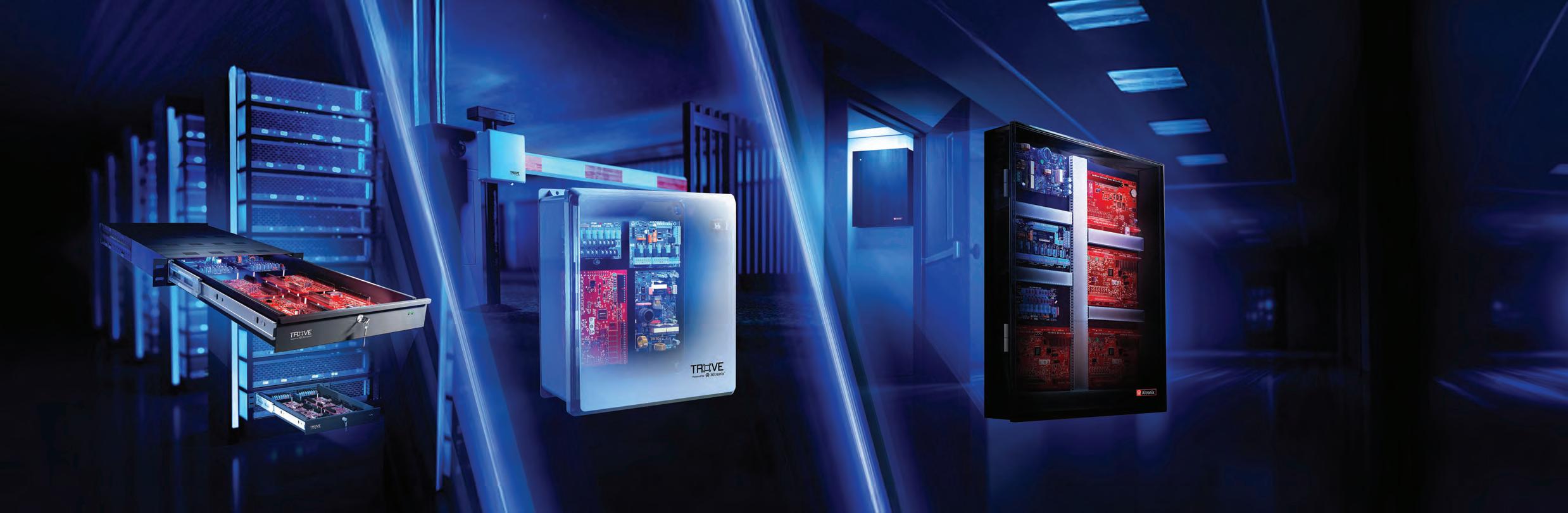
TROVE™ lets you design and deploy your preferred brand of access control with Altronix power solutions in virtually any environment.
Simplifies board layout & wire management
•Reduces installation and labor cost
•Scalable for any size system
• Available as pre-configured and pre-wired kits
Streamline your access control deployments with TROVE™. Only from Altronix.
The SP&T News editorial advisory board offers their perspectives on AI, cloud, client engagement, training, hiring and much more
BY NEIL SUTTON
In the three decades that SP&T News has been covering the security industry in Canada, numerous changes have come about through technology advancement, new service delivery models, improved business practices and of course, the leaders who have shaped the industry’s development and evolution.
To mark SP&T’s 30th anniversary, we recently convened a meeting of the magazine’s editorial advisory board to discuss many of these changes and also to think about what the industry might look like in the years to come.
T he conversation, which took place over 90 minutes one afternoon in February, was an opportunity for the assembled group to reminisce about security industry highlights over the years and occasionally lament the loss of simpler times. But more crucially, it was a forum to
express enthusiasm for where the industry is going, and the technology and best business practices that will enable it to thrive into the future.
I n terms of technology that is having the greatest impact on security systems, both now and for the foreseeable future, the conversation immediately landed on the subject of artificial intelligence (AI).
AI is having an undeniable effect on the way data is mined, processed and delivered to the user.
“ I think from the Alarm.com perspective, we’ve certainly made a heavy investment into AI,” said

Patrick Soo, director of national sales, Canada, for Alarm.com. “In fact, our directive from the top down is to lead with an AI mindset. It’s pervasive throughout our organization today, all the way from service provider analytics to the way we provide video analytics, machine learning and computer vision.”

For most of its 30 years in publication, SP&T News has maintained an advisory board — a rotating group of industry professionals who provide advice and insight
“It’s really helped us move the needle when it comes to providing services,” added Frank Pietrobono, vice-president and general manager, Avante Corp. “From our perspective, we’ve moved AI into what we call a workforce multiplier. It’s allowed us to do a lot more.”
In many ways, AI has given new life to surveillance, access control and intrusion systems, by imbuing the data they generate with profound meaning and providing contextual information instantly. Data is no longer static or locked. AI is able to detect patterns and reach meaningful conclusions, which can then be delivered to the end user.
“It’s our job to help them with what they need.”
— Stephen Karchut, Alarmtech
“It’s going to improve threat detection. It’ll turn video into actionable insight versus being passive footage,” said Soo.
T hrough generative AI, it can also act as an interface to answer questions or provide technical sup-






port. Soo said that Alarm.com has had early success with a platform called Gopher Info, which launched just over two years ago. The AI tool leverages large language models (LLMs) to assist technicians in the field with technical support in real-time.
“I agree that AI has definitely made our lives easier,” said Floria Chiu, director of integrated solutions at ECAM. “It has made us more efficient in detecting risk and in managing it, and even in responding to it.”
Chiu, an industry veteran, joined ECAM, part of the GardaWorld
organization, last year. She was impressed by the fact that ECAM has a vice-president dedicated to AI. “I think that tells you really how seriously companies are taking AI in terms of business process,” she said.
While it may offer huge advantages, AI, like any technology, must be managed responsibly.
“I think that in the next few years, what we’re going to see is shifts in roles and responsibilities within organizations,” noted Chiu, adding that “it is important for us as an industry to really understand that AI is only as good as the governance around it.”
She emphasized that a “human-inthe-loop” approach to AI is essential, i.e. ensuring that qualified humans can verify and approve any step or conclusion that is reached by AI.
As the security world becomes more technical, good governance and oversight become even more important. Also, not everyone wants to be on the bleeding edge of new technology. The concepts of object detection, heat mapping and people counting may be appealing, but there are users who are not ready to embrace everything that AI and advanced analytics have to offer.
“I do see some skepticism with

the older generation of consumer,” said Stephen Karchut, owner of Alarmtech Security Systems, based in London, Ont.
He added that while enterprise businesses are willing to explore new technology like AI, small and medium-sized businesses may not be ready or even interested yet.
C loud- and hybrid-based data hosting systems are arguably more well established than AI technology in the security world at the moment. The concept of hosting or processing data in the cloud (or in a mixed environment of on-premise and cloud) has definitely gained traction in recent years.
“We’ve been cloud-based since our inception,” said Soo of Alarm. com. “From our perspective, it enables faster deployment. You can remote manage it, you can remote maintain it, and do service calls without rolling a truck.”
“When I look at the outcomes that customers are looking for, cloud is the answer,” said Chiu. “That’s where we’ve seen success because we’re addressing outcomes, not just the functionality of a product or service.”
Cloud-based management offers advantages like “centralized policy management and portfolio-wide visibility” added Chiu. “Everybody’s using terminology like ‘single pane of glass,’ faster access to information and being able to manage remotely right across your portfolio. Those are the outcomes and achieving that through cloud has been the easiest way.”
No matter what type of security system you’re selling , engaging effectively with the customer is paramount. The customer has more information at their fingertips than ever before, but that can be both a help and a hinderance to the sales process.
Val Harris, strategic account manager for Real Time Networks, said
Many end users, particularly at the enterprise level, are interested in hosting some of their systems in the cloud
she is a big believer in the potential of AI and next-generation security systems to deliver results but the added complexity means that clear communication and appropriate training take on extra importance. “We can get so much more out of (security systems) now and they can do everything we could ever dream of. But they are far more complex which means that training needs to ramp up.”
C ustomers come to meetings armed with data and research they found on the internet, but not all of it may be helpful or useful in terms of addressing their security needs, added Pietrobono.
B ut that knowledge gap also creates opportunities for the service provider to be a voice of reason and expert adviser. It “puts more onus on you to make sure you’re providing the right solution,” said Harris.
“In the next few years, what we’re going to see is shifts in roles and responsibilities within organizations.”
— Floria Chiu, ECAM
Karchut likened the situation to people who self-diagnose health issues on the internet before they seek advice from a doctor.
The remedy for disinformation in security, he said, is appropriate and realistic advice from a professional.

“A change in mindset is going to be critical, from installing products to delivering outcomes.”
— Patrick Soo, Alarm.com
“They need to know what they’re looking at, and that’s where we come into play,” said Karchut. T he conversations security providers are having with their customers also depend on the department they are addressing through the consultation process
The roundtable participants noted that they are often talking to the IT department in addition to the security department. Likewise, they may be having conversations with an enterprise’s marketing department or their operations personnel.
Today’s camera systems are capable of delivering much more than security data. Hot-spotting, dwell times, queue management, people counting and car counting are all examples of data that may be of significant interest from a marketing perspective.
new technology is developed, deployed and maintained over its lifespan.
Another major issue in front of the security industry is addressing the skills gap and finding a pool of qualified applicants to fill available security positions.
Pietrobono noted that he has been working with Humber Polytechnic, which currently offers an Electronic Security Technical Training course. Course graduates were able to shadow Avante technicians for a day to gain real-world experience and one of the graduates was subsequently hired full-time.

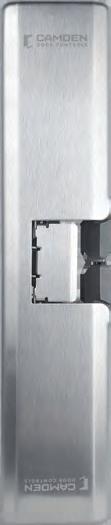
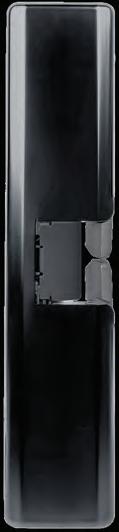
Camden Door Controls has introduced a 1/2" version of our award-winning surface mount RIM strike with preload. The 1299 Series Grade 1 strike offers a 'Universal' design that delivers superior performance under the most demanding conditions.
The patented design of 1299 Series RIM strikes will release with up to 15 lbs of preload pressure, caused by differences in air pressure, inexact installation, or misaligned doorsduring or after installation.
» UL 1034 & 294 Security Listings, ANSI/BHMA A156.31
» 12/24V, AC/DC, Fail Safe/Fail Secure
» Latch monitor included


However, the marketing department must first be aware of these capabilities and secondly have the capacity to integrate the relevant data into their workflows.
“I try to get the decision maker in the room every time,” said Karchut. “They might not exactly know what they need, but again, it’s our job to help them with what they need. And if we can add value based on different feature sets, that just goes to help them make a better decision.”
In terms of ongoing challenges for the security industry, the panel identified cybersecurity, privacy issues and regulatory compliance as issues that must continue to be top of mind as
He said he hopes more Canadian security companies will offer internships or practical experience in order to increase the flow of qualified job applicants.
Karchut said he also likes to speak to job candidates who may not have any previous security experience, and therefore no preconceived notions.
“If you train your own staff, then it’s your company values are then put on that new person, which makes retaining them a lot easier because you’ve built that rapport, that relationship, and you’re able to keep them much longer,” he said.
Ultimately, the future of the industry is going to be driven by new technology, but achieving customer goals and being a trusted partner is more important than the technology itself.
“ A change in mindset is going to be critical from installing products and widgets to delivering outcomes,” said Soo. “At the end of the day, is the customer happy?”
» 1/4" and 1/8" spacer plates included, to accomodate up to 3/4" Latch Projection
» Metal Marking Jig Included
» Exclusive 5 Year, No-Hassle Product Warranty





Aprovider of biometric access control, workforce and visitor management solutions, Invixium was established in 2012. The company operates globally, with a headquarters in Toronto and offices in the U.S., India and Dubai.
SP&T News recently spoke to the company’s CEO, founder and president Shiraz Kapadia about the company’s solutions, the integration of its 2024 acquisition of Triax Technologies, a developer of Real-Time Location Systems (RTLS), and his thoughts on how the biometric security market has evolved since the pandemic. (This interview was edited was brevity and clarity.)
SP&T News: What vertical and geographic markets are you currently targeting?
Shiraz Kapadia: The Middle East market continues to grow for us at the fastest rate. However, I would say in 2026 onwards, I am seeing tremendous potential in the U.S., Latin America and the Indian market as well. That is primarily fuelled by our enterprise series product line. Our products are rugged, robust, solution-focused, and harsh-environment-focused. That gives us brand recognition. However, we realized there was strong market demand for [an enterprise product]. Not everyone needs an industrial-grade product. We are making this product more distribution-friendly, more channel-friendly. We have appointed strategic distributors in each region.
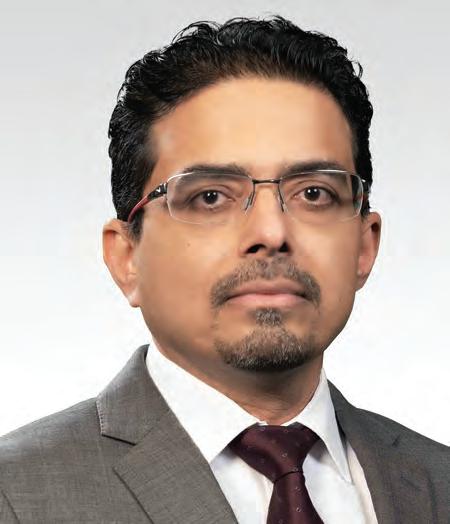
Shiraz Kapadia founded biometric firm Invixium in 2012. The company is headquartered in Toronto with offices around the world.
We have signed a deal with Wesco, for example, to be our distributor for North and Latin America. That gives us access to their integrators and the markets that they serve. In a nutshell, the Middle East is very strong for us. We have started to see tremendous traction in North America, Latin America, Africa and India as well. We’re very excited about 2026.
We have been pretty strong on the industrial, critical infrastructure sector — data centres, oil and gas, energy, construction, manufacturing. That’s our claim to fame — our products and solutions work there. With the enterprise series product
“We have to, as an integrated industry, solve problems for the client.”
line... they are going into the SMB market, whether it’s retail, financial institutions or offices. Plus, we also have a software suite that we have invested heavily in. We have modules that can do workforce management and visitor management. We acquired a company last year that does real-time location services called Triax. It’s complementary to what we do. That has also helped us get into verticals that we would not otherwise with our core product line.
SP&T News: How have you integrated the Triax technology line into the Invixium portfolio since the company was acquired?
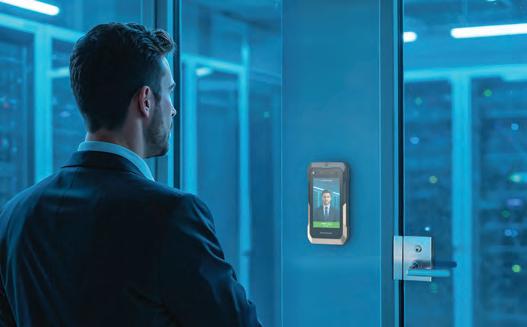
SK: When we acquired Triax, we wanted to keep it as a separate business unit. But obviously we saw some complementary benefit for the customer as well as for us as an OEM. When you think about it, our biometric solutions secure the perimeter. You are allowed to enter if you are authenticated. Once people go in, what’s happening with those people? From a productivity perspective, what are they doing? Health and safety and productivity: that is why we acquired Triax. The absolute ultimate goal is to integrate both businesses into one software that we would call a workplace intelligence platform. It’s one software that gives you access control, time and attendance data, visitor management and also do real-time location services of staff and assets. Once that data is on the software platform, you can provide real analytics and tangible data to a chief human resources officer or a
CFO or COO or CIO. The customer will be fascinated once they can see what data and intelligence and analytics we can provide.
SP&T News: Touchless access was at a premium during the pandemic health crisis five years ago, but has that had any lasting impact on the biometric market?
SK: For our market, there was an incredibly lasting impression. Before COVID, it was all fingerprint — the most comfortable and the lowest cost — and face recognition was not getting adoption. But one month in 2020 gave a decade’s worth of adoption to facial recognition. That has stayed. Card readers are being replaced with digital or mobile credentials and biometric devices are replaced with face recognition devices. I don’t see that going away. It’s the best of both worlds. You don’t have to touch anything, it’s fast, it’s convenient. The human race has a tendency to do incredible things when they’re pushed to do so.
SP&T News: Invixium exhibits at many of the large, international security trade shows. Do you find that these are still an effective way to reach your potential market or partners?
SK: There are a lot of trade shows now, compared to what it used to be 10 years ago. Now every region has their own show. There’s too many of them, and when you have too much supply, the impact of getting international visitors becomes less. But why I personally feel trade shows are important is, I can do 25 meetings with my existing customers. If I had to go my existing customers one by one, it would cost an arm and a leg, and probably four months. Here we have a booth, we have a nice seating area and we are showcasing our products. It’s a prominent way for us to reach our existing customers as well as new markets.
SP&T News: Given that there’s a lot of flux and change in global trade right now, how do you prepare for or mitigate economic uncertainty?
SK: I would say it’s a new reality we live in. COVID taught us that you could be hit with anything at any time. I tell my staff, I view every crisis as an opportunity. There’s a lot of infrastructure companies that may not be able to handle the situation, but the ones that [continue] will have tremendous opportunity. In a nutshell, I don’t know
what kind of a world we are going to be living in for the next five years or 10 years. Whatever fluctuations come, we have to sit down, collaborate and say, how are we going to resolve it?
SP&T News: Where do you see the future of biometrics and the security industry? What are the biggest opportunities?
S K: I’ve spent my entire professional career in the biometric security industry. What I have concluded is the customer is very well informed now. “This is my problem. How do I fix it?” Any Gen AI is going to give you four or five options. Already you (have knowledge) before you have a conversation with the channel. The client wants to solve the problem. Where I see the
industry not going is “feature wars.” So I have widget A that does five things, widget B that does seven things and widget C that does 10 things. Nobody cares about that. “I have a problem. Do you have a solution? If you don’t have a solution, can you customize your offering to solve my problem exactly the way I want?” We adopted that (approach) around COVID and that has given us incredible penetration with some pretty sizeable (customers). Solving the problem end-to-end from a software perspective, a hardware perspective, cybersecurity perspective, and communications perspective is what I feel the client is going to expect from the industry. If this industry wants to grow... we have to, as an integrated industry, solve problems for the client.


Access Control
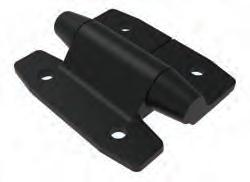
Southco has launched the EC damping soft-close hinge. The EC Damping Hinge brings the same features found in high-end kitchen cabinet hinges to environments where the stakes are much higher than a slamming door making a loud noise. The EC Damping Hinge can removing the risk of personal injury or equipment damage from a slamming door or lid, according to the company. Southco’s soft-close EC Damping Hinge uses an embedded torque engine to generate resistance only when it’s needed the most. The embedded torque engine also makes the EC Damping Hinge’s profile nearly identical to some free-swinging surfacemount hinges. www.southco.com

Allegion announced the release of a series of enhancements to their LCN 2800IQ and 9500IQ Senior
Swing series operators, including the patentpending, self-adjusting technology, AdaptivIQ. Built for durability and efficiency, the LCN Senior Swing offers performance in heavy-use applications including health care, offices and other high-traffic areas. From the fully loaded controller to AdaptivIQ and Smart Power Boost technology, this self-adjusting, selfcalibrating automatic door operator reacts to seasonal and daily variations and external pressures like wind, carpet drag and HVAC stack pressure, allowing consistent operation and less ongoing maintenance. Installation is simplified with new hook-and-cleat hardware, allowing easier and safer hands-free holding of both the motor gearbox and control box during setup. The new control box offers 23 customizable user settings, an intuitive LCD screen, a self-calibration cycle and real-time diagnostics. www.allegion.com

Salto has launched XS4 Face, a face recognition access control solution which requires only a face as a credential and grants access in under a second, according to the company. XS4 Face features simplified hardware installation and automated software configuration and commissioning, with no third-party software or
additional integration required. XS4 Face enrollment and onboarding can be done on any device. Salto says XS4 Face is designed “with privacy at its core” — the local, on-premise system does not store any images. When a user approaches the XS4 Face camera, their image is captured and converted into a biometric template for comparison with the gallery of enrolled users.
www.saltosystems.com
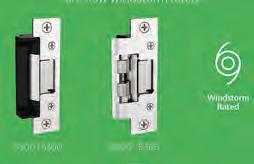
HES, an ASSA ABLOY Opening Solutions brand, announces a new windstorm certification for the 5000, 5300, 8000, and 8300 Series electric strikes. The electric strikes now carry an ANSI/ SDI 250.13 certified rating to meet an extended range of door security applications. The electric strikes have been enhanced through an engineering redesign, enabling them to meet windstorm and impact requirements without modifications to the installation process. With the new windstorm certification, the 5000, 5300, 8000, and 8300 Series can be used in more environments. www.hesinnovations.com
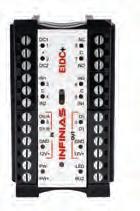
The INFINIAS EIDC+ from 3xLogic is a next-generation access control single door controller. From a single door at a small business, to large-scale deployments,
this compact, scalable device supports single-door and multi-site IP-based access control systems and manages thousands of credentials. With INFINIAS offering both cloud-based and on-premises options, organizations can tailor access control to meet their evolving security needs. The unit offers upgraded memory, NIC and processing power and support for both OSDP and Wiegand readers. www.3xlogic.com
GARDiS Pro Version 3.1 is the latest iteration of GARDiS Access Control Management Software. GARDiS 3.1 introduces expanded biometric support and intelligent credential management, delivering improved hardware reporting capabilities and new thirdparty integration options, says the company. Version 3.1 adds support for the Digitouch Biometric Reader, enabling fingerprint authentication, and introduces automatic credential status updates to strengthen access control management. Administrators also benefit from customisable event log retention. Additional refinements include a new Duress PIN alert function for discreet security responses and multiple backend performance enhancements. www.tdsi.co.uk

WaveFusion from Wavestore is a unified physical security management solution that the company says fuses video surveillance, access control, intrusion and loT devices into a cloud-first, open API platform. WaveFusion manages video footage, handles access control events and draws upon and controls analytics from any modern browser or mobile device, states the company. According to Wavestore, features include: a cloudnative, AWS-powered access control foundation with intelligent automation and alerts; live maps and floorplans; integrated video intelligence and forensics, with recording, playback and analytics. Created on HID/ Mercury controller architecture, it includes options for on-premises, encrypted video servers. www.wavestore.com

Genetec announced new investigation capabilities in Genetec Security Center SaaS that will help
organizations resolve incidents faster, according to the company. Building on the intelligent search capabilities introduced last year, Genetec says it is delivering investigation tools that enable teams to work more efficiently in complex environments by keeping evidence, decisions and contextual information connected from the first incident report through to case closure. The new investigation capabilities bring together tools such as natural language search, similarity detection, entry and exit detection, contextual analysis, visual trajectory search, and case and evidence management. The new investigation capabilities were introduced in February, with additional functionality rolling out on an ongoing basis. www.genetec.com

Johnson Controls announced the launch of Metasys 15.0, its flagship open building automation system. New features include support for 50,000 objects and up to 1,000 IP devices per server, along with multi-server redundancy offering simultaneous backup and a preconfigured ready-to-use Energy Management suite
that provides real-time insights and actionable data. Metasys 15.0 can be scaled across multiple buildings and sites for mission critical industries such as healthcare systems, data centres and large campuses. Metasys 15, along with previous iterations, is recognized for its ability to support a wide range of third-party IT and OT protocols such as BACnet, MSPP, M-Bus and more.
www.johnsoncontrols.com
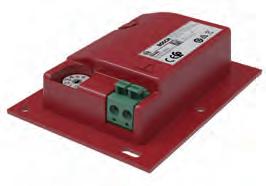
The new Bosch PRAESENSA PRA-EOB end-of-branch device has been developed to support supervised multi-branch loudspeaker lines which is a requirement for emergency sound systems. Fully compliant with EN 54-16, it targets installations where speaker lines are configured in tree or star topologies as often seen in expansion or retrofit projects. The PRA-EOB is connected at the end of a loudspeaker line, after the last loudspeaker of a series of looped-through loudspeakers. Beyond supervising branches, it can also be used to monitor individual loudspeakers. The PRA-EOB allows for individual supervision of each loudspeaker line branch, contributing to system integrity and supporting fault detection across more complex cable topologies. www.keenfinity-group.com

Command Centre v9.40 introduces new capabilities for the Controller 7000 product range. With Command Centre v9.40, Gallagher’s Controller 7000 product range, including the Standard, Enhanced, and High Security variants, now supports the optional licensing expansion of up to 24 doors per controller, more than doubling the previous limit of 10. Command Centre v9.40 also introduces Lock Cycle Counting, a new feature designed to support proactive maintenance strategies. Also available with v9.40 is Entra ID single sign on. The Command Centre integration with Microsoft Entra ID for single sign on, enables secure authentication using OpenID Connect. security.gallagher.com
IONODES announced the release of the PERCEPT BC200 body camera, providing connected video technology for frontline workers, security professionals, and law enforcement. Built on an open-platform architecture, the PERCEPT BC200 combines a redesigned form factor with advanced IoT capabilities, real-time streaming, and video analytics through partners.
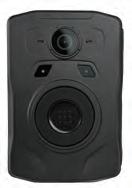
The PERCEPT BC200 provides video quality with advanced low-light sensitivity and a 180° diagonal field of view. The BC200 is enhanced with integrated sensor support including motion detection, elevation tracking via a barometric pressure sensor, and external Bluetoothenabled sensors. Its hardware platform meets TAA and NDAA compliance standards and is designed, engineered and assembled in North America. www.ionodes.com
Connected Technologies announced an update to the Connect ONE platform. Connect ONE’s Camera Motion & Analytical Event Capture leverages video analytics to automatically detect and capture camera

alerts. Real-time analytics are streamed into Connect ONE where they are logged, generate notifications, and can be viewed in context alongside related intrusion and access control activity. Video-detected events interact with other connected systems, turning on outputs, locking doors, and triggering mass notification for audio alerts and digital signage announcements. According to the company, live camera streams remain open while users review activity, control access doors or automation tasks, change user codes, or perform other functions. connectedtechnologies.us

PAK ONE is a compact, single-output, singlechannel 4K decoder designed for modern control rooms. The newest addition to VuWall’s PAK family, PAK ONE supports a wide range of decoding formats, including H.264, H.265, VNC, Application Server G2 sources, and proprietary streams from the VuStream 350. PAK ONE integrates natively with VuWall’s unified ecosystem, enabling operators to manage content distribution alongside TRx video wall management software, Application Server G2, and other PAK family devices. Its design allows for rapid deployment in a variety of environments. www.vuwall.com
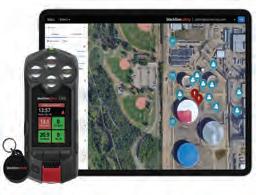
G8 combines advanced gas detection, lone worker protection, and radio-quality communication in a rugged device that connects workers to each other, to their safety teams, and to the broader digital worksite — with real-time data streamed to the cloud. G8 builds on the foundation of Blackline’s G7 line, while introducing new capabilities. G8 features
include: Advanced gas detection; lone worker protection; dual-band GNSS/GPS (L1/L5); access to ZoneAware geofencing; Push-to-Talk; emergency voice calling; text messaging; and more. A 4-colour backlit display is approximately double the size of Blackline’s G7 display.
www.blacklinesafety.com

announced enhancements to its VORTEX cloud platform, introducing the generative AI-powered “Think Alert” feature alongside advanced personal safety detection capabilities. To further expand its cloud security ecosystem, VORTEX has also integrated with multiple access control service providers, enabling convergence of video surveillance and access control within a single operations interface. “Think Alert” is a generative AI capability powered by a visual language model (VLM). With natural-language input, users can define alert rules without complex configurations. When predefined conditions or keywords are detected, the system automatically triggers alerts, reducing response time.
www.vortexcloud.com
AMAG Technology partnered with SwiftConnect to offer a physical identity and access management system that allows streamlined identity management across multiple

access systems. Symmetry CONNECT 2.0 helps customers unify a single identity across disparate physical access control systems. Security operators manage one identity while scaling across multiple, mixed systems and buildings. From the same view, operators can manage credentials, access rights and roles, onboarding and offboarding, and approvals. Symmetry CONNECT centres on five core processes: onboarding/ offboarding, centralized policy enforcement, selfservice access requests, streamlined user experience, and audit and compliance. www.amag.com
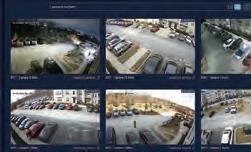
Hakimo Forensic Search is a new capability that allows security teams to search and investigate video footage using natural language without the need of server infrastructure. With Forensic Search, users can type queries like “person in a red shirt,” “person opening car door,” or “red car in parking lot,” and retrieve relevant moments from hours or days of recorded footage in seconds. The feature also includes filters for camera, location, and time range. hakimo.ai