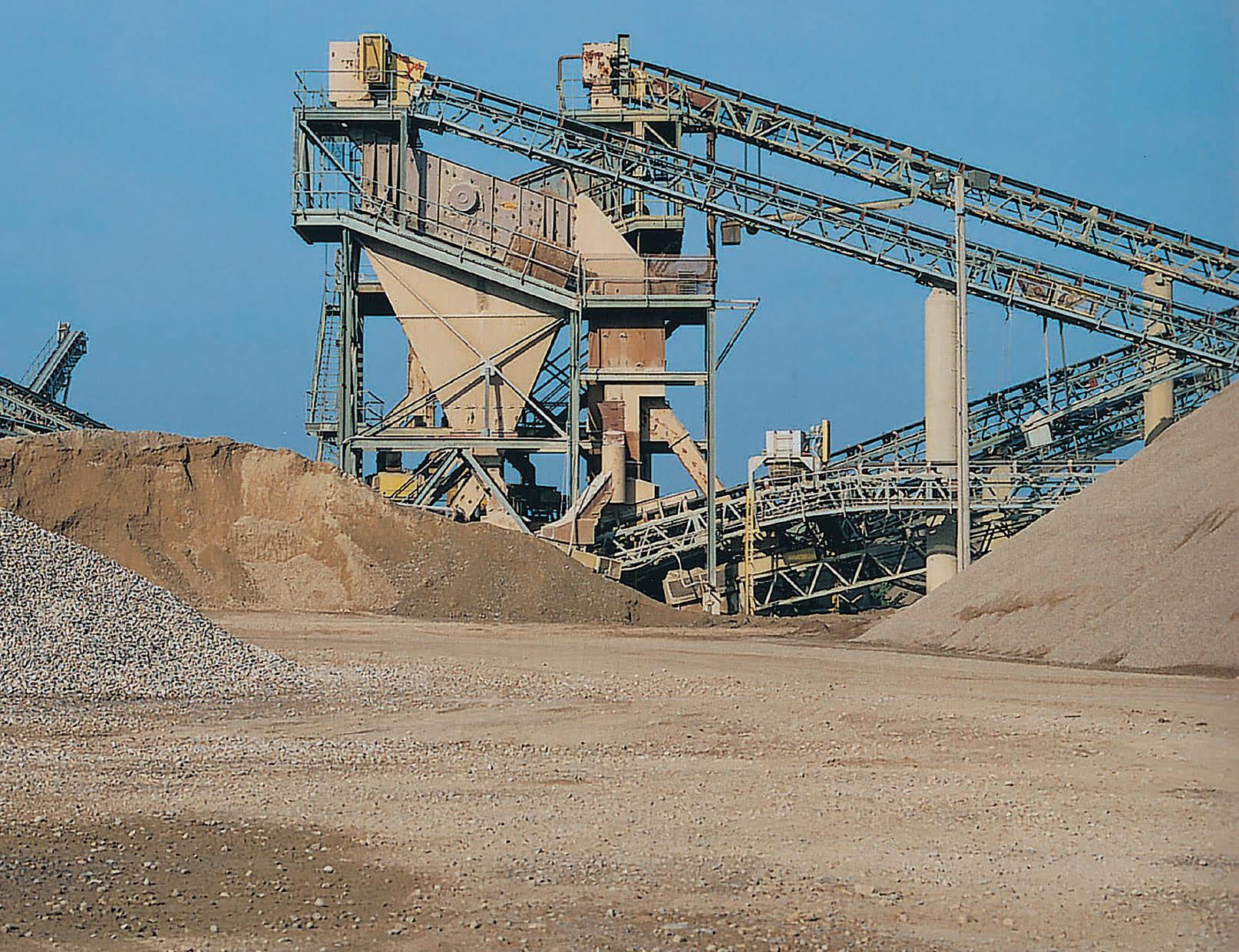
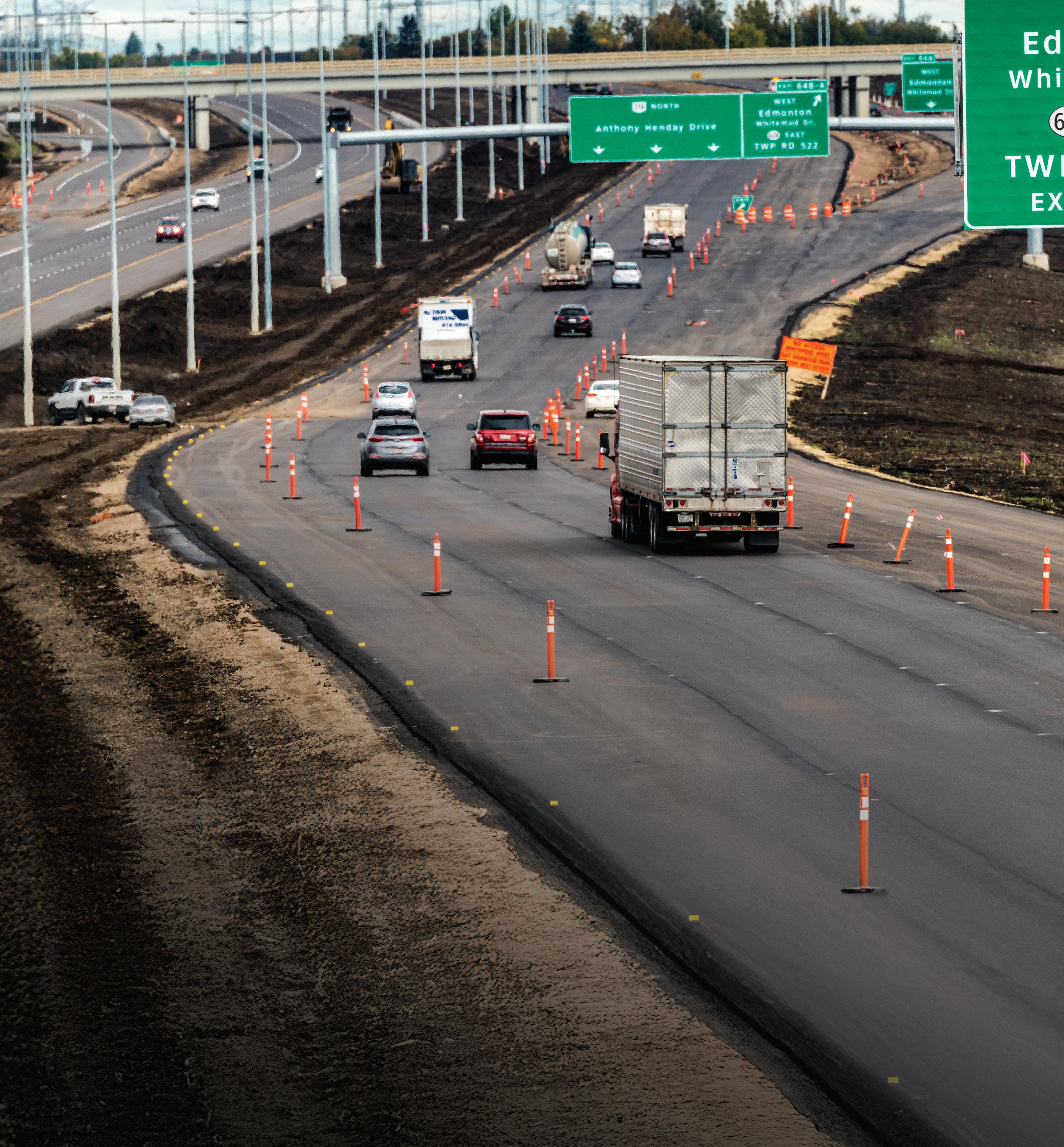
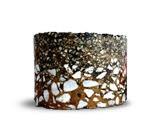
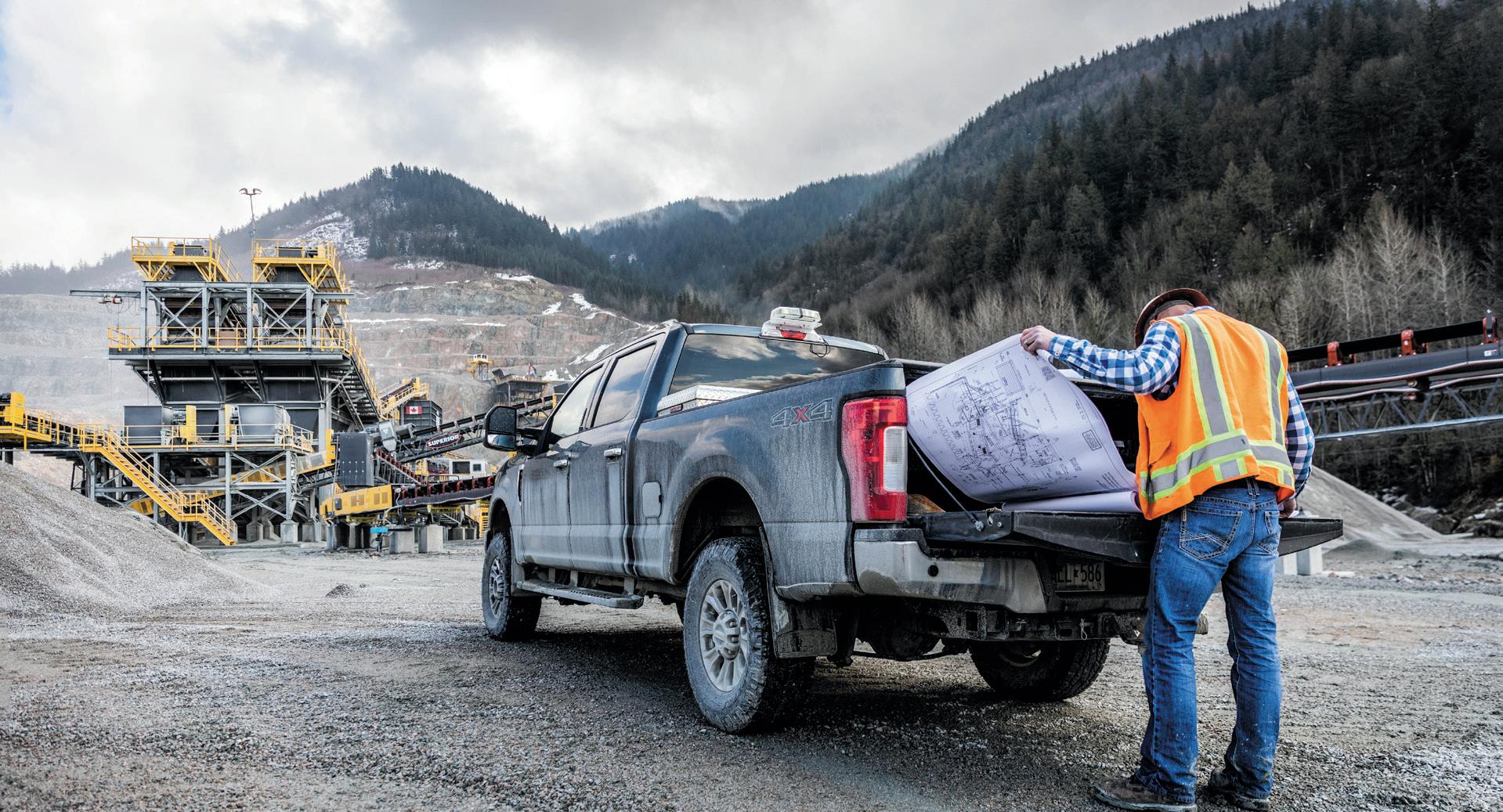
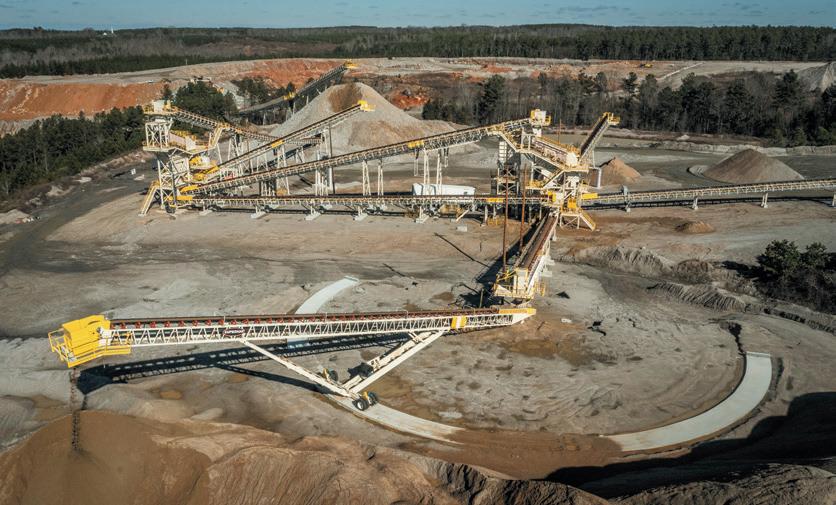
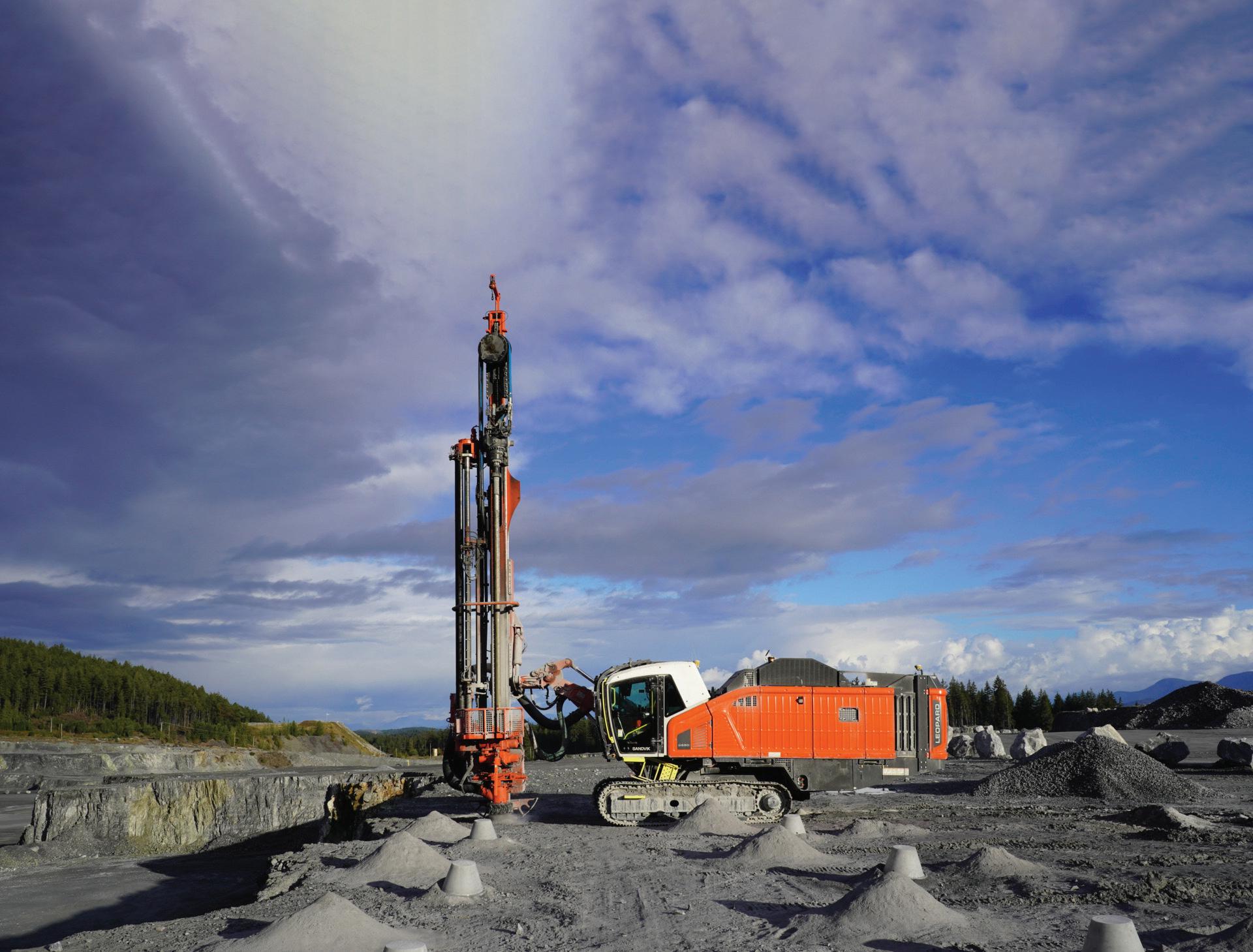
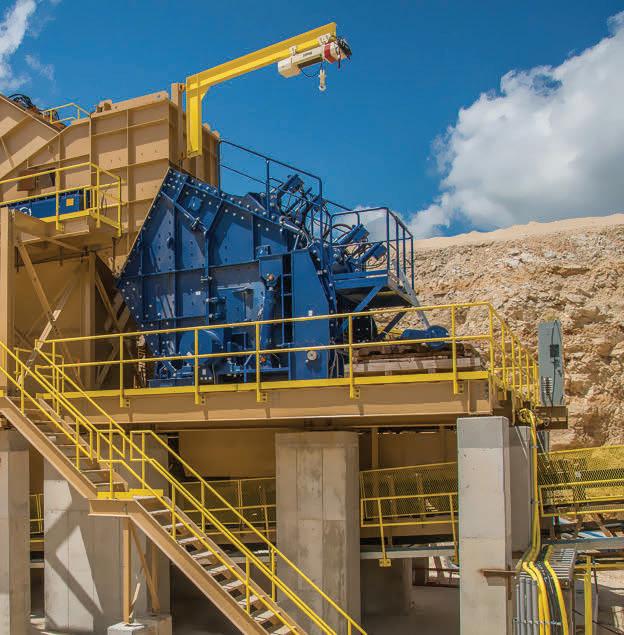
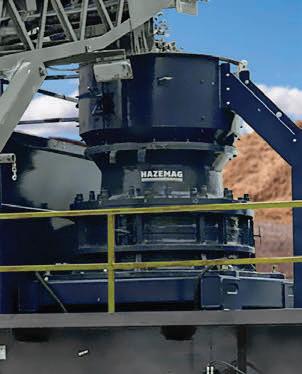
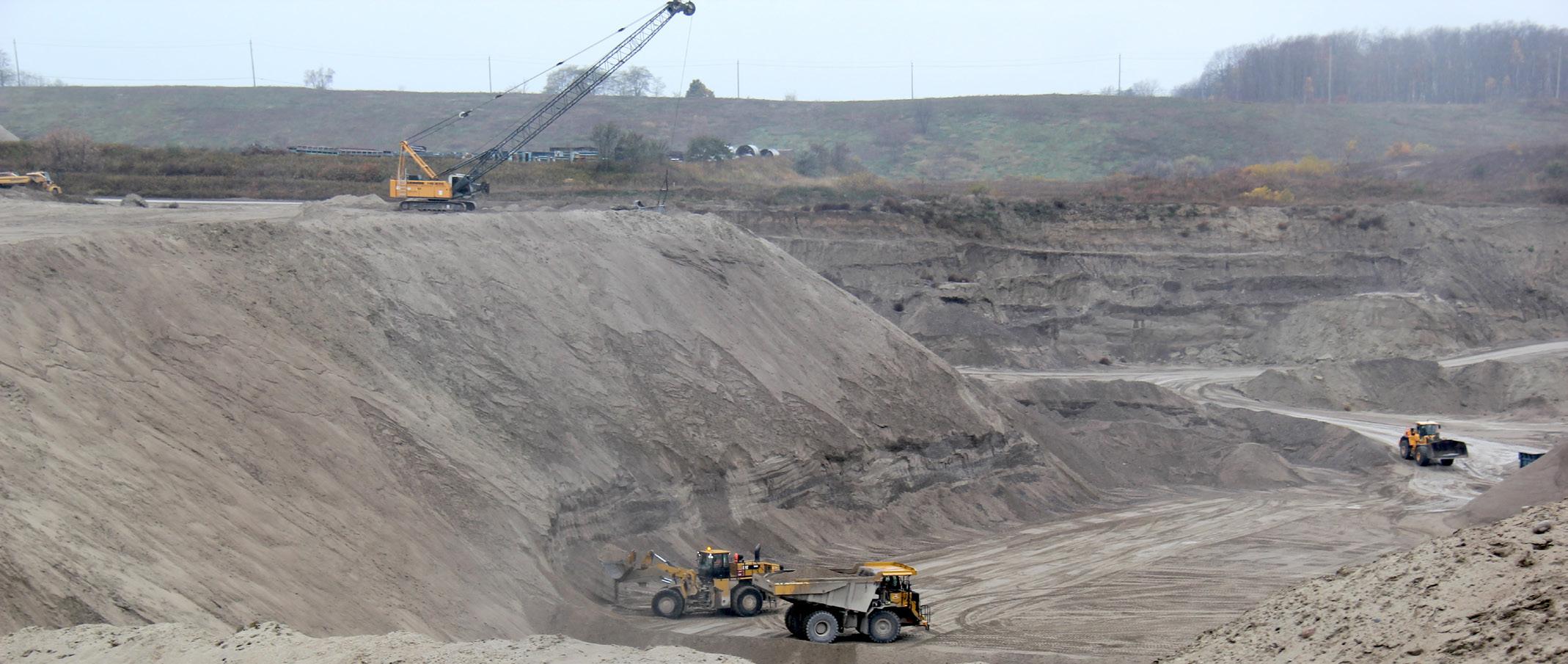
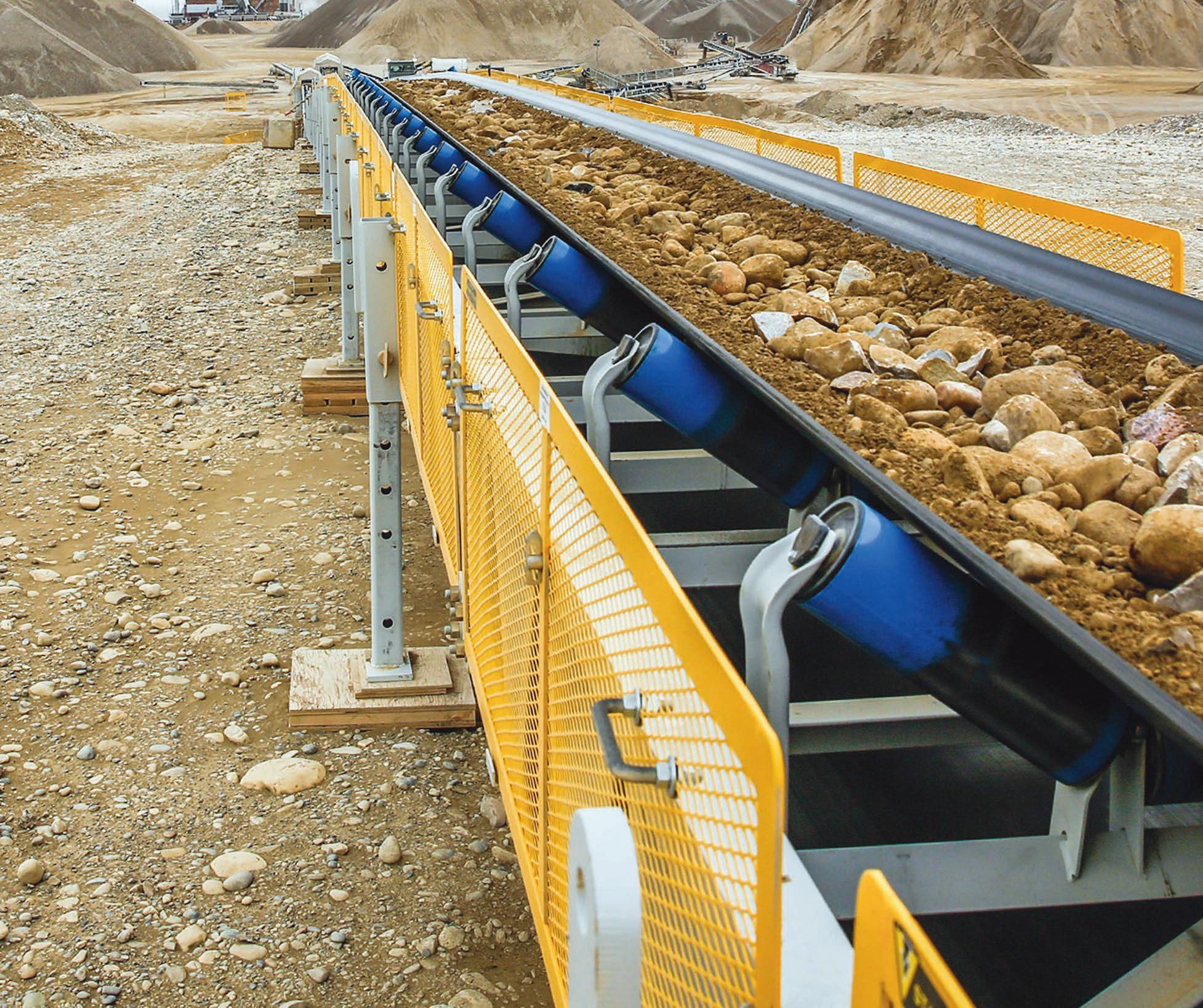
Amrize pit serving the Greater Toronto Area provides a million tonnes of aggregate a year.
8
10
CONEXPO-CON/AGG preview
We highlight some of the equipment being revealed at this year’s show.
Working smarter
Amrize Building Materials is utilizing Wingtra drones, smart-drilling, AI water mapping and 3D intelligence at its Texada Island Aggregates site in British Columbia.
12 Maintenance matters
Keep your screening equipment humming with regular, visual inspections.
20
Managing silica dust risks
A free online risk assessment tool protecting workers from the dangers of respirable crystalline silica exposure is now available for surface mining operations.
22
Cold weather construction
Expert insights on the challenges of cold weather road building. 26 Equipment Spotlight: Compactors
and rollers
We highlight the latest compactors and rollers on the market.
What do you expect to see in 2026?
Usually, the January edition of Rock To Road features interviews with leaders from across the aggregate and construction industry to collect thoughts on what to expect for the sector in the next year.
We had planned on doing the same this year but decided otherwise after giving it more thought.
Unfortunately, and due to no one’s fault, last year’s article was not a great reflection of what 2025 would look like. Few of us could predict just how much the world would change in such a short amount of time.
So, I didn’t want to repeat the same mistake.
Hopefully, one thing this past year has achieved is to focus all of us on ensuring our own house is in order. While our prime minister is touring the world in a bid to successfully diversify our trade arrangements so we are not so reliant on the United States (and, as a result, in a weakened position), regionally and provincially we must tighten up the home front.
Derek Holmes, executive director of the British Columbia Stone, Sand and Gravel Association, anticipates homebuilding and related infrastructure projects to support such development will be the biggest market for B.C. aggregate in 2026.
That view is shared by Sharon Armstrong, interim director of the Ontario Stone, Sand and Gravel Association.
However, both note that a major roadblock to all of this is a complex regulatory system.
“There is a federal and provincial desire to build more homes but the bottleneck is permit processing and regulatory complexity at the municipal level. While the City of Vancouver and a handful of other municipalities are actively working on streamlining applications and decisions it will take a wholesale reform throughout the 21 metro jurisdictions to really move the needle in B.C.’s most populated region,” Holmes says. “The biggest challenge our association hears from membership is the struggle with ob-
taining licences and permits. Timelines in B.C. have stretched considerably in the past five to 10 years with aggregate related permits now taking five or more years to achieve on average. This is up considerably from a decade ago, trending in the wrong direction and leading to more business uncertainty and costs for consumers in the long run.”
It’s a similar situation in Ontario, Armstrong notes.
“Licensing timelines of seven to 12 years remain the biggest barrier, driven by excessive red tape and overlapping processes at municipal and provincial levels. Municipal attempts to alter Official Plans or push applications to the Ontario Land Tribunal add delays, underscoring the need to reaffirm aggregate as a provincial resource under the Aggregate Resources Act and Provincial Planning Statement,” she states.
Also adding to issues in Ontario is the lack of a clear consultation plan with Indigenous communities.
“Of the 31 aggregate sites in final approval stages, 25 remain pending, some for years, while the province determines how to discharge its duty to consult,” she says. “In many cases, original Indigenous partners have already signed off — only for the province to add new communities at the last minute. Ontario needs faster, more predictable processes to unlock new aggregate reserves and secure the stable supply required for critical infrastructure and future growth.”
Unlike the need to diversify trade or bring in foreign dollars to fund capital projects, these are problems Canadians can solve.
But it requires a collective will to see the bigger picture, listen to legitimate concerns and broker reasonable approaches.
This won't always make everyone happy, but it will at least move us forward at a quicker pace.
mlacey@annexbusinessmedia.com
MIKE lacey
NEW IntelliPac ™ Moisture System
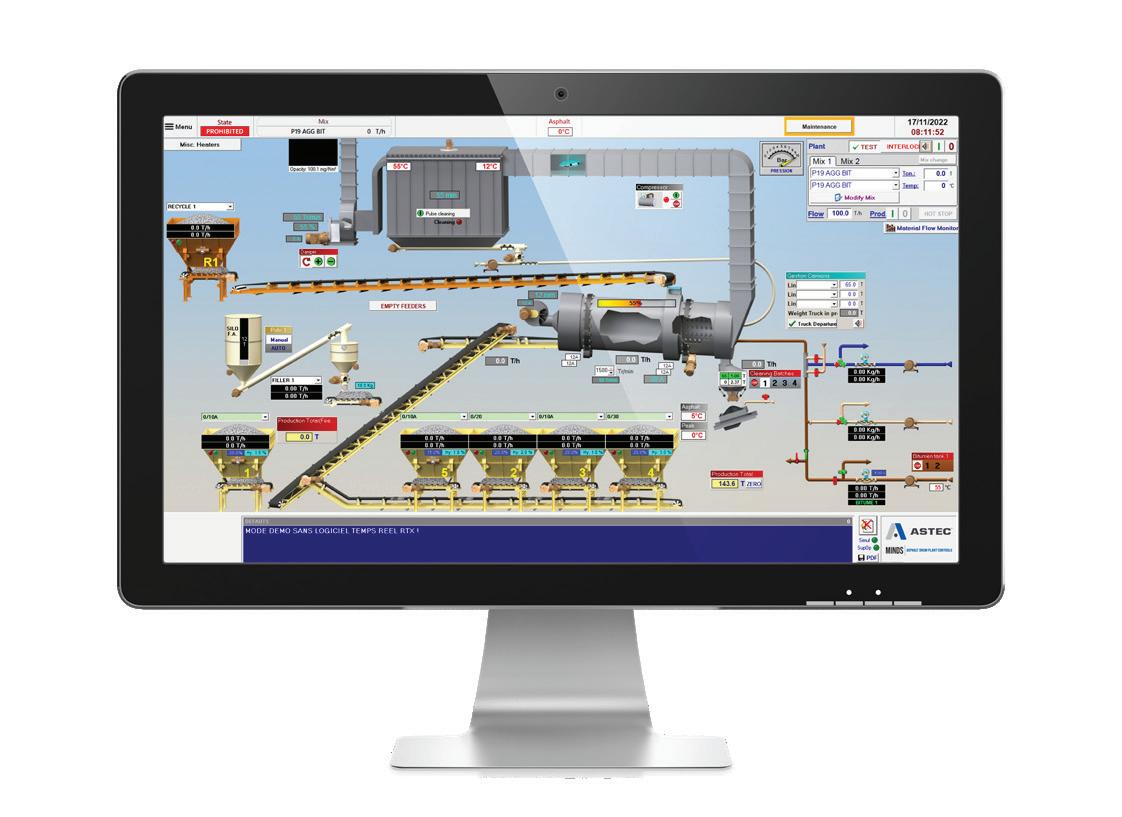
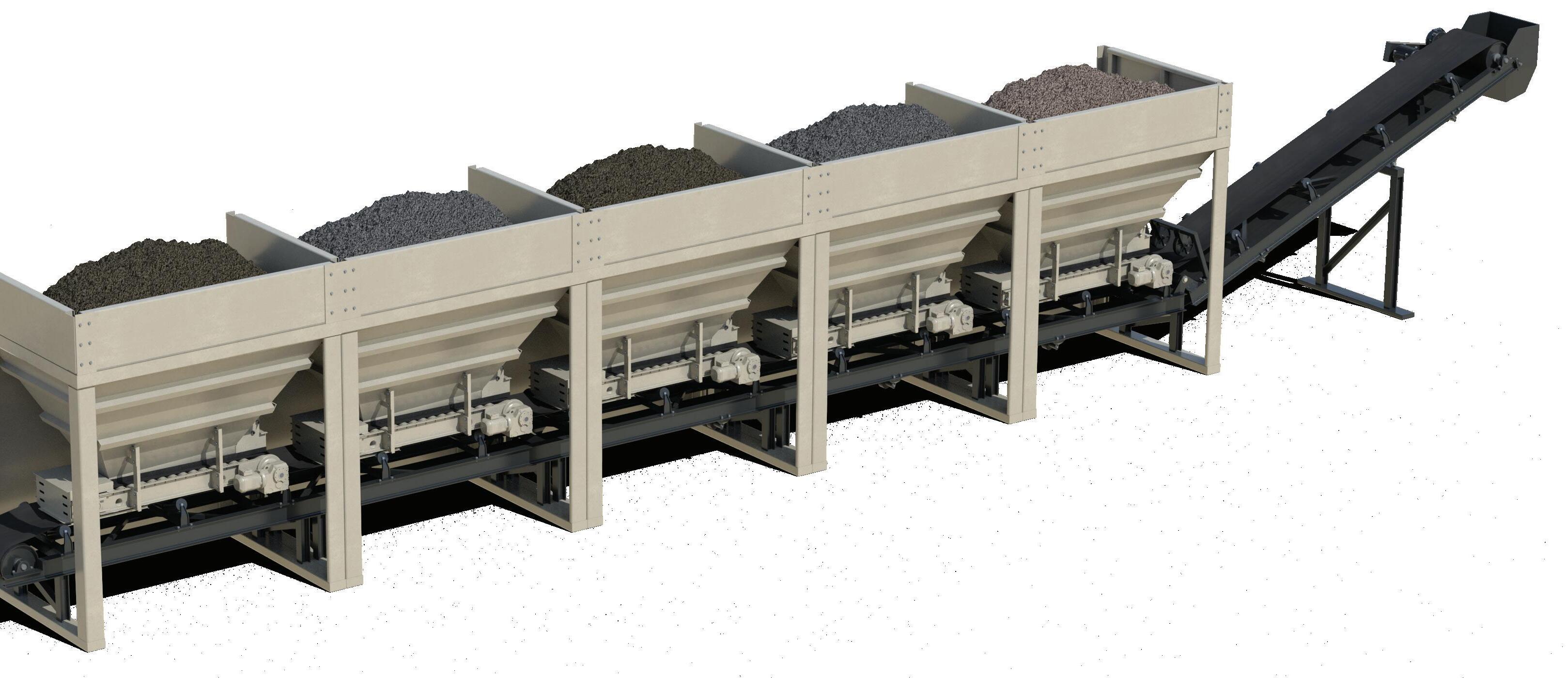
Astec paves the way for sustainable, innovative asphalt plants. The new IntelliPac Moisture System is a revolutionary solution that integrates seamlessly with Astec control systems. This provides unparalleled, real-time visibility into virgin aggregate moisture content. IntelliPac empowers operators to optimize mix design, minimize energy consumption, and reduce environmental impact. With Astec, you get superior asphalt production – better for the environment, better for your business.
BUILT TO CONNECT
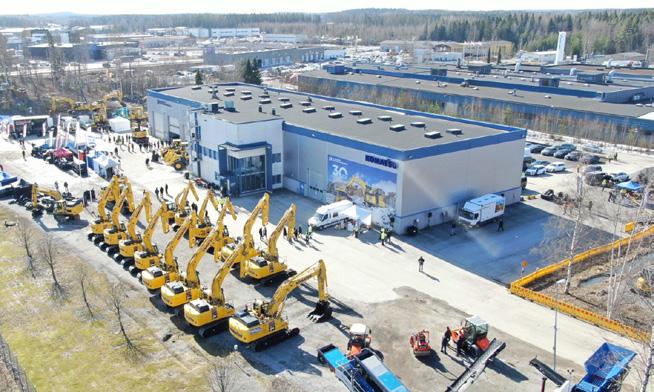
SMS Equipment expands into Europe with acquisition of leading Finnish distributor of construction and mining machinery
SMS Equipment is expanding into Europe with the acquisition of one of Finland’s leading distributors of construction and mining machinery.
On Jan. 22, the Canadian heavy equipment dealer announced it was buying Finnish company Suomen Rakennuskone Oy. The purchase expands SMS Equipment’s global footprint, which also includes operations in Alaska and Mongolia.
Established in 1992, Suomen Raken-
nuskone Oy provides heavy equipment sales, maintenance, parts, training and technical support to customers across
Great Lakes limestone shipments fell below five-year average in 2025
Limestone shipments on the Great Lakes decreased in 2025, according to a report from the Lakes Carriers’ Association.
The association says that limestone shipments totalled 26.6 million tons last year, indicating a 5.9 per cent decrease from 2024. Loadings in 2025 also fell below the trade’s five-year average by 6.7 per cent.
Canadian quarries shipped 4.9 million tons in 2025, a 9.7 per cent decrease from 2024. December shipments from Canadian ports also decreased from 257,370 tons in 2024 to 232,451 tons in 2025. Canada’s 2025 shipments fell 13.9 per cent below the 2020 to 2024 five-year average of 5,694,383.
Finland. Headquartered in Pirkkala, the company operates branches in Kempele, Kuopio, Vantaa, and Kevitsa, and is the nation’s exclusive dealer of Komatsu mining and construction equipment. In addition to supporting Finland’s construction industry, Suomen Rakennuskone Oy serves the country’s growing mining sector, which is anchored by nickel and gold production, and supported by significant reserves of cobalt and lithium.
Elationtech chosen as new Canadian dealer for Makin
Makin has announced Elationtech as its new authorized dealer in Canada.
The company says this partnership marks an important step in strengthening Makin’s presence in the Canadian market and providing local customers with enhanced access to advanced machine control technology and support.
Elationtech will represent, sell and support Makin’s machine control solutions across Canada.
Makin says this will provide customers with localized expertise, fast response times and comprehensive service throughout the entire project lifecycle.
Elationtech provides technology solutions and support to the construction and civil engineering sectors. Makin says adding its machine control solutions will expand Elationtech’s ability to deliver tools that improve productivity, precision and project outcomes.
The partnership is effective immediately. Customers in Canada can now contact Elationtech directly for sales inquiries, demonstrations, installation, training and support related to Makin’s products.
PLENTY TO SEE
CONEXPO-CON/AGG 2026 takes place March 3 to 7
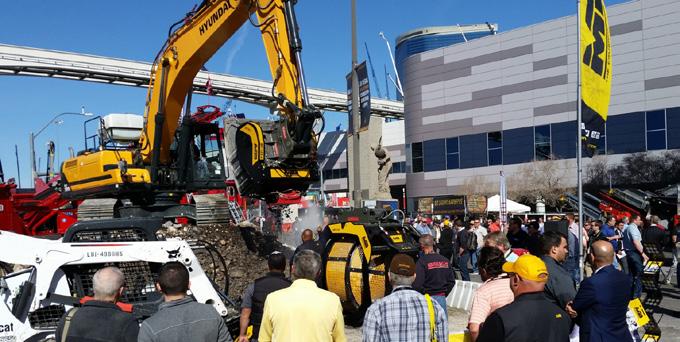
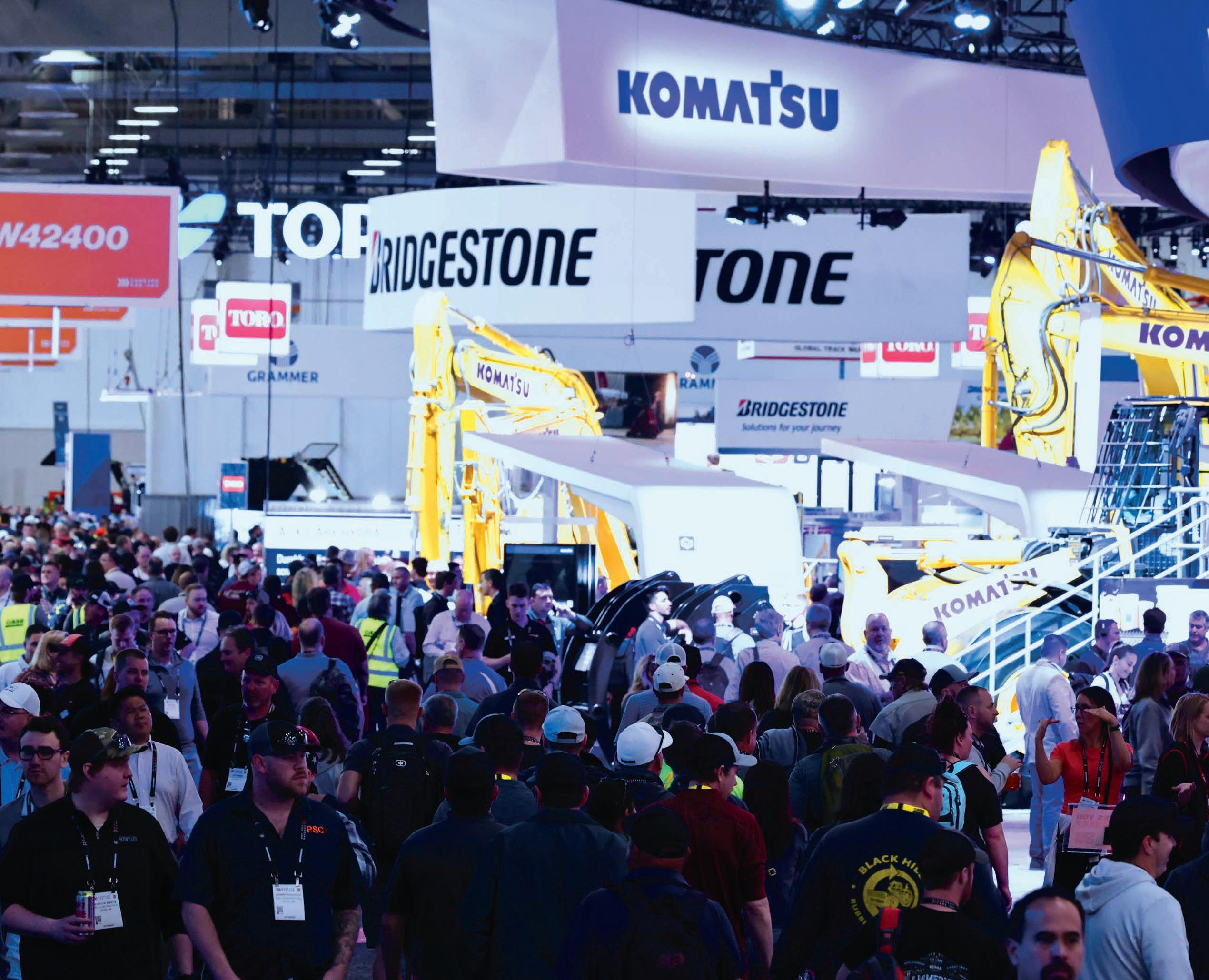
> With CONEXPO-CON/AGG 2026 closing in, companies have been busy announcing what they will showcase at the March 3 to 7 show in Las Vegas.
Here is a roundup of what will be on display.
SUPERIOR INDUSTRIES BRINGING NEW EQUIPMENT AND IDEAS
Superior Industries is returning to CONEXPO-CON/AGG with its largest outdoor footprint yet. The company will showcase new equipment, system-wide solutions, and hands-on experiences. Here are some of the new products making their debut in Las Vegas:
• High Frequency Screen Plant: This new plant pairs a multi-slope six by 20 foot two-deck design with a vibrating feed box that spreads material evenly.
• Next-Generation Cemco Vertical Shaft Impactor: This redesigned crusher merges the strengths of the legacy Cemco platform with features from Superior’s Valor VSI.
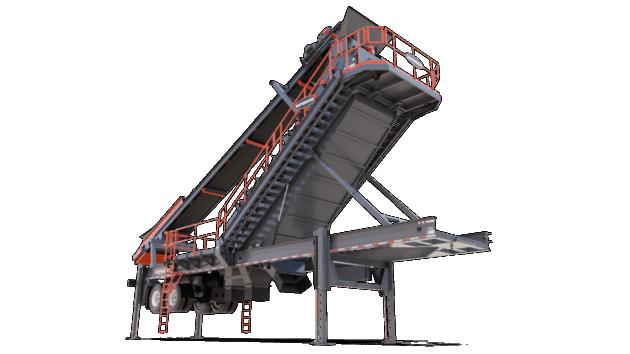
• Self-Contained Portable Radial Stacker: This redesigned self-contained stacker has had updates to the truss depth, power supply and load zone hopper.
VOLVO CE WILL SHOWCASE NEW EXCAVATOR MODELS
Volvo CE is highlighting new and updated models in its compact and full-size excavator series ahead of CONEXPO-CON/AGG 2026.
The company announced the launch of three new-generation models in its compact
BY RTR STAFF
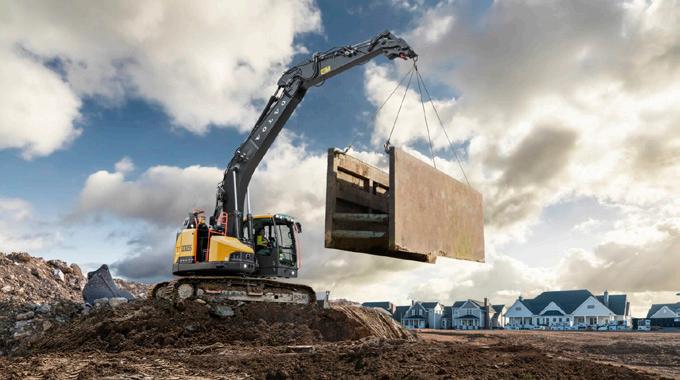
excavator lineup (the ECR90 short-swing, EC65 crawler and EW65 wheeled), the new ECR255 short-swing crawler excavator, and updated versions of its EWR150 and EWR170 wheeled excavators.
Volvo CE will display the ECR90, EC65, ECR255, and EWR170 at Booth F24029.
Volvo Ce is also introducing an overhauled A60 articulated dump truck.
Volvo CE says the A60 delivers 15 per cent better fuel efficiency and five per cent higher productivity than its predecessor. It also features multiple safety- and performance-boosting technologies.
HAVER & BOECKER NIAGARA REVEALS INTERACTIVE EXHIBIT FOR CONEXPO/CON-AGG 2026
Haver & Boecker Niagara will unveil its largest booth to date at CONEXPO-CON/ AGG 2026.
The company will offer attendees an interactive look at its latest mineral processing technologies at Booth C32616 in Central Hall. The booth is designed as an immersive, museum-style experience. It will feature multiple rooms highlighting end-to-end solutions and include live demonstrations of the company’s advanced screening solutions.
MCLANAHAN TO HIGHLIGHT RANGE OF C&D RECYCLING EQUIPMENT
McLanahan will return to CONEXPOCON/AGG 2026 to display its latest crushing, screening, washing and tailings solutions for the aggregate industry.
The company will also display their complete range of C&D solutions at booth C30415.
McLanahan will showcase a variety of key equipment for both wet and dry processing of sand, stone, gravel and other aggregate materials, including an UltraSAND Plant, a redesigned Impact Crusher, a Horizontal Screen, a new Hard Metal Pump and a Hydrocylcone and Separator.
MB CRUSHER WILL FEATURE TWO BOOTHS AND TWO DEMO ZONES
MB Crusher will include two fully interactive spaces in its display at CONEXPO-CON/ AGG 2026.
The company will celebrate 21 years since its first appearance at the event with two booths and two demo zones. These will be located at Platinum Lot Booth P7733 and Silver Lot Booth SV2045.
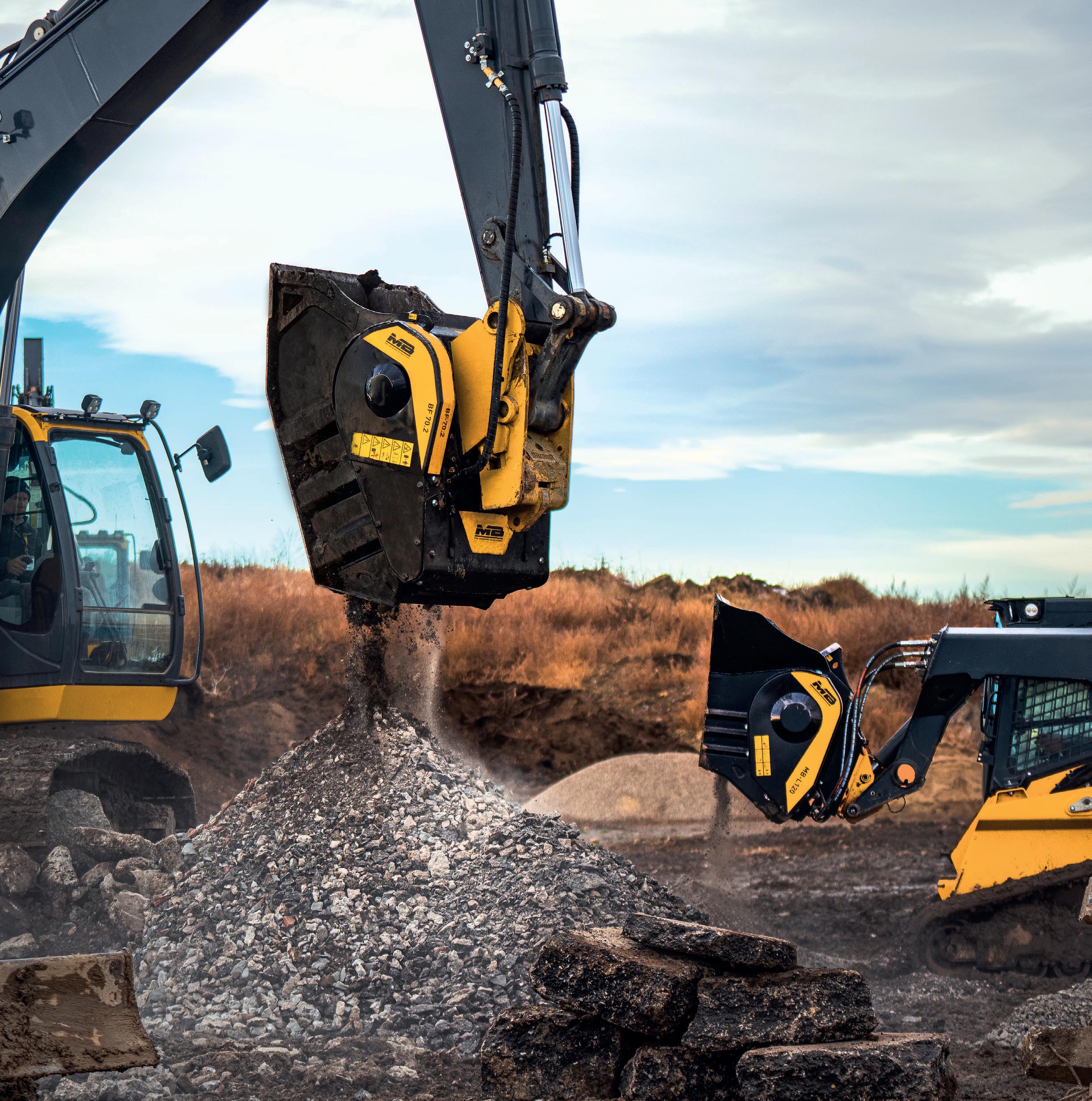
MB Crusher will display its large equipment including crushers, screeners, pulverizers and grinders. The company’s displays will also include special, well-known guests. MB Crusher says attendees will recognize more than one face if their social media explore pages are filled with construction and machinery.
BY MACENZIE rebelo
Amrize Building Materials' Texada Island Aggregates site utilizing innovative tech
WORKING SMARTER
> Amrize Texada’s vision for an innovative facility was brought to life when artificial intelligence (AI) and drones were combined to enhance operations.
Amrize Building Materials (previously Lafarge Canada) has implemented Wingtra drones, smart-drilling, AI water mapping and 3D intelligence at its Texada Island Aggregates site in British Columbia.
Amrize states this move was a benchmark for modernization for the company. Andrew Simms, senior operations manager and Lincoln Kyne, regional president, aggregates and construction materials (ACM) at Amrize Building Materials, explain how Amrize Texada is redefining quarry operations in Canada.
HOW HAS AI WATER MAPPING ENHANCED OPERATIONAL PLANNING AND PERFORMANCE PROCEDURES?
Simms: Through Propeller’s integrated software, including AI water mapping, we’re able to capture predictive data of the mine in real-time. While the AI water mapping helps show the seasonal flow of surface water, the primary factor behind smarter production and performance procedures is the geo-chemistry mapping component powered by our team’s data input. The program equips us with a thorough understanding of our limestone deposit by providing a Google-Earth-like 3D visualization. This model is continu-
ously updated using the data created from the chemical analysis from our borehole placements. Our adoption of this model has been integral in mining the deposit effectively, further advancing our portfolio of tailored, high-quality solutions that meet our customers’ stringent geo-chemical material requirements while also boosting production and reducing overall waste.
IN WHAT WAYS HAS THE INTEGRATION OF THESE TECHNOLOGIES IMPROVED WORKFLOW EFFICIENCY COMPARED TO EARLIER METHODS?
Simms: Traditional survey methods previously used at the quarry relied on manual measurements and third-party survey crews, which were time-consuming and often less precise. With drone-based 3D mapping and automated modelling, we’ve achieved faster, higher-resolution data collection. The team’s expert analysis of this data and the insights gleaned have enabled real-time volume tracking, better blast design accuracy, and more efficient production planning, all while reducing delays and operating costs.
Kyne: As the largest player in Canada, both in production capacity and distribution network, we remain committed to modernizing our operations and delivering solutions for our customers. For more than a century, our organization has been a cornerstone of Canada’s growth story. Now, our transformation into Amrize marks a new era for North American construction, as we lead with pioneering innovation to build the future.
IN
WHAT WAYS CAN AMRIZE TEXADA BE A MODEL FOR OTHER QUARRIES ACROSS CANADA?
Kyne: The transformation of Amrize Texada Quarry operations goes beyond
simply adopting smart technology. The real differentiator lies in how the team applies these tools to drive safer, smarter and more efficient operations, achieving a larger breadth of system integration than what was previously thought possible.
Simms: At Amrize Texada, our team is redefining what is possible in quarry operations in Canada by transforming a traditional high-tonnage mine site into a model of digital innovation. We’re proving that mining can be smarter, cleaner and more precise by weaving together drone intel-
ligence, AI mapping and automated equipment into a fully interconnected operation. This vision goes beyond efficiency. It sets a new benchmark for how technology can elevate safety, sustainability and long-term value in the aggregates industry. Having undergone this digital transformation, we’re not only showing what the future of mining in Canada can look like but also ensuring we remain the supplier of choice, supporting the region’s growing infrastructure and construction needs as the largest mining facility in the Pacific Northwest.
Lead the Market with ME Elecmetal
Born in Mining. Built for Aggregate.
At ME Elecmetal, we don’t just supply wear parts — we engineer performance. With the same grit that built our mining legacy, we now lead the aggregate market in speed, quality, and custom solutions that help distributors outperform OEMs.
Optimization Without the OEM Hassle - Our data-driven tools and expertise make it easier to fine tune performance and improve wear life — without the long lead times or locked-in specs.
Total Product Development Partner - We don’t stop at crushing. We innovate in: apron feeder flights, safety tooling, rubber wear components, reverse- and custom-engineered solutions, and more.
Amrize states the team at its Texada site is redefining what is possible at a Canadian quarry operation. Photo: Amrize
MAINTENANCE MATTERS
Keep your screening equipment humming with regular, visual inspections
> Ongoing, preventative maintenance of screening equipment can reduce costs and improve overall output.
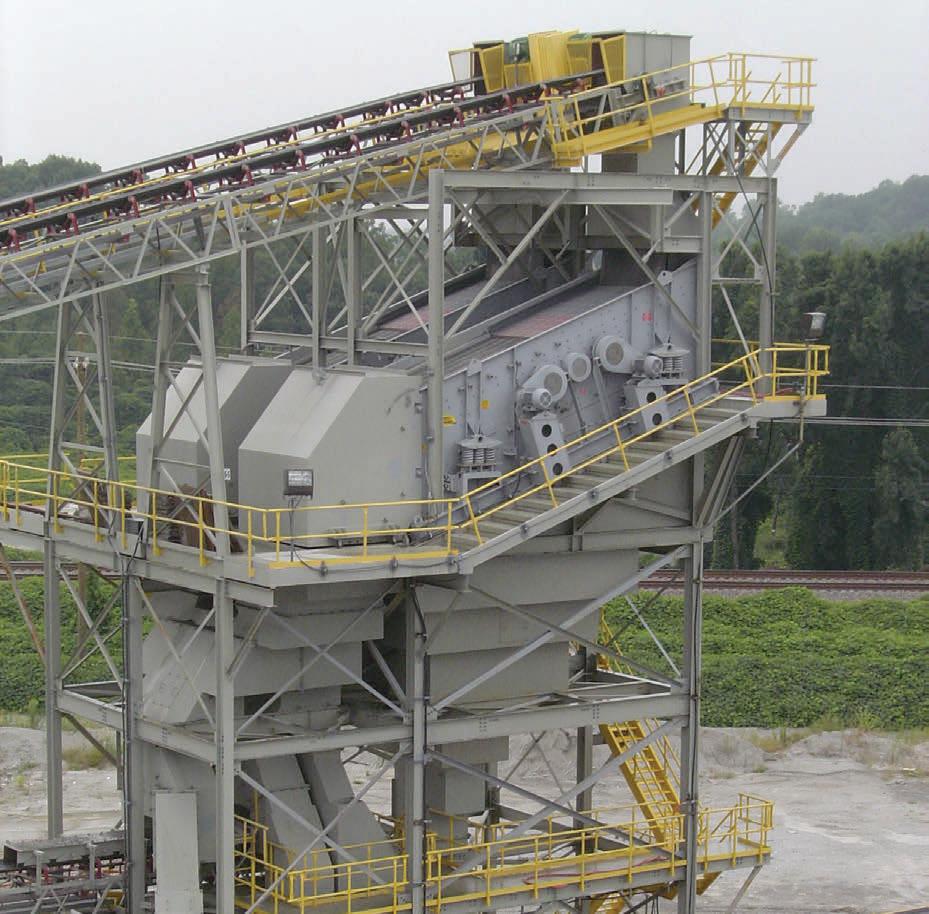
“Small adjustments can make a big difference in output,” explains Ryan Mumm, vibratory engineering manager with Terex MPS (Cedarapids and Simplicity).
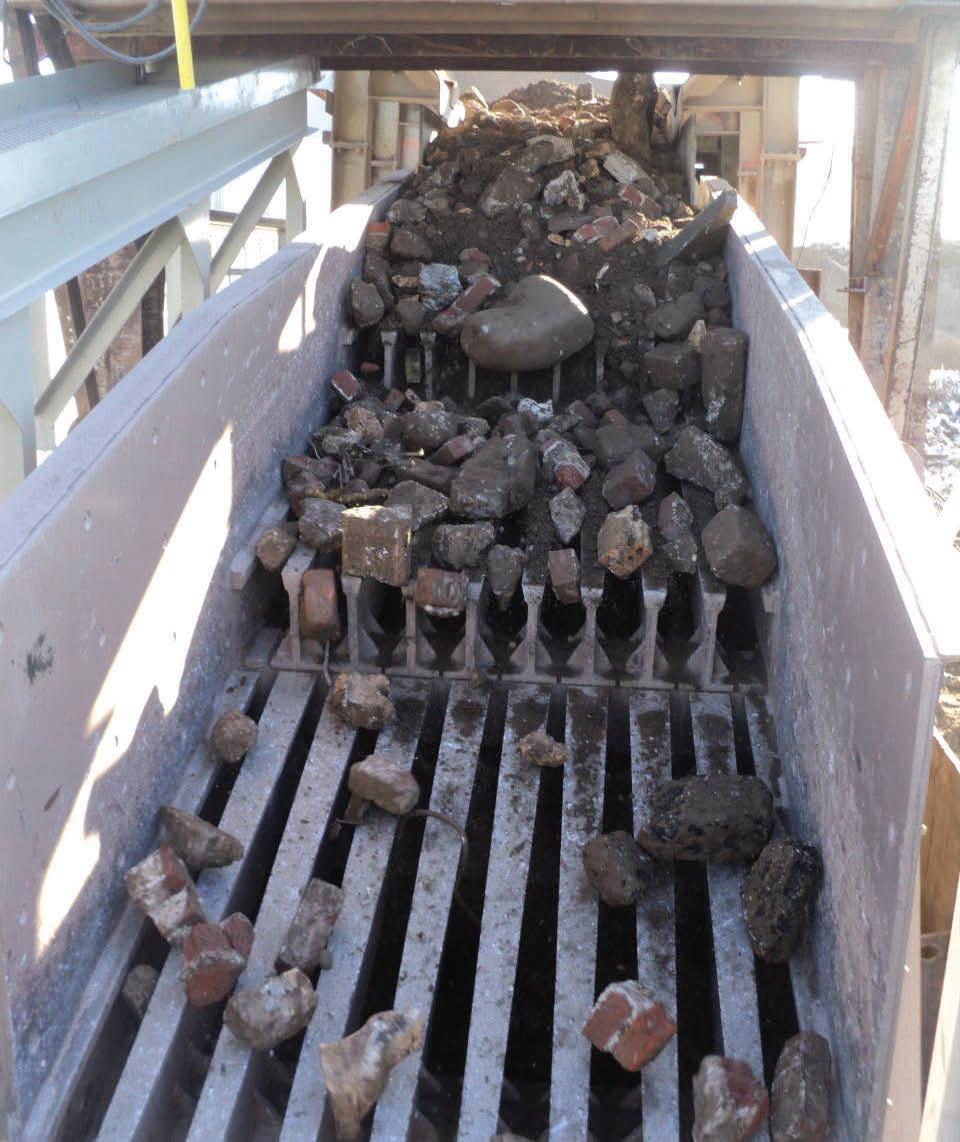
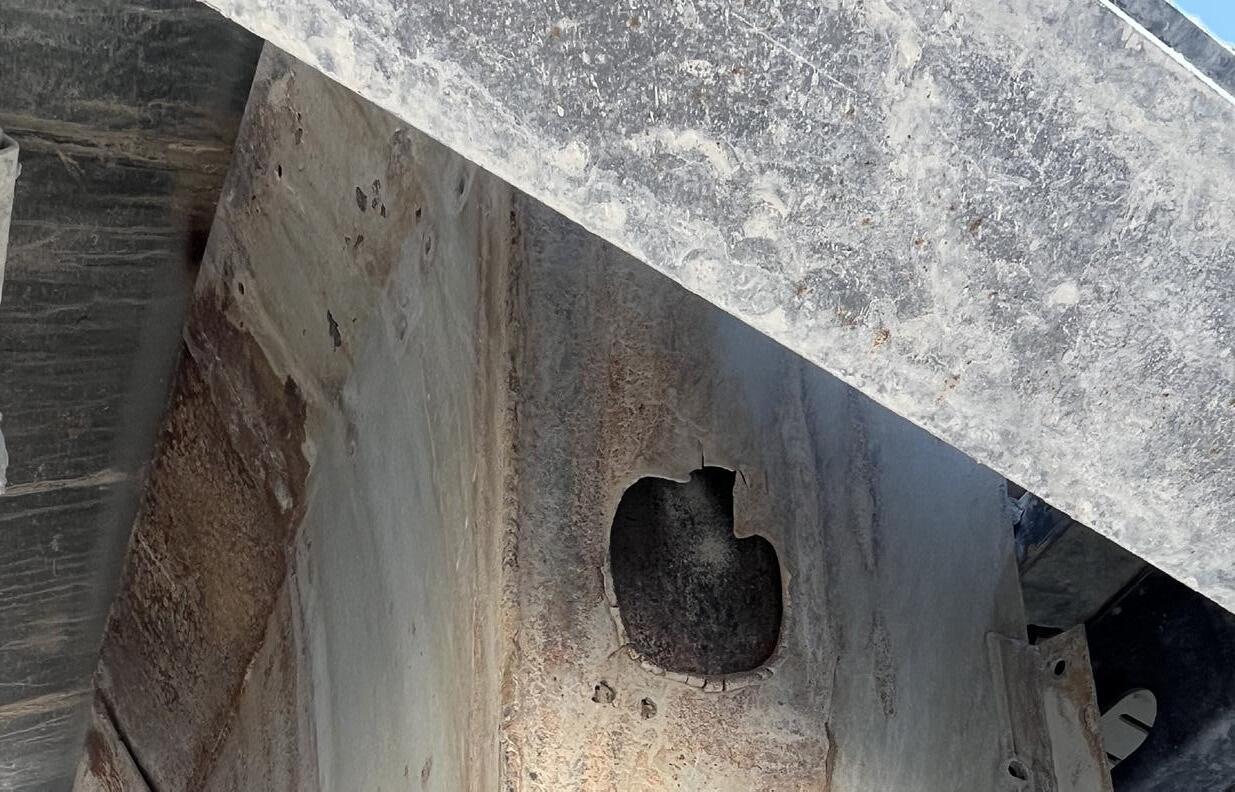
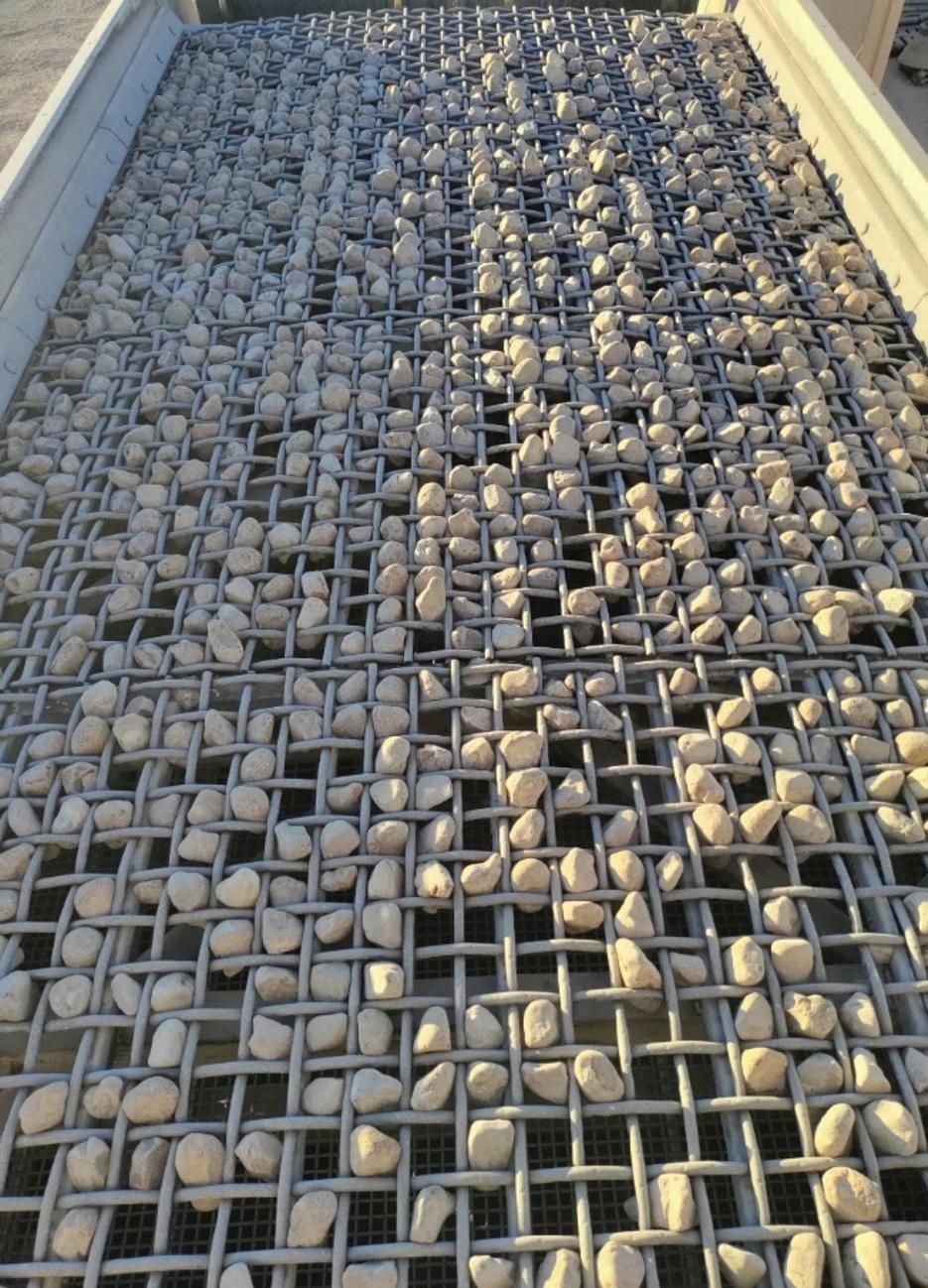
The most common problems Mumm sees on site are worn, loose screen media, broken coil springs, and feed boxes and discharge chutes with holes worn through.
“All of these problems can be caught with a visual inspection. Fixing them quickly is key to maximizing up-time and output,” he says.
Routine oil changes, suspension inspections and screen media inspections, including removing material built up around the screen, can help prevent costly catastrophic failures.
“It’s all about up-time. Every hour of operation counts,” he explains. “Up-time equals more output, but there are other parameters that affect screen output. Operators should be monitoring screen bed-depth and looking for screen blinding or pegging. This is where maintaining screen media can dramatically improve output.”
VISUALLY INSPECT EQUIPMENT DAILY
There should be daily, visual inspections of key areas on the machine such as liners, screen media and suspension components. He advises operators to take the time to clear blinded screen panels, replace worn panel and ensure all screen panels are tight to the deck screen.
“It’s also important to take a step back and look at your system as a whole. Don’t be afraid to make small adjustments, like tightening the CSS (close side setting) on upstream crushers. This can help reduce ‘near size’ rocks getting stuck in screen openings.”
You can also, if applicable, change the screen stroke, stroke angle or screen speed.
“Small adjustments can make a big difference in output,” he says.
BY MIKE LACEY
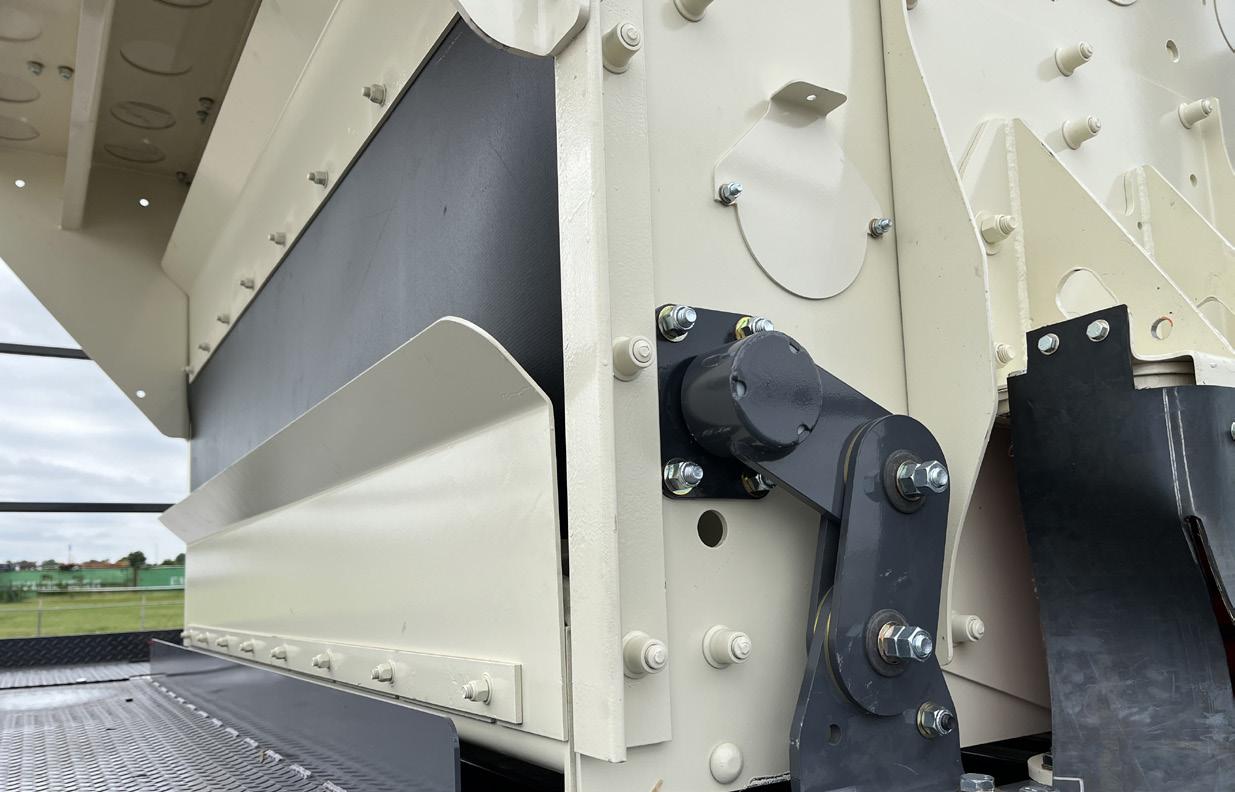
Routine maintenance can help prevent costly failures. PHOTO: Terex MPS
There should be daily, visual inspections of key areas on the machine such as liners, screen media and suspension components. PHOTO: Terex MPS
OPERATIONS AND MAINTENANCE MANUAL IS KEY WHEN SETTING INSPECTION SCHEDULE
However, before establishing an inspection and maintenance schedule, Mumm says it’s important to thoroughly read through the machine’s operations and maintenance manual as well as review the recommended spare parts list of your machine. By understanding how the equipment works, you can identify where to inspect and how to maintain the equipment.
“An example of this is our patented ‘Surge Dampers,’ used to control the TSV and ES series screens during start up and shut down. If you understand how they work, you understand why it’s important to keep them properly torqued,” he explains. “Maintenance intervals will vary
depending on application and operating parameters. Depending on how abrasive the rock is, screen media panels, feed box liners, or discharge liners, may last months or a couple weeks,” he says.
NO ONE-STOP SOLUTION TO PREVENT MATERIAL BUILDUP
A main issue for screening is material buildup. Unfortunately, Mumm says, there is no one-stop solution, which is why daily inspections are so important.
“Sometimes the material is just too wet and sticky, it becomes impossible to prevent build up, so operators are forced to shut down and clear the screen,” he says. “We do offer ‘ball tray’ decks that use rubber balls trapped within the deck frame, to beat the bottom side of the screen media, to avoid build up.”
To help operations, Terex has a new program called VIPER or VIP Engineering Resources.
“One of the offerings in this program is to have a Terex Service Technician travel to a site and provide one on one training with the end user. The training is tailored to the end user. We have some end users
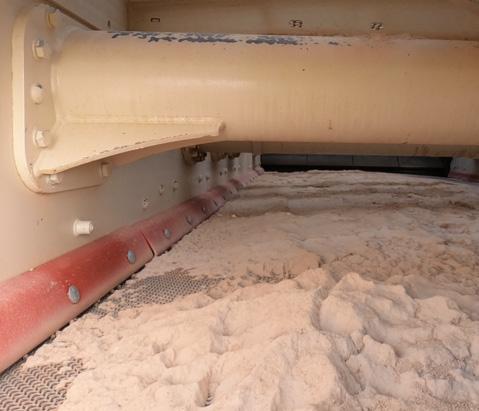
Regular screen media inspections, which includes removing material built up around the screen, can help prevent costly catastrophic failures, advises Ryan Mumm, vibratory engineering manager with Terex MPS (Cedarapids and Simplicity). PHOTO: Terex MPS
that perform a lot of their own service work, so our training focuses on disassembly and assembly procedures for their specific Cedarapids or Simplicity machines.”
Mumm notes YouTube is also a great resource.
“We’re posting more and more tutorials, product overviews and how-to videos. It’s a great resource to learn about our equipment,” he says.
g A new edge in monitoring.
g A safer way to maintain what keeps you running.
g And a glimpse at the future of crushing innovation.
This year, HAZEMAG isn’t bringing more of the same. We’re bringing clarity — the kind that changes how you see your operation. Booth #C31472
That’s all we’ll say for now. See it for yourself at the CONEXPO HAZEMAG Booth.
An example of screen pegging. PHOTO: Terex MPS
Ryan Mumm, vibratory engineering manager with Terex MPS (Cedarapids and Simplicity).
PHOTO: Terex MPS
BY MIKE lacey
THIS PIT IS CRUSHING IT
Amrize pit serves up a million tonnes of aggregate a year for the
Greater Toronto Area
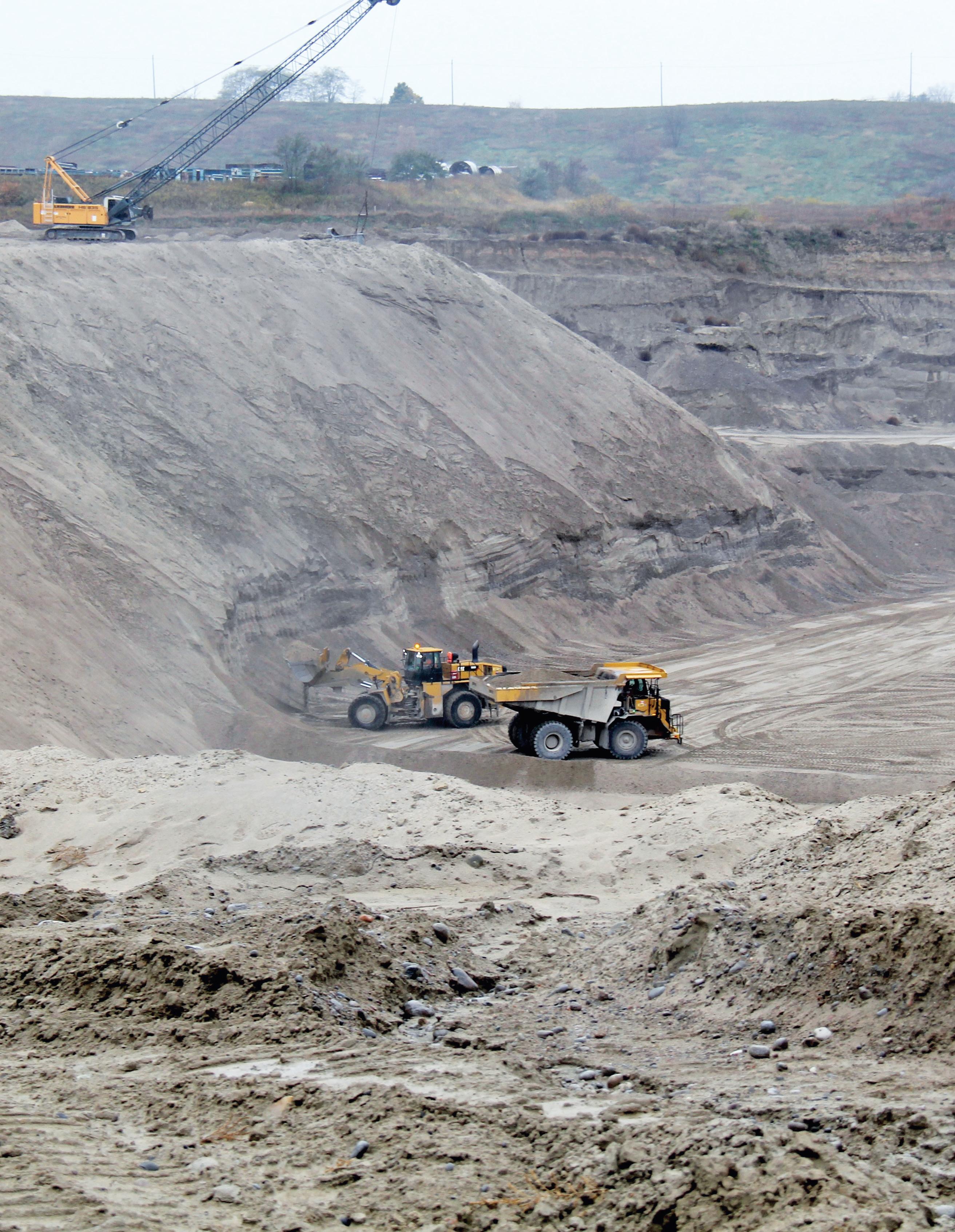
> Situated north of Toronto and straddling two regional municipalities, Amrize’s Stouffville pit is responsible for producing 1 million tonnes of aggregate annually, which supplies the most densely populated area of Ontario.
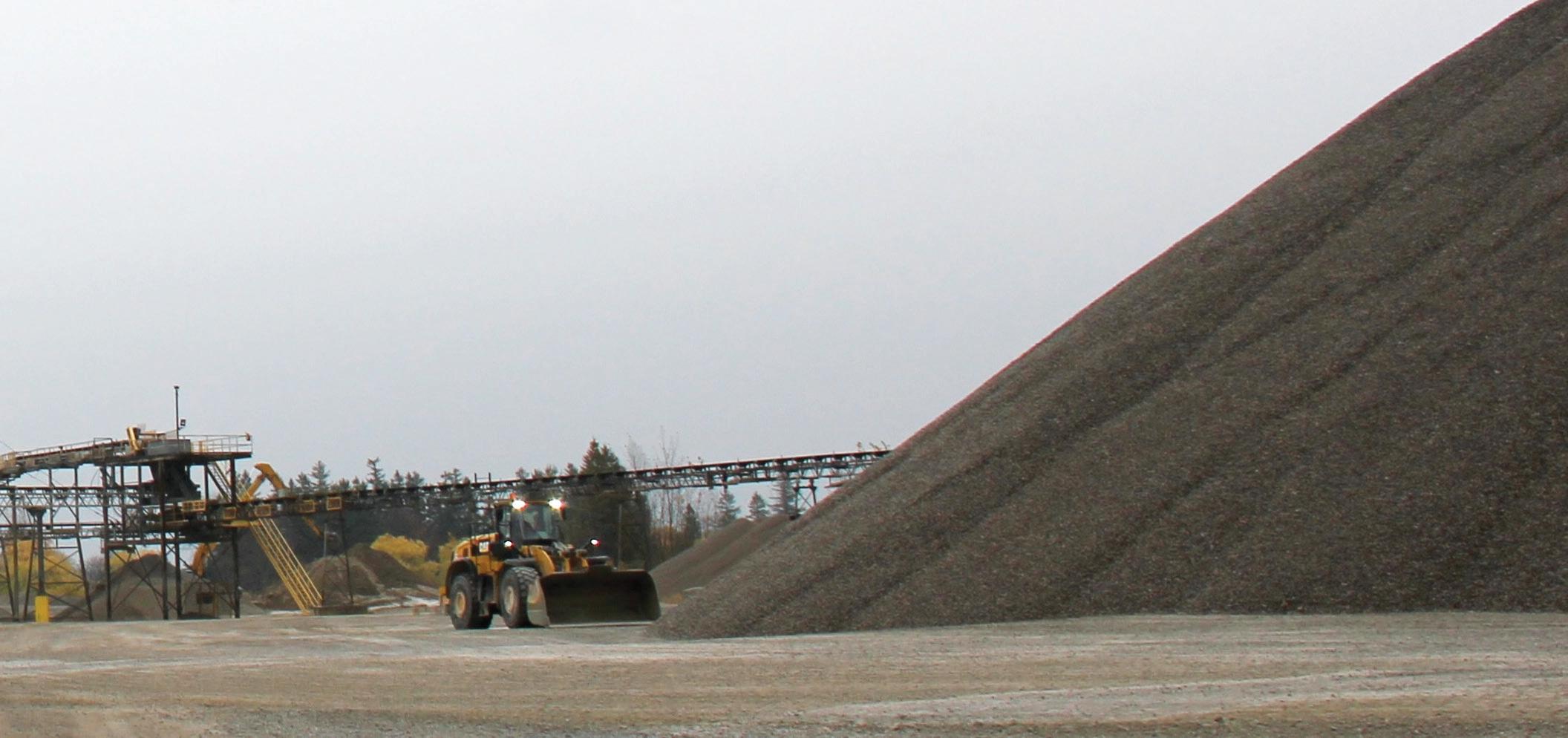
Each day, the site’s three face loaders pile around 8,000 tonnes of finished product onto customer highway trucks, which in turn ship the material to sites across the Greater Toronto Area (GTA). The aggregate from the 744-acre site is used in everything from ready-mix concrete, asphalt, concrete blocks, pre-cast concrete, concrete pressure pipe and bedding material.
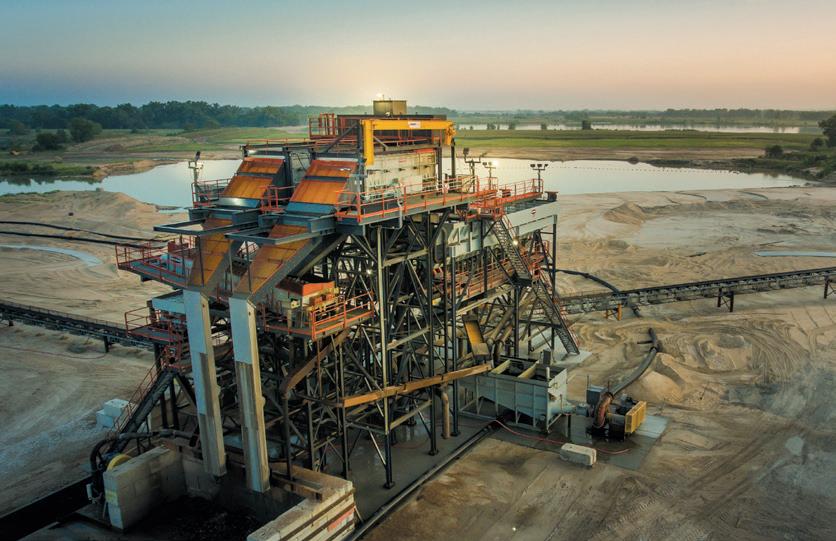
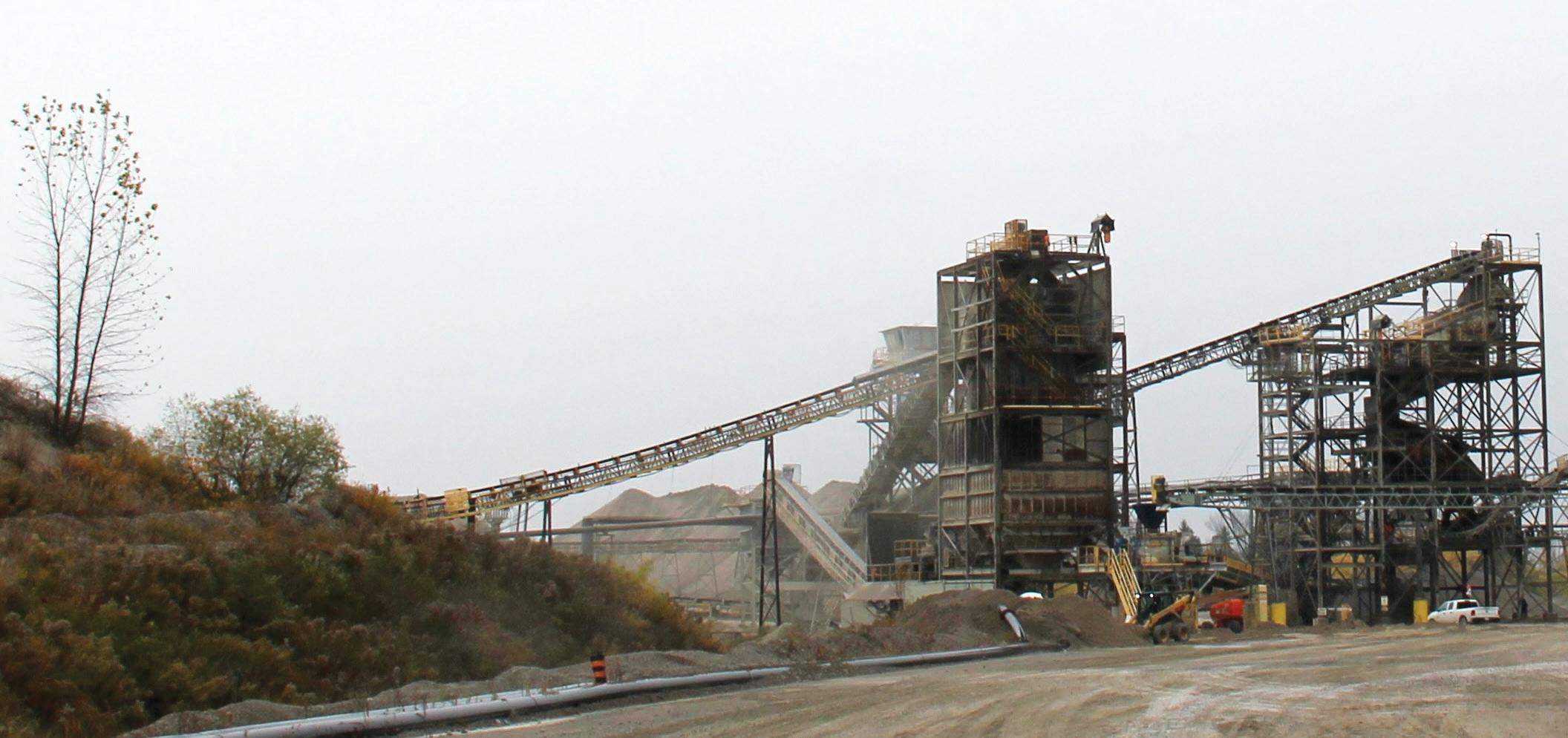
Churning out that much material a day is a sophisticated operation, especially considering the reserve and processing plant are 2.5 kilometres apart, sit in separate municipalities and are divided by Durham Road 30. Connecting the two locations is a tunnel that runs underneath the regional road.
The west side, known as the Stouffville Pit and located in York Region, includes 267 acres and houses the processing plant. On the east side of the road is the Stouffville Pit – Uxbridge Side,
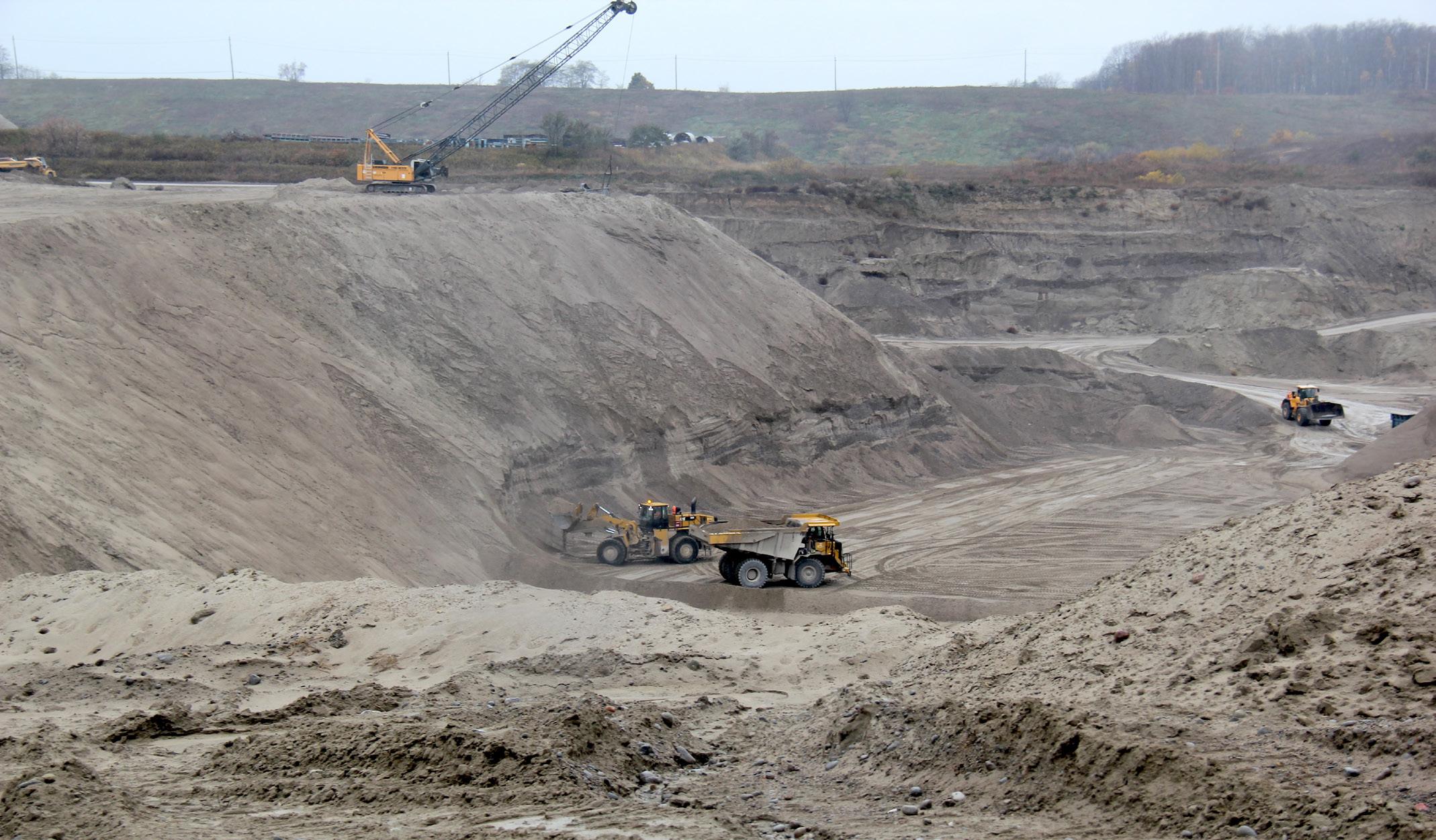
Material from the Stouffville pit is used in everything from ready-mix concrete, asphalt, concrete blocks, pre-cast concrete, concrete pressure pipe and bedding material. Photo: Mike Lacey
which consists of 358 acres and is located in Durham Region.
And that’s where the work begins.
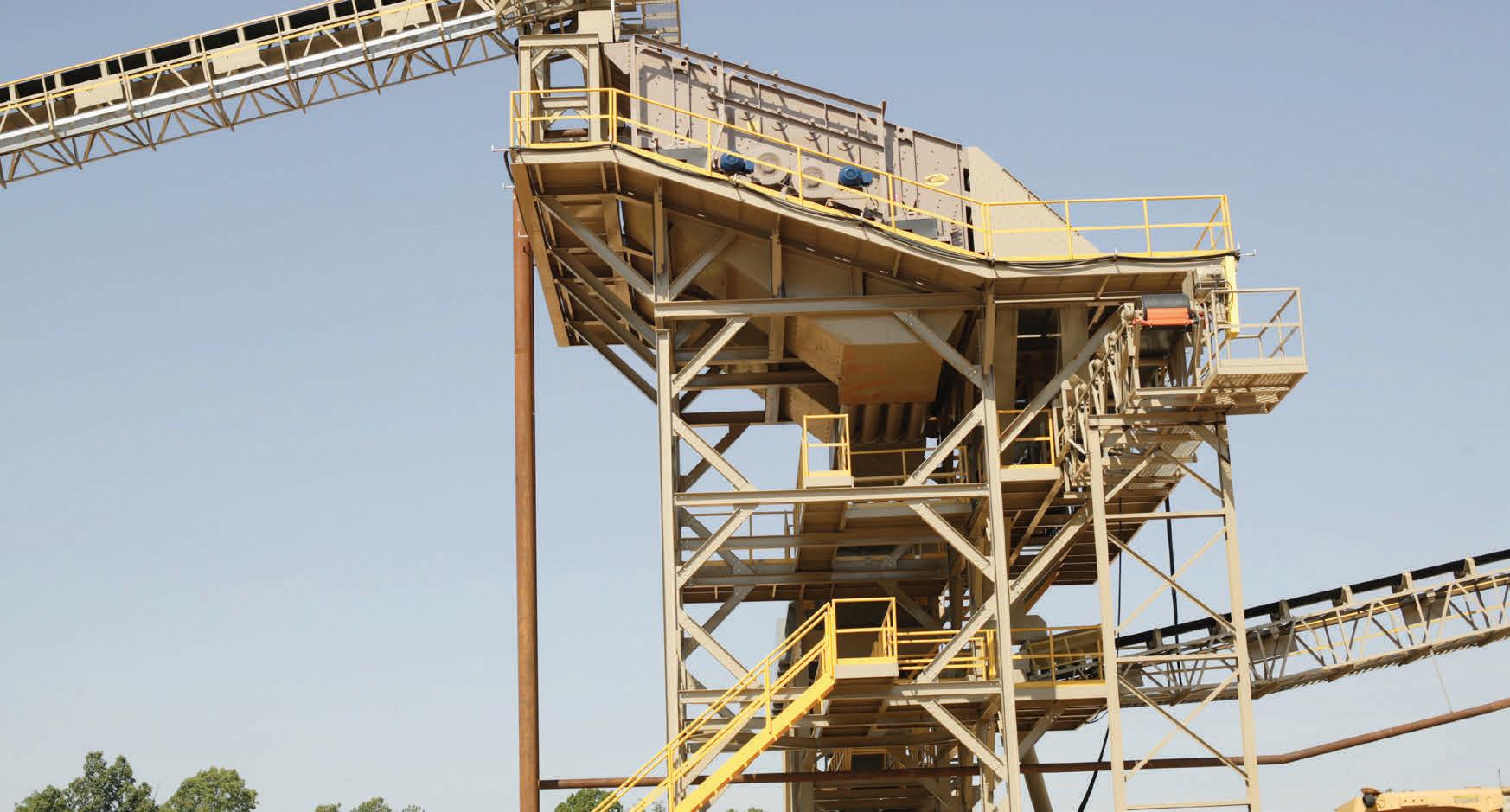
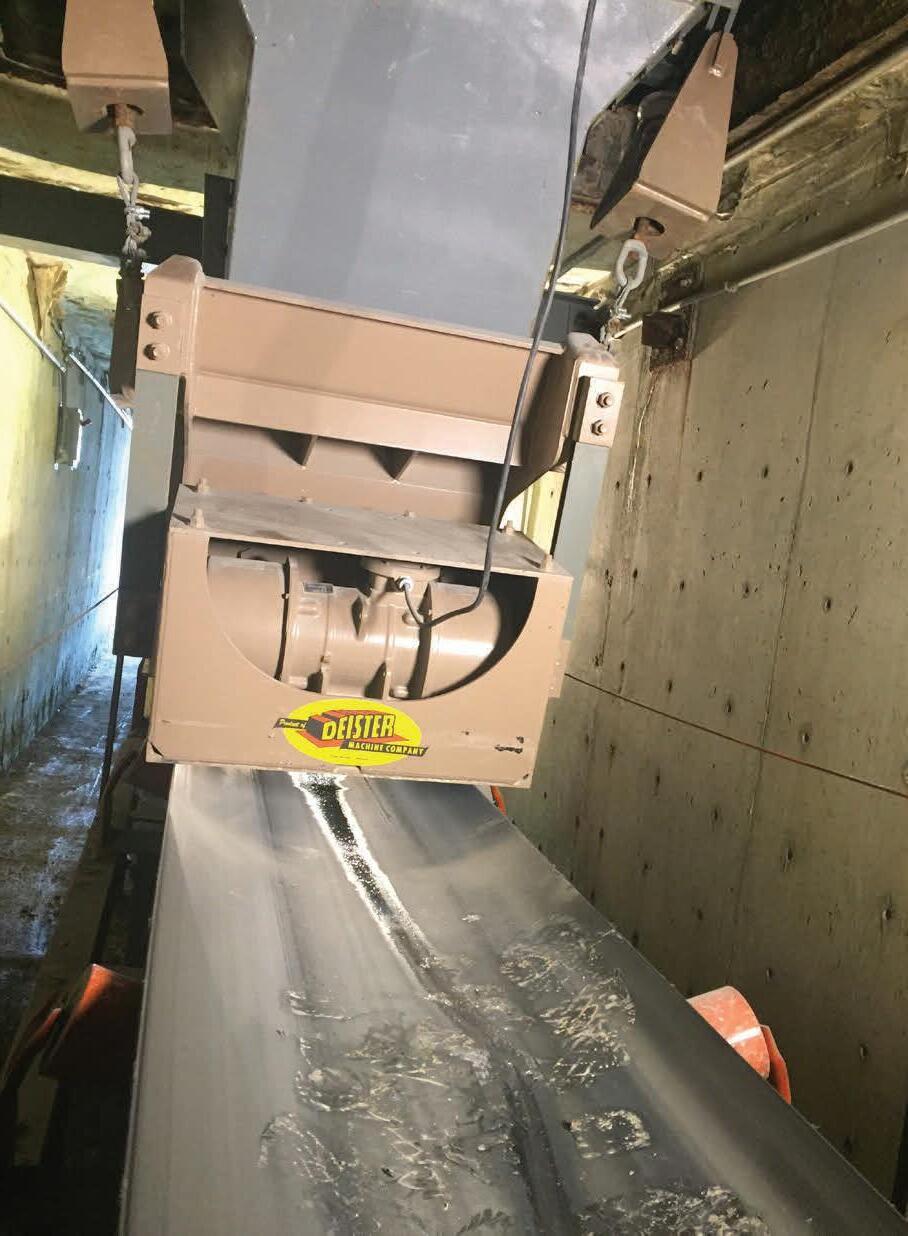
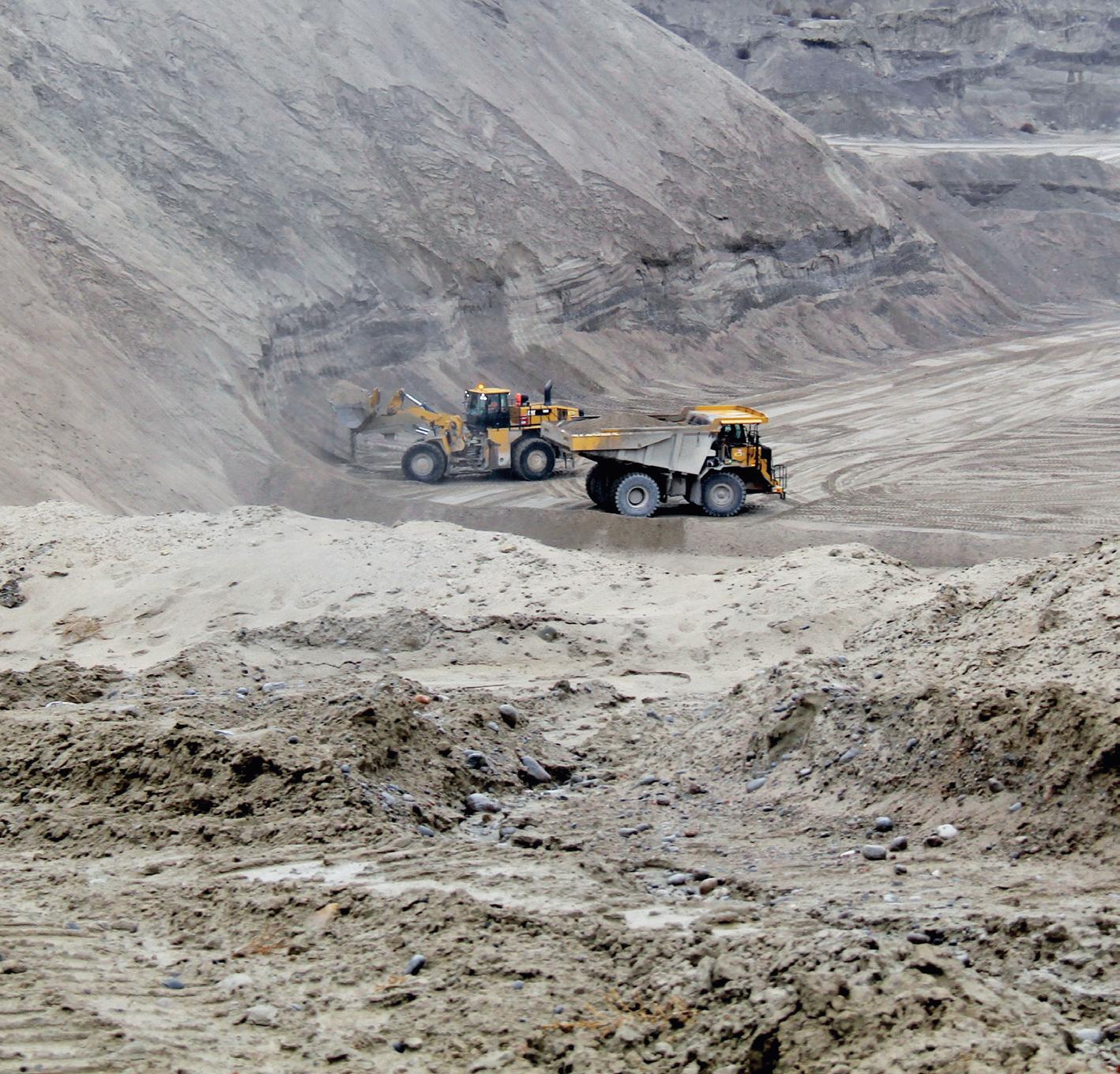
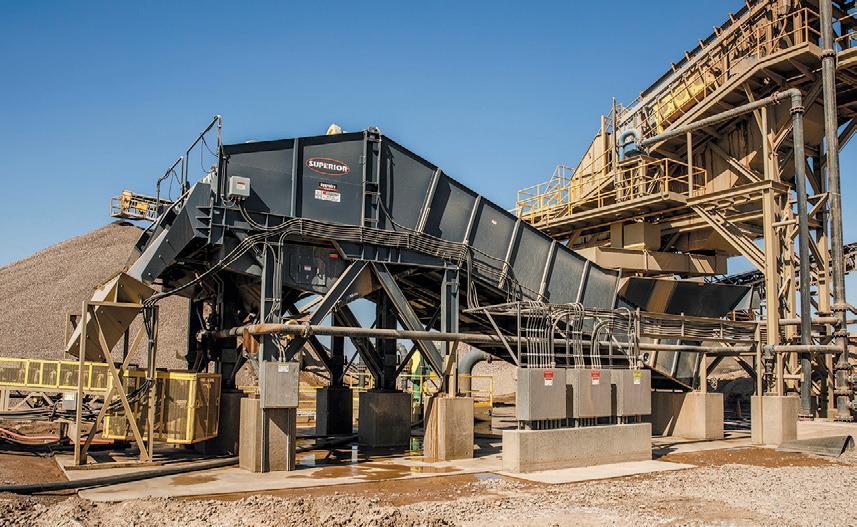
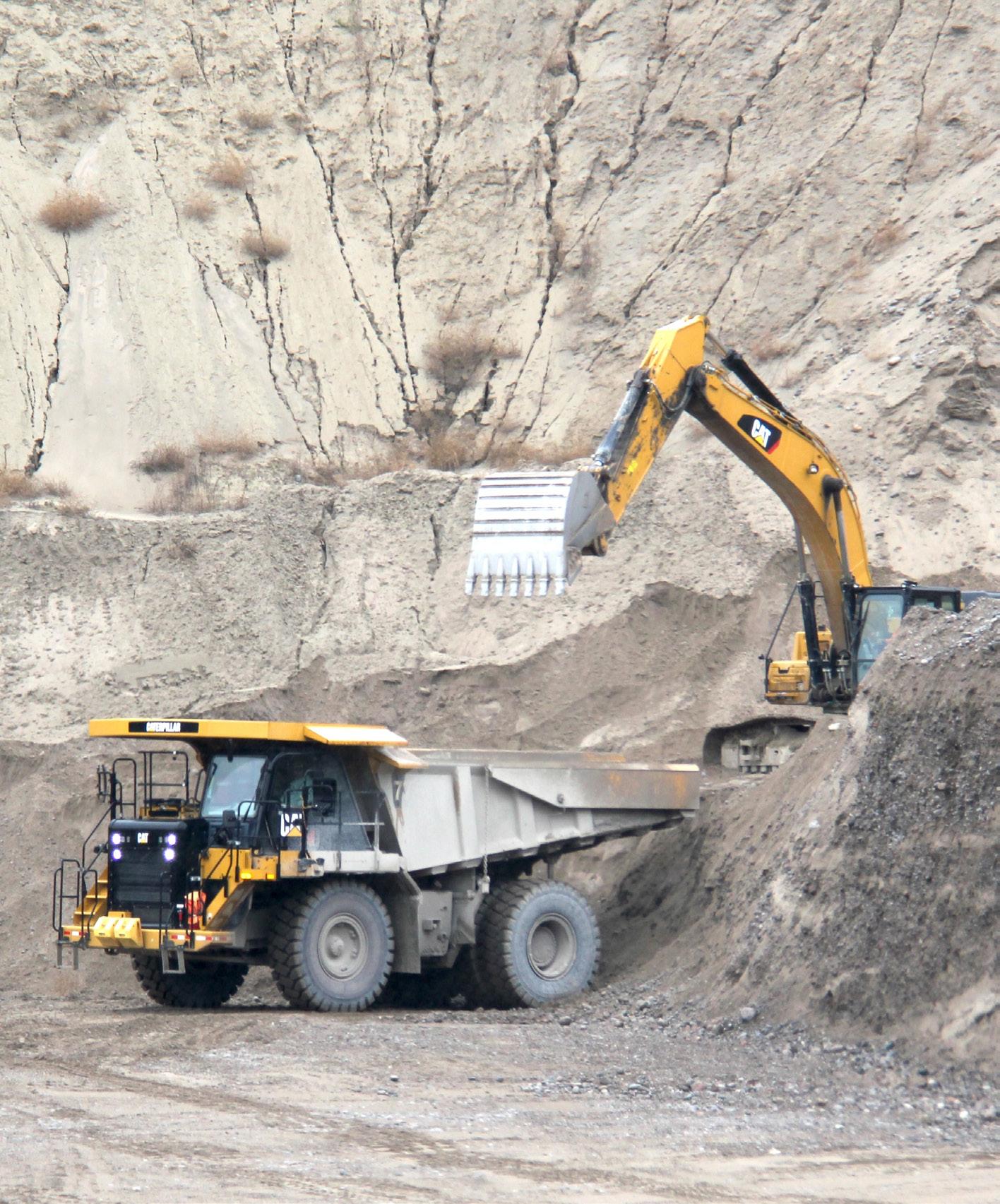
Material is extracted using a large face loader and three rigid frame haul trucks, each capable of carrying up to 70 tonnes. The material is fed into a 22-inch by 48-inch jaw crusher operating at 900 tonnes an hour. From the primary surge pile, material is fed to the secondary plant through two 5-feet by 14-feet scalping screens. Oversized stone is sent through a cone crusher while the through material proceeds to the wet mill. This process repeats until all material is crushed to the finished size.
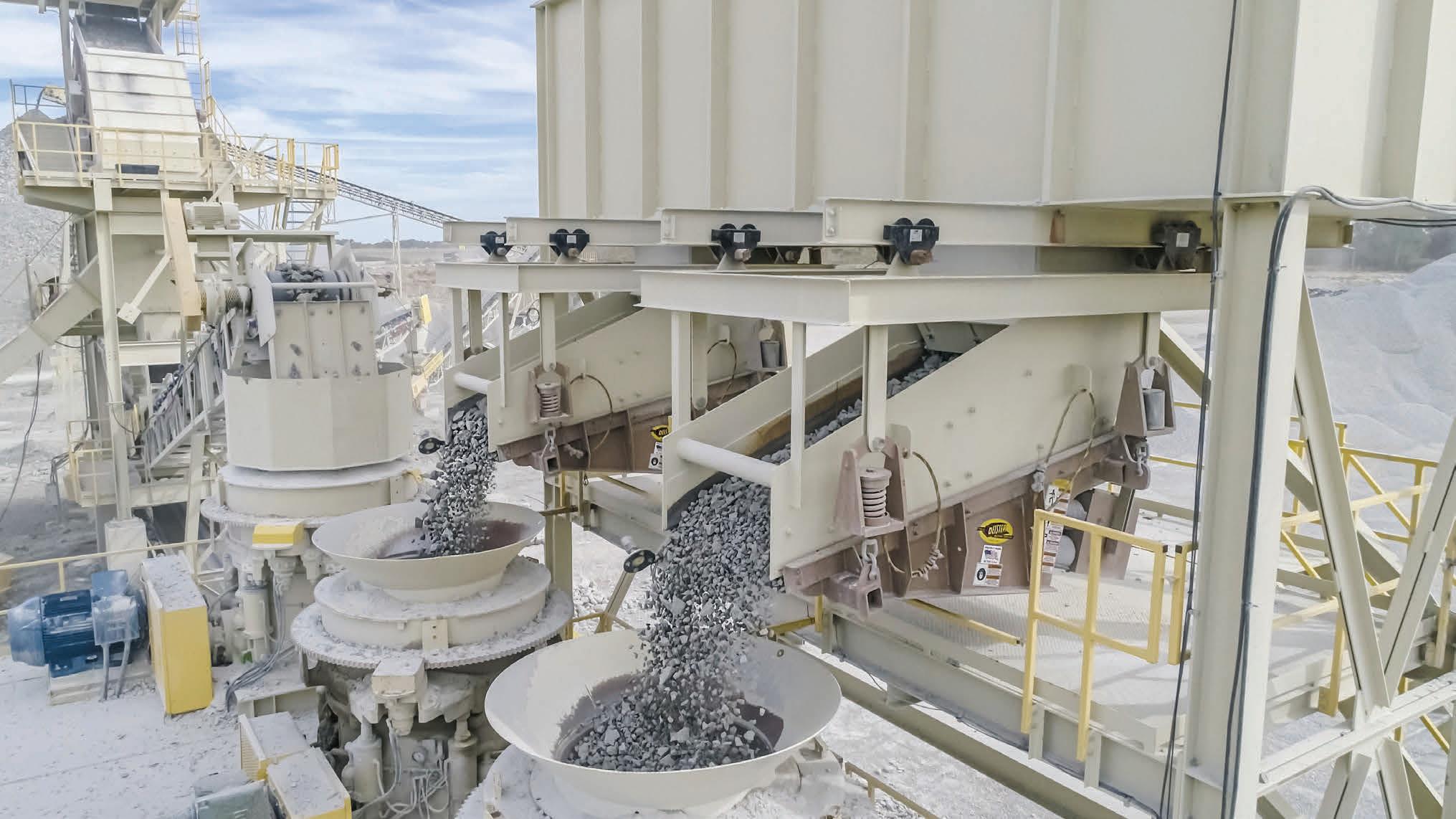
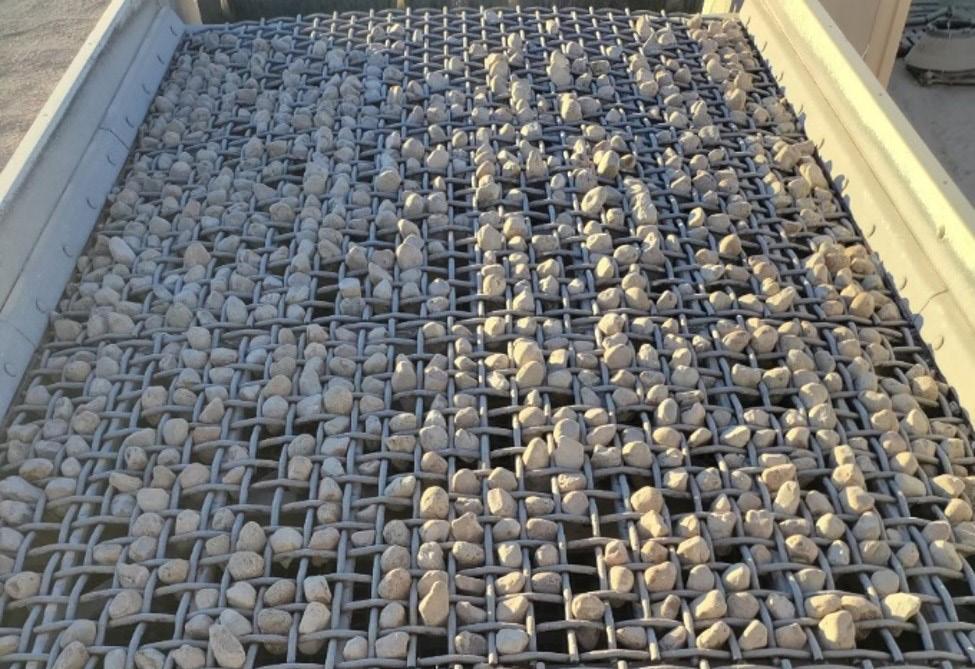
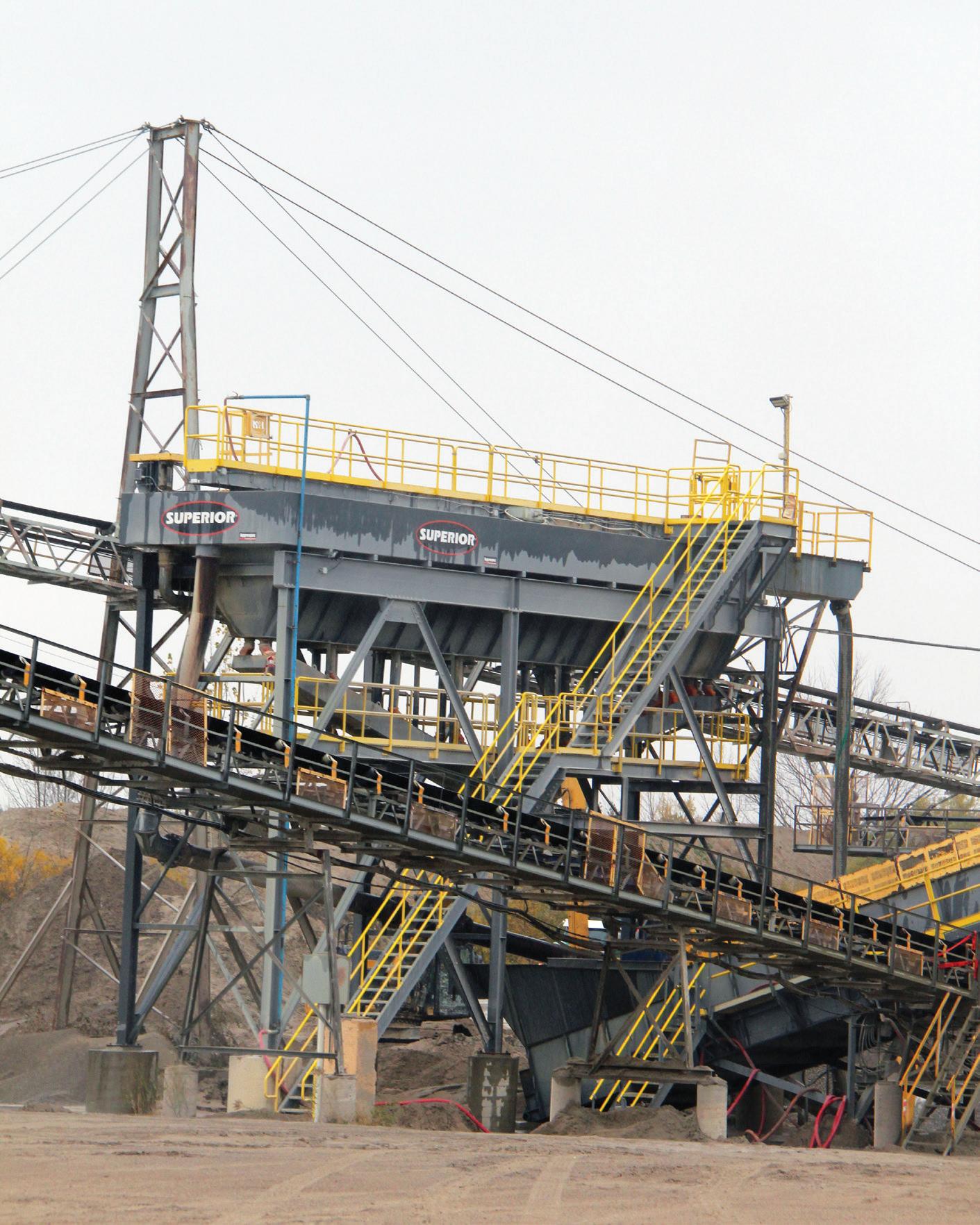
At the wet mill, crushed stone and sand are washed and classified over two 6-feet by 20-feet wash screens. Stone then travels to a rinser screen where it is screened into 20mm concrete stone, 10 mm concrete stone and residual sand.
The stone is then processed through a Vertical Shaft Impact crusher equipped with a rotor instead of a traditional table –an upgrade installed in 2020.
Meanwhile, sand is conveyed to a 12foot by 48-foot Classier, which separates the material into concrete sand and fine sand. A 66-inch Double Screw dewaters the concrete sand while fine sand is pumped to a pair of cyclones and across a sizetech screen. Both sands are then taken by conveyor to their respective piles.
Water from the fine sand system is
Amrize’s Stouffville Pit ships out around 8,000 tonnes of aggregate a day to customers across the Greater Toronto Area. Photo: Mike Lacey
The Stouffville pit is located across the border of two regional municipalities. Photo: Mike Lacey
processed through an ultra fines recovery unit before the process water is pumped to the settling ponds. All water used in the operation is re-cycled back into the washing process.
The Stouffville Pit’s history began in 1960 when the property was purchased by Consolidated Sand Gravel. Construction of a plant was completed in 1970, on the same site as the current plant, followed by the construction of a tunnel under Durham Road 30 in 1974. The operation evolved over the decades, becoming Standard Aggregates Incorporated then Lafarge Canada in the early 1990s.
“In 2025, Lafarge was renamed Amrize, marking the beginning of a new chapter as the partner of choice for professional builders in North America with advanced solutions from foundation to rooftop,” says Matthew Ruggieri, General Manager, Central Aggregates, Amrize.
Today, the processing plant handles not only material from the Stouffville Pit, but also aggregates from several satellite pits in the Stouffville and Uxbridge areas.
The site will also soon host Ontario’s first aggregate recovery processing plant. Once in operation, the facility will rehabilitate soil sourced from across the GTA.
“I know a lot of people don’t think about this, but there’s close to 60 per cent aggregate in a load of soil,” Ruggieri says. “By recovering that material, we’re putting essential building solutions back into
The pit’s reserve and processing plant sit 2.5 kilometres apart. Photo: Mike Lacey
circulation – aggregate that will go on to support the roads we drive on, the homes we live in, and the schools, hospitals, and community spaces we rely on every day.”
The left over material can be used in a cement plant as an alternate raw feed.
“This will be a facility that will allow us to extend the life of those materials while delivering a truly innovative outcome,” he says.
The company expects to have the plant in operation by next year.
While operating across two municipalities can double consultation and approval requirements, overall, there are very few difficulties.
“We have very strong relationships with the townships of Uxbridge and Stouffville and we’re trusted community partners in both areas,” explains Ruggieri.
A key reason for that trust is many of the site’s employees live in the area. Amrize is also actively involved in community initiatives, which help build longterm goodwill.
One of those projects is Circling Hawk Bees, a honeybee project developed with a local business. The pollination helps the rehabilitation efforts of aggregate sites while also producing local honey.
Nearby, Amrize’s Goodwood Pit team property is currently working with North Durham Nature on the installation and monitoring of blue bird nesting boxes.
The bluebird is a grassland species bird listed as a species at risk, and the project supports Amrize’s efforts to create new grassland habitat and measure rehabilitation success.
The company also supports the Stouffville Community Legacy Fund, an important initiative that helps meet the financial needs of local service groups and charities. Amrize works closely with the local mayor to support the fund.
Ruggieri notes Amrize’s long track record of responsible rehabilitation plays a major role in earning community support.
“We’re focused on changing perceptions in quarry and pit rehabilitation,” says Ruggieri. “Responsible operations and strong community partnerships have been part of how we do business for decades, ensuring our sites are rehabilitated in ways that benefit the communities where we operate.”
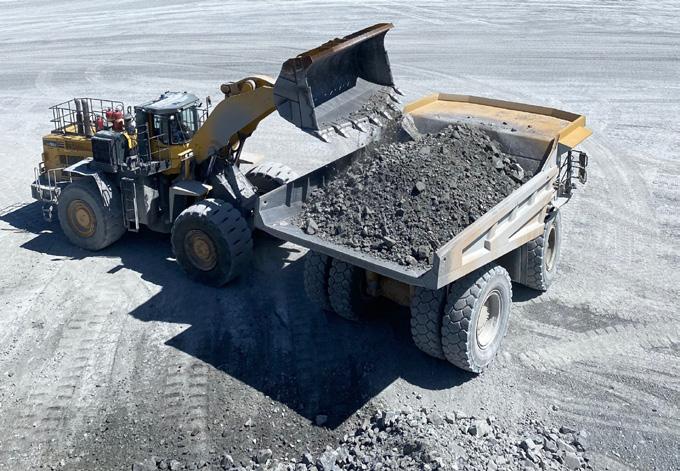
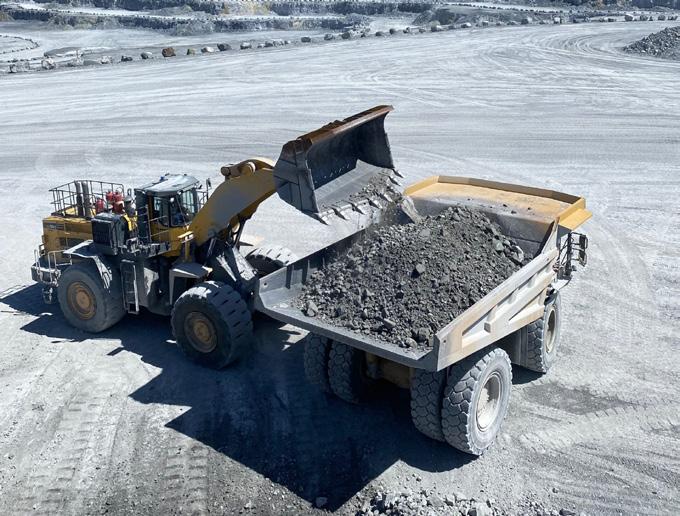
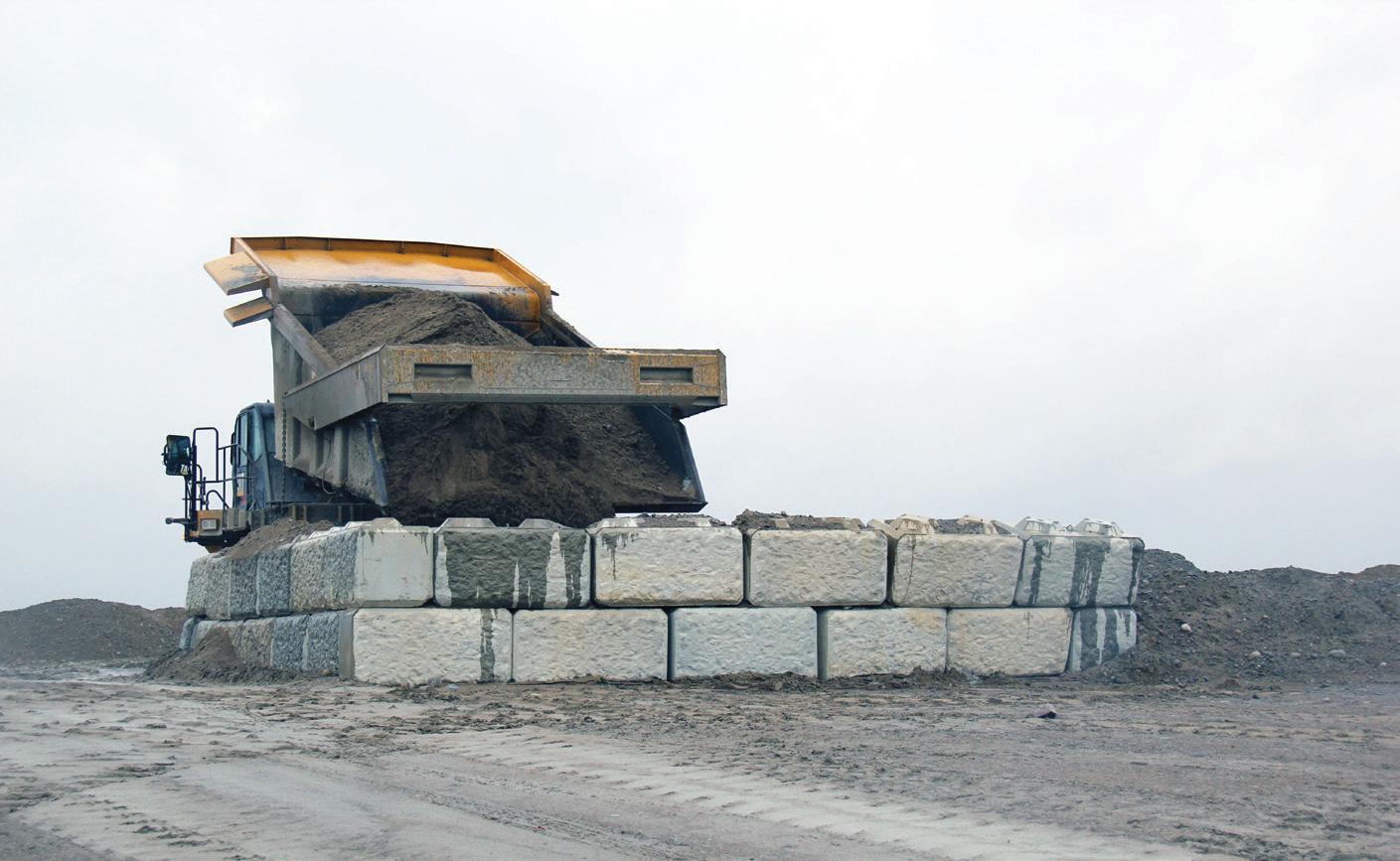
A rigid frame haul truck dumps a load. Each truck can carry 70 tonnes of material per trip.
Photo: Mike Lacey
All water used in the operation is re-cycled back into the washing process.
Photo: Mike Lacey
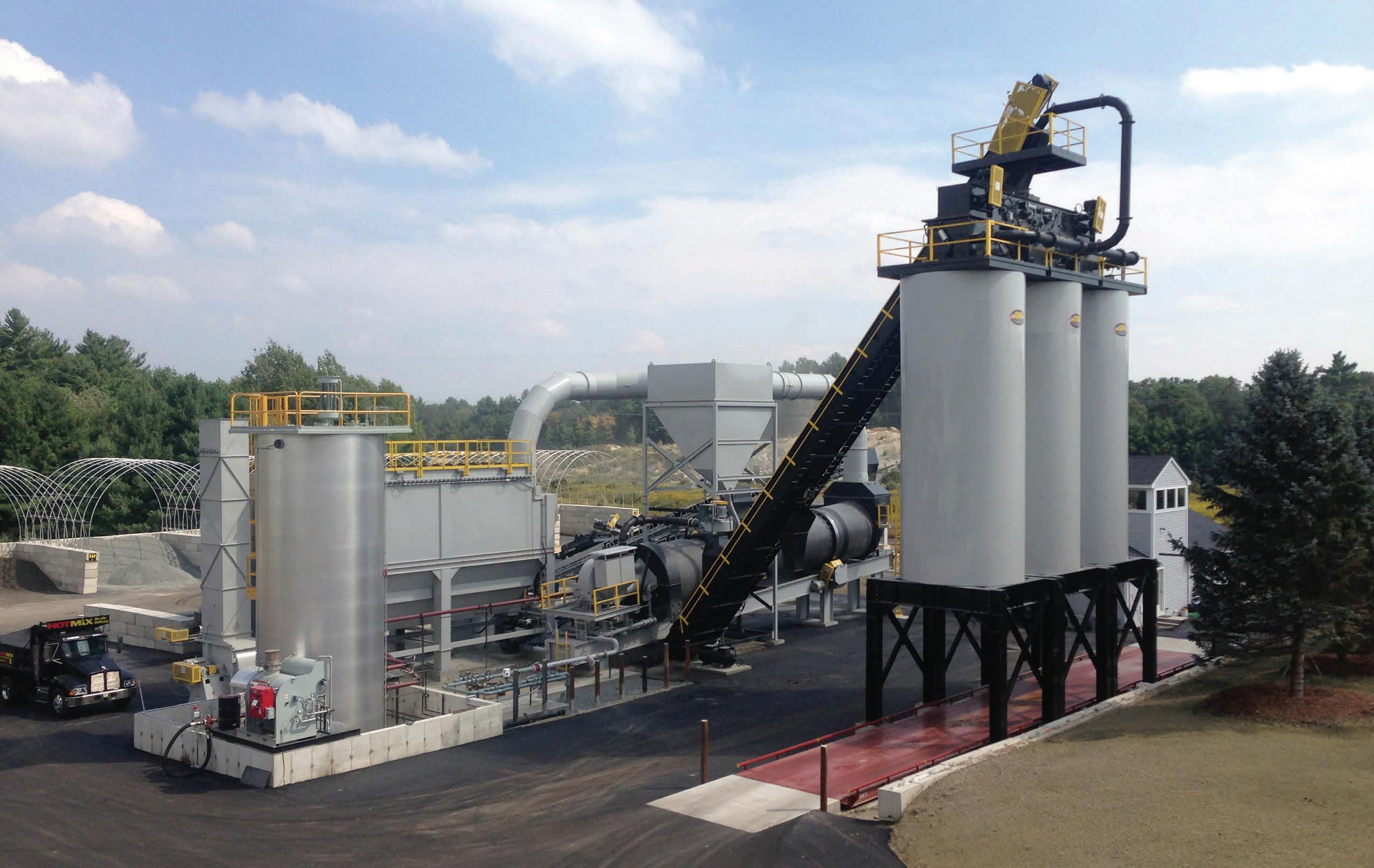
Your first stop in the FAYAT GROUP road lifecycle, ADM makes the plants that make the hot mix. When it comes to North American roadbuilding, FAYAT Group brands including ADM, BOMAG, Dynapac, LeeBoy, and Mecalac have you covered.
See a totally new EX Series asphalt plant at CONEXPO-CON/AGG March 3-March 7 in Las Vegas.
JOIN US AT BOOTH SV2067
Safety Managing silica dust risks
MEGHAN Friesen
A free online risk assessment tool to protects workers from the dangers of respirable crystalline silica exposure is now available for surface mining operations
Dust can be expected at any job site, but the type of dust matters. Whether it is rock dust or road dust, both can contain one of the most common types of minerals in the world: silica. Silica, often referred to as quartz, is a naturally occurring mineral found in rock, sand and ore. It is used for its ability to lend strength and durability to building materials. Silica makes for a cost-effective raw input mineral. Stone, sand and other aggregates are mined in open pits and quarries. Aggregates are essential to road construction, but the extraction, moving and processing can generate silica dust every step of the way.
When silica is disturbed, it can produce fine dust particles called respirable crystalline silica. Tasks that disturb silica include breaking, cleaning, cutting, sawing, demolition, drilling, grinding, mixing, pouring, moving, or crushing rocks. Breathing in silica dust poses serious health risks, including lung diseases and other illnesses. Silica dust is a known lung carcinogen. It is classified as a Group 1 carcinogen of the lung by the International Agency for the Research on Cancer. In Canada, around 570 lung cancers are linked to workplace silica exposure each year, which amounts to 2.5 per cent of all lung cancers diagnosed annually. Of that number, lung cancers among workers in the mining and oil/gas extraction sector have estimates sitting around 80 cancers per year.
Silica dust can also cause silicosis – which is a progressive, often fatal lung disease. Silicosis has made headlines, recently and in the past. In the 1930s, the Hawk’s Nest Tunnel Disaster (West Virginia, USA), involved drilling and blasting stone to create a threemile-long tunnel. It is estimated that 25 per cent of the 3,000 workers died of silicosis and many more suffered from lung disease. In 2024, a global mineral mining company was fined $400,000 for exposing workers to significant silica dust while handling pallets at a quarry in Victoria, Australia. The resulting diagnosis was silicosis in three of the four workers. That same year, Australia put in place a ban on engineered stone as workers in that industry were significantly over-represented in silicosis cases and at a much younger age, around 35 years old.
There are different forms of silicosis, but all of them involve lung scarring which makes it hard to breathe. There is no cure with only treatment options available. Acute silicosis can develop in just a few months and often leads to death within a year or two. Accelerated silicosis is similar to chronic silicosis; however, it develops more quickly, and the lung scarring will show up sooner. Nodules, or areas of abnormal growth on your lungs, may appear on a chest xray five years after the first exposure to silica dust and the disease can quickly worsen from there. Chronic silicosis is the most common form. Symptoms may not appear for a long time, usually more than 10 years after the first exposure to silica dust, and may progress and worsen during that time.
Silica dust exposure is also linked to other illnesses like chronic obstructive pulmonary disease (COPD), pulmonary fibrosis, sarcoidosis, and kidney disease. A study published in 2023 showed a decrease in silicosis diagnoses from 1996 to 2019 in Ontario workers. However, the same study found a significant increase in pulmonary fibrosis diagnoses. The authors suggested that the increase in pulmonary fibrosis medical coding could partially be the result of the misclassification of silicosis. A finding which was consistent across other jurisdictions. Knowing your workplace exposures is key when it comes to providing an accurate history to a medical professional.
In the highway, street and bridge construction sector, around 30,000 workers are exposed to crystalline silica, with most exposures in the high category. In the mining sector, approximately 21,000 workers are exposed to crystalline silica. Occupations with the largest number of exposed workers include heavy equipment operators (6,500 workers exposed), underground production and development miners (5,100 workers exposed), and supervisors, mining, and quarrying (2,400 workers exposed).
Typical strategies to control dust on sites involve water sprays, chemical dust suppressants and automated systems. Personal protective equipment (PPE) such as respirators or dust masks are also used. Air monitoring or sampling can be done to verify if those
dust control strategies are working effectively, but it can be time consuming and costly to accomplish.
This is where the Silica Control Tool can help. It is a free online risk assessment tool aimed to help protect workers from the dangers of respirable crystalline silica exposure. It is designed to be user-friendly by easily guiding you through the process to provide an accurate estimate of silica in the air during a specific task/job/activity. Instead of eyeballing the dust or guessing how much silica might be in the dust you can see, simply use the online tool.
The Silica Control Tool uses real data – hidden in the background – to calculate the potential concentration of silica in the air. All you need to know is the material/ task/tool you plan to use e.g. rock/drilling/machine. Drop down menus guide you along the way to estimate the silica dust exposure. The tool provides customized recommendations for control measures and supporting safe work practices. On average, users of the online tool have experienced a 40 per cent reduction in silica exposure after implementing the recommended safety measures.
Originally developed in British Columbia by the BC Construction Safety Alliance (BCCSA), the Silica Control Tool was introduced in Ontario in 2023 by the Occupational Health Clinics for Ontario Workers (OHCOW), in partnership with the Infrastructure Health and Safety Association (IHSA), and the Canadian Centre for Occupational Health and Safety (CCOHS).
Dr. Melanie Gorman Ng of UBC explained, “From the start, we designed the Silica Control Tool to be adaptable to other jurisdictions so that we can help prevent occupational disease for as many workers as possible.”
The tool’s expansion is not limited to Ontario. Discussions are underway with representatives from Saskatchewan, Quebec, Nova Scotia and even Australia about adopting it.
In 2025, in a continued collaboration with BCCSA and BC Mines, Ontario launched the Surface Mining version of the tool. This version is similar to the original Silica Control Tool but is aimed at quarry and pit activities. The Silica Control Tool in Ontario contains two versions: one for the construction sector
and one for the surface mining sector. Selections within the two versions include asphalt plant operations, construction dust sweeping, rock/sand/earth crushing, screening plants, heavy equipment and scale operations. Both online tools contain silica data relevant to road construction activities and surface mining operations.
Kimberly O’Connell, executive director with OHCOW, shared, “Over the past several years, we’ve seen the Silica Control Tool grow in use and importance, not just in construction but across various industries in Ontario.”
The Silica Control Tool provides workers with clear, actionable guidance on managing silica exposure through engineering controls, administrative measures and personal protective equipment. One user commended the tool as, “Very useful for safety professionals while providing easy to understand explanations to businesses.”
In Ontario, the Silica Control Tool is free for all workers, employers and unions, reflecting the ongoing commitment to protect workers from silica-related health risks. For more information or to start using the tool, visit https://ontario. silicacontroltool.com/ or https://miningontario.silicacontroltool.com/index.php.
The Silica Control Tool is available for use in other provinces as well, including in British Columbia by the BC Construction Safety Alliance, www.bccsa.ca/silica_control_tool.php. The tool is also available for use in Alberta by the Roadbuilders and Heavy Construction Association, alberta. silicacontroltool.com and in New Brunswick by WorkSafe New Brunswick and the New Brunswick Construction Safety Association which can be accessed here nb.silicacontroltool.com.
Looking to the future, efforts are underway to expand the capabilities of both tools, including adding more silica-containing materials and incorporating new air monitoring data. New data is always welcome and is added anonymously. If you are interested in sharing data, please reach out to our silica team at silica@ohcow.on.ca.
Meghan Friesen, ROH, is a registered occupational hygienist with nearly two decades of experience, committed to identifying and preventing work-related illnesses.
To access the Silica Control Tool in your jurisdiction, click on the appropriate QR code below:
ONTARIO
ONTARIO
ALBERTA
BRITISH COLUMBIA
BY MATT jones
COLD WEATHER CONSTRUCTION
Brennan Paving & Construction representative shares insights on the challenges of cold weather road building
> Anyone who works in an outdoor construction field knows the pressures to finish as much work as possible before winter sets in and makes the job that much more difficult.
However, when dealing with public infrastructure projects such as road building, operations can often end up pushed as far into the cold season as conditions will allow. This means dealing with the unique challenges of doing work like laying asphalt in frigid temperatures. To get some insights to share with our readers on this topic, Rock to Road chatted with Rick Williamson of Scarborough, Ontario’s Brennan Paving & Construction Ltd. about these challenges and their solutions.
Williamson notes that his frame of reference is in work with Ontario’s Ministry of Transportation (MTO) and that he is in fact
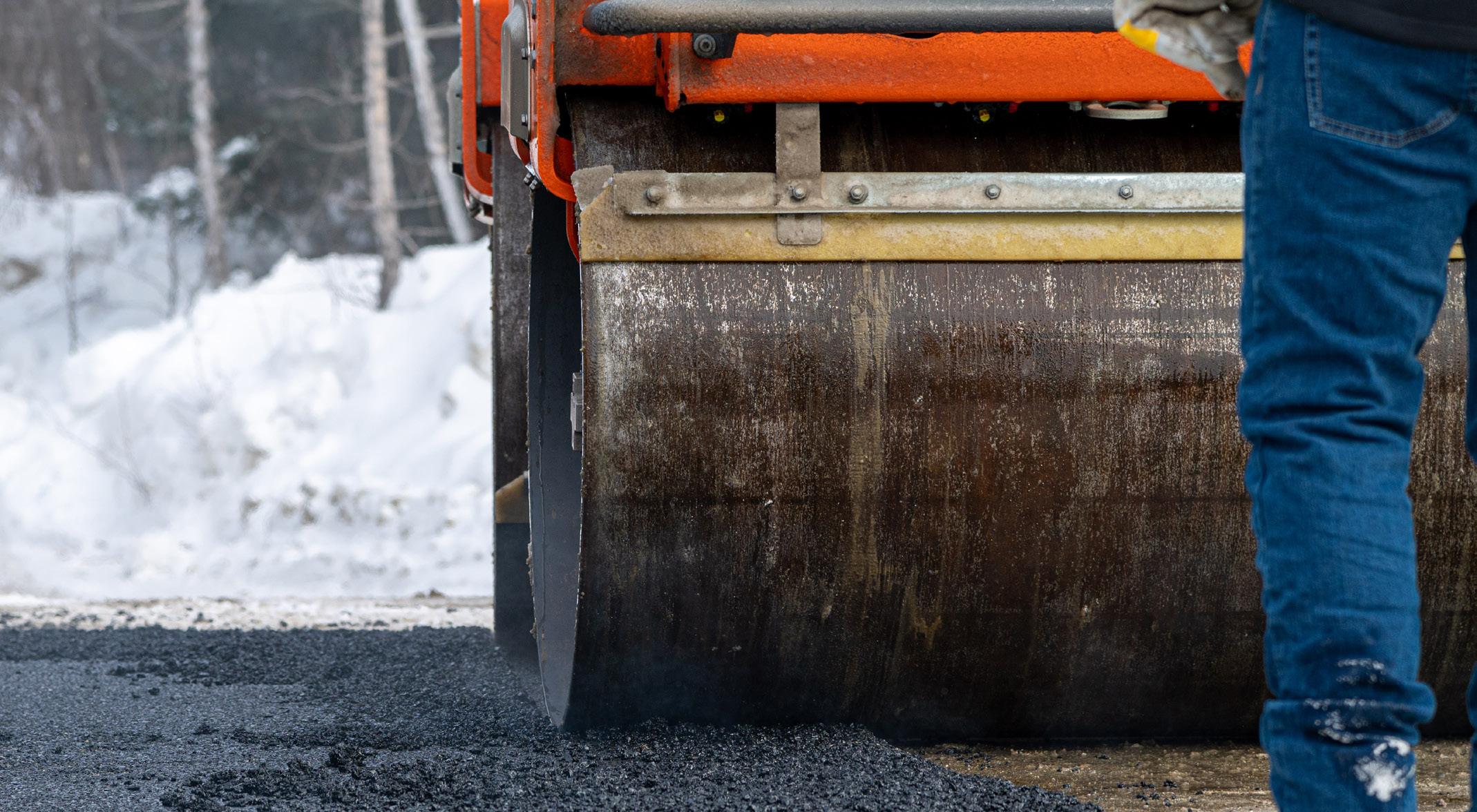
It’s not unusual for road construction projects to be pushed as far into the cold season as possible.
Photo: Getty Images/ Nastasic
you’ll
referring to a 2025 Ontario Ministry of Transportation field guide for acceptance of hot mix asphalt (HMA) and hot applied rubberized asphalt with a waterproof membrane. However, the same guidelines could also be applied to regional, municipal and private work.
“The ambient air temperature must be at least two degrees Celsius to place HMA binder courses and at least seven degrees Celsius to place HMA surface courses,” says Williamson. “I’m sure your readers are aware of these tolerances. Another part of OPSS 313, which is the MTO spec for paving – and municipal guidelines generally follow it for HMA operation constraints – paving shall not be carried out if the road base is frozen.”
TWO TECHNIQUES TO PAVE SMALL AREAS IN COLD MONTHS
Two strategies have proven effective for paving smaller areas, such as the approaches to a bridge deck, for example. First is covering the graded or base asphalt area with thermal blankets. The second is heating units such as those provided by Frost Fighter.
“These measures have traditionally been used to facilitate deploying, finishing and curing structural concrete in cold weather,” says Williamson. “Frost Fighter almost looks like an air compressor and it’s got an antifreeze in it and it’s got a long steel braided flexible hose. It runs heated antifreeze through the hose. So, what
we’ve done in the past for a smaller area is put the blankets down, snake the Frost Fighter back and forth with maybe three feet between the loops and literally heat up the ground prior to paving.”
Williamson cautions that this technique is only effective in smaller areas and in temperatures higher than -10 degrees. But within those conditions they are effective and can raise the temperature to a level where the work is possible.
“And then, as you get multiple lifts, once you get the base lift down, you can put your second lift to base or top on it after you’ve rolled it but it’s still warm,” says Williamson. “These measures may give the contractor, and hence the contract administrators and inspectors, enough of a comfort level to allow the paving to proceed successfully.”
Looking at larger areas, Williamson points to infrared pre-heater units as equipment that can be quite effective. These units are truck mounted heated elements, generally powered by gas, propane or electricity, just two or three inches above the surface. They are comparable to the infrared heaters that many Canadians will be familiar with from their use in hockey arenas to warm parts of the stands.
“These won’t be effective for real quantity paving, where you’ve got to get 1000 tons down on a day shift or a night shift. But if you’ve got something and its inclement weather, as long as it’s dry and clean, and you heat that thing up to get it
to a temperature that’s acceptable and will allow you to have a proper bond, these can be effective in those circumstances.”
“I’ve used them before,” adds Williamson. “It’s not fast and it’s not cheap, but they do work.”
WINTER MAINTENANCE RECOMMENDATIONS
Another key aspect of cold weather paving is having proper winter maintenance strategies for your equipment. On this topic, Williamson notes that the recommendations are very straightforward, even obvious in some cases, but they bear repeating. First, you must keep on top of designated maintenance schedules, especially for all moving parts which would require grease, oil or lubrication. Second, you must keep all components of asphalt roller water spray systems clean and serviceable, including the pumps, pickup screens and all spray bars and nozzles.
“If possible, install a simple heating system to a service truck’s water tanks to ensure the water to be used for the day will not freeze in the tanks. In all cases, it is advisable to leave the water slowly circulating through the system, returning from the truck’s water system pump back into the tank. We’ve done that before successfully, we leave the water running. Running water will not freeze until it’s too stupid to even think about paving.”
Williamson emphasizes the importance of the next recommendation – you must
Photo: Larry Dallaire / Getty Images
ensure to completely drain all components of a roller’s water system at the end of the shift and if necessary, blow out the system with compressed air to ensure that there’s no water left in the system waiting to freeze. The nozzles should be removed at a minimum, but it may require removing the entire spray bars to store them in a heated place.
“And if possible, it is ideal to park all affected equipment in a warm building overnight,” adds Williamson. “We’ve done that as well. When we’ve got shifts that have to be done, we’ll park the paving train in overnight and then float it out in the morning and at least you know the stuff is going to start and, for the most part, it’s going to work.”
Williamson also cautions that any remaining asphalt residue on a paver must be removed if it is going to be stored in the cold, otherwise that residue will not be going anywhere in the morning without a lot of heat and scrubbing. This is just good practice at any time of the year, but doubly so in cold temperatures.
“Be sure to completely clean and wash down all hoppers, screed augers, rollers and end gates. You’ve seen guys clean off pavers at the end of the day – don’t leave anything on that, on the end gates or the screen. Scrape it all down because the next morning it’s frozen stiff. I have a strip on my windshield in my truck three inches by half an inch wide of ice in the morning. It takes a while scraping that thing off –imagine it was asphalt and stuck to it.”
Williamson spoke with Rock to Road on a day in early December when temperatures in Ontario were hovering around the freezing mark – he could only assume that the road base was frozen, yet he had spotted some paving work being carried out that morning on his way to the office regardless of the constraints of the MTO guidelines. It’s likely out of spec, but
one can reason that the companies are certainly motivated to avoid having a big hole in the road during Christmas season. Which is the first thing that comes to Williamson’s mind when asked about what benefits are seen from extending the road building season into the winter months: scheduling.
“For good or for bad, construction contracts that are being designed and released for tender have increasingly greater volume scopes of work and amounts of work to be completed in a single calendar season. With some highway municipal contracts enveloping underground/sewer work, widenings with associated concrete work, deeper and more complex grading designs, the paving work ends up being the ‘icing’ on the cake.”
WARM MIX ASPHALT HAS AIDED COLD WEATHER PAVING
That ‘icing’ always goes on last – for this reason, paving groups are often pushed into the latest parts of the season, when the greatest cold weather challenges are encountered. Delays on other aspects of the work drive paving operations even later into the cold season.
Williamson points to the introduction of
warm mix asphalt (WMA) as the key technology that makes these efforts possible. WMA is produced and applied at 20 to 40 degrees Celsius lower than HMA, and can be compacted at a lower temperature and will cool faster.
“It’s greatly aided in the ability to complete cold weather paving satisfying all appearance, compaction and longevity requirements. It’s easy to use at lower temperatures, reduces thermal segregation, lowers emissions and reduces fuel consumption. Additionally, WMA supports higher percentages of reclaimed asphalt pavement wrap, enabling more efficient material recycling without affecting mix quality when it’s allowed in the specs.”
Williamson is also quick to emphasize the impacts of related weather. The cold will affect asphalt and machinery, to be sure, but the complication of snow on the work site cannot be understated. Unfortunately, the best equipment at that stage may just be a shovel.
“The biggest challenge is the harsher, more inclement weather that we can experience in the cold weather,” adds Williamson. “You don’t have to shovel rain.”
Matt Jones is a freelance writer. He is based in Fredericton, New Brunswick.
Rick Williamson, Brennan Paving & Construction Ltd.
equipment spotlight
Asphalt compactors and rollers
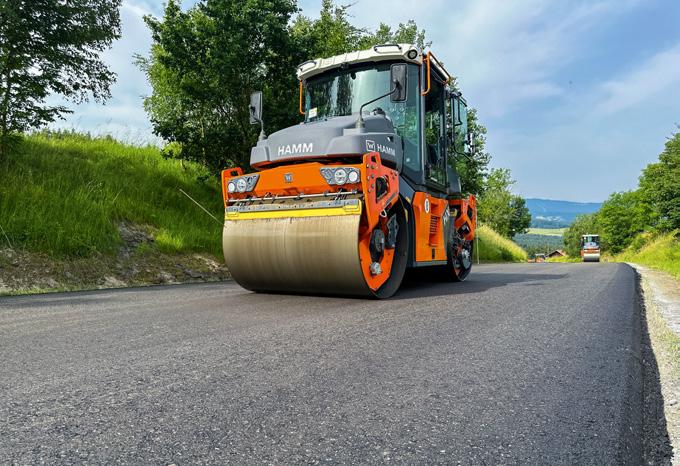
BOMAG BW 120 AD e-5 Tandem Roller
Revealed at CONEXPO-CON/AGG 2023, BOMAG’s BW 120 AD e-5 is a light, electric tandem roller that has the same power as its diesel-powered counterpart. Due to the absence of exhaust gases and minimal noise, the machine is ideal for urban construction sites, nighttime construction and working in sensitive areas such as schools and hospitals. It also has LED headlights to light up dark working areas.
The machine is powered by a 25 kWh lithium-ion battery and can be charged by household socket, wall box or a CEE plug. It can work a typical workday on a single charge.
BOMAG calls the BW 120 AD e-5 “allrounder,” which means operations don’t need to choose between performance and sustainability. The machine can tackle road construction and all related repair and finishing work, but can also be used in landscaping. bomag.com
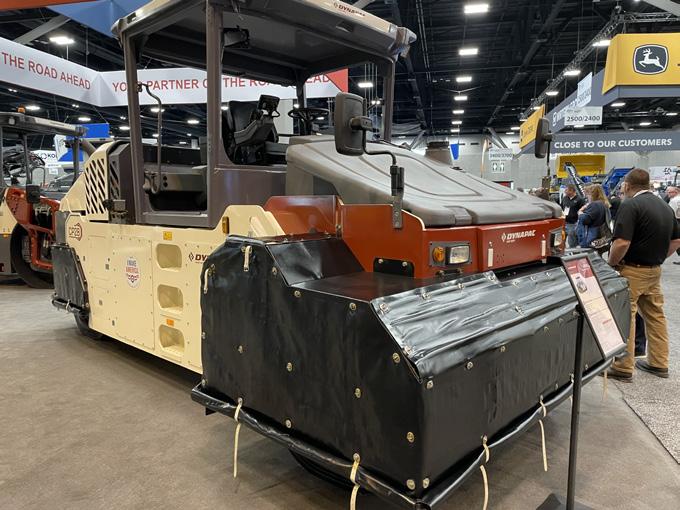
Dynapac CP28 Pneumatic Tire Roller
Dynapac's CP28 Pneumatic Tire Roller made its North American debut at the 2025 World of Asphalt/AGG1.
Dynapac states it is the heaviest ballastable pneumatic tire roller on the market. Designed for superior compaction performance, the CP28’s flexible rubber tires and adjustable air pressure system allow operators to achieve consistent density while minimizing surface damage. This versatile roller can be used for various applications, including finishing asphalt layers to create a smooth, even surface with best-in-class tire overlap. It also excels at compacting different soil types, from granular to semi-cohesive materials.
A time-saving feature of the CP28 is the Air on the Run system, which inflates all tires from 0 to 120 psi KPa in just 12 minutes.
Additionally, the CP28 features front and rear suspension systems designed to optimize tire-to-surface contact. The front suspension allows for a 4.5° lateral oscillation and 1.5° tilt to both the right and left, while the new rear suspension enables a 2.0° tilt in both directions. This ensures constant ground contact for superior compaction results. dynapac.com
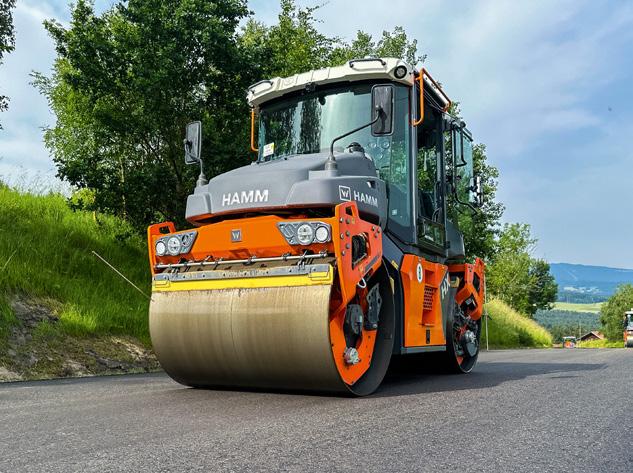
Hamm HX Series
Hamm states the HX Series offers pivot-steered tandem rollers with simple and intuitive features designed with the operator in mind to maximize productivity, efficiency and comfort. Each model is equipped with a split drum for easy maneuvering through tight corners to maintain maximum compaction quality. In addition, the operator can choose between vibration or oscillation to meet the needs of the job with precise and accurate results. For highest compaction quality, HX Series can be equipped with Smart Compact Pro for automated compaction guided by real-time density measurements, cooling readings and local weather data.
wirtgen-group.com/en-ca/company/hamm/
Hamm HD+ 120i VIO-2 HF
Hamm’s HD+ 120i VIO-2 HF offers incredible versatility while on the job. With the use of automatics for the VIO-2 HF, where the leading drum vibrates and the trailing drum uses oscillation in relation to the direction of travel, Hamm rollers can reduce passes and even reduce the number of rollers on the job site in some cases, allowing for better compacted material along with increased productivity.
With the ability to use double oscillation, operators can achieve density during colder paving temperatures, including higher joint densities. Smart Compact Pro is also available for this roller, which enables automated compaction based on real-time asphalt density.
wirtgen-group.com/en-ca/company/hamm/
equipment spotlight
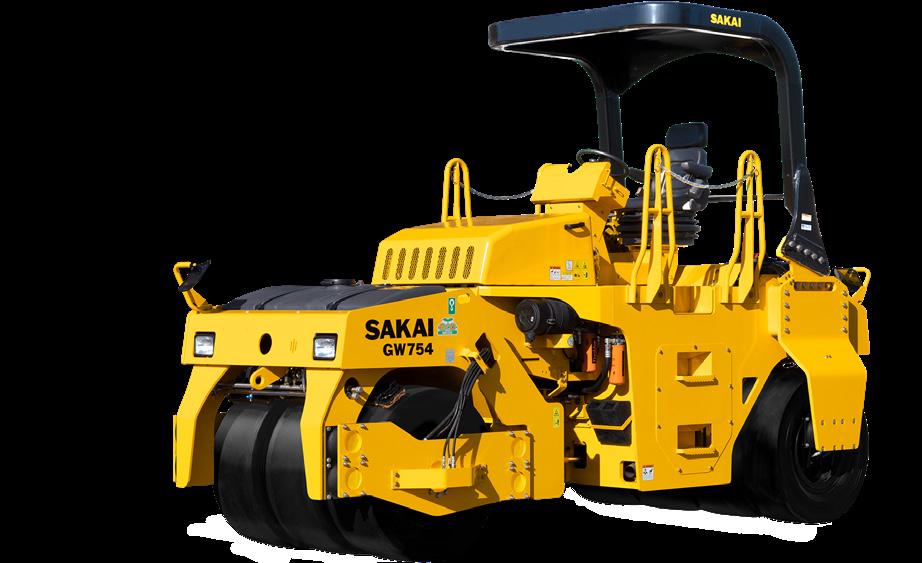
SAKAI GW754 vibratory pneumatic roller
The SAKAI GW754 is a unique solution for achieving high-density specifications on highways, longitudinal joints and thin-lift asphalt. While traditional pneumatic rollers rely on massive ballast to reach 25 tons, Sakai explains the 10-ton GW754 utilizes front and rear vibratory motors to deliver equivalent or superior compaction. This lower transport weight offers advantages in logistics and fuel efficiency without sacrificing performance.
The GW754 features uniquely designed superflat tires that maximize the contact area and provide a dynamic kneading action to seal the mat. To ensure consistent tire temperatures and prevent asphalt pickup, an optional heat-retention skirt kit is available.
The GW754 avoids complex digital interfaces in favor of intuitive physical switches and knobs, which Sakai notes ensures maximum uptime and a shorter learning curve for operators. sakaiamerica.com
Volvo DD15 Electric asphalt compactor
Attendees at the 2025 World of Asphalt/ AGG1 show in St. Louis had the first look at Volvo CE’s 1.5ton DD15 Electric asphalt compactor. The double drum machine has features similar to the 2.5-ton DD25 Electric. Its size fits smallscale jobs like parking lots, driveways and municipal work.
The DD15 Electric can fully charge in three and a half hours with a 240-volt Level 2 charging setup or in 12 hours with a 120-volt Level 1 outlet.
Also at the 2025 show, Volvo introduced updates to the SD75 and SD45 soil compactors and the PT125 pneumatic tire roller, which will enhance safety, serviceability and the user interface for operators.
The machines have seen several human-machine interface (HMI) upgrades, including all-new software, advanced keypads, a USB charging port and a 5-inch full-color LCD display — the same display available on the Volvo compact double drum compactor and excavator models. Additional improvements include auto idle and auto engine shutdown to reduce fuel consumption, and an indicator for remaining hours of fuel.
The HMI on the updated SD75 now includes a fan reverse menu selection and an optional five-frequency selection feature that allows the operator to select by surface type rather than frequency number.
The upgraded PT125 also has a new drive motor with an integrated speed sensor for optimal performance.
“We’ve been designing, refining and manufacturing compactors in Shippensburg for decades,” said Scott Young, Volvo president of Region North America. “So, we understand what helps contractors get their jobs done right, as safely and efficiently as possible. These machines are a testament to that.” volvoce.com
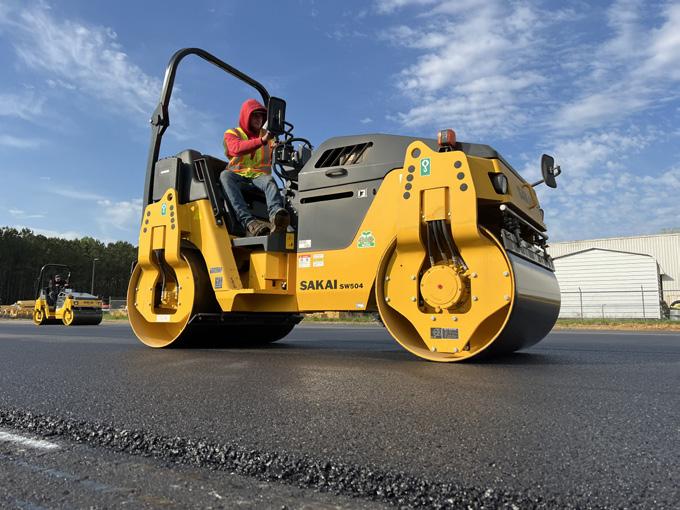
The SAKAI SW504 is a 4.5-ton class double-drum vibratory roller engineered for the daily rigors of municipal roads and commercial sites. While standard with a 51-inch drum, a 54-inch-wide variant (SW504W) is also available for contractors who need increased coverage as well as a combination version (rear tires). With a high-frequency vibration system (3,300 VPM), the SW504 provides the force needed for a wide variety of asphalt mix designs.
The SW504 features a 310-litre water tank, which allows for longer runs between refills compared to other models in its class. The operator station is built with tactile controls and physical switches that offer dependable operation without the failure points of complex displays. A triple-filtered spray system with all-metal nozzles further ensures a consistent, professional finish. sakaiamerica.com
SAKAI SW504 double-drum vibratory roller
> MARCH 3-7
CONEXPO-CON/AGG 2026 Las Vegas, Nevada conexpoconagg.com
> MARCH 26-27
Atlantic Heavy Equipment Show Moncton, New Brunswick ahes.ca
> MARCH 29-APRIL 1 Good Roads Conference Toronto, Ontario goodroads.ca
> APRIL 9
Women in Construction Mississauga, Ont. events.annexbusinessmedia.com/event/ women-in-construction-breakfast/
> APRIL 23-24
National Heavy Equipment Show Mississauga, Ontario nhes.ca
> JUNE 3-4
British Columbia Stone, Sand and Gravel Association Conference and Trade Show Vancouver, British Columbia gravelbc.ca/events/
Don't see your event listed? Make sure to let us know. Email the details to editor Mike Lacey, mlacey@ annexbusinessmedia.com
one more load The crystal ball
MARK HAMMOND
Seeing below the ground
Geophysics is the science of using the physical properties of the Earth—things like density, magnetism, sound waves, and electrical conductivity—to “see” below the ground without digging. If you think of medical imaging, geophysics works in a similar way, but on the scale of landscapes instead of bodies. By measuring how the Earth responds to different kinds of energy, geophysicists and geoscientists can map what lies beneath the surface: rock layers, groundwater, faults, and sand and gravel deposits.
For gravel exploration, geophysics is a valuable tool because it provides non-invasive and relatively cost-effective information about what’s underground. Instead of drilling dozens of test holes blindly—which can be costly and time-consuming — geophysical surveys help companies target the best locations for follow up and outline deposit margins for eventual extraction. We have seen instances where companies have drilled, permitted and mined what they thought was all the gravel on the site. A quick property wide survey revealed several unrealized areas of additional potential gravel that had never been investigated previously. The follow up drill program confirmed the new geophysical targets and significantly extending the mine life.
Geophysics works by “mapping” contrasts in the electrical conductivity, density, resistivity or magnetic properties of materials. By measuring these contrasts, geophysicists can infer where materials differ and what the potential materials are.
Geophysical methods offer a range of ways to investigate what lies beneath the surface. Each technique has specific applications, advantages and limitations. Selecting the right method for the conditions is critical. The correct choice can reveal subsurface features, reduce uncertainty and improve efficiency in planning and decision-making.
1. ELECTROMAGNETIC (EM) SURVEYS
EM methods detect variations in the ground’s conductivity from the surface or airborne sensors. They’re mobile, fast, cover large areas and can help outline broad zones where gravel might be present. EM surveys are often used in the early stages of exploration to narrow down promising targets.
2. SEISMIC REFRACTION
This method sends sound waves into the ground and measures how fast they travel. Because seismic waves
move more slowly through loose materials like sand and gravel and faster through compacted till or bedrock, this technique can estimate the thickness of gravel layers and depth to bedrock.
3. GROUND-PENETRATING RADAR (GPR)
GPR uses radar pulses to image shallow subsurface layers. It’s effective in dry, coarse materials like clean sand and gravel, where radar signals can travel several metres. GPR can reveal layering, the depth to the water table and variations in material size. However, it struggles in clay-rich or water-saturated soils where signals weaken quickly.
4. ELECTRICAL RESISTIVITY TOMOGRAPHY (ERT)
ERT measures how strongly the ground resists electrical current. Gravel tends to be highly resistive, especially if it’s dry, while clay and water-bearing sediments conduct electricity more readily. This makes ERT particularly useful for mapping the shape of a gravel deposit and distinguishing it from finer materials.
WHY GEOPHYSICS MATTERS IN GRAVEL EXPLORATION
• Reduces uncertainty: Geophysics provides a clearer understanding of the subsurface before drilling.
• Saves time and money: Targeted drilling minimizes wasted effort in unproductive areas.
• Improves resource estimates: Knowing the thickness, extent and geometry of gravel layers helps planners evaluate aggregate volumes
• Supports environmental stewardship: Geophysics is a non-invasive survey, reduces ground disturbance and helps avoid sensitive areas.
Geophysics doesn’t replace drilling or test pitting, but it makes invasive investigations more targeted and cost effective. By combining geophysical information with geological mapping and sampling, gravel explorers can build a more reliable picture of what lies beneath the surface.
William Gowdy is a geologist who has 35 years of experience in the aggregate, geology, mining, reclamation and exploration fields throughout Canada, the US and overseas.
Mark Hammond is a senior geophysicist, permitting advisor and project manager with SLR who has consulted for the mining, energy and environment industries for 30 years.
WILLIAM GOWDY
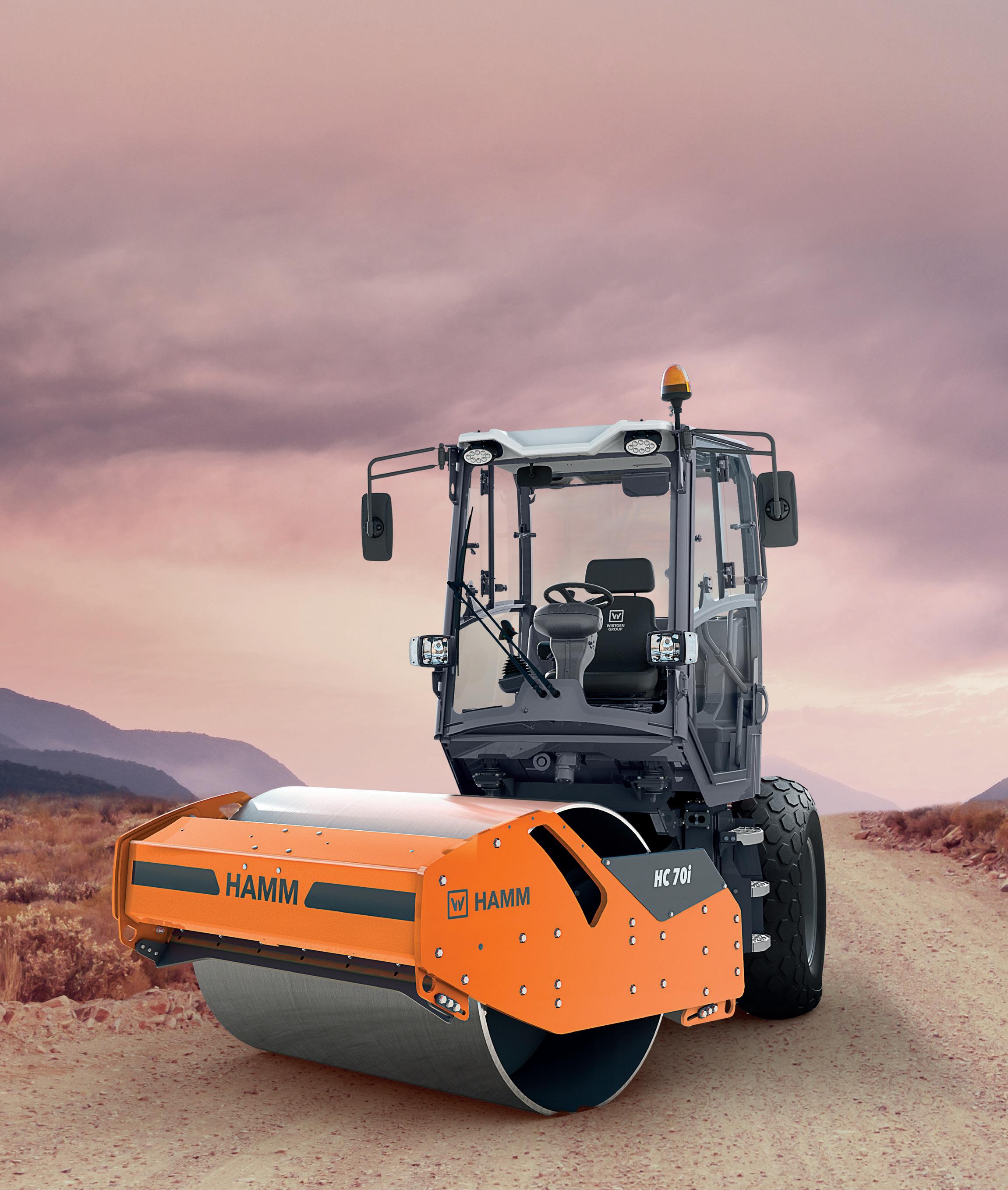
Compac t and agile
CLOSE TO OUR CUSTOMERS. The compactors are impressive thanks to their compact design, language-neutral operation and perfect visibility The permanent all-wheel drive ensures outstanding gradeability, and the ECOMode reduces both fuel consumption and emissions All of the models in this series are ready for the digital future – and that will impress drivers, rental companies and construction firms alike.