GLOBAL EDGE
Karen Thompson on Canada’s critical minerals moment. p.14
THE MODERN PLANT
Mitrex meets demand for building-integrated solar materials. p.16
WORKPLACE CULTURE
Why psychological safety is an operational asset. p. 19
Karen Thompson on Canada’s critical minerals moment. p.14
Mitrex meets demand for building-integrated solar materials. p.16
Why psychological safety is an operational asset. p. 19
Your safety comes first. Avoid injuries by staying up to date on machinery instructions and safety precautions. But should anything happen, we’re here to help.

APRIL 2026
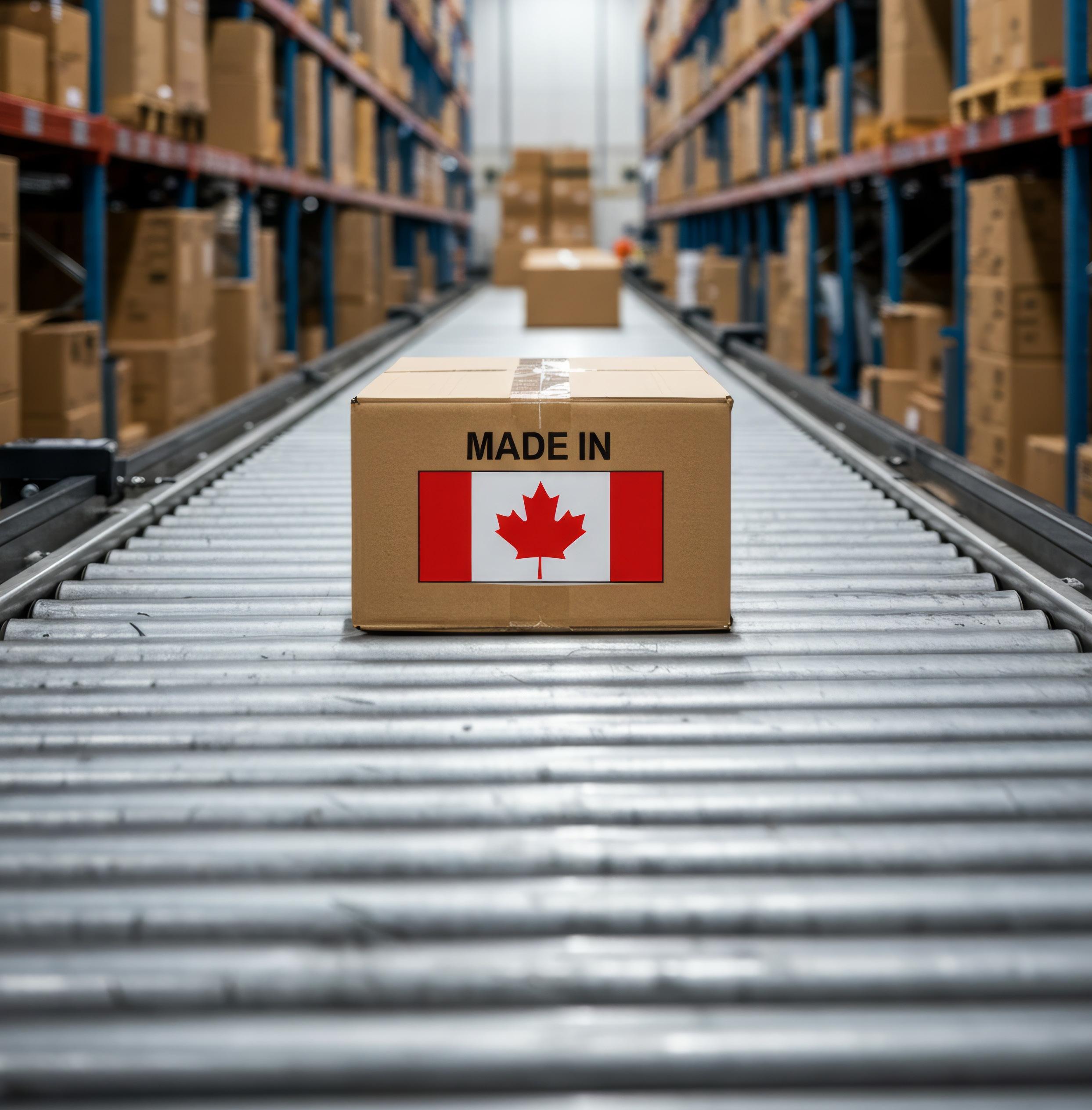
10 THE NEW REALITY FOR EXPORTERS
How tariffs and trade uncertainty are changing the operating landscape for Canadian manufacturers.
14
Q&A: KAREN THOMPSON ON CANADA’S CRITICAL MINERAL MOMENT
The president of Haver & Boecker Niagara talks supply chain, equipment modernization and Canada’s competitive position.
16
MITREX MEETS GROWING DEMAND FOR BUILDINGINTEGRATED PHOTOVOLTAICS
How Mitrex’s manufacturing roots led to building integrated photovoltaics.
19 INVESTING IN PSYCHOLOGICAL SAFETY
Why psychological safety is an operational asset — and how manufacturers can build it.


Since stepping into this role in July 2024, one thing I’ve learned is that Canada has a well-earned reputation for innovation. We produce strong research, we have a highly educated workforce and we’re steadily building our STEM talent base.
When it comes to execution, however, we tend to fall short.
A recent report from the Information and Communications Technology Council (ICTC) put some numbers to the gap between innovation and productivity. Spoiler alert: They’re not especially encouraging.
According to the report, Canada’s labour productivity has grown just 0.9 per cent over the past decade; a level of growth the Bank of Canada has described an “emergency.” Canada now ranks second-to-last in the G7, while real wages remain 2.4 per cent below pre-pandemic levels.
Looking further ahead, the outlook is even more concerning. The report points to projections that place Canada last among Organisation for Economic Co-operation and Development (OECD) member countries by 2030 and again by 2060.
Not near the bottom. Last.
So what’s behind it?
The report identifies two main factors: weak capital investment and slow adoption of new technologies. This is especially evident among smaller businesses. SMEs account for roughly 87 per cent of employer firms in Canada, and many are struggling to modernize at the pace required.
Across several key areas, the gaps are hard to ignore. According to the report, Canadian firms sit just below the OECD average in cloud and IoT adoption. On big data analytics, Canada ranked last in 2023. On
AI adoption, it also placed near the bottom (despite ranking among the highest in AI research output per capita).
The reasons for our shortcomings are familiar. Costs remain high, returns can be difficult to quantify and finding talent to execute a technology strategy continues to be a challenge. Nearly half of businesses with more than 20 employees cite hiring as a major concern.
But it’s not all doom and gloom. In fact, manufacturing stands out as a potential bright spot. The report notes that nearly three-quarters of firms in the sector had adopted at least one advanced technology by 2022, up from 70 per cent in 2014. That places it ahead of much of the broader economy.
That matters. Manufacturing still accounts for about 60 per cent of Canada’s exported goods and remains an important driver of both wage growth and innovation.
At the same time, the gap is not standing still. According to the report, companies in the digital economy are more than three times as likely as others to be planning AI adoption over the next 12 months. It gives a sense of where things are heading, and how quickly that gap could widen if others don’t keep pace.
When it comes to a solution, the ICTC doesn’t sugar coat it. Build the talent pipeline, get more people the skills they need and make it easier for businesses to actually adopt these tools. Given the current manufacturing landscape, it’s no small task. Hopefully, we’re up to the challenge.
KIRSTYN BROWN, EDITOR Comments? E-mail kbrowni@annexbusinessmedia.com
Connect with Plant magazine facebook.com/PlantMagazine/ /plant-magazine plant.ca
APRIL 2026 • Volume 85, Number 1
READER SERVICE
Print and digital subscription inquiries or changes, please contact customer service
Angelita Potal Tel: (416) 510-5113 Fax: (416) 510-6875
email: apotal@annexbusinessmedia.com
Mail: 111 Gordon Baker Rd., Suite 400 Toronto, ON M2H 3R1
EDITOR Kirstyn Brown 226-931-4194 · kbrown@annexbusinessmedia.com
NATIONAL ACCOUNT MANAGER Ilana Fawcett 416-829-1221 · ifawcett@annexbusinessmedia.com
MEDIA DESIGNER Jaime Ratcliffe
ACCOUNT COORDINATOR Debbie Smith 416-510-5107 · dsmith@annexbusinessmedia.com
AUDIENCE DEVELOPMENT MANAGER Beata Olechnowicz 416-510-5182 · bolechnowicz@annexbusinessmedia.com
GROUP PUBLISHER Paul Grossinger pgrossinger@annexbusinessmedia.com
CEO Scott Jamieson sjamieson@annexbusinessmedia.com
ANNEX BUSINESS MEDIA
111 Gordon Baker Road, Suite 400 Toronto, ON M2H 3R1
Tel (416) 442-5600 · Fax (416) 510-5134 www.annexweb.com
SUBSCRIPTION RATES
Canada – $80.62 per year
USA – $213.22 (CAD) per year
International – $240.80 (CAD) per year
Add applicable taxes to all rates. Combined, expanded or premium issues, which count as two subscription issues.
ISSN: 1929-6606 (Print), 1929-6614 (Online).
PUBLICATIONS MAIL AGREEMENT NO. 40065710
Return undeliverable Canadian addresses to: PLANT Circulation Department, 111 Gordon Baker Rd. Suite 400, Toronto, ON M2H 3R1
©2026 Annex Business Media. All rights reserved. Performance claims for products listed in this issue are made by contributing manufacturers and agencies. PLANT receives unsolicited materials including letters to the editor, press releases, promotional items and images from time to time.
PLANT, its affiliates and assignees may use, reproduce, publish, re-publish, distribute, store and archive such unsolicited submissions in whole or in part in any form or medium whatsoever, without compensation of any sort. This statement does not apply to materials/pitches submitted by freelance writers, photographers or illustrators in accordance with known industry practices.
PRINTED IN CANADA



Absorb shocks and adapt quickly with AI-powered ERP from Epicor Kinetic.
Today’s manufacturers face disruptions from cyber threats, economic uncertainty, supply chain volatility, skills gaps, and more.
With AI‑powered ERP from Epicor Kinetic, you can build resilience while modernizing at your own pace.
Minimize cyber risk with integrated security and governance
Gain real-time visibility across production and supply chain
Enable business growth with a composable architecture

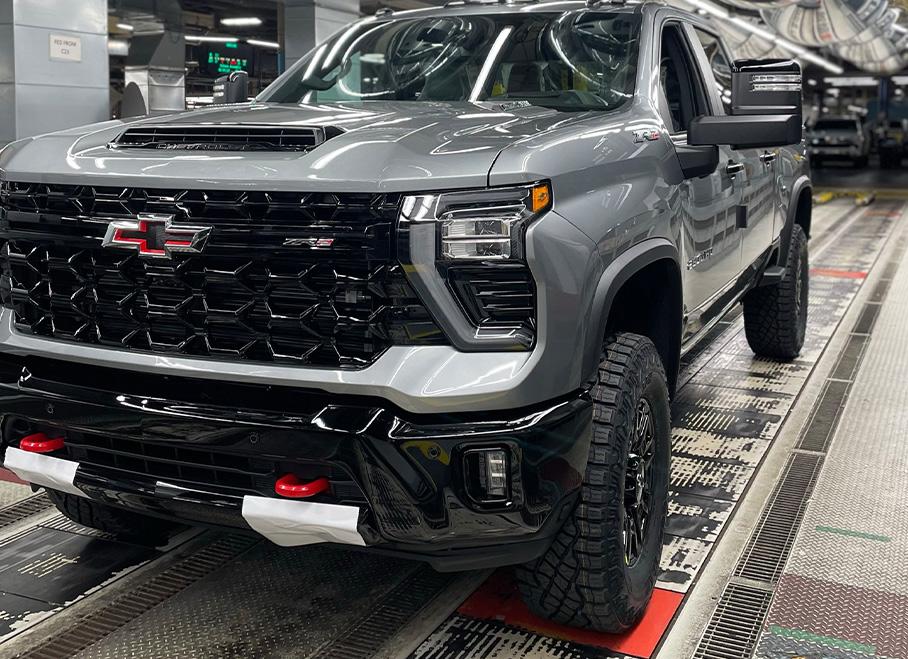
On Feb. 18, GM Canada announced a new $63 million investment in Oshawa Assembly to upgrade stamping operations, supporting preparations to build the next generation of gas-powered full-size pickups and enhancing capability in the service parts business. This investment builds on the $280 million announced in June 2023, bringing GM’s total investment in Oshawa since 2020 to C$1.5 billion.
Oshawa Assembly currently builds Chevrolet Silverado light and heavy-duty full-size pickups on two shifts and is GM’s only North American facility producing both models on the same line. The site also supports aftermarket parts focused on stamping, related sub-assembly and other activities. Product details and launch timing for the next-generation pickup will be shared at a later date.
GM noted that St. Catharines Propulsion will produce GM’s next-generation of V8 engines, which power our high-demand fullsize trucks and SUVs.
CAMI Assembly continues to be assessed for future opportunities, GM said.
Ontario has released Fortifying Ontario’s Economy: A Plan to Accelerate Responsible Resource Development, a vision paper aimed at overhauling the province’s Critical Minerals Strategy. The announcement was made March 3 at the annual Prospectors & Developers Association of Canada (PDAC) convention in Toronto by Minister of Energy and Mines, Stephen Lecce.
In a press release, the government said that Ontario’s five-year Critical Minerals Strategy, launched in 2022, laid a foundation that focused on the electric vehicle market and emphasizing the need for clean technologies, but escalating geopolitical tensions, supply chain
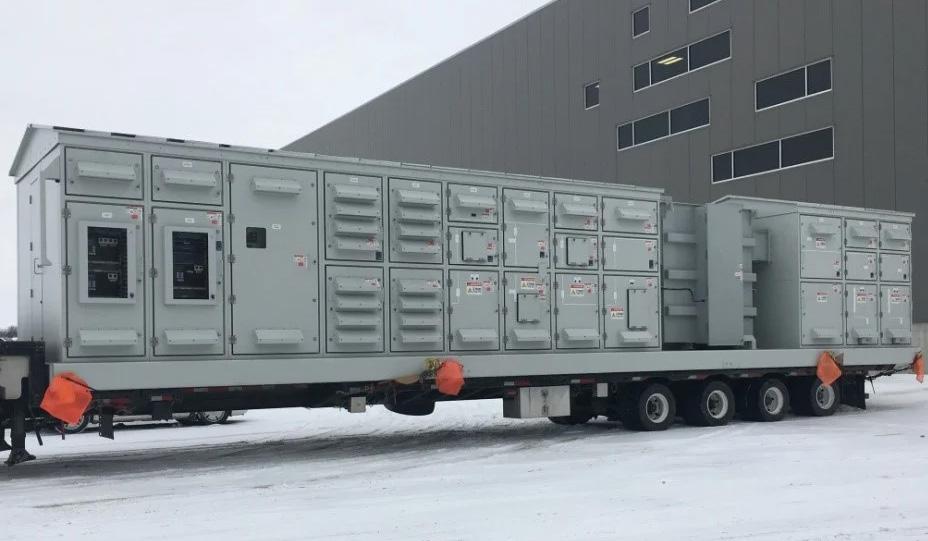
Above: Switchgear panels loaded on a truck at at EnerQuest Technologies.
General Motors
Canada is investing $63 million to upgrade operations at Oshawa Assembly for next-generation full-size pickups.
disruptions, U.S. tariffs and rising trade protectionism “demand a shaper, more agile response focused on ending foreign dominance and protecting Ontario’s vital industries and workers.”
The government said it is also updating the criteria for the Critical Minerals List to better align with the strategic needs of the province, Canada and its allies. Including high-purity iron and aluminum expands the number of critical minerals in Ontario to 35. High-purity iron is essential for the transition to “green steel” manufacturing using electric arc furnace technology in Ontario’s steel mills, while aluminum is a cornerstone material for the province’s automotive, aerospace, and defence sectors.
“Much of Ontario’s manufacturing sector depends on critical minerals, which is why we are delighted to see this first step in renewing a strategy our sector relies upon. CME is also encouraged to see the addition of high-purity iron
and aluminum to the minerals list. Ontario manufacturers are hopeful that this added focus will secure more resilient and globally competitive supply chains, keeping them focused on making the incredible products that drive our province’s economy,” said Dennis Darby, President & CEO, Canadian Manufacturers & Exporters (CME).
EnerQuest Technologies Solutions Inc. says it is investing $15.8 million to expand its manufacturing facility in Harrow, Ont., and bring switchgear subassembly production back to Canada.
According to a March 17 press release from the Ontario government, the expansion will allow EnerQuest to manufacture switchgear subassemblies inhouse rather than relying on a U.S.based sister
facility. The company says the move will increase production capacity, reduce exposure to tariff risks and support confirmed customer demand.
EnerQuest is a custom manufacturer of prefabricated electrical equipment. The company said the expansion will support contracts tied to data centre infrastructure, modular housing and medical units, all of which require reliable electrical distribution systems.
In support of the project, Ontario is providing $1.5 million through the Southwestern Ontario Development Fund, part of the province’s Regional Development Program.
The release states the expansion is expected to create 125 new jobs and protect 154 existing positions across Essex County.
“While the technology is important, what truly makes this expansion possible is the community around us,” said Malena Marshall, director at EnerQuest Technologies Solutions Inc. “Harrow has been more than just a location for our operations — it has been a partner in our growth.”
EnerQuest said reshoring switchgear production will help strengthen its supply chain and improve its ability to meet delivery timelines for critical electrical equipment. Switchgear is a core component in power distribution systems used in industrial facilities and infrastructure projects.
The federal government is investing $1.4 billion to expand Canada’s domestic ammunition production capacity, according to a March 18 press release from the Government of Canada.
The funding will be delivered through the newly launched Canadian Defence Industry Resilience (CDIR) Program and includes up to $305.4 million for IMT Precision to build a new manufacturing facility in Ingersoll, Ont. The facility will produce empty metal shells for 155millimetre artillery projectiles and is expected to create at least 75 fulltime jobs, with employment rising to as many as 400 positions at full production.
Additional contribution agreements have been awarded to General Dynamics Ordnance and Tactical Systems in Quebec to support new nitrocellulose production and to establish facilities for loading, assembling and packaging artillery charges and highexplosive projectiles.
The investments are intended to increase Canadian manufacturing capacity, strengthen defence supply chains and reduce reliance on foreign suppliers.
AtkinsRéalis Group Inc. announced it is collaborating with Nvidia to explore the development of nuclear-powered, large-scale AI data centres, as demand for computing infrastructure continues to grow faster than available power supply.
According to AtkinsRéalis, the collaboration will explore how Nvidia’s computing and digital-twin technologies could be used in the planning and design of nuclear-powered AI facilities, allowing infrastructure to be modelled and optimized virtually before construction begins.
The company said the initiative will focus on evaluating how its experience in nuclear power, energy systems and large project execution could support the development of AI computing facilities. Nvidia’s role will centre on providing computing, networking and simulation technologies, including tools used to create detailed digital twins.
AtkinsRéalis said the work is being driven by rising global demand for AI infrastructure, which has prompted governments and developers to seek reliable, low-carbon power sources for large data centres. The company identified nuclear power as a potential steady baseload option for gigawatt-scale AI facilities.
As the original equipment manufacturer and exclusive license holder of CANDU nuclear technology, AtkinsRéalis said it will assess how its standardized nuclear solutions could meet the power and operational needs of AI data centres.The collaboration will also examine how digital modelling and AI-assisted workflows could help streamline engineering, construction and project delivery.



The results are in! Meet the recipients of the first-ever Advance: Women in Manufacturing Awards.
BY KIRSTYN BROWN
Annex Business Media has announced the winners of the inaugural Advance: Women in Manufacturing Awards, celebrating women whose leadership and contributions are shaping Canada’s manufacturing sector.
Representing Annex’s 13-member manufacturing media group, the awards mark an important milestone for the Advance: Women in Manufacturing initiative, which expanded this year from a virtual program to an in-person celebration. Winners were revealed March 5 during a live webinar that brought together
LIFETIME ACHIEVEMENT AWARD


women leaders from across the industry for an discussion on career paths, challenges and professional growth.
Selected from nearly 100 nominations, the honourees represent a wide cross-section of Canadian manufacturing who have led major initiatives, strengthened operations, driven innovation and made lasting contributions within their organizations and communities.
Come celebrate the winners at the in-person event on May 6 in Toronto, featuring a keynote presentation, panel discussions, networking and the awards ceremony.







BY ALEX GRECO
Canada’s manufacturing sector is at a crossroads as global competition for capital accelerates and pressure on exports continues to rise. To put this into context, the Canadian manufacturing sector lost more than 51,000 jobs over the past year, while businesses are actively searching for diversification strategies into new markets around the world. Simply put, the pressure has never been higher for Canadian manufacturing.
The state of Canada’s manufacturing sector is impacted by factors brought on by our southern neighbour, but many of the challenges facing the sector are homegrown. Slow project approvals, few if any incentives to build in Canada, weak tax competitiveness and burdensome tax requirements, regulatory barriers at the federal, provincial and municipal level, a shrinking labour pool and limited access to skilled labour all contribute to undermining the business case for new investment in Canada’s manufacturing ecosystem.
In many cases, these barriers are cumulative rather than isolated: layering approvals, duplicative reporting requirements and inconsistent standards across jurisdictions that slow projects and increase costs. For manufacturers making decisions on tight timelines, these inefficiencies can be the deciding factor in whether investment proceeds in Canada or elsewhere. Left unchecked, companies will continue to cut costs, scale back or delay investments at the very moment Canada needs them most. We simply cannot afford this any longer.
While external pressures — global supply chain disruptions, geopolitical tensions and fluctuating commodity prices — are largely beyond our control,

We can either continue consulting while competitors build and innovate, or decisively implement the policies manufacturers have long identified.
Canada holds significant domestic levers to enhance confidence in our manufacturing sector.The priority must remain focused on cutting business red tape, reducing or eliminating business costs, incentivizing businesses through the tax system not only to remain in Canada, but to grow; and ensuring reliable access to skilled labour. This also means moving with greater speed and predictability. Investment decisions are often made on multi-year horizons, but the signals governments send today through tax policy, regulatory clarity and program design shape whether Canada is viewed as a destination for growth or a jurisdiction of uncertainty.
Canadian manufacturers are hesitant to commit to large capital investments. Instead, they are doing just enough to maintain operations — holding the line without advancing productivity or competitiveness.This cautious stance is understandable, but a concerted effort from business and government is needed to restore confidence and unlock new investment.
Evidence from both Canadian and international jurisdictions
in April 2026, as a trade mission focused on manufacturing and ensuring we renew our critical trading partnership with representation drawn from across the manufacturing ecosystem.
underscores this point. In Canada, manufacturers routinely face overlapping federal and provincial environmental assessments, duplicative reporting requirements such as federal plastics registry obligations layered with provincial regimes, and inconsistent occupational health and safety standards across provinces — each adding time and cost to projects. By contrast, jurisdictions such as Australia and Germany have moved toward more coordinated approval processes, including “single window” permitting models and legislated service standards for project reviews.
Canadian manufacturers are engaged, perhaps like never before.
At the Canadian Chamber of Commerce, through our Manufacturing and Value Chains Committee and our international team, we are working in lockstep with the federal government to ensure a strong case can be made to renew the Canada-United States-Mexico Agreement (CUSMA) and ensure Canada retains access to the critical U.S. market. To that end, a delegation will depart for Washington D.C.
New investment uniquely focused on Canada — particularly in areas the Canadian Chamber of Commerce Business Data Lab (BDL) has identified as productivity-enhancing, including advanced machinery, technology adoption and business R&D — will be critical to strengthening Canada’s economic security as we navigate the upcoming review of the Canada–United States–Mexico Agreement. BDL analysis published in 2025 estimates that Canada’s productivity gap with the United States could amount to as much as $31 trillion in lost economic output over the long term, underscoring the urgency of boosting productive investment.
Closing this gap will require more than small changes. It will demand a sharper focus on scaling up companies, accelerating technology adoption across manufacturing and ensuring that public policy enables private sector investment. Targeted, well-designed tax incentives can play a catalytic role, particularly when paired with streamlined regulatory processes and clearer pathways for project approvals.
We can either continue consulting while competitors build and innovate, or decisively implement the policies manufacturers have long identified. If done right, we achieve greater economic independence while maintaining the strength of our chosen partnerships. If not, the risk is that hesitation today becomes deeper economic decline tomorrow.
Either way, deliberate, data-driven and domestic action will allow Canada to determine its own success.
Alex Greco is senior director of manufacturing and value chains at the Canadian Chamber of Commerce.
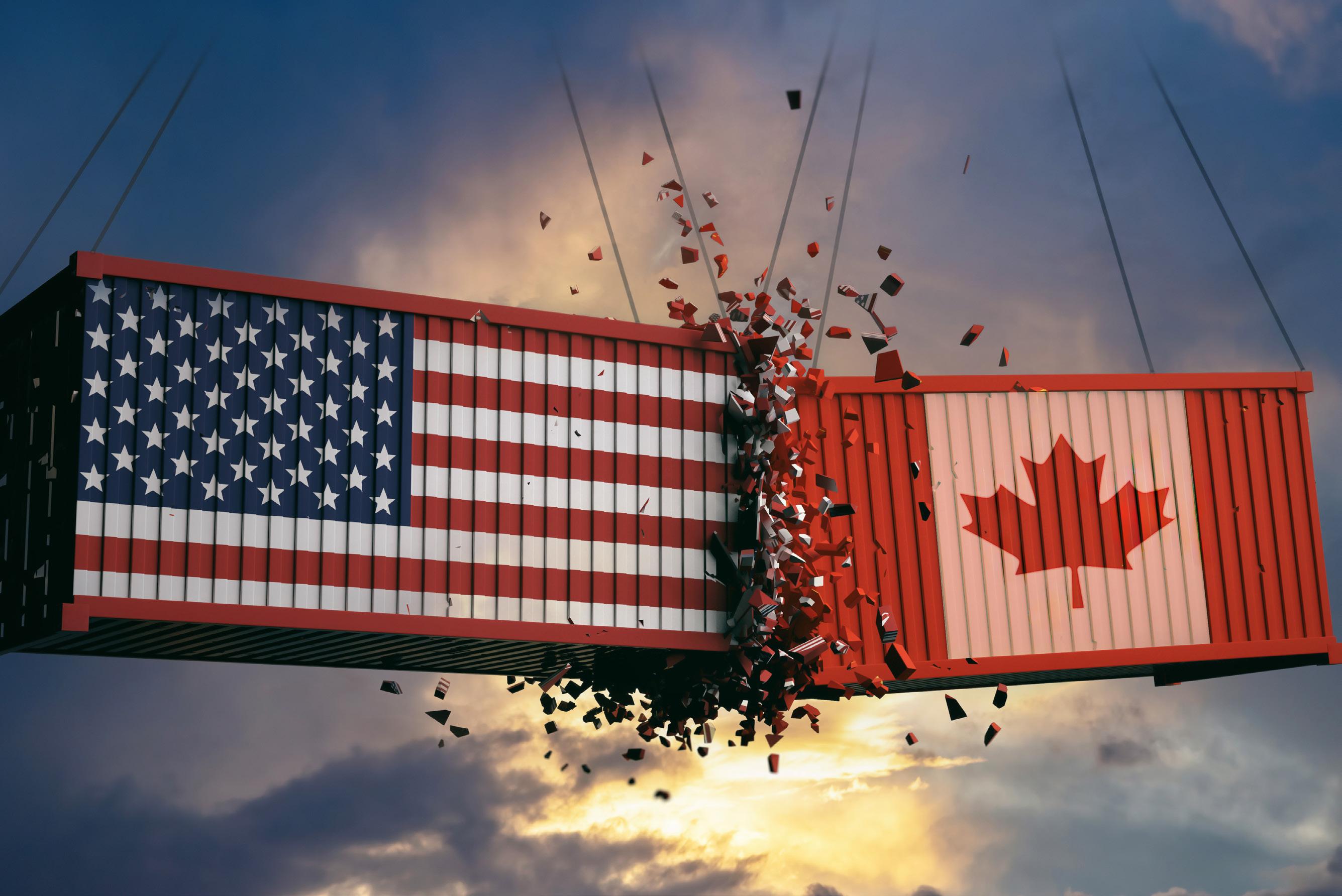
Industry experts examine how tariffs and trade uncertainty are changing the rules for Canadian manufacturers.
BY MATT JONES
The signature trade policy of the second Trump administration has been the use of protective tariffs. Since they were first imposed in early 2025, the tariffs — which have faced a number of legal challenges — along with the U.S. president’s rejection of trade agreements he had previously signed, have caused chaos and confusion for companies
and countries that relied on international trade.
To better understand how these changes have affected Canadian exporters and reshaped longheld assumptions, Plant spoke with authoritative voices across the export landscape.
Dennis Darby, president and CEO of Canadian Manufacturers and Exporters (CME), says it’s hard to tell
whether those in the manufacturing sector see this as a temporary road bump that needs to be navigated or a new permanent state of affairs. But what is without question is that the exporting has been hit hard.
“Our manufacturing sector is the sector hit the hardest because the section 232 tariffs affect automobiles, steel, aluminum, wood, etcetera,” says Darby. “So the direct impact of tariffs and the ongoing uncertainty is really pushing firms to pause or cancel investment and in some cases they’re cutting staff. In fact, through October 2025, manufacturing construction spending was down about just over 10 per cent versus a year ago.”
In keeping with that, the Bank of Canada’s recent Business Outlook Survey shows investment intentions over the next 12 months have weakened. In the fourth quarter of 2025, 37 per cent of respondents
“The shift right now is towards optimizing for resiliency, and that’s probably going to be the competitive advantage.”
— Patrick Michetti, Export Development Canada
said they expected to increase investment spending, down from 48 per cent just one year earlier.
Manufacturing employment has also declined. According to Statistics Canada, manufacturing employment was down by about 52,000 jobs year over year as of early 2026. (The sector employs roughly 1.8 million people nationwide.)
In response to these pressures, some government programs are available to support exporters. Export Development Canada (EDC), for example, provides a variety of services that help Canadian manufacturers with credit insurance, financing solutions and risk management. These programs aim to mitigate the damage caused by the tariffs, even if they cannot completely insulate firms from the impacts.
In general, Darby sees Canadian

manufacturers and exporters trying their best not to make any large or sudden moves, only trying to mitigate the damage in the short term. Because they fundamentally don’t know whether this is a ‘new normal’ or an aberration.
“If Mr. Trump’s goal was to throw uncertainty on Canada’s industrial economy, it’s worked,” adds Darby.
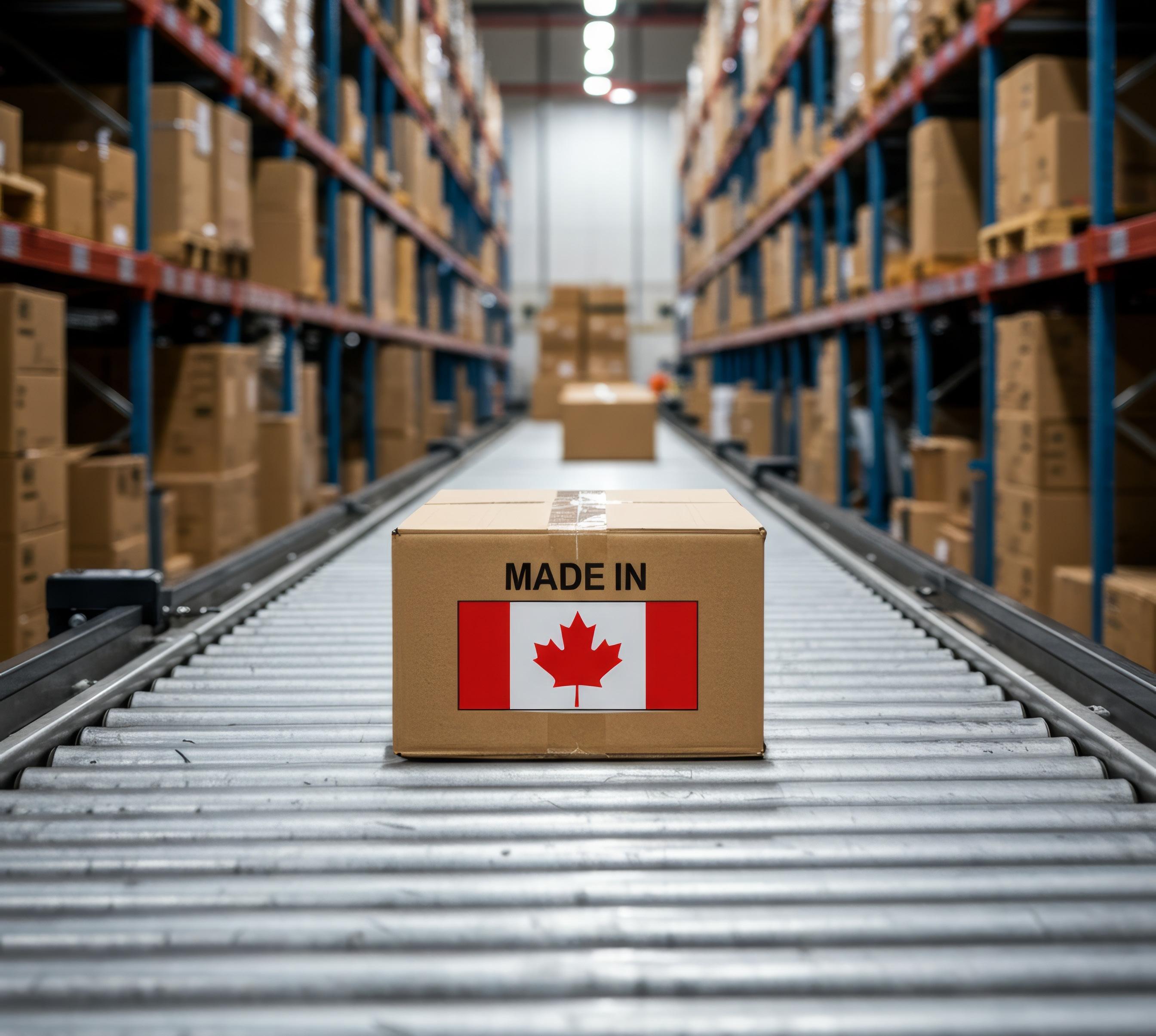
Patrick Michetti, advanced manufacturing and digital technology ecosystem lead for EDC, says that 10 years ago, the push within the industry was towards optimizing for efficiency and getting the best prices on supply chains and other logistics. That is no longer the case.
“The shift right now is towards optimizing for resiliency, and that’s probably going to be the competitive advantage,” says Michetti. “Picking out supply chains, having dual source supply chains, making sure that you have a secondary plan in place in case anything comes up. It’s making sure that you are in a position where you can react to the changes in the political environment.”
When asked what a resilient Canadian export sector would look like, Michetti points to the value of multiple suppliers, nearshoring and longterm planning.




“I know it’s counterintuitive, but this is the time for companies to be looking for opportunities to upskill your workforce, to be ready for what comes next.” – Dennis Darby, Canadian Manufacturers & Exporters
“It’s also about having a strategy that’s not short term, but long term,” he says. “If you have even a marginal diversification strategy in place, you’re less exposed to concentrated policy risk. And investing in automation and reducing costs internally. I think those are key ways that you could be resilient.”
For Darby, a resilient Canadian export sector will depend on three factors: improving competitiveness and narrowing the productivity gap with the United States; being prepared to pivot and take advantage of opportunities, including what he described as the government’s generational investment in infrastructure; and avoiding complacency.
“Canada’s manufacturing sector will continue to have to compete in the North American market,” he says. “Don’t assume it’s going to go exactly back to the way it was. Assume that we are going to be in a tough, competitive market.”
Beyond that, Darby says CME has been urging governments to streamline regulations where possible and invest
further in training. He adds that the same focus on skills investment applies at the company level.
“I know it’s counterintuitive, but this is the time for companies to be looking for opportunities to upskill your workforce, to be ready for what comes next,” says Darby.
Of course, the impact of tariffs has not been felt evenly across the economy. Sectors affected by Section 232 tariffs — including steel and aluminum fabricators, particularly in the automotive industry — are among those hit hardest. By contrast, sectors operating under the CanadaUnited StatesMexico Agreement (CUSMA), the free trade agreement signed in 2018 that replaced the North American Free Trade Agreement, have been less affected.
If Mr. Trump’s goal was to throw uncertainty on Canada’s industrial economy, it’s worked, adds Darby.


But now even that is up in the air. CUSMA is due for review on July 1, and the U.S. president has at times appeared ambivalent about extending the agreement. During a January tour of a Ford plant in Michigan, Trump described the deal as “irrelevant” and suggested it disproportionately benefited Canada.
(It’s worth noting that later that same day, Ford CEO Jim Farley struck a different tone, emphasizing the degree to which North American manufacturing is already integrated: “We really see Canada and Mexico and the U.S. as an integrated manufacturing system.”)
All this uncertainty has renewed calls for trade diversification as a way to reduce exposure to U.S. policy shifts. However, Canada’s manufacturing sector remains deeply tied to the U.S. market. Even when combined, exports to the European Union and China represent only a fraction of the value of Canada’s exports to the United States — before factoring in the added logistical complexity of serving those markets.
“Supply chains in Europe are quite complex and already exist,” notes Darby. “In Asia, they exist. Canada is competitive on manufacturing with the U.S. and to a
lesser degree with Mexico. At the end of the day, diversification of manufactured goods is not something that’s going to happen anytime soon. It could improve if government is able to convince manufacturers — especially aerospace or automotive, defense — to come locate in Canada, that’s great. That lowers our dependency on the U.S. because we’re supplying other countries. But whether we like it or not, we are connected to the U.S. and that will continue to be where the majority of manufactured goods go.”
Michetti says that while diversification is a long term and potentially difficult effort, it would be worthwhile. If you can have even a small portion of diversification, that can make a huge impact on companies.
“You can probably start getting marginal diversification in two or three years as you build those relationships and understand those markets,” says Michetti.
Darby sees the best opportunity for finding other trading partners in new industries, such as a new critical minerals sector, carbon capture and storage or nuclear power. Diversifying domestic trade is also worth considering.
“We’ve been cautiously optimistic when the government announced it was going to build Canada homes, new defense procurement, big national projects,” says
Darby. “All of those are opportunities for manufacturers to diversify away from the U.S. and participate in big industry building projects.”
The key, he says, is identifying where Canadian manufacturers already have strengths and where government spending is likely to create domestic demand.
“What are the sectors in which we have some technological edge or raison d’etre and where there is going to be some domestic demand created because of government spending?”
As part of the diversification effort, Canada has been looking more closely at Mexico (Darby was preparing to join a Canadian trade mission to Mexico when he spoke with Plant.) Much of Canada’s trade with Mexico is currently routed through the United States, so developing more direct ties could help reduce reliance on the U.S. market.
Taken together, the current trade environment has forced Canadian manufacturers to confront longstanding assumptions about markets, supply chains and dependency. Many of the strategies now under discussion — from diversification to domestic investment — are not new. What has changed is the urgency, as uncertainty around U.S. trade policy has made reliance on a single market a more visible risk.
The president of Haver & Boecker Niagara shares her thoughts on supply chain execution, equipment modernization and why Canada can’t afford to wait.
BY KIRSTYN BROWN
Karen Thompson has spent more than 28 years at Haver & Boecker Niagara, the St. Catharines, Ont.based manufacturer of mineral processing equipment for the mining and aggregates industries. She held roles across operations, procurement and sales before taking on the presidency in 2013, a position that has since expanded to include oversight of North America, Australia and the UK and Ireland.
These days, Thompson is focused on Canada’s critical mineral opportunity and the obstacles standing between potential and production. She sat down with Plant to discuss what’s standing between Canada’s mineral wealth and global competitiveness — and why the time to act is now.
Plant: How is the global competitive landscape for critical mineral supply chains evolving, and what should Canadian manufacturers be paying attention to?
Karen Thompson: There’s increased demand worldwide for critical minerals — in battery vehicles, AI products — everything requires critical minerals to power it. And Canada has one of the largest supplies in the world. What we need to do is not only know that we’re sitting on it, but actually get it out of the ground and do something with it. The new reality in global trade is allowing us to see where we need to be headed. It’s not simply the extraction, it’s also the processing of these minerals to make them usable and saleable in the world market. Geologically, we are a strong player. We need to turn that into the same thing geographically.
Plant: Where does Canada stand right now when it comes to processing and supplying critical minerals in a globally competitive way?
KT: We’re a structured, focused and environmentally sound part of the world for investors to look toward. But I don’t believe we’ve had the focus to push critical mineral development and processing through in an effective manner. We have regulations — environmental,

indigenous rights, provincial and federal layers — and a big challenge we’ve seen in mining for years is the length of time it takes to go from feasibility to actually turning on that first step of processing. That needs to speed up. I believe that the demand for investment is going to force that. Canada is sitting on something like a third of the world’s lithium. I believe that’s enough to power us to 2050. We just need to get it to market and make sure we are a player in that market.
Plant:With significant investment flowing into critical minerals, where do you most often see execution challenges at the plant level?
KT: Infrastructure is huge. A lot of these mines are in remote areas, so you need power, roads, all the things required to make a location sustainable. And today there’s more
focus on work-life balance and the challenge of attracting people to live and work remotely. The traditional fly-in, fly-out model isn’t as attractive as it once was. All of these things make getting builds off the ground genuinely difficult. That’s why upfront investment and constant momentum are so critical. Not only to build a feasible processing operation, but to bring the human and physical resources needed to sustain it.
Plant: How do processing, handling and materials-management systems influence the reliability and resilience of critical mineral supply chains?
KT: Efficient and optimized production is key to reliable mineral supply, so engineering foresight in plant design and equipment selection is critical. Reliability factors like remote monitoring, predictive maintenance,
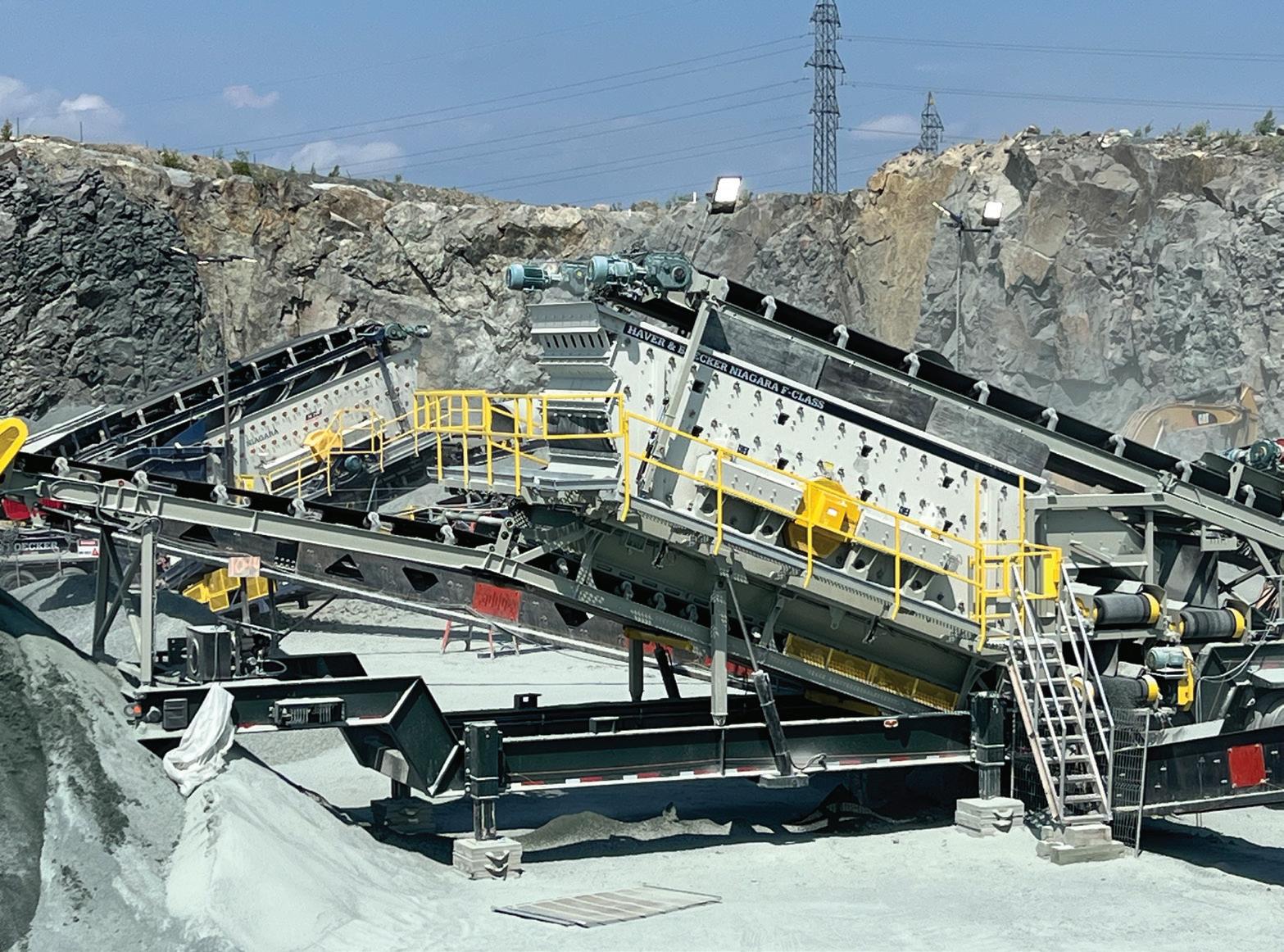
asset management, and human resources all play a role. Partners who can offer effective and timely service, and an infrastructure that allows for critical materials movement, are influencing factors as well. We have to go beyond the mine and into processing and supply as a global player.
Plant: What role does equipment modernization play in improving throughput, consistency and overall competitiveness?
KT: Automation is key. We are already seeing mines managed from thousands of miles away, with autonomous equipment and no driver in sight. That creates real opportunities when it comes to automation equipment with predictive maintenance and monitoring systems, which allow for planned downtime rather than breakdowns. There is also a lot of opportunity to optimize processes by making sure plant design is right from the start and that the best equipment is selected. It’s important to think about what the mine will look like in 10 years, not just what it looks like today. Whether you are an OEM, a service provider, or a related partner, keeping that long view in mind and understanding the advantages that optimization can bring is especially important in remote operations.
Plant: AI diagnostics and data-driven technologies are gaining traction.Where are these tools delivering the most practical value in industrial operations?
KT: Skilled labour shortages are real, and we haven’t turned a corner yet. We see it locally, and remotely it’s certainly not going to get any easier. Any predictive technology you can bring in, AI that learns the equipment, models the performance, sends alarms, allows producers to react as quickly as possible without the historic model of someone standing there watching the machine and reporting back on a phone. Drone footage for reading production levels, remote diagnostics — there are so many different technologies now. Existing equipment is already being adapted to take some of this on. And if you’re starting from a greenfield operation with the ability to look for the best of what’s out there, the mine of the future is going to be a lot more economical than building on what we have today.
Plant: Cost is always top of mind. For manufacturers or operators looking to modernize, what’s the most practical first step?
KT: It’s really understanding your cost to begin with.You have to look at cost per tonne
as an ROI, not as a line-item comparison. Procurement in a mining context can’t just be someone looking for the best price on a part — it has to carry operational and reliability knowledge. There are planning and processing tools that can model an entire flow stream and show you precisely what production costs. Once you know that, you can identify the bottlenecks, the efficiency opportunities, whether it’s screening capacity, product transportation, lean operations. And remember: there are a lot of existing mines now seeing new value in minerals they already have in the ground. If the value of that mineral is high enough, the question becomes how to extract and process it cost-effectively — and that brings entirely new challenges for an existing operation.
Plant: As president of a global manufacturing organization, how do you balance long-term strategy with day-to-day operational realities?
KT: We look ahead at the trends — where mineral demand is headed, which countries face trade instability, where opportunities exist for Canada’s critical minerals. We ask what areas we need to focus on as an OEM, which producers we can help, and how we develop our technologies to suit where the customer will need to be five years from now. Right now, a big part of that is our focus on digital products and AI — making sure that what we’re building and what we’re investing in our development team is pointed at where the world is going.You need to understand where your customer wants to be in five years, so you start that path now.
Plant:How optimistic are you about Canada’s ability to capitalize on its critical mineral position?
KT: I am optimistic. I think there’s a lot of movement in the right direction. But I don’t think these things happen overnight, and I think what we’ve experienced in recent years — whether it’s trade disruptions, supply chain shocks, the push for self-sufficiency — has been a real wake-up call. We source roughly 95 per cent of what we use in our own manufacturing facility from Canadian or North American markets. We deal with local fabricators. We’re proud to be part of the future growth in critical minerals here. But we need to pick up the pace. The risk is not having the policy — it’s execution. By the time a mineral project goes from feasibility to production, the market may have shifted, technology may have changed, prices may have moved. Time cannot be wasted.
*Quotes have been edited for length and clarity.
When no production line existed for the product it wanted to make, Mitrex built one.
BY KIRSTYN BROWN
There was no production line for what Mitrex wanted to make. No equipment supplier to call, no proven process to license, no facility to tour for benchmarking. When the company set out to manufacture building-integrated photovoltaic (BIPV) panels at commercial scale, in custom sizes and colors, it found that the industrial infrastructure simply didn’t exist.
So, they built it themselves.
That decision, made in 2019, sits at the centre of how Mitrex became what it is today: the largest BIPV manufacturer in North America, operating out of a purpose-built facility in Etobicoke, Ont., with five customized production lines and roughly 15 active projects currently in progress. Plant recently visited the facility and spoke with CEO Danial Hadizadeh about the road to get here and where the company is headed.
The concept of building-integrated photovoltaics is simple: rather than mounting solar panels on a finished structure, the cells are embedded directly into the building’s exterior materials, glass, cladding and even railings, so the facade itself generates power, often with no visible indication that it’s doing so.
The technology has been around for decades. What’s been missing is a reliable way to manufacture them at scale. Integrating solar cells into
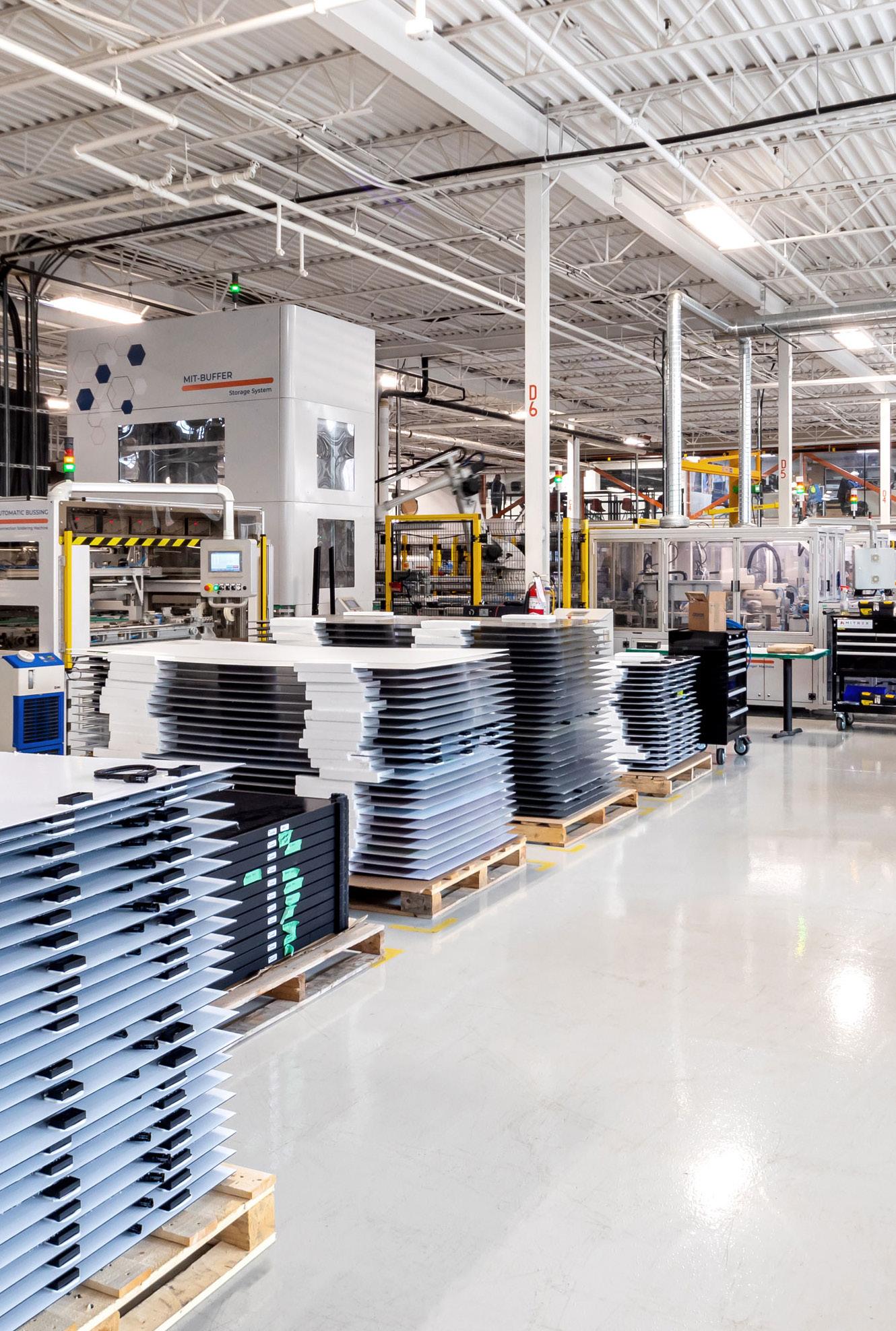
glass and facade materials is one thing, Hadizadeh explains; producing panels in the sizes, colours and configurations architects actually specify, and doing it repeatedly on a factory floor, is something else entirely.
Mitrex spent roughly five years working through that question before production started. The company was established in 2019 as the solar integration arm of GCAT Group, a Canadian construction materials company with roots going back roughly 22 years. Hadizadeh, who co-founded GCAT, spent several years prior in R&D before launching Mitrex and breaking ground on the Etobicoke facility in 2020
“No company in the world put together a full production line that has the capabilities of producing BIPV in different sizes and different colors,” Hadizadeh says. “It just
didn’t exist. So, we had to reinvent the production line.”
The design phase took about six months, he says, from mid-2019 to March 2020, and was handled entirely in-house. No outside engineering consultants. The factory opened in 2020 and shipped its first product in 2021.
“When you design something by yourself, for yourself, you’re a lot more flexible,” Hadizadeh says. “Consultants spend years to be perfect. We go to 80 per cent and then we execute.”
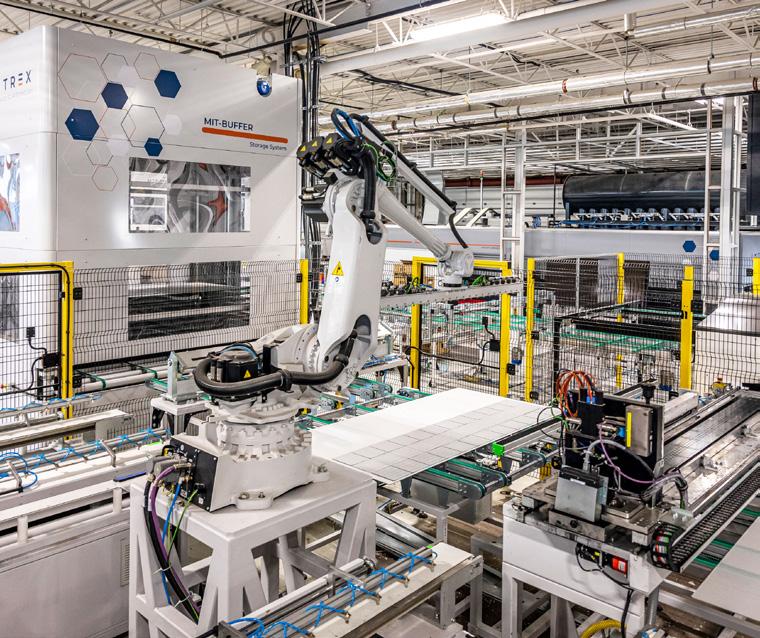
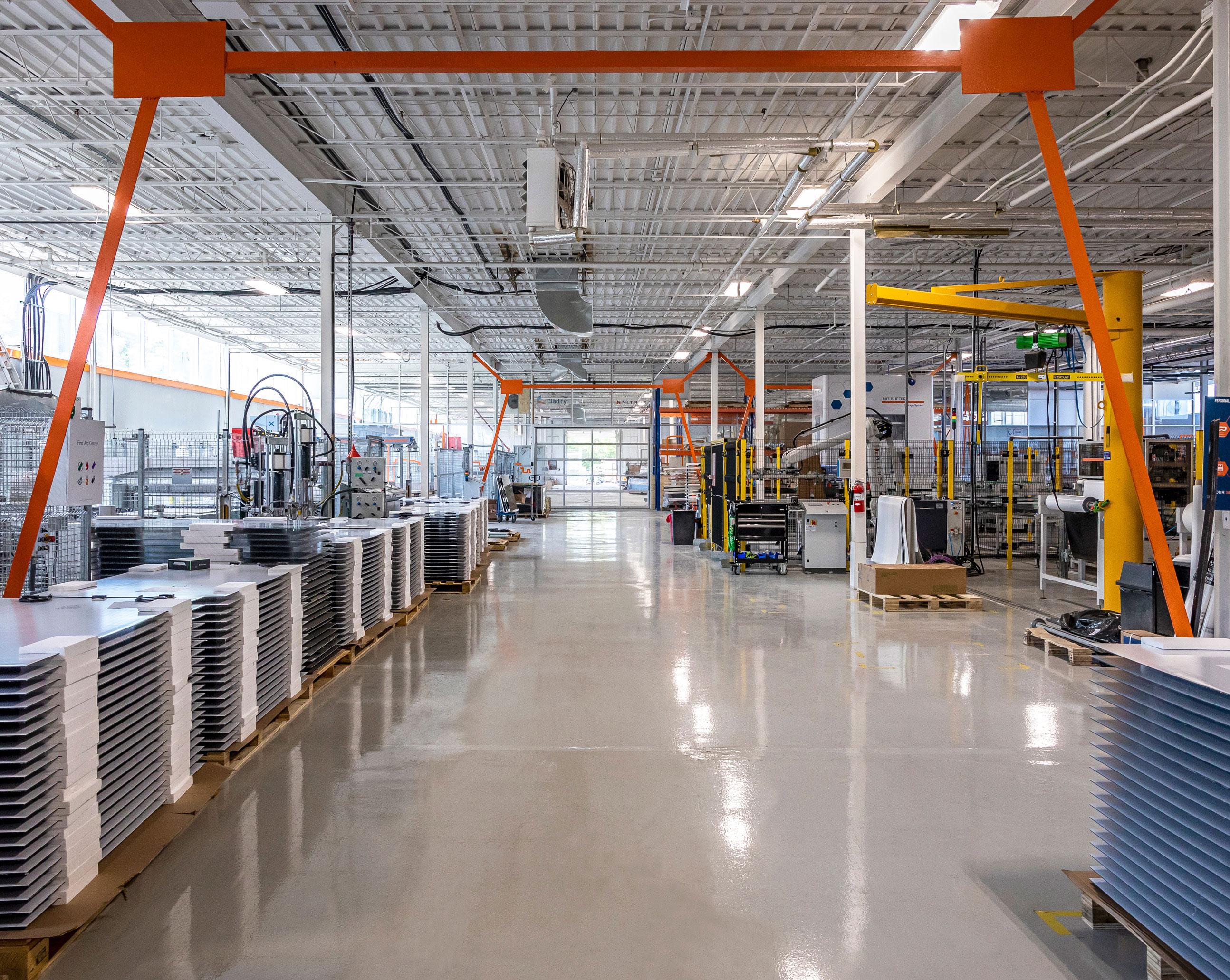
The Etobicoke facility now runs five production lines, each line dedicated to complete a component of the final product. Solar glass panels move through a U-shaped line at three to four minutes per panel, passing through
“When you design something by yourself, for yourself, you’re a lot more flexible. Consultants spend years to be perfect. We go to 80 per cent and then we execute.”
– Danial Hadizadeh, Mitrex CEO
humidity- and temperature-controlled lamination, robotic solar cell placement, framing and multiple quality checks before being cleaned, packed and staged for shipping. The line runs two-anda-half shifts.
The central manufacturing challenge is managing the tension between architectural customization and production efficiency. Architects want specific colors, textures, sizes and finishes. Production lines want standardization.
“Customization is the enemy of manufacturing,” Hadizadeh says. “So we have to create something that satisfies the architect and the engineers, but at the same time, for manufacturability, we created this modular system.”
The solution is a library of approximately 150 internal component configurations, programmed into the lines. Panels can vary considerably on the outside while drawing from the same set of standardized internal builds. It keeps the production process manageable without forcing clients into a narrow range of options.
“We haven’t had anything I would say we couldn’t do There are some limitations that come from, I would say, physics.”
Cost, Hadizadeh adds, is the other roadblock. Some requests are technically possible but prohibitively expensive to execute.
Not everything went smoothly. One of the more significant early
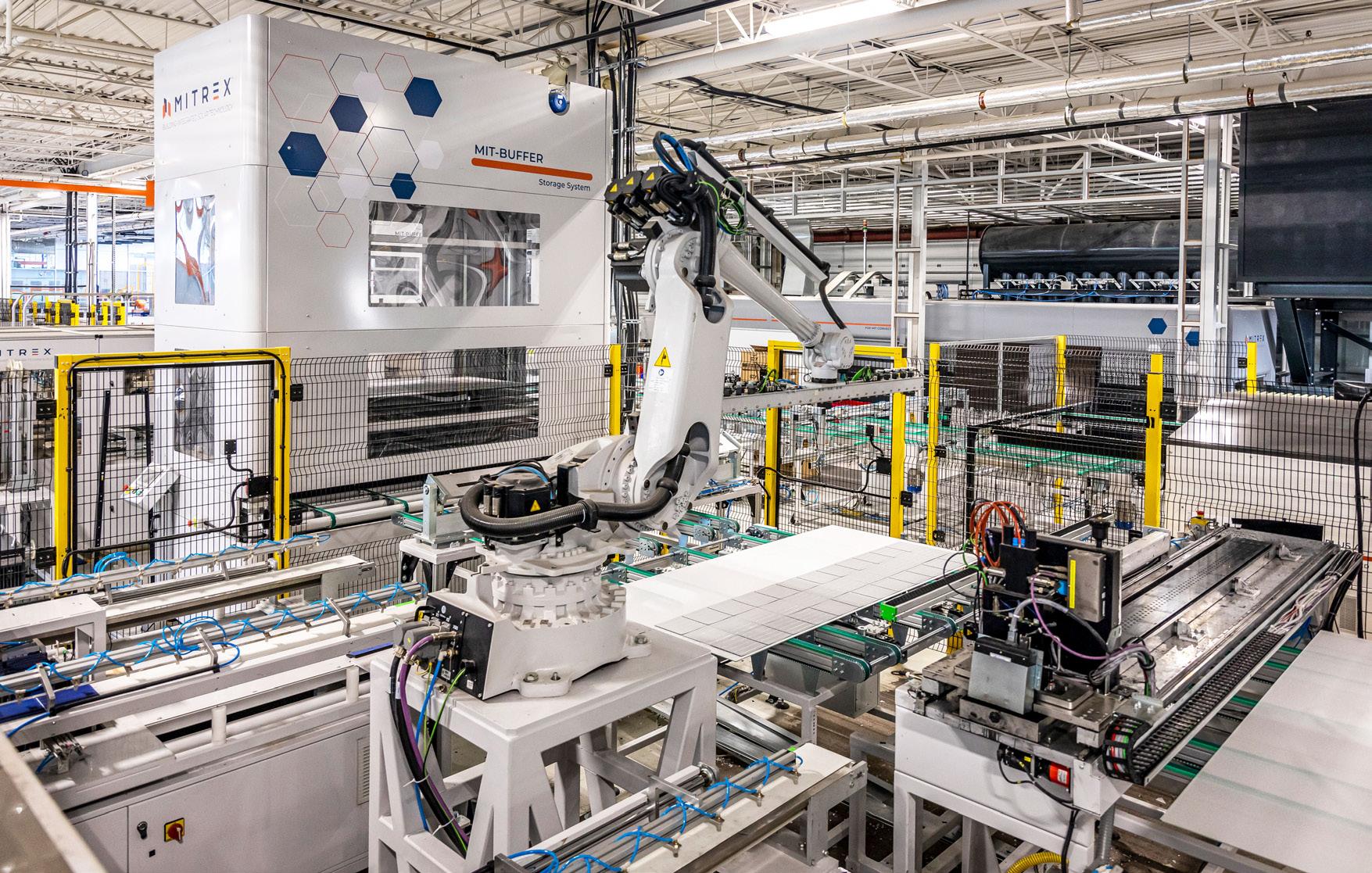
challenges involved electrical integration. Wiring thousands of solar panels into a building’s electrical system turned out to be considerably more complex than the team initially anticipated.
“Early on, we underestimated how much electrical integration would be on a BIPV, both here in manufacturing and on the project,” Hadizadeh admits.
“We kind of assumed there is A connected to B to C, and then we can just continue. And if you have a 10,000-panel project, you have 10,000 connections. It wasn’t as simple as we thought.”
So the company opened an R&D file on the problem and in 2024 released iFacade LITE, a simplified wiring system that a standard electrical contractor can execute. The second generation of iFacade LITE, an add-on, allows panels to be cut to a specific size on-site without manufacturer involvement. Hadizadeh says further simplification is in the works, with the goal of making the system straightforward enough that specialized knowledge is no longer a requirement for installation.
The supply chain bottleneck
On the production floor today, the operation runs smoothly. Hadizadeh is candid that manufacturing itself is no longer what keeps him up at night.
“Honestly, the biggest hurdle right now is not the manufacturing plant,” he says. “It’s the procurement and the raw material, getting all those 25 components we need on time. Some of them have expiry dates. We can only keep them for a certain number of days.”
None of those components are sourced domestically. Everything comes from the U.S. or international suppliers, leaving the company exposed to lead times and the kind of shipping disruptions that have become routine since 2020. During the plant tour, a stack of finished panels bound for the Jeddah Oceanarium in Saudi Arabia sat on the floor, ready to go but unable to ship pending resolution of regional logistics issues. Mitrex mitigates these risk through buffer inventory and dual sourcing.
“When you’re dealing with international clients, there’s
always conflict issues.You have to be prepared, be patient. You just never know,” Hadizadeh says.
The U.S. expansion is partly a response to this reality. Mitrex is currently setting up offices and production capacity south of the border.The Canadian headquarters isn’t going anywhere, but the market the company is targeting is considerably larger than what Canada alone can support.
“Canada is a great country with 30 million people. Our product and our production line is designed for 3 billion people,” he says. “Canada is always home. It’s just expansion.”
With about 15 active projects in manufacturing or on job sites at the time of publication, Mitrex is at its busiest point to date. The mix of projects spans sectors and continents.
In Dubai, the company is supplying the Binghatti Mercedes-Benz Residences, a 65-storey tower in Business Bay and the world’s first residential building developed in partnership with Mercedes-Benz. The project called
for fire-rated BIPV panels in Mercedes-branded finishes and integrated LED lighting.
In Scarborough, Ont., Mitrex is supplying the Myron and Berna Garron Health Sciences Complex at the University of Toronto, a medical education facility that will incorporate roughly 63,000 square feet of BIPV facade. It is among the more prominent examples of the technology appearing in Canadian institutional construction.
“Most of our projects, if you look at them, there’s aluminum, there’s porcelain, and there’s BIPV,” Hadizadeh says. “We always work with other
materials, or we supply other materials ourselves. Either way, it’s a combination.”
While it’s clear the demand for BIPV systems is increasing, adoption overall has been slow. Construction is notoriously slow to adopt new materials, Hadizadeh explains when asked why BIPV has moved faster into the mainstream market.
“Number one, they don’t know it exists. Once they know we exist, the first thing everyone thinks is, it’s too good to be true. And the third thing is, who has done it?”
Electrical complexity adds
another layer of hesitation, he says. The industry default is to let someone else go first, accumulate a track record, and adopt once the risk feels manageable.
Hadizadeh recalls a conversation with a large real estate investment trust (REIT) that liked the product, believed it was the future and still passed.
“They said, ‘We just want to wait five years, see you guys are doing hundreds of projects and then we’re going to utilize this system.’”
That was in 2021, nearly five years ago and since then, Mitrex has completed several projects for institutional clients. Hadizadeh
puts Mitrex at roughly the two per cent early adopter mark and moving toward 10 per cent. Once the broader market starts moving, he expects the pace to shift considerably.
Looking ahead, Mitrex’s in-house team of about 100 employees is already working on what comes next, including concrete-faced panels that produce electricity while being visually indistinguishable from standard building materials.
“The product engineering is not a bottleneck anymore,” Hadizadeh says. “It has been resolved many years ago. We are in expansion mode.”

Psychological safety is an operational asset. Here’s what manufacturing leaders need to know to build it into their organizations.
Manufacturing work depends on precision and coordination. Equipment has to perform as expected, processes have to hold and teams have to trust one another to meet production goals and keep people safe. Yet one of the most underestimated drivers of shopfloor performance is psychological safety.
Psychological safety means people can speak up, ask questions and admit mistakes without fear of embarrassment or punishment. In manufacturing, that is not a nice-to-have. It is an operational requirement.
Why psychological safety matters in manufacturing
Manufacturing workplaces carry unique pressures and risks, making psychological safety particularly important.
First there are physical risks.
DR. JANELLE ABELA
Workers operate heavy machinery and handle hazardous materials in fastpaced environments where small oversights can lead to injury or near misses. When people hesitate to speak up about hazards, mechanical issues or procedural concerns, risks increase.
There are also quality risks. Production lines rely on coordination and early problem detection. If team members are uncomfortable asking questions or flagging issues, small problems can escalate into downtime, rework or costly errors.
And then there are retention risks. Morale and collaboration directly affect engagement. When workers feel dismissed or unsupported, disengagement follows, often leading to burnout and eventual exit.
Psychological safety sits at the intersection of these outcomes. When people feel safe contributing,
operations run more smoothly. When they do not, problems tend to compound quietly.
Workplace culture, meanwhile, is not defined by posters or policy manuals. It is reinforced daily on the floor through supervisor reactions, peer interactions and how concerns are handled in real time.
“Psychological safety is more than a workplace principle,” says Meighen Nehme, CEO of The Job Shoppe. “It’s about making people feel respected, supported and confident to speak up. In manufacturing, that means creating an environment where asking questions, raising concerns and learning from mistakes is welcomed.”
Although psychological safety benefits everyone, its absence is often felt most strongly by women working in male-dominated manufacturing environments.
Women frequently describe experiences such as:
• Being talked over or second-guessed during technical discussions.
• Feeling pressure to “toughen up” or stay silent rather than raising concerns.
• Being isolated on teams where they may be the only woman.
• Carrying additional emotional labour, such as mediating conflicts or supporting team dynamics, without corresponding authority or recognition.
These experiences can gradually erode confidence and engagement.
For example, imagine a woman operating on a production line who notices a small irregular vibration in a machine. She raises it once but is brushed off or told she is overreacting. The next time she notices a similar issue, she may hesitate to speak up. Eventually, the problem worsens and leads to equipment failure or downtime.
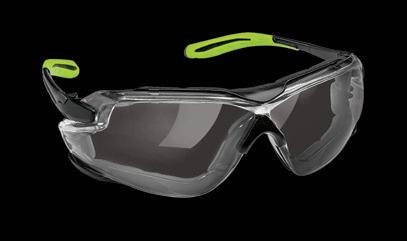
The issue was not technical capability. The issue was a workplace environment that discouraged early reporting. Now imagine if this was a PPE issue and the risk never came to light until the issue became critical.
When workers repeatedly encounter these experiences, disengagement begins. Over time, disengagement leads to burnout, and burnout ultimately leads people to leave the organization.
One of the most challenging aspects of psychological safety is that its absence is often hidden in plain sight. Organizations often fix what they can see while missing what is actually driving the problem.
Consider several common workplace challenges: Equipment failures get attributed to operator error or maintenance delays, when the real issue is that workers are uncomfortable reporting early warning signs. Safety incidents get labeled as carelessness or failure to follow procedure, when in many cases hazards have been quietly normalized and workers feel pressure not to slow production. Skills gaps get explained by poor onboarding or high turnover, when what is actually happening is that workers feel isolated or shut out of the informal knowledge-sharing that holds a team together.
When these issues are viewed through a psychological safety lens, a different picture emerges. What appears to be a technical or procedural issue may actually be a communication and culture issue.
As Zack Wilson, Human Resources Generalist at Plasman, notes, “When employees feel safe sharing their perspectives, you start hearing from the people who understand the work best — the operators performing the job every day. Instead of waiting until a problem becomes a major issue, employees are more likely to raise concerns early.”
Psychological safety is often discussed as a leadership or cultural concept, but in manufacturing it’s also an operational asset.
When workers feel safe asking clarifying questions, processes become better understood. Knowledge flows more evenly across teams rather than remaining concentrated with a few individuals. When early warning signs are voiced, issues can be addressed before they escalate into costly downtime or rework. Safer behaviours become normalized, and near misses decline because workers intervene earlier.
Trust in leadership also grows when employees see consistent responses to concerns and accountability for safety and performance. Over time, these improvements contribute to stronger retention, higher engagement, and better overall performance.
The opposite environment – one where people fear being judged, dismissed or labelled inexperienced for asking questions – creates the conditions for silence.
This silence can take many forms. Knowledge gatekeeping, where experienced workers withhold information.
Lack of intervention when unsafe or dismissive behaviour occurs.
Overlooked hazards because workers do not feel comfortable raising concerns.
Subjective or biased responses from supervisors when issues are reported.
These dynamics disproportionately affect women and other marginalized workers but ultimately harm the entire operation.
How
Building psychological safety does not require grand initiatives. Instead, it requires consistent behaviours and systems that reinforce trust and accountability.
Leaders can begin by encouraging reporting and normalizing questions. Workers should know that raising concerns, identifying hazards and asking for clarification are expected parts of the job.
Supervisors can also actively ask for feedback during shifts and team meetings. Simple questions such as “What are we missing?” or “What could cause risk later in the process?” signal that input is valued.
Clear expectations around behaviour are equally important. Teams must understand that dismissive comments, interruptions or minimizing safety concerns are unacceptable.
Developing peer accountability is another key step. Psychological safety grows when coworkers support one another and intervene when unsafe or disrespectful behaviour occurs.
Leaders must also intervene during incidents, not after problems escalate. Addressing issues in the moment reinforces expectations and demonstrates that concerns will be taken seriously.
Equally important is modeling accountability. When supervisors acknowledge mistakes or thank employees for raising issues, they demonstrate that speaking up is both safe and valued.
In practice, leadership behaviour is often the defining factor. As Wilson explains, “The leaders who tend to earn the most trust from employees are those who maintain a calm, respectful and approachable presence throughout the day. When leaders react constructively to problems rather than emotionally, employees feel more comfortable raising concerns instead of hiding them.”
Finally, organizations should integrate metrics for culture and safety. Traditional safety metrics track incidents after they occur, but leading indicators, such as near-miss reporting, participation in safety conversations, and employee feedback, provide insight into whether workers feel safe
speaking up.
Psychological safety cannot be built overnight. It requires sustained commitment and consistent reinforcement through onboarding, leadership development, safety meetings and daily team interactions. Organizations should provide multiple feedback pathways so workers can raise concerns in ways that feel comfortable, whether through supervisors, safety representatives, anonymous reporting or team discussions.
While many organizations begin by responding reactively to issues, these efforts should evolve toward earlier intervention and proactive prevention. Tracking trends and outcomes helps leaders gauge progress, with improvements in reporting, collaboration and communication often serving as early indicators of strengthening psychological safety.
Organizations that invest in these practices also strengthen workforce stability. As Nehme notes, “Workers want to know they are entering an environment where they will be trained properly, treated with respect and supported on the floor. When employees feel safe to grow, they stay engaged, contribute fully, and help build stronger, more resilient teams.”
The questions that matter most Ultimately, psychological safety is revealed through everyday behaviour.
Leaders and organizations should regularly ask themselves a few key questions:
• Who on this team feels safe raising concerns and who does not?
• What does silence cost us in terms of safety, quality, and retention?
• What needs to change in our daily interactions and leadership practices?
Perhaps the most important question of all is simple: How do we know?
Without actively listening to workers and examining workplace dynamics, the absence of psychological safety can remain invisible.
As Wilson puts it, “Preaching psychological safety is one thing, but your actions will always be the real driver of change. Follow-up, follow-through, and be the person you wish you had when you had your first job.”
When organizations commit to building environments where people can speak openly, collaborate confidently and raise concerns early, the results extend far beyond culture. They create workplaces that are not only safer, but also stronger, more innovative and better equipped for the future.
Dr. Janelle Abela is a leadership, workforce development strategist, speaker and corporate trainer. For more info visit diversesesolutions.ca.
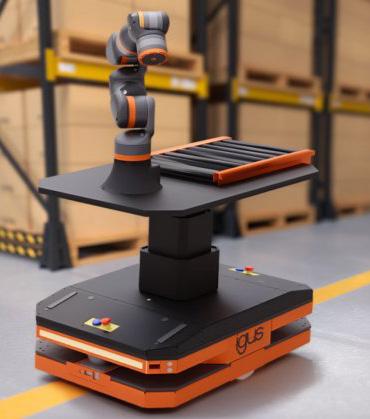
igus has expanded its AMR offering with the ReBeLMove Pro, a modular autonomous mobile robot designed for material transport and intralogistics applications. The AMR is built for quick deployment, with nocode setup and configurable superstructures to support tasks such as assembly support, order picking, and internal logistics.
The ReBeLMove Pro can carry loads of up to 550 lb and tow heavier payloads, using LIDAR and 3D sensors for navigation. igus says the system can map production areas quickly and operate for a full shift on a single charge. Integration with existing IT systems and fleet management tools is intended to simplify deployment in mixed automation environments. www.rbtx.com
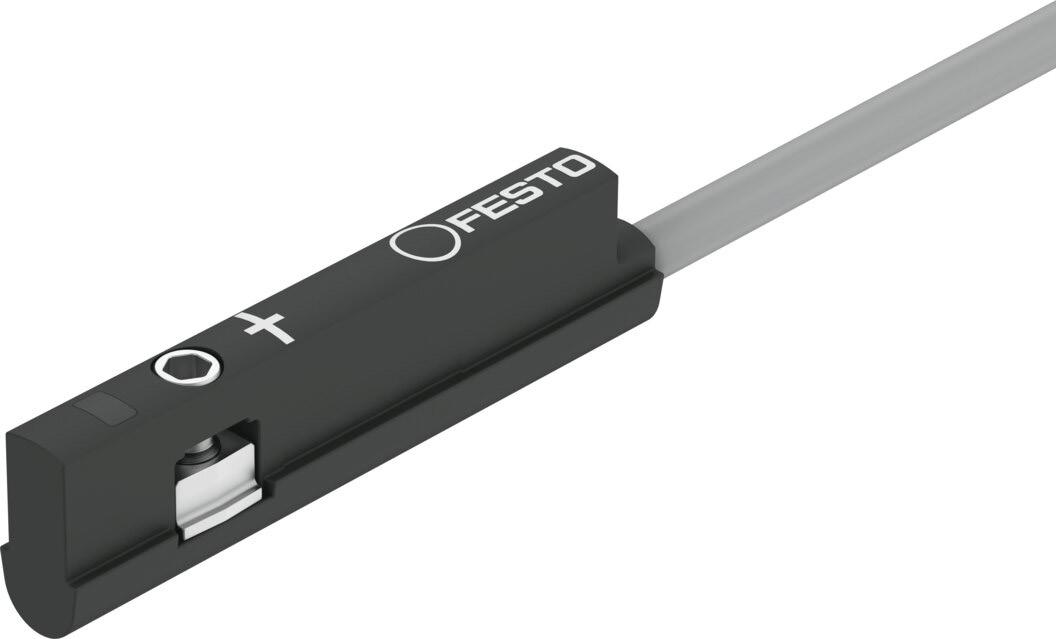
ing outputs for applications such as part verification, pressfitting, and assembly operations. The sensor is available in 20mm and 30mm sizes, detects the full stroke without extending beyond the cylinder body, and carries an IP65/IP68 rating for industrial environments. www.festo.com/ca

[image] Blackline G8.png
Blackline Safety’s G8 combines gas detection, loneworker monitoring, and voice communication in a single connected wearable designed for industrial environments. The intrinsically safe device replaces multiple standalone tools while streaming realtime safety and location data to a cloud platform for remote visibility. Building on the company’s G7 line, G8 supports swappable gas sensor cartridges, fall and nomotion detection, GNSS/GPS positioning, and site geofencing. Integrated pushtotalk, emergency calling, and messaging are intended to improve response times in both routine operations and critical situations,
Designed for pneumatic grippers and compact cylinders, Festo’s SDACMHS Cslot position transmitter combines analog, digital, and IOLink outputs in a single compact sensor. The approach is intended to reduce hardware, wiring, and installation complexity in spaceconstrained machine designs.
Using magnetic sensing, the SDACMHS provides continuous piston position feedback to the PLC, along with programmable switch -
particularly across large or distributed worksites. www.blacklinesafety.com/G8
[image] Limble.png
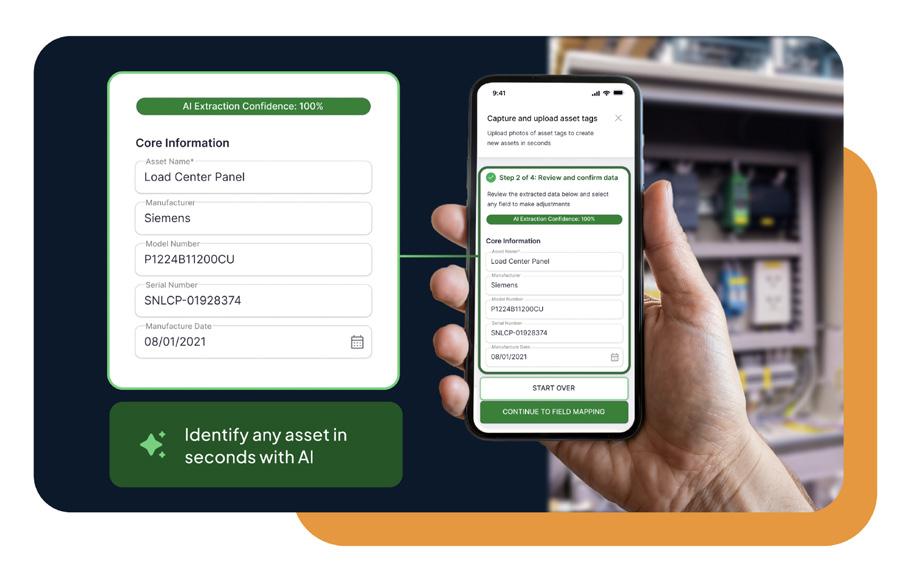
Limble has released three new AIenabled tools as part of its Winter Release, designed to support maintenance teams with asset data entry, workload planning and system integration.
Asset Snap uses image and text recognition to create asset records from equipment photos. The tool can extract details such as manufacturer, model and serial number, helping reduce manual entry and improve data accuracy.
Resource Planning provides a consolidated scheduling view of upcoming and active work. The feature includes AIgenerated recommendations to help maintenance leaders balance workloads, prioritize urgent tasks and assess capacity.
Model Context Protocol (MCP) is designed to link Limble’s CMMS/EAM platform with enterprise systems and AI tools. MCP enables secure access to maintenance data for use in other applications, including coding assistants and analysis tools focused on asset performance, cost tracking and technician workload. The company says the updates are intended to support maintenance teams facing rising costs and ongoing skilled labour shortages, with further AI and automation developments planned. www.limblecmms.com
[image] Kuka.jpg
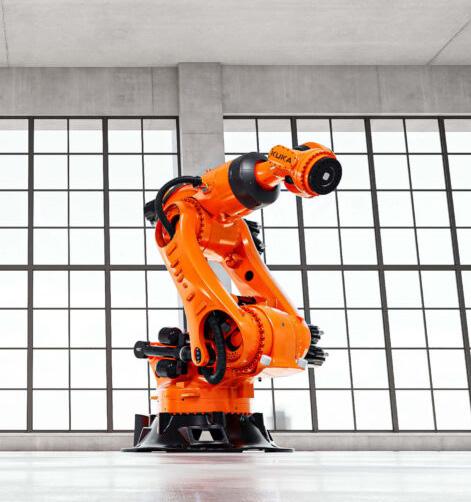
Built for loadintensive automation, KUKA’s KR TITAN ultra is designed to handle large, heavy components in applications such as automotive manufacturing, battery production, and largepart logistics. The robot combines extended reach with high payload capacity to support stable, repeatable motion in demanding production environments.
With a payload of up to 1,500 kg and a reach of up to 4,200 mm, the KR TITAN ultra is intended for tasks including handling battery packs, chassis, engine blocks, and other oversized components. Its mechanical design and kinematics are optimized for precise path control, while a flexible geometry supports integration in both new installations and retrofit projects using KUKA’s controller platform. www.kuka.com/en-ca

POSTSCRIPT
BY SCOTT MCNEIL-SMITH
Over the past two years, Canadian manufacturers have not needed anyone to tell them current-state operations are complex. They are living it every day.
Tariff uncertainty, supply chain fragmentation, shifting geopolitical alliances, labour shortages, rising production costs, capital constraints and rapidly evolving technology expectations have all converged at once!
What may once have been considered a cyclical disruption now feels more structural. The ground has shifted and it is not shifting back. And yet, manufacturers remain innovators and problem solvers at heart. Across our national network, what stands out is not hesitation. It is recalibration and adaptation.
At EMC, through our consortium regions across Canada, consultations with manufacturers, national labour market intelligence through ManufacturingGPS and Workforce Pulse and the latest 2026 Advanced Manufacturing Outlook research conducted with Plant, we continue to hear a consistent message: manufacturers are not waiting for stability. They are building it.
Outlook findings show continued investment intent in automation, digitalization and process improvement – even amid uncertainty. AI-related investments alone have increased by double digits year-over-year. Firms are prioritizing operational efficiency, supply chain transparency and domestic sourcing strategies as they seek to reduce exposure while increasing control.
This is not defensive behaviour. It is strategic resilience. What is becoming increasingly clear is that 2026 presents
a significant opportunity for Canadian manufacturing – particularly in domestic production aligned with strategic sectors such as defence, infrastructure, construction, mining, energy and critical technologies.
Governments at all levels are recalibrating procurement strategies around national capacity, economic sovereignty and secure supply chains. In defence specifically, new federal commitments are more than funding announcements – they are long-term industrial signals.
Canada’s ability to build, maintain, modernize and secure its own systems will increasingly depend on the readiness of small and mid-sized manufacturers across the country. These companies represent over 98 per cent of Canada’s manufacturing firms and play a critical role in the industrial supply chain.
But readiness does not happen by declaration.
Manufacturers must understand domestic and defence procurement pathways, Controlled Goods requirements, quality certifications, cybersecurity expectations, production scalability and partnership structures. They must also understand where their capabilities fit within broader supply chains.
Ultimately, success requires alignment between people, process and plant/technology.
Resilience is often discussed in abstract terms. In practice, it comes down to fundamentals.
People: Do we have the skills, leadership capability and culture to adapt? Are we investing in upskilling for advanced production, digital systems and sustainability requirements?
Process: Are our workflows lean, documented, measurable
and aligned to quality standards expected in defence or infrastructure supply chains?
Plant: Are our technologies, equipment, automation levels and digital systems sufficient to meet scale, traceability and security expectations?
Across Canada, we see manufacturers asking these questions seriously – not because they must comply, but because they want to compete.
EMC’s role is to help manufacturers move from conversation to capability. Through workforce development initiatives, supply chain working groups, energy and green manufacturing programs and advanced technology adoption supports, we are helping firms assess gaps, prioritize investments and strengthen internal capacity.
In this sense, resilience is not simply about surviving volatility. It is about positioning for growth within it.
The challenges manufacturers face are real. Labour markets remain stretched, cash flow and capital investment constraints are ever present and global risks continue to evolve. The difference in 2026 is that manufacturers are not simply reacting to disruption. They are redesigning their operations around resilience, growth and competitiveness.
Other goods-producing sectors are also aligning, including construction, energy, technology and mining, and similar dynamics are emerging. Infrastructure renewal, critical minerals development and energy transition projects are creating long-term demand signals. Canadian manufacturers are well positioned — but only if their capabilities are visible and connected, and coordination improves.
That coordination was reinforced recently, when Canada’s Prime Minister launched a new national Workforce Alliances program covering several sectors. EMC is pleased to be selected by Employment and Social Development Canada as a partner in the Advanced Manufacturing Workforce Alliance, alongside NGen and CSTEC.
Strengthening workforce readiness will be essential to support these opportunities. Combined with integrating automation, energy optimization and supply chain visibility, together with workforce development –rather than in isolation – firms are demonstrating stronger confidence and clearer growth trajectories.
Manufacturers who will thrive will not necessarily be the largest. They will be the most adaptable, the most connected and the most intentional about strengthening people, process and plant together.
Our manufacturing sector is entering a period of realignment: intentionally aligning policy signals with production capacity, workforce development with technology adoption and domestic procurement with SME capability.
The turbulence facing the sector is real. But so is the opportunity. The question is no longer whether Canadian manufacturing can compete. It is how quickly we can coordinate, connect and convert this domestic production moment into long-term strength.
That work is already well underway.
Scott McNeil-Smith is Vice President, Manufacturing Sector Performance for Excellence in Manufacturing Consortium of Canada (EMC), Canada’s largest manufacturing consortium.