and consistent performance you can rely on. Discover why over 1,000 printers choose the Speedmaster CX 104 as their machine of choice: heidelberg.com/cx104
12
20 15 19
ISSN 1481 9287. PrintAction is published 6 times per year by Annex Business Media. Canada Post
The global specialty papers market is projected to grow to 31.3 million tonnes by 2030 at a CAGR of 2.1 per cent. Flexible packaging, labels and printing represent nearly half of the market for specialty papers.
Percentage of growth expected in the global specialty papers market annually.
While the Packaging and Packaging Waste Regulation (PPWR) is driving innovation in papers in the E.U., the shift to a circular economy is heralding changes in the North American specialty paper market. Consumers want new, sustainable materials and coatings that are recyclable.
Market research firm Smithers predicts a gradual shift away from petroleum-based films to paper-based structures for select flexible packaging applications. Further, advancements in digital printing that have resulted in higher speeds, wider web widths, and higher print resolution are helping drive down the cost. Smithers also noted that curtain coating is being utilized to a greater degree to apply barrier coatings to papers, as it offers many competitive advantages. Curtain coating provides a uniform, pinhole-free layer with high coverage at low coat weights, thereby saving costs, as explained by Western Michigan University professors, Dr. Peeyush Tripathi, Dr. Margaret Joyce, and Dr. Paul D. Fleming in a research paper on New curtain coating technology offers benefits for barrier-coated grades
Future Market Insights (FMI) believes the growth is due to “escalating demand for high-performance cellulose substrates in foodservice and industrial applications.” Additionally, the e-commerce boom is motivating packaging engineers to create robust packaging material with lightweight kraft and thermal grades to ensure “shipping efficiency”. Researchers are combining specialty pulp and paper chemicals with bio-based polymers to create water-resistant barriers. This is crucial to meet sustainability as well as material performance standards.
Innovations in paper
In its Specialty Paper Market Forecast and Outlook 2026 to 2036 report, FMI highlights the following innovations in paper manufacturing. Super calendered kraft (SCK) paper is highly smooth and bright.
It has a good balance between strength and printability, which makes it suitable for high-end printing and packaging applications such as premium magazines, catalogs, and ecommerce packaging as well as labels. Wet strength paper, which has shown to maintain its integrity and performance when exposed to moisture, is viewed as an eco-friendly option to plastics in applications like beverage containers, cans and bottles.
At the recently concluded Interpack, Prof. Abhay Sharma of Toronto Metropolitan University visited the CCL Industries booth where they were showcasing a “WashOff” label, that would detach itself from the bottle and ‘float off’ in warm water. This not only saves water, time and money, but also allows the immediate reuse of the bottle.
Innovations like the above would help the printing, packaging & labelling industries move away from plastics, reduce waste & help advance a circular economy.
Canadian Printing Awards
Before I let you go and read the results of our annual Iron Index survey (Pg 12), I’d like to remind you that registrations are open for this year’s Canadian Printing Awards. This is the 20th edition & we’re thrilled to continue supporting the industry as well as celebrating the innovations in the Canadian printing industry. There are nearly 50 categories from magazines and brochures to wide format to recognize the depth of printing applications, so send in your nominations before Sept. 11. Also, save the date: The awards gala will be on Nov. 5 in Toronto. For more information, visit https://cpa.printaction.com. I look forward to your entries as well as seeing you in person this fall.
NITHYA Editor nnithya@annexbusinessmedia.com
Reader Service
Print and digital subscription inquiries or changes, please contact Angelita Potal 416-510-5113 apotal@annexbusinessmedia.com Fax: 416-510-6875
Mail: 111 Gordon Baker Road, Suite 400, Toronto, ON M2H 3R1
Audience Development Manager Urszula Grzyb ugrzyb@annexbusinessmedia.com 416-510-5180
Group Publisher/Director of Production
Paul Grossinger pgrossinger@annexbusinessmedia.com
CEO Scott Jamieson sjamieson@annexbusinessmedia.com
Subscription rates
For a 1 year subscription (6 issues): Canada — $45.61 +Tax Canada 2 year — $74.79 +Tax United States — $103.96
Other foreign — $202.61
Single Issue — $8.00 + Tax
All prices in CAD funds
Mailing address
Annex Business Media 111 Gordon Baker Rd., Suite 400, Toronto, ON M2H 3R1 Tel: 416-442-5600
Fax: 416-442-2230
Occasionally, PrintAction will mail information on behalf of industry related groups whose products and services we believe could be of interest to you. If you prefer not to receive this information, please contact our Audience Development in any of the four ways listed above.
Annex Business Media Privacy Officer Privacy@annexbusinessmedia.com 800-668-2384
ISSN 1481 9287
Mail Agreement No. 40065710 printaction.com
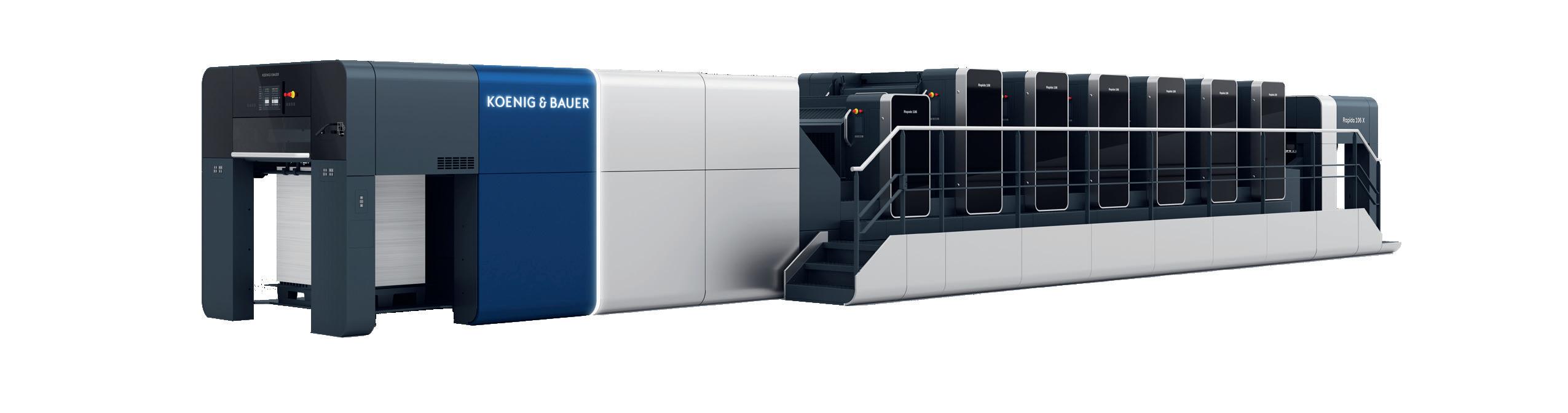
rapida106x.koenig-bauer.com
The Printing and Graphics Industry Association of Alberta (PGIA) officially dissolves as a society, in accordance with the Alberta Securities Act. A statement on their website said this decision was made due to the Association’s minimal membership and “the conclusion that it no longer served a relevant role within the industry”. PGIA members are advised to join the Saskatchewan Printing Industries Association or Print Forward in B.C.
Transcontinental acquires Phipps Dickson Integria Group (PDI Group), a company based in Kirkland and Laval, Que., which provides production services for large-format signage and displays, commercial printing, as well as specialized distribution (Harling Marketing).
Rimpy Bhullar, sales and marketing director, Ronik/ Garry Machine Mfg., Mississauga, Ont., wins an Advance: Women in Manufacturing Award in the Emerging Leader of the Year category. Presented by
Annex Business Media’s manufacturing brands including PrintAction, the Advance: Women in Manufacturing Awards recognize women’s exceptional leadership, impacts and contributions across Canada’s manufacturing sector.
CCL Industries to acquire Sleever International Company SA, its subsidiaries and related companies, a family owned provider of shrink sleeve labels and application equipment plus decorating services for consumer packaged goods and healthcare customers globally. Headquartered near Paris, France, Sleever operates 11 manufacturing facilities in Canada, France, Germany, Belgium, Ireland, Poland, China and Brazil.
Burke acquires Houghton Boston, the largest commercial printer in Saskatoon, Sask., with a legacy of over 100 years in the printing business. The acquisition strengthens Burke’s core print capabilities while enhancing local capacity in a key market.
Torstar and Metroland Media Group launch new monthly print publications in Burlington, Oakville, Oshawa and Whitby in Ontario to bolster local journalism.
Imperial Dade acquires Enterprise Paper Holdings.
Founded in 1973, Enterprise Paper is a Canadian-owned distributor of paper, packaging, and janitorial products with operations in British Columbia and Alberta.
Labelink acquires Litho Quebec, a recognized player in the folding carton sector. This follows the fall 2025 acquisition of l’Empreinte.
Manroland Sheetfed ceases operations. In March, the beleaguered German press builder entered into insolvency proceedings with financial support from parent company Langley Holdings. Sadly, a buyer wasn’t found. More than 600 employees will lose their jobs. Some staff members will be asked to stay on until the end of the year to fulfil existing commitments. Despite a technologically advanced product portfolio, Manroland’s sales have declined significantly in recent years, primarily due to a shrinking market for printing presses. China, which historically represented around 40 per cent of new press sales, has been hardest hit. In its annual report, Manroland Sheetfed reported a loss of €43.2 million for 2025.
Canada Post lost $1.57 billion before tax in 2025, as labour uncertainty weighed on the business. The company’s 2025 loss widened by $728 million. It was the Corporation’s largest loss before tax on record. Revenue for the year declined by $315 million, or 4.7 per cent, compared to 2024, as parcel volumes fell sharply. The labour uncertainty had a significant impact on the company as parcel delivery customers shifted their business to other carriers. In
CALENDAR
June 16-17, 2026
Print & Digital Convention 2026
Düsseldorf, Germany
July 17, 2026
PrintForward Golf Tournament Richmond, B.C.
July 21-July 23, 2026
Wide-Format Summit Miami, Fla.
Sept. 10, 2026
OPIA Golf Classic Milton, Ont.
2025, parcel volumes fell by 79 million pieces, or 32.6 per cent, compared to the prior year. This loss is despite the repayable government funding of $1.034 billion that Canada Post received in 2025.
Ricoh and Brother International enter into a strategic alliance in Canada. Under the agreement, Ricoh will offer the Brother Exclusive Series of A4 office print solutions such as the Brother MFC-L6915DW and Brother HL-L6415DW printers. The expanded portfolio allows Ricoh to service work environments in healthcare, legal, finance, and retail.
RB Digital, Mississauga, Ont., is now an authorized dealer of Duplo USA, a manufacturer of print finishing equipment. RB Digital is also the exclusive Canadian distributor for Tajima, M&R, Brother, and Trotec. It also sells Mimaki, Epson, and Roland products.
Proforma acquires Safeguard in a deal that will expand the company’s annual revenue by nearly US$180 million. This acquisition will strengthen Proforma’s presence in the print and promotional products industry.
Rinkboards recently helped upgrade the field of play advertising at the Brampton Steelheads’ arena in Ontario.
Technorol appoints Matthew Serwin as vice president, sales – Central & West Canada. Based out of the company’s Burlington, Ont., office, Serwin will lead business development and sales growth across Ontario, as well as Central and Western Canada. He will also play a key role in strengthening customer relationships and supporting the continued expansion of Technorol’s market presence. Serwin brings extensive experience in the graphic arts and packaging industries, along with a strong network of contacts and well-established business relationships.
Printing United Alliance appoints Chris Lyons as group president where he will oversee sales across Alliance media brands and events. Denise M. Gustavson has been appointed as VP of editorial and content strategy. Josh Carruth will take on expanded leadership responsibilities including oversight of Printing United Expo operations as EVP expositions, in addition to membership.
Transcontinental appoints Sam Bendavid as CEO. Bendavid succeeds Thomas Morin, who will be leaving the company on that date. This transition stems from the sale of Transcontinental’s packaging business and is part of a succession planning process aimed at ensuring continuity and sustained growth. This appointment marks the culmination of an 18-year career for 46-year-old Bendavid at Transcontinental. He holds an MBA from HEC Montréal and a bachelor’s degree in software engineering from Concordia University. Additionally, 39-year-old Patrick Brayley has been appointed as chief operating officer. Brayley has been contributing to the transformation of the retail services and printing sector businesses since joining Transcontinental in 2021.
Koenig & Bauer names Colin Lawson as a postpress sales specialist for Canada and the U.S. Lawson’s experience combines daily operations at a North Carolina folding carton manufacturer as a die cutting and finishing manager along with sales management at an international packaging firm and at a supplier of postpress accessories equipment. Prior to joining Koenig & Bauer, Lawson’s management skills included collaborating with cross-functional teams to align product offerings with customer needs. His appointment strengthens Koenig & Bauer postpress department.
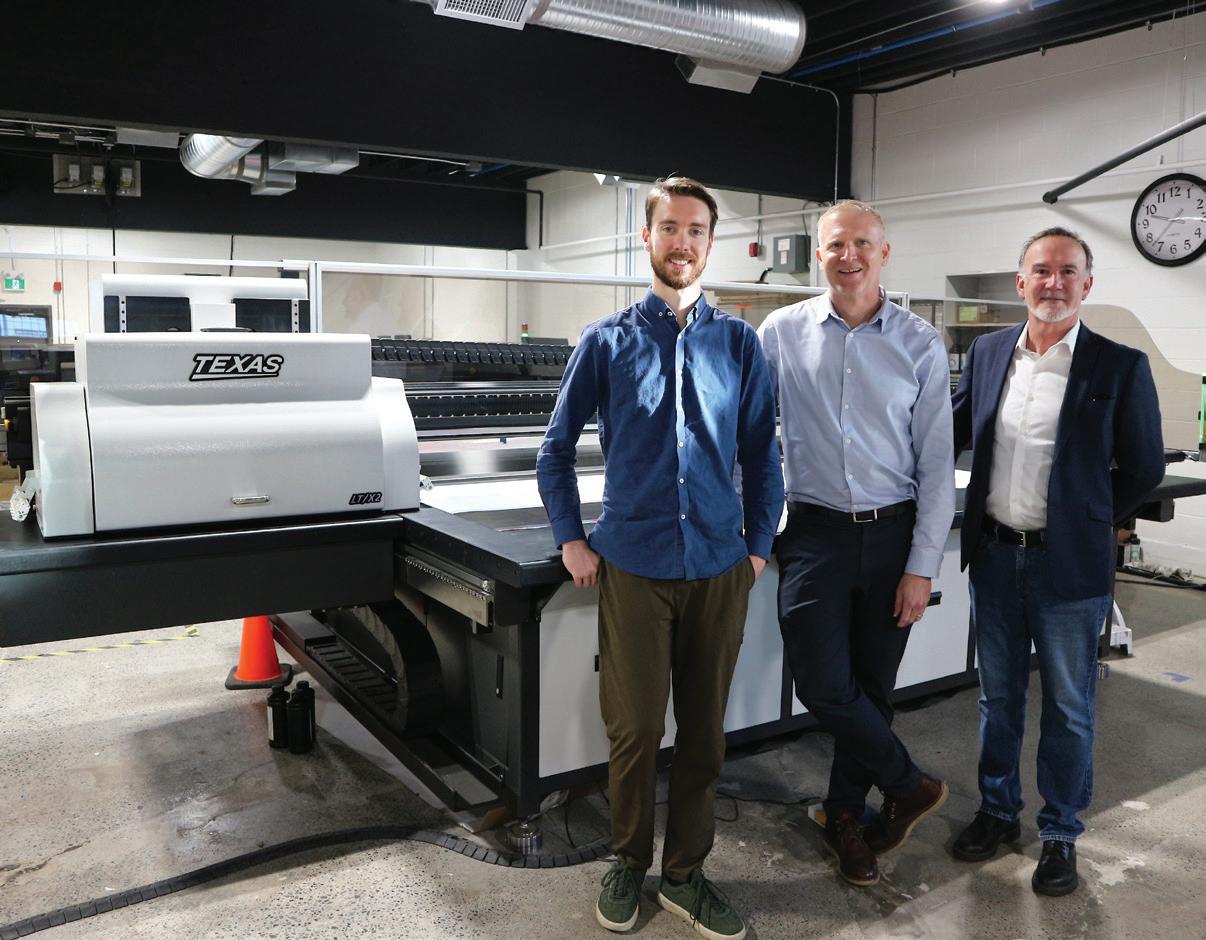
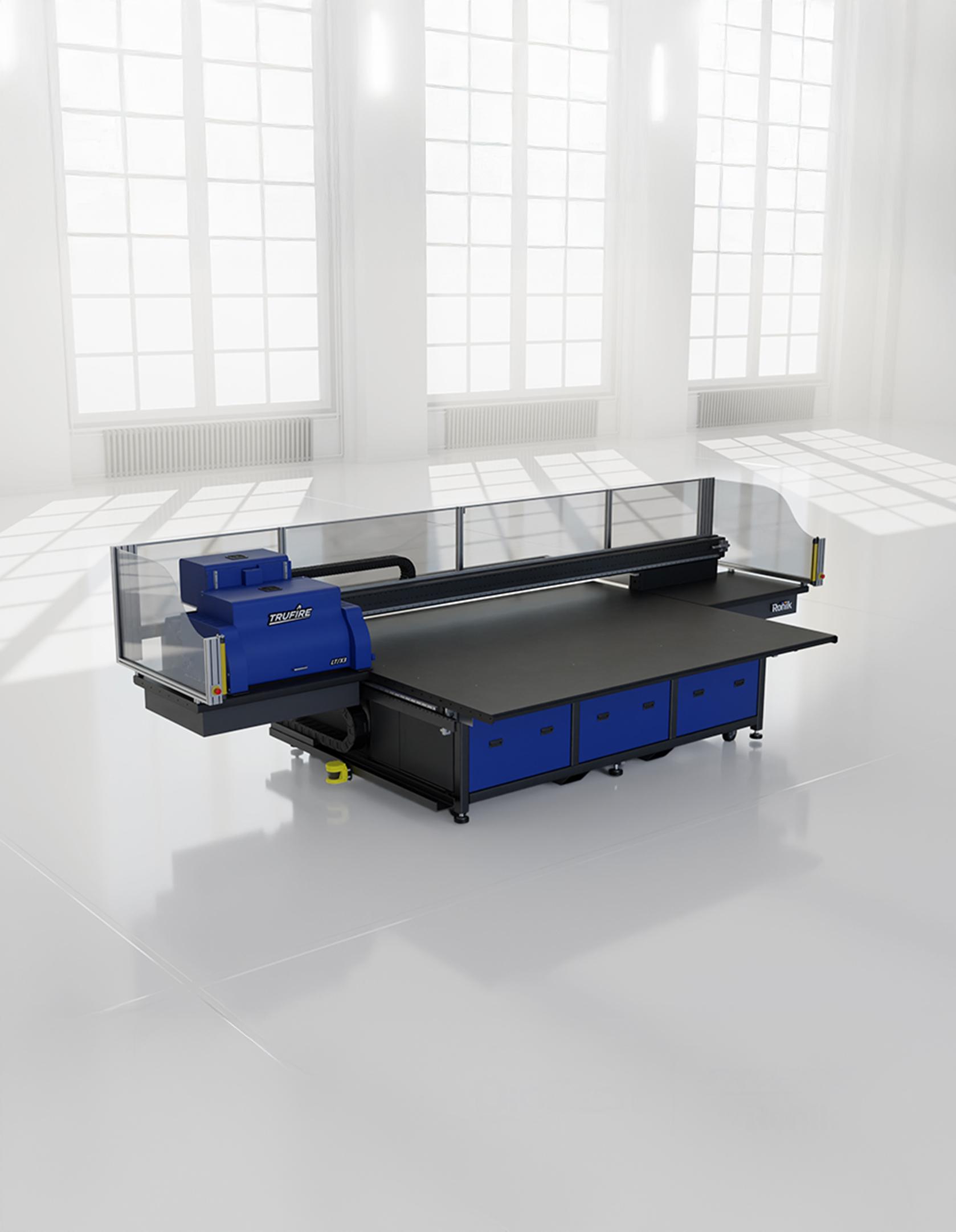
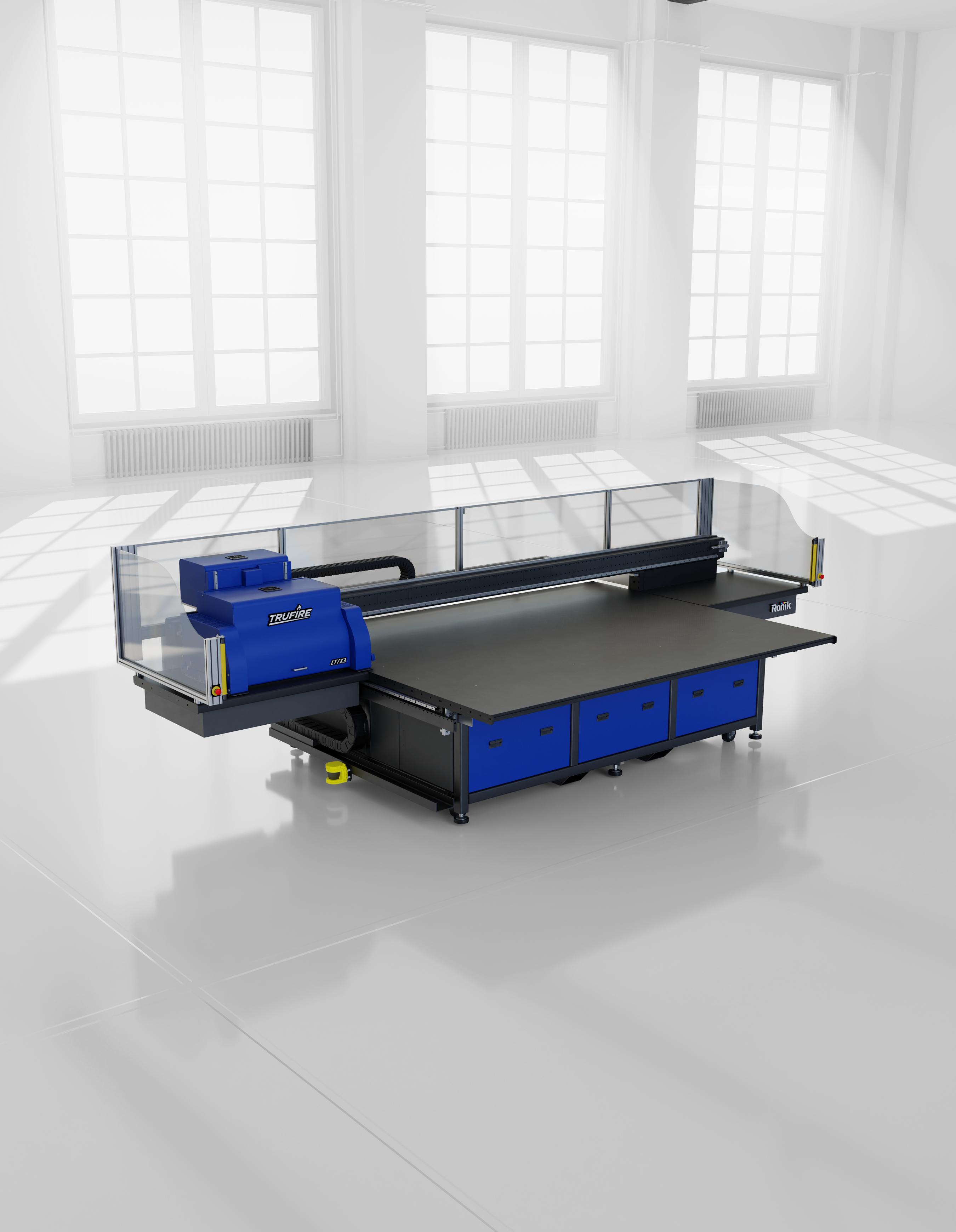
Hemlock Printers in Burnaby, B.C., is the site of the first Canon Texas high-speed flatbed press in Canada. The Texas printer is built by Ronik.
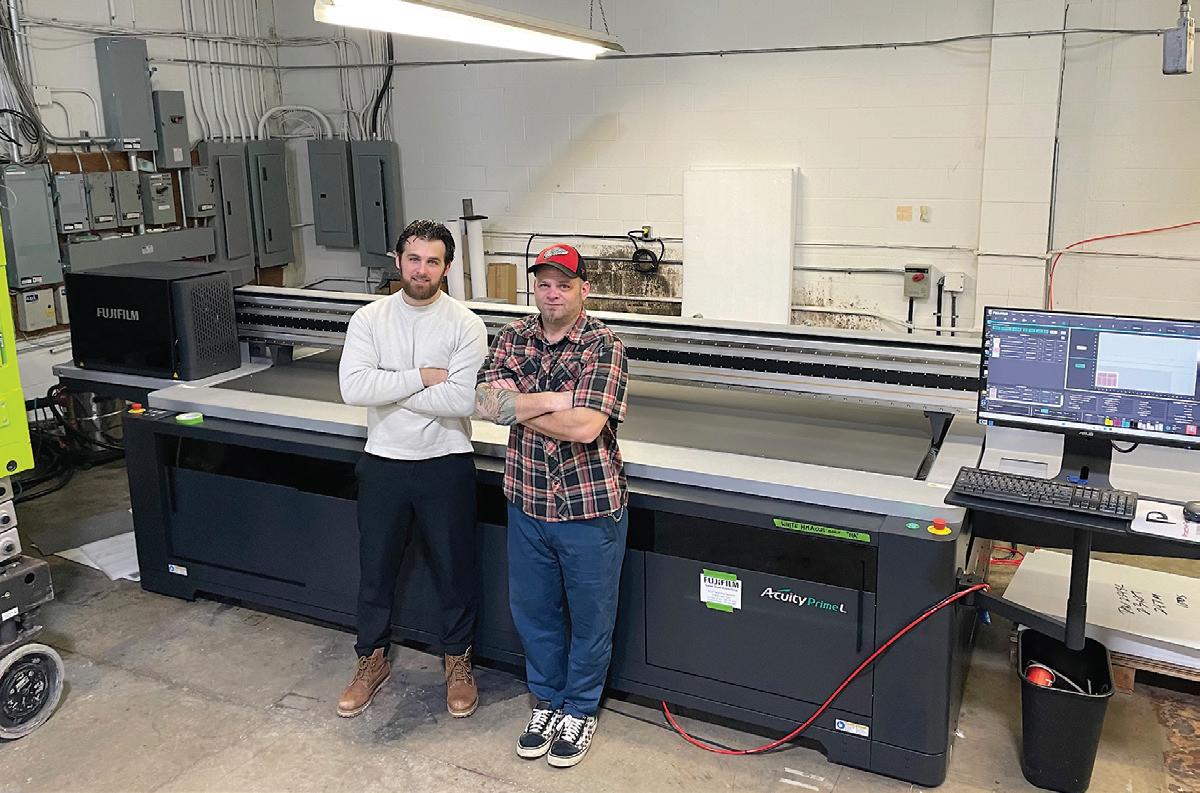
Toronto-based Dana Industries, a specialist in signage and shelf solutions for the retail sector, successfully installs a new Fujifilm Acuity Prime L UV flatbed printer.
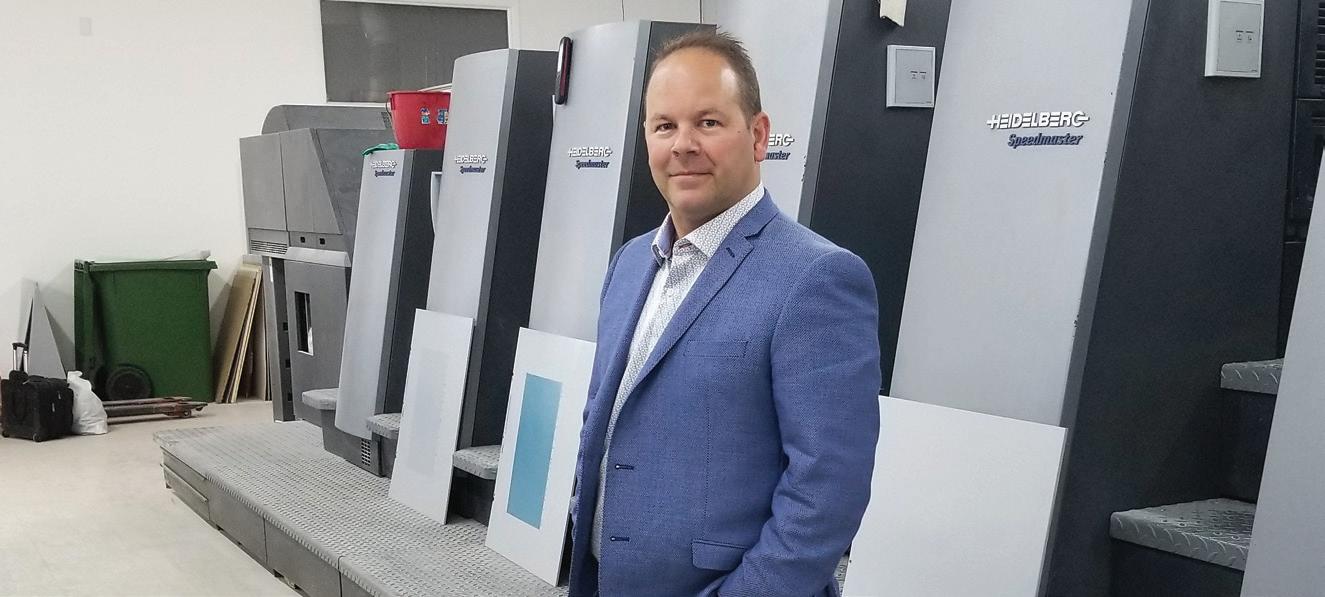
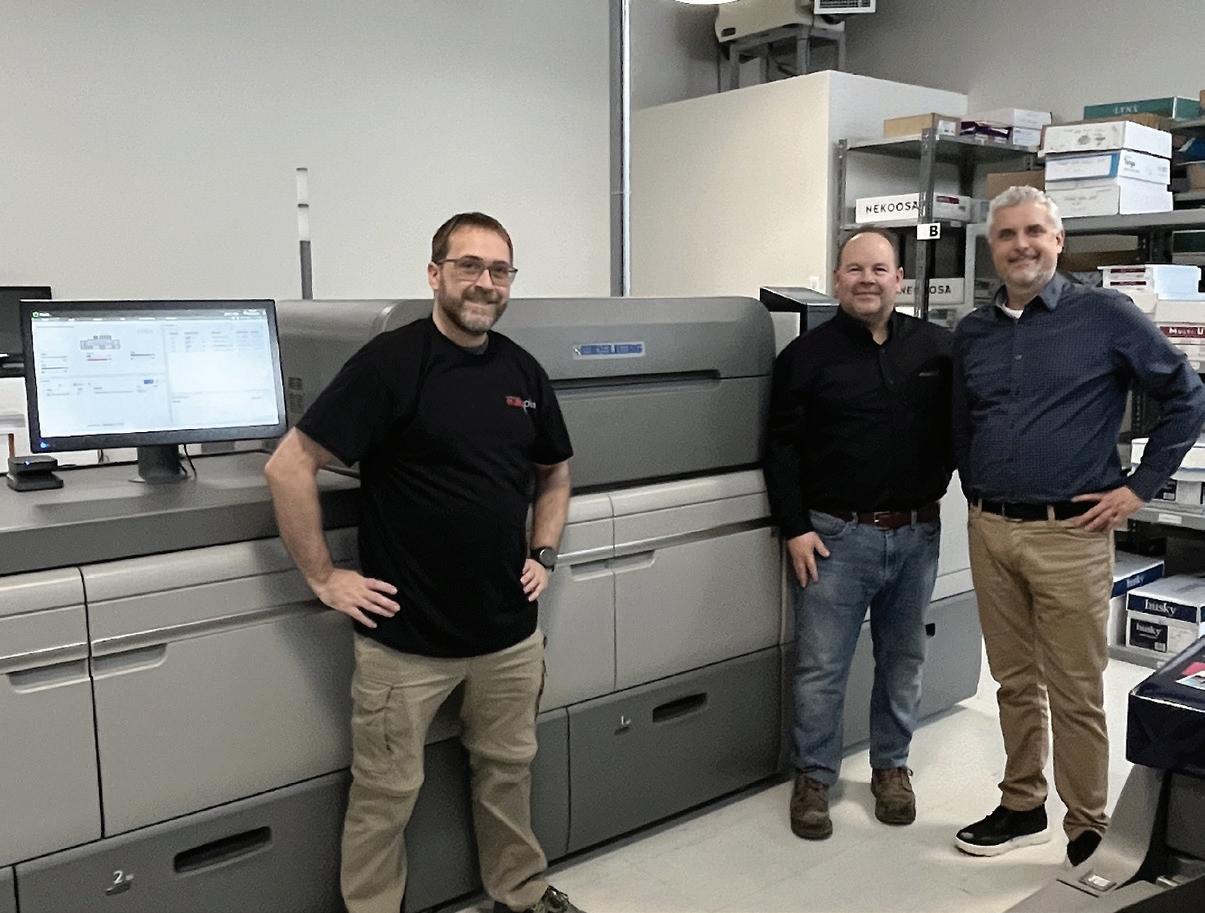
TImprimerie Multiplus, Coteau-du-Lac, Que., recently installed three Versafire digital presses, its first digital investments with Heidelberg.
Chris Lyons Denise Gustavson
Josh Carruth
The industry needs a better mousetrap
A dose of inspiration from the container shipping industry
By Nick Howard
The marvels of imagination have dominated the last 100 years.
New drugs and medical discoveries have lengthened life expectancy and improved our quality of life. In every area of human development, research and serendipity often combine to offer better outcomes. Often, breakthroughs in technology occur through a combination of smarts and luck. Many inventions languish until other discoveries mature, while some, such as computers, smartphones, and AI, are quickly embraced.
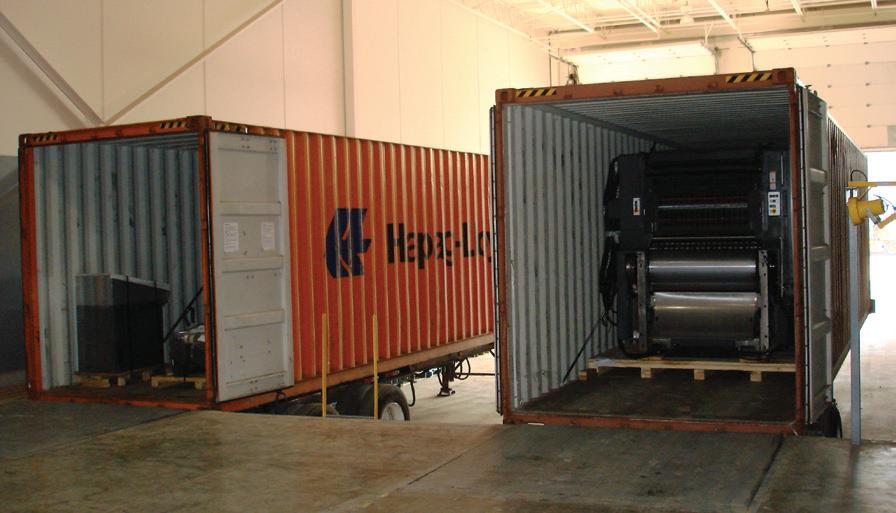
Take Malcolm McLean, who used a second-hand truck to haul goods all over the American eastern seaboard. In 1937, he was delivering bales of cotton from Fayetteville, N.C., to Hoboken, N.J., and found himself dockside, waiting hours for his cargo to be unloaded. It was then that he started daydreaming about why a truck or box couldn’t be loaded onto a ship and then retrieved at the other end. His dreams would become a reality when, in 1956, an old oil tanker, the SS Ideal X, was refitted to accommodate McLean’s 35-ft ‘containers’. The tanker was loaded with 58 of the containers. It took another 20 years for container shipping to become mainstream, which ultimately reduced shipping costs by a whopping 90 per cent between the mid-1950s and 1970s.
It took years to convince railroads to spend millions on upgraded specialty container cars and additional spur lines to seaports. Railways didn’t like trucks and weren’t crazy about ships either, as both were cutting into their action. But after exhaustive efforts, McLean’s Sea-Land business brought intermodal (sea,
Container ships transformed global transportation systems in the mid-1900s.
The year when offset lithography was discovered.
rail, truck) transportation into a new era of prosperity. The agonizingly slow acceptance of giant European shipping lines and governments proved yet another challenge but eventually settled. By 1967, the port of London, once one of Europe’s largest, vanished almost overnight as the new container ports of Tilbury and Felixstowe came online. Today, upwards of 24,000 TEU (20-ft equivalent) shipping containers can be loaded in less than a day. Over 62 per cent of all transoceanic freight is now transported in sea containers. The container is how the printing industry receives its paper and machinery, and how manufacturers anywhere in the world can deliver goods door-to-door without pilferage or multiple handling.
The necessity of change
It wasn’t that long ago that printers were just printers. Today, few are operating traditional ink-on-paper businesses. Many saw how new technologies, such as the internet and social media, eroded much of their traditional revenues. Today, printers have had to recalibrate their objectives, entering new areas of the communication spectrum and moving into wide-format, multi-dimensional displays while printing on short-run digital machines. Speeds, once the gold standard of legacy offset presses, have shifted to monstrous, lightweight flatbed inkjet and smaller toner and inkjet copiers. The necessity of change is even more dramatic than that of Malcolm McLean’s shipping container, in that he came
up with something few dreamed of, while printers have no choice but to change or go out of business. In 1904, two men stumbled upon a new printing method by accident, almost simultaneously. One in New Jersey, the other in Ohio. While hand-feeding, a missed sheet left an imprint on an impression cylinder. The image was sharper than printing directly on the paper. Offset lithography was thus born. It took a further 50 years for offset to develop. In the 1950s, most printers, stubborn in their ways, still rejected offset printing, preferring to stay with a tried-and-true letterpress. Manufacturers did the same. Offset would go on to flourish and improve, while consumables and computerization in prepress did amazing things. It was offset that created ‘instant printing’ with thousands of shops that ran Multiliths and AB Dicks churning out work with electrostatic plates. In a flash, it all vanished when Xerox’s ‘Docutech’ entered the fray, just as Felixstowe’s opening did to London’s East India Dock. Today, digital processes have eclipsed offset. Although legacy machines are still being sold, most are purchased by packaging concerns. While offset took 50 years to find its place, digital platforms have transitioned in less than 10 years. Unlike the freight business, where tonnage has only increased, traditional printing continues to decline, with less magazine and promotional material in demand. POS and other static visual necessities are filling some of the void. Still, there will be other, possibly more dramatic opportunities for those who, like Malcolm McLean, visualize and dream. Print’s ace card is its physicality; unlike anything else.
The need to design a better mousetrap is clear in the printing world, just as it was for container freight. Both the printer and the manufacturer are in this battle together, changing the way we do things and how we create new revenue streams. When one door closes, another is sure to open. Prepare to walk through it.
NICK HOWARD, a partner in Howard Graphic Equipment and Howard Iron Works, is a printing historian, consultant, and certified appraiser of capital equipment. He can be reached at nick@howardgraphic.com. PHOTO: NICK HOWARD
Prepress is complex and critical
Businesses can’t afford to ignore the talent shortage in prepress
By Alec Couckuyt
any printing companies quietly assume that technology, such as automation, machine learning, and AI-assisted workflows, will handle issues, and are rightly investing heavily in them. However, prepress is one area where this assumption is being stress-tested in real time, often without business leaders even realizing it.
MPrepress has always been the dark horse of the print operation. It is technically demanding, chronically underappreciated, and rarely discussed in the same breath as capital equipment investments or sales strategy. That needs to change because the complexity of prepress has magnified over the years, and the human capacity required to manage the challenges is not keeping pace.
A different job than it used to be
A decade ago, prepress was complicated. Today it is genuinely complex, and there is an important difference between these two things. Complicated problems have many parts but predictable solutions. Complex ones involve variables interacting in ways that are difficult to anticipate.
Consider what a prepress operator is managing in a modern multi-segment print environment. A single customer may require packaging produced on a flexographic press, point-of-sale display graphics output on a wide-format inkjet, labels running on a digital press, and commercial collateral on offset. Each output stream has its own substrate requirements, its own col-
our behaviour, and its own file preparation logic. But the branding is the same, and the colour must be uniform in all the printed materials.
2024
The year when Print Station V3.6 for Revoria Flow received its G7 certification.
Leading workflow automation platforms have made enormous strides in managing this complexity. G7 colour management methodology provides a framework for achieving visual consistency across diverse print processes. Nesting and gangrun imposition software optimizes substrate utilization across variable job mixes. These are genuine advances. But they are tools, requiring judgment to operate effectively. And judgment is a human asset.
The press manufacturers themselves have drawn the same conclusion. Digital press manufacturers, some aggressively and others steadily, have invested heavily in pushing automation as far upstream into the prepress cycle as possible. Their offset and hybrid counterparts have made significant strides as well. The underlying logic is telling: a press is
only as productive as the input feeding it. These are not peripheral investments. They are admissions, in R&D dollars, that prepress is a make-or-break variable in the overall production equation. What they solve is the complicated, repeatable, rules-based preparation tasks that can be systematized.
Where the complexity actually lives
The variables compound quickly though. Prepress is not just managing files for multiple segments; it is doing so across multiple press technologies simultaneously, be it offset, digital, flexo, or wide format, each with different RIP workflows, dot gain characteristics, and colour gamuts. A job that seems straightforward on intake can reveal substrate incompatibilities, brand colour drift, or imposition conflicts requiring rapid, informed decision-making. This decision-making rarely happens in isolation. Prepress sits at an
The complexity of prepress has magnified over the years, and the human capacity required to manage the challenges is not keeping pace.
uncomfortable junction in the production chain. Upstream, they are often the last line of defence before a client’s file becomes a press-ready asset, which means they frequently need to communicate directly with brand managers, agencies, or procurement teams when files arrive incomplete or non-compliant. Downstream, they are translating intent into press-floor reality, which requires a working relationship with operators running equipment whose capabilities and limitations they must understand intimately. Add to that scheduling pressure, and you have a role demanding technical depth, cross-functional communication, and composure under tight timelines.
The assumption nobody is testing
Here is where the strategic risk sits. The print industry, like many manufacturing sectors, is rightly investing in automation to address cost pressure and throughput. AI-assisted preflight tools are catching file errors before they reach operators. ML-driven colour management is reducing manual profiling time. Robotic systems are handling substrate handling and finishing. These investments are rational.
Automation reduces the volume of decisions, but it does not eliminate the complexity of the ones that remain. The decisions left for humans are precisely the exception cases: the brand client who cannot explain why the proof looks wrong; the gang form with three substrates and a tight delivery window; the G7 verification that is failing on one press but not another etc. These are not problems a workflow automation system resolves. They are problems a skilled,
experienced prepress professional can help resolve.
Here is the assumption that is quietly going untested: the talent required to handle these residual decisions will be available when needed. It will not, or at least, not automatically. Prepress skillsets are among the most specific in the industry, requiring deep technical knowledge across colour science, file formats, press technologies, and production software, combined with the interpersonal fluency to manage client and press-floor relationships without a formal account manager role to buffer them. That combination is rare. The pipeline producing it is thin and the industry’s appetite for discussing it is thinner still.
The light at the end requires someone to hold it
The path forward is not to resist automation, but to be honest about what automation cannot do, and to plan accordingly. This means elevating prepress in the organizational conversation: not just as a technical function, but also as a critical execution capability. It means investing in succession and skills development before the vacancy appears, not after. It also means asking, directly, whether the assumption that technology will close the talent gap has ever actually been tested, or whether it is simply convenient to believe. The presses are getting smarter. We need to make sure that the people preparing them for print are still in the building.
ALEC COUCKUYT is a business strategist, economist, published author, and speaker with extensive international management experience. He can be reached at aleccouckuyt@gmail.com.
Technology and process trends in the Canadian printing industry
By Nithya
The following snapshot of the Iron Index 2026 survey produced by PrintAction compares current production trends to a historical benchmark of capital investments made by Canadian printers. The facts presented throughout the article relate 2026 numbers to past survey statistics. The first iteration of the Iron Index was launched in 1996, when PrintAction published a short, but important, list of innovative commercial printers that were the first to install computer-to-plate (CTP) imaging systems. Now, 30 years later, the Iron Index tracks the production-technology investment trends of leading commercial printing companies across Canada. This includes tracking the offset (by model, number of units and format size), toner and inkjet press specifications of participants, as well as employee levels, revenue, frontend technologies, and MIS. The following statistics provide insight into what is going on with the direction
of production ratios. The key statistics describe how the landscape is changing in terms of long and short runs, as well as the work of 29- and 40-in. printers, and how they are shaping their companies and Canadian printing. Based on the information provided by responding companies, it appears digital printing with both toner and inkjet-based printing is continuing its upward trajectory, as most of the printers surveyed this year largely used digital printing. We also asked survey respondents about how their workflow has been impacted by tariffs and supply chain issues, and whether it has led them to change their business plans. Around 38.5 per cent of the respondents said the lack of skilled labour is a barrier to their company’s future competitiveness. An equal percentage of respondents blamed increased competition from a narrowing market as a hurdle to profitability. To participate in next year’s Iron Index survey, please contact the editor Nithya at nnithya@annexbusinessmedia.com.
Key statistics from the Iron Index describing technology advances in Canada
Total number of employees represented in this year’s survey.
Number of respondents with 15 or less employees.
12 10 1932 9 5,982 12
The year the oldest company to participate in this year’s survey was established.
38.5% 1
Percentage of respondents citing lack of skilled labour as barriers to their company’s future competitiveness.
5
Number of all printers surveyed in 2026 producing work with all three processes (offset, toner, and inkjet).
Number of printers surveyed in 2026 with at least two toner/ digital printing systems.
Number of printers surveyed in 2026 producing at least 70% of their work with offset.
10 4 70%
Number of printers surveyed in 2026 owning a production inkjet.
THE IRON INDEX METHODOLOGY
Number of printers surveyed in 2026 generating at least 20% of their revenues from toner.
Number of printers surveyed in 2026 owning a wide-format inkjet press.
Number of printers surveyed in 2026 using MIS
Percentage of surveyed printers that are planning to acquire new business or merge operations.
For more than two decades, PrintAction has surveyed commercial printing companies across the country to track their production-technology investment and trends. Below is a sample of the survey questions respondents have answered to produce our results. This primarily includes tracking the offset (by model, number of units and format size), toner and inkjet press specifications of participants, as well as employee levels, revenue, front-end technologies and MIS.
Year of company founding
Number of employees
Offset presses:
• List up to four primary offset presses. Include press brand, press format size in inches and number of press units.
Toner/Digital Presses:
• List up to three primary toner/digital presses. Include press brand and model number.
Management Information System:
• Provide brand, type, and version, if available.
Primary Front-end (Prepress) Software:
• Provide brand, type, and version, if available
Primary Platesetter:
• Provide brand and type, if available.
Primary Offset Plate Brand:
• Provide brand and type, if available.
Production Ratio:
• Provide approximate percentage of work done, in terms of total revenue generation, with Offset : Toner : Inkjet.
Wide-format Inkjet:
• List up to two primary wide-format inkjet machines. Include press brand and model number.
Production Inkjet:
• List up to two primary production inkjet machines. Include press brand and model number.
What do you see as the prime barrier to your company’s future competitiveness?
What is your best estimate at a dollar amount for how much printing technology, software, and related services your company will purchase over the next three years?
What areas does your company plan to invest in over the next three years?
What else is your company considering besides investments?
What are your plans for diversifying your capabilities?
In the next 12 to 18 months, which is most likely to happen at your company?
What do you see as the prime barrier to your company’s future competitiveness?
A majority of respondents cited the lack of skilled labour (38.5 per cent) as the prime barrier to their company’s future competitiveness. The next most important reason is increased competition from a narrowing market (again 38.5 per cent)
Some printers were also being challenged with lack of upfront capital for technology investment, tight margins in a capital-intensive business, cost of paper and cloud services and an erosion in demand for printed products as well as the ongoing decline in the mailing industry.
Number of printers surveyed in 2026 who were founded 50 or more years ago.
Number of printers surveyed in 2026 that plan to invest in equipment, machinery, or technology upgrades.
Number of printers surveyed in 2026 owning a digital front-end.
What are your plans for diversifying your capabilities?
Respondents are planning:
• more on-premise large format services for office and retail applications;
• more specialty products like coupons, posters, banners, and not just lettershop;
• branching out into the local market;
• narrowing services;
• invest in new equipment and add trade partners;
• build our sales force to maximize the production capacity we currently have; and
• sell more products and offer more variety to current customers.
Projected investments in printing technology, software, and related services over the next three years.
Less than $99,999 Projected investment
$100,000 - $499,999
Percentage of respondents
$500,000 - $999,999 46.15% 23.08% 30.77%
Complete Iron Index participants by
What areas does your company plan to invest in over the next three years? Equipment,
company considering
of equipment or capabilities:
Scaling back shifts or consolidating
PrintAction would like to thank all the companies that have participated in The Iron Index over its 30-year history, and in particular, those who responded to our 2026 edition, enabling these statistics to be generated. To participate in next year’s survey, please contact the editor Nithya at nnithya.toronto@annexbusinessmedia.com
INNOVATIONS IN TONER TECH: NO COMPROMISES
Technological advances are proving toners are crucial for digital printing
By Treena Hein
The verdict is in. Any lingering perceptions that toner is holding the print industry back in this new era of digital print innovation should be disregarded.
“Toner isn’t just keeping pace with the next generation of digital print; it’s helping define it,” says Kyle Murray, VP of product R&D and manufacturing at Xerox.
“Quality, consistency and creative capability are no longer trade-offs.” In parallel with the other tech developments currently taking digital print in unprecedented directions, new toner innovations are enabling expanded colour range and higher resolution. What’s more, the availability of new toner formulations for digital printing have also made short run, on-demand and variable data
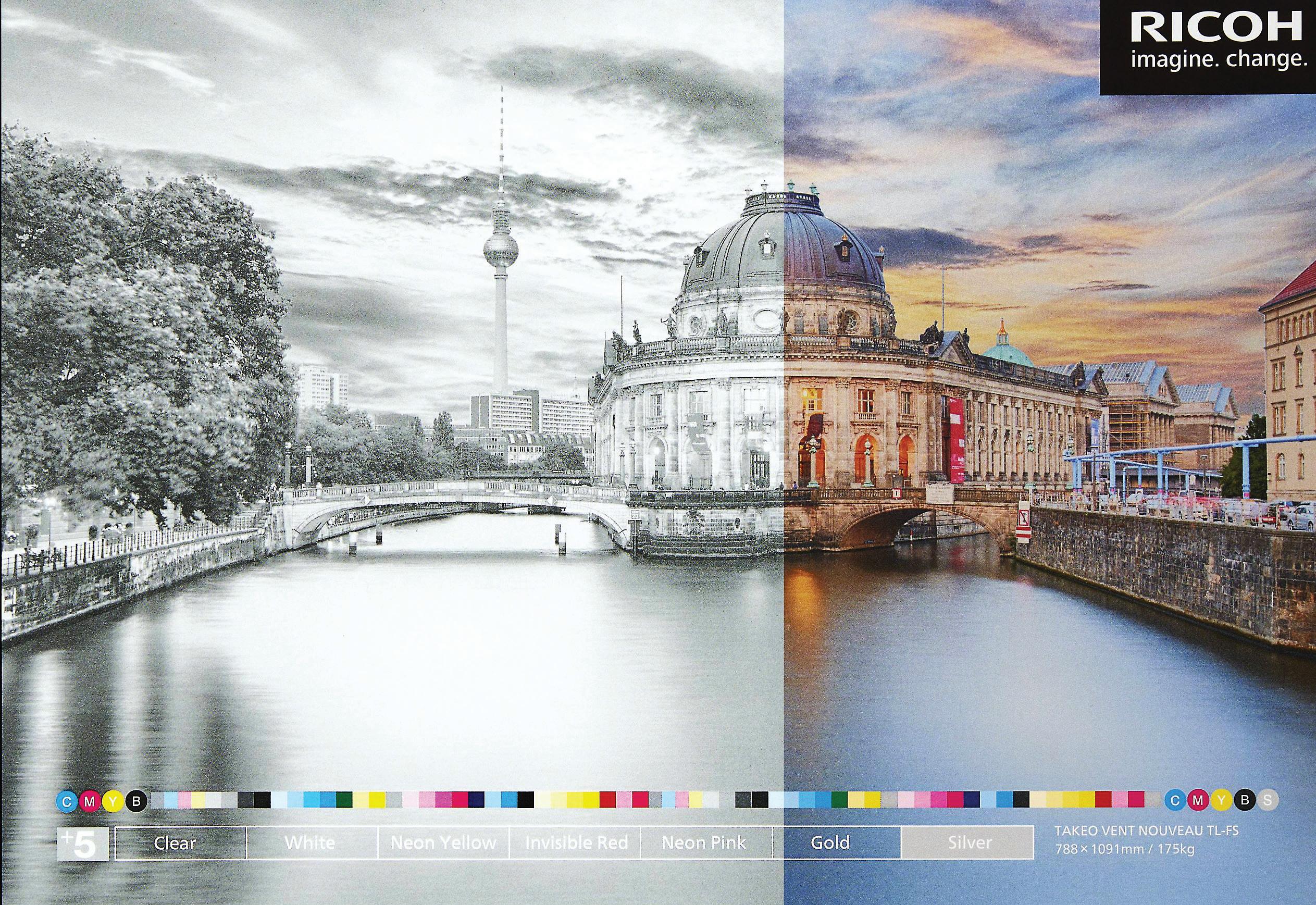
Silver only.
(Right) CMYK & Silver.
printing possible. Additionally, increases in printing speeds and lowered machine maintenance requirements make toner-based printing systems very competitive with other systems available to those in commercial print. But as Murray explains, today’s toner innovations aren’t happening in isolation. Like other aspects of printing systems, they’re tightly integrated with advances in print engines, imaging systems and automation. Specifically, he narrows in on EA toners – that is, emulsion aggregation toners featuring tiny particles created through the aggregation and coalescence of sub-micron polymeric latex and pigment particles. Murray explains that today’s EA toners act as a performance lever, driving advancement in concert with hardware, software and controls to elevate overall print quality and consistency.
“That integration,” he says, “is what drives the step change.”
EA tech is not new, but innovation in this area continues to be a focus for many toner manufacturers. For Xerox, the inherent characteristics of EA toners is what makes the company’s EA platform central to its toner innovation roadmap. EA particles are chemically engineered at the nano scale to achieve highly consistent size, shape and charge behaviour, and that precision, notes
Xeikon has launched gold and silver metallic toners for its Xeikon Cheetah 2.0 Series.
Murray, “drives consistent image quality, smooth gradients and reliable colour reproduction across runs.”
performance with lower energy consumption and reduced emissions.
Metallic mania
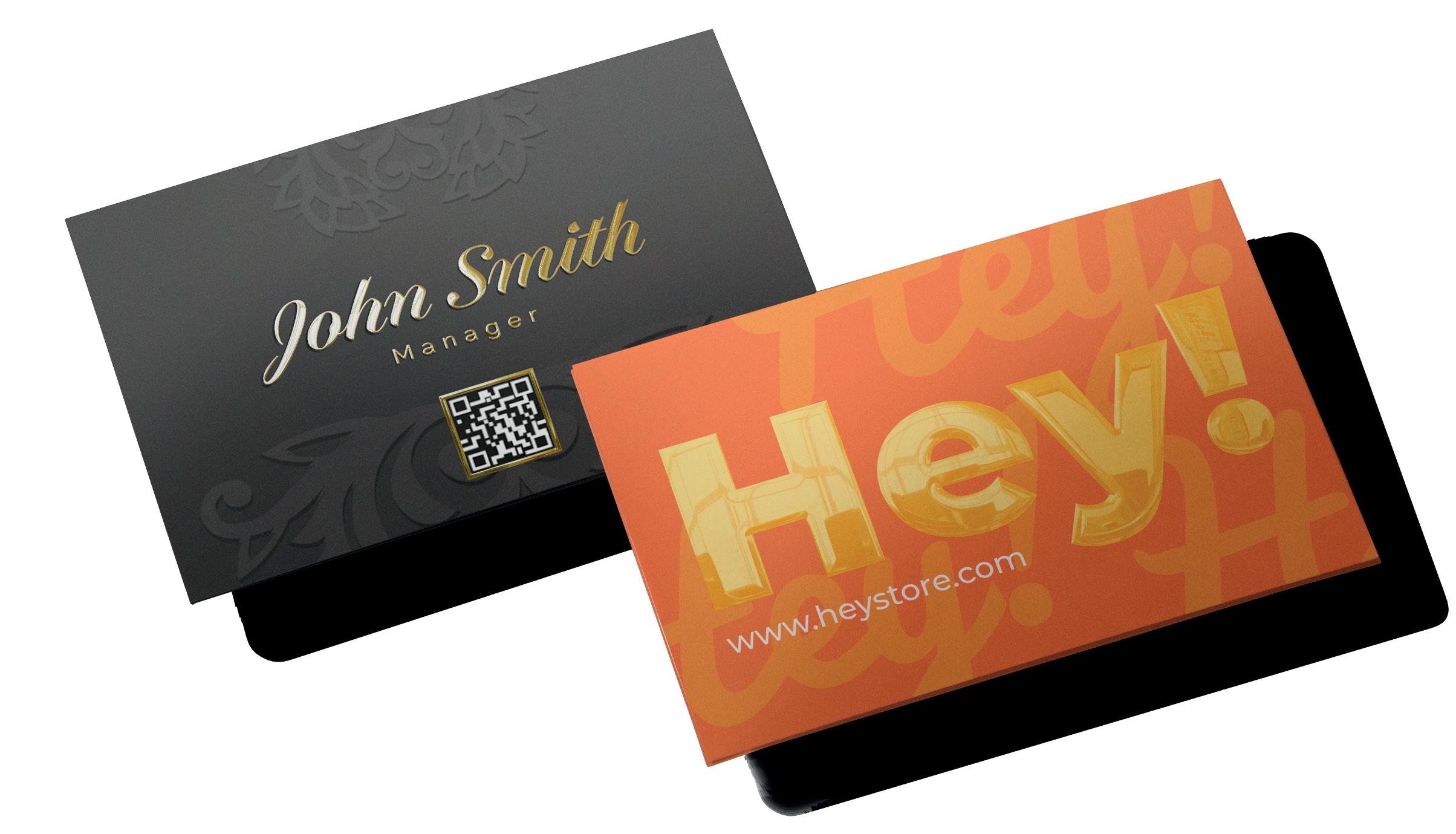
According to the 2025 Colour Embellishments Market Trends research report by Keypoint Intelligence, metallic silver and gold are two of the three print embellishments most in demand in North America, on business cards, postcards, brochures and more. Not that the owners of print shops in Canada need a report to tell them metallics are hot – nor are they unaware that the availability of metallic toners, which started several years ago, played a huge role in the recent demand growth for metallic finishes.
2022
The year Xeikon added gold metallic and silver metallic toners to its roster.
At the materials level, Murray adds that the tiny and extremely uniform particles in EA toner are designed to fully leverage high-resolution LED printheads, thereby enabling sharper detail and smoother tonal transitions. Additionally, engineered charge and fusing behaviour improve image stability at higher speeds and resolutions.
For its part, Xerox is refining its EA technology in three ways. First, it is further developing low-melt architectures that fuse at lower temperatures. This reduces colour shift variability across both coated and uncoated stocks. Secondly, Xerox R&D is developing tighter particle size distributions, which improve halftone stability, reduce grain and sharpen neutrality in critical areas like skin tones and gradients. Lastly, advanced resin systems are being created, systems that balance high
Of course, being able to add metallic colour digitally has been a gamechanger. It has made the use of traditional, onerous and costly embellishing processes (printing on a metallic substrate, using metallic inks or using cold or hot foiling) irrelevant. Digital metallic embellishment has also disrupted the print sector because it enables more, and much more stunning, personalization of labels and other printed formats. In 2021 for example, Ricoh launched metallic toners, and now has a software platform that allows printing of 250 metallic colours on reflective substrates, using only five inks (white plus CMYK or silver plus CMYK). In 2022, Xeikon added gold metallic and silver metallic toners to its roster, with palladium silver and matt silver toners already available. Xerox is also expanding its specialty toner portfolio, which already includes metallics, white, clear and fluorescent pink. In January 2026, Fujifilm North America launched metallic gold toner for its Revoria Press EC2100S and SC285S models, joining its silver, white, pink, clear and textured clear toners.
Addressing how this revolutionizes the personalization of print, Fujifilm explains that by mixing its gold toner with standard CMYK process colours, commercial print shops are able
Toner isn’t just keeping pace with the next generation of digital print; it’s helping define it. – Kyle Murray, Xerox
to create “an infinite array of custom metallic hues.”
Expanding on-demand
These specialty metallic toners, as Murray explains, add to the inherent “digital agility of toners,” a cornerstone in the advent of on-demand and variable data printing that has changed the print industry forever.
With today’s electrophotography platforms, every page can be different with no plate changes, notes Murray. Image quality stays consistent sheet to sheet and print jobs can be switched in an instant – and specialty toners amplify this capability much further.
“Inline white, clear, and metallics make it possible to produce shortrun premium packaging, variable data direct mail with embellishments and high-value collateral without offline finishing,” he observes. “Toner is evolving from a production tool into a platform for scalable creativity.”
Lower temperatures offer more flex
Murray further explains that low-temperature fusing is one of the most significant enablers in how new toners expand media versatility. It also reinforces the key role toners play in short-run, on-demand and
variable data applications.
“By reducing heat requirements, modern EA toners expand the range of substrates and applications print providers can serve. There is less curl on lightweight stocks, better adhesion on heavyweight and coated media, and compatibility with synthetics and specialty substrates. There is also more consistent gloss across media types without sacrificing throughput,” he explains.
Additionally, low-melt toner formulations also reduce thermal stress on the overall print system, says Murray, contributing to lower maintenance demands and more stable long-run performance.
Efficiency increases
Toner advancements also address the increased press speeds and lower maintenance requirements of today’s printing technologies.
“Modern toner platforms are built around one clear principle: more output, fewer touchpoints,” Murray says. “Key advances include all stocks rated speed (ASRS), which enables maintaining full productivity across a broad media range, not just standard stock. Another advance is inline spectrophotometer-based colour control, which reduces operator intervention while improving con-
sistency. Lastly, compact, high-capability engine designs that support five or more colour stations without added complexity.”
Together, these advances deliver a combination of high image quality, media flexibility and production efficiency that makes toner increasingly competitive in segments once dominated by offset, says Murray, particularly where short runs, fast turnaround and application diversity matter most.
Environmental benefits
Toner manufacturers are also developing formulations that lessen environmental impact. Companies like Xerox and Konica Minolta are creating advanced resin systems that balance high performance with lower energy consumption and reduced carbon emissions.
Konica Minolta has long been developing toners that consist mainly of a styrene-acrylic resin. Lower amounts of energy are required in the manufacturing process, building on Konica Minolta’s release of the company’s first ‘Simitri V Toner,’ released in 2019.
Impressively, the 2019 version requires a fixing temperature of about 15 C lower than Konica Minolta’s previous formulation. This reduction not only enabled customers to reduce annual CO2 emissions from printing by 20 to 25 per cent, but also substantially increased printing speed.
The latest ‘Simitri V Toner’ has two new characteristics. One is “a technology for modifying the resin structure to optimize the state of the main resin and the functional resin.”
The other is a “structural control technology using phase inversion emulsification,” a method that reduces the energy consumed during manufacture.
Looking forward, it’s clear toner is a cornerstone of digital printing, and also an important technology supporting increased print customization, as well as on-demand and variable data applications. All of this seems to indicate toner-based printing systems have a bright future. While only time will tell what new technologies will emerge in the print sector, continued innovation in a very old technology, such as toner, is running parallel to ongoing breakthroughs in the overall industry.
Metallic hues reinforce the toner’s role in variable data applications.
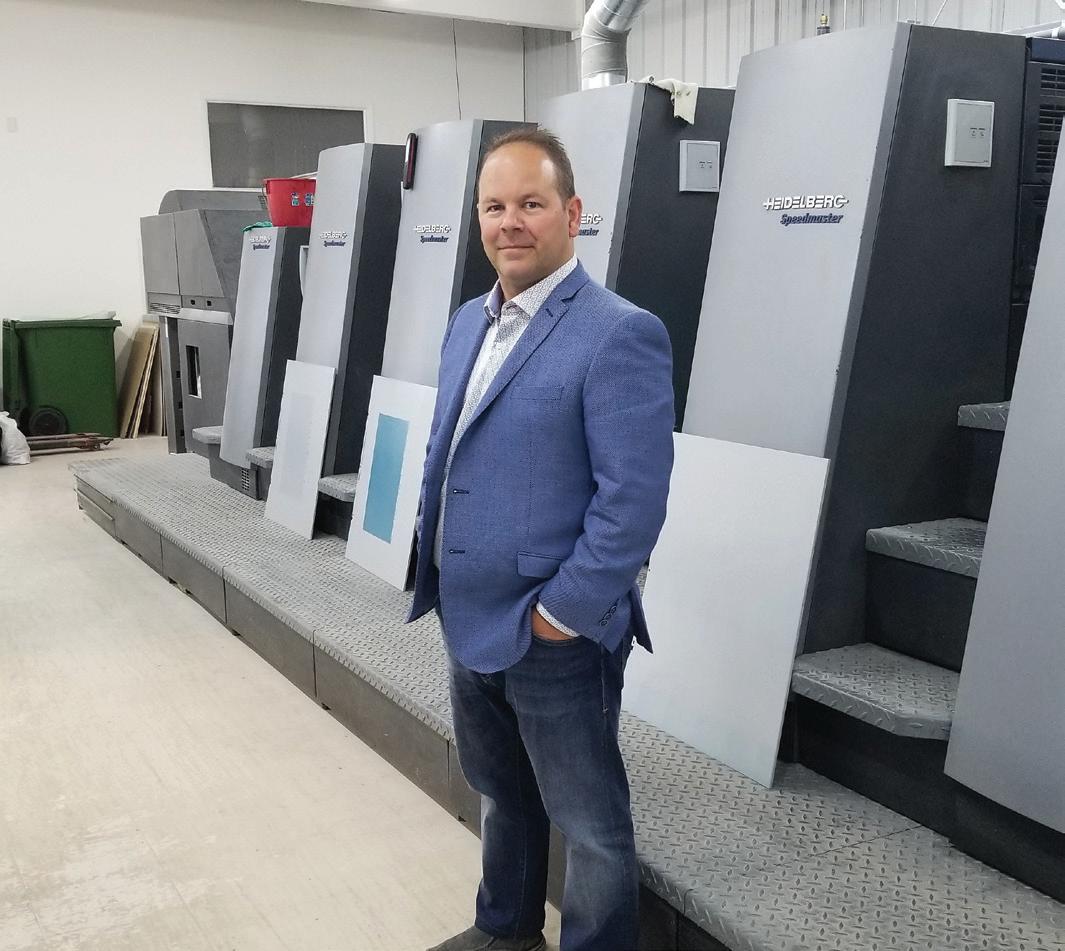
Pascal Lavigne started Imprimerie Multiplus in his parents’ 1000-sf garage in St-Clet, Que., in 1993 with a duplicating press. Today, he has a 10,400-sf facility in Coteau du Lac that offers short and medium runs in digital, offset and large format printing. They can print anything from business cards, envelopes, and brochures to press kits, banners, and coroplast signs. Here’s an excerpt from an interview with him.
What is the state of the Canadian print industry?
PL: Generally, printers are doing well. But the volume of printing continues to decline. There are many sales and acquisitions of printing companies.
What attracted you to the print industry?
PL: The challenge of producing quality images and the available job prospects attracted me to the print industry.
How can the industry attract more young people?
PL: The industry must continue to inform young people that printing is here to stay. Companies must use innovative ideas to attract and retain youngsters.
In such a competitive landscape, how can printers win more sales?
PL: Printers need to stand out with high-performance and innovative equipment in order to produce better and faster.
What are some of the biggest opportunities in the print industry?
PL: The printing industry offers so many possibilities, whether it’s in offset, digital, flexography, or large format. The sales and employment opportunities are enormous.
What do you think is the most exciting aspect of the printing industry today?
PL: The ease with which new equipment can produce high-quality printed documents.
Pascal Lavigne’s response was edited for length. For more Q&A Spotlight interviews, please visit www.printaction.com/profile.
“The
Michael Parris, President, InView Graphics, Inc., USA
AR merges the physical with the digital world
Why printers should consider augmented reality
By Nithya
rint service providers are always trying to provide value-added services to clients. One promising technology to add to your toolkit is augmented reality (AR). Anna Graham-Ward, manager, marketing services, Ricoh Graphic Communications, defines AR “as a technology that overlays digital content inside of our real world.”
PPaul Saini, founder of Canada-based Lux media company believes AR is going be to the future of print. It’s the world of phi-gital marketing, combining the best in print with a powerful digital experience.
AR can be used to expand the printed material’s footprint and offer users an experience previously impossible with a flat 2D asset. For instance, a direct mail postcard has limited space. With augmented reality, we can use an entire digital world of content and experiences to enhance the marketing message. From a marketing standpoint, this allows brand teams to give users access to product demonstrations, customer testimonials, step-by-step guides and procedures, etc. through a printed product itself.
Lux media founded in Nov. 2021 Laps of Lux, a biannual print magazine. Saini began using AR in the magazine to distinguish Laps of Lux from the competition and outlets like GQ, Forbes and Wired that have been around for years. Saini, who has a tech background, uses AR in different verticals including the magazine cover.
“When you scan the code, a video of the cover will activate and you can see a seven-second clip of exactly what you see on the cover, but in motion,” says Saini. “Usually, you hear the
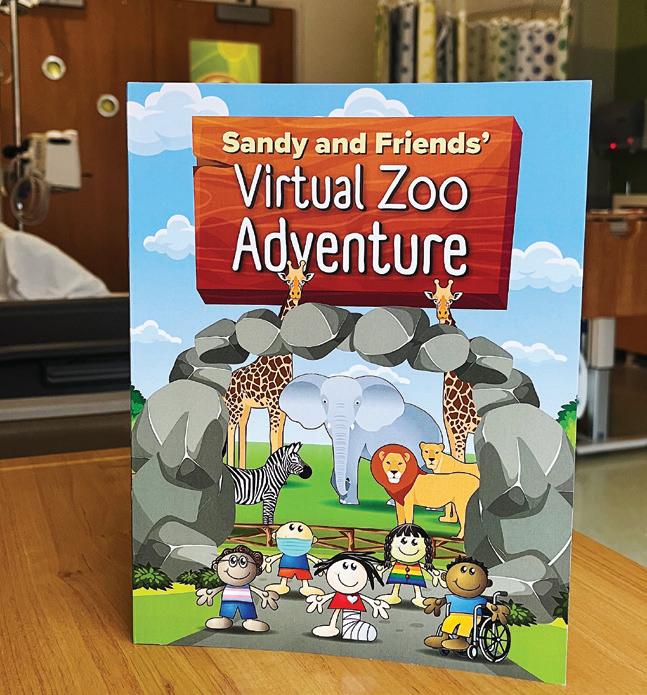
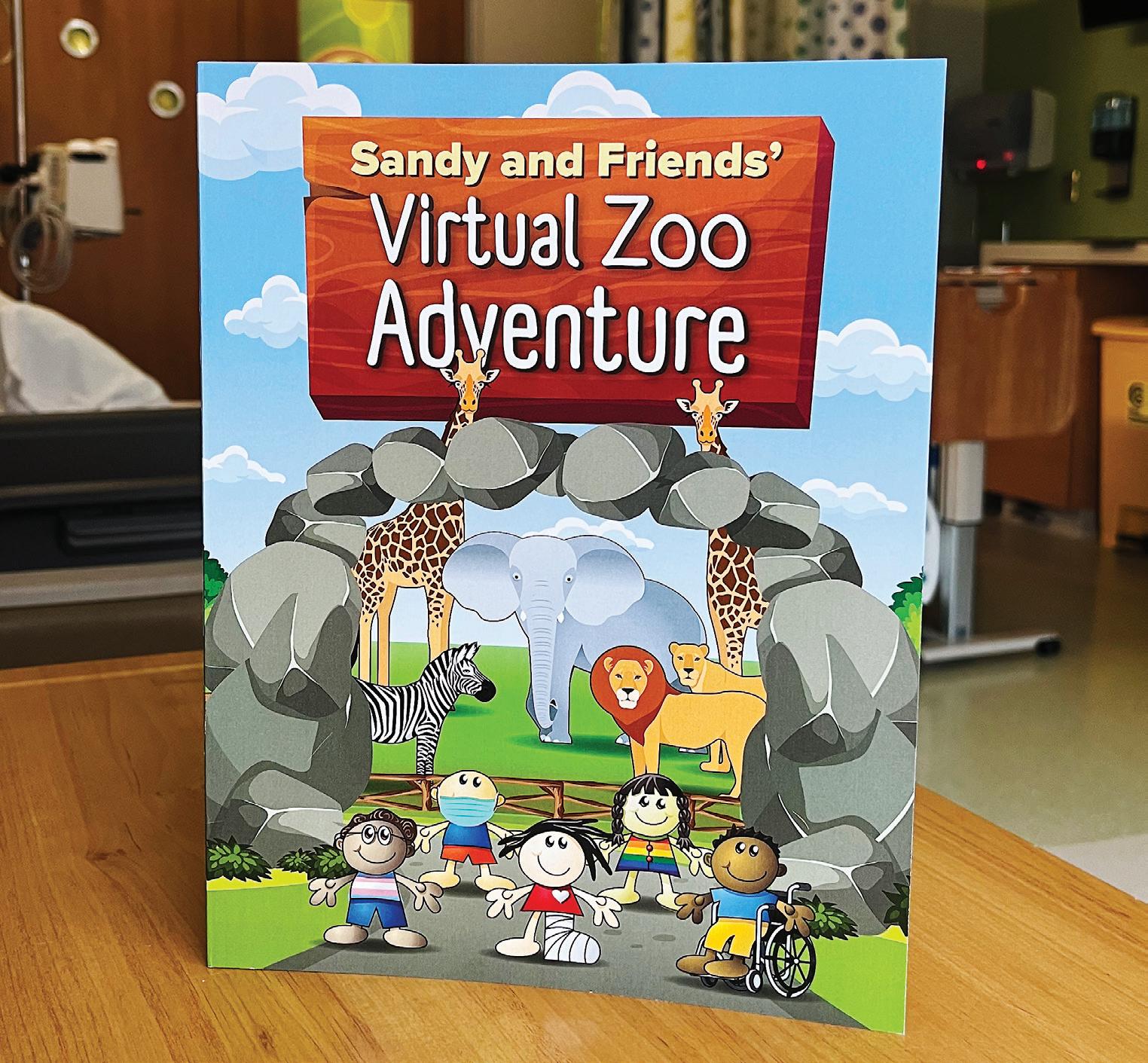
Ricoh, the Golisano Children’s Hospital in Rochester, N.Y., and the Seneca Park Zoo created a book featuring 10 augmented reality animals and activity pages.
craziest reactions…and it makes you appreciate the efforts you put towards building it.”
The ARs have been so successful that clients have hired Saini’s team to create videos for their companies.
Graham-Ward adds one of the biggest advantages of using AR for printers is data collection. Clients can track the date, time, and location up to the street level when customers accessed the experience as well as the time they spent on it.
“Print is probably one of the only media from a customer communication standpoint that you can’t track with data and analytics. And that’s a huge disadvantage from a marketing attribution standpoint. How do you prove as a printer that what you’ve accomplished is impactful? Augment-
ed reality really adds that trackability to understanding the consumer and understanding the engagement levels to help us become stronger marketers,” explains Graham-Ward.
There are different types of AR. It can either be activated by a piece of print material or image. Another type of AR is world tracking where companies simply drop the AR experience anywhere in a real-world environment. Think your Ikea catalogs that allow you to experience how the furniture will fit into your house.
All technologies have costs associated with them, but Graham-Ward believes printers can justify the ROIs for AR due to the value they offer. It’s also important to remember that as a technology, AR is scalable in price. When considering AR & pricing it out,
factor in the number of experiences you’re anticipating to deploy, and how widespread the audience is going to be for them, as both impact the cost.
According to Saini, augmented reality can cost anywhere between $500 and $50,000, depending on the experience one is building. If you’re using small file formats and doing very basic stuff to simply get the experience out there, it can cost approx. $1,500. If you’re creating something at a high volume whether it’s a game, puzzle or an interactive campaign requiring multiple layers of action and can be 15 GB or more, then it can get expensive because you’ll be using third-party software to host the media. You also need to pay a graphic arts designer to create the experience, which will add to the project’s
overall cost.
“If we’re sending out 100 experiences to a small subset of audience, then that pricing is going to be very different than doing one campaign for 2 million people,” says Graham-Ward, who has seen AR campaigns on rack cards, brochures, product sheets, direct mailers, educational publications, training documents, packaging, trade show signage, displays, and catalogs.
Saini believes printing companies, if they had a team who can help facilitate the AR, could definitely sell the technology to their clients as an added layer. For instance, they could incorporate AR-enabled virtual home tours into real estate flyers.
Customers get to see a deeper layer of the product, and this helps build conversations around it.
“You’re not only getting people to see the product on a deeper level, but also promoting it because people are talking about it,” adds Saini.
Augmented reality combines the best in print with a powerful digital experience.
An AR experience has a lot of elements, so Saini recommends starting small. He suggests buying 3D models online, which would allow print shops to experiment and fine-tune their AR offerings.
The year Paul Saini founded Laps of Lux.
If you have a relatively modern device running the major browsers, you will be able to deploy AR natively on your machine. – Anna Graham-Ward, Ricoh
Graham-Ward’s team at Ricoh once worked on an AR campaign for a print provider in the U.S. One of their customers was an RV dealer. The customer wanted to provide after-hour buyers with a more detailed sales pitch than was possible on store displays. So, he installed a wide-format, removable signage with a QR code on the side of the RVs. When users scanned the QR code, an AR hologram of a real person appeared. The hologram was able to do a short sales pitch with a clear call to action in order to motivate people to take the next step and physically contact somebody to purchase an RV.
“Since we don’t have the metrics of how many people were walking through, we don’t know totally how many people saw the ad, but in terms of the people that did activate the experience, we were able to capture that 60 per cent of them hit that call to action button and went on to the next step to actually contact somebody. And those are really impactful numbers in a scenario where they previously would have had nothing to go off of,” shares Graham-Ward.
In another instance, the Golisano Children’s Hospital in Rochester,
N.Y., wanted to create engaging experiences for patients who could not leave the hospital, and they approached Ricoh’s marketing services team for help. With the help of Seneca Park Zoo in Rochester, the project team produced a book featuring 10 augmented reality animals and activity pages that patients could fill out and complete. The hospital initially donated the book to 5,000 children and later began to sell it in their bookstore with the proceeds going towards one of their research initiatives. The books were printed by Rochester-based ImageNow, utilizing Ricoh’s Pro C7210 with a Plockmatic 500 device.
Ricoh actually owns BLUairspace Augmented Reality, a cloud-based application that allows printers to combine real and virtual elements in a customer’s physical environment.
Graham-Ward advises printers to focus on the following three key areas when selecting a product for AR:
• how is software going to be deployed;
• how are you going to create the AR experience; and
2023
The year Ricoh helped create an AR-enabled zoo book.
• reporting and analytics.
In the industry today, there are two options for deploying AR—app-based and web-based. The biggest challenge with app-based ARs it that it creates a barrier for end users. Customers who aren’t familiar with the brand are less likely to download a dedicated app, especially for augmented reality. Graham-Ward’s clients mostly prefer web-based ARs.
“In the last five years, web browsers on our phones have been updated to allow augmented reality natively. So, if you have a relatively modern device running the major browsers, you will be able to deploy AR natively on your machine. So, from there, the way to bring people into an AR experience is as easy as bringing them to a website. We have people driving that with QR codes, written hyperlinks and near field communication chips,” explains Graham-Ward.
The second area worth looking into is how you’re going to be creating the AR experience, as there are several software options. A web developer can help you determine this.
Finally, make sure the tool provides substantial analytical data, as your customers would want to measure the success of their campaigns.
Graham-Ward recommends print service providers build AR examples, use cases and create proof of concept to help a customer better understand how the technology can be used in their campaigns. She also believes artificial intelligence has made it easier to create augmented reality-related files.
“Three or four years ago when we launched BLUAirspace AR, we were telling people to stand on a green screen, and we were running it through Adobe Premiere post-production. With AI background removal, it is a two-minute process at most to take in the video file, run it, and create that transparent background,” she explains adding that the next step is going to be augmented reality experiences generated through AI
While Saini has been using the tool for purely reader engagement purposes, he believes augmented reality has the potential to elevate printed materials.
BUILDING THE NEXT GENERATION IN PRINT
Practical tips on how you can create a dedicated workforce to replace retirees
By Heather Black
The print and packaging industry spends a lot of time talking about hiring challenges, and fair enough. It’s a real issue. But hiring is only one park of the challenge.
Many companies are sitting on decades of experience, and so much of that knowledge is held by people who are set to retire soon. The real question is who’s learning from them now, picking up that knowledge, and getting ready to step up when the time comes.
If we want a strong future for this
industry, we must make it a place where younger people can see themselves building a career. That starts with understanding what they’re looking for and being honest about where some employers are missing the mark.
Gen Z is no longer just the next generation entering the workforce. They are already here, with the oldest now in their late 20s. And many are looking at work, leadership, and workplace culture a bit differently than the generations before them. They care about learning and development, mentorship, clear career
progression, meaningful work, inclusive and modern workplaces, and transparency, especially around compensation. They want to know there is a future for them and what that future could look like.
I see that firsthand when I mentor students. One of the biggest things they want to understand is what opportunities exist within the company they are considering. I can’t always answer that for them, but I do help them go into interviews with better questions so they can get a clearer picture of career path, learning opportunities, and room to grow over time.
The same theme comes up in my recruiting work as well. Candidates want to know what they will learn, who they will be working with, and what the path might look like after a year or two. They are thinking about their future earlier than many employers realize.
Millennials matter in this conversation too. They are already moving into management and leadership roles and are a big part of the succession story. In many cases, they will be the group bridging the gap between experienced leaders and the next generation. They also helped shape something younger generations have now come to expect: if people stop learning or feel their
growth has stalled, they will start looking elsewhere. That is not disloyalty. It is a sign they are paying attention to whether their employer is investing in them.
Misconceptions about the industry
Since starting my own recruitment firm, I have had the luxury of choosing the clients I want to work with. I get to work with print and packaging companies that are genuinely strong employers, and it makes my job easier because when I speak to candidates, I truly believe I am introducing them to opportunities where they can thrive. These are companies that offer learning, better compensation, training, career paths, and real support along the way. They understand succession planning does not happen by accident. It occurs when you intentionally fold people in, give them exposure and help them grow. That, to me, is where the conversation needs to go as an industry. Not just talking about talent shortages, but also looking at what strong employers are doing differently and how more companies can start doing the same.
One of the biggest misconceptions about print and packaging is that it is old-school manufacturing. Anyone in the industry knows that is not the case.
Today’s print and packaging world includes automation, workflow technology, sustainability, packaging innovation, colour science, design, data-driven production, and increasingly, AI.
Programs like Graphic Communications Management at the Toronto Metropolitan University, the Graphic Communications diploma program at The British Columbia Institute of Technology, and industry initiatives through the Canadian Printing Industries Association and organizations like Canadian Print Scholarships are helping show students what this industry really looks like today. There are also newer voices helping tell that story in a way younger audiences connect with, including students creating content that brings more visibility to modern print.
The interest is there, which is encouraging. But that is only half the equation. The workplace has to match the story.
It is great the industry is promoting modern careers in print and packaging. But when students and early career professionals walk into a workplace, the experience must line up with that message. If the environment still feels outdated, rigid, unclear about growth, or inconsistent in how people are treated, candidates start to question whether they can really build a future there.
Diversity, transparency matter
The percentage of Graphic Communications Management students from Toronto Metropolitan University who find work within six months of graduation.
One area where this really shows up is around women in the industry. In the classroom, we are seeing strong participation from women in graphic communications and related programs. But when they look at many plant and manufacturing environments, they often see workplaces that feel heavily male-dominated. That does not mean companies are not open to change. Rather businesses need to be more intentional about creating environments where different candidates can genuinely see themselves fitting in and growing. Mentorship, visible role models, respectful workplace culture, and even practical things like facilities and equipment play a role in whether someone feels they belong.
Employer brand is part of this. And employer brand is not just a marketing strategy. It is the daily experience
Youngsters expect clearly defined professional growth opportunities before joining a company.
people have with your company. It shows up in job postings, interviews, onboarding, leadership behaviour, and how employees talk about their workplace. Younger candidates notice these signals quickly. They notice whether a company explains growth opportunities clearly. They notice whether the technology feels modern. They notice whether leaders invest time in developing people. And they definitely notice whether compensation is transparent.
In Ontario, new pay transparency legislation now requires employers with 25 or more employees to include compensation ranges in job postings. For some employers, that may feel uncomfortable. But in reality, it aligns with what younger candidates already expect. Transparency builds trust. And companies in Ontario that choose to ignore the new legislation are not just putting themselves at risk for fines. More importantly, they are sending a message to candidates that transparency is optional. It is not a great look when trust is already such a big part of attracting and keeping good people.
I see the cost of poor transparency and unclear career progression all the time. In one recent case, I was working with a younger candidate who was not unhappy in his job, but he was really frustrated. His company had pushed him to take on the responsibilities of a higher-level manager, which he was willing and able to do, but they were not giving him the title or compensation that should have come with it. Instead, they came back with a list of things he still needed to do before that would happen. The problem was that he was already doing the job. Once that disconnect sets in, trust starts to erode. And once trust erodes, retention becomes harder.
In another situation, I found a strong candidate for one of my clients and we were in the middle of setting up an interview. Then I got a message saying he had spoken with his current employ-
er about the possibility of leaving, and suddenly they came back with the raise he had been after all along. He decided to stay and decline the interview.
On the surface, that might look like a retention win. But it is not a great strategy. When someone must get to the point of leaving before they feel seen or valued, the damage is usually already there. The better approach is to have those conversations sooner, recognize contribution earlier, and make sure people do not have to threaten to leave to be taken seriously.
It is not only younger workers paying attention to these things. I recently met with a more senior candidate who is considering a move because his company will not allow him to work hybrid, while others in a similar role are being given that flexibility. This is a Gen X employee with a wealth of knowledge and experience. If he leaves, it is not just one resignation. It is a major loss of knowledge, practical understanding, and stability. Companies talk a lot about succession planning, but inconsistent leadership decisions can quietly push out exactly the people they most need to keep.
What I want to emphasize is that younger candidates are not writing off this industry. In fact, many are excited by the mix of creativity, technology, and real-world production that print and packaging offers. What they are looking for is evidence. They want to know the company is modern, that they will learn, that someone will mentor them, that the culture is healthy, and that there is a future there.
Interviews play a big role in that. One thing that turns younger candidates off quickly is when a company talks only about the role and what is required but never gets into career path, learning opportunities, or the things that matter to them, like sustainability, work-life balance, and what growth could look like. The employers who create real excitement are the ones who connect the role to a
bigger future and make it easy for candidates to picture themselves there.
For print and packaging companies thinking seriously about the future of their workforce, here are some practical things that can make a real difference:
• Show the career path. Do not just talk about the job today. Explain what someone could grow into over the next few years.
• B uild mentorship into the role. Pair younger employees with experienced professionals who can pass along knowledge and context.
• Modernize how you describe the work. Talk about automation, workflow, sustainability, innovation, and technology, not just production tasks.
• Create workplaces where different candidates feel welcome. Representation, respectful culture, and clear advancement opportunities matter.
• Treat employer brand as daily work. Your reputation is built through every interaction with candidates and employees.
• B e transparent about compensation. Ontario has now made this a legal requirement for employers, but even beyond compliance, it is part of building trust.
The print and packaging industry has a lot to offer the next generation. But attracting and retaining younger talent is not just about posting jobs or taking part in career fairs. It is about building workplaces where people can see a future.
The companies that figure that out will have a real advantage in the years ahead.
HEATHER BLACK is the managing director of Freely Connect Recruiting. She can be reached at heather@ freelyconnect.ca.
KOMF I AMIG A 5 2 T D
Designed & Manufactured in Czech Republic
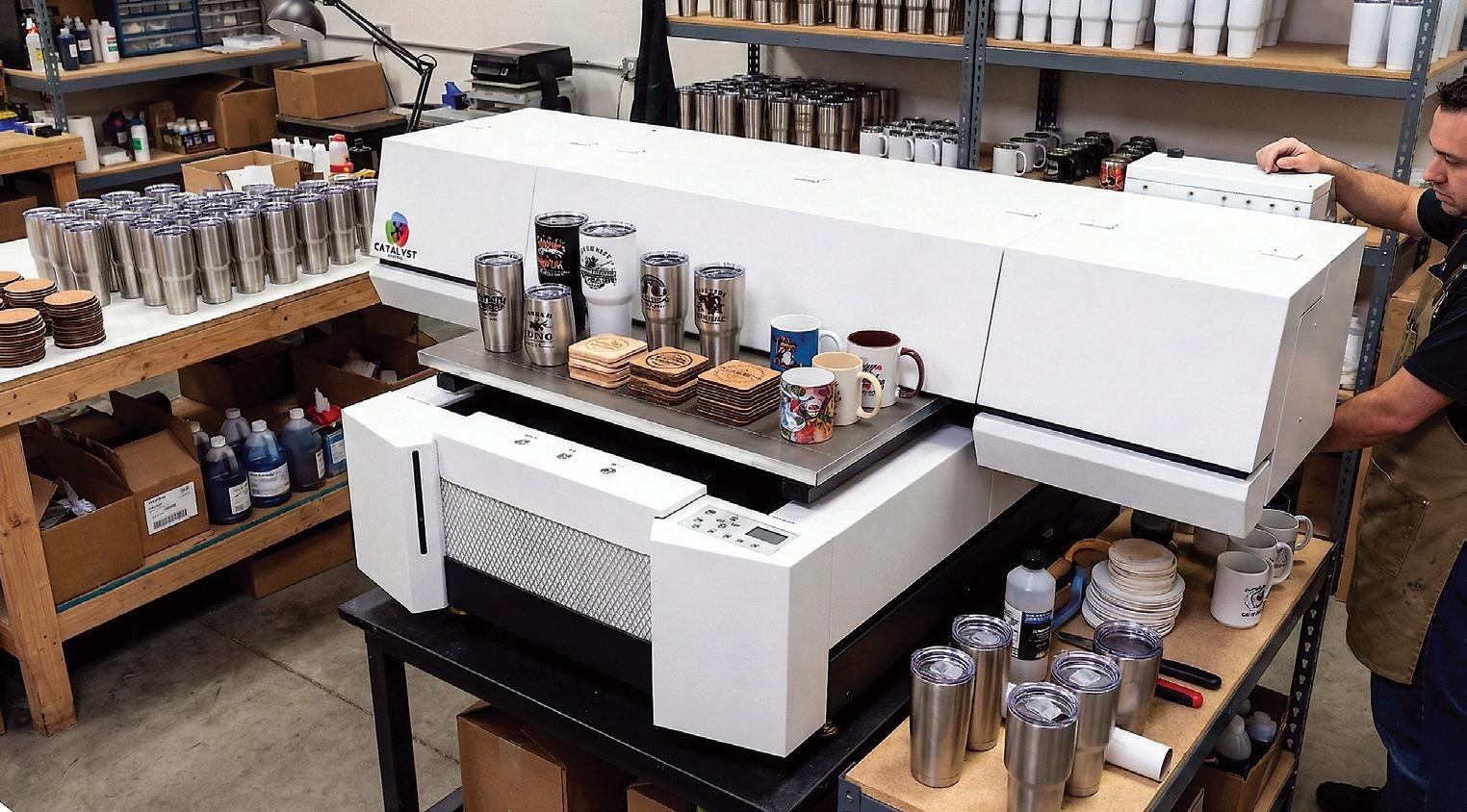
White ink offers the opacity that allows subsequent CMYK layers to perform well.
WHITE INK’S ROLE IN COLOUR ACCURACY
In UV printers, white ink stability is crucial for achieving accurate colours consistently
By Lon Riley
Graphic designers, printers, and brand managers are in for a challenge this year as Pantone announced Cloud Dancer as its 2026 Colour of the Year. This is the first time a true shade of white has been selected, and the industry immediately understood what that means. In design circles, the colour is described as symbolic of clarity and rest. In production environments, however, white has always played a more practical role. It serves as structure and foundation, not as a trend.
In many UV applications, white is not simply another channel within a colour build. It establishes the opacity that allows subsequent CMYK layers
to perform predictably. When that foundation is stable, colour remains consistent. When it is not, the layers above it begin to shift.
If you’re considering a UV press, then it’s important to factor in how the machine works under factory conditions. UV printers are typically demoed in carefully prepared settings where the ink would have been circulated recently. Printheads would be clean. Substrates are also selected to demonstrate capability. Files are optimized for presentation. Under these controlled conditions, strong output is naturally expected. Modern UV platforms are capable of impressive results when variables are minimized. However, production floors operate differently. Jobs pause be-
kyoceradocumentsolutions.ca
tween shifts. Materials change throughout the day. Equipment may sit idle overnight or across a weekend. Multiple operators manage the same machine under fluctuating workloads. Files enter the queue with varying degrees of preparation. It is within this variability that the reliability of a UV system becomes clear.
Role of white ink in UV printing
White ink often provides the first indication of how well a UV system has been engineered. In comparison to CMYK inks, white contains a heavier pigment load, which is typically titanium dioxide. It also tends to settle. Without effective agitation and recirculation, opacity can fluctuate after periods of downtime. Even small density changes in the white base layer can alter how colour is perceived on top of it.
Pantone matching in UV production depends on that stability. A properly calibrated colour profile cannot compensate for a shifting foundation. If opacity varies between runs, two prints generated from the same file may not appear identical. What initially appeared to be an ink maintenance issue can quickly become a brand consistency concern.
These shifts rarely surface during short press demonstrations. In controlled environments, the ink has been freshly agitated, and the system has not been idle long enough for settling to affect performance. Restart cycles under real production conditions will provide a more accurate measure.
For example, consider a typical re-
start after a weekend shutdown. If white pigment has settled significantly, purge cycles may be required to restore acceptable density. Operators may need to discard initial substrates while stabilization occurs. Layered builds may require adjustment before colour aligns with expectations. Each of these actions consumes time and materials. The implications extend beyond ink use because workflow depends on predictability. Files are sequenced in RIP queues. Substrates are staged to align with scheduled runs. Completion times are estimated based on anticipated throughput. When restart performance is inconsistent, those estimates become less reliable. Additional setup time may be required at the beginning of a shift. Reprints can re-enter the queue, tightening delivery timelines.
Srategies to manage white ink
In the author’s experience, shops often adapt to this situation over time. Operators may purge pre-emptively to reduce risk. Some may avoid powering down equipment to prevent extended restart cycles. Others may adjust profiles slightly to compensate for minor density shifts. These adjustments maintain forward movement, but they also introduce hidden costs and operational complexity.
From a capital investment perspective, evaluating a UV platform solely on acquisition price and rated speed would provide an incomplete picture, as long-term cost of ownership is influenced heavily by restart consistency and consumable efficiency. White ink
stability plays a measurable role in both situations
Well-designed systems treat white ink management as an integrated function rather than a secondary feature. Continuous recirculation reduces settling during idle periods. Tank agitation maintains pigment suspension. Firmware-controlled maintenance routines are calibrated to balance printhead protection with ink efficiency. Temperature management supports consistent viscosity and performance.
White ink stability is a clear indicator of how well a UV system is performing.
When these elements operate cohesively, restart cycles become predictable. The first substrate printed after downtime would meet quality standards. Layered builds maintain density and Pantone targets remain stable. All of this allows production to proceed without unnecessary disruption.
Shops evaluating UV equipment may benefit from incorporating more realistic testing conditions into their review process. A cold start demonstration after 24 to 48 hours of idle time can reveal how effectively white has been maintained. Printing layered white immediately after restart provides insight into opacity recovery. Monitoring purge volume and recovery time offers a clearer view of consumable efficiency than a continuous demonstration run. Assessing the first substrate produced, rather than one selected after multiple passes, offers a more representative understanding of operational readiness. These measures are not adversarial. They reflect the conditions under which equipment will operate once installed.
As always, design trends will continue to evolve, and next year’s colour focus may move toward a saturated tone or even a warm neutral. On production floors, however, every colour will continue to depend on a stable white foundation. Before accuracy can be achieved, opacity must be consistent. In environments where brand commitments and workflow discipline carry financial implications, white ink stability remains one of the clearest indicators of whether a UV system has been engineered for sustained production performance.
LON RILEY is the founder of DPI Laboratory and the architect behind the Catalyst Printing Platform, an integrated UV printing ecosystem.
Smarter workflows for converters
There’s a need for digital workflows to drive profitability in short-run label printing
By Sarah Ervin
emand for short-run label printing is growing. Market trends, such as personalization, regionalization, e-commerce, and sustainability, are pushing converters to adopt more agile operational models. Nearly one-quarter (23 per cent) of respondents in the European FINAT RADAR 28–2025 converter survey consider short-run flexibility and customer retention critical to future success.
Personalization, regionalization, e-commerce, and sustainability trends are forcing converters to be more agile.
The shift to short-run label printing
The short-run label market is growing fast, with businesses globally valuing the flexibility and agility offered by small print batches. Companies are able to support regional language and regulatory variations, as well as meet the demands of e-commerce business models. Further, brands want to exploit innovative seasonal and promotional campaigns, such as Dr Pepper’s ‘Pick your Pepper’ and Pepsi’s emoji projects, to enhance customer engagement. Finally, there is growing excitement about the power of QR and 2D barcodes to provide in-depth consumer insights.
As a result, multi-SKU production of more frequent, smaller volumes is replacing traditional bulk runs. For converters and brands, this shift supports the push to destock as part of a company’s wider sustainability strategy. Companies can now
reduce bulk warehousing of substrates and printed labels to help minimize waste.
Limitations of traditional analogue workflows
While the benefits are compelling, the demands of short-run label production are complex. Converters must respond faster, handling more frequent requests for jobs with smaller volumes, a demand that inevitably leads to bottlenecks. Manual set-up to ensure colour accuracy and print registration is time-consuming and can result in significant material waste. And, of course, correct setup and testing rely on skilled human labour, which is in short supply. With even repeat orders requiring extensive manual set-up, attempting to embrace short-run label printing with analogue technology will undermine productivity and profitability. Converters now recognize the flexibility and agility offered by digital
presses as key to thriving in the modern label landscape, but investing in the technology is just the starting point. It is vital to create effective workflows to maximize efficiency.
How digital workflows drive success
Working with a digital printing supplier to understand how best to rethink and adapt label production processes and workflows can be key to accelerating digital adoption success and boosting press utilization.
Digital workflows can streamline processes and reduce the risk of errors. For instance, being able to access preconfigured settings for commonly used materials reduces media waste during setup and saves time.
Additionally, instead of preparing every file individually for print, modern prepress workflows use ‘hot folders,’ enabling operators to import artwork and automate repetitive tasks. These presets enable enhanced colour management, perform ‘step and repeat’ layout, and add finishing marks, thereby eliminating the need for manual adjustments and ensuring repeatability while high-speed RIP allows jobs to reach the press quickly.
Digital workflows also include file management capabilities that enable archiving and recall of recurring customer jobs. This enables exact reruns of orders with minimal effort. Streamlining prepress tasks with smart tools like these supports fast turnaround of print jobs, maximizing production time. By embracing digital workflows,
Short-run label converters will benefit immensely from adopting digital workflows.
label converters can limit the number of human touchpoints, accelerate processes, and reduce the risk of costly mistakes.
Adopting a digital mindset
To fully benefit from the speed, agility, and efficiency digital printing offers, and maximize the return on their digital investment, label converters need to step out of their comfort zone and challenge established analogue practices.
A slick, efficient short-run label model will enable the sales team, for example, to respond swiftly to customer demands and provide an edge in winning new business. Skills shortages can also be addressed, as digital setups are easy and don’t require long hours of training.
Converters that embrace a digital mindset can continually improve by not only optimizing operations, but also gaining a competitive advantage. Production can be optimized, at both job and run level, often automatically. Grouping multiple SKUs – even from
different customers – on the same substrate and dies to print as one run on a single roll maximizes efficiency. Cutting and rewinding labels in batches also reduces finishing time, further supporting the agility required for short runs. Digital workflows can also integrate with MIS systems, importing files or exporting production data for analysis.
Short-run label printing is not just here to stay; it is fundamentally transforming the packaging landscape. To reap the benefits of short-run label printing opportunities, converters must implement smarter, more agile workflows that improve efficiency, reduce waste, and enable faster responses to customer needs. However, tr ue digital transformation must extend throughout the converter’s operations in order to not only meet customer demands cost-effectively, but also to drive competitive advantage.
SARAH ERVIN is digital printing technical product manager at Domino Printing Sciences.
By embracing digital workflows, converters can limit the number of human touchpoints, accelerate processes, and reduce the risk of costly mistakes.
More gamut. More gains. More green.
Make more with the all-new Revoria PressTM PC2120S, where vibrant Green Toner and AI-driven color optimization expand what’s possible for digital print—and your bottom line.