Komatsu’s

•
•
•



Komatsu’s
•
•
•
The Canadian construction industry has never had the luxury of easy conditions. Our contractors build through uncertainty, economic swings, labour shortages, inflationary pressures, supply chain disruptions and increasingly unpredictable weather. Yet, time and again, this industry proves that when Canada faces a challenge, builders step forward.
That resilience is not accidental. It’s rooted in the culture of construction itself. Contractors understand that progress rarely happens under perfect circumstances. Roads, bridges, transit systems, ports, water infrastructure and energy projects are built in difficult environments, often against tight schedules and enormous logistical complexity. As a result, success depends on adaptability, problem-solving and a willingness to keep moving forward even when obstacles emerge.
Today, those qualities matter more than ever.
Across the country, the demand for infrastructure continues to grow. And governments are looking to construction to help address housing pressures, strengthen trade corridors, improve climate resilience and support economic growth. At the same time, contractors are navigating rising costs, procurement challenges and an ongoing need to attract the next generation of skilled workers.
Despite these pressures, however, the industry continues to deliver. Crews continue to mobilize. Equipment continues to roll. Projects continue to advance in every region of the country. That determination reflects a deep understanding that infrastructure is not simply about concrete and steel, but rather about connecting communities, supporting businesses and creating longterm national prosperity.
The coming years will demand even more from the construction sector. New technologies, evolving project delivery models and larger, more complex builds will test the industry in new ways. But if history offers any lesson, it is that Canadian contractors are at their best when confronted with difficult work.
This industry does not back away from challenges. It builds through them.
Sean Tarry / Editor starry@on-sitemag.com
on-sitemag.com
READER SERVICE
Print and digital subscription inquiries or changes, please contact Angelita Potal
Email: apotal@annexbusinessmedia.com
Tel: (416) 510-5113
Fax: (416) 510-6875
Mail: 111 Gordon Baker Road, Suite 400, Toronto, ON M2H 3R1
PUBLISHER | Peter Leonard (416) 510-6847 pleonard@on-sitemag.com
EDITOR | Sean Tarry (416) 410-0600 starry@on-sitemag.com
MEDIA DESIGNER | Alison Keba akeba@annexbusinessmedia.com
GROUP PUBLISHER | Danielle Labrie (226) 931-0375 dlabrie@annexbusinessmedia.com
ASSOCIATE PUBLISHER | David Skene (416) 510-6884 dskene@on-sitemag.com
ACCOUNT COORDINATOR | Kim Rossiter (416) 510-6794 krossiter@on-sitemag.com
AUDIENCE DEVELOPMENT MANAGER | Urszula Grzyb (416) 510-5180 ugrzyb@annexbusinessmedia.com
CEO | Scott Jamieson sjamieson@annexbusinessmedia.com
Established in 1957, On-Site is published by Annex Business Media
111 Gordon Baker Road, Suite 400, Toronto, ON M2H 3R1 Publications Mail Agreement No. 40065710
ISSN: 1910-118X (Print) ISSN 2371-8544 (Online)
SUBSCRIPTION RATES Canada $52.51 CAD (+tax) per year, United States $119.87 CAD per year, Other foreign $144.80 CAD, Single Copy Canada $13.50 CAD. On-Site is published 5 times per year except for occasional combined, expanded or premium issues, which count as two subscription issues. Occasionally, On-Site will mail information on behalf of industry-related groups whose products and services we believe may be of interest to you. If you prefer not to receive this information, please contact our circulation department in any of the four ways listed above.
Annex Business Media Privacy Officer privacy@annexbusinessmedia.com Tel: 800-668-2374
Content copyright ©2026 by Annex Business Media may not be reprinted without permission.
On-Site receives unsolicited materials (including letters to the editor, press releases, promotional items and images) from time to time. On-Site, its affiliates and assignees may use, reproduce, publish, re-publish, distribute, store and archive such unsolicited submissions in whole or in part in any form or medium whatsoever, without compensation of any sort.
DISCLAIMER This publication is for informational purposes only The content and “expert” advice presented are not intended as a substitute for informed professional engineering advice. You should not act on information contained in this publication without seeking specific advice from qualified engineering professionals.
MEMBER OF

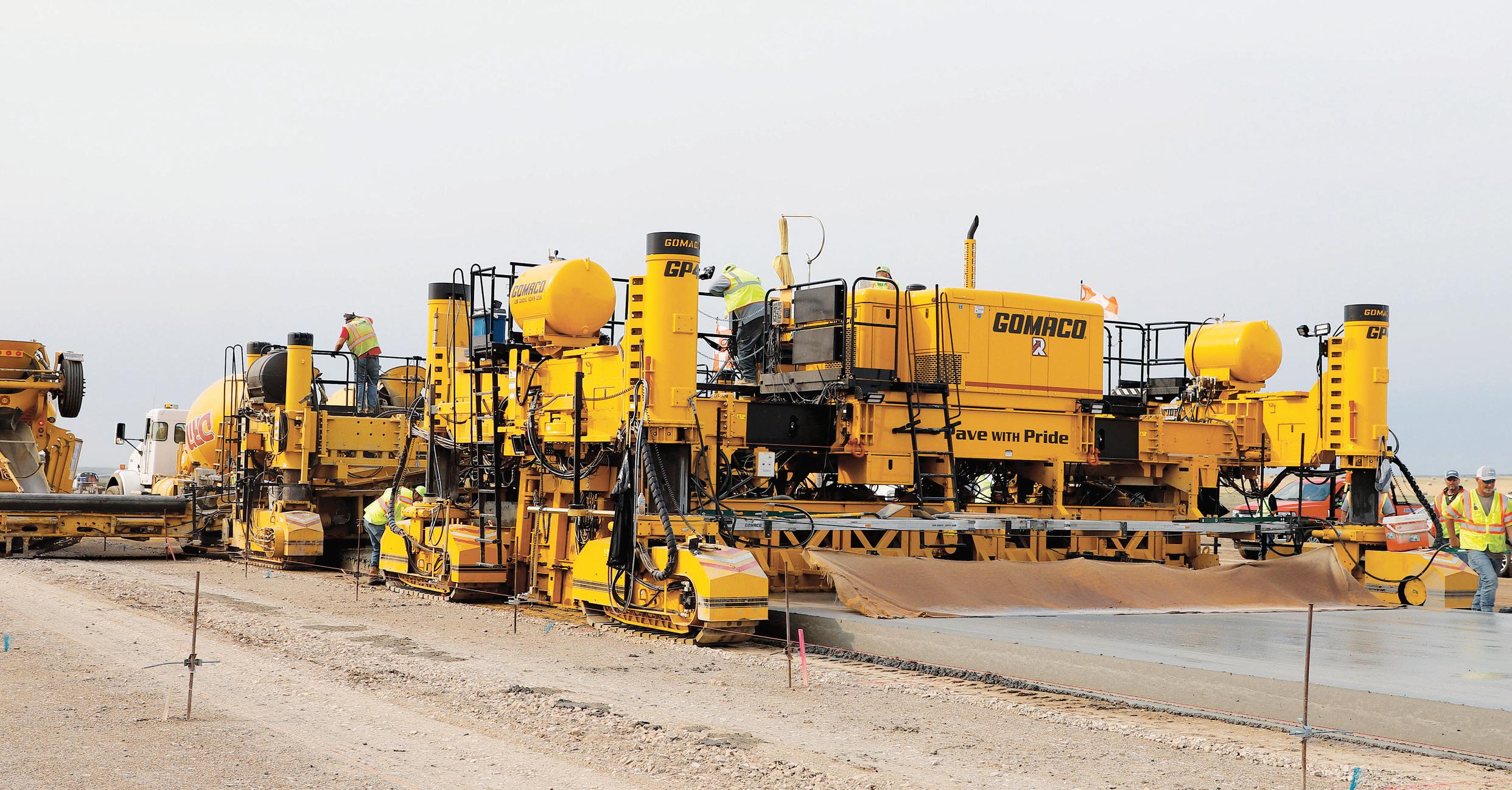
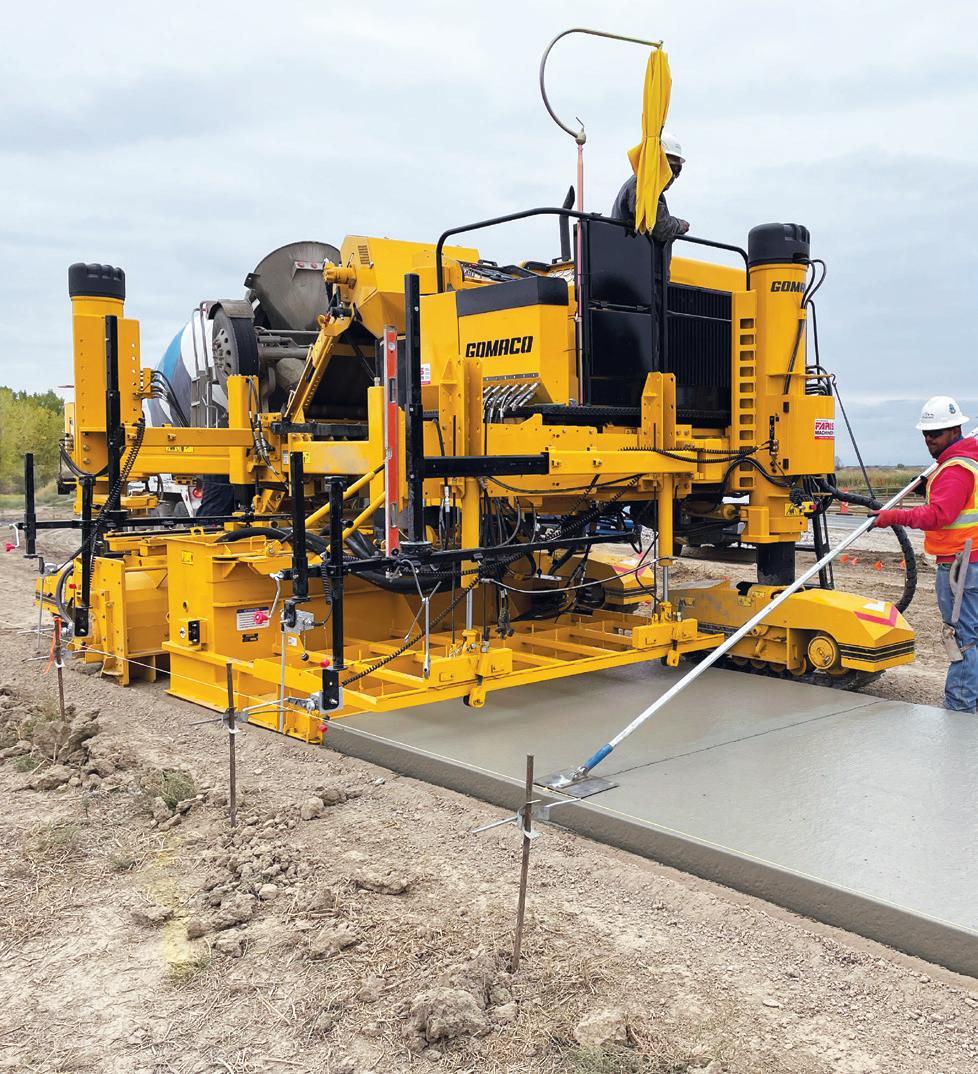
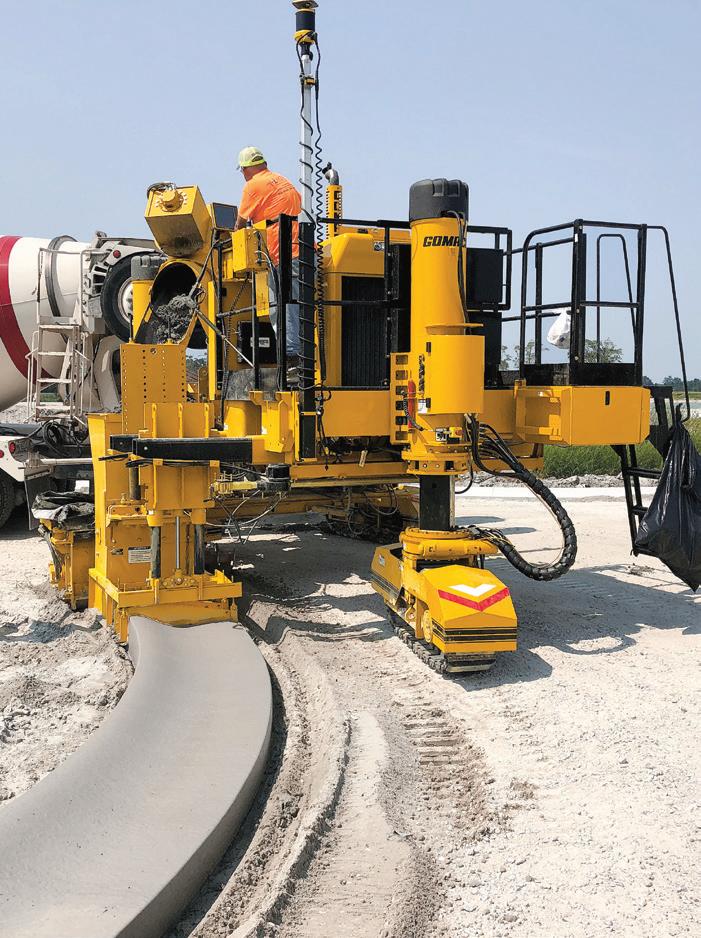
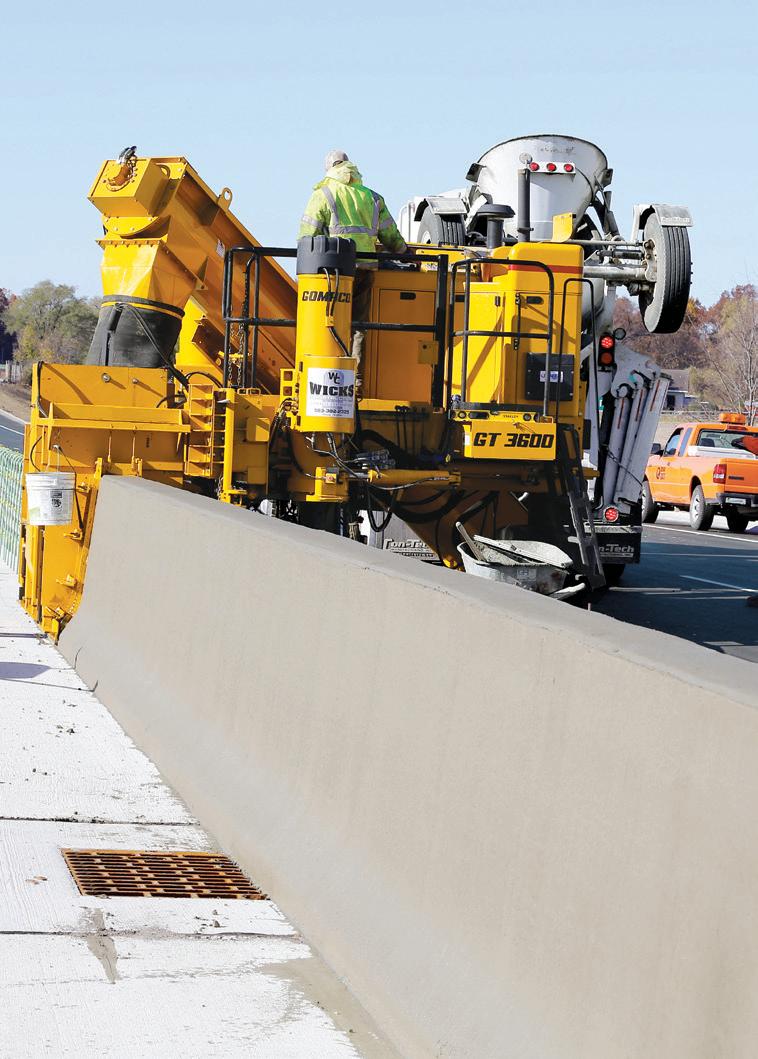
GOMACO offers the full range of concrete slipform pavers, curb and gutter machines, trimmers, placer/spreaders, texture/ cure machines and bridge/canal finishing equipment. GOMACO equipment features our exclusive and proprietary G+® control system, created in-house by our software engineers from the wants and needs of contractors paving in the field. At the heart of GOMACO equipment is our passion for concrete and our commitment to our customers. We look forward to visiting with you about your upcoming paving projects and your concrete paving equipment needs. Our worldwide distributor network and our corporate team always stand ready to serve and assist you.

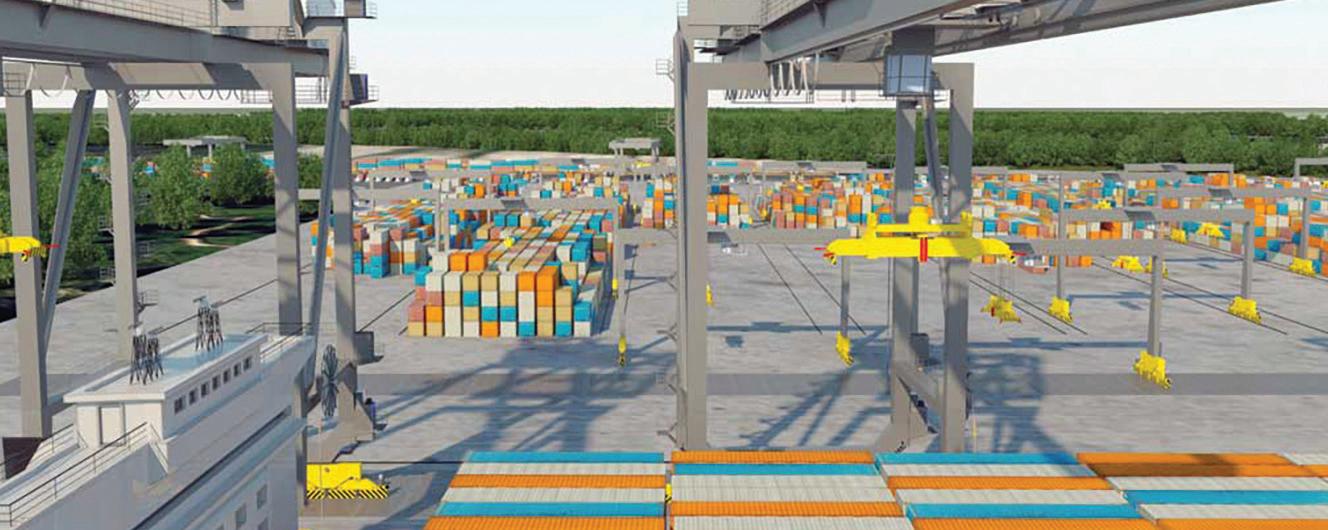
Reflecting a monumental statement with respect to Canada’s bold infrastructure plans, the federal government announced the breaking of ground on the country’s first major project under the fast-track MPO system with the start in earnest of the Contrecœur Container Terminal Project at the Port of Montréal.
Beginning in March, the transformative work is expected to increase the port’s capacity by an estimated 60 per cent while modernizing its rail, road and marine infrastructure. When completed, Canada’s
largest ever eastern port expansion will go a long way toward unlocking the country’s most significant trade corridor, ensuring that rising demand is met and future opportunities are realized.
It’s a project that signifies Canada’s ambition when it comes to increasing growth-enabling productivity. However, it’s also one that Canada’s Prime Minister, Mark Carney, says signals the intent of the government to forge ahead with the execution of its infrastructure vision, and the boundless opportunities that will result

In response to the Canadian federal government’s Spring Economic Update released earlier this year, the Executive Board of Canada’s Building Trades Unions (CBTU) applauded efforts to recognize and support the contributions and commitment made by the country’s skilled labourers as Canada embarks on a generational buildout.
As part of the government’s Spring Economic Update, an investment of $225 million over 5 years in a new Union Training and Innovation Program was announced, securing funding for critical infrastructure training for skilled trades across the country, including the upgrading of training centres and resources.
The announcement, which bolsters the federal government’s intentions around its unprecedented infrastructure plans, will serve to strengthen the capabilities and capacity of the industry. And, according to Robert Kucheran, Chair of the Board of CBTU, it’s also an announcement that sends a strong message to those that will be relied on to execute on these complex projects.
“The government’s Spring Economic Statement is a strong statement of support and respect for Canada’s skilled trades workers and the role we play in building our country. Prime Minister Mark Carney’s new, majority, Liberal government has responded to the men and women who do this work, and the measures announced today will make a real difference for our 500,000 members and their families.”
for general contractors in all corner of the country.
“The Contrecœur Container Terminal Project is about more than the expansion of a port – it is a signal that Canada is building again. With each shovel in the ground, we are building a stronger, more independent, more resilient Canadian economy. In less than seven months, this project went from a proposal to a construction site. That is the speed and ambition we need to build Canada strong.”
Statistics within ‘The Economic Impact of the Canadian Equipment Manufacturing Industry’, reveal that the country’s heavy equipment sector showed significant signs of growth during the period between 2022 and 2025, highlighting the fortitude of the Canadian market.
In fact, despite the turbulence and uncertainty faced by many industries around the world, the sector experienced an 11 per cent growth in sales and 3.3 per cent increase in employment.
Driven primarily by Canada’s unparalleled infrastructure plans and desire to unearth the country’s critical minerals, demand for heavy off-highway construction equipment has been increasing steadily over recent years and isn’t showing any signs of abating.
And that’s encouraging news for equipment manufacturers across Canada who look to continue advancing the sector and construction industry as a whole through the innovation and products they provide clients.
The report, commissioned by the Association of Equipment Manufacturers and prepared by S&P Global Market Intelligence, found that the sector experienced $54 billion in total industry output, supporting approximately 147,000 total jobs, including direct, indirect and induced, contributing $24 billion to Canada’s GDP.
It was announced recently by Canadian construction industry leader, EBC, that Ghyslain Deschamps has been appointed the company’s new President and Chief Executive Officer. Effective this past April, Deschamps’ transition is representative of the continuity by which the company has operated with through the years - a characteristic that’s helped maintain its position as one of Canada’s premier construction firms.
Boasting nearly six decades of expertise within the industry, EBC is now turning to one of its own to help lead it into the future.
Joining the company in 2018, and bringing with him more than 35 years’ experience within the industry, during which time he’s helped lead a number of major projects across the country,

Deschamps plans to continue leaning on teamwork and knowhow as he transitions into his new role.
“It is a privilege to contribute to the next chapter in EBC’s history. EBC’s
To help execute on its multi-year national AI data centre buildout, Bell has turned to Bird Construction as its construction partner. And, in the near-term, the leading Canadian firm will get to work on construction of Bell’s 300 MW AI Fabric facility in Sherwood, Saskatchewan.
Together with the project’s Architect of Record, Alton Tangedal Architect Ltd., Bird Construction will begin development of the Saskatchewan node of Bell’s massive AI supercomputing network – a facility that will become Canada’s largest ever purpose-built data centre.
It’s a project that reflects Canada’s ambitions to build out capacity, increase productivity and become more efficient. And, like many other large multi-year national projects, potentially huge opportunities may be available to general contractors over the next two to five years, especially for those with expertise in concrete, industrial infrastructure and mission-critical builds as procurement rolls out in phases.
distinctive expertise and strong collaborative culture represent a collective strength that will allow us to continue pursuing excellence in all our endeavours.”
Deschamps will take over for outgoing President and new Executive Director of the Board of Directors, Marie Claud Houle. Houle served as President of the company from 1999 to 2026 and was responsible for helping it grow in revenue from $100 million to more than $1.6 billion and expand its workforce to more than 1,600 employees during that time. And, according to Houle, the appointment of Deschamps is exactly what the company needs going forward.
“Ghyslain is the ideal person to lead the company into its next phase of growth while remaining true to its DNA. I have full confidence in him, and I am convinced that he will continue with conviction and respect, the story we have been writing together since 1968.”
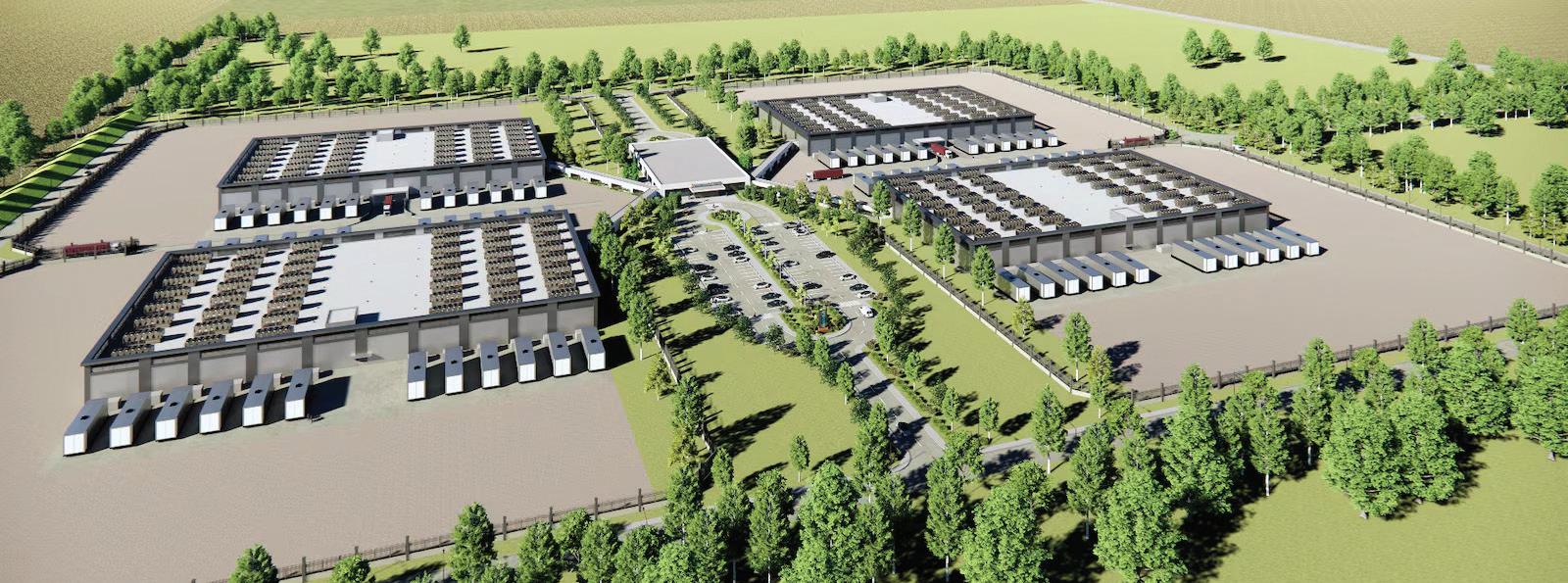

Bird Construction will manage and lead the delivery of the physical infrastructure of the build with the first two halls of the centre in Saskatchewan expected to be operational by mid-2027. It’s an incredibly complex job, requiring an intelligent, well thought-out, sophisticated approach. And, according to Teri McKibbon, President and Chief Executive Officer, at Bird Construction Inc., it’s what makes the job a perfect fit for the firm.
“Bell is making one of the most significant technology infrastructure invest-
ments in Canada’s recent history, and we are proud to have been selected as lead construction partner for the Sherwood facility, working alongside other Saskatchewan partners. The strategic long-term partnership advances our mission critical platform and reinforces our position as the partner of choice for Canada’s largest and most complex infrastructure projects, including large-scale AI data centres, where our integrated self-perform electrical, mechanical, civil and systems capabilities as a leading specialty contractor are increasingly differentiated.”
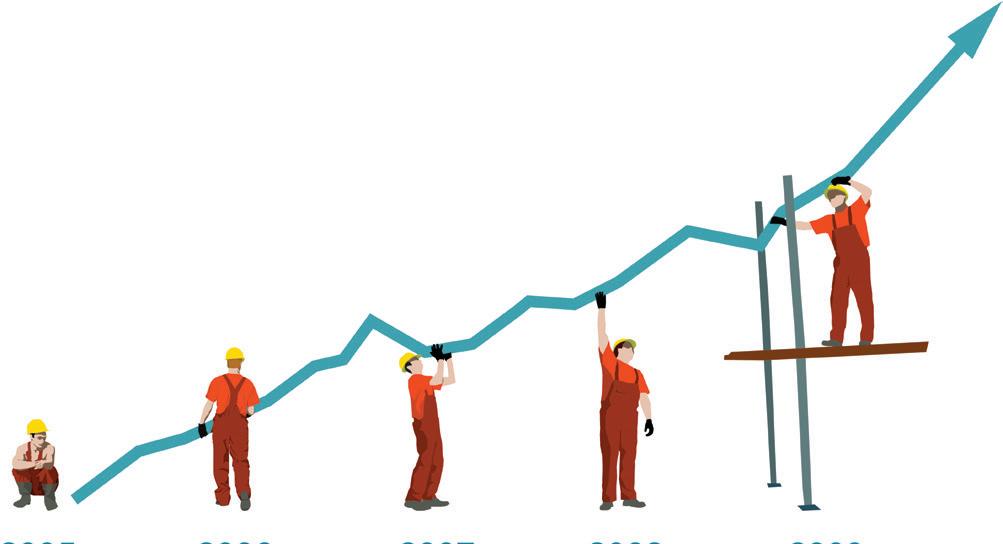
Contractors across the country are facing an increasingly competitive labour market as demand for experience project leaders, superintendents and estimators continues to rise across the country. According to the 2026 Salary Insights from Michael Page Canada’s Salary Guide, compensation pressure is intensifying throughout the construction industry, particularly for senior project delivery and field leadership roles. Salaries for site superintendents and and project managers are now entering the six-figure range, while executive-level construction talent is commanding packages well in excess of $160,000.
The report highlights a growing labour challenge for general contractors delivering large-scale projects and finding it difficult to attract and retain skilled workers in a tight market. As major public and private projects continue to ramp up across the country, workforce strategy is becoming one of the most critical issues the industry has to deal with.
4
Cement consumption is expected to decline for a fourth consecutive year.
The American Institute of Architects Consensus Forecast projects 2026 construction activity is likely to range between -2.9% and +4.5%.
0.4%
Canada’s GDP is forecast to remain below trend at approximately 0.4 per cent in 2026.
2.9-4.5% projected growth in non-residential construction for 2026.
Public construction activity is expected to contract as major infrastructure funding begins to diminish.
Multifamily construction activity is expected to decline as vacancy rates rise and rent growth stabilizies.
According to a recently released report titled 2026 Concrete Construction Outlook Report, contractors across the country are operating in an environment blighted by soft economic growth, rising costs and continued labour pressures. The report, developed by Master Builders Solutions also warns that slowing demand for cement, tighter margins and decreased activity are forcing contractors and producers to rethink current project delivery strategies. While heightened borrowing costs have slowed private-sector development, long-term investments in transit, utilities and green energy infrastructure are expected to provide the public sector with stability. In addition, the report also points to growing pressure on contractors to improve efficiencies as labour shortages continue to intensify throughout the industry. For heavy civil and infrastructure firms, the outlook stresses the importance of productivity, accelerated schedules, the use of durable materials and technology adoption as contractors compete to protect margins and secure work.
+ Construction roles remain among the most in-demand hiring categories in Canada, and the average salary for a range of positions continues to increase.
Project Manager/Experienced Estimator/Superintendent
$105,000-$115,000
Senior Superintendent/ Experienced PM/ Chief Estimator $110,000-$120,000
Executive Construction Leadership $160,000+
As an increasingly volatile and cost-sensitive market continues to present challenges to contractors attempting to navigate through the current environment, inflationary pressures, geopolitical uncertainty and shifting public sector finances are going a long way toward reshaping the way projects are delivered across Canada, according to data revealed within the Canadian Construction Association’s Spring 2026 Construction Quarterly Economic Insights report. The report also highlights the fact that although construction output across the country softened at the tail-end of 2025, a sharp rebound in building permits points to continued demand for infrastructure projects. At the same time, however, escalating costs tied to steel fabrication, concrete and industrial building components are adding undue pressure on bids, margins and procurement strategies. In response, the report suggests disciplined cost management, productivity improvements and long-term workforce planning as requirements to compete for today’s complex projects.
• 0.6% Canada’s real GDP declined in Q4 2025.
• 0.6% Construction GDP also fell in Q4 following six quarterly gains in a row.
• 9.8% Building permits rebounded in Q4 2025.
• 4.1% The Building Construction Price Index climbed year-over-year
• 6.2% Factory construction costs surged year-over-year. Entry- to Mid-Level Construction Delivery Roles $96,000+

From procurement reform to labour shortages, CCA President Rodrigue Gilbert says the next decade will define the future of construction in Canada with the industry facing a rare opportunity – and narrow window – to modernize the country’s infrastructure backbone.
BY SEAN TARRY
Canada’s construction industry is standing at a pivotal moment. Across the country, governments are promising major investments in housing, transit, trade corridors, defence infrastructure, clean energy, industrial development and more, with billions of dollars in public funding already announced and long-discussed nation-building projects finally moving toward procurement. And political leaders are increasingly describing infrastructure as central to Canada’s economic competitiveness, productivity and national security.
But amid the optimism lies a growing concern shared by contractors, owners and industry associations alike as to whether or not Canada can actually deliver.
For Rodrigue Gilbert, President of the Canadian Construction Association (CCA), the answer depends less on ambition and more on execution.
“We finally have a federal government that’s serious about filling the infrastructure gap,” Gilbert said during a recent
On-Site webinar discussion on the future of Canadian infrastructure.
“The opportunity is there. The challenge now is whether we can build fast enough, collaboratively enough and intelligently enough to make it happen.”
The numbers behind the challenge are significant. Canada faces mounting infrastructure deficits across transportation, water systems, public buildings and utilities. At the same time, governments are attempting to accelerate new project delivery in areas tied to housing growth, defence spending and energy transition initiatives.
Layered on top of that is a worsening skilled labour shortage, aging infrastructure assets and procurement systems industry leaders believe are no longer equipped to handle the scale or complexity of modern projects.
For many general contractors operating across the country, the next decade may represent one of the largest opportunities in modern Canadian construction history. But it may also serve as one of its biggest operational tests.
Gilbert believes Canada is now confronting the consequences of years of under-investment.
“For too long, infrastructure was not treated as a serious national priority,” he said. “Today, you can see the effects everywhere – aging roads, water systems, hospitals and public infrastructure that no longer matches the needs of Canadians.”
That deterioration is becoming increasingly visible across municipalities and provinces. High-profile water main failures, aging bridges, transit congestion and outdated utilities are exposing the fragility of systems many Canadians depend on daily.
The challenge is compounded by the fact that governments are not only trying to replace deteriorating assets. In fact, they’re simultaneously trying to build entirely new infrastructure systems tied to population growth and economic expansion.
The result is what many within the
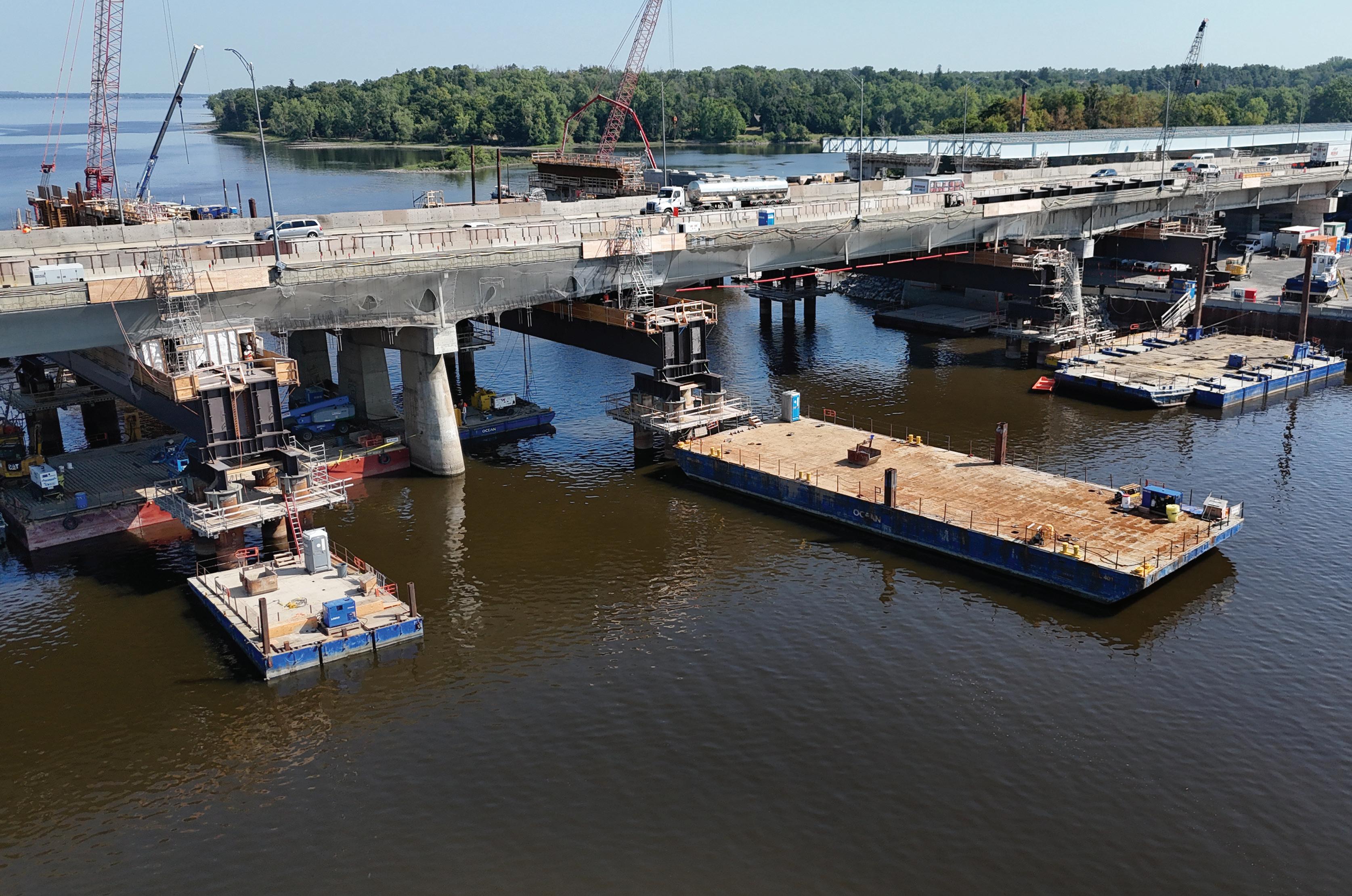
industry call a dual track infrastructure crisis caused by maintaining aging assets while rapidly expanding capacity.
Gilbert argues that the solution can’t rely on short-term political cycles.
“We need to move away from infrastructure decisions that are based on elections every two or three years,” he said. “If we are serious about infrastructure, then we need 20- to 25-year planning horizons that align local, provincial and federal priorities.”
That long-term coordination, he says, has historically been missing in Canada because different levels of government often pursue projects independently, creating overlapping procurement schedules, labour competition and funding uncertainty. Major projects can end up competing against one another for the same workforce, materials and contractor capacity within the same region.
“We need governments talking to each other far more effectively,” he said. “What works in Ontario may not work in Alberta or British Columbia. The priorities are different, but they still need to be aligned.”
If there is one issue Gilbert repeatedly returns to, it’s procurement reform.
For years, the CCA has argued that low-bid procurement models are increasingly contributing to project delays, escalat-
ing disputes and reduced vendor participation. In fact, Gilbert believes that the current approach is fundamentally outdated for the type of infrastructure Canada now needs to deliver.
“The traditional low-cost procurement model simply doesn’t work anymore,” he said. “Construction today is more complex. Projects move faster and the risks are far greater than they were a decade ago.”
Historically, public owners have attempted to transfer substantial project risk onto contractors through heavily one-sided contracts. According to Gilbert, that model discourages innovation and limits collaboration.
“Risk is a commodity,” he said. “At some point, someone has to pay for it. The key is making sure the right party is carrying the right risk.
He goes on to explain that collaborative procurement models offer a better path forward. Integrated project delivery, alliance contracting, early contractor involvement and balanced contract frameworks can improve communication and reduce adversarial relationships between owners and contractors.
“We need all players at the table earlier in the process,” he explains. “Owners, contractors, subcontractors, designers, insurers – everyone needs to be involved before projects are finalized.”
COVID-19, he notes, demonstrated the benefits of that approach.
“One positive thing the pandemic forced us to do was talk to each other,” he said. “Construction was one of the industries that kept the economy moving during COVID. And it only worked because owners and contractors collaborated.”
Still, Gilbert believes many public agencies remain hesitant to engage contractors too early for fear of appearing to favour specific bidders.
“That mentality needs to change,” he said. “The industry wants projects to succeed. Collaboration should not be viewed as a risk.”
Even if procurement improves, Canada still faces a workforce challenge unlike anything the industry has experienced.
BuildForce Canada estimates the industry could require hundreds of thousands of additional workers over the next decade to meet project demand as retirement rates continue to climb while competition for skilled labour intensifies across sectors.
Gilbert believes workforce capacity represents one of the single biggest risks to Canada’s infrastructure ambitions.
“If we don’t address workforce shortages properly, then none of these plans are going to matter,” he said.
The issues extend beyond simply recruiting more people into the trades. Retention, training and long-term career development are becoming equally important.
“We need to bring more young people into construction, but we also need to keep them here,” he said. “The future workforce wants to see opportunity, technology and long-term career growth.”
He argues the industry itself must do a better job promoting modern construction.
“We aren’t always good at showcasing how advanced the industry has become,” he said. “People still picture construction as only manual labour. But today we are using AI, BIM, digital twins and highly sophisticated technologies on projects.”
Gilbert also pointed to progress involving women, Indigenous workers and other underrepresented groups entering the industry.
“There are more women and more Indigenous businesses participating in construction than ever before, and that’s something we should be proud of,” he said.
Still, sustaining the momentum requires project certainty.
“One of the best things governments could provide is a reliable long-term pipeline,” he explained. “If companies can see 20 or 25 years of infrastructure work ahead, they are far more willing to invest in training, equipment and workforce development.”
One of the emerging infrastructure challenges now gaining attention involves Canada’s growing defence investments.
As geopolitical tensions continue to rise around the world, Ottawa has committed to increasing defence spending and expanding military infrastructure across the country, particularly in northern regions.
Gilbert says those projects could provide substantial opportunities for contractors, but they also introduce new delivery challenges.
A major concern involves federal security clearance processes required for firms participating in defence-related projects.
“Right now, security clearance delays are becoming a serious bottleneck,” Gilbert warned. “Projects are ready to move,

Sean Tarry, Editor, On-Site magazine, and Rodrigue Gilbert, CCA President, discuss the state of Canada’s ambitious infrastructure plans.

contractors are ready to build, but workers can’t access jobsites because approvals are taking too long.”
According to Gilbert, the issue has persisted for years but is now becoming far more urgent as defence investments accelerate.
“If government wants these projects delivered quickly, then those systems need to improve immediately,” he said.
At the same time, Gilbert believes that defence infrastructure could create broader economic benefits for communities if approached strategically.
“If you are building infrastructure in northern regions, why not also improve housing, utilities or community facilities at the same time?” he asked. “These projects can serve multiple purposes.”
Trade tensions with the United States are also reshaping discussions around procurement and domestic manufacturing.
Gilbert supports the broader objective but cautions that the transition will come with challenges.
“There will absolutely be costs associated with building stronger domestic supply chains,” he asserted. “Canada should have
invested in that capacity years ago, but historically we relied heavily on the U.S. because the trade relationship worked well.”
Transporting materials across Canada remains expensive and complicated. And domestic manufacturing in areas like steel fabrication and industrial production also remains limited in some sectors. Still, Gilbert believes the long-term benefits outweigh the short-term disruption.
“If industry and government work together, then in 15 or 20 years Canada can have a far stronger and more resilient supply chain,” he said.
That cooperation, he argues, must include owners recognizing that domestic sourcing strategies may initially increase project costs.
“This can’t simply be contractors absorbing all the pressure,” he said. “Owners need to be part of the solution, too.”
Despite growing domestic sourcing efforts, however, Gilbert stressed that Canada’s relationship with the United States and Mexico remains essential to the future of construction here at home.
The three countries continue to share
deeply integrated supply chains tied to materials, equipment, manufacturing and labour mobility.
During discussions with U.S. and Mexican construction association leaders earlier this year, Gilbert said it became clear that all three countries are facing many of the same pressures.
“The workforce shortages, supply chain problems and project delays are not unique to Canada,” he said. “The U.S. is facing similar challenges because of tariffs and material constraints.”
Gilbert believes North American cooperation remains critical even as governments revisit trade agreements and domestic procurement rules.
“We should always look for ways to improve agreements,” he said. “But we also can’t allow perfection to get in the way of progress.”
Technology adoption is increasingly being viewed as one of the industry’s most import-
From AI and digital modeling to advanced project analytics and automation, construction firms are rapidly integrating new technologies into project delivery. And Gilbert believes that AI is already serving to help transform the industry.
“AI is here already,” he said. “The question now is how we use it properly to improve efficiency, productivity and project delivery.”
He cautions, however, against adopting technology simply to appear innovative.
“We should not use technology just because it sounds exciting.” He said. “It needs to solve real problems.”
For contractors already facing margin pressure and workforce shortages, technologies that improve planning accuracy, scheduling and labour productivity may become increasingly valuable over the next decade.
Despite the many challenges facing the industry, however, Gilbert remains optimistic about the future of Canadian construction.
He sees infrastructure investment as central to Canada’s long-term economic strategy and believes the industry is entering one of the most important periods in its history.
“Construction has always played a critical role during major periods of national development,” he recognized. “Governments are once again turning to construction to help drive the future of the country.”
But he warns that success will require unprecedented collaboration across governments, owners, contractors and industry associations.
“We don’t have time to waste,” he said. Every day spent delaying decisions or arguing over process is one less day we have to build the infrastructure Canadians need.”
For general contractors, the decade ahead could present significant opportunities, provided the industry can adapt quickly enough to meet the demand.
“The future is bright,” Gilbert said. “There is tremendous work ahead of us in Canada. But we need to work together to make it happen.”
26_003881_On_Site_Magazine_JUN_CN Mod: April 29, 2026 4:58 PM Print: 05/11/26 4:40:34 PM page 1 v7



Ontario General’s Lab Innovation Program connects students, contractors and technology leaders to tackle the construction industry’s toughest challenges and help shape Canada’s future talent pipeline.
BY SEAN TARRY
For years, many within the Canadian construction industry have talked about the need for greater innovation, workforce development and stronger collaboration between industry and academia. Today, the General’s Lab Innovation Program (GLIP) is attempting to bring all three together within one ambitious initiative.
Developed in partnership with the Ontario General Contractors Association (OGCA) and led by American Global’s Innovation & Insights team, GLIP is a province-wide student innovation accelerator that connects post-secondary students directly with real-world construction challenges that have been submitted by contractors, technology firms and industry leaders.
The program’s concept is straightforward, requiring students to form teams, select an industry problem and work alongside mentors from across the industry to develop practical, scalable solutions that can address the challenges. However, the implications that could result for the industry could be significant and far-reaching.
At a time when contractors across Canada are grappling with labour shortages, technological disruption, productivity pressures and increasingly complex projects, GLIP is designed to do more than simply engage students. It’s intended to expose the next generation of talent to construction as a modern, technology-driven industry while simultaneously generating fresh thinking around longstanding challenges.
“We’ve created this college and university program where, within the innovation committee at the OGCA, we drew up a list of contractor problems - industry-wide problems,” explains Chris Greene, Vice-President of Innovation and Insights at American Global. “We went to the schools and posed a challenge to students: what if you formed teams and developed innovative solutions to these problems? This became the venue to do that.”

Unlike traditional case competitions or classroom exercises, GLIP is rooted in live industry issues supplied directly from contractors and construction stakeholders.
The current list includes approximately 25 industry challenges ranging from worker mental health and noise reduction to digital technology integration and reality capture, and everything in between. Some are deeply technical. Others are rooted in workforce wellbeing and jobsite culture.
“One of the problems comes from a mining contractor focused on opioid abuse onsite,” Greene says. “Not necessarily solving the issue outright, but asking how risk is reduced and healthier projects are created knowing this is a reality. Another team is exploring noise reduction in the city of Toronto using equipment integrated into
hardhats.”
The diversity of the challenges reflects the rapidly evolving nature of modern construction itself.
“There’s this perception that construction is only boots and shovels,” Greene says. “But the reality is it can be as highly technical as you want it to be. Or it can involve psychology, behavioural science, sustainability, data analytics and emerging technology.”
Students participating in the program are coming from a wide range of disciplines and institutions, including George Brown College, Western University, Queens University, Centennial College, Algonquin College and Cambrian College.
Teams of up to five students work through multiple phases of the program, beginning with concept development before advancing into prototype creation and final presentations.
Throughout the process, they are paired with mentors from the construction industry who help guide development and provide practical insight into how projects and operations function in the real world.
There’s this perception that construction is only tools and shovels. But the reality is it can be as highly technical as you want it to be. Or it can involve psychology, behavioural science, sustainability, data analytics and emerging technology” – Chris Greene, American Global
For contractors, one of GLIP’s most compelling elements may be its potential impact on workforce recruitment.
Labour shortages remain one of the most persistent concerns facing the Canadian construction sector. Retirements, declining participation in the skilled trades and growing demand for major infrastructure projects have intensified competition for talent across virtually every segment of the industry.
Greene says one of GLIP’s core objectives is to expose students to careers within construction they may not have previously considered.
“The first goal is feeding the talent pipeline,” he explains. “We’re introducing construction as a viable industry to young people who may not have thought that it was an option for them.”
That outreach matters because many students – even within engineering programs – often gravitate toward sectors like software, finance or technology before considering construction. GLIP is attempting to change those perceptions around the industry itself, says Tamanna Lather, Innovation Program Lead at American Global.
“Students around me don’t naturally talk about construction as their first choice,” she says - a recent grad herself. “So part of this is generating excitement around the industry and showing that construction today is innovative, technical and impactful.”
The mentorship aspect of the program is equally important. Students are not simply presented with ideas in isolation. They are collaborating directly with contractors, engineers and industry professionals through the development process.
That interaction gives contractors early exposure to emerging talent while allowing students to better understand the realities of construction operations, project delivery and industry culture.
For participating firms, the program effectively creates an
extended recruitment pipeline.
“These are some of the strongest students coming from universities and colleges,” Greene says. “Naturally, companies want to work with them and potentially hire them because of what they’re doing for the industry.”
Supported by the OGCA Innovation Committee, the program has attracted sponsorship from those interested in helping shape the next generation of Canadian construction talent. Sponsors can participate as mentors, challenge hosts or funding partners, if they wish. It’s another level of collaboration that Greene believes will be essential to its success.
“Innovation requires participation,” he asserts.
“The more contractors, technology companies and educators we bring together, the stronger the outcomes become.
The programs final showcase event is schedule for August 25 at Limberlost Place in Toronto where student teams will present thewir solutions to a panel of industry judges in a live competition environment designed to mirror real-world project pitching and problem-solving scenarios.
The event is expected to draw contractors, technology vendors, educators and recruiters interested in seeing both the ideas that are presented as well as the talent that’s emerging from the program.
Funding generated through sponsorships and attendance helps support prototype development and student participation costs, including grants of up to $5,000 for teams building advanced concepts.
While GLIP is still in its early stages, the program arrives at a time when construction is coming under increasing pressure to evolve.
Canada, in particular, faces mounting infrastructure demands, growing project complexity and an urgent need to increase productivity while replacing a retiring and aging workforce. And at the same time, the industry must also compete for talent against sectors that are traditionally perceived as more innovative or advanced.
And while programs like GLIP may not solve these challenges completely, they represent a meaningful shift concerning the ways the industry approaches recruitment, collaboration and innovation.
Rather than waiting for graduates to discover construction after they’re done school, GLIP introduces students to the industry while they’re still shaping their career paths. And, instead of discussing innovation in theory, it gives students and contractors a platform to experiment with practical solutions tied to real operational issues.
And, perhaps most importantly, it sends the message that construction is no longer defined solely by physical labour, but increasingly by creativity and technology. For an industry searching for its next generation of leaders and ideas, it may be GLIP’s most valuable contribution to construction.
Contractors are beginning to rethink legacy systems and spreadsheets alike, driving a new era of fieldfocused, flexible construction technology.
BY SEAN TARRY
The Canadian civil construction sector is entering a pivotal moment - one not driven by a breakthrough product, but by a fundamental shift in how contractors evaluate and adopt software. According to Eric Christensen, a construction technology executive and Owner of American Remodelers, the industry is experiencing two significant changes that are influencing the entire operations software landscape.
“The way I see it, two shifts are happening at the same time,” he explains. “They’re coming from different directions, but they’re landing in the same place.”
For Canadian contractors managing increasingly complex infrastructure and heavy civil projects, that convergence is opening the door to new ways of thinking about jobsite visibility, coordination and control.
Christensen’s perspective is rooted in firsthand experience. Having grown up around
construction and worked for a large heavy civil contractor, he understands the operational realities that define the industry.
“Even in well-run companies with strong systems in place, we still dealt with friction that never quite went away,” he says. “I didn’t start a software company because I was fascinated with software. I started one because I was frustrated by how much energy went into chasing answers that should have been easy to confirm.”
That frustration is familiar to most contractors. Across jobsites, information exists. But accessing it in real time often requires a patchwork of spreadsheets, phone calls and manual cross-checking.
“Answering a simple question might take a few calls and some reconciliation later,” he notes. “None of it feels catastrophic, but it adds weight to the operation.”
The first major shift is happening among contractors who have already invested heavily in traditional, all-in-one construc-

tion software platforms and are now taking a harder look at whether those systems are delivering value, especially in the field.
“A system can be powerful on paper, but if superintendents and foremen don’t use it because it slows down their day, the value never fully materializes,” he explains.
Licensing models are also under scrutiny.
“Contractors are asking why operational visibility should depend on how many licenses they’re willing to purchase,” he laments. “That’s becoming a bigger question than it used to be.”
At the same time, a second shift is emerging among contractors who have historically relied on informal systems, including spreadsheets, texts and phone calls, to run their operations.
This group isn’t chasing technology for its own sake. Instead, the move toward software is driven by operational necessity.
“They’re not looking to overhaul everything,” he explains. “In most cases, they just want clearer visibility and a little more control without overcomplicating the business they’ve already built.”
What’s striking is that these two very different groups are arriving at the same destination.
“Contractors re-evaluating legacy

systems and those exploring software for the first time are asking many of the same questions,” he says.
Those questions are practical and field-focused:
• How quickly can crews start using it?
• Will it actually be adopted onsite?
• Does it improve visibility without slowing people down?
• How fast does it deliver real impact?
“The centre of gravity has moved toward operations-first thinking,” he emphasizes. “Not accounting-first. Not estimating-first. Operations-first.”
As priorities shift, so too do the ways in which contractors evaluate technology.
“Feature depth still matters,” he says, “But it’s no longer the first filter. Adoption has become the filter.”
Access is another growing concern. Systems that limit visibility through seatbased licensing are increasingly seen as barriers rather than benefits.
“When visibility is constrained, it’s harder to keep teams aligned,” he explains. “Contractors are questioning that more openly now.”
Speed of implementation is also critical.
“If it takes too long to see impact, enthusiasm fades quickly,” Christensen adds.
And perhaps most notably, brand recognition is no longer enough.
“Operational fit is beginning to outweigh brand legacy,” he says. “Contractors want to know how a system actually behaves on their jobsites.”
This shift in mindset is creating space for a new generation of software providers focused on field-first functionality.
“What feels different now is that the default choice is no longer automatic,” Christensen says. “Contractors are actively comparing options, piloting tools and talking to peers about what actually works.”
These emerging platforms are designed

to address core operational needs, including equipment tracking, maintenance, crew coordination and time capture, while integrating with existing ERP and accounting systems.
“The goal is to let contractors start where it makes sense,” Christensen explains, “rather than forcing a full-suite replacement on day one.”
For Canadian contractors navigating large-scale infrastructure builds, labour constraints and tighter project timelines, the implications are significant. Better operational visibility can translate directly into improved productivity, reduced downtime and stronger decision-making.
“The industry isn’t locked into the options that defined the early era of construction software anymore,” Christensen says. “Contractors are signaling what they want - practical control, faster adoption and tools that can actually keep up with the field.”
As those expectations continue to sharpen, one thing is clear: the future of construction technology in heavy civil won’t be defined by who has the most featuresit will be defined by who delivers the most value where it matters most.
And increasingly, that place is the jobsite.

Newest machines helping contractors boost productivity, uptime and efficiency across jobsites.
BY TREENA HEIN
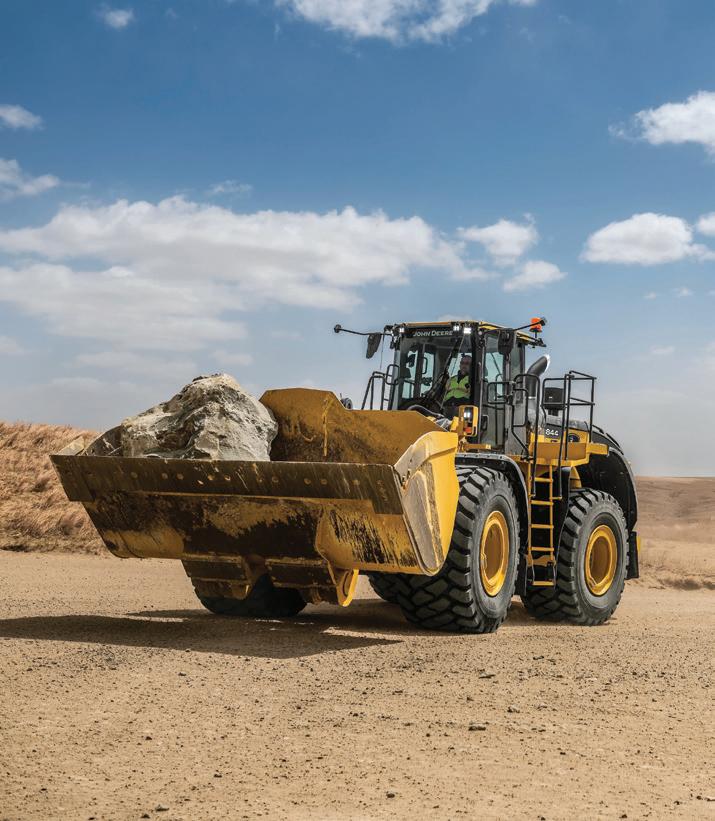
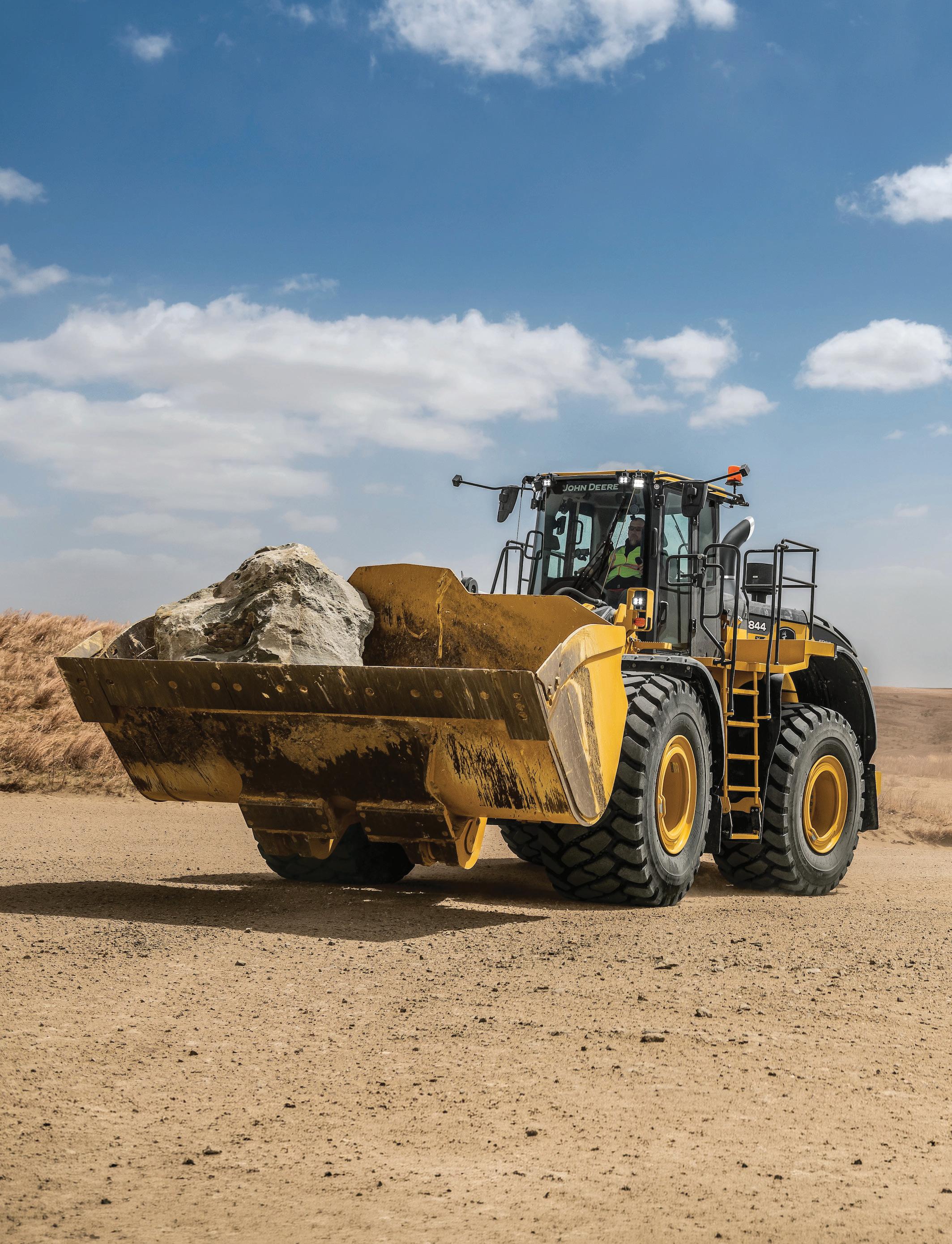
John Deere’s 844 X-Tier wheel loader, making consistently easy work of material handling and moving on any jobsite.
Very big equipment remains in very big demand in Canada, across all construction areas from infrastructure, aggregates and mining to landfill and large-scale earthmoving projects.
“Contractors today are under immense pressure to deliver more work with leaner crews and tighter timelines, which has driven strong demand for machines with 200-plus horsepower,” says George MacIntyre, Motor Grader Product Manager at CASE Construction Equipment. “From new roadbuilding to large-scale site prep to mass snow removal, having a machine with heavy-duty horsepower allows operators to cut through challenging materials without ever slowing down.”
At the same time however, Chris Watts, Digital Marketing Lead at LiuGong North America, explains that “productivity data, telematics and lifecycle ownership cost are becoming just as important as machine size and horsepower in purchasing decisions. Customers today are increasingly focused on maximizing uptime, reducing fuel consumption, improving serviceability and integrating fleet management technology into daily operations.”
Increased safety is also a priority for customers, notes Katie Voelliger, Product Marketing Manager at John Deere. Demand is rising across large equipment categories for technology that detects people and objects, slows or stops equipment as needed and otherwise reduces jobsite risks.
In March, John Deere launched the next generation of its P-Tier motor graders called SmartGrade. They offer 2D and 3D grade control options, automation features like intelligent blade control, SmartSaddle and cutting-edge wear monitoring, along with a redesigned cab, upgraded displays and enhanced visibility systems. The largest P-Tier motor grader is the 872 model at 8.89 m (just over 29 feet) long, offering 300 hp, blade pull of 22 453 kg (49,500 lb) and net torque rise of 46 per cent.
The largest model in the new CASE GR Series motor graders is the 325-hp
GR935. “With a continuous variable transmission, operators get consistent power delivery, better fuel economy and smoother control so they can focus on the grade instead of shifting gears,” says MacIntyre. “Combined with advanced precision technology like onboard guidance, automatic blade control and a GNSS navigation system, the result is a machine that helps crews move more material in fewer passes.”
The new CASE GR Series motor graders also feature a Protected Circle sealed slew bearing to reduce daily upkeep.
“We’ve also included a Blade Impact Absorption System to protect the moldboard from unexpected hits,” says MacIntyre. “The new graders also use grouped, easy-access filters, along with remote drains and banked grease zerks, to simplify routine maintenance. Beyond the hardware, the machines feature integrated precision technology so operators can hit final grade in fewer passes, which significantly cuts down on overall tire and blade wear.”
Caterpillar recently released its 395 FS, its largest excavator outside mining and the company’s first new front shovel configuration in 15 years. It has 542 hp and a maximum digging depth of 2.96 m
(9.7 ft), a bucket volume of 6.5 m3 and maximum material density of 1.85 t/m3. Ryan Neal, Marketing Leader for Cat Large Excavators, reports that the Cat Detect obstacle detection system continues to be popular on these large models – as do the Cat AI Assistant and standard safety features like 360° cameras. He also points to their Lift Assist system, “which helps operators understand a machine’s lifting limits, capabilities and working envelope by digitizing the lift chart in real time while the machine is in motion.”
The largest excavator offered by LiuGong is the 995F, offering 608 hp with a bucket capacity of 5.6 m3 and a maximum digging depth of 7.18 m (over 23 feet).
“Across all categories, customers continue to respond positively to improvements in hydraulic responsiveness, operator ergonomics, telematics capability and simplified maintenance access,” says Watt. “Customers are placing greater emphasis on predictive maintenance, remote diagnostics and simplified serviceability to maximize uptime and reduce total ownership cost.”
At CONEXPO, DEVELON introduced its biggest excavator yet, the -9 Series, which will eventually replace its -7 Series in North America. The largest is the DX400LC-9 Crawler Excavator, which offers
336.6 hp at 1800 rpm, with a dig depth of 7.4 m (just over 24 feet) and a bucket digging force of 59,350 lbf. The -9 Series is also the first excavator line in North America with full electronic hydraulic (EH) technology and integrated AI.
DEVELON Product Manager Brian Kim explains that the full electric-over-hydraulic control system replaces traditional mechanical controls – a shift that “delivers up to an 8 per cent increase in fuel efficiency and up to a 20 per cent boost in engine output.” He adds that “to mitigate jobsite risks, we’ve introduced an industry-first Advanced Lift Assist. Our -9 Series excavators also feature a ‘smart around view monitor’ camera system that leverages six cameras, radar and AI-powered human detection to provide a 360° view of the jobsite.”
The new HD130 dozer from HD Hyundai Construction Equipment North America has 157 hp and maximum traction force of 48,501 lbf.
“It’s for customers who want a mid-size dozer that performs like a bigger machine
but doesn’t come with the price tag or operating costs of one,” explains Product Manager David Spooner. It’s been a solid fit for grading, utilities, land clearing, and general construction. The LGP version has also been a big hit with anyone working in softer ground where low ground pressure really matters.”
The design of the HD130 also addresses operator comforts, with features like electro hydraulic controls, customizable settings and a factory integrated 2D grading assist.
“That grading assist feature has been especially helpful for newer operators because it helps them get smoother results without fighting the machine,” says Spooner. “Customers also like how balanced the HD130 feels. It pushes well, it’s stable, and it’s still easy to haul and easy to run.”
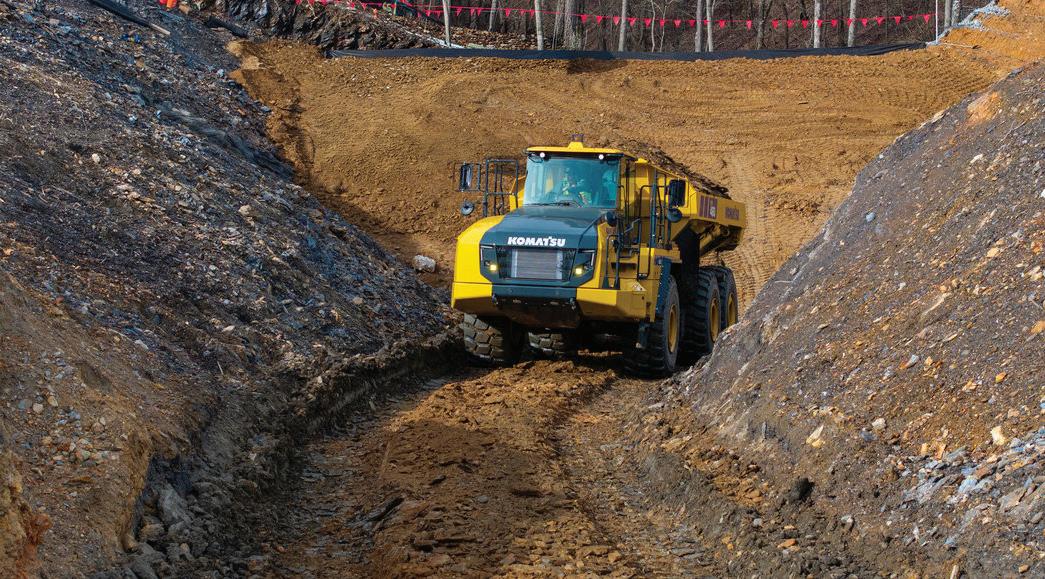
Komatsu recently debuted its largest-ever articulated dump truck at CONEXPO, the HM460-6.
“It features a redesigned powertrain that
includes the new DBA127 engine and a 9-speed transmission,” reports Marketing Specialist Kenzie Patberg. “Compared to its predecessor, the HM400-5, the HM460-6 delivers increased horsepower, higher torque and improved overall productivity.”
It also has an advanced traction system designed to help operators maintain control in uneven, slippery or rough terrain. The Komatsu Traction Control System enables this truck and its other large trucks to automatically manage tire spin based on ground conditions. Interand cross-axle differential locks also come into play for better traction in challenging terrain.
The design of the HM460-6 also address operational safety and more.
“The cab offers 16 per cent more glass surface area than the HM400-5,” says Patberg. “With enhanced visibility, intuitive monitors and a new heated and ventilated air-suspension deluxe seat, we’ve enabled the HM460-6 to deliver a more comfortable and productive operator experience during long shifts.”

John Deere also just released its 844 and 904 X-Tier wheel loaders, with the 904 offering a peak power of 442 hp at 1,400 rpm, and an increased bucket capacity. These loaders feature Optional Advanced Vision System (AVS) and Advanced Object Detection, with AVS expanding side and rear visibility beyond conventional mirrors. “There are two digital cameras installed on the side view mirrors to widen the field of view, while dynamic reversal projected path lines help operators visualize the machine’s reverse path based on articulation,” says Voelliger. “These side views, along with the rearview camera, are integrated into a dedicated single display within the cab.”
These loaders also feature the John Deere Electric Variable Transmission, which delivers smoother operation, faster response and improved efficiency. They also include other new systems like single-pedal control
and ‘Pile Slip Assist’ to improve traction, bucket fill and cycle efficiency.
According to Watt, in their biggest equipment purchase deliberations, customers are looking forward to things like even better connectivity between large equipment, fleet management systems and dealer support networks.
“We expect continued growth in intelligent machine systems, growing electrification, operator-assist technologies and datadriven fleet management,” he says. Hyundai’s Spooner has similar thoughts.
“We’re seeing more and more demand for technology integration, operator assist features, machine control and enhanced
safety systems,” he says. “Those areas keep driving product development.”
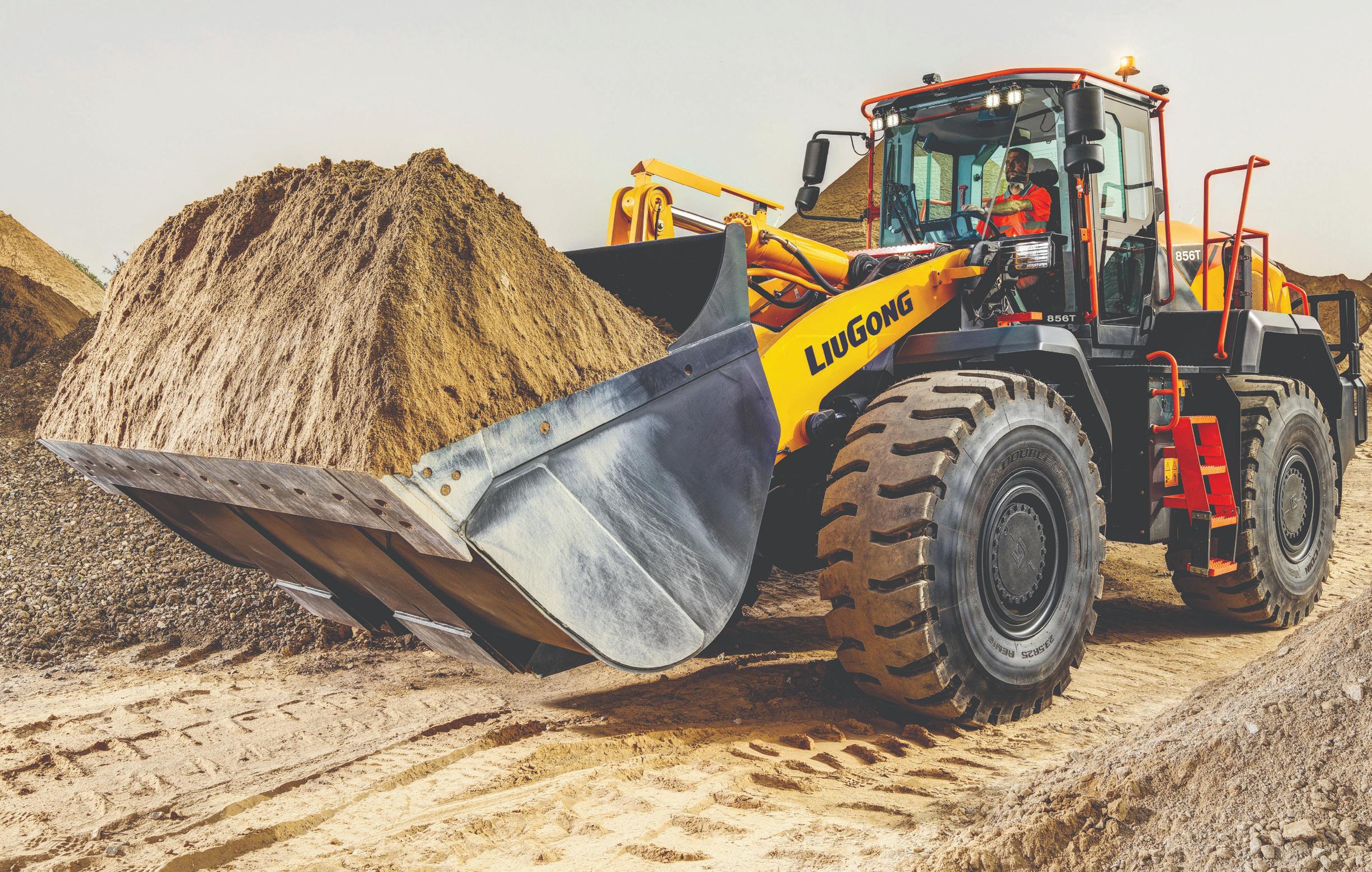
In late 2026, LiuGong will launch the new T Series wheel loader platform in North America, with several electric models among them. The new 842T will offer a 2.29 m3 bucket capacity and the 856T will offer a 3.44 m3 capacity.
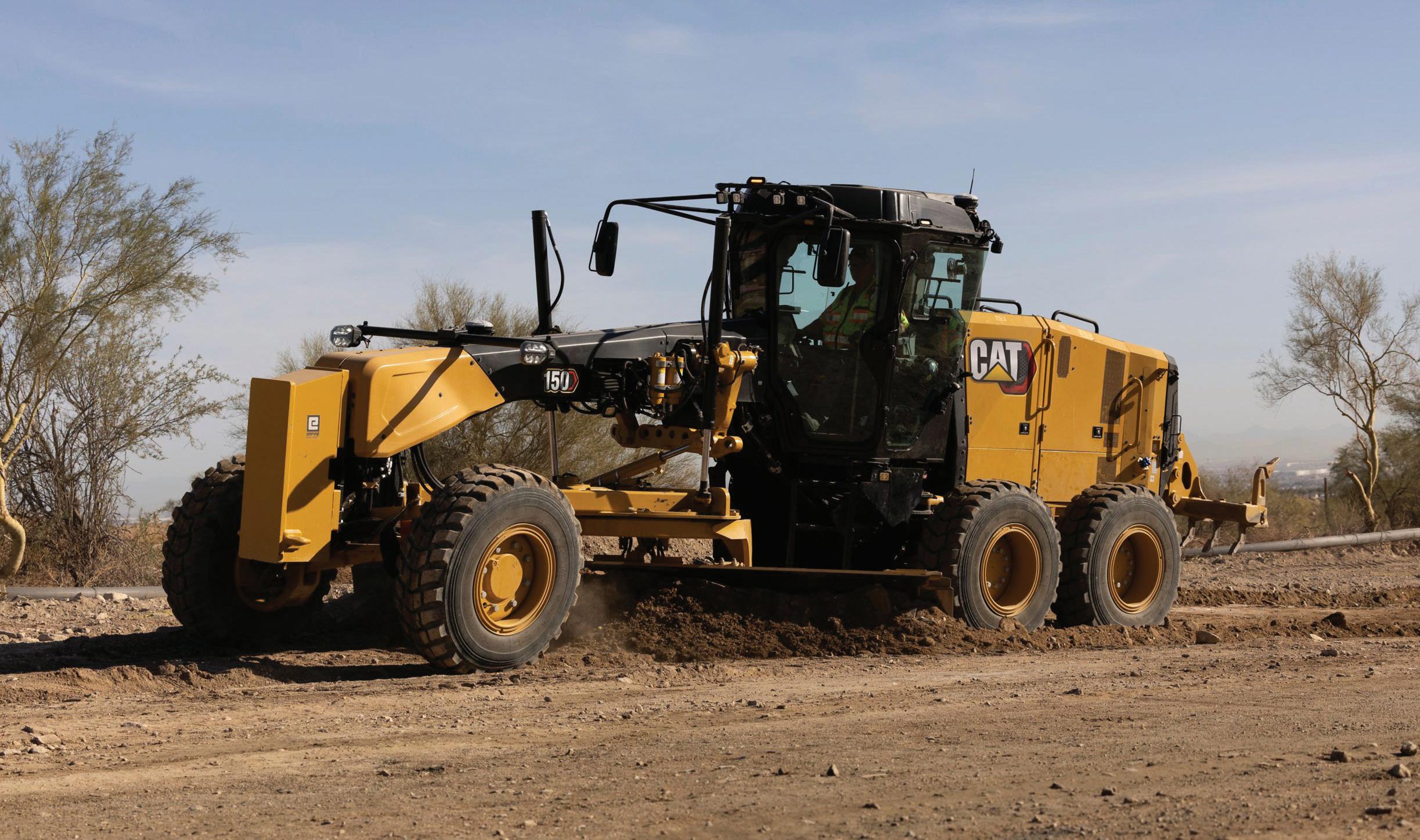
In fall 2026, watch for Caterpillar’s release of its new 150 and 160 next generation motor graders that come equipped with larger windows for better all-around operator visibility, a 360° view on the in-cab display and Cat Detect obstacle detection. Among other design changes, there is now ground-level access to hydraulic valves to ensure easier maintenance.
Debuting in late 2026, LiuGong’s T-Series wheel loaders will feature a bucket capacity upgrade and will also include a range of electric models within the series.






TOP 40 FIRMS Page 33
TOP 5 UNDER 50 Page 39
INDUSTRY SNAPSHOT Page 42
LISTINGS Page 44


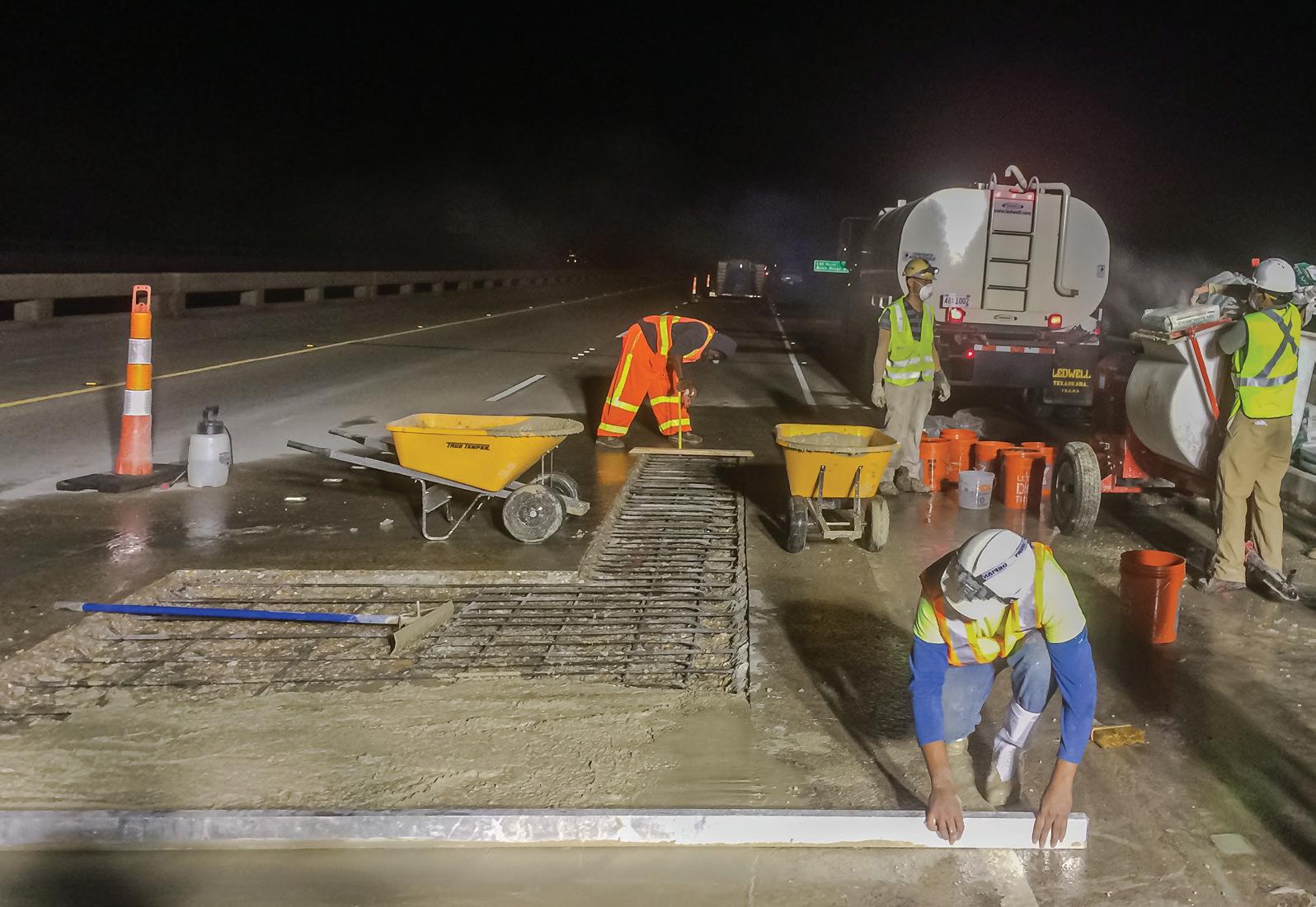
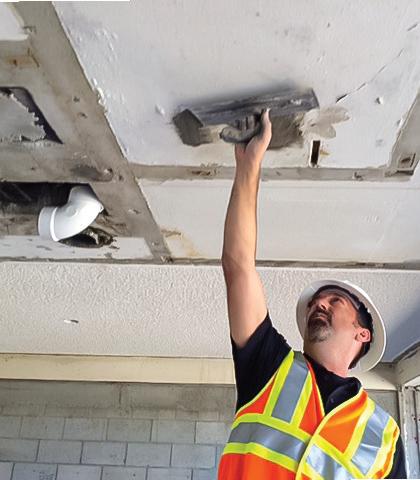
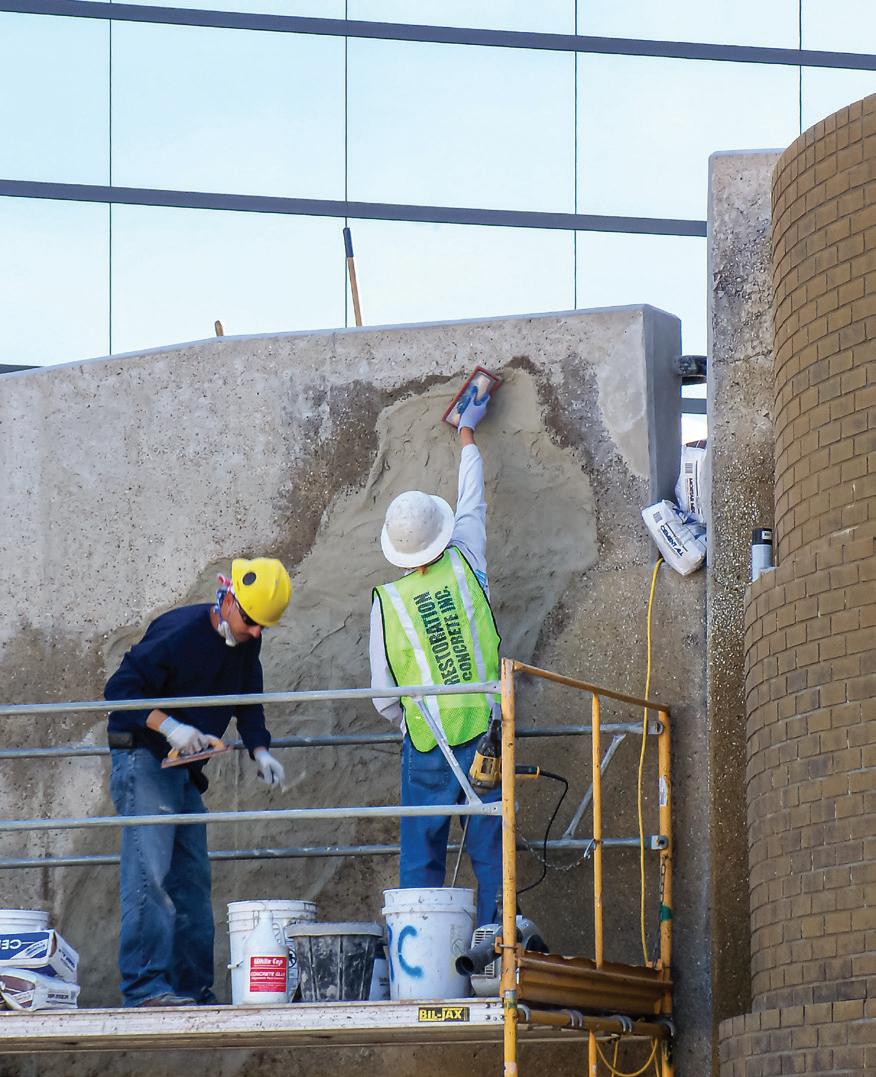
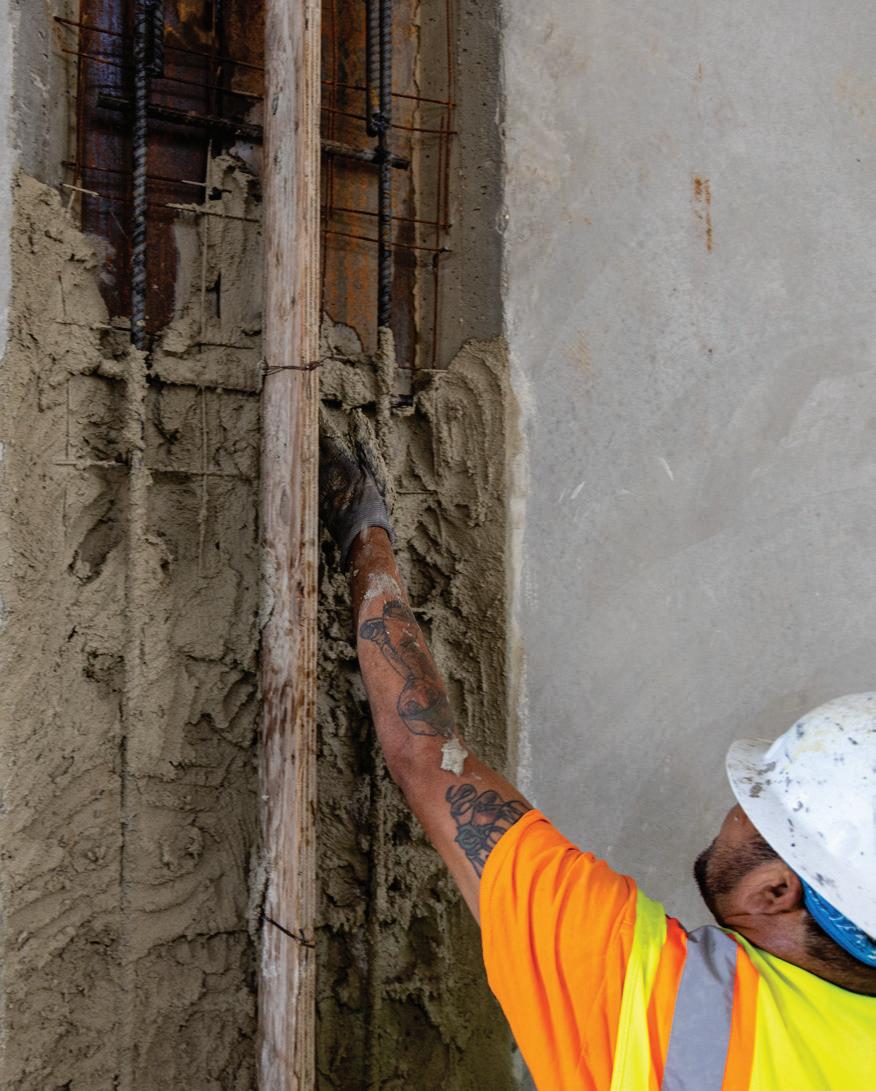
Rapid Set ® structural concrete repair materials help crews get repairs done faster and back in service sooner.
From bridge decks and parking structures to industrial and commercial projects, contractors rely on Rapid Set® products to keep repairs moving under tight schedules.
With fast setting times, rapid strength gain, and proven jobsite performance, Rapid Set® helps crews complete their projects right the first time.








Ayear ago in these pages, I wrote about an emerging consensus in the construction industry, calling for the establishment to remove barriers to growth that were standing in the way of Canada’s prosperity. Twelve months later, that consensus has hardened into mandate, with political support, capital commitments and a project pipeline to match its ambition.
The next step is turning ambitious policy into actual projects that Canada’s top contractors can bring to fruition.
There are already small signs of progress that indicate a much larger shift across the country. In less than a year, the new Major Projects Office in Calgary has referred 15 nation-building projects which represent more than $126 billion in investment. The Indigenous Loan Guarantee Program has also been expanded to $10 billion across all sectors and Cooperation Agreements with provinces are advancing a “one project, one review” approach to accelerate major projects. Furthermore, the federal government’s 5-year, roughly $280 billion capital plan is expected to unlock more than a trillion dollars in total investment.
For an industry that has spent the better part of a decade calling for commitment and alignment around construction, this represents a generational opportunity.
Challenges, of course, remain. Tariffs on steel derivatives and a still-unsettled cross-border trade relationship continue to complicate procurement, but the conversation has matured. While 2025 led with panic and pivoted to scenario planning, 2026 is increasingly about structural absorption: contractors pricing uncertainty directly into bids, sharing risk through smarter contract language and sourcing strategically across a wider supplier base.
Labour has now taken over as a top concern, as worker shortfalls continue with an estimated 270,000 tradespeople due to retire by 2034. The firms who succeed in this environment will be those who prioritize workforce development, technology adoption and comprehensive risk management as core strategies, rather viewing them as overhead expense. This is where partnership plays a major role.
As the size and complexity of projects grow and risk profiles rise, contractors need to have different conversations with their brokers. Discussions on issues including surety capacity for nine- and ten-figure megaprojects, tariff escalation provisions in contracts and underwriting work tied to policy timelines that must keep pace with construction schedules must be on the agenda.
At American Global Canada, we believe insurance and surety strategy should function as competitive infrastructure - something to help contractors protect margin, secure capacity and deliver with confidence. The next few years will reward those who can execute on complexity at scale, be it civil, transit, energy, ports, infrastructure and more.
Canada finally has the political will, capital commitment and project pipeline to make meaningful progress toward a stronger, safer and more self-reliant nation. All it needs now is what our industry has always quietly provided: capable, hardworking men and women and the industry’s Top Contractors - like those featured on the pages that follow - who show up, solve problems and turn policy into true progress.
We are proud, once again, to sponsor the issue that spotlights the impressive capabilities and success of Canada’s Top Contractors.
Sincerely,


Kent Peters, President, American Global Canada

In today ’s challenging landscape, where complexity and risk are on the rise, top contractors need a broker who provides more than insurance.
They need a trusted par tner and advisor who views their business holistically, thinks differently, and works deliberately, to develop customized solutions.
At AG Canada, our local insurance and surety professionals work alongside technical industry specialists to leverage the knowledge and expertise of our entire global team
We build programs that not only protect clients’ investments but position them for future long-term success Discover the difference at AG Canada. Expect more f rom your broker.
Start a conversation today. Email us at: expectmore@americanglobal.com




The Canadian construction industry’s entering into an era that’s quickly becoming defined by mega-projects, the development of mission-critical infrastructure and the race to build the country’s future, fast. From the development of AI-powered data centres and transit expansions to the opening of trade corridors and next-generation healthcare facilities, the nation’s leading builders are operating at a scale and pace that would have seemed unimaginable just a few short years ago.
This year’s Top 40 Contractors in Canada rankings shines a spotlight on the firms that are redefining modern Canadian construction leadership. These firms are not only managing billion-dollar project pipelines, they’re also navigating volatile and unpredictable supply chains, skilled labour shortages, the need to implement advanced technologies and increasingly complex client demands, all while continuing to deliver top quality, on time and within budget.
And alongside our Top 40 Contractors, our Top 5 Companies Under 50 Employees ranking features a slightly different kind of leadership. These organizations are proving that attracting the next generation of tradespeople, project managers, engineers and innovators requires more than compensation alone, having built success around vision, flexibility, mentorship and purpose.
Together, these rankings capture an industry in transformation – one that’s more digital, more diverse, more ambitious and more influential to the future of the country than at any other time in Canada’s history.
1 2 3 4 5
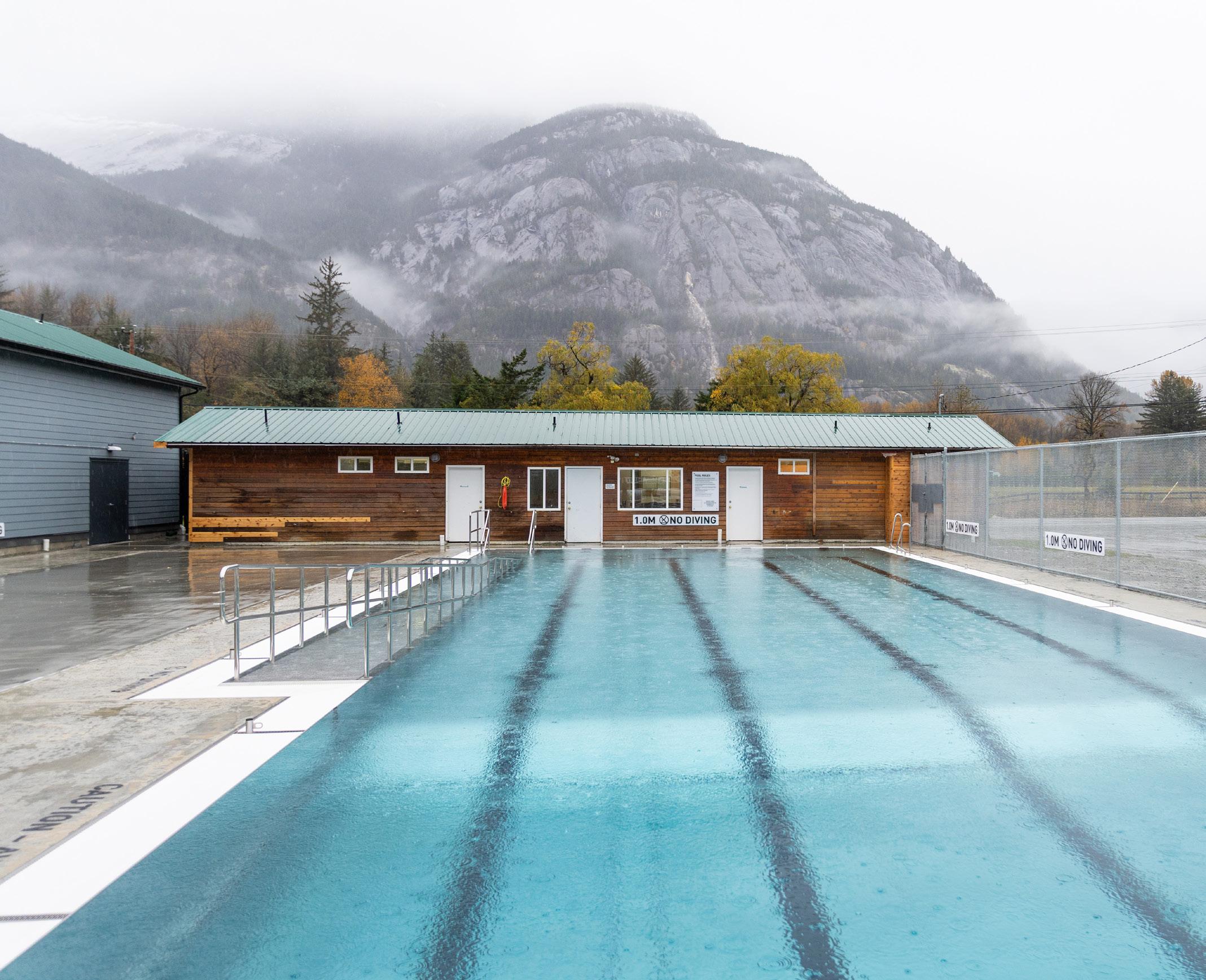
Delivering construction projects in remote regions often requires more than careful planning. It demands a fundamental rethink of how projects are designed, sourced, and built. That reality is on full display in the recently completed Bella Coola Centennial Pool, a project that has brought new life to a vital community asset on British Columbia’s central coast.
Built by Chandos Construction, the new facility replaced a deteriorating outdoor pool originally built in 1967. For the Bella Coola Valley, home to just over 2,100 residents, the pool serves as both recreational infrastructure and a seasonal hub that plays a leading role in community life.
“For us, this pool is the beating heart of the community in the summer,” said Jayme Kennedy, Chair and Area C Director, Central Coast Regional District.
Bella Coola is tucked within a coastal fjord and accessible only by a long, winding highway, ferry, or small aircraft, which created significant logistical hurdles. Every aspect of construction must account for extended lead times and limited access.
Those challenges became especially apparent following the failure of the original pool. “The old pool was in very poor condition,” said Graham Pirie, senior superintendent at Chandos Construction. “The community and the regional district came together and raised the money to replace it.”
Rather than relying on a conventional cast-in-place concrete pool, the project team pivoted early in the design phase. Working alongside Carscadden Architecture, Chandos opted for a prefabricated stainless-steel basin manufactured in Europe.
The decision fundamentally reshaped the construction process. While crews prepared the site in Bella Coola, the pool itself was fabricated overseas and shipped in modular components.
“Because of the remoteness, getting materials on site is extremely challenging,” said Dominic Ries, director of technical solutions, pre-construction at Chandos. “While we were digging the foundations, the pool was being manufactured in Europe and shipped across the Atlantic. It saved a considerable amount of time.”

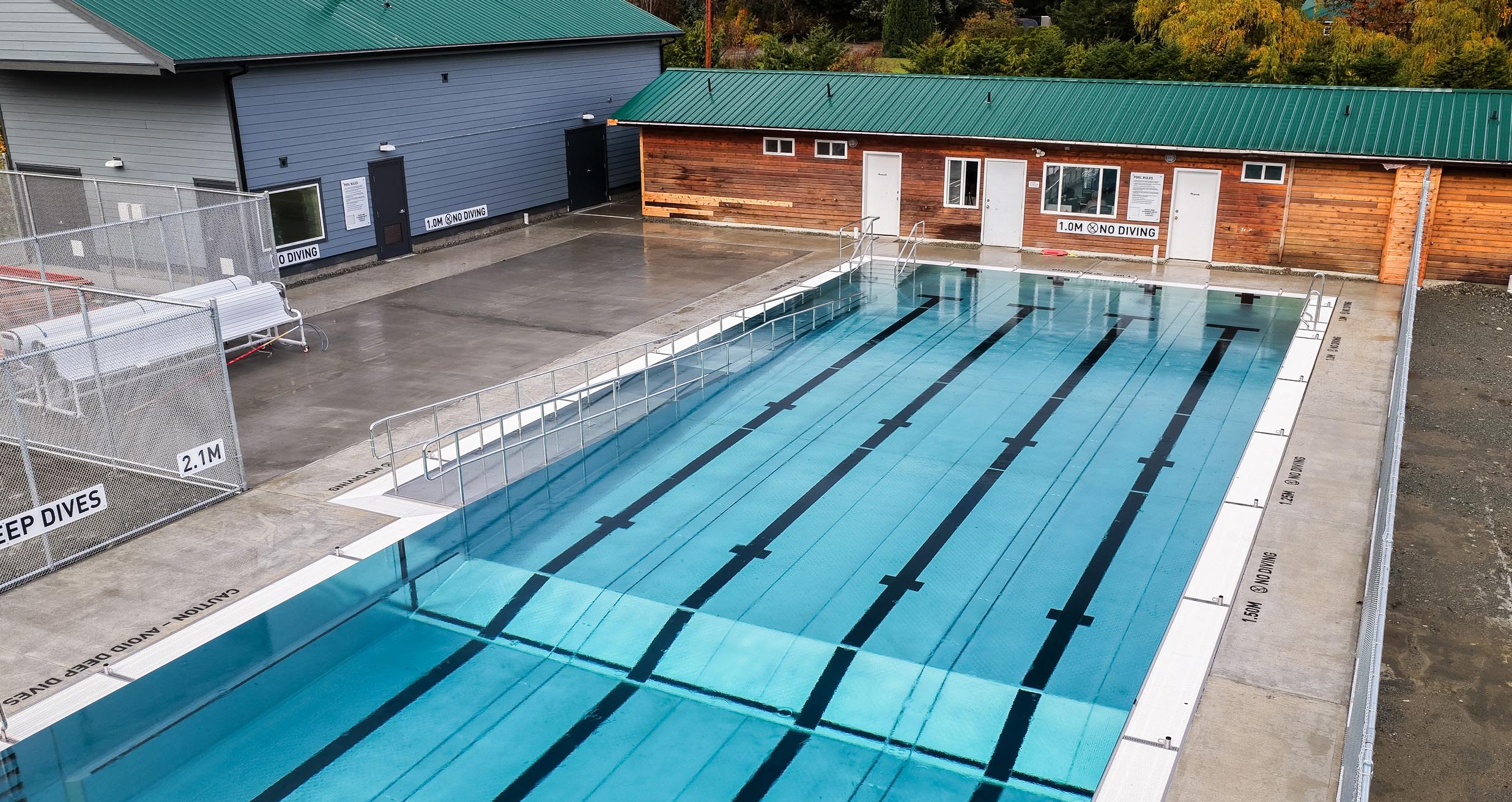
The shift to stainless steel also addressed groundwater challenges tied to the site’s location within a 200-year floodplain.
“Pools are designed to hold water, but here, we also had to manage water pushing in from the backside,” said Ries. “Stainless steel eliminated permeability concerns and offered far better long-term resilience.”
The material choice also carried sustainability benefits, reducing embodied carbon and eliminating the need for energy-intensive winter heating typically required during concrete curing.
Despite the project’s reliance on prefabrication, local involvement remained a priority.
“There is only one concrete plant here, and it is owned by the local Indigenous nation,” said Mathew Chrystian, project director, SSG. “By switching to stainless steel, we aligned the pool’s concrete needs with what local supply could deliver.”
Local workers contributed across multiple scopes, with opportunities for on-site training and skills development.
Executing the project required an unusually high level of coordination, with delivery windows often stretching between two and three weeks.
“We knew logistics were going to be a challenge,” said Pirie. “We had to look weeks ahead for every piece of equipment and every delivery to keep production going.”
The prefabricated pool components were shipped in containers and transported along steep, narrow roads into the Bella Coola Valley, requiring careful sequencing and collaboration across the project team.
Beyond construction, the pool was designed with long-term operations in mind. The stainless-steel basin offers durability and reduced maintenance requirements.
Seasonality was also a key consideration. “This pool is designed to freeze over without causing damage to the basin or piping,” said Ries.
WE BUILD BETTER TOGETHER.
FIND OUT MORE BELOW
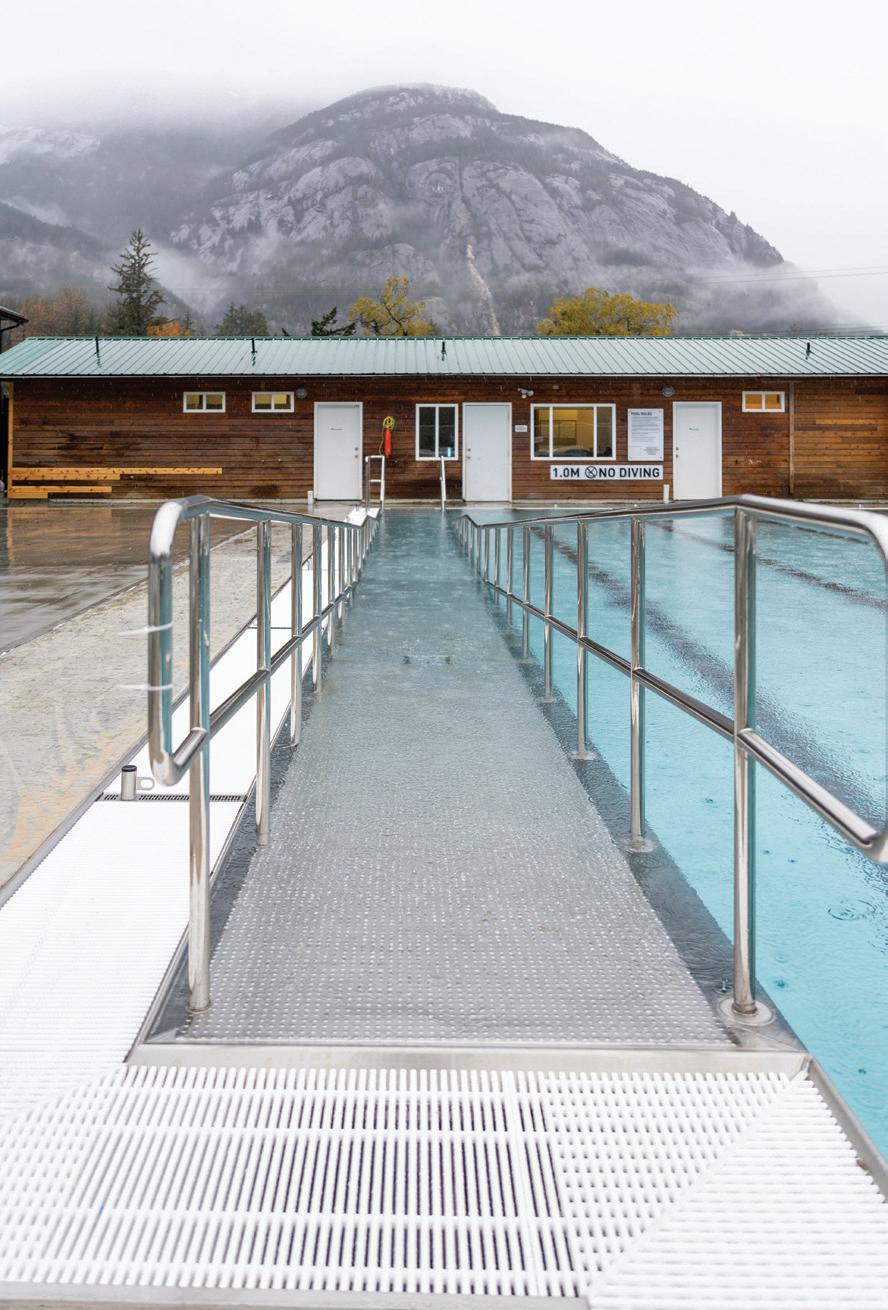
Despite the complexities, the project reached completion one month ahead of schedule.
“It has been a privilege to be part of this project,” said Pirie. “We are proud of what we have built, and proud that the community is too.”
The new Bella Coola Centennial Pool now stands as a resilient, low-maintenance facility that will support recreation, water safety, and community connection for decades.
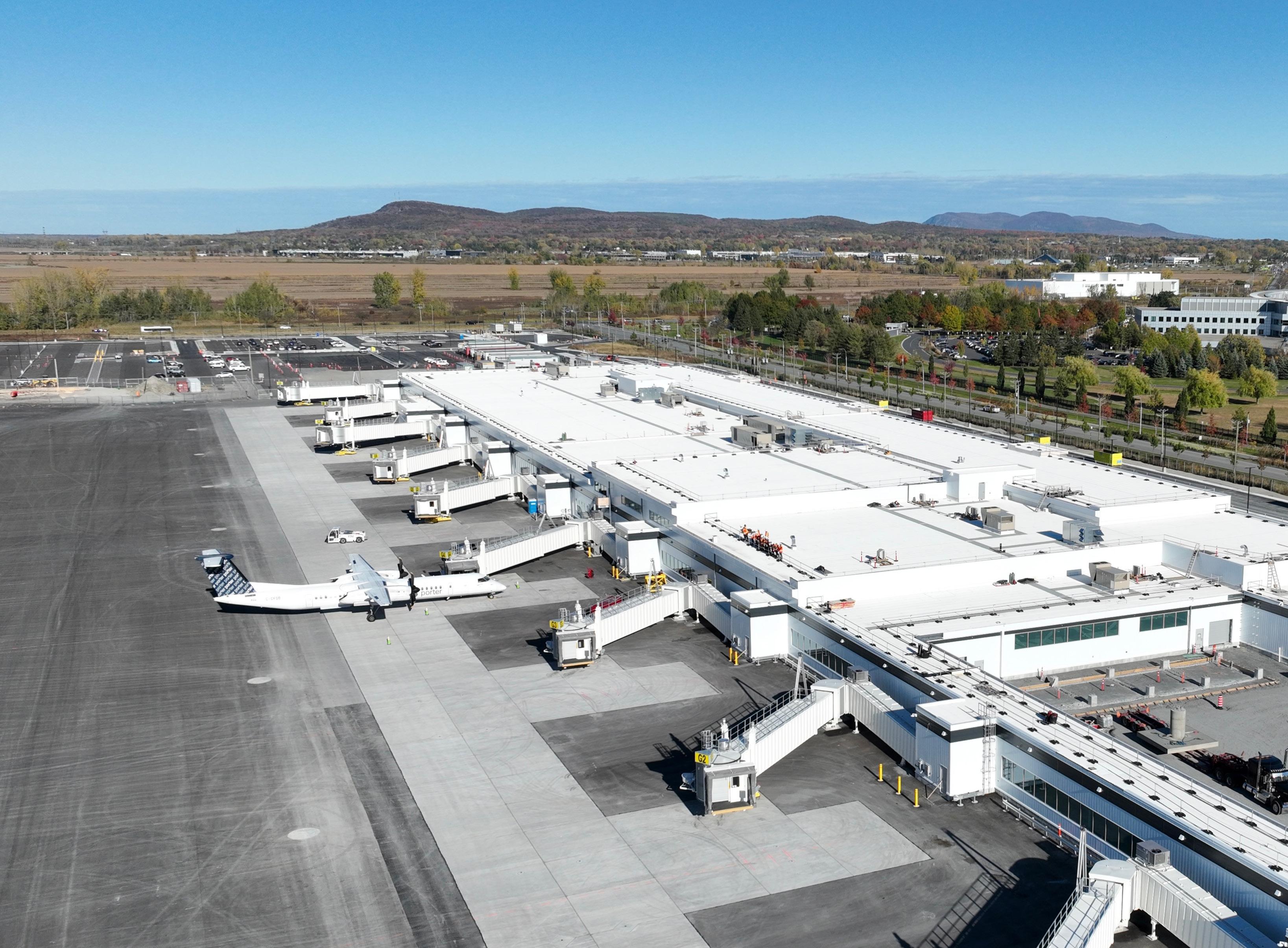
Aviation is a dynamic industry. PCL’s teams have experience with the advanced technology systems airport operations rely on, including radar, navigation aids, communication networks, baggage handling systems and security systems. Whether seamlessly integrating advanced technology or offering the flexibility to increase capacity as passenger numbers grow, PCL is focused on enhancing safety, security, sustainability, long-term value, operational continuity and – ultimately – the passenger experience. As Canada’s top contractor, PCL is proud to lead the way in aviation construction across the country.
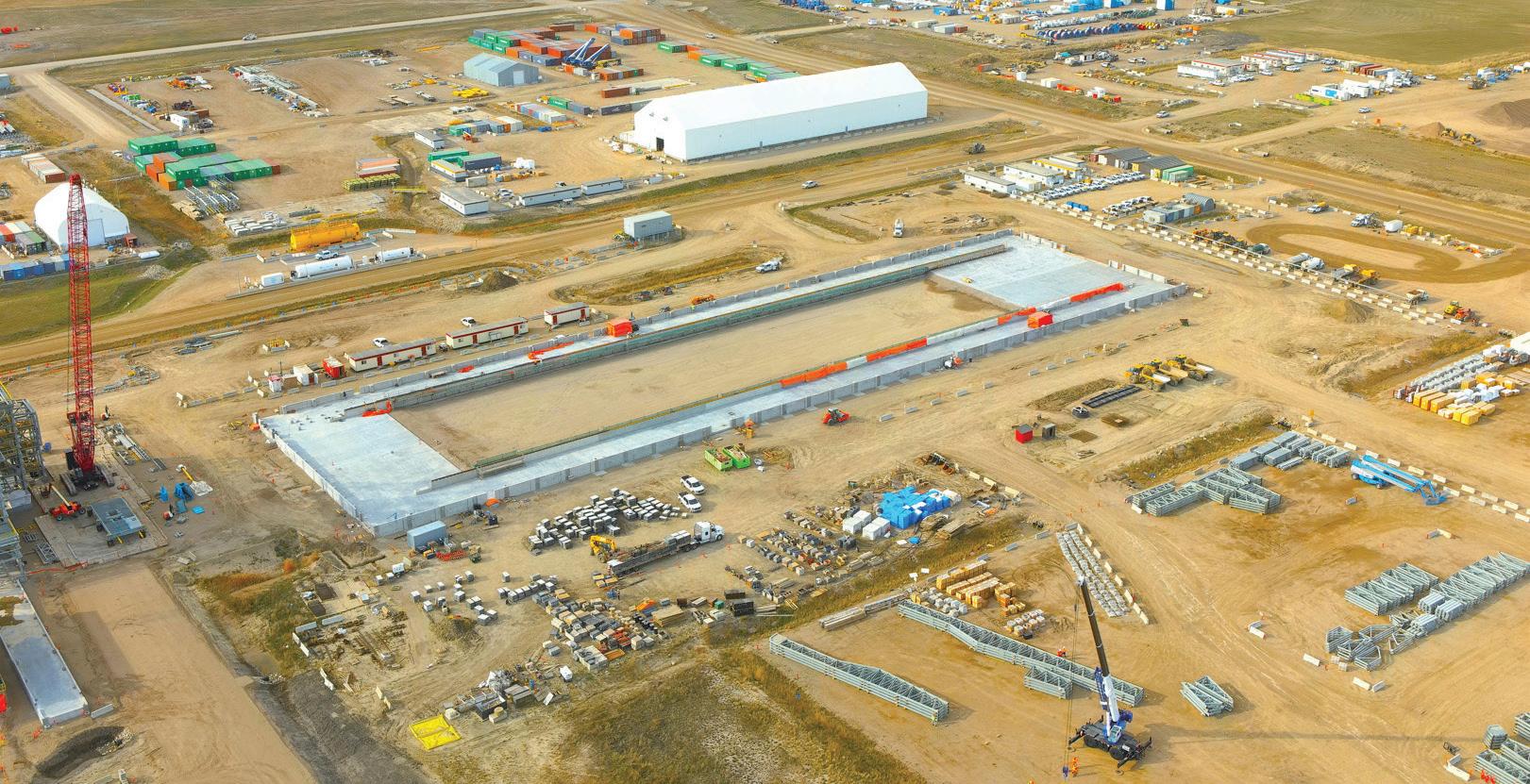
As governments across the country begin rolling out an impressive amount of infrastructure investment, Canadian general contractors are presented with opportunity, alongside mounting risk, ongoing labour pressures and increasing project complexity.
BY SEAN TARRY
For much of Canada’s history, major construction pushes have emerged during moments of national transformation. From railways and highways to energy systems and urban transit networks, infrastructure has often served as both an economic catalyst and a nation-building tool. Today, Canada’s Top Contractors argue that the country is entering another such period.
Canada’s construction sector, having weathered pandemic disruptions, inflationary shocks and supply chain turmoil, now finds itself at the centre of an ambitious agenda
involving transportation infrastructure, energy security, defence investments, healthcare facilities, data centres and community development. Yet, while the pipeline of work appears stronger than it has in decades, the challenges associated with delivering that work have become equally significant.
Considering these factors, Mike Wieninger, COO, Canadian Operations at PCL Construction and Canada’s 2026 Top Contractor in Canada, believes the industry has demonstrated incredible resilience while positioning itself for long-term growth.
“The Canadian construction industry
remains resilient and continues to play a. critical role in supporting economic activity, national infrastructure priorities and longterm competitiveness,” he says. While labour availability, supply chain volatility, regulatory complexity and cost escalation remain ongoing challenges, he notes that “there is also significant opportunity emerging across several high growth sectors.”
For general contractors operating in Canada’s heavy civil sector, success is being realized increasingly by not only building out projects, but by effectively navigating risk, securing labour, managing complexity and adapting to a rapidly changing procurement environment.
“The construction industry was the only thing that kept Canada together and created any kind of economic growth during COVID, which shows how critical this industry is to the country’s resilience,” says Rodrigue Gilbert, President of the Canadian Construction Association.
And, the industry’s importance is becoming even more clear as governments once again look to construction to drive economic growth and long-term competitiveness.
“Government again is turning back to construction to be the driver of the future of the country, just as it has during other pivotal moments in Canadian history,’ Gilbert adds.
Following several years of uncertainty, many industry leaders believe that the market is entering a period that’s becoming increasingly defined by visibility and long-term opportunity.
Teri McKibbon, CEO of Bird Construction, says construction has largely emerged from the disruption that’s been plaguing the
industry recently.
“The Canadian construction market has undergone a meaningful shift since the inflation and supply chain disruptions of 2021 through 2024,” he says. “As we moved through 2025, we saw several important shifts across the broader market. Supply chains largely stabilized, cost visibility improved and there was a continued move toward more collaborative delivery models that better align expectations across owners and contractors.”
At the same time, governments have advanced major capital programs tied to infrastructure, energy, security and defence, helping to create a clearer view into future project flow. It’s also resulting in an incredible amount of opportunity available to general contractors operating across the country, with investment being poured into just about every major infrastructure category, including nuclear energy, renewables, oil and gas, LNG, mining, healthcare, education, transportation and data centre construction.
“It’s a very exciting time to be in the construction industry with what feels like a generational pipeline of long-cycle opportunities for the industry over the next several years,” McKibbon says.
Those opportunities, however, are being driven by a number of powerful and significantly meaningful forcing functions. Canada’s infrastructure deficit is substantial. Electrification initiatives require new transmission systems and generation assets. Defence spending is rising. And population growth continues to place pressure on transportation, healthcare and housing infrastructure. Meanwhile, digital transformation is fueling demand for the development of data centres and related facilities.
As a result of this demand, for many contractors, the question is no longer whether work will be available, but whether the industry has sufficient capacity to deliver it, making the availability of labour the defining current constraint. From PCL’s perspective, in order to execute, collaboration will need to support

every decision made.
“Canada has a substantial infrastructure deficit and ambitious pipeline of nation-building projects ahead,” he says. “Success will depend on continued collaboration between government, industry and trade partners to build workforce capacity, improve productivity and deliver the infrastructure needed to support Canada’s future growth.”
Despite the need to collaborate, however, owners are increasingly competing for the same skilled labour pools, equipment fleets and specialized contractors. As a resuult, industry leaders warn that without greater coordination, project schedules and budgets could come under increasing pressure.
“We need to make sure projects are not fighting with each other,” Gilbert asserts. “You can see two or three major projects in the same area creating workforce and capacity issues that delay delivery.”
However, the current labour challenge extends well beyond simple headcount shortages. Many contractors point to a growing shortage of experienced personnel capable of managing increasingly complex infrastructure projects. In fact, Angelo Grassa, President and Chief Operating Officer at Grascan Construction, believes the industry faces a significant experience gap as major infrastructure programs accelerate.
“There’s not enough people to do the work that’s coming up,” he says. “Nobody wants to work building rail lines and bridges. It’s hard work.”
That concern is particularly acute within the specialized sectors, where decades of accumulated knowledge often separate successful delivery from costly delays.
In fact, Grassa argues that many of the industry’s future challenges will stem not only from labour shortages but from a shortage of experienced decision-makers on the jobsite.
“The biggest downfall for the industry is going to be when the people that are currently managing projects leave,” he says, pointing to the retirement of veteran professionals and the steep learning curve facing newer entrants.
Contractors are responding, however, through a combination of workforce planning, training investments and partnerships.
Bird Construction, for example, has focused on aligning workforce planning with its long-term backlog while investing in apprenticeship programs, Indigenous partnerships and initiatives aimed at attracting women and young people into the trades.
“We support workforce development through long-standing Indigenous partnerships, targeted training initiatives and a focus on building diverse, sustainable talent pipelines,” McKibbon says.
PCL’s Wieninger agrees that workforce capacity has become the defining execution challenge facing the industry. However, as investment accelerates across multiple sectors simultaneously, he argues that contractors must be strategic about growth and resource allocation.
“Contractors must remain disciplined in managing their backlog and avoid overextending their capacity,” he warns. “Equally important is ensuring that trade partners, suppliers and the broader construction ecosystem have the capacity to support project demands.”
While labour shortages might dominate headlines, many contractors identify another issue as the industry’s most significant structural change.
“The big word is risk” says Grassa. Historically, owners and consultants carried a larger share of project risk, supported by detailed designs and extensive project information before tender. Today, many contractors argue that risk allocation has shifted dramatically toward builders.
In fact, according to Grassa, increasingly complex projects are often tendered with incomplete information, forcing contractors to identify design deficiencies, assess constructability concerns and absorb significant uncertainty during the bidding process.
“Owners are risk averse,” he says. “The shift in the industry is that the tenders are now being managed properly.”
The result is an environment where contractors are being asked to manage not
only construction risk but also elements of design, coordination and project development that were previously handle elsewhere, creating ripple effects through the project lifecycle.
As risk has increased, traditional procurement models have come under increasing scrutiny, with industry leaders arguing that conventional design-bid-build approaches are poorly suited to today’s complex infrastructure projects.
“The world is changing so fast,” says Gilbert. “We need procurement models where all the players are at the table when you plan the project and remain involved through delivery.”
That philosophy is driving growing adoption of collaborative delivery models, including progressive design-build, integrated project delivery (IPD), construction manager/ general contractor (CMGC) and other approaches that emphasize early contractor involvement.
“The industry is evolving quickly in response to growing expectations around safety, Indigenous partnerships, productivity and technology adoption,” says Wieninger. “More owners and contractors are embracing collaborative delivery models, digital
construction tools, prefabrication and AI-enabled solutions to improve certainty, efficiency and project outcomes.”
Kent Peters, President of American Global, sees the same trend from the perspective of risk management and surety.
“We’re seeing a lot more collaborative contractual models – IPD, progressive designbuild, cost reimbursable – because contractors can’t simply price in steel risk, or supply chain volatility anymore,” he says. “Owners are increasingly sharing those risks instead of downloading them entirely to the contractor.”
The shift reflects a broader recognition that modern infrastructure projects involve uncertainties that are difficult for any single participant to manage alone.
“Contractors have adjusted to inflation, labour shortages and project complexity by changing how risk is allocated,” Peters continues. “The industry is moving toward procurement models built around transparency, collaboration and shared responsibility rather than fixed-price contracts carrying all the risk.”
As procurement evolves, the profile of successful contractors is changing as well.
Large infrastructure projects have become more technically demanding, involving extensive stakeholder engagement, environmental requirements, digital systems integration and increasingly sophisticated contract structures.
“Project complexity has expanded rapidly, both in size and scope,” Peters says. “Contractors now need to be far more sophisticated technically, contractually and operationally.”
However, that sophistication extends beyond traditional construction expertise. Contractors must now demonstrate strong safety systems, strong financial controls, advanced project management capabilities, effective design coordination and comprehensive risk management processes.
“The contractors best positioned to succeed today are no longer just the lowest-cost bidders,” Peters says. “Success is increasingly dependent on innovative approaches.”
The insurance and surety markets are
reinforcing that trend, as Peters notes that underwriters now demand significantly more detailed information about project controls, technical capabilities and operational maturity before extending support.
For contractors, this means competitive advantage increasingly comes from organizational capability rather than simply pricing effectively. And from Wieninger’s perspective, this includes the adoption of today’s latest tools.
“Advancements in technology, including AI, automation, digital project delivery and advanced construction methods, are creating opportunities to improve productivity, reduce risk and deliver more predictable project outcomes.”
Although supply chain conditions have improved substantially since the height of pandemic disruption, new uncertainties are emerging.
“Material cost fluctuations, tariffs and global supply chain disruptions continue to create uncertainty between bid and delivery, putting pressure on both budgets and schedules,” says Wieninger.
He goes on to explain that he believes the contractors that succeed in the coming years will be those that “maintain strong relationships with trade partners, strengthen supply chain resilience and leverage technology to improve productivity and predictability throughout project execution.”
Because many of Canada’s largest infrastructure programs are closely tied to national priorities like energy security, critical infra-

30+ years strong.
5 offices across Canada. A history of shaping the construction industry. Toronto | Kitchener | Calgary | Edmonton | Vancouver govanbrown.com
structure resilience and domestic industrial development, contractors are beginning to place greater emphasis on the long-term supplier relationships that Wieninger references, as well as early procurement planning and localized sourcing strategies.
And the goal is not simply to reduce costs, but to reduce vulnerability as well. By involving suppliers earlier and improving visibility across project lifecycles, contractors can better manage volatility while improving schedule certainty.
One of the industry’s greatest paradoxes is the fact that projects are becoming more complex at precisely the moment society demands faster delivery. Across Canada, aging infrastructure systems require urgent renewal. Transit expansion, climate adaptation projects and energy investments can’t wait decades to materialize.
“We live in a world now where we just don’t have time to waste, especially when critical infrastructure is already failing in communities across Canada,” asserts Gilbert.
Yet many contractors argue that project delivery remains hindered by lengthy approvals, fragmented decision-making and procurement processes that prioritize risk avoidance over outcomes.
Grassa believes one of the most important lessons from successful projects is the importance of removing barriers and empowering experienced teams. Reflecting on Grascan’s rehabilitation of Toronto’s Gardiner Expressway, which was completed significantly ahead of schedule, he credits collaboration and timely decision-making.
“The key was in allowing us to work,” he says.
Few industries are more closely tied to Canada’s economic future than construction. Governments are counting on infrastructure investment to drive growth, improve productivity and strengthen national competitiveness. Communities are counting on new transit systems, hospitals, energy facilities and transportation networks. And contractors are preparing to deliver some of the largest and most complex projects in the country’s history.
And, while industry leaders are by and large optimistic about the opportunities ahead, Wieninger cautions that execution remains in the balance.
“The greatest risk remains the industry’s ability to execute,” he asserts. “Specifically, delivering projects on time and on budget in an environment defined by labour shortages, supply chain disruptions, cost volatility and an unprecedented volume of work entering the market simultaneously.”
For firms capable of scaling their operations, workforce and technical capabilities effectively, he believes “the years ahead represent one of the strongest construction markets Canada has seen in decades.”
As the next generation of nation-building projects moves from planning to construction, it’s becoming increasingly clear that Canada’s infrastructure ambitions will depend as much on how projects are delivered as on what gets built.


Pomerleau is one of Canada’s largest construction companies, with approximately $6 billion in revenues. It delivers buildings, civil engineering works, and major infrastructure projects using a collaborative and transparent approach. With its research and development lab, Pomerleau integrates innovation in its projects and works in a sustainable way to build the living environments of tomorrow.
Its subsidiary Borea has executed close to 50% of the country’s renewable projects, and its subsidiary ITC Construction Group is one of the largest residential construction companies in Canada. Its investment arm, Pomerleau Capital, specializes in private and public infrastructure investment and financing.
Founded 60 years ago, Pomerleau has over 5,000 employees and workers at over 200 sites from coast to coast. The company has been named among Canada’s Top 100 Employers since 2020.
How Canada’s small- and mid-sized general contractors are winning through agility, discipline and relationships.
BY SEAN TARRY
In Canadian construction, size often attracts attention. The country’s largest general contractors have deep benches of staff, extensive equipment fleets and the capacity to pursue some of the nation’s most complex projects. Yet, across Canada, scores of small- and mid-sized contractors continue to thrive, expanding their market share and successfully competing against firms many times their size.
Their success is not built on scale. Instead, it often stems from a combination of operational discipline, strong relationships, datadriven decision-making and an ability to adapt quickly to changing market conditions.
For companies such as Clobracon Construction Inc. and JR Certus Construction Co. Ltd. – 2 of the top contractors under 50 employees in Canada – competitiveness comes from doing the fundamentals exceptionally well while leveraging the advantages that naturally come with a smaller organizational structure.
“One of the biggest advantages of being a smaller, owner-led company is agility,” says David Aquino, Principal at JR Certus Construction Co. Ltd. “Our principles remain directly involved in operations, client communication, budgeting and project execution, allowing us to make decisions quickly and maintain accountability throughout every phase of a project.”
That ability to move quickly has become increasingly valuable as contractors navigate a business environment defined by labour shortages, cost escalation, supply chain disruptions and growing client expectations.
While larger organizations often benefit from extensive resources and established processes, smaller firms frequently enjoy greater flexibility. As a result, decisions can be made faster, communications channels are shorter and leadership remains closely connected to both clients and projects.
For many contractors, that proximity creates a competitive

advantage that can’t be easily replicated.
At JR Certus, maintaining close relationships with clients, consultants, subcontractors and suppliers is a central component of the company’s growth strategy. In fact, Aquino believes that trust remains one of construction’s most valuable currencies, particularly in uncertain economic conditions.
“We focus on projects where we know we can add value and execute efficiently rather than chasing volume for the sake of growth,” he asserts. “That discipline helps us remain competitive without compromising quality or client service.”
That strategy reflects a growing trend among successful mid-sized contractors. Rather than pursuing every available opportunity, they are becoming increasingly selective about the projects they undertake, focusing on work that aligns with their expertise, available resources and long-term objectives.
This disciplined approach is equally evident at Clobracon Construction Inc., which has evolved from a renovation contractor
into a builder of large-scale multi-residential, hospitality and industrial projects. The company has completed major hotel developements is recent years, including Hyatt and Marriott projects, while continuing to expand into other large commercial sectors.
For Clobracon President Michel Tylbor, competing against larger firms requires a relentless focus on operational excellence.
“When you’re competing against the big guys, you have to be smarter and better,” he asserts. “We have to make sure that verything is quantified, verified and measured because that’s what allows a smaller company to compete successfully on larger projects.”
That philosophy has driven significant investments from the company in benchmarking cost analysis and project controls. In fact, according to Tylbor, Clobracon conducts detailed project reviews throughout construction and after completion, continually updating cost databases and productivity metrics. The goal, he explains, is to consistently maintain an accurate understanding of market conditions while continually identifying opportunities for improvement.
The company’s adoption of lean construction principles roughly a decade ago has also served to strengthen execution and accuracy on projects.
By making sure to track productivity daily and connect performance directly to project schedules, the company’s management can identify issues early and address them before they become costly delays.
It’s an approach that can be seen throughout the industry. As margins tighten and project complexity increases, many smaller contractors are embracing data and process management to remain competitive.
Despite the challenges that general contractors across the country face, and tactics meant to overcome them, however, neither contractor believes that systems and processes alone will be enough to determine success for contractors going forward. In fact, according to both, people remain the industry’s most important asset.
And given the fact that labour shortages continue to affect just about every region and sector within construction, resulting in ever-increasing competition for experienced project managers, superintendents and tradespeople, Aquino believes that sustainable growth for contractors depends heavily on retaining talented individuals who share the company’s values and commitment to quality.
“Construction remains a relationship-driven industry,” he asserts. “It’s imperative for companies to have dependable project managers, site supervisors and trade partners who take pride in their work. The result is always the creation of stability and continuity for both clients and projects.”
At Clobracon, employee development has always been a top strategic priority. In fact, Tylbor credits much of the company’s recent growth to the investments that it’s made in training and mentoring and to the creation of a culture centred on continuous improvement.
He says that the company’s engineering-oriented mindset helps to encourage employees to analyze problems, challenge assumptions and seek out better ways of working and doing things. And strong relationships extend beyond internal teams as well. Subcontractor partnerships have become increasingly important as labour availability fluctuates and project schedules become more demanding.
“Our relationships with clients, consultants, subcontractors and employees are critical,” Tylbor stresses. “When people trust you and enjoy working with you, it creates opportunities and efficiencies that are difficult for competitors to mimic.”
Looking ahead, both contractors expect market pressures to remain significant. Meanwhile, clients are also demanding greater transparency, more frequent communication and stronger accountability from construction partners.
At the same time, technology adoption will continue accelerating. Project management platforms, real-time reporting tools and integrated communications systems will continue becoming standard expectations rather than differentiators.
Still, neither Aquino nor Tylbor seem phased by the obstacles in the way of their respective firms’ success. And they both believe that it will not be limited by employee count, equipment inventory or annual revenue. It will instead be determined by continued quality and execution.
In light of this, the firms that will continue to thrive, despite their size, will be those that strategically combine disciplined operations with strong leadership while continuing to invest in people, embrace improvement and remain closely connected to their clients.
Afterall, in construction, being bigger doesn’t always mean being better. Sometimes it simply means having more to manage. And in an industry where trust, execution and accountability remain significantly important, the formula of building reputation project by project, relationship by relationship and decision by decision continues to prove incredibly effective.
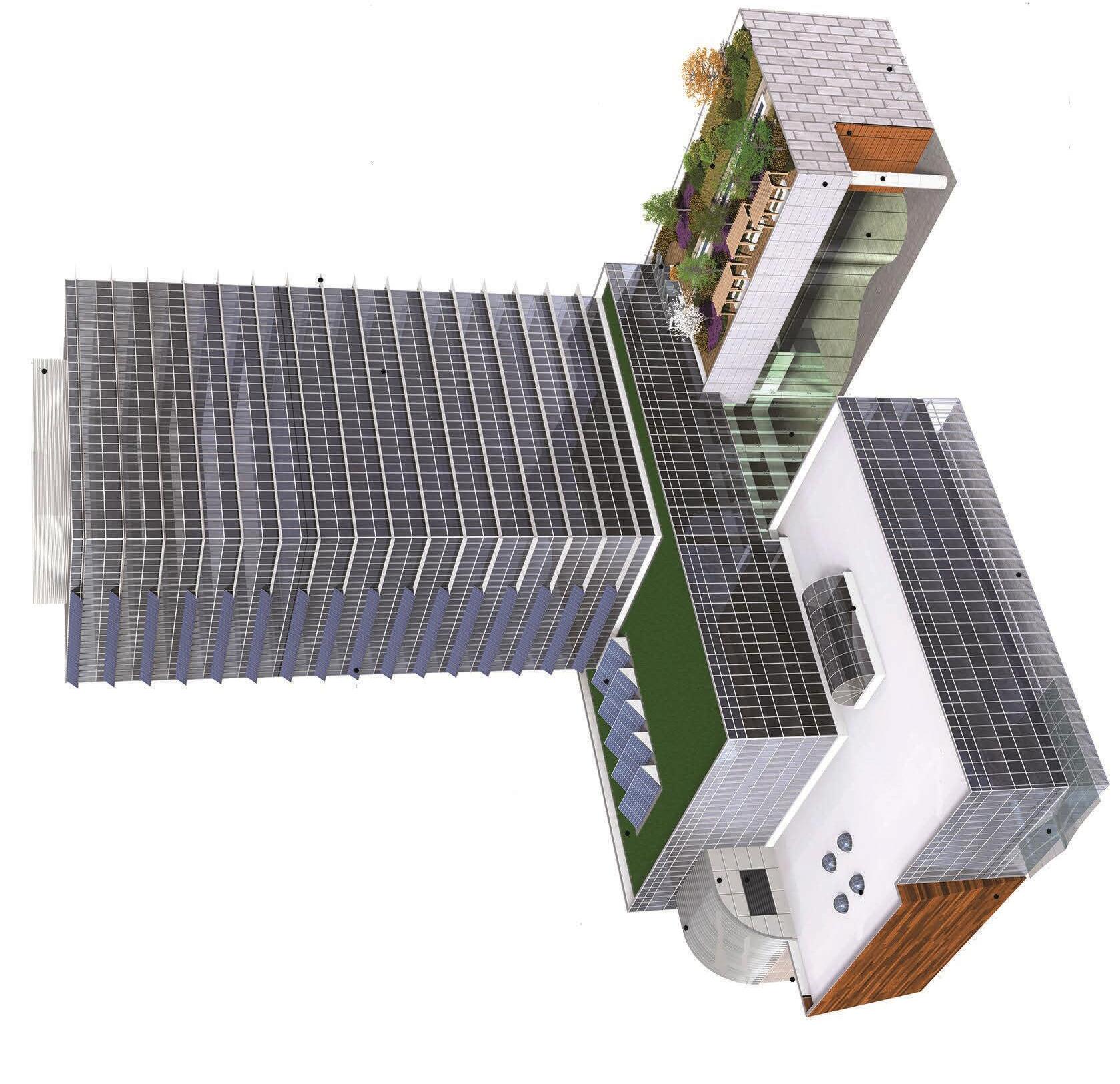
How Canada’s top contractors are adapting within an increasingly evolving industry.
BY ON-SITE STAFF
Canada’s top contractors are currently operating within one of the most transformative periods the industry has ever faced. A culmination of forcing functions, including workforce pressures, rising costs and increasingly complex projects is requiring that firms across the country adapt quicker than ever before. As part of On-Site magazine’s Top Contractors in Canada survey, respondents from across the country share their insights concerning market conditions, technology, recruitment, project delivery and other trends shaping the future of construction. Their responses offer a revealing snapshot of where the industry currently stands, and where its leaders are heading next.
pressure on project budgets and schedules. Contractors are increasingly sourcing from multiple regions, strengthening domestic supplier relationships and securing materials earlier in the project lifecycle in an effort to reduce risk and improve cost certainty. The shift reflects a broader industry effort to build greater resilience as contractors navigate an unpredictable global market and increasingly complex infrastructure and industrial projects.
85.19% have somewhat or greatly increased their investment in AI and other advanced technologies
Canadian contractors are rapidly embracing AI, automation and advanced digital technologies as a means to improve productivity, reduce risk and control costs within an increasingly competitive market. From AI-assisted scheduling and predictive analytics to the use of drones, robotics, digital twins and real-time project data platforms, contractors today are helping to transform how projects are planned and delivered. As labour shortages, tighter
margins and complex mega-projects continue to reshape the industry, technology is no longer considered a future advantage, but an essential tool for contractors that want to build faster, smarter and more efficiently.
Leaders within the industry are placing renewed focus on supply chain diversification as ongoing trade tensions, tariffs and material price volatility continue to place
81.48% have greatly or somewhat increased their focus on supply chain diversification
57.41% are increasingly concerned about the availability of skilled labour
Contractors across the country remain deeply concerned about the growing shortage of skilled labour available for projects.
As demand for work related to major infrastructure, industrial and institutional work grows, many firms are struggling to recruit and retain experienced tradespeople, project managers and technical specialists. And an aging workforce, increased competition for talent and shifting workforce expectations are adding further pressure. In response, contractors are investing more heavily in training, apprenticeships, technology and the development of positive workplace culture as a means to secure the next generation of construction talent.
66.4% are paying increased focus toward exploring alternative procurement models
The exploration of alternative procurement and project delivery models has been expressed by many contractors as a top priority moving forward as owners seek greater efficiency, collaboration and cost certainty. From progressive design-build and alliance contracting to integrated project delivery and public-private partnerships, firms are beginning to adapt to more collaborative approaches that better manage risk and improve project outcomes. As projects continue to grow larger and more complex, contractors say traditional procurement methods are evolving to meet the demands of tighter schedules, budget pressures and increasingly sophisticated infrastructure development.
62.96% believe jobsite productivity has somewhat or greatly increased
Firms across the country are reporting improvements in jobsite productivity on the heels of greater technology adoption, refined project management strategies and more collaborative delivery approaches. An increased use of digital tools, prefabrication, real-time data tracking and advanced scheduling systems are helping contractors streamline workflows and reduce efficiencies. While labour shortages and cost pressures remain ongoing challenges, many firms say productivity gains are helping projects move faster and more efficiently across Canada’s increasingly demanding construction landscape
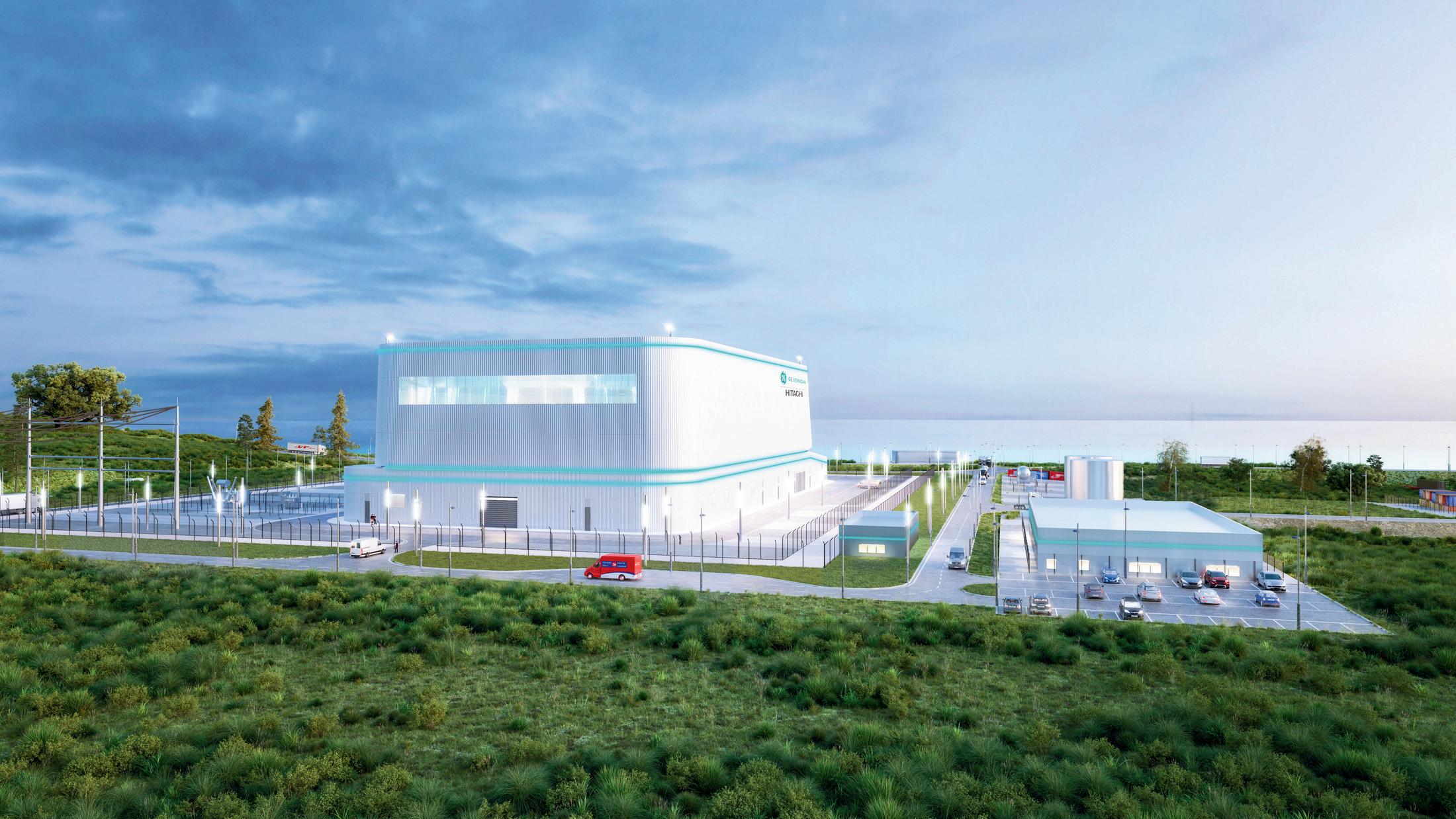

57.4% have somewhat or greatly increased their focus on lowering carbon emissions
A greater emphasis is being placed by contractors on the reduction of carbon emissions as sustainability expectations continue to reshape the industry. Contractors are increasingly adopting lower-carbon materials, electrified equipment, energy-efficient practices and smarter project planning strategies in order to help minimize the industry’s environmental impact. Driven by client demands, government policy and corporate ESG commitments, contractors are integrating decarbonization goals into every stage of project delivery as the industry works toward a more sustainable and resilient built environment.
AAecon
20 Carlson Court
Toronto, ON
M9W 7K6
T: 416-297-2600
www.aecon.com
A, B, G, H, J, K, M, N, S, T, W, X, Z
Baycrest Project & Construction Management 23 Railside Road
Toronto, ON
M3A1B2
T: 416-444-0200
www.baycrestgc.com
C,H,M, O
Bird Construction
5700 Explorer Dr #400 Mississauga, ON L4W 0C6
T: 437-235-6638
www.bird.ca
A, B, C, E, F, G, H, J, K, M, N, O, P, R, S, T, V, W, X, Y, Z
Broccolini 16766 Route Transcanadienne Suite
503 Kirkland, QC H9H4M7
T: 514-737-0076
www.broccolini.com/en
C, H, M, N, O, V
Bockstael Construction Ltd
200-100 Paquin Rd Winnipeg, MB R2J 3V4
T: 204-233-7135
bockstael.com
C, E, H, J, M, N, O, V
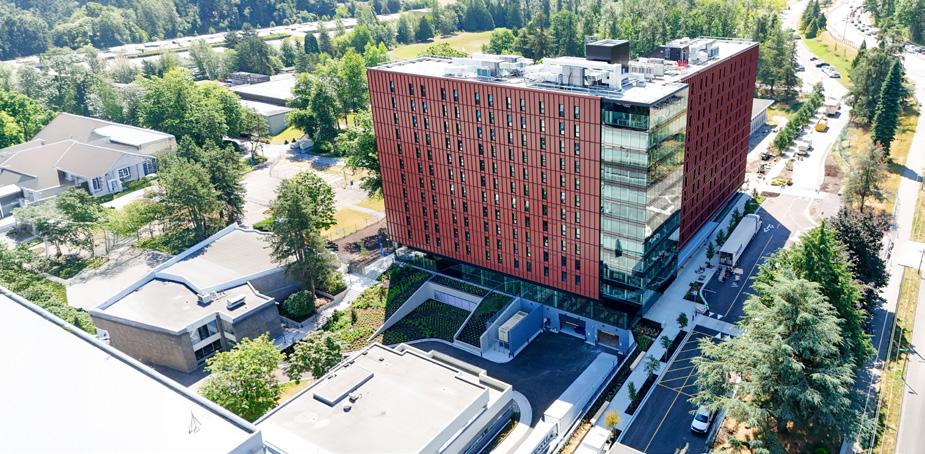
Guided by an uncompromising commitment to safety and quality, our teams design, build, transport, operate, and maintain projects across North America.
Our One Ledcor approach unites our many operating groups, bringing clients an integrated team of experts who share knowledge, experience, and innovation across industries, ensuring that every project is done right.
Ledcor is the partner your project needs. From modest to massive, we move it forward.
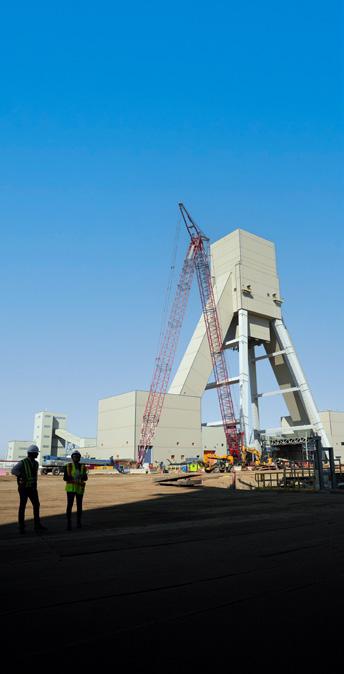
Buttcon Limited
300-6240 highway 7 Woodbridge, ON l4h4g3
T: 647-888-3860 buttcon.com
C, E, F, G, H, M, N, O, T, V, Y
CCanadian Turner Construction Company, Ltd.
510 Seymour St, 8th Floor Vancouver, BC V6B 3J5
T: 604-398-2200 turnerconstruction.com
C, G, H, M, N, O
Cedar Camp Projects Ltd 39 Rue Beaudouin, Grande-Digue, NB E4R 3V8
T: 506-721-2673 www.cedarcamp.ca
A, C, E, F, H, M, U, V
Chandos Construction 9604 20 Ave NW, Edmonton, AB T6N 1G1
T: 780-289-6707
www.chandos.com
B, C, D, E, F, G, H, M, O, V, Z
Clark Builders
800, 5555 Calgary Trail NW Edmonton, AB T6H 5P9
780-278-6737
www.clarkbuilders.com
C, E, G, H, M, N, O, R, S, V, Z
Clark Construction Management 5060 Spectrum Way Mississauga, ON L4W 5N5
The following letter codes are used to indicate areas of activity for the contractors in the listings on these pages.
A Aggregates
B Bridges
C Commercial Buildings
D Communication Engineering
E Concrete
F Contract Management
G Demolition
H Design/Build
J Electric Power/Utilities
K Environmental Remediation
M General Contracting
N Industrial Buldings
O Institutional Buildings
P Marine-Related
R Mining-Related
S Oil and Gas-Related
T Other Transportation Construction
U Residential Houses
V Residential Multi-Unit
W Roadbuilding
X Sewer
Y Structural Steel
Z Waterworks
Coldbox Builders Inc. 5500 N Service Rd suite 900 Burlington, ON L7L 6W6
T: 289-337-3966
www.coldboxbuilders.com
C, H, M, N
Construction Demathieu & Bard (CDB) inc. 170 blvd Roland-Godard St-Jerome, QC J7Y 4P7
C, H, M, O, V PARTNER. PERFECT.
T: 450-569-8043 cdbtechno.com
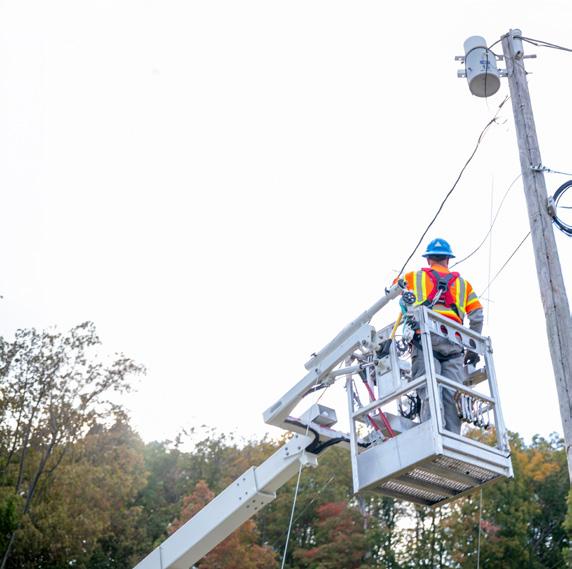
T: 519-942-8622 clarkconstructionmgt.com/
Clobracon Construction Inc. 6505 Transcanadienne, #110 Saint-Laurent, QC H4T 1S3
T: 514-731-0035
www.clobracon.com
C, E, F, G, K, M, N
Dawson Wallace Construction Ltd. 4611 Eleniak Road Edmonton, AB T6B2N1
T: 780-466-8700 www.dawsonwallace.com
Delnor Construction Ltd. 3609 74 Avenue Edmonton, AB T6H2T7
T: 780-289-7172
www.delnor.ca
EBC inc
1095 Rue Valets
L’Ancienne-Lorette, QC
G2E 4M7
T: 418-872-0600
www.ebcinc.com/fr/
Edifice Construction Inc.
#107-16 Fawcett Rd.
Coquitlam, BC V3K 6X9
T: 778-834-2855
www.edifice.ca
C, F, G, H, J, M, U, V
EllisDon Corporation
1004 Middlegate Road, Suite 1000 Mississauga, ON
L4Y1M4
T: 905-896-8900
www.ellisdon.com
Evolve Builders Group Inc
101-123 Woolwich Street
Guelph, ON N1H 3V1
T: 519-265-6546
www.evolvebuilders.ca
H, U
Fillmore Construction Management Inc
4730 Gateway Blvd. NW Edmonton, AB
T6H4P1
T: 780-235-6015
www.fillmoreconstruction.com
C, H, M, N, V
FLINT Corp
3500 205 5 Avenue SW Calgary, AB
T2P2V7
T: 403-966-8932
flintcorp.com
Flynn Group of Companies 6435 Northwest Drive Mississauga, ON L4V 1K2
T: 905-671-3971
flynncompanies.com
Fortis Group 1-416 Advance Blvd
Tecumseh, ON N8N 5G8
T: 5197918217 fortisgroup.ca
A, B, C, D, E, F, G, H, J, K, M, N, O, P, R, S , T, U, V, W, X, Y, Z
FWS Group of Companies 840 7th Ave. SW - Suite 1500 Calgary, AB T2P 3G2
T: 587-834-2057
www.fwsgroup.com
A, E, H, M, N, P, R, S, Y
GGillam Construction Group 36 Northline Road, Unit 3 Toronto, ON M4B 3E2
T: 647-465-7251
www.gillamgroup.com
C, F, H, M, N, O, V
Govan Brown & Associates Ltd. 108 Vine Avenue Toronto, ON M6P 1V7
T: 647-821-8535
www.govanbrown.com
C, H, M, N, V
Graham
10840 – 27 Street SE Calgary, AB T2Z 3R6
T: 403-570-5000
www.grahambuilds.com
B, C, J, N, O, R, S, T, V, W, Z
Grascan Construction Ltd., 61 Steinway Blvd Etobicoke, ON M9W 6H6
T: 416-881-4188
grascan.com
B, E, F, G, H, M, T, W
GS Wark Construction 23 Banbury Drive Hamilton, ON L8R 3L1
T: 905-971-2434
www.wark.net
Ira McDonald Construction Ltd
67 Frid Street Hamilton, ON L8P 4M3
T: 905-467-5760
www.iramcdonald.com
C, H, M, O, V
Ironclad Developments Inc 101-57158 Symington Rd 20E Springfield, MB R2J 4L6
T: 204-894-3512
Ironcladdevelopments.ca
Island Coastal Services Ltd. Hillstrom Ave. Charlottetown, PE C1E 2C6
T: 902-892-1062
www.islandcoastal.ca
JR Certus Construction Co. Ltd.
81 Zenway Blvd., Unit 3 Second Floor
Vaughan, ON
L4H 0S5
T: 647-784-6619
www.jrcertus.com
F, M, V K
Kiewit Canada Group Inc. 200-10333 Southport Rd, SW Calgary, AB T2W 3X6
T: 402-693-8701
www.kiewit.ca
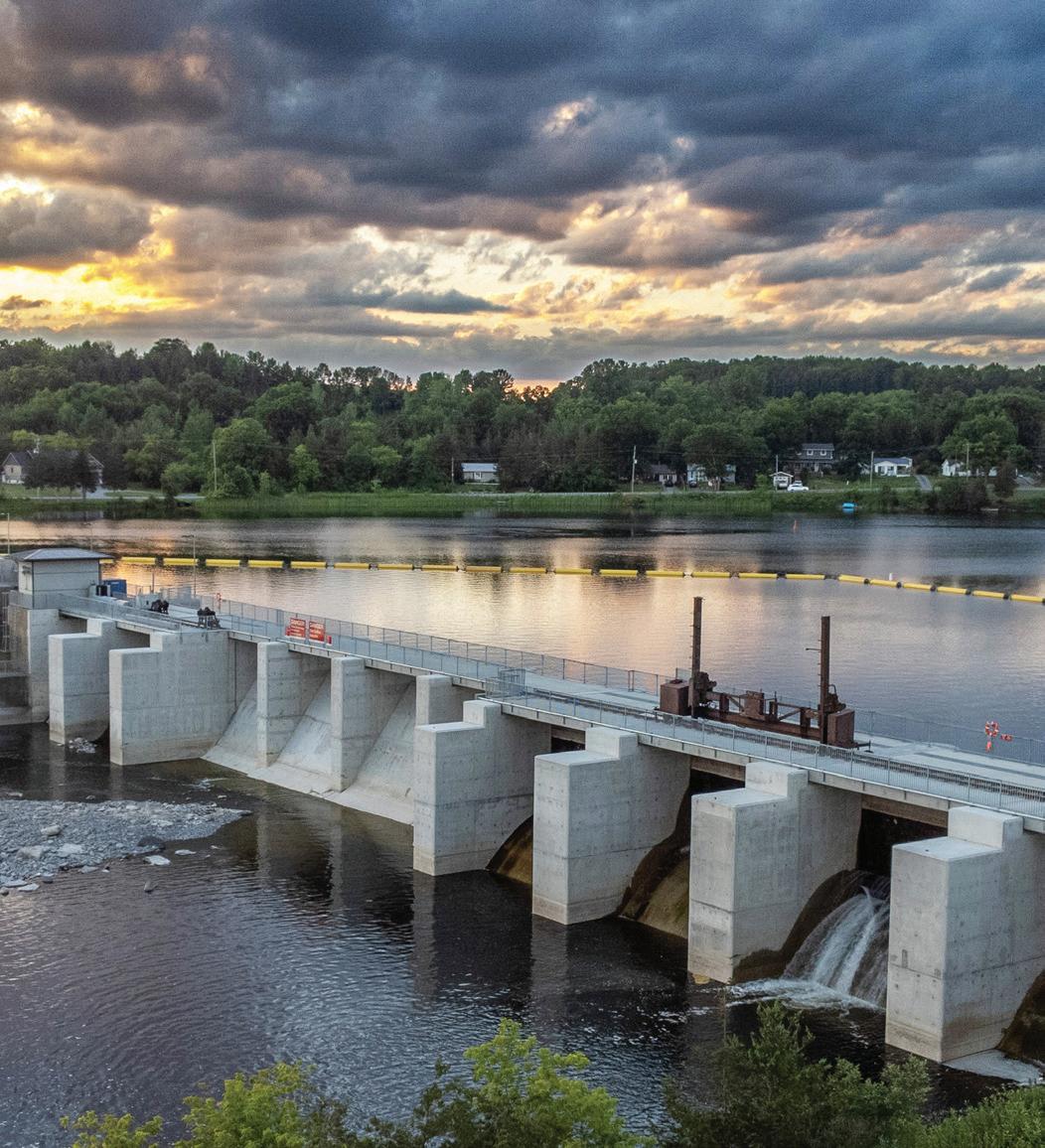
Ledcor Constructors
7008 Roper Road NW Edmonton, AB T6B 3H2
T: 780-233-9482
www.ledcor.com
Leeswood Construction
7200 West Credit Avenue Mississauga, ON L5N 5N1
T: 647-444-0998 www.leeswood.ca
Les Excavations Lafontaine inc. 872 Rue Archimède Levis, QC G6V 7M5
T: 418-838-2121 ext.154 www.lafontaineinc.com
K, X, Z
Lopes Limited 84 Smelter Road Coniston, ON P0M 1M0
T: 705-694-4713
lopes.ca
Magil Construction
2000 Argentia Road, Plaza 2 Mississauga, ON
L5N 1V8
T: 905-890-9193
www.magil.com
C, E, H, M, N, O, V
Maple Reinders 2660 Argentia Road Mississauga, ON
L5N5V4
T: 905-467-7589
www.maple.ca
C, E, F, H, J, M, N, O, X, Z
Marco Group Limited
78 O’Leary Avenue
St. John’s, NL
A1B 4B8
T: 709-754-3737
www.marcogroup.ca
C, F, H, M, N, O, V
Matheson Companies
245 Industrial Parkway Aurora, ON L4G4C4
T: 905-669-7999
mathesonconstructors.com
A, B, C, D, E, F, G, H, J, K, M, N, O, P, R, S, T, U, V, W, X, Y, Z
Menard
1 Hurontario St Mississauga, ON L5G 0A3
T: 905-379-7389 menardcanada.ca
Metal Building Group 15240 56th Avenue Surrey, BC V3S 5K7
T: 604-574-6613 www.metalbuildinggroup.ca
Michels Canada Co. 1102-16 Avenue Nisku, AB T9E 0A9
T: 780-707-9502 michelscanada.com
N, S, X, Z
Murphy Construction 108-1436 Portage Road Pemberton, BC V0N 2L1
T: 604-902-4402 murphyconstruction.ca
Norland Limited
8648 Commerce Court Burnaby, BC V5A 4N6
T: 604-205-7600 www.norlandlimited.com
A, B, C, E, F, G, H, M, N, O, P, R, S, T, U, V, W, X, Y, Z
North American Construction Group 27287 100 Avenue NW
Acheson, AB T7X 6H8
T: 780-686-0233 www.nacg.ca
A, B, C, D, E, F, G, H, J, K, M, N, O, P, R, S , T, U, V, W, X, Y, Z
North Rock Group Ltd. 1111 Creditstone Rd Concord, ON L7B 0A2
T: 905-660-7481 www.northrockgroup.com M, W, X, Z
Orion Construction Ltd. 105-19923 80 A Ave Langley, BC V2Y 0E2
T: 778-821-1208
https://orionconstruction.ca C, H, N, V
PCL Construction 9915 56 Avenue NW Edmonton, AB T6E 5L7
T: 780-733-5107 pcl.com/ca/en
B, C, D, F, H, J, K, M, N, O, P, R, S, T, V, W, X, Z
Pomerleau
521, 6e Avenue Saint-Georges, QC G5Y 0H1
T: 514-789-2728 pomerleau.ca
Pretium Group of Companies
698 Corydon Ave. Winnipeg, MB R3M 0X9
T: 204-594-1429 buildvalue.ca H, M
Priestly Demolition Inc. 3200 Lloydtown-Aurora Road King, ON L7B 0G2
T: 289-552-3228 www.priestly.ca
Prime Design Build Corporation 10-241 Applewood Cres Vaughan, ON L4K 4E6
T: 905-532-0650 www.primedb.ca
Protech Roofing Waterproofing Ltd
50 Racine Rd Toronto, ON M9W 2Z3
T: 416-743-9024 www.protechwaterproofing.ca
Ramar Contractors Inc. 590 Hanlon Creek BLVD Guelph, ON N1C0A1
T: 519-823-5680 www.ramargroup.ca
Reliance Construction
3285 J.B. Deschamps Lachine, QC H8T 3E4
T: 514-631-7999 www.relianceconstruction.com
C, F, H, K, V
Renokrew 46 Lepage court Toronto, ON M3J1Z9
T: 647-562-4985 www.renokrew.com
C, F, M, O, V
RiteTech Construction Ltd. 33 Summer Place Delta, BC V4M 3Y6
T: 604-690-7483
www.ritetechconstruction.com
B, C, E, N, O
Rosati Construction 6555 Malden Road Windsor, ON N9H 1T5
T: 519-734-6511 rosatigroup.com
C, E, F, H, M, N, V, X, Y
Royalcrest Paving 864 Tapscott Rd Toronto, ON M1C 1C3
T: 416-676-0292 www.royalcrest.ca

Ruszkowski Enterprises Inc. Box 1419

Buttcon is a proudly Canadian, employee-owned construction company delivering complex projects across Canada, with offices in Toronto, Ottawa, and Calgary.
Backed by hands-on leadership and a commitment to safety, quality, and innovation, Buttcon is trusted to deliver complex, schedulesensitive projects across a wide range of sectors and live operational environments nationwide.


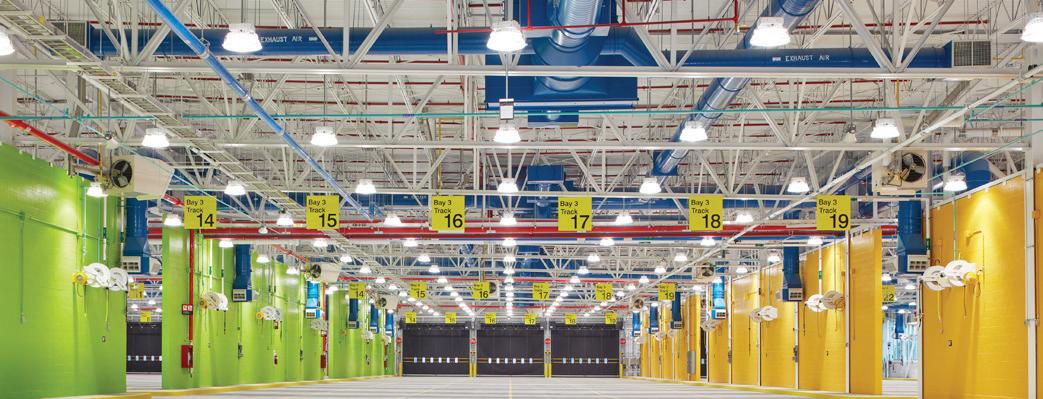

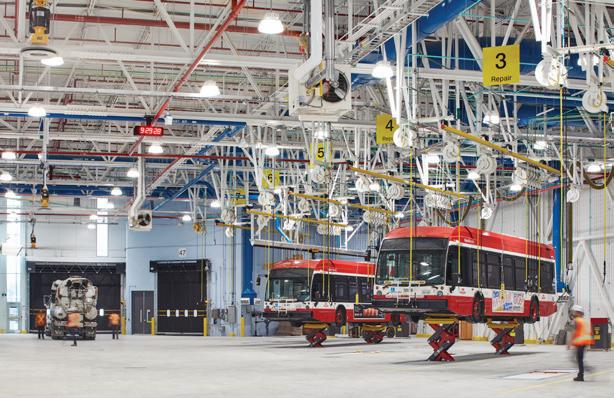
GENERAL CONTRACTING
PROJECT MANAGEMENT
CONSTRUCTION MANAGEMENT
DESIGN BUILD
DESIGN BUILD FINANCE

Prince Albert, SK S6V 5S9
T: 306-961-2319 www.ruszkowskient.com
Self Storage Contracting Inc
200 Brock Street Unit 4 Barrie, ON L4N 2M4
T: 905-526-0202 www.selfstoragecontracting.com
Sigfusson Northern Ltd.
244 Cree Crescent Winnipeg, MB R3J 3T9
T: 204-594-1132
www.sigfusson.ca
A, B, C, E, F, H, J, K, M, N, O, P, R, S, V, W, X, Y, Z
Strike Group
1300 505 3rd St SW, Calgary, AB T2P3E6
T: 403-618-0717
www.strikegroup.ca
A, B, C, D, E, F, G, H, J, K, M, N, O, P, R, S, T, U, V, W, X, Y, Z
Sublatus Inc.
150-1209 59 Ave SE Calgary, AB T2H 2P6
T: 403-828-3811
www.sublatus.ca F, G, K, S
Taggart Group of Companies 3187 Albion Road Ottawa, ON V1V 8Y3
T: 613-521-3000
www.taggartgroup.ca
M, U, V, X, Z
The Toryan Group Newmarket, ON L3X 1V8
T: 416-789-4663
A, E, F, G, H, M, N, O, U, V, Y
Toddglen Group of Companies 2225 Sheppard Avenue East, Suite 1100 Toronto, ON M2J 5C2
T: 416-492-2450
www.toddglen.com
A, B, C, D, E, F, G, H, J, K, M, N, O, P, R, S, T, U, V, W, X, Y, Z
Triumph Group 1 Connie Street Toronto, ON L5h4m3
T: 647-828-1174
Triumphinc.ca
N, O, U, V
Westridge Construction Ltd. 435 Henderson Drive Regina, SK S4N 5W8
T: 306-535-0039
www.westridge.ca
B, C, H, M, O Y
York Construction 10303 Jasper Ave Suite 1600 Edmonton, AB T5J 3N6
T: 780-421-4000
www.york-construction.ca

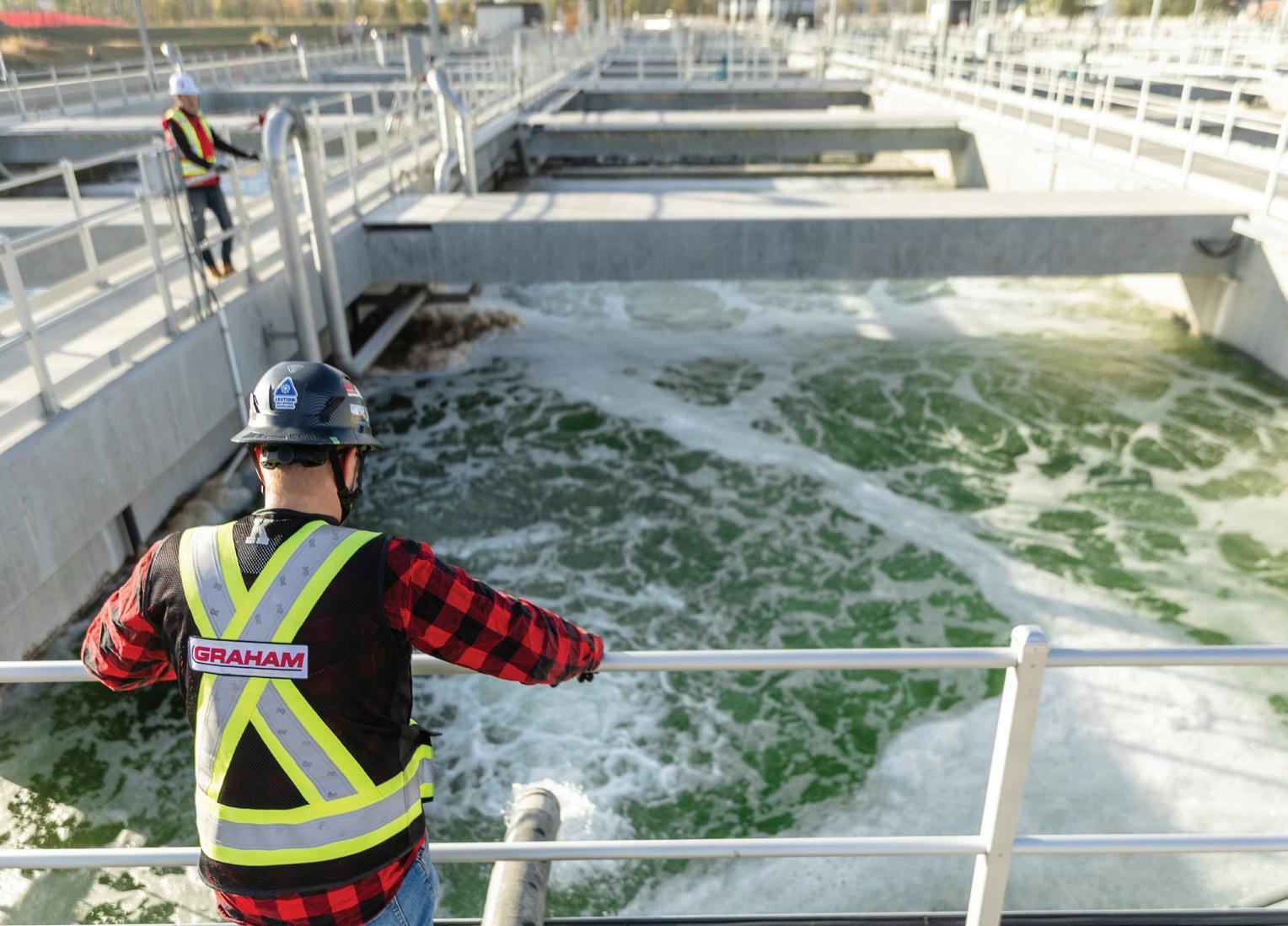
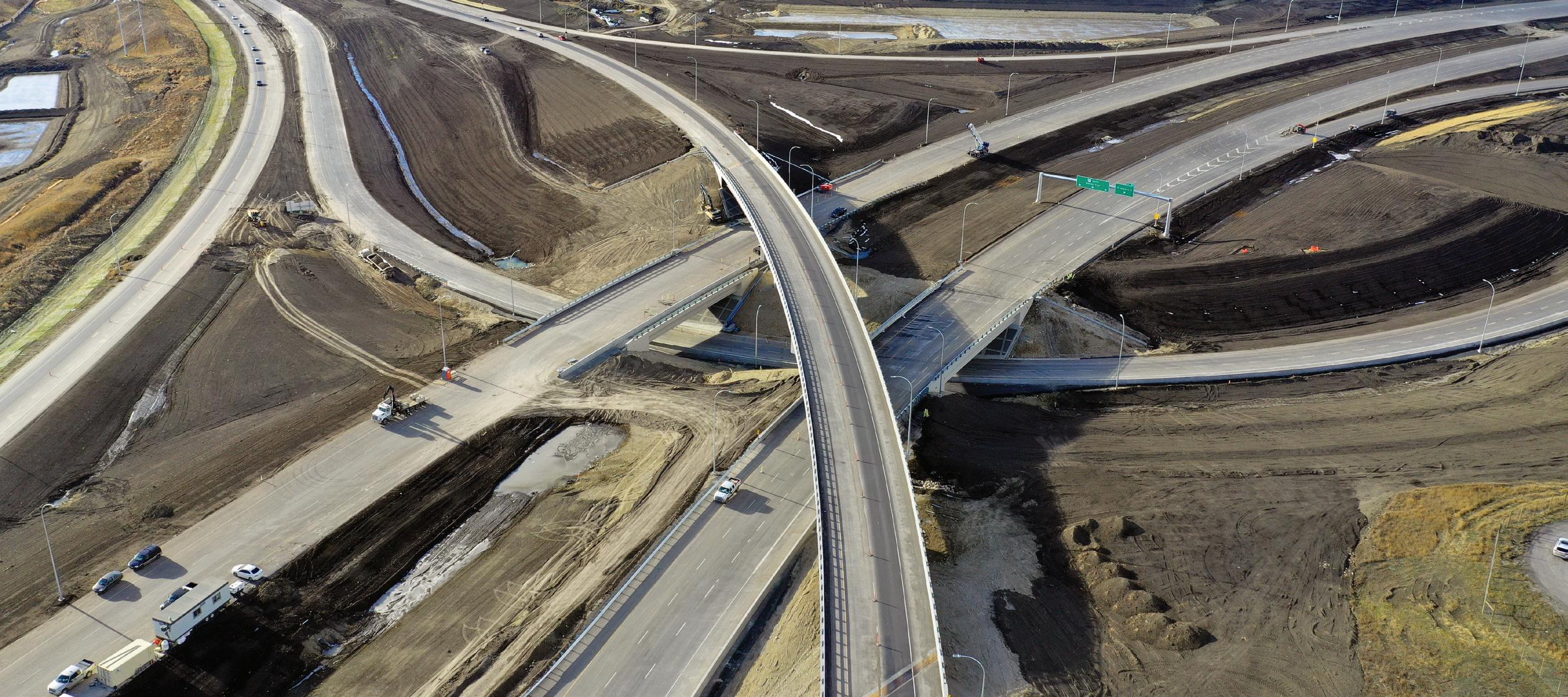

By Jacob Stoller

With all the uncertainty around AI, it’s hard to know what to expect or believe. The real danger is in not understanding the inherent risks.
In April, Anthropic made an extraordinary announcement. In an initiative dubbed Project Glasswing, the company is restricting the release of its latest model, Claude Mythos, to a handful of trusted partners. The model, it claims, could be misused as a formidable weapon for launching cyber attacks. The pre-release will give the company time to develop suitable guardrails.
AI-powered attacks are nothing new. Cyber security firm CrowdStrike reported an 89% year-over-year increase in AI-powered attacks for 2025 – a figure nearly double what experts had forecast.
“While it is difficult to predict exactly how this will evolve, the trend is clear,” says Hammad Chaudhry at Austin-based software firm Cupix. “The volume, sophistication, and speed of AI-enabled threats are increasing, and organizations need to respond accordingly.”
The challenge is that the same tools used to detect cyber weaknesses for defensive purposes are also formidable weapons for bad actors who would weaponize them. With Mythos, the concern is the sheer speed at which it reportedly detected thousands of high-severity zero-day vulnerabilities in every major operating system and web browser.
As companies delegate an increasing portion of their IT workload to AI agents, they need to be vigilant about new vulnerabilities as well as traditional weaknesses.
“AI is doing is two things,” explains Sheldon Fernandez, AI strategist and founder and former CEO of DarwinAI. “It’s introducing new attack vectors, such as new models and new AI workloads, but it’s also significantly reducing the amount of effort you need to find security vulnerabilities. So, the vigilance that you need as a security professional now is significantly different than what you needed maybe six months ago.”
Many companies have already fallen behind in understanding the existing threats. “We have all these organizations that are using AI agents to do software development and infrastructure work without a full understanding of what these agents are capable of,” says Fernandez. “So, we have these horror stories where agents have deleted entire production databases and companies have lost three months of data.”
As the power of AI increases, so does the unknown. “The challenge for organizations is that the risk landscape is still evolving,” says Chaudhry, “and many companies are still working to understand where the most material governance, security, and compliance risks sit.”
In the face of this uncertainty, companies are hedging their bets. “Large organizations are becoming more deliberate about what types of information they allow into AI systems,” says Chaudhry. “Many are creating policies to limit exposure of sensitive or proprietary data until governance models, vendor controls, and internal safeguards are better understood.”
The conundrum is that often the best opportunities for creating an AI-powered advantage involve the most sensitive data.
“In construction, cash flow is one of the most critical indicators of business health,” says Chaudhry. “The ability to use AI to better understand accrued work, forecast potential cash constraints, assess exposure to delays or litigation, and coordinate that information across the business could be extremely powerful. But that same information is also highly sensitive, which is why organizations need to be thoughtful about how and where it is used.”
Another challenge on the horizon is that the costs of using large LLMs are beginning to rise significantly as major AI players seek to pay back their huge investments in development and infrastructure.
“Many AI platforms have scaled quickly, in part because early pricing models made adoption relatively accessible,” says Chaudhry. “As the market matures, organizations will need to pay closer attention to the long-term economics of AI, including usage-based costs, data governance, security, and the operational value being created.”
Another trend to watch is the emergence of smaller, more efficient AI models. Chinese developers like DeepSeek have already introduced models that approach the power of the U.S.-based leaders with a fraction of the resources. Many believe that this will lead to models that can run on local devices.
Apple may be planning to establish a stake in localized AI, and the appointment of hardware engineering SVP John Ternus to the role of CEO is, some believe, clear evidence of that.
“Apple is making a bet, and I don’t think it’s an unwise bet, that the future lies in running these AI models on local devices,” says Fernandez.
For construction firms, this could provide a best of both worlds – an economical AI platform with predictable costs, and the security of keeping their sensitive data in-house.
Jacob Stoller is principal of StollerStrategies. Send comments to editor@on-sitemag.com.
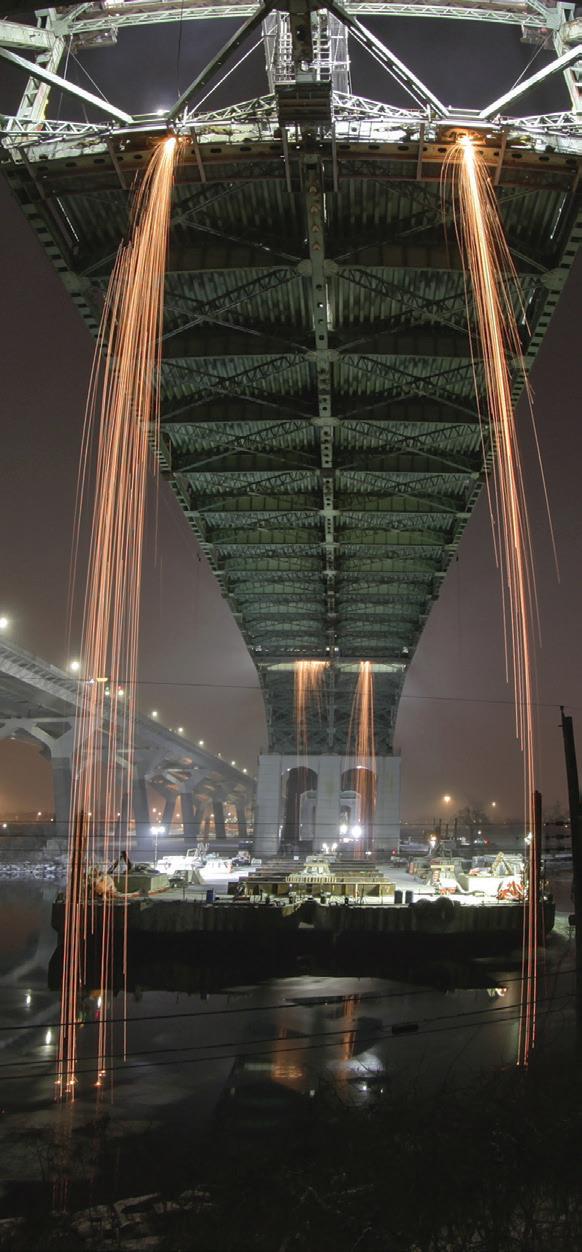
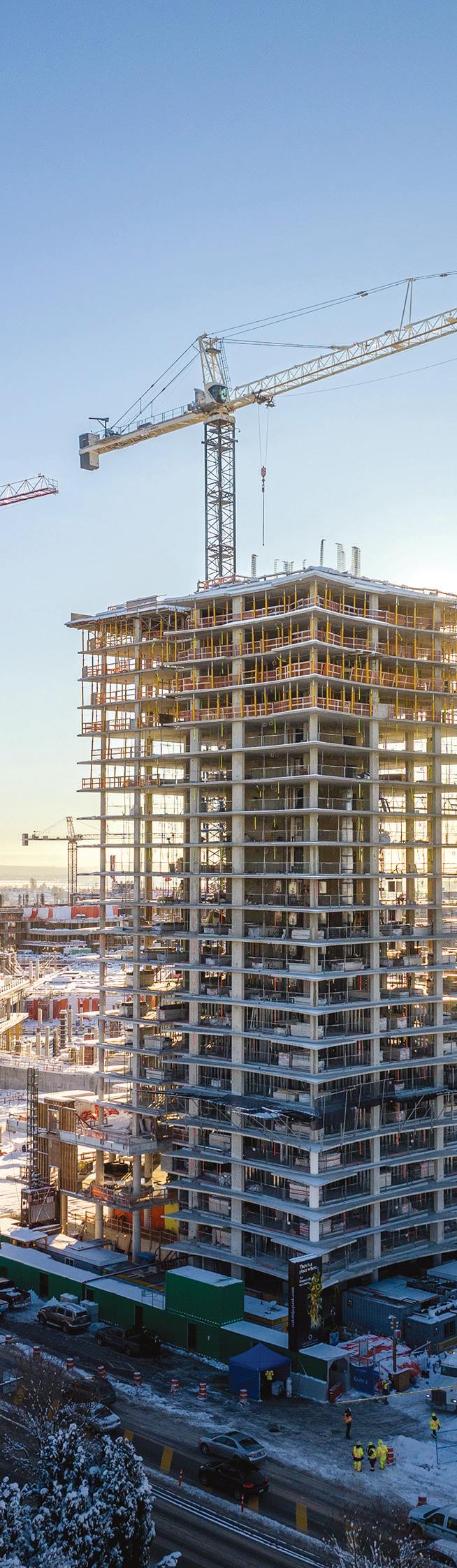
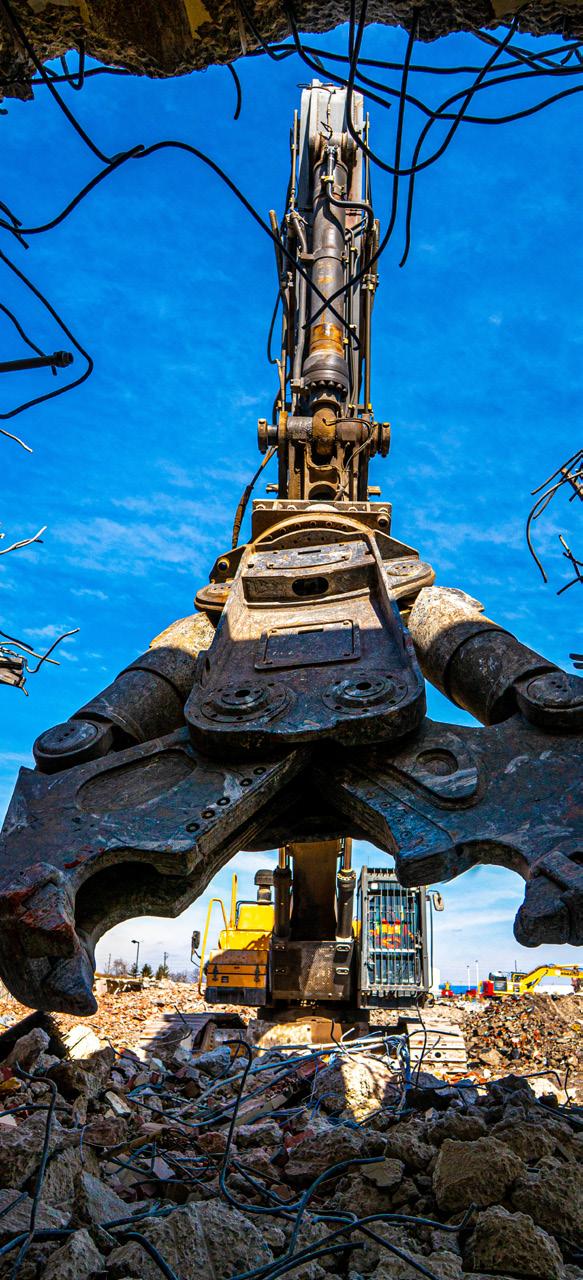
Contractor
Contractor
Distributors & Rental Houses
Government
Other Allied to the Field (please specify) Do
Paving Equipment
Used Equipment
Dump Trucks
Compressors
Welding Tools

By David

he construction industry spends enormous time discussing risk transfer. Insurance policies, bonds, contract language, indemnities, limitation clauses, litigation and claims management all play critical roles in protecting contractors when projects encounter problems. These tools are all well and good, but they are largely reactive. They represent mechanisms designed to respond after risk has already materialized.
The reality is that the greatest construction risk control is not found in an insurance policy or legal agreement, but in operational discipline. Across the industry, the contractors consistently outperforming their peers on profitability, safety, quality, schedule certainty and claims outcomes tend to share one common characteristic: operational maturity. They understand that project success is rarely accidental. It is the result of disciplined operational practices executed consistently across every stage of every project.
Construction has always been a people business, and great people remain the foundation of every successful contractor. Strong leadership, experienced project teams, capable superintendents and trusted field personnel matter enormously, but good people alone are not enough. The best contractors recognize that even exceptional talent requires structure, governance and repeatable operational practices to consistently deliver strong outcomes. Operational discipline is what transforms individual capability into organizational performance.
The following operational practices represent some of the key areas all contractors should ensure they have in place what is considered best-in-class:
Some of the best projects a contractor ever executes are the ones it decides not to pursue in the first place. Strong project gating practices evaluate factors such as owner quality, contract structure, jurisdiction, technical complexity, labour availability, schedule realism, delivery model, and risk allocation before a pursuit moves forward. Contractors that make sure to maintain disciplined go/ no-go processes are often far better positioned to avoid problematic projects before they consume management attention, balance sheet capacity and working capital.
Risk is often embedded into a project long before construction begins. Aggressive assumptions, incomplete scope reviews, misunderstood contract obligations, unrealistic productivity estimates, inadequate subcontractor coverage, or insufficient contingency planning can create exposure at the bid stage that becomes nearly impossible to recover from later. Leading contractors treat estimating as both a commercial and operational risk function, investing in peer
reviews, benchmarking, bid governance and detailed scope analysis.
The prime contract establishes the foundation for how risk will ultimately be allocated on a project. Sophisticated contractors understand the importance of reviewing issues such as indemnities, liquidated damages, limitations of liability, force majeure provisions, schedule obligations, payment protections, dispute mechanisms and insurance requirements before execution.
As construction projects become more technically complex and delivery models increasingly collaborative, consultant selection has become one of the most important operational disciplines in construction. Sophisticated contractors carefully prequalify consultants based on technical expertise, coordination capability, project experience, responsiveness and financial stability. Equally important is ensuring consultant contracts clearly define scope, responsibilities, deliverables and risk allocation.
MANAGEMENT PRACTICES
Consultant selection alone is not enough. Leading contractors actively manage consultants throughout construction through disciplined communication protocols, design coordination procedures, issue tracking systems, escalation processes and document management practices.
6. SUBCONTRACTOR/SUPPLIER PREQUALIFICATION
A contractor’s operational strength is often reflected in the quality of its subcontractor and supplier ecosystem. In light of this, robust prequalification processes should evaluate not only pricing competitiveness, but also financial strength, manpower availability, technical capability, backlog, safety performance, quality history and prior claims experience.
7. SUBCONTRACTOR/SUPPLIER CONTRACTING AND MANAGEMENT PRACTICES
Disciplined subcontract administration is equally important once subcontractors are engaged. Clear subcontract agreements, aligned scope definitions, payment management, schedule coordination, productivity monitoring, issue resolution and early intervention procedures all play critical roles in reducing downstream project disruption.
8. SELF-PERFORM PRACTICES
For contractors with self-perform capabilities, field execution
discipline remains critical. Labour planning, workforce supervision, equipment management, productivity tracking, sequencing, training and retention all directly influence project outcomes. Strong self-perform operations provide contractors with greater control over schedule, quality and safety, but only when supported by disciplined operational systems.
Quality failures remain one of the industry’s most expensive and disruptive forms of risk. Best-in-class QA/QC programs focus not only on identifying deficiencies, but on preventing them from occurring in the first place. Standardized inspection protocols, hold points, testing procedures, commissioning practices, deficiency tracking, and documentation management all play critical roles in reducing rework and post-project claims.
One of the clearest indicators of operational maturity is how quickly organizations escalate issues internally. Whether related to project risk, subcontractor performance, design concerns, safety incidents, disputes, or claims exposure, leading contractors create environments where issues are elevated early rather than hidden until they become unmanageable.
11. SAFETY PRACTICES
Safety remains one of the most visible indicators of operational
discipline on the jobsite. The strongest safety cultures extend beyond compliance and paperwork. They are embedded into planning, supervision, communication, subcontractor management and field execution.
Project risk does not end at substantial completion. Disciplined close-out practices, including commissioning, turnover documentation, warranty management, deficiency resolution and records retention, and lessons learned significantly influence post-project claims exposure and owner satisfaction. Additionally, strong project close-out practices ensure that your organization learns from the good and the bad in each project and disseminate those learnings company wide.
Ultimately, construction risk is rarely controlled through a single policy, contract clause, or management decision. It is controlled through hundreds of operational decisions made consistently throughout the life of a project. The contractors that will continue to separate themselves from the market will not simply be those with the best people, but those with the strongest operational disciplines supporting those people every day.
David Bowcott is the executive vice-president of the Construction Industry Group at Platform Insurance Management. Please send comments to editor@on-sitemag.com.
By Marin Leci, Defence and National Security Lawyer Calgary, BLG, and Erin Cutts, Construction Disputes Lawyer Calgary, BLG


Canada’s renewed focus on continental and national defence has ushered in an unprecedented wave of defence-related infrastructure investment. Modernization initiatives connected to NORAD, Arctic defence, and military readiness are driving major construction and retrofit projects across the country, many of which will be delivered through federal procurement processes.
For construction contractors and subcontractors, defence-sector work presents significant commercial opportunity, as well as a number of distinct legal, regulatory, and security frameworks that create risks well beyond those found on conventional government or private projects.
This article highlights several risk areas that are unique or heightened in defence-sector construction projects and outlines practical considerations for contractors executing this work.
Federal defence infrastructure projects are subject to enhanced integrity and ethical expectations that apply not only to prime contractors, but also to subcontractors and supply chains. Vendors competing for defence work are required to comply with a federal procurement code that establishes baseline standards for ethical conduct, transparency, and lawful performance throughout the lifecycle of a contract.
From a risk perspective, construction firms may be held accountable for compliance failures occurring deep within their supply chains. Inadequate due diligence, insufficient contractual flow-down provisions, or weak monitoring mechanisms can result in bid rejection or termination of an awarded contract.
Perhaps the most visible distinction between defence construction and other infrastructure projects is the requirement to operate within a secure environment. Depending on the nature of the project, contractors may be required to obtain organizational security clearances and ensure that designated personnel hold appropriate individual clearances.
Contractors entering this sector must realistically assess their internal capacity to support these obligations. In some cases, new governance structures, secure document control systems, specialized training programs, and cyber security investments will be required simply to remain eligible to perform the work.
Defence construction contracts may also be subject to the federal Defence Production Act (DPA) - legislation that grants the Crown extraordinary powers to ensure access to defence-related goods and services. Unlike most public infrastructure projects, risk allocation in this context is not determined solely by the written contract. Certain contractor obligations and Crown rights arise directly from statute.
These statutory features materially alter a contractor’s risk profile. Pricing strategies, profit assumptions, change management practices and claims planning must all be calibrated with the DPA in mind.
Defence construction projects may also fall outside emerging provincial prompt payment and adjudication regimes. Federal prompt payment legislation is now in force in many jurisdictions, but may also be of limited assistance in complex defence projects. As a result, contractors may face longer payment cycles and fewer interim remedies than would be available on non-defence projects.
Dispute resolution timelines can also be prolonged by security restrictions and jurisdictional constraints, increasing the importance of financial planning and risk allocation at the bid stage.
Defence infrastructure projects present real opportunity for the construction industry but executing them demands a fundamentally different approach to risk management. Elevated compliance standards, security requirements, statutory risk reallocation, and payment uncertainty distinguish defence-sector projects from conventional infrastructure work.
Contractors that succeed in this space are those that invest early in compliance systems, conduct rigorous supply chain due diligence, align project controls with security obligations, and price risk with a clear understanding of the Defence Production Act. As Canada’s defence infrastructure program continues to expand, those who approach defence procurement strategically and with eyes open to its unique challenges will be best positioned to compete and perform successfully.
This article provides an overview and is not intended to be exhaustive of the subject matter contained therein. Although care has been taken to ensure accuracy, this article should not be relied upon as legal advice.