
TARIFFS & TRADE:
NAVIGATING UNCERTAINTY, VOLATILITY AND RISK
HEAVY EQUIPMENT: PAVING AND ROADBUILDING MACHINES
CONCRETE ON-SITE: INNOVATIONS IN HIGH-PERFORMANCE
CONCRETE




TARIFFS & TRADE:
NAVIGATING UNCERTAINTY, VOLATILITY AND RISK
HEAVY EQUIPMENT: PAVING AND ROADBUILDING MACHINES
CONCRETE ON-SITE: INNOVATIONS IN HIGH-PERFORMANCE
CONCRETE
As Canada enters one of the most ambitious periods of infrastructure development in its history - a period that will include transit expansions, upgrades to energy systems and water networks, and housing-enabling projects - the scale of the work at hand is incredible. It’s a period that is set to define out future. And for general contractors, it’s a period that represents both boundless opportunities and challenges.
Across the country, governments are injecting hundreds of billions of dollars into projects as a means to facilitate the modernization of aging infrastructure, expand capacity and enable growth. However, the injection of funds alone won’t see the government’s plans through to frutition.
Labour shortages persist, resulting in a limited supply of skilled workers. Project complexity continues to increase, yet conractors are expected to deliver faster outcomes within tighter margins. Throw supply chain volatility, permitting delays and procurement challenges into the mix and it’s clear that the path from project announcement through to completion is far from straightforward.
However, within these challenges lie opportunities for contractors who are willing to lead in this environment and be open to embracing a more integrated approach to project delivery - breaking down silos that have traditionally existed between owners, designers, builders and suppliers and introducing more coordinated models that prioritize transparency, shared risk and aligned outcomes. In essence, the true leaders within the industry going forward will be those who are able to get all stakeholders onside, pulling in the same direction toward a common goal.
Canada’s infrastructure ambitions are certainly achievable, but not without change. Change concerning the way projects are planned and designed, coordinated and communicated among stakeholders, and the way they’re ultimately executed through greater collaboration and partnership. And it’s change that’s necessary, because the work ahead is complex and is set to define the future of our country for generations to come.
on-sitemag.com
READER SERVICE
Print and digital subscription inquiries or changes, please contact Angelita Potal
Email: apotal@annexbusinessmedia.com
Tel: (416) 510-5113
Fax: (416) 510-6875
Mail: 111 Gordon Baker Road, Suite 400, Toronto, ON M2H 3R1
PUBLISHER | Peter Leonard (416) 510-6847 pleonard@on-sitemag.com
EDITOR | Sean Tarry (416) 410-0600 starry@on-sitemag.com
MEDIA DESIGNER | Lisa Zambri lzambri@annexbusinessmedia.com
GROUP PUBLISHER | Danielle Labrie (226) 931-0375 dlabrie@annexbusinessmedia.com
ASSOCIATE PUBLISHER | David Skene (416) 510-6884 dskene@on-sitemag.com
ACCOUNT COORDINATOR | Kim Rossiter (416) 510-6794 krossiter@on-sitemag.com
AUDIENCE DEVELOPMENT MANAGER | Urszula Grzyb (416) 510-5180 ugrzyb@annexbusinessmedia.com
CEO | Scott Jamieson sjamieson@annexbusinessmedia.com
Established in 1957, On-Site is published by Annex Business Media
111 Gordon Baker Road, Suite 400, Toronto, ON M2H 3R1 Publications Mail Agreement No. 40065710
ISSN: 1910-118X (Print) ISSN 2371-8544 (Online)
SUBSCRIPTION RATES Canada $52.51 CAD (+tax) per year, United States $119.87 CAD per year, Other foreign $144.80 CAD, Single Copy Canada $13.50 CAD. On-Site is published 5 times per year except for occasional combined, expanded or premium issues, which count as two subscription issues. Occasionally, On-Site will mail information on behalf of industry-related groups whose products and services we believe may be of interest to you. If you prefer not to receive this information, please contact our circulation department in any of the four ways listed above.
Annex Business Media Privacy Officer privacy@annexbusinessmedia.com Tel: 800-668-2374
Content copyright ©2026 by Annex Business Media may not be reprinted without permission.
On-Site receives unsolicited materials (including letters to the editor, press releases, promotional items and images) from time to time. On-Site, its affiliates and assignees may use, reproduce, publish, re-publish, distribute, store and archive such unsolicited submissions in whole or in part in any form or medium whatsoever, without compensation of any sort.
DISCLAIMER This publication is for informational purposes only The content and “expert” advice presented are not intended as a substitute for informed professional engineering advice. You should not act on information contained in this publication without seeking specific advice from qualified engineering professionals.
MEMBER OF
Sean Tarry / Editor starry@on-sitemag.com

Construction leaders from Canada, the U.S. and Mexico share their perspectives on issues from tarrifs and workforce challenges to a potential path forward through collaboration.
At the Canadian Construction Association’s (CCA) Annual Conference in March, leaders from across North America delivered the message that while current demand for construction is strong, the ability of general contractors to deliver projects profitably and predictably is being challenged.
Moderated by CCA President, Rodrigue Gilbert, a CEO panel panel brought together Jeffrey Shoaf, CEO of Associated General Contractors of America and Mario Salazar, VP of Institutional Relations, CMIC Mexico, to explore the ways in which tariffs and economic uncertainty are reshaping the North American construction landscape.
The conversation shared between the leaders seemed to be a familiar one for general contractors and their teams in attendance, weaving together issues concerning tighter timelines, rising risk and increasing complexity into a narrative about the “new normal”.
From a U.S. perspective, Shoaf described a market that appears strong at first blush, but when analyzed further proves to be increasingly uneven beneath the surface.
“Activity remains positive in the U.S.,” he said. “But growth is increasingly uneven across market segments. What that really means is that there are a few hot sectors, like data centres and power, that are propping up the rest of the market.”
And while total U.S. construction spending remains substantial, Shoaf noted that

2025 spending dipped below 2024 levels, representing a potential early warning sign of industry stagnation. Combined with persistent workforce pressures, productivity levels on jobsites south of the border may soon be threatened.
A similar picture was painted by Salazar of the current tenor in Mexico, where construction represents roughly 7 per cent of GDP and employs millions, yet faces a number of structural constraints of its own.
“There’s huge infrastructure demand in Mexico,” he said. “But without long-term planning, financing certainty and strong rule of law, it’s difficult fore the industry to collectively execute at the scale that’s required.”
Another shared theme that emerged during the conversation was that of uncertainty. Borne of geopolitical instability and U.S. tariff’s imposed by the Trump administration, these disruptions have resulted in significant price volatility and subsequent ramifications for supply chains.
From a Canadian perspective, Gilbert highlighted the retaliatory measures imposed in Canada like “buy Canadian” policies. He
understands the move by government, but suggests that in practice these policies pose unintended consequences.
“Canada, the U.S. and Mexico are so tightly integrated, it’s almost impossible to isolate supply chains without consequences,” he said.
It was also agreed by all three leaders that the only viable and successful way forward for the construction industries in each country is through close collaboration. Salazar pointed to cross-border infrastructure planning, shared standards for procurement and project delivery and pre-consultation on trade policies affecting construction inputs as ways to strengthen partnerships and shared progress.
Shoaf agreed, adding that the byproduct of close collaboration is greater price predictability and supply chain certainty.
Gilbert conqeured, too, adding that for general contractors across Canada, a little bit of stability would be nice.
“For our members, the worst thing is uncertainty. We would rather have a clear policy, even if it’s not ideal, than constant change.”
The Canadian Construction Safety Council (CCSC) recently released its new Critical Risks Guideline - a framework aimed at preventing serious injuries and fatalities within the construction industry. Unveiled in January 2026, the guideline identifies 13 critical risk areas, including working at heights, operating around mobile equipment, excavation, energy isolation, confined spaces, hoisting and rigging, driving, working near traffic, public interfaces, working near water or live rail, hazardous materials

and radiological sources.
Each risk identified within the guide is accompanied by safe start checks (SSCs), providing frontline workers with clear steps to confirm that proper controls and safeguards are in place before beginning a task. SSCs also prompt workers to identify potential sources of confusion, difficuly or issues that could result in errors, offering guidance concerning ways to stop work or seek help if needed. It’s an approach that shifts the focus from relying solely on
Metrolinx recently revealed that it’s entering the next phase of construction on its multi-year Go Expansion project. The work, which is ongoing, is intended to modernize existing stations and infrastructure while enhancing capacity of the overall GO rail system in the Greater Toronto Area (GTA).
Most of the planned work is set to focus on a significant amount of Lakeshore East Line construction, including tracks, stations and bridges. However, signal upgrades and other enhancements are also going to be made along the Lakeshore lines.
It’s all part of a significant investment that the province of Ontario has made in an effort to improve service along all five Go corridors, strengthening infrastructure around the GTA and surrounding region.
Currently there are a number of different projects underway, including grade separations, station upgrades, the development of new stations, enhancements to Union Station and service extensions to Kitchener and Bowmanville.
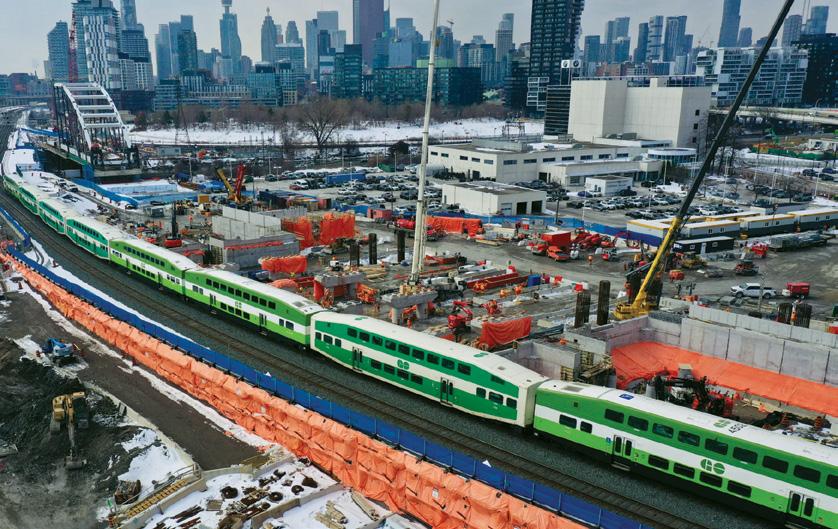
As work progresses on these long-term projects, and new phases of construction and delivery are announced, opportunities for contractors with the specialties required will continue to arise.
workers to prevent unsafe tasks to ensuring safeguards are effective, enabling safer working environments.
CCSC founding members, including PCL Construction, Aecon, Bird Construction and Ledcor Industries, emphasize that safety is a shared responsibility and are pleased to offer the guideline that combines industry expertise and actionable procedures that reinforce collaboration, transparency and worker empowerment on Canadian heavy construction projects.
Industry groups in Manitoba are warning that a new training fee tied to the province’s Jobs Agreement program could significantly increase costs on large public-sector construction projects. The fee, set at 85 cents per hour, per worker, applies to infrastructure projects over $50 million and is intended to fund training for local workers. While the government says the measure will reduce reliance on out-of-province labour and improve workforce readiness within Manitoba, three major associations, including the Winnipeg Construction Association, Manitoba Heavy Construction Association and Construction Association of Rural Manitoba, have raised concerns around oversight and transparency.
Ron Hambley, President of the Winnipeg Construction Association, noted that the funds will be managed by Manitoba Building Trades without clear accountability, raising questions concerning allocation and governance. It’s also been warned that the new fee could increase project costs by 15 per cent or more with the potential to rise further in the future.
As Manitoba continues to invest in large-scale infrastructure projects, general contractors operating wtihin the province are set to face potential cost pressures and associated uncertainty, making strategic budgeting and vigilant oversight increasingly critical for the execution of heavy construction projects in the region.
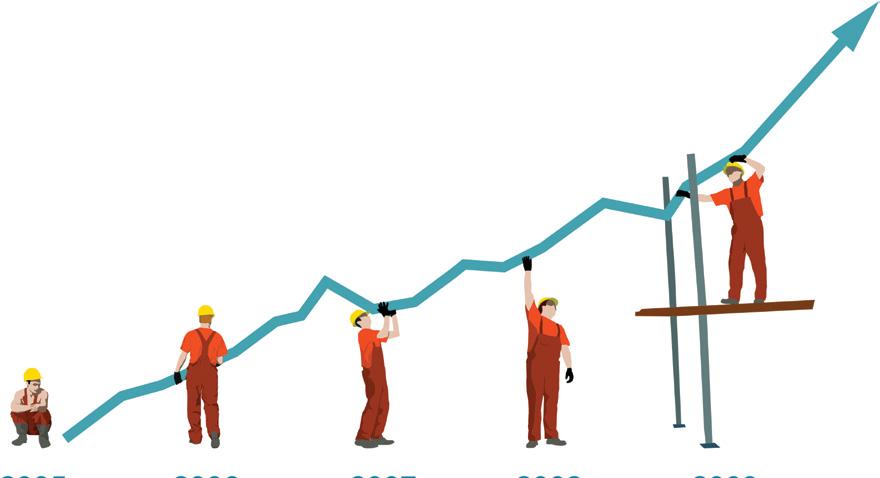
Despite significant growth in data centre construction and infrastructure projects across Canada, the industry faces increasing pressure as a result of ongoing labour shortages and tariff-driven material cost volatility. And according to recent research compiled within the HUB International 2026 Construction Outlook, contractors are responding with advanced risk management, pre-purchasing materials and workforce investments as means to mitigate disruptions. The outlook also identified current labour constraints, revealing that 92 per cent of contractors within the industry are facing difficulties hiring. However, findings also included the fact that the use of AI and other advanced technologies are leading to an estimated 30 per cent increase in prodictivity gains and quickly becoming a necessity in order to compete. In light of these numbers, the contractors and firms that manage to combine resilience with foresight, embracing digital tools and offering meaningful reasons to attract and retain skilled workers, will be those that best position their operations to capitalize on the opportunities ahead.


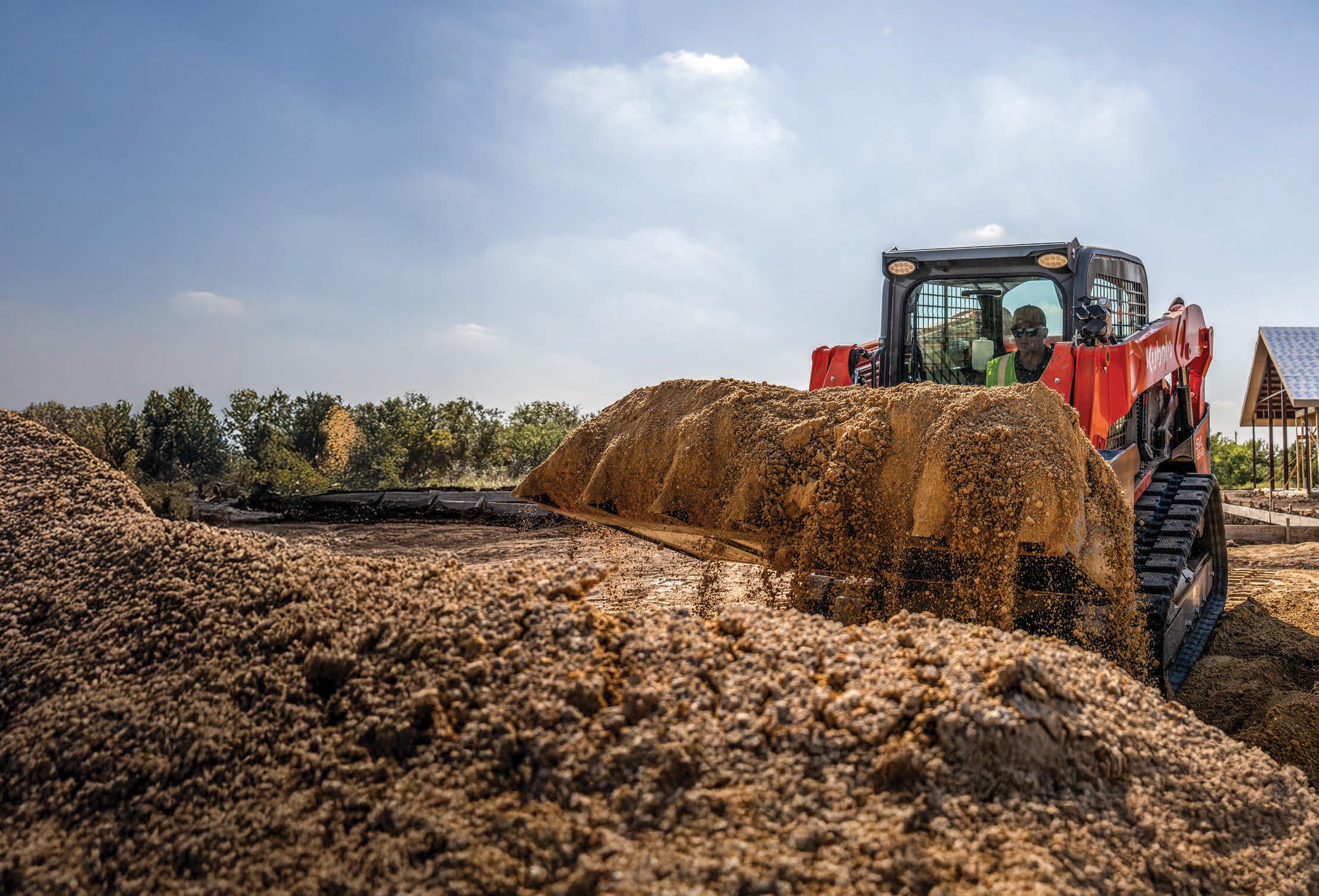
Tough work conditions? No problem. The compact-but-not-comprised Kubota SVL65-2s boasts the muscle needed for tackling serious jobs, while making the workday smoother thanks to redesigned cab features engineered for improved control, visibility and comfort.
92% of contractors report difficulty hiring AI driving up to 30% productivity gains
2.6% projected growth in non-residential construction for 2026
33%
increase in data centre construction in 2025; +20% forecast for 2026
349,000 new construction workers needed in 2026
From price swings to evolving contract strategies, Canadian contractors are navigating a new era in which trade policy and supply chain instability are reshaping how major projects are priced, procured and delivered.
BY SEAN TARRY
There are few who understand better than Canadian general contractors the very real impacts of tariffs imposed by the Trump administration. While trade measures often dominate headlines at a geopolitical level, their effects are being felt most acutely on Canadian jobsites, in bid rooms and across procurement teams. It’s an issue that construction firms across the country are dealing with on a daily basis, and one that’s become an unavoidable and expensive operational reality.
It’s no secret that construction input costs have experienced significant volatility in recent years, driven in large part by a combination of global supply chain disruptions and trade tensions. Steel and aluminum, which serve as core materials for everything from bridges to high-rise buildings, have been especially exposed to the price volatility.
However, Bruce Karn, Vice President, Legal Services at EllisDon, says that while price fluctuations are a concern, the deeper challenge lies in unpredictability.
“Steel and aluminum are probably the most frequently mentioned components,” he says. “But avoiding tariffs is not as simple as deciding to source domestically. The ripple effects of tariffs imposed elsewhere still impact pricing here in Canada.”
Indeed, even Canadian producers are not insulated. Tariffs imposed by the United

States on imported steel have resulted in consequences for domestic producers, tightening supply and influencing prices across North America.
While rising material prices are visible and measurable, uncertainty itself has emerged as one of the most disruptive forces in construction. Over the past year, rapidly changing tariff policies, sometimes shifting within days, have made it difficult for contractors to confidently price bids or secure supply chains.
“Last year, the tariff situation was constantly evolving,” Karn notes. “You’d have tariffs announced, then changed days later. That created real challenges when
bidding projects or locking in suppliers.”
It’s an uncertainty that’s forced contractors to account not only for known costs but for hypothetical ones as well. Suppliers unsure as to whether or not tariffs will apply at the time of delivery often build contingencies into their pricing, Karn explains. However, the result is inflated bids, strained negotiations and, in some cases, delayed procurement decisions.
As volatility has become the new norm, contract structures are evolving to better allocate and manage risk across projects. And, as a result of current trade tensions, the industry is discovering that tariff-related risks were already embedded, sometimes
implicitly, within standard agreements. Karn points to widely used Canadian Construction Documents Committee (CCDC) contracts as an example.
“In a construction management model, taxes and duties are typically included in the cost of the work paid by the owner,” he says. “In fixed-price contracts, increases due to taxes and duties after bid closing can adjust the contract price.”
However, recent surges in tariff activity has prompted those effected to move beyond the reliance of standard language. Owners, contractors and subcontractors are now more likely to explicitly negotiate how tariff risks are handled before moving forward with a project.
One increasingly common tool that’s being used to safeguard against potential tariff costs, says Karn, is cash allowances in order to create a buffer.
Material cost escalation clauses are also gaining traction, allowing contract prices to adjust in response to significant changes in input costs. It’s an approach that acknowledges the longer-term impacts of trade disruptions beyond immediate tariffs.
Tariffs and trade uncertainty are also serving to reshape how contractors source materials and equipment with a growing emphasis on diversifying supply chains and reducing exposure to high-tariff jurisdictions.
“We’re seeing stakeholders look for alternate sources, either within Canada or from countries with lower or no tariffs,” Karn explains.
However, this shift is not without challenges, he notes. Domestic supply is often limited, particularly when multiple projects compete for the same materials. In other cases, specialized components are simply not manufactured in Canada, leaving contractors with little choice but to import.
In addition, the federal government’s “buy Canadian” initiatives are adding another layer of challenge to procurement decisions. While these policies aim to strengthen domestic industry, they also require contractors to balance compliance with cost and availability considerations.
In light of these factors, and as a means to circumvent tariffs, earlier procurement has emerged as another strategy, allowing contractors to secure materials before potential tariff changes take effect. However, according to Karn, even this approach carries risk with it.
“If tariffs are in place now but expected to be removed later, early procurement could actually increase costs,” Karn notes. “It’s highly situational.”
Despite efforts to manage risk upfront, Karn notes that the full impact of tariffs on project disputes may not yet be fully realized. While direct tariff costs, such as a 25 per cent duty applied at the border, are relatively straightforward to document, secondary effects are far more complex.
Consider a scenario where a U.S. manufacturer imports raw materials subject to tariffs, incorporates them into equipment, and then exports that equipment to Canada where additional tariffs apply. These layered cost increases can be difficult for organizations to trace, identify and allocate within existing contracts.
“It’s those second-order effects that are harder to define and may lead to disputes,” Karn says.
Complicating matters even further for general contractors are other global pressures, including energy price volatility and geopolitical instability. And what’s more, the International Monetary Fund recently warned that supply chain disruptions and trade fragmentation could continue to weigh on global economic stability, with direct implications on construction costs and timelines.
In an environment clearly defined by uncertainty, Karn suggests that communication has become more critical than ever and may actually serve to be the best available tactic to help safeguard against risk. In fact, he emphasizes that proactive, transparent dialogue between all project stakeholders, including owners, general contractors, subcontractors and suppliers, is essential to managing tariff-related impacts.
“If tariffs are going to be an issue, everyone needs to be on the same page,” he says.
This, he explains, includes aligning contract terms across the project chain to ensure consistent treatment of tariff risks. Misalignment, he explains, can lead to disputes, delays and financial strain, particularly for smaller subcontractors operating on thin margins.
In addition, flexibility is important during times of instability, adds Karn. While contracts provide a framework, real-world conditions may require stakeholders to revisit agreements and collaborate on solutions that keep projects moving forward.
“There may be situations where parties need to come together and find a resolution that keeps the project moving without putting anyone out of business,” Karn notes.
Although tariff volatility has eased somewhat compared to its peak in 2025, stability remains elusive, forcing Canadian contractors to adapt to a “new normal” in which trade uncertainty is a constant factor.
In order for general conractors to acheieve success within this challenging environment, Karn suggests that a combination of strategic procurement, diligent contract management and strong stakeholder relationships is in order. It will also require a willingness to embrace new approaches, he says, from diversified supply chains to more dynamic pricing models.
Beyond all of the challenges, Karn says, tariffs and trade disruptions actually highlight the fact that projects, however complex, are not delivered in isolation in Canada’s construction industry. They’re shaped by global forces, policy decisions and market dynamics that can shift rapidly and unpredictably, serving as a caution of sorts to remain as strategic and flexible as possible amid uncertainty.
Because the challenge, says Karn, is to not simply react to changes, but to anticipate and manage them by building flexibility into contracts, resilience into supply chains and collaboration into project delivery.
And in a world where trade policy can change overnight, the ability to navigate uncertainty may be the most valuable tool currently at a contractor’s disposal.
Smart paving tech boosts efficiency, automation and workforce resilience in roadbuilding.
BY NATE HENDLEY
Asphalt paving and roadbuilding equipment manufacturers continue to add high-tech features and automated functions to their machines to enhance precision, speed asphalt laydown and address the skilled trades labour shortage.
“I’d say that’s been a consistent trend coming up recently - the struggle with manpower, the struggle with labour. OEMs are looking at ways we can leverage technology and the machines to really help out the contractors,” says Justin Zupanc, Product Manager at Volvo Construction Equipment (CE).
It’s a sentiment shared by John Gravatt, Product Marketing Manager, Digital Products, BOMAG Americas, adding that intelligent technologies are also being sought for their precision capabilities.
“We are noticing trends in digital products and automation which seem to be driven by the difficulty in securing experienced operators,” he says. “Contractors are increasingly interested in intelligent compaction technologies like BOMAP as a means to improve compaction coverage within the proper temperature limits.”
For all that, don’t expect to see fleets of driverless pavers laying asphalt for new highways or patching existing roads any time
soon. While experiments with autonomous equipment are ongoing, manufacturers are primarily concerned with introducing automation that’s intended to make life easier for human operators.
“We’re definitely building in more automation in our pavers,” emphasizes Brodie Hutchins, Vice-President of Sales, Vögele products, North America (part of the Wirtgen Group). “There are fewer things for an operator to do, but it’s not an autonomous operation.”
Equipment electrification also continues
apace, although development in this sector is largely driven by customer demand.
“When we start talking about electric products, the main question is: ‘What are you going to be using it for?’” says Zupanc. “There are applications where electric is going to be a really good fit, and some where it’s required. And there are some areas where you may not have the infrastructure, you may not have the opportunity to do charging.”
In terms of other tech trends, “More and more 3D modeling is coming out. You put
that into the paver and now the machine knows where to steer, how wide to go, and it knows the grade and slope,” states Hutchins.
With this in mind, what follows is a look at what’s new and/or noteworthy in the asphalt paving and roadbuilding equipment sector.
Vögele introduced new Dash 5 generation pavers at CONEXPO 2026 in Las Vegas this past March and expanded its screed offerings.
The tracked SUPER 2000-5 X Highway Class paver can manage paving widths from 10 feet to 27 feet nine inches, while the wheeled SUPER 2003-5 X Highway Class paver handles widths up to 25 feet five inches. Both machines offer asphalt laydown rates up to 1.540 tons per hour.
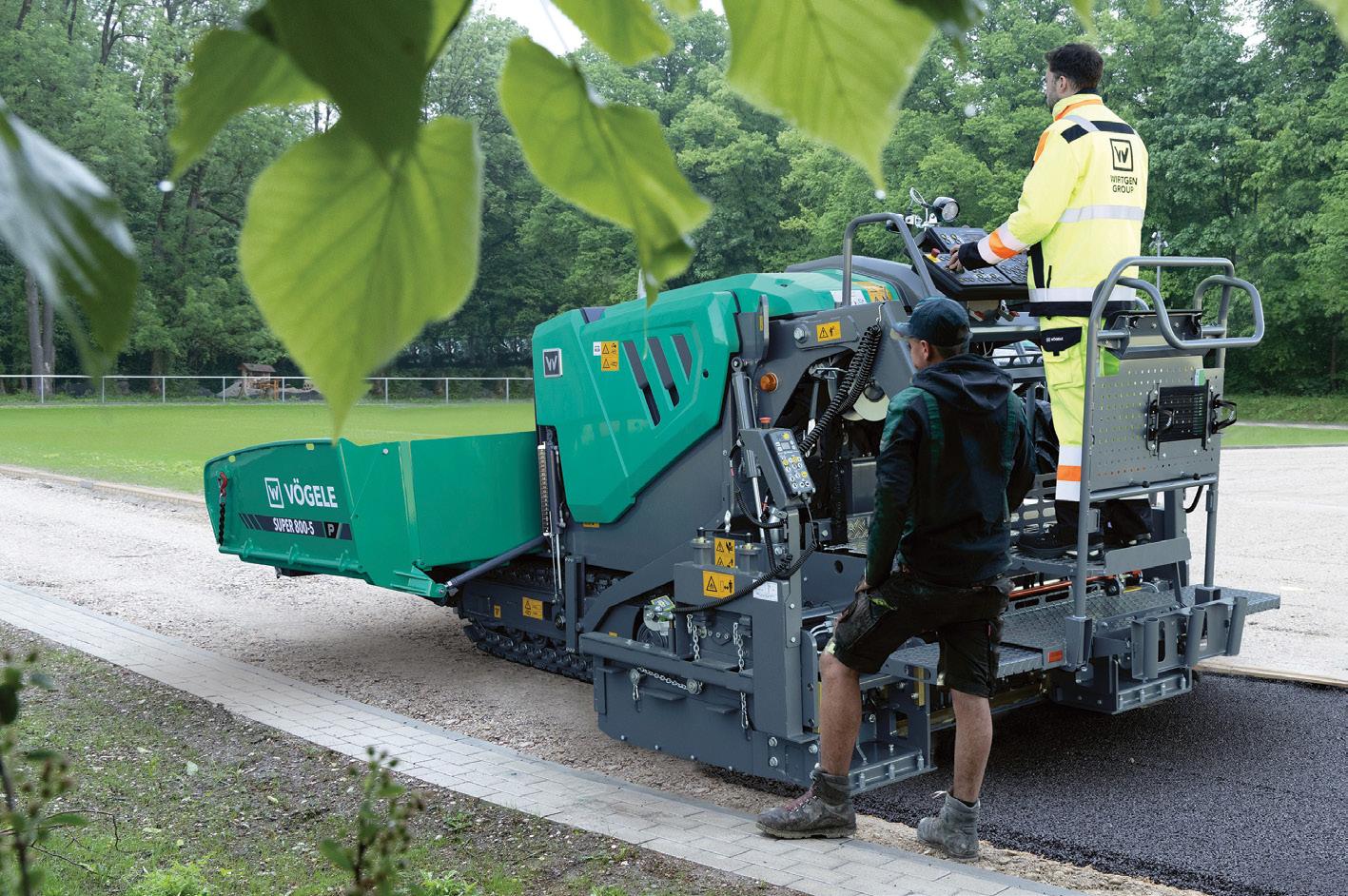
For its part, the compact SUPER 800-5 P is 14 feet 5 inches long and a mere 4 feet 7 inches wide, with a 74 hp engine and up to 330 tons per hour of paving capacity.
Vögele’s also upgraded ErgoPlus 5 operating system now includes a Paver Access Control (PAC) function - a ground-level control panel that lets operators start their machine, heat the screed, turn lights on and activate other systems without having to climb on top of the paver.
The company also introduced a Lighting Package Plus option for pavers and screeds with integrated LED lights to boost visibility for night-work or dark environments.
Vögele pavers can also benefit from high-tech tools such as Smart Pave digital paving control and AutoTrac automatic steering and screed width control, to boost efficiency and productivity.
Volvo unveiled the new SD70 soil compactor at CONEXPO 2026 and has also upgraded its existing SD45 and SD75 compactors and PT125 pneumatic tire roller.
Weighing 14,672 pounds, with a 66-inch drum width, the SD70 is part of Volvo’s value line of soil machines. Designed to complement the existing SD75 soil compactor, the SD70 is geared towards entry-level or rental customers, says Zupanc.
Volvo Construction Equipment also
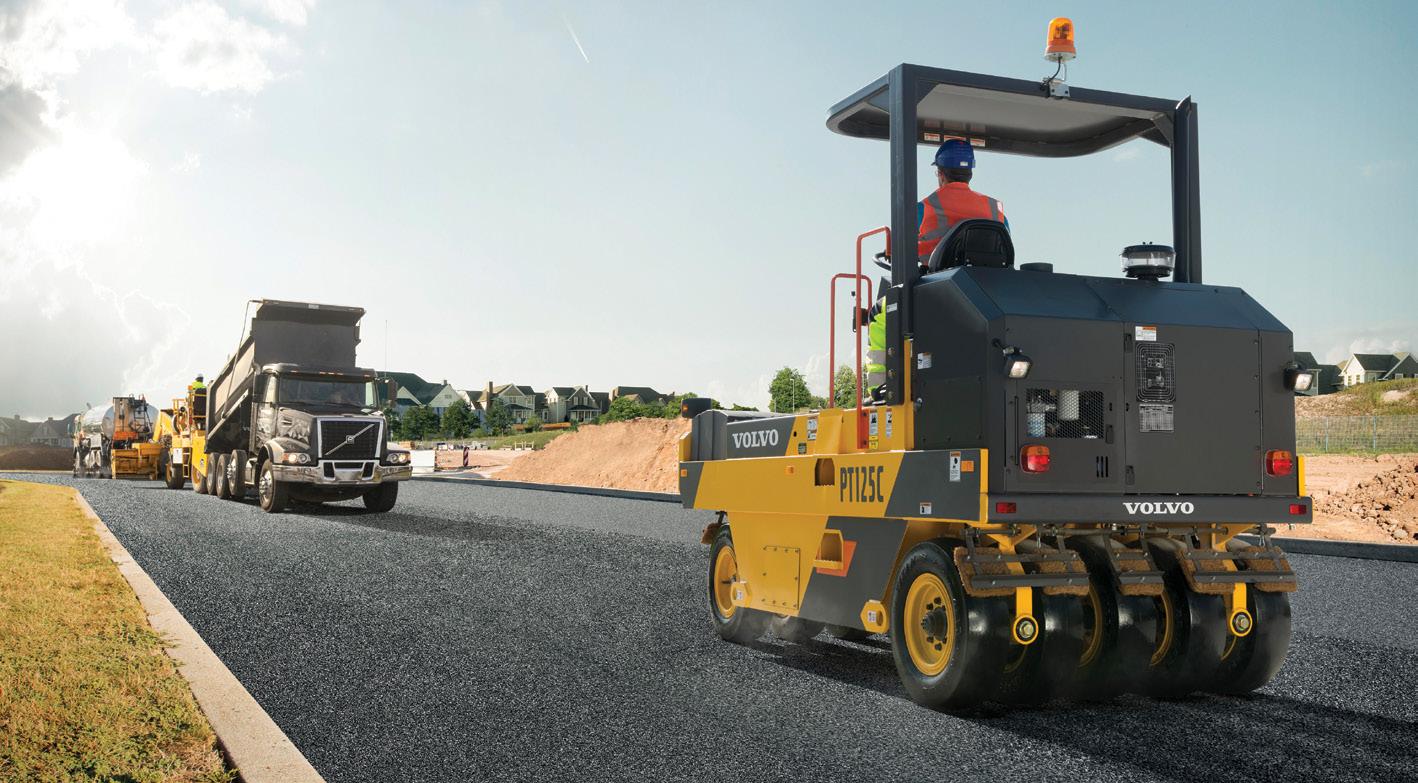
recently upgraded its existing SD45 and SD75 soil compactors and PT125 pneumatic tire roller. These machines now sport a common electrical architecture to simplify maintenance and repairs. Upgrades to the human-machine interface (HMI) include a five-inch colour LCD display, USB charging port, new software and advanced keypads. All three models have been equipped for over the air software updates as they become available, eliminating the need for a technician to perform updates in-person.
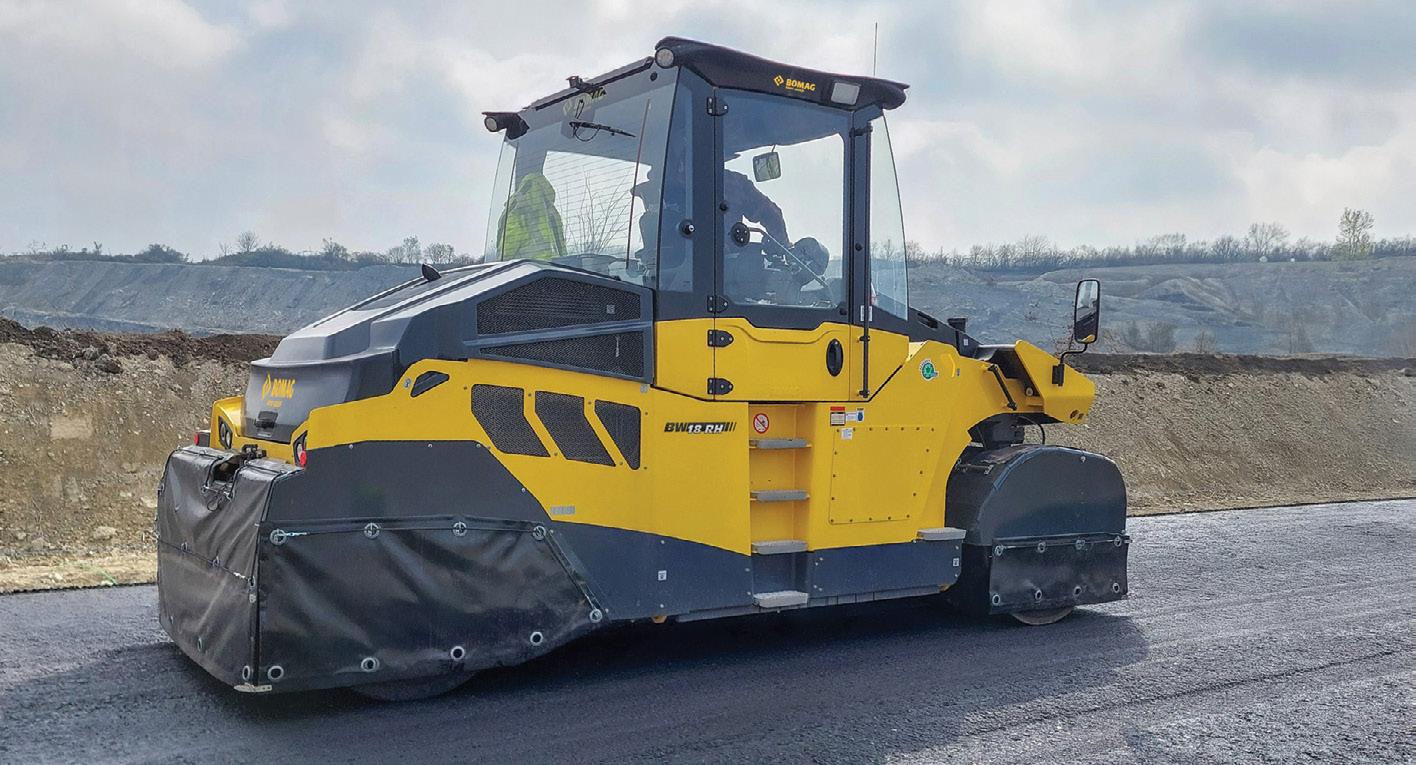
BOMAG showcased the new BW 18 RH pneumatic tire roller at CONEXPO 2026.
The fuel-efficient BW 18 RH delivers “consistent, uniform compaction through precise pressure control and balanced weight distribution, a key factor for achieving high quality asphalt finishes. Combined with excellent visibility and an intuitive operator interface, it helps contractors improve efficiency, reduce rework, and maintain consistent results across every pass,” states Foster Ladlee, Product Marketing Manager, Asphalt Rollers, BOMAG Americas.
The BW 18 RH pneumatic tire roller features a 74.2 hp Deutz engine, weighs 39,683 pounds, and has a compaction output of 90 to168 tons per hour at a lift thickness of 4 to 5 inches.
BOMAG also offers automation solutions such as Asphalt Manager - a system that aids the asphalt compaction process to produce optimal results.
Ultimately, the next generation of paving and compaction equipment reflects a pointed move by the industry toward the adoption and use of proven cutting-edge technologies as a means to improve project efficiencies and outcomes, and an intention to ensure that it’s now a foundational component for construction fleets.
For contractors, the technology-enabled equipment provides an essential advantage during a time of continued labour constraints and rising productivity demands. Whether realized through intelligent compaction, integrated 3D controls or electrified machines suited to urban environments, today’s heavy equipment innovations are helping crews work smarter, safer and more efficiently.
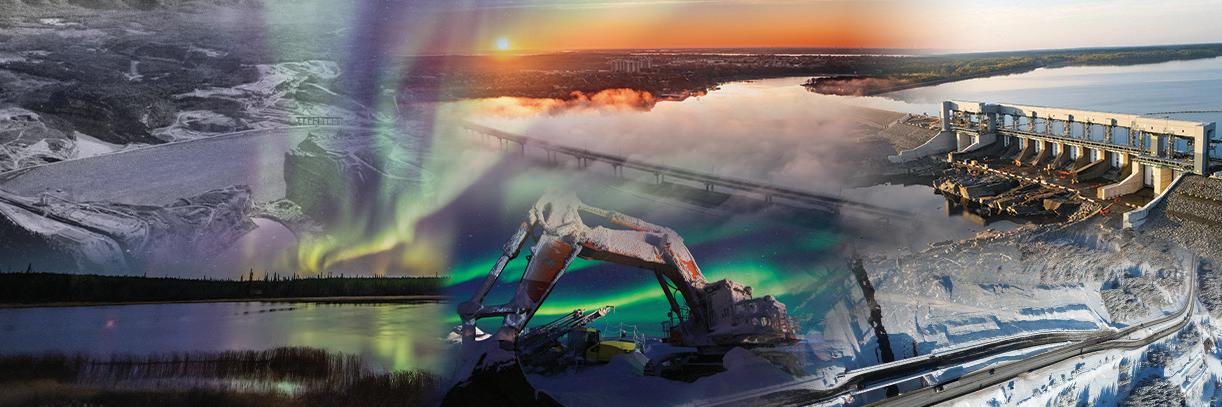
For 85 years, Kiewit has worked alongside Canadian communities, partners and employees to build the infrastructure that moves Canada forward. From our earliest work in the North to iconic projects reaching from coast to coast to coast, our story has been defined by the people and partnerships that make progress possible. With more than 4,000 Canadian employees and trusted local partners, we’ve been proudly building Canada since 1941 — and together, we’re just getting started .

RYAN TONES President, Peter Kiewit Sons ULC
“After more than 85 years in Canada, we’re excited about the opportunities ahead and the new markets we’re entering. As we expand into markets like nuclear, water and wastewater, and defence, Kiewit remains focused on creating long-term opportunities for our people and partners while supporting Canada’s evolving infrastructure needs. Our greatest asset has always been our people, whose expertise continues to deliver critical projects across the country.”

JEAN-PIERRE GAUTHIER
Senior
Vice President, Peter Kiewit Sons ULC
« Qu’il s’agisse d’assurer l’approvisionnement énergétique du Canada grâce à des infrastructures essentielles ou de relier les Canadiens avec des réseaux de transport en commun indispensables, Kiewit continuera de s’appuyer sur ses 85 ans d’expérience pour réaliser des projets d’envergure de classe mondiale, construits par des Canadiens, pour des Canadiens. »
The company is hired to mobilize and transport all equipment and supplies needed to build a crude-oil pipeline from an oil refinery in Norman Wells, Northwest Territories, to the Alaskan coast.
Kiewit constructs the tunnel that runs underneath the Fraser River connecting Richmond to Delta, British Columbia. The project is the first of its kind in North America.
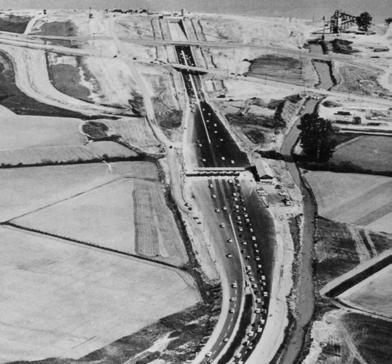
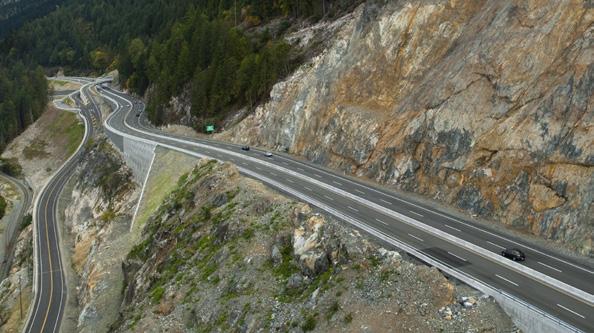
48 new bridges and structures are built, along with 65 kilometres of highway upgrades requiring 450,000 tonnes of asphalt in preparation for the 2010 Winter Olympic Games.

The project relocated major highway lanes and active rail lines, using 3D imaging to plan complex work and incorporate more than 50 temporary detours.
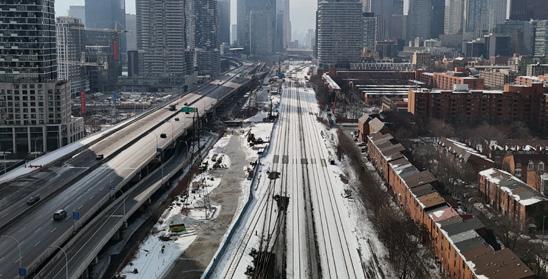
After a two -ye ar development phase, Kiewit was selected to move forward with the Union Station Enhancement Project in Toronto, the first major infrastructure project in Canada to be procured using the alliance contracting model. Part of Metrolinx’s GO Expansion program, the project includes the expansion of rail, platforms, and below- grade concourses at Union Station, North America’s second-busiest rail station.
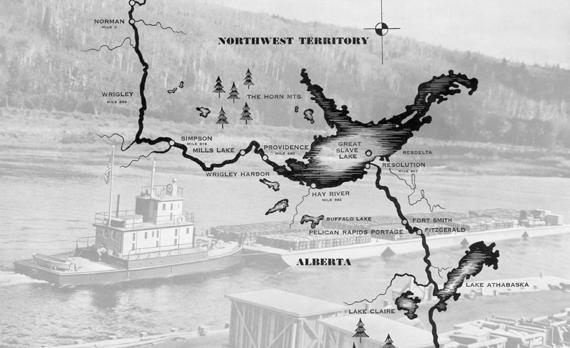
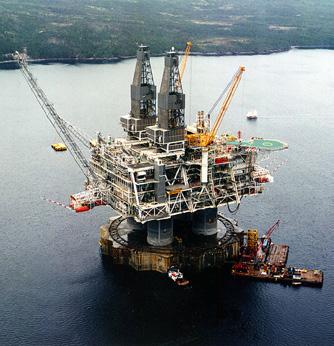
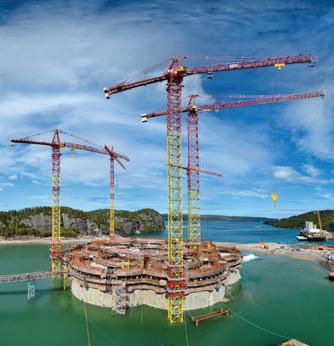
Kiewit puts its offshore expertise to use. Designed to withstand the harshest oceanic conditions on Earth, Hibernia’s gravity-based structure (GBS) is built with 46-centimetre-thick concrete outer walls. In 2011, Kiewit starts work on a stand-alone GBS for the Hebron oil platform.
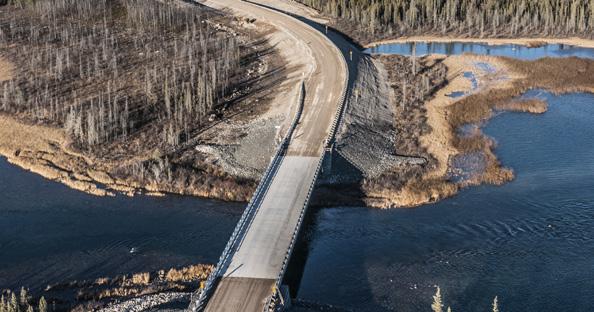
This 97-kilometre all-season gravel highway replaces a winter-only ice road and provides the remote community of Whatì in the Northwest Territories with safe, year-round access to essential services.
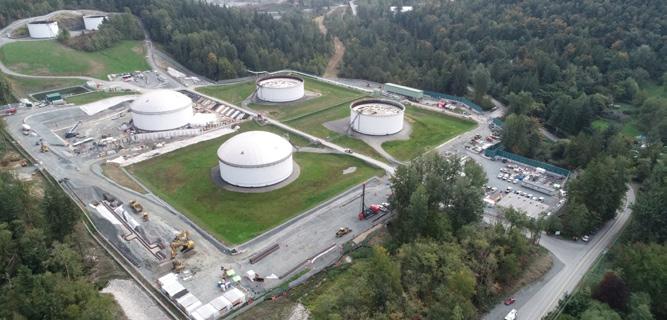
Kiewit completes construction of the Lower Mainland section of the Trans Mountain Expansion Project in British Columbia.

Join our all-star lineup as they demystify how data synthesis drives smarter decisions and cost savings
JUNE 9TH at the Sandman Signature Mississauga Hotel

Limited Seating Register Today
$60 includes breakfast and refreshments





These are certainly interesting times for everyone involved in the Canadian construction industry. A combination of continued geopolitical pressures, ongoing trade tension with the United States and sustained price volatility has created a cloud of uncertainty and unpredictability that’s challenging the wherewithal of general contractors across the country. Despite these negative forces, however, the industry continues forward, forging the next chapter of Canadian infrastructure development.
It’s a resilience that should be celebrated and represents one of the many qualities of the industry, along with its perseverance and innovative spirt, that makes Link-Belt proud to sponsor On-Site magazine’s 2026 Infrastructure Report.
With more than a century-and-a-half of history, the Link-Belt brand remains committed to helping support the industry through the delivery of solutions that enhance efficiency across construction operations.
However, Link-Belt is about more than the machines we manufacture or the cutting-edge technologies we integrate. We believe wholeheartedly in the development and strengthening of communities and the fostering of partnerships and collaboration.
And so, with this philosophy in mind, we’re looking forward to continuing our tradition of working alongside the industry to continue driving efficiencies, overcome the challenges ahead and support the development of critical infrastructure that will define Canada going forward.
Sincerely,
Chris Wise Director of Marketing & Distribution Development Link-Belt Excavators

Where the real work is happening in 2026.
BY ON-SITE STAFF
There’s currently no shortage of infrastructure announcements on the Canadian construction landscape. In fact, federal investment is already well into the hundreds of billions. Provincial allocations promise new transit networks, highways and energy systems. And municipalities across the country are putting forward their growing lists of projects, most of which tied to population growth and aging assets.
In November 2025, the Canadian federal government made the announcement of a significant $115-billion investment in infrastructure, including $51 billion for local infrastructure, aimed at strenghtneing communities across the country.
It’s an announcement that satisfied the majority of stakeholders within the industry. In fact, Rodrigue Gilbert, President of the
Canadian Construction Association (CCA), believed the funding commitment to be the right first step on Canada’s infrastructure road ahead.
“Canada has underinvested in critical infrastructure for decades,” he said. “These investments reflect the essential role of housing-enabling infrastructure in addressing the national housing shortage and committing substantial resources to these projects.”
Following the big funding commitments, the Canadian construction landscape in 2026 is one that can be defined less by future announcements and instead more accurately by a host of major projects that are already either in procurement, pre-construction or active build.
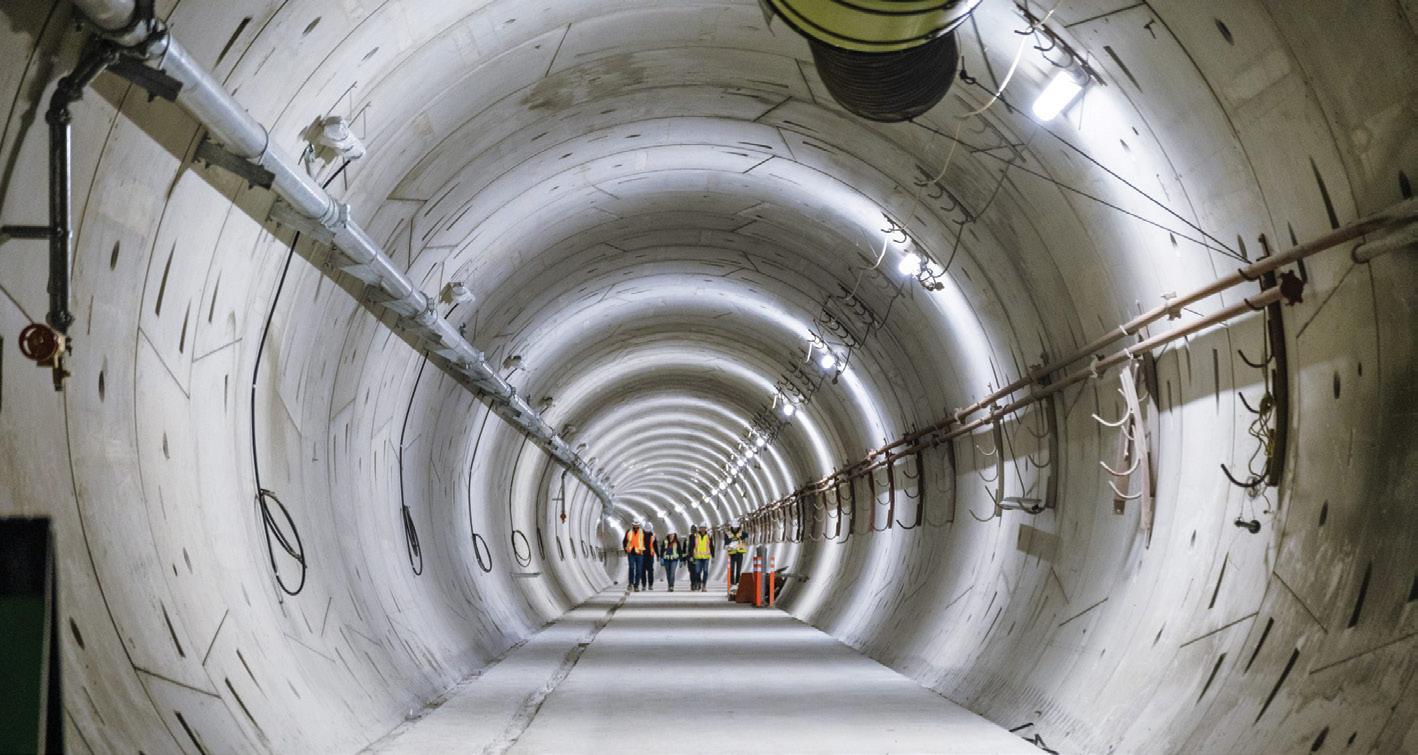
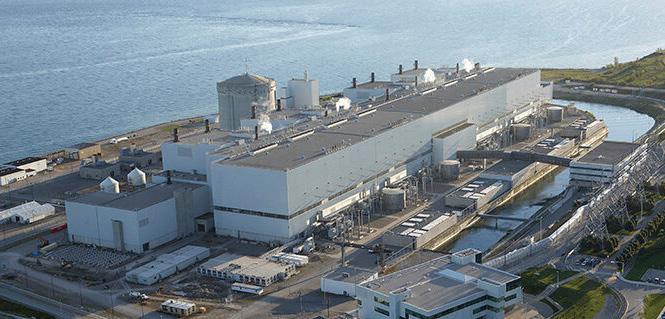
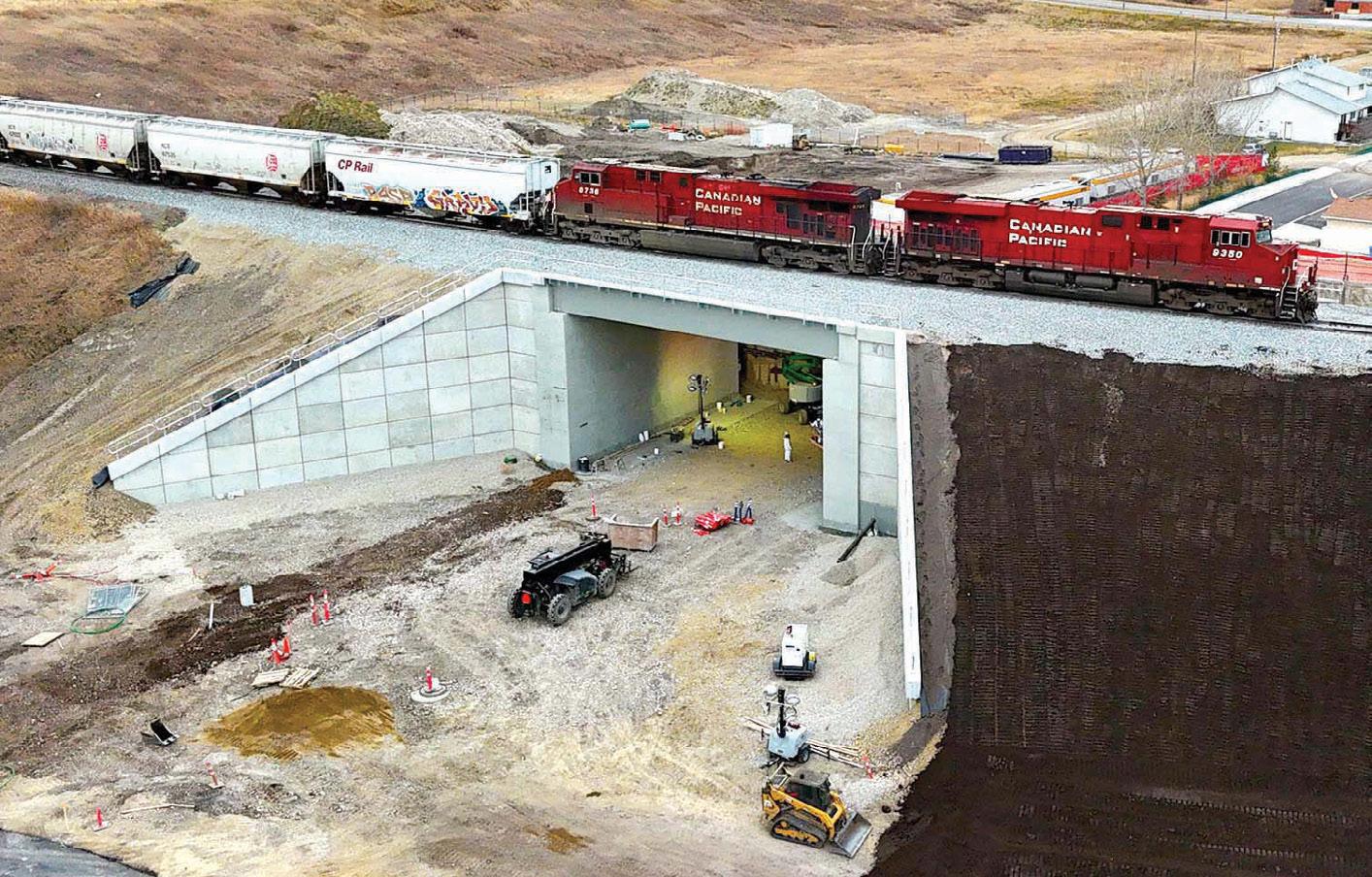
Many of the larger projects currently dominating heavy civil construction activity in Canada today involve work related to urban transit, energy infrastructure, transportation corridors, port expansions and regional utility systems. However, there’s also a wide range of smaller regional work underway or planned.
So, considering the scope of projects in front of construction firms across the country, what follows is a snapshot of the work actually happening right now, some of the factors impacting progress and where general conractors fit into the mix.
It might not surprise anyone that Ontario remains, by a wide margin, the largest infrastructure construction market in the country. Boasting a 10-year capital infrastructure plan that exceeds $190 billion, the province is paying significant focus toward the development of energy systems and a number of large transit projects.
The Ontario Line, which will run approximately 15 kilometres through Toronto, linking the Ontario Science Centre area to Exhibition Place, is a poject that involves extensive tunnelling, station construction
and systems integration.
In addition, the Eglinton Crosstown West Extension will extend light rail service westward toward Mississauga, while the Scarborough Subway Extension is set to replace the aging rapid transit infrastructure in the east end of Toronto.
Regionally, Metrolinx’s GO Expansion project promises to transform commuter rail across southern Ontario, which includes the electrification of rail corridors, new stations and grade separations.
Ontario’s energy sector is also generating a significant number of new infrastructure builds, including the Darlington Small Modular Reactor project, which is expected to deliver approximately 300 megawatts of electricity, helping to position Canada as an early adopter of grid-scale SMR technology.
Perhaps most notably, however, Is the early infrastructure work that’s happening in northern Ontario tied to the Ring of Fire. Road access and power transmission corridors are currently moving through environmental review and procurement stages with mulitple phases of work to be rolled out over decades to come.
Infrastructure activity on Canada’s west coast, on the other hand, is being driven primarily by urban growth, energy exports and international trade.
Metro Vancouver’s transit expansion remains one of the largest civil construction projects in the province.
And there’s also the Broadway Subway Project, currently under construction, which will extend the city’s Millennium Line westward through Vancouver’s busiest transit corridor, as well as the Surrey–Langley SkyTrain Extension that’s set to extend rapid transit deeper into the Fraser Valley.
Beyond transit and transportation, British Columbia’s energy infrastructure represents another major driver of growth and activity. The LNG Canada project in Kitimat is one of the largest private-sector construction projects ever undertaken in Canada with an estimated investment exceeding $40 billion and work that includes marine infrastructure, liquefaction units, pipeline connections and supporting utilities.
In addition, other LNG projects, like the Ksi Lisims LNG, proposed for northern B.C., could trigger further significant infrastructure investment to support the development of transmission lines, pipelines and port facilities.
Meanwhile, as a result of increasing trade with Asia, Canada’s Pacific ports continue to expand. And, given the Port of Vancouver’s estimates that more than 150 million tonnes of cargo is handled at the port on an annual basis, its expansion becomes a strategic national priority.
Somewhat contrasting development is occurring in Alberta, Saskatchewan and Manitoba where infrastructure investment continues to be tied closely to energy systems, export corridors and industrial development.
Driven largely by growing investment in energy transition infrastructure, including hydrogen production facilities, carbon capture systems and high-capacity transmission lines, western Canadian construction is helping to lead in more ways than one.
New critical minerals and industrial corridors, particularly across northern Saskatchewan and Manitoba, are also being prioritized and facilitated by federal and provincial policy, opening up significant opportunities for heavy civil contractors specializing in pipelines, transmission systems and industrial site development.
Beyond construction linked to energy and critial minerals, the Calgary Green Line LRT is the largest transit infrastructure project currently underway in Alberta. While the project has undergone multiple scope revisions and funding negotiations to this point, early works and staging activities continue.
In Quebec, the province’s infrastructure pipeline is made up of a number of large transportation projects alongside a range of municipal renewal work.
The most prominent project currently
underway is the Contrecoeur Container Terminal expansion at the Port of Montreal. Once complete, the new terminal is expected to add more than 1 million TEUs of annual container capacity.
Expansion of the Réseau express métropolitain (REM) automated rail network, another one of the largest public transit projects in Canadian history, also continues.
And municipally, the province faces an abundance of infrastructure renewal needs, particularly with respect to the upgrading and refurbishment of existing water and wastewater systems.
In Atlantic Canada, the infrastructure focus is somewhat different when compared to the rest of the country. Rather than the development of large transit systems or energy megaprojects, the region’s pipeline is dominated by bridge replacements and highway upgrades.
The majority of bridges and highways across Nova Scotia, New Brunswick and Newfoundland and Labrador were built decades ago and are now in need of rehabilitation or replacement. And at the same time, coastal infrastructure, including ports and storm protection systems, is receiving investment as governments respond to increasing climate risks.
While individual projects across these provinces may be smaller than those in central and western Canada, the upgrades represent a significant amount of regional construction activity.
Beyond the work itself, there are a number of factors and influences that are serving to shape Canada’s infrastructure pipeline, impacting the speed and progress of projects across the country.
One of those factors - one that’s bearing increasing influence on the Canadian infrastructure landscape - is the growing role of Indigenous-led projects and partnerships.
Spanning energy, transmission and resource infrastructure, the impact of Indigenous communities continues to grow with their increasing participation as equity partners and project developers.
In fact, according to Indigenous Services Canada, approximately $18.13 billion has been invested in more than 14,000 projects to support Indigenous community infrastructure since 2016, with a signicant amount more to come as a means to help close the northern infrastructure gap.
The way in which infrastructure projects are delivered in Canada is also evolving, undergoing a shift toward greater flexibility.
Although public-private partnerships (P3s) remain widely used for large transportation projects, particularly in Ontario and British Columbia, some governments are experimenting with alternative delivery approaches, including progressive design-build and construction management models, particularly on complex urban projects.
It’s a shift in model philosophy taking place among many and is driven primarily by lessons learned from past megaprojects that became bogged down by rigid contract structures. As a result, contracotrs and firms are instead navigating a wider range of procurement frameworks to ensure greater flexibility.
Although estimates from the Canadian Construction Association reveal that Canada’s construction industry now represents roughly 7 to 8 per cent of national GDP, employing more than 1.5 million workers, the industry is also facing a workforce challenge, threatening the success and viability of future infrastructure projects.
In fact, forecasts from BuildForce Canada indicate that the sector could require somewhere in the region of 380,000 additional workers by 2034. It’s a predicament that’s being driven by both
demand growth and the projected retirement of more than 260,000 experienced workers, resulting in labour pressure that’s already shaping where, and how, major projects progress across the country.
Even with strong political support and infrastructure investment, financing and sequencing also remain major constraints with respect to the actual development of projects.
Going forward, governments will be forced to balance capital spending with fiscal pressures, staggering projects across multiple budget cycles. In addition, construction inflation has also complicated project planning, with rising material and labour costs requiring governments to revisit budgets and project scopes.
In other words, the infrastructure pipeline in Canada is substantial. But predicting its rollout will not be easy, with a clear understanding of project starts likely reliant on the finalization of individual project financing structures.
Despite the challenges, the opportunities in front of the country’s general contractors as a result of the government’s infrastructure plans are immense. From subway tunnels in Toronto to LNG terminals on the Pacific coast and transmission lines in the country’s northern resource regions, the infrastructure boom that’s currently taking shape across multiple provinces and sectors simultaneously is generational.
However, in order to realize the opportunites, says CCA’s Gilbert, organization and focus at every phase of development will be critical.
“...we need a workforce strategy that reflects real labour-market needs, fair, open, and transparent procurement policies, supply chains that remain resilient under new domestic sourcing rules, and internal trade policies that break down barriers between provinces. Without these elements, even the strongest infrastructure plan risks stalling on implementation.”
Subs paid. Stat Decs in place. Let’s rock. Subs paid. Stat Decs in place. Let’s rock.

GCPay keeps work flowing, so you can finish on schedule and on budget.
Move away from tedious manual sub-trade payments, and put an end to headaches. Easily manage contracts and meet deadlines. Guarantee stat decs are present and error free. Stop back and forth emails with automatic and custom stat dec generation. All with ERP integrations with platforms like Viewpoint, CMiC, Acumatica and Sage.
Help your entire team complete more projects—smoothly. www.GCPay.ca
BY SEAN TARRY
As Canada enters what many are calling a once-in-a-lifetime infrastructure build-out, which includes an array of projects from transit expansions and water systems to energy corridors and climate-resilient structures, the conversation among industry professionals around procurement is shifting. And it’s a shift that’s being driven by the fact that project success is no longer being defined solely by delivering on time and on budget. Instead, it’s increasingly becoming about the way projects are structured from the outset, including how risk is allocated, how teams collaborate and how information flows between stakeholders.
At the centre of the conversation is a growing recognition that traditional procurement models, while familiar, are often not the right fit to tackle the complexity, volatility and scale of modern infrastructure delivery. In their place, a mix of progressive, collaborative and data-driven strategies is emerging, going a long way toward reshaping how contractors engage with owners, consultants and trades.
For public owners, procurement is more than a process. It defines expectations, allocates risk and establishes the working culture that will carry through the life of a project. According to Tom Sparrow, Chief Construction Officer for the City of Winnipeg, the

responsibility to ensure that foundation is significant.
“We set the tone for the entire project,” Sparrow explains. “We’re the ones developing the RFQs, the RFPs and the statement of requirements. If we don’t align internally, whether that’s with council, ministers or leadership, we risk going down a rabbit hole before the project even begins.”
That “rabbit hole” is a familiar one for contractors where they’ll find incomplete scopes, unclear expectations and misaligned risk allocation that ultimately lead to disputes, delays and cost overruns. in light of this, Sparrow emphasizes that procurement must evolve from a reactive exercise
into a predictive one, leveraging past lessons and forward-looking tools to anticipate challenges before they surface.
“We need to move from reactive to predictive,” he says. “That means using the right tools and working as a true teamowners, contractors, designers - because this can’t be a win-lose environment anymore.”
For general contractors, procurement strategy doesn’t stop at winning the job. It extends deep into the supply chain, particularly as projects become more complex and delivery models more collaborative.
Jeremy Bing, Project Sponsor with

Kiewit Construction Services ULC, points out that one of the biggest related challenges is bringing subcontractors into alignment early, especially under alternative delivery models.
“It’s a real teaching and learning process,” Bing says. “When you’re working in progressive or collaborative models, subcontractors need to understand what they’re getting into before they come on board, including what the expectations are, how involved they’ll be during development and what success looks like.”
This early alignment is critical, because in traditional models, subcontractors often engage well after key decisions have been made. Within progressive models, they may be expected to contribute during design development, risk planning or scheduling.
“If the general contractor and owner spend months aligning during development, but the trades aren’t brought up to speed, you create a disconnect,” Bing adds. “That’s where problems start.”
While procurement models are evolving, contracts remain the backbone of project delivery. However, they also pose a potential challenge if not handled carefully.
John Paul Ventrella, Partner at Glaholt Bowles LLP, highlights how standard contracts, particularly those based on Canadian Construction Documents Committee (CCDC) templates, are often heavily modified.
“These contracts are meant to be neutral,” Ventrella explains. “But supplementary conditions can significantly shift the
risk profile, sometimes in ways that aren’t fully understood by all parties.”
Key areas of concern include notice provisions, change order structures and dispute resolution processes. Seemingly minor adjustments, he explains, can have major impacts further down the line, particularly when it comes to claims and entitlements.
“One of the biggest issues is how changes are documented,” he says. “If your change order language requires all impacts to be captured upfront, including delay and costs, you may be limiting your ability to recover later if those impacts aren’t fully understood at the time.”
He also goes on to warn against what some in the industry call the “weaponization of contracts” where overly aggressive risk transfer leads to the facilitation of adversarial relationships and early disputes.
“If you put risk on parties who aren’t best equipped to manage it, you’re going to end up in conflict,” he says. “And that shifts the focus away from building the project to fighting over it.”
In light of the challenges inherent in some traditional procurement models, progressive alternatives like Progressive Design-Build and Alliance contracting are gaining momentum throughout the industry.
For Sparrow, the appeal is clear and represented by better alignment, clearer scope definition and more realistic pricing.
“In traditional models, you might be pricing a project at 30 per cent design,” he
says. “That creates enormous uncertainty, especially in today’s environment where costs can change rapidly. Contractors price that risk in. It’s only natural.”
Progressive models, on the other hand, aim to reduce that uncertainty by allowing design to advance, often to 70, 80, or even 90 per cent, before final pricing is locked in.
“That gives everyone a clearer understanding of the scope,” Sparrow explains. “It allows contractors and their trades to sharpen their pencils because they know what they’re pricing.”
Bing agrees, noting that these models improve not just pricing accuracy but also team dynamics as well.
“When you spend time in the development phase aligning on risks, schedule and scope, there are fewer surprises later,” he says. “And when challenges do come up, it’s easier to solve them together.”
Despite the promise presented by progressive procurement models, not all implementations are successful. One common pitfall is the creation of hybrid or “Frankenstein” models, which are contracts that attempt to blend multiple delivery approaches without fully committing to any.
“I see that as a red flag,” Bing asserts. “It usually means the client hasn’t fully aligned internally on what they want to achieve.”
Instead, he advocates for a more deliberate approach involving the selection of a procurement model that best fits the project’s goals, constraints and risk profile.
“There’s no one-size-fits-all solution,” he says. “The right model is the one that aligns with your objectives and the one that your team is capable of delivering.”
As is the case with most modern advancements, today’s procurement strategies are increasingly connected to and supported by digital tools, from building information modeling (BIM) to AI-driven analytics, offering ways to enhance decision-making and reduce risk. But they also come with new challenges concerning data ownership, integration and usage.
“We’re generating more data than ever through the use of models, drone surveys and telemetry,” Ventrella says. “The questions are: How do we manage that data contractually? Who owns it? How is it shared? And how is it used in disputes?”
Beyond management and ownership of the data, Bing sees significant potential in leveraging these tools to improve construction efficiency.
“Our industry has lagged behind others in productivity gains,” he points out. “This is our chance to catch up, by using AI and digital tools to improve how we build.”
Sparrow adds that predictive analytics may also be used to inform deicisons around procurement and project delivery.
“If we can identify risks six or eight months in advance, whether it’s schedule, cost escalation or quality issues, we can act on them early,” he says. “That’s where the real value is.”
Despite the strength of the prcourement strategy used, however, disputes will inevitably happen on construction projects. And when they do, it’s important to manage them properly.
Traditional models often rely on resolution processes involving negotiation, mediation, arbitration and litigation that can take years to complete. Progressive models, by contrast, promote early intervention and

continuous resolution.
“We’re trying to avoid disputes altogether,” Ventrella says. “But when they do arise, the goal is to resolve them quickly and keep the project moving.”
As a result, tools such as dispute resolution boards, project mediators and adjudication are starting to receive attention as viable alternatives.
“One of the most underused tools is the project mediator,” Ventrella notes. “If you appoint someone at the start - someone both parties trust - you can resolve issues before they escalate.”
Sparrow agrees, but stresses that prevention is still the priority.
“The last thing we want is to go down that legal route,” he says. “We need to use the tools we have to identify issues early and work through them as a team.”
Beyond contracts and models, perhaps the most significant current shift in procurement is cultural.
“There’s a real move toward a one-team approach,” Bing says. “People want to work in environments where they’re collaborating, not fighting.”
This shift is particularly important in an industry facing labour shortages, increasing complexity and rising expectations around sustainability and performance.
“When teams feel aligned and supported, you get better outcomes,” he adds. “It’s also better for retention because people want to be part of successful, collaborative projects.”
Sparrow sees collaboration as an industry-wide opportunity, but one that requires leadership from both public and private sectors.
“We need more owners in the room, more dialogue, more education,” he says. “This isn’t just a senior management issue. It needs to reach the front lines.”
As investment in Canadian infrastructure continues unabated, procurement is increasingly being viewed as a strategic tool that can be leveraged by organizations as a means to increase productivity on projects and protect them against potential risk.
Achieving this, however, requires the willingness to adapt to new models, to embrace collaboration and to invest in the technology that will provide them with the predictivness they need to succeed.
It’s a shift that reflects an eagerness and readiness by leaders within the industry to respond to the infrastructure demand in front of them, and may serve as a reminder, too, that the way in which projects are procured ultimately influence how they’re delivered.
“We’ve been dealing with the same issues for decades,” Sparrow reflects. “Now we have an opportunity to do things differently - to learn, collaborate and build better.”
And in an era that’s increasingly being defined by complexity, it’s a shift in procurement philosophy that may prove to be one of the most important responses to challenges facing general contractors today.
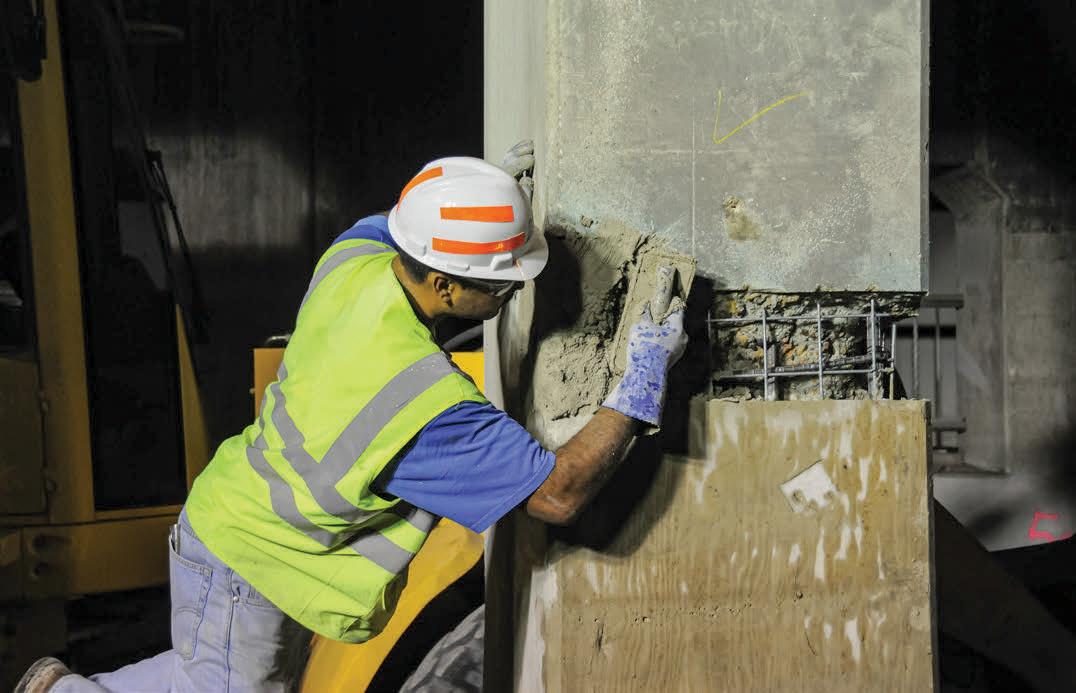
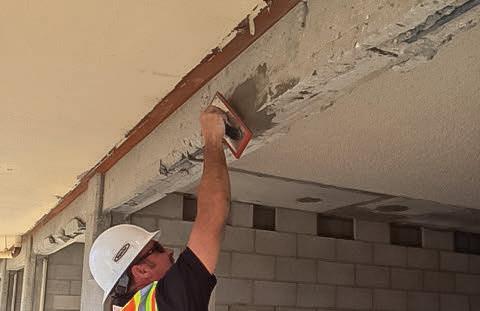
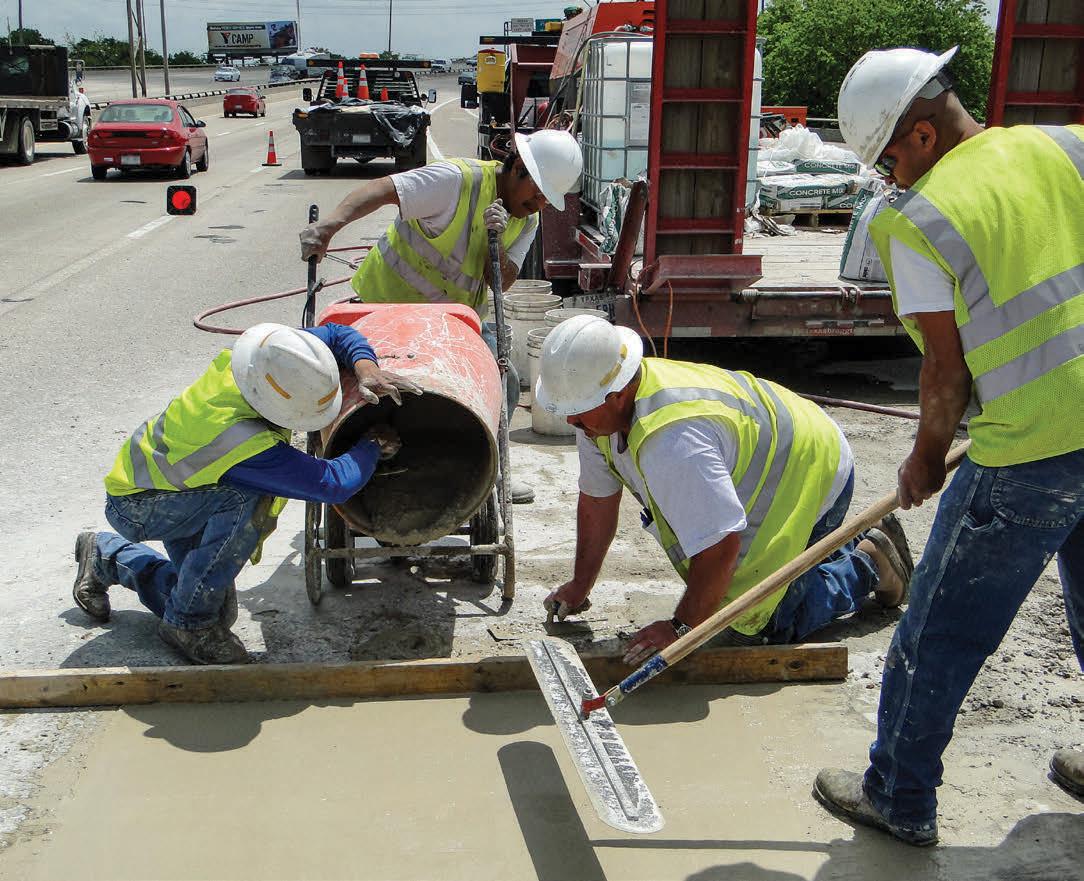
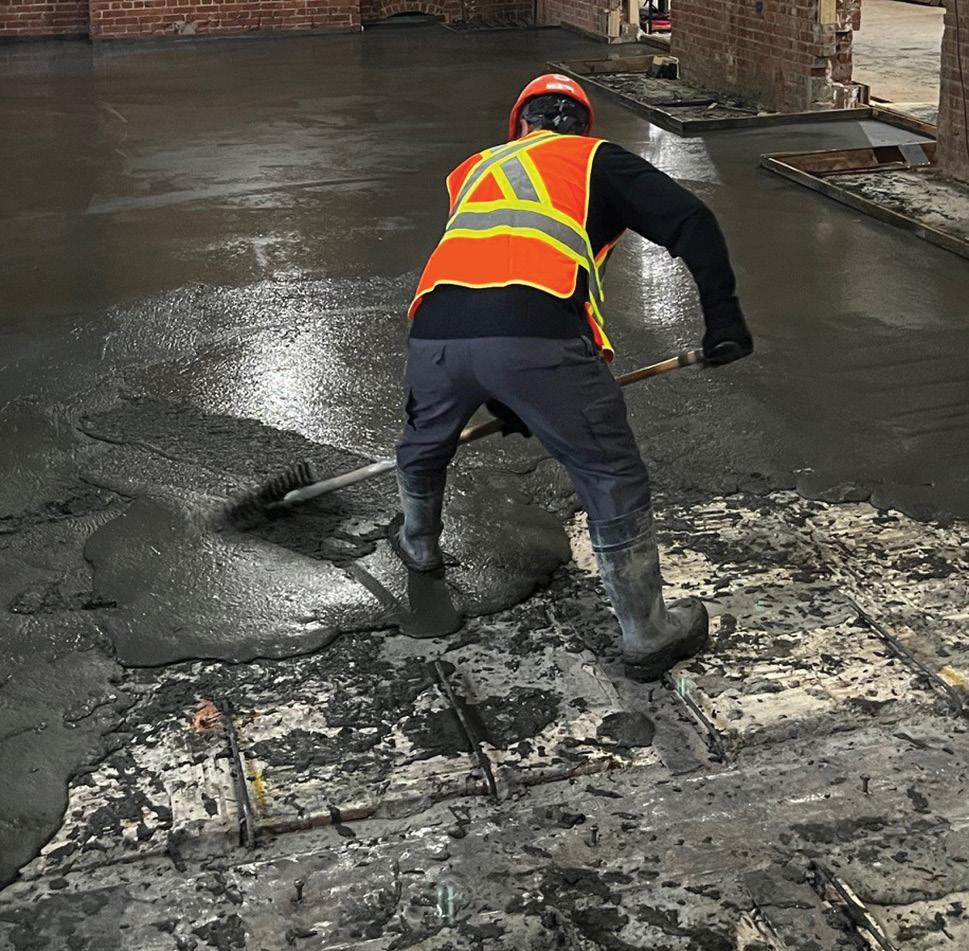
Rapid Set
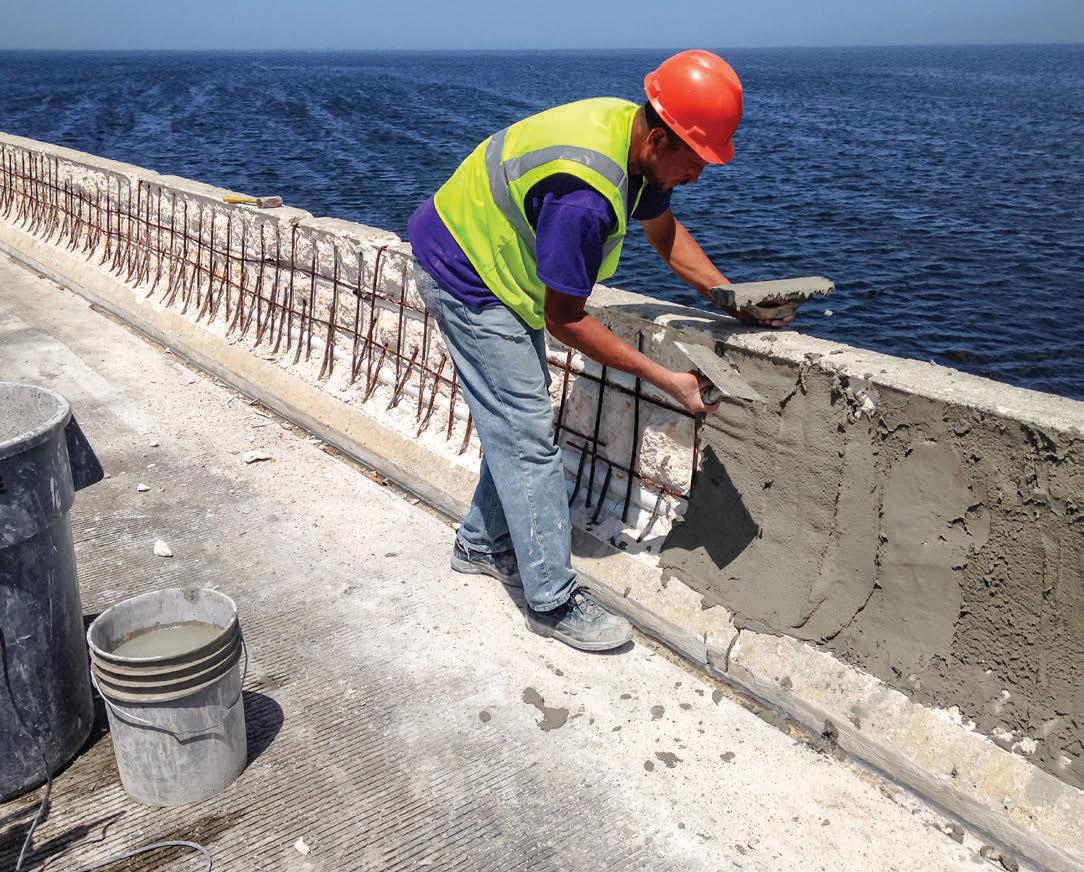
® structural repair materials help contractors restore concrete faster and more reliably across bridges, buildings and infrastructure.
• Repair faster to keep projects moving
• Get structures back in service sooner



• Gains strength quickly
• Durable structural repairs
• Reduces callbacks



See how contractors repair structural concrete faster.
From ultra-high-strength mixes and digital monitoring to low-carbon innovation, high-performance concrete is transforming how Canadian contractors build faster, more resilient and longer-lasting infrastructure in some of the world’s toughest conditions.
BY SEAN TARRY
As infrastructure projects continue to roll out, break ground and progress across Canada, expectations around quality, efficiency and cost have never been greater. As a result, the materials used on projects today have got to meet stringent strength and durability requirements while at the same perform with greater predictability under pressure.
As a means to respond to the rising expectations around projects, a number of contractors and firms across the country have started to explore the use of high-performance concrete (HPC) and ultra-high-performance concrete (UHPC) and what it might mean for their overall operations.
Once considered a niche material that was reserved only for use on the most complex and specilized jobs, many advanced concrete mixes have quickly become critical components in the development of infrastructure mega-pojects. In fact, as Hamid Nefoussi, Engineering and Architecture Technical Representative at MAPEI Canada explains, HPC and UHPC are actually helping to solve some of the more persistent challenges that have traditionally hindered progress made by contractors operating across Canada, namely extreme weather, tight timelines, labour constraints and rising expectations around sustainability.
“Advanced concrete technologies are playing a critical role in addressing the unique challenges of Canadian infrastructure,” he says. “Their low permeability and dense microstructure significantly reduce deterioration caused by chlorides and moisture, which are major concerns in Canadian conditions.”
Indeed, as a result of the extreme temerpatures and weather conditions that regions across Canada experience, from intense heat to bone-chilling cold, and everything in between, materials that are used on construction jobs are subjected to a greater degree of stress and therefore are more likely to deteriorate over time if they aren’t properly designed and manufactured.
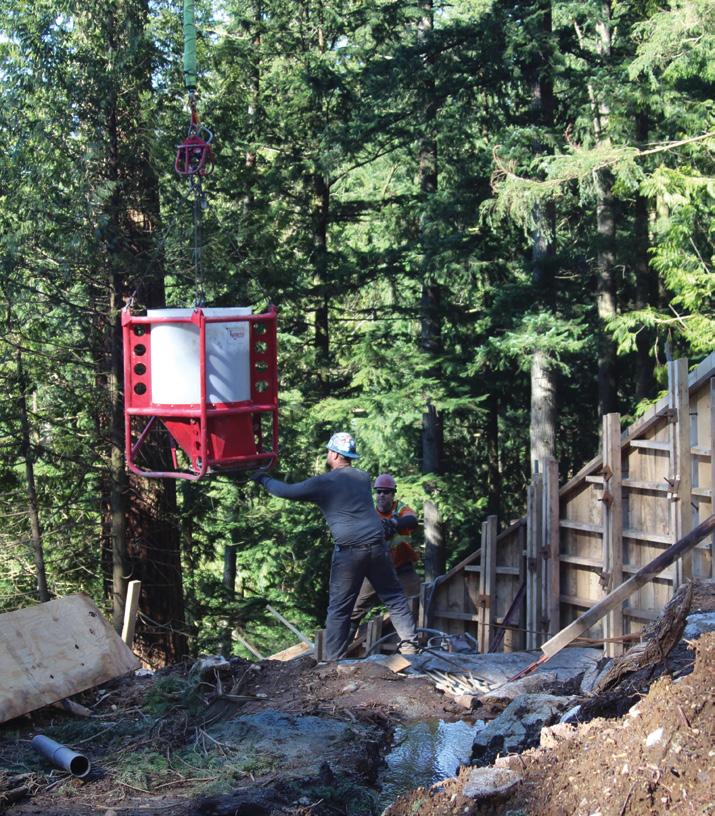
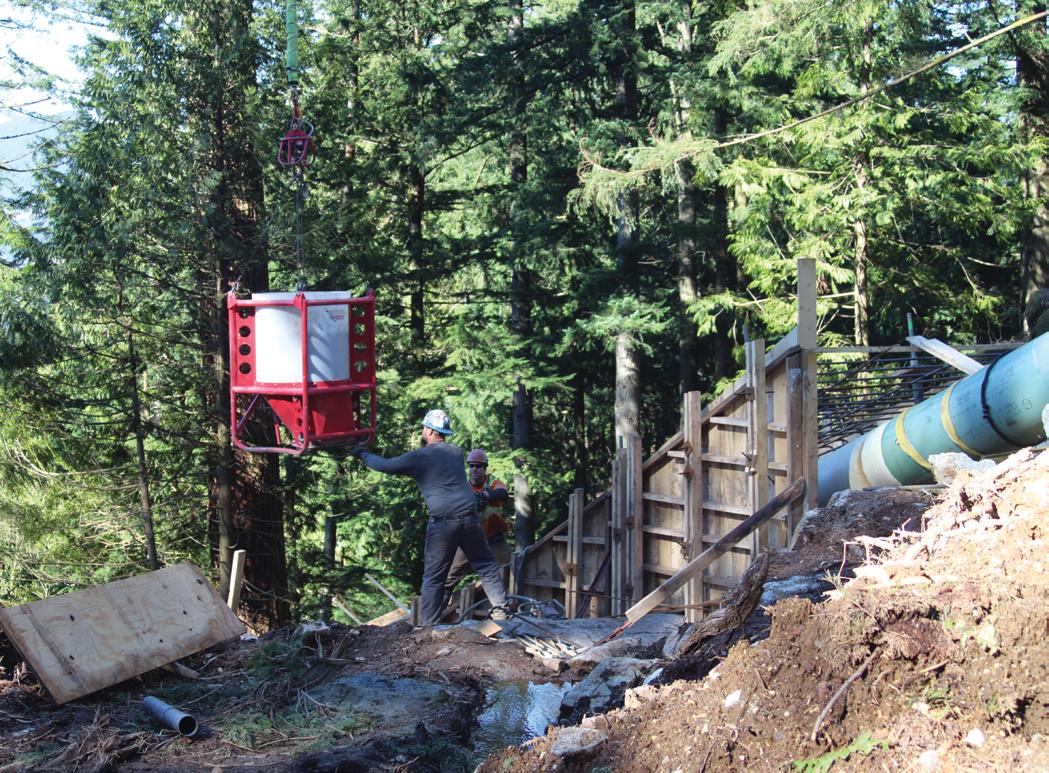
Fibre-reinforced concrete being used in thrust blocks installed along a steep mountainside pipeline near Hope, British Columbia.
Fortunately for Canadian contractors, a range of admixture systems and mix designs have been created with the specific intention of addressing the challenges posed by Canada’s extreme weather.
“We focus on performance, constructability and longevity under extreme conditions,” says Bill Corradetti, Divisional Sales Manager at Euclid Canada. “Our technologies are designed to produce dense, durable concrete with superior mechanical properties that can withstand freeze-thaw cycles, chlorides and prolonged moisture exposure.”
Other innovations in admixtures are currently being developed to, for instance, advance the protection of concrete even further from internal pressure during freezing and to limit the ingress of water and chlorides. These breakthroughs continue to advance the quality and durability of materials available to contractors. And, as Shane Mulligan, Sustainability Market Manager at Heidelberg Materials points out, they’re also breakthroughs that translate directly into longer-lasting infrastructure.
“Modern concrete designs leverage advanced admixtures and supplementary cementitious materials to create a much denser, more chemically stable microstructure,” he explains. “This significantly improves resistance to chloride penetration, sulfate attack and other durability challenges.”
Beyond durability, one of the most significant advantages available to contractors that use HPC and UHPC is in the strength of the mixes, and what that strength enables.
Ultra-high-performance concrete, for example, which boasts impressive strength and durability, allows engineers to design thinner, lighter structural elements without sacrificing performance. It’s an advantage that’s recognized by Mulligan who also sees gains in efficiency.
“UHPC offers a counterintuitive opportunity,” Mulligan says. “While it can be more carbon-intensive per cubic metre, it allows for less overall material use because you can achieve the same structural performance in a smaller section.”
IMAGE COURTESY OF EUCLID CHEMICALS.
This efficiency posed by the advanced material serves to be particularly useful in a number of different settings and scenarios. Nefoussi points to bridge deck overlays and repair applications as some of the best examples of its use.
“UHPC’s high mechanical strength and fibre reinforcement allow for thinner sections and improved crack control,” he says. “This is critical for extending service life and improving structural reliability.”
Although performance seems to be a central pillar to the advantages of using advanced materials in construction, they must also offer the flexibility to meet the demands of today’s fast-paced projects and jobsites. Coradetti suggests that current concrete technologies are hitting that mark, often surpassing the expectations of contractors.
“We’ve seen major improvements in constructability through the use of high-range water reducers and viscosity-modifying admixtures,” he explains. “These allow for highly flowable concrete that can be placed easily in heavily reinforced sections without segregation.”
Because of these qualities, HPC and UHPC can serve to be particularly useful for bridge piers, shear walls, reinforced foundations, or any other jobs where it might be a challenge to place traditional mixes. It’s an advantage that Coradetti highlights in a real-world application involving work done as part of a hydroelectric project near Hope, British Columbia, where fibre-reinforced concrete was used in thrust blocks that were installed along a steep mountainside pipeline where accessibility was limited.
“The use of macro-synthetic fibres simplified placement and improved crack control,” Corradetti notes. “It also contributed to cost savings and streamlined construction, particularly given the logistical challenges of helicopter placement.”
In addition to the science that’s being leveraged to develop these advanced admixtures, digital technology is also playing a role. Maturity monitoring systems, as an example, provide real-time data capture on concrete strength and temperature, providing invaluable information to crews on the jobsite.
“These sensors create a feedback loop for contractors and engineers,” Mulligan explains. “They allow teams to adjust curing conditions or accelerate stripping schedules based on actual performance, not assumptions.”
There are also a range of other technologies, including real-time truck telemetry and in-truck monitoring systems, that are serving to enhance quality and heighten control, allowing teams to track slump, temperature and drum rotation during delivery, enabling significant improvements in consistency.
Constructability is of obvious concern to general contractors throughout the industry. However, one of the most compelling benefits of HPC and UHPC seems to lie in the ability of the advanced material to extend the life of infrastructure, often by decades.
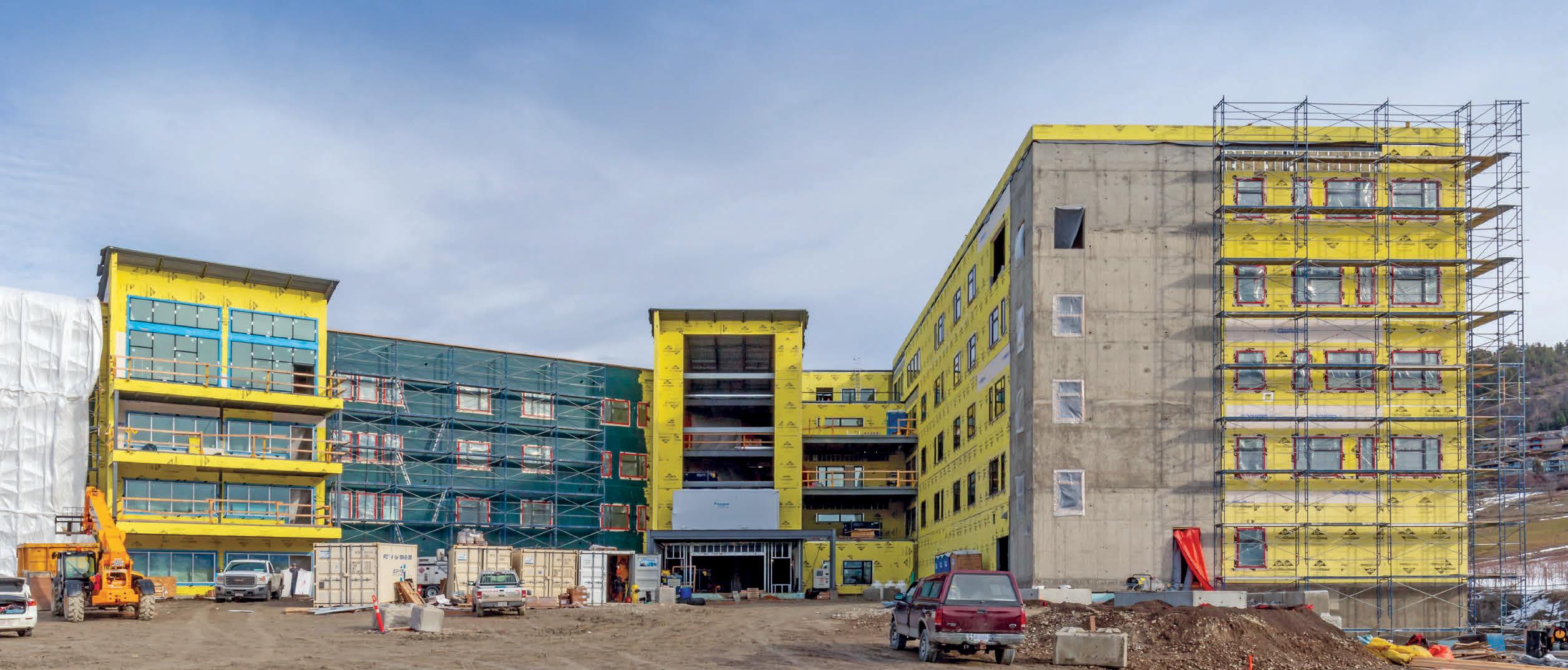

“The dense microstructure and optimized hydration significantly reduce porosity and permeability,” Nefoussi explains. “This limits the penetration of aggressive agents and delays deterioration mechanisms.”
The fibre reinforcement of these materials also plays a significant role in their strength and durability, as well as their ability to improve crack resistance and post-cracking behaviour. In fact, many of the shrinkage-reducing admixtures and fibre systems being developed today help to dramatically reduce the formation of cracks that can ultimately compromise duarbility.
“Infrastructure built with these technologies can perform reliably for much longer periods,” Mulligan says. “That’s a major advantage in a country like Canada, where environmental exposure is so demanding.”
As the construction industry faces increasing pressure to reduce embodied carbon in its materials, HPC and UHPC are starting to play a more important role. Beyond being understood as high-performance materials, they’re now also being seen as enablers of more sustainable construction.
“Our admixture technologies enable higher replacement levels of Portland cement while maintaining performance,” Corradetti says.
Portland limestone cement (Type IL) is a form of lower-carbon cement that’s gaining traction throughout the industry as a result of its strength and durability combined with the fact that a significantly smaller amount of it is required to ensure workability, consistency and strength. This results in improved quality, a lower carbon footprint and reduced costs.
Using less concrete to achieve the same or greater performance while also extending the life of infrastructure represents an incredible gain for contractors. However, what’s more is the fact that as a result of its durability and a reduced need for repairs or replacement, HPC serves to support a more resource-efficient approach to infrastructure development.
“In rehabilitation projects, UHPC allows us to preserve and upgrade existing structures rather than demolish and rebuild,” says Nefoussi. “That’s a key aspect of the circular economy.”
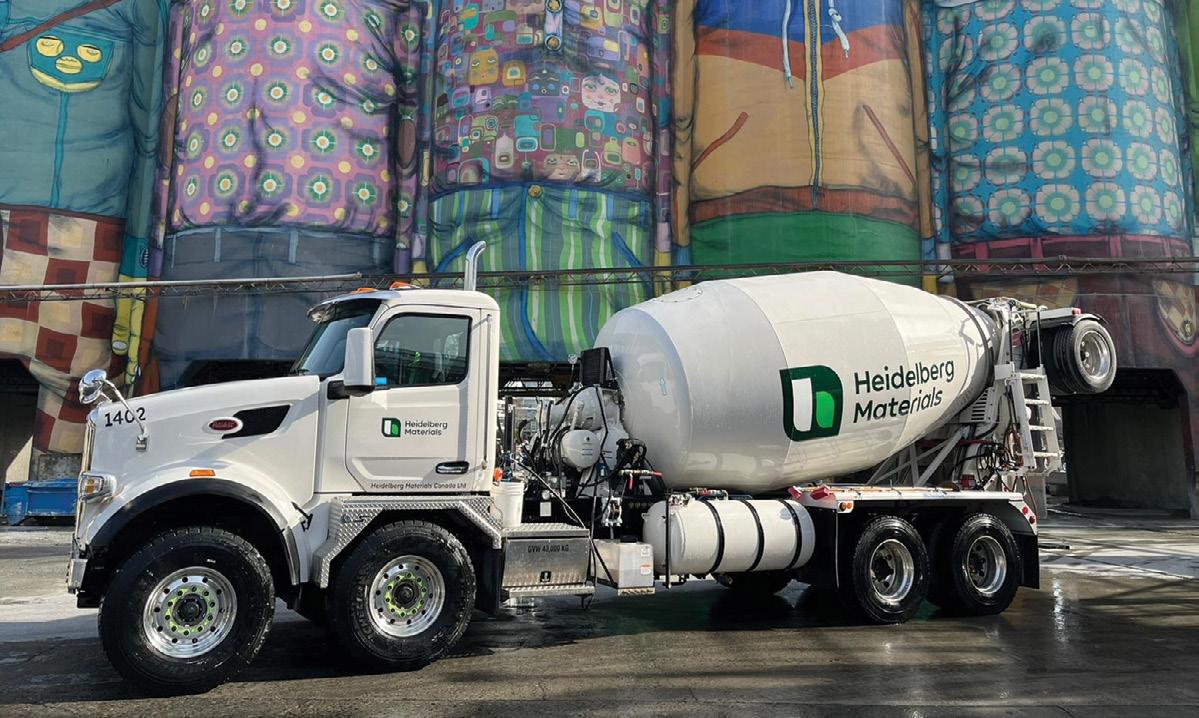
Heidelberg Materials innovating to improve performance, streamline communications and deliver greater value on jobsites.
In addition to the development and adoption of these advanced concrete technologies, all three sources believe that collaboration between project stakeholders is critical in order to leverage and manage them most effectively.
“The successful implementation of advanced concrete solutions relies heavily on close collaboration between contractors, engineers and material suppliers,” Nefoussi says.
He goes on to explain that engagement early on in a project’s design phase allows teams to hone mix designs that will suit the job at hand.
Coradetti agrees with the collaborative approach, noting that Euclid works closely with project teams from lab testing through to field trials and on-site support.
“Each project has unique requirements,” he says. “Whether it’s pumpability for a high-rise core, thermal control for a mass pour or durability for a marine structure, and our team tailors solutions accordingly”
With respect to the trends that are set to shape the future of advanced concrete technology and the use of HPC and UHPC in the development of Canadian infrastructure, the group identifies a range that may serve to be significant drivers, including an increased use of prefabrication and accelerated construction methods, more complex designs requiring highly flowable, self-consolidating concrete, a heightened focus on lifecycle cost analysis and resilience, and more.
“These trends are pushing innovation in admixture chemistry and mix design optimization,” says Coradetti. “At Euclid Chemical, we’re continuing to invest in technologies that not only meet today’s challenges but anticipate the future needs of infrastructure across Canada.”
Nefoussi adds that, beyond Coradetti’s list, many of the realities and practicalities of today’s jobsite environment are driving much of the need that’s arising.
“Challenges such as labour shortages and increasingly complex project conditions are driving the need for solutions that are not only high-performing but also easier and faster to implement on-site,” he says.
And from a digital perspective, Mulligan emphasizes the benefits that can be gained by marrying advanced concrete technology with tools that capture and synthesize data to inform decision-making for contractors and their teams.
“We’re exploring innovations such as material passports, which would create digital, traceable records of material properties and environmental attributes across a structure’s lifecycle. Together, these efforts are helping us improve performance, streamline communication and deliver greater value and clarity across the entire construction value chain.
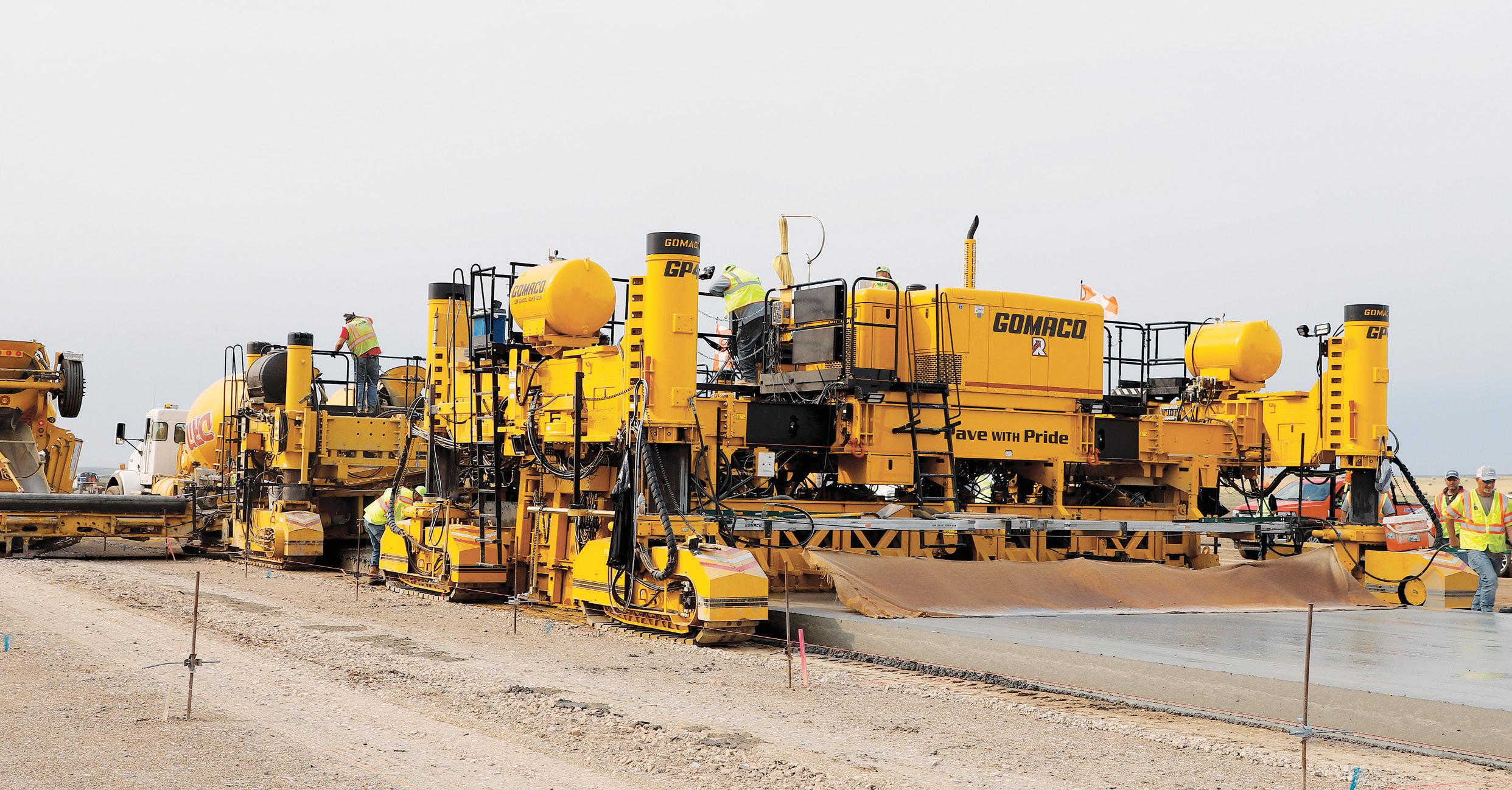
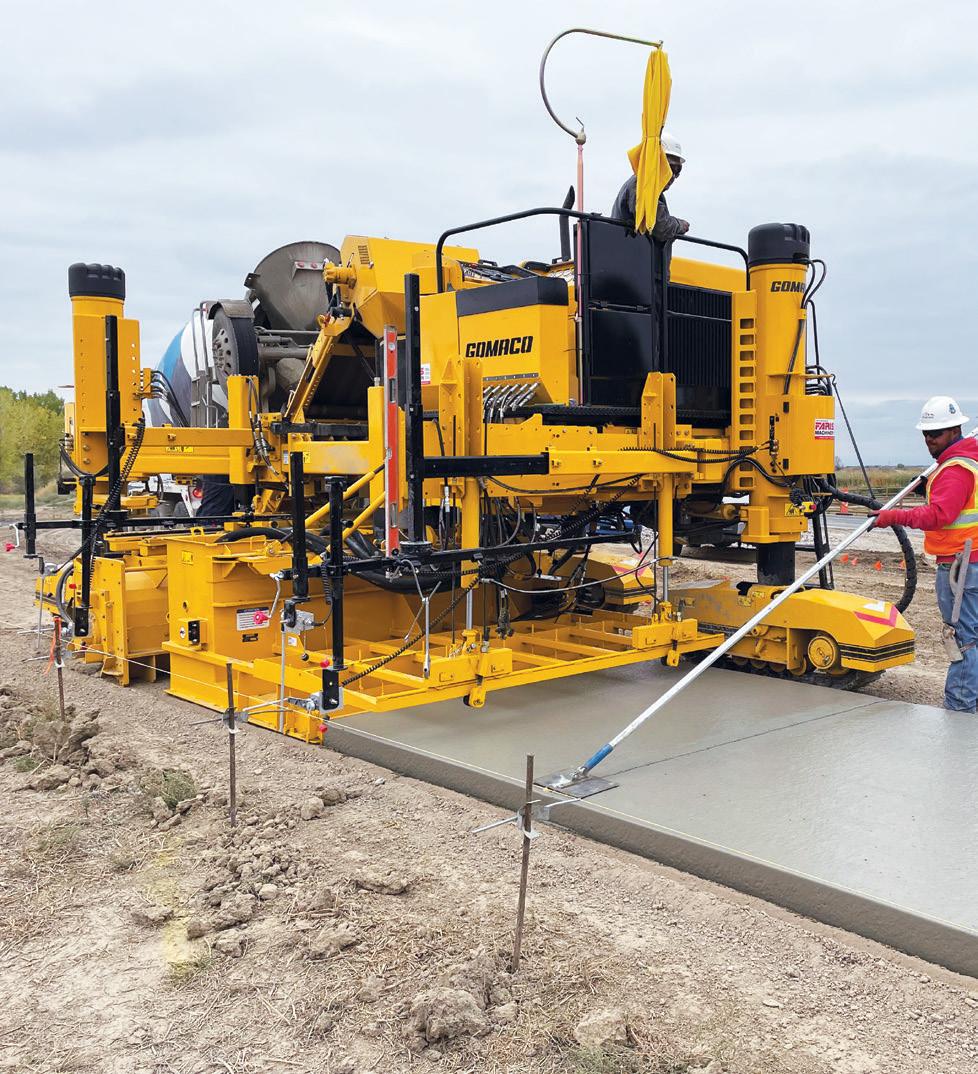
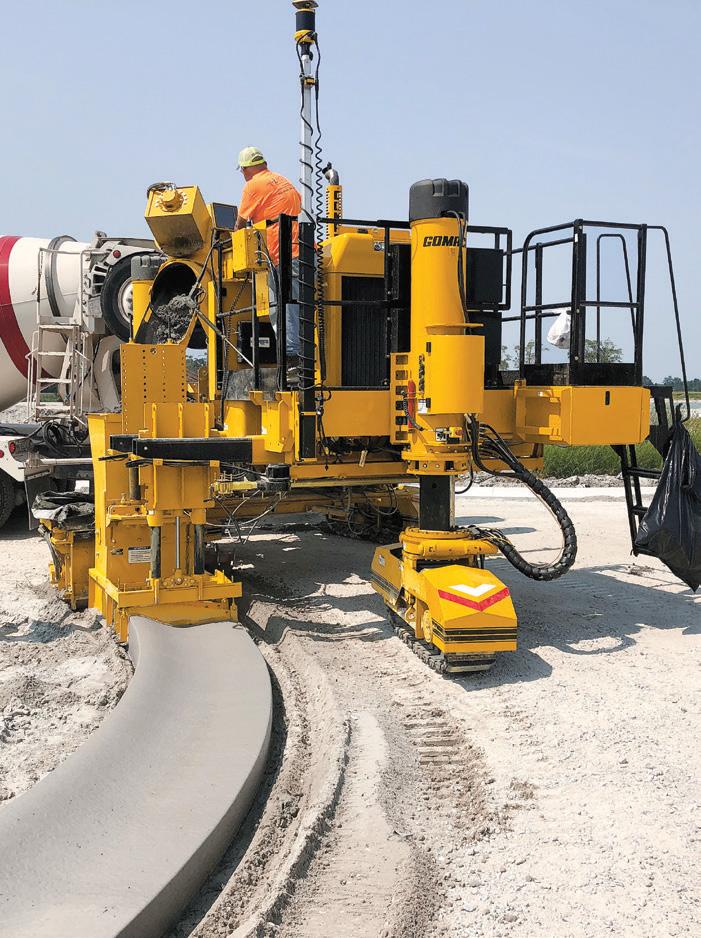
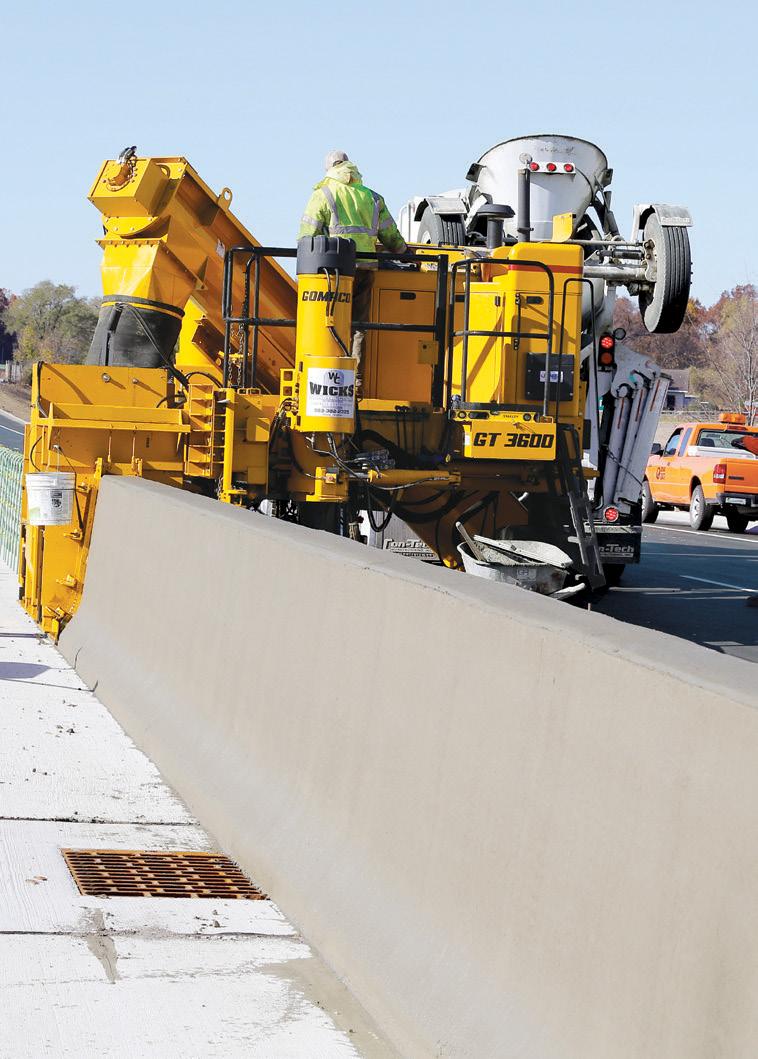
GOMACO offers the full range of concrete slipform pavers, curb and gutter machines, trimmers, placer/spreaders, texture/ cure machines and bridge/canal finishing equipment. GOMACO equipment features our exclusive and proprietary G+® control system, created in-house by our software engineers from the wants and needs of contractors paving in the field. At the heart of GOMACO equipment is our passion for concrete and our commitment to our customers. We look forward to visiting with you about your upcoming paving projects and your concrete paving equipment needs. Our worldwide distributor network and our corporate team always stand ready to serve and assist you.

As pressure mounts within the industry to reduce embodied carbon, fragmented standards, inconsistent approvals and misaligned procurement remain barriers to adoption on active projects.
BY SEAN TARRY
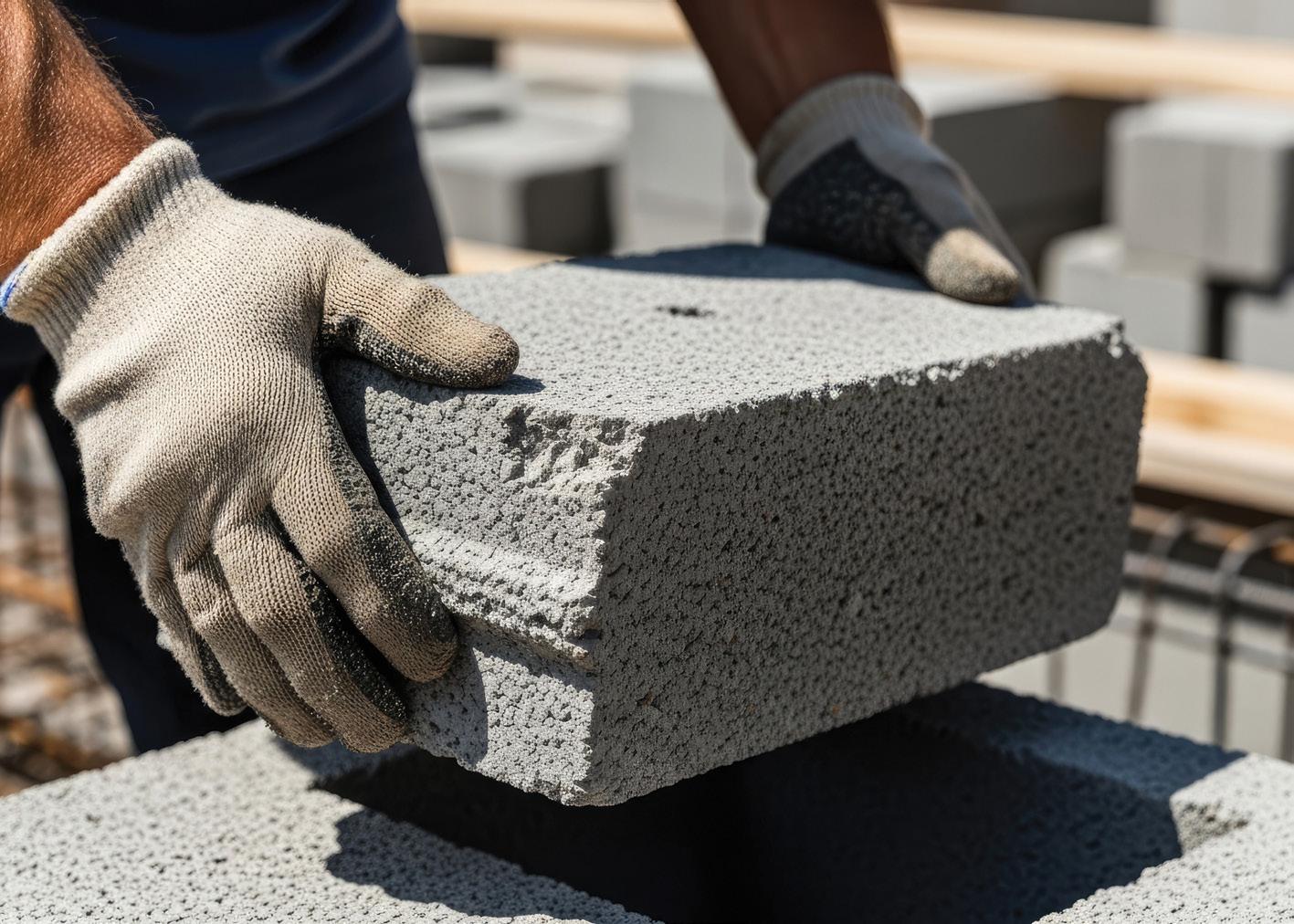
The global construction sector has been facing increasing scrutiny over recent years concerning the environmental impact posed by the products it uses, with a particular emphasis on concrete. As a result, standards are currently being developed across the country and the world in order to address the issue of embodied carbon in concrete. It’s showing up increasingly in specifications, procurement documents and bid evaluations, too, particularly on public and institutional builds.
According to data gathered by the World Economic Forum, it’s estimated that
Efforts to harmonize codes could result in more consistent procurement and streamlined approvals for contractors.
concrete is responsible for roughly seven to eight per cent of global human-made CO2 emissions. In response to calls to reduce the emissions related to concrete production, lower-carbon concrete technologies, from supplementary cementitious materials to Portland-limestone cement, have been developed and made accessible to general contractors throughout Canada.
However, adoption of these technologies has been slow. But why? As Kari Hyde, Director of Customer Energy Solutions at Pembina Institue points out, the barrier isn’t the innovation. It’s navigation.
“Fragmented and prescriptive codes
make it harder for contractors to do the right thing,” she says, “even when lower-carbon options are available.”
For contractors, suggests Helen Ma, Corporate Communications Advisor at Ledcor Group of Companies, the issue is less about willingness and more about execution.
“Contractors are ready to build with lower-carbon materials,” she says. “But consistency is what enables adoption at scale. Without that, every project becomes a one-off exercise in approvals and coordination.”
The prescriptive codes that Hyde refers to are encountered frequently by contractors, dictating specific mix designs, material limits or approval pathways. While they’re grounded in safety and durability, they vary across regions and juridictions, making it challenging for contractors, often limiting flexibility.
“Different jurisdictions specify different mix designs or approval processes, which means contractors can’t reliably use the same lower-carbon products from project to project,” Hyde explains. “That creates uncertainty, delays approvals and increases administrative costs.”
It’s inconsistency that, Ma explains, results in a distinct lack of predictability, impacting the entire scope of a project, particularly larger ones.
“On large-scale projects, consistency
in materials and approvals allows teams to plan effectively,” she says. “If that predictability isn’t there, teams often revert to conventional approaches simply to maintain schedule and manage risk.”
As a means to alleviate some of these pressures from contractors while also continuing to strive to make environmental improvements, most across the industry point to performance-based standards as the most viable way forward.
Instead of prescribing how concrete should be made, performance-based standards attempt to define desired outcomes like strength, durability and safety.
“Performance-based standards give engineers and contractors flexibility to meet requirements while sourcing lower-carbon materials,” Hyde says.
Ma agrees, emphasizing that performance-based approaches often align more closely with how projects are actually delivered.
“They allow teams to innovate within a defined framework,” she says. “You’re still meeting the same structural and safety requirements, but you have the flexibility to optimize materials and reduce carbon.”
Standards may set the precedent for a project, defining the parameters and requirements for general contractors and their crews. But effective procurement, stresses Ma, may prove to be the most powerful enabler of change when it comes to the adoption of lower-carbon materials on jobsites.
“When expectations are clear and consistent, teams can plan, price and procure more effectively,” she says. “It reduces uncertainty at the bidding stage and helps avoid delays once construction begins.”
She goes on to suggest that consistency and transparency throughout the project also goes a long way toward supporting a healthy supply chain. If standards can be harmonized across jurisdictions and demand from the market is stable, suppliers
of lower-carbon materials can scale their production accordingly and, over time, improve availability and reduce costs while helping to improve the industry’s impact on the environment.
Although there’s a common misconception that exists around the need for specialized expertise in order to use lower-carbon materials on jobsites, Hyde says that it couldn’t be farther from the truth.
“This is a highly skilled industry,” she asserts. “Contractors already manage complex specifications every day.”
She continues, explaining that because of the skills and understanding that already exists on crews across every jobsite in the country, simple guidance concerning the way lower-carbon mixes behave during placement and curing, changes in sequencing and how quality control can be best maintained is all that’s required.
Ma echoes Hyde’s sentiment that the capabilities of today’s construction workforce is not at all a limiting factor when it comes to the use of lower-carbon materials, emphasizing once again the need for consistency and clarity.
“The expertise is already there,” she says. “What crews need is consistency in specifications and clear expectations so they can apply that expertise efficiently.”
The positive environmental impact that a uniform shift toward the use of lower-carbon materials on construction projects could have is undeniable and is no doubt becoming more of a focus for firms operating across the country. But when it comes to attracting the interest of general contractors and gaining wider adoption across the industry, few enticements will offer a stronger pull than that of reduced project costs.
It’s a reality that’s understood by Hyde who concedes that the use of lower-carbon materials in construction is not yet widespread. However, she believes that the industry is approaching a tipping point.
“In the short term, impacts vary by
project,” she says. “But as adoption scales, costs will stabilize and decline.”
And although that tipping point has not yet been reached, she continues by suggesting that now may be as good a time as any for contractors across the country to explore, begin or expand their use of lower-carbon materials, especially for those operating in regions and provinces where the industry’s environmental requirements are more intense.
“For Alberta and Ontario contractors, early adoption strengthens competitiveness, especially as ‘buy Canadian’ and embodied-carbon requirements expand,” she asserts. “Contractors who adapt early will be better positioned to win public and private projects as expectations shift.”
Beyond the standardization of codes and requirerments, in order to facilitate the adoption and use of lower-carbon materials, Hyde suggests the creation of a lower-carbon toolkit for contractors and their teams.
“The challenge today isn’t necessarily a lack of information,” she says. “It’s that guidance specs and tools are scattered across jurisdictions, projects and organizations. A lower-carbon concrete toolkit creates a single source of truth, bringing together clear specifications, approved pathways, LCA guidance, case studies and lessons learned in one place.”
She goes on to explain that a resource of that nature would serve to reduce the time contractors spend searching for information, lower administrative burden and create efficiencies across projects.
Although there’s still work to be done, Hyde remains confident that leaders within the Canadian construction industry will continue developing innovations and embracing advanced technologies that drive the industry forward.
And through a combination of standardized codes and requirements, effective and consistent procurement and the development of industry tools and resources, a lower-carbon future isn’t too far off.
By Jacob Stoller

Millions of people now use AI to increase their productivity in their day-to-day work. It will take time, however, to leverage that to improve construction’s complex business processes.
Last fall, a multi-year MIT study titled The GenAI Divide reported a 95 per cent failure rate for generative AI projects. A major culprit, the study concluded, was the absence of clear business objectives for the technology.
“If you walk into a room full of CEOs, they’re all eager to embrace AI, but many are still struggling to define exactly where it will deliver the most value,” says Kris Lengieza, Global Technology Evangelist at Procore Technologies.
Expressed goals are often so vague that they are meaningless.
“The biggest misconception I see is people saying that AI is going to ‘make us more efficient,’” says Holynde Smiechowski, Corporate AI Lead at PCL Construction. “That’s the broadest standard statement you can make - it can mean 13 different things to 13 different people.”
With a civil engineering background and 13-plus years of fieldbased project management experience, Smiechowski sees AI as a tool for minimizing administrative effort and maximizing time spent solving realworld problems.
AI’s ability to summarize meetings and draft succinct memos is an obvious starting point.
“Microsoft Copilot can help you reframe a memo so that it doesn’t sound like you’re complaining, or simplify a legal document for you,” says Smiechowski, “I’m a math person, not an English major, so this is great for me.”
Longer term, Smiechowski plans to enlist AI’s information crunching capabilities to simplify interactions with what has become an increasingly complex array of diverse IT systems.
“Years ago, when you had a problem in the field, you’d do a walkaround with your architect or engineer,” says Smiechowski. “They’d do a sketch, and your client would be close by or a phone call away. So, the client could say, ‘go ahead, and send me the quotation,’ and you’d process the change order. That might take a few days. But when everybody’s behind a computer, you don’t have those conversations as much. Today, with all the systems you have to switch between, that could take a month or two.”
The plan is to target the points where decision-makers interact with their IT systems.
“My goal with AI is to not add more steps,” says Smiechowski, “but to pull back the complication or friction points that we’ve got with technology so our people can spend more time in the field where we want them to be, and less time having to deal with the technology side.”
Equally important, AI can help improve pre-construction
processes so that fewer problems arise.
“If we can remove the barriers and roadblocks on the front end, we’ll have fewer schedule disruptions and actually provide better value to the client,” says Smiechowski.
While AI’s advantages are obvious, there is no magic bullet for improving construction’s complex business processes.
“It’ll take small iterative steps to get there, because it won’t happen overnight,” says Smiechowski. “How can we deal with pain points people deal with in our processes? Start simple, get more people used to using it, and then you learn and iterate as you discover what actually makes the most sense as you build up to this.”
Lengieza equates initial efforts with AI to working with an intern.
“People need to think of AI as something that you invest in and train and get ready for,” he says. “AI also needs context. That’s one of the reasons why we’ve deeply integrated AI into our platform –we’ve learned from previous examples which data sets are important and which aren’t.”
One of the perils of user-based process improvements is that a large number of homegrown solutions can easily become unmanageable.
“People now have the opportunity to create workflows very quickly to solve pain points in their day-to-day work, and that’s awesome,” says Lengieza. “The challenge there is, how do we make sure that our data is secure, that they’re using trusted tools and that as an organization, you have some semblance of control of what’s being rolled out there?”
Ensuring that people use enterprise accounts, Lengieza notes, prevents the potential of leaks and other security risks, helping to create the cohesion that’s necessary for enterprise-wide prediction and analytics.
“Construction is an industry that’s built on continuous feedback,” says Lengieza. “And so, modern platforms need to be able to centralize business processes so firms can continue to iterate on them and turn those historical learnings into predictable, repeatable actions for their employees.”
Jacob Stoller is principal of StollerStrategies. Send comments to editor@on-sitemag.com.



MBy David Bowcott
odern data centres sit at the convergence of three industries that have traditionally operated in parallel rather than in partnership: technology, energy and construction. As demand for computational capacity continues to accelerate and facilities grow larger, denser and more mission-critical, that separation is no longer sustainable. The performance, resilience and long-term economics of a data centre increasingly depend on how effectively these three sectors collaborate across the full lifecycle of the asset, from initial design through construction and into steady-state operations.
From a risk and insurance perspective, data centres are among the most complex assets being developed today. They are capital-intensive, energy-dependent, technologically sensitive and operationally unforgiving. Even small disruptions, whether caused by power instability, cooling failures, water intrusion or construction defects, can result in material financial loss and reputational damage. Achieving strong uptime results is therefore not simply a technical objective; it is the outcome of deliberate coordination across disciplines that historically sat in silos.
...collaboration between the technology owner, energy partner and construction team becomes a material differentiator
The risks faced by data centres are well understood yet often underestimated in how interconnected they are. Energy consumption is substantial and continuous, making power reliability and pricing among the most significant operational considerations over the life of the facility. Thermal management is equally critical, as high-density environments generate immense heat and require cooling systems that perform reliably across a wide range of external conditions. Physical exposure adds another layer of complexity. Data centres must be protected against catastrophic events such as flooding and extreme weather, as well as more frequent but no less disruptive risks like heavy rainfall, groundwater ingress and HVAC failure. And climate volatility has only heightened the importance of site selection, building envelope design and drainage strategies.
Overlaying all of this is construction risk. Data centres involve complex mechanical and electrical systems, long-lead critical
equipment and highly sequenced installation timelines. As a result, decisions made during design and construction have lasting implications for resilience, maintainability and insurability once the facility becomes operational.
This is where collaboration between the technology owner, the energy partner and construction team becomes a material differentiator.
Early and meaningful engagement between data centre owners and energy providers allows power strategy to be treated as a core design input rather than a downstream procurement exercise. And beyond securing capacity, collaboration enables a more nuanced evaluation of grid resilience, redundancy architecture, on-site generation, energy storage and pricing structures. Over time, these decisions can materially reduce exposure to power-related outages and operating cost volatility - two areas that insurers scrutinize closely when assessing business interruption risk.
The construction sector, in turn, plays a critical role in translating these strategies into a resilient physical asset. When contractors and engineers are involved early and aligned with both the technology owner and energy partner, opportunities emerge to optimize layouts, reduce cooling inefficiencies, harden the building envelope and protect critical equipment from environmental exposure. Thoughtful sequencing, robust quality control and disciplined commissioning reduce the likelihood of defects that can otherwise surface months or years into operation.
From an insurance standpoint, this level of coordination matters. Insurers increasingly assess data centres holistically, looking beyond specifications and capacity to understand how risk is managed across design, build and operations. Projects that demonstrate strong governance, integrated planning and clear accountability across partners are consistently viewed as better risks. This can translate into broader coverage, more stable pricing and fewer restrictive terms during both the construction and operational phases.
Perhaps most importantly, a well-planned and well-executed data centre creates optionality in how risk is financed. Owners with mature design, construction and operational practices are not limited to a binary choice of transferring all risk to the insurance market. Where risk is well understood, well-engineered and continuously monitored, there may be opportunities to retain certain layers of exposure in a deliberate and economically efficient way. This might include higher deductibles, structured retentions or alterna-
tive risk financing strategies that align with the owner’s balance sheet and risk appetite.
In this context, strong collaboration across the technology, energy and construction partners does more than improve uptime or lower operating costs. It can meaningfully reduce the total cost of risk over the life of the asset and create a financial advantage for owners who are willing to treat risk management as a strategic capability rather than a compliance exercise.
As data centres continue to underpin the global digital economy, the most successful facilities will not be those that simply deploy the latest technology or secure the lowest-cost power. They will be the ones where owners, energy partners and builders work as an integrated team, aligning processes, sharing data and designing resilience into the asset from day one. From a risk advisory and insurance perspective, that collaboration is not just best practice - it’s increasingly becoming the foundation for superior operational performance, stronger insurance outcomes and more efficient capital deployment.
David Bowcott is the Executive Vice-President of the Construction Industry Group at Platform Insurance Management. Please send comments to editor@on-sitemag.com.






C“Waive”
Acquiescence and waiver for change work in the context of a no-waiver clause.
hange Orders are a common source of disputes on construction projects, which frequently arise in the context of disagreements over the value of change orders, including whether delay costs are payable and/or schedule extensions should be granted. Owners will often refuse to sign change orders or issue change directives when any such disputes arise, which can leave contractors in a precarious position, particularly if the contract requires the contractor to continue performing the work notwithstanding the existence of a dispute between the parties.
In Transcona Roofing Ltd. v. Marrbeck Construction Ltd., 2023 MBKB 104 (affirmed in Winnipeg Condominium Corporation No. 40 v. Marrbeck Construction Ltd., et al., 2024 MBCA 83 (CanLII) and denied leave to appeal to the Supreme Court of Canada), the Manitoba courts considered (a) whether the consultant’s approval of unsigned change orders could bind the owner, even where the contractor’s work was only to proceed under the contract in accordance with change orders signed by the owner and (b) whether an owner can waive its rights and obligations by acquiescence, even where a no-waiver provision exists in the relevant contract.
The dispute between the parties included a claim against the owner for non-payment by a general contractor and subcontractor for certain change work performed in respect of a condominium building envelope remediation project in Winnipeg, Manitoba.
The contract at issue required that change orders and change directives be signed by the owner before the change work could proceed. The contract also included a typical no-waiver provision, which provided that “no action or failure to act by the owner shall constitute a waiver of any right or duty under the contract, nor shall any such action or failure to act constitute an approval of or acquiescence in any breach, except as specifically agreed in writing.”
The contract also provided that the consultant had the authority to act on behalf of the owner to the extent provided in the contract. With respect to change orders, the consultant had the authority and responsibility to “prepare [change orders] and change directives.”
Finally, the contract included a dispute resolution process, requiring the consultant to resolve disputes in the first instance. Any disputes resolved by the consultant’s findings were required to be disputed by one or both of the parties within five working days, failing which, the parties would be deemed to have accepted the finding of the consultant and waived and released one another from any claims in respect of the matter dealt with in that finding.
The Manitoba Court of King’s Bench held that the owner had waived the contract’s requirement that change orders must be signed, as it was aware of the changes required, had confirmed its
understanding of the consultant’s authority to approve changes by way of other change orders, and/or had acquiesced to the changes and had not exercised its right under the contract to dispute the consultant’s direction to the general contractor to implement the changes. These findings were upheld on appeal.
The owner argued on appeal that the no-waiver “except as specifically agreed in writing” provision barred a finding of waiver in the circumstances. The Court of Appeal disagreed, finding that a party’s conduct alone can constitute waiver of technical requirements, even in the presence of a no-waiver “except as specifically agreed in writing” provision.
Important to the Manitoba Courts’ analyses was the consultant’s approval of the change orders and its authority and responsibility to do so. In order for this particular case to apply in similar circumstances, the consultant would have to have similar authority and responsibility under the contract at issue. It is generally a good idea to proceed with change work only in strict accordance with the contract. Having to rely upon waiver and acquiescence should never be a contractor’s first line of defence.
Contractors should carefully examine their contracts to determine the following and seek legal advice if uncertainty exists:
• Who has the authority to issue change documentation?
• Is the issuance of a change order or directive a requirement to proceed with change work? Does the change order or directive need to be executed by the owner or the consultant?
• Is the contractor required under the contract to continue performing work during any dispute?
The decision reinforces a critical lesson for contractors that contractual protections are only as strong as the parties’ conduct in administering them. Even well-drafted no-waiver clauses may not shield owners, or contractors, from the legal consequences of their actions or inaction. For contractors, this highlights the importance of rigorous documentation, timely dispute escalation and a clear understanding of who holds authority on a project. While courts may recognize waiver through conduct, relying on that outcome is a risk. Proactive contract management, disciplined communication and early legal guidance are the most effective tools to protect entitlement and minimize exposure on complex construction projects.
Erin Cutts is a partner at the Calgary office of BLG Law. This article provides an overview and is not intended to be exhaustive of the subject matter contained therein. Although care has been taken to ensure accuracy, this article should not be relied upon as legal advice.