Quarterly Check-in: Moving beyond one-size-fits-all p. 18
Legal View: Safety boosts productivity p. 6
CCOHS Corner: Minimizing critical risks p. 20
Fall 2026
ohscanada.com
DUST
Dexterity Max™ Touch changes everything Industry’s thinnest cut protection High cut protection in a remarkably comfortable, lightweight design
Maximum touch sensitivity Extreme precision with unrivaled tactility that feels nearly gloveless
More ways to protect Available in standard, high-visibility, and suitable for food handling styles
Get your samples today superiorglove.com/dexterity-max
Requests subject to review and availability. Terms apply. See website for details.
CONTENTS
Fall 2026 Vol. 42, No. 3 ohscanada.com
30
10
14 COLUMNS
16 DEPARTMENTS 04 | From the Editor The power of questioning everyday safety habits 05 | In the News 22 | Fines
FEATURES
12
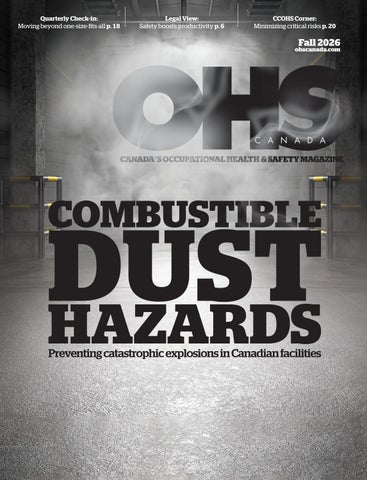
COVER STORY Combustible dust hazards Preventing catastrophic explosions in Canadian facilities BY JAMES CARELESS
14
06 | Safety Leadership Investing in safety: The case for continual workplace improvement 08 | Legal View How improving workplace safety boosts productivity in Canadian workplaces 10 | The Human Factors How to improve vehicle ergonomics for mobile workers 18 | Quarterly Check-in Why Canadian workplaces must move beyond one-size-fits-all head protection 20 | CCOHS Corner Minimize the critical health and safety risks of shiftwork
COV E R PHOTO: SA S H A85RU / G ET T Y I M AG E S
Bump testing a gas detector It can be the difference between safety and disaster BY BRANDI COWEN
16
Head protection solutions How to solve hard hat compliance through better fit and worker-led PPE selection BY TREENA HEIN
ohscanada.com
OHS CANADA
3
From the Editor By Brittani Schroeder READER SERVICE
The power of questioning everyday safety habits
F
or this issue of OHS Canada, I’ve had the opportunity to step into the editor’s chair while Brandi Cowen is away. My typical day focuses on public safety and emergency services, so occupational health and safety is a somewhat different corner of the safety landscape for me. This meant I was coming to the magazine with fresh eyes, and it taught me quite a bit. The biggest lesson I learned is that workplace safety is rarely about simply having the right procedure or piece of equipment in place. It’s about continually asking whether those things are actually working. Let’s consider something as familiar as personal protective equipment. A hard hat can meet the appropriate standard, but if it doesn’t fit properly, or it interferes with other PPE or isn’t accommodating for those wearing it, are the workers getting the required protection? The same principles apply to the hazards that are less visible. The cover story on industrial dust looks at both the health consequences of exposure and the potentially catastrophic risks of combustible dust. What struck me was how much effect-
ive dust management depends on looking beyond the obvious. It includes understanding where exposure occurs, assessing the conditions in which people work and continually evaluating whether controls are still effective.
Compliance is a foundation to build on. It’s not a finish line to cross and forget. Through these articles, I also paused to consider what a workplace is. For many workers, particularly those in mobile or field-based roles, the day doesn’t begin and end at the doors of a traditional office building or facility. A vehicle can become someone’s workstation, storage area and break room, which can create ergonomic considerations that may be overlooked. The columnists also had me thinking about time itself. Many Canadians work “irregular” hours, and when the shift happens can be just as important as where it happens. Shift scheduling, fatigue and mental health all play a role in creating safer working environments. Coming from the public safety world, much of this felt familiar to me, but in unexpect-
ed ways. The hazards look different, but the questions are the same: Have you identified the risk? Have you listened to the people doing the work? Are leaders willing to make changes when the answer is no? Another crucial lesson I learned from the stories in this edition is that compliance is a foundation to build on. It’s not a finish line to cross and forget. Regulations and standards are in place to provide frameworks for protecting workers, but workplaces are always evolving. Equipment ages, processes evolve, new technologies are introduced for various reasons and the needs of the workforce change. Just because there was a procedure that made sense in the past doesn’t mean it’s the best way to manage the risks we’re facing today. We need to stay curious. Ask the workers who perform tasks every day and question those long-standing procedures. I’ve learned from these articles that when we invest in safety, we’re investing in the people who show up every day and in the organizations we are part of. I hope this edition of OHS Canada gives you a few new ideas and a few new questions to take back to your workplace.
EDITORIAL ADVISORY BOARD Paula Campkin: chief safety officer, Energy Safety Canada Marty Dol: president and founder, HASCO Health & Safety Canada Cindy Moser: director of communications, Institute of Work & Health Natalie Oree: prevention consultant, SAFE Work Manitoba David Powers: EHS director (Atlantic), Sysco Canada Richard Quenneville: senior director of corporate services, T. Harris Environmental Management Maureen Shaw: lecturer and presenter Dylan Short: managing director, The Redlands Group 4
OHS CANADA
Print and digital subscription inquiries or changes, please contact Angelita Potal Tel: 416-510-5113 Fax: 416-510-6875 email: apotal@annexbusinessmedia.com Mail: 111 Gordon Baker Rd., Suite 400, Toronto, ON M2H 3R1 EDITOR
Brittani Schroeder 416-317-5967 BSchroeder@annexbusinessmedia.com MEDIA DESIGNER
Graham Jeffrey
ACCOUNT CO-ORDINATOR
Cheryl Fisher 416-510-5194 cfisher@annexbusinessmedia.com AUDIENCE DEVELOPMENT MANAGER
Barbara Adelt 416-510-5184 badelt@annexbusinessmedia.com BRAND SALES MANAGER
Silvana Maiolo smaiolo@annexbusinessmedia.com GROUP PUBLISHER
Adam Szpakowski aszpakowski@annexbusinessmedia.com CEO
Scott Jamieson sjamieson@annexbusinessmedia.com Printed in Canada ISSN 0827-4576 (Print) ISSN 1923-4279 (Digital) PUBLICATION MAIL AGREEMENT #40065710 SUBSCRIPTION RATES
Published three times per year – Winter, Spring/Summer, Fall Canada $72.80/yr plus tax USA $101.92/yr CDN Foreign $168.48/yr CDN Single copy $19 CDN Occasionally, OHS Canada will mail information on behalf of industry related groups whose products and services we believe may be of interest to you. If you prefer not to receive this information, please contact our circulation department in any of the four ways listed above. Annex Business Media Privacy Office privacy@annexbusinessmedia.com Tel: 800-668-2374 No part of the editorial content of this publication may be reprinted without the publisher’s written permission © 2026 Annex Business Media All rights reserved. Opinions expressed in this magazine are not necessarily those of the editor or the publisher. No liability is assumed for errors or omissions. All advertising is subject to the publisher’s approval. Such approval does not imply any endorsement of the products or services advertised. Publisher reserves the right to refuse advertising that does not meet the standards of the publication.
Fall 2026
In the News
WSIB restructuring will eliminate hundreds of claims and support roles
PHOTO: (L E F T): A N DR I I / A D OB E STO C K; (R IG H T): JA R A M A / G ET T Y I M AG E S
The Workplace Safety and Insurance Board (WSIB) is consolidating its claim and account management functions, resulting in the closure of nine physical offices and the elimination of over 460 jobs across Ontario, with some reports citing more than 500 cuts. The restructuring has prompted warnings from labour representatives and political critics about potential delays in case management and return-to-work services.
According to the Ontario Compensation Employees Union (OCEU), which represents all 3,700 unionized WSIB workers in the province, the consolidation will eliminate 238 positions in northern Ontario, including 136 in Sudbury, 55 in Thunder Bay, 20 in Sault Ste. Marie, 15 in North Bay and 12 in Timmins. An additional 300 positions are slated for elimination at service centres in Guelph, Kingston, St. Catharines, Waterloo and Windsor. OCEU President Harry Goslin warned that moving specialized roles, such as nurses and payment representatives, to southern Ontario will compound existing workload pressures and negatively affect injured workers. WSIB representatives defended the operational changes, stating that local return-to-work services, healthcare supports and local teams will remain in place to assist employers and workers. The agency maintained that the way people access its services will not change, adding that affected employees will receive transition support, including job-seeking assistance and temporary benefits. ohscanada.com
WorkplaceNL to replace fall protection training with eighthour working at heights standard
460 WSIB jobs across Ontario will be eliminated when nine offices are closed.
WorkplaceNL is transitioning to a new Working at Heights Certification Training Standard, which will replace the current fall protection framework and reduce the mandatory training course duration from 16 to eight hours. Effective Jan. 1, 2027, the new standard and its accompanying common curriculum will serve as the mandatory training pathway for employees working at heights of three metres or more on provincially regulated worksites. The regulator noted that the revised course is designed to focus more on core safety principles while reinforcing the essential knowledge and practical skills required to work safely. By introducing a standardized common curriculum, the
provincial authority aims to reduce resource barriers for employers and approved training organizations seeking to deliver the training internally, thereby facilitating more consistent access to education. Under the updated framework, the three-year validity period for safety certificates will remain unchanged. Existing credentials obtained through either the 16-hour fall protection course or the eight-hour recertification program will remain valid until their stated expiry dates. Workers whose certifications are set to expire on or before Dec. 31, 2026, must still complete the existing recertification training to maintain compliance.
Manitoba workplace deadline to provide free menstrual products arrives Manitoba employers must comply with new provincial safety rules requiring the provision of free menstrual products in all provincially regulated workplaces. As of Sep. 1, amendments to the Workplace Safety and Health Regulation mandate that both menstrual pads and tampons be made available at no cost to workers. The regulation applies to all workplaces, even those where no employees currently menstruate. Under the updated safety standard, employers must place the products in washrooms used by
workers, regardless of whether they are designated for men, women, or gender-neutral use. If locating the products in a washroom is not reasonably practicable, employers may use an alternate location that offers reasonable privacy and is accessible to employees at all times without requiring them to ask for the items. Additionally, the new rules require employers to provide a covered disposal container for menstrual products near each toilet in worker washrooms. Failure to comply with the new standards could result in administrative penalties. OHS CANADA
5
Safety Leadership
Wayne Arondus is the chief executive officer of the Manufacturing Safety Alliance of BC.
By Wayne Arondus
Investing in safety: The case for continual workplace improvement
A
t 19, I worked in a grain elevator in southern British Columbia. It was one of my first jobs, and keen to make a good impression, I took the tasks seriously. As a young worker, I was hesitant to ask questions. One day, my manager called me over, along with another young worker, and handed each of us a snow shovel and a paper dust mask. “Go to the basement and fill the grain leg with the mounds of grain, until the room is cleared,” he said, and off we went. I look back and think about all the things that could have gone wrong. It was like working on a skating rink. We had only one radio, and the dust hazard was very high, with the potential for injuries. Today, we work to improve workplace safety through education. We have learned more and our understanding of workplace hazards has advanced significantly. Technology has advanced, and more safety regulations are in place. However, as I speak with our manufacturing members, many of those same hazards still exist, and changes to operations and machinery have introduced new risks. Safety is about staying curious In 2012, two dust-fuelled explosions hit sawmills in British Columbia’s northern Interior months apart. The community was shocked, the sawmill industry changed overnight, and WorkSafeBC investigated. What’s one thing those businesses could have done differently? By asking questions and talking to employees about the environments in which they worked, those companies might have been able to adapt and implement new housekeeping standards to reduce the risk. The people doing the work day-to-day are often the first to notice when things are wrong. Workers should be the first to challenge us on established practices and existing processes, especially when they no longer serve the goals within a workplace. 6
OHS CANADA
A new regulatory environment with the same challenges British Columbia is approaching new dust hazard regulations that will take effect in January 2027. Will these help make workplaces safer? Absolutely. But for owners and leaders of manufacturing facilities, their duty is to streamline production while protecting their teams. Meeting regulatory requirements is only the start. Many businesses maintain compliance. They have fulfilled their legal duty to protect their employees. However, as the world evolves around us, with new technological advances, changing expectations and shifting working conditions, the bar is rising. Equipment that was state-of-the-art 30 years ago may now be nearing retirement. Regulatory compliance does not always reflect changes that impact the work environment. It’s critical to invest in learning. This may mean learning from our successes and failures as we audit our safety management system. We can no longer leave risk assessments and safe work procedures in a binder on the shelf. Through continuous improvement, we need to review and update our systems annually as our businesses change and evolve. Or it may mean learning new models, such as employing a system like 5S to reduce slips, trips and falls. We improve by encouraging the people we lead to ask questions, equipping them to find solutions and adapt, and building a practice of ongoing improvement. Building the culture We can learn from one another in the search for effective strategies to address risk. Ongoing workplace safety exists not only by meeting standards but also through continual improvement and the nurturing of a strong culture of safety. It is easy to fall into patterns of doing things the way they have always been done, but the result can be outdated procedures and practices.
Instead, we need to build a system to regularly evaluate policies. We should also solicit feedback from frontline workers. Through review and consultation, we identify new solutions and resources to keep our businesses nimble, responsive and safe. Continuous improvement goes beyond operational improvements. It starts with equipping our teams with the skills and resources to adapt to a world that is changing. As the demographics and cultural landscape of our businesses shift, we need to lead with clear communication and intentional connection with our people to keep everyone safe. Investing in your team The impact of health and safety is significant. Injuries and incidents not only cause work to stop, but when someone is injured, they strain your remaining team’s capacity and incur replacement and retraining costs. International ORP Foundation President Hans-Horst Konkolewsky notes that health and safety is more than a social or moral concern for business. “Bad working conditions cost firms money,” he says. “Health and safety pays; it really is an investment.” Part of that investment may be in professional development, including targeted technical training and future-focused development through conferences. Another key investment is time. By getting to know your team and addressing their concerns, you strengthen your culture, your risk awareness and your ability to adapt. By investing in an ongoing review process, you equip your people to pivot, thereby building resilience to manage challenges. Together, these actions help you take steps beyond regulatory compliance: strengthening awareness and a safety culture by building a sustainable practice of continual improvement. Fall 2026
CUT RESISTANCE
WITHOUT THE BULK Scan Here to Request
Ultra-High Dexterity Ranging From A4-A8 Cut Resistance
16-541HV
16-361
16-871
16-381
Samples
PIP CANADA LTD. ohscanada.com
877-446-3278 | service@pipcanada.ca | www.pipcanada.ca
OHS CANADA
7
Legal View
Norm Keith can be reached at ohslaw@hotmail.com or by phone at 416-540-3435.
By Norman A. Keith
How improving workplace safety boosts productivity in Canadian workplaces
M
Safety data and costs Injury and cost data provide objective evidence of the safety-productivity connection, showing the scale of worker harm and direct compensation costs to employers. The total costs of workers’ compensation premiums were paid by employers, not workers. Indirect costs include lost production, compliance costs, replacement and retraining, equipment damage, enforcement risk, fines, legal costs and reputational harm. According to the Association of Workers’ Compensation Boards of Canada, in 2024 there were 274,072 8
OHS CANADA
The productivity challenge in Canada Many Canadian industries have faced productivity challenges for over a decade. Canada’s productivity challenge has been recognized, studied and was even part of the last federal election television debate. The question is how improving workplace safety can help address the broader productivity challenge, especially in high-hazard workplaces.
lost-time injury claims and 1,057 workplace fatalities. The total losttime injury claims in the mining industry alone involved over 18,870 workers. Each of those workers provided for themselves and their families and contributed taxes to their communities. Employers across Canada paid $11.6 billion in workers’ compensation premiums in the most recent available year. Mining is among the highest premium rate groups, and these premiums reflect only direct injury costs. Indirect costs are estimated to be six to ten times higher. The legal risk Workplace injuries pose significant legal risk in Canada. Provincial regulators may issue stop-work and compliance orders, pursue quasi-criminal prosecutions and, in some provinces, impose Administrative Monetary Penalties (AMPs). Each province has OHS laws that impose penalties for proven contraventions. Fines can reach $2,000,000 for corporations, $1,500,000 and/or 12 months’ jail for directors and officers, and $500,000 or 12 months’ jail for supervisors and workers.
“A welldesigned, organized, clean and safe workplace is more productive.”
The Paul O’Neill story A leading example of the safety-productivity connection is the Paul O’Neill story. O’Neill, the former CEO of Alcoa, is a prime example of his serious commitment to workplace safety. When he joined the world’s largest aluminum company, it faced productivity and safety problems. At his first investor conference as CEO, O’Neill announced safety as his top priority. Investors and the board were initially nervous, but confidence grew as results followed. Within a year, accidents fell and Alcoa became profitable. O’Neill worked with unions and management to correct hazards and approved safer, more efficient capital improvements. Over his tenure, Alcoa’s lost workdays per 100 workers fell from 1.86 to 0.125, profits rose and market capitalization increased an average of 70.4 per cent per year for 12 years. A key, yet intangible, benefit of making workplace safety the priority was improved worker morale. When workers saw that leadership cared about their well-being, loyalty and work ethic improved. Alcoa was highly unionized, and before O’Neill’s leadership, everything was a fight between management and labour. Within a year of O’Neill’s commitment to workplace safety, the number Fall 2026
PHOTO: M AT T_B E NOI T / I STO C K / G ET T Y I M AG E S
any Canadian industries expose workers to inherent hazards. In every workplace, employees may also arrive distracted, impaired, addicted or angry, creating additional health and safety challenges. Workers’ health and safety directly affect incident, injury and fatality rates, costs and legal liability. Incidents, injuries and fatalities create personal suffering for workers, economic suffering for families they support, significant business costs and legal risks, all of which make occupational health and safety (OHS) a critical issue for workers and supervisors. The viability and productivity of every workplace operation depend on the efficient and effective use of its people and its capital investment. For all organizations and businesses, a safe, caring culture helps attract and retain talent. Also, having a productive workforce is essential to attract investment and opportunities vital to sustainability and growth.
of union grievances dropped and cooperation with union bosses grew. By embedding safety in planning, investment and operations, Alcoa improved labour efficiency, reduced downtime and grievances, and strengthened operational performance. Studies on the safety-productivity connection Research and practical experience reinforce the safety-productivity connection. Innovation, technology and leadership all support it. A study in the World Journal of Advanced Engineering Technology and Sciences also recognized the social benefits of aligning safety and productivity in heavy industry. A well-designed, organized, safe workplace is more productive. Safe habits foster pride in the work and workplace. This results in productivity gains, which are the foundation for higher employee compensation, shareholder returns and more taxation to support government social programs.
Ten steps to take to improve safety and productivity Here are the key steps used by O’Neill to improve both safety and productivity: 1. Senior leadership must make worker safety the top priority. 2. Embed internal responsibility system duties into OHS risk management. 3. Develop and annually review a workplace-specific OHS policy and Safety Management System (SMS). 4. Assess job and task hazards and create Safe Work Procedures (SWPs) for medium- and high-risk work. 5. Train workers and supervisors on SWPs for medium- and high-risk work. 6. Assign SWP implementation, accountability and enforcement to line management by department. 7. Enforce SWPs and safety standards through counselling, warnings, suspensions and discharge where appropriate.
8. Report near misses, property damage and workplace injuries to regulators, compensation boards and senior management. 9. Conduct an annual OHS review, audit or assurance process, ideally using an independent third-party safety advisor. 10. Recognize and reward workers and line managers for achieving OHS goals, targets and milestones. Conclusion Worker safety is not only a legal requirement in Canada but also good for productivity. Safe, efficient work planning supports sustained productivity, profitability and wage growth. Successful organizations, profitable businesses and well-paid employees also help increase the GDP per capita of the average Canadian. All of this results in a happier society, better social programs and an increased standard of living for all Canadians.
26_009275_OHS_Canada_Fall_CN Mod: July 28, 2026 11:25 AM Print: 08/31/26 5:06:27 PM page 1 v 7
π QUALITY PRODUCTS YOU CAN TRUST • Huge Selection of Safety Products ALWAYS IN STOCK • Order by 6 PM for SAME DAY SHIPPING • 15 North American Locations Mean SHIPPING SAVINGS and FAST DELIVERY
1-800-295-5510 uline.ca
ohscanada.com
OHS_Uline_Fall26_CSA.indd 1
OHS CANADA
9
2026-09-02 2:37 PM
The Human Factors
Carrie Taylor is the owner and principal ergonomist of Taylor’d Ergonomics Incorporated, a team of ergonomists in Southwestern Ontario. Her team supports drivers (and workers in other sectors) through sit-fit assessments, fleet vehicle selection, ergo work strategy training (micro-learning) and on-site driver training.
By Carrie Taylor
How to improve vehicle ergonomics for mobile workers
F
or many, the vehicle isn’t just a means of transportation. While most organizations provide ergonomic support for office workers, vehicles are often overlooked as workplaces, even when employees spend all day working from them.
10
OHS CANADA
Vehicles are often overlooked as workplaces, even when employees spend all day working from them.
to maximize support or wedge a cushion/towel beside your thigh. 5. Move! The body isn’t meant to sit still for hours. Simple muscle contractions or posture changes can reduce stiffness during long drives, as long as they don’t interfere with safe vehicle operation. Exiting the vehicle If getting in and out of your vehicle is uncomfortable, drivers tend to spend more time in the seat, which compounds their discomfort. Lower vehicles can be difficult to enter and exit. Heavy equipment requires climbing. In either case, using three points of contact can help. Avoid carrying items when entering or leaving your vehicle. Working from the vehicle Many mobile workers have no choice but to complete documents, send emails or attend virtual meetings from their vehicles. The goal is not to eliminate this practice entirely, but to minimize awkward body positions. The challenge is finding a location for the computer that does not
require extreme twisting or reaching. The market offers few ideal solutions. The best advice we can give is to use the passenger seat or rear seat, where you have sufficient clearance to position the laptop in front of you without twisting. Working on a computer in a vehicle will always involve compromises. Lighting can’t be optimized, an external screen is virtually impossible, and there’s limited space for a mouse. Whenever possible, tasks requiring extended computer use should be completed at a properly designed workstation. Loading and unloading One of the greatest strain injury risks doesn’t come from driving— it’s what happens immediately afterward. Many mobile workers transition from prolonged sitting to lifting, pushing, pulling or carrying heavy loads. They load and unload heavy equipment, secure loads, manually handle deliveries, or lift patients or firefighting equipment. After sitting for extended periods, the back and hips are stiff, reducing mobility and increasing injury risk. Fall 2026
PHOTO: DR A Z E N Z IG IC / G ET T Y I M AG E S
Driving We conduct many driver ergo “sitfit” assessments. This process reveals seat adjustment features that drivers don’t know about almost every time. Although vehicle seats typically offer fewer adjustments than office chairs, drivers can substantially improve comfort through proper seat adjustment and carefully selected aftermarket accessories. Some tips: 1. The dip in your lower back should be filled by lumbar support. Proper support should be built into the backrest or added as a lumbar roll or a rolled towel. Your back should rest against the backrest up to your shoulder blades. 2. The steering wheel should be adjusted so you can hold it with your hands on the lower half of the wheel, without moving your upper arms from your sides. This way, your shoulders are relaxed, and the strain on your arms, neck and upper back is minimized. 3. Your head should be balanced over your body. The headrest can be used if it’s comfortable, but it shouldn’t be too far from the back of your head. 4. Your legs should be supported from your buttocks to just behind your knees. If your knee rolls outward, you may be at risk of developing hip pain. Adjust the seat height and fore-aft position
Drivers with back pain can be seen stretching after they exit the cab, before they start whatever work needs to be done. It would be ridiculous to advise a paramedic to warm up before assisting a patient, but we should consider how to keep a driver ready for heavy work throughout the shift. Loads should be manageable where possible, and the storage area should be accessible and organized. If you’re responsible for the ergonomics of drivers, ask whether they lift or pull heavy items during the day. Waiting between jobs Office workers are often chastised during ergonomics assessments for eating lunch at their desks. The lunch break should offer an opportunity to walk and stretch. If office workers are inclined to break at their desks, imagine what drivers do. Beyond convenience, leaving the “workstation” requires a driver to face wind, rain or
snow, and likely rules out a budget-friendly bagged lunch. Drivers often take breaks in their vehicles, parked in a safe, quiet place. Even if they don’t use their computers, they are likely checking their phones. Hardly a “break” for the human body! For some, waiting in a vehicle is a big part of the day. For those of us with the freedom to move at will, it’s hard to imagine being confined to a seat all day. Aside from optimizing adjustments and encouraging drivers to get out and move periodically, the best advice we can offer is to find stretching and strengthening exercises that can be done while seated. What should you look for? Here are questions you can ask workers to get a better understanding of their jobs: • How many hours do you spend in the vehicle each day? • Are you confident you’ve optimized all
Compass Group Canada is excited to announce that
HILLARY CHAN
has been named one of the Top 25 Under 40 Professionals of the Year. Her strong dedication and valuable work in safety have greatly improved our safety culture and ergonomics program. We look forward to her continued success and influence in the field of safety.
ohscanada.com OHS_COMPASS_FALL26_BAS.indd 1
available adjustments? • Do you use laptops or tablets in the vehicle? • How often do you enter and exit the cab? • Do you perform manual handling tasks immediately after driving? • Is equipment stored to minimize awkward reaches and heavy lifting? • Are there opportunities for movement breaks? When evaluating strain/sprain injury risks, don’t stop at the building entrance. For many employees, the workday begins the moment they get behind the wheel. By treating the vehicle as another workplace and considering everything workers do before, during and after driving, health and safety professionals can identify risks that might otherwise go unnoticed. For many employees, the driver’s seat is the workstation. Treat it as one.
Compass Group Canada is proud to recognize
ANNE-MARIE VIGNOLA
For her 2026 Lawyer of the Year recognition. Anne-Marie has been a proud trailblazer in occupational health and safety law, consistently setting new standards in the field. Through her dedication and professionalism, she helps employees navigate the challenges of workplace injuries and illnesses while partnering closely with managers to support timely recovery, effective return-to-work outcomes, and overall business success.
OHS CANADA 2026-09-17 12:15 PM
11
Cover Story
Preventing catastrophic explosions in facilities By James Careless
I
n everyday life, dust is dismissed as a harmless nuisance. On an industrial worksite, airborne dust can be a pervasive and potentially catastrophic safety risk. Industrial dust isn’t just dirt. It can contain toxic minerals, chemical compounds and volatile organic materials generated through routine processes. Inhaling microscopic particulates on an ongoing basis can destroy lung tissue, while allowing dust to accumulate creates conditions for devastating explosions. Managing and mitigating workplace dust hazards is a real health and safety priority. Reducing that risk requires hazard assessment, source capture, housekeeping, air monitoring, worker training and PPE selected for the specific dust involved. Toxic air The human consequences caused by unmanaged workplace dust can be severe. “Long-term illnesses from dust exposure will depend on the specific type of dust the worker is exposed to, and additional factors such as the quantity and duration of exposure,” said Amanda Nagib, occupational health and safety specialist at the Canadian Centre for Occupational Health and Safety (CCOHS). “For example, exposure to silica (quartz) can lead to silicosis, while exposure to asbestos can lead to asbestosis and mesothelioma. Exposure to organic dust can be linked to chronic conditions including bronchitis, asthma or asthma-like syndrome, among many others.” An explosive threat Beyond their negative health impacts, airborne organic and metallic dusts pose an 12
OHS CANADA
immediate, violent physical threat in the workplace. This is because “wood, grain, flour and sugar are categorized as combustibles, and when in dust form, they have the ability to disperse in the air, catch fire and explode,” said Anh-Tai Vuong, CEO of DuroVac, an industrial vacuum systems manufacturer. “When there is a buildup of combustible dust combined with oxygen, and an ignition source such as a spark, static electricity or a hot surface, combustion can occur quickly.” Vuong said that dust generated during plant operations can unintentionally set up a catastrophic chain reaction. “When suspended in the air in a manufacturing operation, the inside of the plant becomes a recipe for a bomb. A lot of times, through a manufacturing process like abrasion, dust becomes airborne and has a tendency to hang out on the floor, on the rafters, or on the cable trays up above. Then, through any movement of air or vibrations within the building, that dust can lift up, turning the inside of the building into a type of fuel.” The initial flash fire caused by dust isn’t the most destructive part. “When that flash fire happens in a cloud of combustible dust, it leads to primary and secondary explosions. Typically, if it progresses to … tertiary explosions, the damage can become catastrophic for the facility and, most importantly, for any people in harm’s way,” he said. Reducing dust-related risks Workplaces must address the problem at its source and choose engineering solutions that eliminate/contain dust before it enters the breathing zone or settles on structures. Nagib stressed that this process begins with a site-specific risk evaluation. “Selecting the most effective engineering control for your specific operation should be based on a hazard assessment,” she said. “When using dust collection or extraction systems, select a filtration medium appropriate to
the dust type and hazard, and ensure the system is well maintained and in good working order so it can work as intended.” Vuong noted that capturing dust as close as possible to its source is a proactive way to reduce exposure and accumulation. “Where you generate dust, if you pick it up right away, that is the most recommended, efficient way to handle the problem. If I were to make that analogous to sawing a two-by-four in a garage, the most efficient way to do it is to connect a vacuum system or dust collector right where the saw contacts the wood.” If possible, “Eliminate the creation of dust altogether,” Nagib said. “If not, replace dangerous dust-generating materials with less hazardous products as they become available.” If dust collection at the source isn’t possible, facilities must rely on large-volume cross-draft ventilation to move uncaptured floating particles toward filtration banks. The final step relies on heavy-duty industrial vacuum systems. “If you’re sawing three million pieces of wood per day, you can imagine the volume of dust that isn’t captured at the source,” Vuong noted. “This is why you require much bigger vacuum cleaners to pick that up off the floor.” When vacuuming isn’t enough, Nagib recommends wet cleaning methods, such as damp wiping with a microfiber cloth. Moisture can reduce airborne circulation and prevent dust from resettling. The role of PPE PPE provides a line of defence; however, because PPE’s effectiveness relies on huFall 2026
PHOTO: DU ROVAC
Combustible dust hazards
man factors, Nagib said that other dust management methods should come first. “Personal protective equipment is the last line of defence as it relies on the worker to use it correctly,” she said. “Not all respirator cartridges are effective against combustible dust. You also want to make sure that workers are fit-tested for their respirator, that it fits properly and is worn correctly.” Vuong added that employers can’t select appropriate PPE based on guesswork; selection must be driven by objective data. Air sampling and monitoring Managing and mitigating industrial dust isn’t just about setting up vacuuming and ventilation systems and wearing PPE. Because industrial dust composition can change over time, facilities must continuously sample and assess their air using proven monitoring strategies. Nagib noted that professional oversight is crucial. “Air sampling typically requires the expertise of an industrial hygienist. They can develop a sampling plan or strategy, set the correct flow rate, calibrate the pump and select the right medium along with a compatible pump. Air sampling pumps are used for active or passive air sampling; you can sample an environment or do a personal sampling directly attached to the worker.” ohscanada.com
Vuong highlighted a common pitfall in industrial air assessment. “It is important to be fair in the way we assess. Let’s not just measure air in the cleanest area of the plant, but really take samples in places where it can be critical, where there are human operators walking around and working.” Because production levels, raw materials, indoor humidity and air currents change over time, air testing protocols must adapt continuously. Air quality and dust-accumulation testing should also be rigorous, regular and scheduled. “In the 21st century and beyond, that should be an ongoing exercise,” said Vuong. “Air monitoring should be done on a continuous basis first and foremost to ensure their health and safety. If we were to put a value to it, the frequency should be riskbased, with quarterly or biannual testing often serving as a practical baseline in many environments.”
On an industrial worksite, airborne dust can be a silent, pervasive and potentially catastrophic safety risk.
2027 regulatory changes Industrial dust management in Canada is undergoing a major transformation as federal and provincial authorities implement tougher new regulations in 2027. Federally, major amendments to regulations under Part II of the Canada Labour Code will take effect in February. These changes will expand employer obligations. For instance, when measuring chemical agents and airborne fibres, analyses must be conducted within the breathing zone of employees exposed to the highest concentrations. The hazardous substances register is expanding: employers must track hazardous substances used, produced or stored on-site, including any substances introduced by thirdparty contractors. And where the American Conference of Governmental Industrial Hygienists hasn’t established Threshold Limit Values, employers must ensure airborne concentrations of chemical agents are kept as low as possible.
British Columbia is introducing a performance-based framework specifically for combustible dusts. Effective Jan. 4, WorkSafeBC’s amendments to Part 6 of the Occupational Health and Safety Regulation require employers generating or handling dust to minimize combustion risks. If a hazard is identified, they must complete a combustion risk assessment with a qualified person to evaluate dust location, quantity, dispersion, confinement and ignition sources. They must prepare and implement a combustible dust management program, assign coordinators, establish inspection schedules and outline procedures for responding to combustions. The new rules in British Columbia require employers to establish and document maximum allowable surface dust accumulations. These amendments heavily restrict the use of compressed air for cleaning; it can only be used if pressure is controlled and ignition sources are removed. Employers must be able to extinguish a dust-related fire and minimize the effects of a deflagration (a rapid fire that spreads at subsonic speeds). Changes like these will help make workplaces safer, but only if they are implemented. Facilities that deal with industrial dust need to “update any workplace policies and procedures that are affected by the change in legislation and make sure workers are trained on the updated procedures,” said Nagib. The key to managing dust lies with the people in charge. “I believe plants that obtain permits to operate should have the duty of informing themselves,” Vuong said. “A lot of people will fire up a plant, run operations, look at spreadsheets, proficiencies and profits, and oftentimes not have a sufficient amount of current knowledge. How often have I visited a plant where the plant operators and managers have little to no knowledge of the risks of running a plant with known combustible or even dangerous, toxic dusts!” OHS CANADA
13
Feature
Bump testing a gas detector It can be the difference between safety and disaster By Brandi Cowen
F
Why bump testing matters Gas detectors can appear to be working even when they’re unable to detect hazardous gases. Dust, dirt, moisture, physical damage or sensor 14
OHS CANADA
hazard becomes significant and can be fatal,” says Ramlogun. The concern: a worker may carry a monitor that powers up, displays readings and appears normal, yet is incapable of alerting them to a life-threatening exposure. As Cunic puts it, “A gas detector that has not been bump tested is a device you cannot trust.”
A gas detector that has not been bump tested is a device you cannot trust.
degradation can compromise performance without warning signs. Ramlogun points to data showing why pre-use testing matters. “We recently analyzed over 1 billion data logged readings – over 4.7 million bump test records from a pool of more than 20,000 gas detectors – and came up with the fact that on any given day, one in every 2,500 untested gas detectors will fail to respond to a dangerous level of gas exposure,” he says. Environmental conditions can also affect sensor performance. For example, electrochemical sensors used to detect sulphur dioxide can dry out during Canadian winters due to low indoor humidity levels, making them less responsive. Meanwhile, combustible gas sensors used to detect hydrogen can become poisoned by exposure to silicone-based compounds. “If the monitor is not bump tested and then used in a hydrogen-enriched atmosphere, the risk of not detecting the
Performing a proper bump test The process can vary, but experts agree that several steps are essential. The detector should be visually inspected for damage, blocked inlets, dirty filters or missing components. “If the gas monitor has a big crack or visible damage, it should not even be subject to a bump test,” says Ramlogun. “It needs to be repaired by a qualified technician prior to the test.” The instrument should then be powered on in a clean, fresh-air environment and verified to be reading correctly before testing begins. Next, confirm the correct test gas and concentration. A regulator must be attached to the gas cylinder and connected to the detector. Gas is then applied at the proper flow rate while the user observes the instrument’s response to the gas exposure. During the test, users should confirm that: • Sensors respond to the target gas. • Audible, visual and vibrating alarms on the gas detector activate. • Readings rise appropriately when gas is applied. • Readings return to normal levels once the gas is removed.
Finally, results should be reviewed and documented in line with company procedures. Fall 2026
PHOTO: A R I A SA N DI H A S I M / G ET T Y I M AG E S
or workers who rely on portable gas detectors, a reading on a screen is only meaningful if the instrument can actually detect a hazard. That’s why experts continue to stress the importance of routine bump testing before gas monitors are put into service. Despite being a well-established best practice — and a requirement under standards such as CSA Z1006:23, Management of Work in Confined Spaces, and regulations in various jurisdictions across Canada — bump testing is still sometimes seen as an extra step that slows down work. That mindset creates risks. “A bump test is a quick, qualitative check performed on a gas detector before use by briefly exposing the detector to a known concentration of test gas,” says Jake Cunic, segment marketing manager, connected portables, at MSA Safety. “The bump test confirms the sensors respond to the presence of gas, all device alarms activate, the gas flow paths to the sensor are clear and unblocked, and the entire detector system is functioning properly.” Essentially, A bump test verifies that a gas detector will react when danger is present. Pravesh Ramlogun, field service and training specialist at Industrial Scientific, explains, “A bump test answers ‘Does it respond?’ while calibration answers ‘Is it accurate?’”
“From a regulatory standpoint, a failed detector means the employer is no longer using ‘adequate’ equipment, which is a core expectation across all provincial [occupational health and safety] legislation,” notes Ramlogun. For organizations using automated docking stations, much of the process is completed automatically, reducing the chance of human error. The entire test is designed to be fast. Common mistakes Although bump testing is simple, mistakes can undermine the procedure’s effectiveness. The most common errors made when conducting a bump test include using the wrong test gas, relying on expired or empty cylinders, failing to verify alarm activation, using clogged filters or sensor covers, and poor connections between the gas source and detector. Cunic notes another common problem is confusing a fresh air setup (FAS) with a bump test. “FAS only zeroes the sensor and does not verify detection capability.” Failure to maintain proper testing records can also create compliance challenges during audits or investigations.
check and adjustment process. The instrument is exposed to a known, traceable gas concentration and the sensor output is adjusted so the readings accurately reflect the concentration. “Bump tests are performed frequently, usually before each day’s use, while full calibrations are done at regular intervals, commonly every six months or according to company or regulatory requirements.” Calibration should also occur whenever a detector experiences conditions that could affect its accuracy, or after a failed bump test. “Additional situations that require calibration include after the instrument experiences physical shock, prolonged use in extreme temperatures, exposure to high gas concentrations, or contact with sensor poisons such as silicones or lead compounds,” advises Cunic. “Changes in barometric pressure, particularly for oxygen sensors, can also necessitate calibration, while some users may choose to calibrate more frequently, even daily, when high accuracy is important to them.” Ultimately, he says, there is no one-size-fits-all maintenance frequency.
Bump testing versus calibration A persistent area of confusion in gas detection programs is the difference between bump testing and calibration. Both procedures involve applying gas to a detector, but their objectives are different. A bump test is a functional check. Its purpose is to verify that sensors and alarms respond when exposed to gas. It does not adjust instrument readings. Calibration is an accuracy
Building a culture of testing Making bump testing routine comes down to culture, training and accountability. Workers may feel pressure to start a job quickly or see testing as an inconvenience. But the message from safety experts remains clear: a bump test takes about a minute and provides confidence that a potentially life-saving device will perform when it matters most. That minute may be one of the most important safety checks of the day. OHS CANADA
ohscanada.com OHS_Kiewit_Fall26_CSA.indd 1
15
2026-09-14 7:56 AM
Feature
Head protection solutions How to solve hard hat compliance through better fit and workerled PPE selection By Treena Hein
I
16
OHS CANADA
upon that challenge,” she explains, “and we think of the two as all part of the same dilemma: fit is one of the catalysts that leads to the compliance issues many companies experience.” When asked whether simple comfort is the main reason so few respondents report that PPE, such as hard hats, is worn correctly all of the time, Joe Proulx, senior compliance expert at J. J. Keller & Associates, notes that the challenge lies in the fact that comfort isn’t universal. “Put 10 employees in a room, and you’ll likely get 10 different opinions on what feels comfortable,” he says. “Head size, head shape, climate, work tasks, hairstyles and the need to wear other PPE all influence how a hard hat or safety helmet fits and feels.” Proulx adds that these days, industries are also asking for head protection to do more than ever before, which often affects user experience. “Employers aren’t just looking for impact protection; they’re looking for products that integrate with eye protection, hearing protection, face protection, communication systems and some-
The symbols used to identify if a product is reverse headband certified. Credit: Dentec Safety Specialists Inc.
times even smart technology. Every added feature can affect comfort, weight and usability.” In addition, some company leaders, wanting to be frugal, select hard hats based solely on cost – leaving comfort out of the equation, explains Claudio Dente, president of Dentec Safety Specialists in Newmarket, Ont. Dente has also just finished a five-year term as chair of the CSA Z94.1 Industrial Head Protection Standard Committee. “If the hard hat isn’t comfortable, workers will adjust the hat so that it’s more comfortable and that lessens the protection,” he explains. “These hats are certified to be safe if they are worn correctly, and if you are wearing it another way, that protection is lost.” A hidden option Indeed, for several safety and efficiency reasons, many workers wear hard hats backward, according to Dente. He explains that the ‘ratchet’ of the hard hat (the adjusting suspension) is typically situated at the front, “and this might interfere with the job a worker is doing in terms of not being able to see when you need Fall 2026
PHOTO: M I R A Z / A D OB E STO C K I M AG E S
t’s not always easy to ensure employees have the head protection they require. Day to day, the CSA Standard (Z94.1-15 (R2020), Industrial protective headwear – performance, selection, care and use) states that “it is important to inspect the shell, liner and suspension daily before each use, looking for cracks, dents, cuts or any other signs of damage and wear.” In addition, CSA advises that “headwear exposed to heat, sunlight or chemicals may become chalky, dull or less flexible. If any of these signs appear or any other damage is noted, do not use and replace the hard hat immediately.” But even if the hard hat appears to be in good condition, it must be worn properly to optimize safety. It’s therefore a bit shocking that according to a recent ‘PPE Pain Points’ study by ISEA (the U.S.based International Safety Equipment Association) and consulting firm J. J. Keller & Associates, across all industries requiring head protection, only 15 per cent of respondents reported that head protection is worn correctly in their workplaces all of the time. It’s the fourth year this study has been conducted, and Susan Baranczyk, senior PR manager at J. J. Keller & Associates, notes that of all the study areas, proper fit of hard hats and other PPE attracts the most questions. “We also get many questions about PPE compliance issues and how to help companies improve
PHOTO: DE N T EC SA F ET Y S PEC I A L I STS I NC.
to look up,” he says. “The ratchet and also having a peak in the front also might interfere with proper fitting for other PPE, such as that needed for welding.” However, what many in the industry aren’t aware of is that many hard hats offer the option of moving the ratchet suspension to the back of the hat. “These hard hats are called ‘reverse headband certified,’ and a lot of people don’t yet know they exist,” says Dente. “And there’s no increase in price for these models, at least not between the hard hats we offer that are or aren’t ‘reverse headband certified’. We and some other companies also offer hard hats without a peak, to provide that better line of sight. There are also hats that offer a larger clip-on peak, for better sun, rain and debris protection for the eyes and entire face.” For working in the heat, fabric accessories can be soaked in water and placed on the head under the hat, says Dente, but they should not interfere with vision or other safety considerations. In addition, some hard hats (except those designed with dielectric protection to 20,000 volts) have ventilation holes along raised ribs on the crown. Rotational impact protection While protection against rotational impacts (the head being impacted and forced to swivel) does come up from time to time in industry discussions, says Dente, it’s not part of the CSA hard hat Standard. “To have protection from blows to the side, you have to be wearing a Type 2 hard hat that contains foam or plastic, and that provides lateral impact and penetration protection,” Dente explains. “Some styles encompass the entire head while other styles surround the head with the exception of the crown area. Every workplace
apparent during a hazard risk assessment. The CSA Z94.1 does have a retention test to ensure the safety helmet stays on the head without a chin strap when worn properly. This test applies an upward force to the peak of the hat and the back (for reverse headband testing) to ensure the hat remains on the head during typical work that involves bending over or looking up. There can be circumstances in the workplace where the risk of a hard hat falling off is higher, which may pose a safety risk to the wearer and the risk that the hat could easily injure someone if it falls from a height. In that case, a chin strap should be used. Balance and inclusion When it comes to choosing head PPE, Proulx says company leaders should has to do their hazard risk assessment as to understand that selecting head protection whether Type 1 or Type 2 is needed. I can is no longer a simple purchasing decision. say that, yes, there is an increasing move- It’s a complex subject that requires balanment towards increased head protection, cing many factors, including correct proto go to Type 2 with the crown and lateral tection level, fit, comfort, compatibility protection it provides.” with other PPE, cost, employee acceptance Dente adds that when the first Type 2 and emerging technologies. Too often, he came out years ago, they were a great deal says, safety managers are left to figure all larger than Type 1. However, about 15 years of that out on their own. ago, improved materials became available Instead, PPE selection should be a team and designs were overhauled. “There was a effort. “Frontline employees can provide rapid evolution, and the designs since then real-world feedback on fit and comfort, have been quite similar,” he says. “People suppliers and manufacturers can provide have been slow to realize that the Type 2 technical expertise, and leadership can hats are neither uncomfortable nor expen- provide the time and resources needed to sive, which is a very positive thing for those properly evaluate options instead of makwanting to provide that higher level of ing decisions based solely on price,” Proulx protection.” says. “When companies take that approach, There is also a strong push across Can- safety managers are in a much better posada’s safety sector to address issues related ition to select head protection that not to chin straps. Dente explains that there is only provides the necessary level of protecno mandatory requirement in CSA Z94.1 tion but is also more likely to be worn for chin straps, but their need may become correctly and consistently in the field.” How safety helmets appear when placed in the reverse headband orientation.
Review of PPE regulations in Canada: A better fit and more Federal occupational health and safety regulations are under review, and comments are being sought on proposed changes. A spokesperson from Employment and Social Development Canada says, “the proposed changes aim to clarify, update and harmonize the requirements for personal protective equipment (PPE), such as hard hats, footwear, eye and face protectors, and fall protection in federally regulated workplaces. This includes modernizing regulations that still reference older PPE standards, while others have been updated in recent years.” For example, references to the latest CSA standard for
ohscanada.com
industrial protective headwear would replace references to older editions. The spokesperson adds, “Moreover, the current PPE provisions do not adequately address today’s workforce, which puts workers at an increased risk of injury from poorly-fitting PPE. While some regulations require PPE to be properly fitted, they do not explicitly consider body size and shape, and several do not require fitting by a qualified person. The proposed changes would ensure that all regulations require PPE to be properly fitted to a worker’s body dimensions by a qualified person.”
OHS CANADA
17
Quarterly Check-in By CSA Group
CSA Group is a global organization dedicated to safety, social good and sustainability. It is a leader in standards development and testing, inspection, and certification around the world, including in Canada, the U.S., Europe and Asia. CSA Group’s mandate is to hold the future to a higher standard.
Why Canadian workplaces must move beyond one-size-fits-all head protection
I
Why is inclusivity an important consideration when discussing industrial protective headwear? Today’s workforce is more diverse than ever, with workers representing a wide range of physical characteristics, cultural and religious practices, medical needs and genders. To provide effective protection, PPE must work for all employees. Industrial protective headwear is designed to fit directly on the crown of the head. As a result, some workers may have difficulty achieving a proper fit when wearing head coverings, using assistive devices, or having head shapes or sizes that are not accounted for in available sizing ranges. When workers can’t achieve a proper PPE fit, they may face barriers to finding head protection that supports their safety while respecting their personal, cultural, medical or other needs. Improper fit can also limit participation in certain occupa18
OHS CANADA
We wouldn’t expect one size of safety boot to fit every worker. Head protection is no different.
tions and create barriers to participation in certain work environments. An inclusive approach considers the needs of a diverse workforce from the outset, helping more workers achieve a proper fit while maintaining the protection they need to work safely. What groups of workers are most affected when protective headwear is not designed or selected with inclusivity in mind? A number of workers may experience challenges, including those who wear religious head coverings and those who wear head coverings for cultural, medical or gender-affirming reasons. Workers with long, thick or voluminous hair, as well as workers who wear wigs or use assistive devices such as hearing aids or cochlear implants, can also have trouble achieving a proper fit. These challenges can be experienced differently depending on factors such as sex,
gender, ethnicity, cultural background and other intersecting characteristics. For example, a construction worker with long or curly hair may have to compress it to fit under a hard hat, potentially affecting both comfort and fit. A worker who wears a turban may find that conventional hard hats are incompatible with their head covering and may be unable to remove it due to religious beliefs or practices, while workers who wear hearing aids may experience discomfort or interference when wearing head protection alongside other required PPE. While workers who wear religious head coverings are often at the centre of the conversation about inclusive head protection, CSA Group found there is relatively little published evidence examining how industrial protective headwear performs with various head coverings, hairstyles, assistive devices and other worker characteristics. More research is needed to better understand how Fall 2026
PHOTO: B E R NA R DB OD O / A D OB E STO C K
nclusive design is becoming an increasingly important consideration for manufacturers, employers and standards developers alike. While industrial protective headwear is designed to reduce the risk of head injuries, many factors directly affect its proper fit and effectiveness for the worker, including religious and cultural head coverings, diverse hairstyles, assistive devices and varying head shapes and sizes. CSA Group’s Lina Lopez, Project Manager, Worker and Public Safety, discusses why inclusivity matters in protective headwear and how research and standards are helping shape the future of safer, more accessible personal protective equipment (PPE).
these personal variances can affect protective performance and to support evidence-based solutions that protect a diverse workforce. Why isn’t a one-size-fits-all approach to head protection sufficient for today’s workforce? CSA Group’s research, Cultural Considerations for the Design of Inclusive Industrial Protective Headwear, has shown that PPE has historically been designed using data from a limited range of head sizes and shapes. That approach does not adequately accommodate the diversity of today’s workers. We wouldn’t expect one size of safety boot to fit every worker. Head protection is no different. Factors such as head size and shape, hair volume, head coverings and the use of assistive devices can all influence how protective headwear fits and performs. To better meet the needs of today’s workforce, considerations for inclusive protective headwear can include multiple sizing options, adjustability, compatibility with other PPE and assistive devices and accommodation for diverse hairstyles and head coverings. There isn’t a simple “one-size-fits-all” solution. Different workers have different needs, and any new protective headwear should be designed to support a diverse workforce while maintaining the same level of protection expected of protective headwear. What are the safety implications when workers cannot achieve a proper fit with their protective headwear? Proper fit is fundamental to protective performance. If headwear doesn’t fit properly, it may shift during use, become unstable, create pressure points or fail to stay in position during a workplace incident. According to CSA Group’s research, Canadian Women’s Experiences with Personal Protective Equipment in the Workplace, fit and comfort are key factors that influence workers’ confidence in their PPE and their ability to perform their jobs ohscanada.com
safely. When workers cannot achieve a proper fit, they may be more likely to adjust their equipment, modify it to improve comfort or avoid wearing it altogether. While these workarounds may seem practical and easy, they can introduce new risks. Modifying PPE may affect its fit and performance, potentially reducing its ability to provide the level of protection for which it was designed and tested. Poor fit can also reduce compatibility with other PPE, including hearing, eye, face and respiratory protection, creating additional safety risks when one piece of equipment interferes with another. Ultimately, inclusive head protection isn’t about lowering safety standards. It’s about enabling a wider range of workers to achieve a secure, effective fit while maintaining or enhancing the level of protection needed to prevent injuries. How can organizations balance standardization of PPE with the need to accommodate individual workers? Organizations can strike this balance by standardizing the required level of protection rather than relying on a single PPE design. This does not necessarily mean maintaining a large inventory of equipment. Instead of purchasing one model of protective headwear for every employee, employers can work with workers and suppliers to identify compliant options that meet the diverse needs of their workforce. In practice, this could mean allowing workers to try different approved sizes before selecting their PPE, or considering how head protection works alongside other PPE, such as hearing protection, face shields, safety glasses and respirators. For example, a worker who wears hearing aids or prescription eyewear may need a different combination of equipment than a colleague performing the same job. Recognizing and addressing these needs can help workers achieve a secure, comfortable and effective fit while maintaining the required level of protection. CSA Group’s research also suggests that organizations should avoid treating PPE as the primary or only solution. Before re-
quiring the use of any specific PPE, employers should conduct a risk assessment and apply the hierarchy of controls, first considering whether hazards can be eliminated, reduced through engineering controls or managed through administrative controls. This approach supports the use of PPE where it is truly needed while reducing the burden on individual workers to rely solely on PPE for protection. What additional work is underway to advance inclusivity in industrial protective headwear? CSA Group recently published CSA TS094:25, Guidance on Inclusive Industrial Protective Headwear, which provides recommendations on inclusive design, fit, sizing, accessibility, comfort, compatibility with assistive devices and accommodating diverse needs. Research is also continuing to explore the biomechanical factors associated with inclusive head protection. Current work includes examining how head coverings may affect protective performance and whether new testing methodologies are needed to evaluate inclusive headwear solutions. While there is growing interest in more inclusive industrial protective headwear, no single solution will meet every worker’s needs. The goal is to better understand the range of characteristics that can influence fit and performance, and to support the development of options that accommodate a broader range of workers without compromising safety. Looking ahead, development of the next edition of CSA Z94.1, Industrial Protective Headwear – Performance, selection, care, and use, is expected to begin in fall 2026. While ongoing research will help inform future standards, advancing inclusivity in industrial protective headwear will also depend on continued research, manufacturer innovation, meaningful participation by workers and employers advocating for their PPE needs, and evidence-based decision-making by employers. Together, these efforts can help improve head protection that fits properly and performs as intended for a broad range of workers. OHS CANADA
19
CCOHS Corner Canadian Centre for Occupational Health and Safety (CCOHS)
The Canadian Centre for Occupational Health and Safety (CCOHS) promotes the total well-being — physical, psychosocial, and mental health — of workers in Canada by providing information, advice, education, and management systems and solutions that support the prevention of injury and illness. Visit www.ccohs.ca for more safety tips.
Minimize the critical health and safety risks of shiftwork
P
icture this: you’ve just finished your workday and are getting ready for dinner, or perhaps you’re winding down to watch your favourite TV show. As you settle in comfortably, millions of people are just beginning their workday. According to CAREX Canada, for approximately 1.8 million workers in Canada, clocking in at 9 a.m. and wrapping up at 5 p.m. every day isn’t an option. That’s because many industries, such as hospitality, health care, manufacturing, transportation and emergency response, rely on shift work to deliver services around the clock. Shiftwork takes many forms, including rotating schedules, permanent night shifts, split shifts, extended work hours and on-call duties. When work schedules disrupt the body’s circadian rhythm, the natural sleep cycle, the effects can extend far beyond feeling tired. Over time, shiftwork can strain a person’s health and well-being. The health risks associated with shiftwork range from fatigue to cardiovascular disease, obesity, diabetes, reproductive issues and even an increased risk of cancer. Mental
1.8 Million Workers According to CAREX Canada, approximately 1.8 million people in Canada work outside standard 9 a.m. to 5 p.m. hours.
health may also suffer, with feelings of isolation, depression and anxiety. While shiftwork is essential in many industries, there are strategies you can put in place to make work safer and healthier for everyone.
design for shiftwork schedules. Consider workload, pace of work, breaks, fatigue and psychosocial factors. Individual differences and preferences also play an important role.
Schedule forward-rotating shifts When possible, gradually rotate shifts from mornings to afternoons to nights to better align with the body’s circadian rhythm. The length of the shift rotation period – the number of days working any one shift before switching to the next shift – is also important to consider. Rapid shift rotations, for example, involve working different shifts every two to three days, followed by two- or three-night shifts, then time off. This approach is better than going from a month of day shifts to a month of night shifts, as it prevents the body’s internal clock from fully adjusting to an irregular schedule. On the other hand, slow shift rotations, for example, involve workers spending a couple of weeks on the day shift, followed by two weeks on the evening shift. This approach may allow the circadian rhythm time to adjust. There is no single recommended
Consider compressed workweeks Compressing the workweek into fewer, longer 10- or 12-hour shifts, with three or four consecutive days off, provides more rest time between shifts. Before doing this, however, assess the physical and mental load of their tasks to ensure you are not introducing new hazards. You may also need to adjust task expectations during high-fatigue hours, especially during overnight rotations. Also consider ergonomic hazards, such as repetitive motions or awkward postures, as well as chemical and physical agents, such as noise or vibration.
While shift work is essential to many industries, it doesn’t need to come at the expense of employee health or work-life balance. 20
OHS CANADA
Avoid early shifts when possible Be mindful that scheduling early-morning shifts, when the body is at a circadian low, can lead to sleep loss and fatigue. Try to avoid 5 a.m. or 6 a.m. start times, when alertness and performance may be lower, increasing the risk of incidents. Be aware that working late at night and early the next morning can reduce rest time between shifts and lead to burnout. Give workers time to recover Be sure to allow sufficient recovery time between shifts. For those who work nights, provide at least 24 hours Fall 2026
duction apps and resources that are accessible during breaks and before or after shifts. Be sure to check in with shift workers regularly to identify any concerns for early intervention and support.
PHOTO: FATCA M E R A / G ET T Y I M AG E S
of rest after each shift set. The more consecutive nights worked, the more rest is needed before the next rotation. Also, whenever possible, schedule time off for workers on weekends and holidays. That way, they can participate in activities they enjoy outside of work and spend time with family and friends, improving work-life balance. Keep shifts predictable but flexible Share work schedules well in advance and keep them as simple and predictable as possible. Stable work hours give workers the chance to manage their lives outside of work. If possible, let your team choose their shifts and allow flexibility to swap shifts with co-workers as needed. This makes it easier to balance personal and family responsibilities with work commitments. It’s also important to maintain an open dialogue with your team. Talk to them about the types of shifts and schedules that work for them and invite their feedback. Your team knows what helps them ohscanada.com
get quality sleep and work-life balance. Offer supportive workplace amenities Make sure your workplace is equipped with good lighting and ventilation to help with focus and to help employees feel energized and motivated throughout their shift. Adjust workstations for each worker, as fatigue can increase the risk of musculoskeletal issues. Place workstations close to one another so co-workers can stay in easy contact, especially during night shifts. Where possible, introduce natural elements, like plants or images of nature, to stimulate energy and support cognition. Offer food or cafeteria services featuring fresh, healthy options. Providing 24-hour fitness facilities or memberships at gyms with extended hours can help keep workers active. Consider offering on-site daycare for workers’ children. This can help save them time on commuting and allow them to visit their kids during breaks.
Provide wellness training Educate shift workers on how to recognize signs of circadian disruption, such as fatigue or physical or mental strain. Focus your programs on the early identification of sleep disorders, digestive issues and mood changes. When caught early, many of these symptoms can be treated with lifestyle changes, therapy and medication. Provide training and resources to help workers wind down after their shifts, manage their sleep cycles, and reduce the negative health effects of poor sleep. To improve sleep quality, consider offering tools like blackout curtains, eye masks, bright light therapy during shifts and blue-light-blocking glasses. Prioritize mental health Make mental health resources, like professional counselling, available through an employee assistance program or community services. Communicate these resources widely and ensure they are accessible during non-traditional hours. Introduce on-site mindfulness practices and provide stress-re-
Encourage breaks Establish quiet, dark spaces away from workstations where workers can relax and recharge or take short 20- to 30-minute naps during breaks when working extended hours or overnight shifts. Introduce microbreaks that encourage brief movement sessions during shifts, such as stretching, walking or guided exercises. If you offer recreational or social opportunities at work, be sure they are inclusive of everyone. Schedule team-building activities and celebrations specifically for shift workers rather than inviting them to daytime events when they should be resting or asleep. Keep shift workers involved Be sure to provide workers on night and evening shifts with the same information and opportunities to participate as those on the day shift. That means providing all shift workers with training, education and instruction. For example, a safety talk should be held during each shift. They should also be able to provide feedback and participate in the health and safety committee. While shift work is essential to many industries, it doesn’t need to come at the expense of employee health or work-life balance. The good news? Wellplanned scheduling and a work environment that prioritizes physical and mental wellness can minimize risks and support a more energized and engaged workforce – day, evening or night. OHS CANADA
21
Fines
Oil and gas company penalized $312,500 following fatal fall
22
OHS CANADA
City fined $130,000 for OHS violation after worker struck by cement blocks
Scan the QR code for the latest on occupational health and safety fines from across Canada.
The City of Prince Albert has been ordered to pay $130,000 in provincial court after pleading guilty to an occupational health and safety violation that resulted in a worker’s serious injury. The municipality entered the guilty plea in Prince Albert Provincial Court on Aug. 13, 2026, admitting to a single violation under clause 3-1(a) of The Occupational Health and Safety Regulations, 2020. The prosecution established that the employer failed to provide and maintain a plant, system of work and working environment
that ensures, as far as is reasonably practicable, the health, safety and welfare of its workers. Following the guilty plea, two additional charges against the city were withdrawn. The court imposed a base fine of $92,857.14, along with a mandatory victim fine surcharge of $37,142.86. The charges stemmed from a municipal work site incident on July 4, 2024, in Prince Albert. A worker sustained serious injuries when they were struck by cement blocks that slid out of a dump box while it was in a raised position.
Company fined following fatal construction site fall A landscaping company acting as a prime contractor has been ordered to pay $318,000 in connection with a 2023 workplace fatality where a worker fell through a roof. Arbutus Landscaping Inc. pleaded guilty in the Edmonton Court of Justice on Aug. 19, 2026, to one count under the Occupational Health and Safety Act for failing to establish a system or process to ensure compliance with OHS laws. The conviction arises from a Dec. 11, 2023, incident at a construction
site in Edmonton. A worker died after falling through a roof at the site. The total penalty imposed by the court includes a victim fine surcharge, while all other charges against the contractor were withdrawn. Another employer, Albatross Roofing Ltd., was also charged with OHS offences in connection with the same incident. Albatross Roofing is scheduled to be sentenced on Sep. 10, 2026, in the Edmonton Court of Justice. Fall 2026
PHOTO: (L E F T): M YST IC E N E RGY / G ET T Y I M AG E S; (R IG H T): COPR I D / G ET T Y I M AG E S
An oil and gas exploration and development company has been ordered to pay $312,500 in a creative sentence following a 2023 workplace fatality. Birchcliff Energy Ltd. pleaded guilty on Aug. 14 in the Grande Prairie Court of Justice to one count under the Occupational Health and Safety Act for failing to ensure the health and safety of a worker. All remaining charges against the employer were withdrawn. The prosecution stems from an Oct. 10, 2023, incident at an oil and gas site west of Spirit River. A worker died after falling into a reservoir while obtaining water samples. Under the creative sentencing provisions of the OHS Act, which allow funds that would otherwise be paid as fines to the Crown to be directed to organizations or projects that promote workplace health and safety, the court ordered the penalty to be split between two safety initiatives. Specifically, Birchcliff Energy will pay $200,000 to Energy Safety Canada to develop an industry awareness and training program focused on managing serious injury and fatality risks in surface water operations. The remaining $112,500 will be paid to Saddle Hills County Protective Services to develop surface ice water rescue training and support the purchase of specialized ice water rescue equipment. Because the penalty was structured as a creative sentence, victim fine surcharges do not apply to the payments.
This Award Belongs to All of Us At GeoVerra, safety isn't a program. It isn't a checklist. And it doesn't belong to one department. It belongs to every team member who speaks up when something doesn't look right. Every leader who takes the time to listen. Every field crew member who shares an idea that makes a job safer. Every team that chooses to learn, improve, and look out for one another. Because a strong safety culture isn't built through policies alone. It's built through thousands of everyday actions that protect our people, our clients, and our communities.
This recognition belongs to all 575+ team members at GeoVerra across Canada. Thank you for making safety part of who we are.
Y O U R N A TI O N A L S U R V E Y I NG + G E O S P A T I A L P A R T NE R
2026 OHS SAFETY CULTURE AWARD WINNER
575+
Team members
23
Locations across Canada
2.2 Million+
Hours without a lost time injury
25,000+
ohscanada.com
Proactive safety submissions annually OHS CANADA
23
24
OHS CANADA
Fall 2026