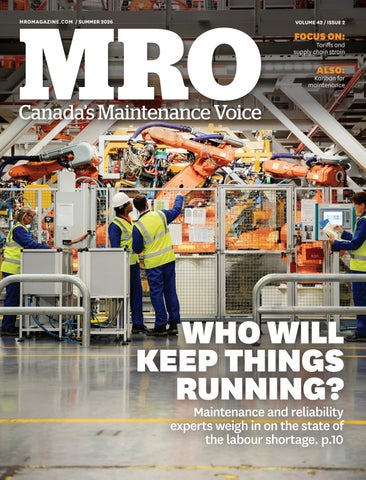
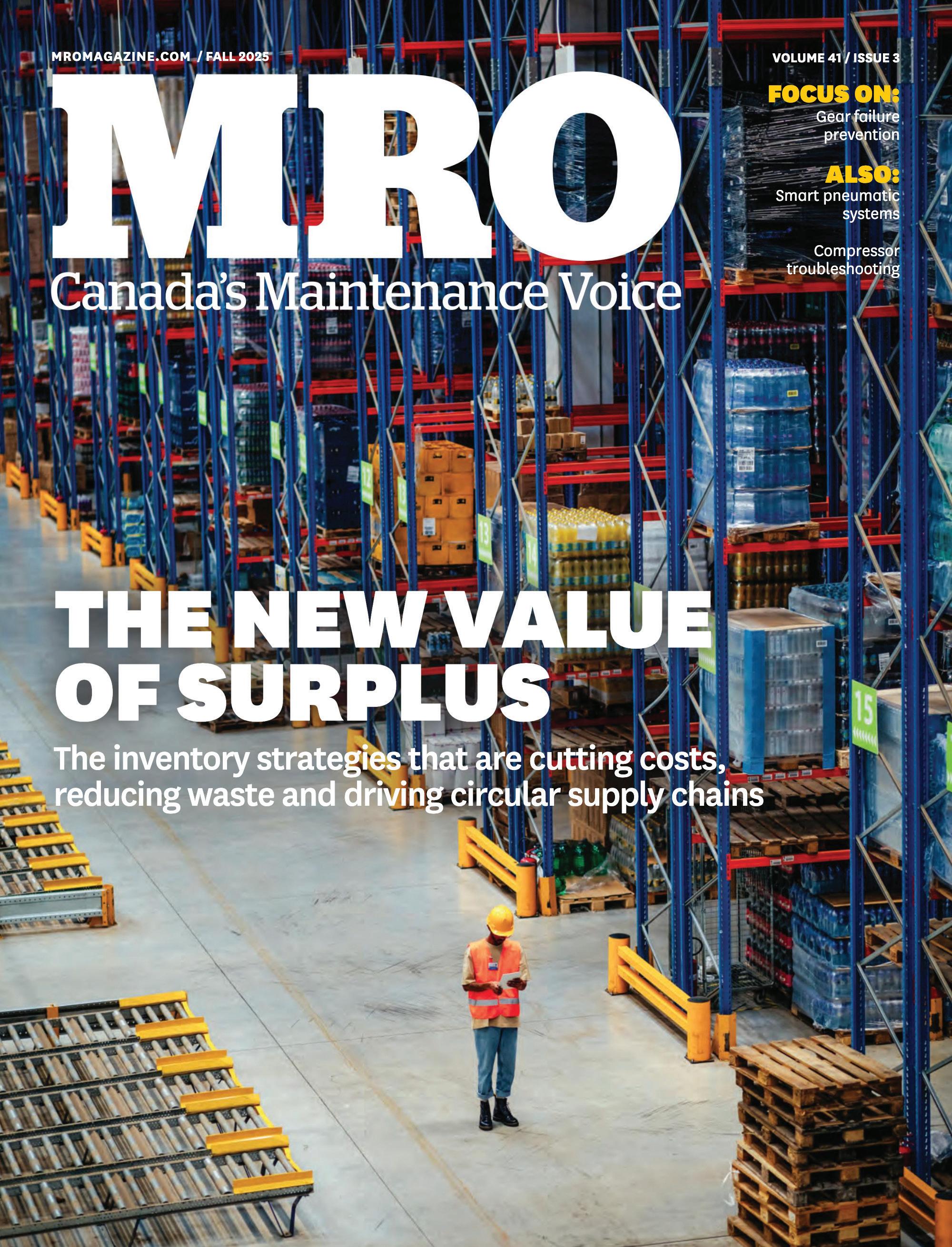
Maintenance and reliability experts weigh in on the state of the labour shortage. p.10 FOCUS
COVER STORY: THE CAPABILITY GAP
MRO hosted a roundtable of maintenance experts to discuss the labour shortage and it's impact on operations.
TARIFFS AND SUPPLY CHAIN STRAIN
What experts are revealing about spare parts sourcing, inventory risk and the real cost of downtime.
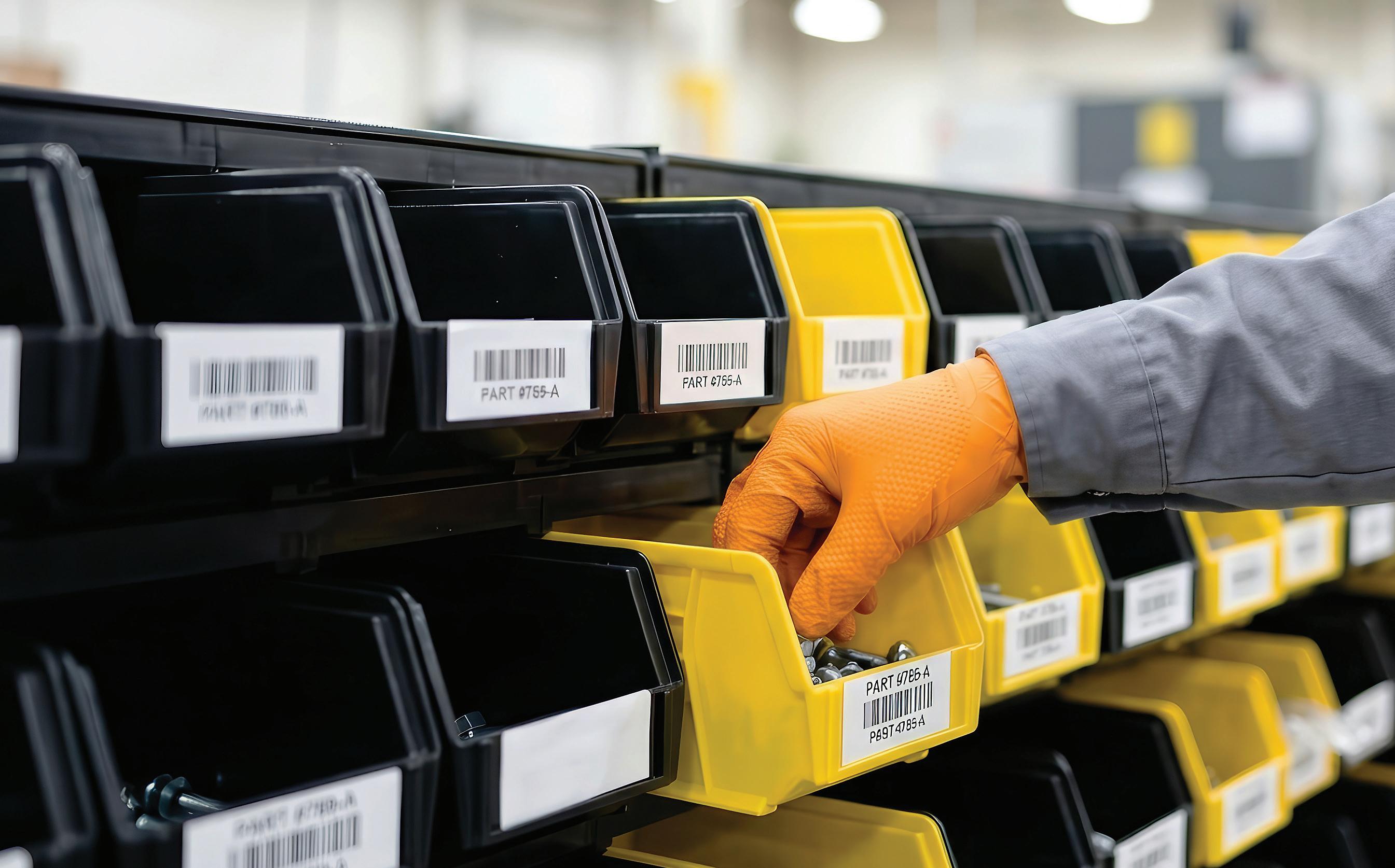
KANBAN FOR MAINTENANCE: STOP CHASING PARTS AND START CONTROLLING FLOW
A practical look at how Kanban helps maintenance teams stabilize inventory and keep critical parts flowing.
AI’S HIDDEN RISK TO EXPERTISE DEVELOPMENT
Artificial intelligence promises efficiency gains, but it may be weakening the professional development pipeline.
THE COST OF POOR INSTALLATION
Installation mistakes don’t end at startup. They often resurface later as repeat failures, added maintenance work and reduced equipment life.
Maintenance’s downtime problem
Maintenance teams have never had more tools, more data or more advanced strategies at their disposal. Yet a new report suggests many are still dealing with the same core problem of keeping assets up and running.
MaintainX’s State of Industrial Maintenance 2026 report, based on survey responses from more than 2,200 maintenance and operations leaders across the U.S. and Canada, offers a snapshot of where things stand. While some of the findings point to progress, it seems a lot of the same problems are still getting in the way.
The biggest standout to me is the issue of unplanned downtime. According to the report, 79 per cent of teams experienced the same or more downtime over the past year, while just 21 per cent said it decreased. More organizations also reported rising downtime costs, driven by higher parts and shipping costs, increased labour costs and wear and tear on critical assets.
Preventive and predictive approaches continue to gain ground, with nearly two-thirds of respondents reporting they use preventive maintenance, while usage-based and condition-based approaches are now part of the mix for many teams. Real-time equipment monitoring is also becoming more common, with 62 per cent of organizations either using it extensively or piloting it.
But that progress has not fully translated to all aspects of operations. Half of respondents said they still spend less than 40 per cent of their time on planned maintenance work, which is likely a sign that reactive maintenance is alive and well.
The reasons behind these numbers are exactly what you’d expect: Equipment failure remains the top cause of increased downtime, followed by labour shortages, poor knowledge transfer or training and aging infrastructure. (For more indepth analysis on this topic, turn to our cover story on page 10.) On a more positive note, the report also suggests companies are still willing to invest. About half of respondents expect their maintenance budgets to increase over the next 12 months, with many planning to put those dollars toward training, new technology and updated maintenance strategies.
And of course, there’s the subject of artificial intelligence. The report found that 58 per cent of teams are already using AI in some capacity, up from 44 per cent a year earlier. Most said they saw measurable value within six months, with common uses including maintenance data analytics, knowledge capture, root cause analysis and work order management.
But as we all know, technology on its own is not enough. Even with more tools in place, downtime remains an issue for many teams as they struggle to make time for planned work, improve training and build systems people can actually use.
I’m curious: Do these numbers reflect what you’re experiencing in your own operations? Let me know. I’d love to hear from you.
KIRSTYN BROWN Editor
kbrown@annexbusinessmedia.com
ESTABLISHED 1985
SUMMER 2026 Volume 42, Number 2
READER SERVICE
Print and digital subscription inquiries or changes, please contact Customer Service
Angelita Potal, Customer Service Administrator Tel: 416-510-5113 email: apotal@annexbusinessmedia.com
Mail: 111 Gordon Baker Rd., Suite 400 Toronto, ON M2H 3R1
EDITOR Kirstyn Brown 226-931-4194 kbrown@annexbusinessmedia.com
BRAND SALES MANAGER Pat Lorusso 416-518-5509 plorusso@annexbusinessmedia.com
AUDIENCE DEVELOPMENT MANAGER Beata Olechnowicz bolechnowicz@annexbusinessmedia.com 416-510-5182
MEDIA DESIGNER Graham Jeffrey
ACCOUNT CO-ORDINATOR Debbie Smith 416-510-5107 dsmith@annexbusinessmedia.com
GROUP PUBLISHER Paul Grossinger 416-510-5240 pgrossinger@annexbusinessmedia.com
CEO Scott Jamieson sjamieson@annexbusinessmedia.com
MRO is published by Annex Business Media, 111 Gordon Baker Rd., Suite 400, Toronto ON M2H 3R1; Tel. 416-442-5600, Fax 416-510-5140. Toll-free: 1-800-268-7742 in Canada, 1-800-387-0273 in the USA.
Printed in Canada
ISSN 0831-8603 (print); ISSN 1923-3698 (digital) PUBLICATION MAIL AGREEMENT #40065710
Subscription rates. Canada: 1 year $68.95, 2 years $109.26. United States: 1 year $151.69. Elsewhere: 1 year $173.97. Add applicable taxes to all rates.
On occasion, our subscription list is made available to organizations whose products or services may be of interest to our readers. If you would prefer not to receive such information, please contact our circulation department in any of the four ways listed above.
Resilience a defining theme at Advance: Women in Manufacturing
After five years being virtual, this annual event celebrated in-person with a breakfast and awards ceremony. Here are the highlights.
BY KIRSTYN BROWN & NITHYA
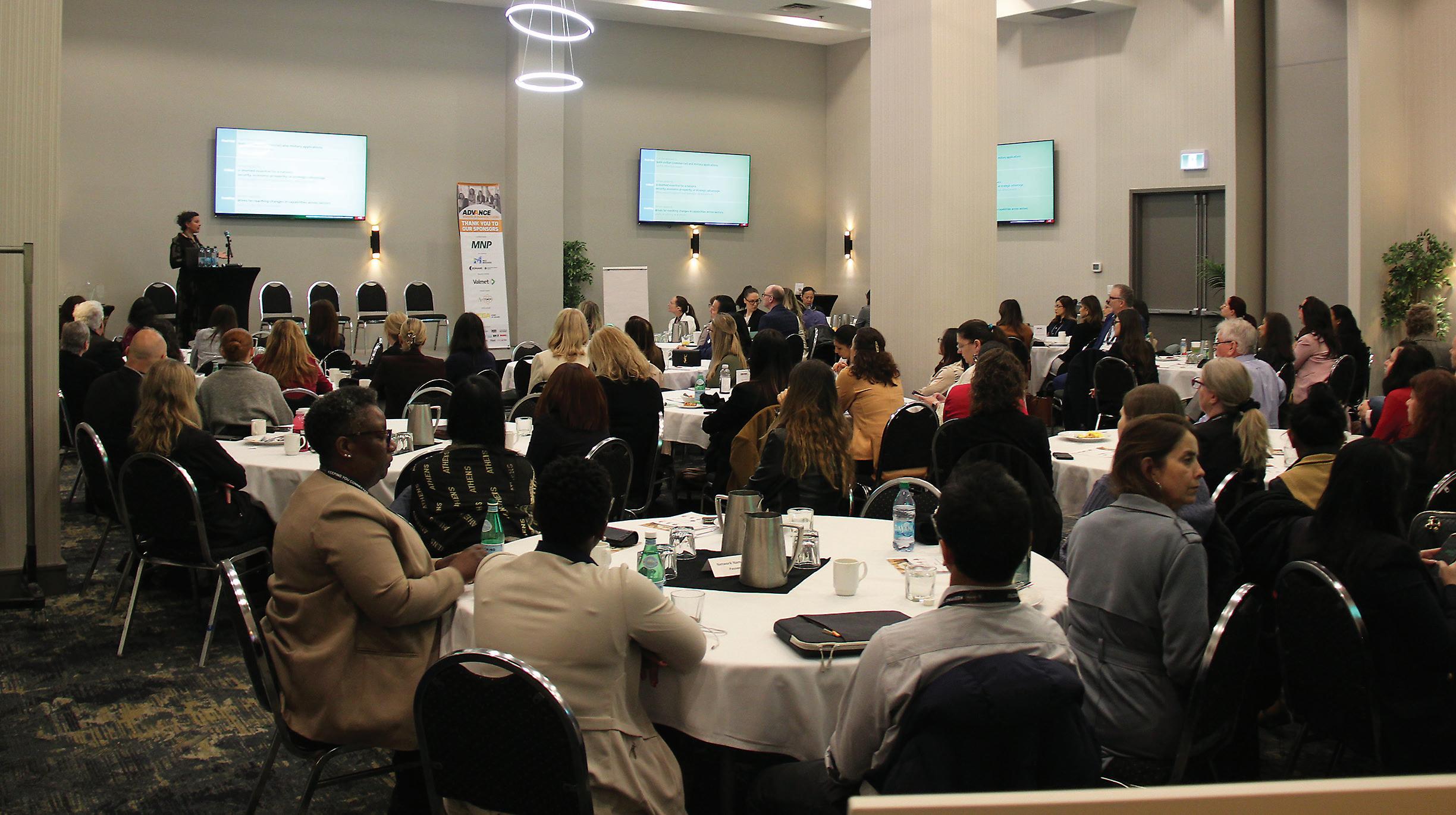
Industry leaders, professionals and emerging voices from across Canada’s manufacturing sector came together in Toronto on May 6 for the inaugural Advance: Women in Manufacturing Breakfast, the new in person evolution of Annex Business Media’s annual virtual summit.
More than 100 attendees gathered at the Sandman Signature Toronto Airport Hotel for a morning of keynote and panel discussions, networking with peers from across industries as well as Canada and celebrating the recipients of the first ever Advance: Women in Manufacturing Awards.
Keynote: Robotics is the “Physical AI” that we can’t afford to ignore
As a national leader at the intersection of robotics, automation and innovation policy, Hallie Siegel, CEO, Canadian Robotics Council, kick-started the day with a big picture perspective on how advanced technologies are reshaping manufacturing, work and competitiveness in Canada. Her keynote presentation explored the role of robotics and automation in driving growth, strengthening collaboration across sectors and helping organizations navigate technological change with confidence and clarity. She explained why robotics is the “physical layer” that allows AI to solve problems in the real world.
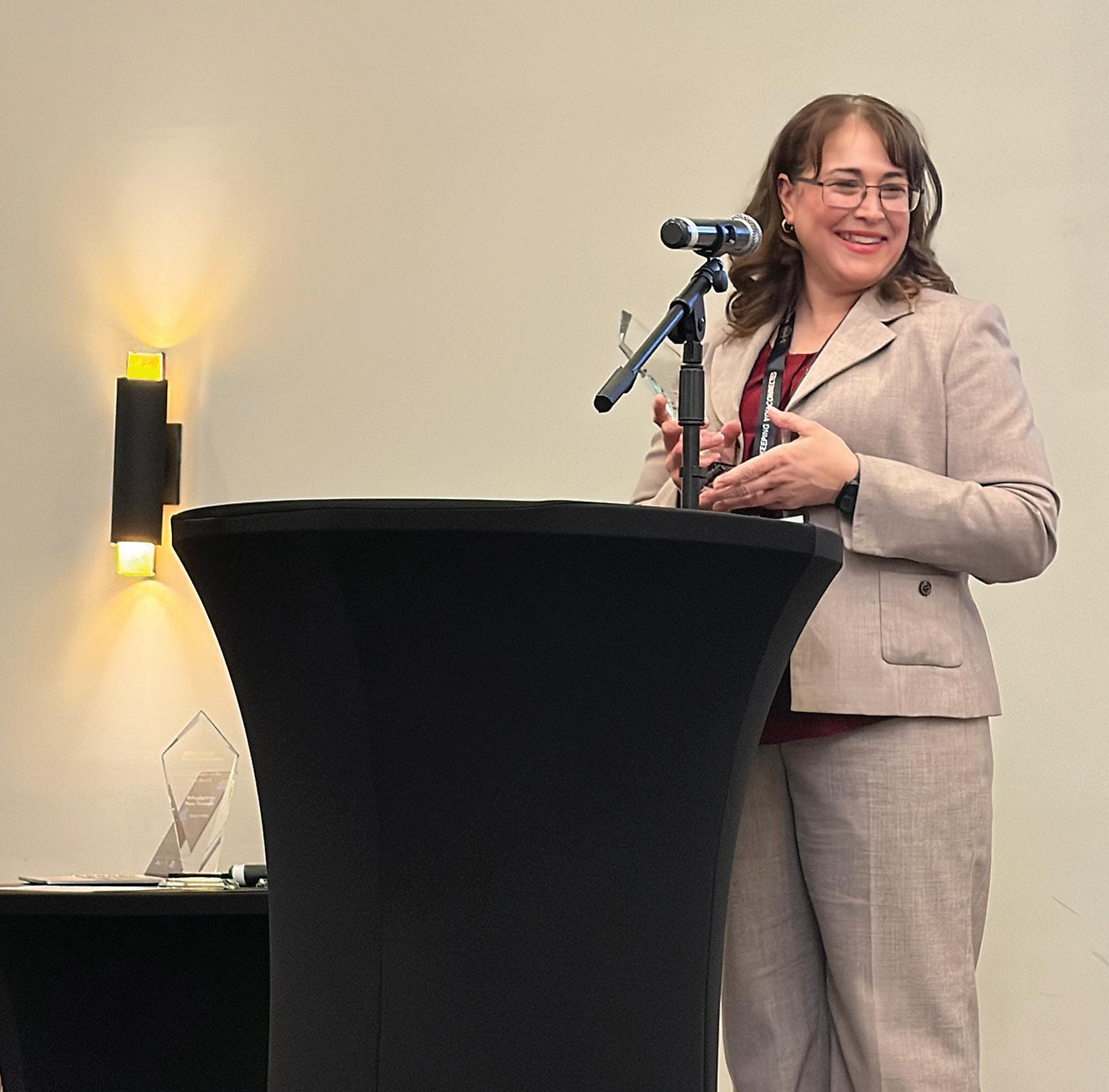
Clockwise: Hallie Siegel, CEO of the Canadian Robotics Council, delivers the keynote address; Bobbi Curran of Honda of Canada Mfg. accepts her Leader of the Year Award; Kirstyn Brown, editor, leads the panel discussion.
Capital, Risk and Resilience: A New Playbook for Canadian Manufacturers
Shilpa Mishra, managing director of corporate finance at MNP, then offered an economic update. She also shared insights on how manufacturers can rethink capital, risk and growth strategies to stay resilient in today’s uncertain economic landscape burdened by geopolitical tensions and U.S. President Trump’s isolationistic policies.
Panel discussion: Women Driving Progress in Canadian Manufacturing
The presentation set the tone for the first panel discussion of the day, which brought together three women who are driving progress within their organizations. Eliza Vrbanac, managing director at Endress+Hauser Canada; Jenny Boudreau, vice president of supply chain at Saint-Gobain Canada; and Natalie Gadsden, facility area manager at the GM Oshawa Assembly Plant, shared their experiences on leading through change, building trust and turning ideas into action.
Awards ceremony
The event was also the perfect venue to present the inaugural Advance: Women in Manufacturing Awards. We received nearly 100 nominations from across the country, representing a wide range of roles, sectors and achievements within Canadian manufacturing.
The Advance: Women in Manufacturing event was co-presented by Annex Business Media’s manufacturing group and supported by industry sponsors, including MNP, Invest Mississauga, Niagara College,Valmet, AceTronic and VEGA.
If you missed the event, visit mromagazine.com for the list of winners and photo gallery.
MAINTENANCE & RELIABILITY
PREDICTIVE MAINTENANCE ADOPTION RISES AS SKILLS SHORTAGE PERSISTS, SURVEY FINDS
Predictive maintenance adoption is rising among manufacturers, according to a new survey from U.S.-based Fluke Corporation, even as workforce skills shortages remain a key barrier to further digital progress.
The survey, conducted by research firm Censuswide, gathered responses from more than 600 senior decision makers and maintenance professionals in manufacturing firms across the U.S., the U.K. and Germany.
The results show predictive maintenance adoption rose from 9 per cent to 18 per cent, year over year. Over the same period, reactive maintenance usage remained unchanged at 36 per cent, while proactive maintenance declined from 55 per cent to 45 per cent, suggesting a shift toward more data driven approaches.
Respondents also reported increased spending on digital technologies. Nearly three quarters said they now allocate between 16 and 30 per cent of their maintenance budgets to new technologies, with investment focused on cybersecurity, data management and industrial and generative artificial intelligence.
Despite higher levels of investment, the findings point to workforce readiness as the primary constraint on digital progress. Skills related issues accounted for roughly 78 per cent of reported obstacles, including gaps in technical expertise, limited knowledge of digital tools and shortages of skilled labour.
The survey also found expectations around Industry 5.0 are shifting, with fewer organizations anticipating near term implementation and more pointing to timelines of one to four years.
Nearly half of respondents said they plan to advance connected reliability programs within the next year.
KSB OPENS NEW PUMP REPAIR WORKSHOP
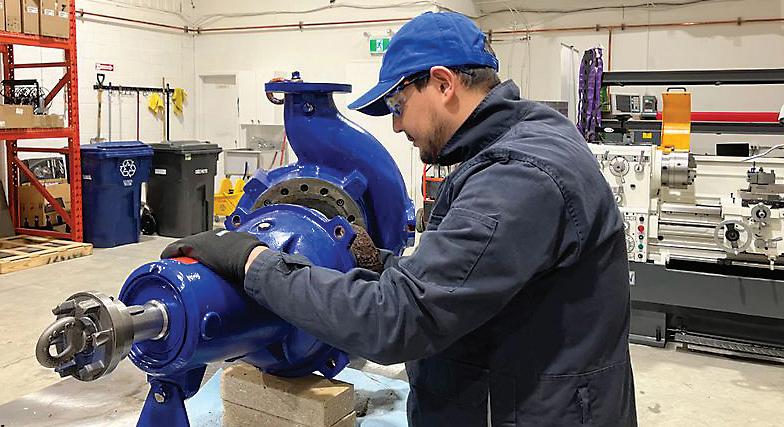
America, a manufacturer of pumps and valves, has opened a new KSB SupremeServ workshop in Laval, Que., expanding its in province pump repair and service capabilities for Québec customers.
The new facility provides local repair, rebuild and technical support for
pumps, motors and rotating equipment, aiming to eliminate the need to ship equipment out of province and helping reduce downtime. KSB said the workshop will be staffed by French speaking technicians and will service pumps of all makes and models.
According to a KSB press release, services offered at the Laval facility include in shop and on site repair, maintenance, commissioning, system optimization and reverse engineering, along with metallurgy evaluations and hydraulic re rates.
The Laval site is KSB’s third SupremeServ workshop in Canada, joining locations in Mississauga, Ont., and Edmonton. KSB has operated a sales office in Laval since 2009; the expansion adds full service and repair capabilities to support industrial and municipal customers across Québec.
SERVICE & SUPPORT
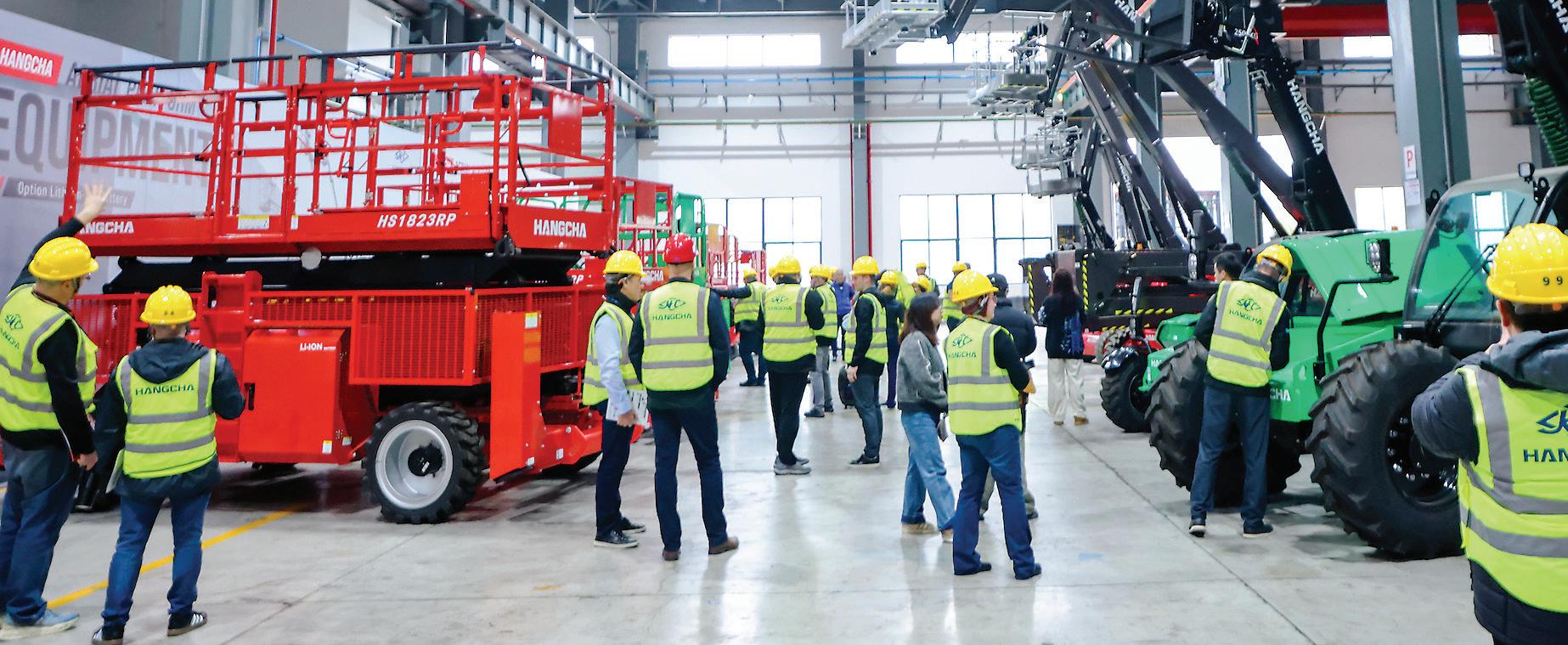
Hangcha Forklift Canda headquarters in Vaudreuil Dorion, Que.
Hangcha Forklift Canada has expanded its dealer network in Quebec, moving from a single-dealer model to
a province-wide structure aimed at improving access to equipment sales, service and parts support.
In a press release, the company said the new network includes 15 authorized dealers across regions such as Montreal, Quebec City, Saguenay–Lac Saint Jean, Abitibi Témiscamingue, Mauricie, Estrie and Eastern Quebec. The expanded footprint includes more than 100 field technicians and a 30,000 square foot parts operation at Hangcha Canada’s headquarters in Vaudreuil Dorion, Que.
The company said the shift to a broader dealer network is intended to reduce service response times and improve access to parts, mobile service and fleet management support for Quebec customers using material handling equipment.
The company said dealers were selected based on factors including geographic coverage, technician capacity, parts infrastructure, rental fleets and existing customer bases.
Hangcha Canada also introduced a warranty incentive for Quebec customers transferring service to an authorized dealer, offering up to an additional year or 2,000 hours of warranty coverage at no cost.
KSB SupremeServ Laval technician disassembling a KSB Sewatec pump.
Photos:KSB North America (top); Hangcha Forklift (bottom)
From maintenance to equipment service: Redefining the role
BY GEORGES
In the equipment reliability world, the words we use matter more than we think sometimes. Titles, roles names and labels quietly shape how people see their job and how they perceive it to be done. So what if, instead of mainteance, we started calling it equipment service?
For many organizations, maintenance still carries an old meaning. It suggests fixing things after they break, completing scheduled PMs and working within clear trade lines. Even in well-run plants, that language can reinforce a reactive mindset: do the task, close the work order, move on. The work gets done, but ownership is often narrow and focused on activities rather than outcomes.
Equipment service sets a different tone. It puts the focus on equipment health and performance and tells the workforce that their role is to care for assets over time, not just respond to failures. Changing the language gives leaders and technicians permission to reset what “good” looks like and to move away from habits that no longer support modern reliability goals.
At the center of this shift is ownership. An Equipment Service Technician does not need to be simply defined by a trade, but instead, by the results and service they provide to the business overall. Their responsibility doesn’t stop at an electrical panel or a mechanical component. It extends to making sure the equipment runs reliably, efficiently and safely. When something isn’t right, they are expected to follow the problem, not hand it off at the edge of a job description.
This way of thinking naturally challenges traditional trade boundaries. Mechanical issues often have electrical causes; control problems can show up as mechanical symptoms. When roles are tightly defined by trade alone, work gets split, delays increase and accountability becomes blurred. Equipment service pushes in the opposite direction, asking what the equipment needs and not which craft owns the task.
“A strong equipment service organization is not built around single types of technicians. It is built around complementary capability.”
That’s where workforce design becomes just as important as role definition. A strong equipment service organization is not built around single types of technicians. It is built around complementary capability.
In practice, one of the most effective models is combining Certified Trade Professional and an Electromechanical or Mechatronics Technologist. Companies should be looking at hiring the technologist and offering an apprenticeship to compliment their aptitude. Apprenticeship costs are insignificant when you consider the efficiency upside to the organization over the long haul.
Trade professionals bring deep hands-on experience, practical judgment and a strong understanding of how work is done safely and correctly. They know how equipment behaves in the real world. They understand failure patterns that never show up in manuals. Just as importantly, they provide the regulatory compliance and field credibility that any industrial operation depends on.
Electromechanical or Mechatronics Technologists bring something different, but equally valuable. Their strength is in system-level understanding. They are comfortable moving between mechanical components, electrical systems, sensors and controls. They tend to be strong in diagnostics, logic and understanding how systems interact. In highly automated environments, that perspective is increasingly important.
On their own, each role or trade has limits and can be constrained by narrow scope definitions. Technologists can lack hands-on depth if they work in isolation. Together, they fill the gaps. The trade professional can
ground the work in reality, while the technologist helps connect the dots across systems. The result can be better troubleshooting, faster problem resolution, and fewer repeat failures.
This blended workforce fits naturally with the equipment service mindset. Planning and scheduling become simpler because work no longer needs to be divided strictly by discipline. Instead of asking, “Is this electrical or mechanical?”, planners can focus on priority, timing and asset criticality. Tasks can be bundled into complete service activities rather than split across multiple work orders and multiple people.
Preventive maintenance plans can improve as well. Many PMs already include both mechanical and electrical elements, but they’re often simplified to fit trade boundaries. Under an equipment service model, PMs become true service routines. Technicians are expected to look, listen, think and act, by checking conditions, catching early signs of failure and fixing small issues before they turn into bigger ones.
Changing the name alone won’t fix anything. Calling the function “Equipment Service” only matters if the systems behind it actually change. Training has to expand beyond narrow skill lanes and work management has to value results, not just completed tasks. Most importantly, leaders have to keep reinforcing that reliability is about taking care of equipment over time as opposed to just closing work orders and moving on.
If organizations are willing to make this shift, it will build stronger equipment ownership, faster problem resolution and a workforce that’s better prepared for the complexity of modern assets.
Georges Ouellette, CMRP, CRL, CET is the Reliability Strategy Lead for Honda of Canada Mfg. in Canada. He brings a systems based, practitioner perspective to reliability, focusing on embedding asset reliability and cultural change into day to day manufacturing operations.
The heat is on: Working safely in hot environments
How to plan for rising indoor temperatures to keep workers safe.
BY CANADIAN CENTRE FOR OCCUPATIONAL HEALTH AND SAFETY (CCOHS)
Heat is part of the job in many workplaces. You might feel it on a plant floor, inside a mechanical room or anywhere equipment is running for long stretches.These indoor spaces can heat up quickly, and over the course of a shift, that heat can build.
When that happens, working conditions get more than just uncomfortable. Heat starts to affect how people feel, how they work and how safely the job gets done. As temperatures rise and heat events become more frequent, managing heat exposure is becoming a bigger part of everyday health and safety.
More than discomfort
Working in a hot environment puts real strain on the body. When heat builds faster than the body can cool itself, internal temperature rises. Sweating helps, but it is not always enough.
Early signs can often go undetected. A worker feels tired sooner than expected. They get dizzy, nauseous or develop muscle cramps. If conditions continue, those symptoms can progress to confusion, disorientation or worse. In the most serious cases, heat stroke can occur and requires immediate medical attention.
Heat also affects how people think. Reaction times slow down, focus drops and decision-making becomes less sharp. In environments where timing, coordination and attention to detail matter, that can increase the chance of something going wrong.
Where indoor heat comes from
Indoor heat often comes from the work itself. Boilers, furnaces, ovens, engines and other equipment generate heat, especially in enclosed or poorly ventilated spaces.
You may not notice it right away. A space that feels manageable at the
High temperatures can slow workers' reaction time and negatively impact their ability to focus.
start of a shift can feel very different a few hours later, once equipment has been running and the air has had little chance to circulate.
Humidity makes things worse. When the air holds more moisture, sweat cannot evaporate as easily and the body has a harder time cooling down.
The job itself adds to the load. Physically demanding work generates body heat. Personal protective equipment can trap that heat and limit airflow. All of this combines to create conditions that can change throughout the day and from one area to another.
A growing challenge
Hot indoor environments are not new, but they can be hard to manage. Warmer outdoor temperatures can raise baseline conditions inside buildings, especially where cooling systems are limited or where equipment is already producing heat.
For employers, this shows up in a few ways. Workers fatigue faster, productivity can drop and the likelihood of mistakes or incidents can increase,
especially during longer shifts or extended heat events.
Understanding the risk
There is no single temperature that tells you when work is safe or unsafe. What matters is the overall heat load, which depends on temperature, humidity, air movement, workload and what workers are wearing.
That is why it helps to look beyond the thermostat. Some workplaces use tools that account for these combined factors, such as measuring the wet bulb globe temperature (WBGT), to get a better sense of how conditions are affecting workers. These tools can help assess heat stress risks more accurately than air temperature alone.
The key is to look at how the work is being done. The conditions next to a piece of equipment may be very different from the rest of the space. What feels manageable in one area may not be in another.
Controlling heat at the source
If it's possible to reduce the heat, start there.
In indoor environments, that often means looking at equipment and airflow. Improving ventilation can help move hot air out and bring cooler air in. Cooling systems can lower overall temperatures. Insulating or shielding hot equipment can reduce how much heat reaches workers.
Even small adjustments can help. Increasing airflow or creating cooler zones where workers can step away from the heat can make a noticeable difference over the course of a shift.
Adjusting how work is done
How work is organized matters just as much as the physical environment. Workers should acclimatize to hot conditions before a full workload and gradually increase the duration and intensity of physical activity.
If you can schedule more demanding tasks for cooler parts of the day, do it. Build in regular
“Just as important, make it easy for people to speak up. If a worker says it is too hot to continue safely, take them seriously.”
breaks before workers start to feel unwell. Rotate tasks so the same person is not exposed to the hottest conditions for long periods.
Make it easy for workers to stay hydrated. Ensure there is access to water and a place to cool down. These simple steps go a long way in preventing heat stress.
Clothing and equipment should also be part of the conversation. Personal protective equipment is often necessary, but it can add to heat strain. Where possible, look for options that balance protection with comfort.
Recognizing and responding
Even with the right controls, heat can still catch up with people. Workers and supervisors need to know what to look for. One
challenge is that people do not always recognize symptoms in themselves. In many cases, a co-worker is the first to notice that something is off.
If someone shows mild symptoms of heat stress, act quickly. Move them to a cooler area, provide fluids, and monitor how they are doing. If symptoms are severe (confusion or loss of consciousness), get medical help right away.
Just as important, make it easy for people to speak up. If a worker says it is too hot to continue safely, take them seriously.
Making heat part of everyday planning
Heat should not only be addressed during extreme weather. It needs to be part of how work
is planned and carried out every day. That means thinking about heat when scheduling tasks, checking in with workers as conditions change and adjusting as needed. Short safety conversations can help keep heat risks top of mind and reinforce what to watch for.
Incorporating heat management into daily planning makes it easier to manage. Workers can anticipate what to expect, supervisors know what to monitor, and the job gets done more safely. When heat is part of the job, managing it needs to be part of the work.
The Canadian Centre for Occupational Health and Safety (CCOHS) promotes the total well-being — physical, psychosocial, and mental health — of workers in Canada by providing information, advice, education, and management systems and solutions that support the prevention of injury and illness. Visit www.ccohs.ca for more safety tips.
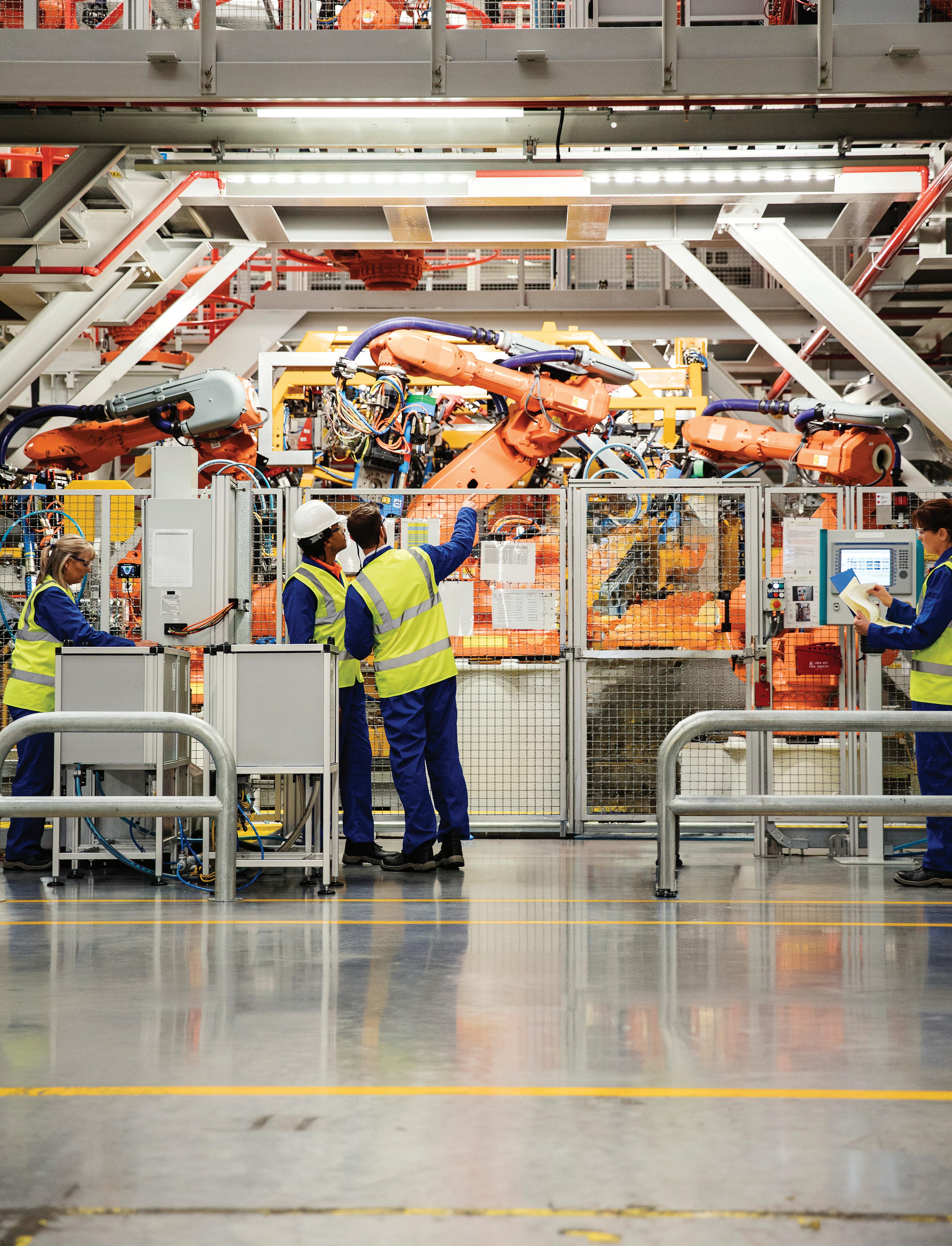
The capability gap
What maintenance leaders say the labour shortage really looks like in the field.
BY KIRSTYN BROWN
THE EXPERTS
Kim Wolf is president of Kim Wolf Leadership Coaching and Manufacturing Consulting, with experience across the consumer goods and food processing sectors. She has held roles in engineering, maintenance and operations, including manager of maintenance at Eveready Battery Company and plant manager at Campbell Soup’s Listowel, Ont., facility.
Jim Vantyghem is a CMRP-certified project and implementation manager at Welders Millwrights Inc. with 35 years of manufacturing, maintenance, project management and corporate consulting experience across multiple industries. Jim has led maintenance and reliability initiatives, implemented enterprise-wide CMMS solutions and developed standardized maintenance programs designed to improve equipment reliability and asset performance.
Patricia Jaworski, P. Eng, CSAM is an asset management professional with more than 20 years of industry experience and president of Jaworski Technical Limited. She supports organizations across a range of engagements and advances the profession through volunteer roles with industry associations.
Michael Forster is director of Made Safe, a Manitoba-based, industry driven manufacturing safety association. He brings more than 20 years of experience in aerospace manufacturing, including aircraft maintenance, design and material review, and has led manufacturing operations with responsibility for safety.
Photo: S365 Studio
Lubriplate’s ultra-high-performance, 100% synthetic lubricants have been engineered to provide unsurpassed performance in the most demanding plant environments. They provide a wide range of benefits designed to make your plant run better. Benefits include: extended lubrication intervals, lubrication consolidation through multiple application capability, reduced friction, extended machinery life and reduced downtime. Products include...
HIGH-PERFORMANCE SYNTHETIC GEAR OILS
SYNTHETIC AIR COMPRESSOR FLUIDS
SYNTHETIC HYDRAULIC FLUIDS
HIGH-PERFORMANCE SYNTHETIC GREASES
NSF H1 REGISTERED FOOD GRADE LUBRICANTS
ECO-FRIENDLY SYNTHETIC LUBRICANTS
SPRAY & SPECIALTY LUBRICANTS Scan the QR Code for More Information About Lubriplate’s Products and Services.
Canada’s skilled trades shortage isn’t new. It’s been building for years, driven primarily by a retiring workforce combined with a lack of workers with the technical skills and training to replace them.
In the trades alone, an estimated 700,000 workers are expected to retire between 2019 and 2028, according to the Canadian government. Manufacturing is one of the industries being hit the hardest, with recent Statistics Canada data indicating the sector lost nearly 20,000 jobs year-over-year.
While the numbers are staggering, they don’t tell the whole story. What does the shortage look like when it comes to keeping equipment up and running? How is it affecting maintenance teams directly? And what are organizations doing, or not doing, to respond?
To get a clearer picture, MRO brought together a panel of maintenance and reliability professionals to talk through how the labour and skills shortage is showing up on plant floors right now, what organizations are getting wrong in their response and where technology fits, and where it doesn’t.
The real cost of the labour crisis On the question of where the shortage is showing up the most, the panelists came back to the same point: employers are not just struggling to find tradespeople, they are struggling to find experienced problem-solvers.
“It’s not necessarily the lack of labour itself,” Wolf said. “It’s the lack of problem-solving labour, which is very different than just having a body to fill a position. And that only comes with experience.”
Vantyghem said the challenge is not just finding skilled tradespeople but finding the right level of experience. In his view, many well-experienced tradespeople are already employed, and credentials alone do not always guarantee capability.
He also described why the pipeline is not refilling as easily as policy announcements suggest. In his view, the barrier is not simply awareness of the trades, but the economics of entering them.
“The amount of cost in tools alone is very, very expensive,” he said, pointing to the increasing cost of fuel and living expenses as well. For someone entering a trade, he added, “you’re probably only going to be making 60 per cent of whatever the journeyman wage is to start.”
Patricia Jaworski described how the strain shows up in the maintenance management cycle. Even when planners and schedulers are building strong job plans and schedules, she said execution is often limited by labour availability.
“Canada’s maintenance challenge isn’t just a shortage of people, it’s also a shortage of capability, experience and respect for skilled trades.”
– Patricia Jaworski
“There’s not enough resources to perform the work that needs to be done,” she said. “Instead of making sure that we’re getting all the work that needs to be done from a reliability perspective, whether that’s predictive, preventive, and also some of those day-to-day maintenance issues we find, we’re instead scheduling the work based on how many folks we have available to do it, which is backwards.”
For Forster, the strain often becomes visible long before it shows up in staffing numbers or formal reporting. In his experience, it starts with repeated failures and teams struggling to keep machines running, often acknowledging they simply don’t have the time or capacity to keep up with the work.
“You start to see the request for overtime,” he said. “You always have a few people referred to as the overtime heroes… and you start to see that becoming a reliant process for continuing to run on and meet your customer orders.”
The experience gap
If headcount is one side of the story, the panelists said the loss of machine-specific knowledge is the other. That knowledge is often not documented, not formalized and not easily replaced.
Forster described what that looks like with legacy equipment, noting that even machines of the same make and model can require different maintenance approaches depending on usage.
“You can have two machines that are identical in build and year, but one may have more cycle time,” he said. “That changes how often you’re checking components or dealing with failures, even if the plan treats them the same. Someone new isn’t going to know that without that knowledge being passed on.”
Without a deliberate knowledge transfer plan, he said there is no shortcut.
“It took [the previous person] 25 years to learn how to do that,” he said. “It’s going to take the next person 25 years to learn how to do that.”
Wolf said experience gaps show up as inconsistency in execution and a higher likelihood of reactive work.
“Experience gaps to me equal variability,” she said. “Preventive maintenance becomes a checklist as opposed to an actual assessment and inspection.”
Over time, she said, that pushes teams
away from proactive work.
“I think the experience gap really drives the reactive environment versus proactive environment,” she said, adding that firefighting is “exhausting, ineffective and expensive.”
Vantyghem said companies continue to struggle with capturing expertise in a usable way. Speaking from his CMMS implementation work, he said the challenge is getting veteran workers to document what they know.
“My biggest issue I’ve had is trying to get our skilled veteran people to take what they know in their head and be able to get it in a format where people can go back and retrieve information,” he said. “We suck at it.”
Jaworski also warned against thinking the problem is solved when headcount targets are met.
“Just because my budget calls for 65 heavy duty mechanics and I have my 65 heavy duty mechanics, that doesn’t mean I have everything that I need,” she said, pointing to the wide variation in experience and output even within the same trade title.
The shift to reactive
As production pressure increases, the panelists said the same pattern tends to emerge. Preventive routines, training and improvement work are the first to fall behind.
According to Wolf, as management and operations focus on getting equipment back online, maintenance teams are pulled into a cycle of short-term fixes and constant updates.
“You literally get into that firefighting cycle that you cannot get out of,” she said, adding that anything beyond getting through the day is often deprioritized, including preventive work, training and equipment optimization.
Jaworski said the mindset behind those decisions is still common in some organizations.
“There’s an ‘if it ain’t broke, don’t fix it’ mentality,” she said. But that approach comes at a cost. “If it ain’t broke, look after it now. Because when it does break, it’s going to take a lot of effort to get back on track.”
Forster described how those choices play out over time. As routine work is deferred, risks build in the background until they surface as larger failures.
“You start to push your routines off,” he said. “And if you push off your preventive
routines, you will have unpredictable catastrophic failure that becomes a massive safety risk.”
He also pointed to how organizational decisions can reinforce that pattern. In his written responses, he said maintenance is often viewed as a cost rather than an investment, which can leave teams under-resourced and more reliant on reactive work.
Jaworski said the impact is visible in how labour is used. When support roles are cut, the work does not disappear. Instead, it is absorbed by skilled tradespeople, pulling them away from the work that only they can do.
Wolf added that maintenance leaders often need to make the business case more clearly when it comes to planning, tools and training. Without that, she said, it can be difficult to secure investments that would improve reliability and reduce long-term costs.
Mentorship is key
While they agreed formal training is important, the roundtable experts put stronger emphasis on what happens after someone is hired.
Forster said formal training builds a foundation, but it does not prepare people for the realities of the job.
“Theory is great and the hands-on from college is great, but nothing prepares you for dealing with multiple real-world issues and team dynamic.”
Vantyghem said training programs often fall short in preparing workers for the realities of the job, including communication, problem-solving and working under production pressure. In his view, those skills, particularly how to communicate with operators, supervisors and peers, are often left to be learned on the job.
Wolf added that employers cannot treat that gap as someone else’s problem. Mentorship, she said, has to be built into apprenticeship programs, not treated as an informal add-on.
“Any company that is taking on apprenticeship programs, they need to include mentorship as a part of that program automatically,” she said.
She also made a distinction that often gets lost when companies talk about “pairing” apprentices with experienced people.
“Mentorship in itself is a skill that I don’t think very many people are very good at,”
she said, adding that some people can train and share, but that is not always the same thing as mentorship.
Vantyghem said what often happens instead is a sink-or-swim approach.
“Many companies have a tendency to throw an apprentice on the floor and fend for themselves,” he said. “People get thrown to the wolves.”
Technology and its limits
Of course, technology was an inevitable part of the discussion – though not as a solution on its own.
Wolf said tools like AI can support maintenance teams, particularly when it comes to structured troubleshooting, helping narrow down possible causes based on known symptoms.
“But doing the actual analysis and understanding that equipment and the history and the preventive maintenance… it’s never going to come out of a ChatGPT response,” she said.
In her view, the opportunity is not in replacing people, but in investing in systems that support them, such as CMMS and predictive maintenance tools.
Vantyghem said the challenge often starts before any tool is introduced. In many cases, he said, the underlying data and systems are not strong enough to support more advanced tools.
“What good is an AI tool if the foundation isn’t there?” he said.
Forster pointed to more practical ways technology can help in the near term. Rather than replacing hands-on work, he said, digital tools can reduce time spent on
“Any company that is taking on apprenticeship programs, they need to include mentorship as a part of that program automatically.”
– Kim Wolf
administrative tasks or searching for information. For instance, querying a specific repair manual through an AI system could help teams work through complex troubleshooting steps more quickly.
“You might get the answer in 30 seconds that would have taken you two days,” he said, adding that it can help narrow down where to start rather than replacing the hands-on work itself.
But, he says, there is still a gap in how teams frame questions and interpret results, particularly when working with complex systems.
“You have to query the system properly and be intelligent enough to know whether that output makes sense,” he said. “Garbage in, garbage out.”
Getting back to basics
When asked for a final thought or piece of advice, the panelists focused on investing in people and getting back to basics.
“Develop your capability intentionally by getting back to basics,” she said. “Don't just rely on hope and crossing your fingers that things are going to get better.”
Jaworski emphasized making better use of the experience that already exists.
“Let’s take advantage of the people that we do have and help get them better set so that they can share their great experience with the new folks coming in,” she said.
Vantyghem said the underlying issues have been largely consistent over time. In his experience, the fundamentals of good maintenance have not changed, but organizations continue to struggle to apply them consistently.
“The solutions a lot of times are very simple,” he said. “We just make them difficult.”
Forster emphasized that prioritizing preventative maintenance will pay off in more ways than one.
“The advice I’d give is not to put off longterm preventive maintenance as it can really hurt your business,” he said. “If equipment breaks down for long periods, maintenance costs rise and production suffers because you’re no longer meeting your long-term maintenance goals. Customers may not complain at first but eventually they’ll go elsewhere if demand isn’t being met.
Together, their responses reinforce the idea that the challenges facing maintenance teams today go beyond the labour shortage, but it’s all connected.
“Canada’s maintenance challenge isn’t just a shortage of people, it’s also a shortage of capability, experience and respect for skilled trades,” said Jaworski. “The path forward is to better support the trades, invest in capability and create the conditions to do the right work at the right time.”
Tariffs and the supply chain strain
What experts are revealing about spare parts sourcing, inventory risk and the real cost of downtime.
BY MATT JONES
Tariffs and other border frictions have caused disruptions and challenges for almost all industrial sectors in Canada, and the spare parts sector is no exception.
Whether the parts are sourced from over the border, or are produced domestically but include imported components, the availability and affordability of parts have been affected by trade tensions. These disruptions are exposing the limits of how manufacturers have traditionally approached maintenance inventory and are reconfiguring conversations around risk and exposure.
Danaka Porter, PhD, a regional managing partner with Iota Consulting specializing in supply chain strategy and operational performance, notes that many organizations were content to rely on a single supplier and hadn’t explored alternatives. As lead times grow, those organizations can find themselves scrambling to locate substitutes and hoping the quality is comparable. Even when a suitable alternative is found, the supplier may not be able to ramp up quickly enough to meet demand from other customers in the same position.
“It’s all of the lack of planning upfront, of really knowing where your suppliers are, having alternatives, all the information and things that we went through with COVID,” says Porter. “It’s all that information that many organizations don’t necessarily keep. A lot of the ERPs (enterprise resource planning software) don’t typically have a drop down of area or region where this part is coming from, so that information can be difficult to find.”
The long story, Porter says, is
that many organizations just haven’t planned enough. Not enough risk management was done to understand how supply chains actually function under pressure. And that gap has been exacerbated by the volatility of the trade environment, as whether or not tariffs would be applied seemed to change month to month at one point.
Porter says she does not expect these pressures to resolve longstanding debates over “just in time” versus “just in case” inventory strategies. Many organizations have aimed to carry as little inventory as possible, but that approach can limit resilience under current conditions.When parts are sourced across borders, they may no longer be available on a just in time basis.
“Inventory is really seen as a dollar figure in terms of ‘how much money are we putting into this?’” says Porter when asked about how traditional inventory metrics, such as turns and carrying cost, fail to capture the risk during these volatile times.
“What they fail to factor into that calculation is the cost of having a plant shut down, a line not producing, or the cost of an emergency order.
Porter says those traditional metrics need to be recalibrated to account more directly for risk, particularly the operational impact of downtime. How much profit will be lost if a plant or production line is forced to shut down? How many hours will workers be paid while they sit idle waiting for a part?
According to Statistics Canada, Canada’s import volume index dropped from 85.8 to 81.2 year over year, while the price index fell from 124.3 to 119.9 — figures that exclude the direct impact of tariffs.
According to her, organizations still need to track traditional metrics such as inventory turns and obsolescence, but they also need to account for the cost of not having critical parts on hand — striking a balance between efficiency and resilience.
“Both having too much inventory, as well as not enough inventory will have negative effects. But not having enough inventory is more detrimental,” she says. “There’s a big need to have more conversations to bring all the departments together to synthesize and have them collaborate on goals that don’t compete with each other.”
To that point, Porter emphasized that more collaboration between maintenance teams and the inventory side would help synchronize efforts and ensure understanding of the issues. Then together those teams can weigh factors such as lead times and supplier location, exposure to tariffs, costs of a part versus the cost with tariffs and the operational safety and financial consequences of not having the part when needed.
“On lead time, it’s also looking at lead time variability,” adds Porter. “What’s the best case, what’s the most
“Both having too much inventory, as well as not enough inventory will have negative effects. But not having enough inventory is more detrimental.” - Danaka Porter
common, what’s the worst? You have those three scenarios to deal with.
‘This is how much inventory in the best-case scenario, this is most likely, and this is if it’s the worst case’ and finding a balance in there so you can be covered.”
New suppliers also need to be vetted to ensure they meet your technical requirements. Porter encourages organizations to look into performing their own quality tests, either by bringing in a small amount of product or visiting the producer themselves if possible to evaluate their production and quality
assurance efforts directly.
“Seeing that quality aspect will help solidify ‘yes, this is going to be a good supplier, they’re actually going to make a product that we can trust and feel good about'," says Porter.
For companies handling spare parts directly, those pressures are already showing up in day to day operations.
After significant outreach, only one spare parts distributor agreed to speak on the record about the impact of tariffs.
Brian Barber, CEO of Ottawa based Capital Auto Parts (CAP), said
the company has had to pass along price increases of up to 30 per cent on some items. Canada’s retaliatory tariffs have also effectively eliminated its U.S. export business, which previously generated several million dollars annually for the company.
To mitigate those impacts, CAP created a U.S.-based LLC to handle cross border transactions.
“We created a U.S.-based LLC so that if we sell to an American customer, that entity takes the order, invoices the customer and acts as the importer of record, while the Canadian company sells to the U.S. entity,” says Barber. “All the high tariff products in the US market, you warehouse here in Canada, and you only pay the duty or tariff when you export or when you sell it. And then similarly, the other way around is you can import low tariff goods that are targeting for the U.S. directly into the U.S. first.”
Barber said the company is also forecasting further ahead to better manage demand.
The launch of the U.S.-based LLC also dovetails with CAP’s broader push to become a more global company, with a planned rebrand to Autrex set to follow shortly after publication. Barber cautions that the approach adds complexity and extra work, but says it has been effective so far.
Kanban for maintenance: Stop chasing parts and start controlling flow
A practical look at how Kanban—and the two-bin system—helps maintenance teams stabilize inventory and keep critical parts flowing.
BY HOLLY BLAIR, P.ENG
Walk into most maintenance shops and you’ll see a familiar pattern: technicians searching for parts, urgent jobs jumping the queue, and critical spares somehow unavailable when they’re needed most. It looks like a parts problem on the surface, but it’s not. It’s a flow problem. Maintenance teams are working in a reactive environment where the system doesn’t support them, and as a result, time, money and effort are lost every day. Kanban offers a simple, practical way to bring control back by creating visibility and structure around how parts move through the operation.
What is Kanban?
Kanban is a visual, pull-based system used to manage the flow of materials and work. It signals when to replenish inventory based on actual consumption rather than forecasts or assumptions. In practice, this means parts are only reordered when they are used, creating a controlled, predictable flow that aligns inventory levels with actual demand.
The reality of maintenance operations
Maintenance operates under constant pressure. Equipment fails unexpectedly, production demands immediate response and there’s little
tolerance for delays. In that environment, teams do what they need to do to keep things running. Parts get ordered “just in case.” Inventory builds up in some areas while running out in others. Technicians hold onto critical components because they don’t trust the system to have them available next time. Expediting becomes normal, and the storeroom turns into a place where material exists, but not necessarily where or when it’s needed. The issue isn’t effort – it’s the absence of a clear, reliable system to manage flow.
How Kanban works
Kanban creates flow by shifting from a
push system to a pull system. Instead of ordering parts based on forecasts, assumptions or urgency, replenishment is triggered by actual usage.
When a part is consumed, that consumption creates a signal to replace it. Inventory levels are set based on actual demand and lead times, not on the fear of running out of parts. This creates a system that is far more stable, predictable and easier to manage. It removes the reliance on memory, spreadsheets or constant monitoring and replaces it with a simple, visual process that works consistently.
In a maintenance context, Kanban is most effective for high-usage, repeatable items. Bearings, fasteners, fuses, filters, lubricants and standard electrical components are all good candidates. These are the items that create the most disruption when they’re missing and the most waste when they’re overstocked. Managing them through a Kanban system ensures that they are available when needed without tying up excess cash and space in inventory.
The two-bin Kanban system
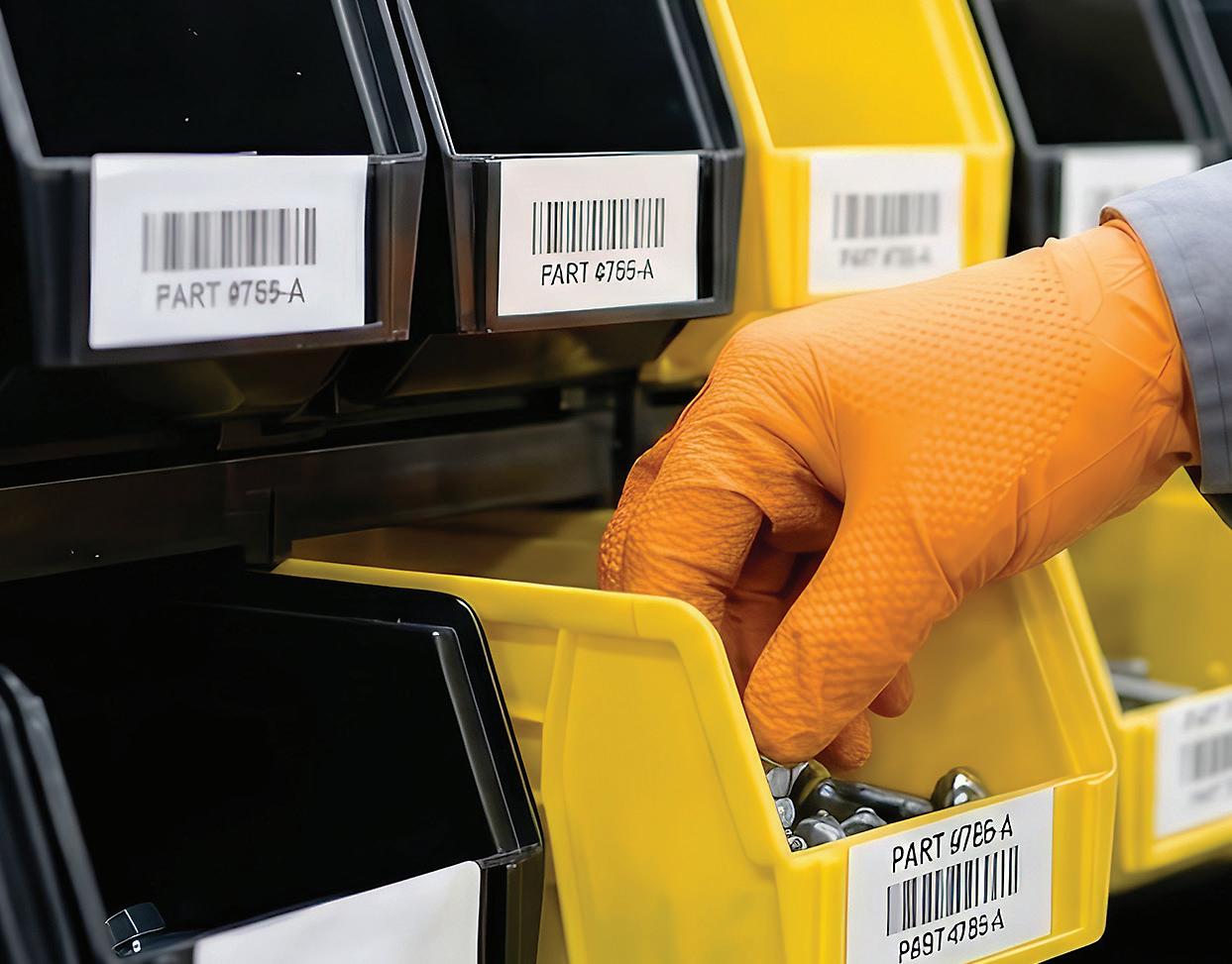
A common approach to Kanban is the two-bin system. Each part has two defined quantities stored in separate bins or locations. Technicians pull from the first bin during normal use.
“In a maintenance context, Kanban is most effective for high-usage, repeatable items. Bearings, fasteners, fuses, filters, lubricants and standard electrical components are all good candidates. ”
Once that bin is empty, they move to the second bin and the empty bin becomes the signal to reorder. That signal could be as simple as a card, a tag or a designated location. The key is that replenishment is triggered immediately when the first bin is depleted, ensuring that new stock arrives before the second bin runs out. It’s a straightforward system, but when applied consistently, it eliminates a significant amount of variability and stress.
When Kanban is implemented effectively, the impact is immediate and measurable. Stockouts are reduced because replenishment is based on actual consumption. Inventory levels decrease because over-ordering is eliminated. Expediting drops because the system is no longer constantly reacting to shortages. Technicians spend less time searching for parts or managing inventory and more time focused on maintenance work. Visibility improves, making it easier to understand usage patterns and identify opportunities for further improvement.
One of the most powerful effects of Kanban is the change in behaviour it creates. In the absence of a clear system, individuals naturally develop workarounds to protect themselves from uncertainty. They stockpile parts, place early orders, or create informal storage locations. These behaviours are logical responses to a broken system, but they introduce more variability and inefficiency over time. Kanban replaces those individual workarounds with a shared, visible process that everyone follows. It creates consistency, builds trust in the system, and reduces the need for workarounds altogether.
That said, Kanban is often misunderstood or poorly implemented. One common mistake is trying to apply it to everything at once. Not all parts require a Kanban system and attempting to manage low-usage or highly variable items this way can create unnecessary complexity. Another issue is setting bin quantities based on guesswork rather than actual
usage and lead times. If quantities are too low, stockouts will occur; if they are too high, excess inventory will return. Supplier reliability also plays a role. Kanban depends on consistent replenishment, so unstable supply chains need to be addressed alongside the system itself.
The good news is that getting started doesn’t require a large-scale initiative. Kanban can be introduced in a focused, practical way. Start by selecting a small group of high-usage parts in one area of the operation. Establish clear quantities based on consumption and lead time. Set up a simple two-bin system with a visible reorder trigger. Monitor how it performs and make adjustments as needed. This approach allows the team to learn and build confidence before expanding the system more broadly.
The bottom line
In today’s environment, maintenance teams are being asked to do more with less. Equipment is aging, resources are constrained, and supply chains are less predictable than they once were. In that context, having a stable, reliable system for managing parts is essential. Kanban provides that stability. It reduces reliance on urgency and individual effort and replaces it with a system that supports consistent execution.
Most maintenance challenges aren’t caused by a lack of effort. They’re caused by systems that make it harder than it should be to do the work. Kanban is one of the simplest ways to change that. By creating flow, improving visibility, and reducing variability, it allows maintenance teams to focus on what they do best keeping equipment running and supporting production. And when the system works, everything else starts to follow.
Holly Blair, P.Eng is a chemical engineer, Lean Six Sigma Master Black Belt and founder of Lean Possibilities. She is the author of Lean Transformation for Small and Mid-Size Manufacturers: A Practical Guide to Efficiency, Profitability, and Sustainable Growth.
AI’s hidden risk to expertise development
Artificial intelligence promises efficiency gains, but it may be weakening the professional development pipeline.
BY BROOKE COX
Artificial intelligence (AI) is dominating the conversation across nearly every industry. In maintenance, reliability and operations, the promise of AI often centres on automation, predictive analytics and efficiency gains. The narrative suggests AI will reduce the need for human expertise, streamline decision-making and replace parts of the workforce.
However, beneath the hype and concern is a risk receiving far less attention: the erosion of the professional development pipeline as workforce reductions and shifting priorities reduce opportunities to develop the next generation of experts.
Heavy industry is already approaching a knowledge cliff, with the last of the baby boomers reaching the traditional retirement age of 65 by 2029. A large portion of experienced tradespeople, planners, engineers and reliability professionals have retired or are nearing retirement. At the same time, fewer young professionals are entering heavy industry. Corporate
2029
Year by which the last of the baby boomers will reach traditional retirement age.
focus on efficiency has also reduced entry-level opportunities.
The challenge is that AI depends on the expertise now leaving the workforce. AI systems require structured asset hierarchies, consistent work processes and reliable historical data — elements that depend on expert knowledge. Many organizations are still building these foundations, or do not yet have them in place. Even where they exist, AI still requires oversight and interpretation, because it lacks contextual judgment. Without strong expertise and structure, AI cannot deliver meaningful results.
The early AI era presents a clear contradiction: expert judgment is becoming rarer just as it becomes more necessary. At the same time, the pipeline that produces those experts is under pressure, with fewer structured pathways to move professionals from novice to experienced practitioner.
The DIKDAR flow still applies
One way to understand this challenge is through the concept of DIKDAR:
This framework describes how organizations move from raw inputs to operational outcomes:
• Data – raw measurements or observations
• Information – organized data
• Knowledge – understanding derived from information
• Decision – selecting a course of action
• Action – executing that choice
• Results – the outcomes produced
AI performs well in the early stages of this flow. Machine learning systems can process large volumes of data and convert them into structured information far faster than human analysts.
However, the transition from information to knowledge, and from knowledge to effective decisions, remains a human responsibility. These decisions rarely happen in isolation. In practice, they involve competing viewpoints, incomplete information and organizational constraints that must be worked through. Professional expertise lies in navigating these situations — interpreting technical information, weighing context and guiding teams toward decisions. This can mean standing behind expert judgment or helping others work through uncertainty. This blend of technical understanding and judgement is difficult to replicate.
A practical example is root cause analysis. AI can support the process
by structuring a causal tree and organizing possible failure mechanisms. It can also suggest relationships between events and conditions.
However, these outputs require context and validation. Experienced professionals must determine whether the proposed pathways are realistic, whether key factors are missing and whether conclusions align with known equipment behaviour and operating conditions.
For instance, in a predictive maintenance program in a manufacturing plant, AI can flag a change in vibration or temperature data, but deciding whether that signal requires action still depends on experience. A technician who knows the asset, its history and how it behaves under load can tell the difference between normal variation and early failure. Without that knowledge, teams can end up chasing false alarms or missing something important. In other words, AI can structure information, but experts determine what it means and what action to take.
“Expertise takes time to develop. It is built through exposure to real operational challenges, mentorship and progression through junior and intermediate roles. It does not come from tools alone.”
The challenge of AI in practice
AI tools generate large volumes of structured output. They can summarize documents, identify patterns and suggest analytical approaches. The outputs are often coherent and well written, even when incorrect. This is one of the more subtle risks.
People tend to assign credibility to information that is clearly written and logically presented. When something reads well, it is often assumed to be correct. This resembles the Halo Effect, a cognitive bias in which we associate positive qualities—such as competence or intelligence—with perceived strengths. In a similar way, well-written AI output can appear authoritative even when it is wrong.
For this reason, experienced professionals remain essential. They can identify misleading conclusions in otherwise polished content. Less experienced practitioners may struggle to distinguish between convincing output and correct analysis. Without expert oversight, AI can produce results that appear credible but are technically flawed or impractical.
The emerging expertise gap
Expertise takes time to develop. It is built through exposure to real operational challenges, mentorship and progression through junior and intermediate roles. It does not come from tools alone.
Historically, this pathway has been
shaped by hands-on experience: troubleshooting equipment failures, participating in root cause analysis, developing maintenance strategies, managing projects and understanding how decisions affect plant performance.
AI may accelerate some aspects of technical learning, but it cannot replace the experience required to build judgment and authority.
Developing the next generation of experts
Artificial intelligence is already reshaping maintenance and reliability. It will continue to improve analytics, strengthen monitoring and expand understanding of equipment behaviour. However, developing professional capability must remain a strategic priority for organizations operating in MRO.
AI can improve analytical capability and support learning. But the core challenge of industrial operations remains unchanged: people must interpret information, make decisions and take responsibility for outcomes.
The organizations that succeed will not be those that simply deploy new technology. They will be those that pair advanced tools with a clear commitment to developing expertise.
The key question is not whether AI will transform maintenance and reliability. It will.
The real issue is how it is used. Will it replace expertise, or strengthen it through better tools and structured development?
If the pipeline weakens, industry may find itself with more data—and fewer people who can interpret it. At the same time, there may be fewer experienced leaders able to guide organizations through complex operational challenges.
The challenge, then, is clear: how to build intentional development pathways when opportunities are already constrained.
Because even in an AI-enabled environment, expertise is still incredibly valuable, if not crucial — and it must be developed deliberately.
Brooke Cox is co-founder and director of Janus Reliability Solutions, a Calgary-based firm specializing in maintenance and reliability improvement. He helps organizations build the programs and expert capacity needed to move beyond daily sustainment toward lasting operational performance.
The cost of poor installation
Installation mistakes don’t end at startup. They often resurface later as repeat failures, added maintenance work and reduced equipment life.
BY DON JONES
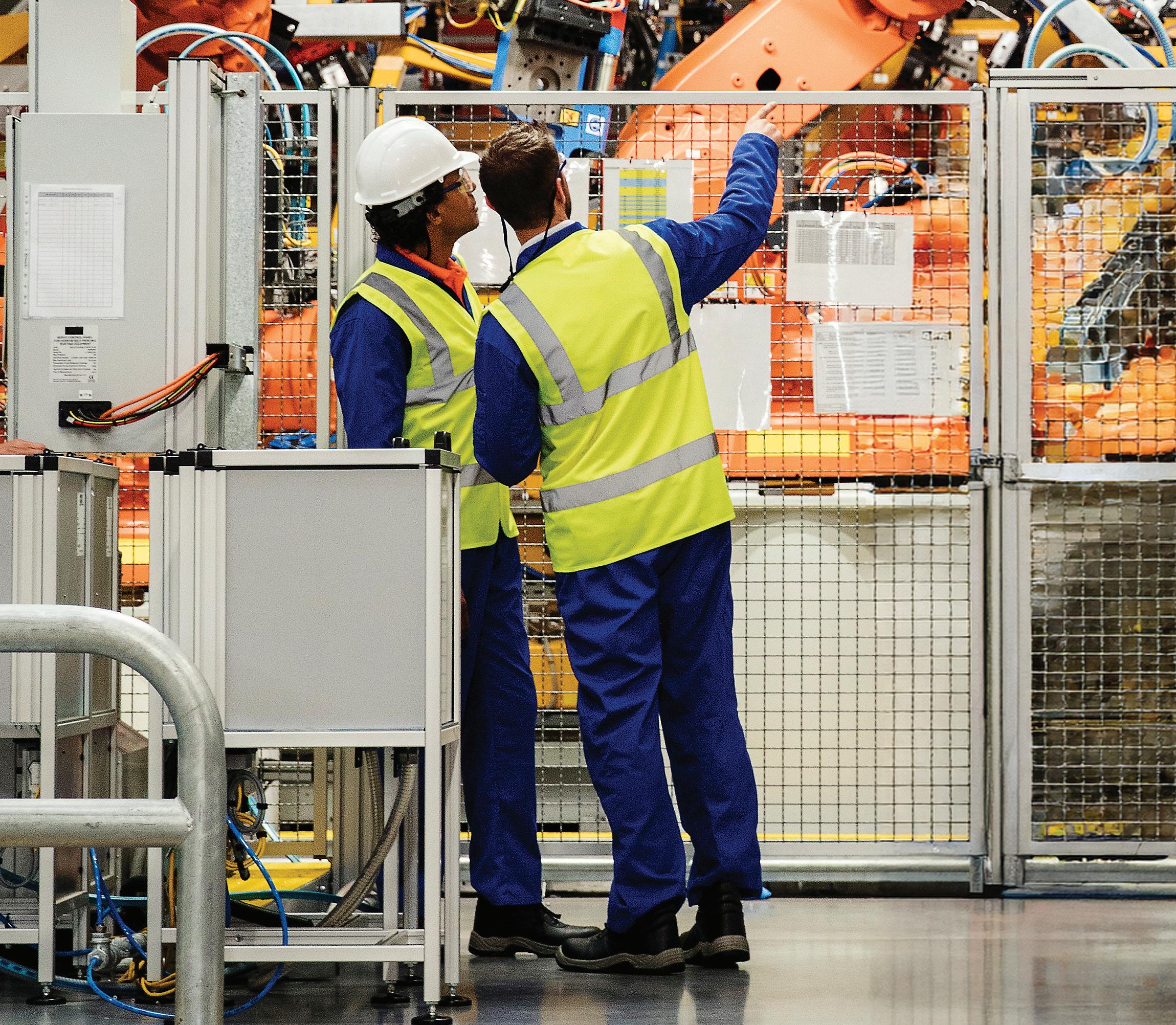
In the manufacturing sector, a significant share of unplanned downtime stems from equipment failures. The reason for these failures can often be traced directly to the installation of the system. The process of installing equipment includes physically setting up and preparing systems for use within a production environment while also ensuring efficiency and safety.
While installation is often handled by OEMs, contractors or project teams, its long-term impact is typically felt by maintenance and operations staff.
Whether integrating new equipment into an existing system or overhauling outdated solutions, errors during installation can create immediate downtime and shorten equipment lifespan, affecting productivity, worker safety and overall operating costs.
For maintenance and facility teams, understanding the impact of installation quality is an important first step. A structured, proactive approach — and clear communication across teams — can help avoid issues that often show up later in operation.
Common installation mistakes
Equipment installation is often viewed as a one-time, checkthe-box process. But in reality, improper installation can have a trickle-down effect, negatively impacting the bulk of a manufacturing facility’s operations. Here are a few of the most common errors that occur during the installation of parts and equipment:
1. Misalignment and intolerances
Improperly aligned equipment or out-of-spec tolerances, such as incorrect expansion gaps, can affect long-term performance. Systems
such as power rails, conductor bars and festoon assemblies depend on proper alignment to prevent excessive vibration, tracking issues or premature wear. For maintenance teams, these issues often show up as repeated adjustments, accelerated component wear or unexplained failures early in the asset’s life.
2. Rushed commissioning protocols
Commissioning ensures that equipment is tested and verified to operate safely and within required specifications. Rushing this stage can lead to reduced efficiency, higher operating costs and increased safety risk.
Gaps in commissioning documentation can also make it harder for maintenance teams to troubleshoot issues later.Without a clear record of baseline performance and identified issues, diagnosing repeat failures becomes more time-consuming.
3. Limited coordination between teams
The installation process starts long before the system actually arrives on-site. Installers, site owners, equipment suppliers, and regulators all have a hand to play in effective installation.
Without timely and consistent communication between teams, facilities may not be prepared for a new installation, equipment may be incompatible with existing systems, and data paths may not be set up for automated solutions to function properly.
Long-term cost of early errors
Now that you’re familiar with common installation mistakes, it’s important to discuss the hidden, long-term costs of these early errors. One of the costliest impacts of equipment failure is increased downtime due to disruptions. Frequent repairs can turn your maintenance strategy into a reactive approach rather than preventive, waiting until the inevitable failure of a poorly installed system. When equipment is improperly installed, teams must spend more time diagnosing the problem and ensuring it won’t happen again before resuming production. Safety is paramount across manufacturing operations, and that starts with well-maintained equipment. Violating compliance and safety standards can lead to costly fines or operational shutdowns. Additionally,
if your facility has a reputation for equipment failures, prospective customers and employees will likely turn to competitors who run efficient, productive, and safe operations. Overall, improper installation leads to shortened equipment lifespans, higher maintenance costs, and potential worker injuries.
When additional expertise is needed
Internal maintenance teams are often well equipped to support installation, but not every facility has expertise across all equipment types. In more complex installations, additional support from experienced technicians or equipment specialists may be required to ensure systems are installed and commissioned correctly.
In these situations, involving external expertise early — and ensuring knowledge transfer to on-site teams—can help reduce startup issues and support more consistent operation over time. Training is an important part of this process, helping maintenance teams understand system requirements and maintain performance after handover.
Better installation supports better maintenance
An efficient operation starts with proper installation, but its impact is often felt most during ongoing maintenance.
Recognizing the link between installation and long-term reliability can help organizations improve both uptime and maintenance efficiency.
Don Jones is the director of service, Americas at Conductix-Wampfler, a global supplier of intelligent energy supply and data management systems for moving machinery.
WHAT’S NEW IN PRODUCTS
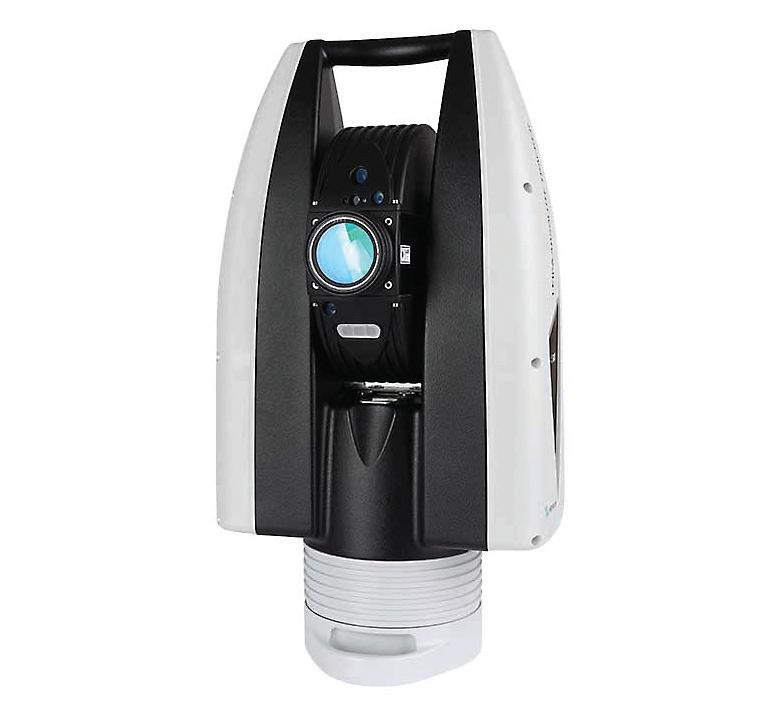
HEXAGON LEICA ABSOLUTE TRACKER ATS800
Hexagon has introduced new updates to its Leica Absolute Tracker ATS800, adding an AI-based feature detection capability designed to improve inspection efficiency in large-scale manufacturing environments.
The FeatureDetect function uses computer vision to automatically identify circular features such as bolt holes and mating points, reducing manual setup time prior to scanning. The system combines this with high-resolution direct scanning from distances of up to 40 metres, supporting inspection tasks where access is limited or hazardous.
The ATS800 integrates direct scanning and reflector tracking in a single portable unit, allowing for measurement of complex surfaces and geometries without repositioning. Additional features include automated alignment to reflectors and support for remote operation.
The system is intended for facilities looking to automate inspection workflows and reduce inspection time in large or complex assemblies. hexagon.com
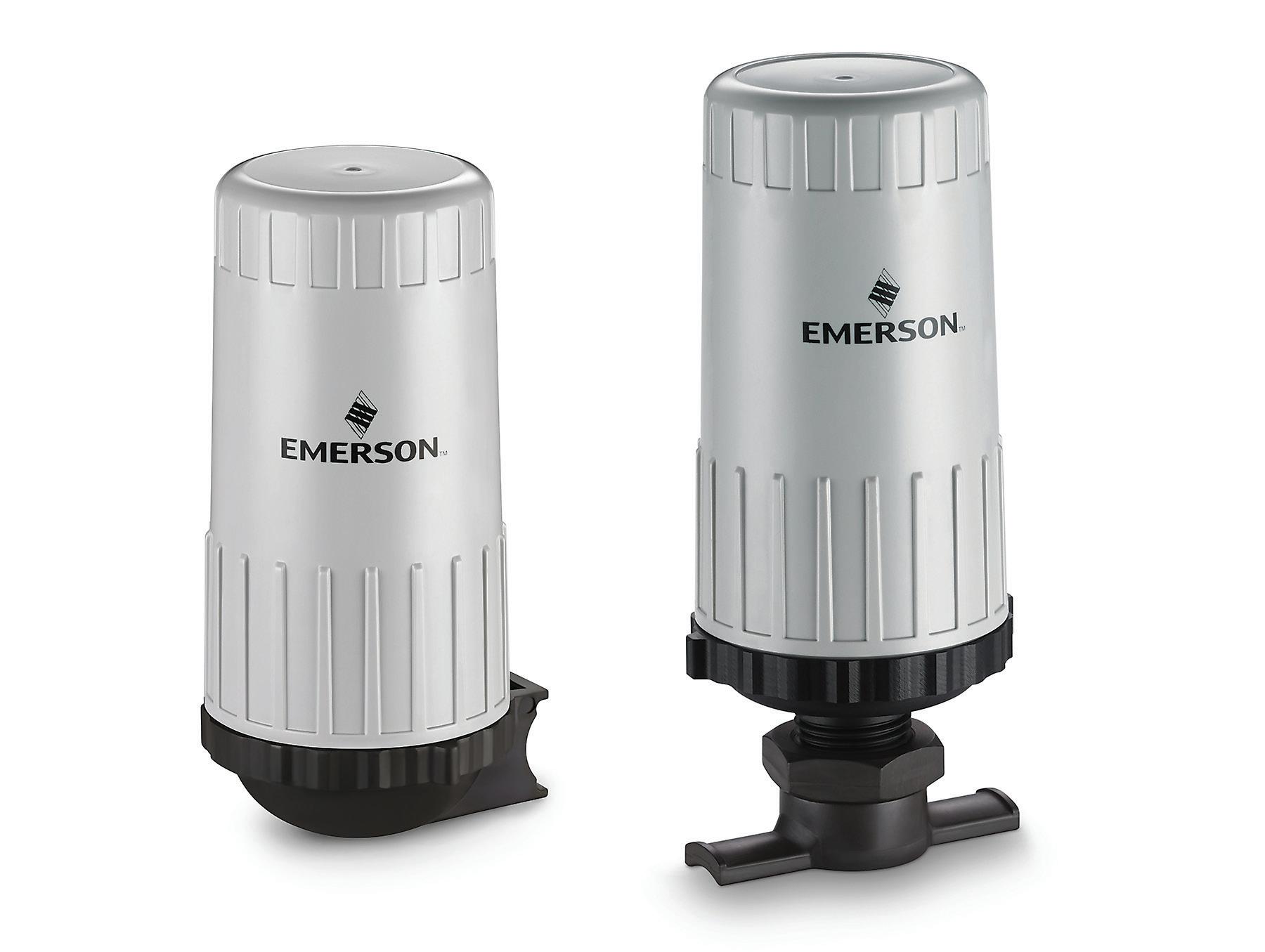
Emerson has introduced its Synchros wireless asset monitoring platform, designed to expand asset visibility and reduce reliance on manual inspection rounds across
industrial operations.
The platform uses a WirelessHART-based architecture to digitize inspection points and enable continuous monitoring without requiring significant infrastructure changes. This approach allows maintenance teams to improve visibility into asset conditions and identify issues that may be missed between manual checks.
The initial release includes a temperature monitoring device and a wireless repeater, enabling facilities to collect surface and ambient temperature data from assets such as pumps, heat exchangers, and rotating equipment. The repeater extends network coverage to support broader deployment.
Designed for use in hazardous and industrial environments, the system supports scalable monitoring programs, allowing users to start with targeted applications and expand over time. emerson.com
EXAIR ATEX
EASYSWITCH WET-DRY VAC
New from EXAIR, the ATEX EasySwitch Wet-Dry Vac is a pneumatic system designed for safe industrial cleanup in hazardous environments, including ATEX Zones 1 and 21.
The unit operates using compressed air and contains no electrical components, reducing ignition risks associated with sparks, heat or motor failure. A staticdissipative design and proper grounding help prevent electrostatic buildup in areas with explosive gases or combustible dust.
The system allows users to switch between dry vacuuming and liquid recovery using a latch mechanism, supporting cleanup of materials such as dust, powders,
coolant and metal chips. This enables use across a range of maintenance tasks without requiring separate equipment.
The ATEX EasySwitch is designed for industrial environments requiring compliant, lowmaintenance solutions for wet and dry cleanup in potentially hazardous conditions. exair.com
IRONHORSE ACM SERIES AC DRIVES
AutomationDirect has added IronHorse ACM Series AC drives designed for low-horsepower motor applications where only singlephase power is available.
The drives accept 120 VAC or 230 VAC input and control motors from 1/8 to 3 horsepower, making them suitable for smaller systems, retrofits, or facilities without three-phase power. Standard I/O includes multiple digital and analog inputs and outputs, along with built-in dynamic braking capability. Additional features include sensorless vector control, PID control and the ability to automatically restart after momentary power loss. The units can be programmed using an onboard keypad or configuration software.
The drives are designed for compact installation, supporting zero-stack mounting without spacing between units.
An optional ACN ECAT module enables EtherCAT communication, allowing integration with automated systems and improving connectivity within plant networks. automationdirect.com
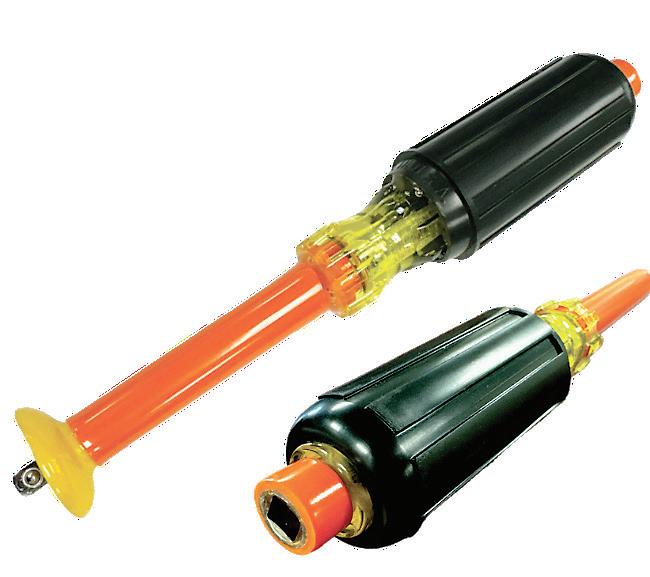
CEMENTEX SCREWDRIVER DRIVEHANDLE
Cementex has launched its Screwdriver DriveHandle, an insulated hand tool designed for socket applications on or near energized electrical systems.
The tool features a 1/4 inch square drive head and a 6 inch insulated steel shaft, allowing it to function like a screwdriver while working with standard socket attachments. An isolated drive interface enables use with a ratchet or torque wrench for added flexibility in confined or torquesensitive applications.
Clamping force can be controlled through applied torque, with a maximum rating of 10 foot-pounds for precision fastening tasks.
The DriveHandle is doubleinsulated, tested to 10,000 VAC, and rated for 1,000 VAC / 1,500 VDC, supporting safe use in electrical maintenance environments.
cementexusa.com
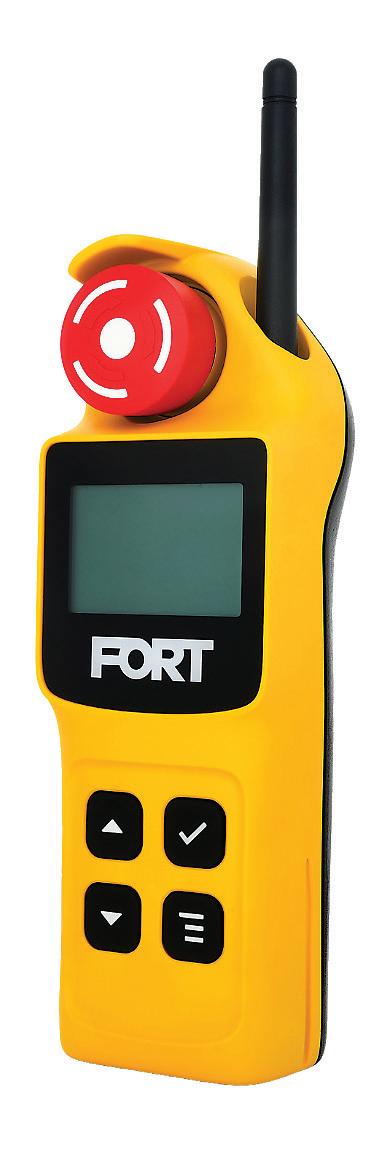
FORT ROBOTICS
WIRELESS E-STOP PRO
FORT Robotics has launched the Wireless E Stop Pro, a handheld emergency stop device designed to give operators remote, fail safe control over mobile and autonomous machines.
The safety certified unit can send a stop command from up to 200 metres away, addressing the limitations of fixed emergency stop buttons as robots and automated equipment become more common in warehouses, manufacturing facilities and construction sites.
According to FORT, the E Stop Pro uses long range Bluetooth communications designed for dense radio environments, allowing multiple systems to operate simultaneously with reduced risk of signal interference.The E Stop Pro is compatible with FORT’s Endpoint Controller receiver and can be used alongside the company’s Safe Remote Control Pro and FORT Manager cloud platform for device configuration and management. fortrobotics.com
Enable the next generation
BY JEFF SMITH
It's time for an awakening; time to view the world as it actually is today.
Many of us who've spent decades in this industry have stagnated progress by continuing to do things "the way we always have." We hand a paper work order to a younger technician, a paper lockout form, a paper hot work permit — likely more paper than he used in all of university — and he photographs the relevant information on his phone then leaves the paper at his workstation. We then employ data-entry staff to transfer that paper into our systems, introducing yet another failure point. We force our legacy processes onto a Google-and-YouTube generation. Why? Because we are the bosses, the managers, the supposed leaders. We build the way we know from the past, but it’s time to move on and prepare for what comes next.
Two generations, two realities
Those of us who built our careers before the internet, the digital immigrants, have lived through the emergence of the IOT, machine learning and AI. We adapt, but often only by using the emerging technology within our own context of understanding, like using ChatGPT the way we would Google.
The younger workforce, the digital natives, lives and breathes technology. They have never known a world without the internet. They search before they ask, watch a video before they read a manual and have already embraced AI in ways we're still catching up to.
By sticking to our historical ways of doing things, we've created tension in our systems and processes. Younger technicians end up working the way we did, instead of operating within today's reality. They struggle to understand why we don't use easily searchable video work packages — why they can't just look something up and learn it? Whereas we tend to would study and memorize to learn, the incoming workforce searches and applies; there's simply too much information to retain it all.
This is the biggest transition in industry since electrification. There is a real cutoff point between those who find solace in constant, repetitive methodologies and those who have known only rapid change and industrial evolution.
Whatever our role, we need to ensure our systems evolve, not for our own comfort, but to enable the people who will carry this industry forward.
Considerations for technology advancement
Here are two questions worth asking. If you can answer yes to both, you're working with current capabilities. Congratulations.
Can your operators stand at the machine with access to all process information — SOPs, setup instruction and machine inspections — available electronically?
Operations require a plethora of information, and not just in the control room or in binders or in a senior operator's head. Technicians need it in real time, at the machine, with immediate cause-and-effect feedback.
In the past, this meant someone in the control room, someone at the machine face and a lot of radio chatter. But today, built-in AI that analyzes system behaviour against base process controls changes that equation entirely — the operator has all the information and the ability to aggregate it in real time, rather than relying solely on his own knowledge.
Are your work packages electronic, with visual aids and/or video format?
A quick note: In 1993, I was implementing handheld computers — Intermec 6100 green-screen units with temp guns and vibration sensors for machine inspection and electronic work orders. If you're still running paper work orders more than thirty years later, there's significant room to catch up.
If you don't have a well-populated standard job library, it’s too late to bother with paper job plans. Give up. I fully realize this is the primary format of many CMMS systems, but we all need to move on to support how today’s workforce learns and works. There are plenty of effective ways to capture job progression on video, and companies that can segment that footage into searchable, structured job plans that can be delivered in any language. This may sound insurmountable but focus on high-risk jobs first. If your critical work is documented in video format, you can run review sessions with employees, contractors and other stakeholders in advance of a task. Risk drivers include technological difficulty, task complexity and frequency of execution. This shift from text to video also enables legacy planning, capturing knowledge from your most experienced people in a format the next generation can actually use.
To my fellow industry veterans: wake up and support this transition. Enable the future. The people coming up behind us are the ones who will live it, so question everything you believe from a legacy perspective, because the world doesn't work that way anymore.
Jeff Smith, CRL-BB is a reliability professional and change leader with more than 35 years of experience developing maintenance and reliability programs across a wide range of industries. He is the author of several reliability books and white papers, a frequent conference speaker, and former technical editor of Uptime Magazine.