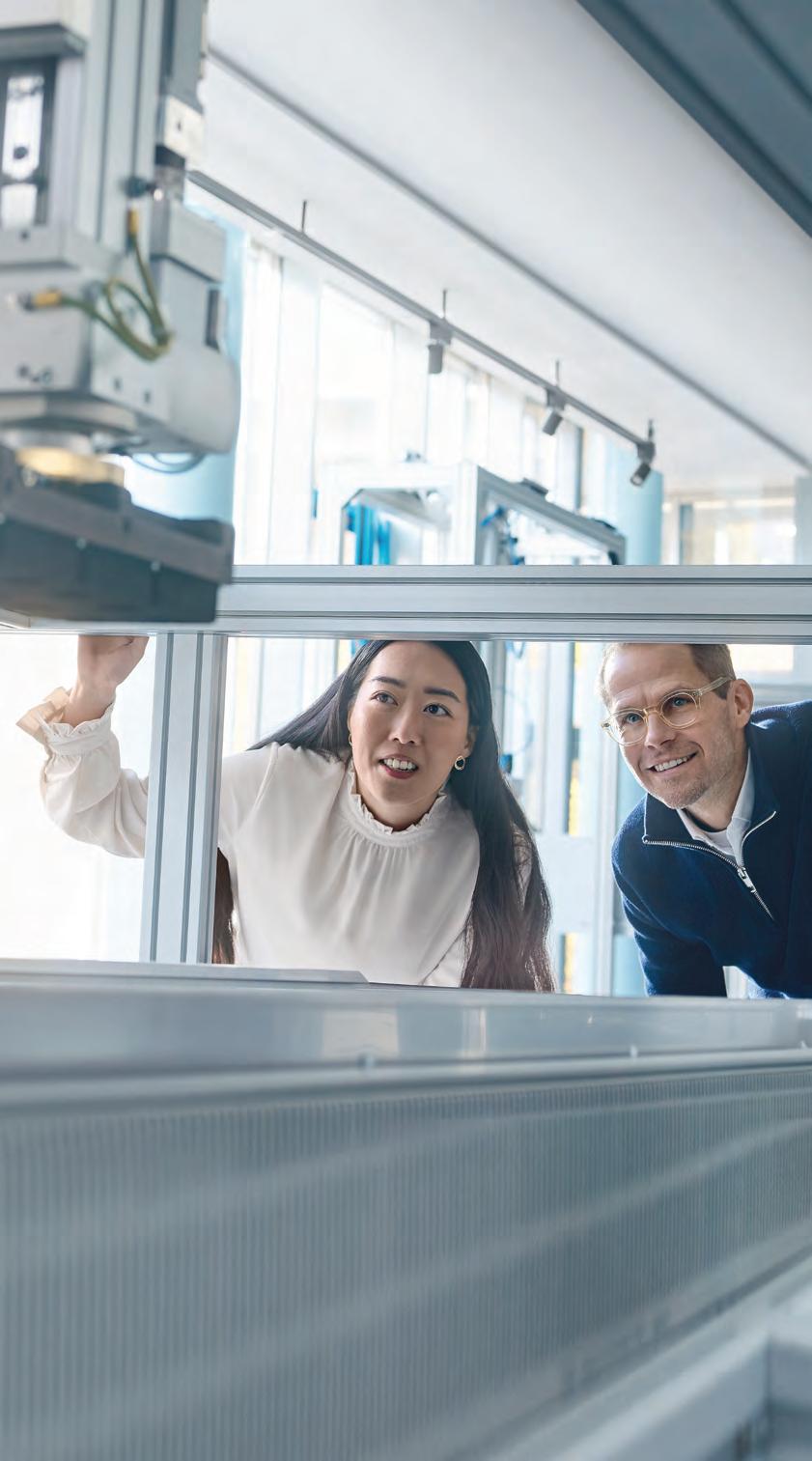
The need for open connectivity in modern manufacturing. p. 8
FOUR DECADES OF AUTOMATION
Celebrating 40 years of Manufacturing AUTOMATION and its contributors. p. 16
2026 VENDOR PREFERENCE SURVEY
Some initial indicators of preferred vendors across Canada. p. 14
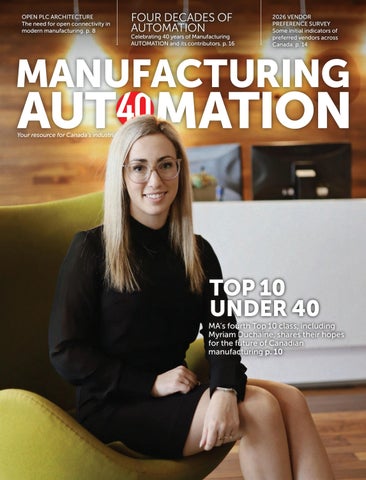
10 UNDER 40
MA’s fourth Top 10 class, including Myriam Duchaine, shares their hopes for the future of Canadian manufacturing p. 10
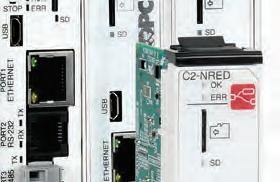
CLICK PLUS CPUs offer the utmost versatility with up to two option slots for custom control configurations.
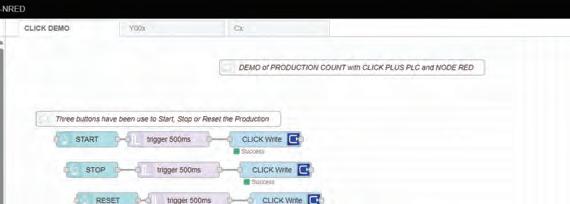
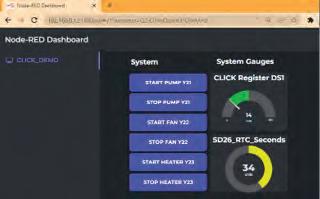
With the new Node-RED® option slot module, you can combine the most affordable and user-friendly PLC in the industry with one of the most popular open-source software tools in the industrial sector for developing IIoT applications.
What can it do?
• Create interactive and customer-specific HMI dashboards that can be accessed with any browser
• Easily integrate plant-floor data into existing business systems/databases, e.g., MES or ERP systems
• Access cloud-based services or website APIs for awealth of information (weather reports, energy/raw material costs, etc.) that can be used to optimize your processes
What does it offer?
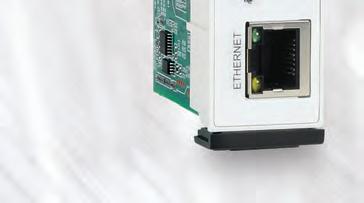
The C2-OPCUA module, when added to a CLICK PLUS CPU, allows the simplicity and reliability of CLICK PLCs to be deployed in many more applications, providing one of the lowest cost OPC UA systems available.
• Scalability - capable of large amounts of data transfer no matter the application
• Versatility - with OPC UA support, the CLICK PLUS can work seamlessly with numerous 3rd party control platforms, business/IT systems, cloud networks, SCADA systems, etc.
• Enhanced security - featuring authentication, authorization, and encryption methods
• Better efficiency - real-time data exchange for process optimization
Fast free standard shipping* is available for most orders over $49 U.S., and that includes the brokerage fees (when using an AutomationDirect nominated broker). Using our choice of carrier, we can reach most Canadian destinations within 2 to 3 days.
*Free shipping does not apply to items requiring LTL transport, but those shipments can take advantage of our negotiated super-low at rates (based on weight) that include brokerage fees. See Web site for details and restrictions at: www.automationdirect.com/canada
Open PLC architecture
Paul DeJong shares the importance of open connectivity in modern manufacturing.
By Paul DeJong
10
Top 10 Under 40
MA’s fourth Top 10 class shares their hopes for the future of the Canadian manufacturing and automation industries.
By Jared Dodds
14
Vendor Preference Survey 2026
The initial indicators of preferred automation vendors for manufacturers across Canada, according to MA’s inaugural Vendor Preference Survey.
By Jared Dodds
Four decades of insight
Celebrating 40 years of Manufacturing AUTOMATION magazine, hearing from some of the voices that have and continue to share their voice.
By Jared Dodds
FROM THE EDITOR
BY JARED DODDS
The importance of history
This issue is celebrating the fortieth anniversary of Manufacturing AUTOMATION , originally published under the name Automation Products and Technology. In preparation for the occasion, I took a trip to the Toronto Reference Library, where copies of the magazine dating back to 2004 were available. You’ll see some of the artwork featured in this issue, but I wanted to share some other insights I had as I turned the pages backward into this magazine’s history.
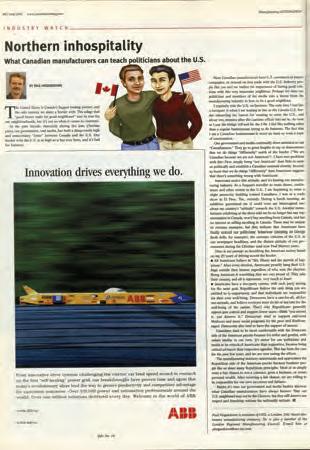
The first was the shocking similarity between the state of the manufacturing sector in the early to mid 2000s and today. Paul Hogendoorn’s first column, titled Northern Inhospitality, examined the Canadian government’s relationship with our largest trading partner, which Paul characterized as a poker chip used by politicians to gain favour and standing, something he continues to do to this very day.
There were stories examining the labour shortage in Canada, asking how the industry can make up for the widening productivity gap. And while we weren’t yet aware of the impact AI and machine learning were going to have on the manufacturing sector, there was still a fervour for new technology and advancements to existing systems, particularly PLCs, which are still seeing innovation to this day that you can read about in Paul DeJong’s column on page eight.
Much of history seems to be repeating itself, and where it’s deviating it’s certainly rhyming. The question is what we can do with this information, because the ship seems to have sailed on the idea that those who don’t learn from their history are doomed to repeat it. This will be a question I continue to think about for the year to come.
The second notable insight I had was the evolution of media. I grew up wanting to be a reporter because my dad sat me at the counter every Saturday and had me read an honest-to-God newspaper. I still value the physical embodiment of media and will preach the gospel of ink on paper.
But the reality is that the news is shifting; the majority of my year is spent thinking about digital delivery methods, social media and the MA website. Turning those pages while surrounded by other books and magazines in the library really took me back to the kitchen counter, and it’s a feeling I will continue to chase throughout the rest of my career.
Finally, any exercise that involves looking backwards will inevitably involve thinking about the future. For me, this means thinking about the candidates in our Top 10 Under 40 class, this year entering its fourth installment. This project was my first responsibility when I joined the brand a year ago, and it continues to be one of my favourite jobs as editor. Being able to present the best and brightest of our industry makes me hopeful for the future of Canadian manufacturing and automation, all while exposing me to new organizations and people I haven’t had the chance to meet. This year’s class exemplifies this idea, with members from British Columbia and Quebec joining the cohort.
I am a firm believer in honouring your past. Where you come from shapes where you’re going, and this exercise has solidified just that. I hope you all enjoy reading about MA’s history as much as I enjoyed writing about it. Here’s to another 40 years of Manufacturing AUTOMATION; I am honoured to be a small part of it. | MA
Your resource for Canada’s industrial automation news
Reader Service
Print and digital subscription inquiries or changes, please contact customer service
Angelita Potal
Tel: 416-510-5113
Fax: (416) 510-6875
email: apotal@annexbusinessmedia.com
Mail: 111 Gordon Baker Rd., Suite 400 Toronto, ON M2H 3R1
EDITOR
Jared Dodds jdodds@annexbusinessmedia.com Tel: 416-510-5225
JIM BERETTA, President, Customer Attraction and host of The Robot Industry Podcast
JONATHAN GROSS, Managing Director, Pemeco Consulting
MIHAELA VLASEA, Associate Professor, Department of Mechanical and Mechatronics Engineering and Research Co-Director, Multi-Scale Additive Manufacturing Laboratory at the University of Waterloo
SHELLEY FELLOWS, Past-Chair, Automate Canada
STEPHANIE HOLKO Director, Project Development at Next Generation Manufacturing Canada
WALTER GARRISON, Former Advanced Manufacturing Business Consultant for City of Mississauga Association Partner
ROBOTICS
Robot density surging across the globe
North America’s robot density rose by four per cent, though still remains behind the average number of robots per 10,000 employees in Western Europe, the International Federation of Robotics (IFR) stated in their World Robotics 2025 report.
Western Europe reached a record of 267 robots per 10,000 workers in 2024, the most recent data and the information cited in the report. This is ahead of North America at 204 and Asia at 124.
The countries with the highest density are South Korea at 1,220 per 10,000 workers, Singapore at 818 and Germany at 449. Canada came thirteenth at 241, behind the United States at 307.
The European Union has a robot density of 231 units, which is above the global average of 132 units per 10,000 employees.
“The robot density metric provides a uniform basis for comparison by relating the total number of robots used in a country to its economic size, as measured by its workforce,” said Takayuki Ito, president of the IFR, in a media release.
Despite ranking last in the average number of robots per 10,000 workers, Asia experienced the highest amount of growth at 11 per cent. While China ranked twentysecond globally, its total is approximately two million units, around 4.5 times more than Japan.
ADVANCED MANUFACTURING
CENGN partners with CNIMI and Ericsson, launches advanced manufacturing living lab
The Centre of Excellence in Next Generation Networks (CENGN) announced a Living Lab partnership with the Centre national intégré du manufacturier intelligent (CNIMI) and Ericsson to advance Canadian innovation in manufacturing.
Through the partnership, the CENGN Living Lab Initiative will now include co-funded access to the Advanced Manufacturing Living Lab, powered by Ericsson Private 5G and hosted at CNIMI.
The living lab will enable Canadian startups and scaleups to test and validate their
cutting-edge sensor, robotic, and applied artificial intelligence products for integration in today’s and future manufacturing operations, accelerating their path to market readiness.
“Innovation is not just about ideas, it is about execution, speed and collaboration,” said Jean-François Houle, mayor of
Drummondville. “The living lab provides companies with a unique opportunity to experiment, to derisk innovation and to accelerate their path to commercialization.”
Supported by a $45 million investment from the Federal Government’s Strategic Response Fund (SRF), CENGN’s national Living Lab Initiative aims to help over 100
Endress+Hauser Sensors & Components
Your partner for customized radar sensors
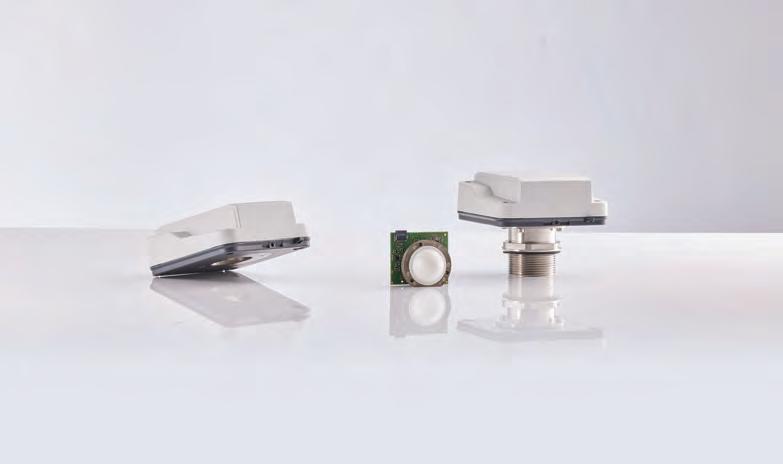
The radar modules from Endress+Hauser Sensors & Components are more than just radar sensors. They provide reliable, non-contact level measurement for liquids and solids, even in challenging environments. Their compact design, high precision, and robustness make them a proven solution across a wide range of industries. Thanks to their exceptional versatility, the modules can be easily adapted to customerspecific requirements and are successfully used in applications ranging from mobile tanks and complex industrial processes to water and environmental monitoring.
Looking for the right sensor for your application? We are happy to support you and collaborate to develop the ideal solution for your measurement task.
Would you like to learn more about our portfolio? www.sensors-components.endress.com
AUTOMATION UPFRONT
Canadian businesses looking to prepare their products and solutions for industry adoption.
CENGN reportedly selected CNIMI for its hands-on, human-centered approach. Its 2,800 m (30,000 sq. ft.) factory-lab, an active innovation hub dedicated to industrial transformation, will host the new Living Lab.
The lab will be outfitted with the latest Private 5G wireless connectivity, powered by Ericsson. This includes 5G IAP (indoor advanced positioning), enabling validation of solutions targeting key use cases, like indoor positioning systems, integrated sensor and machine solutions and autonomous stationary and mobile robotics.
“What we are jointly announcing today is not just another technology initiative, it is strategic and it is a clear signal that Canada is ready to lead in the next generation of manufacturing,” said Nishant Grover, president of Ericsson Canada.
“Manufacturing around the world is being reshaped by AI, robotics and next-gen connectivity. The question is not whether this transformation will happen. The question is whether Canada will lead this,” Grover said.
INVESTMENT
NGen announces $79.5 million in new AI projects
Next Generation Manufacturing Canada (NGen) has announced $29.2 million in federal funding which, alongside $50.3 million in direct investment from industry, represents a total investment of $79.5 million to support 20 new projects across Canada to adopt and scale made-in-Canada AI solutions.
The new funding is provided through the Government of Canada’s Pan-Canadian Artificial Intelligence Strategy and
is being delivered to industry through NGen.
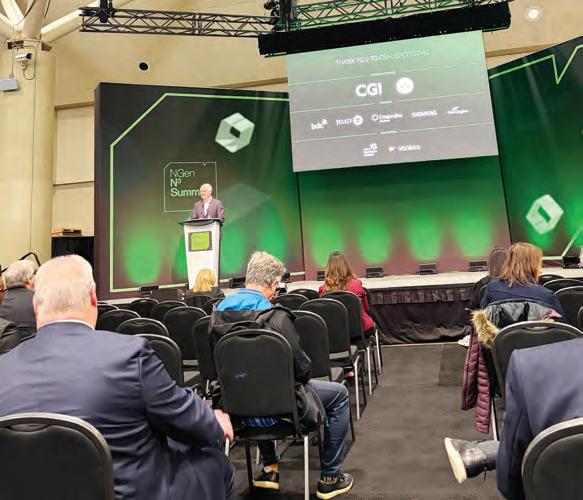
The announcement was made at the N³ Summit, a gathering of the nation’s leading innovators, manufacturers, investors and policymakers to tackle the most urgent challenges facing Canadian industry and showcase the cutting-edge technologies shaping the future of manufacturing.
“These projects are about turning Canadian AI into Canadian productivity — keeping machines running longer, reducing waste, and preventing costly shutdowns,” said Jayson Myers, CEO of NGen.
These projects are focused on solving real industrial challenges, including AI-powered quality inspection and traceability systems, smarter and more flexible robotics for manufacturing and construction, digital twins to speed up production in life science, AI-enabled equipment that can adapt in real time to changing conditions and advanced 3D inspection and automated testing tools
“These new projects announced by NGen represent a significant step forward, accelerating AI powered innovation and
Schaeffler was awarded for their platform for highly integrated actuators, designed especially for use in the articulation joints of humanoid robots, while BTRY was selected for their innovation in the form of ultra-thin solid-state batteries.
Schaeffler’s platform includes high-efficiency servo electric motors with integrated power electronics and encoders and can be configured with twostage planetary gear units or shaft-mounted gear units, depending on the customer’s requirements.
commercialization,” said Evan Solomon, minister of artificial intelligence and digital innovation and minister responsible for the Federal Economic Development Agency for Southern Ontario, in a media release. “The projects, which are supported by the Government of Canada, will equip Canadian manufacturers to transform traditional manufacturing processes and systems through the adoption of cutting-edge AI solutions. This will enhance efficiency and build scalable, competitive capabilities to fuel Canada’s prosperity.”
HANNOVER MESSE
Schaeffler wins Hannover MESSE HERMES Award, BTRY wins Startup Award
Schaeffler was selected as this year’s winner of the Hannover MESSE HERMES Award while the HERMES Startup Award went to Swiss startup BTRY.
The HERMES Award honours a product or solution of outstanding technological innovation, with market readiness serving as a key criterion.
Throughout the development of the actuators, the overriding objective was to achieve minimum installation space while delivering high continuous torque. The installation footprint has reportedly been reduced by approximately 20 per cent compared to the latest solutions currently on the market.
“The use of robots and cobots in industrial and commercial applications is creating a rapidly growing market for the future,” said Holger Hanselka, chair for the independent jury who selected the winner, in a media release. “In this context, systemic actuator platforms play a central role in the scaling of service robotics.”
By applying production technologies from the semiconductor industry to battery manufacturing, BTRY has achieved a groundbreaking advancement in the global shift toward smaller, safer and more durable energy storage solutions.
These batteries can operate at temperatures of up to 150 °C and, with a thickness starting at just 0.1 mm, can be fully charged and discharged within one minute.
With the HERMES Startup Award, Deutsche Messe annually honors a company that is younger than five years old and which offers a product or solution that exhibits a particularly high level of technological innovation. | MA
Jayson Myers, CEO, NGen, speaking at the N3 Summit, a gathering of leading innovators, investors and policymakers. PHOTO: KATHRYN SWAN
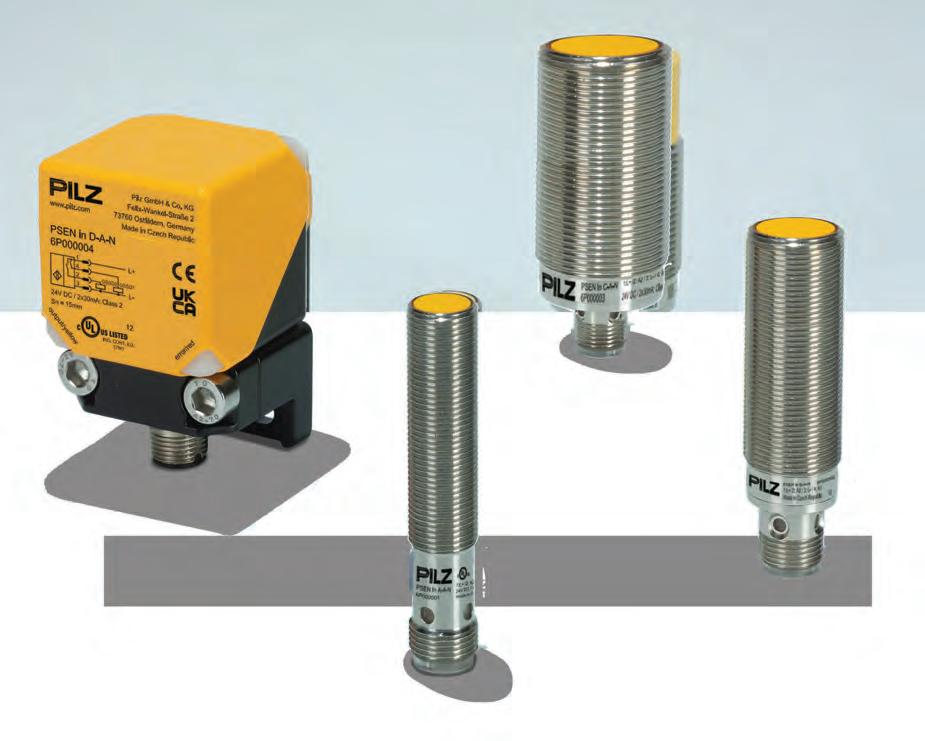
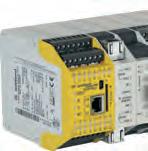
• Pilz PSENini
BY PAUL DEJONG
and official CODESYS Systems Partner. With a strong background in industrial automation and control systems, he leads Northern
The case for open PLC architecture
The need for open connectivity in modern manufacturing
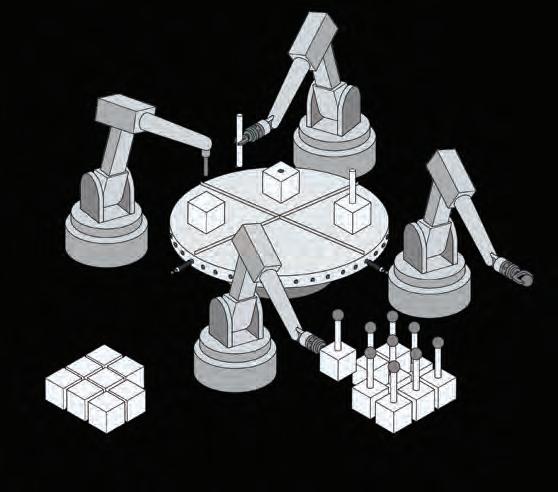
Programmable logic controllers (PLCs) are still at the heart of modern industrial automation. Whether it’s a manufacturing line or an energy system, PLCs keep things running accurately and efficiently. But the world around them has changed. Supply chains have become far less predictable, shaped by geopolitical tensions, pandemics, chip shortages and shifting trade dynamics. Because of this, the traditional “closed” approach to PLC systems is starting to show its limits.
More and more organizations are turning to open PLC architectures— not just because they’re technically appealing, but because they make strategic sense.
At a basic level, open PLC systems are built to be flexible. They’re designed so components from different vendors can work together, instead of locking you into a single supplier’s ecosystem. That flexibility is becoming incredibly valuable in a world where delays and disruptions are the new normal.
Why traditional setups are struggling
I n the past, many automation systems were built around tightly integrated, proprietary PLCs. These systems often worked well—they were reliable, efficient and relatively easy to deploy. The downside? They tied everything to one vendor.
That wasn’t a big problem when supply chains were stable. But recent disruptions have exposed how fragile that model can be. Companies have faced long delays, sometimes months or even years, waiting for specific parts.
When you depend on one supplier, any delay can ripple through your entire operation. Production slows down, maintenance gets pushed back and expansion plans stall. For
businesses running on tight schedules, that’s a serious risk.
When you depend on one supplier, any delay can ripple through your entire operation. Production slows down, maintenance gets pushed back and expansion plans stall.
How open architecture changes the game
O pen PLC architectures tackle this problem head-on by removing vendor dependency. Instead of relying on one manufacturer, companies can choose from a wider pool of suppliers.
If one vendor can’t deliver a component, you can often source a compatible alternative. If hardware changes, your software can usually adapt without major rework. That kind of flexibility helps keep operations moving, even when supply chains don’t cooperate.
It’s not just about handling today’s disruptions, either. Open systems make it easier to adapt over time.
You’re not locked into decisions you made years ago — you can evolve as conditions change.
The role of standards
A big reason open systems work is because of industry standards. Communication protocols like OPC UA and MQTT allow devices from different vendors to “speak the same language.”
T his makes integration much simpler. It also means engineers don’t have to relearn everything when working with new equipment, which saves time and reduces errors—especially important when skilled workers are in short supply. A nother benefit: innovation. When more companies can build compatible products, you are sure to get a healthier, more competitive
Paul DeJong is the founder of Northern Dynamics, a trusted Systems Integrator
Dynamics in delivering innovative, efficient and future-ready solutions for clients across industries.
ecosystem and better options for customers as a result.
Modularity makes life easier
Open PLC systems are also modular, meaning they’re built from interchangeable parts. Instead of committing to one large, rigid system, you can build and expand step by step.
That’s a big advantage when supply is uncertain. If one component isn’t available, you can often move forward with alternatives and upgrade later. Projects don’t have to come to a standstill.
Over time, this also makes scaling easier. As your needs grow, you can expand your system without starting from scratch.
What about security?
It’s fair to ask whether open systems are more vulnerable to cyber threats. They can be, simply because they’re more connected. B ut openness doesn’t automatically mean less secure. In fact, many open standards include strong built-in security features like encryption and authentication. And because these systems are more transparent, vulnerabilities are often identified and fixed faster.
The key is to be proactive—regular updates, network segmentation and continuous monitoring go a long way. When done right, open systems can be both flexible and secure.
The bigger picture: Cost and strategy
There are also clear financial benefits. With multiple vendors in play, companies can shop around, negotiate better pricing, and avoid the premium that often comes with proprietary systems.
S trategically, open architectures fit naturally with trends like Industry 4.0 and the Industrial Internet of Things (IIoT). As systems become more connected and data-driven, the ability to integrate different technologies becomes critical—and open platforms make that possible.
In terms of supply chains, all of this adds up to one thing: resilience. Companies can respond faster to disruptions and keep operations running, even when conditions change.
Looking forward
The move toward open PLC architecture currently being seen across the industry isn’t just a technical shift—it’s a response
to a more uncertain world. Supply chains aren’t as predictable as they used to be, and businesses need systems that can adapt. O pen architectures offer that flexibility. They reduce dependency, support innovation and help organizations stay agile.
Making the transition from closed to open takes planning, and in days gone by
that would mean potentially months of engineering work. Today the tools available can help reduce that time and effort from months down to weeks saving the user so much making the payoff clear.
In a world where disruption is constant, resilience isn’t optional, it’s essential. And openness is how you get there. | MA
TOP 10 UNDER 40
Introducing Manufacturing AUTOMATION’s fourth Top 10 Under 40 class, with members from across the country. BY JARED DODDS
As Manufacturing AUTOMATION celebrates its fortieth anniversary, it is fitting to similarly celebrate our fourth class of Top 10 Under 40 representatives. Like the members before them, this year’s recipients demonstrate leadership, drive innovation and advance the Canadian manufacturing and automation sectors across the shop floor all the way to the top floor. Congratulations to all those selected!
NICHOLAS HAME Vice President, Engineering and Automation, Intelligent City Inc.
Walk me through your experience in the automation sector? What brought you into the field?
I came into automation through a mix of mechanical engineering, manufacturing engineering and architectural training, which led me to focus on the gap between digital design and physical production. That interest became very real working on projects like the nine-storey Chief Leonard George Building in Vancouver, and the nine-storey Halsa project in Etobicoke, Ont.
My work now sits at the
intersection of product development and automation where I treat automation not as a layer, but as a driver of how products are defined. I focus on parametric design systems, CAD-to-fabrication workflows and robotic assembly, ensuring the variability needed to make an interesting building is handled through system design rather than manual intervention.
What do you feel your industry does well and what are you aiming to improve in the future?
The automation industry does a strong job advancing tools like robotics, software and digital modeling capabilities. However, within construction, these tools are often applied too late in the process, limiting their impact. What I’m focused on improving is the integration of automation into product development itself.
This means defining systems that are inherently manufacturable and assembly-ready. My goal is to make automation a natural outcome of good product design, not an afterthought. The opportunity ahead is to shift from tool-driven thinking to system-driven thinking, where
scalable, repeatable products unlock the full value of automation.
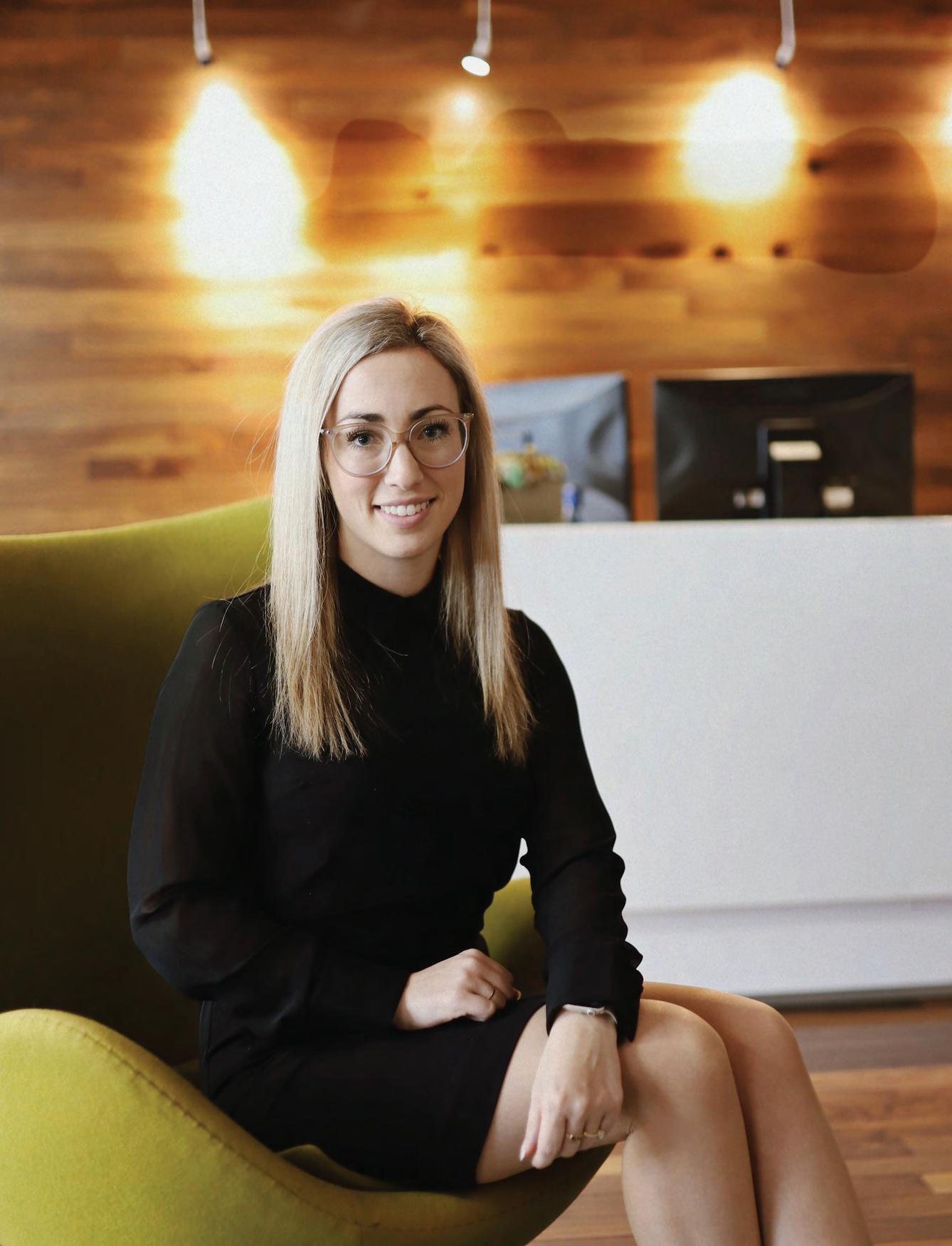
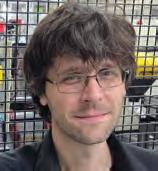
MYRIAM DUCHAINE Vice President of Marketing, Averna powered by Spherea
What do you feel your industry does well, and what are you aiming to improve in the future?
What the test industry does really well is find talented individuals who can solve problems before they exist. Part of our job is working with the biggest product innovators around the world who are developing technologies that simply don’t exist yet. Our engineers need to assess all the potential issues that can arise in development, manufacturing or distribution and design the test or inspection system that will flag them before they hit the market.
This not only takes very smart people, but they must be incredibly creative thinkers. Where I see the need for improvement is making sure that companies are bringing in test early in the process. Often people treat it as an afterthought and only focus on
their product. When companies wait, it ends in delayed timelines and unexpected costs.
How do you see your career evolving? What goals do you have for the future?
The timing for this question is perfect given Averna recently joining forces with Spherea, and my role has expanded to cover both the Averna brand and the Spherea Group.
Personally, I see my career evolving towards deepening our global impact while continuing to learn from the greatest leaders in engineering and manufacturing. But that said, real success to me is watching my incredible team make a true impact in our field and staying true to Averna’s commitment to quality, innovation and people.
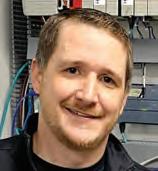
DENNIS HAYS System Integration Manager, RidgeTech Automation
Walk me through your experience in the manufacturing/ automation sector? What brought you into the field?
My passion for the automation industry began in high school, where I developed skills in programming and competed in annual Skills Canada competitions for robotics. These experiences led me to Conestoga College and a degree in robotics and automation.
The early days of my career were spent in the automotive industry, involved in projects including construction of the Toyota Woodstock facility. From there I have been involved in engineering, designing, programming and commissioning of systems from a wide variety of industries including food and beverage, healthcare, energy, mining and consumer products.
Today, as systems integration manager for RidgeTech Automation, I oversee the planning and execution of hundreds of projects annually, maintaining the variety my career has been built on as we pursue projects across all industries. Every day is something new and exciting and I enjoy supporting our system integration team and clients.
How do you see your career evolving? What goals do you have for the future? So far, my career has progressed from a hands-on role, into a solution and team member development role and I’m looking forward to seeing what comes next. Not only do I enjoy engineering unique controls solutions from beginning to end, but I also enjoy helping build the skillsets of the team members around me. Whether I am helping to engineer the controls architecture for an entire greenfield facility or educating our customers and team members on technologies and solutions, the automation industry has provided me with growth and fulfilment in all areas. I hope to continue developing cutting edge solutions and fostering growth in those around me.
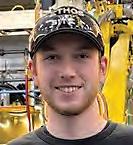
RYAN VANSAS
Production Supervisor, Armo Tool
Walk me through your experience in the manufacturing/automation sector? What brought you into the field?
My interest in the manufacturing and automation sector started early. Growing up, both my father and uncle were licensed Tool and Die Makers, so I was exposed to the industry from a young age.
In high school, I took several manufacturing technology courses where I developed hands on experience operating machinery and working with a variety of tools. During my co-op placement, I had the opportunity to work in a shop focused on machining and fabrication. That experience solidified my interest in the field, as I was able to apply my skills in a real-world setting and gain a deeper understanding of manufacturing processes.
What do you feel your industry does well and what are you aiming to improve in the future?
Manufacturing does an excellent job of combining technical expertise with practical problem solving. The industry is built on precision, efficiency and the ability to adapt quickly when challenges arise.
Looking ahead, I’m particularly interested in helping the industry continue evolving in terms of digital integration and workforce development. There’s a strong opportunity to better
leverage data and automation to drive smarter decisions, while also investing in people making manufacturing a more attractive and accessible career path for the next generation.
At Armo Tool, I’ve seen how a focus on continuous improvement and embracing new technologies can make a real impact, and I’d like to continue contributing to that kind of progress. Bridging the gap between traditional strengths and future innovation is something I’m passionate about.
Walk me through your experience in the manufacturing/automation sector. What brought you into the field?
My path into the industry was a family connection, my sister works at Ethos Automation, and she introduced me to the field. I joined the team as a junior machinist for a summer job right after graduating university, and I never left. What started as a short-term role turned into a career I didn’t expect to find so quickly. From there I moved into an operations role in the kitting department which I actually helped establish at Ethos and eventually transitioned into project coordination before stepping into my current role as a project manager. I’m coming up on four years in May, and the growth has been incredible.
What do you feel your industry does well, and what are you aiming to improve in the future?
The manufacturing and automation sectors really shine when it comes to innovation. Customers are always looking for ways to make their current operations more efficient, and our industry consistently rises to that challenge with creative, tailored solutions. That problem-solving culture is something I’m proud to be part of.
Where I see room to grow is in communication and expectation-setting throughout the project lifecycle. Automation projects are complex, with a lot of moving parts across multiple teams and stakeholders. I think the industry as a whole can do better at keeping customers informed, managing scope proactively and reducing surprises. That’s something I focus on daily: making sure every project runs with as much transparency as possible, from kickoff to delivery.
Inc.
Walk me through your experience in the manufacturing/automation sector? What brought you into the field?
My passion for manufacturing/ automation was ignited at a young age, when I started transforming remote control cars into “fighting” robots in my father’s garage.
DARIUS TUTKO Automation and CNC Specialist, Adventec Manufacturing
When I joined the Adventec team, I was immediately inspired by the level of innovation and advanced automation applied to precision molding and stamping. This spurred me to progress through the ranks, from a technician to a Tool and Die Maker with a strong passion for CNC machining.
Today, I am proud to be part of a team that takes abstract concepts and transforms them into fully functional automated cells, capable of consistently meeting our customers’ expectations for quality and delivery.
How do you see your career evolving? What goals do you have for the future?
Careers rarely unfold the way we imagine. Years ago, I thought I would end up a grumpy machinist in a dim shop. Instead, I work with high-speed robotics, CNC systems, and lasers; fields I hadn’t fully anticipated.
By the time I earned my Red Seal, I was already branching out. What began as a focused trade grew into automation, optimization, and designing for manufacturing. Rather than staying in one lane, I combined disciplines to build a skill set more adaptable and valuable than any single specialty.
Looking ahead, I want to keep learning while giving back. Mentorship played a major role in my growth, and I aim to support the next generation by sharing knowledge, encouraging adaptability, and helping others navigate their own evolving careers.
NOAH ROBB
Applications Team Lead, Ethos Automation
What do you feel your industry does well and what are you aiming to improve in the future?
Like myself, most of us in the industry have worn five different hats by the time we’re 30. This has produced an industry of
remarkably versatile and knowledgeable people. This provides me and my team with a deep pool of expertise to help with solving problems, if we don’t know the solution off hand.
Where I’d like to see our industry improve is protecting upfront design time. There’s an industry-wide pressure to compress project timelines, which usually results in sacrificing engineering time at the start of the project. The cost often shows up later as rework, engineering changes and missed milestones. As an industry, we need to do a better job of providing more design time that can save months of pain during build and commissioning.
How do you see your career evolving? What goals do you have for the future?
I started at Ethos when there was only one other employee, and it has grown a lot since then. I want to continue growing with it.
My short-term goal is to become a stronger leader. My team is quite small right now, but I want to be able to lead it as it grows, as well as improving our communication with all the downstream departments that must deal with the projects we hand off.
I’d also like to improve my decision-making to account for where the business and industry are heading, not where they are today. Long-term, I’d like to steadily grow my responsibilities with the business and help facilitate the culture here that made me stay in the first place.
BRAD ZALISCHUK Director, Digital Manufacturing Transformation and Innovation, Eclipse Automation
What do you feel your industry does well and what are you aiming to improve in the future?
Custom automation is brilliant at solving complex problems through collaboration, experience, and know-how. Eclipse has spent 25 years building one-of-a-kind machines for large manufacturers, and it is an incredible experience to walk the shop floor and see what new machines are being built.
What I am aiming to improve is how we capture the knowledge that lives in industry veterans’ heads or is scattered across documents; then, connect and contextualize that to the digital twin of the machine where that knowledge was created. The goal is to compound and share manufacturing intelligence across the organization, so anyone can access it, contribute to it, learn from it, and reduce the friction of sharing knowledge to near zero.
How do you see your career evolving? What goals do you have for the future?I want to help build the blueprint for how industrial machines are delivered in the future, not only at Eclipse, but across the industry.
In the near term, it means leading Eclipse’s largest transformation and moving machine
delivery toward a digital-first model. The goal is to create a feedback loop that compounds Eclipse’s manufacturing intelligence and gives people frictionless access to decades of know-how.
Longer term, I want to show Canadian manufacturing can lead this shift globally by turning industrial knowledge, digital twins and machine delivery data into valuable manufacturing intelligence.
ILIJA JOVANOVIC Chief Operating Officer and Co-Founder, Taiga Robotics
What do you feel your industry does well and what are you aiming to improve in the future?
The industrial automation ecosystem has built up many remarkable capabilities that remain largely unexploited. Whenever I speak with competing founders, the joke is always the same: if we actually end up stepping on each other’s toes, we’re doing great!
Many applications of robots that have existed for decades are still not widely adopted and we tend to celebrate new capabilities more than we celebrate better infrastructure for those already proven yet under-adopted applications. If there’s one thing I’d like to change in this industry, it’s to show more people that the value in their technical capabilities is overshadowed, and in some ways threatened, by the
value in their UX insights gained from years of client experience.
How do you see your career evolving? What goals do you have for the future? I want to continue building robot infrastructure that bridges the gap between UX and technology and working with organizations like the Canadian Robotics Council to educate decisionmakers about this gap.
Success for me is making robot tooling with very low skill barriers, that has discoverable workflows and uses mathematical rigor to remove sharp edges rather than covering them up. In essence, I want to automate the work which currently relies on experts for robot deployment and adoption. Having the right team is critical for this and I’m very fortunate at Taiga
Robotics to work with some of the smartest and most daring folks in the industry.
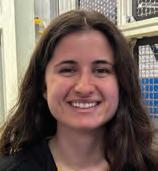
KATIE ALLISON Robotics Engineer, NuPort
Walk me through your experience in the manufacturing/ automation sector? What brought you into the field?
Growing up, I was always fascinated by machines and loved
watching How It’s Made. I studied engineering at the University of Toronto, where I channelled this interest in machines into first a robotics degree and then graduate research in fabrication techniques for soft robotics.
I started my career as a design engineer at Legere Reeds Ltd., where synthetic materials are CNC machined to replicate the unique behaviour of cane reeds, creating highly consistent reeds that are trusted by world-class musicians. At Legere, I developed a modular CAM software system and a reed scanner—projects that taught me the challenges and benefits of integrating new technology into existing systems, knowledge I brought with me to NuPort Robotics Inc.
What do you feel your industry does well and what
are you aiming to improve in the future?
Canada has a highly educated workforce with a particularly high concentration of expertise in robotics, automation, and AI. Our manufacturing industry benefits from leveraging this expertise, and many companies are adopting recent developments in AI and robotics into their manufacturing processes. However, recent industry reports suggest many companies are not updating their sensor and data collection systems, instead using manually entered data. The utility of AI is limited as long as onerous and repetitive data entry tasks must be completed manually, and the manufacturing industry would benefit from larger-scale support and strategies to help integrate automated data collection into existing workflows. | MA
VENDOR PREFERENCE SURVEY 2026
The initial indicators of preferred automation vendors for manufacturers across Canada.
BY JARED DODDS
Manufacturing AUTOMATION launched a new initiative this year, the Vendor Preference Survey, polling members of the automation and manufacturing communities to understand what technology is driving those sectors across the country. This story will provide just a glimpse of some of those results, with a full recap of the process available for download on automationmag.com, including additional insights from some of the participants. For now, however, let’s dive in and examine the state of automation technology in Canadian manufacturing.
PLCs and PACs
When crafting this survey, the logical place to start was with the heart of
Download the FULL Vendor Preference Survey directly to your inbox by scanning this QR code
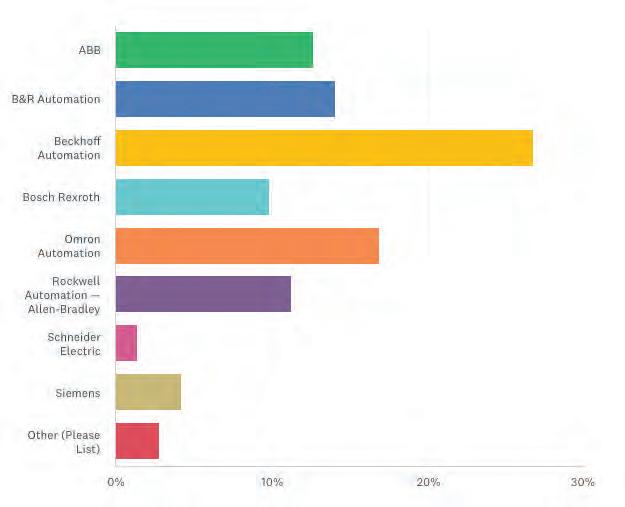
manufacturing automation: the PLC. This category represented a runaway for its winner, Beckhoff Automation, who captured just under 27 per cent of the vote for their TwinCAT PLC. Closing out the top three was Omron Automation at just under 17 per cent of the vote and B&R Automation at just over 14 per cent.
For each category, survey participants were asked to select the reason they preferred the vendor they listed, choosing up to three entries from the following options: Cost, performance, connectivity, customer support, ease of use and other. The resounding top three selections for PLCs were connectivity, performance and customer support.
Those who selected Beckhoff as their preferred PLC provider indicated that, far-and-away, the most
important thing the company’s PLCs provided them was connectivity across the shop floor, which aligns with Beckhoff’s commitment to open, PC-based control technology. In an age where AI is being introduced across the entirety of the manufacturing sector and data visibility and flow are at a premium, connectivity appears to be king.
End-of-arm tooling
From a runaway to a two-horse race, end-of-arm tooling a square off between SCHUNK and OnRobot. At just under 34 per cent of the vote, SCHUNK came out on top, with OnRobot coming in at 25 per cent. This category, however, was interesting not only for the company that won, but for the number of people naming no company at all. There were
multiple instances of participants selecting “Other” and sharing they are designing the majority of their end-ofarm tooling in-house. As automation solutions become more tailored to the individual business, we are seeing an increase in custom designed tooling optimized for a case-by-case basis. Something to keep an eye on as automation continues to spread across the manufacturing industry.
Industrial robotics and collaborative applications
End-of-arm tooling means nothing without an arm to go with it. We split industrial robots and collaborative applications, previously called cobots, into two categories, and saw very different results: an overwhelming winner in one and a tightly contested race in the other.
The industrial arm of robotics was led by Denso Robotics at just under 31 per cent of entries. This led ABB Robots at just under 20 per cent and FANUC at a little over 15 per cent. In a similar trend to PLCs, connectivity and performance represented the most important factors for those surveyed, alongside customer support. However, ease of use massively spiked here, a logical outcome given the complexity of these machines.
The collaborative applications category was much closer, with Kassow Robots, now part of Bosch-Rexroth, barely edging out FANUC and Universal Robots. The geographical shift here is interesting: Japan held the clear edge in industrial robotics, with FANUC and Kawasaki Robotics both seeing moderate success alongside Denso, while on the collaborative application side we see many of the European providers succeeding Connectivity was significantly less important for manufacturers with collaborative robots than it was for industrial. Again, a logical conclusion given the nature of work being completed with each system. The focus shifted heavily to performance and customer support at 44 and 39 per cent respectively. Notably, for both robotics categories an additional factor was added alongside the standard group: safety. It was one of the
top three factors selected by just over eight per cent for industrial robots and over 11 per cent for cobots
Sensors and machine vision
Sensors and machine vision represented another clumped race, with multiple organizations receiving votes. In the end, Carlo Gavazzi edged ahead of Keyence, with ATS, Balluff and Rockwell Automation closing out the group of significant contenders. W hat was not close, however, was the reason people listen for their preferred vendor. Over half of respondents (55 per cent) stated they chose the vendor they did for their customer support. What is clear from this survey is while performance and connectivity matter, the most important thing is being able to maintain uptime with your machine vision, no matter who you are buying from.
Beckhoff was the clear selection of top PLC/PAC provider, largely due to their connectivity and performance. It was a very close race for preferred industrial networking provider, with one respondent simply saying “Robotics are standalone.”
Industrial networking
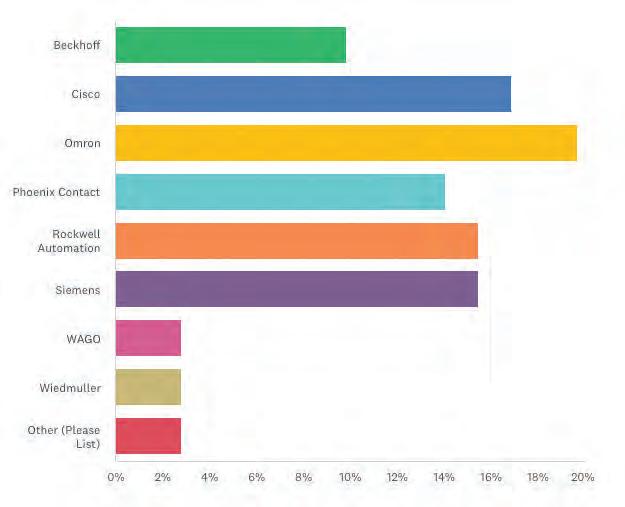
T he closest category across the survey was industrial networking, with five companies separated by just under six per cent of the vote. Omron received just under 20 per cent, Cisco received just under 17 per cent, Rockwell Automation and Siemens tied at slightly over 15 per cent and Phoenix Contact received a little over 14 per cent.
One respondent listed “Other” for both questions regarding industrial networking, saying the same thing both times: “Robotics are standalone.” Despite the wave of interest in IT/OT convergence, there are still some that are holding steadfast on the importance of church and state.
Closing thoughts
Perhaps the most interesting and, frankly, surprising thing was the general lack of concern towards cost across all survey categories. While there were always some respondents indicating they are thinking about the bottom line, it paled in comparison to the importance of connectivity, performance and customer support across the board. The message is clear: people are willing to spend more for the best product and for a provider who represents an invested partner.
We have only gone over some of the categories included on the survey in this piece, with the rest, including AMRs, Cybersecurity, Servos and Motors and more being covered in the full version of this report. To access that, scan the QR code below. Thank you to all of the members of the manufacturing and automation community who participated in this initiative. As the industry continues to evolve, collaboration and knowle dge-sharing are essential to the advancement of Canadian manufacturers. This initiative is just one example of those partnerships continuing to grow. | MA
FOUR DECADES OF INSIGHT
Celebrating 40 years of Manufacturing AUTOMATION magazine, hearing from some of the voices that have and continued to share their voice. BY JARED DODDS
Beginning in 1986 under the name Automation Products and Technology, Manufacturing AUTOMATION magazine has grown alongside the manufacturing and automation industries. Through technology evolutions, political regimes and multiple tectonic world events, some things look radically different than that first year, while others remain eerily similar. To celebrate 40 years of Manufacturing AUTOMATION magazine, editor Jared Dodds interviewed some of the staff members who made that content possible, to understand how the industry has evolved and what the next four decades of the manufacturing and automation sectors in Canada might look like.
The industry advocate
Paul Hogendoorn is a founder, investor and entrepreneur who has built multiple manufacturing and manufacturing technology
companies, including his current organization TPI-3. In addition, he is the longest standing member of the Manufacturing AUTOMATION team, contributing columns for over 20 years.
Jared Dodds (JD): How did your journey with the publication begin?
Paul Hogendoorn (PH): I was running a company with 60 or 70 people and got every magazine out there. Manufacturing AUTOMATION was one of the ones I would hold on to with the intention of reading. In those days, it was primarily because of one columnist, Perry Marshall. He wrote a piece called Epiphany in Nairobi, the fact that I can recall the name of a column he wrote 20 years ago (published in the Nov/Dec 2004 edition) says it was very impactful.
I looked forward to the magazine overall, but I knew I was going to make a point of reading his column, along with a couple other columnists that I liked such as Dick Morley.
When he [Marshall] stopped writing that column, I wrote to the editor and explained how much I missed the column and why I missed it. She wrote back and said, “well, do you want to give it a try?” I said sure.
I didn’t have anything particular to write about, so I wrote about what keeps me awake on a Sunday night. At that particular time, what kept me awake was the government using the Americans, our best trading partner, our best loyal friends for the last 100 years as a political chip to advance the party’s future (Paul’s original column was titled Northern Inhospitality). Twenty years later, history is repeating itself and I’m writing about the same things.
JD: Twenty years down the road, what drives you to continue to be a voice for the manufacturing industry?
PH: I consider myself an unpaid advocate for the manufacturing industry. I’m not wearing anyone’s logo on my chest, my bill isn’t paid for by any funding organization or industry associations, most of which I think are being
way to quiet.
I keep doing what I do because it’s cathartic. I find the process of going through it and putting it down in an organized fashion means I can let the thought go. The other reason is I love manufacturing. I do. I think manufacturing folks are salt of the earth and manufacturing company leaders are not just doing it for themselves, they’re doing it for their staff, their communities and for future generations. So for me, it’s still very easy to find things to write about.
JD: What has been the most significant change you’ve seen in the manufacturing sector during your time with MA?
PH: The thing that surprises me that I didn’t think would happen is the manufacturing
Cloud ERP That Gives You an Edge
Work smarter and stay connected with Epicor Kinetic, AI-infused cloud ERP designed with manufacturers, for manufacturers.
Real-time business intelligence Built-in collaboration tools Modern supply chain solutions Modes
Discrete Manufacturing
Manufacture-to-Order (MTO)
Engineer-to-Order (ETO)
Configure-to-Order (CTO)
Mixed-Mode Manufacturing Job Shops
The first column submitted by columnist Paul Hogendoorn in 2005, examining the relationship between Canada and the U.S.
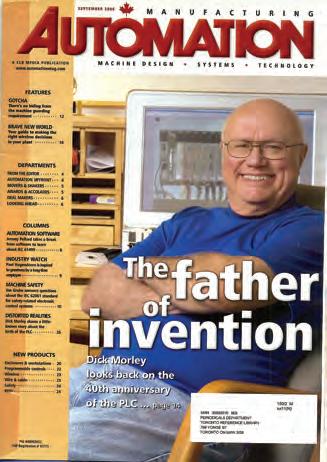
The exact issue Pollard was talking about, featuring former MA columnist and father of the modern PLC, Dick Morley.
40TH ANNIVERSARY
industry, by and large, has lost its clout. It used to be that if something adversely affected our manufacturing industry, we couldn’t let that happen. But over the last 10 years, I’ve watched it, in my mind, get sacrificed for short-term political gains.
H ere’s what manufacturing does: manufacturing converts raw materials into something of far higher value. The best explanation I can give you is in 2022, the total value of raw materials used to produce a car in North America was approximately $2000. The total value of that car, manufactured and sold in North America, was $43,000. So you had a 20 to 21 times multiplier, a lot of value creation. That pays a lot of salaries, a lot of wages, a lot of taxes and pays a lot of mortgages for people.
We talk about the Ring of Fire and investments in the defence sector. How much of that automotive sector losses is that going to pay for and when is it going to start paying. Factories are shutting down and they’ve been shutting down for the last three or four years. Shifts are being lost. It’s going to take a long time before some of these things that are making political hay today are actually going to employ people and actually contribute to the GDP.
after leaving the publication, she continued to write stories as a freelance contributor, and has covered the manufacturing, government, security, supply chain and other industrial markets.
JD: Walk me through your experience covering the manufacturing industry despite not coming from a manufacturing background.
MC: My first job was at a biotech magazine and I knew nothing, I didn’t have a science background. I remember asking my editor after I had been there for a while why I was hired. She told me she preferred that because if you come in with a background in the subject you’re covering, you’ll assume everyone knew what you knew.
Without that background, I asked more questions, and I asked the questions that were integral to making the topic something everyone would understand. Because of this, moving forward, I didn’t find it daunting to write about other things. As long as I’m asking the right questions and talking to the right people, I’ll understand it.
JD: Which stories or experiences did you find most rewarding during your tenure?
things up and were able to succeed because of those implementations.
I loved being on the plant floor and meeting the people really responsible for innovations within the sector.
JD: Digital transformation is an ongoing point of discussion in the manufacturing world. What was it like going through the digital revolution in reporting?
MC: When I first started it was the magazine and I believe a newsletter, and it stayed that way for a while. But then social media started. I remember our transition to Twitter, realizing my role had changed, I couldn’t just take notes and listen, I had to be producing content for socials as well.
I had to think, “What can I do with this information right now?” It was a major shift in the role, being more out in front through digital content.
The technical expert
The editorial voice Mary Del Ciancio is a former editor of Manufacturing AUTOMATION magazine, working with the magazine from 2005 to 2014. In addition,
MC: I really enjoyed profiles on companies that had a family focus. For example, there was one called All in the Family, which was a profile on Calstone and the initiatives they did to be more eco-friendly. I wrote another one on Attica Manufacturing called The Secret to My Success, which showed how they thrived during the recession, how they switched
Jeremy Pollard is a former columnist for Manufacturing AUTOMATION and an expert in PLCs and automation. His technical expertise saw him serve a number of roles across his near-50 year career, working for organizations including Rockwell Automation — Allen Bradley and Canadian Tire Corporation.
JD: What have been some of the most significant evolutions you have seen
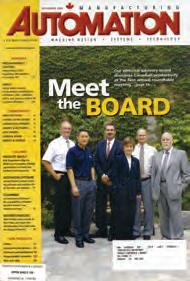
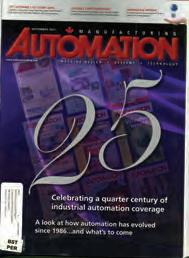
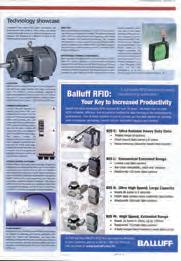
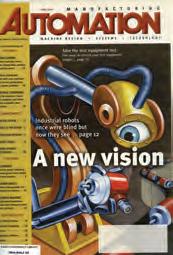
Covers and pages from the past. To view more, visit MA’s social media channels throughout the year!
in automation technology since you began writing in 1991?
JP: Starting with Allen Bradley in the late 70’s, I was a PLC specialist, dealing with everything that we dealt with in the newly minted automation technology arena. We had sealed keyboards with symbols on them, we had one fingered programming; there was no documentation, and when there was it was from a serial printer with thermal paper.
The thing that really kickstarted a whole wack of stuff was the programming software for DOS, so you could now program a PLC using a laptop that you paid $10,000. That was the start of a big change, and Windows 95 made it even more accelerated.
Where we are today, people have absolutely no idea what the hell we went through to get here, the troubleshooting tools that are available… everything is at your fingertips.
JD: How will the brain drain impact manufacturing as experts from your generation continue to retire?
JP: One of the interesting things I see going through LinkedIn is everyone is convinced you’ve got to know C [programming language] or you’ve got to know Python.
I think manufacturing has held onto ladder diagrams and some function block for as long as it has because of that 3:00 a.m. troubleshooting call, and I have to wonder how long its going to take some of the newer master electricians to start saying, “we can use C and we can use Python,” because I’m not convinced it’s going to happen.
For the longest time, I’ve always known and believed that a maintenance department is an overhead and it costs money to have a maintenance department.
I’m starting to believe that, as this expert generation continues to retire, third-party maintenance contracts will start becoming the norm. You might have a maintenance individual rather than a maintenance department.
JD: Is there a specific memory from the magazine that stands out to you?
JP: I have a September 2008 edition of MA, and on the cover, there is a picture of Dick Morley with his big grin, and the story was titled, “The Father of Invention,” where he looks back on the fortieth anniversary of the PLC. And this copy of the magazine I have signed by Paul Hogendoorn, Dick Morley and myself. How interesting that, now, Manufacturing AUTOMATION is celebrating its fortieth year.
Closing thoughts
Thank you to all the interview subjects in this article, and anyone who has contributed to Manufacturing AUTOMATION throughout its existence. We look forward to spending another 40 years learning, sharing and advancing the conversation surrounding the Canadian manufacturing and automation sectors.
Have a look at some of the old articles and covers pulled from the archives, more will be published in the coming months on Manufacturing AUTOMATION’s website and social media! | MA
ARTIFICIAL INTELLIGENCE
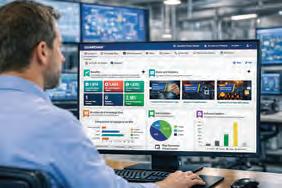
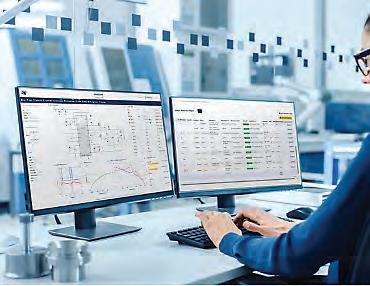
Guardian Digital Platform
Emerson has announced the latest advancements to its Guardian Digital Platform, delivering new AI capabilities and more robust customization to help organizations improve visibility, accelerate workforce productivity and strengthen operational performance. The latest enhancements introduce expanded AI capabilities that connect all information on the platform, delivering more comprehensive insights. A new, customizable dashboard provides insights tailored to operators, engineers, maintenance teams and leaders, allowing users to change their interface to suit their individual roles.
emerson.com
SENSORS AND VISION
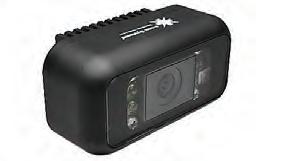
STURDeCAM57
e-con Systems has launched STURDeCAM57, a 5MP global shutter RGB-IR GMSL2 camera designed to deliver reliable, context-rich vision from day to night for applications such as Driver Monitoring Systems (DMS) and Occupant Monitoring Systems (OMS). This new RGB-IR camera is based on the automotive grade image sensor. STURDeCAM57 streams RGB and infrared frames as independent channels, providing AI vision systems with both full-colour imagery and high-contrast infrared data from a single camera. The STURDeCAM57 is equipped with an on-board Image Signal Processor (ISP), which performs RGB-IR separation, demosaicing and colour reconstruction directly within the camera. e-consystems.com
SOFTWARE
eDesignSuite
DigiKey has announced the availability of an enhanced eDesignSuite experience, developed through a collaboration with STMicroelectronics (ST) and Ultra Librarian. The improved tool environment aims to allow engineers to design, simulate, refine and confidently validate their projects using ST components and to purchase their entire bill of materials directly from DigiKey. The eDesignSuite, developed by ST, is a free, publicly accessible, no-license-required online design platform that provides a unified workflow for power management, signal conditioning, NFC/RFID applications and other design domains. digikey.ca
TEST AND MEASUREMENT
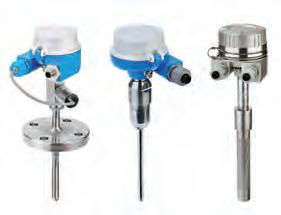
iTHERM ModuLine
Endress+Hauser has announced the complete lineup of iTHERM ModuLine, the latest generation of modular thermometers for industrial applications, is now available in Canada. Comprised of seven models, ModuLine is designed to replace over 50 legacy models offered by Endress+Hauser in the industrial realm. Innovations like iTHERM QuickNeck, the quick disconnection technology previously available only as an option for iTHERM hygienic thermometers, are available with all ModuLine models. The ModuLine lineup also offers advanced safety feature possibilities, whether for basic functionality or high-end performance requirements. endress.com
AMRS
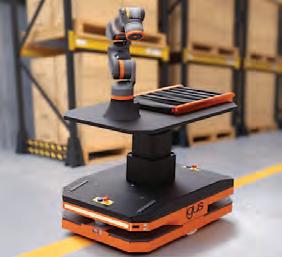
ReBelMove Pro
igus, a motion plastics specialist, has introduced its ReBelMove Pro modular, customizable autonomous mobile robot designed for simple configuration with flexible superstructures. This AMR can reach a high speed of 6.5 miles per hour, carries up to 550 pounds and can pull more than 1,980 pounds of payload. Equipped
with LIDAR to navigate its surroundings, 3D sensors and a RealSense camera, ReBelMove Pro can map more than 2,150 square feet in under three minutes and can operate for a full eight-hour workday on one charge. igus.ca
MOTORS AND DRIVES
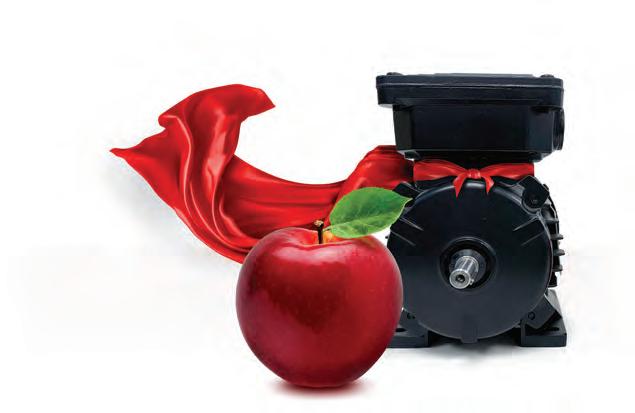
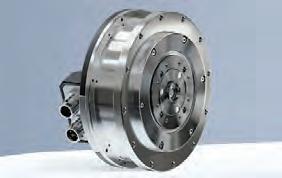
9317 BXI G
FAULHABER has added the new 9317 BXI G internal rotor motor to their portfolio, combining robustness and compactness and defining new standards for integrated drive systems in robotics. With a maximum torque of up to 20 Nm, it enables dynamic movements, fast reaction times and a highly precise movement control. The
motor covers a voltage range of up to 50 V and, thanks to the available interfaces and an installation length of just 34 mm, is easy to integrate in existing system architectures. faulhaber.com
INDUSTRY WATCH
BY PAUL HOGENDOORN
Paul Hogendoorn is a serial entrepreneur that has built multiple manufacturing and manufacturing technology companies. He has been a regular contributing columnist for over 20 years. For more insight or information from Paul on related topics, please contact paul@tpi-3.ca or visit TPI-3.ca
The work is easy — It’s everything else that’s hard!
Afew weeks ago, I picked up a new client and started doing something I hadn’t done in at least 40 years; I started going to work with a packed lunch, leaving the house in time to get to the factory at 7:30, and getting back home at 4:30.
And, I should add, loving it!
Many of my friends and neighbours were caught off guard by this. “Why would you choose to do that?” they’d ask, and “what do you mean ‘you love it’?”
I know where they’re coming from. I should be retired – in fact, I should’ve been retired for years. I tried retiring a couple of times, but I found retirement turned out to be harder than folks may think.
W hen I tried retirement the first time, I thought I’d get to shed responsibilities and obligations and would have a lot of free time to focus on all the “want to” things in life instead of the “have to” things in life. But I was wrong.
The “have to” things in life are everywhere, and without a regular job, there was no nice convenient place to hide from them.
Teenagers are hard to raise, and if you’re paying attention, it’s easy to see how busy their parents (your children) are, and how much more important it is for you to help fill in some of the gaps. Home ownership was easier for my generation and doing it on a single income with a stay-at-home parent was possible then too. Not today.
Wanting to see your kids raise their children in a decent home means helping out where and when you can and getting involved in their children’s lives, and sorry if I offend anyone in my generation, but thinking you’re entitled to spend life your life working on your golf game or tending to your hobbies doesn’t cut it.
Politics is hard, as is just listening to the news. It’s hard because you need to pay close attention and do some of your own research and put some critical thought into it. If you don’t — and if you’re being really honest
“I tried retiring a couple of times, but I found retirement turned out to be harder than folks may think.”
with yourself — you’re abdicating the control and responsibility of society to a group of people that may not be serving the common good or acting in the benefit of your children and grandchildren, a group who may not be honouring the sacrifice of the previous generations that resulted in the freedoms and opportunities our generation benefited from. It’s easy to simply accept the narratives because they come from publicly funded media or the government itself, and believe that since they are repeated so often, they must be true. Or, if you’re like me and don’t find the news credible, or social media as anything but incredible and credulous, so you take the easy route and turn off or tune out. Staying properly and accurately informed today is hard work.
Taking care of aging parents is another stress for many people. I have one parent left and he’s into his 90s and in a home. The home covers daily shelter, hygiene and food needs, but there are many other things involved, including finances, but more importantly, the need for company, time and attention and advocacy. Those needs increase as health and abilities decline.
In short, relationships are hard. Families are demanding. The pressures of life are relentless. Even in my two attempts at retirement, the first when I was 55 and second a decade later, I found it hard to keep myself active and engaged in interesting and
meaningful things. I recall my fatherin-law congratulating me on my first retirement attempt, saying, “son, every day now is a Saturday.” It was fun for a while, but soon Saturdays lost their meaning.
Working for me was (and is) natural, easy, satisfying and a whole lot less expensive. Plus, when you’re working, Saturdays once again are special. Yes, work comes with responsibilities and obligations, uncertainties and challenges, but they start at 7:30 and end at 3:30. At work, the outcomes that are expected of you, or for your shift, are well defined, and 50 per cent of what’s required to achieve those goals is just a matter of showing up on time. Work gives meaning and purpose with clearly laid out boundaries, definitions, rules and objectives. It’s not that easy with all the other things in life.
I know that life has more meaning and purpose than just work, but even with work, the more important and more difficult things still get as much energy as I can pour into them. Having to go to work helps put some boundaries and limits on how much I do pour in, because every one of those more important things can draw every last ounce of whatever I have to give, and still not be enough. Work brings a rhythm and cadence to life.
When it comes right down to it, the work part is easy. It’s everything else in life that’s hard. | MA
Amplify Content
There are so many ways to reach a target audience. We’ll craft you content for any medium:
• Thought leadership – long-form or short-form articles
• Blogs, whitepapers, infographics and case studies
• Webinars, podcasts and video
• Tradeshow marketing content
• Automated content marketing supported by first-party data ....and so much more!