CONNECTED MANUFACTURING
A look into the products, technologies and solutions shaping the market


A look into the products, technologies and solutions shaping the market
In today’s automated environments, safety, reliability, and engineering efficiency are more critical than ever. Murrelektronik’s MVK Fusion CIP Safety module delivers exactly that bringing together three essential installation technologies into a single robust device. By combining digital standard I/O, safety-related I/O, and IO-Link in one fieldbus module, MVK Fusion dramatically reduces system complexity, accelerates installation, and lowers hardware costs all while ensuring the highest levels of machinery safety.
With MVK Fusion CIP Safety, engineering safety functions has never been easier. Safety configuration is performed directly within the Rockwell Automation Studio 5000 Logix Designer® engineering tool, no special software, no manual data transfers, and no risk of mis-entered SNNs (Safety Network Numbers). Just a few clicks are all it takes to parameterize safe inputs, safe outputs, and diagnostic functions. Flexible configuration options allow teams to tailor functionality to the exact machine requirements. Adjustable parameters, such as input delay, sensor valence, and discrepancy times make it possible to fine-tune the module to virtually any application, ensuring both optimized performance and compliance with high-level safety standards.
MVK Fusion CIP Safety is built to perform in demanding environments. A fully encapsulated metal housing, IP67 rating, and wide temperature tolerance from -30 °C to +60 °C ensure durability even in harsh industrial settings. Shock, vibration, shortcircuit, and overload protection add extra layers of dependability. Key features include:
• Safe Inputs (X0–X2)
Two-channel inputs capture signals from the most common safety devices e stops, safety interlocks, light curtains up to Performance Level e. Individual test pulses provide superior diagnostic coverage for detecting peripheral faults.
• Safe Output (X3)
Ideal for controlling actuators, including double valves and safe torque-off functions. One or two safety outputs per port and up to 2 A per channel offer unmatched flexibility. Adjustable output behaviour (P-P, P-M, P-P-M) standard optional configuration.
• IO-Link Ports (X6 & X7)
Connect complex sensors and actuators with ease or expand the system with up to 32 additional I/Os via IO-Link hubs. The Class B IO-Link port enables safe shutdown of devices up to PLd.
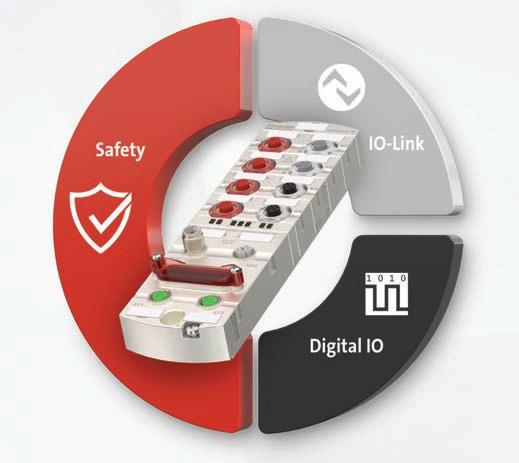
• Digital I/O Ports (X4 & X5)
Each configurable as an input or output, with adjustable input delay and powerful 2 A output capability.
• High-Power Connectivity
M12 L-coded power supports up to 16 A, while D-coded Ethernet delivers reliable Ethernet IP/CIP Safety communication.
MVK Fusion CIP Safety effortlessly supports a wide range of machine-level safety and automation needs. Common use cases include:
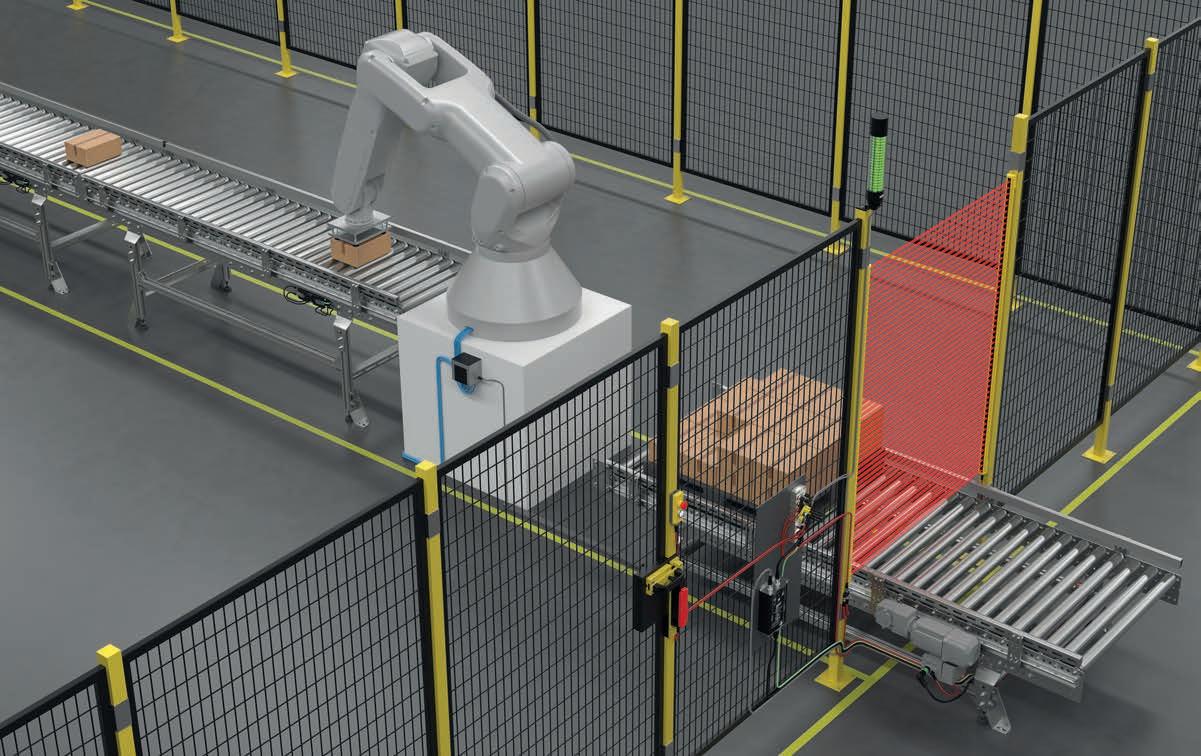
• Light curtains and perimeter guarding
• Safety interlock switches
• Emergency stop systems with reset functionality
• Drives requiring Safe Torque Off
• Valve manifolds with PLd safety requirements
• Proximity sensors, photoelectric sensors, and stack lights
• IO-Link hubs for distributed expansion
• Solenoid valves and pneumatic systems
Whether you’re upgrading existing machines or designing new safety architectures, Murrelektronik’s MVK Fusion CIP Safety module delivers unmatched convenience, performance, and integration flexibility. Simplify your installation. Reduce your hardware footprint. Increase safety and reliability.
Experience the power of truly modular, truly intuitive functional safety powered by Murrelektronik.
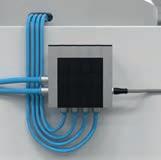
Physical connections, system scalability, and data paths determine whether connected systems endure.
Connected manufacturing often fails before data reaches the controller, breaking down at physical connections and closed architectures. WAGO Canada’s solutions prioritise connection integrity and an open automation approach that allows data to move reliably from I/O to control and higher-level information systems.
Machines rarely operate under stable conditions. Vibration, temperature swings, friction, electrical noise, and human interaction routinely take systems out of their steady state. These environmental conditions can become the invisible source, at the I/O level, of degraded signal quality and system reliability. There is rarely a single obvious point of failure. Instead, problems seem to emerge randomly from various sources such as intermittent signals, unexplained data gaps, and recurring commissioning issues.
WAGO Canada’s spring pressure connection technology, implemented in its 750 Series remote I/O systems and TOPJOB®S rail-mount terminal blocks, addresses this “invisible layer of fault” by maintaining consistent contact force so that reliable electrical contact is established quickly and sustained under operating conditions.
Many connectivity problems emerge during assembly and maintenance, where tight panel layouts, time pressure, and repeated rework introduce variability that is hard to control. Crowded enclosures and manual wiring can lead to inconsistent terminations, while routine maintenance can disturb connections that appear secure but lack mechanical stability. WAGO Canada addresses this reality with TOPJOB® S railmount terminal blocks featuring lever -actuated spring pressure connection technology. This connection solution simplifies installation, removes torque-dependent steps, and maintains consistent contact quality while supporting faster wiring.
As connected manufacturing expands, control panels become denser, bringing power distribution, signal wiring, and communications into closer proximity.
WAGO designs its industrial power supplies to deliver regulated output under fluctuating loads. The WAGO Pro 2 power supplies maintain stable voltage at their output termi-
nals, supporting consistent operation of sensors, I/O, and control hardware when load conditions vary.
Even when signals are dependable and devices are powered consistently, connected manufacturing can stall if data cannot move beyond individual machines or cells. Designs that bind I/O tightly to a specific controller or network limit how information is shared.
WAGO Canada addresses this constraint with a modular architecture in which the I/O modules are fieldbus independent, while the bus coupler defines the network protocol. In the WAGO I/O System 750, this separation allows the same I/O modules to be used across different industrial networks simply by selecting the appropriate bus coupler, keeping systems adaptable without redesigning the entire I/O layer.
Systems that require control logic, wiring, or network layouts to be fully redesigned as capacity or functionality changes introduce downtime, risk, and engineering overhead.
With a WAGO PFC controller in place, engineers can expand capability through modular hardware architecture. Additional WAGO I/O modules and new network couplers can be integrated without replacing the core controller platform, allowing system growth while limiting the scope of wiring and configuration changes.
At the final stage of connected manufacturing, data must move from operational technology (OT) systems into information technology (IT) environments. Bridging this boundary is challenging because OT data is generated in real time by deterministic control systems, while IT platforms are optimised for aggregation, analysis, and enterprise integration.
WAGO Canada supports reliable OT-to-IT data exchange through the WAGO Edge Controller, which provides a standardised, secure interface between control systems and plant or cloud-based applications. Integrated protocol support reduces the need for additional gateway hardware or bespoke integration code.
By addressing hidden failure points through disciplined connection and control design, manufacturers can reduce downtime at its source. WAGO Canada’s solutions shorten assembly and rework cycles, saving time and cost while preserving the reliability needed to protect quality and productivity.
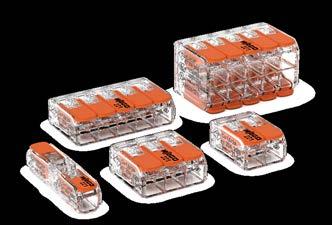
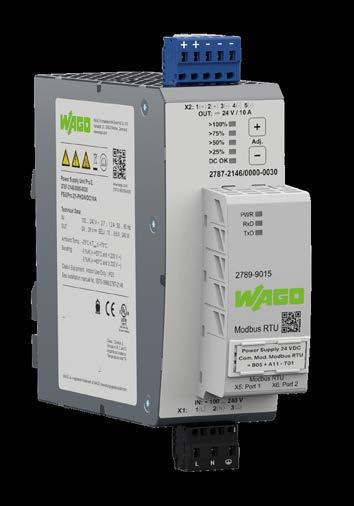
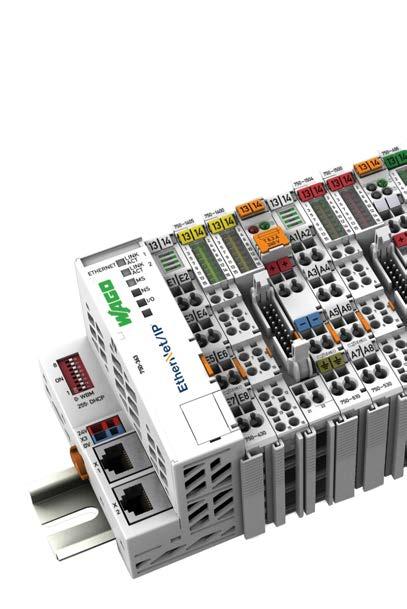
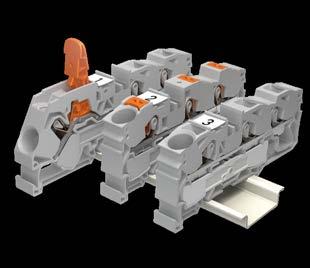
From electrical connections to I/O to the cloud, WAGO keeps your connected manufacturing running
• 221 Series — Spring-pressure splicing for consistent, durable connections
• TOPJOB® S Terminal Blocks — Tool-free installation with stable, reliable wiring
• Pro 2 Power Supply — Regulated power in compact, dense control panels
• I/O Systems — Fieldbus-independent I/O for flexible data flow
• PLCs & Edge Devices — Modular, scalable control with OT-to-IT connectivity

www.wago.com/ca-en/
Adoption of vPLC technology promises to make control technology less costly and more accessible. The new paradigm, however, requires a major cultural shift.
BY JACOB STOLLER
Decades ago, there was a saying that nobody ever got fired for buying IBM. That same aphorism might be applied today to industrial control giant Rockwell Automation – a vendor acknowledged as a safe bet when choosing control systems.
“The trend has always been to trust the big PLC OEMs,” said Paul DeJong, president of Northern Dynamics, a system integrator headquartered in Cambridge, Ont., “and they have always emphasized reliability in their marketing.”
That level of trust has been
well-earned. These established industry leaders have robust products, responsive customer service and huge installed bases across the globe. They also speak the language of plant engineers and electricians — the conventional PLC user interface uses a “ladder logic” based graphic depiction of a circuit diagram showing the coils and switches that define physical plant environments.
Advocates for the vPLC approach, on the other hand, subscribe to the logic of software architecture. For them, it’s all about robust and efficient code that’s
easy for programmers to understand and troubleshoot, is accessible to other apps that collect data for analytic purposes and, last but not least, is manageable for cybersecurity purposes.
With vPLCs, traditional hardwarebased PLCs are replaced by their virtual equivalent that runs on modestly priced Windows or Linux-based industrial PCs (IPCs) and PLC software platforms such as CODESYS or TwinCAT. IPCs can be located in a secure server room,
“It will require a mindset change. But with newer people entering the industry, people with more software background, this transition will happen soon enough.”
- Dev Vajaria, Beckhoff Automation Inc.
with the possibility dozens of PLCs running on a single machine.
The technology has obvious advantages. It is far less costly than traditional controllers, and the risk of hardware obsolescence and ensuing costly upgrades is eliminated. Configurations, accordingly, are easily scalable without the requirement of additional hardware.
Redundancy is also relatively inexpensive. “In traditional setups, a facility with ten production lines would require ten primary PLCs and ten backup PLCs , for a total of twenty physical controllers, to ensure redundancy,” explained Seinan Khan, junior automation systems engineer at Halifax-based Enginuity. “With vPLCs, the same architecture can be achieved using just two IPCs, each running ten vPLCs. If one vPLC fails, its backup can automatically take over while the original instance recovers - a process that can even be fully automated.”
Even more persuasive to many, however, is the accessibility of vPLC data to analytics platforms through industry-standard protocols, allowing shop floor trends to inform strategic decision-making.
“A lot of companies want to see their data at the end of the day,” said Khan, “and that data has to be provided to the IT department so that they can provide them with the quantitative analysis of whatever they want to do.”
Some people believe that the manufacturing sector is on the verge of a vPLC revolution. “This is a watershed moment where lots of people are thinking about making large-scale conversions,” said DeJong.
While transitioning factories with thousands of PLCs won’t happen
overnight, the advantages of the vPLC approach are more pronounced when companies are piloting new control concepts. Enginuity, for example, developed a proof of concept demonstrating a PLC implementation for a utility company, where multiple field devices were simulated using the vPLC model. The entire testing architecture was deployed on only two IPCs.
“Without having to invest in hardware, they were able to validate the coding, the communication protocols, the hardware specifications and the entire architecture,” said Khan. “So, the vPLC approach lets us prove all of those things in a much more cost-efficient way.”
The ability to link vPLCs with other software can also bring the power of AI to the shop floor. A key area is predictive maintenance, where data from multiple sensors is fed into a machine learning model that senses small anomalies that could, if not corrected, spiral out of control to create major damage and costly downtime.
“To do predictive maintenance, you need to collect performance data on the machine and analyze it in real time,” said Dev Vajaria, application specialist for Beckhoff Automation Ltd. “PC-based control makes that much easier, because now you can run your data collection algorithm on the same hardware that you’re running the PLC, and you can infer a machine learning model on the same hardware as well. To do all these things, you don’t need to buy additional hardware, and you don’t need to reprogram the PLC application.”
The technology also has the potential to completely upend the basic definition of the PLC. Since a vPLC is just code, there’s no reason it has to be specific to one piece of equipment. It would be
possible, for example, to install a PLC “brain” in the car at the start of the production line that would talk to all the production machinery as it travels from station to station. So, the car literally could make itself, drive itself onto the carrier, and then transfer the license to a waiting car at the start of production. This could have profound implications for the assembly line.
A key barrier to vPLC adoption has been the age-old culture war between the operations technology (OT) people and the IT people. “There has always been a huge tug-of-war between plant people and people on the IT side,” said DeJong. “They both want to control their environments, and they’re willing to fight for it. But what I say is that it’s time that we start to work together.” DeJong noted that one of the developers on his team is a computer science graduate.
“There are a lot of different factors that are not necessarily helping with the transition,” said Vajaria. “It will require a mindset change. But with newer people entering the industry, people with more software background, this transition will happen soon enough.”
The necessity of collecting data for better decisions may force the issue for many companies. “We’re starting to see more situations where OT and IT (industrial integrators and IT departments) are working closely together,” said Khan, “because a lot of our infrastructure does rely on communication between each other using normal protocols. The future is going to be things talking over the internet more and more, so the entire environment has to be organized with collaboration in mind and also, very importantly, cyber security.”
As in other industries, the younger workers that are moving into the field have grown up in a world where quick and easy access to data is a given. The transition, therefore, is largely about spreading the word.
“The more manufacturers of various PLC brands open their vPLCs, providing free/demo access to integrators or educational institutions, the more people will feel comfortable breaking into this new virtual world,” said Khan. | MA
Modernize your manufacturing facilities by leveraging the power of cloud and edge computing.
BY JACK KAZMIERSKI
The old adage, “If it ain’t broke, don’t fix it,” certainly applies to manufacturing.
Legacy systems, including older PLCs (Programmable Logic Controllers), SCADA (Supervisory Control and Data Acquisition) systems, and non-networked machinery have long been the backbone of industrial operations. However, as manufacturing continues to evolve, and as companies see the benefits of leveraging data, legacy systems start to show their shortcomings.
“These legacy systems have been in place forever and typically, they were meant to be closed systems,” says Tyler Burke, product manager of industry management and automation with Phoenix Contact Canada. “Now, because of digitization, people are slowly accepting the idea that we can pull more data out and then use that data to make better decisions.”
In a perfect world, “pulling data” out of legacy systems would be as simple as plugging them in and flipping a switch. In the real world, the process is much more complicated.
“You can’t simply connect it to your IT [Information Technology] system,” says Burke. “You need a level of security and all the protocols in place. So in general, you need to isolate your
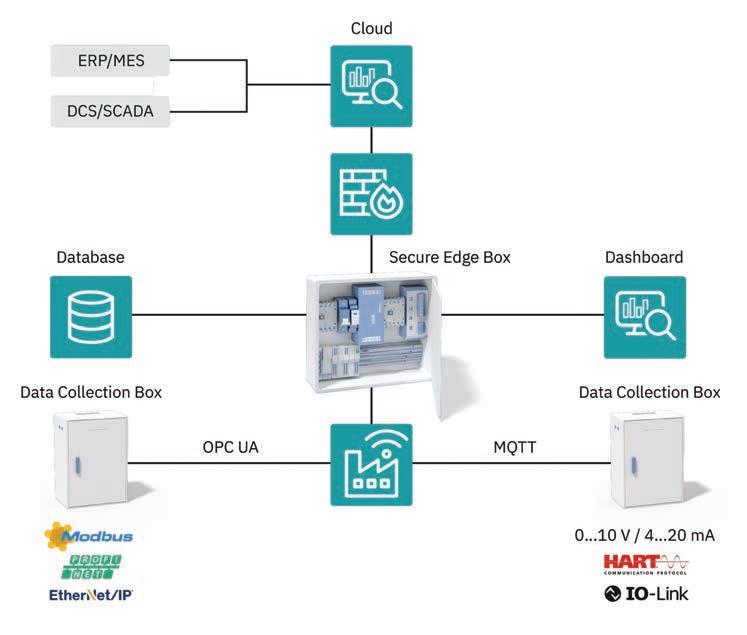
Edge computing allows legacy systems to be connected without exposing manufacturing operations to cybersecurity risks.PHOTO:
control system from everything else, and then you need to have a device that can talk to the control system and relay it to higher-level systems.”
Even if you could connect legacy systems directly to the Internet, Burke says it would not be advisable to do so. “Despite the fact that PLCs today have a lot more security and more functions, it’s still not a good idea to connect
them directly to the Internet. You need a middleman,” he says.’’
This middleman is where edge computing comes into play. “It makes a lot of sense because it helps you shore up your security gaps,” Burke says. “So when you have legacy systems that were never meant to be connected, with edge computing, you can do so without exposing yourself to cybersecurity risks.”
When it comes to cybersecurity, Burke says that IT should be your first line of defence. The problem, however, is that some try to make a direct connection, wherein they essentially run a single cable from their machine to their IT system. “The problem here is that anytime you have an outage, you have to call IT, and IT prioritizes security over everything else, whereas with operations, we prioritize availability. We just want to make sure the system is still running.”
So rather than make this direct connection, with edge computing you have an edge device sitting between two firewalls – an IT firewall and an OT firewall. “So, an edge device is essentially a data aggregator or data concentrator that takes all the data from the machine level, and feeds it up into the IT level,” Burke says.
The result is a system with three network levels: machine, edge and the cloud. However, the machine never talks to the cloud, and IT never talks directly to the machine. Instead, the machine talks to the edge device, and the edge device sends data up the chain.
While edge computing is a must for cybersecurity reasons, it can also help an organization save money in the long run. “Your network is a triangle,” says Burke. “You’re always trying to push data from lots of individual devices up to some higher level, and then you hit the Internet, which then goes out to the world. While you could have devices, like PLCs, that directly push data into a cloud system, doing so would be very expensive.”
Burke explains that when it comes to the cloud, your cost is based on how many tags you have. So in this case, an edge computing device acts as a data concentrator, which helps reduce the number of tags, and in turn, the cost.
“You can basically use similar tags to make a decision,” Burke
says. “So if the health of 10 machines is good, maybe you’re just sending one tag saying ‘Health is all good.’ And now you’re only paying for one tag instead of 10. This means you’ll want to make some local decisions, because every time you push data into a cloud server, you’re going to be paying some type of service fee. So, if you can limit how much you’re doing, that would save you a lot of money.”
Burke says that there’s another compelling reason to invest in edge computing: network latency. “Let’s say you have 10 machines with numerous sensors collecting data,” he says. “You might have to push large volumes of data up, and if you’re doing that constantly, your IT department is not going to be very happy with you, because there are a lot of connections that they don’t have control over.”
The flow of this data becomes much more manageable with an edge device as the middleman. “When you have an edge device,” Burke says, “you can collect the data in a local database and then push that data up to the cloud. So you’re going to have a local copy of the data, with the added benefit that if your internet connection were to ever go down, the edge device would still have all your data stored locally.”
Upgrading legacy systems so that they can collect and share data doesn’t have to be expensive, and it doesn’t have to take place in one big jump. It can be done on a step-by-step basis, Burke explains. Before you can upgrade, however, you’ll need to identify the reasons why you want to do so, and how edge and cloud computing will benefit your facility. Once you understand your goals, you’ll be better able to decide which machines should be connected first.
Burke says that his customers typically want to start by
improving or controlling one of four major areas of concern. The first is energy efficiency. By automating when certain machines are powered up or powered down within a manufacturing facility, you can cut energy costs. If you don’t need your equipment running 24/7, then it makes sense to plan accordingly and power up only when you have to.
Another compelling reason to upgrade is remote monitoring of machine cycles. If you know how many times a particular piece of equipment usually runs before it typically breaks down or needs maintenance, you can harness that data and preemptively schedule maintenance right before it’s needed, thus limiting downtime.
Custom manufacturing is the third compelling reason to upgrade. “We’re getting into this day and age where people want things customized for different purposes,” says Burke. “For example, we just had a customer who needed a cable in a very specific length. So the more data you have, the more control you have, which means you can change a set point on a machine dynamically, and then have it revert afterwards.”
Finally, there’s smart networking. “Although our networks are getting bigger and bigger, we want to make sure things are automated so that we don’t have to constantly manage everything,” says Burke. “You don’t want to double the amount of data that’s coming out of your machines and then have to hire more people to support it. The goal is to use data to make better decisions while limiting the need for a person to have to constantly monitor and interact with that data.”
Despite their longevity and reliability, legacy systems have their inherent shortcomings. Properly implemented, edge devices and cloud computing can benefit manufacturers in many ways, bringing older equipment into the modern manufacturing world. | MA