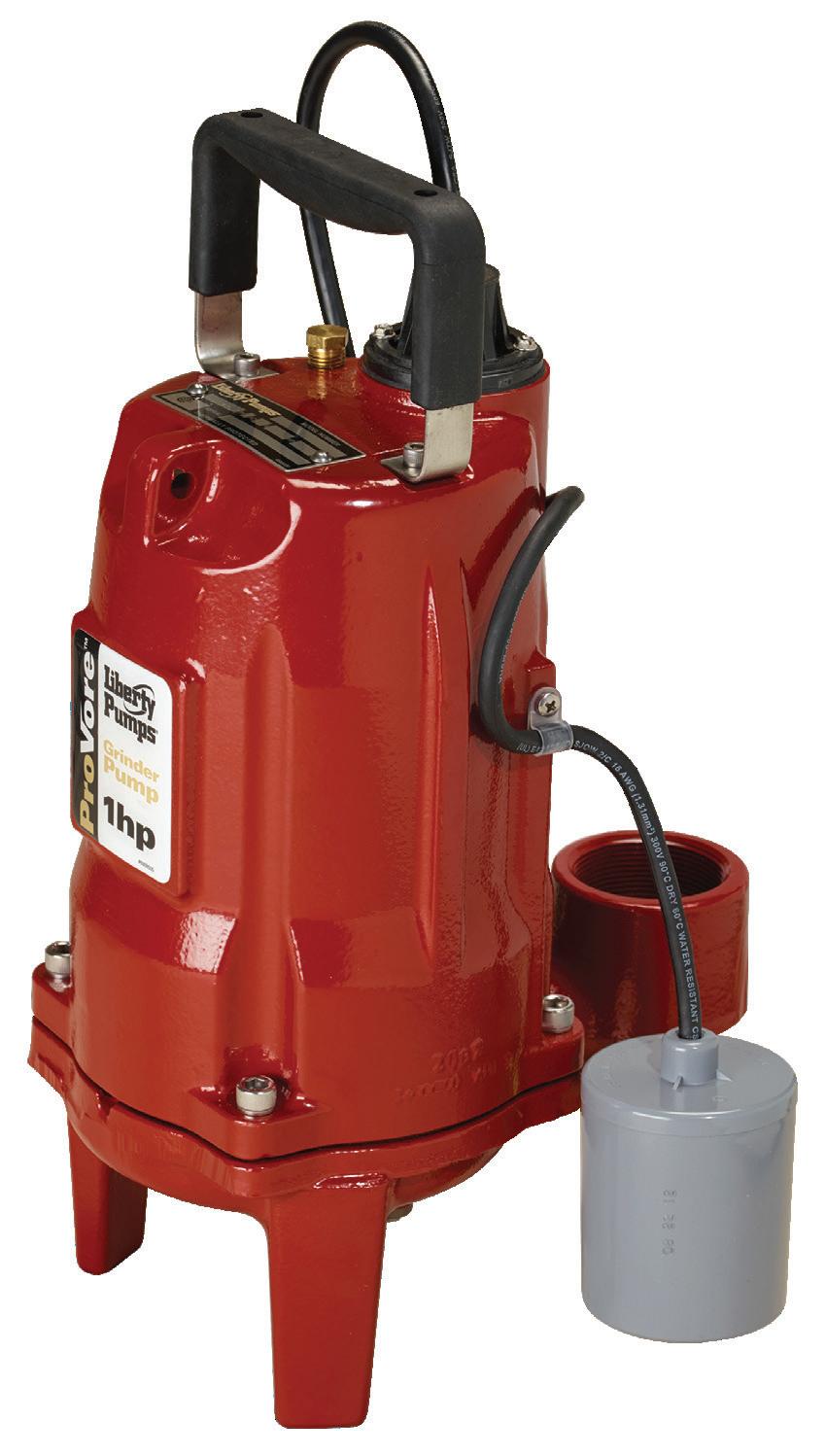
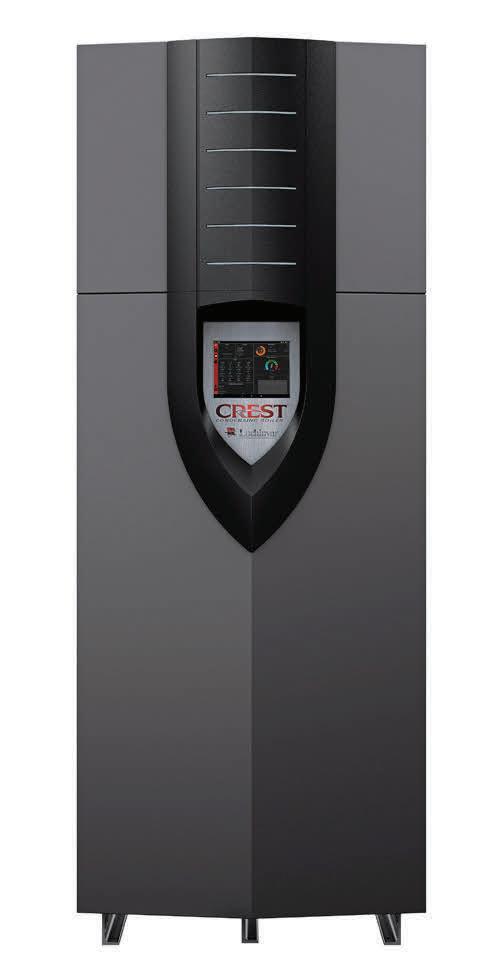
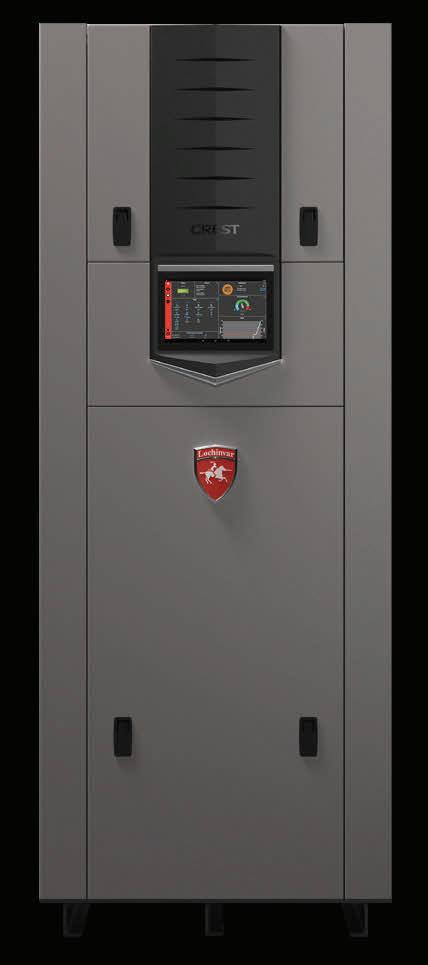
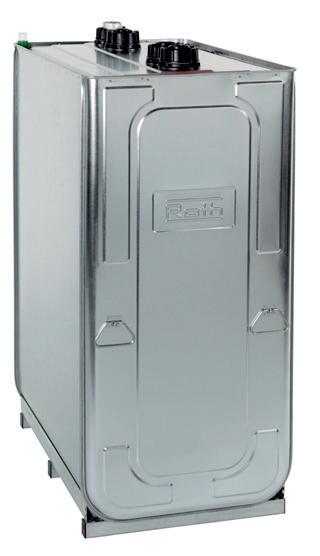
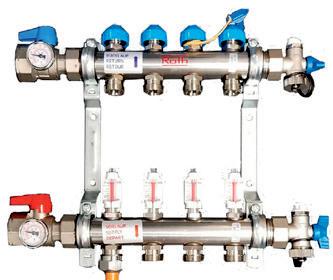
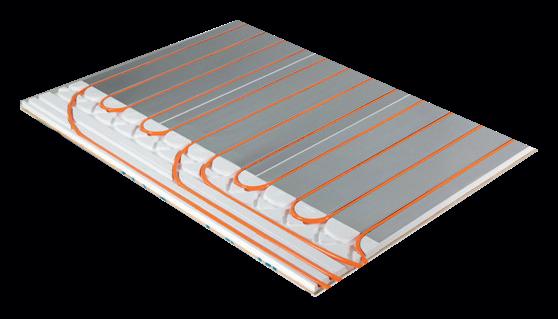
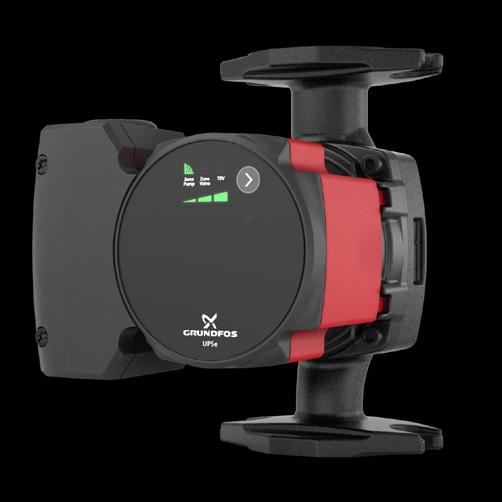
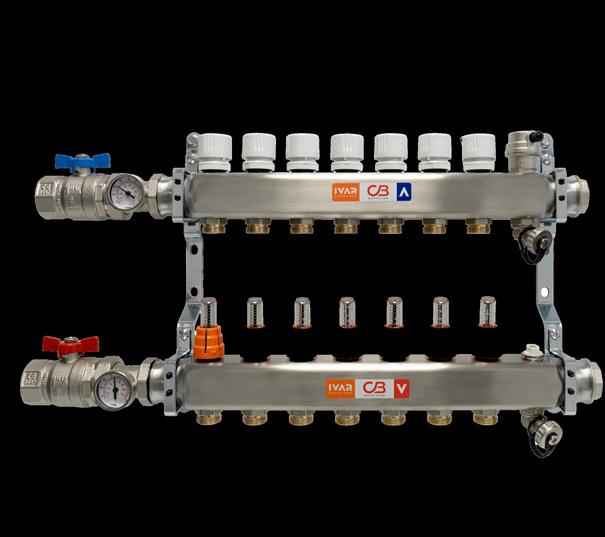
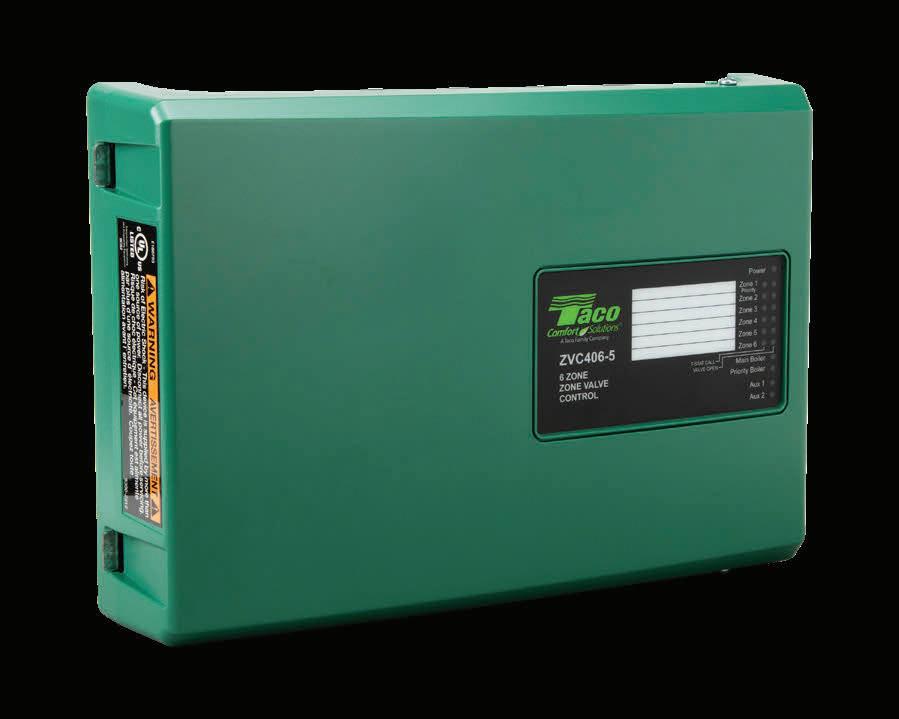
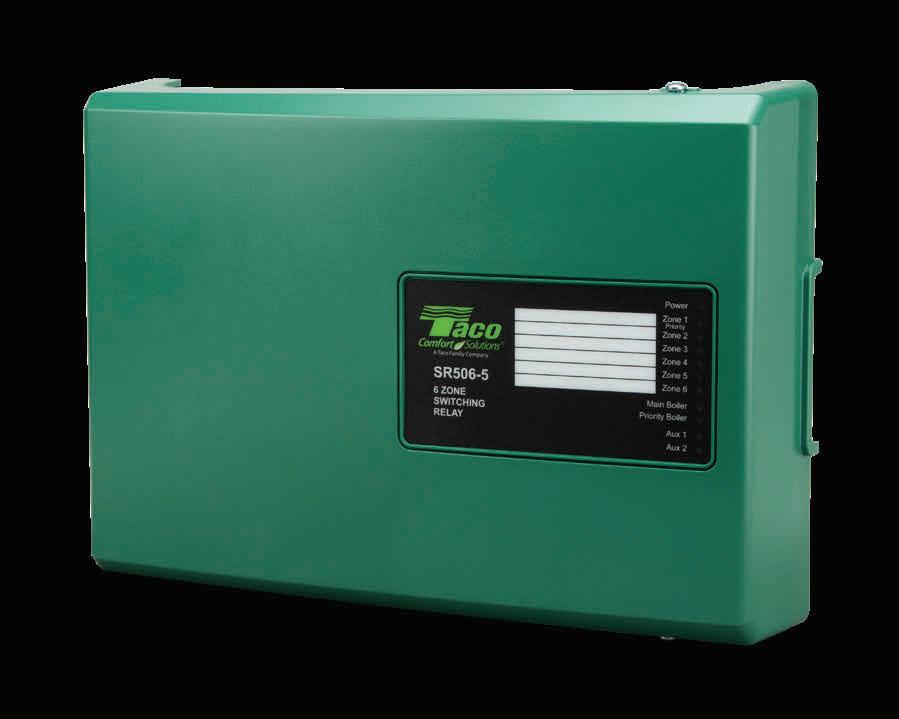
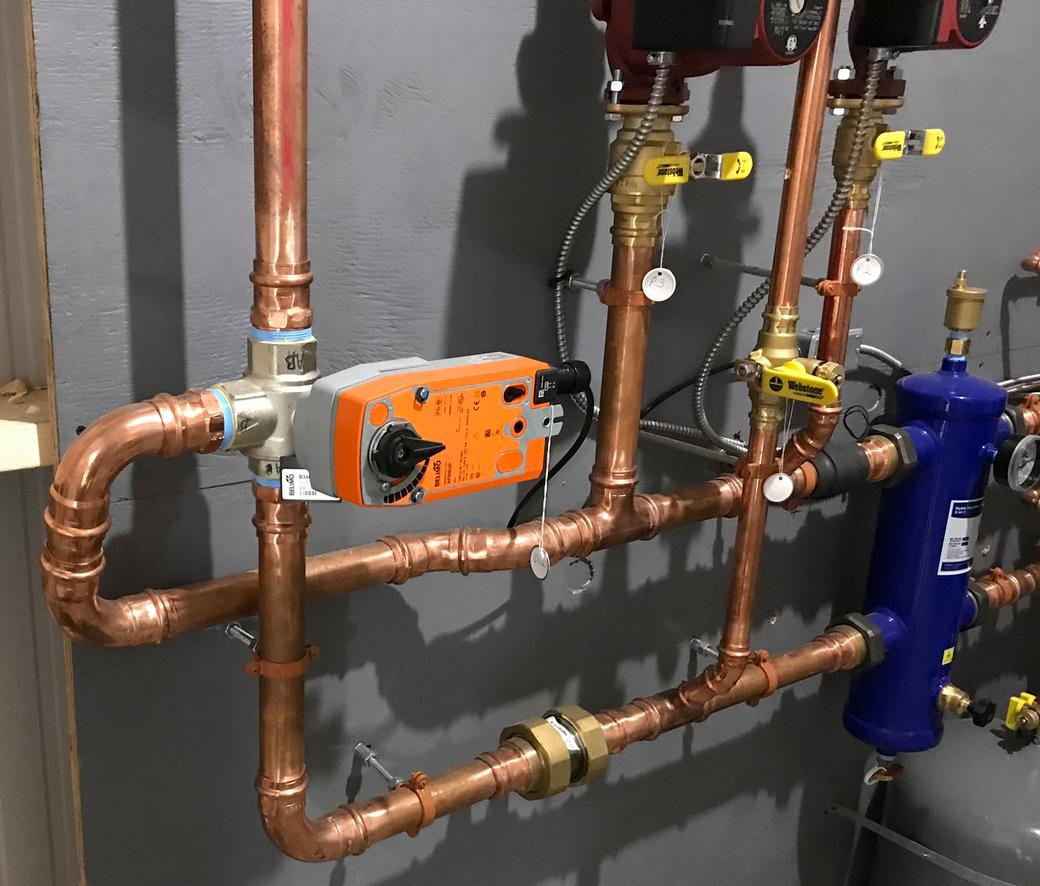
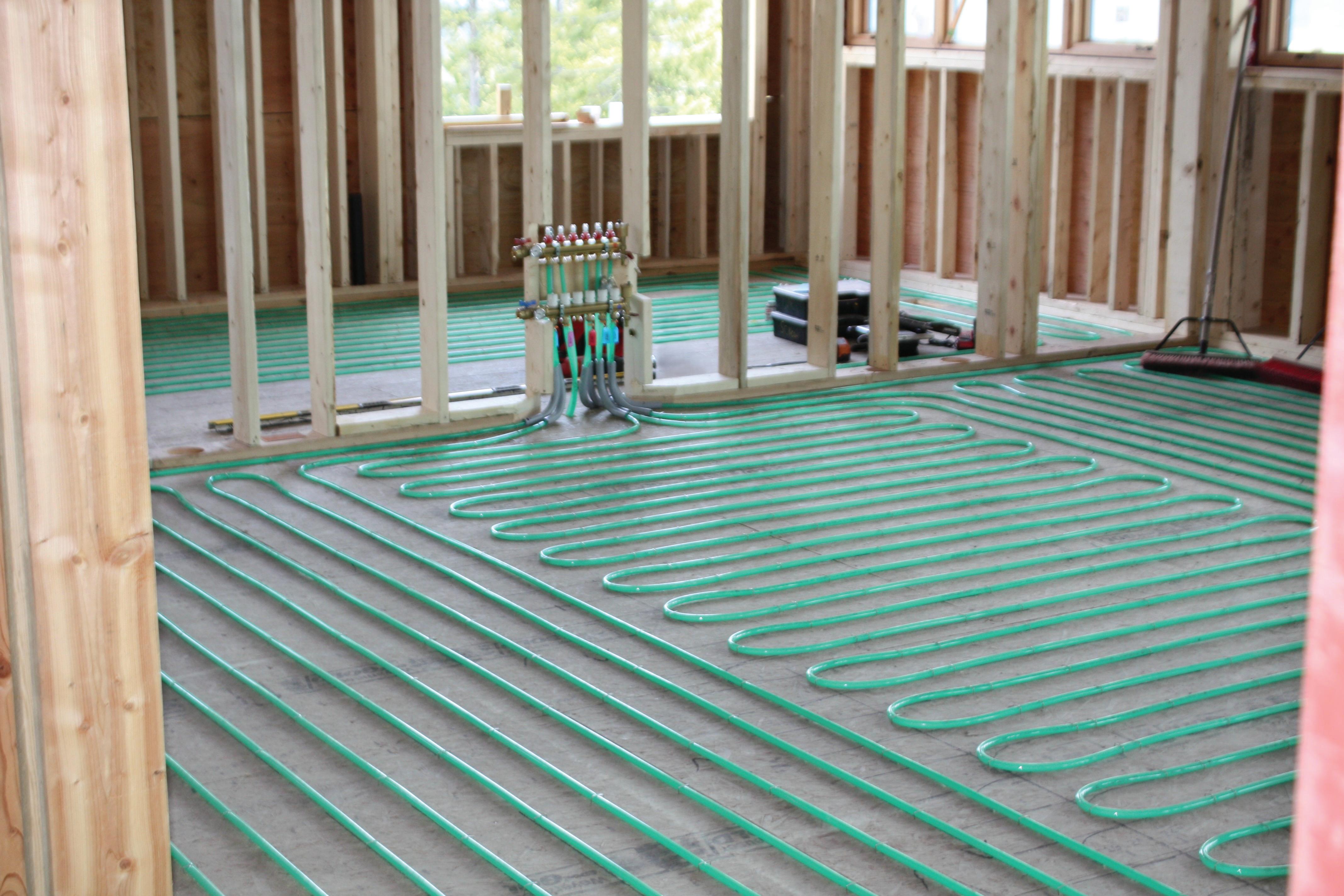
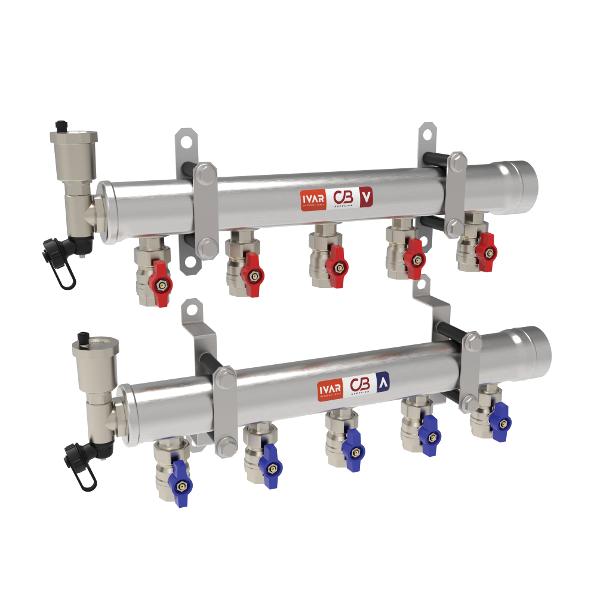
From boilers to pumps, radiant to tanks—find what you need, check stock, and order anytime at master.ca.
Trusted brands. Real-time inventory. Backed by our national support.
FEATURES
12
COVER STORY
HVAC
VRF: WHERE AND WHEN?
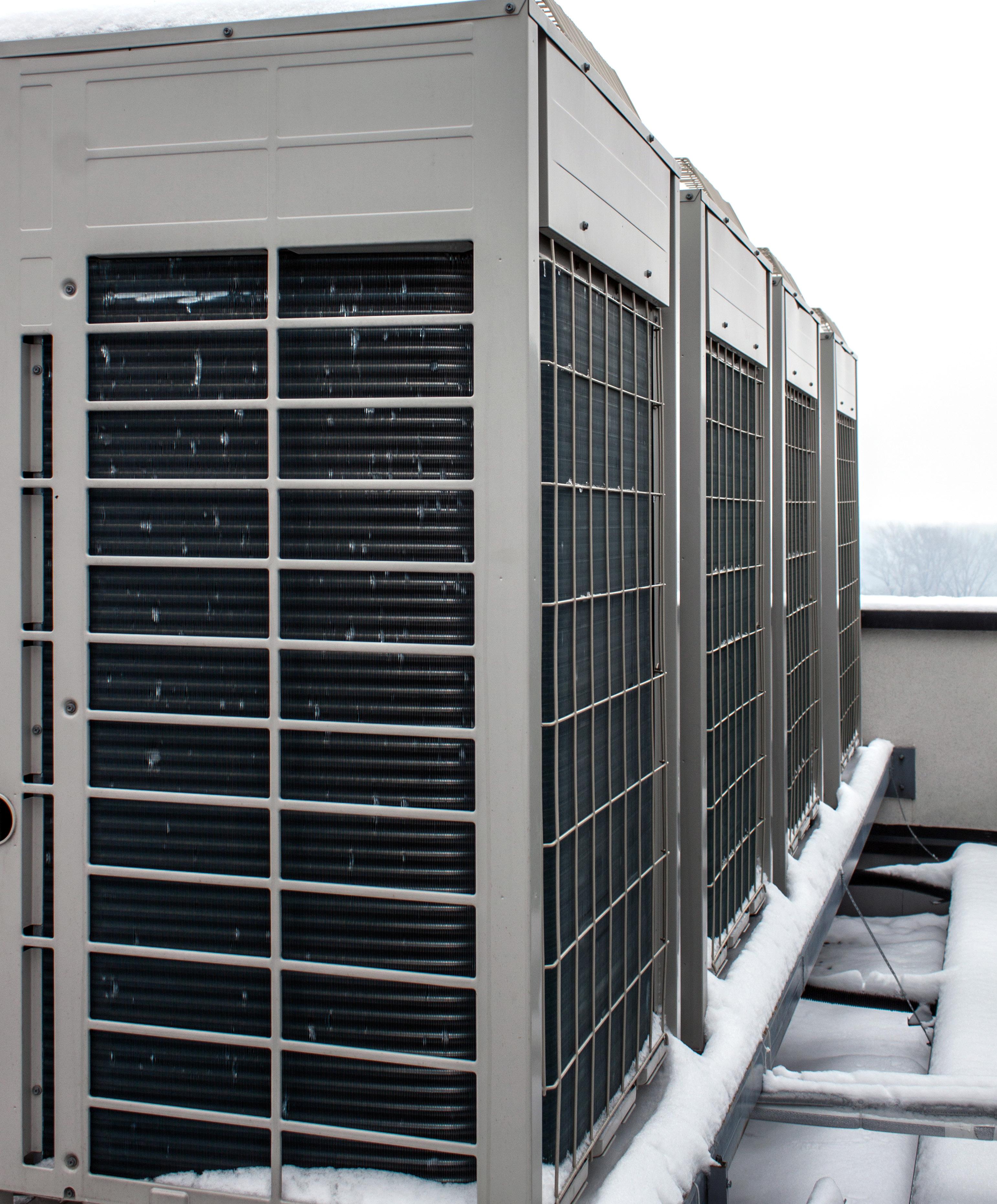
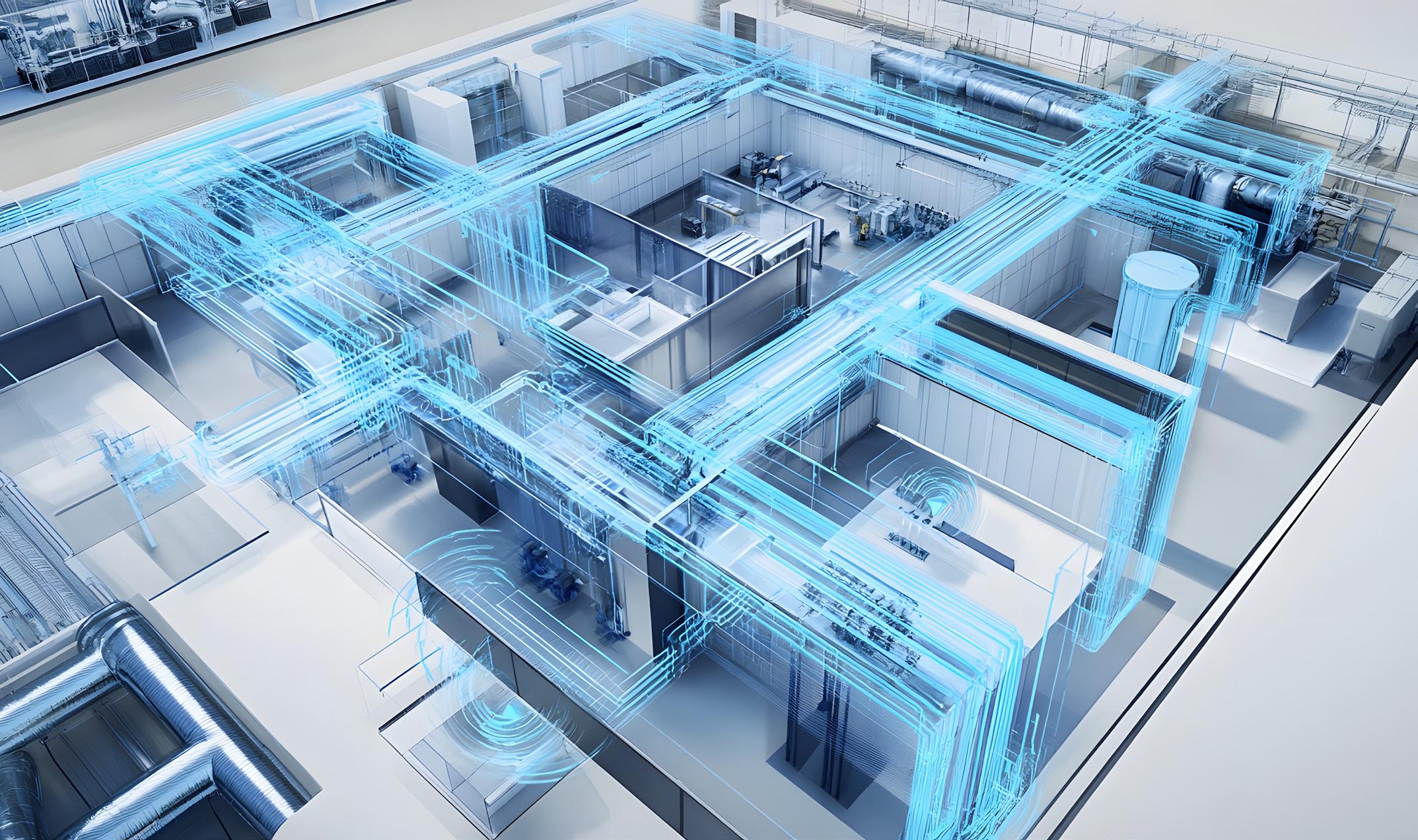
Variable refrigerant flow (VRF) is a sound solution for multi-temperature flexible zoning in a building, but the refrigerant transition could affect future adoption.
By Ian McTeer
44
PLUMBING
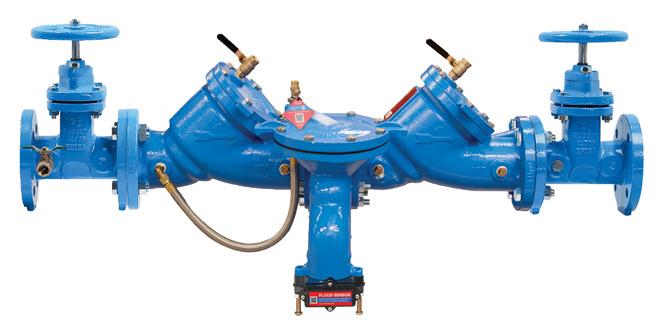
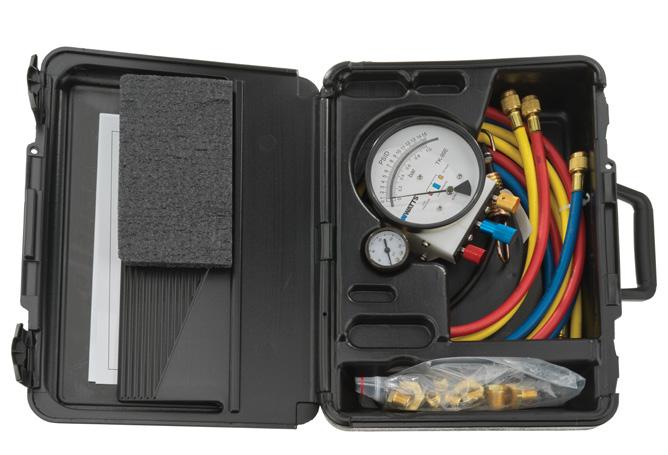
CONTROLLING CROSS CONNECTIONS
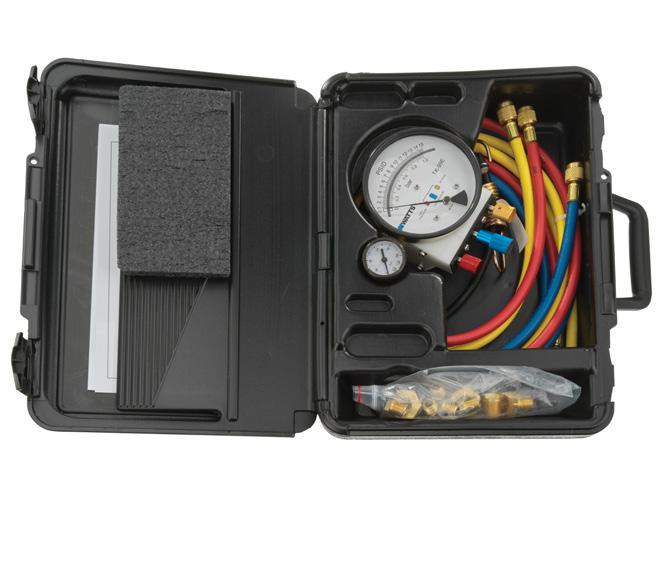
Backflow prevention requirements in builddings across the country means having certified testers on staff is good for business.
By Doug Picklyk
48
BUSINESS
SUCCESSION AND REAL ESTATE
Owners seeking to sell need to consider all assets tied up in their business operations.
By David Horowitz and Michael DiPasquale, CPA
50
BUSINESS
THE YEAR OF EFFICIENCY
Driving up profit without adding trucks or techs, and why in 2026 the most profitable plumbing and HVAC companies will focus on execution and not expansion.
By Matthew Birch
CONTENTS
MH4
GEOTHERMAL
HEAT PUMP HICCUPS
Reviewing a problematic geothermal/ boiler system design and proposing a series of solutions.
By John Siegenthaler
MH8
30 MECHANICAL MINUTES
HEAD ENERGY
In this episode John Siegenthaler walks us through the concepts behind head energy in closed-loop hydronic systems.
By Doug Picklyk
MH10
INSTALLATION
DOUBLE UP
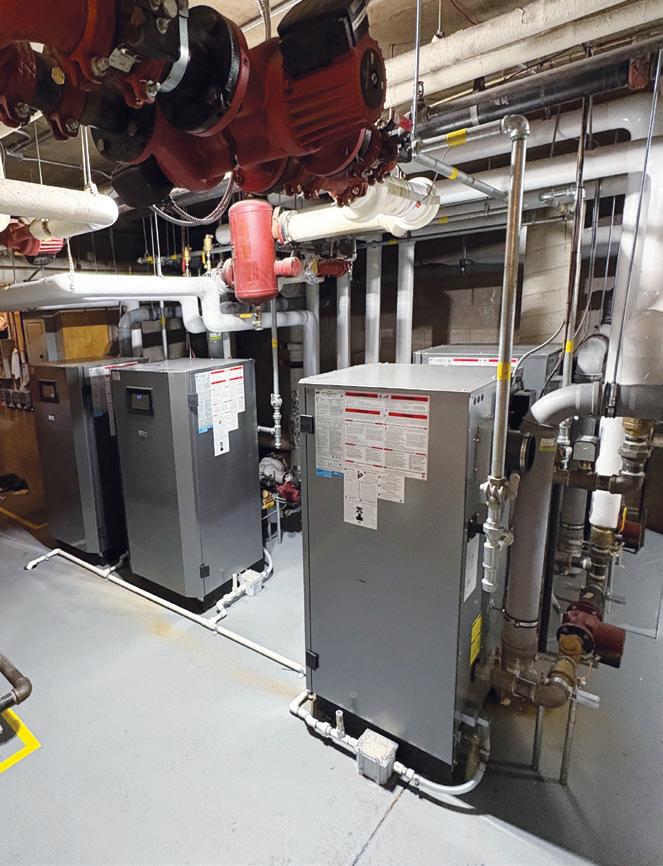
A Halifax apartment complex retrofit replaces two boilers with four for greater efficiency and redundancy.
By Thomas Renner
MH14
INTEGRATED DESIGN
EFFICIENCY IN EVERY DROP: PART 4
How to retrofit buildings and meet decarbonization targets with high efficiency hydronic solutions.
By
Zachary Londo, Jean-Claude Rémy & Chris DesRoches
MH18
BUILDING BLOCKS
DISTRIBUTED COMFORT
The first of a six-part series on the fundamentals of hydronics to boost general hydronics knowledge in the plumbing and heating industry.
By Michael Breault
MH20 DESIGN KEEP IT FLOWING
Allowing water to keep moving in a circuit is an alternative to glycol/ antifreeze to prevent potential freezing in concrete slabs.
By John Siegenthaler
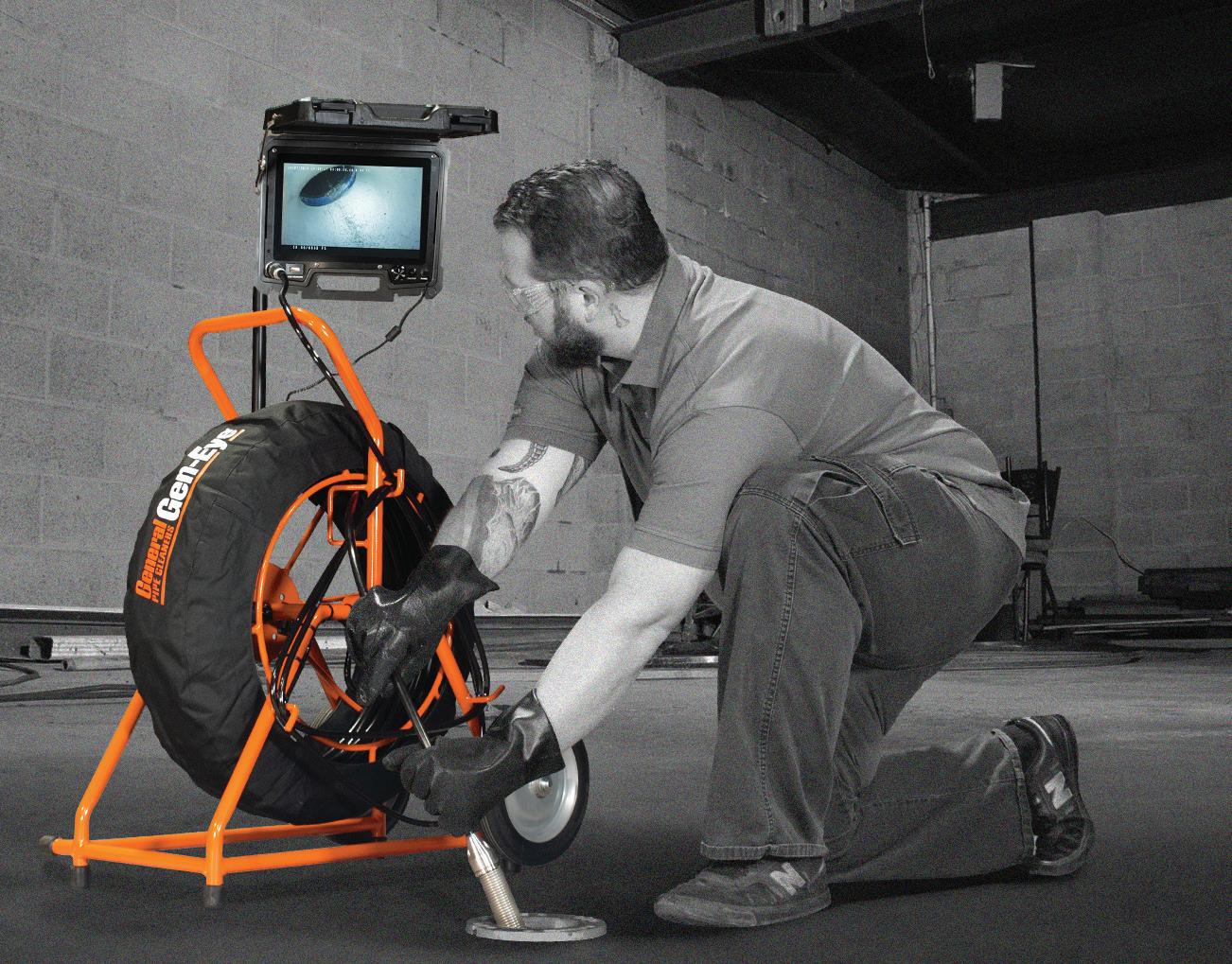
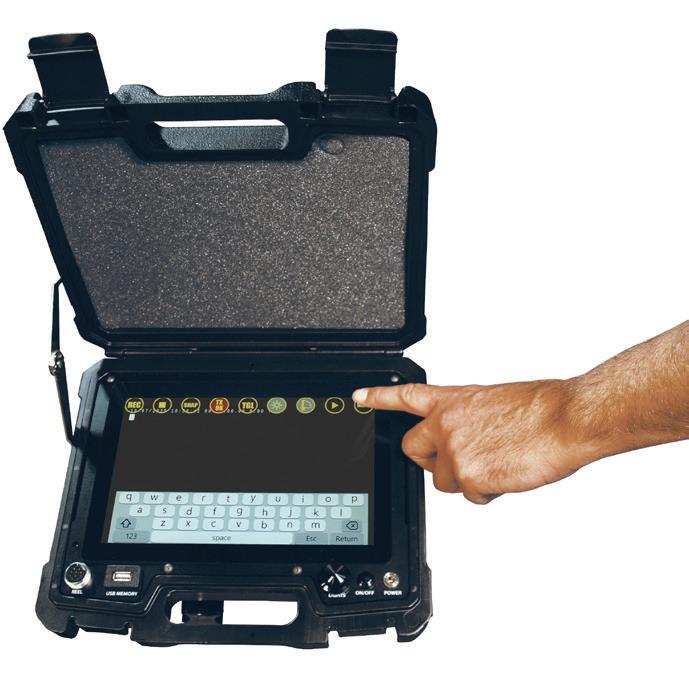
Upgrade your inspection camera to General Pipe Cleaners’ new Gen-Eye Fusion™ video pipe inspection system.
• High-de nition camera
• Advanced video recorder with full HD 1080p capability
• Three ways to record – USB to Flash Drive, Internal memory recorder, or live Wi-Fi streaming
• Touch screen keyboard for titling
• Gen-Pack™ battery adapter for remote operation
• Compatible with all of General’s camera systems
Get the full picture. Call the Drain Brains at General at 800-245-6200, or visit www.drainbrain.com/fusion
NEW YEAR, NEW YOU
AT AS WE ENTER 2026, THE CANADIAN ECONOMY FEELS A BIT LIKE SOMEONE STANDING ON A BATHROOM SCALE AFTER THE HOLIDAYS, a little uncomfortable and bracing for the number to settle. Inflation may be cooler than it was, interest rates may eventually go down, but many national economists are still warning of either a shallow recession or a prolonged period of flat, uneven growth as trade issues with our neighbour to the south remain uncertain and capital is tied up in inflated AI promise. For both home service businesses and operaters in the commercial plumbing, HVAC and mechanical space, that kind of environment demands discipline, not denial.
When growth slows, discretionary spending can be the first thing both home and business owners cut back on. Bathroom renovations get postponed. Mechanical room upgrades get delayed. “Let’s get one more year out of it,” becomes the mindset. For contractors, that could result in fewer large-ticket replacement jobs and more service, repair and maintenance calls.
The work doesn’t disappear, but the mix changes and margins can tighten if businesses aren’t prepared. This is where the economic conversation starts to sound like a New Year’s resolution. When times are good, it’s easy to carry a little extra weight, like an oversized fleet, unused warehouse space, or staffing levels that only make sense in peak-growth years. When revenue flattens, that extra weight becomes harder to carry.
A potential recession (that has been predicted for many years now but hasn’t arrived) doesn’t kill well-run home service businesses. Complacency does. As our business writer, Matthew Birch, notes in his article The Year of Efficiency, keeping lean doesn’t mean sacrificing service quality. It means taking a look at how the business is performing. Are trucks fully utilized? Are technicians dispatched efficiently? How frequent are call backs?
Staffing is often a sensitive topic. Skilled tradespeople are still hard to find. Cutting talent can backfire when demand rebounds. The forward looking view includes improved scheduling and enhanced training. A lean operation isn’t about fewer people. It’s about making sure everyone is positioned to do their best, most profitable work.
Another common resolution parallel? Consistency beats intensity. You don’t lose weight by starving for a week and then bingeing. Businesses don’t survive downturns by slashing everything and hoping for the best. Incremental improvements add up over time and create resilience.
There’s also opportunity hidden in flat markets. Customers become more value-conscious and loyal to companies that communicate clearly, price transparently, and show up reliably. Preventive maintenance programs, service agreements, and efficiency-focused solutions often resonate when customers are cautious with spending. Head to CMPX next month to see the latest systems for your customers.
This year, Canadian plumbing and HVAC businesses don’t need to fear a slower economy, but they do need to respect it. Treat the year ahead like a smart New Year’s resolution: trim the excess, strengthen the fundamentals, and build habits that last longer than the first few weeks of the year
– Doug Picklyk, Editor
Reader Service
Print and digital subscription inquires or changes, please contact Angelita Potal, Customer Service
Tel: (416) 510-5113
Email: apotal@annexbusinessmedia.com
Mail: 111 Gordon Baker Rd., Suite 400, Toronto, ON M2H 3R1
ASSOCIATE David Skene (416) 510-6884 PUBLISHER dskene@hpacmag.com
NATIONAL Amanda McCracken (647) 628-3610
ACCOUNTS amccracken@hpacmag.com
ACCOUNT Kim Rossiter (416) 510-6794
COORDINATOR krossiter@hpacmag.com
AUDIENCE DEVELOPMENT Urszula Grzyb (416) 510-5180 MANAGER ugrzyb@annexbusinessmedia.com
MEDIA Emily Sun
DESIGNER esun@annexbusinessmedia.com
PUBLISHER Peter Leonard (416) 510-6847 pleonard@hpacmag.com
CEO Scott Jamieson sjamieson@annexbusinessmedia.com
PUBLICATIONS MAIL AGREEMENT NO. 40065710
Heating Plumbing Air Conditioning (established 1925) is published 6 times per year by Annex Business Media. HPAC Magazine is the leading Canadian business publication for the owner/manager of mechanical contracting businesses and their supply partners.
SUBSCRIBER SERVICES: To subscribe, renew your subscription or to change your address or information please visit us at www.hpacmag.com.
Subscription Price per year: $46.68 (plus tax) CDN; United States: $118.81 CDN; Elsewhere: $130.48 CDN; Single copy Canada: $8.00 CDN. Heating Plumbing Air Conditioning (establish 1925) is published 6 times per year by Annex Business Media. HPAC Magazine is the leading Canadian business publication for the owner/manager of mechanical contracting businesses and their supply partners.
MAIL PREFERENCES: From time to time we make our subscription list available to select companies and organizations whose product or service may interest you. If you do not wish your contact information to be made available, please contact us via one of the following methods: Tel: 416-510-5113, Fax: 416-510-6875; E-mail: apotal@annexbusinessmedia.com; or by mail: 111 Gordon Baker Rd., Suite 400, Toronto ON M2H 3R1 Annex Privacy Officer
Privacy@annexbusinessmedia.com
Tel: 800-668-2374
HPAC Magazine receives unsolicited materials (including letters to the editor, press releases, promotional items and images) from time to time. HPAC Magazine, its affiliates and assignees may use, reproduce, publish, re-publish, distribute, store and archive such unsolicited submissions in whole or in part in any form or medium whatsoever, without compensation of any sort.
NOTICE: HPAC Magazine, Annex Business Media, their staff, officers, directors and shareholders (hence known as the “Publisher”) assume no liability, obligations, or responsibility for claims arising from advertised products. The Publisher also reserves the right to limit liability for editorial errors, omissions and oversights to a printed correction in a subsequent issue. HPAC Magazine’s editorial is written for management level mechanical industry personnel who have documented training in the mechanical fields in which they work. Manufacturers’ printed instructions, datasheets and notices always take precedence to published editorial statements.
Proud member of:
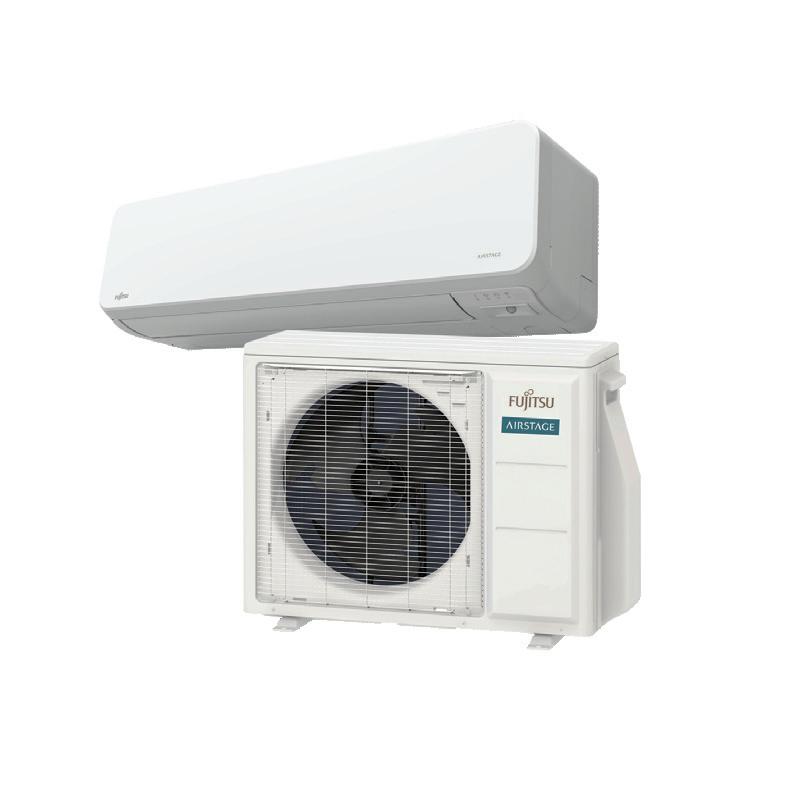
The new Orion XLTH+…a star performer in extreme weather.
Like the Orion Constellation brightening the winter night sky, the Fujitsu AIRSTAGE Orion XLTH+ Series stands out as a brilliant star for heating performance...even in the harshest climates. While others fade in extreme cold, Orion shines brighter, delivering more than 100% capacity even at -30°C.
• Beyond 100% Performance at -30°C – No derating, just powerful, consistent heating.
• No Lockout Temperature – Unlike other systems, Orion keeps running in relentless cold.
• ProCore™ Corrosion-Resistant Technology – Built to endure and perform.
• Flexible Installation – Designed for seamless integration into a variety of applications.
Orion XLTH+...the stellar performer in low-temperature heating.
INDUSTRY NEWS
LATEST NATIONAL MODEL BUILDING CODES RELEASED
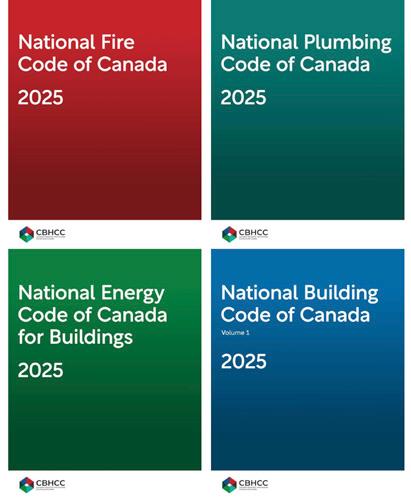
In the final days of December, 2025, the Canadian Board for Harmonized Construction Codes (CBHCC) released the 2025 editions of the National Model Codes. The development of these editions began under the Canadian Commission on Building and Fire Codes and were completed under the new governance framework established by the 2019 Reconciliation Agreement on Construction Codes between federal, provincial and territorial governments, which aims to harmonize construction codes across Canada.
The updated model codes includes the National Building Code of Canada 2025, the National Fire Code of Canada 2025, the National Plumbing Code of Canada 2025, and the National Energy Code of Canada for Buildings 2025.
QUILT ARRIVES IN CANADA
California-based smart home-climate solution start-up, Quilt, has launched its platform in Canada through local contractor/dealer partners in five regions across the country.
Founded in 2022 and launched in May 2024, Quilt has developed stylish residential cold climate heat pumps and ductless air handlers designed by former Google, Apple and Nest engineers. The mini-split hardware is all controlled by a smart thermostat connected to a mobile app and capable of over-the-air real-time updates.
Starting operations in San Francisco, Quilt is spreading across the U.S. and as of November 2025 is available in five provinces through partner/installers: Pope & Sons on Vancouver Island and Pro Ace Heating and Air Conditioning in Vancouver; Go Lime in Toronto, and Wilsons Mechanical in the Maritimes.
“Our goal: make the switch to efficient, all-electric comfort so seamless and de -
These are technical documents that, when adopted into regulation by provinces and territories, establish minimum performance levels related to health, safety, accessibility, and the protection of buildings from damage and the environment.
A few highlights from the 2025 editions include:
• Introduction of energy efficiency requirements for the alteration of existing buildings, offering building officials a framework to enforce code requirements in retrofits.
• Introduction of a requirement for a passive vertical radon stack in dwelling units and home-type care occupancies, providing measures to help reduce radon exposure.
• Expansion of the environment objective to address greenhouse gas emissions.
Code users can download electronic versions of the codes for free through the National Research Council (NRC) Publications Archive. The next editions of the codes are expected to be available in 2030. nrc-publications.canada.ca
lightful that everyone wants to do it. Even in Calgary,” said Paul Lambert, Quilt cofounder and CEO in a company release.
“I’m from Calgary, so I can say this.”
In December the company announced it had raised a US$20 million Series B round of financing, lifting its total funding to US$64 million. quilt.com
CLIMATECARE CO-OPERATIVE EXTENDS BEYOND ONTARIO
ClimateCare Co-operative, the memberowned co-operative of independent
HVAC contractors based in Ontario, has added two members and allowed two companies into its trial program, including one from Atlantic Canada.
Waza Home Comfort in Whitby, Ont. and Absolute Comfort Control Systems of Windsor, Ont. completed the one-year Discovery Program and are now enterprise members, while Cross Heating & Air Conditioning of southwestern Ontario and Tradewinds Eco Energy with operations in New Brunswick and PEI have entered the Discovery Program.
In addition, ClimateCare entered into a distribution agreement with Kerr Smart Energy in Atlantic Canada.
“The addition of our first new member and first new distributor in Atlantic Canada marks a truly pivotal moment for our organization,” notes ClimateCare’s executive director Victor Hyman. “It is far more than just a step—it is the strategic launchpad for our national expansion strategy.”
joinclimatecare.com
Continued on p8
<
Continued from p8
JETSON RAISES US$50 MILLION
In January, Vancouver-based start-up, Jetson, announced the closing of $50M in funding to expand its heat pump business across Canada and the U.S.
Founded in 2024, Jetson offers a vertically integrated platform through its Jetson Air ducted central heat pump system. The offering includes direct-to-consumer pricing and purchasing, remote assessments, rebate management and an in-house installation team.
“Heat pumps have worked for decades, but their cost and complexity have put them out of reach of most homeowners,” said Stephen Lake, CEO. “We’re removing the friction by making the process digital, fast, and affordable.”
The company claims to have over 1,000 system installs across Vancouver, Colorado, New York and Massachusetts. jetsonhome.com
GO LIME EXPANDS WITH NEW OWNERSHIP
Basalt Infrastructure Partners, an investment firm headquartered in the UK, has acquired Ontario-based Go Lime, a residential HVAC services provider, along with the assets of Simply Green (Crown Crest Group) which was acquired out of bankruptcy. Both Go Lime and Simply Green sell and lease water heaters, HVAC units and water treatment systems to residential homeowners under long term leases.
Simply Green and associated companies were placed under court-appointed receivership in early November 2023 due to financial liquidity issues and potential class action litigation. In 2025, while under receivership, the companies arrived at a $17 miilion settlement to the pending class action case which alleges the companies violated consumer protection laws.
Basalt acquired Go Lime and financed the acquisition of Simply Green’s assets out of insolvency proceedings bringing the companies together. A Basalt media release states the acquisition will create Canada’s fourth largest home equipment leasing platform, with a combined portfolio of approximately 90,000 leases.
“Go Lime was founded to restore transparency, trust, and choice to the home comfort industry,” said Jeff Schwartz, Go Lime CEO. “This acquisition accelerates that mission. With Basalt’s backing, we’re building Canada’s most customer-focused, digitally enabled platform.”
This is Basalt’s first infrastructure investment in Canada. basaltinfra.com golime.com
VRF: WHERE AND WHEN?
Variable refrigerant flow (VRF) is a sound solution for multitemperature flexible zoning in a building, but the refrigerant transition could affect future adoption.
BY IAN MCTEER
When I first started in residential HVAC back in the days of oil and gas furnaces, boilers, baseboard electric, and even the occasional coal burner, the equipment was straightforward but far from efficient.
Gas furnaces came with belt-driven blowers, shaded-pole motors, thermocouples, combination gas valves, draft hoods and mercury-bulb thermostats.
Central cooling split systems were just starting to gain traction in the early 1980s, mostly in homes. Combustion efficiency and consistent thermal comfort weren’t always priorities. In the case of many commercial buildings I encountered, they were ice-cold in summer and uncomfortably warm in winter. Fast-forward four decades and the opportunities for better comfort and efficiency in both residential and commercial buildings are remarkable. We now have ultra-high-efficiency condensing appliances, advanced cooling systems, cold-climate heat pumps delivering reliable heat well below freezing and smart
thermostats that monitor, control and even diagnose equipment remotely.
Yet the most incredible advance, at least to that younger version of me, would have been the idea that a single HVAC system could heat and cool different zones at the exact same time.
What!?
Of course, that capability didn’t appear overnight. It required decades of innovation: variable-speed compressors and indoor fan motors, electronic expansion valves, sophisticated controls and, crucially, the shift to distributed refrigerant systems that could move heat around a building rather than just create it or reject it.
That vision has largely been realized through variable refrigerant flow (VRF) technology, sometimes called variable refrigerant volume VRV (a Daiken registered trademark), which has taken commercial buildings by storm in recent years.
THE STRENGTHS OF VRF
As someone who cut his teeth on simpler centralized systems, I watched central chillers dominate larger projects, but I have started to wonder: Is VRF the universal answer its advocates claim, or
does the tried-and-true central plant still have a vital role?
Some key advantages that have driven VRF adoption:
• VRF systems precisely match refrigerant flow to actual zone loads, significantly reducing energy waste compared with constant-volume or fixed-capacity alternatives.
• Exceptional zoning flexibility: each indoor unit can be independently controlled, allowing truly individualized comfort settings across a building.
• Compact indoor units require minimal or no ductwork, making VRF especially attractive for renovations, historic buildings, or any project with tight mechanical spaces.
• Hybrid configurations can integrate VRF with variable-air-volume (VAV) air handlers or dedicated outdoor-air systems (DOAS) to handle larger zones and meet ventilation codes.
• Modern inverter compressors and lownoise fan designs deliver quiet operation, critical in hotels, offices, hospitals and high-end residential settings.
Today’s VRF systems come in two primary configurations, either heat pump or heat recovery.
Layout planning for VRF systems involves distributing refrigerant directly to dozens, or hundreds, of indoor units.
Heat Pump VRF
• All connected indoor units operate in the same mode, either all cooling or all heating, at any given time.
• A central controller typically prioritizes capacity to the zones with the greatest demand.
• With simpler piping (two pipes per circuit) and fewer components, heatpump VRF generally has lower first cost, easier installation and reduced maintenance complexity.
• Ideal for open-plan spaces (auditoriums, retail floors, food courts) or buildings with relatively uniform thermal needs across zones.
Heat Recovery VRF
• Allows simultaneous heating and cooling in different zones through a third pipe and branch controllers (often called BC boxes or heat-recovery modules) that redirect “free” waste heat from cooling zones to heating zones.
• Provides superior individual control and energy efficiency in buildings with diverse load profiles; think core computer rooms needing year-round cooling while perimeter offices require heat in winter.
• Many modern offices, hotels, schools and multi-family projects have exactly this kind of load diversity, making heat-recovery VRF a compelling choice for occupant comfort and operating-cost savings.
• However, the added piping, valves and controls drive higher upfront costs and increase installation complexity, commissioning time, and potential longterm service requirements. From system designers and specifiers to installers and service technicians, everyone in the HVAC chain needs a thorough understanding of VRF’s capabilities, and its limitations. Proper system selection, sizing, piping design and commissioning are essential to deliver the energy efficiency and comfort benefits that the manufacturers promise.
REFRIGERANT SAFETY IN OCCUPIED SPACES
While VRF’s ability to distribute refrigerant directly to dozens, or hundreds, of indoor units delivers unmatched zoning flexibility, it also means significant quantities of refrigerant are piped through walls, ceilings and occupied rooms.
This “high-probability” design (in code parlance) raises legitimate safety questions that didn’t exist with earlier nonflammable A1 refrigerants like R-410A.
ASHRAE Standard 15, the longstanding safety standard for refrigeration systems (first published in 1919 and continually updated), has long limited refrigerant quantities and concentrations in occupied spaces to prevent toxicity or asphyxiation risks. For decades, these rules were straightforward because most HVAC refrigerants were A1, non-toxic and non-flammable.
The transition to lower-global warming potential (GWP) A2L refrigerants, becoming mandatory for most new equipment, has dramatically complicated the picture. ASHRAE 15-2022 introduced detailed new requirements specifically for A2Ls in human comfort applications:
• Strict charge limits based on room size, floor area and installation height.
• Mandatory leak detection systems when charges exceed certain thresholds.
• Automatic mitigation measures upon detection, typically shutting down the system, closing expansion valves, activating circulation fans to disperse refrigerant, or initiating mechanical ventilation.
Importantly, the standard’s intent is mitigation, not evacuation. A detected leak should trigger alarms and dispersal, not the full fire-alarm horns, strobes, and “GET OUT NOW” announcements we associate with real emergencies.
In practice, however, acceptance has been spotty. Many authorities’ having jurisdiction (AHJs), such as fire marshals, building officials and local code enforcers, remain cautious about any -
thing labeled “flammable.”
In numerous jurisdictions, they require (or strongly encourage) tying A2L detectors directly into the building fire-alarm system “just to be safe.” The result? A minor leak or false positive can trigger the exact same deafening midnight evacuation you’d get from a real fire.
Products like the MSA MVR-300 VRF refrigerant gas detector exemplify the new reality. Designed specifically for hotels, offices, dorms and apartments with VRF systems, it mounts in guest rooms or occupied zones, monitors for common refrigerants (R-410A legacy plus A2Ls), and alerts via audible/visual alarms while communicating to the BMS. It’s a smart, code-compliant solution for early detection… but when wired to the fire panel, a 3 a.m. beep could potentially become a building-wide disruption.
I’ve lived this firsthand. Years ago, at a tech conference, I was jolted awake well past midnight by blaring alarms, flashing strobes and a robotic voice commanding, “Get out now, do not take belongings!”
Still half-asleep in a freezing February night, I managed to throw on pants, shoes and a coat before heading out.
Down in the parking lot, I found my boss standing in his pajamas, shivering and laughing about it later. The cause?
A couple of intoxicated guests setting off fireworks on another floor.
We all appreciated the robust fire system that night. But imagine the same chaos triggered by a slow refrigerant joint leak, off gassing from fresh construction adhesives, or even a guest’s heavy spritz of cologne fooling the sensor.
Early real-world A2L installations have already seen false alarms from VOCs in cleaners, sealants and solvents, leading to unnecessary evacuations, angry occupants, and strained fire-department resources.
This isn’t to say A2L-equipped VRF can’t be safe, of course it can, with proper design and commissioning. But it does add a layer of complexity, cost,
on p16
NEXT-LEVEL COMFORT STARTS HERE
Napoleon Air Handler Solutions
Compact, quiet, and incredibly efficient.
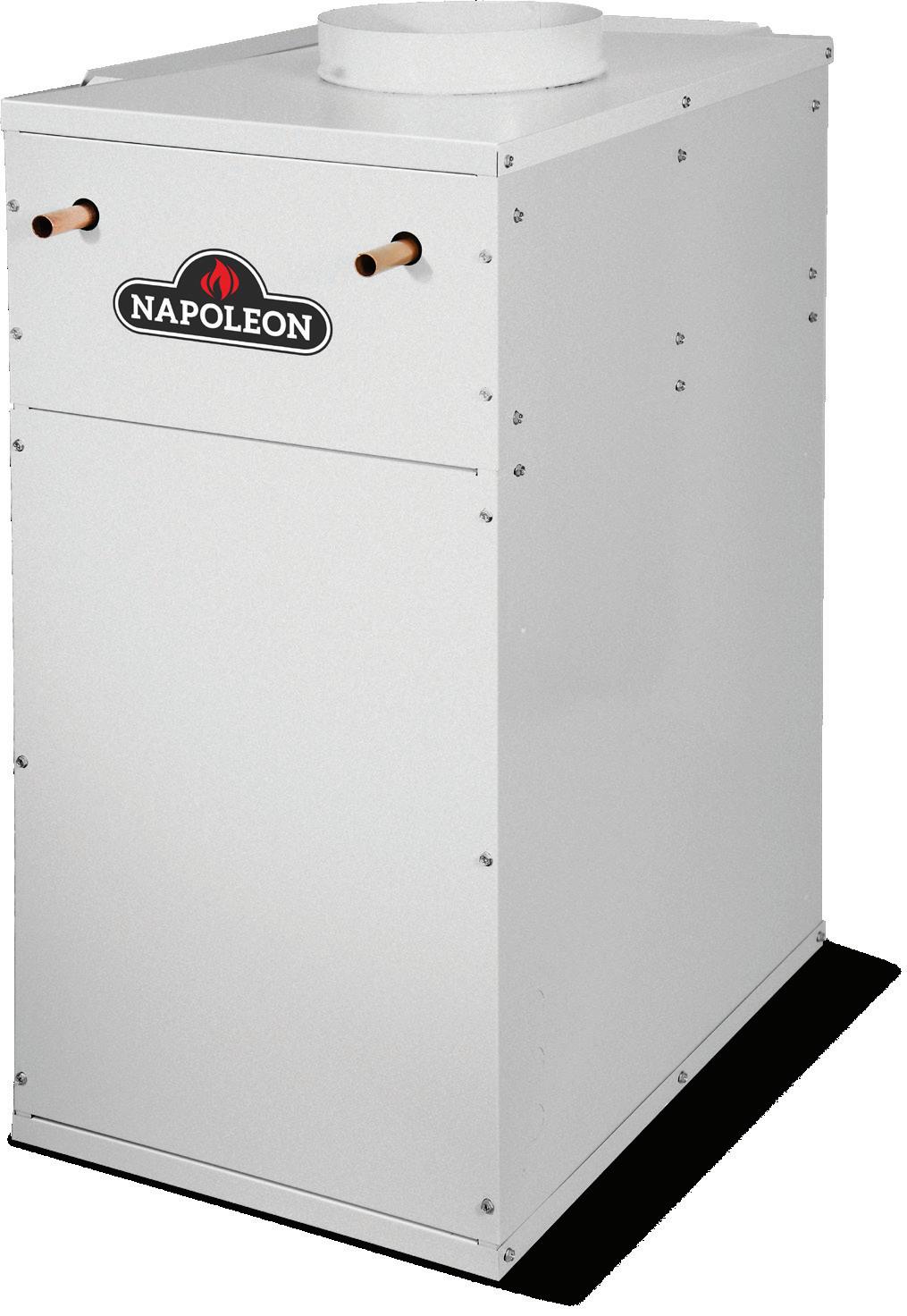
Napoleon hydronic air handlers use hot water from a boiler, tankless water heater, or heat pump to deliver consistent, energy-saving heat throughout your home.
By using water as the heat transfer medium, they provide a quieter, cleaner, and more efficient alternative to traditional forced-air systems. Engineered for multi-position installations, each unit fits easily into compact spaces—yet delivers the power and performance to heat full-sized homes with ease.
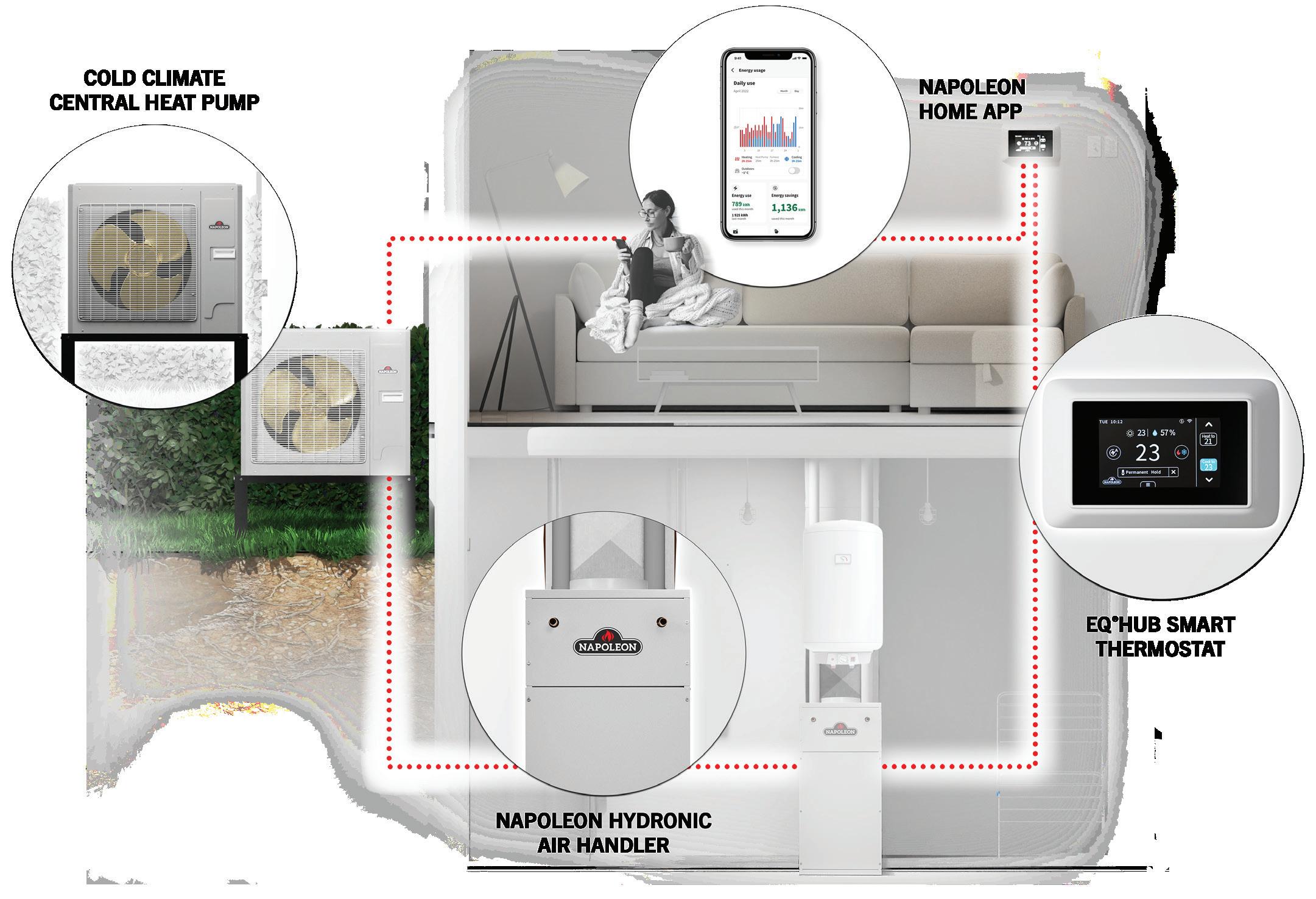
Napoleon EQ ® Fusion Hybrid Solution
Your all-in-one solution for year-round comfort!
The EQ ® Fusion system is a complete, high-efficiency HVAC solution that delivers heating, cooling, and hot water—all while reducing greenhouse gas (GHG) emissions compared to conventional systems. It combines advanced heat pump technology with a hydronic air handler and a high-efficiency tankless water heater for optimal performance.
At the heart of the system is the EQ ® Hub smart thermostat, which seamlessly manages both heat sources to ensure consistent comfort.
Compact and easy to install, EQ ® Fusion requires less gas piping and venting than traditional HVAC setups—making it a smarter, more sustainable choice.
and potential disruption that simply doesn’t exist when refrigerant is kept centralized and out of occupied spaces.
THE APPEAL OF CENTRAL CHILLED-WATER PLANTS
For all the impressive features of VRF technology, many commercial and institutional buildings still rely on the triedand-true central plant: a chiller for cooling, paired with boilers or heat pumps for heating, distributing chilled and hot water through pipes to air handlers, fan coils or VAV terminals.
Here are a few advantages that keep central plants in larger projects:
• Refrigerant stays contained in one or two large machines (often in a mechanical room or on the roof), minimizing leak risks and simplifying compliance with ASHRAE 15: no room-by-room detectors required.
• Proven longevity: 25–35 years for chillers with proper maintenance, versus 15–20 years typical for VRF outdoor units.
• Easier redundancy and service: N+1 configurations, rental chillers for zerodowntime overhauls, and straightforward repairs.
• Scalability for tall or large buildings: fewer piping runs, hydraulic control.
Of course, central plants aren’t without their own drawbacks:
• They typically require a dedicated mechanical room (or rooftop space), which can be a challenge in spaceconstrained retrofits.
• Higher first cost for piping, pumps and air handlers.
• Less granular zoning than VRF (though modern VAV and controls close the gap considerably).
Within central plants, the choice between air-cooled and water-cooled chillers often comes down to site-specific constraints.
Air-cooled chillers have gained popularity in recent years, especially where:
• Water availability or quality is limited.
• Cooling towers are undesirable due to space, noise, Legionella concerns, or local regulations.
• Maintenance simplicity is prioritized. Modern variable-speed air-cooled screw and scroll chillers now achieve integrated part load value (IPLV) efficiencies (a similar concept to SEER/SEER2) competitive with many water-cooled units, particularly in moderate climates. Water-cooled chillers, however, remain the efficiency champions for larger or constant-load applications:
• Lower condensing temperatures yield better full & part load performance.
• Quieter operation and longer equipment life.
• But they require a cooling tower, more water usage, and ongoing treatment/ maintenance.
A PROMISING HYBRID: HVRF
As our industry grapples with A2L regulations, an intriguing middle ground has emerged: Hybrid VRF (HVRF) from Trane/Mitsubishi Electric. This two-pipe heat-recovery system uses standard VRF outdoor units but swaps refrigerant for water inside the building via a centralized hybrid branch controller (HBC).
The result? Simultaneous heating/ cooling and VRF-style zoning, with refrigerant confined to the outdoor-toHBC run thus eliminating leak-detection headaches in occupied spaces.
It’s gaining traction in hotels, multifamily, offices and hospitals where owners want VRF benefits without the distributed-refrigerant risks.
HVRF isn’t a full replacement for traditional chillers (it still relies on VRF outdoor units), but it’s a clever evolution that blurs the lines, offering hydronic safety indoors with VRF efficiency.
WHAT WOULD I DO?
I’m neither an architect nor an engineer, but I can take a whimsical stab at the
type of HVAC system I’d like to have in my 50,000 sq. ft. mixed-use building I’m never going to build.
My default choice would still be a central chilled-water plant, most likely (for N+1 redundancy, lead/lag and no cooling-tower hassles) paired with high-efficiency condensing boilers for heating.
Distribution would be via four-pipe fan-coil units or active chilled beams in offices and hotel rooms, with a dedicated DOAS handling ventilation and latent load.
Why?
Refrigerant stays on the roof or in a mechanical room, minimal ASHRAE 15 complications, no room detectors, no 3 a.m. false-alarm risks.
Proven 30-plus year life, easy rental backup during major service.
Excellent part-load efficiency with modern chillers, especially when paired with chilled beams (which allow higher chilled-water temperatures and boost chiller COP).
Simpler long-term maintenance and lower risk of systemic refrigerant leaks. VRF (and its hybrid variants) has earned its place for specific applications where zoning and space constraints dominate. But for a 50,000 sq. ft. mixeduse building, especially one expected to last decades with institutional-grade reliability, I’d still lean toward a well-designed central plant with modern hydronic terminals. The refrigerant stays where it belongs, the maintenance headaches are fewer, and the owner sleeps better at night. <>
Ian McTeer is an HVAC consultant with over 35 years of experience in the industry. He was most recently a field rep for Trane Canada DSO. McTeer is a refrigeration mechanic and Class 1 Gas technician. Questions or comments? He can be reached at imcteer@outlook.com.
MODERN HYDRONICS
SPRING 2026
GEO SYSTEM FIX HEAD ENERGY FACTS COASTING MODE
DOUBLE DOWN
Halifax apartment building improves efficiency and adds redundancy.
Navien introduces its full line of HVAC products, featuring new NAZ Heat Pumps, NAS Air Handlers, NAM Cased Coils, and other forced-air components. Deliver a whole-home AHRI matched Navien comfort system when pairing with the NPF Hydro-furnace, including a powerful dual-fuel system with gas-powered NPF and the NAZ Heat Pump.
To learn more about Navien HVAC comfort, visit us at navieninc.com NEW NAZ Air-to-air heat pump inverter-driven heating and cooling systems
MH4
GEOTHERMAL Heat Pump Hiccups
Reviewing a problematic geothermal/boiler system design and proposing a fix.
By John Siegenthaler
MH8
30 MECHANICAL MINUTES
Head Energy
In this episode John Siegenthaler walks us through the concepts behind head energy in closed-loop hydronic systems.
BY DOUG PICKLYK
MH10
INSTALLATION
Double Up
Halifax apartment complex retrofit replaces two boilers with four for greater efficiency and redundancy.
By Thomas Renner
MH18
MH14
INTEGRATED DESIGN EFFICIENCY IN EVERY DROP: PART 4
Retrofitting buildings with high efficiency hydronics solutions to meet decarbonization targets.
By Zachary Londo, Jean-Claude Rémy & Chris DesRoches
BUILDING BLOCKS DISTRIBUTED COMFORT
The first of a six-part series on the fundamentals of hydronics to boost general hydronics knowledge in the plumbing and heating industry.
By Michael Breault
H20 DESIGN Keep It Flowing
Allowing water in a circuit to keep moving is an antifreeze alternative to prevent potential freezing in concrete slabs.
Reviewing a problematic geothermal/boiler system design and proposing a fix.
BY JOHN SIEGENTHALER
An installer is asked to create a three-zone radiant floor heating system using a 5-ton (60,000 Btu/h) single-speed geothermal water-to-water heat pump as the primary heat source, and a mod/con boiler as the auxiliary heat source.
The heat pump is supplied by four earth loops made of 1-in. HDPE tubing, with each loop being 500 feet long. Each earth loop passes through the foundation and is manifolded inside the building.
Each of the three zones will have a sixcircuit manifold station with nearly identical circuit lengths. All the floor heating circuits are underfloor tubing with aluminum plates stapled tightly to the underside of the subfloor and well insulated.
The designer sets up a primary sec -
ondary system where each heat source connects to the primary loop using a pair of closely spaced tees (as shown in Figure 1 above).
Each manifold station is also supplied from a pair of closely spaced tees installed in parallel “crossovers” of the primary loop. The designer did this to keep the supply water temperature to each manifold station equal. The system has seven identical 1/25 HP circulators.
Two ¾-in. boiler drain valves installed at the ends of the interior headers serving the earth loops are used for filling and purging the earth loop circuits.
The two heat sources are controlled by a two-stage setpoint controller. When there’s a demand for heat from any of the zones that controller looks at the temperature at the supply temperature sensor (Ts), and uses the following logic:
Stage 1: If Ts ≤ 115F then heat pump = ON; If Ts ≥ 117F the heat pump = OFF
Stage 2: If Ts ≤ 112ºF then boiler = ON; If Ts ≥ 125ºF the boiler = OFF
However, when put into operation the heat pump is short cycling, the boiler
runs much longer than the heat pump, and the owner becomes increasingly upset with both the frequent cycling of the heat pump and the amount of natural gas consumed by the boiler, especially considering that the latter was only supposed to operate as a backup to the geothermal heat pump.
SHORT CYCLING DILEMMA
There are several details that are either wrong or have alternatives that will improve the performance of this system.
Following is my list of suggestions:
1) A 1/25 HP circulator might be adequate for a zone, but it’s not going to have sufficient flow and head to adequately supply the earth loop connected to a 5-ton heat pump. Minimum earth loop flow is often established based on maintaining turbulent flow, which enables good convective heat transfer. For a 1-in. HDPE pipe operating with 25% solution of propylene glycol antifreeze, and a minimum loop temperature of 30F, that flow needs to be about 5 gallons per minute (gpm) per loop. Thus, the overall flow
Figure 1. Example of a geothermal and boiler primary secondary system where each heat source connects to the primary loop using closely spaced tees.
passing through the heat pump is about 20 gpm. There’s no way a 1/25 HP circulator is going to come close to this requirement, especially when considering head loss through the earth loop circuits and the heat pump.
2) There’s no air separator or expansion tank in the earth loop. Both are needed for optimum performance and minimal pressure variation in any closed loop hydronic system.
3) As shown in Figure 1, all earth loop circuits must be filled and purged simultaneously. While possible, this requires much more flow than can be forced through typical boiler drain valves. Purging an earth loop of this size requires a flow of at least 16 gpm (4 gpm per loop). The valves used to force flow through this configuration should be at least 1.25-in. full port ball valves.
4) Both circulators on the heat pump are “pulling” flow through their respec -
tive heat exchangers (e.g., the heat pump’s evaporator and condenser). Some coaxial heat exchangers used in heat pumps have relatively high flow resistance, which creates high pressure drops when operating at the required flow rates. This situation could cause the circulators to cavitate, especially if the static pressure in the earth loop is low. It’s always better to locate circulators so that they “push” flow into high flow resistance components. The same holds true for the boiler circulator.
5) The controller on/off settings for stage 1 are much too close, especially for a low thermal mass radiant panel. This likely causes the short cycling.
6) The temperature at which stage 2 turns off the boiler is several degrees higher than when the heat pump turns off on stage 1. This causes the boiler to remain on and likely drive more heat into the distribution system than necessary,
SIMPLY GENIUSTM
which could lead to an overshoot in room temperature. It also increases natural gas usage relative to what is necessary.
7) The expansion tank is poorly placed relative to the primary loop circulator. It pumps water toward rather than away from the point where the expansion tank connects to the system. This will cause the primary loop pressure to drop when the primary loop circulator is on, again leading to the possibility of cavitation.
8) Two of the purging valves on the radiant branch circuits are upside down.
9) There’s no pressure relief valve in the system. All closed loop portions of any hydronic system with a heat source should also have a pressure relief valve.
10) There will be some flow imbalance between the manifold stations due to the use of direct return distribution piping. The zone 1 crossover will get more flow than that of zone 2. The zone 2 crossover will get more flow than zone 3. Balancing
valves need to be used in each crossover connected to direct-return piping mains, especially when the supply and return mains are long as would likely be the case with all three manifold stations.
11) The supply temperature sensor for the staging controller should be downstream of both heat sources. As shown in Figure 1 it senses heat input from the heat pump, but not (directly) from the boiler. If the room thermostat wasn’t satisfied quickly, this would keep the boiler on until the return water temperature climbed a few degrees above 125F.
12) The air separator should be available to both heat sources, not just the boiler.
13) The location of the backflow preventer and pressure reducing valve on the make-up water system is reversed. The backflow preventer should always be installed upstream of the pressure reducing valve.
14) There is no way to isolate either heat source from the remainder of the system if necessary for service.
RIGHTING THE WRONGS
There are multiple ways to correct the errors discussed above. Rather than addressing them individually, Figure 2 (next page) shows a system configuration that eliminates them all.
Both heat sources can operate individually or in parallel supplying heat to a buffer tank. The mass of the tank stabilizes the system against short cycling.
The temperature of the buffer tank is controlled by a two-stage outdoor reset controller rather than a setpoint control.
The heat pump is the fixed lead heat source, and the boiler the fixed second stage. As the outdoor temperature increases the temperature of the buffer tank is reduced. This increases the heat pump’s COP and the boiler’s efficiency.
The distribution system is zoned with valves and supplied by a pressure-regulated variable speed circulator. This reduces circulator count and greatly reduces the electrical energy required to operate the distribution system.
Each manifold station is supplied by home run piping. The headers supplying each branch of the distribution system are as short as possible and generously sized (maximum flow velocity of 2 feet per second).
The headers are also configured as reverse return. This combination of details, and the fact that all three manifold stations are identical, eliminates the need for balancing valves.
Each heat source can be isolated from the remainder of the system if necessary for service.
Check valves are used to prevent flow reversal or heat migration through either heat source when it is off.
If you sell, service or specify hydronics products you need to attend the 11th edition of the Modern Hydronics Summit.
Whether you’re a hydronics newbie or an established “wet head” the Summit is the place-to-be to step-up your hydronics game.
Here’s why you’ll want to attend:
• See all the newest in hydronics technologies
Hydronics 101 sessions are sponsored by - perfect for newer technicians!
Master Class sessions are sponsored by - designed for experienced pros!
• 3 educational session levels
• Hydronics Haul-away prize packages
• A chance to win Blue Jays tickets and test instruments
• Sweet Heat Installation Contest winners announced
• And so much more!
in exhibiting?
A combination air/dirt separator and expansion tank have been added to the earth loop system.
Each earth loop can be isolated by ball valves, allowing for faster filling and flushing.
A pressure relief valve and properly configured make-up water assembly have been added to the system.
The earth loop circulator is pumping away from the expansion tank and thus increasing pressure in the earth loop circuits and heat pump evaporator when operating.
BEFORE PICKING UP THE TOOLS
Small details are easy to overlook. When you review plans for an upcoming system remember to check all the basics such as hydraulic separation of circulators, pressure relief, proper location and sizing of expansion tanks, isolation valves, purging provisions and controller settings.
It’s a lot easier, and a whole lot less expensive, to spot these details and correct them in the planning or review stage compared to changing components on-site with a frustrated customer looking over your shoulder. <>
John Siegenthaler, P.E., has over 40 years of experience designing modern hydronic heating systems and is the author of Modern Hydronic Heating (4th edition) and Heating with Renewable Energy (visit hydronicpros.com).
Figure 2. Eliminating all of the potential errors from the design in Figure 1
OHEAD ENERGY
In this episode John Siegenthaler walks us through the concepts behind head energy in closed-loop hydronic systems. BY DOUG PICKLYK
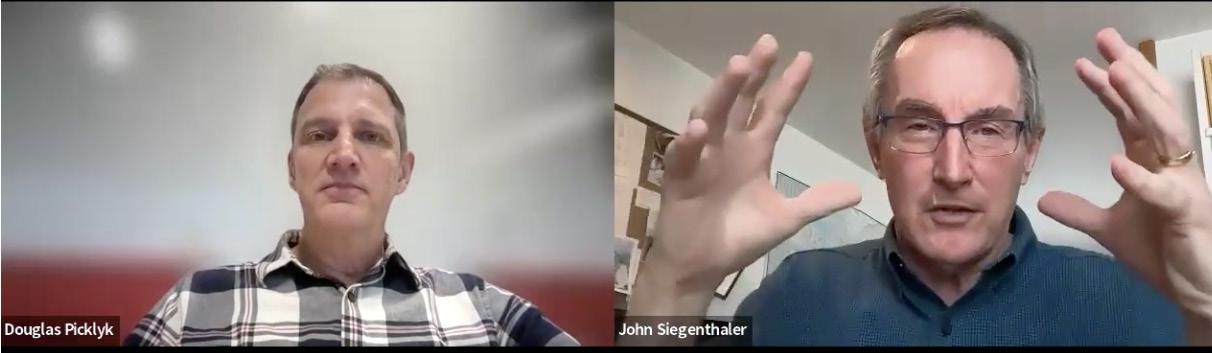
n January 13th HPAC magazine was joined by contributing writer John Siegenthaler for another episode of 30 Mechanical Minutes, the free webinar series. This edition featured a discussion on the concept of head energy in closedloop hydronic systems. The educational episode was sponsored by PEXhouse. com, Canadian online wholesaler for plumbing, heating and hydronics.
Registrants to the live webinar were asked how they would define “head” in a hydronic system. From the 167 responses, roughly 40% referenced the pressure required to circulate fluid through a system, while 25% referred to resistance, as in the head is resistance to flow or friction. Another 20% equated head to height, either the actual height within a system or the energy needed to lift water a certain height. And others thought head had to do with the weight of the water in the circuit.
Siegenthaler was amused at the variety of answers and admitted, “Most of them do have some relationship to what head and differential pressure are in a system, but none of them are really complete or concise.”
So, he shared his definition: “Head in a hydronic system is the mechanical energy contained in a fluid.”
He then went to explain how mechanical energy exists in many different forms, like kinetic mechanical energy (any object that’s moving has kinetic energy), and potential energy that has to do with elevation above the ground.
He then brought up the first law of thermodynamics: “Energy cannot be created or destroyed, only changed in form.”
For example, when stopping a car, applying the brakes converts kinetic mechanical energy into thermal energy.
“In a hydronic application, a circulator converts electrical energy into mechanical energy, and we just happen to call that energy head,” he explains.
He notes there are three different ways mechanical energy can manifest in a fluid. When a fluid is under pressure it has pressure mechanical energy. If it’s moving it has kinetic energy. And if it changes elevation, it’s changing its potential energy.
He then referenced Daniel Bernoulli, a Swiss physicist from the 1700’s, who came up with the equation that adds up these different forms of mechanical energy to arrive at the total energy, or head, in the fluid.
“If we could imagine an ideal hydronic system that had a frictionless fluid (and there’s no such thing as a frictionless fluid), and you could somehow start the fluid moving through that hydronic system, you could completely turn off any circulator and the fluid would circulate forever,” says Siegenthaler.
However, he points out that in any real system there’s going to be friction between the fluid and the surfaces of the components the fluid moves through, and that’s going to dissipate that mechanical energy.
“So that’s why we have to keep a circulator running,” he says, “We’re re-injecting energy.”
He then invited attendees to go through a thought experiment. Picture a 1-in. diameter copper pipe leading into a circulator, and a 1-in. pipe exiting the circulator. The flow rate coming into the circulator is 10 gallons per minute (gpm), and the temperature of the incoming water is 100F, and the pressure at the inlet of the circulator is 10 psi.
The circulator is running, and he asks: “Has the water’s flow rate increased leaving the circulator?”
The answer is no. If you have 10 gpm coming in, you have 10 gpm going out. In a closed-loop hydronic system the flow rate stays the same through the system.
Next question: “Is the water velocity higher leaving the circulator?”
It’s a 1-in. pipe in, and a 1-in. pipe out, so the answer is no. The velocity is not any faster.
Next question: “Has the water’s temperature increased going through the circulator?”
A purist might say yes, as there is some friction inside a circulator, but it’s insignificant. So, from a practical standpoint there is no heat gain.
Final question: “How do we know head energy is being added to this water?”
The answer is revealed at the pressure
gauges. An increase in pressure is the evidence that head energy is being added. Like a thermometer measures thermal energy changes, pressure gauges measure change in head energy.
“We can actually calculate the amount of head energy added if we know the pressure increase,” says Siegenthaler.
Using a formula, he shows how head energy is measured in feet. “Think of head as the number of foot-pounds of mechanical energy that’s been added to each pound of fluid as it’s going through the circulator.”
When asked, “What’s the purpose of increasing the pressure in the fluid?”
“Well, water is always going to flow from higher pressure to lower pressure, so when we have a higher pressure at the outlet of the circulator, the water’s going to move away from the circulator and ultimately towards the inlet of the same circulator. You can think of the dif-
ferential pressure that has developed as the impetus for flow.”
A circulator is the only device in a hydronic circuit that adds head energy, and everything else the fluid goes through (pipes, fittings, valves, heat exchangers, heat emitters, boilers, heat pumps, etc.) dissipates that head energy. Adding up that dissipation calculates the head loss.
Siegenthaler then showed a head loss curve on a graph. “I like to call the head loss curve of a circuit its fingerprint. It’s the unique characteristic of a circuit.”
He then overlayed a head loss curve on a chart showing the pump curves for various circulator pumps. The pump curve represents the ability of the circulator to add head energy.
“When we create a circuit and we put fluid in there, and we turn the circulator on, that system immediately seeks a condition we call hydraulic equilibrium,” he says. It’s a condition where the head
energy being injected by the circulator is exactly the same as the head energy being dissipated by friction.
“I want to stress, hydraulic equilibrium doesn’t mean the circuit is going to provide the correct flow rate you’re looking for. It’s simply providing a balance between the rate of head input and the rate of head dissipation. Where the curves cross is that hydraulic equilibrium.”
To conclude, he notes that when designing a system, you don’t have to hit your target flow rate exactly, but you want to be reasonably close.
“With circulators, we don’t want to operate near the ends of the pump curve. Ideally, we want to be in the middle third of the pump curve. That’s where the wireto-water efficiency is high.”
To view the webinar (or any of the previous 22 episodes) visit hpagmag.com, or subscribe to the magazine’s YouTube channel youtube.com/@hpacmag <>
DOUBLE UP
Halifax apartment complex retrofit replaces two cast iron boilers with four mod con boilers for greater efficiency and redundancy.
BY THOMAS RENNER
For some heating projects, the hardest part of the job isn’t getting the new system in. It’s getting the old system out.
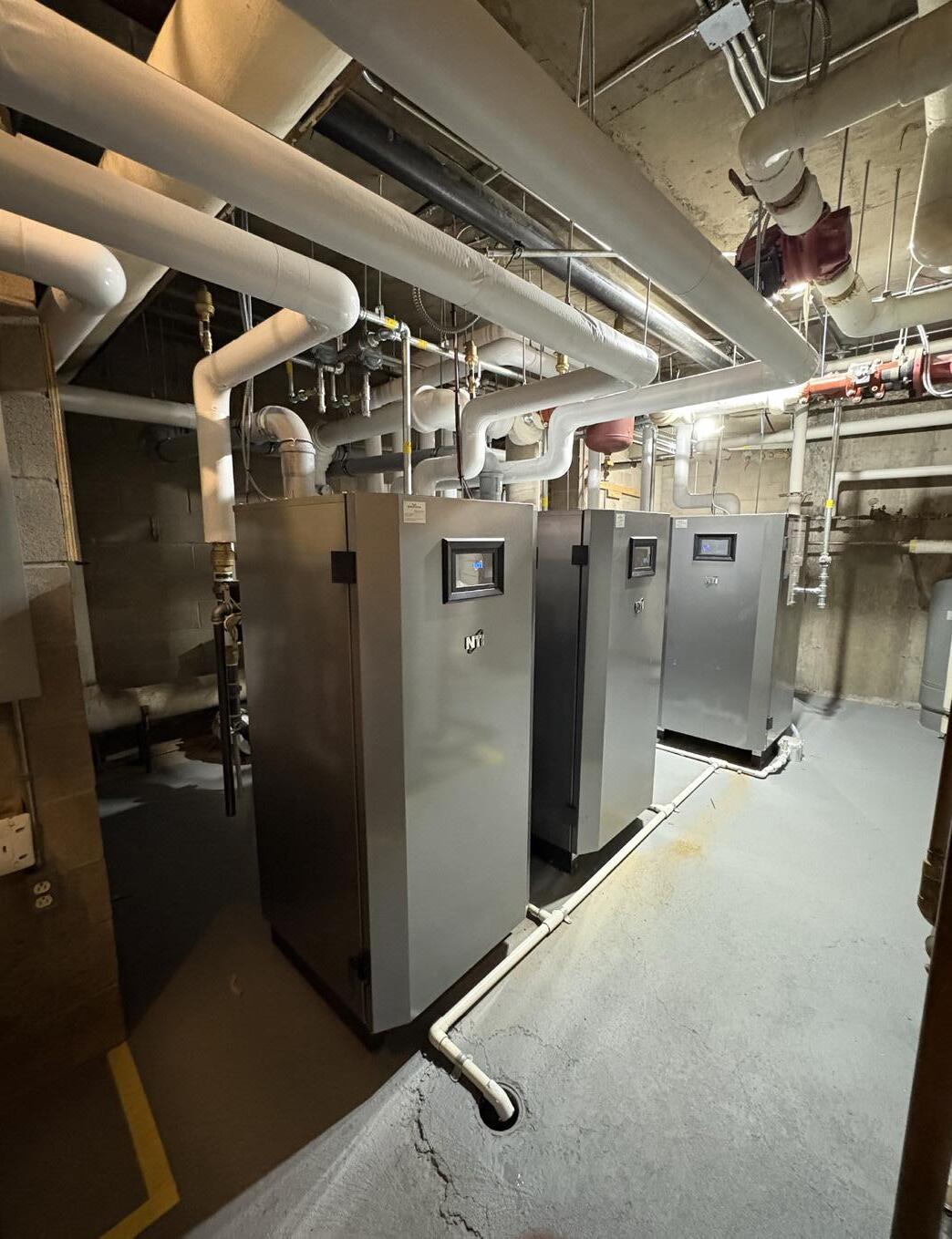
The team at City Wide Mechanical in Halifax found such an assignment in retrofitting the heating system for an 86-unit, four-story apartment complex. The project required eight weeks to complete and included the removal of two extremely heavy boilers and an elaborate plan to minimize inconvenience for tenants while maximizing system efficiency.
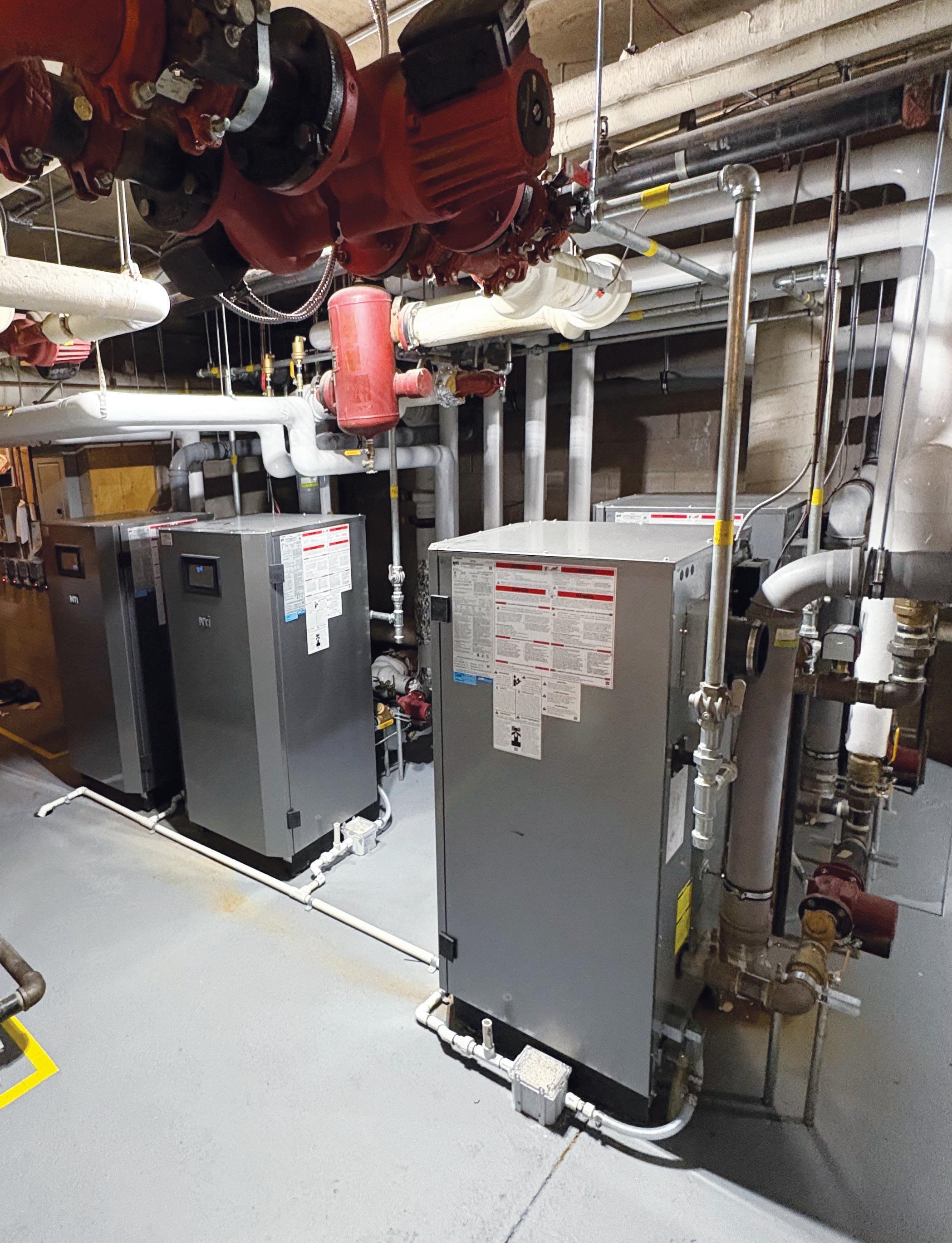
Matt Austen, project manager, said the installation required splitting the system in half, and the team replaced aging inefficient cast iron boilers with four modulating condensing units.
“We did the project in two stages,’’ Austen said. “That ensured that the in-floor heat sections of the building could have their own dedicated low temperature boilers. The low-temp boilers are far more efficient than heating the whole building at high temp and mixing it down.”
INEFFICIENT SYSTEM
Austen’s top priority for the new system is efficiency. The existing system included the two aging boilers that were prone to breakdowns and set up in a design that wasted energy.
“The first floor and domestic hot water for the building were all done at high temperature,’’ Austen explained. “They were mixing it down to do the upper three floors, which is inefficient.”
The City Wide team replaced the old cast iron boilers with modern modulating condensing boilers. The install required careful planning so that residents maintained thermal comfort as workers completed the retrofit. Austen said his team tackled the project in two stages.
“Since both of the (original) gas boilers were tied into the same system, we needed to remove one of the gas boilers, install two new boilers and tie them into the system temporarily. But we also needed to take over the load for the entire building.” Austen’s crew then moved on to the second stage of the project, removing the second boiler and installing two more of the higher-efficiency units.
Finally, City Wide needed to shut the entire system down temporarily to split the system in half to improve overall effi -
ciency. “We got all the program controls working and created two separate systems with their own expansion tanks,’’ Austen said. “Essentially, there are now two separate automated heating systems in the same mechanical room, rather than one.”
The benefit of the new system is redundancy and automation through controls that combine to deliver reliable and consistent heat and hot water.
“We wanted redundancy on both sides,’’ Austen explained. “That’s why we went from two boilers to four. If we ever lost one for any reason, we would still have something working.”
OLD WITH THE OLD
The task of removing the original cast iron boilers (likely installed more than two decades ago) proved laborious and timeconsuming. “Some building owners won’t do it because the removal cost is so expensive, and each section is 6- to 10-feet long, maybe around 500 pounds,’’ Austen said. “We took sledgehammers to break them apart.”
The boiler breakdown was just the beginning. Workers then needed to haul away the sectional pieces from the basement. “Removing those big cast iron sectionals is a giant undertaking, especially if there are stairs or an elevator involved,’’ Austen said. “There’s just so much weight.”
Cast iron boilers were commonplace in multi-residential projects decades ago, but more building owners are swapping out those units for energy efficient condensing boilers.
“Cast iron sectionals can crack in half, normally because of temperature differences,’’ Austen noted. “Once they crack, they’re expensive to replace. That’s normally the straw that
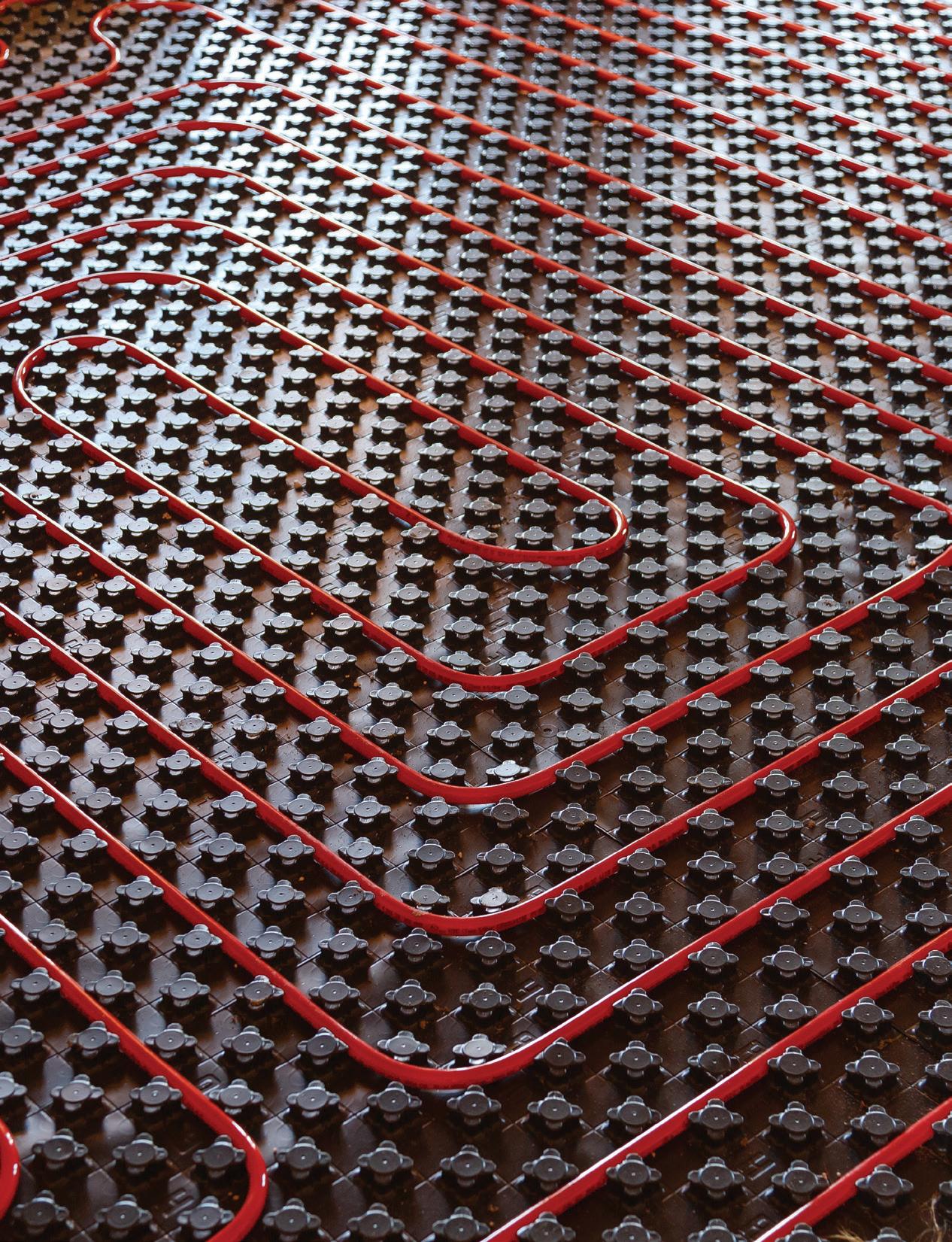
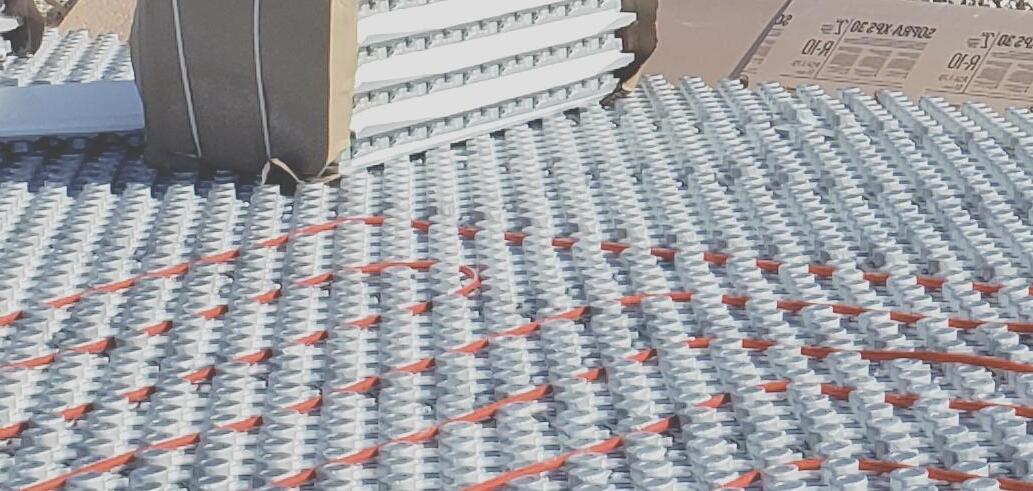
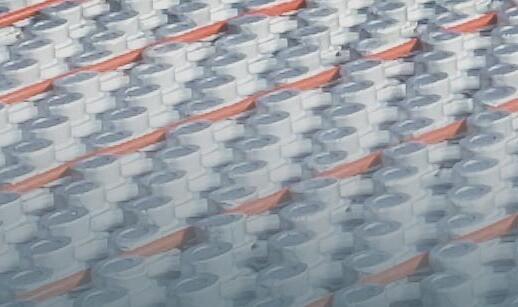
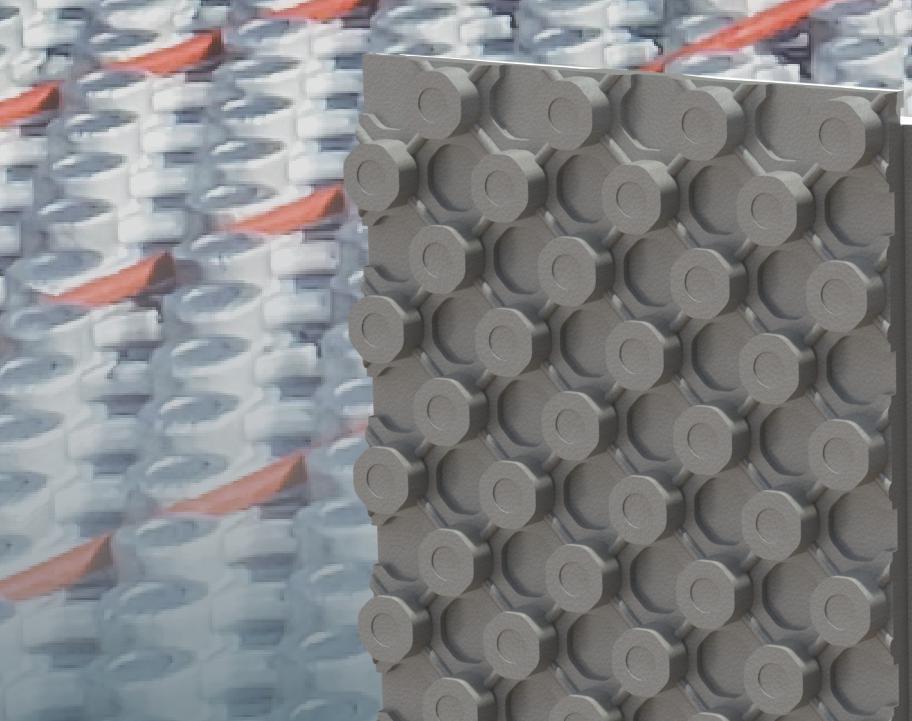
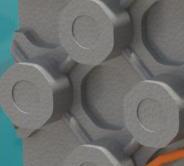
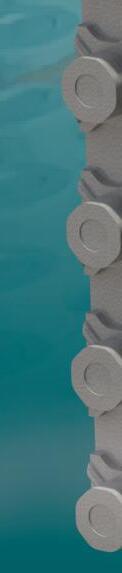
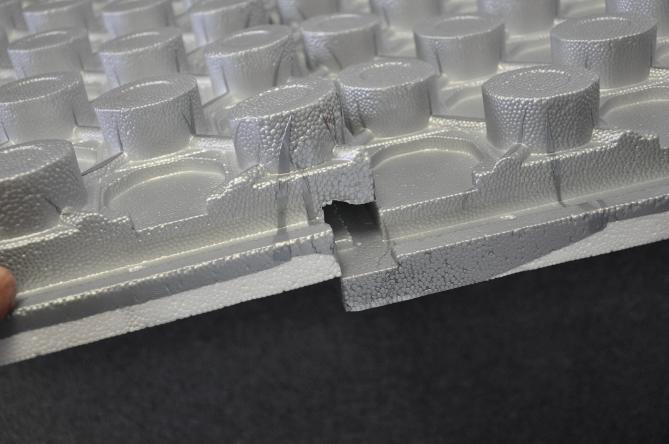
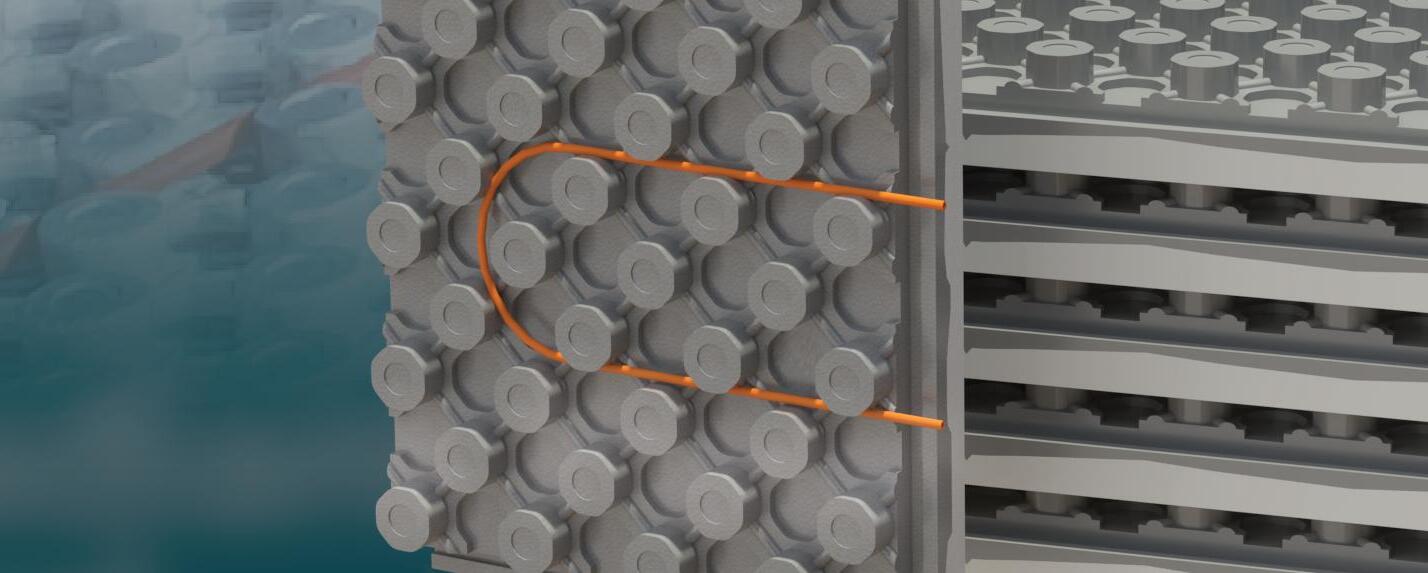
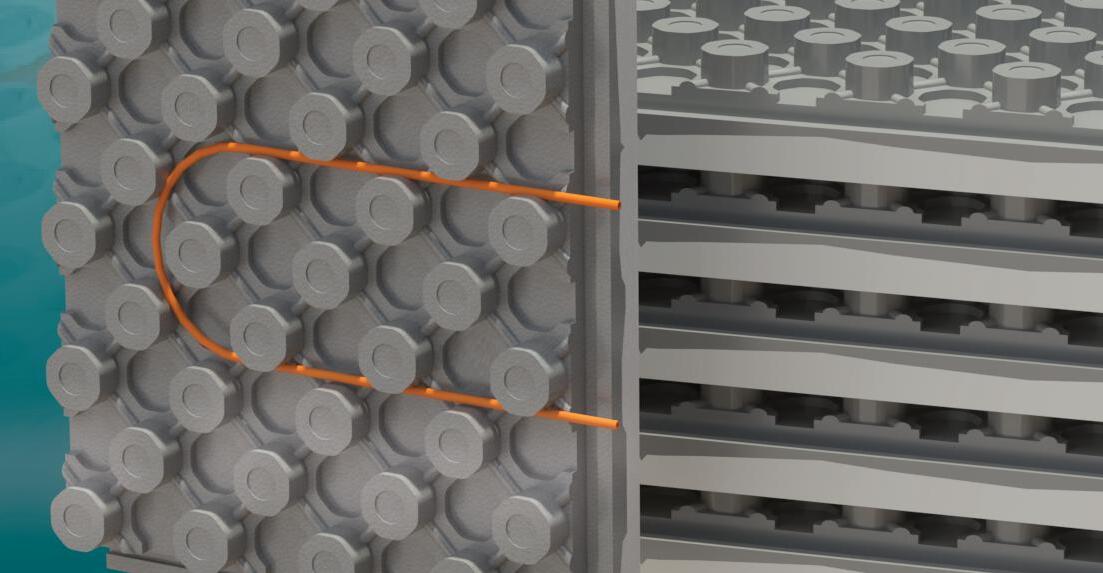
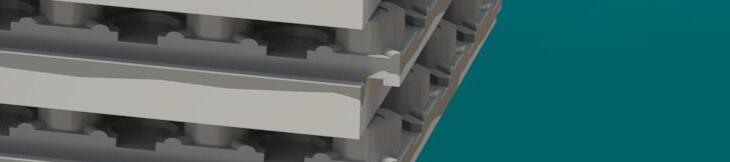
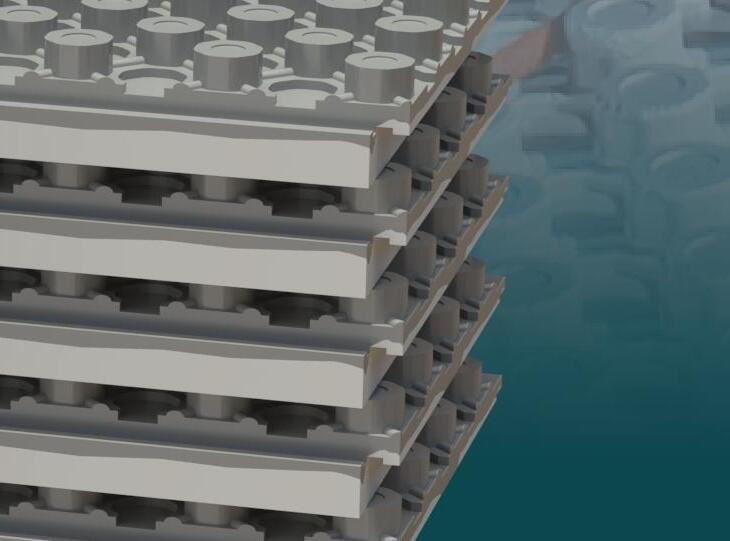
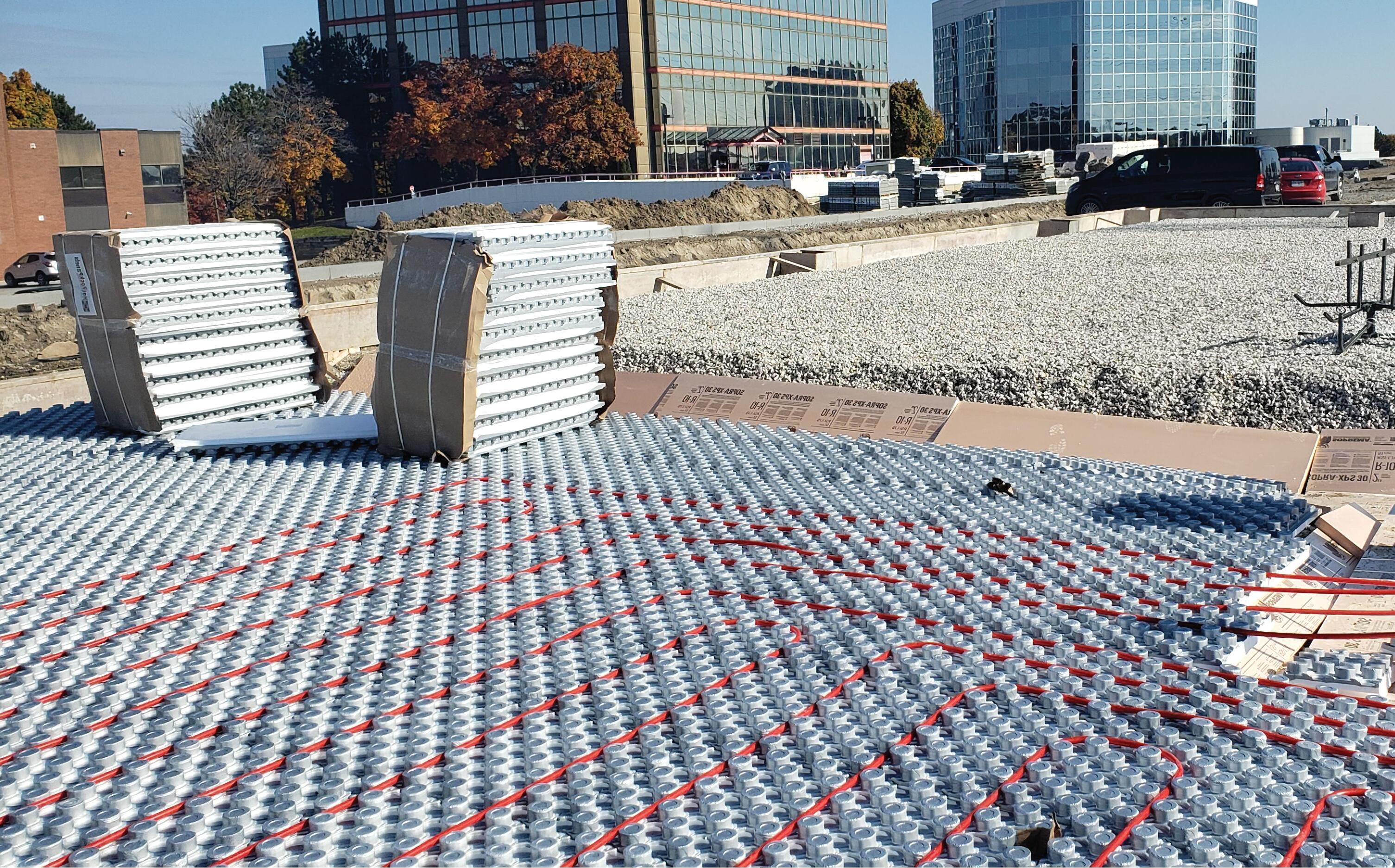
Ampex® Insulated Radiant Floor Heating Panel
Building with Ampex® Panel
Improved Thermal Comfort: Consistent grid pattern of the panel allows for uniform heat distribution.
Durable Installation: The nub height accommodates multiple tube sizes and protects the tubing from damage when the panel is walked upon by other trades.
Reduces waste at site: Light and manageable panel size reduces waste due to damage on site.
Ampex Insulated PEX panel is designed to provide the most cost-effective installation and performance for hydronic radiant floor heating systems for new construction and renovations. Ideal for basements, car garages, slab-on-grade areas and exterior use for snow and ice melt applications on driveways and walkways.
Quick & Easy Installation: Quick and easy walk-in installation of PEX tubing without the need for staples and zip ties and completely eliminating the strain of working at 45-degree angles.
Built-in Vapor Barrier: The large, four-sided interlocking shiplap connector system makes for a quick, easy, and secure installation while maintaining the continuity of the vapor barrier and eliminating the need for a dedicated 6 mil. polyethylene (unless specifically required by local building code).
SWEETER THAN EVER!
Over $12,000 worth of hydronic equipment will be won including:
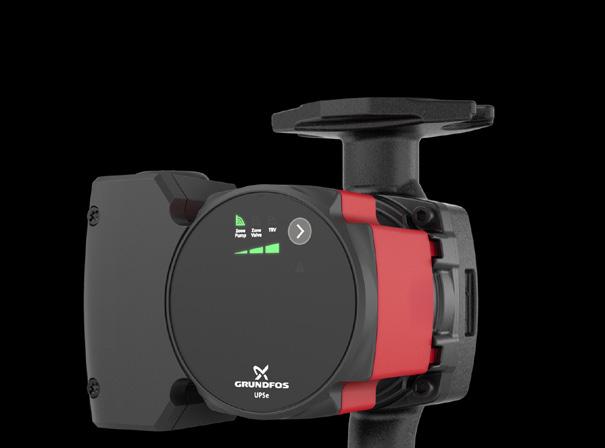
Thank you CB Supplies and Grundfos Canada for rewarding Canadian excellence in hydronic installations!
Send us pics of your installation. Include a brief description of the particular challenges that you faced with this installation and how you overcame the obstacles. Submissions are limited to one per contractor, per category. Deadline to enter is July 31, 2026. All submissions will be featured on screen at Modern Hydronics - Summit 2026.
There are three categories:
• Commercial installations
• Residential new build
• Residential retrofit
The three winners will also be announced by John Siegenthaler at the Summit. In addition to having your winning entry shared across our social media channels you’ll also be interviewed by HPAC’s editor and featured on the cover of the October edition of HPAC!
breaks the camel’s back with the building owner.” Austen has seen owners repair older boilers only to find they need repair again the following year. “They are realizing they can install new condensing boilers for the same cost as repairing the cast iron boiler.”
City Wide also had to ensure proper venting, which created several challenges. “Since we could not shut the building down, we had to temporarily vent the first two boilers out the side of the building while we dropped four vents down the existing clay lined chimney,’’ Austen explained. “This prevented a prolonged shutdown. Once the vertical venting from Centrotherm was installed, we connected them to the existing venting we had sidewall vented.”
MODERN BOILERS
The crew installed four NTI TFTN600 boilers, which have a 97.8 thermal effi -
ciency and heating capacity of 585 MBH. The units included remote monitoring and diagnostics, an setup wizard and built-in zone control for up to three heating zones plus domestic hot water.
“The two boilers are cascaded together with a 10-1 turndown ratio and are far more efficient than the existing equipment,” Austen said. “We get a lot more output, and we also get increased redundancy.”
Austen also said the ease of setting up the units makes them ideal for retrofit projects. “For multi-story residential and commercial buildings, the controls on these units for wiring and programming are pretty simple,’’ Austen said.
The units are also much easier to physically handle than the heavy cast iron boilers. The heat exchanger at the heart of the boiler includes a 10-year warranty, which is critical for building owners.
The boilers include an outdoor reset
on the high and low temperature systems. Austen installed Grundfos pumps with strainers, which help protect the pumps and boilers from iron and debris.
CONDENSING CONVERSIONS
The retrofit by City Wide is just one example of a trend in Canada to move towards modern condensing technology.
“These units run all day and all night,’’ Austen said. “Everyone relies on it. When the heat and hot water go down, the landlord is the first person the tenant is going to call. It’s expensive if we have to go out there in the winter. We’ll try to nudge the building owners along and convince them to convert to a condensing boiler. It’s an important part of their building.” <>
Thomas Renner writes on building, construction and other trade industry topics for publications in North America.
EFFICIENCY IN EVERY DROP – PART 4
Retrofitting buildings with high-efficiency hydronics solutions will help meet decarbonization targets.
BY ZACHARY LONDO, JEAN-CLAUDE RÉMY & CHRIS DESROCHES
Retrofitting existing buildings to achieve Canada’s 2050 zero carbon targets is quickly becoming a focus for building owners when considering long term maintenance and upgrade planning of building inventory. The resources required for this transition are staggering, as outlined in The Canada Green Buildings Strategy discussion paper released in 2022.
“At the current rate of retrofits, which is under 1%, Canada would need 71 years to retrofit all public and commercial buildings and 142 years to retrofit all residential buildings. This clearly is not fast enough. To retrofit all existing buildings by 2050 would require 3% – 5% of buildings to be upgraded each year and between $20 and $32 billion in investment annually.”
Every component in a building has a serviceable life, including the building itself. Eventually the envelope must be repaired or replaced to ensure optimal operation. This can be considered a ‘deep retrofit’ and is the most invasive and expensive form. This should be planned to happen alongside smaller piecemeal mechanical upgrades. This article will consider only the mechanical system which can be replaced/upgraded prior to an eventual enclosure upgrade.
Consider the example of an air-cooled
chiller servicing a commercial building such as a condo, office building or school that is due for replacement. Rather than replacing it with a like-for-like chiller, a reversible air-to-water heat pump can be installed instead. When a heat pump is installed, it would be selected for the cooling requirement, since that is what it’s replacing. Going forward, instead of shutting down the chiller in the winter now the heat pump system can be put to work in the winter as well.
While it may not have the capacity to heat the entire building on the coldest day of the year, it will be able to work most of the winter. And in the instance of a chiller retrofit, there is likely already a boiler in the system for heating during winter. The heat pump would be used as a first stage of heat in the system, and (as was covered in Part 2 of this series) heat pump systems are significantly different than cooling systems and typically will require the use of buffer tanks, heat exchangers and more pumps (in most
cases) than chiller/boiler systems, but it’s well worth it as it will provide a return on investment and help decarbonize.
VENTILATION RETROFITS
Any building that has a fresh air supply needs to exhaust the stale air in some fashion. Some older buildings will not have dedicated exhaust systems, relying instead on the leakage of the envelope to exfiltrate the stale air. If airtightness is to be improved, the leakage strategy will not end well, and a dedicated mechanical fresh air supply and exhaust system is needed.
Although it introduces more components, modern systems can incorporate air-side energy recovery which helps reduce overall heating and cooling demand while improving indoor air quality.
A building with a central fresh air supply and a central exhaust system is the perfect case to implement energy recovery via central air handing units or a dedicated outdoor air system (DOAS) with
Figure 1. Using boiler as a replacement for heat pump at cold temperatures.
energy recovery ventilation units (ERVs). If there is no central system, perhaps a decentralized ventilation system like zone ERV’s can be implemented.
If this approach is taken, the heat pump that replaced the chiller may have been previously undersized for heating purposes but can now meet more of the load since heat recovery on the air side has been implemented.
This also means less use of the boiler for supplemental heat since the heat pump’s available capacity is now closer to the building’s heat load. Does this sound familiar? This brings us full circle back to our theme of the four pillars: A holistic approach where the individual pieces of the system must be considered according to how they work together as a whole.
higher delta-T than a heat pump can handle, there may not be adequate flow to move the same amount of Btu’s. Going from a 20F delta-T to a 10F delta-T means that we need to double the flow.
Older systems with larger delta-T requirements would have piping sized for lower flow rates, so you must consider the need to alter the existing mechanical room piping strategy to best implement heat pumps.
To minimize the need for glycol throughout the whole system, using hydraulic separation via a heat exchanger approach in cold climates (brought up in Part 3) checks a lot of these boxes.
By ensuring that we have enough energy delivered on the primary side of the heat exchanger via the heat pump, sized for the flow and temperature differential
“A moderate retrofit today is better for overall emissions than waiting 10 or 20 years to implement a deep retrofit.”
By doing a little bit more now and planning the replacement of different pieces of the system in synergy, we can accomplish much more than the business-asusual approach over the long term.
When it comes to replacing chillers with heat pumps in existing systems, or putting in a new system, there are several facts that must be considered, and we will connect the dots to Part 2 in an applied system.
BUILDING WATER TEMPERATURE AND FLOW RATES
Traditional boiler heating systems are sized for a 20F degree delta-T (supply water versus return water). Today’s airsource heat pumps typically work in the 10F delta-T range at very cold ambient temperatures (below -10 C). This introduces two other challenges to consider. If the original system is sized for a
the heat pump wants, you can deliver the heat on the secondary side of the building at a lower flow rate and a higher temperature difference. Doing this will enable use of the existing distribution system and the terminal units without any changes, minimizing inconveniences during a mechanical retrofit.
The second challenge may be the supply temperature of the heat pump. It may be insufficient depending on the temperature the existing heat emitters in the building were sized for. Modern commercial heat pumps can typically generate about 130F water when it is -20C outside, with some equipment able to operate at even lower outside temperatures. If the existing system was sized for 160F to 180F fluid using high temperature emitters, then a complete replacement of these emitters is required to deliver the proper heating capacities using lower
supply temperatures.
This provides a good opportunity to evaluate the use of a large surface area low-temperature radiant system alongside the main heat source replacement.
There are numerous retrofit options available, including low mass wall or ceiling panels, or pouring over the existing floor structure. Premanufactured panels are the least invasive and may have aesthetic architectural finishes.
However, this often comes with a higher upfront investment. Installing tubing in the floor with a thin overpour is slightly more involved but comes with the benefit of incorporating the building’s mass for better resiliency with a heat pump
Of course, asking 130F to 140F from heat pumps means a significantly reduced COP (coefficient of performance), but it is still more advantageous than standard heat sources. Generally, we want to use the lowest supply temperature feasible to increase the efficiency of the heat pump. Using 110F to 120F system temperatures provides a good balance between efficiency and heat transfer for most areas in North America when using radiant systems.
This also has the added benefit of increased comfort while providing lower operating cost. Additionally combining this with radiant cooling or chilled beam technology will provide comfort and additional operating cost savings, making the investment even more productive.
BUILDING LOADS
This brings us back to the concept of the chiller upgrade and keeping that boiler in the system as supplemental heat.
In two charts we illustrate the ways these systems are typically applied. The boiler can be used to completely replace the heat pump as the heat source when it’s too cold (see Figure 1, opposite page). This greatly simplifies the hydronic design and controls needed by simply switching over to the boiler based on a predetermined outside temperature.
INTEGRATED DESIGN
Typically, this method will be used to find a good balance between offsetting building emissions and operating costs with simplicity in mind. This method is most applicable when the ambient design temperature is much colder than the lowest outside temperature the heat pump can work at, so a boiler sized for the full peak load is required anyway.
With this approach, the heat pump unit is sized for cooling, and you get what you get in heating mode, with a switchover to the boiler on the coldest of days — a dual fuel system.
The second method would be to use the boiler to supplement the building load when the heat pump is working at maximum capacity but it’s still not enough (see Figure 2).
The advantage to this configuration is that in milder climates (where the design temperature is within the heat pump’s operating range), the boiler may not need to be sized for 100% load on the coldest of days and can be smaller.
This is advantageous in all-electric buildings where using an electric boiler for the full load can be costly in terms of the utility feed needed.
According to ASHRAE’s 25-year average weather data, the Toronto climate spends on average 350 hours (about 14.5 days added up) below -10C. So designing a heat pump system beyond -10C just costs more and does not provide much benefit since there are only 350 hours of operation below this temperature where auxiliary heat is used.
Looking at a harsher climate like Edmonton, which spends about 962 hours between -10C and -20C, then it might make sense to integrate the heat pump to operate more in order to achieve more savings with a supplemental strategy, depending on the project constraints and goals.
The common point of these climates, whether Toronto or Edmonton, is they both spend 50% of the year between -10C and +10C, and this is where all the
savings exist. Operating heat pumps below -10C at reduced efficiencies for fewer hours doesn’t return much energy and carbon savings.
CONTROL STRATEGY
Either way, using supplemental heat at the same time as the heat pump is not without design considerations to be mindful of.
It requires well considered mechanical room piping (for example a primary/secondary arrangement) and control strategy since heat pumps and boilers will have a different requirement for flow and operating temperatures.
The piping layout and controls integration are equally important to get both devices to work in synergy, rather than fighting each other and causing cycling.
The climate and terminal unit constraints must be considered to weigh the options versus the reward. Usually, these factors along with project goals will steer you to a happy compromise of efficiency and decarbonization improvements versus cost and simplicity.
THE TIME IS NOW
Building retrofits must be conducted at a much larger scale for Canada to meet its emissions reduction targets. By simplify -
ing and breaking down the problem into smaller subsets we can make decarbonization retrofits more financially palatable for building owners.
A moderate retrofit today is better for overall emissions than waiting 10 or 20 years to implement a deep retrofit, so let’s get on with it!
Concluding this series of four articles, we cannot end without pointing out that all this requires good knowledge and understanding of the individual parts and their total sum.
One would be well advised to reach out to companies and organizations that provide knowledge, support and then listen carefully to what they have to say in order to achieve success, promised savings, occupant comfort, and of course profitability for all. <>
Zachary Londo, PE, is a senior design engineer with GF Building Flow Solutions (Uponor) zachary.londo@georgfischer. com; Jean-Claude Rémy is a business development manager with GF Building Flow Solutions (Uponor), Jean-Claude. Remy@georgfischer.com; and Chris DesRoches, P.Eng., is the business development manager, heating and cooling, with Swegon North America (chris. desroches@swegon.com).
Figure 2. Using a boiler (gas or electric) to supplement heat pump at cold temps.
Ambient Temperature
HYDRONICS BUILDING BLOCKS
DISTRIBUTED COMFORT
H B B HYDRONICS BUILDING BLOCKS
The first of a six-part series of articles on the fundamentals of hydronics to boost general hydronics knowledge in the plumbing and heating industry. BY MICHAEL
BREAULT
Greetings and welcome to the first of a six-part series where I will cover some basic building blocks of hydronics over the course of 2026. My name is Michael Breault, and in my 25-plus years in hydronics I have seen things, wonderful things, weird things and things best forgotten. In this series I want to share some ideas, thoughts, insights and maybe a few scary things to avoid.
First, about me, I have been in HVAC for 33 years and focused mostly on hydronics for about 25. I have been on the tools, on the wholesale counter, provided manufacturing tech support and training, handled product management, been a director of business development, and now I consult and work for a manufacturer’s representative.
Yes, I have observed the industry from all facets, and I am very passionate about this niche of the business.
To be clear, this series is not intended to be the final word, or the Gospel according to Mike, but it will cover hydronics in general, and for this first article I’ll focus on the why — why hydronics is worth getting passionate about.
HISTORY
It all started well over 2,000 years ago with the famed Roman baths and the ancient underfloor heating hypocaust system. There are many examples of similar systems in various civilizations as hot water systems abound throughout history. More recently, European innovations date from the 17th to 19th Century.
There are examples of greenhouses using heated water in pipes around the 17th century. By the early 1900s iron pipes embedded in concrete or plaster carried hot water, leading to early hydronic radiant heating systems in buildings like the Royal Liver Building in Liverpool, England (1911) featuring around 119,000 sq. ft. of radiant heating within its walls.
Famed architect Frank Lloyd Wright incorporated residential radiant heating in the 1930s, specifying water-filled pipes for superior comfort.
A lot has changed since then. Mainly we can install high efficiency heat sources and low-cost pipe in thin slabs plus so much more. What hasn’t changed is the comfort and efficiency these systems provide.
SYSTEM EFFICIENCY
In Canada the primary competitor to hydronics for heating buildings is forced air. The physics is simple. The more dense a medium the more energy it can hold, and water is 800 to 3,600 times denser than air (depending on temperature, elevation and other factors). Simply put, water is a superior conveyor belt for energy distribution.
System efficiency, from a heat generating perspective, can be similar in both boilers and furnaces, you can achieve 98% efficiency. But the distribution efficiency, as explained often by John Siegenthaler, leans heavily in favour of hydronics.
Consider the following (borrowed from Siegenthaler): The distribution efficiency
for a space heating system equals the rate of heat delivery, divided by the rate of energy required by the distribution equipment.
Consider a hydronic system that delivers 120,000 Btu/h at design load conditions using four circulators operating at 85 watts each. The distribution efficiency of that system is: 120,000 Btu/h divided by 340 watts equaling 353 Btu/h per watt of energy.
Compare that with an 80,000 Btu/h furnace with a blower that operates at 850 watts. So dividing the rate of heat delivery by the rate of energy required equals only 94 Btu/h delivered per watt.
The hydronics system has a distribution efficiency almost four times higher than the forced air.
And identical buildings can have significantly different heat losses based on the type of heating system. Although results vary, hydronic radiant heated homes have, in general, shown lower heating energy usage than forced air.
Homes with forced air and others with electric baseboard convectors found air leakage rates up to 26% higher and energy usage between 20% to 35% higher than radiant heated homes.
The main factor that contributes to this loss is temperature stratification. Temperature at the ceiling is warmer than at the floor.
Radiant reduces, if not outright removes, stratification and drafts, and that leads to improved human comfort.
And in my opinion, improved comfort is the first and the most important consid -
eration when heating or cooling a building, and it should be the primary objective of the designer or installer. If you understand this ... you’re halfway there.
Most people will feel uncomfortable in a room that has many cool surfaces even if the room’s air temperature is about 70F/21C. This is due to the asymmetrical distribution of forced air systems.
Radiant heating heats the objects in a space via radiation, and these “masses” of heat help to evenly heat the space.
A properly designed and installed hydronic radiant heating system will control both air and surface temperatures of a building to maintain an optimum comfort level for the occupants.
Those interested in hydronics are probably familiar with Dan Holohan who has referenced a concept called “Cold 70” (check out the book “Hydronic Radiant Heating ” by Dan Holohan). I’ll let you read about it, but it encapsulates why radiant and hydronics is more comfortable. Your body temp relative to the objects in a space is key.
ENERGY SAVINGS
The heart of hydronics systems is the heat source which primarily includes modern modulating boilers, and soon will include more air-to-water and water-
to-water heat pumps. Typically, we spend more than 50% of the heating season requiring less than 50% of a heating appliance’s capacity. This is why many forced air furnaces are twostage with a 60% capacity and 100% capacity split, so a 100,000 Btu/h two-stage furnace fires at 60,000 or 100,000 Btu/h. Whereas a modern modulating boiler with a 10:1 turndown rate can fire at any where from 10,000 to 100,000 Btu/h as required to maintain a set target water temperature.
Additionally, we can not only modulate the firing rate, but we can also change the water temperature too. We do not need design temperature water if it’s +10C outside. We achieve this through outdoor reset (a topic for another day).
THE OPPORTUNITY
Hydronics is more than just efficiency and comfort, it’s also design friendly and flexible. Forced air often leads to unsightly décor (bulkheads in basements for ductwork and multiple floor registers that need to remain unobstructed, or unsightly air handlers on the wall with modern mini-split systems).
Hydronics, and radiant heating, is a system you can design with, not around. And yes there are options. Hydronics
lends itself very easily to zoning (heating different areas of a building with varying amounts of heat). More than one heat source can be used, and heat sources can be swapped out in the future. And the heat emitters used throughout a building can change to suit the space (don’t get me started on towel warmers).
You can also combine domestic hot water with the heating system for more efficiency. And you can connect snow and ice melt systems, heat the swimming pool and more.
So, by now you may be sold on hydronics, and you may be wondering, why doesn’t every building use hydronics? Well, selling hydronics and radiant systems often comes with a higher price tag than forced air systems, and that’s where things get tricky.
When consumers are faced with the options it’s seldom an apples-to-apples comparison. A true comparison would have to incorporate one zone, one heating appliance (single stage condensing?) and one thermostat. Pricing out that system misses out on the many benefits of hydronics that forced air can’t match.
Remember, you are selling comfort, and there is a cost to that. And the ability to be flexible and add more features over time makes hydronics adaptable.
The reality is, hydronics and radiant dominates the luxury home market, but comfort, efficiency and design flexibility should be available to all. My hope is that by dropping this hydronics knowledge in this brief article I have lit a fire and stirred a greater interest in you.
In future issues of HPAC I will be sharing the basic building blocks to get you on the road to a greater understanding of hydronics system components and their capabilities. Stay tuned. <>
Michael Breault owns Gemini Hydronic Comfort and Control Solutions and supports Hydronic Systems in Southwestern Ontario.
Radiant heating heats the objects in a space via radiation, and these “masses” of heat help to evenly heat the space.
KEEP IT FLOWING
Allowing water in a circuit to keep moving is an antifreeze alternative to prevent potential freezing in concrete slabs exposed to cold.
BY JOHN SIEGENTHALER
The “classic” method of zoning a hydronic system is to start and stop flow through a zone circuit based on calls from a room thermostat. This can be accomplished by simply turning a zone circulator or a zone valve on and off.
Although this approach has worked in hundreds of thousands of systems, there are situations where it’s not ideal. One is zoning a slab-on-grade floor heating system in a commercial building with large overhead doors. During very cold weather, water in the embedded tubing closest to the overhead doors can freeze if the thermostat controlling the zone turns off flow for several hours.
This can occur if the zone thermostat is turned down several degrees for any reason (night setback, weekend setback, worker “prank”, owner frustrated with fuel cost, etc.) Believe me, it happens!
This condition makes the slab just inside an overhead door “thermally vulnerable” due to infiltration of cold outside air under the door seal, as well as conduction heat loss through the slab.
The latter is of particular concern when there’s no thermal break in the slab under the door. Figure 1 (above) illustrates the situation.
One way to prevent a potential freeze is to use an antifreeze solution in the system. However, that can get expensive in
ºF outside air temperature
thermostat controls state of diverter valve call for heat: AB to A= open, AB to B = closed no call for heat: AB to A=closed , AB to B=open
four zone circulators run continuously during the heating season.
leakage under door seal
thermal break in slab without flow, or antifreeze, this tube can freeze solid conduction heat loss
systems that may have several hundred gallons of total volume.
In addition to added cost, antifreeze brings along “baggage” such as higher viscosity, lower specific heat, pH maintenance, and a propensity to leak through any threaded joints that are not perfectly executed.
There are ways to design around these nuances, but they involve compromises
in performance relative to systems using only water.
An alternative approach to freeze protection is to operate the system with water but keep that water moving through the floor heating circuits even when no heat needs to be added to the zone.
This movement allows low temperature heat stored within the interior portions of the slab to be relocated to the
Figure 2. A multi-zone system using a three-way diverter valve.
Figure 1. Concrete with no thermal break between indoors and out creates thermal vulnerability for the slab.
“Although it might seem obvious. Be sure the circulator used for a constant flow zone is installed between the diverter valve and the manifold station.”
more vulnerable floor areas just inside the overhead doors. Think of it as “Robin Hood” for Btus: take them from where they’re abundant and drop them off where they’re needed.
In a multi-zone system this can be done by using three-way diverter valves as shown in Figure 2. The circulator in each zone operates continuously during the heating season. Each zone thermostat determines the status of its associated diverter valve. When a zone thermostat calls for heat, the path from its inlet port (AB) to outlet port (A) is open. This allows flow return -
ing from the manifold station to flow to the return header and back through the hydraulic separator to the heat source.
An equal flow rate of heated water flows from the header to the zone’s supply manifold. In this state, the path from the inlet port (AB) to port (B) is closed. None of the flow returning from the manifold station recirculates back to the supply side of the system.
When a zone thermostat is satisfied, the actuator operating the diverter valve moves the internal ball so that the path from inlet port (AB) to port (B) is open and the path from (AB to A) is closed.
This allows recirculation of water returning from the manifold station without adding heat.
Each zone operates the same way, and completely independent of the other zones. Outdoor reset of the supply water temperature at the outlet of the hydraulic separator is preferred to minimize any overshoot or undershoot in space temperature.
THEY’RE NOT ALL THE SAME
If you install systems using this approach be sure to check the porting of the threeway valves before connecting them to piping.
Most three-way diverter valves use a chrome plated ball to determine the flow path, but there are differences in how these balls are drilled. Some use an “L” pattern ball, while others use a T-pattern ball. The differences are illustrated in Figure 3 (next page)
Diverter valves with an “L” drilling have their common (AB) port on the side rather than the “run” of the valve, as shown in Figure 3. Flow returning from a zoned manifold would enter this side port, change direction by 90 degrees, and exit through whichever port (A or B) is open. The orientation of the three-way diverter valves in Fgure 2 assume that the valves have an “L” drilling pattern.
Diverter valves with a “T” drilling have their common (AB) port on the “run” of the valve, as shown in Figure 3
When installed in the correct orientation, “T” pattern valves do the same thing as valves with “L” drilling.
Figure 4 shows an example of a diverter valve with a “T” drilled ball in a diverting application.
The AB port is at the top. The pipe connected to the AB port leads back to the return side of the floor heating manifold station.
The A port is on the bottom of the valve. When the path from port AB to port A is open flow returning from the manifold station is routed to the lower side port on the hydraulic separator, and eventually back to the heat source.
The B port is the side port. When the path from port AB to B is open flow coming from the return side of the manifold station is routed back through a circulator and on to the supply side of the manifold station. This would be the flow direction whenever warm water is NOT passing from the hydraulic separator to the supply side of the manifold station. I like to call this the system’s “coasting” mode.
If the water temperature leaving the hydraulic separator is regulated by properly set outdoor reset logic the diverter valve will usually be routing flow from port AB to port A.
If the water temperature leaving the hydraulic separator is
“overheated” relative to what’s currently needed to maintain the building’s set point, or if there are significant internal heat gains from equipment, lights, sunlight, occupants, etc., the flow path will switch from port AB to port B (e.g., “coasting” mode).
In Figure 4 a check valve is present after flow has passed through the A port and headed for the hydraulic separator. This valve prevents the possibility of flow reversal in the rare (but possible) event that the constant flow portion of the system was not operating but another zone supplied from the same hydraulic separator was operating.
Although it might seem obvious, I’ve seen it “messed up,” so I’m going to state it: Be sure the circulator used for a constant flow zone is installed between the diverter valve and the manifold station, as shown in Figure 2
ALTERNATIVE TO ANTIFREEZE
Last February I wrote an HPAC article on using antifreeze in hydronic systems, and I stated that antifreeze is the ultimate form of freeze protection, especially during prolonged power outages in buildings with no backup electrical generator or battery system. That remains true.
Still, many modern commercial or municipal garages now have backup power system that can keep circulators running. The constant flow systems discussed above leverage that capability, and in most cases support a design that doesn’t require antifreeze. <>
John Siegenthaler, P.E., has over 40 years of experience designing modern hydronic heating systems and is the author of Modern Hydronic Heating (4th edition) and Heating with Renewable Energy (visit hydronicpros.com).
Figure 4. Example of a diverter valve with a “T” drilled ball.
Figure 3. The difference between a three-way “L” pattern ball valve and a T-pattern ball.
SOME SIMPLY STAND OUT
BUILT-IN FEATURES
Smart components that simplify design and enhance reliability
• Combines heating and/or cooling in one compact unit
• High-efficiency fin tube slant coil with an expanded surface area to optimize heat transfer performance
• ECM variable-speed motor delivers quiet, adaptive airflow
SYSTEM BENEFITS
Efficient, quiet, and future-ready comfort delivery
• Hydronic heating and cooling with no indoor refrigerants
• Quiet operation for improved comfort
• Compatible with IBC’s HPX and other heat pumps
• Supports radiant heating and hydronic zone upgrades
• Compatible with standard heating and cooling thermostats
The Perfect BALANCE
Engineered for Precision, Performance, and Comfort.
IVAR precision-manufactured stainless steel manifolds support reliable fluid distribution across radiant heating, cooling, and snow/ice melting systems. Engineered for long-term performance, they deliver consistent comfort and performance in residential and commercial applications.
Why IVAR Manifolds?
• Complete & Convenient: Manifolds come in a single box, including all necessary components.
•Flexible Configurations:
◦ 1" and 1 ¼" headers with 2 to 12 loops, ideal for standard flow applications
Now offering high flow, large-diameter manifolds engineered for large residential, commercial, and institutional systems.
◦ 1 ½" headers with 6, 8, 10, or 12 loops for higher flow needs
◦ 2" headers with 10 or 12 loops for maximum flow capacity
•Optimized Performance: Integrated flow meters on all 1" and 1 ¼" manifolds (optional for 1 ½" and 2") enable precise loop balancing for maximum efficiency and superior comfort.
•Seamless Integration: Pair the IVAR Manifolds with our premium VIPERT™(PE-RT) Oxygen Barrier Tubing, specifically designed for radiant systems, to create a complete total system solution.
Expert Support You Can Count On
Leverage our in-house hydronic expertise with LoopCAD design and layout support.
MECHANICAL SUPPLY NEWS
MANUFACTURERS
CIPH BRAND REFRESH
WHOLESALERS
For over 90 years, the Canadian Institute of Plumbing and Heating (CIPH) has brought industry manufacturers, wholesalers and manufacturer’s representatives together from across the country to set standards, share knowledge, and advance plumbing and mechanical systems in homes and businesses.
This year the group has launched an updated logo, website and message positioning CIPH as the voice of the plumbing and heating community, focused on progress, collaboration and long-term impact for both the profession and the public it serves.
“This brand refresh is about how we show up with our members and for our industry,” said Satinder Chera, CEO, CIPH. “Anchored by CIPH’s strategic plan, the brand centres on bringing the plumbing and heating community together, guided by four pillars that connect members, advocate for their interests, inform the industry, and deliver best-in-class support.”
The updated logo also builds on that foundation, states CIPH. The maple leaf remains a central symbol of the brand, with the reimagined logo using a red flame to represent heating and a blue droplet to pay tribute to the interconnected nature of the plumbing and heating sides of the business. www.ciph.com
FUJITSU GENERAL IS NOW GENERAL
Effective January 1, 2026, Fujitsu General America, Inc. is now known as General HVAC Solutions America, Inc.
The branding change was first announced October 1, 2025 when the parent company in Japan, Fujitsu General, announced that it would be changing its trade name to GENERAL Inc. and introduced a new branding trademark.
This break from the Fujitsu branding follows from Fujitsu General being acquired by Paloma Rheem in August of 2025. generalww.com
CARRIER SELLING RIELLO TO ARISTON GROUP
Carrier Global has agreed to sell its Riello business to Ariston Group. Italian-based Riello, well known for its burners and boilers, manufactures technologies for residential and commercial/ industrial heating and cooling. The company, founded in 1922, was acquired by United Technologies in 2016. In 2020, when Carrier spun off from UTC, Riello fell under the Carrier umbrella. Ariston Group, also based in Italy, is global and is the parent of multiple brands including NTI and HTP, among others. carrier.com aristongroup.com
DISTRIBUTION
>> JF Taylor Enterprises is now a representing Taco in Atlantic Canada including both the wholesale (residential) and commercial product lines. jftaylor.ca tacocomfort.com
>> Next Plumbing and Hydronics Supply opened a new branch at 835 Intermodal Drive in Bramalea, Ont. with an expansive warehouse and a pick-up counter. nextsupply.ca
>> Kerr Controls in the Atlantic region is now an authorized distributor of LG Air Solutions equipment including LG ducted and ductless residential lines. kerrcontrols.ca lg.com
DURAVIT OPENS PLANT IN QUEBEC
Duravit, global manufacturer of porcelain bathroom fittings, has opened its first North American plant in Matane, Quebec.
Set on 35,000 sq. m., the over $90 million investment is using advanced automation and pioneering kiln technology.
Clean hydropower combined with locally sourced raw materials provides an environmentally responsible site.
The plant is expected to boast an annual capacity of up to 450,000 ceramic products. duravit.com
THERMOSTAT
RECOVERY PROGRAM
TRP is an easy, safe, and FREE way to help protect the planet and our health. We’ll deliver
Rheem Canada has appointed Chris Rock as director of sales. Rock, most recently with Watts, brings over 20 years of industry leadership experience in sales, marketing, finance, and general management. He will oversee sales and marketing strategy and drive Rheem’s air and water business.
Calefactio has promoted Eric Bodanis to national sales manager for Canada (excluding Quebec). Since joining in 2022, Bodanis’ sales responsibility grew from Ontario only, to include Manitoba and Saskatchewan, followed by Alberta and B.C. Now the Atlantic provinces have been added to his territory.
Fatma Aouani has joined RenewAire as regional sales director for Canada. Bringing over nine years of HVAC experience, Aouani was previously with CORE Energy Recovery Solutions. She is responsible for driving sales through partners across Canada.
Fisher Scientific, where he served as vice president of global operations. At Viega he will oversee initiatives at all North American manufacturing and logistics locations.
Systemair has named Robert Larsson as the company’s third 3rd CEO, succeeding Roland Kasper, who served as president/CEO between 2015 and 2025. Larsson, a Swedish citizen, brings broad industrial and international leadership experience to the company.
Viega North America has appointed Dave DeLater as Chief Operating Officer (COO). DeLater joins Viega from Thermo
Mestek, Inc. has promoted Chuck Perry to senior vice president of Sterling HVAC products. Perry joined Mestek in 2010 as director of sales and marketing for Sterling and became VP of sales in 2015. The company also promoted Ken Eggleston to vice president of the distributor products group, overseeing boilers, water heaters and heat pumps under the RBI, Advanced Thermal Hydronics, Smith Cast Iron Boilers, and Transom brands for the North America.
Rock
DeLater Larsson
Eggleston Perry
Bodanis
Aouani
CONTROLLING CROSS CONNECTIONS
Backflow prevention requirements across the country means having certified testers on staff is good for business. BY
DOUG PICKLYK
For plumbers across Canada, if your company doesn’t employ certified cross connection control specialists you’re missing out on providing greater public safety to the community and a valuable repeat business opportunity.
In previous issues of HPAC we’ve defined what cross connections are and why backflow preventors are necessary on connections to potable water supplies. And in jurisdictions across the country most industrial, commercial and institutional (ICI) buildings are required to have a specific level of testable backflow preventor installed based on the degree of hazard. And local regulations often insist on annual testing by a certified specialist and paperwork filed to the local authority. Buildings found non-compliant can be subject to fines or penalties.
Across Canada, provinces and municipalities reference standards such as CSA B64 and rely on certified testers to ensure compliance. The training of testers in Canada is based on requirements found in the AWWA Canadian Cross Connection Control Manual and is offered through accredited educational institutions in different regions of the country.
From a business perspective, having certified personnel in-house allows contractors to control quality, reduce liabil -
The 900XL3 series testable backflow preventers from Zurn, for residential or commercial, is available as a double check assembly (above) or a reduced pressure principle (below).
ity, and offer complete services to commercial clients rather than outsourcing testing and reporting. It also strengthens a company’s credibility with authorities having jurisdiction, consulting engineers and facility managers.
Cross connection reviews, annual testing, device maintenance and compliance reporting are recurring revenue opportunities for cash flow.
And from a risk perspective, building owners require certified specialists to help prevent potential contamination incidents that can lead to legal action, reputational damage and insurance claims.
PREVENTORS
There are a variety of backflow prevention devices on the market providing varying levels of protection based on the hazard level associated with the specific building. Certified specialists
are trained to assess risk and apply the correct device. Local codes also mandate levels of backflow protection.
Multi-family residential or commercial office buildings vary greatly from hospitals or industrial facilities. ICI buildings often connect potable water to equipment and processes that pose contamination risks, including boilers, cooling towers, chemical feed systems, irrigation, medical equipment, food processing machinery, fire protection systems and laboratories.
Testable preventors typically have isolation valves on either end along with test cocks on the internal check valves that will be used by certified testers to ensure the valves are functioning properly.
Double check valve assembly (DCVA) devices are used in low to moderatehazard facilities with constant pressure. These devices have two check valves with the second valve offering backup prevention in case the first one doesn’t close tightly. These valves can fail and for that reason they must be checked annually for optimal performance.
Reduced pressure principle (or zone) assembly (RP or RPZ) valves are used in more high-hazard applications. These devices have two independent internally loaded valves that are separated by a reduced pressure zone with a relief valve. Again, they should be tested at least once annually and installed in places with appropriate drainage capabilities.
The backflow preventer testing process can typically take about 45 minutes to an hour, depending on the complexity of the system. And the prices charged
Continued on p46
Your Trusted Mechanical Piping Partner Since 1850
For over 170 years, Flocor has been the name professionals trust for quality, reliability, and innovation in mechanical piping. Proudly Canadian-owned and operated, we continue to deliver a full spectrum of solutions tailored to your needs. Flocor – Your Complete PVF Solution. Experience excellence. Experience Flocor.
< PLUMBING
Continued from p44
can vary based on the region, the specific device and the services required.
HYDRONICS AND BACKFLOW
For connections to hydronic systems, both the National Building Code and National Plumbing Code reference CSA B214:21 “Installation code for hydronic heating systems,” where backflow prevention is recognized as a requirement to protect potable water systems.
Any hydronic heating system connected to a potable water supply must have a backflow preventer installed. However, the type of preventer required depends on the hazard level, and that’s based on whether the system uses water-only or water with chemical additives (glycol, inhibitors).
If the hydronics system does use chemicals, and more systems are incorporating chemicals and inhibitors to improve the water quality in the systems, then reduced pressure (RP) devices are generally required to prevent contamination. The range of the backflow preventor devices available ranges by size and specific applications, and again, when it comes to testing and maintenance frequency, reference to local codes is always necessary.
FAILURE POTENTIAL
Despite engineered design standards, backflow preventers are mechanical devices and are subject to failure, and thus the need for regular testing and certified oversight.
The internal workings of the devices may include plastics or elastomer components like rubber seals along with springs that can all degrade over time due to water chemistry or fluctuating temperatures and pressures.
Dissolved minerals in municipal water systems can also be a source of failures. Calcium and magnesium can build up when water is stagnant for periods of time forming limescale deposits on in -
Watts series LF909-FS/909RPDA-FS are testable RPZ backflow preventers, small diameter and large diameter (up to 10-in.), that come standard with an integrated flood sensor.
ternal components. The deposits can obstruct the proper opening and closing of the valves.
Contaminants in the water stream, such as small rocks, pieces of rust, debris from construction or other solid particles in the water can get lodged in the moving components. The valves can get stuck in an open or closed position, compromising the safety of the system.
For older systems rust and corrosion and lead to malfunctions.
TESTING TASKS
Accurate testing is essential to verify that a backflow preventer is functioning as designed. Certified testers will conduct visual inspections to identify and possible leaking or relief valve issues. Tests also rely on specialized differential pressure test kits designed to measure pressure drops, pounds per square inch differential (PSID) across check valves and relief valves.
Modern test kits may be digital or analog and include a differential pressure gauge, needle valves, test cock fittings
and hoses. Competent testing is not just about having the tools—it is about knowing how to interpret results, identify failure and recommend corrective actions.
Testing begins with shutting down the water for a period. For an RPZ test, the tester will confirm the tightness and differential pressure of both check valves, and test the opening differential pressure of the relief valve. Testing requirements for different systems will require unique procedures. This is why testers get certified to carry out these tests.
A test result is only as reliable as the instrument used to obtain it. Over time, pressure gauges drift out of tolerance. Most authorities and certification bodies in Canada require test kits to be calibrated at least annually. Regular maintenance and re-calibration if necessary ensures compliance with CSA standards, protects the credibility of test reports, and provides legal defensibility if results are ever questioned. For contractors, maintaining calibrated equipment is part of professional due diligence. It demonstrates commitment to quality, protects against liability, and reinforces trust with clients and regulators.
PUBLIC SAFETY
Cross connection control is not an administrative checkbox for building owners or plumbing contractors; it is a frontline defense for public health. For plumbing and mechanical professionals, investing in certified CCC specialists, proper tools and ongoing calibration is both prudent and forward-thinking. As Canadian infrastructure ages and water systems face increasing pressure, the industry’s role in protecting potable water will only grow. Those who build certified expertise into their teams today will be better positioned to serve clients, meet regulatory demands, and uphold the integrity of Canada’s water supply tomorrow. <>
The Watts TK-99E backflow preventer test kit includes a gauge with colour-coded valves and hoses, hose adapters, cord for mounting, supply pressure gauge and carrying case.
SUCCESSION AND REAL ESTATE
Owners seeking to sell need to consider all assets tied up in the business.
BY DAVID HOROWITZ AND MICHAEL DIPASQUALE, CPA
Every business owner eventually reaches a point where the organization needs to move into its next chapter. Sometimes that means retirement. Sometimes a partner wants out. Sometimes health, family, or simply realizing that time is moving faster than expected forces the change. Whatever the trigger, succession is rarely a single moment. It is a process. And for many owners, that process brings issues to the surface that are easy to ignore while the business is running smoothly.
Across many owner-operated trade service businesses a familiar pattern appears. The business itself is very strong. Operations are steady. Customers are loyal. But when owners begin thinking about transition, the structure around the business has not always kept pace with where the owner is at in life. Often, the challenge is not performance, but how ownership, financing and long-term assets have been structured into the business over time.
BEYOND THE BALANCE SHEET
From a chief financial officer (CFO) perspective, warning signs often appear years before succession is formally discussed. Cash flow may look healthy and operations steady, but the balance sheet tells a quieter story.
Financial responsibility may remain concentrated with the owner, borrowing capacity for the business has not yet shifted to the next generation, and key banking relationships often revolve around individuals rather than the company.
TRAPPED CAPITAL
Many owners assume that a profitable business naturally leads to a smooth transition. In practice, a company can perform well for decades and still be unprepared for what comes next.
The challenge is often structural. A large portion of the owner’s personal wealth sits inside the building the business operates from, quietly supporting the business until timing begins to matter. Once it does, that equity can be difficult to access quickly and may limit available options.
Successors are often capable of running the business but are not positioned to take on both the operating company and the property. Business partner exits become harder to structure cleanly when real estate sits inside the operating company. Lenders, in turn, tend to view the business and the building as one combined risk.
The result is that capital stays locked away at the exact moment owners need flexibility. From a balance-sheet perspective, this often shows up as a strong income statement paired with limited liquidity and few clean transition paths.
PROPERTY PROBLEMS
The physical building itself is rarely the problem. It is simply a separate asset with its own financing rules and timelines.
For owners who also own their building, timing is usually where complications arise. A successor may be ready to lead operations but not to finance both the business and the property at the same time. In many cases, the real estate has grown in value faster than the operating business, creating a larger capital gap than the owner originally anticipated.
Even when the business is healthy, financing friction can appear quickly once transition planning begins.
EXTRACTING VALUE
From a financial standpoint, succession planning often comes down to balancing fairness, timing, and continuity. Owners want to extract value without overwhelming the business. Successors need room to grow into leadership without carrying excessive financial strain. And the company must preserve
cash flow so operations remain stable throughout the transition.
In practice, this often means deciding how value is transferred over time, which risks remain with the owner, and which risks the business can absorb.
LENDER PERSPECTIVE
From a banking standpoint, succession becomes more complex when several changes happen at the same time. Leadership is shifting. Ownership is changing. And in some cases, the building itself is part of the transition.
Each element carries its own risk profile, and when bundled together lenders often become more cautious. As a result, financing flexibility can narrow just when owners are trying to create options for the next chapter.
Another factor owners often underestimate is personal exposure. Personal guarantees, shareholder loans and cross-collateralization often remain in
place long after the business has matured. These structures rarely affect daily operations, but they matter significantly once ownership begins to change.
SIMPLIFIED APPROACH
Many owners find it helpful to separate their thinking around three elements: the business, the property, and the bank.
Some separate the property from the operating company to simplify future decisions. Others refinance to create flexibility. Some sell the property and continue operating as tenants.
These are not prescriptions. They are patterns owners often recognize once planning begins earlier rather than later.
COMMON OBSTACLES
Certain situations repeat across owneroperated businesses. A successor may be ready to run operations but unable to take on the building. A partner exit may stall because the property is tied up in -
side the company. A retirement plan may slow because capital is locked in real estate.
In other cases, a business wants to grow but cannot access the equity tied up in the building. Many owners only see these constraints clearly once transition conversations are underway.
SIMPLE FIRST STEP
Before speaking with a successor, partner, lender, or buyer, owners benefit from gaining clarity on how the building fits into the next chapter.
Clarity on structure does not force a decision, but it gives owners time, options, and control over the process, preventing good businesses from being boxed into bad ones later. <>
David Horowitz is a commercial real estate advisor (dhorowitz@lennard.com). Michael DiPasquale, CPA, CA, is a fractional CFO (michael@donesimply.ca).
25_015603_HPAC_FEB_CN Mod: January 14, 2026 8:09 AM Print: 01/19/26 page 1 v2.5
THE YEAR OF EFFICIENCY
Driving up profit without adding trucks or techs, and why in 2026, the most profitable plumbing and HVAC companies will focus on execution — not expansion.
BY MATTHEW BIRCH
In 2024, Mark thought he had cracked the code.
His plumbing and HVAC company had grown steadily for years and was now approaching $700,000 in annual revenue. The phones rang consistently, his technicians stayed busy, and his reputation in the market was strong.
Like many owners at that stage, Mark believed the next move was obvious: grow bigger.
So he did.
Over the next 18 months, Mark added a truck, hired another technician, increased marketing spend and pushed hard to break through the $1 million mark. By mid-2025, the business was on pace for $1.2 million in revenue.
On paper, it looked like success.
But at year-end, when Mark reviewed his numbers with his accountant, the result surprised him. Despite the additional revenue, his operating profit was barely higher than it had been when the business was doing $700,000.
More importantly, cash flow never really felt any better. Payroll still created pressure. Supplier balances still fluctuated. Some months felt strong, others tight, much like they had before the expansion.
More revenue hadn’t created more clarity or control. It had created more complexity.
Mark’s story is becoming increasingly common across plumbing and HVAC
businesses, and it highlights an important shift underway in 2026.
One theme sits underneath this entire conversation: profitability cannot be improved if it isn’t measured.
Owners often talk about wanting to increase gross profit by 10% or 15%, but that goal only becomes actionable when gross profit is tracked consistently, month to month. Without that baseline, it is impossible to know whether changes in dispatch, staffing or job execution are actually moving the business in the right direction.
When efficiency initiatives are implemented, which include tighter scheduling, improved truck stock and clearer job scoping, the financial results should then follow.
An improving gross margin is the signal that execution is improving. If profitability doesn’t change, then neither has the system.
THE EFFICIENCY REALITY CHECK
There is a hard truth many owners eventually confront: an increase in revenue does not automatically produce an increase in profitability.
Plumbing and HVAC businesses scale by adding complexity. Each new technician, truck or service area introduces additional coordination, cost and risk. Without stronger systems, expansion often amplifies existing inefficiencies rather than correcting them.
Common pressure points include:
• Higher labour costs and tighter hiring markets,
• increased overtime and technician fatigue,
• More scheduling complexity and dispatch friction,
• Higher rework, callbacks, and warranty labour.
• Greater strain on cash flow.
What’s often missing in this phase is objective measurement.
Instead of hiring when things feel busy, disciplined operators track capacity and efficiency indicators that inform better decisions. For example, track technician utilization (billable hours vs. paid hours), average revenue per job, average number of jobs completed per technician per day, callback and warranty rates, and revenue per technician
Together, these metrics reveal whether the business is actually at capacity or simply operating inefficiently. They also provide early warning when adding staff will improve throughput versus times when tightening execution will deliver better results.
By contrast, improving efficiency at the existing scale often delivers a far stronger return.
A $700,000 business operating at a 45% gross margin generates $315,000 in gross profit.
Improve that margin to 55% through better execution (tighter dispatch, fewer callbacks, stronger first-call completion) and gross profit rises to $385,000.
That $70,000 improvement can exceed the additional profit many owners realize after adding trucks, technicians and overhead to chase $1.2 million in revenue.
REVENUE GROWTH DOESN’T EQUAL PROFIT GROWTH
Plumbing and HVAC businesses are operationally intensive. Every dollar of new revenue brings labour, materials, scheduling demands and administrative workload with it.
This is where the difference between revenue growth and profit growth becomes clear.
As stated, a 45% gross margin on $700,000 in revenue produces roughly $315,000 in gross profit. Improving that gross profit mostly falls directly to the bottom line if fixed costs remain stable.
By contrast, increasing revenue by $500,000 without improving efficiency adds far less. At the same margin, that
growth may only contribute roughly $50,000 in additional gross profit, and that’s before considering the reality of expansion. Adding technicians often reduces average utilization, increasing non-billable time. Marketing spend typically rises to support higher volume. Fixed costs expand.
In many cases, the combination results in more activity, more complexity and little improvement in operating profit.
Revenue growth without operational discipline often produces motion, not meaningful profitability.
GROSS MARGIN IS WHERE EFFICIENCY IS REVEALED
Gross margin is one of the clearest reflections of how well a trade service business actually operates. It captures, in a single number, how effectively technician time is used, how well jobs are scoped and scheduled, and how much labour is lost to inefficiency.
HVAC/R PRODUCT TESTING & CERTIFICATION
Ensure your HVAC/R appliances, equipment and components are certified to meet the latest regulatory requirements utilizing low global warming refrigerants. Intertek’s experts will help you gain compliance and certification for flammable refrigerants with speed to market.
+1 800 WORLDLAB (967 5352) icenter@intertek.com Intertek.com/HVACR FOR MORE INFORMATION
When margin pressure shows up, pricing is often blamed first. While pricing discipline matters, many meaningful margin gains come from execution before they come from rate increases. Reducing callbacks, improving first-call completion, tightening dispatch and standardizing truck stock all increase the proportion of paid hours that turn into billable work.
As these operational improvements stack, gross margin begins to move often without customers noticing a price change. In some cases, improved execution also creates the confidence to make modest, targeted pricing adjustments. Either way, it is efficiency that makes margin improvement sustainable.
This is where disciplined execution consistently outperforms expansion.
VISIBILITY ENABLES CONTROL
Most owners feel inefficiency before Continued on p53
The MEET (Mechanical Electrical Electronic Technology) Show returns to Moncton...
This iconic biennial event draws exhibitors and visitors from throughout Canada and the US, showcasing the very latest products and services available to the mechanical and electrical industries in today’s market.
PRE-REGISTER TODAY FOR FREE! Use PROMO CODE: HPAC
“In this environment, the companies that outperform will not necessarily be the fastest-growing, they will be the best-run.”
they can clearly see it. They sense that technicians are rushed, schedules are tight and margins are thinner than they should be, but without consistent visibility, those instincts rarely turn into effective action.
Decisions get made reactively, often based on stress levels rather than data.
Visibility changes that. When performance is measured consistently, owners gain the ability to distinguish between a business that is genuinely at capacity and one that is simply operating inefficiently.
The most disciplined operators review a small, focused set of indicators regularly: 1) revenue per technician; 2) technician utilization; 3) callback frequency; 4) first-call completion rates; and 5) weekly cash position.
These metrics create a feedback loop between operations and financial results. When utilization improves, margins should respond. When callbacks
THE SOURCE
decline, capacity should increase. When first-call completion rises, invoicing and cash flow should stabilize.
This is what control looks like in practice. Changes are implemented, results are observed, and course corrections are made early, while the cost of adjustment is still low. Without visibility, efficiency is guesswork. With it, profitability becomes something you can intentionally build.
WHY 2026 FAVOURS EFFICIENCY OVER EXPANSION
As we enter this new year we find: labour remains constrained; material costs remain unpredictable; and customers are more cost-conscious than they were two years ago.
In this environment, the companies that outperform will not necessarily be the fastest-growing, they will be the bestrun.
As outlined above, efficiency allows
Alleguard alleguard.com p.MH11
Aqua-Tech aquatech-canada.com p.MH5
Bardon Supplies bardonsupplies.com p.MH21
Bonomi bonominorthamerica.com p.47
CB Supplies cbsupplies.com p.MH24
CMPX cmpxshow.com p.55
Flexmaster flexmaster.com p.MH13
Flocor flocor.ca p.45
IBC ibcboiler.ca p.MH23
businesses to increase profit without adding fixed costs, reduce operational stress on teams, improve cash flow reliability and create stability before the next growth phase
For many plumbing and HVAC owners, 2026 is not the year to add trucks, it’s the year to tighten systems.
I’m not saying that growth is the enemy, but growth built on weak execution is expensive.
Before chasing the next revenue milestone, ask a more profitable question: “What would happen if this business improved its gross margin by 10–15% at its current size?”
For many owners, the answer is surprising and far less risky than expansion. <>
Matthew Birch is the founder of Legacy Profit Solutions, a firm that helps plumbing and HVAC business owners improve profitability by strengthening financial foundations and operational visibility. Legacy connects business owners with experienced bookkeeping firms and accounting advisors who understand the trades. Matthew@LegacyProfit.ca.
CALENDAR
2026
WWETT Show
February 16-19
Taking place this year in Indianapolis, Indiana, the Water & Wastewater Equipment, Treatment & Transport Show (WWETT Show) is an annual trade show and conference for wastewater and environmental service professionals. wwettshow.com
CMPX
March 25-27
The Canadian mechanical and plumbing industry once again comes together at the Metro Toronto Convention Centre, south building, in downtown Toronto for the nation’s largest trade show that takes place every two years. cmpxshow.com
IGSHPA Annual Conference
April 13-15
The International Ground Source Heat Pump Association conference includes two full days of presentations, exhibitor displays and networking with industry professionals. This year’s event is being held at the Ameristar Casino in St. Charles, Missouri (greater St. Louis area). igshpa.org
Ontario Geothermal Association Conference
May 20
Returning to a one-day format, the Ontario Geothermal Association will hold its annual conference in downtown Toronto at the University of Toronto’s St. George campus. ontariogeothermal.ca
MCABC Leadership Conference
June 10-11
The Leadership Conference hosted by the Mechanical Contractors Association of BC calls on contractors, engineers, manufacturers, suppliers, apprentices, or students to attend future-focused educational sessions and workshops. mcabc.org
KBIS
February 17-19
The Kitchen & Bath Industry Show (KBIS) is North America’s largest trade show dedicated to kitchen and bath design. This event brings together 650 exhibitors showcasing the latest products, trends, and technologies in nearly 500,000 sq. ft. of exhibit space. kbis.com
ABMA BOILER Expo
March 31 – April 2
Boiler Expo, presented by the American Boiler Manufacturers Association (ABMA), is an event for anyone engaged in the purchasing, operation and maintenance of boilers in commercial, institutional and industrial environments. abmaboilerexpo.com
MEET
May 6-7
The Mechanical Electrical Electronic Technology show is returning to the Moncton Coliseum in Moncton, New Brunswick. Featuring the latest equipment, products and technology on the horizon, this will be the 26th edition of this eastern Canadian trade event. meetshow.ca
Passive House Canada Conference
May 25-27
Being hosted in Vancouver this year, the conference includes engaging and interactive sessions and plenty of opportunities to network and learn from other Passive House enthusiasts. Registration is available for inperson and online-only attendees. conference.passivehousecanada.com
CIPH Annual Conference
June 14-16
The Annual Business Conference is the Canadian Institute of Plumbing and Heating’s premier event bringing together manufacturers, wholesalers and agents for a mix of business and social programming. This year it’s at the Algonquin Resort in St Andrews, New Brunswick. ciph.com
ACCA Conference
March 15-18
The Air Conditioning Contractors of America Association will gather at Caesars Palace in Las Vegas for educational sessions focused on leadership, finance, operations and workforce development. There will also be plenty of informal networking with peers. accaconference.com
Women in Construction Breakfast
April 9
This in-person event at the Sandman Hotel in Mississauga, Ont. will bring together leaders in the construction trades exploring advocacy for women, safe workwear, and gender bias. events.annexbusinessmedia.com/ event/women-in-constructionbreakfast/
Heat Pump Symposium
May
20
Returning to the Vancouver Convention Centre, this fifth edition of the Heat Pump Symposium delivered by the Heating, Refrigeration and Air Conditioning Institute of Canada (HRAI) will include a day filled with education and a trade show featuring the latest in heat pumps. heatpumpsymposium.ca
OPIA Annual Meeting & Education Seminar (AMES)
May 31-June 2
The Ontario Plumbing Inspectors Association (OPIA) will be holding its 92nd Annual Meeting and Education Seminar (AMES) this year in Niagara Falls. The first day will include the 22nd Annual Gary Greig Golf Classic Tournament. opia.info/ames
ASHRAE Annual Conference
June 27 – July 1
The global society of heating, refrigerating and air conditioning engineers will be holding its five-day annual conference in Austin, Texas. The program will include technical sessions covering all of the latest developments in building science.
ashrae.org
MARCH 25–27, 2026
Metro Toronto Convention Centre
South Building
STEP INTO THE FUTURE OF HVACR & PLUMBING
Get hands-on with the latest equipment, tools & tech
Connect with 500+ suppliers & manufacturers
Stay sharp with live demos, code updates & training
Unlock timesaving & profit-boosting solutions
these fine distributors
Available across Canada at these fine distributors
Available across Canada at these fine distributors