

Gonzalez
Maria Church


Nicole Kirchhoff


![]()


Gonzalez
Maria Church


Nicole Kirchhoff


BY JEAN KO DIN
For the fish hatcheries that are entering the spring season, the whole team is also springing into action
Many of you who are reading this are probably preparing for the final rearing stage and the stocking of last year’s cohort. At the same time, you’re probably also thinking about the new cohort, capturing broodstock and fertilizing new eggs.
So much planning and labour goes into the spring season and I commend you all for this amazing feat every year. But it’s not really something the public often sees or knows about.
The local fisherman sees the open fishing seasons ahead. The conservationist observes the impacts on migration patterns and habitat improvement. The tribal community celebrates the seasonal releases that help revive their traditions and cultural connections to their lands.
every hatchery professional is devoted to ensuring a stress-free journey for their animals, maybe the same thoughtfulness needs to be devoted to the humans at work.
I could probably write a whole other editorial letter that calls for more investment in staff, training, and modernization across the board. But maybe, in this one, I’d like to offer some gentle reminders to you out there who are already at work.
While every professional is devoted to ensuring a stress-free journey for their animals, maybe the same thoughtfulness needs to be devoted to its people.
But before all of that, there is a lot of work to be done behind the scenes by hatchery staff; some of whom might be volunteers, too. We know that the calendar year is only one deciding factor for what needs to be accomplished in the next few months.
Environmental factors, like early thaws, warmer waters, irregular precipitation, even moon phases can contribute to the water quality that the fry and fingerlings might meet outside of their controlled environments so far.
Then, there is the volume of adult fish that are returning to spawning grounds and the quality of the genetics they can bring back with them.
And then, there are the logistical or administrative factors to consider, like cleaning and preparing infrastructure; renting enough sorting and transport equipment; and recruiting enough seasonal labour to execute the whole process.
Chronic understaffing and aging infrastructure can make this time of year really challenging. And while I understand that
Busy periods, especially in labour-intensive work like this, can often mean increased risk of burnout, accidents, and potentially costly mistakes.
A study from the Norwegian University of Science and Technology in 2023 reported that more than 60 per cent of aquaculture workers are concerned about how their working environment is negatively impacting their health. Within that same study, about 47 per cent of workers feel the greatest threat to their health is strain injuries.
Although this study does not uniquely isolate the work experience of hatchery professionals from those who work in sea cages in the ocean, I think it speaks to the broader attitude that the industry might have about protecting staff. Even hectic schedules with non-negotiable biological deadlines can be slowed down so that managers can check in with the team about rotating schedules, double-check processess as they are executed, and redirect resources where it may be needed.
If the spring crunch is what often sets up the biological and financial trajectory of the hatchery production, then the staff that carry the responsibility of this cohort’s success should be seen as valuable assets that directly affect performance, fish welfare, and public value.
Now, I’m only just scratching the surface of this topic but if you think this publication should explore it more deeply, reach out at jkodin@annexbusinessmedia.com. | HI
Reader Service
Print and digital subscription inquiries or changes, please contact customer service
Angelita Potal
Tel: (416) 510-5113
Fax: (416) 510-6875
Email: apotal@annexbusinessmedia.com
Mail: 111 Gordon Baker Rd., Suite 400, Toronto, ON M2H 3R1
Editor Jean Ko Din jkodin@annexbusinessmedia.com
Contributors Maria Church, Ruby Gonzalez, Nicole Kirchhoff, Megan Murray, Magida TabarraCorby
Associate Publisher Jeremy Thain jthain@annexbusinessmedia.com +1-250-474-3982
Sales Manager Patrick Villanueva pvillanueva@annexbusinessmedia.com 416-606-6964
Account Coordinator Barb Vowles bvowles@annexbusinessmedia.com
Media Designer Brooke Shaw bshaw@annexbusinessmedia.com
Audience Development Manager Urszula Grzyb ugrzyb@annexbusinessmedia.com 416-510-5180
Group Publisher Anne Beswick abeswick@annexbusinessmedia.com 416-410-5248
CEO Scott Jamieson sjamieson@annexbusinessmedia.com
PUBLISHED BY ANNEX BUSINESS MEDIA 105 Donly Drive South, Simcoe, ON N3Y 4N5
products or technologies does not imply endorsement by the publisher.
Subscription rates (five issues) Canada: 1 year $39.25+Tax; 2 years $67.36+Tax US: $50.92 CAD
Foreign: $65.77 CAD
To subscribe visit our website at hatcheryinternational.com
Printed in Canada ISSN 1922-4117
Publications Mail Agreement #PM40065710
RETURN UNDELIVERABLE CANADIAN ADDRESSES TO 111 Gordon Baker Rd., Suite 400, Toronto, ON M2H 3R1
Annex Privacy Officer
Privacy@annexbusinessmedia.com Tel: 1-800-668-2374
The contents of Hatchery International are copyright ©2026 by Annex Business Media and may not be reproduced in whole or part without written consent. Annex Business Media disclaims any warranty as to the accuracy, completeness, or currency of the contents of this publication and disclaims all liability in respect of the results of any action taken or not taken in reliance upon information in this publication.
Next Ad Deadline
The advertising deadline for the March/April issue is Jan. 19. Don’t miss the opportunity to be part of this exciting aquaculture publication. For more information, or to reserve space in the next issue, call our advertising department at +1.250.474.3982 jthain@ annexbusinessmedia.com.
Next Editorial Deadline
The editorial deadline for the March/April issue is Jan 22. Contact Jean Ko Din at jkodin@annexbusinessmedia.com for details. Material should be submitted electronically with prior arrangement with the editor.


A hatchery that is considered the flagship of Canada’s Pacific salmon enhancement program will begin a C$49-million (US$35.5-million) rebuild in the coming months.
According to a report in North Shore News the Capilano River Hatchery in North Vancouver, B.C., will get its first major upgrade since it was built in 1971
Run by the federal Department of Fisheries and Oceans, the hatchery releases around 1.5 million coho, chinook and pink salmon annually, and draws roughly 250,000 visitors.
The rebuild is a partnership among the federal department, Metro Vancouver, Squamish Nation, Tsleil-Waututh Nation, and local non-governmental organizations.
David Laird, lead engineer for the rebuild, told North Shore News the building is “beyond its useful life.”
The rebuild will modernize the educational and exhibit space, as well as upgrade the hatchery infrastructure with modern biosecurity and seismic safety measures.
The upgrades are expected to be complete in 2030.
Newly published guidelines from the Food and Agriculture Organization (FAO) of the United Nations offer technical advice for how and when to use gene banking for aquatic species.
The guidelines cover the ex-situ in vitro conservation of aquatic genetic resources for food and agriculture, including finfish, shellfish, seaweed, and microalgae.
In the synopsis, the authors write that gene banking is a valuable tool in the conservation and management of genetic resources. When compared to crop and livestock sectors, in vitro conservation of aquatic species is underdeveloped and faces challenges.
The guidelines are designed to support the application of in vitro conservation for gene banking and selective breeding.
The document overviews current practices, existing methods including cryopreservation, regulatory considerations and cost implications.
The “Guidelines for ex situ in vitro gene banking of aquatic genetic resources” is part of the FAO’s series of technical guidelines on responsible fisheries.
A two-year US$1.1-million grant from Coefficient Giving has set up The Center for Responsible Seafood (TCRS) to continue researching fish welfare during processing.
TCRS said the grant will enable work that was initially funded seven years ago by the same organization, then named Open Philanthropy.
“A much-appreciated aspect of funding from Coefficient Giving has been its continuity,” TCRS president George Chamberlain said in a news release.
The centre, based in Portsmouth, N.H. in the United States, is researching humane slaughter of fish through successful stunning, which can minimize pain, fear, and distress before and during processing. TCRS is evaluating novel technologies for humane stunning, including pressure-wave methods and machine-vision-guided laser targeting. The project also plans to refine remote monitoring systems to help identify unstunned fish.


“This [grant] has allowed TCRS researchers to seamlessly progress from ambiguous behavioral indicators of fish insensibility to definitive EEG measurements revealing shortcomings of current stunning and slaughter systems and the pursuit of novel technologies with potential for greatly improving fish welfare at slaughter,” Chamberlain said.
Mississippi State University, Swedish University of Agricultural Sciences, and Nautilus Collaboration researchers are conducting the stunning trials.
TCRS said the findings will be made available to certification bodies for potential use in future standards for humane slaughter.

Naturedulis, a Manila clam hatchery in Italy, has teamed up with Norwegian research institute Nofima to introduce a selective breeding program that is expected to slash months off the production cycle.
Operating in Northeastern Italy’s Goro Lagoon, Naturedulis supplies juvenile Manila clams to the region’s shellfish farmers.
The hatchery’s partnership with Nofima through a project called Bivalvi aims to introduce selective breeding to better use the lagoon’s

nutrients and boost production, Nofima said in a news release. Farmers began seeding the selected clams in early 2025.
“We expect these clams to be market-ready by Christmas 2025, slashing the production cycle by at least three months,” Leonardo Aguiari, a Naturedulis employee, said.
Anna Sonesson, Nofima’s project leader for Bivalvi, said in the release shellfish breeding is uncommon in Europe.
“Even though a driver of sustainable food production is to move down the food chain, there is still very little breeding of low-trophic species. This means missing out on improved production efficiency, health, quality and lower mortality,” Sonesson said.
ERA-NET BlueBio funded the Bivalvi project, which included collaboration with the University of Bologna.
Two organizations have teamed up to develop Vietnam’s first pangasius welfare assessment protocol that they say will enhance the sector’s

performance and sustainability.
Global welfare experts FAI and Vietnam-based food consultancy Fresh Studio plan to develop, test and validate the protocol for pangasius on more than 100 farms across the country.
Vietnam produces more than half the world’s pangasius – a large catfish native to Southeast Asia – and supplies 90 per cent of global imports.
“We aim to build a deeper understanding of welfare outcomes in commercial settings and highlight welfare as a driver for improved performance in pangasius production,” Joe Pearce, aquaculture manager at Fresh Studio, said in a news release.
“At Fresh Studio, we believe animal welfare is the foundation of a sustainable industry. Better welfare not only leads to healthier animals and higher quality products, but it also builds resilience for farmers facing growing climate and market pressures.”
The assessment protocol will have four categories – environment, health, nutrition and behaviour – and will consider the entire supply chain including farming, transport, and processing.
FAI and Fresh Studio plan to deliver an awareness campaign to raise the profile of pangasius welfare in Vietnam’s aquaculture sector, which will include workshops and training events.
“Our experience has proved welfare is not a ‘nice to have’ but central to successful, modern aquaculture systems,” FAI’s CEO Øistein Thorsen said.
“When welfare is improved, animals are more resilient, mortality rates reduce and farms are better positioned to deliver consistent quality and productivity.”
The assessment protocol is expected to be finalized this year.

taps USDA’s Kathleen Hartman Maine-based global fish and shellfish health lab, Kennebec River Biosciences (KRB), is welcoming Kathleen Hartman as its newest staff veterinarian.
Hartman is joining KRB after more than 22 years with the U.S. Department of Agriculture’s (USDA) Animal and Plant Health Inspection Service (APHIS), most recently as a senior staff veterinarian for aquatic livestock health.
“Kathleen is everything we could wish for in an aquatic livestock veterinarian, bringing expertise not only in fish health but also in shrimp,” KRB president and CEO Bill Keleher said in a LinkedIn announcement.
“She is a problem-solver with a deep background in aquaculture health, known by farmers and aquatic animal health leaders both nationally and internationally for her energy, expertise, and enthusiasm.”
Hartman’s work with the USDA included aquaculture epidemiology, trade co-ordination and program leadership for aquatic animal health. She led foundational initiatives to protect U.S. aquatic livestock and support farmers, exporters, and veterinarians, KRB said in the announcement.
Hartman is also past president of the U.S. Aquaculture Society, and a board member of the World Aquaculture Society.
“KRB delivers first-class customer service and care to all its clients worldwide, whether it’s diagnostics, inspection services, or vaccine and probiotic products. KRB is best in class,” Hartman said in the announcement. “I am so excited to be joining such a great team and helping them deliver value and service to their clients.”
Hartman holds a doctorate in fish health and a DVM from the Virginia-Maryland College of Veterinary Medicine. She is a recipient of the National Aquaculture Association’s Joseph P. McCraren Award and the Distinguished Service Award from the U.S. Aquaculture Society.
First Nations fish hatcheries on both sides of the Canada-U.S. border are celebrating 10 years of a collaboration to help salmon blocked from migrating by dams and other threats.
In January, the Confederated Tribes of the Colville Reservation in Washington transferred more than 6,200 chinook salmon eggs from their Chief Joseph Hatchery to the Okanagan

Nation Alliance’s (ONA) kł cpelk stim Hatchery in snpink’tn (Penticton, B.C.), nearly 200 kilometres north.
This year marks one decade since the two tribal hatcheries started working together to restore the fish’s population throughout the Columbia River Basin.
The partnership has seen Colville Tribes send more than 115,000 eyed chinook eggs to the ONA over the past 10 years. One year alone, 2019, saw 40 per cent of those eggs transferred north.
“They don’t have to do that; they don’t have to give us anything,” said Tyson Marsel, a biologist at kł cpelk stim hatchery and member of Lower Similkameen Indian Band. “But for them to recognize that this is for the betterment of the environment and conservation, it’s not only helping us, but it’s also helping them.”
The fish will remain housed at the hatchery until June. Once they weigh between three to five grams, the ONA plans to release them into Osoyoos Lake.


By Ruby Gonzalez
Valued at US$5.2 billion in 2025, global rainbow trout production is projected to hit $6.8 billion in 2030, translating to a compounded annual growth rate of 5.70 per cent. While production is keeping up with demand, studies are ongoing to address fish welfare issues, particularly vertebral deformities.
Research on several subjects has to be done to find solutions for the vertebral deformities in farmed rainbow trout in Norway, a study cited.
“Based on experience from farmed Atlantic Salmon relevant research, topics for finding a solution may be mineral nutrition, rearing temperatures, and vaccine side effects. In addition, improvement of caudal fin health should be a top priority,” authors Per Gunnar Fjelldal et al. recommended.
The vertebral deformities in Norway have been traced to current farming conditions. Rainbow trout production in the country is done in two phases. It starts with on-land freshwater tanks and followed with grow-out in sea cages, where fish are harvested at two to six kg.
The study, “Vertebral deformities in cultured big size Rainbow Trout: Radiological analysis from juvenile to harvest size,” was conducted over a one-year period, monitoring growth and clinical radiology on rainbow trout. It was published on Aquaculture
Starting as 36 grams in freshwater, fish reached harvest size of 5.5 kilograms in seawater.
“Rainbow trout farmed to a large size in seawater have a high risk of developing vertebral deformities,” it was cited.
Continuous development of vertebral deformities was observed up to harvest weight. On final sampling, 93 per cent of the fish had at least one deformed vertebra. The average was 12. The deformities reduce fish growth.
“A negative relationship between severity of deformity (number of deformed vertebrae per individual), and fish length and weight strongly suggest a negative impact on fish welfare,” it was cited.
Farms and hatcheries in the Indian Himalayas have also been reporting vertebral deformities in rainbow trout. These have been costing them.
Misshapen fish have low consumer appeal, leaving farmers with the option of selling at lower price if not simply discarding these. Deformed fish exhibit whirling movements. The symptoms may lead to mortality. Causes of skeletal deformities in rainbow trout in this region could be attributed to pancreatic disease and temperature fluctuations, according to a three-year study in India.
“Pancreatic disease is often linked with the virus such as infectious pancreatic necrosis (IPN), Salmonid alphavirus (SAV) in salmonids. Therefore, more research is needed to substantiate the present finding and to prevent the skeletal anomalies, which could make a significant contribution to rainbow trout farming in India,” cited
Ritesh Shantilal Tandel et al. in “Skeletal Deformities in Farmed Rainbow Trout, Oncorhynchus mykiss, at an Early Stage of Development: A Case Study of Indian Himalayan States.”
The ideal temperature range for incubating rainbow trout eggs is between 7 C and 12 C. Lower or higher temperatures than these have
detrimental effect on the early stages of development.
Temperature recorded from all the selected farms and hatcheries, located in Himachal Pradesh and Uttarakhan, ranged from 4 C to 8 C from December to January, and the water temperature of the sampled rainbow trout farms ranged from 17 C to 23.7 C from June to July.
Rainbow trout are raised in raceway culture system in India.
Onset of the disease can be visually detected. Affected fish have black tails, which is said to be the initial symptom of spinal instability.
“The appearance of curvy caudal region, frenzied tail-chasing motion was evident from the samples. An earlier study cited that abnormal whirling behavior and blackening probably happen due to damage to the sympathetic nerves of the spinal cord, which are located caudal to the site of spinal cartilage damage and regulate the melanin pigmentation,” it was explained.
The study was published in the Journal of Applied Ichthyology.
Previous studies have demonstrated that functional feeds can reduce the heart inflammation caused by PRV-1 in Atlantic salmon (Salmo salar). Does the same work in rainbow trout? No, a study in Denmark concluded.
No significant differences in virus load or heart pathology were observed in fish regardless of the diet, cited authors Juliane Sørensen et al. in “Krill supplement does not reduce virus load or heart pathology during PRV-3 infection in rainbow trout under experimental conditions.”
Piscine orthoreovirus genotype 3 (PRV-3), now renamed Orthoreovirus piscis, was observed in Denmark in a recirculating aquaculture system (RAS), and has a high prevalence in farmed rainbow trout.
PRV-3 infection in rainbow trout induce anemia at peak of infection and trigger development of heart histopathology in the fish.
In the study, fish were pre-fed with either a control diet or enriched diet for six weeks prior to challenge with PRV-3. Fish were fed daily with assigned diet amounting to 1.5 per cent feed of the body mass per tank. The amount of feed was increased weekly, according to expected growth of the experimental fish. Tanks were regularly cleaned.
There is, however, an upside of the krill meal-enriched diet for infected fish. It posted significantly higher weight gain compared to those on the control diet.
At 12 weeks post-challenge, the mean weight was at about 60
grams for the control and 68 grams for the group in enriched diet.
“These findings suggest that while krill meal enhances growth performance, it does not reduce PRV-3-induced heart pathology in rainbow trout,” they said.
The study was published on Aquaculture Reports
High rearing densities are known to compromise performance indicators in fish. A result from a study in the U.S. thus “surprised” authors when this turned out to be far from being the case with Shasta strain rainbow trout.
“Among the three groups, Juvenile Shasta strain rainbow trout (Oncorhynchus mykiss) reared at the highest rearing density showed low feed conversion ratio,” authors Alexis L. Gerber et al. said in “Stress response of juvenile rainbow trout reared at three densities.”
They said this is the first study to document an improvement in feed conversion ratio as rearing density increased.
On the possible factor for the high density, low feed conversion rate result, they said, “This could possibly be explained by the densities and feeding rate used in this study, particularly if the lower densities tanks of fish were slightly overfed.”
The study evaluated stress levels and growth of animal reared at three densities for 111 days in circular tanks. Initial densities were at about 4.5 kg/m3, 6 kg/m3 and 7.5 kg/m3.
Per number of fish, these were approximately 1,500, 2,000, and 2,500, respectively.
These rearing densities are based on the typical volume used in raising rainbow trout and salmonids at production scale, it was explained
The study was published in the Journal of Aquaculture & Marine Biology.
Feed conversion ratio was significantly lower in the high-density treatment compared to the low-density treatment. Ratio in the medium-density treatment, meanwhile, was similar to the other two treatments.
Across all treatments, there were no marked differences observed in individual fish length, weight, specific growth rate, or condition factor among the treatments. Mortality was less than 0.1 per cent in all of the tanks.
“Based off of the result of this study, relatively high densities can continue to be used with minimal impact on fish stress, growth or feed utilization efficiencies,” they said. | HI


By Ruby Gonzalez
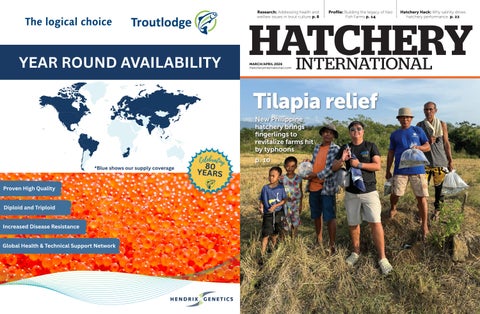
Need tilapia fingerlings? Kaizen Aquaventures Fishery Inc. will deliver.
For a tilapia hatchery that kicked off its operation only in January 2025, Kaizen Aquaventures Fishery Inc. has already been making its presence known in the Philippine aquaculture industry. They received recognition from a government agency, private and civic groups, and they are actively participating in national and regional endeavours pushing for innovation in tilapia hatcheries.
Kaizen has an inventory of 15,000 broodstock. They projected to produce 24 million fingerlings by end of 2025. At the moment, its target market are growers in Regions 1 and 3 of the Philippines, which produce much as 60 per cent of national tilapia production.
“However, we are also delivering to the far-flung areas of the Philippines to make sure that the tilapia technology reaches those who

really need it,” said Hector Abes, Kaizen co-founder. The hatchery is in Nueva Ecija, a province under Region 3.
When a series of super typhoons lashed the northern part of Luzon in July 2025, Hector and his team drove for three days to bring fingerlings to affected fishermen, a private dispersal project. They also took this opportunity to bring relief goods. Then there was the delivery, a government dispersal program, that had to reach the other side of the mountain and this could only be done through a tramline.
Abes and co-founder, Carlo Latonio, want to deliver tilapia fingerlings to whoever needs them.
“Kaizen was built to supply, consistently, quality fingerlings to the fisherfolk of the Philippines. And make aquaculture profitable for every Filipino,” Abes told Hatchery International Technology and facilities are integral in making these happen. “What sets Kaizen apart is that we are applying science-based technologies, and modern management techniques to hatchery operations and our larger scale of operations,” Abes said.
Kaizen hatchery, which spreads over three hectares, was formed as a social enterprise. Abes and Latonio wanted to use their own expertise, and apply it to aquaculture.
Abes is an Agricultural Biotechnology graduate and has a masters in Animal Nutrition. He applied his knowledge in agricultural biotechnology and animal nutrition in aquaculture by “professionalizing” the management practices in the hatchery operations. Latonio is a graduate of B.S. Electronics and Communications Engineering.
“He applies his expertise in aquaculture through innovation of the artificial incubator that is also equipped with Internet of Things (IoT) which allows us to monitor and control the water quality of
our artificial incubator even without us needing to be present in the farm always,” Abes said.
Latonio has also initiated harnessing solar power for farm use.
National fingerlings supply is not enough for the Philippine market. They have big plans ahead. Year 2025’s 24 million fingerlings will triple by end of 2026, and grow by ten-fold by 2030. Innovation and technology are propping them up.

Their “Filipinized Artificial Incubator” has improved production by 300 per cent and cycle from 45 days to 30 days, and decreased water usage by up to 66 per cent. An IoT-based water quality monitors in the artificial incubator. Time in cleaning hapa (a fine net) has been cut from 45 mins. to as little as 10 mins. by using a hapa cleaner. Currently under development is an artificial intelligence (AI) chatbot, which assists growout farmers 24/7, and an AI-based hatchery manager.
Much of these are the results of intensive researching, seeking solutions to concerns on Philippine traditional hatchery protocols. They experienced first-hand that the traditional way will never deliver the volume of tilapia fingerlings the market needs.
“In June 2022, we established a traditional hatchery farm. However, it was met with several problems – inconsistent production, inconsistent quality of produce, weather patterns severely affected production – which all contributed to it being not scalable type of business,” Abes explained.


“Yes, we still profited but I felt that we were not giving the fisherfolk the best quality of fingerlings possible. By December 2023, after highlighting the problems, and identifying the problems and what could be improved, we shut down the traditional hatchery.”

Hydrotech Disc Filter - Hybrid series
Veolia’s Hydrotech Hybrid Filter helps aquaculture safely maintain consistent water treatment.
� Smarter: combination of two proven technologies: high hydraulic flow capacity (HDF) and large filtration area (HSF)
� Lighter: individual panel removal using only two bolts (Alphadisc™ patent)
� Cleaner: particle filtration sizes down to 10 μm and patented high-pressure cleaner


So, basically, Kaizen was borne out of delete-and-reboot approach. Out with the traditional, they proceeded to establish the modern hatchery.
“We started from scratch, we threw out all our old breeders, all of the old equipment from the old site, left the first one-hectare hatchery site and moved to a three-hectare non-developed site. We started from zero,” Abes said.
“The problem is traditional hatchery won’t be able to keep up with the demand for fingerlings… Most tilapia hatcheries still use 1990s technologies (suro-type/fry collection) and this leads to low production, inconsistent supply, non-SR fingerlings. Ultimately, these pain points lead to problematic growing of tilapia.”
In preparing the groundworks for Kaizen, they studied prototypes of the Bureau of Fisheries and Aquatic Resources (BFAR), attended seminars and had late-night brainstorming of plans. They reviewed videos of modern tilapia hatcheries in Brazil and Thailand. Once they were satisfied with what they had achieved, which took one and a half years, the traditional hatchery operations ceased.
They worked on getting a BFAR accreditation and growing broodstock from fingerlings, the process taking nine months. All the while, they resisted the temptation of making money on the side.
“Our customers who called and placed orders from January to September 2024 were
turned down,” Abes said. “Even when we could’ve served it, we chose not to. We chose to adhere to strict management protocols that we will only serve fingerlings that comes directly from our farm.”
While broodstock was maturing, they worked on completing the farm. In the hatchery’s first year, more than 18 million tilapia fingerlings were sold to commercial growers, not including four million fingerlings they provided to over 1,000 marginalized fisherfolks and associations.
Corporate social responsibility is big in their company culture. As a product of Philippine public school education, Abes said this is their way of paying back.
“We are proud products of the Filipino taxpayers,” he said. “This is our way of paying
back the Filipino people who invested in our education. By applying our knowledge learned from the walls of high institutions to the farm level operations and, ultimately, letting technology be felt by the ones who need it the most, our generous education investors, the Filipino Fisherfolk.”
They employ out-of-school youth. While providing them jobs, it is also Kaizen’s way of getting the younger generation into the industry. Abes said the average age of Filipino fisherfolk is 55 years old.
Tilapia is the Philippines’ most grown species. Kaizen’s bullishness on their market share is based on their faith in the quality of their product and their social media reach.
“We had no problems marketing Kaizen as the Philippine growout owners were very
The three-hectare Kaizen Aquaventures, located in Santo Domingo, Nueva Ecija, was developed from ground zero.

accepting of youth that are venturing into the aquaculture.” Abes and Latonio are 29 and 30, respectively.
Transparency
“Aside from also inviting them to visit the hatchery, we have a Facebook and TikTok page which have been boosting our credibility as we really show there the difference of the advancement in hatchery technology that Kaizen has over traditional hatcheries,” Abes explained.
Kaizen’s videos would show the owners going through everyday operations in light but informative tracks, making them approachable, relatable, reliable and credible.
There are many tilapia hatcheries in the Philippines, including in their base, Nueva Ecija. In breaking into the market, they used a combination of transparency and good customer service. In the process, they have developed and increased their market share. Creation of constant demand ensued.
They provide after-sales service, which he said is “very rare” for a Philippine hatchery. The usual scenario is for hatchery owners to
only go to the farms to deliver, he said. They would only get in touch with the farmers to ask if they are ready to order again.
Kaizen broodstock is developed by the DA-BFAR.
“We are currently providing them production parameters from our customers,” Abes said.
Well-researched and planned protocols are only as good as the people who implement these. Some hatcheries owners have lamented on staff doing “art versus science,” those compromising results.
Asked to comment on such cases, he said, “We are hands-on when it comes to farm operation. Just like our name Kaizen, which means ‘continuous improvement.’ We have broken down the hatchery operations stepby-step and improved each of the microstep by at least one per cent.”
As brainstorming sessions included the hatchery managers, they understand why such a process is being implemented for a certain hatchery process. This results in ensuring that farm procedures and protocols are implemented to the standard.
Improving Philippine tilapia hatchery protocols is an advocacy. “Kaizen’s founders push the agri/aquaculture into spotlight by being engaged in several local policy making bodies, and international tilapia association collaborations,” he stressed.
Abes is part of the Philippine Department of Agriculture – Export Development Office: Tilapia Commodity Board, which aims to strengthen the tilapia industry to be able to export in the very near future.
He is also a member of TESDA (Technical Education and Skills Development Authority) a technical working group, where they share their on-the-ground experiences in aquaculture so that the TESDA can create modules and trainings for modern aquaculture technicians.
Also, Kaizen is part of the founding members of the proposed South East Asia Tilapia Association, a regional association of tilapia stakeholders.
The company name has been carefully thought of. Kaizen pertains to a Japanese ideology that means “continuous innovation.” And so it is. | HI


By Maria Church
The history of Arkansas hatchery Keo Fish Farms is a story of resilience.
Located in central Arkansas, just half an hour’s drive from Little Rock, the company traces its roots back to the 1950s when Martha Melkovitz and her husband, Cleo, started a minnow farm. Several massive 80- to 100-acre ponds raised the minnows for a couple years, then were drained and planted with rice or soyabeans.
After Cleo passed away suddenly in the ’80s, Melkovitz was left in serious debt and faced a decision: sell the farm or start fresh.
Her 1986 decision to go with the latter brought on co-owner Mike Freeze who helped transform the operation to what it is today: the world’s largest producer of hybrid striped bass and the U.S.’s third largest producer of triploid grass carp.
The first step in the restructure was significantly downsizing the farm’s ponds from 80 plus acres to more manageable one to four acres. Next Freeze explored new species to farm.
Seth Summerside, current CEO of Keo Fish Farms, explains that the farm’s restructure in the ’80s coincided with the passing of the two important policy changes in the U.S. – the Striped Bass Conservancy Act and the lifting of the restrictions for triploid grass
carp. These changes led Keo to introduce their two product lines.
Hybrid striped bass, also known as portmanteau wiper, is a mix of striped bass and white bass. The resulting hybrid vigor means the species grows faster and is more resistant to diseases. Hybrid striped bass are popular among anglers as well as the food service industry.
Triploid grass carp is a sterile, herbivorous species, generally used to control non-native vegetation in bodies of water across the country. Keo uses pressure during fertilization to ensure the presence of a third chromosome, which produces fish unable to reproduce where they are added.
Today, Keo Fish Farms has 21 local employees and about 100 ponds covering nearly 1,000 acres where they raise roughly 100 to 120 million fry and fingerlings a year.
The company celebrated its 50th anniversary last year and is heading into its next half century with the same determination that carried it through the first.
At Keo, 100 per cent of the hatching happens on the farm and all under one roof: a contained indoor facility. Broodstock are kept in a cold tank to prevent early egg release.
Keo’s production cycle begins with spawning hybrid striped bass in early spring, followed directly by spawning of triploid grass carp.
After hatching, the containers are brought out to ponds that have been prepped with onsite well water. “There is a 25-page cookbook on how to prep a pond to get the right plankton levels in the pond,” Summerside says.
The 100 ponds are stocked with various inventory throughout the year. The hybrid striped bass are monitored regularly to isolate aggressive or oversized fish.
The farm has 37 holding vats, each roughly 4,000 gallons of water, which serve as the headquarter operations.
Fish sales happen throughout the year, with both old and new crop sales throughout the spring and summer. Summerside says with so many custom orders from around the country and even overseas, stocking the ponds becomes a logistics game.
“Truck drivers, farmers, they have their own scheduling on their own farms. It takes a lot of co-ordination in the office to make sure you have the logistics in place. Particularly when you start the discussion of exporting fry. We do that as far away as Taiwan, Israel and Spain,” he says.
Keo sells wholesale both bass and carp fry,
and then the fingerlings by length. Hybrid striped bass sell from one inch up to eight inches, and the sterile grass carp from four inches up to 14 inches as well as a 2.25-inch head width carp.
A big chunk of Keo’s hybrid striped bass destined for the food-service industry heads first to an independent grow-out and processing facility in Texas.
All water used on the fish farm is filtered on site. Each three-foot-deep pond draws from its own well and all the ponds are laser graded each year to ensure the right conditions for the fish to move easily between ponds and the holding vats.
Optimal water filtration is crucial for fish health. Keo recently partnered with MIT’s D-Lab to tackle rising iron and CO2 levels in the farm’s water supply.
“It’s gotten to where it clogs up our pipes and pumps, everything, in our settling tanks,” Summerside says. “And it’s become extremely expensive to settle that water out using media filters.”
MIT is working with Keo to find ways to quickly settle the iron and keep the system running with clean water. So far, the project’s experiments have reduced settling time from 24 hours to less than half an hour.
Another area of improvement for Keo is adopting solar power. The team is working with a contractor on a $1.5-million project to install four acres of solar panels that will fulfil 100 percent of the farm’s energy needs.
“We are one of the largest consumers of electricity in Lonoke County. That project is going to be extremely helpful in reducing the cost for energy,” Summerside says. “We have all the dirt work done, everything graded, we have the modules ready. The only thing we’re missing is the metal racking that the modules sit on. We’re ready and hoping we can get everything in by December.”
A significant missing piece is reassurances from the federal government that it will honor a contract covering 50 percent of the capital costs signed by the previous administration under the Inflation Reduction Act. Keo is pushing forward with the project despite some worries about the state of the contract.
Other smaller scale but important farm improvements centre around sustainability, including hardwood tree planting on nearly a quarter of the farm’s 1,600 acres as well as wildflower sowing to attract native pollinators.
“We’re trying to do our part,” Summerside
says. “It’s good for not only the water and soil belts but for habitats as well.”
Central to Keo’s success, Summerside says, is Melkovitz and Freeze leading the company in a way that prioritizes its people.
Health insurance benefits. Profit sharing. Fifteen days off as well as major holidays. Seven-hour days during slower seasons. The list goes on.
“We’re one of the few companies that have more people than what we need,” Summerside says. That along with a focus on cross training means that someone is ready to step in when there’s a last-minute dance recital or ball game.
And a collaborative culture means that project decisions are made around a table rather than top-down.
“I think that is probably one of the most important things that allows Keo Fish Farms to be successful,” Summerside says. “When you get people that stay, you get all the knowledge that comes with it, and you get an environment where people don’t want to leave and they actually enjoy it, it’s a lot easier to be successful.”
Looking broadly at the U.S. aquaculture industry today, Summerside says it is in a similar stage to the poultry industry in the 1980s.
“It’s very much, in my opinion, in its infancy,” he says. “The largest factor holding it back is regulation. Our farm has about 180 different permits. Each state has different systems and people. It almost makes it impossible to operate a business.”
For example, in some cases a state needs shipping notification 10 days in advance, and it requires employee certification, but that certification is only valid for six days.
The red tape and significant penalties for ignoring that red tape is stifling the industry, Summerside argues. “It’s causing folks to not want to be in the industry,” he says.
That stifling will need to be addressed for aquaculture to come to its full potential as a responsible and resource-efficient source of protein to feed the growing population.
“There’s absolutely the right to win for aquaculture to lead the charge in all of agriculture to be more sustainable in the future,” Summerside says.
With the right deregulation efforts, Keo Fish Farm is poised to flourish as an example of what resilience, and a people-first attitude can accomplish in U.S. aquaculture. | HI


If you don’t see what you need, let us know. There is nothing we can’t source! Subscribe

BY MAGIDA TABBARA-CORBY
Healthy fish are happy fish. That’s a simple statement beyond which a lot of challenges and considerations emerge. Farmers undergo a lot of pressure while culturing their fish: they worry about feeding them, the price of feed, the cost of labour, how many crops to grow per year to break even, etc. But one more thing they fear and secretly pray not to encounter is disease.
Fish diseases cause drastic damages in aquaculture, increasing production costs by 10-15 per cent. Disease does not always mean mortality, it can also result in slow growth which negatively impacts the number of crops to harvest a year, in addition to decreasing fish marketability by causing changes in appearance and/or taste.
Current research is trying to provide practical solutions with minimum environmental impact.
To mitigate health problems in aquaculture, it’s important to start with preventative measures. Most fish health issues encountered arise from pathogens. Those pathogens not only are difficult to eradicate, but some of them can even be transferred globally with seafood export.
Therefore, it’s important to understand the four basic biosecurity dependencies:
1. The organisms we’re culturing: What species we’re trying to culture, where it originates from (i.e. where the animals were sourced from), whether they were specific pathogen free (SPF) organisms when sourced, what life stage are they at, what’s their immune system status;
2. Managing the culture environment: Following proper husbandry practices and good water quality management are key to

3. The pathogens that might affect our organisms: what are the main pathogens that affect the species we’re trying to culture, what are the reservoirs that can carry and transfer these pathogens, whether they survive on inanimate objects such as equipment or not, regulatory status based on federal, state, and local laws;
4. Biosecurity principles and protocols: making sure all personnel involved with the operation understand principles of biosecurity and how to properly follow preventative measures. Preventing disease is key to a successful aquaculture operation. However, sometimes we need to work on improving fish health via good nutrition and some nutritional boosters. Such considerations help tie together
preventative measures and fish health and welfare.
Research is validating the well-established relationship between good nutrition and strong immune systems. In the past 10-20 years, there have been important changes in the aquafeed industry. The changes come in the form of shifting away from unsustainable feed ingredients such as fishmeal, and a focus towards more sustainably produced ingredients.
There’s been a particularly increased interest in utilizing sustainably produced ingredients that are rich in immunostimulants.
Immunostimulants are substances that can boost the immune system and help increase its ability to fight diseases. In the context of aquatic animal nutrition, immunostimulants
can be either natural components of the ingredients used in aquafeed, or in the form supplements.
Black soldier fly is an example of a sustainably produced and environmentally friendly aquafeed ingredient. It gained attention because of the fly’s ability to break down organic matter and recycle nutrients. Additionally, a variety of black soldier fly products can be used as ingredients, leaving no waste behind.
Black soldier fly-based aquafeed ingredients include the larvae themselves, the meal derived from them, the oil, or the frass. Frass is of particular importance, as it’s a co-product of the insect rearing process, comprising fly waste, remnant exoskeletons, and leftover feed. The combination of this waste contains chitin and lauric acid, which are natural immunostimulants.
Studies have shown that utilizing black soldier fly frass in hybrid tilapia diets improves the fish’s resistance to major disease-causing bacteria. Similarly, using black soldier fly in channel catfish diets helps the fish fight off infections caused by Edwarsiella ictaluri. This bacterium is the lead cause of disease in U.S. catfish aquaculture, resulting in significant economic losses. Utilizing catfish feed containing this ingredient is a good option to consider in a catfish farm at risk of E. ictaluri infections.
Another example of immunostimulants in aquafeed includes supplemental humic substances. A study tested humic substances in combination with butyric acid as supplements to channel catfish diets. The diets were offered to the fish for 45 days, then the fish were co-infected with Edwardsiella ictaluri and Flavobacterium covae. Those are two highly virulent bacterial pathogens with potential to cause drastic losses in cultured catfish. Results showed an increase in blood lysozyme activity of fish offered such diet, indicating an improvement in the natural immune response of the fish.
These examples show how sustainably produced feed ingredients can do more than just nourish fish: they can actively strengthen the immune system and help fish handle common disease challenges. Whether it’s black soldier fly products or humic - based supplements or other
products, these feed ingredients give farmers practical ways to improve fish survival and reduce losses.
As the industry continues moving towards using more sustainable aquafeed, using ingredients with natural immunostimulants will become an important part of keeping fish healthy and production stable. By choosing feeds that support immunity, farmers can protect their fish and improve the overall performance of their aquaculture operation.
Fish health is a dynamic and continuous aspect of fish culture that underpins the success and sustainability of any aquaculture operation. It begins with maintaining a clean, well-managed environment where water quality and hygiene work together to reduce stress and prevent the introduction of pathogens.
Effective biosecurity protocols are essential, serving as the first line of defense against disease outbreaks and ensuring that risks


are minimized at every stage of production. Alongside environmental management, providing fish with balanced nutrition and targeted supplemental products plays a crucial role in strengthening their natural immunity. Feed additives with immunostimulatory properties help enhance resilience, improve disease resistance, and support overall performance.
Biosecurity and proper nutrition create a stable foundation for optimal fish growth, welfare, and productivity. Ultimately, proactive health management is not just beneficial but indispensable for modern fish culture. | HI
Oladipupo, A. A., Kelly, A. M., LaFrentz, B. R., Roy, L., Davis, D. A., and Bruce T. J. (December 4, 2024). Humic Substance Combined with Butyric Acid Could Promote Resistance to Bacteria Co-infections in Channel Catfish Production. Fish Farming News, 2024(2), 16-17. Tabbara, M., Adeyemi, A., Davis, D.A., Kumar, V., Kelly, A.M., Adams, D., Koutsos, E., & Bruce, T.J. (2025). Growth and disease resistance of Channel Catfish (Ictalurus punctatus) offered dietary black soldier fly larvae frass. North American Journal of Aquaculture.


BY MEGAN MURRAY, FRESHWATER INSTITUTE
Water quality monitoring is vital to the success of a fish hatchery. Key parameters such as pH, ammonia, nitrite, and alkalinity must be maintained within optimal ranges for good fish health and welfare.
While traditional laboratory analysis is proven and accurate, it requires time, specialized equipment, and expertise, which can delay management decisions during rapidly evolving situations. Portable rapid testing devices have the potential to bridge this gap by providing real-time water quality data directly at the tank. This enables hatchery managers to make immediate decisions about feeding, water exchange, pH control, or other interventions.
However, the accuracy and reliability of these portable devices relative to established laboratory methods need to be verified before they can be integrated into routine management protocols. This study compared the WaterLink Spin Touch FF portable device with standard laboratory methods used at the Freshwater Institute (FI) to determine whether it can provide accurate measurements for daily fish culture management decisions.
The WaterLink Spin Touch FF from the LaMotte Company is a portable photometer for rapid water-quality analysis. The device uses cartridges (SpinDisks) that contain the exact amount of reagent needed for testing. Each disk requires less than three milliliters of water and provides results for up to eight parameters in approximately two minutes. The system features a six-wavelength photometer with factory-calibrated settings, a colour touchscreen display, and automatic data logging.
For this study, Freshwater FF104 SpinDisks were used which test for alkalinity (0-250 ppm ±15 per cent), ammonia (0-3.0 ppm ±0.2 ppm below 2.0 ppm), hardness (0-500 ppm ±15 per cent), nitrate (0-300 ppm ±30 per cent up to 125 ppm), nitrite (0-2.0 ppm ±0.2 ppm), pH (4.5-10.0 ±0.2), and phosphate (0-2.0 ppm ±0.2 ppm).
Water samples from six recirculating aquaculture systems (RAS) and one water supply
Table 1. Comparison of water quality results between Freshwater Institute (FI) standard laboratory methods and the Spin Touch.
Only data within the specified range of valid measurements for the Spin Touch were used for calculating differences between methods (n=1–7). SpinTouch nitrate and nitrite values were converted to as-nitrogen measurements for comparison.
sample were analyzed in duplicate using the Spin Touch. The same samples were also tested using standard analytical lab procedures, a combination of EPA-approved methods, and Hach TNT (Test ‘N Tube) colorimetric kits. Results were compared between the two to assess differences and the utility of the Spin Touch device for water quality monitoring applications (Table 1).
Spin Touch results varied across parameters, with some measurements closely matching laboratory results, while others showed wide variation.
pH Measurements: Spin Touch results showed good agreement with laboratory methods, with an average absolute difference of only 2.2 per cent, making it suitable for routine pH monitoring.
Alkalinity: Alkalinity measurements also showed good overall agreement, with an average absolute difference from laboratory values of 7.7 per cent, which remains generally acceptable for monitoring. In all cases, the Spin Touch values were higher than the laboratory values.
Hardness: Consistent differences were observed between Spin Touch and laboratory hardness measurements, with Spin Touch values lower than laboratory values across all samples. The average absolute difference was 23.2 per cent. This suggests a calibration issue

or difference that could be addressed through adjustment. Despite the difference, the relative consistency indicates that the device is useful for tracking trends.
Nitrogen compounds (NO3-N, NO2-N, TAN): Agreement between methods for nitrogen species measurements was mixed. After conversion to FI’s NO3-N results, the Spin Touch measurements were higher than laboratory-analyzed values in all but one sample. The average absolute difference from laboratory measurements was 33 per cent.
absolute difference of 12.2 per cent. TAN detection at low concentrations (0.3 mg/L) by the Spin Touch was often below the detection limit (0.0 ppm) when laboratory methods reported measurable concentrations. For operations where TAN levels are typically below 0.3 mg/L, laboratory analysis is likely necessary for precise ammonia monitoring.
Phosphate: Phosphate presented a unique challenge for comparison. Three samples had phosphate concentrations (20-23 mg/L) exceeding the Spin Touch device’s maximum testing range of 2.0 mg/L. At lower concentra tions within the device’s range, the SpinTouch consistently reported readings at or near zero, whereas laboratory methods detected meas urable phosphate (0.007-0.504 mg/L). The mismatch between the device’s testing range and the phosphate concentrations common in RAS systems may limit its applicability to similar operations.
Duplicate Spin Touch measurements showed variable precision across parameters. The pH and alkalinity duplicates were generally consistent, whereas NO3-N showed greater variation between duplicates in some samples (e.g., 41.6 versus 82.0 mg/L).
you
> Premium quality, disease-free eyed eggs available all year round
> Rainbow trout all female (diploid or triploid) and other salmonids


HI_Socorex_MarApr26_CSA.indd 1
The Spin Touch potentially addresses an important need in aquaculture operations, where timely information is needed for quick decision-making.
The device occupies a middle ground in the hierarchy of available water quality testing options. It is a significant advancement over traditional test strips, offering greater accuracy and precision while also providing speed and convenience. However, it does not replace the need for laboratory testing for research, critical management decisions, or when parameter concentrations fall outside the device’s performance range.
For most hatcheries, an integrated approach will provide the best balance of accuracy, timeliness, and cost-effectiveness. Understanding its strengths enables hatchery managers to leverage this technology effectively within a comprehensive water quality monitoring program.
The WaterLink Spin Touch FF device and test disks used in this study were provided by LaMotte Company. LaMotte was not involved in study design, data analysis, interpretation of results, or preparation of this article. | HI
Customized for your fish farm, hatchery or
Customized for your fish farm, hatchery
Our Commercial LSS Packages are custom engineered to meet your specific needs.
Customized for your fish farm, hatchery or research operation! Our Commercial LSS Packages are custom engineered to meet your specific needs.
Customized for your fish farm, hatchery or research
Our Commercial LSS Packages are custom engineered to meet your specific needs.
• Marine and Freshwater
• Mechanical filtration
• Marine and Freshwater
• De-gassing towers
• De-gassing towers
• De-gassing towers
• Wide variety of flow rates
• Mechanical filtration
• Chemical filtration
• Mechanical filtration
• Chemical filtration
• Ultraviolet disinfection
• Wide variety of flow rates
• De-gassing towers
• Wide variety of flow rates
• Flow control valves
• Wide variety of flow rates
• Protein skimmers
• Protein skimmers
• Chemical filtration
• Ultraviolet disinfection
• NEMA enclosed controls
• Protein skimmers
• Flow control valves
• Variable frequency-drive pumps
• Ultraviolet disinfection
• NEMA enclosed controls
• Bio-filter towers
• Bio-filter towers
• Bio-filter towers
• NEMA enclosed controls
• Temperature management
• Variable frequency-drive pumps
• Protein skimmers
• Temperature management
All our systems are pre-plumbed and fully water tested prior
• Temperature management All our systems are pre-plumbed and fully water tested prior to shipping.
• Variable frequency-drive pumps
• Bio-filter towers

• Temperature management


UK-based food and farming consultancy FAI has launched an online resource for shrimp supply chain professionals to access shrimp welfare information.
Shrimp Hub brings together FAI’s training courses, tools and expert knowledge on shrimp welfare in a mobile-friendly, multi-lingual format, the organization said in a news release.
“More and more major aquaculture certification schemes are now including animal welfare standards, so the Shrimp Hub has an important role in helping shrimp-producing companies prepare for certification and recognition of their commitment to shrimp welfare,” Sara Barrento, FAI e-learning and
aquaculture program manager, said in the release.
Recognizing that welfare is a central pillar of modern production systems, Shrimp Hub offers two welfare badges that indicate a company has progressed in shrimp welfare.
As part of the Shrimp Hub launch, the FAI’s shrimp Welfare courses are now available in eight languages, adding Indonesian to the existing Thai, Vietnamese, Chinese, English, Spanish, Portuguese and Arabic courses.
Norway-based salmon producer Mowi will now be producing aquaculture feed based on Skretting’s feed formulation.
Mowi announced on Dec. 22 it entered into a strategic feed partnership with Skretting, the aquaculture feed business line of Nutreco, that will allow Mowi to use Skretting’s feed recipes.
Mowi operates two feed factories in Norway and Scotland. The company expects the Skretting deal will save them more than NOK 650 million (US$64.5 million) annually through feed improvements, procurement and logistics.


The Mowi news release notes that feed formulation has become increasingly complex in recent years, which requires nutritional know-how, and research and development.
The company said there is reason to believe the feed market will continue to tighten in the coming years.
“The partnership will deliver improved feed formulation and recipes for our European salmon farming operations which will drive significant cost improvements whilst ensuring top quality feed performance in the years to come,” Mowi CEO Ivan Vindheim said.
Global aquaculture health solutions provider Syndel’s flagship product, Syncaine (MS-222), has received formal approval for use within Chile.
The Agricultural and Livestock Service and Directemar approved Syncaine’s use in Chile for the temporary immobilization of fish, amphibians and other aquatic poikilotherms.
“Receiving SAG and Directemar approval

for Syncaine in Chile represents a key advancement for Syndel,” Jason Montgomery, global sales manager at Syndel, said in a news release. “We are dedicated to expanding our global product portfolio and supporting aquaculture professionals as they pursue operational excellence while optimizing animal welfare.”
Syndel’s partner Agrovet will distribute Syncaine in Chile. Established in 1974, Agrovet acquired Laboratorio Chile’s veterinary division in 2014 and now provides a broad range of veterinary products and solutions for diverse species.
BioMar’s aquaculture feed factory in Nersac, France, now has ASC Feed Certification, joining the company’s list of certified facilities in Chile, Ecuador, Spain, Costa Rica, Norway, Denmark and the U.K.
The BioMar Nersac factory supplies a range of aquaculture feeds for all life stages, including hatchery diets, for regions in the West Mediterranean and Africa.

ASC Feed Standard sets binding global requirements for sustainable sourcing of all feed ingredients, from fishmeal and fish oil to plant-based ingredients such as soy, palm oil, and wheat. As of Oct. 31, ASC-certified farms are required to use ASC-conforming feed from certified mills.
“This certification strengthens our ability to support ASC-certified farmers at every production stage,” BioMar managing director Luis Garcia Romero said in a news release. “By offering ASC-conforming feed, we help our customers meet evolving market expectations and build value across the full value chain in the whole western mediterranean region as Nersac factory in France together with Dueñas factory in Spain are the responsible sites for supplying feed to the whole Western Mediterranean Europe and Africa.”


The European Union has authorized the use of Hy-D – a Vitamin D3 metabolite from dsm-firmenich Animal Nutrition & Health – in aquaculture and all animal species.
Hy-D is the nutritional additive 25-hydroxycholecalciferol produced from a species of yeast called Saccharomyces cerevisiae CBS 146008.
The additive was authorized in the EU as a source of Vitamin D for pigs, poultry and ruminants in 2024. The latest authorization approves Hy-D for use in all animal species, the company said in a news release.
Emrah Mazi, head of special nutrients at dsmfirmenich Animal Nutrition & Health, said in the release the new authorization understores HyD’s global relevance and reliability as a source of vitamin D for aquaculture and all animal species.
“We are thrilled about the opportunities this brings for our customers across Europe and beyond, empowering them to advance animal health and performance with confidence,” Mazi said.


BY NICOLE KIRCHHOFF
Salinity is one of the most quietly powerful tools available to commercial aquaculture hatcheries, yet it is often treated as a background condition rather than an active management lever. Hatchery operators hear familiar advice throughout their careers, add salt to freshwater fish during transport, reduce salinity for marine fish in quarantine, try a freshwater dip if parasites appear. These practices are widespread, but the reasons they work are rarely discussed beyond rules of thumb.
At its core, salinity management is not about treating water, it is about managing stress. Whether fish are freshwater or marine, salinity directly controls how hard they must work simply to maintain balance in their bodies. When hatcheries understand that relationship, salinity becomes a strategic tool for improving survival, stabilizing fish during stressful events, and even tipping the odds in disease management.
Salinity refers to the concentration of dissolved salts in water, usually expressed in parts per thousand. Freshwater contains very little salt, while full strength seawater averages around 32-35 ppt. Between these two extremes lies brackish water, a range that many hatchery managers are learning to use intentionally rather than incidentally. The salts that define salinity, sodium, chloride, calcium, potassium, magnesium, sulfate, and bicarbonate, are not trivial background chemistry. These ions are fundamental to nerve signaling, muscle contraction, acid base balance, and cellular function.
From a practical standpoint, salinity is also one of the most accessible water quality parameters to adjust. Commercial salt mixes are easy to obtain off the shelf, relatively inexpensive, simple to store, and straightforward to dose. Many recirculating aquaculture systems, flow through systems, and hybrid production setups tolerate moderate salinity changes without compromising infrastructure or biofiltration. Compared to temperature, system redesign, or stocking density, salinity is often one of the fastest and most flexible knobs a hatchery can turn.
Fish, however, pay a constant physiological price for living in water that does not match the salt concentration of their internal fluids.
This process, known as osmoregulation, requires continuous movement of water and ions across the gills, skin, and kidneys. Freshwater fish constantly gain water and lose salts, while marine fish lose water and gain excess salts. Each strategy requires energy, and in some cases a substantial portion of a fish’s metabolic budget is devoted solely to staying in balance.
When fish are healthy and stable, this cost is manageable. When they are stressed by handling, grading, transport, temperature swings, crowding, or disease exposure, the energy demand of osmoregulation competes directly with immune function, tissue repair, and growth. This is where salinity management becomes most valuable.
The long-standing practice of adding salt to freshwater systems during hauling or handling works because it reduces the osmotic gradient between the fish and its environment. Even modest salinity increases slow water influx, reduce ion loss, and ease the workload on the gills and kidneys. The result is often lower stress responses, improved short term survival, and faster recovery. As an added benefit, many freshwater parasites and opportunistic pathogens tolerate only narrow salinity ranges, making salt a useful stress buffer and disease pressure reducer at the same time.
Marine fish respond similarly, but in the opposite direction. Lowering salinity reduces water loss, decreases drinking behaviour, and lowers the energetic cost of salt excretion. This is why reduced or intermediate salinities are so commonly used during marine fish quarantine and acclimation. Hatchery experience across a wide range of species consistently shows that fish held below full strength seawater are often more stable, more resilient, and better able to recover from stress.
The real sweet spot for many species lies at intermediate salinities, often between 8 and 20 ppt. At these levels, the surrounding water approaches an iso osmotic condition, meaning it more closely matches the fish’s internal osmotic pressure. Passive movement of water and ions slows, active regulation drops, and the overall physiological workload decreases. For larvae and juveniles, whose osmoregulatory systems are still developing,
this reduction can be especially important. For fish recovering from transport or disease, it can mean the difference between stabilization and continued decline.
Salinity also plays an important role in disease dynamics. Many external parasites are poorly equipped to handle rapid or sustained salinity changes. Altering salinity can interfere with attachment, reproduction, or survival of free-living stages, reducing parasite pressure without direct chemical intervention. Bacteria respond in more complex ways, but salinity shifts can disrupt microbial communities, alter biofilms, and reduce competitiveness of opportunistic pathogens. At the same time, fish experiencing lower osmotic stress tend to maintain healthier skin and gill barriers and stronger immune responses. Simply put, less stressed fish get sick less often.
At the extreme end of salinity manipulation lies deliberate salinity shock. Freshwater dips for marine fish are a well-known example and remain a common quarantine and diagnostic tool. These brief exposures create an abrupt osmotic imbalance that many external parasites cannot survive, while the fish themselves tolerate the shock for a limited time. Freshwater dips are not without risk and should be used carefully, particularly with weakened fish or sensitive species, but when applied correctly they can be an effective way to dislodge parasites, confirm their presence, or reduce acute parasite loads before fish enter longer term systems.
Salinity is not a cure all, and it should never be applied blindly. Rates of change matter, species and life stage matter, and ion composition matters. Sodium chloride alone does not fully replicate seawater chemistry, and longterm use requires consideration of system biology. Still, salinity remains one of the most cost effective, flexible, and underutilized tools in commercial hatchery management.
Rather than asking whether to add salt or remove it, the better question is how salinity can be used to reduce physiological load and give fish an advantage when they need it most. In many hatcheries, the answer lies not at either extreme, but in finding balance, and using salt intentionally rather than incidentally. | HI


