How efforts by government agencies in California contributed to a record salmon return at the Mokelumne River Fish Hatchery
BY MATT JONES
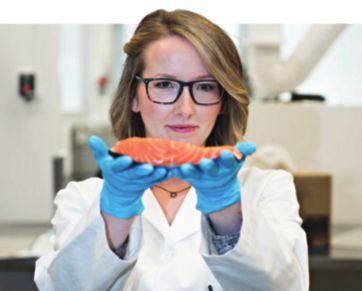
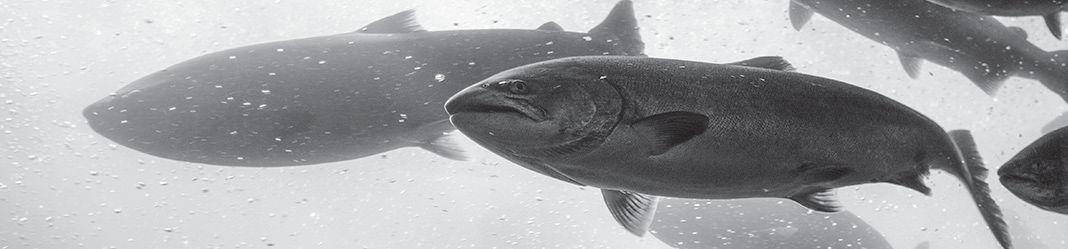
ast year was a good one for the Mokelumne River Fish Hatchery in Clements, California. Over 19,650 salmon returned to the hatchery, breaking the previous record of 18,000 set in 2011. Representatives for the East Bay Municipal Utility District (EBMUD) attribute the high numbers to specific steps taken on the river and in the hatchery to make conditions favourable for the salmon.
Manāki
“It’s returned a tremendous benefit in terms of
continued on page 9
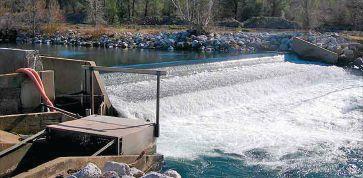
One of the primary efforts has been river restoration, says Jose Setka, manager of fisheries and wildlife for EBMUD. A $1.3 million partnership between EBMUD, the California Department of Fish and Wildlife and the US Fish and Wildlife Service has seen roughly 75,000 cubic yards of gravel added to key spawning areas in the upper region of the usable area for salmon. These efforts brought the depth of the water to one to three feet - the salmons’ preferred level for spawning. The shallow water also creates higher velocities which the salmon prefer for making redds and depositing their eggs.
RAS Is For Girls
BY JUSTIN HENRY
arly maturation in net
pen farmed salmon was identified as an economic liability decades ago, and can still be a problem today. The ability to improve salmon growing conditions using RAS has compounded this problem. Indeed, optimal culture conditions for salmonids in RAS is still not clear. That was the message from a few presenters during the Aquaculture Innovation Workshop (AIW) held in Vancouver, Canada last November. In particular, it is still unclear what environmental conditions will minimize early maturation in salmon grown to harvest size in RAS.
Steve Summerfelt from the Freshwater Institute in Virginia,
USA, presented a study by his group comparing maturation rates of two strains of Atlantic salmon grown in RAS under continuous light for 24 months post-hatch. In this trial the Gaspe strain grew faster, reaching 4 kg. However, a serious challenge for the RAS farmer became clear in that greater than 50% of the male St. John River strain fish matured early. The Gaspe strain were all females and no females matured from either strain. Could it be that RAS is just for girls?
PRECOCIOUS MATURATION
Early maturing Atlantic salmon are called grilse, while early maturing Pacific salmon are called jacks (boys) or jills (girls). By the time the mature ones can be identified, the quality can be slightly or severely compromised, depending on how good the farmer is at identifying them early. During the maturation process pigment comes out of the flesh and pigment goes into the skin; oil content in the flesh decreases as energy goes into gonad production. When determining what percentage of the fish are maturing
Whitebait: Breaking new ground with an old staple
A unique New Zealand facility produces whitebait species which it sells commercially to fund restoration efforts.
BY BEN NORMAND
f all the ways to hunt and fish, few are more quintessentially Kiwi than the act of gathering Whitebait.
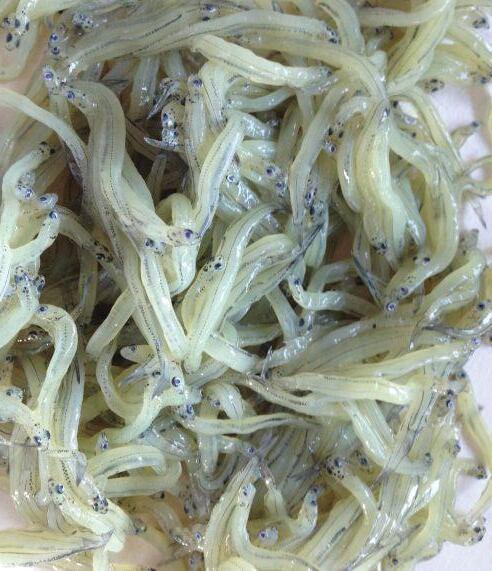
In New Zealand, Whitebait refers to the larval form of five Galaxiid species. These larval fish are caught as they return upstream from the ocean to continue growing and, eventually, to spawn. From August/September through the end of November, it’s rare to find a stream that flows into the ocean without someone standing watch over their whitebait net. To call it a popular Kiwi hobby is nearly an understatement.
Across the country, however, recreational and commercial catches have been in decline. Of the five species one can catch, four are labelled by the New Zealand Department of Conservation as declining or threatened. This is due to a variety of factors including an increase in river and stream pollution from industry and farming, and the introduction of aggressively
early, the farmer must decide whether or not to grade out these maturing fish. Additional labour is required to grade, and there is an additional handling of the fish with the associated stress and reduced feeding. If the farmer decides to leave the fish and not grade, the quality of the maturing fish will continue to decline and they will start to die off.
WHY DO MALES MATURE EARLY?
Maturing a year or two earlier than the rest of their cohorts is one of the mechanisms used by salmon
continued on page 13
Publications Mail Agreement #PM40065710 RETURN UNDELIVERABLE CANADIAN
continued on page 15
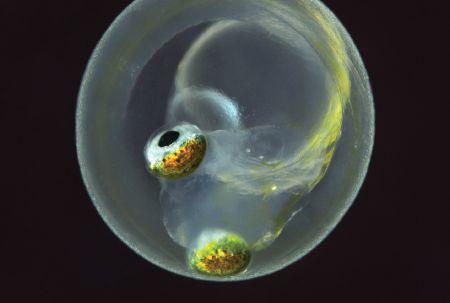
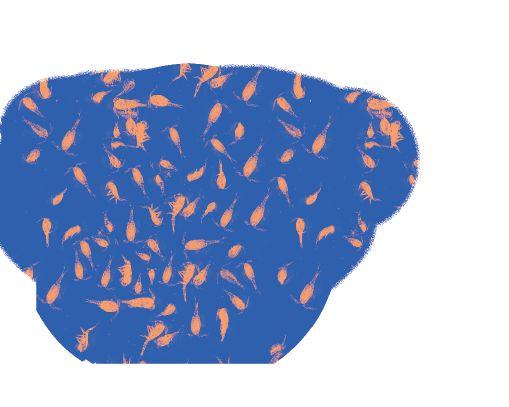
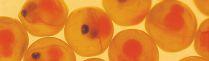
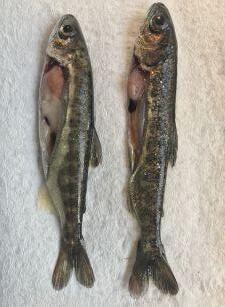
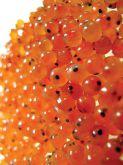
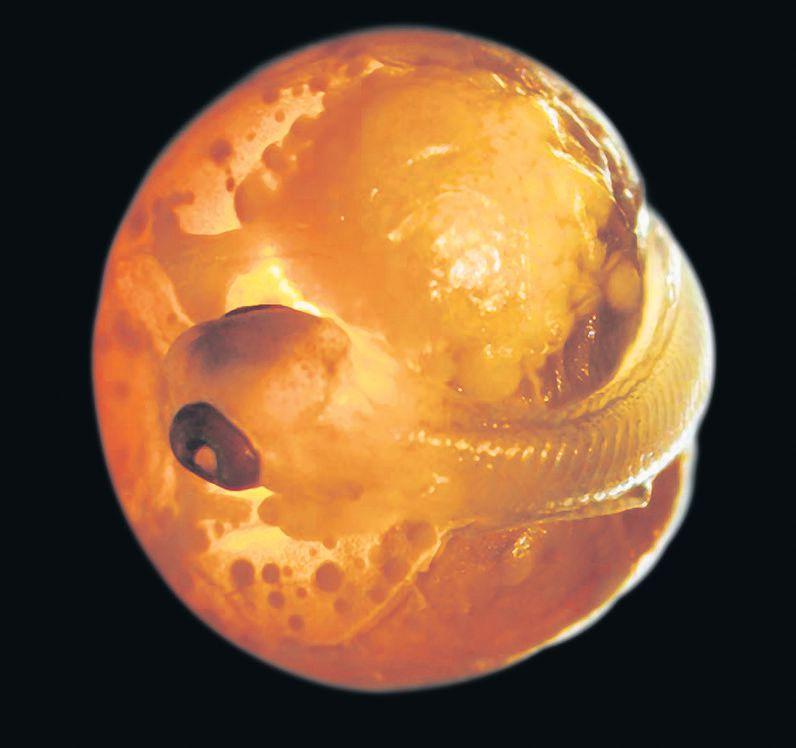
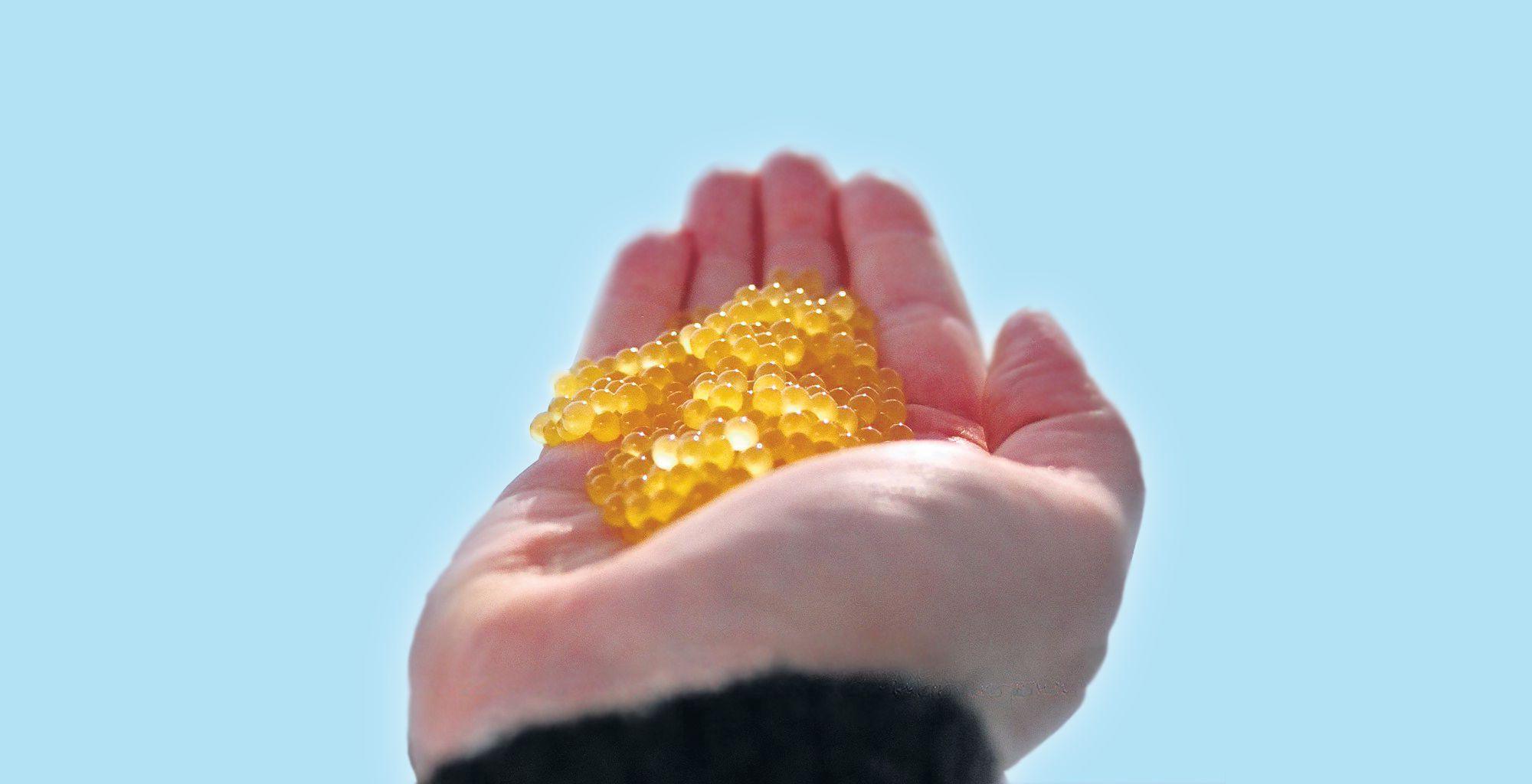
Giant Kōkopu embryo (Photo: Stephen Moore).
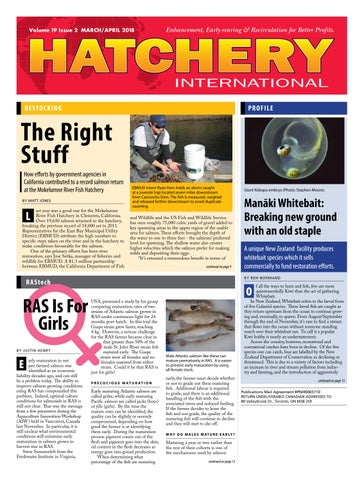
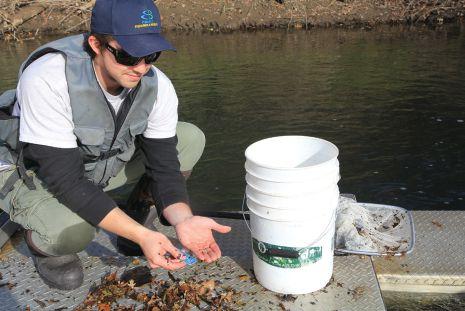
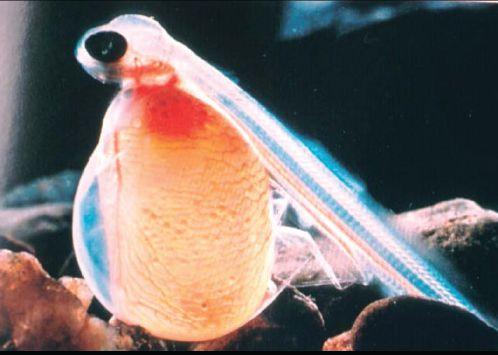
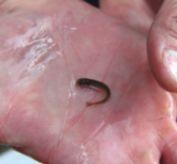
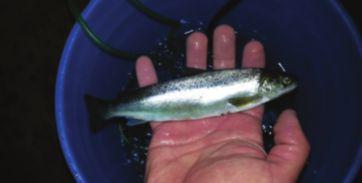
EBMUD intern Ryan Ham holds an alevin caught at a juvenile trap located seven miles downstream from Camanche Dam. The fish is measured, weighed and released farther downstream to avoid duplicate counting.
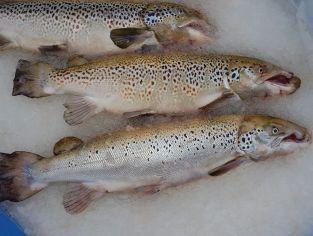
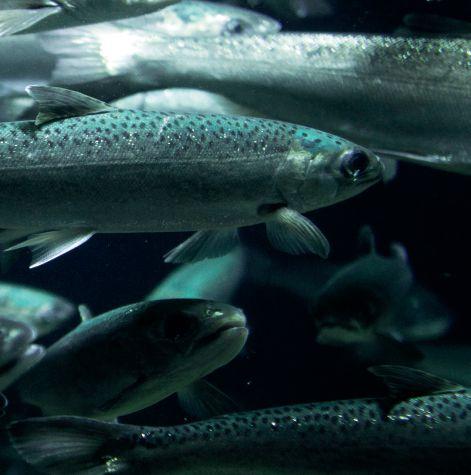
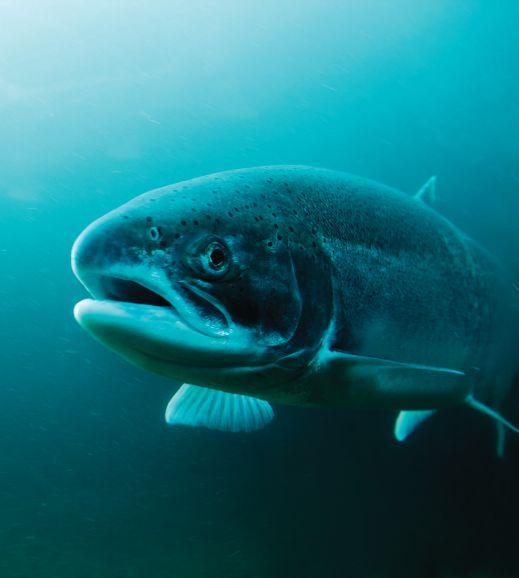
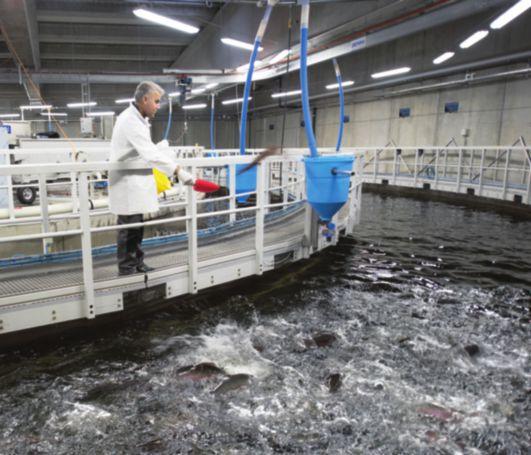
Male Atlantic salmon like these can mature prematurely in RAS. It is easier to prevent early maturation by using all-female stock.
Disease and poor health are some of the main constraints for sustainable aquaculture.
MSD Animal Health develops environmentally responsible products to maximize fish survival, growth and production efficiency for the major farmed fish species: salmon, tilapia, trout and other marine species.
Every day, in every corner of the world, progressive fish farmers turn to MSD Animal
Health. They ask about our full range of products for managing the most serious diseases in aquaculture. Even more, they come to us for integrated health solutions to help them become more profitable, competitive and sustainable.
Science Editor David Scarratt, scarratt@ns.sympatico.ca
Regular Contributors Quentin Dodd, Diogo Thomaz, John Nickum, John Mosig, Erich Luening, Philip Nickerson, Matt Jones, Ruby Gonzalez
Advertising Manager Jeremy Thain, jthain@annexweb.com Tel. +1-250-474-3982, Toll-Free (North America) 1-877-936-2266
Circulation Manager Barbara Adelt, badelt@annexbusinessmedia.com Tel: 416-442-5600 ext. 3546
Design & Production Brooke Shaw, bshaw@annexweb.com
Group Publisher - Scott Jamieson sjamieson@annexbusinessmedia.com
COO – Ted Markle, tmarkle@annexbusinessmedia.com
President & CEO – Mike Fredericks
issues) is $36.00 within Canada, $36.00US within North America and $46.50US outside North America. To subscribe visit our website at www.hatcheryinternational.com
The advertising deadline for the May/June issue is March 9th. Don’t miss the opportunity to be part of this exciting aquaculture publication. For more information, or to reserve space in the next issue, call our Advertising Department at +1.250.474.3982 jthain@annexweb.com
Next Editorial Deadline
The editorial deadline for the May/June issue is March 2nd. Contact the Editor, Peter Chettleburgh at +1.250.478.3973 for details. E-mail to peter@capamara.com. Material should be submitted electronically with prior arrangement with the editor.
NEWS BRIEFS
New mollusc hatchery
creates opportunities in Western Australia
Aquaculturists in Western Australia had reason to celebrate late last year when the Premier and his fisheries minister opened a new multi-species mollusc hatchery in that western state. Early estimates indicate that the facility will boost the aquaculture and wild-catch mollusc sectors’ value by up to $12 million within five years.
Tina Thorne, executive offer of the Aquaculture Council of WA, told Hatchery International that they initially consulted their members to see what was most needed to help the industry grow. A majority said that what was holding them back was lack of a hatchery to produce spat. But that covered a broad range of species, Thorne said, so the council looked into the feasibility of having multiple species at the same facility. These included mussels, Sydney rock oysters, blacklip pearl oysters, Akoya pearl oysters, and scallops among other species.
And when that was found to be feasible the council looked for a good site and found it at Albany, about 4.5 hours’ drive from Perth. The government was approached to ask about possibly funding the program.
No figure was requested, said Thorne, but the government agreed to put in $2.5 million for reconstructing and equipping an existing building, and added $450,000 a year for four years for operating costs.
Thorne said the multi-species site will go operational later this year and will see over 350 jobs created directly and indirectly in WA over the next three to five - Quentin Dodd
SAFER BREEDING
Breeding a safer Fugu
It’s still not unknown for people in China to fall ill after eating the potentially poisonous fugu, also known as the puffer or blowfish. Fugu can be lethally poisonous owing to a potent neurotoxin that occurs naturally in its body. The fish must be carefully prepared to remove toxic parts and to avoid contaminating the meat.
However, Chinese researchers are working on a way to minimize the danger and at the Zhongyang Puffer Fish Center in Hai’an County they’ve found a way of breeding non-toxic versions of the puffer fish.
A report from the region says Hai’an County has become well known as a breeding centre for the puffer-fish industry, which also helps promote the development of local tourism.
Information from Hai’an county says that Jiangsu Zhongyang Group Co Ltd has dedicated years of research to discovering how to control and eliminate the poison in puffer fish, so it can successfully cultivate the species.
Chinese investor pledges millions for new hatchery in eastern Russia
Dalian Yifeng Sea Products, a major aquaculture producer in eastern China, recently said that it would provide up to Rub5 billion (US$90 million) to build a hatchery in the far eastern part of Russia. The announcement was made by the company’s President, Zhang Ganizing, during a recent meeting with regional authorities.
Ganizing said that the company would implement the project in several stages but didn’t reveal any further details except that it would breed sea cucumbers and scallops, with possible expansion into other species at a future date.
According to information released after the meeting it was announced that the new hatchery will supply fry to local aquaculture farms, plus deliver some share of its products for export.
- Vladislav Vorotnikov
NEW BUCKS
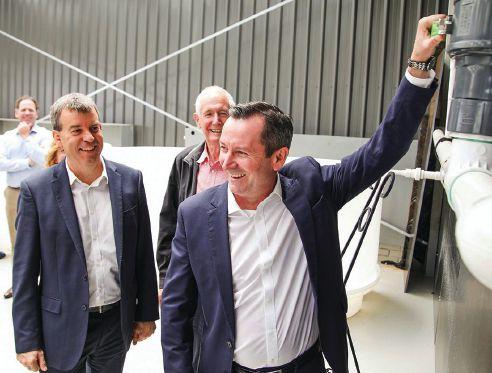
Premier Mark McGowan and Fisheries Minister Dave Kelly opened the new shellfish hatchery at Albany in Western Australia.
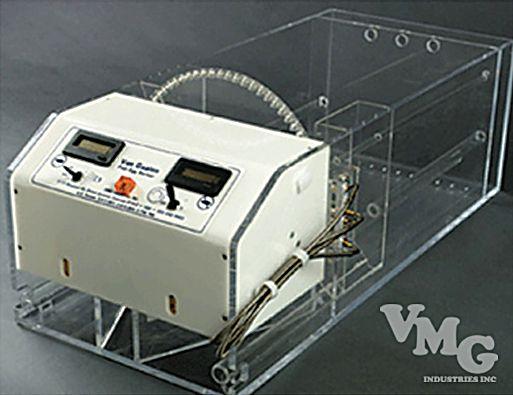
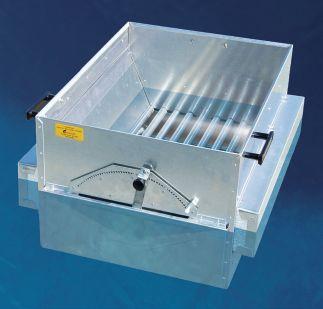
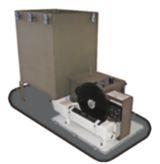
The Van Gaalen Fish Egg Sorter uses the most current technology to bring you an egg sorter that offers: variable egg sizes, speed, accuracy, egg counts, safety and versatility.
VMG Industries Inc. 2972 Bellmeade Way Longmont, CO 80503 USA
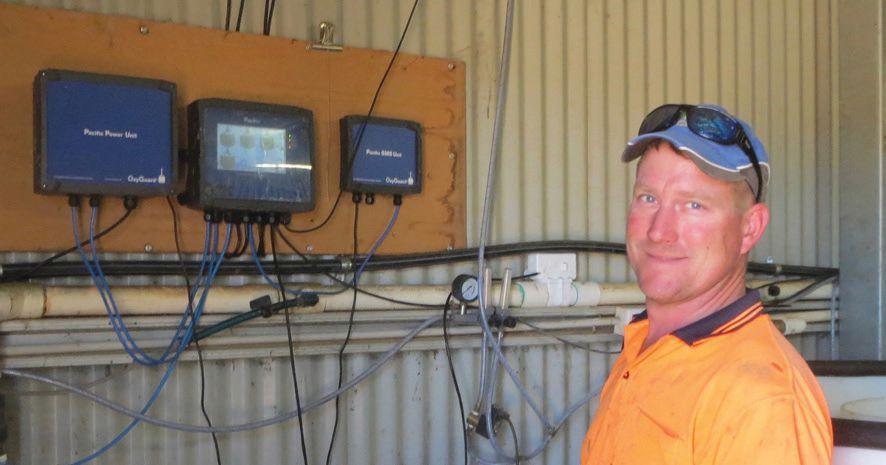
Volunteers at the Kokish River Salmon Hatchery on British Columbia’s northern Vancouver Island are sleeping a little easier these days. Marine Harvest Canada donated the cost of installing an alarm system to alert volunteers if there is an interruption in the power.
Two years ago the hatchery lost 50,000 fish (half their juvenile coho) when the power went out and nobody knew. The outage knocked out the pump sending oxygenated water to the fish.
Rob Engel explained that the new automatic alarm system turns on immediately the pumping system goes down, dialing through a list of eight volunteers’ telephone numbers.
The alarm, which Engel estimated to have cost as much as $7,000 was installed at cost by Port Hardy’s K&K Electric company.
Currently the hatchery has about 135,000 coho fry so the donation couldn’t have come at a better time.
Hatchery and research centre to enhance farming efforts
Construction of a freshwater fish farming research centre – a first for Mynamar – is nearing completion.
The Korean International Cooperation Agency (KOICA), which constructed the centre, signed an agreement with the Myanmar Department of Fisheries in 2015 to build the nation’s first freshwater fish breeding research centre. Thayet Gone was selected as a suitable site and construction began in August 2016. The projected cost was $4.4 million (USD).
The centre will focus on freshwater fish breeding. Apparently, at present, Myanmar fish breeders and growers are still breeding fish by placing eggs into a lake. The centre will also carry out research to find a fish-farming system compatible with Myanmar’s unique environment.
Currently, the lake used for breeding and farming fish in the Mandalay area extends to almost 7,000 acres, with more than 270 associated ponds. The lack of technology means that the number of fish produced is far short of demand from the local population so fish is imported. The new centre and hatchery should go a long way towards helping farmers address this deficit.
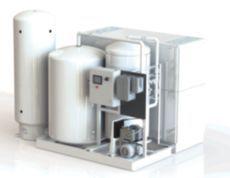
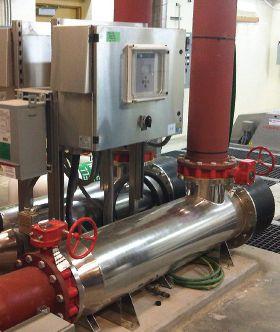
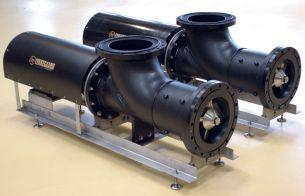
- Non-Corrosive schedule 80 PVC reactor bodies are stronger and handle higher internal pressures compared to HDPE and Polypropylene. Schedule 80 reactor bodies are seawater safe and will not corrode in harsh environments, unlike stainless steel
- Single end glassware access makes for easy maintenance when replacing lamps and quartz sleeves
- Thermoplastic or Fiberglass NEMA 12 Power supply enclosures with Standard HMI control package or optional HMI Pro Series control package.
- Electronic ballasts matched to the performance of the specific lamp for optimal UV-C output and longest useful lamp life
- Standard Over Temperature Safety Cutoff Switch thermally protects reactor when water temperature reaches 120 Degrees F
- American made low pressure amalgam (ALH/AUH models) and high output (HLH/HUH models) lamps are rated 80% efficient at the end of 12,000 hours
Easy, peasy sunshade
ish reared in sunny, outdoor climates can suffer from the effects of severe sunburn. And although water generally provides a good barrier against most wavelengths of ultra-violet light, middle and long U-V wavelengths can penetrate water, particularly in water of high clarity.
Water with even moderate turbidity from suspended solids, or discoloration from dissolved organic substances, usually provides an excellent barrier against all U-V wavelengths, and sunburn will not be a problem. However, if you are using a high clarity water source, like groundwater, and have an outdoor facility, your fish may susceptible to sunburn.
Fish with sunburn develop skin sores in the areas exposed most directly to the sun, the top of the head, dorsal fin and upper back, and the top of the caudal fin. The affected skin first turns a whitish color and eventually becomes patchy, thickened and creamy colored. Fins become frayed with a rough, ragged margin, and as the sores develop, the skin flakes off leaving a whitish or pink colored ulcer exposing the underlying cartilage or muscle.
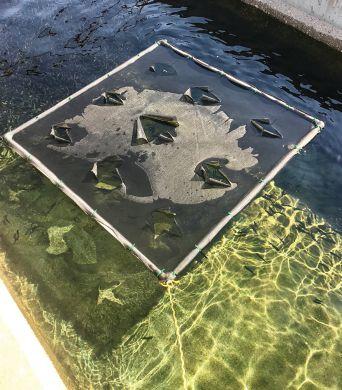
An easy solution, says Adam Anton, a Fish and Wildlife Technician at Feather River Hatchery in California, is to build a simple sunshade as shown in the accompanying photo. The material list is simple, just some 1-inch PVC pipe, elbows, PVC glue, shade cloth and zip ties. The holes on top of the shade cloth are so fish won’t get trapped if they jump on top of it.
SOUNDING THE ALARM
MYNAMAR
Simple raceway sunshade. The holes on top are so fish won’t get trapped if they jump on top of the shade cloth.
UK conservation hatchery gives helping hand to endangered Pearl Mussel
The freshwater pearl mussel is under threat of extinction across England with most remaining populations under severe decline. Now, a new conservation project by the UK Environment Agency’s Kielder Salmon Centre is using sea trout to help the mussels flourish once again.
BY BONNIE WAYCOTT
ne of the most ancient invertebrates on the planet, the freshwater pearl mussel (Margaritifera margaritifera), was common in rivers across the United Kingdom. Now, however, pollution and historical overfishing have almost led to its extinction.
NATURAL BAROMETER
The pearl mussel is the barometer of river water health and a strong indicator of high quality river systems. Each mussel filters 50 to 70 litres of water each day. This improves habitat quality and increases ecological diversity, including the number of juvenile trout and salmon. If pearl mussels are declining, then so too are conditions in the river for these delicate invertebrates.
In 2017, a new conservation project was established by the UK Environment Agency’s Kielder Salmon Centre in Northumberland to enable pearl mussel larvae to attach to the gills of sea trout, replicating their natural life cycle in the wild. This life cycle is complex, as the larvae require a host fish like salmon or sea trout during the first stage of their development. They are inhaled by the host
and, as water passes over the host’s gills, they snap shut onto the gill filaments, become encysted within the gill tissue and grow there until they drop off.
CHALLENGING LIFE STAGE
Juvenile mussels were first successfully attached to the gills of trout at Kielder Salmon Centre in August 2010. In April 2011, the trout were stocked in areas of the river thought to be most suitable for the mussels, before the mussels detached from the fish.
This very early life stage once they leave the fish is thought to be the most challenging, so in 2017 the centre collected the mussels as they detached, hoping that they could be reared through this critical phase.
NATURAL WATER SOURCE
A tributary at the top of the River Tyne supplies natural unfiltered water such as they would experience in the wild. It supplies 55 rearing and ova incubation tanks, which vary between 1 and 9m in diameter.
“This enables us to hold fish at different life stages and origins,” said Kielder Salmon Centre Manager Richard
Bond. “We also give our fish organic standard diets with ingredients from sustainable resources, and naturally occurring aquatic invertebrates that come through the hatchery in the water supply. This offers the correct level of nutrients, vitamins and minerals.”
STEADY AS SHE GOES
Having developed techniques to attach pearl mussel larvae onto trout gills, the conservation project is progressing smoothly. Kielder Salmon Centre holds adult mussels in its artificial streambed. Eggs are then hatched inside female mussels within the streambed, after which the females expel the larvae, which drifts downstream to tanks at the centre that contain trout. A proportion of the larvae is then inhaled by the trout and encysts on the gills before dropping off naturally. Several thousand are collected from the centre’s trout tanks to be looked after.
“By developing our understanding and using new, innovative techniques, we were able to collect these tiny juveniles,” said Bond. “Survival rates are low, but we now have over a thousand to care for. That’s fantastic, considering how difficult it is to rear these mussels. Looking after them, monitoring their progress and learning more about their survival, are vital tasks going forward.”
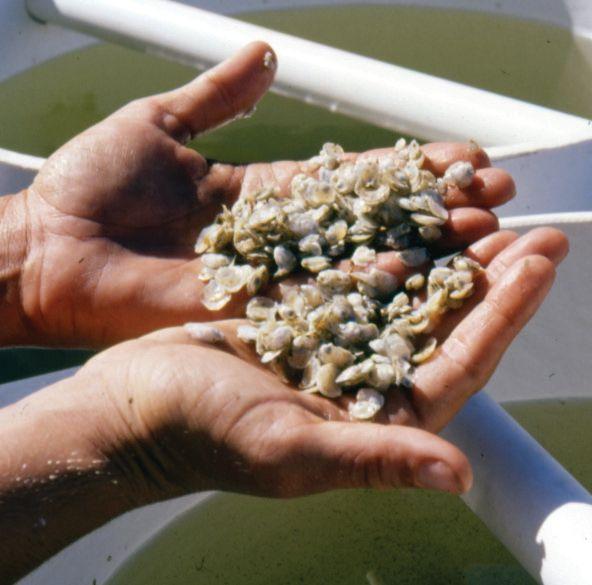
The centre collects the tiny mussels, which are just 0.3mm, in a special filter at the outlet of the tanks where trout containing pearl mussel larvae (known as Glochidia) are held.
After being washed and sorted, the mussels are counted and up to 200 are transferred to small holding containers that carry two litres of water. The water is conditioned, and two types of algal culture are added as a food supply. The water and mussels are removed from the containers at least every two days. After washing the containers and rinsing the mussels, health checks are conducted and a new batch of food added before the mussels are returned to the containers.
HEALTHY RIVERS
Rivers in the UK are now at their healthiest in 20 years thanks to considerable investment. Improvements in the River Tyne and its tributaries have created better conditions for natural breeding and a flourishing ecology.
As for the pearl mussels, the process is still challenging and complex. Even at 15 months, they are only 3mm long and need plenty of care to ensure that as many as possible survive. However, the staff at Kielder are optimistic.
“Although there is much to learn, we’re delighted with our progress so far,” said Richard. “We’re increasingly confident that early next year we can consider releasing some juvenile mussels back to carefully chosen sites in the River Tyne for the first time. We’ve definitely created the foundation for the future.”
Sea trout with pearl mussel larvae attached to their gills are transported to Northumberland rivers where the larvae detach from the fish to begin the rest of their life cycle.
BY GEORGE S. LOCKWOOD
A Integrated Multi-Trophic Aquaculture and the Future of Food
ccording to the United Nations, another 2.9 billion people must be fed in the world by the year 2050. In addition, the rising middle class in developing countries is creating new demand for meat protein.
It is the conclusion of the Bren School of Environmental Science and Management (University of California at Santa Barbara) that to produce this additional food, conventional terrestrial agriculture would generate unacceptable amounts of greenhouse gasses and would require more fresh water than is available. New land the size of South America would be necessary. For these reasons, terrestrial agriculture will not be able to provide the amounts of meat protein that will be demanded. What’s more, the world capture fisheries are at or above their sustainable limits.
Dean Steve Gaines of the Bren School reports that properly managed aquaculture produces meat protein with the least environmental impact of any other form of meat production. Scientists at Bren have also found that the amount of ocean surface required to produce sufficient amounts of farmed fish is not great, about equivalent to the area of Lake Michigan in the United States. Using conventional marine aquaculture, ocean space would not be a limitation.
Unfortunately, growth of conventional aquaculture now faces serious regulatory and capital constraints. There will also be limits on the amount of protein inputs necessary for this new production of meat protein. Where will the protein come from to feed all the
additional fish that will be necessary to feed all the new people? And, where will the financial capital come from to build the facilities to produce this fish and shellfish?
THE NEED FOR PROTEIN
Global consumption of meat protein is 63 kg per capita. At this level of consumption, we will need to produce 200 million metric tons more edible fish protein to feed the world population in just over thirty years. Assuming a 50% fillet yield from each fish, an annual production of 400 million metric tons more fish will be required. Present aquaculture systems are not efficient. With an average protein retention of 20% for many aquaculture species, two billion metric tons more plant protein will be needed to feed this amount of fish. Assuming 50% protein in these grain products, the new amount of plant protein required will be four billion metric tons more than is now produced.
If advances in fish and shellfish genetics and the science of fish nutrition were to allow grain to supply all necessary protein in fish feeds to fill this need, it is unlikely that terrestrial agriculture can produce sufficient amounts of grain. Global grain production in 2012 was 2.2 billion metric tons and production increases at an average rate of 1.3% per year. If this rate of growth continues over the next 32 years, world grain production would become 3.7 billion metric tons, or 1.5 billion metric tons more than now. Even with these favorable assumptions, we will fall far short of the required four billion metric tons of grain needed. These approximate calculations are likely to be optimistic.
To fill the global need for additional meat protein, aquaculture will have to:
• Produce seafood protein from lower amounts of plant protein through improvements in overall nutrient retention,
• Lower costs of production so that consumer prices for seafood compete with other meats , and
• Reduce greenhouse gas emissions (including transportation) to acceptable levels.
THE INTEGRATED SOLUTION
In recent years there has been considerable attention devoted to the concept of Integrated Multi-Trophic Aquaculture (IMTA). IMTA is where systems are designed so that metabolic products of species being cultured become nutrients for other species in the system. For example, dissolved ammonia and carbon dioxide released from metabolizing aquatic animals are consumed by aquatic plants located nearby. These plants then become commercial crops for sale, or become feed for aquatic animals within the system. This mimics nature.
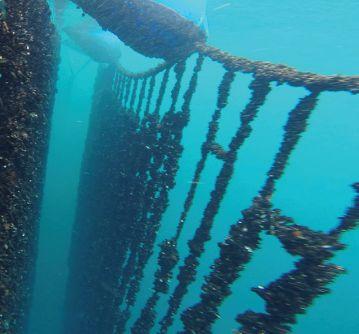
In IMTA, nutrients are recycled in a system that contains multiple species of plants and animals. With nutrient recycling there is higher utilization of feed inputs. For example, mussels and macro-algae grown adjacent to salmon net pens capture suspended solids and dissolved nutrients to produce two more valuable crops.
Further refining this concept, multiple species of plants and animals are grown in a land-based contained system where the plants that produce protein are fed to fish and shellfish. Nutrients cycle back and forth. Protein retention then increases and a greater percentage of input nutrients are eventually exported from the system as valuable crops.
A conventional single animal aquaculture system with an assumed level of 20% protein retention will waste 80% of feed inputs to the environment. However, an IMTA system with 40% protein retention will waste only 60% of the feed inputs. As a result, the protein inputs to this new system will produce twice as much valuable meat as does the conventional system.
Likewise an IMTA system with 60% overall protein retention wastes only 40% of the feed inputs. For the same nutrient inputs as the conventional system, the IMTA system with 80% retention efficiency will further reduce waste. At this level of protein retention, the same amount of nutrient inputs into the system will produce four times as much meat protein.
If IMTA systems can be designed for 80% protein retention, the future global need for four billion metric tons of grain protein that is calculated earlier in this article can be reduced to one billion metric tons of grain. This is a profound difference of global importance.
PRICES MUST FALL
In order for consumers to afford this new amount of meat, total growing, processing and distribution costs for aquaculture products will have to decline to be close to other forms of meat protein such as beef, hogs and poultry. In most forms of aquaculture feed accounts for over half the cost of production. We cannot expect widespread consumption of aquaculture products with
the present price and cost structure.
In another hypothetical case, assuming that feed accounts for 75% of total production costs in a conventional single species system, and the total cost to grow a fish is $2.00 per pound farm-gate, feed costs would be $1.50 per pound. All other growing costs would be $0.50 per pound. In contrast, with an IMTA system providing 80% protein retention, overall feed costs would decrease to $0.375 per pound of fish produced and total costs would decline to $0.875 per pound of meat produced. This is a major cost reduction.
THE NEED FOR CAPITAL
In my recent book, Aquaculture: Will it rise to its potential to feed the world?, I roughly estimate that
the capital required to build aquaculture facilities, with associated feed milling, processing and other infrastructure, requires an average of $4.50 per kg of production capacity or $4,500 per metric ton. This capital cost may be higher or lower depending upon the species grown and the venue of the facility, but it is a useful assumption for this analysis.
For 400 million metric tons more annual fish production capacity estimated to be required, approximately $1.8 trillion of new capital will be required over the next 30 years. This is a rough approximation.
Over the next 30 years, this averages $60 billion each year. While this is a large amount of capital, it is a relatively small amount compared to the U.S. total domestic investment in plant and equipment that was $1.6 trillion in 2016. This number is for the U.S. economy and much of the capital required for new
aquaculture likely will be financed in foreign economies. While large, this amount of capital is not overwhelming.
* * *
Integrated multi-trophic systems are the future of food. It is our best chance to feed our rapidly growing global populations on limited amounts of plant protein and to do this in an economic and environmentally sustainable manner. My major concern is acquiring the capital required to make this happen.
As discussed in my book, most investment pools, such as venture capital and private equity, are not good fits for aquaculture development. First, their short term view is not compatible with building transforming enterprises. Second, their financial engineering of investments is not appropriate for aquaculture. Thirdly, it is obvious to me that the managers of most pools, including those of large food-based corporations that publically state that they want to be the “Future of Food,” either lack the interest, or do not have the vision and ability to understand IMTA.
As a seasoned aquaculture scientist, engineer, entrepreneur, chief executive and investor my money is exclusively invested in contained, land based, integrated multi-trophic aquaculture. IMTA is positioned to grow manifold to fill global food needs since it: (1) minimizes limited feed inputs, (2) substantially lowers production costs, and (3) preserves our planet.
In my mind, single species aquaculture systems of all kinds have limited prospects while integrated multitrophic aquaculture is the future of food. IMTA will bring a powerful change to aquaculture and for the world.
Over the past forty years, George Lockwood has been an aquaculture pioneer and industry leader. During this time he developed Ocean Farms of Hawaii where he grew abalone, oysters, salmon and sea urchins in an integrated multi-trophic aquaculture system.
The science of salmon smolt skin
Norwegian researchers look into the “living sensor” to assess health and welfare
Ateam of researchers at Nofima (The Norwegian Institute of Food, Fisheries and Aquaculture Research)’s Centre for Closed-Containment Aquaculture (CtrlAQUA) focused on skin to assess the health and welfare of salmon post-smolts.
“We have seen skin behave almost like a living sensor and be used actively to see what is happening to fish related to health and welfare,” said Lill-Heidi Johansen, head of the Department of Preventive Fish Health, speaking at the Aquaculture Innovation Workshop in Vancouver last fall.
FISH ROBUSTNESS
In The Barrier, a project of the department, researchers work to understand mechanisms that enhance fish robustness. This includes focus on mucus barrier and skin integrity, gene regulation, immune activity and microbial interactions.
These will then enable them “to develop innovations to secure strong mucosal tissue barriers of post-smolts in closed-containment aquaculture systems.
“Being in direct contact with the water, the fish skin has important roles in defense and protection against pathogens.”
One of the initial stages studied the effects of scale loss and skin barrier function, say, if the fish gets a deeper wound.
“ This was done first experimentally by removing scales, mucus and the layers below the scales. We looked what happened to the permeability of the skin if these layers were lost,” she said.
They saw that the scale, epidermis and mucus are the main barrier for the fish.
“Scale-loss is a sign of impaired skin-barrier function. And loss of this main barrier function is likely to increase susceptibility to pathogens.”
SMOLT GROUPS
seawater transfer,” she said.
Gene expression analysis showed increased cutaneous secretion and gradually enforced protection against pathogens.
The development of immune competence and structural integrity of post-smolt skin after the transfer to seawater gave them a better understanding of the increased susceptibility to pathogens associated with welfare problems and losses of post-smolts.
It also emphasized the importance of environmental controls.
“Rearing facilities with environmental controls/ barriers that restrict fish pathogens, especially immunosuppressed periods, may be key to enhanced animal welfare and overall production performance,” she said.
OPTIMAL WATER VELOCITY
Johansen also discussed another preventive project, Task Cardio, which sought to find the optimal water velocity for post-smolts to promote cardiac health.
One large-scale smolt trial was run from 2016 to 2017 at Marine Harvest.
“We looked at two water speeds: Low was 0.6 body length per second while high was 1.0 body length per second,” she said.
Two different time-points were monitored.
While the results showed that the high group had a significant increase in growth and body weight, she said there were issues with the experiment.
“Yes, we see higher water speeds have the potential to increase the growth rate of smolts. But differences in replicates show that finding the optimal speed might be challenging. And, also, higher water speeds may not have the positive effects that we imagine,” she said.
“This is just one large-scale study so obviously, more research is needed to confirm the results and optimize the water speed.”
The vessel is designed to take on fry at 30–40 grams and rear them to 500 grams when they would be transferred to traditional sea cages.
NORWAY
Offshore Tank Fleet would use RAS to produce large-size smolts
The Wilsgård Offshore Tank Fleet (OTF) is a barge-based smolt production concept under development by Norway’s Wilsgård Fiskeoppdrett AS for use in Norwegian fjords.
A key part of the design is a recirculating aquaculture system (RAS) explains managing director Fredd Wilsgård. “The OTF is 100% closed and has no emissions. That means that we clean all the water that comes in and we clean all the water that goes out.”
By cleaning the water that comes into the OTF, no unwanted organisms (bacteria, sea lice, etc) enter the production system. Also, the production water is cleaned and sterilised before it leaves the system. And it’s 100% secure against escapes.
Studies were also done on skin characteristics of salmon post-smolts reared in semi-closed containment systems and open systems.
Three salmon smolt groups in freshwater were distributed to different facilities in saltwater at different times of the year.
Sampling was conducted at one and four months after transfer. “Some over-all results showed that there were actually greater differences between the time points than between the systems,” she said.
“Using histology, we saw that epidermis thickened and the number of mucus cells increased with time after
Trials are currently being run for post-smolts to identify optimum water velocities prior to sea transfer in RAS and identify related positive effects on growth and welfare, such as growth rate, feed conversion rate and welfare scores.
They also want to see the range of training effects on the cardio-somatic index and muscle cellularity and on gill, skin, and blood parameters and the evaluation of stress response on the fish during these trials.
The trials will end in February 2018.
- Ruby Gonzalez
One of the goals of the OTF is site area optimization. Since the OTF cleans water coming in and going out of the system, it will neither be affected by nor affect the environment. As Wilsgård points out, “this means that you can establish larger OTFs, more OTFs and that they can be located in the same fjord. If you look at traditional area use at a site, 200 × 600 metres, you can place six OTFs in such an area and deliver large smolt at up to 70 traditional concessions.”
The OTF is designed to take on fry at 30–40 grams and rear them to 500 grams before the fish are transferred to traditional fjord-based cages for a period of about 12 months. Since the OTF takes fry into production, the area required on land is also significantly reduced.
The company has applied for eleven development licenses, with a total maximum allowed biomass of 8580 tonnes for the OTF.
- Cathryn Primrose-Mathisen
Skin behaves almost like a living sensor and can be used to see what is happening to fish in relation to health and welfare.
(Photo: Terje Aamodt, Nofima)
The
juvenile survival, a good spawning habitat for the adults, and being that it’s in that upper reach, some pretty darn good water quality while the eggs are in the gravel,” says Setka. “Having that clean gravel, the appropriately-sized gravel, creates a stasis within the gravel pocket that allows water to flow through, bring oxygen to the eggs, and also take away any metabolic waste products from the eggs.”
BETTER RELEASE SITES
Another key effort has been a three year experiment using different methods of transporting smolts to favourable release sites. Some salmon were released into waters near the Mokelumne Hatchery, while others were transferred by barge to locations in the Golden Gate, a strait which connects the San Francisco Bay with the Pacific Ocean. The salmon that were barged out to the favourable locations survived and returned at a much high rate than those that were released in the central delta where the hatchery is located.
Setka says that this is one of the key issues that the hatchery has focused on in the past decade – the central delta is far from ideal for juvenile fish for a variety of reasons.
“We started focusing on ways where we can get juvenile fish around that central delta point, whether that’s by trucking or in
this case barging,” says Setka.
STRESS REDUCTION
As barging the salmon to preferred release areas would make the transition to saltwater more abrupt, the salmon were given a transfer diet containing more salt.
“When you’re trucking them without giving them time to acclimate, sometimes they can go through stressful periods which can impact survival,” he added. “We did some experiments with this transfer feed and it appears to have not only lowered the stress they go through, but helped them get ready to live in saltwater. Based on our initial studies that we did
with a few groups it looks like it worked quite well. Now, all the fish are getting that feed.”
PULSING THE FLOW
In 2008, Central Valley salmon stock collapsed and very few fish returned to the valley, which Setka says was an eye-opener for river managers. In response, they looked into what they could do to improve migration up the river, using pulse flows. The key is to change the flow of the river enough to cue the fish to move.
“This year we were able to get some pulses out in late September and continue those weekly, well into November,” says
Setka. “That really seems to have made a big difference in terms of getting our fish back to the Mokelumne and reducing the number of strays.”
Those efforts were also bolstered by the Delta Cross Channel, operated by the US Bureau of Reclamation, which diverts water from the Sacramento River to the interior delta to improve water quality for municipal and farming usage. In response to this year’s drought and stray rate issues for the Colden Hatchery in the Sacramento Valley, Setka says that the cross channel was closed five days a week throughout the migration season.
“For us, this also improves the cue for Mokelumne fish to enter the Mokelumne
LARVIVA ProStar t™ is the only ear ly weaning diet with Bactocell®, an unique probiotic developed by Lallemand and approved by the European Commission for its documented effect in reducing the occur rence of vertebral deformities in fish larvae and fry.
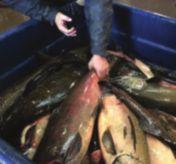
An employee at the Mokelumne River Fish Hatchery inspects a tote of spawners which returned to the river in record numbers in late 2017.
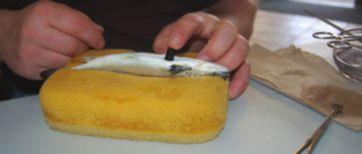
EBMUD Fisheries and Wildlife Biologist Ed Rible holds an alevin, laid by adult Chinook Salmon during the 2017-18 fall return.
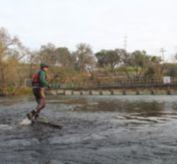
EBMUD Fisheries and Wildlife Biologist Robyn Bilski conducts an adult carcass survey along the banks of the Mokelumne River. The carcass count occurs in the final days of the yearly fall Chinook salmon return.
system and not stray up through the cross channel and into the Sacramento and America Rivers,” says Setka. “Those two work together and we’ve shown in experimental closures that we’ve been able to arrange with the Bureau that it definitely works for us.”
NEW RELEASE STRATEGY
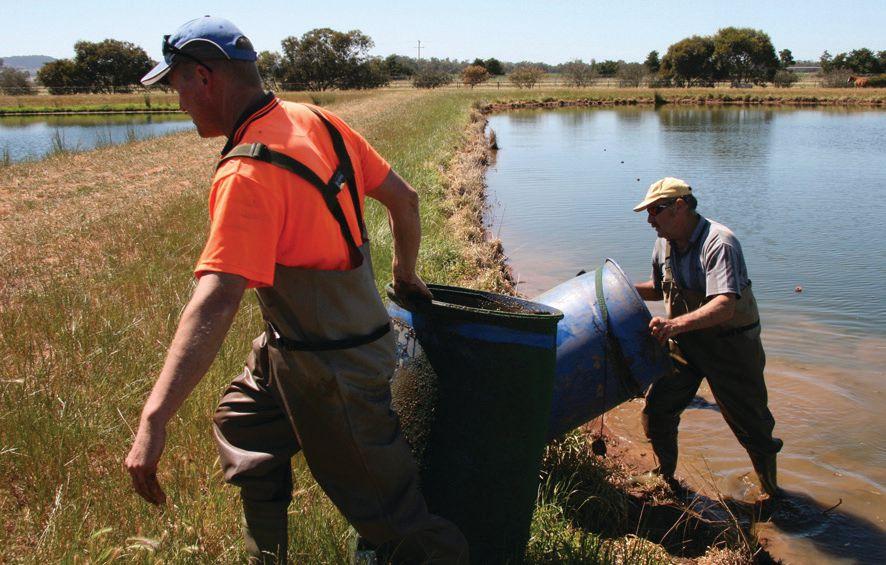
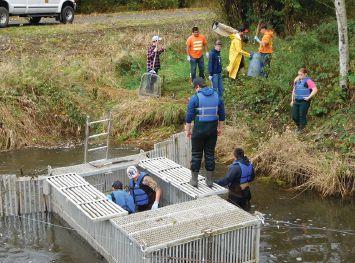
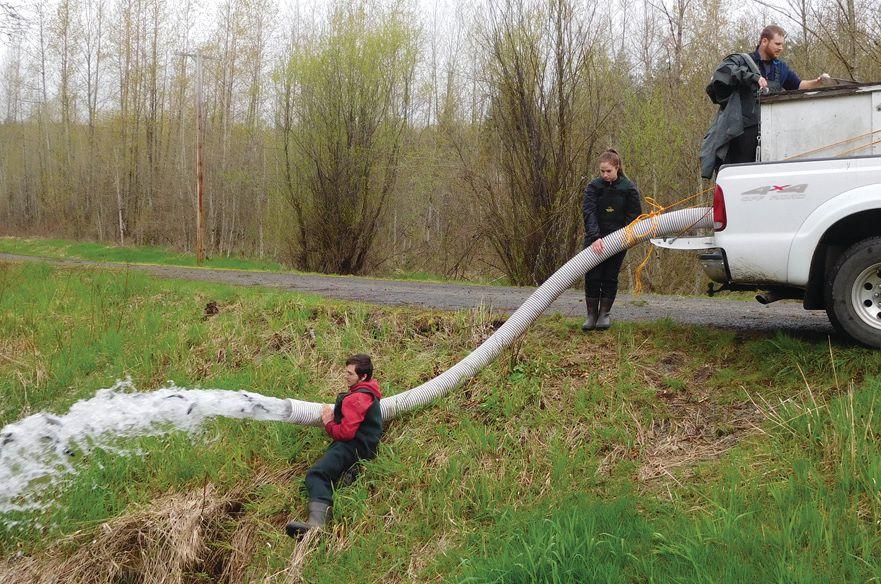
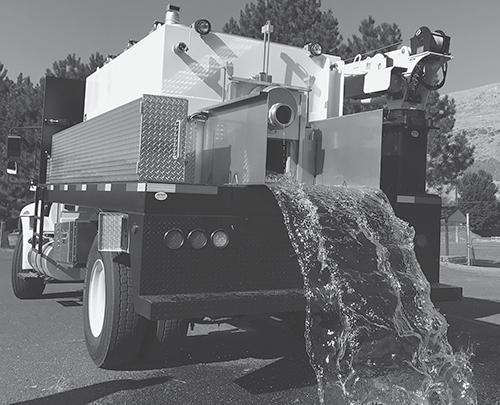
The other key effort which contributed to this year’s high return was a change in release method. Prior to 2008 they would drive a truck down to the water and dump
the fish in through a pipe. Setka says that this method did more favours for predators in the area than for the fish they were depositing.
“We shifted over to a net pen release strategy, where the truck releases the fish into a net pen. Those fish stay in there anywhere from an hour to two hours and get a chance to acclimate. That certainly improved things, but if we go more than three consecutive days of releases into that net pen, the predators will ultimately clue in. So we don’t do anything more than three consecutive days of releases before
Selective breeding for Omega 3s
Norwegian research has shown that some salmon families have higher levels of healthy fatty acids in their muscle tissue than others.
BY ERICH LUENING
rom cancer prevention, to promoting infant health and development, and inhibiting cardio vascular disease, essential Omega 3 fatty acids have proven to be nutrient behemoths in human health, and researchers in Norway believe they can raise salmon bred to be teeming with the essential fatty acids.
However, over the last decade the level of these fatty acids in farmed salmon fillets has decreased owing to the substitution of fish oil with vegetable oil in the fish feed. Fortunately, salmon have the capacity to convert fatty acids from plants into EPA and DHA, according to researchers at Norwegian breeding and genetics giant Nofima AS.
While feed is the largest factor determining the level of EPA and DHA in the fillet, there is evidence that genetics also plays a role. Previous research has shown that some salmon families have higher levels of the healthy fatty acids in their muscle tissue than others, suggesting there is potential in using selective breeding as a tool to increase levels of omega-3 in Atlantic salmon muscle.
“Our research has shown that the individual omega-3 fatty acids have different heritability, as well as different correlations to other important production traits,” said Siri Storteig Horn, a PhD researcher at Nofima conducting the research. “All the major fatty acids in the muscle showed a certain degree of heritability. DHA was the omega-3 fatty acid with the highest heritability (0.26), proving to be the best trait for selection. EPA had a low heritability (0.09).”
Horn said that they’ve estimated the heritability of individual omega-3 fatty acids and their relationships to lipid deposition traits and other traits of the breeding goals (carcass, quality and disease).
“This is key to predicting the consequences of selection for higher levels of healthy omega-3, and is important information for breeders if they want to implement selection for this trait,” she added.
GENE IDENTITY
Currently Horn is working on identifying the genes associated with increased omega-3
we take time off.”
Setka also credits a near-record year of rainfall in the area with helping the return numbers. Going forward, he says they will continue to work on improving their processes, ensuring that their release strategies and other efforts are appropriate. And they will ensure their efforts evolve over time as necessary.
“As science gets better, as the knowledge base grows, we continue to make changes,” says Setka. “I think Mokelumne is just one example of what you can do when you put those efforts into that.”
content in salmon muscle.
“This will increase the understanding of the biological processes underlying the trait, as well as improve selection accuracy by allowing marker-based selection,” she said. Should this prove viable, salmon breeders can implement marker-based selection for healthy omega-3 and produce a salmon with higher nutritional value to consumers.
Ultimately, Nofima wants to see if it is possible to increase the salmon’s natural capacity to convert short-chained omega-3 form plant oil into EPA and DHA through selective breeding, and in this way stop the decline in omega-3 levels in farmed salmon fillets.
To achieve this, they’re aiming at increasing the understanding of which biological processes are determining the level of healthy omega-3 fatty acids in salmon muscle.
Horn said breeding and genetics is at the very foundation of successful salmon farming and will continue to meet future challenges facing the industry.
•
•
While feed is the largest factor determining the level of EPA and DHA in the fillet, there is strong evidence that genetics also plays a role.
The record high salmon returns are attributed to a number of projects undertaken in the area including river restoration, barging salmon to preferred release areas, and adjusting river flows, bolstered by a season of heavy rains.
Extended drought to blame for poor returns at California hatchery UPDATE Alaska hatchery ramps up king crab project
alifornia salmon hatchery managers likely gave a well deserved sigh of relief when record winter rains of 2016/17 ended a five year drought and restored flows to the state’s salmon producing rivers.
But the legacy of those drought years continues to haunt them, as poor adult returns this fall have reduced the egg production goals at Coleman hatchery, the states largest producer of Chinook fry, by half, according to Sacramento area media.
Coleman aims for 12 million smolts to release each spring into Battle creek, a tributary of the Sacramento river. This year, it will be around six million. Poor adult returns to their natal stream, prevented staff from collecting and fertilizing enough eggs.
However, there were plenty of Chinook around the California Central valley last fall, enough to provide a commercial and sports fishery, and other hatcheries met and exceeded their goals, but the Coleman fish just didn’t come straight home. Managers say that giving smolts a ride down river in the spring, in response to past drought conditions, is to blame.
Hatchery staff were able to collect sufficient eggs and sperm to produce fry on target during the drought years. But spring river conditions in 2014 and 2015 were described as “abysmal”. Warm water temperatures and low river levels could harm the freshly released smolts and increase the likely hood of predation, so in those
years they were pumped into tanker trucks and driven the 280 miles down stream to acclimatization pens at the mouth of the Sacramento river. This means that they missed the normal “river imprinting” process and that has disoriented the fish that attempted to find their way home this fall. Historical returns to the Coleman are around 143,000 adult fish. Last fall saw merely 3,000. That was only enough to collect and fertilize about four million eggs. But staff were able to round up some of the missing brethren. Wire tags indicated that many of the strays ended up at Nimbus hatchery on the America River, another branch of the Sacramento, and they gave up another two million eggs for Coleman production.
In an effort to avoid mixing genetic strains, US Fish and Wildlife Service officials declined to bring in fish from other watersheds to increase Coleman numbers.
- Tom Walker
The Alutiiq Pride Shellfish Hatchery and the NOAA Fisheries Lab in Kodiak are partnering again for the final experimental release of juvenile red king crab.
This has been an eight-year project with a coalition of industry and community groups - Chugach Regional Resources Commission, University of Alaska, NOAA Fisheries, all part of the Alaska King Crab Research, Rehabilitation and Biology program dedicated to king crab enhancement. The goal of the project is to see if hatchery produced king crab can be used to bring back localized crab fisheries in regions not fished for over 30 years.
“We think we are ready for ramping this up beyond the experimental phase,” said Jeff Hetrick, director of the hatchery.
The hatchery contracts Kodiak fishermen to collect broodstock from Alitak Bay off the southern tip of Kodiak Island and transport them to Kodiak for acclimation and eventually shipment to the Shellfish Hatchery in Seward.
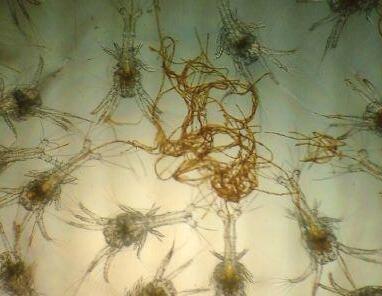
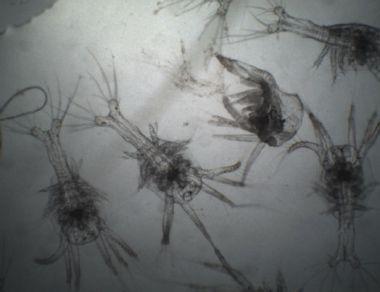
The ovigerous (egg bearing) female crabs are held throughout the winter in tanks until they begin to release their larvae in March. Each female has approximately 150,000 larvae. The crab larvae are
pooled for genetic diversity and fed a diet developed at the hatchery. The crabs go through a series of metamorphological changes over about two months after which they reach their adult form at about 3 mm.
“We feel comfortable getting 30% survival from the hatchery throughout stocking,” Hetrick said. “The crab larvae and early juveniles perform very well in the hatchery, but once they reach the second juvenile stage they are extremely cannibalistic.”
To mitigate the cannibalistic tendencies the hatchery provides habitat in which the crabs can hide and they are fed to satiation, but Hetrick notes that at each molt the cannibalism is an issue they have to address.
The juveniles are shipped to Kodiak where the NOAA staff plants out the crabs in designated plots.
Inactivated vaccine, vibriosis and pasteurellosis in sea bass, in injectable emulsion.
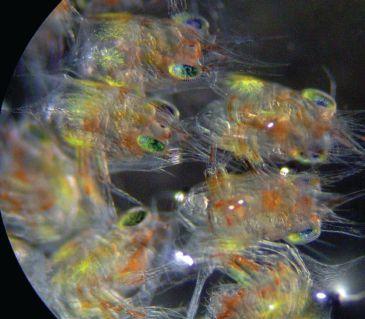
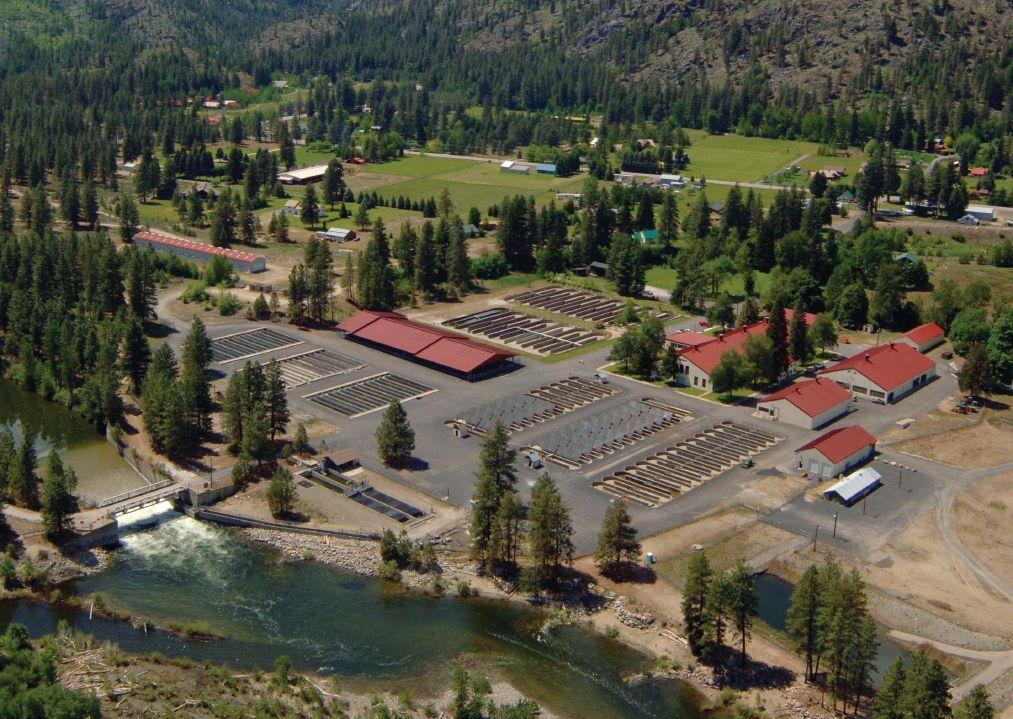
Old barrier weir at Coleman National Fish Hatchery. Red king crab larvae.
RAS Is For Girls continued from cover
to preserve their genetic diversity. In the early 1990s I remember learning about Chinook salmon known as “sneakers” in the wild. These are a very small percentage of males which sometimes stay in freshwater instead of going to sea. They mature at 50 grams or so. When the sea run Chinook return to spawn and a big female starts releasing eggs, the little 50 g sneaker darts in to fertilize the eggs before the male that is 500 times bigger. Genius. For Atlantic salmon, some males mature a year or even two years earlier than their cohorts.
ARRESTED DEVELOPMENT
Though many factors likely play a role in determining the timing of maturation in salmonids, four significant factors are genetics, temperature, photoperiod, and sex. Longer term breeding programs can decrease the percentage of early maturing fish. Farmers growing salmon in RAS can work with their egg suppliers to incorporate that selection into their genetic breeding programs. When considering possible shorter term solutions, by controlling the other three factors (temperature, photoperiod, and sex), early maturation can be minimized or eliminated in RAS. Here are the three key options:
• Temperature - Lower temperature can help, and in RAS, any temperature can be set; however, the farmer must be aware of the risk of compromising growth by lowering temperature. At the Aquaculture Innovation Workshop Garry Ullstrom from Kuterra described their RAS for Atlantic salmon grow-out in British Columbia: Early production cohorts had maturation rates of more than 10%. They were able to decrease that rate down to 2.3% by changing three things: 1) decreasing the culture temperature from 15ºC to 13ºC for part of the production cycle; 2) decreasing water turbidity which may have allowed for better photoperiod control; and 3) restricting feeding.
• Photoperiod - Net pen salmon farmers use lighting over the winter to reduce maturation. For RAS grow-out, studies still need to be done to optimize photoperiod. At the workshop, Colin Brauner from the University of British Columbia presented results on the effects of photoperiod and salinity on maturation in both Atlantic salmon and coho salmon grown in RAS. His group found that after growing Atlantic salmon in RAS for 10 months from smolt, maturation was 25 - 30% using 24 hour lighting. They were able to significantly reduce that by using a 12:12 photoperiod. Salinity (2.5, 5, 10, 30 ppt) did not impact maturation. With the same culture conditions, coho maturation was 1 - 1.7% using 24 hour lights and zero under a 12:12 photoperiod. Note that the coho were all females and feeding was restricted in both trials.
• Sex control -Trials producing monosex female salmonid populations were first carried out in the 1970s using several species including rainbow trout, chinook, coho, and Atlantic salmon. Female populations may solve the early maturation problem for Atlantic salmon grown out in RAS, though owing to limited availability of monosex female stock, this solution is yet to be realized.
For coho, all-females are already being cultured in RAS with no early maturation. . . or maybe it’s all early maturation: With all-female coho using optimal temperature and photoperiod, the entire population can be pushed to reach harvest size and subsequently mature just 18 - 20 months from first feeding. Essentially, all of the females are triggered to mature a year early (two year life cycle instead of three). Coho have a strong correlation between growth and maturation, where the fish that trigger to mature grow significantly faster than those that will mature a year later. In this case, it can be fruitful for the farmer to delay harvest until the meat and roe together are at peak value.
My recommendation for salmon grow-out in RAS would be to produce only monosex female populations
and use a temperature and photoperiod profile that will allow you to control when the fish mature. I suppose that I could have added “reduce feeding” as another factor that controls maturation, but I hope that the industry can fine-tune the other facts and avoid that one. One thing that is clear is that much more research needs to be carried out before we understand optimal culture conditions for salmonids in RAS.
Justin Henry is the former general manager of Northern Divine Aquafarms, a sturgeon and salmon RAS in British Columbia, Canada. He now heads up Henry Aquaculture Consult Inc, an international advisory and consulting service for the aquaculture industry. He can be reached at: jhenry@aquacultureconsult.com
Our Hatchery Pack products have been continuously developed and are characterized by a high degree of
The formulations for feed included in the Hatchery Pack are based on a high content of marine raw materials, including krill meal.
With proper environmental controls, coho can mature in RAS at the optimal time and size to harvest both meat and roe.
ASK US ABOUT
DESIGN • SERVICE • EQUIPMENT
Pentair Aquatic Eco-Systems designs sustainable Recirculating Aquaculture Systems (RAS), offering economic and production benefits including, biosecurity, scalable operations, excellent water quality and contaminant-free products. In addition, our RAS are also environmentally sustainable with a small water requirement and space footprint. For design consultation and services for your RAS project—ASK US!
COVER
invasive plant and fish species.
The continued allowance of Whitebait fishing has become a controversial decision across the country, with many calling for restrictions or a total ban of commercial harvesting.
HOPE FOR THE FUTURE
There is, however, hope for the Whitebait species of New Zealand. Located an hour north of Auckland, in the small town of Warkworth, Manāki Whitebait (a.k.a. New Zealand Premium Whitebait) is New Zealand’s first, and only, Whitebait farm.
The term Manāki is a Te Reo word that means to support, cherish or take care of others. The name is fitting. Originally built as a restoration hatchery, a small, dedicated team led by Paul Decker, Managing Director of the Mahurangi Technical Institute, began by cultivating all five species of Whitebait. The hatchery was constructed and initially funded using private donations. This model, however, is difficult to maintain in the long term. In the words of Decker, “we knew we can’t keep doing this, but we need to keep going.” They needed a new financial model.
COMMERCIAL PRODUCTION
Fortunately they discovered that one of the Whitebait species, the Giant Kōkopu, was an ideal candidate for commercial production. The Kōkopus viability stems mainly from its breeding characteristics. Unlike some of the other Whitebait species, which spawn only once after two years growth and then die, the Giant Kōkopu is capable of breeding year after year, with their oldest brood being 10 years old - this is nothing for a Giant Kōkopu, which can live for 30 years.
The Giant Kōkopu also offers a higher rate of fecundity than other species and responds well to artificial rearing environments, growing from hatch to larval harvest in only 12 weeks. A new model was born: they were going to rear Giant Kōkopu commercially to generate income for their restoration work.
This model was one that Kiwi investors could not resist. While all investors involved in the Giant Kōkopu commercial operation are Kiwis, of note is the heavy Māori interest. Whitebait is a culturally and historically important food for the Māori. Local and nearby Māori investment fund managers saw, in this model, the chance to profit while working to bolster wild Whitebait populations. This offers the benefit of allowing the long-standing cultural tradition of Whitebait collection to remain viable for future generations.
CLEAN RAS PRODUCTION
While technologically speaking Manāki is not breaking new ground in RAS, the hatchery offers a shining example of conservation-oriented rearing practices. They have been able to achieve commercial production without the use of synthetic inputs, either in the form of treatments or spawning inducers. This is born of the desire to avoid introducing foreign contaminants into local waterways via their restoration releases, and to allow the fish destined for wild re-stocking to remain as hearty and self-sufficient as possible.
The hatchery’s ability to avoid these inputs is due to its regimented cleaning routine.
“Clean and green is what we say...we do more cleaning than probably most places in the world” says Decker. This commitment to clean production has allowed them to begin the process of organic certification, which Decker believes they will achieve without issue. They’ve also become the suppliers to educational institutions such as the National Aquarium which seek to source their display fish as sustainably as possible.
WORKING BUSINESS MODEL
As a means of generating funds for restoration work, Manākis business model is working. The hatchery is currently doing several releases each year, including one release of 10,000 fish in Tawharanui National Park planned for May of this year. As more releases are conducted, interest from schools and environmental organizations in using
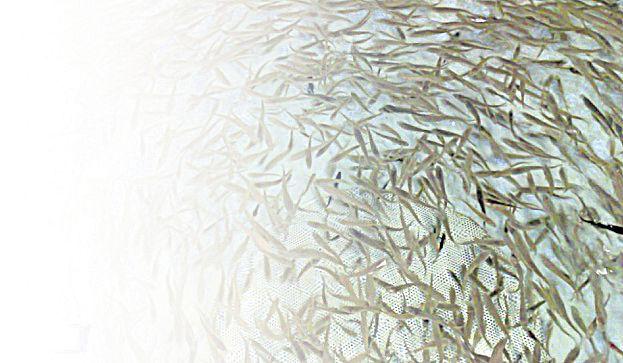
A closeup of Manāki Whitebait. Decker says, “you can see the freshness in them...they’re glistening.” (Photo: Manāki Whitebait).
their Whitebait in restoration projects is increasing. Decker foresees this trend continuing in the future.
The path to this point has not been without its challenges. Since it was the only Whitebait farm in the country, sourcing appropriate feed posed a problem. To rear efficiently, they had to switch from live to pelletized feed. Fortunately, their chief scientist, fish nutritionist Dr. Tagried Kurwie, was able to work with their feed producer to develop a Whitebait specific formulation, allowing them to achieve an FCR of 1.2:1. Culturing live feed for hatchlings, broods and stock earmarked for release still presents a challenge, as techs must learn the ins and outs of multiple culture techniques.
CHALLENGES
OVERCOME
In the early days the team at Manāki was also having trouble with certain environmental cues causing their stock to change to a darker colour. In a discerning marketplace that demands translucent to light coloured Whitebait, this was troubling. However, the team was able to determine what was causing this transition, and they have been able to sort out these issues.
Another great challenge has been keeping the saltwater system full. Being located about 5 km from the nearest saltwater, Manāki must regularly truck in salt water to keep the RAS system topped up.
One release-stock specific challenge has been developing a procedure for “wildizing” the fish meant for release. In the weeks leading up to their release, none of the staff can let themselves be seen over the tank. This is so that in the wild these fish will not associate humans with
feeding and will thus be as skittish and survival-oriented as their wild born counterparts.
Like any well-built operation, Manāki was determined to overcome these challenges because, at the end of the day, staff knew they had something special to offer the discerning public. In the words of Paul Decker, “everyone says it’s the best product they’ve ever tasted.” This is, in part, because they’re able to purge the fish before harvest.
PURGING THE ‘BAIT
Purged Whitebait offers a cleaner, purer taste without any of the unpleasant grittiness one can find in wild Whitebait. They’re also able to kill their harvest instantly and maintain the cold chain to market. The lack of stress response and short turn-around time between harvest and sale means the fish end up being the best looking on the market.
“You can see the freshness in them…they’re glistening,” says Decker. “They’re the sturgeon of the Pacific.”
Having proven to the investors that this can work, Decker and his team are looking toward a bright future. They are currently assessing sites for a new, modern facility. This is an important next step because within the next couple of years they hope to be producing 50-100 tons per year.
BARRIERS TO EXPORT
They are also working to remove barriers to increase exports. Currently, their product will occasionally be stopped during export because Whitebait is flagged as an endangered species. The team at Manāki is focused on ensuring these holdups are avoided.
They’re also hoping to increase international recognition of the delicious, high quality nature of their New Zealand Whitebait. In many other national markets, Whitebait is used a generic term for low quality white fish. Naming the company’s Whitebait Manāki is, in part, to help differentiate it, an approach comparable to that of the Malepeque Oyster growers.
With the lessons of the past in their back pocket and the vision of a new facility in their eyes, Decker and the team at Manāki Whitebait will continue to change the Whitebait market for the better.
Manāki Whitebait: continued from cover
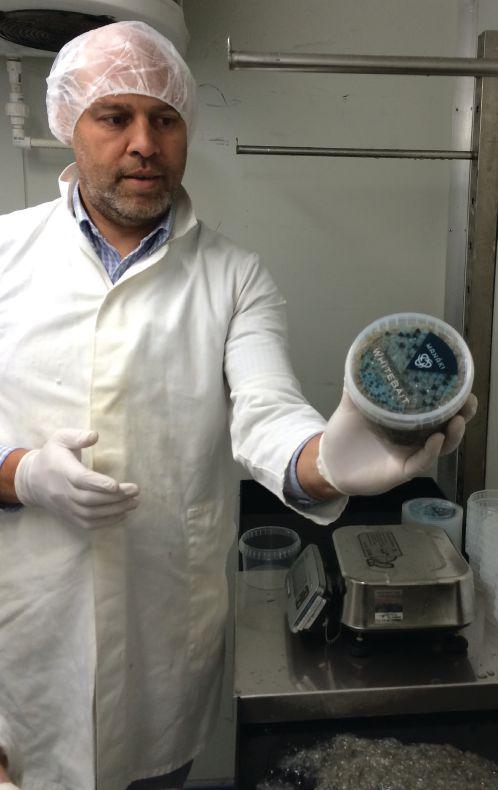
Manāki Whitebait CEO Jeremy Gardener with a half kilo container of Whitebait (Photo: Manāki Whitebait).
An adult giant Kōkopu (Photo: Manāki Whitebait).
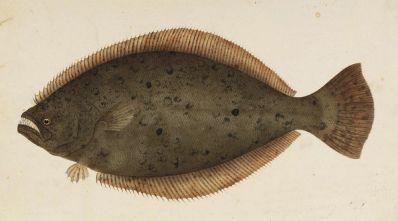
Dietary soy peptide protects juvenile Japanese flounder from heat stress
oy peptides (SP) can be used to enhance the immune response and survival of juvenile Japanese flounder (Paralichthys olivaceus) under heat stress, according to a recent study.
SSP, a soy protein enzymatic hydrolysate, contains bioactive substances that could be utilized as an immune-stimulating feed ingredient.
“Feed companies would greatly benefit from the study, as SP may now be a new ingredient source. Fish farmers may also exploit the potential of SP for increasing the defined function of cultured fish, especially in the context of climate change,” one of the authors, Janice Ragaza, told Hatchery International.
Ragaza is an associate professor at the Department of Biology, Ateneo de Manila University in the Philippines. At the time of the study, she was still doing her doctorate studies on Fisheries Science at the Laboratory of Animal Aquatic Nutrition, Faculty of Fisheries, Kagoshima University in Japan.
In the study, diet inclusions with zero, two, five and 10% SP were fed to juvenile flounder.
“If the objective is for maximum growth, then the inclusion levels should be greater than 10% SP. If the objective is for thermotolerance, 10% SP is the optimum,” she said.
After a feeding trials, the experimental groups were subjected to heat stress to measure survival rate and heat shock protein 70s (HSP70s) in gill, liver and skin.
A significant reduction in HSP70s was observed among all groups during recovery period.
“HSP70s usually show up when the organism experiences heat stress. The reduction in number over time means that the organism is reaching its equilibrium (i.e. normal, pre-stress) condition,” she said.
She compared HSP70s to cooling fans inside laptops. “Like cooling fans, HSP70s bring the fish under heat stress, e.g. increase in water temperature, to stable conditions. With more HSP70s in the tissues, the fish is therefore more stable amid the stress exposure.”
– Ruby Gonzalez
Tips for Nigeria’s hatchery operators
Albert Sodunke, a fish-farming expert in Nigeria’s Ogun state, recently had some tips for the country’s African catfish farmers. Sodunke is the desk officer in the fish hatcheries certification program at the state ministry of agriculture. His advice focussed on helping farmers ensure the survival of their broodstock during the Harmattan season. (The Harmattan is a winter season, characterised by dry, dusty winds and cool, volatile temperatures.)
The season can cause all sorts of problems, says Sodunke, who also has the Fish House Consult company.
Even with systems securely in place, two things are “likely” to happen: eggs only partially hatch or don’t hatch at all; or the eggs hatch but the fish only survive a few days.
Firstly, Sodunke suggests that breeders inject the young female carp an hour earlier than usual, or that they give them more time before stripping, because of the lower temperature.
Secondly, the hatchery should be well covered. Incubators should be in a well-enclosed room and the eggs should be spread lightly or in one layer per tank.
He also suggests that before spreading out the eggs or immediately afterwards, heat up the environment by using a coal pot with charcoal, a room heater, or a submersible aquarium heater.
Finally, he advises that breeders not use flow-through water during incubation during the Harmattan, but instead use “stagnant water” to prevent a sudden change in the temperature.
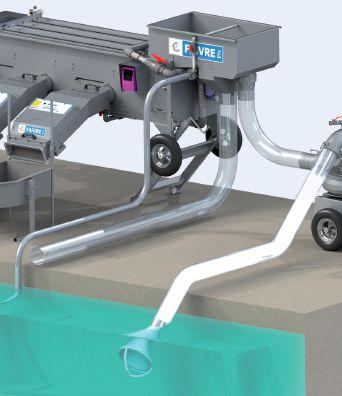
Since 1958, Faivre has been developing and manufacturing high quality equipments for the aquaculture industry
Japanese flounder (Paralichthys olivaceus).
Developing a standardized protocol for larval-rearing of pikeperch
Identification of optimal husbandry factors improves survival and growth of larvae and juveniles
BY RUBY GONZALEZ
protocol for larval-rearing of pikeperch, which identifies an optimal combination of factors, has been developed to give best growth, survival and development of larvae over the nursery period.
“Progressively, the rearing protocol for pikeperch larval rearing was improved, and an optimal combination of factors was determined. It allows the production of 5,000 juveniles (1.0-1.4 g, 50 dph) per 700-liter tank with swim bladder inflation rate of 90-95%,” cited Pascal Fontaine et al in Improvement of rearing conditions for juvenile pikeperch ( Sander lucioperca ) production in RAS.
RELIABLE PROTOCOL
A global and multifactorial approach sets it apart from previous studies conducted on the topic.
“Our objective is clearly to identify an optimal combination of factors and to propose a reliable protocol for fish farmers. It is very much an applied research. We consider the larval rearing tank as a complex system. Our research considers the whole larvalperiod of seven weeks. We are not focused on a specific event, such as first feeding, weaning or growth after weaning.
Director of Research, Pascal Fontaine
“We would like to identify a global combination of environmental, feeding and population factors that will produce a maximum of juveniles well-developed in terms of higher growth, survival and swim bladder rates. We use a pilot-scale 10 m3RAS, very close to those met on farm conditions,” Fontaine told Hatchery International Fontaine is director of the Research Unit Animal and Functionality of Animal Products, University of Lorraine – INRA in France. The project received funding from the European Union’s Seventh Framework Program for research, technological development and demonstration.
Some of the major bottlenecks in larval-rearing have been identified as high mortality due to cannibalism; high occurrence of skeletal deformities; and large size heterogeneity between larval cohorts at various ontogenic development stages.
THREE EXPERIMENTS
Three successive experiments studied the effects of major environmental, nutritional and population factors.
For each trial, pikeperch larvae were distributed in eight 700-liter tanks from an indoor water-recirculating system.
Four environmental factors were tested in the first experiment. These were light intensity; water renewal rate; water current direction in the tank; and cleaning done at two different periods of time.
The study recommended an application of “a light intensity of 50 lx, a water renewal rate of 100%, cleaning of the tank during the afternoon and an inlet of water at the bottom level.”
In the second experiment, four nutritional factors were studied including method of food distribution; co-feeding; and weaning duration. Results showed that “a later onset and longer duration of weaning followed by discontinuous feeding improved larval survival, growth and reduce skeletal deformities in pikeperch populations.”
The third experiment focused on four population factors: initial larvae density; sorting out fish jumpers; sibling or not sibling populations; and female weight. Results suggested “an improvement of juvenile pikeperch production using initial high larvae density supplied by large females.”
“We need to reduce production costs and develop a breeding program,” Fontaine said.
RESEARCH
Juvenile carp get taste of charcoal
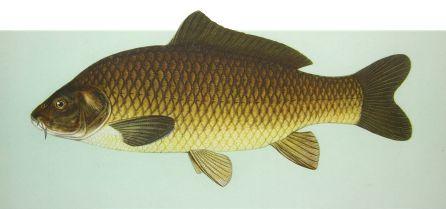
Bamboo charcoal has the potential to be used as feed additive in the diets of juvenile common carp to improve health status and intestinal function.
Researchers from China and Canada investigated the effect of dietary bamboo charcoal supplements on the growth performance and health status of juvenile common carp. The results came out in The effect of dietary bamboo charcoal supplementation on growth and serum biochemical parameters of juvenile common carp (Cyprinus carpio L.), published in Wiley Online Library late last year.
An inclusion of 4% proved to be most beneficial for the fish “without adversely affecting some of the indices that were not improved at this level,” said authors Mabe et al, who are from Nanjing Agricultural University and Freshwater Fisheries Research Center of Chinese Academy of Fishery Sciences, both located in Wuxi, China; and Sungro Bioresource and Bioenergy Technologies Corporation in Alberta, Canada.
Common carp are often raised in high-stocking densities which may lead to stress and increased susceptibility to pathogens in the environment. Outbreaks of diseases are common, resulting in hefty economic losses.
The fish is the most popular aquaculture species in China, which accounts for 60 percent of world production.
The characteristics of charcoal seem effective as a feed supplement: “There is scientific evidence supporting the efficacy of dietary charcoal supplementation in enhancing digestive function, growth and nitrogen retention in both land and aquatic animals as well as reduction in ammonia nitrogen excretion in aquatic animals,” note the authors.
While there have been many studies on the dietary supplementation of charcoal for terrestrial animals, this could possibly be the first for common carp.
– Ruby Gonzalez
SHELLFISH
Chilean mussel hatchery has social aims
Chinquihue Foundation is the only facility producing mussel seed in Chile, and it comes with a socially oriented goal: to help low-income fishermen and mussel farmers make a living wage.
BY CHRISTIAN PÉREZ MALLEA
hinquihue Foundation, a Chilean non-profit NGO founded in 1989 with support from the Chilean Government and the Japan International Cooperation Agency (JICA), has operated a hatchery in Puerto Montt since 1996. Its aim is to produce seeds and seedlings from different resources and thus promote small-scale aquaculture, helping artisanal fishermen become farmers.
Located along the coastline in Chincui Bay -12km south of Puerto Montt - this production unit specializes in benthic invertebrates as well as microalgae and macroalgae. In the beginning it was focused on Northern scallop (Argopecten purpuratus) and Pacific oyster (Crassostrea gigas), but many other species have also been reared here over the past two decades. This includes such species as red abalone (Haliotis rufescens), green abalone (Haliotis discus hannai), Chilean sea urchin (Loxechinus albus), clam (Venus antiqua), Pacific clam (Gari solida), Sea asparagus (Ensis macha), Chilean abalone (Concholepas concholepas), Chilean mussel (Mytilus chilensis), Magellan mussel (Aulacomya ater), Choro mussel (Choromytilus chorus), Gracilaria seaweed (Gracilaria spp.) and Giantkelp (Macrocystis spp.). Currently, there are only mussels in the facility along with the auxiliary cultivation of microalgae to feed those mussels. These are primarily diatoms and flagellates such as Isochrysis galbana, Nannochloris atomus, Tetraselmis suecica, Chaetoceros calcitrans and Chaetoceros neogracilis.
PILOT LEVEL FACILITY
The hatchery operates at pilot level and is located beside the port terminal belonging to Chinquihue Foundation. It is composed of two laboratories, one of 300m2 intended for mollusks and echinoderms and another one of 150m2 for macro-algae. There is also a 315m2 greenhouse for mollusks and echinoderms within these premises.
All rooms have the proper equipment and infrastructure systems required for seawater adduction, aeration, heating and thermal isolation. The facility includes 10 large farming tanks (three of 3,000 liters and seven of 2,500 liters) combined with 100 tanks of 200 liters each.
There are three types of mechanical filters: Prefilters are at the seawater suction pump and in hoses that bring water into the facility. Then, once in accumulation tanks, water is depurated in bag filters and finally passed through a UV system.
Regarding staff size, there were up to 12 workers in this hatchery during the original five-year project funded by JICA. However, this number has been reduced to just five now, who are exclusively employed to work with mussel species.
“In terms of installed capacity, we could produce batches of 30 million pre-metamorphic larvae every two months,” says Viviana Videla, manager of this hatchery.
Although there are three different mussel species native to Chile (Magellan mussel, Choro mussel and Chilean mussel), only the last one is of large commercial interest and represents 100% of the farmed animals and products exported by the local mussel sector.
With harvest volumes that range between 270,000 and 290,000 tonnes per year, this is the second largest aquaculture industry in Chile, with about 70,000 exported tonnes and US$ 200 million in revenues annually. In geographical terms, this is an industry that operates exclusively in the region of Los Lagos, providing about 17,000 workplaces in the area.
Viviana Videla noted that the Chilean mussel is a native species which has a good range of tolerance to changes in temperature, drying and salinity. “It is quite a pliable and resistant species,” she said, adding that this is a blue mussel, very similar to the Galician mussel
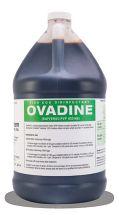
• EPA registered broad spectrum disinfectant and virucide*
• Maximum 10 minute contact time
• For use in cleaning and disinfecting environmental surfaces associated with aquaculture
CHILEAN MUSSELS
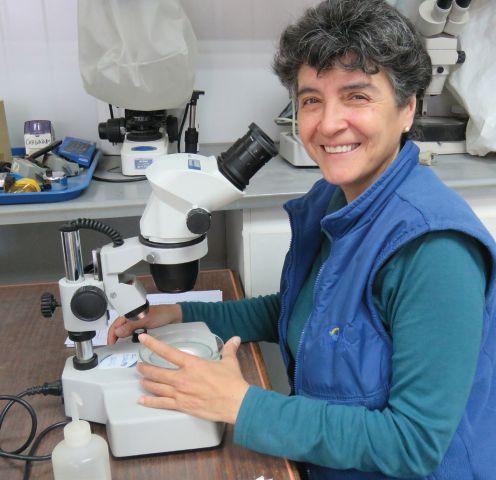
Viviana Videla, manager of the facility, in the laboratory at Chinquihue Foundation.
Area containing auxiliary cultivation of microalgae for mussel feeding.
( Mytilus galloprovincialis ) in terms of size, meat color, texture, flavor, etc.
In the wild, this species fertilizes its spat in natural beds, floating within the plankton until they attach themselves to a solid substrate to grow. The production cycle of this bivalve lasts for about 21 months from spat to harvest.
OPERATION AND OBJECTIVES
This facility’s operation is mainly oriented to detection and identification of Chilean mussel larvae in plankton using epiflourescence microscopy. This is intended to generate useful information for small farmers dedicated to mussel seed collection.
“If we inform them that there is natural spawning in a specific area, they can place collectors and catch seed. Before, they planned this process in connection with certain dates or season,” Videla explained.
In addition, the hatchery has been working on the production of mussel seeds and developing technologies to farm mussels in land-based facilities.
“This is technologically feasible,” she added, “but we need to develop and refine our model, since production costs are still a problem. It is difficult to compete with the costs of seed collection in the wild. The challenge is to produce at competitive costs or to change the paradigm, producing adults instead of just seeds and reducing the number of production stages, for example, and thereby cutting costs.”
START WITH THE BREEDERS
Mussel seed production starts with the selection of breeders, usually from farming sites; then comes the conditioning of breeding animals, aimed at achieving the maturation of the gonad. Once breeders mature, they are induced (with temperature and UV irradiation) to expel gametes.
A process of cleaning and selection of embryos is performed after fertilization. This lasts for two days and leads to the first larval stage, straight-hinge veliger, commonly known as ‘D larva’, because of its shape like the capital letter D. This animal is about 80 microns long and continues growing until after about seven days (depending on the temperature) it enters the umbonate larvae stage, at which point the hinge is no longer straight but rounded, which is commonly known as ‘umbonate larva’. This stage lasts for 10-12 more days.
When the statocyst becomes visible, it is the first sign that larva (also called ‘eyed larva’) are close to settling, metamorphosing, and fixing through the byssus. Then, the ‘foot’ appears and starts walking, adheres to a substrate, loses the cilia and stops swimming. At this point it generates the byssus and, when the mollusk is fixed to a substrate, its shell begins to calcify and take color. This stage is usually known as ‘post larva’.
“When the mussel reaches 10mm long we call it seed, although it is a juvenile, which continues to grow until it becomes an adult (˜7cm). In this species, the first sexual maturity (with functional gonad) occurs when the specimen reaches about 3.5 cm in height,” Videla explained.
HATCHERY ADVANTAGES
She also described some advantages of producing seed in a hatchery: Specifically she noted that mussel seeds can be produced at any time of the year and makes it possible to select breeders according to desired phenotypic characteristics, for example, growth rate or faster detoxification of toxins such as PSP. Another advantage was de-seasonalizing production in order to maintain processing plants in operation more months every year.
Most of the species reared in this facility over the past 21 years were investigated and produced through governmental-funded projects.
“In general, if the seed market does not exist and the production of adults is not massive, once the project is finished you do not have enough funds to continue. Although our hatchery is not so small, it is not of commercial scale either. It is intended for research at pilot level. Therefore, production is always more oriented to applied research,” she said.
Chilean mussel breeder expelling gametes. Controlled process in the lab facilitates obtaining larvae exclusively for the species.
Long lines under the sea. This sector is the second largest aquaculture industry in Chile.
Surface Water vs Groundwater
BY HAYLEY POTTER
eavenworth National Fish Hatchery is located in the center of Washington State, in the western United States. It was built in 1940 to mitigate the impact of the Grand Coulee Dam on native fish stocks.
Rearing healthy juvenile spring Chinook salmon (Oncorhynchus tshawytscha) at Leavenworth has been challenging in recent years owing to an aging infrastructure and changing river conditions, specifically elevated surface water (river) temperatures and increased pathogen loads.
The predominant water source for the hatchery is Icicle Creek, a fourth order stream in the watershed. Increased surface water temperature, reduced flow, and the ability to transport water to the hatchery efficiently are considered significant threats to fish health at the facility. In 2017, a trial to mitigate poor surface water by rearing juveniles on 100% groundwater (well water) was conducted. From June 1st through July 21st, 600,000 of the 1.2 million spring Chinook salmon produced were reared solely on groundwater.
Prior to the trial, it was acknowledged that the groundwater piping infrastructure was too small to convey all available groundwater to the raceways. To increase the quantity of groundwater we added a 6-inch flexible pipe to transport water from the mixing chamber directly to the raceways. Even though all available groundwater was supplied to the trial raceways, fish growth caused flow indices to quickly surpass the optimal range.
Throughout the trial, raceways receiving groundwater were vacuumed to maximize water quality and quantity. Vacuuming also played a vital role in reducing fin erosion and inflammation in the gills, increasing the overall health of the fish compared to the standard rearing group.
The trial came to an unforeseen end on July 21st when a primary well failed, reducing the available groundwater
by 25%. At that time all trial raceways were switched back to normal operation, a combination of surface water (90%) and groundwater (10%).
Visual observations during weekly fish health exams showed fish reared on groundwater had additional fat reserves compared to juveniles reared on surface water. This was likely due to reduced flow velocity and temperature differences between groundwater and surface water.
Following the trial in August an Ichthyophthirius multifiliis (“Ich”) infestation occurred. The fish reared solely on groundwater a month prior to the Ich infestation had a decreased parasite load compared to those reared throughout on surface water and did not require chemical treatment. This could possibly be related to better overall health and vacuuming in June and July.
Although the trial ended prematurely, we were able to determine that fish reared on groundwater were potentially healthier compared to fish reared on surface water. This finding was particularly enlightening because despite predictions of warm water and low flows the water year in 2017 was colder and had higher flows than average. Additionally, 2017 was one of the lowest adult return years on record, which likely lowered the pathogen loads in the surface water sourced from Icicle Creek later in the year. In years of lower flows and increased adult returns, we predict that the health differences between the two trial groups would increase.
We also learned that there is insufficient groundwater to support merely half of the production for extended time periods. The current intake line was constructed in 1940; if it were to fail we would most likely need to release most of the production depending on time of year. Refurbishing our existing wells and associated infrastructure may increase output, but new groundwater resources are needed. In an effort to maximize limited quality water Leavenworth National Fish Hatchery is also preparing a pilot study to include a Partial Reuse Aquaculture System to reduce water consumption.
Hayley Potter is a Fish Biologist working for the U.S. Fish and Wildlife Service at the Mid-Columbia Fish and Wildlife Conservation Office in Leavenworth, WA. She is the lead biologist on the Hatchery Evaluation Team for Leavenworth National Fish Hatchery. She can be reached at hayley_potter@fws.gov
Aerial view of Leavenworth National Fish Hatchery in Leavenworth, WA, USA.
LEFT: Constructed in 1940, the original water pipeline is still in use.
RIGHT: Body fat comparison of spring Chinook salmon reared on groundwater (left) and surface water (right).
Vitalis is still vital
Brood fish nutrition has a profound influence on the quantity, quality and performance of the offspring. Vitalis provides the ultimate package, containing the complete balance of essential nutrients to ensure optimal sperm and egg development while providing sufficient energy to aid transition from endogenous to exogenous feeding in the larvae.
For more information, visit our website at www.skretting.ca
Murray Darling Fisheries
One of Australia’s leading warm water fish hatcheries, located in the Eastern Riverine region of New South Wales, produces Murray cod, silver perch and golden perch for domestic and export markets.
BY JOHN MOSIG
The proprietor of Murray Darling Fisheries, Noel Penfold, spent several years in the industry before branching out on his own, and it took him several more years finding the right property.
“Water quality is everything in aquaculture, especially in a hatchery. Our bore water comes out at 20ºC and has a carbonate hardness buffer of 70ppm. The topography is just right for pond culture: the ground holds water and we’ve got 3-phase power going past the front door,” he said.
Noel is an irrigation engineer and designed and built the hatchery and ponds himself. The farm has 64 ponds covering 9.25ha. Sizes vary: thirty-six (1.5m deep) are dedicated to fry production and another 28 (2.5m deep) are dedicated to broodstock.
The hatchery and nursery facility is spacious, and all air and water plumbing runs either along the walls or overhead, which makes manoeuvring trollies and graders much easier.
The main and most labour-intensive crop is cod (Maccullochella peelii peelii). Thirty to forty spawning pairs are held in each broodstock pond, and in total MDF holds between five and six hundred brood-fish. Their largest fish was 35kg when last weighed, (the heaviest caught in European times weighed 93kg, but there are fossil skulls of fish at least twice that size!)
SPAWNING MURRAY COD
Spawning drums are put into the ponds in late August and spawning commences during the last week of September. Farm manager Leigh Logan theorises that photope -
riod triggers spawning more than temperature.
“The start of spawning doesn’t vary that much, even though water temperatures do. It’s never later than the first week of October, when temperature can be 16ºC.”
Water temperatures have a bearing on the duration of the season: sometimes it’s over by the first week in November; but in a cool spring spawning can be strung out till the first week in December. Regardless of the duration of spawning, they get 350400 viable spawnings yielding 3.5million larvae each year.
THREE-PRONGED MARKET
The market for juvenile cod is three pronged, which determines the procedure from this point. One market, mainly for export, is for yolk-sac fry. They pack 10,000 in a polystyrene box, and although the fry have to be weaned on arrival, the economics pay off when freight and handling costs are considered.
Local commercial clients usually prefer to buy weaned fingerlings. In this case, the fry are stocked into plankton ponds that have been freshly flooded 10-15 days prior to liberation. As the bore water is 20ºC pond temperature is not a problem, although Noel admits that producing a plankton bloom early in the season, when temperatures fluctuate between night and day, can be problematic.
The ponds are dosed with sufficient agricultural lime and dolomite to bring the carbonate hardness up to 120ppm, scarified and then fertilized with lucerne hay, urea and phosphate. The plankton bloom is managed with 10hp of paddlewheel aeration per hectare when necessary. Evaporated water is replaced, which keeps the hardness buffer at acceptable levels, as well as keeping the ponds fresh and well stirred.
After six weeks the fry measure 25-30mm and are brought into the weaning shed. All fingerlings that come in from the ponds receive a formalin dip to remove any ectoparasites.
FEEDS AND FEEDING
They’re fed brine shrimp (Artemia), and weaning onto dry starter crumbles commences on day three. The price of brine shrimp eggs is high; they use six tins a day at $170 each. (Leigh pointed out that their Asian clients pay considerably less for brine shrimp, which is another reason they purchase yolk-sac larvae). Weaning is painstaking — it takes from 10 to 15 days — but they’ve got it down to a fine art and Leigh said they achieve 95% success.
While genetic improvement at this stage has been restricted to the selection of better
“The best $10,000 I ever spent.” Leigh checking DO levels. The system is phone-alarmed and can automatically adjust oxygen flow to sections that require boosting.
Technical Assistant Phil Jennings and Manager Leigh Logan replace an active spawning drum. Breeding is continuous throughout the season, and anecdotal evidence suggests serial spawning is possible.
Two different markets
The markets for the two lines of fish are also markedly different. Export cod have to be bagged and boxed, the inspection requirements have to be complied with, export paperwork submitted, certificates issued at both ends, and regular farm and catchment health audits carried out. In the case of MDF, the catchment audit is not a problem as no water comes onto the farm, and none leaves it. Noel attributes the reports of the quality of his seedstock from buyers to the healthy start they get at the hatchery. Weaned fish sold locally can be transported in bulk in aerated tanks but they still have to be weaned, graded and delivered.
performing fish for the broodstock ponds, MDF improves its seedstock performance by culling approximately 30% from the bottom of each cohort before they go to their grow-out customers.
“It’s a numbers game, I know,” said Noel, “but if you can identify and eliminate the slow growers as early as possible, they’re numbers that add up down the track in the growout farms.”
MDF is a member of the Hatchery Quality Assurance Scheme. To ensure biodiversity in public water restocking orders the broodstock must come from the catchment area of the intended liberation, and the fingerings have to be held until they’re 45-50mm, however, they don’t need to be weaned.
Noel recently withdrew from the NSW Fisheries dollar-for-dollar restocking program. He evaluated the new compliance requirements imposed by the department, particularly those associated with the occupational health and safety responsibility covering angling club members, and found the insurance costs too high and the risk outside of his control.
BROODSTOCK MAINTENANCE
The cod broodstock are left alone in their respective ponds. Leigh reasons that the fish have developed their hierarchy and as their feeding regime is a controlled mixture of maintenance pellets and trash fish, the ponds’ biochemistry keeps the water quality stable. Constant observation ensures nothing untoward catches them out, and evapora-
tion replacement keeps a steady water exchange through the ponds.
“Chilodonella [a ciliated protozoan ectoparasite] is the only thing we have had to treat, and… it’s quite a straightforward operation,” he said. “We dose the pond with a mild formalin dilution, apply vigorous aeration and exchange the pond water throughout the treatment. The treated water goes to the settlement pond water where the biodegradable formalin breaks down under aeration and sunlight. Keeping the ponds healthy is the secret. We rarely have to treat the fish.”
SPAWNING PERCH IS DIFFERENT
The perch spawning season overlaps that of the cod, although the methodology is very different. Egg maturation is temperature-triggered. They’re ready from December to January when pond temperatures are around 24-25ºC. The ponds are lowered and the broodstock netted.
Golden perch (Macquaria ambigua) females showing heavy ovaries and red swollen vents are injected with 500iu/kg of pregnyl, and males with 250iu. After injection, five males and two females are stocked in a gently aerated 1,500-l tank. Ovulation takes 36-48 hours. The fertilized eggs are netted into a clean flow-through tank. Incubation takes around three days and yolk sacks are depleted in another five. Plankton blooms only take 5-7 days to establish at this time of year. After 6-weeks in the ponds the larvae are 25-30mm. Another fortnight sees them coming out of the ponds at 35-40mm and much deeper in the body. The
Golden perch, also known as callop and yellow belly, are a prized eating and angling fish. Their market is for the private- and public recreational trade. Silver perch sales are mainly to government stocking programs and a small growout industry based on the live fish markets in the east coast capital cities. They’re delivered in tankers directly from the ponds for both public and commercial stocking.
process for silver perch (Bidyanus bidyanus) is pretty much the same, except the hormone dose rate is lower — 200iu/ kg — and only the females are injected.
Leigh again: “Initially, a batch of cod can take nearly a month to put through the system; longer if they have to be weaned. The perch are all done and dusted in a week.”
The changes to the native fish hatchery industry over the 25 years during which Noel has been involved have been major. The industry participation rate has declined while the industry itself has grown enormously. Farm dam stockings, once important, have been replaced by sales of seedstock to local commercial growers and producers in East and southeast Asia. The demand for high volumes has seen operations like MDF producing millions of fry and fingerlings, which has helped finance expansion and structural changes, to the point where a hatchery can be run comfortably by two people with some casual help at the height of the season.
For more information contact Noel Penfold at mdfish@ozemail.com.au.
Hatching is signalled by the formation of foam on the water surface. Larvae are syphoned off and taken to the nursery trays, where they absorb their yolk-sacs over the next 10-15 days.
Over three-million Murray cod larvae will pass through the nursery each year in these trays.
The cod weaning room: a 20µm drum filter, the bioreactor, and oxygen injection maintain 100% DO saturation. Water exchange (250% a day) helps maintain stable temperature and ph.
Gooseneck Gambit
Already a gourmet staple in Portugal and Spain, where wild-caught softnecked gooseneck barnacles fetch up to $90 a pound, interest in culturing this novel species has begun to grow on the west coast of North America.
BY HEATHER WIEDENHOFT
ased on the high demand and profit of this fishery overseas and rumblings of interest in North America as well, a professor at the University of Oregon, Dr. Alan Shanks, decided to investigate the feasibility of a commercial U.S. market and what that might look like for the Oregon coast.
As a relatively new species of interest, state regulations are still evolving. Currently Oregon regulations limit wild harvest of the barnacles to 50 individuals of any size on man-made structures like rock jetties. Nearby Washington state limits recreational harvest to a daily limit of 10 pounds whole or 5 pounds barnacle stalks.
PRELIMINARY INVESTIGATION
The investigation is a forward-thinking project by Shanks and a handful of research assistants at the University. They have three main goals:
• First: take an estimate of current inventory of harvestable-sized Pollicipes polymerus, the species found in the intertidal zone on America’s west coast.
• Second, explore possible mariculture development for onshore commercial production.
• And thirdly, work with local seafood collectives, the public and state resource managers to build a partnership for a sustainable market.
The project strives for multistakeholder collaboration to help protect and manage this growing market and avoid depleting the stocks by overfishing, which has already happened in Spain.
There are some obvious hurdles to overcome for this market to be successful, like convincing a timid American seafood palate to try something new, especially when the “new” is an oddly shaped, rubbery crustacean found clinging to rocks in the crashing surf of the
intertidal zone. “We like to use the name “percebes” (Spanish for barnacle) or “devil’s fingers”…. it sounds more exotic and palatable than “barnacle”, explains Dr. Alan Shanks. Also the current stocks of harvestable-sized adults pose a limitation to large-scale harvest in Oregon. Alan’s research assistants found only a small amount (2.3%) of the jetty populations to be of commercial interest and depending on fishing pressures could be wiped out within a year. Because of their slow growth rate, unique recruitment of larvae, and collectors having to take the whole clump of barnacles which include many tiny individuals, it could a long time to recover the stocks in those areas.
THE MARICULTURE ALTERNATIVE
Mariculture of these prized crustaceans seems like a good alternative to wild harvest, but has proven elusive so far.
Alexa Romersa, a grad student working on the aquaculture end of the project at the University of Oregon understands the obstacles well …. “Rearing the barnacle larvae in a lab setting is notoriously difficult and you often end up with varying quality of the juvenile
Gooseneck barnacles on rock jetties along Oregon coast. (Photo: Alan Shanks).
cohort. Larval rearing also lengthens the process because transition from nauplius to cyprid to juvenile can take between 40 and 60 days.”
It was also thought that the developing barnacles needed high water flow (which can be costly to provide) to mimic crashing waves of its environment in order to feed.
But an interesting observation in a fish aquarium at the Oregon Institute of Marine Biology (OIMB) lead Dr. Shanks to make an important discovery for the barnacle’s future in mariculture:
“I saw a cluster of gooseneck barnacles attached to the wall of the aquarium, directly above the air bubbler. There was no high-water flow in this area of the tank….yet it appeared the barnacles were thriving near the air bubbles.”
His observation led to the design of a low-flow, aerated mariculture design used in his lab set-up, along with other improvements for efficiency.
Alexa detailed the experimental aquaculture set-up in her lab:
“We work exclusively with wild caught adults and juveniles that I harvest off rocks in the intertidal. Individuals are glued onto a vertical rod placed inside a PVC tubing tank. Each tank has a water and air inflow near the base and air is connected to a coil of diffuser tubing that provides constant aeration for the barnacles.”
“The aeration tubing (the type commonly used in gardening) is the major discovery of this phase of the experiment. Previous efforts at studying growth in gooseneck barnacles in the lab have attempted to mimic natural intertidal conditions by providing high volume water flow in order to trigger the specialized feeding behavior of pollicipes polymerus. However, I have been able to prompt the same behavior with air bubbles helped along by gravity. Air is cheaper and more easily scaled to a commercial operation.”
Shank’s team has also found that they can stimulate good natural recruitment of larvae in the lab by piping in unfiltered, natural seawater containing barnacle cyprid (active swimming larvae) that then settle on existing adults and increase their stock numbers.
DIET AND YIELD
The barnacles have been fed two diets: rotifers, a zooplankton that is bio-enhanced with micronutrients and vitamins, and an emulsified fish blend collected from the local fish processing plant. The viscera is dehydrated, then ground into a powder and re-suspended in solution for easy feeding.
The research team received a “Seed” grant from Oregon Sea Grant to cover start-up cost of the operation (building the aquaculture set-up, buying and feeding rotifers, etc).
In terms of cost, Alexa estimates the entire operation cost about $1000 dollars to set up. The research lab is small by aquaculture standards- using about 200 gallons of seawater per day and 20psi for air. But she expects a similar sized commercial operation could successfully
around $160-$180 US dollars with current prices, so there is a good return on investment.
The barnacle’s unique form of recruitment with larvae preferring to settle on other adult gooseneck barnacles also makes this species ideal for aquaculture since wild harvesting takes the whole colony of barnacles at once, not just adults, and would deplenish future juvenile populations quickly.
CONVINCING THE AMERICAN MARKET
So with many of the hurdles of mariculture being addressed, that just leaves convincing the average US consumer to take the plunge. Currently the Port Orford Ocean Resources Team is interested in selling the barnacles in their farmers’ basket, similar to the concept of Community Supported Agriculture (CSA) farm boxes.
“We don’t yet know all the nutritional facts for this tasty little creature”, says Shanks, but with the growing interest and profit potential, he is eager to look at that next. He’s working on acquiring a third research grant from Sea Grant, called the “Leaf” grant, to examine the fatty acid content of this salty little snack.
Tank set-up and barnacle feeding by Grad student Alexa Romersa at University of Oregon. (Photo: Ella Lamont)
Alexa feeding a fish blend to barnacles (Photo: Ella Lamont).
Rostral-carinal length of barnacle being measured for growth.( Photo: Alexa Romersa).
Grassroots-approach provides catfish fingerlings for sub-Saharan farmers
Volunteer program conducts intensive catfish fingerling production workshops
BY RUBY GONZALEZ
Through a grassroots-approach, a USAID-funded program is offering a solution for sub-Saharan Africa’s fish farmers’ perennial problem of sourcing catfish fingerlings.
The John Ogonowski and Doug Bereuter Farmerto-Farmer program provides “training in spawning techniques and rearing fry to pond-hardy fingerling sizes.”
The training on sharp tooth catfish fingerling production is one of the more common requests by private farmers in the region.
THE POWER OF ONE
“The sharp tooth catfish industry can be divided into fingerling producers and grow-out farmers,” notes Dr. Joseph Sullivan, a fisheries and aquaculture expert, in an abstract of a presentation he made at World Aquaculture
2017 in South Africa last June.
“Catfish cannot reliably be expected to spawn in ponds and those that do face high losses of juveniles for various reasons. Even in areas where catfish fingerling producers exist, they often want to sell only to larger buyers, leaving the home backyard fish farmer at a loss for a supply of fingerlings,”
“Cooperatives can remedy this situation, but require training in spawning techniques and rearing fry to pond-
hardy fingerling sizes,” he added. One knowledgeable and capable co-op member can supply other members with these fingerlings,”
A volunteer at Winrock International since 2011, Sullivan told Hatchery International that each workshop is composed of lectures and hands-on training. Winrock is among the NGOS that have executed the catfish fingerling production projects.
Volunteer trainer Dr. Joseph Sullivan with some of the chapter leaders of the Nigerian Co-operative Women’s Alliance who participated in the workshop.
WORKSHOP ON A STICK
At the end of the workshop Sullivan gives the host a memory stick containing presentations and other reference materials made in preparation for the workshop. He also gives out his business card so they know where to reach him for questions or advice.
Subjects covered include broodstock selection, inbreeding avoidance, various natural and artificial spawning methods, incubation requirements, best methods to get larvae onto artificial feed, and locally available ingredients for feed.
Hands-on training includes injecting female catfish with artificial hormones or pituitaries, followed by spawning the appropriate number of hours later, fertilizing the eggs, placing them in the incubators and then examining the fry after they hatch.
Among Sullivan’s workshops, he said the most successful could be the one in Nigeria, attended by about 120 chapters of the Nigerian Cooperative Women Alliance. Each chapter was represented by one member.
It had a two-pronged goal: producing the much-needed fingerlings to generate income while continuing to take care of their families.
Sometimes, unforeseen circumstances happened even before a workshop started. One time all the catfish adults needed for the spawning/egg incubation training escaped. “We did have some sub-adults, so we practiced injecting hormones and removing pituitary glands with them, but, of course, had nothing to spawn nor eggs to incubate,” he noted.
If there was one positive offshoot of the unfortunate oversight, he added, it was that the class certainly figured out afterwards how to make a catfish escape-proof fence.
Hatchery at the hub of cluster farms in Ghana
Dutch company, Cluster Farming Holdings (CFH) is putting cluster fish farming into practice in Ghana. By doing so, it hopes to address the country’s seafood deficit and, potentially, transform its aquaculture industry.
In aquaculture cluster farming, a hub farm provides seedstock, a hatchery, nursery, feed mill and expertise to smaller farms in the area. With this support the farms are able to reach a critical mass of production. CFH established its hub farm at Ekumfi Ekrawfo in central Ghana in 2011. The fish-breeding facility has the capacity to produce 1.5 million juvenile catfish and 200,000 juvenile tilapia a year.
In August of 2017 CFH took another step forward by signing an MOU with the University of Cape Coast (UCC). UCC’s Faculty of Agriculture will provide research and technical support to the farms. In turn CFH will provide the university with fingerlings for research and commercial production. Students from UCC will have the opportunity to work on farms learning best practices and most efficient pond production methods for tilapia and catfish.
Cluster fish farming has been successful in India and Indonesia and in Ghana’s neighbour, Nigeria, but is quite new to Ghana.
GENETIC SOLUTIONS FOR AQUACULTURE
With 80 Years of Aquaculture Filtration Expertise, it’s time we talked.
• Smooth inner gelcoat, USDA approved and fish friendly
• Sand Filters • Beadl Filters • Bio-Filterls
• Strong, deflection resistant trough design
• Degas Towers • Fractionators • Pumps
• Drawings available for all trough sizes
• UV Sterilizers • Ozone Systems
• Heating and Coolinlg • FRP Fabricationsl
• Custom built rearing troughs available at any size
• Instrumentation and Controls • Valves
• Regenerative Blower
View our gallery of completed rearing troughs for customers at www.reiffman.com
david@reiffman.com We build the highest quality rearing troughs available to hatcheries:
friendly
• Strong, 3/16" aluminum interior and 3/16" fiberglass exterior.
• Removable bulkhead fittings; threaded or bolt-on available
• Large hatch openings for easy access
• All SS hardware for long life, including SS toggle clamps
HI_Xelect Ltd_JanFeb18.indd 1
HI_SIVAT Services_NovDec17.indd 1
Workshop participants are shown how to squeeze catfish testes through a garlic press. (Photo: Dr. Joseph Sullivan)
Gene Technology Act could streamline aquaculture breeding
he Norwegian Biotechnology Advisory Board (NBAB) has introduced the Gene Technology Act – Invitation to Public Debate, for classifying, controlling and regulating the development of Genetically Modified Organisms (GMOs) within Scandinavia.
The 15 members of the NBAB unanimously proposed that there be a three-tier approvals system and process for the different gene-editing programs. The deadline for comments is May 2018.
It’s widely hoped that if the new system is adopted for the seafood industry, various gene-altering projects already underway in Norway could be given speedy regulatory approval.
The three levels are actually four because there’s a Level 0 which doesn’t require regulation, as it is stated as “exempted”. That’s for changes that are temporary and simultaneously non-heritable.
Then there’s Level One: Changes that exist or can arise naturally, and can be achieved using conventional breeding methods. At this level there is an obligation to notify the authorities - and to receive confirmation of receipt of the notification.
Level Two is for “other species-specific genetic changes – which involves “expedited assessment and approval.”
Level Three, the top level, is for genetic changes involving crossing of species barriers or involving synthetic (or artificial) DNA sequences. This level requires a standard assessment and appraisal as per the current system.
Among the genetic engineering projects taking place in Norway’s salmon sector is the gene editing technology CRISPR Cas-9 used to produce sterile salmon, resistant to the Infectious Salmon Anaemia disease (ISA) and the virus that causes it.
NBAB notes that this gene-editing technique
and technology combine to permit targeted genetic alterations such as deleting, substituting or adding DNA, “or switching genes on or off without making any changes to the (animal’s) genetic sequence.”
Dr. Anna Wargelius in the molecular biology section of the Institute of Marine Research (IMR) in Bergen is stated to be a strong advocate for gene-editing, noting that how far and how fast that particular technology has advanced already makes the current legislation, rules and approvals system seem outdated and lagging behind the times.
For more information visit: www.bioteknologiradet. no/genteknologiloven.
- Quentin Dodd
Tracking Atlantic salmon smolts a way to win the “numbers game”
Acoustic telemetry provides researchers the tool that makes the difference
BY RUBY GONZALEZ
OAA Fisheries Northeast Fisheries Science Center (NEFSC) has started altering stocking times and location to optimize survival of Atlantic salmon smolts migrating down Maine’s Narraguagus River into the Gulf of Maine on America’s eastern seaboard.
A research team identified that losses were generally in the same location, which they pinned down using acoustic telemetry.
“The detection range of our telemetry equipment is on average a bit longer than four football fields around each receiver depending on the environment, such as width, depth, etc. This information is valuable and allows us to determine where losses occur and identify bottlenecks,” said NEFSC fisheries biologist Jim Hawkes.
FROM DAY TO NIGHT
Stocking times, which had previously been done during the day, have been changed to night. They want to get as many salmon smolts to the ocean as possible.
It is a “numbers game”, they say, because Atlantic salmon smolt survival in the marine environment has always been low.
But to drive numbers up, they need to gather critical data. “The questions we wanted to answer were specific to migration ecology,” said Hawkes.
Through the use of transmitters and receivers, they were able to track and better understand the behavior and survival of 202 hatchery-raised smolts that were released into the Narraguagus River.
Most mortality has been observed within the estuary and bay environments.
“The transition from fresh to salt water is challenging for these fish and results in an acclimation period making them susceptible to predators,” he said.
Predation events happen mostly during twilight or daylight hours, a time when most smolt predators are active.
Many of the visual predators take advantage of tidal constrictions such as rock outcrops, to harass, crowd and consume out-migrating smolts. Double crested cormorants, mergansers, osprey, eagles, harbor and gray seals and striped bass as well as other fish species are known predators of smolts.
In freshwater, the smolts generally move with the current during twilight or nighttime.
Understanding acoustic telemetry
Acoustic telemetry requires two things – a transmitter (or tag) and a receiver. The small battery-operated transmitter emits an ultrasound frequency programmed to “ping” at a specific rate. When a tagged fish comes within a specific distance, a receiver programmed to recognize the transmitter’s specific frequency records the presence of the tagged fish. To tag salmon smolts, scientists surgically insert a small transmitter about the size of a small Jolly Rancher into the abdominal cavity. The smolts are released to the river where they travel downstream toward the ocean as part of their migration.
The team placed receivers at targeted locations along the migration route to help answer their questions about speed, location, behavior and mortalities. One of the key aspects of these transmitters is that each one provides individual-specific data, allowing scientists to track each individual fish separately while hundreds can be tracked simultaneously. Depending on the ping rate, the transmitter battery will last about three months. However, this technology continues to advance as scientists develop better ways to power transmitters with energy generated from fish movements.
Source: NOAA Fisheries Northeast Fisheries Science Center
MAINE TO GREENLAND
“Once smolts leave their natal river, they travel through the Gulf of Maine and exit U.S. waters within 15 to 20 days. They travel northeast along the coast of Canada on the outer Nova Scotian shelf past Newfoundland and Labrador before cutting across the Labrador Sea to Greenland. Atlantic salmon will feed in these highly productive waters for one to two years before returning to their natal rivers to spawn.
“Our tagged smolts are detected by acoustic telemetry networks along the Canadian coast, including the Ocean Tracking Network. These data provide more information on migration timing and location of migratory routes to the feeding grounds,” he said.
NoSpot
– White spot syndrome virus/EMS/AHPND – Increased survival rate and weight gain – Improved feed conversion ratio
Microalgae
NannoPrime and IsoPrime – Freeze dried Nannochloropsis & Isochrysis – Marine fish GWT, mollusc, shrimp hatcheries – Absolute pathogen free – Single cell dispersion, no sedimentation
algae.proviron.com
info@proviron.com / www.proviron.com
The passive drift ends when they transition to the estuary and marine environments.
Atlantic salmon smolt tagged with acoustic transmitter awaits release into Narraguagus River.
(Photo: NOAA Fisheries/Jim Hawkes)
Acoustic transmitter about the size of a Jolly Rancher is surgically inserted into an anesthetized Atlantic salmon smolt. (Photo: NOAA Fisheries/Jim Hawkes)
AND EDUCATION
High school students learn the ropes in innovative aquaculture program
The instructor’s vision at Onalaska High School is to provide students with a unique opportunity to learn advanced practices in aquaculture, develop a solid work ethic, and ensure future employability.
BY DAVID SCARRATT
arly last fall, Kevin Hoffman, Instructor in Aquaculture at Onalaska High School in Onalaska, Washington, contacted Hatchery International to bring their aquaculture program to our attention. Onalaska has had a hatchery program for nearly 20 years, and is now making some important changes to it.
This is not just an academic program: it is based on a small fish hatchery owned and operated on school grounds by the Onalaska High School. Kevin, with an extensive eight-year background in commercial aquaculture, has been in charge of the program for two years. Students operate the hatchery under his direction with technical support from Washington Department of Fish and Wildlife (WDFW), and participate in all aspects of its daily routines, maintenance, and re-modelling. There is a cooperative agreement with the WDFW, which supplies the fish and feed, and additional operational support comes from the Chehalis Tribe and Cooke Aquaculture Pacific.
OUTDOOR ENTHUSIASTS
The program is designed for students who enjoy being outdoors, who like to have their education linked to realworld projects, and who may be interested in future natural resource work or study. Students work collaboratively with their peers and aquaculture professionals throughout the course, gaining hands-on experience while learning about aquaculture and the resources involved. The hatchery program provides a paid position for one student throughout the summer for basic fish husbandry.
The hatchery and its instructional program are probably among the most advanced in the United States at the high school level, and according to Kevin, the educational experience that the students receive can be favourably compared to that provided by the two technical colleges in Washington State that offer aquaculture education programs. Nonetheless, the hatchery and the associated instructional program are under stress, and need some enhanced publicity to ensure their continued success.
CLEAN SPRING WATER
Water for the hatchery is sourced from a nearby spring and requires no treatment; the temperature is consistently around 50°F (10°C), and holds 8mg/l oxygen. The hatchery contains incubators and four tanks for fry and smolt. Students have recently modified the building to include rigid rather than wire mesh walls, thus enhancing security.
To achieve the planned changes, the students of the 2016-2017 school year upgraded the existing plumbing, created a better culturing environment for their steelhead (Oncorhynchus mykiss), increased flow rates by adding pumps, incorporated counter-current degassers to increase oxygen concentrations, and installed a clarifier and biological filter to complete the RAS.
Security is further enhanced in that a power failure will automatically open the emergency oxygenation system. The fully recirculating system, when complete will reuse 95%98% of the water. This refit is ongoing and is scheduled for completion later in the school year. The goal is to provide students with practical experience of the most up-to-date technology and hatchery practices.
Students: Jasmine, Kaylyna, Tristen, Ernie and Landon relaxing after stocking cages at Carlisle Lake.
Kevin Hoffman, aquaculture instructor at Onalaska High School.
Comprehensive & Forward-Looking
Students at Onalaska High School develop a clear understanding of industry safety standards, and of hatchery operations. They learn about fish husbandry and hatchery maintenance, participate in day-to-day monitoring, feeding, cleaning tanks, repair and construction. They are able to identify northwest Pacific fish species, and learn about their biology, anatomy and reproduction.
They also learn about different career opportunities that may be available following graduation. They learn that work stops only when everything that the fish need has been done, not simply when the “end of school” bell sounds. And they are also learning some of the more technical sides of building and operating a hatchery, and under Kevin’s direction are re-configuring the system from simple flow-through to partial re-use and finally full recirculation.
RAS FOR TROUT
In the full recirculating system, students raise rainbow trout for a youth-oriented fishing event they host during the annual Onalaska Apple Harvest Festival. They supply 100 twoto three-pound trout for the community’s angling enjoyment.
In the partial recirculating system, 35,000 steelhead were raised, for release into the Newaukum River. Students perform fish husbandry, fin-clipping operations to subsequently identify hatchery-raised fish, and then transport them to river.
Besides maintaining and operating the hatchery, the program includes seasonal operations at Gheer Creek, located half a mile away, where every fall returning adult coho (O. kisutch) are trapped, counted and processed. The surplus adult coho carcasses, if in good condition, are given to the community through the local food bank. (Fish not acceptable for human consumption are returned to the stream for nutrient enhancement.)
At Carlisle Lake (barely half a mile out of town) there are three net-pens, which are used for a few months each year to raise 50,000 each of early and late coho fry. These are subsequently released into Gheer Creek to help support local sport fisheries. Students also raise 9,000 rainbow trout for sport fishermen, which are released in the spring. On seasonopening weekend, the lake is usually crowded with sport fishermen targeting hatcheryraised rainbows planted by both WDFW and the school program. Students check the net pens daily to feed the fish and monitor their activity.
PLANNING HASN’T STOPPED
The long-range plan is to incorporate a large scale aquaponics system into the hatchery program. Growing fish produce nutrient-rich water, (before it is neutralized by the biological filter), and carbon dioxide as a by-product of fish respiration. These valuable resources will be used by diverting the water into a large greenhouse to grow vegetables for either the school lunch program or for the community. Raising catfish (Ictalurus sp.) for local consumption is also in the plan. The hope is to provide healthy, not-for-profit food, to increase community health and wellness.
Kevin’s vision is to provide students of Onalaska High School with a unique opportunity to learn the most advanced practices in aquaculture, to develop their work ethic and to ensure their future employability.
For more information contact Kevin at: khoffman@onysd.wednet.edu.
Globally Trusted UV Experience in Aquaculture
- Proven bio-security; over 35 years, > 400 installations
- > 825 million gallons per day treated (3.12 million m3/day)
- Designs for control of multiple pathogens
Lifetime Disinfection Performance Guarantee
- Aquafine Genuine parts program provides this peace of mind
- Economic low pressure lamp technology
- Duplex steel configurations with corrosion warranty for seawater
Long-term Industry Commitment
- Collaboratively advancing UV research in Aquaculture aquafineuv.com
We are your source for professional aquatic and aquaculture products and services. Our hands-on experience allows us to offer practical solutions to your situation, big or small. We have years of experience in retrofit and new construction and understand your needs. Contact us today to learn more!
+1 407 995 6490
GRADE THE FAST AND EASY WAY
Our portable fish graders have adjustable bars so you avoid juggling multiple baskets, racks or removable bars. And, fish pass through these larger bars with little chance of gill damage. Choose the 30 or 50 settings model for use in either fresh or salt water.
Save time and grade like a pro.
Wisconsin, USA
Students tending fish trap at Gheer Creek.
Students releasing fish at Gheer creek.
Russian hatch ery would breed African catfish
The Russian company Ivanovo Compound says that it has invested Rub17 million (US$250,000) into a new facility for breeding African marble catfish in Nizhniy Novgorod.
Sergey Feflov, general director of Ivanovo Compound, said that the company had already concluded preliminary agreements to supply fry to several regions bordering Nizhniy Novgorod Oblast, plus to fish farms in the
remote regions of Siberia.
The company intends to build a feed mill, producing products specially designed for the dietary needs of African catfish. In this way it can provide its partners with fry, feed and support when it is needed.
Ivanovo Compound’s business strategy relies in part on forecasts by the Russian Aquaculture Producers Association, commonly known as Rostybhoz, which
Land purchase a first step for new BC hatchery
ven as renewed controversy swirled around the salmonfarming industry on North America’s west coast in the latter half of 2017, a Grieg Seafoods official in the region recently confirmed that the company was moving ahead with purchase of property for a new salmon hatchery on British Columbia’s Vancouver Island.
According to BC managing director Rocky Boschman the multi-million dollar purchase is “a vote of confidence” by Grieg in the future of salmon farming
along the BC coast.
Boschman also indicated that the company will likely only use about l0 or so of the total parcel of 34 acres for the new facility, which is to be a full RAS operation.
The site is just north of the community’s now-closed pulp and paper mill, but still within the city bounds, located in the city’s Duncan Bay Road Industrial Park.
Boschman hinted that the site may eventually be used to produce larger post-smolts, and that the hatchery could
indicate that several dozen farms for rearing African catfish may be established in the country, with potential production up to 40,000 metric tonnes.
If that forecast comes true, then the demand for fry would be significant.
African catfish is widely used for production of various pates, fish sticks, dumplings and in some cases even baby food. - Vladislav Vorotnikov
easily service company salmon farms over a long expanse of the province’s coast, using one or more wellboats from dockside facilities that may be built at
nearby Middle Point.
Boschman said the site is currently zoned for industrial purposes, which means it needs to be rezoned for specific aquaculture use. A rezoning application has been filed with the city, but apparently not activated.
He noted that BC currently produces about 80,000 metric tonnes of farmed salmon a year, with around 70% of that going abroad, mostly into the US. Some 15,000 tonnes of it comes from Grieg.
Boschman said the company currently employs about 150 people in addition to contractors. About 25 are employed at the company’s hatchery, located at Gold River on the west coast of the island, which at present produces smolts for the fish farms at about 100125 grams.
- Quentin Dodd
$100 million Miami Bluehouse to harvest 10,000 tons by 2020
Atlantic Sapphire RAS to bring all phases of production together under one roof.
BY MATT JONES
orwegian farmed salmon producer Atlantic Sapphire A/S is making a significant move into the United States with the ongoing construction of a major RAS facility in Florida. The Atlantic Sapphire, Miami Bluehouse will bring the technology and techniques established for the past seven years at their Danish pilot facility to America.
Bluehouse technology, as envisioned by Atlantic Saphire, involves bringing all phases of aquaculture production together – combining a hatchery, a farm and production facilities under one roof that delivers customerready products.
The initial phase of the project, which will cost roughly $100 million, will be capable of harvesting and processing 10,000 metric tons of round-weight salmon and will be completed by early 2020. Over the following six or seven years, phases two and three of the project will increase capacity up to 90,000 tons of salmon annually.
Water infrastructure a key feature
Construction is underway at the Atlantic Sapphire, Miami Bluehouse. The Biscayne and Floridian aquifers will provide the new facility with pristine fresh and saltwater, making Miami an ideal location, says COO Dharma Rajeswaran.
“We are confident we have finally developed the right technology to raise great tasting, market size (4kg+) fish in closed containment,” says Atlantic Sapphire Chief Operating Officer, Dharma Rajeswaran. “As the United States is importing about 90% of its seafood and as the world population grows, we need to secure local production of healthy proteins. Thanks to our Bluehouse technology, we are able to raise salmon that are normally farmed in net pens in remote locations, closer to the market in the continental United States.”
One of the key features of the new facility is the water infrastructure – the facility has access to bio-secure artesian fresh and saltwater which Chief Operating Officer Dharma Rajeswaran says is the key to raising healthy and happy salmon.
“The Biscayne and Floridian aquifers provide fantastic supply of fresh and especially saltwater which we need to raise salmon,” says Rajeswaran.
“The most important particularity of the Floridian aquifer is that it’s 20,000 years old pure water that has never seen modern contamination. We are also permitted to use the boulder zone which is the same layer under the aquifers where the city of Miami discharges it’s effluents to discharge water after thoroughly filtering and cleaning it.”
Rajeswaran says that the key difference between the pilot Danish project and the Florida facility will be the establishment of various independent water systems to mitigate risk in case of an incident in one of the systems. Recirculating Aquaculture System (RAS) technology is evolving and the technology used in Miami, and in their phase 2 projects in Denmark, is well beyond what was used in the pilot project.
Rajeswaran says that the remaining challenge to the establishment of the facility is meeting their construction timelines. He is confident however, that the project will be on target thanks to the hard work of the team they have established, including both their own internal efforts and external partners such as Danish water treatment and RAS supplier Billund Aquaculture and construction firm OHL.
Saving the Apache trout
BY CRAIG SPRINGER
The Apache trout is named for the people and the place that are intertwined with one another. The yellow trout ornamented with black spots, white-tipped fins, and a raccoon-like eye mask lives naturally only in the headwaters of the White, Black, and Little Colorado rivers near the New Mexico border. These waters harbor some of the last remaining populations of this pretty trout found nowhere else but in streams that rim the White Mountains of Arizona.
The fish has been well known to anglers for some time. Local farmers and ranchers made summertime forays into the high country to catch them. One correspondent, simply “J.H.” from Show Low, Arizona, wrote in a July 1886 issue of the St. John’s Herald: “I speak truly when I say it was the most enjoyable period of my life.” He recounted how he and his pals caught scads of Apache trout from the White River during a prolonged summer outing. The sport fishery was renowned.
The Apache trout had become known to science a few years earlier in 1873, when it was collected by members of the U.S. Geographical Survey, and wrongly
How government and tribal members have combined forces to save a rare and endangered species of trout in Arizona
identified it as a Colorado River cutthroat trout. Other scientists collected it from the White Mountains from time to time, but it wasn’t until a century later in 1972 that the fish was properly recognized as a unique species and assigned its current scientific(Oncorhynchus apache) and common names. A year later it was placed on the endangered species list.
Places everywhere have their scars, and the White Mountains are no exception. The loss of habitat from excessive timbering and grazing and the introduction of nonnative trout species were detrimental to the native Apache trout. High sedimentation during the spring run-off affected trout reproduction; fine sediments clogged porous gravel beds where oxygen-rich water should percolate over incubating eggs.
Over the last 75 years, through the actions of the White Mountain Apache Tribe, followed by work with the U.S. Fish and Wildlife Service (Service), U.S. Forest Service, and Arizona Game and Fish Department, Apache trout populations have rallied. The future looks sunny for the species; it could be the first sport fish to be recovered and removed from
federal threatened or endangered species protection.
Conservation work continues. Cattle have been fenced out of select Apache trout streams within the Apache-Sitgreaves National Forest and along streams within the Fort Apache Indian Reservation. Nonnative sport fishes are no longer stocked near Apache trout waters. AlchesayWilliams Creek National Fish Hatchery, located on the reservation, continues to raise Apache trout for sport fishing. Apache trout from the federal fisheries facility are stocked on the reservation and they are shared with the Arizona Game and Fish Department to be stocked in neighboring national forest waters. Many streams are open to anglers.
The Service’s Arizona Fish and Wildlife Conservation Office (FWCO) biologists remain shin-deep in Apache trout work, striving toward that goal of recovering the threatened species. They expend a great deal of energy removing non-native brown trout and brook trout from Apache trout waters. They accomplish this with backpack-mounted electrofishing gear where the unwanted fish are stunned and
netted from high mountain streams.
A new technology known as environmental DNA (eDNA) guides their work. Fish shed skin cells and of course eliminate bodily waste into the water, which then contains the animal’s DNA that can be detected in the water. Biologists from the FWCO and tribe collect stream water from several sites over long reaches, and pass the water through filters that are analyzed by U.S. Forest Service’s Rocky Mountain Research Station. These lab results then identify those stream sections that contain the unwanted non-native trout.
Periodic population monitoring continues, as does barrier monitoring. Where unwanted non-native fishes occur downstream, constructed barriers keep those below at bay, and the pure Apache trout populations protected above. Constructed barriers now exist on 23 creeks.
At present, Apache trout exist in 28 populations and swim in 170 miles of streams. The lot of Apache trout has changed significantly. In a relatively brief period the species has emerged from anonymity and mistaken identity to the point when the White Mountain Apache Tribe stepped up to protect their trout. It’s now the official state fish of Arizona and a favorite among anglers.
For more information contact: Craig Springer, U.S. Fish and Wildlife Service – Southwest Region, Albuquerque, New Mexico. www.fws.gov/southwest
Bradley Clarkson (White Mountain Apache Tribe member and USFWS Apache trout biologist) holds a handsome broodfish. (Craig Springer photo).
Apache trout. (photo: Jennifer Johnson, USFWS)
Jake Washburn (USFWS) and Inez Clawson (White Mountain Apache Game and Fish) collect eDNA from an Apache trout stream. (Craig Springer photo).
Tackling shrimp hatchery disease: India’s efforts to investigate Zoea-2 Syndrome
Dominated by the Pacific white shrimp (Penaeus vannamei), India’s shrimp sector is growing and becoming extremely dynamic. Healthy, high quality seed is key to its success, but the increasing intensification and commercialization of shrimp aquaculture to meet demand has exacerbated disease epizootics. Reports from hatcheries of mass larvae mortalities at the Zoea-2 stage prompted Dr. T. Sathish Kumar at the Indian Council of Agricultural Research (ICAR)-Central Institute of Brackishwater Aquaculture in Chennai to investigate further.
“ P. vannamei and Litopenaeus stylirostris species appear to be infected,” said Dr. Kumar. “They appear normal until they cross the Zoea-1 stage. Then they suddenly stop feeding after 36 - 48 hours and systemic abnormalities are observed, such as anorexia, lethargy, empty gut, reduction in feeding and absence of faecal strands, followed by delayed moulting of up to 3-4 days and gradual, progressive mortality in 30 - 90% of the larval population.”
The impacts on hatcheries are significant. Losses from Zoea-2 syndrome in an Indian commercial hatchery with a stocking capacity of 100 million nauplii are estimated at around $18 - 61,000 USD. Establishing strict management practices, reducing the number of days of stocking nauplii to less than 3 - 4 days in the same unit, disinfecting everything including implements and air pipes, creating shutdown periods between larval production cycles, and physically separating units for maturation, spawning and larval rearing could all help reduce mortalities.
“My work reinforces the adoption and implementation of best management practices in hatcheries,” said Dr. Kumar. “It has shown that Zoea-2 syndrome isn’t caused by known infectious agents. Other pre-disposing factors could be a lack of separate larval rearing units, and shrimp hatcheries must invest in improved biosecurity to prevent losses and sustained continued larval production.”
Dr. Kumar suggests that an integrative multidimensional investigation, involving physiological factors within zoea and microbial dynamics in hatcheries may help to understand the causes of digestive system impairment in shrimp and the role of opportunistic pathogens.
Dr Kumar observing samples in scanning electron microscopy. (Photo Indian Council of Agricultural Research (ICAR)-Central Institute of Brackishwater Aquaculture).
Affected Zoea (Credit: Sathish Kumar).
Normal Zoea. (Credit: Sathish Kumar).
HATCHERY OPS
T Helpful Hatchery Hints-3
his is the third installment of Helpful Hatchery Hints submitted by Dan Magneson, Assistant Hatchery Manager at Quilcene National Fish Hatchery in Washington State. Dan and his colleague Paul Kaiser share their solutions to problems they have dealt with in their day-to-day hatchery operations. I am grateful to Dan for his continued assistance in putting these articles together, and we will welcome contributions from other hatcheries and aquaculture facilities. Let us hear your stories about the ideas that made your operations more effective and efficient.
- D.J. Scarratt – Science editor
CHEM CALK 900
Dan has added some additional comments on Chem Calk 900 (by Bostik) that they use to seal cracks in their raceway expansion joints as we described in the last issue of HI. The smaller the fish you are ponding, the more important it is to fill even the smallest gaps, and Dan and Paul have had good luck with this product. It lasts for a long time without peeling or cracking, but it’s important to note that
the concrete surfaces must be completely dry before it is applied. It can be purchased online and comes in several colours, but their choice has always been “stone”, which is a natural, light colour that contrasts with any holes or cracks that need repair. Do not choose black or another dark colour that would make any new gaps much harder to detect. A battery-powered caulking gun will make the caulking job much easier if there is a lot to do. You can often force the less-expensive expandable lengths of caulk backing or foam rope (“Caulk Saver”) into the gaps and then seal them in with the more-expensive caulk.
FORK-LIFT/PALLET JACK
If you’re tired of having to kick the forks on fork-lifts into different positions, you may be able to get a “fork positioner” option when buying a new machine. It is easier on your ankles to adjust the position of the forks hydraulically, without having to leave the seat.
Dan and Paul have discovered another nice thing to have: an electric pallet jack. This lifts the load itself and then powers/drives the wheels, These are handy to have around
when unloading large feed deliveries, especially if the surface is not flat or you have to go up an incline or over a “hump” in the road.
KEEPING CRITTERS AT BAY
Animals preying on fish in raceways when staff are offduty tend to habituate rapidly to radios playing overnight, fake owls and the like. Dan has had better luck with his own critter-scarer, which has kept them at bay somewhat longer than other deterrents. He cut up pieces of a broken anodized aluminum pond broom handle, drilled holes near one end, then strung them from a wire under a sawhorse with the bottom ends of each piece resting against a piece of rebar.
He arranges a RainBird-style sprinkler nearby so that when it’s turned on the pieces of broom handle are kicked upward when the spray hits them. As the sprinkler continues its rotation the tubes falls back down against the rebar with a loud metallic clang. (The shiny surface of the aluminum might also flash in any available light, too.) Predators don’t seem to like that constant noise and motion; it makes quite a racket!
MEASURING
BOARDS
How many measuring boards currently in use are made of rotting wood held together with rusty screws? Acrylic plastic sheets don’t warp or rot and are easily disinfected. You can get them (3M is one manufacturer) at places like Home Depot. Use a band saw to cut the plastic into the sizes you want, but leave the plastic film or backing on the acrylic as you cut. It helps prevent chipping along the edges. But peel it off before you glue the parts together. There are several acrylic glues to choose from.
Cut a sheet of millimeter graph paper to size, then take a clear plastic report cover and cut that to size. These items are easy to find at an office supply store. Spread a thin layer of clear silicone on the measuring board where the graph paper will sit atop the acrylic, and smooth it down. Then spread another thin layer of silicone atop the graph paper and smooth the transparent report cover over it. Use a wide putty knife to spread the silicone as evenly and thinly as possible to prevent lumps and bumps on the measuring surface. An improvement over the example in the picture would have the numbers closer to where the tail of the fish would be, rather than along the bottom. This would be easier to read.
For more information contact Dan at: dan_ magneson@fws.gov.
Send us your tips. If you have any special tips or tricks that help make your hatchery operations more successful, or at least easier, please send them along to the editor, Peter Chettleburgh (peter@capamara.com) or Dave Scarratt (scarratt@ns.sympatico.ca)
All photos: Ron Wong
For existing ocean-based salmon producers the secret will be finding the “sweet spot” where production of larger smolts in land-based RAS reduces the risks of open net pens, but not at any cost.
The case for land-based production of post-smolt
A freshwater director for one of the world’s leading salmon producers explains how closed containment fits into the company’s corporate strategy going forward.
hen it comes to land-based recirculating aquaculture systems (RAS), one of Grieg Seafoods’ leading freshwater experts, says that the technology is definitely part of the company’s corporate strategy going forward.
Speaking at recent workshop on closed containment in Vancouver, BC, Frode Mathisen, the company’s freshwater director in the province, said that the industry is intent on growing salmon much larger on land than previously, before sending them out to marine net-pens. The extra time in closed containment helps strengthen them against some of the challenges they will encounter in the ocean.
And Mathisen said it’s costing the companies significant amounts of capital to design, develop, install and test these RAS on land.
He added though that as the companies increase the size of the post-smolts and extend the time they spend on land, they will also have the effect of reducing the environmental “footprint” of the industry in the marine portion, in part by requiring fewer sites and operating them for a shorter duration.
“The scale of these (current capital) investments (in bigger and bigger post-smolts) is already so significant, that the total production volumes of such post-smolt in the coming year, will dwarf the planned RAS volumes for harvest fish,” he said.
He said they’re working out how to get the best and most production out of the present volumes of net-pens, by searching for what he termed “the lowest investment level that gives maximum effect/response on the invested capital.”
Mathisen calls that “the sweet spot” for the companies’ investors. It’s the point at which the mathematical lines on a two-line graph - one showing the effects of riskreduction efforts and the other showing the rising cost of those efforts - intersect.
Beyond that point, Mathisen said, the costs go up exponentially without a commensurately effective decline in risk factors.
Mathisen said that according to his research the cost of investment needed for each cubic metre of development space is at its highest in RAS, at an estimated 25,000 Norwegian krone ($3,099 US). That declines to a 10th of that for Semi Closed Containment Systems (SCCs) at
2,500 krone ($310), and then plunges to just 100 krone ($12.40) for open cage systems.
His estimates of “investment per kg daily production first year” are: 50,000 NOK/kg in RAS, 12,500 NOK/kg in SCCs and 3750 NOK/kg in open cages.
Mathisen closed his presentation with a word of warning for politicians and policy makers in the world’s salmon-farming countries.
He said his calculations now indicate a capital investment of “a minimum of $54 billion” would be required to move all the current global in-ocean salmon production on land. For Canada alone it would be something like $3.5 billion, he said.
Mathisen told his audience that to him it “doesn’t make sense” to force that on the industry.
- Quentin Dodd
Risk and return in RAS
t the Conservation Fund Freshwater Institute’s Aquaculture Innovation Workshop (AIW) held in Vancouver, BC last November, presenter Jon Fitzgerald, talked about models for capital investment in RAS. An agriculture and food-production investment banker who heads Stope Capital Advisors, Fitzgerald’s attendance at the AIW four years ago was his introduction to the topic of food-fish aquaculture.
It was clear to him then, he says, that on-land aquaculture was still in the developmental stage and that investment in the sector was only just on the radar for potential investors. The land-based systems needed to demonstrate acceptable ROIs comparable to other resources such as the energy and mining industries.
In the last four years both the land-based aquaculture and potential investors have matured, and models of RAS technology show a potential return that has investors starting to pay attention. There are now “new” groups of capital investors who want to put their dollars into socially responsible and beneficial programs that are being run sustainably, he said - both environmentally and economically.
In essence, Fitzgerald said, the fish-farming industry has passed an inflection point, a point in a curve on a graph where the line begins to move in a different direction. This is good news.
The industry has grown up, and Fitzgerald suspects that there are now some ready, able investors willing to put their money into the RAS industry and its subsectors, such as equipment and technology development.
The full presentation can be viewed at https:// www.youtube.com/watch?v=Zb5DMj1fx3w&feature =youtu.be
- Quentin Dodd
Smaller Fr y To Fish…
Jon Fitzgerald -Stope Capital Advisors, Inc. (Photo Kevin Stiller)
Frode Mathisen
Cook Inlet Aquaculture Association Executive Director Announces Retirement
According to an announcement earlier this year Gary Fandrei, Cook Inlet Aquaculture Association’s Executive Director in Alaska, is headed into retirement.
Fandrei made the announcement early in the New Year, after serving with the association, first as a biologist, starting in 1990, and later as Executive Director.
And Fandrei, who oversees the non-profit’s four hatcheries, as well as various fish stocking and passage programs and day-to-day administrative duties, said he intends to stick around long enough to give the board of directors time to find a suitable successor.
Looking back over the past several years, Fandrei said it was in 2010 that the association initiated efforts to reopen the Tutka Bay hatchery in lower Cook Inlet, and he indicated some satisfaction that it’s now back up and running.
He also said that the association is in the process of bringing the Port Graham hatchery up to speed, also in lower Cook Inlet.
“It was in 2014 that we purchased that site and I think now that we’re pretty close to having that fully up and running,” he said.
Irish based feed company re brands as PTAqua
Pacific Trading Aquaculture of Dublin, Ireland recently announced that it has changed its name, re-branding as PT Aqua.
“There are no structural or physical changes to the company’s activities or products other than the new re-branded name,” notes a company press release. Head offices will remain in Ireland with operational hubs in Norway, Germany and Greece.
Having traded as Pacific Trading Aquaculture for nearly a decade, company principals decided that as it continues to expand into new territories and emerging markets, that a shortened and more recognizable brand name would be in keeping with its growth and evolving business model.
The company started out by marketing marine hatchery nutritional products sourced from select manufacturers around the world, but now PT Aqua has begun producing its own range of species-specific larval feeds in the EU.
The development and manufacture of these feeds is done in close cooperation with Coppens International (an Alltech company ) which manufactures PT Aqua’s range of feeds in Germany under a licence agreement.
For more information go to: www.ptaqua.eu
Transatlantic RAS consultants
Aquacultural engineers Paul Hundley and Maddi Badiola recently announced the formation of HTH aquaMetrics llc , with offices in Hiawassee, Georgia, USA and Getxo Biscaye, Basque Country, Spain.
HTH aquaMetrics llc is a recirculating aquaculture planning, design and consulting firm that provides technical and due diligence assessment services for aquaculture system and facility investors, owners, managers and operators.
According to a press release from the company, the basic premise of aquaMetricsTM is that there are distinct, measurable characteristics that can be analyzed to determine the chemical, physical and biological traits of an existing or proposed aquaculture system. “These traits,” notes the press release, “when accurately measured can be analyzed to define material condition of existing systems and the operational performance capability of existing or proposed systems. Material Condition refers to mechanical and electrical integrity and reliability. Operational Performance refers to process, ecological and economic inputs, outputs and efficiency.”
These conditions and capabilities relate to the economic value, environmental impact, and opportunities for improving an integrated production facility.
For additional information go to: www.HTHaqua.com
Cook Inlet Aquaculture Association’s Executive Director Gary Fandrei.
SHOWCASE
Dibaq and ProChaete join forces to make new shrimp feed
Farms Nutrition.
Group Dibaq, a Spanish producer of feed for pets and aquaculture, will be producing a new shrimp feed for Sea Farm Nutrition. The new product will be sold under the ProChaete brand, with the name Grow Pro.
ProChaete is located in Redditch, England but has its research facility on the Norwegian west coast. It specializes in utilizing marine worms as a sustainable source of protein in feed for aquaculture.
OddGeir Oddsen, general manager of Sea Farms Nutrition, says that
“the cooperation with Group Dibaq is a perfect match, and that the new feed Grow Pro will give shrimp farmers many advantages.”
Grow Pro is a grower feed used for pre-adult shrimps. The production in Spain will use GMO-free raw materials, like Sea Farms Nutrition proprietary ProChaete brand of protein CEP PRO, based on farmed and processed polychaetes.
Mixed-cell system combines tank and raceway attributes
Aquacare of Bellingham, Washington is marketing what it bills as a “new, energy-efficient recirculating aquaculture system.”
According to Aquacare, “the mixedcell raceway, or MXcell® is a design that combines the best characteristics of circular tanks and linear raceways in a single production system.”
The concept, notes the company, converts traditional linear raceways into a series of hydraulically separated cells, each of which behaves as an individual self-cleaning circular tank.
“By doing so the solids are removed quickly, the aquatic environment is consistent within the raceway which in turn improves water quality and fish growth.”
“Being a raceway,” adds Aquacare, “the pumping head is kept low, making the entire system very energy efficient.”
MXcell’s can be used in fresh as well as saltwater and in all temperature regimes.
JLH Consulting and Aquacare have installed these RAS MXcell fish farm systems in Maine and China with several more in the planning stage.
For more information go to: www.aquacare.com
Belgian algae producer has eyes on US hatchery market
Belgium’s TomAlgae, which specializes in freeze-dried algae for use in shrimp and oyster hatcheries, is aiming to ramp up export of its products to US hatcheries. To help accomplish this, TomAlgae contributed one of 11 prizes in the ICX (Industry Connection) competition at the 2017 Fish 2.0 contest.
Winners of the prize sponsored by TomAlgae were Panacea Oysters of Spring Creek and the Pensacola Bay Oyster Co, both in Florida. Panacea is helping to restore oyster farming in Apalachicola Bay, and Pensacola is producing premium oysters for the half-shell market, with the twinned objective of restoring both the Gulf of Mexico’s coastal environment in the area of Pensacola and its working waterfront.
“By providing an ICX prize to two oyster producers, we hope that we can not only help them grow their businesses by sharing our expertise in algae, but (that) we can also learn more about the US market from them – the knife cuts both ways,” said CEO, William Van der Riet.
- Quentin Dodd
OddGeir Oddsen, general manager of Sea
Mixed-Cell Raceway (MXcell) at Micmac Trout Farm, Presque Isle, Maine.
SHOWCASE
New software tool helps tilapia producers optimize feed formulation
Evonik, one of the world leaders in specialty chemicals, has launched a new software tool that gives amino acid recommendations for optimizing tilapia feed. AminoTilapia® was built following a factorial modelling approach and allows users to optimize amino acid regulations for different growth stages of tilapia, by simulating different production scenarios.
“The tilapia industry’s sustainable and profitable growth is often challenged by soaring feed costs, which are largely dictated by dietary protein levels and their sources,” said Dr. Karthik Masagounder, Research Manager, Evonik Nutrition and Care GmbH. “We need to understand the amino acid requirements of tilapia more precisely, to improve production performances of tilapia and use alternative protein
sources more effectively. But available data on this is variable and mostly limited to the juvenile stage. AminoTilapia will offer practical amino acid recommendations that are specific to the life stage and farming conditions of tilapia.”
Based on user input parameters such as fish growth, feeding practice, farming intensity and presence of natural food, AminoTilapia computes amino acid recommendations. The user can adjust the parameters and obtain recommendations for the target final body weight and FCR.
“We want to enable tilapia feed producers to formulate diets following the ideal protein concept,” said Masagounder. “They’ll be able to minimize safety margins and feed costs while maximizing production performance and profitability. The tool will also protect the environment by minimizing nitrogen excretion, leaving a positive impact on sustainable growth.”
- Bonnie Waycott
SEEDSTOCK DIRECTORY
Replacement egg baskets
Marisource of Fife
Washington is selling replacement egg baskets for trout hatcheries using shallow concrete troughs. According to Marisource the original baskets were made in the 1960s using steel which was hot dip galvanized to prevent rusting. Many of them are now wearing out and starting to rust.
“We have found a stainless steel answer,” notes a Marisource press release, “and they are highly accepted by the hatcheries that still have shallow troughs. Many also eye-up, hatch and pick out of these.”
Marisource adds that the baskets fit in standard shallow concrete troughs and are manufactured with welded corners for added strength. Specs for the stainless steel baskets are 30cm x 64cm – 1.0mm Wire x 3mm pitch
For more information go to: www.marisource. com
ASIAN-PACIFIC AQUACULTURE 2018
Innovation For Aquaculture Sustainability and Food Safety
Taipei International Convention Center
April 23-26, 2018 • Taipei, Taiwan
For More Information Contact: Conference Manager P.O. Box 2302 | Valley Center, CA 92082 USA
Tel: +1.760.751.5005 | Fax: +1.760.751.5003
Email: worldaqua@was.org | www.was.org
EVENTS CALENDAR
MARCH
March 6-8, AgraME, Dubai, UAE, www.agramiddleeast.com
March 11-13, Seafood Expo North America, Boston, MA, USA, www.seafoodexpo.com
March 18-22, National Shellfisheries Association Meeting, Seattle, WA, USA, www.shellfish.org
March 21-23, Symposium on Genomics in Aquaculture, Albufeira, Portugal, www.gia2018.com
APRIL
April 11-14, Salmonid Restoration Conference, Fortuna, CA, USA, www.calsalmon.org
April 23-26, Asian-Pacific Aquaculture 2018, Taipei, Taiwan, www.was.org
April 24-26, Seafood Expo Global, Brussels, Belgium, www.seafoodexpo.com
MAY
May 8-12, International Abalone Symposium, Xiamen, China, www.ias2018.com
May 19- 23, International Association for Aquatic Animal Medicine, Long Beach, CA, USA, www.iaaam.org
May 23-24, Aquaculture UK, Aviemore, Scotland, www.aquacultureuk.com
May 28-31, Aquaculture Canada 2018, Quebec City, Canada, www.aquacultureassociation.ca
JUNE
June 11-13, AquaVision 2018, Stavanger, Norway, www.aquavision.org
June 18-21, International Charr Symposium, Deluth, MN, USA, hwww.charr.glfc.org/
June 19-21, SeaWeb Seafood Summit, Barcelona, Spain, www.seafoodsummit.org
June 24-28, Annual Larval Fish Conference, Victoria, BC, Canada
JULY
July 9-13, Annual Symposium of the Fisheries Society of the British Isles, University of East Anglia, UK www.fsbi.org.uk/events/symposia
July 15-19, International Congress on the Biology of Fish, Calgary, AB, Canada, http:// wcm.ucalgary.ca/icbf/
AUGUST
August 19-23, American Fisheries Society Annual Meeting, Atlantic City, New Jersey, USA, www.fisheries.org
August 25-29, Aqua 2018, Montpellier, France, www.was.org
SEPTEMBER
September 2-6 International Symposium on Aquatic Animal Health. Charlottetown, Prince Edward Island, Canada.
September 4-6, Seafood Expo Asia, Wanchai, Hong Kong, www.seafoodexpo.com
OCTOBER
October 18-20, Future Fish Eurasia , Izmir, Turkey, www.future-fish.com
October 23-26, Laqua 18, Bogota, Colombia www.marevent.com
Organized by: World Aquaculture Society - Asian Pacific Chapter
Using science to get feed closer to nature
To understand what really happens in nature is the foundation of sound and sustainable feed science. Grow Pro is an innovative high-quality grower feed for shrimp with excellent protein retention. It is biosecure and sustainably created. We only use GMO-free raw materials, like our own brand of protein CEP PRO, based on farmed and processed polychaete. The FIFO value (fish in, fish out) is zero.
Grow PRO is an exceptional grow-out feed.
Better growth – naturally
517 February 19 - 22, 2018
Hotel Las Vegas, Nevada
Fish Farming of the Future is Here
Veolia has been revolutionizing land-based aquaculture for over 20 years. Our experience in Advanced Water Treatment Technologies and Turnkey RAS System Design has been creating a competitive advantage for our clients’ commercial aquaculture operations. We are ready to help you. Our team of global aquaculture experts will help you maximize fish quality and production yield, while delivering a cost-effective and environmentally responsible solution.