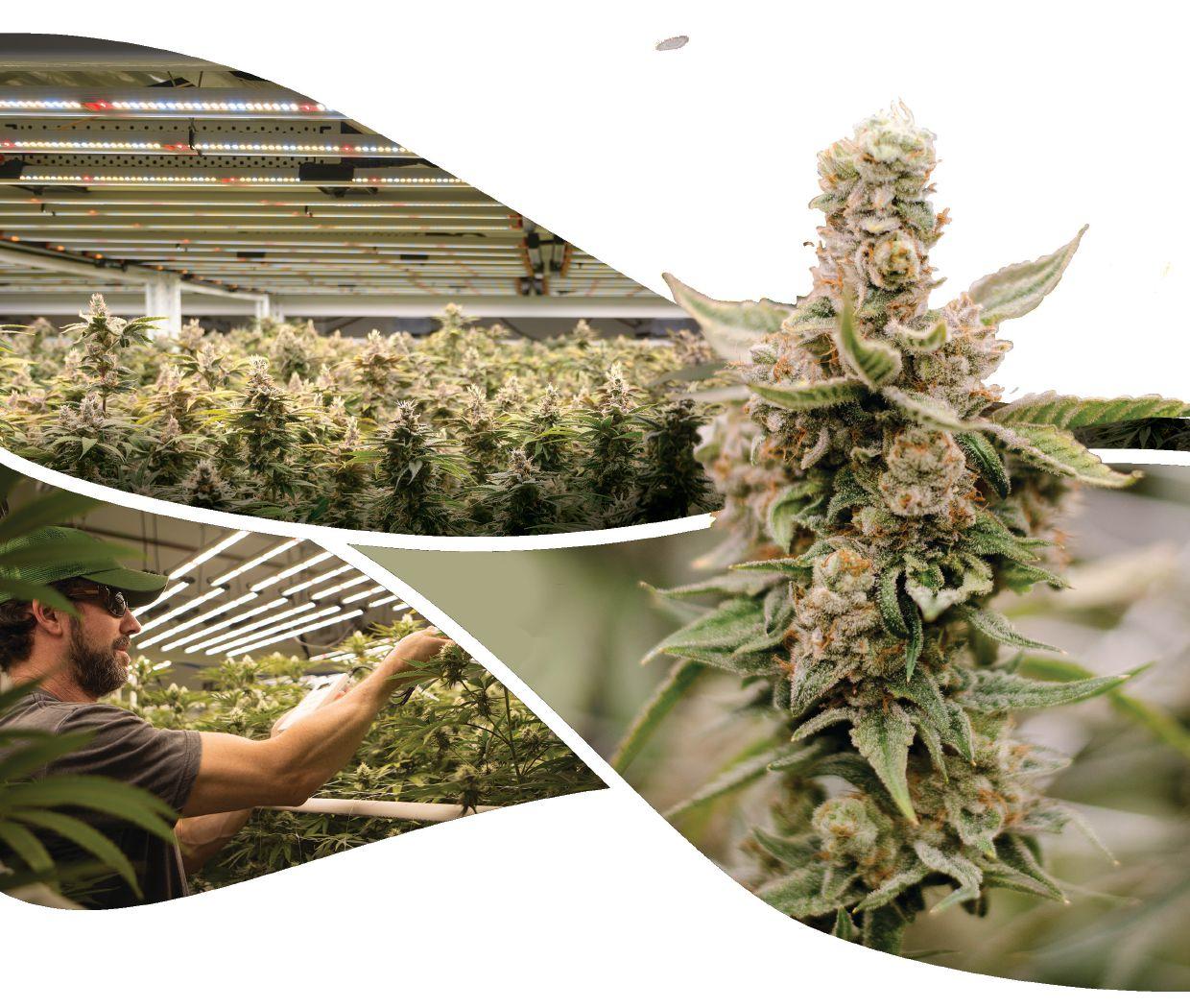
Fluence creates advanced lighting solutions for controlled environment crop production.
We apply the latest research in photobiology, evidence-based design, precise engineering and advanced technology to foster a healthier and more sustainable world.
Learn more at www.fluence.science
From the editor
By Mari-Len De Guzman
Extraordinary measures
Since news of the alarming spread of COVID-19 infections in China broke in early January – and a global pandemic on the horizon – my family has been glued to the news channels. We watched the number of global infections quickly inch its way up from a few hundred cases to several hundred thousand, getting closer and closer to a million infections worldwide.
It became increasingly evident from the situations that were unfolding in various parts of the world that, if not effectively managed, the outbreak could overrun the health-care system with devastating consequences. China had to build a hospital in 10 days as it struggled to manage the outbreak. Singapore developed a rigorous testing system in a bid to get ahead of the public health crisis. The world watched in desperation and grief as Italy’s population – many of which are seniors – was devastated by the deadly virus.
It was clear that the viability of the health-care system is vital if we are to finally contain the spread of COVID-19 – and keeping our frontline healthcare workers safe and healthy is key.
As COVID-19 continues to spread and more people require hospitalization, the risk to health-care workers contracting the disease increases exponentially. Recently, health officials in Canada – and in the U.S. – have been appearing on
news programs sounding the alarm of an impending shortage in personal protective equipment (PPE). These protective gears are our healthcare workers’ best line of defence against COVID-19 as they fight the frontlines in our battle against this pandemic.
We are not all healthcare workers, but we all can pledge to do everything we can, in whatever capacity, to help plank the curve.
As I heard the appeals for PPE donations, I suddenly remembered I had a bag full of disposable protective hair nets. I called my nurse friend who works at a nearby hospital and asked her if they are in need of such supplies. It’s not much but I figured they might as well be put to good use. She replied, “Oh, god, yes!”
In an editorial I posted online I urged cannabis producers to step up and respond to the call for PPE donations. Cannabis producers maintain an inventory of PPE at their facilities – masks, gowns, nitrile gloves, hand sanitizers, wipes. Diverting some of those PPE inventory to hospitals and emergency responders can literally help save lives.
The call from health officials across Canada resonated across industries – including the cannabis industry – and one by one PPE supplies have made their way to hospitals where they are in dire need of them.
It was great to see some licensed producers, including Hexo Corp. and Canopy Growth, step up. I hope more would follow suit.
I understand why some LPs would be hesitant to part ways with their PPE inventory, as the industry has been challenged by financial difficulties over the last year. COVID-19 could not have come at a worse moment for the industry. But these are extraordinary times that require extraordinary measures, and a considerable amount of generosity.
There’s an argument for compassion that is being made to urge for public and the business community’s support in the fight against COVID-19: staying home, practicing social distancing, implementing good hygiene and sanitation protocols, and donating medical supplies and PPE.
But there’s also a business argument to be made.
Our ability to overcome this crisis and get our economy back on track will depend on the ability of our health-care system – and our health-care workers – to function and respond effectively. We are not all health-care workers or first responders, but we all can pledge to do everything we can, in whatever capacity, to help plank the curve.
The more of us working and collaborating toward one main goal of containing this pandemic, the sooner we can restart our economy.
We are all in this together.
March/April 2020 Vol. 4, No. 2 growopportunity.ca
EDITOR Mari-Len De Guzman mdeguzman@annexbusinessmedia.com 289-259-1408
ASSOCIATE EDITOR Jean Ko Din jkodin@annexbusinessmedia.com 437-990-1107
ASSOCIATE PUBLISHER Adam Szpakowski aszpakowski@annexbusinessmedia.com 289-221-6605
NATIONAL ADVERTISING MANAGER Nashelle Barsky nbarsky@annexbusinessmedia.com 905-431-8892
ACCOUNT COORDINATOR Mary Burnie mburnie@annexbusinessmedia.com 519-429-5175 888-599-2228 ext 234
CIRCULATION MANAGER
Jay Doshi jdoshi@annexbusinessmedia.com 416-510-5124
MEDIA DESIGNER
Brooke Shaw
GROUP PUBLISHER/VP SALES Martin McAnulty mmcanulty@annexbusinessmedia.com
COO Scott Jamieson sjamieson@annexbusinessmedia.com
MAILING ADDRESS
P.O. Box 530, 105 Donly Dr. S., Simcoe, ON N3Y 4N5
SUBSCRIPTION RATES 1 year subscription (6 issues: Jan/Feb, Mar/Apr, May/Jun, Jul/Aug, Sep/Oct, Nov/Dec): 1 year offers: Canada $25.50 + Tax USA $47.00 CDN FGN $53.50 CDN GST # 867172652RT0001
SUBSCRIPTIONS
Jay Doshi jdoshi@annexbusinessmedia.com Tel: 416-510-5124 Fax 416-510-6875 or 416.442-2191 111 Gordon Baker Rd., Suite 400, Toronto ON M2H 3R1
Occasionally, Grow Opportunity will mail information on behalf of industry-related groups whose products and services we believe may be of interest to you. If you prefer not to receive this information, please contact our circulation department in any of the four ways listed above.
We recognize the support of the Government of Ontario
Ex Aurora CEO sells 12.2M shares in company
The founder and former chief executive of Aurora Cannabis has sold nearly 12.2 million of his shares in the company.
Terry Booth retired as CEO of Aurora in February. The company said the sale of Booth’s shares is in connection with a restructuring of the company earlier this year that saw the elimination of 500 jobs and Booth’s retirement.
Under the succession plan following his stepping down as CEO, Booth became a senior strategic adviser to the board and remained a director.
According to a regulatory filing ahead of the company’s annual meeting last year, Booth held 15.2 million shares, nearly 2.2 million options and 305,000 restricted share units as of June 30, 2019.
Cannabis companies seek government aid
Hurt by the steps taken to slow the spread of COVID-19, cannabis companies urged Ottawa to provide immediate help for the industry.
About 74 cannabis organizations have written to Finance Minister Bill Morneau and Industry Minister Navdeep Bains asking for access to wage subsidies for small businesses.
They are also asking to get access to funding through federal agencies, the Business Development Bank of Canada and Export Development Canada.
They say the BDC has indicated that cannabis companies cannot access $10- billion in stimulus funding, so the industry is seeking more equitable treatment.
The cannabis industry had already experienced more than 2,000 job losses in the last six months and funding drying up, when COVID-19 hit, causing more layoffs and some cannabis retailers to close.
- THE CANADIAN PRESS
SALES SPIKE
Cannabis producers and retailers are seeing an uptick in sales in the wake of COVID-19. The Ontario Cannabis store reported as much as an 80-per cent increase in a single day compared to average sales in the past.
48North appoints new CEO
48North Cannabis Corp. announced on March 9 that chief operating officer, Charles Vennat, will be replacing Alison Gordon as the company’s new chief executive.
Gordon served as 48North CEO for almost three years. She oversaw the launch of the company’s initial suite of cannabis products for the recreational market and the opening of its 100-acre (3.7 million square feet) outdoor growing facility in Brant County, Ont.
Before joining 48North in August 2019, Vennat was president of Bastos of Canada Ltd., a manufacturer of tobacco products.
“Looking ahead, I have every confidence that 2020 will be a momentous year for 48North,”
said Vannat in a statement. “The company has successfully entered into a new phase of growth, with strong demand across the country for our products, it is now time to leverage our industry leading team to deliver reliable, high-quality and consistent products for Canadian consumers.”
48North is a vertically-integrated cannabis company focused on the health and wellness market through cultivation and extraction. It operates two indoor-licensed cannabis production sites in Ontario with more than 86,000 square feet of production capacity. It also runs the Good Farm, a Health Canada licensed 100-acre organic farm growing organic, sun-grown cannabis.
Cultivation
By Mohyuddin Mirza
Shape of water
Analyzing water quality is needed to determine its efficacy for cannabis production.
Before planning a greenhouse or indoor facility, determination of water quality is essential. Typical water analysis parameters include pH, electrical conductivity (EC), sodium adsorption ratio (SAR), nitrogen (NO3, NH4), phosphorus, potassium, calcium, magnesium, sodium, sulphates, chlorides, iron, manganese, copper, zinc, molybdenum and silicon. In addition to the above, the labs also provide total dissolved solids (TDS), biological oxygen demand (BOD), anion and cation balance, as well as information on carbonates and bicarbonates.
Cannabis growers must understand the role of each nutrient and the values they provide to make proper assessment and decisions.
RULE OF THUMB
For cannabis production, water with an EC of below 0.8 mS/cm or 800 uS/cm and a SAR value of below 4.0 is good for irrigation and should not present any management problem. For aeroponic or other growing systems where roots grow in water, my suggestion is to go for an EC value of below 0.5 mS/cm and a SAR value of less than 3.0. SAR is a measure of the amount of sodium (Na) relative to calcium (Ca) and magnesium (Mg) in the water or water extract from saturated soil paste. It is the ratio of the
Na concentration divided by the square root of one-half of the Ca + Mg concentration. With soilless growing media, higher than 4 SAR value means that sodium will accumulate enough over a period of time that it will cause “salinity” and affect plant growth.
HARD VS. SOFT WATER
In hard water, calcium is higher than 100 mg/L or parts per million (ppm) and carbonates are also above 100 ppm. In soft water, sodium is more than 100 mg/L. Soft water or chemically softened water is not suitable for cannabis cultivation. Hard water with higher calcium and magnesium can be used for cannabis production. It is important to note that calcium and magnesium in water exist as carbonates or bicarbonates, and pH has to be adjusted to make these ions available for plant growth.
REVERSE OSMOSIS
If the water quality is good based on EC value of less than 0.8 mS and a SAR value of less than 4, then there is no need to invest in costly reverse osmosis (RO) units. In situations where sodium is high, RO is a good choice. Base your decision on water quality parameters described above.
RO water presents its own challenges, particularly when bicarbonates and carbonates are removed. These two ingredients provide the buffering capacity in the water and in the growing medium. I have seen serious root and plant issues arise because of lack of bicarbonates in the water.
Moyhuddin Mirza, PhD, is chief scientist with the Cannabis Nature Company in Edmonton, and a consultant with the cannabis industry. Email him at drmirza@cannabisnature.ca
There may be other reasons for using RO systems. If boron levels are over 1 ppm, or when water supplies contain high iron as Ferric and iron bacteria can be an issue, then RO systems should be considered.
ALKALINITY AND PH
pH is the term used to describe “hydrogen ion” concentration or “power of hydrogen,” while alkalinity is the sum of carbonates and bicarbonates in water. But there is a relationship. When an acid is added, the bicarbonates are neutralized resulting in hydrogen (H), and bicarbonates as carbon dioxide and oxygen. This hydrogen ion translates into pH. If all the bicarbonates are neutralized then there is no buffering left in water and pH drops to very acidic levels. Growers must know how much acid should be added. As a rule, 30 to 50 ppm of bicarbonates should be left in water to provide buffering.
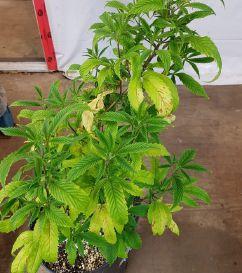
The photos shown here depict some water quality issues that have not been addressed.
In the left photo, water pH was adjusted by adding acid without calculating the amount of bicarbonates that must be neutralized. In this case, the pH of the growing medium also was not taken into considera-
tion. Coir (coco-peat) was the growing medium and pH was already around 5.5. The young clone started rooting and very quickly magnesium deficiency was evident. In soilless growing media, magnesium uptake is reduced when pH starts going below 5.0. On the other hand, uptake of iron and manganese increases when pH starts going below 5.0, resulting in toxicity.
In the right photo, no magnesium was added as part of the fertilizer program thinking that there is 50 ppm of magnesium present in water. But this magnesium is not 100 per cent available for plant use. Since the problem was not corrected, magnesium deficiency continued and photosynthesis efficiency was reduced because this element is key in the chlorophyll molecule.
These two pictures exemplify poor quality buds due to water quality issues that resulted in unbalanced nutrient delivery to plants. The pH was not monitored and adjusted during the growth cycle of the plant. Bud maturity was significantly delayed as well. There was not enough food in leaves to feed the buds. Such yellow leaves cannot manufacture food for the plant’s needs.
These are two examples of plants with water quality issues that were not addressed with appropriate management measures.
Legal Matters
By Matt Maurer
The rise of cannabis retail franchising
The right to apply for one of the 25 retail store authorizations (RSAs) in Ontario was awarded via a lottery and rules were put in place to ensure that the people who won and were subsequently licensed would not be permitted to change their entity structure or effect a change of control for essentially a year after the lottery was conducted.
When the lottery results were announced in January 2019, there were zero familiar cannabis brands amongst the winners. Cannabis companies sprang into action immediately. Lottery winners were suddenly inundated with phone calls and messages from various companies looking to help them out with their soon-to-be store.
While the lottery rules prohibited change of control and change of ownership, there were no prohibitions on the use of someone else’s branding on a store or the enlisting of service providers who could provide advice and guidance to ensure that these lottery winners would be able to run their stores in a competent and profitable fashion.
As a result, when the store names were disclosed to the public later in the licensing process, an overwhelming number of them were the names of recognized (or soon to be recognizable) cannabis brands. The Alcohol and Gaming Commission of Ontario (AGCO) took an exceptionally conservative view of what constituted a change of control or a change of ownership. In many cases, this required what were otherwise commercially reasonable business arrangements to be reworked significantly to alleviate any concerns the AGCO may have had.
Although the arrangements were, in my view, beneficial to everyone,
the arrangements were arguably not ideal to anyone. Many people despised the idea of a lottery altogether and cannabis companies would have much preferred to simply have opened their own stores, as they originally planned, as opposed to launching their brands though stores that were owned and operated by individuals over which they could exert little control. Quite a scary proposition entrusting the reputation of your relatively new brand to someone who was essentially a complete stranger and who legally had final say over everything that occurred at the store. The lottery winners? I am sure some would have liked nothing more than to have cashed out instantly, or handed over the keys and taken a hands-off approach while they went back to their existing lives, but the AGCO ensured that was not going to happen and that the winners would need to continue to play an active and controlling role in their stores.
Second lottery
On July 2019, the Ontario Government announced that an additional 42 RSAs would be awarded through a second lottery – which was conducted in August 2019. While the rules for the second lottery would differ slightly from the first, the result would be the same; the ability to own and open a new cannabis retail store would depend entirely on the luck of the draw.
While the announcement of a second lottery and the further postponement of an open application system was disappointing news for most, many cannabis brands simply replicated what had transpired in the first lottery. Again, when the names of the potential stores were publicly announced many familiar brand names appeared on the list.
Continuing trend
On December 12, 2019, the Ontario Government unexpectedly dropped the news that everyone had been waiting for all year, a shift to an open application system would begin starting January 6, 2020. However, the announcement came with a small but important caveat. Companies and their “affiliates” (a technically defined term in the regulations), would only be permitted to own and operate up to 10 store locations up until September 2020, up to 30 store locations up to September 2021 and up to 75 stores thereafter. This cap on locations meant that companies looking to have an immediate presence beyond 10 stores would need to look into a licensing or franchise model. What some of those companies may not have known is that they may already have been living that relationship through the arrangements they had made in the first and/or second lottery.
Matt Maurer is the vice-chair of the Cannabis Law Group at Torkin Manes LLP in Toronto.
Franchising in Ontario
Many people erroneously think that a franchise relationship only exists if both parties knowingly create such a relationship. This is not the case and parties can unwittingly find themselves in a franchise relationship if they meet certain criteria that is set out in provincial legislation.
The legal definition of a “franchise” is somewhat long and winded. For this article, we can simplify the definition as a business relationship in which:
1. One party is granted the right to conduct business under someone else’s trademark, trade name or logo;
2. A fee is charged (whether ongoing or one time, directly or indirectly); and
3. The party granting the rights to use the trademark, trade name or logo exercises significant control or offers or exercises significant assistance to the operator. Determining whether a particular rela-
tionship constitutes a franchise is a fact-specific analysis. Not every brand who has licensed its logo and name to a store owner is necessarily a franchisor. Even relationships which may appear to look like a valid franchise relationship may fall under certain limited exceptions that are provided for by law, rendering them immune from the provisions of the legislation.
Depending on the content of the contractual arrangements, and most importantly the level of advice and support provided, it is possible that some companies and store owners unwittingly entered into franchise relationships without either ever intending to do so.
Franchising is not necessarily a bad thing. However, it does mean that certain fundamentally important rights, responsibilities, obligations and remedies are automatically imposed on both parties
over and above (and potentially despite) what the contracts state. Engaging in a long term business relationship where one or both sides are not fully aware of the rights and obligations imposed on themselves and on the other side is a recipe for disaster. Thankfully, given the current cap on RSAs, many brands are looking to expand their presence and foothold in the market through franchising and are starting to get proper advice so that both sides enter the relationship with their eyes wide open, instead of stumbling into unexpected legal realities mid-way through a lengthy relationship.
Cannabis retail franchising in Ontario was born out of unique regulatory circumstances. Those same regulatory circumstances will ensure that franchising remains a large portion of the provincial retail cannabis model for some time to come.
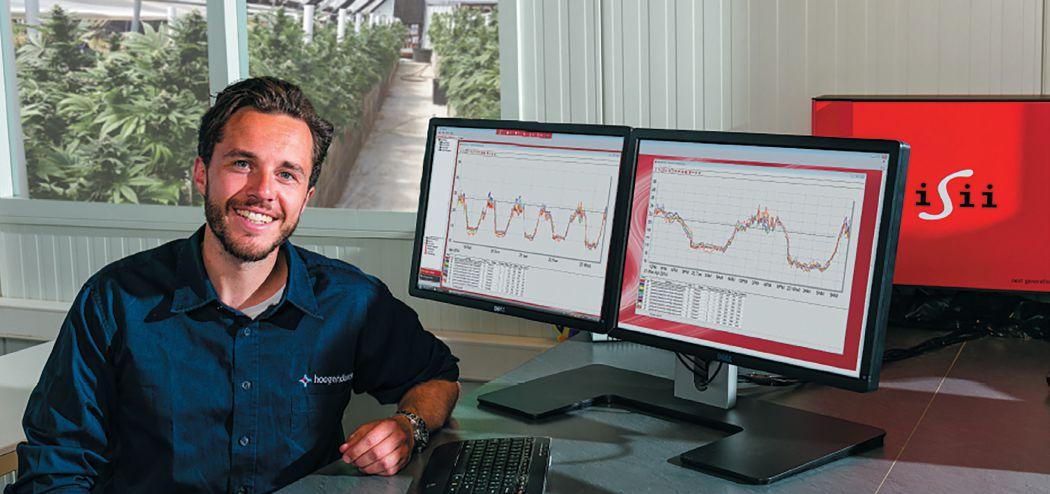
Hoogendoorn’s next generation iSii monitors and controls all climate,irrigation and energy equipment in all types of facilities such as greenhouses and buildings. The iSii is equipped with advanced controls that work according to the principles of Plant Empowerment. This way light, temperature, humidity and CO2 are aligned with each other for a maximum photosynthesis. In addition, to prevent water stress, irrigation is driven by the evaporation energy and water balance of the crop. With the iSii process computer, you set the base for high quality production.
Vantage Point
By Troy Henderson
6 tips to protect your cannabis facility from virus outbreaks
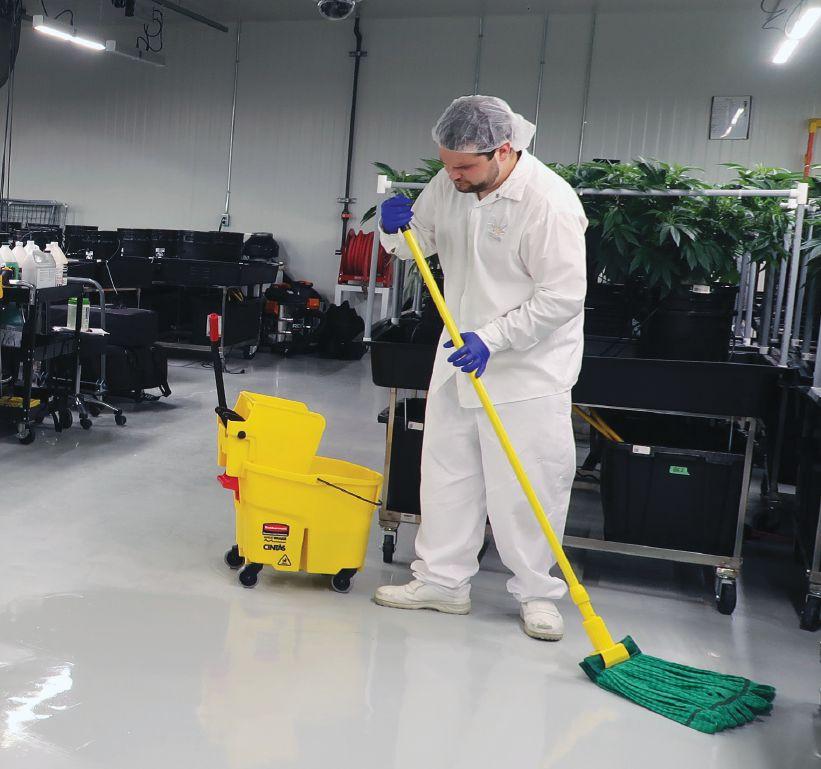
As news of the COVID-19 pandemic continues, it can be easy to overlook the current steps you have in place to ensure you and your team stay healthy. To prevent the spread of infection in your cannabis facility, it’s essential to review and optimize your infection prevention strategies.
#1 Reinforce hand hygiene
Washing your hands is one of the most important ways to prevent the spread of pathogens and keep your staff healthy every day. Your team can utilize alcohol-based hand sanitizers as they are effective at killing germs. However, they cannot be used as a replacement for hand washing when soils are present. Nothing replaces soap and water to physically clean and remove dirt and germs from your hands. You can also promote routine hand washing by hanging up posters around the facility and showing the proper steps required.
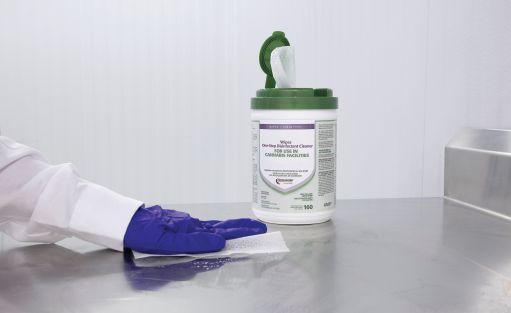
#2 Routinely disinfect non-production surfaces
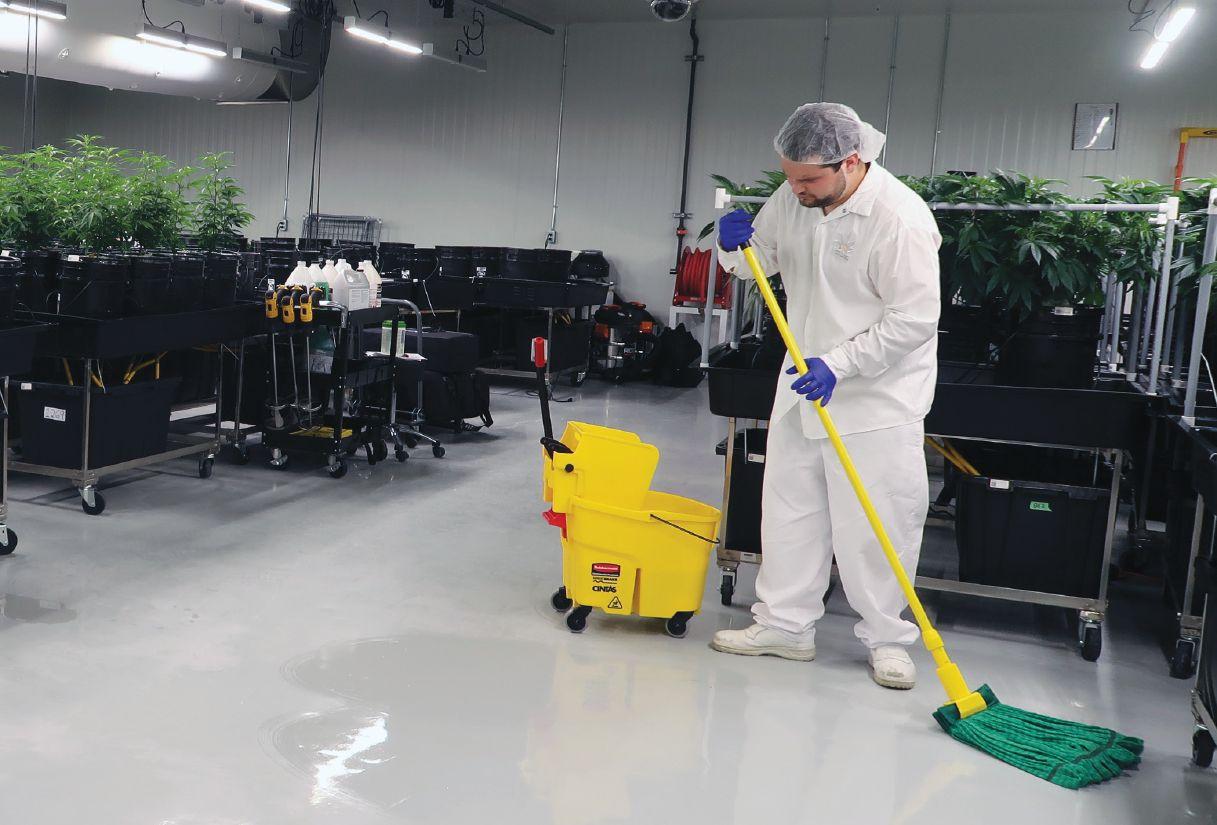
Many pathogens, including COVID-19, are known to survive on surfaces, and Health Canada recommends cleaning surfaces and objects to prevent this route of pathogen transmission. Your current sanitation procedures likely focus on ensuring the appropriate cleaning and disinfection of production areas, including
growing rooms to prevent plant pathogens. However, you should also ensure disinfection in other areas of your facility where people congregate, such as office spaces, desks, staff room areas, bathrooms and kitchens. High-touch surfaces should be disinfected on a regular basis. This includes your work surfaces, desks, computer keyboards, doorknobs, light switches, phones and more, to prevent the spread of infections.
#3 Avoid harsh cleaners and disinfectants
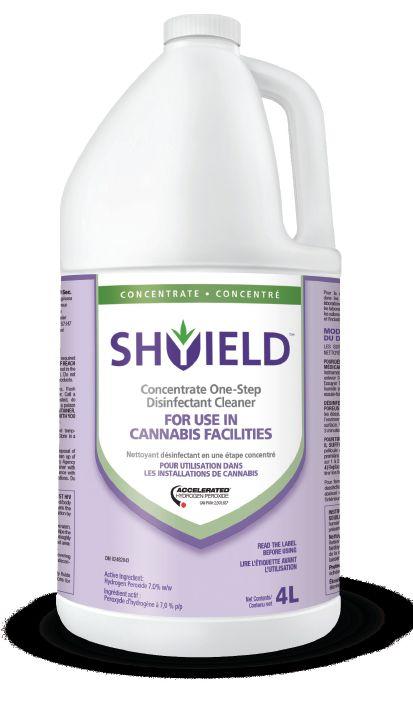
With the news of outbreaks and more resistant microbes, there can be tendency to think harsh chemicals will provide improved efficacy and create a safer environment for staff. However, even novel pathogens such as coronaviruses, can be killed by registered disinfectants following label use directions. Several of the mostused disinfectants rely on relatively high and hazardous concentrations of chlorine releasing agents, quaternary ammonium compounds, and alcohols. Many of these sub -
stances present risk of permanent eye, skin and mucous membrane damage. Therefore, it’s important to not only select a disinfectant with broad-spectrum efficacy, but one with an excellent safety profile that is non-irritating at in-use solutions.
#4 Develop a plan
Like most businesses, cannabis facilities may not have a plan in place for outbreaks such as COVID-19. Infection prevention is a true team effort, and everyone at your facility has a role to play in developing procedures that work for your facility. Your plan may include: mandating workers stay home if they feel ill and outlining how they will be compensated; ensuring you have appropriate supplies including disinfectants, PPE and hand sanitizer in times of demand; and developing a disinfection schedule for high-touch, non-production surfaces at your facility.
#5 Communicate with your customers
You have likely received COVID-19 updates and other
notifications from companies you regularly deal with keeping you up-to-date on how the or ganization is handling the situation. You can also com municate with your clients to share how you are protecting staff and the current infection control initiatives you have in place. It is important to let your customers know you always have infection prevention top of mind to not only provide quality products but also to protect your workers.
#6 Review protocols and schedule team training
With your standard sanitation procedures in place, it can be easy to forget to assess if improvements can be made. However, your facility’s clean ing and disinfection processes may be labour intensive, com plicated for staff, potentially dangerous, and overly expen sive. You should schedule time to review the procedures, re ceive feedback from workers on pain points or issues, and keep a look out for new tech nologies that can streamline the job. There may be new ap plication equipment available or new disinfectants you should consider with the ideal balance of efficacy, safety and simpli city. Stay up to date on the latest technology and always connect with experts in the industry to help.
Although the current climate may be one of fear and uncer tainty, it’s important to keep in mind that we can all take pre cautions to do our best to keep ourselves and others healthy. In times like these, implementing effective infection prevention throughout your facility is the best investment you can make.
Tailor-made solutions for cannabis crops
Our best sachets yet!
Control Spider Mites, Russet Mites, Thrips, White y
No carrier material on the crop
Low and high humidity resistant
Quick release and easy to use
Preventive and corrective solutions
Industrial compostable
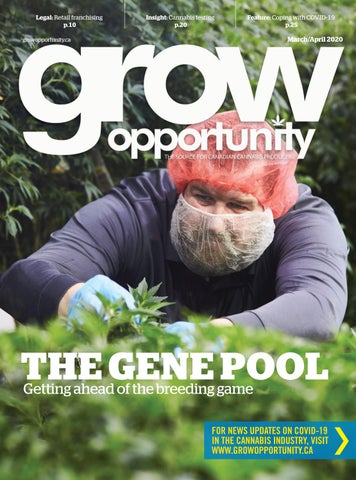
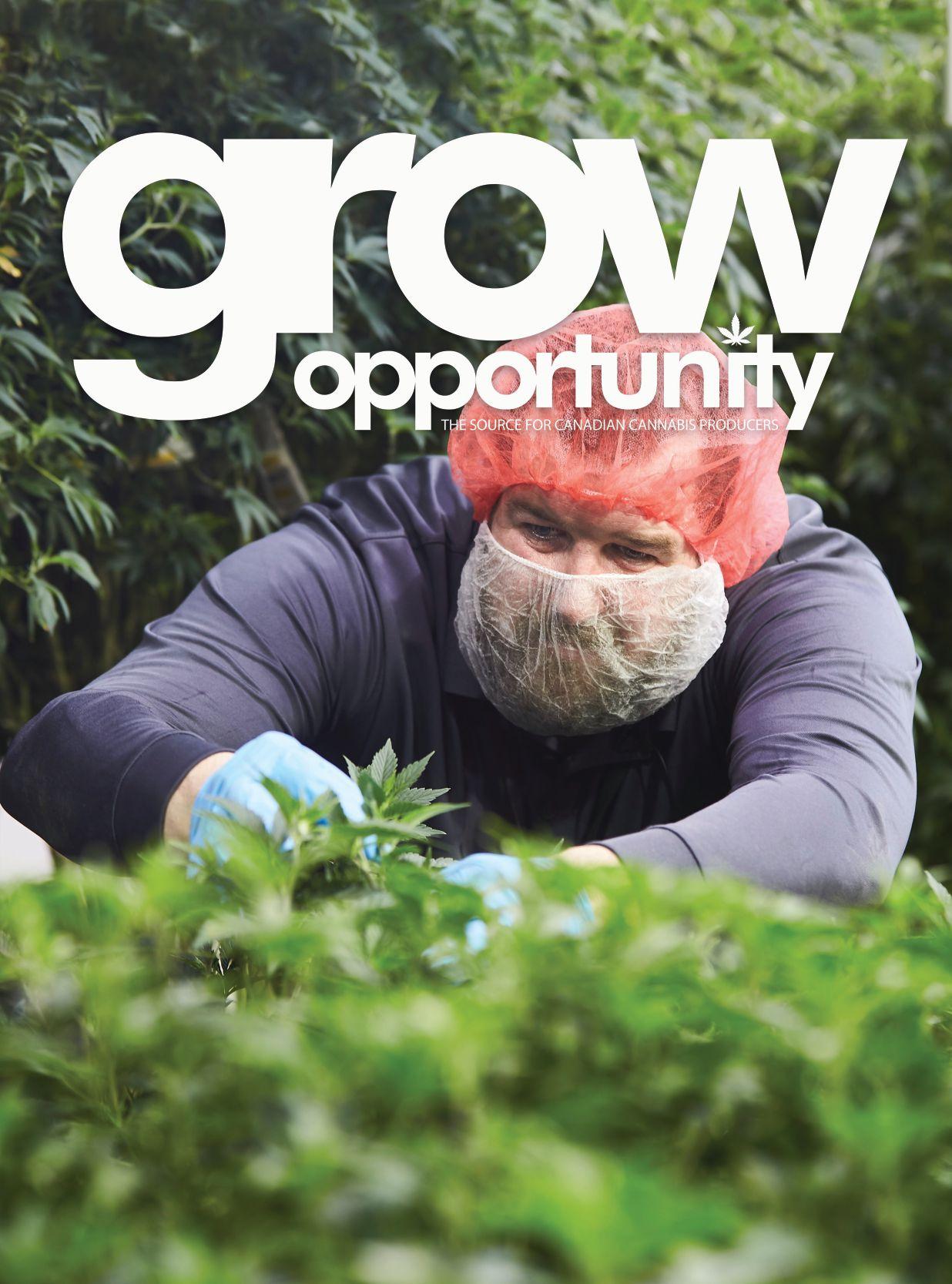
The gene pool
Getting ahead of the breeding game
By Treena Hein
Ca nnabis breeding and genetics could be the next big opportunity for cannabis licensed producers.
At this point in time, there isn’t much breeding going on among Canadian licenced cannabis producers. However, some companies such as Tantalus Labs in Vancouver B.C., have invested in breeding programs in order to really set themselves apart as the cannabis market in Canada matures. It’s all about securing a competitive edge in the future through a dedication to breeding now.
Tantalus Labs CEO Dan Sutton believes there may be five or so companies in Canada that are actively phenotyping
(measuring the attributes of the genetics they have) from purchased seed, but says that even at his company, which has an established breeding program, “we are just scratching the surface of our breeding potential. It’s a core competency of our grow team, but I would venture it will take two to three more years before we see active breeding delivering products from consumer brands.”
Like others, Sutton notes that the main focus of cannabis breeding has been greater potency. That focus will continue, but Sutton stresses that achieving it within a stable genetic framework takes the cultivation of many generations of selection and much back-crossing.
“Often what you see is what you get,”
Sutton notes, “so selecting phenotypes that have high potencies in their first runs is your best bet.”
DIVERSITY
Unique flavour profiles would be another breeding focus, says Sutton, but he believes “finicky exotics” will be reserved for small-scale production, although they represent “an exciting niche for micro-cultivators.”
In terms of other cannabis attributes, similarly to how consumers have become educated about trans fats, fibre and more in their food products, cannabis consumers are becoming more educated as well. Chad Morphy, master grower at GreenSeal Cannabis Co. in Stratford, Ont., be -
Chad Morphy, master grower at GreenSeal Cannabis, says his company is keeping abreast of the latest research that may provide some directions for the company’s breeding program.
lieves the level of knowledge about cannabis terpene profiles, flavonoids, appearance and other factors is growing. GreenSeal has foreseen this for a long time, and through its breeding program, Morphy says he and his colleagues have been “staying a few steps ahead” and ensuring they have “many diverse strains” to address emerging market trends.
As to breeding for different purposes within the healthcare realm, Morphy first notes that GreenSeal keeps abreast of the steady trickle of announcements from around the globe relating to various cannabis medical research. Some studies involve investigation of an established health-related application of the plant’s compounds, and other potential new ones.
But past research is already influencing GreenSeal’s breeding program. “An example is THCV,” says Morphy. “There have been findings supporting its function as an appetite suppressant, which means it could be potentially integrated medically within weight loss programs or distributed more broadly as ‘munchie-free’ cannabis.”
Morphy adds that in a conversation with a “large Canadian extractor,” cultivation of THCV for extraction purposes was identified as an opportunity within the industry.
“The next step is to identify varietals with already-higher levels of THCV and put them through genetic selection and breeding programs to increase the production of that particular cannabinoid in a stable way,” Morphy says.
OVERCOMING CHALLENGES
One big challenge in a crop breeding program of any type is the time it takes. As mentioned, when cannabis breeders seek to create stable, reputable strains, the process of genetic selection required to find the phenotype desired can take a long time – at GreenSeal, it takes over a year.
“In this process, potentially hundreds or thousands of seeds of a particular strain are started and tested,” explains Morphy, “which eventually allows us to
single out the genetics offering the best representation of that cultivar, and the characteristics the breeder – and consumer – desires.”
To overcome this hurdle, GreenSeal is growing six tiers of plants under a 20-foot
ceiling in its breeding area, allowing a broader selection process for high potency, targeted terpene profiles and other phenotypic attributes, but also for plant performance.
GreenSeal is also collaborating with
heavy soils conditioning improvement used in potting soil mixes odorless mixes with peat moss
natural soil conditioner for lawns, gardens and plants improves soil aeration neutral PH
quantity and size available upon request
increases water and fertilizer retention in soil
preserves bulbs and roots germinating seeds and rooting cuttings improves potting and transplanting
natural soil conditioner for lawns, gardens and plants improves soil aeration neutral PH
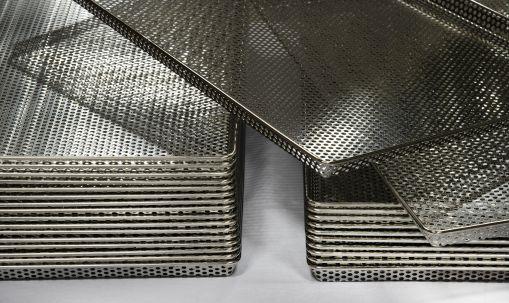
Since 1997, Albert Mitchell, president of Harvest Supply Canada, has been successfully providing custom manufacturing to the industrial and marine markets across North America. When Canada legalized cannabis in October 2018, he and our team of highly skilled professionals, eager to take advantage of our fully equipped manufacturing facility, began applying years of custom engineering experience to support Canada in becoming a leader in the cannabis market. This led to the incorporation of Harvest Supply Canada in April 2019, which soon began offering cannabis licensed producers the number one patent-pending drying racks and UL-certified bucking machine on the market. Harvest Supply’s world-class drying racks feature both tray and hanging options, and our bucking machine comes with or without a stem chipper. We also provide conveyor and material handling systems and will work with you to design any custom engineered harvesting machine you require.
We set high standards in everything that we do. It is our mission to meet the needs and exact specifications of our customers on time with cost-effective, superior crafted products, all while providing quality personnel. At Harvest Supply Canada, we are continuously improving our products and always adjusting to the needs of producers while keeping quality, safety and cost at the forefront of our design.
Cannabis producers were settling for the products that were available to them, until Harvest Supply Canada Inc. began collaborating with industry leaders in order to supply the most superior and cost-effective grower products available. Our manager of project development Bryan Huisman understands the importance of listening to the customer and developing lasting relationships. Bryan has spent countless hours travelling and visiting with licensed producers across Canadian provinces and American states, listening and understanding the gap between what was available to producers at the time and what they needed. After collaborating with LPs of the highest standard in North America, we began our extensive research and development process to engineer world-class patent-pending drying racks, trays and bucking machines.
RESPONSIVE PRODUCT DEVELOPMENT
The most crucial step in our development process is simply the ability to listen and understand. We deliver prototypes for on-site evaluation by your team and from there provide further testing and development based on your specific feedback – free of any costs or charges. We listen to every little detail our customers mention, taking note of each aspect that could further improve the efficiency and effectiveness of a licensed producer’s production. Establishing a relationship with our customers is crucial to how we conduct business, ensuring that you are always more than satisfied with the quality and value we provide in our work. Many adjustments have been made along the way, and a lot of time has been spent perfecting our craft to ensure you are continuously receiving state-of-the-art products.
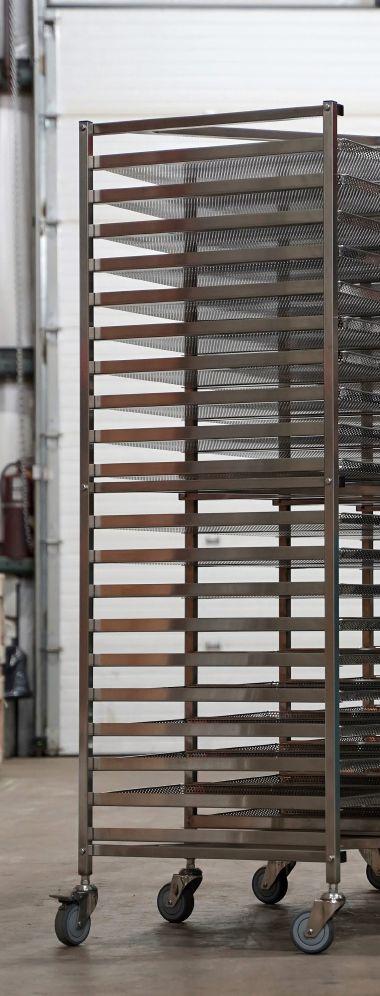
We offer top of the line, patent-pending drying racks with the option of 40 or 60 trays, made from heavy-duty 304 or 316 food grade electropolished stainless steel. The stainless steel material eliminates the risk of contamination, recoating, warping, discolouration or even breaking. Our trays went through numerous designs and tests focused on weight to
strength, ergonomics and worker safety. This trial and error resulted in the perfect variations of hole numbers and diameters allowing you to customize each tray to your needs. The stainless steel trays maximize air flow without allowing smaller products to fall through, all while maintaining strength and durability. Each tray features a stainless steel ring that makes for easy cleaning, completely eliminating the chance of any cross contamination compared to the traditional folded over lip with hard-to-
OFFERING FULLY CUSTOMIZED SOLUTIONS AT THE LOWEST COST FOR THE BEST VALUE
remove residue. We also recognized how valuable floor space is, which is why our drying racks only use up 7.40 square feet, effectively holding more product per square foot than any competing brands. Each drying rack also features six heavy-duty stainless steel swivel wheels, with a break on either side, to ensure safe and easy movement.
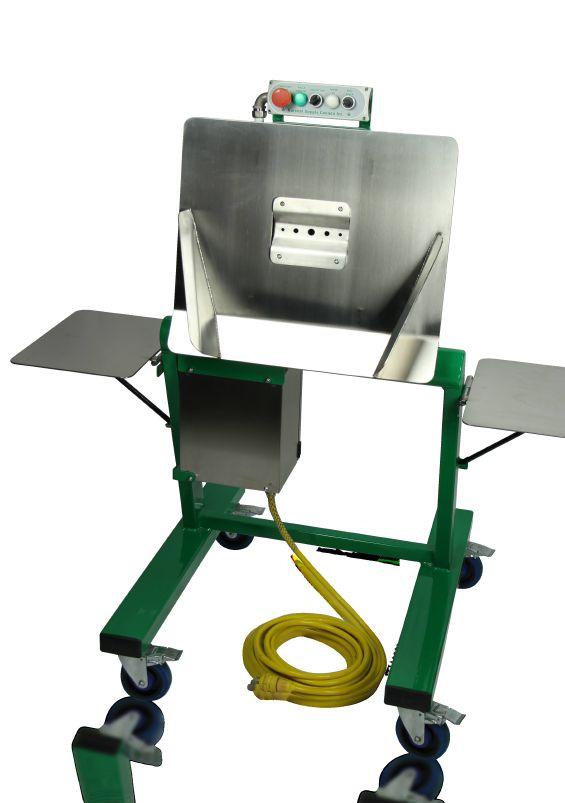
Similar to our drying rack and trays, we collaborated with LPs to manufacture a world-class bucking machine that can meet all needs. We promise you the highest level of safety and quality on the market, as our bucker has gone through rigorous testing and been awarded the superior and highly coveted UL Certification. The HSC bucking machine can buck wet or dry product, offers custom speed and feed rates, bucks at a top-of-the-range buck rate per hour, and allows for operation by multiple people. The bucking machine comes with or without a stem chipper and can be designed and custom engineered with different combinations to suit any and all of your harvesting needs.
We at Harvest Supply have focused our energy on going above and beyond the needs of Canada’s LPs. Through extensive research and collaboration with industry leaders, we are able to provide growers with outstanding products and fully customized solutions at the lowest cost for the best value.
EMPOWERING WOMEN
We see beyond providing our customers with superior service and quality products though, we see the cannabis industry for its tremendous ability to support all Canadians and our economy. Cannabis in Canada provides a new and exciting platform for businesswomen to establish themselves as the talented and capable professionals they are. So many intelligent women are working hard as leaders in the cannabis industry and it is a core value of our company to empower women of all roles in this industry, and support our team of females in leading strategic decisions. This new industry is an opportunity to put the spotlight on women who are more determined than ever to showcase their skills and rightfully take their place as executives and leaders.
Harvest Supply Canada’s involvement in the cannabis industry continues to grow, with our next step in cannabis being to open retail cannabis stores. Harvest Supply Canada Inc. has obtained our Retail Operators License and is on the path to receiving a Retail Store Authorization, with COO Chelsea Mitchell assuming project lead, further establishing and supporting women leaders in another sector of this ever-growing industry.
We look forward to growing and establishing Harvest Supply Canada within the many sectors of the cannabis industry, continuously providing our customers with high quality personnel in everything we do; always striving to meet your needs and supplying you with solutions at the lowest cost for the best value.
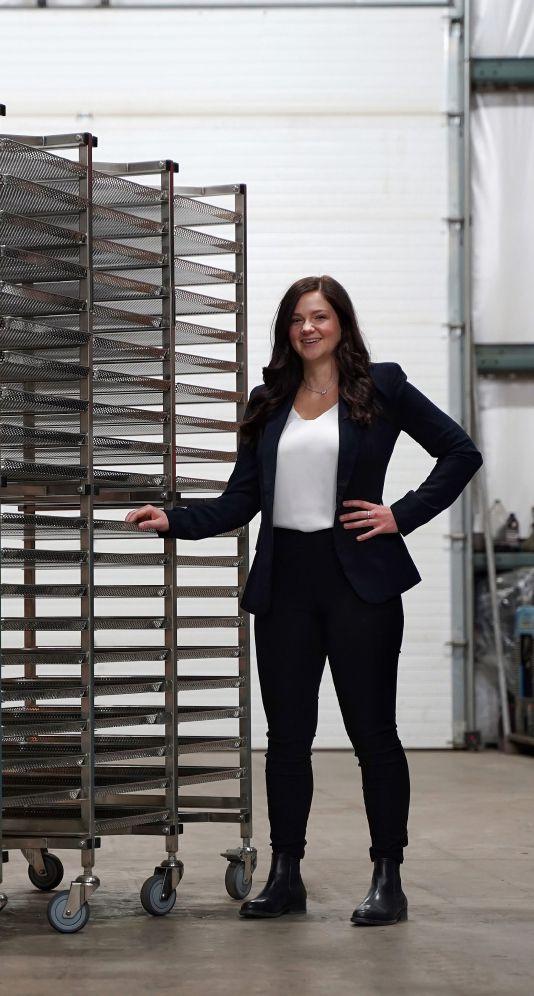
Chelsea Mitchell, chief operating officer, Harvest Supply Canada Inc.
From the lab
To find out how analysis of cannabis factors into breeding progress, we contacted Brian Coutts, strategy and business development manager, Food and Pharma Division at A&L Canada Labs, for his perspective.
Coutts says that in his firm’s analysis of cannabis samples over the last two years or so, potency has improved. He also notes that at this point, cannabis growers understand well that many factors are involved in harvesting a high-quality and high-yielding crop consistently at large scales. Growers are also coming to understand how individual cultivars respond to all the inputs.
A&L Canada Labs does a lot of plant tissue test for licenced producers so they can refine their nutrient recipes and maximize each cultivar’s quality and yield.
The other main testing demand that A&L receives from industry is for analysis of cannabis edibles, beverages, topicals, tinctures, capsules, vaporizers and other products. However, Coutts says, “terpenes are another big topic of discussion and how they combine with THC/CBD and alter the effects of cannabis, although there is a lot to learn yet with clinical research being completed. So, stay tuned.”
Mapping genetics is becoming more relevant to breeding for eventual product development, says Coutts, adding that “new equipment and technology is becoming available that’s making it cheaper and faster to test the genetic makeup of cultivars.”
other parties on methods to speed up breeding, but the details are private. Morphy can say that, “we are currently undertaking some incredibly exciting R&D in partnerships with leading university biotech researchers” to find faster alternatives to traditional genetic selection, but also to increase cannabinoid content and other aims.
Sutton adds that in addition to time, the greatest limitation for Canadian producers wanting to set up a breeding program is a lack of adaptivity or cultivation systems that can meet the diverse needs of the “exciting genetics” that are available. Most LPs are limited, he says, to what they can grow effectively.
In addition, Morphy says it’s very hard for LPs to commit any of their valuable licenced growing space to a breeding program. They could acquire an additional nursery licence and set up a standalone breeding space, but the costs are substantial.
Indeed, Morphy notes that the overall costs of a proper breeding program are quite high.
“These include the direct costs of cultivation and operations (staffing, power, nutrients, rent and so on), but the costs for thirdparty lab testing can also really add up,” he explains. “Basic lab tests can run around $150. When you germinate one hundred seeds of one cultivar, and require multiple runs and tests for many of the phenotypes, you are looking at spending well over $75,000 to identify one ‘winner’ – and that’s not even guaranteed.”
And, those companies who want to start breeding now and did not seek out genetics
from around the world a few years ago, says Morphy, may find it very difficult now to do so. Shortly after it received its cultivation licence, GreenSeal acquired a large library of new cultivars, he recalls. He and his team were able to bring in the exact genetic materials they were looking for from breeders around the world, but Morphy says “that door is mostly closed now,” as existing licence holders aren’t able to integrate ‘legacy’ cultivars into their production. It’s mostly a regulatory challenge, he notes, but a significant barrier to a producer that wants to grow a cultivar not in domestic circulation.
LOOKING AHEAD
While gene mapping and marker-selected breeding are certainly potential tools available to cannabis breeders, Sutton believes it’s still early days to discuss these methods.
“I am personally more excited by the potential of tissue-cultured plantlets creating greater predictability and stability from early phenotyping runs,” he says, “enabling a tighter feedback loop between R&D and production.”
Like others, Morphy and the GreenSeal team are optimistic about how it – and the entire cannabis sector – can harness the full potential of the cannabis plant.
“We see a ton of opportunity,” he says, “and want to take a leading position on [breeding], as it can potentially help not just us but the whole industry when it comes to meeting the rapidly-evolving needs of consumers. We can all move faster and more effectively to wherever the market tells us to go.”
Tantalus Labs is one of only a handful of LPs investing in a breeding program to gain competitive advantage. CEO Dan Sutton believes they are just “scratching the surface” of the potential of cannabis breeding and genetics.
Max White is the co-owner and director of cultivation at Aroma Cannabis in Portland, Oregon.
Annabeth Rose has a Bachelor’s in Cellular and Molecular Biology and a Master’s in Business Administration. She has been quality assurance director for several cannabis labs in Oregon.
Cannabis testing 101
Promoting a better understanding of the product testing process
By Max White and Annabeth Rose
Before the regulation of the cannabis industry, consumers would simply trust their “source” and fire up their organic bud grown with love. Depending on the grower, the flower may have been cultivated organically and free of pesticides and fungicides. Or, maybe not.
As the lucrative cannabis cultivation market grew in popularity and profitability, so did commercial cultivation practices. Today, we find ourselves in a significantly different industry, with hefty regulations and strict guidelines for what products producers can use on their cannabis crops. The cannabis industry, as a new and emerging market, can set the pace for a healthy approach to the cultivation of all crops, not just cannabis.
It has also been challenging at times. In California, as the recent legalization began to roll out, one out of five samples failed pesticide tests, according to a report from MJBizDaily. It has been a tight learning curve for cultivators to develop best practices under this newly regulated regime. This is why understanding the process for cannabis testing is critical for all licensed growers.
To provide growers a better understanding of the process of cannabis testing, we put together this “day in the life of a cannabis sample” to demonstrate this critical stage before cannabis products finally reach the market.
Sampling
All finished flowers are segregated into batches based on strain and harvest time. Everything is labeled and cured to market specifications. A sampling technician has acquired the sample of flower(s) to be tested and created a sample ID along with a photo. In Oregon, we used to be able to pick the kindest looking bud and turn that in for sampling. But now, samples are taken out of a 15-lb batch in a random grid selection method to obtain a sample that best represents the whole batch. It is similar in Canada, where a sample is randomly selected to ensure results that most accurately represent the batch as a whole.
Loss on drying
A portion of the sample initially collected is weighed wet and then dried to completeness to determine the loss on drying (LOD). This value factors into the final potency content. All samples are normalized to dry weight, removing the inconsistencies between samples due to their specific water content and
results in comparable potency values across the board.
Potency
A sample of the cannabis product is extracted in a solvent, using various methods, so that the THC vacates the plant tissue (or extracted oil) and goes into the solvent solution where it can be further analyzed. A sample of that extracted solution is injected into a High-Pressure Liquid Chromatograph (HPLC) instrument that uses ultra violet (UV) light to detect the presence and concentration of the cannabinoids.
Pesticides
This process is crucial in guaranteeing that consumers and patients alike are consuming products free from harmful contaminants. At this stage, another sample of the cannabis product is extracted in a different solvent. This solvent pulls any pesticides from the plant material and into a solution that can be further analyzed.
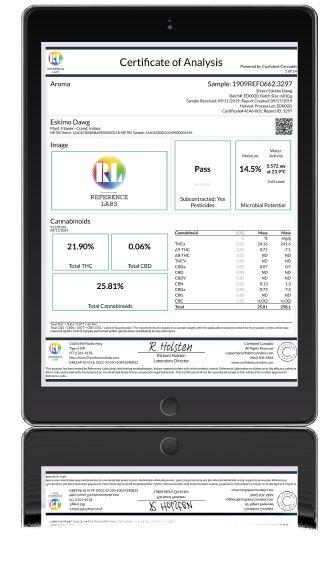
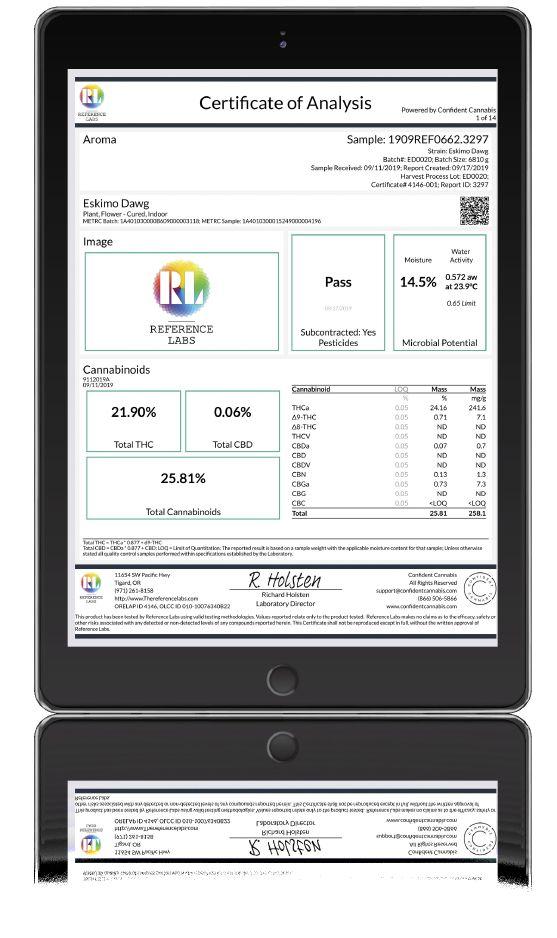
The certificate of analysis is essentially a report card that contains all compliant testing data required for a given sample batch.
PEOPLE WANT TO KNOW WHAT THEY’re getting.”
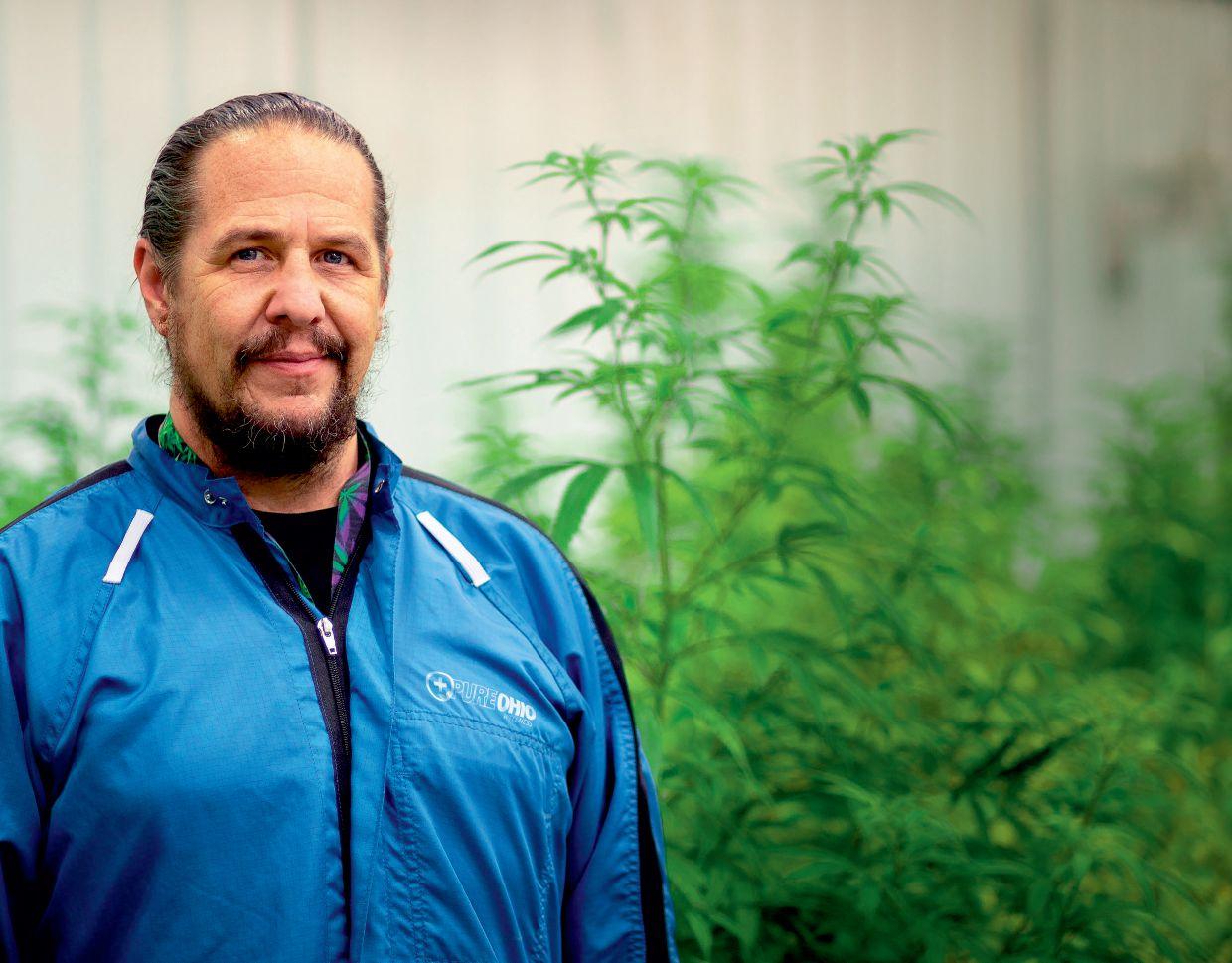
“Our whole purpose is to make sure we’re getting medicine into people who need it - if we’re not doing that we’re doing something wrong. Emerald Harvest plays a huge part to make sure we are producing clean medicine.”
Bigger yields. Superior quality. Maximum potential.
Emerald Harvest has partnered with commercial growers across North America to help them deliver consistent, profitable crops every harvest.
Our premium base nutrients and supplements are made from the finest ingredients so they run clean, test clean, and simply grow the highest quality product.
Professional cultivators are enjoying incredible results with Emerald Harvest nutrients.
And their success stories say it all.
Kyle Lewis Head of Cultivation PURE OHIO WELLNESS
Read their whole story, and other grower success stories, on our website.
In most cases, the detection of all pesticides requires both a Triple Quadrupole Gas Chromatograph (GC-MS) and a Triple Quadrupole Liquid Chromatograph (LC-MS).
Potential errors in analysis
Ensure that you are using a lab that has educated and experienced technicians. Serious problems arise when unqualified staff in laboratories are not able to decipher the chromatogram (graphs) accurately. Some testing lab results we have received in the past failed for pesticides that have not even be used for that crop, all because of an internal laboratory error made by a technician while attempting to read the chromatogram.
Mold/mildew testing
The results of a total yeast and mold (TYM) test are an indication of yeast and mold contamination on a cannabis sample. This test is administered by counting the growth of colony-forming units (CFUs) from a cannabis sample when placed under specific laboratory conditions.
Yeasts and molds can cause deterioration and decomposition of foods, which is why food manufacturers will commonly test their products for TYM. However, TYM tests are unable to differentiate between pathogenic, beneficial, and benign yeast and molds, making them poor indicators of safety.
This is especially true in cannabis products, which has a diverse microbiome of beneficial microbes that are not harmful to humans. A low TYM result does not mean a cannabis sample is free of pathogens. A high TYM result doesn’t say a sample is harmful to consumers, either.
For example, many organic cannabis growers use Trichoderma, a fungus that can help with plant nutrition and protect it from disease. Some cannabis regulators require cannabis samples to pass TYM testing before they can be sold in dispensaries. The most current version of the Cannabis Inflorescence and Leaf monograph published by the American Herbal Pharmacopoeia, which many U.S. states use to determine pass or fail criteria for microbial testing, recommends less than 10,000 CFU/gram in cannabis plant material and 1,000 CFU/gram in extracts.
Heavy metal testing
Cannabis plants can absorb heavy metals from the soil and uptake of water. Some elements are toxic when consumed and pose health risks. Testing for elemental impurities (heavy metal testing) is required for fresh, dried and oil-based cannabis products.
The standard test includes four main elements: arsenic (As); Cadmium (Cd); Mercury (Hg); and Lead (Pb). Testing for heavy metals needs an Inductively Coupled Plasma Mass Spectrometry (ICP-MS) instrumentation and a validated method.
Creating a report
After all tests have been run, and the data is thoroughly analyzed, the laboratory director will look over the results to verify the data and ensure all results are within the laboratory’s accreditation standards. A certificate of analysis (COA) report is generated and
will include all compliant testing data required for the corresponding harvest batch. This is the “report card” to the grower and will be attached, indefinitely, to the cannabis product as it travels through the supply chain.
Observation
There are plenty of reasons why testing is appropriate. There are some things about testing labs that can be hindering, however. First and foremost is that these labs are “for-profit” companies. In Oregon, in particular, that means some test results are modified so that the lab can please its customers and continue to gain business. It is not uncommon for farms to shop potency numbers. Which lab is currently giving away the highest THC numbers? Are pesticides being reported?
It’s getting better with time, but if one lab is dishing out high THC numbers, then farmers may sway that direction because we are also selling in a competitive market.
One solution might be a neutral, not-for-profit laboratory association – perhaps, state-run – that can perform the testing without a vested interest; then, convoluted test results might not exist.
In a privatized laboratory sector, the staff hired may or not be experienced in operating highly sensitive instrumentation, such as the LC-MS. If a chromatogram graph is misread, sometimes referred to as a false positive, a sample could fail compliance testing and cost the producer excessive time and money to fix before the product can go to market. One lab fails a sample while other labs pass the same sample. We have witnessed this anomaly multiple times. It is a frustrating situation and can put a sour taste in the community as to which lab can be trusted to produce accurate and reproducible results.
When the bottom line is profit, even laboratories that are responsible for creating report cards for public health and safety, make their own decisions on how to best budget their internal operations. In some cases that I have witnessed, this leads to cheaper, inexperienced staff and cutting of corners on quality control. As the market matures, we believe testing practices are leveling out, and better standards are being achieved. It takes patience.
With a degree in cellular and molecular biology, Annabeth Rose has worked as quality assurance for several cannabis production companies.
growing environment, a simple, flexible, and sustainable control system is crucial. This is why proactive LPs are turning to Reliable Controls. Our nation-wide network of factory-certified Authorized Dealers will design, install, and commission a comprehensive control system paired with an intuitive, custom-tailored graphical interface. Take command of your precisely-controlled environment. Generate tracking reports and analytics. Reduce your carbon footprint while improving productivity, quality, and serviceability.
To learn more about this cost-effective and Canadian-made solution, please contact a local Reliable Controls
Authorized Dealer near you.
COPING WITH COVID-19
Cannabis industry adjusts to new business reality as pandemic surges
By Jean Ko Din
Cannabis producers and retailers have been declared an essential service in five provinces across Canada, in the wake of mandatory business closures to impose social distancing measures in an effort to curb the spread of COVID-19.
This news came as a sigh of relief for many cannabis companies that feared significant production losses, but crisis management expert, Suzanne Bernier warns that this could change as the virus continues to spread and the rate of infection increases to alarming levels.
While acknowledging the importance of preventing further job losses due to the pandemic, Bernier notes, the list of what provincial governments have deemed essential businesses is “far too exhaustive.”
“As we see outbreaks of coronavirus within some of these that the government has deemed essential workplaces, we’re going to see this list pared down,” she says.
For more than 20 years, Bernier has been helping governments, organizations and communities respond to crisis events, including the 9/11 terror attacks, Hurricane Katrina, Hurricane Sandy, the H1N1 pandemic and the 1998 “ice storm of the century” in Eastern Canada.
Bernier believes Canada has not seen the height of its virus outbreak yet and businesses have to prepare for the worst to come.
“Every business is taking a big hit right now, and of course, cannabis has a medicinal purpose for many people,” says Bernier. “But what we all have to think of right now, as all industries, is if we’re willing to take the risk when you allow
people to congregate in spaces, especially right now and within the next few weeks.”
New normal
As the Canadian government moves to take more urgent and aggressive action to combat the spread of this contagious strain of coronavirus, cannabis companies are faced with a lot of tough decisions. Directives from the Public Health Agency of Canada change every day, so day-to-day business operations have to change. Executive teams are in and out of meetings to ensure that their companies are quick to respond to concerns from all sides – investors, employees and customers.
Even before this pandemic hit, the cannabis industry was already facing uncertainty. Major cannabis companies, like Canopy Growth Corp. and Tilray Inc., were reporting quarterly revenue losses,
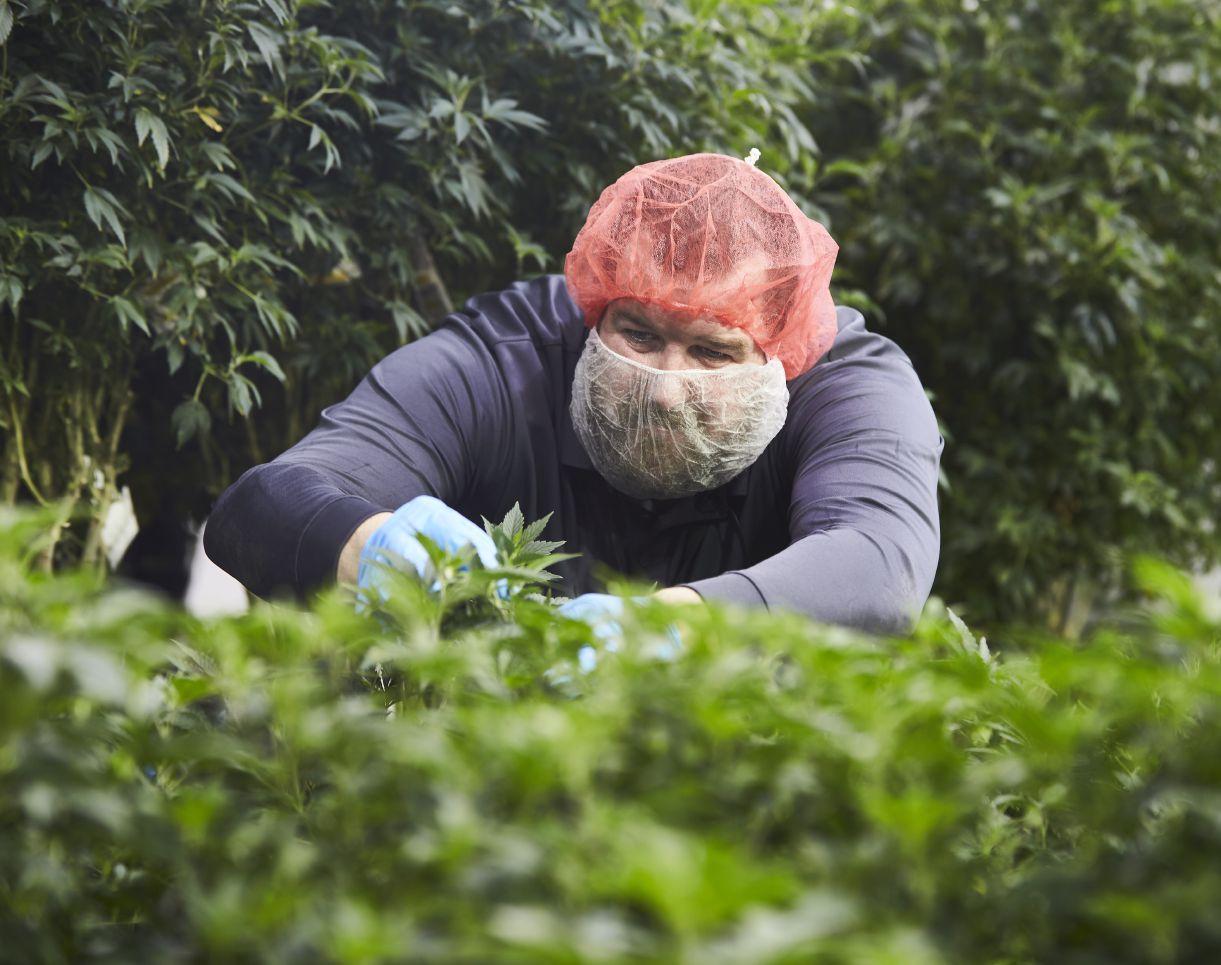
In the wake of COVID-19, cannabis producers are reinforcing strict biosecurity and sanitation measures to help protect workers and keep workplaces safe.
cost cuts, mass layoffs and executive departures.
Craig Behnke and Mike Regan of MJBizDaily pointed to COVID-19 as a catalyst for overall markets trading down and making it more difficult for companies to raise money. They are warning of more financial distress and potential bankruptcies in the future.
However, the industry found a silver lining as companies saw sales spikes at the end of March with more people adapting to self-isolation as their new normal.
Ontario Cannabis Store spokesperson Daffyd Roderick tells The Canadian Press that OCS received almost 3,000 orders on March 14, which was an 80-per-cent increase over an average Saturday. There was a reported increase in website traffic, as well as customer volume in stores.
Société québécoise du cannabis, the government-run cannabis retailer in Quebec, says it also experienced an increase in sales over the last few days, but declined to say how big the spike is.
Still, many companies believe this increase in sales will not account for the economic uncertainty ahead. On March 23, 74 cannabis firms co-signed a letter addressed to Finance Minister
ANALYTICAL EXPERTS
FLATTEN THE CURVE
THE WORST IS YET TO COME. Pandemic experts across the globe are issuing this dire warning in the call for citizens, businesses and governments to help “ atten the curve” by slowing the progression of COVID-19. Health experts agree that slowing down the rate of infection is key to containing the virus and alleviating the stress on the health-care system.
SOCIAL DISTANCING
Person-to-person spread of COVID-19 includes close contact – about six feet – with an infected person. During a pandemic, non-essential employees should be asked to work from home, where they can continue to carry on their job responsibilities without unnecessarily exposing themselves or their co-workers to potential infection.
HANDWASHING
Biosecurity is nothing new to cannabis production facilities. Preventing the further spread of COVID-19 may boil down to one, basic hygiene essential: handwashing. COVID-19 can be spread from contact with contaminated surfaces or objects and then touching one’s own mouth, nose or eyes. Sanitize high-touch areas within the facility often.
MONITOR SYMPTOMS
Workers who are feeling sick must stay home. Some of the symptoms of COVID-19 include: fever, cough, di culty breathing, and pneumonia in both lungs. People who recently travelled from a location with known COVID-19 cases should self-isolate for 14 days, with or without symptoms. For people experiencing severe symptoms, go to the emergency room or call 9-1-1 or health emergency phone lines and let them know that you are experiencing these symptoms so they can respond accordingly.
Bill Morneau and Industry Minister Navdeep Bains, asking the government for help amid the pandemic.
Among the letter’s signatories are Canopy Rivers Inc., WeedMD, Organigram Inc., and Fire and Flower Inc.
In the letter, companies asked for access to wage subsidies and funding through federal agencies, the Business Development Bank of Canada and Export Development Canada. This appeal came days after Trudeau announced an $82-billion economic response plan.
“No one really knows how long or what the answer is or how much we want to let everything impact the economy,” says Rudi Schiebel, founder and CEO of licensed cannabis producer Habitat Life.
“There’s a balance between keeping people’s lives going and having a life to come back to, and then also following all the medical advice. And making sure we limit the amount of chaos that the pandemic installs.”
Habitat Life’s cannabis and aquaculture farm is located in rural Chase, B.C., about 40 minutes from Kamloops. At first, Schiebel and his management team were hesitant to make some drastic measures. But as the seriousness of the virus became clearer by the day, the management team had to act quickly.
“On the Friday after COVID-19 was declared a pandemic, the conversations really started to shift… and as soon as we touched base on Monday, we had to review where our policies were at,” says Schiebel. “We had to make sure that our employees are safe and we also had to look at our policies to account for any delays or possible market shutdowns, just to minimize the surprises that could come at us.”
Supply and demand
A few days after COVID-19 was officially declared a pandemic by the World Health Organization on March 11, the Public Health Agency of Canada began to warn people against large public gatherings, such as sport-
ing events and concerts. And so, upcoming cannabis conferences began to announce cancellations or postponements. The largest of these was the annual O’Cannabiz Conference and Expo that was slated in April.
On March 16, Prime Minister Justin Tru-
deau also announced border restrictions that only allowed entry into the country by Canadian citizens and permanent residents. Days later, the government restricted all non-essential travel across the Canada-U.S. border with the exception of maintaining supply chains between both countries.
Provincial and municipal states of emergency are being declared across the country. In response, more companies were forced to react.
Fire & Flower closed all its Ontario retail locations in favour of online ordering and in-store pickup service. It also closed stores in several locations in Alberta, and implemented an initiative to form its “Pandemic Response Team.”
“We have a responsibility to our employees, customers and the communities in which we operate to limit social interactions by temporarily modifying our business model and selectively closing stores in response to this unprecedented public health challenge,” shares Trevor Fencott, chief executive officer of Fire & Flower, in a statement.
FSD Pharma announced that it was scaling back cultivation operations and staggering shifts for essential personnel. The company also closed its facility to collaboration partners and ceased partner operations.
However, since being declared an essential service by several provinces, some companies are also looking to double down operations in anticipation of increased demand.
TerrAscend announced that it remains fully operational and is looking to hire additional employees at its retail, cultivation and processing facilities.
“We have seen a significant increase in demand throughout March, which is a reflection of the loyalty of our customer base and the compassion and care of our employees. The entire management team is closely monitoring the changing situation and working with state and local representatives to deliver a coordinated and appropriate corporate response,” TerrAscend executive chairman Jason Ackerman says in a statement.
Suppliers’
All-in-one solution for variety of carton packaging sizes
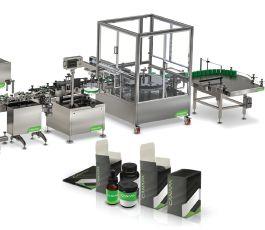
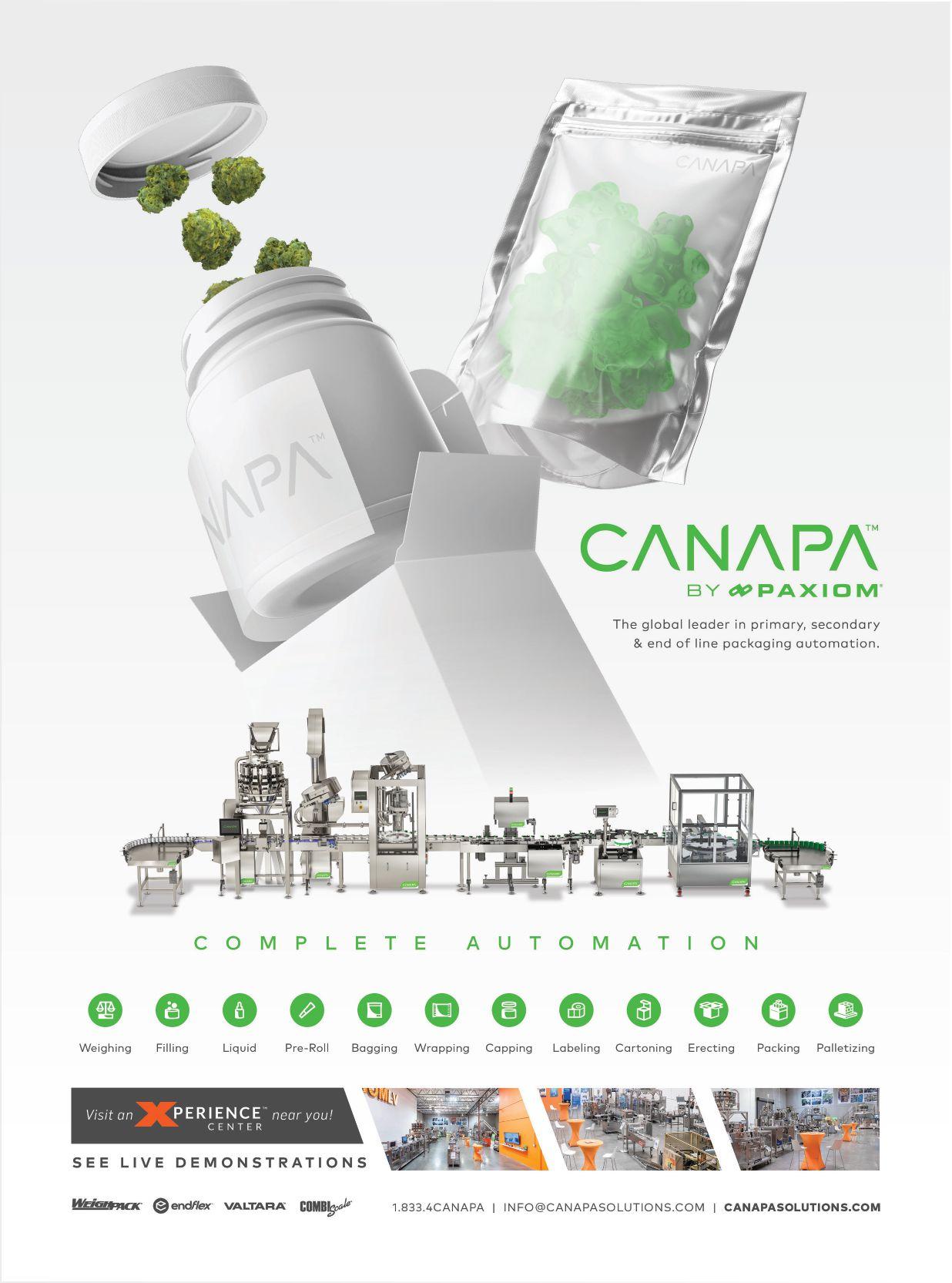
Canapa has a new all-in-one system that will open, form, load and close a wide range of carton sizes for the cannabis producer’s needs.
Kartnr is an automatic vertical carton forming and loading machine. It is engineered to form, load and close vertical chip board cartons at a rate of up to 60 cartons per minute.
It can be operated by hand load or full automation and is available in three carton models: tucked carton, pop-up auto-lock carton and glued carton.
Knockdown carton blanks are loaded onto a hopper magazine and one-by-one, the blanks are pulled from the loading station and erected. Integrated motion sensors trigger a series of robotic movements to automatically plunge and load each carton with the product. The two minor flaps are pushed down, after which the top overlapping major flap is closed and tucked while being discharged.
Specifications of the machine can be suited for a wide range of cannabis products, including containers, bottles, jars for creams, oils, edibles and flowers.
Kartnr is made of a heavy-duty steel frame, a PLC with colour touchscreen, tool-less removable change parts, interlocked safety doos and a small footprint. www.canapasolutions.ca
HEMCO launches upgraded ductless workstation
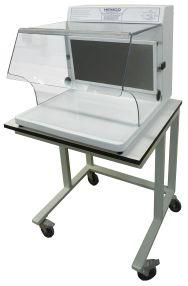
MicroFlow III is HEMCO Corp.’s latest iteration of its Class 1 ductless carbon-filtered workstation. It is equipped with particle pre-filter and activated carbon filtration for fumes, odours and non-hazardous chemical vapours.
Completely self-contained, the MicroFlow III features a recessed work surface to contain spills. A clear viewing sash surrounds the area for user protection and can be conformed for use with a microscope.
Its variable speed fan controls allow for a high speed of 100f/m through the sash opening. It also has medium and low flow features for sensitive operations.
The MicroFlow III is 24 inches wide by 20.75 inches high and 24 inches deep. This workstation is applicable for sample weighing, general chemistry of small volume of common chemicals, tissue staining and processing, gluing and drying operations and more. The hood is also available with a mobile table. www.hemcocorp.com
Valens launches white label infused beverages in Canada
The Valens Company announced a new line of cannabis-infused drinks.
The company, formerly known as Valens GroWorks Corp., released a new line of drinks under a white label agreement with A1 Cannabis Company, a subsidiary of Iconic Brewing.
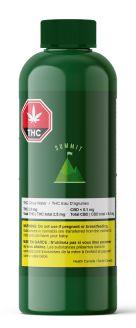
The new line of beverages includes Basecamp, a CBD-forward iced tea, and Summit, a THC-forward citrus water. Basecamp will be available at select retailers throughout Ontario in the coming days with additional markets expected to follow, according to the company’s statement on March 5. Summit is also expected to be available at select stores in the coming weeks.
“Our agreement with A1 demonstrates the strategic value of partnering with leading companies that share our vision and reinforces our commitment to launching the Cannabis 2.0 products,” said Tyler Robson, Valens CEO. “This is the next step in the execution of our strategy to introduce innovative, high-quality products that deliver safe and customized user experiences.”
Basecamp and Summit were both developed using Valens’ SoRSE emulsion technology which claims to transform cannabis oil into water-soluble forms without cannabis taste, colour or smell. The technology is said to enable faster observed onset times, reduced offset time, have lower doses of cannabinoids due to enhanced bioavailability, and have the potential to achieve more than one-year shelf life.
Under the terms of the white label agreement between Valens and A1, a minimum of 2.5 million cannabis-infused beverages will be produced over five years, with the opportunity to expand on the partnership.
www.thevalenscompany.com
Cannabis Lab expands range of fume hoods
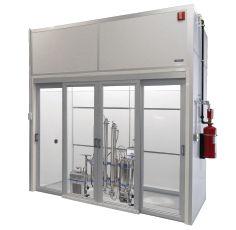
Cannabis Lab Solutions has expanded its selection of UniMax Fume Hoods. Standard floor-mounted hoods now range from six feet to 24 feet wide, four feet to eight feet deep, and seven feet to 16 feet high. The hoods are constructed with chemical-resistant, non-conductive modular panels that feature composite resin surface material.
Botanical extractions, distillation processes, roll-in reactors or long integrated instrumentation systems can be accomodated in these hoods. The modular design allows for onsite assembly and disassembly. Custom designs are also available, the company said. www.cannabissolutions.com