

Competitive Pricing & Fast Shipping

COMPLETE GLAZING SOLUTIONS







STAND OUT FROM THE COMPETITION. BECOME A FENESTRATIONMASTER® .

Set yourself apart with the premier education and certification program for glazing and fenestration professionals.
FGIA’s flagship program now includes new coverage of the NAFS Canadian Supplement, Canadian codes and energy, and insulating glass.
Why become a FenestrationMaster?
Expand Your Expertise —Learn about a wide range of industry topics while staying up to date on standards and best practices.
Discounts for Group Orders —Enroll your team to qualify for program discounts.
Maximize Your Training Budget—Train everyone from sales to engineering.
Learn Your Way—Online courses and proctored exams designed for your schedule.
Customize Your Learning – Explore new à la carte options.
Elevate your career and join the ranks of over 500 industry leaders. Sign up today at FGIAonline.org/FenestrationMasters.
22 Inside integrated project delivery
IPD contracts are becoming more popular as a way to improve team integration on complex building projects. They aren’t a bad idea, but there are some keys to success.
24 Top Glass preview
Top Glass 2026 takes place April 30. Here’s a look at what you can expect at Canada’s big annual architectural glass event.
7 Canada’s Glass Associations
14 Fenestration and Glazing Industry Alliance
20 Fenestration Canada
12 The Engineer by Claudio Sacilotto
30 That’s Rich by Rich Porayko
Episode #83: All the Glass That’s Fit to Print
As the president and founder of DPI Lab, an industrial printer manufacturer, Lon Riley knows a lot about the chemistry and technology that makes it possible to produce remarkable images on glass. He joins GlassTalk for a deep dive into the technology and what makes glass printing a special challenge. He addresses the considerations we need to have when seeking the highest productivity and uptime for our printing process, and reviews how things have advanced in the last few years. It’s a great overview for experienced fabricators and those looking to get into the

GLASS CANADA
March 2026
Volume 38 • Number 1
Annex Business Media
P.O. Box 530, Simcoe, Ontario N3Y 4N5
READER SERVICE
Print and digital subscription inquiries or changes, please contact Angelita Potal, Customer Service Rep.
Tel: 416.510.5113
Fax: 416.510.6875
Email: apotal@annexbusinessmedia.com
Mail: 111 Gordon Baker Rd., Suite 400, Toronto, ON M2H 3R1
EDITOR/PUBLISHER | Patrick FLANNERY pflannery@annexbusinessmedia.com 226.931.0545
GROUP PUBLISHER | Danielle LABRIE dlabrie@annexbusinessmedia.com 519.429.5187
BRAND SALES MANAGER
| Leslie OSBORNE losborne@annexbusinessmedia.com 647.280.5885
ACCOUNT COORDINATOR | Emily GUIMARÃES eguimaraes@annexbusinessmedia.com 416.510.5118
AUDIENCE DEVELOPMENT MANAGER
| Shawn ARUL sarul@annexbusinessmedia.com 416.510.5181
MEDIA DESIGNER | Alison KEBA
CEO | Scott JAMIESON sjamieson@annexbusinessmedia.com
SUBSCRIPTION RATES
Canada - 1 Year $39.25 (plus tax)
U.S.A. - 1 Year $90.17 (in CDN dollars)
Publication Mail Agreement #40065710 Printed in Canada ISSN 0843-7041
Occasionally, Glass Canada will mail information on behalf of industry-related groups whose products and services we believe may be of interest to you. If you prefer not to receive this information, please contact our circulation department in any of the four ways listed above.
Annex Privacy Officer privacy@annexbusinessmedia.com Tel: 800-668-2374
No part of the editorial content of this publication may be reprinted without the publisher’s written permission. ©2026 Annex Business Media. All rights reserved. Opinions expressed in this magazine are not necessarily those of the editor or the publisher. No liability is assumed for errors or omissions. All advertising is subject to the publisher’s approval. Such approval does not imply any endorsement of the products or services advertised. Publisher reserves the right to refuse advertising that does not meet the standards of the publication. glasscanadamag.com

Notes
Glass nerd holiday
from a conference with learning opportunities like no other.
If you are a glass nerd, I highly recommend the Buildings International Conference put on by ASHRAE and Oak Ridge National Laboratory (a research arm of the U.S. Department of Energy). It’s a three-day conference in Clearwater, Fla., where building scientists from all over the world come to present their papers and have conversations that no one from outside the industry would be able to remotely follow. The focus is on energy-efficient building. The organizers (led by Andre Desjarlais, residential buildings manager for Oak Ridge Laboratory and the long-time heart and soul of the event) do a good job of grouping the session topics so the sessions of most interest to you are gathered together and can be taken in in one continuous chunk. Most awesomely, all the papers presented at the conference are made available to attendees on a well-organized app for geeky reading later. After 40 years of running this event, they’ve pretty much figured things out. The conference is only held every three years, so the next one won’t be until 2028.
BIC is where I learned the word “hygrothermal.” I also learned about Wagner windows – a Nordic precursor to double glazing consisting of two single-paned wood-framed windows sandwiched into the same casement and independently operable. But the one that got me chuckling was a case study by Robert Hart of Lawrence Berkley National Labs. He told attendees about his attempt to assess the performance of thin triple IGUs. Energy use was monitored at eight units in two multi-family locations built in 1971 in California. Then all the windows were replaced with thin triples and energy use monitored for another season. The study showed about a 20 percent reduction in heating and cooling energy use after the thin triples were installed, but Hart admitted he couldn’t draw strong conclusions or compare the windows’ performance accurately to double-paned windows because of a comedy of errors plaguing the experiment. The housing units themselves were in a variety of disrepair, with large gaps in the walls where in-wall air conditioners had been installed. The attic insulation was highly degraded and in some cases absent or piled up to one side by contractors who had been working up there in the past. Puzzling results from the thermometers in the units were explained when it became evident that the thermostats were calling for heat but the furnaces were not actually coming on. On woman left a window open day and night, winter and summer, so her cats could go in and out. Two of the units used no energy whatsoever for heating or cooling throughout the study period – the owners didn’t want the HVAC bills. Other residents often had their heat and air conditioning on at the same time. To add insult to injury, the year after the retrofits had significantly hotter weather than the year before, complicating comparisons even further. All this introduced so much noise into the data it became hard to figure out what was going on at all.
This short note only scratches the surface. If you share my sick idea of what constitutes a fun Florida getaway, hope to see you at the next BIC conference. •


GREY GOAT HARDWARE:
SCALES NATIONAL FOOTPRINT WITH STRATEGIC CALGARY EXPANSION
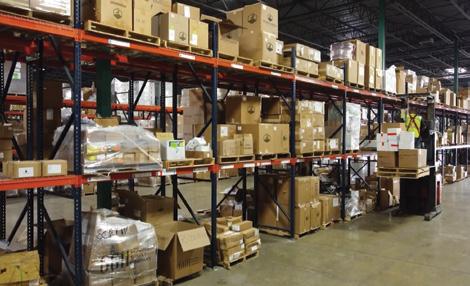
Grey Goat Hardware has officially expanded to Calgary — a major step forward in the company’s national growth strategy. With the launch of its large new distribution center in Alberta, Grey Goat Hardware is bringing faster service, better stock availability, and local support to glazing professionals across Western Canada.
Since its founding, Grey Goat Hardware has grown into a trusted name in glazing hardware distribution, with strategically located facilities in Toronto, Montreal, and Calgary. GGH supplies over 5,000 SKUs across frameless showers, glass railings, architectural hardware, and commercial entrance systems — supporting customers from coast to coast.
But GGH’s reputation has always been about more than just inventory. “Our customers are under pressure to deliver — and we understand that,” says Michael Flear, CEO of GGH. “Every member of our team is aligned around one goal: making sure our customers get what they need, when they need it, with real support behind it. That’s how we’ve built trust, and that’s how we plan to grow.”
That philosophy extends into product development. GGH works directly with engineers, glaziers, and installation professionals to ensure its products are not only code-compliant but practical and efficient. “We design based on feedback from the field,” says Ron Rehel, VP of Product. “That means fewer delays, faster installs, and smarter solutions for our customers.”
The new Calgary distribution center is already helping cus -
CONTACT US!
We’re Happy to Service You!
< Learn more or open an account
TORONTO (HEAD OFFICE)
606 Rivermede Rd., Unit 1-2, Concord, ON L4K 2H6
Contact: 905-264-1600
cs.toronto@ggshardware.com
tomers across Alberta, British Columbia, Saskatchewan, and beyond access the stock and service they need with shorter lead times. “Our presence in Calgary reinforces our commitment to the West,” says Levi Coultier, Calgary Warehouse Manager. “It’s more than a logistics hub — it’s a way for us to stand behind our customers with the same reliability we’ve built in the East.”
As GGH continues to grow, its core values remain unchanged: dependable service, engineered product innovation, and a genuine commitment to the glazing professionals who rely on them every day. With a larger footprint and a stronger supply network, GGH is positioned to serve the industry like never before — one project at a time.
MONTREAL
8145 Ave Marco-Polo, Montreal, QC H1E 5Y8 514-547-3422
cs.montreal@ggshardware.com
CALGARY OFFICE
Unit #248, 2880 45 Ave SE, Calgary, AB T2B 3M1 905-264-1600
cs.calgary@ggshardware.com

NEWS COMING EVENTS

Wilson back as CEO of AGNORA
Richard Wilson has returned as CEO of AGNORA, saying his goal is to accelerate AGNORA’s continued growth and renew its commitment to customer service and exceptional quality. He replaces Corey Boland, who took over from Wilson as CEO in 2023 and has now left the company.
“We are a customer service company first. We just happen to fabricate glass,” says Wilson. “I’m thrilled to be back in a place where I can make a difference and live by that mantra every day.”
AGNORA also announced several leadership changes across its Collingwood, Ont., and Los Angeles, Calif., facilities. David Trammell has joined the Cerritos team as general manager, bringing more than 30 years of fenestration and manufacturing leadership, with a strong focus on scalable operations, team development, and customer collaboration. Mike Switzer has joined AGNORA
Clockwise from left: Mike Switzer, David Trammell, Sandra Starr, William Stevens. Centre, Richard Wilson.
April 8
Canadian Glazing Conference Vancouver fenestrationcanada.ca
April 23
FenCon Winnipeg, Man. fenestrationcanada.ca
April 26
NGA Glass Fabricator Conference Chicago, Ill. glass.org
April 30
Top Glass Toronto topglasscanada.com
June 10 AIA Conference San Diego, Calif. aia.org
June 23 - 24
as controller, adding financial leadership grounded in process automation, rigor, and continuous improvement, Sandra Starr has stepped into the role of plant manager in Collingwood, bringing over two decades of experience building high-performing manufacturing teams and driving measurable gains in quality and efficiency. William Stevens, has been named maintenance manager in Collingwood, bringing cross-industry mechanical expertise to support reliability, preventative maintenance, and data-driven equipment performance.
In other AGNORA news, the fabricator has announced a $7.5 million investment to add a new IG line and 20 workers, with the assistance of a $1 million grant from the province. Provincial and local legislators joined Wilson to make the announcement. AGNORA says the new line will enable a 40 percent boost in production capacity.
FGIA Summer Summit Online fgiaonline.org
June 25
Fenestration Canada Golf Pickering, Ont. fenestrationcanada.ca
Oct. 14
Glazier Expo Toronto agmca.ca
Oct. 21
Top Glass West Calgary topglasswest.ca
CANADA’S GLASS ASSOCIATIONS
AVFQ
AVFQ is the essential industry group for its 260 members! At press time, we, the great Quebec family of the glazing and fenestration industry will have met in St-Hyacinthe for for our annual conference at the magnificent Château Frontenac. This year, with the current economic situation, we have emphasized the importance of resilience. By sharing our experiences and working together, we are opening the road to new and exciting opportunities. During these two days, participants will have the opportunity to attend 10 cutting-edge conferences and workshops, led by experts in our sector, around our theme, Resilience: Turning adversity into momentum. Our training program still offers our freshly re-designed FIT Window Installers Training which presents good practices with regard to the CSA A440.4:19 standard. The training is available in English and French. It allows you to acquire the knowledge to take the Installer Certification Program exam. Several other training courses are also offered, including Curtain Walls Installation, CSA A500:16 Standard for Building Guards, Project Management in Construction and CSA A440.6:20 High Exposure Fenestration Installation
GAMA
After months of meetings and discussions regarding the need to modernize Alberta’s glazing curriculum, progress is now underway. My Skilled Trades Network, in collaboration with Apprenticeship and Industry Training, has engaged
subject matter experts from the glazier trade to participate in Glazier Apprenticeship Education Program product development. This initiative involves a comprehensive review of current education and certification requirements for the glazier trade. Subject matter experts are contributing their knowledge and experience to the creation of key educational resources, including curriculum updates, course outlines and exams. GAMA is proud to support these efforts as the glazing industry works toward ensuring apprentices receive training that reflects current standards, practices and the evolving needs of the trade.
AGMCA
The Architectural Glass and Metal Contractors Association held its annual general meeting Dec. 4 in Toronto. Our thanks to those members who were able to join us and provide valuable input. Nominations were received and elections were held. We are pleased to announce our board of directors for 2026:
• Bill Byers (Transit Glass), president;
• Angelo Cairo (Stouffville Glass), vice-president;
• John Bastedo (FMR National Contract Glazing), treasurer;
• Tony Menecola (Applewood Glass), past president;
• Kline Holland (FMR AFG), director of labour relations;
• Noel Cunningham (Flynn Canada);
• Tim Isaak (Peninsula Glass);
• Steve Leblanc (Contract Glaziers);
• Paris Vlahovic (Albion Glass);
• Noel Marsella, executive director.
We would like to thank these
individuals who give tirelessly of their time for the betterment of our industry. To find out more about the AGMCA, or to provide any input, please visit our website at agmca.ca or email us at info@agmca.ca.
OGMA
Last year was a milestone year for the OGMA as we celebrated our 35th anniversary with a new website and logo. We successfully reinstated all major association events for the first time since 2019. From the Members’ Meet and Greet and spring and fall golf tournaments to the spring seminar, race night and plant tour – with only the fishing derby cancelled, due to weather. These gatherings once again delivered meaningful opportunities for connection and camaraderie. Strong participation throughout the year reinforced how important these events are to our members.
Advocacy was one of our most significant achievements this past year. In December, OGMA president, Blake Sanders, brought senior leaders from OGMA member firms to Queen’s Park for a meeting with Ontario premier, Doug Ford, public and business service delivery and procurement minister, Stephen Crawford, and other senior government officials. Their discussions focused on the impact of tariffs and the awarding of major Ontario hospital projects to glazing contractors based outside the province and country. The OGMA’s efforts successfully advanced the inclusion of the Buy Ontario Act requirement for new government-funded projects, helping pave the way for new provincial legislation.
This milestone underscores the strength of a unified industry voice and the value of sustained engagement with government and allied stakeholders.
Nominations for the 2026 OGMA Awards for Excellence are now open. The awards recognize outstanding work in glass and metal construction in Ontario. There are two awards: one for excellence in execution and one for excellence in design. Visit ogma.ca/awards-for-excellence for a full list of criteria and to download the nomination form. Nominations close on March 27 with the awards being presented at Top Glass on April 30. Winners will also have their submissions promoted on our website and social media pages. To nominate yourself or another project participant, email Luana Buratynski at lburatynski@ bothwell-accurate.com. We would like to welcome Luana Buratynski, Robert Horodenka and Ashley Lobsinger as the newest members of our board. Thank you to Steve Legg and Steve Peso, who departed the board this year. Your contributions were appreciated. For 2026, the board of directors consists of Blake Sanders, president; Andrew Dolphin, vicepresident; Steven Ringler, past president; Keith Elmer, treasurer; and Yoga Arulnamby, Bryan Deroche, April Donvito, John Rania, Robert Maggiacomo and Heather Sakai, directors. Our administrator is Lori Brooks.
The OGMA Spring Golf Tournament is scheduled to be held on June 17 at Lionhead Golf Club. The day promises to be packed with fun and, as always, lunch, golf (with cart) and dinner are included in tournament fees. The annual OGMA Lifetime Achievement and Spring Bursary awards will be presented at the tournament. •
TAGG declares bankruptcy
Oakville, Ont.’s, TAGG Group, a curtainwall fabricator, filed for bankruptcy on Oct. 27. TAGG had been in business for 30 years and included sister companies KMI and M&G Steel. The receiver’s report includes the following explanation for the bankruptcy:
“The TAGG Group’s financial difficulties began during COVID-19 which saw increased costs that could not be passed on due to fixed priced contracts. Delays and disputes with customers put contract payments into litigation and reduced the TAGG Group’s working capital. This strain led to an inability to fund the security needed to obtain bonding which limited the TAGG’s access to the market. In 2025, tariffs and market uncertainty reduced demand in the industry which led sales volumes to fall below a sustainable level. Finally, the TAGG Group was recently subject to a lengthy audit by Canada Revenue Agency, which further drained its resources and resulted in an enforcement action that precipitated the filing of the assignments in bankruptcy.”

• Diminishing productivity in his workforce;
• Millions of dollars owed by multiple general contractor clients for unapproved project changes dating back as long as three years that remain unpaid;
TAGG declared bankruptcy with $34 million in claims against $210,000 in assets and cash. At the time of bankruptcy TAGG had “nine major ongoing curtainwall projects, including the TMU School of Medicine and Portland Commons projects.”
TAGG was founded by Worsel Vaughn in 1990. Vaughn retired and Stephen Dulong bought the company in 2010, adding KMI and M&G Steel to the group subsequently.
Stephen Dulong, former CEO of TAGG Group, reached out to Glass Canada to clarify several points about the company’s bankruptcy. He wanted to make clear that the bankruptcy was voluntary, flowing from a personal decision to exit the business in the face of very negative ongoing market and business conditions. These included:
• Tariff uncertainty causing American clients to cancel or delay approximately $60 million of signed business;
• Combining TAGG and Krisro from two separate facilites into one larger, 120,000-square-foot facility in Burlington in anticipation of trending growth in late 2019, right before COVID struck, creating excessive overhead as the market shrunk and remained depressed until 2024;
• Escalating costs following COVID coupled with fixed-price contracts that clients would not re-negotiate or pay delay claims on;
• Large amounts owed by Antamex that were written off when that company went bankrupt;
• Over $2 million claimed by TAGG and Krisro in a lawsuit, which Dulong says was not paid;
• Embezzlement by senior employees;
• Sureties asking for security and bond terms in excess of the capital assets of the company.
Despite the above, Dulong said he could have continued in business if it made business sense and provided that certain large GC’s paid their bills, pointing out that his receivables, estimated at $12 million, were not included in the receiver’s report. He said TAGG, Krisro and M&G Steel owed about $24 million in bank debt – a $10 million mortgage on a building and a $14 million line of credit – and approximately $8 million in trade debt. Against this it had a building worth $25 million and approximately $2 million in other equipment and inventory. Dulong said the group of companies entered 2025 with $142 million in signed business but lost nearly half of it when the U.S. government announced tariffs against Canada.
Dulong said he had approached his clients laying out a plan whereby his companies would complete all outstanding projects and settle all debts before winding up the business, on the condition that the TAGG Group be paid outstanding amounts in full and ongoing invoices on time and per contracts. The clients, he reports, refused this arrangement. In response, Dulong ceased work on the projects and voluntarily declared bankruptcy. He estimates the delays and costs to these clients of replacing his companies on their projects will add up to many multiples of the amounts his companies were owed.
In a message on LinkedIn, Dulong explained that the decision to close TAGG was primarily due to the “enshittification” of the construction industry and the ongoing worsening of behaviour, terms and conditions of general contractors toward subcontractors. He said he is happier having exited and will now focus on other worthwhile business interests.


Ontario passes Buy Ontario Act

TheOntario government has passed the Buy Ontario Act, requiring the prioritization of Ontario goods and services in public procurement. This new legislation and associated measures are applicable to all public sector organizations, including municipalities, as well as contractors and subcontractors.
The policies allow the province to:
• Mandate the prioritization of first Ontario and then Canadian goods and services for all public sector organizations, including ministries, agencies, the broader public sector and municipalities;
• Set out specific requirements for how these public sector organizations are to prioritize first Ontario and then Canadian goods and services in contracts with vendors, including subcontractors;
• Review and ensure compliance from both public sector organizations and vendors with this policy, with penalties and consequences that could include holdbacks, fines, vendor performance management and vendor barring from future procurement.
In cases where Ontario or Canadian goods and services cannot be procured at a reasonable cost or timeframe that would maintain value for taxpayers, the policy would continue to allow procurement outside of Canada. The province is also working to establish vendor lists of Ontario and Canadian suppliers to support their inclusion in provincial infrastructure and procurement processes, including as contractors and subcontractors.
This legislation follows intense lobbying through the last half of 2025 by the Ontario Glass and Metal Association and Architectural Glass and Metal Contractors Association, culminating in a meeting with Premier Doug Ford in November, days before the legislation was introduced. The OGMA and AGMCA aggressively protested the awarding of the Trillium Hospital facade work to Permasteelisa/Benson and raised red flags concerning procurement for the upcoming Ottawa hospital expansion. Critically, the government announcement stipulates that Buy Ontario rules will flow through to subcontractors, a key request of OGMA and AGMCA.
Following this announcement, the government of Canada announced its own Buy Canada policy prioritizing Canadian suppliers and goods in federal procurement processes.
Cascadia lands
$30
Mmillion investment Gaunt to lead Guardian Merritt
KB Equity Partners has announced a $30 million growth investment in Cascadia Windows and Doors, a British Columbia–based manufacturer of high-performance fibreglass windows, doors and building products. The financing includes participation from Blue Earth Capital and Canada Growth Fund. The investment capital will enable Cascadia to expand its manufacturing capacity and market footprint, scaling operations and accelerating the deployment of its advanced technologies that support buildings sector decarbonization across North America.
“This investment marks a pivotal moment in Cascadia’s journey,” said Mike Battistel, president of Cascadia. “It will accelerate our growth, expand our reach across North America and allow us to scale adoption of the high-performance fibreglass windows and window wall we’ve pioneered. With this investment, Cascadia can rapidly advance commercialgrade, fiberglass fenestration to more markets, more quickly, helping our customers meet emerging building codes while reducing the embodied and operational carbon of buildings. We thank CWHL, Renewal Funds and Toro Aluminium for their meaningful contributions to our growth to date and look forward to the next phase of our journey.”

Gaunt has been named president and CEO of Guardian Industries. In this role, he will assume leadership of Guardian Glass, one of the world’s largest glass manufacturers. This change follows the retirement of Ron Vaupel, president and CEO of Guardian Industries since 2014.
“Merritt has proven to be a strategic, effective leader in his time here,” noted Jeff Ramsey, executive vice-president at Guardian parent, Koch. “I’m confident this will be a transformative time for Guardian Glass as it begins a new chapter in becoming the preferred global supplier of glass solutions.”
After joining Guardian in 2013 as managing director of corporate development, Gaunt held operations and other leadership roles. In his most recent role as executive vice-president of Guardian Industries, Merritt led the company’s business development and supply chain strategies. Prior to Guardian, Merritt gained 10 years of experience in finance, marketing and business development leadership at other Koch companies.
“Guardian Glass is finding new ways to build, design, and inspire with glass. We’re here to collaborate on addressing the complex challenges of the glass industry,” said Gaunt. “Our team is over 6,700 strong, across five continents, and I’m excited to see what we can do to deliver new solutions for our customers and continue to build preferred partnerships with our suppliers and communities.”





by CLAUDIO SACILOTTO
Material good
Igraduated from McMaster University’s materials engineering program nearly 30 years ago and entered the window industry about a decade later. At the time, I assumed most of the technical challenges had been solved long ago. After all, windows have been part of building envelopes for centuries. Surely the materials were already optimized and standardized. What I discovered was quite different. Working in a fenestration test lab, I saw firsthand that not everyone in the industry was working from the same playbook. Material choices driven solely by cost were far more common than I expected. It quickly became clear which companies were leaders: those that continuously refined their products based on advances in materials science, evolving standards and growing sustainability expectations. Every manufacturer must pay attention to raw material pricing and competitive margins, but not at the expense of performance, durability or code compliance. Windows endure wind loads, temperature swings, mechanical stresses and occasional impacts for decades. Cutting corners on materials undermines that longevity.
One commonly overlooked area is the selection of aluminum alloys and tempers for window frames. Purchasing decisions often focus on price without a full understanding of performance implications. Alloy 6063 is widely used for architectural extrusions and its T5 and T6 tempers have similar stiffnesses. Their deflection under typical loads is nearly the same. However, their yield and ultimate strengths differ significantly. The T6 temper provides far better resistance to permanent deformation than T5. That doesn’t make T6 the universal answer. T6 increases CNC
Materials engineering is not a luxury in window
manufacturing.
THE ENGINEER
tool wear, is less forgiving during forming and can raise manufacturing costs. Meanwhile, T5’s lower strength makes it easier to work with for complex profiles and post-extrusion operations. Selecting the correct temper requires a balance of structural performance, manufacturability and cost rather than simply defaulting to the strongest option.
Gaskets and splines are another set of components whose importance is often underestimated. They control air and water tightness and influence thermal performance, yet they are frequently treated as interchangeable commodities. Many of us have experienced someone dropping off a gasket sample from a trade show and asking, “Can we use this instead?” with no data sheet or testing to support the substitution. EPDM rubber remains the industry standard due to its exceptional weather resistance, long term elasticity and stable compression behavior. Alternatives exist: Santoprene is commonly used and offers cost advantages; neoprene and flexible PVC can be economical options for non-critical locations. But flexible PVC depends on plasticizers to stay soft and those plasticizers can migrate out over time, especially under UV exposure, causing hardening and reduced sealing force. This is one of the main reasons EPDM remains the preferred choice for long-life systems. In applications where longevity or life safety is critical, gasket material is not a place for aggressive cost reduction.
Fasteners are often the weakest link in a window system. Poor material selection can lead to corrosion, loose joints, frame distortion or warranty issues. Carbon steel fasteners offer high strength but can cause galvanic corrosion when paired with aluminum frames. Stainless steel improves durability, especially outdoors, but the environment matters. Coastal regions typically require 316 stainless rather than 304. Fastener stiffness also affects overall system behavior. Under-specified fasteners may fail early, while those that are too rigid can restrict movement and lead to cracking or distortion. Effective performance requires a system level approach balancing fastener type, joint design and anticipated movement.
Materials engineering is not a luxury in window manufacturing – it is foundational. •
Claudio Sacilotto is director of engineering for Novatech Patio Doors.
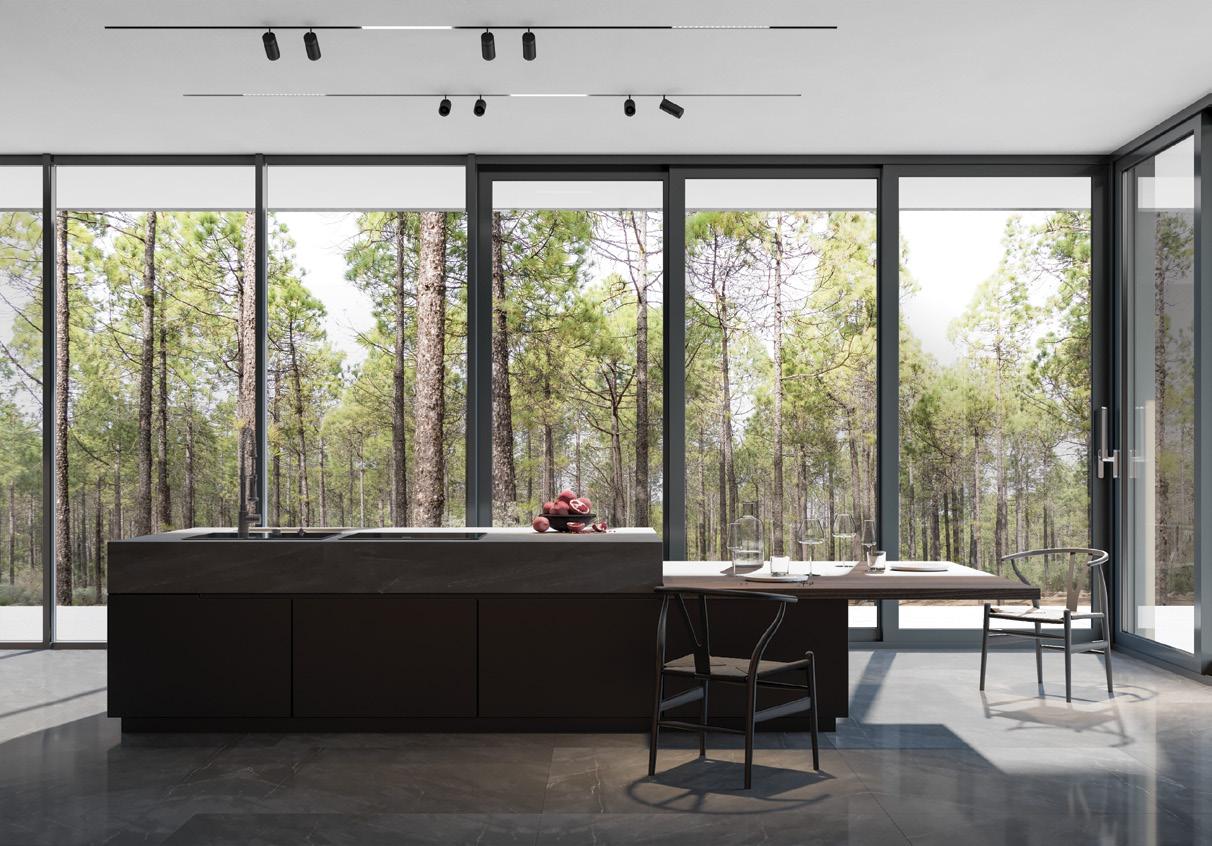
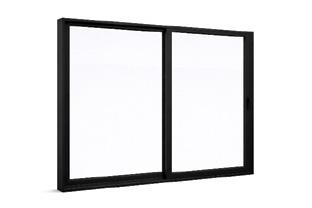
Alulast sliding systems are engineered with a commitment to superior quality. Each system is meticulously manufactured for an unmatched performance.
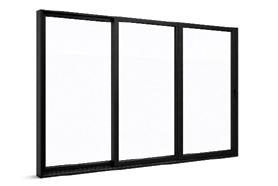
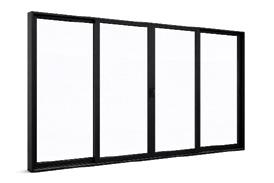
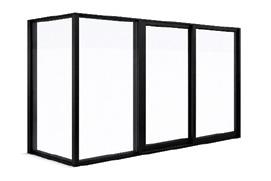

quotes@alulast.com
www.alulast.com

by AMY ROBERTS
Reducing risk in glazing systems with AAMA 501.2
Field tests are critical to the construction of safe, code-compliant buildings and to avoiding costly remedial work. The Fenestration and Glazing Industry Alliance’s AAMA 501.2-25 Quality Assurance and Diagnostic Water Leakage Field Check of Installed Storefronts, Curtain Walls and Sloped Glazing Systems provides a quality assurance and diagnostic field water check method for installed storefronts, curtainwall and sloped glazing systems. It helps building professionals reduce air and water leaks by establishing requirements for field test specimens, apparatus, sampling, test procedures and reports for field water penetration checks.
The field check procedure is intended to evaluate joints, gaskets and sealant details in fenestration products that are designed to remain permanently closed and are watertight and not sealed using weatherstrip or weather seal. Examples include curtainwall, storefront, sloped glazing, fixed windows and doors without a sash or panel, fixed unit skylights without weatherstrip or weather seal, wall panels, perimeter sealants and air and water barrier integrations with the fenestration product.
All framing and/or units to be tested should be located on two typical floors of the building for curtainwall and on a typical floor for storefront or sloped glazing system testing. The area must be fully glazed. The test area is usually at least 9.3 meters square and must include perimeter sealant, typical splices, frame intersections and, if applicable, at least two vision lites and spandrel lites containing intermediate vertical and horizontal members. Testing must be performed soon after the curtainwall, storefront or sloped glazing system is installed and sealants are cured, and before the installation of drywall or other interior finishes. The specimen should be isolated from extreme ambient conditions, as wind and other environmental conditions (barometric pressure, rain and temperature changes) can adversely impact field testing performance.
The designated test area should be evaluated in 1.5-meter sections of the framing and joint. The nozzle should be held at a distance of 305 millimeters from the test location and perpendicular to the plane of the wall. Each section of the test area must be evaluated for five minutes by slowly moving the nozzle back and forth over the test section. The water pressure should be adjusted to produce 205 to 240 kilopascals at the nozzle inlet. Working from the exterior, the specimen should be selectively wetted, progressing from the lowest horizontal framing member, then to adjacent framing intersections and adjacent vertical framing members.
For this test, water leakage is defined as water that is not contained or drained back to the exterior or that can cause damage to adjacent materials or finishes. Water contained within drained flashings, gutters and sills is not considered water leakage. The collection of up to 15 milliliters of water in a five-minute test period on top of an interior stop or stool integral with the system is allowed. If water leakage occurs and the source cannot be identified, building professionals should follow this sequence:
• All joints, gaskets and framing within the test area should be covered on the outside with a waterproof adhesive masking tape;
• Starting at the bottom, one must remove the masking tape from the lowest horizontal framing for a distance of not more than 1.5 meters;
• Subject this exposed length to the nozzle spray as explained above.
If water leakage occurs, the framing should be re-taped at the required sections. This process should be repeated on all framing, gaskets and joint intersections within the designated area. It is advisable to randomly check for similar water leakage conditions on the remainder of the project as construction progresses.
The final report should include the following information:
• The product manufacturer, model, dimensions and materials;
• Identification and locations of storefront, curtainwall and sloped glazing systems on the building;
• The physical condition of the product;
• A description of modifications, if any;
• A record of all points of water leakage.•
Amy Roberts is FGIA’s Canadian codes and advocacy director.

McGrory Glass Systems’ healthcare portfolio features Corning® Med-X® Glass, delivering radiation-shielding solutions trusted in hospitals, imaging rooms, research facilities, and more across North America.

EXTENSIVE RADIATION SHIELDING / LEADED X-RAY GLASS STOCKED
Industry-leading sheet sizes up to 54” × 108”. All plate sizes and thicknesses cut to exact project specifications and shipped directly to the job site.
COMPLETE GLAZING SOLUTIONS
One source for X-ray, fire-rated, security, switchable-privacy, and decorative glasswith in-house lamination, print/film, and 23,225+ square meters of production. ENHANCE
Patrick Flannery
THE ADVENTURER
A fearless attitude lets Excel Projects go where others won’t.
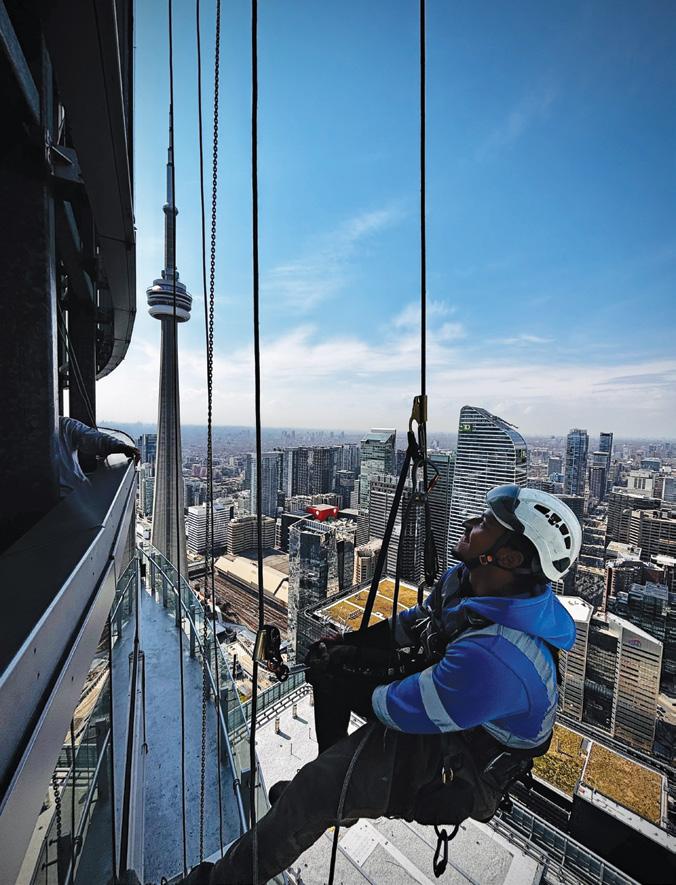
Views like this are why Excel’s glazing installers do what they do. Over years of experience first washing windows then installing them, Ray Carle and the Excel team have become experts at using rope access to safely get to places others can’t.
“We are plain quiet folk and have no use for adventures. Nasty disturbing uncomfortable things! Make you late for dinner! I can’t think what anybody sees in them.”– Bilbo Baggins, The Hobbit
Gandalf should have asked Raymond Carle, co-founder and vice-president of operations at Excel Projects, to join his quest to recover the dwarves’ lost treasure. In a Canadian
business environment where most owners would agree with Bilbo, Carle has turned a lifelong lust for risk, challenge and problem-solving into a glass installation, repair and service operation that takes on the work others flee. Together with partner, Michael Grist, Carle is looking for new and more terrible monsters to slay – awful beasts like safety training and thermal imaging. There’s always been a certain amount of adrenaline addiction necessary in a trade that sees you
suspended 800 feet off the ground by thin cables. Carle has channeled it into a fearless search for growth and opportunity at Excel. Carle, 46, remembers his first job at the age of 16 working in western Alberta. He was a porter for an electrical contractor. The job was to carry tools and supplies up the telecommunications antenna towers to the electricians working on them. “We all free-climbed it,” Carle reports. “There was not really any safety equipment or
Photos by Excel Projects
anything like that. It was all done the oldfashioned way. What I do know is I made a lot more money – probably four times the hourly rate that was average for people my age. My buddy was working at a restaurant and making $4 an hour; I was making $15 an hour. They had to pay you to keep your mouth shut, pretty much.”
At the time, Carle was also an accomplished figure skater, ranked eighth in the world as a novice. He moved to Ontario to get the better coaching available there and that resulted in a trip to the 1999 World Championships. His experience echoes the complaints of many Canadian athletes. “It cost me $15,000 to go to Worlds,” Carle says. “The American I beat got $50,000, champagne for a year and a free car. I got a $250 cheque from the government then I basically went broke.” Penniless and in Ontario, Carle took a job with a high-rise window cleaning company. The heights didn’t bother him and, compared to Alberta, the safety standards were high. Employees were actually required to wear harnesses.
All that safety must have bored Carle. On his honeymoon in the Philippines, he took a scuba diving class. He immediately violated every rule the instructor laid out

and dove deeper than he was supposed to. The instructor diplomatically advised him to take more classes before diving any more. Carle was hooked. He took all the classes and gained all the certifications, diving on shipwrecks and reefs all over the world. Then, in 2018, he was inspired by the story of 12 students in Thailand who were trapped in a flooded cave and rescued by cave divers in a weeks-long international effort. Some might have viewed the prospect of a death-defying underwater struggle through kilometers of tunnels as something to avoid. Instead, Carle became a cave diver. Perhaps you’ve seen the television shows where a scuba diver is creeping through an underwater tunnel they can barely fit through, hundreds of meters from safety, where an injury or problem with their equipment will spell a horrible death from trapped drowning. That’s what Carle does for fun. And, true to form, he did not stop at just taking up the hobby. He’s become an advanced cave diver with certifications in body recovery and attends annual conventions of the small global community in Florida each year.
So when life circumstances brought him into the glass service business, he didn’t
stop at just cleaning the windows. He began picking up as much knowledge of glazing as he could. “With window cleaning goes a little bit of caulking, a little bit of glazing, repairs...anything,” he explains. “Any time you can get up there they are wanting you to do stuff. So that kind of opened everything else up.” Once he had some comfort with how buildings are glazed, he started to see business opportunities. One early idea was to help his company reduce back charges. “We’d break a window and then someone would want to charge us $10,000 to replace it. You’re looking at that and saying, ‘Maybe I should try because it’s cheaper.’”
Carle found that his glazing contractor customers were happy to advise and train him, since he wasn’t in competition with them. In fact, it solved a problem for them as Carle began to forge a reputation for being the guy who would figure out how to fix any glazing installation problem. “They would get a glazing contract and there would be that one window that they can’t figure out,” Carle says. “Then they would call me up and say, ‘Hey, we’ve got this one window and we have no idea how to get it there. Can you figure out how to set things up so we can install this window?’”





WHY CHOOSE RIMAC?






UNDERtheGLASS
“We just didn’t really compete with anybody,” Carle explains. “We have our niche, which is always the areas that nobody else could figure out. You give us a giant puzzle that is a disaster for somebody and, me, I eat it up like ice cream. I just love figuring out how it all works.”
One of the beneficiaries of Carle’s can-do attitude was Michael Grist and his company, Professional Choice Cleaning Services. Grist had built a large manufacturing company in the ‘90s making private-label inkjet cartridges for Staples. He sold that business in the early 2000s and by 2007 was looking for another venture. Grist bought PCC, which had contracts to clean the glass on high-rises all over the Greater Toronto Area. One of his cleaning subcontractors was Carle. As the two developed a relationship and Grist saw Carle’s ability to do more than just clean the glass, they started to discuss a partnership. In 2009, Grist bought the company Carle was working for and set it up as Excel Projects with Carle running operations.
Today, Excel deploys a workforce of about 50, tackling a wide range of special glass installation and repair challenges. It still maintains some legacy cleaning contracts, but new cleaning business is not the focus as the market has flooded with small operators.
“We work with other companies,” Grist explains, “Glazing companies in the industry. They would subcontract to us. We really developed a great skill set and view ourselves as a boutique firm. I’m not interested in installing 2,000 windows in a building. But bring us your difficult installs and we can figure that out.” Grist notes that the margin on this kind of work is significantly better than mass installs, even if the absolute contract size is smaller.
Carle’s hand-on familiarity with exterior access soon created new opportunities. One of Excel’s early streams was installing stabilization buttons for swing stages. This could be a challenge on certain facade designs, but Excel specialized in finding a way.
A bigger challenge came when Excel was called in to a very tall residential tower in downtown Toronto. The building had broken windows that couldn’t be accessed with the tower’s existing building maintenance unit because it was mounted at the top of the building and the facade steps out from the main tower half-way down. There was no apparent way to access the glass either
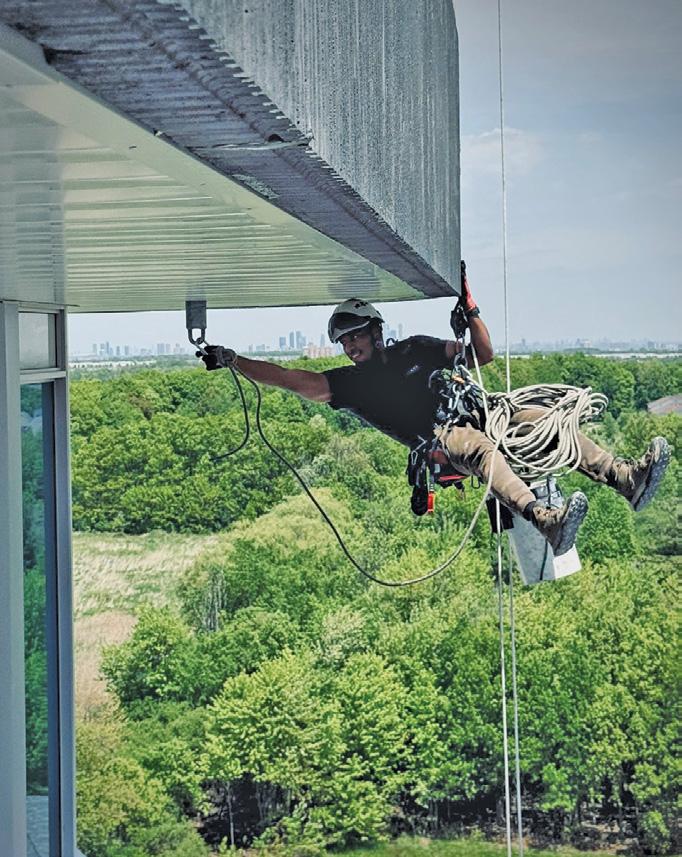
from above or below, and the replacement had to be done from the outside. Excel’s solution was to install anchors through the floor slab in a unit above the damaged area. One resident’s living room floor had to be removed and later replaced. Using these anchors, they set up rope and pulley systems capable of lowering the replacement units and the workers to the work zone, 700 feet above street level. That experience got Carle thinking more about rope access solutions, and today they are a favourite technique that Excel uses to install everything up to and including large, unitized modules.
Carle’s adventurous nature has even come in handy as a communications tool. He has a story about another large multitower residential complex where Excel was called in for some installation work. Arriving at the tower, Carle could see that the only way to access the rigging equipment
the contractor had installed was by walking along an open I-beam at the edge of the building. “It was like the 1930s where a guy would walk across the I-beam with nowhere to tie off to,” he remembers. Carle tried to tell the site supervisor there was a problem, but he didn’t want to hear it. So, the matter was escalated up until the president of the contracting company and the Ministry of Labour travelled in to see what Carle was talking about. Standing on the roof, looking at the rigging, they still were not convinced.
“It was an 600-foot drop on one side and a 60-foot drop on the other side. And they are telling me that there is no problem walking on that. So, I’m like, ‘Really? Here we go.’ So, I just started walking across it until everybody freaked out. That changed the whole scenario then and there.”
Another big win was on a condomini-
um tower complex in Toronto where broken glass was requiring the replacement of entire unitized modules. The BMU on the building could support a 500-pound swing stage, but the modules themselves were already over 500 pounds. The owner got a six-figure estimate to replace the BMUs. Carle put on his cape and swooped in. Excel temporarily replaced the BMU with an engineer-certified rope access system and replaced the four modules for about a third the cost.
Experiences like these have put Carle and Excel in the position of being asked to consult on rigging and anchor designs before buildings are built and conduct anchor testing before installations begin. And they continue to get business from glazing contractors where their rope access expertise allows them to do repairs and minor installations faster and at less cost than other methods.
All this hands-on learning has motivated to Carle to develop his own in-house training programs for window installation, aerial lift use, general working at heights and suspended access. The training courses are needed because Excel can’t always find enough trained local labour and has to bring in foreign workers. In some cases, Carle’s training is filling gaps in other train-
ing programs and in others it is narrowing the scope down to address glazing work specifically. While he’s a fan of the IRATA (International Rope Access Association) and SPRAT (Society of Professional Rope Access Technicians) courses, he feels they need some tweaking for the specifics of rope access work in Ontario glazing. He’s working to have his courses recognized by Canadian governments as certifying his workers for the jobs they do.
Excel is not just educating its workforce. It has also developed a course for property managers, teaching them about basic building maintenance safety and their obligations to people working on the outside of high-rises. The course has been approved for continuing education credits by the Condominium Regulatory Authority of Ontario, the Ontario Architects Association, BOMA and the Ontario Engineers Association. Excel has delivered it to over 1,000 property managers so far.
When he’s not strolling along I-beams, writing training courses or diving in caves, Carle is looking for new ways to make money using Excel’s rope access capabilities. One of these is doing thermal imaging. Carle got the idea watching a documentary
about muon radiography scanning of the pyramids in Egypt that revealed unknown chambers deep in the massive structures. “I saw how they were scanning and able to look through buildings,” he reports. “I just realized how many complaints I get from project property managers saying they got an engineer report telling them, ‘Fix this.’ Then they fix all that and nothing changes. The building is still leaking all over the place.” Excel has purchased a thermal camera and trained several workers to be thermographers, rappelling down the side of the building and looking for the hot spots that indicate leaks. The hope is that this service, combined with Excel’s in-depth knowledge of facade construction, will allow property managers to pinpoint failure points with maximum accuracy and thereby apply only the right fixes to the right places.
Excel’s future will include Jordan Grist, Michael’s son, who has joined the company as sales manager. Jordan brings a Queen’s economics degree to the company along with four years’ experience at a little outfit called Amazon. He’s been watching Carle since he was young and looks forward to joining all the future adventures at Excel Projects. •
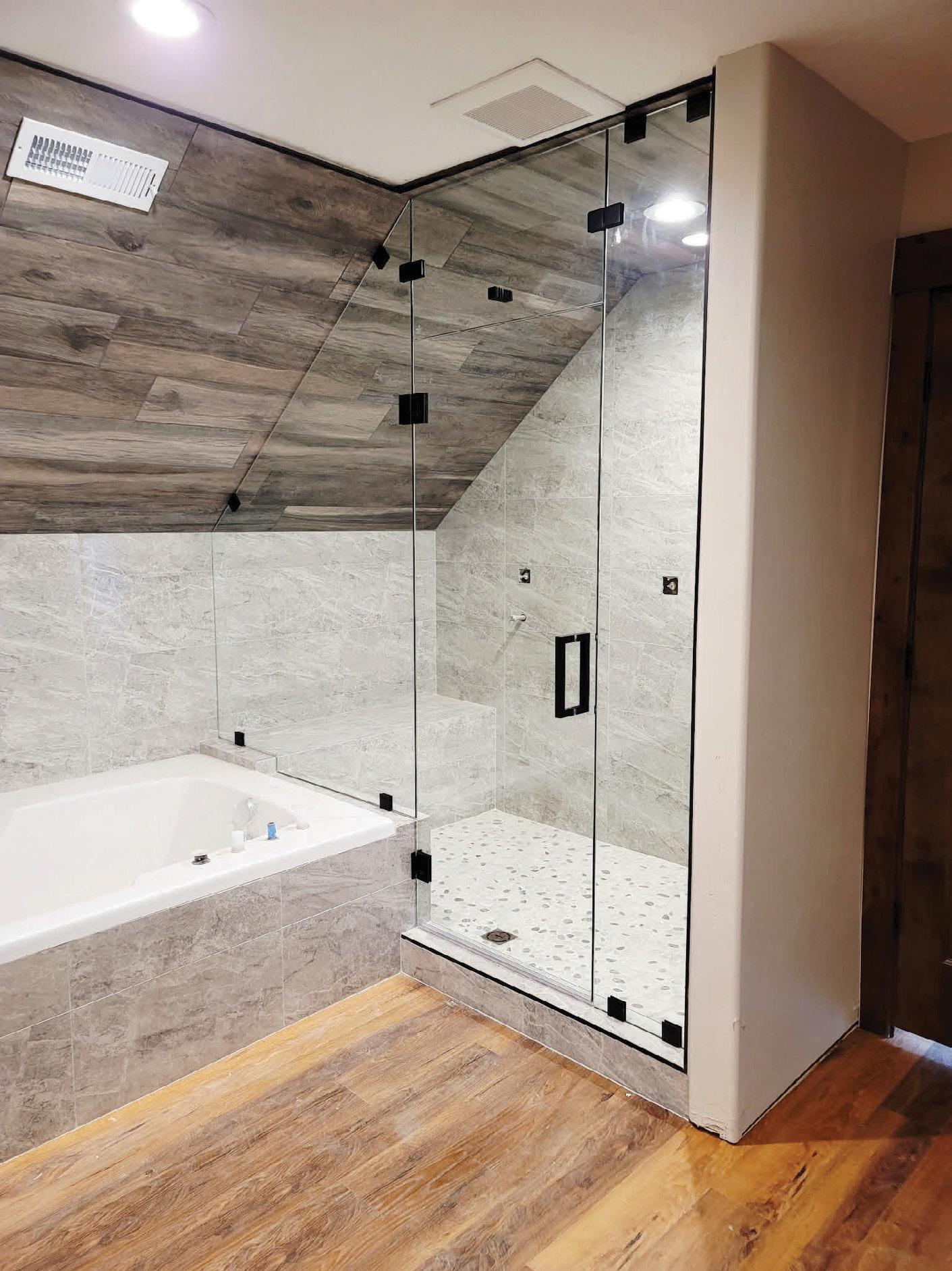
ANGLES MADE EASY MEASURED DIGITALLY WITH FLEXIJET
ANGLES MADE EASY MEASURED DIGITALLY WITH FLEXIJET


A packed calendar
Spring 2026 is shaping up to be a defining season for the Canadian glass and fenestration industry. At Fenestration Canada, we have curated a growing series of events designed to tackle the most pressing challenges facing our sector while celebrating the innovations driving us forward. From the west coast to Quebec City, we are bringing the industry together to connect, learn and grow.
This year’s calendar is packed with opportunities to engage with peers and experts. Whether you are focused on the technical nuances of glazing, regional manufacturing concerns or high-level strategic planning, there is an event tailored to your needs. Here is what you can expect from our upcoming slate of conferences in Vancouver, Winnipeg and Quebec City.
Our third annual Canadian Glazing Conference (CGC) takes place April 8 at the JW Marriott Parq in Vancouver. Since its inception, this event has quickly become a cornerstone for Canada’s glazing community, offering a deep dive into the technical and practical aspects of commercial glazing. Debuting for the first time at the stunning JW Marriott Parq in Vancouver, this one-day intensive is designed for efficiency and impact. The 2026 agenda focuses heavily on the evolving building codes in British Columbia and how they are influencing national standards.
Just two weeks later, on April 23, we head to the heart of the nation for FenCon. Returning to the Winnipeg Convention Center, FenCon has established itself as the premier regional gathering for the prairies. This event is known for its “boots on the ground” approach, focusing on the operational and manufacturing realities of the fenestration business. Winnipeg serves as an ideal hub for
Join us in Vancouver for a deep dive into glazing, in Winnipeg for manufacturing and installation insights, or in Quebec City for the full national experience.
FENESTRATION
discussing the unique challenges of our climate. Windows and doors in the prairies must withstand extreme temperature fluctuations, and FenCon 2026 leans into this reality. The programming this year places a strong emphasis on durability testing and cold-climate installation best practice. The interactive showcase will feature the latest products, software, equipment suppliers and tech solutions designed to streamline production and installation. It is not just about seeing new tools, it is about understanding how automation and data integration can solve labour shortages, meet code and reduce waste in the factory. FenCon also serves as a vital touchpoint for regional policy updates.
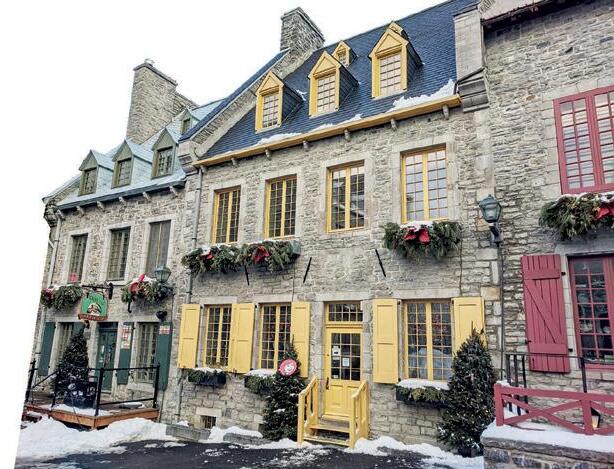
Our spring season culminates with our flagship gathering: Fenestration Canada’s Spring Conference and AGM. Taking place over three days, May 26 through 29 (with an optional Extended Experience), in historic Quebec City, this is the main stage for the national industry. The Spring Conference is where the big picture comes into focus. While our regional one-day events dive into technical specifics, this multi-day conference is about strategy, leadership and the long-term vision for Canadian fenestration. The backdrop of Quebec City adds a layer of culture and charm to an event that is as much about building relationships as it is about business. The agenda is robust, featuring concurrent educational sessions suited for everyone from C-suite executives to technical directors. Social events in Quebec City are outstanding and 2026 will be no exception. The President’s Dinner, networking receptions and legendary Pub Crawl are designed to break down barriers and foster a sense of community. It is in these informal moments that some of the most important industry alliances and noteworthy memories are formed.
Whether you join us in Vancouver for a deep dive into glazing, in Winnipeg for manufacturing and installation insights, or in Quebec City for the full national experience, your participation strengthens the entire sector. Visit fenestrationcanada.ca for more information. •







INSIDE INTEGRATED PROJECT DELIVERY

What you need to know about a growing style of commercial construction contract.
by TREENA HEIN
Integrated Project Delivery (IPD) contracts are becoming more popular, especially for large and complex construction projects. With the current slowdown of residential and office construction, glazing contractors will be increasingly focused on institutional buildings such as hospitals – and many of these will use the IPD framework.
For a definition of IPD, let’s turn to the Royal Architectural Institute of Canada (RAIC). “This form of project delivery creates a single-purpose project team encompassing all parties involved in the design-construction program. The owner, design team members, construction contractor and major subtrades enter into a single multi-party contract. Profit for each party of the contract is received through dividing the shared risk pool.” RAIC’s Handbook of Practice adds that when all players in the design-construction endeavour collaborate in the IPD paradigm with a shared method of reward and strong collaboration towards higher building performance, increased value and cost savings can be achieved. Also stated in the Handbook is that the IPD approach combines elements of other project methods but also represents innovation in the design-construction process. There’s a focus on collaboration “rather than the adversarial approach that is created in traditional contractual relationships.” IPD is described as “designed to break down the envelope between the design project and the construction project” with the formation of “a single project with a single project team.”
Those in the glazing industry will recognize that this is a very different arrangement from what occurs in traditional building projects, so let’s explore IPD further and gain some insight from those who have participated in these contracts.
Four phases
The four phases of the IPD approach are validation, design, implementation and warrantee. During validation, the project management team (PMT) validates the project’s objectives, including requirements, scope, quality, cost and schedule. In the design phase, the PMT coordinates design activities and a project implementation team (PIT) is established. The project’s final target cost is determined, as well as the amount of the “risk pool” (the profit margin, beyond costs). In implementation, Lean construction methods are promoted in order to increase value to the owner and the team. The warrantee phase includes resolution of any deficiencies and the distribution of the risk pool.
More detail about the risk pool concept is found in the Canadian Construction Documents Committee’s CCDC 30 – 2025 Integrated Project Delivery Contract that touches on scope allocation, payments, changes, conflict management, termination, insurance, contract security and liability allocation. The contract template explains that “the pricing structure is cost-plus with a target price. The profits of the design/construction team are identified and allocated to a risk pool that remains at risk subject to the achievement of mutually agreed project objectives.”
Advantages and disadvantages
The RAIC handbook lists several important advantages to an IPD project, including a reduction in the inefficiencies of traditional construction methods because all parties are incentivized to enhance performance and maintain the schedule. There’s also enhancement of the efficiency and effectiveness of the design in terms of constructability, with reduced rework for in both the

Edmonton’s Mosaic Centre was one of the first IPD projects in Canada. Contractors on the project say its success had a lot to do with the engagement and clear focus of the project owner.
design and construction phases. IPD projects also offer a large amount of transparency in communication between the contracted parties.
Among the cautions is the fact that there are more project management and collaborative activities, which require greater time commitments than traditional project delivery. In addition, “negotiation and balancing of interests become important to success.” Translation: check the ego at the door. Also, “non-collaborative and win-lose attitudes may result in additional project work and possible reduction of the amount of the risk pool remaining at project completion.” The takeaway? Only enter into IPD contracts with other parties you feel you can trust and with whom you work well.
The Handbook also cautions that the building owner “must be fully engaged in the project.” This point is made strongly by those involved in the first IPD building project in Canada’s history.
A national first
One of the Canadian IPD firsts is the Mosaic Centre in Edmonton. It includes office space, conference rooms, a daycare, a yoga studio and a restaurant that sources produce from an on-site garden. Mosaic was completed in 2015. It was Alberta’s first LEED Platinum commercial building.
Stok, a firm which assists companies and organizations in decarbonization efforts, was also involved with the project. President Stephani Carter, who has worked on more than 30 IPD projects, notes that Mosaic Centre had several goals, one of them being Alberta’s first attempt at commercial Net Zero. “Air tightness and a super-insulated structure was therefore a priority,” she explains. “However, after extensive energy modeling, we discovered we could keep our structure at an R30 envelope, with only R8 windows. In fact, we found that if we increased our insulation, we would actually trap more heat and have to increase our energy consumption to keep the building cool.” Fibreglass curtainwall, windows and doors were chosen to reduce thermal bridging by about 35 percent, says Carter, without adding extra capital costs.
GlasCurtain managing director, Peter Dushenski, provided the glazed envelope for the project. He says that from his perspective as a curtainwall manufacturer, Mosaic Centre was a successful example of IPD because the owner had a “very clear” vision of success. “He was a singular client, not weighed down by bureaucratic box-ticking. He was therefore able to focus the project to achieve an incredible amount of innovation given the modest project budget of $10 million at the time,” he says. “We can confidently say that a small ownership group, or even a single owner, having a rare strength of character and clear vision is essential for success.”
Blind corners
For his part, Jonathan “JoMo” Layton, CEO of Layton Consulting (a Canadian fenestration and facade engineering firm), is glad to see more discussion of IPD contracts. “It’s huge that this article is being published,” he says. “We need to highlight the blind corners of how the construction process works. If it’s done right and efficiently, IPD could be one solution. IPD is still what I would consider clunky. It hasn’t found its footing yet, necessarily, but I like the approach. But follow-through, accountability and proper time compensation are required.”
Layton explains that IPD can avoid the norm in building construction where glazing contractors are brought in much later in construction projects than they should be. “It’s a really big challenge for glaziers because there’s a lack of understanding with the parties involved of the intricacies and the complicated nature of fenestration products,” he says. “They will have the building design done and contractor chosen and then the fenestration products go out for tender. And often we glaziers have to say ‘The characteristics that you want can’t be provided,’ or ‘There is this or that issue with installation.’ The glazier can ask, ‘Can we change some architectural detail?’ and the answer is ‘No.’ For example, I can say, ‘If you move the mullion by two inches, we could avoid tempering,’ or, ‘We could solve your thermal issue with this other change,’ but we are told ‘No, these changes aren’t possible.’ It’s sort of defeating.” IPD avoids this in that it involves all parties from the start. “When IPD works and you have your goals and everyone has all the information, that is a very positive thing for glaziers,” he says. “But every part of the process must deliver. All parties must follow through. If you are picking up the stick, you all must pick up the whole stick. If one party lets the others down, the risk-reward part of things goes south very quickly.”
At present, as the RAIC handbook notes, “The competitive and cost-obsessed culture of the design-construction industry does not easily lend itself to undertakings that require collaborative participation to succeed. Transforming a culture of competition to one of collaboration does not happen by accident or without effort and resources.”
Returning to cost, Layton notes that, in the Vancouver area, there was a huge push for PassivHouse in recent years, and this resulted in an uptick for the IPD approach. This makes sense because both are holistic processes where all building elements are recognized as having an impact on each other and the building as a whole. “But there were challenges in everyone being properly compensated for the time that’s involved in IPD and that caused a backing away from the approach,” he says. “If this and other issues can be solved, with everyone following through and the progress made efficient, smooth and accountable, IPD is a great idea.” •
TOPGLASS2026
TOP GLASS NEEDS A BIGGER BOAT
Canada’s architectural glass show overflows its banks.
Top Glass comes your way April 30 at the International Centre in Mississauga, and it’s bigger than ever. Now boasting exhibits from more than 60 top Canadian suppliers, including 22 first-time exhibitors, the show floor has invaded the former lecture space and forced an expansion into the meeting rooms across the hall. Check out the following pages for a preview of the outstanding glass and glazing technology you’ll find on the sprawling show floor.
Top Glass is once again proud to be supported by Canada’s industry organizations. Thanks to the Architectural Glass and Metal Contractors Association, Fenestration Canada, the Fenestration and Glazing Industry Alliance and the Ontario Glass and Metal Association for their enthusiastic participation and promotion. Our glass and glazing community is strong and close-knit thanks to these groups and events like Top Glass.
Tour a Toronto legend
Top Glass invites attendees to come out a day early to tour Tri-Temp Glass in Scarborough on April 29. The one-hour tour will take us through a facility that specializes in custom-fabricated safety glass products for any market. Tri-Temp has been taking on the unusual, the difficult and the special glass jobs since 2007, and leverages over 100 years of staff experience. It’s a lot more than just another tempering operation.
The Cross-Country Codes and Standards Update
Start your day at Top Glass off right with a hearty dose of critical inside information on the rules that will govern how we specify projects in the years ahead. Amy
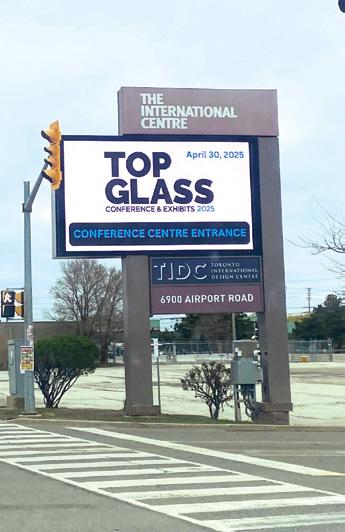
Top Glass 2026 at a glance
Plant Tour: Tri-Temp Glass, April 29, Scarborough, Ont.
Conference: April 30
Hours: 9:00 - 4:30
Location: International Centre, Mississauga, Ont.
Recommended hotel: Sandman Signature Toronto Airport
Information and registration: topglasscanada.com
Roberts from the Fenestration and Glazing Industry Alliance returns to bring us up to speed on the latest changes to architectural glass standards and commercial building codes across the country. Attendees will hear the latest from the committees publishing the AAMA standards referenced in all the codes and pick out significant developments in codes from jurisdictions from St. John’s to Victoria. Roberts will share forecasting and insights from inside the meetings and organizations involved.
Building the Digital Advantage: Practical pathways for modernizing your glazing business
In a world of AI hype, let’s take a clear, no-nonsense look at how glazing contractors and fabricators can strengthen workflows, reduce friction and improve margins by applying the right level of digital adoption at the right time. Author, MBA, digital guru and construction company owner Achille Ettorre will cover the high-tech and low-tech pathways, common pitfalls, leadership requirements and operational wins companies can realize without disrupting operations. The session will be grounded in real examples from the field and tied back to the framework in Ettorre’s book, Building the Digital Advantage
The OGMA Awards of Excellence
Each year a Top Glass, we celebrate our industry with the Ontario Glass and Metal Association as they recognize outstanding achievements in design and execution. Two awards will be presented to Ontario companies, one for outstanding design of an aluminum and glass building envelope and another for outstanding execution
of an aluminum and glass architectural project. The awards are judged by an independent panel of architects and honour OGMA members and friends for the great work they do. The smiles are big and the plaques hang forever!
Enough Rope to Hang It With:
Using rope access to execute Canada’s most difficult glazing projects
Excel Projects takes on the architectural glass repair and replacement work that most companies avoid. Over two decades, founders Michael Gist and Raymond Carle have refined innovative, practical, rope-access techniques capable of handling even large-scale glazing and restoration, including replacements exceeding 700 pounds. At Top Glass, Carle will present real-world case studies comparing access methods, outlining safety protocols and demonstrating hybrid solutions that integrate all access systems, including building maintenance units. Contractors and installers will gain valuable insight into efficient execution, while architects will see how their design decisions play out in the real world.
VIG Explained: A look at a game-changing technology for highly insulating glazed building envelopes
As a partner at NVOY Group of Companies, Art Huard represents LuxWall, owners of the most advanced glass fabrication plant in North America. There, they produce vacuum insulating glass that achieves R18 insulating values in a eightmillimeter-thick pane in sizes up to 96 by 60 inches – at prices not far in excess of triple-glazed insulating glass with far lower insulating ratings. It’s not science fiction, it’s not 10 years away, it’s happening now in Litchfield, Mi. Art will take the stage at Top Glass to explain how they are doing it and what it means for our building envelope designs going forward. He’ll also reveal as much as he can about the truly remarkable process behind this extraordinary technical achievement.
Top Glass 2026 promises to be another great day of education and relationship-building for Canada’s architectural glass community. See you at Top Glass! •
SHOWFLOORPREVIEW
TOP GLASS SNEAK PEEK
Integrated Juliet railing
groupenovatech.com
Novatech will unveil the new Studio solution with Vertika integrated railing option at Top Glass. As multi-unit residential design continues to prioritize affordability, clean lines and facade consistency, traditional Juliet balcony systems can introduce both esthetic and construction challenges. The new Vertika option from Novatech delivers a fully integrated alternative, engineered specifically for contemporary high-rise applications. Designed as part of the Studio aluminum patio door system, Vertika eliminates the need for a separately installed balcony structure or field-mounted guardrail assembly. By integrating the guardrail directly into the door configuration, the system simplifies specification, reduces installer coordination and streamlines on-site execution while maintaining required safety standards for elevated openings. Unlike conventional metal Juliet railing systems that interrupt sightlines with vertical bars and exposed structural elements, Vertika’s glass-forward design minimizes visual obstruction while supporting a cleaner architectural design. The result is improved facade uniformity and enhanced daylight penetration without

bulky exterior components. A key benefit is Vertika’s interior installation capability. Because Vertika is factory-integrated within the patio door assembly, installation can be completed from inside the building envelope. For high-rise projects, this reduces reliance on exterior access equipment such as scaffolding or swing stages, simplifies scheduling, enhances jobsite safety and provides superior installation efficiencies compared to traditional solutions. Fewer exterior interventions also mean reduced facade penetrations and more consistent detailing. By combining guardrail functionality within a refined aluminum patio door system, Vertika redefines how Juliet balcony solutions are specified and executed in modern residential construction, delivering a lighter visual footprint, simplified workflow and a cohesive facade esthetic for today’s vertical-living environments.
Benchmark laminated glass cutting
bottero.com
Bottero has always been committed to promoting the development and popularity of laminated glass by constantly researching and developing new technological solutions that can improve production, as well as increase its possible range of applications. The 548LAM cutting system is the answer to the growing demand for productivity and flexibility that the market requires. It is available in a stand-alone version and a dual-line combined with a
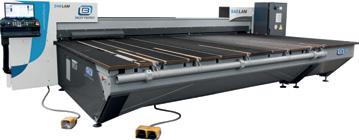
monolithic cutting table. The machine contains various levels of automation that can manage fully automatic, complex optimizations with X, Y, Z and W cuts on float glass and low-E up to 12 millimeters thick. The 548LAM cutting is performed by two independent cutting heads, with HSS steel wheels to score the glass on the two surfaces. The machine can reach a maximum cutting speed of 140 meters per minute.
SHOWFLOORPREVIEW
Streamlined curtainwall production
opera.com
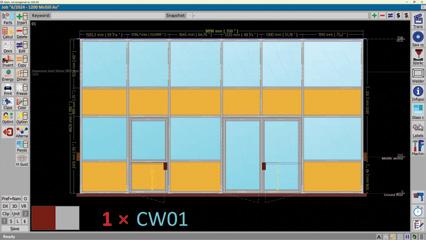
Opera Job Management is a comprehensive software solution developed by Opera Company for the management of window, door and curtainwall manufacturing workshops. Designed to oversee the entire production cycle, it supports companies from quotation and order management to final documentation, while integrating seamlessly with CNC machinery and external management systems. At the core of the system is the concept of the order, which centralizes all operational activities. From a single environment, users can generate real-time quotations, design frame typologies, calculate materials, manage inventory and produce technical and commercial documentation. This centralized structure improves workflow organization and ensures full control over each project from plan-
ning to completion. The software integrates profiles, accessories and customizable configurations within a flexible database, enabling manufacturers to adapt the system to their specific production needs. Advanced cutting optimization with graphical visualization helps maximize material efficiency, while compatibility with multiple technical and image file formats ensures smooth interoperability with external
Architectural freedom
richelieu.com
As the demand for transparent, open and structurally expressive architecture continues to grow, the new HD Series glass spider fittings deliver a powerful solution for designers and glazing professionals seeking both performance and visual impact. Engineered from high strength 2205 stainless steel, the HD Series provides exceptional load bearing capacity and corrosion resistance, making it ideal for even the most demanding interior and exterior applications. Developed to support modern point-supported glass systems, the HD Series offers a refined combination of durability and minimalism. Each fitting is precisely machined to ensure secure glass anchoring, optimal load transfer and long
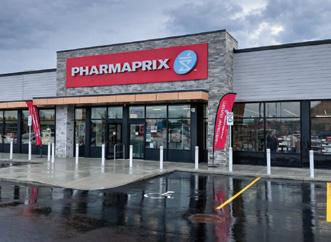
term reliability. The result is a fitting that not only performs under pressure, but also contributes to the clean, lightweight esthetic that architects and designers value. The HD Series features a range of configurations to accommodate diverse project requirements, from simple panes to expansive multi pane facades. Its versatile design supports walls, canopies, atriums, and other structures where transparency, daylight, and visual continuity are key priorities. Benefits of the HD Series include robust 2205 stainless steel construction for superior strength and corrosion resistance; streamlined, modern profiles that enhance visual openness and architectural elegance; precision engineered components for secure installation and reliable long term
design tools. A key strength of Opera Job Management is its integration with CNCequipped machinery, regardless of brand. By automating data exchange between the software and production equipment, the system increases accuracy, reduces manual input and enhances overall efficiency. Realtime production tracking and customizable label printing further support traceability and process control within the workshop. Additional optional features include price list management, facade design tools, user authorization control, activity logging and direct data export to CRM or third-party management platforms. Through these capabilities, Opera Job Management supports digitalized production environments, improving operational efficiency, traceability and overall performance in the manufacturing of windows, doors and curtainwall.
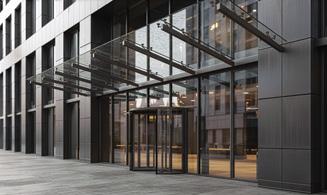
performance; and flexible design options that adapt to a wide variety of glazing systems and structural conditions. Whether used in commercial, institutional, or highend residential settings, the HD Series delivers a powerful combination of form and function, supporting ambitious design while maintaining a sleek, unobtrusive presence. Attendees at Top Glass will have the opportunity to explore the full HD Series lineup firsthand.
Comprehensive security solution
rockglass.ca
RockGlass designs impact-resistant products to keep homes and businesses better protected. RockGlass is an optically clear window security system that protects or replaces existing glass windows, preventing breaking and keeping assets secure inside. Whether installed into commercial storefronts, industrial facilities, offices or residential properties, RockGlass provides a powerful layer of defense. The overglaze system installs seamlessly over existing windows, providing an optically clear layer of security against glass breakage and intrusion attempts. It combines strength, safety and esthetics into one comprehensive solution.
Automated aluminum processing White safety interlayer
alumation.com
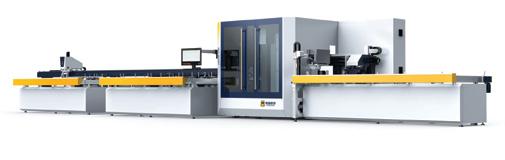
CNC production lines from Alumation deliver maximum output while minimizing the ROI period, ensuring faster returns and higher productivity. Featuring unmatched levels of automation the customized aluminum processing system is engineered for customers seeking to transform raw bars into finished profiles with minimal operator involvement, boosting efficiency and consistency. Thanks to its advanced automation, the system requires minimal operator intervention, significantly reducing both labour and management expenses. CNC technology guarantees consistent, highprecision profiles, reducing errors and waste throughout production. Alumation is a Canadian supplier specializing in high-quality industrial machinery for aluminum extrusion and panel processing. Based in Ontario, the company provides specialized equipment for aluminum profile processing, window and door manufacturing and various non-ferrous material applications.

trosifol.com
SentryGlas Translucent White ionoplast interlayer for laminated safety glass combines all the technical benefits and structural properties of SentryGlas with a variety of white colour options that provide pleasing esthetic effects, support for dramatic lighting effects and a sense of privacy, giving architects much more freedom in their designs. Suited for commercial as well as residential applications, SentryGlas Translucent White also offers excellent durability and edge stability – even when exposed to extreme weather conditions – and provides excellent postbreakage performance.

SHOWFLOORPREVIEW
Digitized site measurement
myflexijet.com
For glass professionals working with increasingly intricate architectural designs, precision is the difference between a smooth installation and a costly return trip. Complex angles, arches and sloped ceilings have long made templating slow, manual and vulnerable to error. Flexijet 3D offers a modern alternative: a digital measurement system built specifically for the realities of advanced glass fabrication. Flexijet 3D captures measurements directly on site and generates a digital file that’s ready to send straight to suppliers. As one customer put it, the system allows installers to “measure once, and you’ve got a digital file ready to send straight to your suppliers from the job site.” This eliminates
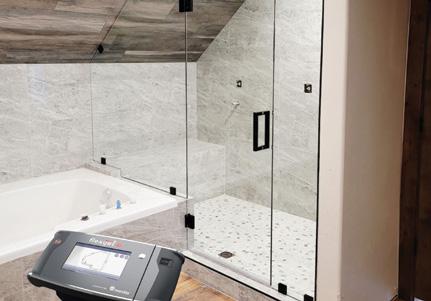
manual re-entry and reduces the risk of inaccuracies that can delay production. The system is engineered for challenging layouts, from tight angles to architectural curves. Its ability to record precise geometry in
minutes supports a more efficient workflow and helps ensure that fabrication teams receive the correct information the first time. Jeske Glass demonstrated this on a recent project, completing “one trip to measure” and “one trip to install” thanks to Flexijet 3D’s precision and reliability. Their contractor trusted them to get it right the first time and the digital file delivered exactly what the project required. For fabricators and installers, the benefits are immediate: fewer site visits, streamlined communication with suppliers and a more predictable path from measurement to installation. Flexijet 3D brings digital precision to the job site, helping glass professionals work with confidence on even the most demanding installations.
Next-generation tempering Bird-friendly big projects
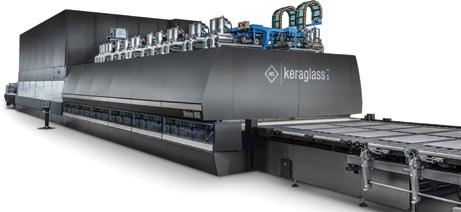
keraglass.com
The Vision 800 from Keraglass is a next-generation oscillating tempering furnace for flat glass, designed for medium-to-large companies requiring high quality standards, energy efficiency and full digital integration. It tempers advanced low-E glass with emissivity values down to 0.01 and processes large glass panes. The convection system uses pre-heated air up to 700 C and a fully adjustable process tailored to each glass type. A scanning control system constantly monitors surface temperature, storing production batches and enabling product certification. Uniform heating and optimised tempering and cooling control enhance flatness and optical quality while reducing iridescence and distortion. At the core of the plant is an intelligent “live-sight” supervision system with a large touchscreen monitor, ensuring complete process visibility and fast, intuitive diagnostics. It includes a power consumption monitoring system and user manual with automatic problem-solving system, thus minimizing the downtime of the machine. Integrated via PLC with the factory IT system, Vision 800 complies with Industry 4.0 and 5.0 requirements and qualifies for Transition Plan tax incentives. It is compatible with the RCK roller cleaning machine, featuring a highly precise system with quick interchangeable pads. Numerous installations worldwide confirm its success in the architectural sector, combining quality, energy efficiency and sustainability.
walkerglass.com
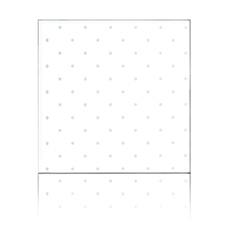
AviProtek Turbo is a birdfriendly glazing solution designed to support large-scale architectural projects with compressed construction schedules. The glass combines first-surface acid-etched patterns with an efficient production workflow and larger stock sheets, enabling rapid fulfillment of high-quantity orders while maintaining consistent quality and effective bird collision deterrence. Turbo is available with or without a low-E coating on surface two, allowing designers to integrate bird collision mitigation with thermal performance requirements. Multiple stock sheet sizes, thicknesses, and substrate options support a wide range of glazing configurations, including applications featuring larger glazed openings, which are increasingly common in contemporary building envelopes. The bird-safe markers are acid-etched directly into the glass surface, creating a durable, low-maintenance bird-friendly treatment that maintains high visible light transmission. Three dot patterns are currently offered, each compliant with bird-friendly design criteria adopted across North America, including the Toronto Green Standard and the CSA A460-19. AviProtek Turbo streamlines supply chain performance for architects, fabricators, and contract glaziers. Larger stock formats reduce waste potential, simplify layout planning and improve yield, while accelerated lead times support schedule-driven construction environments. The result is a technically robust glazing solution that integrates bird collision deterrence, energy performance compatibility and fabrication efficiency in a format suited to modern high-volume architectural projects.
Everything for healthcare Automated vertical glass inspection
mcgrory.com
Healthcare environments demand more from glazing systems than ever before: life safety, radiation shielding, privacy control and seamless integration across rated and non-rated spaces. McGrory Glass delivers a coordinated approach, bringing together fire-rated/security systems, X-ray-shielding glass and switchable privacy solutions tailored for today’s medical facilities. As the exclusive North American distributor of Corning Med-X Glass, McGrory provides industry-leading radiation-shielding glass engineered for clarity and performance. Available in a wide range of sizes and thicknesses – including stock sheet sizes up to 54 by 108 inches – Med-X Glass supports imaging rooms, surgical suites and research environments without compromising visual quality. With extensive inventory and in-house customization capabilities, glaziers benefit from reliable lead times and fabrication flexibility. For dynamic privacy control and energy efficiency, ElectraView switchable glass is offered in two configurations. ElectraView One is obscure when power is off, delivering flexible privacy for sensitive areas. ElectraView Zero is transparent in its default state – preserving daylight and openness – and switches to privacy on demand. McGrory can offer a truly clear state when power is off, maximizing energy use. Both options can be paired with decorative interlayers and support HIPAA privacy considerations. Complementing these solutions are McGrory’s fire-rated glazing and framing systems, developed in partnership with AGC, Forster, and Schott. Designed and tested to meet stringent requirements, these systems provide tested integrity and heat performance while maintaining narrow sight lines and clean transitions between rated and non-rated assemblies. Insulated configurations per ASTM E2190 are also available, as are security options. For glaziers supporting the healthcare market, McGrory offers an integrated, single-source solution – helping teams deliver protection, compliance and modern design in one coordinated package.

BUILDING ENVELOPE TESTING (Laboratory & Field)
• Windows, Doors & Curtain Walls
• Insulating Glass Units
• Fenestration Computer Simulation
• Safety Glazing
• EIFS
synergx.com
Synergx Technologies is elevating glass inspection to the next level with the launch of the Surfx Glass Vertical: a powerful automated inspection system purpose-built for vertical conveyor production lines. Engineered on the same advanced platform as the industry-proven Surfx Glass system, this latest innovation delivers uncompromising precision and real-time defect detection in vertical processing environments. Recognized across the industry for uncovering defects that often escape manual inspection, Surfx Glass uses advanced imaging and intelligent analytics to detect scratches, cracks, chips, inclusions, bubbles and optical distortions with exceptional accuracy. Now, architectural glass manufacturers operating vertical lines can achieve the same world-class inspection performance in a configuration optimized specifically for upright conveyor systems. Designed for seamless integration, Surfx Glass Vertical installs directly into existing vertical production lines without compromising throughput. It continuously captures and analyzes inspection data, transforming quality control into a proactive, data-driven process. Manufacturers gain full traceability, reduce rework, minimize scrap and strengthen production consistency – all while meeting increasingly demanding architectural glass standards. As production speeds accelerate and customer expectations rise, traditional inspection methods can no longer keep pace. Surfx Glass Vertical delivers repeatable, objective inspection performance that eliminates variability and empowers manufacturers with greater control over quality outcomes. By combining precision detection, actionable production insights, and native compatibility with vertical conveyor systems, Surfx Glass Vertical represents a strategic advancement for modern glass processors.The result: superior quality assurance, optimized operational efficiency and total confidence in every finished panel.

• Cladding & Building Systems
• Air Barriers
• Thermal Performance
• Condensation Resistance
• Instrumentation & Test Equipment
38 Regan Road, Unit 4, Brampton, Ontario, Canada L7A 1C6 Tel: (905) 840-2014 • Fax: (905) 840-2847 email: lab@can-best.com www.CAN-BEST.com
1985 Visit wpg.com for more information or call 800-548-7341 to locate an Authorized Dealer in your area!
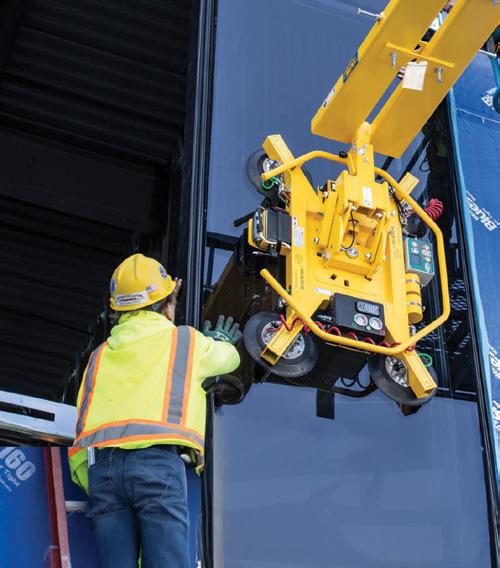

by RICH PORAYKO
Rich Porayko is a professional writer and founding partner of Construction Creative, a marketing and communications company located in Metro Vancouver, BC. richp@ constructioncreative.com
A blast of optimism at GlassBuild
The halls of the Orange County Convention Center in Orlando buzzed with activity from Nov. 4 through 6 as GlassBuild 2025 brought together the brightest minds in the glass, window and door industries. While the show floor was a testament to the sector’s continuous innovation, the true highlight for many was the economic forecast delivered by ITR Economics’ Connor Lokar. His message was clear and powerful: plan on multi-year growth in the US.
Throughout his presentation, Lokar emphasized “the economy is not collapsing and has been accelerating every month in 2025.” He reassured the industry, saying, “sunshine is coming” and that the markets will be “in better shape in 2026.” Citing solid data, Lokar told attendees, “U.S. industrial production is up 0.7 percent from last year,” and pointed out the strength of specific sectors: “Data centers are experiencing 42.2 percent growth” and “multifamily housing shows a 20.8 percent quarterly increase.” This optimistic outlook provided a guiding light for the event, framing the new technologies and networking conversations in the context of a promising future.
The message was clear and powerful: plan on multi-year growth in the U.S.
Lokar’s key takeaway was one of confident preparation. After a period of uncertainty, the economic clouds are parting and a sustained period of expansion is on the horizon. Lokar pointed to an accelerating economy in 2026, a significant shift from the more cautious tones of previous years. He urged businesses to get ready now, stating, “Be ready to be busier next year.” Lokar further encouraged the audience, “Prepare for growth in 2026, 2027 and 2028,” adding, “consider capacity, headcount, machines and processes.” He reassured industry leaders concerned about policy headwinds and international dynamics by explaining that improvement in certainty (as opposed to uncertainty which many Canadians can relate to) as businesses realize the world is not stopping due to tariffs will spur additional spending and project flow through 2026.
THAT’S RICH
This projected growth isn’t just wishful thinking; it’s backed by solid data and clear drivers. Lokar highlighted several positive indicators that signal a recovering market. Rising commercial real estate pricing and growing construction backlogs suggest that pent-up demand for projects is beginning to flow more consistently. As businesses gain certainty and move past the hesitancy that has marked recent times, spending is expected to increase, creating a positive cycle of development.
A major focus of the forecast was the non-residential construction market. Lokar stated plainly, “non-residential construction is expected to start growing again in 2026.” After a period of recession, he predicted that this crucial sector will soon return to growth, reassuring attendees that “private nonresidential construction is a $750 billion data set and is currently in recession – but that is going to change.” Lokar highlighted the trend by adding “Pent-up project needs and spending needs will flow more consistently through 2026.” The forecast for multi-year growth through 2026, 2027 and 2028 gives companies a clear runway to plan for expansion.
Lokar advised attendees to evaluate their capacity, headcount, machines and processes to handle the coming wave of activity. One of the most practical and universal pieces of advice was about managing rising costs. Lokar noted the potential for continued cost pressures and inflation, recommending that businesses make necessary capital investments sooner rather than later. He also warned of possible economic headwinds, cautioning, “there is a risk of reckless interest rate cuts,” and highlighting longer-term challenges: “The long-term risk of economic depression in the 2030s due to inverted demographics and government debt is something to be aware of.”
When asked about Canada, Lokar replied that his firm doesn’t have confidence in what they are seeing from the Canadian government. Yet, his overall message remained upbeat, urging American attendees “businesses should grow and leverage their positions” and reiterating that now is the time for action: “Be ready to be busier next year.” •