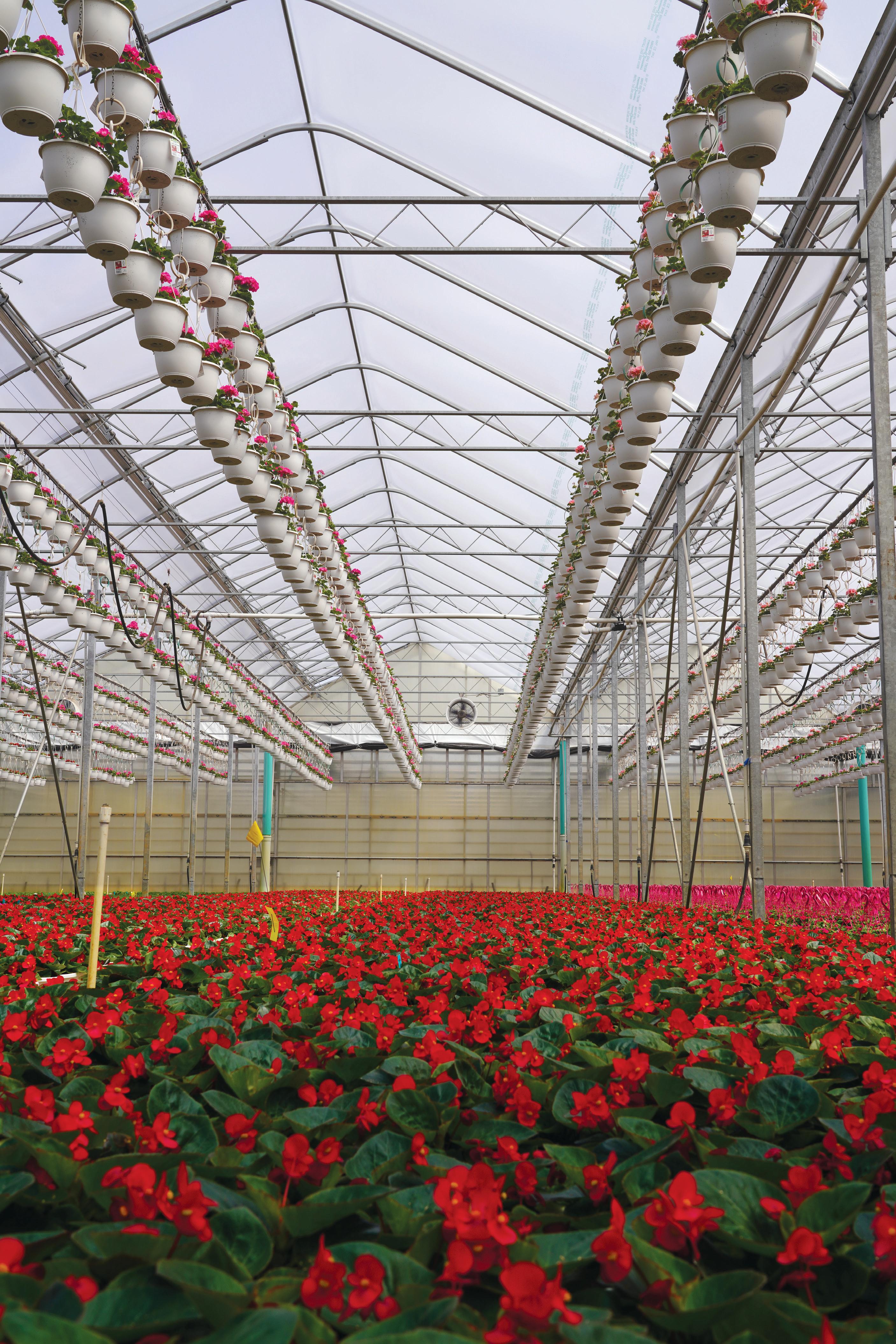
Neudorff North America is an innovative leader in ecologically responsible pest solutions for nursery and greenhouse growers, farmers and turf professionals.
Our effective and affordable solutions for disease, insect pests, pest slugs and snails have limited impact on applicators, and the environment. They are an important part of integrated pest management programs.
Powerful disease protection for your greenhouse vegetable and ornamental crops with a fraction of the copper found in other copper fungicides.
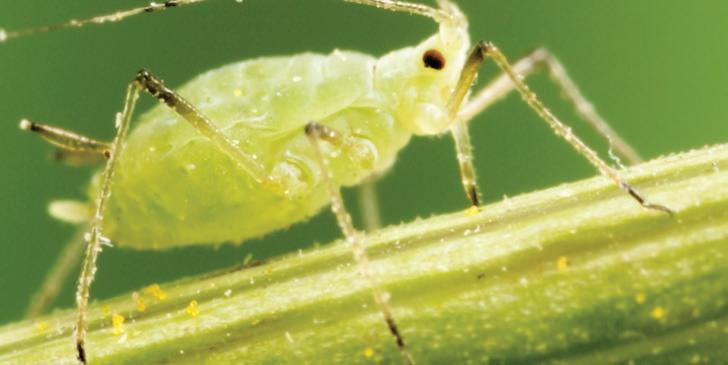
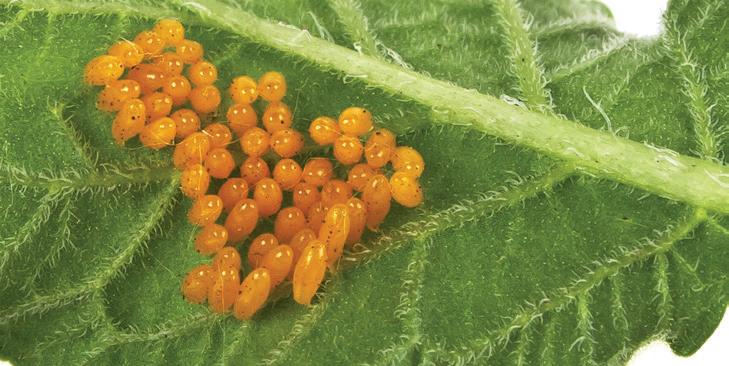
Fast-acting insecticidal soap. Controls aphids, mites and whiteflies on ornamentals, herbs, spices, vegetables, including cannabis. Effective as a cutting dip to control whitefly nymphs.
A summer and dormant oil. Controls all life stages of insects and mites. Suppresses powdery mildew of greenhouse ornamentals, fruit, vegetables and cannabis grown indoors.
Fact acting. Controls moss, algae and liverworts in and around greenhouses.
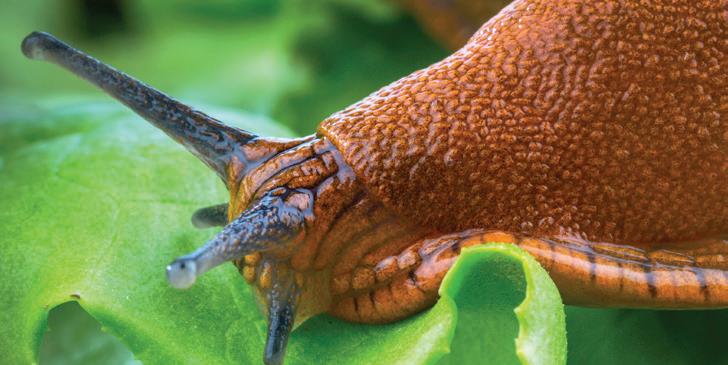
A durable pelleted iron phosphate bait. Provides excellent protection of greenhouse crops from slugs and snails.
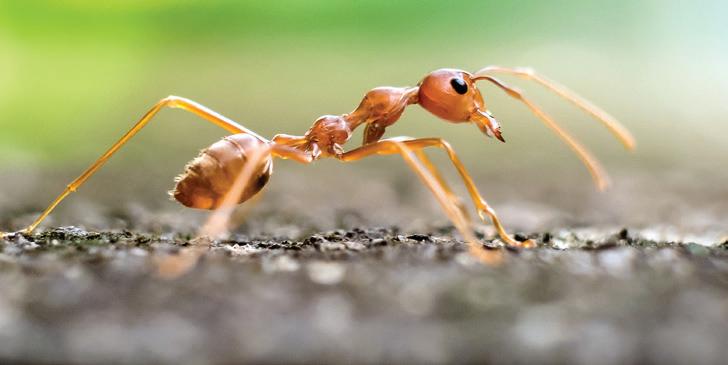
A durable, fast-acting pelleted spinosad bait that is active against a wide range of ants in greenhousegrown vegetables and ornamentals.
Inside and outside. Neudorff protects.
Grower survey 2026
As energy costs climb, growers are getting strategic with light to protect margins and performance.
Exploring the key levers that drive yield and potency in greenhouse cannabis. By Mohyuddin Mirza and
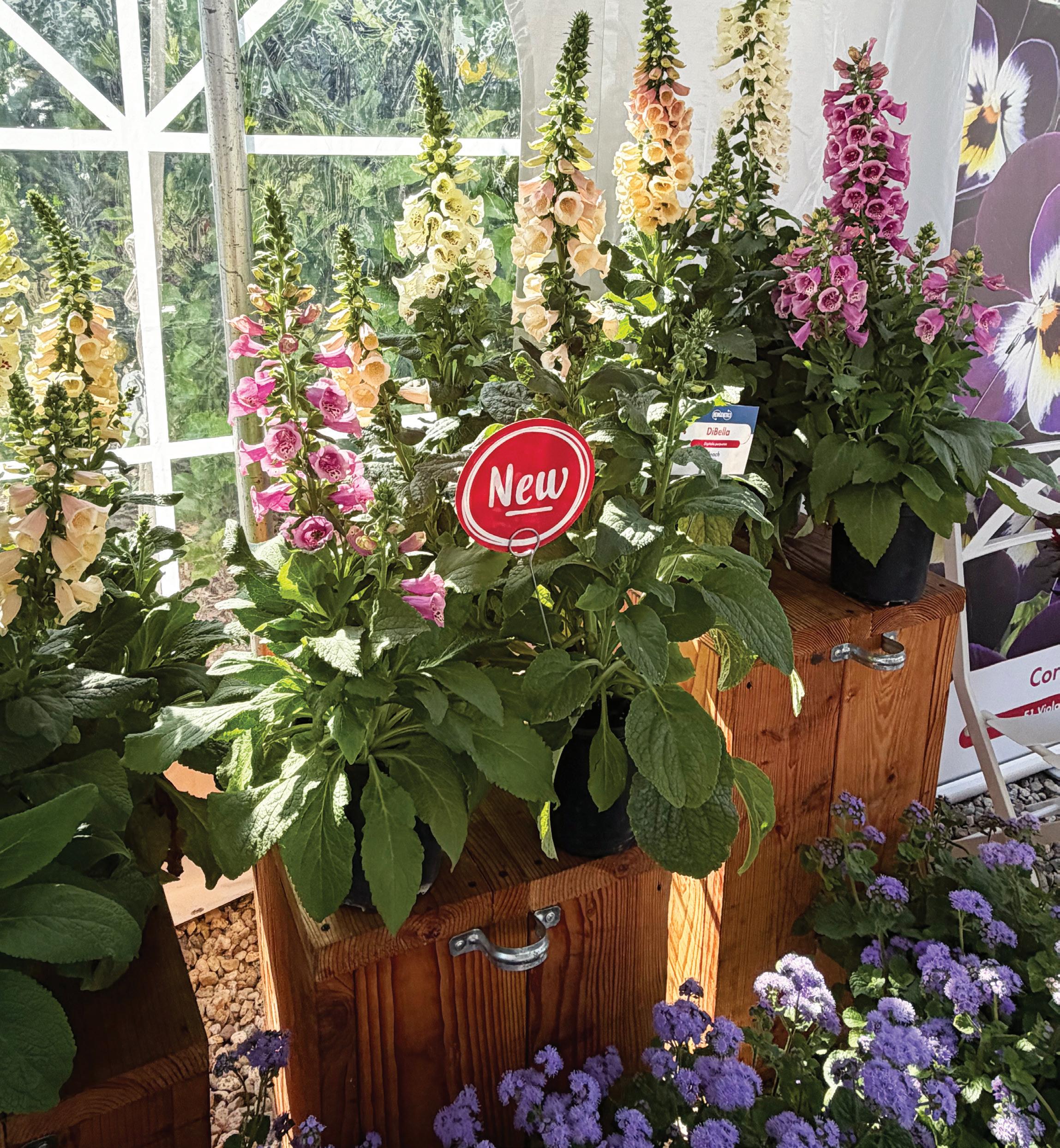
Hem Genetics’ new Digitalis DiBella at the 2026 California Spring Trials. Photo courtesy Rodger Tschanz. Read more on PAGE 12.
Mite club
The rules have changed. A research update on spider mite resistance and the future of control.
BY THE GRBIĆ LAB
Grower Day builds on 31-year legacy with new Western edition. Here’s a look at what’s in store.
BY AMY KOUNIAKIS
After the cut
An in-depth look at some of the new, more sustainable solutions for managing vine waste.
BY ALEXANDRA GRYGORCZYK

A while back, I had the opportunity to moderate a panel discussion on energy, infrastructure and greenhouse crop performance at the ACT Grower Summit in Leamington.
It was an opportunity for me to pick the brains of some of the brightest minds in the biz. These brave subjects shared real-world insights into how energy and climate challenges are reshaping greenhouse management. The conversation centered on the hands-on decisions needed to balance efficiency and sustainability as energy pressures increase.
This balancing act, amid the general uncertainty enveloping the industry these days, is getting tougher to maintain, making conversations like these more important than ever.
Canada’s greenhouse growers are global leaders in their craft and their willingness to collaborate and support each other by sharing their experiences is the core of the sector’s enduring strength and resiliency.
state to explore the up-and-coming plant genetics. Rodger highlights some beauties on Page 12 and shares why they may warrant bench space in the coming seasons.
With the coming of warmer weather comes shipping season and the rise of pest pressures! The Grbić Lab, out of Western University and led by Prof. Vojislava Grbić, has some updates on one of the sector’s most pervasive pests: spider mites. On Page 16, the team provides a glimpse at some of their research into understanding and detecting pesticide resistance as well as their discovery of a new mite species in Ontario and what the future of control looks like.
'This balancing act...is getting tougher to maintain...'
It’s these types of conversations that we hope to inspire from the results of our 2026 Grower Survey that zeroed in on modern greenhouse lighting strategies. We share some high-level results of the survey on Page 8, but more info is forthcoming as we plan to host a webinar to address some of the trends identified in our analysis of the responses. Stay tuned!
It wouldn’t be a spring issue of Greenhouse Canada without a preview of the California Spring Trials, the 2026 edition. This year we sent our longtime correspondent, Rodger Tschanz, to tag along with the Ball Horticulturel team as they toured the
You will note that in our Grower Day preview on Page 22, Grbić and her team will be in St. Catharines on June 16th to share even more details about their important work. They will be joined Vineland’s Alexandra Grygorcyzk who will be speaking to her work in greenhouse waste management. On Page 28 of this issue, read into some of that research which focusses on managing vine waste.
Dr. Mirza, who himself is appearing at our Grower Day West event, and master grower Vikrant Dhawan, share some guidance for growing cannabis for high yield and potency on Page 24.
Another Grower Day West connection in this issue is our own Gary Jones, who will be serving as our master of ceremonies for the day. In his May Inside View thinkpiece, he observes how global shifts in policy, climate and markets are reshaping greenhouse decisions, often unexpectedly.


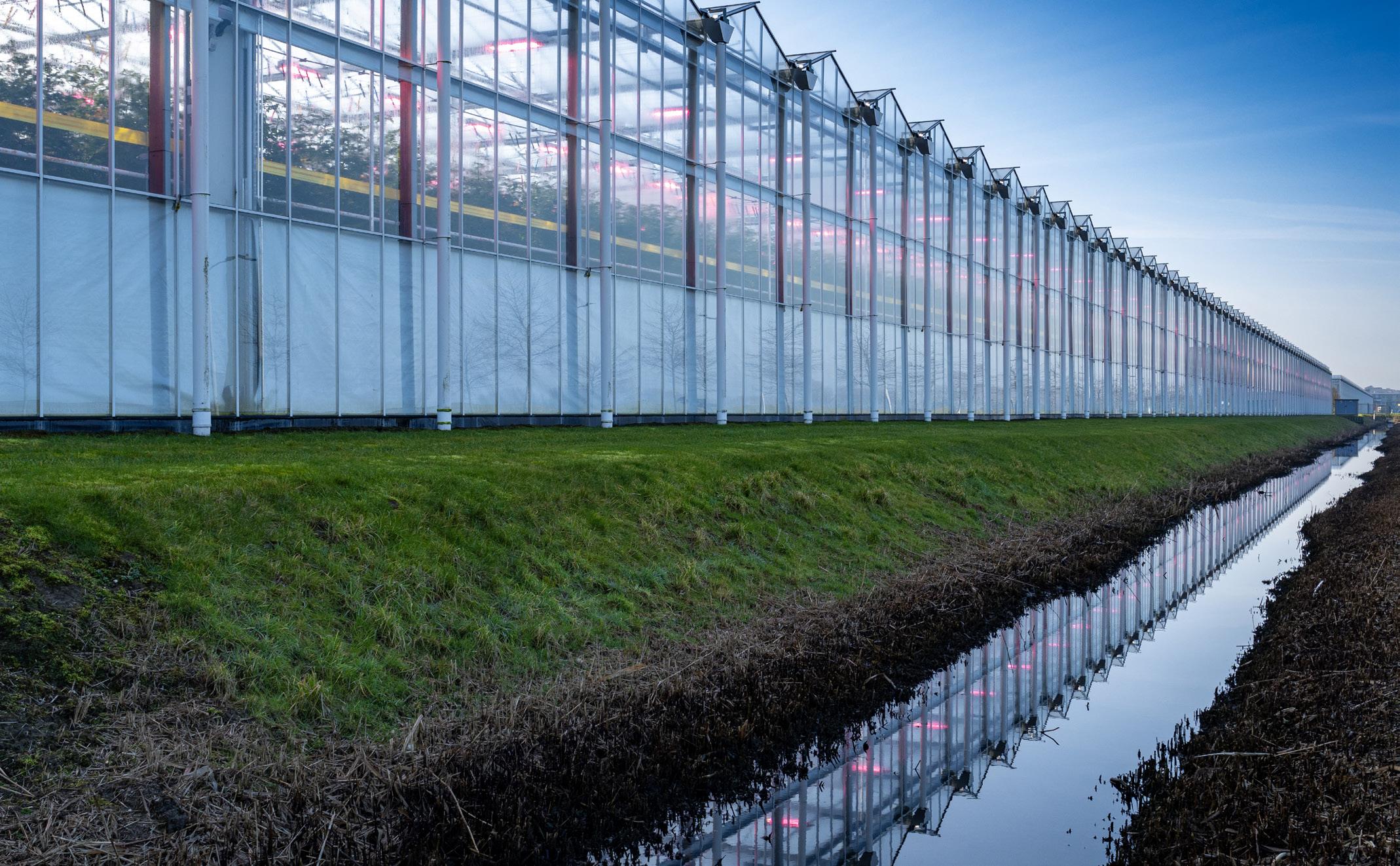
Greenhouse produce growers have taken a significant step toward a unified national voice with the formation of the Greenhouse Produce Alliance of Canada (GPAC).
Ontario Greenhouse Vegetable Growers (OGVG) director Richard Lee celebrated the milestone in a LinkedIn post following the Fruit and Vegetable Growers of Canada Annual General Meeting, held in March in Ottawa, where GPAC held its first-ever meeting.
“Representing farms that produce fresh, high-quality food year-round, GPAC brings together a sector that plays a vital role in Canada’s food system, supports thousands of jobs, and contributes significantly to rural

and regional economies,” Lee notes in the post.
He adds: “GPAC’s central purpose is to elevate the profile of greenhouse agriculture and ensure the sector’s priorities shape national policy, public understanding, and investment decisions.”
In these early days, efforts are focused on developing a co-ordinated communications strategy, along with new branding that highlights greenhouse production as a key pillar of Canada’s food security and climate-smart agriculture future, Lee concludes.
According to the OGVG, GPAC’s foundations are rooted in the ongoing work of the FVGC’s Greenhouse Vegetable Working Group. (Source: LinkedIn)
The Canadian Agricultural Human Resource Council (CAHRC) plans to expand its labour market intelligence and workforce tools for Canada’s agriculture and agri-food sector, thanks to new funding from the federal government.
In a March press
release, the CAHRC said the $6.9-million over five years, delivered through the Sectoral Workforce Solutions Program, will support the Harvesting Success project, focused on improving realtime labour data, skills forecasting and practical HR tools for employers.
For greenhouse
Greenhouse growers in Kingsville, ON, are taking the town to court over newly imposed sewer fees tied to wastewater discharge. According to a recent CBC report, Ontario Greenhouse Vegetable Growers (OGVG) laments the move to take legal action but deems it “necessary” as growers already operate under costly, extensive and increasing regulatory burden that threatens the sector’s competitiveness. The town, meanwhile, maintains that greenhouse runoff has increased flood risk in the area and has necessitated updates to the community’s sewer systems. (Source: CBC)
growers, where ongoing labour shortages and increasing technical demands continue to strain operations, more targeted workforce data could help guide hiring, training and retention strategies.
The CAHRC says the initiative aims to deliver timely insights
into workforce trends and emerging skills needs. The funding will also support continued work under the National Workforce Strategic Plan for Agriculture and Food and Beverage Manufacturing, including an annual workforce summit. (Source: CAHRC)
Source: ‘Indoor farmers and AI adoption’; 2025 Global CEA Census, by Agritecture and CEAg World
37.5% of indoor farms are already using AI in some capacity
35% are not yet using AI but plan to adopt it soon.
20% have no plans to adopt AI



Canadian growers weigh in on LEDs, energy use, and real-world impact of greenhouse lighting systems
For 2026, Greenhouse Canada took the opportunity to enhance its Grower Survey by focussing on how greenhouse operations are harnessing the power of light and what impacts they’re observing at this stage in the adoption of modern lighting systems.
We felt this was a good time to gauge where growers are at in this process, particularly as more operations turn to LED systems to produce yearround and now, and increasingly important, to save on energy costs.
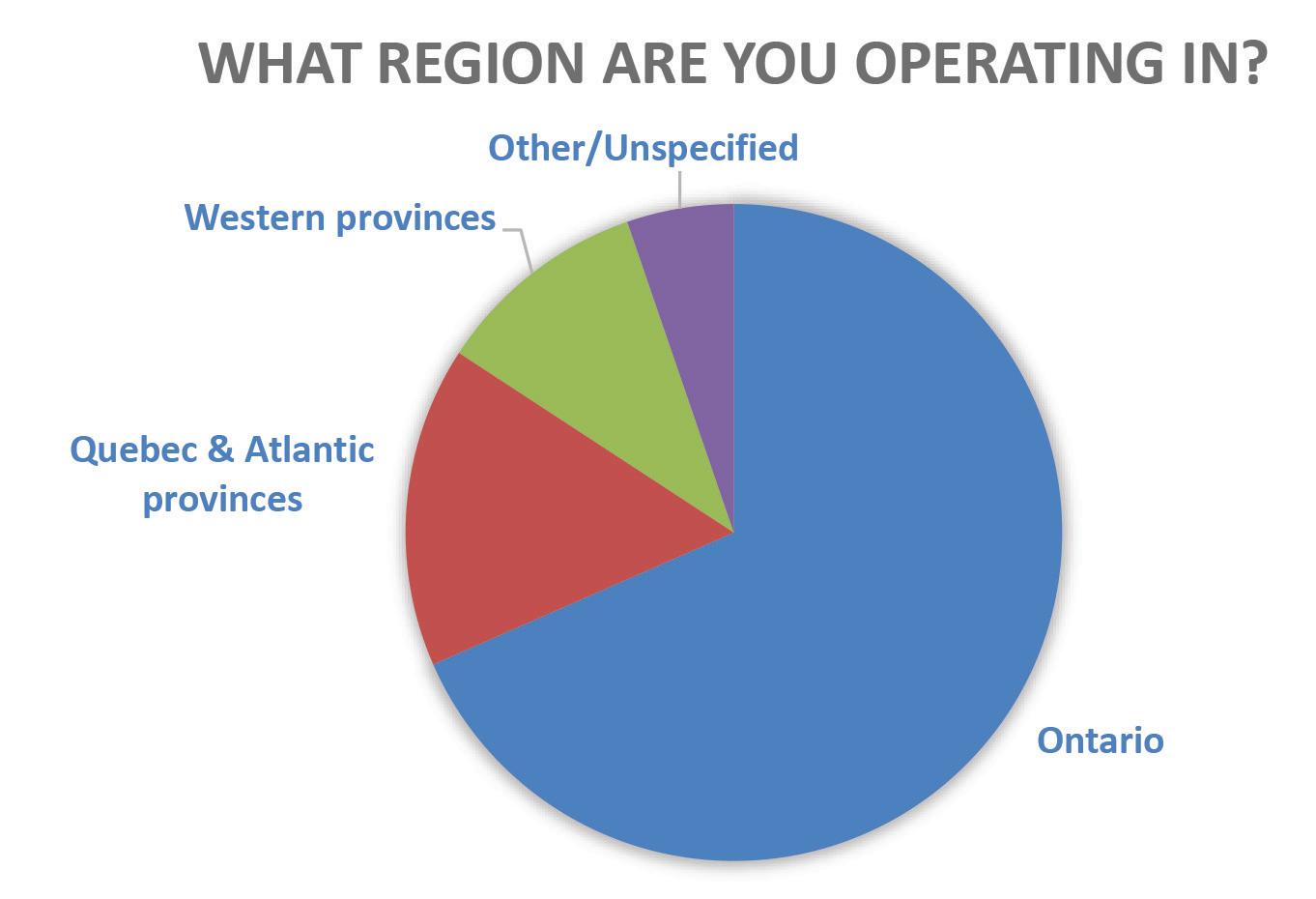
We’re grateful to those who took the time to share their insight in this national survey, conducted in both English and French. Responses came to us from provinces across the country, including Ontario, Québec, Alberta, PEI and Saskatchewan.
BY AMY KOUNIAKIS
BELOW
Survey respondents estimate lighting represents between 11 and 30 per cent of operating costs.





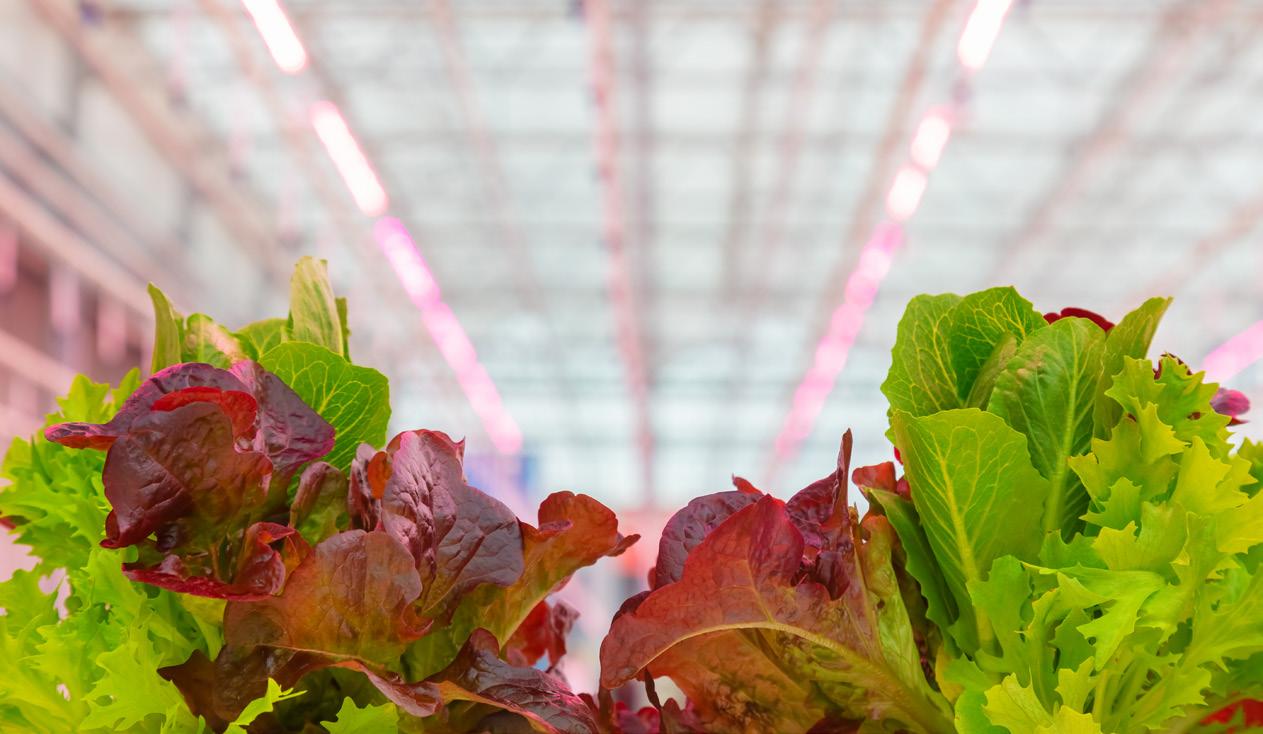
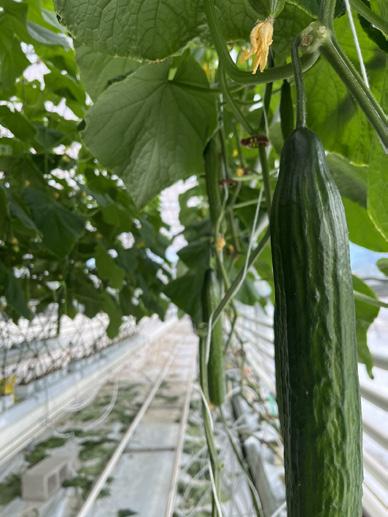
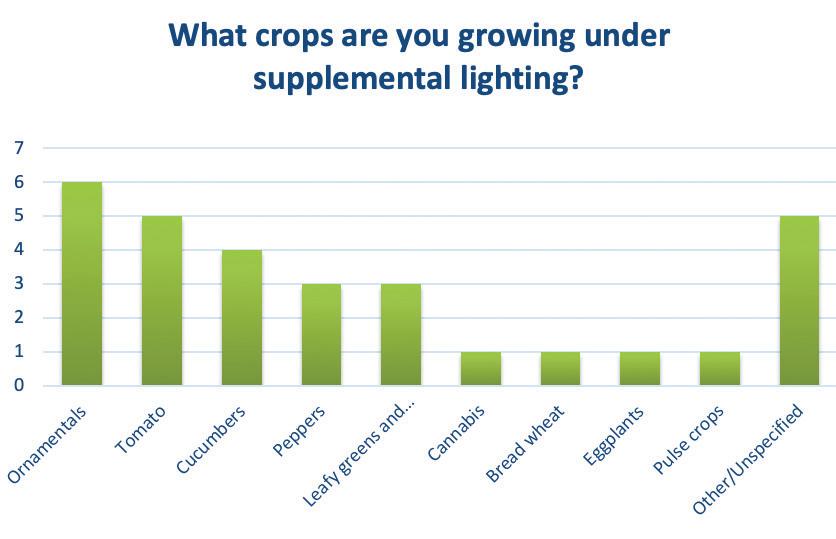
Approximately half of respondents to the survey identified as producers of vegetable and fruits and the other half fell under ornamentals. The breakdown of crops being grown under supplemental lighting is intriguing, with tomatoes and cucumbers the most popular among respondents, lettuce next and a mix of ornamentals like gerbera, orchids, ferns and others.
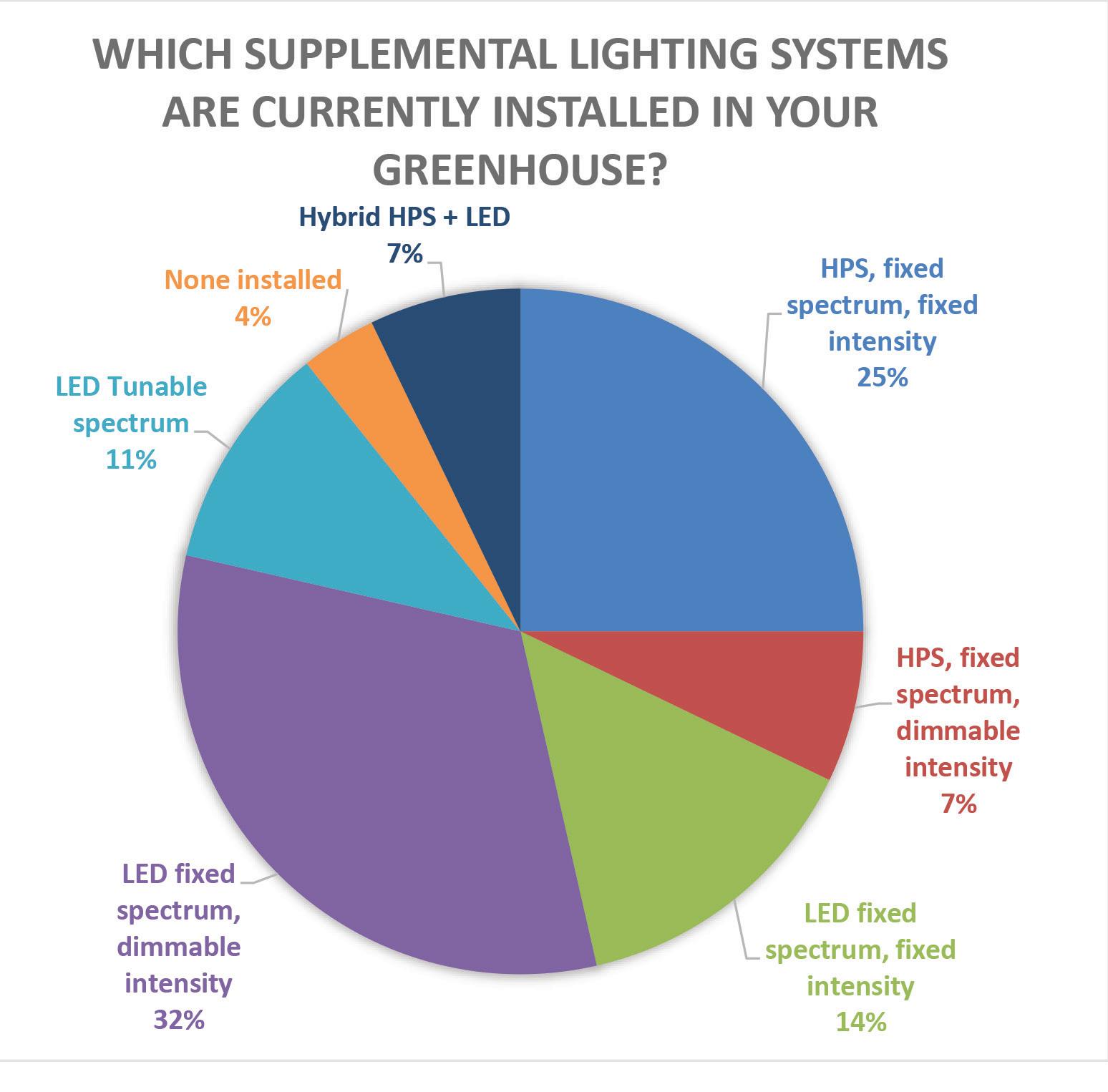
Most surveyed growers have modernized their lighting systems, with LED technology leading. The majority use fixed-spectrum dimmable or tunable (adjustable-spectrum) LEDs, while HPS fixtures remain in use mainly as hybrids or legacy systems. Many installations date from the past three to seven years, reflecting a strong wave of adoption since 2019 but it should be noted that a small number of operations reported installations as long as eight to 12 years ago.
Around 75 to 80 per cent of respondents reported using supplemental lighting primarily during low-light months (November to March), while roughly 20 per cent operate lighting year-round for high-wire crops such as tomatoes and cucumbers.
Nearly all identified improving crop quality and increasing yield as their key objectives, with about 70 per cent also citing the need to maintain production consistency through winter. About one-inthree noted speeding up crop cycles or better timing harvests to key market windows like Easter or Mother’s Day.
Those surveyed reported clear, measurable gains after upgrading or optimizing their lighting systems, with many citing improvements in crop quality, including better uniformity, colour, and size. A significant number noted higher yields while others observed faster production cycles, especially in highwire vegetables and propagation settings, and several highlighted improved ability to hit precise market dates.
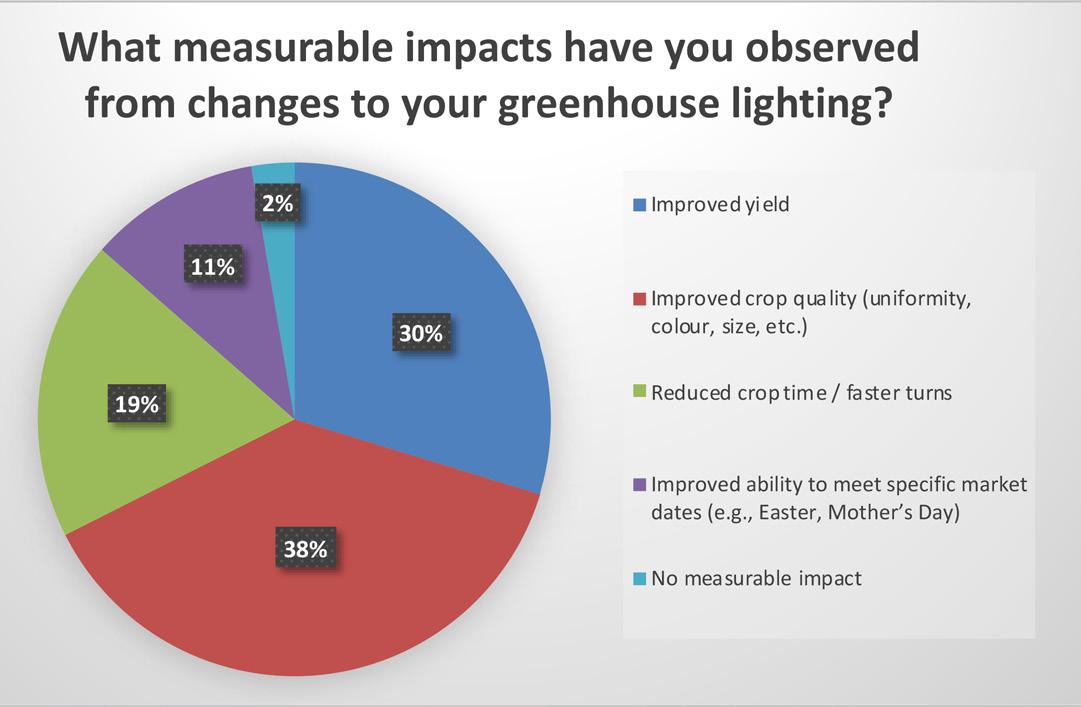
These gains often required operational adjustments: many growers added PAR or light sensors, modified irrigation schedules, or tuned dehumidification to match the faster plant metabolism under LEDs. A smaller group reported increases in heating demand, especially with full LED conversions, and some adjusted PGR strategies or airflow (HAF/vertical fans).
Despite these shifts, growers overwhelmingly described the transition as positive, with many improvements appearing immediately or within the first month of use, reflecting both the responsiveness of crops to improved light quality and the increasing sophistication of greenhouse climate lighting integration.
Energy and economics emerged as decisive themes across respondents. Most growers estimated that lighting represents between 11 per cent and 30 per cent of total operating costs, making it one of the largest controllable expenses in greenhouse production.
In response to rising energy prices, roughly half reported
shifting to more strategic light use, by dimming fixtures, reducing hours, or avoiding peak-rate periods, while others invested in co-generation systems or on-site generators to manage power costs.
Participation in rebate and incentive programs such as Save on Energy (Ontario), Hydro-Québec programs, and Class A initiatives was widespread, though many growers cited complex eligibility rules and inconsistent funding cycles as barriers.
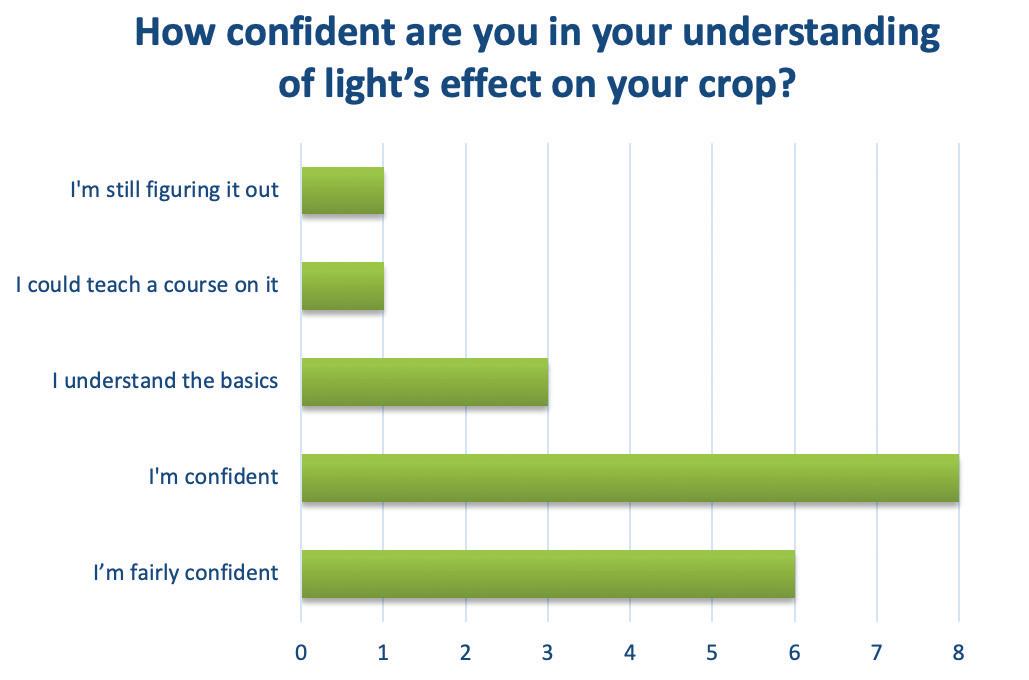
Most growers who responded to the survey expressed a solid grasp of lighting fundamentals, with nearly 70 per cent describing themselves as ‘fairly confident’ or ‘confident’ in understanding how light influences crop growth. A smaller but notable subset, roughly 15 per cent, rated their knowledge as
advanced, while some admitted they were ‘still figuring it out.’
When asked what topics they most want to learn about, responses clustered around optimizing spectrum for specific crops, calculating and achieving target DLI (daily light integral), and understanding ROI for lighting upgrades. Many also showed growing curiosity about AI-driven control systems, integration of lighting with fertigation and climate management, and emerging spectral technologies.
Looking ahead, growers are optimistic but pragmatic about the future of supplemental lighting.
Roughly half plan to upgrade or expand their systems within the next two to three years, driven mainly by goals of greater energy efficiency, improved crop quality, and access to new rebate programs.
Among those not planning immediate upgrades, the most common obstacles were high capital costs, uncertain ROI, and utility constraints such as limited power capacity. Many respondents also pointed to financing gaps and supply-chain reliability as secondary hurdles.
Still, sentiment toward lighting remains overwhelmingly positive: growers used descriptors like “instrumental,” “superb,” and “game-changer” to characterize their experiences. The overall picture is of a sector continuing to invest carefully but confidently, balancing operational realities with a clear belief that advanced, efficient lighting is essential to greenhouse competitiveness in the years ahead.
We would like to thank Signify for generously sponsoring the 2026 Grower Survey on lighting.
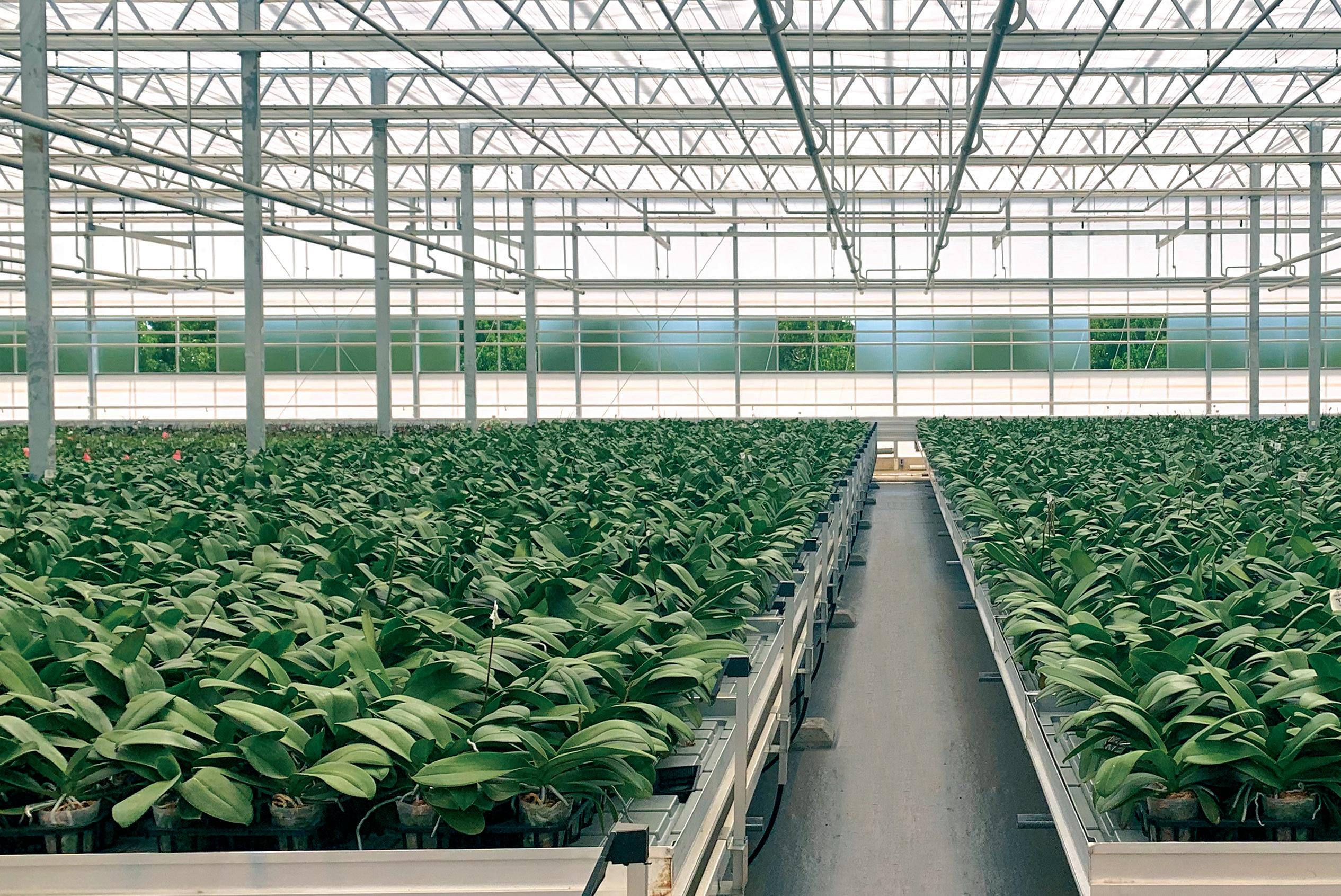

A first look at the standout varieties and series making waves at this year’s California Spring Trials
BY RODGER TSCHANZ
Each spring, the California Spring Trials (CAST) offer a first look at the genetics, colours and innovations set to shape upcoming growing seasons and 2026 proved no exception. From improved disease resistance in staple crops to entirely new breeding breakthroughs and eyecatching colour introductions, this year’s trials delivered a strong mix of practical solutions and retail-ready appeal.
Here, we highlight some of the standout varieties and series that generated buzz across the
trial locations, with insights into how they may fit into Canadian greenhouse production and programs. Expect more insights from CAST 2026 in Greenhouse Canada in upcoming issues and online.
1. Monteverde Genovese Basil This selection is highly Downy Mildew (DM) resistant without sacrificing the traditional Genovese basil flavour. This plant disease is the bane of basil growers and PanAmerican Seed continues to screen their basil against new strains of downy
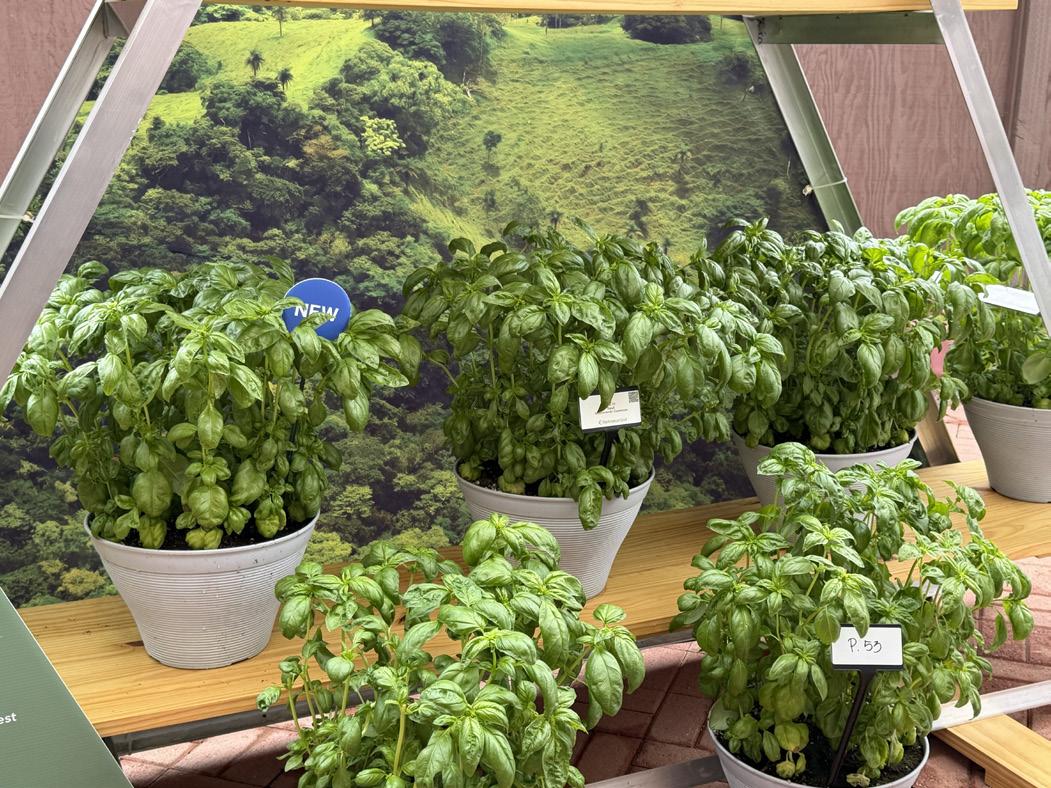
mildew. Expect a garden plant height in the half metre range.
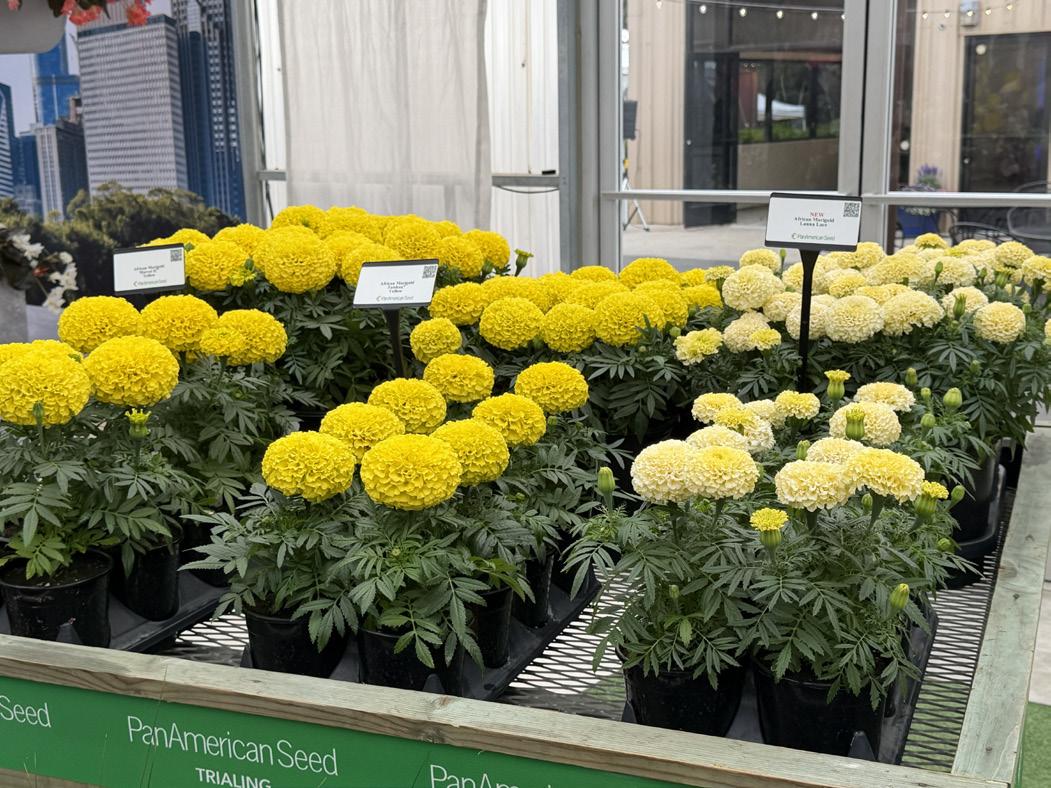
2.
This dwarf creamy white African marigold is named after the Lana region of Thailand; it is the first release from Ball’s Thai breeding program. It generated a lot of interest at CAST since it signals the return of this sorely missed colour. It resembles the discontinued Vanilla marigold. This colour is now back along with a reliable seed supply. It’s growth habit closely matches the Taishan series; it has 6-8 cm flower diameter on 25-30 cm stems. This colour works well in mixes.
26_001520_Greenhouse_Canada_MAY_CN Mod: February 10, 2026 9:36 AM Print: 03/25/26 page 1
Petchoa is an intergenic cross between petunia and calibrachoa. Ball FloraPlant (BFP) now has its own version of this hybrid with the release of this new CitraNova series. Colours include the citrusy Lemon Zest and Limone; several lucky growers had the opportunity to trial this series last season but now it’s available for broad distribution. Petchoa’s generally exhibit tolerance to climatic conditions that petunias can’t handle. These CitraNova colours have excellent cold tolerance. Lemon Zest has large white flowers with a yellow throat and medium high vigour compared to the less vigorous Limone



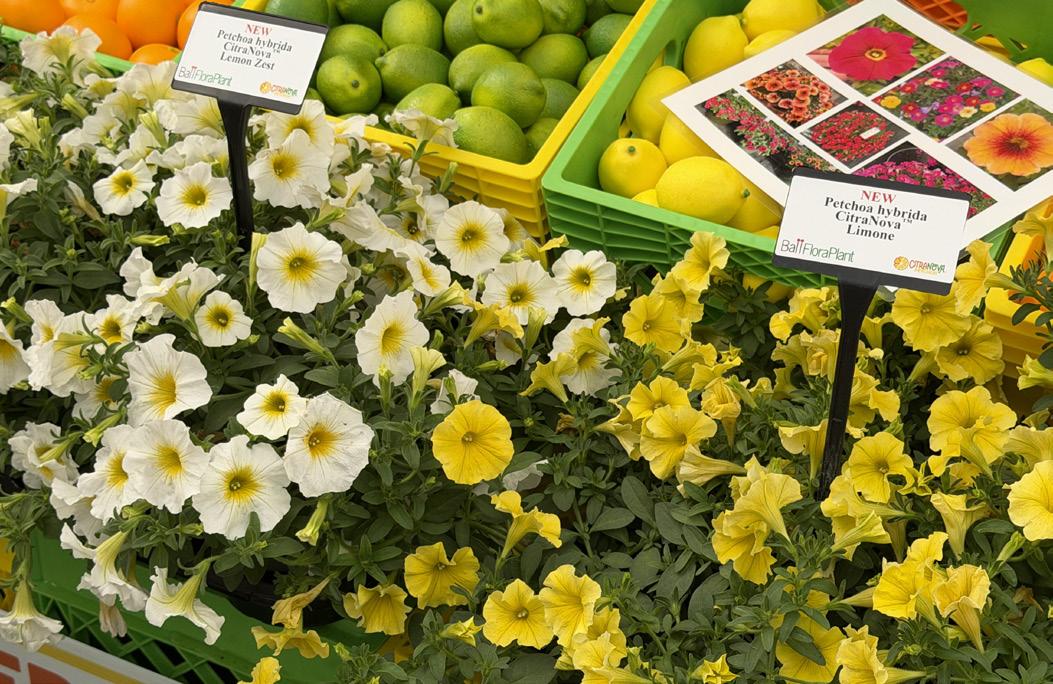
that maintains a deep yellow colour in high heat and humidity.
4. DayScape series of Hemerocallis from Darwin Perennials
One could argue that the horticultural world doesn’t need any more daylilies given the preponderance of cultivars available in the marketplace. It would appear though that this series has features that make it stand out from the crowd. High resistance to rust, early flowering with continuous bloom, high bud count, self cleaning plus flower bud opening under conditions all combine to make this series unique and worth considering in your perennial
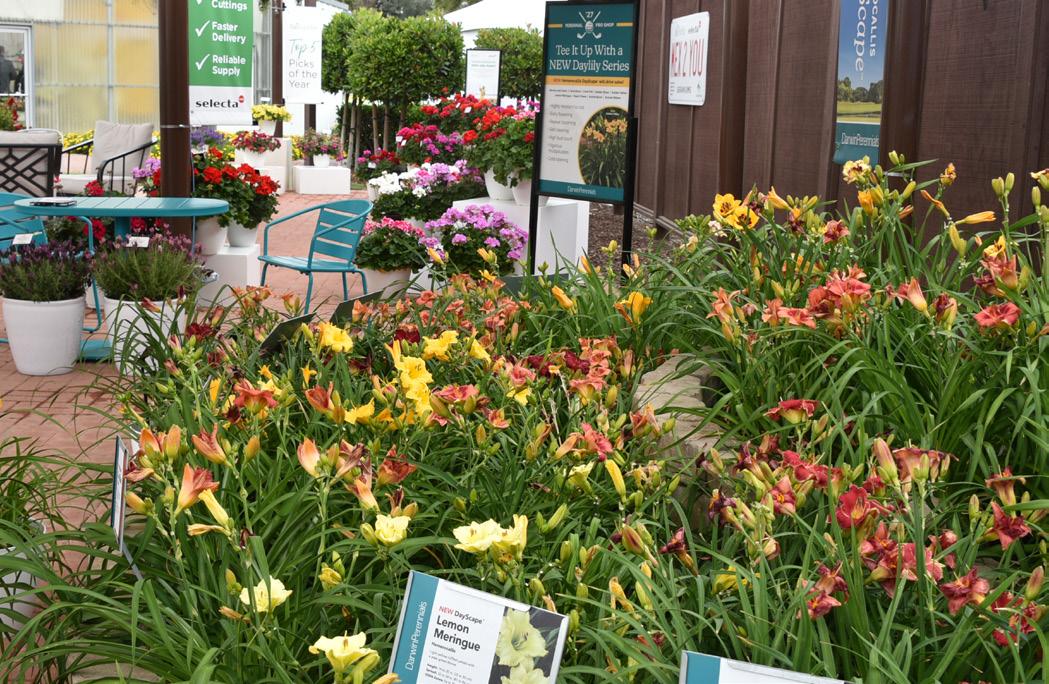
programs. Even though this series was bred in Florida it is winter hardy to Zone 5. It is currently available in 9 different colours and patterns. NOTE: The growth habits aren’t perfectly matched between colours across the series.
5. Petunia – Firefly Moonlight series – Raker-Roberta
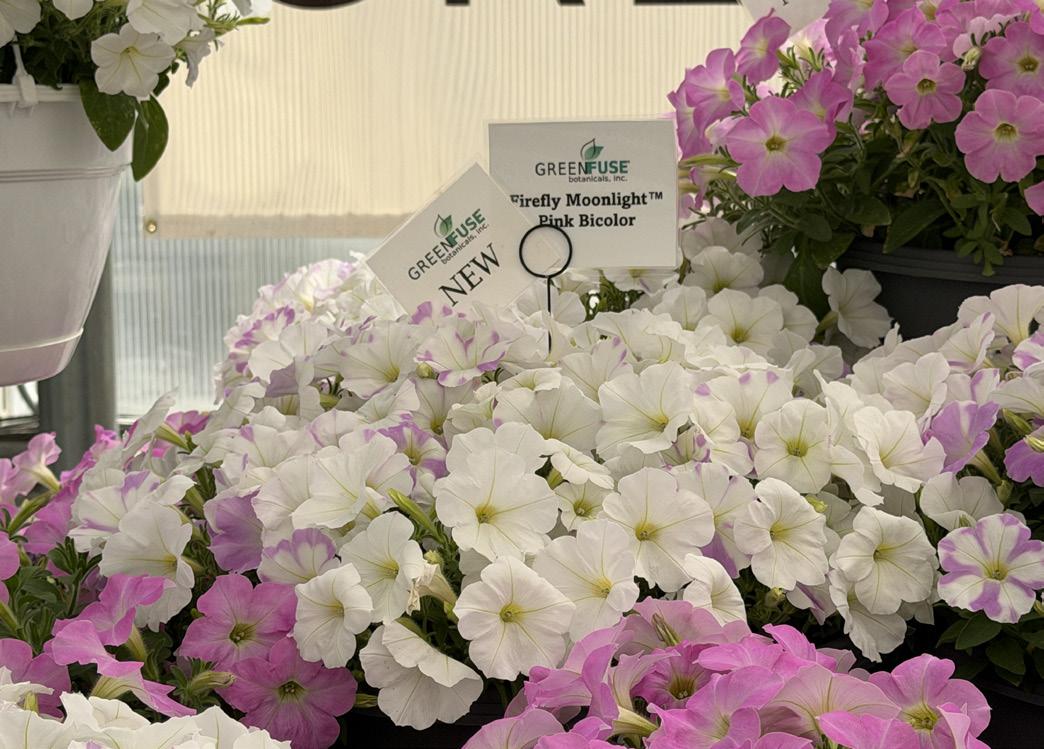
Some of you may be wondering why the “glow-in-thedark” Firefly petunia hasn’t come to Canada yet. Last year’s CAST article indicated that it would be coming for the 2026 season. Apparently, the regulatory process for a GMO petunia takes lots of time and paperwork. We can only hope that this will be happening before the next spring production cycle. In the meantime, two new daytime

colours of the petunia have been released. The original white petunia is now accompanied by a pure pink and pink bicolour versions.
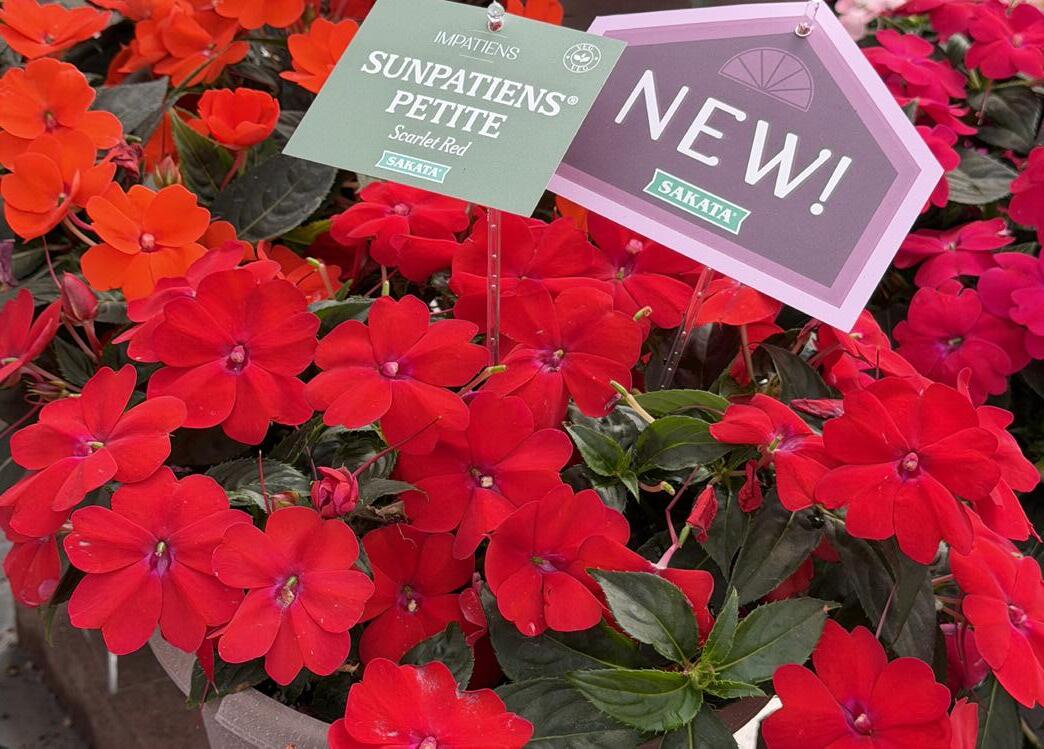
6. Impatiens - Sunpatiens Petite –Sakata
The breeders of the Sunpatiens impatiens at Sakata have released their most compact version yet. It has a very compact, mounding habit reaching heights of 25 cms. This series is recommended for 8-12” container production only. Once in the landscape it will stay compact, this could be confusing for the consumer used to the traditional Sunpatiens vigour so plant in hanging baskets or patio containers where it will not perform beautifully by not outgrowing its confines.
7. Petunia Amazonas series –Danziger
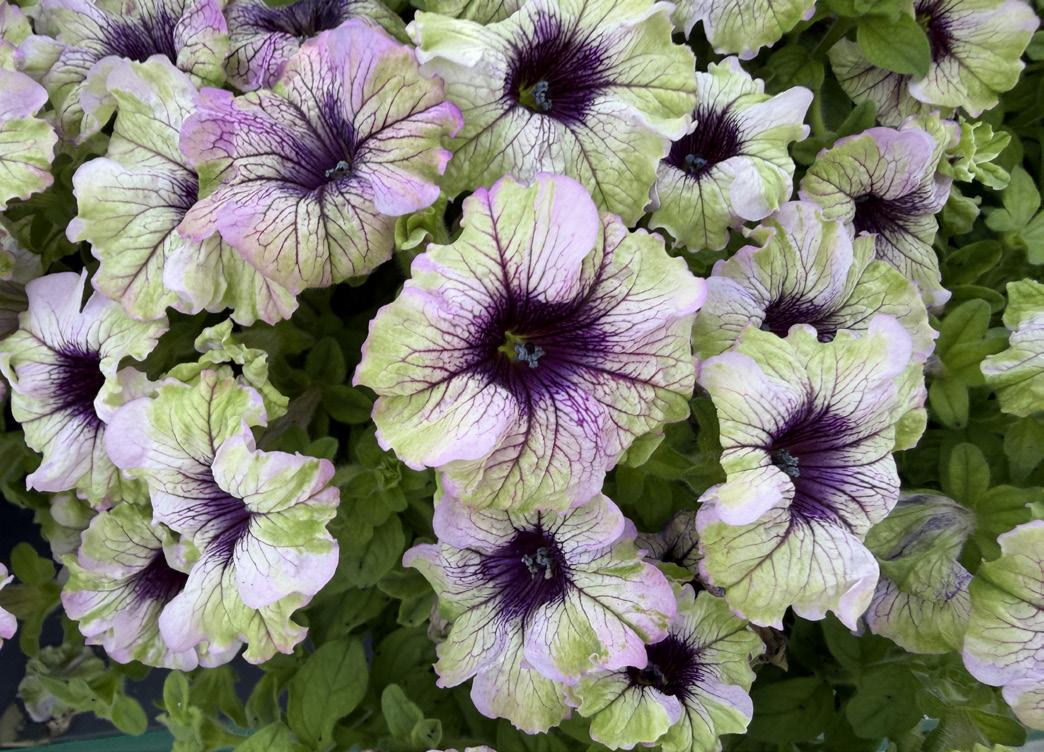
Amazonas™ Plum Cockatoo has now been joined by three new colours: Pink Macaw, Violet Parakeet and Midnight Finch. The link between the series is the presence of chlorophyll in the bloom. The green tint on the petal margin transitions
to shades of purple or pink in the centre of the bloom. The sturdy bloom tolerates precipitation very well. Between the colours, there is some variation in growth habit; to quote our guide, Violet Parakeet has a roundy, moundy habit, Midnight Finch is upright and Pink Macaw has a vigorous growth habit. Growers may not have confidence or ideas about using this series in mixes. To remedy that, Danziger but together a demonstration wall of potential
combinations. The take home message was that this series is quite versatile and can work in both subtle and dramatic cobinations.
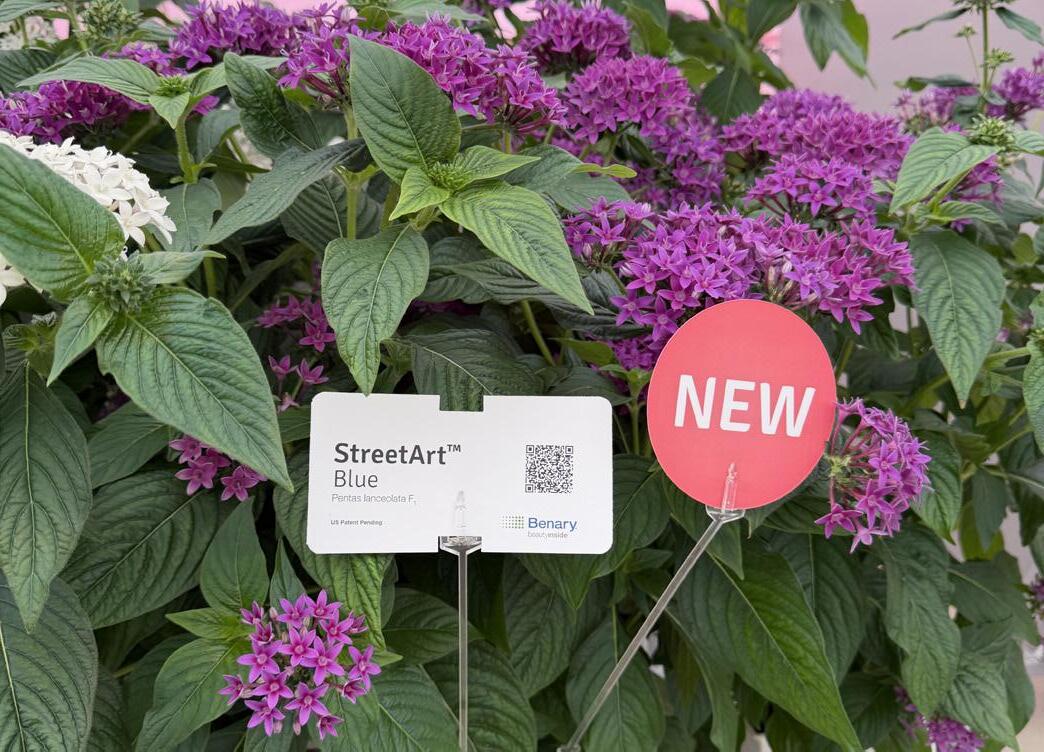
8. Pentas StreetArt series – Benary Pentas is one of Benary’s most active breeding programs and this year they have released the brand new StreetArt series with four colours. Unique to this series is the first “blue” pentas produced from
Continued on page 32

Biobest helps growers build resilient cropping systems by working with nature - combining biological control, pollination, and integrated pest management (IPM) expertise to support sustainable crop outcomes.

• Pollination
• Biological Control
• Monitoring & Scouting
• High-tech IPM Solutions
Call your local representative today.
BY JOSEANE MOREIRA DO NASCIMENTO, VLADIMIR ZHUROV, VOJISLAVA GRBIC, MIKAELISON DA SILVA LIMA, AND REAGAN SUE MICHIELS
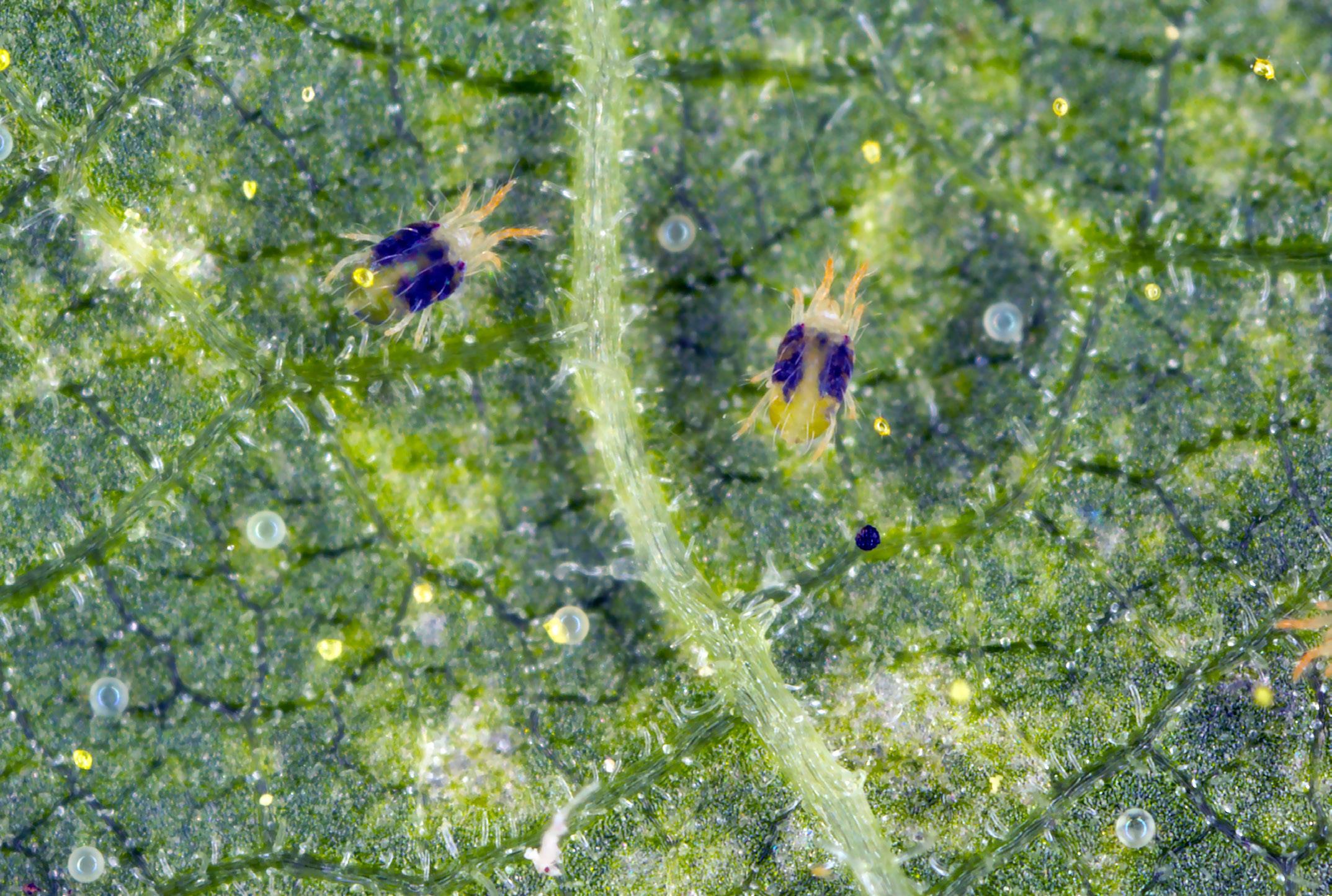
Spider mites are unwanted organisms that can damage plants and reduce yield considerably. The primary spider mite pest in greenhouse production is Tetranychus urticae, the two-spotted spider mite (TSSM). With a broad host range spanning vegetables, fruits, and ornamentals, it thrives under greenhouse conditions.
Effective spider mite management in greenhouses relies on regular monitoring, early detection, and application of integrated control strategies. These approaches have been developed mostly for the TSSM. However, recent observations proved that TSSM is not the only spider mite growers are dealing with.
Since 2018, greenhouse vegetable IPM specialist Cara McCreary from the Ontario Ministry of Agriculture, Food and Agribusiness (OMAFA)
ABOVE
and Plant Products’ Tom MacDonald, have been tracking mite populations in greenhouse crops across southwestern Ontario and submitting samples for analysis to the Grbić Lab at Western University (London, ON). The results have been both insightful and, in some cases, surprising.
While more than 1,360 spider mite species are known worldwide, only 19 have been recorded in Canada, highlighting how poorly documented our mite diversity is. We now know that “red spider mite”, a resident in some tomato-growing greenhouses, is a new Tetranychus species that has not been described previously.
New mite species are not restricted to greenhouses. With support from Tracey Baute (OMAFA) and Dr. Ian Scott (AAFC) we identified Tetranychus turkestani, previously unreported in Ontario, in soybean fields. These mites cause leaf necrosis and plant collapse (Figure 1). Should they
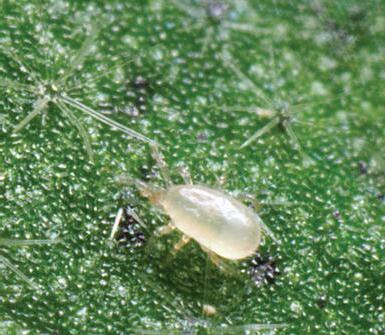
The two-spotted spider mite (Tetranychus urticae) thrives across a broad range of greenhouse crops, including vegetables, fruits, and ornamentals.




GREENHOUSE HEALTH SCAN: Plants, people, profit
Dr. Mohyuddin Mirza

UNINVITED GUESTS: Invasive stink bugs in greenhouse vegetables
Paul Abram, AAFC
LED REALITY CHECK: From claims to crop performance, what growers need to know
Dr. Bo Sen Wu,
Associate Director, Simon Fraser University’s BC Centre for Agritech Innovation (BCCAI)

ROBOTICS, SENSING, AND SMARTER CROP CARE
Dr. Woo Soo Kim, P. Eng., SFU
REWRITING THE LIGHT RECIPE: Photonic coatings and their impact on lettuce performance
Mohammad Ameri
Dr. Qasim Khan



SMART PLANTS, SMARTER GREENHOUSES: Sensors, robots, automation and advanced lighting
Dr. Li Ma, KPU
- Register by May 15 and SAVE $25
- A few booths remaining. Book now!
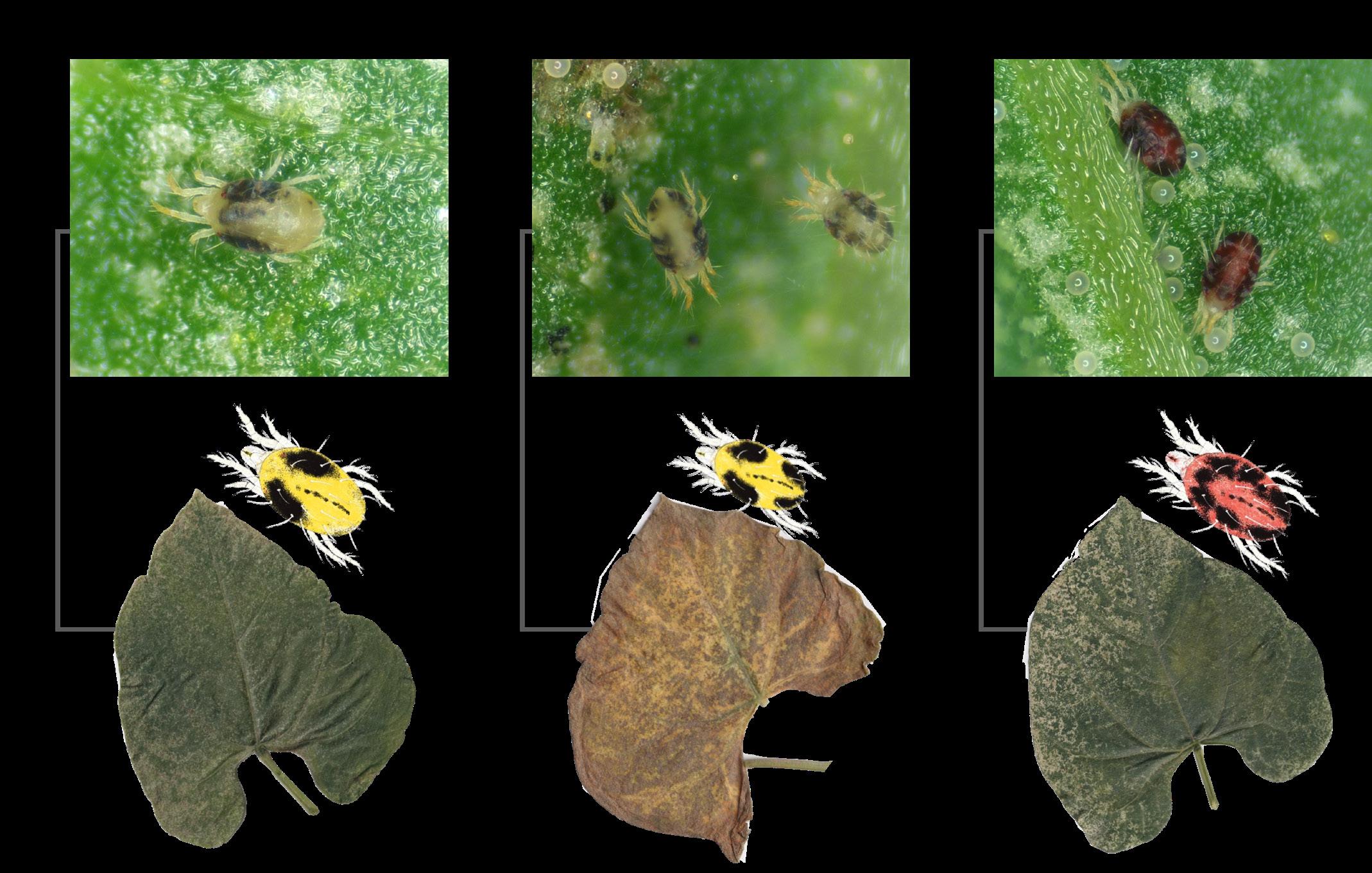
FIGURE 1.
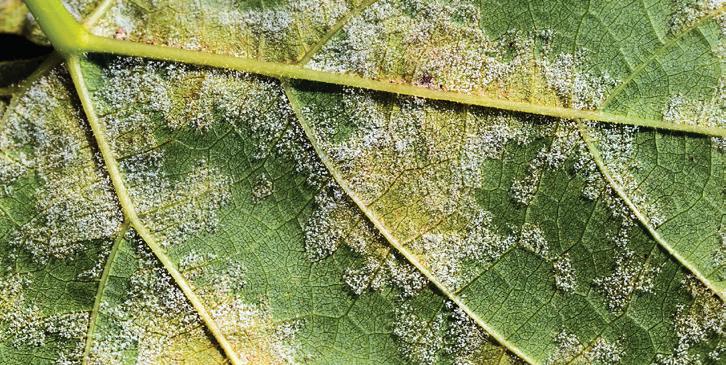
Spider mite species and their damage patterns observed in Ontario soybean and greenhouse crops. (A–C) Main species: (A) Tetranychus urticae (two-spotted spider mite), the most common species; (B) Tetranychus turkestani (four-spotted spider mite), a newly reported species in Ontario soybean crops; (C) Tetranychus sp. (red spider mite), a newly observed species currently being studied and present in tomato greenhouses. (D–F) Typical damage symptoms: (D) speckling chlorosis (small white or pale spots) on red kidney bean leaves caused by two-spotted spider mite feeding; (E) bronzing and leaf necrosis under heavy four-spotted spider mite infestations; (F) strong speckling chlorosis caused by the red spider mite.
move into greenhouses, the impact will be enormous.
A few other weird-looking mites were found within the samples received, highlighting the need for close monitoring and further study. Improving control depends on a better understanding of how these populations behave and change over time.
Pesticides remain an important tool for managing established spider mite populations. However, mite resistance to pesticides is increasingly common. In addition to its ability to adapt to different host plants, TSSM has developed resistance to at least 96 active pesticide ingredients to date, highlighting its strong capacity to adapt to chemical control measures.
The Grbić Lab, led by Prof. Vojislava
Grbić, has received, so far, 86 mite samples from greenhouses. With an army of undergraduate and graduate students, Dr. Joseane Nascimento tested their resistance to a range of pesticides with different modes of action. Multi-resistance was frequently observed; for example, of 46 greenhouse populations tested against seven pesticides, 45 per cent showed resistance to multiple products.
With support from student researchers, Dr. Vladimir Zhurov has developed diagnostic tools that screen mite populations for genetic markers of resistance which can flag potential pesticide failures before treatments are applied.
In the near future, this service will be offered through a partner laboratory in Ontario (to be determined) and will support growers and IPM professionals in making more informed management decisions.
To help control pesticide multi-resistant mite populations, pesticides with different modes of action are needed. The Grbić Lab, alongside industry partner Greenlight Biosciences and supported by Genome Canada funding, is developing an RNAibased pesticide.
Traditional chemical pesticides work by binding to and blocking key proteins in the mite’s body, disrupting essential functions and leading to mite death. RNAi has the same goal but works one step earlier. Instead of targeting the protein itself, RNAi uses double-stranded RNA (dsRNA) to target the genetic instructions that produce that protein. In simple terms, while pesticides “block the tool,” RNAi prevents the mite from making the tool in the first place (Figure 2).
The RNAi-based pesticide is designed
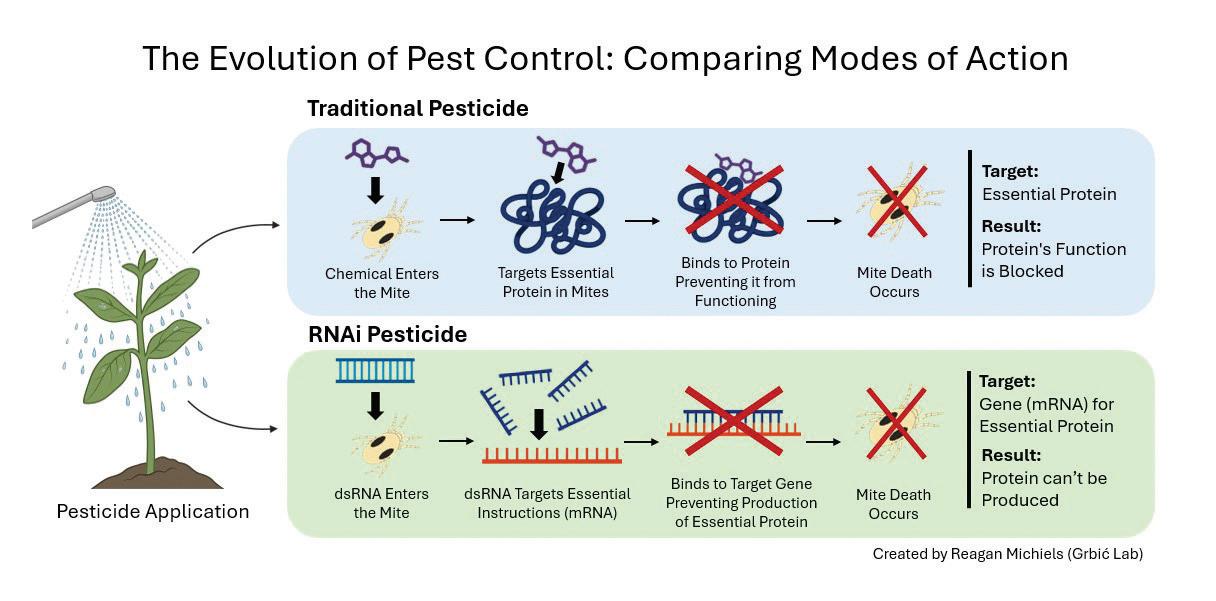
to match only the target mite genes. This approach is highly specific and does not affect beneficial organisms, other animals, plants or humans. It can be integrated into existing IPM programs and applied using standard spraying equipment, just like conventional products. In addition, it breaks down quickly in the environment, leaving no long-lasting residues.
It’s important not to confuse RNAi with RNA vaccines that use a different type of RNA molecule to instruct cells to make a
viral protein that will “teach” the body to respond to a virus.
The presence of multiple spider mite species with different damage and resistance profiles increases the risk of control failure. As climate change drives mite spread and outbreaks, improved diagnostics and targeted IPM will be critical for sustainable crop protection.
To that end, the Grbić team is working
to develop an inventory of mite pest species and for this, they need help from growers and the industry. If unusuallooking or behaving mites are detected in crops, growers are encouraged to contact the lab at 1-519-661-2168 or by email at jmoreir6@uwo.ca and they will arrange shipment of a mite sample for identification and resistance testing.
Led by Prof. Vojislava Grbić, The Grbić Lab, is supported by the work of research associate Dr. Joseane Moreira do Nascimento, research scientist Dr. Vladimir Zhurov, Mikaelison da Silva Lima, PhD candidate in Biology and research assistant Reagan Sue Michiels.
The Grbić Lab will be appearing at Grower Day 2026 in St. Catharines on June 16th to share more about their research into spider mite populations in Ontario. Learn more at GrowerDay.ca.

Scan here for instructions on how to collect samples for testing and for shipping information.

With a 31-year legacy behind it, Grower Day connects growers from coast-to-coast
BY AMY KOUNIAKIS
For more than three decades, Greenhouse Canada has built Grower Day into a trusted gathering place for greenhouse professionals in Ontario. Every year, this tradition strives to provide growers with practical learning, timely insights, and meaningful industry connection. In 2026, we’re taking that legacy a significant step further.
Now in its 31st year, Grower Day is expanding beyond its roots in Ontario with the launch of Grower Day West in Langley, B.C., marking the first time the event’s proven format will be brought to Western Canadian growers.
A LEGACY EVOLVES
This push westwards reflects both the strength of the event and the evolving needs of Canada’s greenhouse sector. While production systems, crops, and climates may differ across regions, growers are navigating many of the same pressures; from rising input costs and labour challenges to the need for greater efficiency and sustainability. Grower Day has long provided an intimate forum for the sector to gather and collaborate to address those realities head-on.












Discover industry best practices, fresh ideas, and creative solutions to common challenges when you take part in education at Cultivate.
Over 160 educational sessions cover fundamental skills and advanced techniques, providing you and your team with the knowledge and tools you need to become more efficient, productive, and prepared for the future.




TOP
Packed house for the 30th annual Grower Day in St. Catharines, ON in June 2025. ABOVE
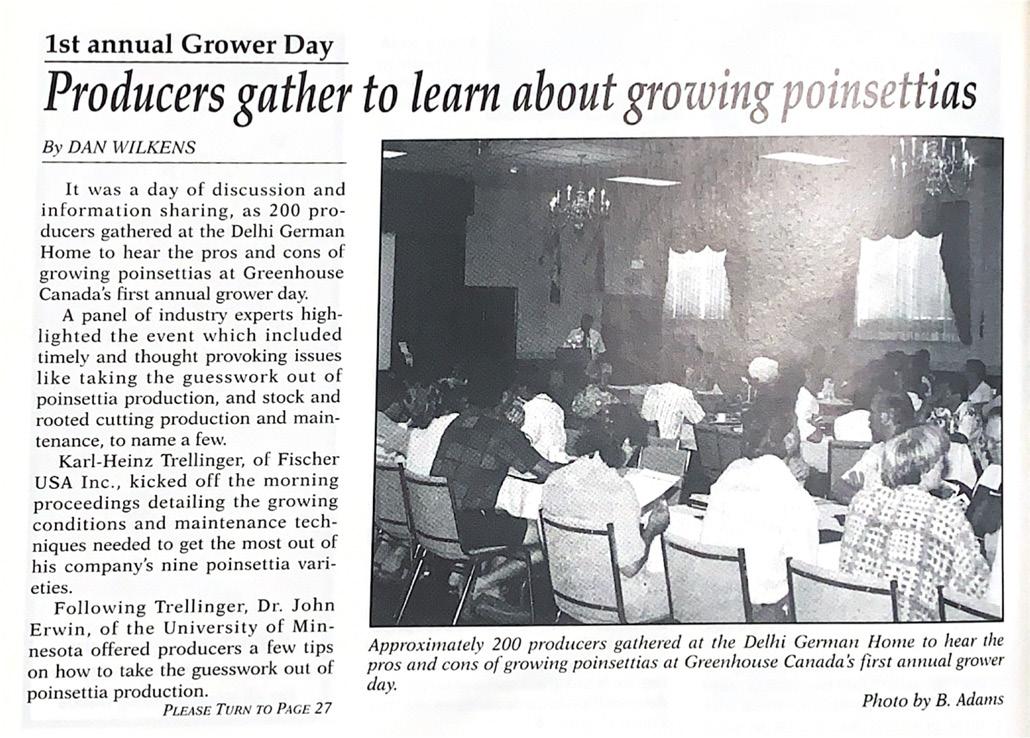
Greenhouse Canada's coverage of the first-ever grower day at the Delhi German home in Southwestern Ontario in 1995.
The first ever Grower Day, hosted in 1995 at the Delhi German Home in Southwestern Ontario, welcomed a little under 200 attendees to learn about poinsettia production. The following year, perennials were the topic of the day and the number of attendees surged to close to 250.
Over the years, Grower Day has seen fluctuations in attendance and changes to its format, but the goal has remained the same in its three decades: cultivating connection, moving the industry forward and supporting innovation in Canada’s greenhouse sector.
For 2026, both Grower Day East and West are designed as highimpact, one-day conferences to bring together growers, researchers, and industry suppliers for a focused exchange of ideas. The emphasis is firmly on practical, applicable knowledge and insights that can be taken back to the greenhouse and put into action.
At both shows, attendees can expect sessions spanning key areas such as crop production, pest management, technology, and
business strategy, alongside opportunities to connect with peers, explore the latest innovations on the trade show floor and enjoy a delicious meal.
Just as important as the formal program are the informal conversations that happen between sessions, often where shared challenges lead to new ideas and solutions.
Each event has been developed to reflect its regional context. For Grower Day West, programming looks through a distinctly Western lens shaped by coast pressures, tech adoption and the need to do more with less in diverse and energyintensive environments.
Across sessions, there is emphasis on improving whole-operation performance, from benchmarking business health and addressing flat yields, to managing emerging pest threats like invasive stink bugs. At the same time, the agenda highlights B.C.’s role as a hub for agritech innovation, with a focus on practical applications of advanced lighting, photonic materials, sensors, robotics, and AI-driven systems.
In Ontario, Grower Day East continues to build on a well-established network and a long history of collaboration between growers and industry experts. The program draws on that depth, offering a strong focus on refining existing systems through science-backed insights and grower-led validation.
Sessions emphasize advanced integrated pest management alongside deeper exploration of environmental factors such as UV light and their influence on biological controls. Presentations will also challenge growers to evaluate alternative growing media and root zone strategies and rethink greenhouse waste as a resource.
Together, these two events represent a new chapter for Grower Day and Greenhouse Canada: One that extends the event and publication’s reach and reinforces their original purpose.
In an industry where change is constant and margins tight, access to practical information and peer networks is more important than ever. By creating space for growers to learn from experts and from each other, Grower Day continues to play a vital role in supporting informed decisionmaking across Canada’s greenhouse sector.
Registration is now open for both shows and with limited capacity, early sign-up is encouraged to secure a spot. From timely production insights to forward-looking innovation, Grower Day continues to deliver the kind of knowledge exchange that helps growers adapt, compete and move their operations forward.
Greenhouse Canada would like to thank the sponsors helping make Grower Day 2026 possible, including Paul Boers and Prins, proud longtime supporters of our Top 4 Under 40 program; session sponsors

Belchim Canada, Koppert and Evergro, and GrowLiv Biologicals, this year’s lanyard sponsor. Their continued commitment plays an important role in supporting education, innovation and connection across Canada’s greenhouse industry.

Scan here for more information or to register for one of our Grower Day events! Learn more and register at GrowerDay.ca.'
Plant Products supports greenhouse growers across North America with a broad portfolio of crop inputs designed to meet real world production challenges.

Integrated solutions, backed by expert support:
• Integrated pest management (IPM) solutions designed to fit your production program.
• Crop inputs that support consistent plant health and performance.
• Knowledgeable technical and IPM representatives providing practical, on crop guidance.
Talk to your Plant Products representative to learn

Mastering cannabis yield and potency in greenhouse production
BY VIKRANT DHAWAN & MOHYUDDIN MIRZA
Growing cannabis for high potency and high bud yields is a challenge, especially in greenhouses where the outside climate can affect plant performance. Understanding the difference in yields between fully indoor grows and greenhouse grows with supplemental lighting is important, since indoor environments allow for better climate control. The key factors that influence yield and potency must all be carefully integrated to achieve the best harvests.
In this article, we aim to share some on-ground experience in cannabis cultivation, particularly within greenhouse systems where variables are constantly changing.
GENETICS: THE FOUNDATION
Genetics is the starting point as each strain has unique characteristics. Some strains are naturally
ABOVE
high yielding, while others emphasize potency or grow more compactly. Sativa-dominant strains can grow tall with ample branching while indicadominant remain short and bushy. These structural differences influence the plant’s potential to produce large, dense buds. Selecting strains based on yield potential is a strategic decision.
• Mismatch with environment - Poor performance under greenhouse conditions - Select trial-tested, environment-specific genetics.
• Yield vs potency trade-off - Compromised cannabinoid levels or biomass - Choose balanced strains or diversify cultivation.
• Genetic instability - Inconsistent growth and
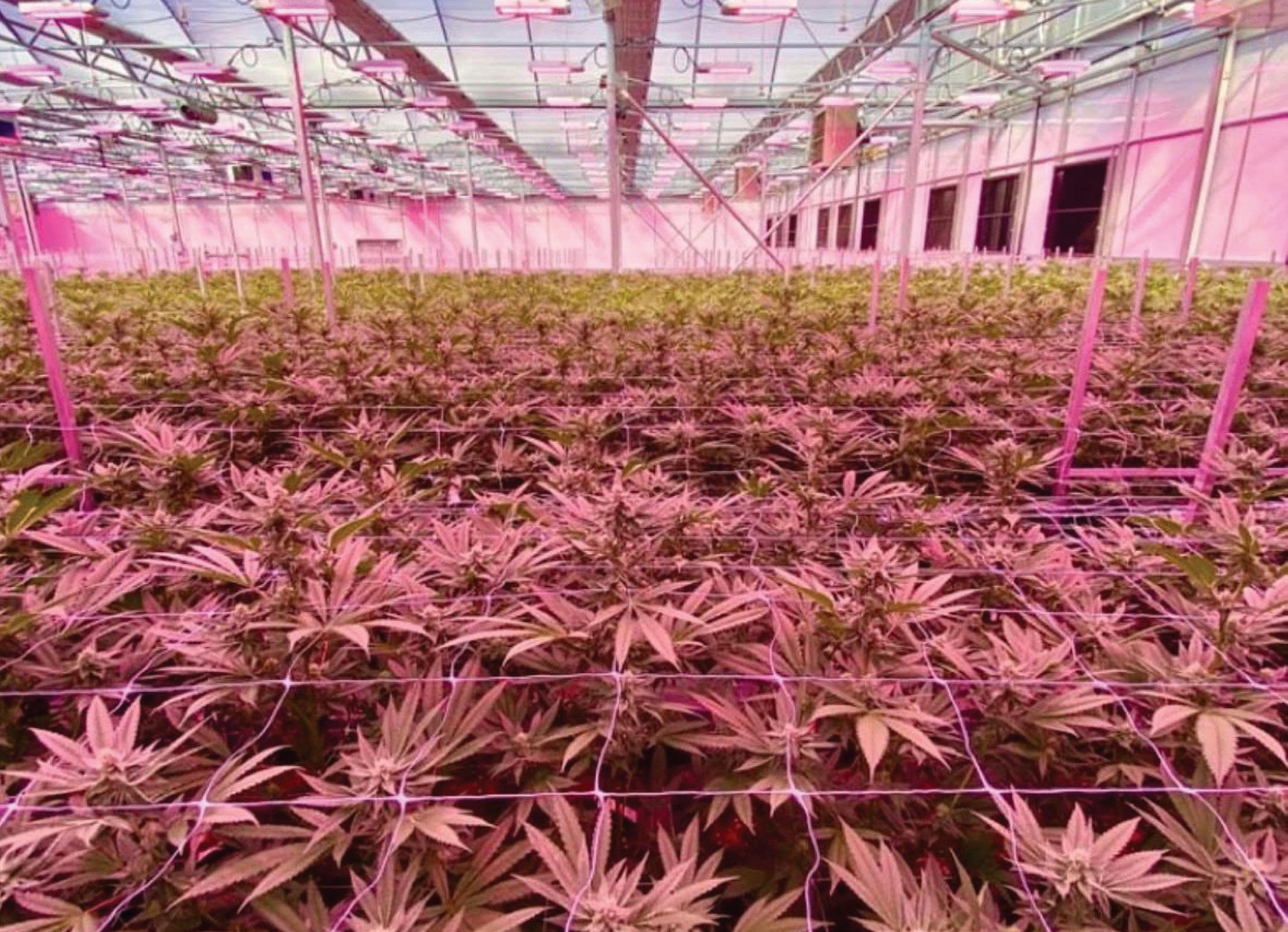
Understanding the difference in yields between fully indoor grows and greenhouse grows with supplemental lighting is important since indoor environments allow for better climate control.
flowering - Use stable genetics and maintain mother plants for cloning.
• Pest & disease susceptibilityReduced yield and quality - Select resilient strains and integrate IPM practices.
Light drives photosynthesis, directly influencing biomass accumulation and cannabinoid production.
In greenhouse cultivation, natural sunlight is a major advantage, but variability due to seasonal shifts, cloud cover, and greenhouse structure can create inconsistencies in plant performance.
Supplemental lighting plays a crucial role in:
• Extending photoperiods to maintain vegetative growth or induce flowering cycles with precision.
• Maintaining consistent light intensity (PPFD), ideally in the range of 600–1,000 µmol/m²/s during flowering depending on cultivar tolerance.
• Supporting flowering during lowlight seasons, particularly in winter months when natural DLI (Daily Light Integral) drops significantly.
From a technical standpoint, achieving a target DLI of 30–40 mol/m²/day is critical for maximizing yields.
LED fixtures with adjustable spectra allows for growers to optimize blue light for vegetative growth and redheavy spectra for flowering and bud development.
Uniform light distribution across the canopy ensures even bud development. Insufficient light leads to small airy buds and lower potency, while excessive or uneven light can cause photobleaching or heat stress at canopy tops.
• Winter: Low sunlight - Use supplemental LEDs and light sensors to maintain DLI. Pay particular attention to CO2 levels around 800 to 1000 ppm.
• Summer: Excess light and heatInstall shade curtain (30–50 per cent) to prevent light stress and reduce canopy temperature.
• Uneven canopy - Leads to light hotspots - Solve with proper levelling and trellising.
Water and nutrients must be managed with precision, as the root zone is highly sensitive to fluctuations.
Overwatering can suffocate roots, reduce oxygen availability and promote pathogens like Pythium. Underwatering, on the other hand, induces plant stress, limiting nutrient uptake and reducing growth.
A balanced nutrient program should:
• Adjust to plant stages (vegetative vs flowering), with nitrogen driving vegetative growth and phosphorus/ potassium supporting flower formation.
• Provide adequate nitrogen early and higher phosphorus/potassium during flowering to support bud density and resin production.
• Do not neglect micronutrients such as, iron, and zinc, which are essential for enzyme activity and plant metabolism.
• Maintain proper EC (typically 1.8–2.5 mS/cm depending on stage) and pH (5.5–6.5) levels for optimal nutrient uptake.
Irrigation strategies such as drip


fertigation with controlled runoff (10–20 per cent) help maintain root zone balance and prevent salt buildup.
CHALLENGES & SOLUTIONS:
• Salt accumulation - Causes nutrient lockout - Regular leaching and monitoring runoff EC.
• Calcium deficiency (common in coco) - Use Ca supplements and maintain proper transpiration.
• Inconsistent irrigation timing - Use automated systems with sensors (substrate moisture sensors).
The choice of growing medium directly impacts root health, aeration, water retention, and nutrient buffering capacity. Common greenhouse media include:
• Coco coir (excellent aeration, high
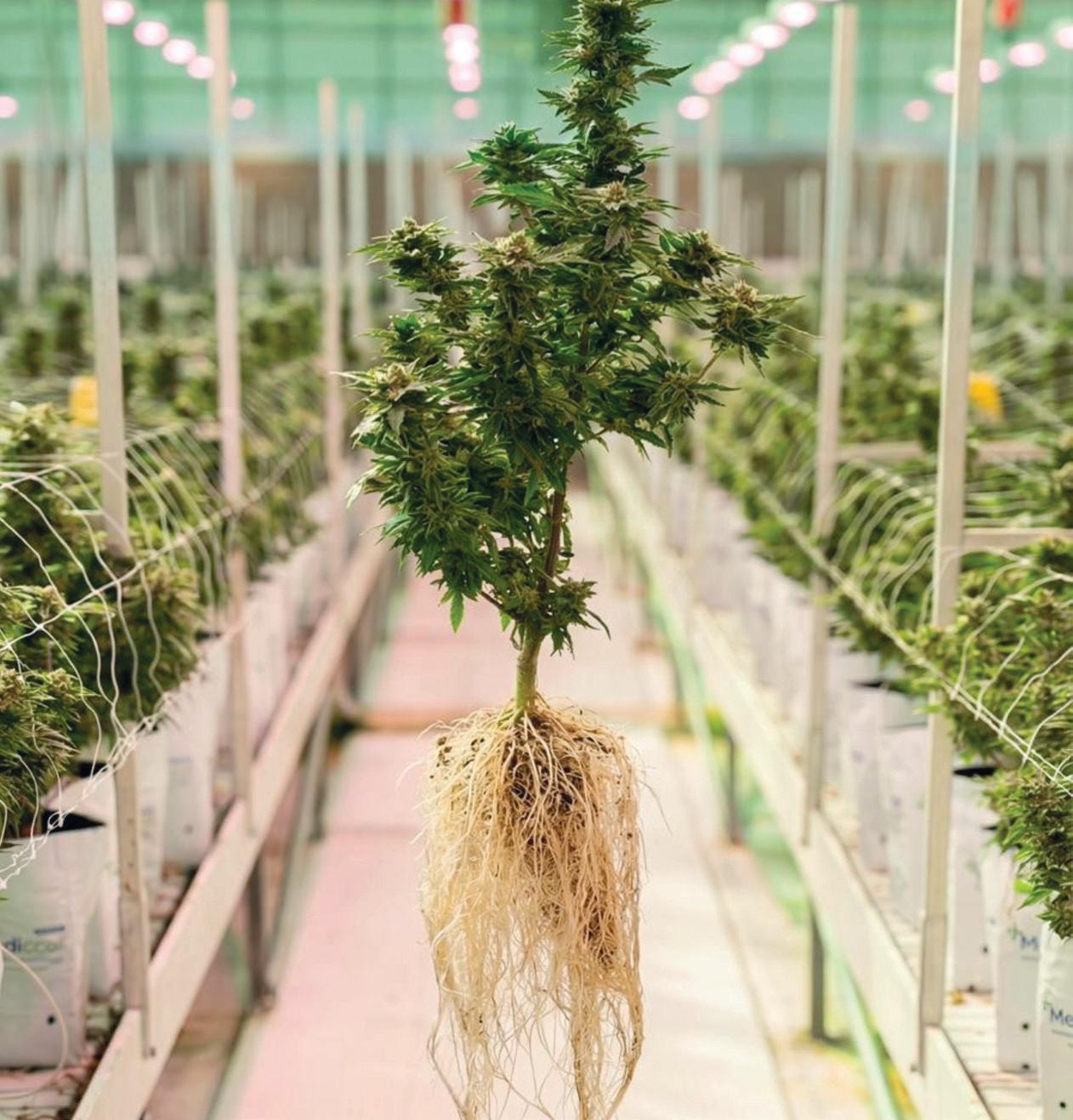
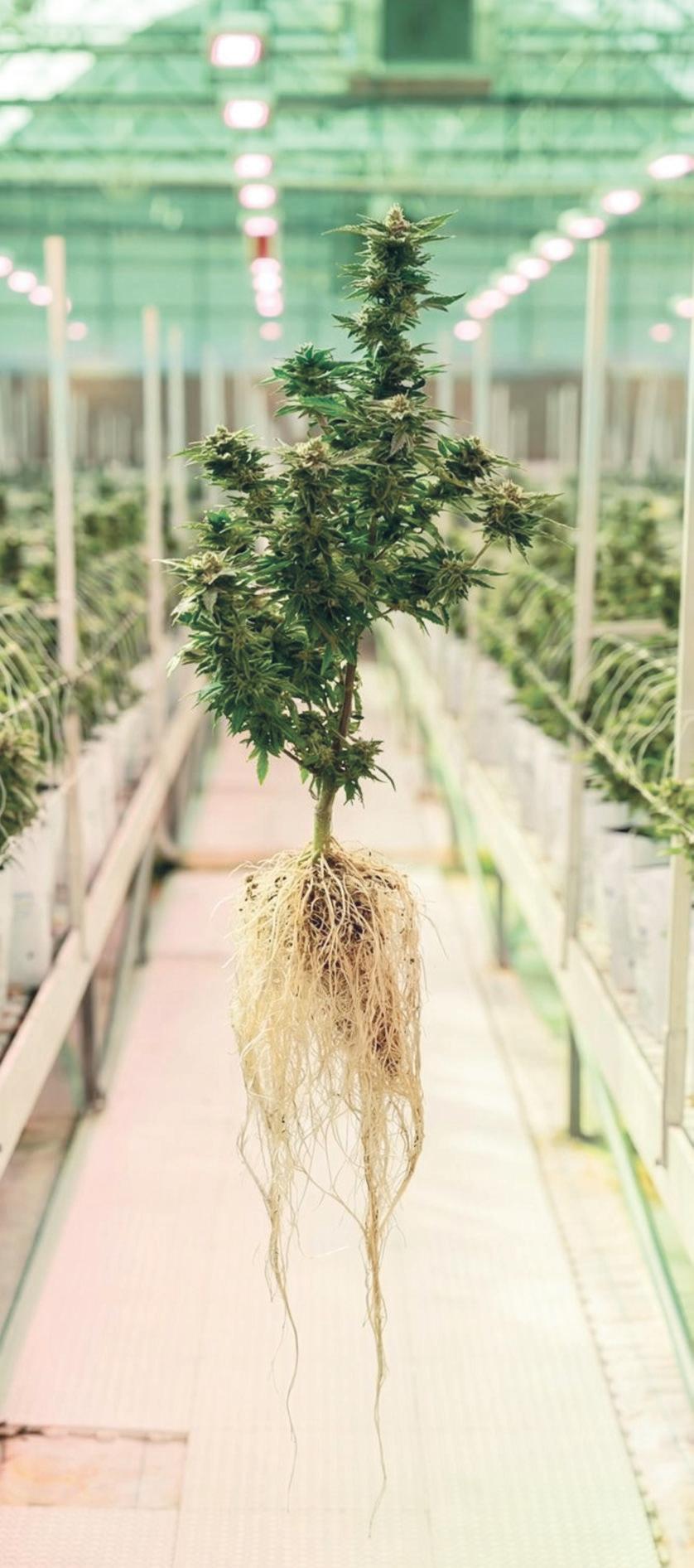
Cannabis plant with healthy roots. The root zone is highly sensitive to fluctuation so water and nutirtion must be handled with precision.
cation exchange capacity, and flexibility in fertigation).
• Rockwool (precision irrigation, uniformity, ideal for high-tech systems).
• Soil or peat blends (natural buffering capacity and microbial activity but less control).
An ideal medium balances moisture retention with oxygen availability, maintaining a healthy rhizosphere. Airfilled porosity of 20 to 30 per cent is optimal for cannabis roots.
CHALLENGES & SOLUTIONS:
• Compaction over time - Reduces oxygen - Avoid over-irrigation and use structured media.
• Uneven dry-down - Leads to inconsistent growth - Standardize irrigation cycles.
• Root diseases - Use beneficial microbes (e.g., Trichoderma, Bacillus).
CONTROLLING THE UNCONTROLLABLE
Greenhouse cultivation requires precise climate control to mitigate external environmental fluctuations. Key parameters include:
• Temperature: 22–25°C (day) and 16–20°C (night) for optimal metabolic activity. A 24 hours average temperature of 19 to 20°C is desirable.
• Humidity: Maintain VPD (Vapor Pressure Deficit) between 0.8–1.2 kPa for balanced transpiration.
• Airflow: Horizontal airflow fans (HAF) ensure uniform conditions and reduce disease risk.
• CO2levels: Supplementation up to 800–1,000 ppm can significantly enhance photosynthesis and yields.
CHALLENGES & SOLUTIONS:
Winter:
• Challenge: Low temperature and humidity - Slow growth and nutrient uptake.
• Solution: Heating systems, thermal curtains, and humidity control.
Summer:
• Challenge: High heat and humidity - Increased risk of mold and heat stress.
• Solution: Evaporative cooling, ventilation, and dehumidification.
Proper plant training ensures efficient light penetration, airflow, and optimal use of greenhouse space.
Important techniques include:
• Pruning: Removes lower unproductive growth to focus energy on top colas.
• Deleafing: Strategic removal of fan leaves to improve light penetration and airflow.
• Trellising: Provides structural support and maintains canopy uniformity.
• Screen of Green (ScrOG): This is a highly effective technique where plants are trained horizontally through a mesh screen to create an even canopy. This maximizes light interception and increases yield per square metre.
A well-managed canopy ensures all bud sites are receiving adequate light, reducing variability and improving overall quality.
& SOLUTIONS:
• Overcrowding - Leads to humidity pockets - Increase spacing and airflow.
• Uneven canopy height - Causes inconsistent bud size - Use ScrOG or topping techniques.
• Excessive defoliation - Reduces photosynthesis - Maintain balance.
Preventing problems is far more effective than reacting to them.
A proactive strategy includes:
• Regular crop scouting using yellow sticky traps and visual inspection.
• Biological controls and integrated pest management (IPM), including beneficial insects like predatory mites.
• Maintaining hygiene and sanitation protocols.
• Monitoring humidity closely to prevent fungal outbreaks such as powdery mildew and botrytis.
CHALLENGES & SOLUTIONS:
• Spider mites in hot, dry conditions - Introduce biological predators early.
• Powdery mildew in high humidityMaintain airflow and apply preventive bio fungicides.
• Late detection - Leads to crop lossImplement routine scouting schedules. Healthy plants allocate more energy to growth and cannabinoid production rather than stress responses.
Harvest timing significantly influences both yield and potency.
Key considerations:
• Monitor trichome development (clear - cloudy - amber) using magnification.
• Harvest during optimal environmental conditions to avoid moisture issues.
• Handle plants carefully to preserve delicate trichomes and resin glands. Wet weight provides an initial measure of biomass but can be misleading due to high moisture content. Typically, dry weight is 20–25 per cent of wet weight depending on drying efficiency.
CHALLENGES & SOLUTIONS:
• Early harvest due to schedule pressure - Lower potency - Plan harvest windows carefully.
THE FINAL COUNTDOWN
Post-harvest handling is critical for preserving quality, potency, and terpene profile. Proper drying and curing:
• Enhance terpene profile through slow moisture reduction.
• Stabilize cannabinoids and prevent degradation.
• Prevent mold through controlled conditions (18–22°C and 50–60 per cent RH).
Drying should occur over six to 10 days depending on bud size and density, followed by curing in controlled environments. Final dry weight is the true measure of yield and economic return.
CHALLENGES & SOLUTIONS:
• Over drying - Loss of terpenes - Use humidity-controlled storage (58–62 per cent RH packs).
• Mold during drying - Improve airflow and reduce humidity immediately.
• High-quality packaging ensures shelf stability while maintaining potency and aroma.
High cannabis yields and potency are not the result of a single factor but the outcome of a fully integrated cultivation system. Greenhouse cultivation presents unique challenges, particularly during extreme winter and summer conditions, but it also offers an opportunity to combine natural and controlled
environments for optimized production.
Growers who understand and align these factors—while adapting to real-time challenges—will achieve superior harvests in both quantity and quality.
Vikrant Dhawan is a plant scientist and master grower at Green Mountain Health Alliance greenhouse facility in Kaleden, BC and can be reached at vdhawan@gmtn.ca.
Dr. Mohyuddin Mirza is an industry consultant in Alberta and welcomes comments at: drmirzaconsultants@gmail.com.

Circular solutions on the horizon for end-of-season greenhouse vine residues
BY ALEXANDRA GRYGORCZYK
Since 2011, Canadian greenhouse vegetable acreage has expanded around five per cent annually and is projected to continue this climb until at least 2030. As of 2025, Ontario has more than 4,300 acres of greenhouse structures. Cucumbers produce approximately three crop cycles per year and tomatoes and peppers, one. As a result, the province generates the equivalent of 7,050 acres of vine residues, the crop material left over after production, annually. With ongoing expansion, the equivalent of more than 350 acres’ worth of vine residues is projected to be added each year.
Greenhouse vines already account for a significant proportion of the annual organics tonnage allowance
ABOVE
for local landfills, making the steadily increasing volume of vine residues a pressing issue. Several factors contribute to the challenge, starting with the sheer volume produced during the November/ December clean-out period when most Leamingtonarea tomato and pepper crops end their production cycle.
Biosecurity concerns add complexity, as some vines may carry plant pests or diseases requiring careful handling to prevent spread. Plastic contamination from twine, clips and substrate grow bags is another major hurdle as these materials are often
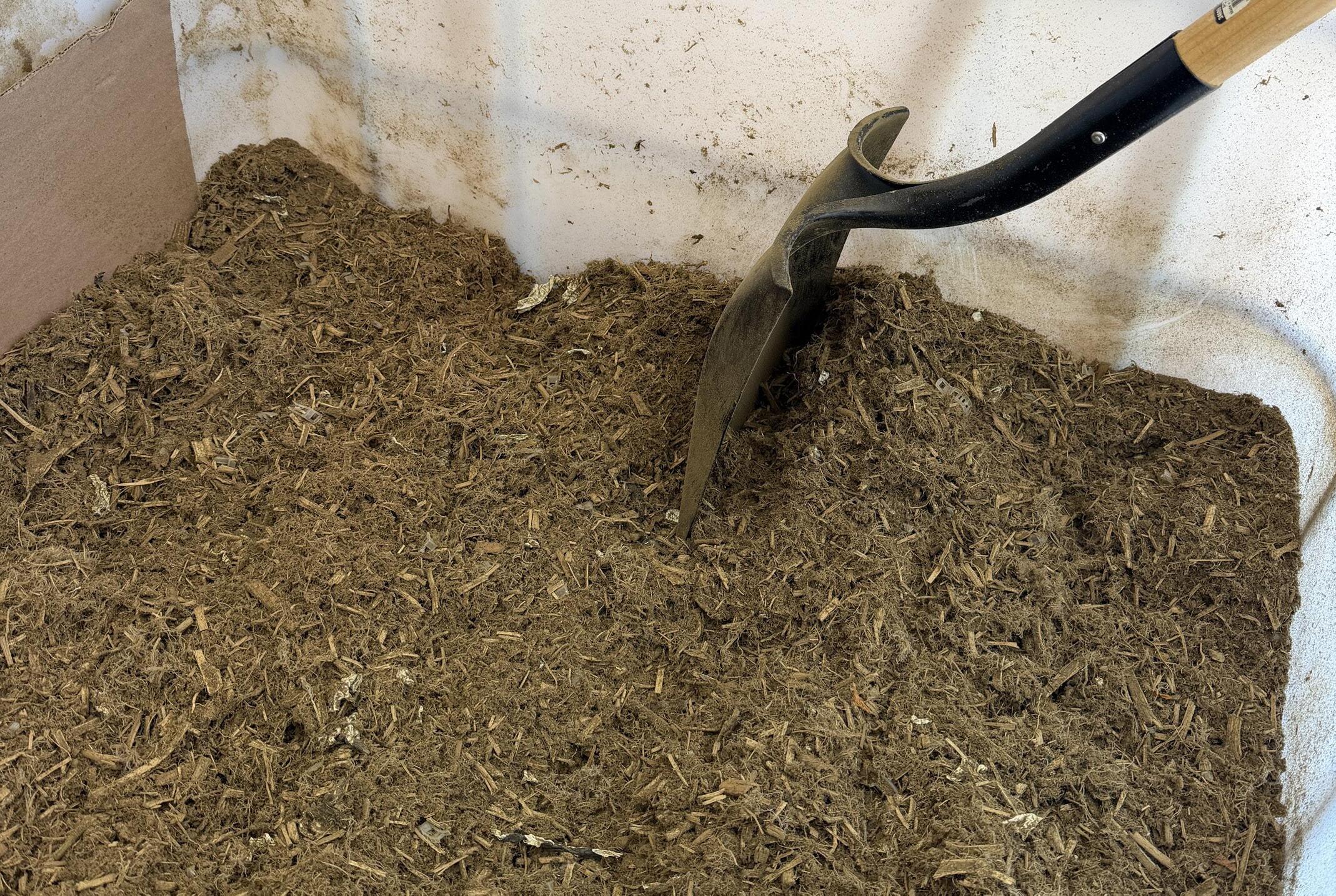
Material produced by dehydrating shredded tomato vines along with grow bags and trellis plastics. ABOVE RIGHT
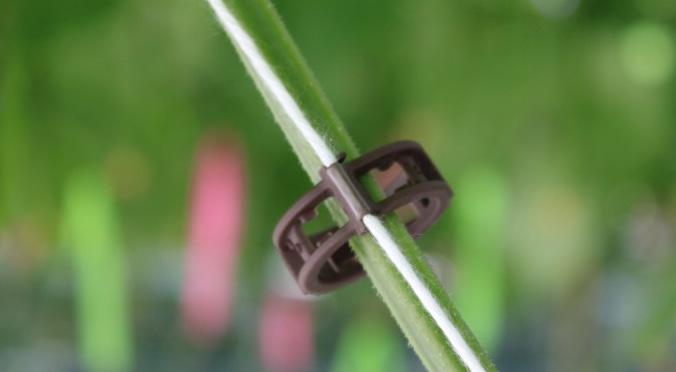
Twine and clips used in greenhouse production complicate the issue of managing vine waste.
shredded with vines during clean-out, making separation difficult. Their high moisture content, typically 80–85 per cent, creates further complications as vines quickly start releasing significant volumes of leachate during transport, storage, and during decomposition, creating operational challenges for landfills.
These pressures have driven steep increases in landfill tipping fees, from $35 per tonne in 2021 to $68 per tonne in 2025, with further, more moderate but consistent, increases expected.
As costs rise and landfill capacity tightens, industry leaders are calling for new approaches. As Daniel Terlizzese of the Ontario Greenhouse Vegetable Growers (OGVG) notes, “responsible vine residue management is rising in priority as crop volumes grow and conventional landfill options reach their limits. This challenge is also opening doors to innovative, circular approaches that can strengthen the sustainability and competitiveness of the sector.”
A 2023 Vineland Research and Innovation Centre (Vineland) survey commissioned by the Ontario Fruit and Vegetable Growers’ Association found that 89 per cent of greenhouse growers were landfilling some or all their green waste, while 47 per cent were land-applying at least a portion. Land application is therefore already common, though not all crops are equally suited to it.
Highwire cucumber vines contain the most plastic contamination, followed by highwire tomatoes, making them incompatible with land application. Other crops and production systems offer more flexibility: Umbrella cucumber systems can use compostable jute string, and many pepper growers use minimal clips, making plastic removal far easier. As a result, many pepper and umbrella cucumber growers can avoid landfilling altogether, instead managing their residues through land application.
Some emerging solutions for plasticcontaining vines may be best suited to growers outside high density regions like Leamington. For example, research has explored using vines as feedstock for insect production as insects can eat around plastic contaminants. While still in development and limited in throughput, this approach may appeal to sustainability-minded, smaller operations. Vineland’s research with
Entosystem, a Quebec-based black soldier fly company, found that frass from black soldier flies fed greenhouse vines more than doubled lettuce yield (~110 per cent) compared with standard frass in a growing substrate.
Turning to larger throughput solutions, OntAgri Energy, a biogas facility in development near Leamington targeting commercial operation in 2028, takes a different approach. Developer and operator on the project, Deanna Martin explains, “The facility will ensile greenhouse vine
residues to halt decomposition and preserve energy potential, then process them through anaerobic digestion to produce renewable natural gas and biogenic CO2 for greenhouse use. Nutrients captured in the digestate will be returned to agricultural land as fertilizer, helping rebuild soil organic matter.”
International examples offer additional inspiration. In the Netherlands, many growers rely on a specialized companies such as Renewi, which collect greenhouse vines for composting or conversion to
Greenhouses • Cultivation Floors • Sports Projects Parking Lots • Driveways
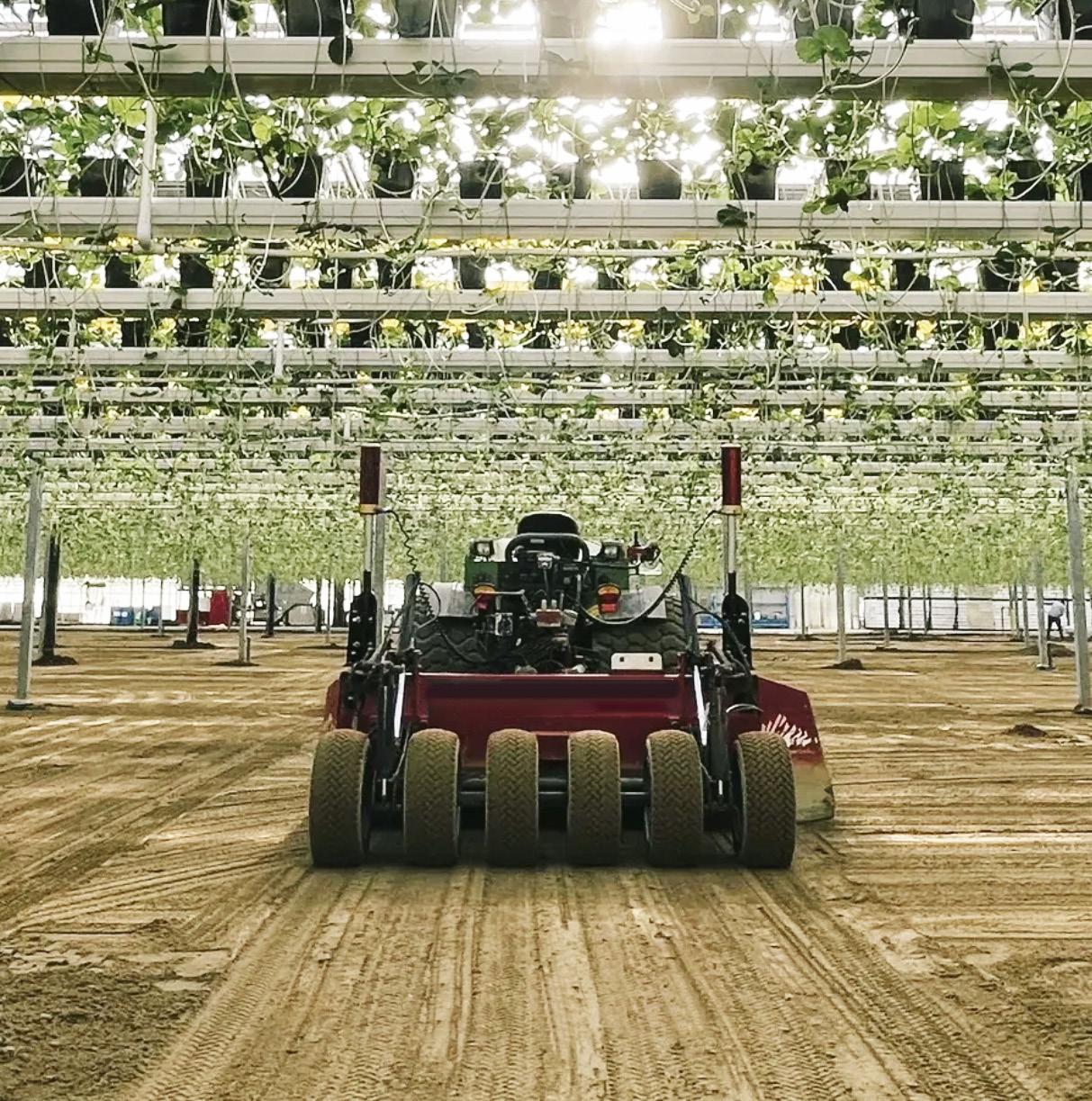
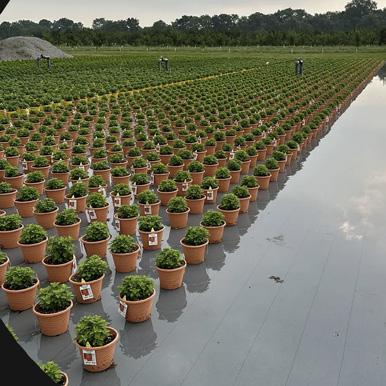
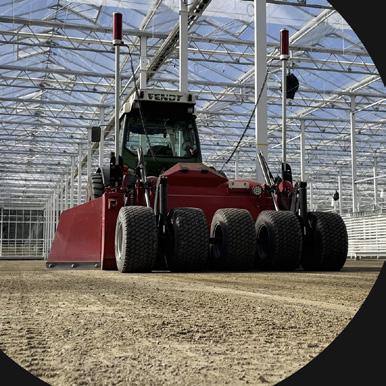
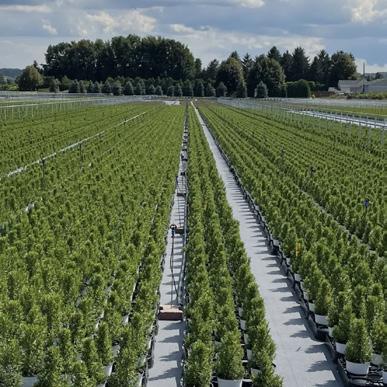
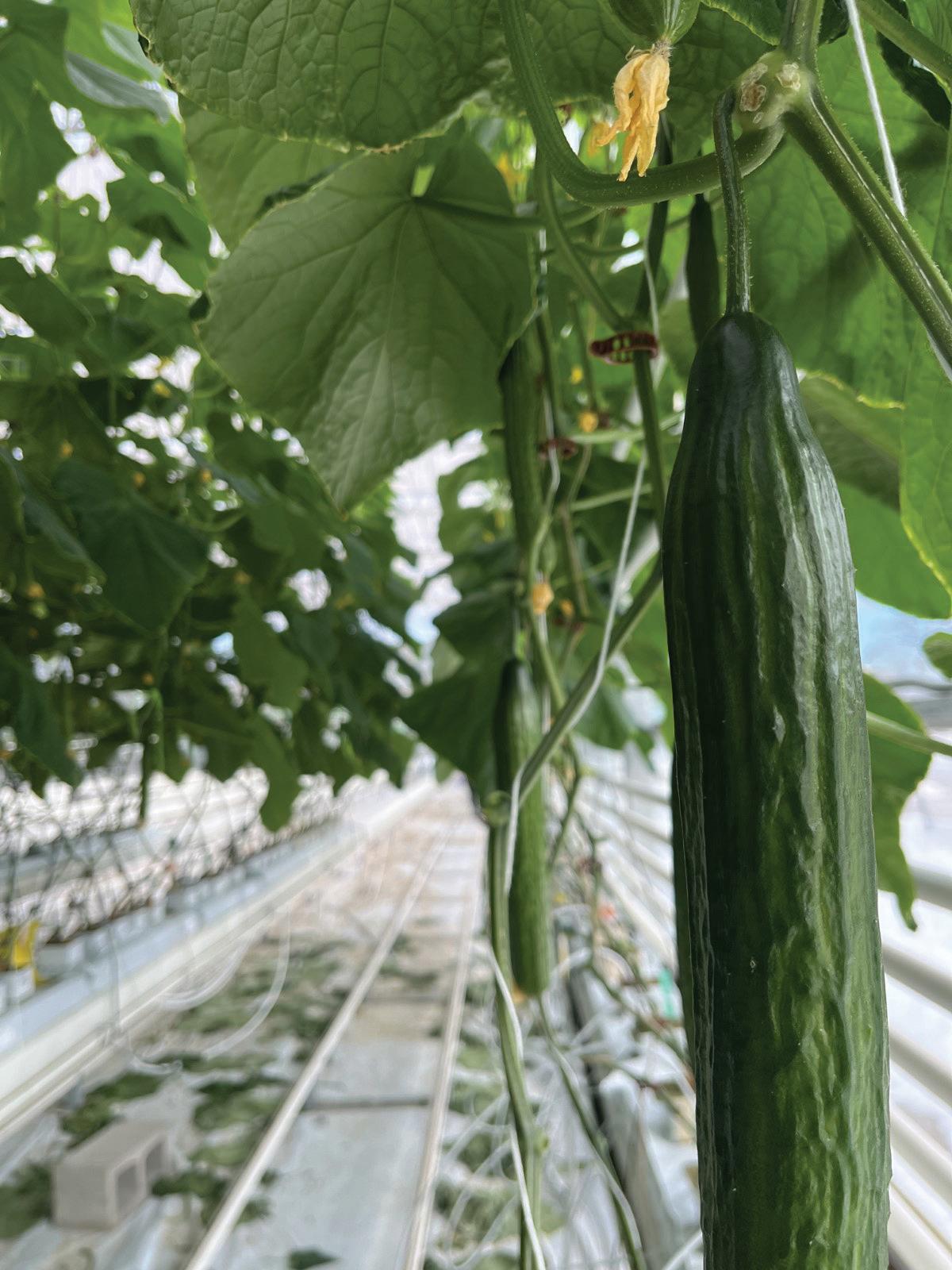
According to a 2023 Vineland Research and Innovation Centre (Vineland) survey commissioned by the Ontario Fruit and Vegetable Growers’ Association, highwire cucumber crop vines contain the most plastic contamination.
fibre-based materials. Some composters use systems capable of producing compost in as little as 14 days and employ automated machinery to separate plastics.
While no greenhouse vine composting service exists in Canada yet, it may be on the horizon. As Erin Agro of Walker Environmental notes: “Vine composting presents unique challenges, particularly due to plastic clips and twine that often enter the organics stream. Walker continues to evaluate technologies and methods to improve removal while ensuring the composting process remains both effective and safe.”
Switching to compostable twine and clips is building momentum in the Netherlands and could expand composting and land-application opportunities. While cost remains a barrier, manufacturers indicate that broader adoption would reduce prices through economies of scale and establishment of more efficient distribution channels.
Vineland recently tested a range of commercially available compostable greenhouse twines and clips to assess both durability in highwire cucumber production and ability to break down in a typical commercial compost environment. Of the 11 products tested, eight passed compostability testing in an eight-week compost cycle. Further research is needed to determine how these
materials break down if field applied. Results from the greenhouse durability trial will be posted on Vineland’s website once the growing cycle concludes and may be available at the time of this article’s publication. Although compostable products are more expensive than plastics, increasing landfilling costs may soon justify the switch.
Another emerging option is vine dehydration. One local grower developed a low-tech system to store and slowly dehydrate vines over several months, reducing their landfilling costs by 80%. Vineland recently partnered with Fehr Shredding and Triple Green Products (TGP) to trial TGP’s more rapid dehydration system. The preliminary trial showed the system could process vine and stone wool material despite plastic contamination from twine, clips and grow bags. At full scale, it’s projected their system could dry an acres’ worth of greenhouse vines in under 24 hours. The group is now planning further work to optimize dehydration protocols and develop repurposing pathways for the dry material such as biomass boiler feedstock and land application.
Land application remains a familiar and practical solution for many growers, with short term fertilization benefits and potentially returning organic matter to the sandy loam soils common around Leamington. These soils are notoriously difficult to build organic matter in, so this approach has the potential to address significant challenges for two neighbouring industries simultaneously.
With many growers now considering land application and other approaches, often without formal guidance, OMAFA and OGVG
have convened a working group with researchers from OMAFA, the University of Guelph, and Vineland among others. The group is focused on evaluating promising management practices for greenhouse residues and developing informational materials to support growers.
Ontario’s greenhouse sector is at a pivotal moment: Vine residue volumes will continue to grow alongside production, and the economic, environmental, and logistical pressures of landfilling are becoming impossible to ignore. Yet the industry is not short on promising pathways, and the next few years will be critical for turning these innovations into widely accessible, cost-effective solutions. As no single approach will suit all growers, a portfolio of options will be essential.
With coordinated effort and continued investment, the sector has an opportunity to transform vine residues from a growing burden into a managed, and potentially valuable, resource.
Alexandra Grygorczyk is a Research Scientist specializing in circular solutions for agri-food by-products at Vineland Research and Innovation Centre and can be reached at alexandra.grygorczyk@ vinelandresearch.com
The research was generously funded by Agriculture and Agri-Food Canada and the Sustainable Canadian Agricultural Partnership through the Clean Technologies program.
Vineland Research and Innovation Centre is funded in part by the Sustainable Canadian Agricultural Partnership (Sustainable CAP), a five-year, federal-provincial-territorial initiative.
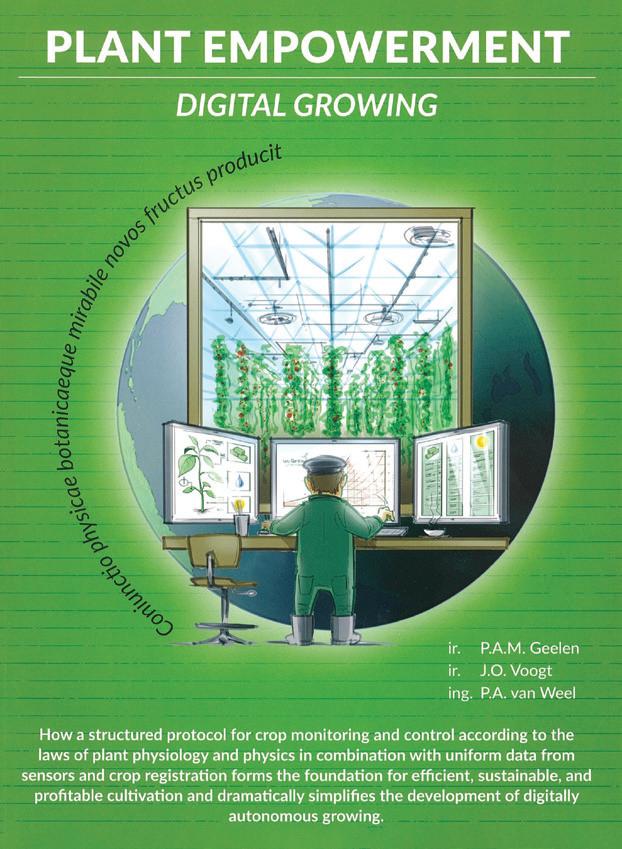

The theory and practical implementation of growing based on data according to the principles of Plant Empowerment are explained in the book “Plant Empowerment Digital Growing”.
“Plant Empowerment Digital Growing” is a supplement to “Plant Empowerment: The Basic Principles” and describes an effective approach for crop management and optimization based on sensor data and crop observations according to a well-thought-out cultivation plan and a structured monitoring protocol.
$170.00 | Item#9083371214


seed. Expect more of a purple/ blue shade but nevertheless this colour is unique. In addition to blue, it has red, white and rose colours available. At CAST, Benary was promoting the red, white and blue combination potential for the Canadian and US markets. For the grower, without supplementary light during the seedling stage, timing may be tight to have this series blooming for the July long weekend. In the finished form it branches freely, produces large inflorescences and reaches garden heights of 45 cms.
9. Sunfinity Single Yellow –Syngenta Flowers
The Sunfinity series of sunflower is characterized by having a multi-bloom has expanded further to include a vegetatively propagated single yellow selection. The habit and timing of this entry match well with the vegetative double version that was released two years ago. It has excellent powdery mildew resistance and continuous flowering habit.
10. Lavender Scent Mini Blue –ThinkPlants/Syngenta Flowers
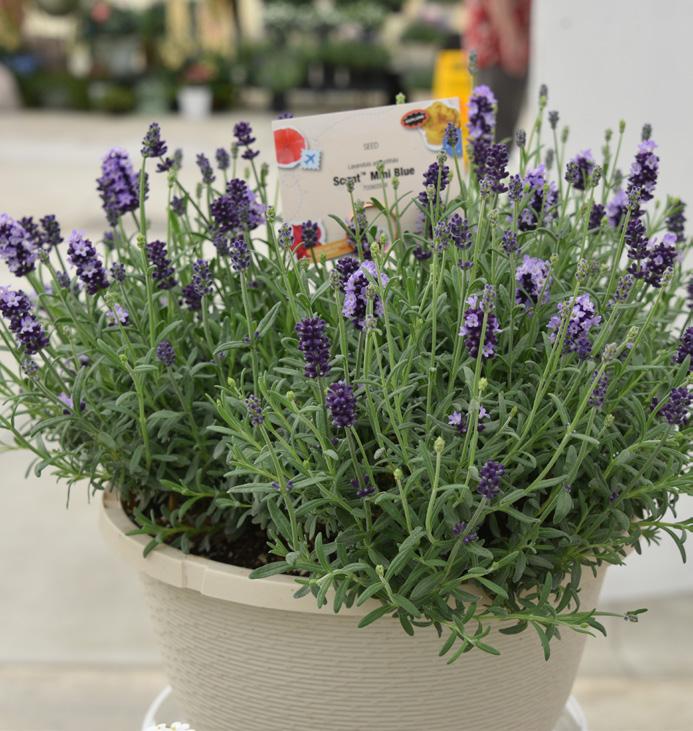
This new, compact English lavender blooms first year from seed without vernalization. The seed is primed to facilitate germination; this selection is easily programmed for early spring sales. It has silvery foliage, branches well and has a garden height of 30-40 cm – approximately 30 per cent shorter than the original Scent blue. Expect it bloom starting early spring and throughout the summer.
Rodger Tschanz is a technician at the University of Guelph where he runs the ornamental trial program. He can be reached at rtschanz@uoguelph.ca Greenhouse Canada would like to thank the Ball Horticultural company for hosting our correspondent’s tour of CAST2026.
SPIDER MITE CONTROL UPDATE: Resistance, new species, and new tools
The Grbić Lab, University of Western Ontario

Dr. Vojislava Grbić, Professor in the Department of Biology


Dr. Joseane Moreira do Nascimento, Research Associate



BEYOND PAR: The importance of monitoring natural UV light levels in your greenhouse
Fadi Al-Daoud, Greenhouse Vegetable Specialist, OMAFA
THE THRIPS FACTOR: Feeding, genetics, and greenhouse risk
Avery Johnson, University of Guelph/AAFC


Dr. Vladimir Zhurov, Research Scientist

Mikaelison da Silva Lima, PhD Candidate in Biology

Reagan Sue Michiels, Research Assistant

FROM WASTE TO WORTH: Emerging opportunities for improved management of greenhouse production residues
Alexandra Grygorczyk, PhD, Vineland Research and Innovation Centre

INTO THE MIX: Potting media put to the test
Marco de Leonardis, R&D manager, Organic specialist Freeman Herbs

TESTED, TWEAKED, OR TOSSED: New ideas in root zone management
ashley paling, MODERATOR Research Lead, Horticultural and Environmental Sciences Innovation Centre


GARY JONES | greenhousewolf@gmail.com
It goes without saying that we’re living in ‘interesting’ times. Unpredictability underpins every decision these days. I’ve always found grower surveys intriguing, but against this new world paradigm, they’re even more interesting.
A recent survey by RaboResearch sets out an overview of the global greenhouse industry, ‘emphasising how food security and self-sufficiency, developments in climate, technology, and energy are shaping both investment strategies and crop selection’1
The protectionist stance of the U.S. led to governments placing greater emphasis on selfsufficiency and food security. Lambert van Horen, senior specialist in Fresh Produce & Horticulture at RaboResearch, says “We expect that over the next decade more countries will gradually approach a higher self-sufficiency rate for fresh vegetables.”1
This macro-level policy change shifts the direction of the industry as a whole, ultimately filtering down to growers, affecting decisions like crop choice, production areas, and technology uptake.
But it’s not all what you’d expect: at the higher level, the survey notes “Countries across Europe, North America, the Middle East, and parts of Asia are actively
Talking of which, did you see that food production is going underground? The University of Sheffield and Farm Urban is researching the future of underground food production in the UK.2 OK, so this is unlikely to be a game changer for our industry on a global scale, but it does indicate novel thinking about food production perhaps not considered worthy of research a few years ago.
Despite denials by the U.S. Administration about climate change, the RaboResearch report also recognizes “Climate change is affecting protected horticulture at the plant, company, supply chain, and country level. Growers face more frequent extreme weather events, shifting disease pressures, and changing regional suitability”. To some extent, this is influencing growers’ decisions around technology adoption for energy saving, climate management, automation, and water conservation, and of course, crop choices.
On the energy front, there’s an uptick in exploration of new energy sources (e.g. the report suggests waste heat from data centres), and emission management (decarbonization and CO2 collection).
The report concludes with a review of regional developments, saying “In North America, greenhouse
"This macro-level policy change shifts the direction of the industry as a whole..."
reshaping vegetable production strategies. EU and UK self-sufficiency in fresh tomatoes has declined, for example, reflecting structural dependence on imports. Morocco has sharply surpassed self-sufficiency, strengthening its competitiveness in European winter markets.” And, interestingly, “in North America, self-sufficiency has trended downward, despite stable consumption”
Perhaps we have yet to see the impact of policy shifts, perhaps there are differences between the U.S., Canada and Mexico not expressed in the report, or perhaps this is the reality. Whichever way, “In the long term, greater self-sufficiency rates will likely result in higher greenhouse investments,” adds van Horen 1 This has to be good, and in BC, it’s great to see several large greenhouse expansions breaking ground.
When it comes to crop choices, the report reveals “strong expectations for expanded production of strawberries and leafy greens, with 82% and 74% of respondents expecting area growth in 2026”, while tomatoes, cucumbers, and peppers “show more moderate growth expectations”. The leafy greens expansion is perhaps surprising, but maybe this is development of the 'CEA' sector rather than traditional greenhouse production.
dynamics are shifting in different directions. Canadian production is scaling up, supported by investment in high-tech facilities and a focus on year-round supply. In contrast, the United States is becoming less self-sufficient in several key vegetables, increasing its reliance on imports to meet consumer demand.”
Which brings us back to where we started: if this last statement from RaboResearch is correct, one has to ask if U.S. protectionist thinking is achieving its goals…? Or is the new world order changing so quickly now, that any survey is behind the times after just one month? Yes, it’s unpredictable out there.
SOURCE
1. Rabobank, “Increasing self-sufficiency is driving new dynamics in protected horticulture” rabobank.com
2. Institute for Sustainable Food at the University of Sheffield, “The world’s deepest vertical farm is heading 1.1km underground.”, published in HortiDaily.com Tue 24 Mar 2026
Gary Jones has worked in many aspects of the horticulture industry in BC, the UK, and elsewhere, and welcomes comments at greenhousewolf@gmail.com.