Know thy enemy
How thrips identification can improve management | 14
Trending
Predicting consumer demand takes more than a crystal ball | 18
Healthy start
Selecting the right media | 22
AUGUST 2026
RAISING THE BAR
greenhousecanada.com
Stronger roots. Healthier crops. Proven protection from the ground up. Improve plant health in cucumbers and other high-value crops with a complete disease management approach that combines systemic root protection with industry-leading biological performance.
Foliar protection
Crop protection
Broad-spectrum biofungicide delivering reliable suppression of fungal and bacterial diseases with proven, flexible performance that helps protect crop health, quality and yield.
Luna Privilege® delivers long-lasting systemic control of key foliar diseases to help keep crops healthy from new growth to harvest.
Root protection Systemic, preventive control of Pythium (root rot, damping-off), downy mildew in cucumbers, and Phytophthora that helps establish strong, healthy roots.
Contact your Envu™ representative Darcy Olds | Key Account Manager darcy.olds@envu.com | 905-464-8399
Build a stronger crop from the ground up.
ALWAYS READ AND FOLLOW LABEL INSTRUCTIONS. 2022 Environmental Science CA Inc. 137 Glasgow Street, Suite 210, Office 111, Kitchener, ON N2G 4X8. For additional product information, call toll-free 1-800-331-2867 or visit ca.envu.com. Envu™, the Envu logo, Luna Privilege®, Previcur® and Rhapsody® are trademarks owned by Environmental Science U.S. LLC or one of its affiliates. Other trademarks are the property of their respective owners. ©2026 Environmental Science U.S. LLC. GH-C-Ad-MB-070126-A-72
CONTENTS
22
Vol.46, Issue 5
26
A crop’s foundation
A growing medium’s structure determines how roots breathe, feed, and grow, balancing water, air, and pore space for healthy crops. Page 22 Editorial 4 Industry News
6
Grower Days 26 A tradition expands and connects growers across Canada. 29
Inside View
30
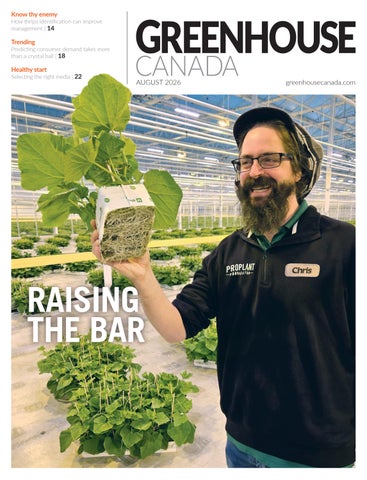
ON THE COVER Grower of the Year Chris Wood, head grower at Proplant Propagation Services in Jarvis, ON. READ MORE on Page 8.
Exploring the hidden diversity of thrips and why identification is key to managing. BY AVERY JOHNSON
14
22
Consumer pulse
In the zone
BY J LYNN FRASER
BY DR. MOHYUDDIN MIRZA, JASHANDEEP SINGH AND VIKRANT DHAWAN
Catching the ‘sparks’ and tuning into shifting consumer preferences.
Knowing how media behave is the first step toward stronger crops.
August 2026 - GREENHOUSE CANADA 3
PHOTO: COURTESY AVERY JOHNSON
Events
14 18 The thrips factor
PHOTO: MOHYUDDIN MIRZA:
August 2026
GREENHOUSE CANADA is the only national business magazine published exclusively for the commercial greenhouse grower in Canada.
FROM THE EDITOR
AMY KOUNIAKIS | @GreenHouseCan
August 2026 - Volume 46, No. 5
A step forward and the work ahead Ottawa’s unveiling of its National Food Security Strategy earlier this summer and its targeted $750-million investment in greenhouses and CEA is welcome news as it affirms the central role growers play in strengthening Canada’s year-round food supply. The challenge will be in carrying that momentum forward as growers face constantly moving markets, rising input costs, and the increasingly complex realities of modern greenhouse production. The work of building a resilient sector continues, and while this funding boost marks positive step in the right direction, meaningful progress relies on how growers, researchers, suppliers, retailers and policymakers work together to turn national priorities into practical, lasting improvements across the industry. This creates a fitting backdrop for our August 2026 issue that celebrates grower excellence, explores evolving consumer trends, reflects on Grower Day insights, and digs into practical knowledge from thrips identification to choosing the right growing media.
On the theme of celebration, on Page 26, we offer a recap on our Grower Day events in Ontario and B.C. and reflect on what this year’s growth and success signals about the sector. Avery Johnson, master’s student at the University of Guelph, was among this year’s speakers at Grower Day. Her research at AAFC Harrow is uncovering a more complex picture of thrips populations in Ontario, with implications for biological control, biosecurity and long-term pest management. Read more about her work on Page 14. Dr. Mohyuddin Mirza, who also appeared on the Grower Day West stage, is back in this issue (alongside Jashandeep Singh and Vikrant Dhawan) with some practical input on growing media. On Page 22, they get ‘into the zone’ and outline the physical principles behind an effective substrate and the roles of materials. This is Part 1 in a two-part series. Part 2 will build on Part 1 by exploring pH, EC, and irrigation practices that keep the root zone stable throughout production in an upcoming issue.
“The challenge will be in carrying that momentum forward...” On Page 8, we introduce our Grower of the Year, Chris Wood, head grower at Proplant Propagation Services, whose approach to growing plants and people is proving quite fruitful for the operation in Jarvis, ON. Chris leads a tight-knit, agile group in producing precise, reliable young plants that meet the pressure of propagation every single day and he does it with an infectious passion and sense of humour. He’s also a mentor who lifts others as he climbs. He embodies the unwavering integrity, dedication, and initiative this accolade seeks to celebrate. 4 GREENHOUSE CANADA - August 2026
Keeping ahead of consumer trends may not be top priority for some, but there’s merit in trying to keep your finger on the pulse of consumer attitudes, which can shift with the day’s headlines. On Page 18, dig into how understanding your customer (or your customer’s customer) can keep you ahead of demand and where to look for data. Inside View columnist Gary Jones takes the consumer discussion further on Page 30 and questions whether smarter selling might matter more than smarter growing.
Reader Service Print and digital subscription inquiries or changes, please contact Angelita Potal, Customer Service Tel: 416-510-5113 Email: apotal@annexbusinessmedia.com Mail: 111 Gordon Baker Rd., Suite 400, Toronto, ON M2H 3R1 Editor AMY KOUNIAKIS akouniakis@annexbusinessmedia.com 519.429.5203 Publisher NASHELLE BARSKY nbarsky@annexbusinessmedia.com 905.431.8892 Account Coordinator KATHRYN NYENHUIS knyenhuis@annexbusinessmedia.com 416.510.6753 Audience Development Manager SHAWN ARUL sarul@annexbusinessmedia.com 416.510.5181 Group Publisher MICHELLE BERTHOLET mbertholet@annexbusinessmedia.com CEO SCOTT JAMIESON sjamieson@annexbusinessmedia.com Media Designer EMILY SUN Publication Mail Agreement #40065710 Printed in Canada ISSN 0712-4996 SUBSCRIPTION RATES Canada - 1 Year $41.37; Single $6.00 (plus applicable taxes) U.S.A. - 1 Year $94.41 CAD Annex Privacy Officer Privacy@annexbusinessmedia.com Tel: 800-668-2374 GST - #867172652RT0001 Occasionally, Greenhouse Canada will mail information on behalf of industry-related groups whose products and services we believe may be of interest to you. If you prefer not to receive this information, please contact our circulation department in any of the four ways listed above. No part of the editorial content of this publication may be reprinted without the publisher’s written permission. ©2026 Annex Business Media. All rights reserved. Opinions expressed in this magazine are not necessarily those of the editor or the publisher. No liability is assumed for errors or omissions. All advertising is subject to the publisher’s approval. Such approval does not imply any endorsement of the products or services advertised.
color ne o m Li
on Zest m Le
NEW CitraNova™ Petchoa from Ball FloraPlant® offers bold calibrachoa color on a super-tough petunia plant!
Add some Juicy color to your program! Visit ballfloraplant.com for current Terms & Conditions of Sale. ©2026 Ball Horticultural Company 261167627 ™ denotes a trademark of and ® denotes a registered trademark of Ball Horticultural Company in the U.S., unless otherwise noted. They may also be registered in other countries.
INDUSTRY NEWS greenhousecanada.com
Québec studies greenhouse competitiveness gaps Producteurs en serre du Québec (PSQ) is moving ahead with four new development projects backed by the province’s Programme de développement territorial et sectoriel (PDTS), with work now underway and continuing into 2027. According to an association newsletter, the initiatives target long‑standing competitiveness challenges in both vegetable and ornamental greenhouse production in Québec, while strengthening the sector’s technical and research capacity. Québec consulting firm AGÉCO has been commissioned to lead two major studies: a comparative analysis of the business environment facing Québec’s greenhouse vegetable growers relative to competing
regions, and a competitiveness assessment of the ornamental sector. A third AGÉCO mandate will map the province’s research, development and knowledge‑transfer infrastructure, identifying gaps and opportunities across both segments of the industry. The fourth project focuses on production systems. PSQ has tasked consulting firm Climax Conseils with developing a technical guide for minimally heated or unheated greenhouses, aimed at helping growers design or adapt trellised‑crop systems for lower‑energy environments. The guide is expected to support more cost‑efficient production strategies as energy pressures continue to shape investment decisions. (Source: PSQ)
Greenhouses at heart of new food security strategy
PHOTO : KIEVITH/GETTY IMAGES
Ottawa’s new National Food Security Strategy includes a targeted $750‑million investment in greenhouses and CEA aimed at expanding year‑round production of fruits and vegetables, accelerating technology adoption and improving access to local supply in rural and northern communities.
Prime Minister Mark Carney said the funding is part of a $3 billion plan to reduce Canada’s reliance on imports, strengthen domestic processing and increase competition in grocery retail. The strategy, titled ‘More Choice. More Control. More Canada’, outlines funds will
CPMA pushes action on produce waste The Canadian Produce Marketing Association (CPMA) is calling for co-ordinated, practical action to reduce food loss and waste across Canada’s fresh produce supply chain. Recently, the association urged industry and government to align on measurement, cold‑chain investment, and incentives for donation and value‑added processing. This follows a CPMA analysis conducted in April 2026 that found nearly half of all food produced in Canada is lost or wasted annually, and “approximately 41.7 per cent of that loss is potentially edible and recoverable.” The association highlights perishability, supply‑chain complexity, cosmetic standards, and consumer behaviour as primary drivers and recommends standardized measurement, cold‑chain upgrades, harmonized date labelling, and stronger markets for surplus and “imperfect” produce. (Source: CPMA) 6 GREENHOUSE CANADA - August 2026
support greenhouse modernization, energy‑efficiency upgrades, automation, and smaller‑scale projects such as community greenhouses and container farms. Industry groups have welcomed the announcement. FVGC said the strategy recognizes that “food security starts with the ability to grow
food here at home,” and urged that regulatory changes and timely access to crop inputs follow quickly. OGVG called the investment “a significant and forward‑looking investment that will directly benefit greenhouse growers across Ontario and Canada.” (Greenhouse Canada)
BY THE NUMBERS – Emerging crops Source: Greenhouse, sod and nursery industries, 2025; Statistics Canada.
Harvested area dedicated to lettuce was up to 414.1 thousand square metres in 2025. Fine herbs saw an increase in harvested area of up to 11.2 per cent while Chinese vegetables increased by 23 per cent.
Sotoverde RZ, Sotorubra RZ, Sotolimon RZ, Sontonemo RZ
Exceptional flavour. Reliable production. Meet the Rijk Zwaan Soto Range
Bring more colour to the produce aisle with the Soto Range - a premium collection of loose harvest mini plum tomatoes available in deep burgandy Sotorubra RZ , green-gold Sotoverde RZ, bright yellow Sotolimon RZ, and true orange Sontonemo RZ. Each variety offers exceptional eating quality, distinctive visual appeal, and consistent performance growers can rely on. With a reliable plant habit, dependable production, and ToBRFV resistance, the Soto Range makes it easy to grow a vibrant assortment without compromising on quality. Whether marketed individually or in eye-catching mixed packs, the Soto Range delivers premium
For more information, contact: Rijk Zwaan Canada | David Janik, Sales Manager & Fruit Crop Specialist | d.janik@rijkzwaan.com RZH Canada Ltd. | Max Saad, Director of Sales | max@rzhcanada.ca Seminova / Agrocentre Fertibec Inc. | (450) 454-5155 Terralink Horticulture Inc. | (604) 864-9044 www.rijkzwaan.ca
07/26
flavour, standout colour, and reliable performance from greenhouse to shelf.
GROWING WITH
PURPOSE & VI
8 GREENHOUSE CANADA - August 2026
At Proplant Propagation Services in Jarvis, ON, head grower Chris Wood starts every day with the same conviction: a plant is never “just a plant.” To him and those he leads, it’s a responsibility: to the grower who will receive it, to the team who nurtures it, and to the industry that depends on consistency, biosecurity, and trust. That sense of responsibility and commitment to integrity and excellence is why Wood has been named Greenhouse Canada’s 2026 Grower of the Year. It’s the story behind the accolade, however, that is far richer than a title.
PHOTO COURTESY JENNA HIEBERT, BEAR AND SPARROW
ISION
LEFT Chris Wood, head grower at Proplant Propagation Services Ltd., is Greenhouse Canada’s 2026 Grower of the Year.
THE ROAD TO GROWING Wood’s journey has been shaped by grit, mentorship, curiosity, and has laid the groundwork for a philosophy that is becoming his signature: “Laziness is the epitome of efficiency.” Wood’s journey didn’t begin in horticulture. He started out welding in the Durham region in southern Ontario, a job, he says, that paid the bills but didn’t feed the mind. At 25, older than most of his classmates, Woods enrolled in Niagara College’s greenhouse program. It was a leap of faith. “It was the change I needed,” Wood said. After graduating, he landed at St. David’s Hydroponics in Niagara-on-the-Lake, growing eggplant. It was steady work, but he felt the
pull of something bigger. So, when a microgreens facility in Abbotsford, B.C. offered him a job, he took it and headed westward. It was, in his words, “the Wild West.” “I was there for a couple of months, not getting paid,” he remembers of that time. “I was working all day, all night… It was very tough.” GROWING A GROWER But hardship has a way of revealing opportunity. At this time, Chris met Bill Vermeer, a greenhouse grower based in Rosedale, B.C. who changed everything. “He had a two-acre tomato, pepper – there was like French beans – it was like a farmers’ market in a greenhouse. And he really took me under his wing.” Wood credits Vermeer with teaching him fundamentals in greenhouse production, but more importantly, he encouraged Wood’s curiosity by challenging him to ask questions, test ideas and think like a grower. “I think this is where my journey really, really started to come together,” Chris said. “It’s a time that I’ll never forget spending with him.” It’s through this connection and enduring friendship with Vermeer that Wood was able to keep a foothold in the industry as Vermeer shifted gears from horticulture to aquaculture.
How curiosity, grit, and mentorship shaped Greenhouse Canada’s 2026 Grower of the Year and forged a grower defined by precision under pressure BY AMY KOUNIAKIS August 2026 - GREENHOUSE CANADA 9
PHOTO COURTESY PROPLANT PROPAGATION SERVICES LTD.
RIGHT From left: Connor Pyear, Paul Berkel, Mike Berkel and Chris Wood at Proplant’s facilities in Jarvis, ON.
Vermeer vouched for Wood’s professionalism and abilities to the grower who later leased half of Vermeer’s greenhouses. Although Wood’s relationship with the new grower got off to a rocky start, his skill soon became clear, and he played an important role in helping the small business thrive. And it wasn’t long before the industry started taking notice. After a couple of years, Langley-headquartered Bevo Farms came knocking and Wood answered the call. ‘As much as I like the small, farmers’-market style growing, those big [growers], one of the benefits is they really open up
what you can do when there’s a little bit more money behind it,” he said. “[Bevo] had a lot more resources and they really just pushed me to be the best grower I could be.” It’s at Bevo that Wood met the next biggest influence on his career trajectory: operations manager Peter Kuijvenhoven. “Anytime I had an idea, anytime I brought something forward, he would say: ‘Well, prove it to me, show me, tell me why it works,’” Wood says. “He gave me those opportunities that you just don’t always get.”
26_008097_Greenhouse_Canada_AUG_CN Mod: June 5, 2026 11:22 AM Print: 06/26/26 page 1 v2.5
π FROM BIG TO BULK ALL SIZES IN STOCK AND READY TO SHIP
ORDER BY 6 PM FOR SAME DAY SHIPPING
SHIPS TODAY
BULK CONTAINERS
COMPLETE CATALOG
10 GREENHOUSE CANADA - August 2026 GH_Uline_Aug26_CSA.indd 1
1-800-295-5510
REUSABLE BULK CONTAINERS
uline.ca
2026-06-29 10:26 AM
These opportunities then shaped Wood’s approach to innovation and experimentation. Peter taught him, he says, to build ideas with structure, evidence and contingency plans. GROWING HOME Under Vermeer and Kuijvenhoven’s tutelage, the so-called ‘Wild West’ was tamed and Wood found his niche. He settled into life and growing in B.C. and built a reputation for being an agile producer and affable colleague. After several years, though, life in Ontario called for Wood’s return and he started the process of setting up life back in his home province. Wood reached out to Paul Berkel, his old Niagara College classmate, who, with his brother Mike, happened to be looking for a head grower for their facility in Jarvis, ON. A few months later, Wood found himself back in Southern Ontario, happily installed as head grower at Proplant’s state-ofart greenhouse, overseeing approximately 27 acres of propagation space. Wood’s colleagues describe him as a grower who elevates everyone around him. His leadership style, shaped by Vermeer and Kuijvenhoven, is rooted in empowerment rather than micromanagement. GROWING PEOPLE He encourages growers to question him, challenge ideas, and think critically, a philosophy that has helped younger staff develop faster and with more confidence. One nominator and Proplant colleague, Connor Pyear, wrote that Wood “resists gatekeeping, and empowers learning because, [as Chris likes to say]‘The better you are at your job, the better I can be at mine.’” Pyear says Wood’s calm, collected manner inspires trust, creating a workplace where people feel supported, capable, and proud of the plants they produce. Curiosity has long been one of Wood’s defining traits; at Proplant, it has become one of his greatest assets. He builds tools, wires sensors, and codes systems that make greenhouse operations more efficient and more precise. His approach to innovation mirrors his philosophy: “Laziness is the epitome of efficiency.” For Wood, tongue-in-cheek aside, efficiency isn’t about shortcuts; it’s about designing systems that eliminate wasted time so growers can focus on what matters. His nominators highlight his custom sensor work, his remote data‑collection server, and his openness to new technologies, all of which have modernized Proplant’s growing practices. GROWING THE SECTOR At Proplant, Wood found a culture that matches his pace. The Berkel family pushes growers to rise, and Wood responds in kind. “They believe in pushing people to their ceiling,” he said. With their trust and a strong team beside him, he’s able to deliver the precision he’s become known for. Wood is credited with increasing crop quality and consistency and fostering a commitment to “continuously improving growing practices,” writes another nominator and colleague, Harjot Kaur. “Chris is always focused on improving greenhouse operations and achieving the best possible crop results.” And as a propagation grower, the pressure is on. Pyear notes that as a vegetable propagator, Wood “is always under the pressure of many experienced growers and greenhouse owners to provide a consistent and quality plant.”
AUTHORITY IN AGRICULTURAL REFRIGERATION
GREENHOUSE COOLERS www.kooljet.com | (866) 748-7786
CUSTOMIZED SOLUTIONS
TEMPERATURE | HUMIDITY AIR MOVEMENT
FOR YOUR GROWING ENVIRONMENT
EASY TO INSTALL EASY TO RELOCATE August 2026 - GREENHOUSE CANADA 11
GH_Kooljet_Dec23_CWM.indd 1
2023-11-06 2:29 PM
PHOTOS: SUPPLIED; GREENHOUSE CANADA
TOP LEFT Wood at age 8. Bottom left: Wood at age 30 with an Okra plant. INSIDE From left: Harjot Kaur, Chris Wood and Connor Pyear at the Proplant greenhouse. Kaur and Pyear nominated Wood for Greenhouse Canada’s Grower of the Year recognition.
Now you can buy directly from the manufacturer at lower price than before
A Canadian manufacturer for agricultural, horticultural, and forestry equipment of 30 years. We’re dedicated to improving productivity and efficiency in the greenhouse. Visit our web site to discover the soil fillers, bale breakers, conveyors, and the new seeding line we offer.
Contact us today! 450-454-6260 | sb@sbee.ca
Visit our website:
www.sbee.ca
Propagation is unforgiving. Timing is tight, genetics shift constantly, and customers expect perfection and Wood thrives on that pressure. “You have to be 100, 110 per cent every single day,” he said. “A bad day is not allowed and I love that challenge.” Wood talks about tomatoes and cucumbers with the enthusiasm of someone who sees each variety as a puzzle — one that requires foresight, intuition and discipline. Cucumbers, especially in summer, leave little room for error. Their compressed production timeline, he notes, gives growers “very little time to make it good and a lot of time to make it bad.” And through it all, Wood remains grounded in the same conviction that has carried him from Ontario to B.C. and back again: that excellence comes from showing up every day with intention, curiosity, care and a sense of humour. GROWING THE FUTURE It’s that steadiness, the mix of discipline, humility, and quiet confidence, that his colleagues say defines him. For Wood, the Grower of the Year recognition is a moment of validation for the mentors who shaped him, the team he now leads, and the philosophy that guides his work. “It helps validate the things that I do,” he said. “Not just grow plants, but people.” In a sector where timing is extermely tight, genetics are shifting constantly, and precision is everything, Wood has become the kind of grower who makes excellence feel steady and attainable. A grower who builds tools, builds confidence and builds trust.
12 GREENHOUSE CANADA - August 2026 GH_MachineriesSB_JUNEJULY25_BAS.indd 1
2025-05-26 9:39 AM
Rooted in Science, Designed for Performance Sun Gro provides the foundation professional growers rely on for consistent, high-quality production
Sign up for your FREE Grower Trial. sungro.com/trial
® 2026 Sun Gro Horticulture Canada Ltd. All Rights Reserved. Sun Gro and The Growing Media Company are registered trademarks of Sun Gro Horticulture Canada Ltd.
PHOTO: HANSENN/GETY IMAGES
Know thy thrips Study shows why accurate species identification can lead to more effective pest management
BY AVERY JOHNSON, University of Guelph
For decades, western flower thrips have been considered the primary thrips pest in Canadian greenhouse production. Biological control programs, monitoring strategies, and management recommendations have largely been developed with this one species in mind. But what if western flower thrips aren’t the only species causing problems? Recent research out of the University of Guelph investigates thrips diversity in Ontario greenhouse crops and explores how identifying the right species, and even the right genetic populations, can improve biological control programs. BEYOND A SINGLE PEST Before the arrival of western flower thrips (Frankliniella occidentalis) in the 1980s, onion thrips (Thrips tabaci) were considered the major thrips pest of Canadian greenhouse crops. Once western flower thrips became established, they quickly became the
dominant pest and the focus of most management programs. Today, growers are increasingly reporting thrips outbreaks that are difficult to control, despite following well-established biological control programs. At the same time, new invasive species, including Thrips parvispinus, have been detected in Ontario, raising questions about whether western flower thrips are always the culprit. Different thrips species do not behave the same way. They can differ in their host preferences, susceptibility to biological control agents, and response to pesticides. If management programs are designed around one species while another is present, control may not be as effective as expected. SURVEYING ONTARIO GREENHOUSES Commercial greenhouse sites across southern Ontario were sampled repeatedly throughout the production season using sticky cards. Sampling
ABOVE Sticky cards remain one of the most valuable pest monitoring tools available to growers, but they also have limitations. 14 GREENHOUSE CANADA - August 2026
PHOTOS COURTESY AVERY JOHNSON
LEFT Close-up of Thrips parvispinus. RIGHT Close-up of a Western flower thrip.
included greenhouse vegetables, strawberries, and ornamental crops, allowing changes in species composition to be monitored over time rather than relying on a single collection date. Each sticky card was examined under a microscope, and thrips were identified using traditional morphological characteristics. The survey confirmed that western flower thrips remain the dominant species across most greenhouse crops. However, they were not alone. Onion thrips, soybean thrips, and several other species were also detected at varying frequencies. For most growers, this reinforces an important
point: while western flower thrips remain the primary pest, unexpected management outcomes may sometimes be explained by the presence of other thrips species. LOOKS CAN BE DECEIVING Morphological identification is an essential first step, but some thrips species are remarkably difficult to distinguish. To confirm species, a subset of specimens from each crop was analyzed using DNA barcoding. The mitochondrial cytochrome oxidase I (COI) gene serves as a standard “barcode” for species identification because its sequence can be compared with reference databases to verify species identity.
For peppers, ornamentals, and strawberries, molecular identification confirmed the original microscope identifications. Tomatoes told a different story. Specimens initially identified as western flower thrips under the microscope were revealed through DNA barcoding to actually be eastern flower thrips (Frankliniella tritici). This finding illustrates an important challenge facing greenhouse pest management. Even experienced identifiers can mistake morphologically similar species, meaning eastern flower thrips may be present more frequently than previously recognized.
New Construction & Retrofit
SOLUTIONS GREENHOUSE STRUCTURE CURTAIN SYSTEMS HEATING & COOLING
DESIGN + BUILD+ SERVICE Family owned and operated since 1978.
Office: 905.984.8711 ›› info@langendoenmechanical.com ›› www.langendoenmechanical.com GH_Langendoen_Jan25_CSA.indd 1
August 2026 - GREENHOUSE CANADA 15 2024-12-04 3:52 PM
STICKY CARDS TELL ONLY PART OF THE STORY Sticky cards remain one of the most valuable monitoring tools available to growers, but they also have limitations. Sticky card counts can be misleading. Species such as eastern flower thrips may appear more common on cards than they are in the crop, while weaker fliers, including poinsettia thrips (Echinothrips americanus), may be underrepresented. Sticky cards can also capture incidental species that are not economically significant pests. Understanding these biases helps growers interpret monitoring results more
PHOTO: TOMASZ KLEJDYSZ/GETY IMAGES
The discovery becomes even more interesting when considered alongside recent field surveys in Ontario strawberries, where eastern flower thrips were found to be common in some regions. Together, these observations suggest that eastern flower thrips may move between outdoor crops and greenhouses more often than expected. The message is not necessarily that eastern flower thrips are becoming a major greenhouse pest, but rather that accurate species identification matters.
ABOVE Onion thrips were once the major thrips pest of Canadian greenhouse crops.
effectively and avoid unnecessary management decisions. WHAT GENETICS CAN REVEAL DNA barcoding does more than identify species. Once species identity has been
confirmed, the same genetic information can be used to examine variation within a species through haplotype analysis. Individuals sharing identical COI sequences belong to the same haplotype, while differences in DNA sequence indicate different genetic lineages. By visualizing these relationships in haplotype networks, researchers can begin to understand how populations are connected. WHY DOES THIS MATTER FOR GROWERS? High genetic diversity at a site may indicate repeated introductions from multiple sources. Similar genetic profiles among greenhouses may suggest movement of plant material, shared suppliers, or regional spread. Understanding these pathways can ultimately improve prevention and biosecurity strategies. Preliminary results showed relatively low genetic diversity for onion thrips and eastern flower thrips populations sampled within individual greenhouse sites. Western flower thrips, however, showed considerably greater diversity. Among only eight samples collected from multiple crops and regions, six distinct
HORTICULTURAL
AUTOMATION SOLUTIONS Canadian dealer of
Equipment
SERVICES WE PROVIDE
Greenhouse Main Service Upgrades Generator Backup Systems Climate Control Systems LED and HID Lighting Installations Full Greenhouse Electrical Wiring
stan@electricinc.ca
16 GREENHOUSE CANADA - August 2026 GH_Langendoen Electric_August26_CSA.indd 1
(905) 562-9044
2026-07-09 3:10 PM
haplotypes were identified. While most were closely related, several individuals differed substantially from the others, suggesting a more complex population structure than previously appreciated. Although additional sampling is needed before drawing firm conclusions, similar genetic clustering has been reported in previous studies and referred to the clusters as two sympatric cryptic species. History provides an important reminder of why these patterns matter. Whitefly (Bemisia tabaci) was once considered a single worldwide species until molecular research revealed it to be a complex of more than 40 genetically distinct cryptic species. These lineages differ in insecticide resistance, host preference, virus transmission, and competitive ability. Whether western flower thrips populations differ in similarly important traits remains unknown, but understanding their genetic diversity could eventually improve pest management recommendations. TRACKING AN EMERGING INVADER The survey also included Thrips parvispinus, an invasive species first reported in Canada in 2022. DNA analysis showed that this specimen shared the same COI haplotype as the first Canadian detection. This matches findings from international studies showing remarkably low global genetic diversity, with a single dominant mitochondrial lineage responsible for much of the worldwide invasion. Although only preliminary data are available, continued monitoring will be important for this pest. TAKEAWAYS FOR GROWERS The results reinforce that western flower thrips remain the dominant greenhouse pest in Ontario. However, other species are present and may occasionally influence management decisions. Equally important, the species found on sticky cards may provide clues about where thrips are originating. Finding onion thrips, soybean thrips, or eastern flower thrips may indicate seasonal movement from outdoor environments. During periods of heavy fly-in, exclusion strategies such as insect screening and mass trapping become increasingly valuable. Predatory bugs such as Orius insidiosus, which attack adult thrips, may also provide advantages because they can target incoming adults before they establish populations.
Conversely, greenhouse populations dominated by western flower thrips may indicate carryover between crops or introductions through propagative plant material. In these situations, strong greenhouse sanitation, careful inspection of incoming plant material, and established biological control programs remain critical. Ultimately, successful thrips management begins with knowing exactly which species are present. As molecular tools become increasingly accessible, combining traditional identification with
genetic analysis will provide growers with a clearer understanding of thrips populations and the most effective ways to manage them. Avery Johnson is master’s student in Environmental Sciences at the University of Guelph, focusing on IPM in greenhouse systems. Her research, conducted out of AAFC Harrow, examines thrips pests, and evaluates biological control using Orius insidiosus, along with genetic sampling to better understand thrips diversity in Ontario greenhouses. She can be reached at avery.johnson@agr.gc.ca.
The Right Balance for Every Crop
High water-holding capacity Well-balanced environment Proven performance
Good drainage
Versatile performance
High air porosity
High water retention
Low water retention
Lightweight structure
AVAILABLE WITH AGTIV® BIOLOGICALS
FIND YOUR MIX
PTHORTICULTURE.COM The information in this document was up-to-date at the time of printing. Because of its continuous improvement policy, Premier Tech Ltd. and its affiliated companies reserve the right to halt manufacturing, change products, or revise technical data and prices without further warning or liability. © 2026 Premier Tech Ltd. All rights reserved. PRO-MIX® and HP® are registered trademarks of Premier Horticulture Ltd.; AGTIV®, AGTIV AMPLIFY®, AGTIV STIMULATE® and AGTIV REACH® are registered trademarks of Premier Tech Ltd.; they are used under license by Premier Horticulture Ltd. Product availability may vary depending on the territory.
GH_Premier Tech - Promix_August26_CSA.indd 1
August 2026 - GREENHOUSE CANADA 17 2026-07-07 3:23 PM
Forget the
CRYSTAL BALL
PHOTO: NULLPLUS/GETY IMAGES
Conversations, social listening, economic data and sector intelligence reveal where consumer preferences are going BY J. LYNN FRASER
18 GREENHOUSE CANADA - August 2026
Consumers’ buying habits are a response to changes, ‘sparks’, in geopolitics, demographics, economics, technology, and culture. Trends in future buying habits can be anticipated by following insights from divergent information sources. Change itself is the best indicator that consumers will respond thereby generating trends, long and short term. “From an Ontario Greenhouse Vegetable Growers (OGVG) perspective, we rely on direct sector relationships and market intelligence to understand the needs of wholesale buyers and consumers. Our growers, through our marketers, are in regular communication with retailers, foodservice operators, distributors, and wholesale buyers, giving us insight
into changing market demands and purchasing trends,” said OGVG executive director Richard Lee. “These ongoing conversations help us understand what buyers are looking for in terms of product availability, quality, packaging, sustainability, and innovation.” THE SPARK Trends need a spark to be initiated, need time to gain traction, and must resonate to have effects on consumers. “Consumer trends don’t emerge overnight — they leave clues. We look at customer feedback, sales performance, retailer insights, consumer surveys, and social media conversations to understand what’s gaining momentum and where preferences
are shifting,” observes Amanda Maitland, brand and content manager for Haven Greens. WHAT DOES ‘LOCAL’ & ‘CANADIAN’ MEAN TO CONSUMERS? Buying Canadian and buying local are re-emerging trends that are a response to geopolitics. In 1914–1919, during the First World War, Canadians were encouraged to buy local to support Canada. This trend re-emerged in the ‘2000s’ when Canadian consumers were enjoined to buy local to support sustainability, farmers, jobs, and community. In response to 2020 supply chain interruptions and recent U.S. tariff threats ‘local’ now includes buying provincially made products (LOCO BC 2026) as well as viewing all of Canada as Canadians’ local ‘community’ that needs support by buying Canadian products. Canadians respond to ‘local’ differently. A report by Food Processing Skills Canada (FPSC 2025), for example, found 82 per cent of Québec residents were more likely to buy products from Québec whereas Albertans, 48 per cent, were less concerned about buying provincially made goods.
Now we can grow! With high resistance against ToBRFV
The key is staying close to the customer and using multiple sources to separate short-term trends from lasting consumer demand. A Bank of Canada report (2026) found that Canadians have moved away, “modestly” but clearly, from buying American goods to buying Canadian goods, including Canadian food. Which segment of the population buys Canadian varies. The FPSC (2025) found “Seniors prioritize buying Canadian, while immigrants and those under 35 place less emphasis on it.” The main reasons for buying Canadian, the report found: 86 per cent felt it was “good for the economy”; 75 per cent cited “anger/frustration” with the U.S.; 72 per cent noted a “desire to help Canadian food and beverage processors”; and 71
Check out Bocas! This new roma tomato variety is made for long cycles, offering strong vigor and excellent plant structure. Bocas is highly productive, delivering high-quality fruits with uniform shape and size.
GH_Enza Zaden _August26_CSA.indd 1
Month 2026 - GREENHOUSE CANADA 19 2026-07-08 3:40 PM
PHOTO: ERMAN GUNES/GETY IMAGES
ABOVE A 2026 report found Canadians are ‘modestly’ moving away from buying American.
PHOTO COURTESY OGVG
ABOVE OGVG executive director, Richard Lee says their members continuously invest in their operations to ensure the high quality of their produce.
per cent called it Canadian pride. These feelings are shared across Canada but there are external constraints on Canadians as to where they can express their patriotism as consumers. OVERLAPPING VARIABLES The power of overlapping variables such 20 GREENHOUSE CANADA - August 2026
as demographics, employment, and the economy changes consumer behaviour. Certain segments in Canadian society equally value ‘Canadian’ goods but must deal with cost-of-living constraints while also working precarious jobs. “A proactive business ‘listens’ carefully,” Maitland said. “Google Trends and social listening tools help identify emerging topics, but some of the best insights come directly from customers and retail partners. Observing consumer behaviour in stores and listening to what shoppers are asking for often provides the earliest indication of what’s coming next. “The key is staying close to the customer and using multiple sources to separate short-term trends from lasting consumer demand.” Retail analyst, Bruce Winder, agrees, noting “future trends are found through research, AI, and talking to people.” The behaviour of younger consumers, he remarks, reflect their belief in sustainability but they have to deal with tight budgets. Being able to profile who your customer is critical. This will help determine what they want to buy and what they can afford as Canadian consumers are in a bind. A long-term trend in Canadian buying habits is that they want value and quality, and to eat healthier. They worry about prices, the environment, their health, and want discounts without compromising quality.
Long-term characteristics of Canadians include that they value transparency, fairness, quality and authenticity in marketing, products, and the values a company aligns itself with. Winder notes, as well, the main trends for Canadian consumers is that they value sustainability, healthy, local, non-processed foods. Now and in the future growers and retailers should reflect that in their products. The OGVG’s members for example, “Continually invest in advanced technologies, efficient resource management, and environmentally responsible production methods to provide consumers with a consistent supply of high-quality produce,” Lee notes. SOURCES OF MARKET RESEARCH INCLUDE: • Industry platforms (Ecoation, Agriware, yieldforecasting tools) for operational and production insights. • Marketintelligence databases (Statista, IBISWorld) for reports, consumer trends, and forecasts. • Government sources (Statistics Canada, Agriculture and AgriFood Canada) for national and regional economic data. • Search tools (Google Alerts, Google Trends) to monitor industry activity and emerging consumer interests. • Academic and sector publications offering free research newsletters. • Social platforms (X, LinkedIn, TikTok, Instagram) revealing broad and niche consumer concerns. • Financial institutions and consulting firms (banks, insurers, McKinsey) publishing economic and sector trend reports. • Direct conversations with suppliers, retailers, and consumers for realtime feedback on products, marketing, and market shifts. The throughline across all these insights is that consumer behaviour isn’t random; it’s patterned, reactive, and shaped by forces far beyond the grocery aisle. Geopolitics, economic pressure, demographic change, and cultural values overlap to create the conditions in which trends take hold. For Canadian growers and retailers, this means the work of understanding consumers is never finished. It requires continuous listening, diversified market intelligence, and a willingness to adapt quickly when those sparks appear.
Cultivating OpportunitY
@CdnGreenhseConf
CanadianGreenhouseConference.com
N IAGAR A FALL S , O N C ANADA
Root of success Part 1: Choosing the right growing medium for healthier greenhouse crops
BY JASHANDEEP SINGH, VIKRANT DHAWAN AND MOHYUDDIN MIRZA
Greenhouse crop production has changed dramatically over the past century. While soil was once the primary choice growing media, modern greenhouse and soilless systems now use a wide range of substrates such as coco coir, peat moss, rockwool, perlite, vermiculite, and bark. Each of these materials has its own strengths and limitations, and each affects plant growth in different ways. The physical properties of a substrate often influence root health more than the substrate itself. Growers should understand what makes a growing medium work well. Every substrate has different physical and chemical properties that affect how roots receive water, oxygen, and nu-
trients. Finding the right balance between water retention and air space is essential for developing a healthy root system and supporting strong plant growth. When growers understand these basic principles, they can choose and manage growing media that best suit their crops and growing conditions. In this series, we begin by discussing the physical characteristics of an effective substrate, the importance of water and air balance in the root zone and its influence on root health. These fundamentals form the focus of Part 1. In Part 2, we shift to the chemical and irrigation factors that interact with the medium, including pH, EC, and root‑zone management.
The flowchart below demonstrates how various growing medium characteristics collectively influence healthy plant growth.
ABOVE Petunia plugs grown in a soilless growing medium with proper WHC and AFP. These plants exhibit very good root volume and spread. 22 GREENHOUSE CANADA - August 2026
CHARACTERISTICS OF AN EFFECTIVE GROWING MEDIUM Growing media is like a home for plant roots. Just as humans need a home with fresh air, clean water, and enough space to live, plant roots also need air and water to grow and function properly. A healthy growing medium is characterized by a good balance of water, air, and nutrients, helping roots remain healthy. Healthy roots require both water and oxygen for efficient nutrient uptake. Imagine wearing waterproof boots filled with water all day. Your feet would soon become uncomfortable because they cannot “breathe.” Plant roots experience the same problem when the growing medium holds water for a long period. The air spaces become filled with water, reducing the amount of oxygen available in the root zone.
A well chosen growing medium gives roots the air, water, and structure they need to begin strong.
WATER-HOLDING CAPACITY (WHC) Water-holding capacity (WHC) is one of the most important properties of any growing medium. A simple way to understand WHC is to imagine a pot filled with a growing medium. When you add a good amount of water until the growing medium becomes completely saturated, the excess water drains out from the bottom of the pot. The water that remains in the growing medium is its WHC. Plants use this stored water until the next irrigation. Whereas, holding more water in the root zone is not always better for plants. Excess water reduces the air space available for oxygen, which roots need to respire and produce energy. Therefore, waterlogged conditions may reduce root activity, slow down plant growth, and increase the risk of root diseases. In contrast, growing media with very low WHC dries out very quickly, causing plants to wilt and requiring more frequent irrigation. The main objective is to maintain a balance by providing enough water storage in the growing medium while maintaining
sufficient air-filled pore space. WHC also depends on the particle size of the growing medium. Fine particles hold more water because the small spaces between them retain water against gravity. In contrast, coarse particles create larger pores, allowing water to drain more easily and resulting in a lower WHC. For instance, coco coir normally holds a good amount of water while still maintaining good aeration. Perlite, on the other hand, has a very low water-holding capacity, which is why it is commonly mixed with
coco coir or peat moss to improve drainage and aeration. MAINTAINING ROOT-ZONE OXYGEN Air-filled porosity (AFP) is the percentage of air space present in a growing medium after it has been saturated with water and allowed to drain naturally. These air-filled pores act as pathways that allow oxygen to move into the root zone while carbon dioxide produced by root respiration moves out. Through respiration, roots produce the energy needed to absorb water and
SPECIALIZING IN LASER GRADING FOR: Greenhouses • Cultivation Floors • Sports Projects Parking Lots • Driveways
info@degrootlasergrading.com • 905-933-7810 • degrootlasergrading.com
GHC_GEORGEDEGROOT_APR26_JLR.indd 1
August 2026 - GREENHOUSE CANADA 23 2026-04-15 1:02 PM
nutrients, grow new root tissues, and support healthy plant development. This is why the amount of air remaining in a growing medium after irrigation is just as important as the amount of water it holds. Compaction over time can reduce AFP, even in substrates that initially provide good aeration. Very low AFP creates waterlogged conditions, reducing oxygen around the roots and increasing the risk of poor growth and root diseases. Very high AFP holds less water, causing the growing medium to dry out quickly, leading to frequent irrigation and plant wilting. COMMON MEDIA COMPONENTS AND THEIR FUNCTIONS No single growing medium can provide every characteristic needed for healthy plant growth. Some materials retain large amounts of water, while others improve drainage or increase air circulation around the roots. For this reason, commercial growing media are often blends of different components, each contributing unique physical and chemical properties to create a balanced root environment. Coco Coir – Coco coir is produced from the fibrous husk of coconuts and has become one of the most popular growing media in greenhouse production. It offers an excellent balance between water retention and air-filled porosity, making it suitable for a wide range of crops, including tomatoes, cucumbers, peppers, strawberries, and cannabis. Its buffering capacity also helps stabilize nutrient availability during production. Coco coir also has a stable structure, good drainage, and can be reused if managed properly. However, because fresh coco coir may naturally contain sodium and potassium, it should be properly washed and buffered before use. Peat moss – Peat moss is a natural growing medium made from partially decomposed moss. Peat moss has been used in greenhouse production for decades because of its excellent water-holding capacity and lightweight structure. It provides a consistent growing environment for seedlings and container-grown plants. However, peat alone can retain excessive water and reduce aeration, so it is commonly mixed with materials such as perlite or bark. Perlite – Perlite is a lightweight volcanic mineral that is heated until it expands into white porous particles. Unlike peat or 24 GREENHOUSE CANADA - August 2026
Moisture Retention and Dryback Observation (100% Coco Coir, 2-Gallon Trial) Day
Weight (g)
Daily Loss (g)
Total Loss (g)
Total Loss (%)
Observation
1
5212
-
0
0.0%
Fully saturated
2
4530
682
682
13.1%
No wilting
3
3920
610
1292
24.8%
No wilting
4
3503
417
1709
32.8%
No wilting
5
3017
486
2195
42.1%
Slight wilting observed
This table can be used as a guideline for irrigation. In order to keep plants in vegetative direction use 10 to 13% water loss and use higher weight loss for a generative direction. The observations above are derived from a trial conducted by the greenhouse team at GMTN’s Kaleden, BC facility.
ABOVE Cannabis plants grown in coir with WHC of 80% and AFP of 20%. Irrigation volumes need to be monitored daily.
coco coir, perlite holds relatively little water but greatly improves drainage and air movement within the growing medium. It is often added to peat- or coco-based mixes to reduce compaction and improve root aeration, particularly for crops that are sensitive to waterlogged conditions. Vermiculite – Vermiculite is another naturally occurring mineral that expands when heated. It has a much higher waterand nutrient-holding capacity than perlite and can temporarily retain nutrients such as potassium, calcium, and magnesium. Because it stays moist for longer periods, vermiculite is commonly used in seed
germination and propagation mixes. However, excessive amounts may reduce air-filled porosity. Bark – Composted bark, usually obtained from pine or other tree species, is widely used in nursery and ornamental crop production. Bark improves drainage, increases air space, and provides structural stability within the growing medium. Since fresh bark can temporarily tie up nitrogen during decomposition, composted bark is generally preferred for greenhouse use. Rockwool – Rockwool is manufactured by melting volcanic rock and spinning it into fine fibres. It is widely used in hydroponic greenhouse systems because it is clean, uniform, and provides precise control over irrigation and nutrient management. Rockwool has excellent water distribution while maintaining sufficient air space for root growth. However, because it is an inert material, all nutrients must be supplied through the irrigation system. Because of its uniform physical properties, Rockwool is widely used in precision irrigation systems. There is no universal “best” growing medium. The ideal substrate depends on the crop, container size, irrigation strategy, climate, and production system. Understanding the strengths and limitations of each component allows growers to design growing media that provide the best possible root environment for their specific crop. A wellchosen growing medium gives roots the air, water, and structure they need to begin strong. But maintaining that environment requires ongoing attention to irrigation and nutrient chemistry. Before roots can thrive long-term, growers must understand how pH, EC, and moisture interact with the substrate. That’s where Part 2 picks up in an upcoming issue of Greenhouse Canada.
GROWER DAY
hits its stride nationwide
Strong crowds underscore sector’s momentum, resilience and appetite for innovation BY AMY KOUNIAKIS
Grower Day West made a confident debut in Langley, B.C. in early June, while mid-month, the long‑running Grower Day in St. Catharines, ON, marked its 31st year as a go‑to forum for practical, grower‑focused education. An impressive 101 attendees and 30 exhibitors turned out for the inaugural Grower Day West, and the 31st annual Grower Day attracted 155 attendees and more than 50 exhibitors; numbers that underscore both local demand and sustained national interest in hands‑on programming and supplier connections.
INAUGURAL EVENT The first‑ever Grower Day West brought Greenhouse Canada’s proven one‑day conference format to growers in B.C., offering regionally tailored sessions for ornamental, fruit and vegetable greenhouse producers. This year’s event was graciously sponsored by Prins Greenhouses (lanyard sponsor) and Evergro (session sponsor). Hosted at the picturesque Newlands Golf & Country Club, the program covered agritech and production solutions relevant to the local climate and markets, grower-centred funding guidance, the increasing challenge of
TOP Close to 300 people filled the room at Grower Day 2026 in St. Catharines. BOTTOM LEFT A moment from Grower Day West as Paul Abram takes the stage in Langley, B.C. BOTTOM RIGHT From left: Daniel Terlizzese (OGVG), Matt Korpan (Biophi), Chris Wood (Proplant Propagation), Albert Grimm (Jeffrey’s Greenhouses), Dale Vander Hout (Beverly Greenhouses) and Marco deLeonardis (Freeman Herbs). 26 GREENHOUSE CANADA - August 2026
LEFT From left: Amit Rhandawa (Perpetual Vegetable Co.), Ries Neuteboom (Prins Greenhouses), Vikrant Dhawan (Green Mountain Health Alliance) and Amy Kouniakis (Greenhouse Canada). RIGHT Inspired by the 31-year Grower Day tradition in Ontario, the inaugural B.C. edition built on that momentum, welcoming more than 100 attendees and 30 exhibitors.in ponsupe Atrae condacerio utentiem.
managing stink bugs and greenhouse business management. Our emcee for the day, Gary Jones, ran a very tight ship, keeping talks and networking breaks on schedule. His sharp, probing questions drew out practical insights from speakers and his quick wit kept spirits high and the program running smoothly. The beautiful venue created an inviting backdrop for conversation and connection.
TRADITION CONTINUES For the 31st annual Grower Day in St. Catharines, Greenhouse Canada delivered the mix that has kept this event relevant for three decades: science‑backed presentations, practical insights, easily accessible expertise and a large exhibitor floor where growers could compare technologies and supplies. Attendance and exhibitor numbers reflected the event’s ongo-
August 2026 - GREENHOUSE CANADA 27 GH_VeseysSeeds_Aug26_CSA.indd 1
2026-06-30 GH_ReefIndustries_Aug26_CSA.indd 3:30 PM 1
2026-06-30 2:38 PM
ing role as a hub for greenhouse producers seeking both technical updates and business connections. Again, sponsors stepped up to support this annual tradition; Paul Boers Manufacturing & Prins Greenhouses, GrowLiv Biologicals, Koppert and Belchim Canada. This year, attendees moved through a tightly paced program of research‑driven and practical sessions: an update on spider mite resistance and new control tools, thrips management, UV monitoring, value‑recovery options for production residues, and grower‑led potting‑media trial results capped off with a frank grower panel on root‑zone management. Niagara College’s Ashley Paling, our emcee, was astute and authoritative, keeping the program on schedule and guiding transitions with calm efficiency. CAUSE FOR CELEBRATION Both Grower Days closed out on a celebratory note, with awards ceremonies held at the end of each day to honour outstanding contributors to the sector. Greenhouse Canada’s Top 4 Under 40 (sponsored by Paul Boers and Prins) recipients were introduced with short
THE GREENHOUSE AND HOOPHOUSE GROWER’S HANDBOOK Scan code to buy this book
ABOVE From left: Amy Kouniakis, Rudy Ouwersloot and 2026 Grower of the Year Chris Wood (Proplant Propagation).
profiles that highlighted their innovations, leadership and early‑career impact, while the Grower of the Year award recognized a seasoned operator whose sustained excellence and community contributions set a high bar for peers. In Langley, Top 4 Under 40 honourees
Vikrant Dhawan, master grower at Green Mountain Health Alliance, and Amit Rhandawa, head grower at Perpetual Vegetable Co. were on hand to receive their awards from Prins’ Ries Neuteboom. In St. Catharines, Bridget Heeman, hardgoods manager at Heeman’s, as well as Juan Manuel López Garcia, head grower at Great Lakes Greenhouses, accepted their awards from Paul Boers’ Rudy Ouwersloot. Chris Wood, head grower at Proplant Propagation Services Inc. in Jarvis, ON, was also in attendance to be celebrated as the 2026 Grower of Year as well as to participate in the root zone management grower panel discussion. Together, the awards framed a narrative of continuity at both events: new leaders stepping up while established growers continue to set the standard. Early feedback from both shows is very positive, with attendees noting their appreciation for practical content, efficient networking opportunities and delicious food. Exhibitors, in the meantime, note meaningful conversations and attendee engagement as this year’s highlights, many indicating their intent to return for next year’s Grower Days.
The Greenhouse and Hoophouse Grower’s Handbook shares the best practices for both large- and small-scale production of the eight most profitable crops – tomatoes, eggplant, cucumbers, peppers, leafy greens, lettuce, herbs, and microgreens. Every year, more growers are turning to protected culture to deal with unpredictable weather and to meet out-of-season demand for local food, but many end up spinning their wheels, wasting time and money on unprofitable crops grown in ways that don’t make the most of their precious greenhouse space. $48.95 | Item#1603586375
Educational Resources for Industry Professionals | 877-267-3473 | annexbookstore.com
28 GREENHOUSE CANADA - August 2026 GH_BOOKAD_AUG26_BAS.indd 1
2026-06-23 2:09 PM
EVENTS
greenhousecanada.com
ADVERTISERS INDEX Annex Bookstore...................................... 28
AUGUST NURSERY/LANDSCAPE EXPO Aug. 11 to 13 San Antonio, TX
THE GARDEN CENTER CONFERENCE AND EXPO Aug. 18 to 20 Nashville, TN
LANDSCAPE ONTARIO TRIAL GARDEN OPEN HOUSE Aug. 20 Milton, ON
FARWEST SHOW Aug. 26 to 28 Portland, OR
SEPTEMBER ALBERTA GREENHOUSE GROWERS ASSOCIATION (AGGA) ANNUAL MEET AND GREET Sept. 3 Calgary, AB
AGGA BOARD MEETING Sept. 4 Calgary, AB
SAWAYA GARDENS GARDEN MUM TRIALS OPEN HOUSE Sept. 15 Waterford, ON
OCTOBER CANADIAN GREENHOUSE CONFERENCE Oct. 7 to 8 Niagara Falls, ON
GLOBAL PRODUCE AND FLORAL SHOW Oct. 15-17 Orlando, FL
Ball FloraPlant............................................ 5 Canadian Greenhouse Conference CGC....................................... 21
E B I R C S SUB TODAY
DeCloet Greenhouse Manufacturing Ltd..................................IBC Envu........................................................ IFC Enza Zaden Canada Inc............................ 19 George de Groot Laser Grading & Excavating Inc........................ 23 Kooljet Inc................................................ 11 Koppert Canada Ltd................................. 25
Premier Tech Horticulture........................ 17
ONE YEAR ONLY $38.00
Reef Industries, Inc.................................. 27
Name:
Langendoen Electric................................. 16 Langendoen Mechanical Inc.................... 15 Machinerie S.B. Inc.................................. 12
Rijk Zwaan Canada..................................... 7
PLUS TAX US $67.00 (USD) • Foreign $76.00 (USD)
Business Name: Title:
Sun Gro Horticulture................................ 13
Address:
Teris Corporation.................................. OBC
Prov.:
Uline Canada Corporation........................ 10 Vesey’s Seeds Ltd.................................... 27
Postal:
Phone: Email: Check One:
Wholesaler
Grower
Both
PLEASE INDICATE THE NATURE OF YOUR BUSINESS (Please Check One:)
Commercial Grower Commercial Grower with Garden Centre/Nursery Commercial Grower and Wholesaler Wholesaler Only Educational/Government Extension Manufacturer/Distributor Other ____________________________ Please Specify YOUR JOB TITLE (Please Check One:) Owner/President Head Grower Manager/Supervisor Sales Representative Other _____________________________ Please Specify
Payment Enclosed (Payable to Annex Publishing & Printing Inc.) Charge to: Visa MasterCard AMEX Card #: To subscribe mail to: Greenhouse Canada PO. Box 530, 105 Donly Dr. S., Simcoe, ON N3Y 4N5 Ph: (416) 442-5600 Fax: (416) 510-6875 email: subscribe@greenhousecanada.com
CANADA greenhousecanada.com
August 2026 - GREENHOUSE CANADA 29 GH_Circad_JuneJuly26_MLD.indd 1
2026-05-26 2:37 PM
INSIDE VIEW
GARY JONES | greenhousewolf@gmail.com
The future is selling smarter ‘Consumer trends’ is a popular topic here at Greenhouse Canada. I openly admit that it’s not my ‘field’, and I’ll leave the predicting of what people will want to buy to the likes of Martha Stewart, Oprah, and (closer to home) industry cornerstones like Brian Minter. This is more the sales and marketing aspect of running a horticulture business, rather than the production side, but it’s always niggled me that we pay almost all of our research attention to technical issues like pests/diseases, nutrition, production systems, and such like. These are obviously crucial to creating our produce/plants, but what do we do about the prices we receive for all the hard work done in production? A few years ago - 40, to be truthful - I facilitated a “Tomato Study Group” in S.W. England. I’d inherited the role from a colleague, with the group originally started at the request of a small number of excellent tomato growers wanting to explore the comparative business performance of their respective companies. My role was simple: collect (anonymously) monthly data on yields, grade-outs, and sale price achieved, then collate it and return it all to everyone who participated ahead of our greenhouse ‘Walk & Talk’. It was always interesting to see how comparable the yields were (barring specific crop issues), but how big a difference to the income column was made by small differences in prices. Yet, our discussion inevitably focussed on spider mites, temperatures, watering regimes, and so on. I guess these are things
ing power behind every conversation, so the relationship ends up being extremely unbalanced.”1 It’s obviously different when working through marketing agencies, but for those selling direct, this is a problem. ‘Froniva’ is an agrotech startup developed between Paraguay and Europe working on a ‘synchronized commercialization’ platform, which “aims to help growers coordinate harvest schedules and stagger product flows to market in order to reduce oversupply peaks that depress prices.” I have a hard time seeing this in practice with, say, greenhouse veg growers in Delta or Leamington, but it’s an interesting idea. The system uses “price intelligence, autonomous selling, and coordinated commercialization.” It “continuously collects public market data … to generate weekly price recommendations tailored to each grower, product, and customer segment” and “attempts to calculate” for “how much a specific grower should be selling … based on market signals, inventory conditions, and demand patterns.” Using A.I. tools, apparently Froniva’s ‘autonomous sales management’ “can receive orders, negotiate within predefined ranges, confirm prices, automatically generate sales orders within ERP systems, and even process payment confirmations.” Froniva has been rolled out in a commercial-scale proofing application at HidroBio AgroPark Villeta2 (Paraguay), where they also claim it “reduced product waste by approximately 70%” and improved financial performance by “generating between “What do we do about the prices we receive for all the hard work?” 8% and 22% more revenue from exactly the same harvested volumes.”1 growers feel they can control and so become the As I said, I’m not the one to predict market trends default ‘comfy place’ for conversations. or advise on sales strategies, but I’d encourage every So, I was intrigued to read a recent article in grower to be comparing their achieved sales prices which the interviewee, Daniel Stanca, founder of with those of similar businesses and discover ways Froniva, said ”Every grower is running two businessto improve. Perhaps through data from your flower es…One is producing, where agriculture has evolved auction, or maybe from a local ‘Study Group’ to gathenormously over the past fifty years, and the other is er such data openly and securely with your peers. selling what you produce, where in many cases practiI’ve no idea if Froniva can predict consumer trends, cally nothing has changed.”1 I was hooked. It took me but consider Stanca’s closing words: “The future of back to my own thoughts 40 years ago. agriculture won’t depend solely on producing better ... it Growers do what they do - grow plants - very, will depend on selling smarter.” 1. Marta del Moral Arroyo, “Growers have learned to optivery well, and for many that’s why they love their mize production...,” in HortiDaily.com 11 June 2026. chosen career path. But “the commercial side of 2. https://investors.hidrobio.com.py/pitch-deck/ farming has in many cases continued to rely on intuition, Gary Jones has worked in many aspects of the fragmented information, and reactive decision-making… horticulture industry in BC, the UK, and elsewhere, and Growers typically enter negotiations practically blind. welcomes comments at greenhousewolf@gmail.com. Meanwhile, the buyer has teams, analysts, and purchas30 GREENHOUSE CANADA - August 2026
FROM DESIGN TO BUILD
DeCloet’s team of dedicated professionals bring over 4 decades of experience to each project. With proven success in numerous installation projects we know we can put your mind at ease.
DecloetGreenhouse.com 519-582-3081
X